It’s been a rainy week. It’s been a sunny week. And sometimes it’s been both simultaneously.
Despite the weather, I’ve spent many hours tramping through the woods as is my custom, sometimes with others, including a large middle school class, and sometimes alone. Most of the tramps found me near or beside water–after all, this is the Lakes Region of Maine.

On one such, almost a week ago, this fly and its brothers and sisters landed repeatedly on our outerwear. Turns out there is a reason for this. It’s known as the Friendly Fly for its habit of landing on people no matter how often it is brushed away. It won’t bite, but if your skin is exposed, it may try to sip at salts and tickle a bit.

Here’s the best news about the Friendly Fly. While it doesn’t bite us, it is known to parasitize Tent Caterpillars such as this one found in the same neighborhood. Going forward, I will honor each Friendly Fly I meet. Now if only we could find something that would do the same to Brown Tail and Spongy Moth larvae.
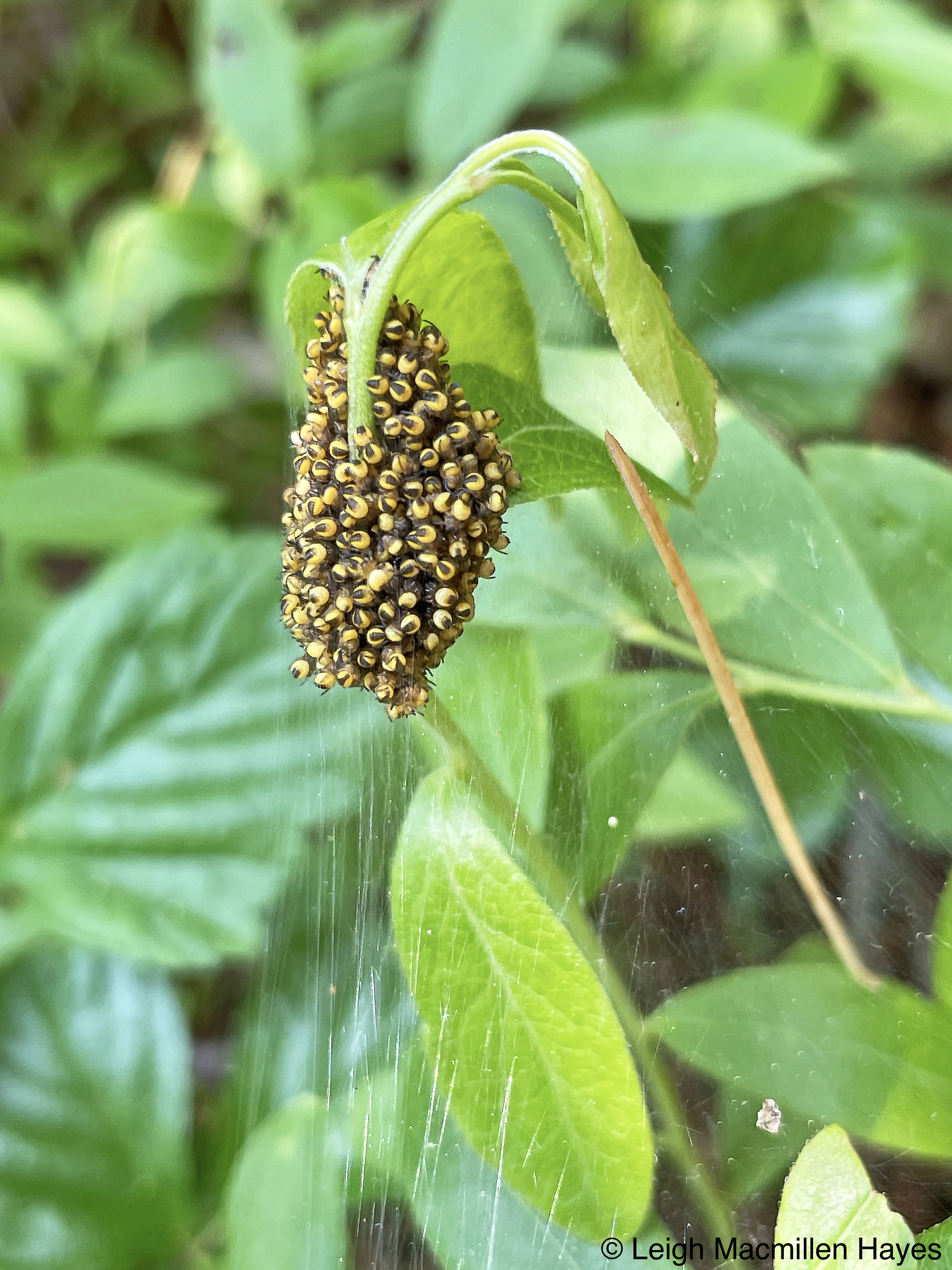
In the same neck of the woods, what appeared to be a flower, turned into a hundred or more spiderlings of the Cross Orb-weaver family. Notice all their guide lines. Such a clever construction.

When disturbed by accident, they didn’t leave the cluster, but did scamper on those guidelines for a minute or two before reassembling. I’ve read that they stay together much like so many others–there’s protection in numbers. During this stage of their lives, they feed on their egg yolks. I’ll take mine sunny-side-up.

And finally, in that same place, we spent a few moments with an immature male Belted Whiteface Skimmer dragonfly so identified by its yellow thorax and the yellow base to the black abdomen. As it matures, the abdomen will turn brown and then red.
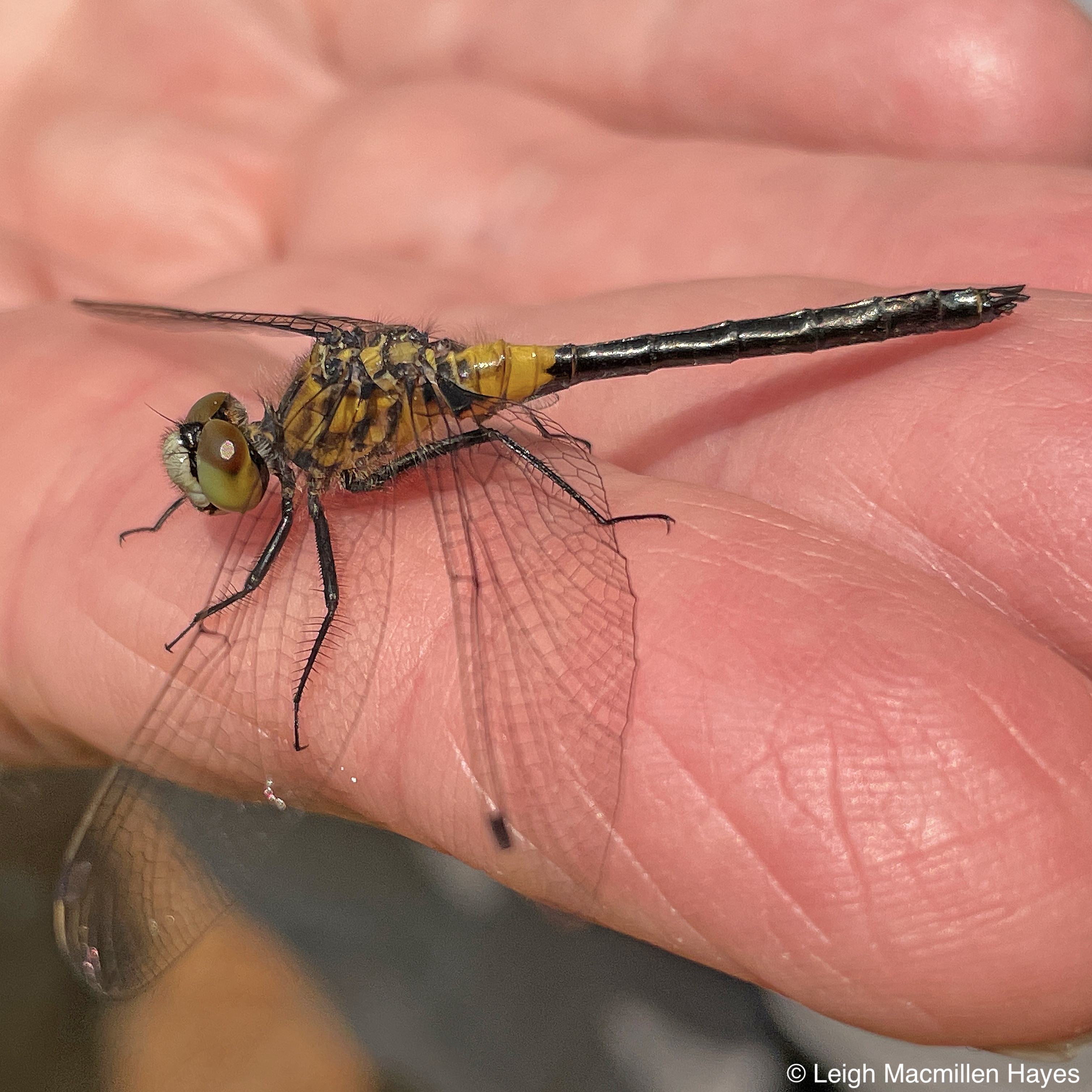
And just look at that white face. Can you even get a sense of some of the 30,000 lenses of the compound eye in the light spot? Dragonflies have incredible eyesight–they can see up and down and all around with almost 360˚ vision.
I have to say I think it was because of the damp, cold weather that this particular one decided to crawl upon my extended finger and allowed me to pass it on to another. We provided a wee bit of warmth.

Another white faced skimmer encountered in a different place was what’s known as a Dot-tailed Whiteface. At just over an inch in length, it’s a small dragonfly, but that dot is the giveaway, which makes it easy to ID in the field.

There seemed to be a theme–that of the white face variety. This one is known as a Crimson-ringed Whiteface.

One of my favorite skimmers is the Chalk-fronted Corporal, who earned its name for the corporal stripes on its thorax. And maybe it’s the old teacher in my blood that appreciates good old chalk. The fun thing about this species is that it’s usually found in groups, and you might not see them until you take a step and then they fly three steps forward, repeating this behavior throughout your entire journey in their neighborhood. They are also great posers.
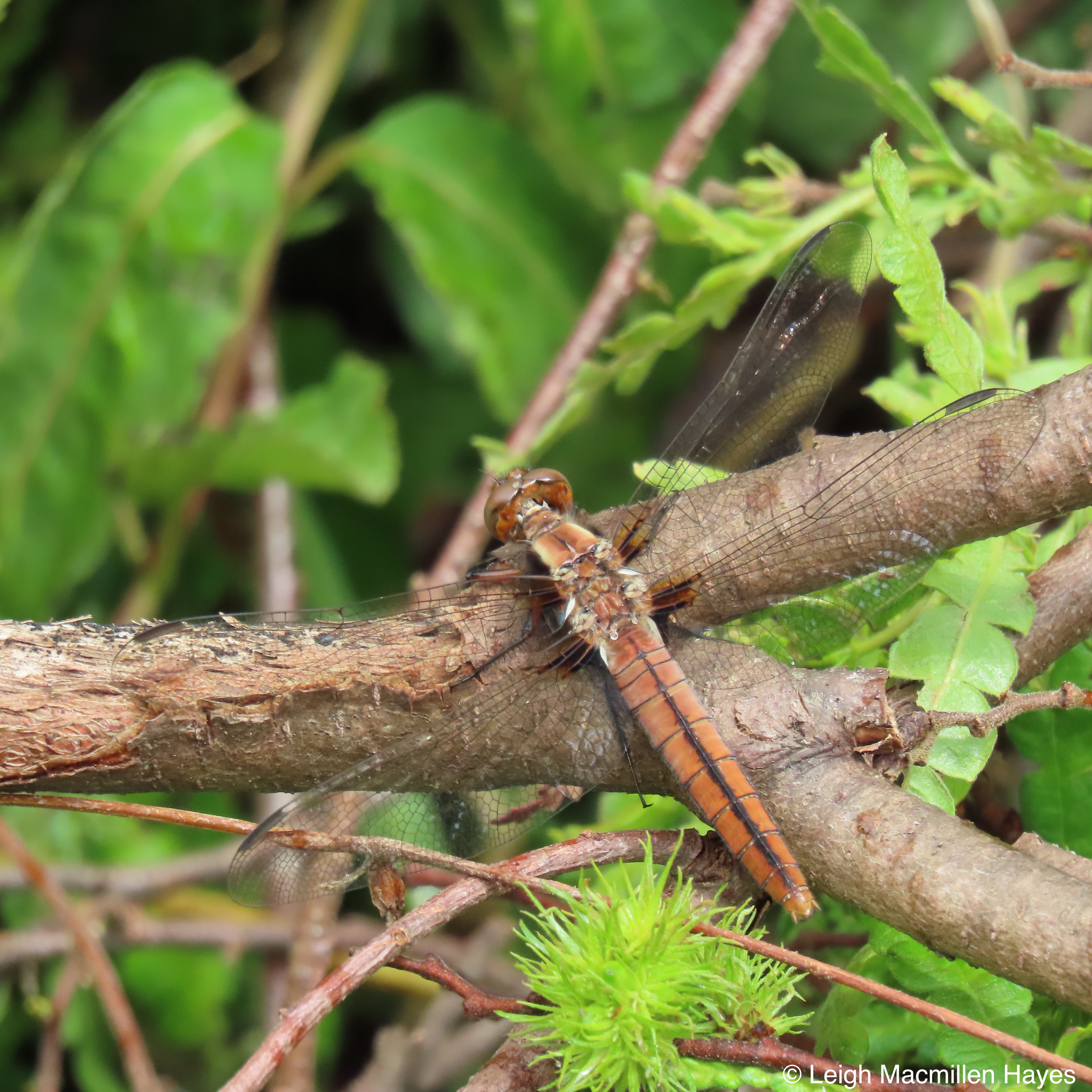
Immature Chalk-fronted Corporals such as this one are also abundant and seem to be circulating in every trailhead parking lot. They blend in well with their surroundings, so once again, I don’t spot them until they fly.

The next skimmer is a personal favorite. But the question is, can you find it? I have to say that I knew I’d taken its photo, but when I was reviewing the shots, I wondered why I’d taken this one of some vegetation and missed the female Eastern Pondhawk for so camouflaged is she.
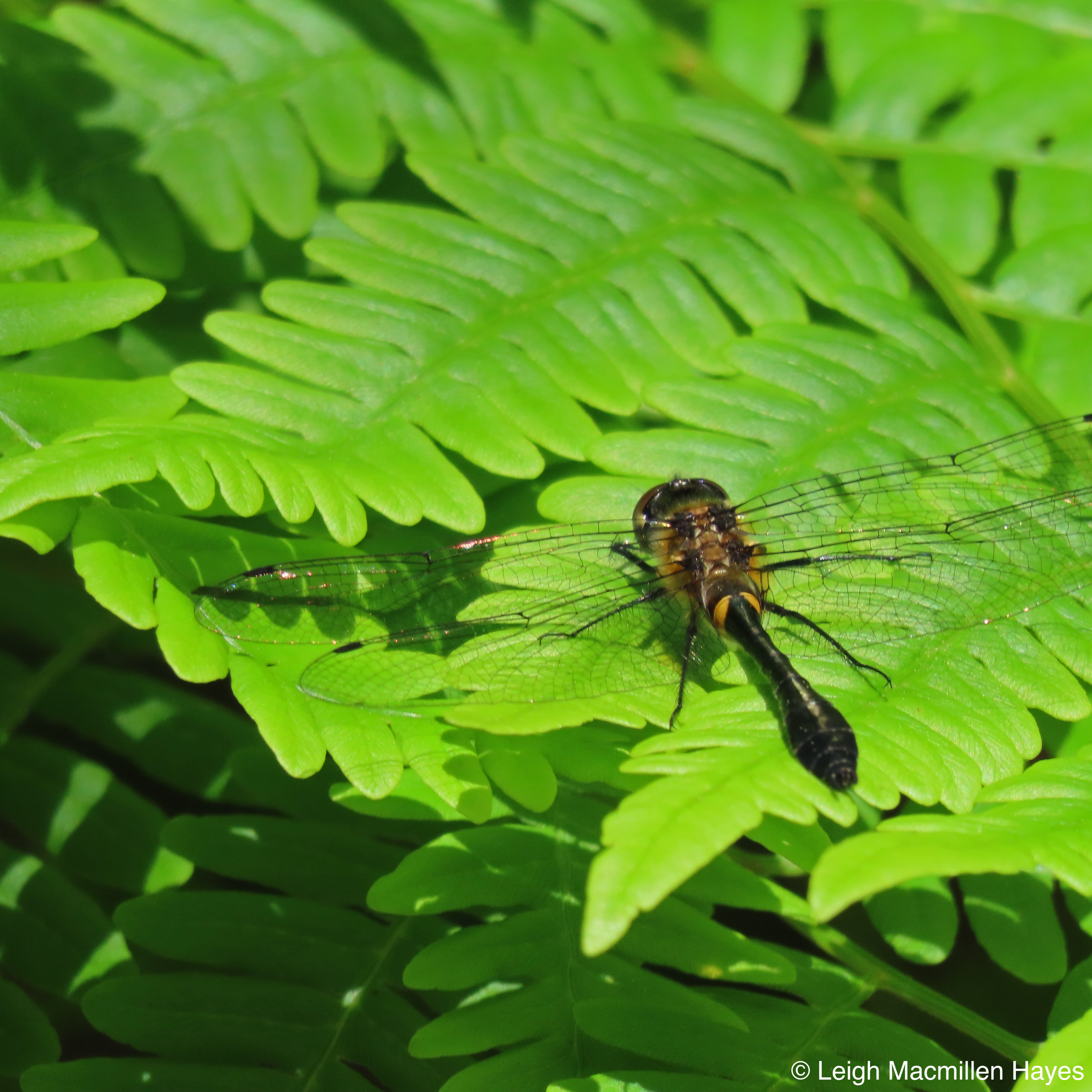
In another space I encountered a Racket-tailed Emerald. Look at that club-shaped abdomen. And fancy mirror-imaged yellow spots ringing the third abdominal segment.

Though I have no problem with dragonflies garnering so much of my attention during flying season, damsels also like to be noticed like this female Ebony Jewelwing. Her lighter colored black wings and white stigma at the tip give away her gender. But it’s the iridescent blue and green eyes and body that always make my heart skip a beat.
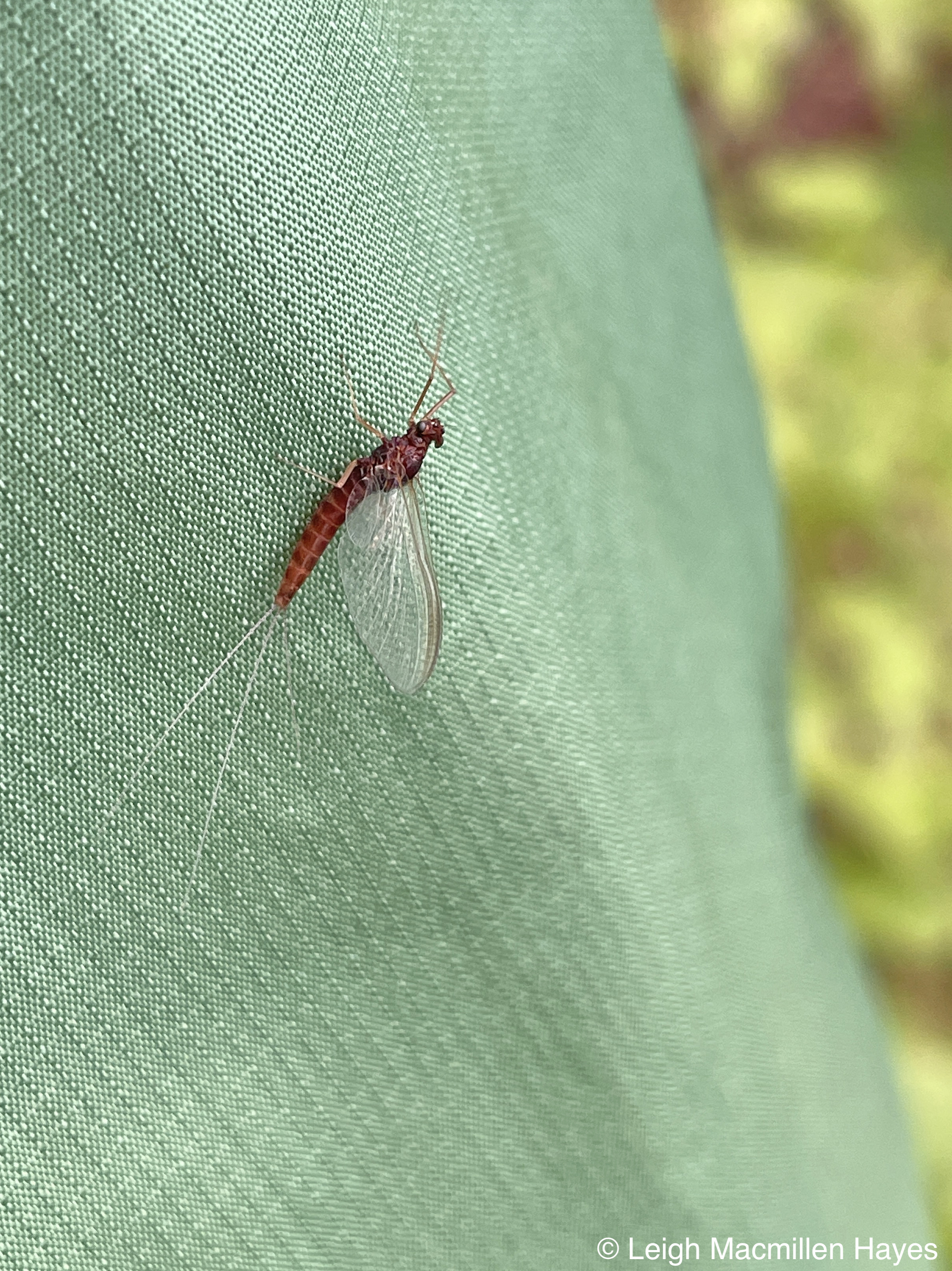
Another teenager also asked to be noticed–in the form of a sub-imago Mayfly with cloudy wings indicating its age. Had my friend stood there for the rest of the day and into the night, she might have seen it molt from this form to its final as an imago or adult.

In the midst of all these finds, and because of the rain, I returned to the vernal pool behind our house and found that the water was quite high. Usually, by June 9th the pool has dried up. But not this year. It is teeming with Wood Frog tadpoles and I suspect Spotted Salamanders for so many were the egg masses. Things are a-changing within those bodies, and I think this will be the year so many finally hop or crawl away. I’ve had my eye on this pool for thirty years, and this is a first.
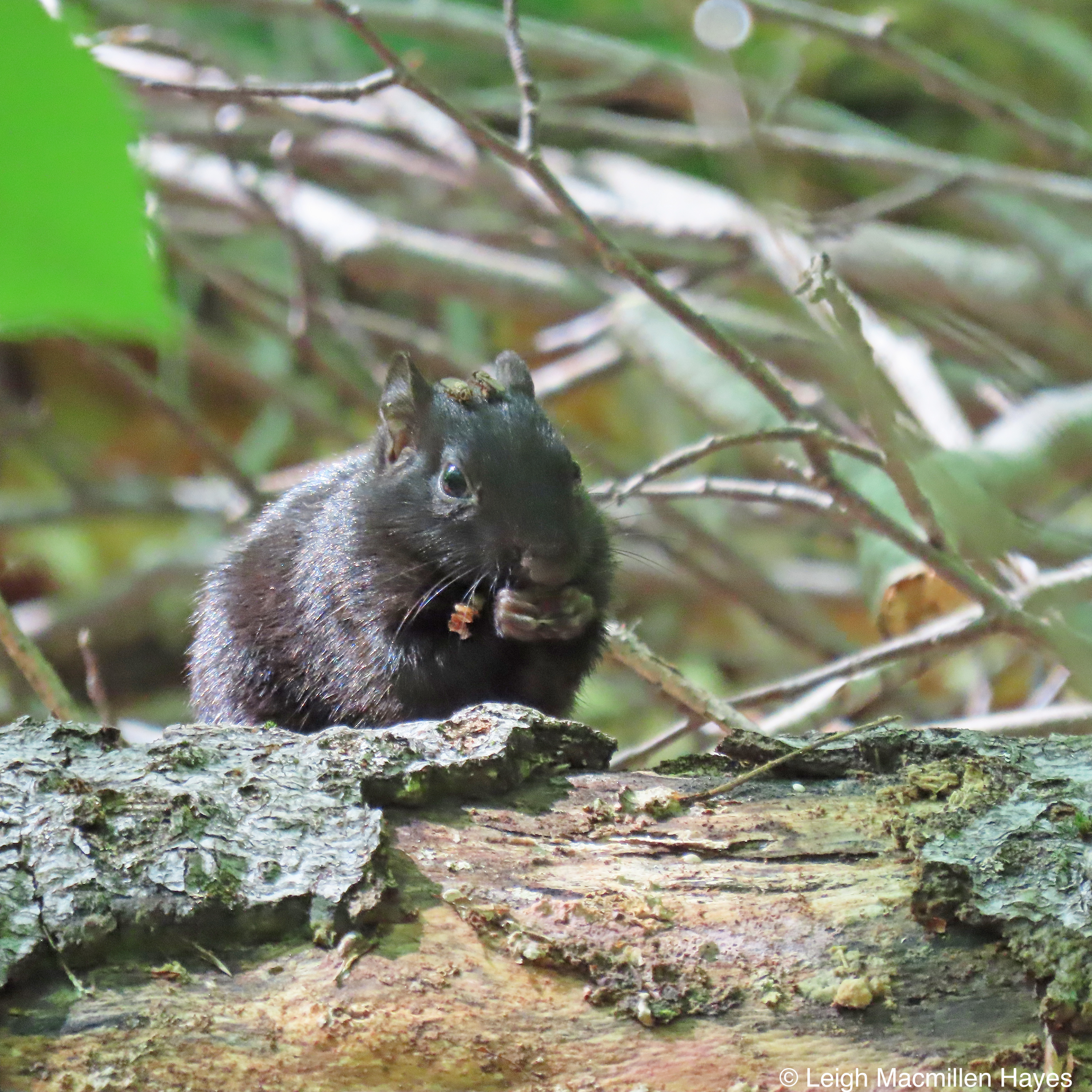
Finally, I have to share with you another I recently met and first reported in Stars Among Us. As a friend and I watched this afternoon, it dined on vegetation, stuffing its cheeks, while flies dined between its ears.

They didn’t seem to bother it as much as the mosquitoes bugged us, but still it clasped its little hands together.
Maybe it recognized the glimmer in our eyes as we watched it with joy, just as we recognized the glimmer in the eyes of all we met from the Friendly Fly to the dragonflies to the damselfly, Mayfly, Wood Frogs, and yes, the Black Chipmunk itself.
More rain and sun are in the forecast for this coming week. I wonder what we’ll see next.
 wondermyway