Pileated Woodpeckers often take the rap unfairly for killing trees. In fact, even though they drill holes into the bark and excavate wood in order to reach the galleries of Carpenter Ants, the trees are both dead and alive. Huh?

Take for instance this Eastern White Pine along the cowpath in our woods. While the Pileated Woodpeckers have riddled it with holes, its still standing and still producing needles and cones, because there’s enough bark left to protect the cambium and sapwood.

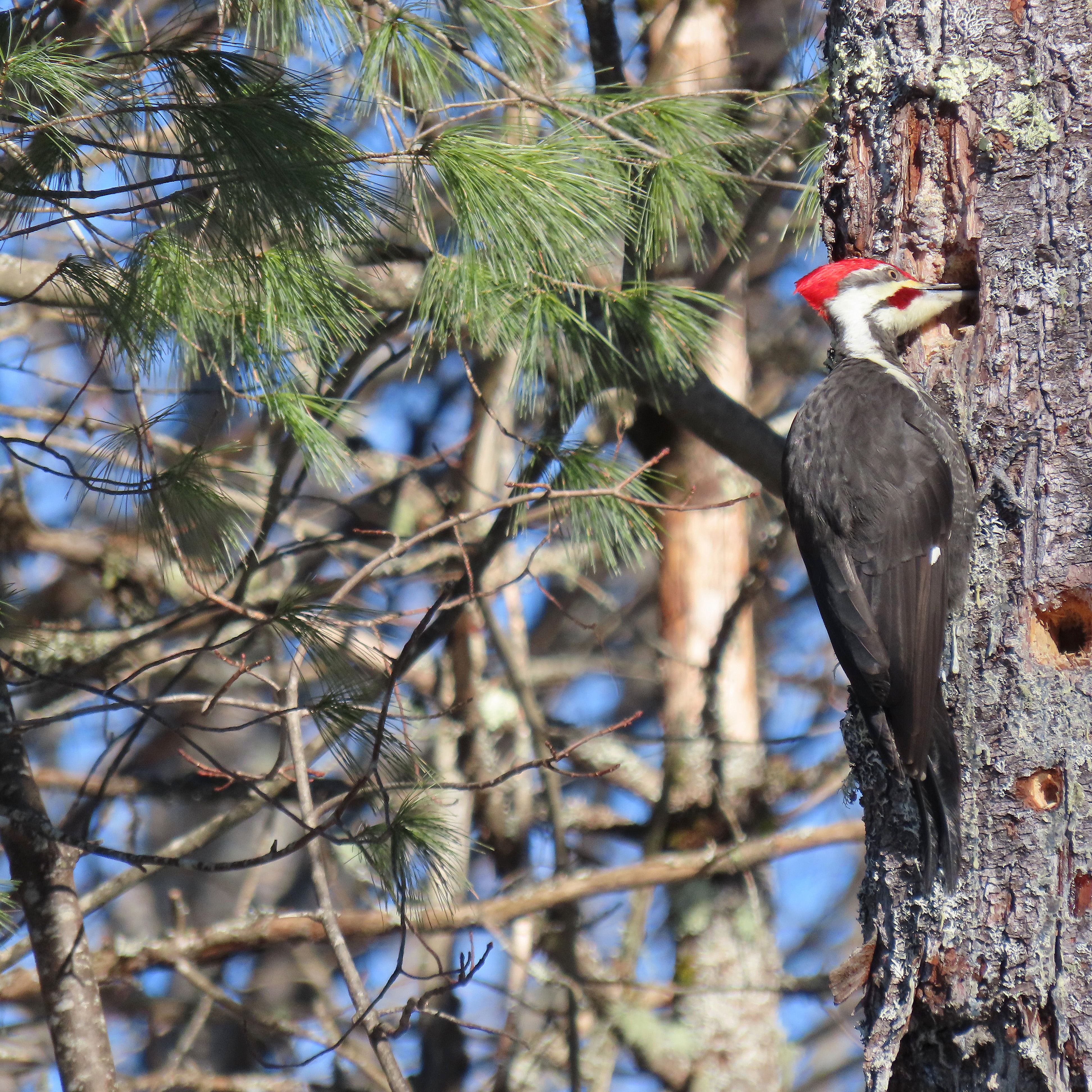
There was a time years ago when hearing or spotting a Pileated was a rare occurence, but now it seems that every day I either find evidence of habitat, hear their drumming and Woody Woodpecker calls, or actually spot one such as this that I spent some time with by the cowpath today.

And it’s not just holes that they drill. Quite often, I’ll see a tree that appears to have been chisled and shredded. This to is also Pileated Woodpecker sign.

Some trees receive only one visit, but others must be a huge source of food for multiple squarish to rectangular holes are drilled.
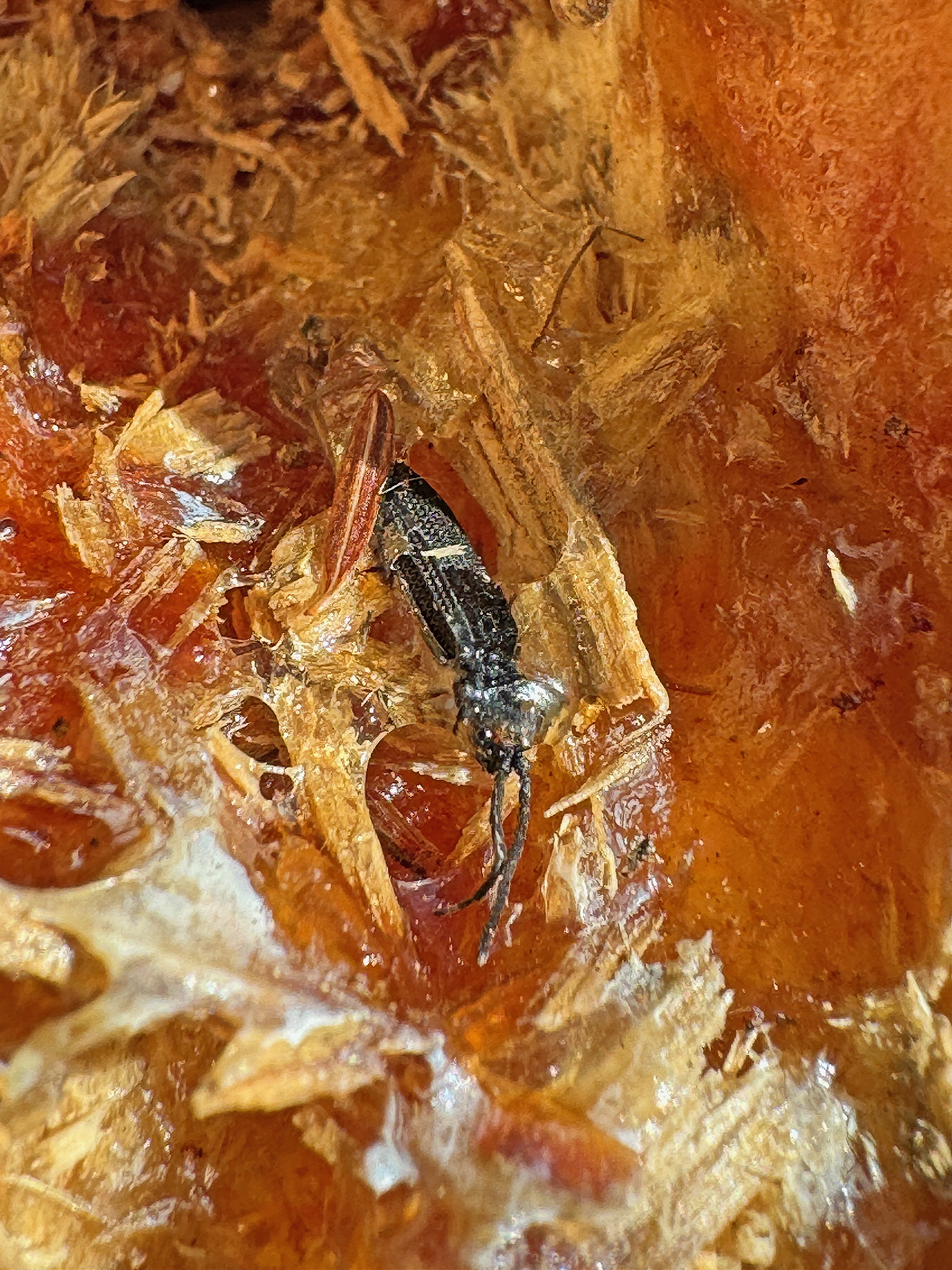
I love to peer into the holes because sometimes I’m rewarded with sightings such as this . . . a long-horned beetle that got stuck in the sap and is now frozen in situ.
Though we can’t see it, Pileated Woodpeckers have sticky tongues, which they probe into the tunnels the delicious (to a woodpecker, that is) ants have created. Their bodies don’t process all of the ant, and so their scat is another sign I love to find. It’s like a treasure hunt at the base of a tree and let’s me know if the bird was successful in dining or not.

Their scat is made up of the Carpenter Ant exoskeletons, and some wood fiber, and white uric acid.
If you haven’t looked for this, I highly encourage you to do so. Any scat is fun to encounter because it helps us determine who passed this way, but there’s something extra special about seeing those body parts and knowing better the critter’s diet.

Pileated Woodpeckers excavate from any spot on a tree, including at the base, so if you see large woodpecker holes there, you’ll know the creator. The cool thing is that they use their long tail feathers as the third leg on a tripod in order to stay steady while smacking their beaks into a tree.
Don’t worry, their brains don’t get rattled. While it was long believed that they had a shock absorber to protect their heads, new research states this: “Their heads and beaks essentially act like a stiff hammer, striking and stopping in unison.” You can read more here: New Study Shakes Up Long-held Belief on Woodpecker Hammering.
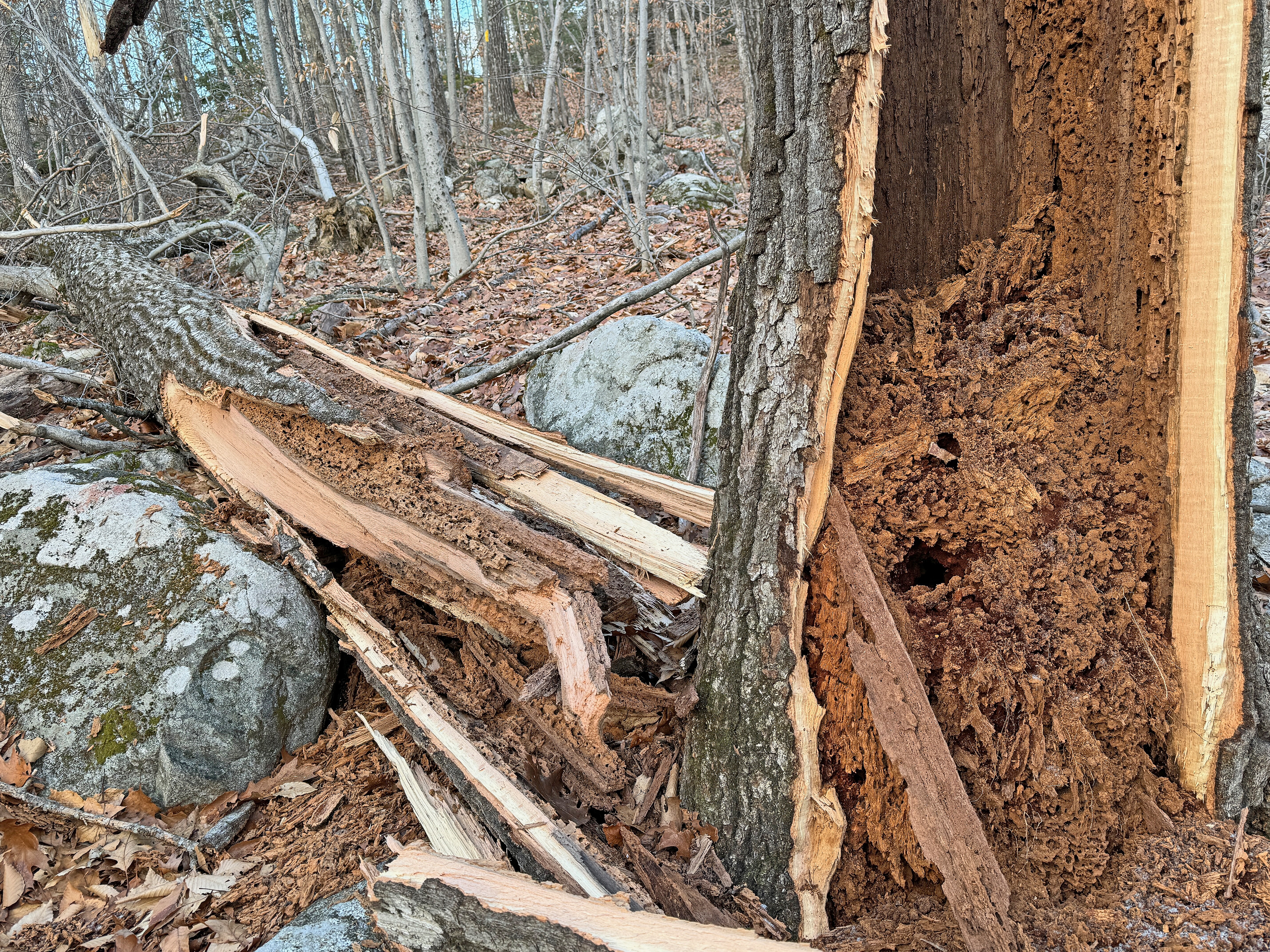
So I stated earlier that not all trees are dead, until they are like this one, even though the Carpenter Ants have set up their own woodworking shop. The heartwood, at the center of the tree is deadwood and its pipelines that served as the xylem and phloem, servicing the tree with water, minerals, (xy rhymes with high pulling these up from the roots), and sugars (phlo rhymes with low, pulling sugars down from the leaves), become clogged with resins and that’s where the ants take up residence. A storm knocked this particular tree over on Burnt Meadow Mountain where My Guy and I hiked about a month ago. It was so overcome with the ants that the core could no longer support the tree.
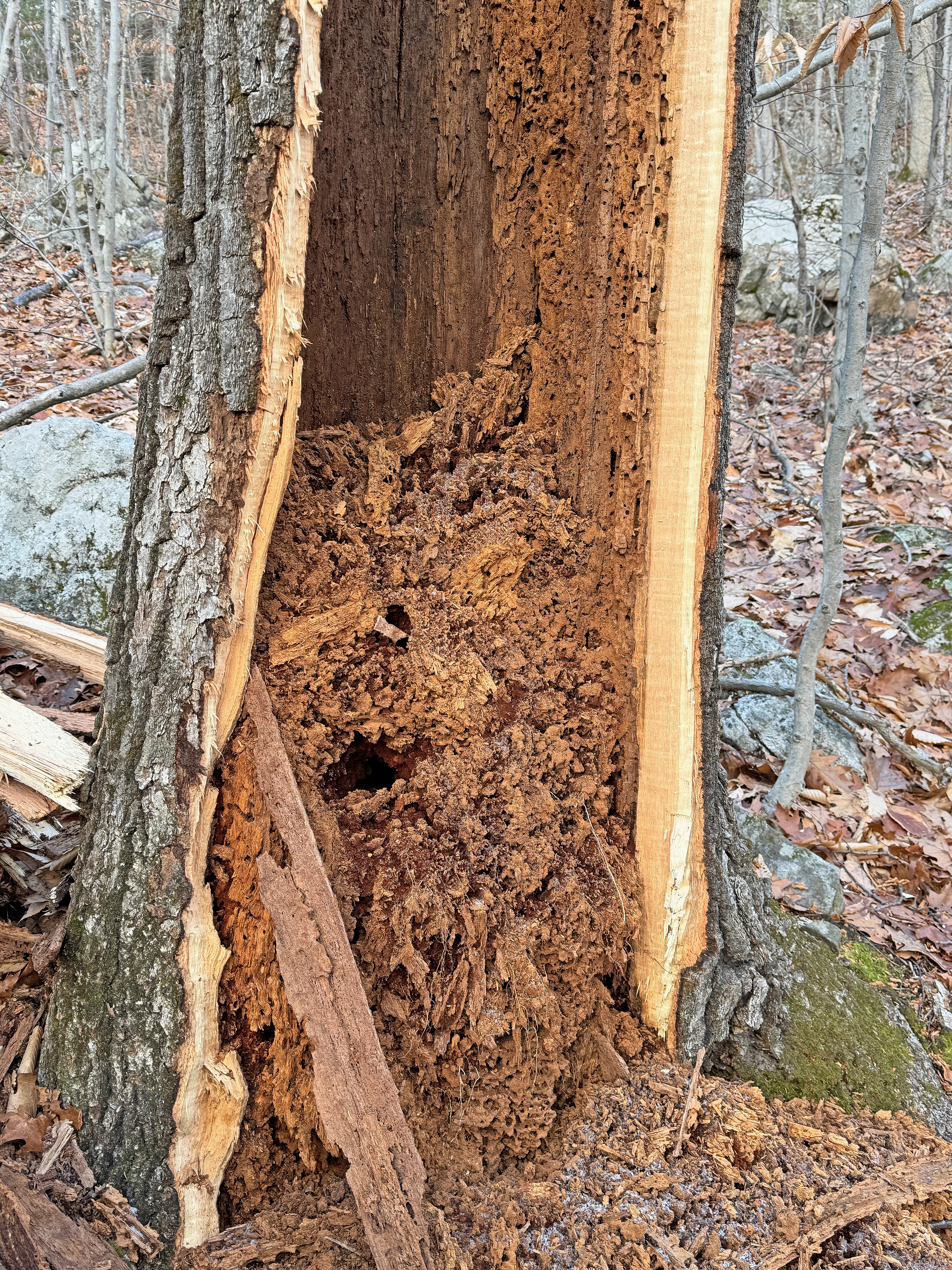
If you look closely, you can see the galleries or tunnels the ants had created. That’s a lot of ants and a lot of work.

My woodpecker seems to be hanging out in a small part of its territory these days. A Pileated Woodpecker’s territory can reach up to 200 acres, and there’s certainly more than that available to him here (the red mustache indicates this is a male), but he appears to have found his pantry closer to our home.
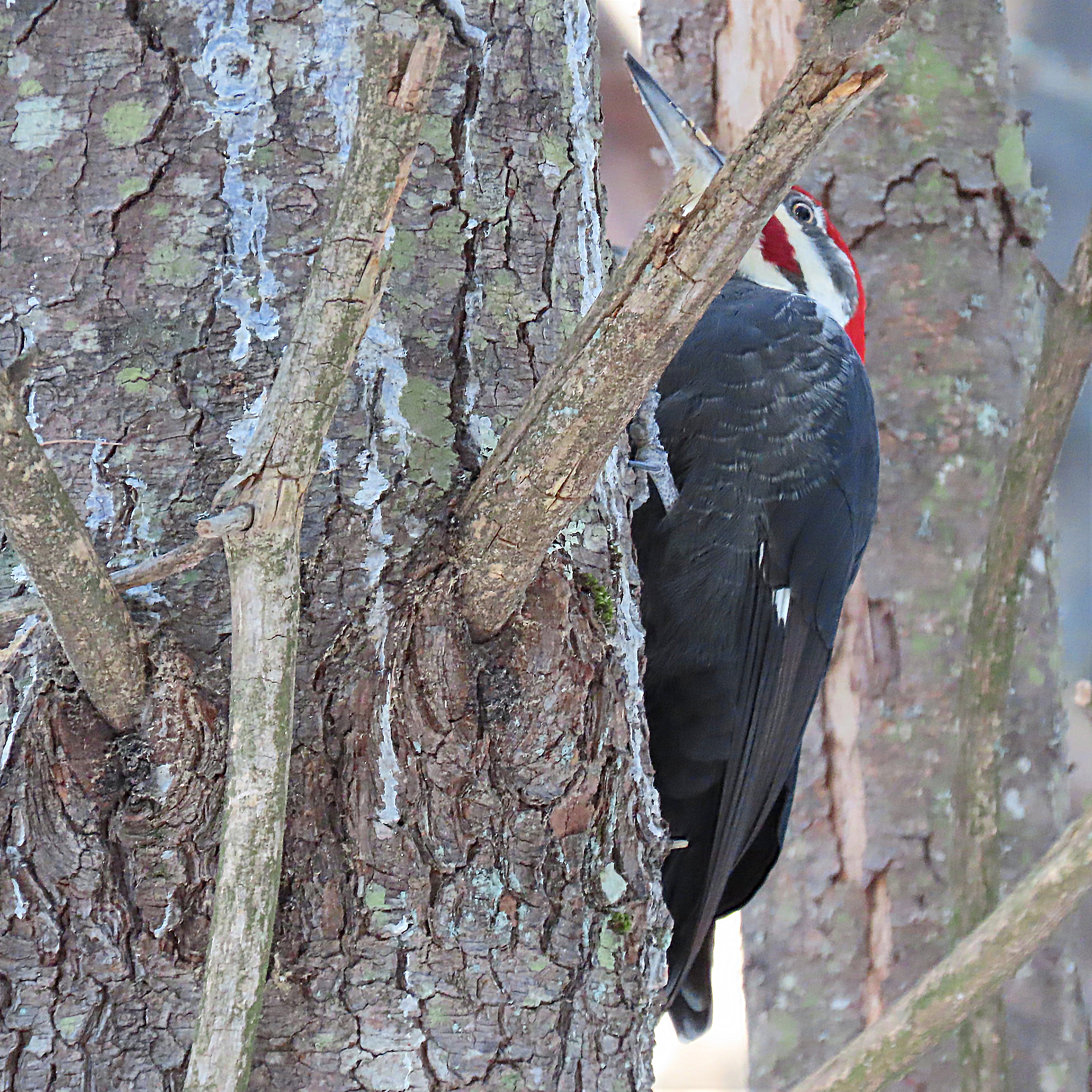
I don’t mind because it means I get to witness him on a more intimate basis.
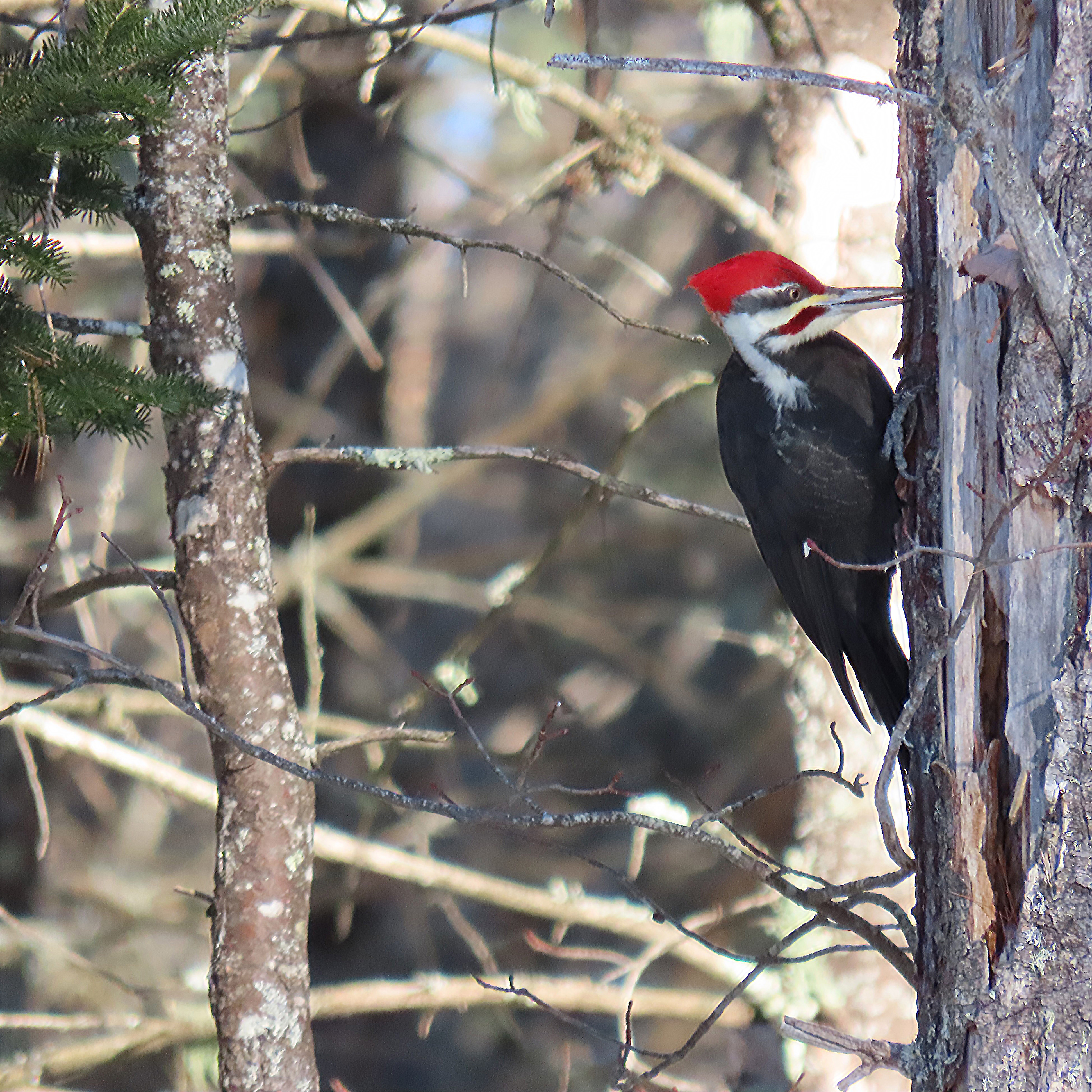
Pileated Woodpecker works. Indeed.
 wondermyway