I absolutely love it when the unexpected occurs and nature takes me by surprise and provides me with jaw-dropping opportunities. So here’s the thing. What is unexpected to me is an every day or every year occurrence in the natural world. It’s just that on that one day I happened to be in, as the saying goes, “the right place at the right time.”

And so it was that during June I paddled between two islands and slight movement caught my eye. Mind you, I was a telescopic camera lens away from the action and so what may appear close, wasn’t. I’d unexpectedly happened upon two loons. Okay, so the truth be told, My Guy was the first to witness them. He pointed in their direction and then the two of us sat in our kayaks and watched.
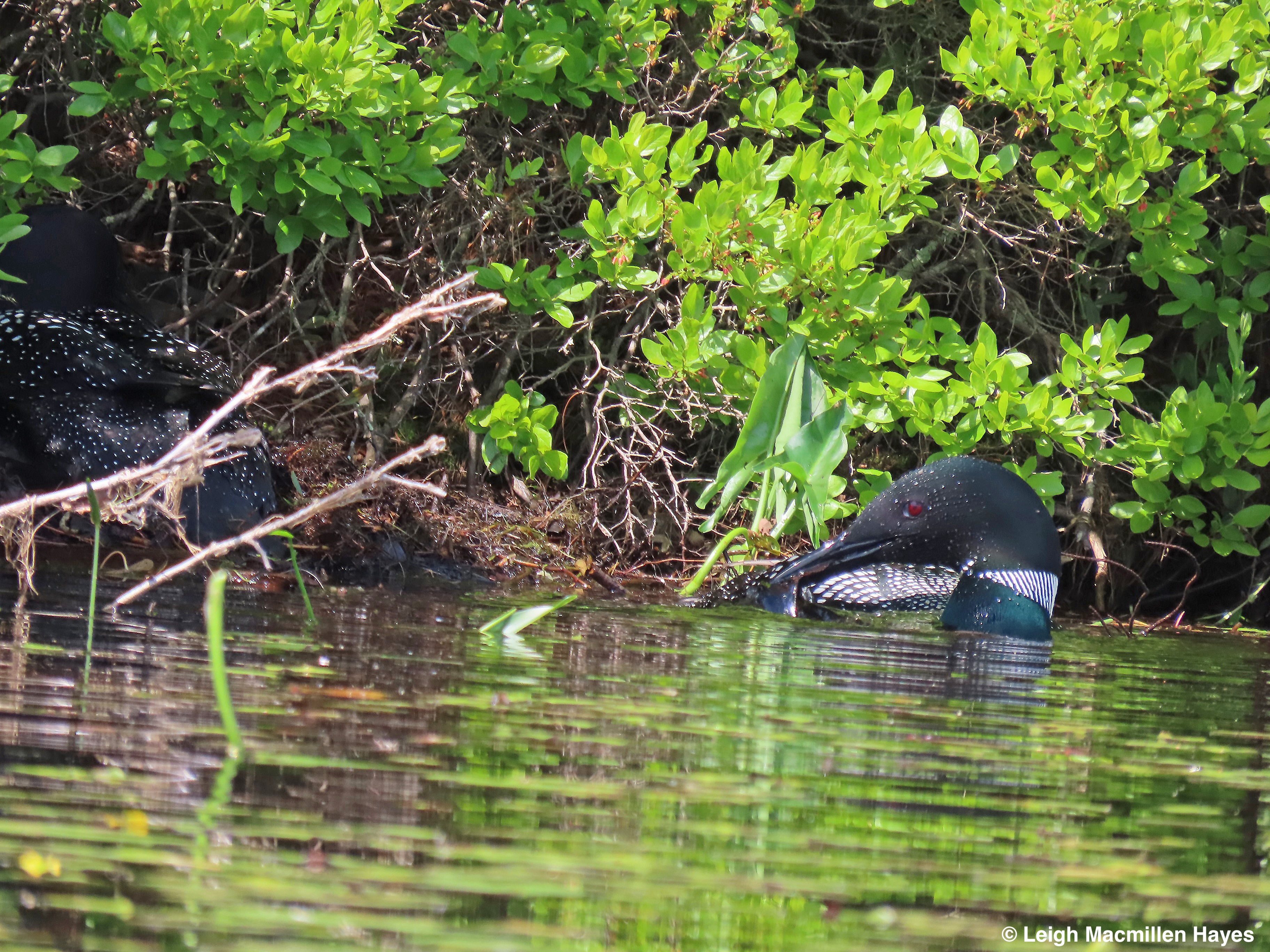
This was a first for both of us. To observe as one loon pulled nesting material from the pond . . .
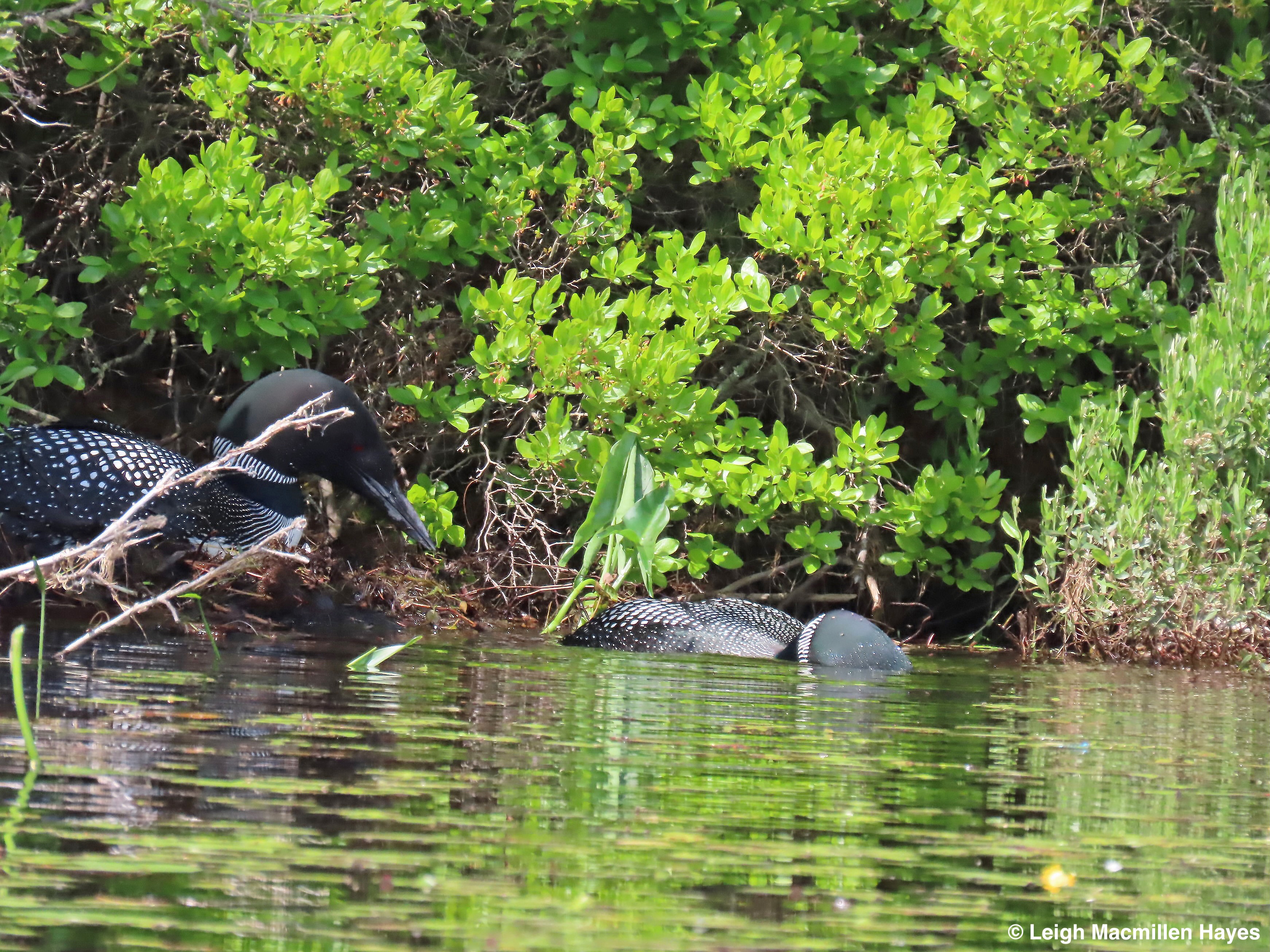
and dipped to gather more . . .

and carefully “handed” or rather beaked it over to the other . . .
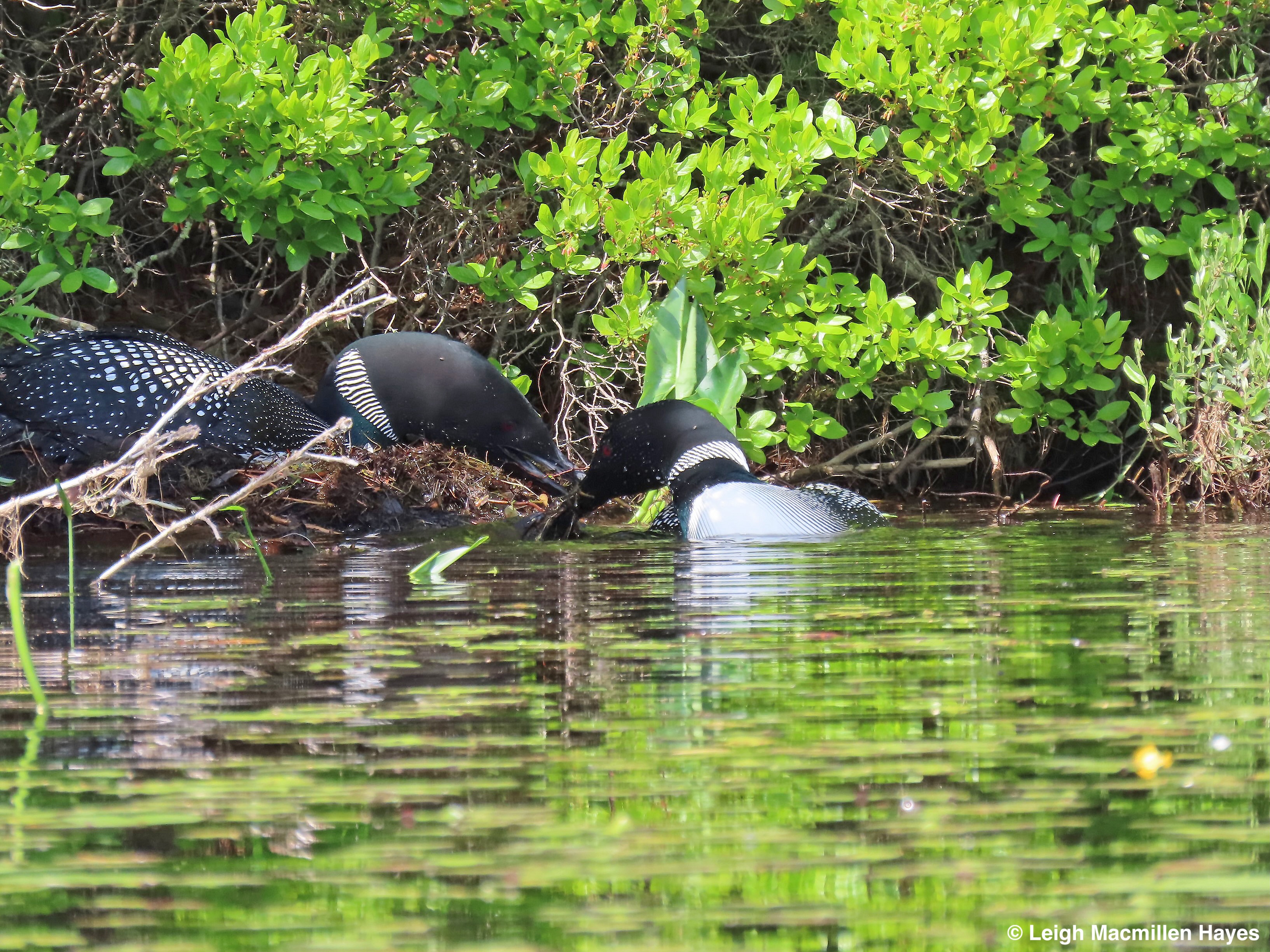
who, in turn, received it . . .

and added it to the nest.

And so the nest building continued, but we’d seen enough and knew we needed to paddle away and leave them to their business.

A couple of weeks later, as My Guy explored the pond’s perimeter, I took a few moments to check on the nest and much to my delight, found a loon sitting on it. Notice its open mouth? I say “its” because I don’t know if this is the male or female and do know that they take turns incubating the eggs.
Notice how the loon’s mouth is open. Much like a dog pants to cool down, so do loons. According to National Audubon, “When it’s hot, some species will resort to gular fluttering. The bird will open its mouth and “flutter” its neck muscles, promoting heat loss (think of it as the avian version of panting).”

I’ve seen the same behavior in other birds, including Great Blue Herons.
It’s been an extremely hot summer, even here in the north country. In fact, the water temperature of our local ponds and lakes is way too high. It should be in the 70˚s, but instead is in the 80˚s and not at all refreshing for us, so I can only imagine the adverse effects it is having on flora and fauna.

The day after a pond association meeting this past weekend, My Guy and I hit the water again. While I was drifting for a while, numerous insects sought my boat as a landing spot. And then, this Scarlet Bluet landed, plastering a meal to the side of the boat.

It was a mighty big and juicy looking meal for this little damselfly to consume. He (his female counterpart is yellowish where he is so scarlety orange) dined for at least twenty minutes as I watched, and then I think it was more than he could handle, and off he flew, leaving the remains for me. I was starting to get hungry, but . . . not that hungry.
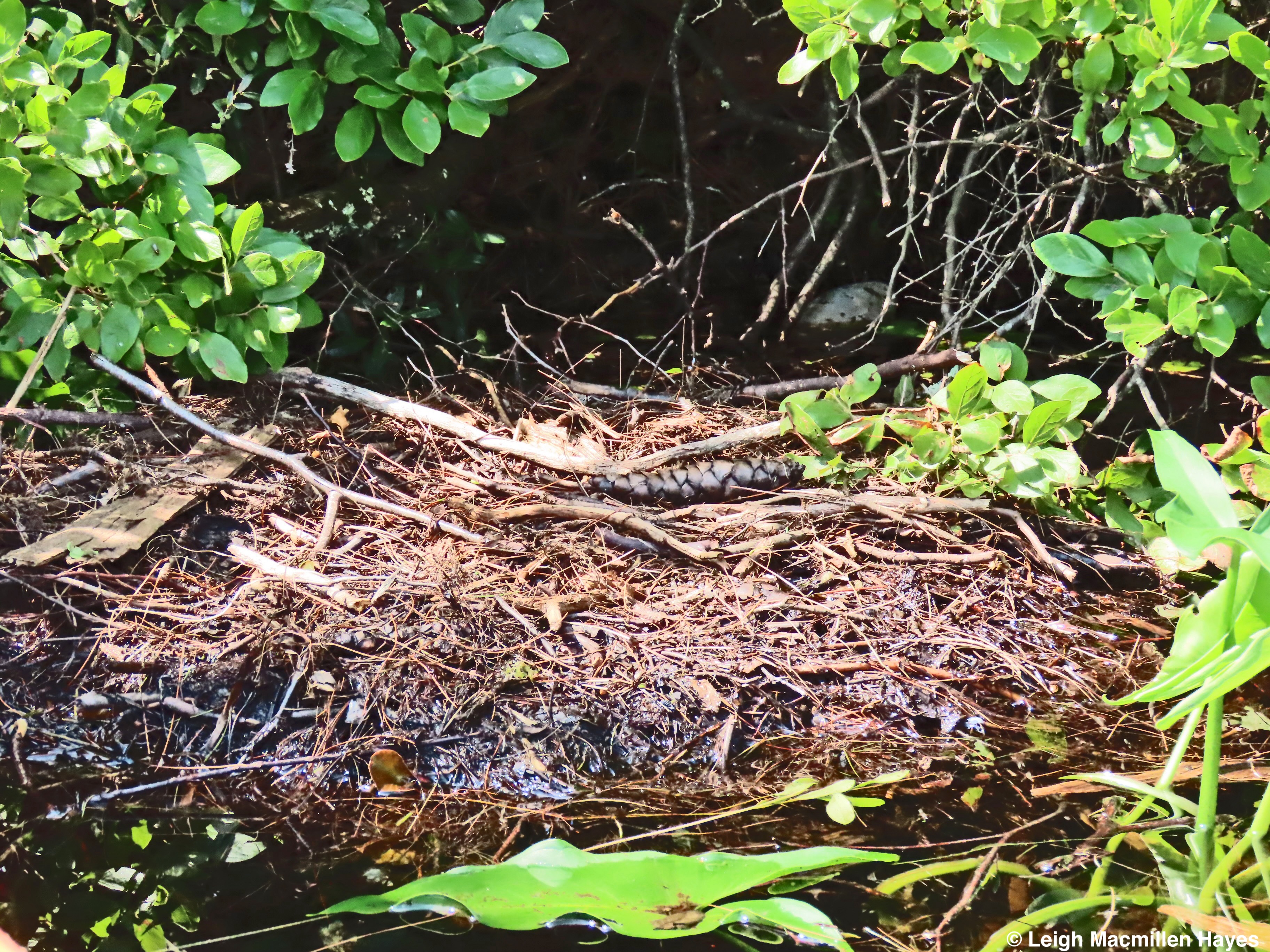
Once he departed, I made my way back toward the loon nest. As I suspected, it was empty. Usually, the local loon chicks hatch around the fourth of July (never a good mix with fireworks–think about noise, oh, and added pollution to the pond water).
BUT . . . then I took a closer look and this time I did get close because it was empty. Here’s the thing. About two weeks ago we had a major storm that didn’t last long, but deposited a lot of water. That seems to be the pattern of late. And I’d learned at the association meeting that the dam which controls the water level for this particular pond hasn’t been opened as much as usual and some people have water either directly under their docks or just over them. Ours is a floating dock, so it’s not an issue for us.
All that said, I spotted water behind the nest. And something in the water behind the nest.
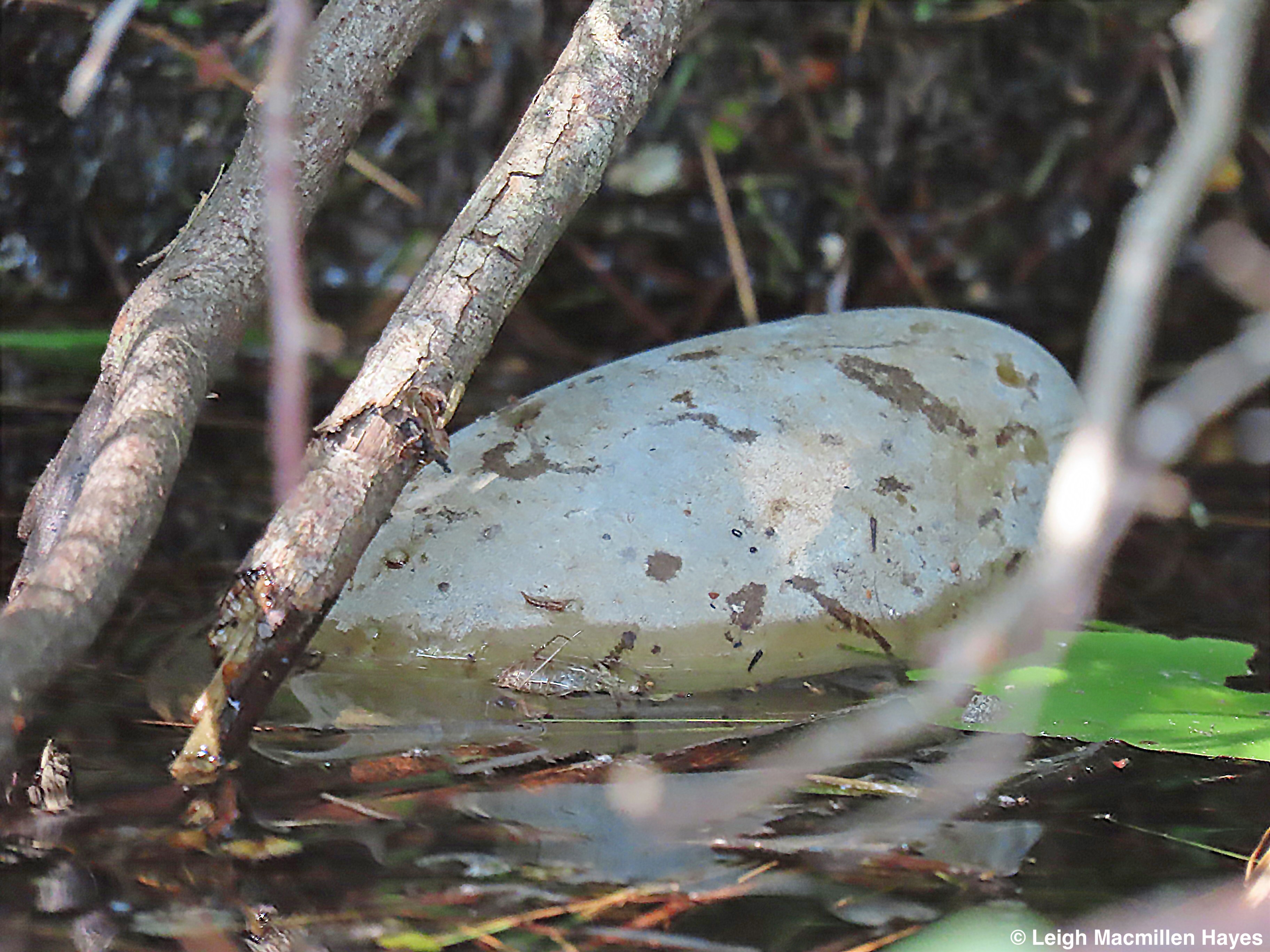
A loon egg. That could probably mean that during that storm a couple of weeks ago, the nest was swamped, the adult abandoned it, and the egg floated off. It was a sad realization. I had to remind myself that nature happens.

In this case, it happened twice, for as I looked about, I saw a second egg off to the right of the nest.
Two loon parents who worked side by side to create a home.
Two loon chicks who never had the opportunity of life.
A dam that is controlled by a local government, and has a new dam tenderer, but it is also controlled by another entity father downstream, in the form of a hydroelectric power plant.
I shouldn’t blame them. I know that things don’t always work out the way we think they should. But still.
Man versus Nature; Nature versus Nature. Why can’t we all work together?
 wondermyway
Hi Leigh, I’ve been thinking of you and hope you are well. I’m working with a team to coordinate a 2025 MMNP class based in Farmington, but offered partly online (via Zoom).
I just saw your blog post on loons. I’ve been working with the Look out for Loons initiative (part of Maine Loon Restoration project), giving talks on loons to lake associations, camps. land trusts, etc. so I’ve got loons on the brain. How lucky you are to have spotted this nest! As often as I have looked for them, even when I know the general vicinity, I’ve never seen one. To be fair, I never paddle too close b/c I don’t want to be disruptive. Yet another reason to appreciate folks like you who are masters of the telescopic lens!
Anyway, if you haven’t already, you should report your egg findings to Maine Audubon https://cdn.branchcms.com/DrynVOJolO-1457/docs/Look-Out-for-Loons/Reporting-a-Problem-with-a-Loon.pdf .
Take care Cheryl L
LikeLiked by 1 person
Cheryl, It’s so great to hear from you. And I’m so glad to hear that you will be part of the team for Farmington 2025! I’m curious to see how that class plays out. They asked me to be a part of it, but the ZOOM piece felt overwhelming.
I was wondering who to report the eggs to, so thanks for that info. I did note the coordinates in case someone wanted to retrieve them for science.
Thanks again for sharing this and have fun prepping for 2025. Leigh
LikeLike