In response to shorter days
and sunshine's declining density,
leaves begin the age old process
leading to their demise.
Like so many others,
I make time to honor
the tapestry they weave
before they fall.
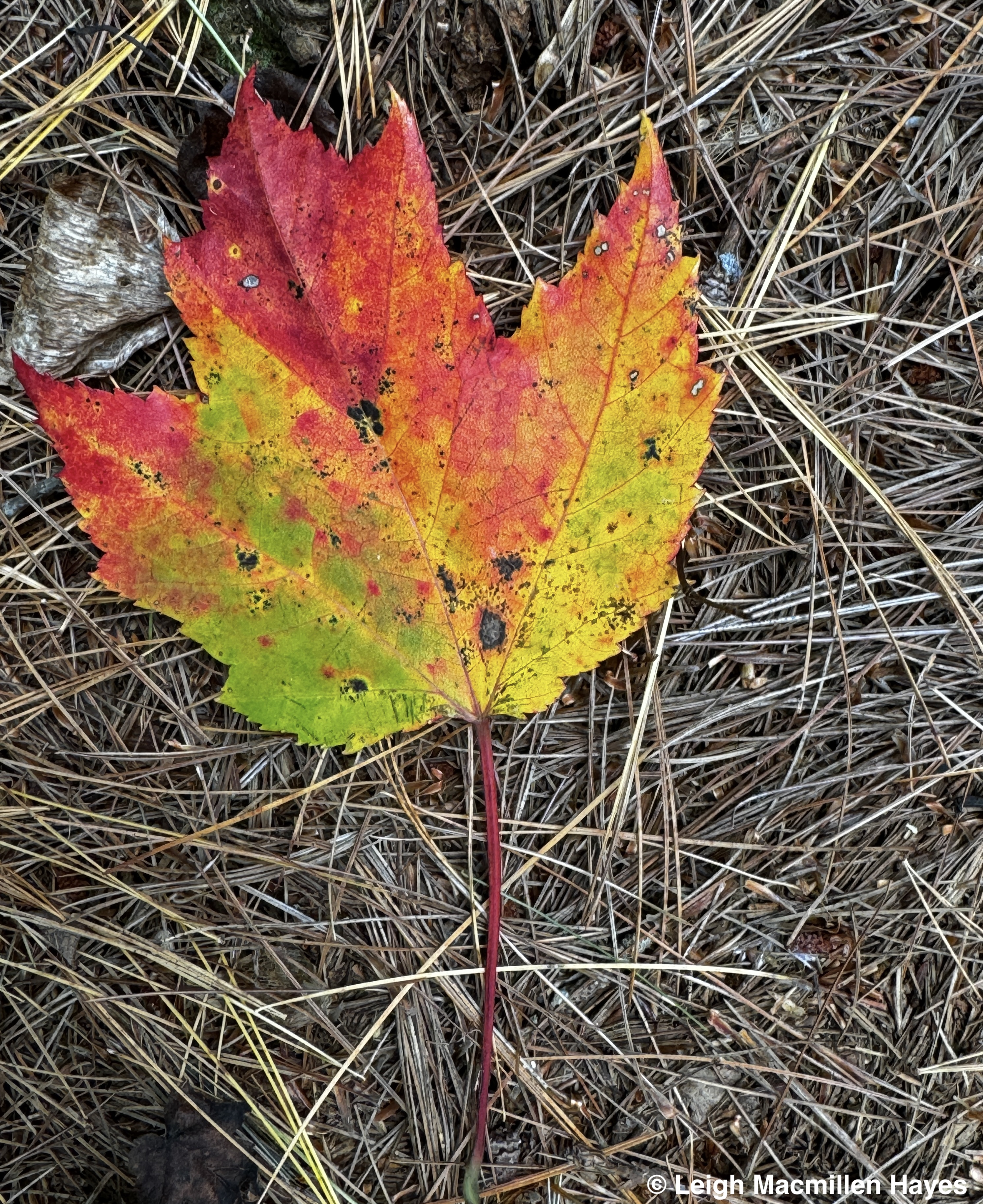
Chlorophyll, the green pigment
we associate with summer,
and necessary for photosynthesis,
slows and then stops manufacturing food,
and the leaves go on strike.
Veins that carried fluids
via the xylem and phloem close off,
trapping sugars, and promoting the production
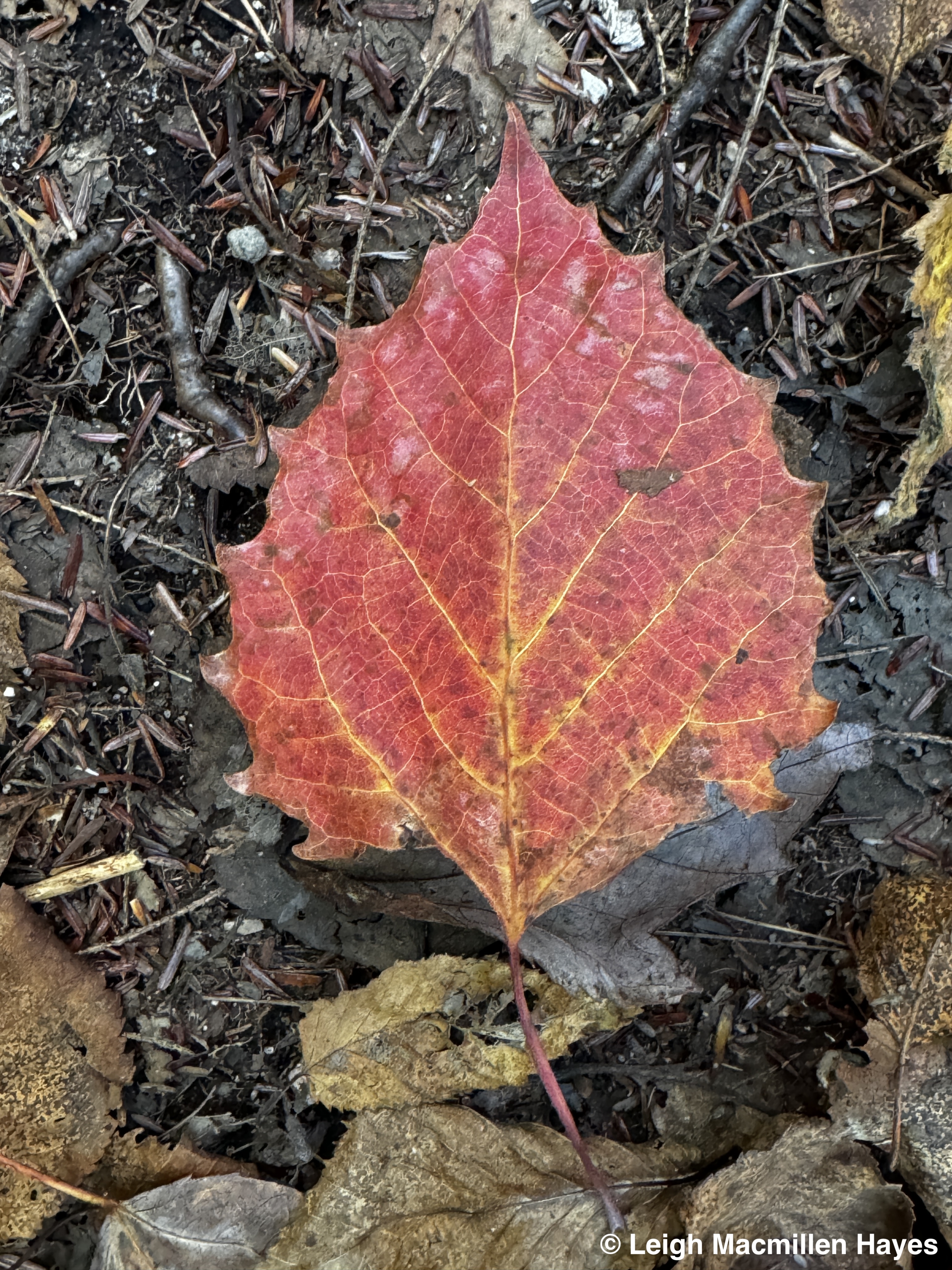
of anthocyanin, the red color
we associate with Red Maples and Silver.
Though in the same family,
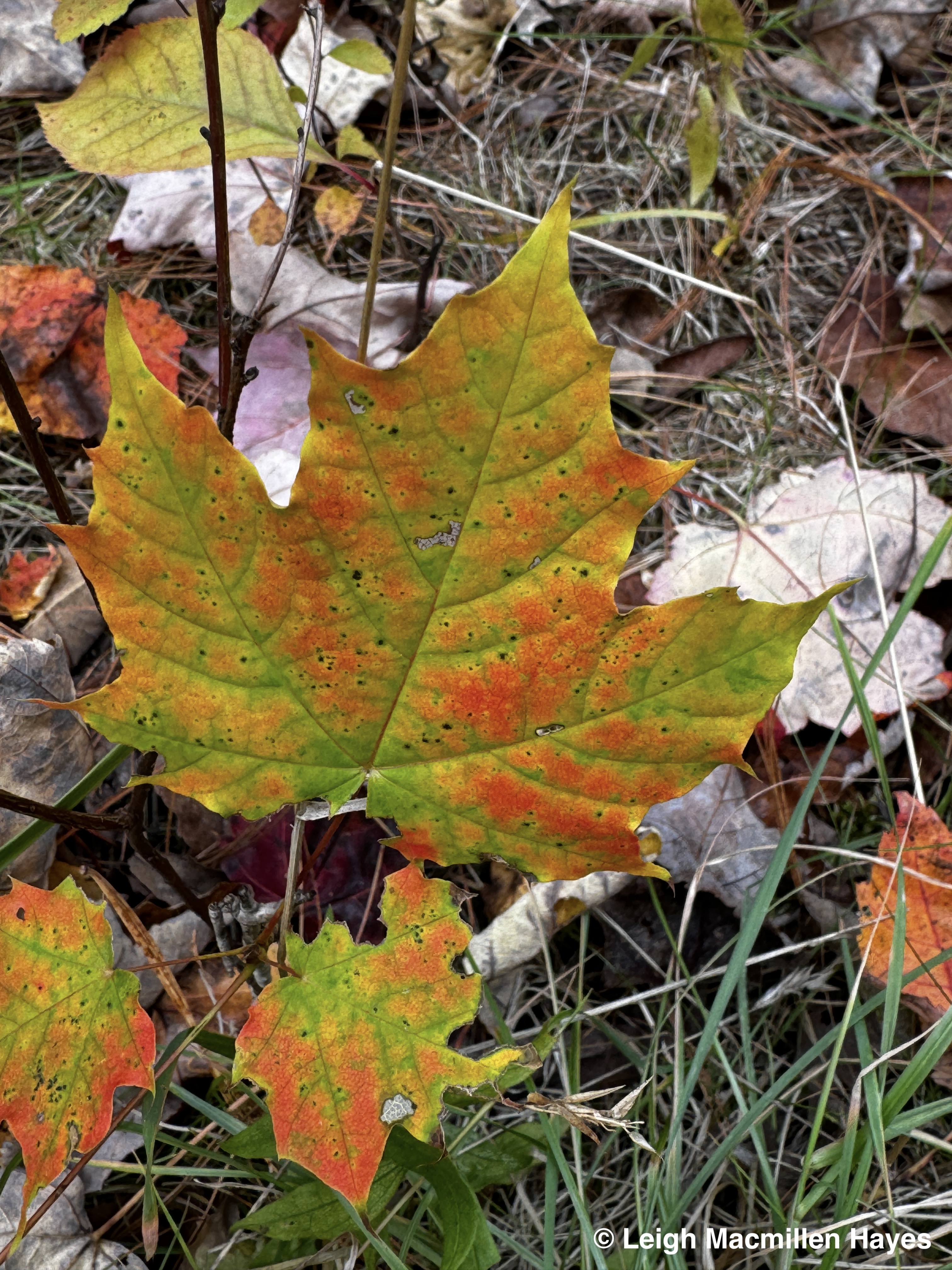
Sugar Maple displays
the yellows and oranges
of the ever present Carotenoids,
which had previously been masked
by Chlorophyll.
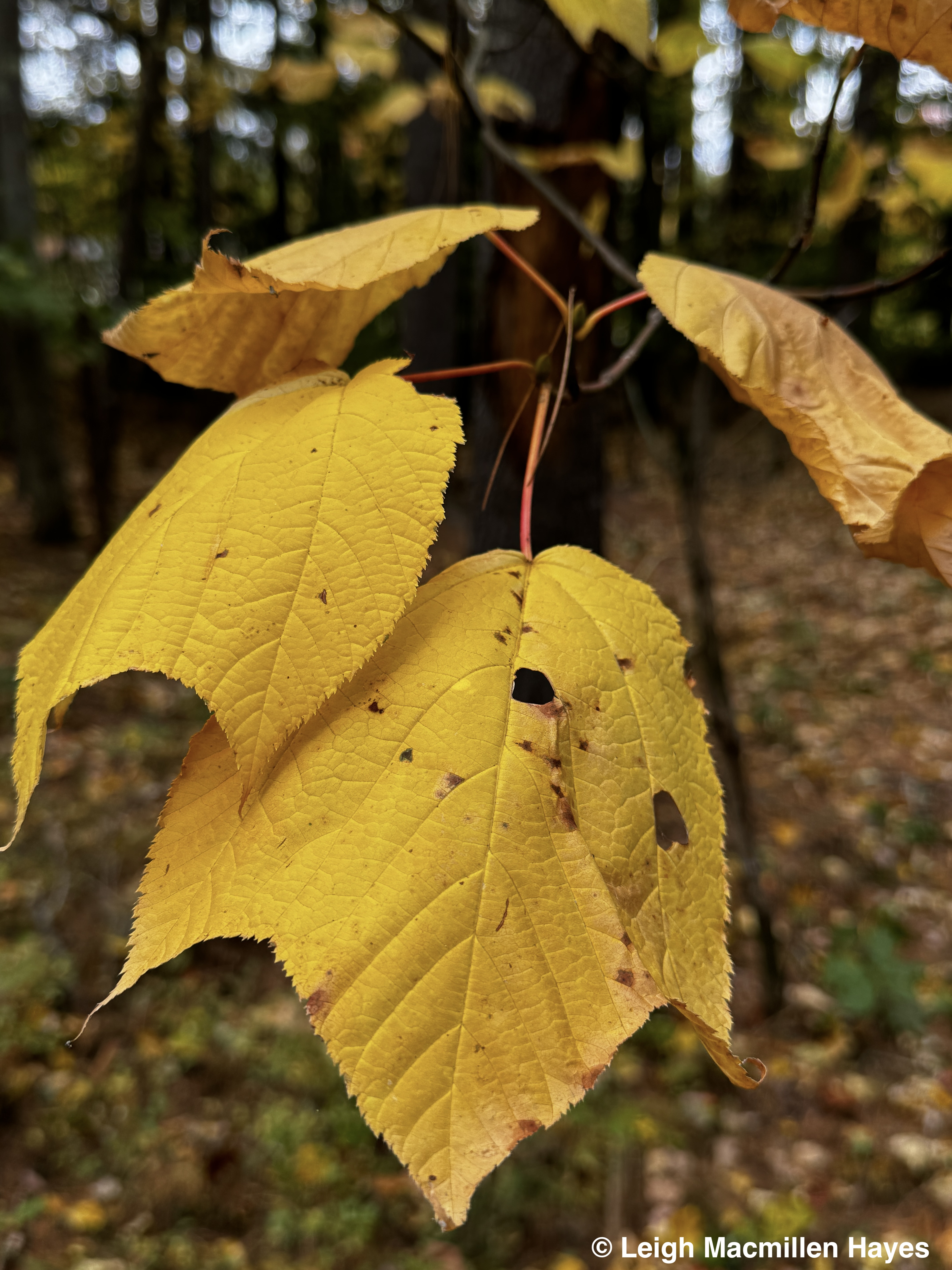
Stripped Maple knows
only one hue,
making it easy
to spot its large display of brownish yellow.
One of my favorites
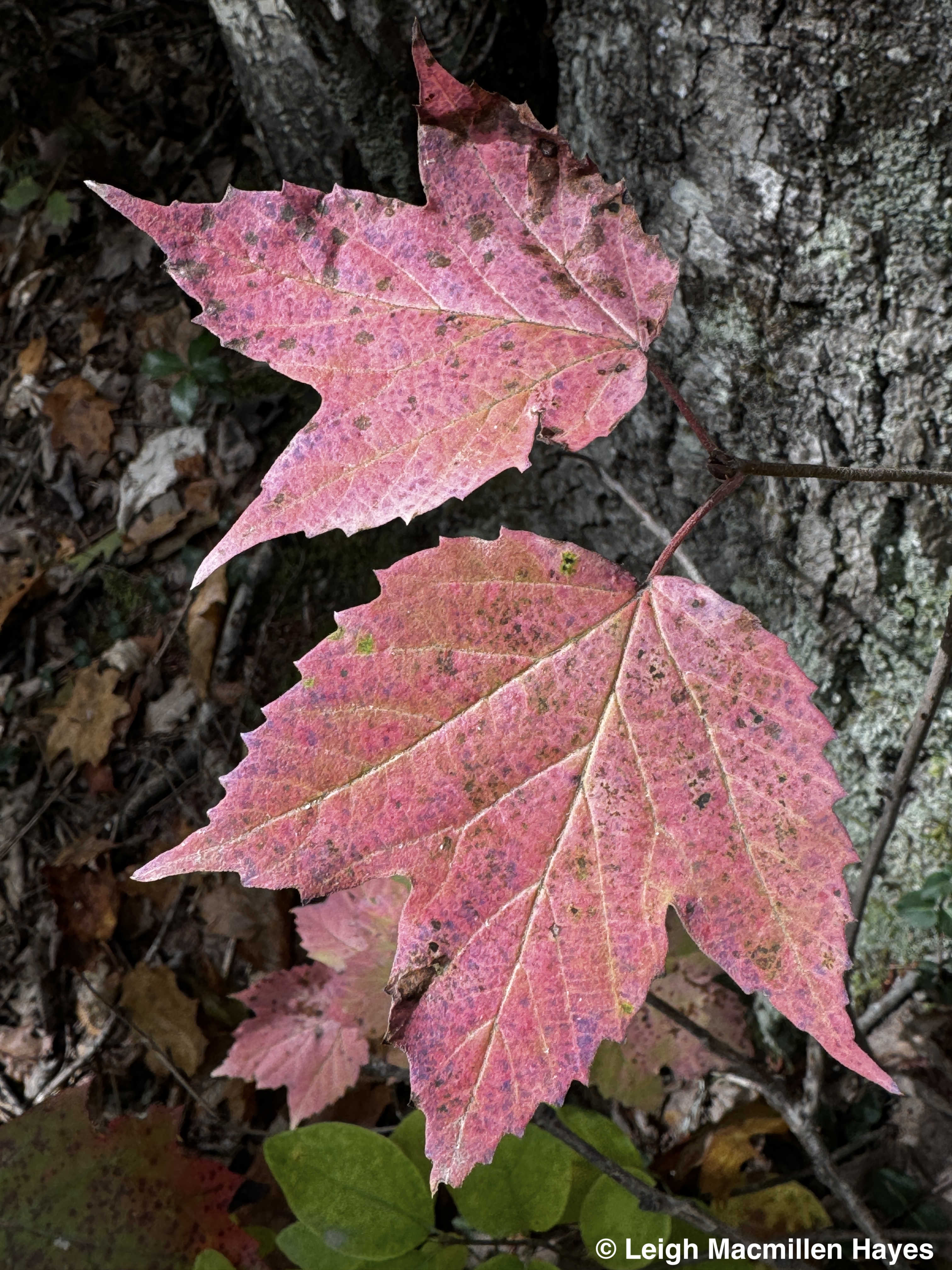
is the reddish-pinky-purples
of Maple-leaf Viburnum,
a shrub with maple-shaped leaves.
Ash follows suit,
though its leaves
are the quickest to drop
and disappear into the forest floor.
Big-tooth Aspens turn a golden yellow,
but other colors
have a tendency to seep in
and create a striking picture.
American Beech,
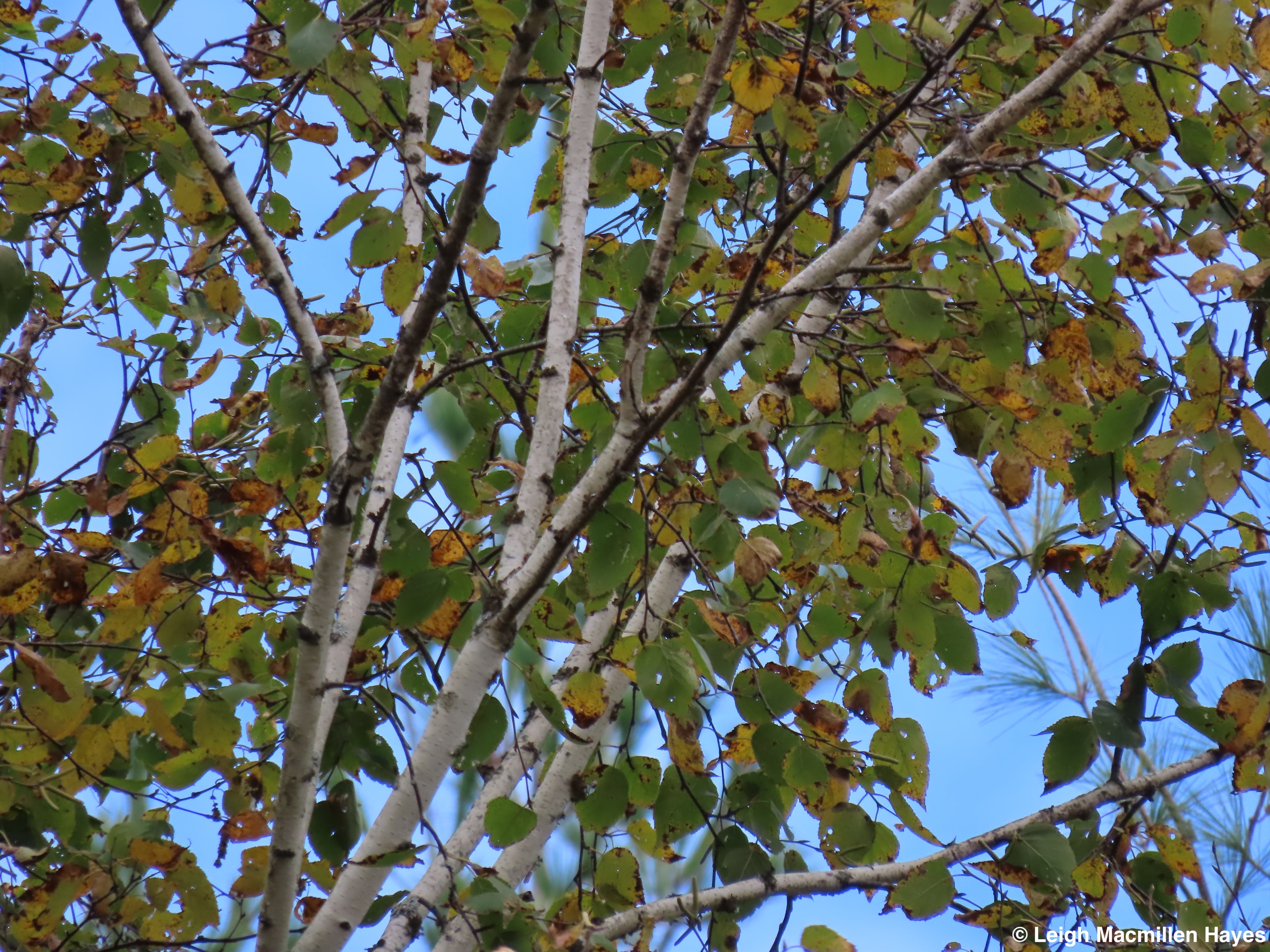
Paper and Gray Birch
show off a yellow
to golden bronze presentation.
And a little late to the show,
Northern Red Oaks
put their colors on display
after other species
have already dropped their leaves.
Not really a part of the foliage,
but still important because it is present,
is the splotchy display caused by Anthracnose fungi,
a result of too much rain stressing trees
and not allowing them to properly respire.
Once connecting tissues
between leaf petioles and their twigs
form a seal,
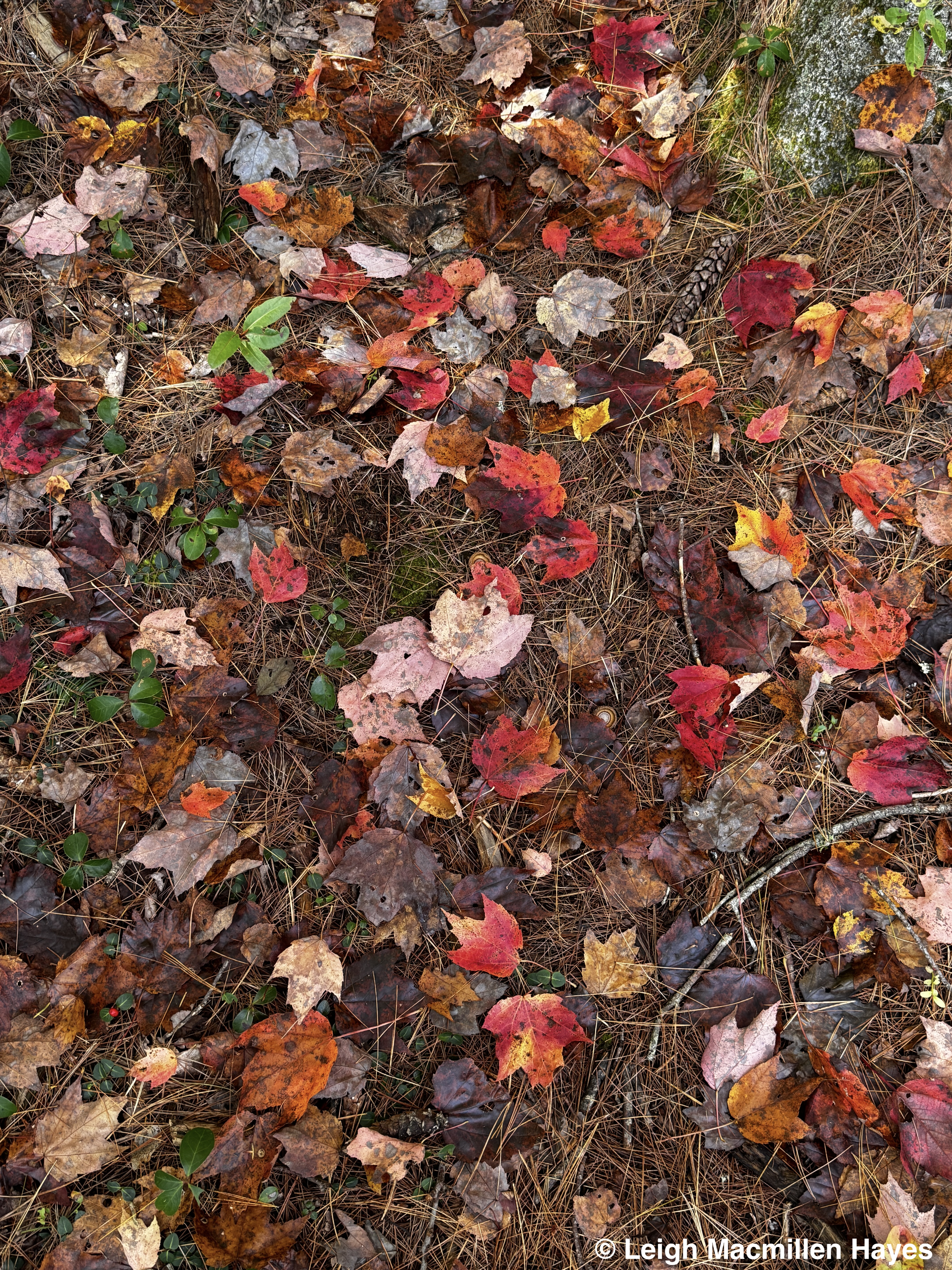
the forest floor is colored with gems
that will eventually turn various shades of brown
as they decompose and restock the soil with nutrients,
plus provide food for numerous organisms. And shelter.
In a Senior College (Lifelong Learning) class
this past week,
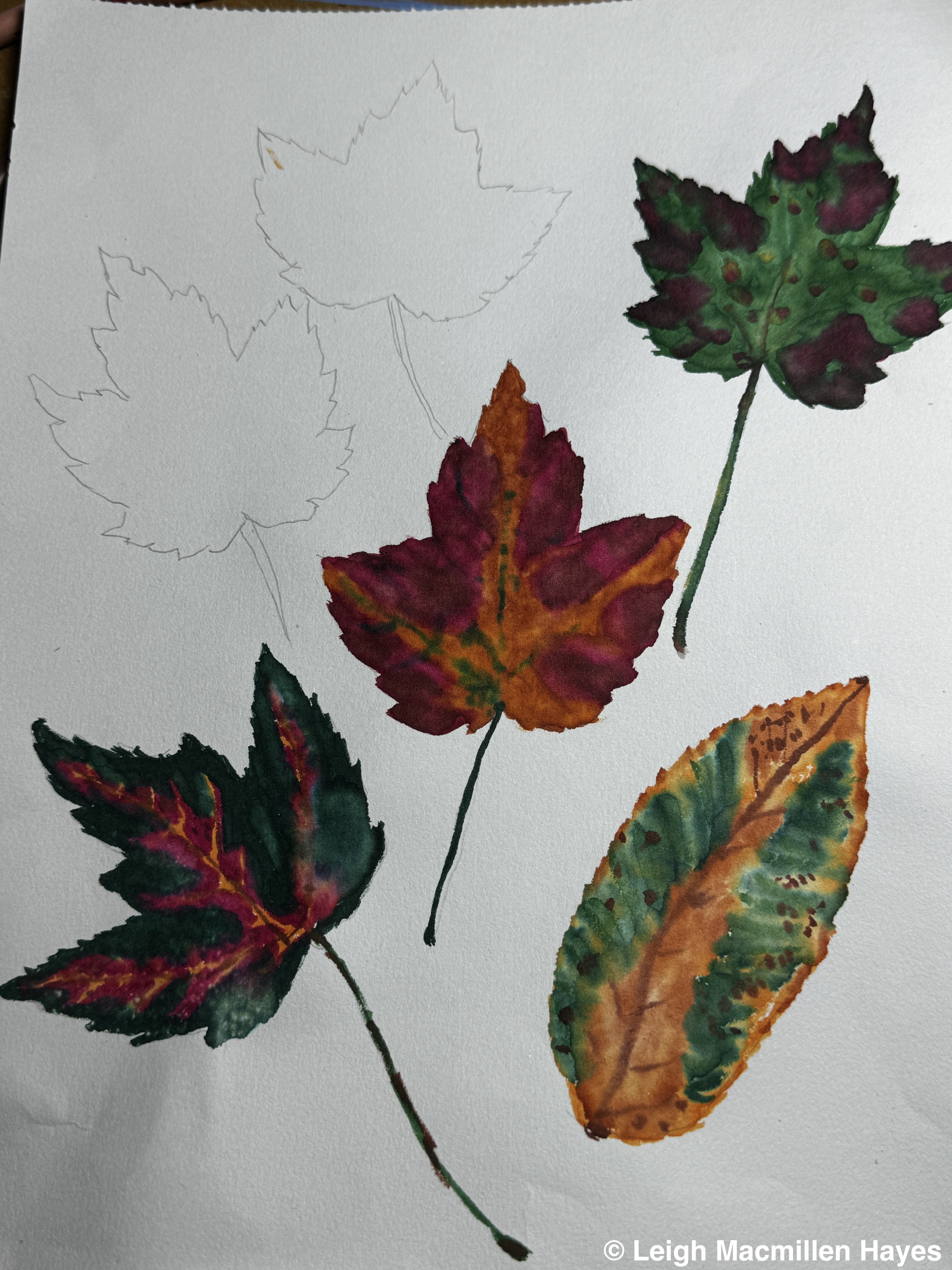
I attempted to use watercolor pens
to capture the colors.
And then at home,
I tried to do the same,
only this time using watercolor pencils
to show off the vibrant variety of hues.
In doing so,
I was forced to slow down
and notice how the color changes
often followed the veins
in this biochemical process.
Fall foliage is fleeting,
and I give thanks
that every year
we can celebrate the work of the leaves.








 wondermyway
So fun and informative! I am passing this on to several interested friends!
Kendra
LikeLiked by 1 person
Thanks for sharing it with others, Kendra!
Safe travels to you!
LikeLike
Beautiful fall colors!
LikeLiked by 1 person
Thanks M.B. It gets more beautiful every day.
LikeLiked by 1 person