Betwixt. Between. Be flowers. Be bugs. Be glad for there is so much to wonder about in the natural world. And I don’t even know the half of it. But I wouldn’t be happy if I wasn’t always learning.

It was 28˚ when I awoke this morning. Late this afternoon on this brilliant sunlight day, with temps at least 30˚ warmer, I walked out through our woodlot to the right and then looked back across the neighbor’s field toward our house, taking in the sea of seedheads and I was sure my insect hunting days had come to an end.

But much to my surprise, and really, I shouldn’t have been surprised, the chirps of crickets and grasshoppers, like this Red-legged example, filled the air. I might not have seen the grasshoppers if they hadn’t flown to a new spot occasionally, for so camouflaged are they in the current setting. Or always.

And then, much to my delight, I noticed a Saffron-winged Meadowhawk flying low and making frequent stops, allowing me to do the same. We live in a wet area, but still, I’m often surprised by some of species I meet here.

From the field, I decided to continue along the power line that crosses our property and the neighbor’s and many more beyond that and as I’d told my friend Meg from North Carolina the other day–Mount Washington, our mighty New England Rock Pile, is at the far end and it looks like we could walk right to it. Give or take a few days–or drive there in about an hour.

It’s along the path below the lines that I discovered Cotton-grass, which is a sedge, with its fluffy little heads speaking to the bogginess of this area.

Cottongrasses self-pollinate, their flowers being “perfect,” given that each contains both male (stamen) and female (carpel) parts. And the seeds are attached to parachutes waiting for a breeze (or animal) to move them to a new home.
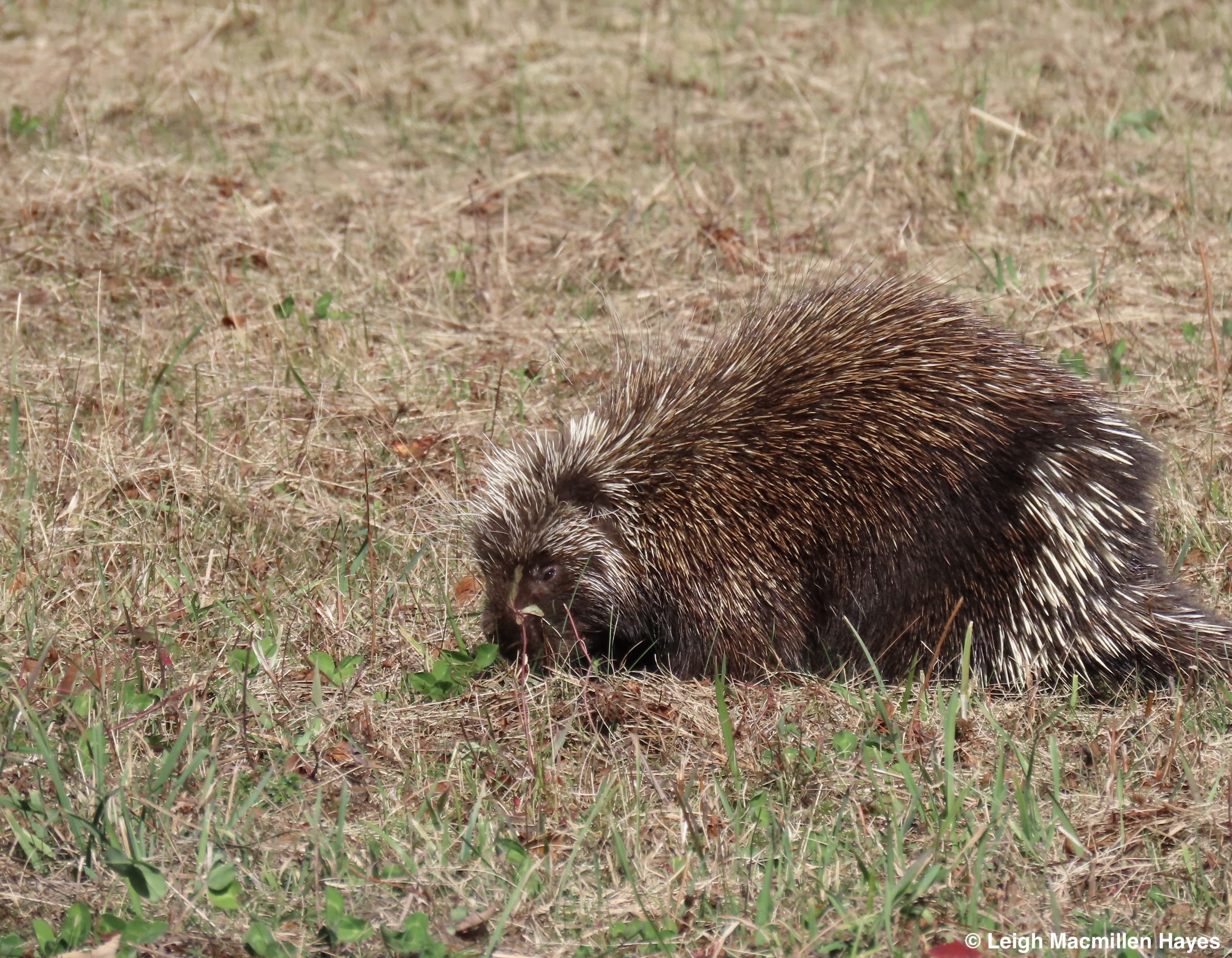
Spotting the curly, cottony-hairs reminded me of the belly hairs of porcupines, which of course, reminded me of the Porky some friends and I spotted in another field in town yesterday. The time is coming when these critters, whom I’ve come to adore, will transition from life in the field to life in forest trees.
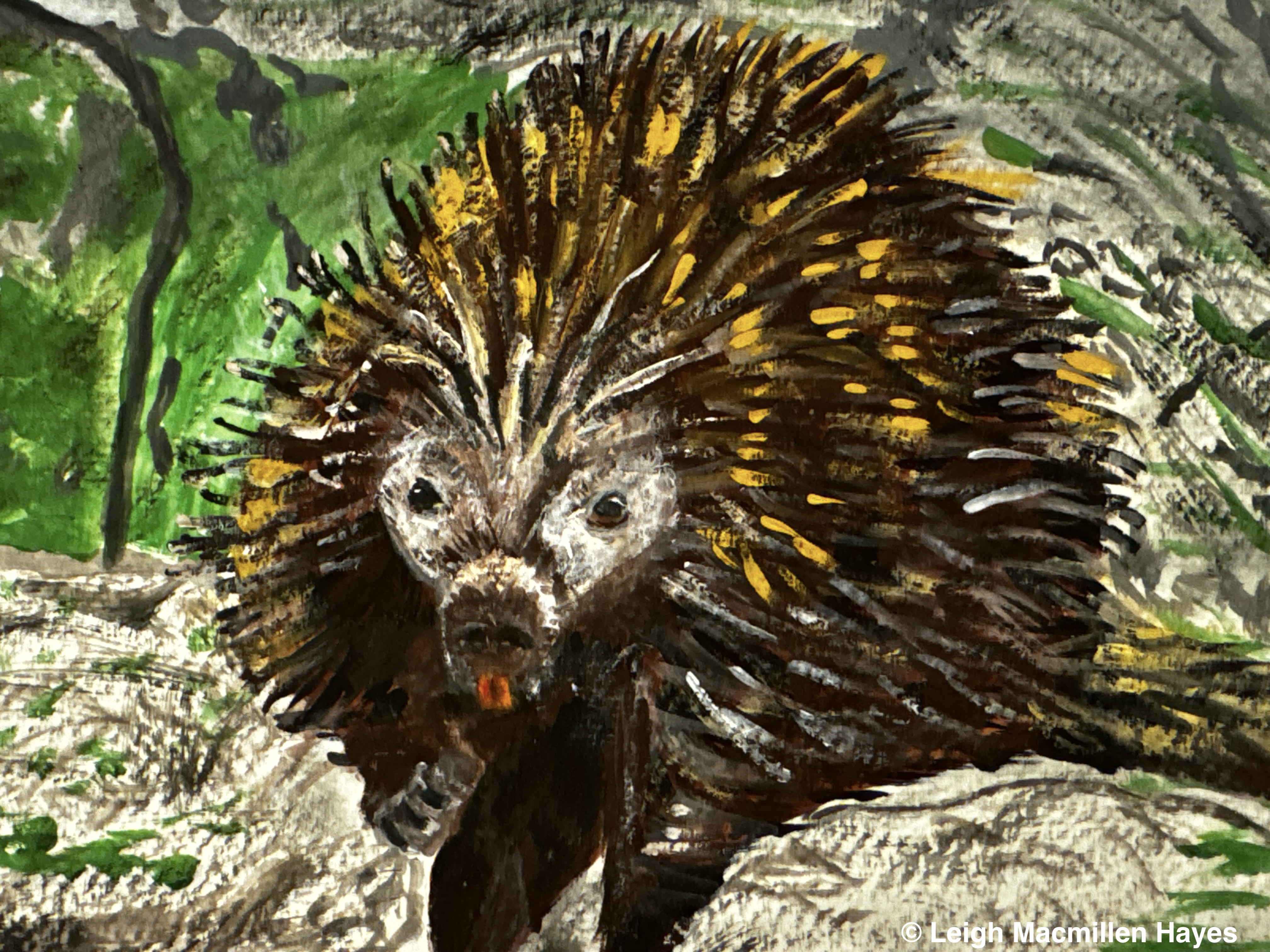
Last November I wrote about this particular porcupine, Bandit, whom I met in our yard, along the same route I began today’s journey. Perhaps soon, we will meet again.
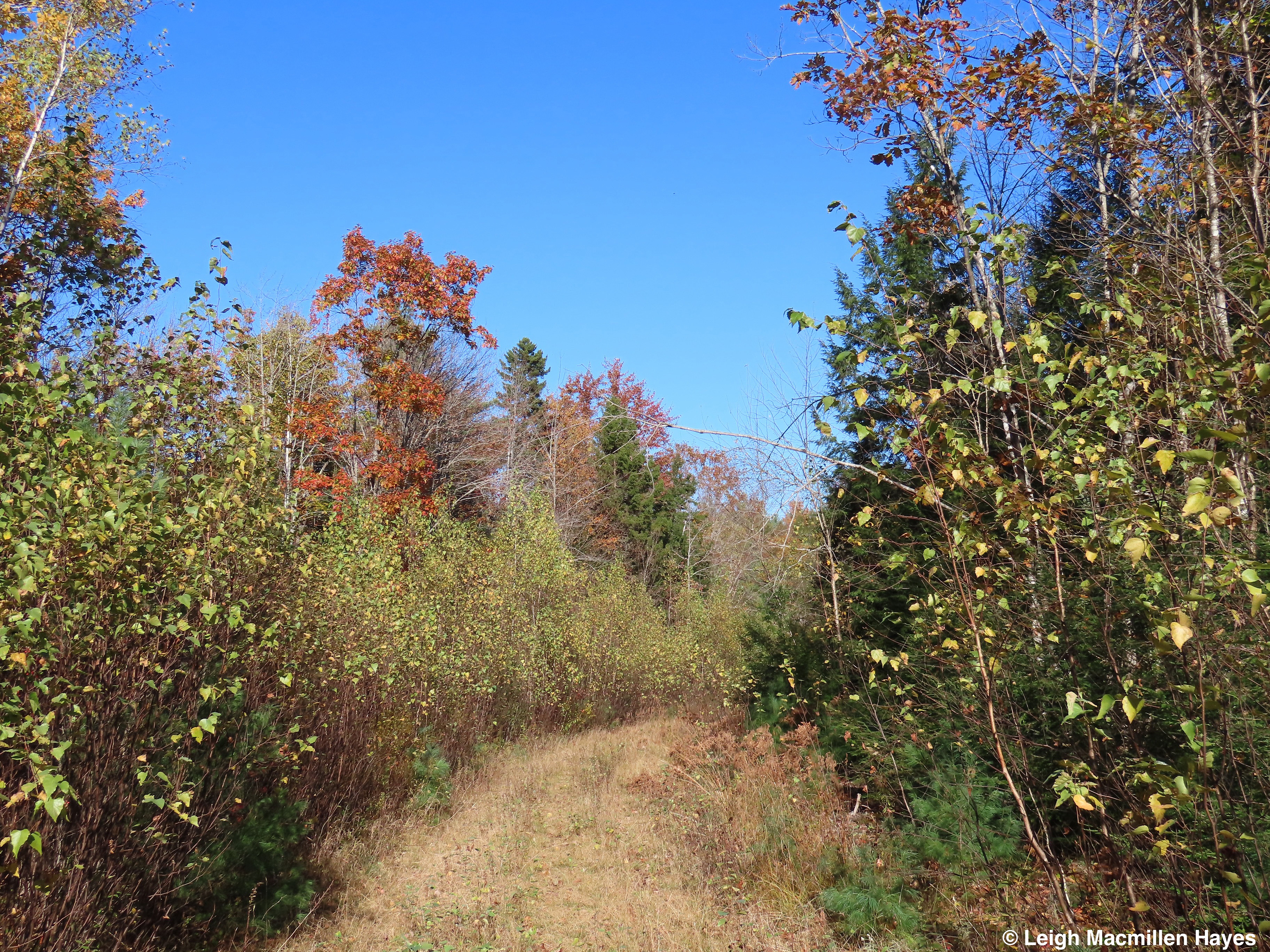
Getting back to today’s story, I left the power line, and headed out an old logging trail that I tend to frequent most often in the winter. But it was sunny, and I was enjoying that warmth, and wondered what else I might spy along the way.

For starters, there were the “dried” Pearly Everlasting Flowers, which I should have gathered because they do dry so well. Instead, I just admired them.

And I had frequent encounters with more Saffron-winged Meadowhawks, flying much like White Corporal Skimmers in early spring–always landing and then moving a couple of feet ahead of me whenever I made a move.
Helping with ID of this species, are the fine black lines in the sutures of the abdomen. And the red stigma toward the tip of each wing is outlined in black. Otherwise, I might confuse it for an Autumn Meadowhawk.

I also had the pleasure of meeting a female Shadow Darner, but then I went to offer a finger for her, thinking she might want to take advantage of my body heat, and instead she tried to bite me. So, I let her be and we went our own ways.
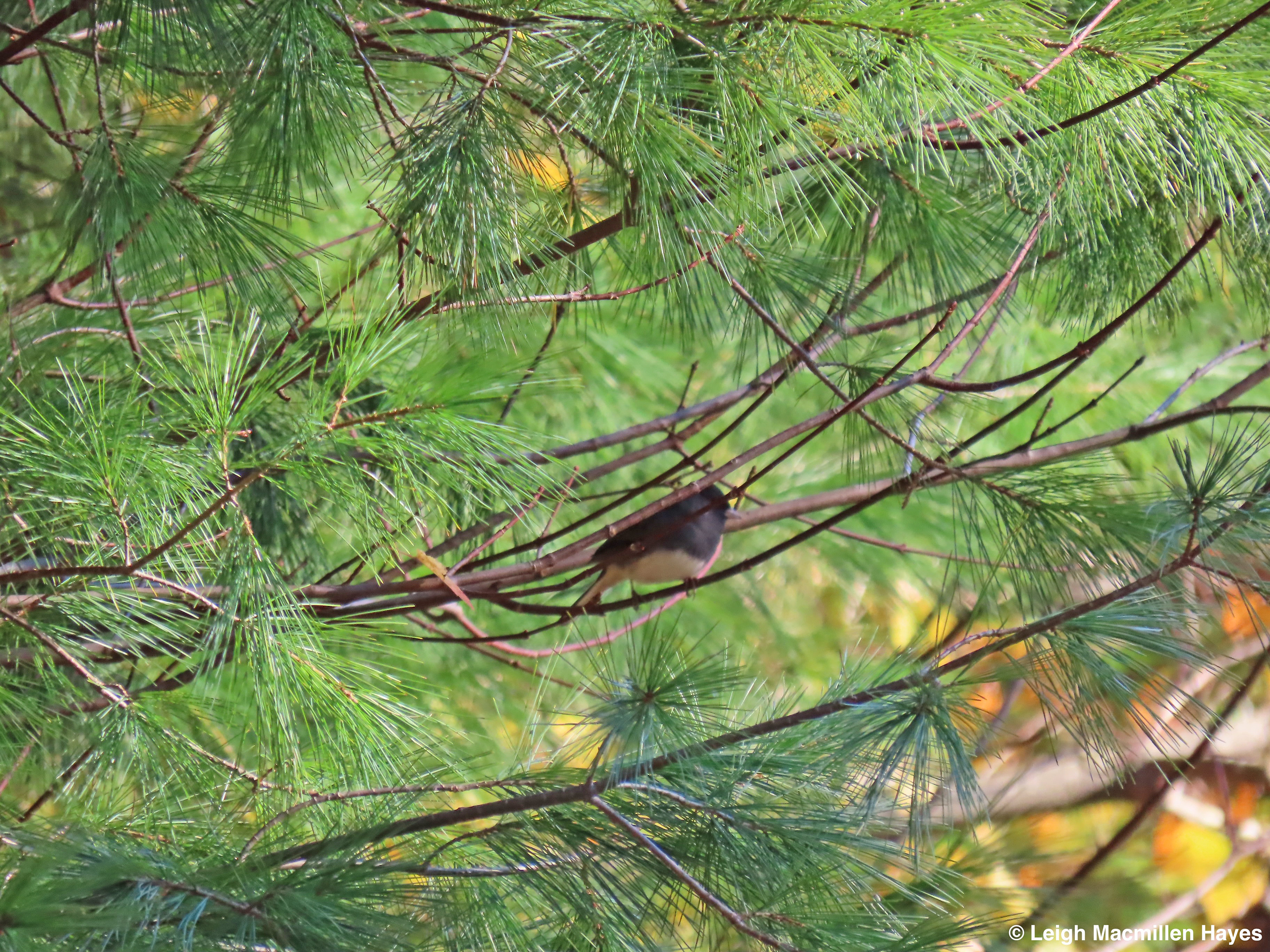
At a former log landing, Juncos were on watch, and given how much seed is available, I know they’re mighty happy with the current conditions. It seems like they just arrived in the past week or so, but the good news is that many will overwinter here.
Oh and a few will fly to Connecticut so that my dear friend, Kate, can watch them as well.
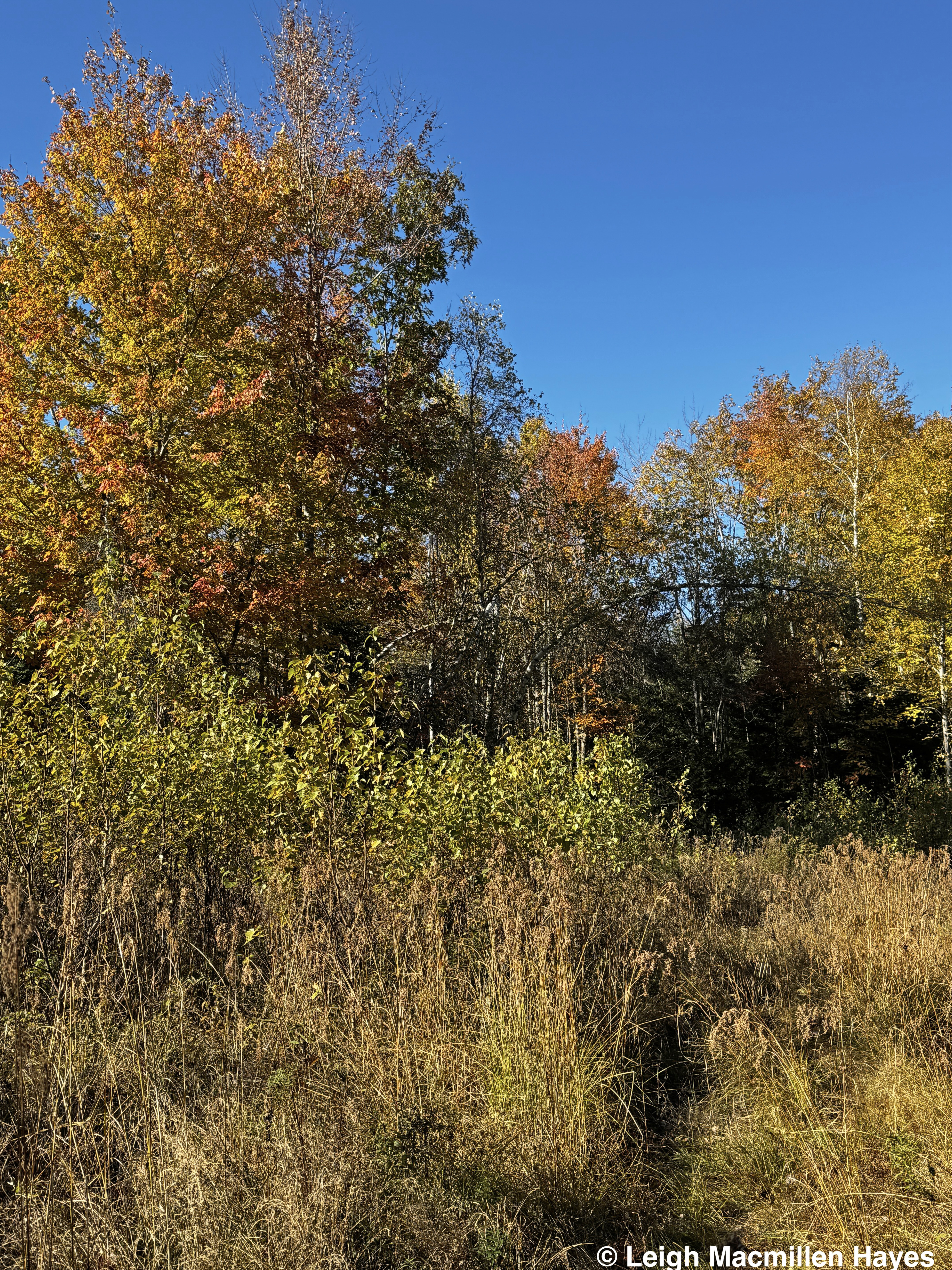
Being an old logging road and log landing, conditions were apparently ideal this past summer, and I paused for a moment to admire forest succession, with grasses and herbs forming the floor, and more grasses and sedges growing taller, topped by Gray Birch, and a backdrop of Red Maples, and Big-tooth Aspen, and Paper Birch.

And then it was back to the now dry bed of a stream crossing where Speckled Alder shrubs are closing in on the trail, and Woolly Alder Aphids are living their best life seeking sap from the woody plants.
That Cotton Candy or even Cotton-grass look is actually a waxy material they produce from their abdomens, and when they group together like this, perhaps its meant to detract visitors. Or protect them from the weather. Had a I visited on a summer day, I’m sure I would have spotted ants trying to tickle them (it’s called farming) to take advantage of the honey dew the aphids secrete.
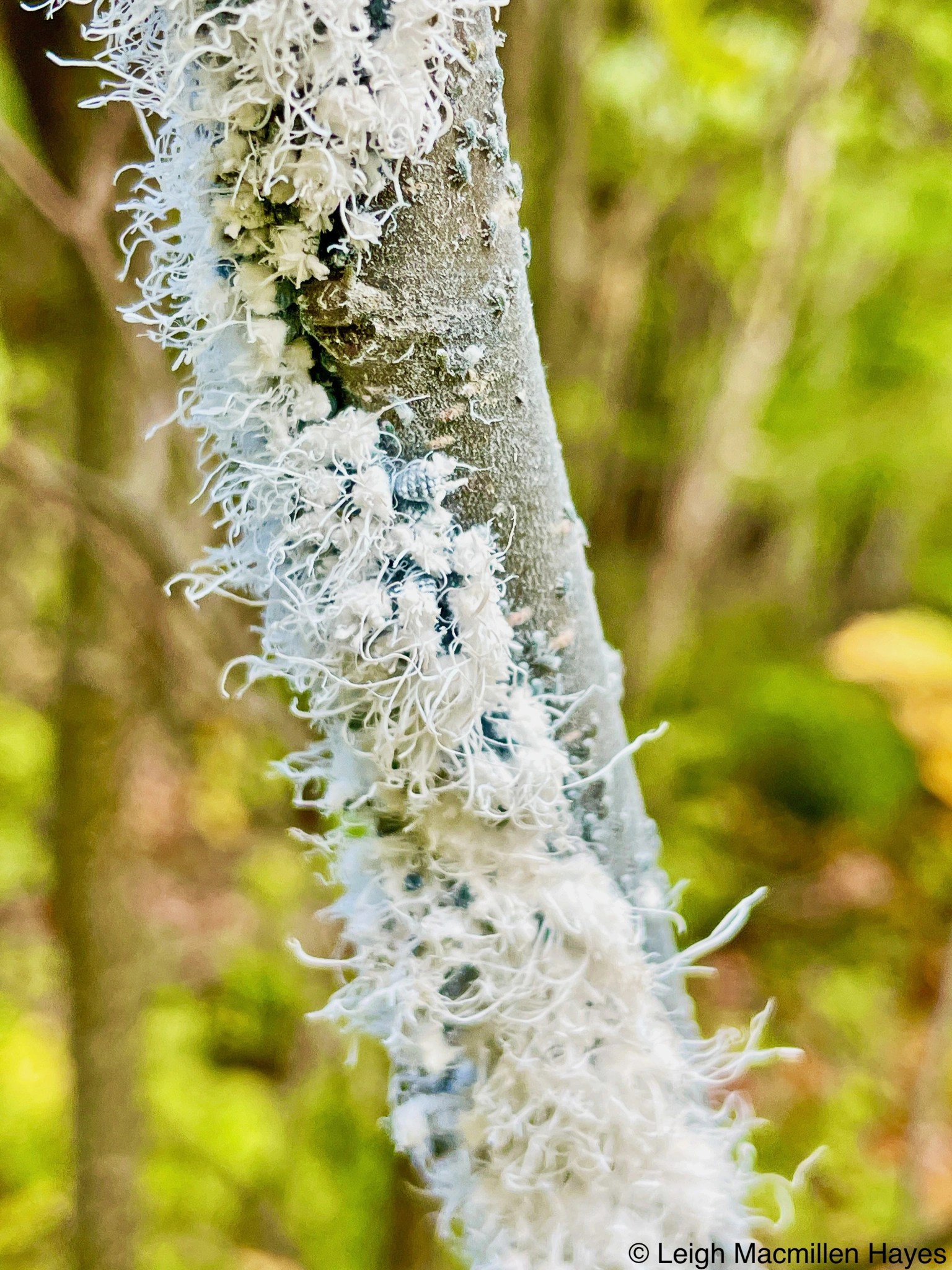
Speckled Alder Aphids live an interesting life style. Actually, according to Donald W. Stokes in his book, A Guide to Observing Insect Lives, “There are two life cycles in this species. In one, the aphids remain on alder trees throughout their lives. They are believed to overwinter as adults in the leaf litter at the base of an alder. In spring, they crawl up the plant and feed on its sap. There are several generations per year and adults of the last generation overwinter.
In the other life cycle, the aphids alternate between two plants. The aphids overwinter as eggs placed on maple twigs. In the spring they hatch into females, which feed on the undersides of maples leaves and reproduce. They are wingless, but in midsummer produce winged offspring, also females, which fly to alders. These females feed and reproduce on alders, and give birth to wingless young. Then in the late fall, they produce winged young, which fly back to maples and give birth to both male and female young. The males and females mate, and each fertilized female lays a single egg on a maple twig. Only the eggs overwinter.”
It’s things like this that add to my sense of wonder. Two life cycles? The adults of one life cycle overwinter while the eggs of the other are do the same? That’s amazing.
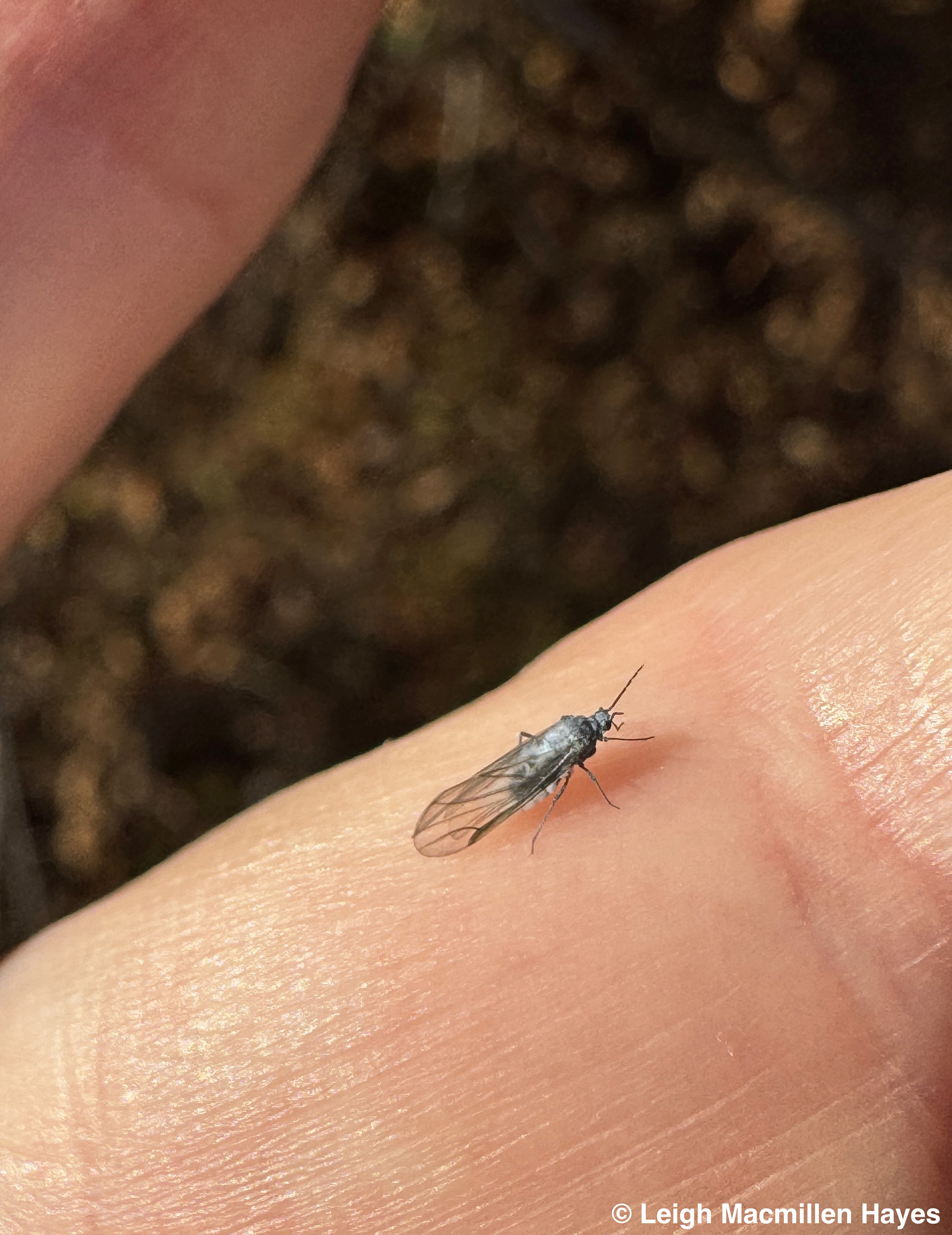
And on the fly in a bit of abundance right now for I saw a bunch today and I’ve been seeing them along many trails that I hike, are the flying aphids. If you stick your hand out and cup it, you can get one to land.

Don’t worry, they don’t bite. And they don’t even tickle, despite that waxy hair.
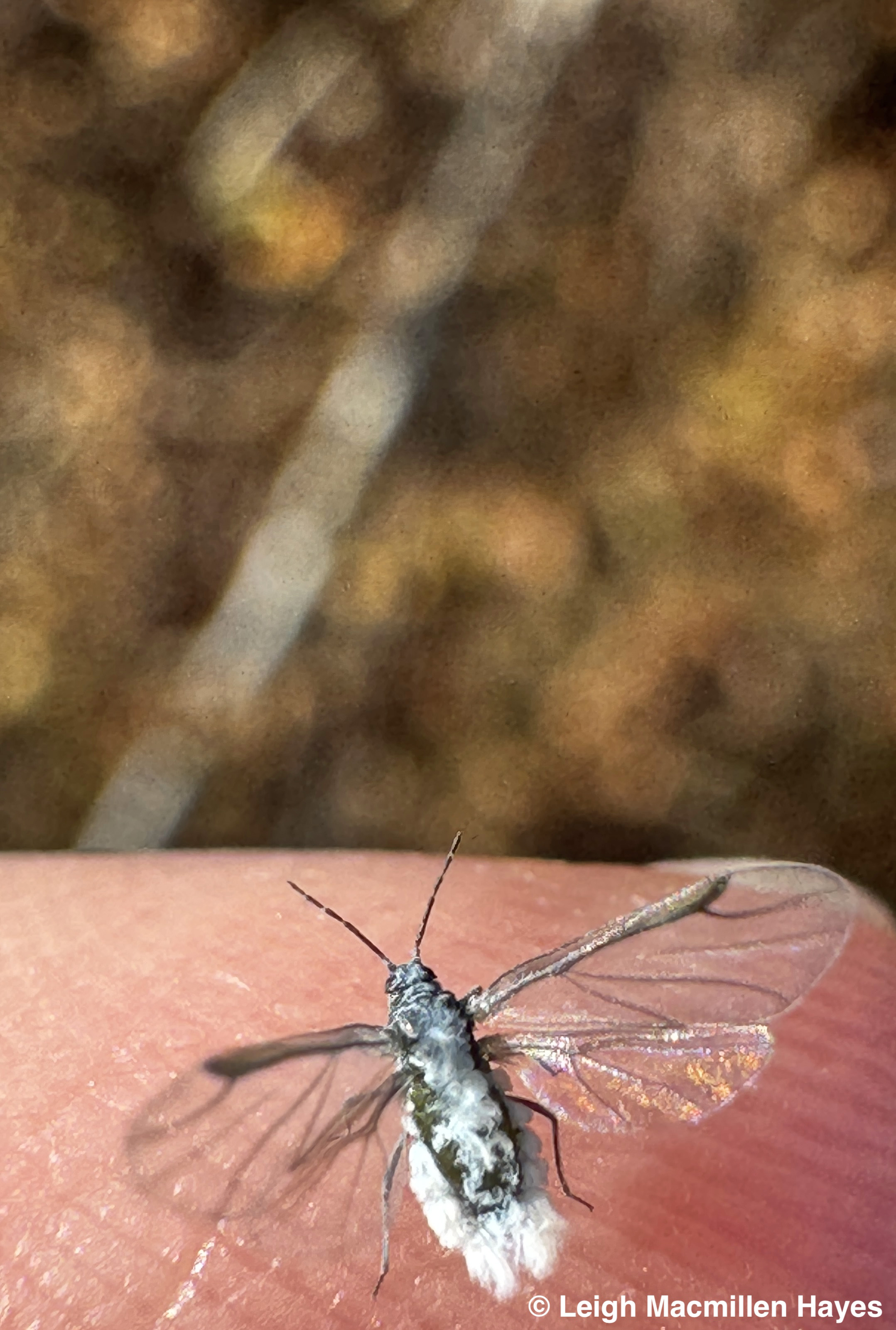
They’re actually kinda beautiful in their own way and as they fly they look like tiny flakes of snow, thus some refer to them as Snow Bugs.
So I have two forever-friends-since-birth and I’ve already referred to Kate earlier in this blog because she is a great lover of Juncos, along with everything else in the natural world, and so is her sister, Patty, who once told this joke when we were kids:
Q: What’s white and goes up?
A. A dumb snowflake.
One of these two is eleven months younger than me and the other is eleven months older and she and I just chatted yesterday and I’m so thankful to have them in my life all these years. Yes, B.S., I am also incredibly thankful to have you in my life.
But once again I digress. Except I had to tell that joke. Because it kinda reminds me of the aphids in flight.

Back to the power line, I decided to pull the Mighty Mount Washington in with the telephoto lens. Yes, dear readers, that is snow! Several inches of the white stuff has fallen over the last few days. And there is rime ice.
My favorite season is only a walk down the power line away.
Snow: Bugs and Flakes. It’s all wonder-filled.
 wondermyway