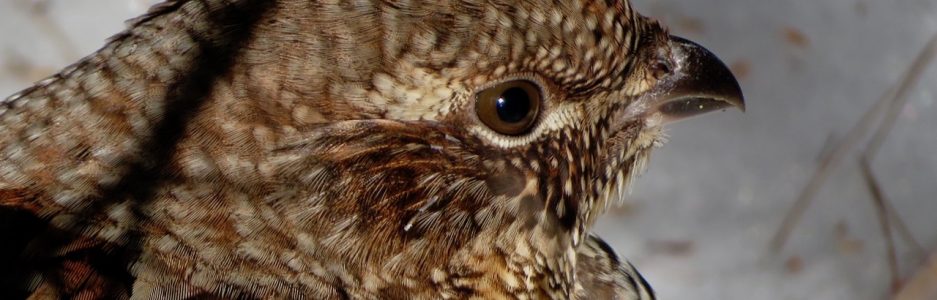
Where there is water there may be Beavers. And so I explored two locations on several occasions this weekend in a quest to spend some time with one of the most incredible mammals of our region.
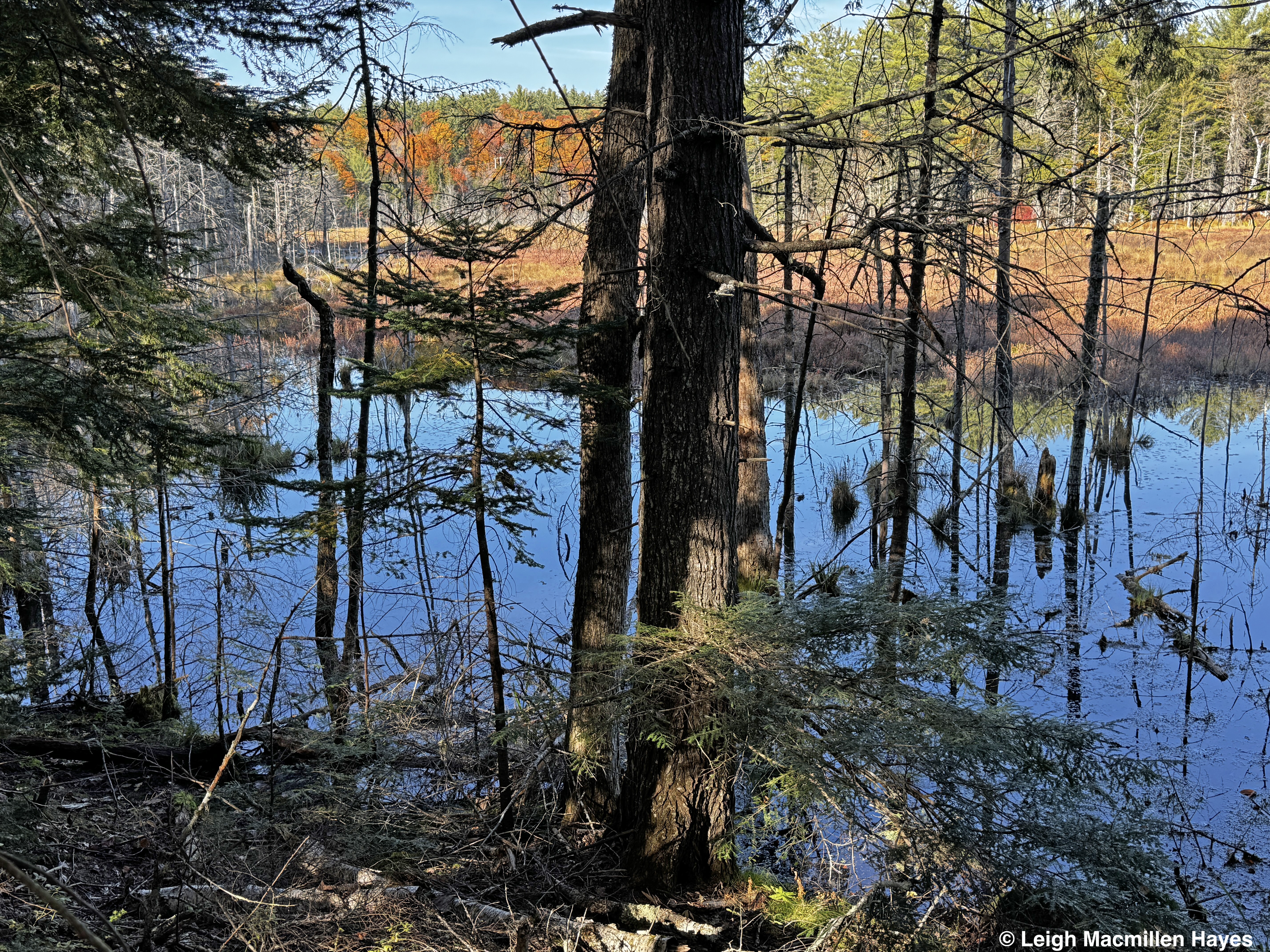
One such spot is beside a wetland associated with a brook. It’s a place rich with color and texture, and ahh, those fall scents of earth and water and fallen leaves and Balsam Fir all settled together in the late afternoon after the morning sun has baked them.
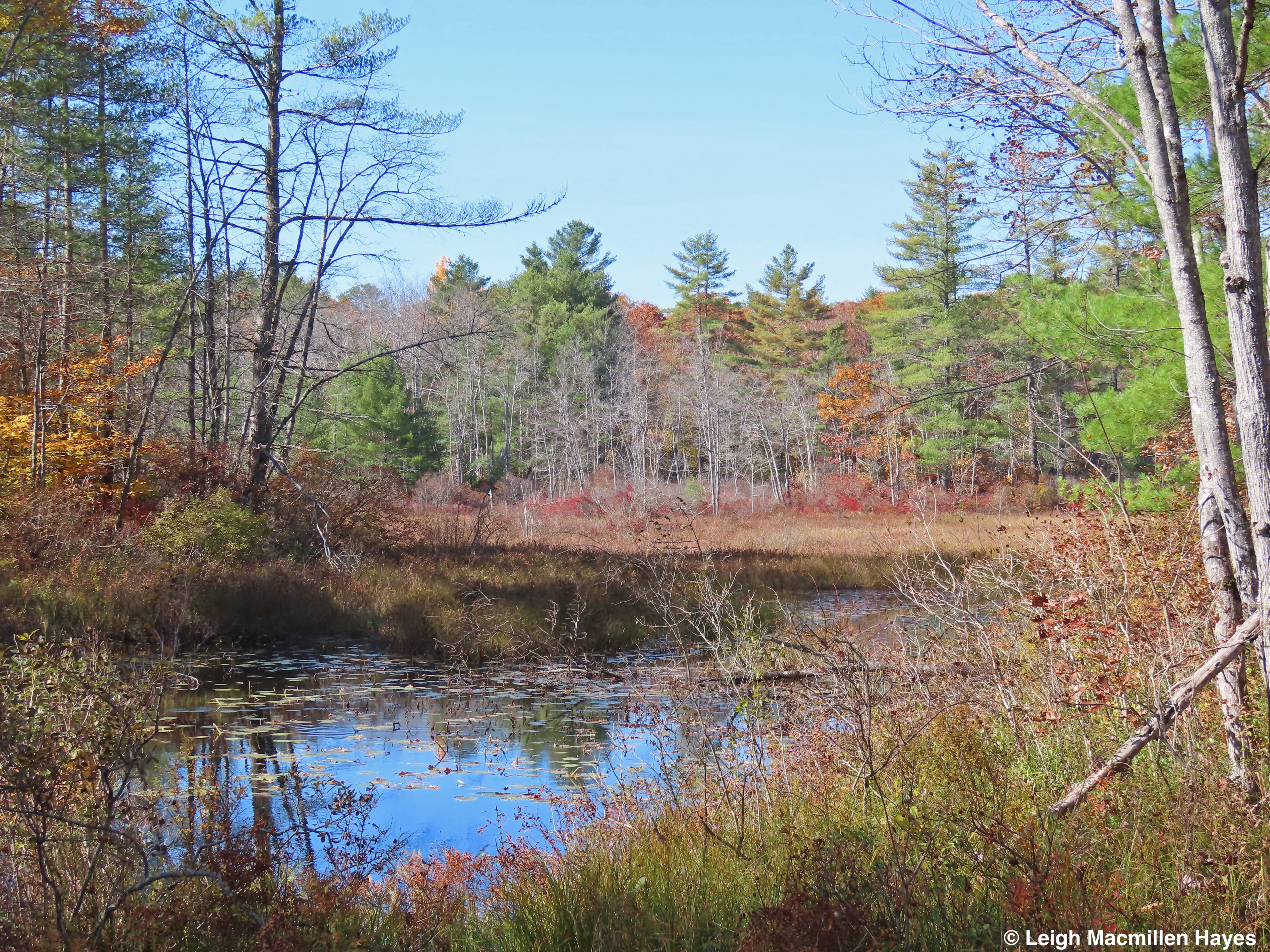
The other was beside another brook that served as the outlet for a small pond, and again the colors and textures and scents filled my senses, enhanced by a slight breeze that made for a most delightful exploration on October days with temperatures in the 70˚s.
I don’t want temps to remain in the 70˚s always, but these days are gifts meant to be cherished and remembered by our skin and our soles.

I discovered along the way that I wasn’t the only one basking in the sunlight, for Painted Turtles also took advantage of the warm rays to regulate their body temperature. It also provides an opportunity to hang out with friends as they congregate along logs and rocks.

Easter Painted Turtles, beautifully adorned as they are, feature intricate red coloring along the sides of their shells and bodies, plus a orangy-yellow belly, and lines of red and orange and yellow green on their necks and legs.
But beyond all of this, I’m reminded that they play a vital role in maintaining the health of their ecosystems as they consume a diverse diet from aquatic plants, to algae, insects and small invertebrates, thus cycling nutrients throughout the habitat–an environmentally healthy habitat.
I gave thanks to the Beavers for reminding me of that fact.

Back to the Beavers, my journey continued when I spied new Hemlock branches atop a lodge.

And then I began to find pathway after pathway across land to water where the family, since there are usually two or three generations of Beavers who live in a lodge and work the area together, had dragged downed trees and branches overnight and carried them between their teeth out to their residence.

Their works were many and sculptures magnificent as they chiseled away and when I spotted this tree, I had visions of one standing on its hind feet and using its tail to form a tripod, the better to steady its body, as it turned its head to the side and began to work. With head cocked, it created the consistent angle of the half inch groove as the upper and lower incisors come together.
To reach such heights, I could only assume it was a mature Beaver. That, or one stood upon the back of another. Ah, but that’s the stuff of fairy tales. (I do like fairy tales–just saying).
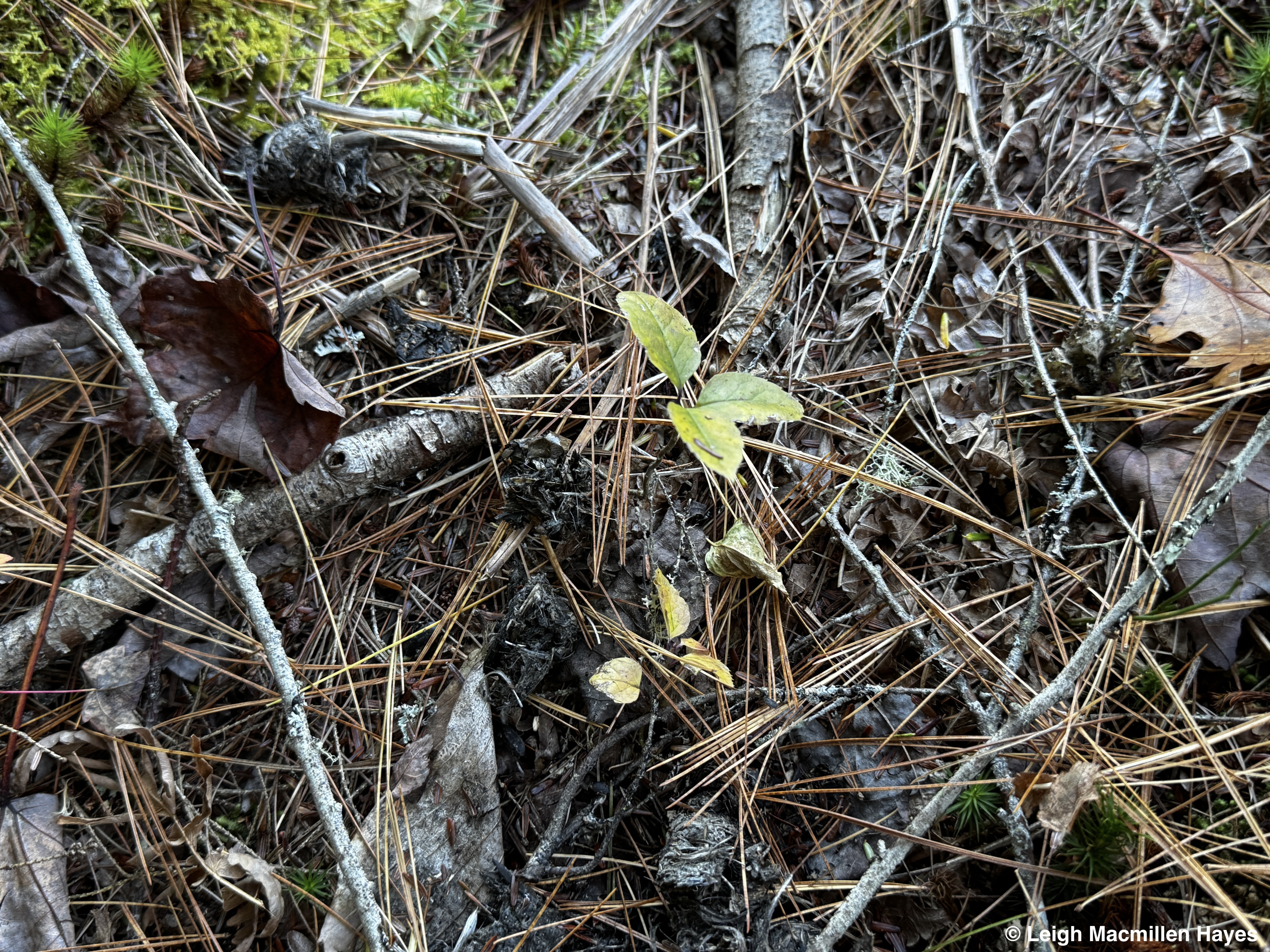
As I looked around the base of a tree for more evidence, I discovered this. What could it possibly be? Scat?

No. Pellets? Yes. Several of them. Filled with bones. And maybe hair. And/or feathers.
The creator? My brain automatically went to Barred Owl and I’ve seen and heard the owl in these woods on many occasions.
But . . . these natural treasures could also have been produced by a resident eagle or hawk or so many other birds. Based on the number of pellets under this one tree, its a certain signpost of a productive area for whatever bird chose to prey from above.

Moving farther along as I bushwhacked, I knew I was getting closer and closer to the animal of my dreams when I spotted trees being turned into logs.
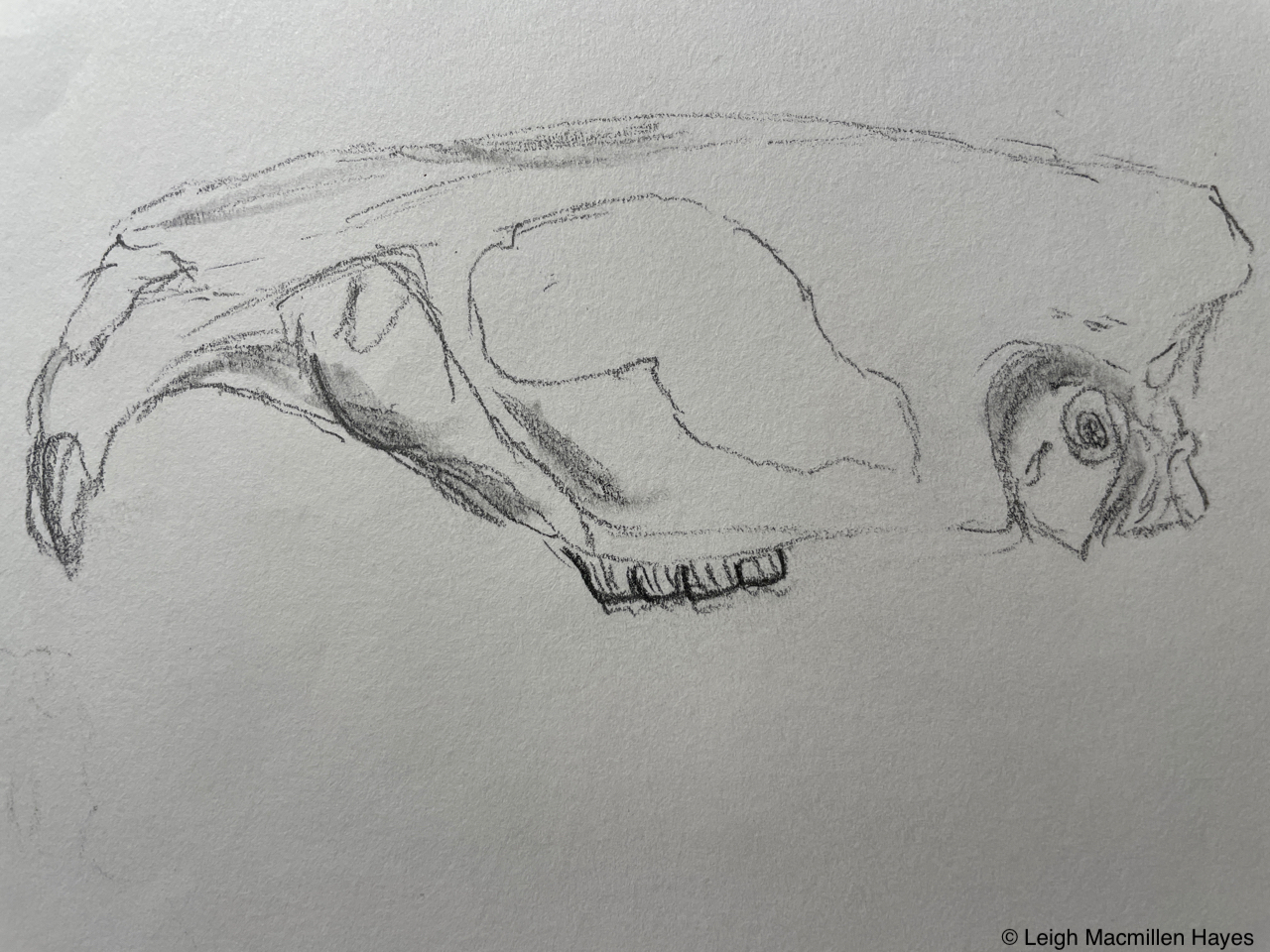
A beaver’s dental formula is this: 2 incisors on top, 2 incisors on bottom, 0 canines on top, 0 canines on bottom, 2 premolars on top, 2 premolars on bottom (that look like molars), 6 molars on top and 6 molars on bottom, for a total of 20 teeth. Recently, I was able to sketch the upper part of the skull of an older family member, who’d lost some of its molars.
These large, semi-aquatic rodents are gnawers. To that end, their incisors are highly specialized for chewing through really, really tough things and they grow continually throughout the critter’s life.
And like all rodents, the front surface of their incisors is coated in enamel reinforced with iron (hence the orange color), which makes it resistant to wear and tear from gnawing.

When the chisel-like teeth chew and fell trees, the much softer white dentine layer (the section behind the enamel) is ground down quicker than the enamel, thus creating a sharp chisel surface.
As strict herbivores, a Beaver’s diet varies with changes in the season. During spring and summer, they are drawn to waterlilies, algae, grasses, sedges, herbs, ferns, shrub leaves and shoots. By late summer, however, tree cutting begins as they gradually change their dietary habits from herbaceous to woody materials. Twigs, roots, bark and especially inner bark become the source of nutrition. Aspen, birch, alder, and willow are favored species, but beavers will cut almost anything including conifers.
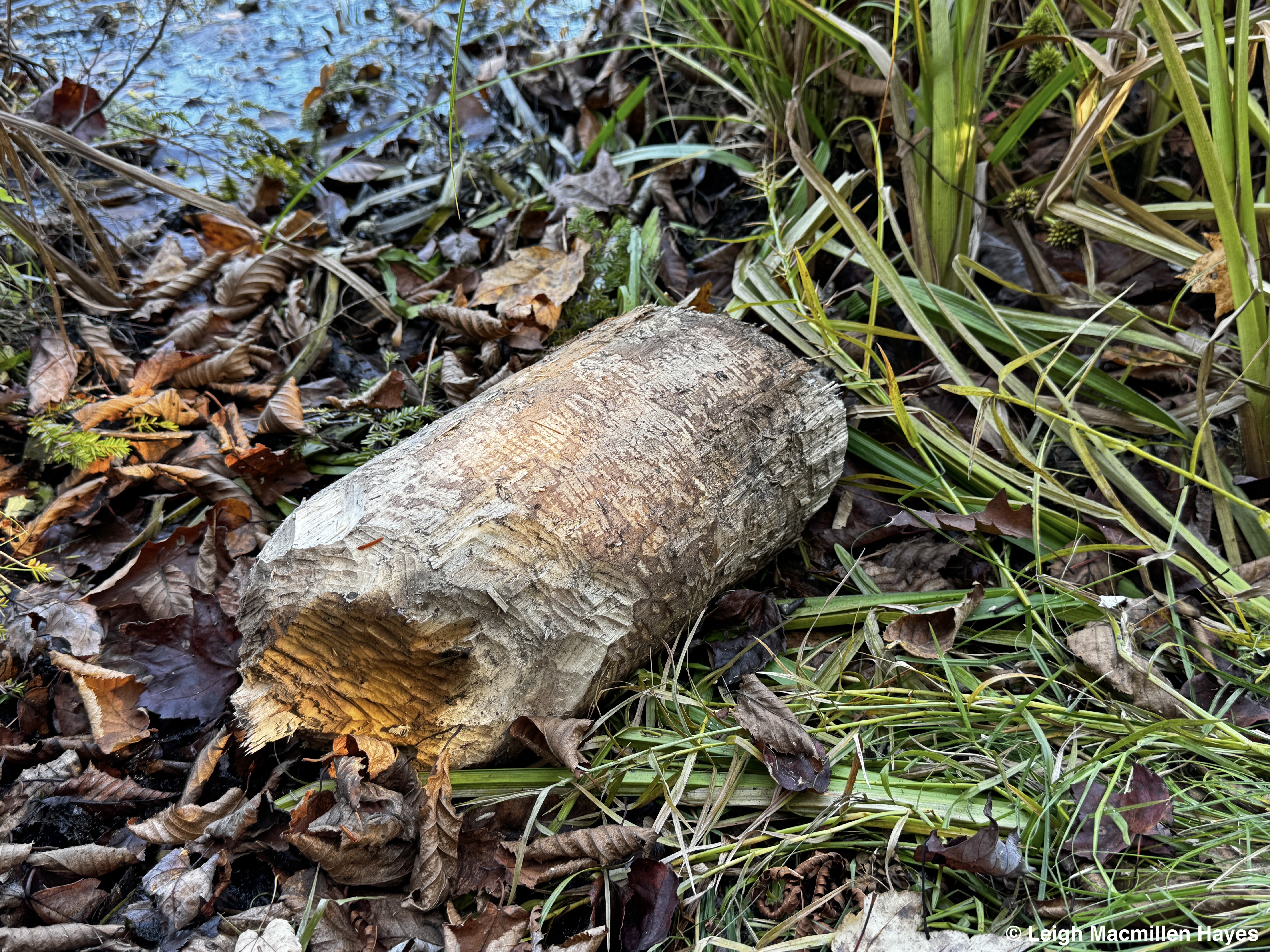
Occasionally, I saw individual logs on land or upon a muddy spot in the water. Again, the consistency of the gnawing was to be admired.

And where there are Beavers, there may also be Porcupines. At least, there was a couple of years ago when I spent some winter days tracking one to this cozy little den. Remnants of scat are all that remain and spiders have instead made a home in the hollow of this tree.

And then I spotted the most amazing feat of all. A widow maker dangling from a tree (that is if you are about eight inches tall), its bottom gnawed off and more gnawing about a foot and a half off the ground.

My search was interrupted again when a Spotted Spreadwing Damselfly entered the scene in a sunny spot. So named Spreadwing because unlike other damselflies that fold their wings over their backs when at rest, the Spreadwings, um, spread their wings. On the of left hand side it looked like this insect had four wings rather than two, but such was the sun’s angle in that spot and thus the shadows upon the leaves.
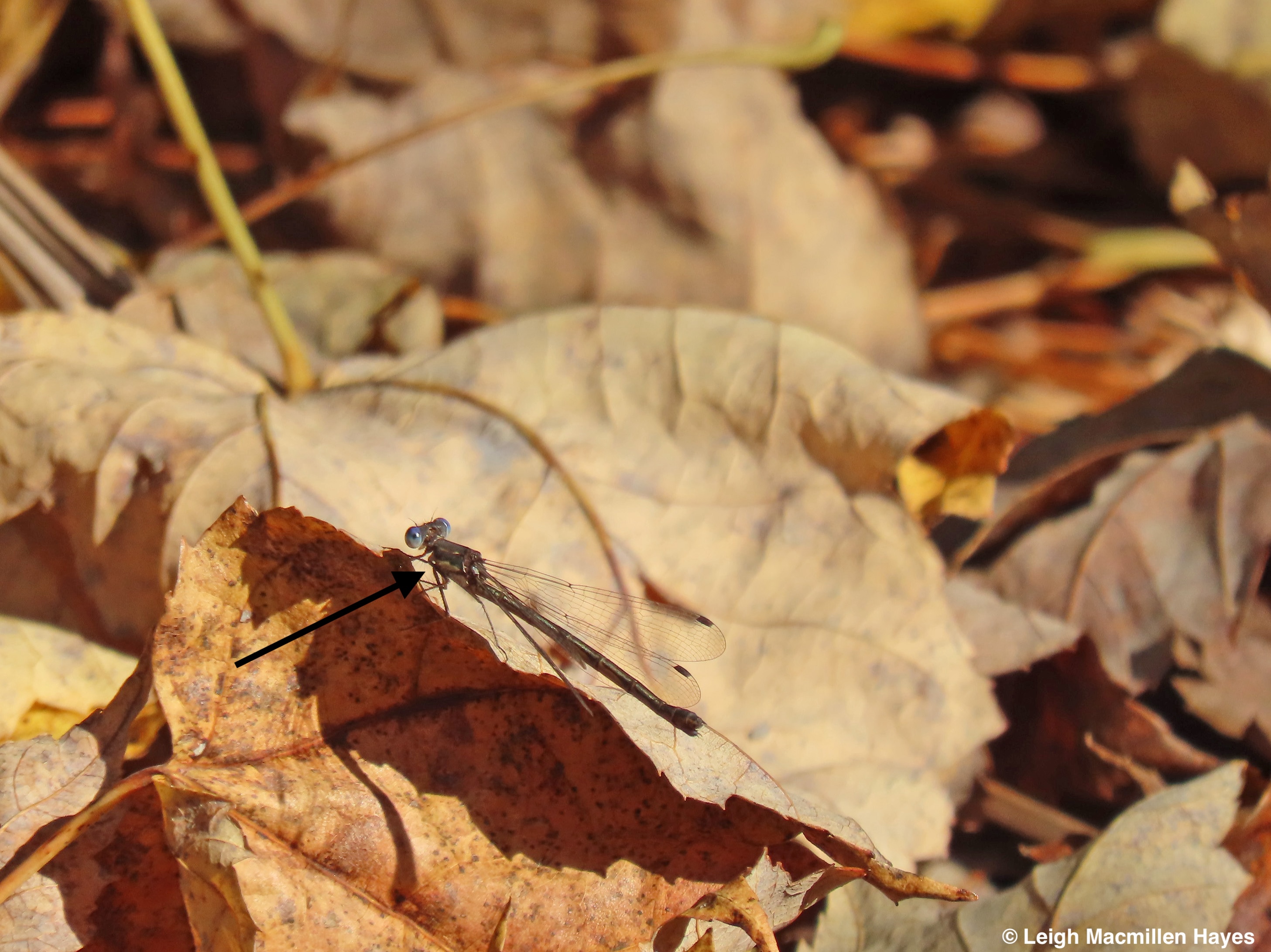
Identification was based on the lower side of the abdomen, where it is difficult to see, but there are two spots below the thorax stripes as compared to the Great Spreadwing with has two yellow stripes with brown between them, and no spots.

Autumn Meadowhawks were also on the fly and I kept seeing males with no ladies about.

A couple of hours later, one flew in, but though they danced in the air together as he chased her, they never did canoodle, in my presence anyway. And the last I saw of them, they headed to separate branches of a pine tree, perhaps to spend the night in rooms of their own.

The Beavers weren’t canoodling either, but they were certainly active given the rolls of mud and grasses and sedges and probably reeds I kept finding along the water’s edge.

And then I discovered the much sought after (at least by me) Beaver print. It’s a rare occasion to see a print, but sometimes I do in the snow. Their tails and the trees they haul swish away such evidence of their travels.
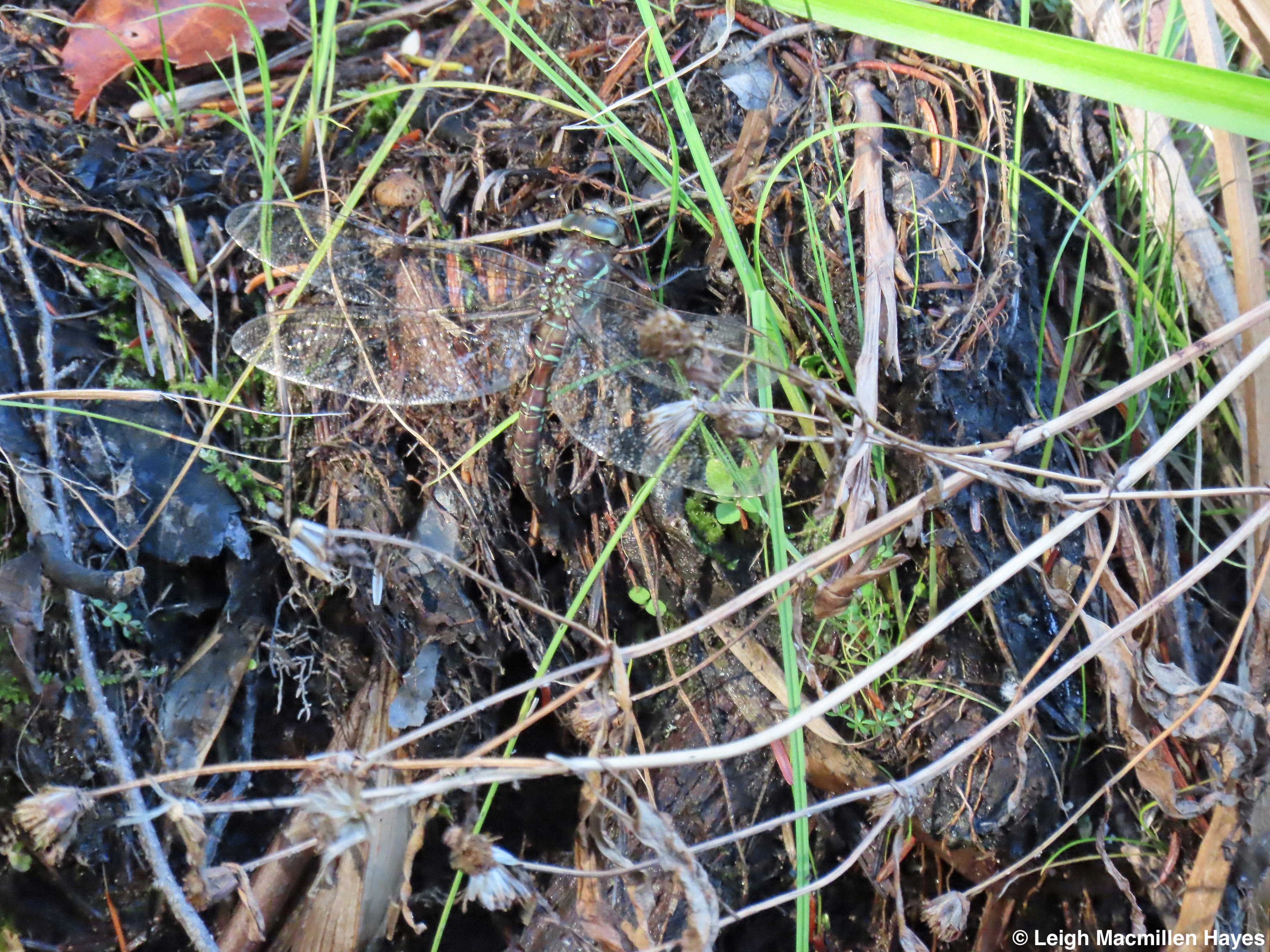
As I stood beside a Beaver path and downed trees just above where I spotted the print, another flying insect entered the scene. And I had the joy of watching her as she deposited individual eggs in vegetation.

With her ovipositor located under her abdomen, the female Swamp Darner punctures a hole in mud, and logs, and aquatic vegetation in which to lay her progeny. The cool thing is that her eggs can survive a year without water, incase the level is low as it is right now. I suspect by spring these will be quite wet.

I never did find the Beaver(s) of my dreams, but spied another platform that may have been a lodge in the making. I hope they are still living there as the evidence leans in that direction.

At the end of the day, however, my heart was full with all my findings in both locations and I gave great thanks to the Beavers who led the way and all the discoveries I made as I searched for them.
 wondermyway
Leigh, thank you!! Almost felt like I was with you! 💜
LikeLiked by 1 person
I’ve got a few beaver spots to explore this winter, Theresa, and hope you’ll join a Wednesday Wander soon.
LikeLike