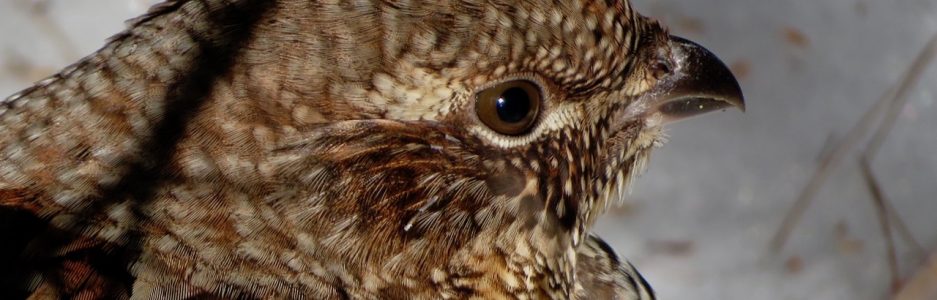
A lot has happened this week on many different fronts, both personal and public, both positive and not so, some comical (like the porcupine that awoke me one morning because it had managed to climb to the second floor of the barn and toppled our sons’ many “earned” trophies) and others more serious, with some in between thrown into the mix, cuze life happens.
To that end, some of my best moments were spent looking and wondering. In the woods. Of course. In our woods, in particular.

I headed out onto the old cowpath in search of a dear friend, not certain if I’d meet him or at least spot signs of his passing. And it wasn’t a deer I was looking for–although, in a way it was because I haven’t seen a single one in several months and any scat along this trail is from last winter and spring and at that time it was so prevalent that with every step I took, it was there.
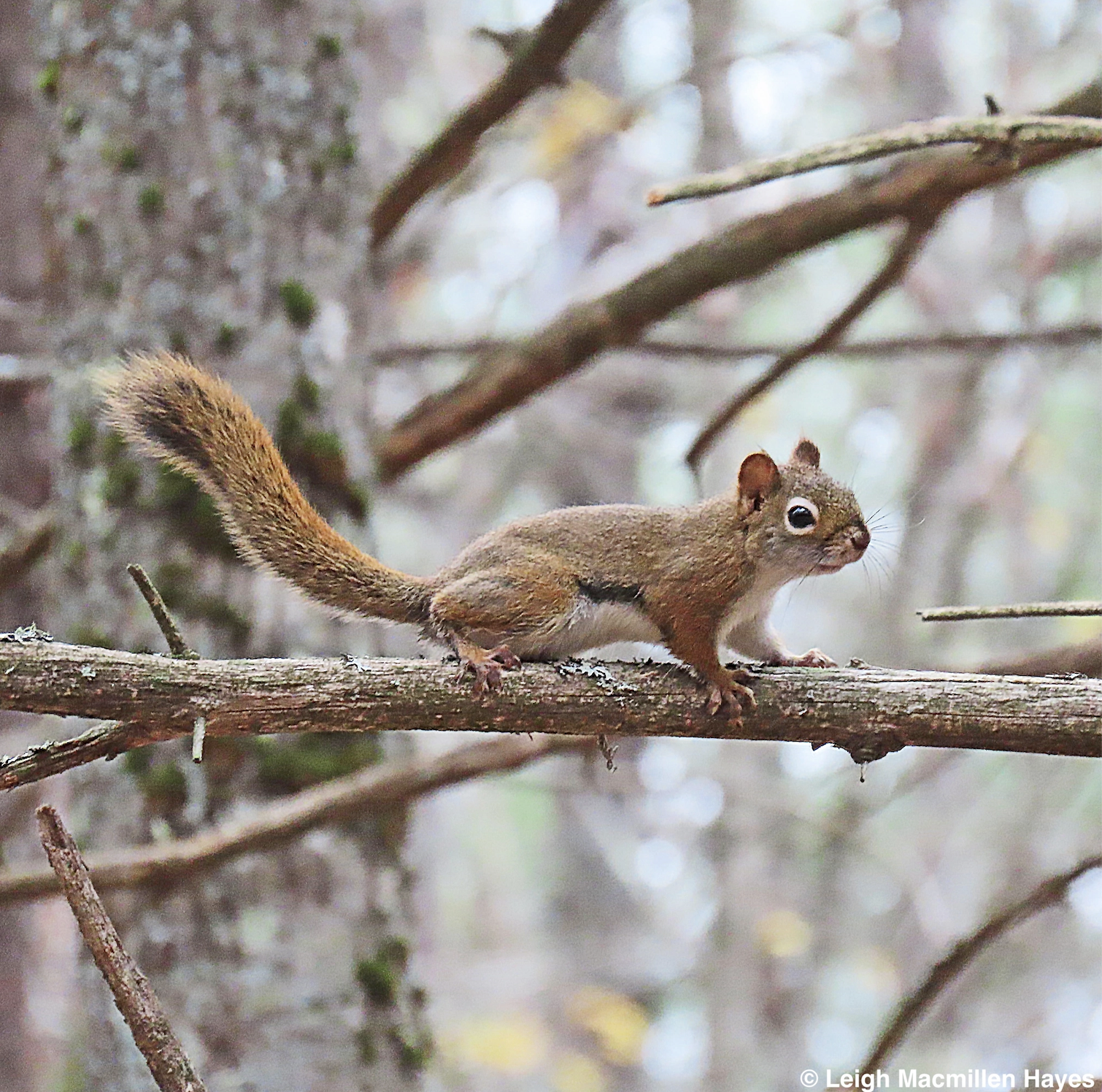
No, it was this little guy that I sought. This photo is from last winter when he and I spent hours eyeing each other.

Though his territory could have been several acres and there’s plenty of land out there to inhabit, he, like me, preferred the cowpath, and especially the stone walls since they served as perfect spots to cache his immense supply of pine cones, and as dining room tables, the better to see any approaching predators.

What he sought were the tiny winged seeds, tucked into each protective scale by the twos. If you’ve ever had the joy of watching him munch, you’ll know it’s fast paced as he deftly pulls the seeds out and discards the scales, getting right down to the “cob” of the cone.

The result is a pile of half consumed scales and a few uneaten seeds and cones not quite yet opened and some scat and its all known as a midden (by us humans anyway) or the trash barrel.

Actually, any high place will do and if it has nooks and crannies to serve as storage shelves all the better. Last year was a mast year for the White Pines in our woods. It takes two years for a pine cone of this species to reach maturity.

This year, there are only remnants of Red’s garbage pails and even they are almost hidden by twigs and leaves and needles.

But, while I was exploring his old neighborhood, I discovered something else in this pile that he had used for refrigeration and dining purposes.

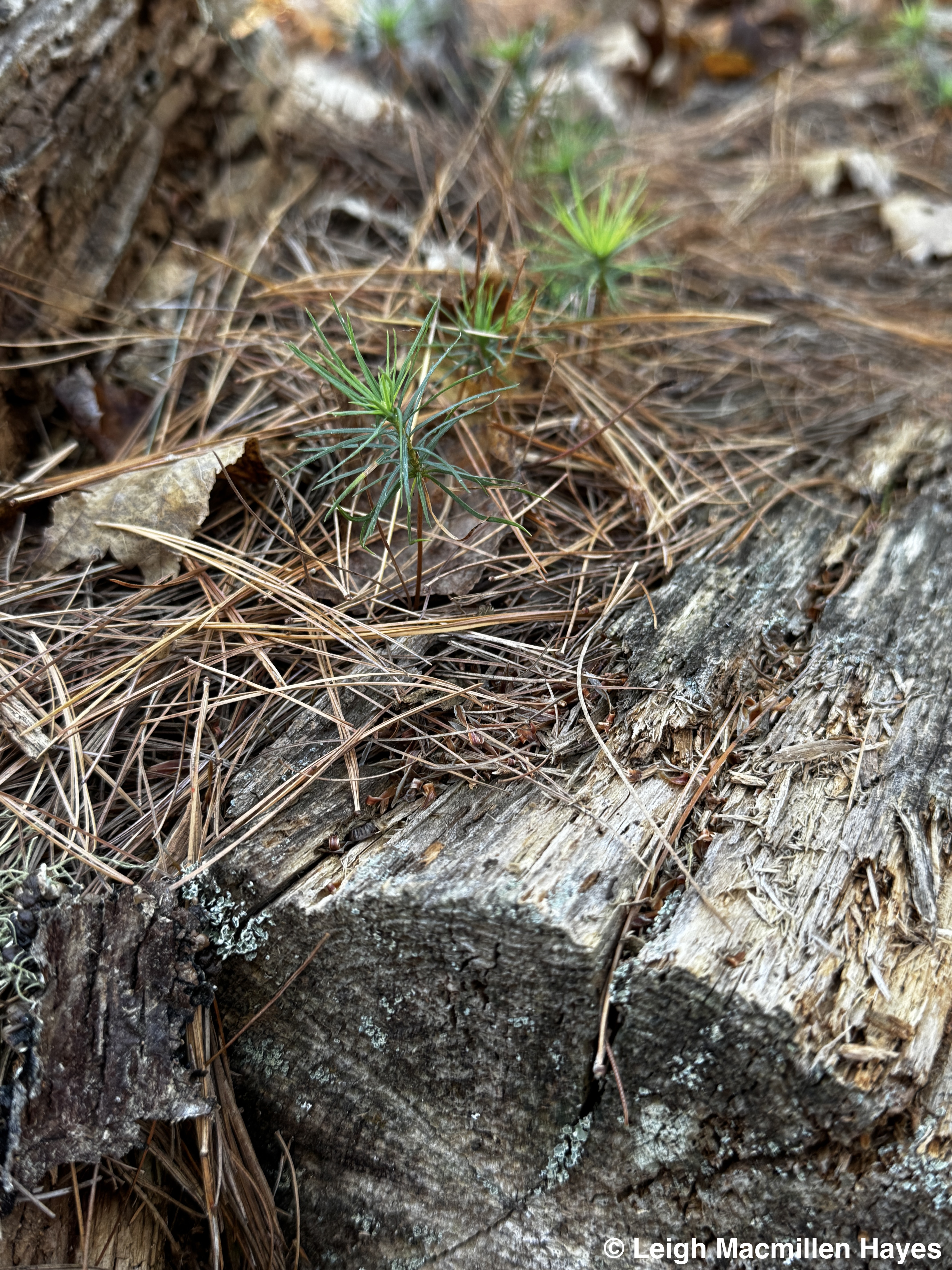
Do you see what I spotted? Babies! No, not squirrel babies. But rather: Miniature White Pines.
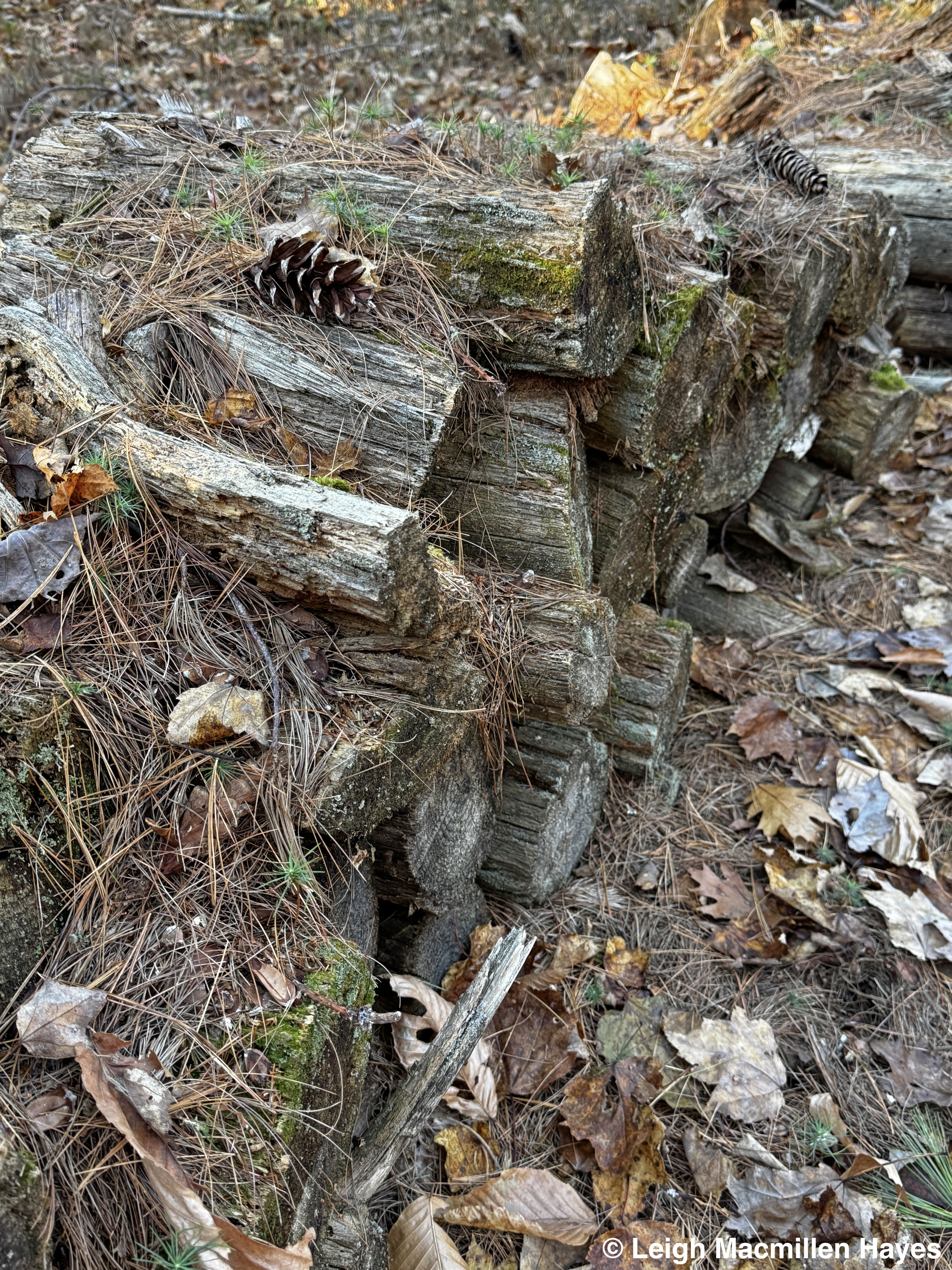
Once I saw those, I checked every stack that we’d cut years ago and found the same story written upon them. The seeds Red had left uneaten found conditions were right on the rotten logs. Will they survive? Maybe a few, but there are plenty more tiny saplings on the forest floor.

The thing is that I found no evidence of Red and not once did he squawk at me, so I suspect either he moved on to a better food source or became a meal for another, passing all of that energy and sunshine he’d consumed on to the next.
This year, it’s the Northern Red Oaks that have produced a mast crop–of acorns. Actually, they did so last year, and the year before as well. For those of us who frequent Red Oak woods, it’s like walking on ball bearings–and can be a wee bit treacherous as they roll under our boots.

Red Oak acorns are filled with tannins and so, unlike their White brethren which are gobbled up almost immediately by rodents and birds and deer among their consumers, it seems a little of this one is nibbled, and then a little of that one initially. Eventually, the tannins leach out, especially if the acorn has been buried for future consumption, and then the entire nut within may be eaten.

As I looked for Red this past week, I found instead his cousins, the Gray Squirrels in action. Where Red Squirrels are very territorial, Grays tend to have overlapping habitats, and there are at least three on our six acre plot of land.
Burying acorns is their way of caching and it’s possible that what I observed was this squirrel leaving a scent mark with its nose so that come snowfall (and I have faith that it will fall–and can only hope abundantly), it can relocate the food supply. What this squirrel misses, another will find. And those that no one finds might turn into oak trees that will feed future generations, just as the pine saplings may someday do.

It’s for these critters and so many more that we ask that no motorized vehicles pass along the cow path, no matter how tempting it may be. (Thank you, Marguerite, for creating this sign for me.)

And if you are in there, you might happen along the rather rough labyrinth I created, a place that like the squirrels, I return to often.
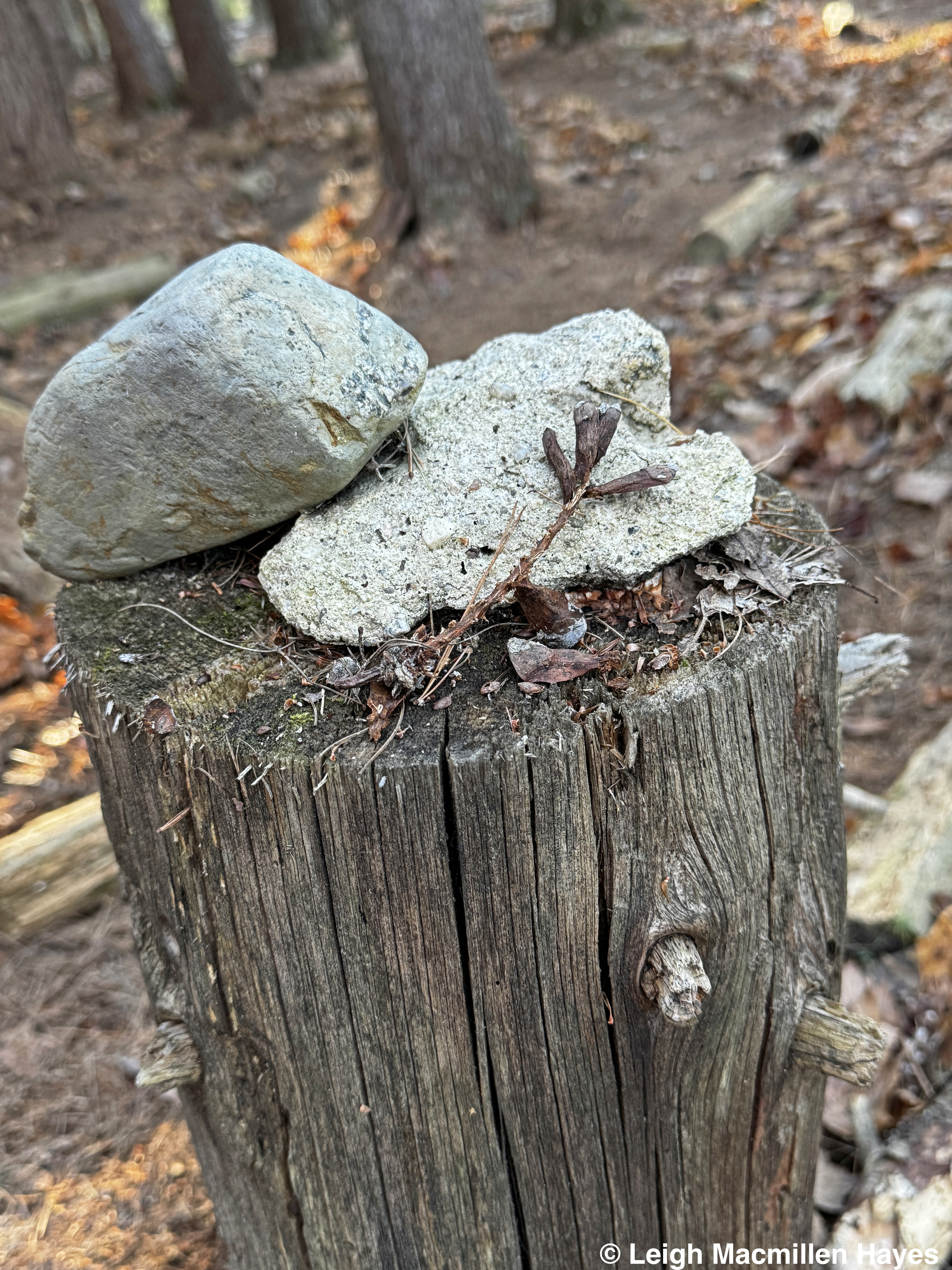
It’s at the start of the labyrinth that brings a smile to my face each time, for Red had visited and his calling card is still there.
Thank you, Red, for planting your Squirrel Garden. And for capturing my mind and heart and soul this week.
 wondermyway
Love this little walk through the forest! We too have Gray squirrels as well as large Red squirrels; larger than those you pictured. We enjoy watching them and do supplement their food a bit in order to attract and observe. It has finally decided to become fall her in northern Illinois, though no killing frost yet at the edge of the city. So, we are enjoying my plantings for a few more days. Our fall colors were spectacular this year, but we left to scuba cenotes on the Yucatan Peninsula of Mexico and when we returned….. most of our beautiful leaves had fallen.
But we did have spectacular foliage, birds, fish and mammals to observe in our southern friends’ environment. Ah…. nature around the world, what a privilege it has been to explore it!
LikeLiked by 1 person
Our Reds are soooo much smaller than the Grays–I can’t believe you have larger ones. Once Black Bears begin denning, I’ll fill the bird feeders and always spew plenty of seed on the ground for the squirrels and deer and turkeys and, of course, those other birds that feed on the ground, like Juncos.
I’m glad to see that your adventures continue! Take care!
LikeLiked by 1 person
This is just what my battered spirit needed; a friend shares your pieces with me, and I’m grateful to you… so lovely!
LikeLiked by 1 person
Thanks so much for stopping by and leaving a comment. And I’m glad that you found some peace in this piece. You are more than welcome to subscribe so it will arrive in your email.
LikeLike