The message arrived the day before: Leigh, I am ready for the morning. The truck is loaded. I suggest wellies unless you don’t mind wet feet. I plan on being there for 6:00am. All you need is your camera.
And so I set the alarm for 4:30am, spent an hour reading and sipping coffee in the peace of a quiet kitchen, and then headed out the door with my camera on my shoulder.

As the sun rose, it became apparent that the smoke from the Canada wildfires was going to cast a haze upon this June day.
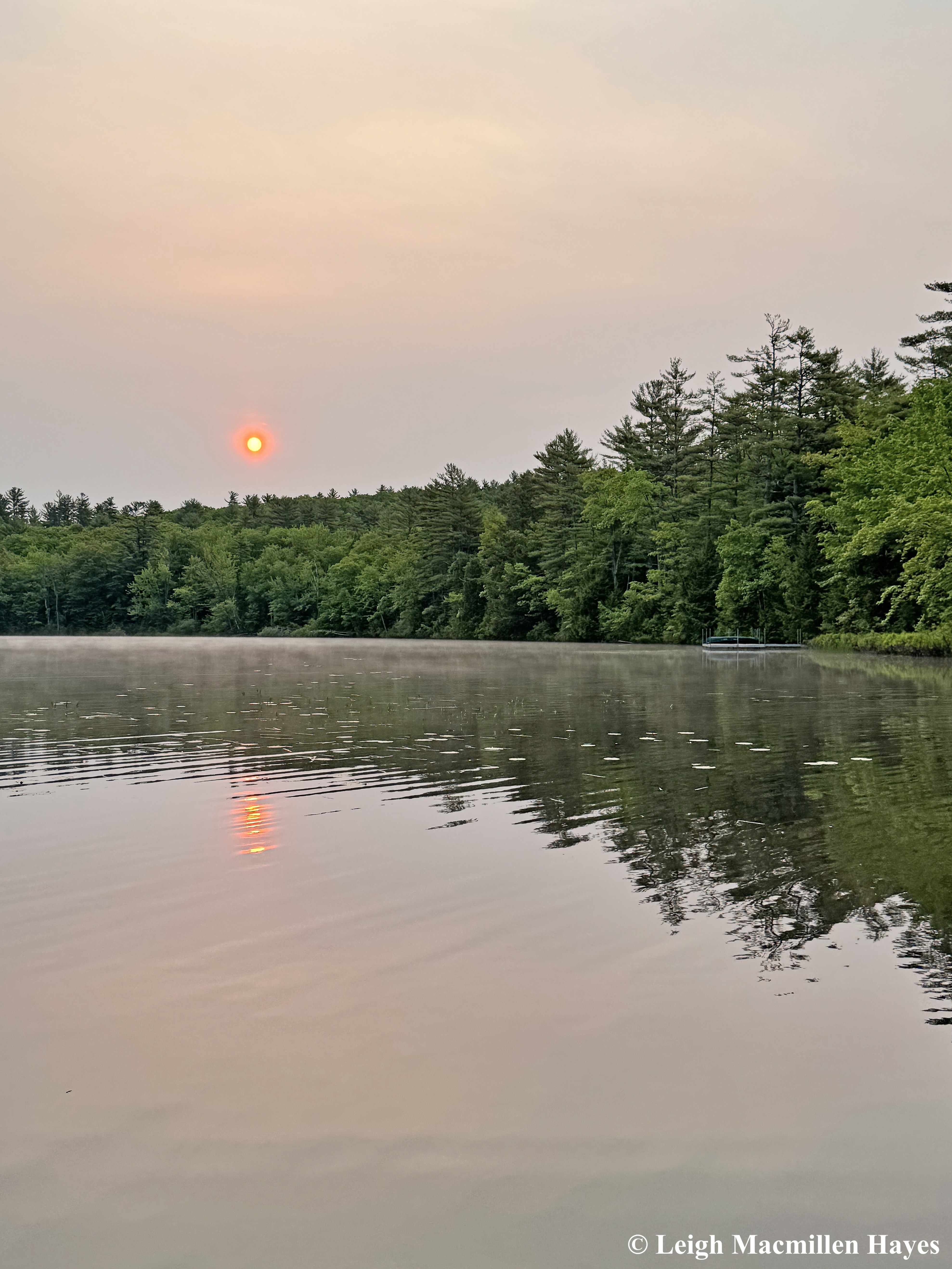
And indeed it did. But, at 6:00 in the morning, with the temperature at 48˚, lake fog, or in this case, pond fog, danced across the surface of the water like fairies performing a swirling ballet. Actually, the fog occurs when cool, moist air meets relatively warmer water, causing the water to evaporate and condense, thus creating mist that burns off as soon as the sun rises.
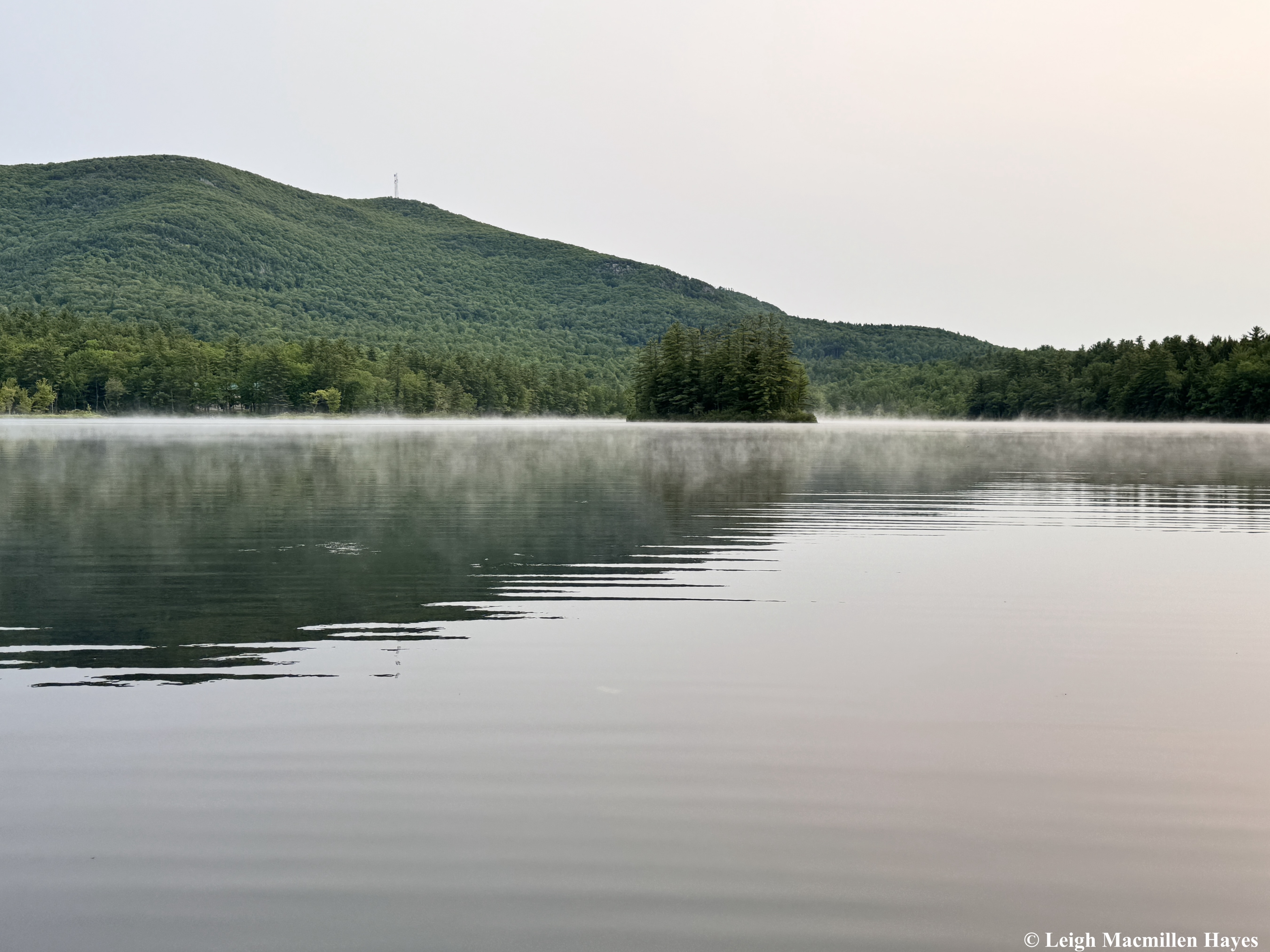
With Pleasant Mountain’s Southwest Peak in the background, I knew my place in the world.
The captain of the boat wondered if I’d ever been on the pond before. I have. Once. This past winter when Laurie LaMountain, of Lake Living magazine, and I spent a day tramping through the snow and across the pond and sometimes getting fake lost, but finally finding our way back to her house seven miles later.
I had not, however, ever seen it in the spring or summer. Well, except from the teepee on the Southwest Ridge of the mountain.
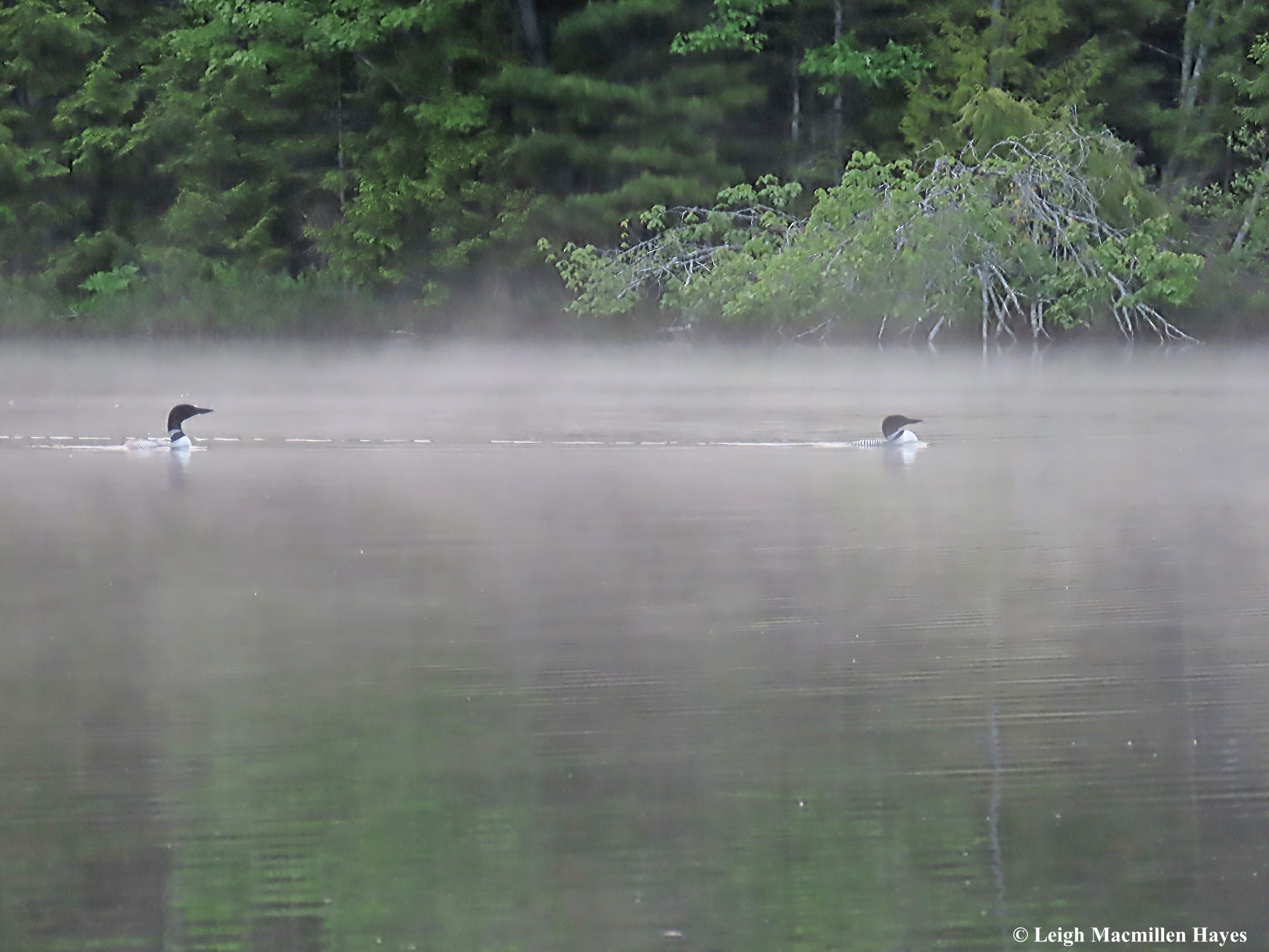
Once upon the water, we first heard, then saw a pair of Common Loons swimming and diving for breakfast. Bass are plentiful in this body of water, and we saw plenty of them as well.
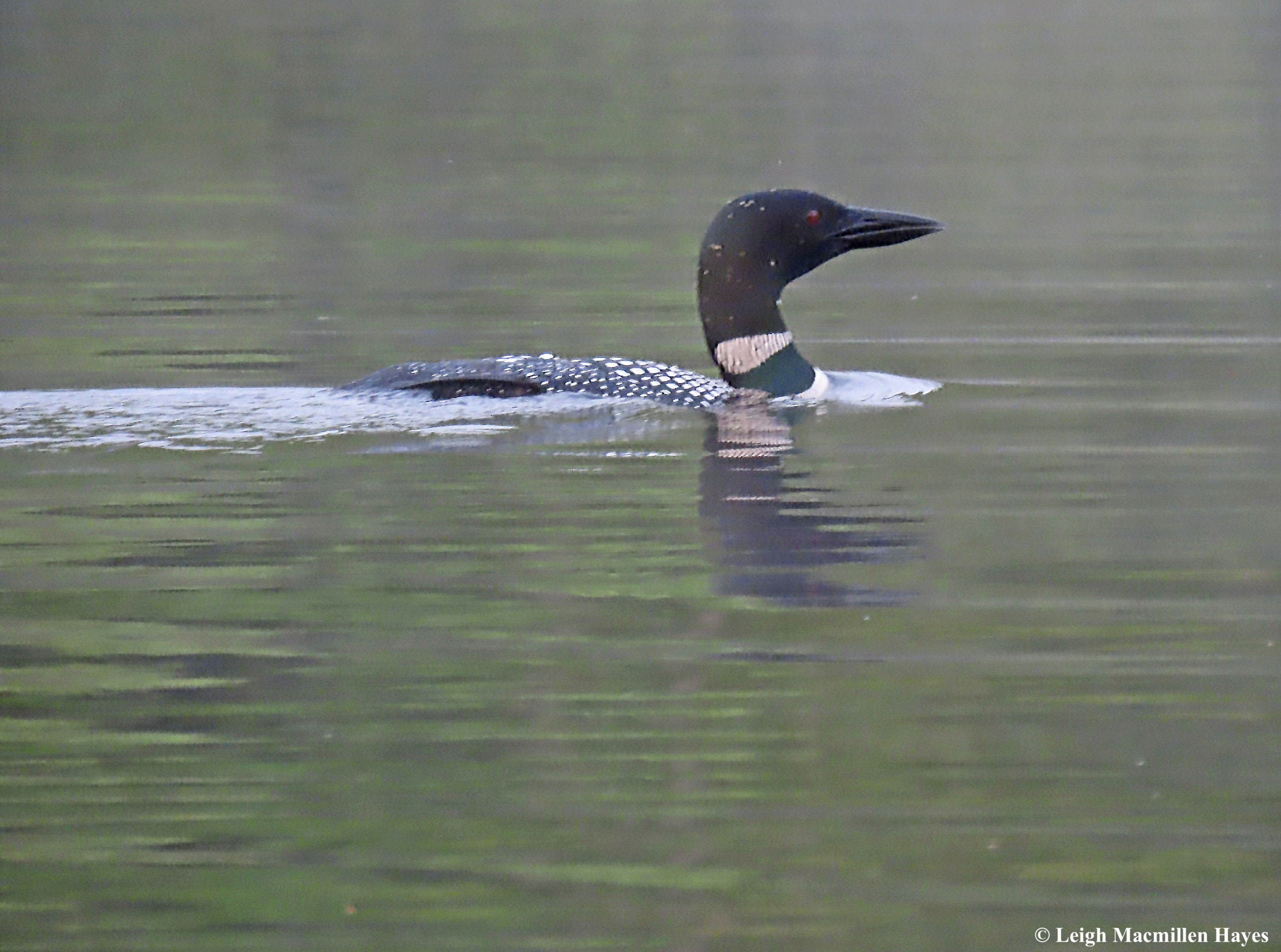
There was a third loon that the other two greeted, but within a half hour it took to the air and flew south.
I found that curious because in the wee hours of the previous morning I heard one fly over our house, announcing its presence with a Loon tune, and wondered if it was a teenager looking for a place to find a mate or at least hang out where the resident pair(s) wouldn’t mind. Maybe this third Loon was doing the same and the others suggested it move on. Or maybe they were its parents and again, they looked forward to be empty nesters for another week or so.

After spying the Loons, our tour took us near Pickerel Weeds and suddenly our eyes clued in on the beginning of other life forms.
By now it was 6:20am and obvious that the Damselfly Naiads had already chosen this day to climb up the stalks maybe as early as 4:00am to begin their new life as terrestrial fliers. I’ve seen this occur later in the morning, but did not expect that they emerged so early when the air was still a bit chilly.
I probably should not have been surprised, for a few weeks ago I saw them emerging in another place on an equally chilly day.
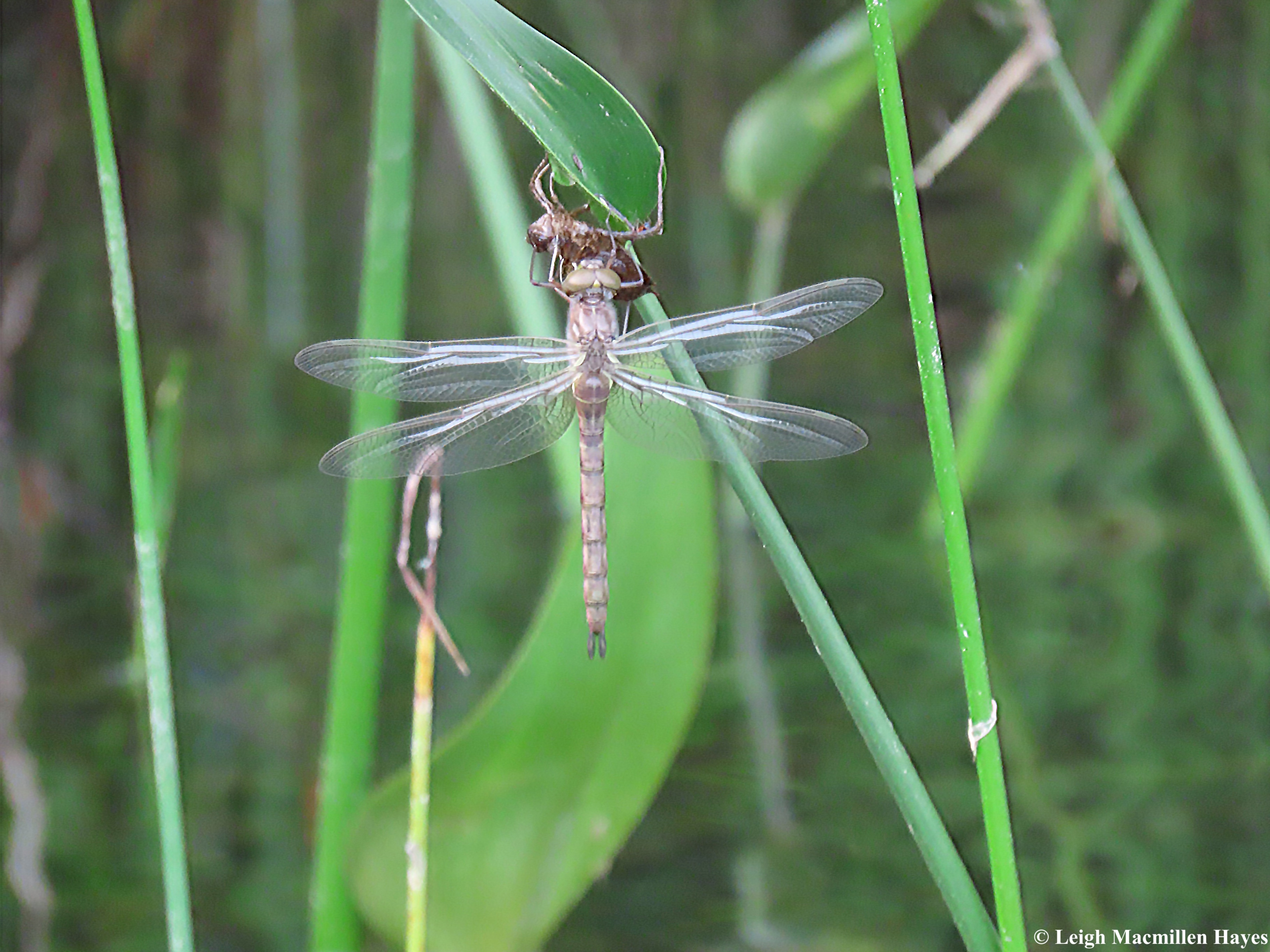
Of course, where Damselflies are, so often are there Dragonflies, and this Darner spread its wings in our presence, so shiny and cloudy as was to be expected until they dry out.
With its wings spread, thorax and abdominal colors would begin to transform providing a clue to its name, but I suspected it was a Common Green Darner. We didn’t have time to watch that color change and so we silently moved on, for such is the ability with an electric motor.
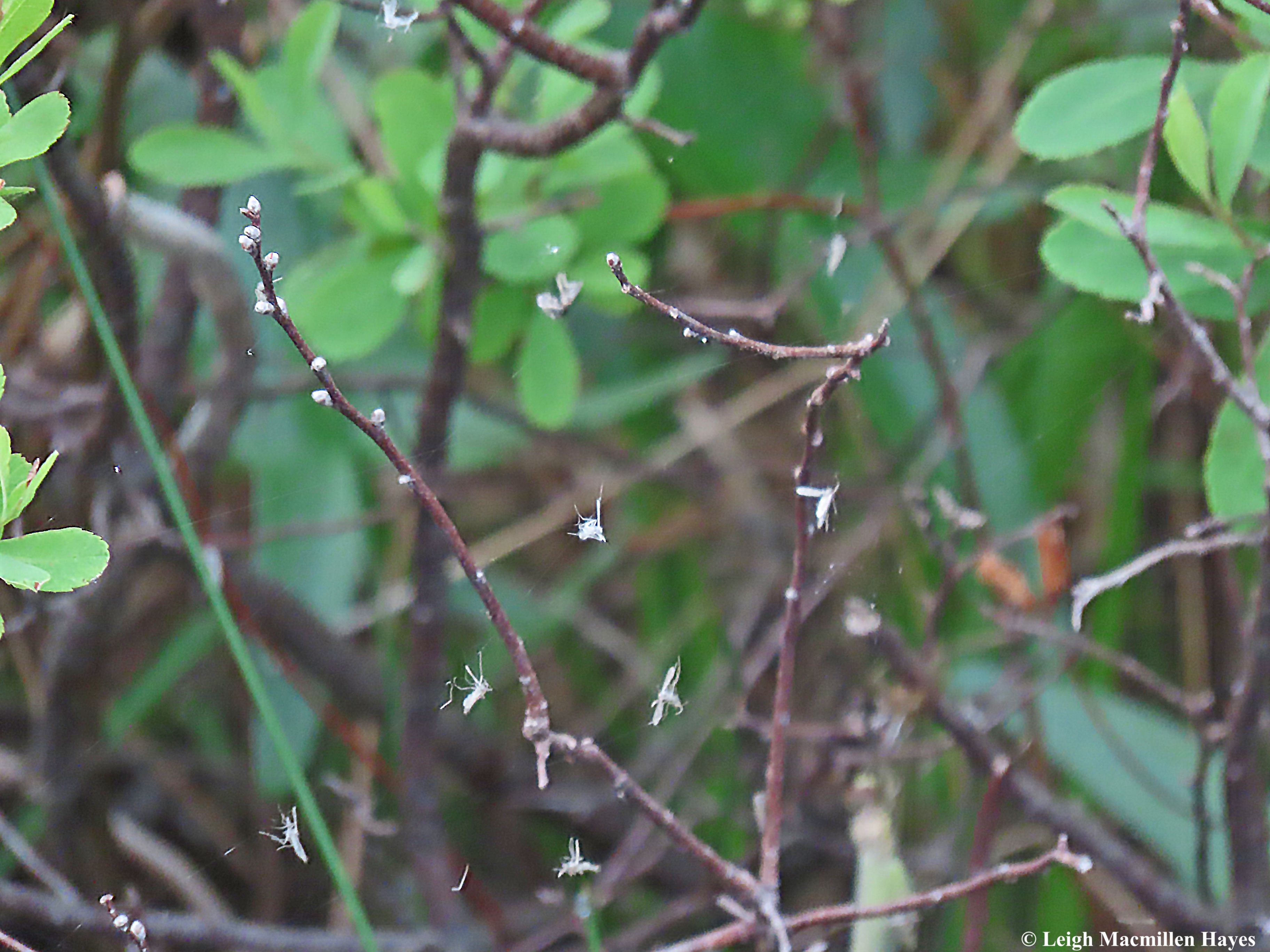
Among the vegetation behind the Pickerel Weeds there were many orb spider webs and among the webs, looking as if they, too, had been performing a dance, were little Whiteflies taking their final bows.

Posed above and ready to fly off at any moment were Kingbirds with their handsome tuxedo appearance, looking like they were ready to attend a formal dinner.
And perhaps they were.

For everywhere on the northwestern side of the pond, more Dragonflies had emerged, and after a few minutes it became obvious that they were all of the same family: Calico Pennant Skimmers.
In fact, they were also all the same gender, the yellow hearts on the abdomen and coloration on the thorax and wings all leading me to think they were females.

The Calico Pennant in the name comes from the design on the wings, which once opened and dried is really stunning.
Although, I say that they were all females, it could be that all begin life with this hue and it only changes to red for males and bright yellow for females as the individuals mature.

In one spot, we found at least five, plus a bunch of Damselfly exuviae also upon the stems and leaves.
Do you see all five, two being almost a mirror image? Why “almost”?
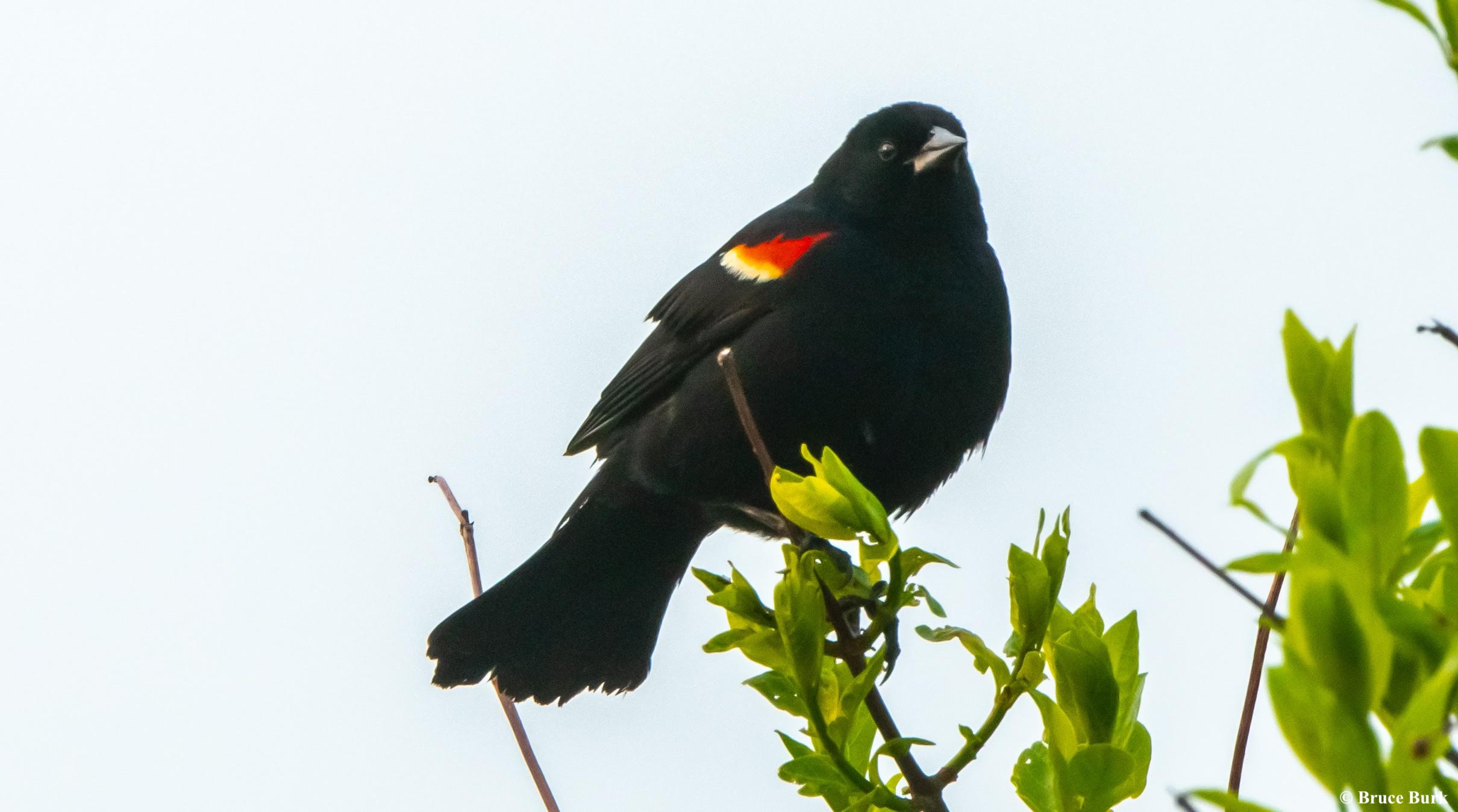
Loons and Kingbirds weren’t the only ones on the morning hunt. This handsome male Red-winged Blackbird seemingly had a family to feed and wanted to make sure we didn’t approach. Thank goodness for telephoto lenses.

In the midst of the shrubs below, his Mrs. was on the hunt and had a full mouth. If you look carefully, you may notice some Dragonfly exuviae below her, their shed skins left behind once they took flight–the insects, that is.

We wondered if the Mrs. was taking advantage of this morning’s Dragonfly offerings and capturing those that were just emerging, an easy meal for herself, but probably also for some wee chicks she may have tucked away in a nest nearby. Their meal would have to wait until we moved on, and so we quickly did.
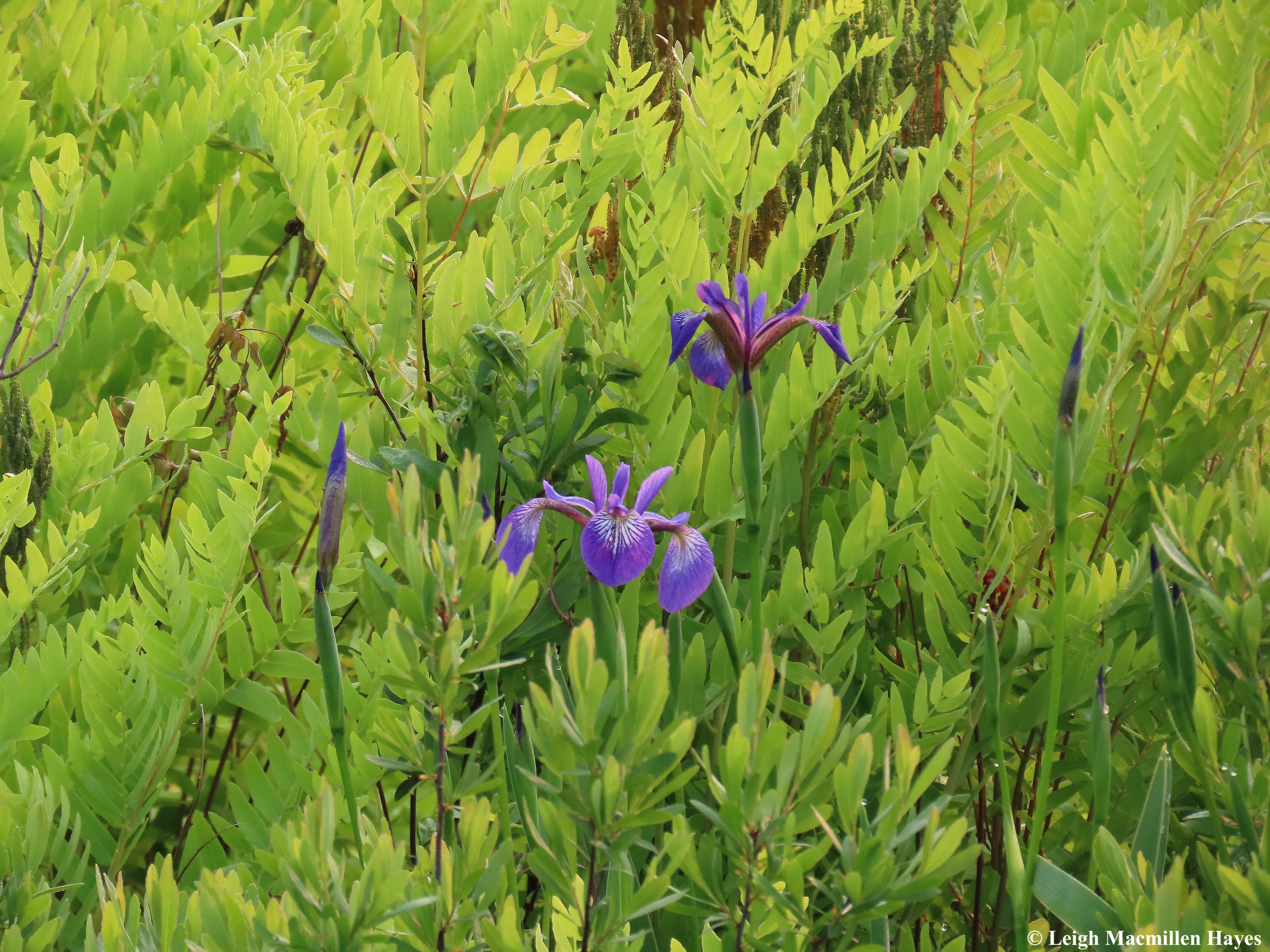
But not without pausing for a moment to admire the newly opened Blue Flag Iris among the Royal Ferns. Though the ferns have their own crowns of fertile stalks, the irises looked like exquisite tiaras fit for queens.
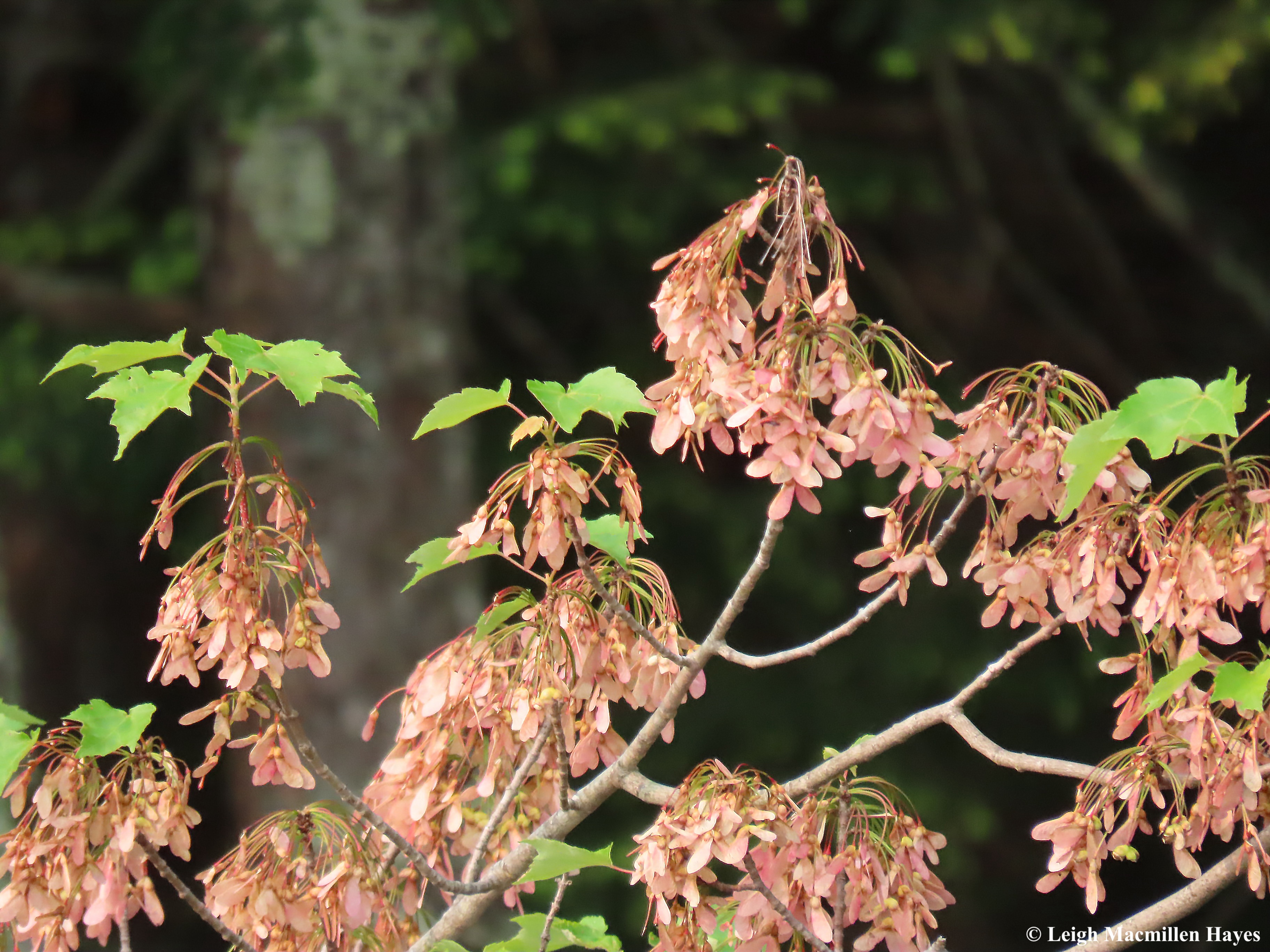
Finally heading back toward the boat launch, we saw explosions of Red Maple seeds dangling like chandeliers that perhaps the Queen Irises had ordered.
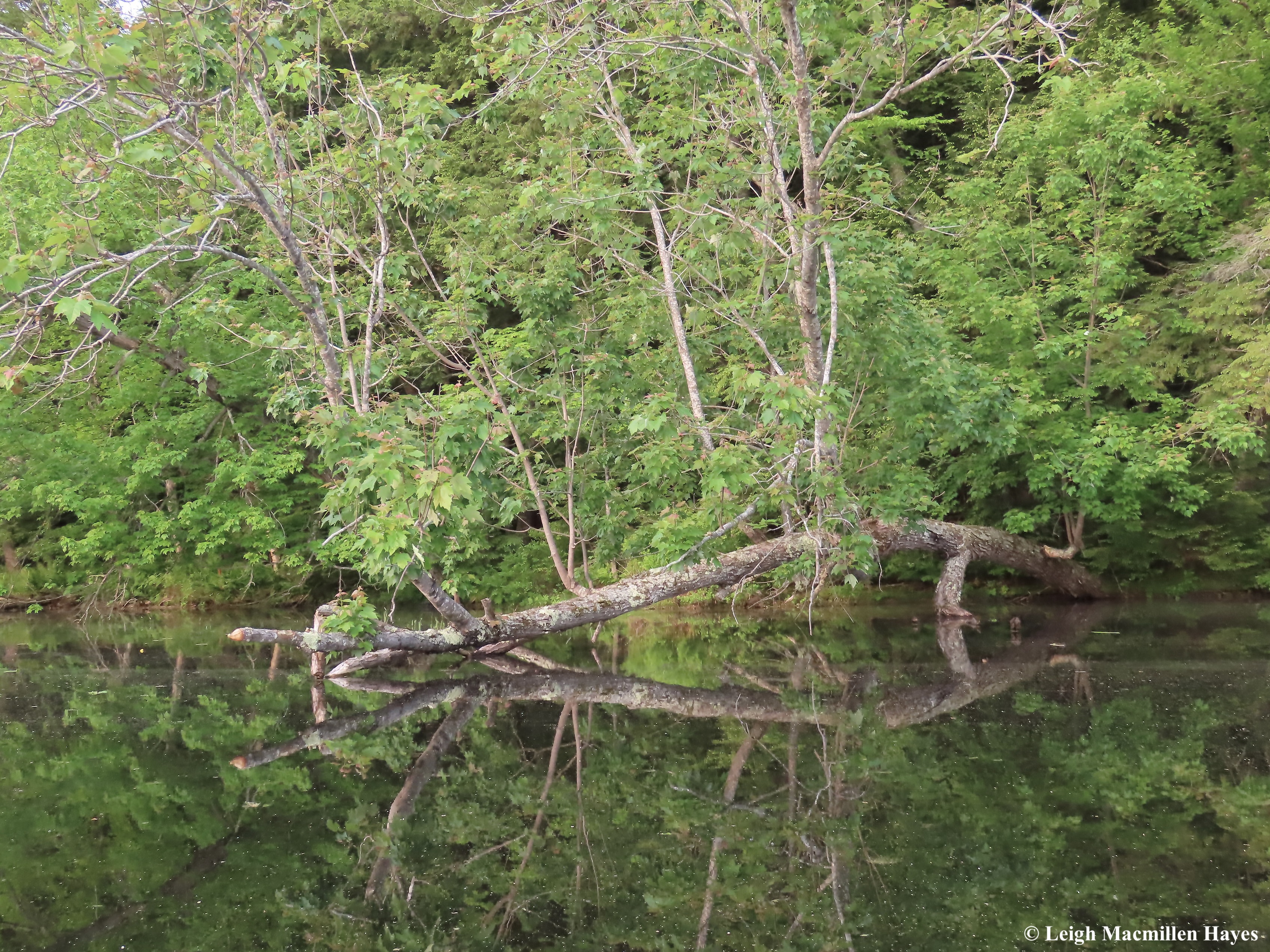
And another Red Maple that gave us pause for it deserved being noticed since it had obviously fallen years ago, but lifted its branches upward and was still in rather good health, its roots at least partially intact. Perseverance.

And then we noticed the tip of it. Across the pond we’d spotted a small beaver lodge in an adjacent wetland, and wondered about the Beaver’s own peserverance–it looked as if the tip of the tree had been harvested this past winter from the ice, and looking at other parts of the tree behind the tip, there’d been some harvesting previous years. We didn’t get close enough, but suspect the Beaver may have felled the tree, and its been a source of building material and food ever since.
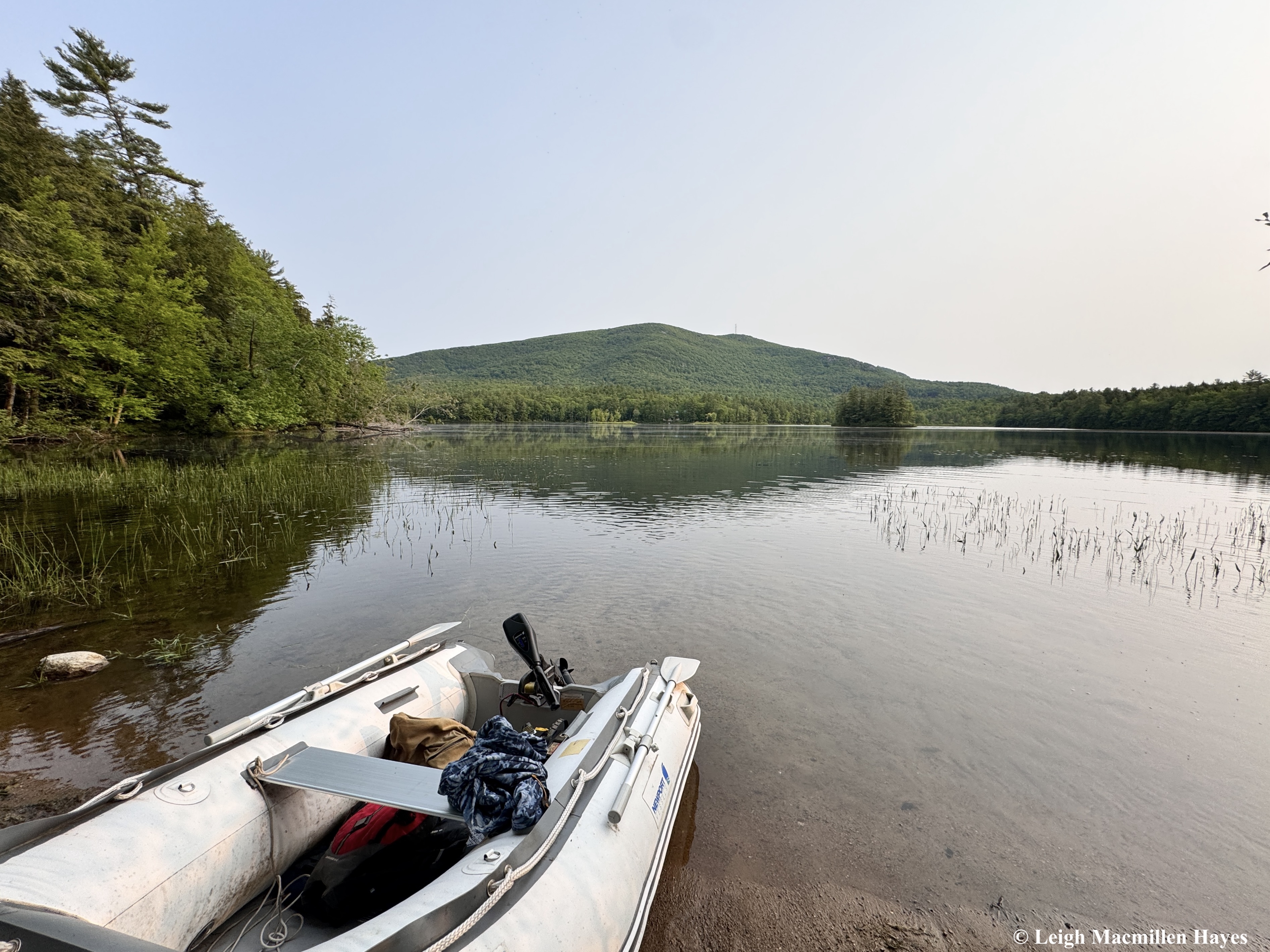
Two hours later, Captain Bruce landed the Zodiak at the boat launch, and I gave great thanks for the invitation to explore Beaver Pond in the quiet of the morning.
The Black Flies were plentiful as they buzzed in our ears, but they weren’t biting so that was good.
We also saw several turtles swimming, including one huge Snapper that swam under the boat and neither of us captured in a photograph, and possibly a Water Snake.
Zodiac One: a maiden voyage for me. Here’s to many more! Thank you, Bruce.
 wondermyway