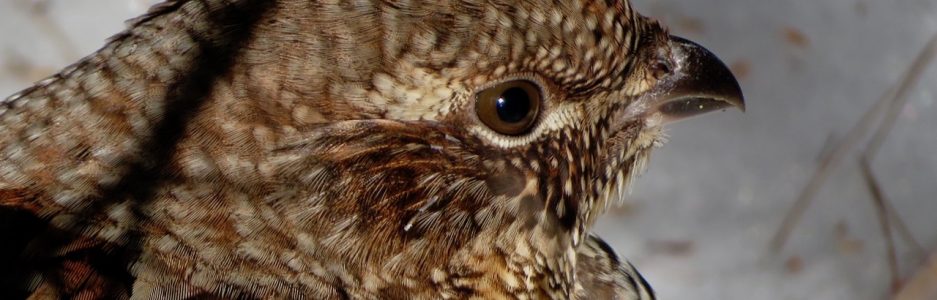
Rituals. We follow them. Some more than others.
For My Guy and me, there is one in particular that captures our attention beginning in mid-May.

And so I follow him . . . across Beaver dams,
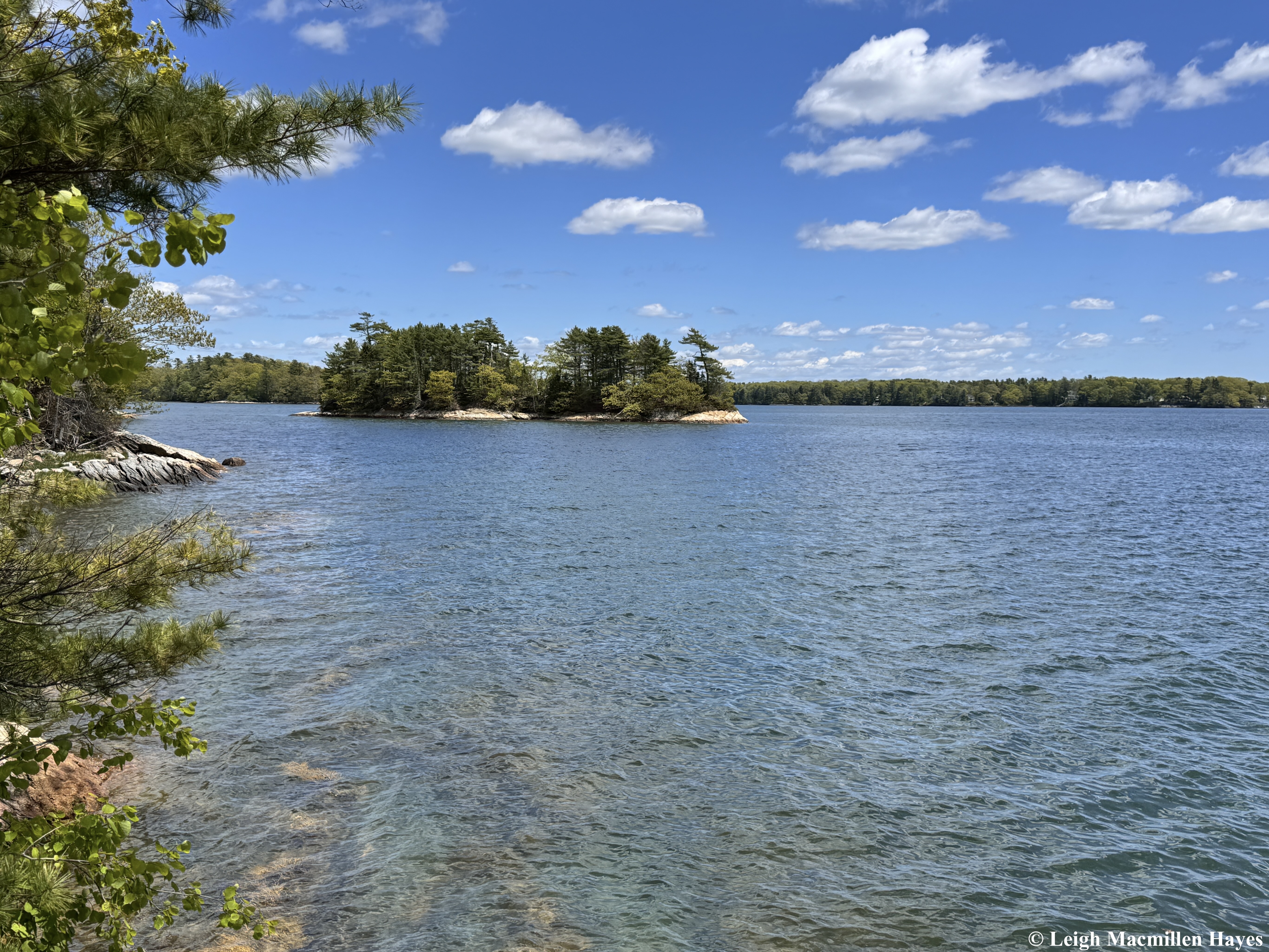
beside the Atlantic Ocean,
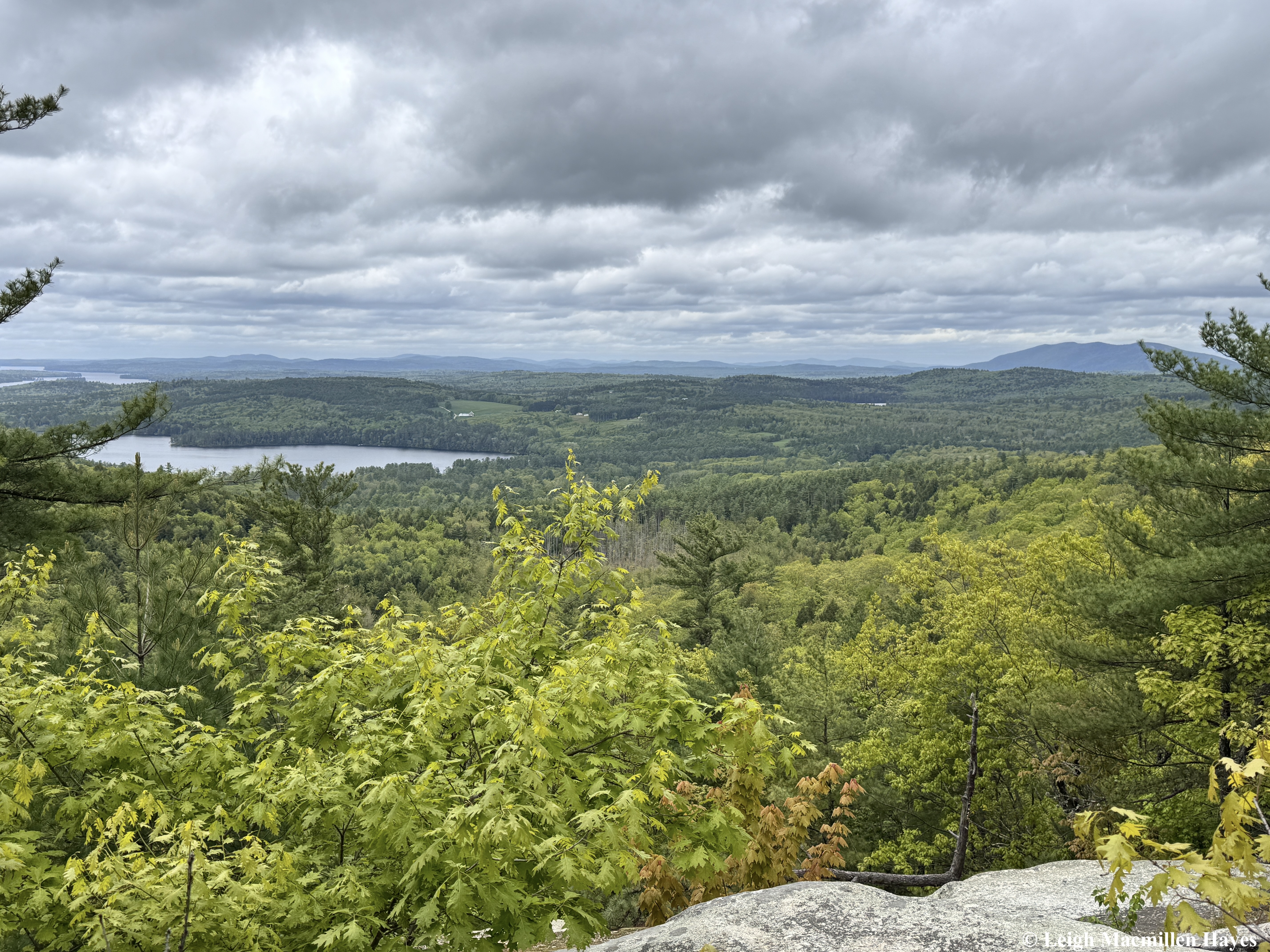
up mountain trails,

even on the hottest day so far with Canada wildfire smoke casting a haze.

This year it was more trails than usual that were included in our ritual and along the way we spotted Wild Columbine in bloom, growing as it does among the rocks, and always pleasing our senses with its brilliant colors and artistic nodding presentation.

Fringed Polygala, and how I love the way those two words roll of my tongue, also showed off, making its common name of Gaywings so apparent. Doesn’t it look like a Bird of Paradise coming in for a landing upon its very own leaves?

Upon one of our journeys we found a few Red Trilliums still in bloom, though it seemed late in the season for them. But as My Guy teases, I did what I do and added this photo to the other trillion I have of this plant. They all need to be honored, don’t they?
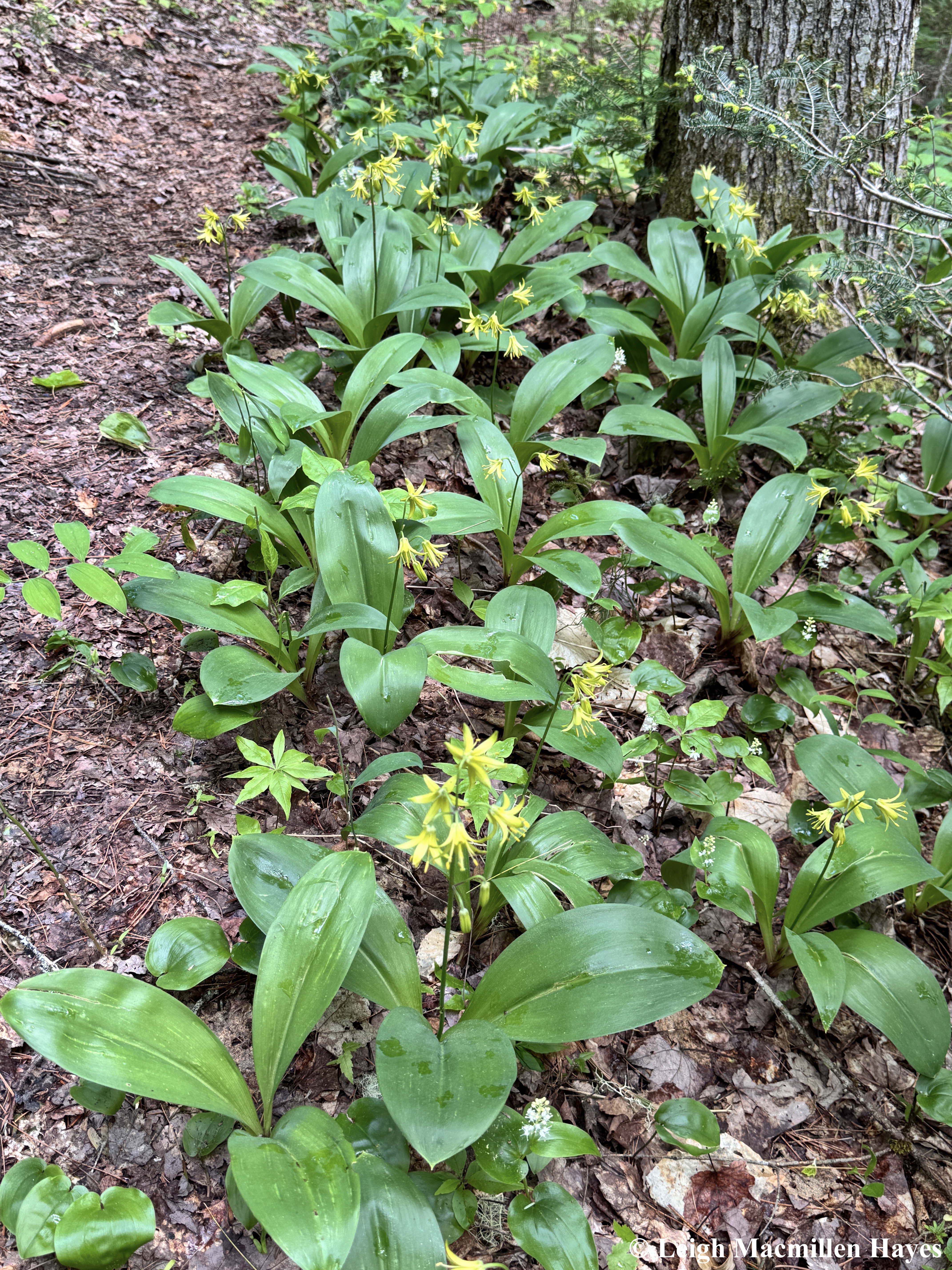
Seemingly everywhere, Clintonia, aka Blue-Bead Lily bloomed, adding specks of sunshine to the path and lighting our way, even on the grayest or rainiest of days. Yes, we even hike on rainy days.
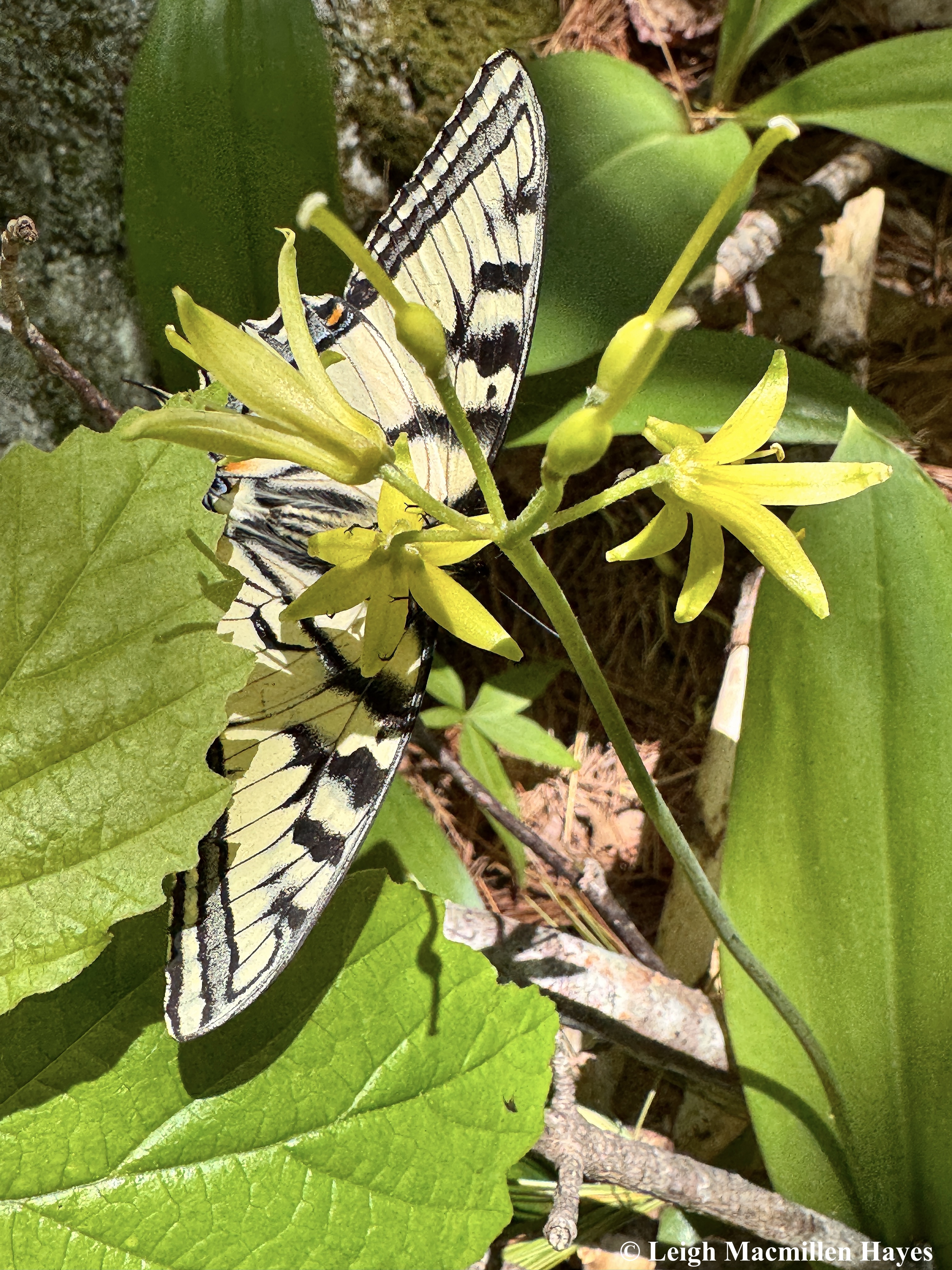
On sunnier days, the Tiger Swallowtails added their own yellow to the equation. Can you see the tiny pretarsi or insect feet of the butterfly as it held on why sucking the flower’s nectar?
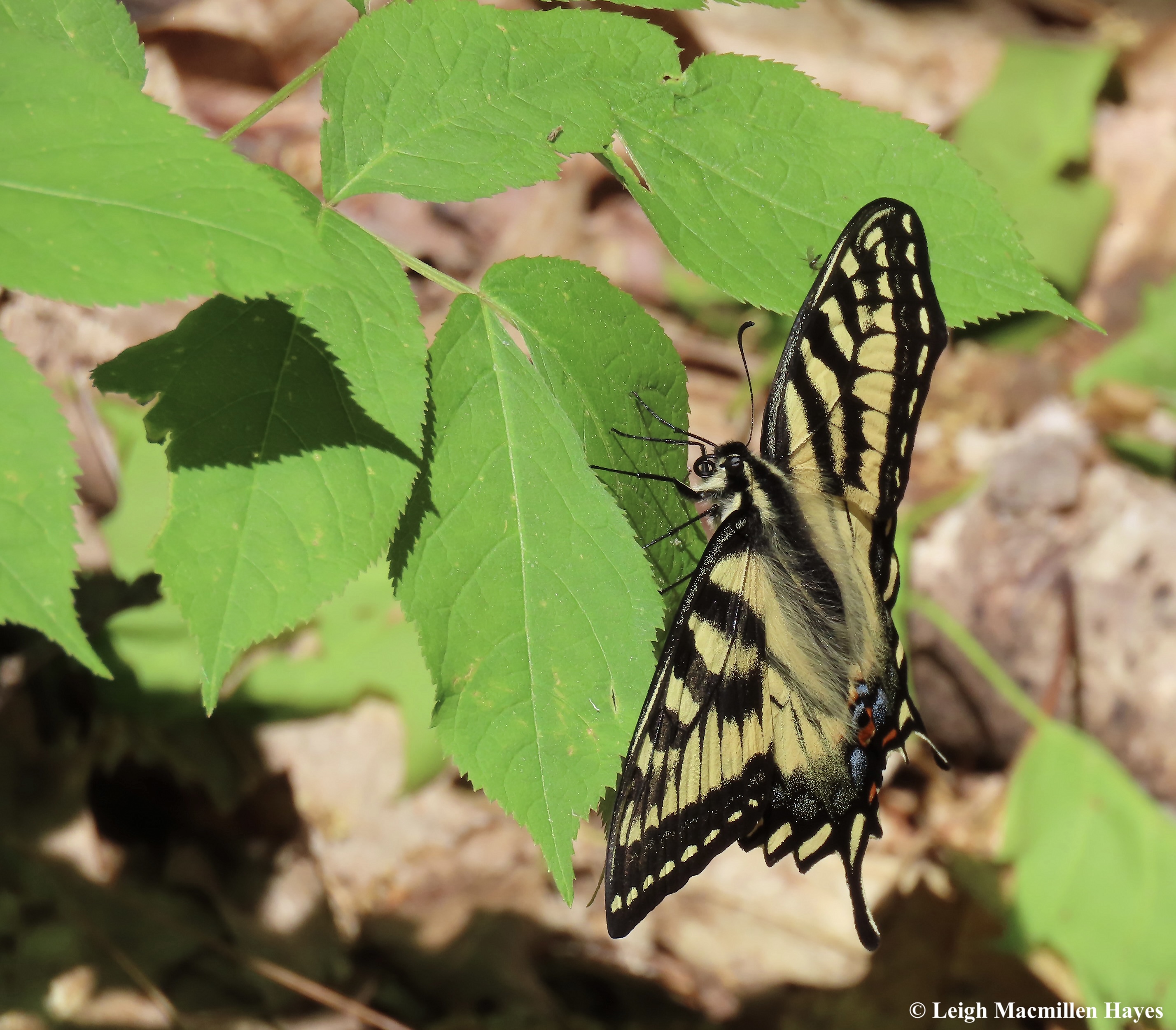
This spring it seems the Tiger Swallowtails are everywhere we travel by foot or truck. What I love about this one is that it was taking a break upon the leaves and you might be able to see its proboscis or siphoning mouthpart coiled up because there was no nectar to seek in that moment.

Right now the Swallowtail butterflies are the largest we’ve seen flying, but during a hike the other day, we spotted one of the smaller ones, this being a Northern Azure feasting upon Black Chokeberry flowers at a summit.

Jack, or rather Jill-in-the-Pulpit, for she needed the extra leaves to help her in her mission of producing seeds, greeted us in various places where the soil was moist including beside the cow path in our woods, where it totally surprised me despite the fact that we’ve lived in this house and wandered about for over thirty years.
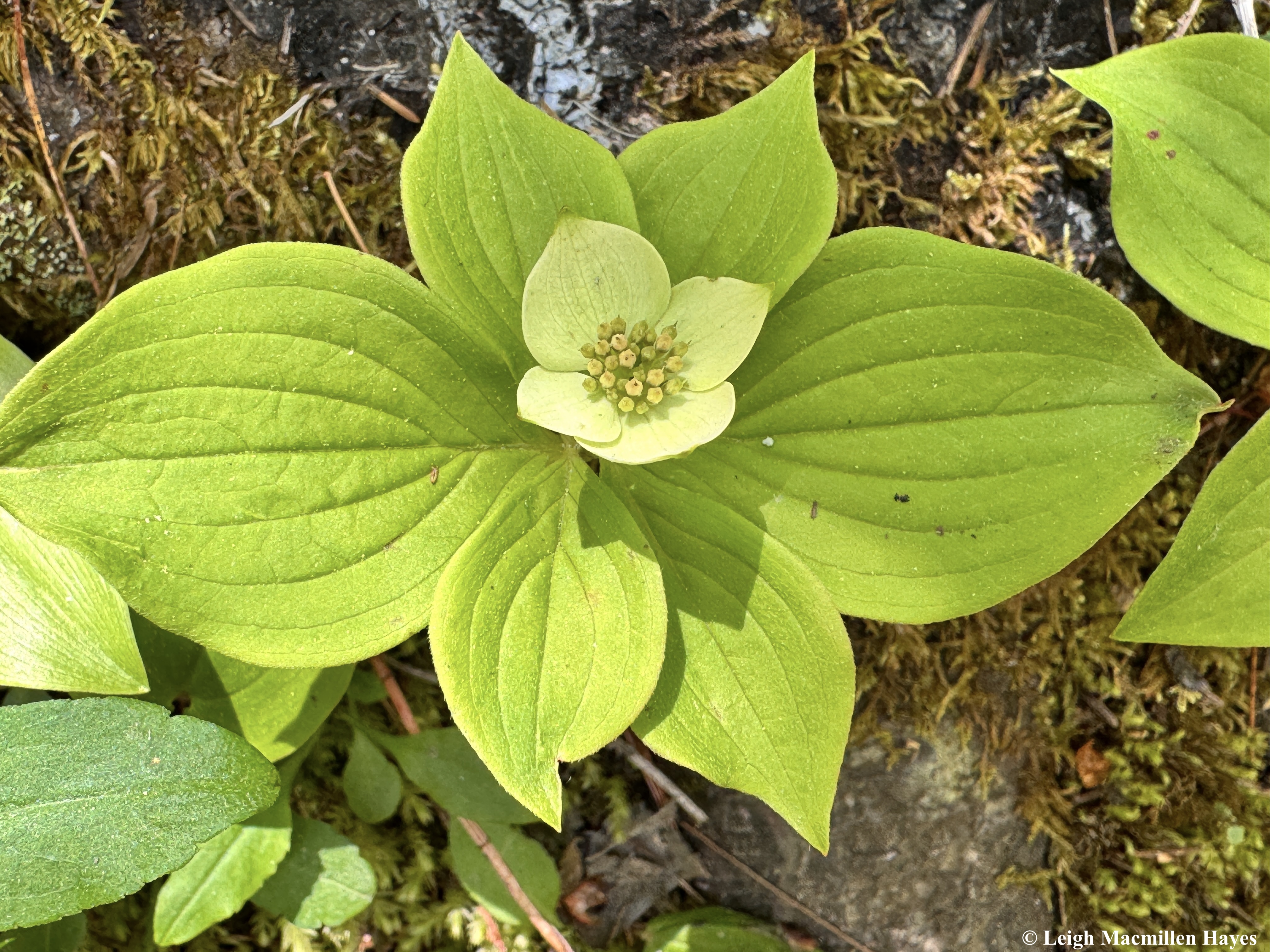
As one week turned to the next, and the flowers that were in full bloom kept changing, suddenly Bunchberry was added to the list. Again, like Jill-in-the-Pulpit, Bunchberry needs two extra leaves in order to have more energy to produce flowers followed by the berried fruits that bunch together in a cluster of bright red. You may look at the veins on those leaves and immediately know the family to which this wee plant belongs–if you guessed Dogwood, you are correct.
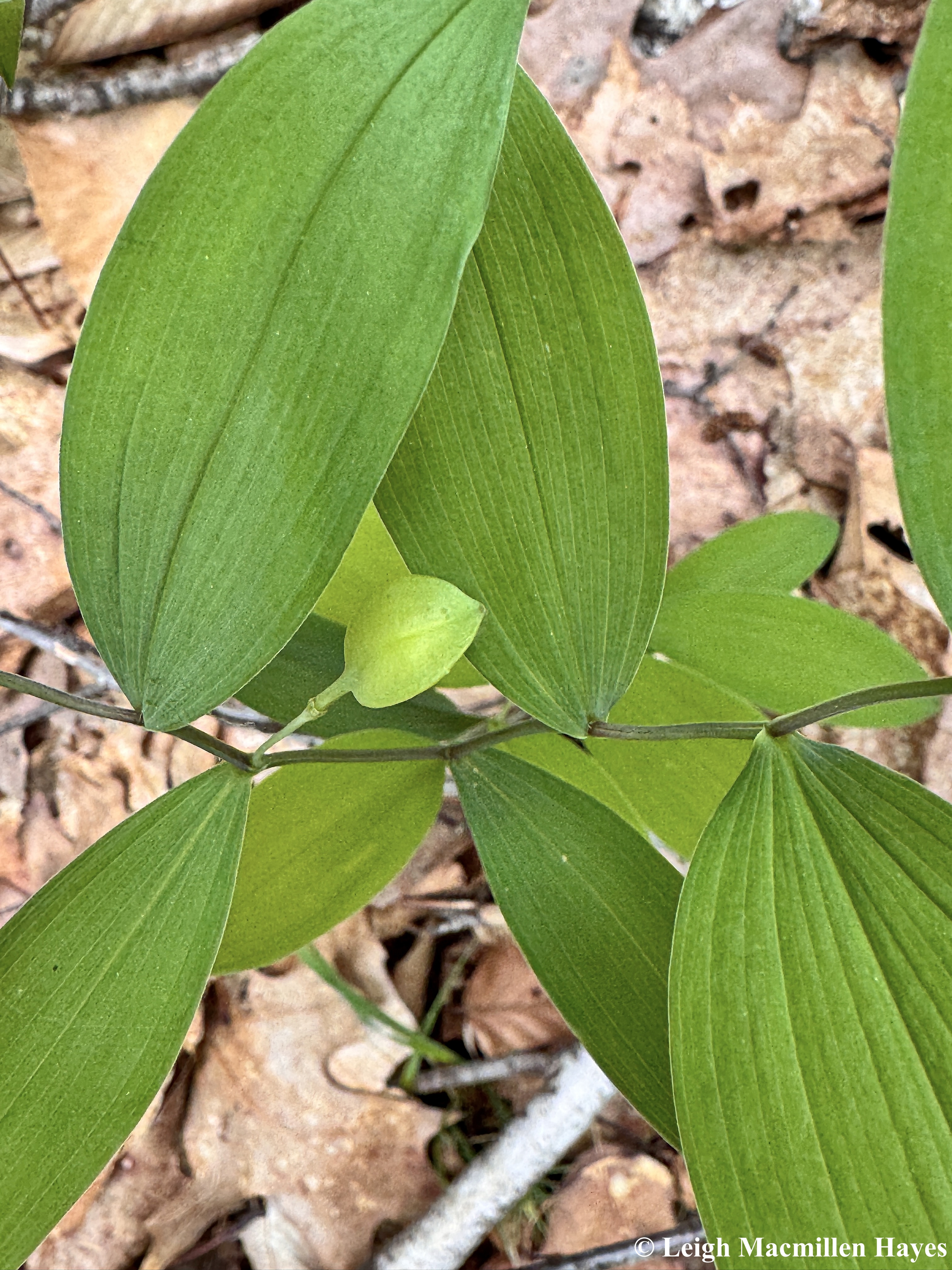
One of the earliest bloomers of spring, has already formed into a fruit, in this case three sided. Meet the Wild Oat of Sessile-leaf Bellwort. It reminds me that in a snap of the fingers, the season passes by much too quickly.

It wasn’t just flowers that marked our journeys. About the same time that we began the latest ritual, dragonflies and damselflies slowly began to emerge, for which we always give great thanks as they gobble up some of the Mosquitoes and Black Flies that so annoy us. This American Emerald had only just made the transformation from aquatic form to terrestrial hours earlier based on the sheen still visible on its drying, but not quiet dried yet, wings.

Much more mature were these two, who had formed the marital wheel in order to canoodle. I knew they were Emerald Dragonflies, but wasn’t sure which species until I searched my guides back at home: Uhler’s Sundragon, a new species for me.

And in at least one spot, some smaller female dragonflies deposited eggs as they tapped the water’s surface with their abdomens. Think of it as Naiads to come, who will live in the water for 1 – 3 years, depending upon species, before climbing out and transforming miraculously into terrestrial fliers.

Being beside water in another place, and looking between tree branches, we spied a Common Merganser taking a bath.
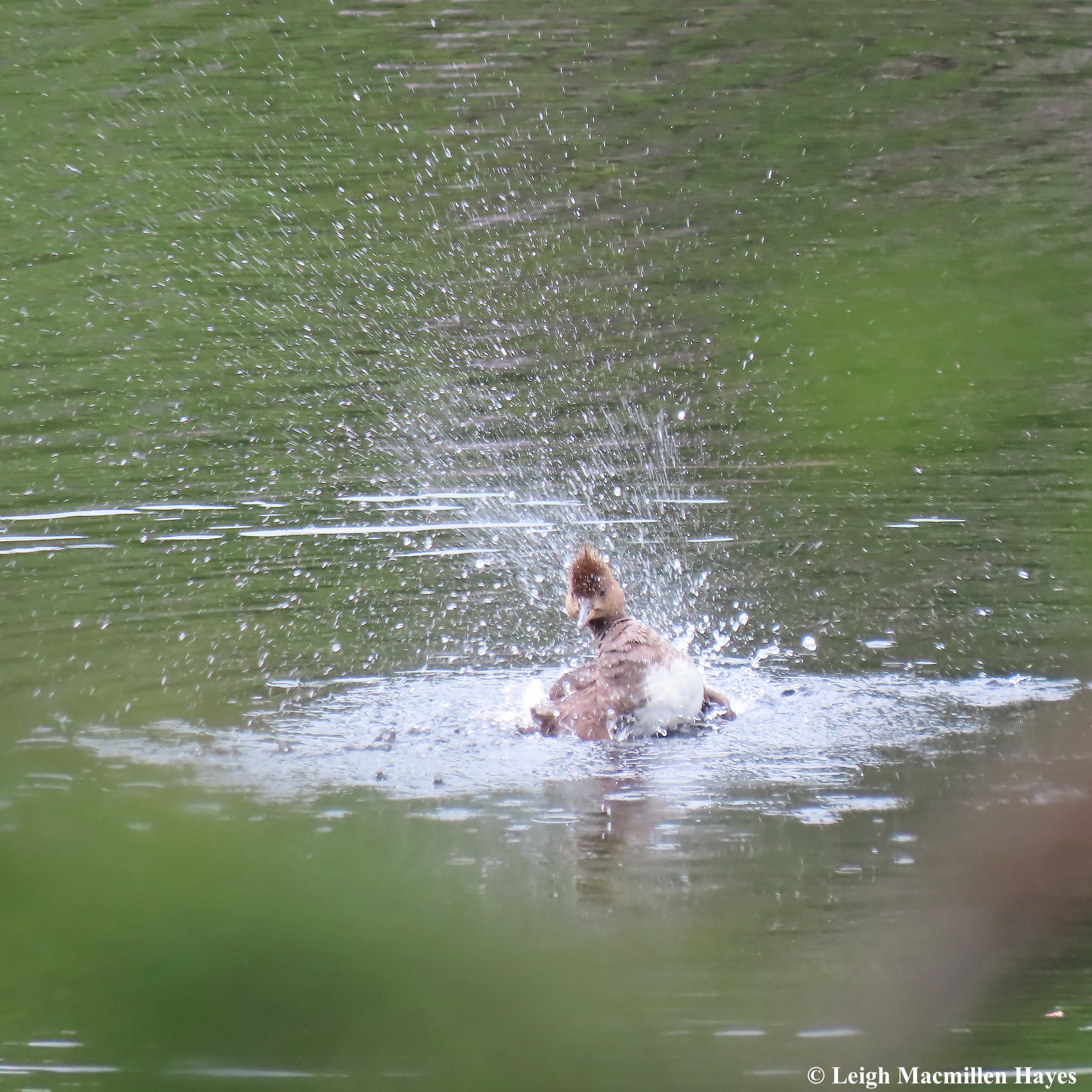
We stood just far enough back, that it didn’t realize it had an audience as it splished and splashed.
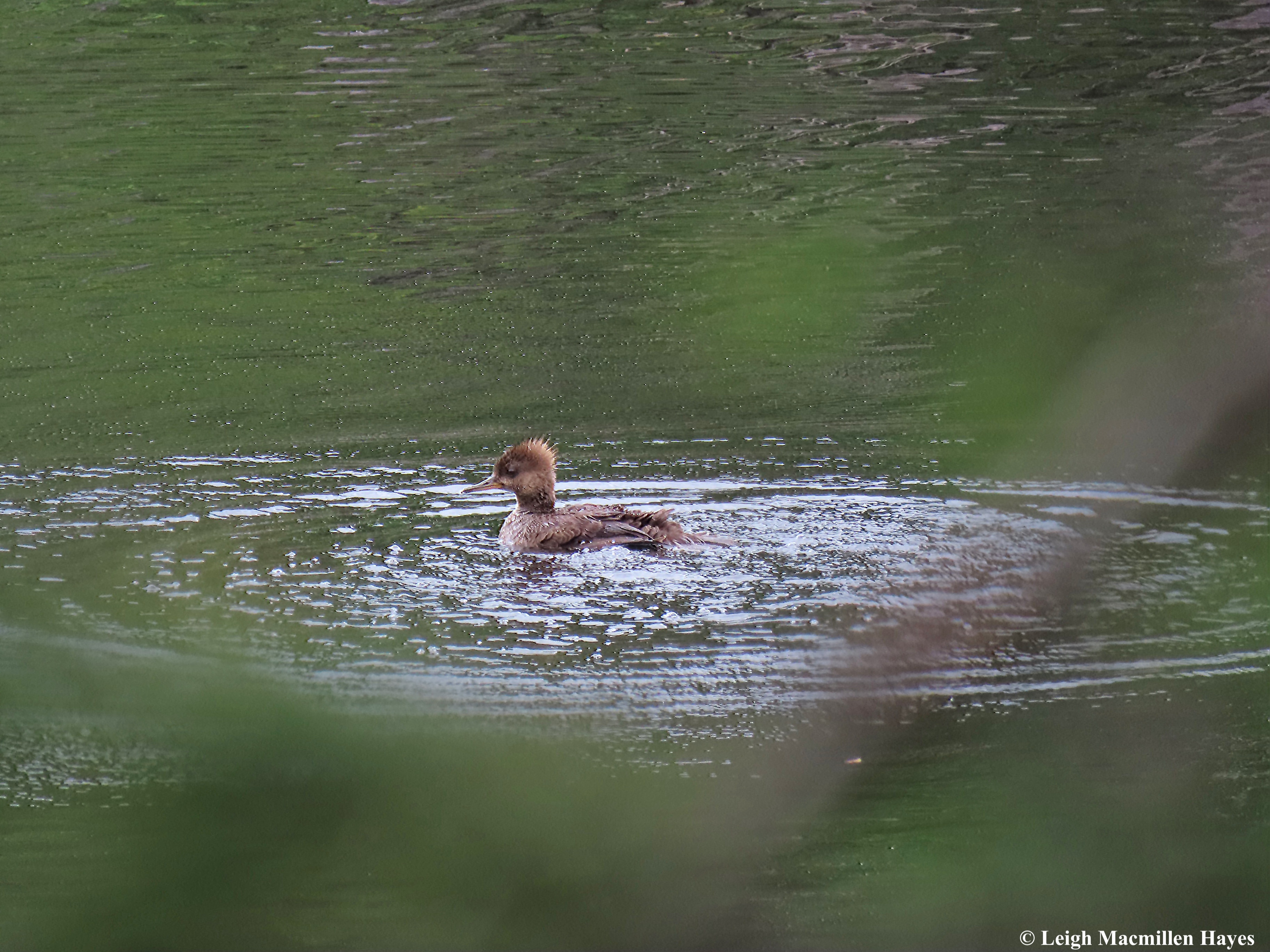
And finally shook itself off, with water spraying everywhere, before it continued on its journey . . . and we did the same.

Basking Painted Turtles became a common sight as well, and this one had the cushiest place upon which to recline, all others being on fallen logs or rocks and boulders in the water.

One, however, that I assume was a female, though I didn’t want to disturb it and get any closer to check the length of its nails, I surmised had been laying eggs or was about to. Our time together was limited so I don’t have the entire story, but she was in a safe place, no matter what.

One of our most unusual sightings as we performed the ritual was spying a Bald Eagle steal a fish from the grip of an Osprey. If you look closely at the center of the photo, you might spot the thief on its get-away mission–it is flying above the picnic tables, about in the middle of the trees.
As it flew over our heads, the Eagle had the audacity to look back to see if the Osprey was hot on its tail. It was. We don’t know how this story ended either, but we assume the Osprey had to cast its fishing line again.
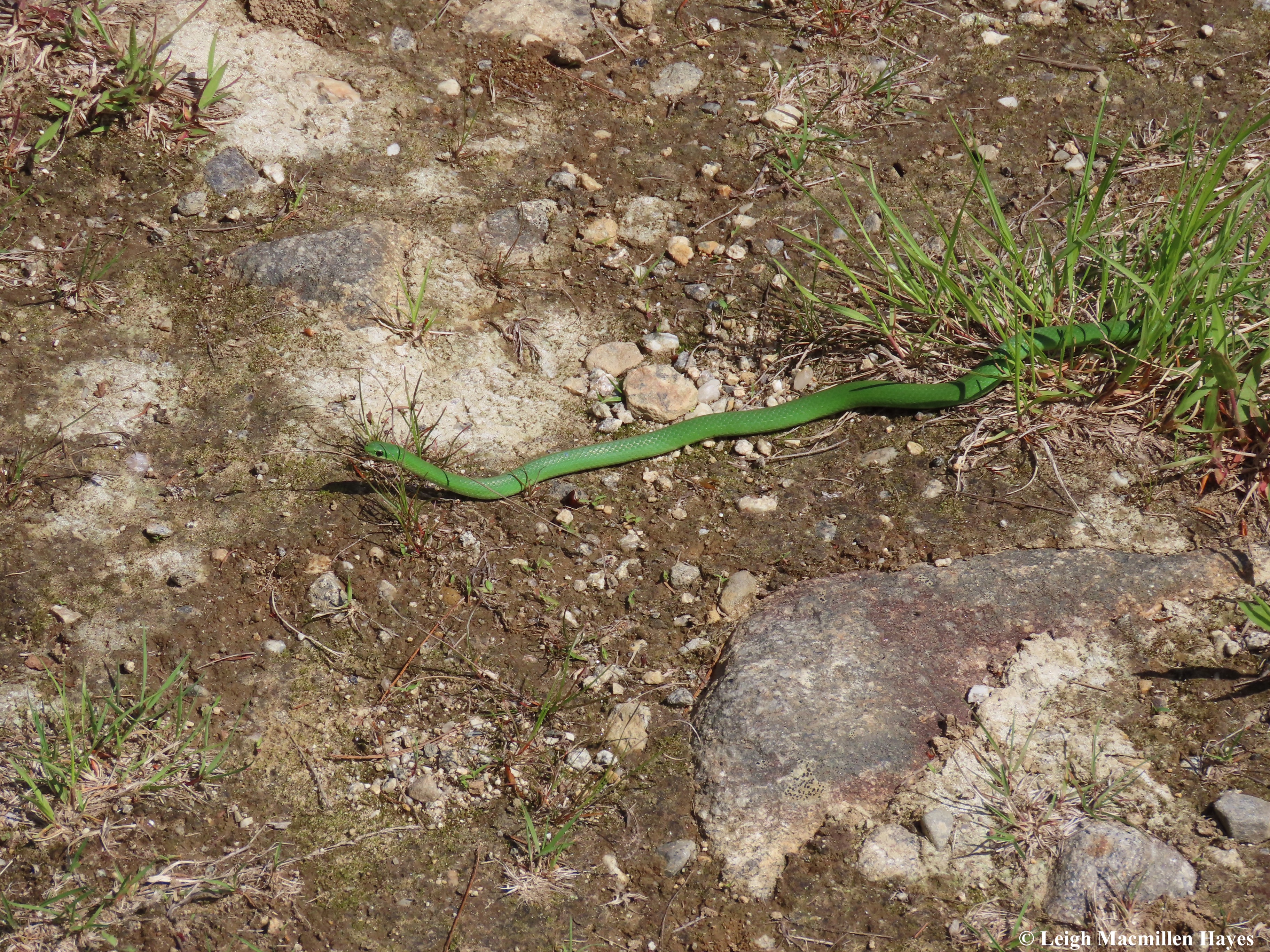
Another fun sighting occurred as we crossed under a powerline on the return trip of a seven mile hike around a river, over to a pond, up a hill behind the pond, and back down and out. Almost the color of the grass that sparsely grew along this section of the trail, a green snake slithered across just after My Guy had stepped that way.
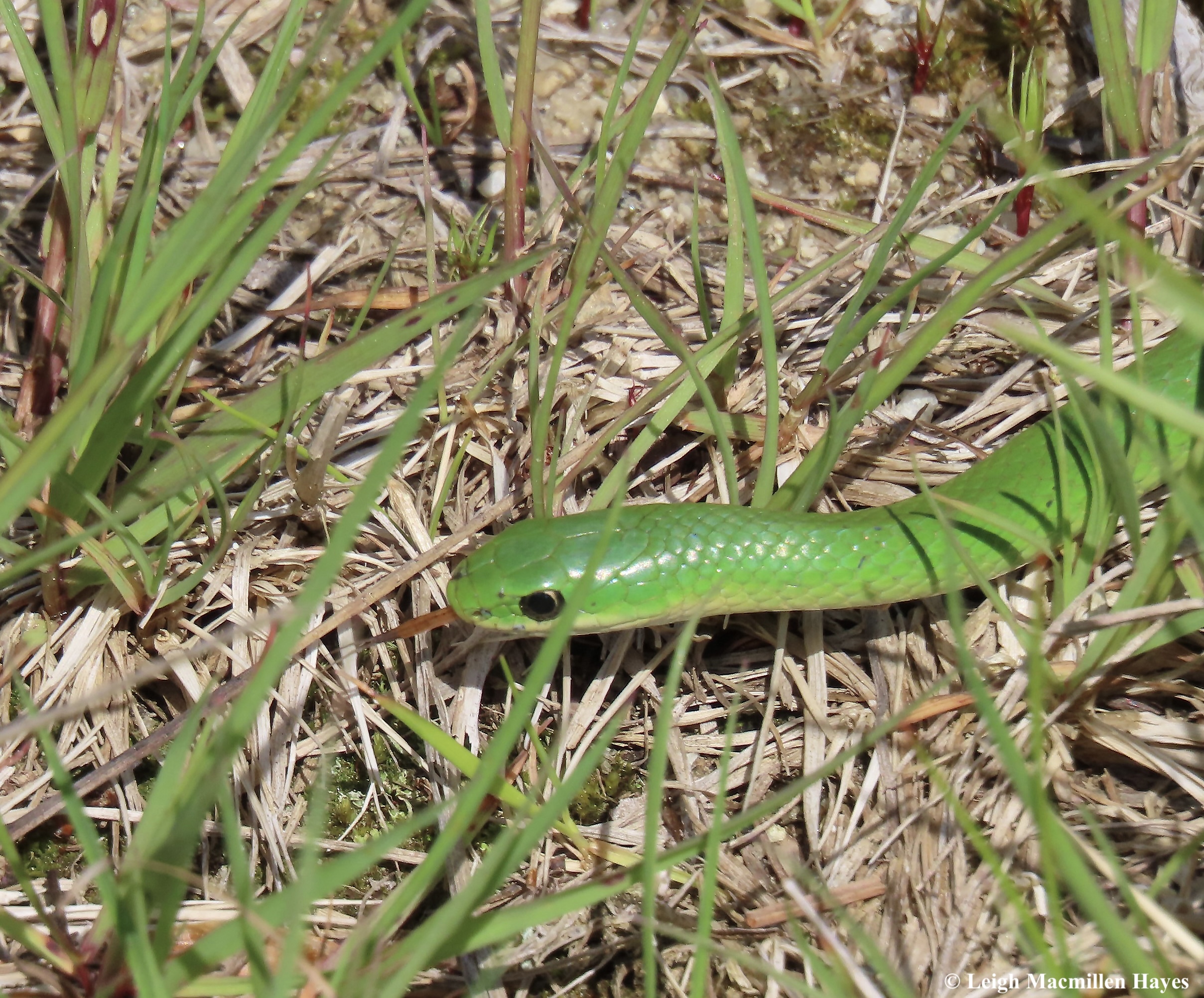
I just love its forked tongue–sensing the trail in snake manner as it did.

The two tines at the tip of the tongue, seen here as it withdrew this sensory organ, help it to smell in stereo and thus find its way and find a meal.

All of these things we saw because of the ritual that we perform every year at this time. It’s one that we now realize involves some greed, but still we feel compelled to do it. We count Lady’s Slippers.

I always thought that orchids were something you received on Prom night and that they grew at the florist. I had no idea that they were actually wildflowers until about thirty years ago. According to Orchids of New England and New York by Tom Nelson & Eric Lamont, Lady’s Slippers are one of 65 species and variants found in our region.
And so they deserved to be counted.
But, oh, how they hide. Do you see the one in the photograph above?

How about now?
Knowing that they can be elusive causes My Guy to slow down for a change. It’s no longer the destination that counts, but rather the number of Pink (and their white variants) flowers that we can spot.
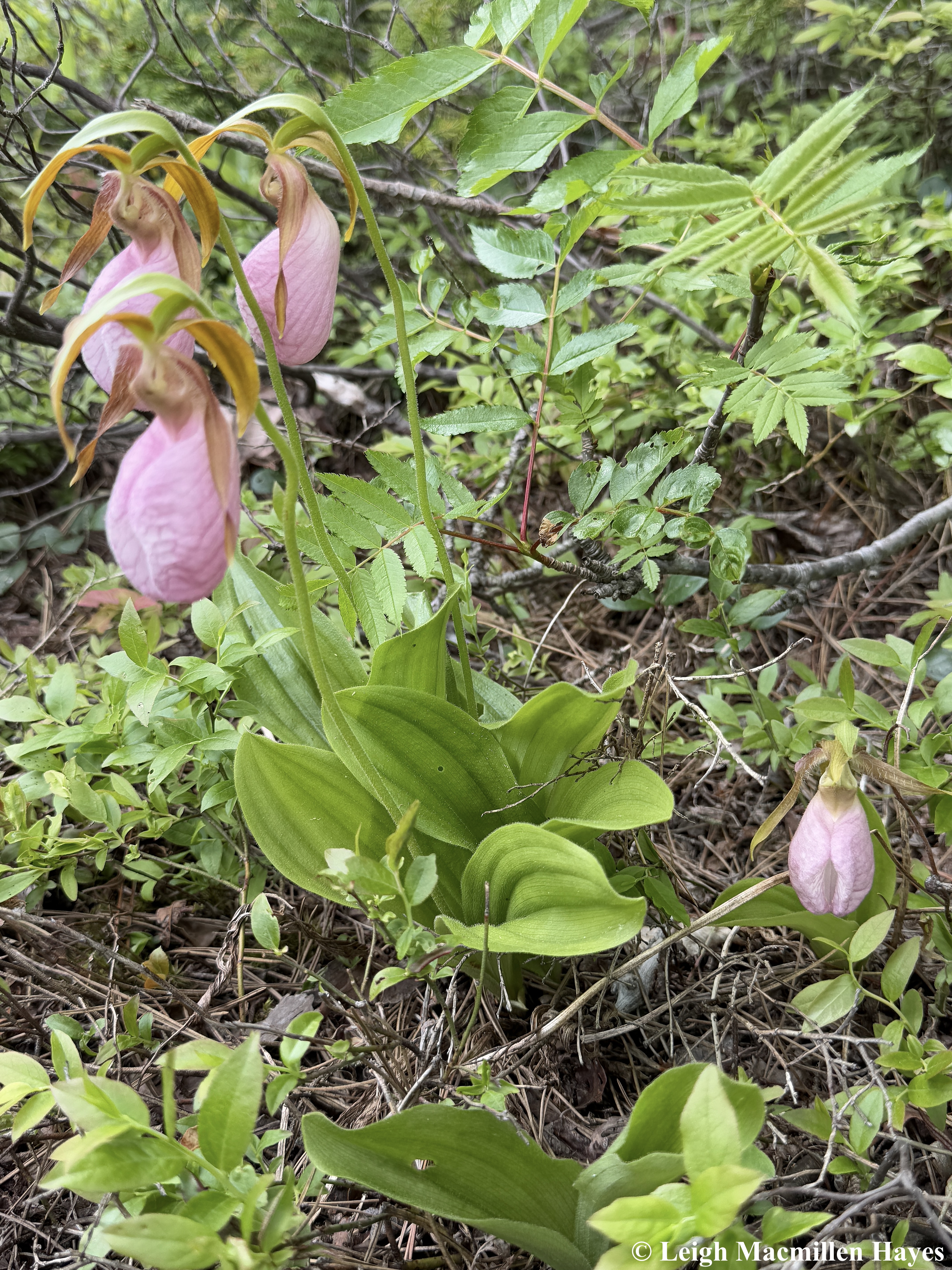
Some are tall, and others quite small. And some are sets of leaves with no flowers yet as in the foreground. We don’t count those.
Here’s the thing about Lady’s Slippers. It takes a long time for a minuscule seed to become a plant. The seeds, developed in capsules, are beyond numerous, but each one has no food source or endosperm. So . . . it must develop a relationship with a Rhizoctonia fungus in the soil to survive. From the fungus the plant gets nutrients for germination and growth. The fungus, in turn, receives nutrients from the orchid’s roots.
BUT . . . all of this takes time. And the presence of the fungus.
Years. First, after at least three years the plant produces a pair of two basal leaves that fold like accordions and remind me of the paper fans we used to make as kids.
One author says it’s another 5 – 10 years before the plant produces a flower; another states 10 – 17. Either way, by the time you spot one, it’s been working for a long time to become a thing of beauty. (And should not be picked or transplanted.)
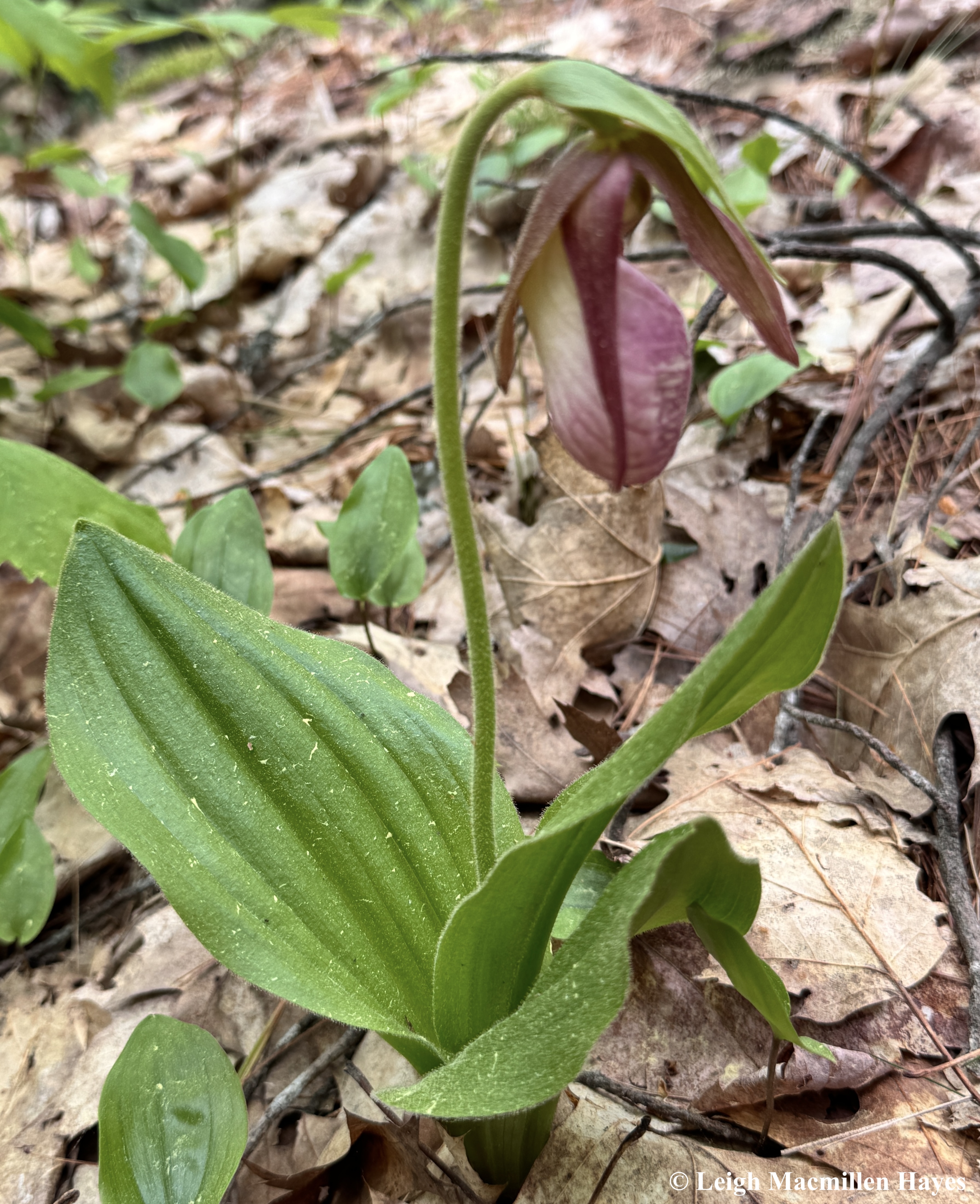
We found one that stymied us for it appeared to have three basal leaves. I can only wonder if there was a second plant there and something happened to its other leaf.

In one spot, we found what we call a bouquet. Sometimes we see three or four grouped together, but in this case 14 plants in bloom.
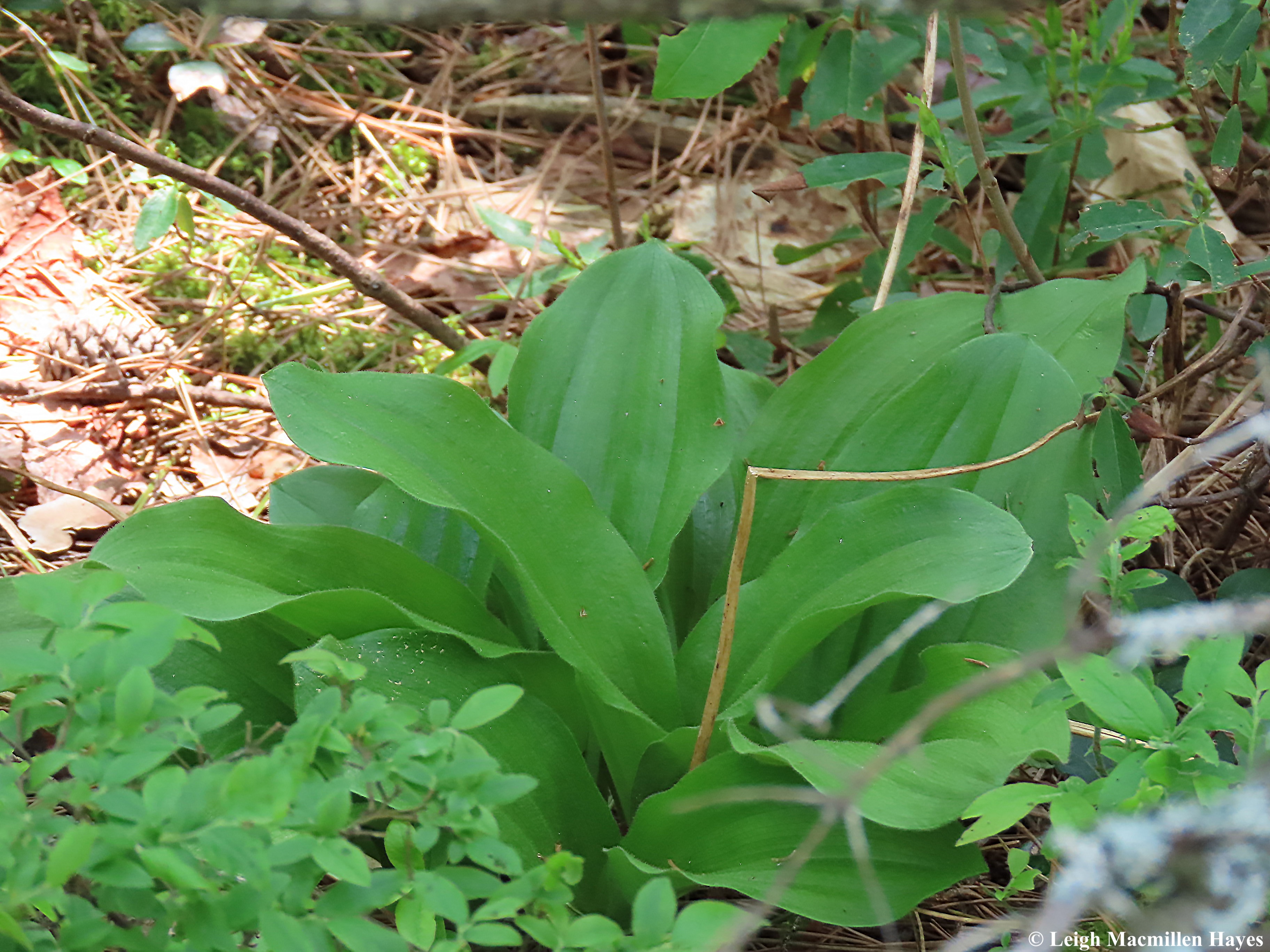
And in another spot where we expected the same, nada. What happened. My Guy was disappointed because this is his favorite and he loves to show it off to anyone who happens to be hiking that way.
We have a theory, though we don’t have scientific knowledge to back it up. But here goes. Last summer, our count was quite high. The previous spring and summer it had rained. A. Lot.
Last year, we experienced a drought. This year fewer flowers in most places that we hiked in the last few weeks. Perhaps less of the fungus?
And sometimes the flowers are spotted growing in a bit of a line, making us think perhaps there is a rotting nurse log beneath the soil. As for soil and habitat, acidic seems to be the favorite and we often find them among Low-bush Blueberries and towering over Reindeer Lichen.

And then there’s pollination: Lady’s-slipper pollination is a curious thing. Bees are lured in by the guide lines to a slit in the front petal, the slipper-like pouch, or flower’s labellum. Once inside, the bee cannot exit the way it entered because the petal structure turns inward.
The exit is at the top of the slipper, but to reach it, the bee must move through a hairy interior and rub against the flower’s stigma, depositing any pollen it may have carried in and brushing against the pollen mass called the pollenia before flying out. It strikes me as being like a house of mirrors. And all I want to do is quickly find my way out.
Some bees get frustrated with the dilemma of discovering there is no nectar and the task of finding the exit and instead chew their way out, which seems to be what happened to this flower.

It looks like the bee frantically tried to escape this one.

I tried to honor them with a painting, but our best way is by counting each and every one. I’m going to share last year’s numbers and this years. Also, this year, we counted along a bunch of other trails than just the Big Three as My Guy refers to the first three for which I have been keeping records since 2000.
Wolfe’s Neck State Park: 2024: 475; 2025: 159
Albany Mountain: 2024: 364; 2025: 411
Sanborn River and Overset Mountain: 2024: 598; 2025: 526
Grand Total of the Big Three: 2024: 1,437; 2025: 1096
Plus these trails all from this year only:
Mount Tom: 25 (but we were there on May 18, and this was the kick-off event that got us going this year; more may have bloomed since then. Actually, after spotting the first one, My Guy wasn’t sure he wanted to count this year, but let me tell you, he still has the greed!)
Mount Tire’m: 31
Proctor Pond Reserve: 41
Kezar River Forest: 63
Narrow Gauge (only 1.5 mile section): 56
Sleigh Trail at Notch View Farm: 44
Home woods: 2
Grand total of all trails: May 18 – June 6: 1,358
Even with the extra trails, the count was down.
But still . . .
Where the Moccasins (Lady’s Slippers) Led Us–up and down many a path with so many wonder-filled moments and sighting along the way. Counting Lady’s Slippers is a ritual that we love to share together and with others.
 wondermyway