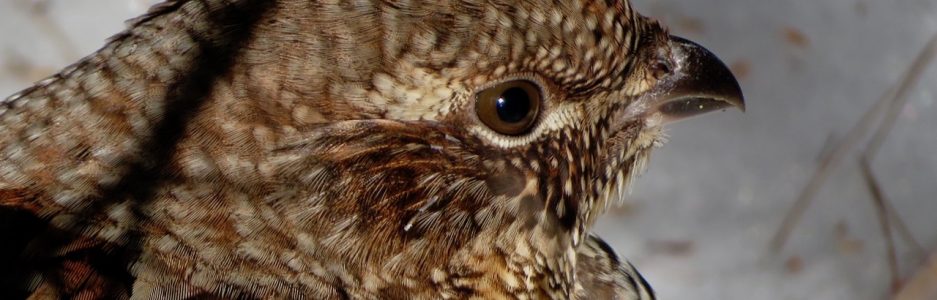
Two days ago we awoke to a temperature of 27˚ and the ground was covered with frost. And the Juncos flew into the yard. And so it seemed that autumn was turning a new page.

But . . . the day before the frost, as I walked along a local trail, something tiny captured my attention and as I bent down, I realized that despite the fact that the leaves of this Low-bush Blueberry had shut down their food production process and let the anthocyanin that had been stored in the leaves finally show through since chlorophyll was no longer a key factor, the plant was flowering.
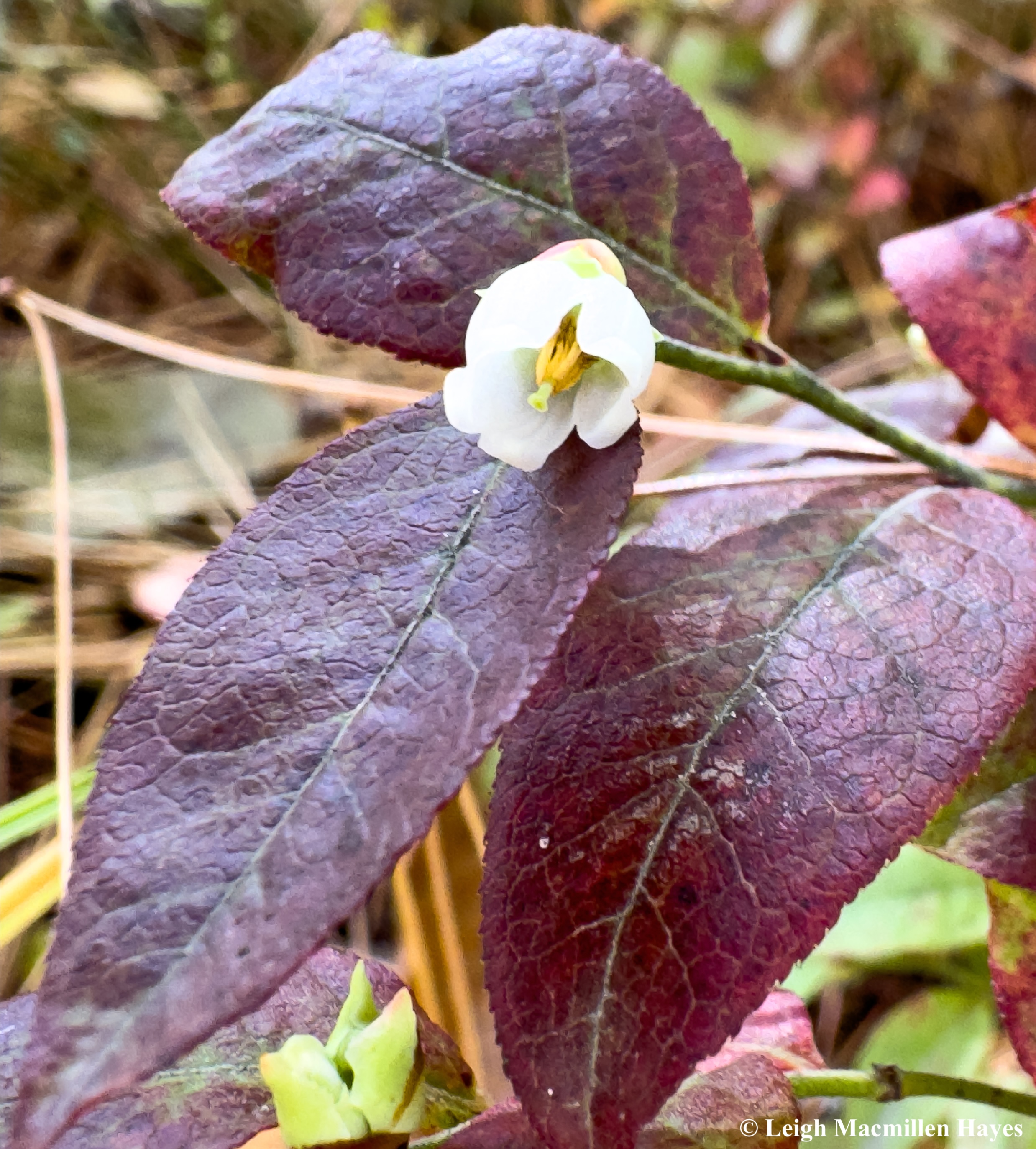
There were somewhere between a dozen and two flowers in bloom on this one plant. After seeing that, I checked others, but didn’t spot any more flowers.
Of course, I did what I always do when such an event occurs, and immediately sent the photos to my nephew who lives in southwestern New Hampshire. The past few years we’ve exchanged such photos when the out-of-the-ordinary occurs and last year it seems like we found a bunch of species in bloom at the wrong time. This was the first for both of us this year, and as he commented, probably because it’s been so dry. But still, it’s also been hot and the flowers seem to get confused–more than they used to, at least in our memories. How about for you?

And so today I stopped by St. Peter’s Episcopal Church in Bridgton, Maine, because I love the land that surrounds the building and wondered what it might have to offer. I actually stopped by twice–first in the late morning, and then again in the middle of the afternoon.

Seeing Hawkweed both in bloom and preparing to send seeds forth for future blooms wasn’t a surprise at all, for this flower is prolific and hardy.
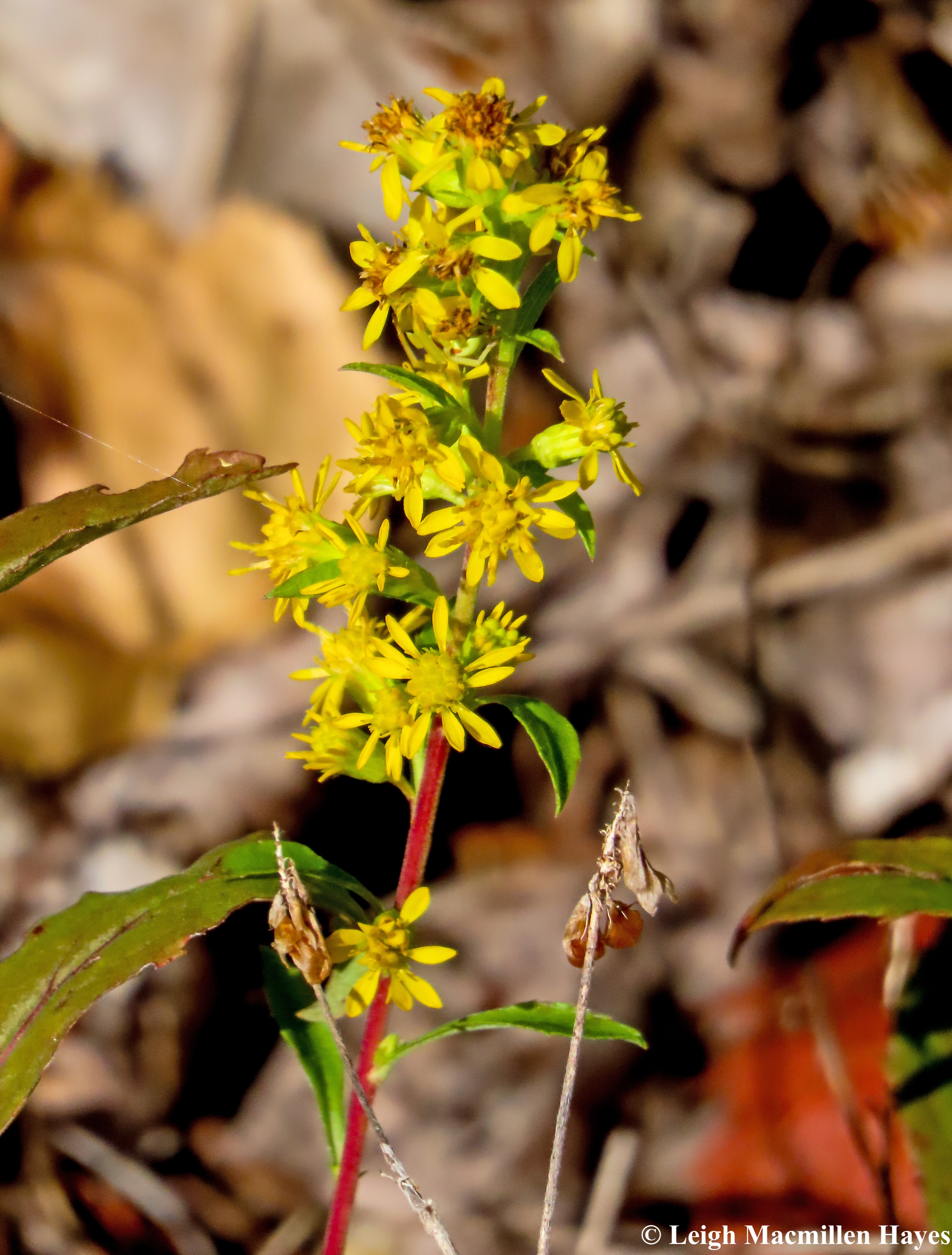
A few Goldenrods had also not yet achieved their gray-head status and instead served as beacons of light for any who were searching.

And the few Bumbleebees I saw gave thanks that there was still some food available.
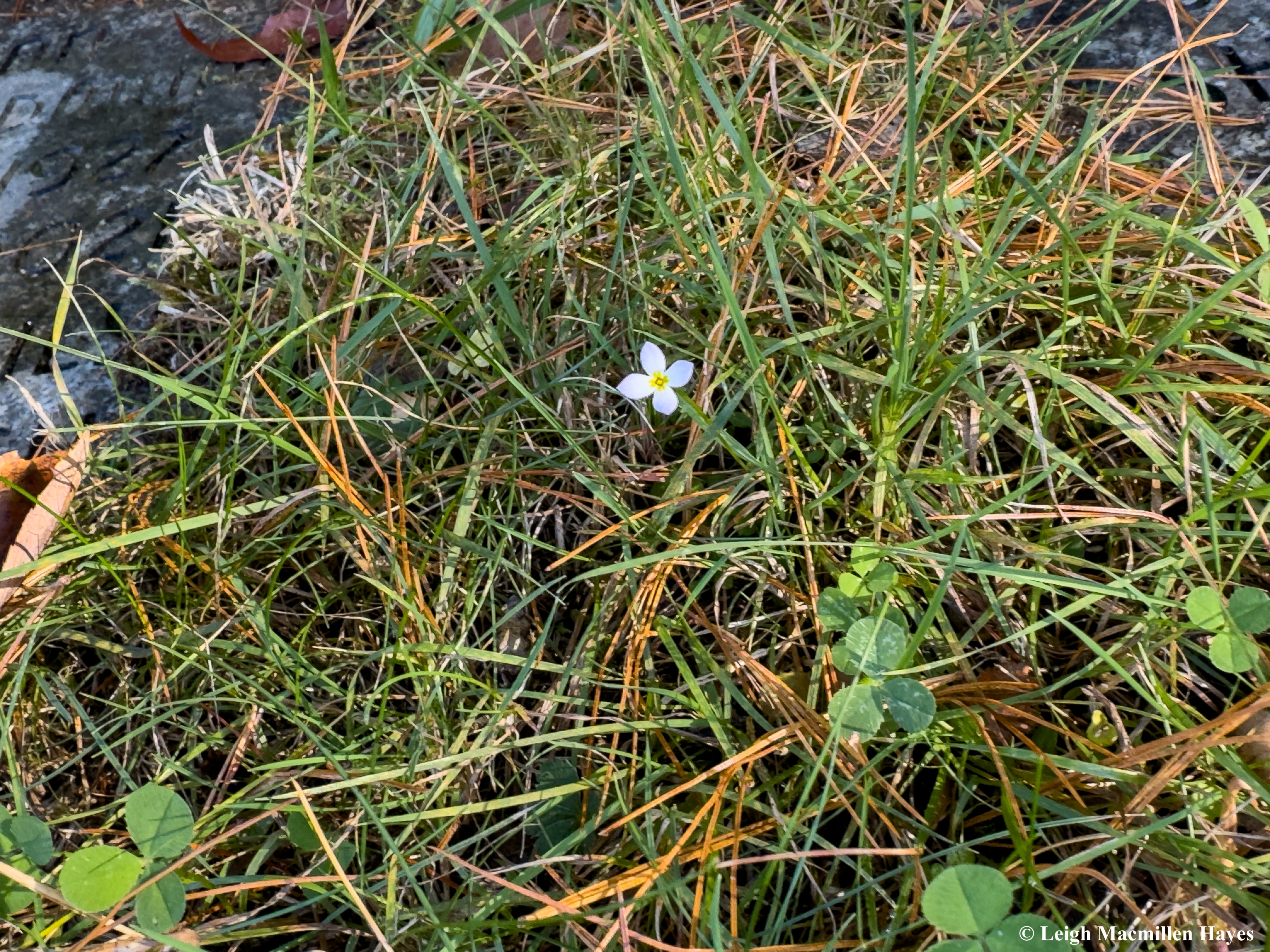
But then I spotted it . . . A single Bluet, aka Mayflower, one of our early bloomers that blossoms in May, showing off its perky little face between two grave markers in the church’s burial site.

I gave thanks for the Bluet, because it was located between two dear friends who died within months of each other, after a marriage of 71 years! To spend a few minutes wondering about the Bluet with them today was a blessing.

And no matter where I walked, be it the church lawn, woods, or parking lot, it seemed there were Autumn Meadowhawk Skimmer dragonflies, this being the male. If I moved, they moved a slight bit, but then landed nearby every time.
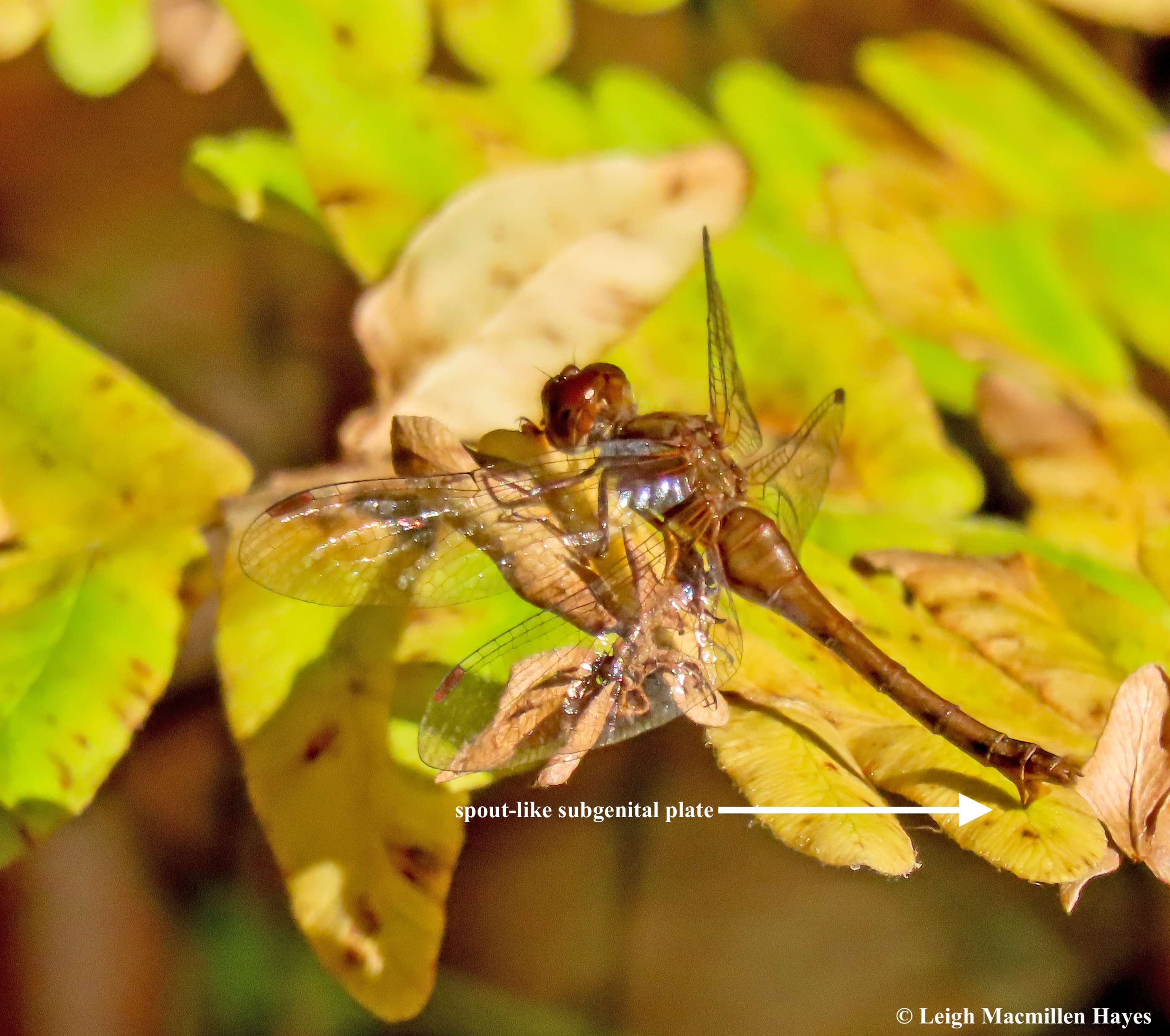
The females were also flying and landing everywhere I went. And I truly expected to find a pair canoodling, but they seemed more interested in landing near me than chasing each other for a date.

While female Autumn Meadowhawks are typically pale brown, as they mature, their abdomens may turn red like that of their male counterpart.
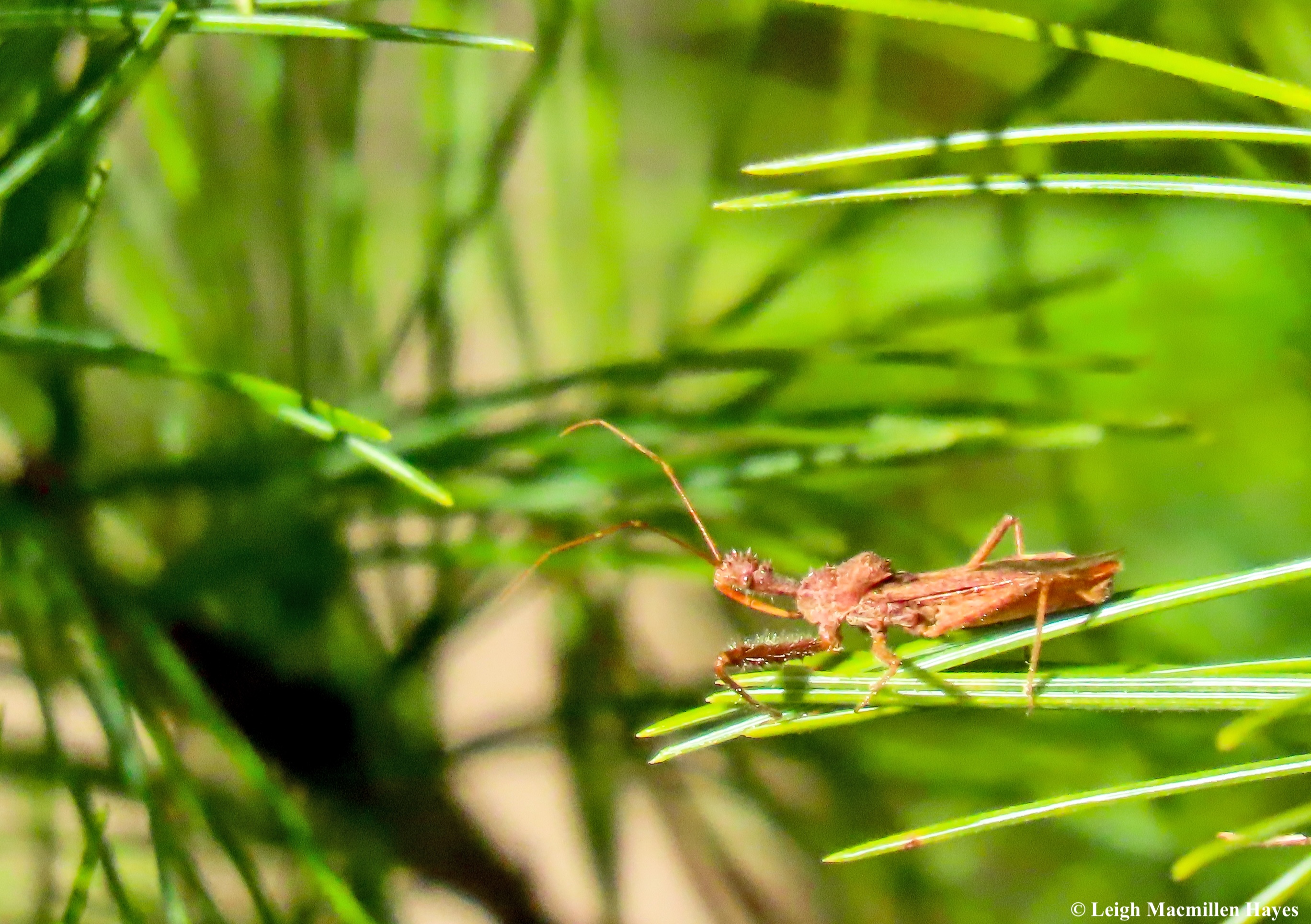
Of course, they all need to watch out for this guy. Or maybe he needs to watch out for them. The Spined Assassin Bug was on the move–the hunter or the hunted I don’t know, but it was just a fun find. And beside the church parking lot of all places. But then again, churches welcome all, especially those who are not perfect. Thank goodness!

As I continued to explore, I spotted one of my favorite fall finds dancing through the air rather like a little fairy, though some think of it as a snowflake, and just yesterday someone described these insects as bits of ash. All make sense to me.
I captured this one so I could take a closer look at those iridescent wings and the waxy fluff on the abdomen.
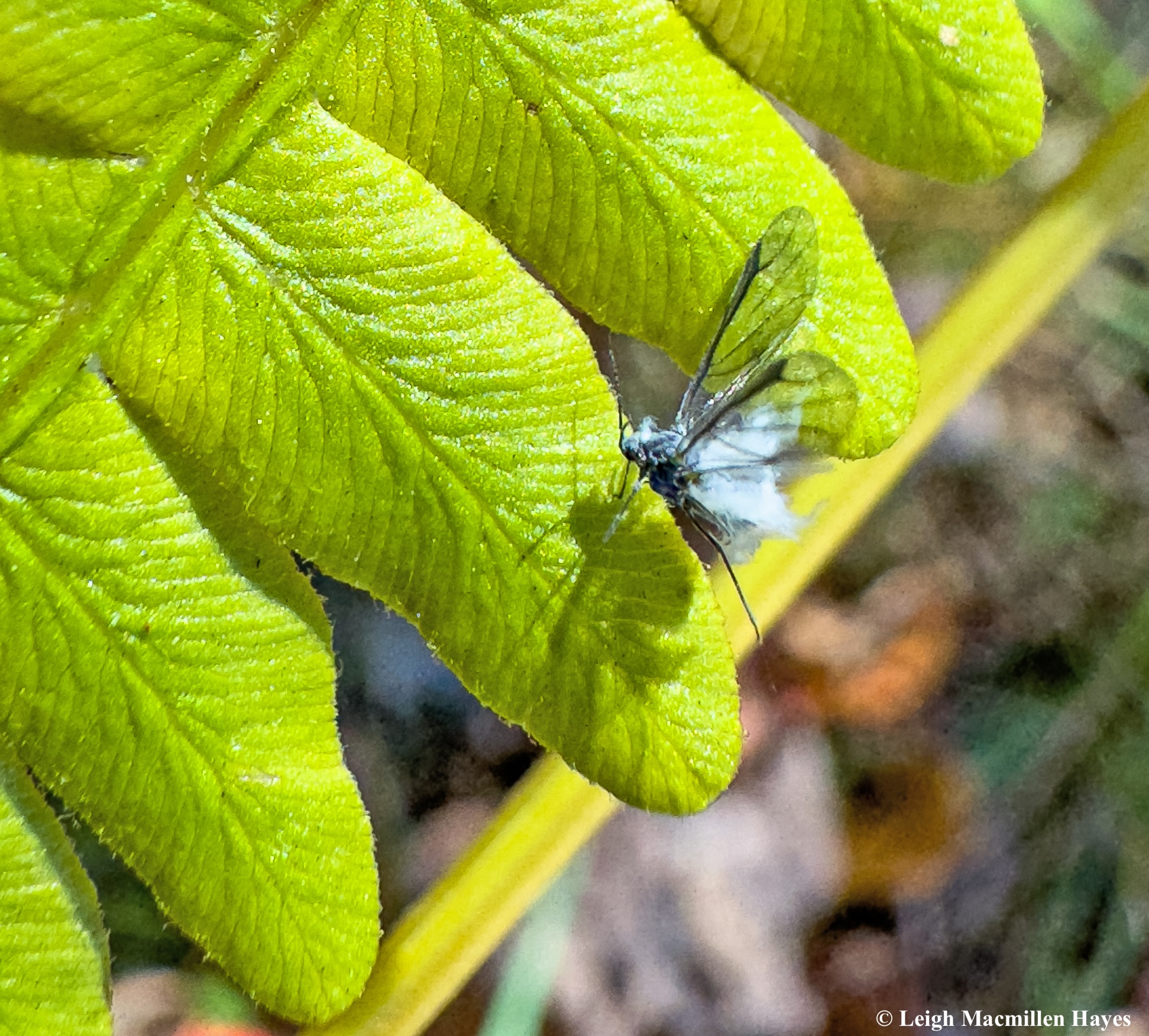
And then I released it onto a fern frond.
I invite you to notice the hint of blue as well.
This is the teeny, tiny Asian Woolly Hackberry Aphid, one who is searching for a sap source.
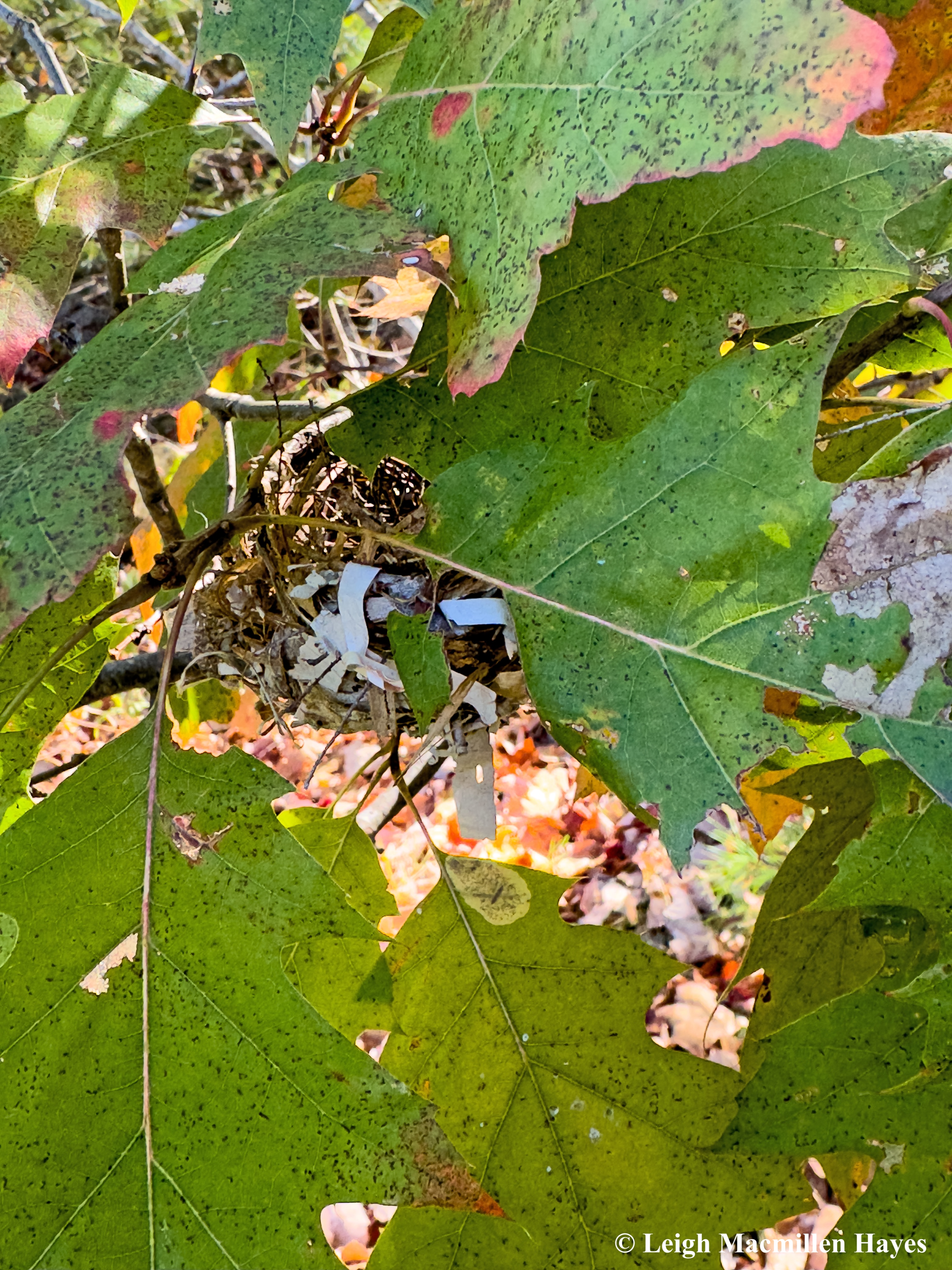
And then I came upon another surprise that I had forgotten. It was hiding below some leaves at about breast height.

A few of us first spotted this nest back in June when we accidentally approached it because we couldn’t see it hiding as it was below leaves, but Momma Red-eyed Vireo suddenly flew off. We apologized to her, took a quick photo of her eggs and promised her we would leave her be so she could raise her young in this place that we hoped provided safety. I never checked on her again.

But looking at the nest today, it appeared that she had a successful breeding season.
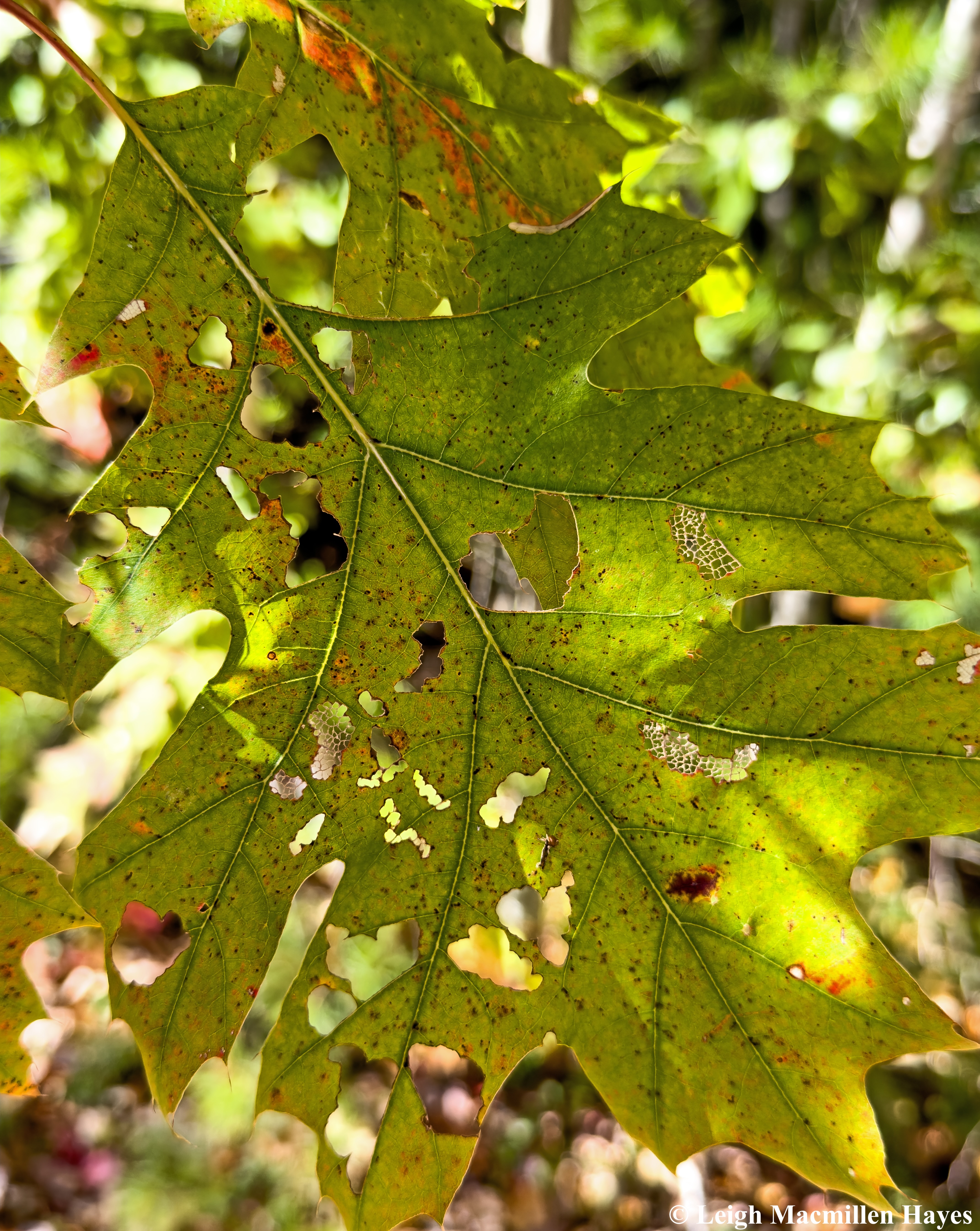
Looking at some Northern Red Oak leaves, like those that hid the nest, I was reminded of stained glass. Ours is a church that doesn’t have stained glass windows, but rather allows the outside world in. The ever-changing qualities of the natural world as seen through the windows serve as the scenes for us all to ponder each season.
And ours is a church with a group of people who wander out the door each week with others always welcome to join us as we wonder about all that surrounds us. We call ourselves Trail Snails, because slow is the manner of our movement.

And we have a mascot that was gifted to us by a couple from First Congregational in Bridgton, for they occasionally have joined our group to wander and wonder. T.S., short for Trail Snails, loves to pose along the way.
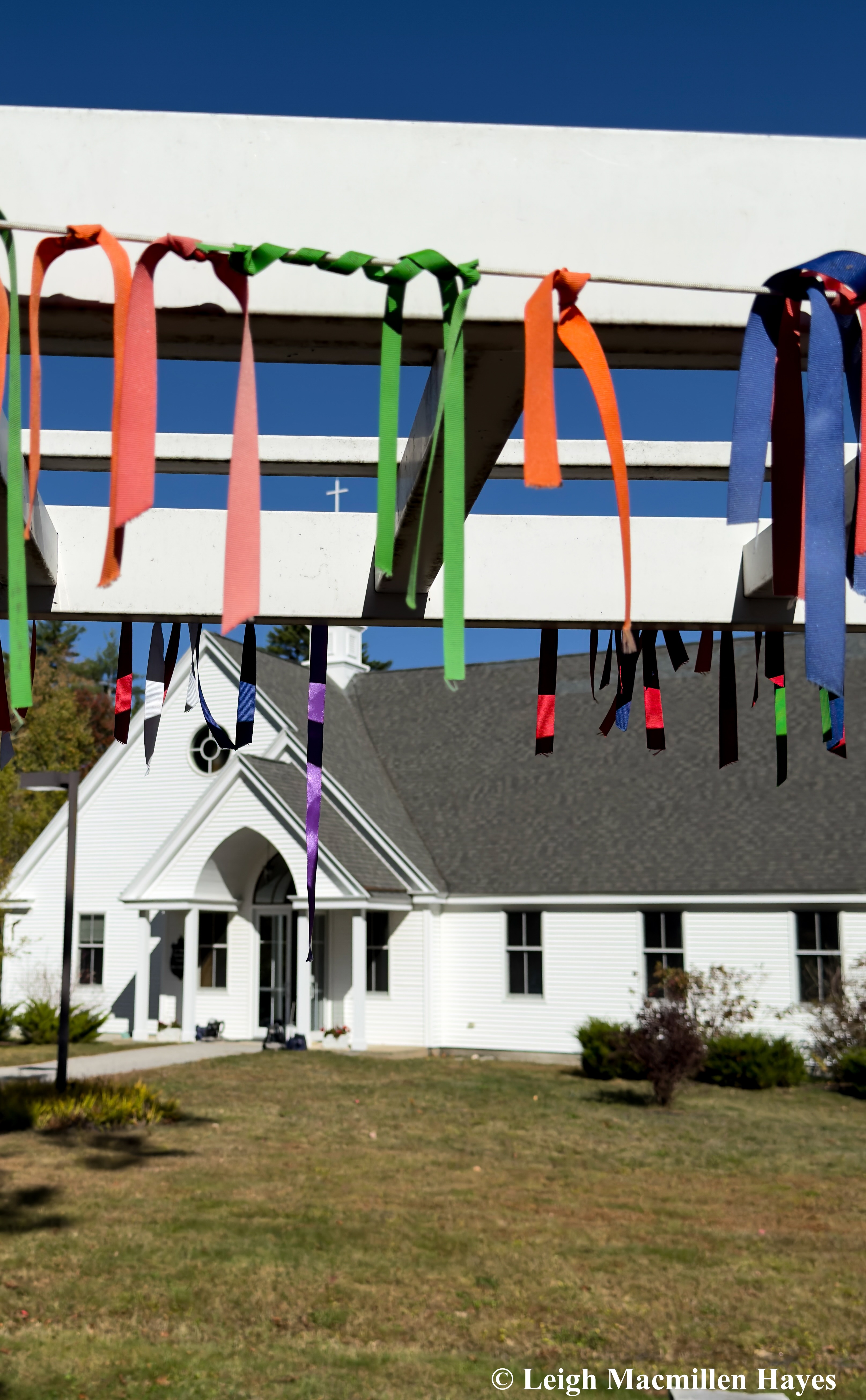
It’s also a church that knows the power of prayer and the ribbons tied onto the arbor actually represent specific prayers of parishioners and people we’ve only met for the first time.
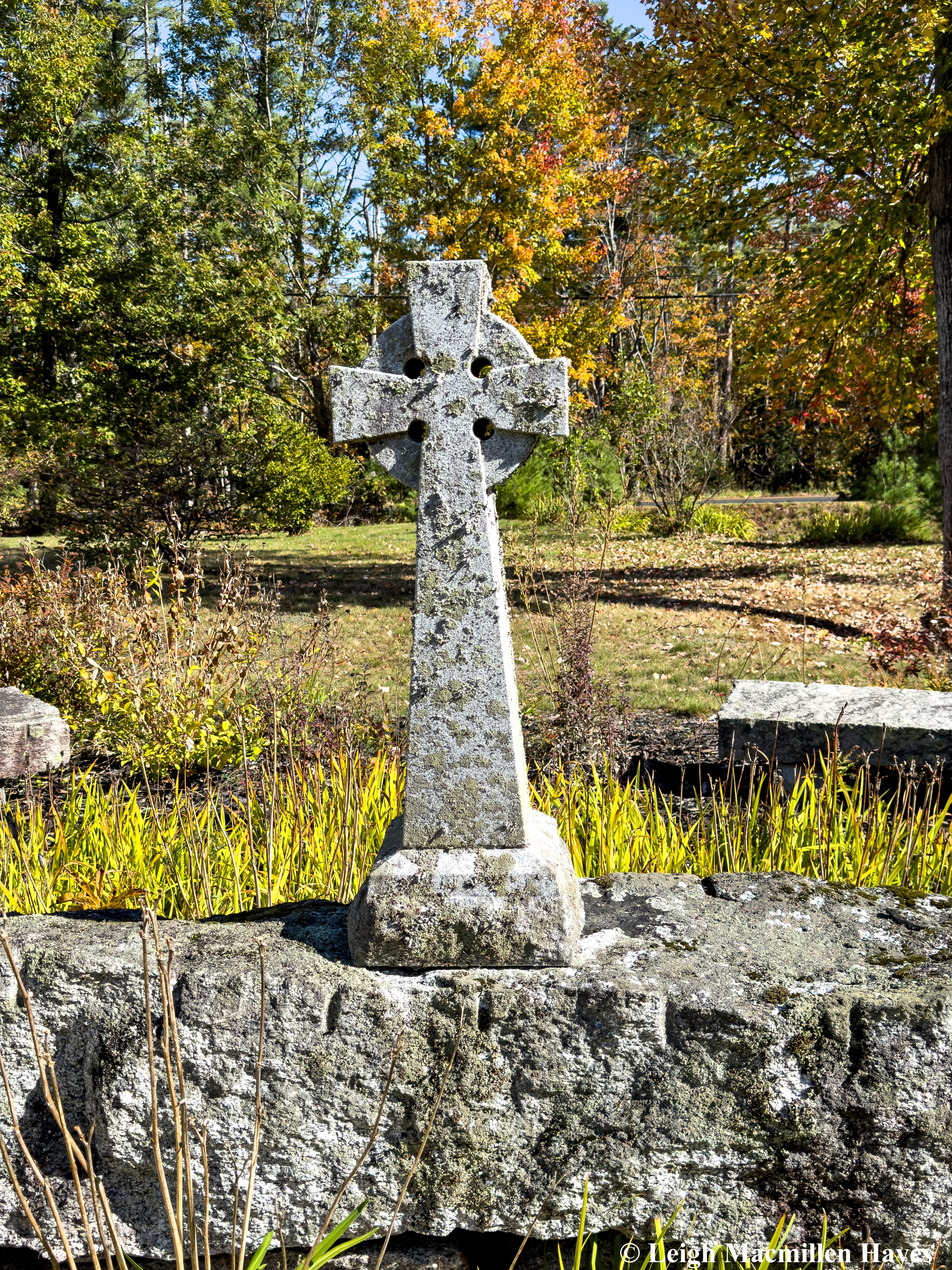
And there’s a beautiful Memorial Garden where all the flowers have now gone to sleep, but their leaves and seedheads offer different colors and textures in this season and anyone is welcome to sit in this space.

This all brings me around to my opening thoughts, for as I rounded the corner of the church building this morning, a shocking pink color on a bush mostly gone to fruit beckoned a closer look.
I wasn’t the only one peering in, for a Spotted Cucumber Beetle was making the rounds on the anthers within one of the flowerheads.

Blueberries, and Bluets, and even a Rose–a blooming surprise was each on this the eleventh day of October. Plus all the other wonder-filled finds.
 wondermyway