
The text message arrived November 5: “Any chance you are free Friday and Saturday, November 14 & 15? If you aren’t already booked, thinking we could meet up and hike perhaps.”
The decision was made, a room booked, bags packed, and then there was just the driving left to be done.
And voila, at 10:30am on Friday I pulled into the parking lot and saw her sitting in her car. It had been eight years since we were last together for an adventure and much had happened since then, but as is often the case, it felt like yesterday.
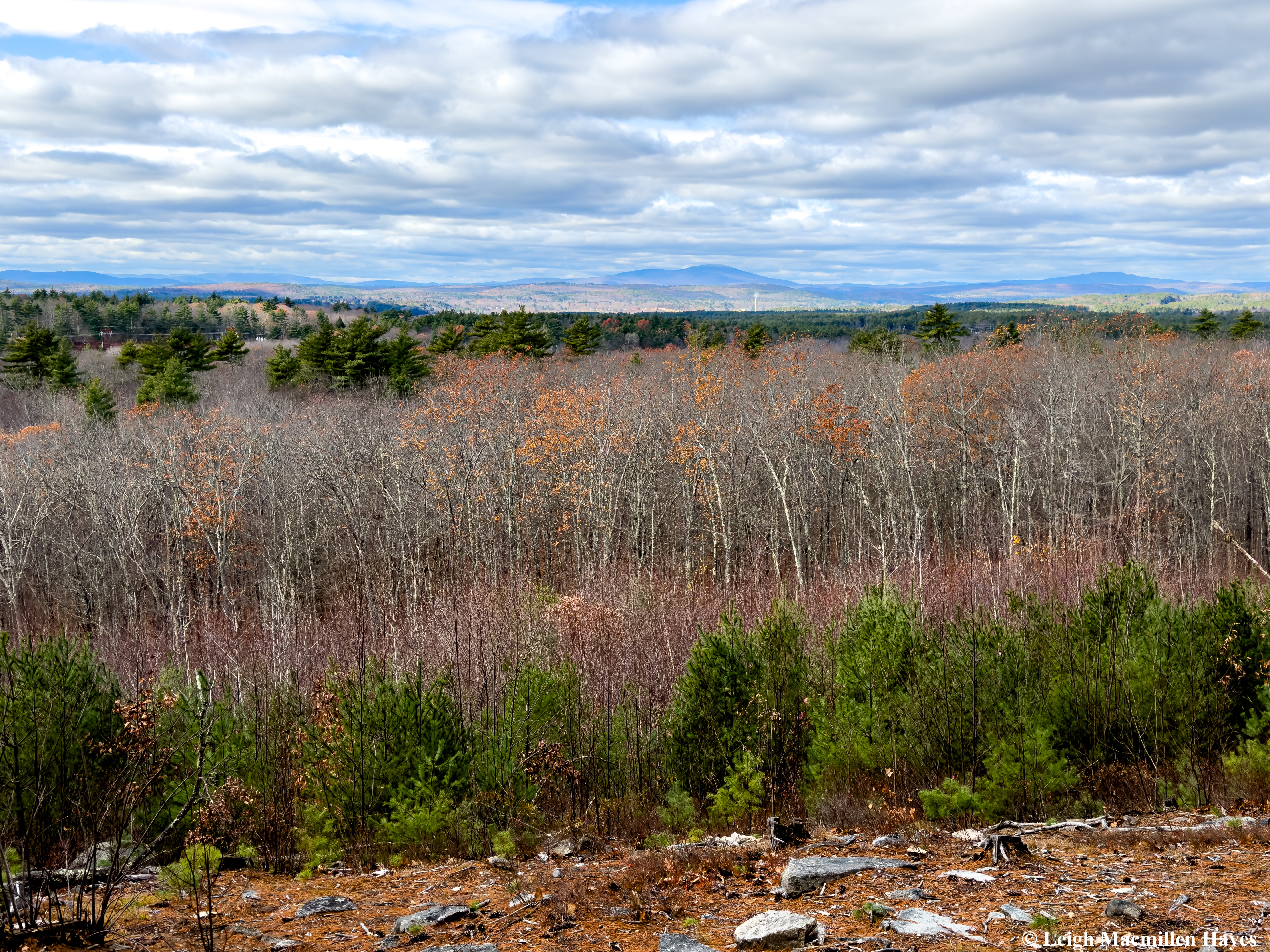
And so we headed off on the Oak Hill Tower Trail, with a plan to stay to the right, or was it the left, as we are direction-challenged, but really, we did know where we wanted to go and the vista spots that we wanted to experience, such as this one where we could see Mount Sunapee and Mount Kearsarge (not Kearsarge North that I’m more familiar with) in the distance. That said, I did record our journey on my GPS.
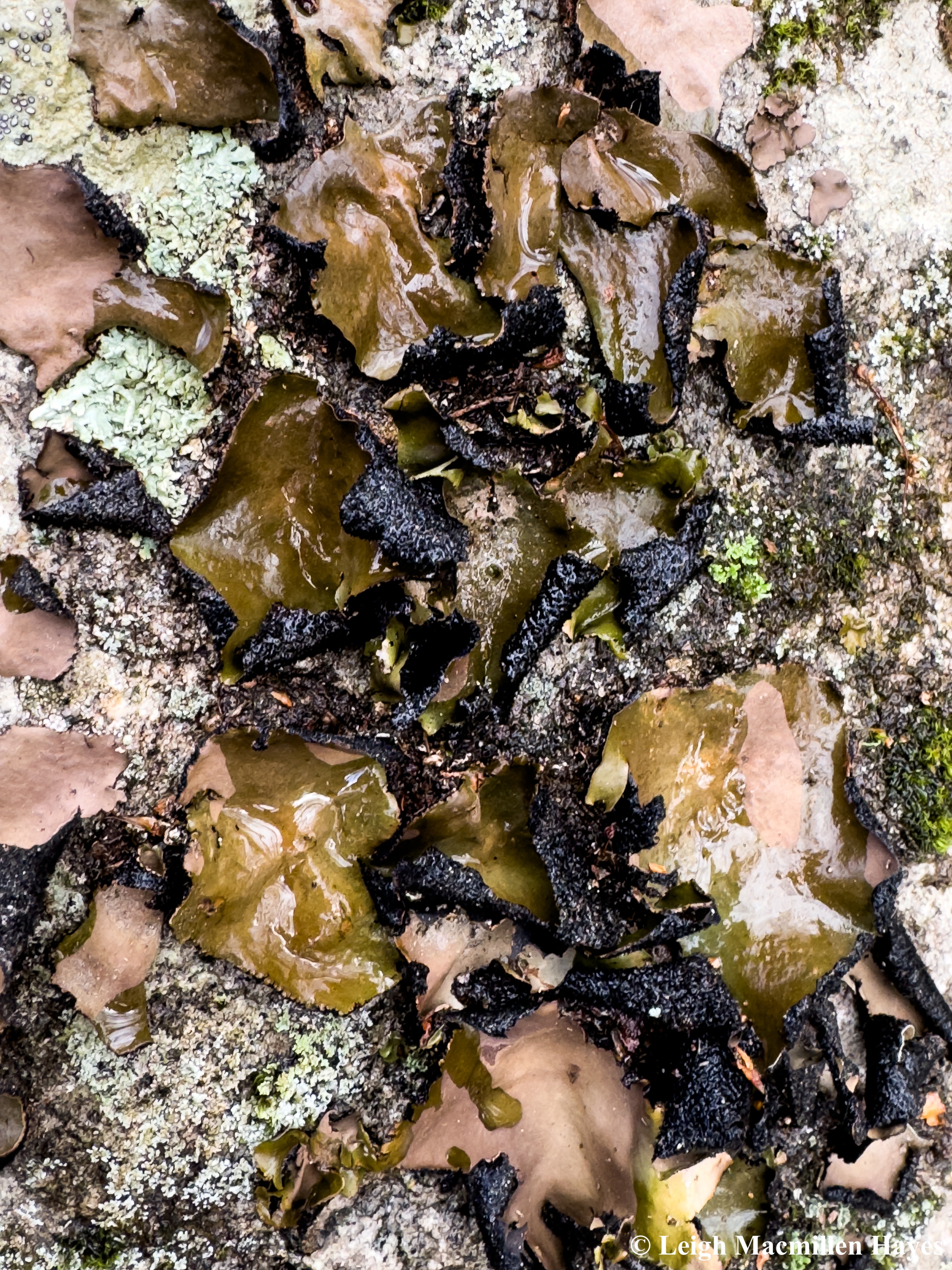
Because we were catching up as well as reminiscing about our junior and senior high school years, we let our tween or teen selves kick into action every once in a while, including by pouring water upon some dried and brown Rock Tripe. We watched with awe as the algal component of this umbilicate lichen immediately kicked into action and the “leafy” parts turned green and became more pliable.

And there were a few Winter Fireflies to admire, especially the pink parentheses that form brackets behind its head. I explained that though the eggs, larvae, and pupae glow, the adult form doesn’t light up the same as the Lightning Bugs we enjoy in the summer months.
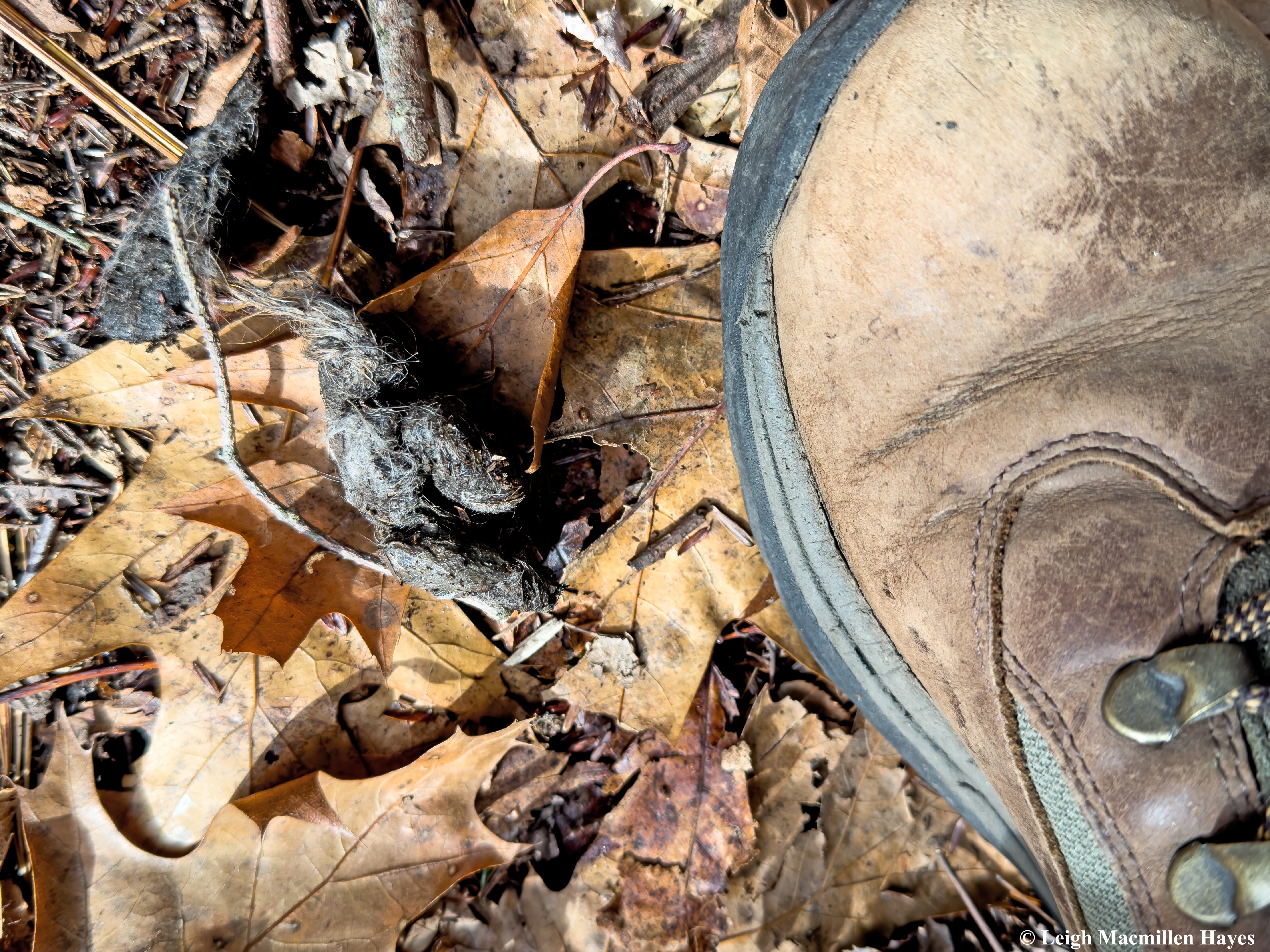
Our next great find was a fun one for me. I’m not sure she was quite as impressed, but she did want to know where all the fur may have come from in this Red Fox scat. We weren’t in Snowshoe Hare territory, but we were certainly in squirrel and vole habitat and so it could have been a combination that helped to form this twisted specimen with its blunt form on one end and tail on the other.
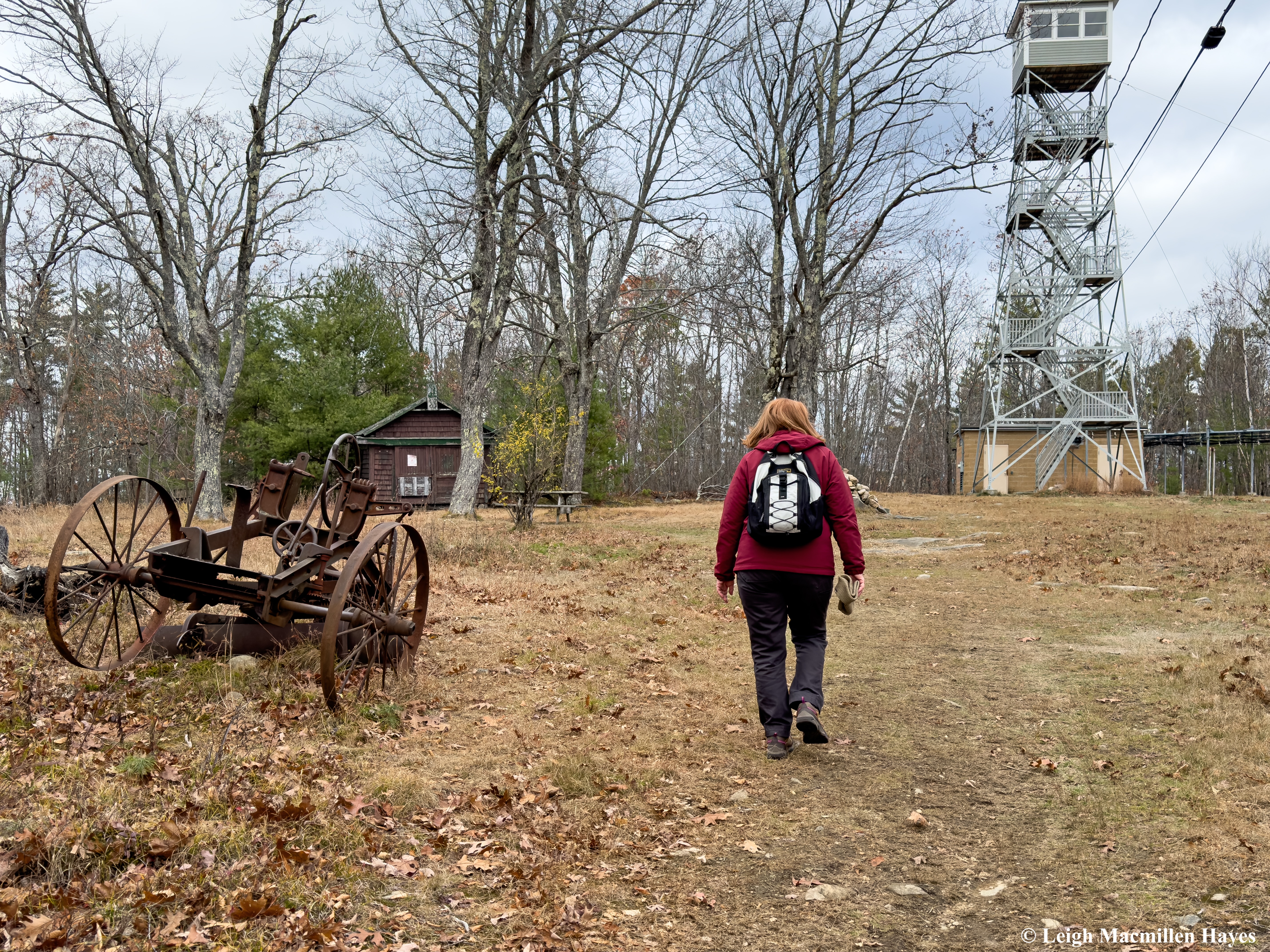
About an hour and a half after we began our journey, we reached the old fire tower for which the trail was named and noted also the house where the fire rangers would have bunked when it was necessary to step out of the cab at the top of the tower (think thunderstorm).
There was also a picnic table and since we had each brought a PB & J sandwich, this became our lunch stop.

Back on the trail, we spotted some puffballs, and again the need to play struck our fancy.

And so she found a stick and poked each one and we laughed as puffs of smoke, aka spores, wafted out of the little balls.

The next day found us upon a different trail that had been part of a working farm from the 1700s until about a year ago and known as Dimond Hill. Barbed wire that once kept animals in or out had become part of a stump, which often happens when a tree sprouts beside a boundary and over time grows around the obstacle so that they seemingly become one.

So much so, that a former limb had separated from the tree, but still the wire “glued” them together.
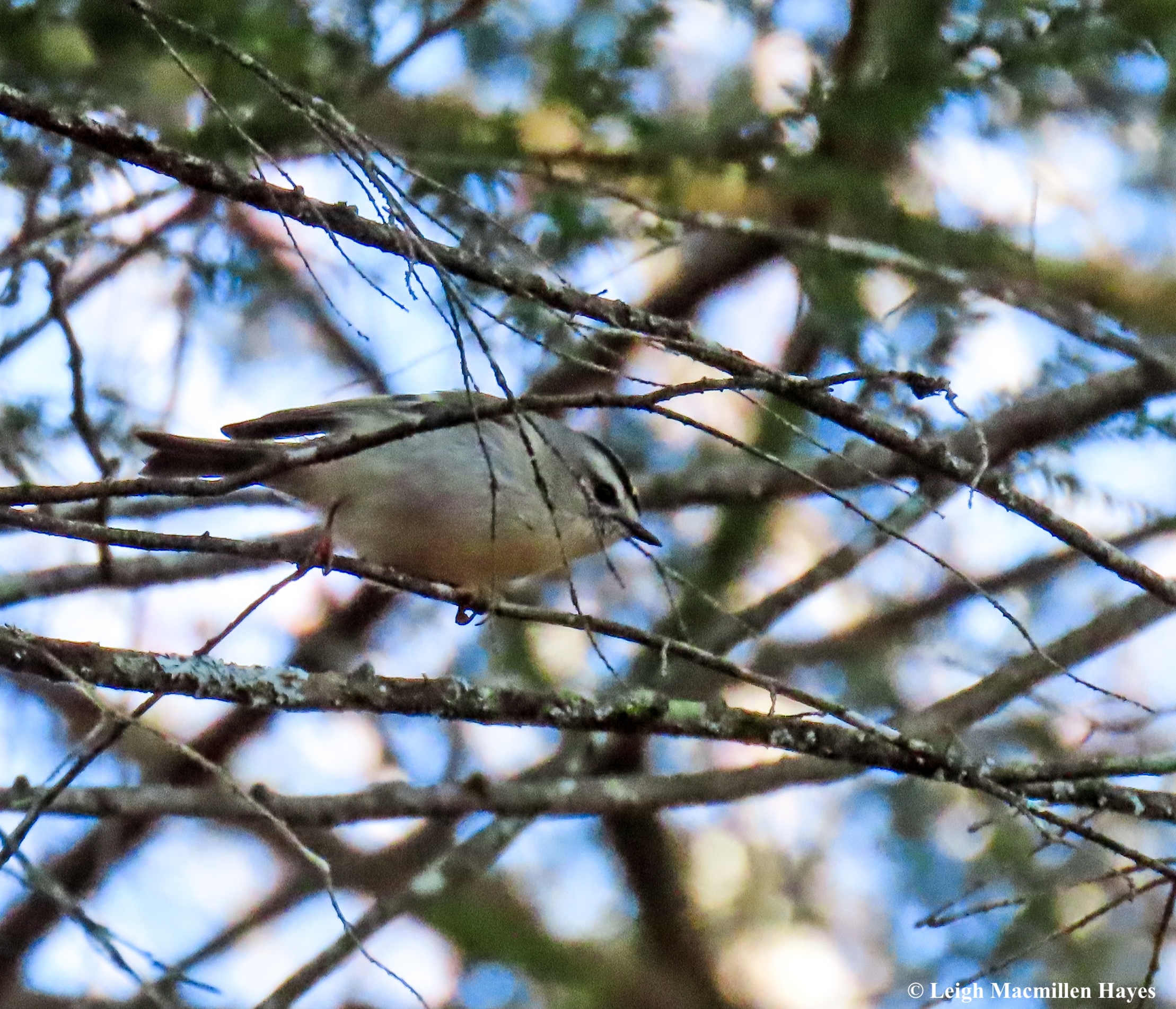
In one section, some wee birds flitted from tree to tree and though it was difficult to get a clear photograph, I was thrilled to be in the presence of Golden-Crowned Kinglets, even if only for a few minutes.

We talked a lot about tree bark along the trails, and nature in general, and all kinds of other topics as well, but every once in a while a tree stopped us in our tracks, such as this one. In my opinion, it offered a great example of the Bull’s Eye Target Fungus that affects Red Maple bark, but doesn’t kill the tree. I explained to my friend that it offers a quick way to identify this species of tree.

And in our midst, as we hiked we occasionally spotted Bruce Spanworm Moths flying about. What I forgot to mention on Saturday was that the males fly, but the females are wingless and we should have looked about because we may have found one. But knowing my friend, now that she knows this, she will be on the lookout. So will I.

We completed a circuit of trails on one side of the main road and then crossed to the field where vegetables and animals had once been raised. It struck us as odd that instead there was a door in the middle of the trail. A locked door at that.
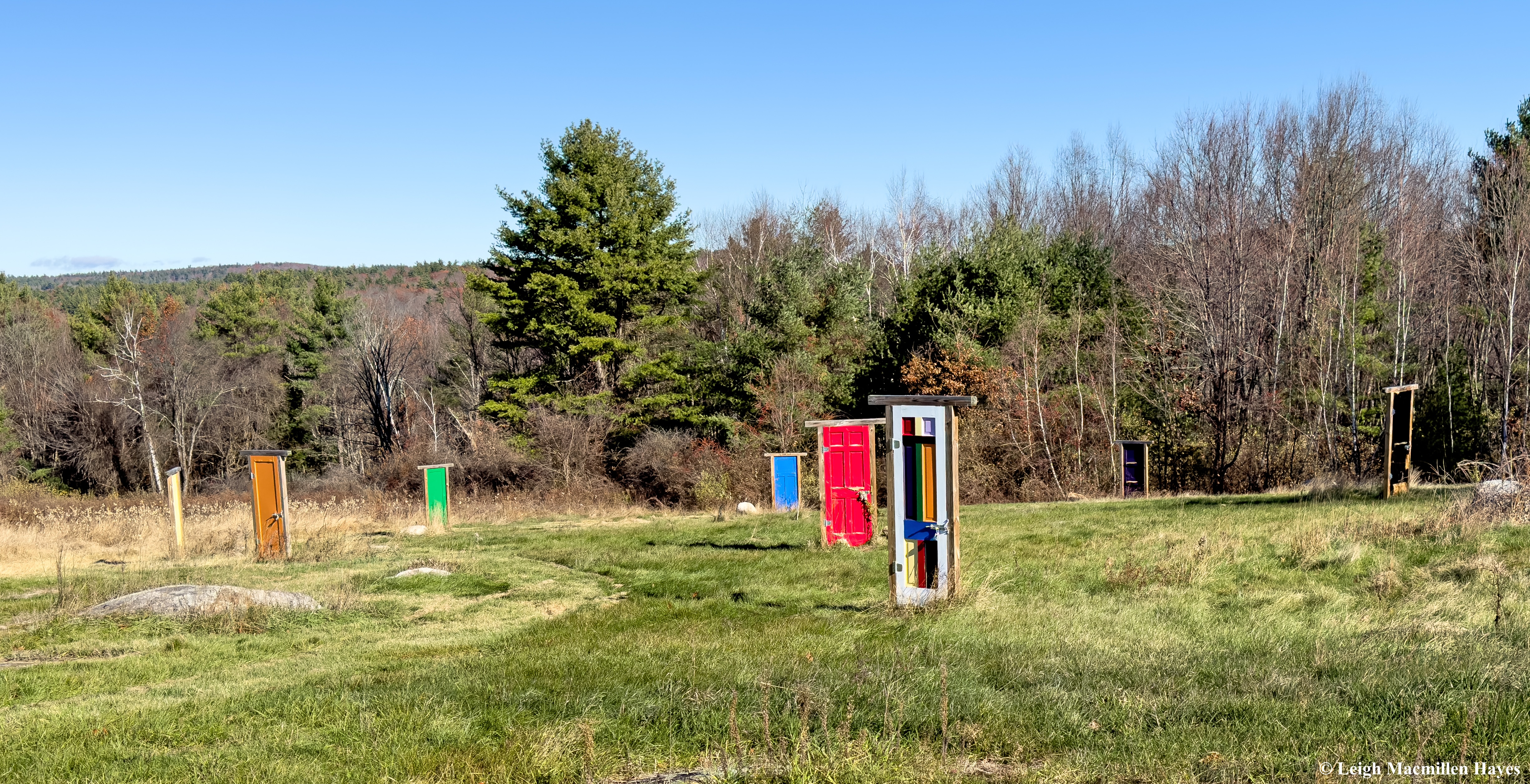
And then in the field below, we found one multi-colored door through which if one could unlock and pass, would lead to a circle of eight more brightly painted doors. You’ve heard of Stonehenge? We decided this was Doorhenge. Or perhaps Doorhinge.
The purpose for this installation? We don’t know, but we did wonder if the doors were strategically placed to represent compass points.

We knew we didn’t have time to hike the entire trail, but were thrilled to reach water, which I think must have been Ash Brook. What we did note was that it was an active Beaver territory.
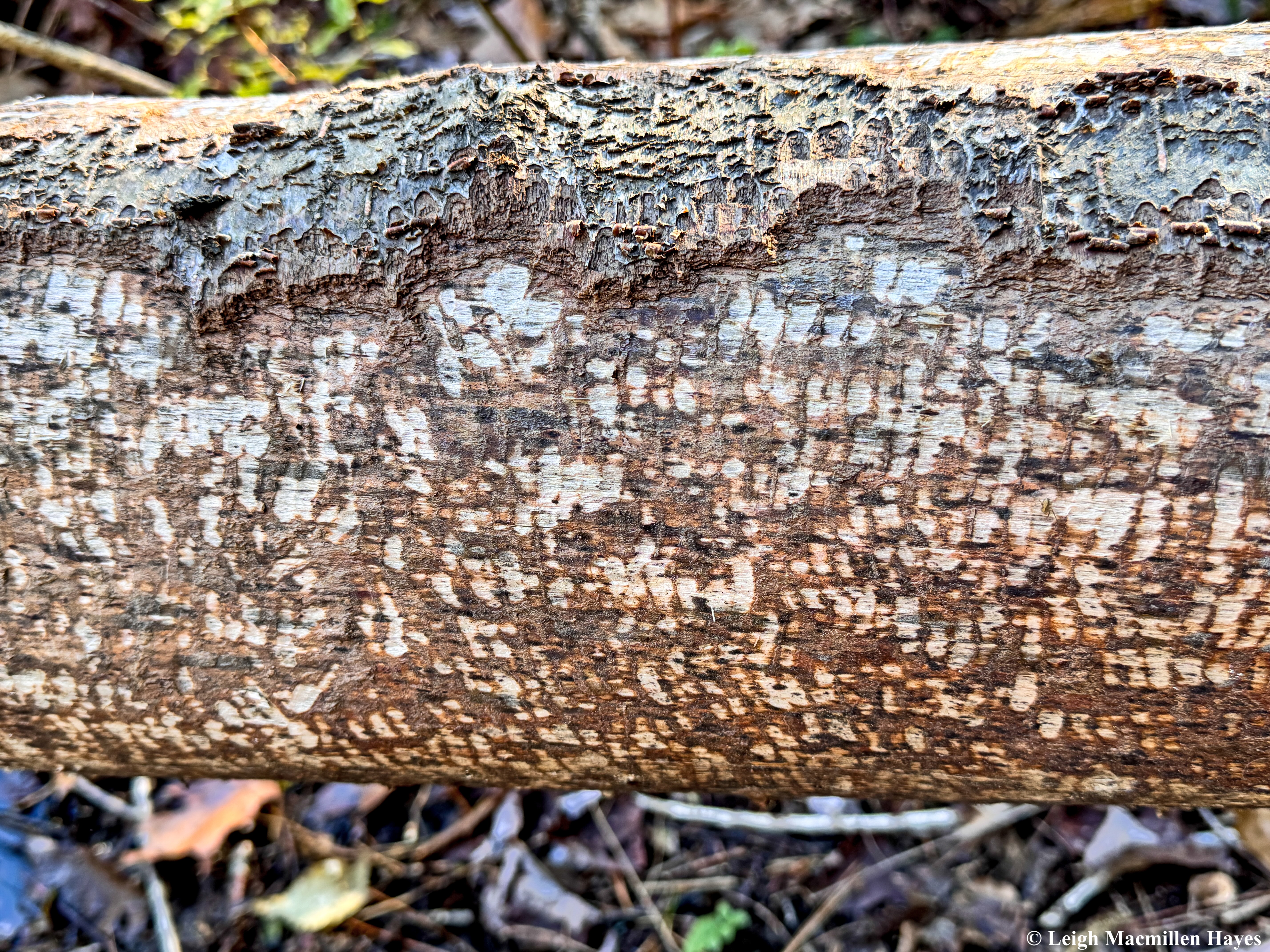
And the work of the Beaver’s teeth as upper incisors met lower to consume the cambium layer where sugars and water and nutrients were exchanged through phloem and xylem, was well documented. Barely any bark was left untouched.

Not far from our turn-around point we reached more water and though we couldn’t find the actual Beaver Lodge, we did note that a skim of ice had formed. And the ice-covered water reflected the Bluebird day we were enjoying.
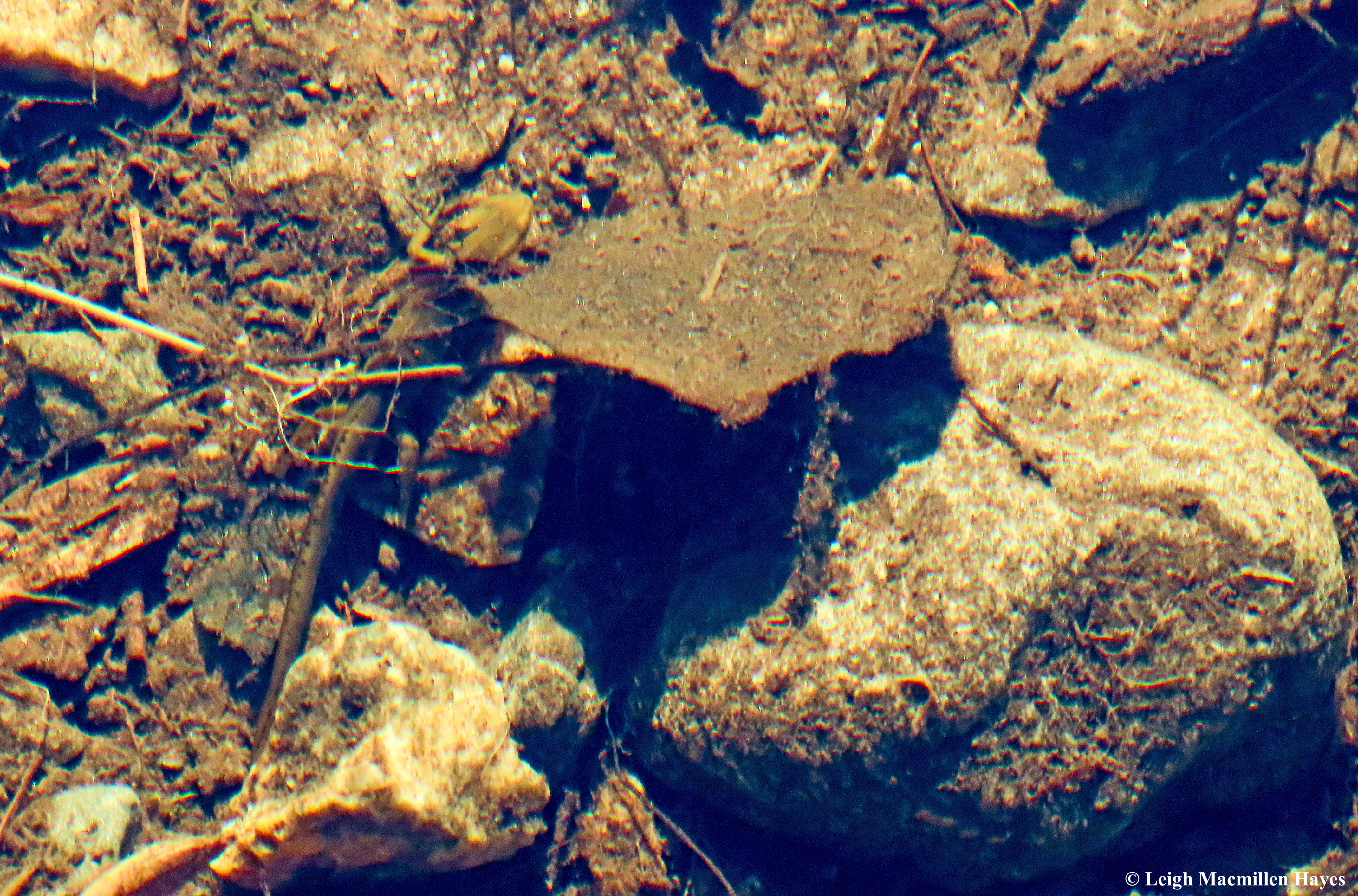
Her eagle eyes also picked up on an Eastern Newt in the water below. Can you see it in this Where’s Waldo image?
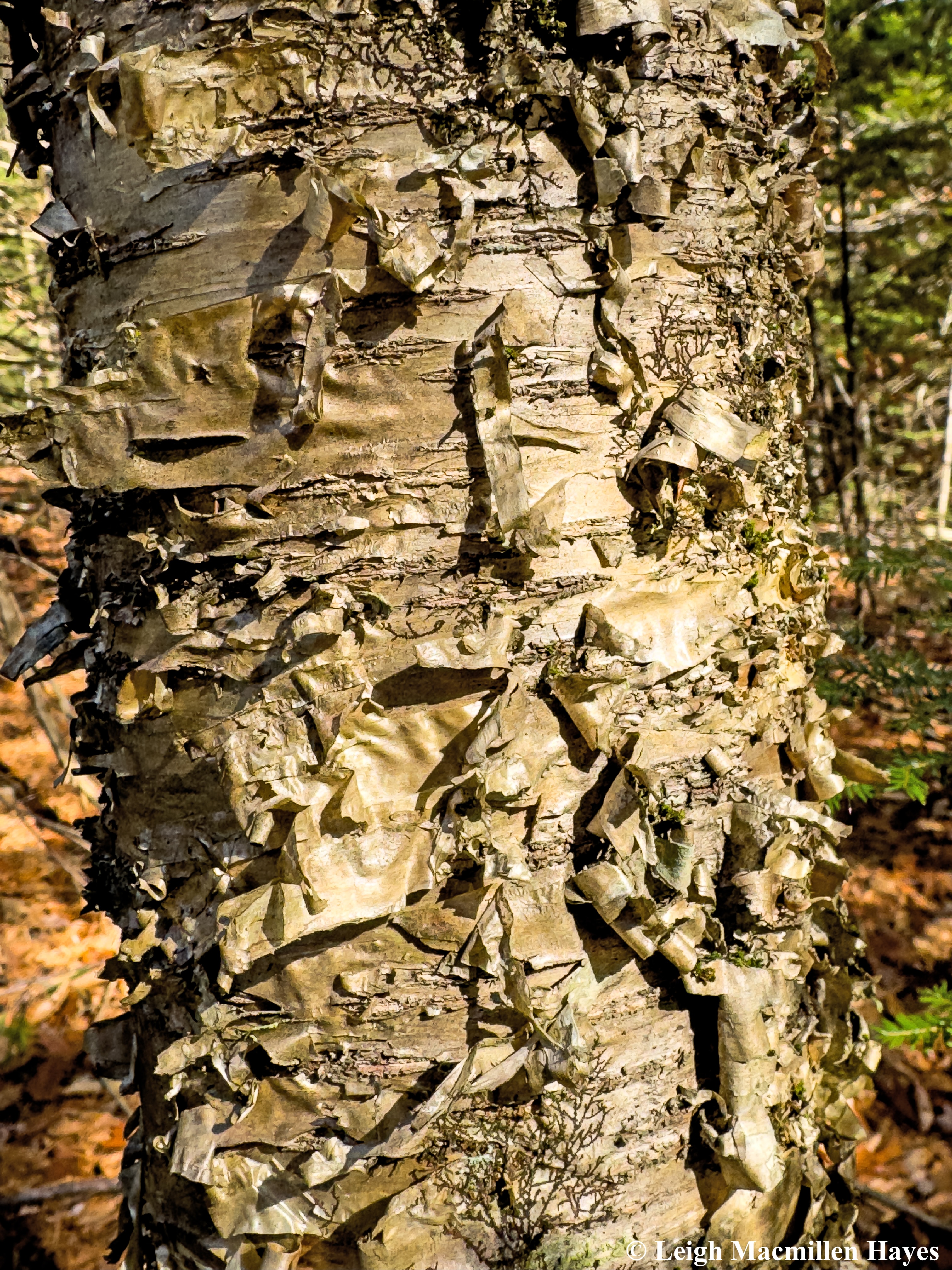
Upon our trek to our turn-around point, for this was an out-and-back trail, we discussed Paper (white) Birch and Gray Birch and my friend mentioned that she didn’t remember ever meeting Yellow Birch.
And then, as often happens, on the return trip we started to spot its curly presentation over . . .
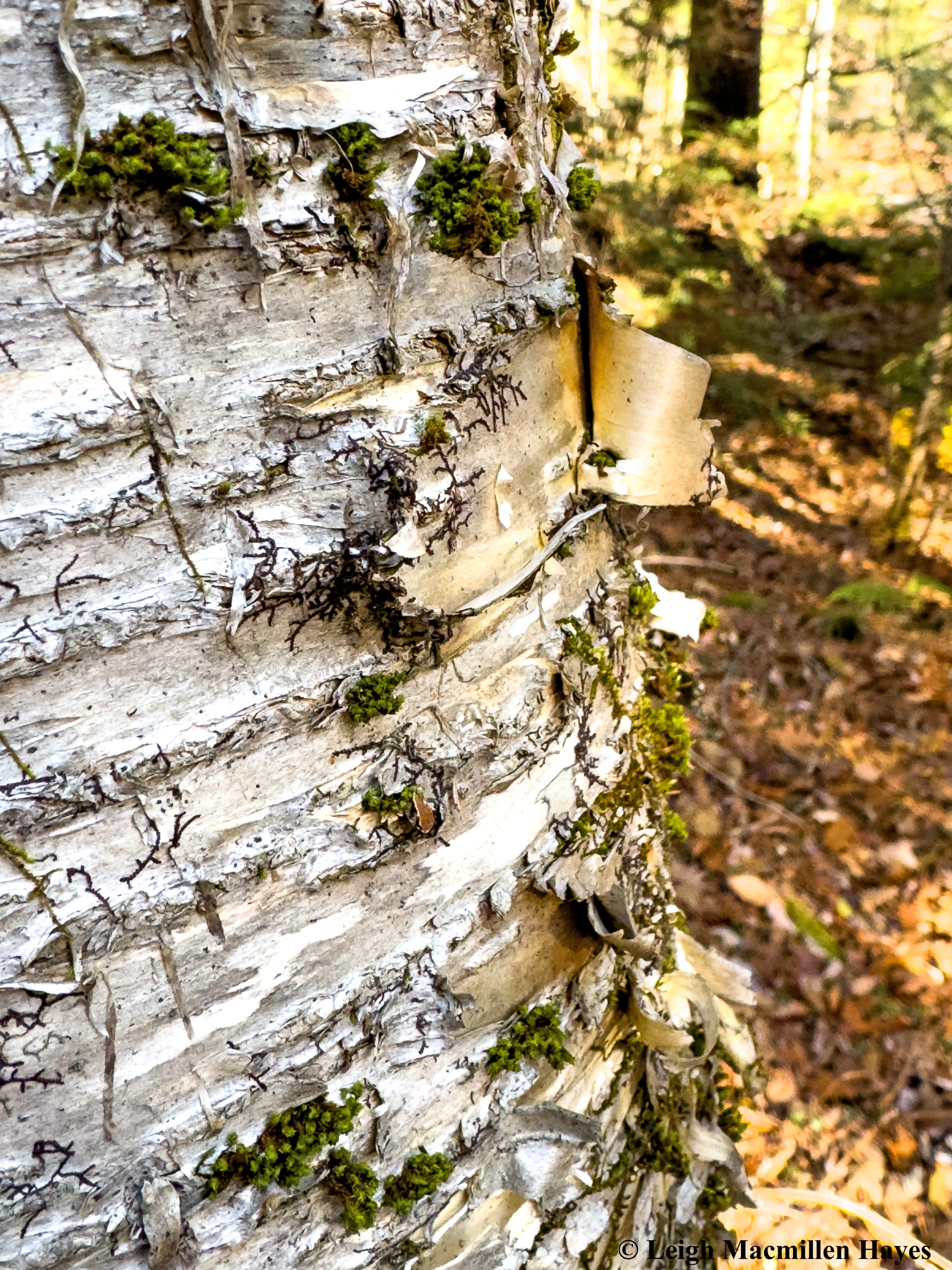
and over again and I explained that as the tree matures it takes on a more silver gray appearance, but my friend liked that she could still see the gold in the curls.
That said, sometimes the Paper Birch trees also had a golden underbark and so I reminded her that she had to also consider how the trees peeled, Yellow being in ribbons while Paper peels in, well, sheets of paper sometimes. Had there been twigs that we could reach, I would have done the touch and sniff tests, but that will have to wait for another adventure.

We even had the surprise opportunity to greet a Maple-leaf Viburnum, a species I’d shared photos of with her earlier in the fall.

We’d given ourselves a turn-around time so that at the end we’d have a chance to sit and eat left-overs from the dinner we’d enjoyed at The Common Man the night before and soak up the warmth of the sun and try to wrap up our conversation that had gone on for almost 24 hours. Well, except for when we were sleeping, of course.

In the end, we gave great thanks for making the time to meet each other at the Halfway Point. Well, the almost Halfway Point if truth be told for I’d only traveled two hours from Maine to reach Concord, New Hampshire, while Carissa had driven three hours north from Connecticut.
I’m so grateful for this friendship that has spanned decades and that we can renew it along the trail despite the distance that separates our everyday lives.
Thank you, Cris!
 wondermyway
Great post! Loved your story, photos, and history told in photos.
So many critters still out in this cold! Very surprising.
Thanks again for this nice hike.
Kendra!!!
PS… And, hope you and your family have a wonderful Thanksgiving! We truly do have so much to be thankful for.
LikeLiked by 1 person
Happy Thanksgiving to you and yours, Kendra. And safe travels wherever you may adventure next!
LikeLiked by 1 person