Bogging in Maine

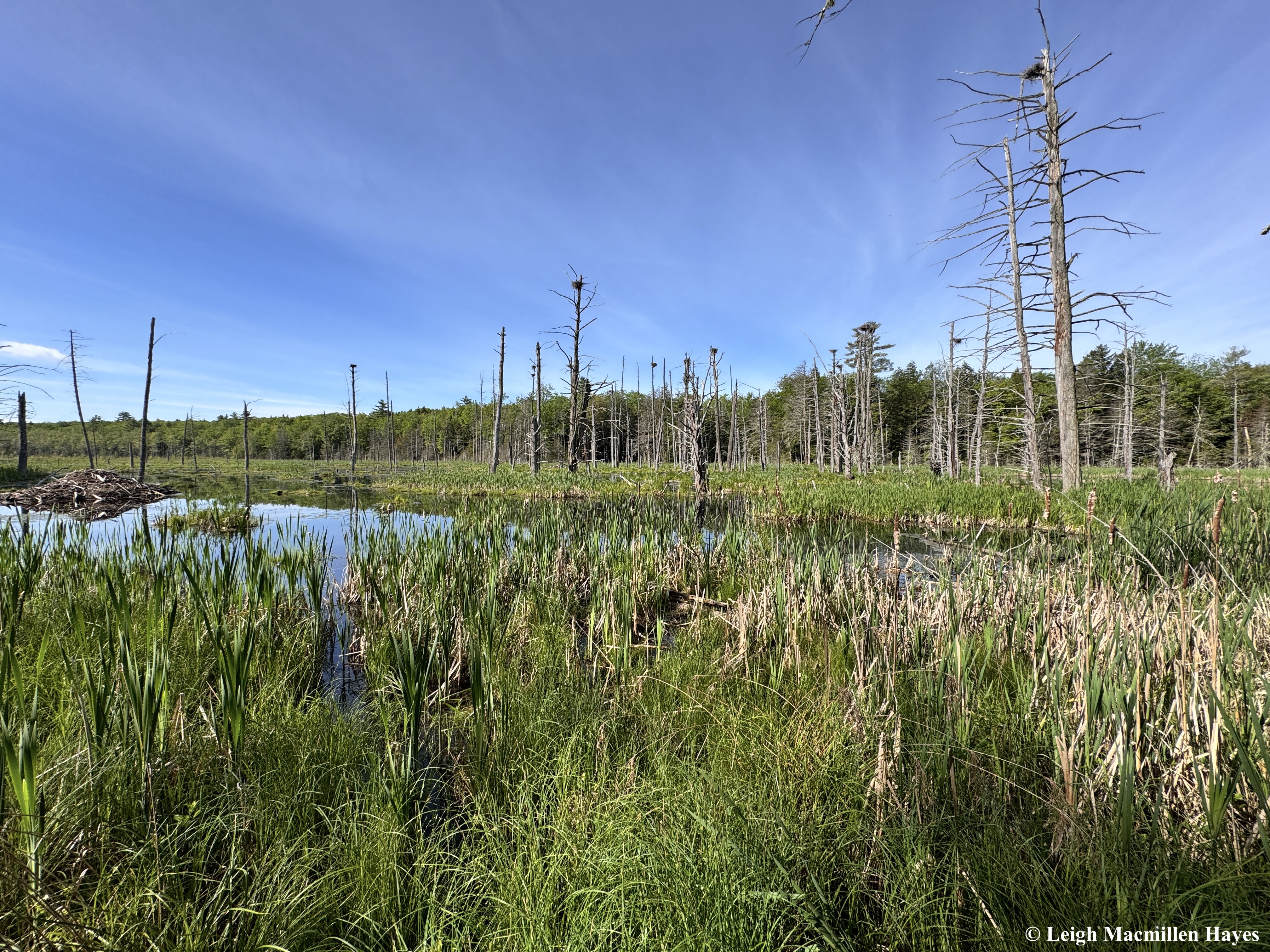
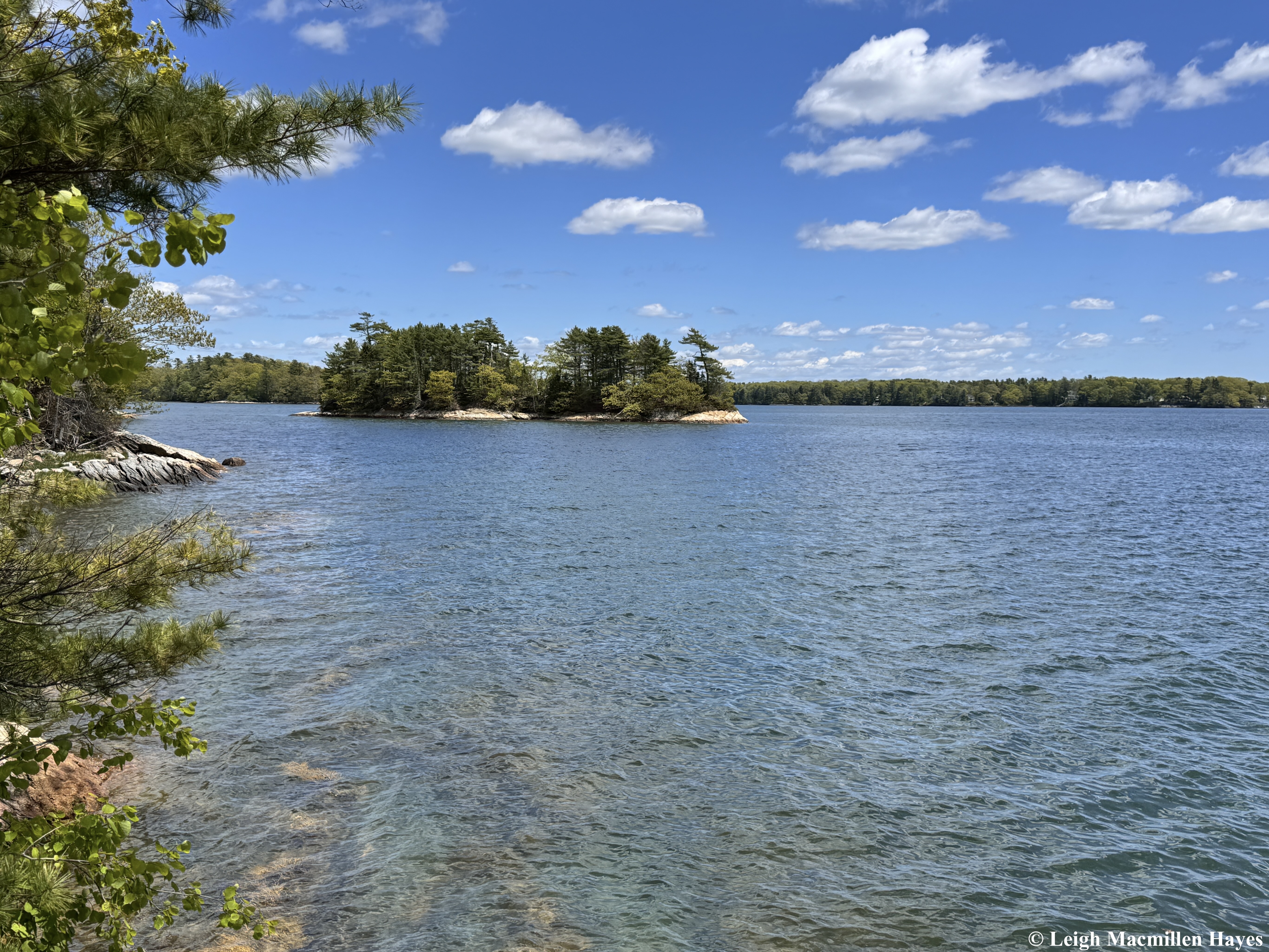
What is a wetland? Basically, it is wet land! But more specifically, wetlands are often those transition zones between dry land and deep water.

There are four basic types of wetlands, which can be broken into even more types, but let’s stick with the four: marsh, swamp, bog, and fen.

Marshes are typically located along shores of rivers and streams, and even the coastline. Plus they can be found in the shallow water of ponds and lakes. Cattails, Arrowhead and other soft-stemmed emergent plants grow in these areas.

Swamps are found along rivers, streams, and lakes where mainly woody-stemmed plants such as shrubs and trees, like this Tamarack, grow.
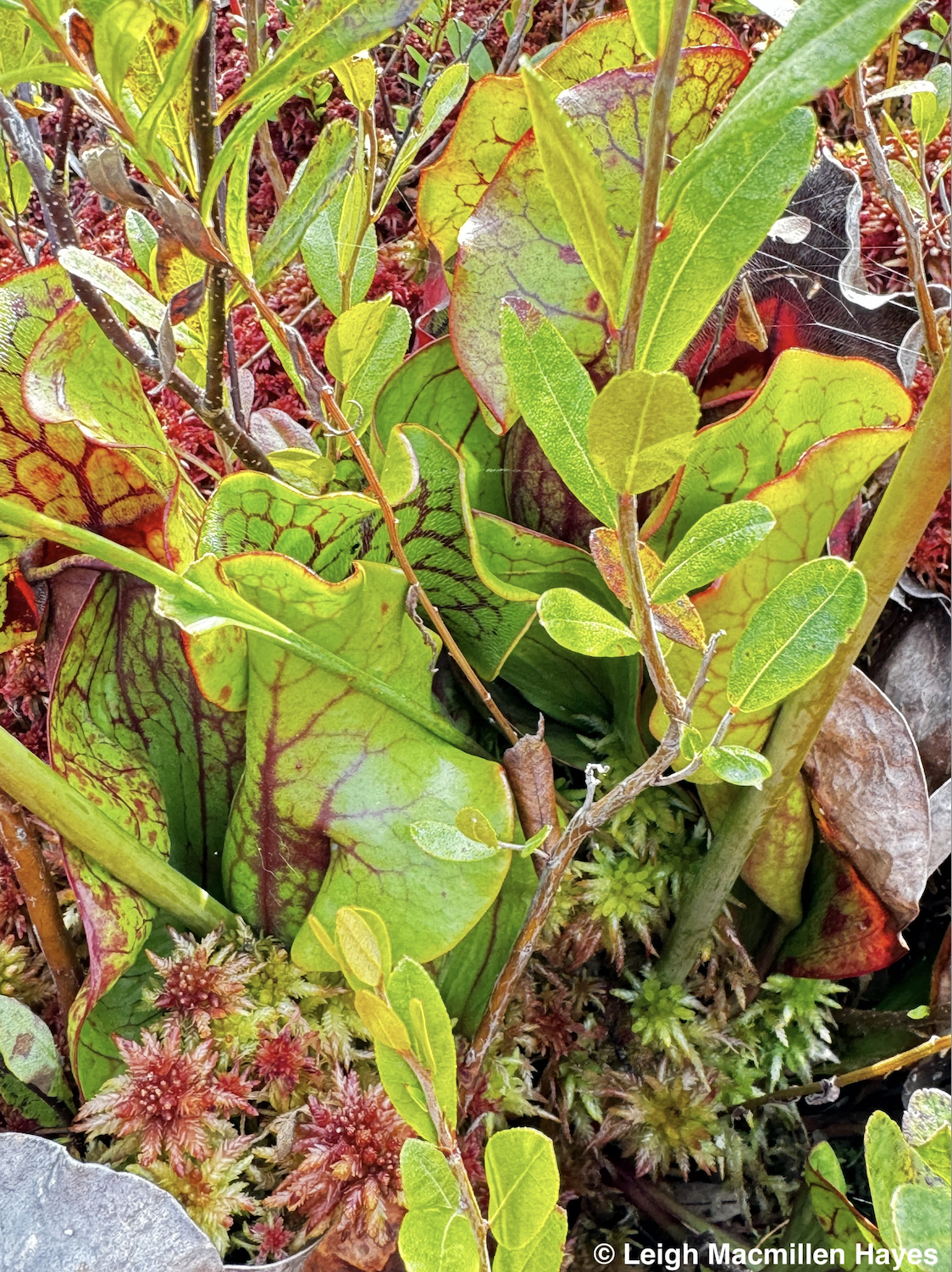
Pitcher Plants and Sphagnum Moss
Round-leaved Sundews

Bogs are found in our northern climate and often are deep depressions that have no drainage. They are covered with a surface carpet of sphagnum moss and insect-eating plants like the Pitcher Plant and Sundews.
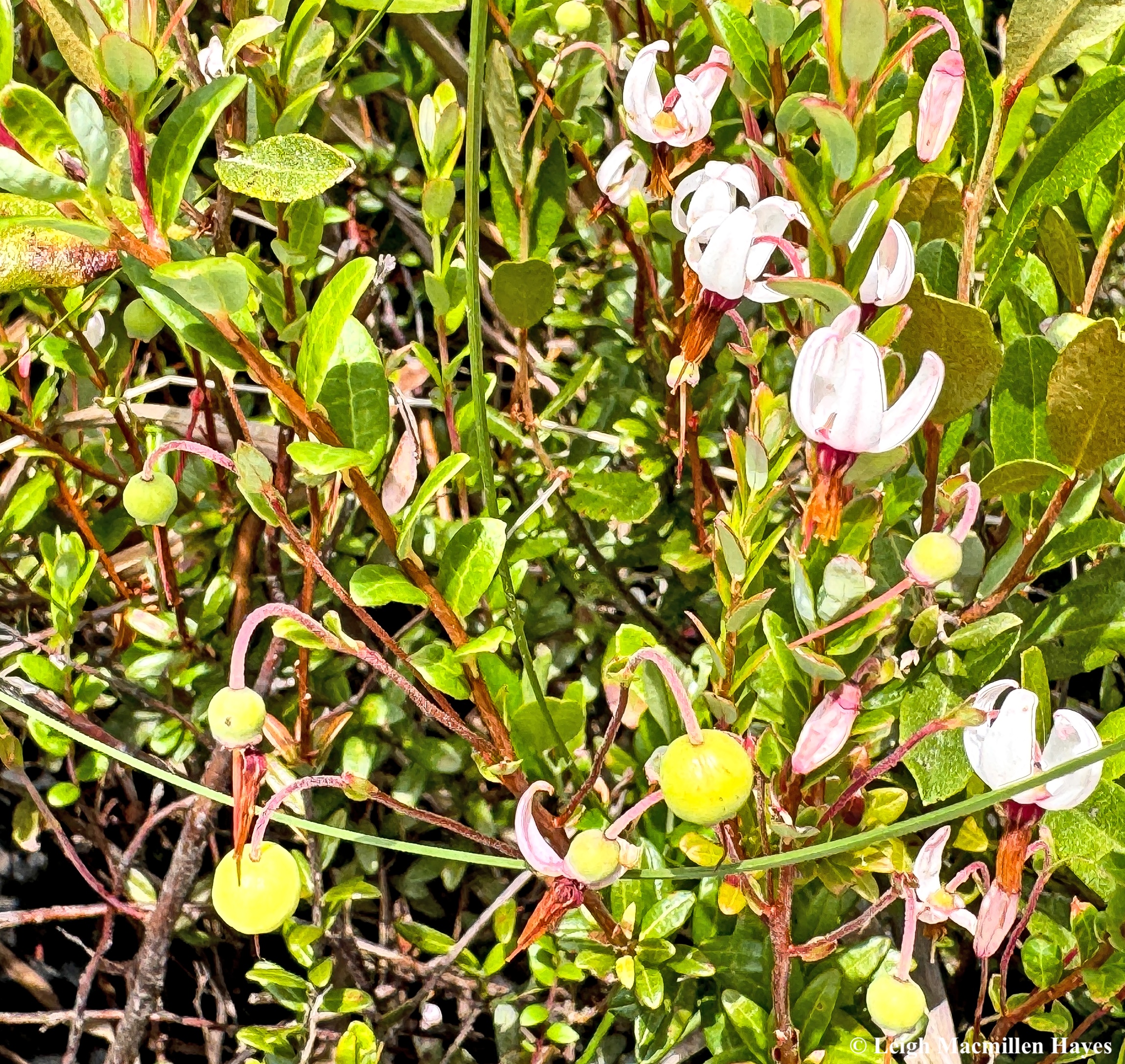
Cranberry flowers and fruits

Native Cranberries also flourish in the stagnant and acidic water of a bog.

Sphagnum Moss
Leatherleaf

Like bogs, Fens are found in northern climes, but the water is slow-moving, and does have some drainage. Layers of peat (sphagnum moss) and sedges and grasses and low shrubs like Leatherleaf may grow in these areas. The carnivorous plants like them as well.

But it’s not just the flora that makes a wetland so special. These places provide habitat for a wide range of insects and animals and birds as well. In fact, they act as nurseries, or places where any of the critters might raise young.

And as soon as the sun warms the air in the spring, friends and I scour the wetlands in hopes of discovering who is emerging on any particular day. One of my favorites to watch is dragonfly emergence (in case you are new to this blog and didn’t already know that. You can learn more here: Developing Dragonfly Eyes, but really, type “dragonfly” into the search button of this blog and a bunch of dragonfly related posts will pop up–all worth a read, I promise you.)
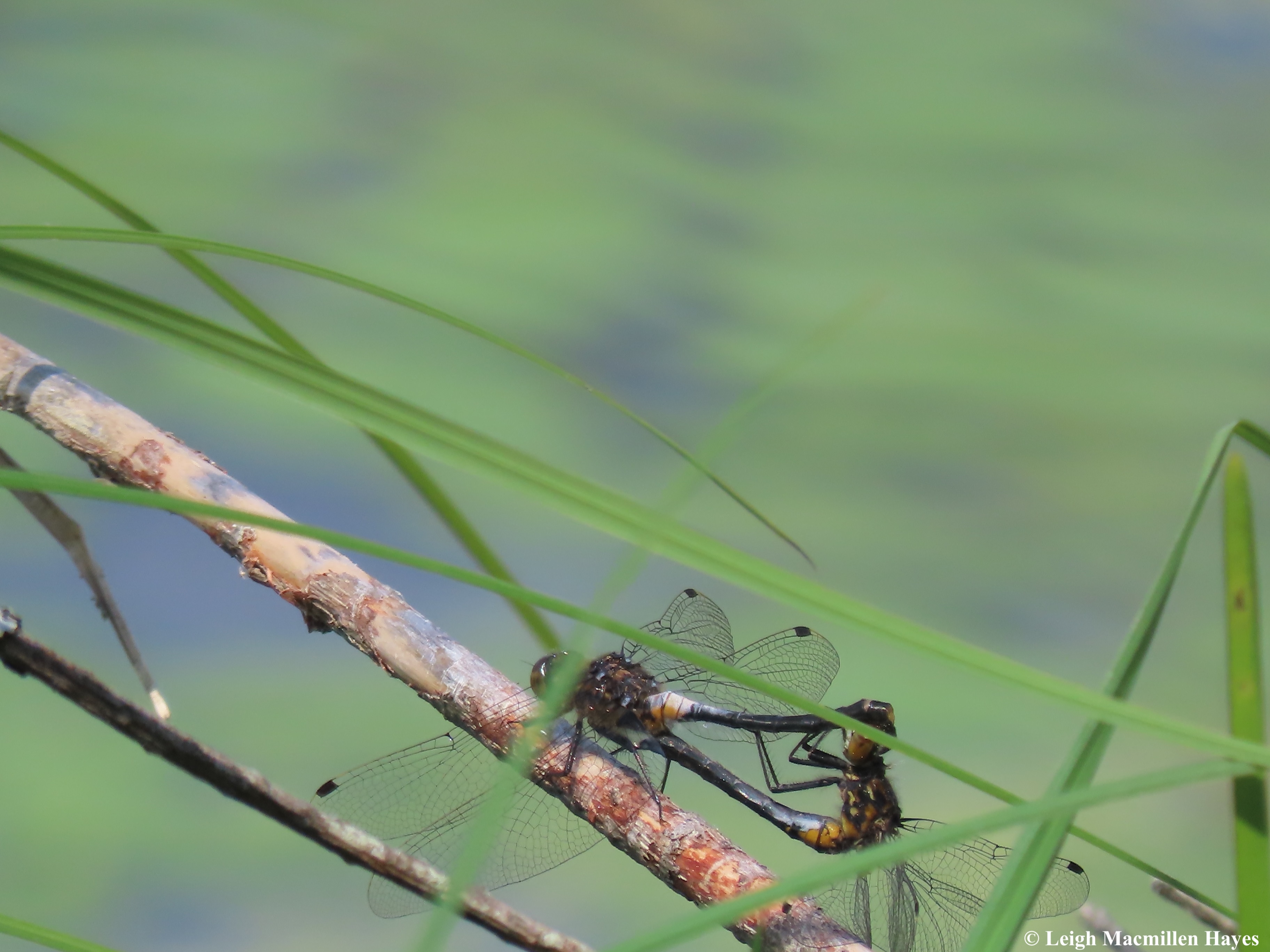
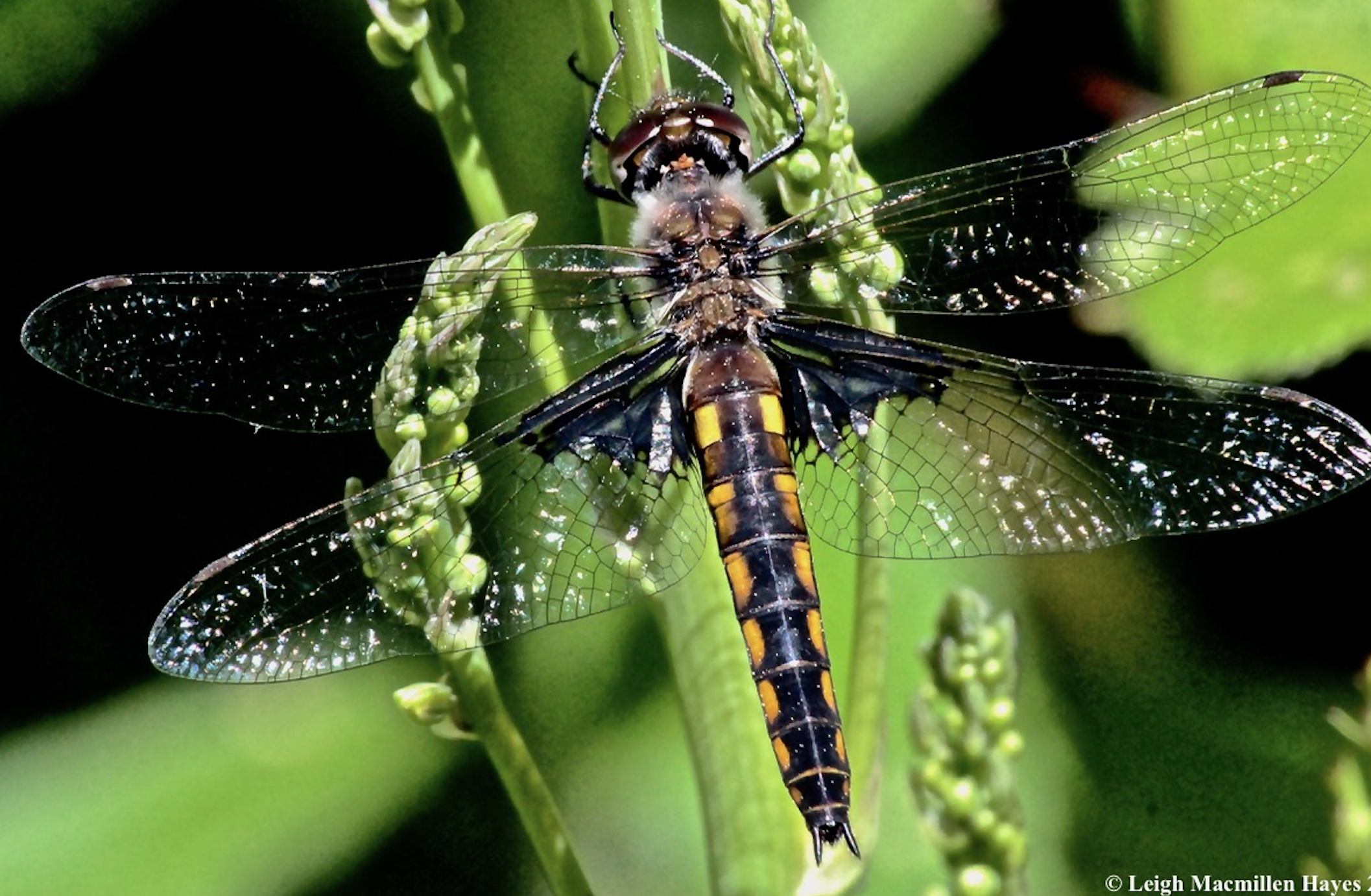
And like other insects, once emerged and a few days old, canoodling commences and dragonflies such as these Belted Whiteface Skimmers find each other and a presumably private place to mate. Private, that is, until I show up!

Eggs are laid in a variety of ways and places depending upon the species and this is a female Eastern Pondhawk taking a break upon a lily pad.

And here is a Forktail Damselfly laying eggs upon vegetation.
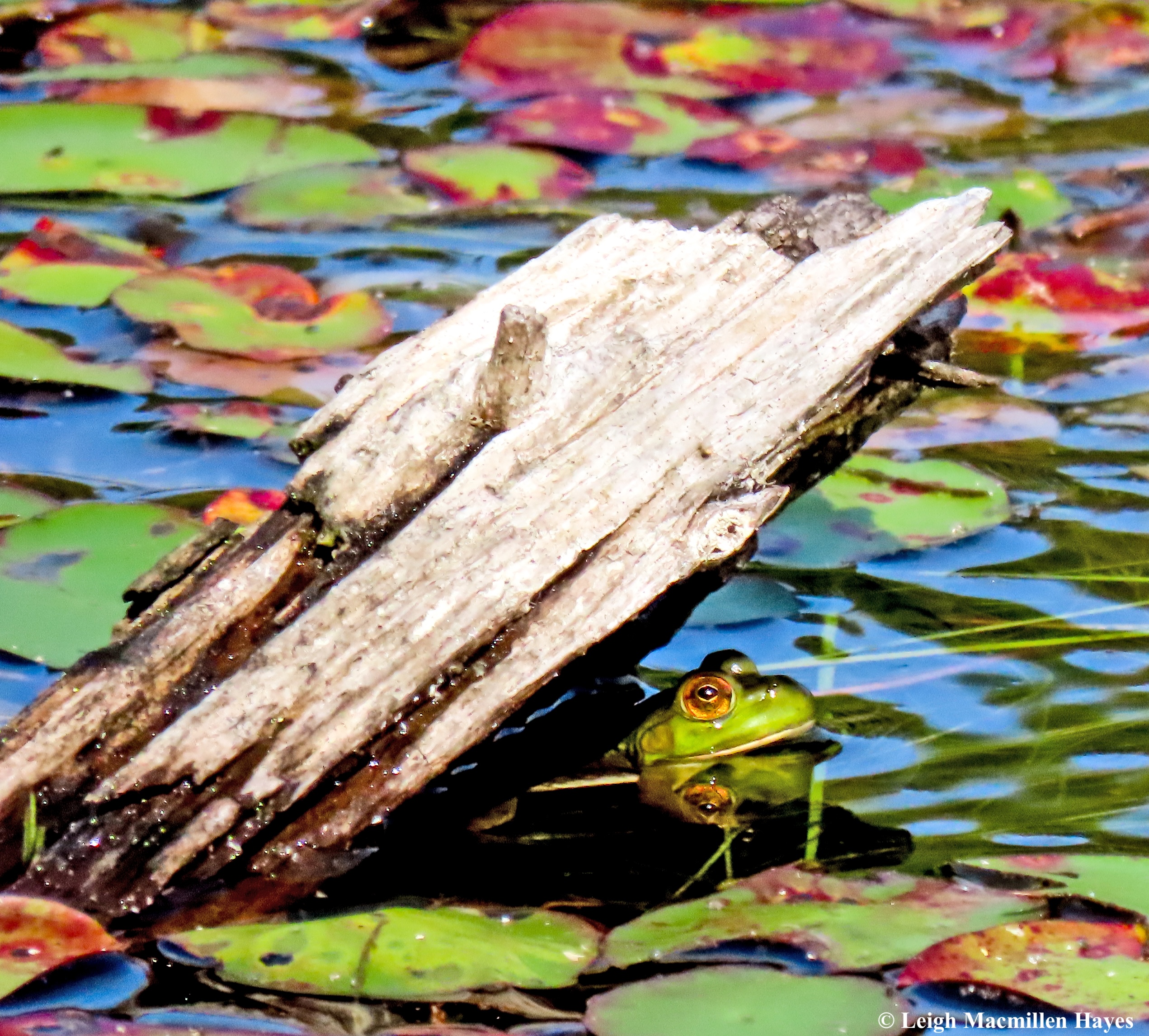
Frogs are also a highlight of a wetland, whether they are hiding in the shade on a hot summer day like this Bullfrog …
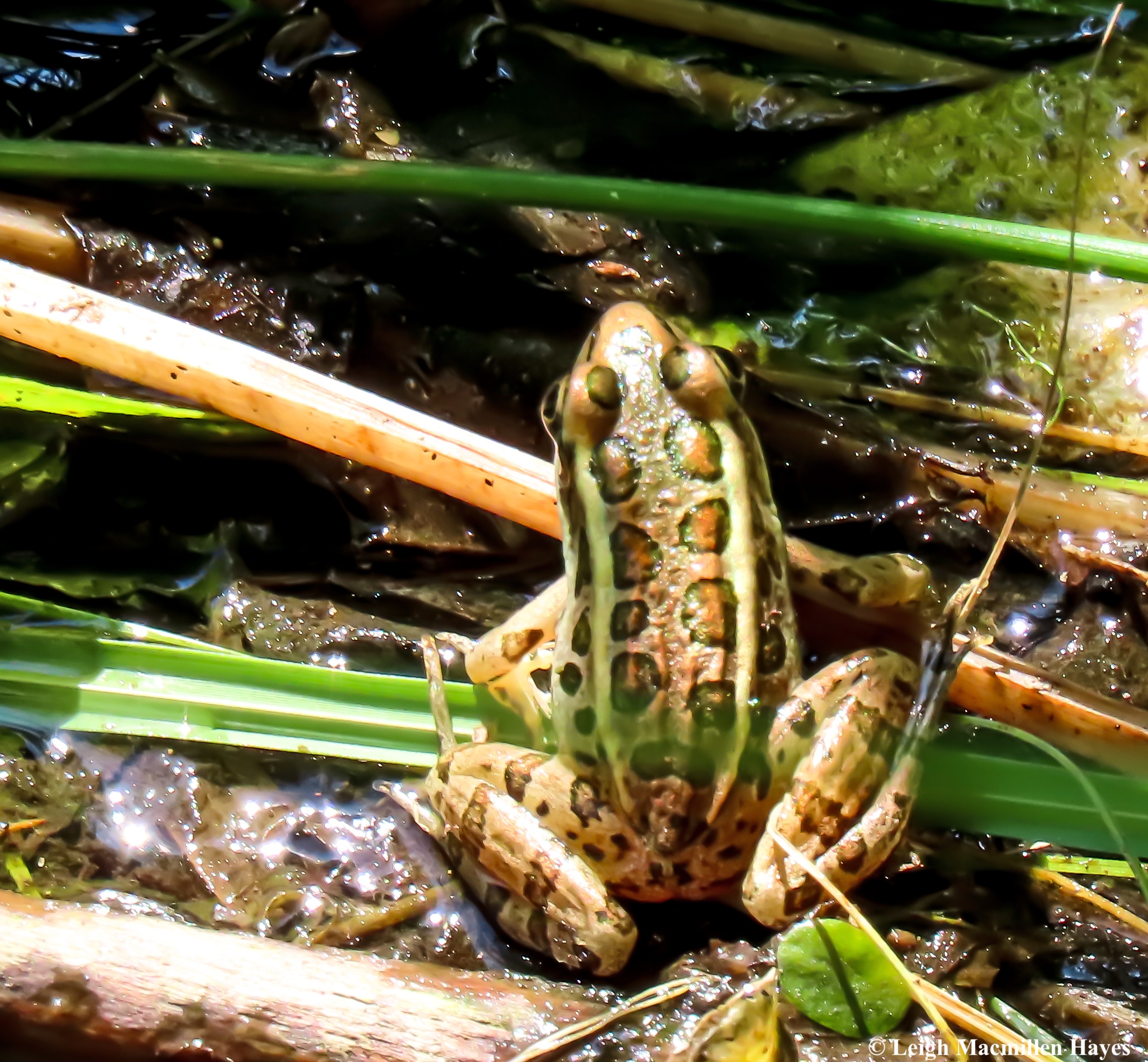
Or pausing briefly in the sun, such as this Pickerel Frog chose to do. Actually, it wasn’t so much basking as trying to remain hidden from my sight by not moving until I passed.
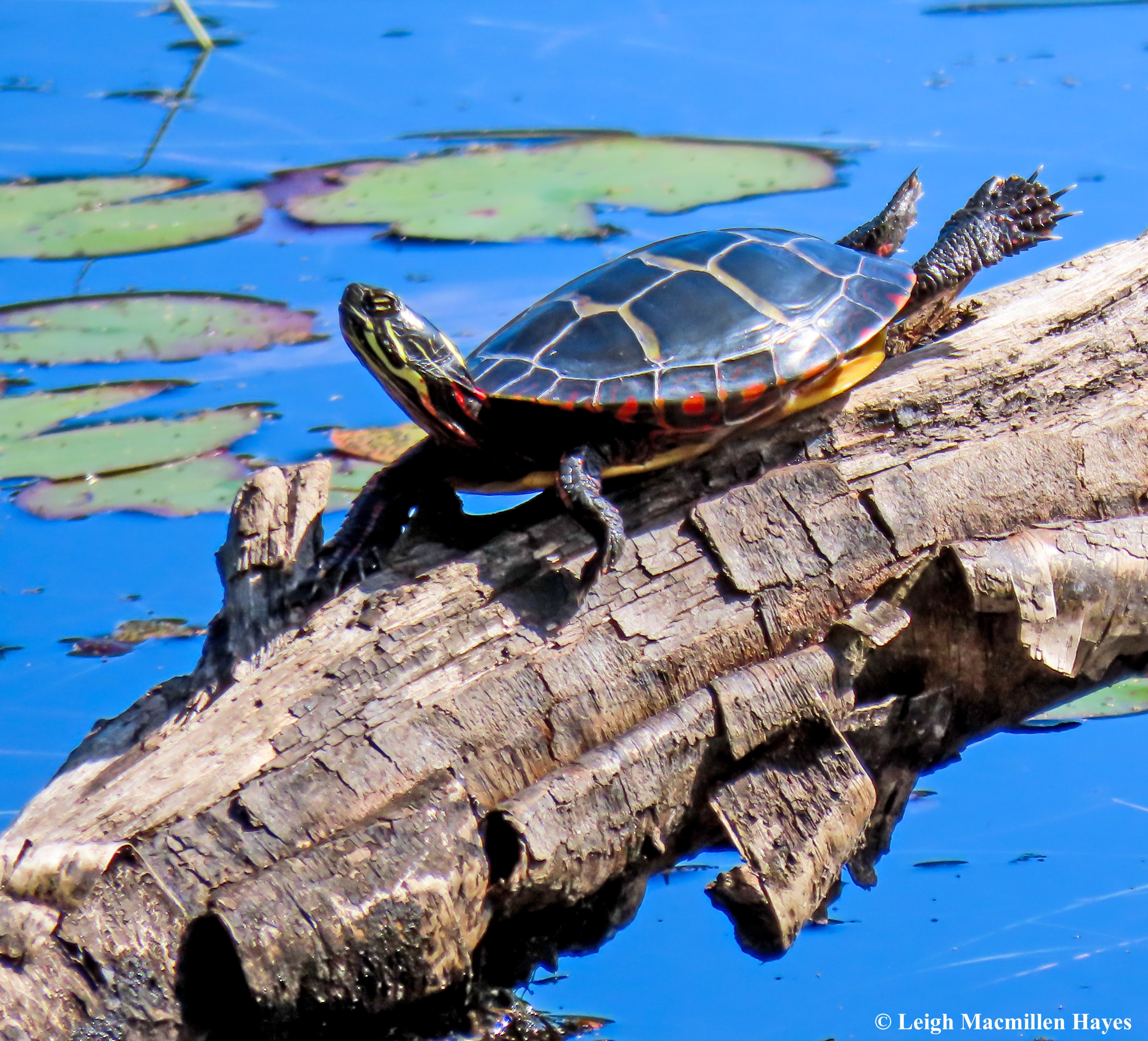
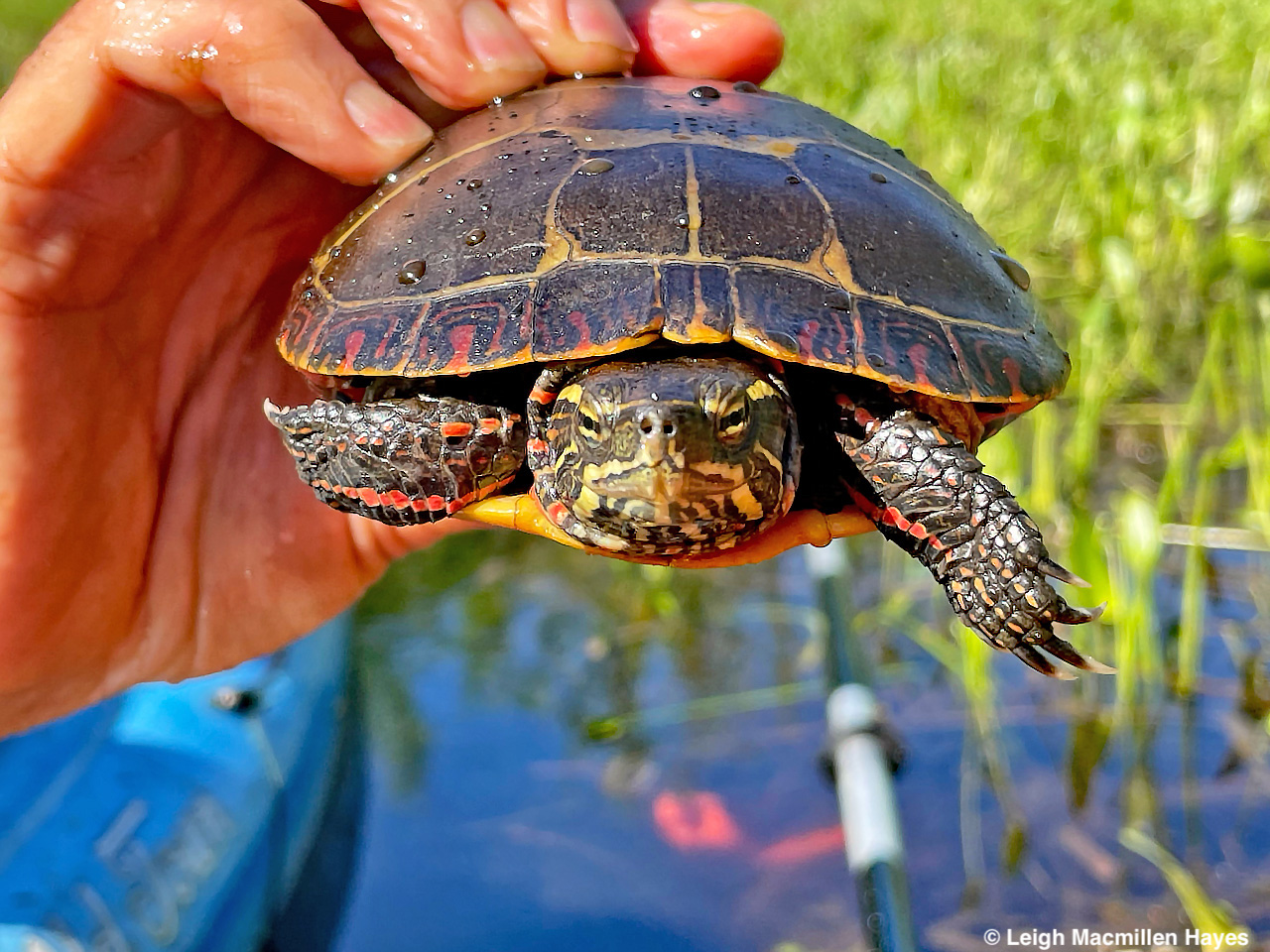
Those who do love to bask, (frogs do this as well) are the Painted Turtles, and the more surface area that is exposed to the sun’s beams, the better. Sometimes I’m surprised when I do capture a photo such as this one, for they are quick to sense my presence or hear me coming, and quickly slip into the water. But if you wait a few minutes, sometimes they’ll reemerge.
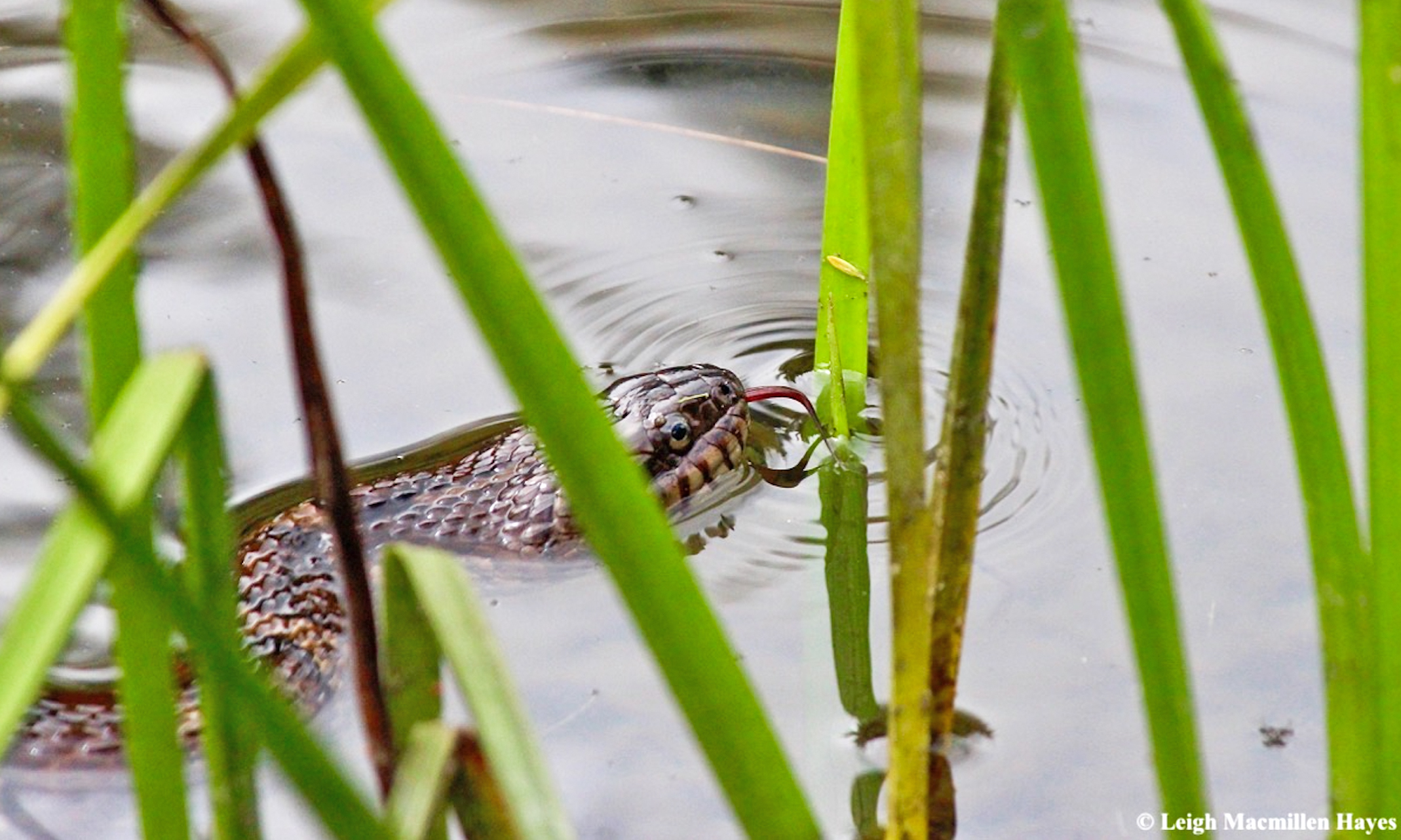
And there are Northern Watersnakes always on the prowl, using their tongues to make sense of their surroundings.
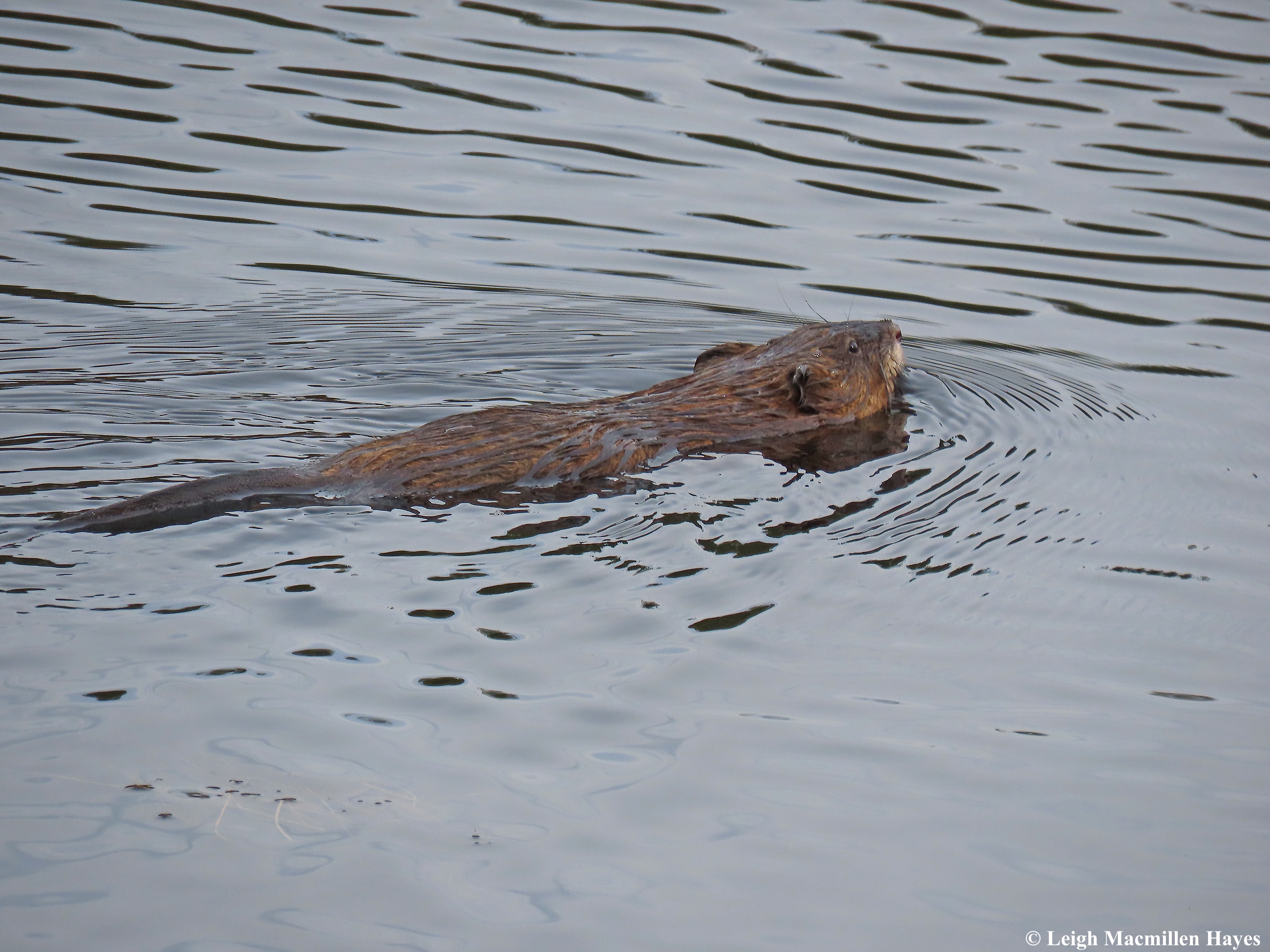
Mammals also use wetlands for forage for food and build homes and one of my favorites is the American Beaver, who knows the value of a wetland, and can create one in a short time by building a dam. Beavers build dams to created a deeper pond through which to navigate, for they are better at swimming than walking. They may alter the wetland to suit their needs for a few years, but then move on and let the dam breach and then a new type of wetland emerges and more critters move in and take advantage of what it has to offer.

That all said, it wasn’t until I spent more time with the animal pictured above that I realized it was actually a Muskrat–look at that thick, rounded tail, unlike the flat paddle of a Beaver’s.

And birds! Oh my. Mergansers . . .

And momma Wood Duck and her offspring . . .

and Papa Woodduck . . .

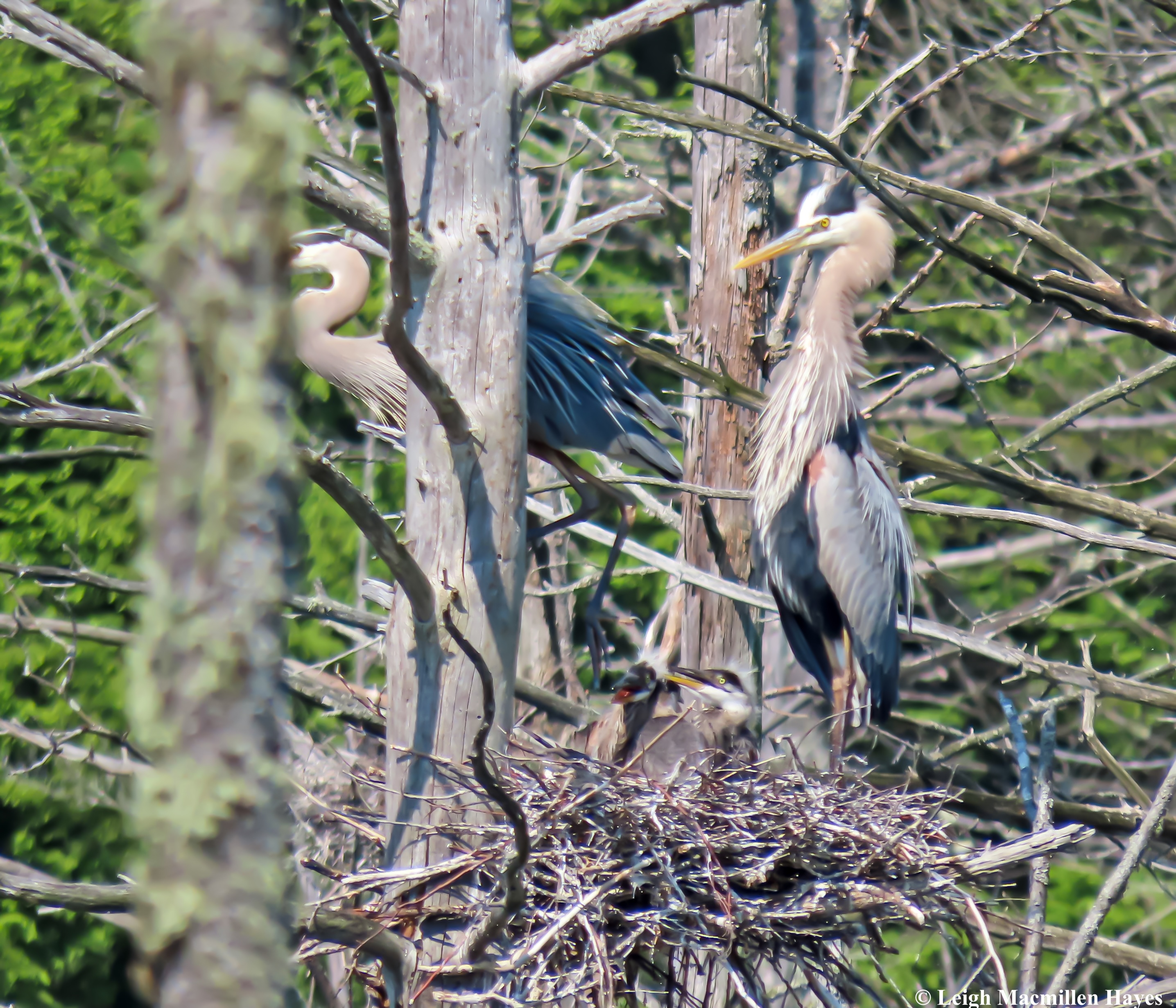
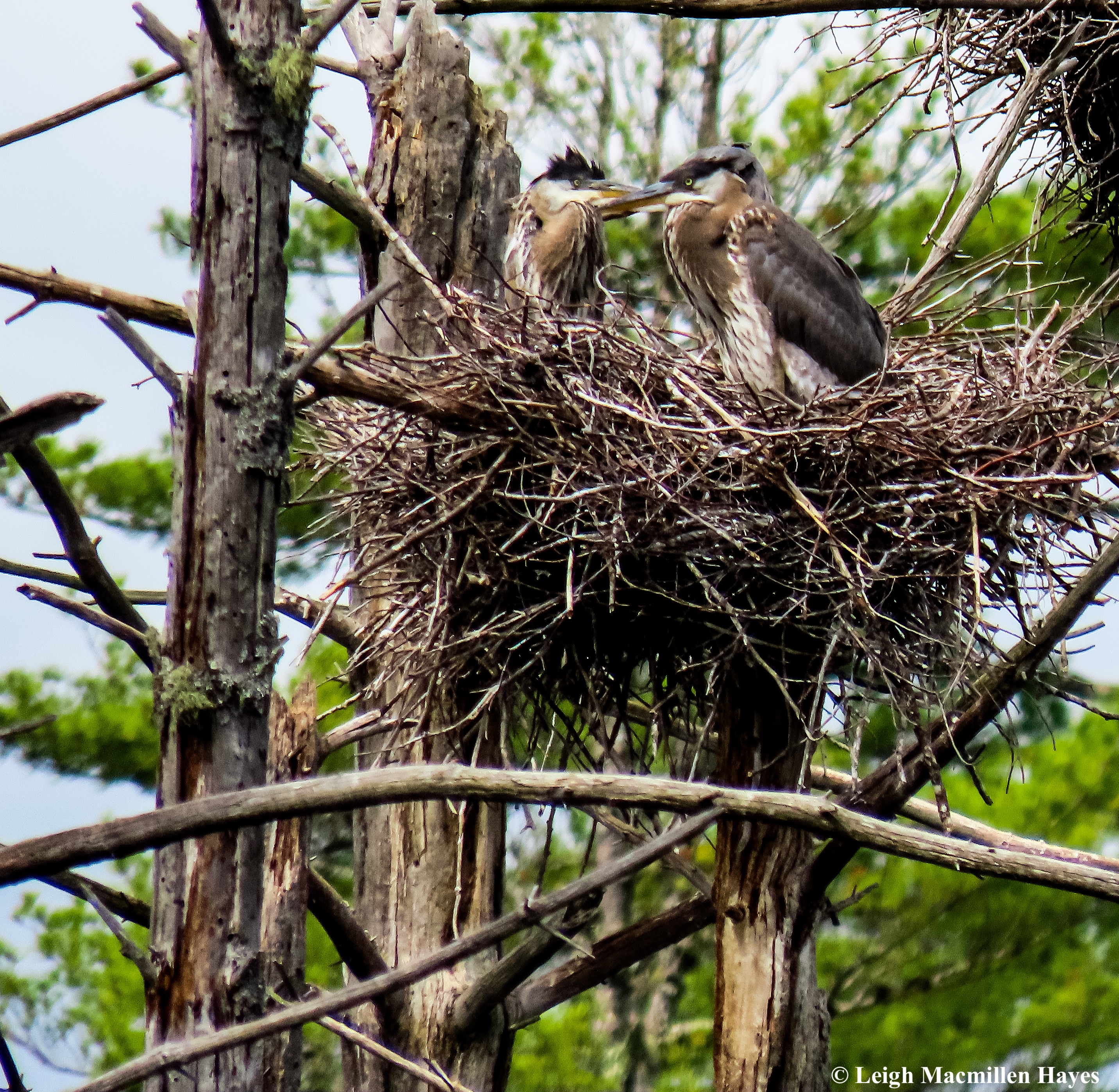
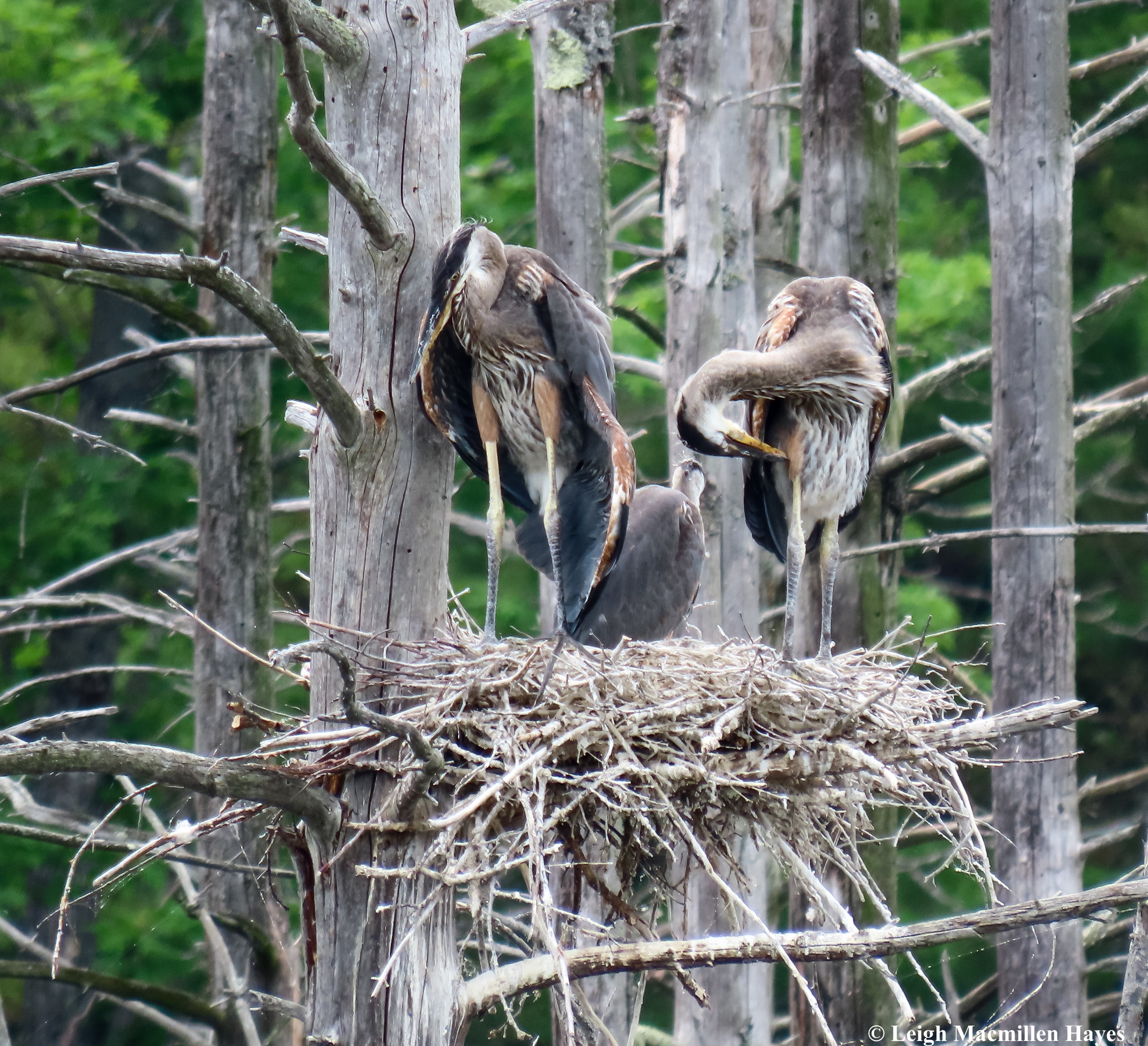
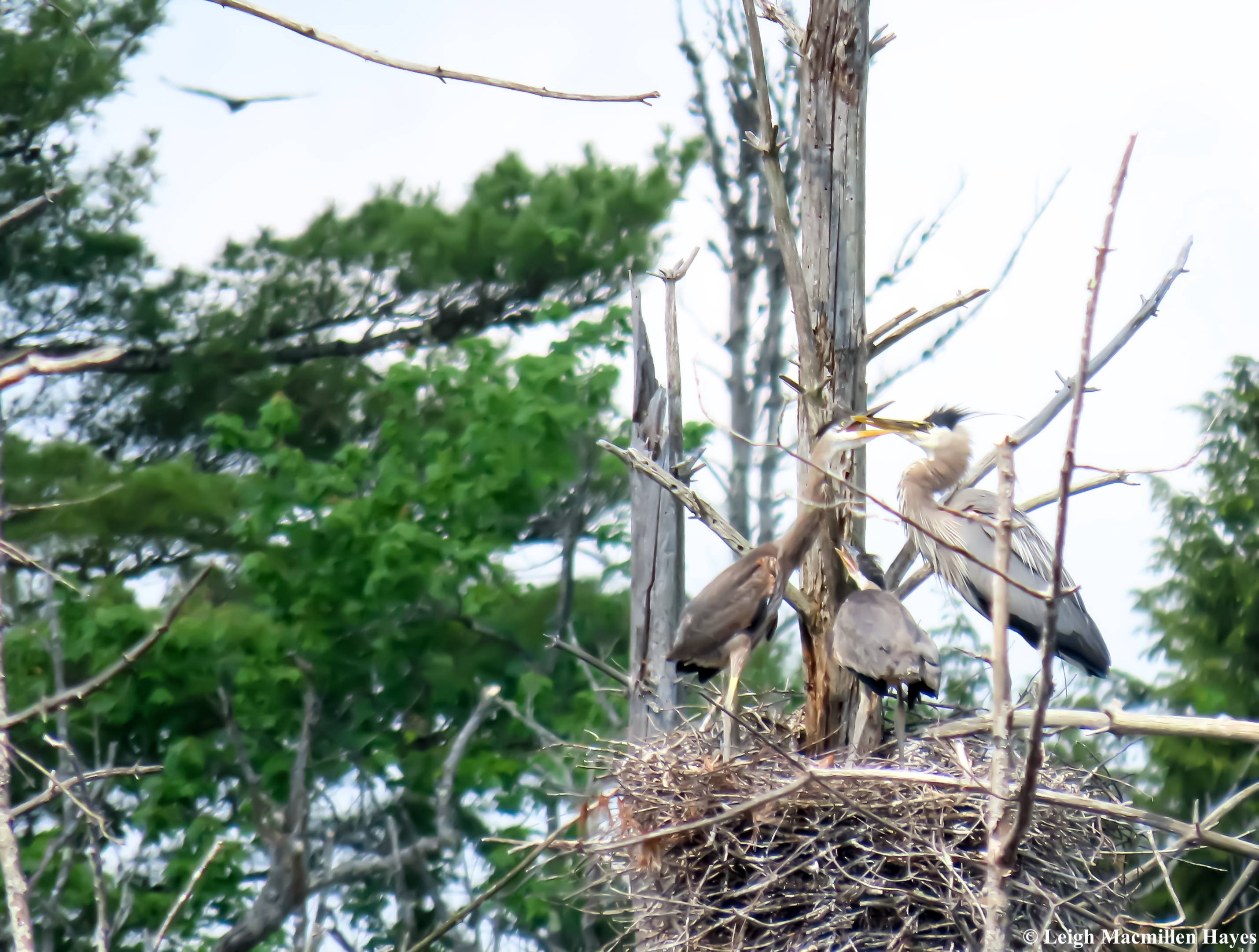
And Great Blue Herons always on the prowl for fish or amphibians know the value of the wetland as a food pantry.

So, this spring and summer and fall, I’ve been following My Guy and our friend, Bruce, beside and into and sometimes, thanks to Bruce’s drone, over a variety of wetlands.
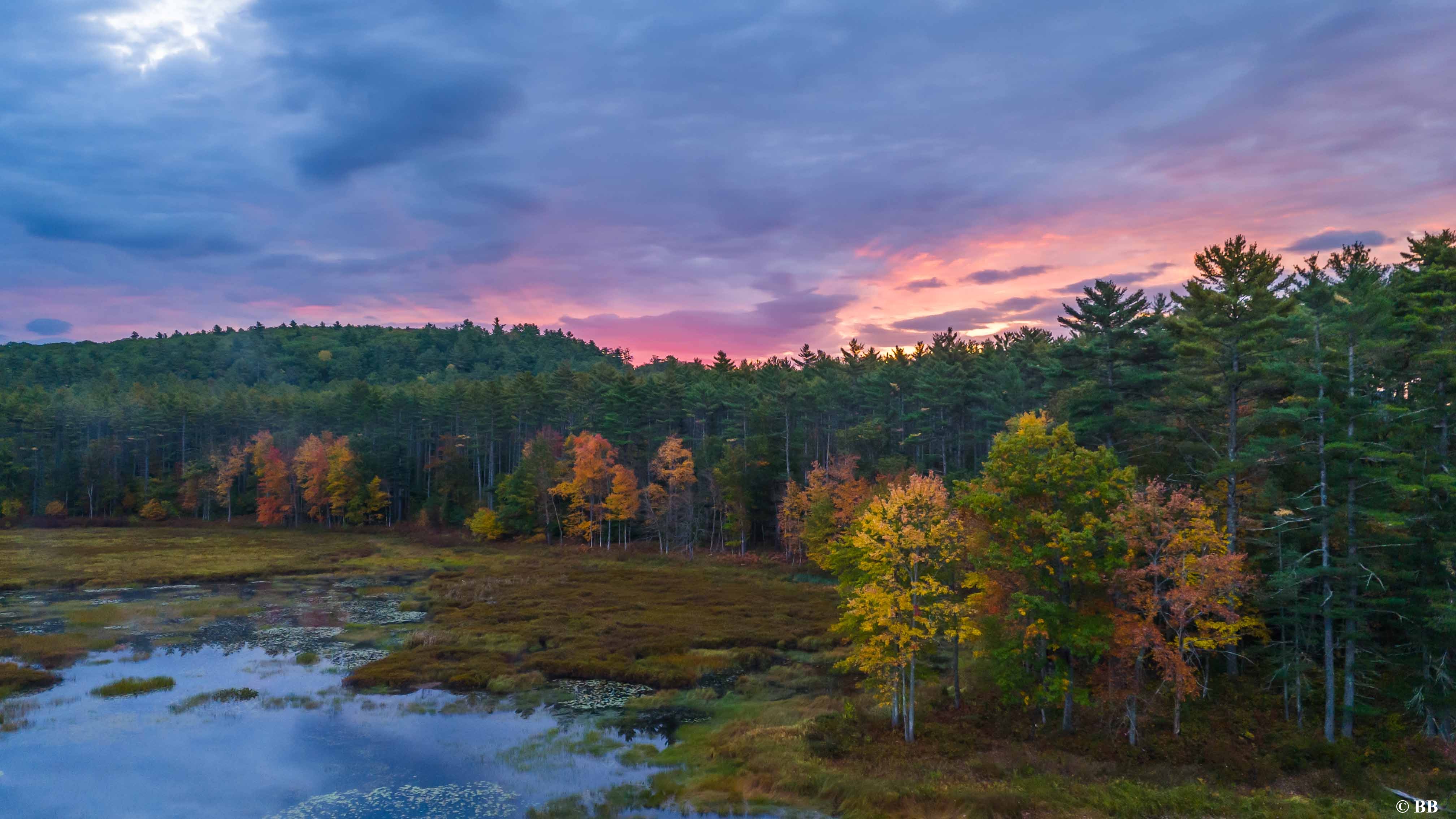
Bruce is an early riser (understatement), and occasionally I’ll meet him at a predetermined location as we did this past weekend–before the sun has risen. Though the thought of staying in dreamland for another hour or so is enticing, I never regret the decision because we get to view the world before it officially wakes up.

And with his drone we explore these areas we cannot easily access. This is one My Guy and I walked all the way around a few weeks ago without ever spying, though we knew it was there. But Bruce and I bushwhacked through a forest of White Pine Saplings and mature trees and reached the edge before he launched his bird and we were offered a glimpse of this most beautiful wetland with pockets of water connected by meandering rivulets.

The stream turned to forest for the trees told more of the story, as they closed in and I recalled that it wasn’t far from that spot that My Guy and I walked through a damp area where Royal Ferns grew and we found one teeny tiny mushroom fruiting on a hot summer day.

The mushroom was the little Orange Peel Fungus, and its name seemed so obvious. And the soil moist despite the severe drought.

Another day we began our exploration in the afternoon beside a small pond.

And the Droney-bird picked up on the wetland to the south.
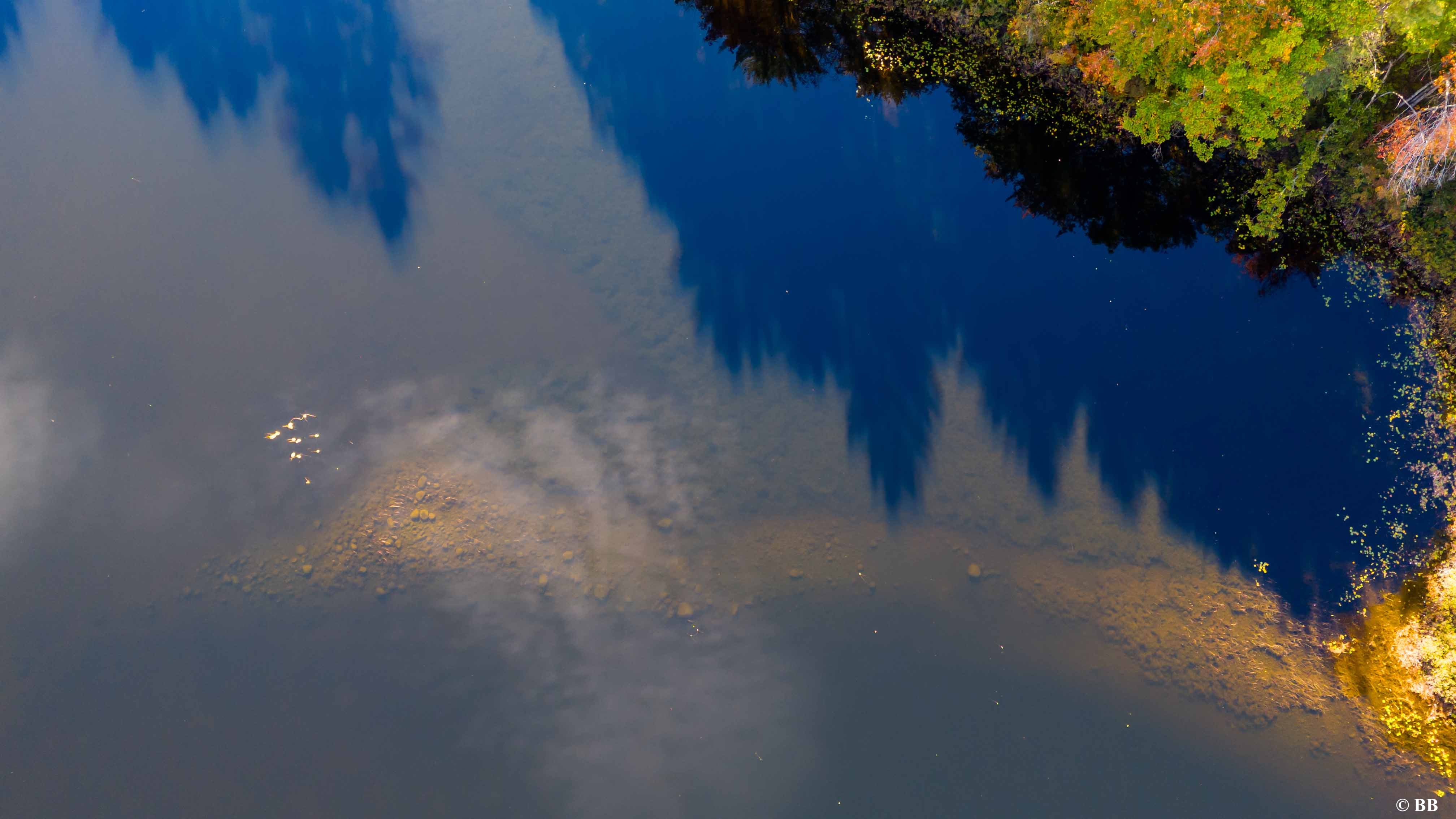
But that day what struck us as being more important was that it also took a clear picture of a sandbar in the water.

And as Bruce navigated it closer to the watery surface, we could see clear to the bottom. Mind you, it’s not a deep lake, but this is the water of Maine. Clean and clear.

And we celebrate wetlands for the critical role they play in maintaining the health of the environment.
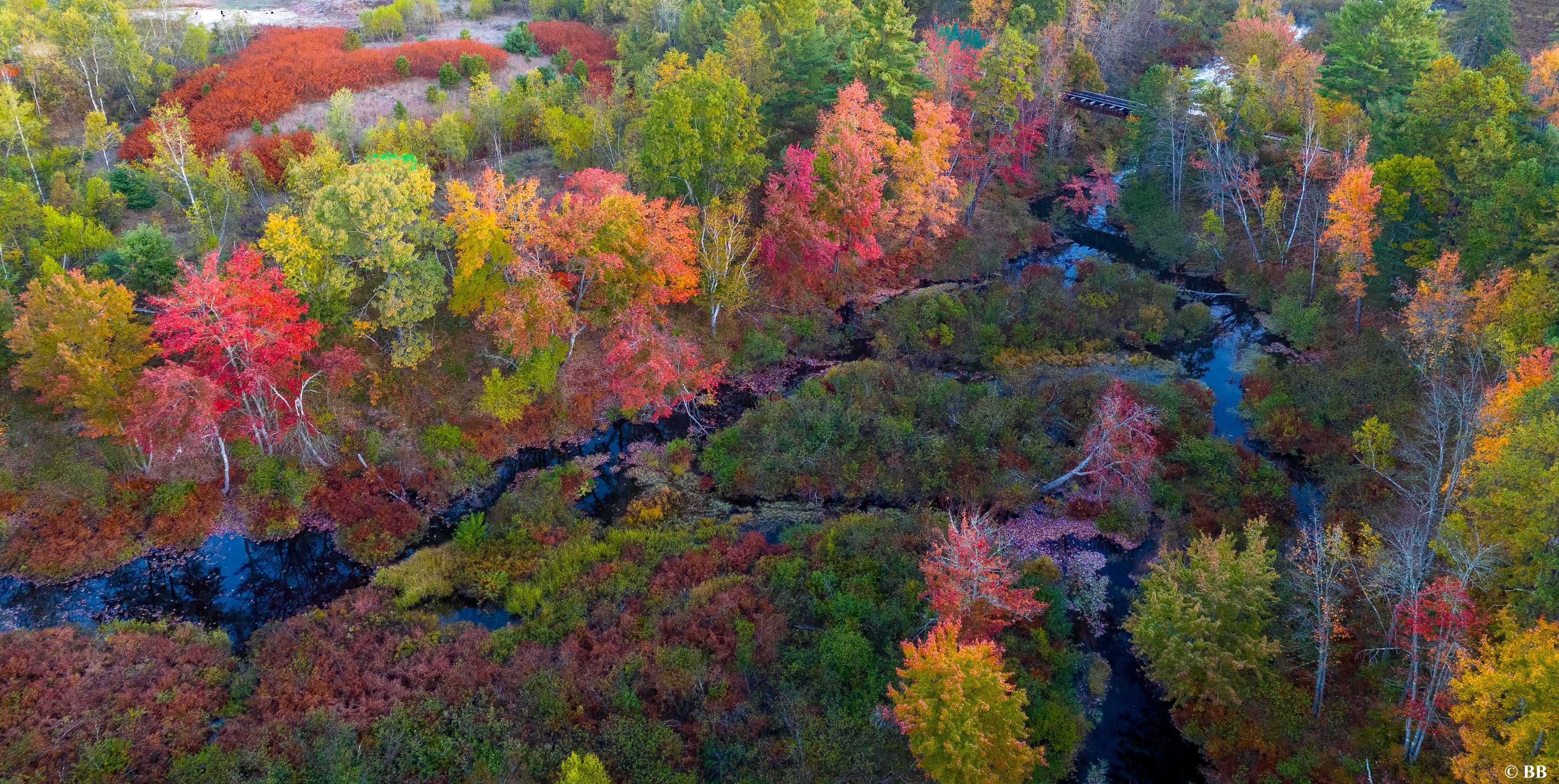
When I think about their ability to store and filter water and act as a natural sponge, absorbing and retaining large amounts of water during the heavy rainfalls of spring, and removing pollutants before they enter streams, and rivers, and lakes, it all seems so obvious that they should do this when you have a bird’s eye view.
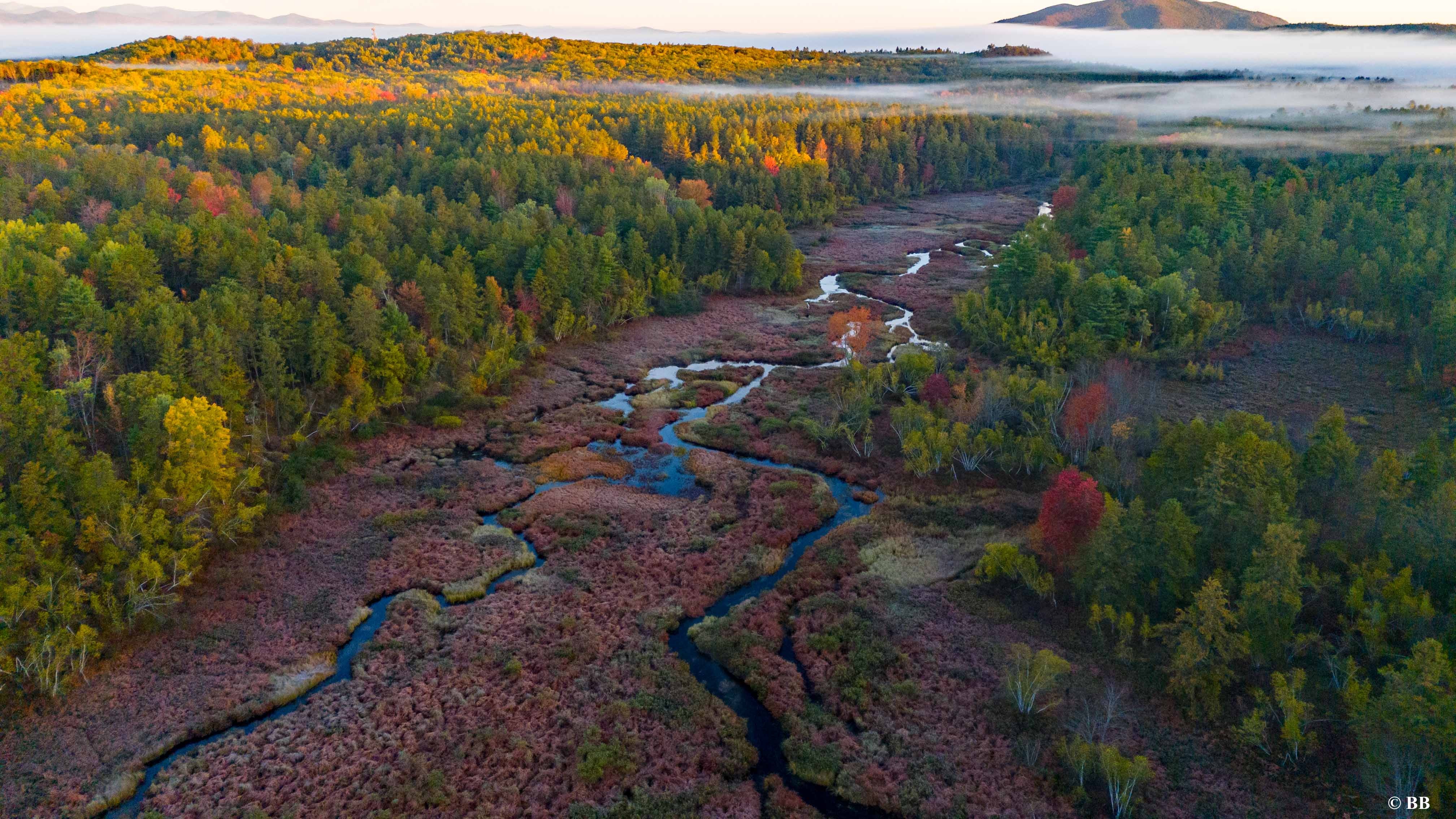
So here’s the curious thing about this wetland. It is located beside a local dump. And the more I think about that, the more I question those who created the dump, but give thanks for the unwavering workhorse that this wetland is in the ecosystem.
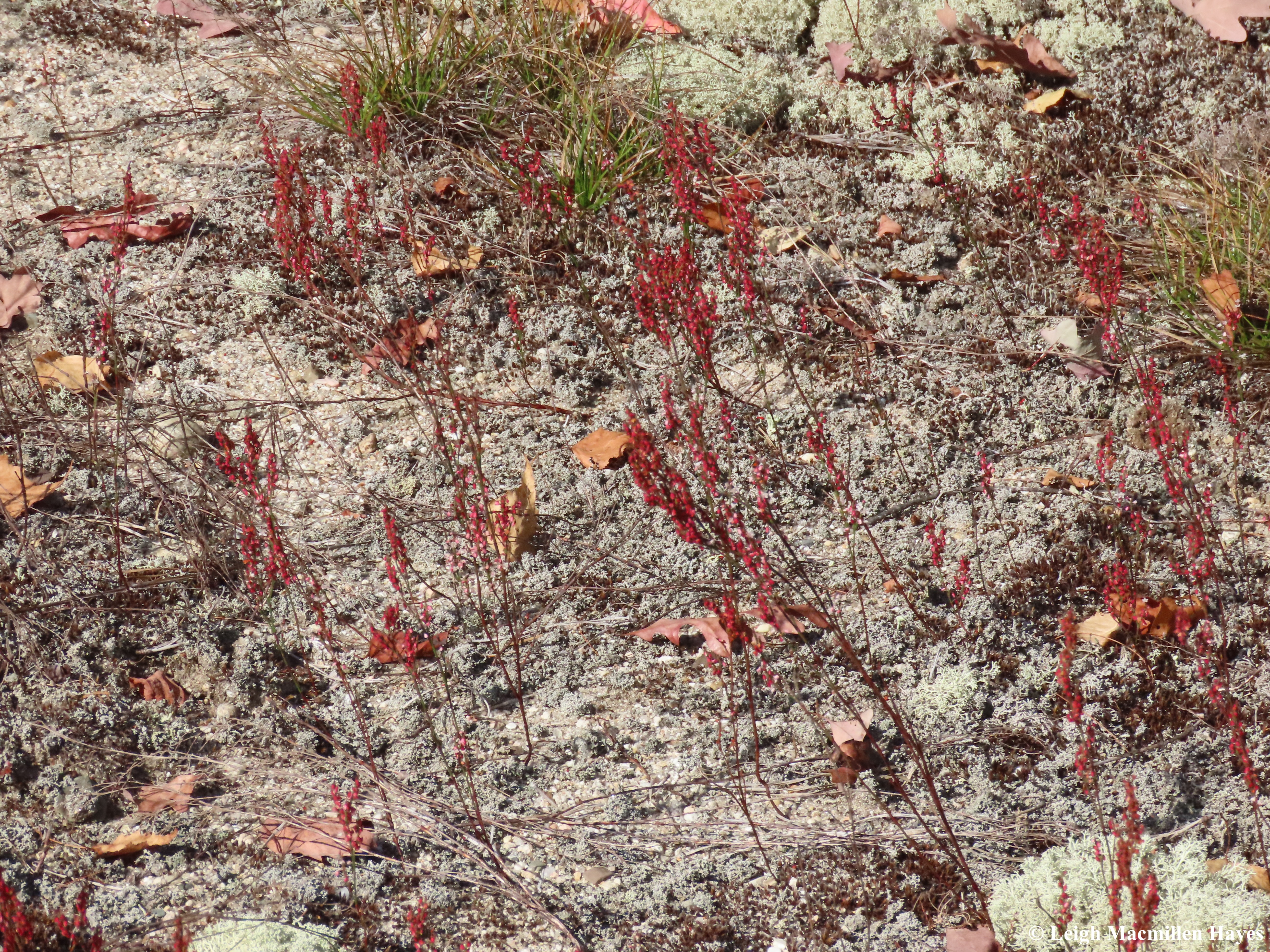
It was on the rise above this particular wetland, in a very sandy spot covered with Reindeer Lichen, that Bruce and I made a discovery. Well, he discovered it first and asked for an opinion. I’m full of those and so I met him and we took a look.

The discovery was a plant new to us both. Sand Jointweed or Polygonum articulatum. As you can see, the flowers are astonishing in their pink and white display.
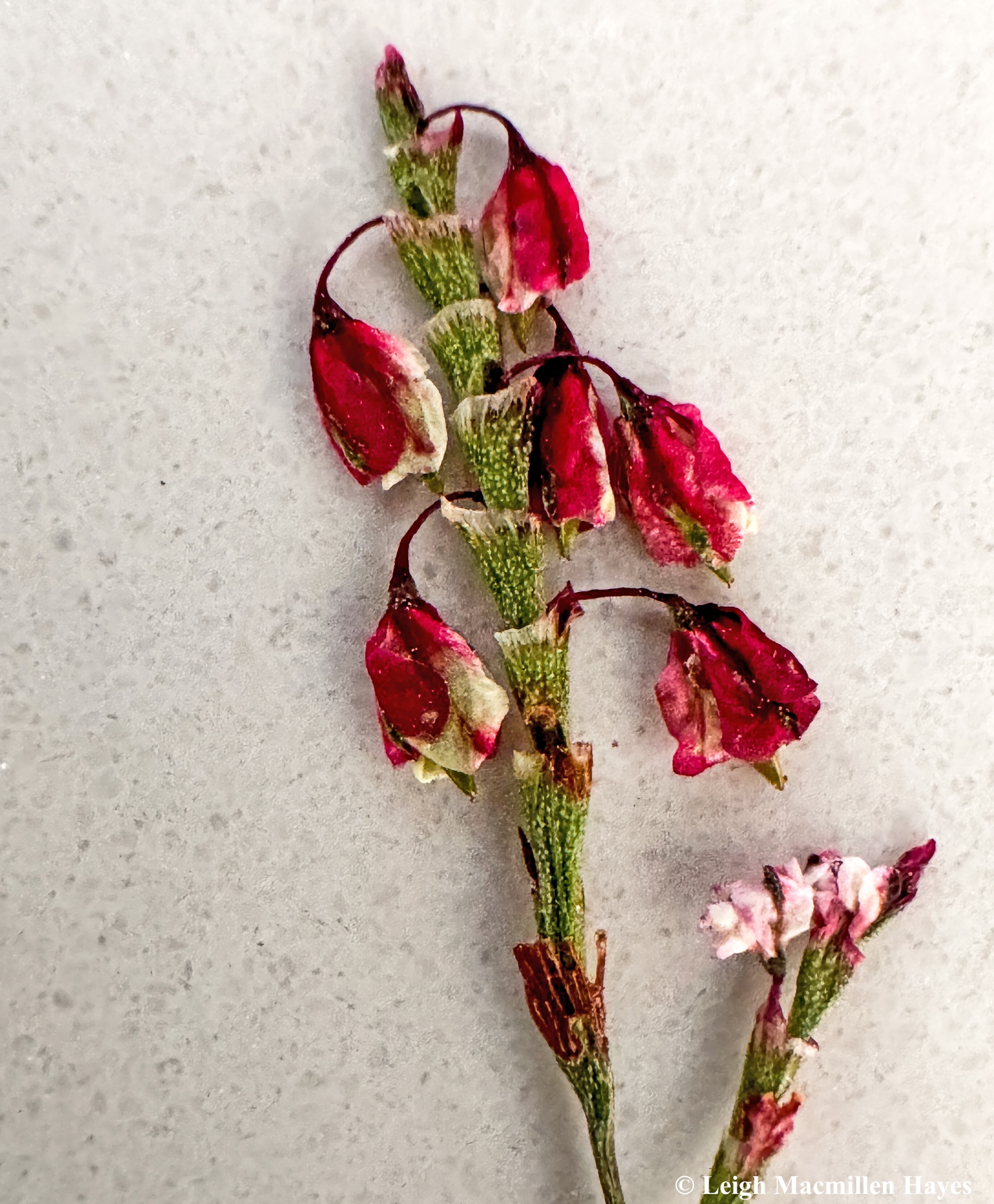
It was the stems that I found equally fascinating. At the base of the flower stalks there are sheathing bracts, giving it a jointed or segmented appearance. We didn’t see any leaves, but perhaps we need to look again. I think we were just amazed to have discovered a plant neither of us recalled meeting before. Often though, that means we’ll meet it again soon.

The small snippet followed me home, and today I looked at the flowers under the microscope and I was astonished to realize that they look rather like a map of a wetland.

I don’t jump at the invite every time it arrives for an early morning mission to explore a wetland, and one day really regretted it because when My Guy and I finally got to the location, we found a note with Bruce’s observations. We scanned the area with our eyes for about an hour before deciding that we were too late.

But . . . we promised ourselves that we’d pack a picnic supper and try again.

First we spotted one Bull Moose.

And then a second, and had a difficult time deciding that we should head home.

Did you know that 25% of Maine’s land area is wetlands? That’s four times the wetland area of the other New England states combined. The natural buffers they provide sustain the deep clear water we appreciate, and take for granted.

The margins or places where the land and water come together are bridges between two worlds. As many as 90% of all living things in our waters are found in these wetlands, no matter what form they take. I guess that’s why I love exploring them so often, because there’s always something to see. And another lesson to learn.

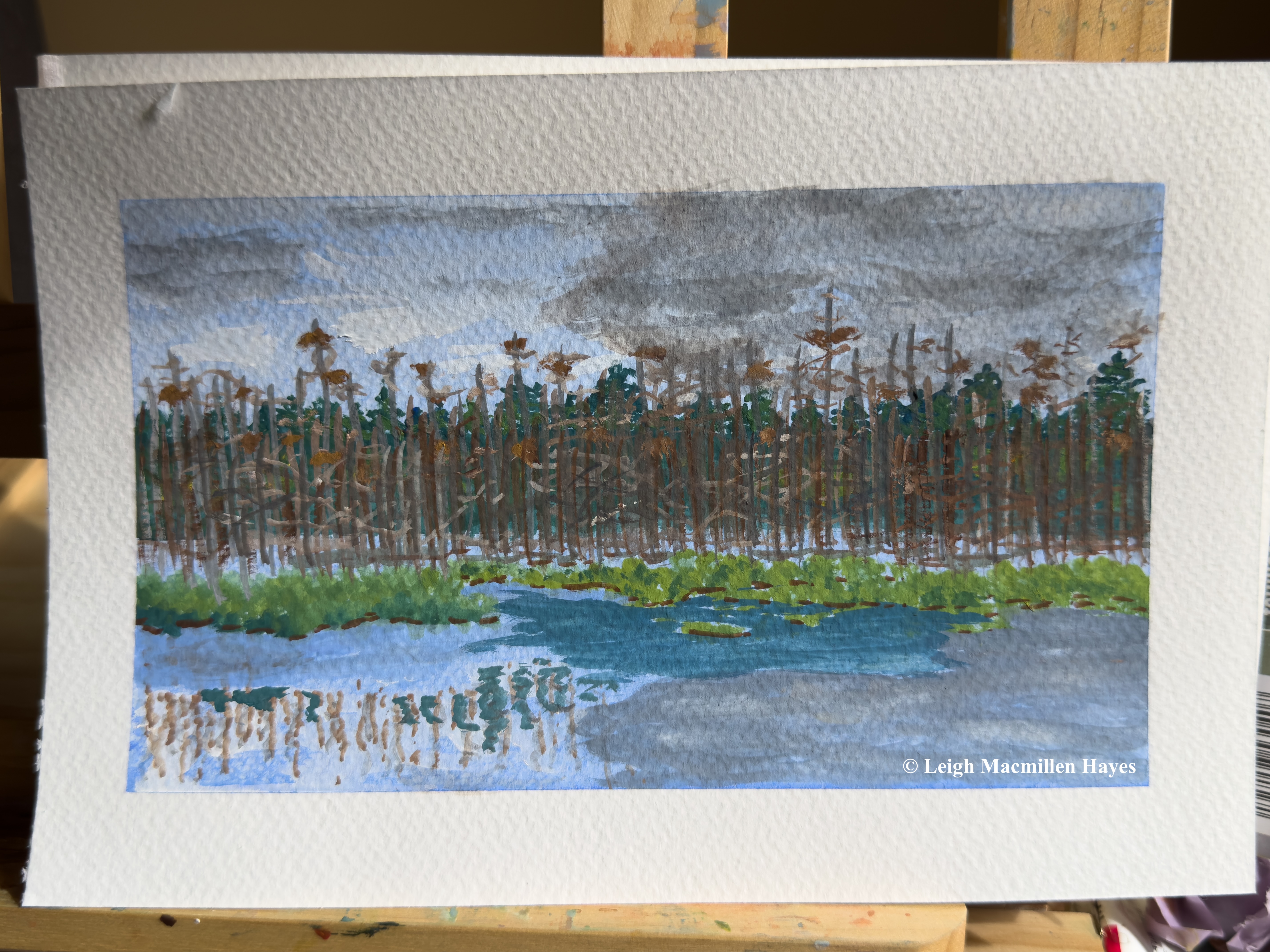
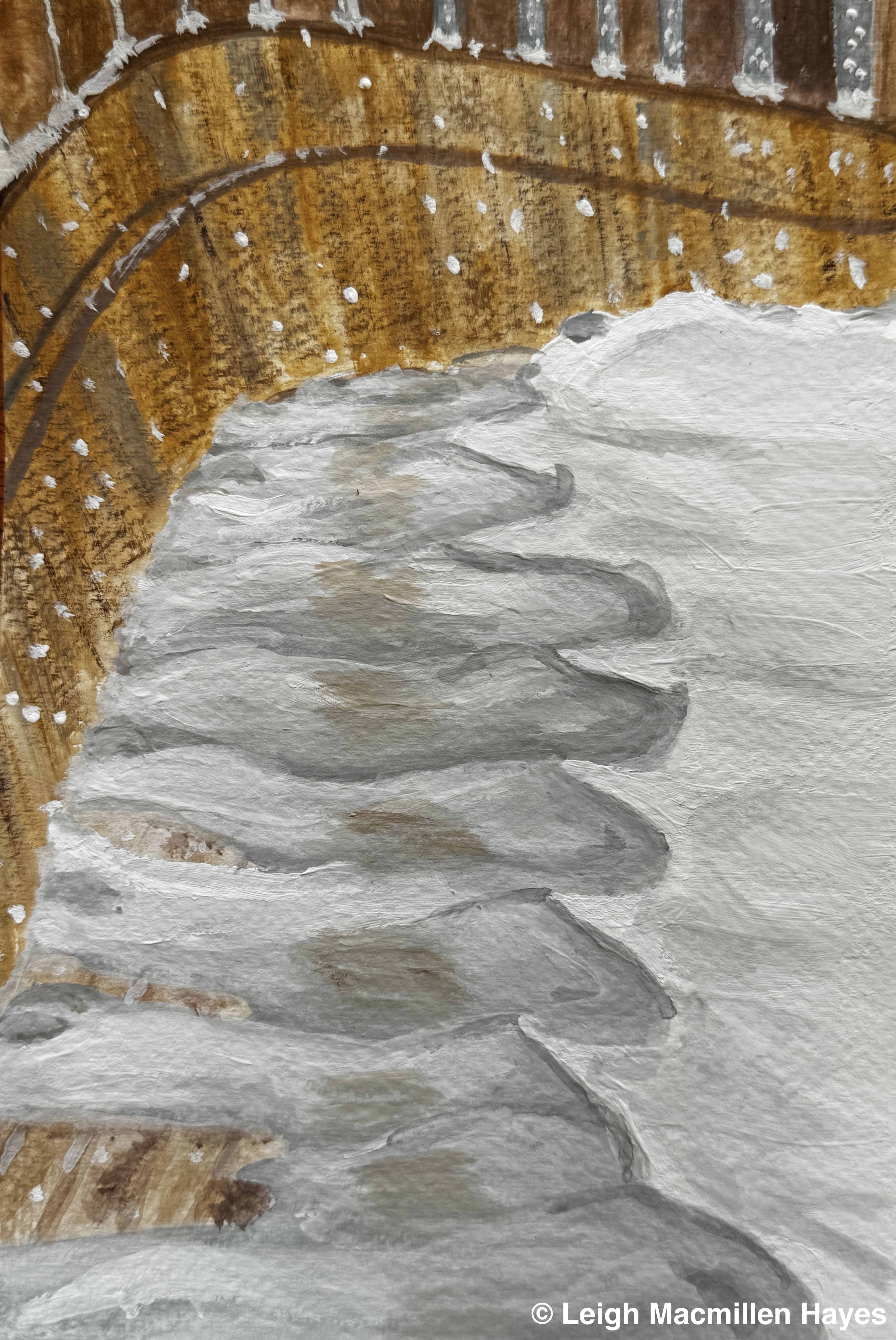
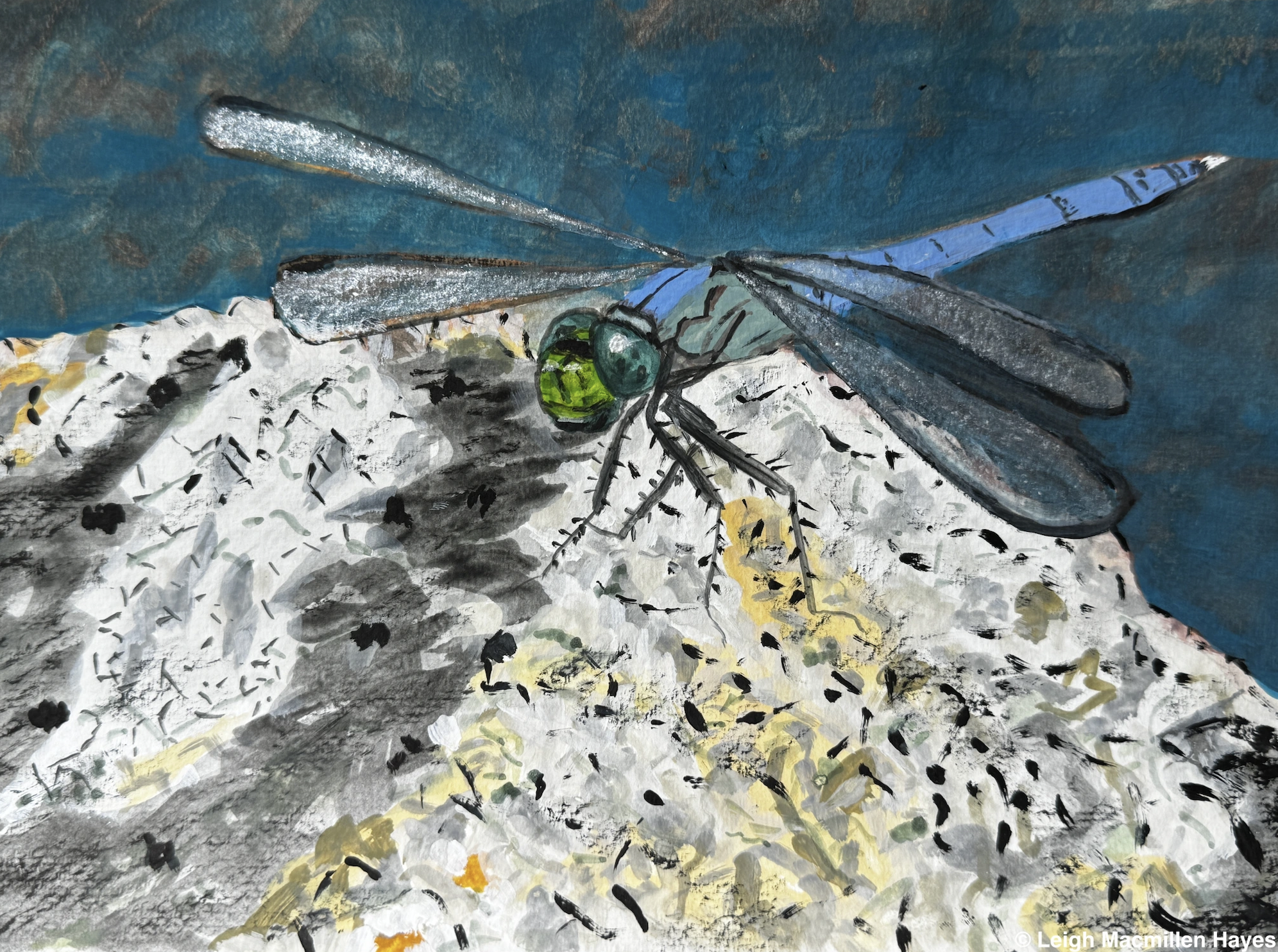
I leave you with this, a watercolor Bruce’s wife Eileen sent me recently. It was inspired by one of our local wetlands.

Some may see wetlands as dark and shadowy areas, mosquito hatcheries, with an abundance of leeches mixed into the scene, but the rest of us know their true value and I give thanks for living in this place where it’s so easy to go Bogging in Maine. And to share it with others. Thank you MG, BB, and EJB!
My Artistic Path: one year later

It’s all Jessie Lozanski’s fault that a year after publishing My Artistic Path, I’m publishing the next layer of paintings and sketches. Until I shared a few with my sister this afternoon, I had no idea how prolific I’ve been in this department. That said, some didn’t make it off the drawing board. Or rather, they did, but ended up in the trash, or in a pile to be considered at a later point in time. That’s the beauty of working with gouache, I can make changes at a later date. For me, that is liberating.

And now Dear Reader, you have three choices: 1) Read this entire post from beginning to end; 2) Scroll through the pictures and call it good; or 3) Click out of this post and pretend you either never saw it or that you did see it and loved all of it.

I have to say, I thought I’d paint more dragonflies like this Eastern Pondhawk, but when I scrolled through My Art Gallery, I discovered only a few others. That said, I did take some time to sketch the naiad forms of six families and then painted each one. You can visit all of those in Dragons of the Future if you wish.

Waterways also intrigued me as I tried to figure out how to make the water look as if it is flowing. This is Province Brook in Chatham, New Hampshire.

And then there are the critters and I’m afraid you’ll see a few of them along this journey. The fun thing about this Chipmunk is that it made an appearance on a February day. I was tracking with some friends and we were pretty certain that we’d discovered Chipmunk prints, but it didn’t seem possible. Until it was because as we backtracked, we saw him and he posed for a few photographs. Sometimes, when you need more food, you might make a mad dash from your winter home to locate it.

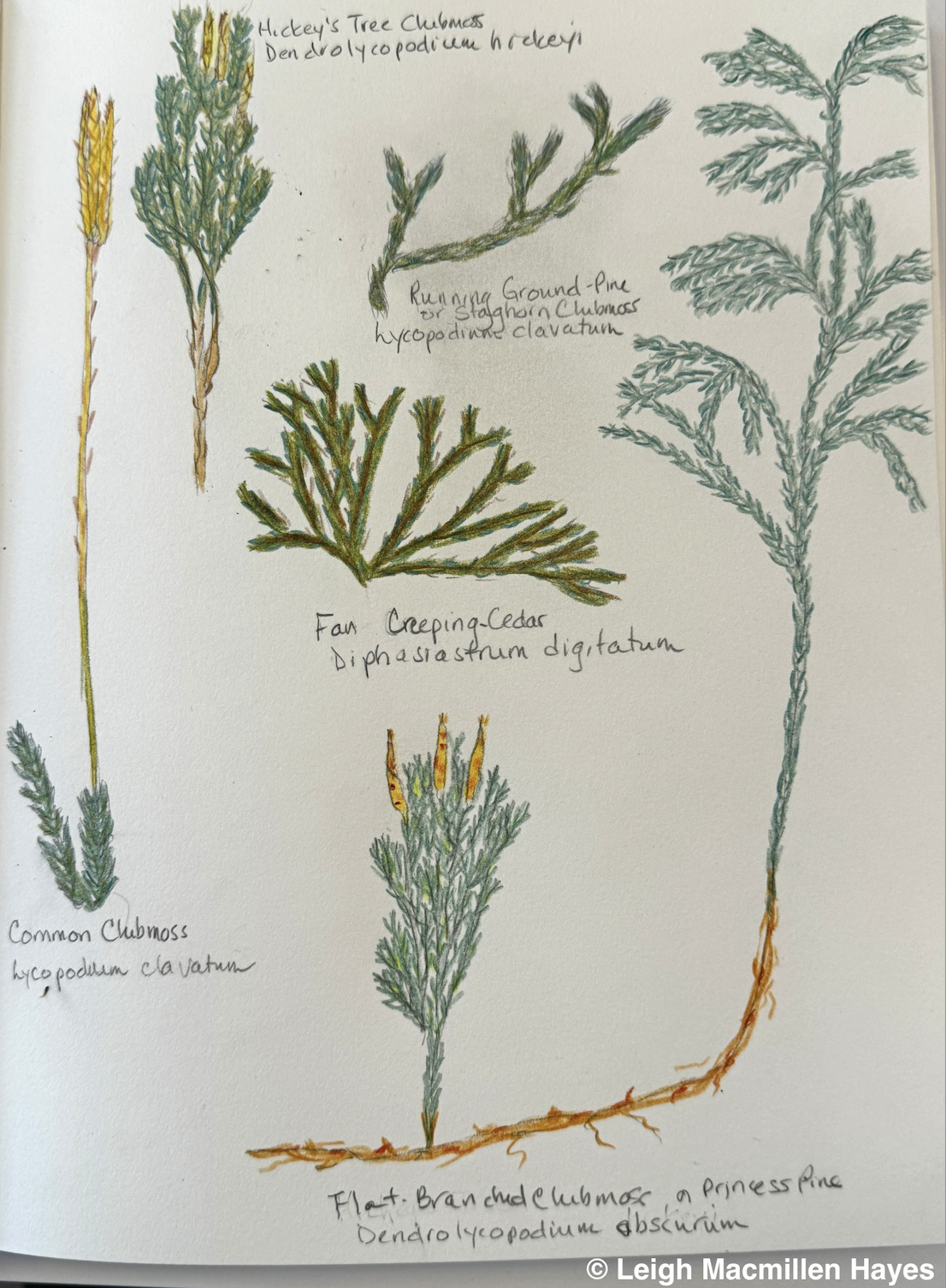
Clubmosses are one of the topics I’m trying to learn. . .when I take the time to do so. And so I sketched these after spending some delightful hours studying them as I wrote about in When is a Moss not a Moss?

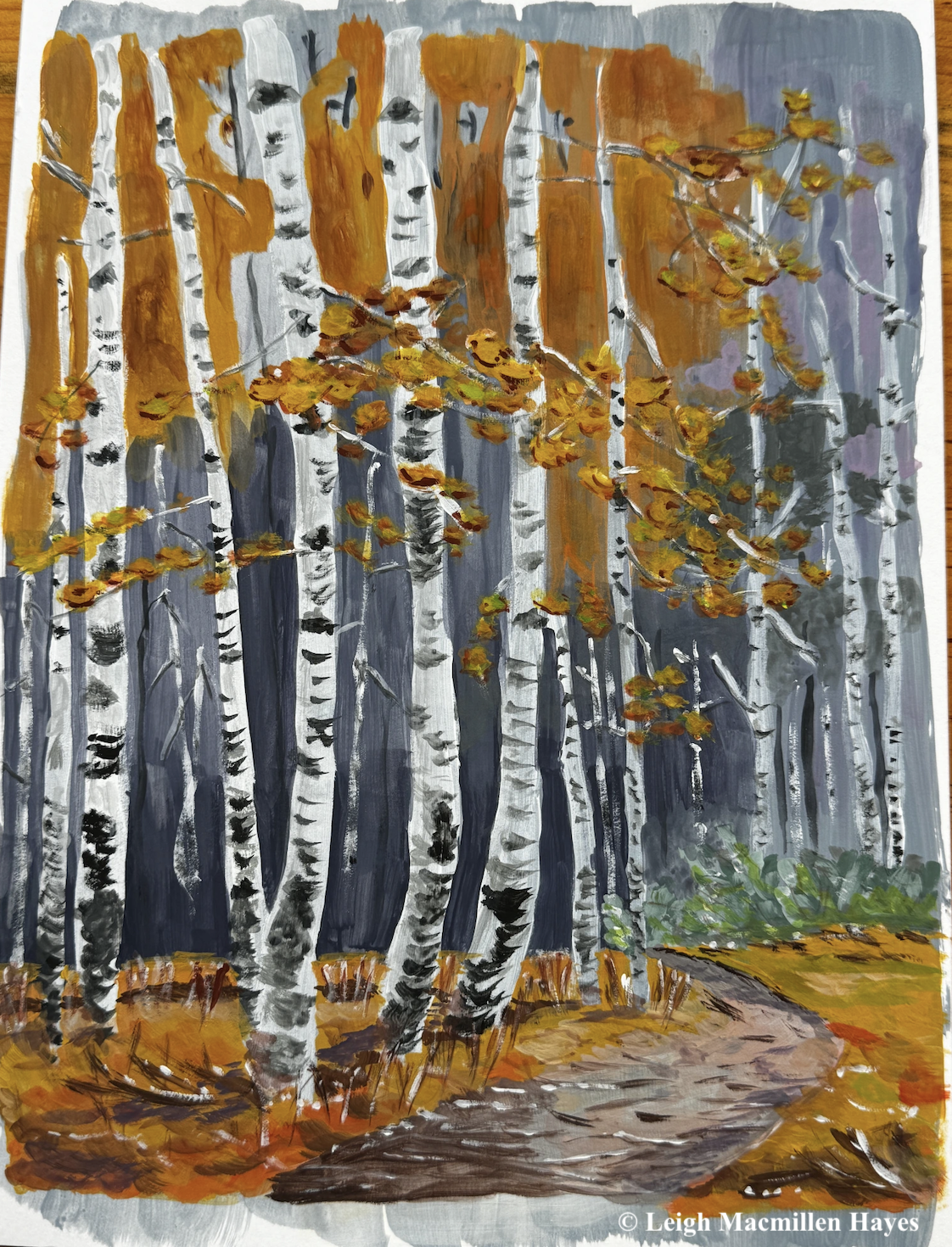
It’s the colors in this painting that I like. And figuring out how to paint Birch bark.

And then there was Forter Castle in Glen Isla, Scotland. I actually did three smaller versions of this castle and then decided to paint this larger picture based off one of those. It was a gift for Anne, our hostess when we were invited to spend a few nights there back in 2017, and in memory of her husband John. You can read more about that adventure here: From the Bonny Banks to the Highlands.

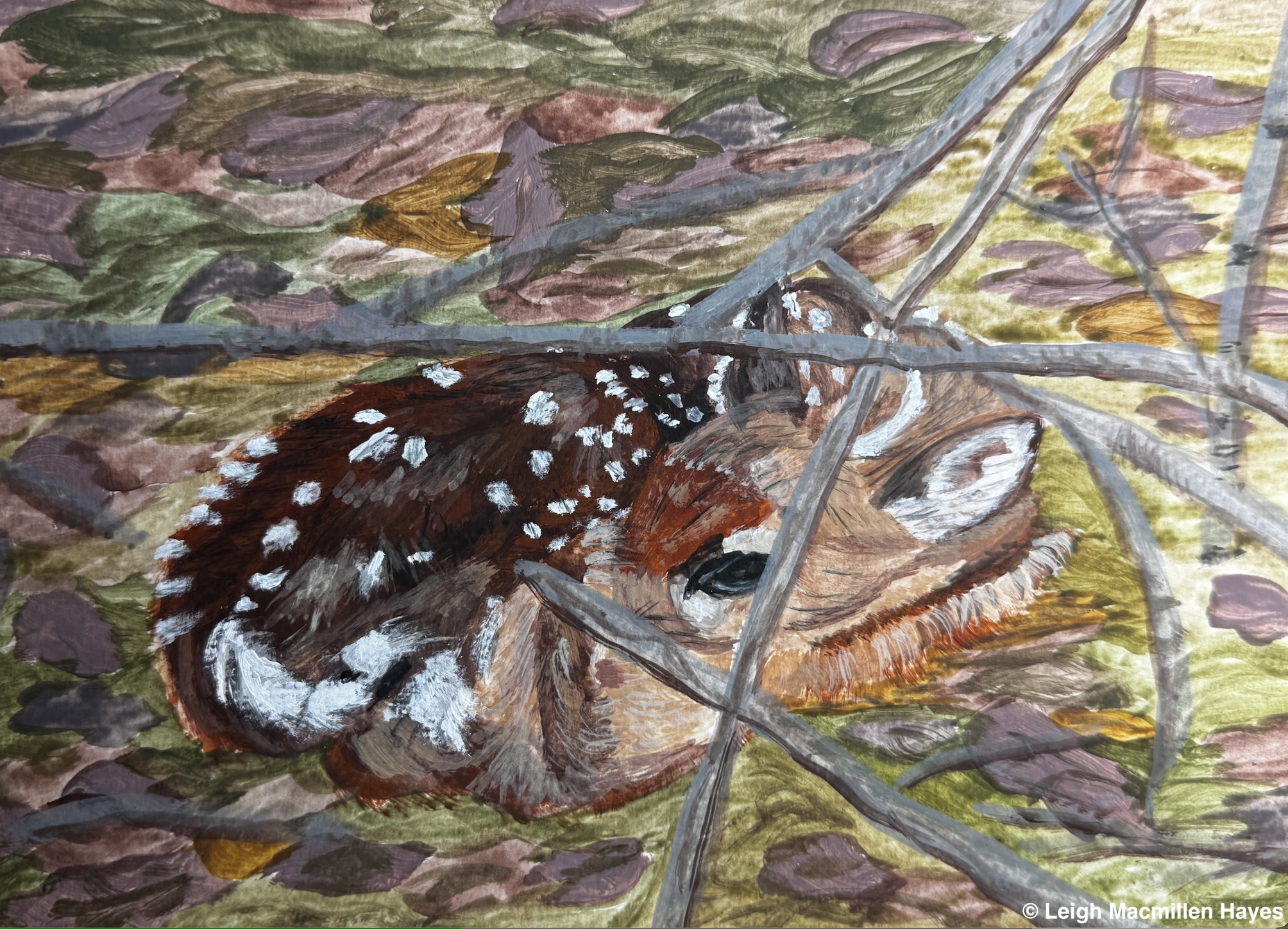
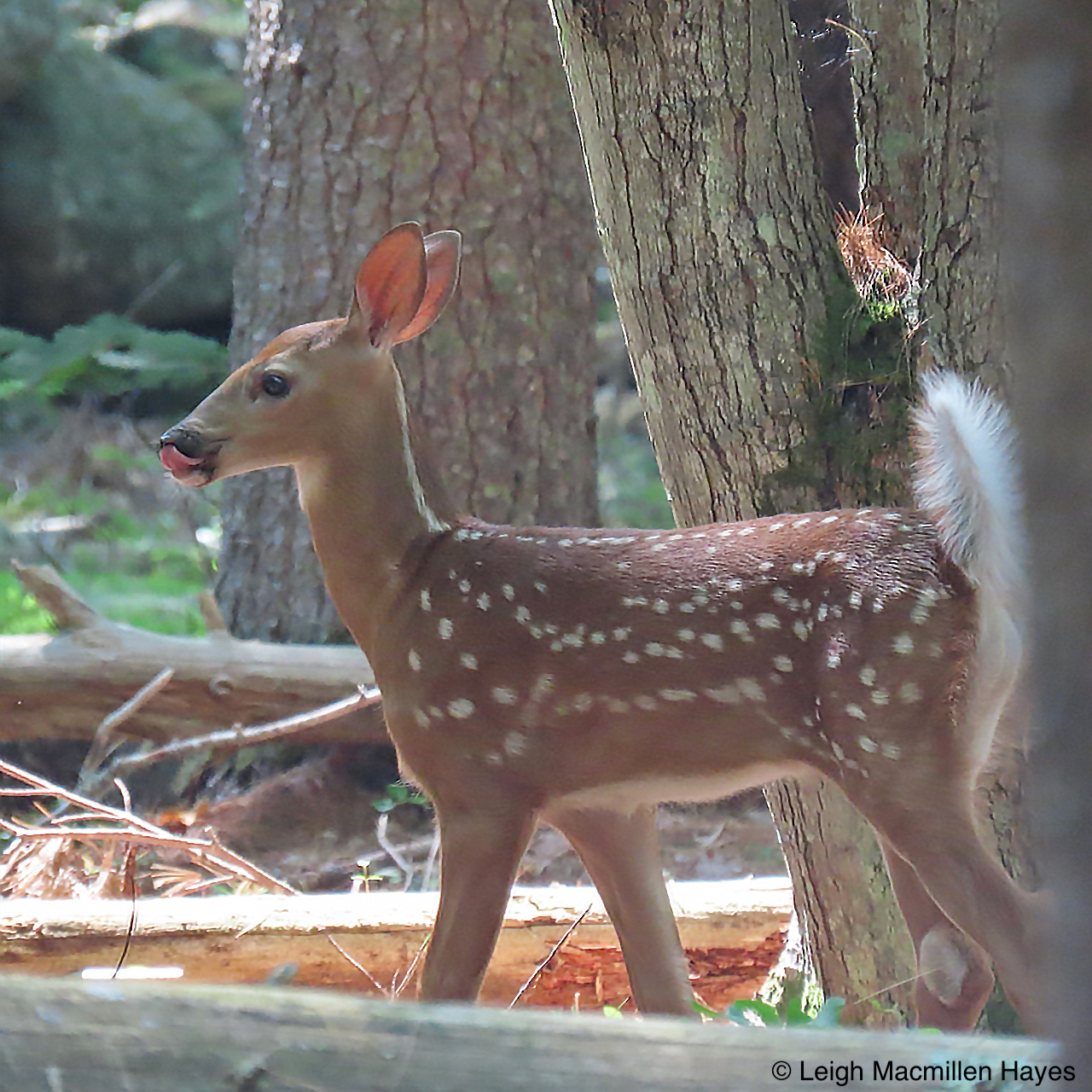
This next one will forever evoke the memory of my friend, Faith, who passed away this summer. We were on a Lakes Environmental Association walk at Holt Pond when we all “spotted” this fawn quietly waiting for momma. Quick pics and then we moved away.

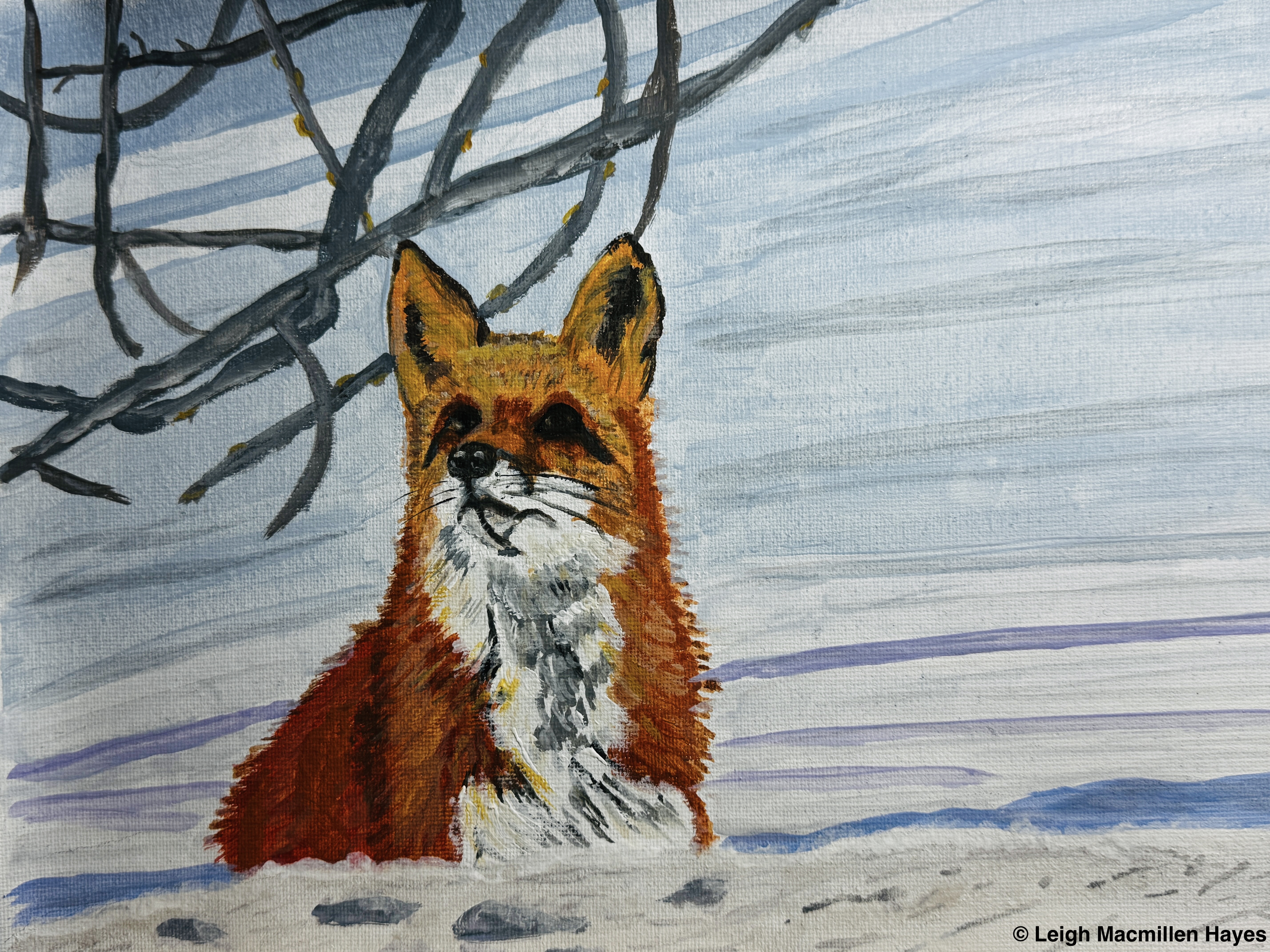
And this is one of the Red Foxes who frequent our yard. In My Art Gallery, there are two more attempts, both in watercolor while this one is with gouache paints. Experimenting is fun.

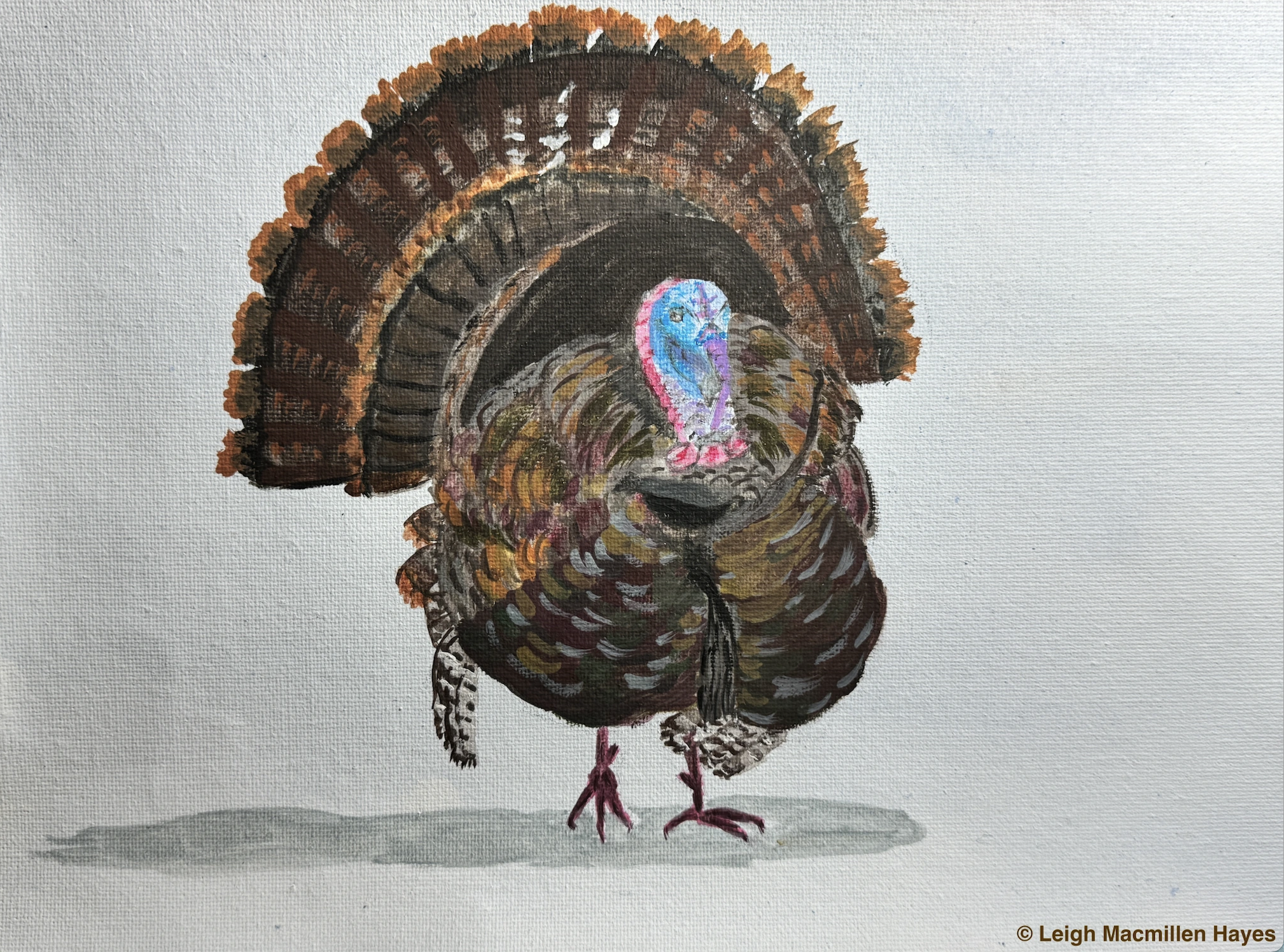
Tom Turkey! What more need I say.

In the midst of taking classes with Jessie this past year, which sadly ended in the spring, I purchased Grahame Booth’s book: Anyone Can Paint Watercolour Landscapes, and tried to follow the step-by-step instructions. This was a result of Lesson 1. There were six lessons altogether, and I thoroughly enjoyed the experience. You can see my other paintings based on the book by looking once again at My Art Gallery. Yikes, I’m beginning to sound redundant. Smiley Face!
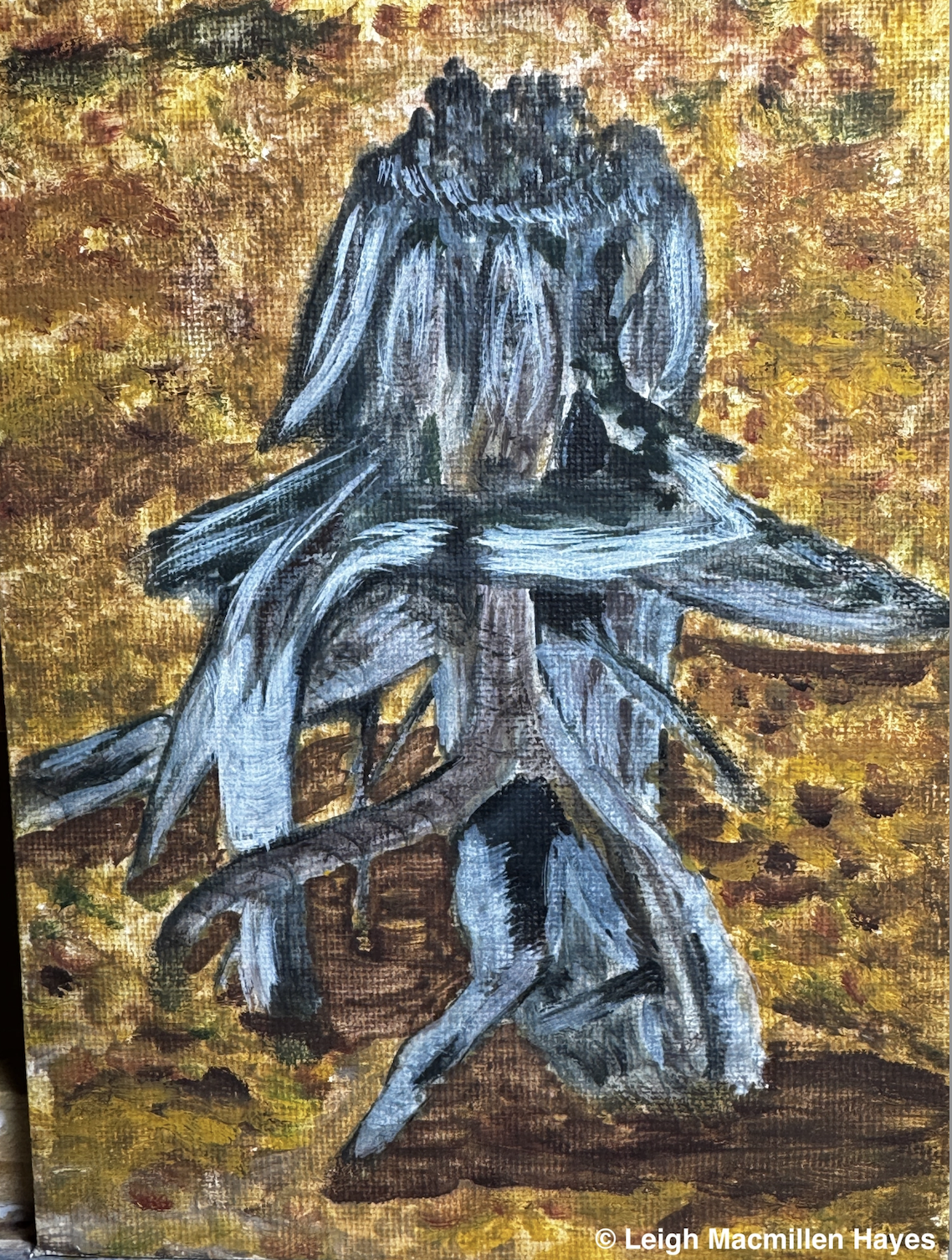
I like this one because I like the subject. I used a matted board to paint it. The stump is beside the Saco River in Conway, New Hampshire.

This one was for another friend because we had walked out to Kezar Pond in Fryeburg from her home the previous New Year’s Eve or Day, and it was just lovely.

And then there is a perennial subject of mine–the Stairway to Heaven tree along the cowpath in our woods. I especially love it when snow outlines the branches.

Another favorite scene takes me back to my childhood in Clinton, Connecticut, and I painted this for my sister and brother-in-law as a keepsake. So many memories in the spot that was our little piece of Heaven for so many years.

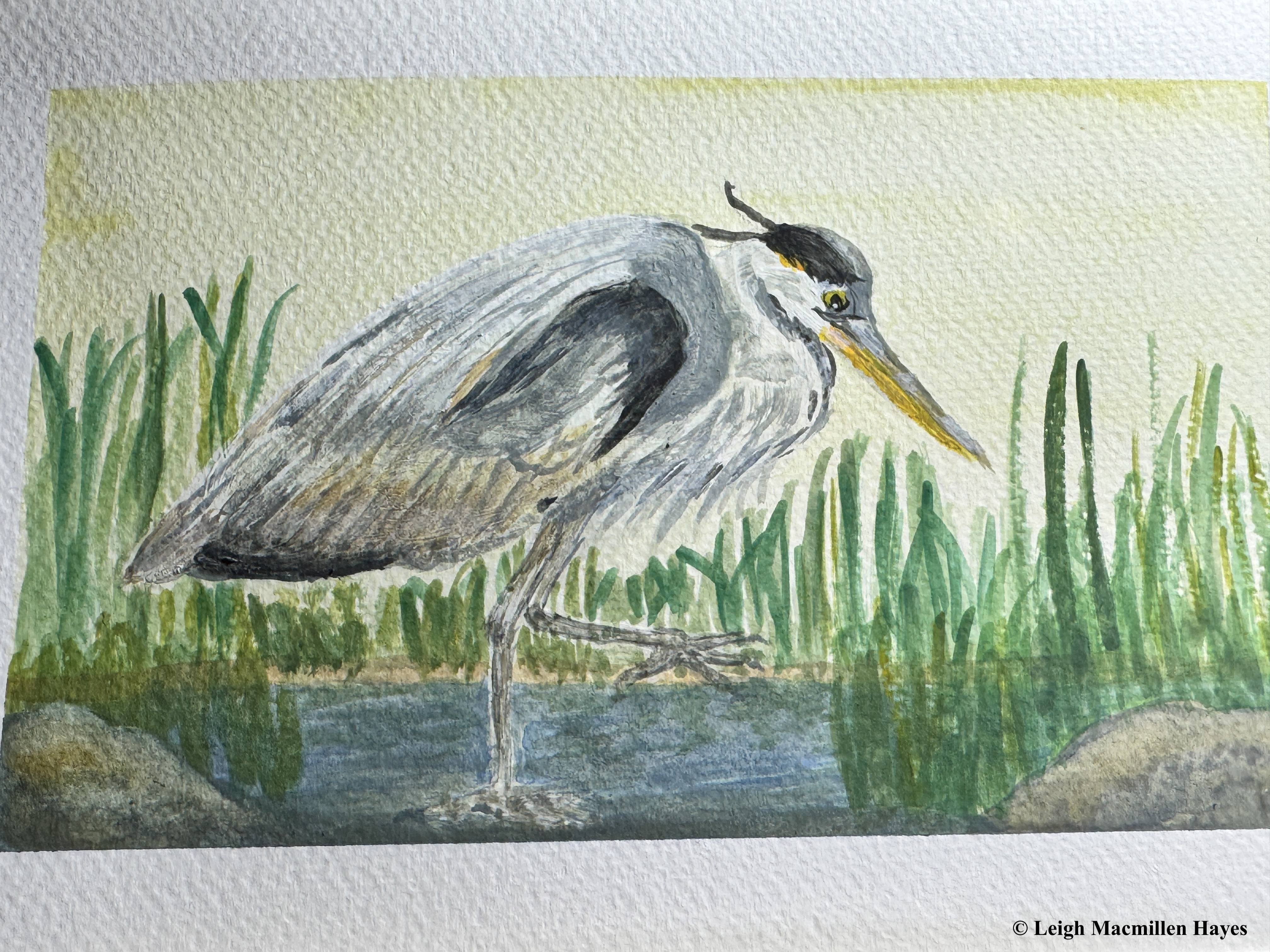
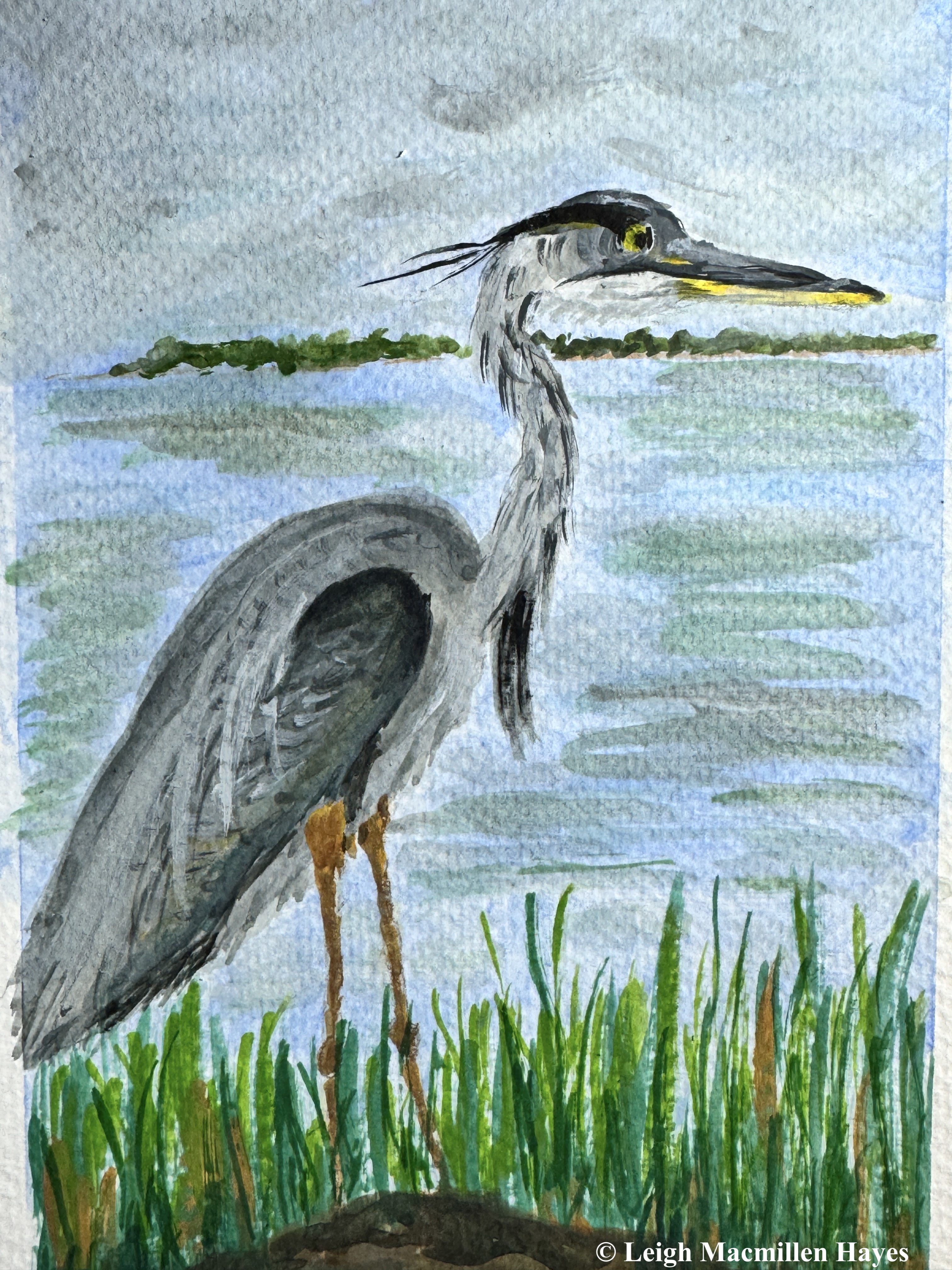
On and off, I’ve produced paintings of birds, and another favorite subject is the Great Blue Heron. I’ve also tried to paint rookeries, but often struggle with perspective. Of course, you can view my attempts you know where: My Art Gallery, to be shortened to MAG going forward.

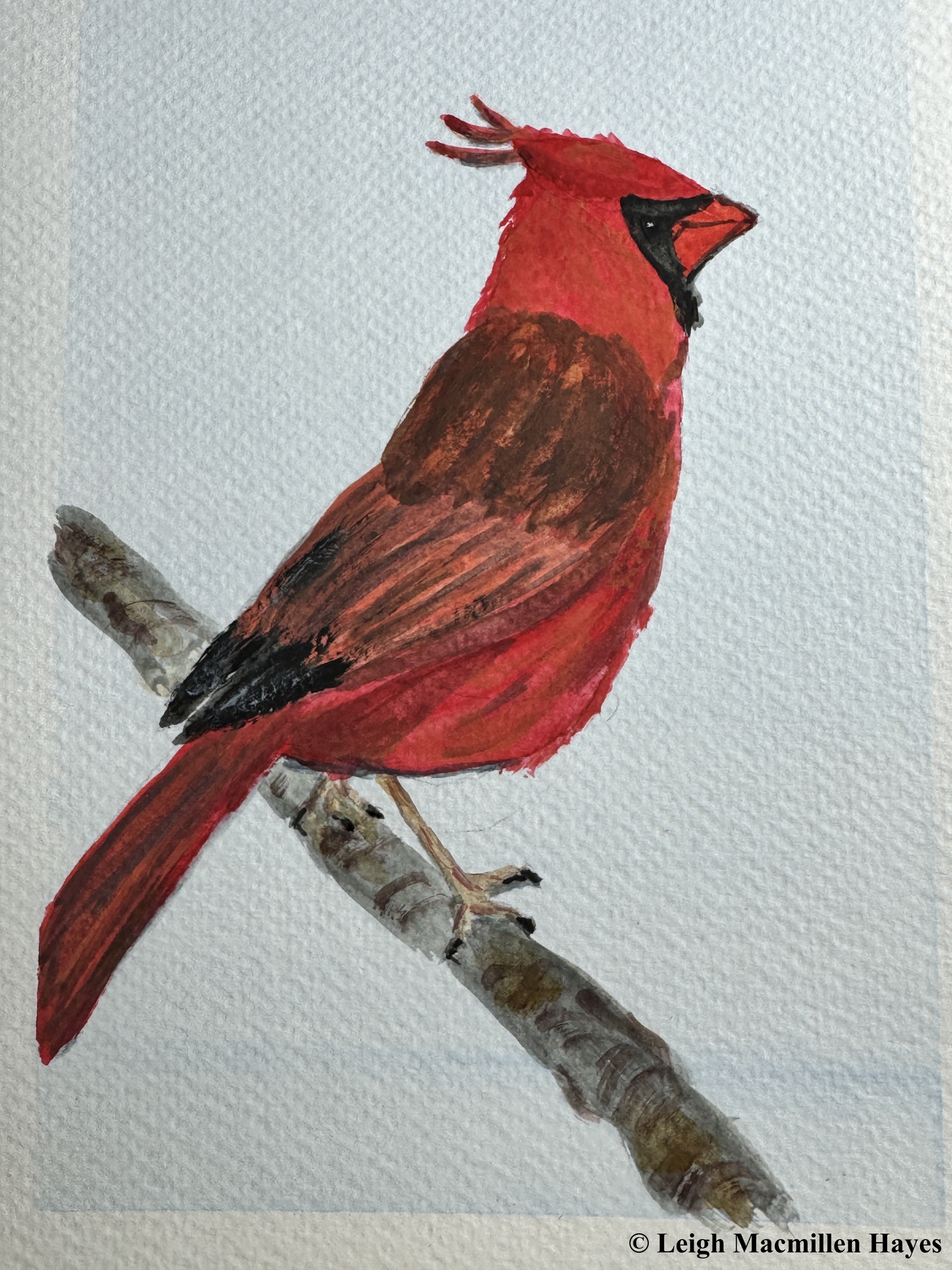
No words necessary really–a male Northern Red Cardinal.

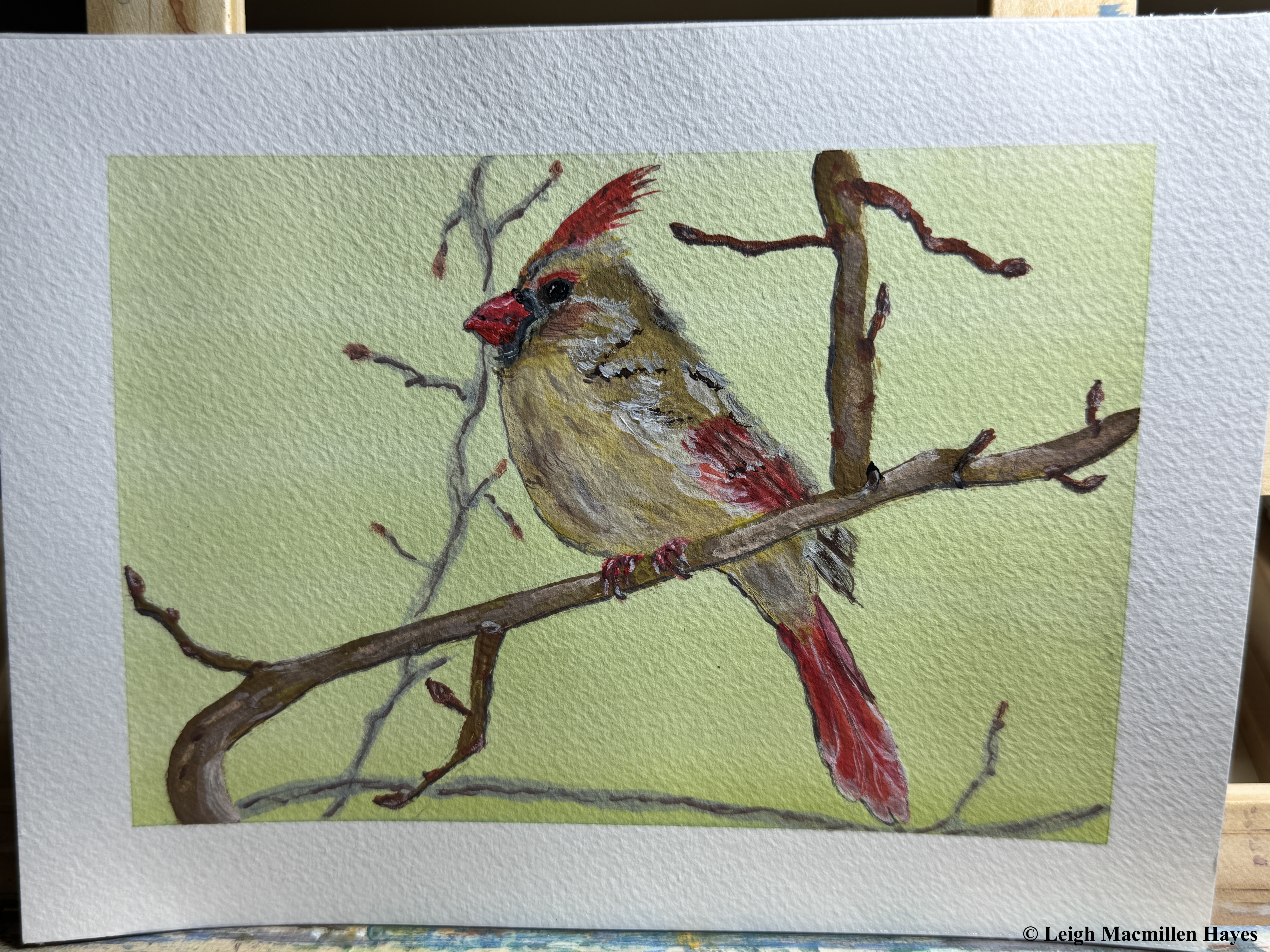
And his female counterpart.

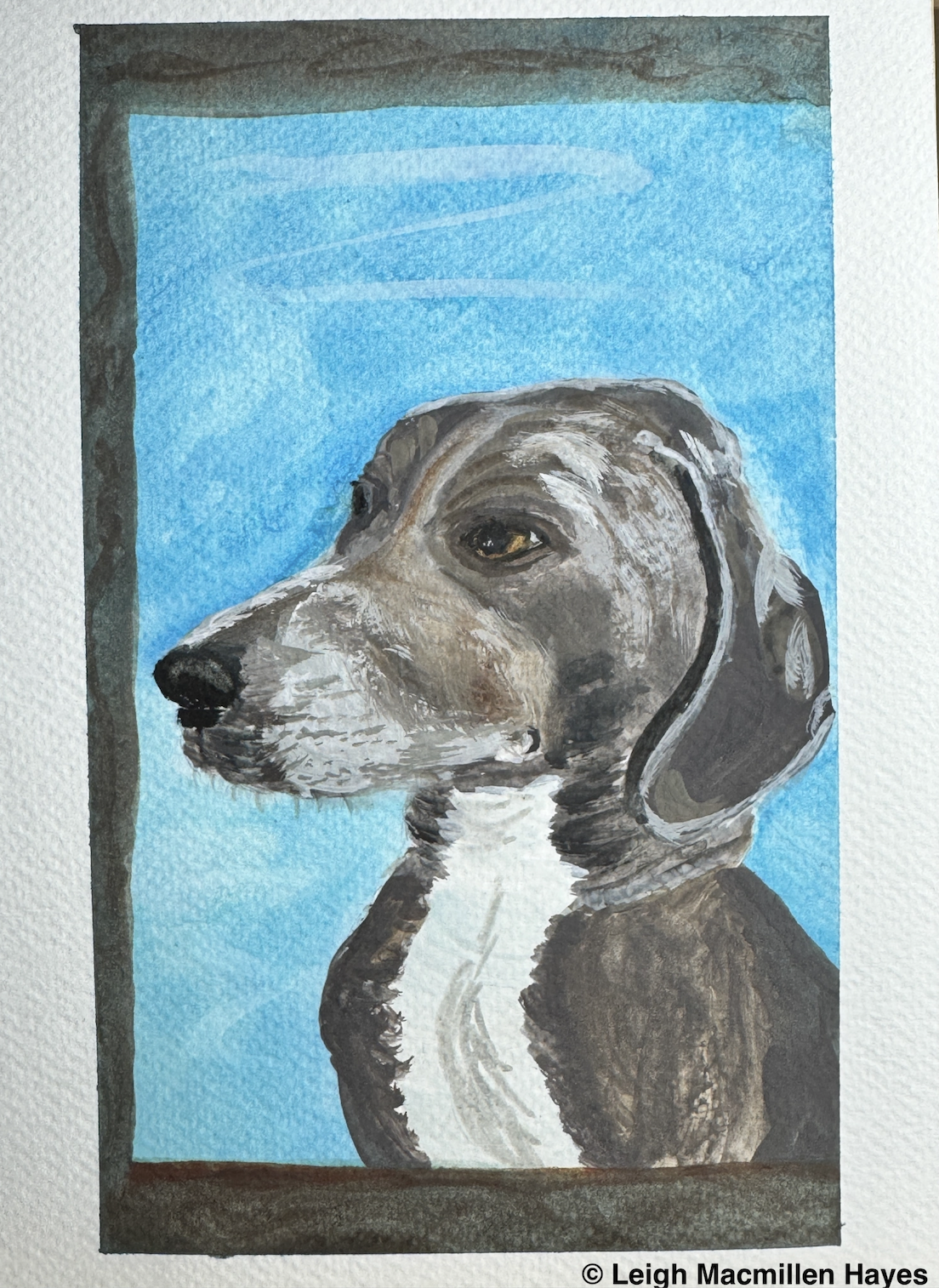
Our oldest son and his girlfriend rescued this energetic pup at the beginning of the pandemic.

And this pup belongs to our youngest son’s girlfriend’s mother.

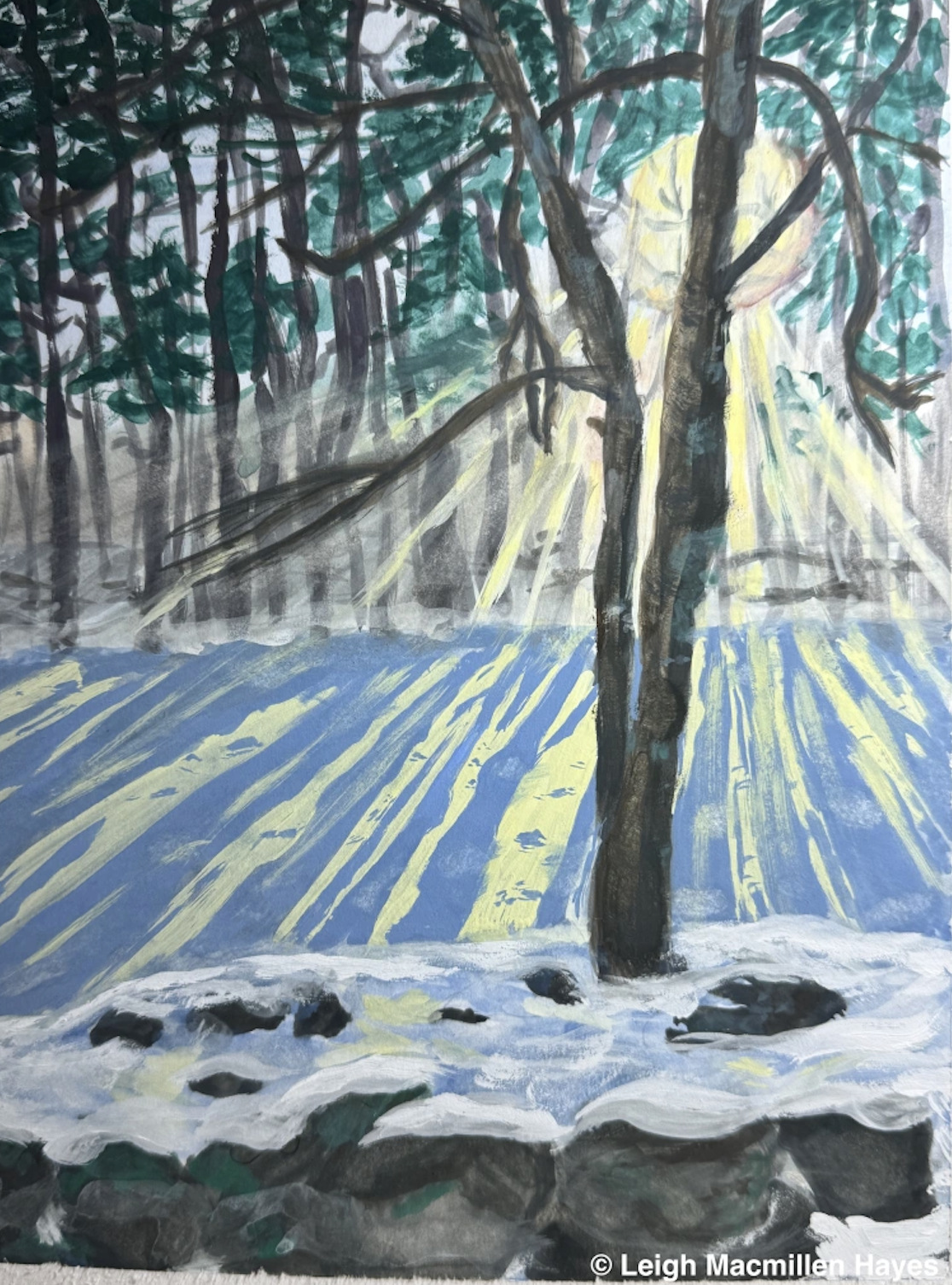
One morning, I stepped outside just after it had finished raining and the sun was shining through the trees out back and there was a layer of fog and shadows and it was just exquisite so I tried to capture it.

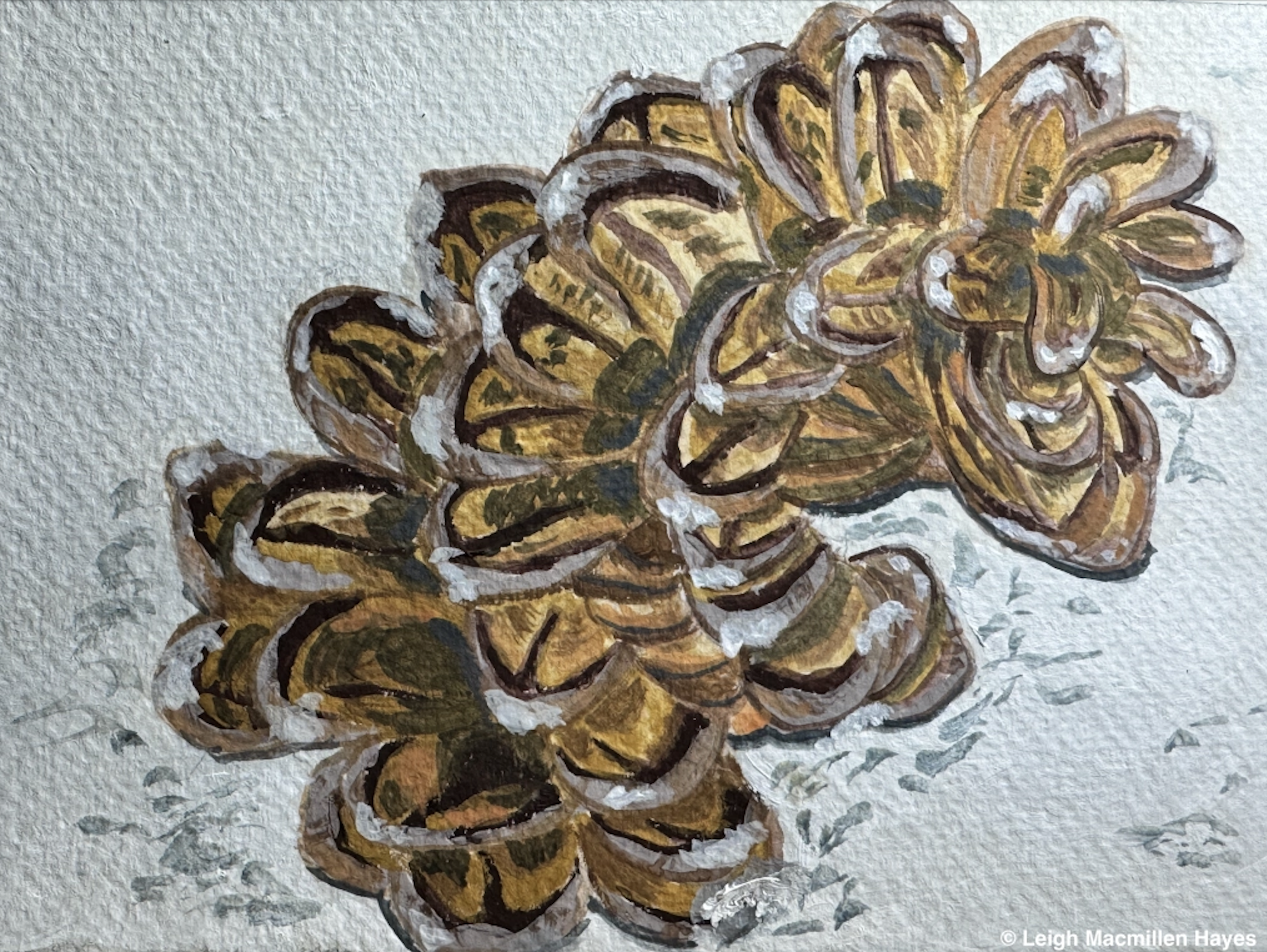
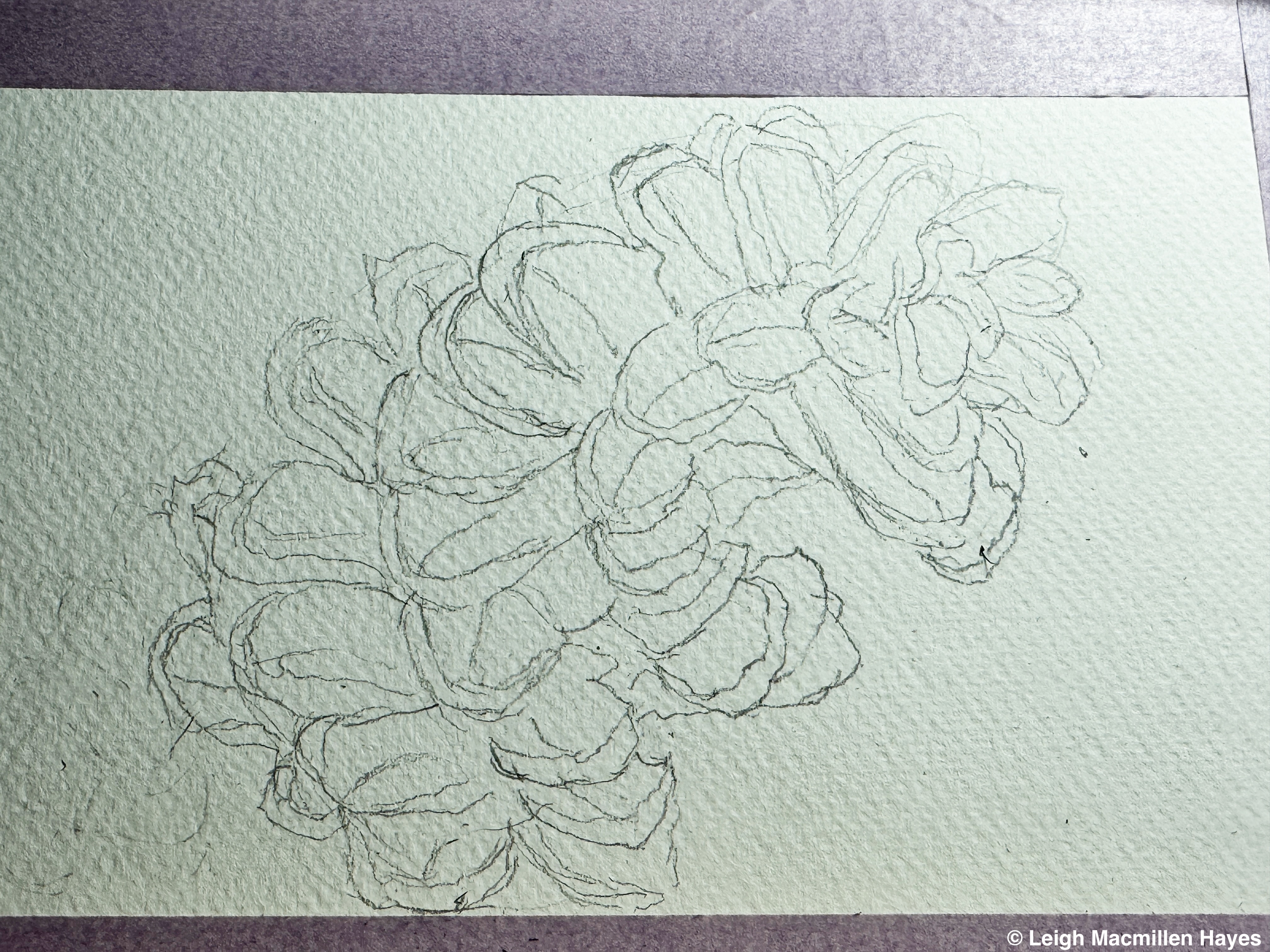
The White Pine Cone was something I started to sketch and then left for a long time, until I realized the scales were all arranged in a spiral of course and bingo, I knew how to go about it.

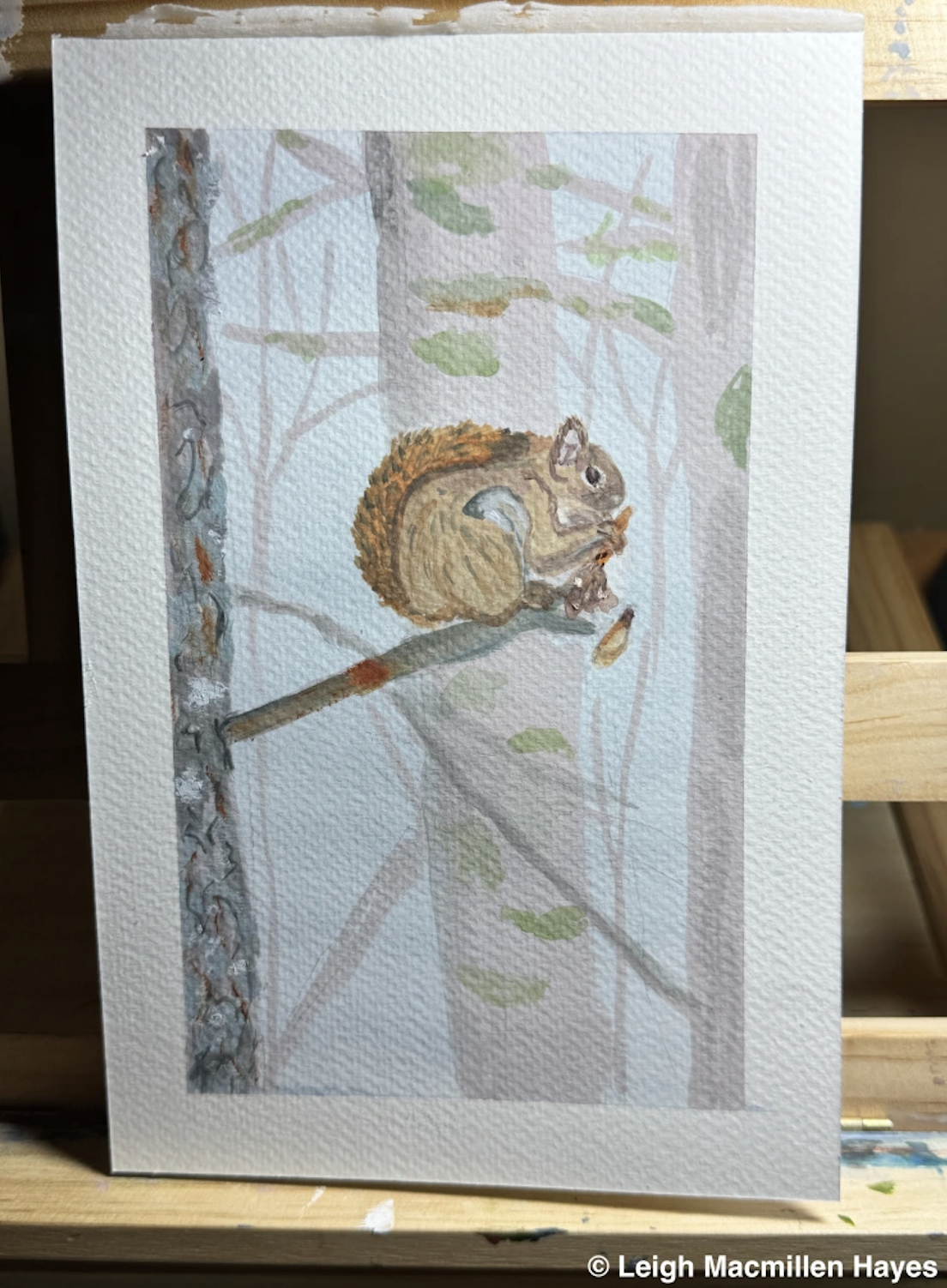
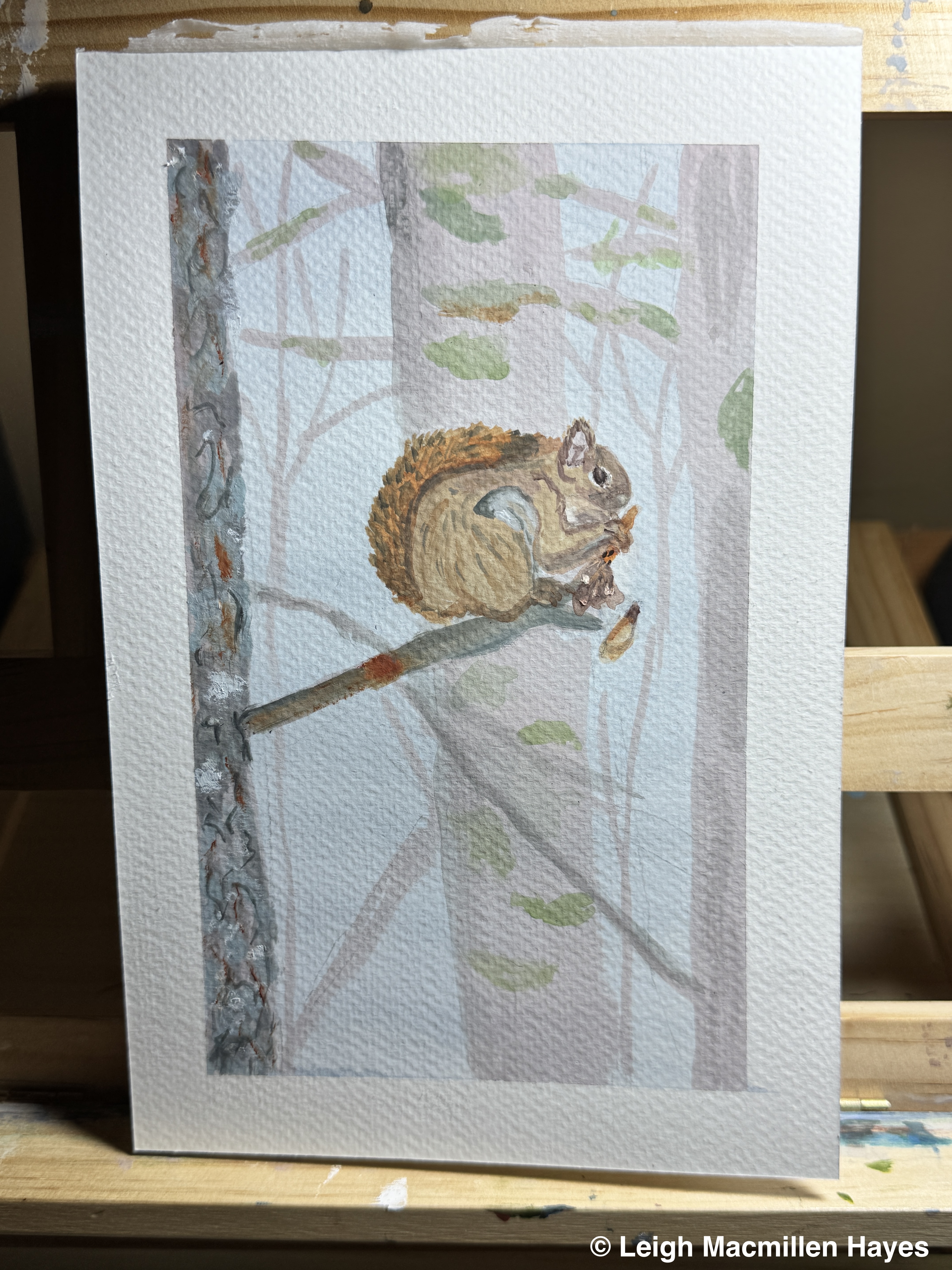
Turns out, I’m not the only one who knows to go about it–for Red Squirrels love to take each pine cone scale off in order to get to the seeds stored by such. Their method of descaling a cone is rather like us eating corn on the cob. I actually referenced both the pine cone painting and this one in Another Amazing Lesson from a Red Squirrel.

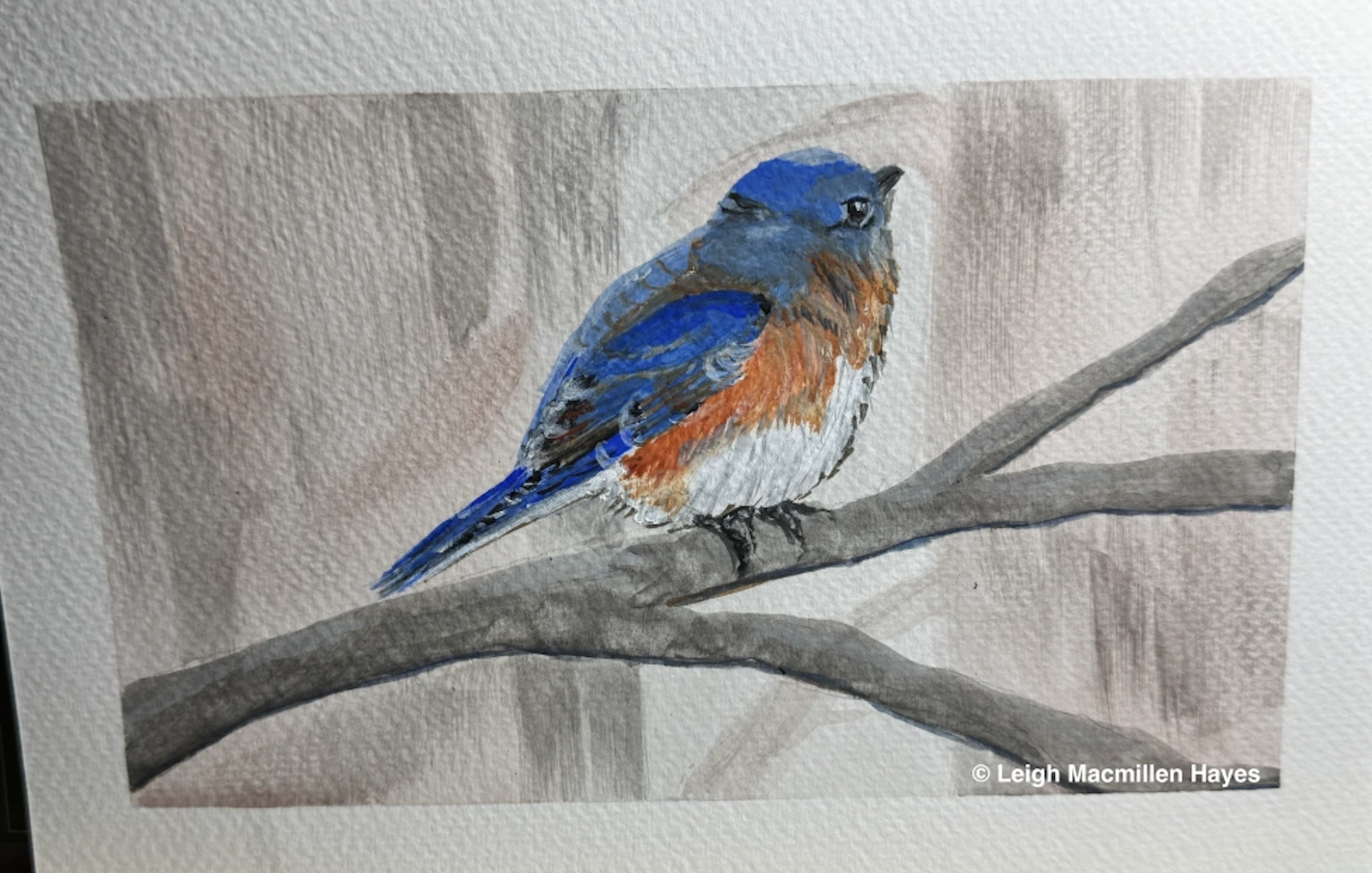
All last winter and spring, and into the beginning of the summer, my neighbor and I rejoiced because we had Bluebirds. In fact, a pair nested in one of our boxes, but that was around July 4th, and by the end of the week, she’d abandoned the nest. We’ll never know why.

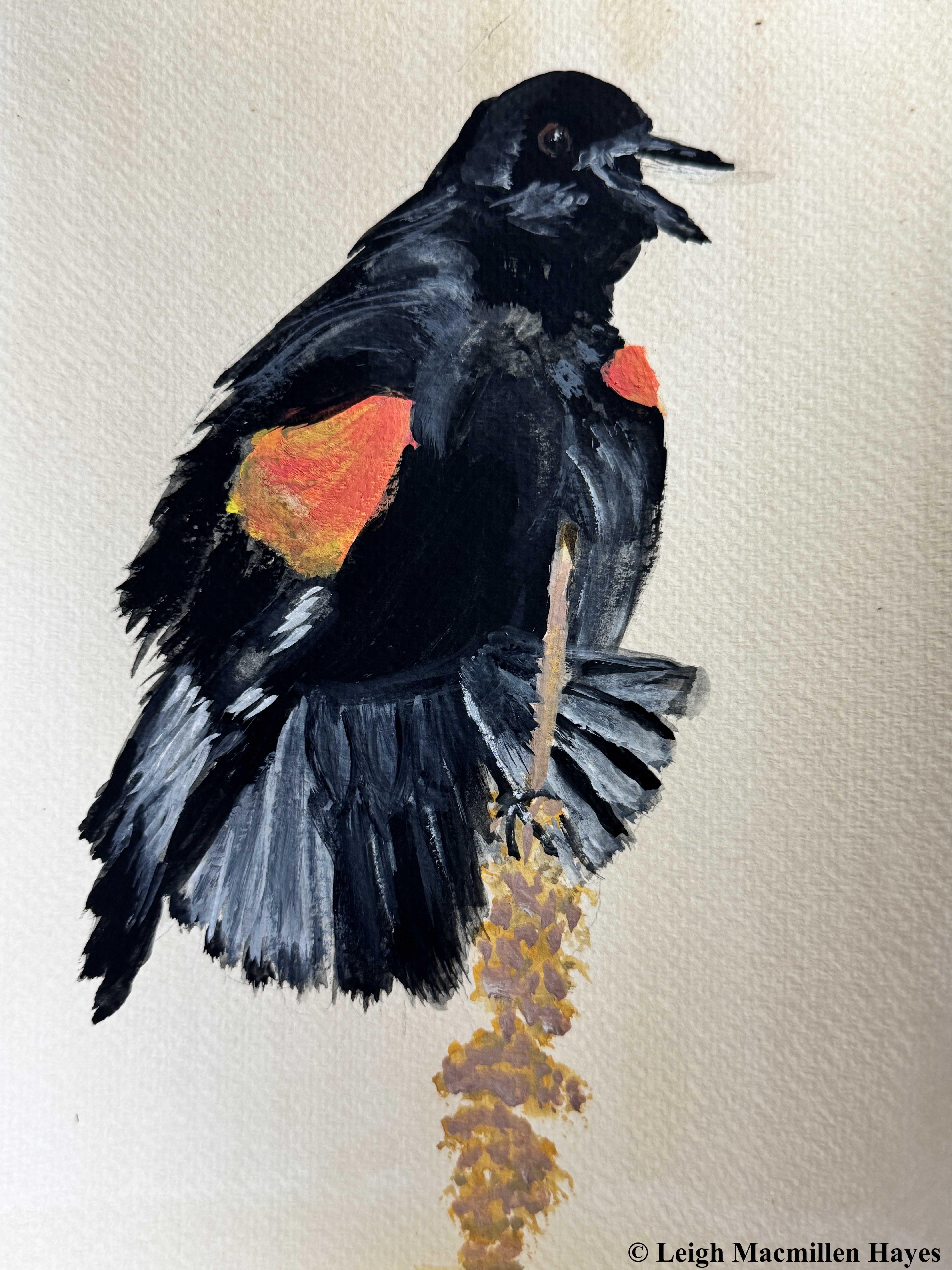
A few more birds coming up–including this male Red Winged Blackbird at Brownfield Bog.

A Sharp-shinned Hawk in the backyard and field.

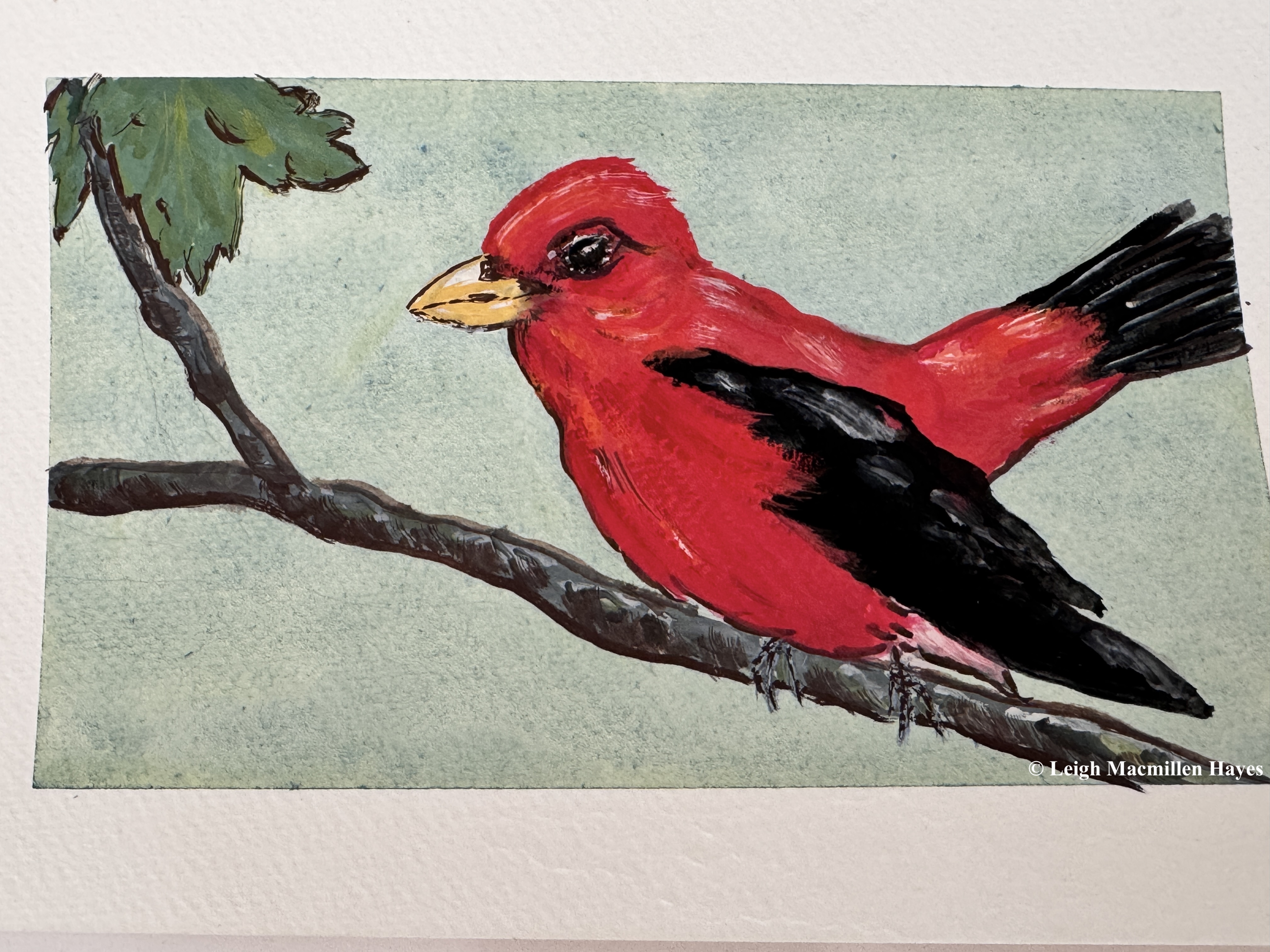
And a Scarlet Tanager on Mount Cutler in Hiram, Maine.

I did think I’d paint more butterflies, and perhaps this fall or winter I’ll attempt to, but it seems the Spring Azure is all I’ve done so far.

I’ve also made a couple of cards in the course of the year, this one for a First Grade student who was my penpal and she told me she really likes Dandelions. That girl will go far in life!

Another favorite topic of mine: Dog-Day Cicadas. If you type Cicada into the “Search” bar on my blog, you’ll discover several posts about these insects emerging. As I write, I can hear them “singing” from the treetops.

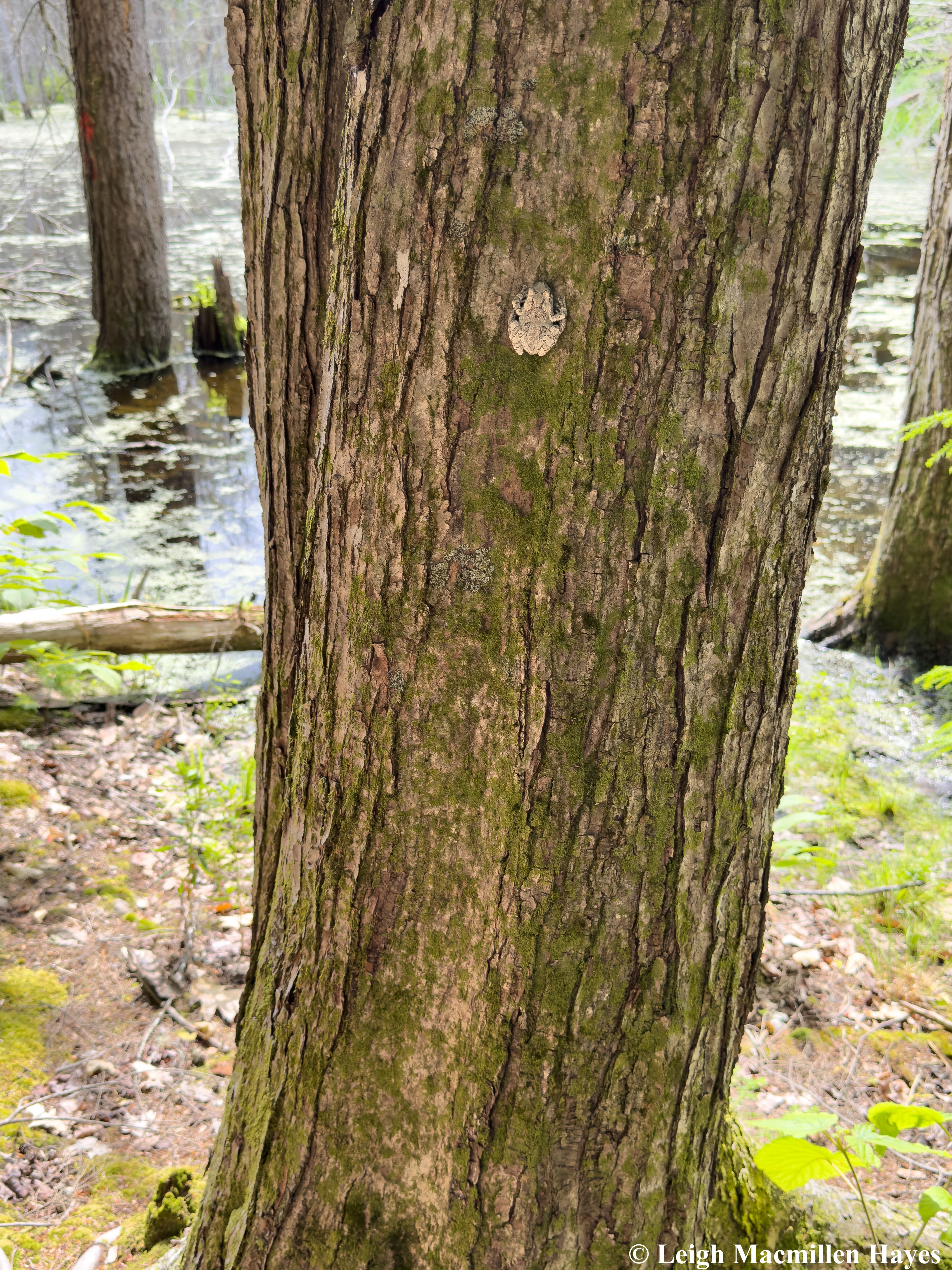
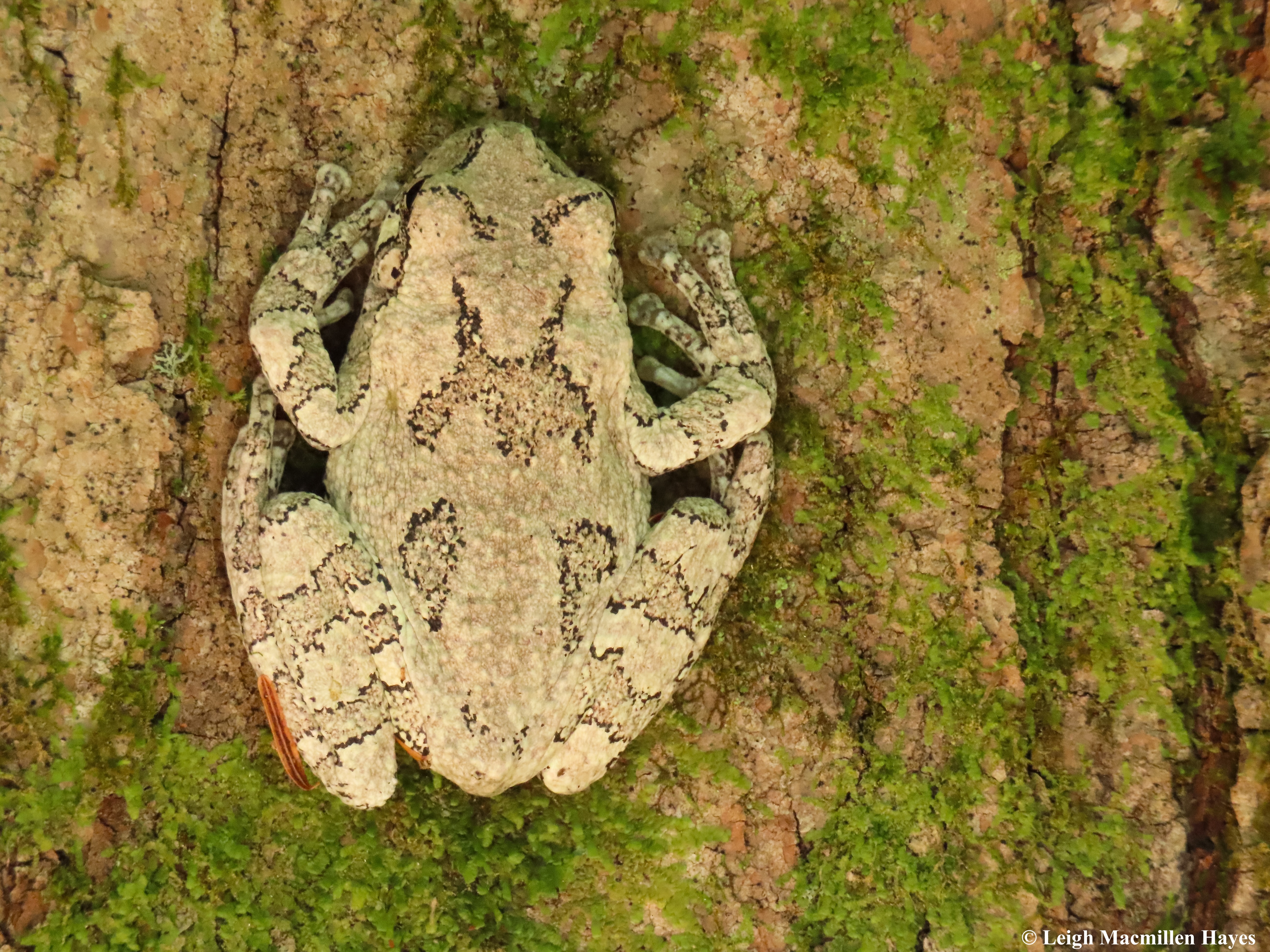
Sometimes, actually, more than sometimes, something catches one’s eye and this Tree Frog was one of those times. A friend and I had stopped to talk about a Snapping Turtle that seemed to be late laying eggs, and bingo, there was the frog on a tree.

Speaking of frogs and other critters who rely on vernal pools, visit MAG and you’ll find my Vernal Pool series, including a Fairy Shrimp that looks WAY bigger than its actual 1 – 1.5 inch size.

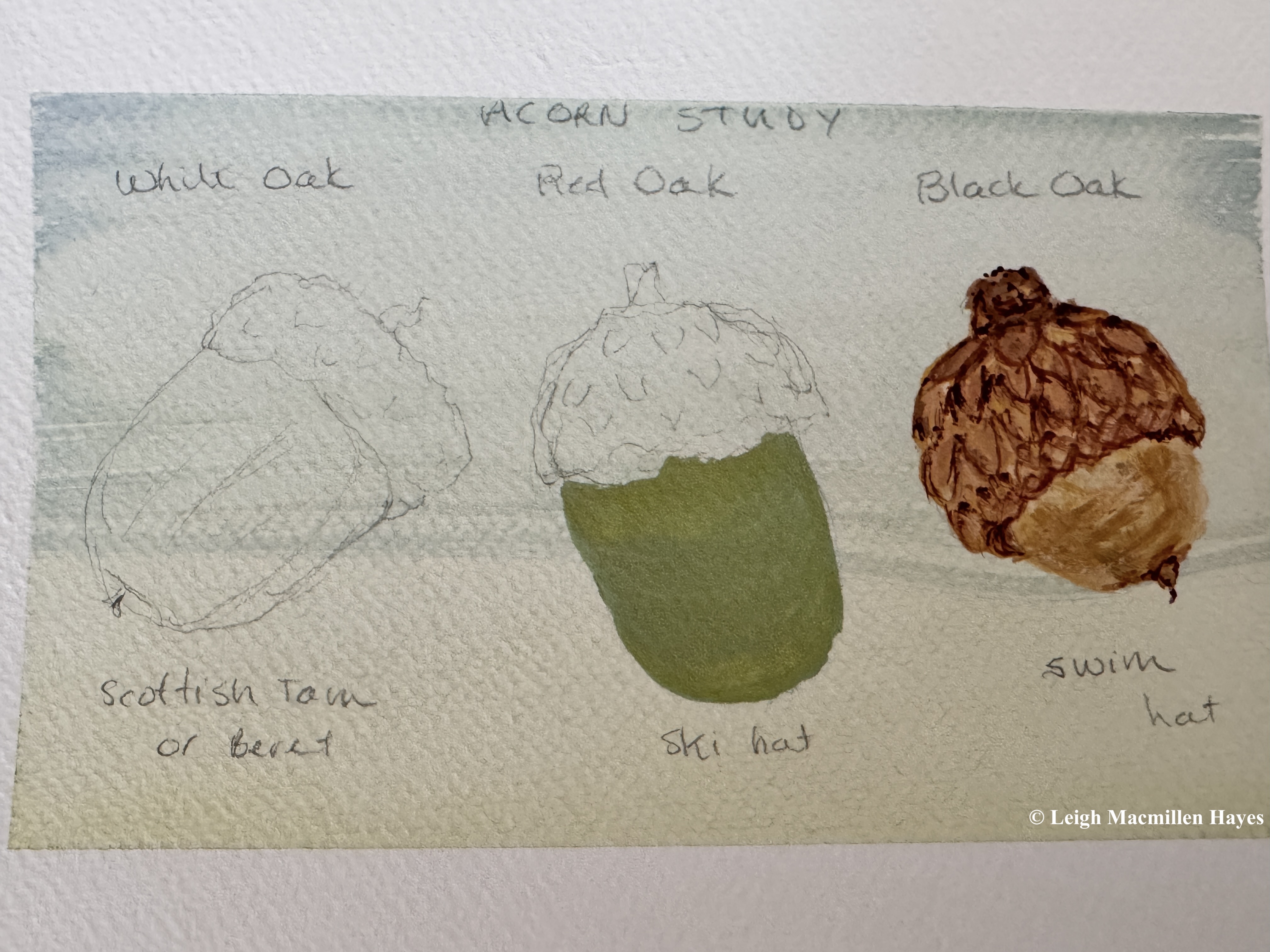
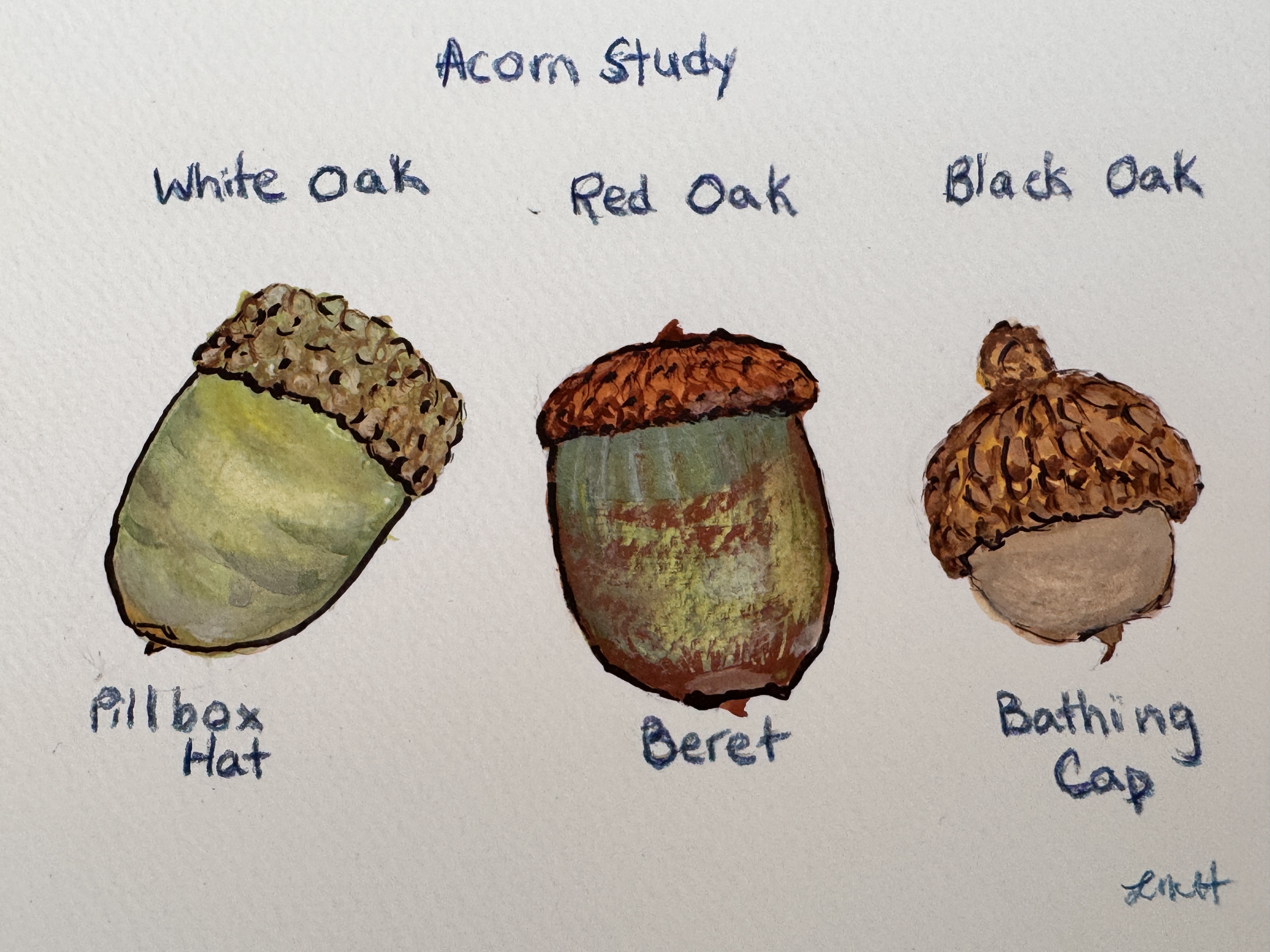
And then there was the day I pulled out a copy of National Audubon’s Field Guide to North American Trees because I wanted to get to know acorns better. Silly me, I came up with names for each one based on what they looked like to me, but I made the mistake of writing the names in pencil before painting a light colored wash on the paper. As I began to paint the acorns, I realized I wanted to change their names, but couldn’t erase them or paint over them. So . . .

I sketched them again, and gave them new names.

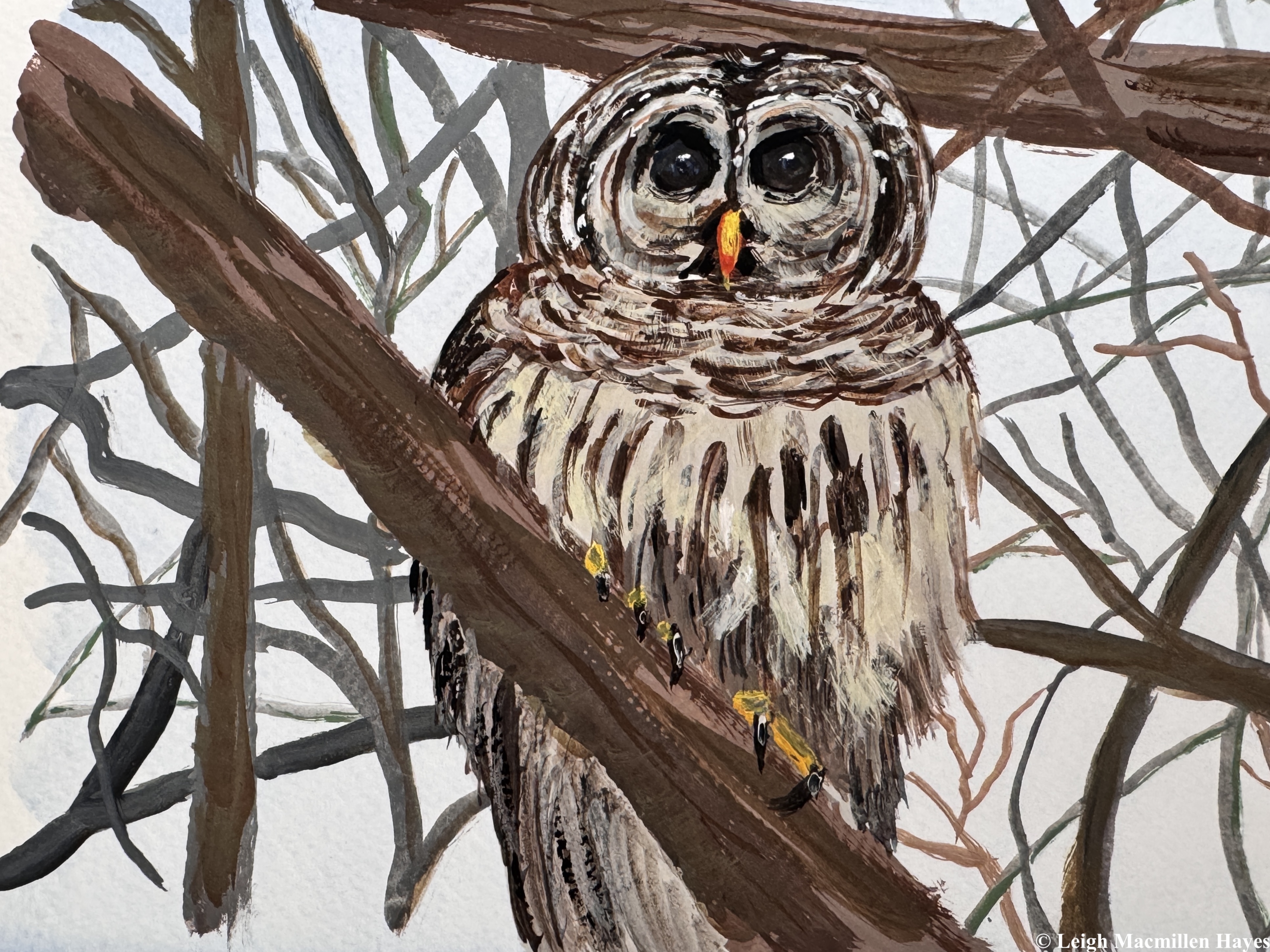
And finally the moment you’ve been waiting for, today’s painting:

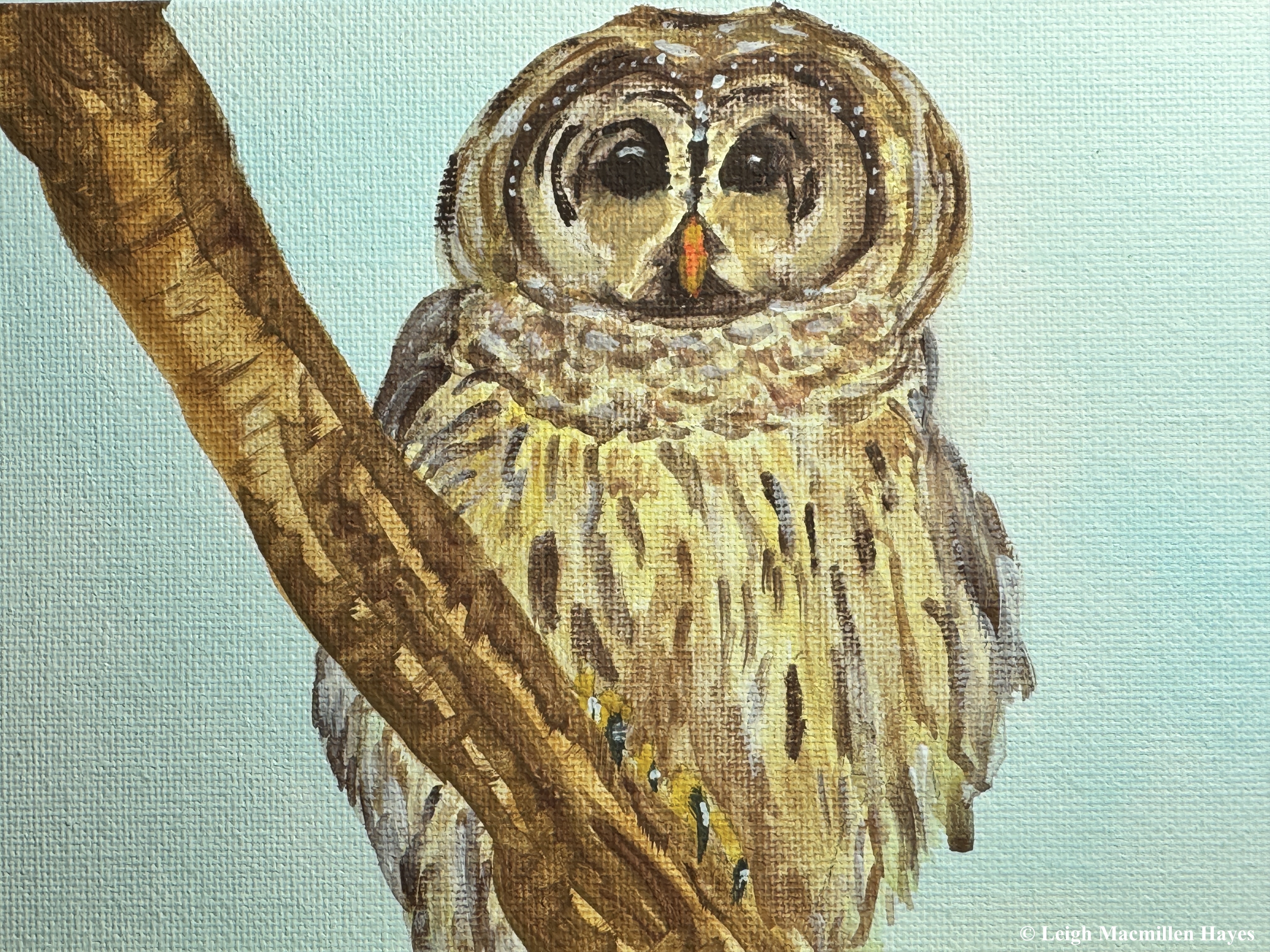
I always like it when I try iNaturalist’s SEEK app on a painting and it agrees with me. Barred Owl it is.

Wow, I had no attention of pulling this all together today until about an hour ago when I was sharing photos with my sister and realized I hadn’t sent her any in a while. So thank you, B.S., for being my inspiration today . . . and always.

And thank you Dear Readers, for sticking with me today and always as I share My Artistic Path: one year later.

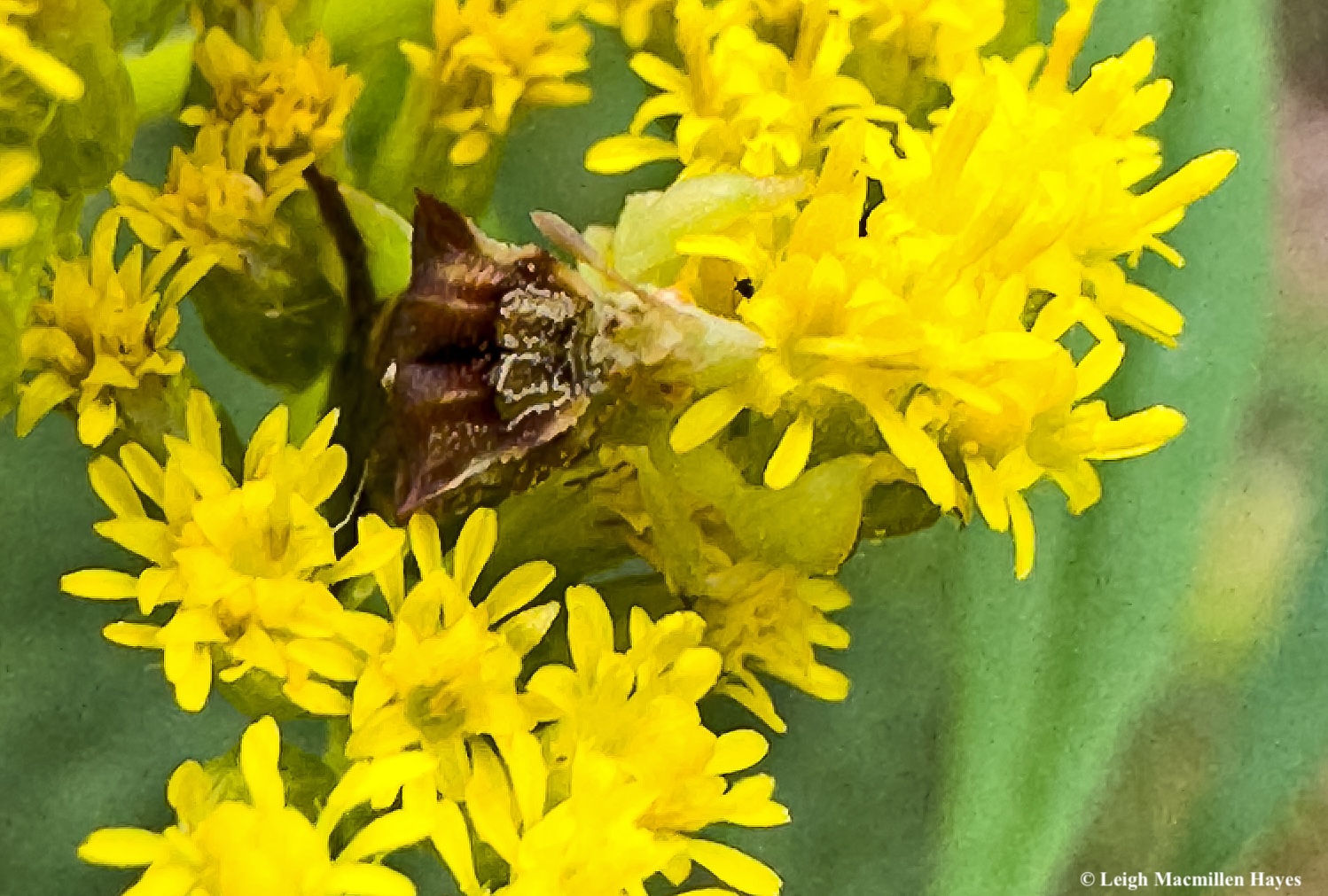
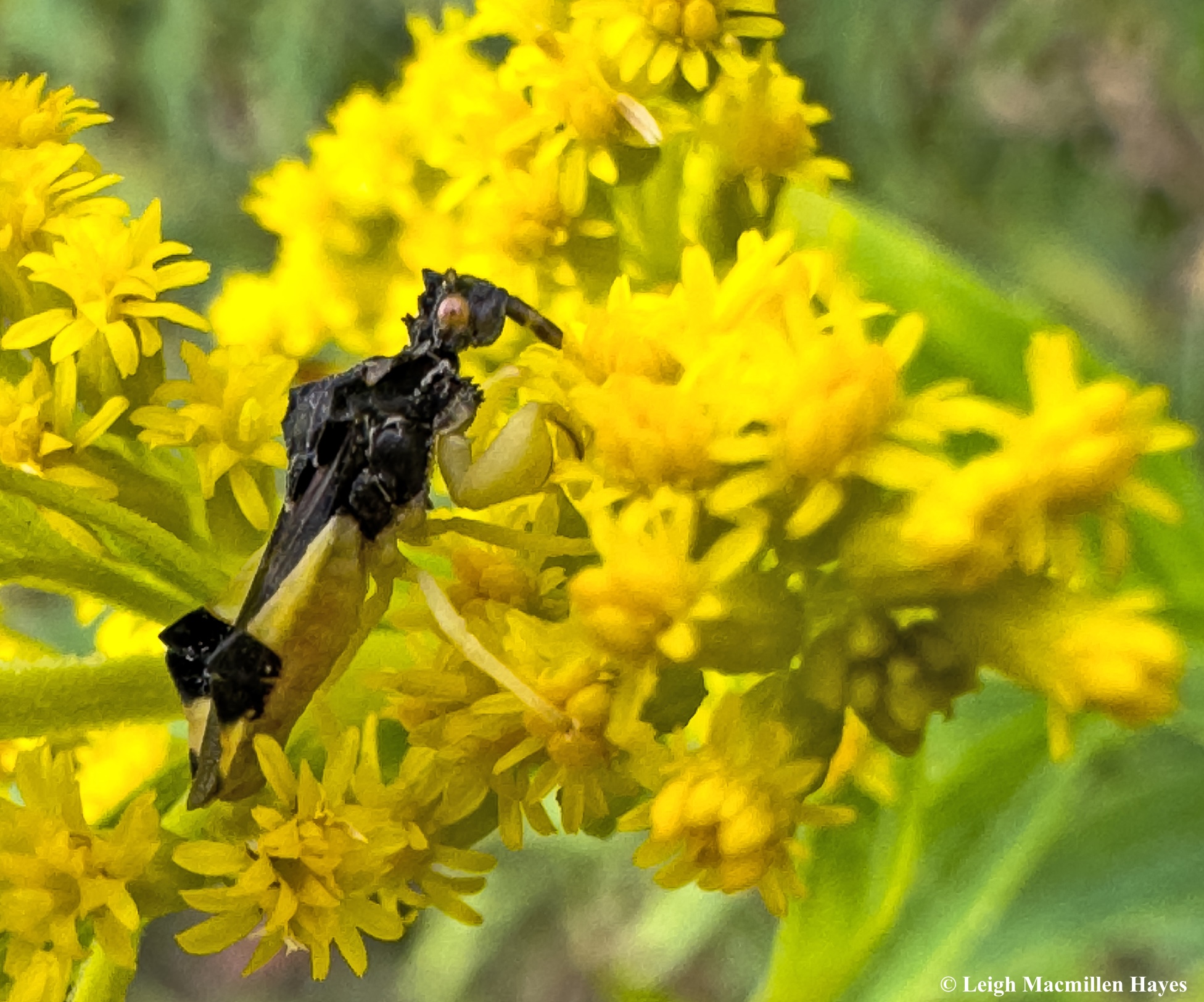
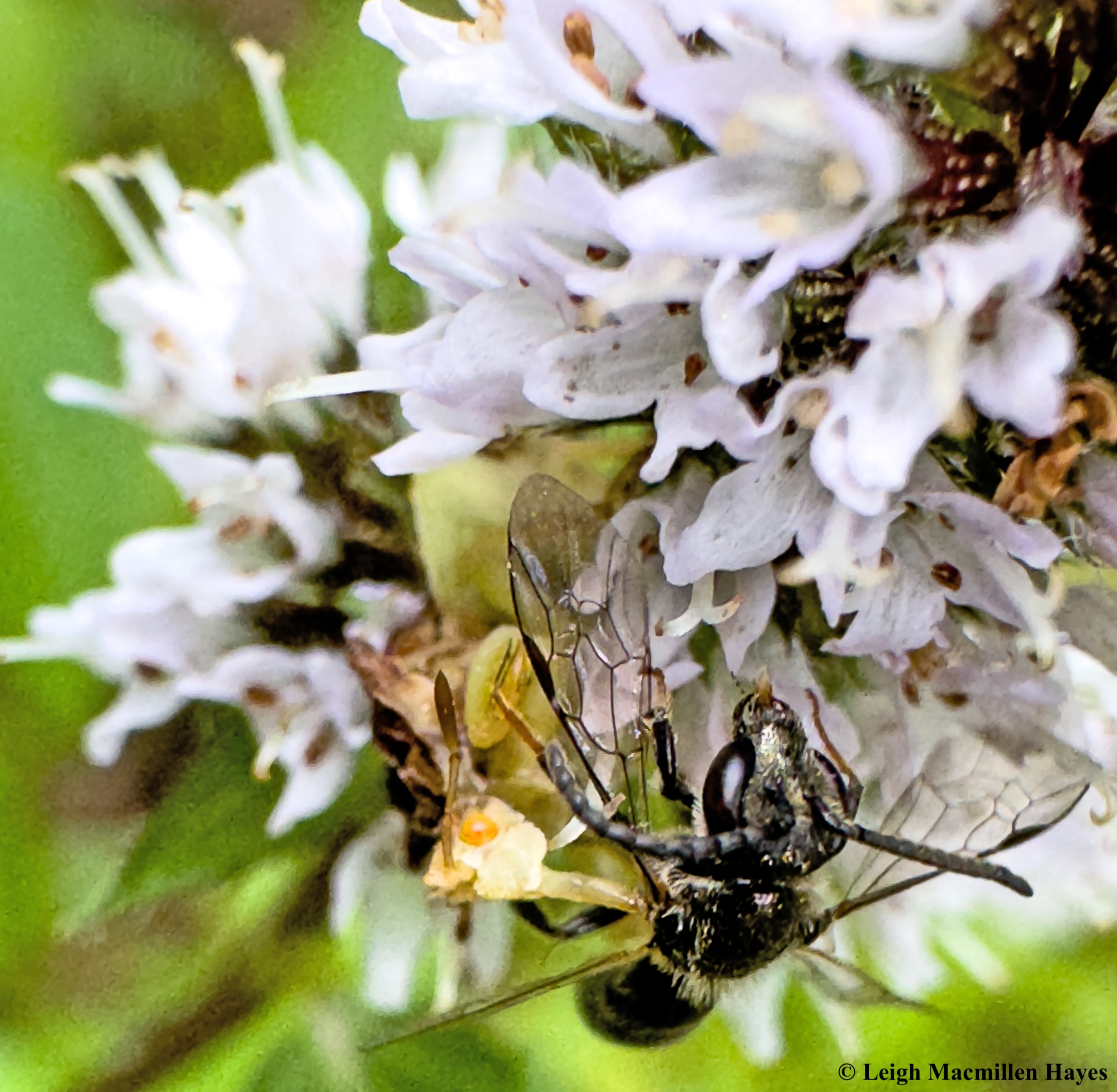
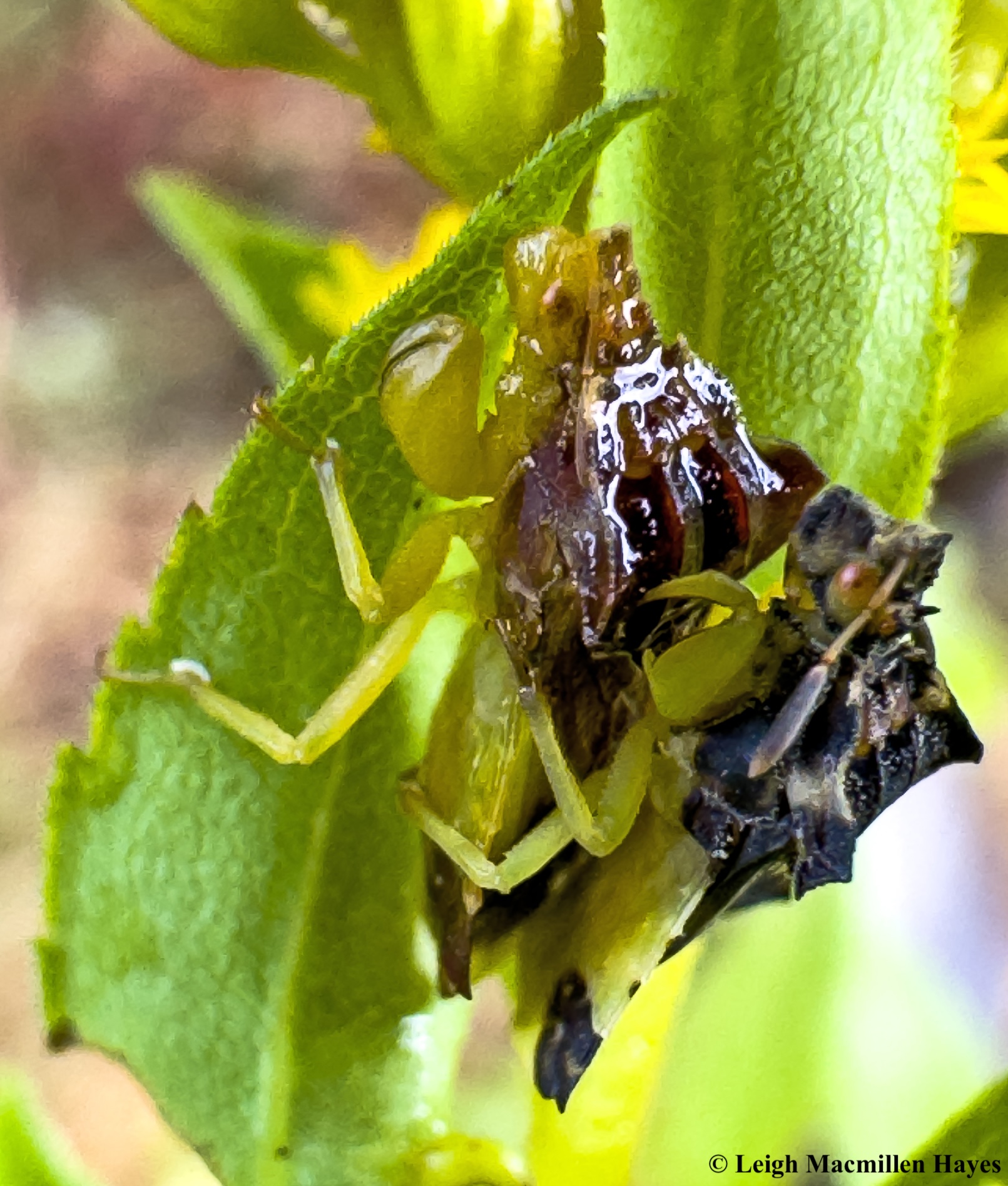
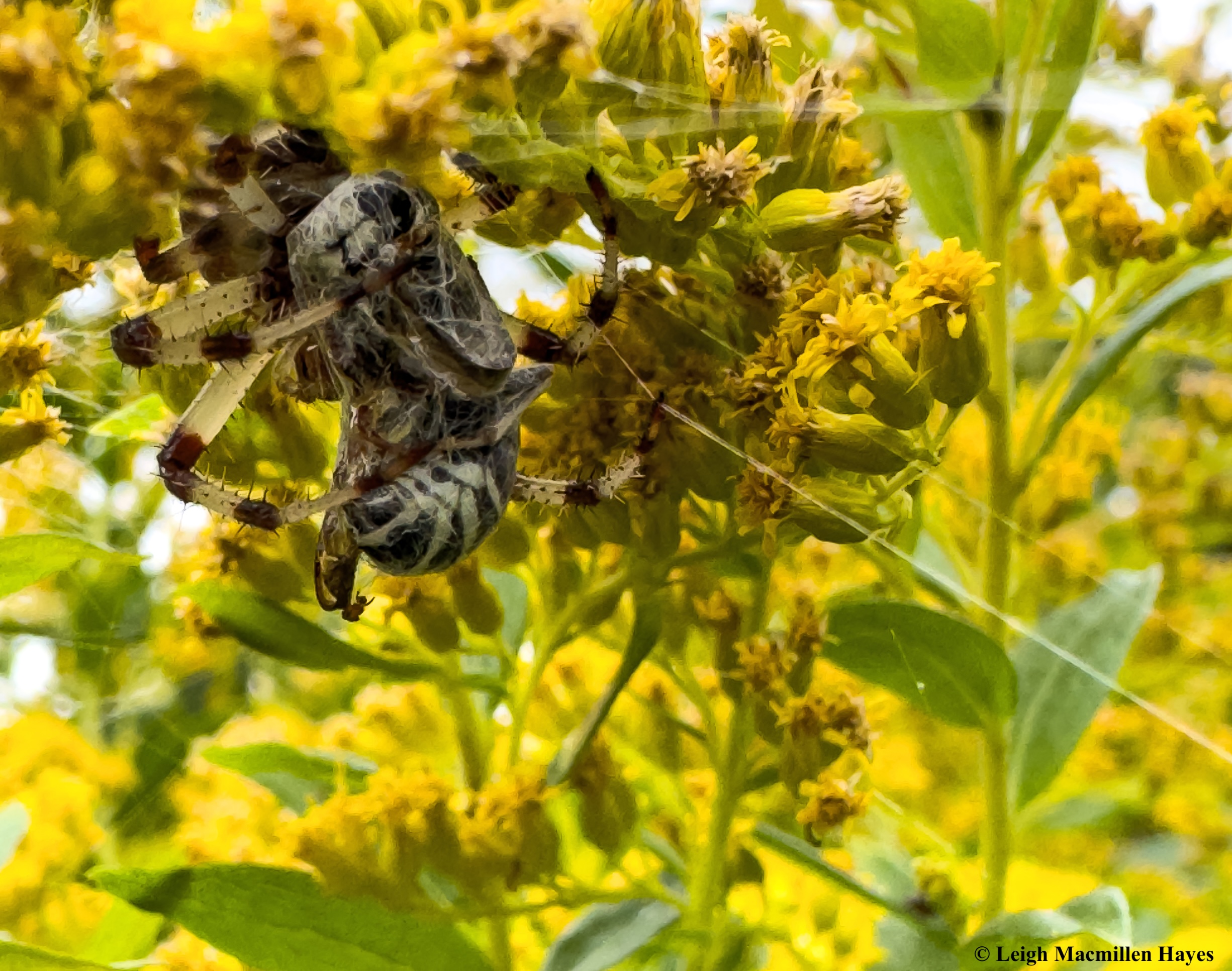
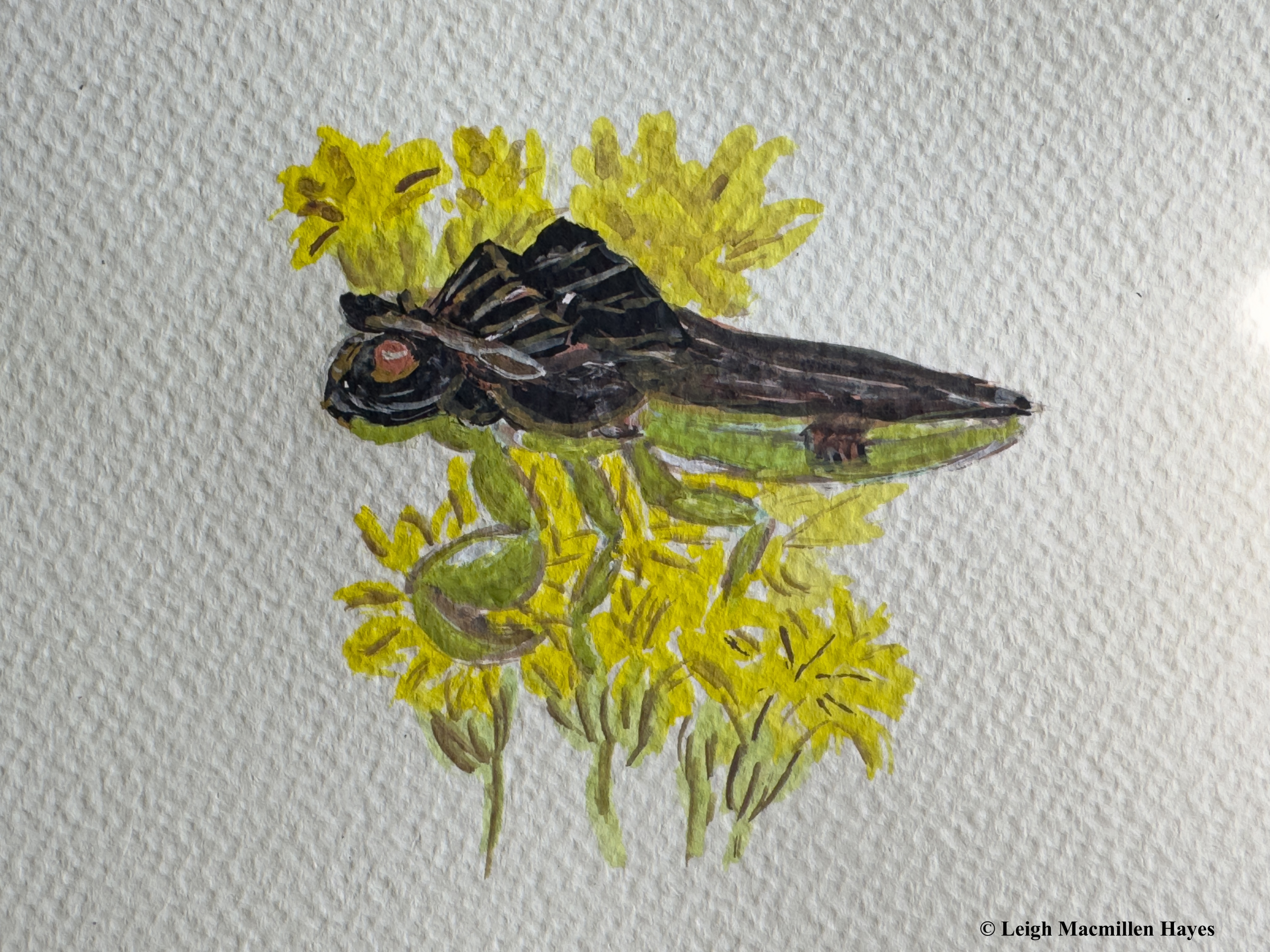
The Phymata Genus: Geniuses

You lurk in the midst 
Of Goldenrod flowers
Seeking the right moment
To earn your given name.
Mixing the color palate
With greenish-yellow,
White and brown hues,
You are well camouflaged.
Small, yet bulbous eyes
Watch with intensity
Waiting for prey
To approach.
Raptorial claws on muscular legs
Grab, and then impale
The victim’s body
With your short beak.
Meal size
Is of no importance
As you’ll take
Anything you can reach.
Once immobilized,
You inject paralyzing saliva
That liquifies its innards
Into nutrients you sip.
Sometimes you attack
When you are
In premarital status,
Which can last forever.
Being the smaller, darker male
You remain on the female’s back,
Guarding in hopes to claim her
When the time is right.
Your antennae twitch
As you tap forelegs,
And finally convince her
To join you in a canoodle dance.
Stealthy are you
With camouflage capabilities
And predatory prowess
That aids a healthy ecosystem.
Your swift hunting technique
Targets a variety
On insects both beneficial
And those that are pests.
As I hunt for you
I realize you are not alone
For others use the same flowers
To hide amongst and wait.
But today, let’s celebrate
You in the Phymata genus,
The Jagged Ambush Bugs,
Geniuses that I think you are.

Resurrecting the Resurrection

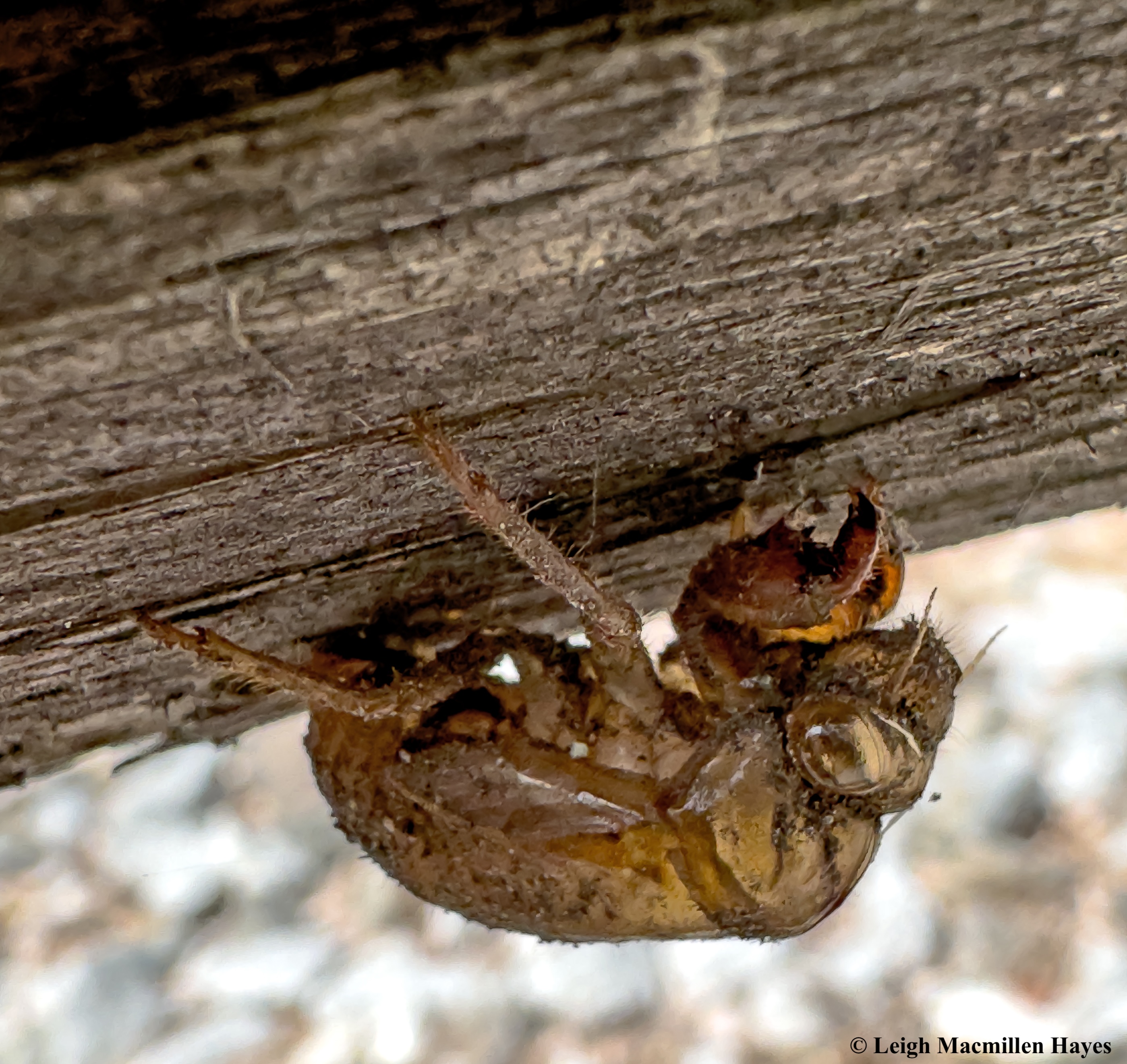
This afternoon I met a young girl, probably about seven years old, who patiently waited as her mother ran some laps on a local trail and because I’d just started to notice the exoskeletons of Dog-day Cicadas, one of my favorite summer insects (besides dragonflies, mind you), I started to point them out.


At first look, she stepped way back, and told me they were too scary. They are. But then I picked one off the fence and she was intrigued but still apprehensive. I explained the life cycle and that this was no longer a living specimen and then I placed it on the ground and told her if she wanted to pick it up or show her mom, I’d leave it for her.

She did show her mom and then she caught up with me again and one by one, started to point out all the specimens along the route.

Eventually the mom joined us and said she’d only heard and seen the Seventeen-year Cicadas and did not know that we have Cicadas in Maine.

They decided they’d go home and look them up and see if they could watch a video of the adults emerging.

And then . . . my little friend found one.

I told her it would take about three hours for the process to be completed. She thought maybe her dad and sister would like to come back to see them, but was sure her sister would be frightened.

Whether they did or not, I’ll never know as I’ll never know her name for we didn’t exchange such. I was just thrilled the she had the chance to see such a miracle, one of the many wonders of the world, take place and that she had spied it before I did.

A few steps later and her mom spotted one that had fully emerged, but wasn’t yet ready to fly to the tree tops to sing its raspy love song.

When we departed I thanked them both for sharing the experience with me and I have a feeling that young girl will be looking in the future. She did tell me that she likes dragonflies and butterflies and grasshoppers, but not other insects. I suspect Dog-Day Cicadas may have been added to her list on the drive home.

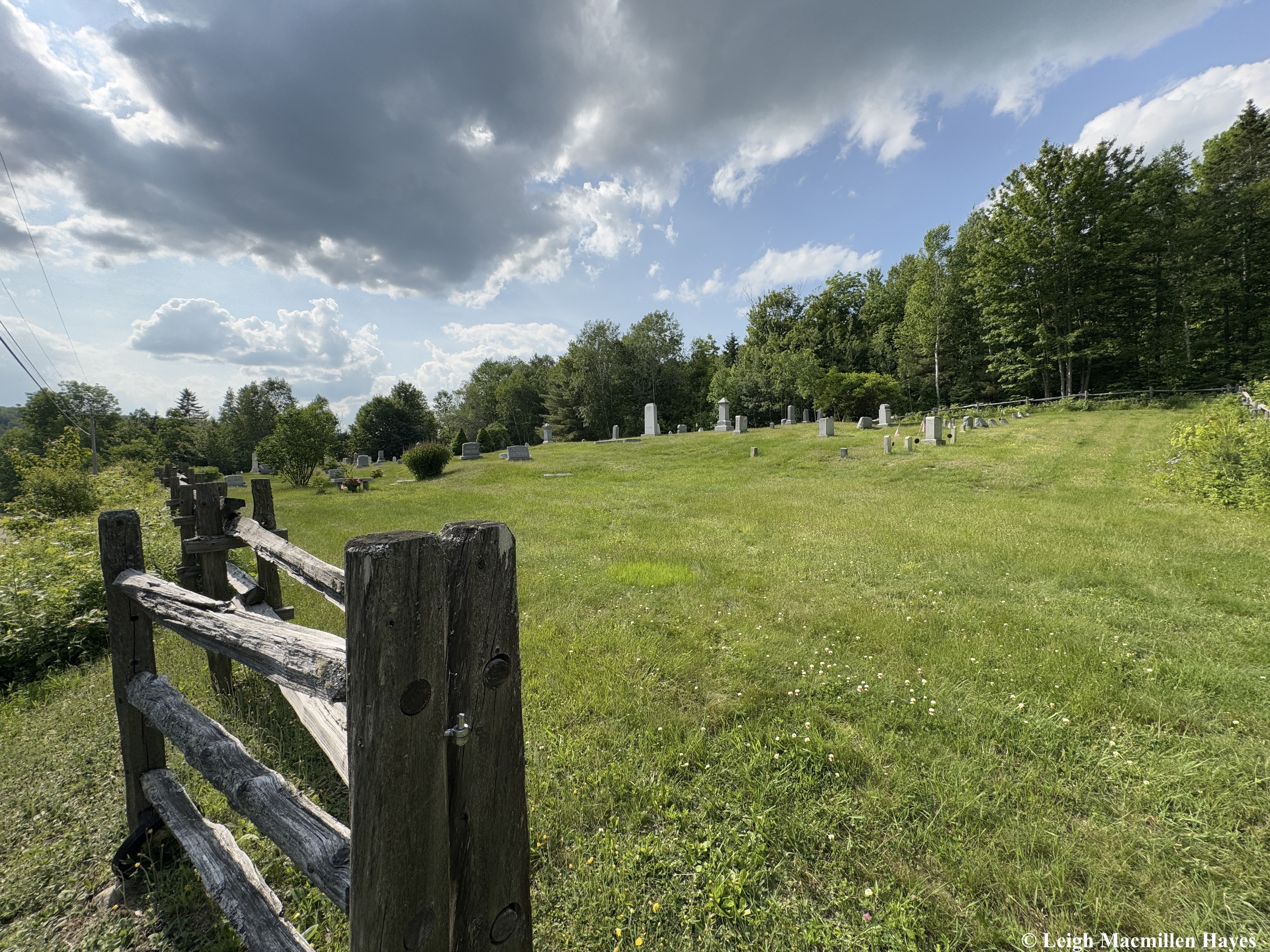
And now, because I can, I share with you once again my tribute to these amazing insects. The cemetery referenced is in Lovell, Maine.

Resurrection
By Leigh Macmillen Hayes, 7/19/2020

To walk into a cemetery on a summer day
And find an insect metamorphosing upon a stone
I begin to understand the process of resurrection.

A life well spent questing sap for sustenance
Prepares to crawl free of its past
And reach for heavenly aspirations.

Through a tiny slit, a spirit no longer contained
Emerges head first as a teneral shape develops
with bulging eyes to view a new world.

Gradually, a pale tourmaline-colored body extends outward
With stained-glass wings unfurling
That provide baby steps toward freedom beyond.

I mourn the loss of your former soul
But give thanks for a peek at your upcoming ascension
From this place to the next.

It is not for me to know when you will first use the gift of flight
As I didn’t know when you would shed your old skin,
And I quickly offer a final goodbye when I see your wings spread.

I rejoice that I’ll spend the rest of the summer
Listening to your raspy love songs
Playing nature’s lullabies upon violin strings from above.

On this day, I celebrate the secrets of a cicada’s life,
Dying to the old ways and rising to new,
While I wander among the graves of others who have done the same.

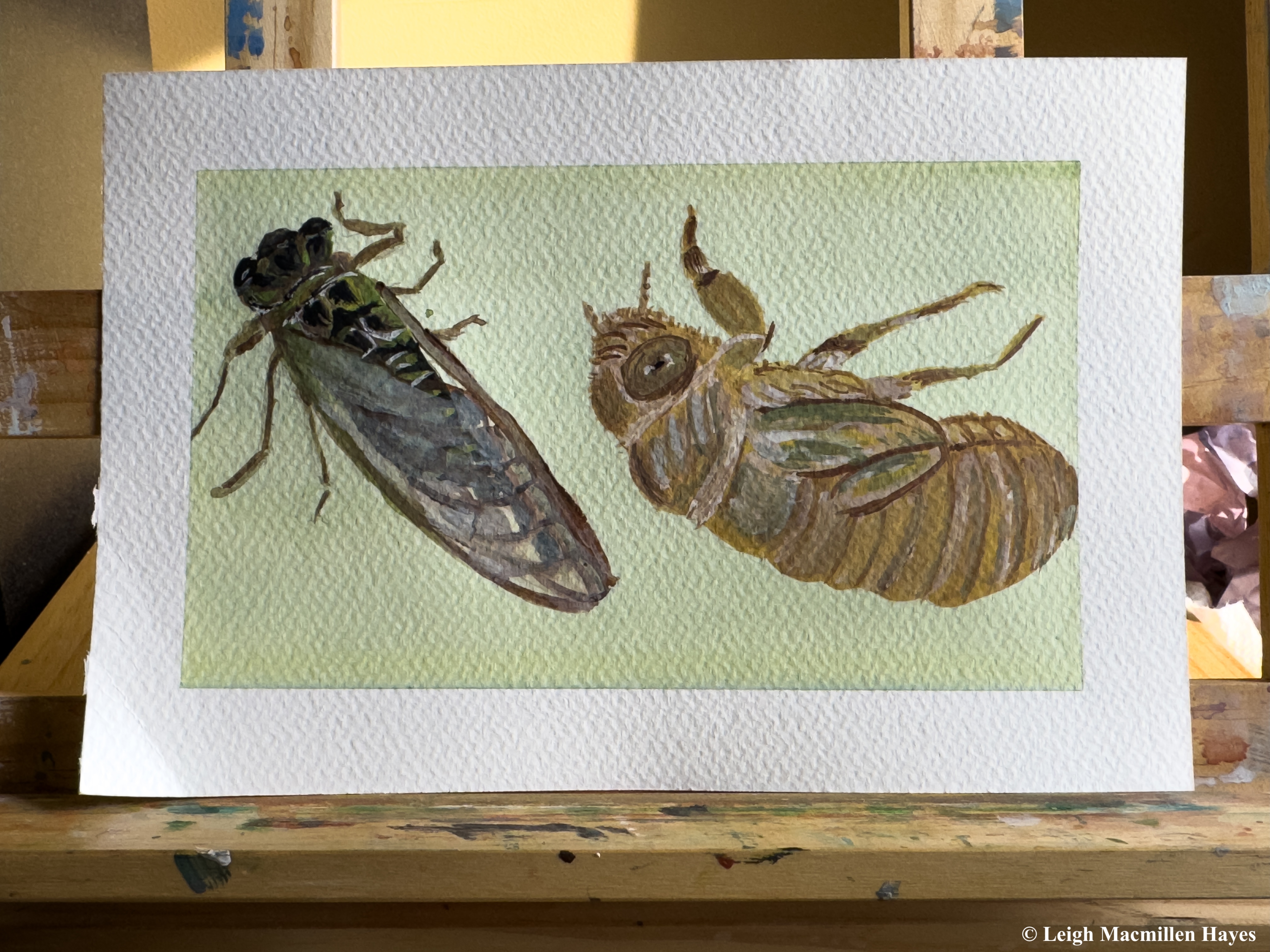
And here’s today’s tribute, which still needs some tweaking, but that’s the beauty of working with gouache paints. I can easily make changes when the mood strikes.

Thanks for stopping by as I resurrected the Resurrection.

Great Blue Herons COUNT

Community science, aka citizen science or participatory science, is an opportunity that allows laypeople like you and me to contribute meaningful data in a short amount of time that researchers can use to inform larger conservation efforts. And along the way, we get to learn more about a particular species, as well as those who share the same habitat.

For the past 25 years, I’ve had the pleasure of being involved in a variety of such local research projects, and one of my favorites is HERON Observation Network of Maine. For the last 16 years, friends and I have monitored first one and then several Great Blue Heron Rookeries (colonial nesting habitats).

With landowner permission, we visit the rookeries several times between May and July and our job is to count the number of nests, number of active nests, inactive nest, adults, adults incubating, young, and fledglings. It’s rather intense work to move binoculars or cameras from tree to tree and some trees have double or triple-decker nests, and some nests are tucked into the background, and young can be difficult to see if they are so tiny that they are tucked down into the nest, and it’s easy to get confused and then have to start all over again.

Ah, but I can’t think of a better place to be on a summer morning than in these wetlands where aquatic life explodes in color and sound and texture and even life and death.

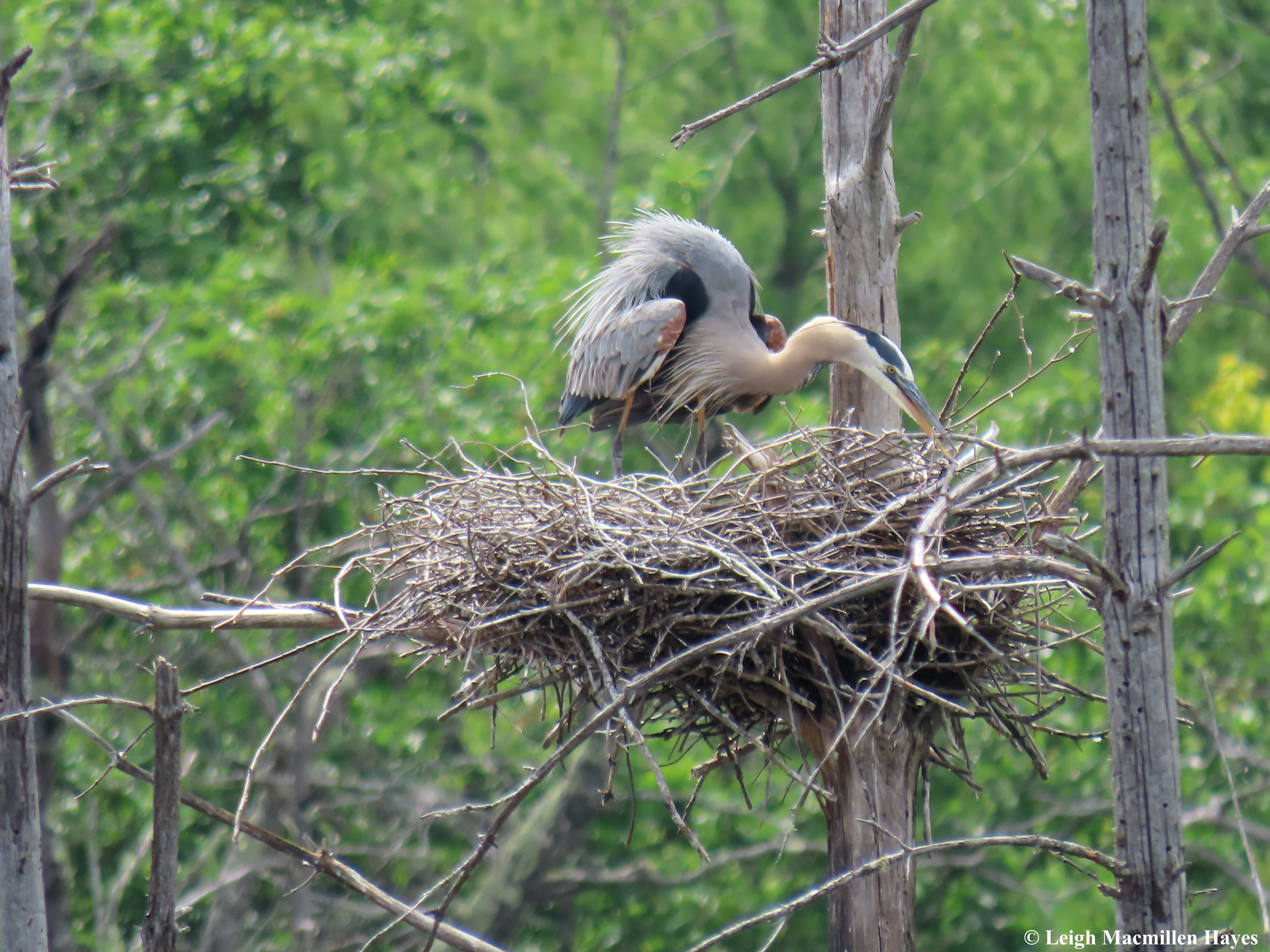
Sometimes it looks like a female is merely rearranging sticks to create a stronger nesting site.

But then . . . much to our surprise and delight, a fuzzy head is spotted and we know we have babes to look for, and suddenly that makes the job more difficult.

Especially when one head turns into two and we have to add another line to the tally sheet while the adult cools off and seemingly shades the youngsters.

The adults, meanwhile, not only take turns tending to their young, but they also take turns heading off to fish for meals. And when one is secured, that adult flies back to the nest and takes a few minutes to semi-digest the food.

At this point, the young begin to squawk, and I’ve often wondered if their sounds encourage the regurgitation that follows.

Ever so slowly, we can watch the food item come up the big bird’s throat and then with mouth open wide, it coughs and tada . . .

The young ones are happy to dine on their own form of baby food.

Even as they grow, the feeding ritual continues. One parent will fly in and join the family, while prepping the meal delivery.

And the other will fly out the back door in search of more to fill those ever-begging mouths.

And the kids will squawk until the remaining parent provides.

As weeks turn to a month or more, the birds turn into tweens, growing to the point where one wonders how they can all still fit in the nest, despite the fact that Momma built it to be about three feet wide, using sticks that Daddy provided.

And those tweens, like so many of their human counterparts, start to preen between meals, fixing their feathers over and over again.

Preening is important for several reasons: to keep feathers clean, free of parasites, waterproofed, and properly aligned for optimal performance because that first flight is getting closer and closer.

Despite all their preening, however, the younger birds are still dependent upon their parents for meals on wings because they haven’t yet fully fledged and started their own hunting habits.

In the midst of taking count, life happens all around us and we rejoice in any other sightings that might distract, even if it means starting the count again. That’s why, at one of the larger rookeries, we have a few landmark trees so we know if we get confused we can locate said tree and count from there.

We also try to keep track of where each nest is located in the landscape, but if you were to read my notes, you might get totally lost. I do!

Other distractions include Red-winged Blackbirds, even if their meal of choice is one of our beloved dragonflies.

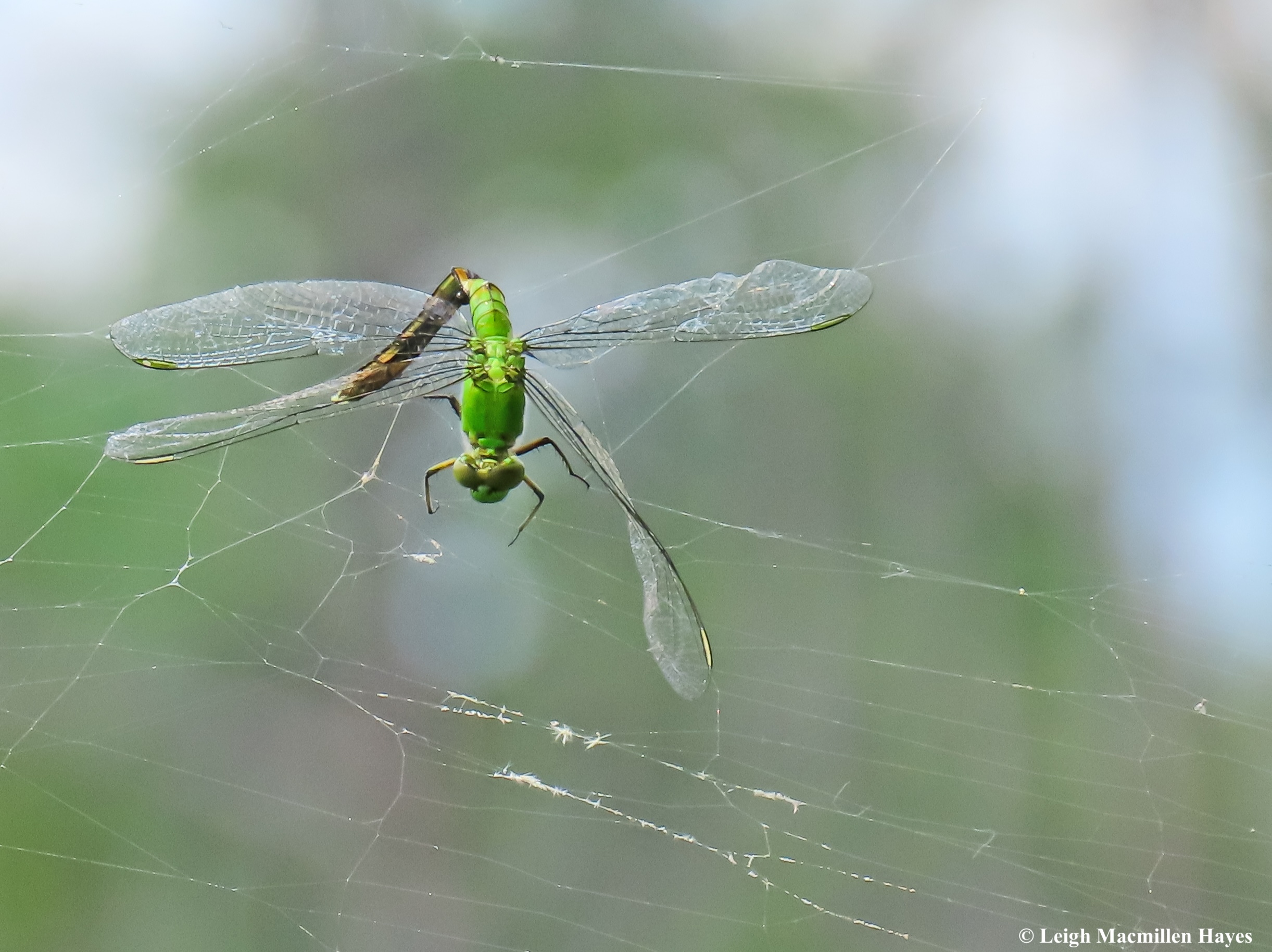
Spiders also make meals of dragonflies, but despite the fact that this female Eastern Pondhawk Dragonfly got snagged, she was still a picture of beauty.

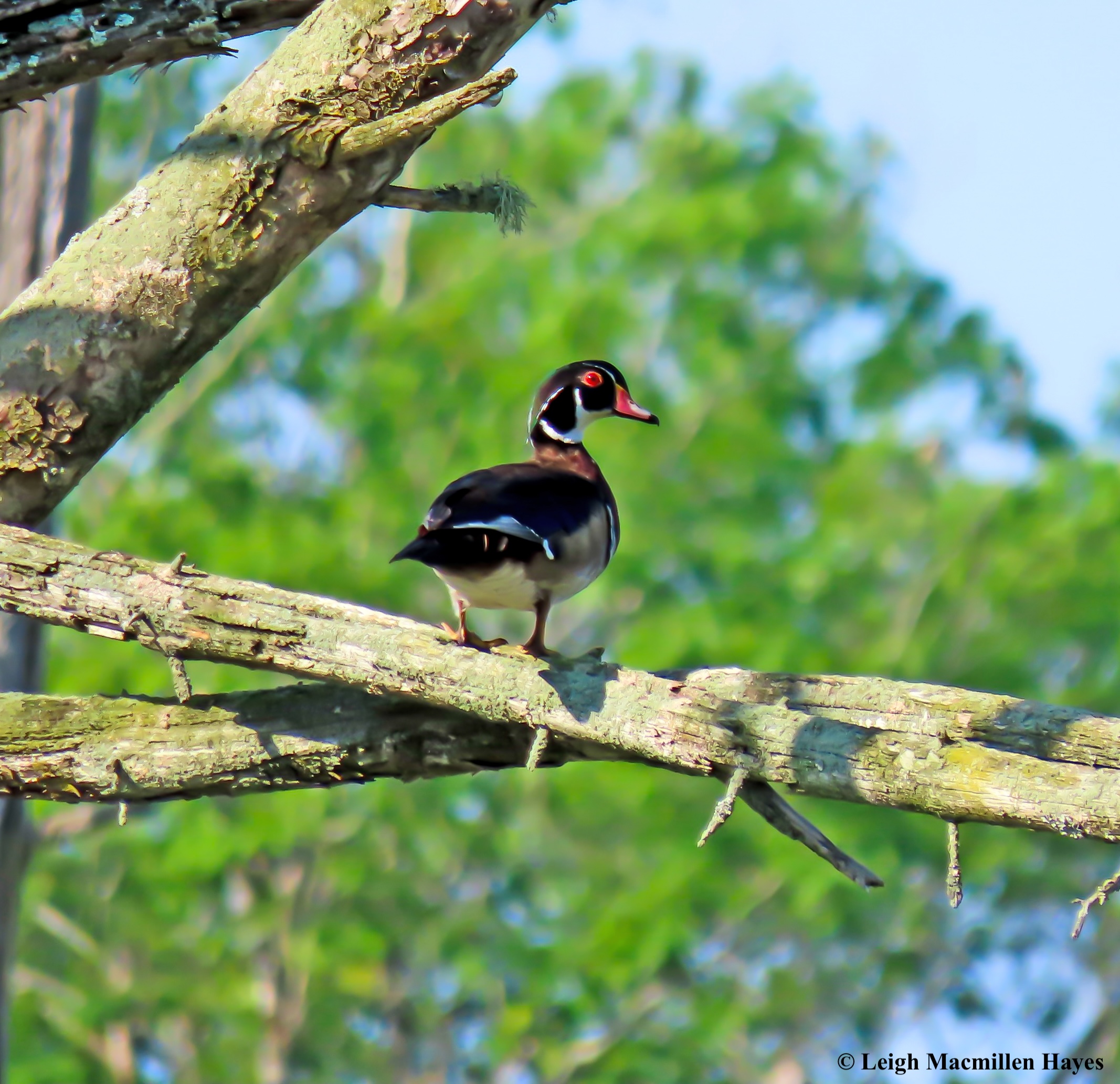
And usually when we spot Wood Ducks such as this male, they fly at the first inkling of our invasion into their space. But when you are far enough back and tucked into the trees beside the wetland, sometimes you are offered a glimpse, and this was one of many in an old snag.

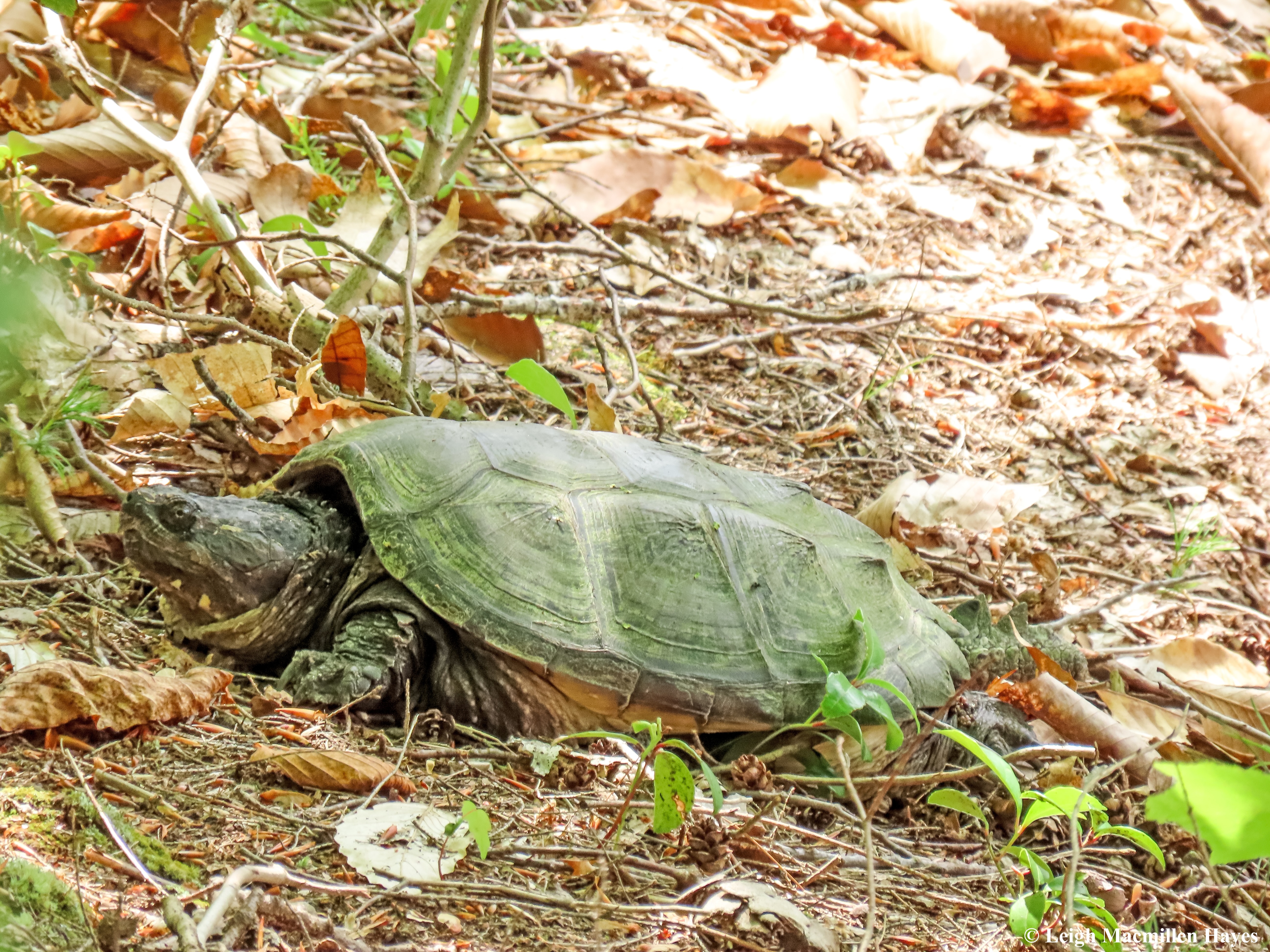
In the hike to and fro the wetland, there other offerings, like a Snapping Turtle on her way up a hill to lay eggs.

And while pausing to talk, a Tree Frog was spotted.

And we gave great thanks that it allowed us to invade its inner circle for a few moments. Look as those toes, the ginormous suction cups that they are.

Even a Little Wood Satyr added magic to the scene.

And under a tree we spotted a number of pellets full of bones. We don’t know the creator of the pellet, nor the food that was consumed, but someone had a favorite feeding tree.

And now the rookeries are empty and the tweens have turned to teens and must hunt for themselves. It’s a task that takes great focus, but those eyes are all seeing.

And the beak is quick to snag.

And though the meal may be small, its one of many to come and success is key.

I’ve tried to commemorate these morning’s with a few paintings, including this teen and its catch.

And an adult on the hunt.

The Tree Frog.

And one of the rookeries, this one being the most successful.

2025 numbers:

Rookery 1: zero nests as has been the case for about six years now and I suspect I’ll be told not to bother with that one next year, but then again, some other Great Blue Herons could decide it’s just the right place and build a new rookery. The last year that we saw nests and birds, a Bald Eagle was in the area and within a week there were no more Herons to count.

Rookery 2: 21 nests observed; 18 inactive; 3 active; 5 adults; 3 young upon the first visit in May.

21 nests observed; 21 inactive. Yes, all nests were empty two weeks later. We knew when we didn’t hear any squawking as we approached that things were not good, but we were totally surprised to not spy any Herons. What had happened during the two week interval we’ll never know. But we suspect maybe a Bald Eagle in this locale as well. Or maybe an owl? Last year, the rookery had declined drastically from the first visit to the second, but not to this extent.

Rookery 3: 1 inactive nest; 59 active. YES! 60 nests in all, an increase of 7 from last year. And of 2024’s 53 nests, only 46 had been active. So 59 was a huge number! Have you ever tried to count birds in a wetland, where the nests are at least a football field or more away from you? It is not easy. And takes about two hours plus the hike in and out to complete. Oh, and the count: the number of adults varied with each visit, becoming less and less as the weeks went on because they were out hunting for larger fish to feed their growing brood. The youngsters at our last count: 122, plus 7 fledglings. That’s a lot of mouths to feed. And think of size of those birds, some nests with 4 kids, plus the two adults. Talk about tight living quarters.

Shoulder and neck muscles tense. The brain gets befuddled. Mosquitoes buzz in our ears.

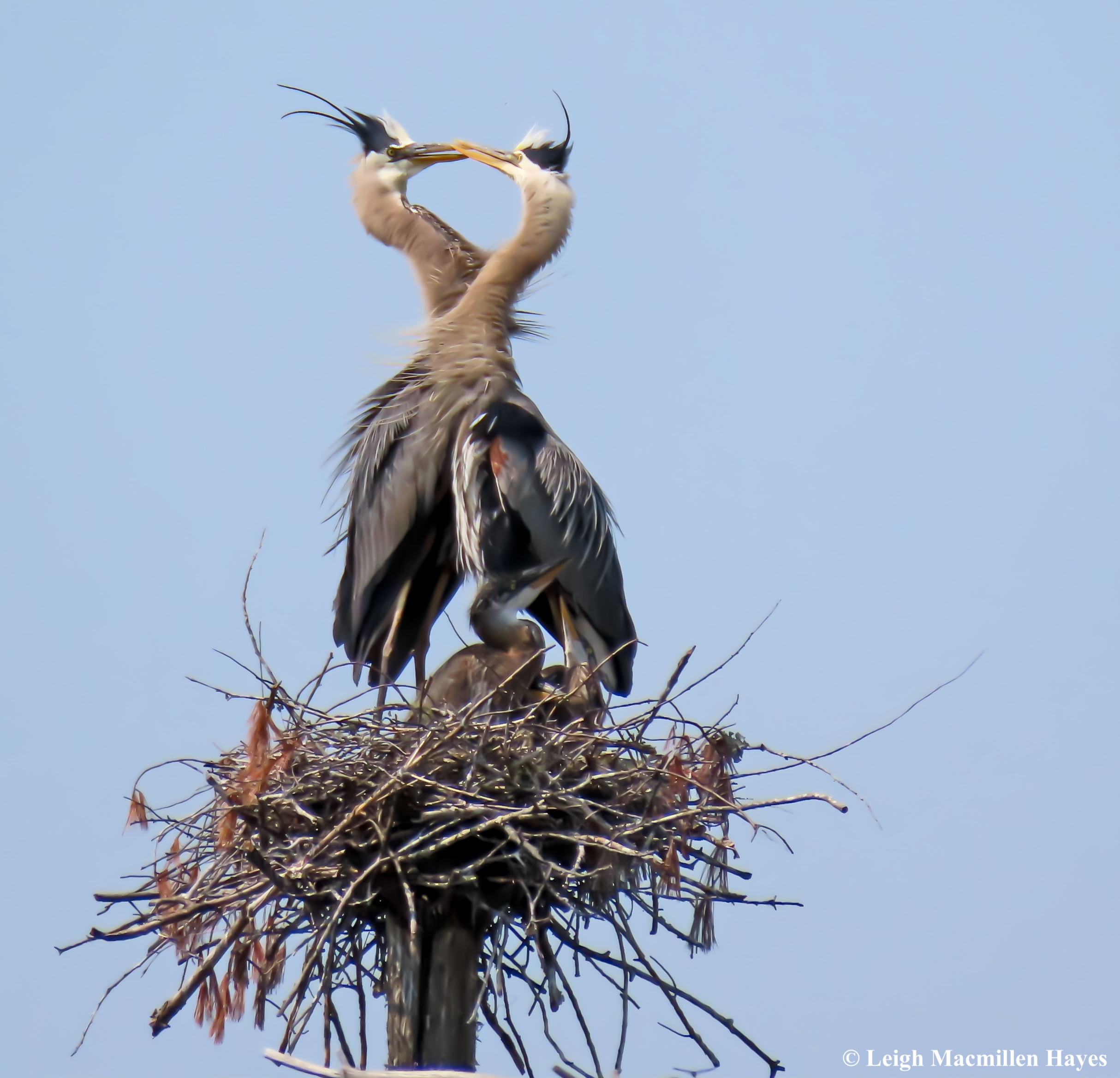
But at the end of the morning, I can’t think of any place I’d rather be than spotting these two sharing a moment and give great thanks for all the moments we get to witness because we take part in monitoring the rookeries and making the Great Blue Herons count.

Thanks also to my companions. I won’t name them because I don’t want anyone to bug them about locations, just like I won’t name the actual locations or their State ID numbers because these are special places that need to be left undisturbed.

Student Teacher in the Field and Yard Classroom

I am so thankful that I was born with a desire to learn and somehow landed in at a most pleasant neighborhood school. Of course, the classrooms vary depending upon the season. These past two days, and actually these past few weeks, I’ve been majoring in field and yard lessons.

Oh, don’t get me wrong–that doesn’t mean field and yard work, though I did help mow the lawn today.

Let’s begin, however, with the class in the field, which is really more of a meadow given how wet it can be and some of the species who call it home attest to that, including this Marsh Fern.

At first glimpse, I thought it was a Lady Fern, but there was something different about the leaflets–they seemed to present as three-dimensional.

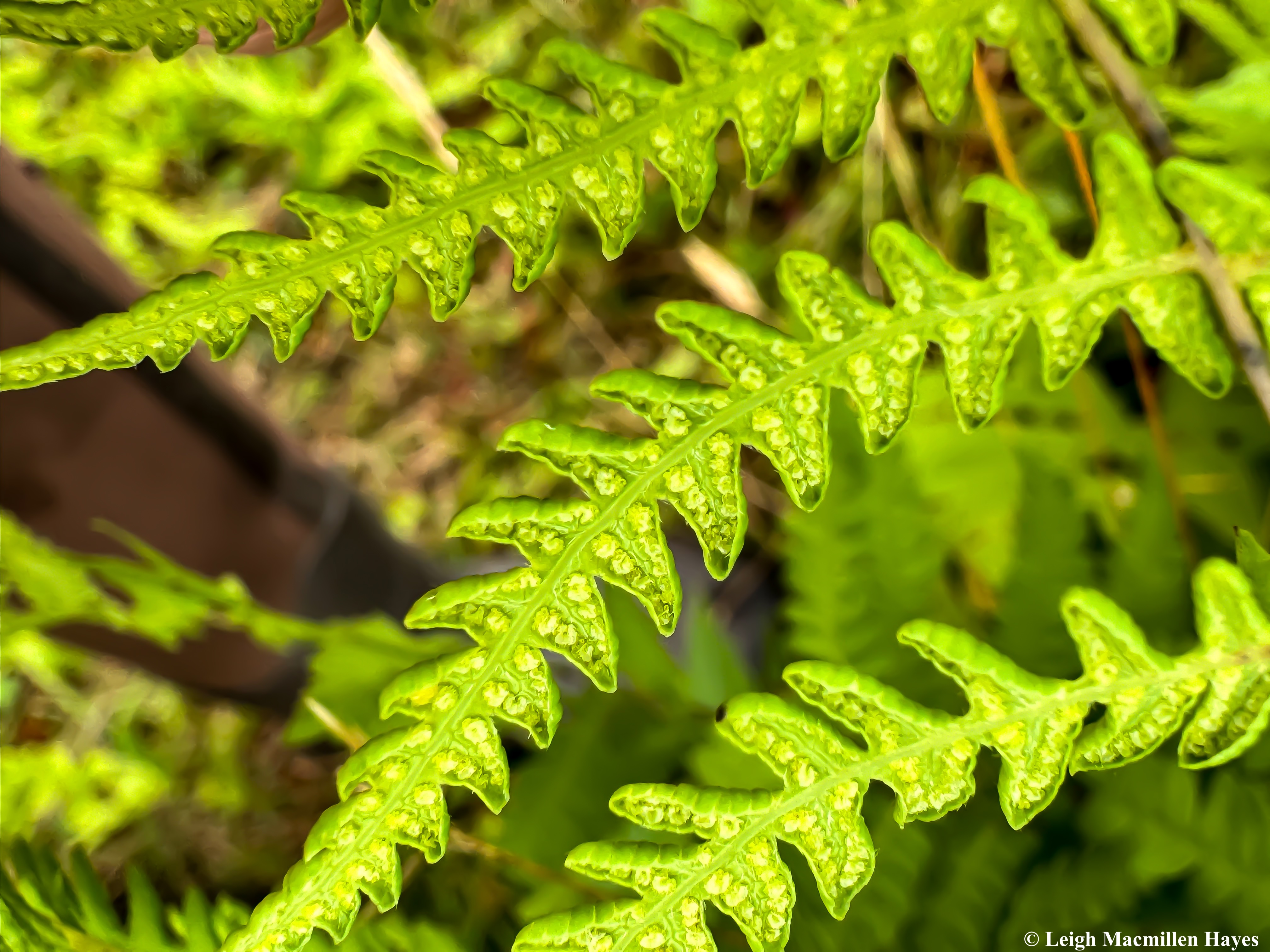
When I turned the blade over, I saw why. On fertile leaflets, such as these, the subleaflets curl around the kidney-shaped indusia which cover the sori, or spore cases.

There are lots of other ferns out there including Interrupted and Sensitive, but Marsh is one I don’t often see, so to have it on display in the school hallway is exciting to me.

Meadowsweet, or Spirea, is another plant that doesn’t mind wet feet, also indicating that this class leans toward being a wet meadow.

And today, I met a new-to-me insect species with a funny name.

Tumbling Ragdoll, aka Mordella marginata, is a Tumbling Flower Beetle. I love the name, and am reminded that as a child I loved my Raggedy Andy doll made by an “aunt” who wasn’t actually related to our family; my sister received Raggedy Ann. Years later, my sister also later created Andy and Ann for me, so I have a complete set, plus one from “Aunt” Betsy.

Anyway, from Tom Murray’s Insects of New England & New York, I discover that these beetles are so named because “When threatened their escape method is to jump and tumble about wildly.”

For science lab, I will attempt a mere scare in the future to see if that is true; but today approached with care so as not to disturb them.

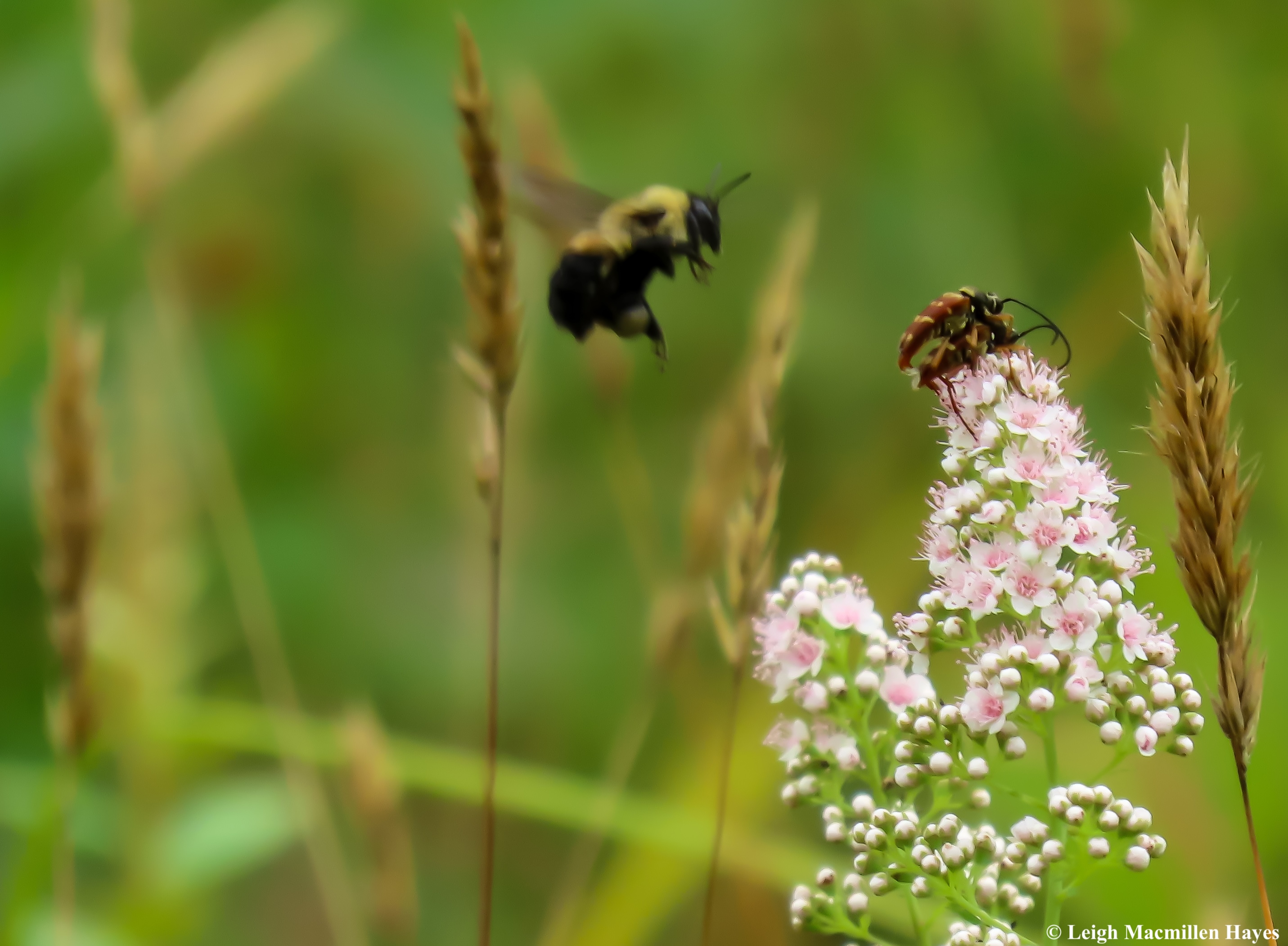
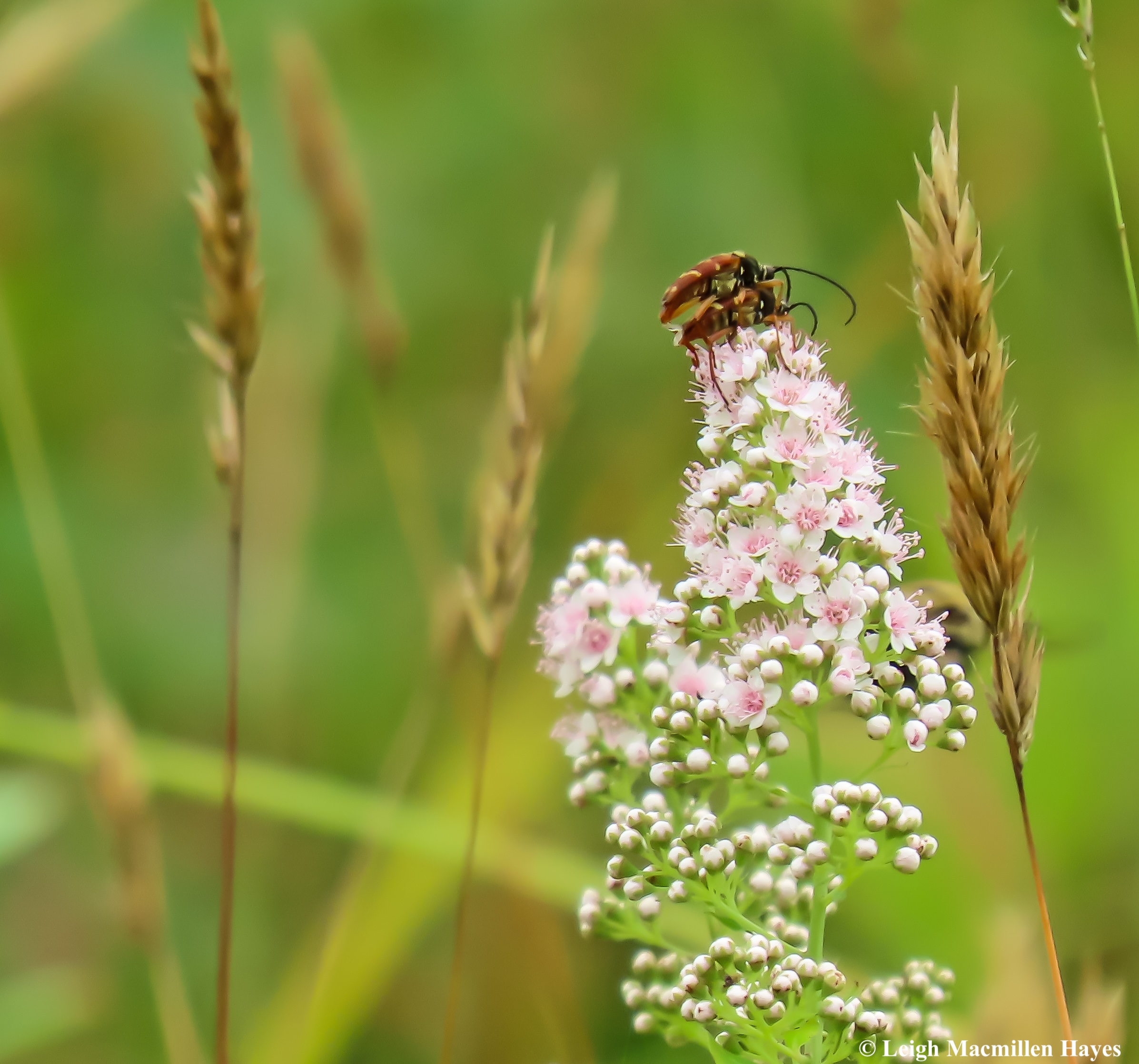
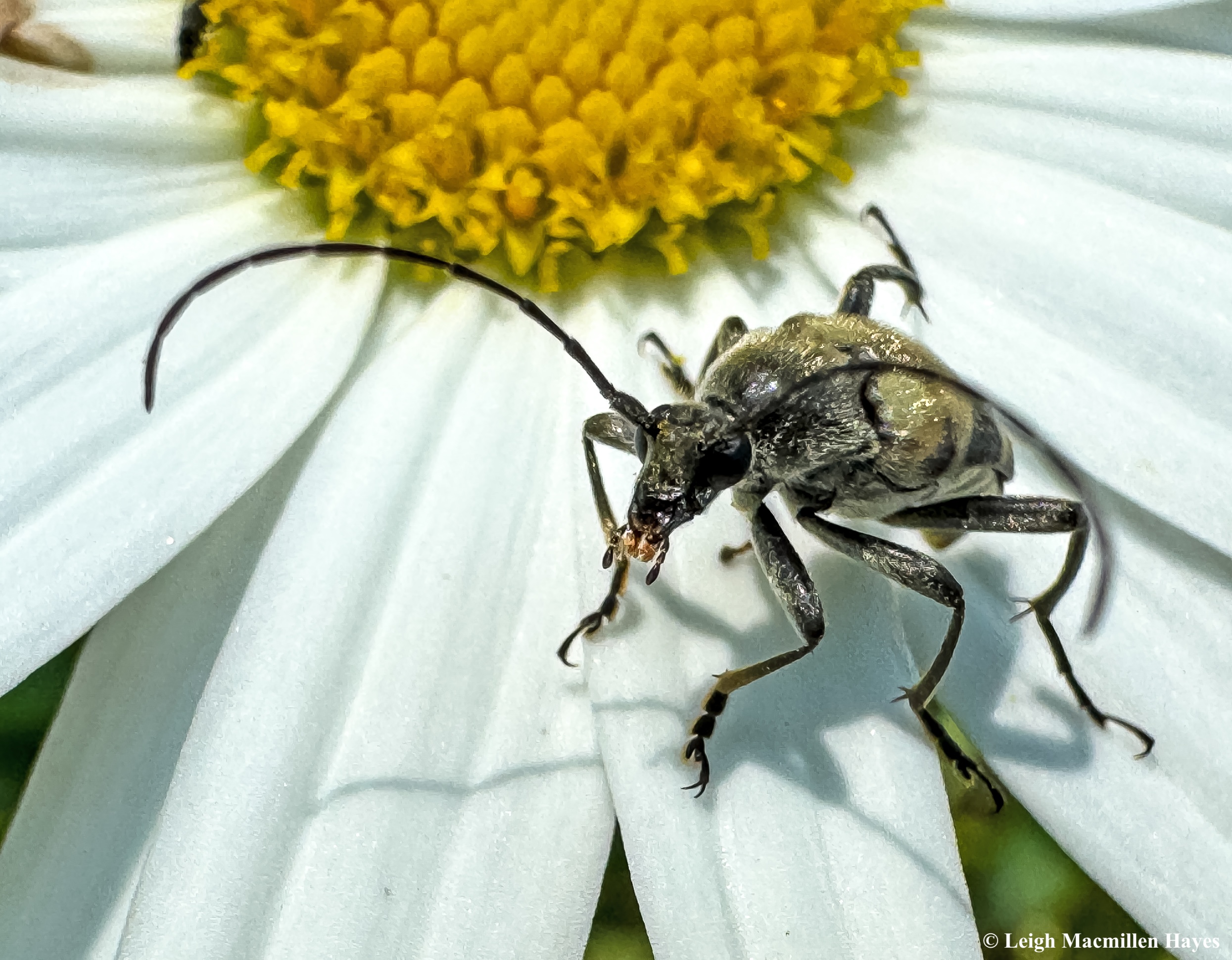
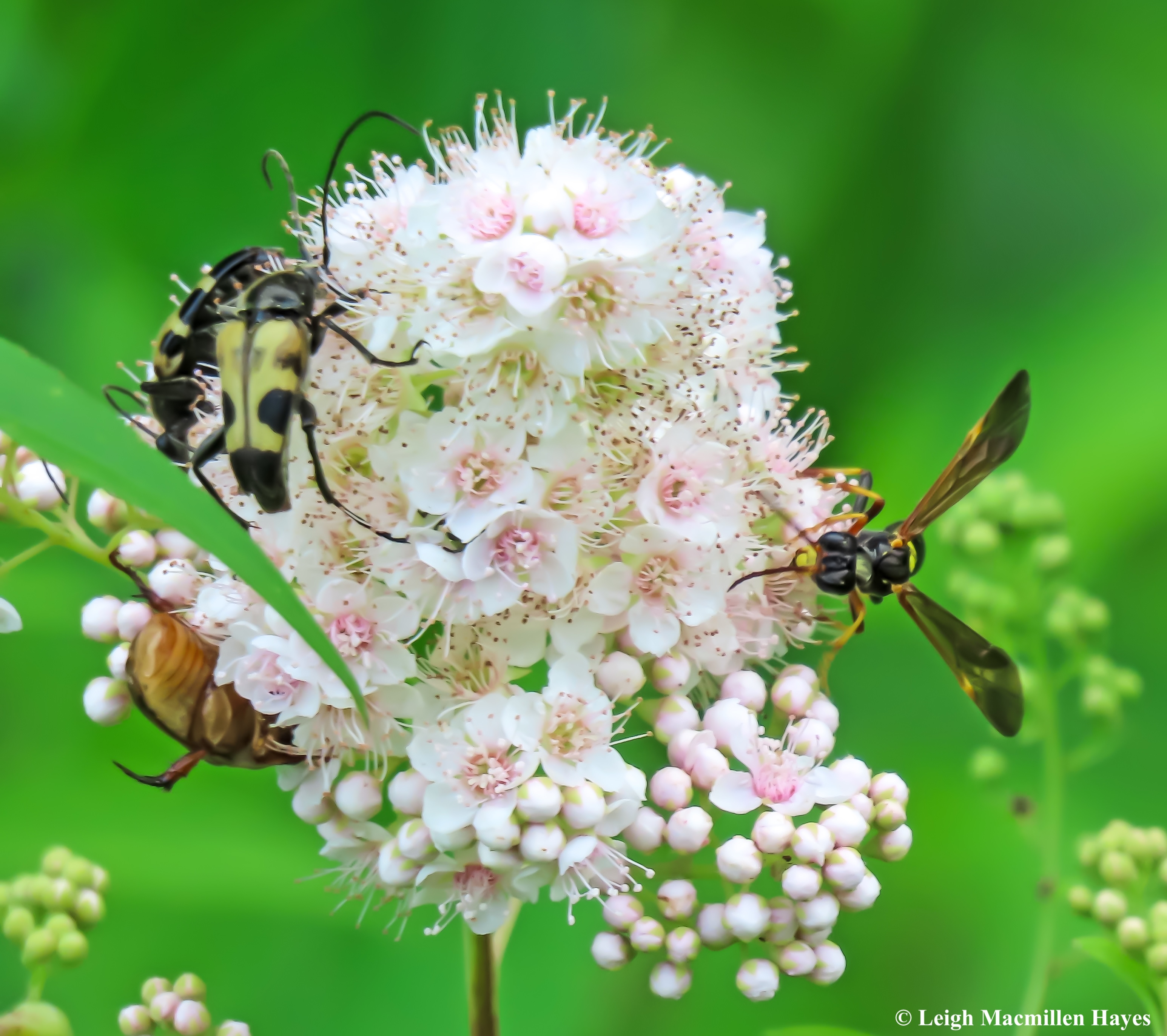
When I got up from my chair to sharpen my pencil, I spotted what my friend Amanda calls a B-52 Bomber Bumblebee. It was large and fast. But that didn’t disturb the Banded Longhorn Beetles at the top of the Meadowsweet.

They were mid-canoodle, and nothing was going to pause their intense interest in each other.

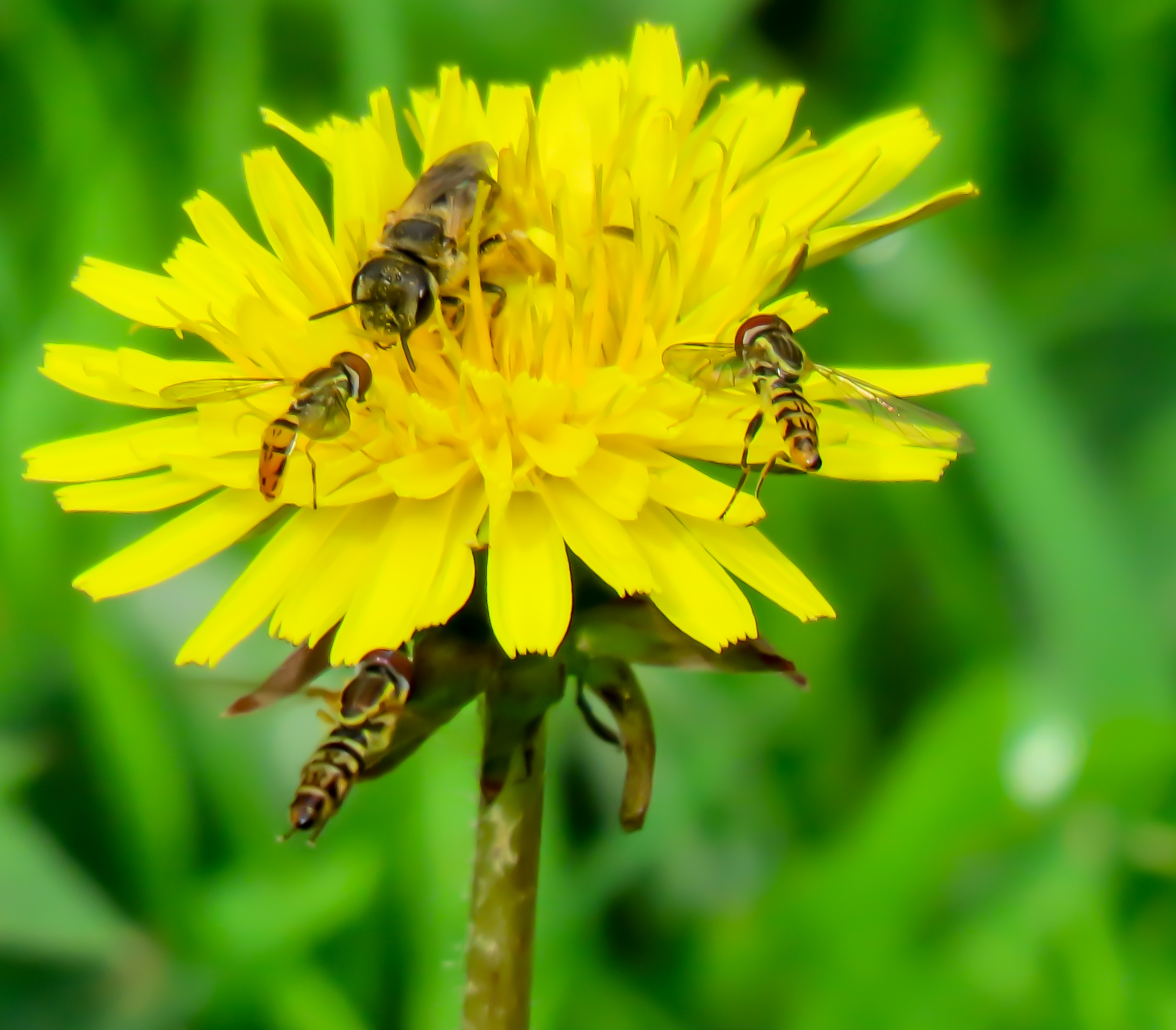
Upon another Meadowsweet, it was as if the whole community had shown up to pollinate the flowers, and miraculously, they all got along. At least while I watched. I love that the teacher had lined up this subtle lesson–about putting aside differences to work for the common good.

She reiterated it more than once.

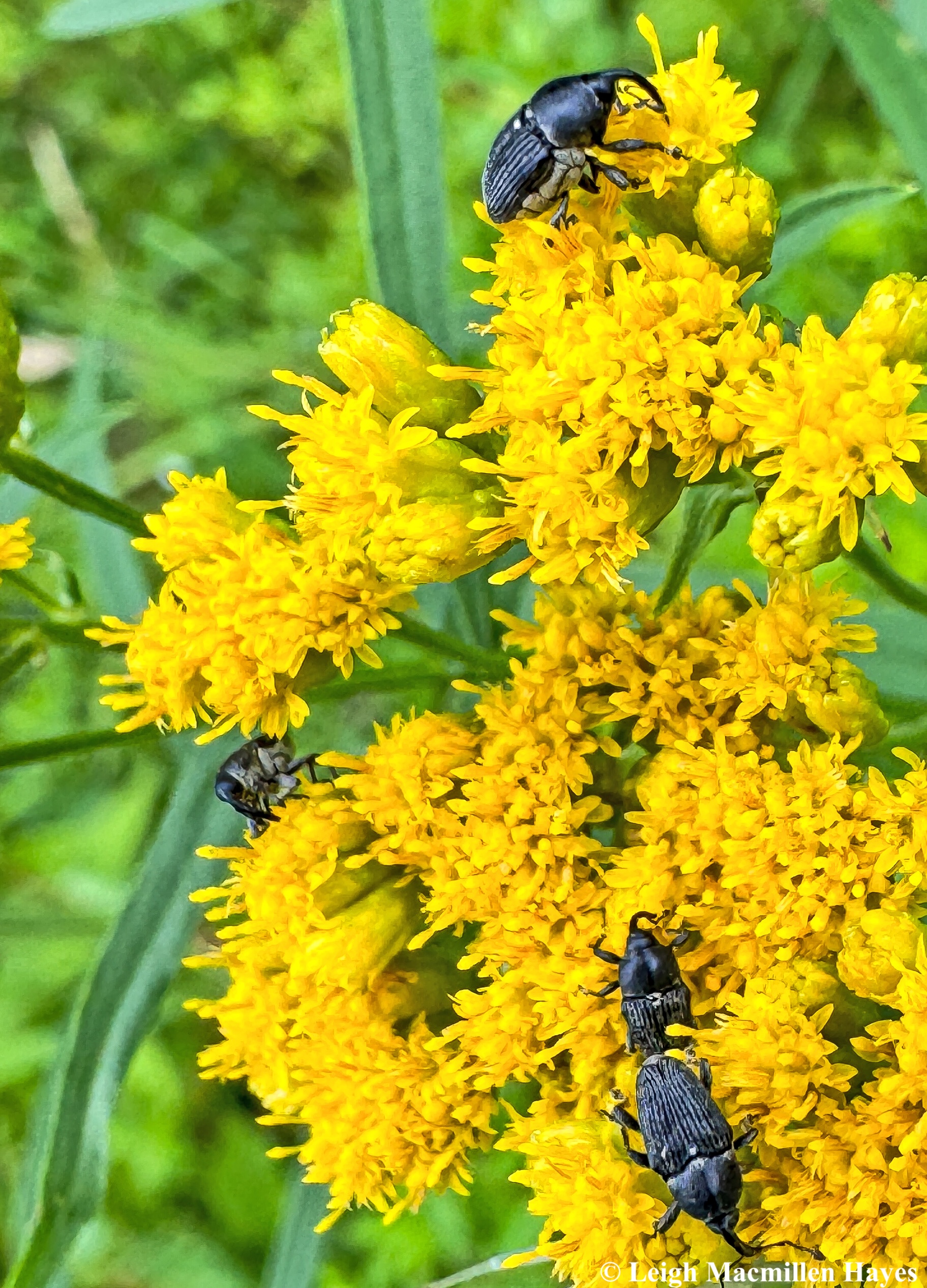
Over by the window, there was another new-to-me species to meet. By their tiny, yet robust bodies, and long snouts that seemed to grow right out of their heads, I knew they were Weevils. If I got the answer correct on the homework, these are Rugged Flower Weevils, aka Odontocorynus salebrosus.

Ragged. Rugged. Interesting choices for today.

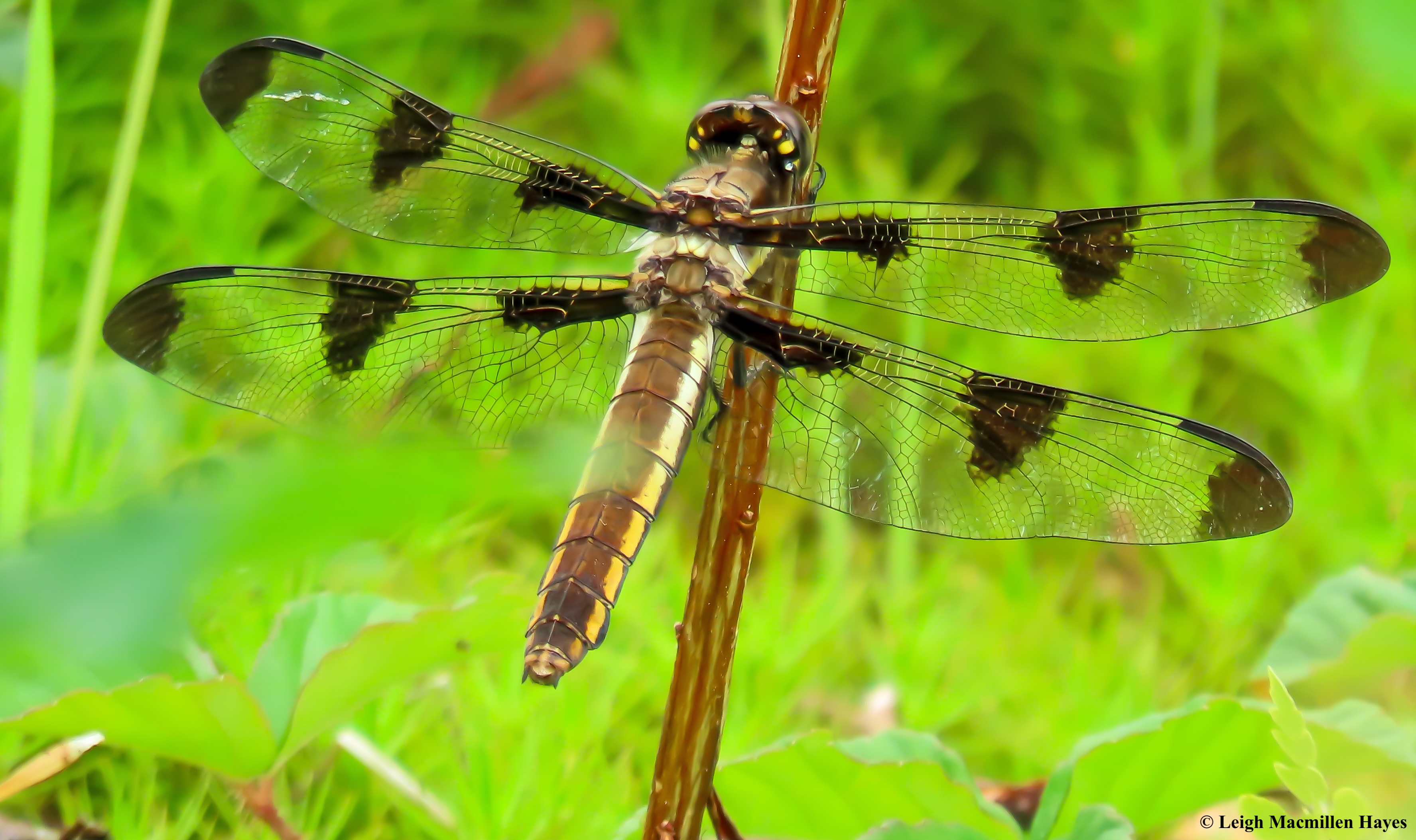
In the midst of it all, some old friends stopped by to visit, including a slew of male and female Calico Pennant Skimmer Dragonflies and this sole female Common Whitetail Skimmer.

I asked the teacher what is so common about this dragonfly that instead seems quite exotic with black splotches on the wings and a two-toned abdomen. I also inquired about the name Whitetail. She said she’d get back to me. Later, in the classroom next door, I saw a single male Common Whitetail, and its abdomen is much whiter (a light blue actually), so I know why that part of the name, but the female certainly wasn’t taken into account when naming occurred several hundred years ago.

And much to my surprise and delight, a male Spangled Skimmer stalked the halls, another indicator in my mind, that this is more of a meadow than a field.

Look at those white stigmas on the wings. It’s the only Skimmer I know of with such markings, thus making it easy to ID on the spot.

After recess, I crossed back over the wall to the classroom in the yard. Judolia cordifera is one of the Flower Longhorn Beetles, and those long horns were so obvious.

But that face. If I have nightmares tonight, I hope my mom will understand why. And my teacher won’t mind when I take a nap during class tomorrow.

Sweat Bees were also busy pollinating, especially the composite flowers, but its the Crab Spider who presented today’s challenge as the teacher wondered if I saw it. Camouflaged as it was, its duty is to mimic the daisy petals. For the moment the Sweat Bee survived, but the spider often wins in the end.

During lunch, this Gray Catbird landed about ten feet from the table where I sat with my classmates. As a person who dabbles in art, and loved Painting 101 with Miss Jessie, the many shades of gray stood out to me. But I was reminded that a Catbird is more than just a gray bird. First, there’s the small black cap, dark tail, and the rufous-rusty patch under the tail. Sometimes its hard to see the patch, but from my spot at the cafeteria table, I had a spot-on view.

And just before class let out, our school mascot flew in. Or rather, the child of our school mascot. Being so young, it was only an arm’s length away from me, but being the mascot, it seemed not to mind my presence.

Then again, maybe it did for the immature Red-breasted Nuthatch looke around, perhaps for back-up. I know it has several siblings, but the others weren’t feeling so brave as to stand so close to me.

At the end of the day, before the last bell rang, I realized that I was the student teacher–always learning something new and finding joy in sharing those learnings.

Today’s lessons were brought to you from the Field and Yard Classrooms. Stay tuned for more lessons.

Vermonting We Did Go

Okay, so “Vermonting” is not a word. But we did go. And came home richer for the experience.

It takes us forever to plan a vacation, even a mini-one. Well, actually, it only takes a few minutes once we put our minds to it, but prior to that it’s a lot of “We should go to . . .” or “We need to get away,” or any of a myriad of other comments, and we do nothing.

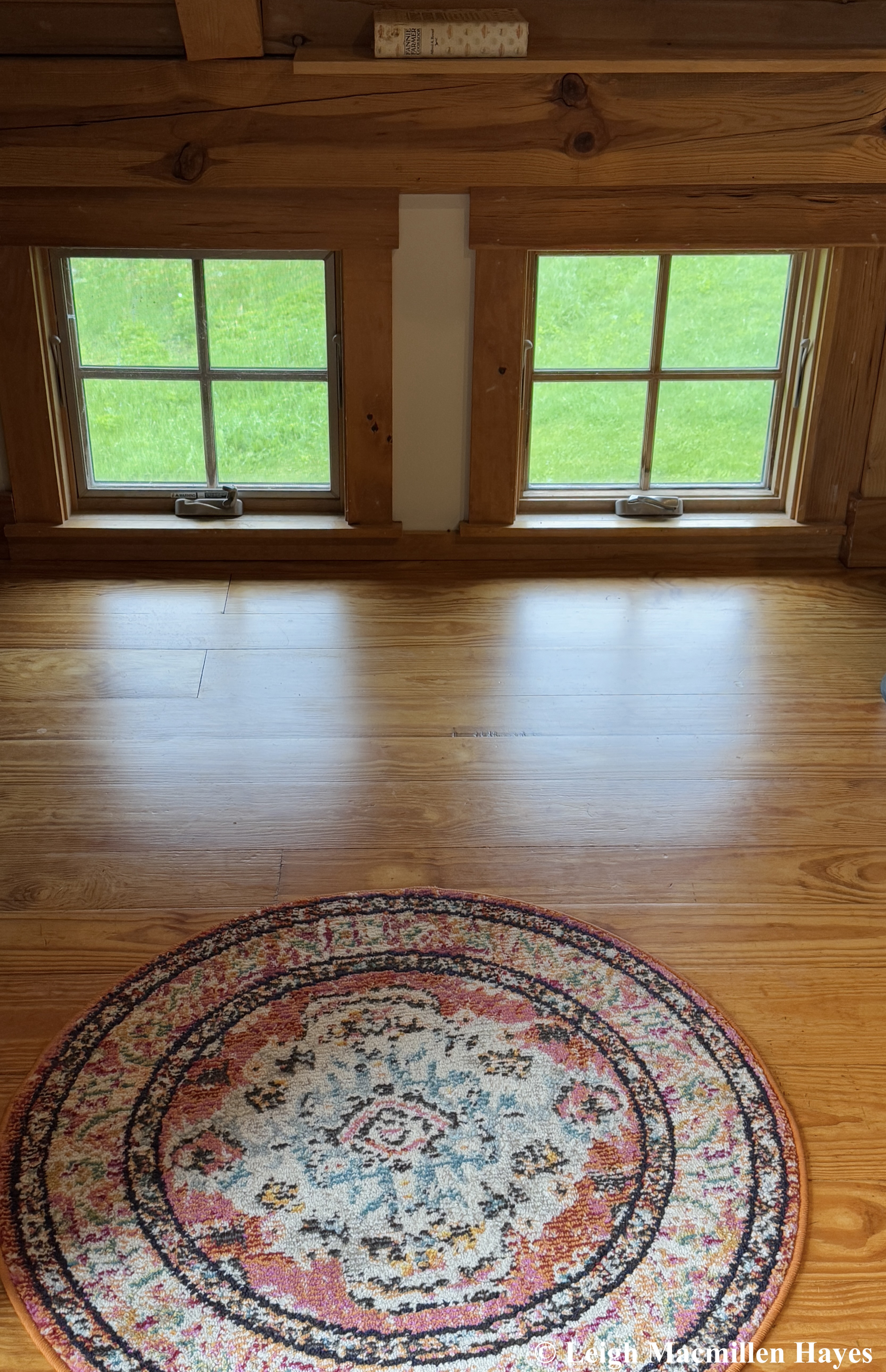
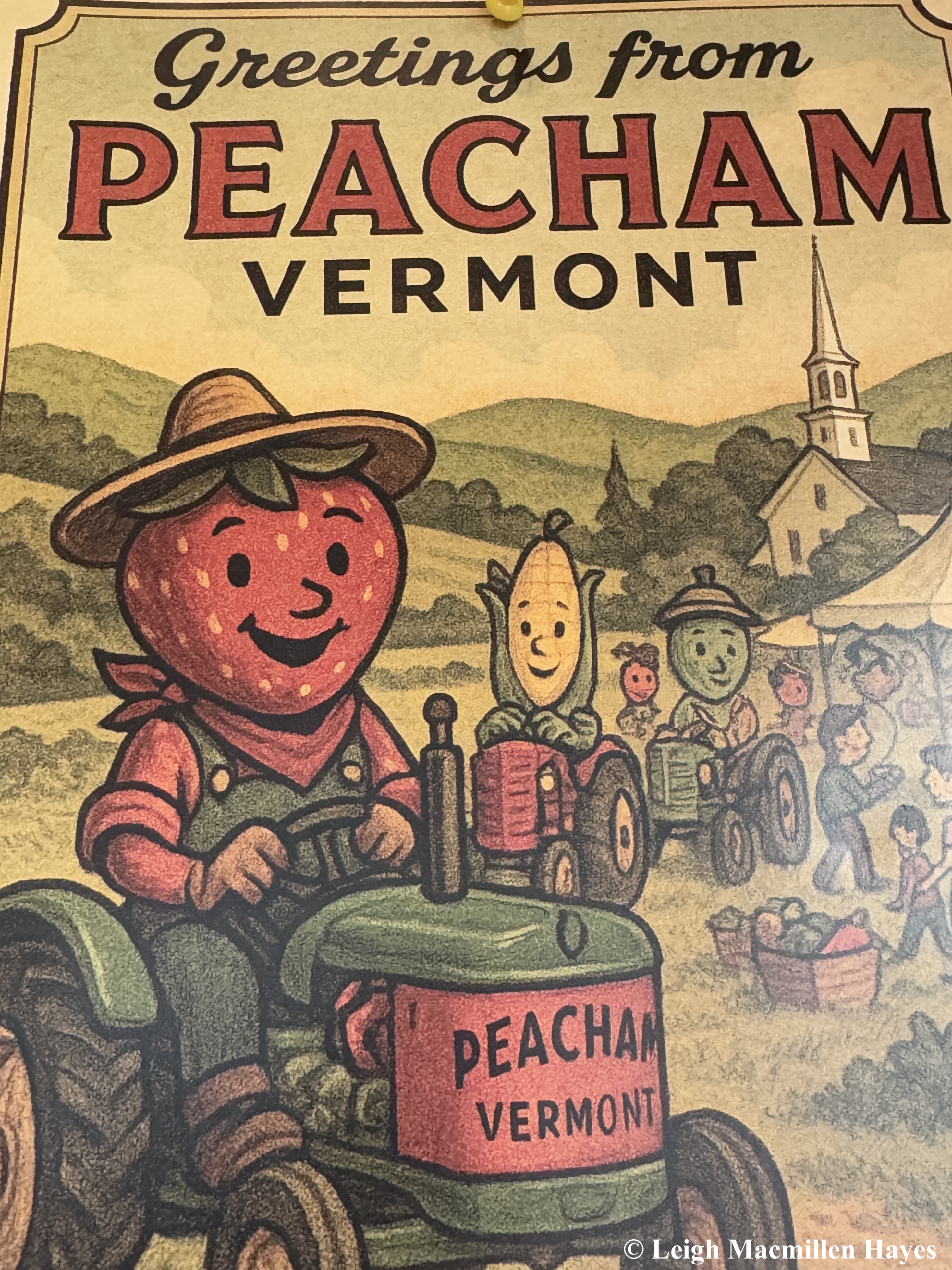
So about a week ago we cleared our calendars. We knew kinda sorta where we wanted to go, but didn’t know where we might stay, until we discovered The Barn in Peacham. We have a red barn attached to our 1870s farmhouse and long ago turned the upstairs into a movie theater/rec room for our sons, all that being a rather rough rendition of either–the movie seats were from an actual theater in our hometown, which was the best part. The seats are still all up there. And there’s a pingpong table and an air hockey table and trophies (remember the Porcupine Invasion last November?) and various other things, plus now a Yoga area for My Guy, but it’s hardly like the space we rented for the weekend as pictured above.

Cozy, roomy, tons of natural light, everything we needed, even eggs and English muffins if we came up short for our first morning.

I think one of my favorite things, and I had lots of favorites, were the little windows that lined the floor in all four rooms. And above these in the kitchen, a Fannie Farmer Cookbook on a shelf. It was touches like this that enhanced the already perfect space.

And our host and hostess, Chuck and Mercy, were equally delightful, and full of information. Thanks to them we discovered Three Ponds Sandwich Kitchen in Danville our first night and marveled in the deliciousness.

But what we were really there for was to hike. And so Saturday morning we went in search of the trailhead to Peacham Bog. If you happen to see My Guy this week, ask him how that search went. We’re still laughing.

We did find the trailhead, but obviously not where we expected it to be. And at the recommendation of Brian at the Groton State Forest Nature Center, we decided to hike the two miles in to the Bog and then continue along a multi-use trail before reaching Devil’s Hill, circling back along the same route.

The natural communities along the way made us feel as at home as the barn, for we (read “I”) felt like we were walking among old friends such as the Mountain Woodsorrel. I love its peppermint ice cream presentation.

And then, in a damp spot Swamp Beacons lit the way and I was drawn back in time to my first encounter with them while tramping through the woods in Lovell with friends Parker, Joan, and Dave. RIP Parker–please know that you accompany me on and off many a trail and I know that you would be happy that I actually remember some of what you taught me.

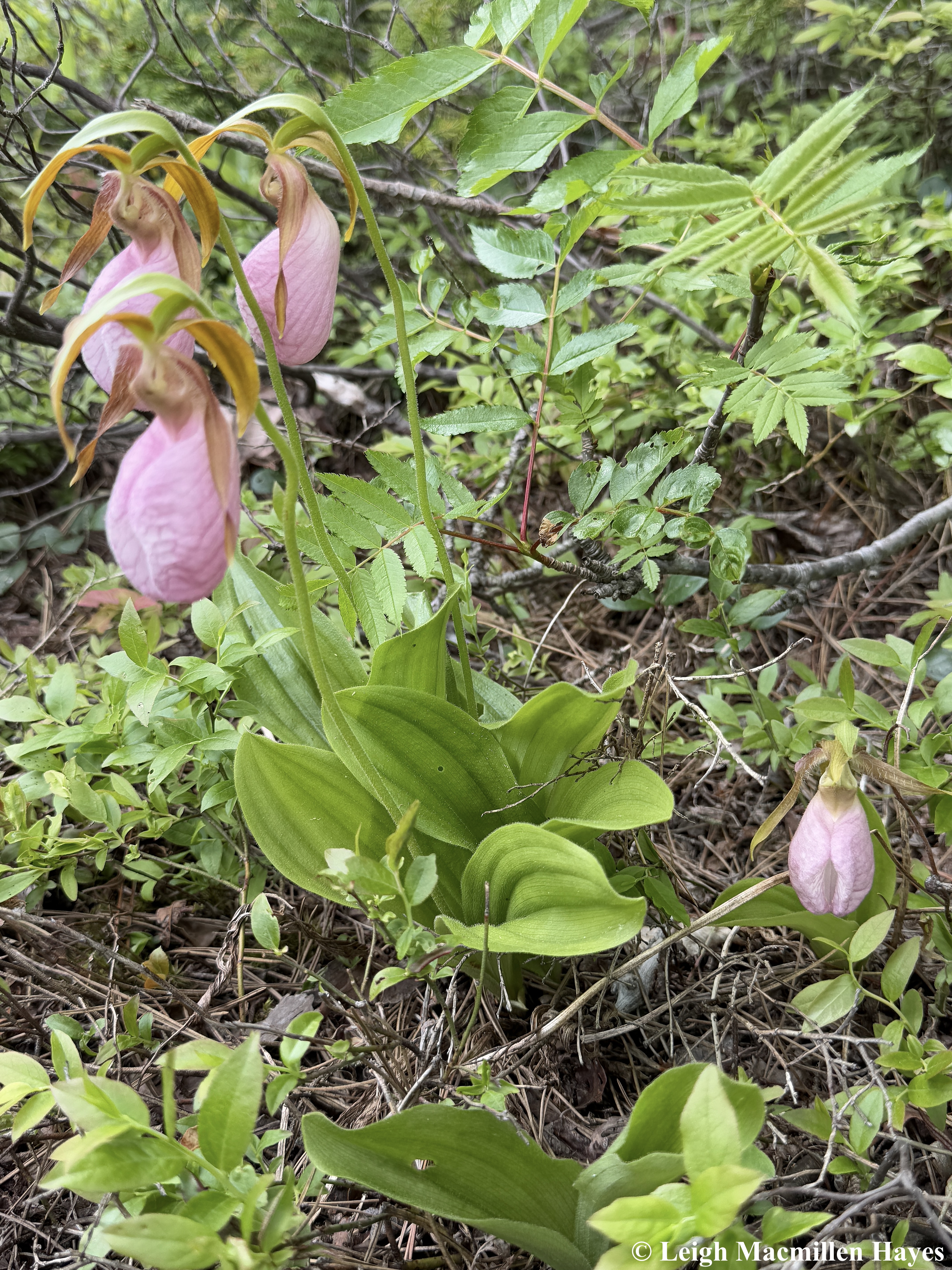
Vowing not to count Lady’s Slippers, we didn’t. But they were there, though most waning.

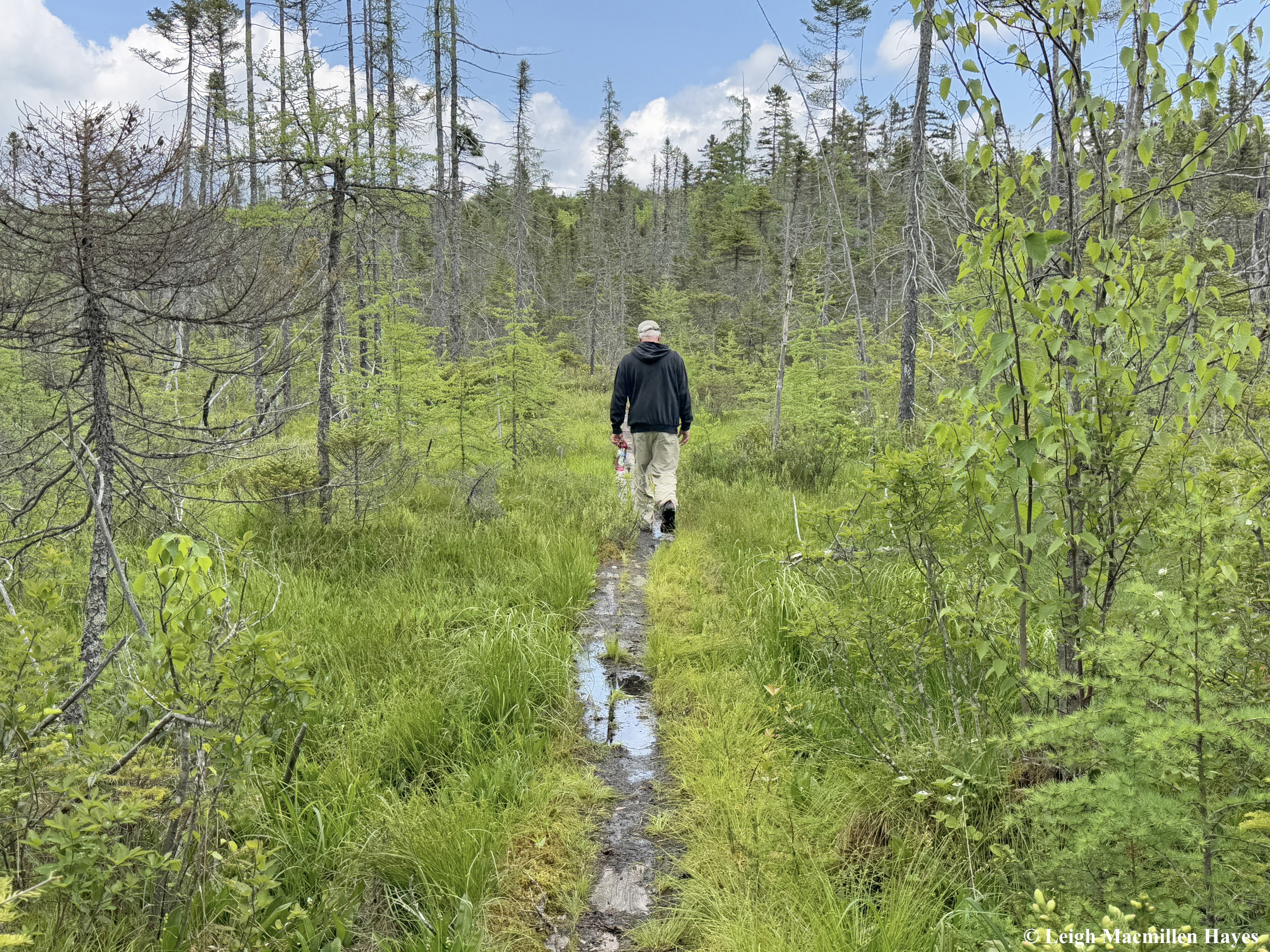
At last we reached the coveted bog, where a boardwalk was long ago placed to keep hikers like us from stepping onto the fragile environment.

It was at this point that another funny story evolved, but again, you’ll have to visit My Guy at his store to get the rest of the story.

At last reaching the platform with a bench at the end of the boardwalk, we sat down to eat sandwiches and take in the scene and sounds that surrounded us.

Sphagnum mosses formed the peat base and laurels and Tamaracks and Firs and flowers and insects all expressed themselves.

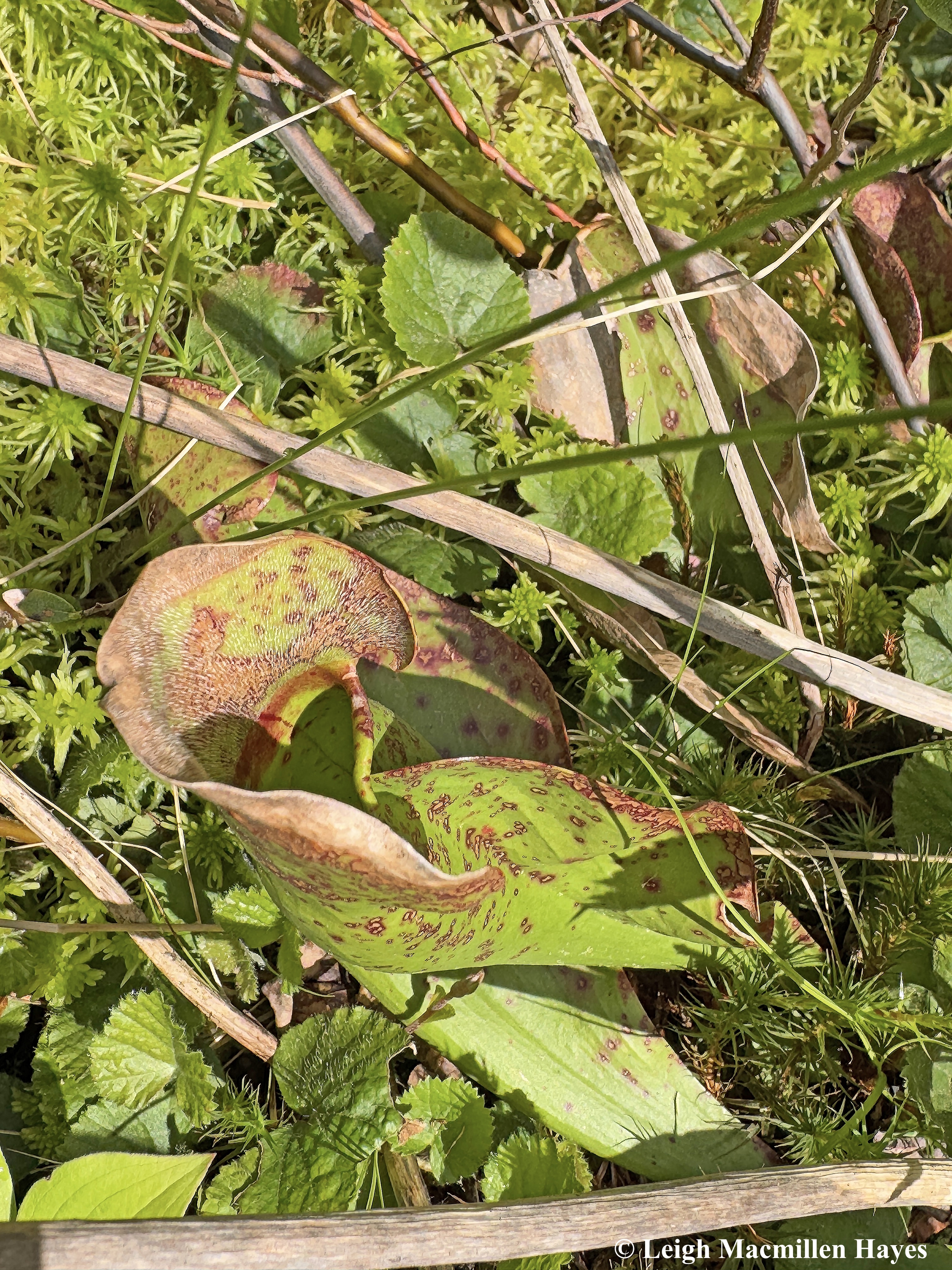
I, of course, can never see too many Pitcher Plants and be forever wowed by those downward facing hairs that entice insects in to the pitcher-shaped leaves where the end-of-life lurks.

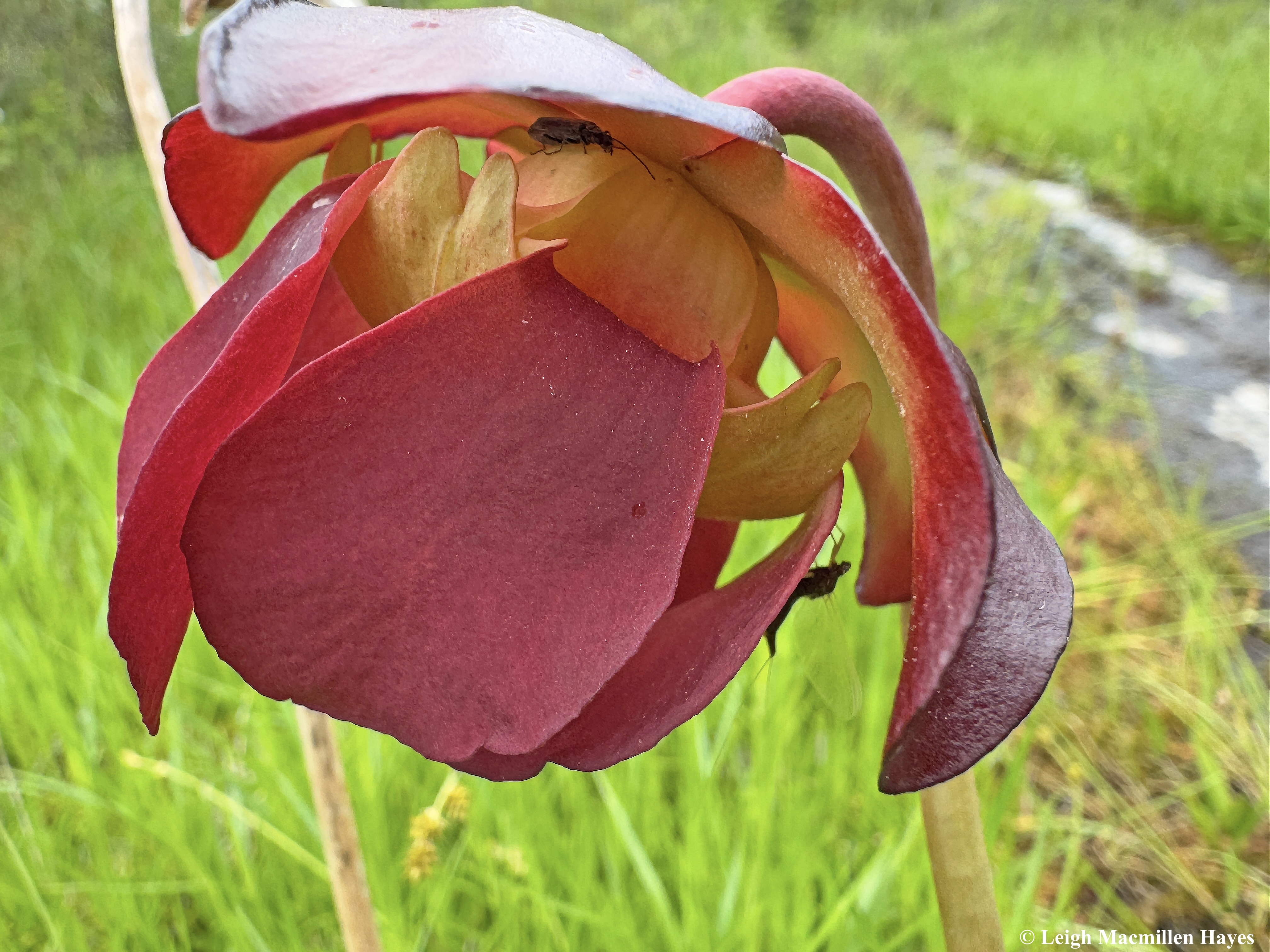
And the otherworldly flowers were in full bloom, including this one that hosted a long-horned insect and a sub-imago Mayfly (read: Dun).

I’ve been wowed by these for a long time and years ago drew this rendition as a teaching tool that now is the background for my iPhone.

There were Unadorned Bog Flies pollinating Bog Labrador Tea.

And Cotton Sedge showing off their hairy tufts.

Our next leg took us from the Bog to the Groton multi-use trail, being used mainly by horse riders and moose. We saw neither, but their tracks were evident in the mud.

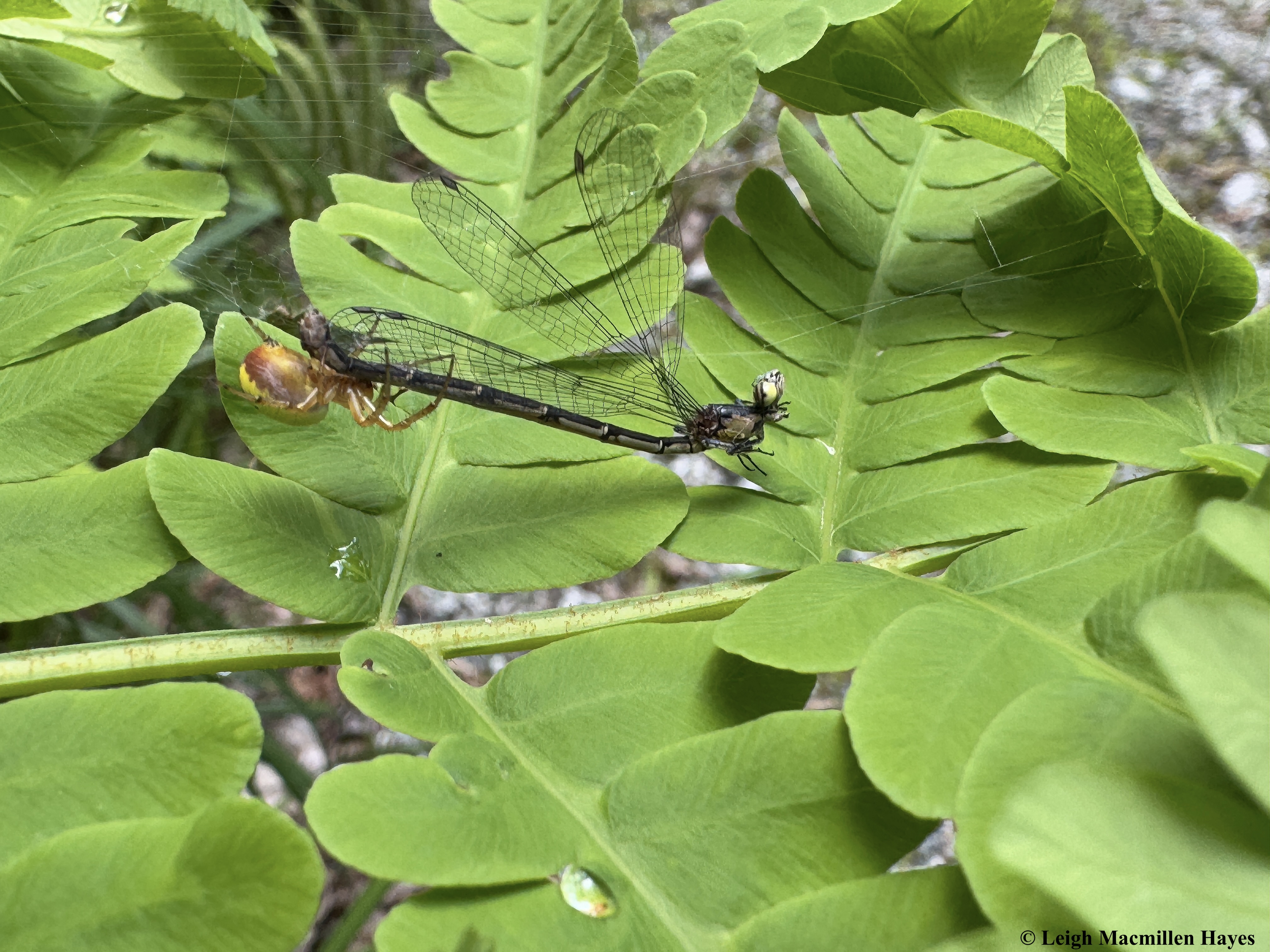
What we did spot was this Aurora Damselfly being wrapped up by an Orb Weaver Spider. I knew the damselfly immediately because of the uneven stripe on the sides of the thorax.

And had recently tried to paint a mature form of the same species.

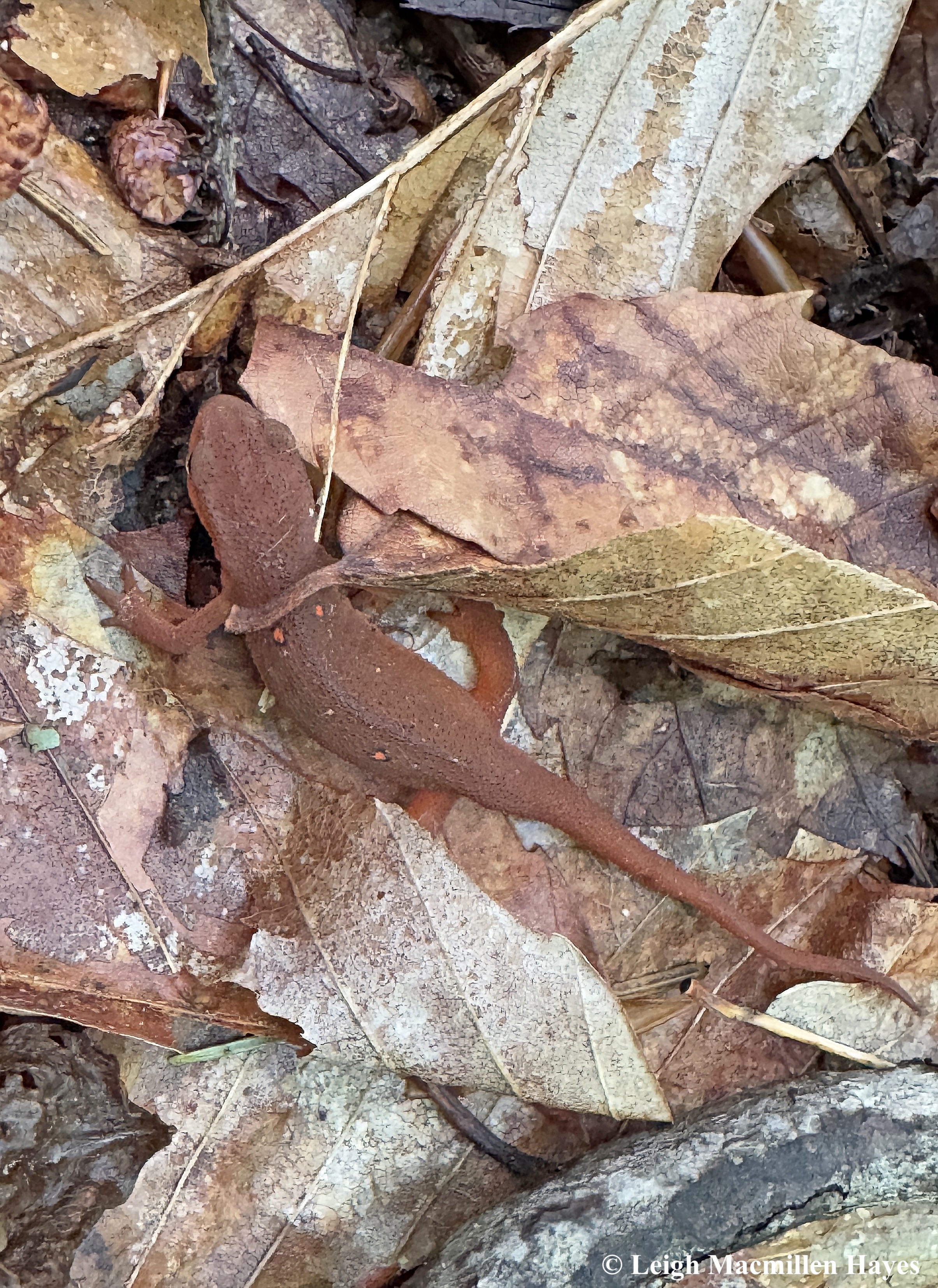
We also met a couple of Red Efts, the teenag and terrestrial stage of the Eastern Newt. The red spots act as a warning to predators because if consumed, they secrete poison toxins from their skins. As humans, we can touch them and live, but to ingest one would be harmful. So don’t try that.

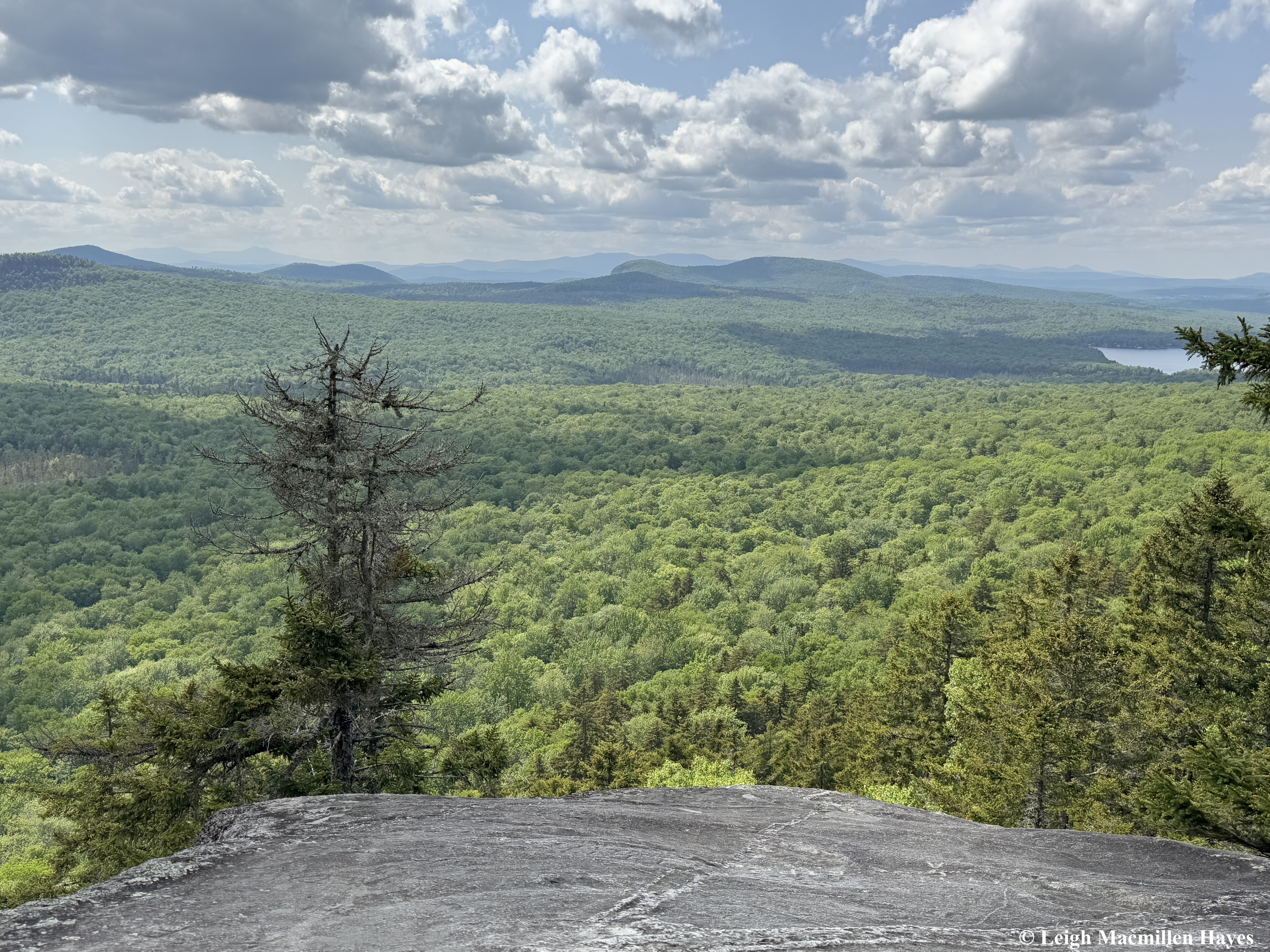
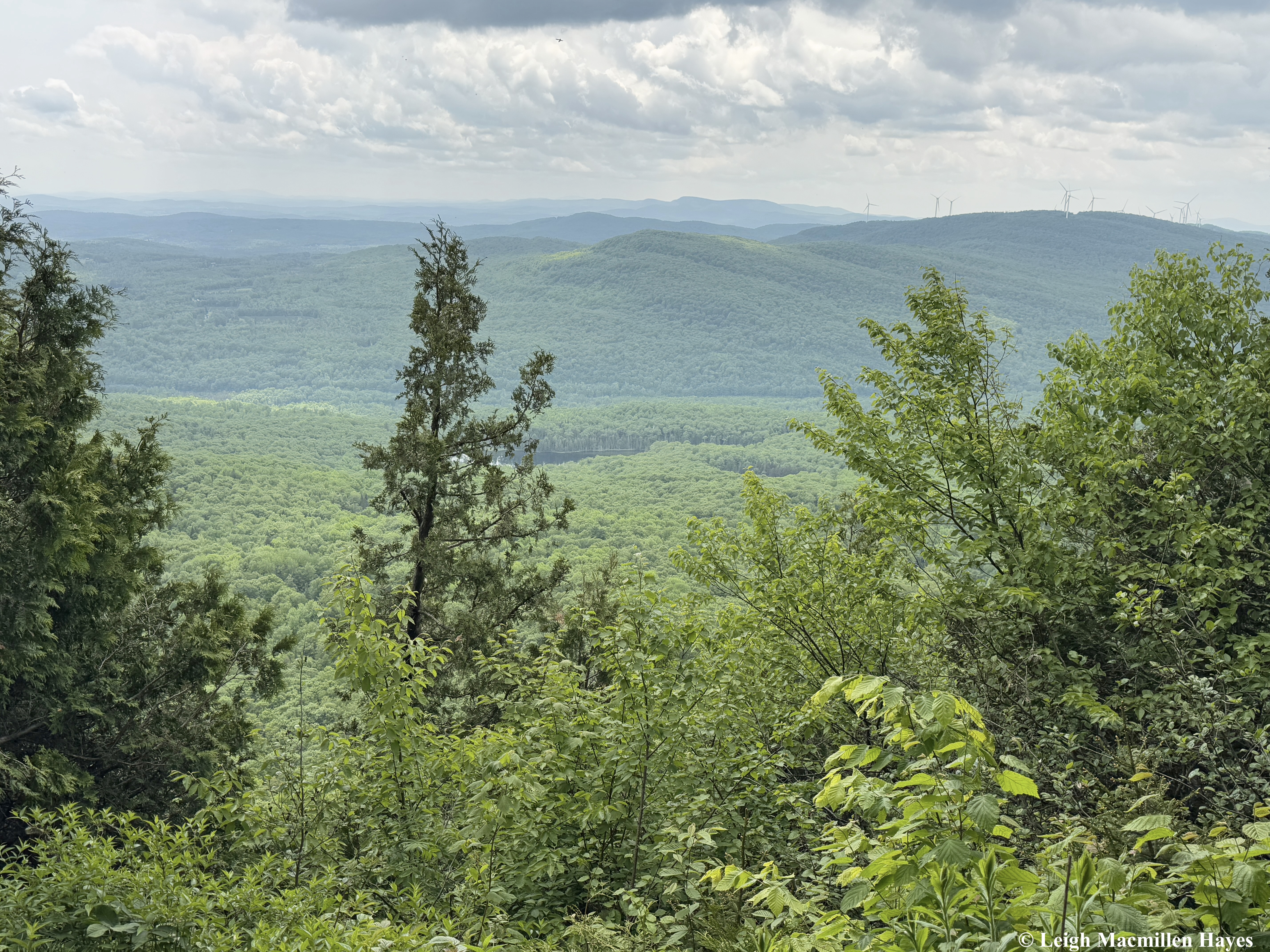
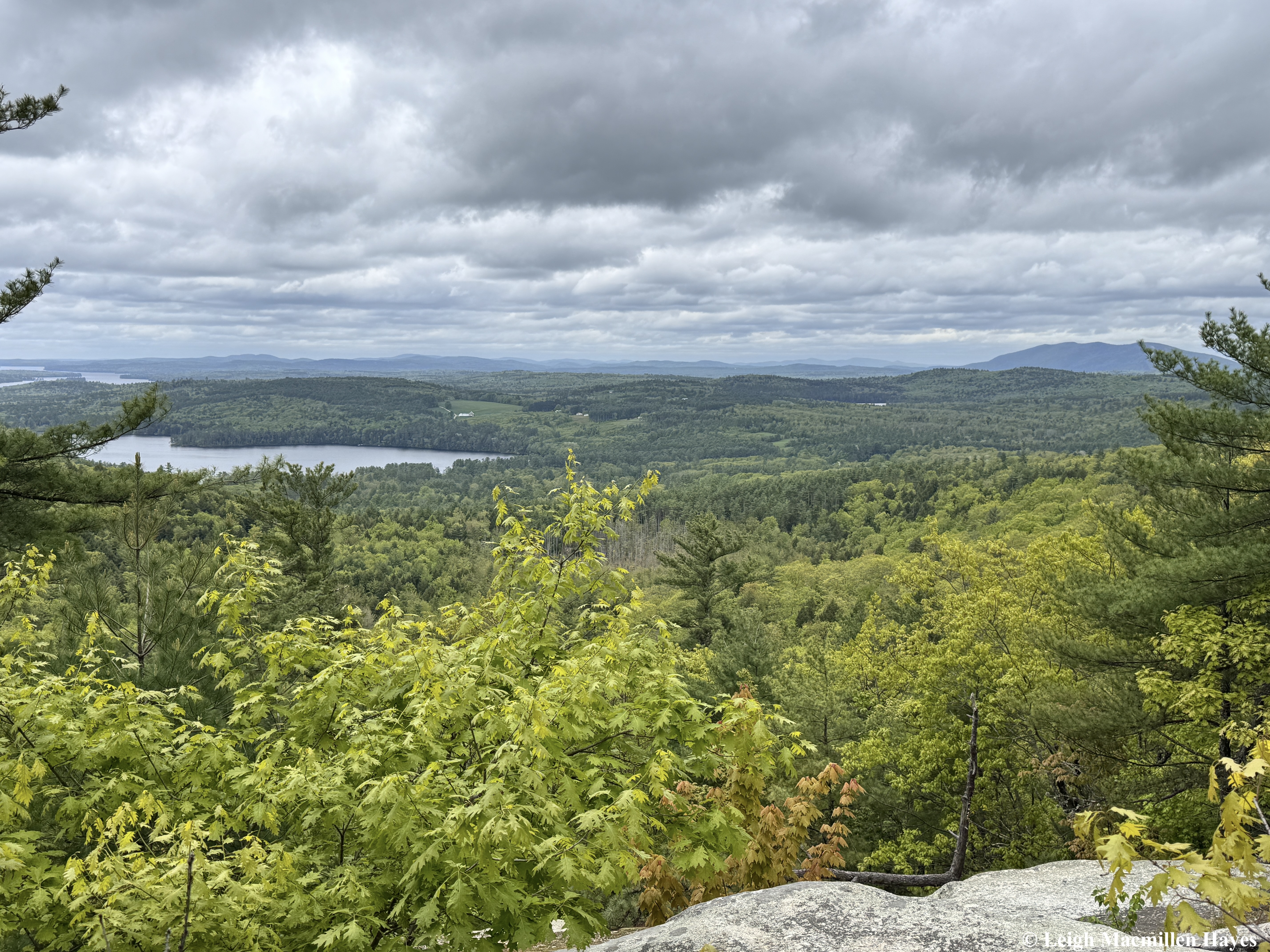
A couple of miles later we reached the trailhead for Devil’s Hill and snaked our way up the switchbacks to the summit, where this view of the rolling hills and iconic geography of Vermont stood out before us.

On the way down, a male Luna Moth presented itself, hiding as it was under a Striped Maple leaf.

I love these leaves and their twigs, especially the growth rings that stand out so predominately, and My Guy appreciates that the leaves serve as Nature’s Toilet Paper. TMI? But really, they are easy to identify and they are soft.

Returning on the multi-use trail before retracing our steps on the Peacham Bog Loop, we had to walk through tall grasses and sedges, which did not make my heart so glad because this was heavy tick territory. I had on tick gaiters and repellant. We took at least five off My Guy.

But, this pair of Craneflies did share a canoodle moment with us, so that won me over for a second.

All in all, we hiked over eleven miles that day, and were too beat to go out to dinner, so instead drove to the West Barnet Quick Stop, about 1.5 miles from our weekend home. There we ordered Chicken Cordon Bleu Paninis with Pesto, and a salad to share. And while we waited for our meal to be created, noticed Shain’s of Maine Ice Cream in the freezer, which made us chuckle. Wait a minute. We were in Ben & Jerry Country. Never fear–they had a much better presentation in another freezer.

And, while we waited, I asked the woman who was creating our salad if she lived in the area. “All my life,” she said, and added, “So far.” We chuckled, but then I asked if she knew so and so, a couple I know from church who had lived just down the road for many years (a fact I’d only learned days earlier).

Her face lit up with a smile as she recalled them and said they used to frequent her other store and that their daughter had worked for her. As tired as I was, that smile of hers was the perfect ending to a great day.

Well, it wasn’t quite over yet. For there was no TV at our weekend digs. And so I taught My Guy to play Parcheesi, and then I beat him.

The next morning we drove north to Orleans to meet my first college roommate and her husband, Bev and Bill, at the Carriage House for breakfast. Funny thing–as I drove up Route 91, there was one car in front of us and approaching it, with its Maine license plate, I spotted Lakes Environmental Association and a Loon Echo Land Trust stickers on the rear window. It had to be someone from our hometown. Sure enough, as I passed it, I recognized the mother of one of my former students. And a wondermyway follower.

Betty, if you are reading this, that was us on the highway with you on Sunday morning at 8:30 or so.

We spent two hours talking and eating and talking and talking some more over omelets and coffee and Bev and Bill suggested that we hike Mount Hor, which overlooks Willoughby Lake. I’d been to Willoughby before with Bev and two other dear friends, but never hiked in that area. And so we did. They gave us easy to follow directions and we parked and then walked almost two miles up the CCC Trail. I love that this was another project meant to keep people working when times were tough.

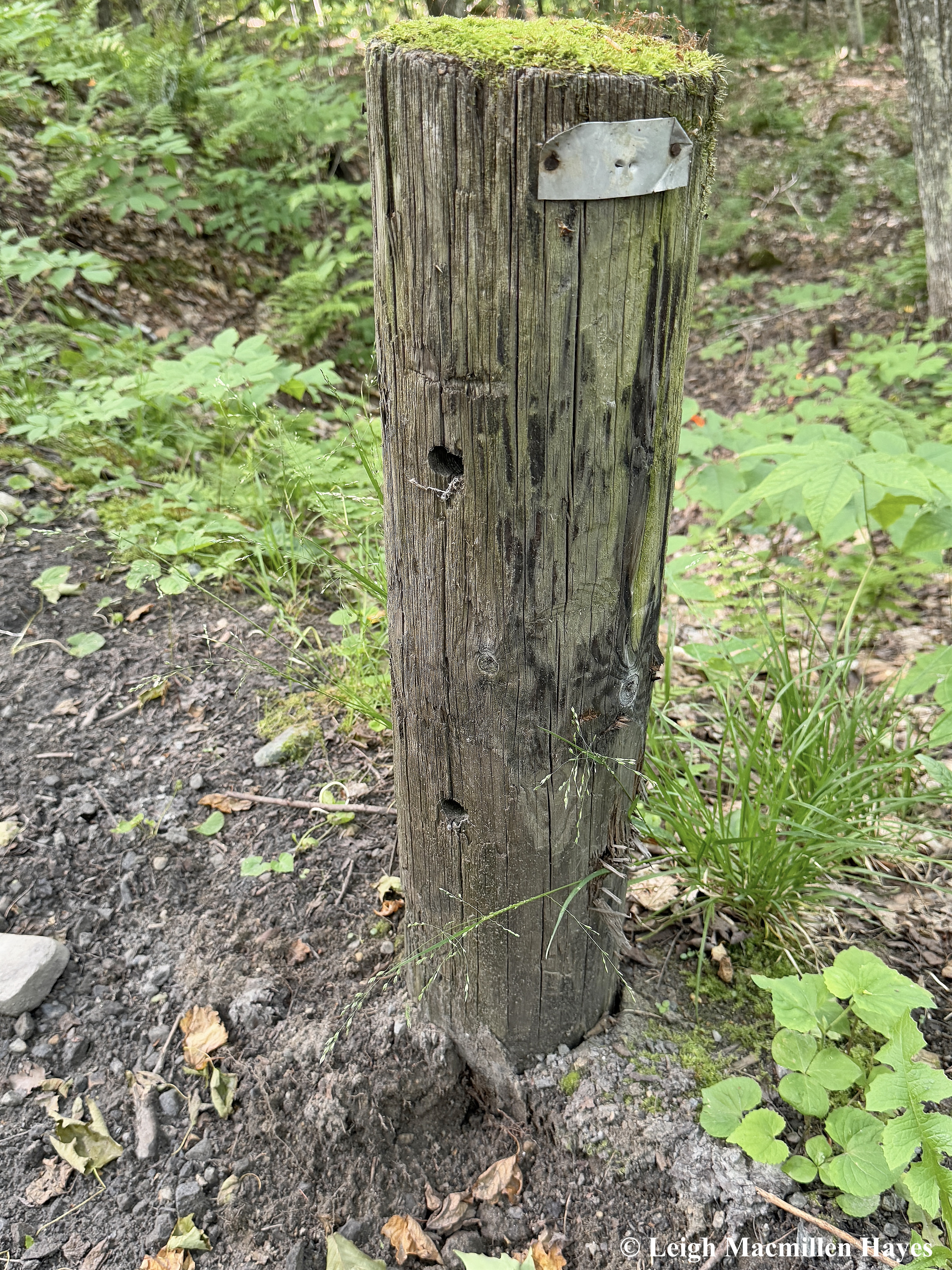
Though the hard packed surface we walked on was not the original road, we kept spotting these posts and my theory is that they were original and held cables that connected one post to another and kept vehicles from catapulting down the steep embankment.

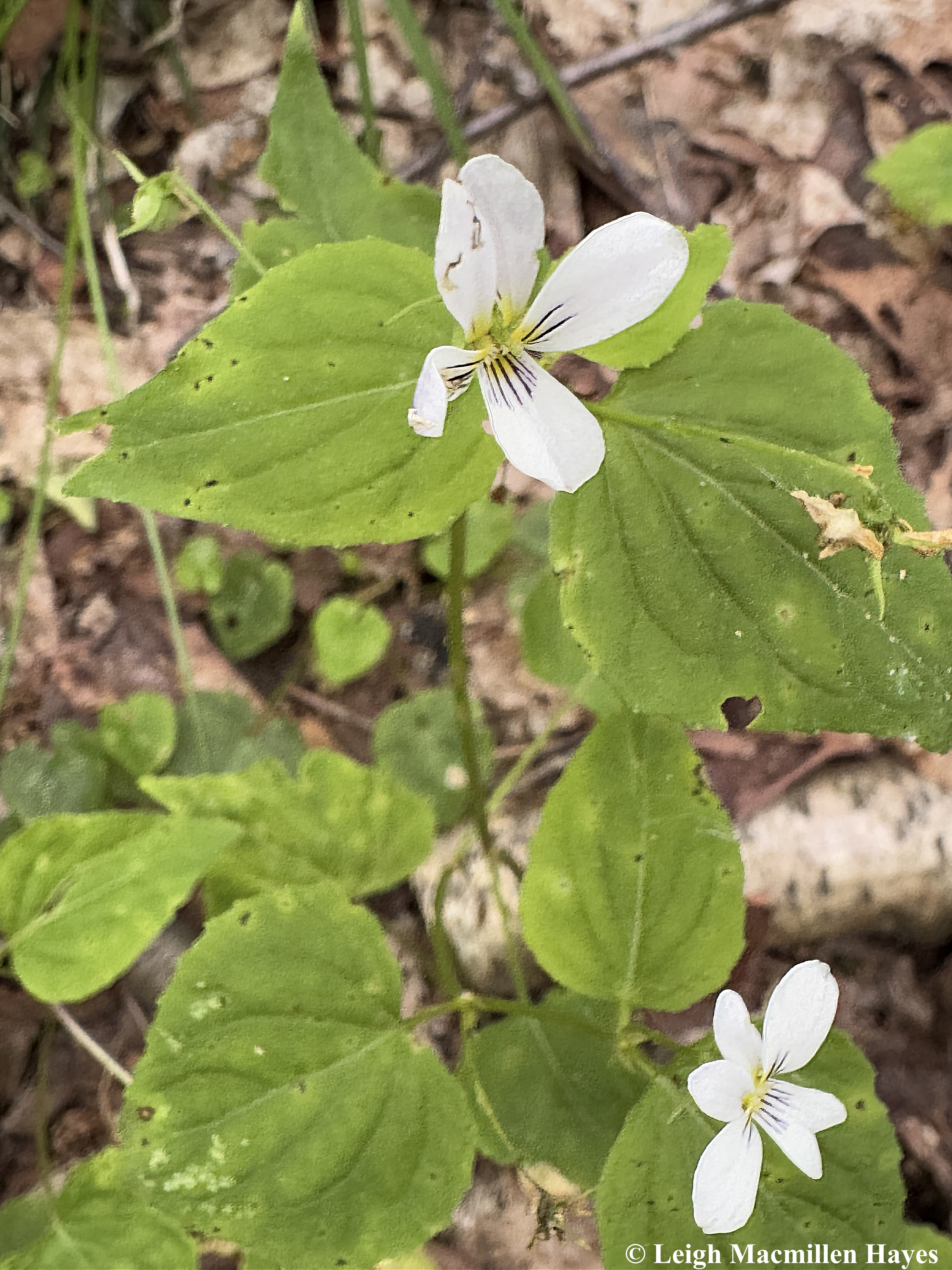
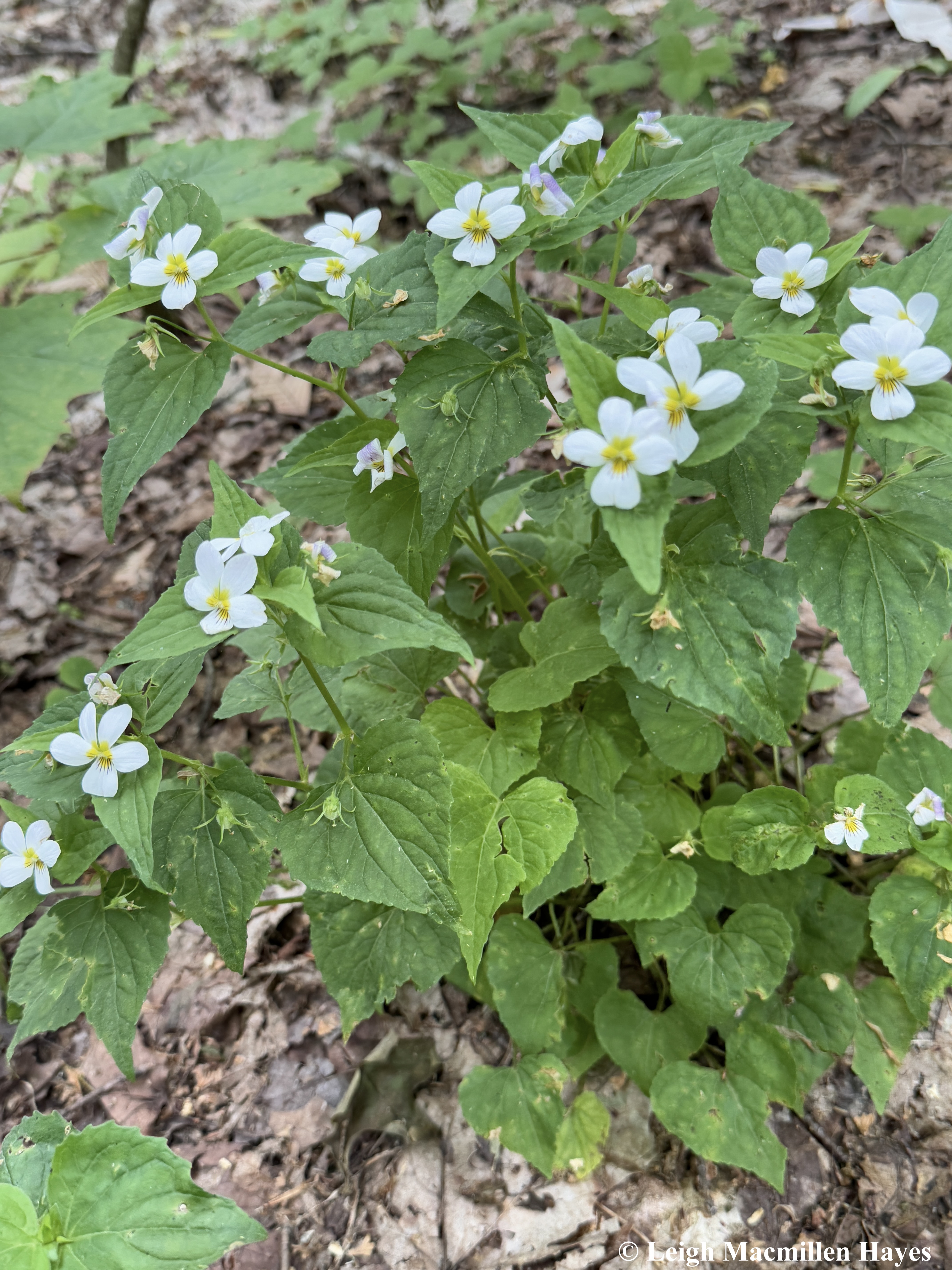
When we finally reached the actual trailhead for Mount Hor, I met a new flower. Canada Violet. It made sense since we were probably about ten miles from the Canadian border. Delicate. Pure white. A well-defined runway to the nectar. And leaves offering a different take on the violet theme.

What we soon realized was that it not only grew tall, but also in large clumps.

Oh my gosh, our next find–Maidenhair Fern. Such a unique presentation and color and, oh my gosh!

At the summit, we had three choices. First we headed to the Summit Vista, where the view included Cedar trees in the foreground and two delightful couples who were enjoying GORP and blueberries but when they heard that we had homemade Peanut Butter Chocolate Chip granola bars a la The Stow Away Baker in our backpack, they wanted to chase us down the mountain.

From there, we hiked another mile across the ridge line to the East View, overlooking Lake Willoughby.

While there, we spotted a Peregrine Falcon soaring on the thermals, but neither of us got a good shot of it. Still. Forever in our minds eye. And sometimes, those are the most memorable moments.

From the North Vista we looked across at the cliffs of Mount Pisgah and wondered how many more falcons we weren’t seeing.

Back down the CCC Road we did walk once we stepped off the mountain trail and my favorite find was a Mountain Maple, that stopped me in my steps for a few minutes as I had to remember who it was that I was meeting.

Back at Lake Willoughby North Beach, Mount Hor is on the right and Mount Pisgah on the left, creating a fjord-like presentation.

From there, we drove south to South Barton as I let my nose lead the way and found a cemetery I’ve visited in the past for some of my ancestors are buried here.

Recognizing family names is always a treasure. And actually, within the post railings of this place I noted at least three different families that have contributed to my DNA. I’m pretty sure my love of the north country, be it Northern New England or Canada, comes from these folks.

On the way back to our home base, we grabbed sandwiches to go from Three Ponds and gave thanks for their goodness.

And then this morning, after packing and cleaning and chatting briefly with Chuck, we had one more place to explore–Kettle Pond State Park within Groton State Forest.

So here’s the thing. My understanding of a kettle bog is that it’s kettle or bowl shaped. And has an outer layer of herbs, with the next layer surrounding it of taller herbs, and then a third layer of shrubs encircling the kettle, and finally, trees who like wet feet, like Red Maples, forming the final ridge around the pond.

None of this was present. Well, there were shrubs and trees, but not in layers like I’m used to seeing. And the shape of the pond was more north-to-south glacial-related than kettle-related. Hmmm?

Still, some great finds like this Spotted Salamander egg mass along with four others in a deep puddle along the trail. Can you see the embryos forming?

And a Garter Snake that had been basking on a rock in the trail until we happened along.

And Twin Flowers, each sharing a petiole, growing like a mat along a glacial erratic.

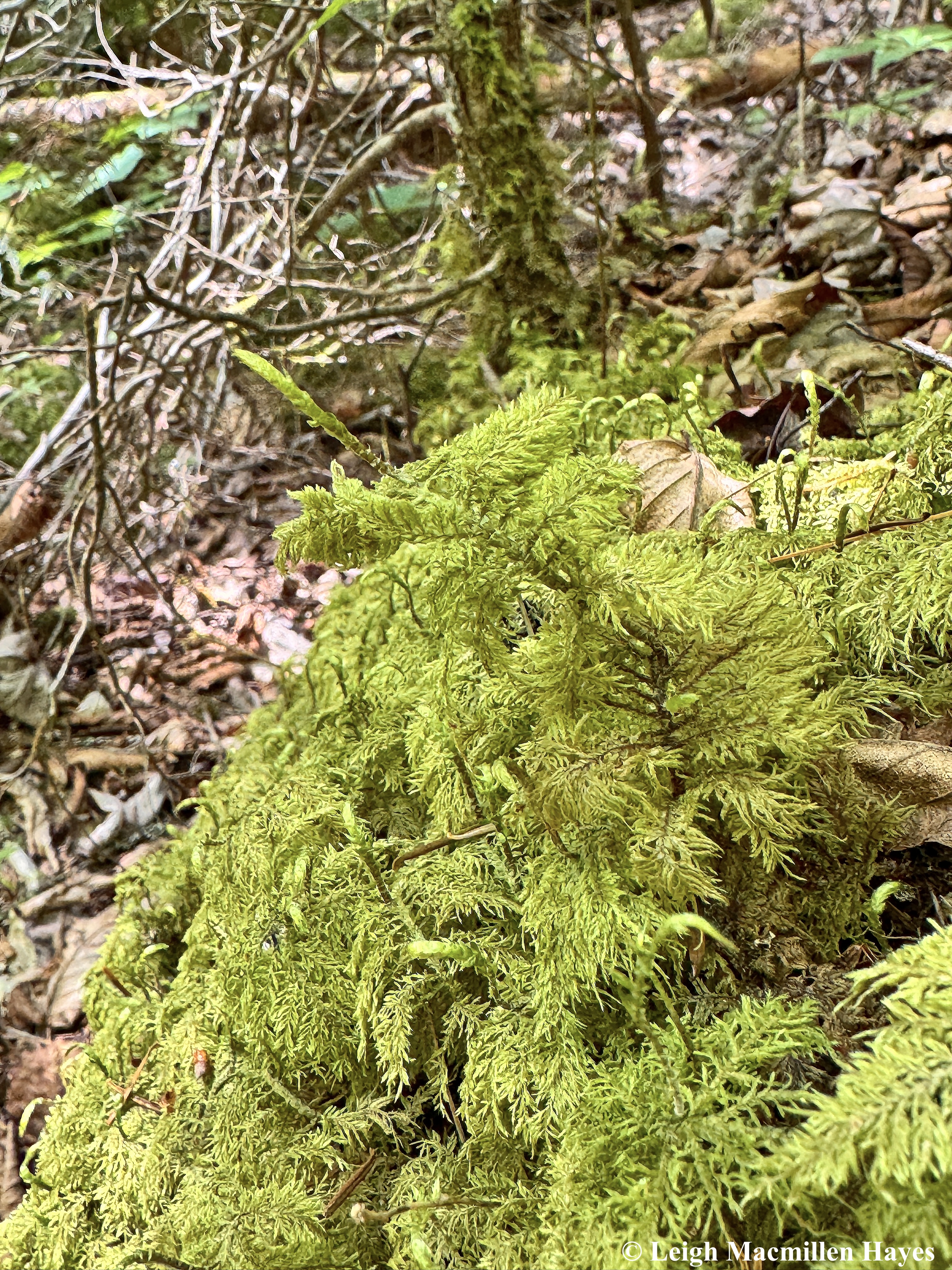
And Stair-Step Moss growing abundantly like a set of stairs here and there and even over there.

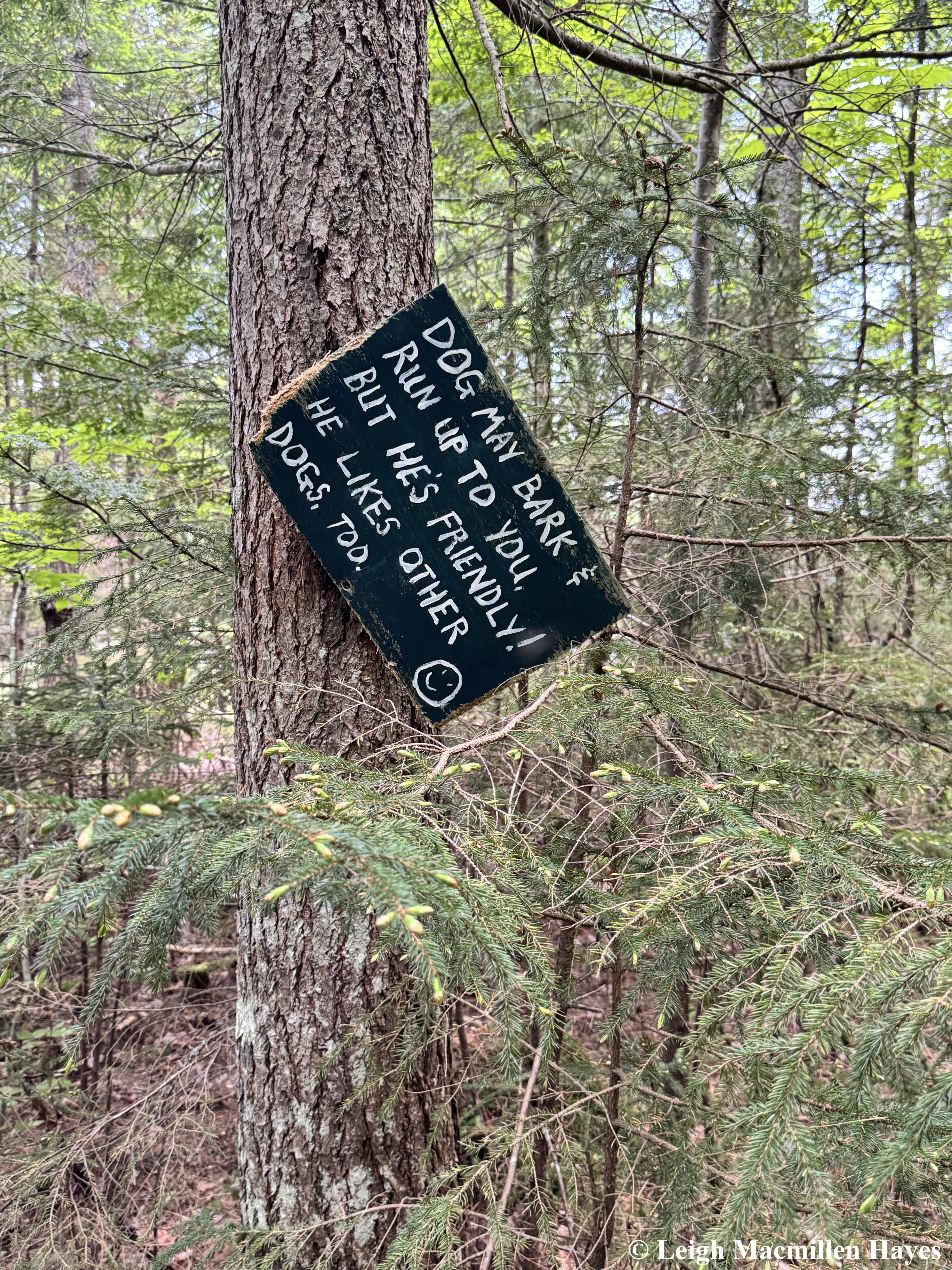
And a warning, which was more of an invitation at the only private cabin along the way, a route which offers lean-to shelters for groups to rent. I love this sign. We looked forward to meeting said dog, but sadly, no one was home.

Flat-fruited Pelt Lichen also lined the trail. So much to see. So much more to learn.

Oh, and an Eastern Newt in the water. It was like the Newt brought the trail to a full circle beginning with the Red Eft on our first hike of the weekend and ending with this adult form.

Our time Vermonting came to an end this afternoon, but oh, what a wonder-filled time we had. We hiked so many miles while meeting old and new friends, dined with dear old friends, met friends of friends who were old friends to each other and new friends to us, and just plain had fun making new memories.

Thank you Chuck and Mercy, and Bev and Bill, and Debbie and those at Three Ponds, and Brian at the Nature Center, and to all the others we met along the way for making our experience such a rich one.

Vermonting we did go. Word or no word, it was exactly what we needed.

Where The Moccasins Led Us

Rituals. We follow them. Some more than others.

For My Guy and me, there is one in particular that captures our attention beginning in mid-May.

And so I follow him . . . across Beaver dams,

beside the Atlantic Ocean,

up mountain trails,

even on the hottest day so far with Canada wildfire smoke casting a haze.

This year it was more trails than usual that were included in our ritual and along the way we spotted Wild Columbine in bloom, growing as it does among the rocks, and always pleasing our senses with its brilliant colors and artistic nodding presentation.

Fringed Polygala, and how I love the way those two words roll of my tongue, also showed off, making its common name of Gaywings so apparent. Doesn’t it look like a Bird of Paradise coming in for a landing upon its very own leaves?

Upon one of our journeys we found a few Red Trilliums still in bloom, though it seemed late in the season for them. But as My Guy teases, I did what I do and added this photo to the other trillion I have of this plant. They all need to be honored, don’t they?

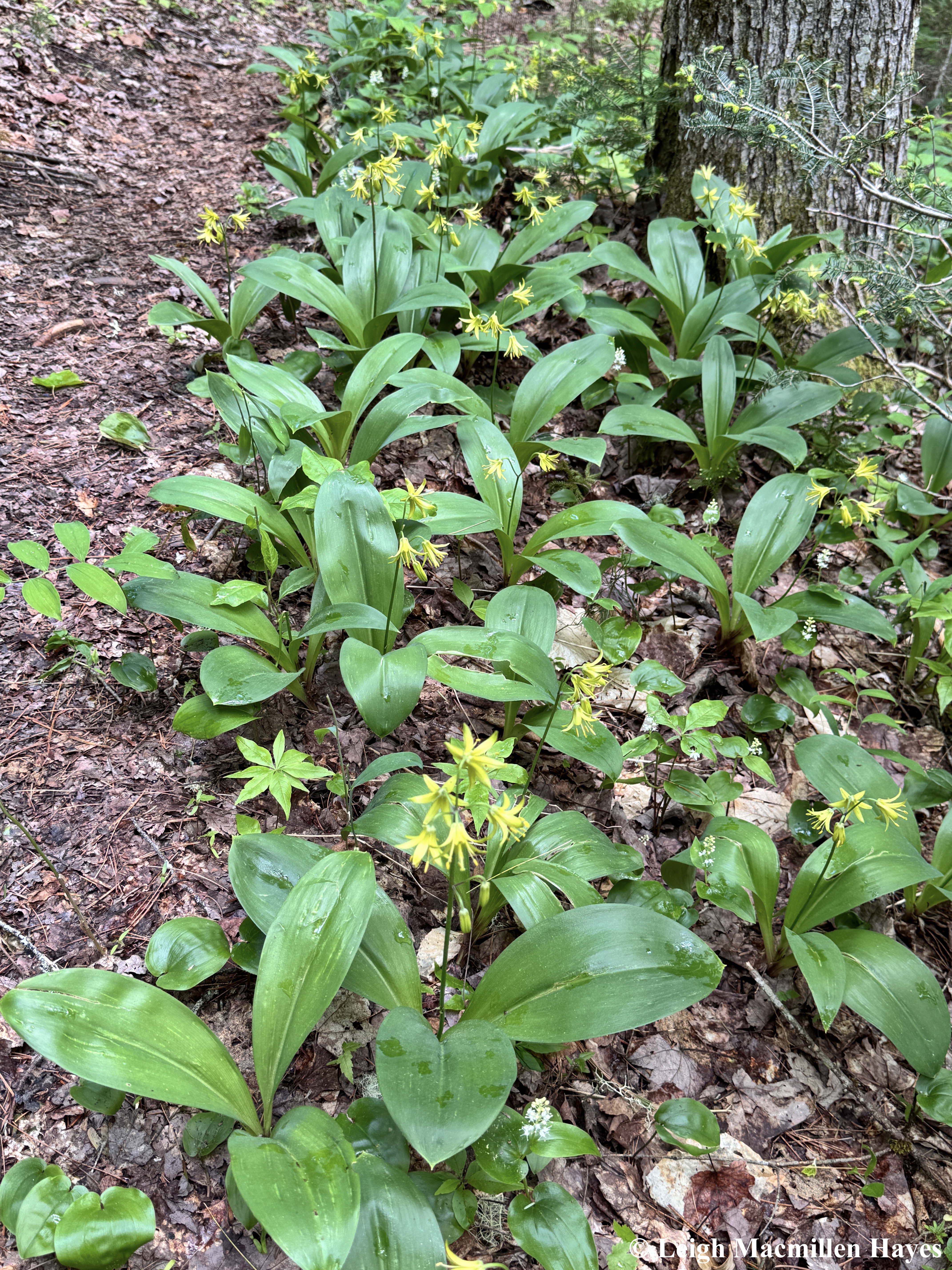
Seemingly everywhere, Clintonia, aka Blue-Bead Lily bloomed, adding specks of sunshine to the path and lighting our way, even on the grayest or rainiest of days. Yes, we even hike on rainy days.

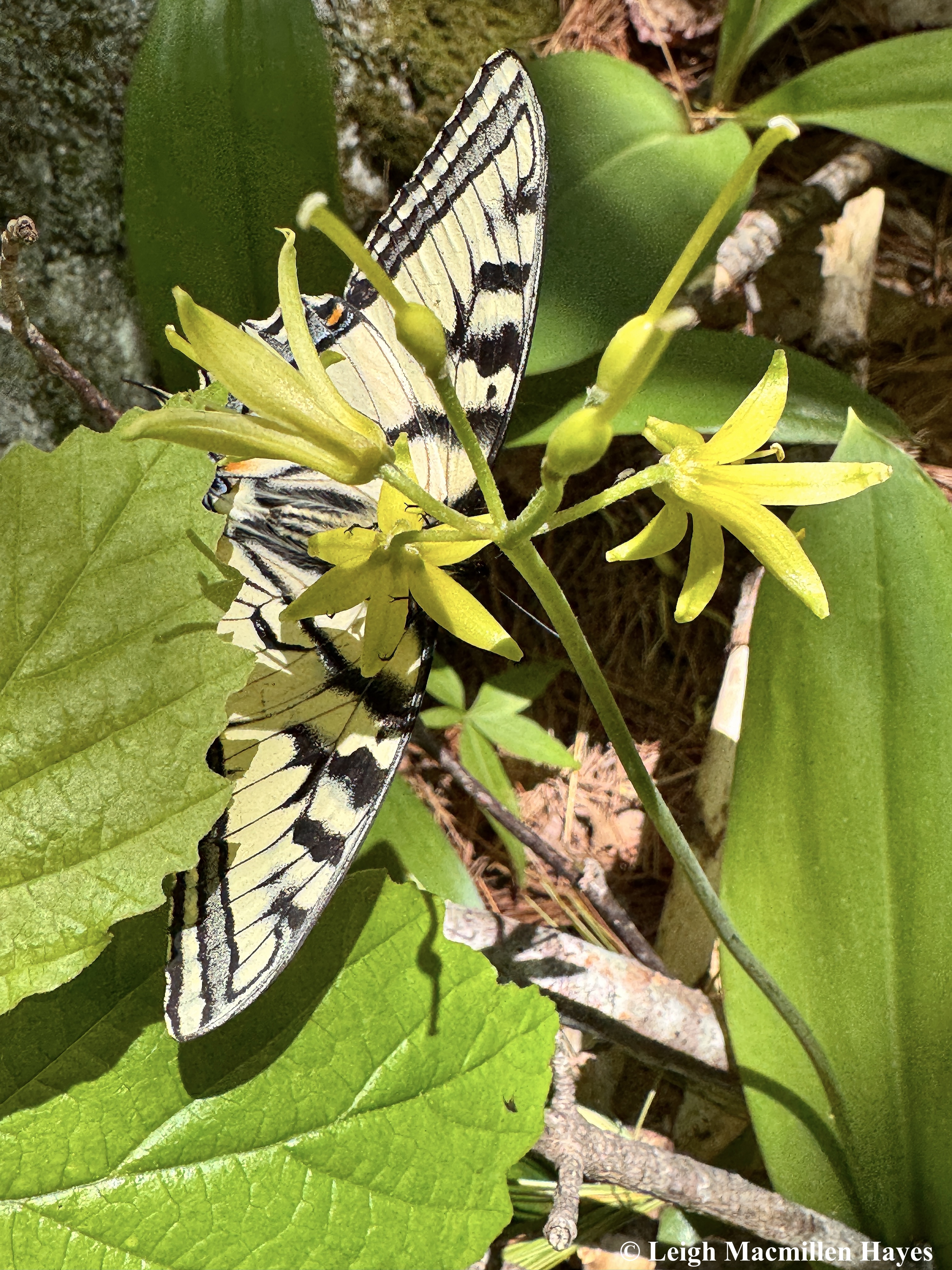
On sunnier days, the Tiger Swallowtails added their own yellow to the equation. Can you see the tiny pretarsi or insect feet of the butterfly as it held on why sucking the flower’s nectar?

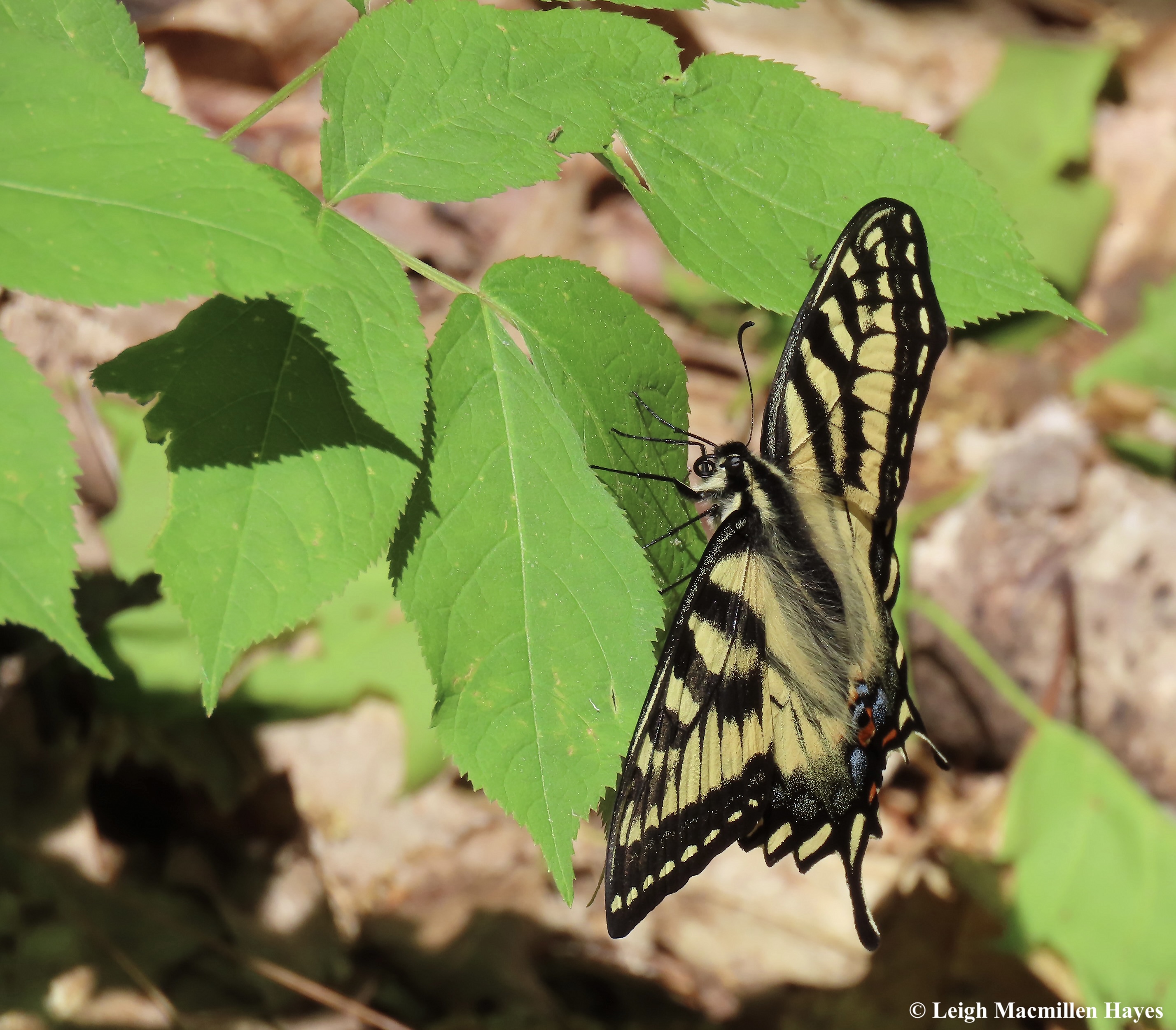
This spring it seems the Tiger Swallowtails are everywhere we travel by foot or truck. What I love about this one is that it was taking a break upon the leaves and you might be able to see its proboscis or siphoning mouthpart coiled up because there was no nectar to seek in that moment.

Right now the Swallowtail butterflies are the largest we’ve seen flying, but during a hike the other day, we spotted one of the smaller ones, this being a Northern Azure feasting upon Black Chokeberry flowers at a summit.

Jack, or rather Jill-in-the-Pulpit, for she needed the extra leaves to help her in her mission of producing seeds, greeted us in various places where the soil was moist including beside the cow path in our woods, where it totally surprised me despite the fact that we’ve lived in this house and wandered about for over thirty years.

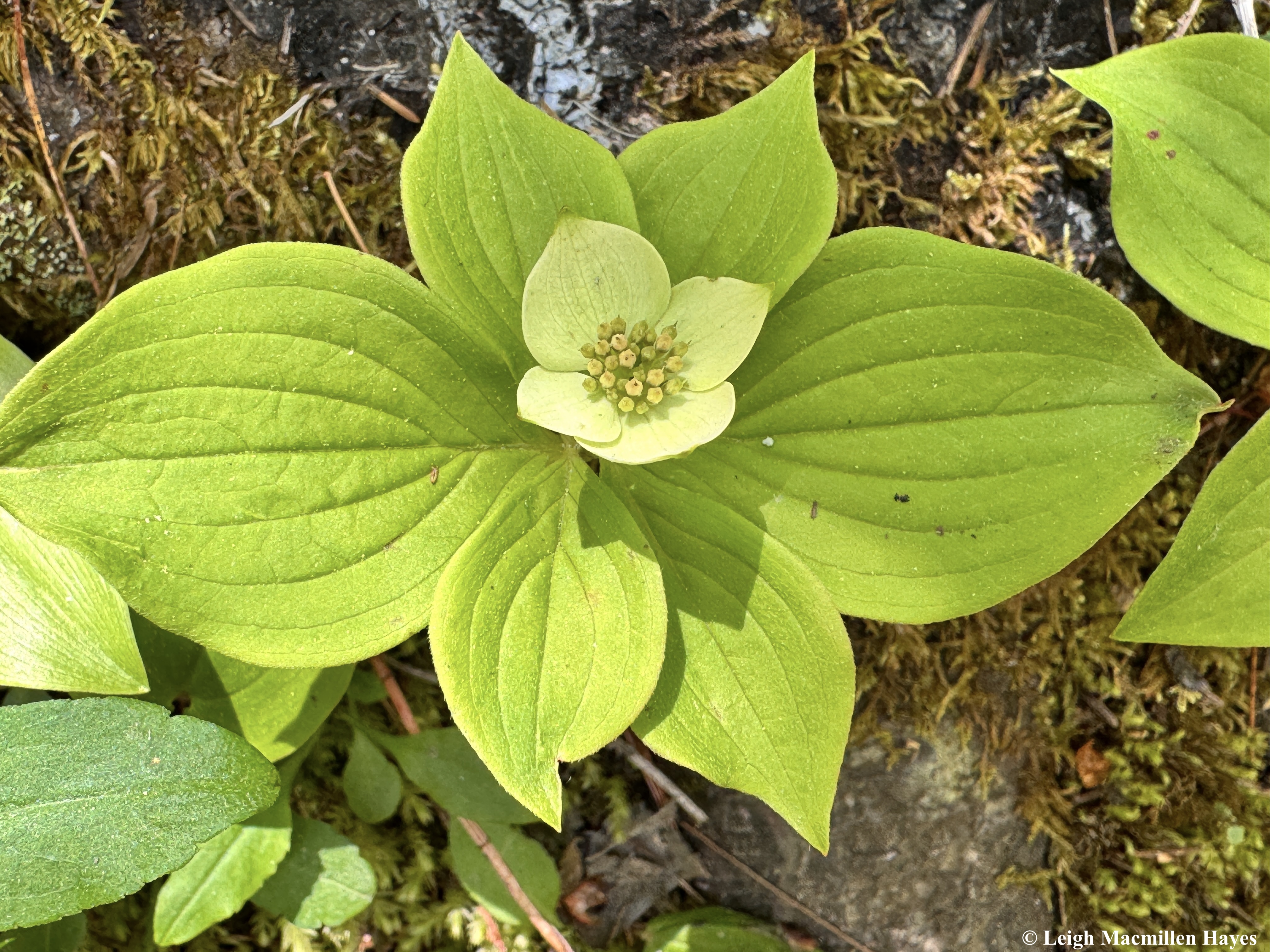
As one week turned to the next, and the flowers that were in full bloom kept changing, suddenly Bunchberry was added to the list. Again, like Jill-in-the-Pulpit, Bunchberry needs two extra leaves in order to have more energy to produce flowers followed by the berried fruits that bunch together in a cluster of bright red. You may look at the veins on those leaves and immediately know the family to which this wee plant belongs–if you guessed Dogwood, you are correct.

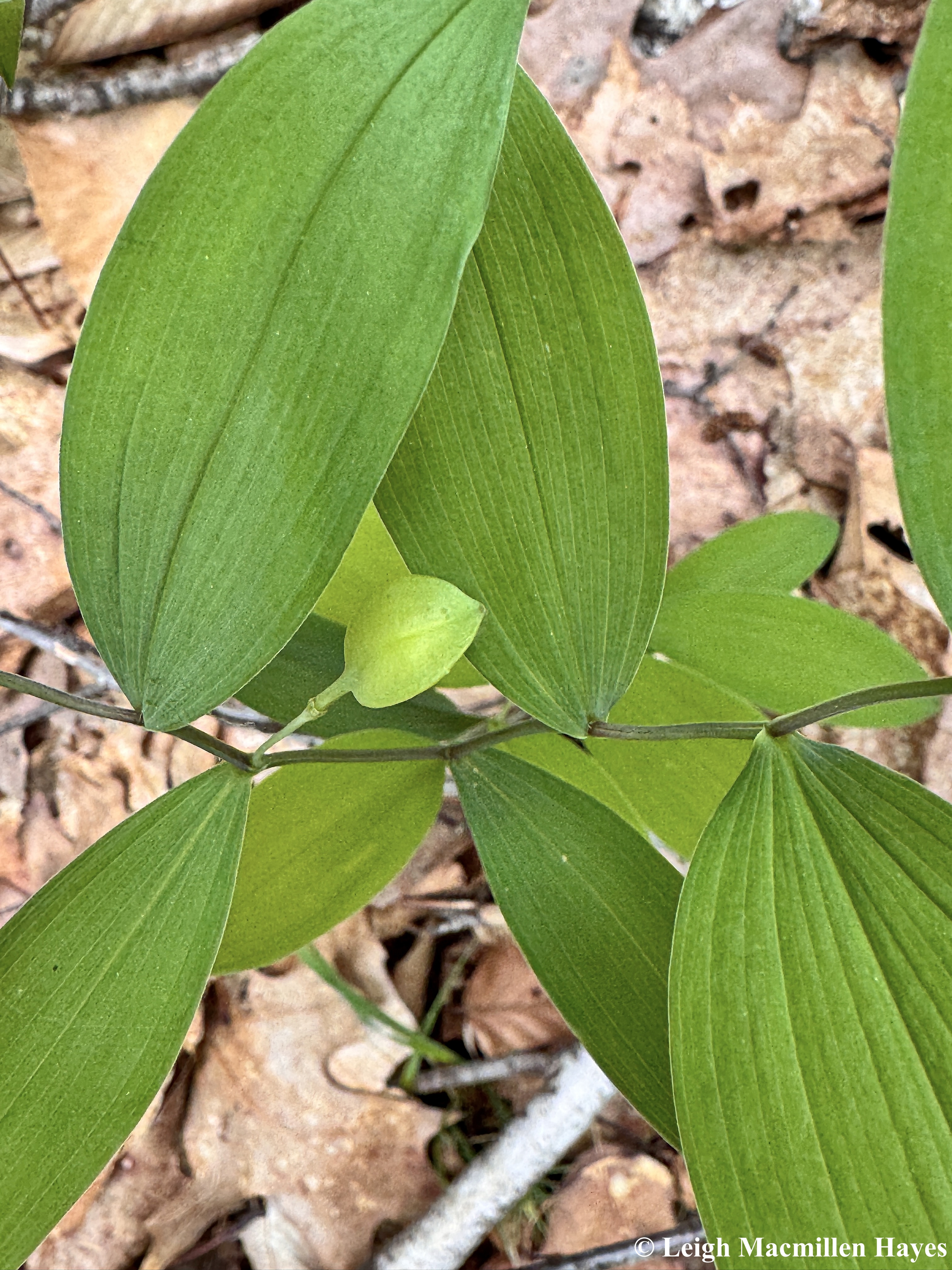
One of the earliest bloomers of spring, has already formed into a fruit, in this case three sided. Meet the Wild Oat of Sessile-leaf Bellwort. It reminds me that in a snap of the fingers, the season passes by much too quickly.

It wasn’t just flowers that marked our journeys. About the same time that we began the latest ritual, dragonflies and damselflies slowly began to emerge, for which we always give great thanks as they gobble up some of the Mosquitoes and Black Flies that so annoy us. This American Emerald had only just made the transformation from aquatic form to terrestrial hours earlier based on the sheen still visible on its drying, but not quiet dried yet, wings.

Much more mature were these two, who had formed the marital wheel in order to canoodle. I knew they were Emerald Dragonflies, but wasn’t sure which species until I searched my guides back at home: Uhler’s Sundragon, a new species for me.

And in at least one spot, some smaller female dragonflies deposited eggs as they tapped the water’s surface with their abdomens. Think of it as Naiads to come, who will live in the water for 1 – 3 years, depending upon species, before climbing out and transforming miraculously into terrestrial fliers.

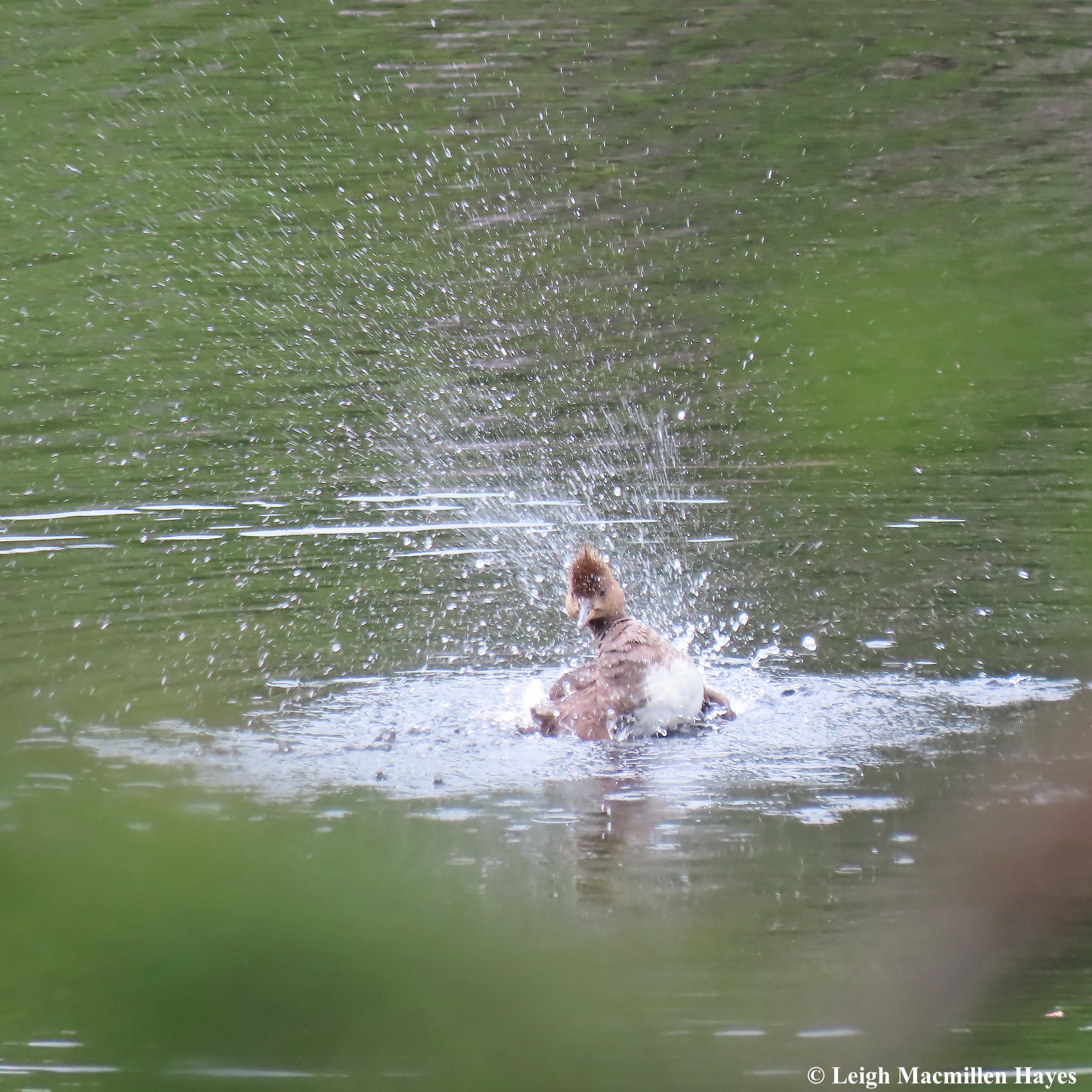
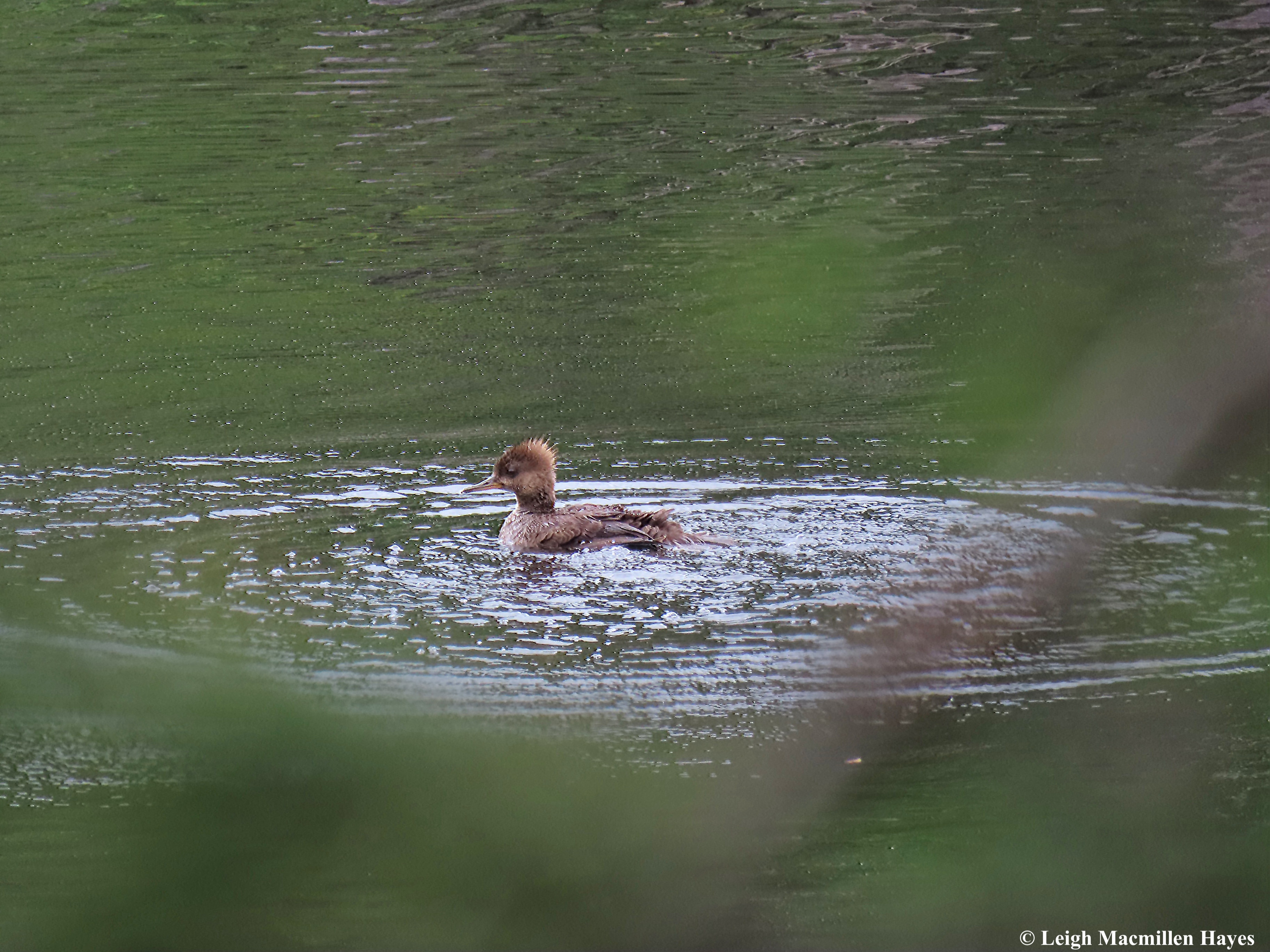
Being beside water in another place, and looking between tree branches, we spied a Common Merganser taking a bath.

We stood just far enough back, that it didn’t realize it had an audience as it splished and splashed.

And finally shook itself off, with water spraying everywhere, before it continued on its journey . . . and we did the same.

Basking Painted Turtles became a common sight as well, and this one had the cushiest place upon which to recline, all others being on fallen logs or rocks and boulders in the water.

One, however, that I assume was a female, though I didn’t want to disturb it and get any closer to check the length of its nails, I surmised had been laying eggs or was about to. Our time together was limited so I don’t have the entire story, but she was in a safe place, no matter what.

One of our most unusual sightings as we performed the ritual was spying a Bald Eagle steal a fish from the grip of an Osprey. If you look closely at the center of the photo, you might spot the thief on its get-away mission–it is flying above the picnic tables, about in the middle of the trees.

As it flew over our heads, the Eagle had the audacity to look back to see if the Osprey was hot on its tail. It was. We don’t know how this story ended either, but we assume the Osprey had to cast its fishing line again.

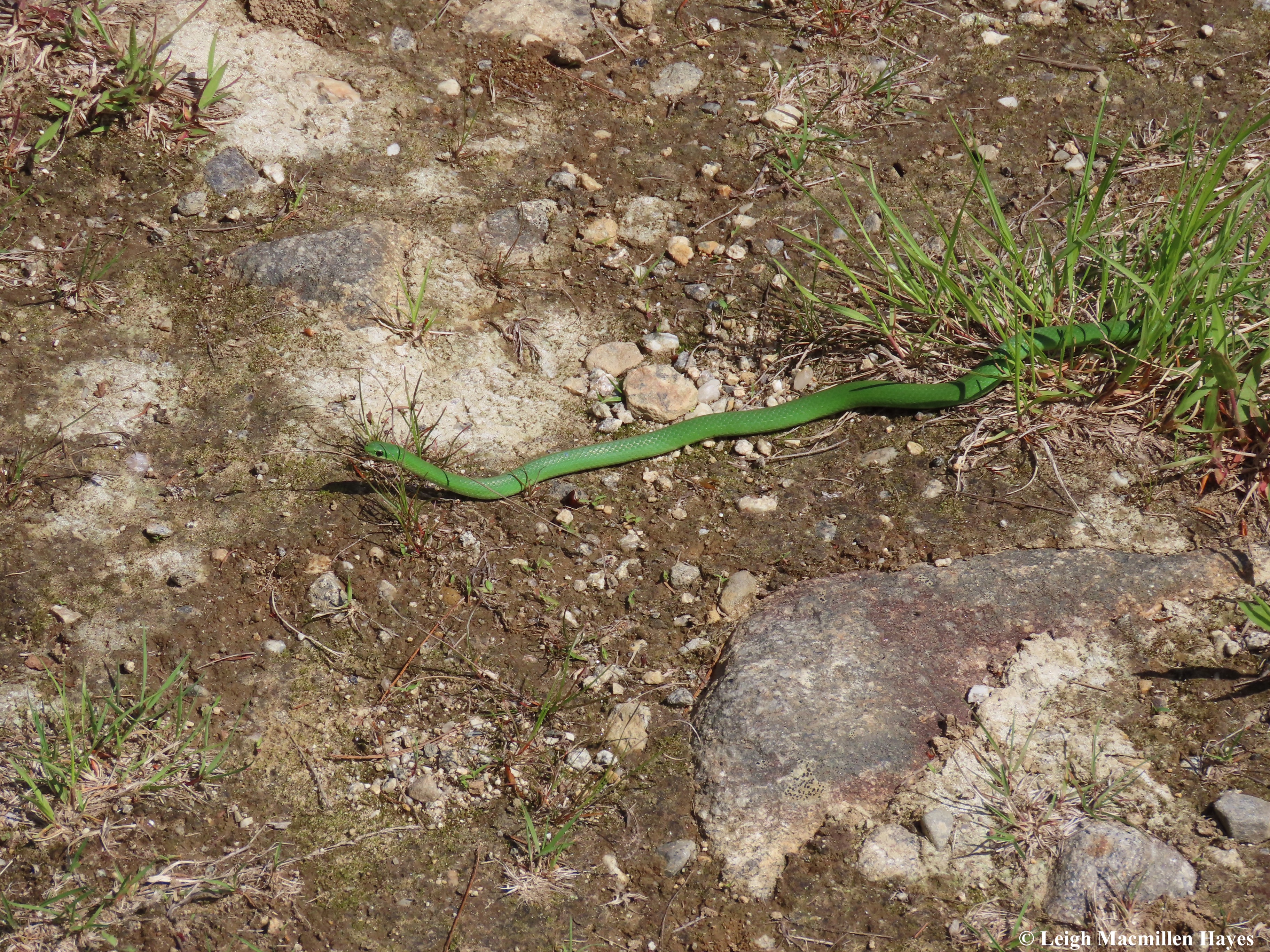
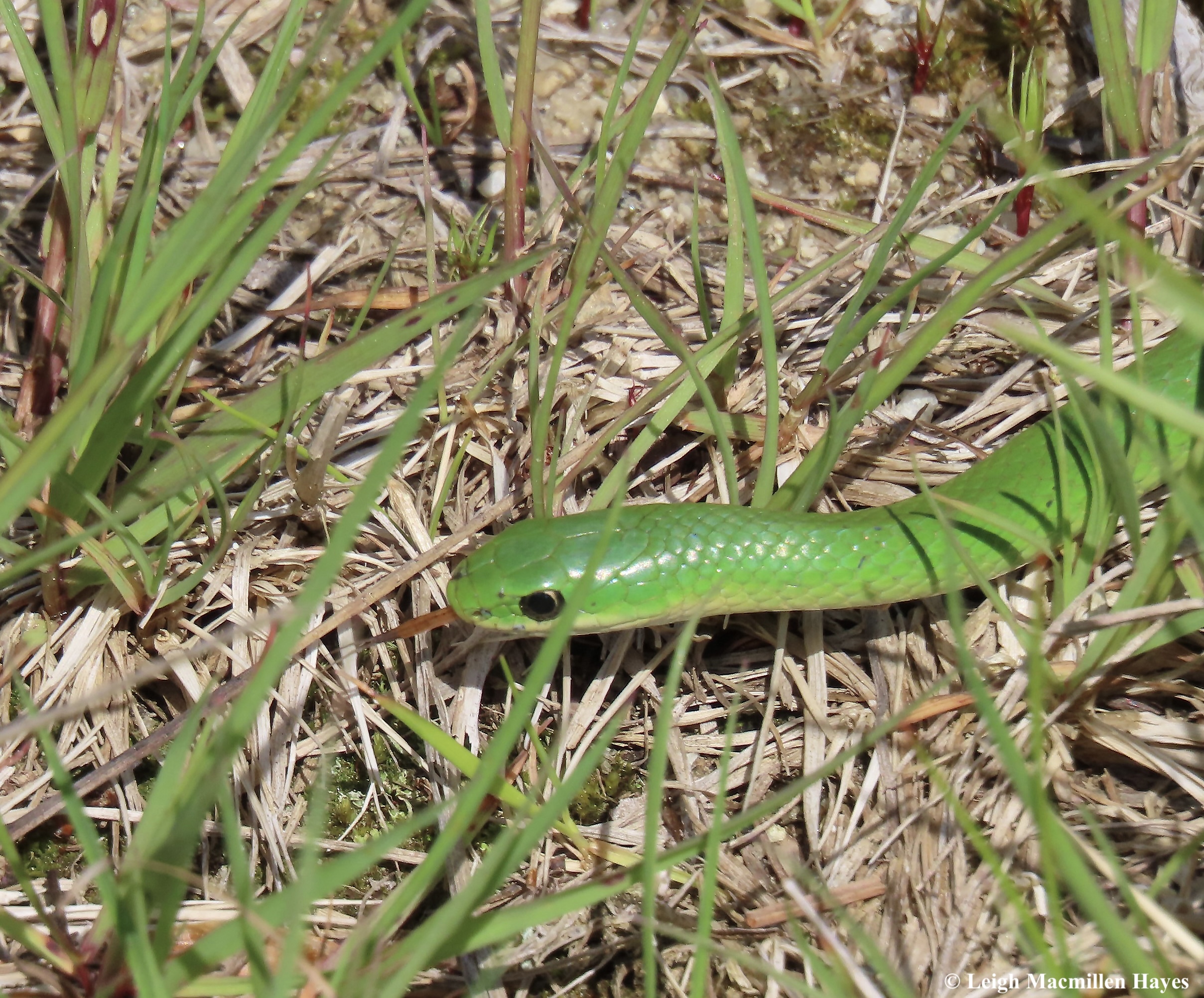
Another fun sighting occurred as we crossed under a powerline on the return trip of a seven mile hike around a river, over to a pond, up a hill behind the pond, and back down and out. Almost the color of the grass that sparsely grew along this section of the trail, a green snake slithered across just after My Guy had stepped that way.

I just love its forked tongue–sensing the trail in snake manner as it did.

The two tines at the tip of the tongue, seen here as it withdrew this sensory organ, help it to smell in stereo and thus find its way and find a meal.

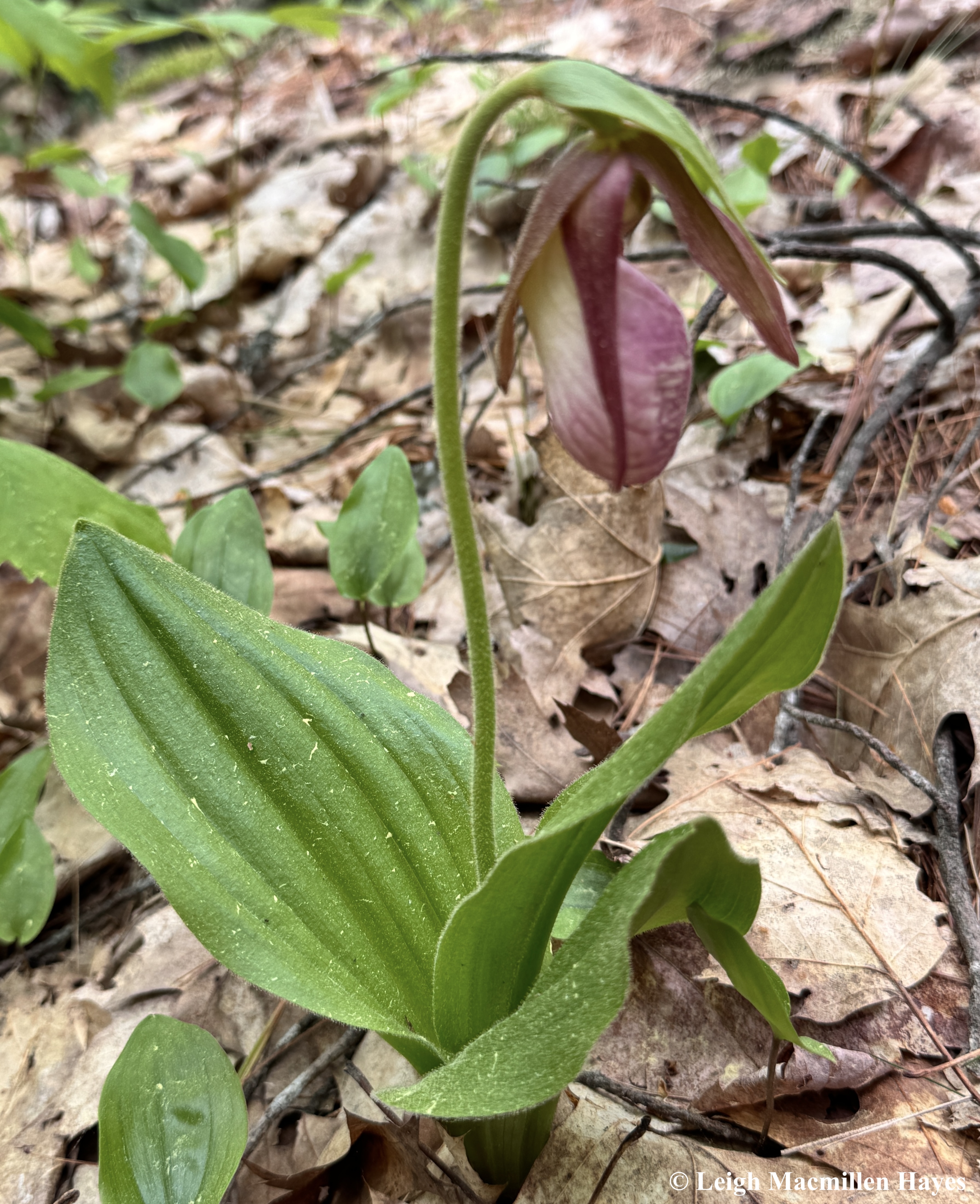
All of these things we saw because of the ritual that we perform every year at this time. It’s one that we now realize involves some greed, but still we feel compelled to do it. We count Lady’s Slippers.

I always thought that orchids were something you received on Prom night and that they grew at the florist. I had no idea that they were actually wildflowers until about thirty years ago. According to Orchids of New England and New York by Tom Nelson & Eric Lamont, Lady’s Slippers are one of 65 species and variants found in our region.

And so they deserved to be counted.

But, oh, how they hide. Do you see the one in the photograph above?

How about now?

Knowing that they can be elusive causes My Guy to slow down for a change. It’s no longer the destination that counts, but rather the number of Pink (and their white variants) flowers that we can spot.

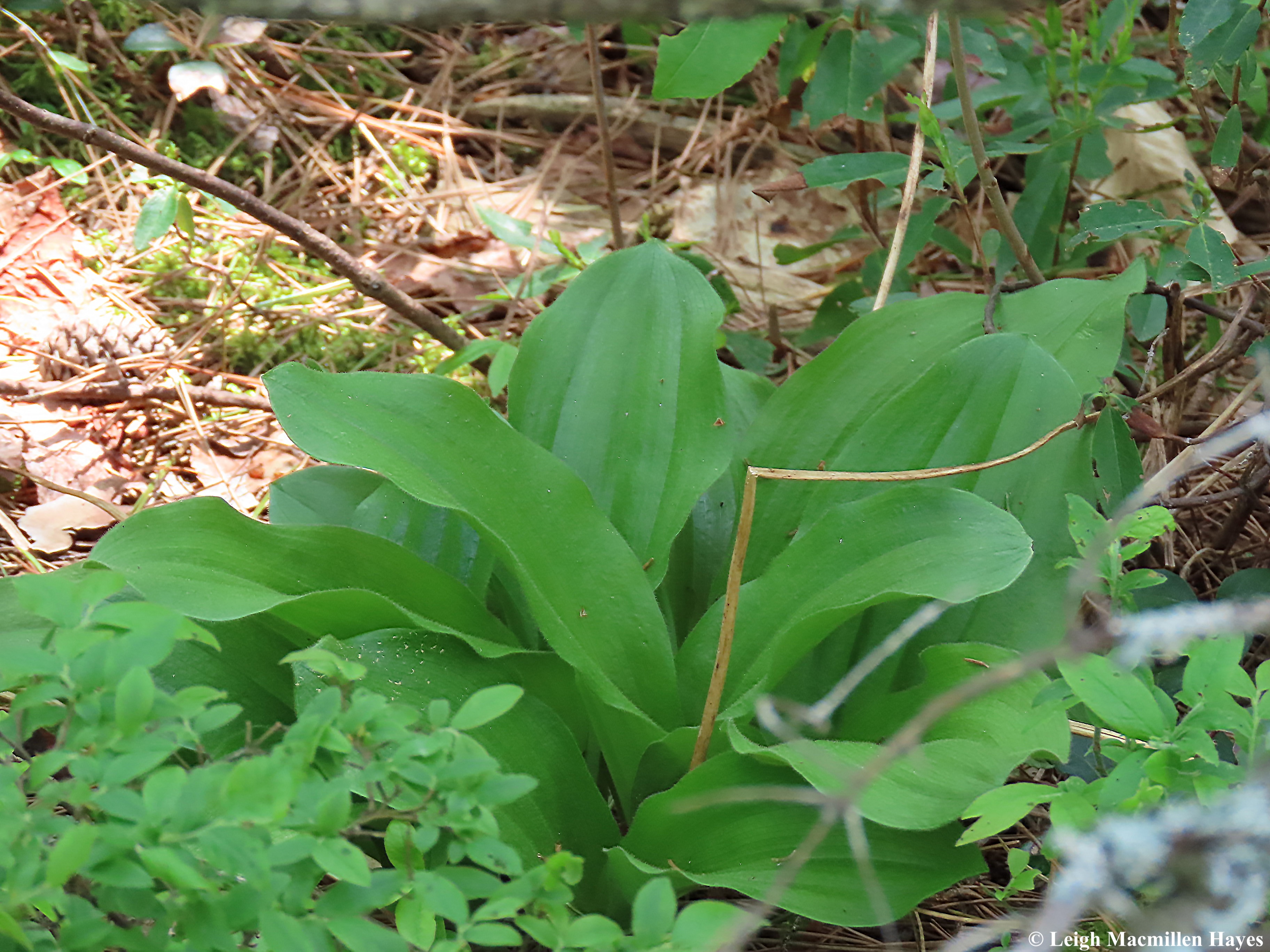
Some are tall, and others quite small. And some are sets of leaves with no flowers yet as in the foreground. We don’t count those.

Here’s the thing about Lady’s Slippers. It takes a long time for a minuscule seed to become a plant. The seeds, developed in capsules, are beyond numerous, but each one has no food source or endosperm. So . . . it must develop a relationship with a Rhizoctonia fungus in the soil to survive. From the fungus the plant gets nutrients for germination and growth. The fungus, in turn, receives nutrients from the orchid’s roots.

BUT . . . all of this takes time. And the presence of the fungus.

Years. First, after at least three years the plant produces a pair of two basal leaves that fold like accordions and remind me of the paper fans we used to make as kids.

One author says it’s another 5 – 10 years before the plant produces a flower; another states 10 – 17. Either way, by the time you spot one, it’s been working for a long time to become a thing of beauty. (And should not be picked or transplanted.)

We found one that stymied us for it appeared to have three basal leaves. I can only wonder if there was a second plant there and something happened to its other leaf.

In one spot, we found what we call a bouquet. Sometimes we see three or four grouped together, but in this case 14 plants in bloom.

And in another spot where we expected the same, nada. What happened. My Guy was disappointed because this is his favorite and he loves to show it off to anyone who happens to be hiking that way.

We have a theory, though we don’t have scientific knowledge to back it up. But here goes. Last summer, our count was quite high. The previous spring and summer it had rained. A. Lot.

Last year, we experienced a drought. This year fewer flowers in most places that we hiked in the last few weeks. Perhaps less of the fungus?

And sometimes the flowers are spotted growing in a bit of a line, making us think perhaps there is a rotting nurse log beneath the soil. As for soil and habitat, acidic seems to be the favorite and we often find them among Low-bush Blueberries and towering over Reindeer Lichen.

And then there’s pollination: Lady’s-slipper pollination is a curious thing. Bees are lured in by the guide lines to a slit in the front petal, the slipper-like pouch, or flower’s labellum. Once inside, the bee cannot exit the way it entered because the petal structure turns inward.

The exit is at the top of the slipper, but to reach it, the bee must move through a hairy interior and rub against the flower’s stigma, depositing any pollen it may have carried in and brushing against the pollen mass called the pollenia before flying out. It strikes me as being like a house of mirrors. And all I want to do is quickly find my way out.

Some bees get frustrated with the dilemma of discovering there is no nectar and the task of finding the exit and instead chew their way out, which seems to be what happened to this flower.

It looks like the bee frantically tried to escape this one.

I tried to honor them with a painting, but our best way is by counting each and every one. I’m going to share last year’s numbers and this years. Also, this year, we counted along a bunch of other trails than just the Big Three as My Guy refers to the first three for which I have been keeping records since 2000.

Wolfe’s Neck State Park: 2024: 475; 2025: 159

Albany Mountain: 2024: 364; 2025: 411

Sanborn River and Overset Mountain: 2024: 598; 2025: 526

Grand Total of the Big Three: 2024: 1,437; 2025: 1096

Plus these trails all from this year only:

Mount Tom: 25 (but we were there on May 18, and this was the kick-off event that got us going this year; more may have bloomed since then. Actually, after spotting the first one, My Guy wasn’t sure he wanted to count this year, but let me tell you, he still has the greed!)

Mount Tire’m: 31

Proctor Pond Reserve: 41

Kezar River Forest: 63

Narrow Gauge (only 1.5 mile section): 56

Sleigh Trail at Notch View Farm: 44

Home woods: 2

Grand total of all trails: May 18 – June 6: 1,358

Even with the extra trails, the count was down.

But still . . .

Where the Moccasins (Lady’s Slippers) Led Us–up and down many a path with so many wonder-filled moments and sighting along the way. Counting Lady’s Slippers is a ritual that we love to share together and with others.

Dragons of the Future

Spring is actually a combination of many seasons, beginning with winter that doesn’t want to let go, followed by mud, and then road-repair, with bug quickly taking form following several days of rain, and soon to come, my favorite of all–dragonfly season.

And so I thought I’d take some time to honor friends I’ve met in the past and try to get to know them better . . .

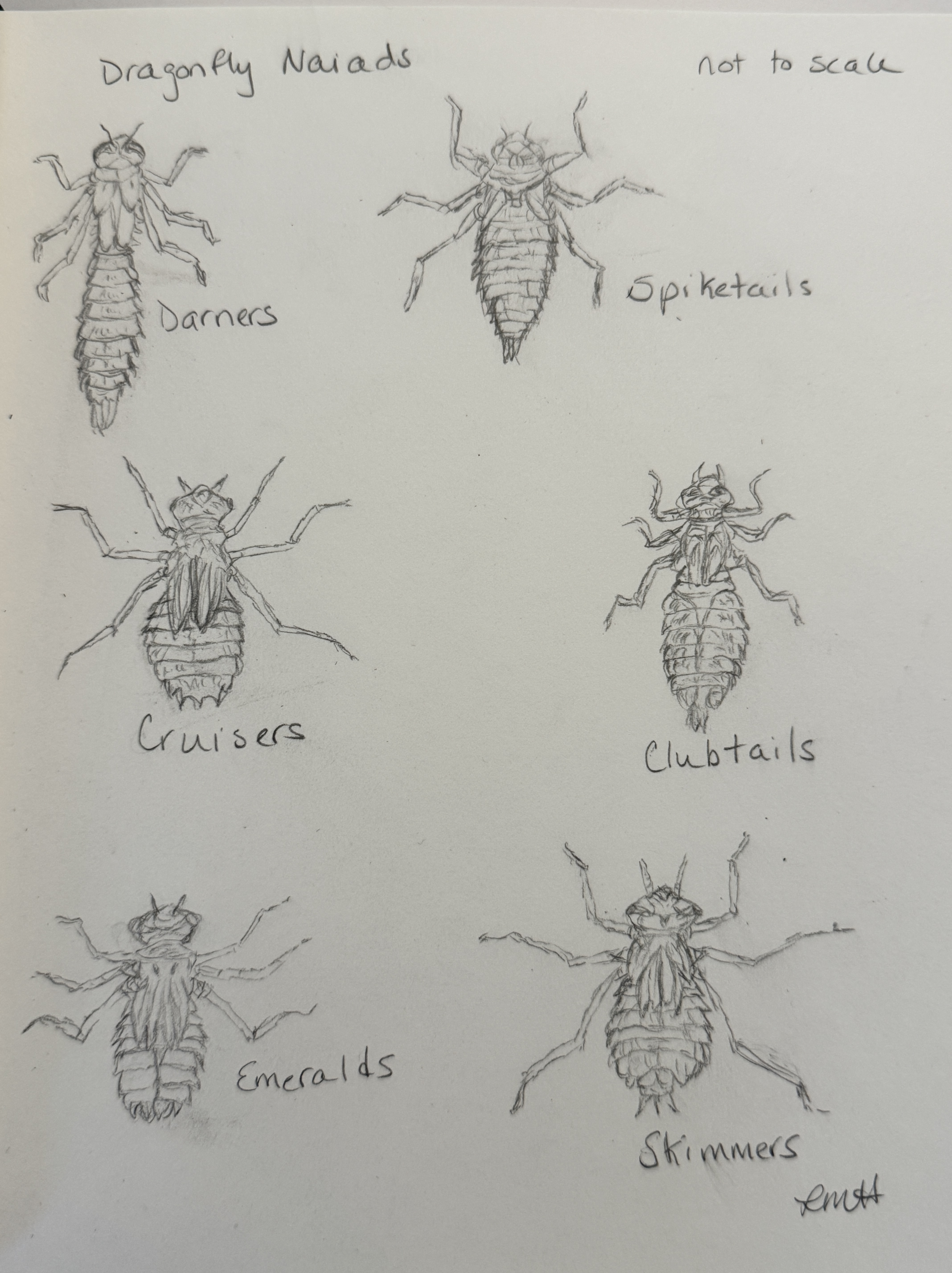
With my pencil first. Sketching is such a wonderful way to slow one’s self down and try to capture the essence of the object. Thankfully, with pencil and a good eraser, changes can be made and believe me, I have, and will continue to edit these.

Darner Naiad

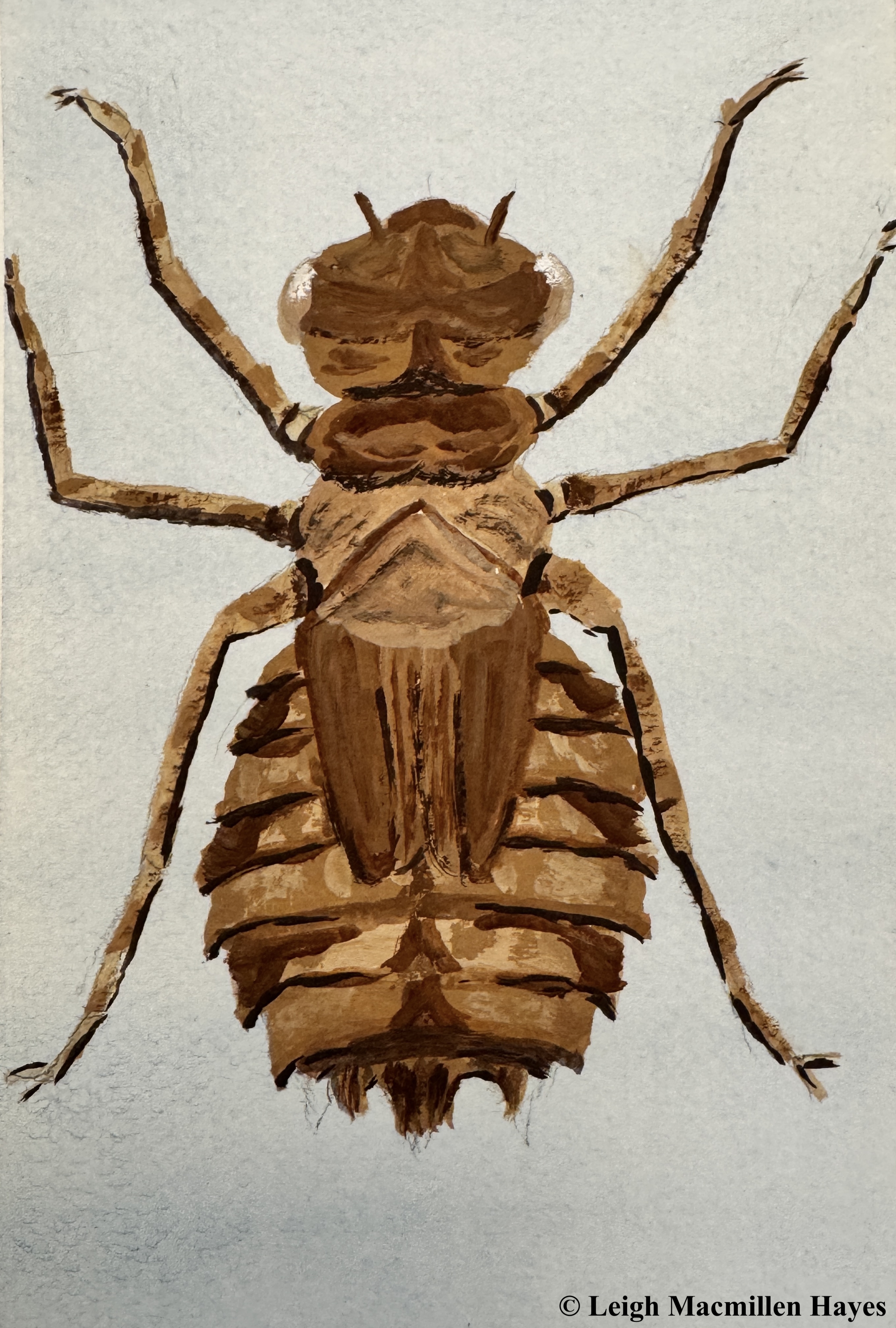
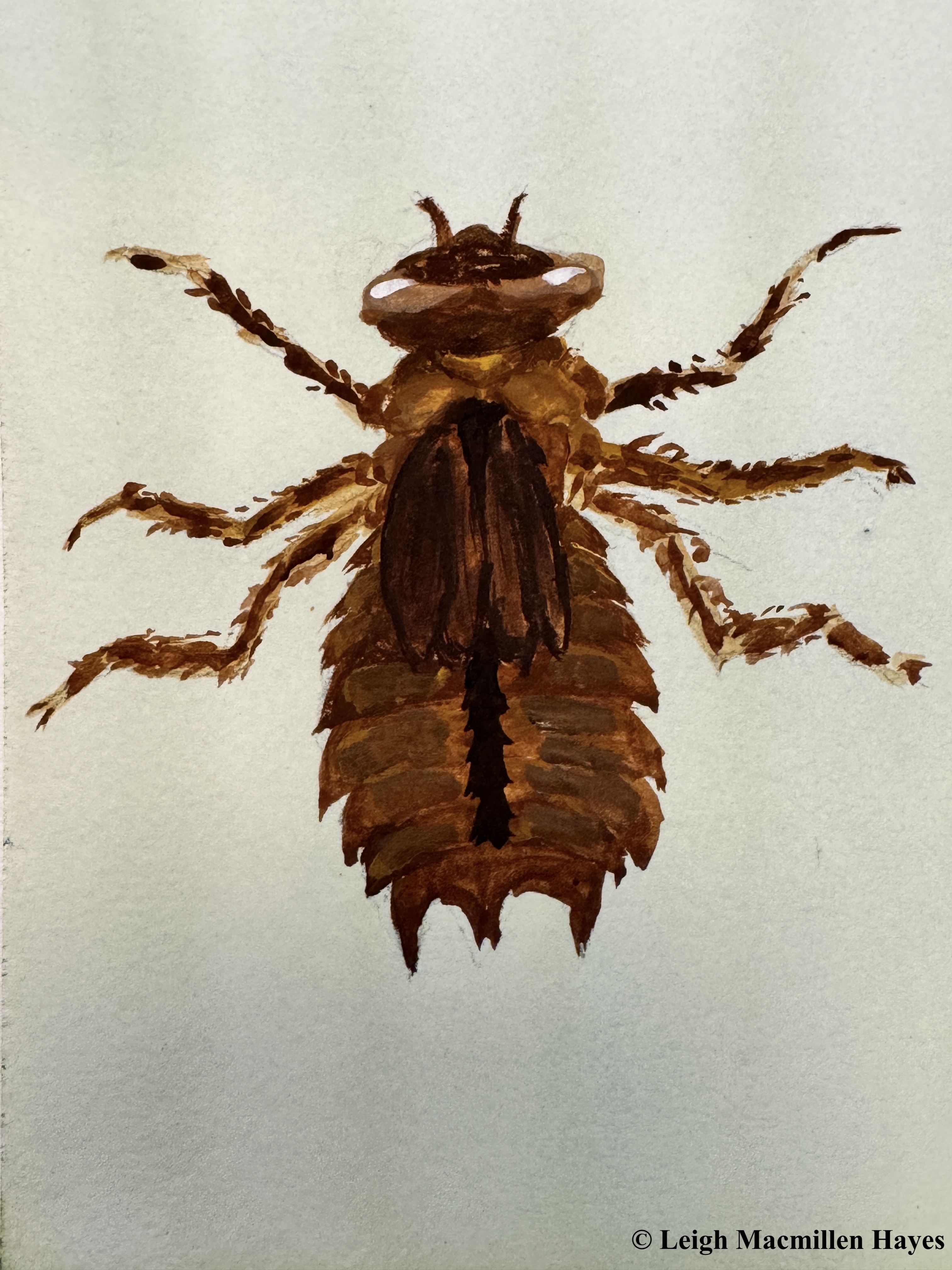
And then I decided to take it one step further–by painting the Naiads (larval form) of six dragonfly families.

One of the incredible wonders of this world is that the aquatic form of dragonflies become terrestrial and we anticipate and celebrate their emergence every spring, knowing that BUG season won’t last too much longer. Well, in some places. Right Jenn?

Usually, they begin to emerge by the end of May and then it’s an ongoing process, with some waiting until late summer or early fall to transition from one world to the next.

This is a Black-tipped Darner that I met in the fall a few years ago when it was barely alive. It was on the grass by the outlet of Deer Hill Bog in Stow, Maine, which is a typical habitat for this species, though it isn’t common.

Stream Cruiser Naiad

After painting the Cruiser Naiad, I thought I’d use the iNaturalist APP: SEEK on it and bingo, SEEK identified it as a Stream Cruiser. All the rest came up as dragonfly/damselfly, so at least AI knew I was painting insects, but I was excited that it could reach the species with this one.

When immature, Stream Cruisers remind me of Oreo cookies, or maybe an Ice Box cake, which is actually rather funny because a few days after my birthday last year, I was the surprise recipient of an Ice Box cake. Thank you, Deb!

There are not a lot of cruisers in the Cruiser family, and as far as I can tell, this and the Swift River Cruiser are the only two found in New England.

Emerald Naiad

Okay, so I tried to show the hairy body of the Emerald Naiad. If you’ve ever looked through a loupe or hand lens, you’ll know that the whole world is hairy!

Most Emeralds have greenish eyes and this Kennedy’s Emerald is no exception. In his field guide, Dragonflies of the North Woods, Kurt Mead writes, “Named for Dr. Clarence Kennedy, a professor at Ohio State University and a pioneering odonatologist.

Also in the Emerald family are the Baskettail dragonflies, this one being a COMMON Baskettail. I’ve commented before on the word “common,” and probably will again, but seriously, do you see anything common about this intricately-designed specimen?

Spiketail Naiad

So, um, I drew and painted this Spiketail Naiad, but to my knowledge, I’ve never encountered a Spiketail. I guess that should be one of my goals for the upcoming season. And I’m sure that having said that, I will start receiving photos of such from friends who have spent time with the adult members of this family.

Clubtail Naiad

Clubtails, however, I do know and meet often. They are so named because most adults have clubbed abdomens.

One of the ones I meet most frequently is the Lancet Clubtail–who loves to greet me on our dock or accompany me for a kayak ride. Do you see how the end of the tail is more club-shaped?

I will say that I often have to slow my brain down to differentiate between a Lancet, Dusky, and Ashy Clubtail.

I would be remiss if I didn’t mention the biggest Clubtail of all: Meet the Dragonhunter. Yes, he has a clubbed tail. But also yes, as his name implies, he eats other dragonflies. Oh, there are plenty of other things on his menu, but at up to 3.5 inches in length, this big guy may also eat butterflies and even other Dragonhunters!

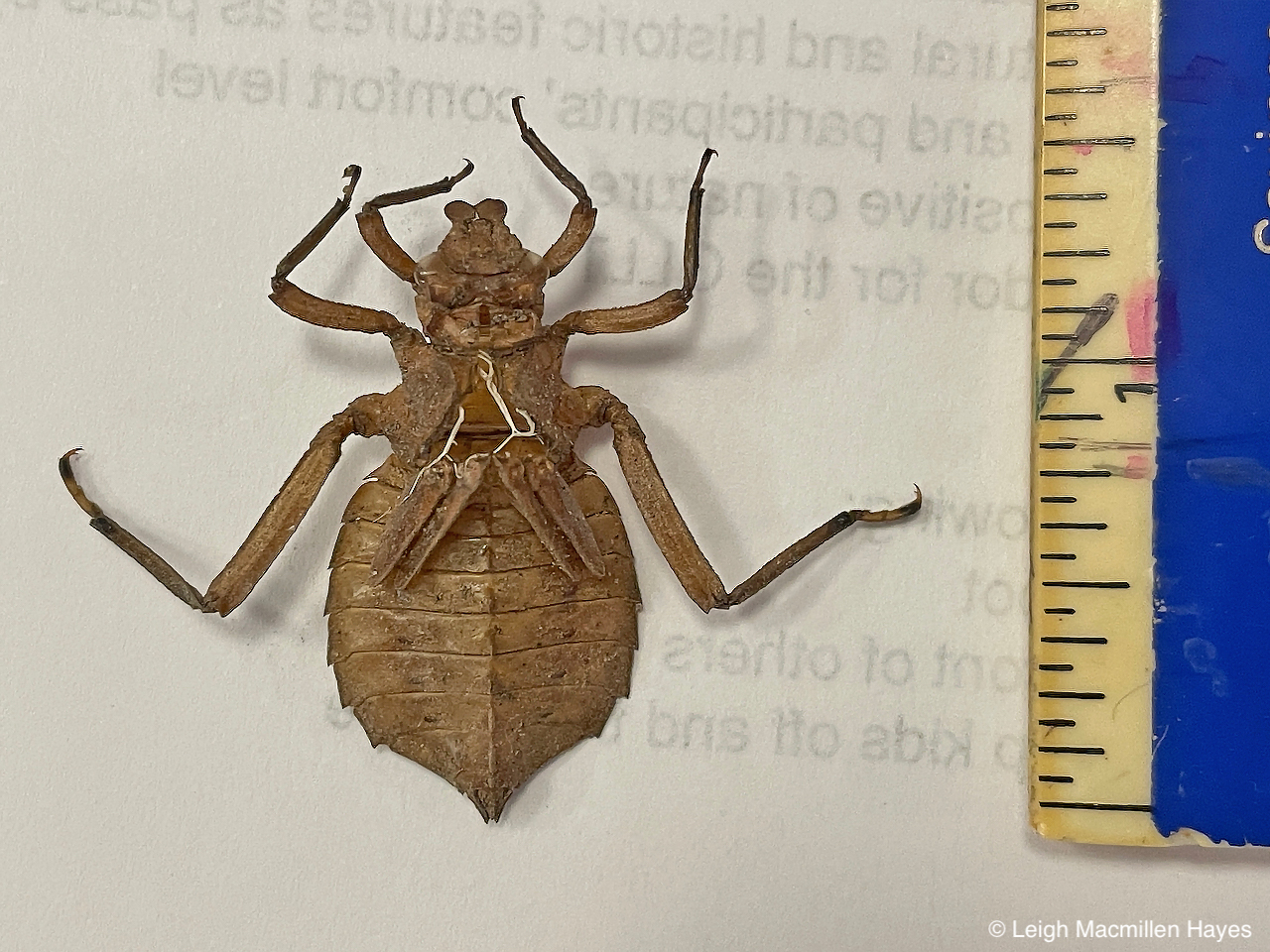
I would also be remiss if I didn’t share this photo of a Dragonhunter exuvia, which Dennis Paulson, author of  Dragonflies and Damselflies of the East describes as “wide, flat larva that resembles a wood chip.” The legs alone speak to its strength; formidable in the water and out.

And this is just a reminder to self that though I sketched and painted one form of a dragonfly naiad for six species, some may have other shapes. It’s the cerci at the tip of the abdomen that becomes key for identification to family.

Skimmer Naiad

My final painting completed this afternoon is that of a Skimmer Naiad. This is the largest family of dragonflies and every ID book includes a thick section for skimmers.

That seems apropos because not only are there a lot of family members, but their abdomens are also quite thick or chunky.

Pictured above is a male Calico Pennant Skimmer. His counterpart has all the same markings, but where you see red, she sports yellow. And soon, a pair of cousins will fly before the Calico Pennants. The cousins are the Hudsonian Whitefaces. Their abdomens are similar, but they have clear wings and as the name suggests, white faces.

That being said, I again have to slow myself down when I spot a Hudsonian because I often mistake it for a Calico at first glance.

I share thousands of photos (and probably have shared at least a million over the last ten years) of Skimmers, but thought I’d keep it simple and end with this one–a male Spangled Skimmer. Note the white stigmas on his wings. That I am aware, no other dragonfly has these white stigmas.

Thanks for stopping by to check on my current Naiad collection.

Naiads are the dragonflies of the future.

And the future is close at hand.

I can’t wait for spring 2025 to debut her dragonfly season.

Collecting Birds

OK, I admit it. I’m a collector. Of things. But they are all special things. And many of them handcrafted. And most of them with a story to tell.

So, yes, I collect birds. No, not dead or dying birds. And certainly not living birds. Just . . . birds. My collection is actually quite small, and until today I hadn’t given it much thought, but it began a hundred years ago when I was a senior in college and my roommate and I hosted a student from Great Britain in our dorm room for a week.

I honestly cannot remember her name or too much about her. But I do remember that at the end of her stay she gave us each a bird.

And I remember she told us they were of the Tit species, which didn’t mean a whole lot at the time, but now that I see and hear Titmice on a regular basis, I have a better appreciation. This little bird has graced my desk for decades and the young woman’s name keeps flitting in and out of my mind, so maybe I’ll recall it by the time I finish writing. I now realize I haven’t thought about her in years, despite my fondness for the gift she bestowed upon me.

Another gift was the carving of a Chickadee, and I received this one about 35 years ago from a sweet little man named Carl and I only wish he’d lived long enough to know how much I still appreciate it.

Likewise with this Loon, crafted for us by my Godfather Russell because he knew My Guy and I love our encounters with these birds who symbolize Maine. And he loved to paint, among many other talents.

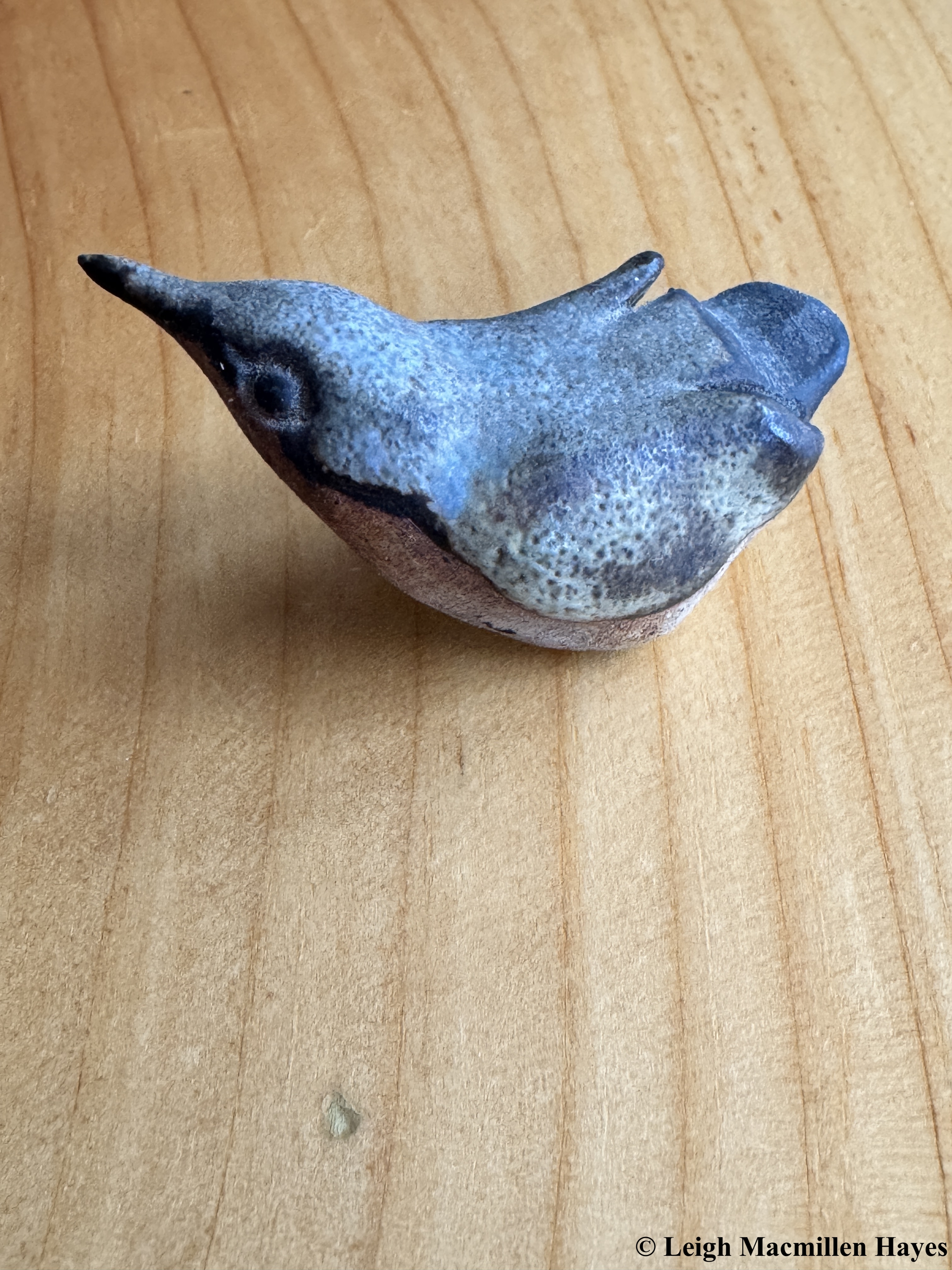
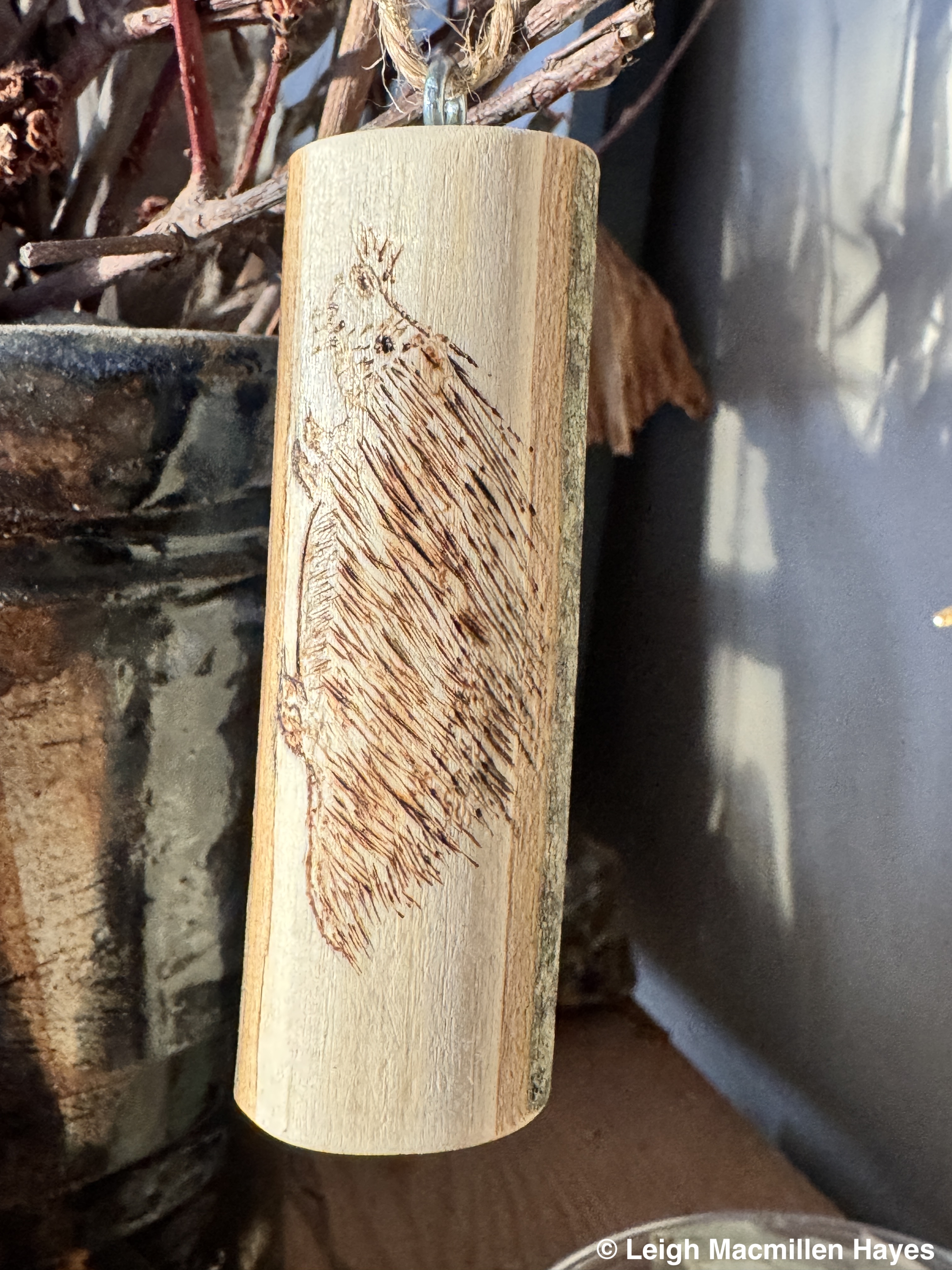
I also cherish these two ornaments that never made it to a Christmas tree because they pose instead from a vase of twigs in my study. The one on the left was created by Dr. Fred, a founder of the Maine Master Naturalist Program, and the Hummingbird was gifted to me by my friend Marita after she spent some time bicycling around Cuba last year.

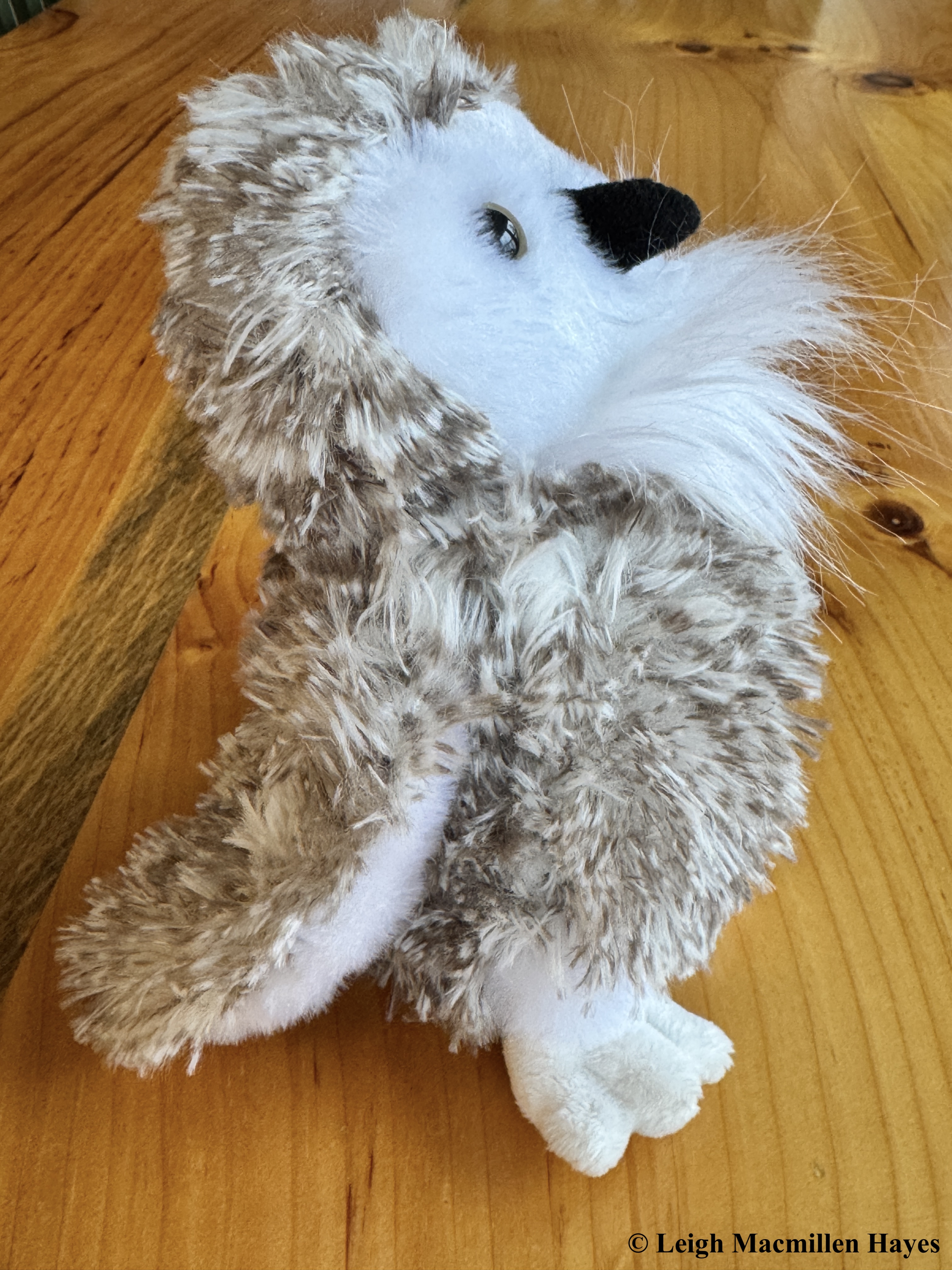
And then there is the Token Owl. Token, because if one is leading an Owl Prowl and there is no guarantee of spotting an Owl, it always pays to pull such a stuffie out of one’s pack so that everyone can leave saying, “I saw an Owl.” Sometimes you just need to make things happen.

All of this leads me to what I realized today is becoming quite a collection: my paintings of birds.

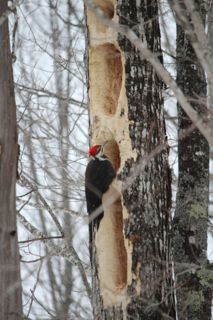
Pileated Woodpecker in our back forty, which is actually only five more acres beyond the house. One of his favorite trees, however, is at the edge of our yard before the woods, where we’ve left several super tall dead snags and he uses them to mark his territory early in the morning, and later in the day as he taps away. Every day.

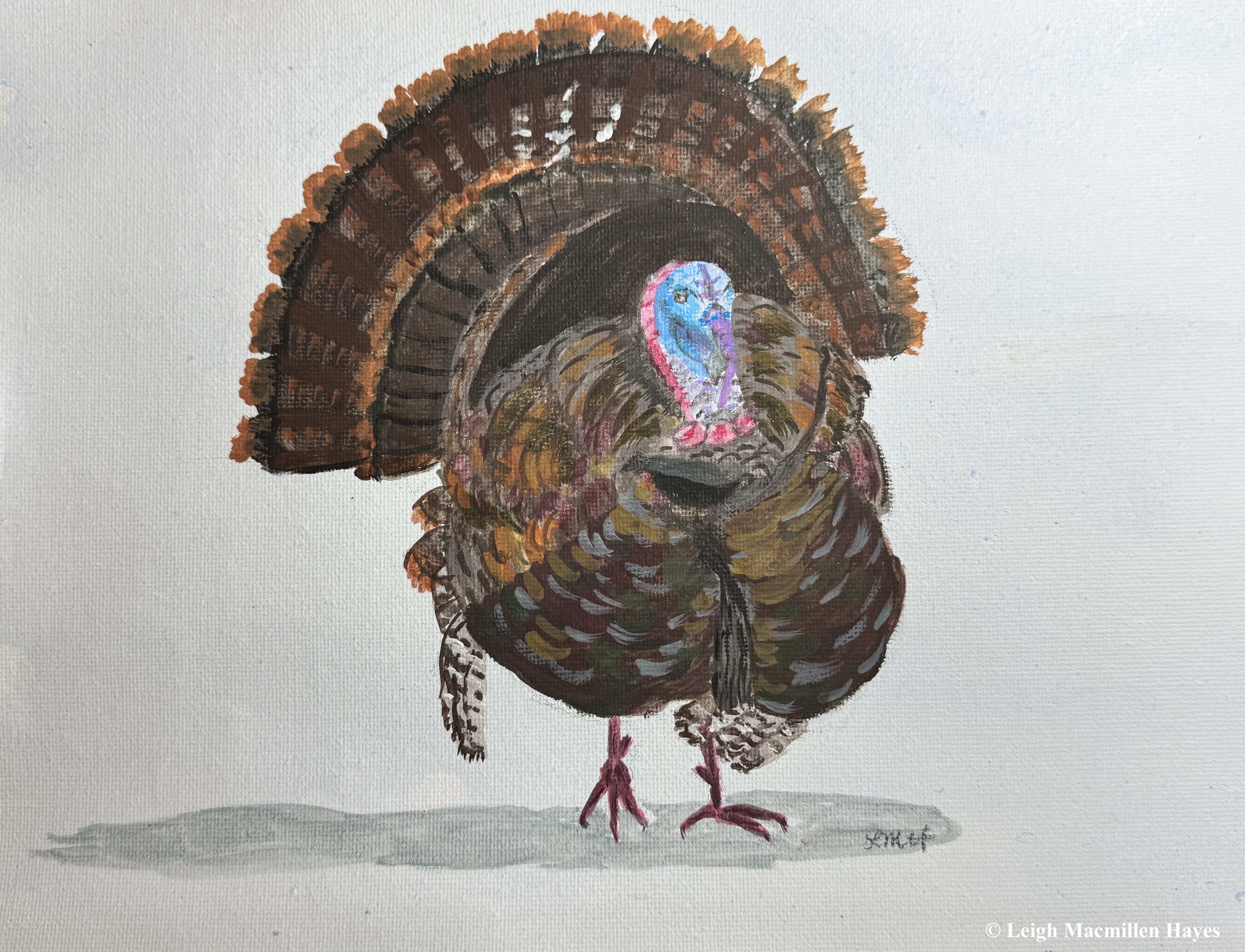
Tom Turkey strutting his stuff across the yard in hopes of wooing a hen. I can only assume he did though I never caught them in the act, but so large is the Turkey population round these parts.

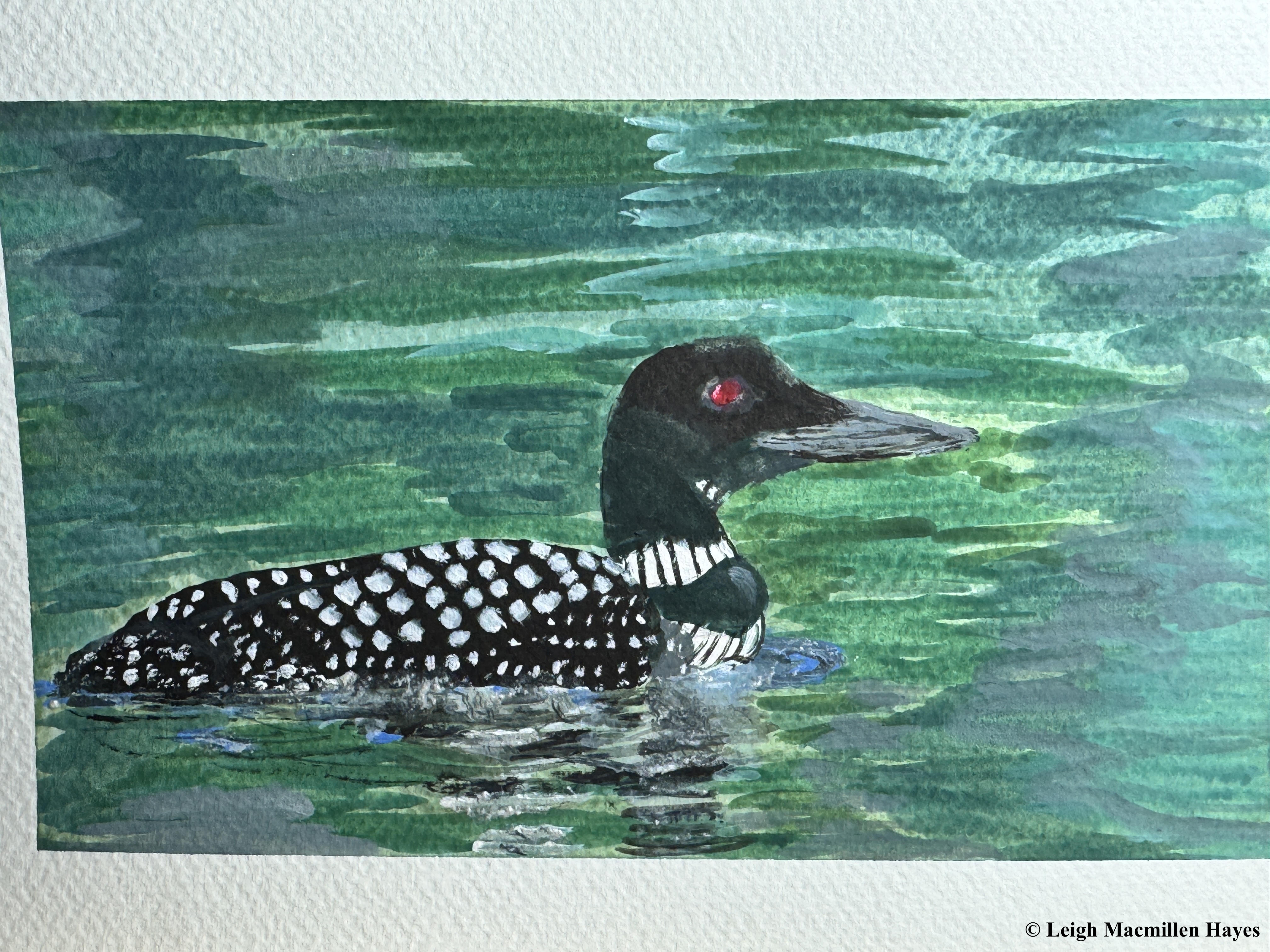
A Common Loon in front of the dock at camp. I admit that like dragonflies, I can never take too many photographs of loons.

Great Blue Heron scoring a wee fish for a snack.

And another searching for another meal.

And still seeking more, its eyes always intent as it stalks its prey.

A Barred Owl near the vernal pool, thankfully when there was still ice on it about a month ago, but he’s in the area, so anything can happen.

Ah, but how I love to meet these critters, who unless they are calling, remain incredibly still and blend in with the scenery and I’m sure I pass by more than I actually spot.

Mr. Cardinal, and I’ve been waiting for him to pass sunflower seeds on to his Mrs. because I’ve seen him do it in the past and it’s such a lovely gesture.

The Mrs. waiting for a gift from her betrothed. To my knowledge, she’s still waiting. One of these days he’ll surprise both of us.

Mr. Bluebird, who also visits daily, as does his Mrs., and from the direction of their travel, I believe they are setting up housekeeping in a house my neighbor erected just for them.

One of the zillion Juncos my friend Kate sent up from Connecticut. They arrived the day she told me they were on their way. That was a few weeks ago. In a snowstorm the other day, we had quite a large flock, but I think most are continuing their journey north as now I only see a few at a time.

My first attempt at painting a Robin following instructions in a book.

And then trying to tweak the painting and turn it into an American Robin. I fooled SEEK, a free app developed by iNaturalist. It came right up with A. R.

SEEK also knew this to be a male Red-Winged Blackbird. What it didn’t know is that it was one I saw calling a few weeks ago when there didn’t seem to be any females around.

And finally, my new friend, who has actually been in the neighborhood for a long time, but we only recently spent a few minutes together the other morning: Sharp-shinned Hawk.

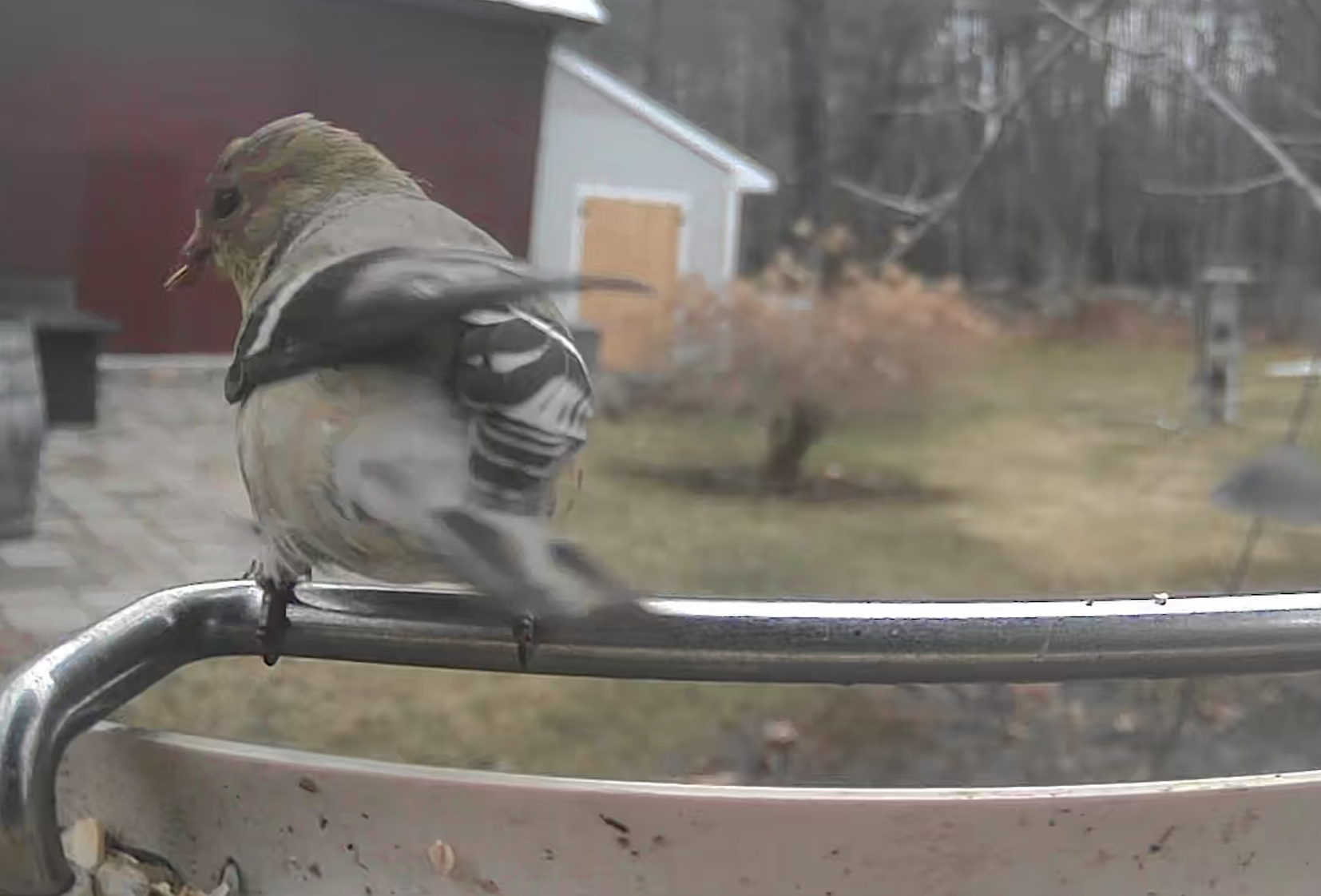
As I look out the window right now, besides this Goldfinch, the Bluebirds are both here, plus Robins, Juncos, Chickadees, Tree Sparrows, White-Breasted Nuthatches, and Mourning Doves. And actually, there are more Juncos than I expected.

That is the extent of my bird collection–at least for the moment. Thanks for stopping by to take a look.

The student from Britain: Jillian. It just came to me.

Marching into the Vernal Pool

I’ve lived in Maine for just shy of 40 years and can barely recall the month of March going out like a lamb, as the saying goes.

It’s certainly true that once again this year the ending of the month is more lion-like with an overnight and morning snowstorm, with freezing rain on the horizon for tonight and tomorrow, followed by a warm-up and rain on Monday.

That all said, March snow doesn’t last long.

But still . . . it has me dreaming. Remember, I LOVE winter, but am as ready for spring as the next person.

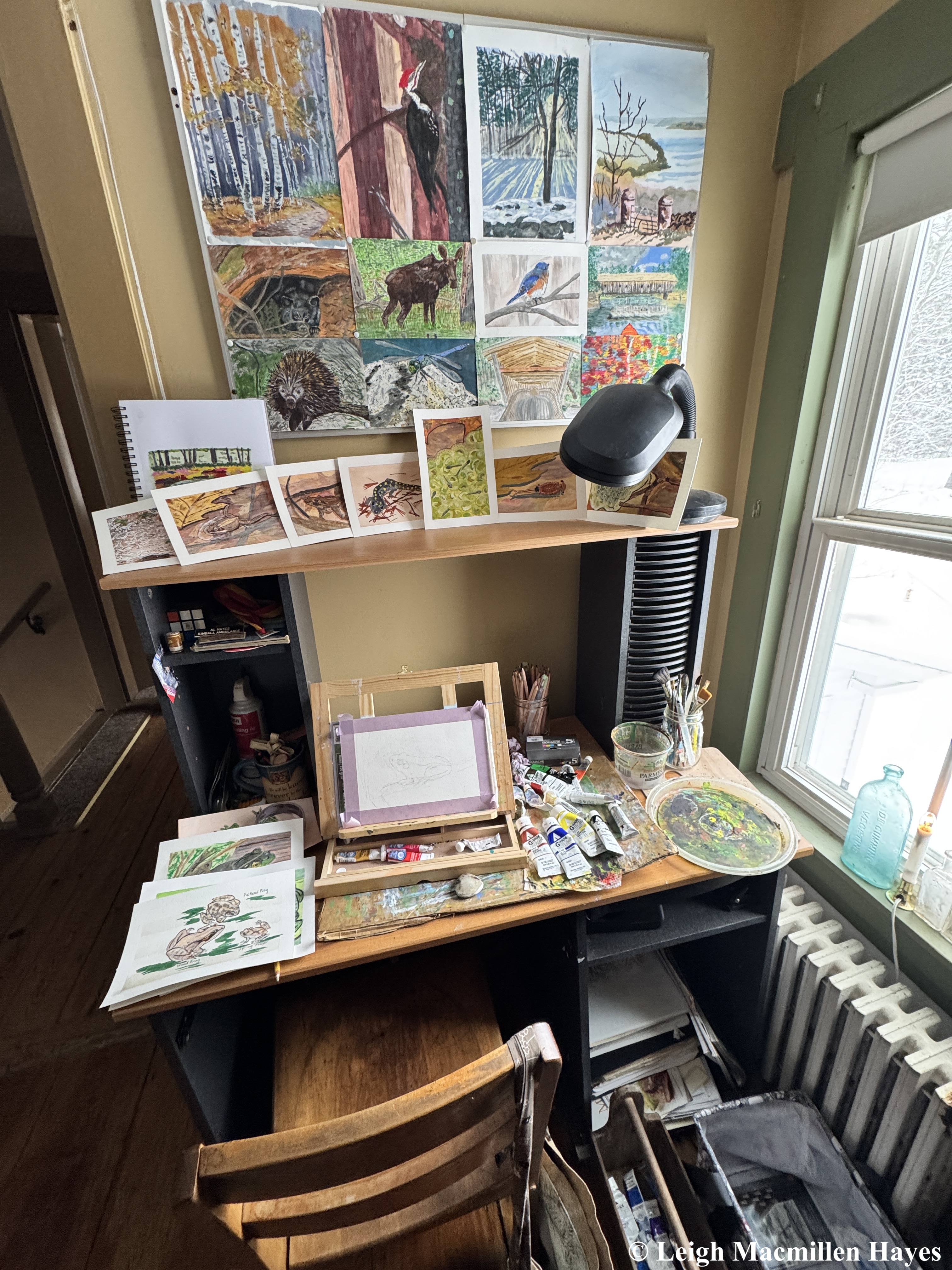
And so I spent much of today (when not shoveling, which really didn’t take long) holed up in my wee studio where I’ve been working on a vernal pool series of paintings.

The idea for this post actually came to me in a dream last night–why not turn those paintings into a blog post. Why not?

Because, it’s scary to share creative works with the world. But, I am probably my own worst critic. My instructor, Jessie, always reminds me to put my inner critic into a box, place the cover on top, and get to work. And besides, by sharing here, I can hide behind the screen. She wants those of us in her class to host an art show, but I refuse to do that. It’s much more comfortable for me this way.

I’ve only been painting since last May, but let’s not let that be an excuse. The thing is, working with gouache paints means I can easily edit, much like writing. And believe me, I have. My motto has always been that there’s no such thing as a final draft–whether it be an article for a magazine or a work of art.

Have you noticed that I’m procrastinating? And putting all of my excuses out there.

It’s snowing again.

All right, I’m almost ready. But here’s the other thing–in sharing these with you, may you be inspired to do something you never imagined and discover that the time you spend doing such is most enjoyable and it’s easy to get “lost” and just plain have fun and decide that even though the “end product” isn’t exactly what you first set out to create, it’s still half decent and you had the most delightful time sitting quietly as is my custom, doing just that: creating.

And now . . . for a look back as a way to look forward to a vernal pool as it emerges from winter or early spring, or mud season, or almost spring but still winter, or whatever season this is.

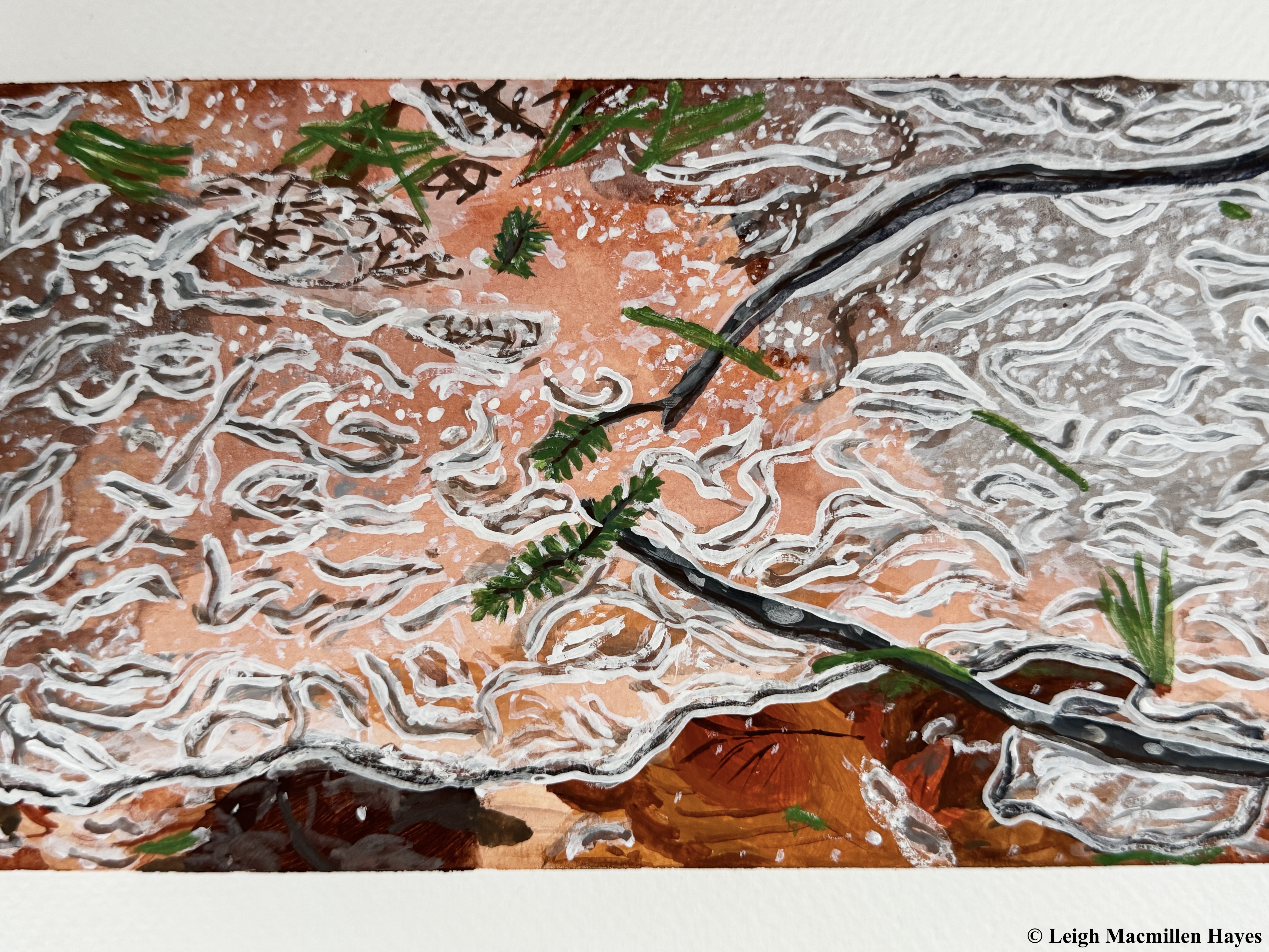
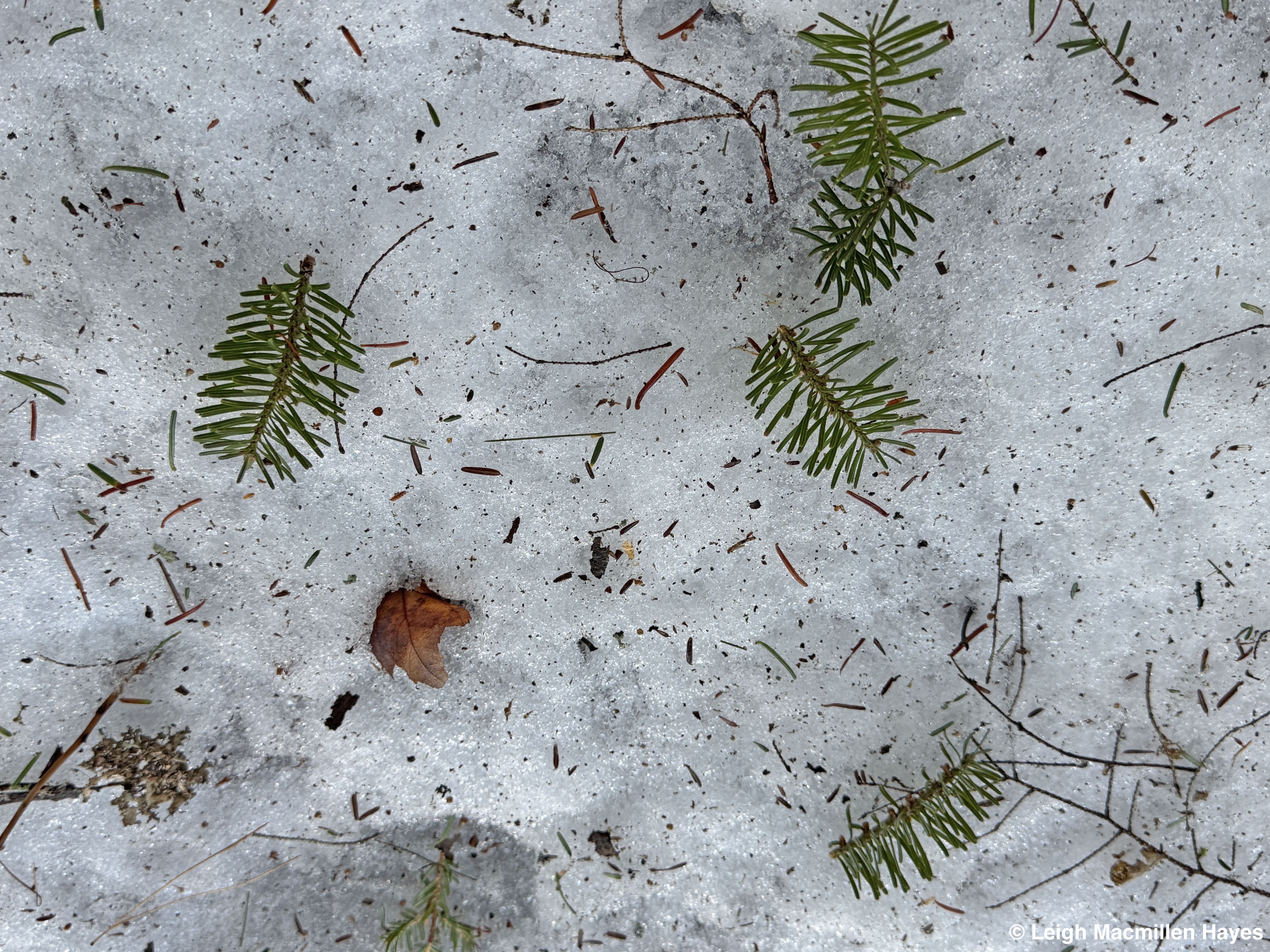
Pine and hemlock needles and branches from winter storms coat the ice as it slowly begins to melt along the edge of the pool, providing a glimpse of the sunken leaves below, where life awaits.

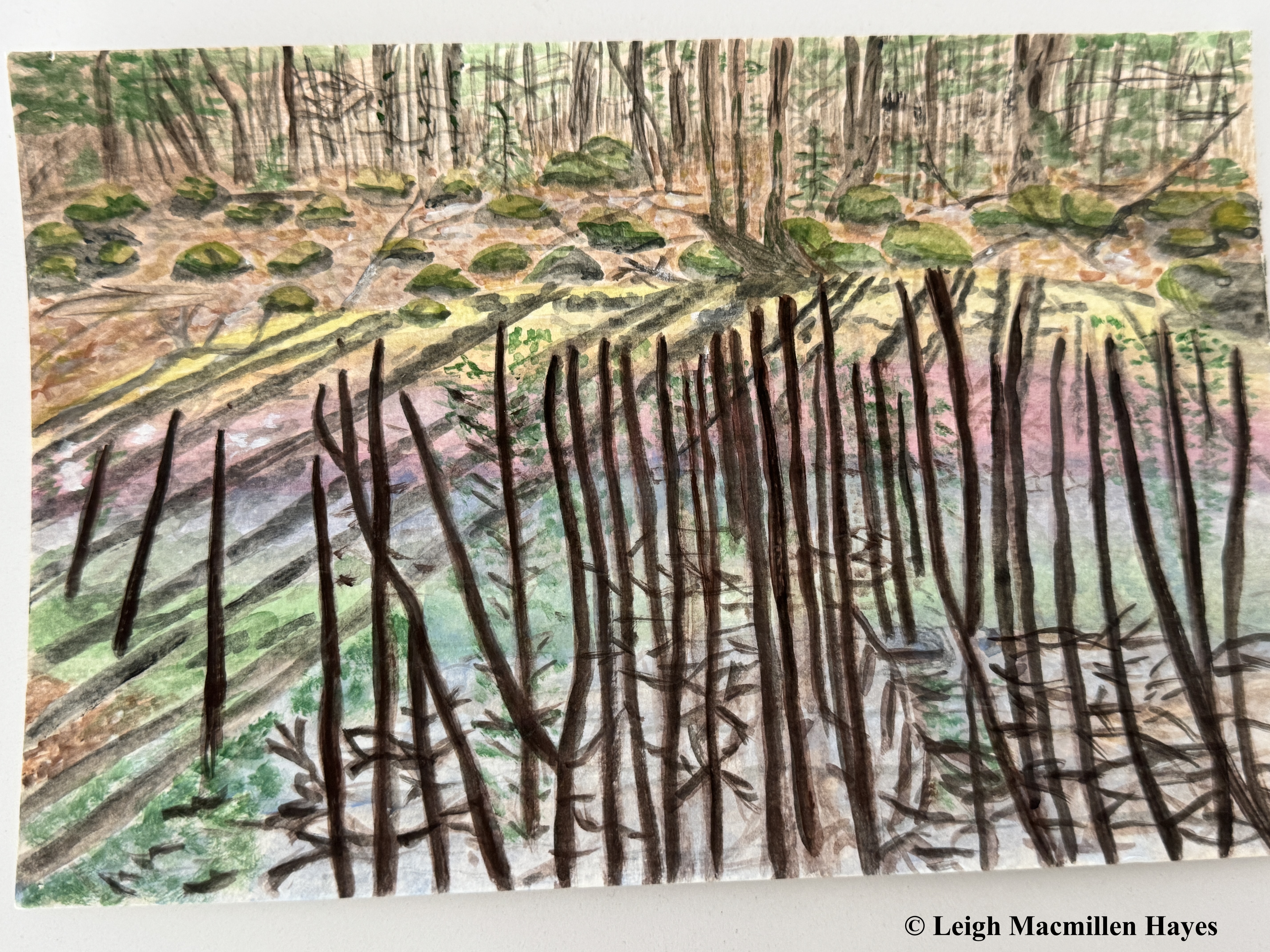
Once the ice finally melts, barren trees offer a reflection that speaks to winter, but there’s hope in their buds.

And no sooner has the ice gone out, when upon my approach I hear “Wruck, wruck,” and know that the Wood Frogs have returned to their natal breeding grounds. At first, they dive as soon as they hear me approach. But I stand still, sometimes for up to fifteen minutes, and ever so slowly, one by one, they rise to the surface and float.

It’s the lucky male who has the best “Wruck, wruck,” that finds a mate. He clasps her with his forelegs and as she begins to deposit eggs, he fertilizes them externally.

I return a couple of days later, in the late afternoon, and can’t believe my good luck. The pool is coated in pollen and the sun hits it in such a way that I see a rainbow of colors and love how the tree reflections are in two orientations upon still water.

A few weeks later, looking deep into the pool, which isn’t really all that deep, I notice blobs of eggs clustered together in a mass that has a tapioca-like shape to it and notice little life forms moving about in the shape of tadpoles. I feel like a proud momma. The thing is, the Wood Frogs mate, she lays eggs he’s fertilized and within two weeks, the parents are long gone, back to their woodland setting. And so I do feel protective parent–or maybe foster parent–keeping watch and celebrating achievements.

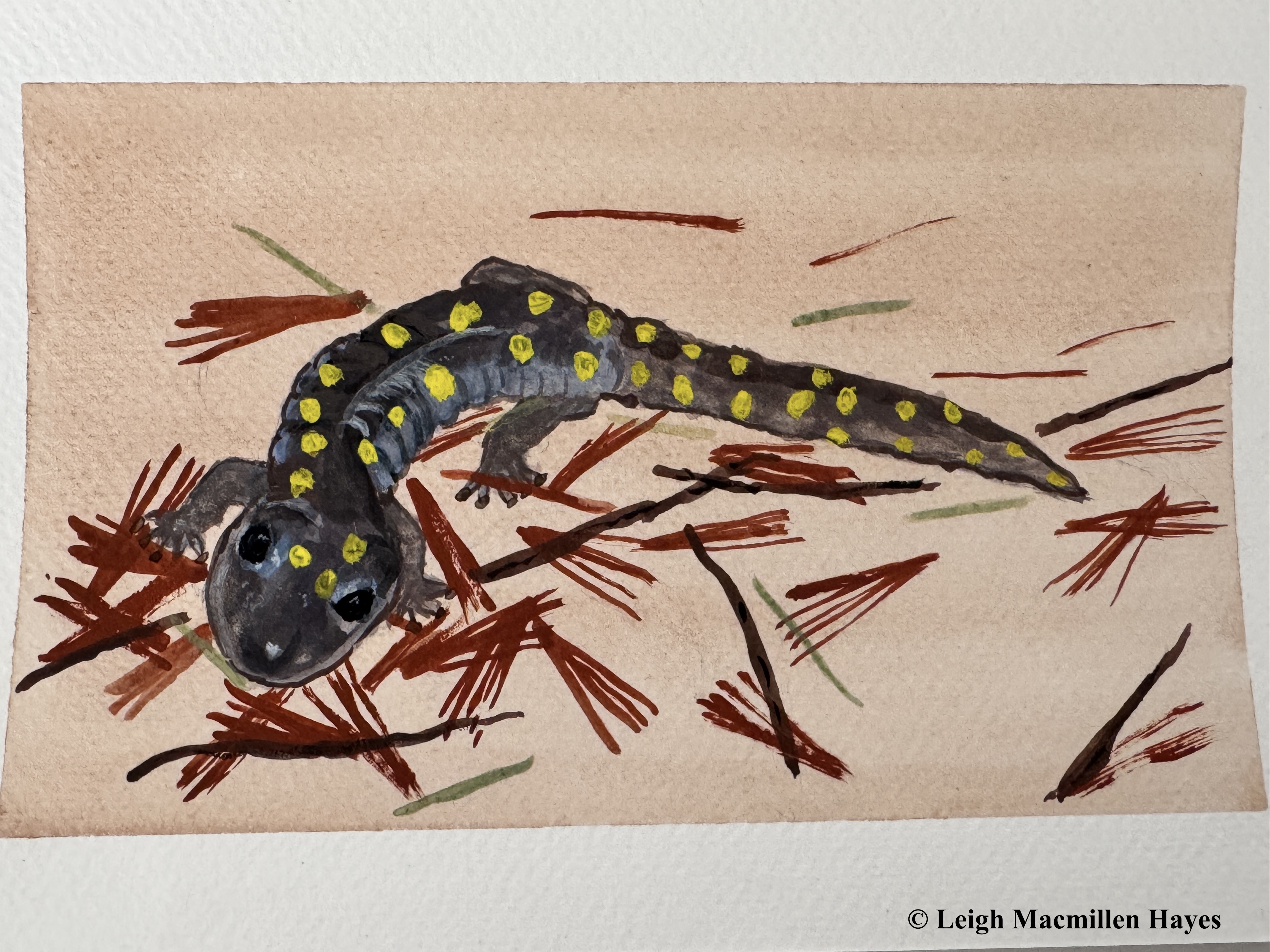
Another life form who uses the pool as a natal breeding spot is the spotted salamander and though I tend to mostly spy them on Big Night, I can tell by egg masses left behind that they have visited.

Their egg masses are a wee bit different from the Wood Frog masses, in that they have a gelatinous coating around the entire grouping, so they don’t look so tapioca-like. Mosquito larvae, tumblers at this stage, also wiggle about in the water.

And if I’m lucky, though this has never happened at the pool behind our house, I might see a fairy shrimp or dozens.

So here’s the thing: 40 Wood Frog egg masses make a pool significant; OR 20 Spotted Salamander egg masses; OR 10 Blue Spotted or Jefferson Salamander egg masses; OR a single, yes one, Fairy Shrimp. And this one is a female, as noted by the sac of dark eggs she carries.

Fairy Shrimp are cool because in order for eggs to be viable, the pool must dry out. And they can survive being dry for multiple years. And in any given year, not all eggs will hatch, thus saving some in the bank for another year or ten.

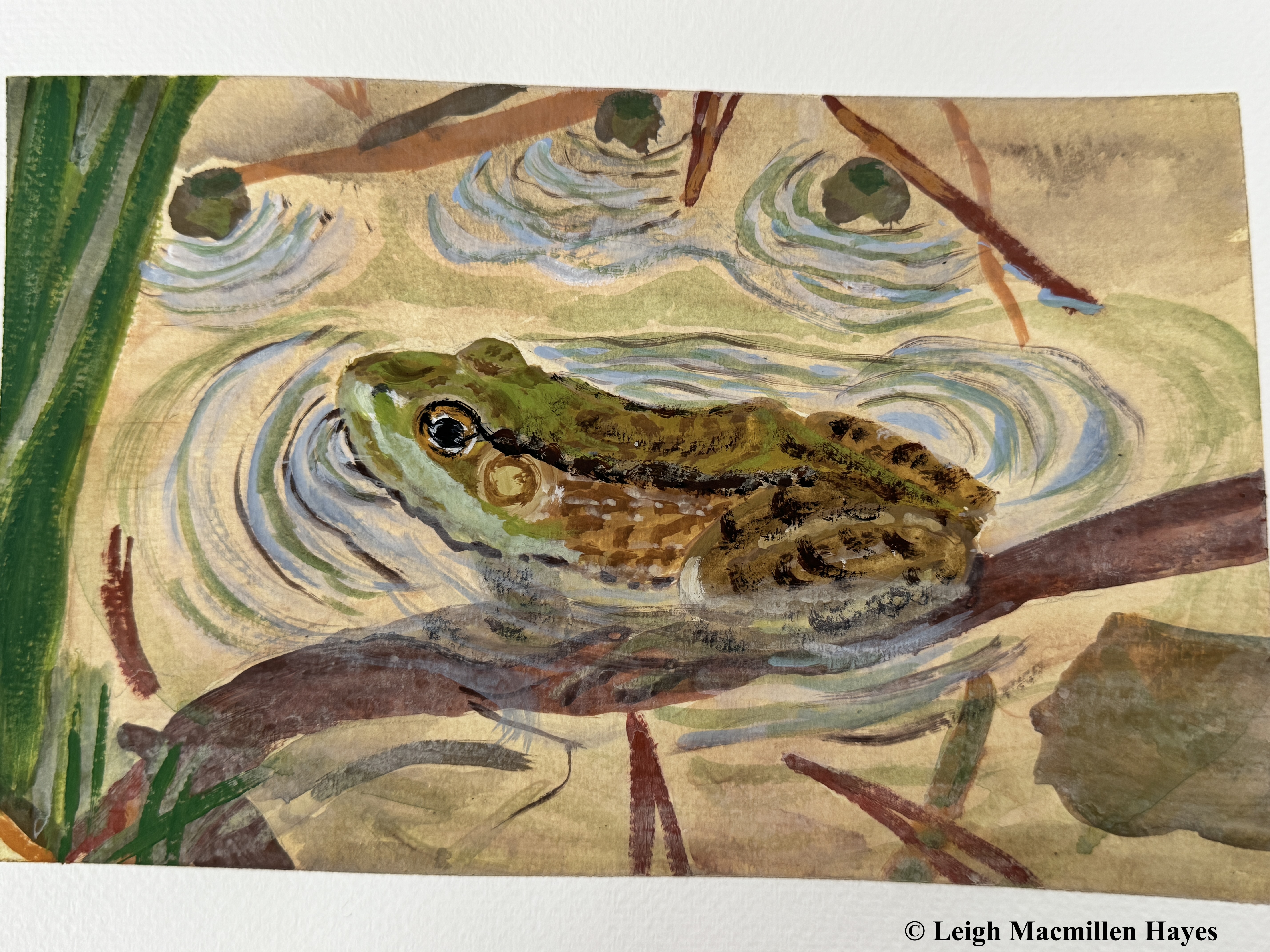
Hanging out by the pool, Green Frogs are always willing to dine on whatever is available. So the Green Frog has dorsal lateral folds (or bumps) along either side of its back that start behind the eyes.

The Bullfrog differs in that the line behind the eye circles around the tympanum (ear drum) and ends.

Here’s the other thing to remember: Males have tympanums larger than their eyes; females are smaller or equal to eye size.

And I like to think of this painting as a Frog-ersation.

This week I actually framed two paintings to send to friends, the Bullfrog being one of them.

There. I did it. Survived the art show.

As I bring this to a close, I realize there’s one more painting I should add to the collection, but I’ll save it to paint another day.

Thank you for marching into the vernal pool with me. I hope you are glad you did.

Happy Belated 10th Anniversary, wondermyway.com

I can’t believe I missed the date by two days. I’d been planning this for months. Well, in the back of my mind, that is. No actual thoughts were jotted down on paper. I just knew what I wanted to do and when I wanted to do it . . . until I forgot. Or rather, it slipped my mind. Momentarily.

No harm done.

As the saying goes, “There’s no time like the present,” and so my gift to you dear readers will be to give you the present of time by taking you back to the beginning of wondermyway and then making our way to the present. And all of it is because I was given the gift of being present in the moment on so many occasions. Egads. That’s a lot of presents. And presence.

Wonder My Way

My first blog post was published on February 21, 2015, and entitled Wonder My Way. It began with these paragraphs: Wonder my way as I wander through the Maine woods. So often I see things that make me stop and wonder. Sometimes I figure it out, but other times, I’m just as happy that I don’t. It’s The Sense of Wonder that Rachel Carson wrote about which keeps me going. Do we need to have all the answers? I think not.

So join me for a tramp from our woodlot to the world beyond. I know not where this trail will take us, but I can guarantee that we’ll have fun along the way. Read more . . .

Spring in Slo-Mo

Spring is so fleeting in Maine. Oh, I know, it lasts the usual three months and the beginning and ending overlap with its seasonal partners, but really . . . one must take time to pause and watch or you’ll miss the most amazing action that occurs in slow motion right outside the window–and beyond.

For those who are new to my blog, Jinny Mae, who is featured in this and many blog posts, was a dear friend whose name I turned in to an alias as she faced cancer courageously and rather privately. In the end, the cancer consumed her, but the things we enjoyed along the way were bountiful, including this spring adventure to an incredible space in our little neck of the woods. Read more . . .

Universal Love

Written on Valentine’s Day, this post was dedicated to My Guy and all who wander and wonder with me.

When I wander, hearts frequently speak to me . . . Read more . . .

Nothing To Grouse About

I shared a unique experience with five other naturalists, the majority of them in the six to eleven age range. For twenty minutes the six of us watched a Ruffed Grouse at it moved about, overturning leaves and foraging on buds. When we last saw it, the bird headed off in the opposite direction that we intended to journey, and so we moved on with wonder in our eyes and minds.

And then the next day I returned on a mission to study some twigs at the same property. No sooner had I stepped onto the trail when I heard the sound of leaves cracking a wee bit and what to my wondering eyes should appear but the same bird.

The curious thing: the bird followed me, staying about ten feet away as I tramped on. I stopped. Frequently. So did the bird.

And we began to chat. I talked quietly to him (I’m making a gender assumption) and he murmured back sweet nothings. Read more . . .

Amazing Race–Our Style

Okay, so My Guy and I have enjoyed The Amazing Race show over the years and felt like there were some challenges either or both of us could face, but others that neither of us would dare attempt. And so . . . I created our own version.

The thing is that until I take the time to change the order of this post on my website, you’d be best to start at the bottom and read each entry, going up one step at a time. As in, this: Scroll down to February 18 on this link and then after reading that entry, make your way up one episode at a time, until you reach the last recorded on February 2, 2019. Oh heck, read it in any order that pleases you. Just get into the spirit of the race I created cuze I certainly had fun with it. And fooled a few people along the way.

The Amazing Race–Our Style

I’m sure when we said our wedding vows back in 1990, there was something in there about only riding a snowmobile once. And I did that once two years or so ago–mostly because I knew it would please my guy. Certain memories remain from that experience: I felt like a bobblehead inside the helmet; I lacked control as I sat behind him and couldn’t see; when I did peek around, I was sure my head was going to strike a tree so narrow was the trail; and I didn’t like the speed. Oh yeah, and at a road crossing, I do believe I jumped off and walked to the other side. With all of that in mind, I’m not sure what I was thinking when I created a Valentine’s gift for him–our very own Amazing Race. Read more . . .

wondermyway turns five

Five years ago today (ten now!) I turned from taking a hundred million photos on each tramp to taking a hundred million photos and writing about them.

Typically, on the anniversary I scan the past year’s posts and choose one from each month, providing a photo to represent it, with a brief (or not so brief) comment and link to the full read.

But . . . because this is a milestone I never imagined reaching (posts: 733; views: 76,793; visitors: 44371; followers: 578), I thought I’d take the time to thank you, the readers, for wandering through the wonders with me.

Thank you! Read more . . .

Dragonfly Whisperer Whispers

We had no intention of eating lunch in this spot today, but while looking for a mountain to climb, we kept encountering full parking lots and so our backroad meander put us beside a bog at lunch time and voilà, we managed to walk all of less than two tenths of a mile. Total.

But in that short distance, our eyes feasted. First it was all the Painted Turtles basking in the sun. Read more . . .

Surveying the Wildlife of Charles Pond

For the past two weeks at Greater Lovell Land Trust we’ve had the good fortune to conduct a wildlife survey in the waters that surround the newly acquired Charles Pond Reserve in Stow, Maine. Our hats are off to Alanna Doughty of Lakes Environmental Association (LEA) for her willingness to be the lead on this project and work in collaboration with us. Alanna, you see, has conducted previous surveys for Maine Inland Wildlife & Fisheries (MDIFW) at LEA properties, and was trained by wildlife biologist Derek Yorks to set these up.

MDIFW maintains a comprehensive database on the distribution of Maine’s amphibians and reptiles, as well as terrestrial and freshwater invertebrates and the data we’ve collected will add to the bigger picture. What we discovered was just as important as what we didn’t find. Read more . . .

Hightailing It Home

Friends,
At the risk
of sounding redundant,
I bring forth
a prickly topic.

A quick glance
while surveying treetops
and suddenly
my heart sang
as I spotted
a well-armored back.

Read more . . .

Happy 9th Birthday, wondermyway!

Thank you to all who read and comment and share wondermyway.com. Some of you have followed my blog posts since the beginning, February 21, 2015. A few have joined the journey as recently as yesterday. I’m grateful for the presence of all of you in my life.

To mark this occasion, I thought I’d reflect upon those moments when my wonder gave me a glimpse of the “Thin Places” that I’ve experienced either by myself or in the company of others.

To quote my friend, Ev Lennon, “A Thin Place is a spot of beauty, loveliness, space–an example of the wideness and grandeur of Creation.”

I think of them as places that you don’t plan a trip to visit, but rather . . . stumble upon.

Read more . . .

And that brings me to this year and this anniversary, belated as it may be. I can’t believe it’s been ten years since I started this endeavor, which has served as my diary and memory, and been a place for me to share so many incredible extraordinary ordinary experiences with all of you. Thank you for being faithful readers.

As I compare the numbers to year five, I haven’t written as often in the last five years, but your support has been incredible.

wondermyway.com by the numbers:

Posts: 1,076

Visitors: 135,888

Views: 205,389 and increasing constantly.

The most popular post of this new year was Giving Thanks for the Pileated Woodpecker. So far, anyway.

The Giant’s Shower

And since I retired as Education Director for a local land trust just over a year ago, I’ve added some other fun to the mix.

I did a thing. Years ago I wrote a children’s story. Well, a bunch of them actually. And I tried to sell this particular one to publishing houses. No takers. Then, a couple of years ago I purchased a Fairy Coloring Book created by the one and only Solana, teenage daughter of the Fly Away Farm Wards in Lovell and Stow, Maine, and approached her about illustrating my fairy tale. She took on the task and did an amazing job. Then I asked copyeditor Pam Marshall to wave her magic wand over it. And I asked local graphic designer Dianne Lewis to use some fairy dust and turn it into an actual book. I always said I’d never self-publish a book. And tada: I did just that. And now it’s even better because it’s published by http://www.indieauthorbooks.com.

Read more . . .

My Art Gallery

At the end of April I began taking an art class offered by one of my peeps, a young woman who walked into the lives of many of us one day about twenty months ago; a young woman with a million talents to offer. Among those talents, she is a self-taught artist and we’ve been begging her to teach us.

At our first class, we had to draw a small box in the upper left-hand corner of the paper and place the person who has been our biggest art critic into it. That done, the critic was forever boxed–well, until she sneaks out, which she seems to do way too much.

And then we looked at some photographs in magazines and had to sketch them and determine the direction the eye would travel in the picture.

Next we looked at lines and perspective. I’d brought along my favorite colored pencils, but immediately felt my inner critic jump on me because all of my classmates were working with watercolor pencils, watercolor paint or acrylics. And the artist herself, gouache. Until I met her, I’d never even heard of gouache. Or at least never paid attention, if I had.

Read more . . .

Lake Living on Lake Region Television!

And we said goodbye to Lake Living magazine, a glossy publication I’ve worked on since 2006.

We are movie stars! Well, maybe not quite. But, many, many thanks to Evan Miller of Lake Region Television for filming and editing Laurie LaMountain, owner and publisher of Lake Living magazine, and me recently as we said, “Fare Thee Well,” to working on this publication.

Read more . . .

And in the midst of it all, I still have the good fortune to share the trail with so many others . . .

and especially with My Guy, who is forever patient as I pause to consider the wonder of the moment.

My heart-felt thanks to him and to all of you for joining me so often as I wondermyway.

Wowza–ten years! I never imagined. No time like the present to wish wondermyway.com a belated 10th anniversary.

Snow-ebration

Having grown up in Southern New England, I always wanted more snow. And so, I headed north for college, and even farther north for my first teaching job, and after a brief easterly jag for one year of grad school and teaching, I made my way to my current hometown, which is the farthest north I’ve lived yet. That was 39 years ago.

That first year, the snow was fantastic. Jump-off-the-rooftop-of-the-ranch-house-I’d-rented fantastic. That’s what My Guy did because we were dating and he’d stopped by to shovel off the roof for me, since we’d had so much snow. I remember it even snowed on Mother’s Day–though it was the plopity-plop-plop all night long type since it was May.

The next year it rained all of January, but I soon learned that February and March could be the snowiest months. And every year since then it has varied. Last year it was too warm, but we did get some snow. What we didn’t get was great ice thickness, so it rather limited some of our excursions if they involved crossing water.

This year is . . . different. The first snow fall was on Thanksgiving Day, and we missed it because we were away. But, we came home to discover that our next-door neighbor had made a few passes with his snowblower so we could easily pull in and we were extremely grateful for that kindness. After that it seemed like we were in a snow pattern, until it started to warm up again, and slowly we watched the snow melt. And then the snowstorms ceased. It did, however, get quite cold.

Things began to change this past week, and finally after a storm last night, we seem to be back on the right path.

Surprisingly, a Raccoon ventured into our woods during the storm, though I wouldn’t have known if it hadn’t been for the game camera.

By 8:00am, the snow was winding down and I snapped a photo before heading out to scoop the driveway and pathways to the bird feeders.

Before doing so, however, I spotted another visitor–a Carolina Wren.

By this afternoon, I’d completed my chores, and decided to head out the door, donning my snowshoes for the first time all season. Mind you, despite the chores being done, I was procrastinating and still am, as I have a few classes to teach at the end of the week and still need to finish prepping. I’m sure it’ll rain one of these days. And besides, I don’t know about you, but I always work better under pressure. At least, that’s what I tell myself.

Any tracks the Raccoon had made were obliterated because it appeared the snow had blown sideways for a bit.

I crossed over the snowmobile path that bisects our land and realized no one else had been out; and then passed into what I know as the gateway to my happy place.

There may not have been any tracks to decipher because it appeared the critters were hunkered down, but I’m always in awe of how snow transforms the world. It’s a place of peace and quiet and beauty. And just maybe if everyone had the opportunity that I have to head out into the woods alone following a storm, and felt comfortable doing so, things in our world might just be handled differently.

It didn’t take me long to start noticing the interactions that take place in the woods when it snows, like the stars that form at the top of spruce saplings.

And ice lines crossing between shrub branches that looked like delicate lacy cloth drying on a line and I couldn’t help but wonder how such formations occurred.

And then I discovered the most delightful Eastern Hemlock, its boughs hosting a snowball rolling contest, with rewards for smallest, largest, most creative shape, most creative path, and overall good sportsmanship, because, of course, everyone gets a trophy.

I also loved the interplay between the snow and the shadows of the afternoon, which made me think of my current art lessons with Jessie Lozanski. Before taking an art class with Jessie last April, I’d always sketched, but never painted. Since then, it’s been a most fantastic journey and now, if I’m not wandering in the woods, or prepping to share the natural world with others, or actually sharing it, or hiking with My Guy, I’m probably painting. I’m addicted. I have much to learn, but I’ve always loved learning and I don’t mind sharing the good, the bad, and the downright awful, in hopes that it might inspire others to lift paintbrush to paper.

Our latest class is focused on features of the landscape. I actually struggle with landscapes and much prefer to paint the critters who live there, but . . . I’m trying. We’ve worked on clouds and rocks and snow, so far, this past week being the snow-class. Rather apropos.

At the risk of boring you, these are the snow pix I’ve painted over the course of the last ten months.

My first was of a barn in Lovell, that sadly was torn down a few weeks after I painted this. Mind you, most of my paintings are from photos I’ve taken. I had no idea how to do snow, but have always noticed that it has shadows and color variation.

One of my favorite places to be during a snowstorm is on this local pedestrian bridge, especially if no one else has ventured there first. But getting the shadows right was a struggle.

This was of Sucker Brook, also in Lovell, just before sunset. There are actually many more trees, but from Jessie I’ve learned that I don’t always have to include everything. As it is, I include too much. “Simplify,” she always reminds us.

And then there was the Deer I snapped a photo of from the back door as she stopped by and enjoyed some corn and sunflower seeds in one of the bird feeders during a snowstorm.

A favorite tree of mine along our cowpath is this White Pine snag–and when it is outlined with snow, it looks like a stairway to heaven.

In the midst of taking classes with Jessie, and attending workshops she offered between lessons, I picked up a watercolor instruction book, which I really enjoyed. I just wish I could always remember what I learned from it. but this one was working with the shadows and color of snow.

And then there was the Red Fox that visited our yard and again, I tried to include those shadows and colors.

This one I do like (and you’ll see a repeat performance in a minute) and gifted to a friend because it was from a day when we were together and this was the scene before us.

And then there was the January morning not so long ago when it had rained all night, and there was still snow on the ground, and the sun was shining through the trees behind the barn, and there was some fog as a result. As well as long shadows.

In class this past week, Jessie had us all work on this painting of snow and water. It’s okay, but . . . oh yeah, the other thing she always reminds us to do is put our inner critic in a box and lock it away. Somehow, mine insists upon popping out, kinda like a Jack-in-the-Box.

Having tried acrylics, watercolors, and gouach paints, for the most part I like to work with the latter, but occasionally jump back to watercolors. And so yesterday and today I revisited this scene, trying to recreate it. I wasn’t using the correct brush for the trees, so they became too big, and then I didn’t make the brook as wide as it should have been as it moved off the page, and yada, yada, yada.

Yup, that’s my inner critic doing its best work. But . . . it’s all about snow. And I LOVE snow. And someday I hope I’ll love how I paint snow.

As for today . . . I’m just grateful that it was a Snow-ebration! Finally.

And I did notice as I completed a circular path that my next door neighbor and her two pups had also been out–that makes four of us who enjoyed the latest bounty.

Giving Thanks for the Pileated Woodpecker

While most critters in the woods make their presence known only by signs left behind, there is at least one who is bold and loud and ever present in my neck of the woods. It often begins the day with a salute of drumming on a hollow snag to mark its territory just after the sun rises, and then I hear it or see it fly about our yard and woods and across the field beyond the stonewall throughout the day.

Every once in a while it honors me with a chance for a closer look. And so this afternoon, as I headed off into the woods to snip some twigs for an upcoming class that I’m teaching, I noticed some evidence that my friend had been present in the recent past.

It was the wood chips on the snow that served as his calling card. Well, his first card that is. By these, I knew he’d been chiseling the tree above, but always, when I spot this behavior I look for a second sign. And came up empty-handed. No scat.

While I was looking, however, I began to realize I could hear a familiar tap, tap, tapping from another tree.

And so I looked around, expecting to find one of his cousins, for the taps, though consistent, were not as loud as the drumming he uses to advertise his territory or announce his availability to a potential mate, but rather featured a softer rhythm.

Much to my delight, there he was, high up in a White Pine.

I was sure we wouldn’t get to spend too much time together, and so I wanted to focus on him as best I could. And that’s when I noticed the bark had been sloughed off the tree. My friend was hunting for bark beetles.

I decided to take my chances and move a few steps in order to get a clear picture, and still he stayed, though I thought our time might be over when he looked away from the tree.

Thankfully it wasn’t. Do you see all of the tunnels the beetles had carved where the bark had once been?

Oh, and how do I know it was a male? By the red mustache on his cheek. His lady does not have such a marking.

He turned back toward his work and I loved how it was obvious that his tail feathers formed the third leg of a tripod to provide support against the tree. When you have a head-banging job such as his, and only two legs, that third is important.

Eventually I pulled myself away and continued on my quest to locate certain tree species and snip just enough twig samples for each pair of students. Along the way, however, there were other things to notice like this recently deposited Bobcat scat offering a classic look at its hair-filled contents and sectioned presentation.

There are a million tracks in the woods right now since everything has been on the move following the last snowstorm, and the Foxes and Coyotes and Bobcats have been in dating mode, so it was no surprise to find Bobcat prints on top of other prints left behind.

Besides all the mammal tracks, I found lots of evidence of Ruffed Grouse walking about as well. They always remind me of my friend ArGee, whom I met in 2018, and wrote about several times, including this post Nothing to Grouse About. I may never get to have the experience of spending some quality time with a Grouse again, but seeing the tracks of one so clearly defined always makes me smile.

Another who has become a constant companion this winter is the Winter Crane Fly. Like all Crane Flies, he’s not a mosquito, though he looks like an oversized one. Crane Flies have no mouth parts, therefore, they can’t seek your blood. It’s only job is to find a mate and breed.

They are called Crane Flies because of their long legs and beaks that long ago were thought to resemble a Sandhill or Whooping Crane.

So why fly in winter? Perhaps because your predators are few. And your chances of mating without being eaten better.

Sticking with the Crane Fly theme, in my recent post Mammal Tracking: It’s all about paying attention, I shared a photo of this fly, a Snow Fly.

Snow Flies have six legs, but if you look carefully, you’ll notice this one only had five. As for that missing leg, Snow Flies self-amputate so that ice doesn’t enter body. It’s a fighting chance to survive the frigid winter and this photo was taking on a very cold day. An incredible adaptation.

Fast forward to today, which felt almost like summer (in the 30˚s), and I spotted another, this one with all six legs still intact.

And those two yellowish bumps on its thorax? Halteres, or small club-shaped organs, that help provide information for wing-steering muscles of True Flies (Diptera). From The Snow Fly Project, I’ve learned that “Snow flies are distinctive in their appearance, with long, spindly legs. They lack wings but do possess halteres. It has been suggested that their lack of wings might have evolved due to exposure to cold temperatures and wind (Hackman, 1964; Byers, 1983; Novak et al., 2007).”

Eventually it was time to return to our woods where I noticed more works by my friend.

Below this tree, there was even more debris and by the number of holes, it was obvious that this was a much more bountiful tree than the first one that stopped me in my tracks. That is, if you are seeking insects.

And so, I had to bend down and take a closer look. It’s like a treasure hunt at the base of a tree and let’s me know if the bird was successful in dining or not.

And I was well rewarded. All kinds of scat packages sat upon the wood chips and I knew that while the woodpecker found plenty of Carpenter Ants in the tree trunk, it had also recently dined on Bittersweet berries. As for the berries, well, um, Bittersweet does grow locally.

There was even some scat dripping off the tree! My heart be still.

As for Mr. Pileated, he’d moved on for the moment, but just before we’d parted ways earlier, he offered me a quick opportunity to spot his tongue between the upper and lower beak. Pileated Woodpeckers have sticky tongues, which they probe into the tunnels the delicious (to a woodpecker, that is) ants and other insects have created.

On this day, like so many others, I want to express my appreciation for the Pileated Woodpecker’s part in this world, for creating nesting sites that others, such as small songbirds, may use, and how he helps the trees in the forest by contributing to their decomposition, for as much as some think that these woodpeckers and their kin are killing the trees, the trees are already dying due to insect infestations, and the birds’ work will eventually help the trees fall to the ground, add nutrients to replace what they had used, and provide a nursery upon which other trees may grown.

Thank you, Pileated Woodpecker, and Bobcat, and Winter Crane Fly and Snow Fly. So many to honor.

Bluebird Days are the best days

It’s been delightfully frigid this past week. My kind of temps because it makes me feel so alive when I’m out in the woods. And as My Guy and I were saying when we hiked this afternoon, it’s all about dressing right. So we did.

Just after turning onto the side road of our intended destination, we watched a Vole scamper across and then dart this way and that while I stopped the truck. Did either of us take a photo? No. But those moments are always for the mind’s eye.

And then, after parking, I spotted this sweet little snowman on the other side of the snowbank and thought, “What a job well done, given the cold temps of the week.” You see, it’s not really snowman-building-kinda snow, but someone was successful.

Our journey included walking a mile in to the trailhead, though we noticed a few people had actually driven in; something you can’t usually do at this time of year . . . if there is more snow. Alas. That we don’t have.

But . . . I love to walk in because . . . there are telephone poles. And being adjacent to the National Forest, it’s a rather wild place. And these poles tell a story of just how wild.

In fact, on this one the shiny numbers have been attacked and I can just imagine the activity that took place here.

In my mind’s eye, the Black Bear scratched the pole and then rubbed its back as it turned its head and bit at it. Why? That’s a question for which I’ve heard several different answers over the years, from something different in the woods, to it likes the creosote, to it feels the vibration coming down from the electrical wires above. I’m not sure of the answer, but I do know that I like to use my back scratcher once in a while and I can imagine the Bear does as well. His is just MUCH bigger than mine.

I always tease My Guy that this is his favorite game, to which he guffaws. But I can’t resist taking a look. I mean, look at pole 17. The metal is fairly intact, but can’t you just see the upper incisors chomping down and dragging back toward the lower, while the head is turned to the side?

And don’t you just covet those hairs? My Guy asked why some are so light in color–that’s because this action may have occurred in the spring. It could be territorial, and maybe that’s the only answer we need. Anyway, over the summer, the color bleached out.

This pole had been attacked so many times over the years, that the numbers are now completely gone. In the past, I’ve noted that the number 5 somehow seemed to draw the Bear’s attention, and today I don’t recall seeing Pole #5 or #15. Maybe this was one of them. Because I was with you-know-who, I didn’t take too much time to pay attention to what number this pole should have been.

I was just happy to be out there looking at them.

Once we reached the trailhead, well, actually, even before we reached it, we noticed Red Fox prints and tracks. By the gazillion.

And then, in the middle of a field that is part of the trail, a perfect Red Fox scat filled with fruit. You can thank me for not making this a more upclose and personal photo.

There was a reason for the fruit . . . because the trail next passed through an old orchard. And there, the tracks increased significantly.

Apples were on the Fox’s menu and those that had been buried under the snow were excavated.

And because it is that time of year, I noticed something else going on in the midst of all the tracks.

Do you see the downed White Pine branch?

Take a closer look and you’ll see urine. Fox pee. Male Fox pee.

Just yesterday I was hiking with a friend through her acreage and we found the same. Numerous Fox tracks and spots where the Fox had peed on saplings and anything else that poked out of the ground and snow. And so I invited her to get down on her knees and sniff it, just like a vixen would do.

Skunky!

She stood up smiling and it’s a smell she’ll never forget.

The Fox guys are leaving their messages everywhere to let the ladies know they are available for a date or two or three.

Speaking of yesterday, as we continued to hike, we spotted lots of Deer runs, well worn pathways through the woods. And then a spot where they seemed to browse a bit on downed Hemlock twigs.

But why were the twigs on top of the snow? I lifted one up and noted the 45˚ cut of it. The same on the next. And the next. And then we spotted the curved form of . . . Porcupine scat. Plus some pee.

We looked around and couldn’t find Porcupine tracks anywhere leading to or from the tree.

And so I looked up because that’s what I do whenever I’m under a supposed Porky tree. And low and behold, he was walking out on a branch high above us. We quickly moved away from the trunk and enjoyed the view from below, before continuing our tour.

But I digressed and so I looked skyward today and noticed ice dangling from the cliffs above–prickly in nature, much like yesterday’s Porcupine, but beautiful all the same.

And down low, we noted a good crossing point in case we needed it because last year we arrived at this brook from the opposite direction and discovered the bridge had been washed to the opposite shore during a storm and we had to find our way across with snowshoes on our boots. We wanted to be prepared today.

Much to our dismay and surprise, the bridge hadn’t been repaired, but fortunately the brook was iced over in this section and we decided to run across in hopes of making it safely to the other side.

Success.

A bit farther on and we reached the lookout point for the pond we were circling, with the mountains of Evans Notch forming the backdrop. It looked like a perfect skating rink.

Fox tracks and Coyote tracks continued to mark the way for us and at one spot we saw a few deer bones. I really wanted to look for more evidence of what happened, but time wasn’t on our side.

Instead, I paused only briefly to admire how the snow and ice danced across a fallen log.

Admired an old friend who watches all who pass this way.

And noticed more colorful ice dripping off a ledge as the sun dipped lower in the sky.

And then, much to my surprise, some Beaver works right beside the trail.

There were more and they were rather fresh and there was a trail to the water and so I asked My Guy if he’d mind if I checked out the activity for a moment.

He did what he always graciously does when I ask such, and found a rock to sit upon and patiently wait.

At the water’s edge, I found more signs of the Beaver’s activity, including gnaws on a much larger trunk, and a pile of chew sticks. Did the Beaver sit here to dine? Perhaps. The water was open, so he didn’t have to eat under the ice.

On the way back up the hill to meet My Guy on the edge of the trail, I smiled at the sight of another Beaver tree, that showed how the Beaver, like the Bear, turns its head to scrape the bark and get at the cambium layer.

Funny thing about this one, possibly a previous generation of this Beaver’s family had visited the same tree, as evidence by its graying top that had been cut at least a few years ago and had started to stump sprout.

We had one more bridge crossing to make before heading back to the telephone-poled road, this time with ice and open water to view.

And clumps of stars fashioned upon the ice that reflected the sky.

To say it was a Bluebird day is trite. But truly it was with the sky matching the bird’s plumage.

And on the way out, while I looked at another telephone pole, My Guy saw a Coyote run across the road. A minute later and I spotted a second one headed north as well.

Dancing Vole. Fox dates. Beaver works. Icy art. Coyotes hunting. The first and last were alleged since we don’t have photographs to prove our sightings, but My Guy assured me that since the two of us saw them, they actually happened.

Bluebird days are indeed the best days.

“Hightailing it Home” published in The Maine Natural History Observer

As some of you know, I not only have a soft spot in my heart for Dragonflies and Cicadas and Beavers and Otters, but also my prickliest friends, Porcupines. And recently I’ve been looking for our neighborhood rodents, which my neighbor sees when she lets her dogs out at night, but they’ve alluded me.

I do keep finding some evidence of their whereabouts, at least where they’ve ventured at night, but have yet to locate a den this winter or even spot a Porcupine waddling through the woods or sleeping on a branch.

That may be our fault. We’re in the process of saving our barn and have closed up any entrances Porky has used for the last 30+ years and probably longer than that, and tore down an attached shed and we’re having it rebuilt, so except for that one night he spent in the barn loft due to our stupidity of not shutting a trap door, I’m afraid we’ve evicted him. But there is more than one Porcupine in this neighborhood and today I wandered several miles into the woods beyond our land, and came up short-handed.

That said, I did spot three deer as I headed out along our cowpath. Do you see them?

We spent at least five minutes together before I decided it was cold and I need to get my mittens back on and keep moving.

Switching gears, I submitted an article about Porcupines to the Maine Natural History Observer for their first issue of 2025 and was tickled once again to have it accepted.

According to their website: Maine Natural History Observatory’s mission is to improve the understanding of natural resources in Maine by compiling historic information and implementing inventory and monitoring efforts of Maine’s natural history.

The Observatory specializes in collecting, interpreting, and maintaining datasets crucial for understanding changes in Maine’s plant and wildlife populations. We are committed to filling data gaps for Maine’s least understood species and creating a legacy of data for use in nature conservation, land use policy decisions, and expanding scientific knowledge.

Specifically, our mission is to:

  • Compile and publish summaries of Maine’s natural history
  • Coordinate local and regional inventory and monitoring efforts of Maine’s flora, fauna, and habitats
  • Facilitate cooperation and exchange of information among organizations, agencies, and individuals conducting natural history research in Maine or caring for natural history collections
  • Engage in other activities related to the advancement of scientific knowledge and education of the public regarding the flora, fauna, and habitats of Maine.

“Hightailing it Home” is about an adventure I had with a Porcupine in February 2024, and again, it was deep in the woods behind our home.

This is the back view that I first encountered that day, before the Porcupine realized I was being a nosy neighbor.

And I’ve included this portion of a page just cuze I love my Porky friends. Look at all those quills! Over 30,000 of them. And yet, his face is so soft, as is his belly.

Apparently I’ve made that love known, for my ten-year old friend and fellow naturalist and artist created a tree cookie ornament for my birthday.

And my Cousin Bob did the same for Christmas. Both ornaments did hang from our tree, but now they are on display in my study.

Okay, back to the MNHObserver 2025, Issue 1, here’s a link: Maine Natural History Observer.

You’ll find “Hightailing it Home” on page 36.

There are some really interesting articles, including one about Maine weather in February 1958!! Perfect for an evening read on another frigid night.

Thank you, Maine Natural History Observer, and especially to Celeste Mittelhauser, Outreach Coordinator.

Here’s to future adventures with Porky and so many forms of fauna and flora who continue to teach me. I sure hope I get to hightail it home following a sighting in the near future.

Another Amazing Lesson From A Squirrel

Maybe I’m a slow learner. Maybe I just need the same lessons over and over again.

Whatever it is, I’m grateful for all who teach me, non-human to human, because there is always something to learn.

This week it was my friend Red who led the class. If you were down the hall in this outdoor school, you may have heard him, for he tends to be quite loud, and a bit critical, when he’s not dining upon a pinecone that is.

His plan, as it often is, was to strip the cone of its protective scales and seek the tiny seeds tucked in by the core or cob of the cone. Each scale contains two winged (think samara that help the seeds flutter toward the earth when its warm enough for the scales to open on their own) seeds and to me it seems like a lot of work for a little gain.

But if you’ve ever watched a Red Squirrel at work, you’ve noticed they are quick and can zip through one cone in mere minutes. Of course, it helps that they don’t worry about the “trash” and just let the scales and discarded seed coverings or pods, and even half consumed cones and cobs pile up in a garbage pile known as a midden. Spotting one of these is a sure sign you’ve entered Red’s classroom. And if you pause and look around, surely you’ll find many more middens. After all, Red Squirrels are voracious consumers. But again, given the size of the seeds, they need to be.

So here’s lesson #1: Leave the scraps. Oh wait, not on our indoor dining tables, but in the woods. And not our food in the woods, unless you are composting. But downed trees and snags and leaves and all that will replenish the earth, just as my squirrel’s garbage will do.

I should clarify that Red shares the school with many others who have their own classrooms and I’m sure when I finish my latest assignments I’ll have more to learn from the porcupines and deer and hare and coyotes and foxes and bobcats and yada, yada, yada who live under the mixed forest canopy.

The sight of so many Eastern Hemlock twigs on the forest floor told me I’d stepped into Porky’s room so I looked for evidence, wondering if he was at his desk or not.

Lesson #2: Slow down and observe.

The answer was no, but he’d left his calling card on a dangling twig and so I know where I might find him should a prickly question enter my mind.

Because I was told by Red to slow down and observe, I noticed another spot where he’d visited and this time his midden was of a different sort in the form of snipped twigs. Much smaller snips than Porky drops, which is a good way to tell the two critter’s food source apart.

Just as Porky’s twigs had been cut with the rodent diagonal, so were Red’s.

I noted that he hadn’t eaten the buds at the tip of the twig, but once I flipped one over I discovered numerous buds or seed pods had been dined upon.

Lesson #3: Check twigs more often. And remember, this year was not a mast year for Eastern White Pines, so Red has to supplement with hemlock buds and cones. (And also remember, cones on hemlocks are not called pinecones because they don’t grow on pine trees. Conifer refers to cone-bearing, so both pines and hemlocks are coniferous trees.)

Back inside I decide to sketch a pinecone. It was a sketch I’d started months ago, but abandoned because it seemed to difficult to draw.

But then, thanks to Red, a realization came to mind.

Lesson #4: Pinecones have overlapping bracts or scales that protect those seeds developing inside of them. They close in the dark and open in light, especially on sunny days and it is then that the seeds become airborne on their samaras. And the bracts or scales grow in spirals around the core or what I think of as a cob. I knew that, but had forgotten it until I decided to sketch.

And so I drew some guidelines to aid me as I tried to recreate the cone’s spiral staircase.

It was fun to watch it grow and realize each cone actually fans out in a Fibonacci spiral sequence. It’s an amazing wonder of nature.

Feeling my drawing was complete, I began to add color in the form of gouache paint, scale by scale.

And slowly, the painting began to represent a cone . . . at least in my mind’s eye.

A dash more color and voila–my amateur attempt at painting a pinecone. I have to admit, I was rather tickled because I really didn’t think I could pull this one off. But I have my art teacher, the talented Jessie Lozanski, to thank for giving me the confidence to try.

And I have Red, my other teacher, to thank for the lessons because it was in watching him turn the cob ever so effortlessly that I was reminded about the cone’s spiral.

And so I tried to honor him as well. I may be a teacher, but I’ll always be a student.

Lesson #5: As we head into this new year, I hope you’ll join me in slowing down and noticing and honoring. Especially outdoors. Or even out your window.

I’m forever grateful to Red and all the other teachers who come in many forms, not just as mammals, for the amazing lessons I’ve learned and can’t wait for the next class.

Perfect Present

The Giant’s Shower: a book by me

I did a thing. Years ago I wrote a children’s story. Well, a bunch of them actually. And I tried to sell this particular one to publishing houses. No takers. Then, a couple of years ago I purchased a Fairy Coloring Book created by the one and only Solana, teenage daughter of the Fly Away Farm Wards in Lovell and Stow, Maine, and approached her about illustrating my fairy tale. She took on the task and did an amazing job. Then I asked copyeditor Pam Marshall to wave her magic wand over it. And I asked local graphic designer Dianne Lewis to use some fairy dust and turn it into an actual book. I always said I’d never self-publish a book. And tada: I did just that. And now it’s even better because it’s published by http://www.indieauthorbooks.com.

Aisling, a fairy who lives on Sabattus Mountain in the western Maine village of Lovell, has a vision during the Midsummer Eve celebration. 

Twinkles, flitters, a bit of fairy dust and some tsk-tsking are necessary to make Aisling’s vision a reality. 

If you read the story aloud, I highly encourage you to get all in your audience to participate in saying “Tsk, tsk,” each time Biddie does the same.

You and your children will delight in the story accompanied and the colorful and whimsical illustrations created by artist Solana Ward.  In fact, you don’t even need children to enjoy this story.

Marita Wiser, author of Hikes and Walks in and around Maine’s Lakes Region had this to say about the book, “The fairies in The Giant’s Shower will captivate children with their merry life in the forest. It’s not all magical though, as they moved from New Hampshire to Sabattus Mountain in Maine to avoid a certain devil. At least they thought the giant was a devil, but the situation wasn’t what it seemed at first. Both the writing and the detailed illustrations capture many features of the woods of northern New England, and the fun of fairy life and houses.” 

A naturalist and writer, many of you know that I hike frequently in Maine and New Hampshire, and those adventures inspired this story. I feel the fairies’ magic whenever I’m among moss-covered ground and tree stumps.

Included in the book are directions to the two featured settings, Sabattus Mountain and Arethusa Falls, featured in the photo above. Both are easily accessible for young hikers who might experience some magical moments while exploring. 

Also included is a list of character names and their explanations, as well as instructions to create fairy houses and fairy dust. 

The Giant’s Shower is available for $16.99 at Bridgton Books, Hayes Ace Hardware, Fly Away Farm, or by contacting me: thegiantsshower2023@gmail.com. Cash, check, or Venmo all work.

I do charge an extra $5.00 for shipping and handling if you ask me to send it to you.

Please consider purchasing a copy, or ten, as the book does make the perfect present.

Breaking Bread and Acorns

Up, up, and away, we were this past long weekend, My Guy and I, and New York City was our landing spot. It’s good to get out of our own space occasionally and enter the greater world where we don’t know the place as well.

But, in doing so, we also like to return to spaces we do know a wee bit–there’s comfort in walking into a cathedral such as this where pathways lead wanderers away from city sounds and vistas and into the natural world.

And we discovered new pathways where the sights and sounds of the city co-mingled with nature, albeit upon a raised bed that replaced a now defunct highline rail system.

No matter where we went, there were moments for reflection . . .

of the season passing.

In a way, it was like reliving fall foliage all over again and made me yearn to follow it down the East coast, though that was only a passing yearn for this “four-season worshiper.”

Gardens still proclaimed autumnal colors from the flowering heads of hearty plants growing beside Hudson River, where the north wind did blow.

And a few plants, more protected by buildings on either side of the path, showed off their sunshiny faces, though the petals appeared to make a ragged effort. Still . . . they blossomed.

We had the great fortune to join our hostess for a Victorian Christmas Tour. In reflection, it was not at all what we expected. Somehow, our minds’ eyes had conjured up a vision of entering stately Victorian homes and admiring their Christmas decorations.

This was not that tour at all. This was even better for the tour guide, Rick, was a storyteller who transformed us back in time to help us understand our Christmas traditions long rooted in the past, including Washington Irving’s influence as he told tales of New York’s founding and a Dutch ship wreck and Saint Nicholas riding over the city in a wagon and encouraging the Dutch to settle the land.

As we walked through three neighborhoods with Rick, we learned that O’Henry coined The Gift of the Magi in Pete’s Tavern.

And more about the poor and boisterous Irish who raised havoc on porches such as this at #4 Grammercy Park West belonging to NY Mayor James Harper (founder of Harper and Brothers which we now know as Harper Collins).

While the house next door is a replica of #4, the gaslit lampposts in front of Mayor Harper’s residence were meant to warn the partymakers to not disturb his rest. Or were they actually to help him find his way home? Perhaps both.

One of our stops was outside Lillie’s Victorian Restaurant where Rick shared the story of stockings being filled and the ball ornaments serving as representations of the gold that might have gone into them. And I was immediately transformed into my own story of the Christmas traditions as I’ve recorded in The Secret Giver of Gifts.

For a second, I stepped inside, and would have loved more time to experience this space named for Lillie Langtry, a British actress and late 19th Century Socialite, but we needed to move on.

And so we did, our family, some of our hostess’s family, and their friends, finishing up on a street that was once part of the Moore Estate in Chelsea and Rick recited “Twas the Night Before Christmas,” breaking it down to give us the history behind each stanza and we all gave great thanks for his insights and knowledge.

I hope I haven’t ruined this tour for you and that you will think about signing up for there was so much more. Just be prepared. It lasted about three hours.

Christmas decorations abound throughout the city, including this display at Pier 57. I loved how the fiber and ornaments were so subtly represented and suspect there’s a story behind this artistic installation that I’ve yet to learn.

Nature also showed off its Christmas decor in the form of holly, Ilex cornuta or Chinese Holly, an introduced species. Um, I think we are all an introduced species.

And we spotted Christmas Ferns. Well, I spotted them and tried to explain to My Guy and our youngest that the leaflets are shaped like a Christmas stocking or even Santa in his sleigh, but they weren’t seeing that. I’m not sure they were really looking either.

But I was, and near the Christmas Ferns grew Maidenhair Ferns, like a star radiating off the wiry stem.

We also had the good fortune to meet another movie star, this one at the Museum of Moving Images. It would not have been my first choice of museums, but when your host works for an editing house, you embrace the choice and once we got going, it turned out to be a real treat as we could see behind the scenes of some old favorites including The Muppets.

Being in the city, sometimes we were like the House Sparrows, which didn’t know which way to go, despite what the sign indicated.

Other times it was easy to choose the right path.

And in doing so, we got to meet a small one who is probably low on most New Yorkers’ list of preferences, but which I was thrilled to see honored with a statue.

My Guy dubbed this Pigeon Square. Do you see why?

Thanks to our hostess, or I should say hostesses, we were guests in a small Prescott Park apartment with a view of the Empire State Building, which was lit first to honor Thanksgiving.

And then two nights later for Small Business Saturday, which we appreciated since we own a small business. Well, as I always say, My Guy owns it. I’m just married to it.

The iconic tower soon became our Mount Washington or Pleasant Mountain, for no matter where we were, if we spotted it, we had a sense of our place in this great city.

And I’m here to report that the lights on the Empire State Building eventually go off for the night. The same was true for many of the other skyline buildings.

Before I bring this post to an end, I want to share with you a few of our fellow travelers as we posed beside the Hudson.

These two–our NYC host and one of the hostesses, for whom we are most grateful. He being our youngest.

Our oldest and his gal who made the trip south as well and were able to stay for a couple of days.

And our main hostess posing with us. We give her great thanks for sharing her home and her apartment with us so that we might spend so much time with our family. And treating us to an incredible meal, as well as the Victorian Christmas tour.

We went down to break bread with this crowd on Thanksgiving. And there was lots of bread to break! And good humor shared.

I also loved that I was able to break bread at St. John’s Episcopal Church in the Park Slope section of Brooklyn on the first Sunday of Advent.

And before saying goodbye we broke bread one more time with this young man. We don’t know how he does it, living and working in NYC, oh, and driving. YIKES! But he does it all and he does it well.

Along the way of this five day journey, we discovered we weren’t the only ones breaking bread, though in this case the squirrel’s form of sustenance was acorns, which were plentiful.

Breaking Bread and Acorns in New York City. Not our every day cup of tea, but one which we relish when the opportunity arises.

Giving Thanks 2024

Happy Thanksgiving 2024, by gouache!

Thank you, dear readers, for taking the time to open these posts, read or scroll through them, like and comment, and go off on your own wanders to see what you might see, always with a sense of wonder, because despite all the strife and discontent in the world, we live in an incredible place.

I am grateful for you.

Leigh