Taking Stock . . . Naturally

As locals know, My Guy owns a hardware store and I often say I am married to the store. It’s true because it is a constant in our lives and follows us on walks and hikes even on his days off. And though our oldest son has taken over the reins in the past two years, My Guy still cannot completely let go.

I’ve come to realize, however, that that is okay because it means I can tend my own shop. Of course, while he owns the land and the building, I need to rent space, but it’s well worth the priceless price.

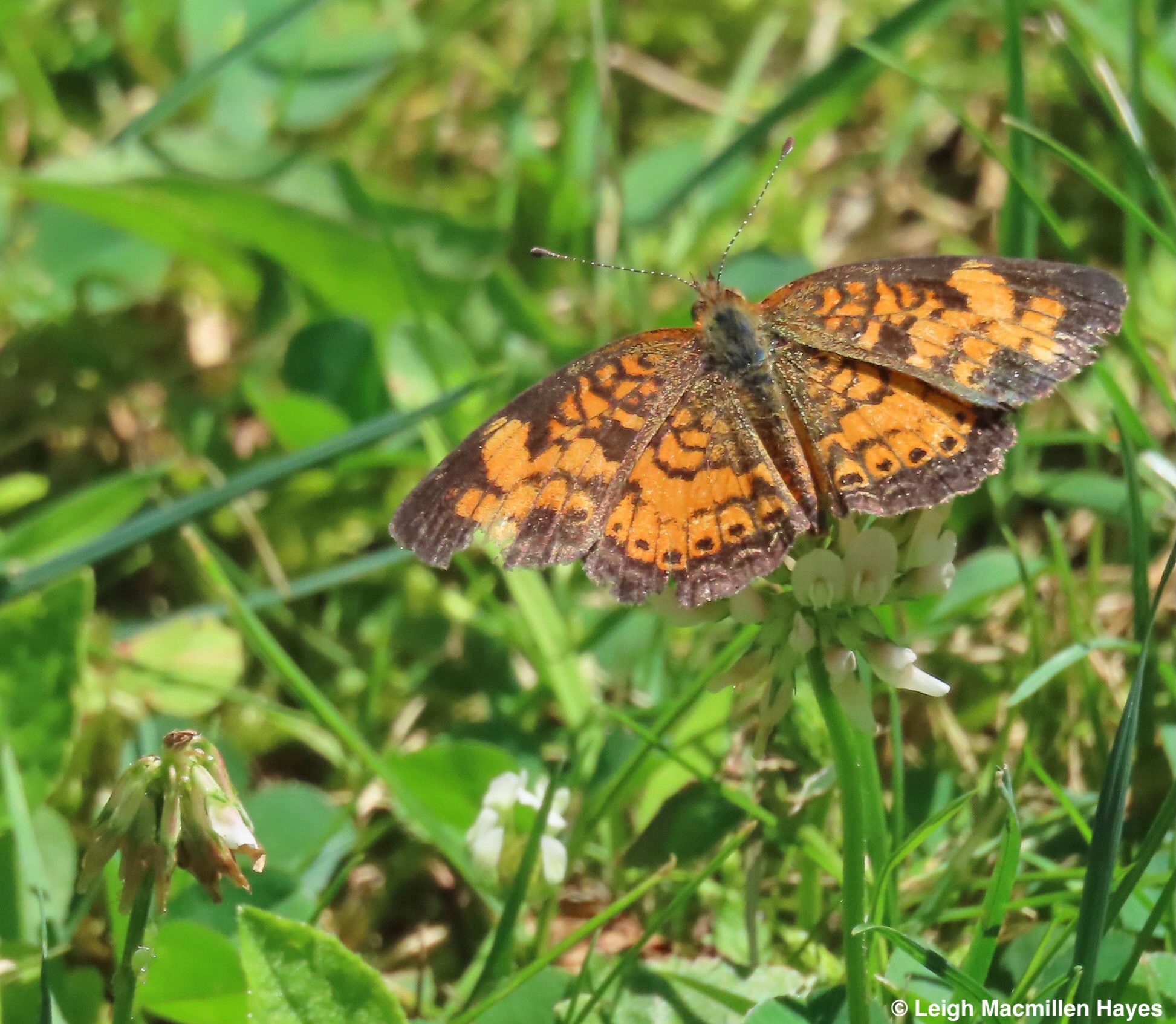
Step through the open-air doorway, and you’ll find right now I’ve got proboscis-style straws on display. They are especially beneficial when sipping from Red Clover, a member of the legume family.

And for safe storage, the Peck’s Skipper likes to show how to curl the straw up when not in use.

If you are an introvert, like me and the Common Ringlet Butterfly, you might prefer to flit from flower to flower, but then hide in the vegetation after spending so much time demonstrating for the public how to use your straw.

Common Wood-Nymphs are equally inclined to hide, but still available on the shelf for you to choose, and you can decide if this stored straw appeals to you, or not.

White Admirals are especially plentiful right now, and want you to know that whether hanging upside down,
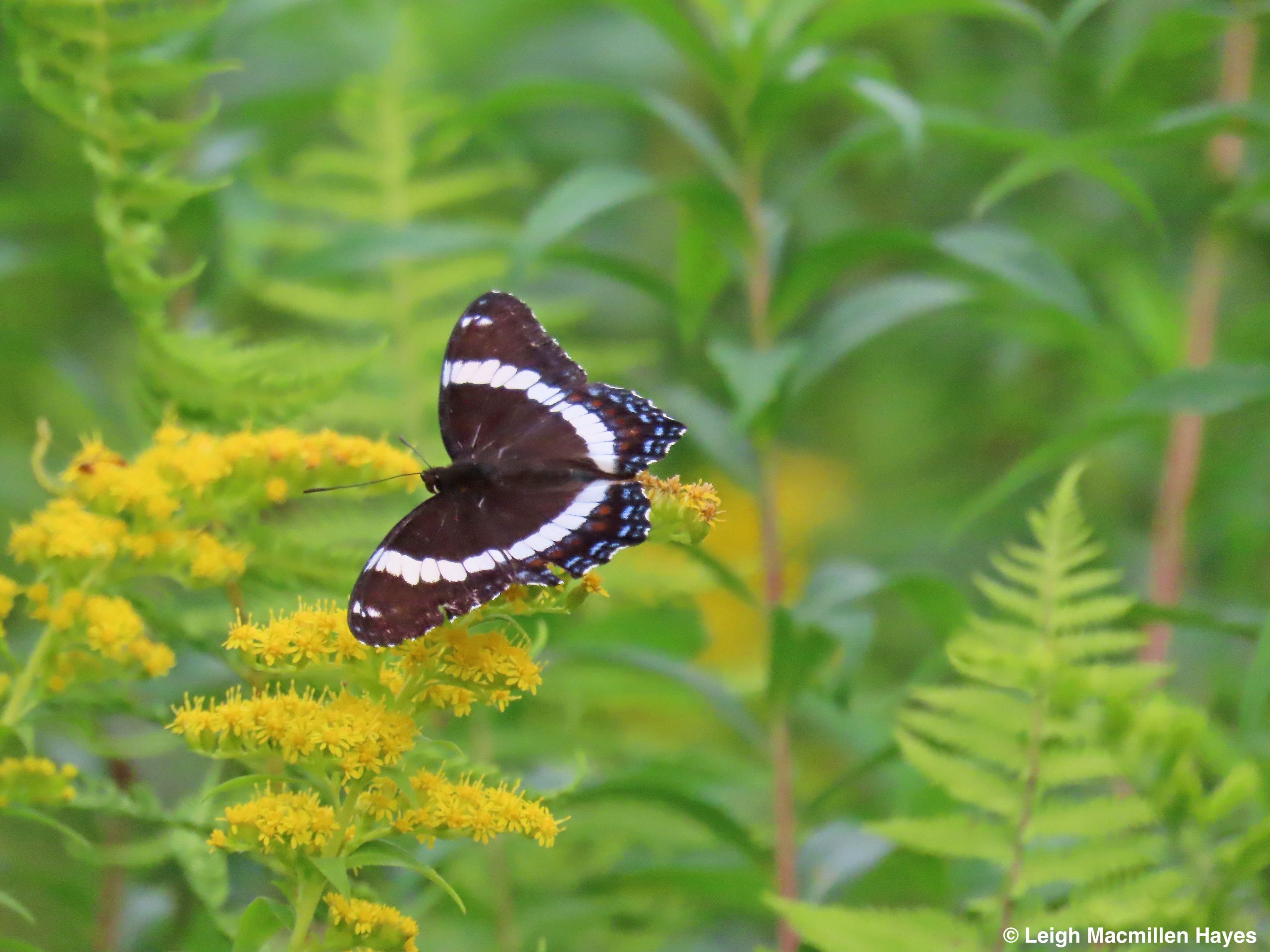
or right side up, their straws always work, so it might be a good one to think about purchasing.
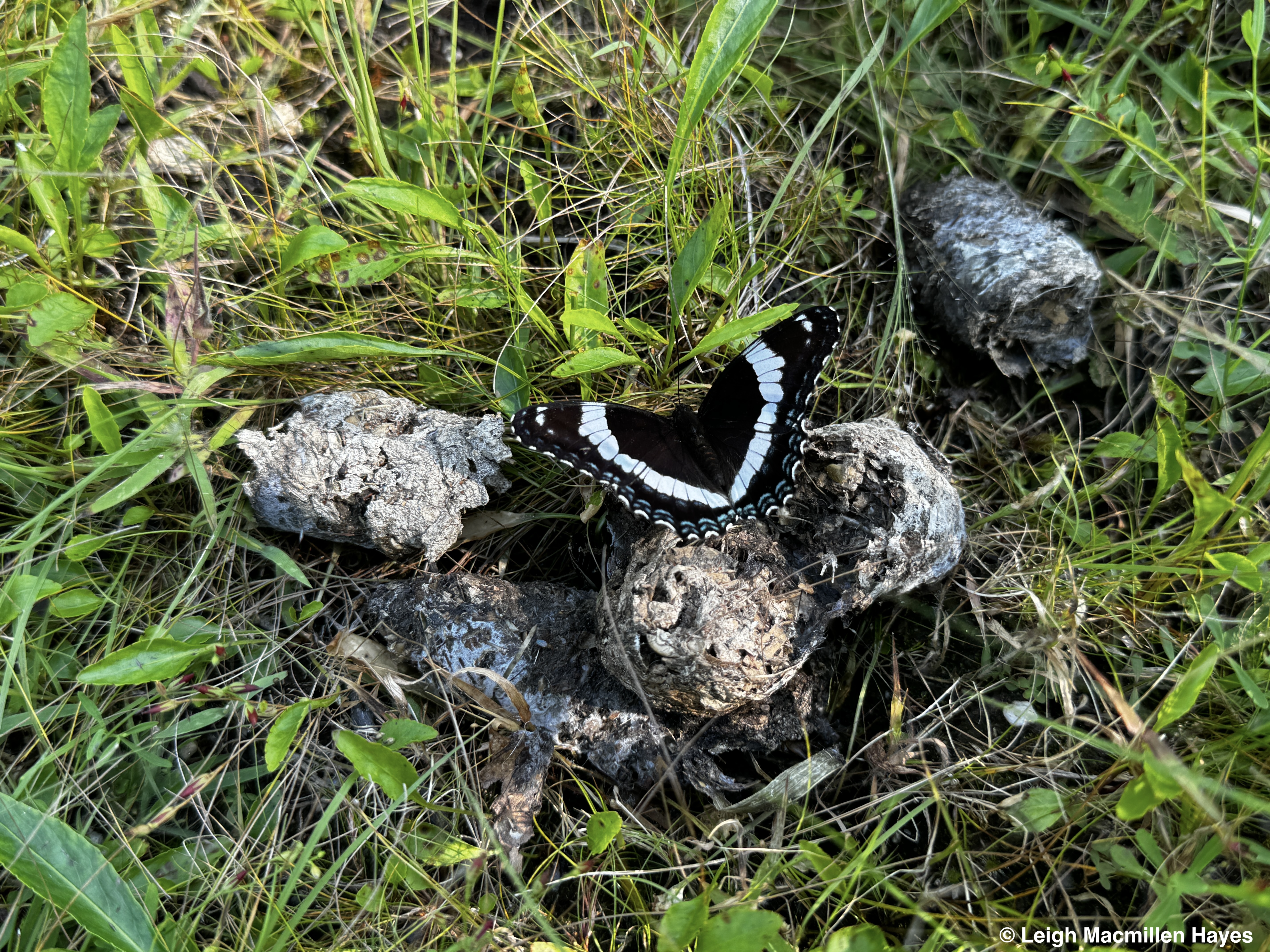
Especially if you like to get some of your nutrients from scat. We can throw in some scat for you, if you’d like–at no extra charge!
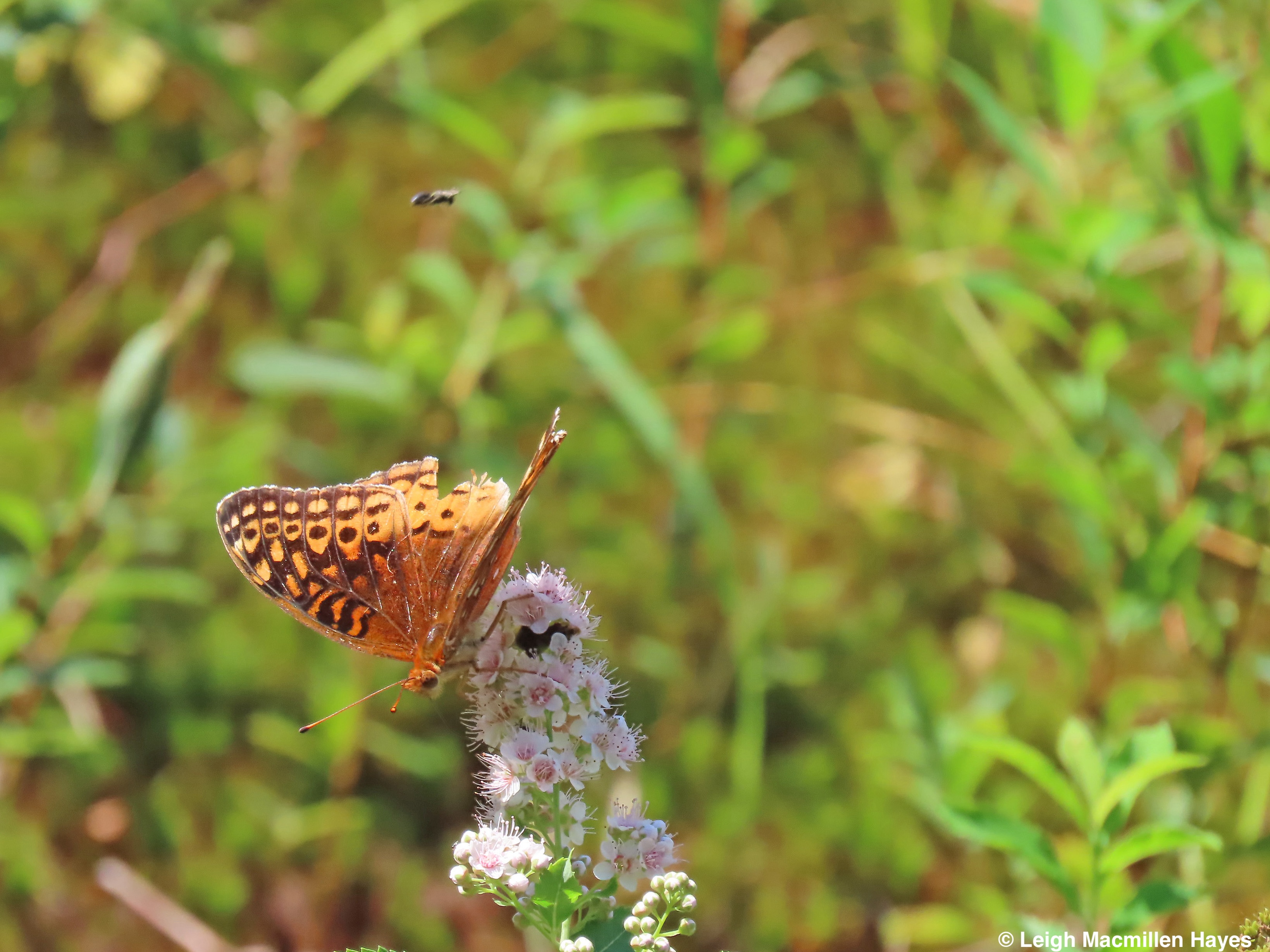
Sometimes it’s the packaging that makes all the difference, so we’ve got several orange choices for you to consider, this being the Fritillary style. Make me an offer I can’t resist, and this straw is yours due to the fact that it has been used previously, as evidenced by the tattered wing.
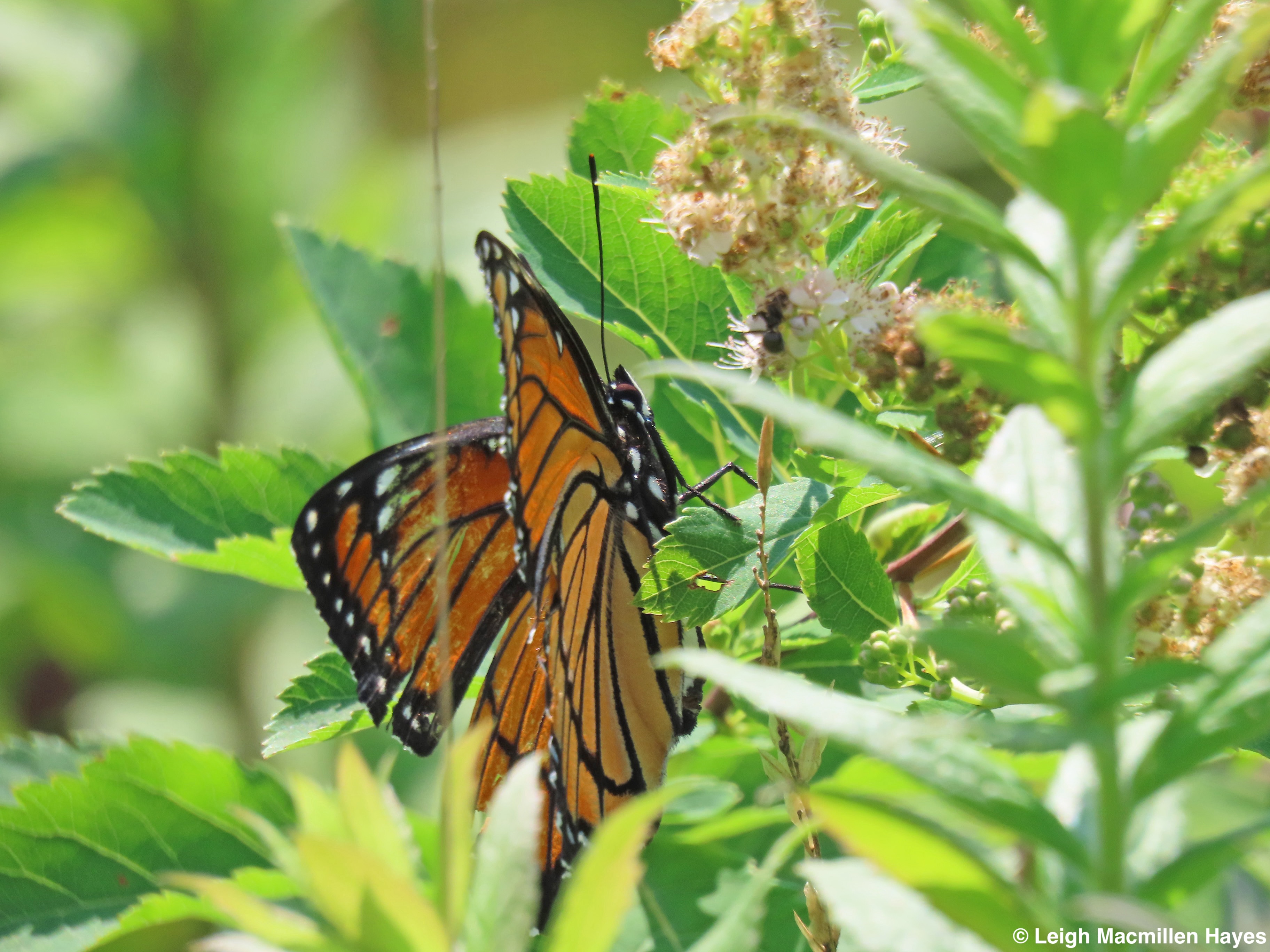
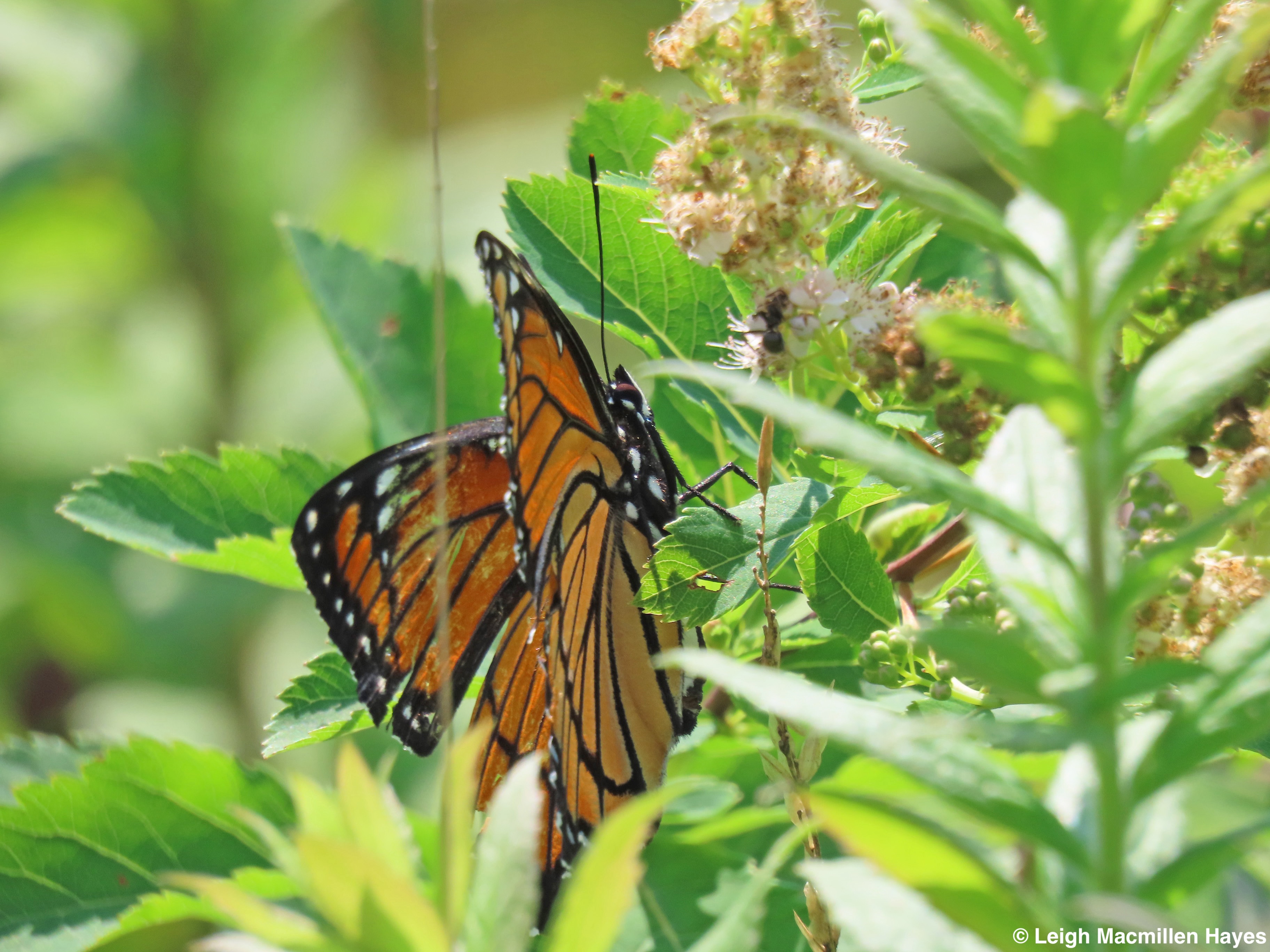
If you prefer something a bit bigger and brighter, there’s the Viceroy, with that dark band crossing its wings.
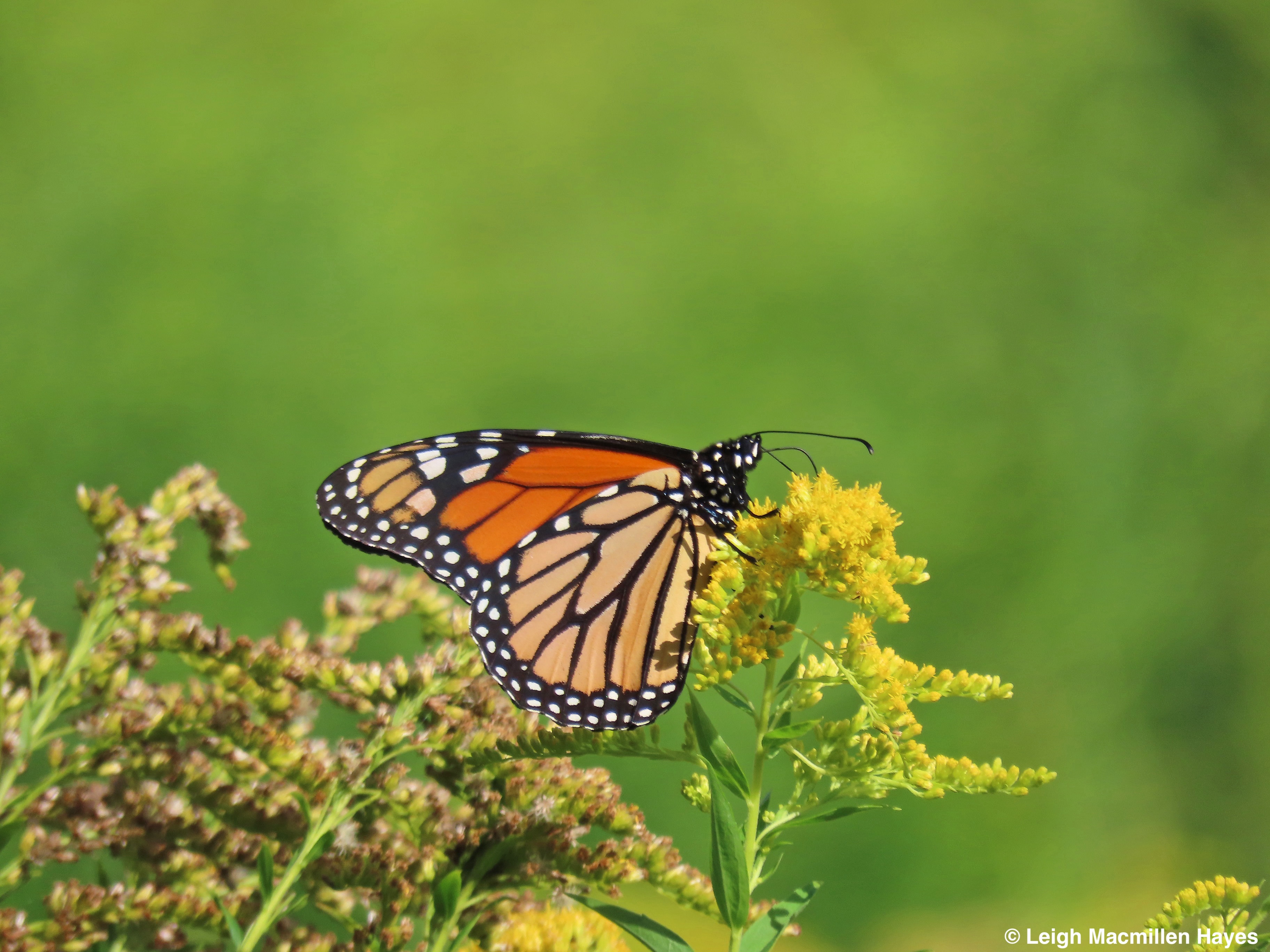
Or the biggest of all, the Monarch, who lacks the black band that is part of the Viceroy packaging.

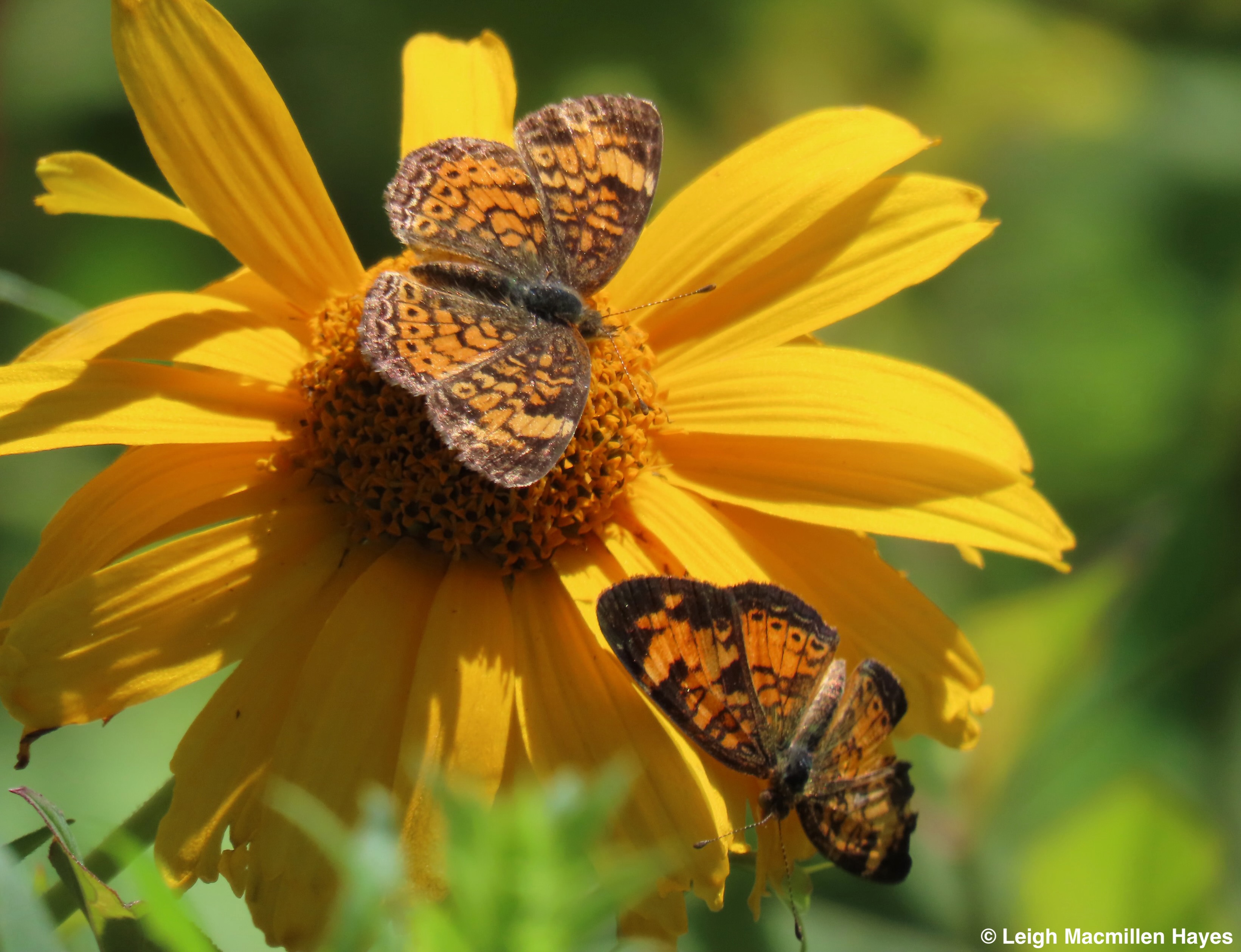
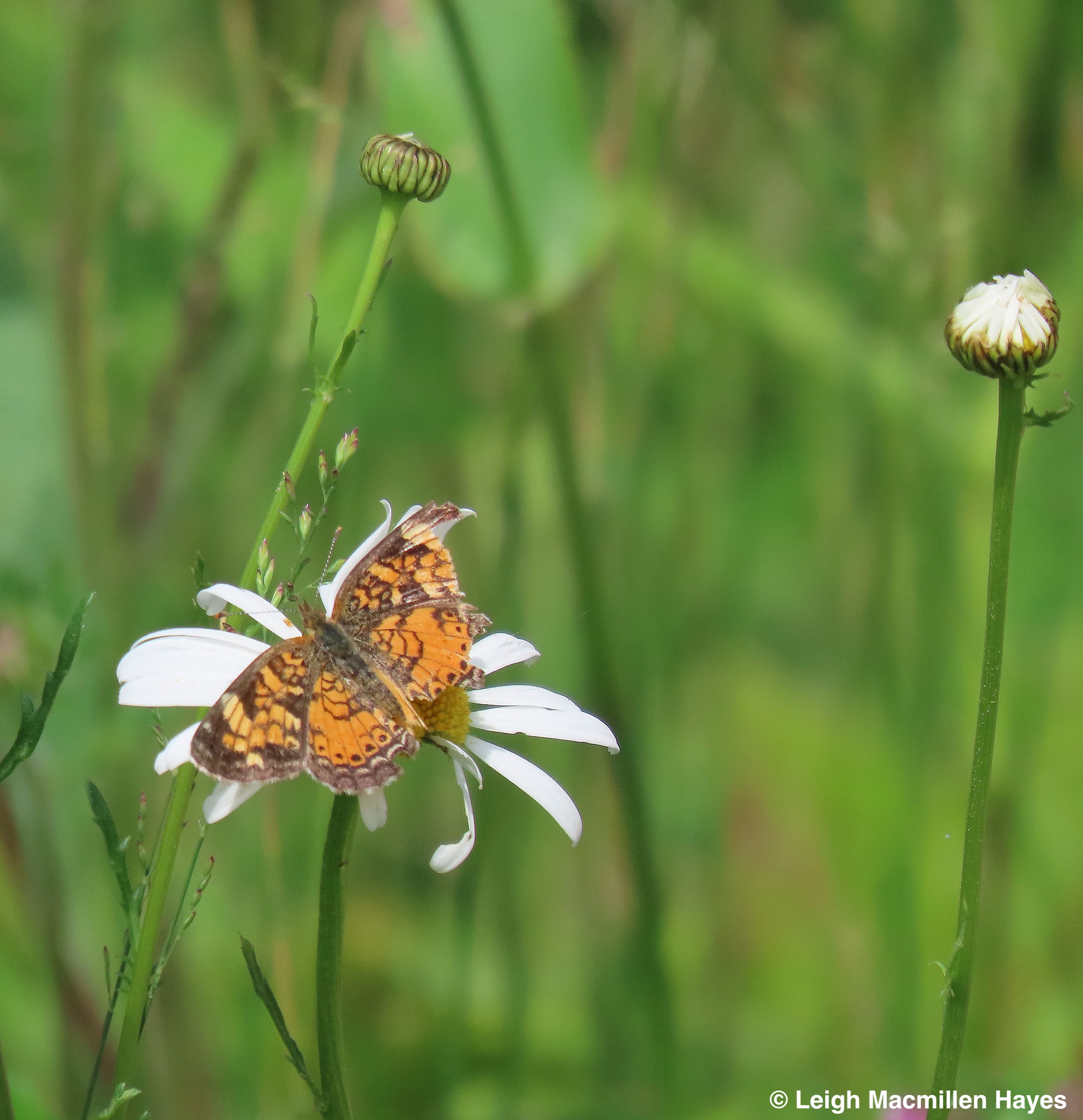
For the tykes in your life, we also have Pearl Crescents and Northern Crescents in stock. The former is slightly smaller than the latter for the youngest in your gang.

Those are all great, but I have two that I much prefer, the first being this Clouded Sulpher that comes in pastel colors only, which contrast with the darker-colored straw.
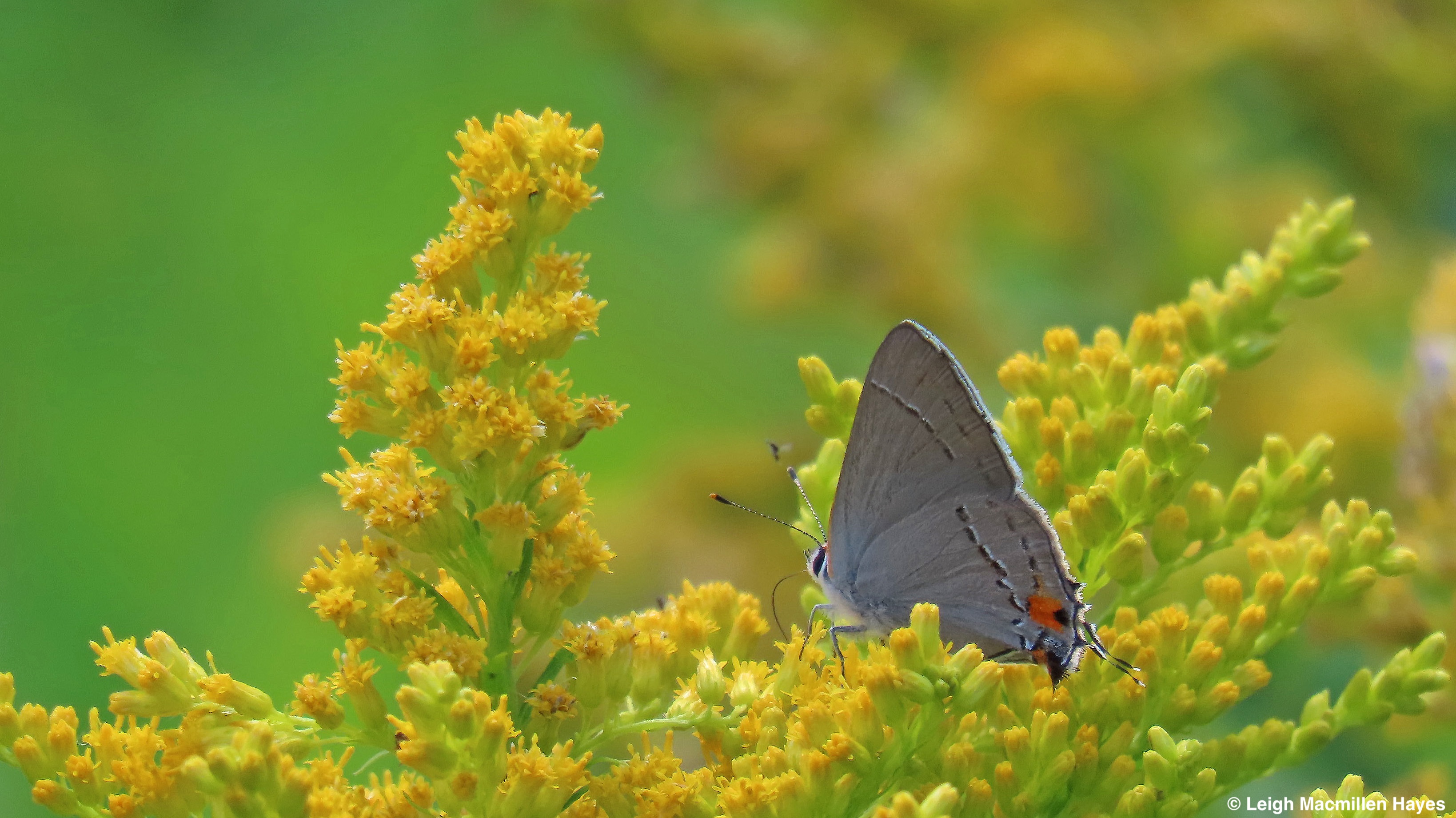
And the creme de la creme has to be the White M Hairstreak, a rare species that I was able to special source a few weeks ago, and every once in a blue moon (such as this August is), I can find another to offer you. That is the case right now, but hurry because I don’t know how long this butterfly will remain on the shelf.
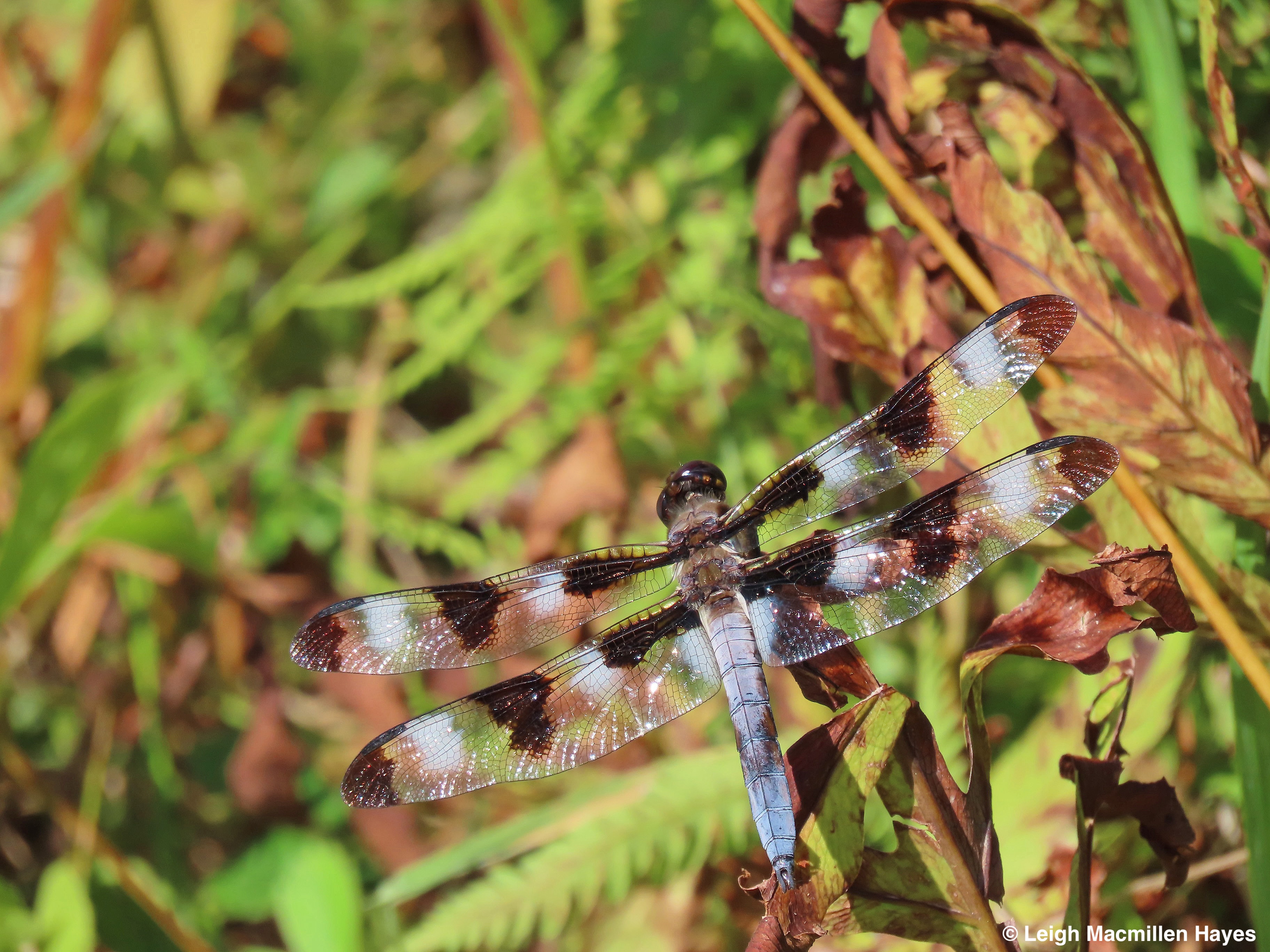
Over in the natural pesticide control aisle, I’ve a few options for you to consider, such as this handsome male Twelve-spotted Skimmer. Unfortunately, I just discovered these are on backorder, so you’ll probably need to wait until June if this is the style you prefer.
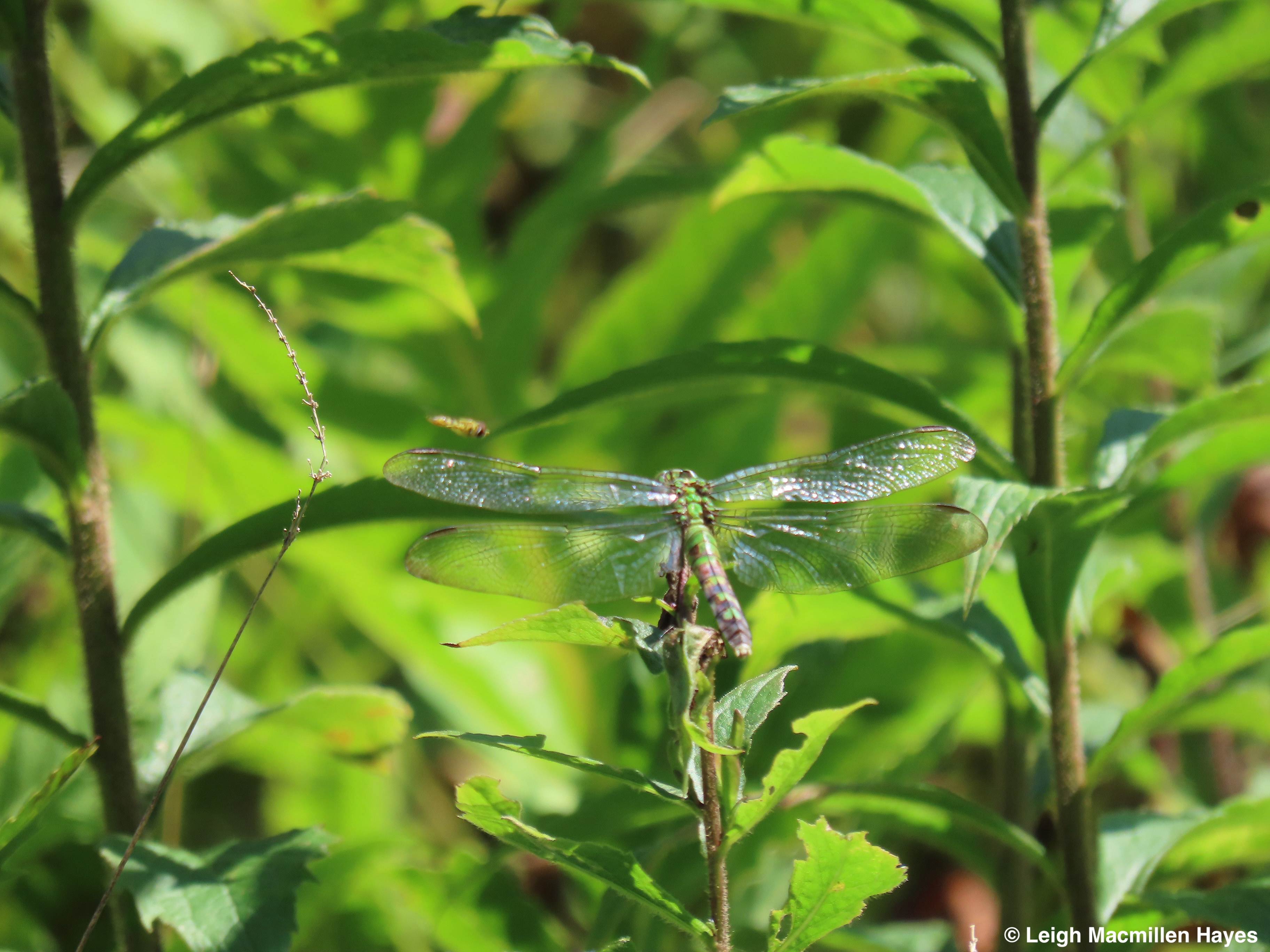
The same is true of the Eastern Pondhawk–in fact, I was totally surprised that I was able to snag this species, but suspect it has something to do with the store’s location between two ponds, and so close to a wetland and swamp.
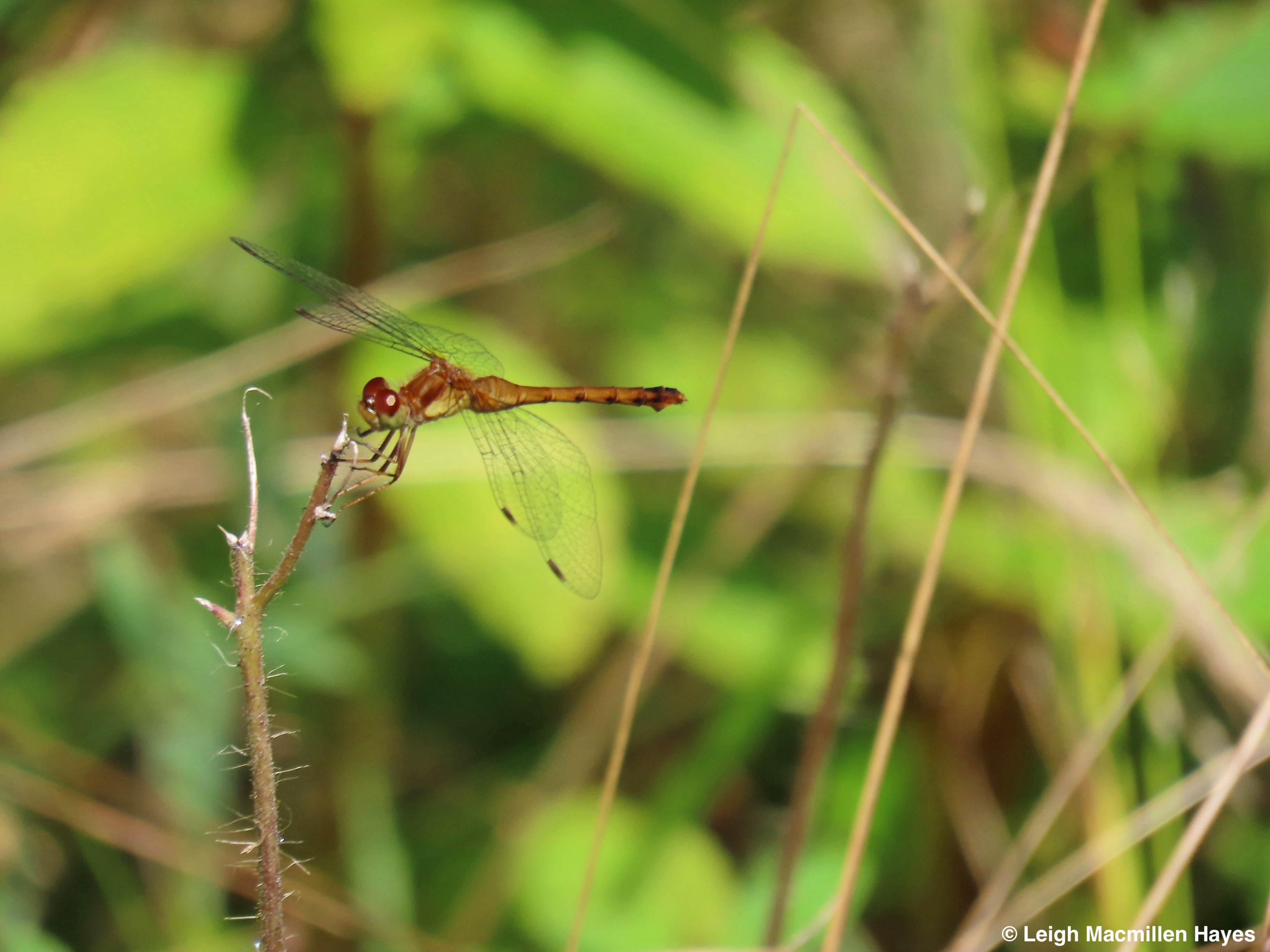
Right now, the most abundant pesticides I can offer are in the form of Meadowhawk dragonflies like this Autumn Meadowhawk, a small skimmer with tan colored legs.

If you prefer something larger . . .

you might like the darners that keep flying off the shelf. That said, there are plenty more where this guy came from, so if you can’t find one in the shop, give me a shout, and I’ll check the backroom.

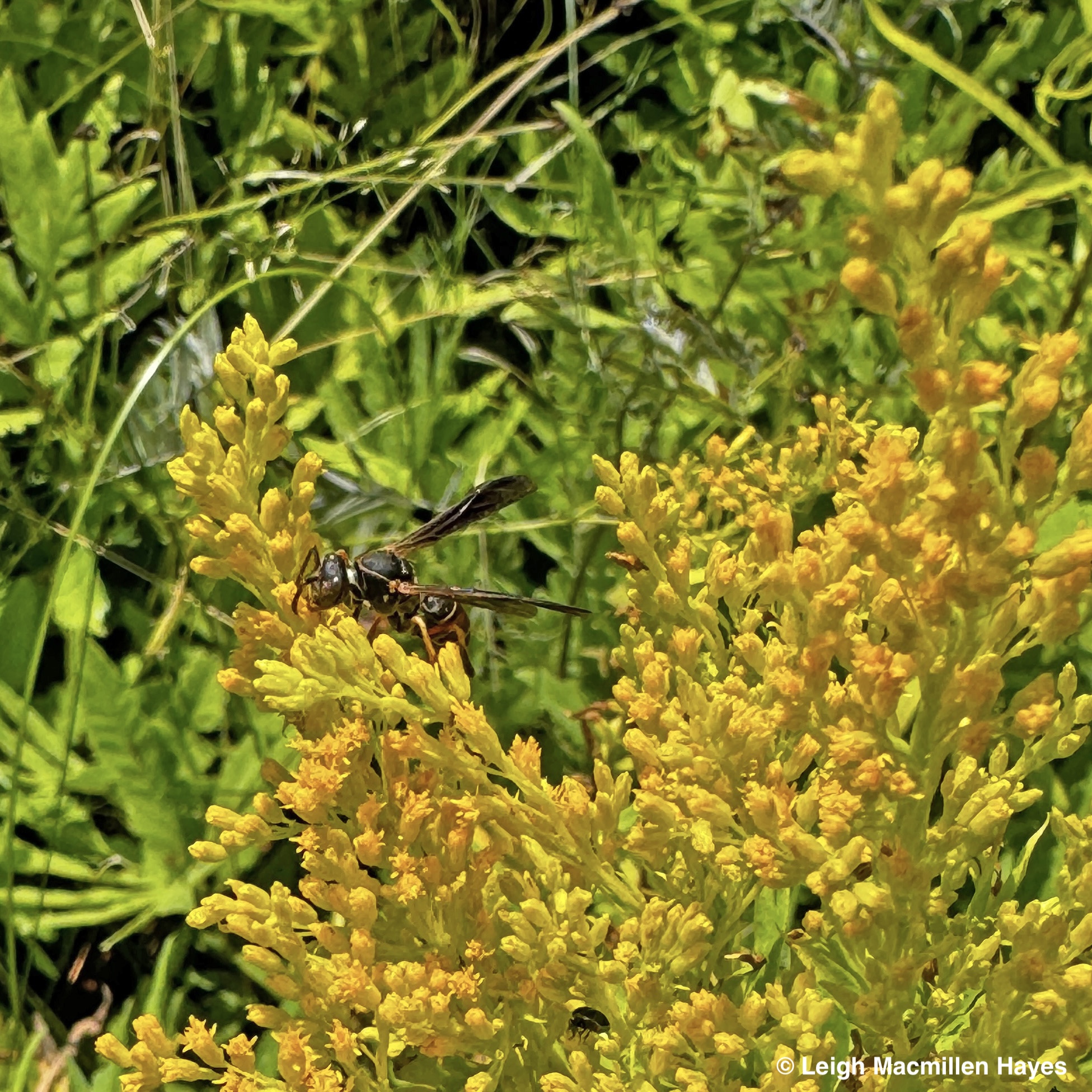
Summer is not over yet, despite what everyone has been saying lately, and so if it’s pollinators you are looking for, I’m afraid I overstocked. Well, there’s nothing to be afraid of, actually. Being overstocked on these is a great thing. And you can mix and match if you’d like, perhaps choosing these European Paper Wasps,
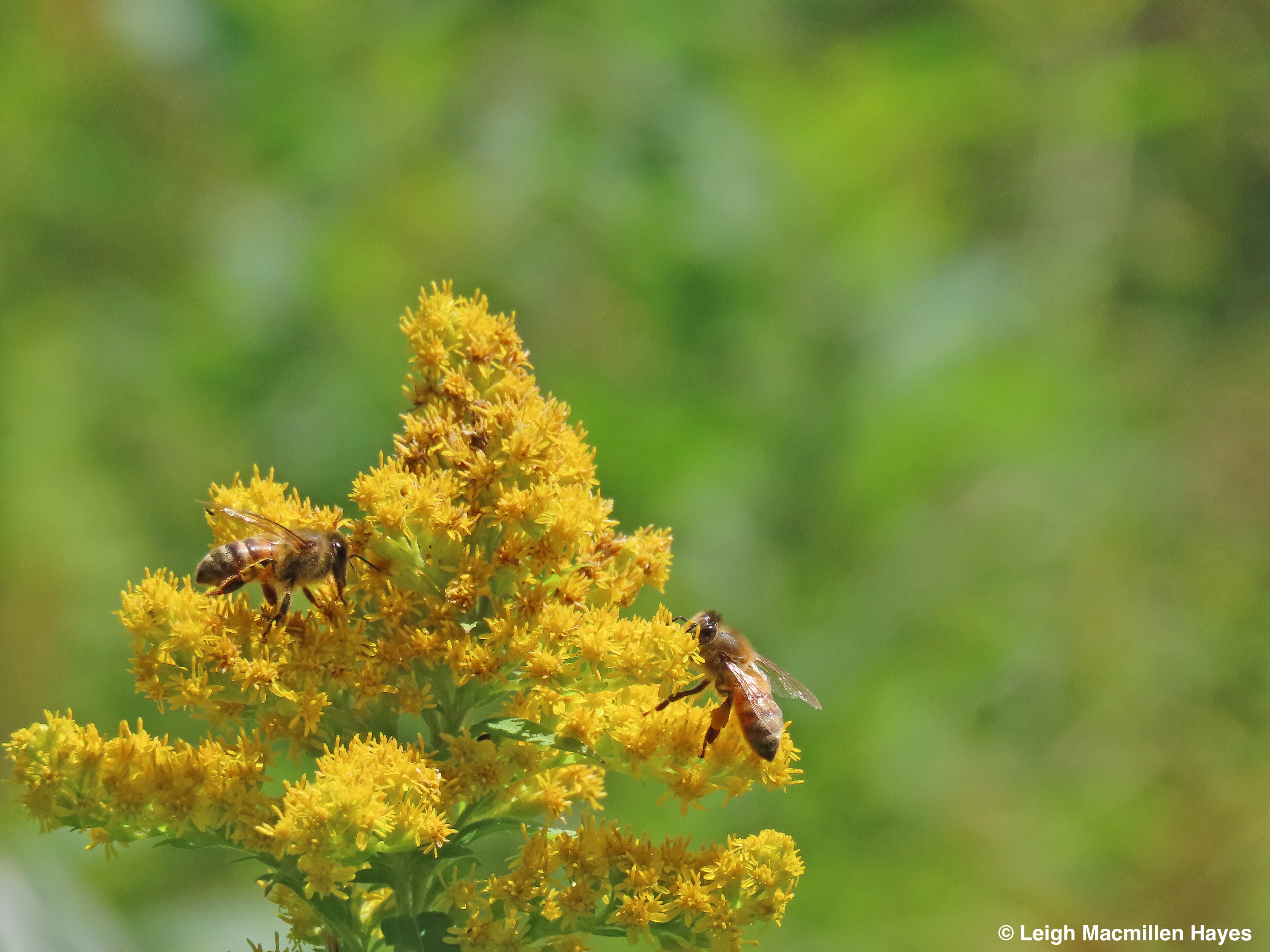
a few Honey Bees,
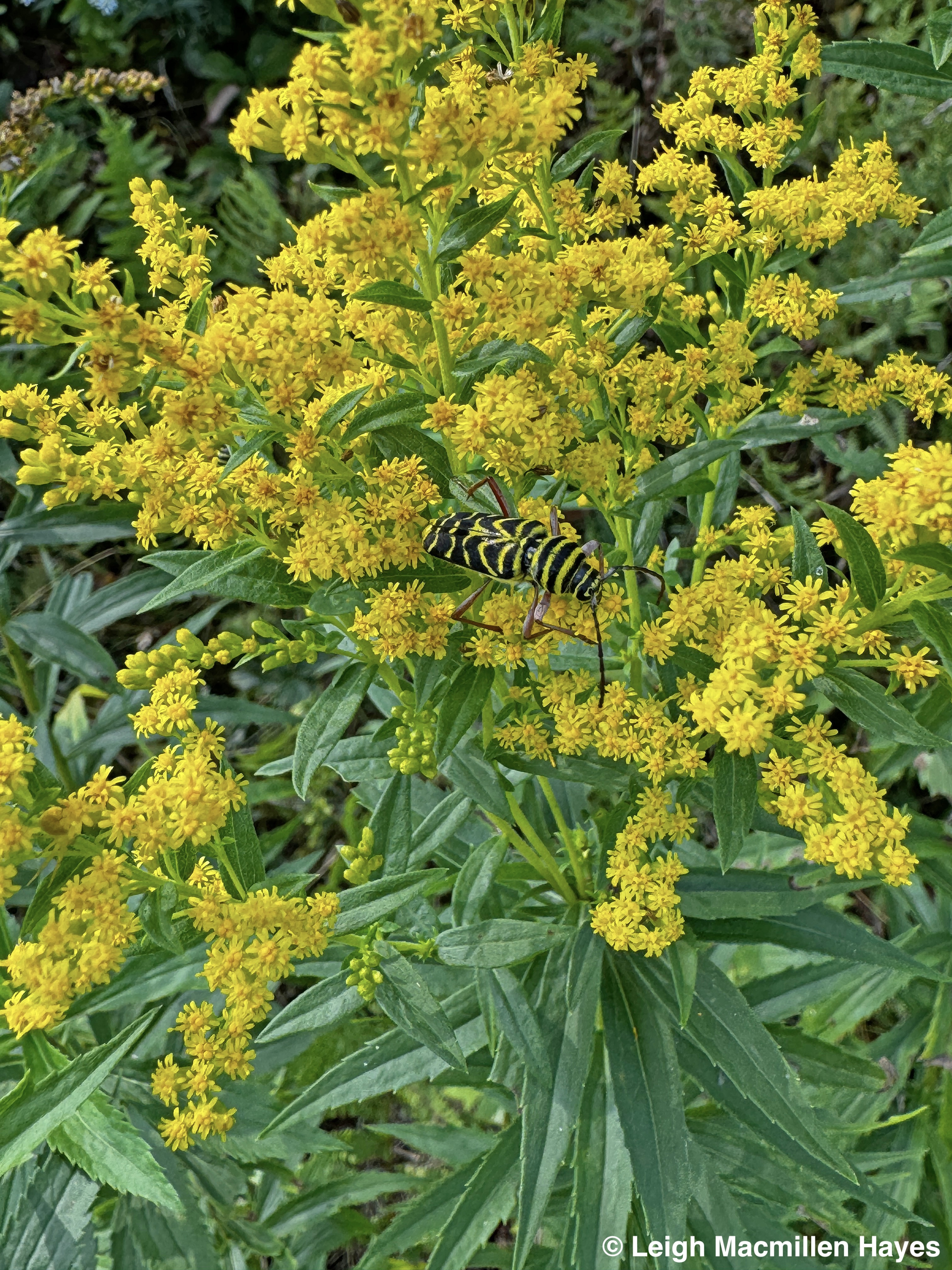
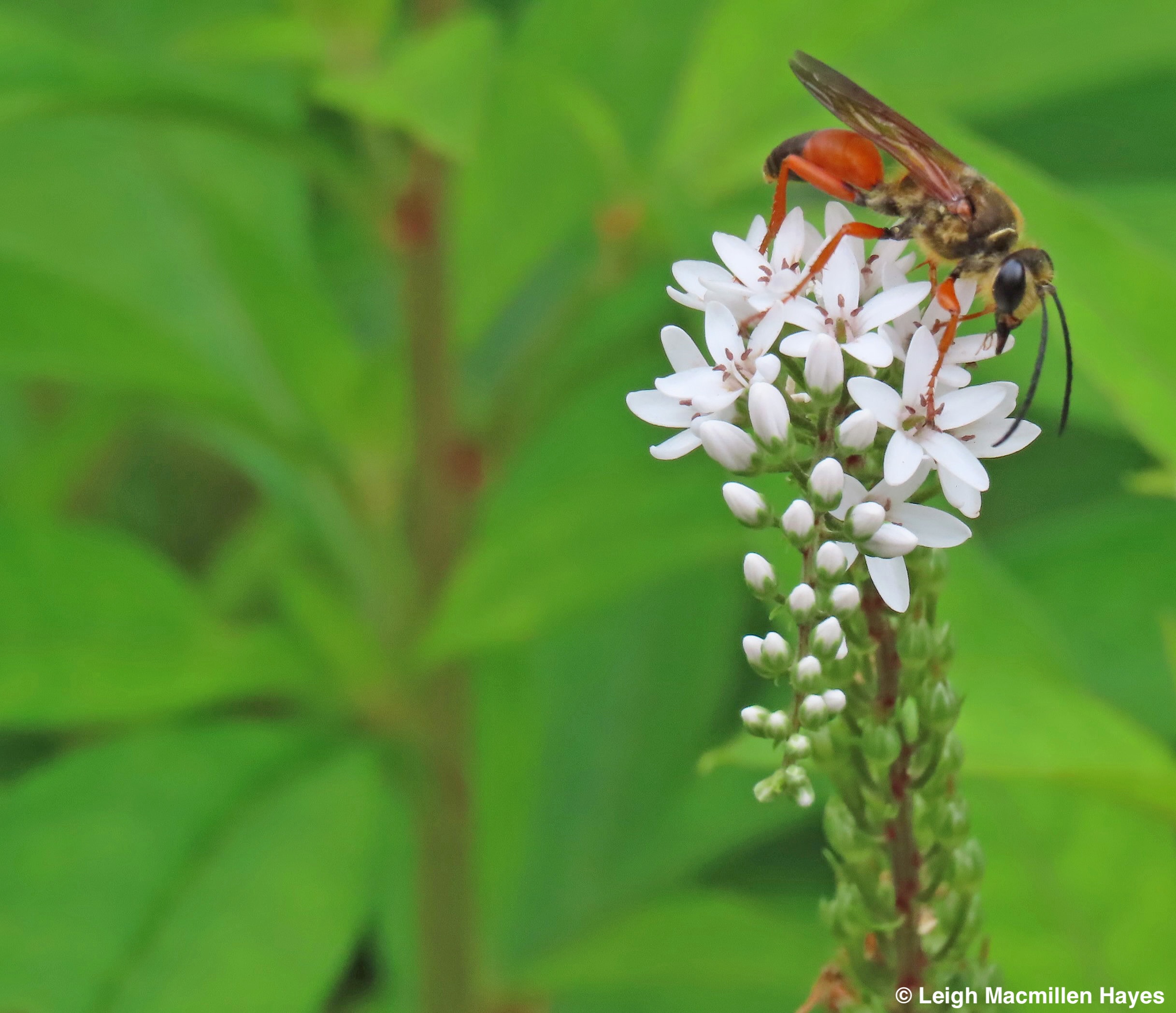
and some Locust Borers, all lovers of Goldenrod as you can see. I’ve also got Great Black Wasps, with their iridescent blue wings, and Paper Wasps, and Bumblebees, and . . . and . . . and so many to fill your reusable bag.

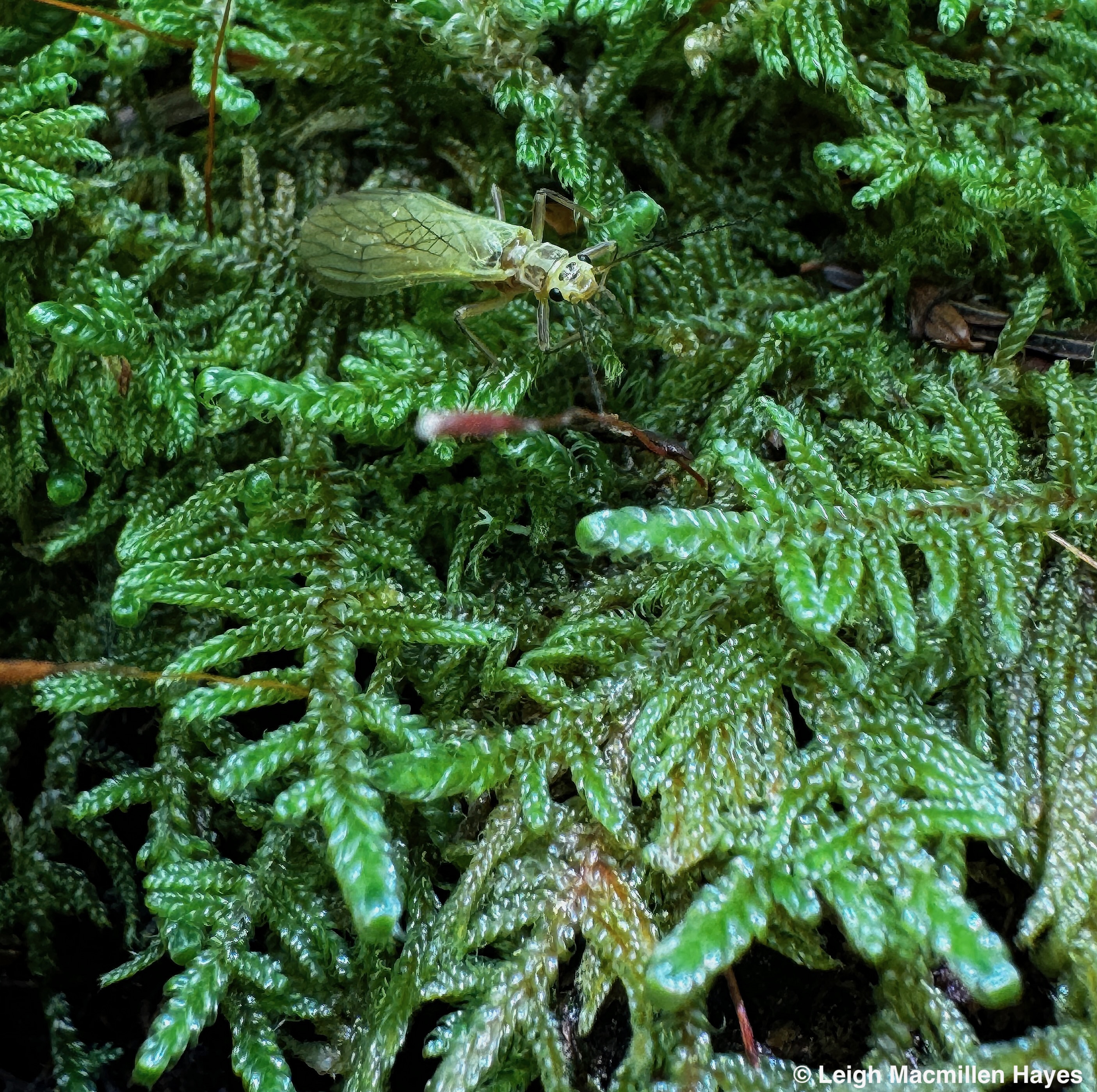
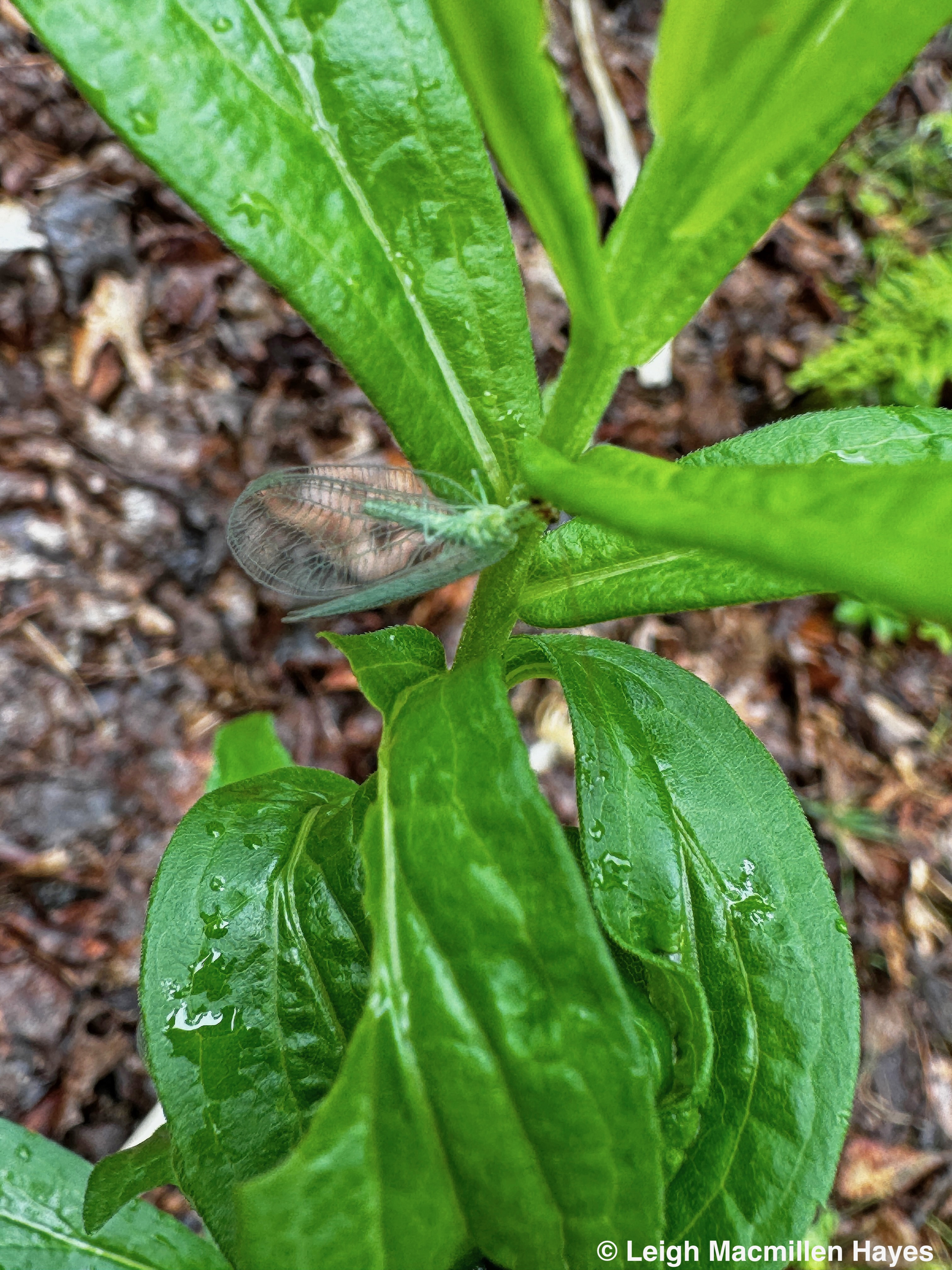
In the Fly By Day aisle, there are a few special selections, the first being this Lacewing that could be featured in a “Where’s Waldo” picture, so well camouflaged it is.
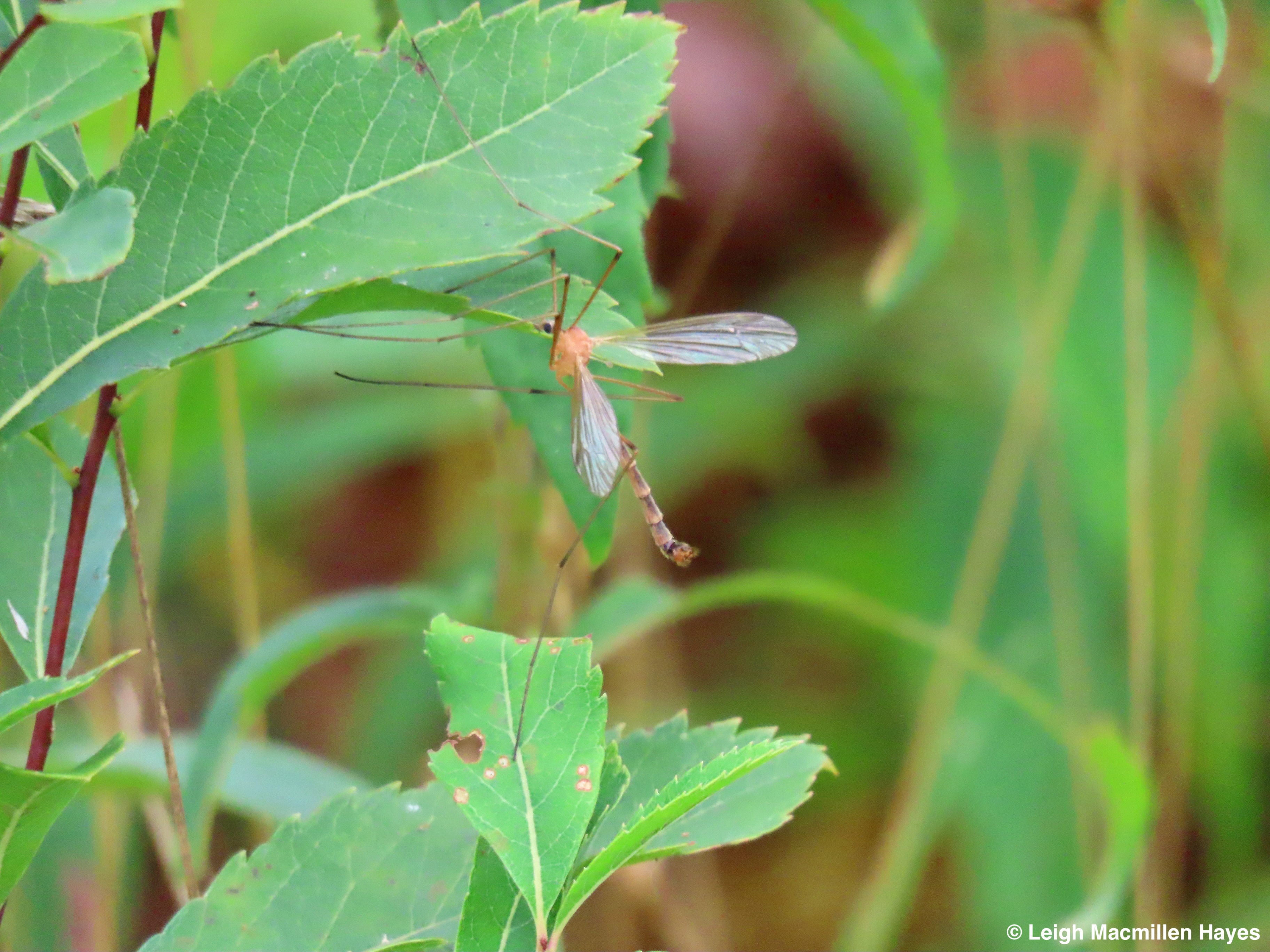
And a Crane Fly that you can scare people with and pretend it’s a giant mosquito. The thing is . . . they don’t bite. In fact, during their short lifespans, they don’t typically eat. So . . . little maintenance if you decide to put this one in your cart.

I’d be lax if I didn’t mention the employees such as this teenaged Ambush Bug who is very good at hanging out on Goldenrod plants near Black and Yellow Garden Spider webs, without getting tangled in all the drama.

But, being teenagers, sometimes two decide to tango in the breakroom under the Goldenrod, and these two canoodlers just had to have a bite to eat while they were so engaged. I’m sure the Sweat Bee never saw this coming.
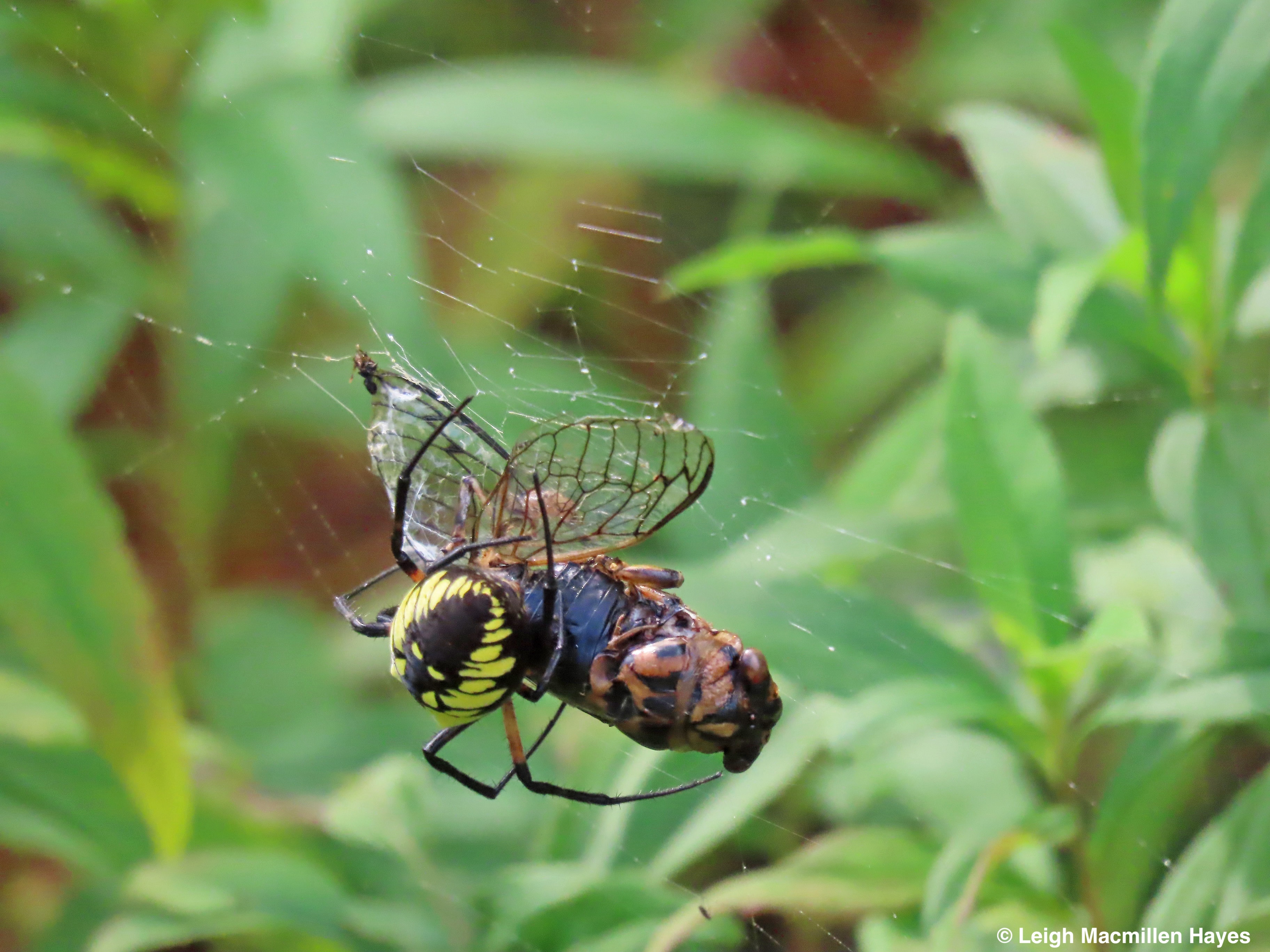
If you do decide to stop by the shop, the Black and Yellow Spiders are the chefs and they’re happy to provide you with a Dog-Day Cicada meal all wrapped up and ready to eat on the road. They have other items on the menu as well.

That said, this coming weekend, I do believe that the hardware store will have some items on the grill. So stop by and sample whatever delectable they prepare.

Food is actually a part of all our lives (haha, as it should be) and our youngest son is fortunate to work at a company in Manhattan that has a personal chef who prepares breakfast and lunch each day, mostly with locally-sourced food such as what is available at my store.

If you do come to the my shop, know that you’ll probably have to wait in line behind the Eastern Phoebes, who perch at roof-height and swoop in and out . . . often helping themselves and then zooming to the self-serve checkout line.

The guard doe keeps an eye on everyone passing through the door, so I don’t have to worry.

Occasionally, all four of us take a break from our respective jobs and come together to share a locally-sourced meal of our own–a la Fly Away Farm. Oh, and the kid (young man!) in glasses is holding his Lacy Blue pup who is sure that everyone who visits the hardware store comes just to greet and pet her.

As My Guy and I went for a long walk today, and hiked a mountain yesterday, we tried not to talk shop, but it occurred to me that while my eyes glaze over when he starts telling tales about hardware happenings, so do his when I point out the wonders of the natural world.

And so, I try not to tell him how to run his business (“try not to” being the operative phrase), and he lets me operate my own shop in my own way–even if it is all in my imagination.

I suppose you could say that while I’m married to a hardware store, he’s married to a . . . I’ll let you finish the line.

In the end, we both take stock . . . naturally.
Field of Vision

Sometimes it’s the big things that pull me out the back door and other times it’s the small things. But this past week, it was an in-between thing that did the trick. And kept me returning for more and more.

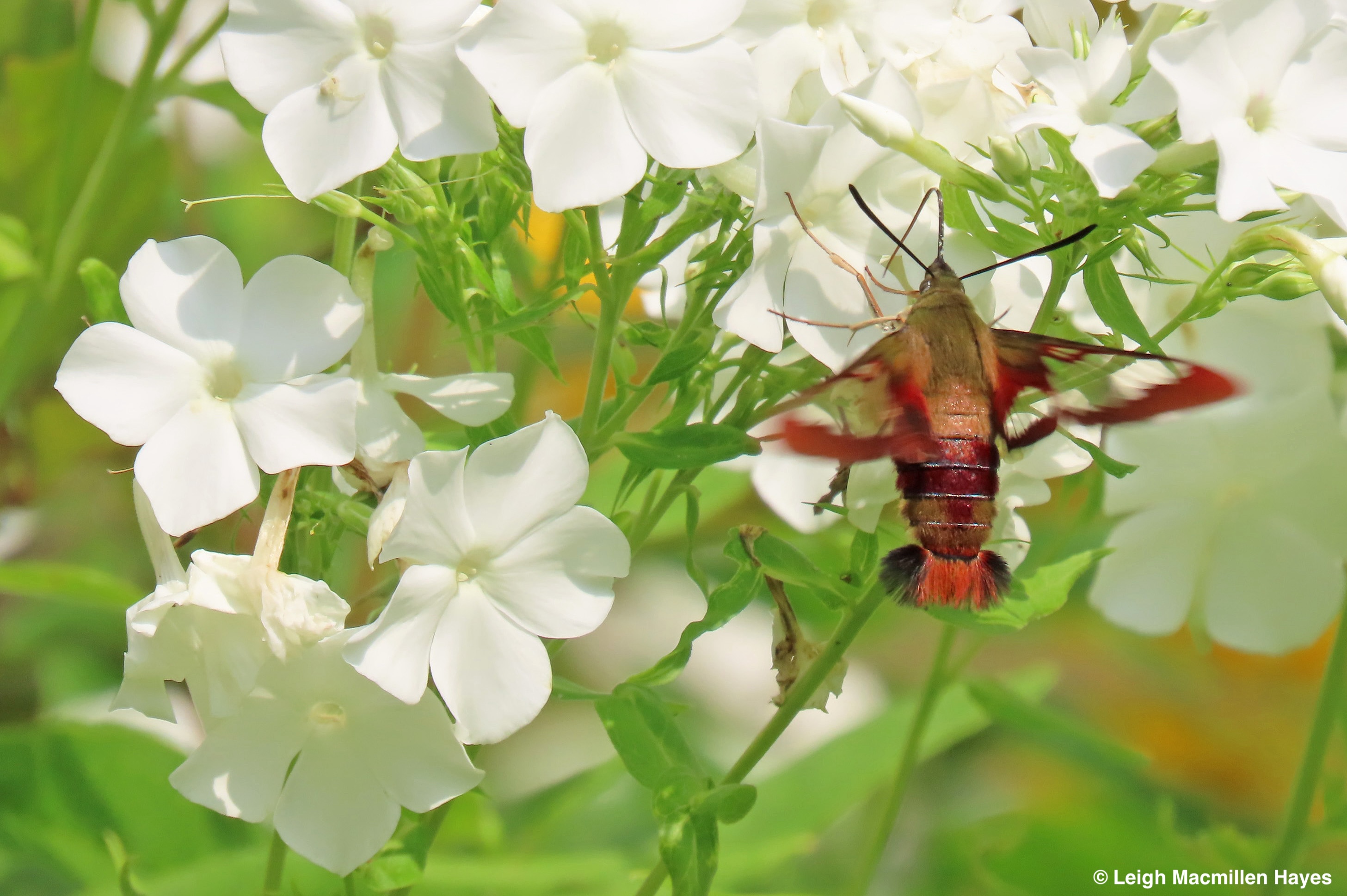
Feeding on the Phlox outside the kitchen window was a Hummingbird Clearwing Moth. I’d seen it on several occasions, but the minute I stepped outside it flew off. Until this day when it let me snap numerous photos as I watched it seek nectar from the same flowers our local Hummingbirds love to visit.

And once I was out there, I knew it was time to climb over the stonewall and visit the neighbor’s field to see what it had to offer, given that so many goldenrods are in full bloom.

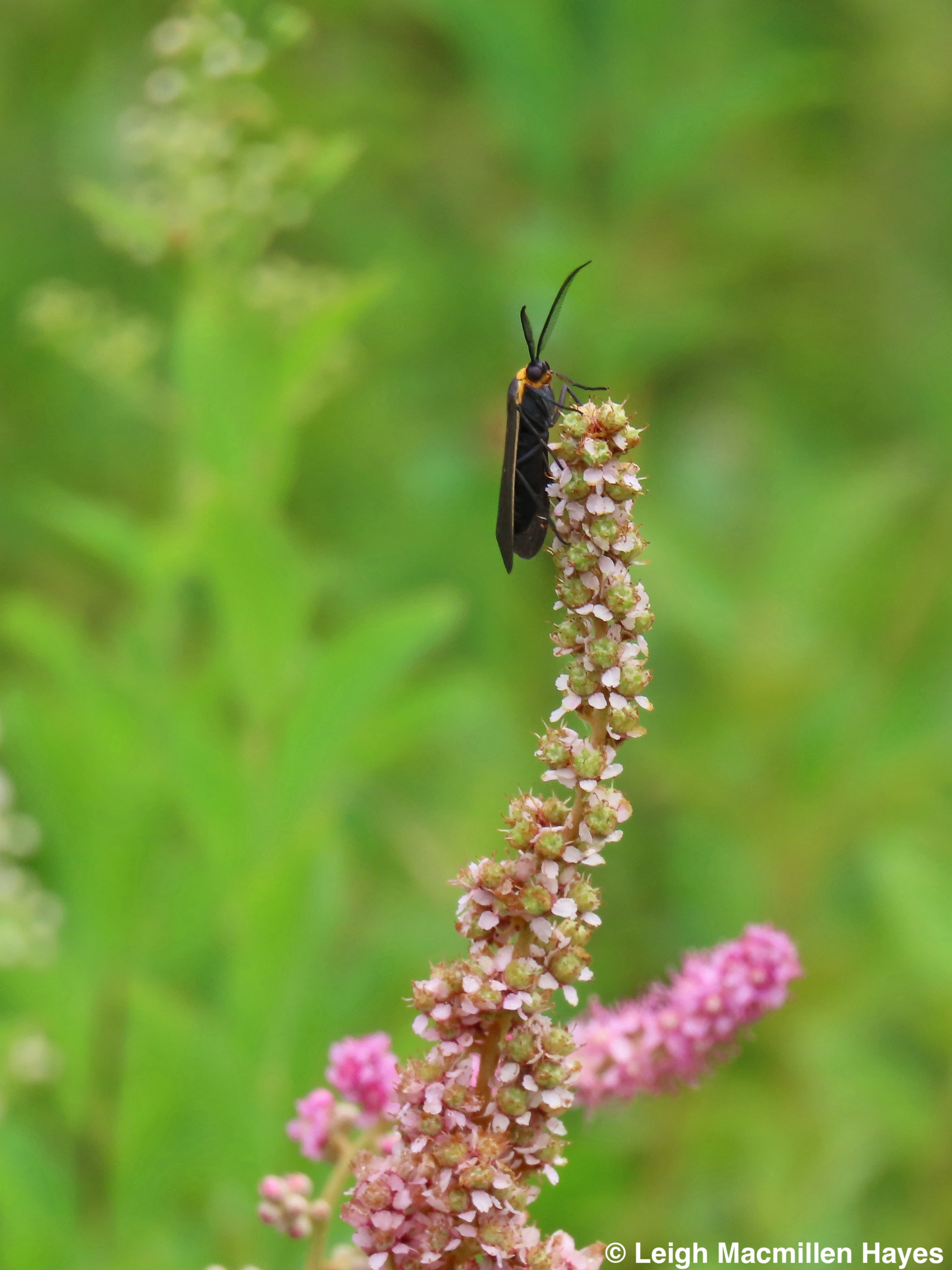
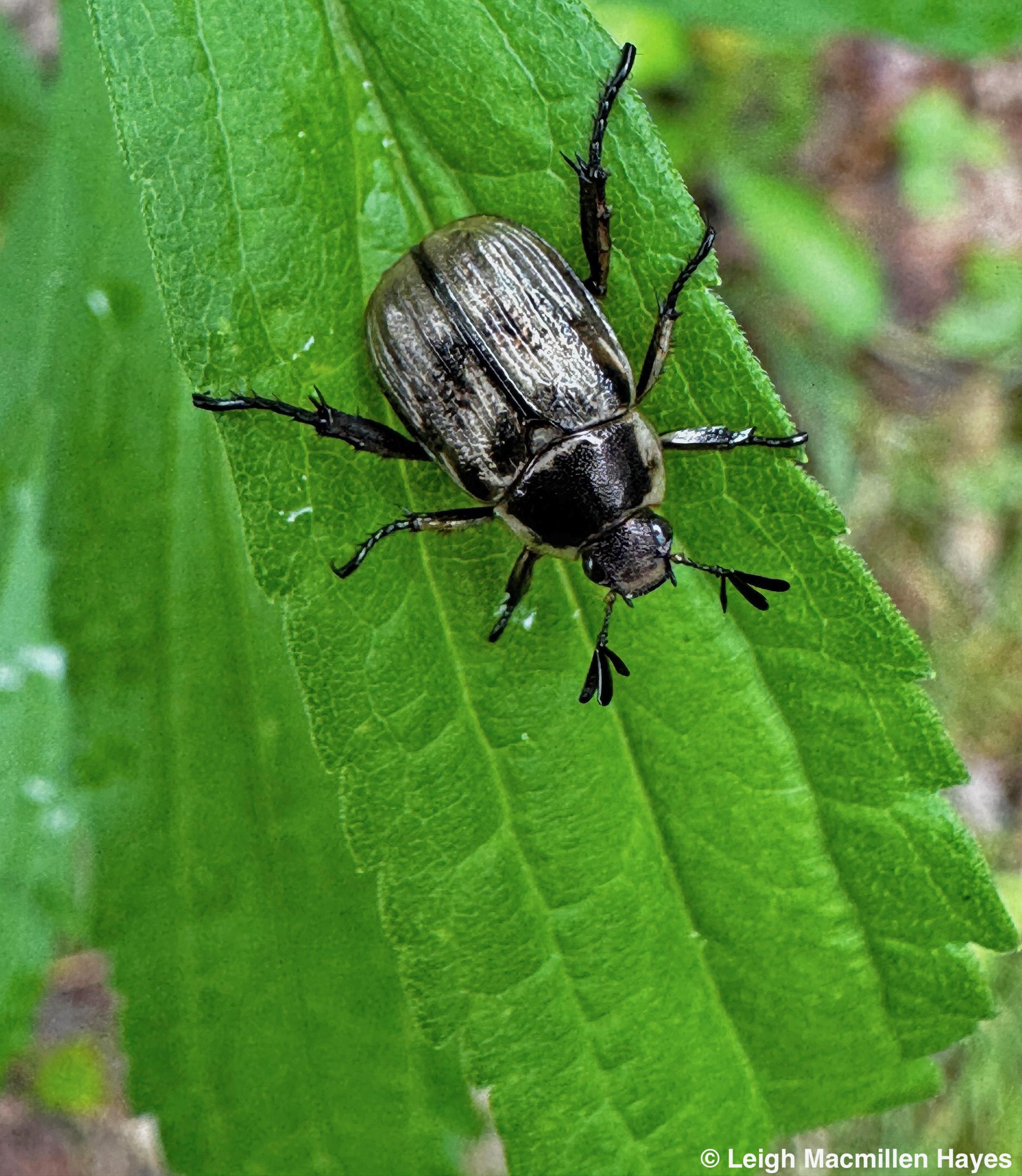
Upon a Steeplebush, a Netwing Beetle looked like it was holding court. I love the featheriness of its antennae standing tall above those beady eyes.

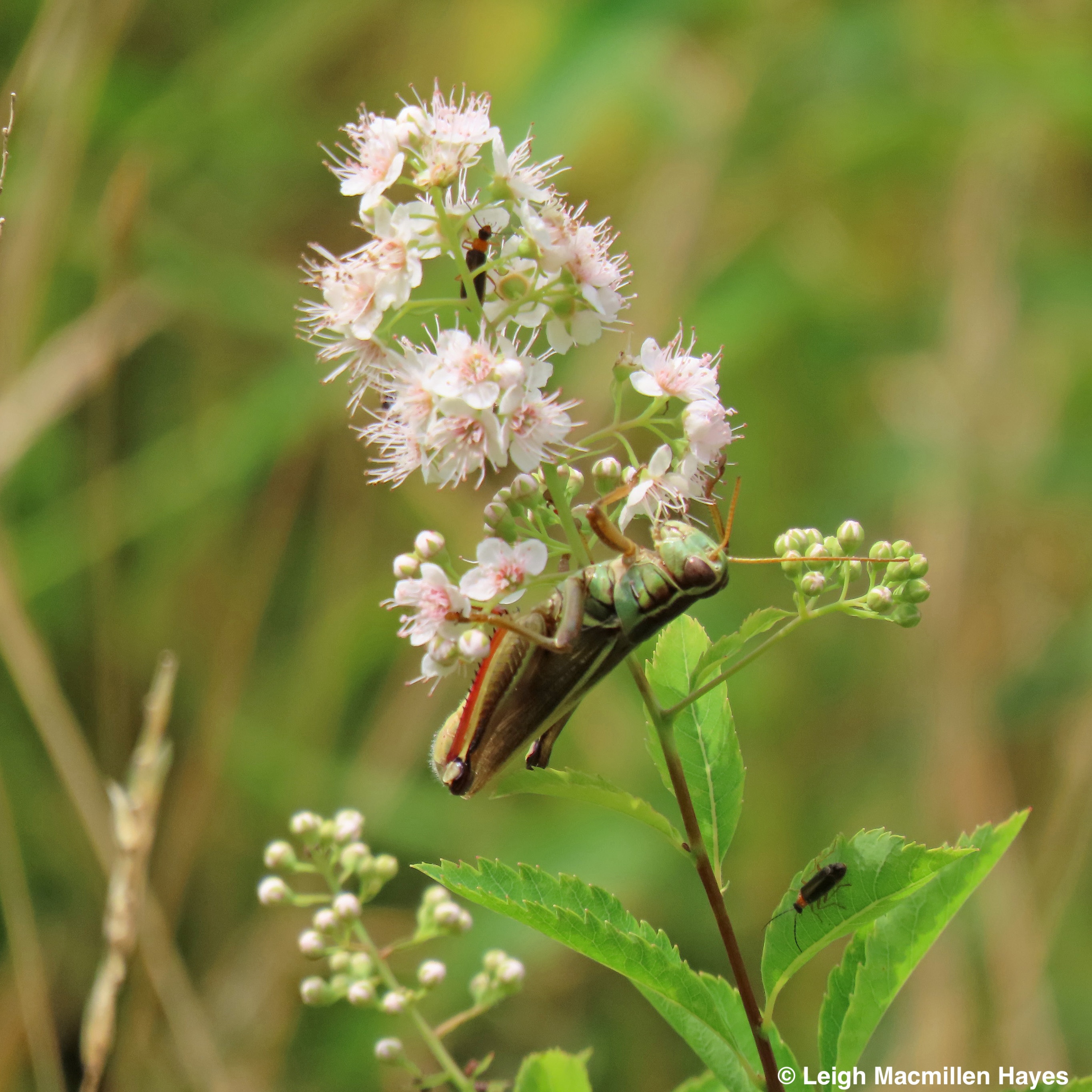
On a nearby Meadowsweet, another in the Spirea family like the Steeplebush, a Two-striped Grasshopper was certain that I couldn’t see it. I could. And I could hear grasshoppers and cicadas and crickets and birds, a field orchestra in full rehearsal form.

And as has been the action of so many Gold-marked Thread-waisted Wasps, these two were canoodling. I suspect we are surrounded by so many because they are so good at reproducing. Not a bad thing.

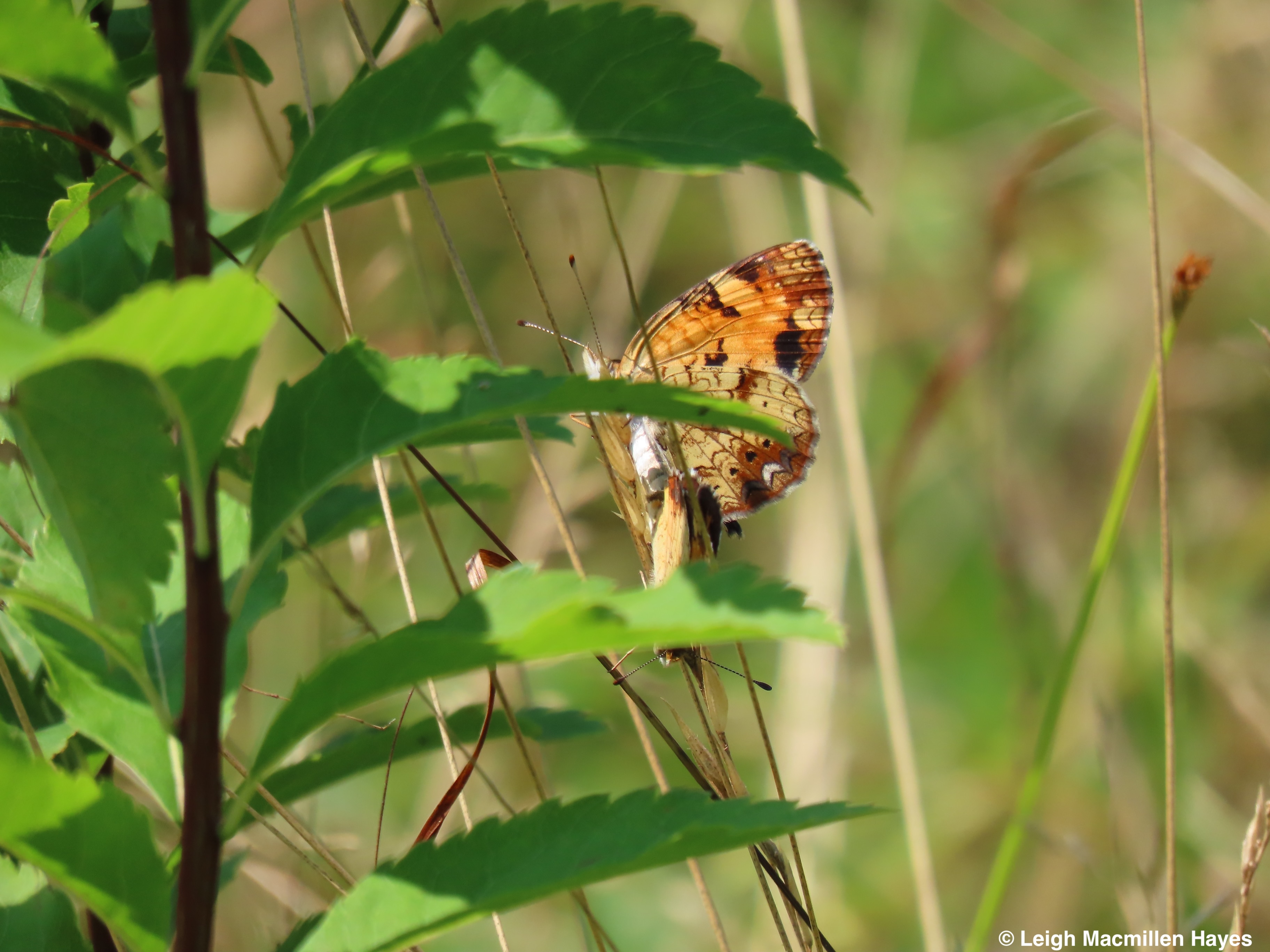
Also on frequent display and frequently in flight were the Pearl Crescent Butterflies.

And they too canoodled, though a bit discreetly. If you look at the underwing, do you see the pearly-white crescent? Thus the common name.

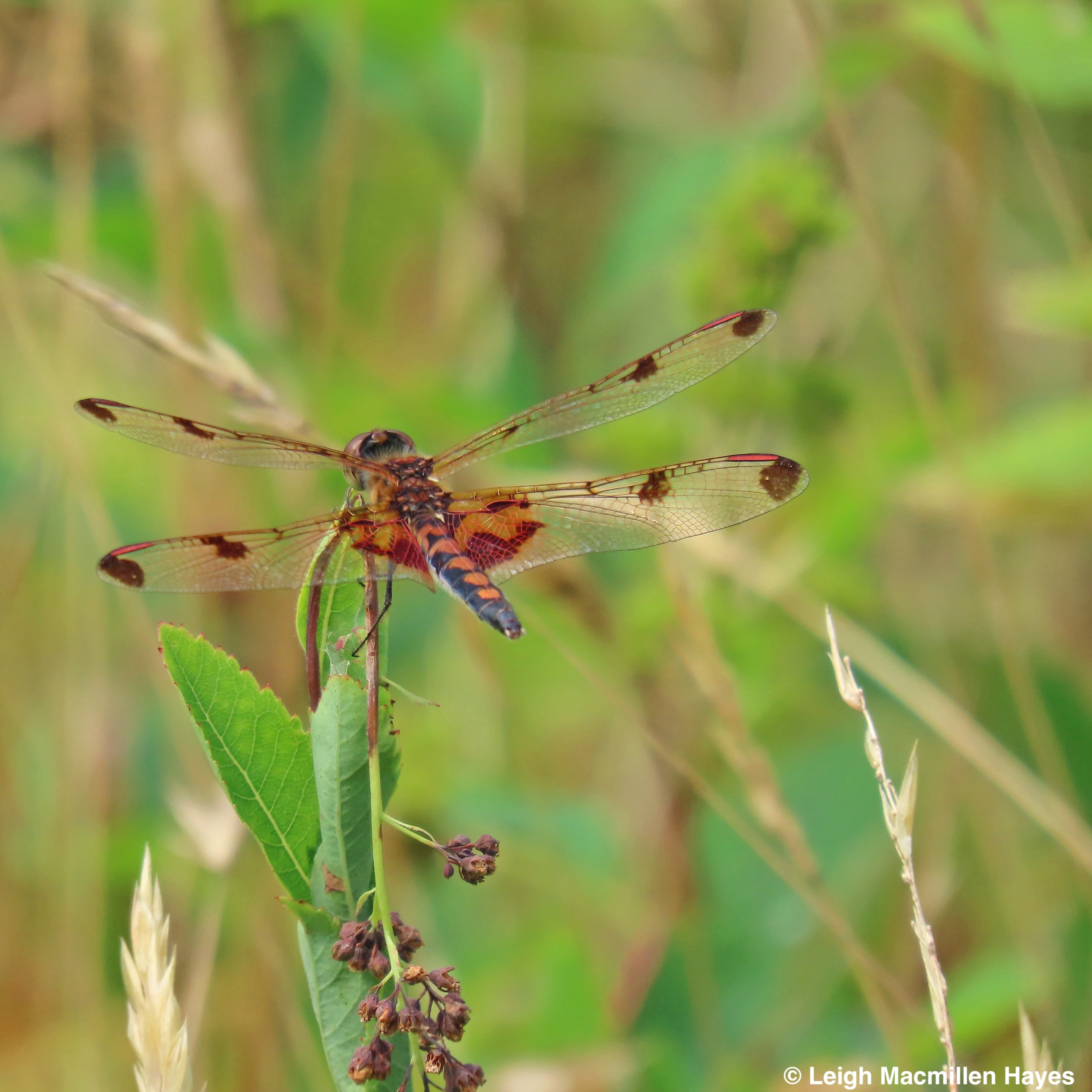
I had hoped to find a date for this male Calico Pennant Skimmer Dragonfly, her coloring would be all in yellow where his is red, but I’m afraid for the moment he’s still single. Maybe one day soon a gal will show up. I know I’ll keep looking.

Along the dragonfly line of field residents, this immature Blue Dasher Skimmer also posed for me. Again, on a Steeplebush, which gives height and vision for those who seek prey.

But some, like this Lancet Clubtail, prefer lower vegetation, and I suspect that’s where most of its meals were found.

My heart skipped a beat when I saw this large orange butterfly and I thought, “First Monarch of the season for me.” Until it wasn’t. This being a Viceroy, so identified by the lines or transverse bands on upper and lower wings. Monarchs don’t have that additional band.

My heart skipped another beat when I spotted this female Jagged Ambush Bug hanging out among the Goldenrod flowers. My, what powerful looking front legs she has. The better to grasp a meal. Can you spot a potential meal in her sight? I saw it, but she never showed any interest while I was watching. Darn. I hoped for a little action.

Believe it or not, the Jagged Ambush Bug can tack down an insect as large as a Bald-faced Hornet, such as this one. I haven’t witnessed it yet, but there’s still plenty of summer left.

Paper Wasps were also making the rounds. And really, the flowerheads fluttered constantly with all the frenzied activity happening upon them.

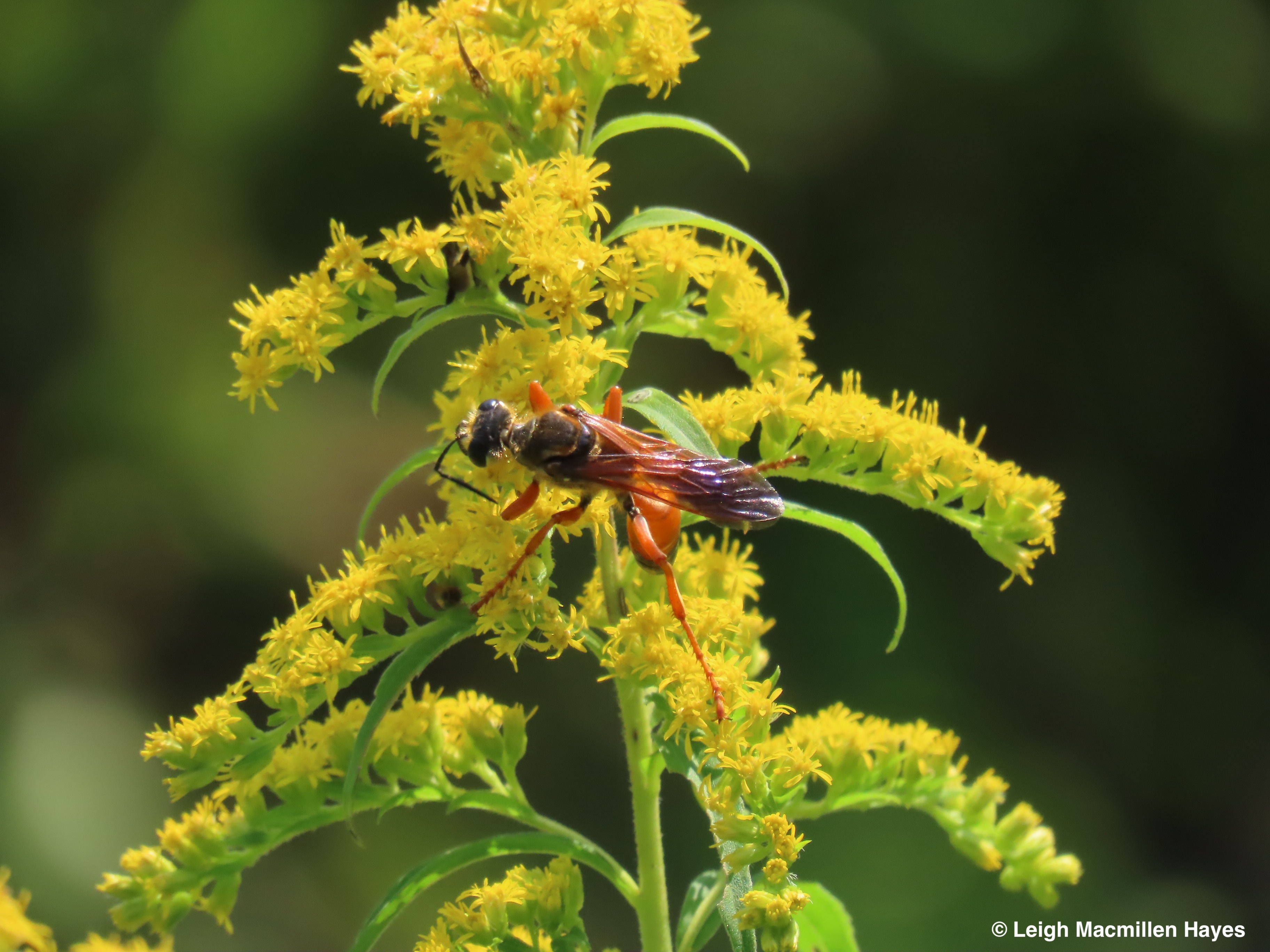
Even a Great Golden Digger Wasp partook in some of the nectaring collection.

But . . . there was something else I wanted to see. And I suspected that if I really looked, I might have success.

Bingo. It was the white packages at the outer edge of the web that led me to the creator. Charlotte.

I had a feeling Charlotte would be writing messages somewhere in the field.

And indeed she was. Years ago, when I didn’t dare walk into the field because of ticks, I wrote a children’s story about kids coming upon these large Black and Yellow Garden Spiders as they ran through Goldenrod flowers. Of course, that was about 28 years ago and I was starring out the window at the same field I can now walk in.

And because I can now do so, I found Charlotte 2 . . .

And Charlotte 3 who was preparing a meal for later. It looked to be a grasshopper of choice. If I spotted three, can you imagine how many more spiders there are out there?

In my story, if I recall correctly, the young boy character was afraid to run through the field and the young girl tried to give him some facts about Black and Yellow Garden Spiders because she wanted to become an entomologist. I should pull it out of the filing cabinet and reread it, but it’s not one for publication. It was just fun to write.

The reason I can go into the field now is thanks to my neighbors, Karen and Bill. He has mowed a circular trail so she can walk her dogs, and I love it because I can walk my thoughts. It’s a place where I can meet old friends and learn from them, and make new acquaintances.

And right now it’s a place where I can celebrate my new sight thanks to the medical team that performed cataract surgery on both of my eyes over the past two week. Until all of this happened, I had no idea how much I’ve been missing (think road signs and car blinkers for starters–never mind all the little things in nature that I love to spy).

I’m forever grateful for this new field of vision, the nurses and techs and Dr. France of Eyecare Medical Group physically for me, and my neighbors who carved this path as a way to save all those critters, who like me, call this place home. Of course, many of the critters are also a source of pollination for their vegetable gardens.

But I’ve saved the best for last. For I spotted one more critter in the field, and when I got home, it was on the Hydrangea.

This is a White M Hairstreak Butterfly. Do you see the M marking just below the orange on its hindwing? This is a RARE sighting! To be sure of ID, I grabbed Butterflies of Maine and the Canadian Maritime Provinces by Phillip G. deMaynadier, John Klymko, Ronald G. Butler, W. Herbert Wilson, Jr, and John V. Calhoun from the shelf in our study. And there it was: “Status and distribution in Maine: Probably a rare colonist.” Of the five authors, I’ve worked with Ron Butler in the past, so I reached out to him.

After I finally attached the photo (he had to remind me that I had neglected to do that), Ron sent this response:

“Hi Leigh,

Definitely!  And the furthest inland record to date.  Do you post your observations to iNaturalist? If not, can you send me the date and lat-long (or location on a map – I can get the lat-long) for this record?

Thanks – Ron”

According to the comments section in their book, “The White M Hairstreak is an expected and welcome addition to our region’s fauna, with the first adult observation in Falmouth by Doug Hitchcox on 24 July 2018, followed by two more records in 2018 from Rockport (Brian Willson) and Eliot (Bryan Pfeiffer and Josh Lincoln). A female was also recorded from Eliot on 5 August 2020 (John Calhoun), making this the first known repeat occurrence at a Maine locality.

I am in great company. Of course, I’m already anticipating the next edition of the book–haha.

I thank you again, Karen and Bill, for giving me the opportunity to explore the field and to my medical team for making sure my vision is crisp and clear.

Field of Vision indeed!

My Neighborhood Grocer

This week may have changed my mind about grocery shopping. I’ve always felt like it was a bit of a drag. We spend way too much money as we tromp up and down the aisles, and really, if I could just get away with living on popcorn, life would be grand. Brown popcorn for meat, green and orange for fruits and veggies, yellow for cheese, and of course, butter . . . you get the picture.

Plus there’s the fact that we live in a tourist town in the western part of a tourist state. So summertime at the grocery store means a full parking lot, lots of people not sure of their way around, nary a smile exchanged, and certainly very little gossip shared in the middle of the aisle with townspeople we haven’t caught up with in a while.

But, today changed all of that.

For today, I realized that visiting the grocery store is a bit like entering a secret garden with a keen eye.

It’s a place where I might not always choose the same offerings as others, but that’s okay, because in this place we can each find what appeals to us and hover like a hummer.

I discovered a Nectar Smoothie Bar had been added. So many love the new addition and visited it repeatedly on the fly.

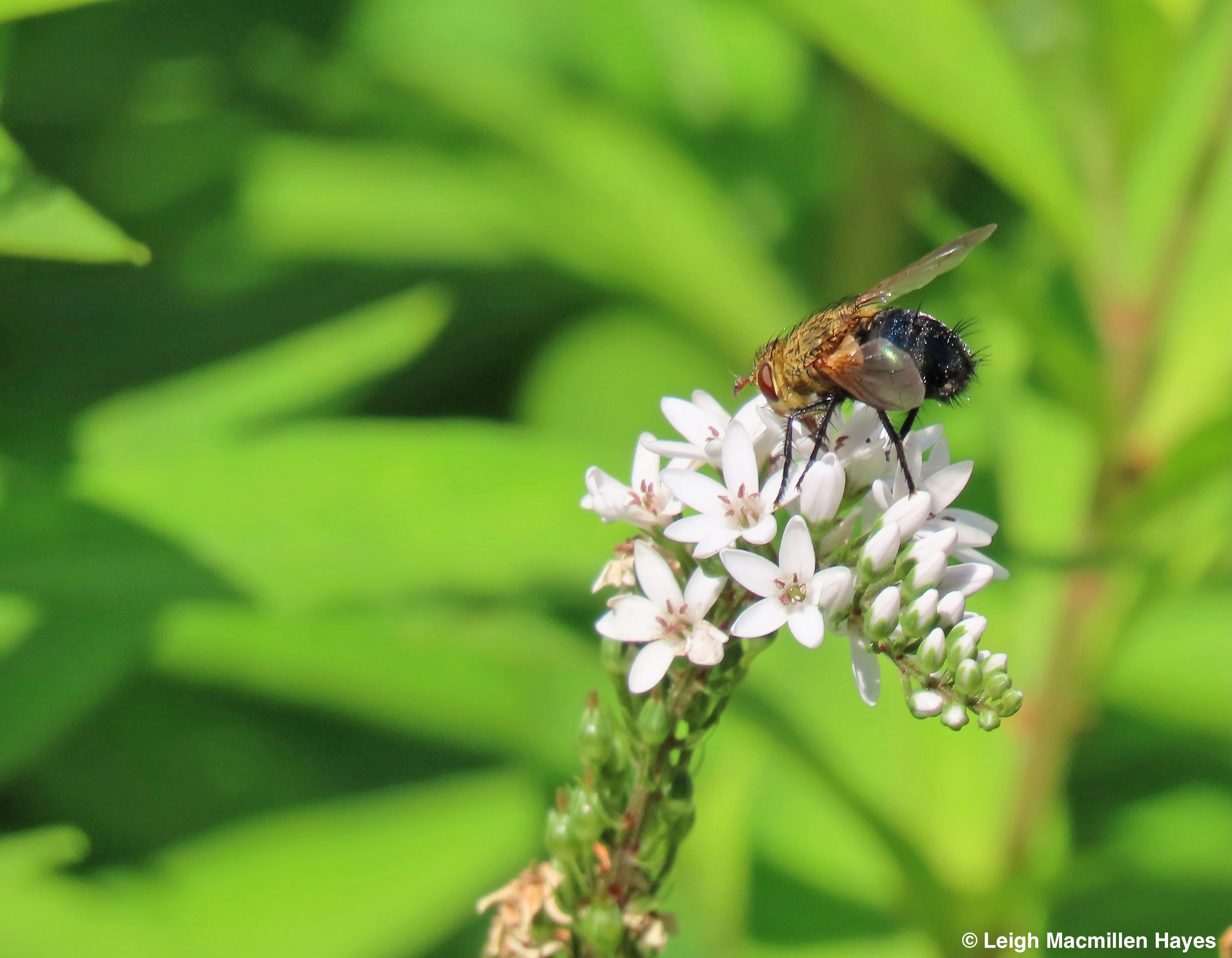
Another good thing is that most who entered, like the Tachinid Fly, brought their own straws so there was no waste.

Even the Great Golden Digger Wasp got into the frenzied sip on the move once the store manager announced a taste testing.

I’m pretty sure the word went out to all Northern Crescent Butterflies to stop by for they really did pack the place.

Pearl Crescent Butterflies also cruised the aisles.

And sometimes they were in the same place at the same time, neighbors greeting neighbors after all.

Every Gold-marked Thread-waisted Wasp seemed to want a quick energy drink.

And then there were those like the female Widow Skimmer Dragonfly who came to watch. By the coloring of her wings, I think a better common name for her would have been Sunglass Skimmer. Certainly, she might have had an easier chance of meeting a date in aisle five, rather than just hanging out along the edge of the store.

Unfortunately, there were a few uncouth customers such as this Robber Fly, who snagged a meal without paying.

The Robber Fly wasn’t the only one. A spider hiding under a bouquet managed to lure an American Lady Butterfly and then he did what spiders do and stunned her. The EMTs where called in and though they could get her out of the web, they couldn’t save her. So, her body is being donated to science and will be added to a bug collection of a young boy I recently met.

I chuckled at the bedraggled look of this Bumblebee, who didn’t realize the misters would come on in the produce section.

Though there are plenty of Japanese Beetles who seem to shop constantly, so far, I only meet one Oriental Beetle, and I do have to say I was rather taken by its fan-shaped antennae.

As is usual, there’s always a slow slug in the way, especially at the check-out. Why is that?

Not all shoppers stood out, such as this Green Lacewing who appeared to be hiding. Perhaps to avoid the misters that had pummeled the Bumblebee.

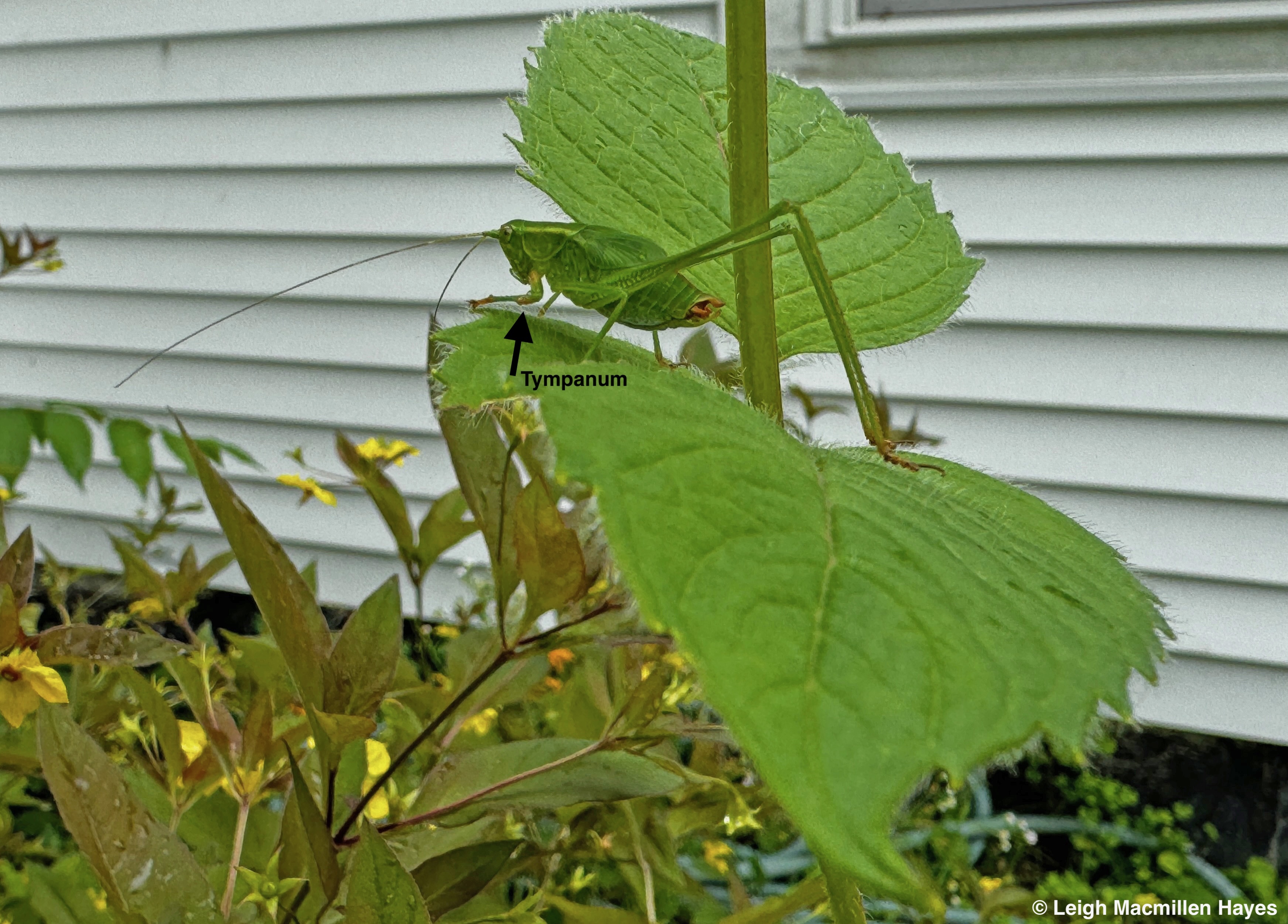
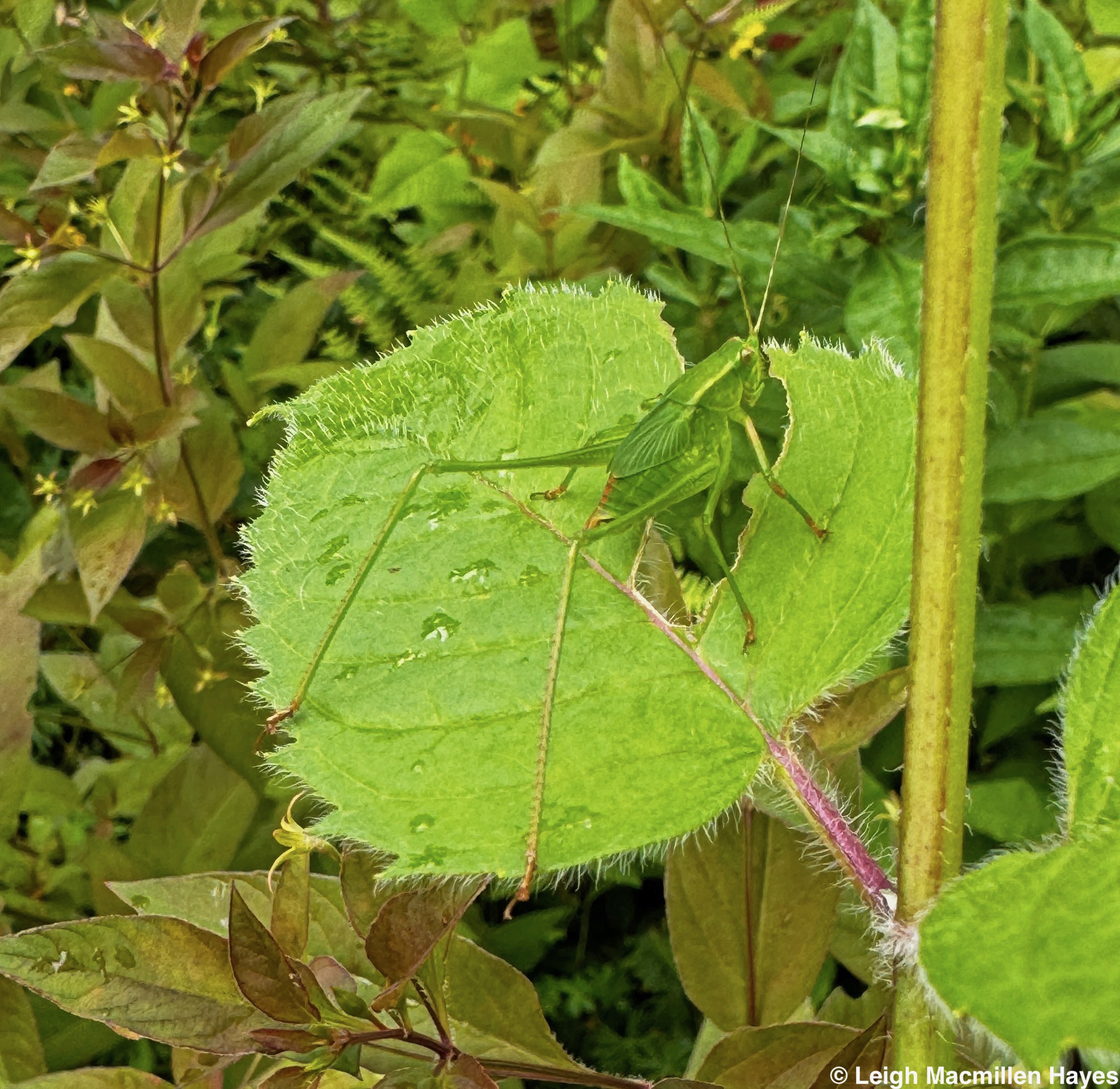
It does seem there’s always a celebrity or two in our midst during these summer days. Sometimes, it’s someone like Stephen King or Lois Lowry. But today it was Katydid. And she was listening–through the “ear” or tympanum located just below the “knee” of her front leg.

Do you see the tympanum on her right side? Do you think she heard that there was a spill in aisle 4?

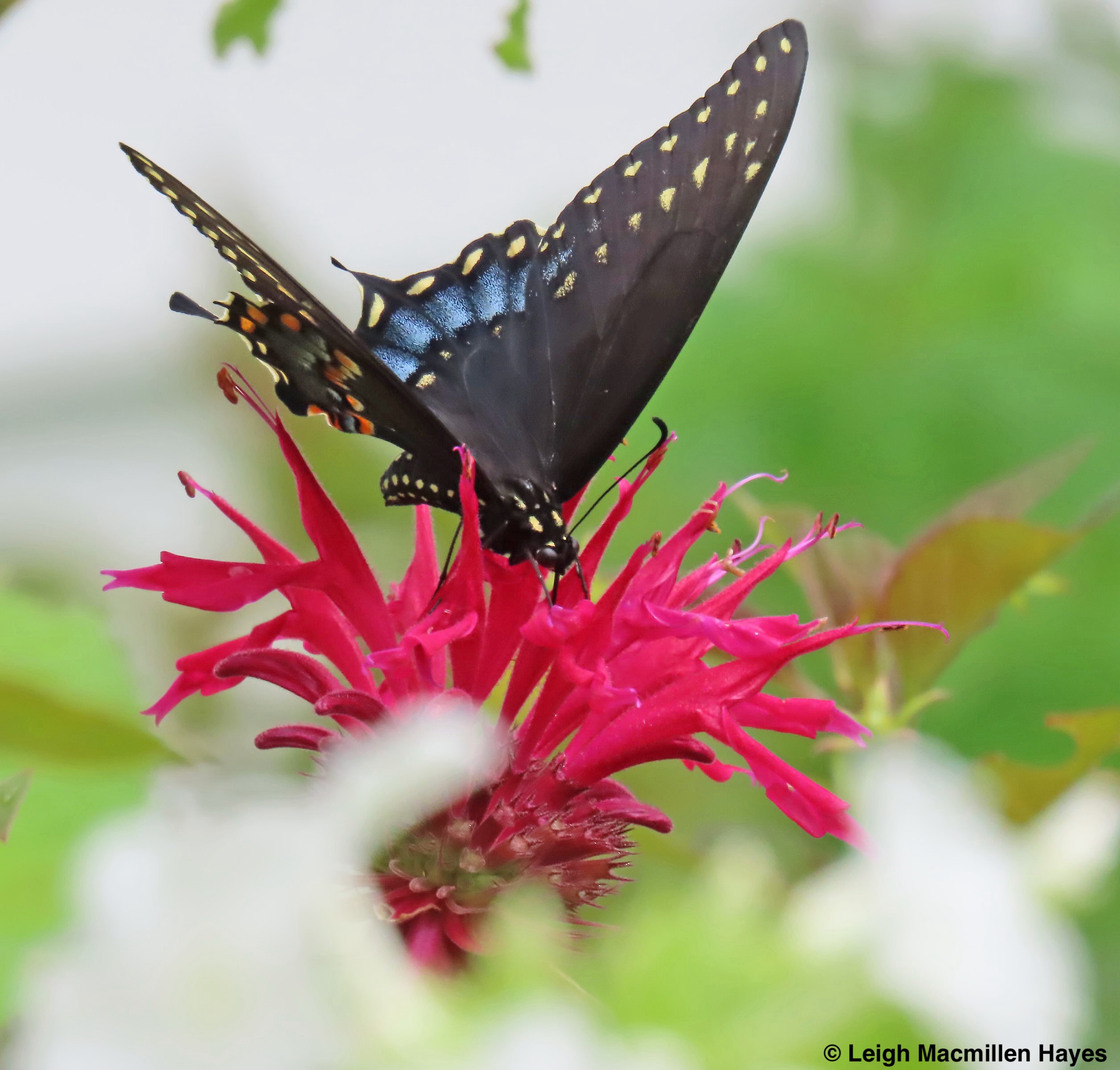
The Black Swallowtail Butterfly certainly heard and in she fluttered to sip up the nectar before it spoiled.

Oh boy. The Gold-marked Thread-waisted Wasps seemed to find each other in aisle 7 and for all I know they may still be canoodling behind the bakery.

So you see, grocery shopping isn’t all errands and drudgery. Note to self: Think of it instead like a visit to the candy store. Stop and sample along the way. Smell the Phlox. And remember, the store is committed to providing customers like you and me outstanding value for quality products at every day low prices. Right?!

I hope you’ll visit my neighborhood grocer often and enjoy the experience.

Man & Nature: Why Can’t We All Work Together?

I absolutely love it when the unexpected occurs and nature takes me by surprise and provides me with jaw-dropping opportunities. So here’s the thing. What is unexpected to me is an every day or every year occurrence in the natural world. It’s just that on that one day I happened to be in, as the saying goes, “the right place at the right time.”

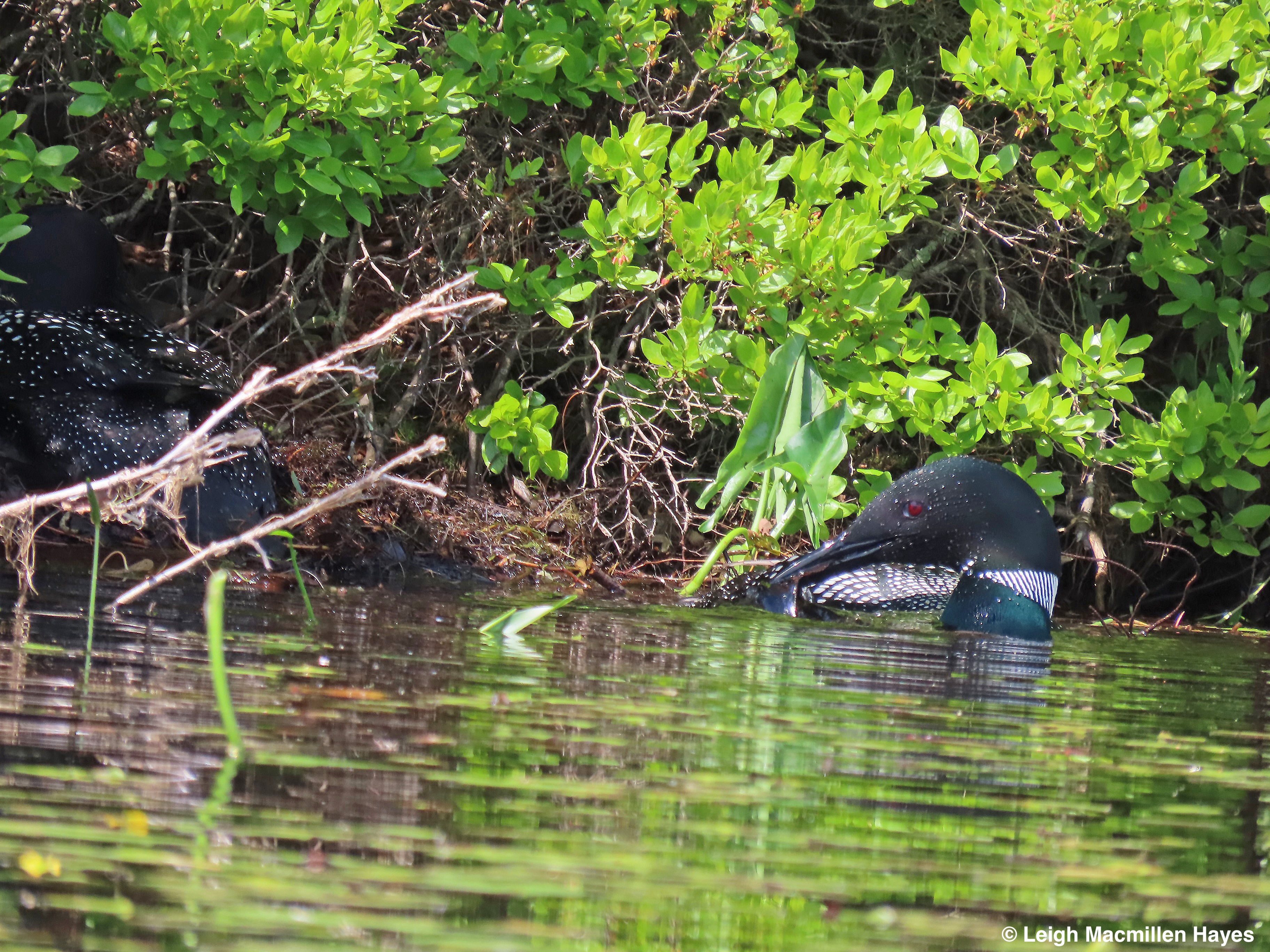
And so it was that during June I paddled between two islands and slight movement caught my eye. Mind you, I was a telescopic camera lens away from the action and so what may appear close, wasn’t. I’d unexpectedly happened upon two loons. Okay, so the truth be told, My Guy was the first to witness them. He pointed in their direction and then the two of us sat in our kayaks and watched.

This was a first for both of us. To observe as one loon pulled nesting material from the pond . . .

and dipped to gather more . . .

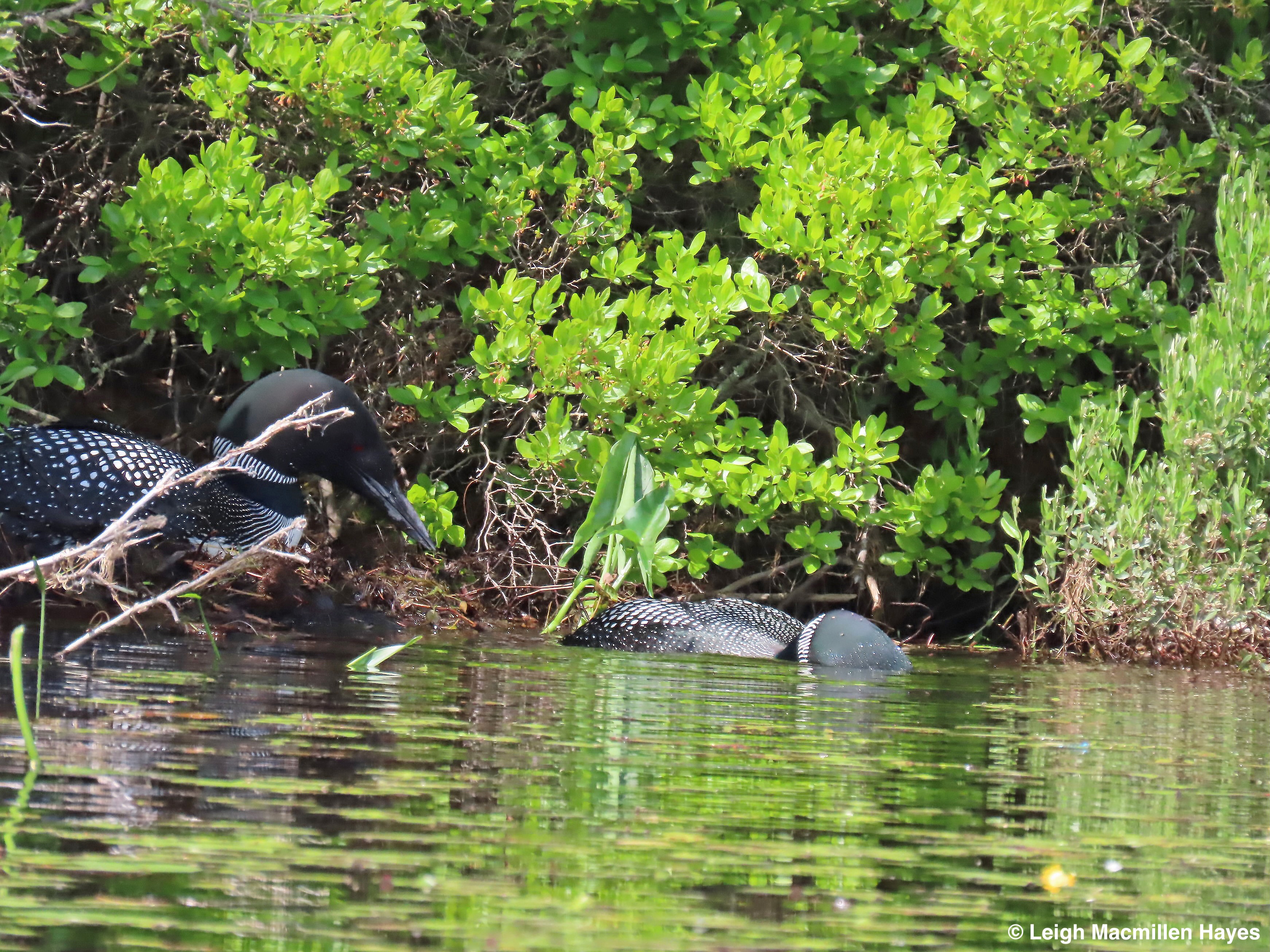
and carefully “handed” or rather beaked it over to the other . . .

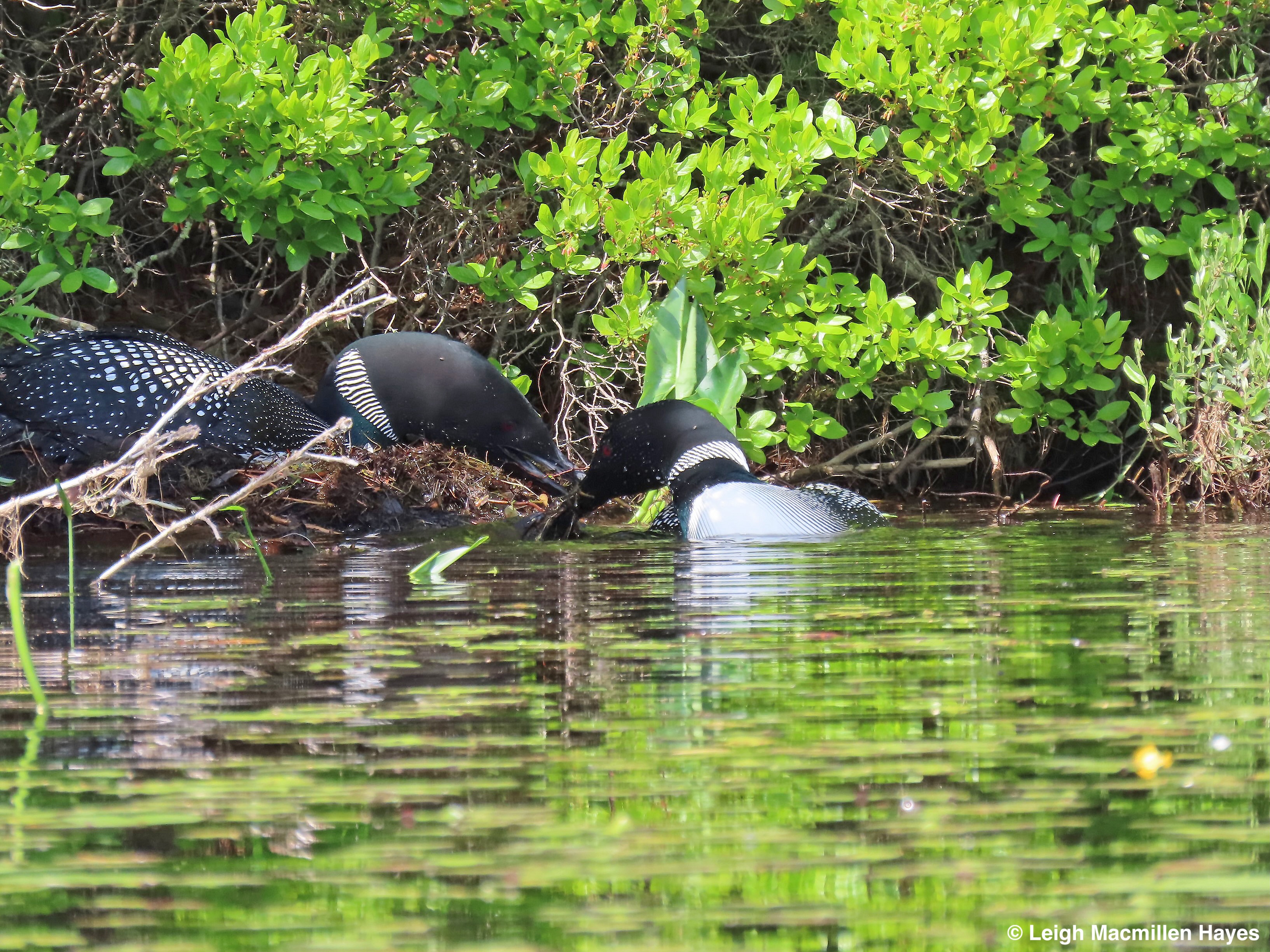
who, in turn, received it . . .

and added it to the nest.

And so the nest building continued, but we’d seen enough and knew we needed to paddle away and leave them to their business.

A couple of weeks later, as My Guy explored the pond’s perimeter, I took a few moments to check on the nest and much to my delight, found a loon sitting on it. Notice its open mouth? I say “its” because I don’t know if this is the male or female and do know that they take turns incubating the eggs.

Notice how the loon’s mouth is open. Much like a dog pants to cool down, so do loons. According to National Audubon, “When it’s hot, some species will resort to gular fluttering. The bird will open its mouth and “flutter” its neck muscles, promoting heat loss (think of it as the avian version of panting).”

I’ve seen the same behavior in other birds, including Great Blue Herons.

It’s been an extremely hot summer, even here in the north country. In fact, the water temperature of our local ponds and lakes is way too high. It should be in the 70˚s, but instead is in the 80˚s and not at all refreshing for us, so I can only imagine the adverse effects it is having on flora and fauna.

The day after a pond association meeting this past weekend, My Guy and I hit the water again. While I was drifting for a while, numerous insects sought my boat as a landing spot. And then, this Scarlet Bluet landed, plastering a meal to the side of the boat.

It was a mighty big and juicy looking meal for this little damselfly to consume. He (his female counterpart is yellowish where he is so scarlety orange) dined for at least twenty minutes as I watched, and then I think it was more than he could handle, and off he flew, leaving the remains for me. I was starting to get hungry, but . . . not that hungry.

Once he departed, I made my way back toward the loon nest. As I suspected, it was empty. Usually, the local loon chicks hatch around the fourth of July (never a good mix with fireworks–think about noise, oh, and added pollution to the pond water).

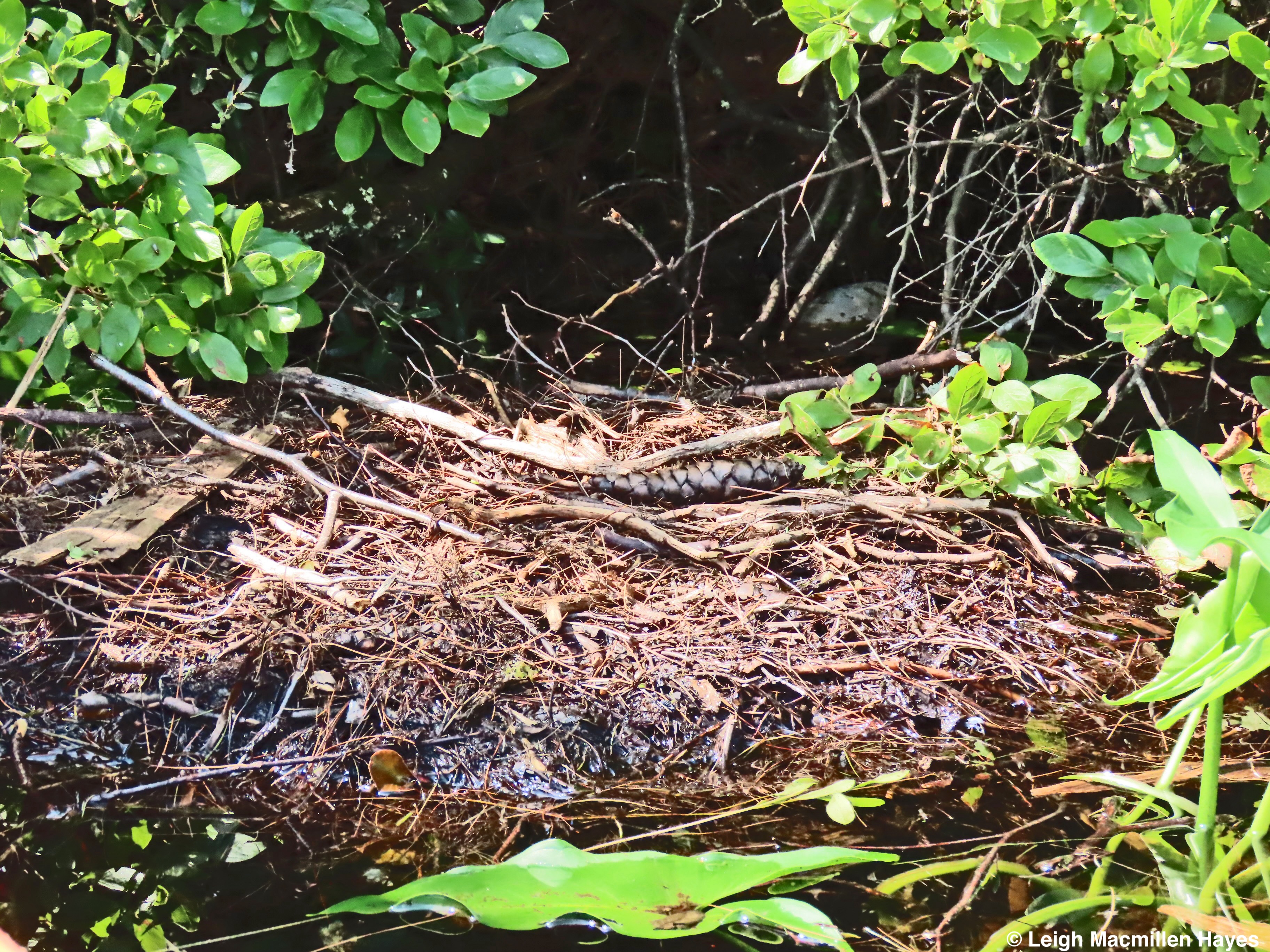
BUT . . . then I took a closer look and this time I did get close because it was empty. Here’s the thing. About two weeks ago we had a major storm that didn’t last long, but deposited a lot of water. That seems to be the pattern of late. And I’d learned at the association meeting that the dam which controls the water level for this particular pond hasn’t been opened as much as usual and some people have water either directly under their docks or just over them. Ours is a floating dock, so it’s not an issue for us.

All that said, I spotted water behind the nest. And something in the water behind the nest.

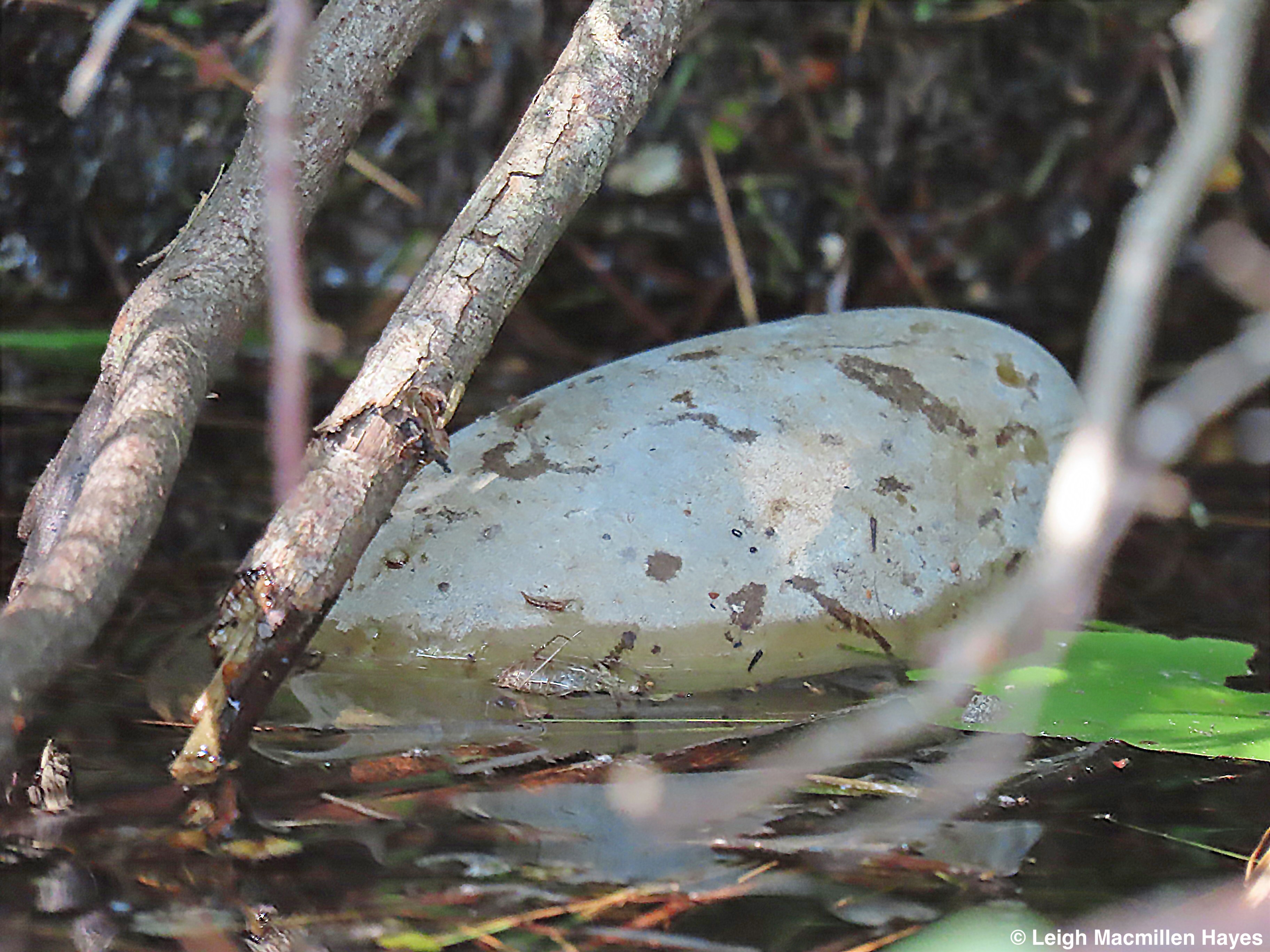
A loon egg. That could probably mean that during that storm a couple of weeks ago, the nest was swamped, the adult abandoned it, and the egg floated off. It was a sad realization. I had to remind myself that nature happens.

In this case, it happened twice, for as I looked about, I saw a second egg off to the right of the nest.

Two loon parents who worked side by side to create a home.

Two loon chicks who never had the opportunity of life.

A dam that is controlled by a local government, and has a new dam tenderer, but it is also controlled by another entity father downstream, in the form of a hydroelectric power plant.

I shouldn’t blame them. I know that things don’t always work out the way we think they should. But still.

Man versus Nature; Nature versus Nature. Why can’t we all work together?

The Summer That Is

I was afraid this would be the summer that wasn’t. In the gardens, that is. Oh, and I use the word “garden” loosely, as mine are more a hodgepodge of flowers and ferns and herbs. But they are meant to be a safe haven as well, for birds and bees and even voles. And yes, woodchucks and porcupines.

Anyway, for a few weeks, as I walked about our property, it seemed there was hardly an insect visiting any of the early flowers–except maybe the Black Flies and Mosquitoes, and even they weren’t abundant this year. Gnats. Now that’s another story.

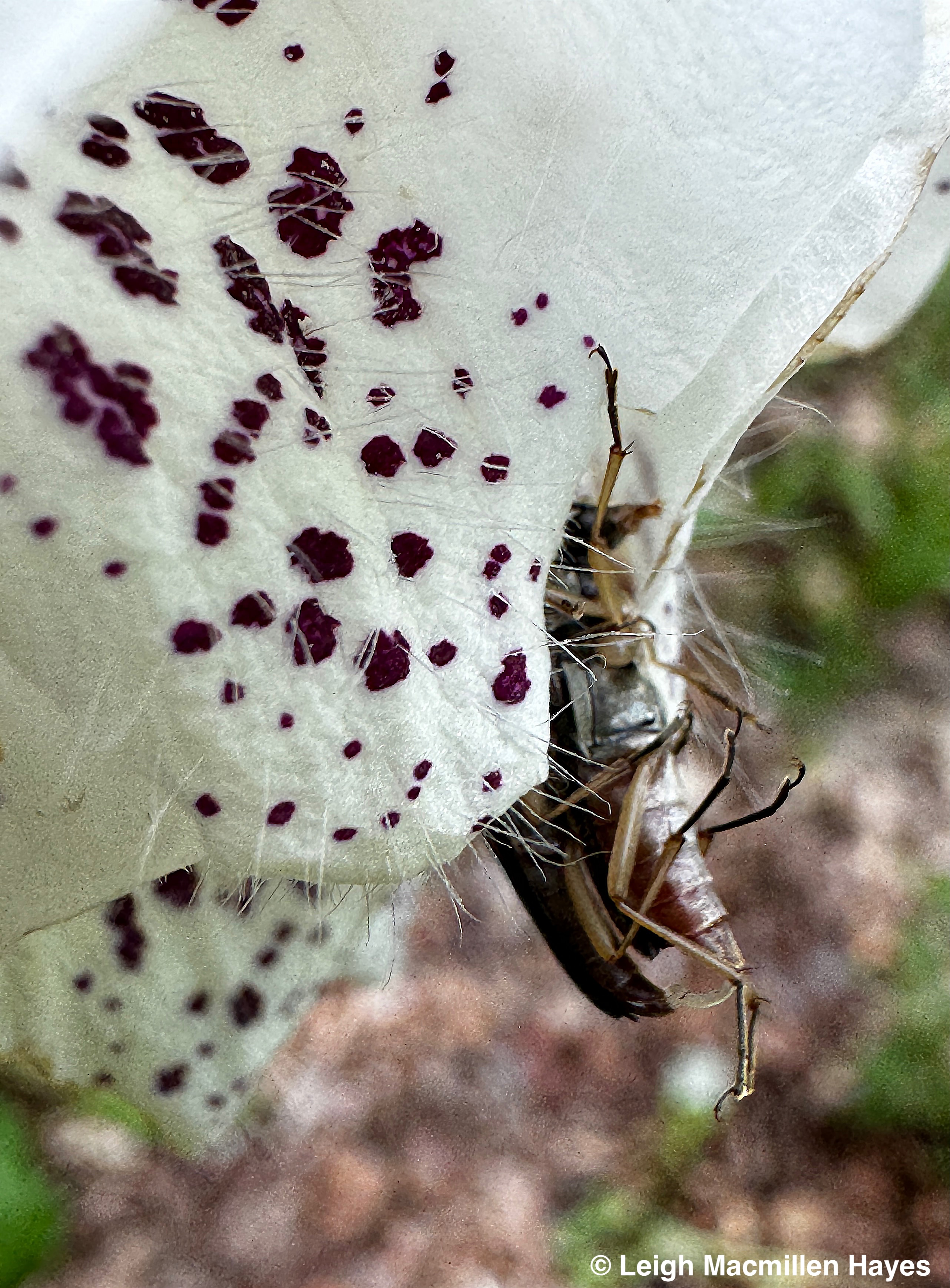
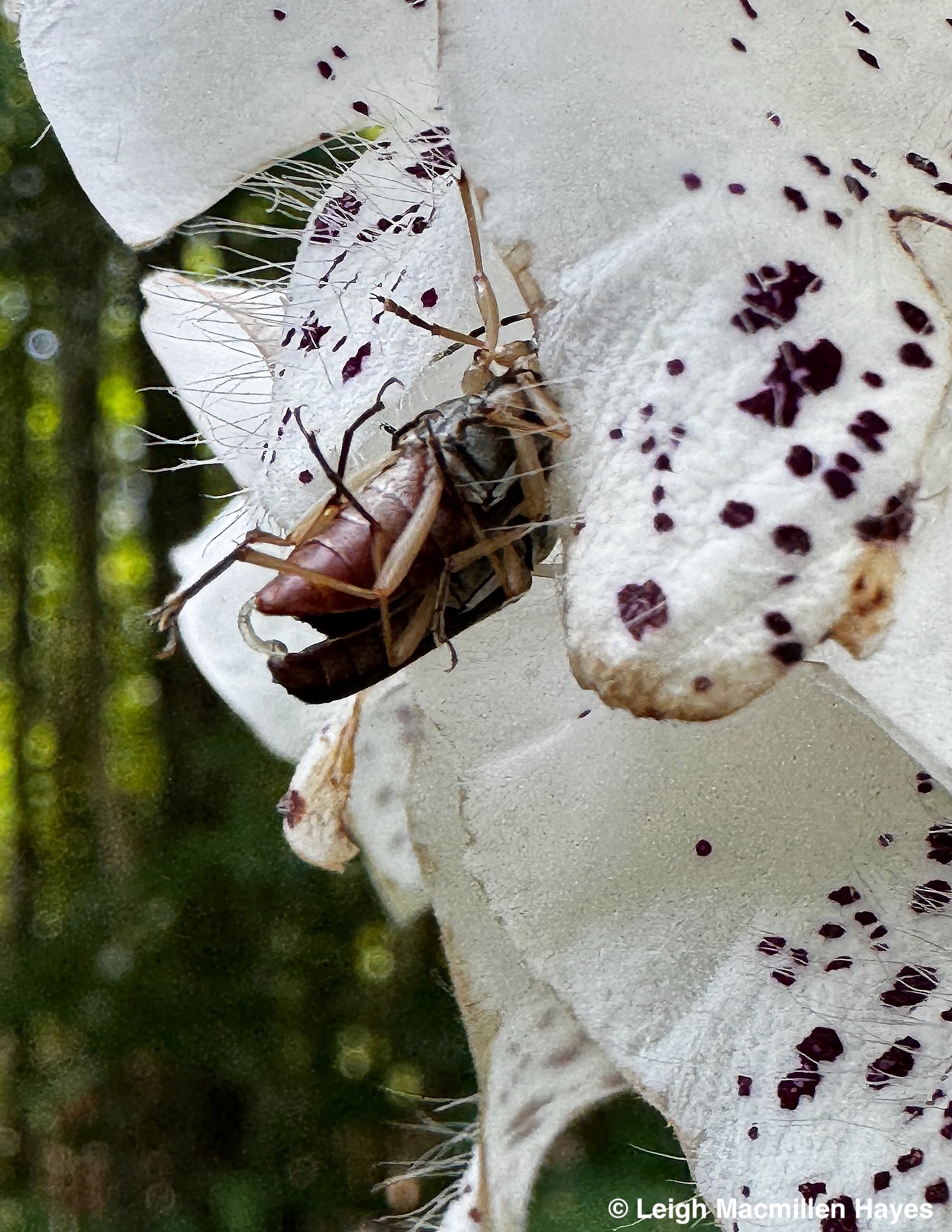
And then the other day I noticed an Ant scurrying across the Foxgloves where two Long-horned Flower Beetles were in full embrace.

Not only did I have insects to watch, but canoodlers at that. With what looked like a dozen legs in the mix. Ahem. Cuze there were, each insect sporting three pairs on the thorax.

These two had nothing to hide and so I watched until eventually they split up and went their separate ways. I only wish I knew where she laid her eggs.

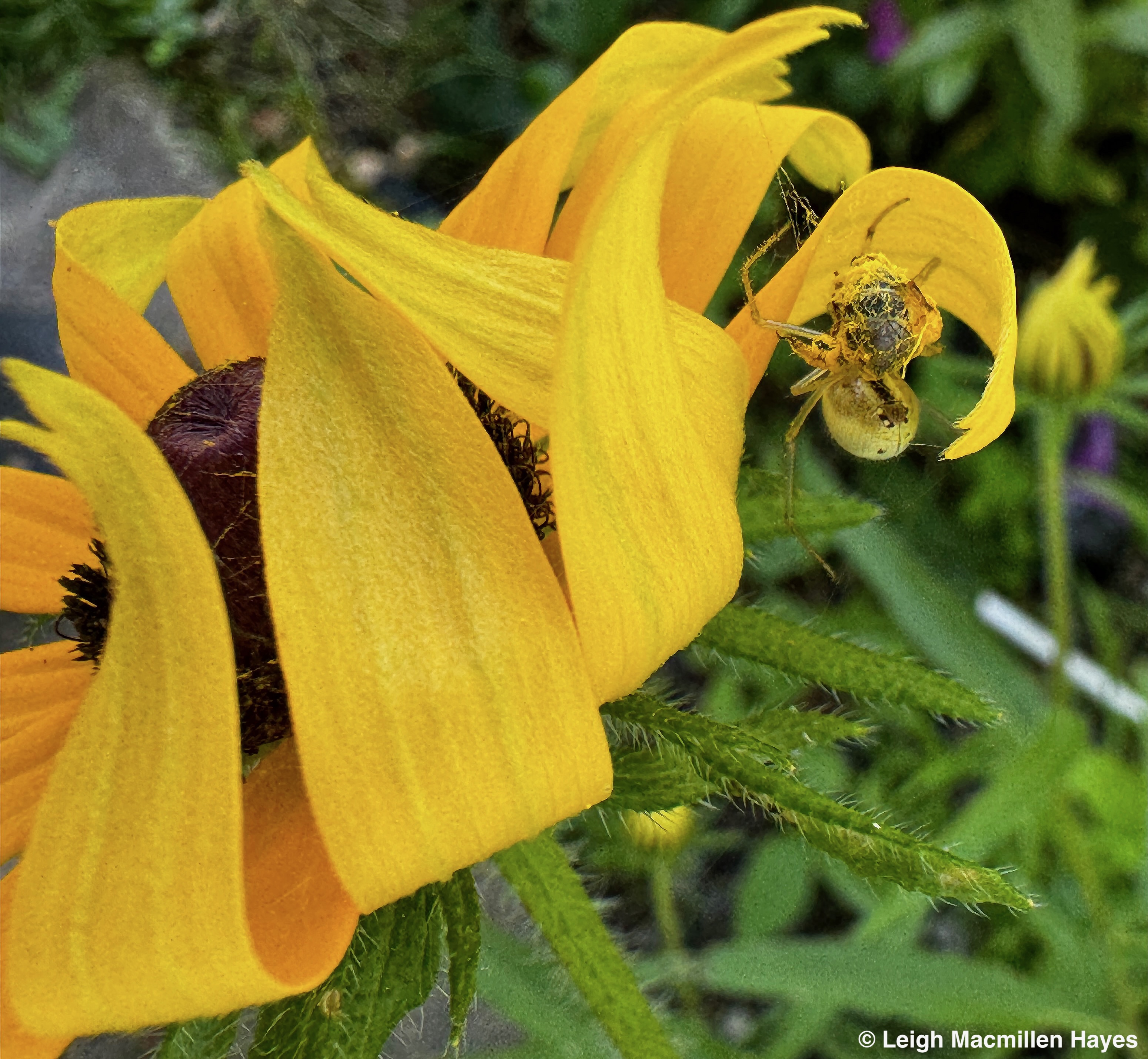
On the edge of another homespun garden, I spotted a Common Candy-striped Spider with a meal sac all packed up, the meal being a bee that seemed like it was probably much larger than the spider. But the spider didn’t care. Meanwhile there was another bee seeking nectar and I worried about its future.

And then Candy-striped started toward the live bee and I worried even more.

As you get a closer look at C-s, you may question the name. I did. My research turned up the fact that this egg-shaped arachnid can have an abdomen of varying colors from white to cream to green, and maybe even red. As for the stripes, there are those with broad or v-shaped stripes, but also my friend, who sports rows of dark spots.

The second bee flew off before being snagged, but if you look closely, you’ll see that C-s’s web is a tangle of threads and it had probably pulled down the flower petals to create a good hiding spot from which to snag its dinner.

As for that meal, it needed to be wrapped again . . .

and again, in an act to immobilize the prey and store it for a later meal. Kinda like a doggy-bag, of sorts.

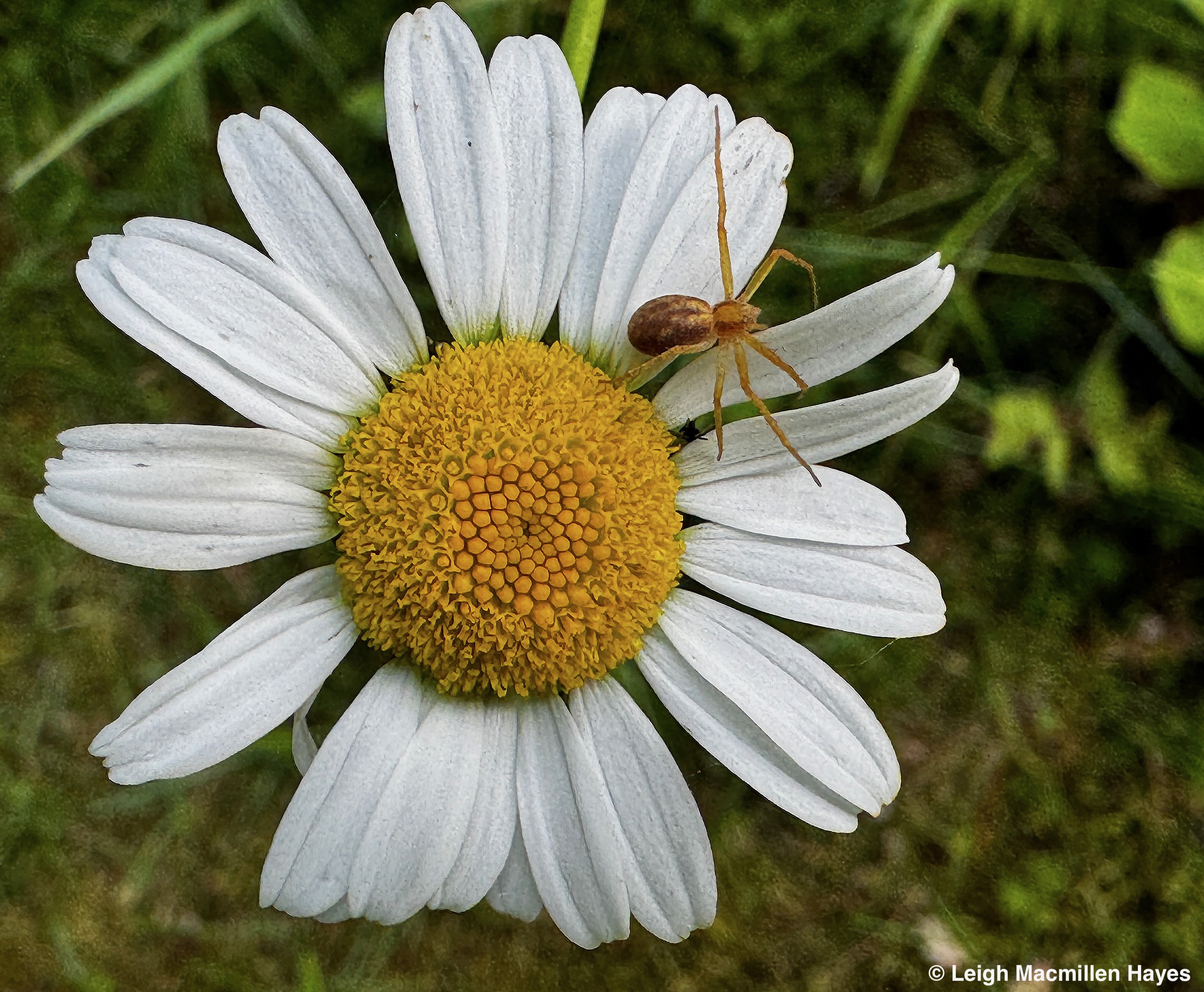
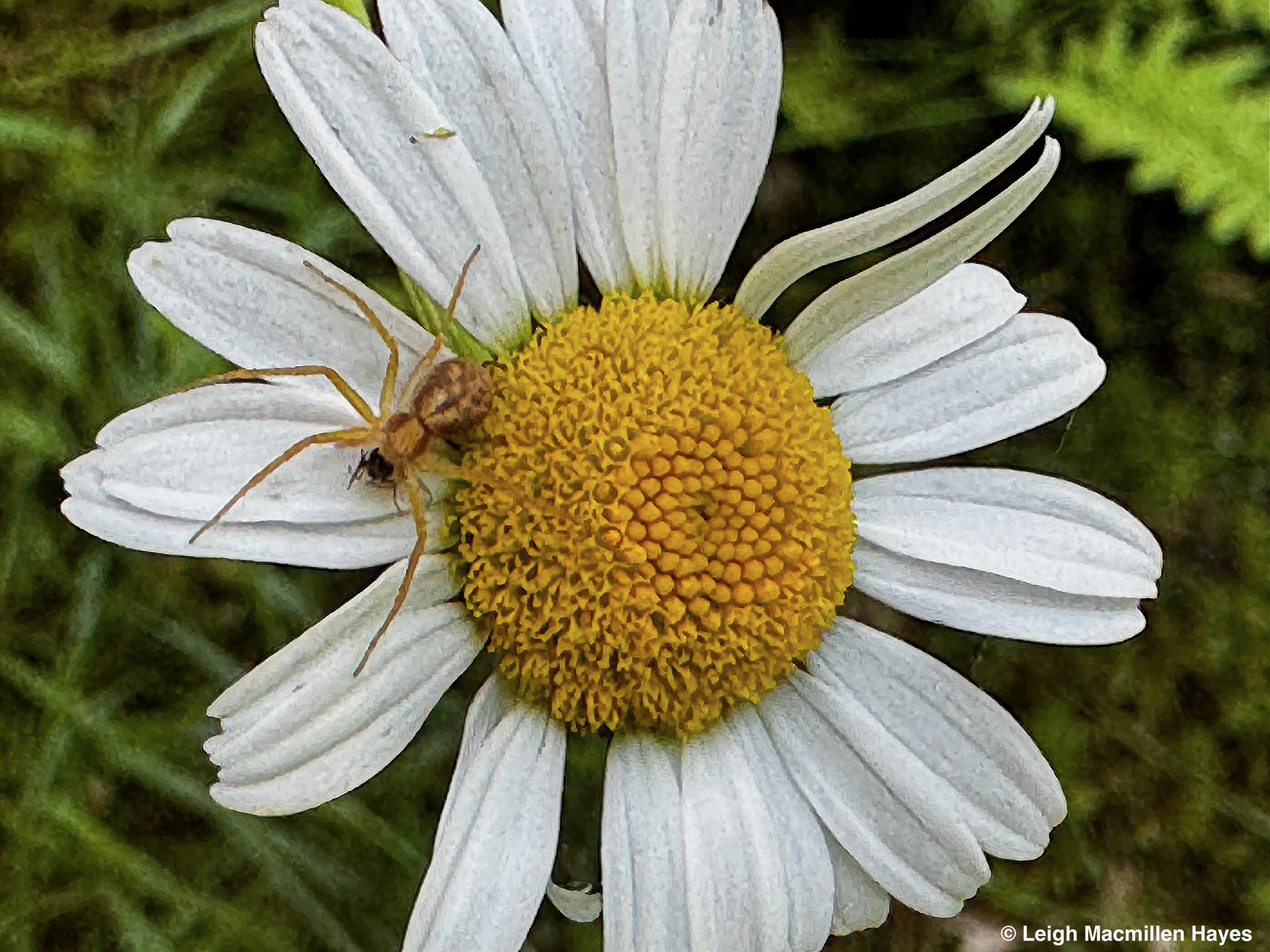
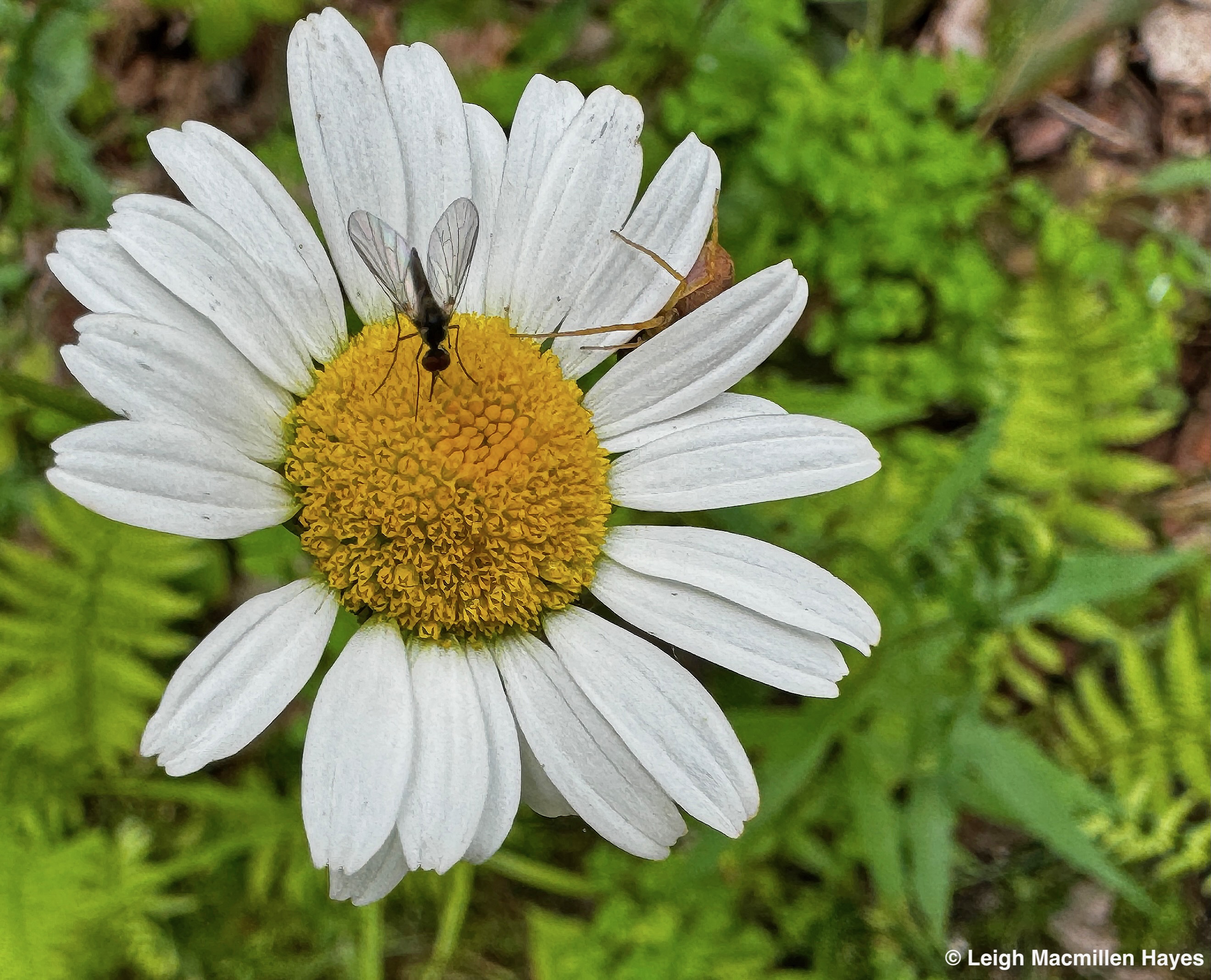
Back in the first garden, I found a Crab Spider hanging out on a daisy.

And then watched as it turned and pounced, yes literally pounced, on a tiny Gnat-sized fly. Rather than wrapping this tiny source of protein, the spider grabbed and bit it in ambush style.

In my own garden-visitation style, I circled and circled and moved on to another and then returned to circle some more. For several days on end.

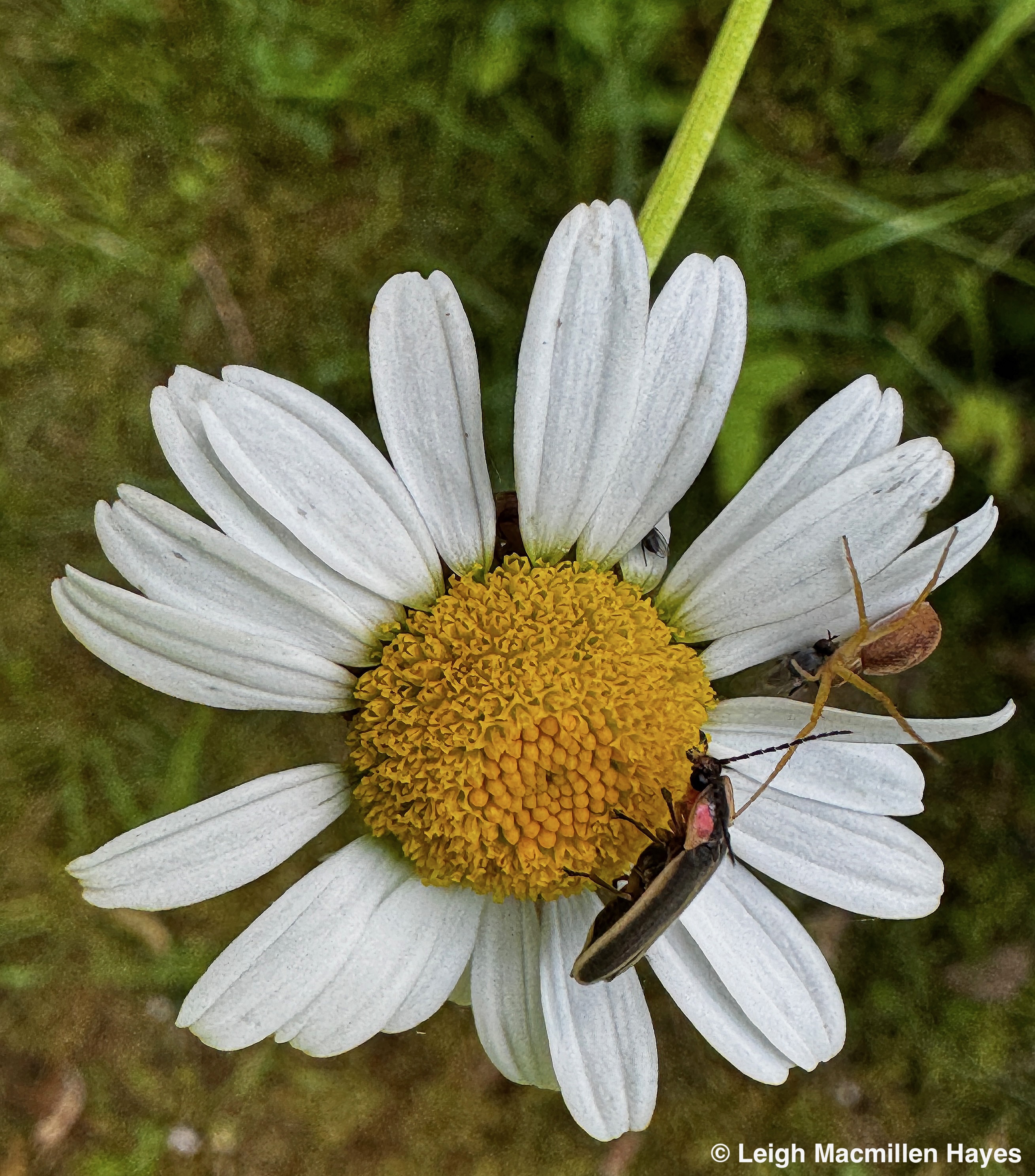
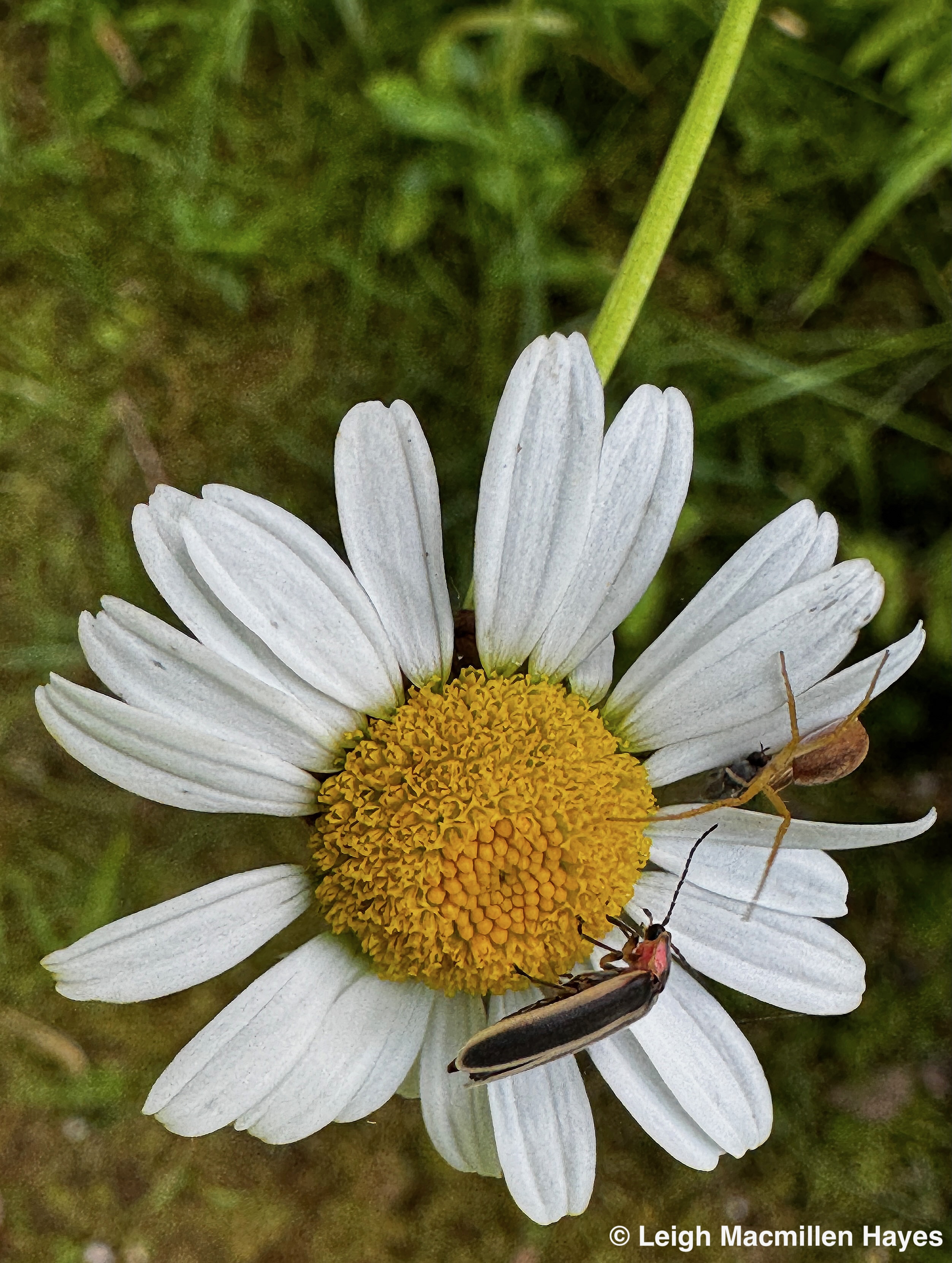
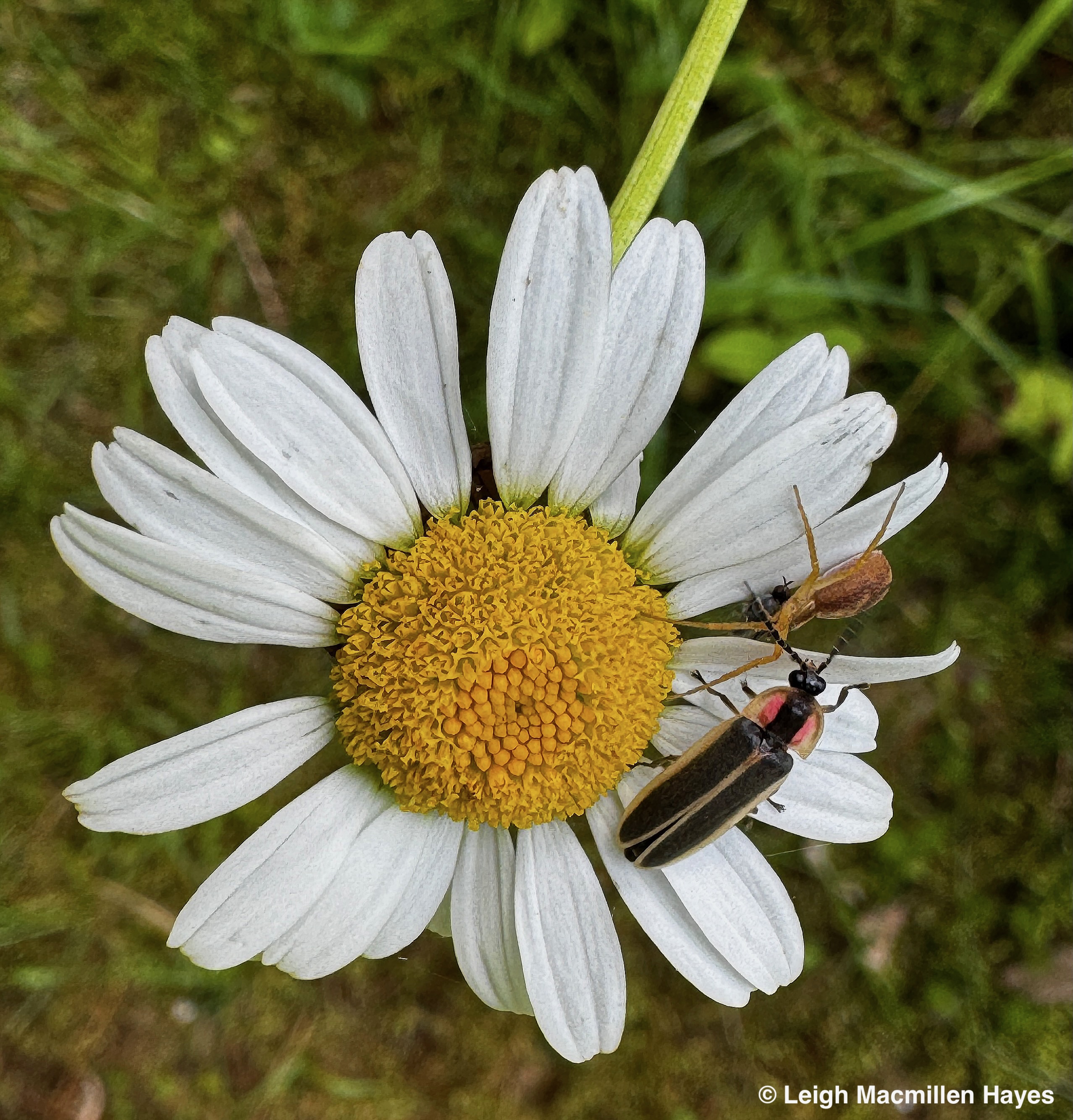
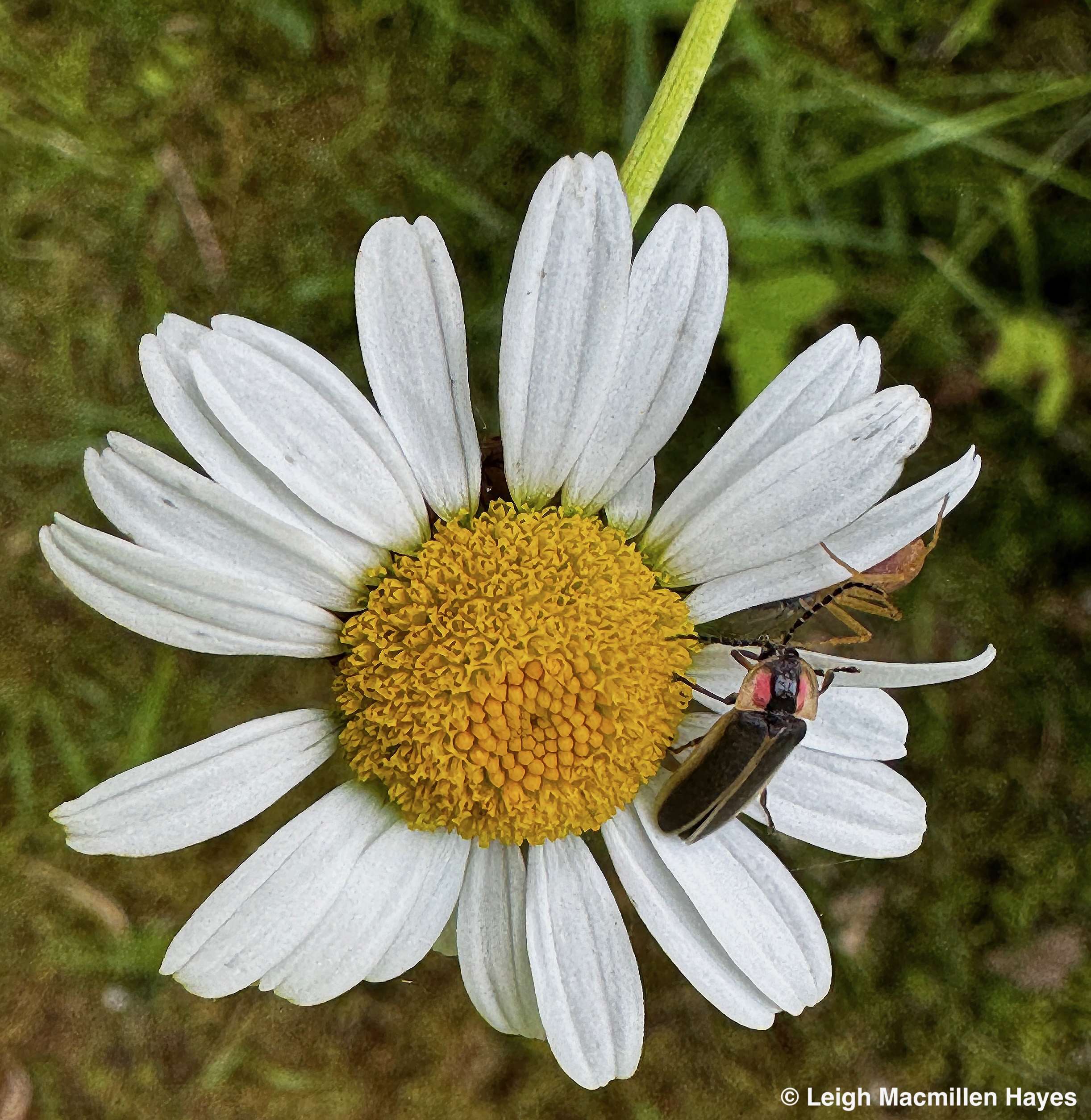
And with each circle, there was so much more to discover, like this Firefly visiting the same daisy where the same Crab Spider waited.

I must interrupt the garden saga here to say that every night of late, we have enjoyed the Firefly Show, an event that has been missing or greatly diminished in the past, but now has ramped up almost to the point of my childhood memories. Almost.

I could say that as I watched the insect and spider played a game, but it was hardly a game at all. Notice how the spider tapped the Firefly.

A brief retreat with the spider appearing to stay still (a skilled hunting technique), while the Firefly continued to probe.

And then the Firefly advanced. I wasn’t sure I could watch what would happen next for I knew how quickly the spider could pounce. Yet, I did. Watch that is.

And I’m so glad I did, for what I observed was the spider retreating. Was the Firefly too big for the spider? Or was there another reason to avoid capturing what I thought looked like a fine and chunky meal? Whatever the reason, I was happy to see that the Firefly didn’t meet its demise.

The last I saw of these two before the Firefly flew–the spider went back into hiding and the Firefly moved to the opposite side. I knew relief in my human form, but had no idea again of the answer to why.

Meanwhile, back at C-s’s hamper, I couldn’t find C-s, but did find the remains of another meal consumed. It continued to amaze me how C-s didn’t care about the size of its prey, while the Crab Spider seemed to have a preference for smaller meals.

On day 3 or 4, I found the Crab Spider in its usual spot as a Flower Fly with a strong proboscis sipped nectar.

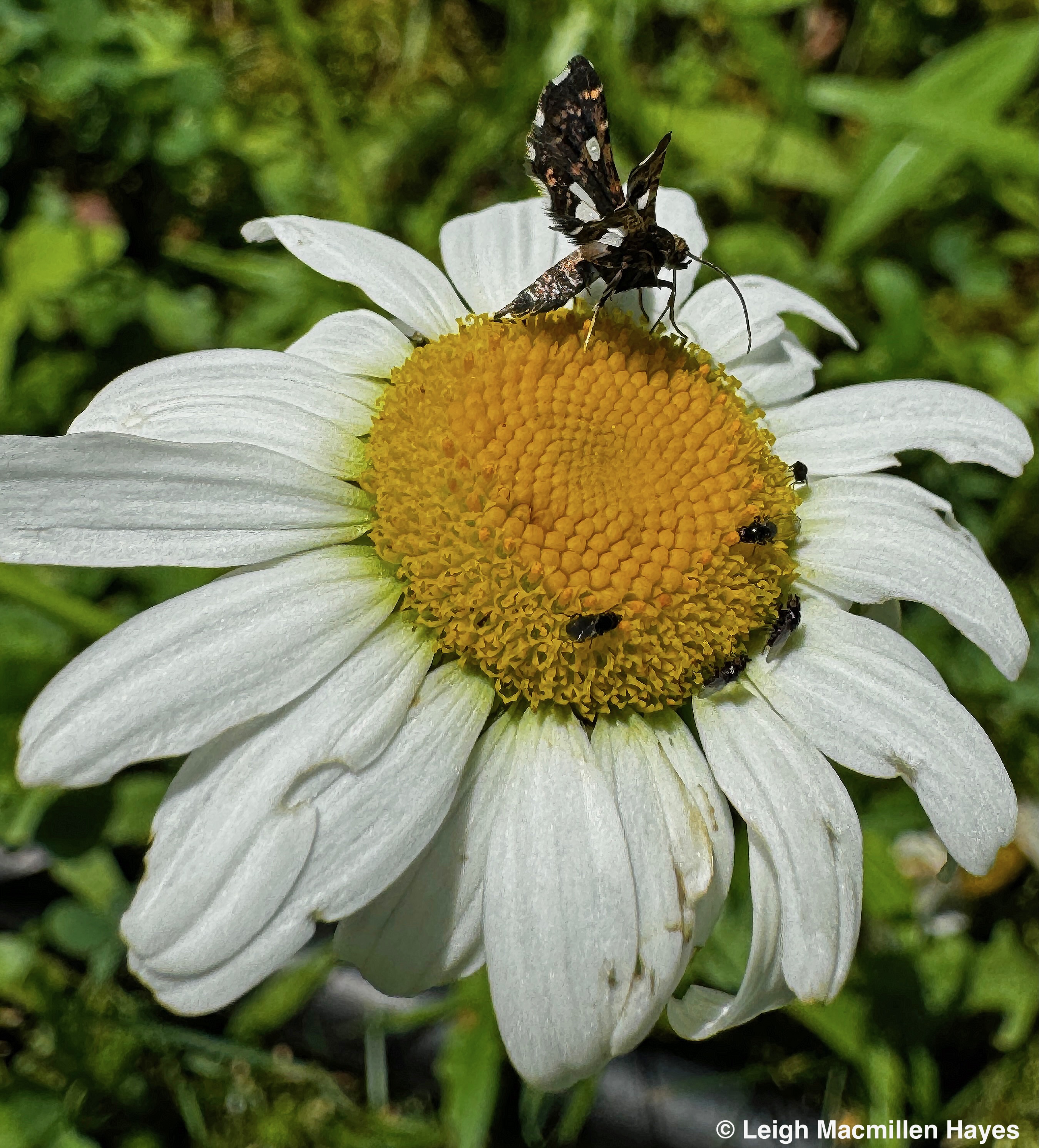
And on a flower about two inches away, an exquisite Spotted Thyris Moth, and a few Gnat-like flies feasted. I kept waiting for them to visit the Crab, but perhaps they sensed its presence. I’ll never know, but while I watched, they stayed on this flowerhead.

On another, a bee gathered not just the nectar that so many of the insects seemed to seek, but filled the sacs on its legs with pollen as well. Lots of pollen. It actually looked like two pollen sacs per leg to me.

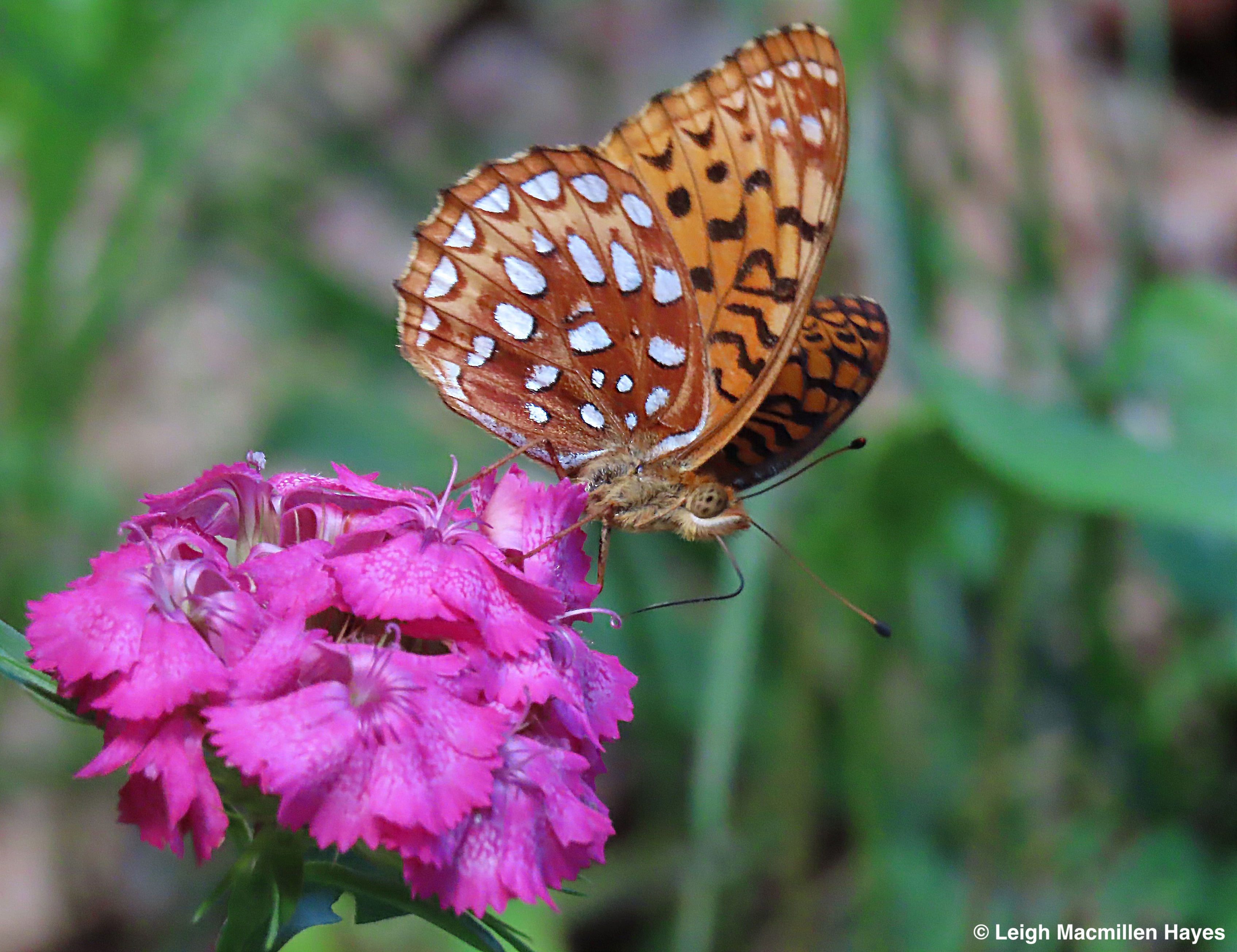
In the midst of it all, other insects flittered and fluttered over the flowerheads, sometimes pausing to seek nectar like most of the others. This Fritillary Butterfly is one of many that took advantage of the gardens as well as the clover growing in the yard.

Sweet William seemed to be a favorite landing spot.

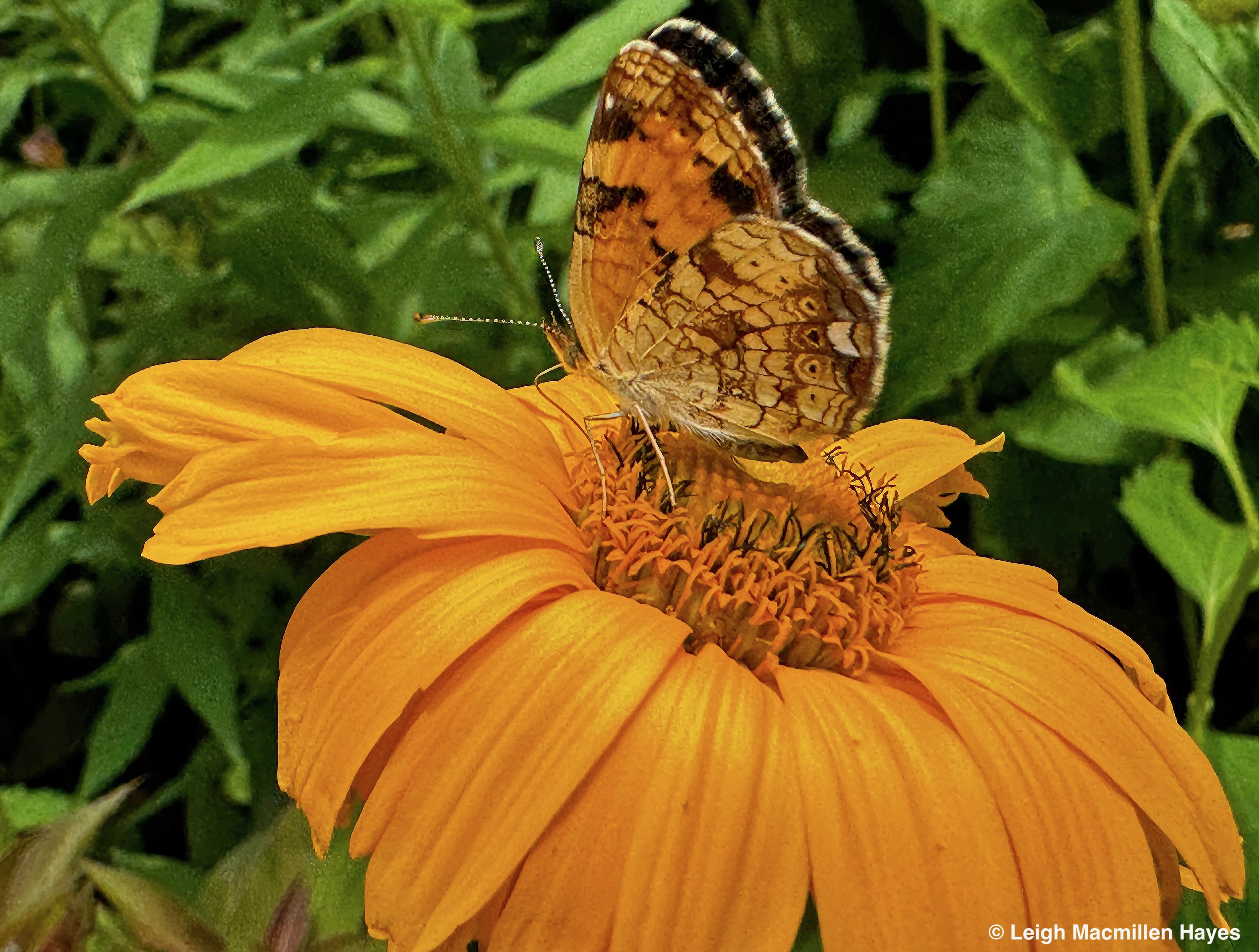
As I’ve said, I walked back and forth for all these days between gardens, which have many more flowers than I’m sharing, but it was these few that seemed to host the most visitors, including this Pearl Crescent Butterfly. Take a look at the underside of the hindwing. About halfway down, close to the edge, do you see the crescent-shaped pearl?

On another, a Bee Fly with its own incredible wing pattern. And those eyes. And hairy body. Oh my!

Late this afternoon, something big and dark flew in and it took me a moment to realize what I was witnessing.

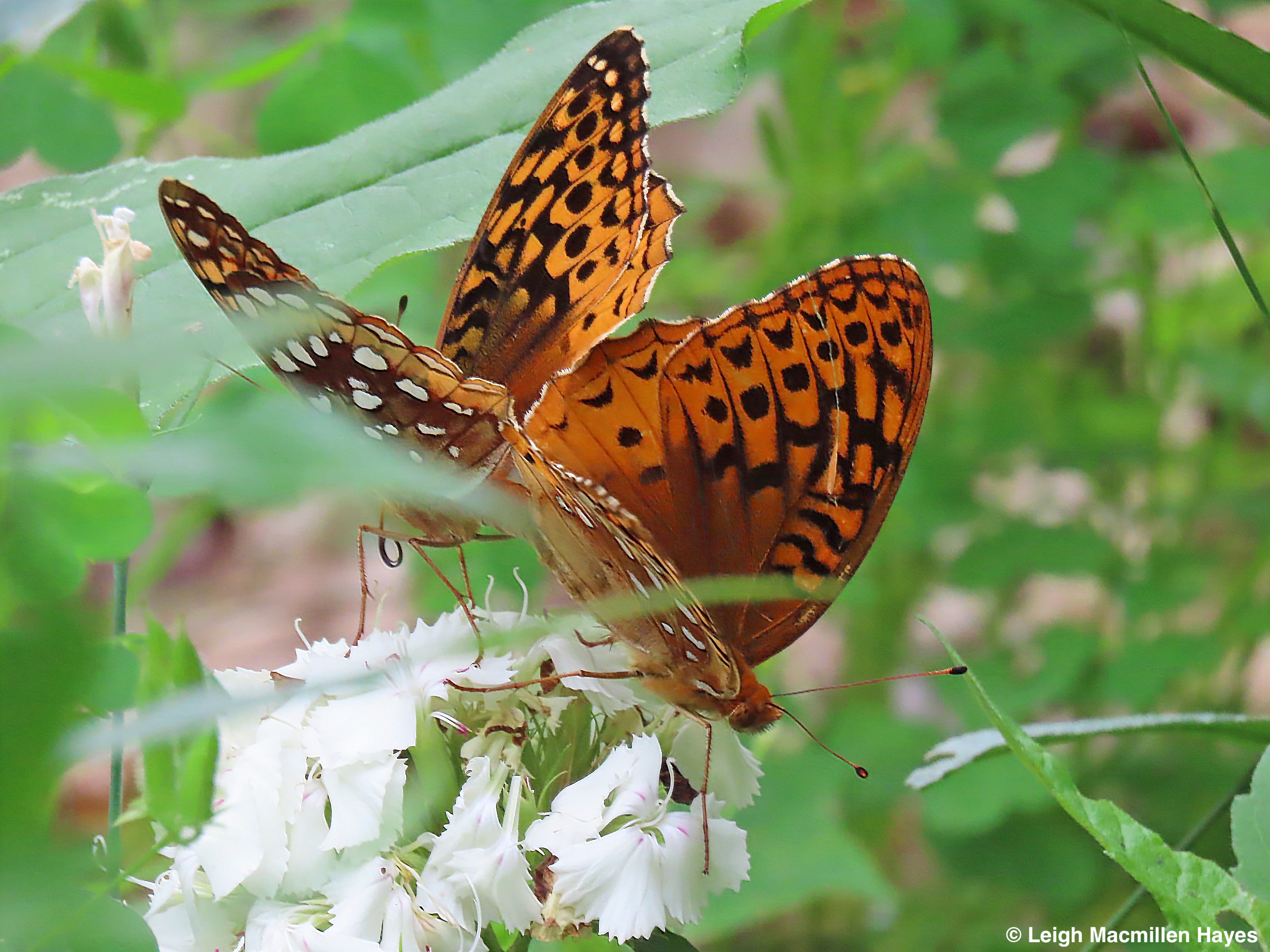
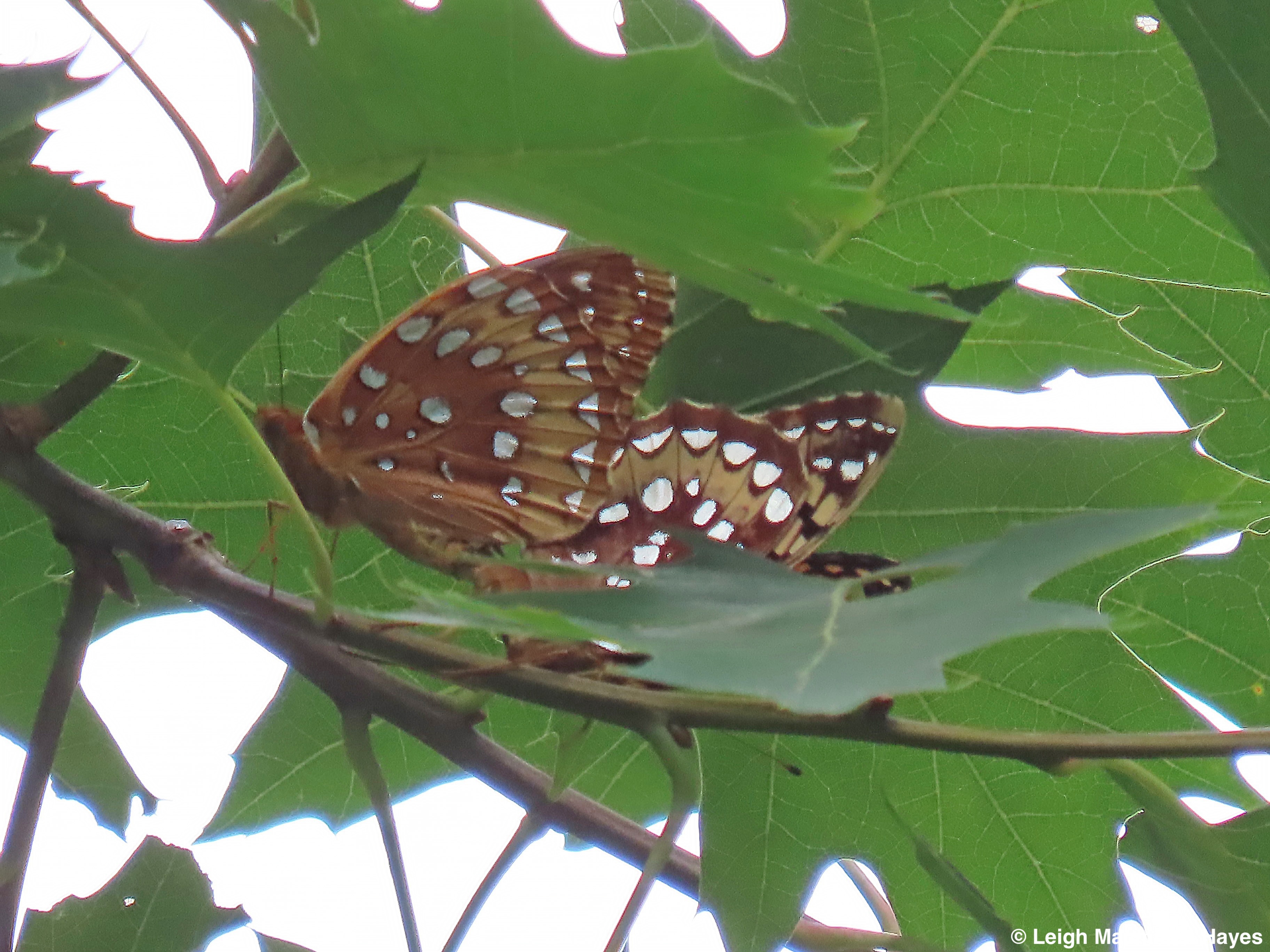
Fritillaries canoodling atop Sweet William. As this story began, it ends. Canoodlers in action.

These two, however, got smart, and found a room where I couldn’t observe their every move, for up into a Northern Red Oak did they fly.

I was so afraid that this would be the summer that wasn’t in the pollinator gardens, but it’s turned out to be the summer that IS! And I can’t wait to discover more. So expect more. You never know what you might discover at wondermyway.com.

Lake Living & Maine Natural History Observatory

Two. Two publications this week. I’m always excited when the first appears on a local store shelf, but to have a featured article in the second as well (for the third time) is equally thrilling. Also scary. Why? Cuze once you put yourself out there you are out there and there are others out there just waiting to let you know how you erred. And if you know me, I err a lot. But it’s actually a good thing because it’s a humbling reminder that I’m not perfect. Thank goodness. That said, you don’t need to remind me–just sayin’.

So, take a gander and I hope you enjoy the reads. My two articles for Lake Living magazine are the first two in this issue.

The first is about the Bridgton and Saco River Railroad Museum that six young men are working to develop in Bridgton to commemorate the Narrow Gauge Railroad. I won’t give away any more of the story, but my hats go off to these guys and their passion and all of their efforts to make a dream come true.

My second article is about TimberNook Western Maine, a program set up to encourage kids to get outside and play. For hours. With varied age groups. Sometimes during school hours. Because play, and especially deep play, which it takes a bit of time to enter, are a critical part of growing up and interacting with others and the natural world. I have to say that before I sat in on a couple of sessions, I wasn’t so sure about this program–I mean, I’ve spent the last however many years playing with kids in nature, but teaching them about nature along the way, and this program is set up to let kids learn without too much adult intervention. And after watching the action and talking with kids and adults, I am now a huge fan of TimberNook and hope to sit in on more sessions, maybe as a volunteer.

There’s so much more in the magazine ranging from an article by Perri Black about birth and death; another by Laurie LaMountain about dock lights invented by the guys at Great Northern Docks; plus an appreciation of laundry by Suzanne Richards; book reviews from our friends at Bridgton Books; and some summer recipes by Perri. And the list of things to do and places to go–locally, of course.

It’s all right here, just a click away: https://www.lakelivingmaine.com/

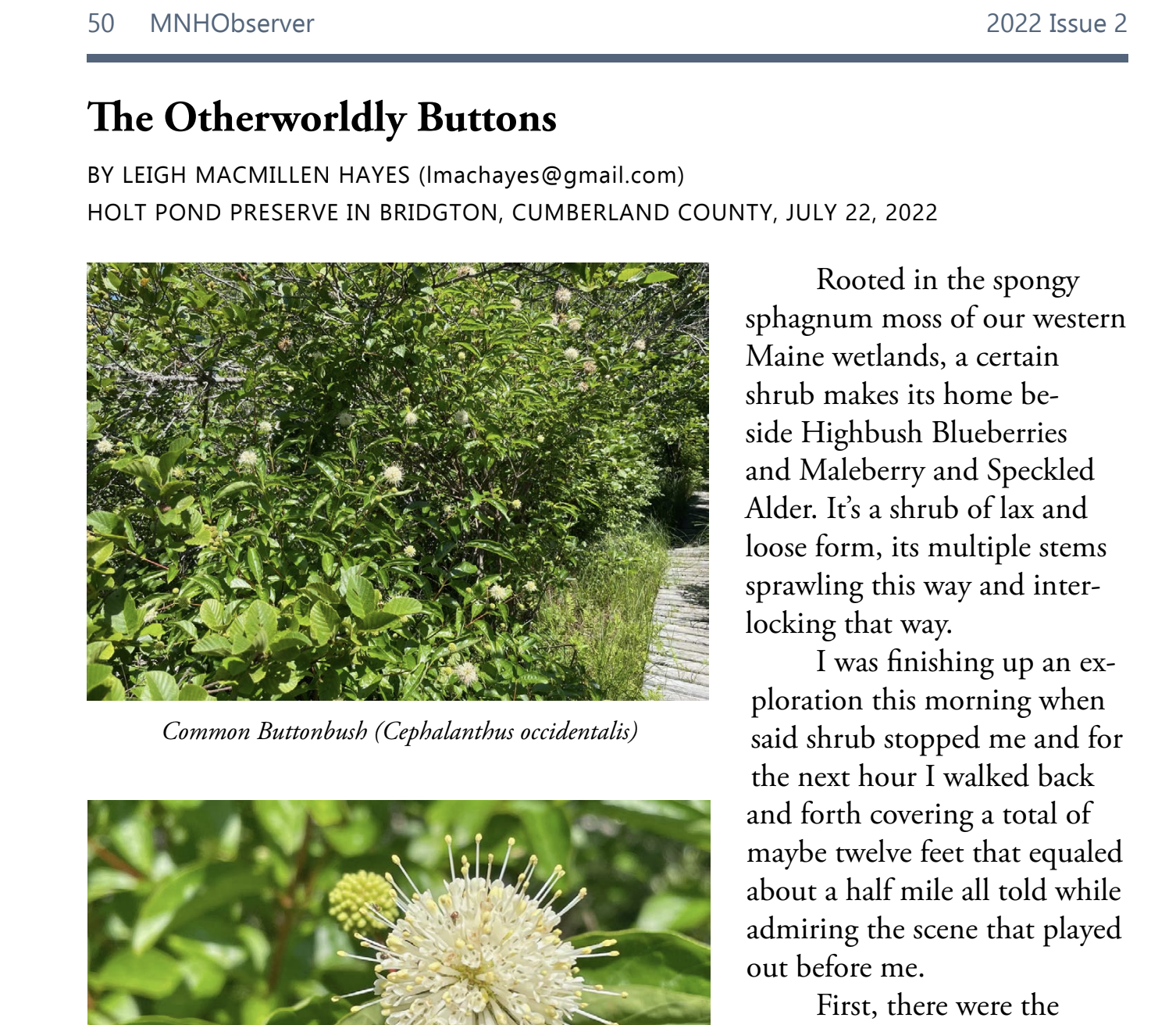
Switching gears, I submitted an article about Dog-day Cicadas to the Maine Natural History Observer and was tickled to have it accepted.

According to their website: Maine Natural History Observatory’s mission is to improve the understanding of natural resources in Maine by compiling historic information and implementing inventory and monitoring efforts of Maine’s natural history.

The Observatory specializes in collecting, interpreting, and maintaining datasets crucial for understanding changes in Maine’s plant and wildlife populations. We are committed to filling data gaps for Maine’s least understood species and creating a legacy of data for use in nature conservation, land use policy decisions, and expanding scientific knowledge.

Specifically, our mission is to:

  • Compile and publish summaries of Maine’s natural history
  • Coordinate local and regional inventory and monitoring efforts of Maine’s flora, fauna, and habitats
  • Facilitate cooperation and exchange of information among organizations, agencies, and individuals conducting natural history research in Maine or caring for natural history collections
  • Engage in other activities related to the advancement of scientific knowledge and education of the public regarding the flora, fauna, and habitats of Maine.

As some of you know, one of my favorite summer activities is to watch Dog-day Cicadas emerge from their underground life and watch as they shed old skin for new before flying up into tree tops to sing love songs. I know of a couple of local cemeteries where I can usually watch the action and it’s even better when I can introduce someone else to the experience. But, not everyone can join me so in this article, I hope it feels like you are along for the journey.

It looks something like this:

You can read the entire article and a variety of others by clicking on the link: Maine Natural History Observer

Lots of cool stuff to read about. And if you do live locally, Lake Living is on a store shelf near you–up and down the Rte 302 corridor, plus north to Norway and Bethel, and south to at least Cornish.

Grab a copy and don’t forget to support our advertisers. They are the ones who pay so that you can pick up a free copy of the magazine. There’s one advertiser in particular that is close to my heart and I’d love to have you support. ;-)

Artistic Perspective Along the Trail

We went for a walk this morning, My Guy and I, along trails owned by Lakes Environmental Association, particularly their Highland Research Forest, and the network of Highland Ridge Ski Trails. It wasn’t strenuous, it was only slightly buggy, and it was lovely, with so many offerings and here I only captured a few.

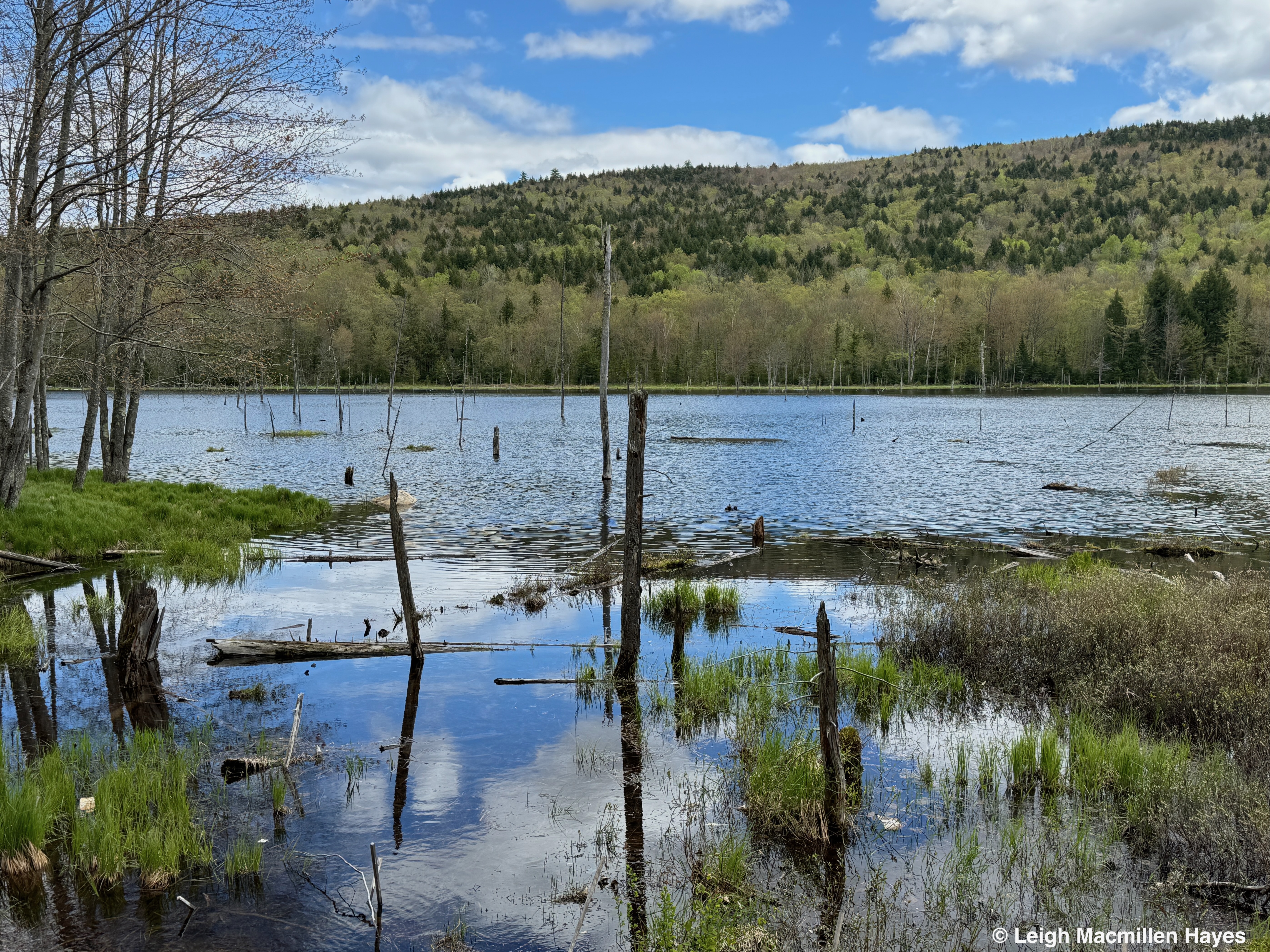
Our first stop was beside the wetland that in the past has been home to Beavers and Great Blue Heron and a whole host of others. It’s still home to that whole host of others, but our sightings only included a few of the singing Bullfrogs.

Tree stumps soon garnered my attention, however, first because of this fresh Varnish Shelf Fungi, aka Hemlock Reishi. Sighting these and so many other mushrooms always bring an old soul friend to mind who died too young a few years ago, RIP Parker. You taught me so much and continue to travel the trail with me, and for that I’m grateful to be able to keep you alive . . . in my mind.

I’m not one to recommend foraging mushrooms because my knowledge of such is limited, though Parker always reminded me that there are more poisonous plants than fungi. I do know this one is, but at a certain point in its lifecycle. Obviously, a squirrel had already enjoyed a few bites.

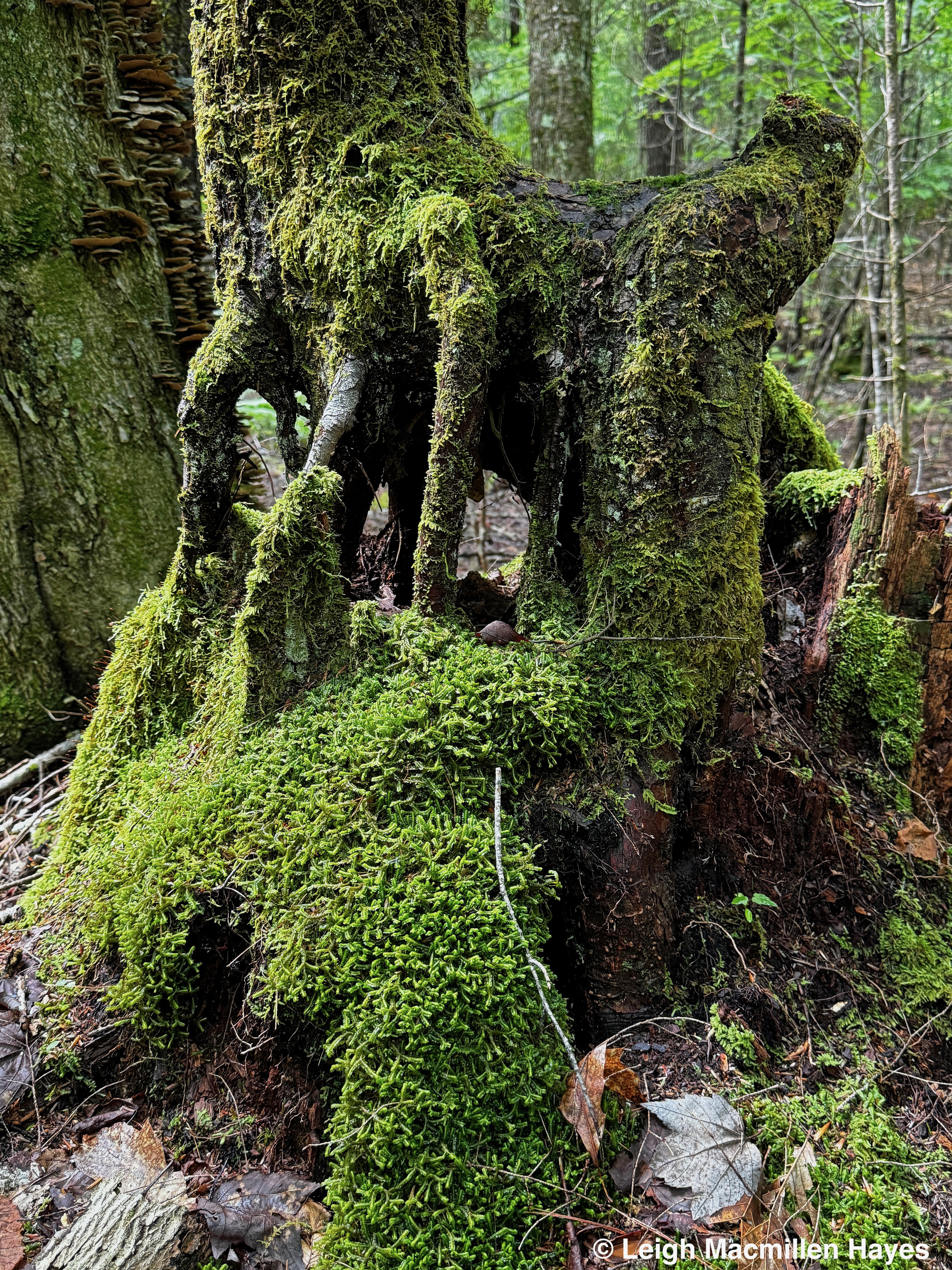
Both My Guy and I were charmed by this stilt-rooted tree and we felt the presence of elves, rather than the fairies that often greet us. Can’t you just imagine entering through those arched doorways and then moving into your workshop to complete a project?

There was another with crazy hair day–so topped off was it with Big Red Stem mosses.

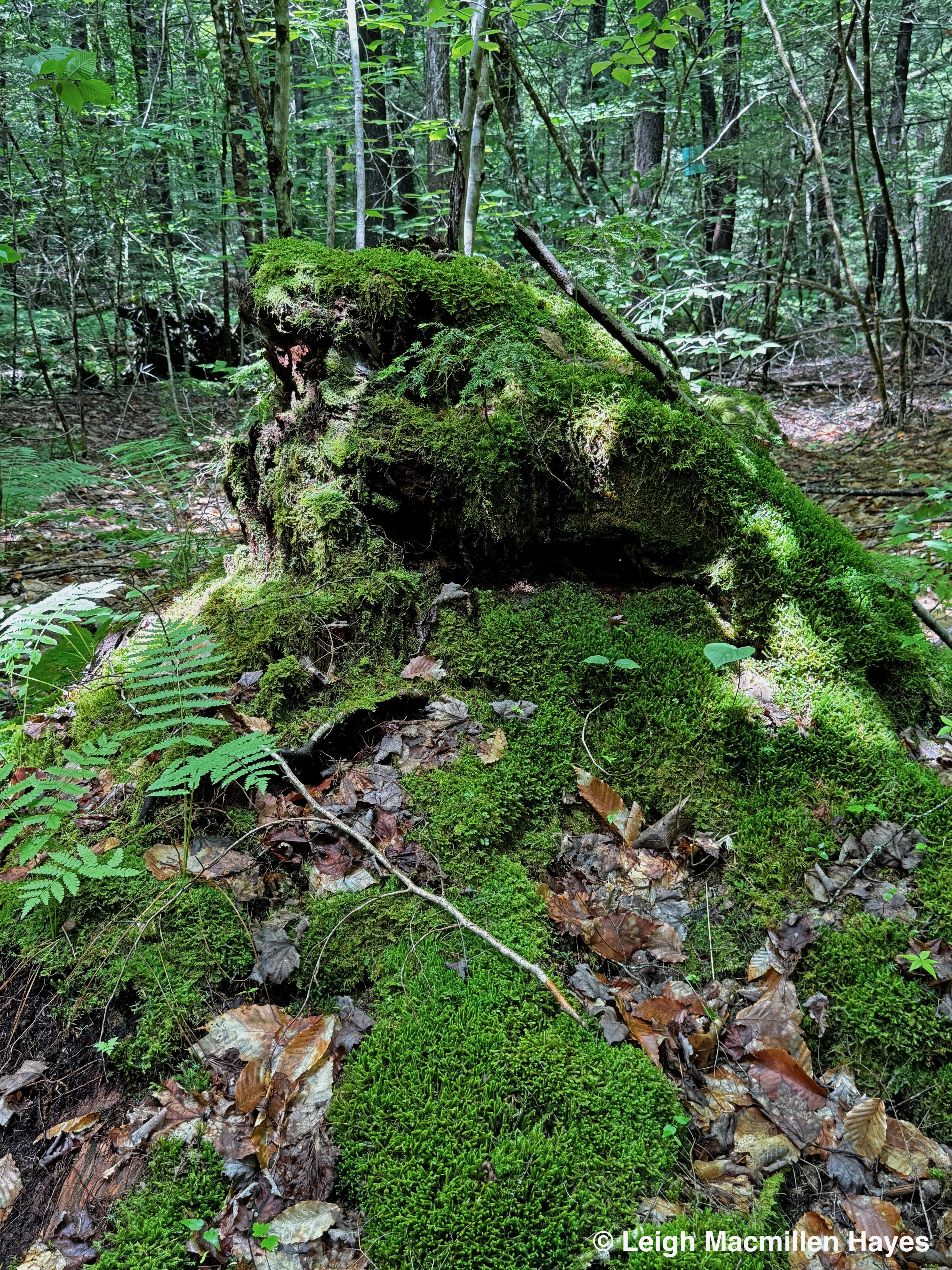
Possibly my second favorite, however, wasn’t so much a stump as an uprooted tree which also abounded with life.

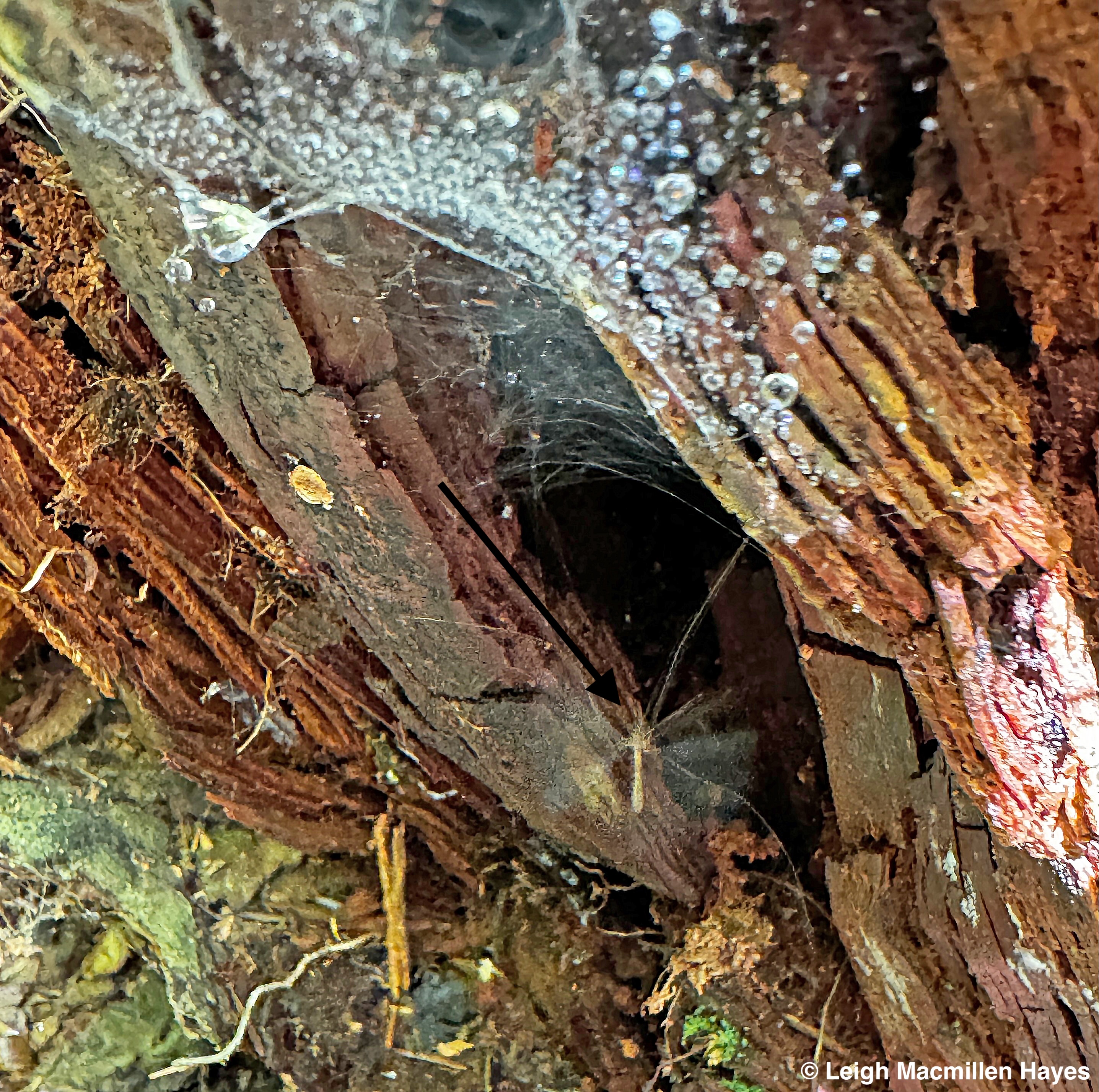
Among the offerings, a cranefly or two or three or a dozen, fluttering in the dark as they do. The arrow points to one and I hope you can see the action of its wings.

And among the Brocade Moss that decorated the uprooted tree trunk, a Green Lacewing, a beneficial insect in the natural world. Do they bite? No. Do they eat aphids and other pests? Yes.

This is also the land of underarm-high Bracken Fern. At least it was as tall as my underarms.

And upon a moss-covered rock, a delightful display of Many-fruited Pelt Lichen with its saddle-like reddish brown projections or apothecia.

The dainty flower of cool, moist woods, Mountain Woodsorrel, also made an appearance in several spots. With shamrock-shaped leaves, the flower color has a strong pink-purple veining and somehow makes me want to gobble it up as if it were peppermint ice cream.

While we walked and occasionally talked and constantly looked, he for the trail because though it’s well-blazed, it’s not all well traveled and so we had to slow ourselves down and pay attention, while I looked for anything that begged a notice. And then we found this most unusual sighting–well, someone’s sighting may be unusual without these glasses. They are still out there, right where you lost them, I think on the Gibbons Trail. Or there abouts.

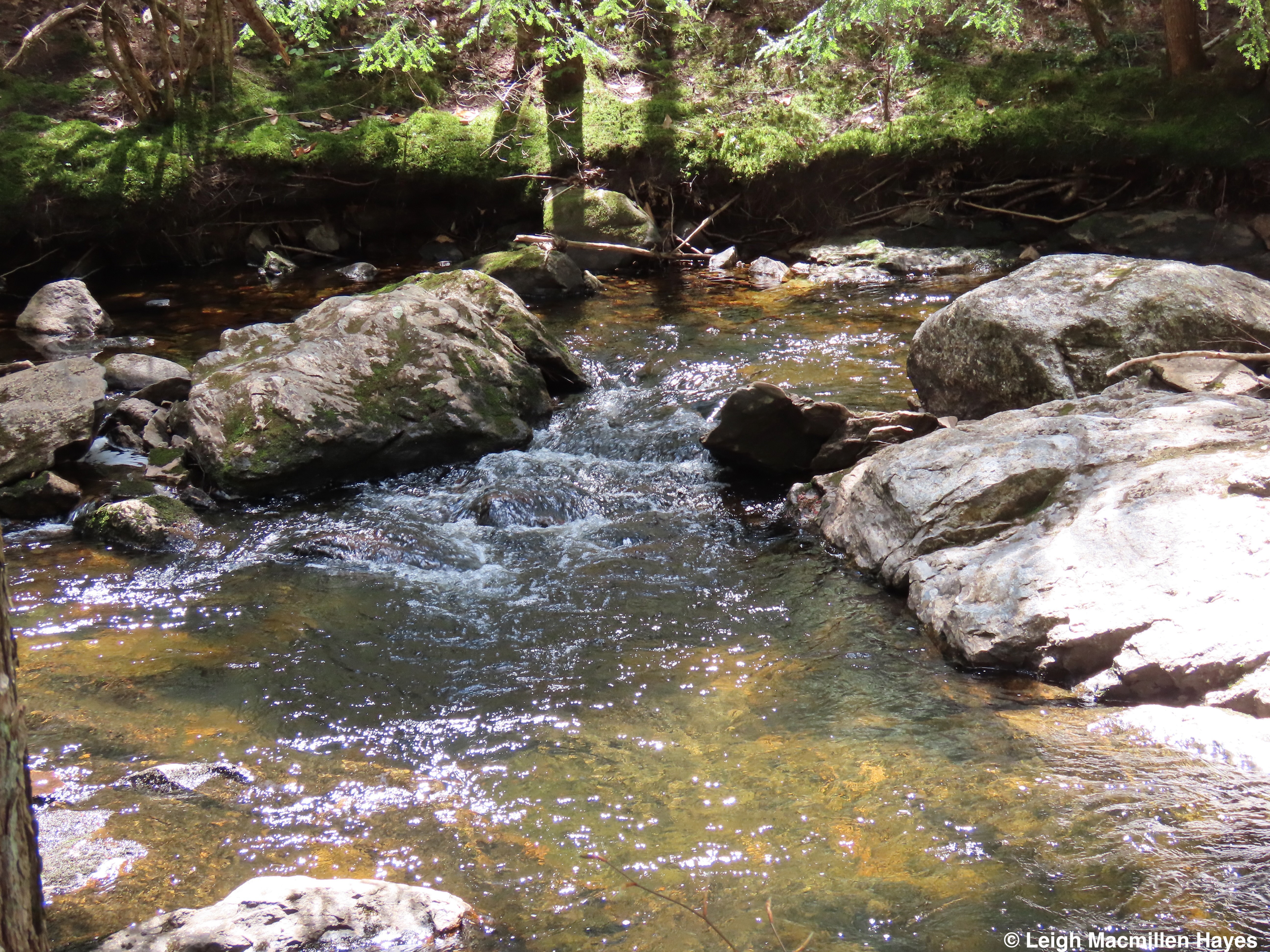
As always, you-know-who was patient with my periodic stops, usually finding a stump or rock upon which to wait. Sometimes a bridge had to be the resting spot. And this one we love for its construction across Carsley Brook.

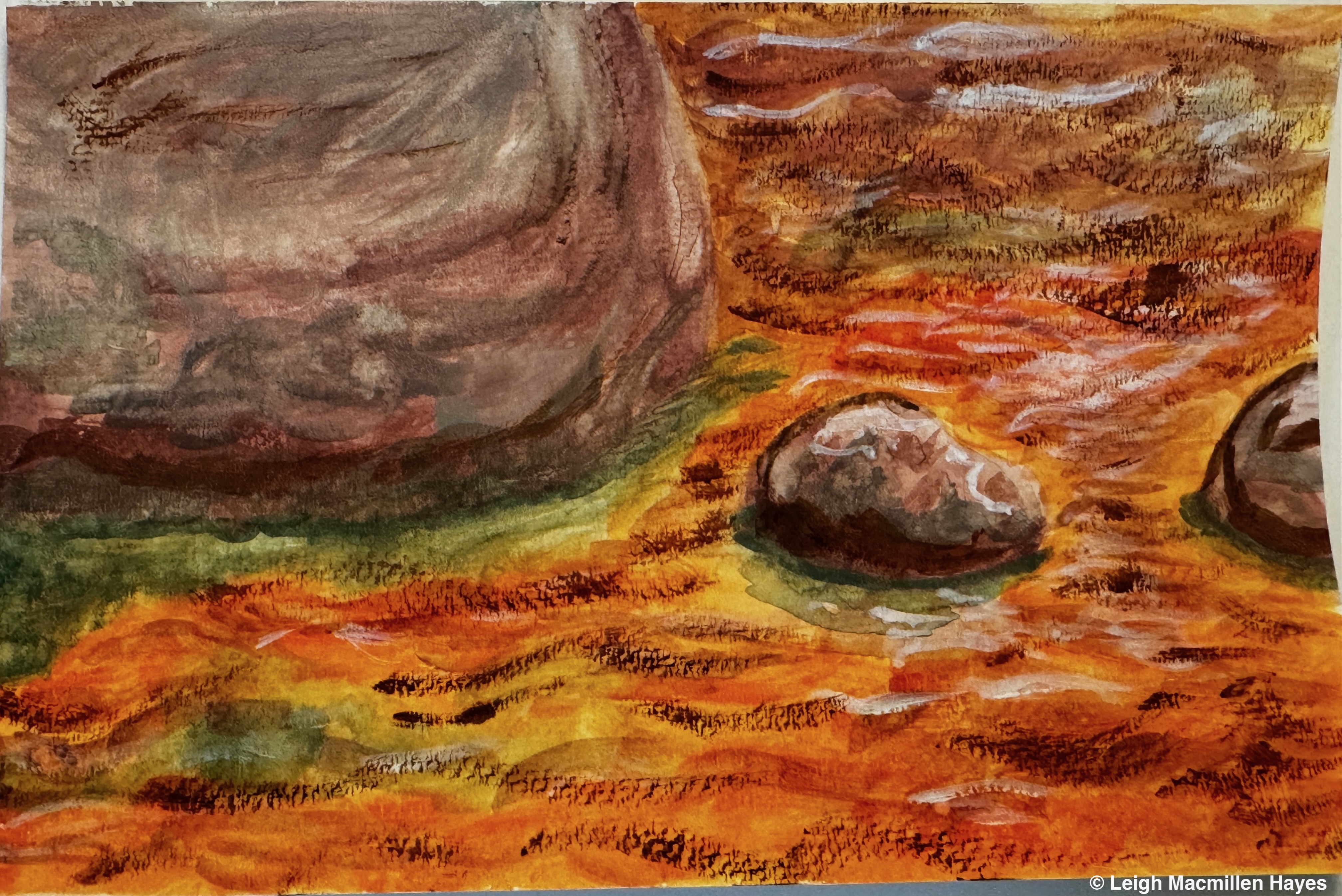
His view: the brook as it flowed forth below the bridge. Okay, so the artist may have left a few trees out, but that’s artistic license–the freedom to paint what she/he wishes to portray a scene. And so I did.

We all view things in a different perspective and from a different angle. Thank goodness. This may not have been his perspective, but it was mine.

Solstice 2024

There’s a local trail I’ve been traipsing along solo or with company these past few weeks and when I dragged My Guy there early this morning, and said I was bringing my camera, his response, “Why, there’s nothing to see there.” Seriously. Doesn’t he know me better than that after all these years?

It’s a place where Bullfrogs sit upon lilypads in true frog style and wait patiently for a meal to fly by. Given all the Gnats and Deer Flies that buzzed our faces and ears as we walked, I assumed there was plenty of food and actually offered some, but he wouldn’t partake. The frog, that is.

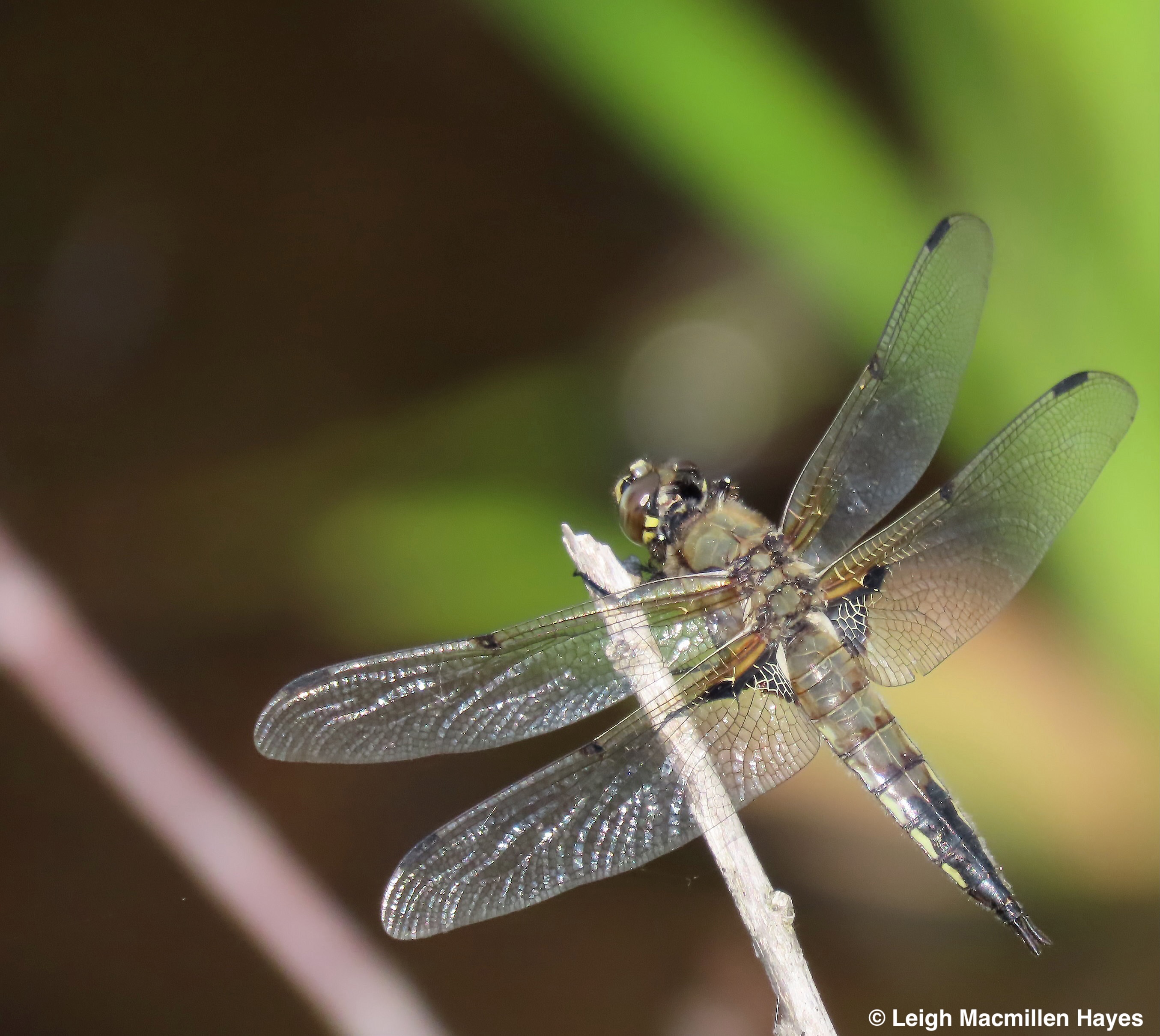
Another who should also have been enticed by the offerings, seemed to care more about defending his territory than dining, this being a Four-spotted Skimmer Dragonfly. The name Four-spotted refers to the small dark spots on the upper edge of each wing, there being two per wing, and thus four per side or four per front wing and four per backwing.

Equally nonchalant about all the available food, but curious about me, was the female Calico Pennant, another skimmer who loves to perch at the tip of plants and twigs and returns to the same site over and over again. Though I didn’t have a good view of her abdomen except for a hint of color on segment 7, the yellow-colored stigma toward the tips of her wings, and her yellowish face gave proof to her gender. Males have red stigmas and red faces.

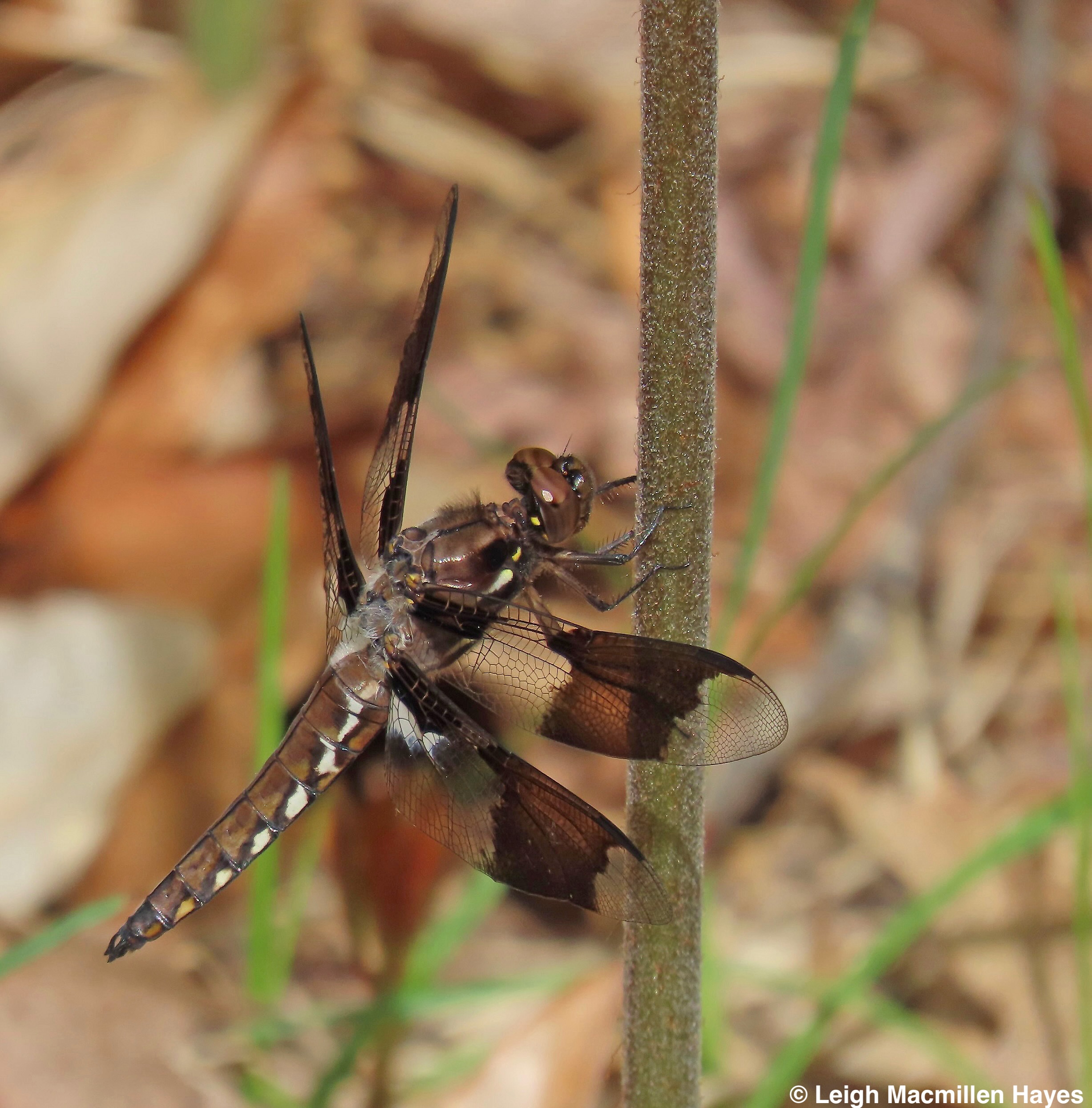
The immature male Common Whitetail cruised and paused, cruised and paused. This is such a handsome skimmer (not that the others aren’t). And while its abdomen resembles the female, it’s the wing pattern that identifies its gender. I love the complexity of dragonflies, even if I do have to relearn the clues each season.

Apparently, there were other things to do besides defend territory, and certainly rather than eat the biting insects–for canoodling was in order each time I visited. In this love wheel, the male Belted Whiteface dons the red thorax and he has clasped his mate behind her head with his claspers, as is the dragonfly custom. As Kurt Mead describes it in Dragonflies of the North Woods, “Prior to selection of a willing female, the male will transfer sperm from his testes located on the underside of the abdominal segment 9 to his hamulus located on the underside of segments 2 and 3. This is accomplished by simply arching the abdomen until the undersides of the appropriate segments make contact.” Once clasped, she arches her abdomen toward his hamulus to receive his sperm and thus fertilize her eggs.

Also flitting about, for that’s how these damselflies seem to move through the air, were some Ebony Jewelwings. The white dot or stimga at the tip of the wing signals this is a female, where the male has all dark wings. I love the iridescent colors of this species. And note how she has her abdomen reaching upwark in an obelisk position? That’s the Odonata way of avoiding overheating–thus reducing the surface area that is exposed to the sun’s rays. Oh, to be able to stick your butt toward the sun and cool off. On a day like today, and yesterday, and the day before, with our first heat wave in New England in two years, this would have been a most welcome adaptation.

Also along this trail, an extremely smart Eastern Phoebe who used a slight crevasse in a boulder upon which to build her nest of mud and moss and lichens. On the first trip, a friend and I spotted five eggs in the nest About a week and half later, these little chicks snuggled together like a pile of fluff with an occasional mustard-colored beak visible.

A week or so later and they continued to grow. What surprised me is how quiet they were, but that’s probably another technique that doesn’t give away the location of the nest.

That said, a Phoebe built a nest on the backside of our barn. It’s too high for us to notice if any eggs or chicks were located within, but we listen to the adults call back and forth all day long ,which is how we found the nest–they told us where to look and flew off anytime we passed that way.

The chicks above fledged within the last week and that nest is empty with no sound from an adult. It makes me wonder if the barn nest might see a second brood (if there actually was a first) for they continue to awaken us at about 4:20am each day. Stay tuned.

Another sight worth noting–the footprint left behind by a moose–traveling in the opposite direction of my foot. This was discovered by an observant participant on a recent walk for Loon Echo Land Trust.

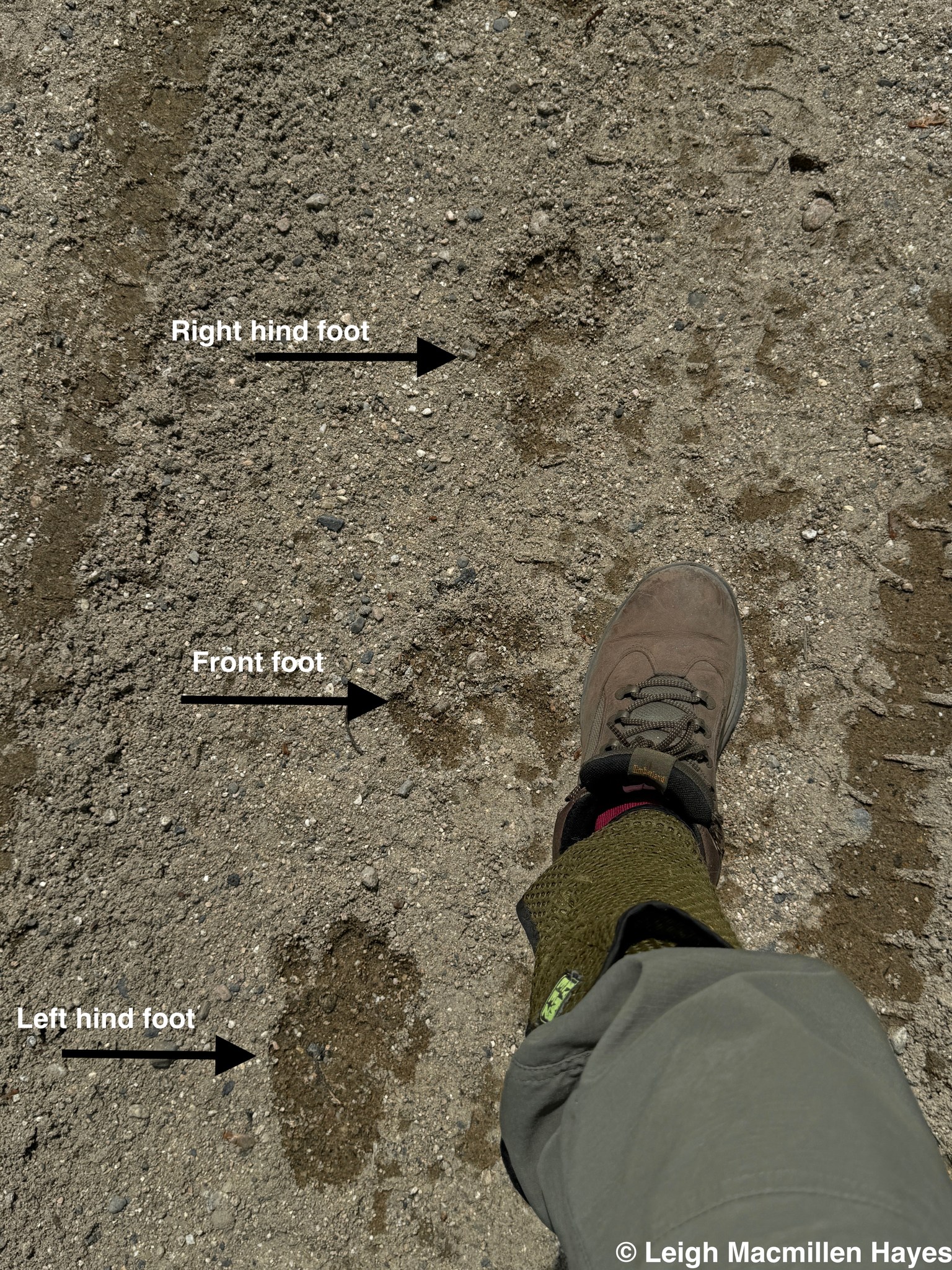
And an even better observation: the track of a Black Bear. My foot is located beside a front foot as you can see, with the larger hind feet registering before and after. The big toe is on the outside of the foot, opposite of ours. The better for climbing stability.

It still seems early for butterfly flight to me, but this Pearl Crescent showed us this morning that life hasn’t been easy given its tattered wings.

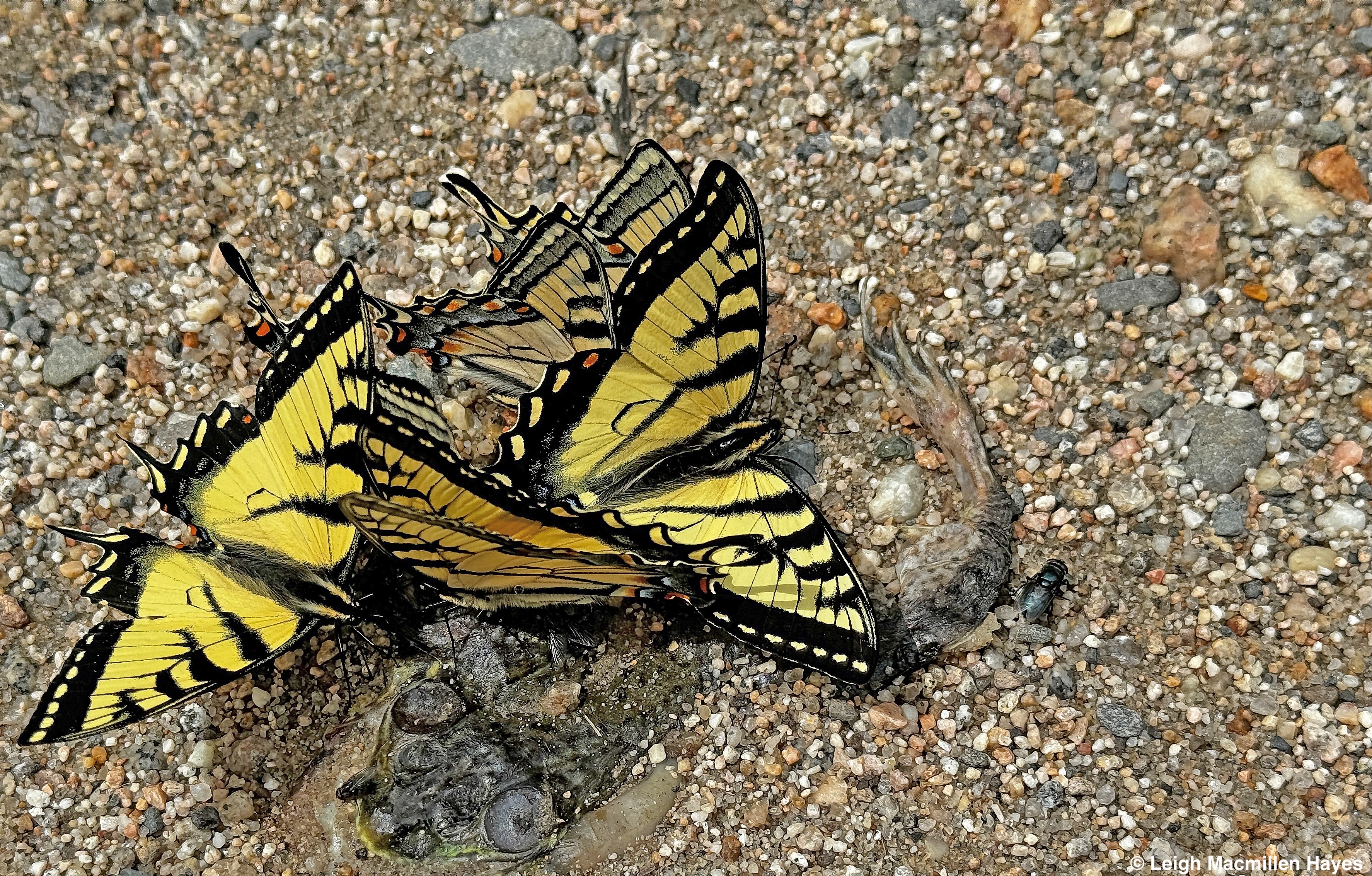
I think one of my favorite sightings along this path, other than the moose and bear prints, oh, and the dragonflies, of course, was something I couldn’t share with My Guy. The timing just happened to be right on this particular visit, when Eastern Tiger Swallowtail butterflies, so differentiated from the Canadian Tiger Swallowtail by the fact that the yellow band near the edge of the underwing was broken by black marks.

They were puddling, an act of probing for salt and minerals. Most puddlers are males, who ingest the nutrients that are then stored in their sperm. During mating, the male passes these goodies along to the female as a nuptial gift in his spermatophore. 

So we assumed it was scat upon which they puddled.

Until we realized it wasn’t. They’re choice of nutrient-offerings–a smooshed frog. The trail is not just for walkers. ATVs and even trucks use it.

Yes, the poor frog. BUT, the butterflies and flies made sure that it did not go to waste.

And another frog smiled. I’m smiling too, for it is officially summer. Happy Summer Solstice 2024.

And speaking of the solstice–be on the lookout tonight for the characters of my fairy tale doing some dancing in the woods, as they did in The Giant’s Shower.

A Lost Art Found

At the end of April I began taking an art class offered by one of my peeps, a young woman who walked into the lives of many of us one day about twenty months ago; a young woman with a million talents to offer. Among those talents, she is a self-taught artist and we’ve been begging her to teach us.

At our first class, we had to draw a small box in the upper left-hand corner of the paper and place the person who has been our biggest art critic into it. That done, the critic was forever boxed–well, until she sneaks out, which she seems to do way too much.

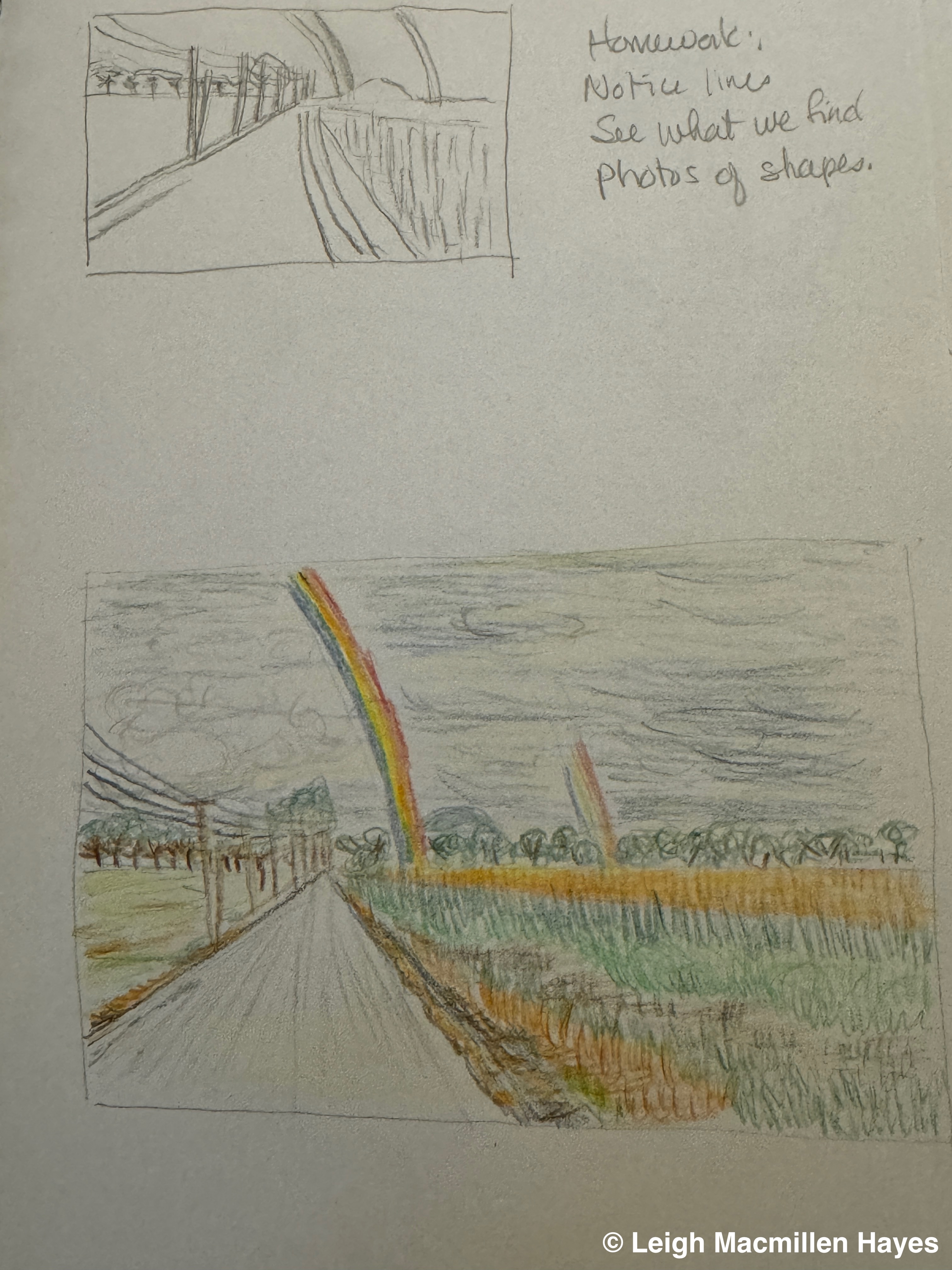
And then we looked at some photographs in magazines and had to sketch them and determine the direction the eye would travel in the picture.

Next we looked at lines and perspective. I’d brought along my favorite colored pencils, but immediately felt my inner critic jump on me because all of my classmates were working with watercolor pencils, watercolor paint or acrylics. And the artist herself, gouache. Until I met her, I’d never even heard of gouache. Or at least never paid attention, if I had.

And so between classes I purchased a set of watercolor pencils and tried all over again. It certainly was a quicker way to create and I liked how I could blend the colors with a brush. But still, it was a long process to produce such.

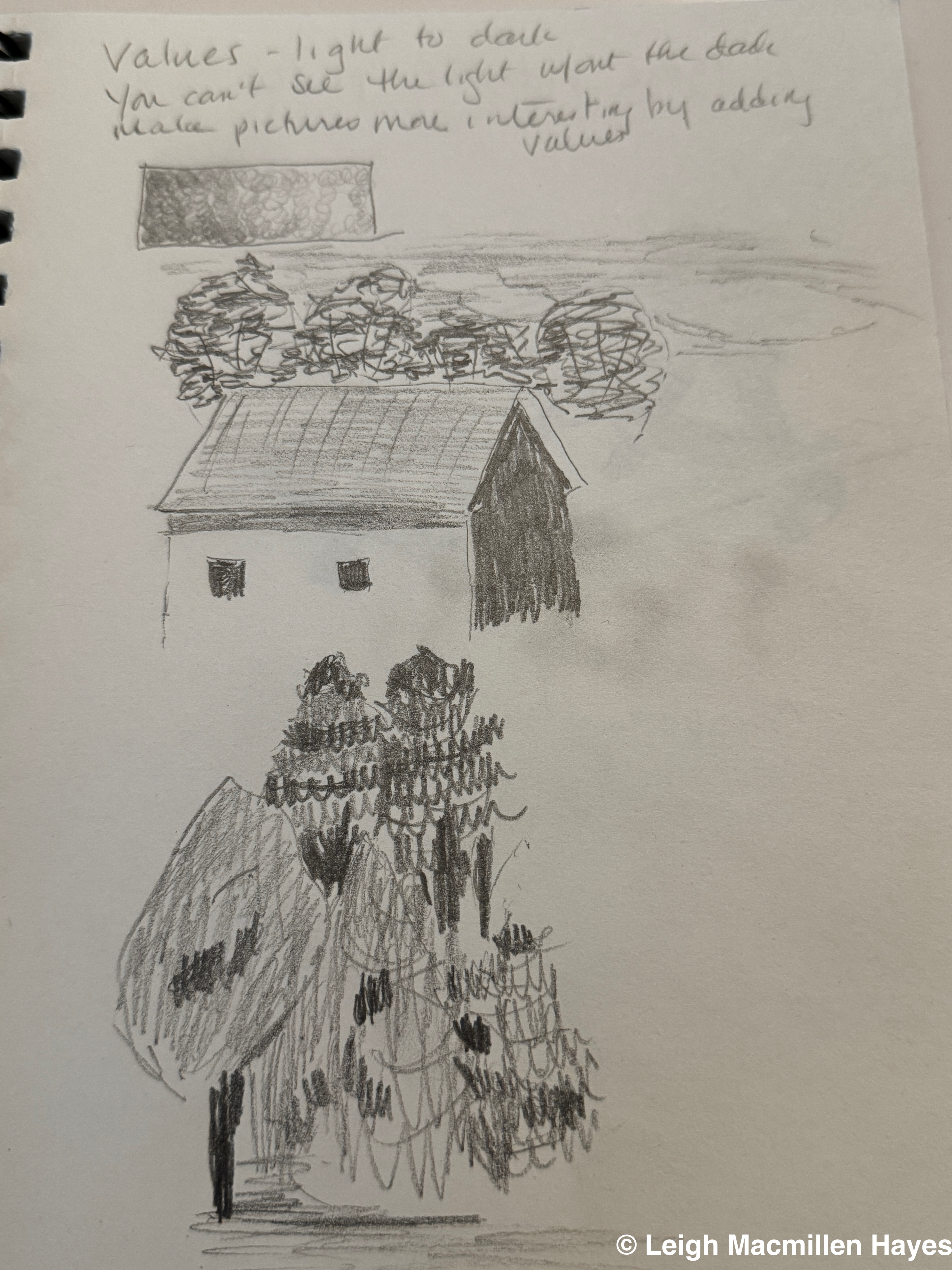
Our next lesson was on values and we looked at how values add to the picture and stood outside and quickly sketched some scenes in the neighborhood.

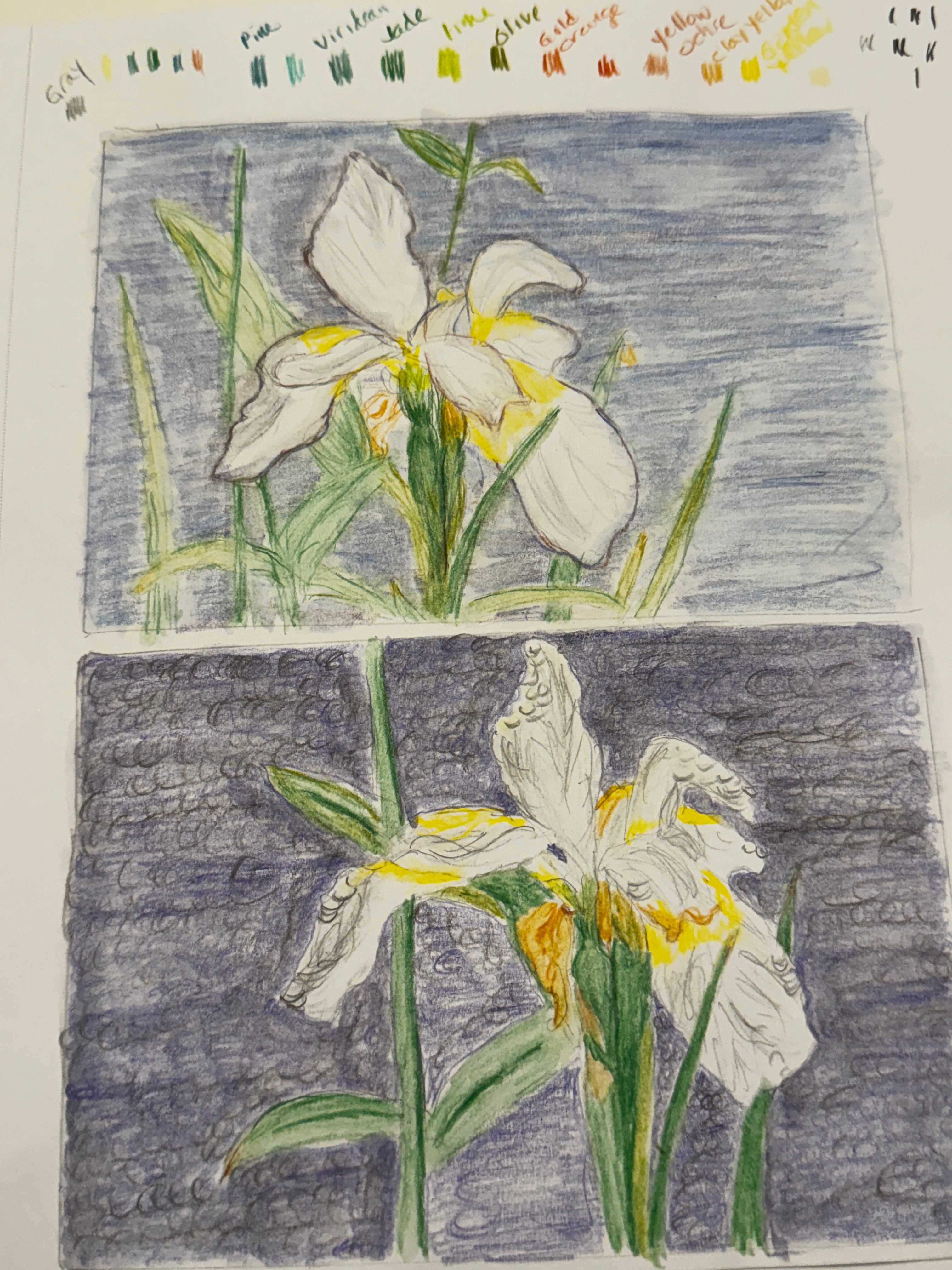
And then she produced a photo of a white iris for us to illustrate. I struggled with this because I couldn’t figure out how to make the flower pop and so I cheated (well, maybe it’s not cheating, but rather an artist’s prerogative), and outlined the flower with a different color.

When I later asked the artist how to do this, she showed me that by making the background darker the flower would stand out. And so I tried again.

The other thing about the artist’s prerogative–you don’t have to include everything in your illustration that is in the photograph. And so you can see I left some leaves out on the second try. But I did want more detail in the flower.

“Painting is not about ideas or personal emotion. Paintings are about freedom from the cares of this world, from worldliness. All art work is about beauty.” ~Agnes Martin

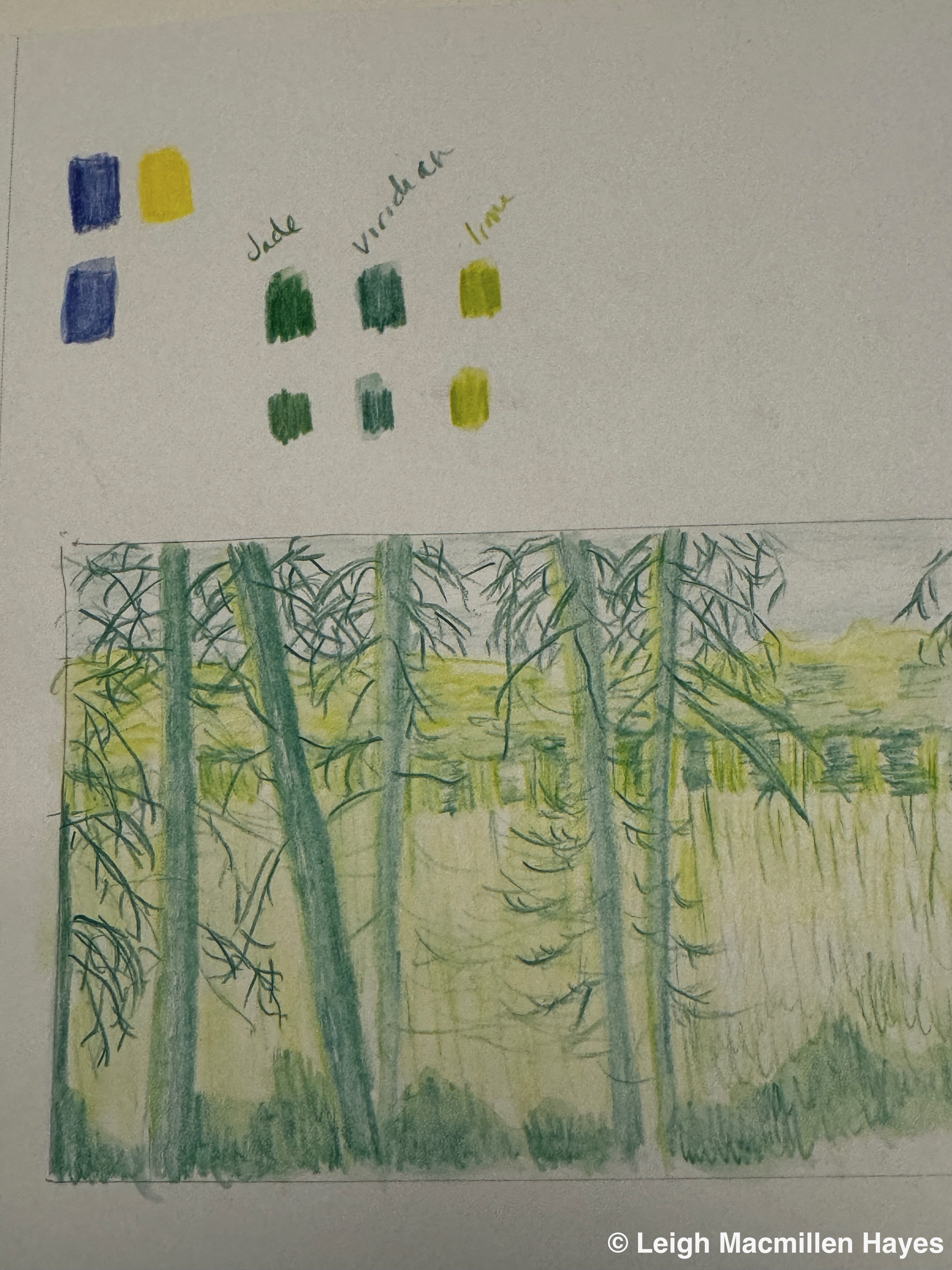
When we were asked to draw a scene from another photograph and complete it only with greens to get a sense of value, I again needed help since I couldn’t create green from blue and yellow, and so she helped me choose three colored pencils to use.

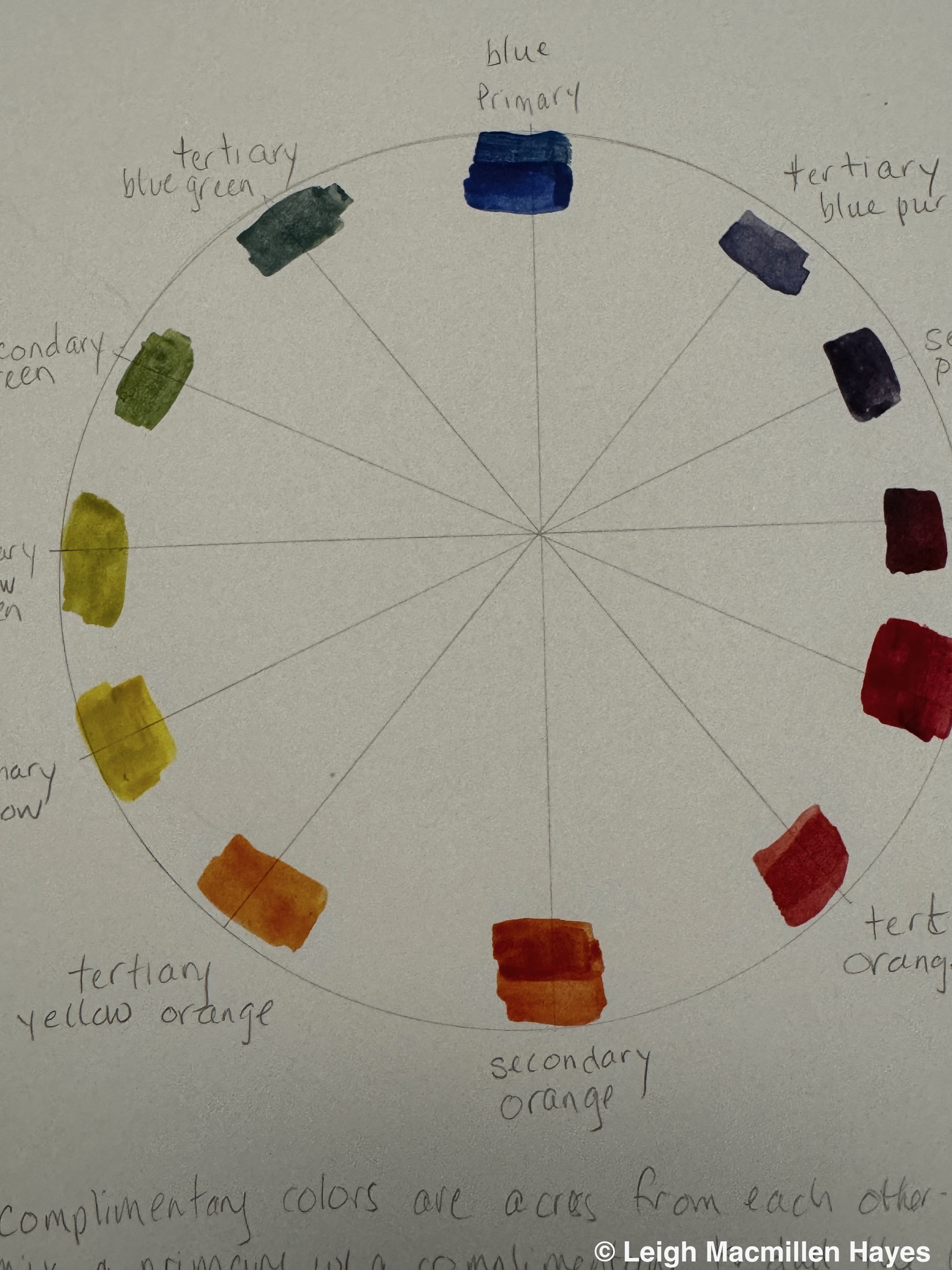
And then the third class was upon us and I was encouraged to borrow her watercolors because it would be easier to create a color wheel. And my confidence took a dip as I was giving up my beloved pencils for an hour or two. And walking down a path I hadn’t followed in many, many years.

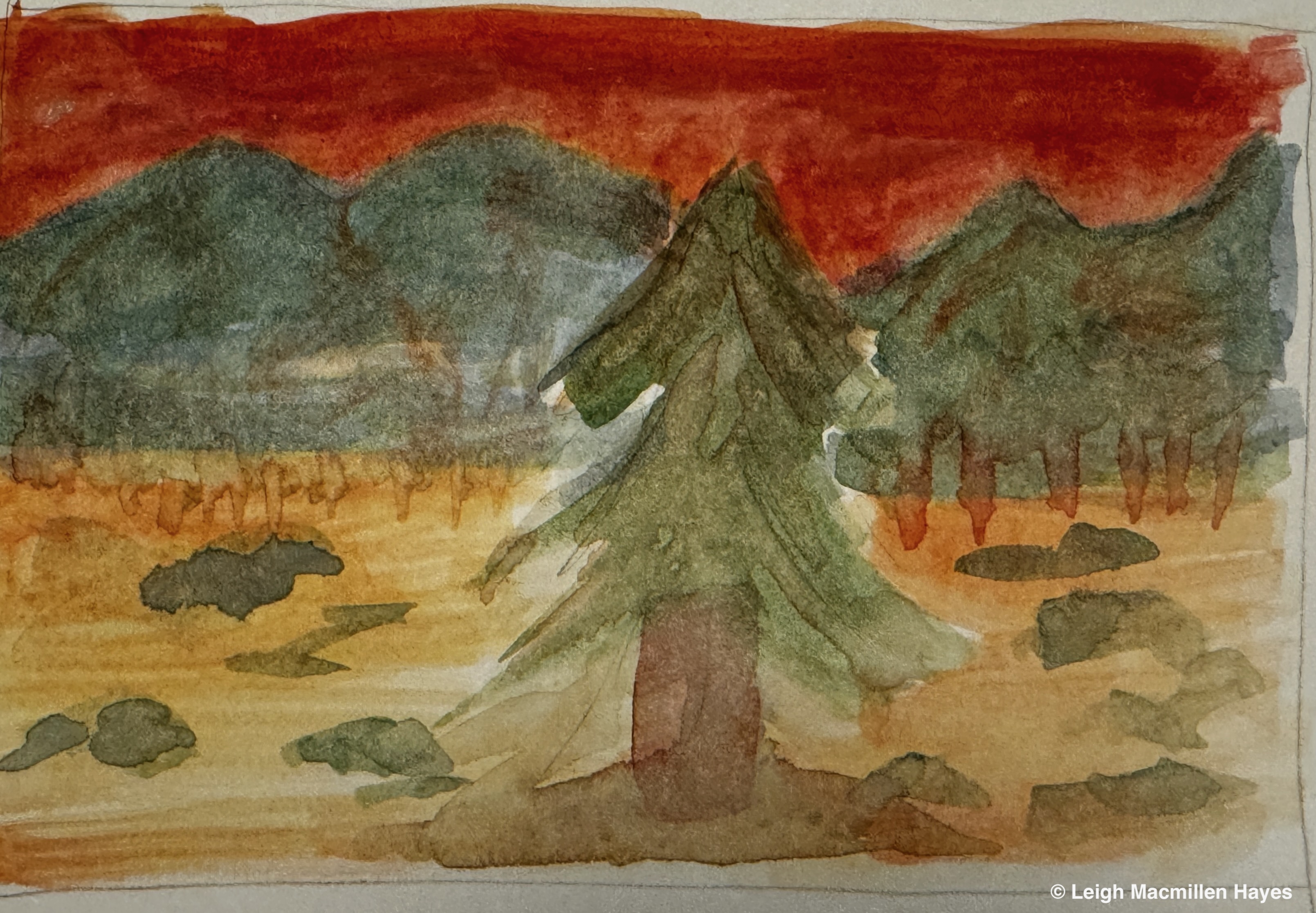
This was a study in complementary colors and from our mind’s eye we needed to paint a tree with mountains behind and use such colors. Not only was it kinda fun, but definitely a faster way to reach the end and the colors popped more.

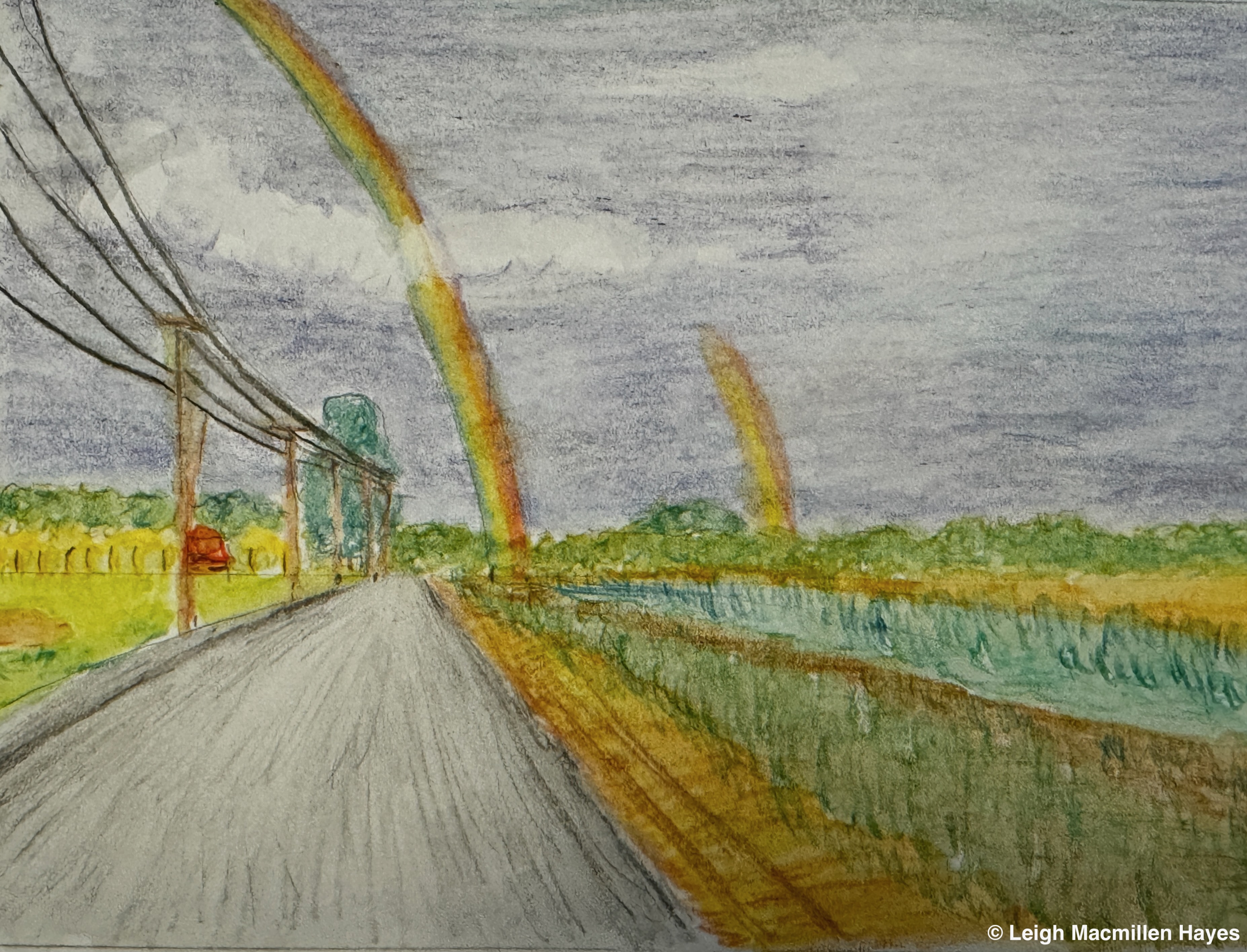
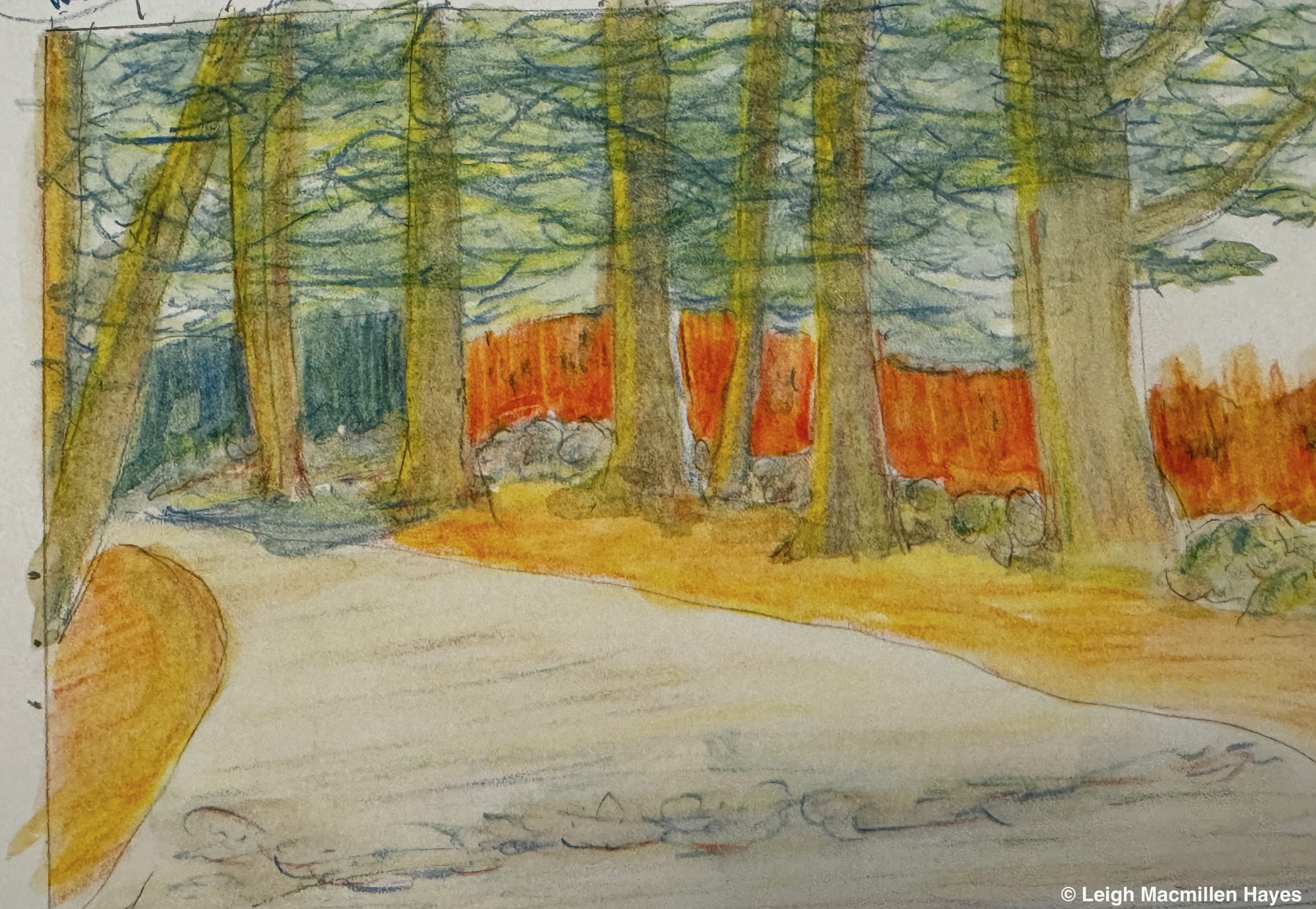
Next we had to go big. Well, not that big really. I usually stuck to the size of the photograph, the easier to figure out how to position lines. But we were all given this photograph of Hemlock Bridge Road and had to use those same complementary colors to complete the scene. And so I played. And had great fun. And began to learn that I could let go. Sometimes.
That said, at home I attempted the same scene with the watercolor pencils and actually liked that as well. It was a different effect.

Back in class again, we learned more about using complementary colors and had different scenes to illustrate. This was with the watercolor pencils.

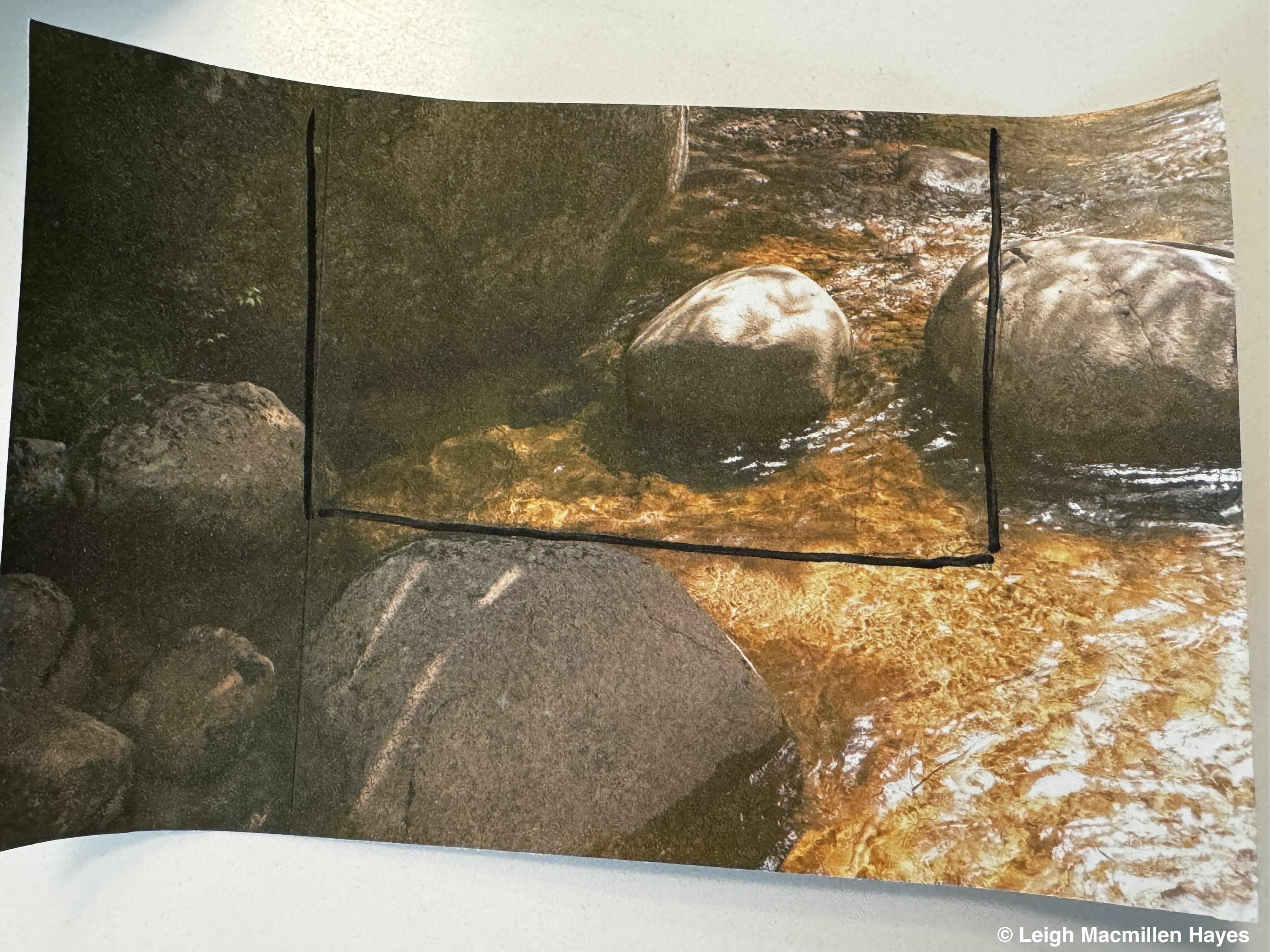
And then the afternoon dawned when composition was the topic. As we looked for the most interesting area in a scene. It never occurred to me to crop, just as we sometimes crop photographs.

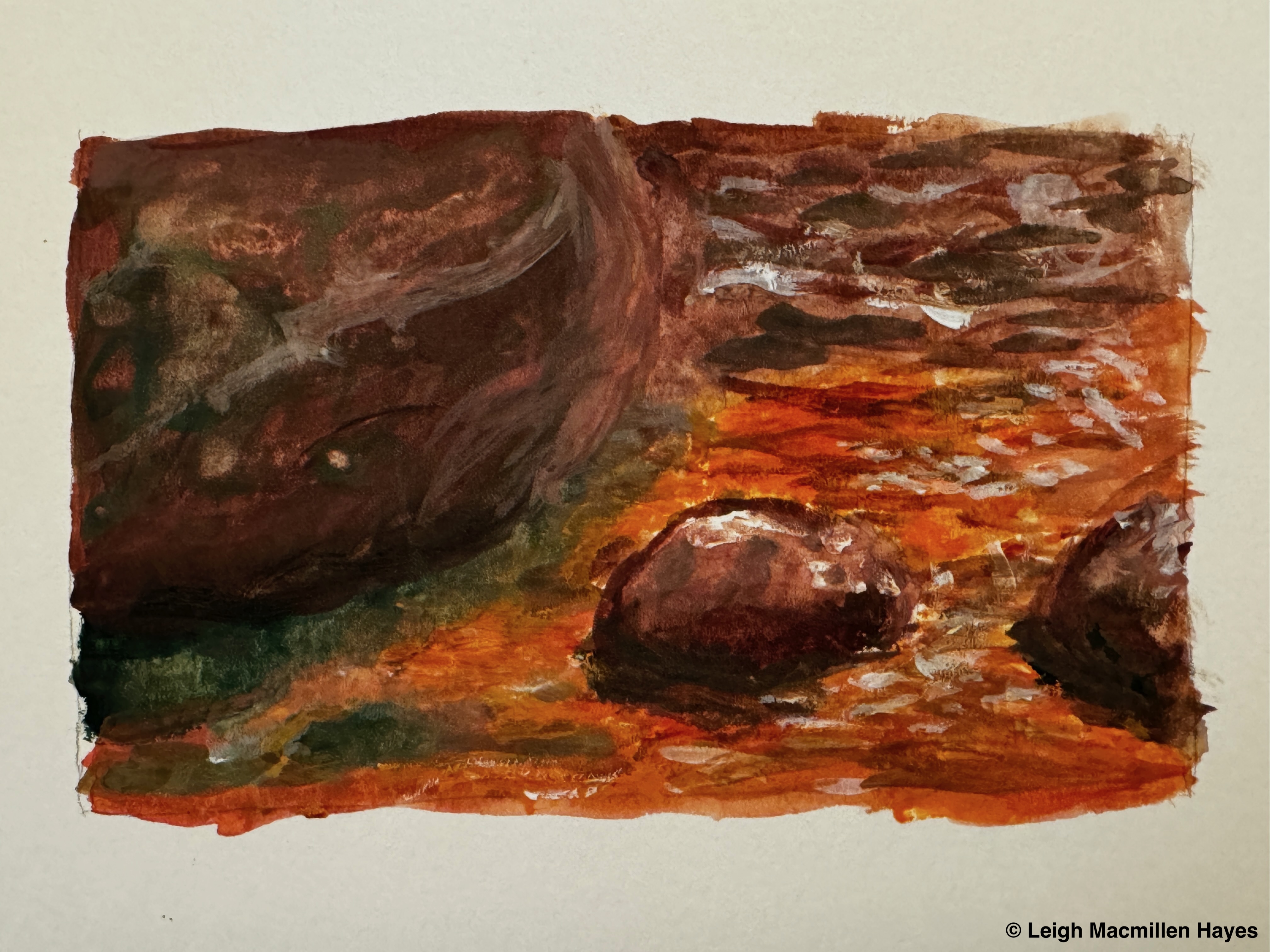
I was a wee bit nervous for this one for a couple of reasons. One, I’d purchased some watercolor paints and new brushes. And two, the photo struck me as being a really difficult scene to replicate. Or at least represent. And so I did a painting smaller than the paper I was working on. And discovered that white was my friend.

A day or two later, I couldn’t wait to pull the paints out again, and give this another try. It’s much lighter/brighter than the actual photo or my first attempt, but I kinda like it.

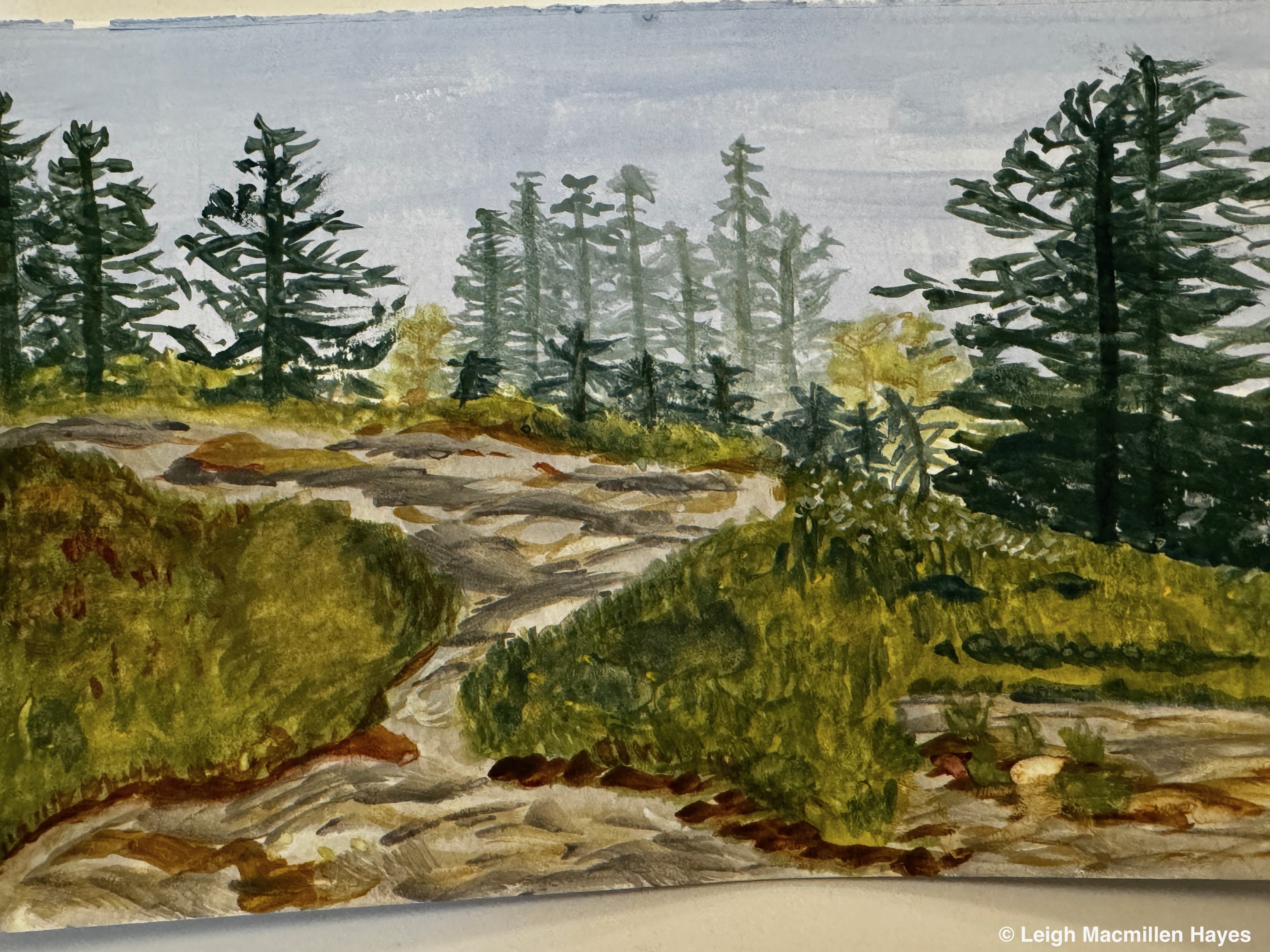
That inspired me to go back to the other water scene and try it again. It looks nothing like the photo of an original painting, (I’m sorry, but I don’t remember the artist) but playing with the paints was becoming a favorite pastime.

A really favorite pastime, so much so, that I’m addicted; in a good way, of course. When I showed this to My Guy, he immediately knew where it was for we’d only climbed this particular mountain a week or so ago to count Lady’s Slippers. On a rainy day.

Over the weekend I photographed this Four-spotted Skimmer, so named for the four spots on each side: two per wing, the mid-wing spot being the nodus, and the black spot toward the tip of the wing being the stigma.

I know that what I like about sketching is that I can focus on details, but when painting with watercolors, that is much more difficult for me. And so I need to figure out how to let go a bit more. But that will come in time. Maybe.

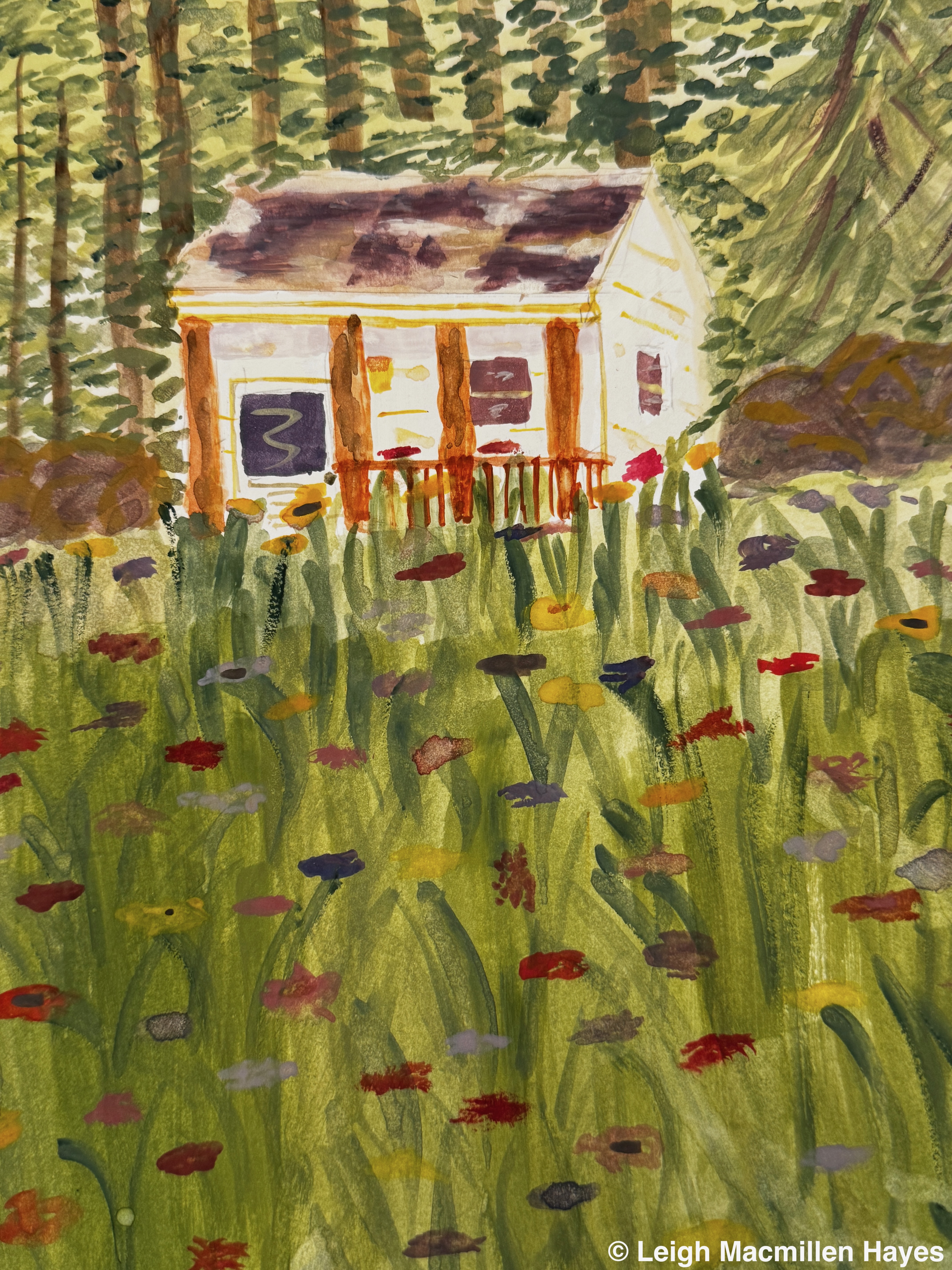
For our last class yesterday, we had to choose a scene of our own to illustrate. I chose the wee studio on our back forty (haha, we only own six acres total, so it’s rather hard to have a back forty), where a pollinator garden adds to the picture. Okay, so this is a painting. The garden looks nothing like that. And the stonewall behind is much smaller. And, oh geesh, here comes the art critic.

The cool thing about the studio, which I don’t use anymore, but someone suggested yesterday I should do my artwork in there, is that we won it at the Fryeburg Fair many moons ago when we paid $25 for five raffle tickets to support Harvest Hills Animal Shelter. To enter, one has to duck. I’ve always felt that was a plus for it put me into a different place where I could create. And thus, The Giant’s Shower, the fairy tale I wrote and Solona Ward illustrated, was written in that space.

At the end of the last class, we were invited to show off our paintings and I chose the mountaintop scene. We were down one because she is on vacation, but seated left to right are Pam, Linda, Debbie, and me.

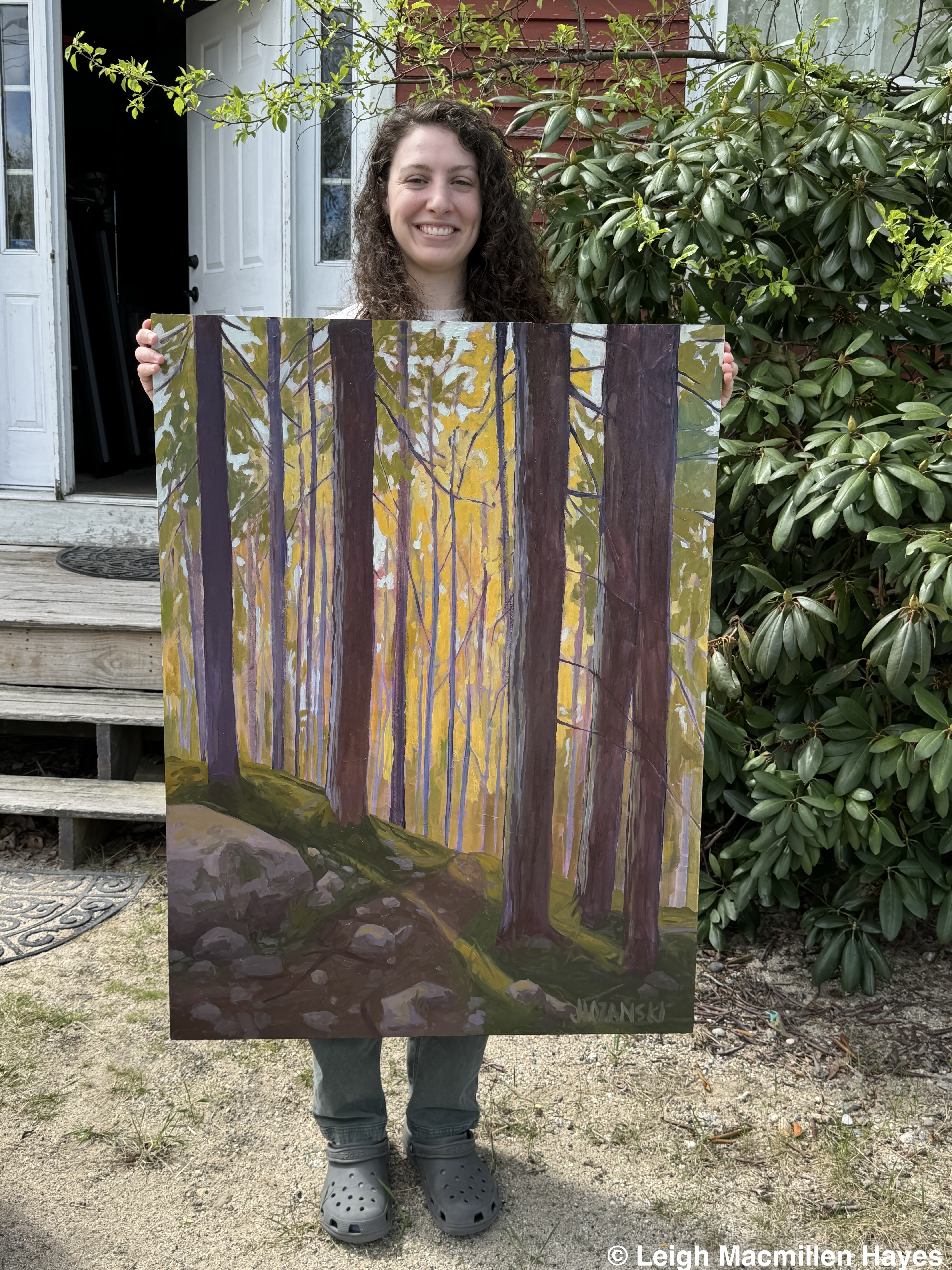
And our teacher for these past seven weeks was the one and only Jessie Lozanski, who recently painted this scene from photos I’d taken along a trail at the Bold Coast of Maine. It graces our kitchen and each time I look across at it I am transported to that time and place, but also to so many other times and places for it triggers many memories.

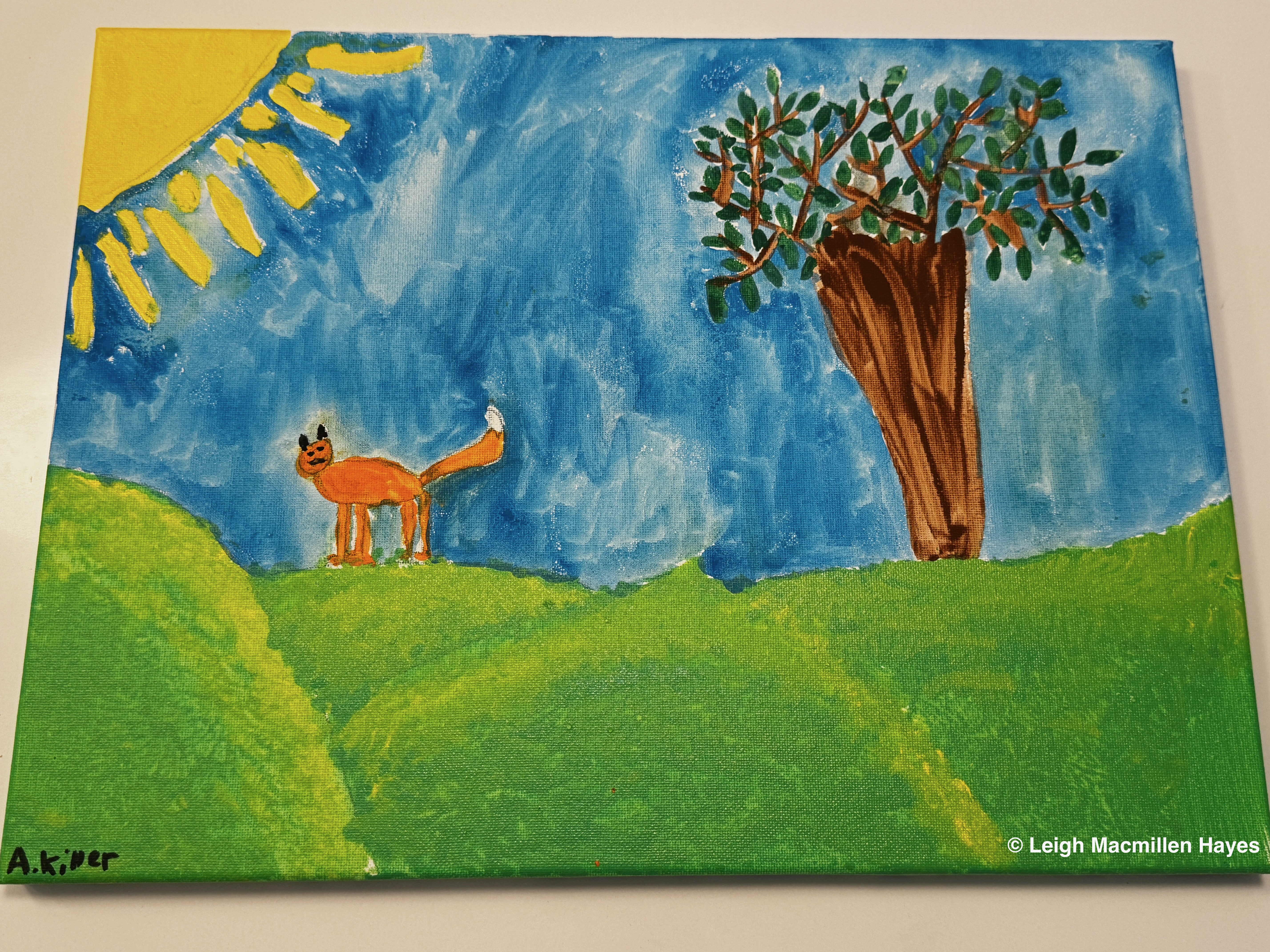
This morning I was gifted a painting by another student of Jessie’s. The painter of this scene is nine years old. And she’s an extraordinary naturalist whom I’ve had the pleasure of working with every other Wednesday for the past three school years. I love the grassy mounds and the fox and the tree–especially its trunk. This is an artist who is well on the way to finding her style and both she and Jessie will have their works for sale at Gallery 302s Art in the Park in July.
Here’s a photo of the young artist and her mom heading back along a trail we’d explored a few weeks ago. Anywhere we go, she finds inspiration.

The same is true of Jessie, and I know I take a lot of photos, but she takes a million more and I get it now because I’m looking at the world from a different perspective, like seeing the shades of green and yellow, and brown and even purple in our yard and the field beyond in a different light.

I am chuckling because shortly after purchasing the watercolor paints, I found this ditty in my collection. If I remember correctly, I painted this in college. Nobody is perfect. Thank goodness.

And I’m having fun finding an art that I thought I’d lost . . . all over again.

The May Flower Whisperer

In rain or shine, as May gives way toward June, My Guy and I set off to hike a few local trails.

It’s not whether we have a view . . .

or not . . .

or if we have to stand beside lunch rock rather than sit (well, he sat, I didn’t) . . .

or even the challenges the trail chooses to offer, like crossing a well-mudded beaver dam that is rather tricky . . .

and spying the well-mudded lodge where the local residents were probably relaxing after a long night’s work,

but rather, the sights at our feet that drew our attention, such as the Black Chokeberries pink anthers and delicate petals enhanced by raindrops.

Scrambled-egg Slime Mold (aka Dog-vomit Slime Mold) showed off its intricate structure that looked more like a bunch of worms swarming together upon a decaying log.

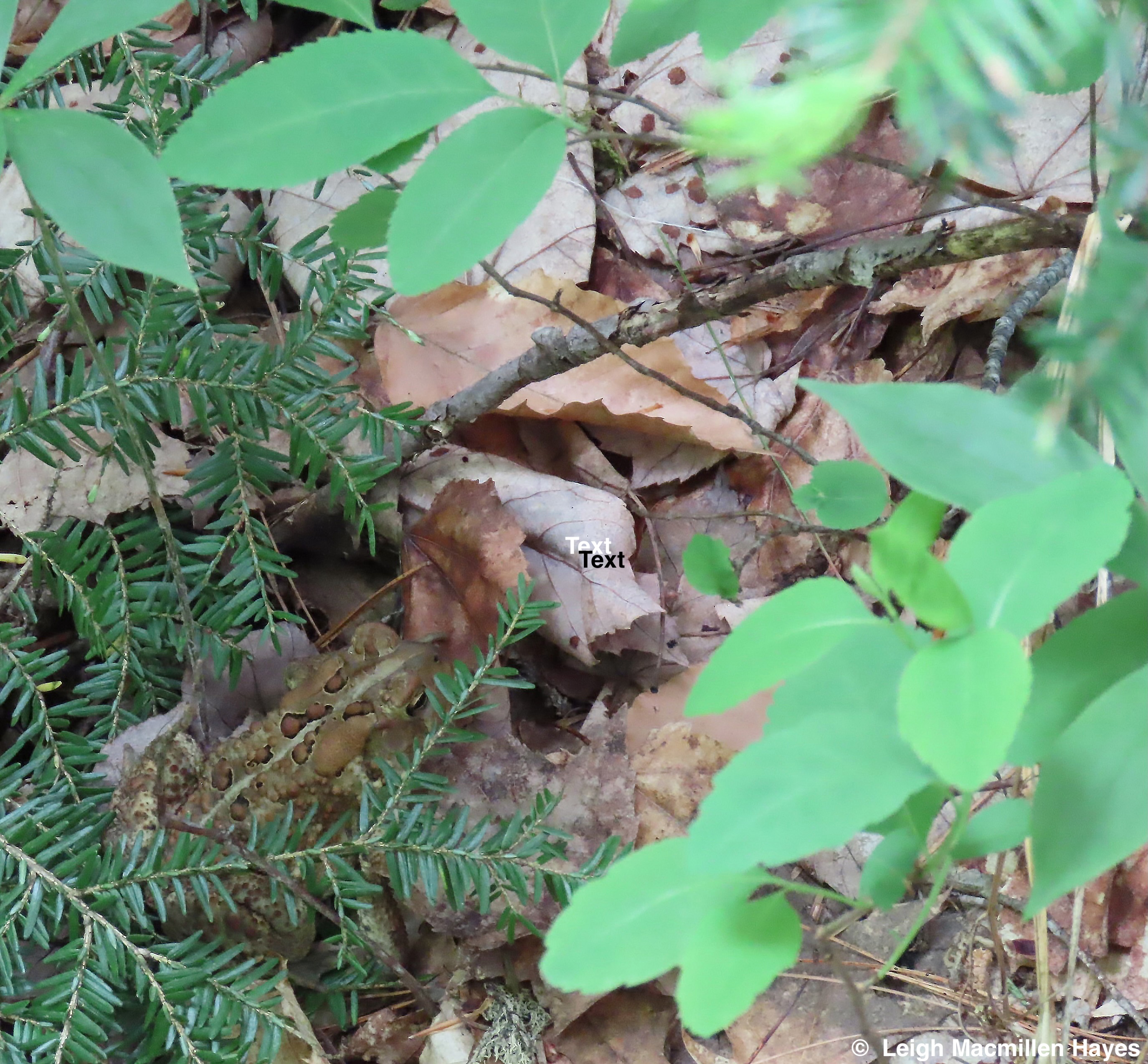
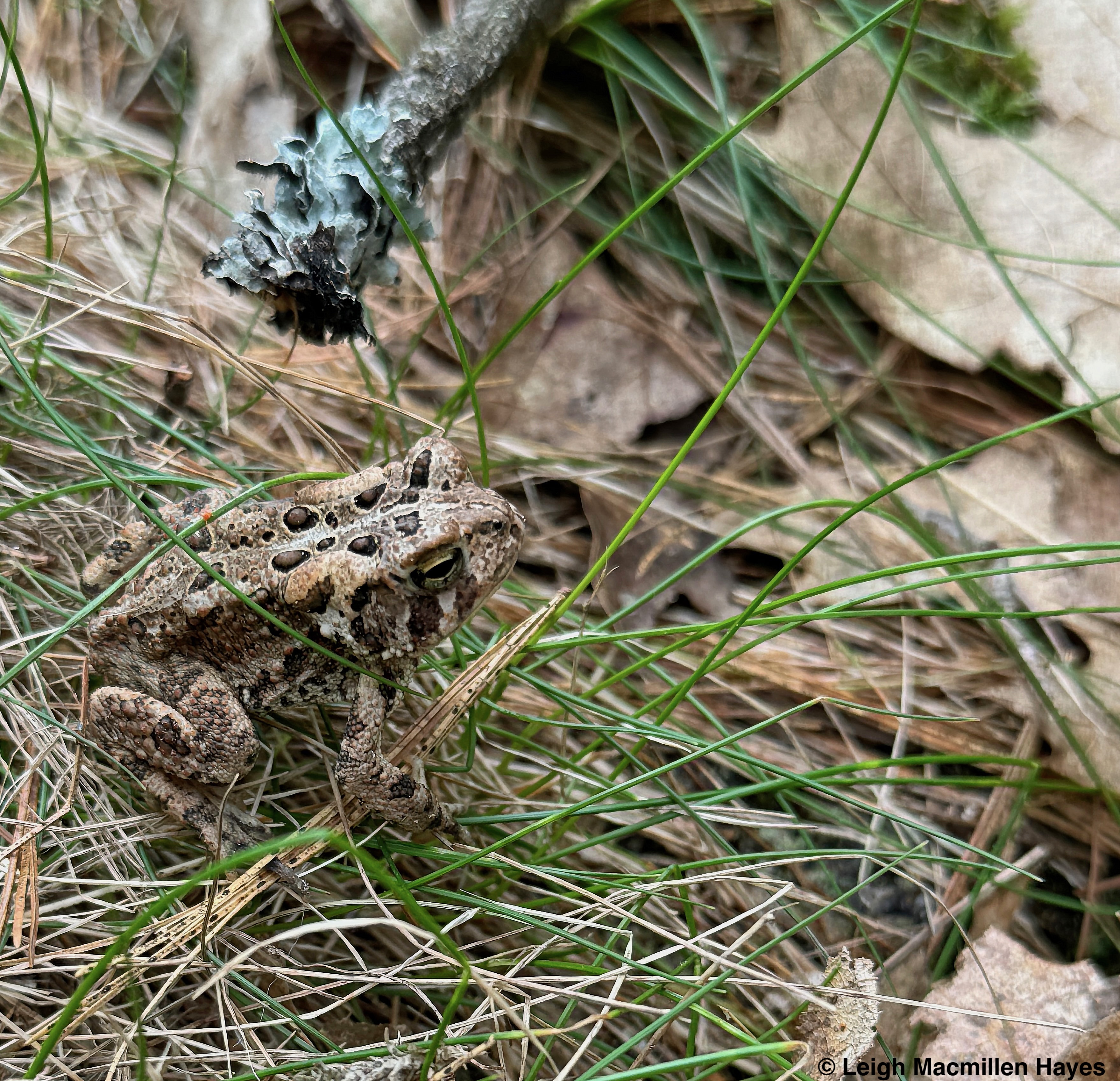
Because we were always looking down, an American Toad, so certain it was invisible for so camouflaged was it, wasn’t. Invisible that is.

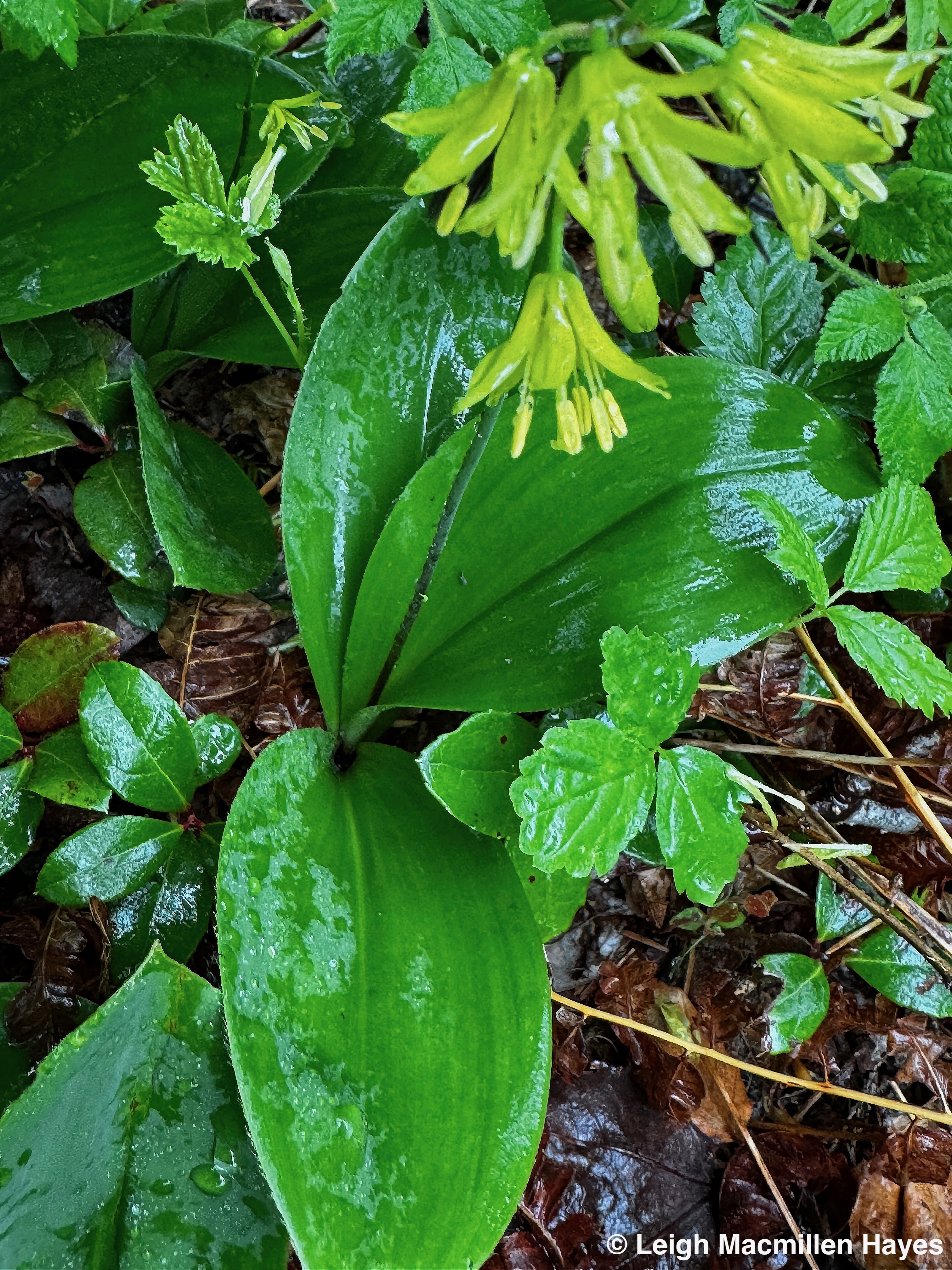
Plentiful were the Blue Bead Lilies, with their anthers hanging long awaiting pollination before rising in fruit forms that will soon look like . . . blue beads.

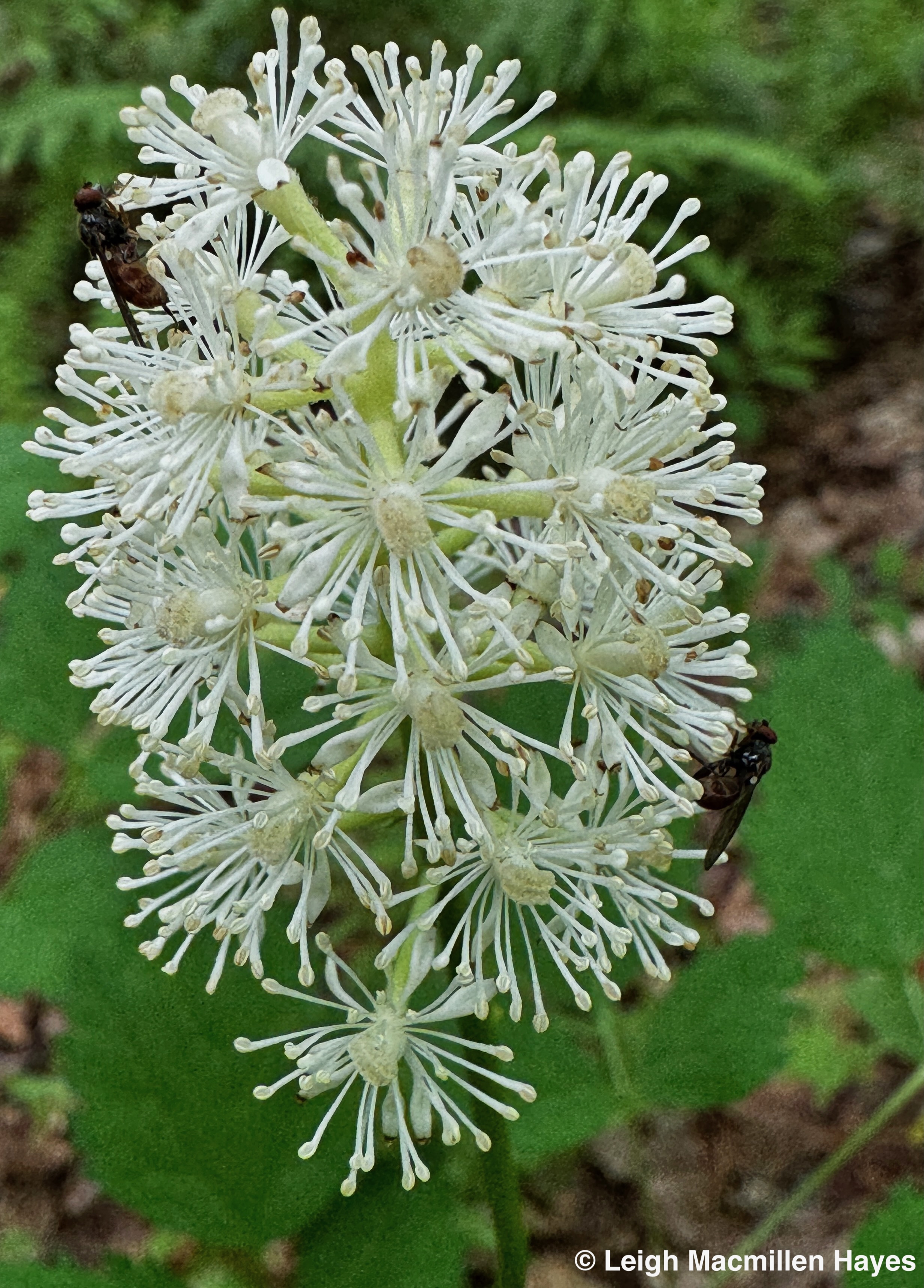
In several spots along one of the trails, White Baneberry, aka Doll’s Eye, so named because its fruit form resembles such, showed of its firework display and the insects were attracted.

And a carpet of Bunchberries, those with six leaves rather than four, asked that their floral displays be acknowledged.

Not to be overlooked, Wild Geranium’s runway lines upon each petal functioned as the nectar guides they were intended and the pollinators rejoiced.

I, too, rejoiced, for on the first rainy day, May 27, 2024, the trail we hiked, which is known by locals for its mosquito population, wasn’t at all buggy; but on our May 30, 2024, hike, our faces were constantly buzzed, though nary a bite, making me think they were all males. We kept an eye out for dragonflies and finally made their acquaintance, including with this Common Whitetail Skimmer, that hardly looked common.

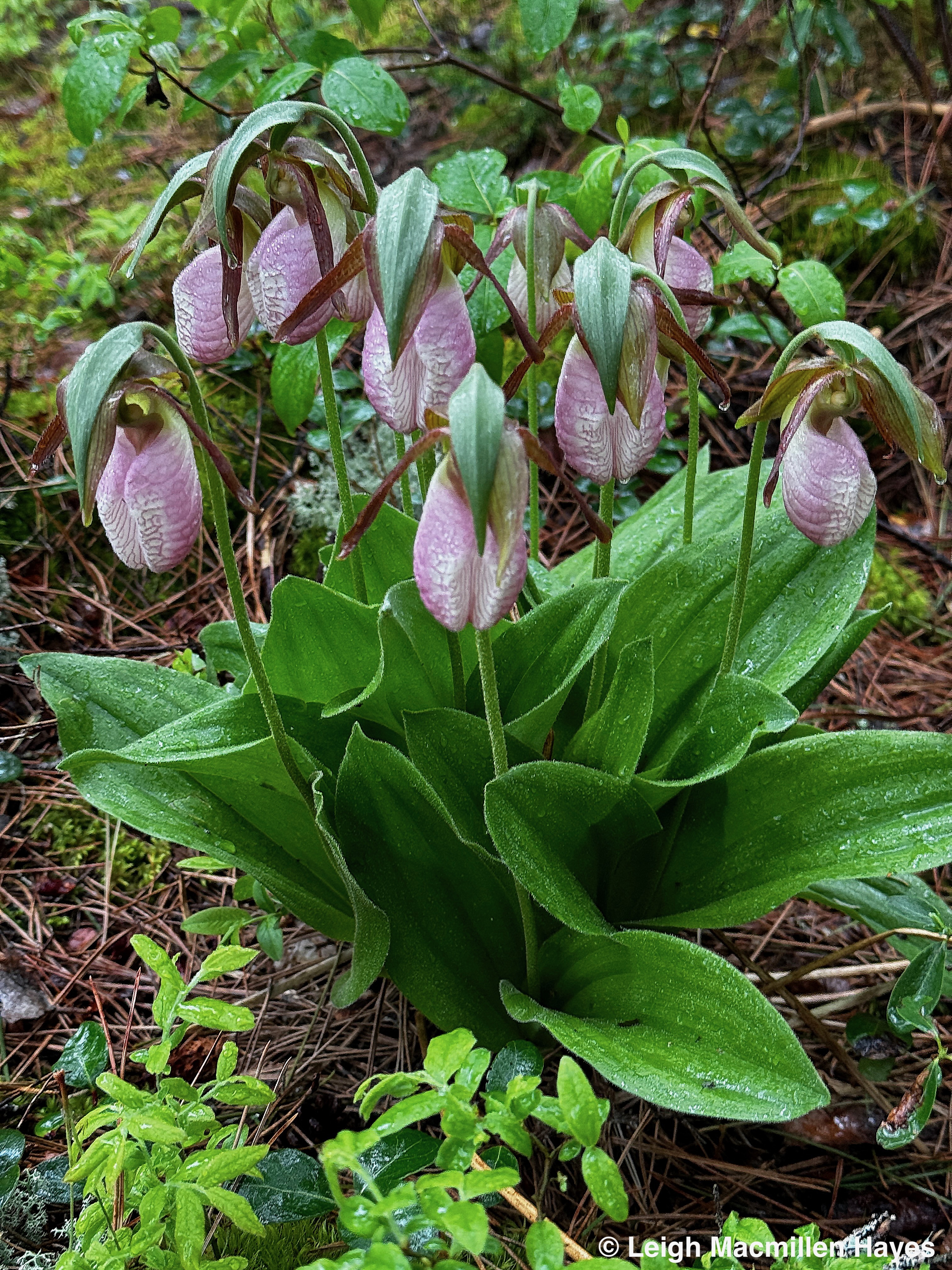
The real reason, however, for our hikes this week was greed. Yes. Greed. You may know My Guy suffers from Blueberry Greed in the summer, but spring brings out another type and he takes on the mission to locate and count Lady’s-slippers. And he always wants more.

It may sound like an easy task because some are proud to stand straight and tall and can be seen easily from the trail.

But some, like the American Toad, like to hide. We, however, are persistent in our survey.
We found pinks of many hues, and their white variants.
And no spring feels right without a visit to My Guy’s favorite bouquet.

Lady’s-slipper pollination is a curious thing. Bees are lured in by the guide lines to a slit in the front petal, the slipper-like pouch, or flower’s labellum. Once inside, the bee cannot exit the way it entered because the petal structure turns inward.

The exit is at the top of the slipper, but to reach it, the bee must move through a hairy interior and rub against the flower’s stigma, depositing any pollen it may have carried in and brushing against the pollen mass called the pollenia before flying out.

Some bees get frustrated with the dilemma of discovering there is no nectar and the task of finding the exit and instead chew their way out, which seems to be what happened to this flower.

One flower in all that we found, did present as if it had been pollinated, for rather than the downward pose, the slipper was almost parallel to the ground and beginning to deflate.

Twice we came upon last year’s capsule, which is a rare treat for so few are actually pollinated because the bees learn not to bother. Fortunately, one woody capsule contains thousands upon thousands of seeds, which are released when the woody structure splits its seams.

Near the end of yesterday’s hike, the sun finally brightened the sky and forest, and we weren’t the only ones to enjoy it for a gartersnake basked beside the trail and helped us spot another flower to add to our count.

And on Monday’s hike we had another special sighting: an Ovenbird’s nest that I spotted because I saw the parent fly up through vegetation beside the trail as we approached.

We covered a lot of miles, hiked slower than My Guy’s normal pace, and kept reminding ourselves of the numbers so we didn’t lose track, but rain and mosquitoes didn’t hold us back.

Lady’s-slippers have a symbiotic relationship with fungi. A fungus helps break the seed and allows it to obtain nutrients and energy from organic matter in the soil, while the plant, once established, gives nutrients back through its roots. It takes anywhere from 3 – 7 years for the seed to develop underground and then may take another ten years of presenting as two pleated leaves, before a flower is produced. That means that by the time it first flowers, the plant might be 17 years old. So please, please, please, enjoy them the way we do. In their natural state.

Our count (which include last week’s visit to Wolfe’s Neck Woods State Park):

Wolfe's Neck
2022: 411
2023: 324
2024: 475

Albany Mountain
2020: 150
2021: 47
2022: 266
2023: 274
2024: 364

Overset Mountain and Sanborn River Trail:
2022: 286
2023: 351
2024: 598!!!!!!!!!! (You know who wanted to make it to 600, but came up just shy)

Grand Total this year: 1,437.

I'm not sure we are done and I know everyone is seeing them everywhere, which is a glorious thing. Now I'm wondering if all of last year's rain showers meant more fungi for My Guy's May Flowers.

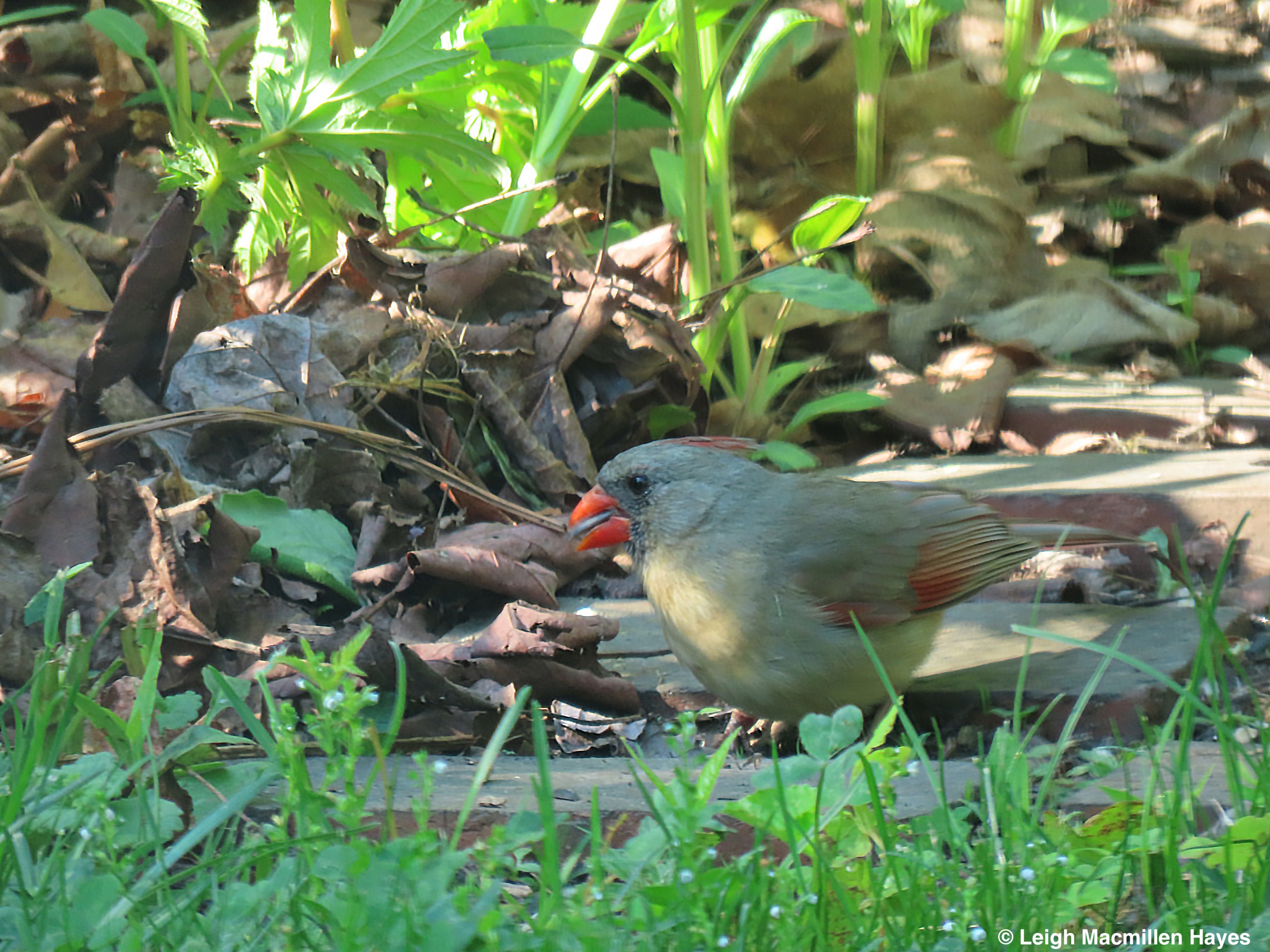
Thanks to the Cardinal

I love this time of year when the windows are open and the birds wake me and invite me to head down the stairs and stare out the window. And so I did this morning.

It seems the Northern Cardinals always announce their arrival with a “Chewip, Chewip, Chewip,” call and usually he arrives first, and she, pictured above follows. For some reason, I didn’t see him this morning, but maybe tonight as they are early morning and early evening visitors.

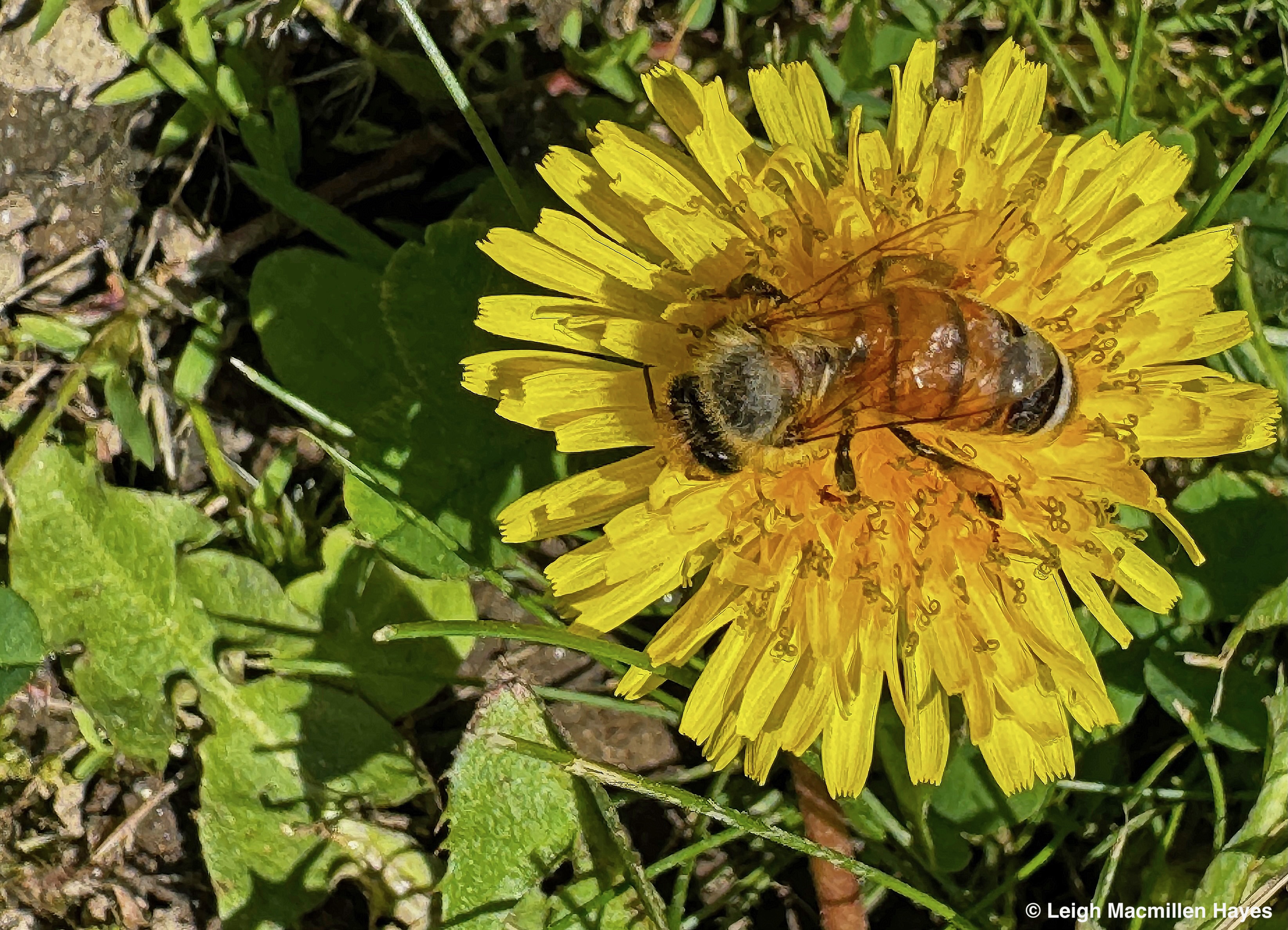
While watching her another bird flew in. This a House Finch. And it immediately amazed me. I didn’t realize that they eat Dandelion seeds . . . until, that is, I watched it do exactly that.

So, My Guy and I are at opposite ends of the spectrum when it comes to Dandelions. He wants to banish all from the yard. I want to encourage them and any other wildflower that chooses to appear.

And today, I decided to discern what I might hear when I take time to listen, and not just listen to the birds.

It was the voice of the Dandelion for which I yearned. Some call them weeds and wish they would wither and die. But the Dandelion wants us to know it is strong and persists even in the poorest soils.

And so it should.

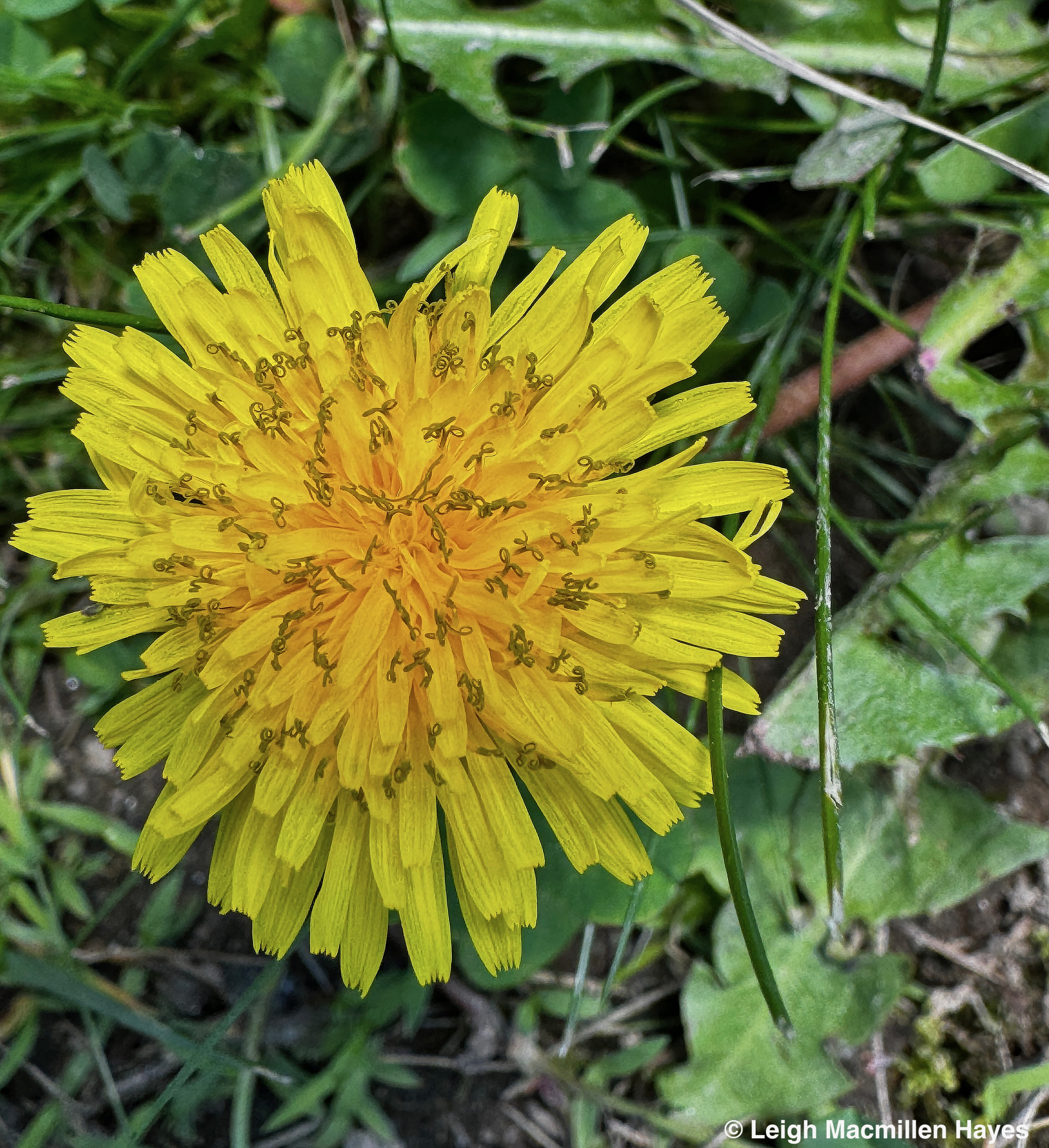
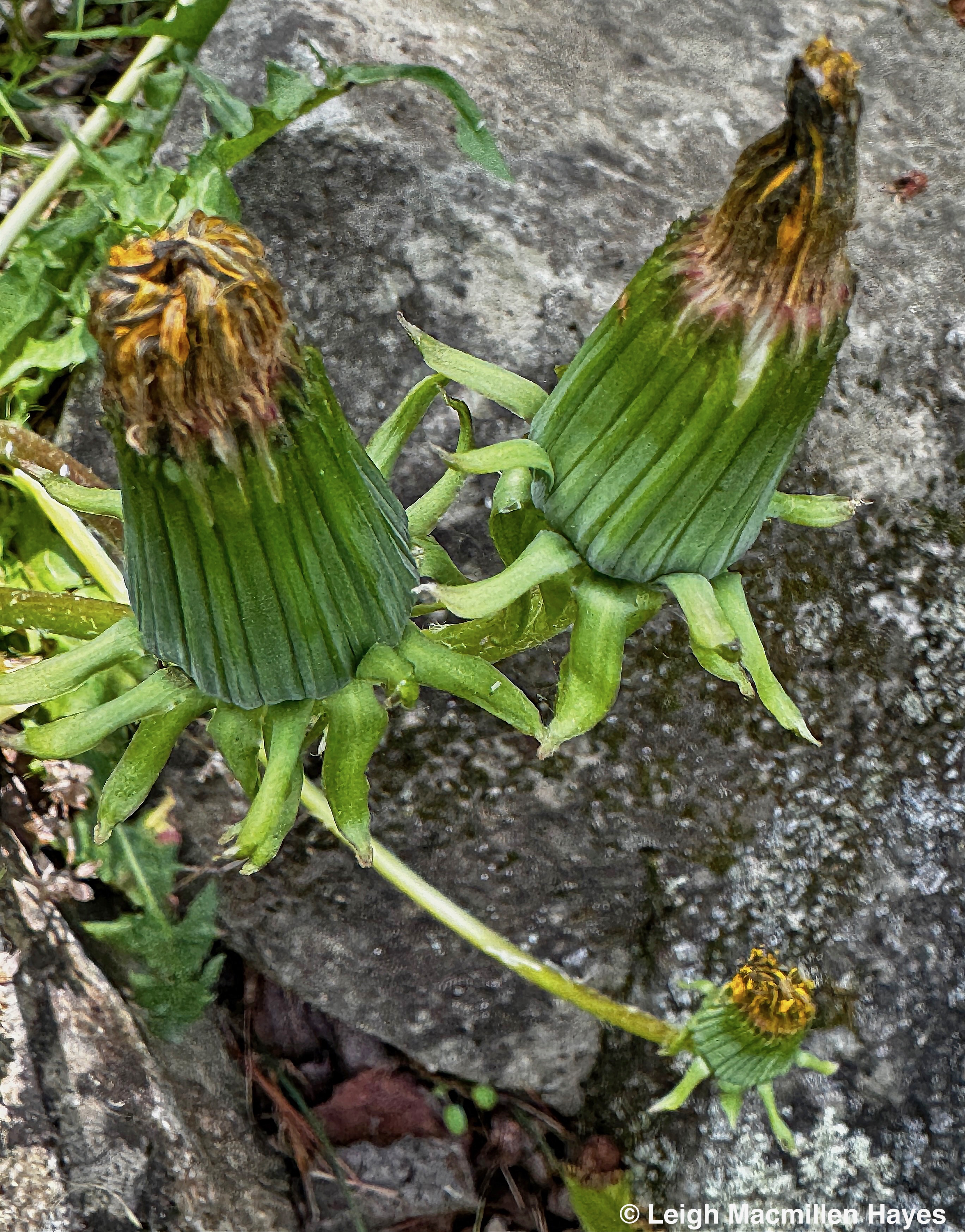
To begin, there are the green bracts. Some of the bracts are turned downward as if in a dance, perhaps to keep certain insects that might gobble up the flower at bay, while other bracts protect the developing flower.

When the flowerhead begins to open, it does so one ray or “petal” at a time, for each “petal” is actually a floret, all of which combined look like the sun at high noon and make this plant a composite.

Toward the stem, each floret narrows into a tube, which rests on an ovary containing a single ovule. In that tiny tube is the nectar. While you may not see the tubes unless you carefully pull the flower apart, we can’t overlook the stigma, that tip of the pistil, or female part, covered with pollen. Each stigma for each floret is split at the end into two curling lobes.

The Dandelion sings out from its nectary, inviting insects to stop by for a visit. Meanwhile, the pollen remains in the protected areas within the circles or loops the two lobes of the stigma create.

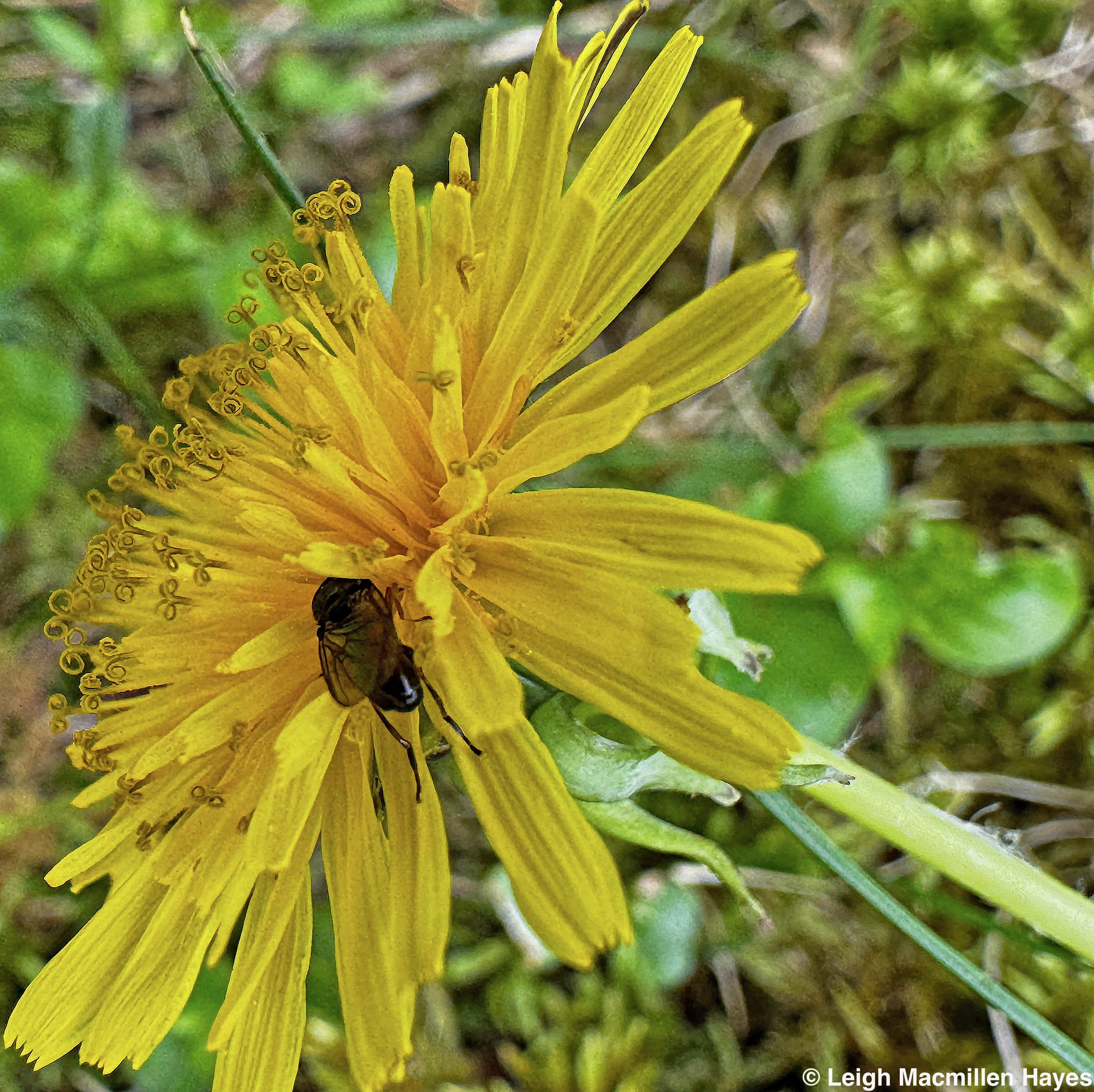
Bees and many flying insects seek the nectar and in the process of visiting the flower, they smear themselves with pollen grains, which drop off at the next flower where the insect seeks another drink, thus insuring cross-pollination.

Of course, if you are going to listen to a Dandelion in full flower, you should be equally wowed as it continues its journey.

In time, the entire head of the bloom matures, the florets close up within the green bracts, and the bloom looks almost like it did as a bud, and evokes an image of our life cycle–from birth to death.

But the transformation isn’t over yet. Next on the Dandelion journey, the flowerhead opens into a fluffy ball of seeds, that fluff being fine hairs attached to each seed that will serve as a parachute.

Each seed represents one floret. And they wait for us, the wind, animal. or bird to disperse them. Out into the world they are ready to go. I don’t know about you, but it’s hard to resist the temptation to pick a stem and blow on the puffball.

As I walked around our yard today, I noticed carpets of another composite, with a flower of the same color, but this one a Mouse-ear Hawkweed.

One easy way to differentiate between the two plants is by their leaves. Both have basal leaves, but those of the Dandelion are irregularly lobed.

The Mouse-ear Hawkweed leaves are entire, and entirely hairy. And much shorter in length.

Some call them weeds, but I prefer to think of them as volunteers who reflect the sun’s image. When I take the time to listen to them, they remind me that we are all interconnected and we need each other to survive, a lesson the pandemic certainly taught us. And that includes letting the undesirables flourish–in our yards and in our lives. I know I need to remember that.

If we take the time, really take the time, to slow down and observe, watch the variety of insects that pollinate flowers like Dandelions and Hawkweeds, and begin to understand that we need to save the flowers in order to save the bees and their relatives who also pollinate the fruits and vegetables we need in order to flourish, then we may change our minds and realize they are desirable after all.

And not all the seeds will end up growing in your lawn, as the House Finch taught me today.

Thanks to the Northern Cardinal for leading me to the House Finch, and subsequently the Dandelion and Hawkweed.

A Day of Firsts

This has never happened before. Then again, there’s a first for everything.

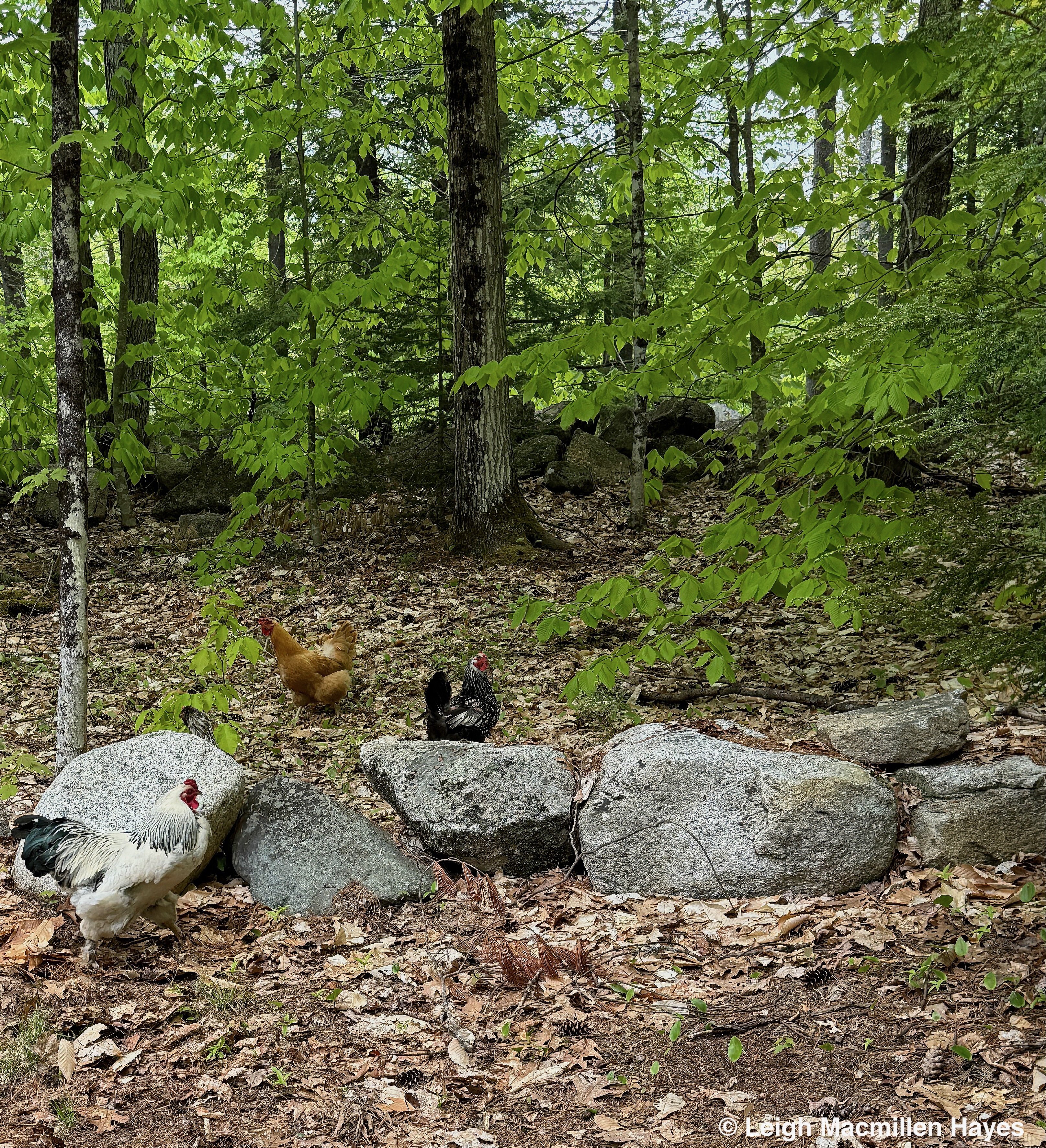
My Guy and I have been hiking together for the last 38 years, and in all that time, never, ever have we been greeted by neighborhood chickens, with one rooster even sending us off to the tune of his cock-a-doodle-do.

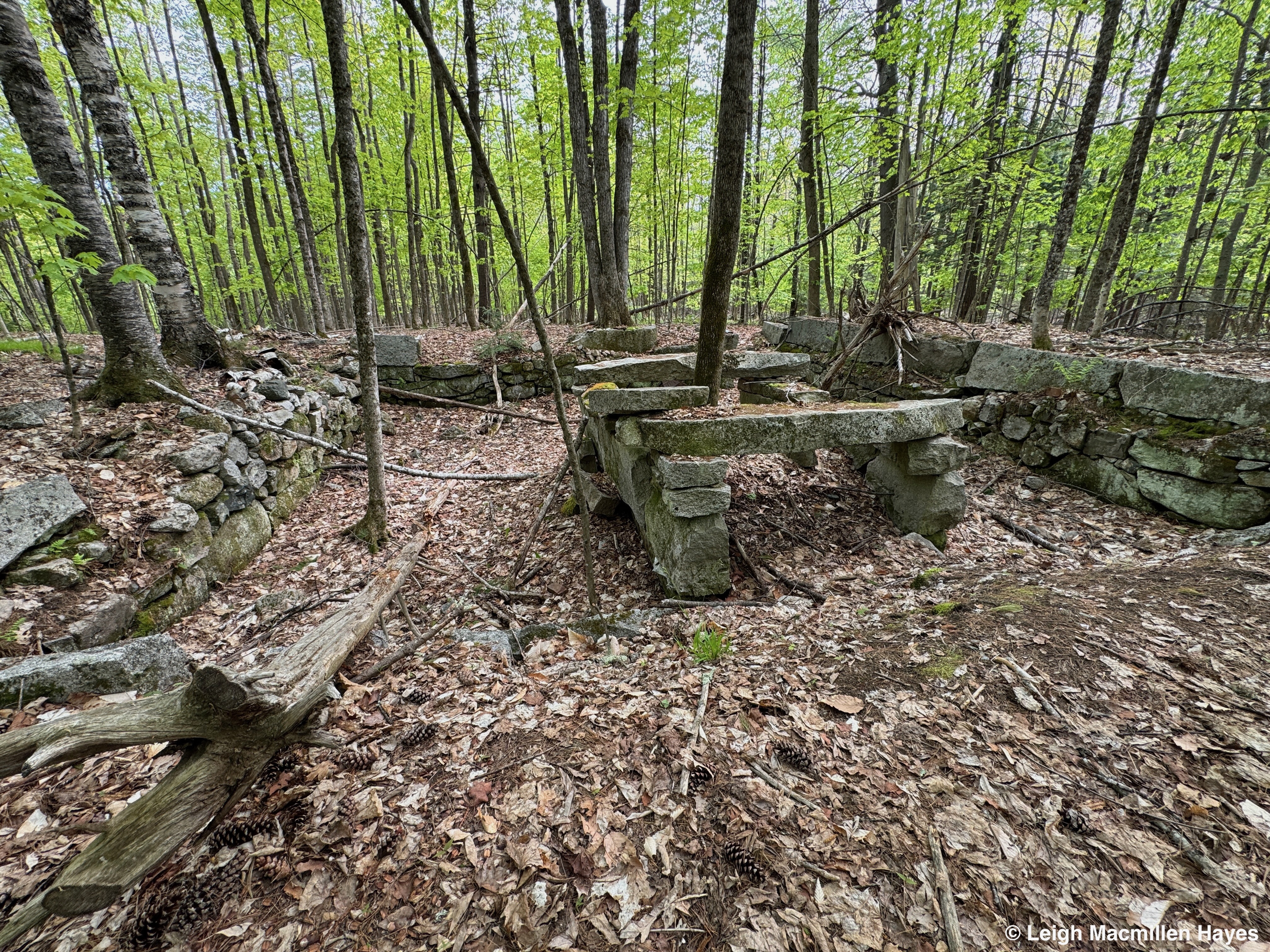
The past is always present and just after the send off, we paused by the homestead foundation, possibly that of A.H. Evans, which is located within feet of the trail’s head. And it appears that if this did belong to A.H., he was the head of a large family for it’s a huge foundation.

The barn foundation was also impressive and we could sense the work that went into such a creation.

And based on the configuration of rocks and boulders between the house, outbuildings and barn, all were once attached.

Again, assuming all of this belonged to A.H., I did discover a 1916 document that suggested he grew rutabagas: “A. H. Evans, Fryeburg, raised 90 bushels rutabagas in 1-8 of an acre.”

At some point in time, the land also must have served as a saw mill close to what is now a small stream, but may have been more of a brook in the past, there’s a pile of saw dust that hikers must climb. This is not uncommon in Maine woods. And it’s forever soft underfoot, however many years later.

We spotted a few Painted Trilliums, and lots of Sessile-leafed Bellwort, and other flowers waiting to come, and a Chipmunk peeking out from a rocky ledge, and mosses, and lichens, and so much more, (oh, and a few Black Flies, but again, not bad in the scheme of things), but this was the first American Toad of the year for us. Toads can remain absolutely still, a smart adaptation as they blend into the scenery.

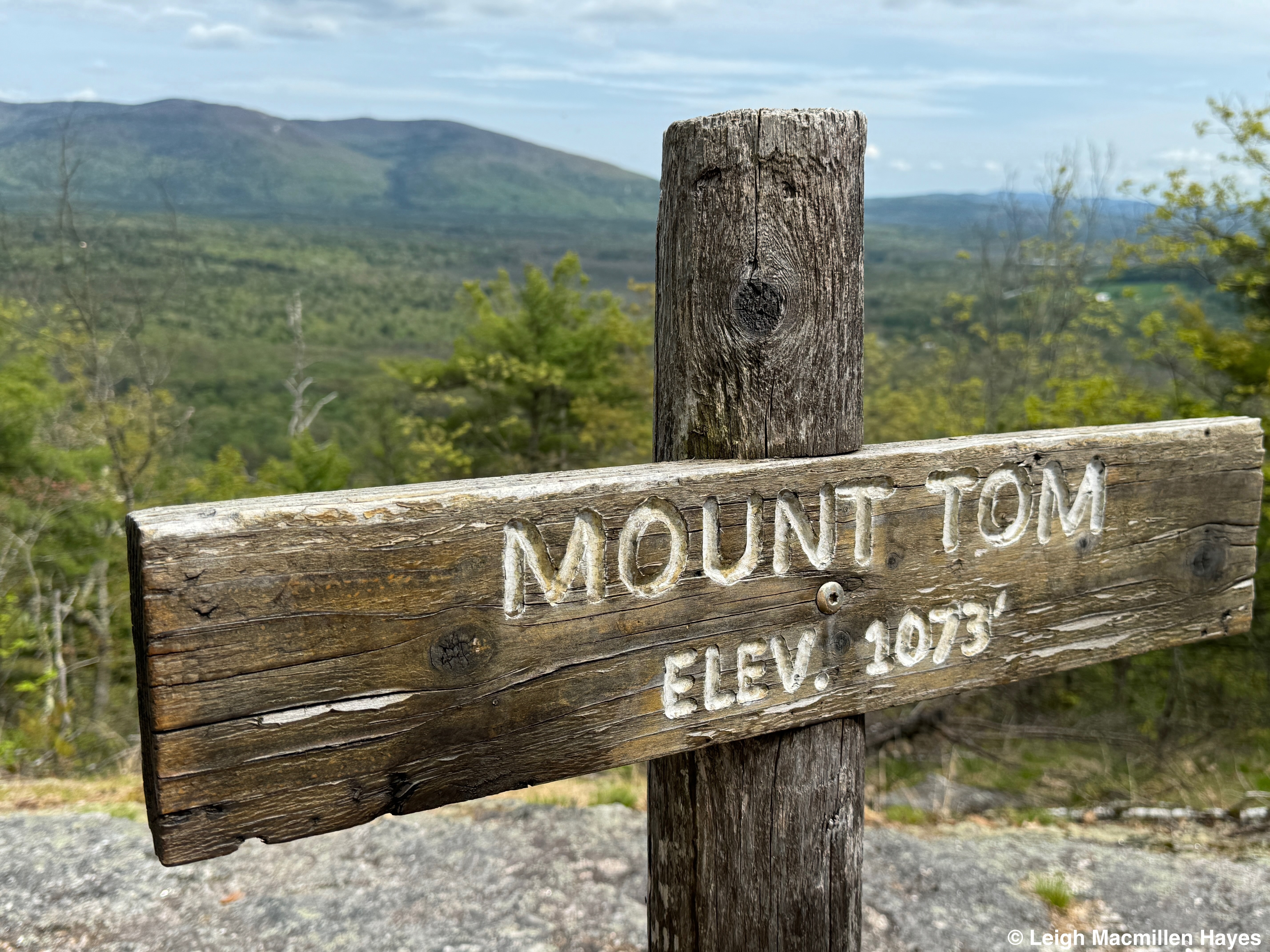
It’s about two miles to the summit, which isn’t all that high, but it’s the perfect quick hike (okay, remember who I was hiking with) for an afternoon. And at said summit, we stood for a few moments as we gazed upon the ridgeline of our hometown mountain–Pleasant by name.

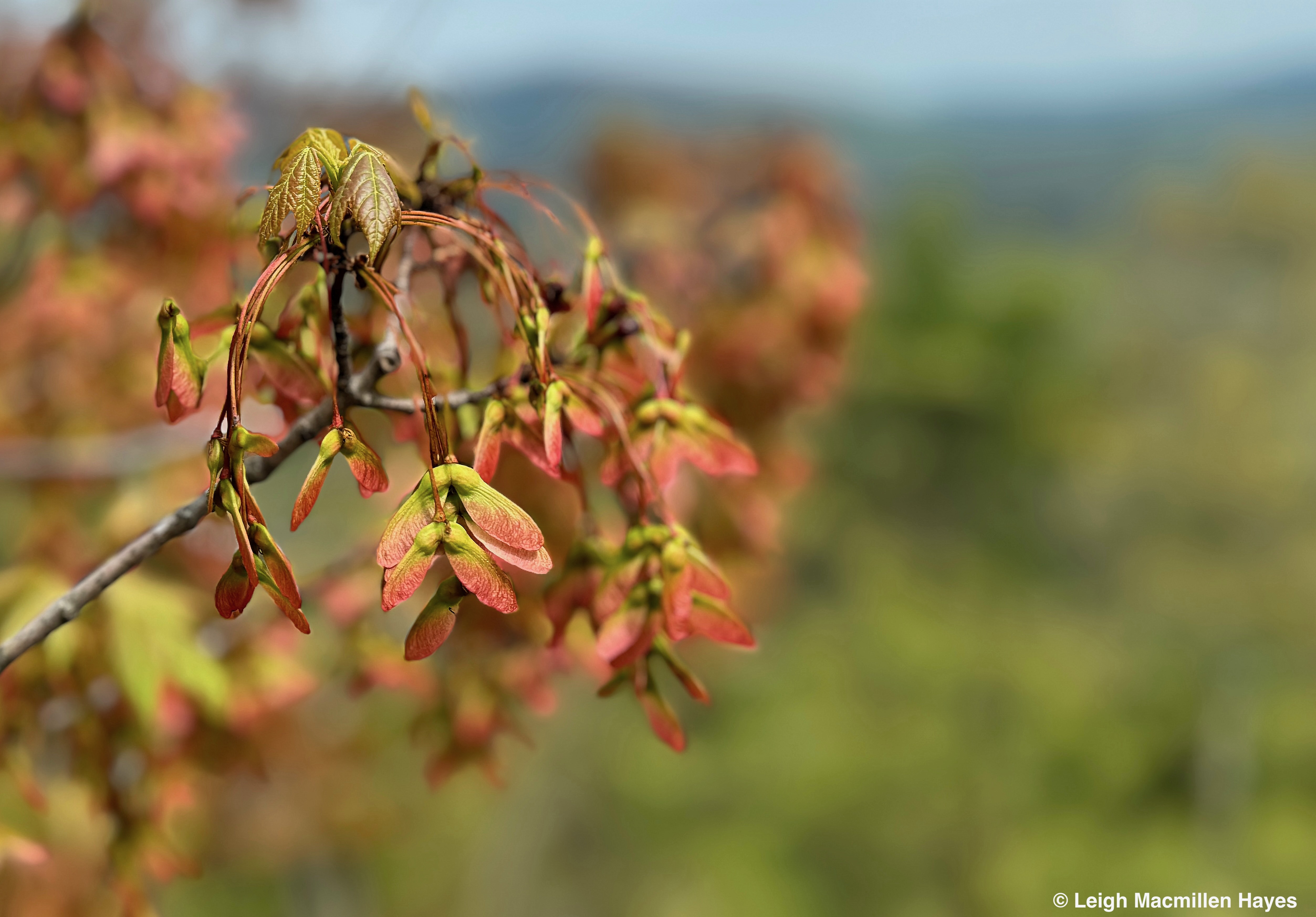
And at the summit, a Red Maple showed off its gifts to the future in the form of an abundance of samaras. Well, I see them as gifts. Given that we have an abundance of Sugar Maple seedlings growing in our yard doesn’t exactly thrill MG.

As we started to walk back along the trail, I spotted something we’d both missed on the way up. Wild Columbine. In flower. The. Most. Spectacular. Flower. That structure. Those colors.

And because we took a different path down, Striped Maple showed off its own set of flowers, limeade green in hue. I chuckled later when I commented on how the Beech leaves gave the trail such a summery look, and MG mentioned that he had even spotted toilet paper. It took me a second, during which I searched for a roll of white, before I realized he was referring to Nature’s Toilet Paper, for so large are the leaves of Striped Maples, and soft, and not poisonous, so you know they are safe to use. Not that we often encounter Poison Ivy in the woods, but it could happen.

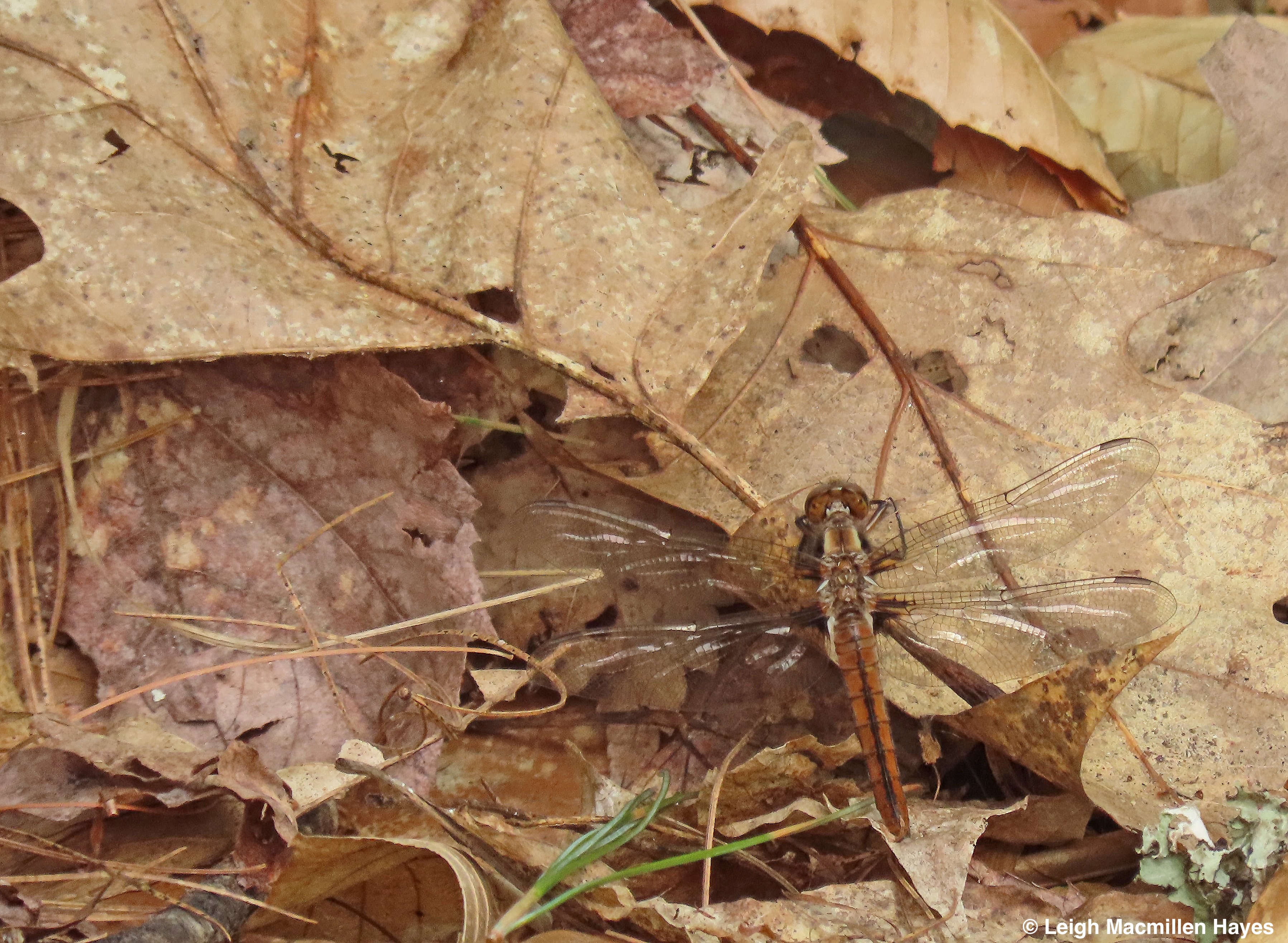
Back at the trailhead, the chickens weren’t there to congratulate us for a safe return, but we encountered probably the best finds of the day–several immature Chalk-fronted Skimmer Dragonflies. Let this next season begin.

Indeed, this was a day of firsts.

Savoring Spring

My paths were multiple this weekend as if I was on a quest.

On a bridge over a brook,

down a road through the forest,

beside a bog,

along a boardwalk,

and even following this guy down low and up high.

Together today, we circled another brook (if one can actually circle a brook, but we did),

enjoyed this view from lunch roots,

and dessert on the rocks where we could peek down on said roots.

Though I may have been alone for much of the weekend, I never really was for the bird song, including the conk-er-ies from this male Red-winged Blackbird, accompanied me where ever I hiked.

There were Eastern Chipmunks adding to the chorus as they chortled at me and I chortled back, though I did wonder if life hasn’t always been so easy for this one given the marks on its body and a very short tail.

I watched Painted Turtles bask, despite cooler temperatures, though the air was probably warmer than that of the water.

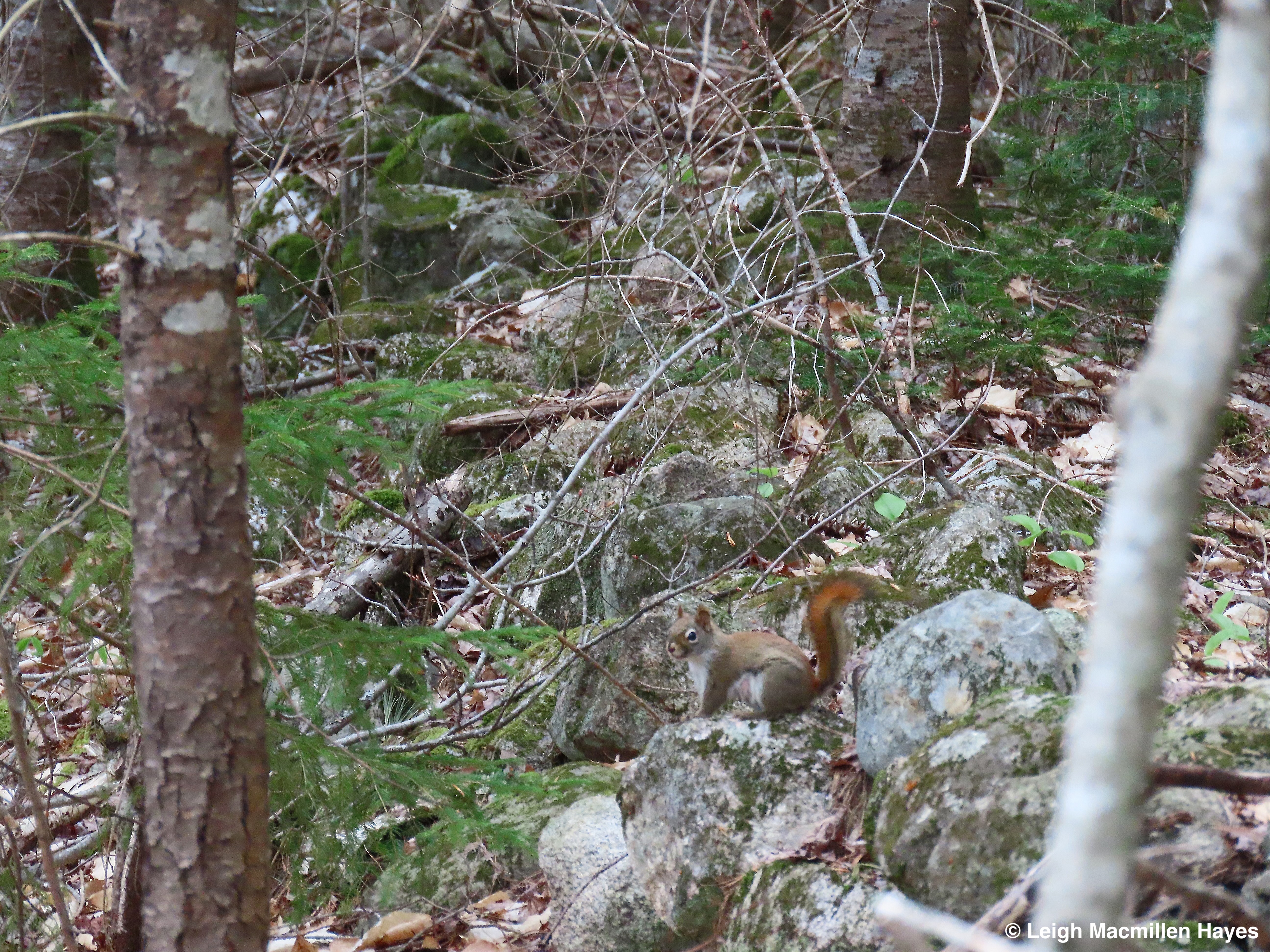
And I was chastised by this Red Squirrel, but really I had done nothing wrong–except to enter his territory without an invitation.

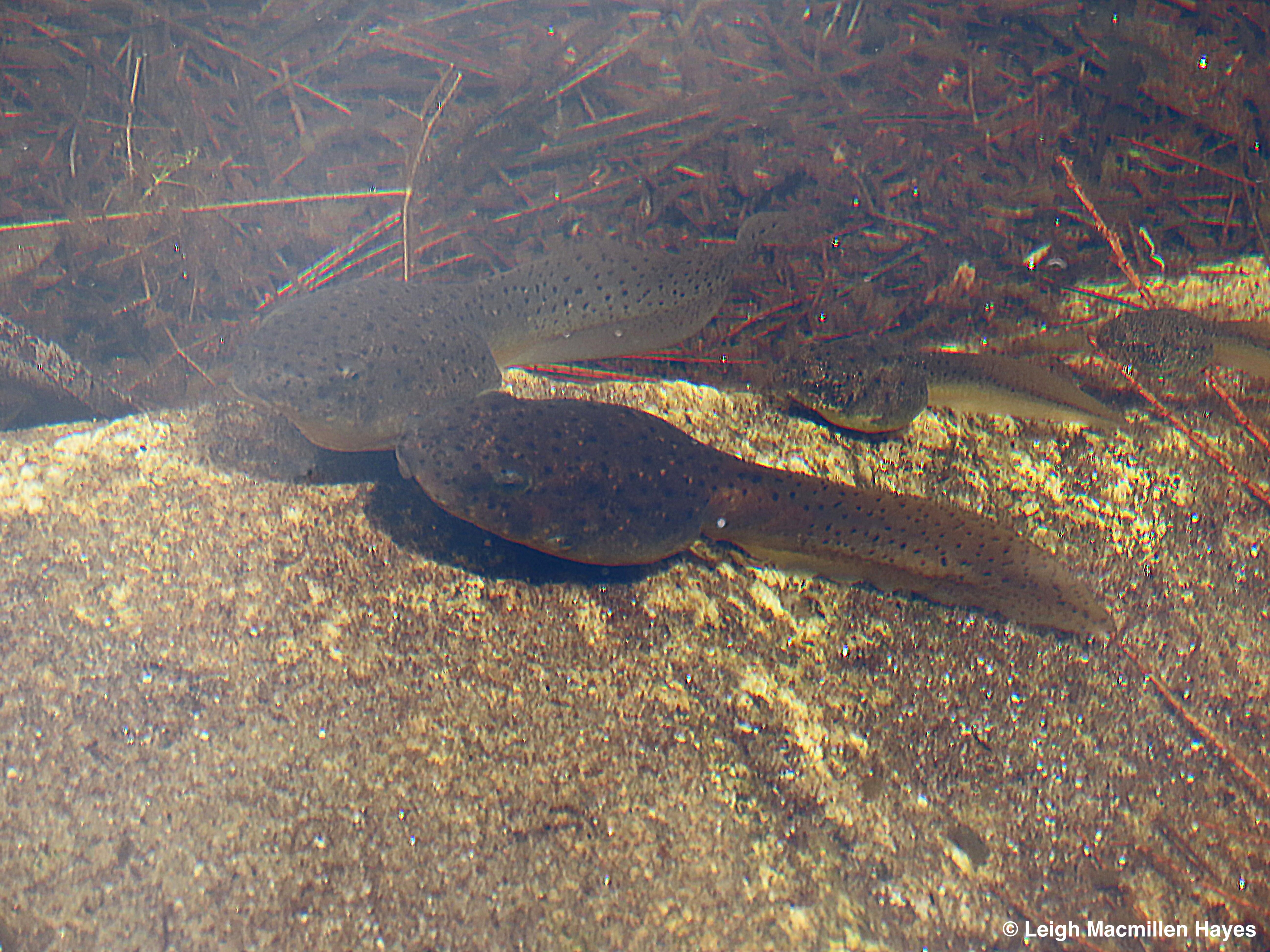
In the depths of the water today, tadpoles. HUGE tadpoles of the Bullfrog sort, which take two years to mature. I spotted tiny hind legs growing beside where the abdomen meets the tail. There were also lots of smaller tadpoles, too big to be Wood Frogs or Pickerel, but I suspected either one-year old Bullfrogs, or perhaps they were Green. Or both.

A few flying insects also brightened the days (and I have to say I’m not referring to Black Flies, which I hardly spotted–and actually caused me concern, for where have the little biters gone?), including this Anglewing butterfly. I can’t name it to species, for it is either a Comma or Question Mark, but never in the time I watched did it pose so that the underwings were visible. Okay, so My Guy and I spotted it today and when I explained to him the difference between the two, the C having a small white comma on its underwing and the QM, a small comma and a dot looking rather like the punctuation mark, he decided it must be an Exclamation Mark instead.

And in the same area, an American Lady added her color to the scene.

Leatherleaf’s bell shaped flowers reminded me of clothing hanging from an outdoor line.

And I’m really beginning to believe there are a trillion Painted Trillium, though I didn’t actually count. There’s something to admire about those olive green leaves and perhaps it’s that we don’t often see that color in nature.

I even spotted a few that chose a different paint palette. I could explain away the color of the leaves by thinking that perhaps they were showing off their anthocyanin, which gives fall leaves their red color and is seen in the spring as well, perhaps serving as a sunscreen for the plant. But the color of the petals was equally amazing, though who knows, maybe it’s common and I was just paying attention to it for the first time. That does happen. A lot.

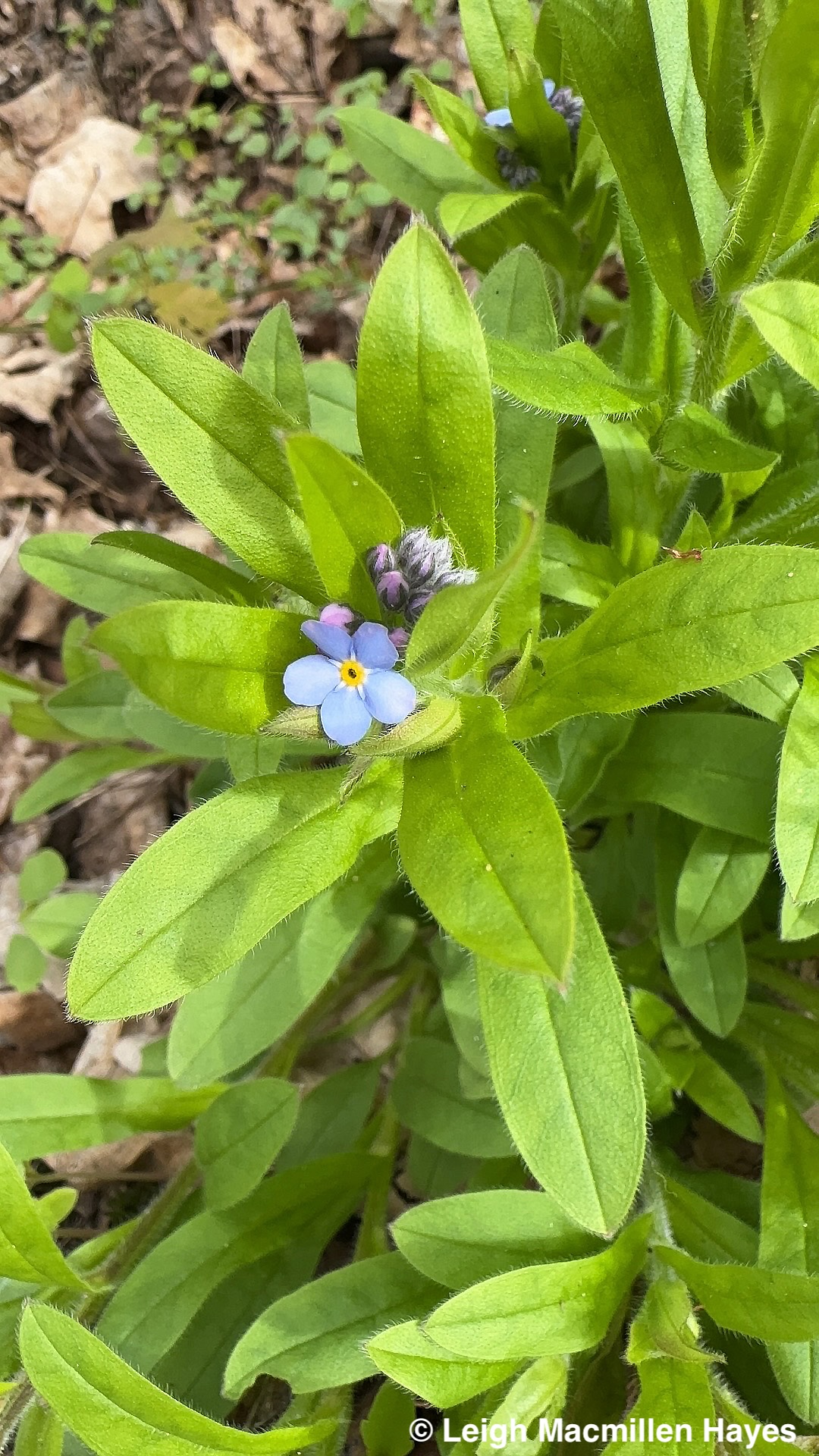
And then there was the amazing blue hue of Forget-Me-Nots. I surely won’t. Forget you that is.

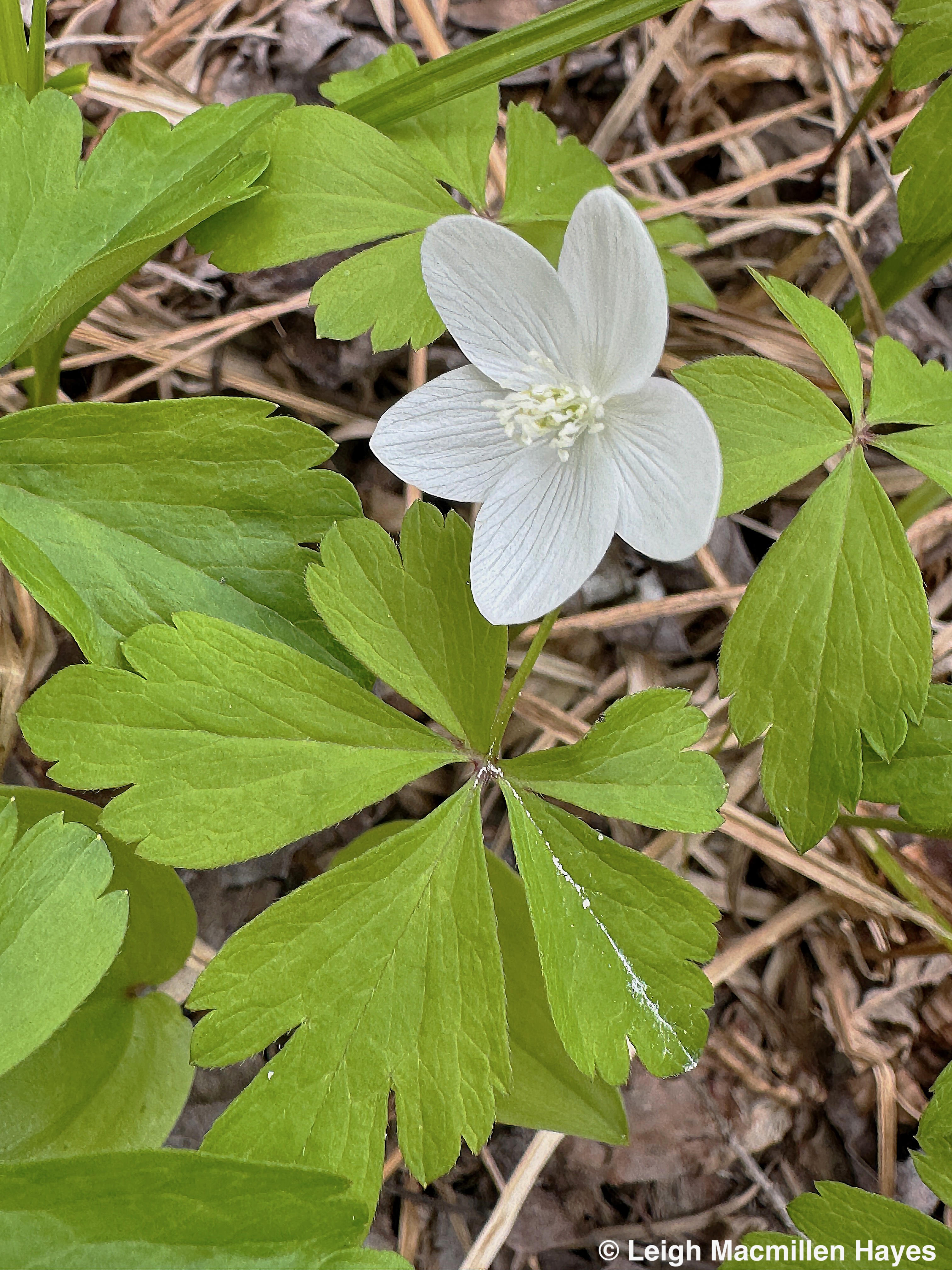
And Wood Anemone, its compound leaves notched, and flowers deeply veined, looking so tender and fragile.

Not looking tender, and hardly fragile, but still beautiful, was the carnivorous Pitcher Plant, of which I paused beside several. I’ve known this particular one for at least twenty years so when I encounter it, I always feel like I’m meeting an old friend. Because I am.

Hiding beneath its lime green leaves, American-Fly Honeysuckle’s delicate flowers did dangle in their manner of two. The shrub always surprises me, though it is a native, but I don’t get to greet it often enough.

All of these flowers bloom so early because they take advantage of sunlight before leaves emerge. That’s all changing now and in another week it will surely look more like summer around here. What I love about some leaves, especially American Beech, is that they are so hairy to start, and look like they’d make great fringed skirts for fairies. The other thing I became aware of this weekend, was the raindropy sound of their bud scales hitting the ground.

I love winter, but this season to follow is flying by, and already the Trailing Arbutus has reached its waning hour.

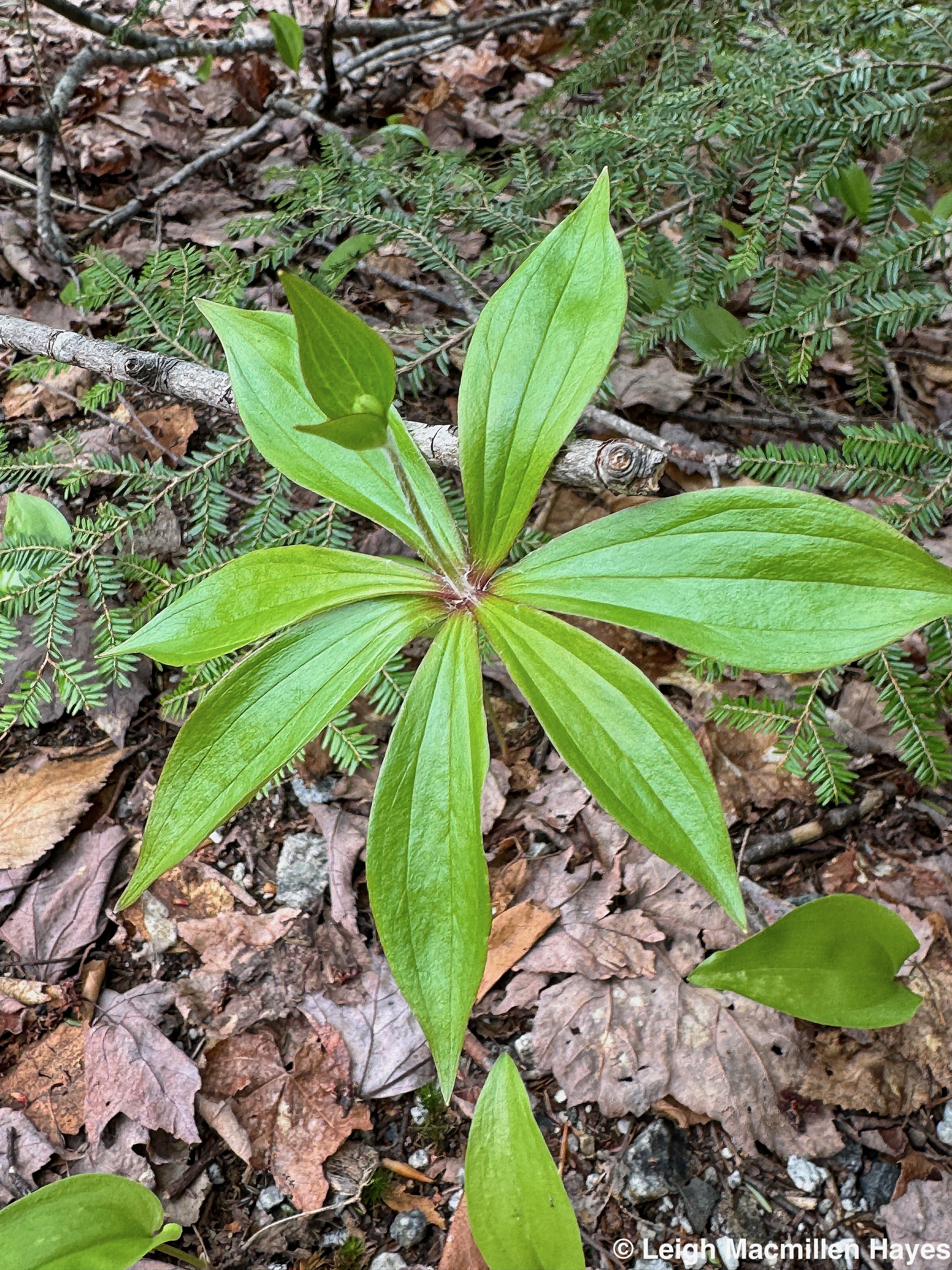
But there is hope in the form of others, like this Indian Cucumber Root, creating a second tier and a bud, and in a few weeks I’ll be seeking out its otherworldly flowers.

I’m savoring spring–before it moves on. I hope you are on the same quest.

The Extraordinary Ordinary

I love to venture off and explore other places but more and more I feel drawn to just head out the back door and see what this land of field and forest and vernal pools and puddles has to offer. And so I do. Almost daily.

It’s land where the Red Maples are in full flowering mode, this cluster being male, each with five to ten slender stamens.

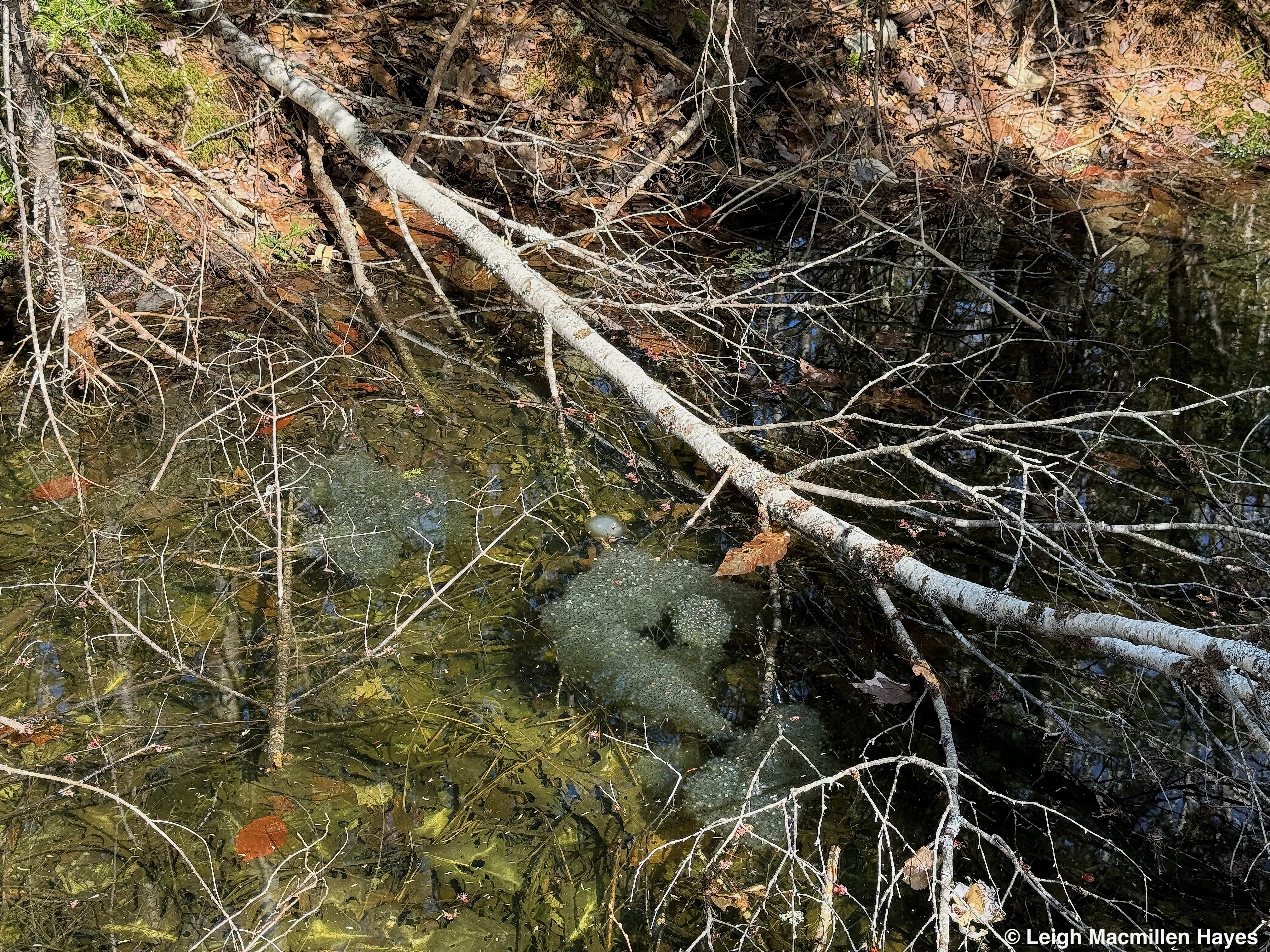
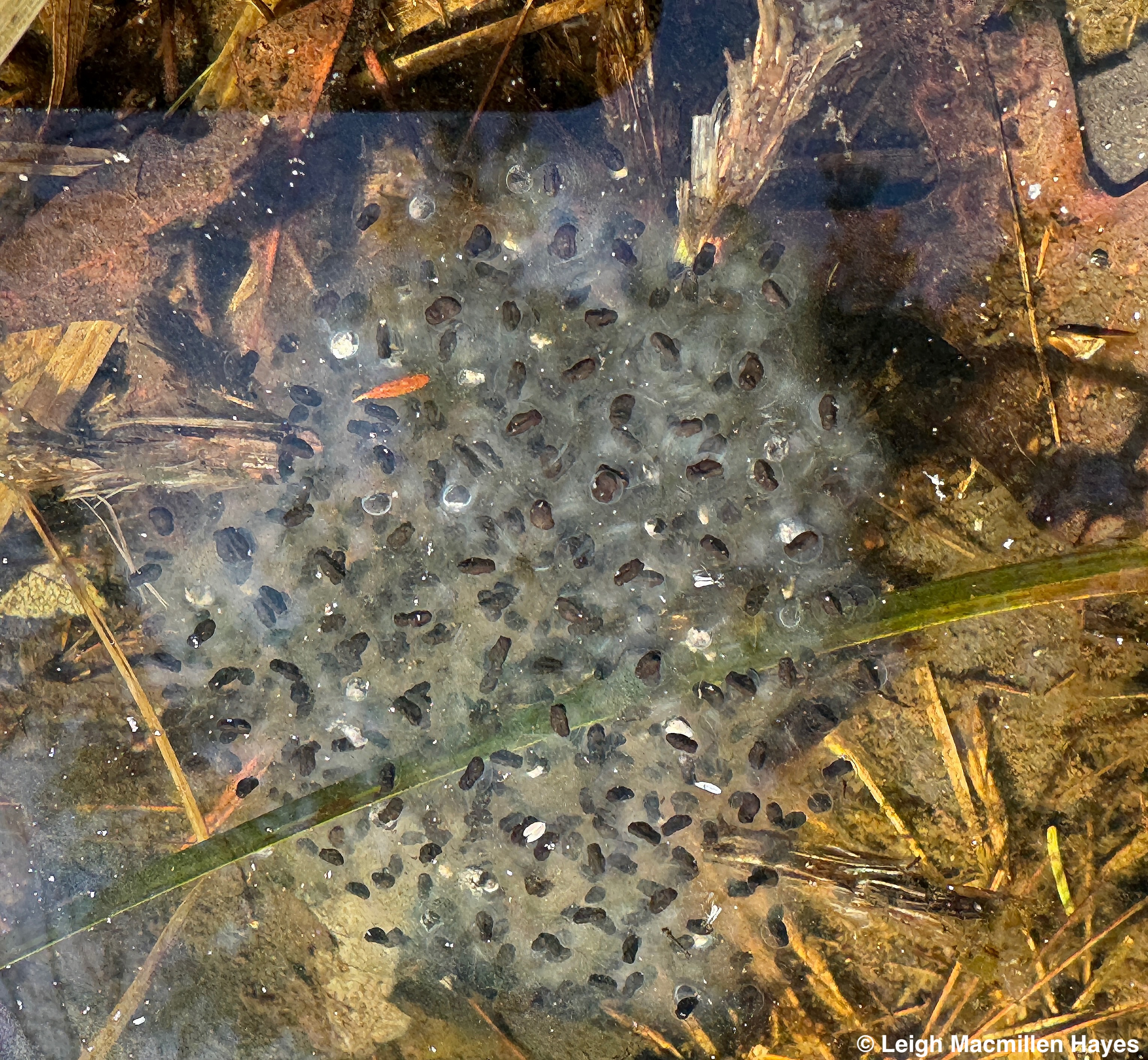
As beautiful as the flowers are, one of the real reasons I head out so often right now is that the vernal pools are full of egg masses, both Wood Frog and Spotted Salamander. Somehow, this year, except during Big Night, I missed the Wood Frog activity in the pools I frequent, but by the amount of egg masses, I know they were there.

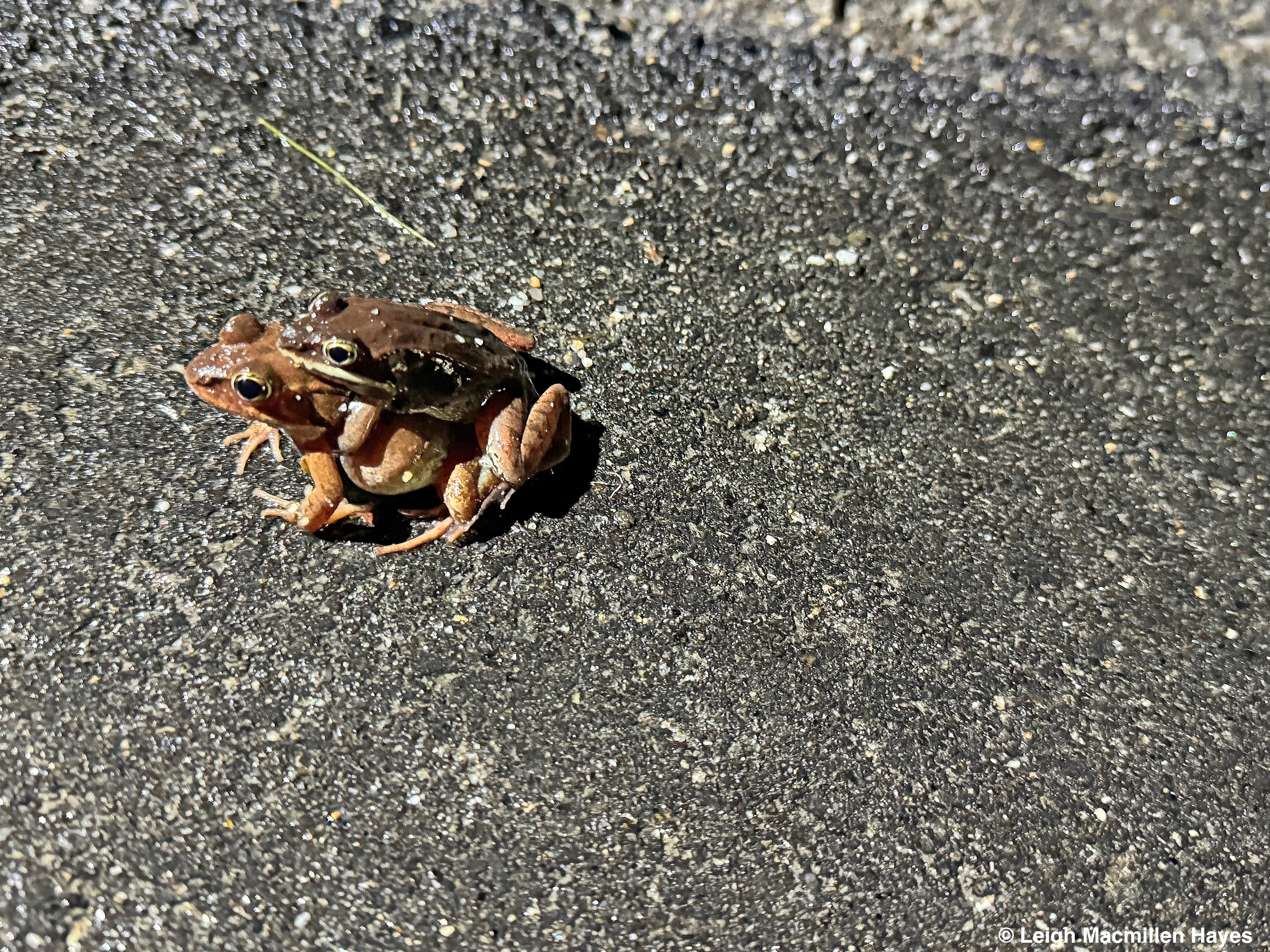
What cracks me up is that it isn’t just vernal pools that are used for the canoodling ritual. Sometimes, if there’s a rut on the way to the pool and he decides to start calling, and she responds, well, you know how it goes.

And so it must have, for this one mass is in the rut pictured above.

It reminded me of the two sets of Wood Frogs we had to gently move off the road during Big Night. They couldn’t even wait until they found a rut.

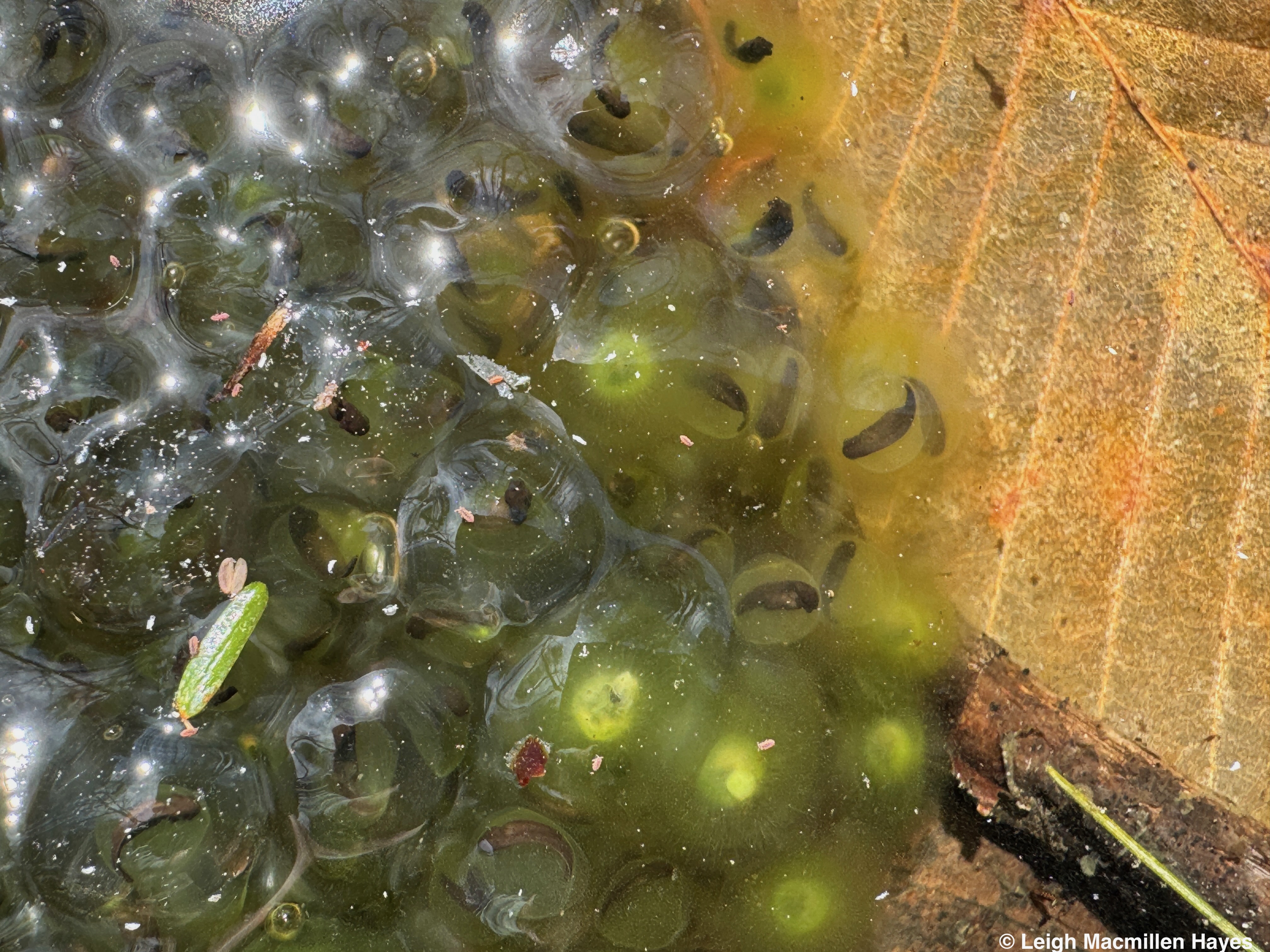
It’s only been about two or three weeks since the eggs were laid and fertilized, and already the embryos are taking on their tadpole shape.

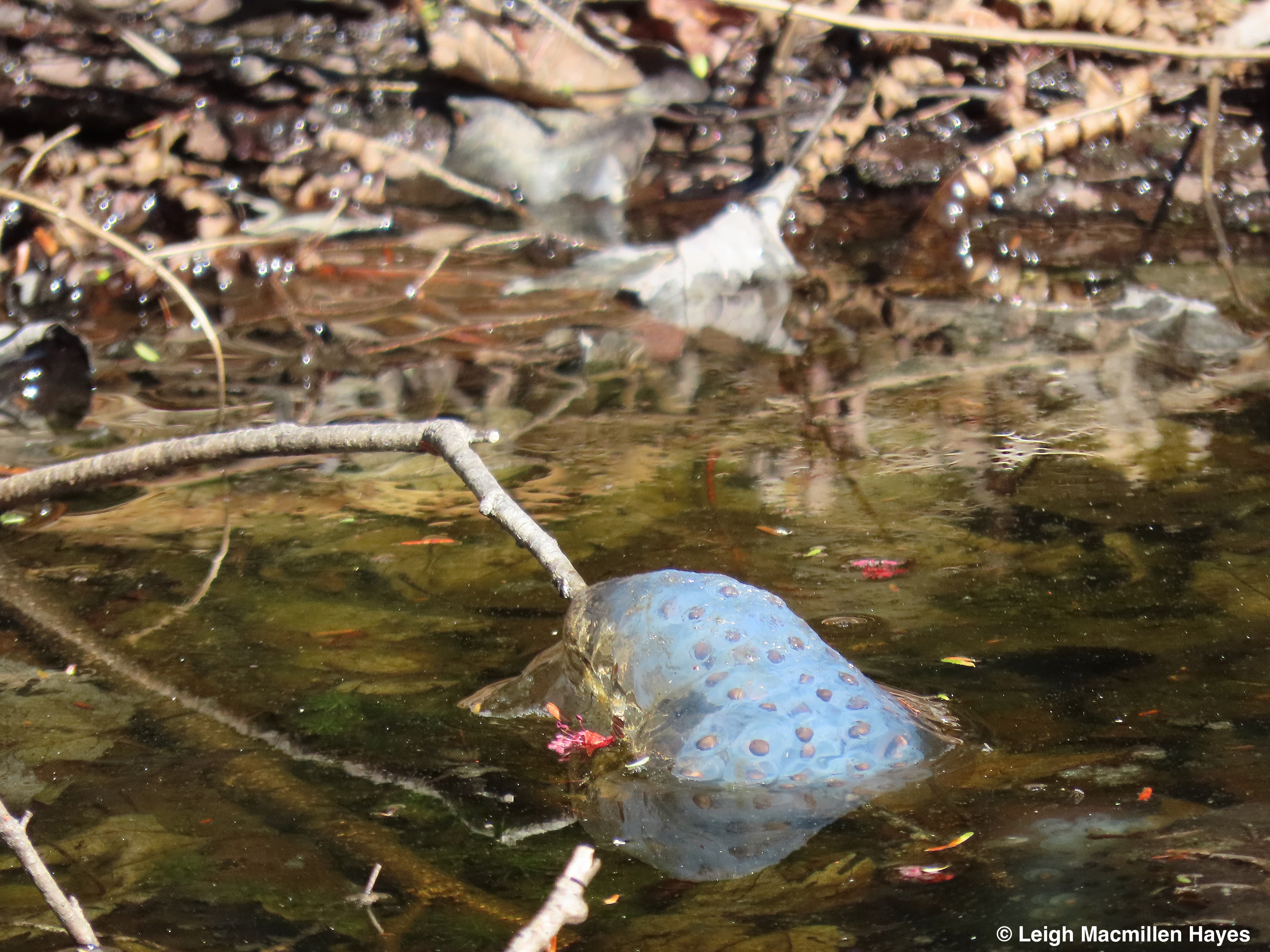
In another location, I spotted a Spotted Salamander egg mass that was also deposited about two weeks ago, at a time when snow melt and rain were the norm. We’ve had some rain since then, but the tide is quickly going down in the pools. Wait. There is no tide in these. Being rain/snowmelt dependent, the water is quickly evaporating and this mass probably will become food for something rather than turn into 100 or so salamander tadpoles.

But in “My” vernal pool, where I put “My” in quotes because I don’t actually own the land upon which it is located, I just think I do, the salamander embryos are also taking form.

Of course, when one is stooped over and staring into the water, there’s more to see like this Water Strider. Water Striders are so cool as they skate along the surface thanks to some hairs at the ends of their legs that we can’t see. At least I can’t. Those hairs don’t get wet and instead attract water molecules. I placed an arrow on the photo because the shadow a strider creates with what appear to be larger than life feet speaks to this adaptation.

And in this case, the arrow points to a Water Boatman. I love how his tiger-like body design, though not intentionally, mimics the oak leaf above which he swam. Unlike the skating strider, a Water Boatman uses its hind legs as oars.

In one of the shallowest pools I know of outback, Mosquito and Caddisfly Larvae move about, the first suspended in the water column just below the surface, breathing air through tubes at the end of the abdomen. The Northern Case Maker Caddisflies took advantage of all the plant material, including a Red Maple flower to add a bit of class to its house.

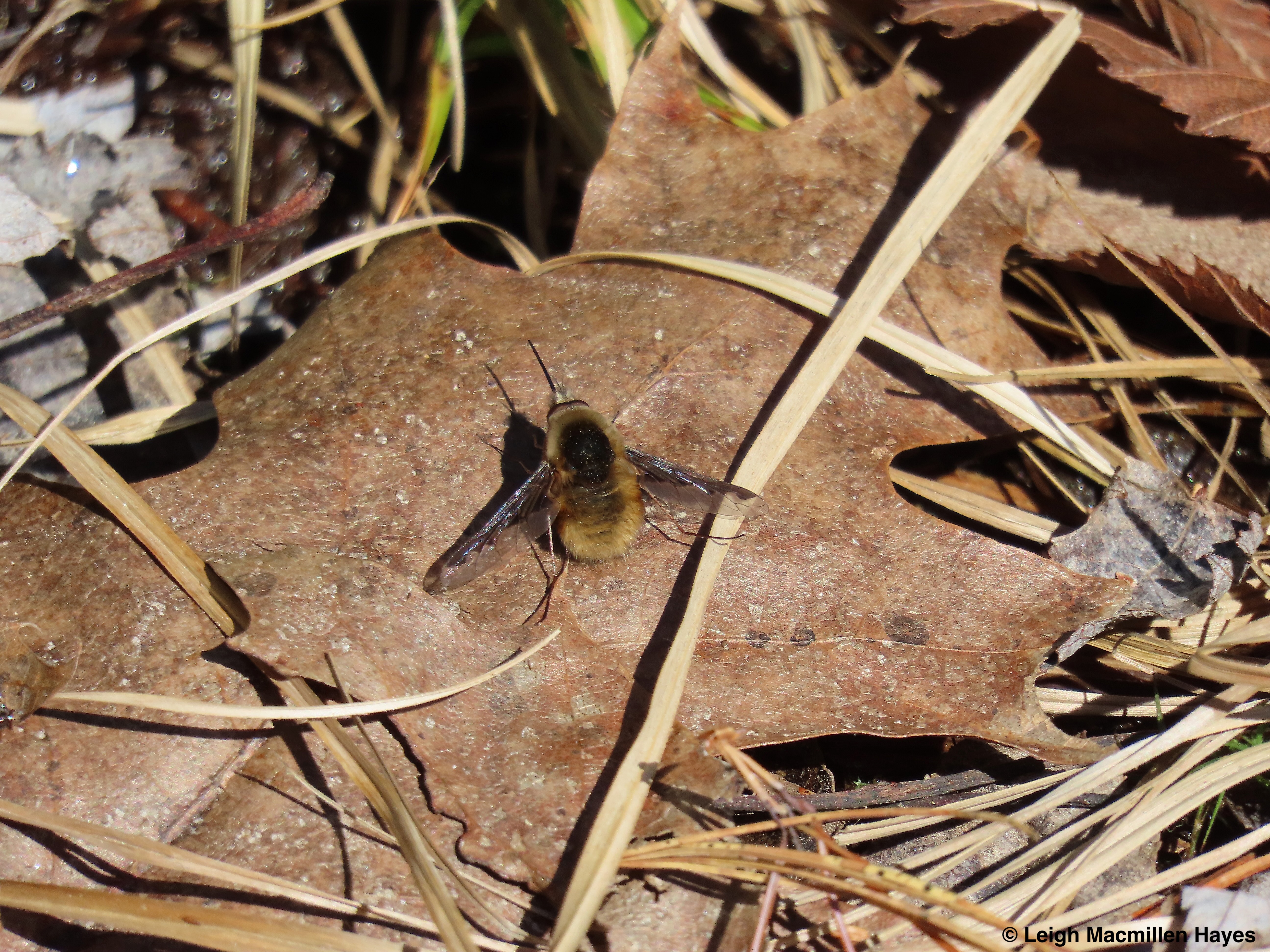
When I wasn’t looking into water, I did notice a few other things like about five or six Greater Bee Flies frequenting one area. The cool thing about bee flies is that they do look like bees, but don’t sting. While they feed on nectar, they also parasitize the nests of solitary bees and I have to wonder if that was what their behavior was about.

Several Six-spotted Tiger Beetles with their metallic green coloring, dashed here and there, always on the move as they looked for other insects to devour. Here’s the thing about these beetles–not all have six white spots, or even any spots.

Speaking of spots, I love the violet-blue markings on a Mourning Cloak Butterfly. This species overwinters under tree bark and other protected places as adults, so they are one of the earliest for us to encounter in the spring, along with Question Mark and Comma Butterflies. And then we get to enjoy a second brood in the autumn that will hibernate as adults.

So it’s not all about insects, though I suspect if I look hard enough I will find one in this photo. But it was the first Bluet of the season that I needed to note. Sure, they’ll be commonplace soon, but this one is the harbinger. And it was enhanced by the contrasting red caps of some British Soldier lichens.

As I walked toward home this afternoon, this Turkey Vulture rode the thermals and I took its photo to honor my neighbor for she alerted me Monday to the fact that she’d spotted some vultures and a Bald Eagle in our ‘hood, and we met on Tuesday afternoon to search for a kill site in an orchard behind some other houses. We didn’t find anything, but I love that she was curious. And that occasionally we share natural occurrences with each other and sometimes walk the same stretches of land. Thank you, Karen.

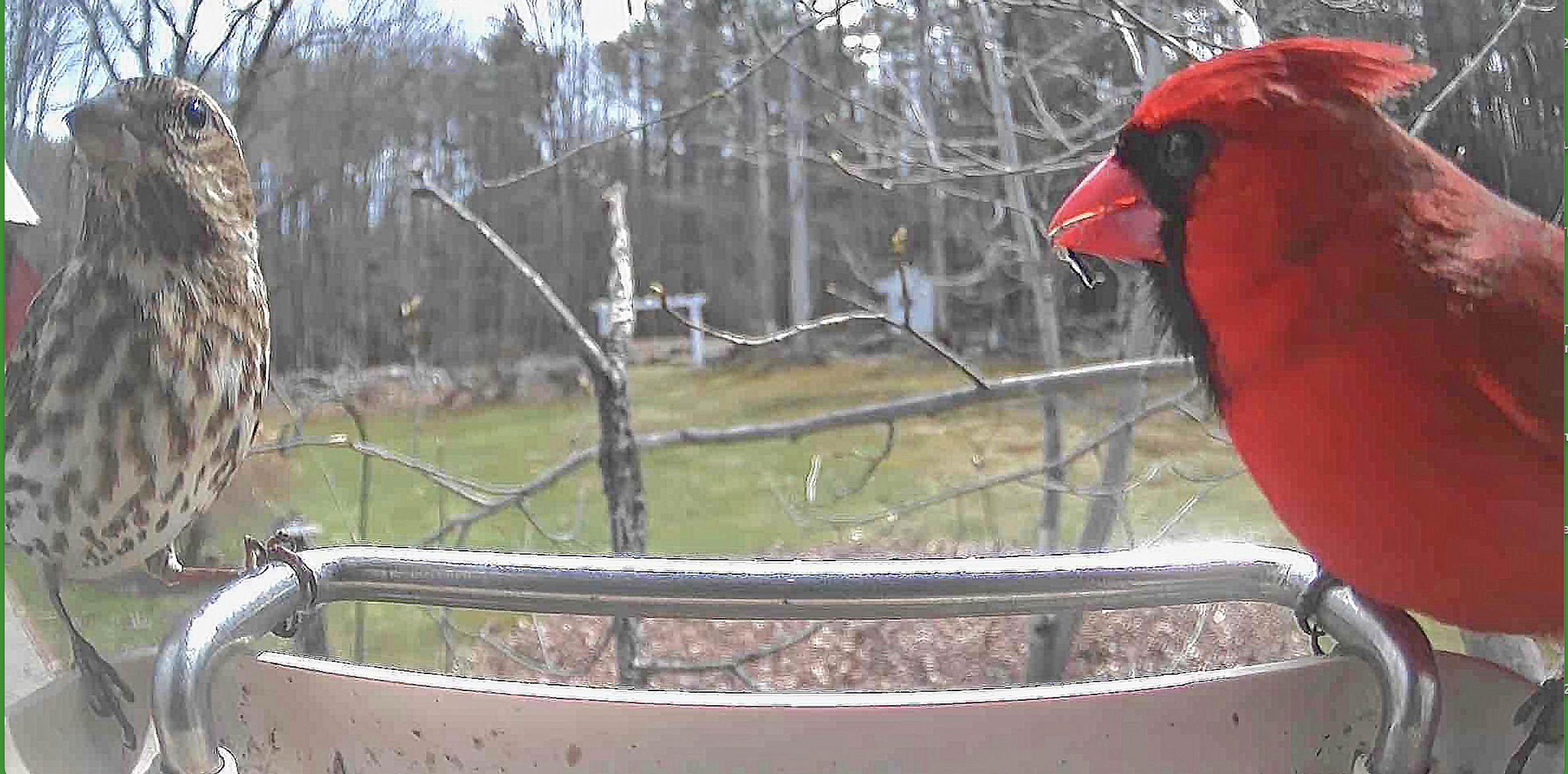
Back home, I was surprised to find these two sharing a feeder, a female Purple Finch on the left and male Cardinal on the right. She would squawk at other finches, but not at the Cardinal. And so they fed simultaneously for a while. If only we could all take a lesson from them.

As a self-confessed home body, I love how the land that surrounds my house and beyond has been my classroom for so long now (30+years), and that it has taught me to celebrate the extraordinary found in everything ordinary.

Wondermyway.com on TV

For the fourth time in the last few years, Lake Region Television has featured wondermyway.com. Thanks to producer Evan Miller and station manager Chris Richard for working on this project with me. And to Evan for the original music that accompanies it.

Why not pour your favorite beverage, sit in a comfy chair and watch it here.

Click on the white arrow above to watch and listen.

Thank you so much for stopping by! I hope you enjoyed the show.

Easter 2024

Easter came early this year and at our church a spring snowstorm that dumped up to two feet of snow meant that last weekend’s Palm Sunday service had to be held via ZOOM. But with a new rector on board, Reverend Annette went with the flow and then during the week, she was able to offer Maundy Thursday, Good Friday, and finally today’s Easter celebration all in person.

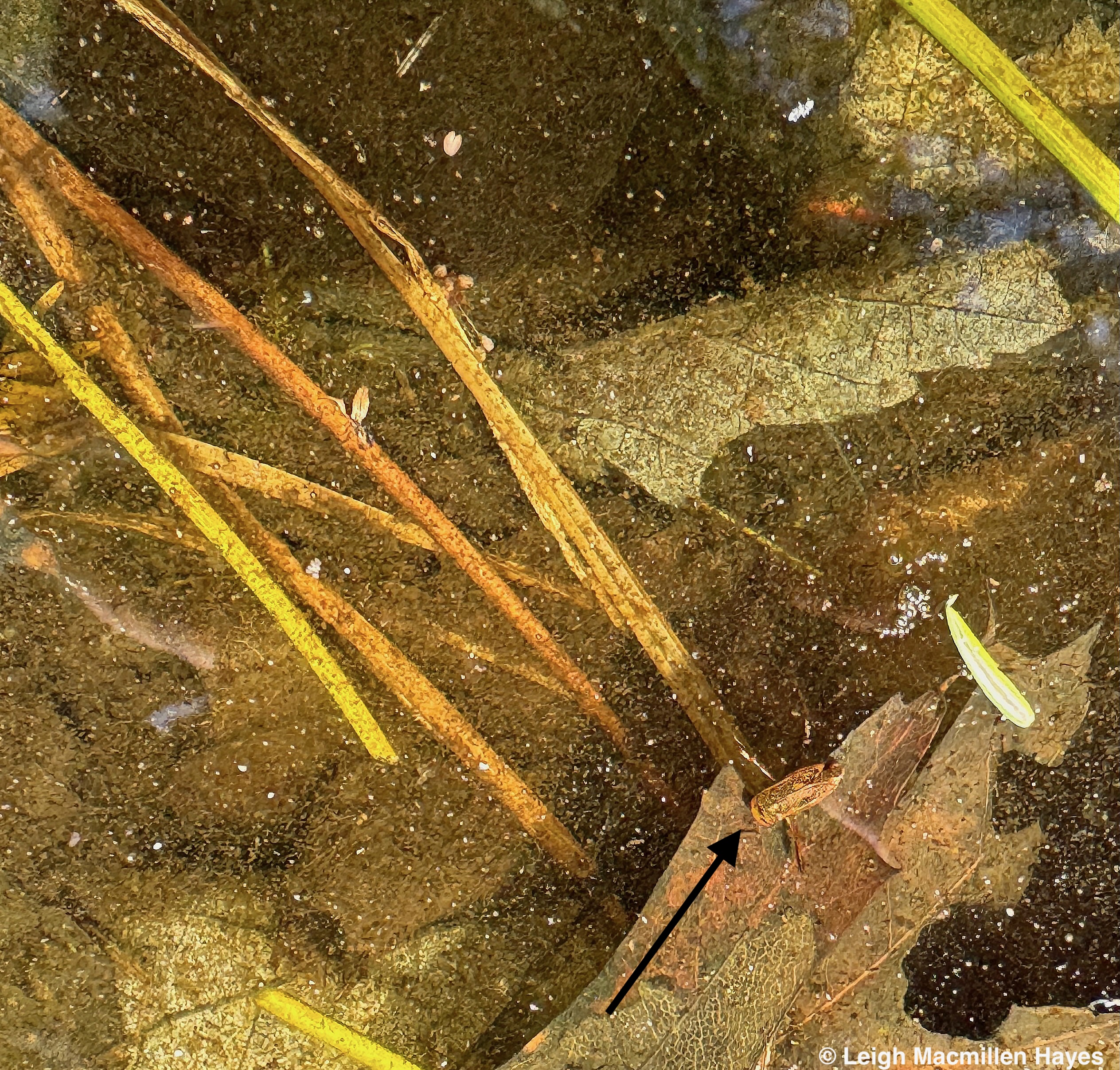
It was a week of reflection, as it should be. And a week of searching, like this Winter Stonefly that emerged from a freshwater brook and journeyed up and down and around the obstacles of the forest and snow fo seek a tree. Particularly, the bark of a mature tree. Species mattered not.

The aquatic immature stage of a Winter Stonefly, aka naiad, crawls from the rocky bottom home of the brook where it has spent the last year or more maturing (going through as many as thirty molts)and shredding falling leaves, climbs up through crevices in the snow that covers the brook, finds a plant or some other spot to emerge as an adult, and leaves behind its shed skin, much like a dragonfly or damselfly.

Stoneflies have hammer-like structures on their abdomen that make noise when thumped against a surface, like a tree trunk or a twig or even the ground. This is a mating call. The males drum, and the females drum back, and voila, they find each other and canoodle.

I heard not the drumming for it is not for us to hear, but I have faith that this insect with its veined wings that serve no flying function was successful.

The venation of the Winter Stonefly’s wings was not lost on me as I saw stained glass in their presentation. And was struck by the same when I peered into a quick flowing stream that transported melting snow and noticed the amazing lines and shapes as the water twirled around a rock.

And on both sides of the stream I spotted the prints of one who passes in the night, working behind the scenes and leaves only a trace of its presence. But still, because I recognized these prints, I believed the Bobcat was nearby, perhaps even so close that it kept watch over me without my knowledge. As it should be.

Turkey prints were much more prevalent, but today it was the shape of such that garnered my attention and I could imagine the cross and a being upon it.

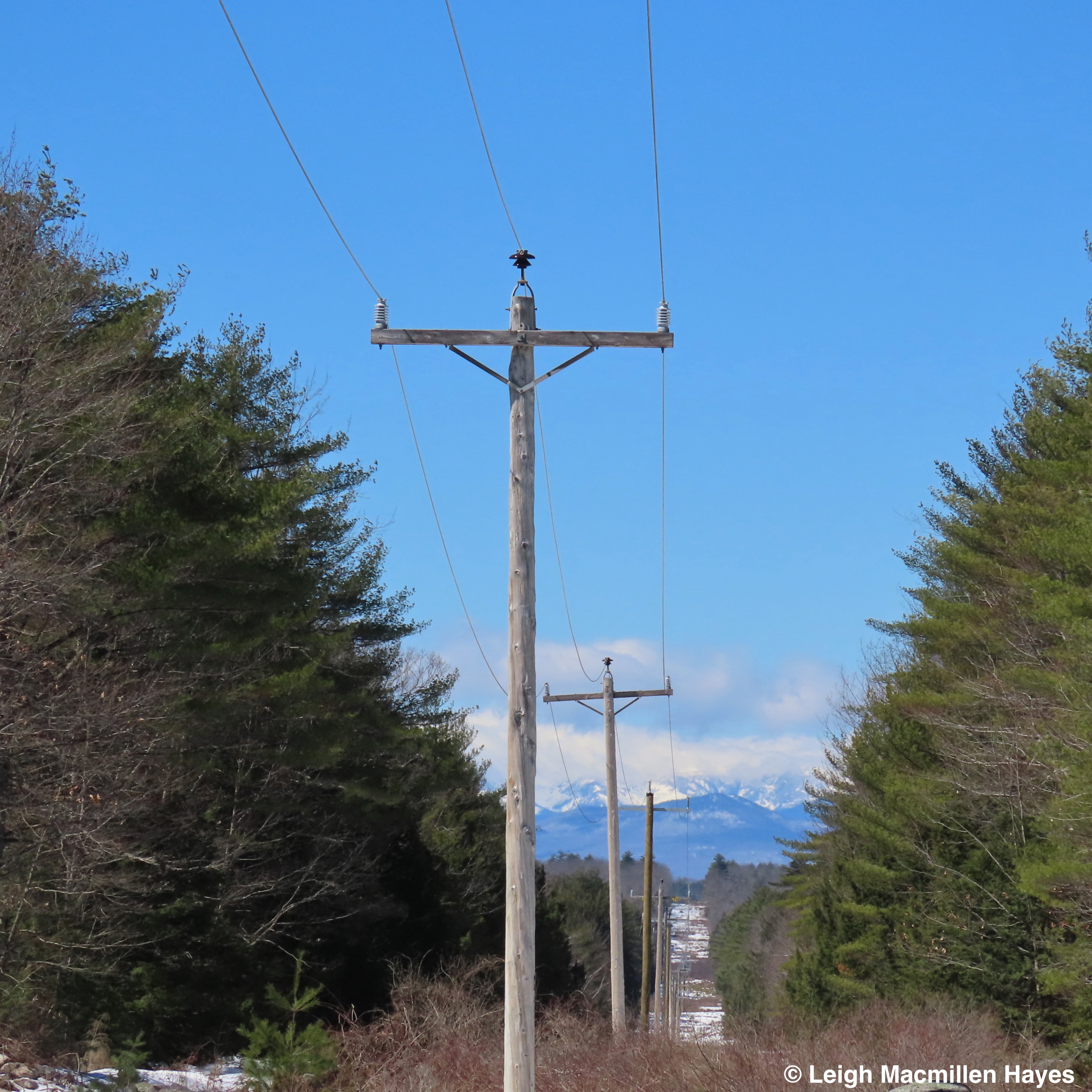
The cross theme was equally created in the form of telephone poles leading to the most powerful mountain in New England. Who knew? Light and communication sizzled across the wires for all of us who choose to partake.

An equally power-filled force, some of which is also harnessed for electricity, this swollen river flows to the ocean as waves break over boulders. I see not its full path from source to sea, but trust in its immanence.

And on this day, with the snow melting under bright sun and 50˚ temps, the White Crocus with its lilac-colored runway lines, suddenly bloomed–and the Alleluias are heard ringing across the landscape.

A Purple Crocus added its soprano voice to the Alleluia chorus.

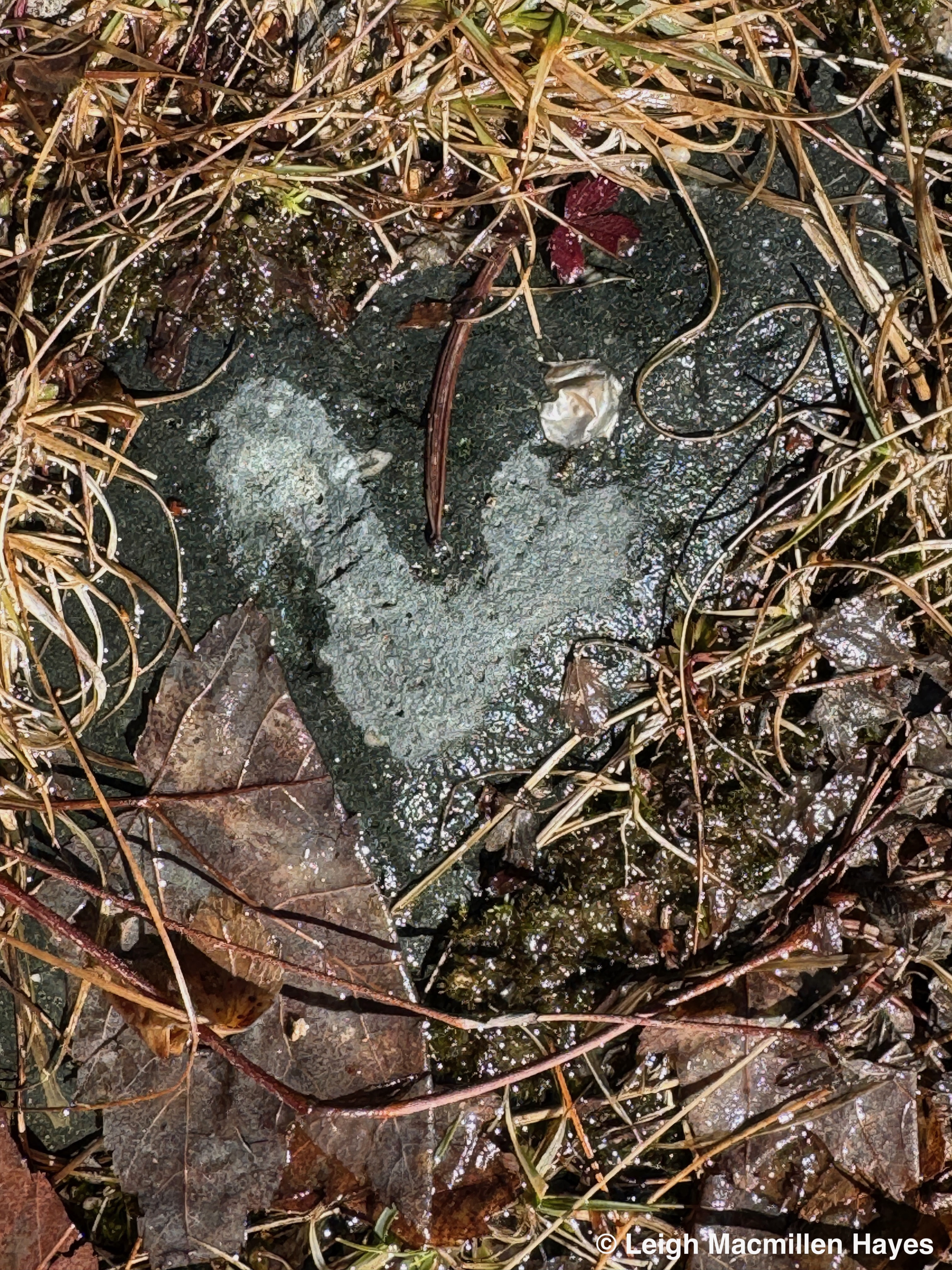
When I spotted this heart upon one of the paths I followed this weekend, I was reminded that hope and awe and wonder and love are captured within my heart and I gave great thanks.

Christ is Risen. A new day has dawned. Alleluia. Happy Easter 2024.

Season Opener

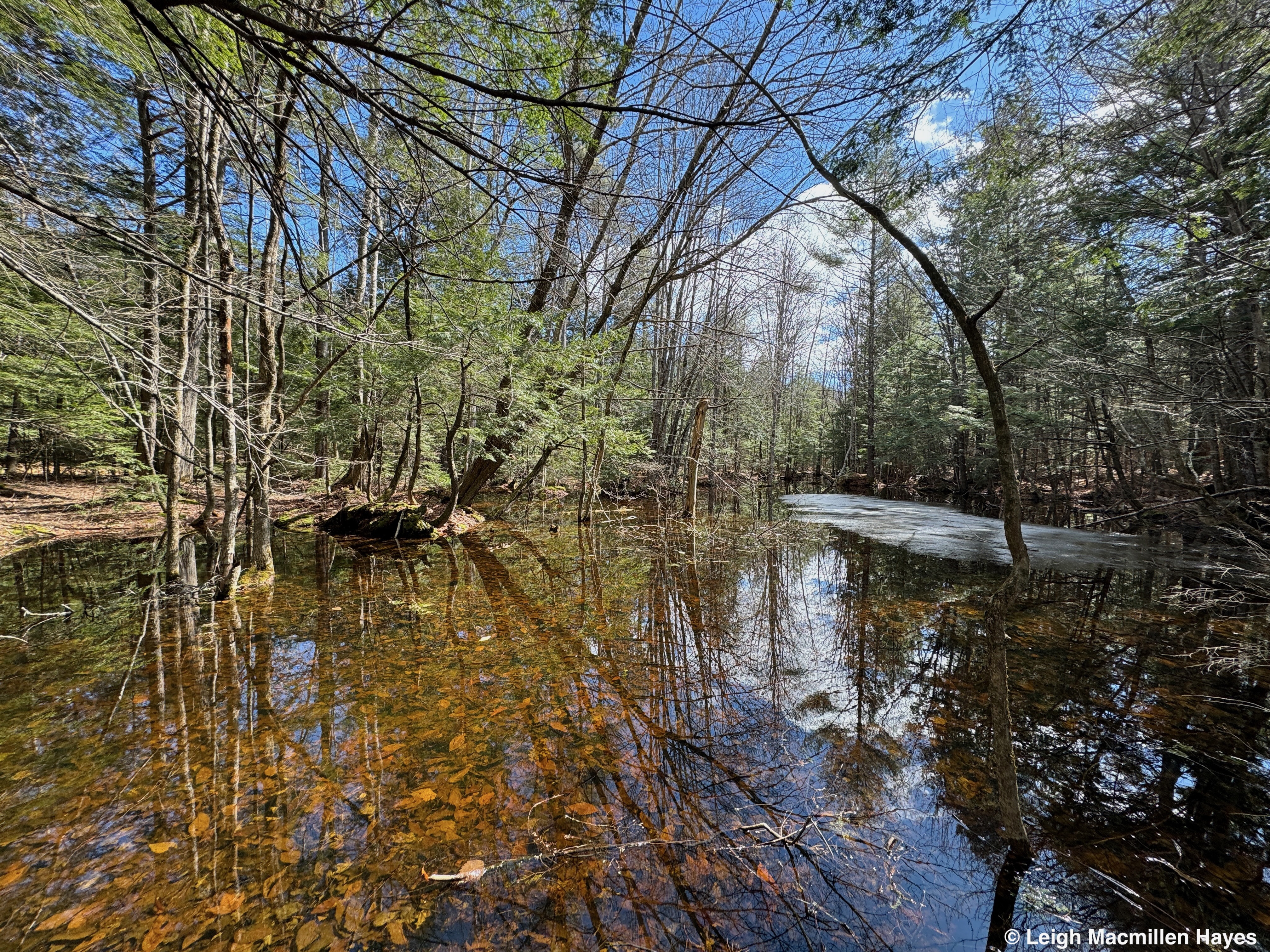
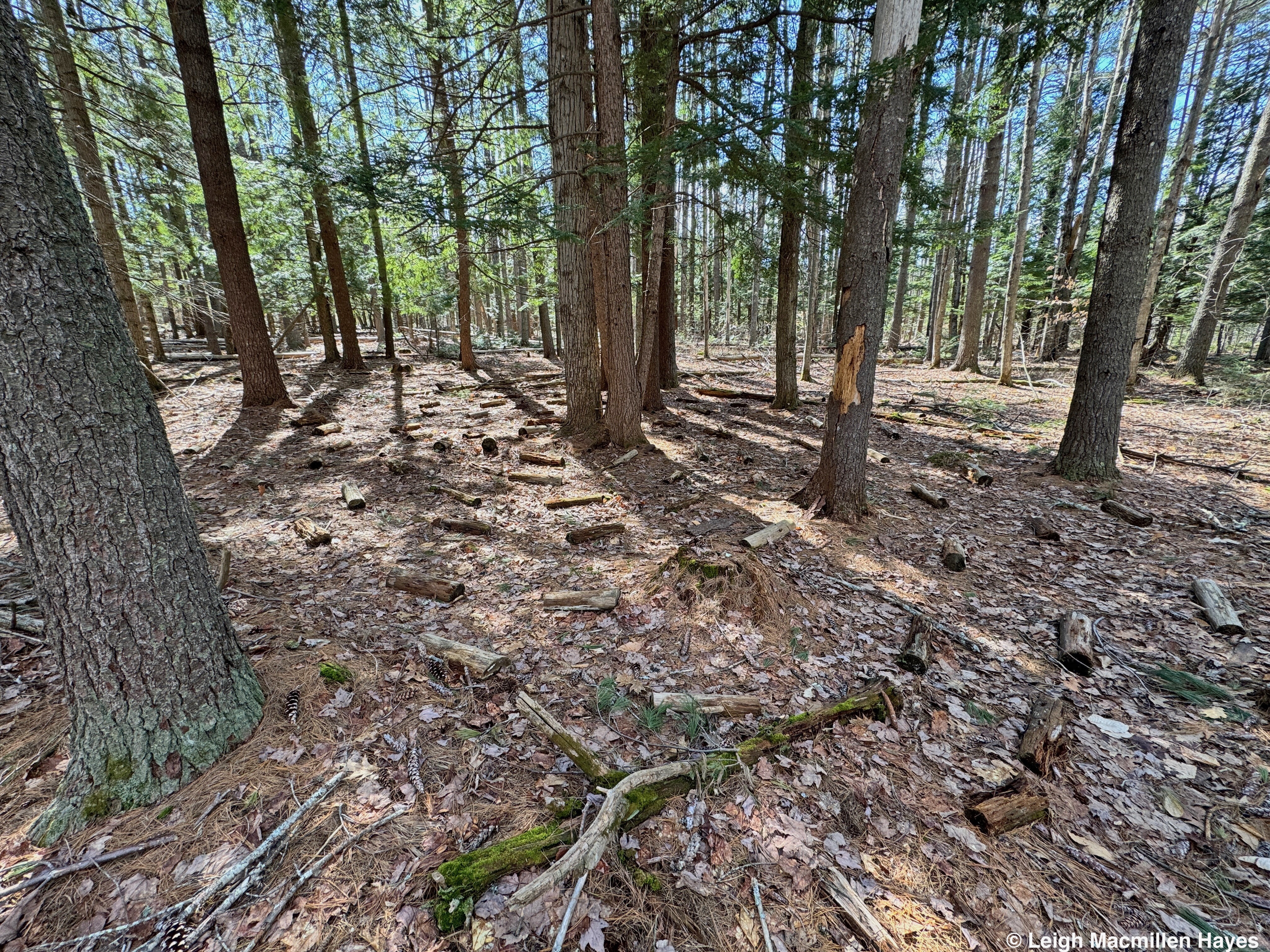
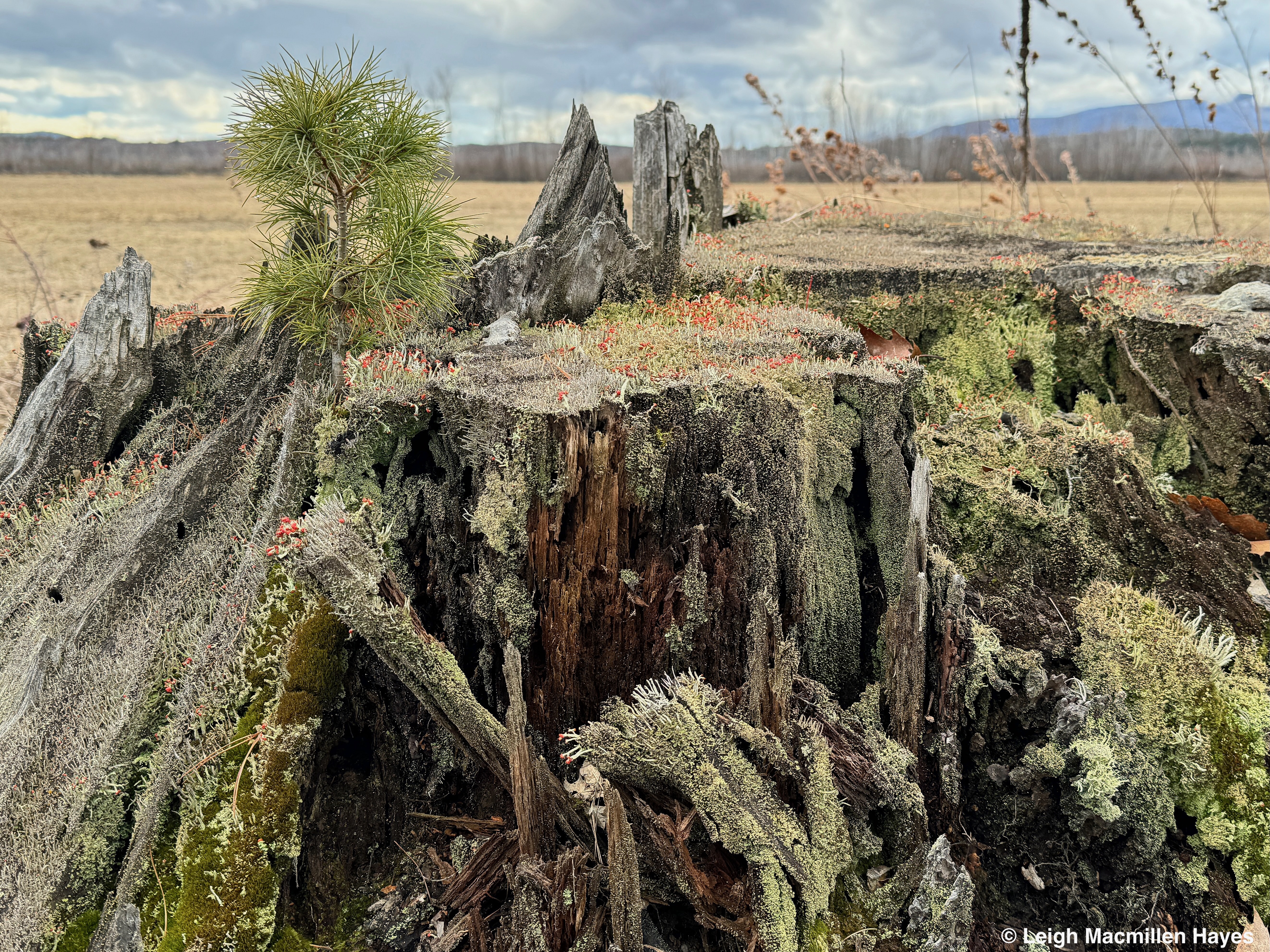
You might think of it as a homecoming; a return to that time of year when all begins again. Slowly. Ever Evolving.

A time when one needs to stand watch and listen. And so My Guy and I did yesterday when we heard this Red-bellied Woodpecker before we finally spotted it. And for the first time I could actually see the red belly for which it is named.

A time when I start visiting vernal pools and can be found with my hands on my knees as I lean forward to peer into the water.

A time to be in shock at spying such large Fairy Shrimp on this date, March 19. There were dozens and they were at least an inch and a half long. I have never seen such big Fairy Shrimp and can’t help but wonder the size of those I hope to see in other pools going forward. In the past they’ve been about a half inch long in April, and might grow close to an inch by May.

A time for catching a dash of a look at a Predaceous Diving Beetle heading for cover to avoid becoming prey in my presence.

A time to notice the minute, such as this wee bright orangey-red water mite that could easily be mistaken for a spider.

A time to return home and walk the path of the now snow-free labyrinth I created a few years ago.

A time to visit the vernal pool on a neighbor’s land and notice that only the edges are ice-free.

A time to peer into the water along those edges and watch a multitude of larval mosquitoes wriggling as is their custom.

A time to poke a Balsam Fir blister with a stick to get some sticky resin on the tip and then place it in a puddle along the path and watch the essential oils form rainbow designs.

A time to look up before heading indoors and realize that the Quaking Aspen flower buds are starting to fluff out much like Pussy Willow buds.

A time to realize that this spring’s season opener officially begins at 11:06 tonight, but the Fairy Shrimp suggest it may have started earlier than normal.

Not necessarily a good thing. Not at all. But . . . if you are looking for me in the next few months, you know where I’ll be. Somewhere near water.

Happy Vernal Equinox 2024.

Of Stumps and Snags on this St. Patrick’s Day

Stump: the base of a tree that has been chopped down or fallen, but is still connected to its roots.

Snag: a standing dead or dying tree; or part of a tree that is dying.

To visit a stump presumed dead
is to find life that comes in many forms.
Mosses and lichens colonize in a manner all their own,
and saplings find a new spot upon which to grow.
British soldiers crowd the scene,
their red caps marching toward the future
with fruiting spores planning to form
more of the same.
In their midst
others who are deflated,
the papery remains of puffball fungi
having already spread their wealth.
And a tiny White Pine
who chose this spot
upon which to germinate
at least seven years ago.
Stopping beside another stump,
it is not the residents who call this home
that attracts my attention,
but rather the sign of another who had paused here.
Beaver nip sticks, a source of winter food, 
were on display,
the trees from which they came
now skinny stumps in the background.
And growing on this stump,
scaly-surfaced trumpets
blaring Irish tunes
for all to lichen.
The next stump in my survey
had rotted from the inside out
and humus formed within
its castle-like chambers.
It even had an arched doorway
for leprechauns to enter
or pass into the next world
and the stump itself was leading the way.
There was another, 
which though the wood had already decomposed,
offered a substrate for a few
to set up housekeeping.
I was struck by the contrast
of a small clump of British Soldiers
on this one, whilst its neighbor
supported an entire army.
And only one small clump 
of Four-tooth Moss,
decorated with raindrops
in a salute to our March weather.
It's when one takes 
the time to look,
that the tiniest residents
make an appearance.
And so I watched this tiny spider
works its magic
of building guide lines
and creating a snare in hopes of a grand capture.
Not all stumps in this river-side location
were the result of man's intervention,
for old beaver works
highlighted tree spirits in the curvature of the lines.
Switching my attention to snags
brought the vision
of more artwork
upon the skeleton of a tree trunk.
And a display of the (w)holiness of this place,
for such were the portals
carved by beeltes in the past
that had breached the bark.
Finally, I stood by one mighty snag
that is a marvel of this natural world,
so much of it decomposed
yet replenishing the soil.
Looking skyward from within,
one can see branches
and marcescent leaves above
speaking to the xylem and phloem still in operation.
What bark is left,
serves as armor for this old oak,
and as scaffolding
upon which mosses and lichens can grasp.
It's what I spy inside,
however, that takes my breath away.
Oddly enough, it is named
for the breathing structure of another.
And when I compare it to 
the nose of my oldest son's furbaby,
I can see the resemblance, sorta.
Dog Nose Fungus.

As for stumps and snags, I must give thanks
for they are hardly useless in the landscape,
but rather hosts of many a forest life,
and I'm sure St. Patrick would approve.

Breaking Up . . .

They say it’s hard to do and usually I feel the same, but this year has been different, and suddenly the time has come. Letting go though, that’s the part that causes me the most struggle.

Then again, six days ago I knew the end was near.

And today, the denouement became clearly obvious.

How things can change in only a matter of time i’ll never understand.

My heart grieved for all that has been lost.

But warmed by what I found instead.

And when I stooped over to peer into the shallow depths, I knew I was going to be okay.

The end had come, but new beginnings awaited.

Goodbye Winter. I’m breaking up with you, though honestly, I think you broke up with me this year. You’ll always hold a place in my heart, but this year you didn’t seem to kindle the usual flame.

Hello spring! Thanks for reaching out in the form of Common Polypody Ferns, Mayfly Larvae by the hundreds, and even the Woolly Bear caterpillar. By the bits of debris on her bristly hairs, it was obvious that she’d just emerged from under the leaf litter where she’d overwintered and was frantically crawling along the road in search of a place to form a cocoon and metamorph into the Isabella Tiger Moth she’ll soon become.

I’ll always love you, winter. But right now, I’m already smitten with spring.

A Taste of Summer on a Foggy Day

I’m kinda excited because I found the guts the other day to submit an article to the Maine Natural History Observer (MNHO) for publication this spring, and received notification this afternoon that it was accepted and will appear in the next issue. It’s about vernal pools. That’s all I’m going to tell you. But the timing seemed right.

On this snow-eating fog kind of day, it was news most welcome.

Two years ago I also found the courage to send in an article and was again surprised that it was accepted for publication. That one was about an afternoon I spent with a Buttonbush at Lakes Environmental Association’s Holt Pond Preserve and all the insect activity the shrub supported.

There was one error in the article (well, probably more than one) and it’s an insect ID. See if you can figure out which one. I actually had corrected it in my blog post, but somehow it slipped past my editing when I hit send to MNHObserver. Humbling to say the least.

Anyway, here’s a link to the 2022 publication and you’ll find my article, entitled “The Otherwordly Buttons” on pages 50 – 53. Plus there are other great article to read.

Winter’s not over yet, at least I’d like to think that is true, but even when it does come to a close, there’s so much more awaiting careful observation and I can’t wait to see what I shall see.