Porcupine, Snakes, and Bears, Oh My!

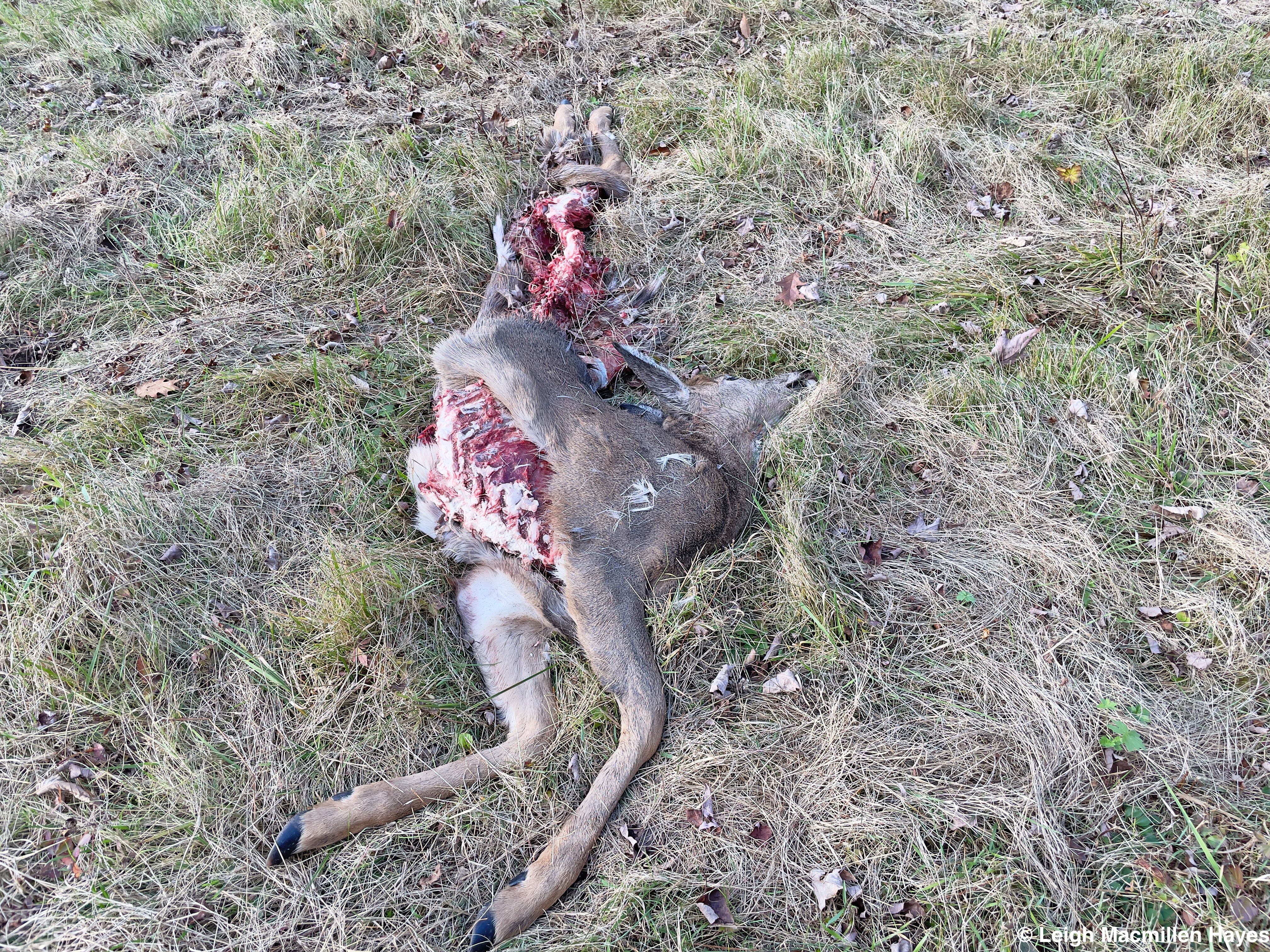
Disclaimer: there may be some not so pleasant photos in this post. I apologize. BUT, what you will see is a fact of life.

Do I have your attention now?

Our afternoon began so innocently as we hiked along a well-traveled trail at Hawk Mountain in Waterford, Maine, where Goldenrods and Asters shown the way.

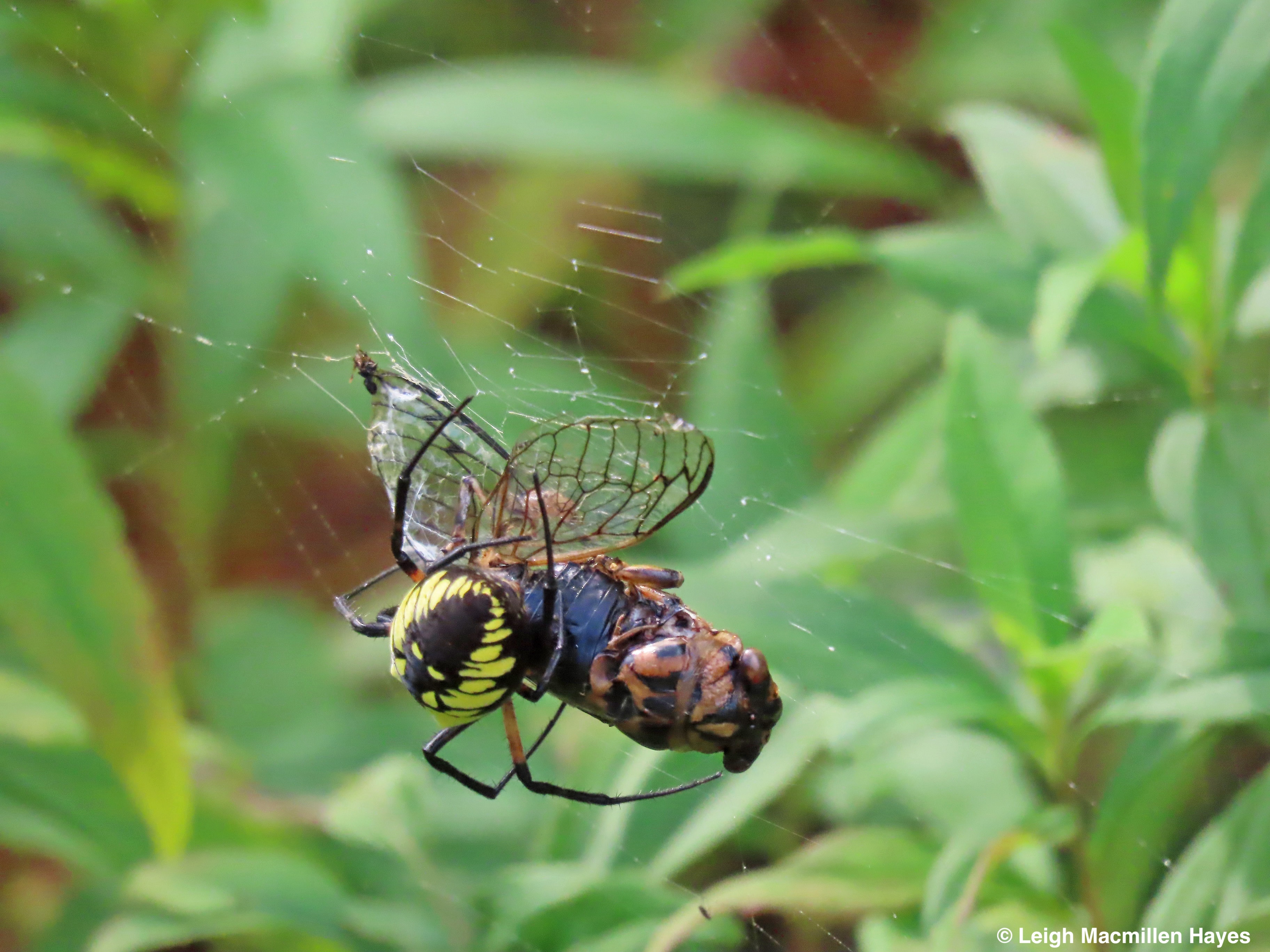
I knew I was in the right place the moment I saw a Black and Yellow Spider for I have spent the last two months enjoying their presence in our neighbors’ field and though they are beginning to decline in number as summer heads toward fall, a few are still on the hunt and packaging meals such as you see here.

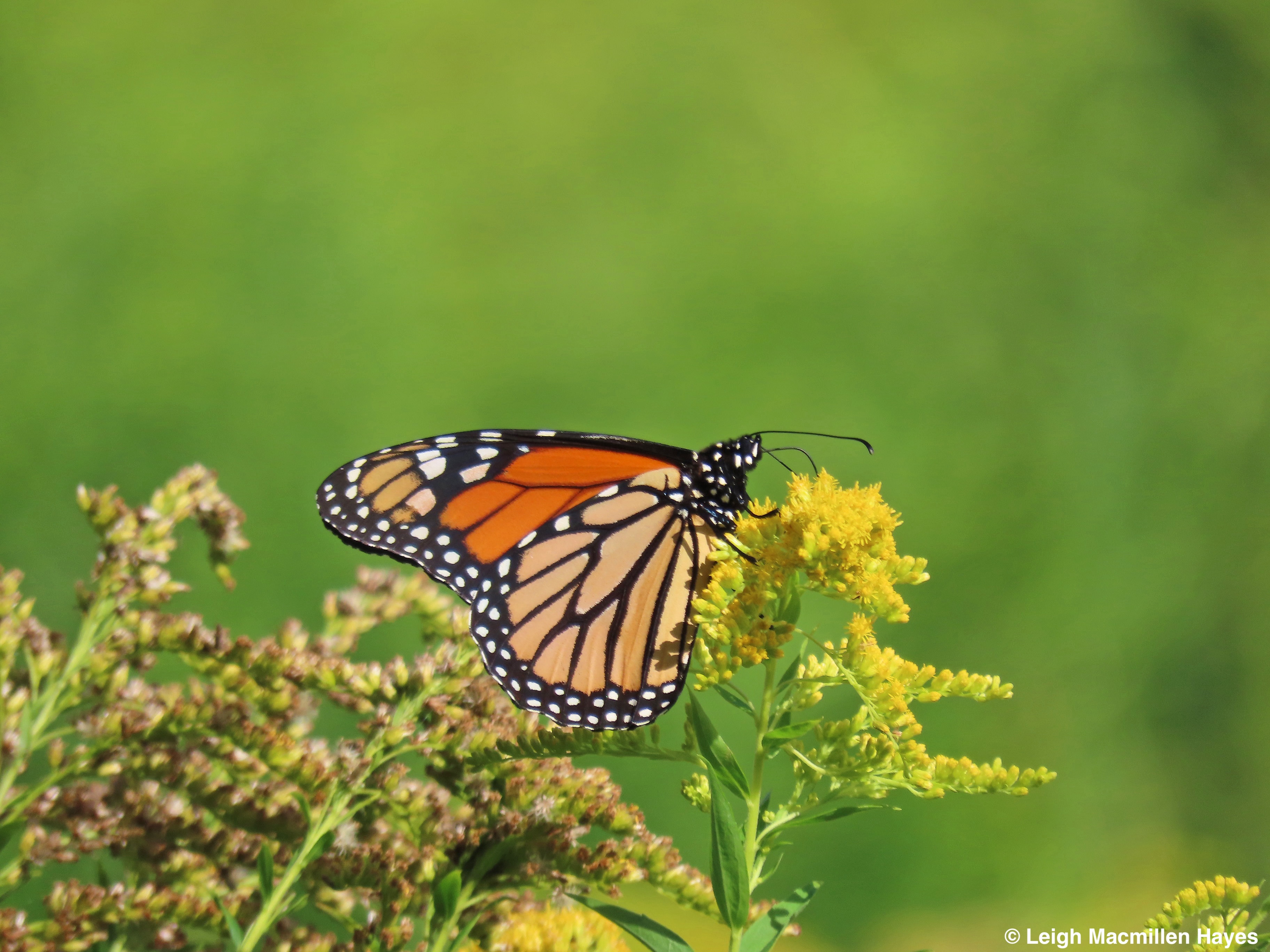
Also like home, the presence of butterflies. Granted, we were only twenty minutes from home, so spotting Monarchs nectaring wasn’t a surprise. It was a delight, really.

And an American Painted Lady, her two eyespots on the hind wing as opposed to four smaller spots on the same wing of a Painted Lady, pasued on some bramble branches.

A Red Admiral also decorated the scene, even if it did appear to have a bit of attitude given its stance.
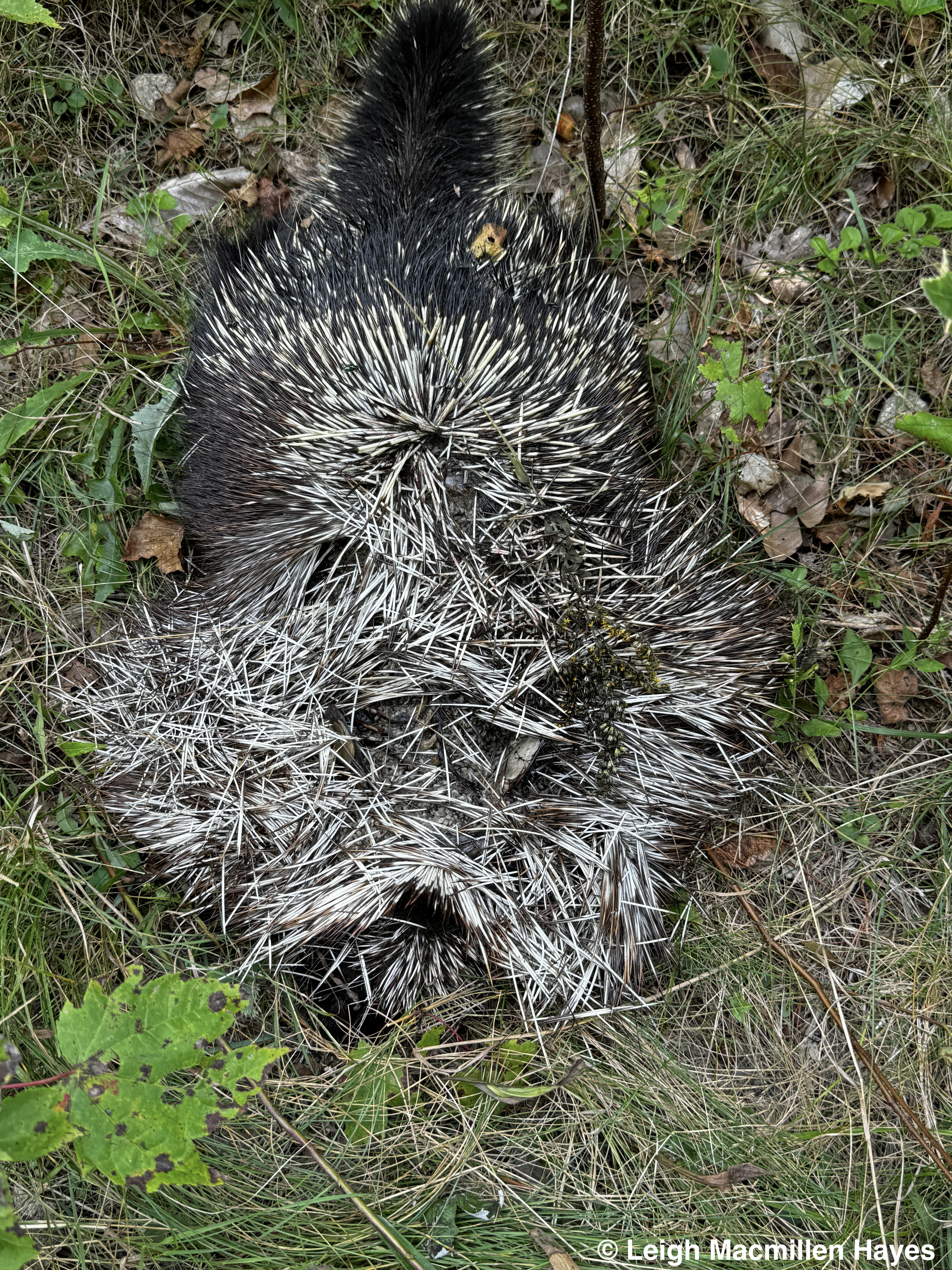
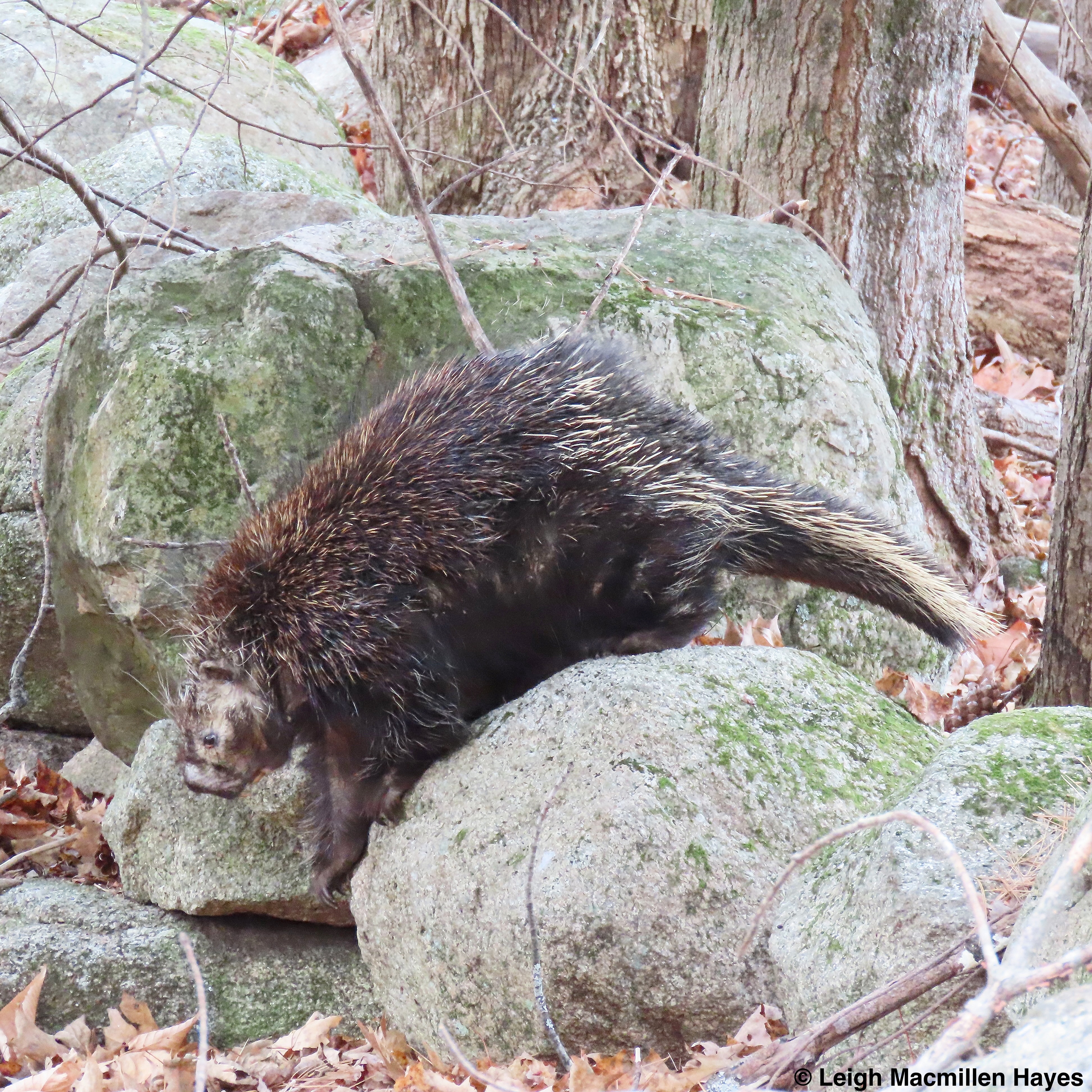
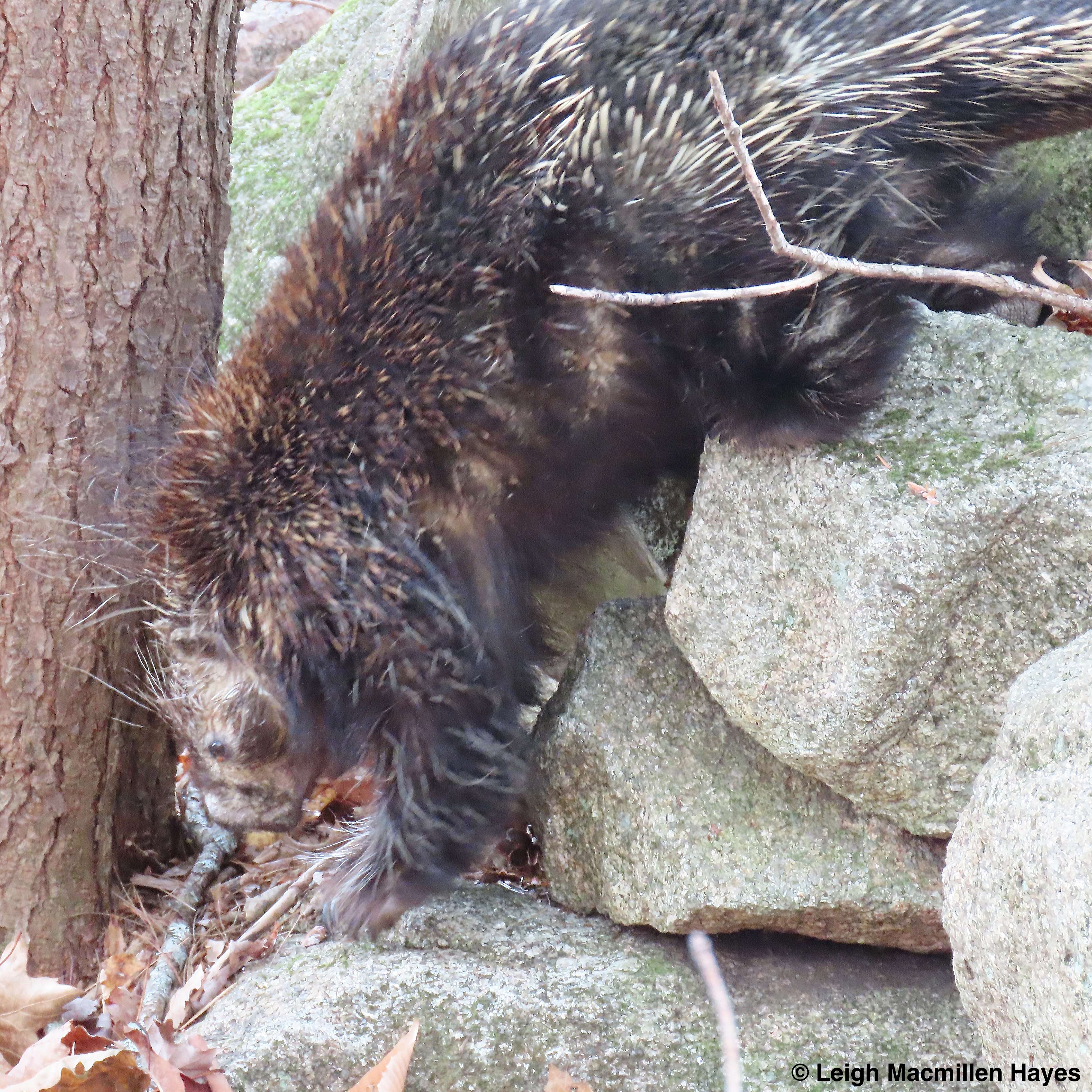
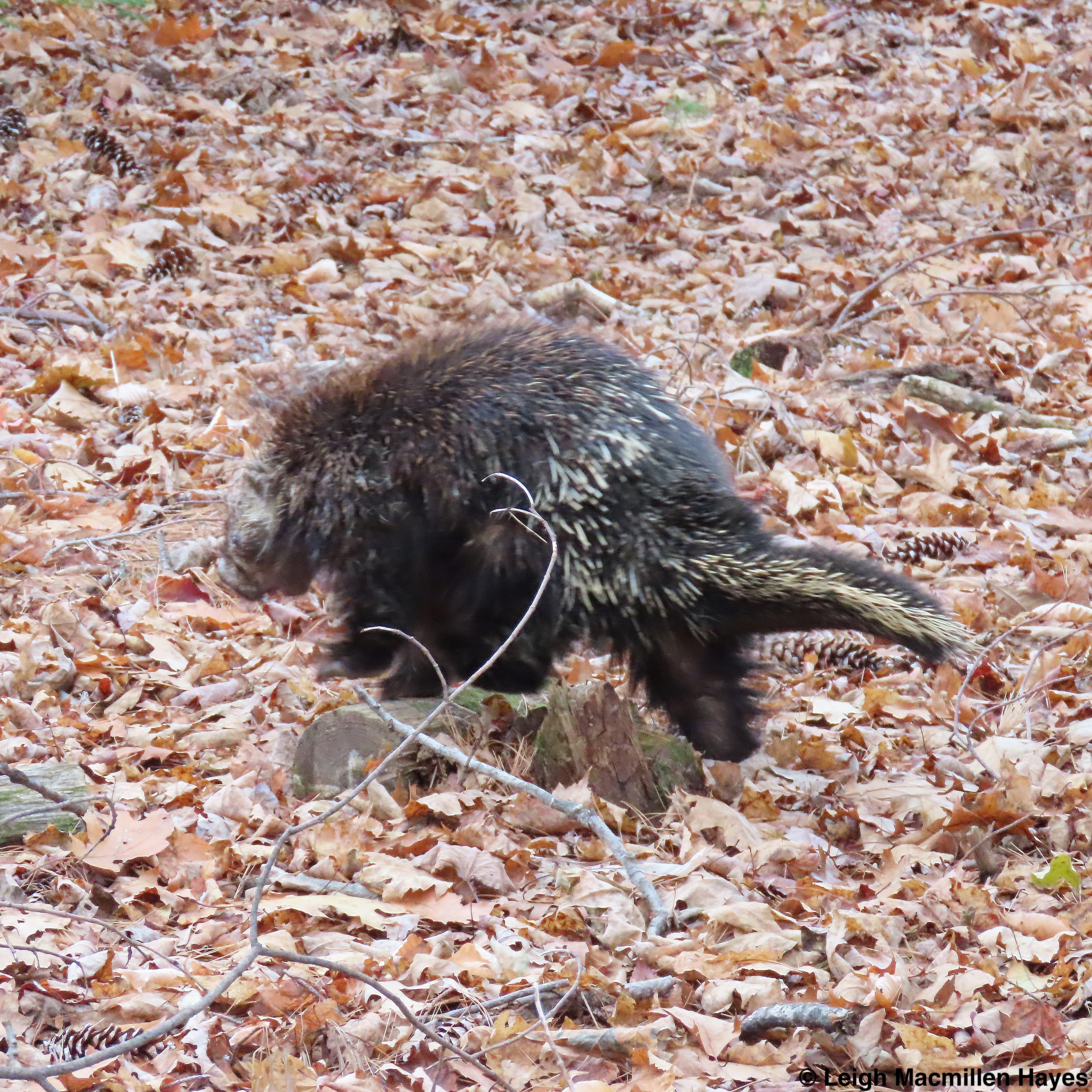
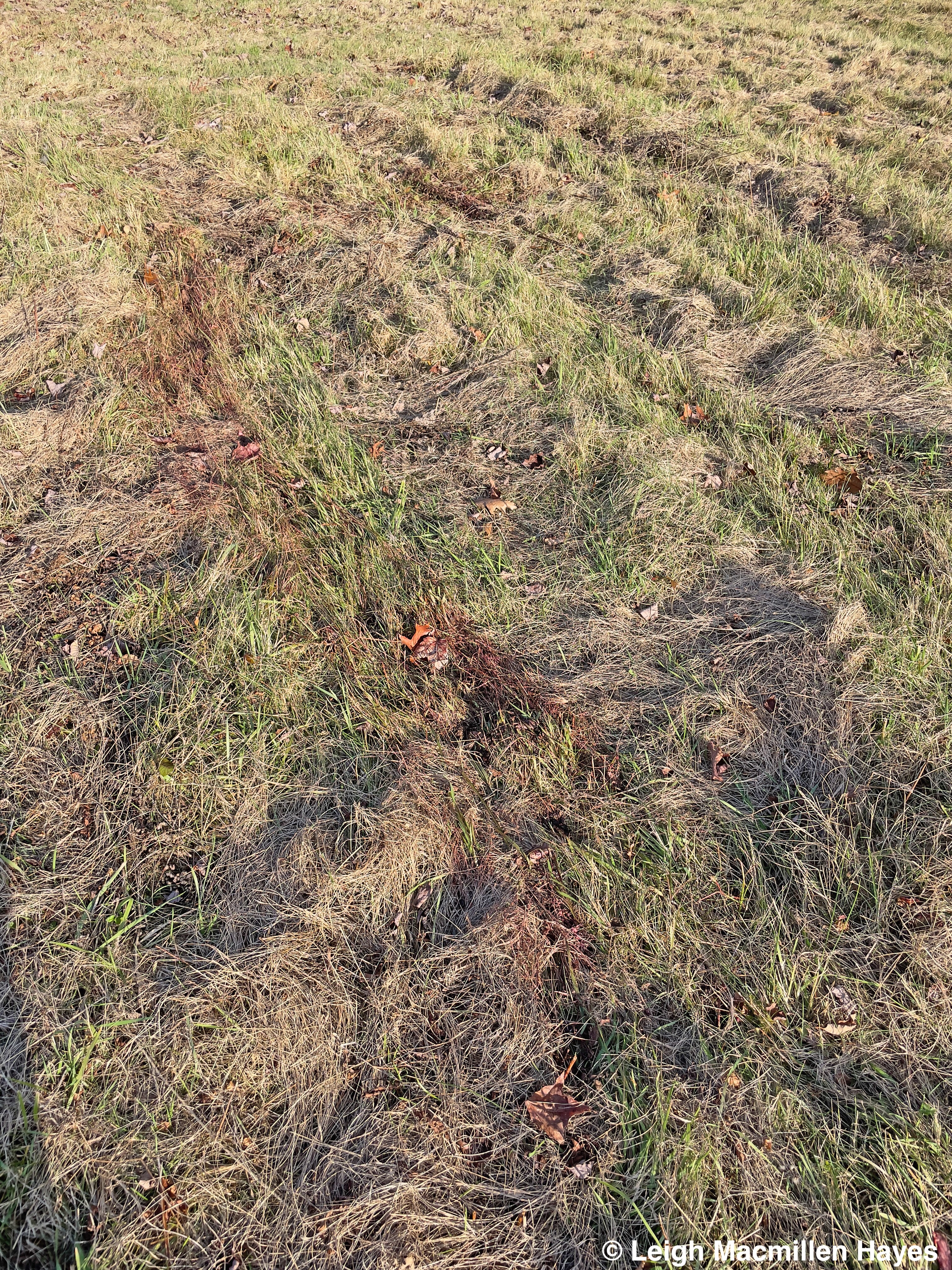
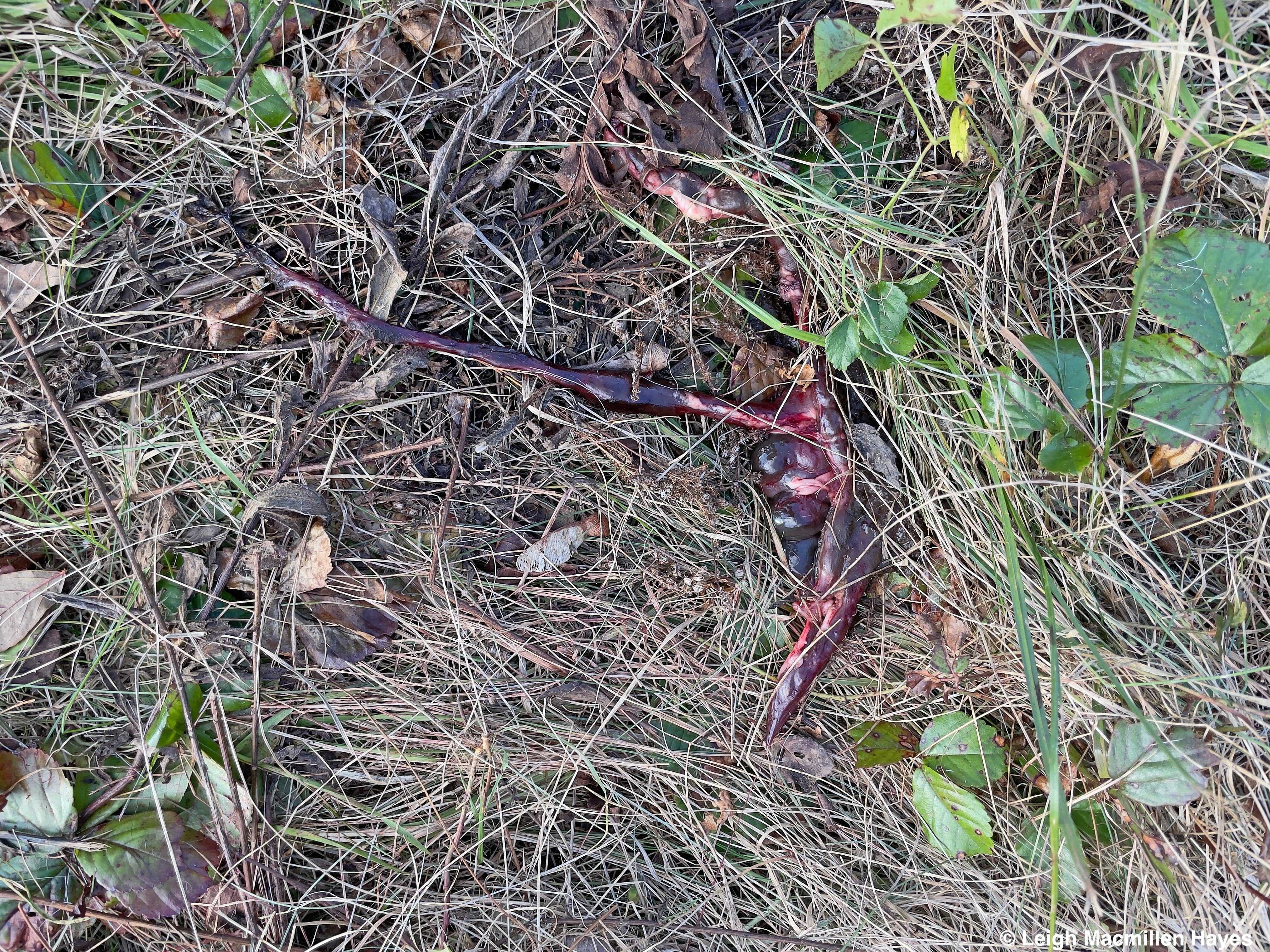
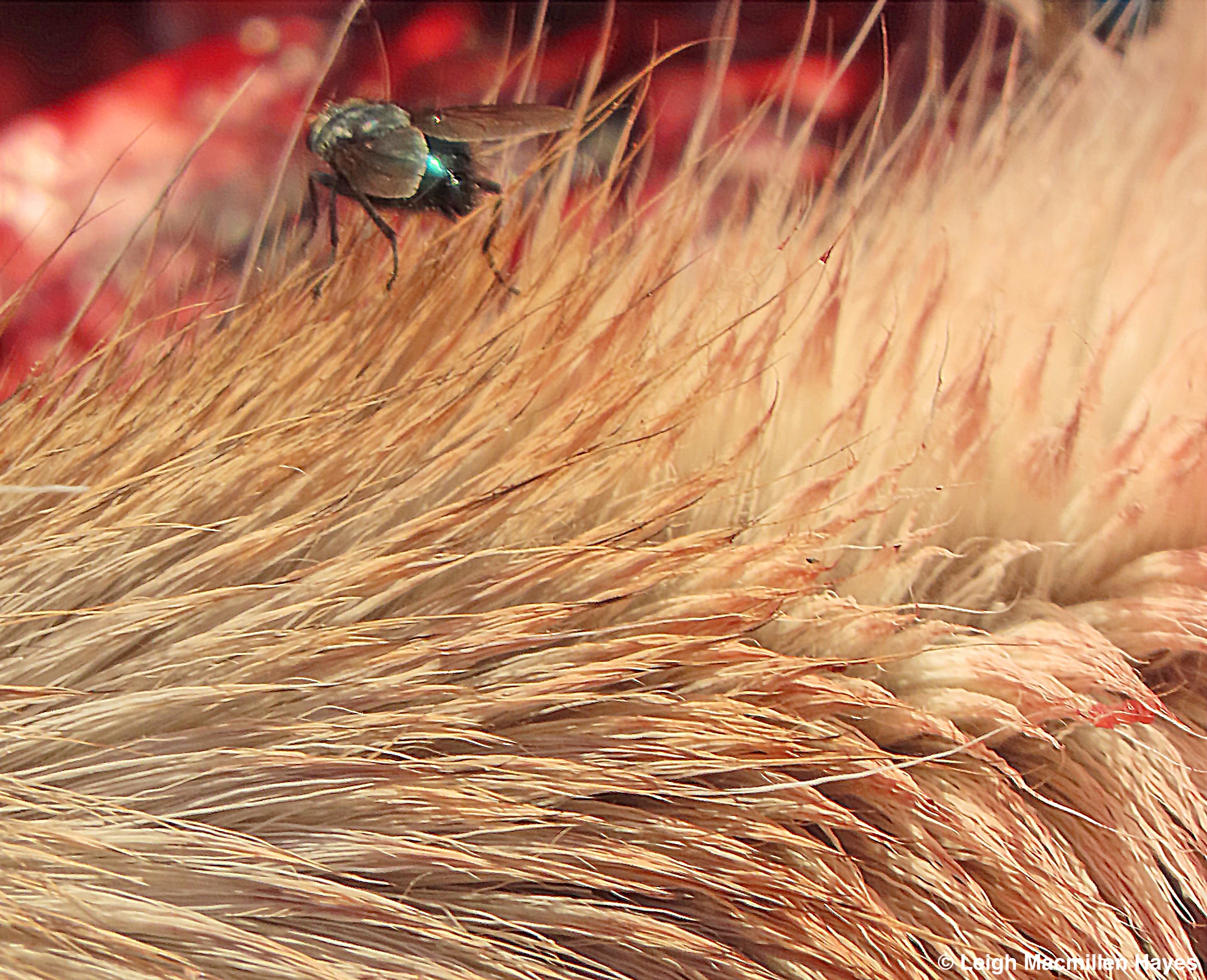
And then . . . and then I saw the body of a dead porcupine. It didn’t smell. But the Common Green Bottle Flies (in the Blow Fly family) that made their fly buzzing sounds around it indicated it had been dead for a bit. Some of you know that I love a such a wildlife mystery–and the opportunity to try to figure out what happened. BUT, the story doesn’t always piece together as neatly as I’d like.

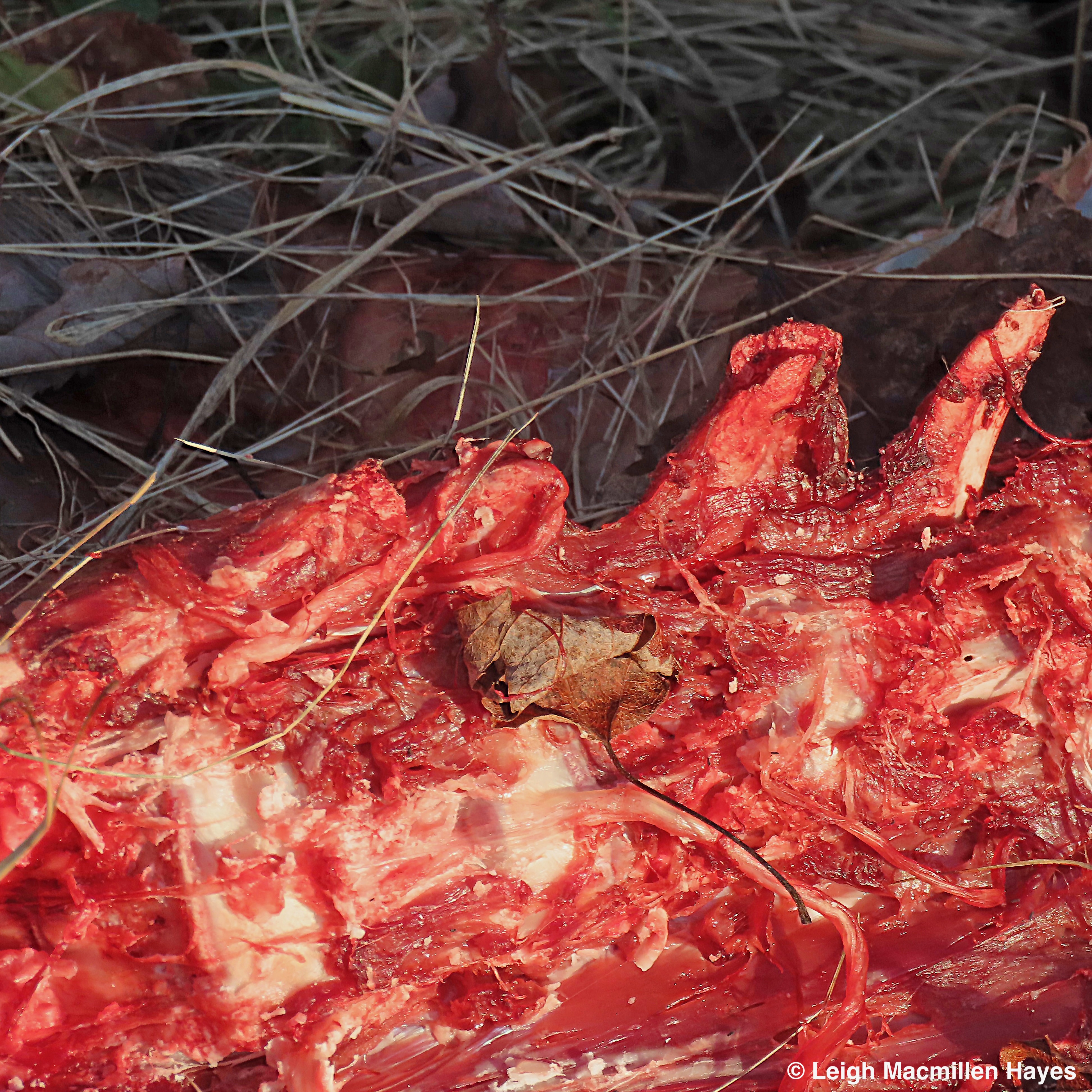
First, there appeared to be three wounds on the animal’s back. Large openings. As if from a very hungry predator. And a brave one? Fishers are the porcupine’s main predator and they are known to attack the others face and belly, where the hair is soft as compared to the 30,000 barbed quills on its back. And a fisher and others would then visit the carcass repeatedly to dine. That hadn’t happened in this case. Instead, the animal died on its stomach. And other mammals didn’t take a repast from the offering. Did a domestic dog do the duty? If so, it must have had a head full of quills.

As for those metallic green flies, their maggots squirmed inside each large wound. By the hundreds. Maybe thousands. I wasn’t about to count. In his book, Insects of New England and New York, Tom Murray explains, “Blow flies are often associated with decaying organic matter, particularly carcasses and other sources of rotting meat and feces. In fact, they can figure prominently in forensic entomology, aiding in determining time of death.”

Murray adds, “This might sound like the dark ages, but cultures of sterile maggots of green bottle flies are sometimes used in hospitals to clean up deep wounds and infections that otherwise are difficult to treat. They only eat dead tissue, and secrete an antibiotic, preventing further infection. In nature, the normal food source is carrion.”

Maggots. A source of wonder! Who knew? Well, obviously doctors and scientists and Tom Murray!

There was one other thing to look at on the carcass, besides those three-toned quills and the soft curly hairs in the mix. The sole. Look how pebbly it is! The better for climbing trees, my friend. Think of non-slip socks with those little white treads. Porcupines don’t need to wear socks. Maybe they were the inspiration for such. Ahh, this site just got even better!
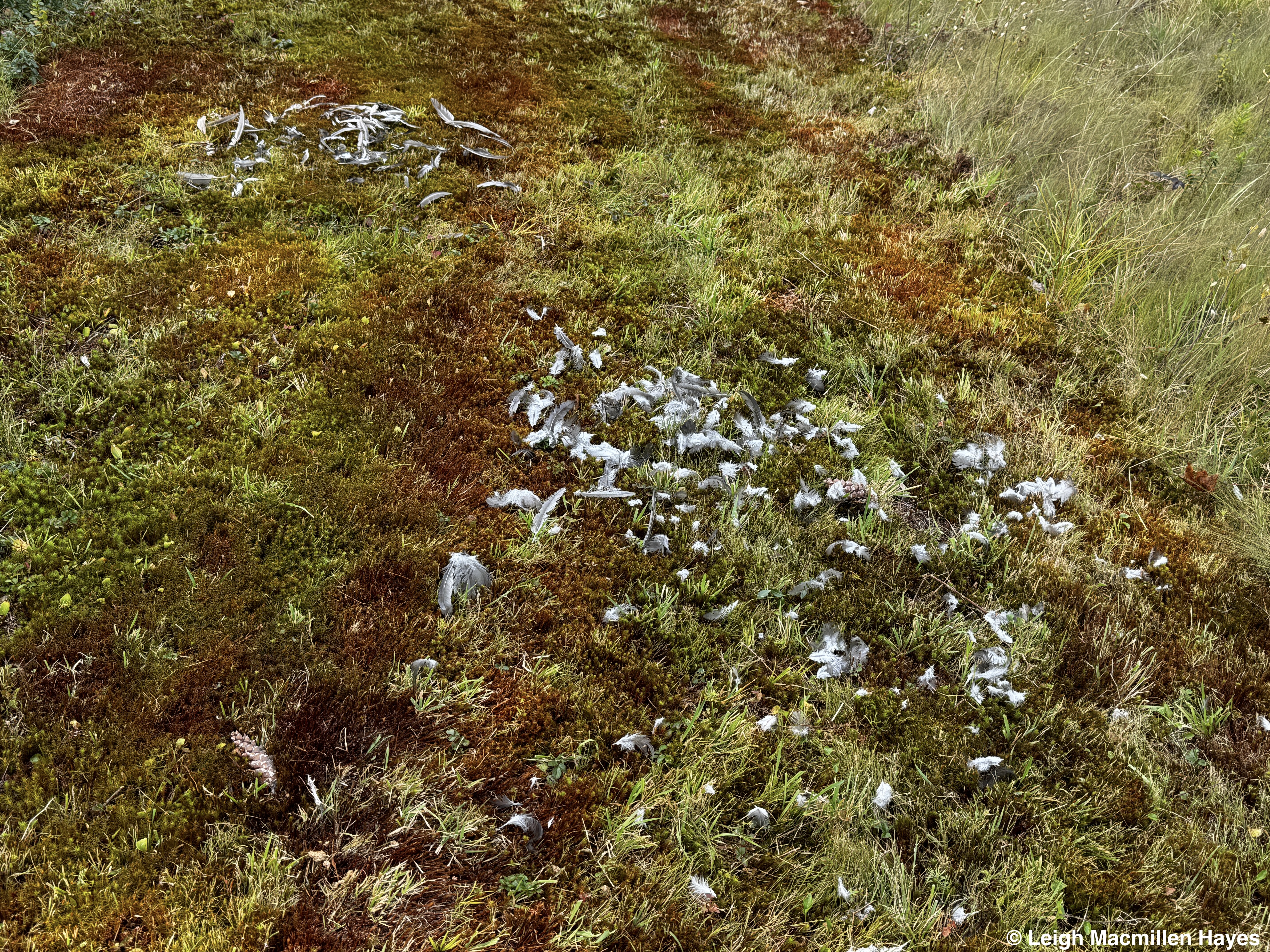
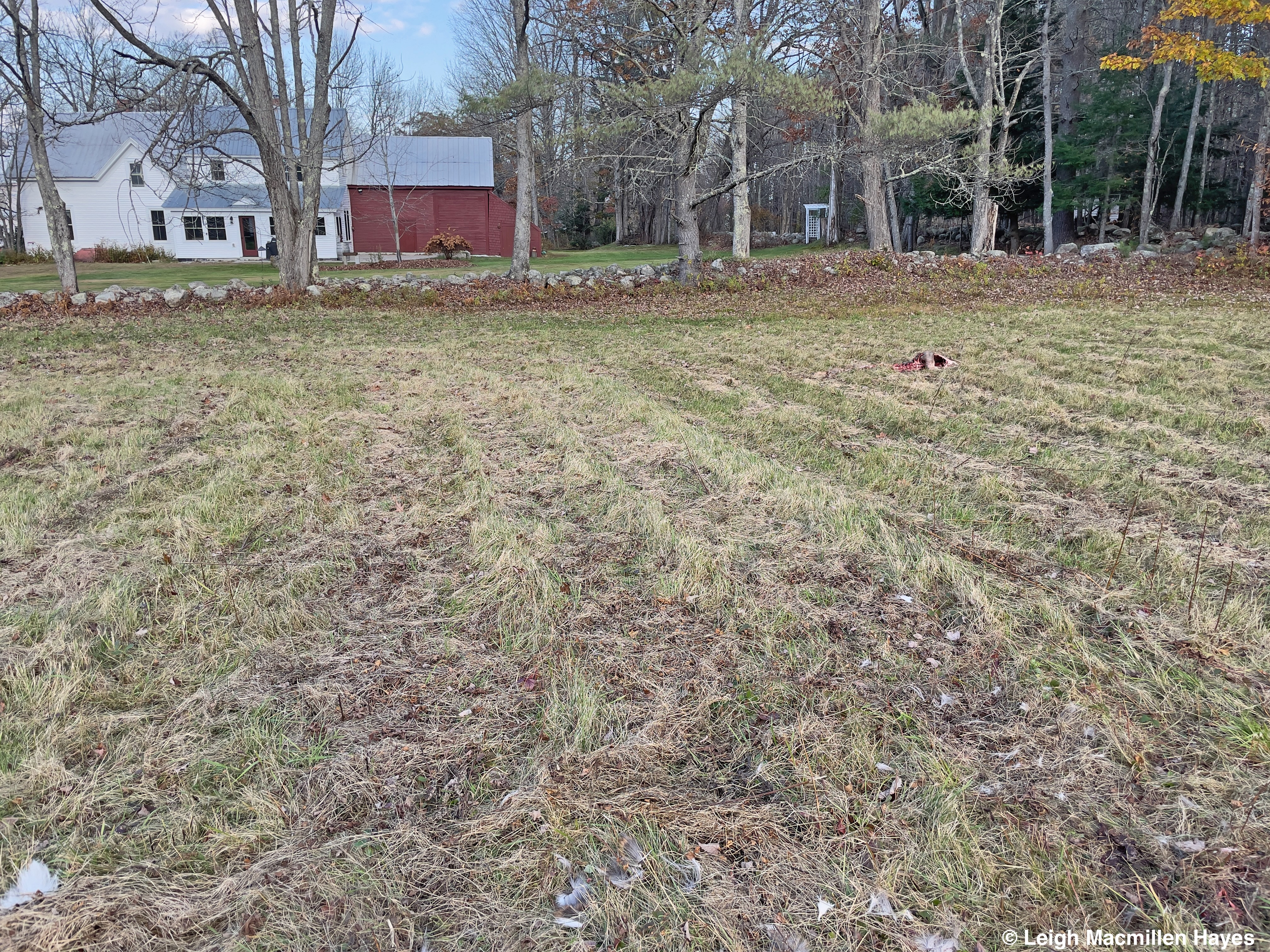
I still don’t know who the predator was but it took me back to what my neighbor and I discovered in her field yesterday. Two piles of feathers from the same bird.

The feathers appeared to have been plucked so I suspect a raptor did the deed, after all, they need to eat too. But what species died? We don’t know birds well enough to say. What was curious to us was that there was no blood. Nor any body parts. My neighbor’s dogs were onto a scent in the feathers, however, and we suspect that they had a better sense of either who the prey was or who needed a meal than we did.
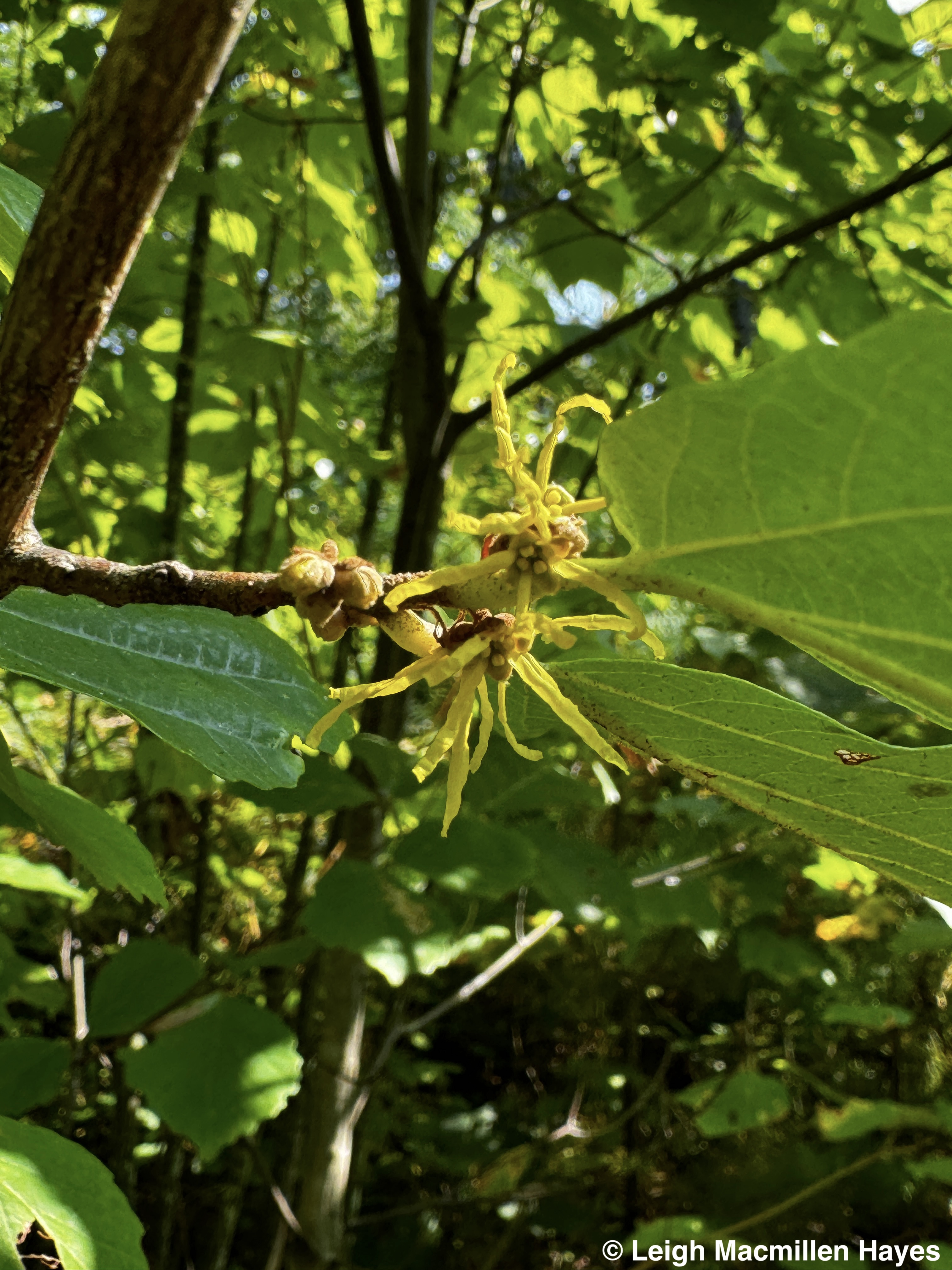
Returning to today’s trail, I spotted Witch Hazel in bloom, the first of the season for me to spy. This flower always makes me happy with it’s yellow ribbons haphazardly displayed.

And then I sawa Maple Leaf Viburnum, its leaves already their magenta color and so many berries still intact.
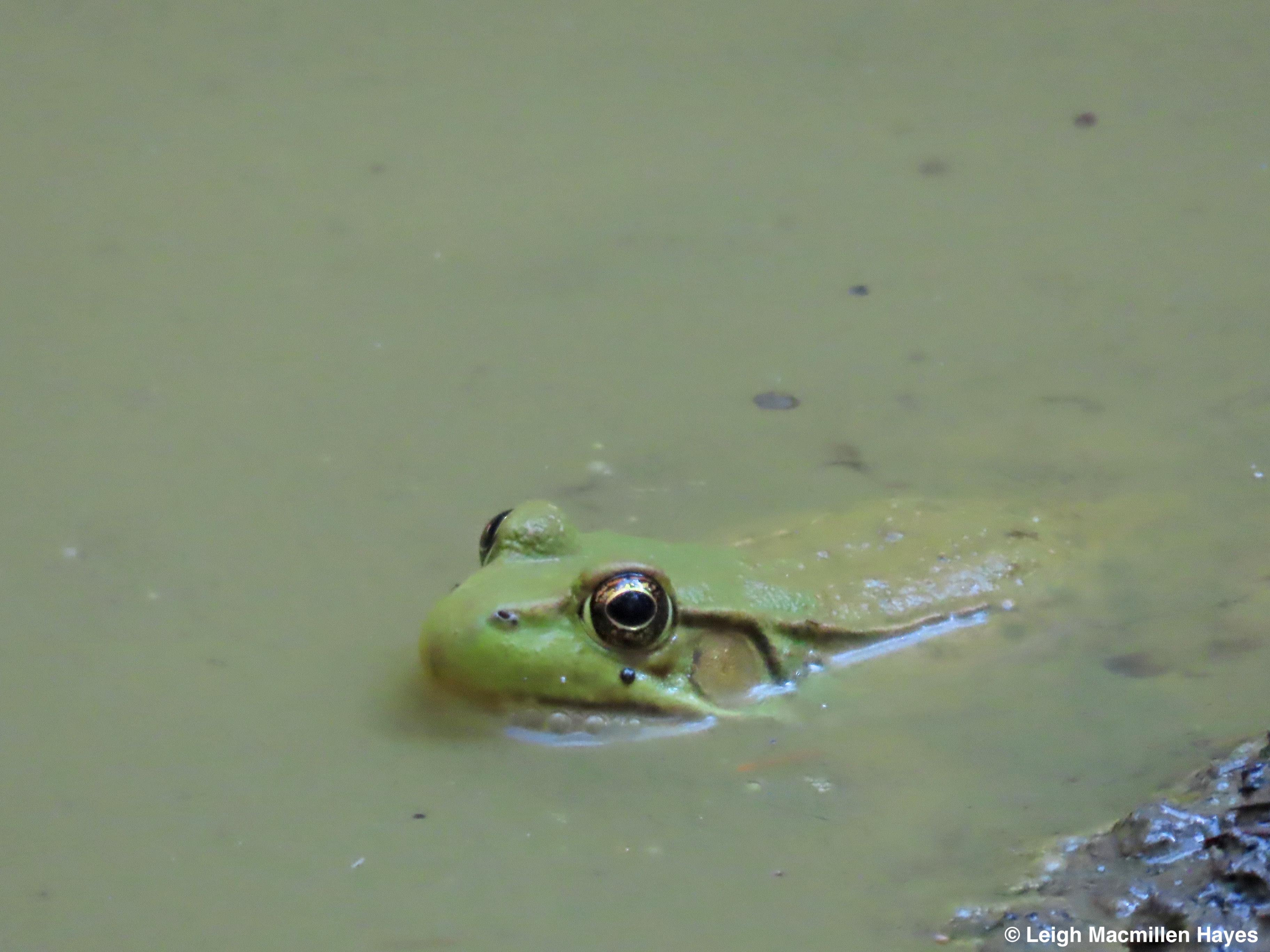
And a Green Frog in a mucky puddle as we approached the summit.
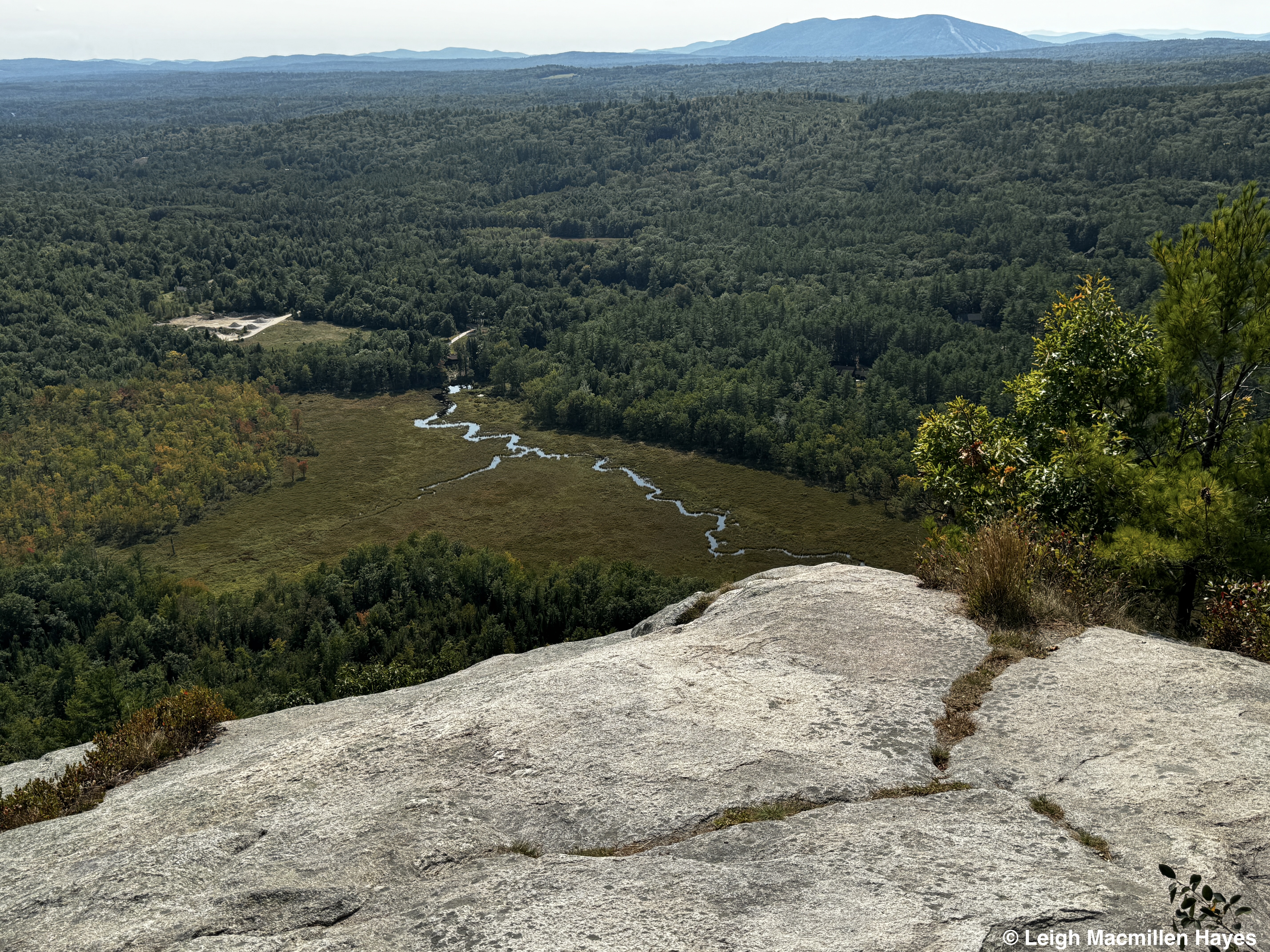
The view is always amazing, enhanced by the brook and wetland below and our beloved Pleasant Mountain in the distance. You can even see the ski area at the right or northern end.
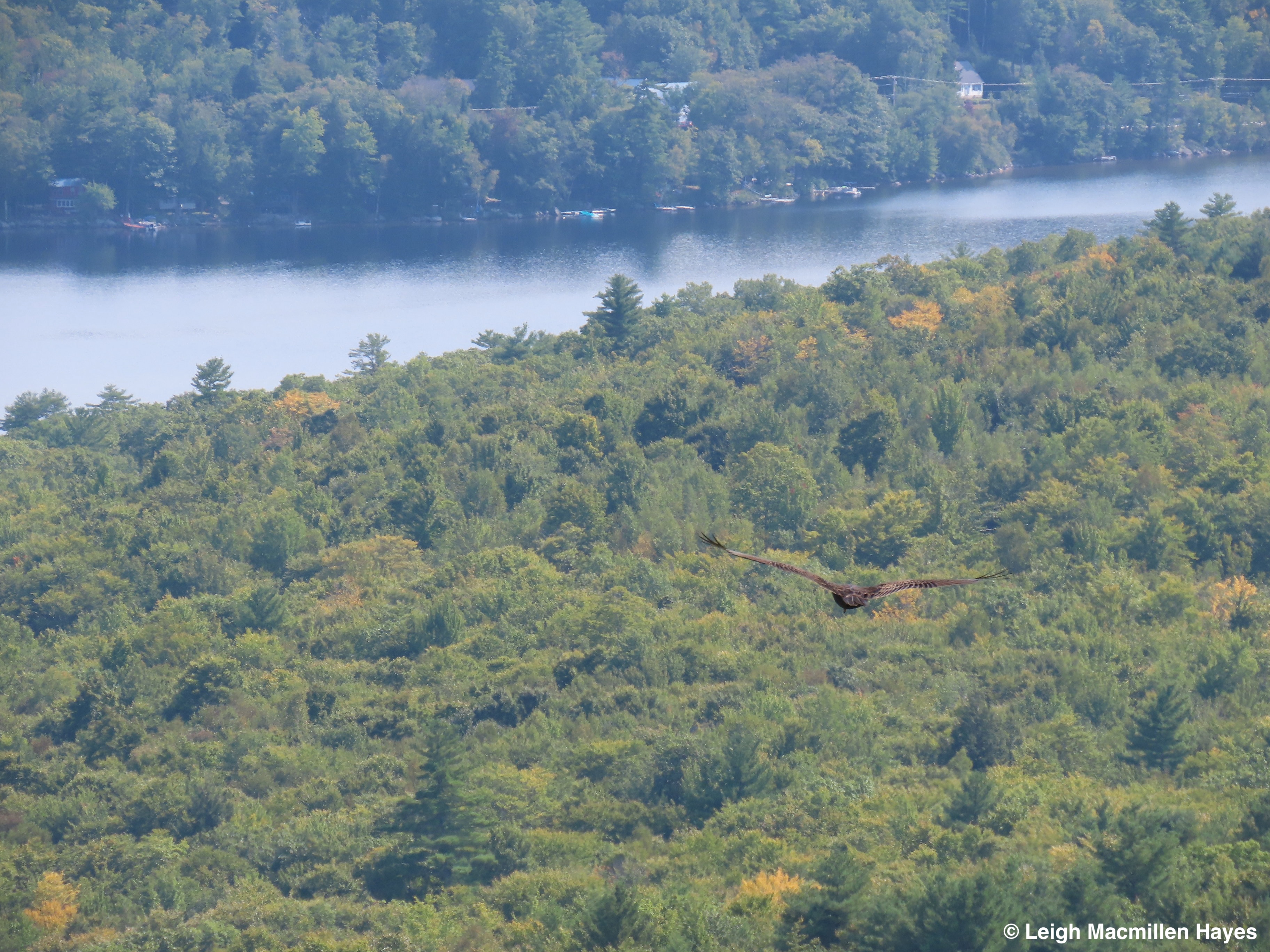
While we were out there I only captured a photo of one Turkey Vulture, but at least three road today’s thermals, gliding round and round.

And on the way down a small Garter Snake tried to hide from us. It was about the size of a pencil. And reminded me of another site in the field at home that I spotted this morning.
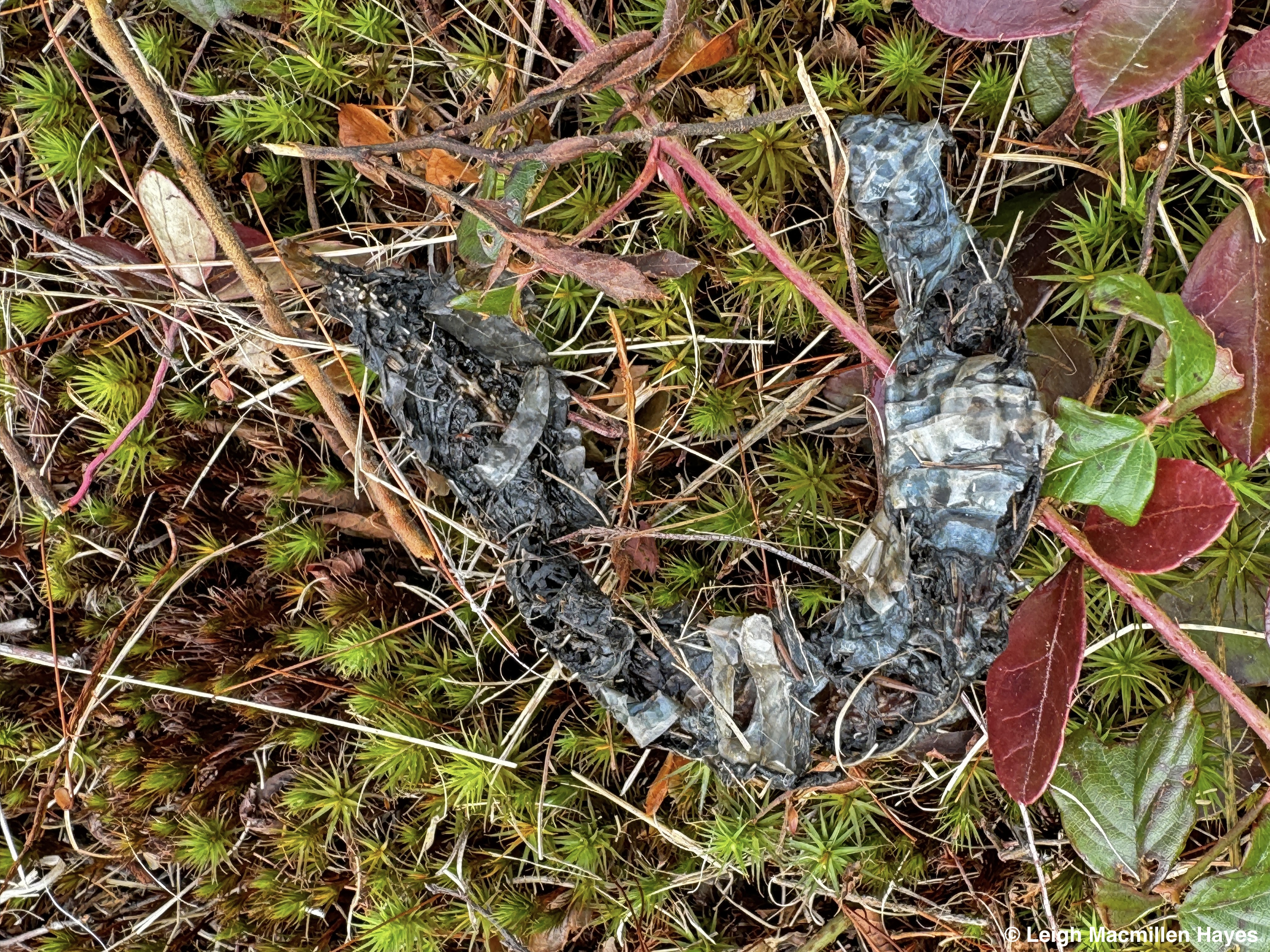
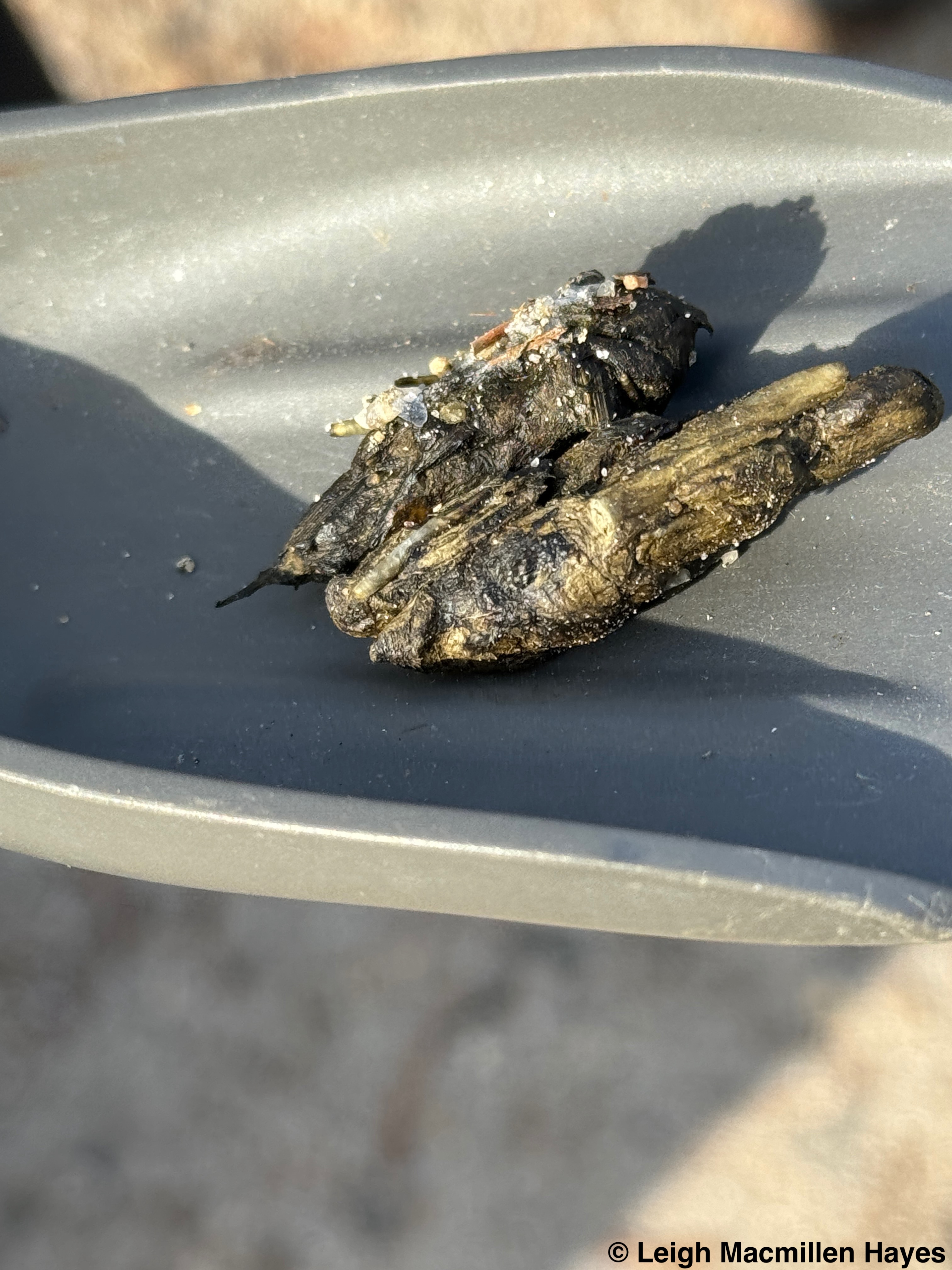
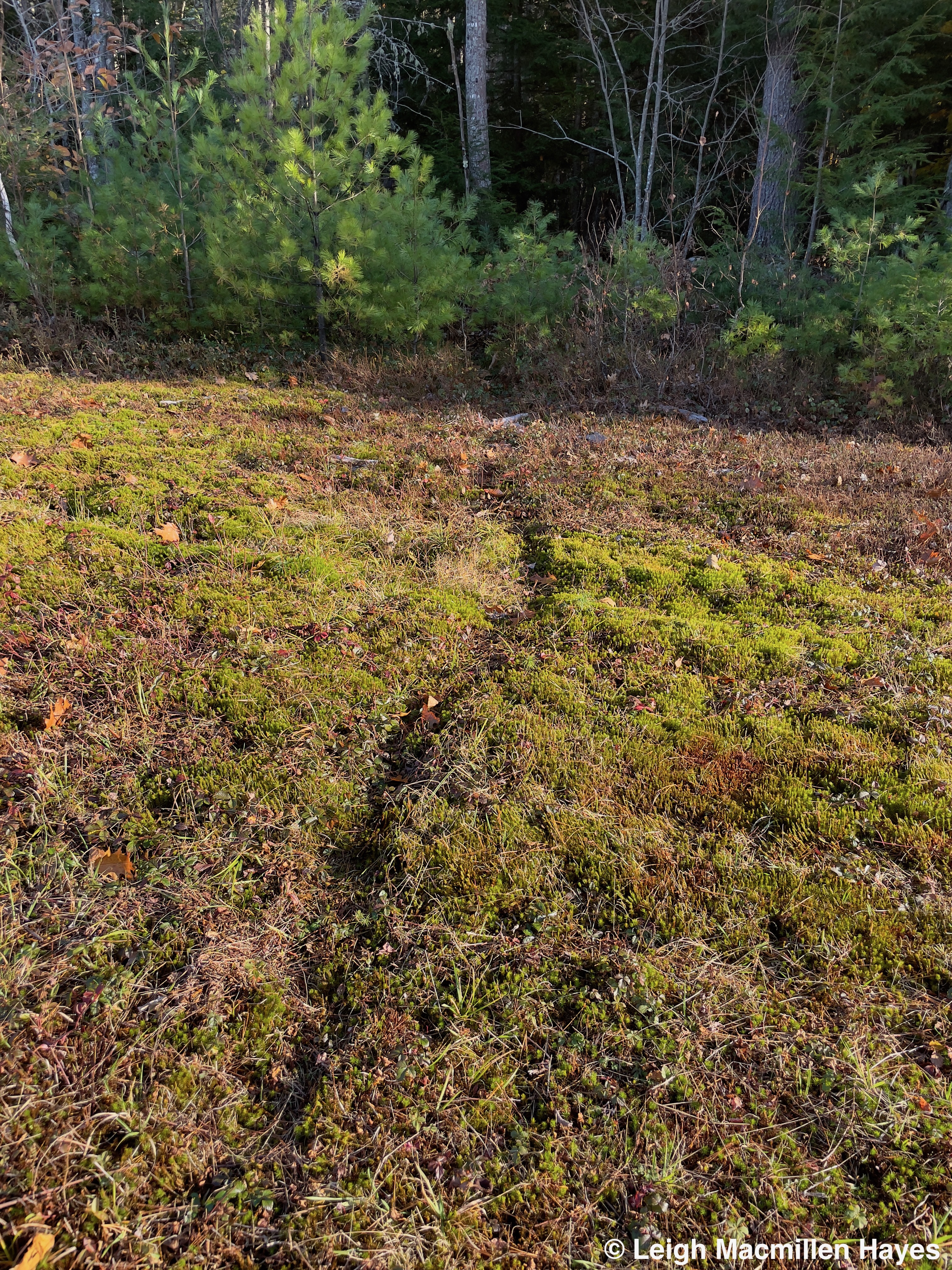
My first thought. Scat. Of course. Until I took a closer look. A spine?
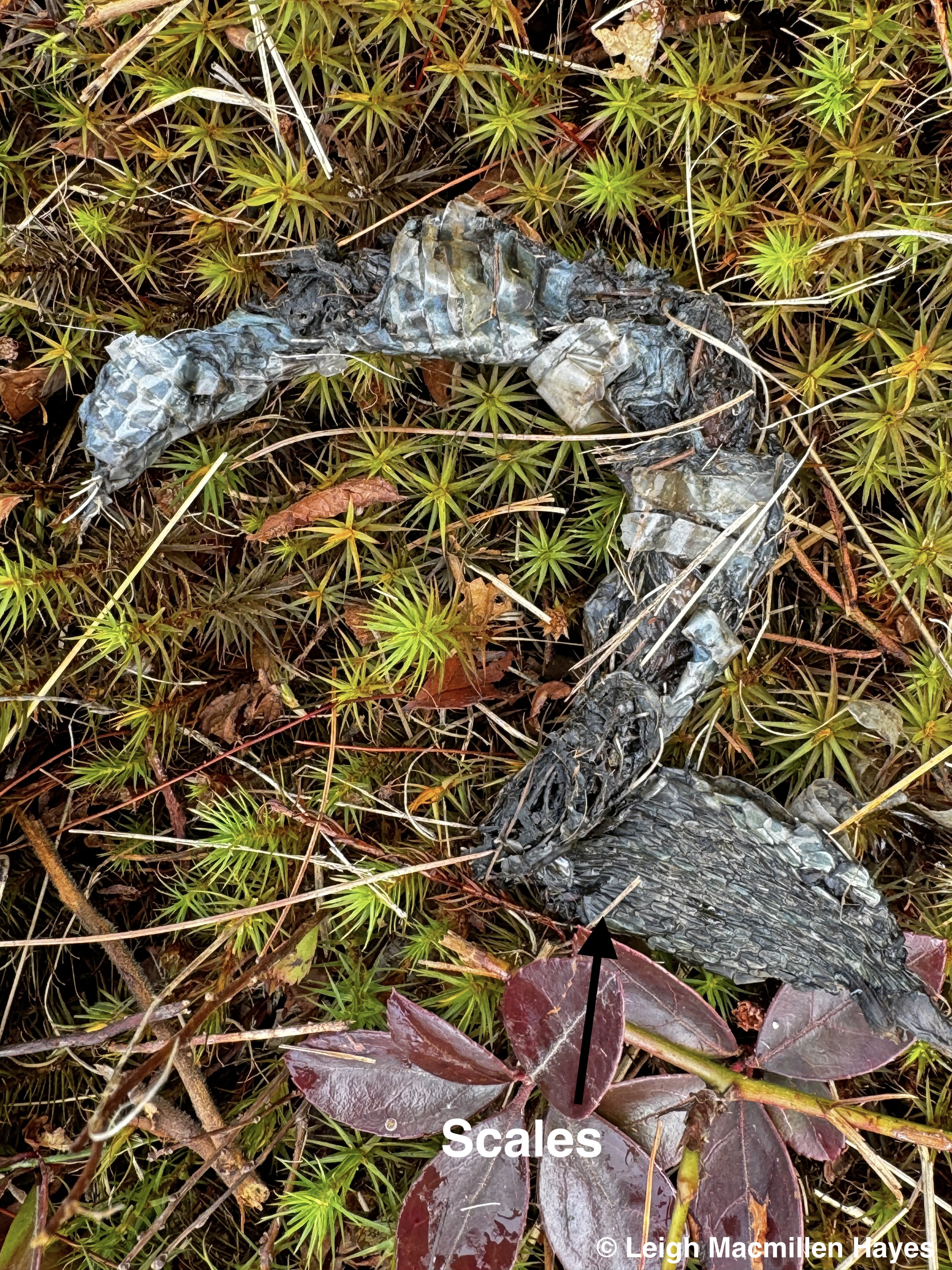
And then I flipped it over and spotted scales. Probably a much larger Garter Snake. If I took a closer look at the scale pattern I could be certain of this ID. Maybe tomorrow. If I can locate it again.

From Hawk Mountain we made a mad dash to Mount Tire’m and again at the summit, a view toward Pleasant, just from a somewhat different angle.

We were in a bit of a rush, but My Guy didn’t mind that I wanted to explore the erratic boulders in the woods behind the summit. I think everyone who climbs that mountain ends up at this spot. Rock Castle? Bat Cave? Bear Den?

We decided on the latter given that we spied a bear through the trees.

And so, I did what I always do here and channeled my inner bear.

Now really, this wasn’t such a gruesome post after all, right? But wow. Porcupine with maggots, snakes, and a human bear. Oh my!

Taking Stock . . . Naturally

As locals know, My Guy owns a hardware store and I often say I am married to the store. It’s true because it is a constant in our lives and follows us on walks and hikes even on his days off. And though our oldest son has taken over the reins in the past two years, My Guy still cannot completely let go.

I’ve come to realize, however, that that is okay because it means I can tend my own shop. Of course, while he owns the land and the building, I need to rent space, but it’s well worth the priceless price.

Step through the open-air doorway, and you’ll find right now I’ve got proboscis-style straws on display. They are especially beneficial when sipping from Red Clover, a member of the legume family.

And for safe storage, the Peck’s Skipper likes to show how to curl the straw up when not in use.

If you are an introvert, like me and the Common Ringlet Butterfly, you might prefer to flit from flower to flower, but then hide in the vegetation after spending so much time demonstrating for the public how to use your straw.

Common Wood-Nymphs are equally inclined to hide, but still available on the shelf for you to choose, and you can decide if this stored straw appeals to you, or not.

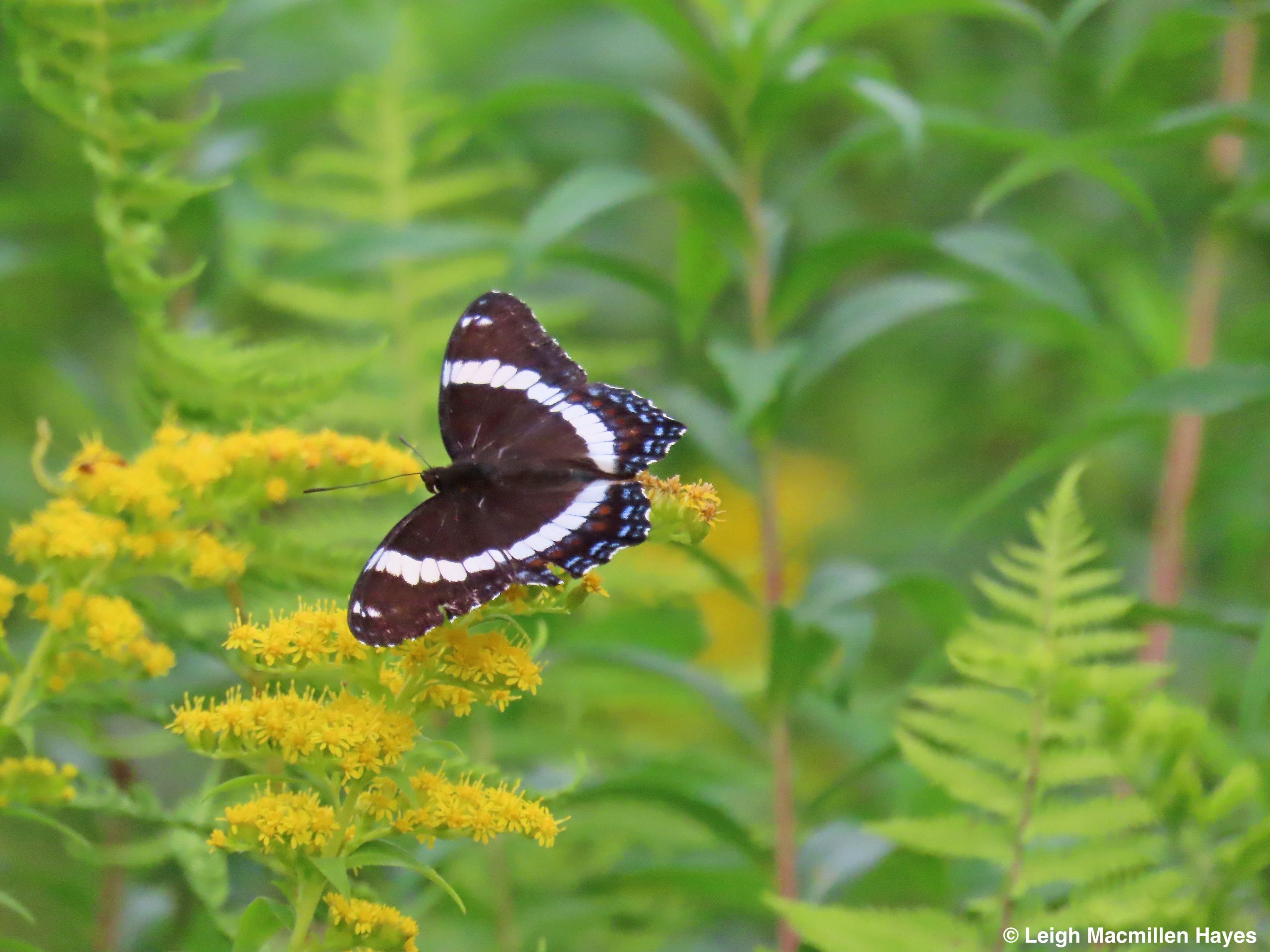
White Admirals are especially plentiful right now, and want you to know that whether hanging upside down,

or right side up, their straws always work, so it might be a good one to think about purchasing.

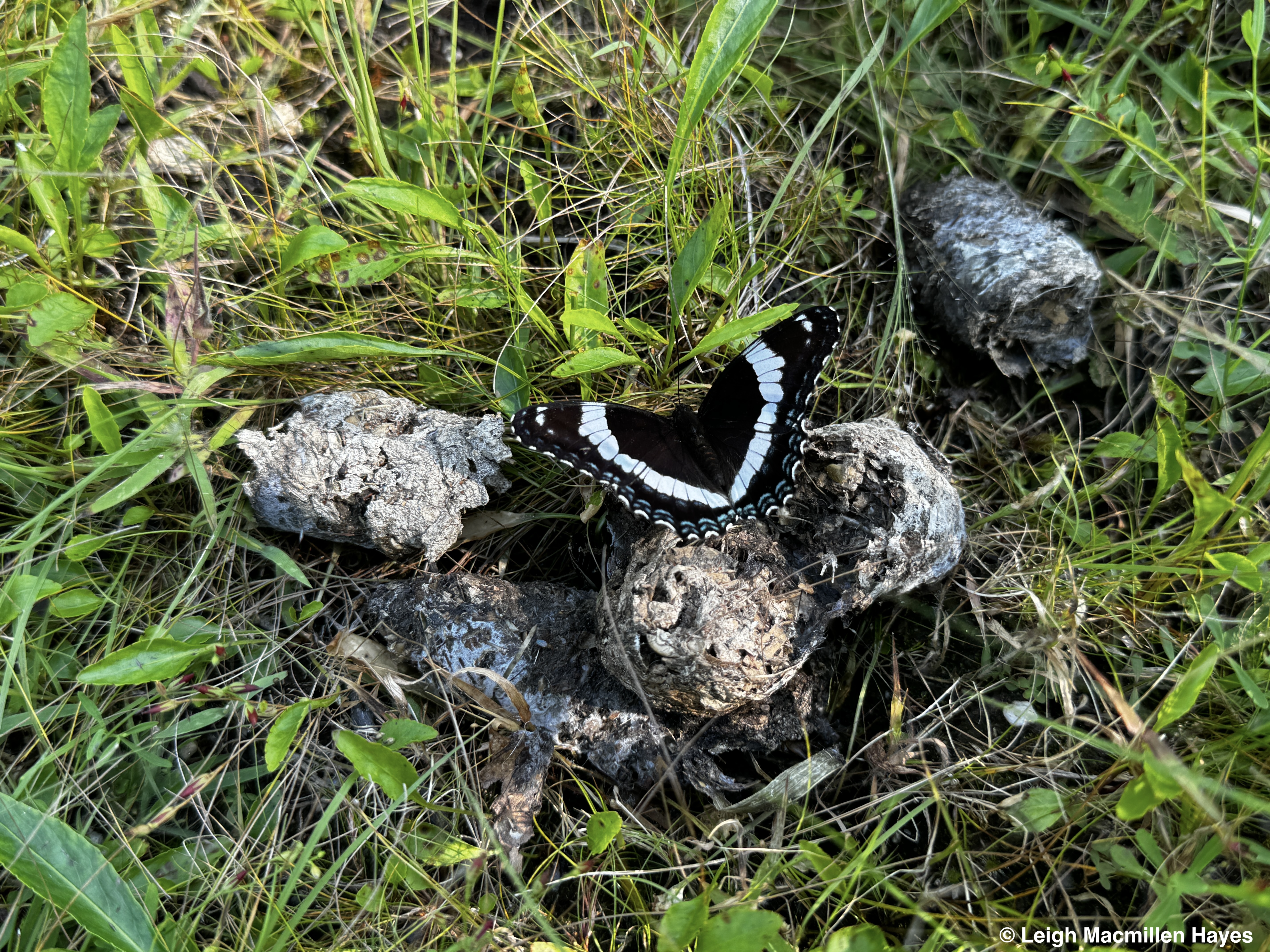
Especially if you like to get some of your nutrients from scat. We can throw in some scat for you, if you’d like–at no extra charge!

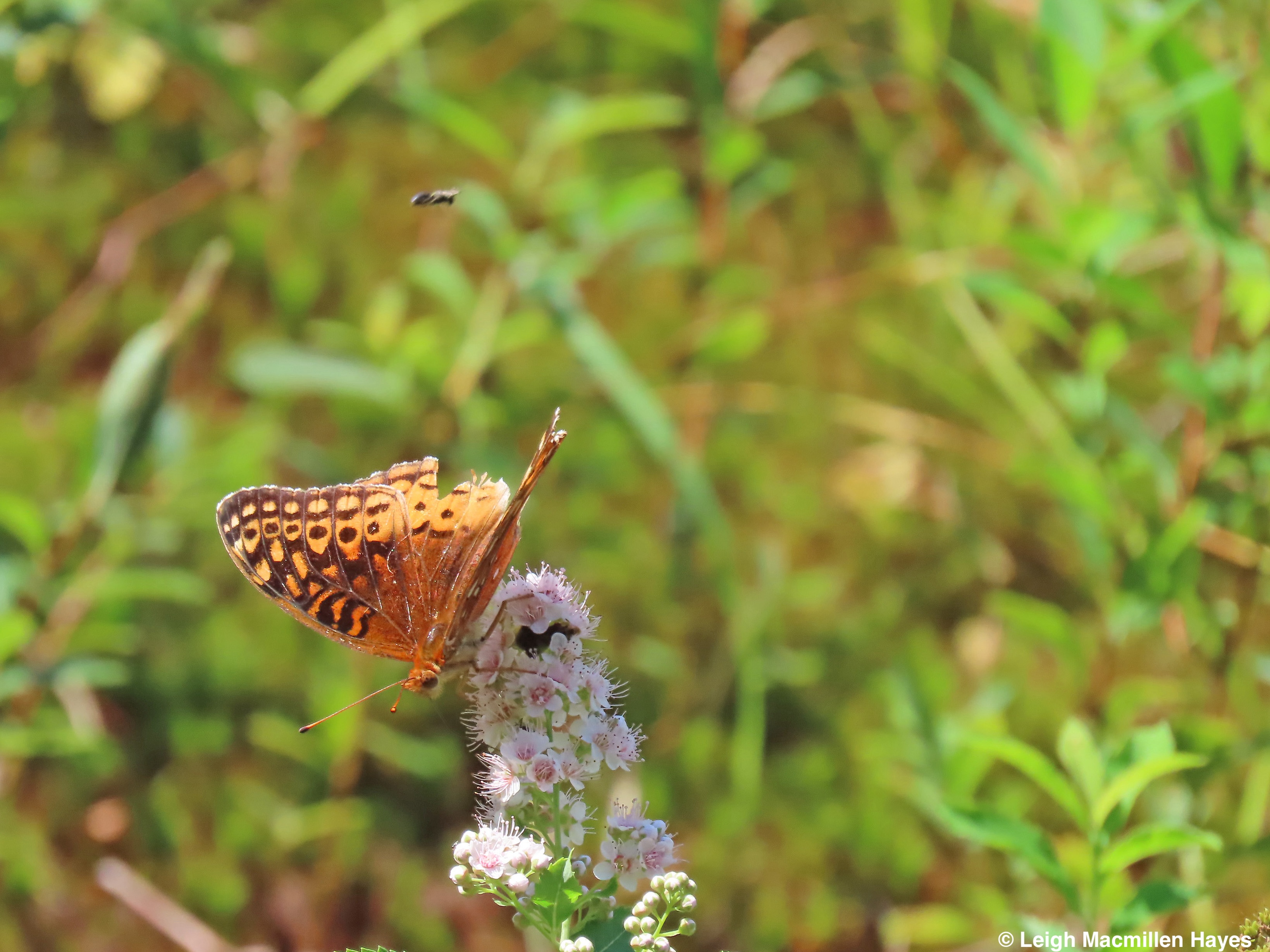
Sometimes it’s the packaging that makes all the difference, so we’ve got several orange choices for you to consider, this being the Fritillary style. Make me an offer I can’t resist, and this straw is yours due to the fact that it has been used previously, as evidenced by the tattered wing.

If you prefer something a bit bigger and brighter, there’s the Viceroy, with that dark band crossing its wings.

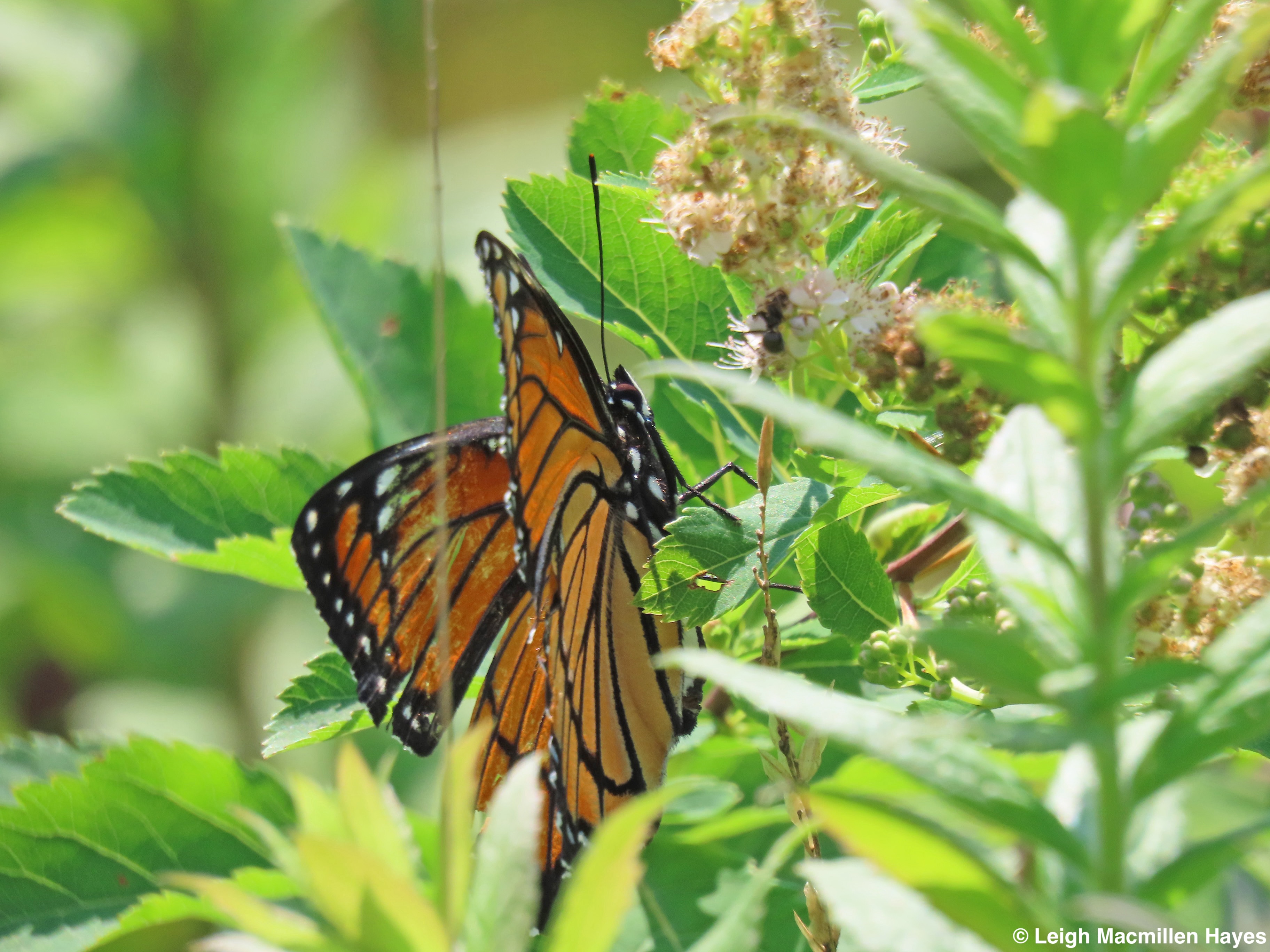
Or the biggest of all, the Monarch, who lacks the black band that is part of the Viceroy packaging.

For the tykes in your life, we also have Pearl Crescents and Northern Crescents in stock. The former is slightly smaller than the latter for the youngest in your gang.

Those are all great, but I have two that I much prefer, the first being this Clouded Sulpher that comes in pastel colors only, which contrast with the darker-colored straw.

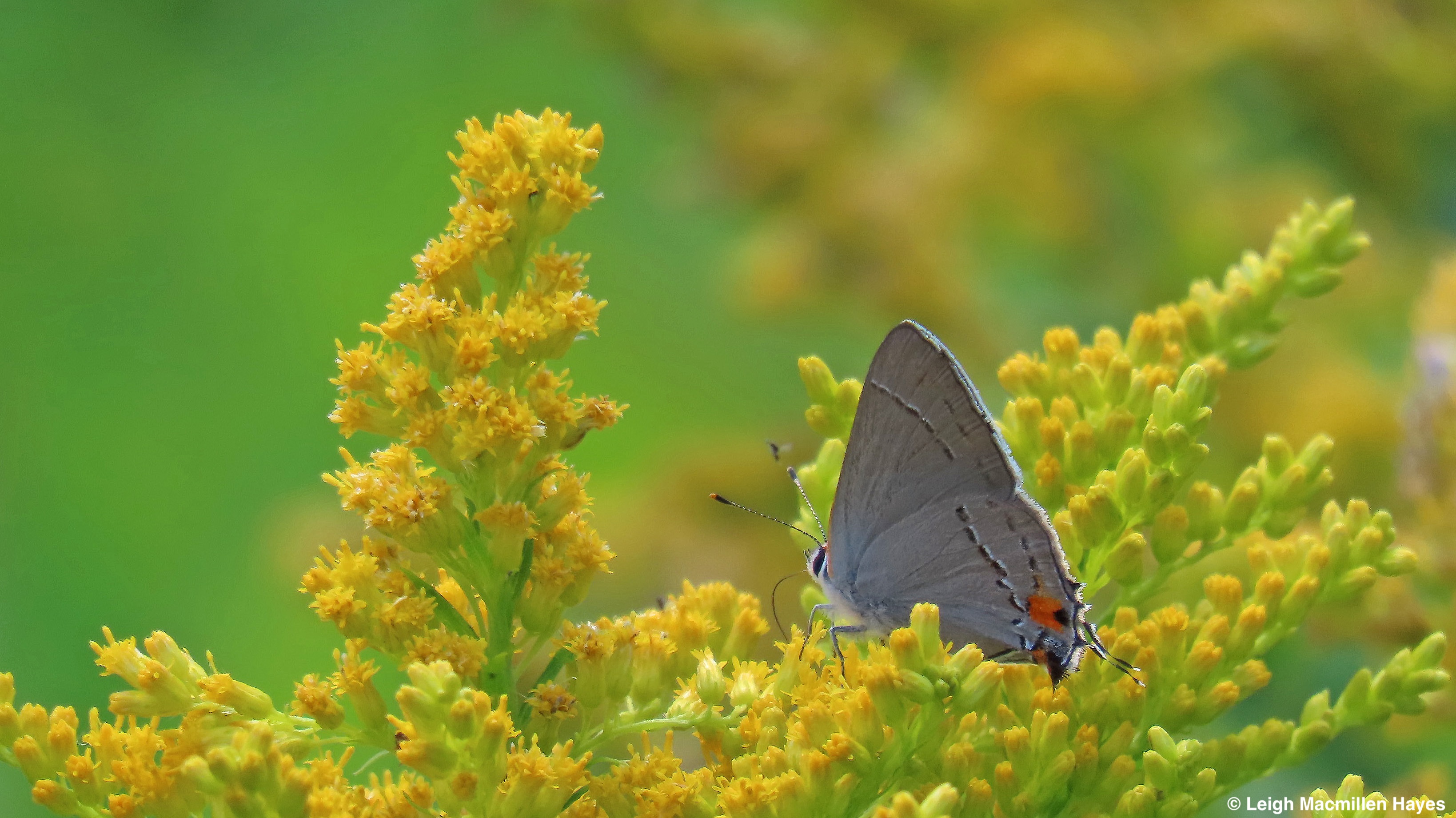
And the creme de la creme has to be the White M Hairstreak, a rare species that I was able to special source a few weeks ago, and every once in a blue moon (such as this August is), I can find another to offer you. That is the case right now, but hurry because I don’t know how long this butterfly will remain on the shelf.

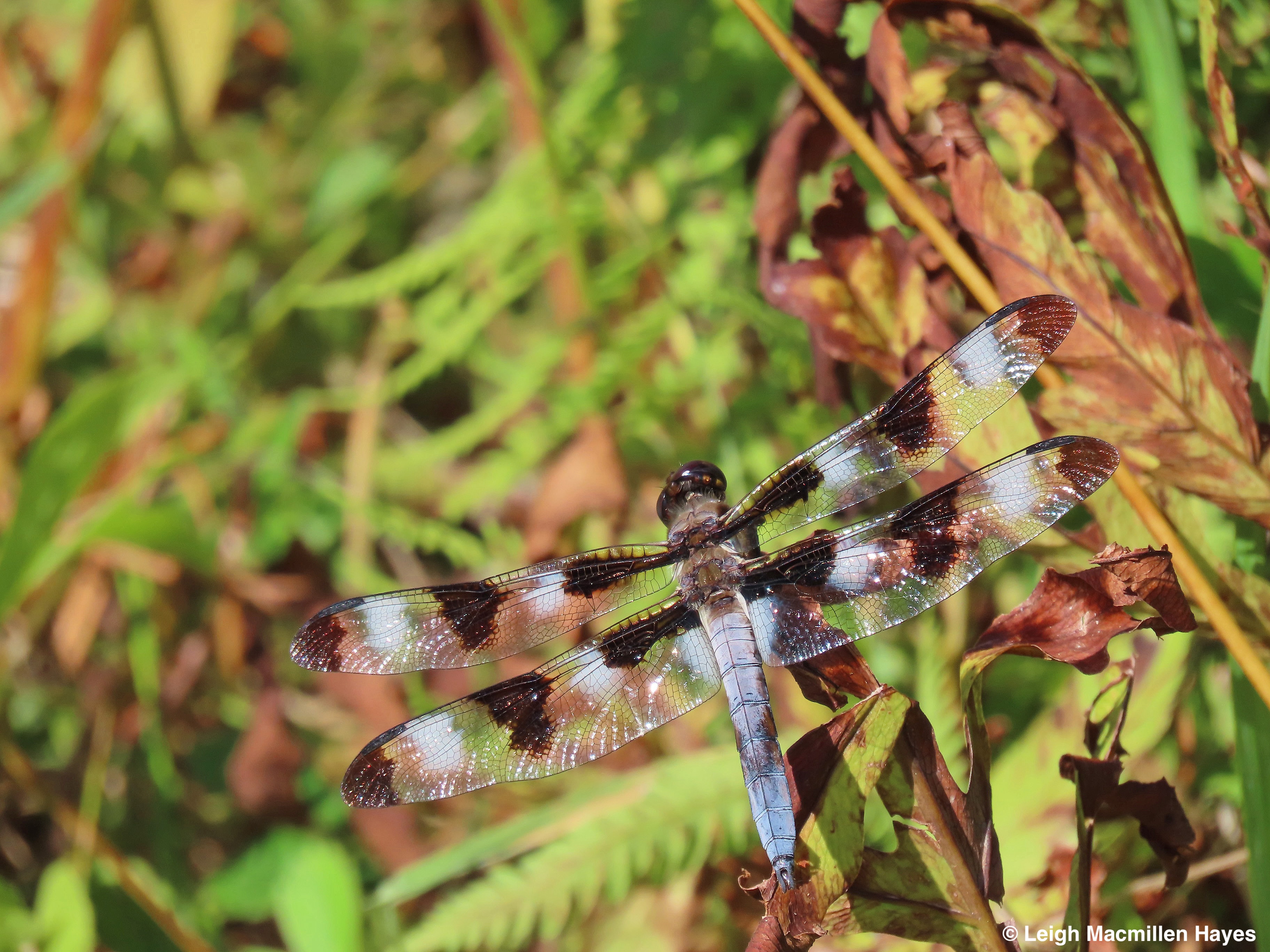
Over in the natural pesticide control aisle, I’ve a few options for you to consider, such as this handsome male Twelve-spotted Skimmer. Unfortunately, I just discovered these are on backorder, so you’ll probably need to wait until June if this is the style you prefer.

The same is true of the Eastern Pondhawk–in fact, I was totally surprised that I was able to snag this species, but suspect it has something to do with the store’s location between two ponds, and so close to a wetland and swamp.

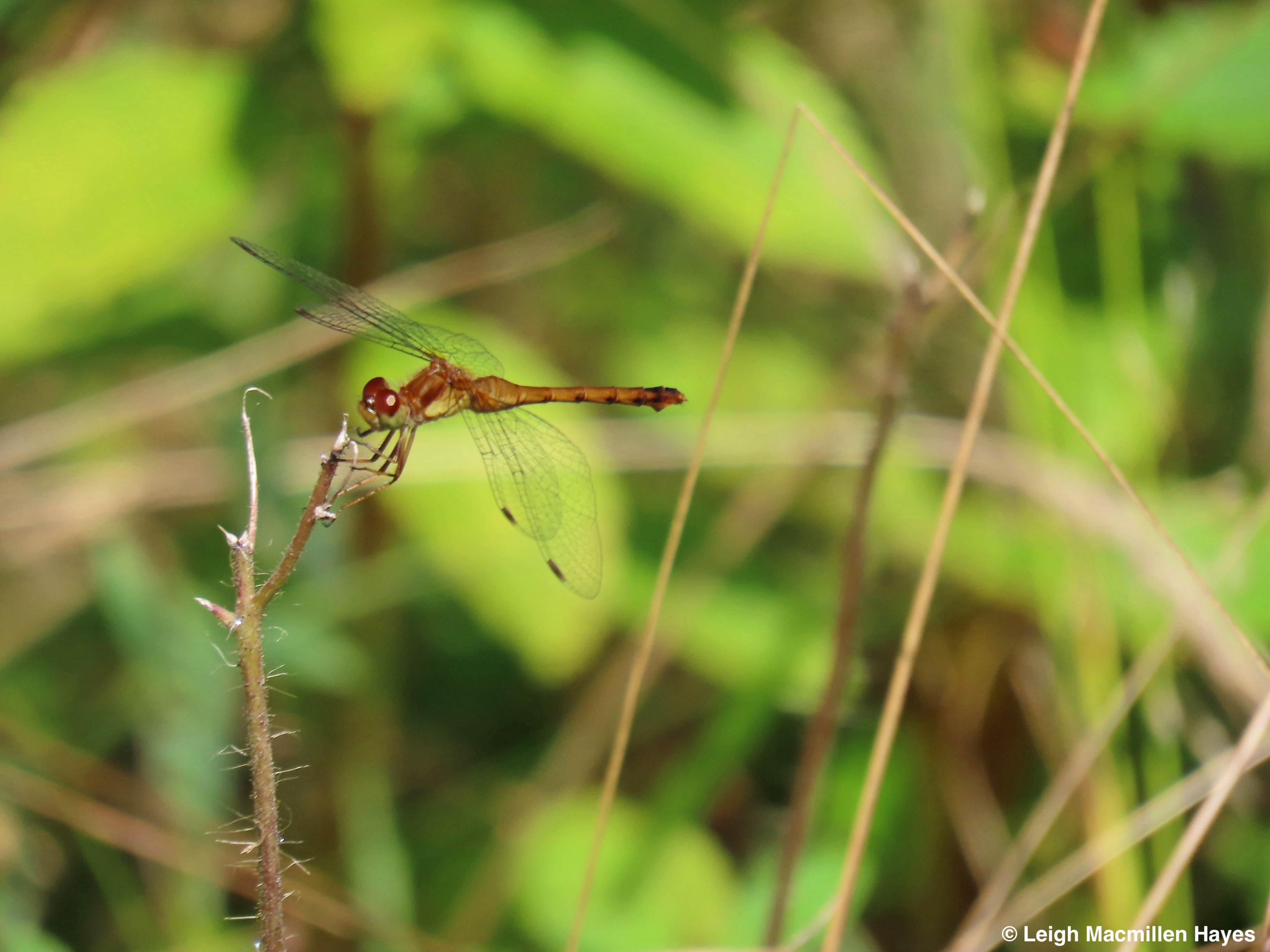
Right now, the most abundant pesticides I can offer are in the form of Meadowhawk dragonflies like this Autumn Meadowhawk, a small skimmer with tan colored legs.

If you prefer something larger . . .

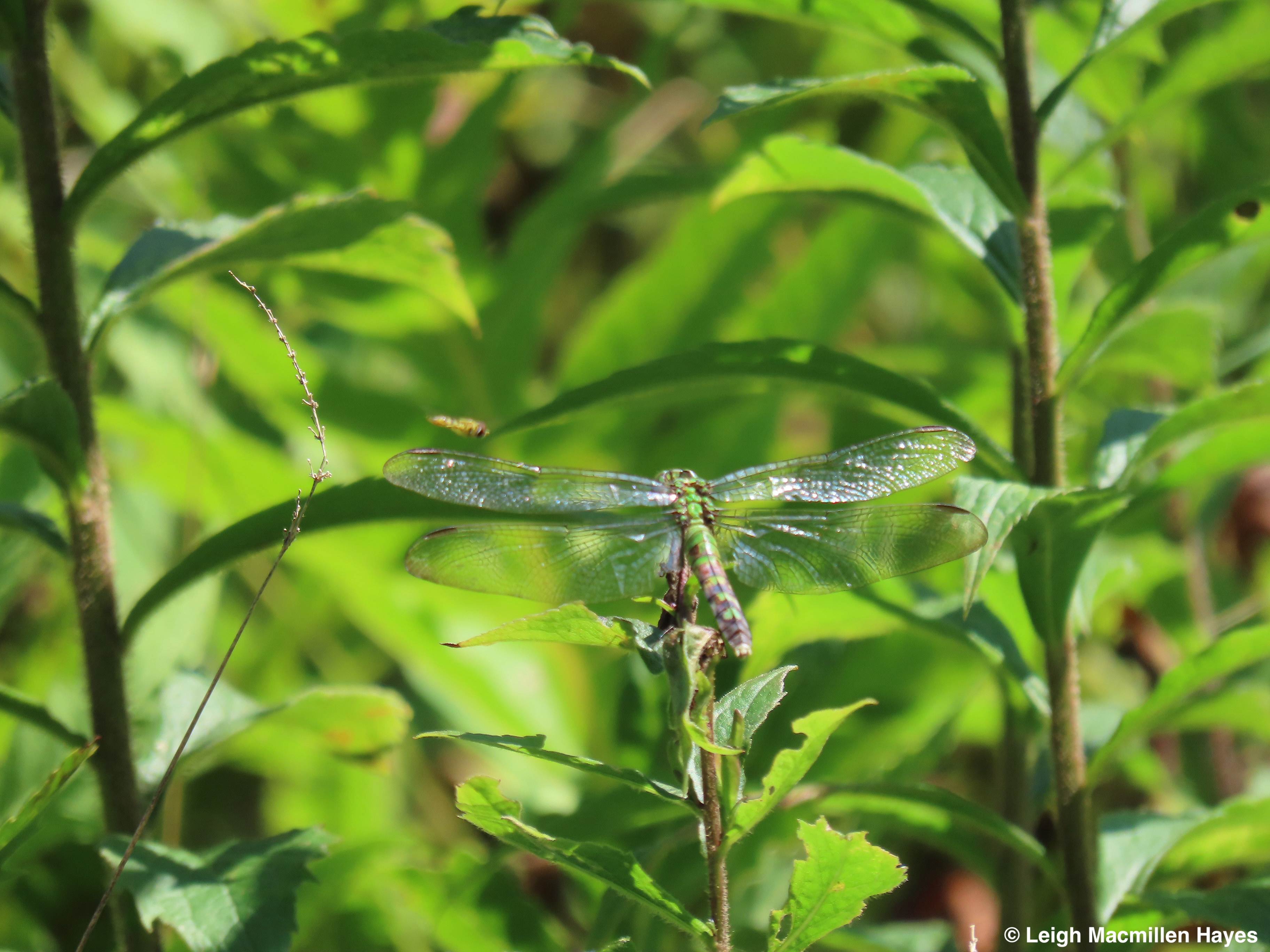
you might like the darners that keep flying off the shelf. That said, there are plenty more where this guy came from, so if you can’t find one in the shop, give me a shout, and I’ll check the backroom.

Summer is not over yet, despite what everyone has been saying lately, and so if it’s pollinators you are looking for, I’m afraid I overstocked. Well, there’s nothing to be afraid of, actually. Being overstocked on these is a great thing. And you can mix and match if you’d like, perhaps choosing these European Paper Wasps,

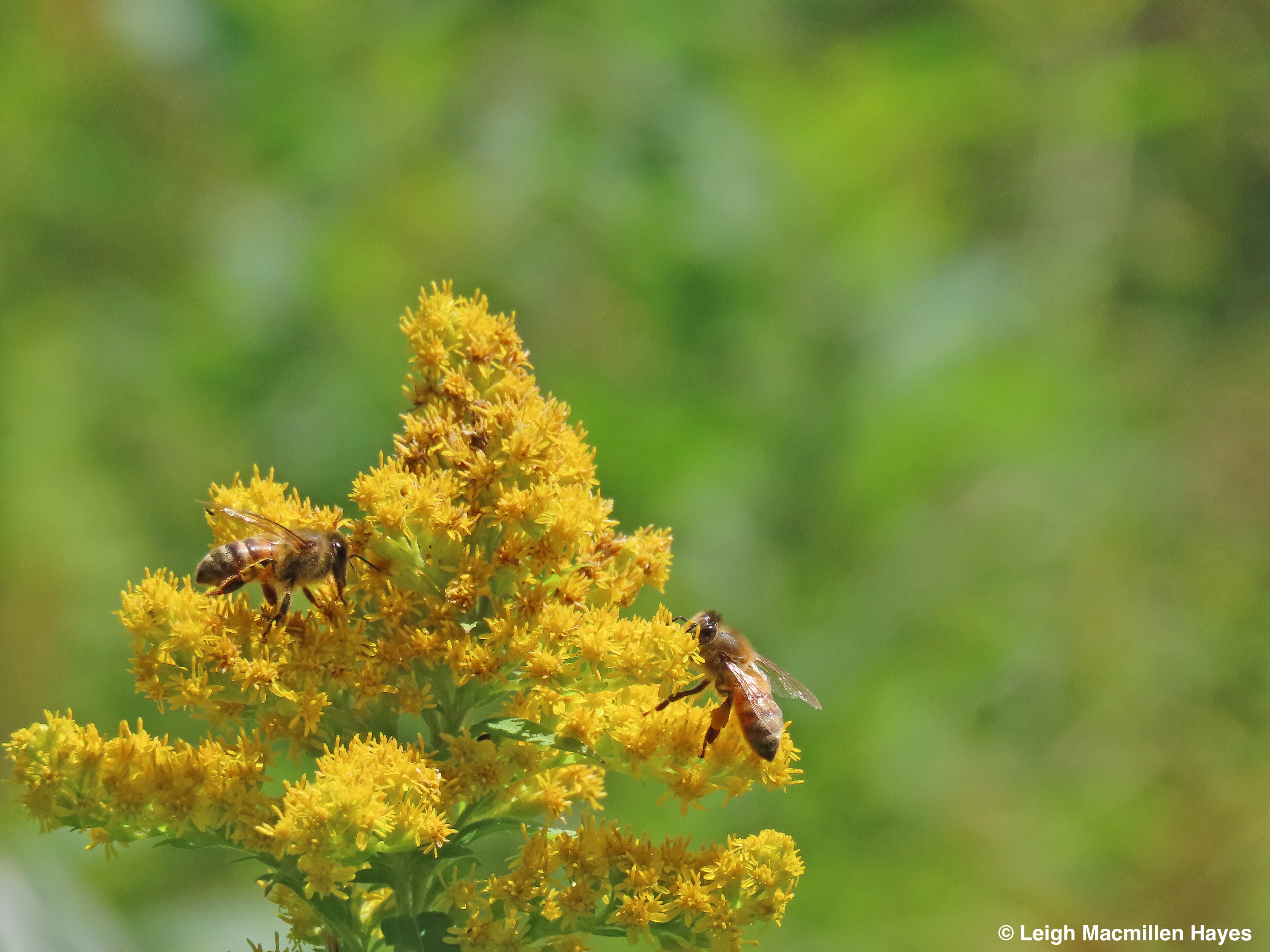
a few Honey Bees,

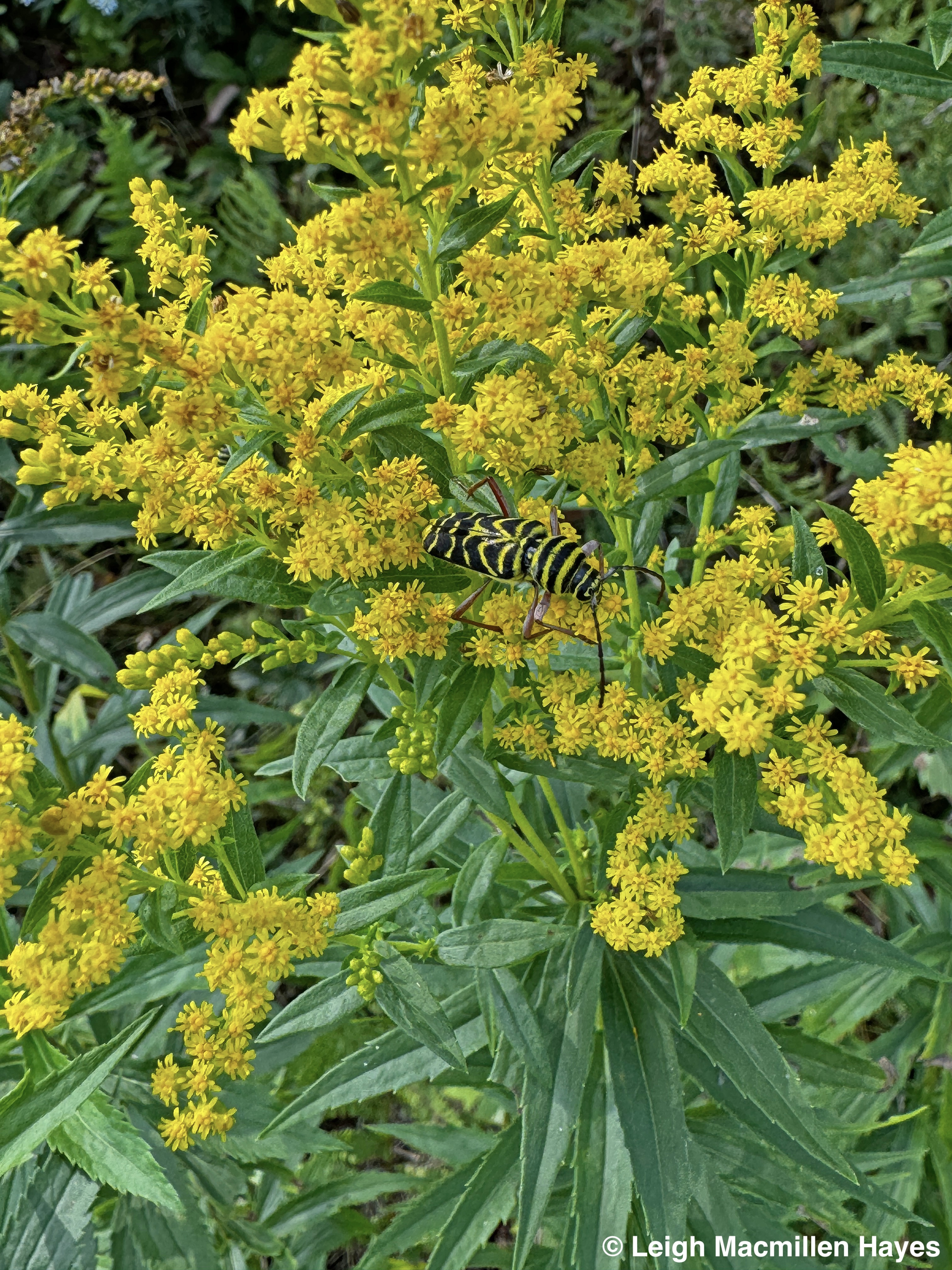
and some Locust Borers, all lovers of Goldenrod as you can see. I’ve also got Great Black Wasps, with their iridescent blue wings, and Paper Wasps, and Bumblebees, and . . . and . . . and so many to fill your reusable bag.

In the Fly By Day aisle, there are a few special selections, the first being this Lacewing that could be featured in a “Where’s Waldo” picture, so well camouflaged it is.

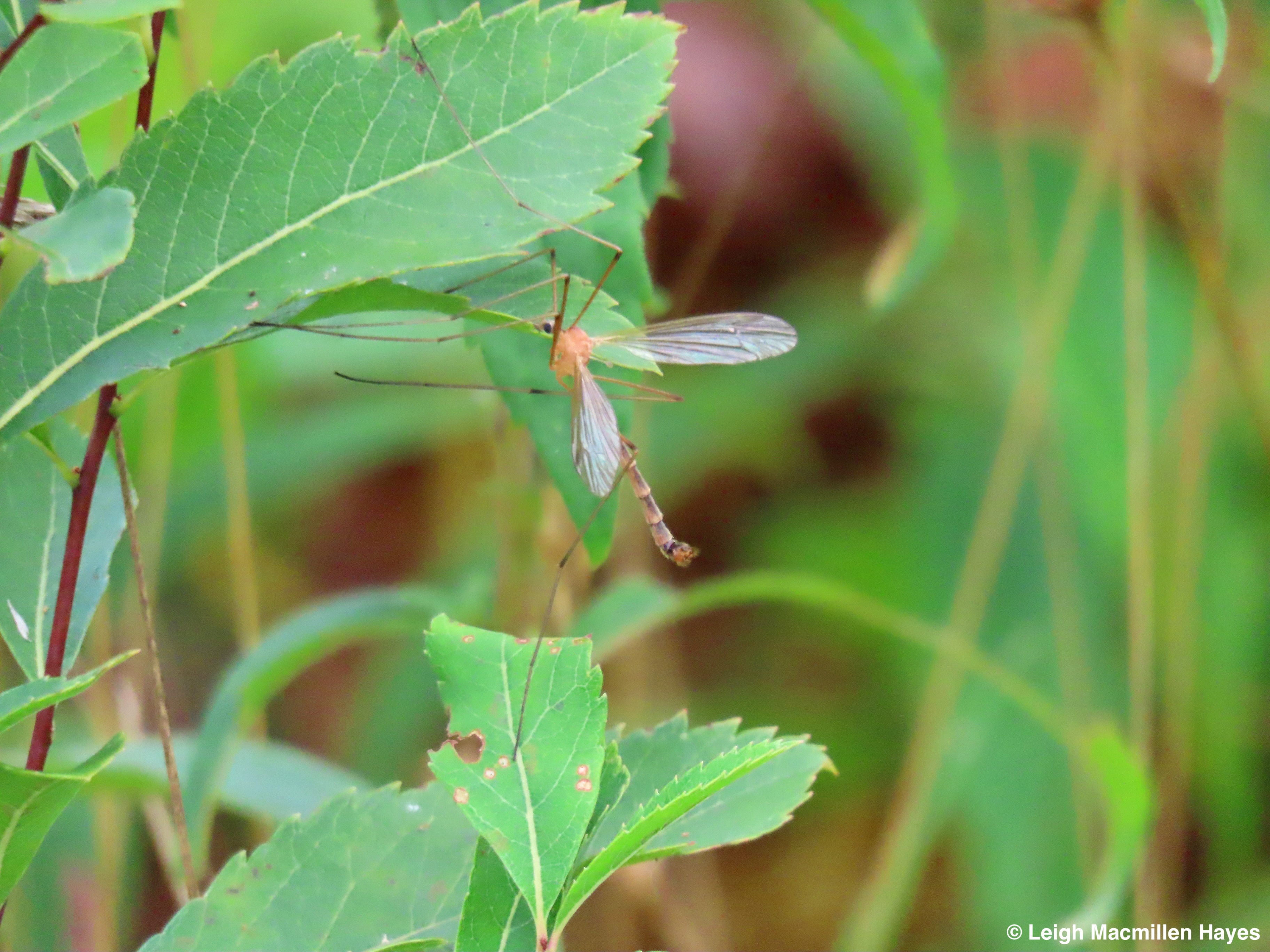
And a Crane Fly that you can scare people with and pretend it’s a giant mosquito. The thing is . . . they don’t bite. In fact, during their short lifespans, they don’t typically eat. So . . . little maintenance if you decide to put this one in your cart.

I’d be lax if I didn’t mention the employees such as this teenaged Ambush Bug who is very good at hanging out on Goldenrod plants near Black and Yellow Garden Spider webs, without getting tangled in all the drama.

But, being teenagers, sometimes two decide to tango in the breakroom under the Goldenrod, and these two canoodlers just had to have a bite to eat while they were so engaged. I’m sure the Sweat Bee never saw this coming.

If you do decide to stop by the shop, the Black and Yellow Spiders are the chefs and they’re happy to provide you with a Dog-Day Cicada meal all wrapped up and ready to eat on the road. They have other items on the menu as well.

That said, this coming weekend, I do believe that the hardware store will have some items on the grill. So stop by and sample whatever delectable they prepare.

Food is actually a part of all our lives (haha, as it should be) and our youngest son is fortunate to work at a company in Manhattan that has a personal chef who prepares breakfast and lunch each day, mostly with locally-sourced food such as what is available at my store.

If you do come to the my shop, know that you’ll probably have to wait in line behind the Eastern Phoebes, who perch at roof-height and swoop in and out . . . often helping themselves and then zooming to the self-serve checkout line.

The guard doe keeps an eye on everyone passing through the door, so I don’t have to worry.

Occasionally, all four of us take a break from our respective jobs and come together to share a locally-sourced meal of our own–a la Fly Away Farm. Oh, and the kid (young man!) in glasses is holding his Lacy Blue pup who is sure that everyone who visits the hardware store comes just to greet and pet her.

As My Guy and I went for a long walk today, and hiked a mountain yesterday, we tried not to talk shop, but it occurred to me that while my eyes glaze over when he starts telling tales about hardware happenings, so do his when I point out the wonders of the natural world.

And so, I try not to tell him how to run his business (“try not to” being the operative phrase), and he lets me operate my own shop in my own way–even if it is all in my imagination.

I suppose you could say that while I’m married to a hardware store, he’s married to a . . . I’ll let you finish the line.

In the end, we both take stock . . . naturally.

Solstice 2024

There’s a local trail I’ve been traipsing along solo or with company these past few weeks and when I dragged My Guy there early this morning, and said I was bringing my camera, his response, “Why, there’s nothing to see there.” Seriously. Doesn’t he know me better than that after all these years?

It’s a place where Bullfrogs sit upon lilypads in true frog style and wait patiently for a meal to fly by. Given all the Gnats and Deer Flies that buzzed our faces and ears as we walked, I assumed there was plenty of food and actually offered some, but he wouldn’t partake. The frog, that is.

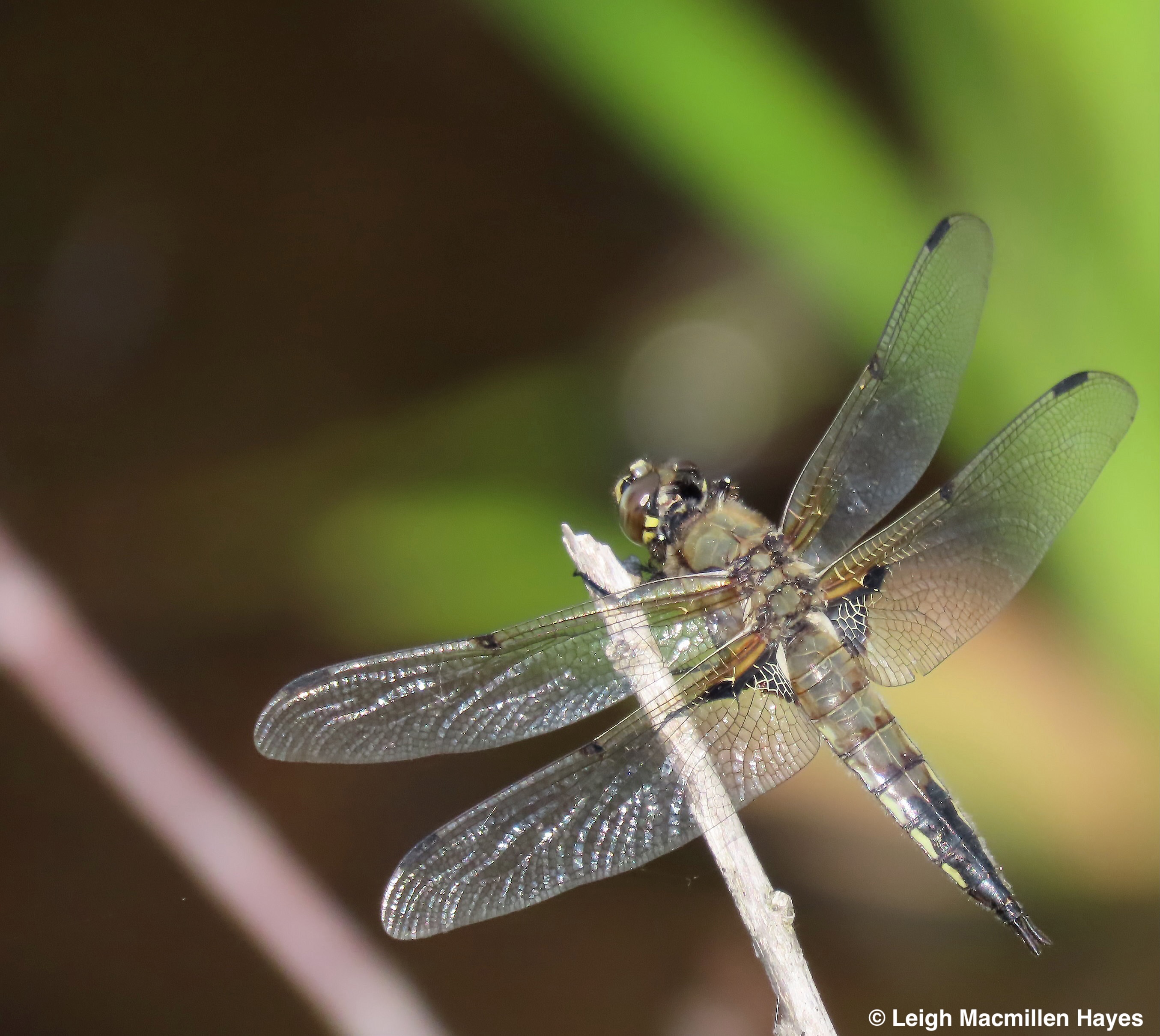
Another who should also have been enticed by the offerings, seemed to care more about defending his territory than dining, this being a Four-spotted Skimmer Dragonfly. The name Four-spotted refers to the small dark spots on the upper edge of each wing, there being two per wing, and thus four per side or four per front wing and four per backwing.

Equally nonchalant about all the available food, but curious about me, was the female Calico Pennant, another skimmer who loves to perch at the tip of plants and twigs and returns to the same site over and over again. Though I didn’t have a good view of her abdomen except for a hint of color on segment 7, the yellow-colored stigma toward the tips of her wings, and her yellowish face gave proof to her gender. Males have red stigmas and red faces.

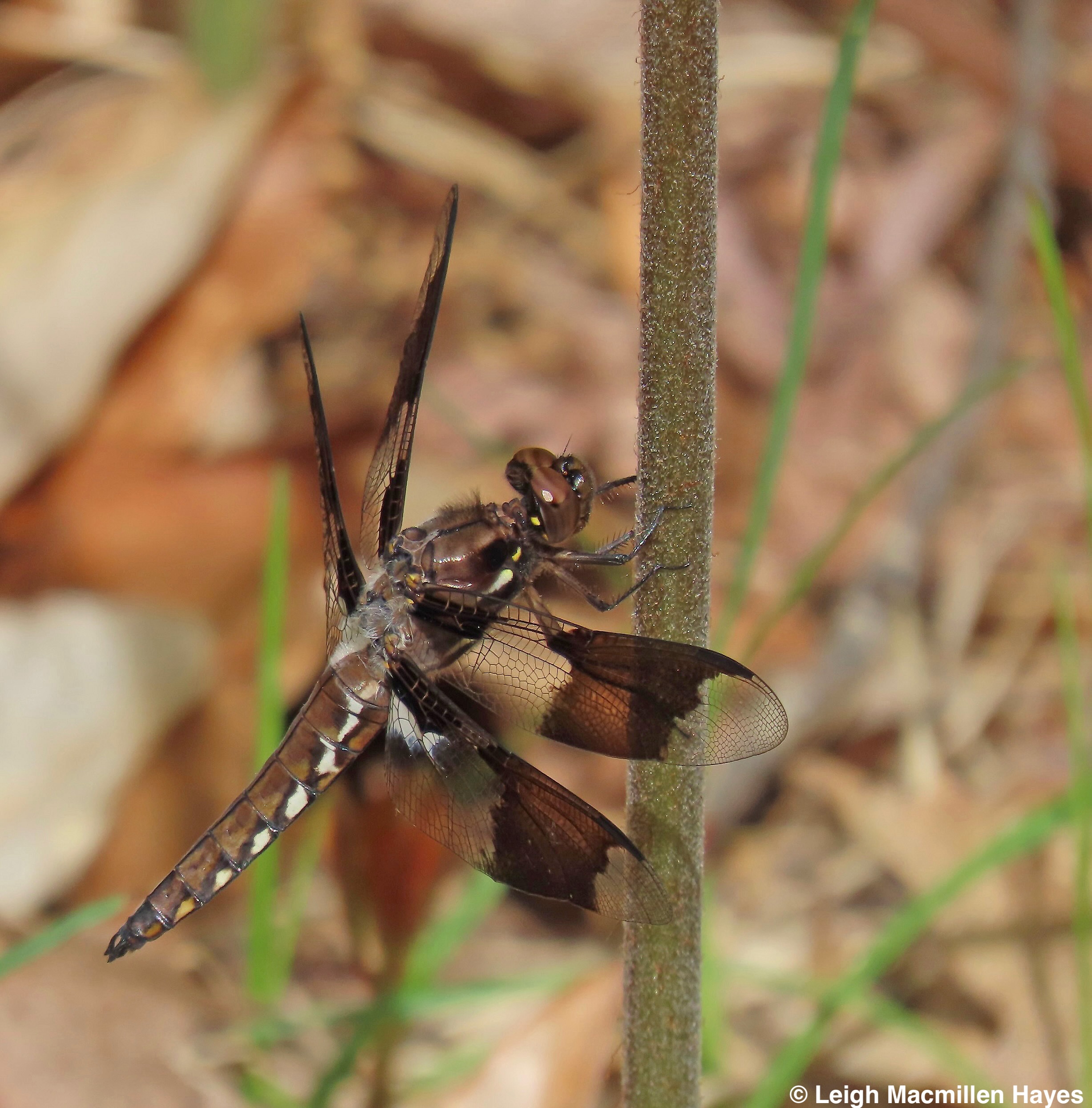
The immature male Common Whitetail cruised and paused, cruised and paused. This is such a handsome skimmer (not that the others aren’t). And while its abdomen resembles the female, it’s the wing pattern that identifies its gender. I love the complexity of dragonflies, even if I do have to relearn the clues each season.

Apparently, there were other things to do besides defend territory, and certainly rather than eat the biting insects–for canoodling was in order each time I visited. In this love wheel, the male Belted Whiteface dons the red thorax and he has clasped his mate behind her head with his claspers, as is the dragonfly custom. As Kurt Mead describes it in Dragonflies of the North Woods, “Prior to selection of a willing female, the male will transfer sperm from his testes located on the underside of the abdominal segment 9 to his hamulus located on the underside of segments 2 and 3. This is accomplished by simply arching the abdomen until the undersides of the appropriate segments make contact.” Once clasped, she arches her abdomen toward his hamulus to receive his sperm and thus fertilize her eggs.

Also flitting about, for that’s how these damselflies seem to move through the air, were some Ebony Jewelwings. The white dot or stimga at the tip of the wing signals this is a female, where the male has all dark wings. I love the iridescent colors of this species. And note how she has her abdomen reaching upwark in an obelisk position? That’s the Odonata way of avoiding overheating–thus reducing the surface area that is exposed to the sun’s rays. Oh, to be able to stick your butt toward the sun and cool off. On a day like today, and yesterday, and the day before, with our first heat wave in New England in two years, this would have been a most welcome adaptation.

Also along this trail, an extremely smart Eastern Phoebe who used a slight crevasse in a boulder upon which to build her nest of mud and moss and lichens. On the first trip, a friend and I spotted five eggs in the nest About a week and half later, these little chicks snuggled together like a pile of fluff with an occasional mustard-colored beak visible.

A week or so later and they continued to grow. What surprised me is how quiet they were, but that’s probably another technique that doesn’t give away the location of the nest.

That said, a Phoebe built a nest on the backside of our barn. It’s too high for us to notice if any eggs or chicks were located within, but we listen to the adults call back and forth all day long ,which is how we found the nest–they told us where to look and flew off anytime we passed that way.

The chicks above fledged within the last week and that nest is empty with no sound from an adult. It makes me wonder if the barn nest might see a second brood (if there actually was a first) for they continue to awaken us at about 4:20am each day. Stay tuned.

Another sight worth noting–the footprint left behind by a moose–traveling in the opposite direction of my foot. This was discovered by an observant participant on a recent walk for Loon Echo Land Trust.

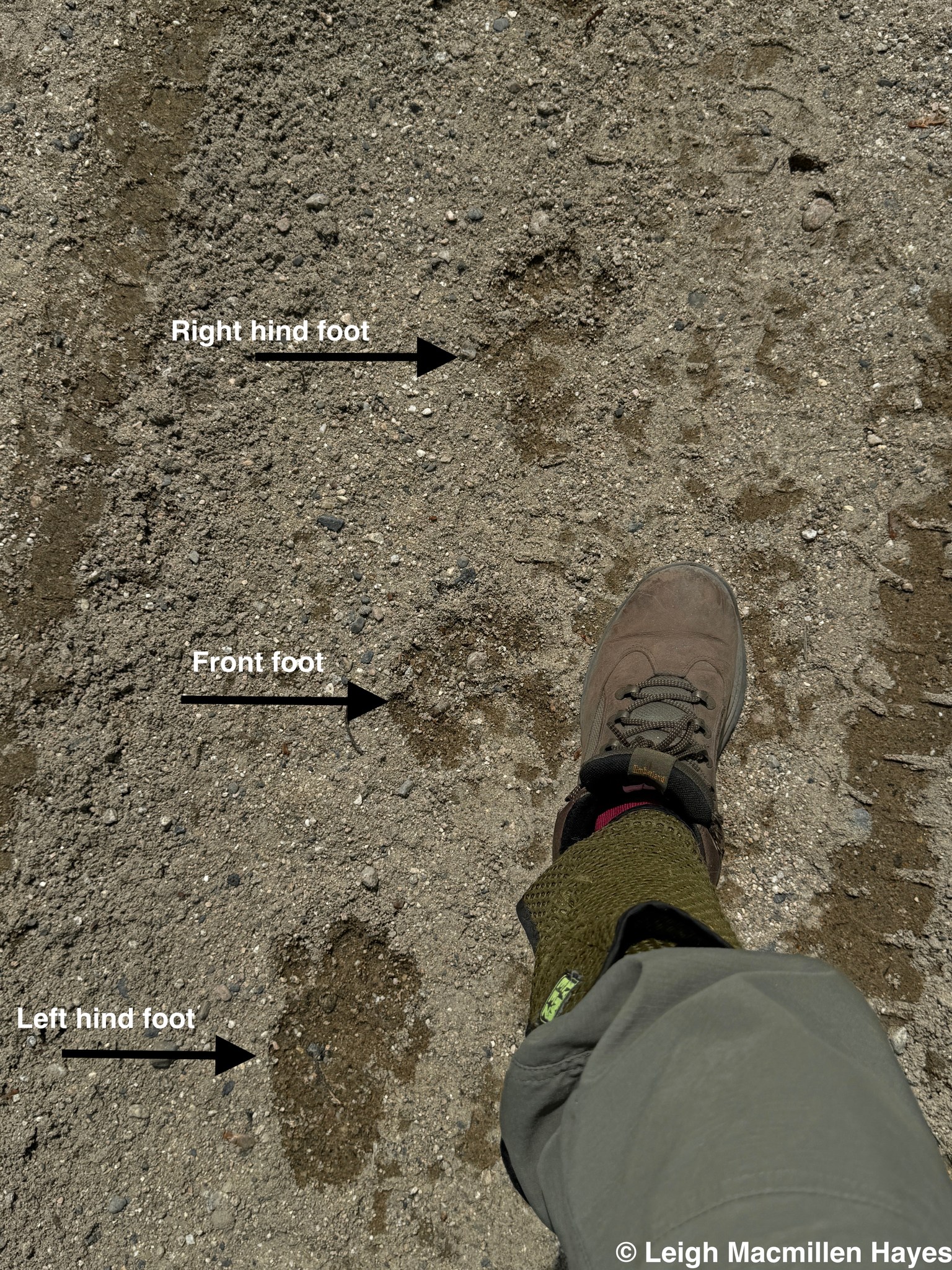
And an even better observation: the track of a Black Bear. My foot is located beside a front foot as you can see, with the larger hind feet registering before and after. The big toe is on the outside of the foot, opposite of ours. The better for climbing stability.

It still seems early for butterfly flight to me, but this Pearl Crescent showed us this morning that life hasn’t been easy given its tattered wings.

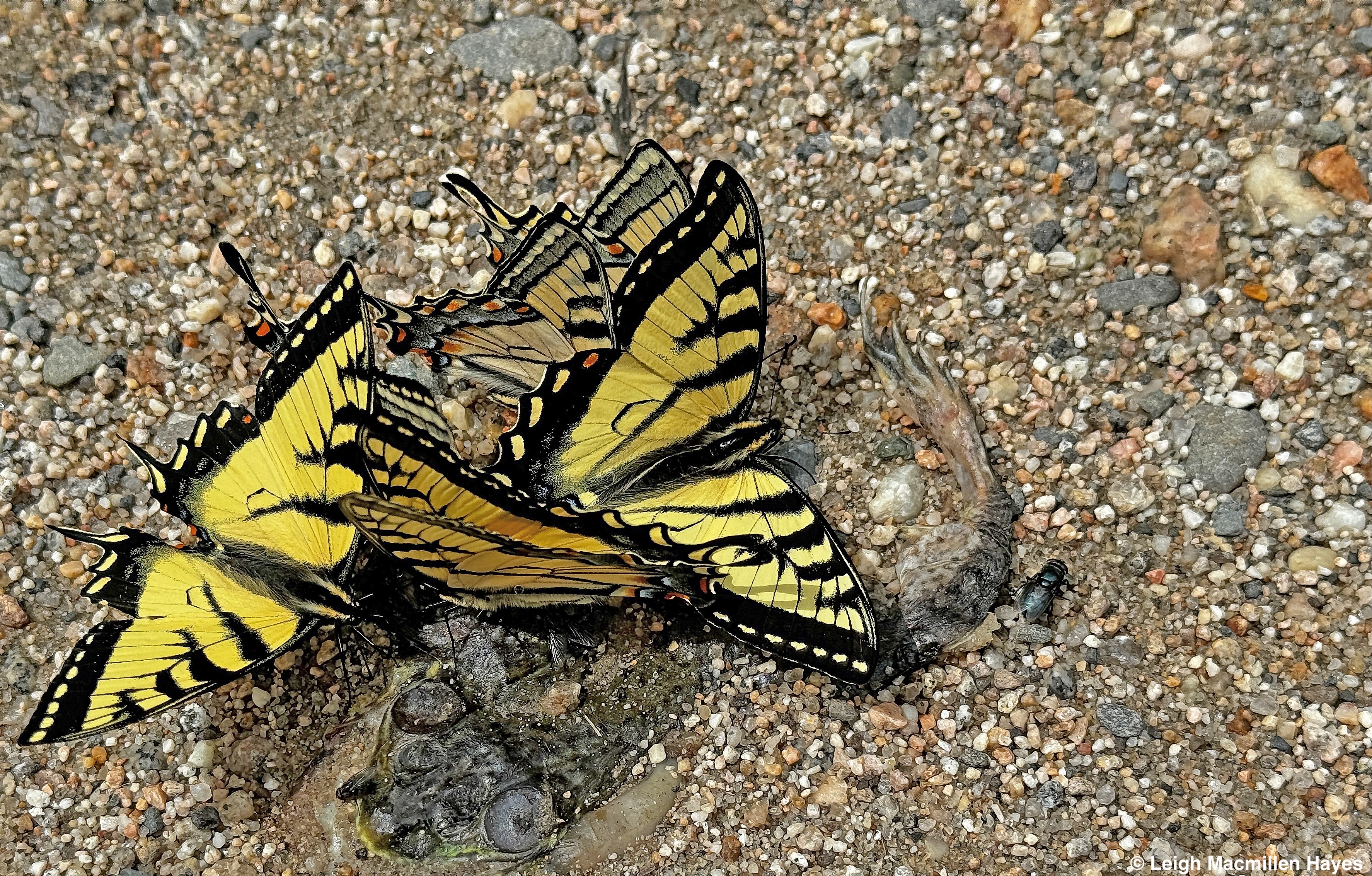
I think one of my favorite sightings along this path, other than the moose and bear prints, oh, and the dragonflies, of course, was something I couldn’t share with My Guy. The timing just happened to be right on this particular visit, when Eastern Tiger Swallowtail butterflies, so differentiated from the Canadian Tiger Swallowtail by the fact that the yellow band near the edge of the underwing was broken by black marks.

They were puddling, an act of probing for salt and minerals. Most puddlers are males, who ingest the nutrients that are then stored in their sperm. During mating, the male passes these goodies along to the female as a nuptial gift in his spermatophore. 

So we assumed it was scat upon which they puddled.

Until we realized it wasn’t. They’re choice of nutrient-offerings–a smooshed frog. The trail is not just for walkers. ATVs and even trucks use it.

Yes, the poor frog. BUT, the butterflies and flies made sure that it did not go to waste.

And another frog smiled. I’m smiling too, for it is officially summer. Happy Summer Solstice 2024.

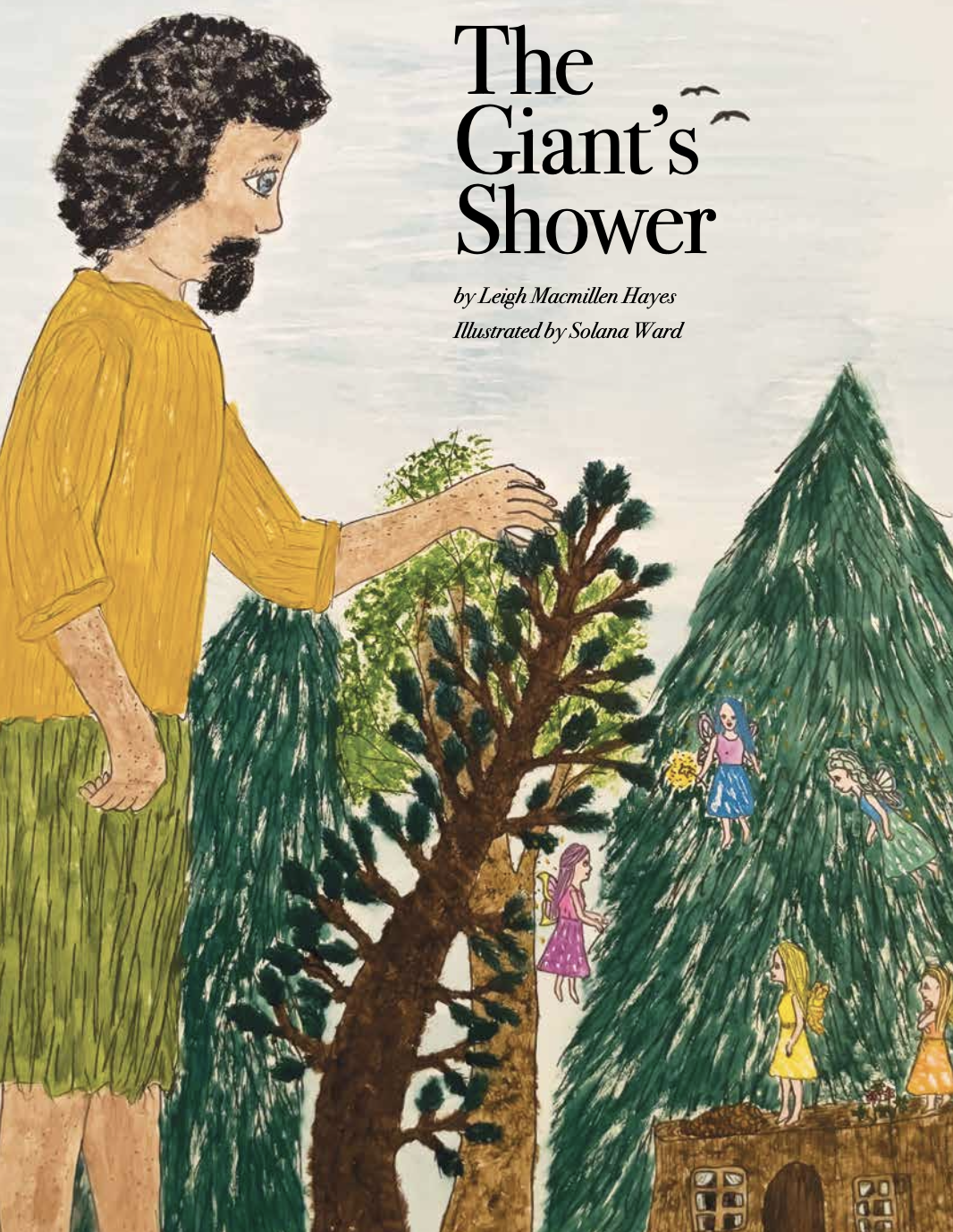
And speaking of the solstice–be on the lookout tonight for the characters of my fairy tale doing some dancing in the woods, as they did in The Giant’s Shower.

Lions, and Otters, and Moose Mondate!

We drove across the border and south today in search of wildlife. And we were not disappointed as our sightings were numerous.

But first, lunch. That in itself was a treat–mine being an Avocado and Roasted Veggie Panini. You are looking at the second half, which was supposed to follow me home. But . . . the avocado would have turned brown. And so I gobbled it all down. Sometimes, you just have to do the right thing.

We may not have been the only ones eyeing lunch, though what this Bobcat was looking at, we could not determine.

It was less than ten feet away from this second Bobcat and it appeared that they had their eye on the same little tidbit. Perhaps a mouse or chipmunk was on their menu.

With a lick of the chops, it appeared that the nearby Mountain Lion had indeed enjoyed a morsel of delight. So, the fact that we saw a Mountain Lion is rather curious because they were officially extirpated in New Hampshire. But . . . sometimes one makes it way into the state and perhaps this was one of those.

I love how its front paw rests so naturally on its back leg. And my, how big those paws are. Notice also that the claws are tucked in. Members of the cat family only use their claws to capture prey (or if conditions are muddy or in some other way slippery, then the claws are extracted to help with stability).

In the midst of our adventure, we stepped into a garden filled with flowers and flowering shrubs and trees, a haven for pollinators this early in the season.

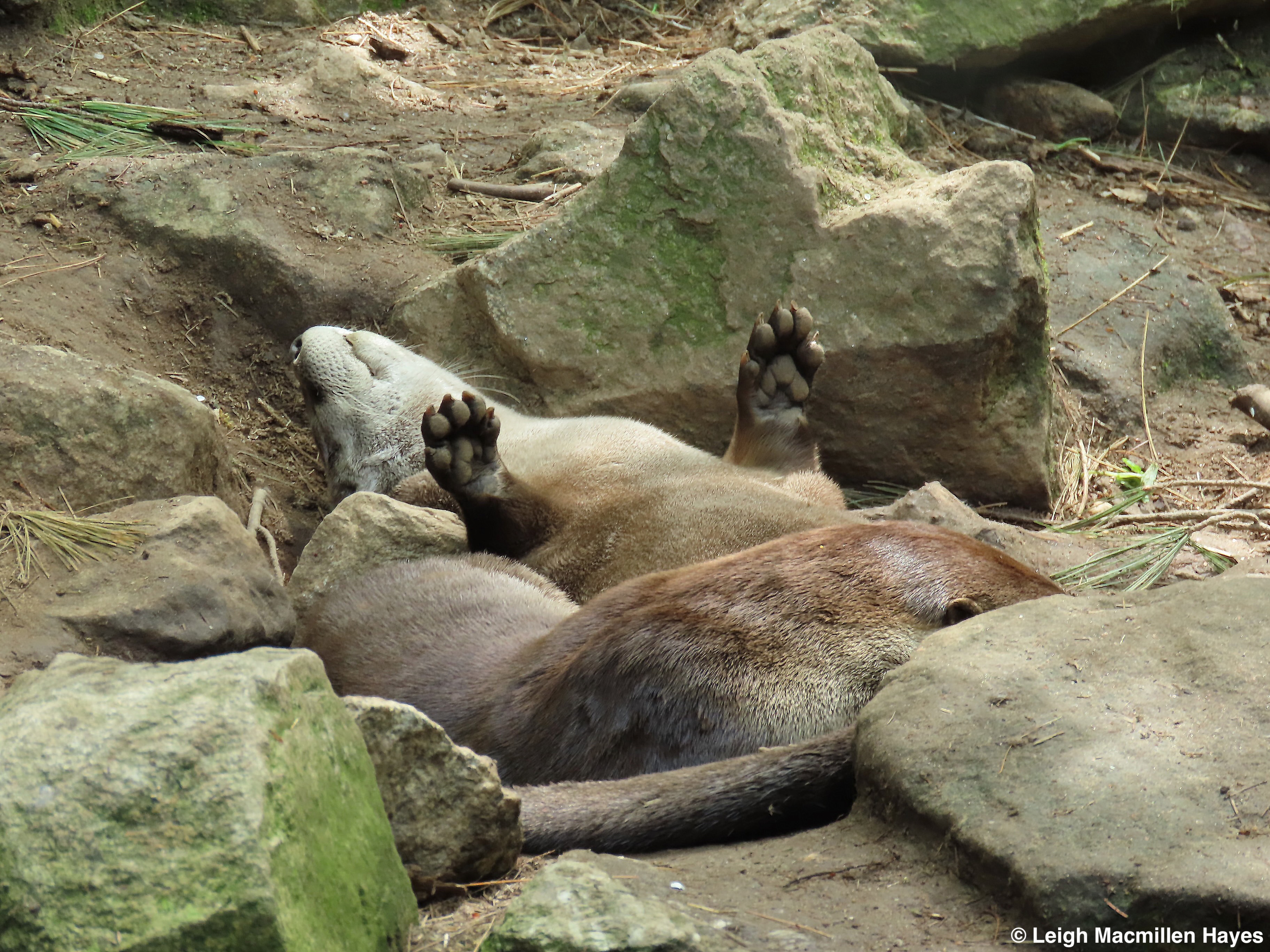
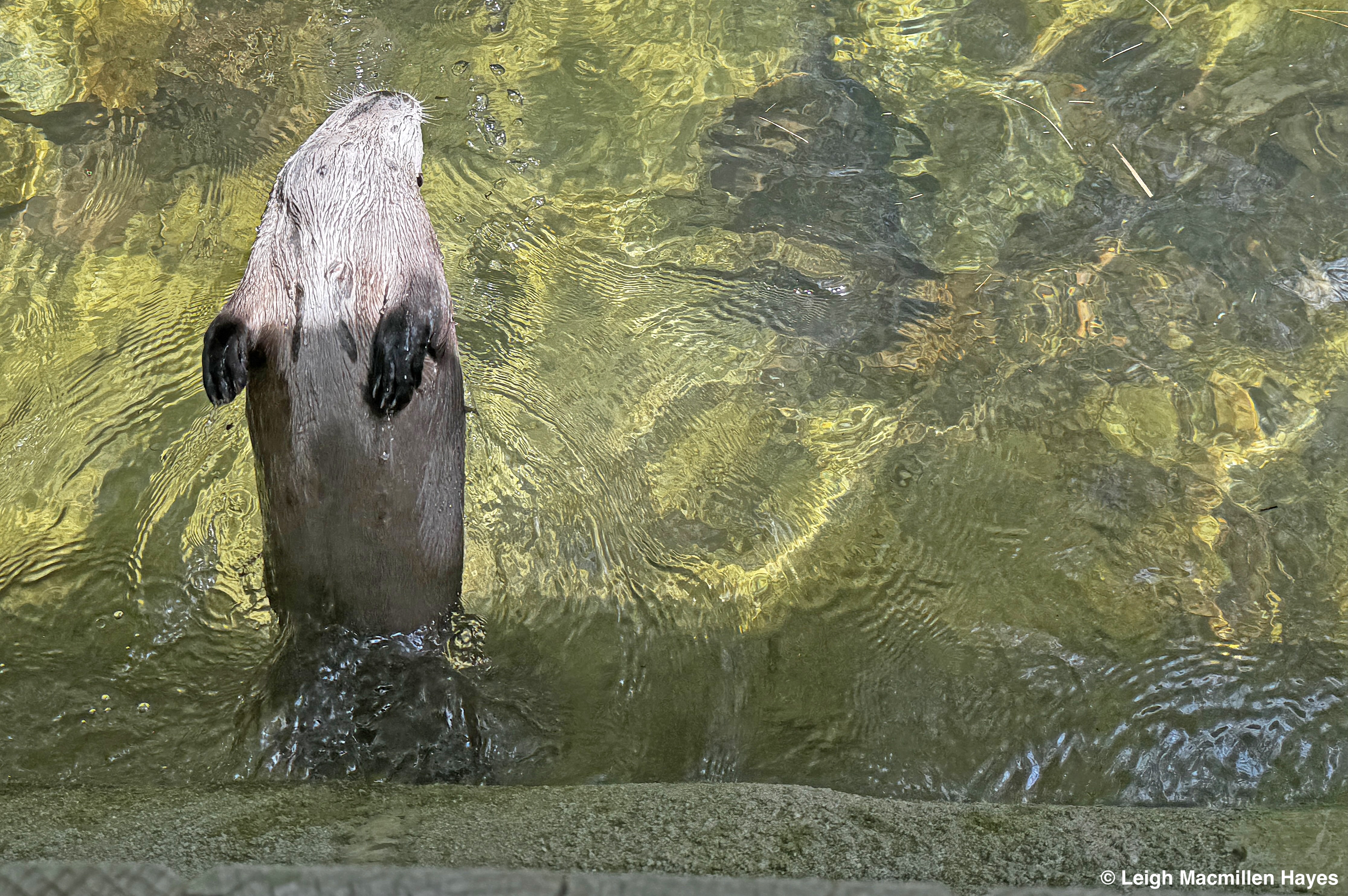
And then it was on to search for River Otters, who had obviously decided to take a post lunch nap. And rejoice in the opportunity. Or so it seemed with those front feet raised.

Take a look at the bottom of those paws–with their five tear-drop shaped toes identifying them as members of the weasel family.

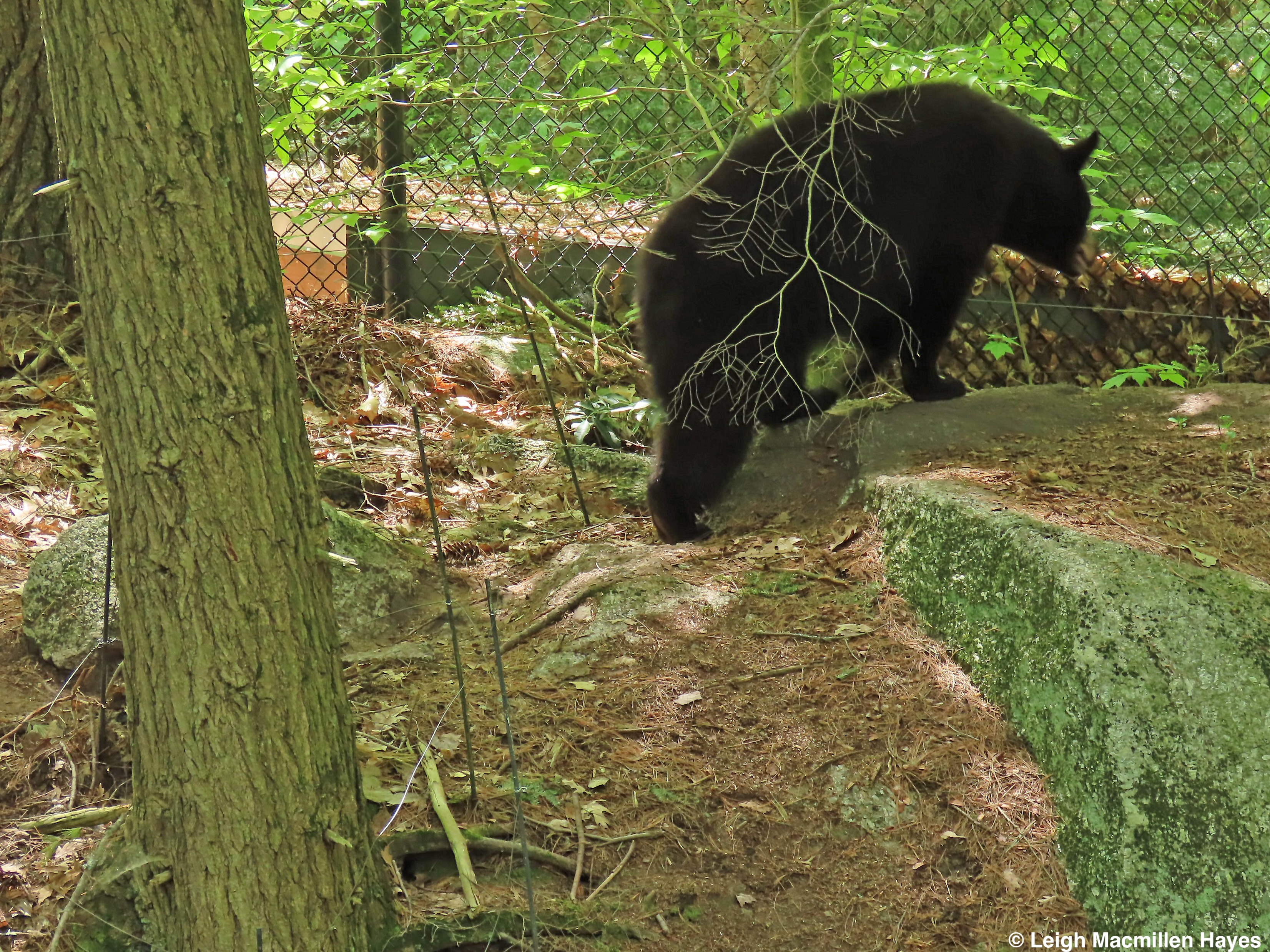
Our next sighting mystified us a bit. As two who are always looking for signs of Black Bears, we were thrilled to see this one. Every once in a while we are granted such views, but the troubling thing today was how the bear paced. Back and forth and back again. It was obviously anxious about something despite its ability to roam in a large area.

Birds were also part of our view, this being a Black-crowned Night Heron, or more simply Night Heron. Look at that eye–its color allows it to hunt at dawn, dusk, and even during the night.

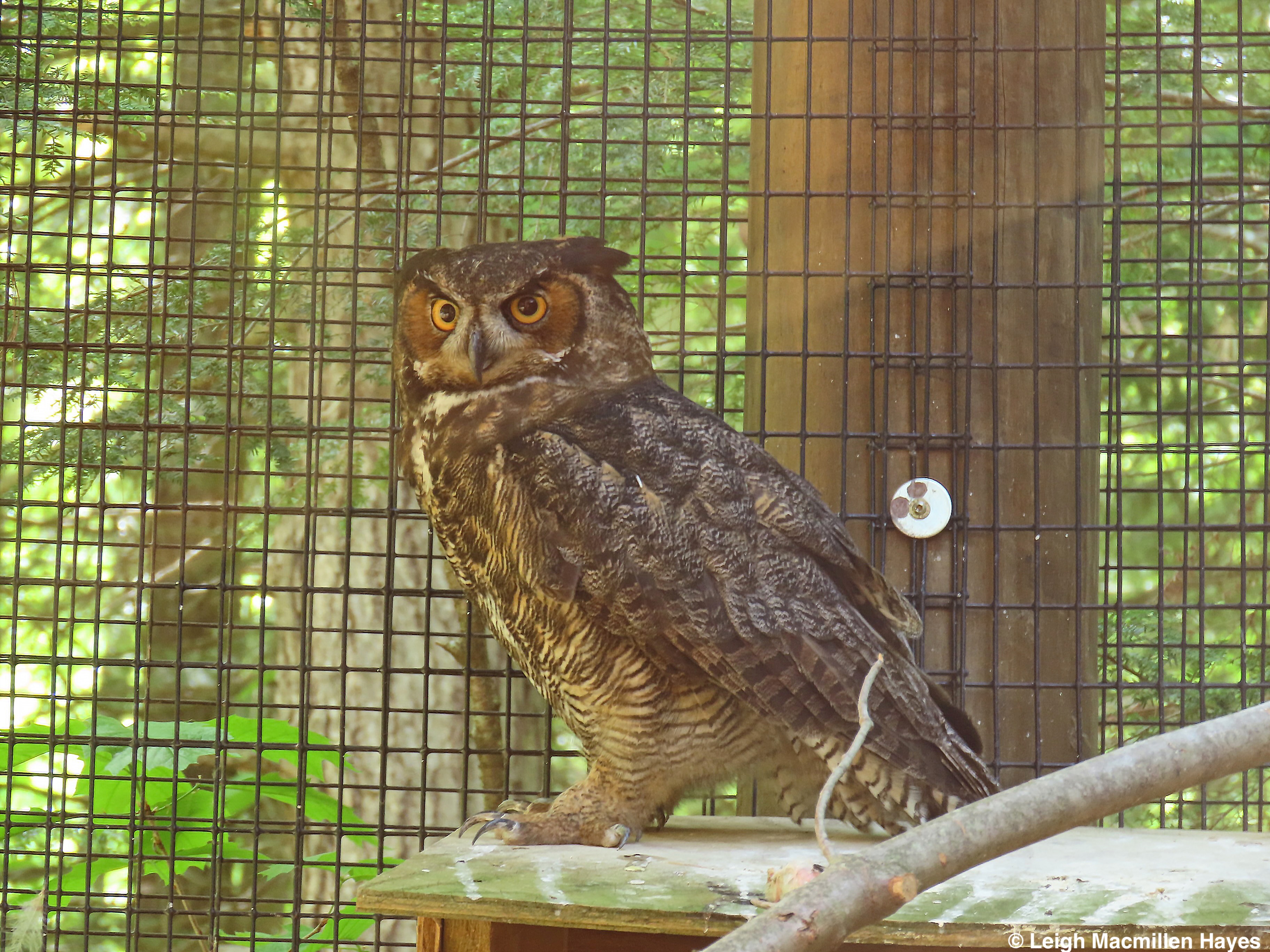
The same is true for the eyes of the Great Horned Owl.

Okay, so by now you’ve turned into a great tracker and hunter and realized that there is fencing behind these animals. Yes, we had travelled to Squam Lakes Natural Science Center in Holderness, New Hampshire, about an hour and a half from home. All photos were taken through glass. Glass that was smeared with finger and nose prints.

The animals are only there because they were orphaned or injured or for some reason couldn’t survive in the wild. And they live in habitats that equal their preferred home territory.

The Red-tailed Hawk offered a shrug, maybe because it thought it should be out in the open. But, it had an important job to do here: to educate all of us. To be an ambassador.

How often do we get to eye all of these species up close. Their behavior might not be entirely natural given their confinement or injury, but I think it’s amazing that we can visit with them and that so many tots were there with their moms today, and there were a couple of school groups visiting as well. These kids get to meet these critters, and maybe will develop an appreciation of them, and who knows where that might lead.

Today was the beginning of a heat wave, and the Bald Eagle reacted by panting, its way of cooling down.

Our plan was to walk through the exhibits, and then hike some of the trails, including climbing to the summit of Mt. Fayal.

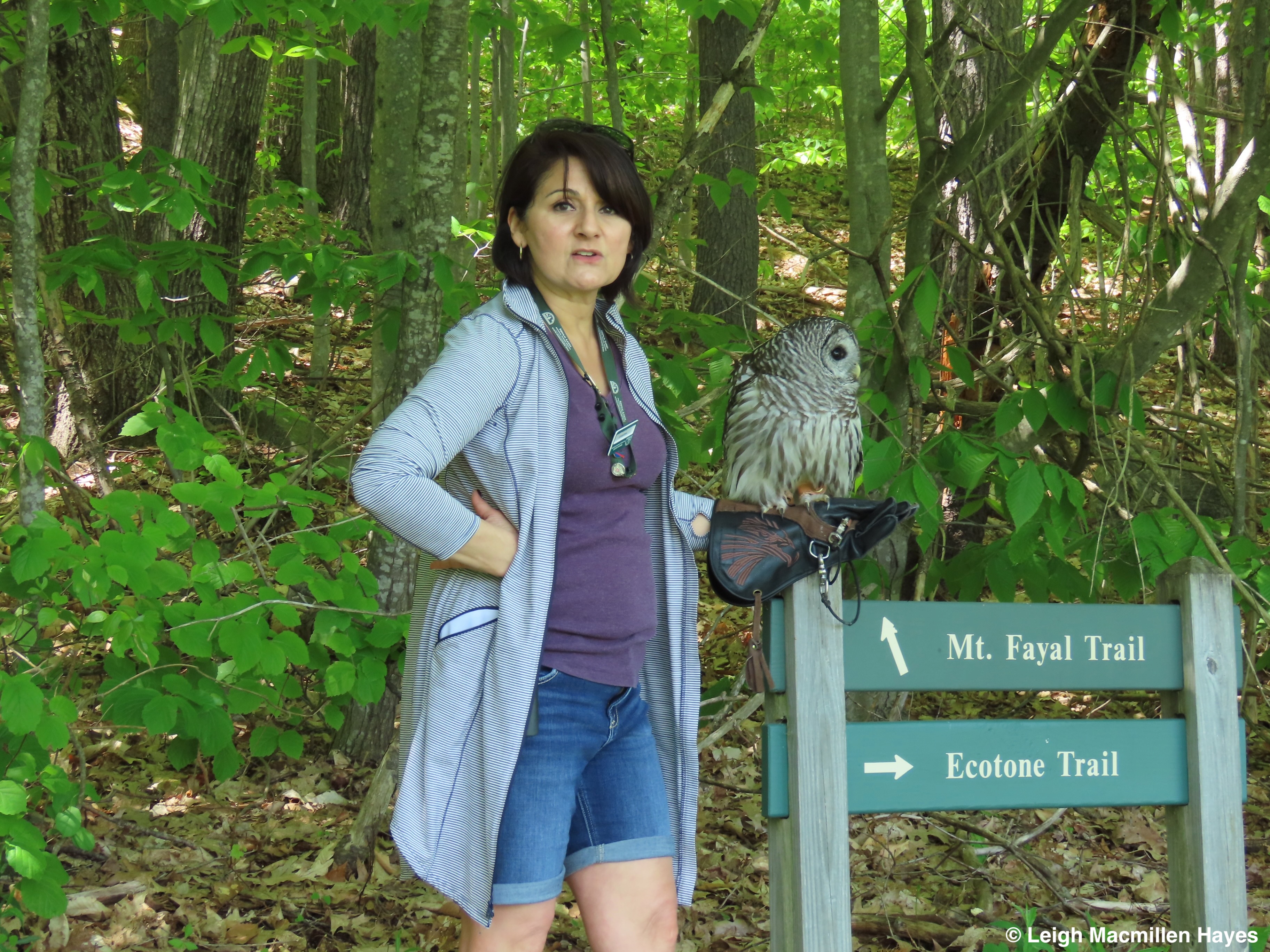
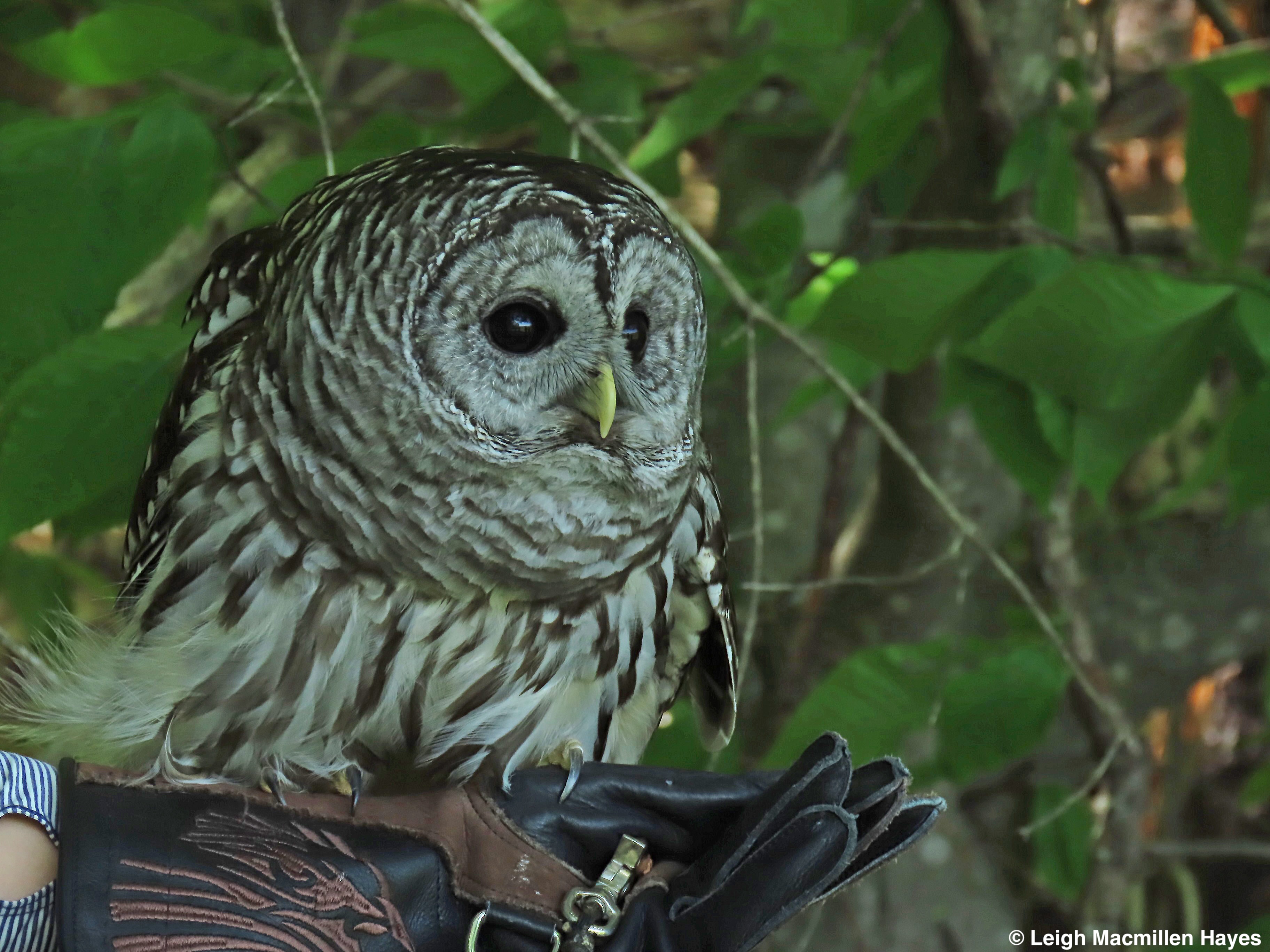
Along the way, we had a special treat, for we got to meet Barred 13, who was out for a walk as well, and panting.

The “name,” Barred 13 refers to the fact that this was a Barred Owl that came to the Center in 2013. As a policy, they do not name the critters who reside there so folks like us won’t think that wild animals should become pets.

Barred 13 was very curious about something in the vicinity. We learned that she once heard a Black Bear before her handler turned and saw it. And that she’s at the Center due to a broken wing.

The Barred Owl’s hearing is so acute that it can pinpoint the location of its prey. There’s a cool exhibit to help us humans better understand how well they hear, but I’ll leave that for you to discover upon a visit.

At the summit of Mount Fayal, My Guy found a bench upon which to sit for a bit and enjoy the view of Squam Lake.

What he missed, I discovered behind the bench.

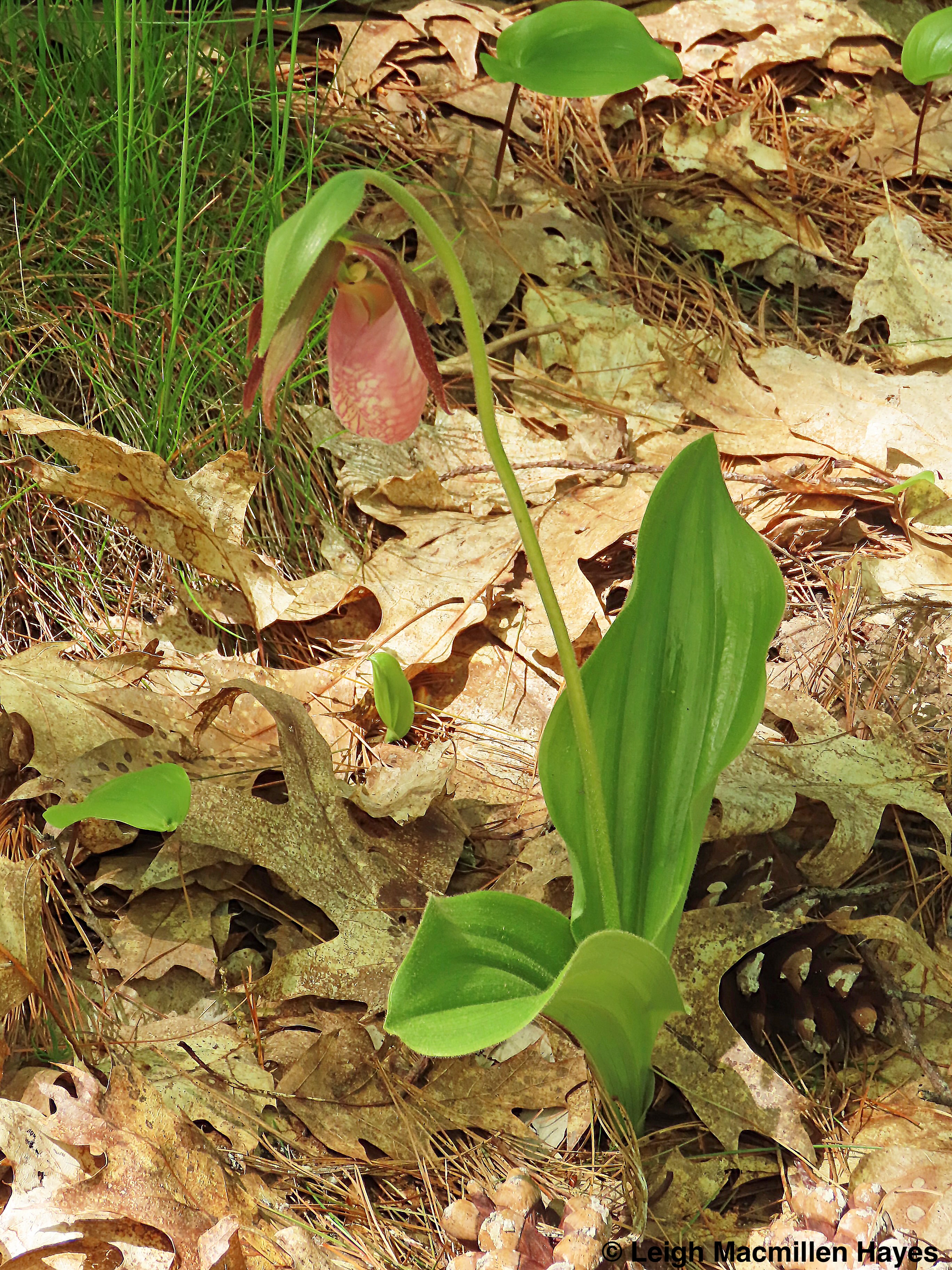
A Pink Lady’s Slipper. The first for us for this year.

His comment: “Only one?!”

We are rather Lady Slipper’s Snobs. Truth be told.

Back on the animal exhibit trail, we stopped by to visit the Otters again. Thank goodness. The most amazing thing–we were the only ones there. The Otter exhibit is usually packed.

We quickly realized that the time to visit the Center is in the mid to late afternoon, after the kids have packed up and gone home. Or if you go earlier, do like we did and head off for a hike before returning to the exhibits.

The two Otters entertained as they constantly climbed up toward us and then did backflips into the water.

Up . . .

Bend over . . .

And swim.

And flip over and swim some more.

Lions, and Otters, and Moose–but wait. This moose was in the same pose when we left as it was in when we arrived. Allegedly we saw a moose. Well, we have a photo to prove it. But, unlike all the other critters, it wasn’t alive. Still.

Squam Lakes Natural Science Center–we highly recommend a visit, no matter how many years you have under your hat.

And lunch from Squam Lake Marketplace. The flour-free Chocolate Chip and Peanut cookies–a great way to end a meal, even if you wait three hours for the ending because your belly was filled by your sandwich.

A Mondate worth noting.

Savoring Spring

My paths were multiple this weekend as if I was on a quest.

On a bridge over a brook,

down a road through the forest,

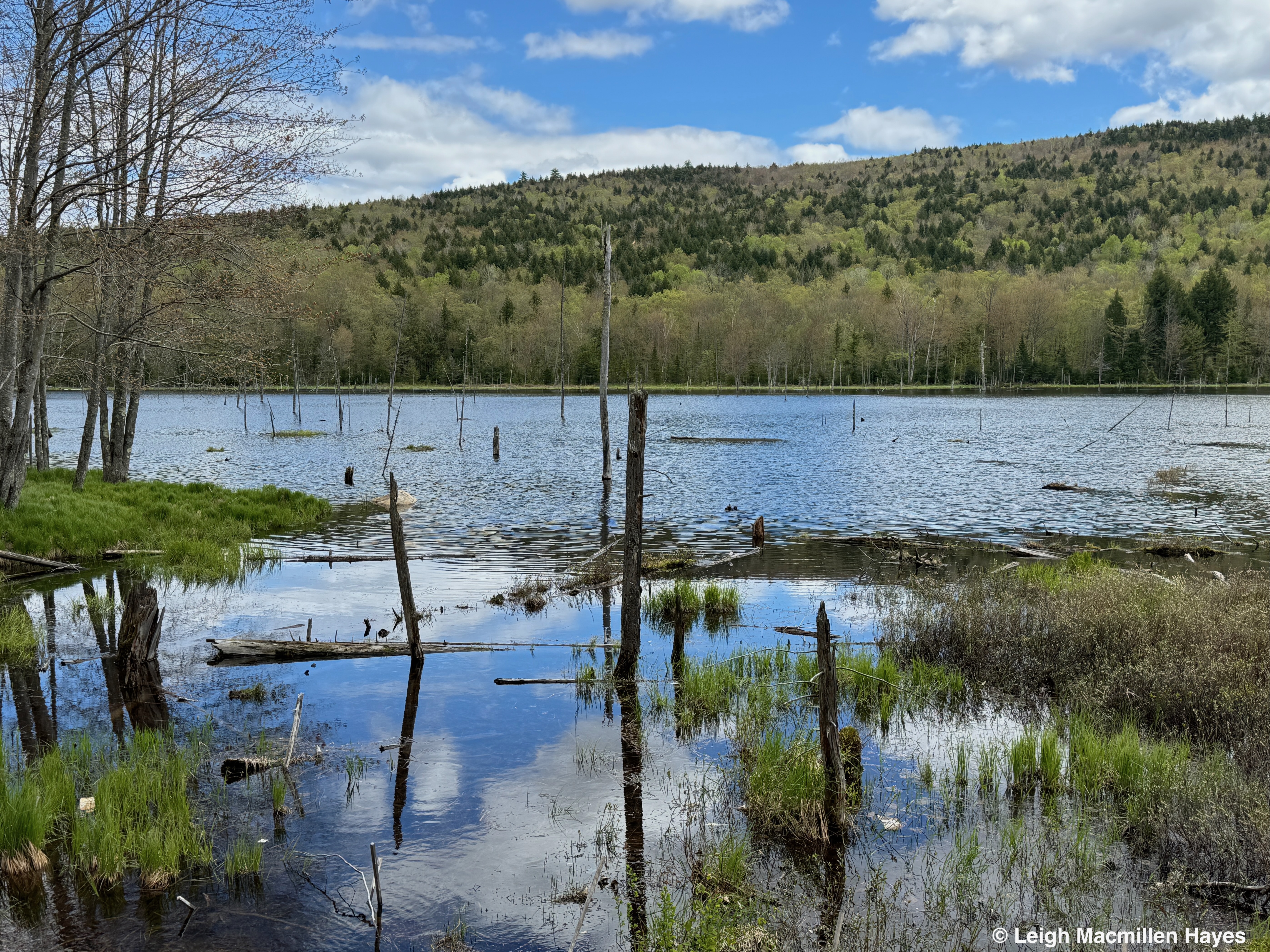
beside a bog,

along a boardwalk,

and even following this guy down low and up high.

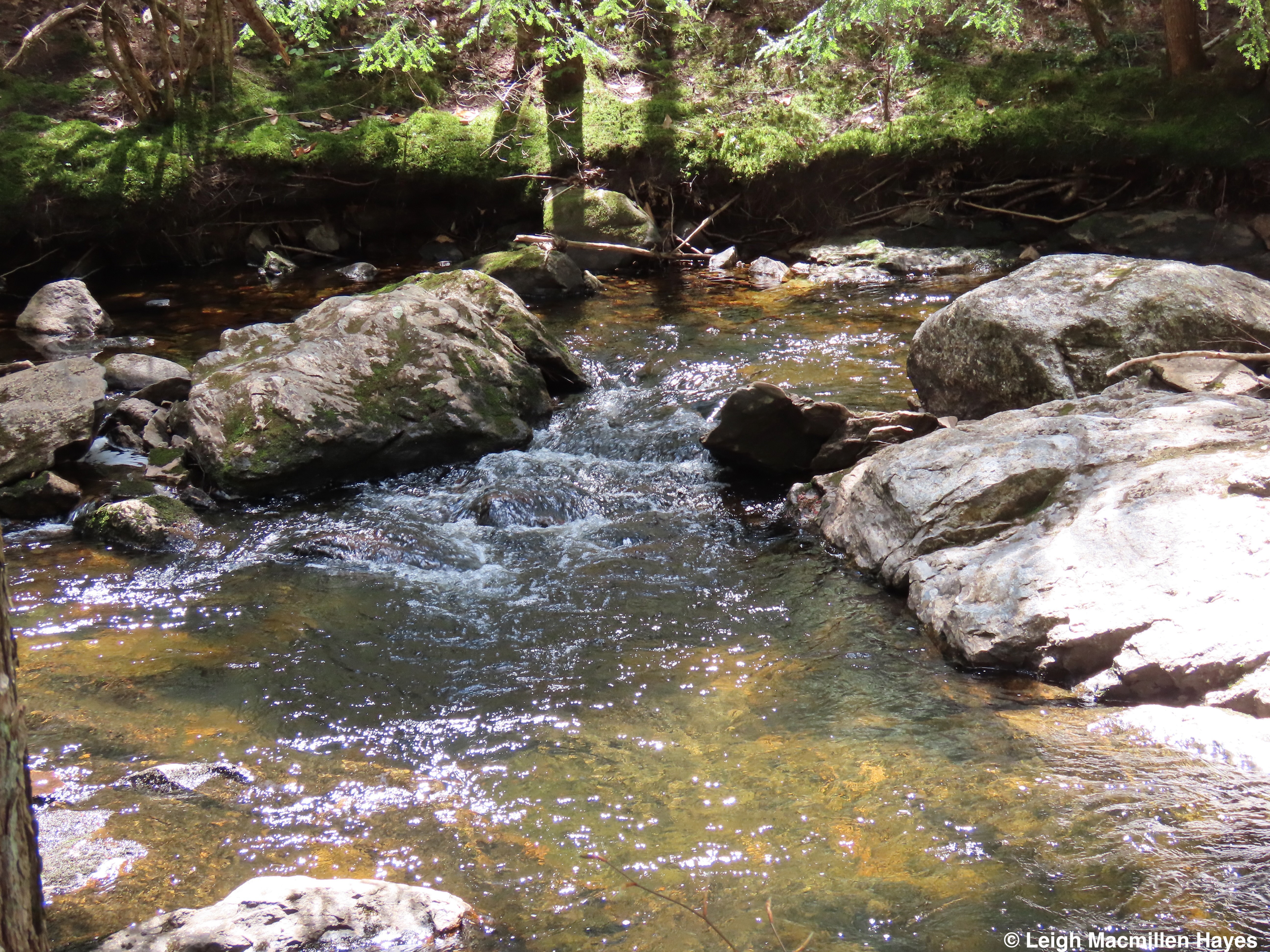
Together today, we circled another brook (if one can actually circle a brook, but we did),

enjoyed this view from lunch roots,

and dessert on the rocks where we could peek down on said roots.

Though I may have been alone for much of the weekend, I never really was for the bird song, including the conk-er-ies from this male Red-winged Blackbird, accompanied me where ever I hiked.

There were Eastern Chipmunks adding to the chorus as they chortled at me and I chortled back, though I did wonder if life hasn’t always been so easy for this one given the marks on its body and a very short tail.

I watched Painted Turtles bask, despite cooler temperatures, though the air was probably warmer than that of the water.

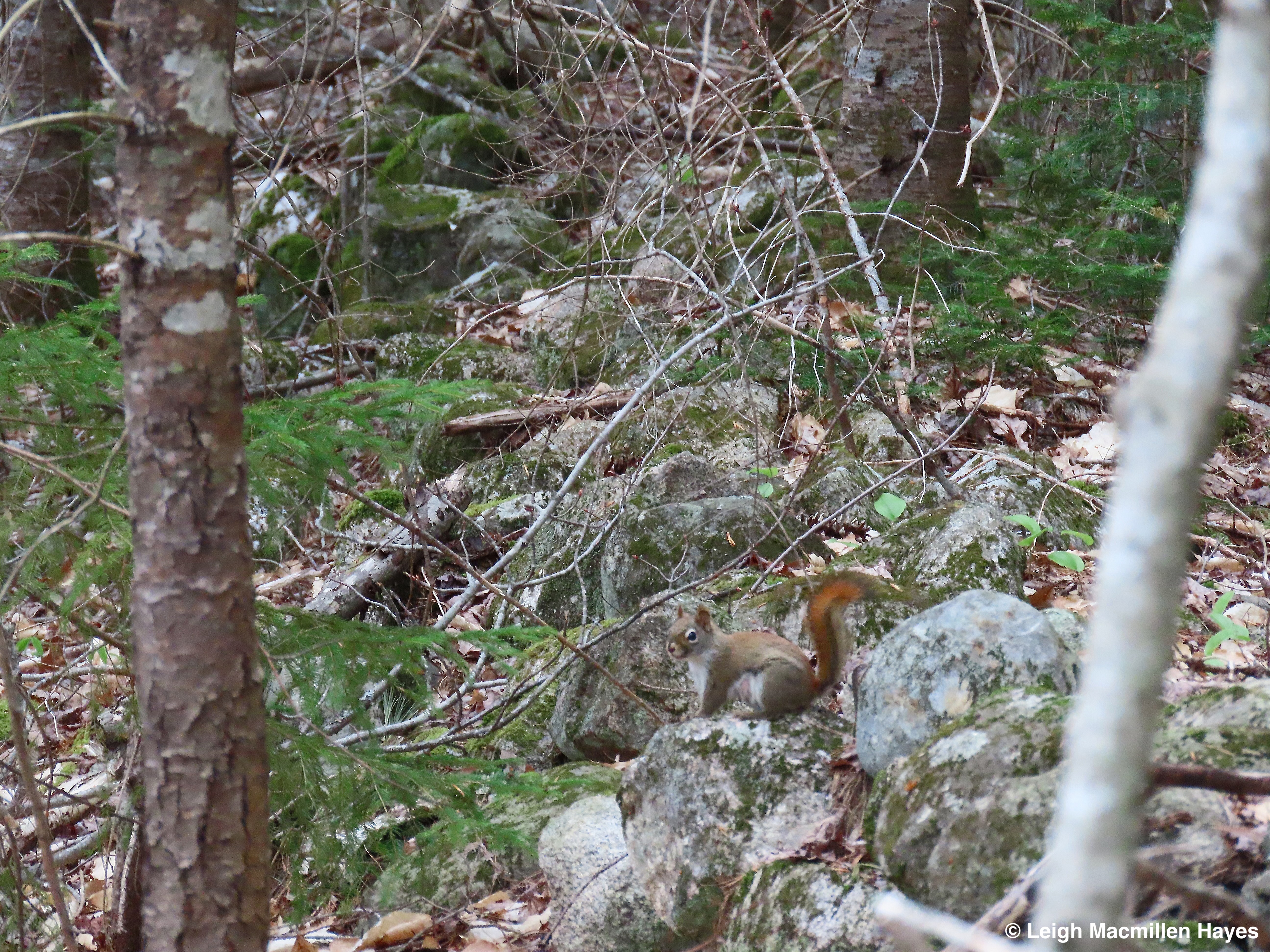
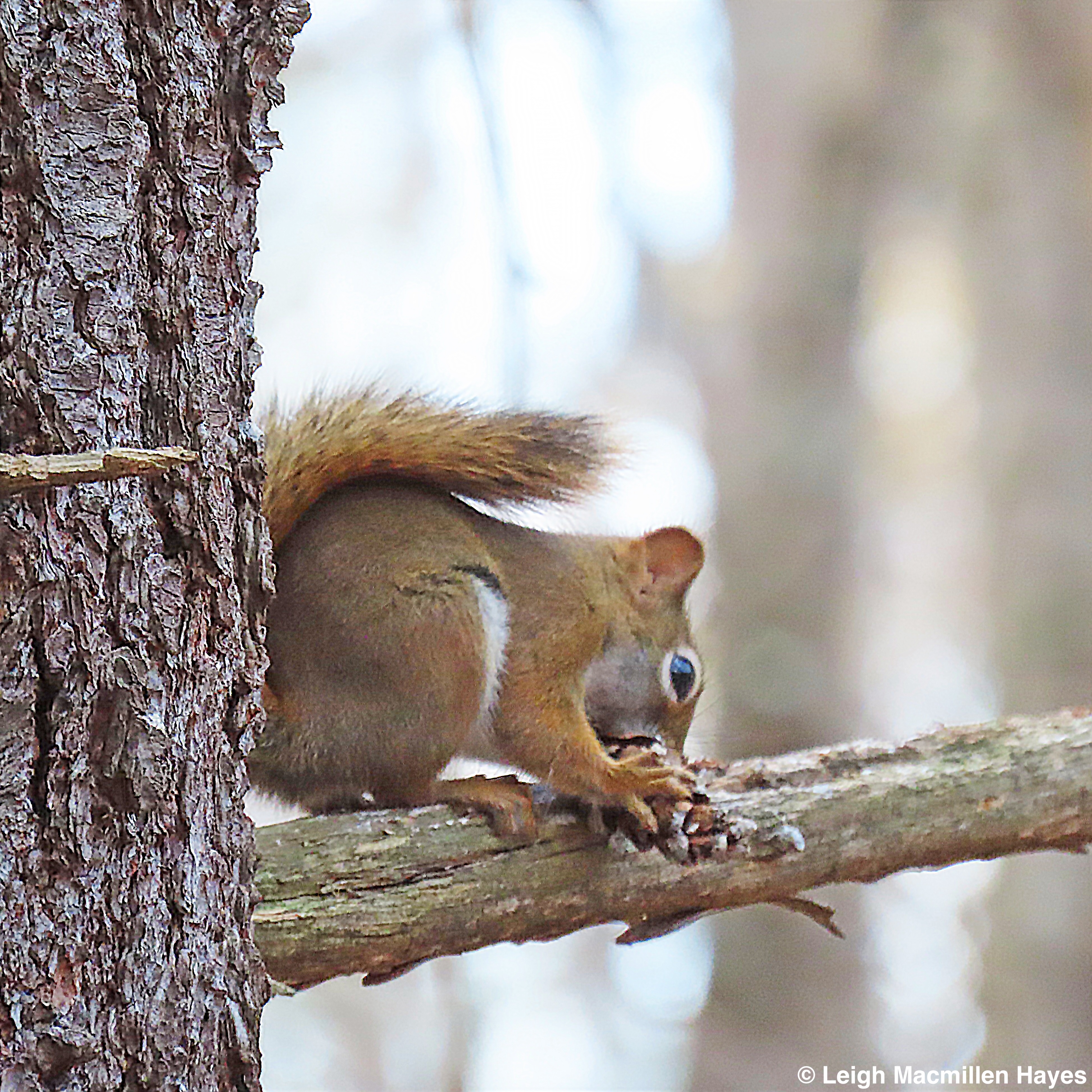
And I was chastised by this Red Squirrel, but really I had done nothing wrong–except to enter his territory without an invitation.

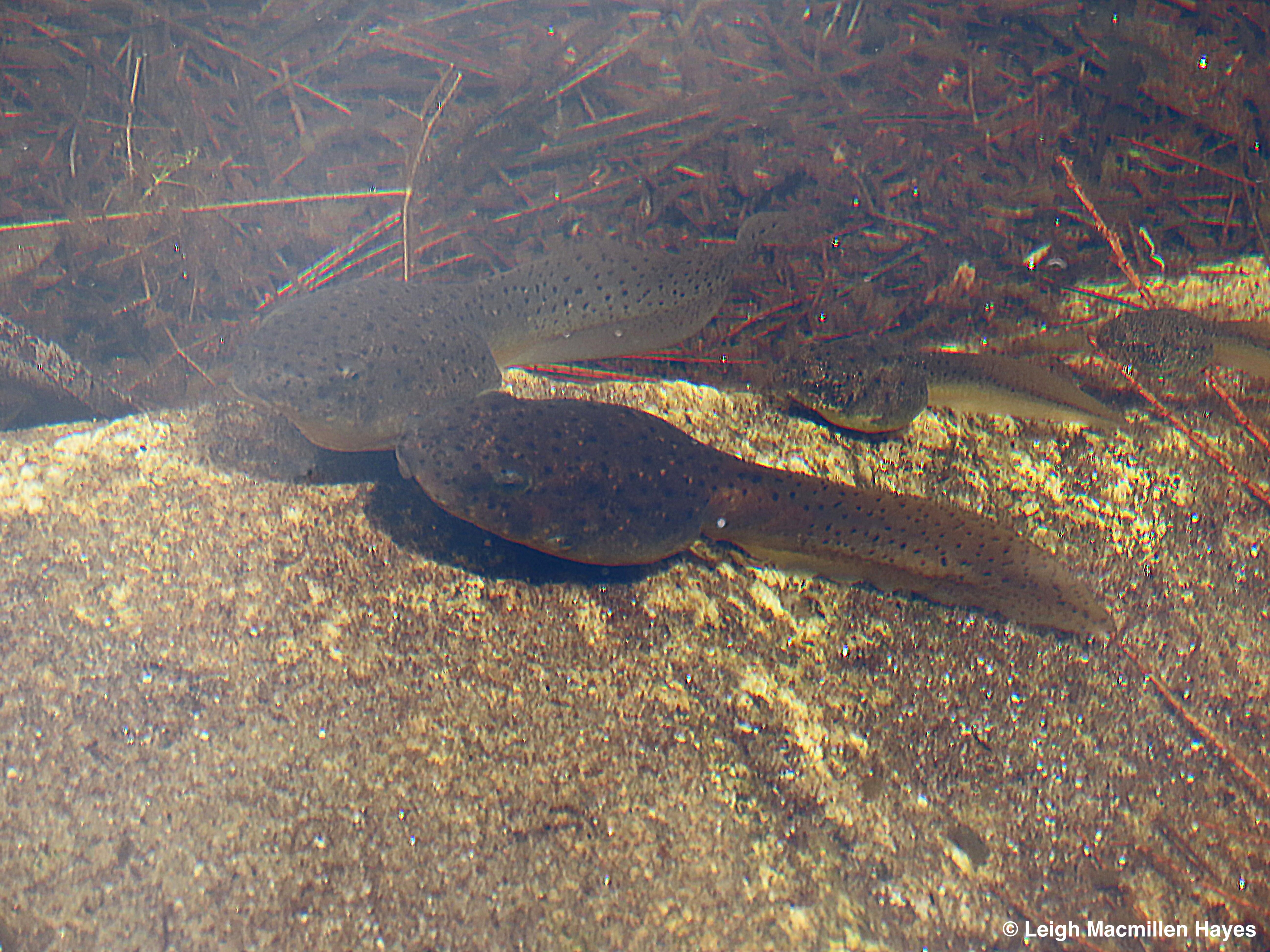
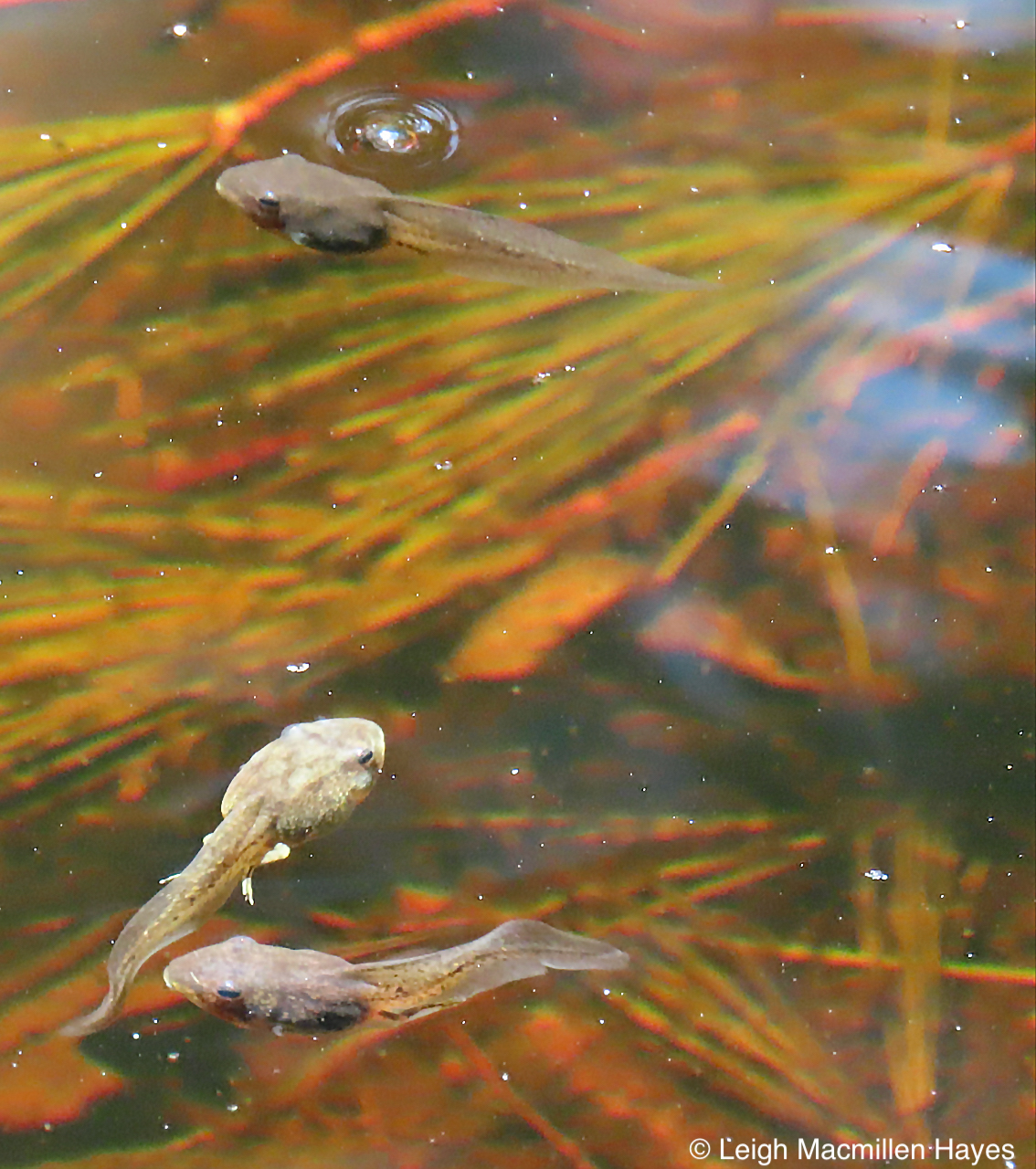
In the depths of the water today, tadpoles. HUGE tadpoles of the Bullfrog sort, which take two years to mature. I spotted tiny hind legs growing beside where the abdomen meets the tail. There were also lots of smaller tadpoles, too big to be Wood Frogs or Pickerel, but I suspected either one-year old Bullfrogs, or perhaps they were Green. Or both.

A few flying insects also brightened the days (and I have to say I’m not referring to Black Flies, which I hardly spotted–and actually caused me concern, for where have the little biters gone?), including this Anglewing butterfly. I can’t name it to species, for it is either a Comma or Question Mark, but never in the time I watched did it pose so that the underwings were visible. Okay, so My Guy and I spotted it today and when I explained to him the difference between the two, the C having a small white comma on its underwing and the QM, a small comma and a dot looking rather like the punctuation mark, he decided it must be an Exclamation Mark instead.

And in the same area, an American Lady added her color to the scene.

Leatherleaf’s bell shaped flowers reminded me of clothing hanging from an outdoor line.

And I’m really beginning to believe there are a trillion Painted Trillium, though I didn’t actually count. There’s something to admire about those olive green leaves and perhaps it’s that we don’t often see that color in nature.

I even spotted a few that chose a different paint palette. I could explain away the color of the leaves by thinking that perhaps they were showing off their anthocyanin, which gives fall leaves their red color and is seen in the spring as well, perhaps serving as a sunscreen for the plant. But the color of the petals was equally amazing, though who knows, maybe it’s common and I was just paying attention to it for the first time. That does happen. A lot.

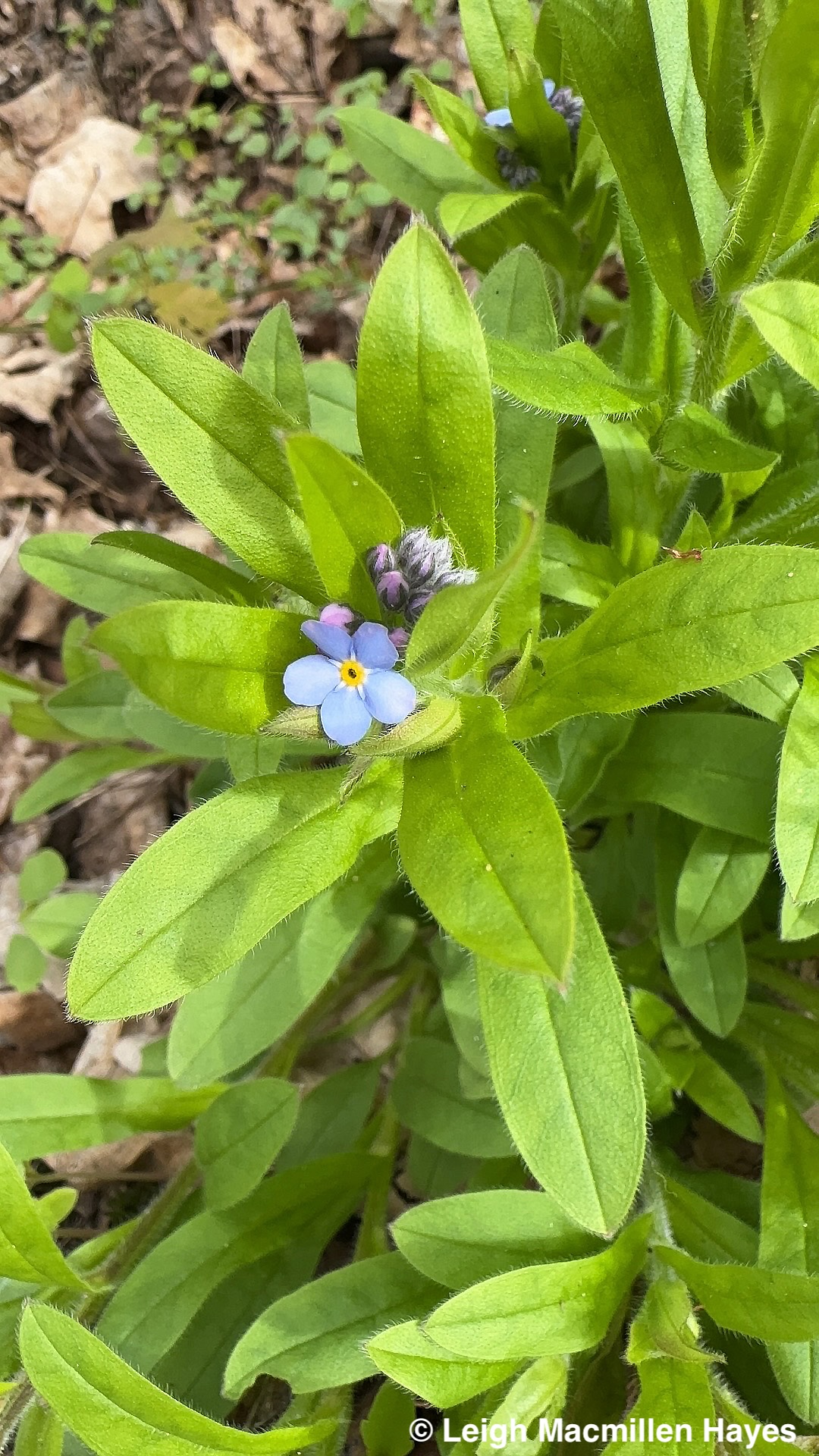
And then there was the amazing blue hue of Forget-Me-Nots. I surely won’t. Forget you that is.

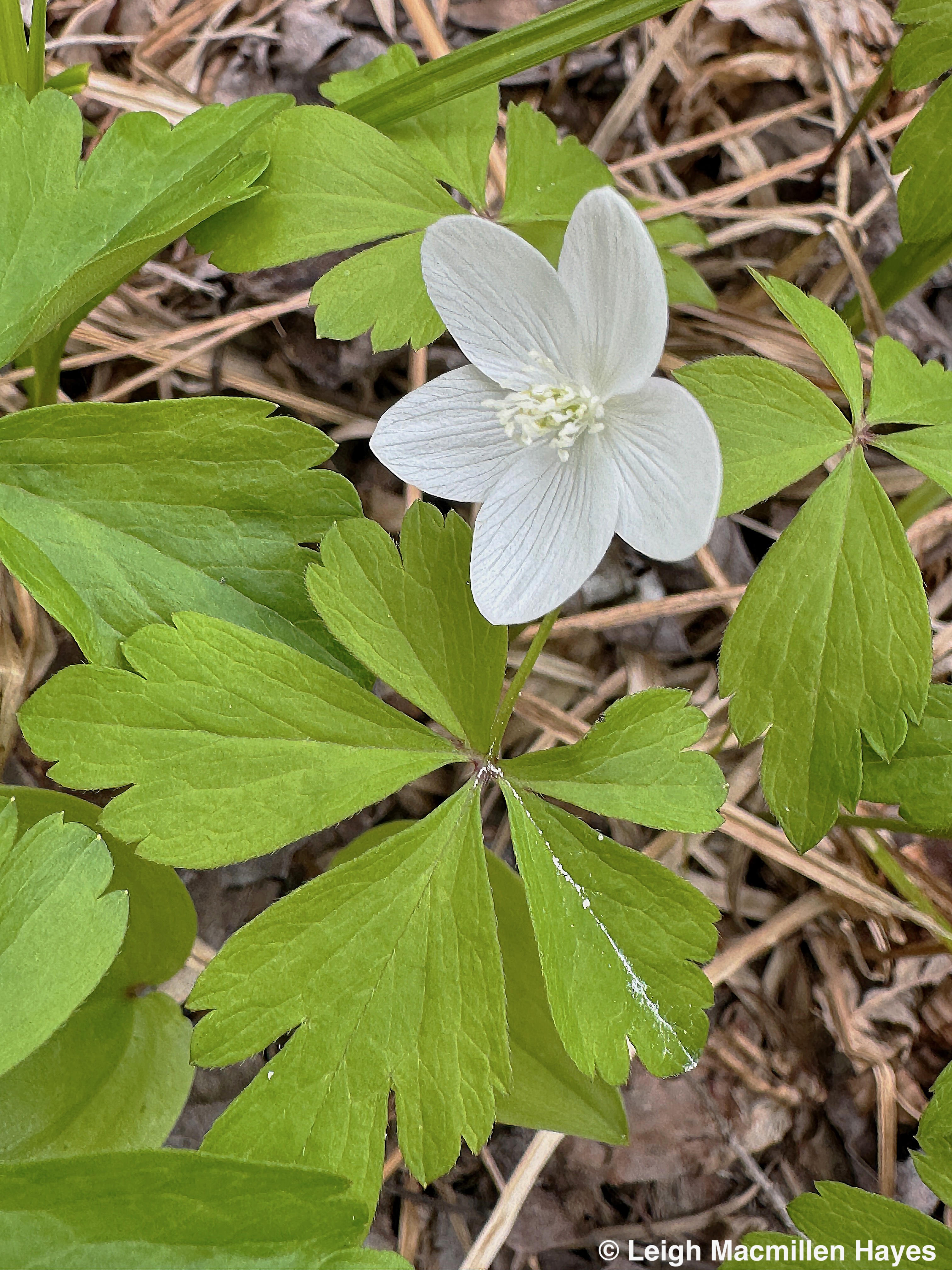
And Wood Anemone, its compound leaves notched, and flowers deeply veined, looking so tender and fragile.

Not looking tender, and hardly fragile, but still beautiful, was the carnivorous Pitcher Plant, of which I paused beside several. I’ve known this particular one for at least twenty years so when I encounter it, I always feel like I’m meeting an old friend. Because I am.

Hiding beneath its lime green leaves, American-Fly Honeysuckle’s delicate flowers did dangle in their manner of two. The shrub always surprises me, though it is a native, but I don’t get to greet it often enough.

All of these flowers bloom so early because they take advantage of sunlight before leaves emerge. That’s all changing now and in another week it will surely look more like summer around here. What I love about some leaves, especially American Beech, is that they are so hairy to start, and look like they’d make great fringed skirts for fairies. The other thing I became aware of this weekend, was the raindropy sound of their bud scales hitting the ground.

I love winter, but this season to follow is flying by, and already the Trailing Arbutus has reached its waning hour.

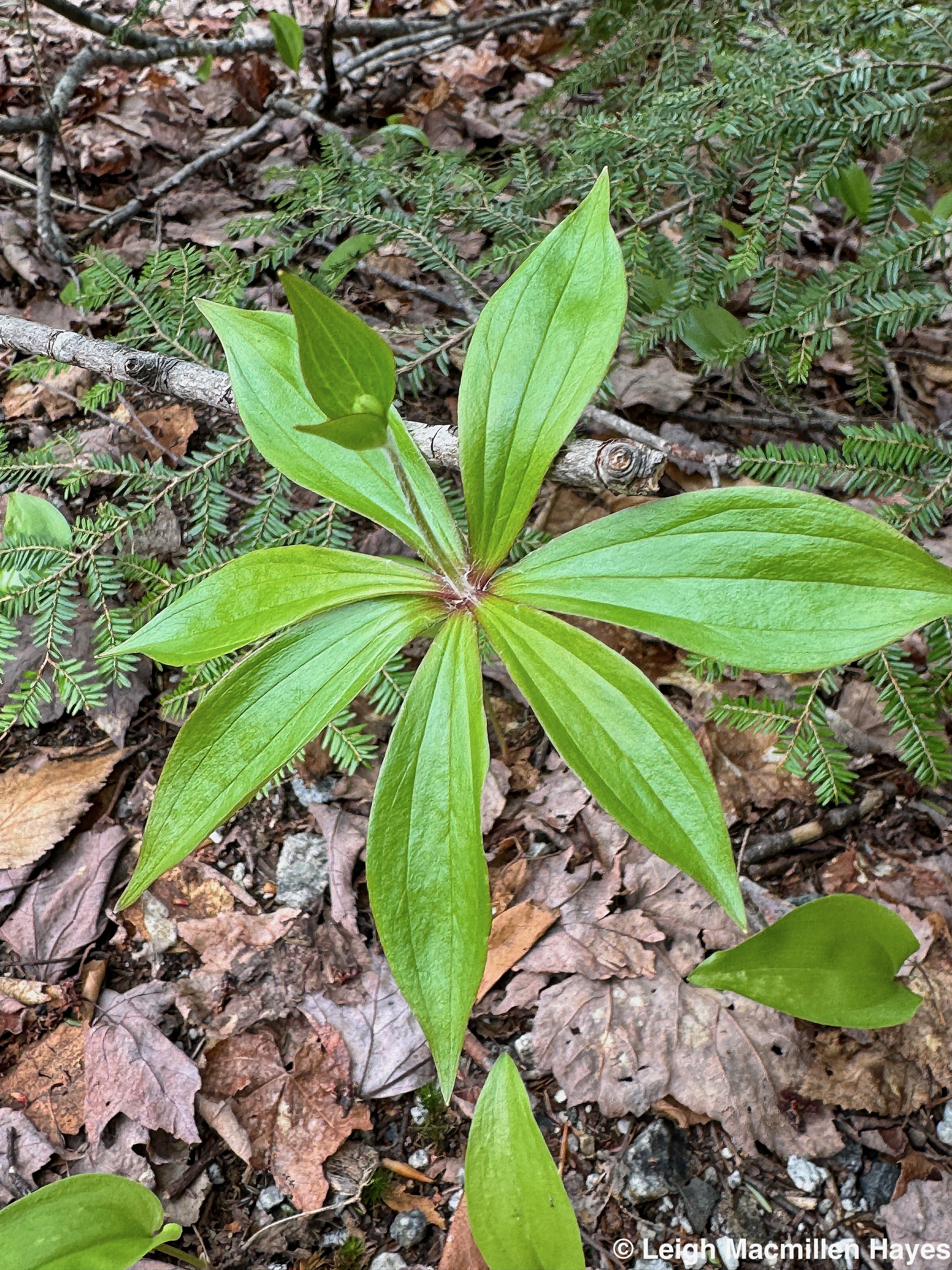
But there is hope in the form of others, like this Indian Cucumber Root, creating a second tier and a bud, and in a few weeks I’ll be seeking out its otherworldly flowers.

I’m savoring spring–before it moves on. I hope you are on the same quest.

Fall After Fall Mondate

At the start of today’s hike I met a rock. A rock covered in soft green broom mosses. A rock that invited a caress. And so I did. Repeatedly.

When I mentioned that it was the perfect pet rock to My Guy, he reminded me that it wouldn’t fit in my pocket. Details. Details.

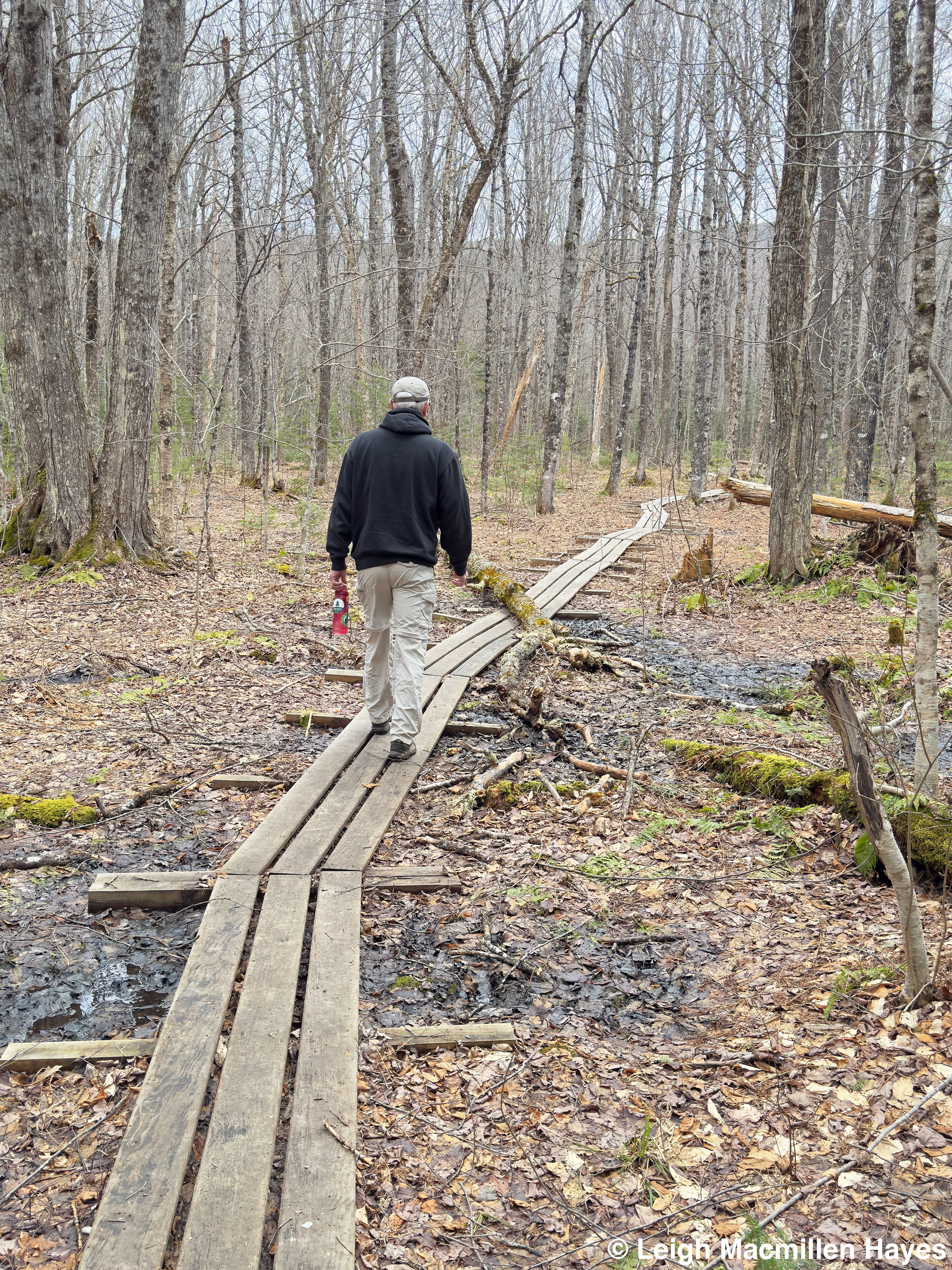
And so our hike continued through a wet area where we gave thanks for the boardwalk system. And for the opportunity to change out our hiking uniform from winter to spring. Oh, we had Muck boots in the truck, but welcomed the opportunity to wear hiking boots, and summer hiking pants, and sweatshirts, and baseball caps instead of winter gear.

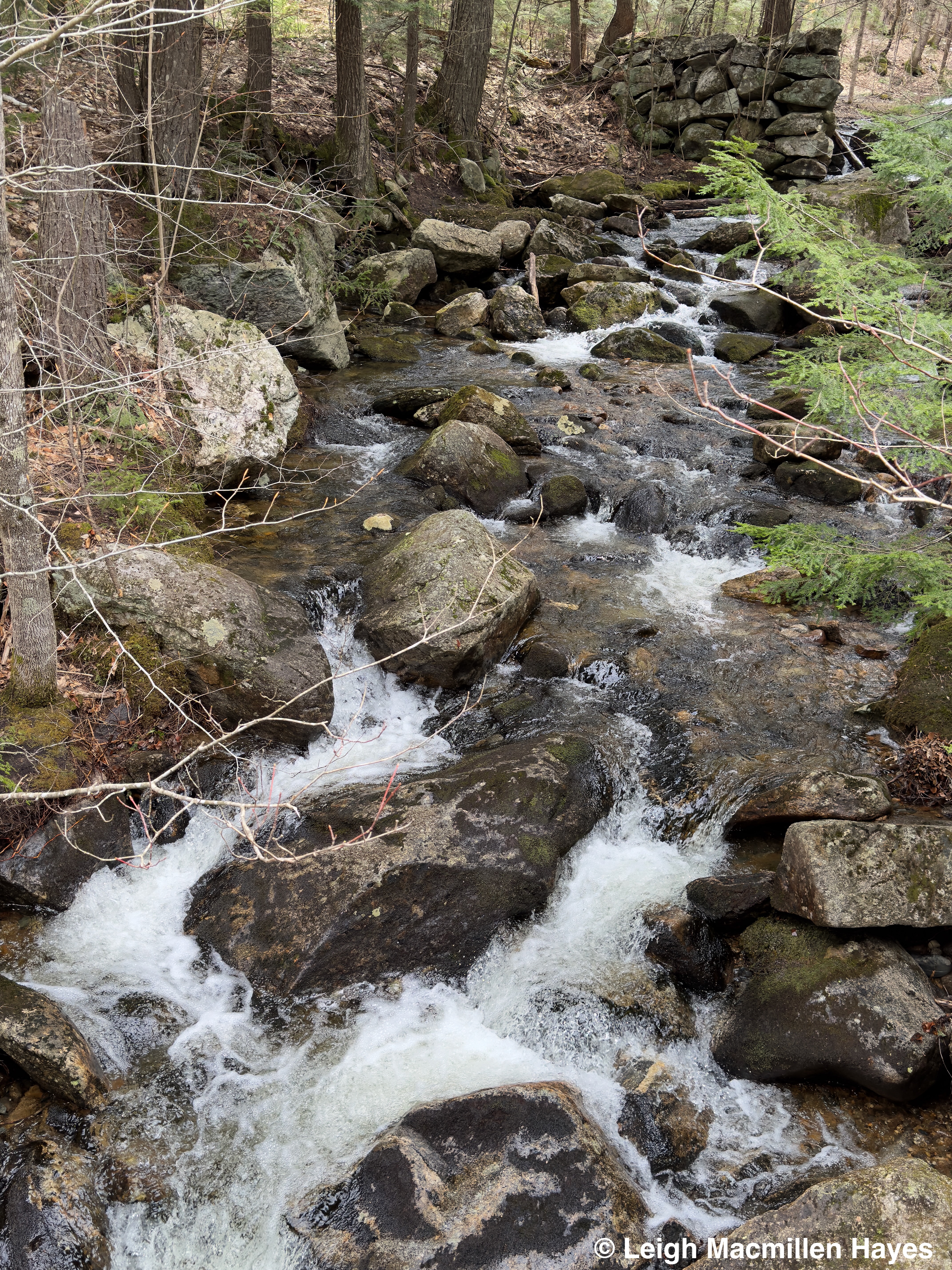
The wetland wasn’t so wet, but the water swirled around rocks just below an old mill as we crossed a bridge over the brook known as . . . Mill Brook.

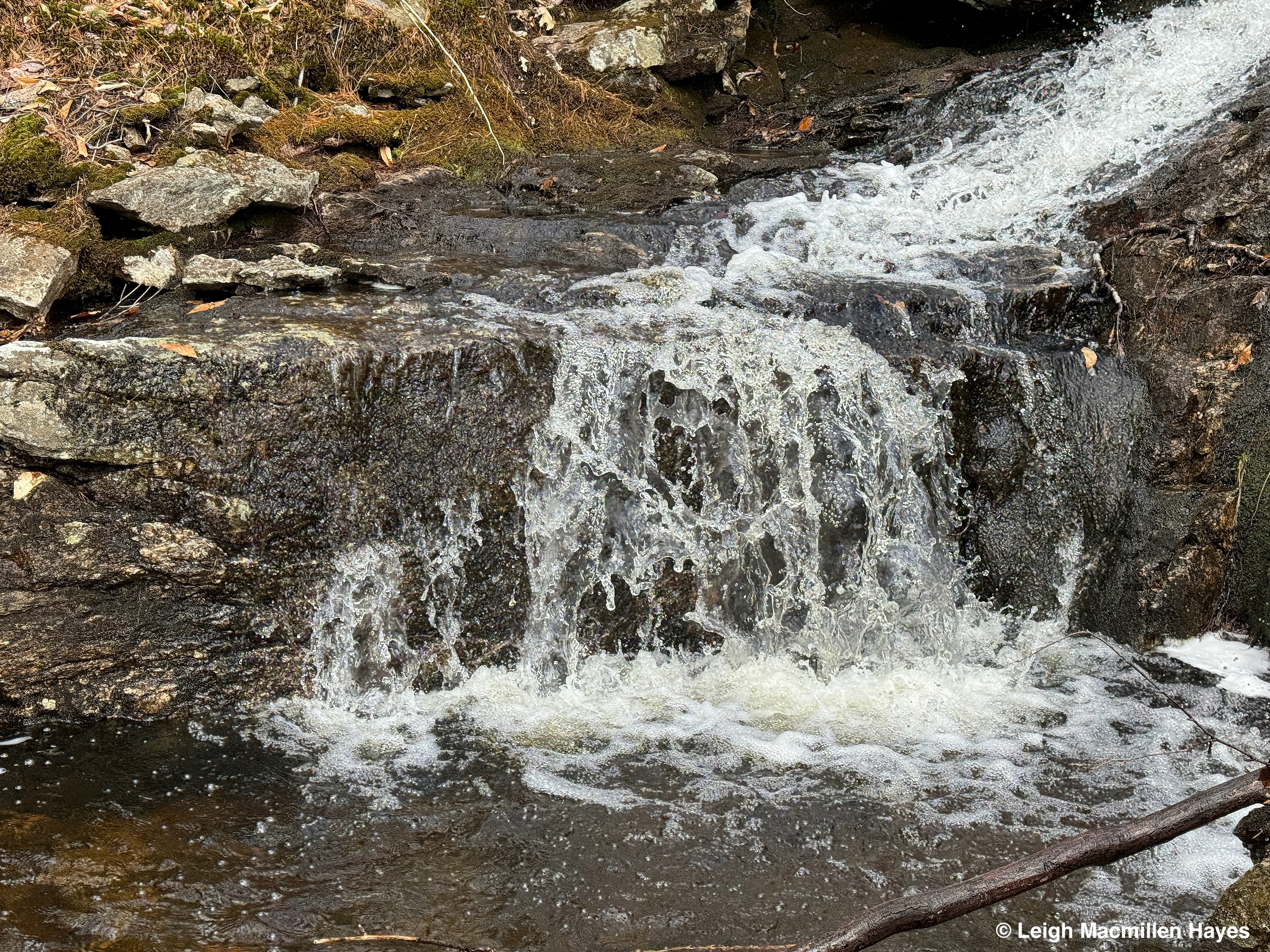
In its lower reaches, we paused to rejoice in how the water swirled around and over and under the boulders and reveled in the fact that their faces were smoothly carved as can only happen in places where so much H20 has flowed for eons.

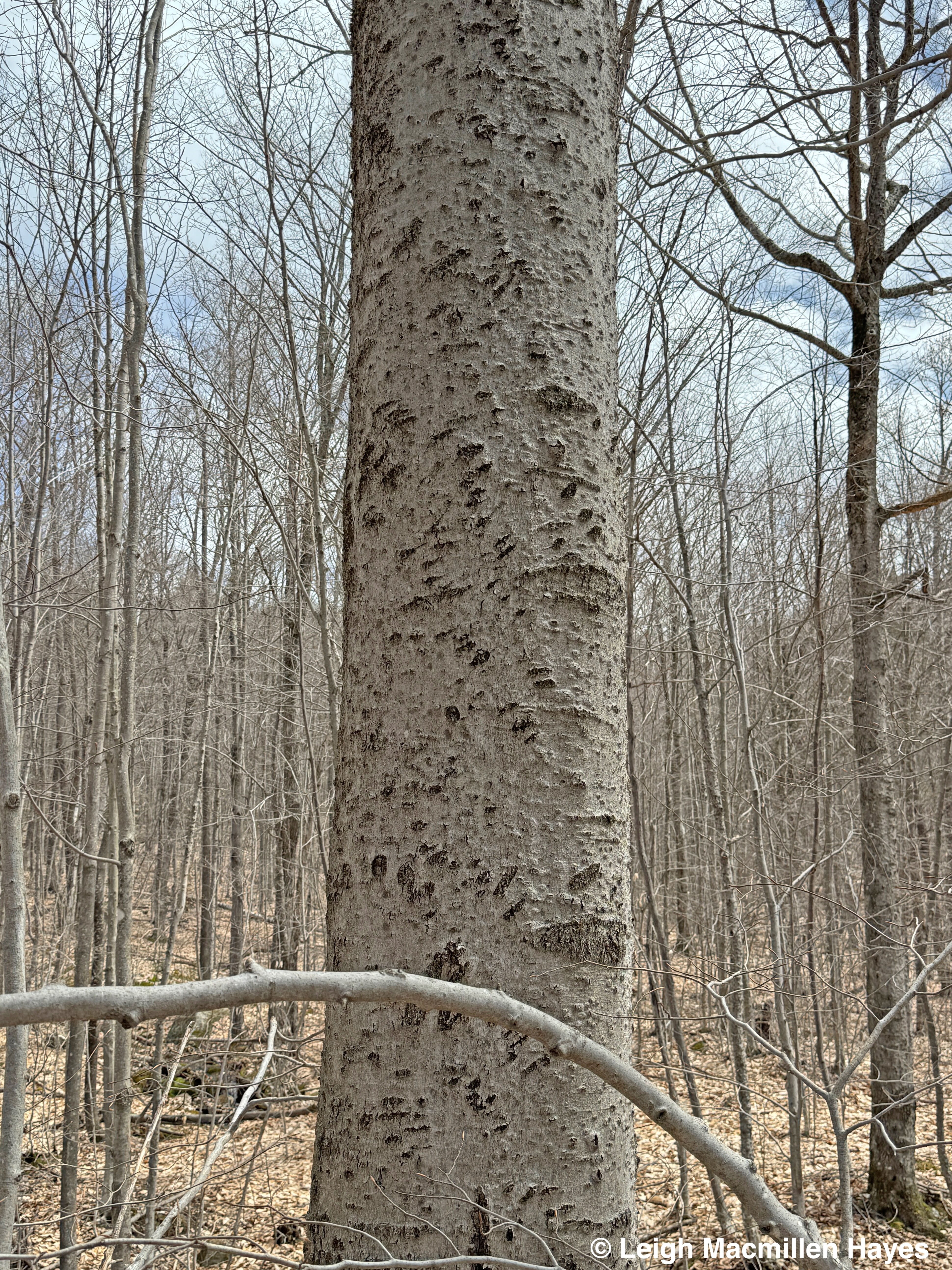
Leaving the water behind for a time, we met some friends. Beech Trees. Particular American Beech Trees. American Beech Trees more commonly known to us as Bear Claw Trees. And in this case, an oft-visited Bear Claw Tree.

Where there is one there is usually another. And another. And another. We found several, but imagined that many more exist given how many claw marks we found on these trees.

About two miles or more from the trailhead, we followed the spur trail to North Ledge (aka Lunch Ledge) and sat down to dine. Below stood a forest of hardwoods that we’d passed through and we had to wonder how many more Bear Claw Trees we might find if we actually took the time to go off trail and look. One of these days.

I did take time to examine a few fruticose lichens growing on the bark of a hemlock overlooking Lunch Ledge, this one being a Boreal Oakmoss, which is actually a lichen despite its mossy name.

And a Bristly Beard Lichen, with its short bristles decorating each branch.

From North Ledge, it’s at least a mile and a half across the mountain, with ups and downs and all arounds to get to the other side. Including snow. Given that we’d had two spring snowstorms, with the first being March 24, and both dumping a couple of feet upon the landscape, it was no surprise. Should we have donned our Muck boots?

Nope. I poked my hiking pole in at one point and discovered there was at least a foot of snow left in spots, but it was soft and easy to hike through and so we did.

At last we reached the southern side, where the trail turned and hugged the edge of the mountain. It was downhill from there.

But first, a quick break at the outlook, where we actually met the only other person who was on her way out as we were on our way in. Looking west, we could see snow showers in some surrounding mountains, but our day consisted of a few raindrops, sunshine, clouds, and a breeze. Perfect for hiking.

Also perfect for hiking: a delayed dessert of Dark Chocolate McVities! A favorite of mine since 1979 when I devoured their biscuits on a regular basis while attending school in York, England.

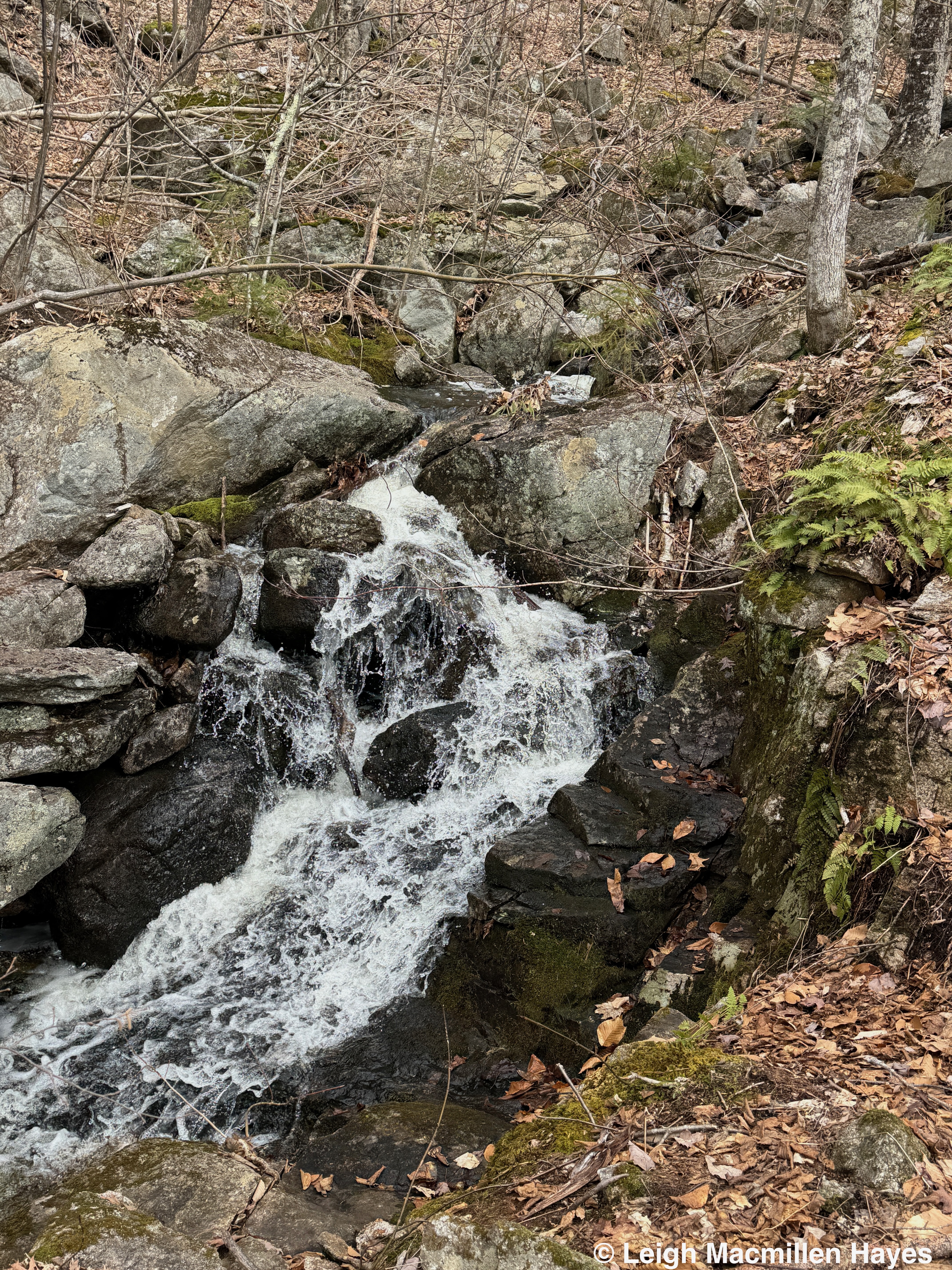
Downward we hiked and then we met Mill Brook again as it cascaded forth.

And forth.

And continued forth some more.

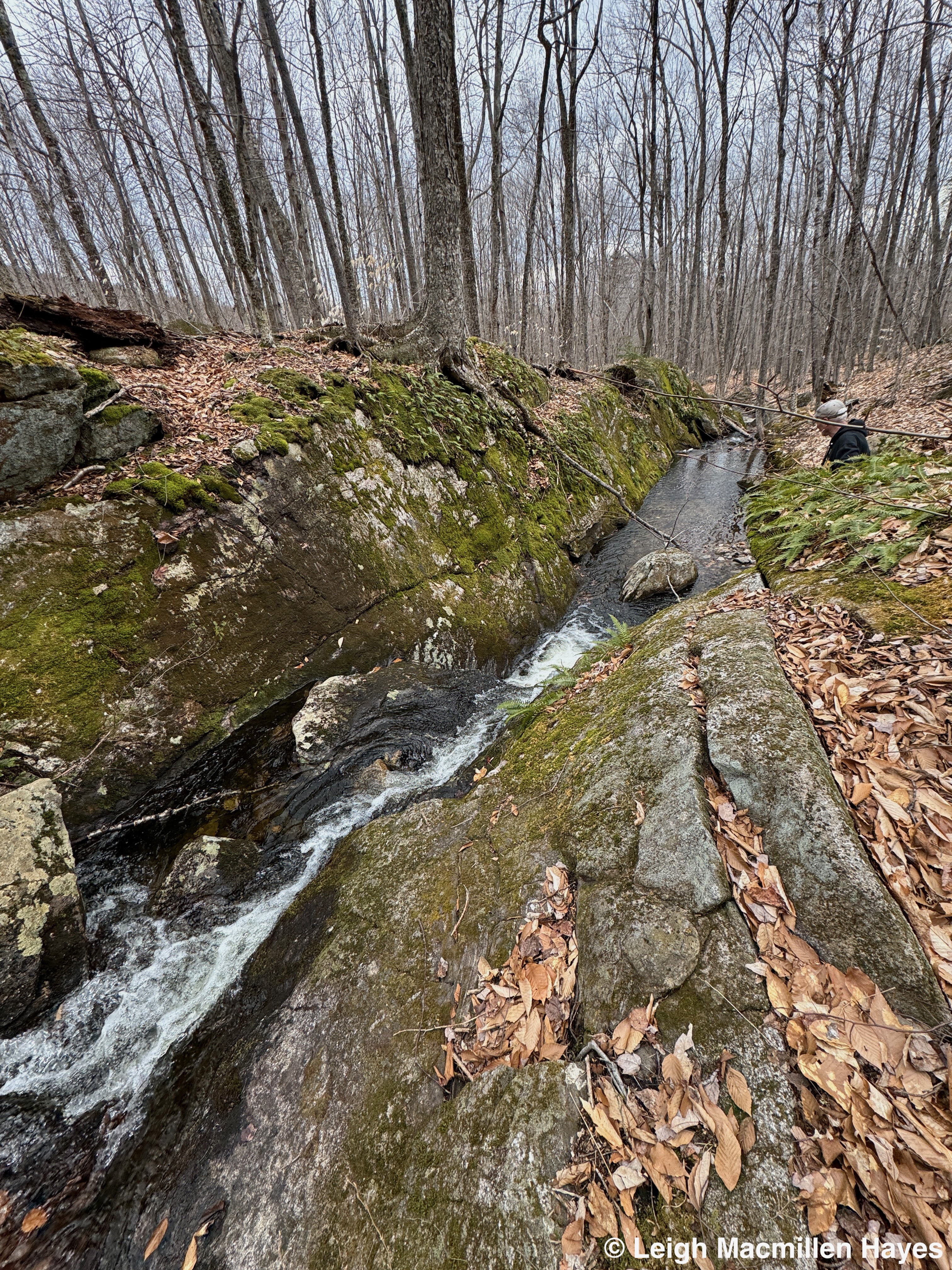
We followed as it flowed between a crevasse in the boulders–headed as you might note toward . . . My Guy.

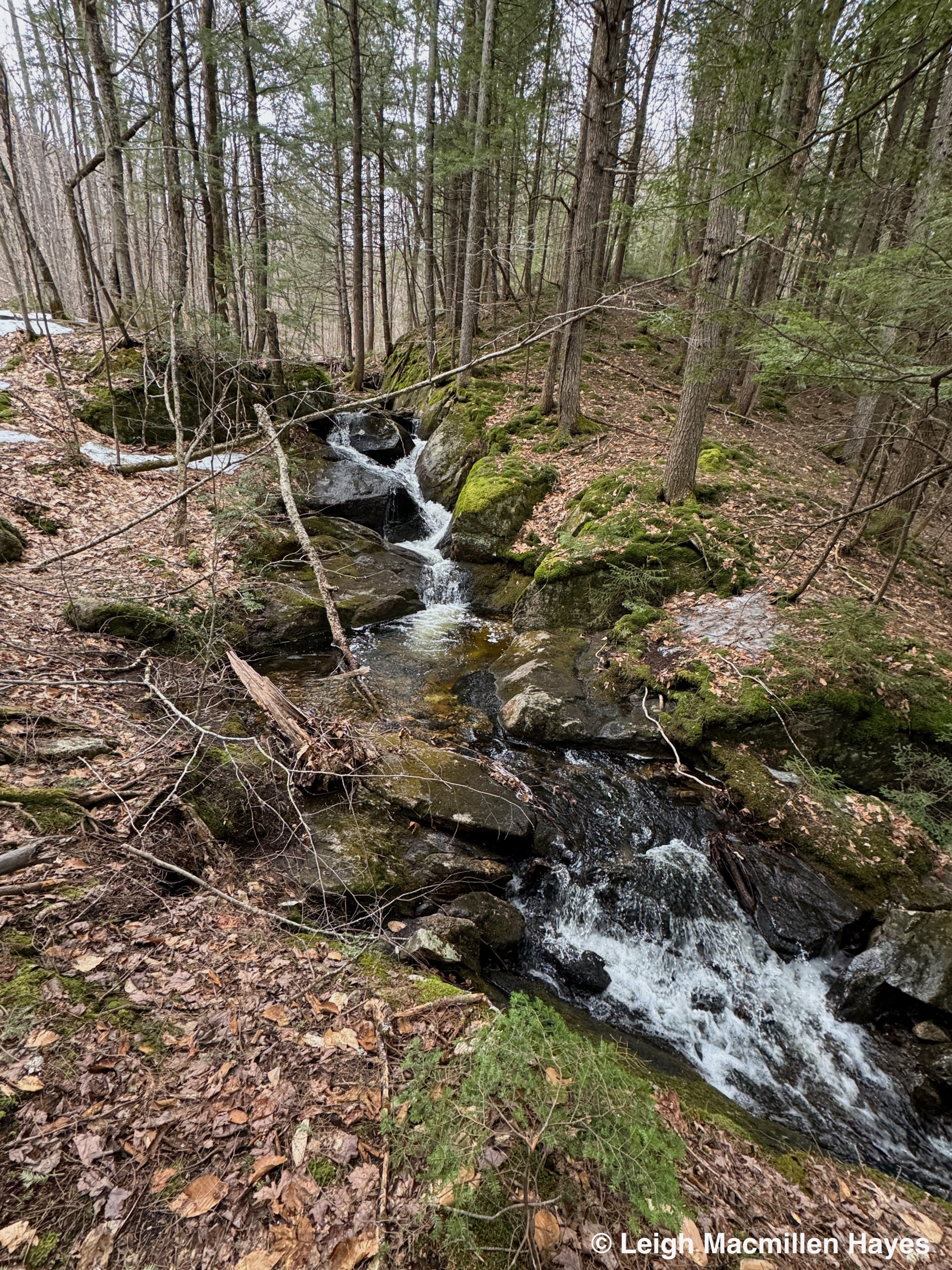
And admired it repeatedly along its course.

Occasionally it fanned out over boulders in its midst.

And plunged into pools.

It was a lot of water and we were thrilled to hike beside it and are still exclaiming over what a fun hike it was. Oh, there was mud. And ice. But those were secondary condtions. So far, we agreed, this was our favorite hike of the year.

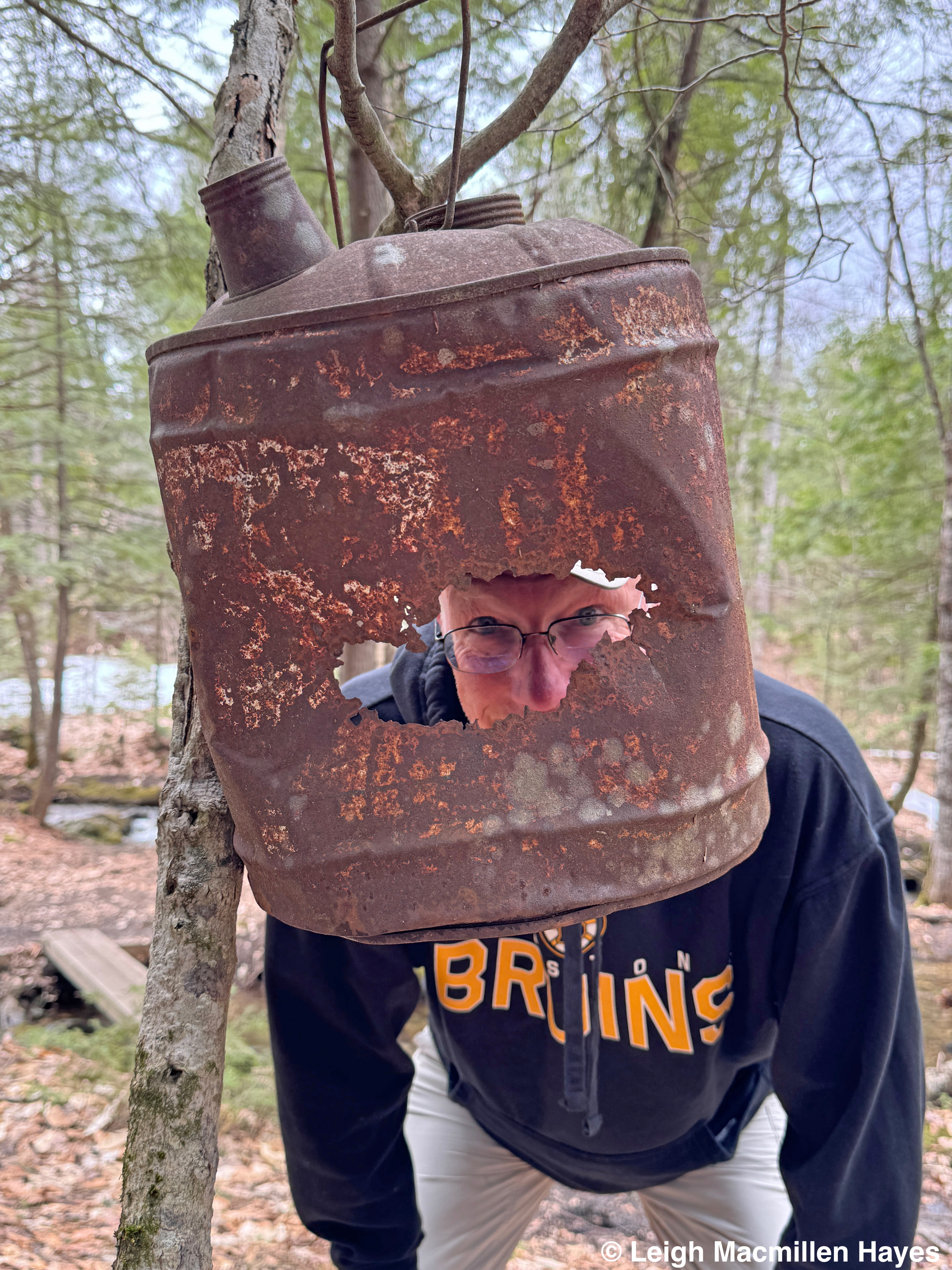
Where were we? Where bears of all types roam, including this crazy Bruin, who is usually a Maine Black Bear.

And no, we did not fall, though I know a few of you were wondering because you know my ability to do so at inopportune times. It was the waterfalls that we followed that made this Fall After Fall Mondate at Long Mountain so special.

Thanks as always to Mary McFadden and Larry Stifler. Through their generosity, many trails in the area are open to the public. And through the work of their employee, Bruce Barrett, those trails are well maintained.

Easter 2024

Easter came early this year and at our church a spring snowstorm that dumped up to two feet of snow meant that last weekend’s Palm Sunday service had to be held via ZOOM. But with a new rector on board, Reverend Annette went with the flow and then during the week, she was able to offer Maundy Thursday, Good Friday, and finally today’s Easter celebration all in person.

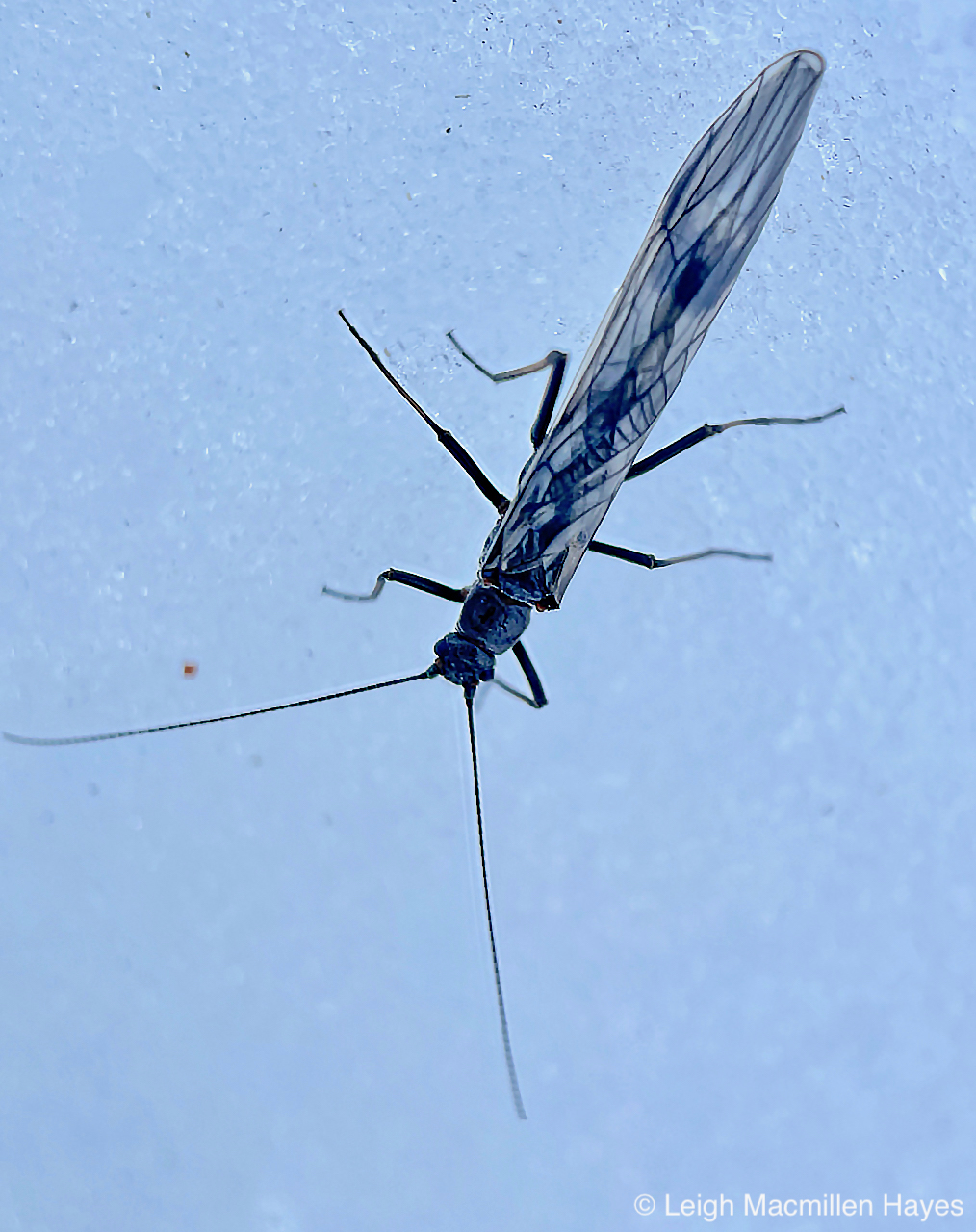
It was a week of reflection, as it should be. And a week of searching, like this Winter Stonefly that emerged from a freshwater brook and journeyed up and down and around the obstacles of the forest and snow fo seek a tree. Particularly, the bark of a mature tree. Species mattered not.

The aquatic immature stage of a Winter Stonefly, aka naiad, crawls from the rocky bottom home of the brook where it has spent the last year or more maturing (going through as many as thirty molts)and shredding falling leaves, climbs up through crevices in the snow that covers the brook, finds a plant or some other spot to emerge as an adult, and leaves behind its shed skin, much like a dragonfly or damselfly.

Stoneflies have hammer-like structures on their abdomen that make noise when thumped against a surface, like a tree trunk or a twig or even the ground. This is a mating call. The males drum, and the females drum back, and voila, they find each other and canoodle.

I heard not the drumming for it is not for us to hear, but I have faith that this insect with its veined wings that serve no flying function was successful.

The venation of the Winter Stonefly’s wings was not lost on me as I saw stained glass in their presentation. And was struck by the same when I peered into a quick flowing stream that transported melting snow and noticed the amazing lines and shapes as the water twirled around a rock.

And on both sides of the stream I spotted the prints of one who passes in the night, working behind the scenes and leaves only a trace of its presence. But still, because I recognized these prints, I believed the Bobcat was nearby, perhaps even so close that it kept watch over me without my knowledge. As it should be.

Turkey prints were much more prevalent, but today it was the shape of such that garnered my attention and I could imagine the cross and a being upon it.

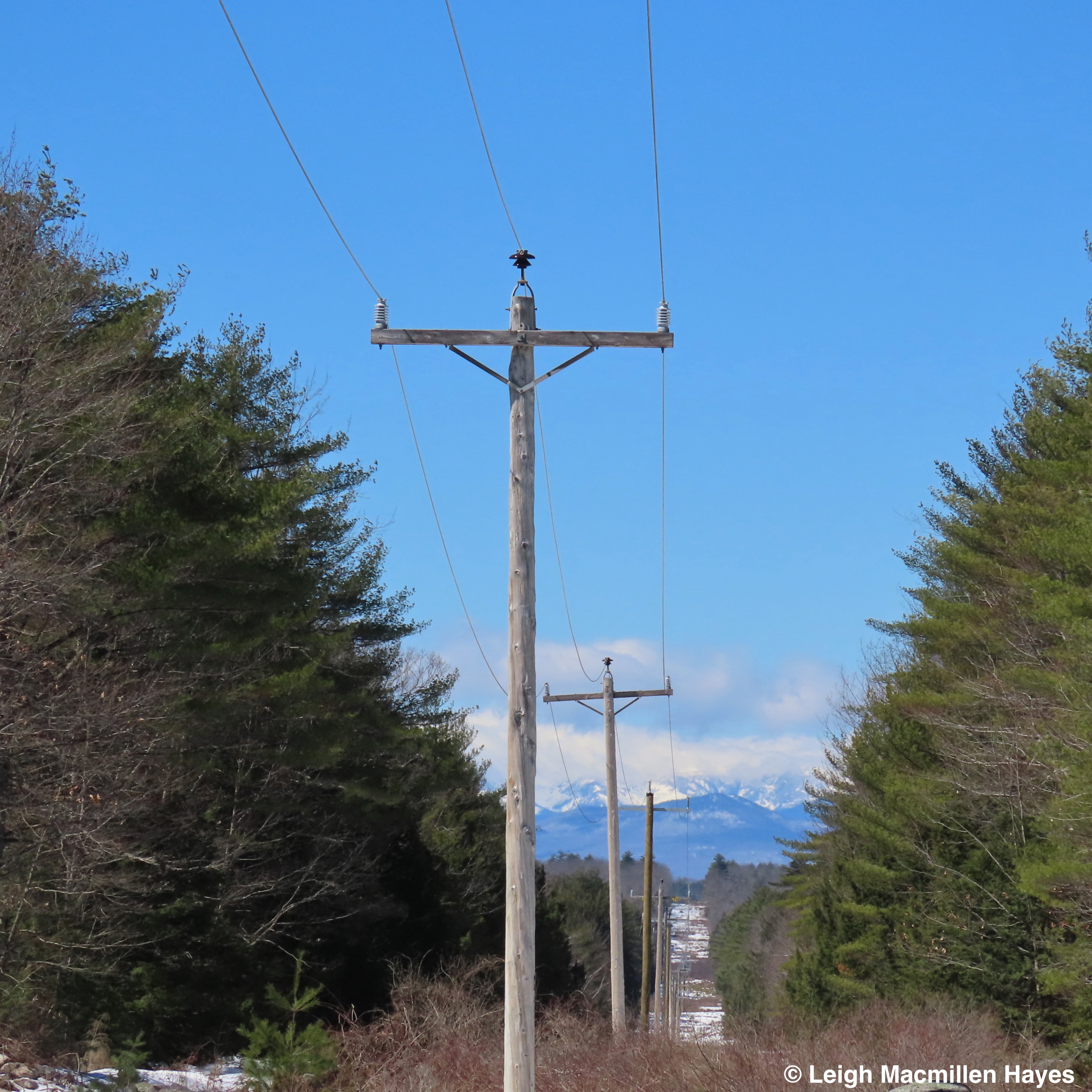
The cross theme was equally created in the form of telephone poles leading to the most powerful mountain in New England. Who knew? Light and communication sizzled across the wires for all of us who choose to partake.

An equally power-filled force, some of which is also harnessed for electricity, this swollen river flows to the ocean as waves break over boulders. I see not its full path from source to sea, but trust in its immanence.

And on this day, with the snow melting under bright sun and 50˚ temps, the White Crocus with its lilac-colored runway lines, suddenly bloomed–and the Alleluias are heard ringing across the landscape.

A Purple Crocus added its soprano voice to the Alleluia chorus.

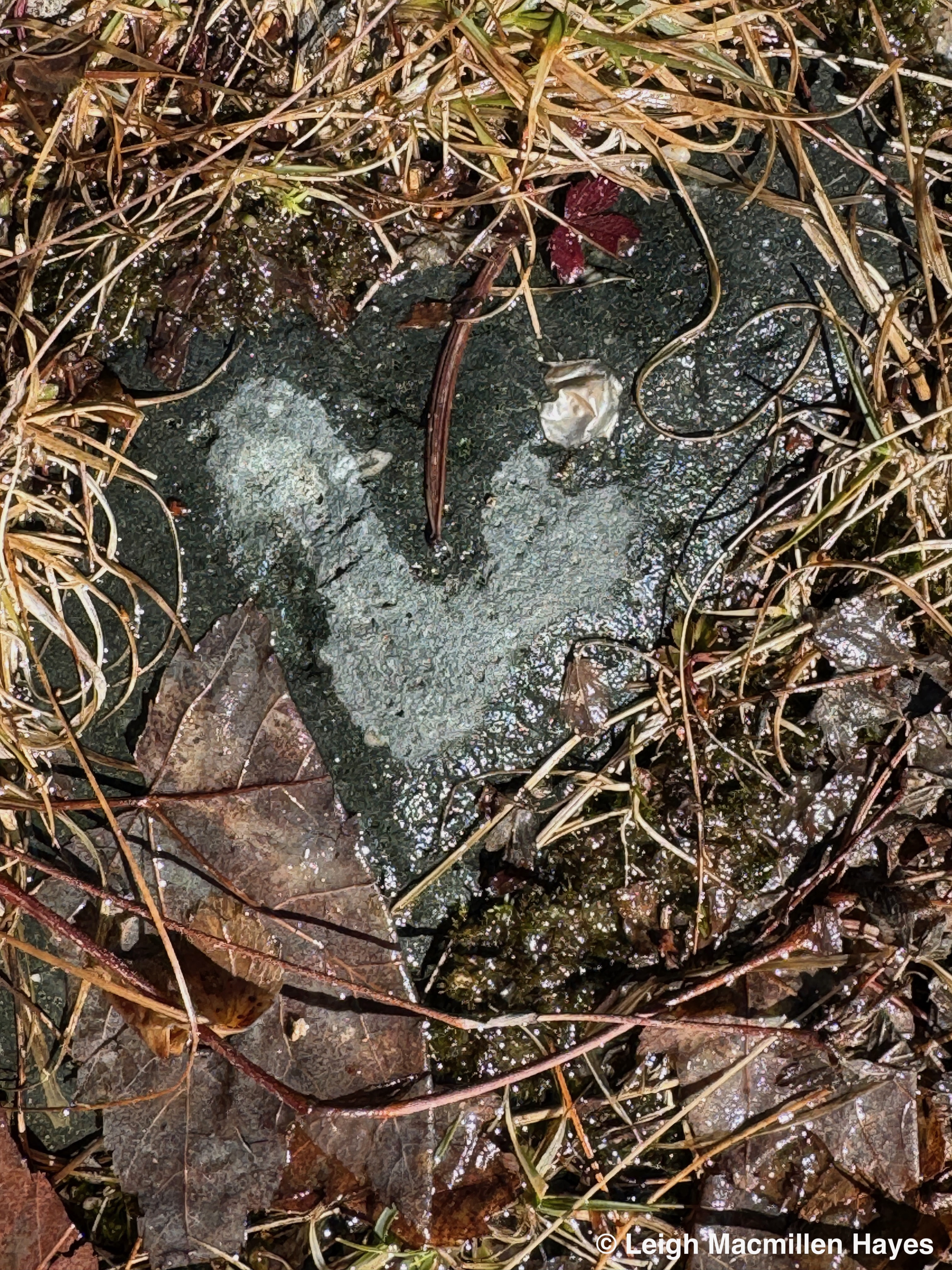
When I spotted this heart upon one of the paths I followed this weekend, I was reminded that hope and awe and wonder and love are captured within my heart and I gave great thanks.

Christ is Risen. A new day has dawned. Alleluia. Happy Easter 2024.

Of Stumps and Snags on this St. Patrick’s Day

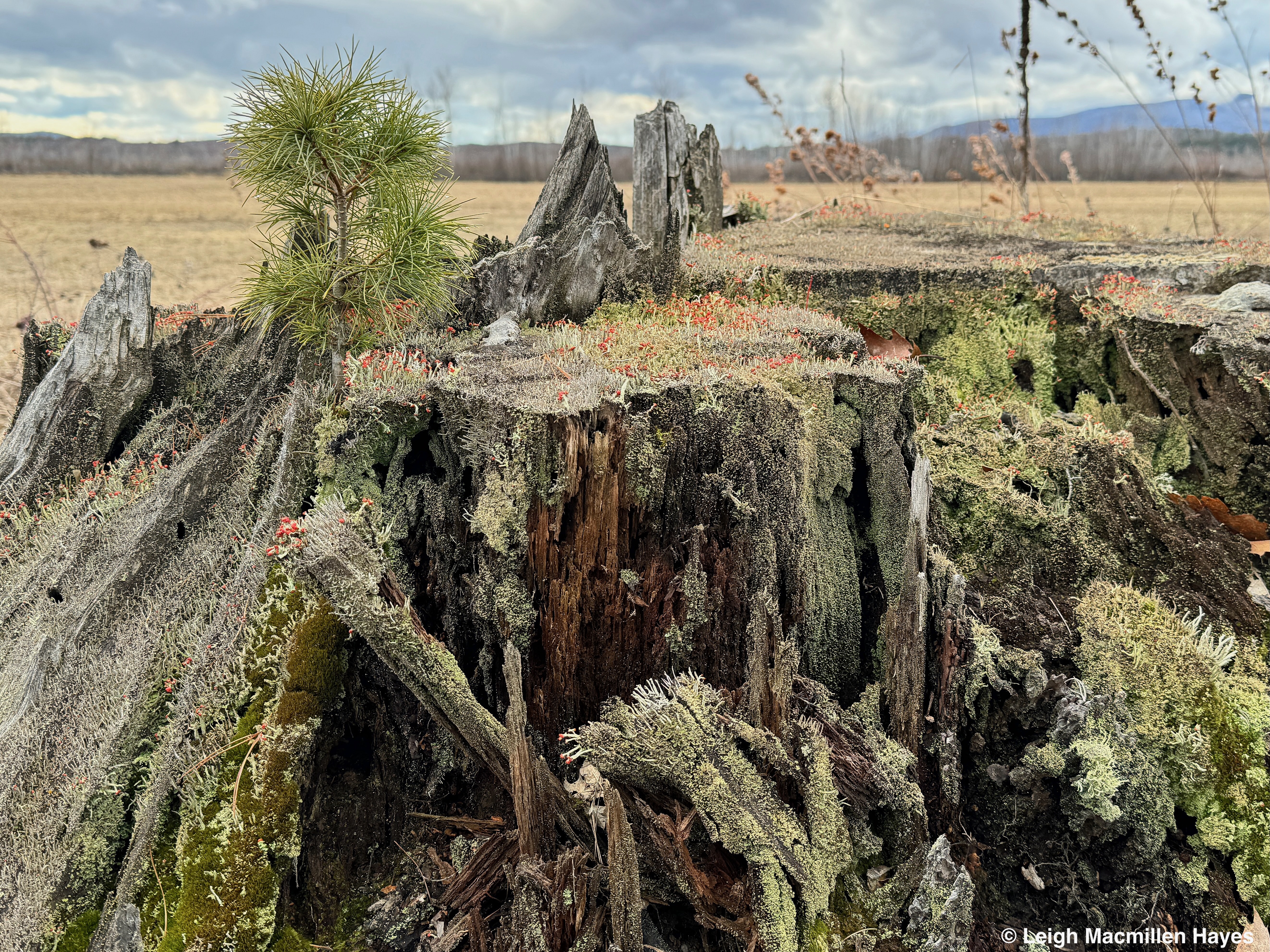
Stump: the base of a tree that has been chopped down or fallen, but is still connected to its roots.

Snag: a standing dead or dying tree; or part of a tree that is dying.

To visit a stump presumed dead
is to find life that comes in many forms.
Mosses and lichens colonize in a manner all their own,
and saplings find a new spot upon which to grow.
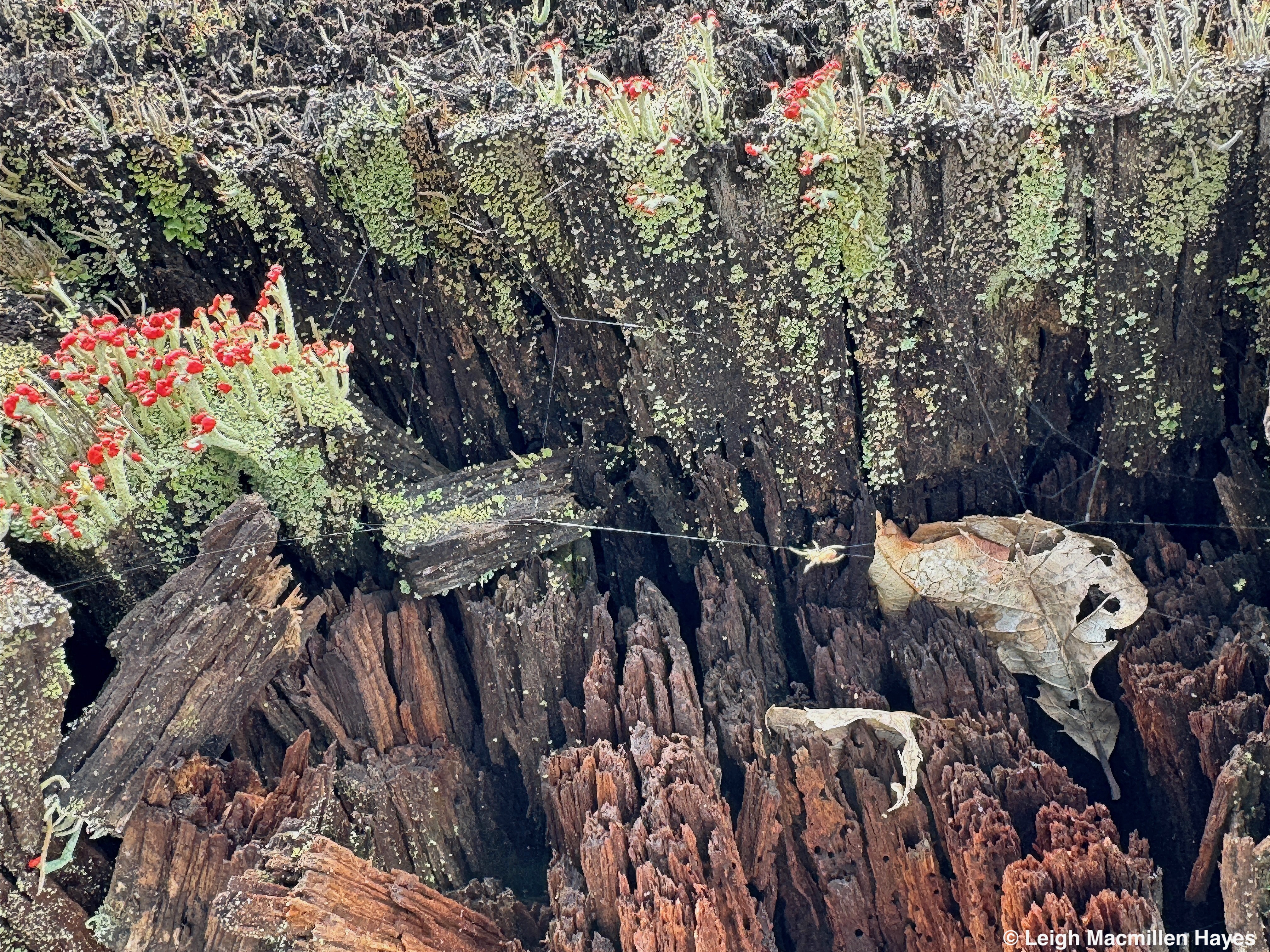
British soldiers crowd the scene,
their red caps marching toward the future
with fruiting spores planning to form
more of the same.
In their midst
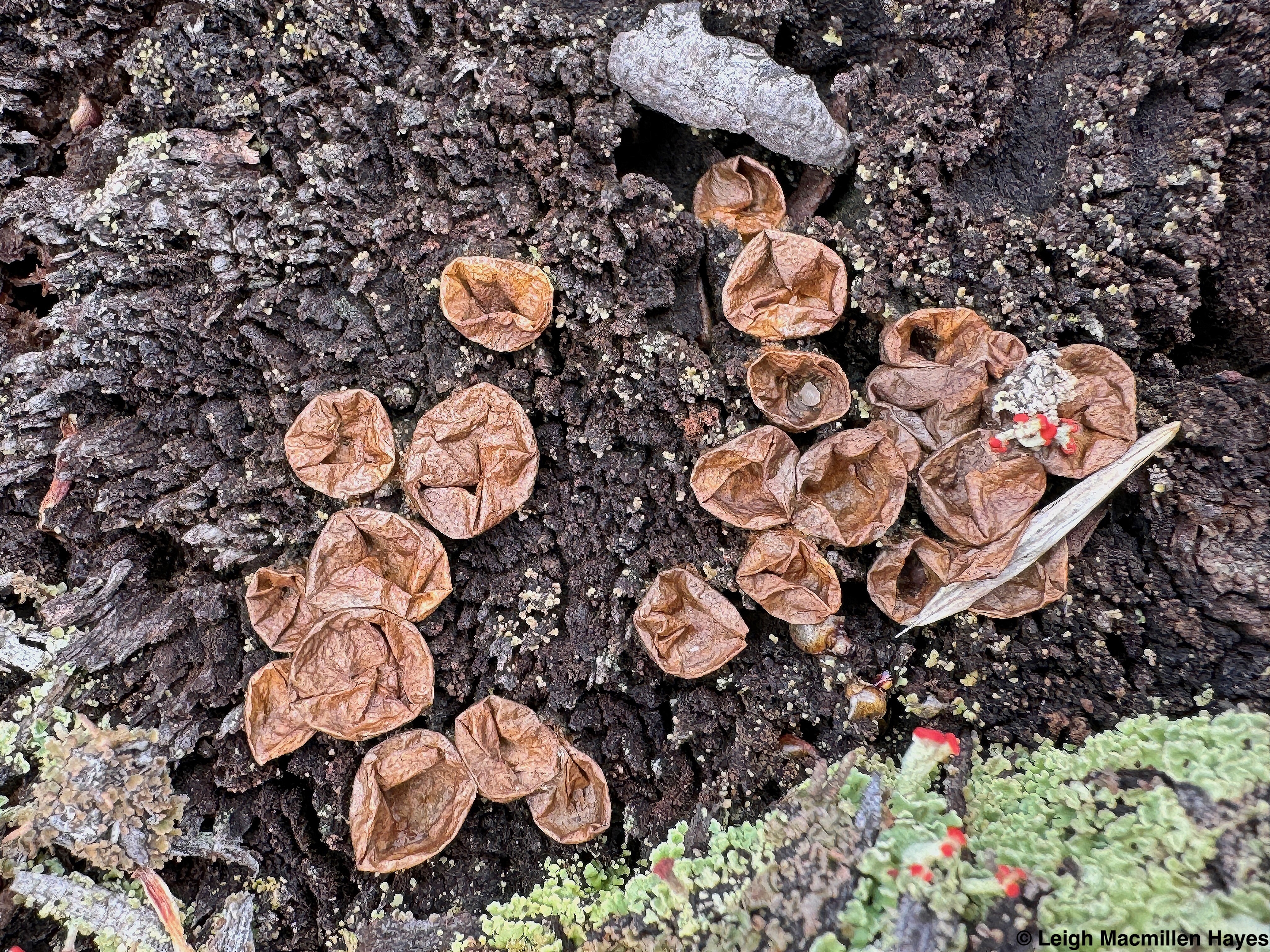
others who are deflated,
the papery remains of puffball fungi
having already spread their wealth.
And a tiny White Pine
who chose this spot
upon which to germinate
at least seven years ago.
Stopping beside another stump,
it is not the residents who call this home
that attracts my attention,
but rather the sign of another who had paused here.
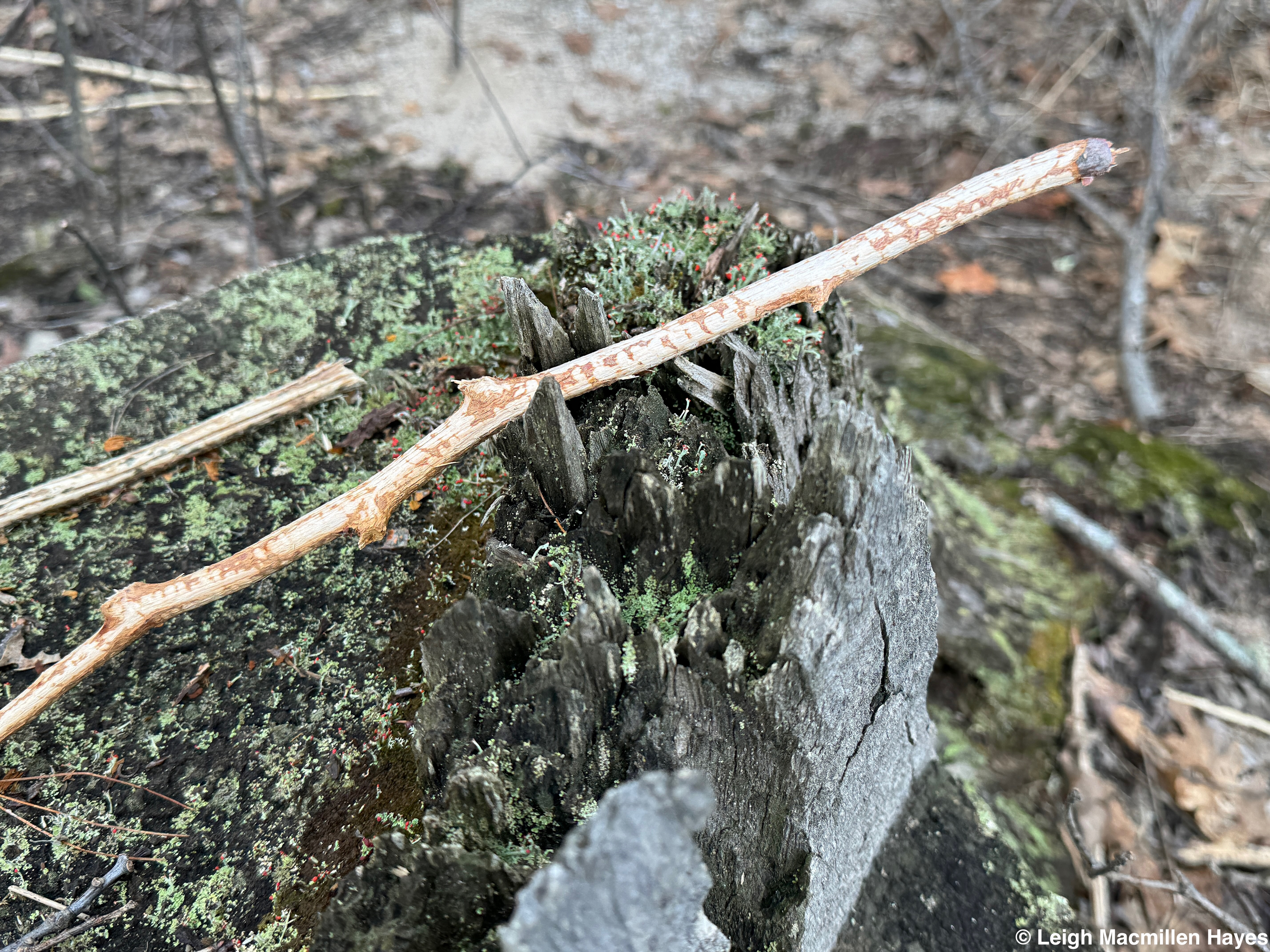
Beaver nip sticks, a source of winter food, 
were on display,
the trees from which they came
now skinny stumps in the background.
And growing on this stump,
scaly-surfaced trumpets
blaring Irish tunes
for all to lichen.
The next stump in my survey
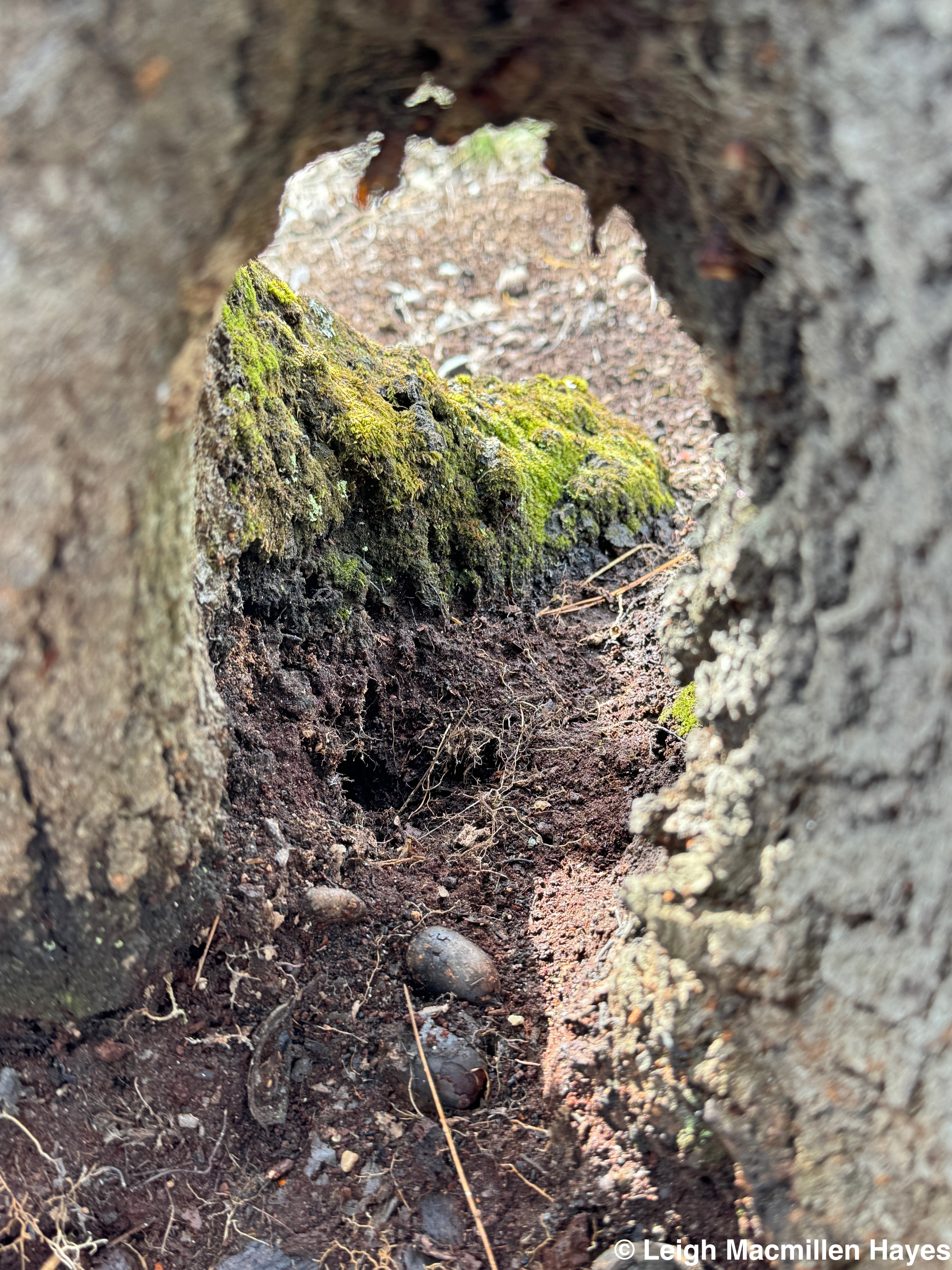
had rotted from the inside out
and humus formed within
its castle-like chambers.
It even had an arched doorway
for leprechauns to enter
or pass into the next world
and the stump itself was leading the way.
There was another, 
which though the wood had already decomposed,
offered a substrate for a few
to set up housekeeping.
I was struck by the contrast
of a small clump of British Soldiers
on this one, whilst its neighbor
supported an entire army.
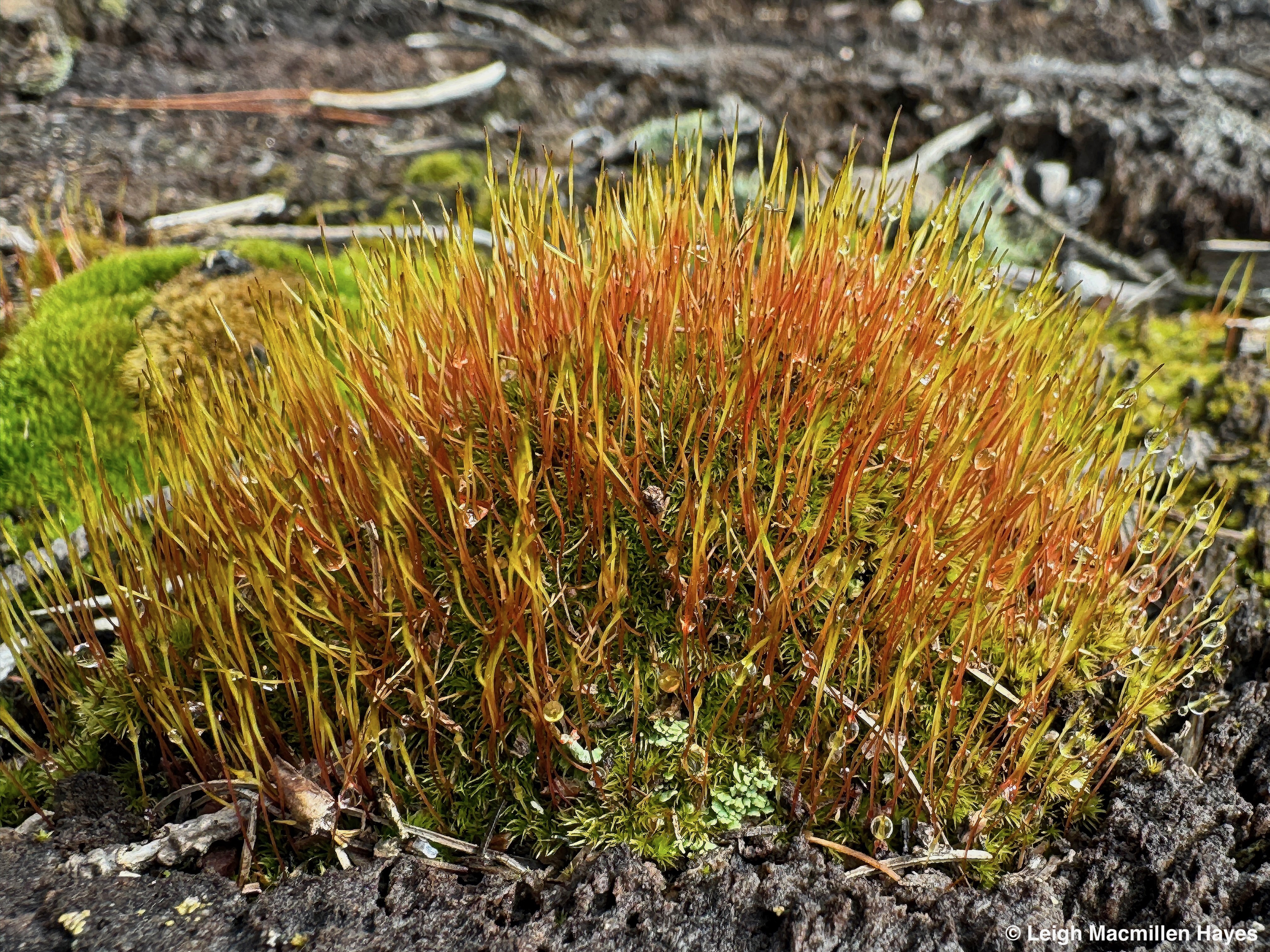
And only one small clump 
of Four-tooth Moss,
decorated with raindrops
in a salute to our March weather.
It's when one takes 
the time to look,
that the tiniest residents
make an appearance.
And so I watched this tiny spider
works its magic
of building guide lines
and creating a snare in hopes of a grand capture.
Not all stumps in this river-side location
were the result of man's intervention,
for old beaver works
highlighted tree spirits in the curvature of the lines.
Switching my attention to snags
brought the vision
of more artwork
upon the skeleton of a tree trunk.
And a display of the (w)holiness of this place,
for such were the portals
carved by beeltes in the past
that had breached the bark.
Finally, I stood by one mighty snag
that is a marvel of this natural world,
so much of it decomposed
yet replenishing the soil.
Looking skyward from within,
one can see branches
and marcescent leaves above
speaking to the xylem and phloem still in operation.
What bark is left,
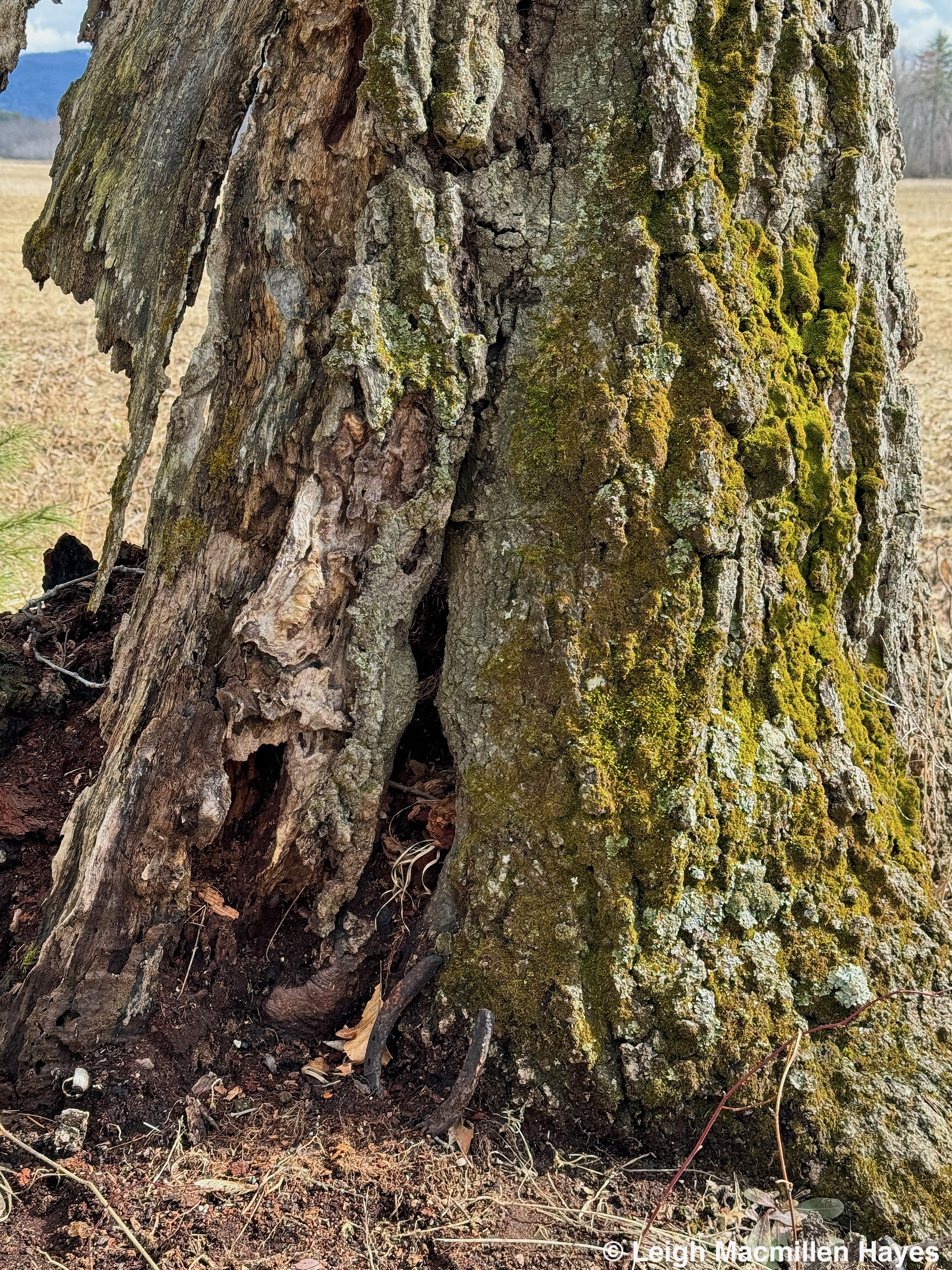
serves as armor for this old oak,
and as scaffolding
upon which mosses and lichens can grasp.
It's what I spy inside,
however, that takes my breath away.
Oddly enough, it is named
for the breathing structure of another.
And when I compare it to 
the nose of my oldest son's furbaby,
I can see the resemblance, sorta.
Dog Nose Fungus.

As for stumps and snags, I must give thanks
for they are hardly useless in the landscape,
but rather hosts of many a forest life,
and I'm sure St. Patrick would approve.

Oopsy of a Mondate

Knowing it was going to be warmer today, we decided to venture to a local park where the snow pack would be less. That doesn’t sound right coming from this snow queen, but we didn’t feel like postholing or having snow stuck to the bottoms of our snowshoes.

This is a place where we know beavers are active. And I, of course, went with expectations. And convinced My Guy that we should begin and end at the bog.

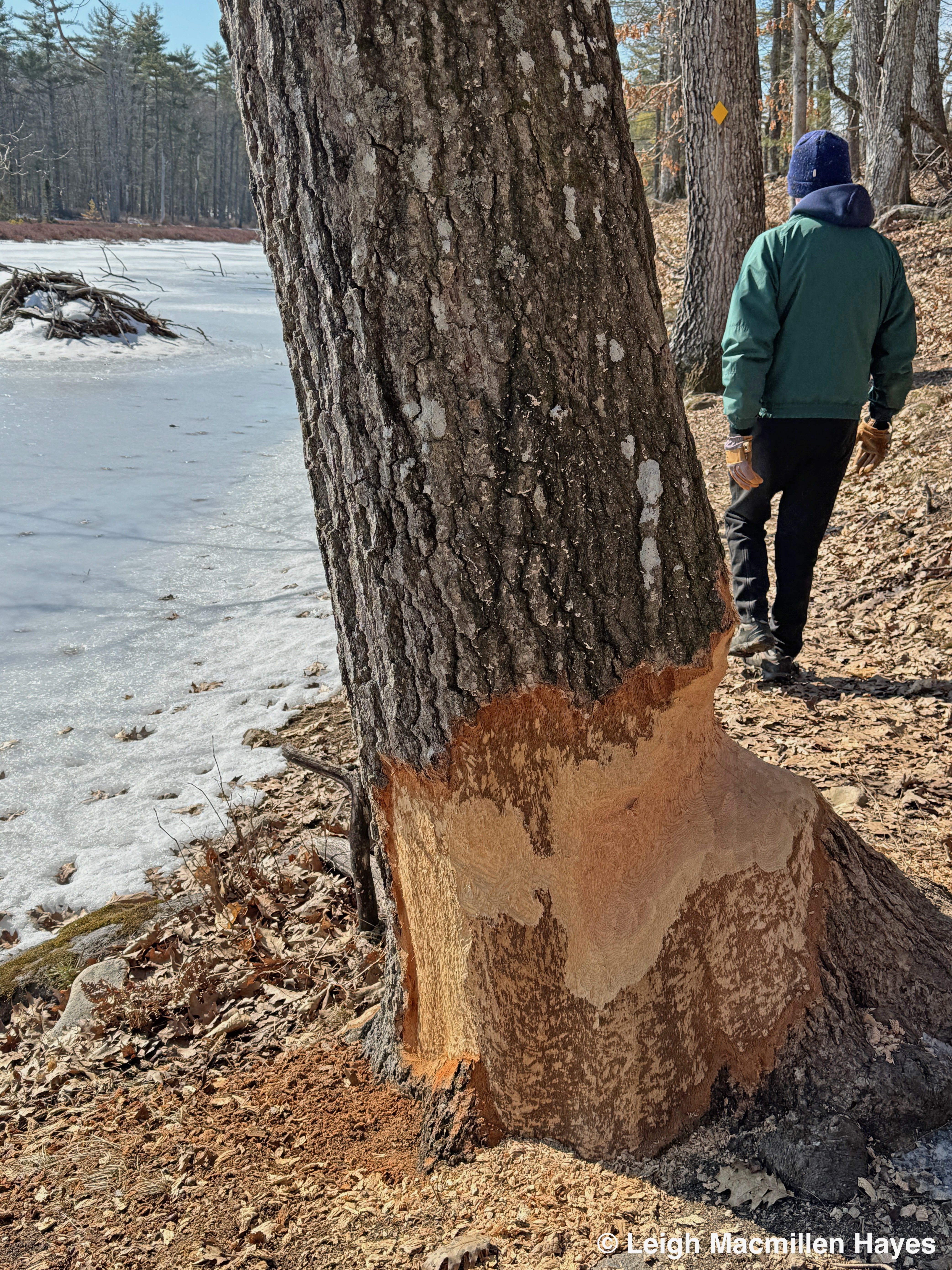
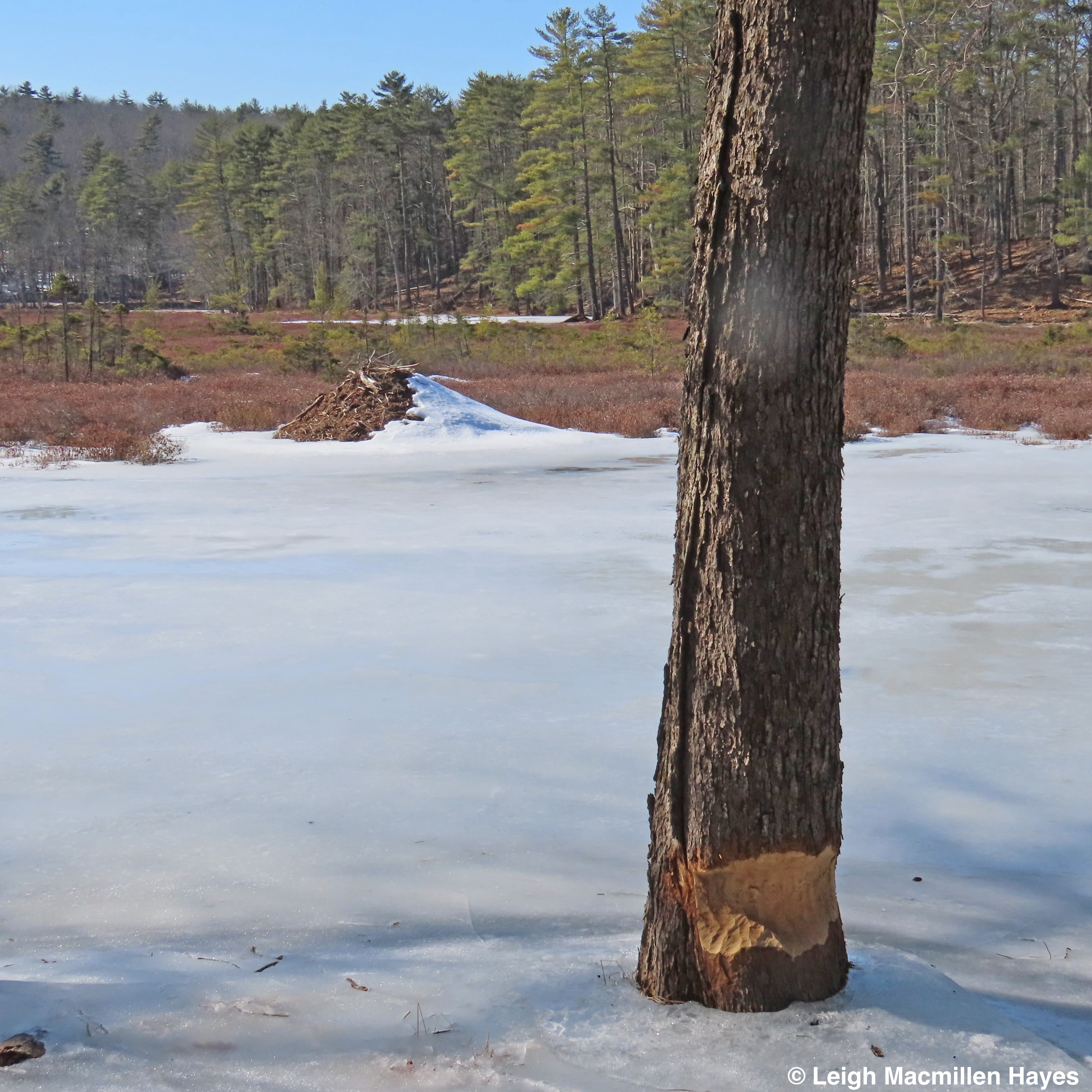
And bingo–a beaver-chewed tree that had probably been munched upon this past fall based on the color of the sapwood greeted us immediately.

But do you see the lodge in the background?

Here’s a closer look. Fully iced in and no mud on the exterior. This one had been active for several years, but today we learned that that is no longer the case.

Still, as we moved past it, there was another tree (on the left) that had been equally munched upon this past fall, while the color of the wood on the tree to the right indicated activity from a previous year.

There was even a dam, but I was beginning to lose hope. And to kick myself for coming with expectations. When will I ever learn?

Because we were in a park, there were structures and behind one close to the path, we found an Eastern Phoebe nest upon a platform placed there for the very bird to set up housekeeping each spring.

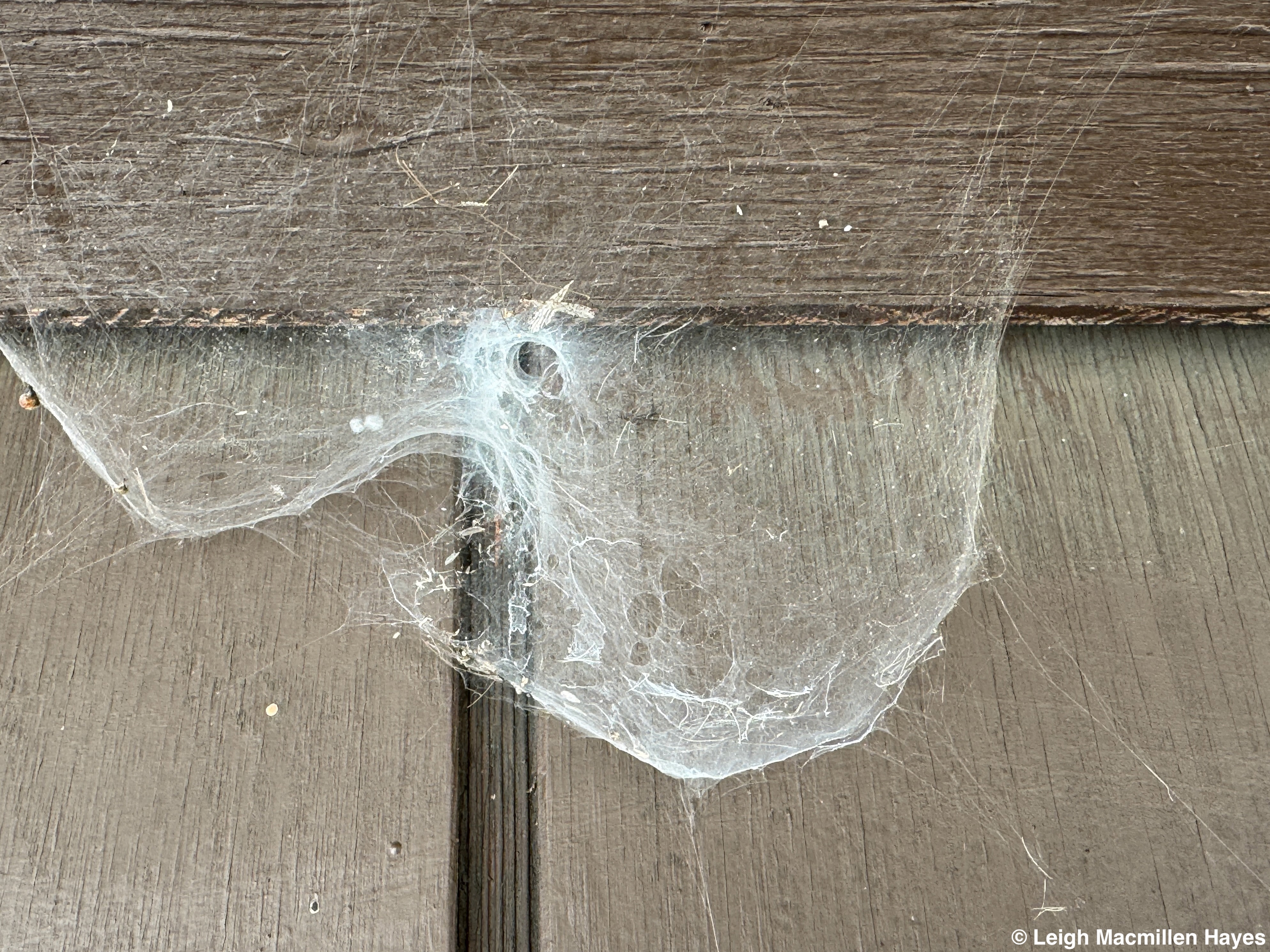
The cool thing was that the Phoebe wasn’t the only structure dweller, for directly below her nest a Funnel Weaver Spider had constructed an intricate home. I love all the guylines meant to keep the web intact, in fact it worked so well, that the winds of the fall and winter didn’t seem to have touched it. Well done, spider!

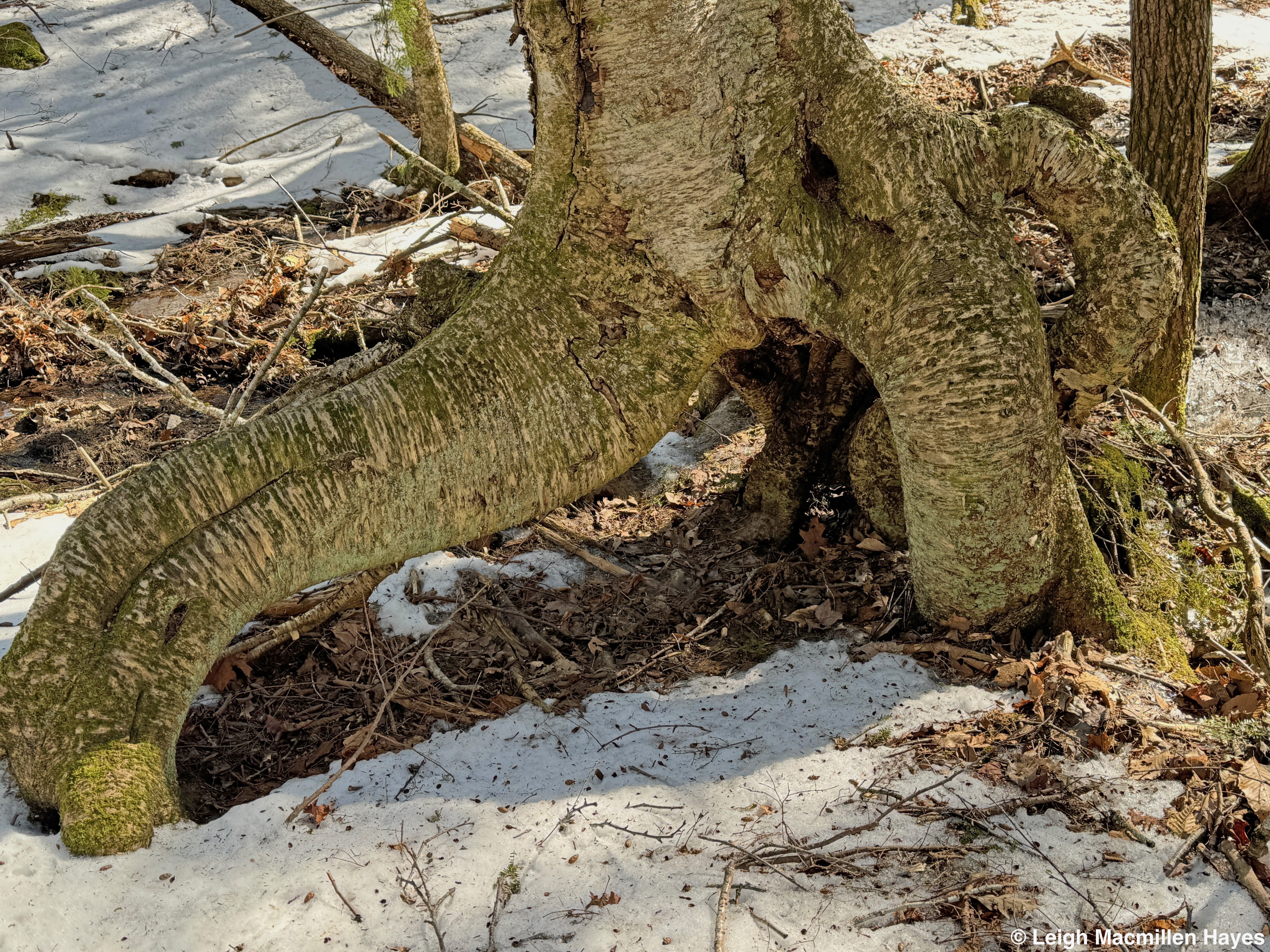
As we continued on, I thought about the gems this place offers, including this beautiful old Yellow Birch standing on stilts. As I noted in Becoming Tree Wise, the seeds of Yellow Birch, like Eastern Hemlock, struggle to germinate on the forest floor, but give them a moss-covered rock, or tree stump, or nurse log, and bingo, a tree grows on it. As it continues to grow, the roots seek the ground below and if it is upon a stump or log that eventually rots away, you have a tree in the forest that appears to stand on stilted legs. Tada!

Our trail was sometimes bare and other times snowy or icy, so we did don microspikes, which turned out to be the perfect choice most of the time.

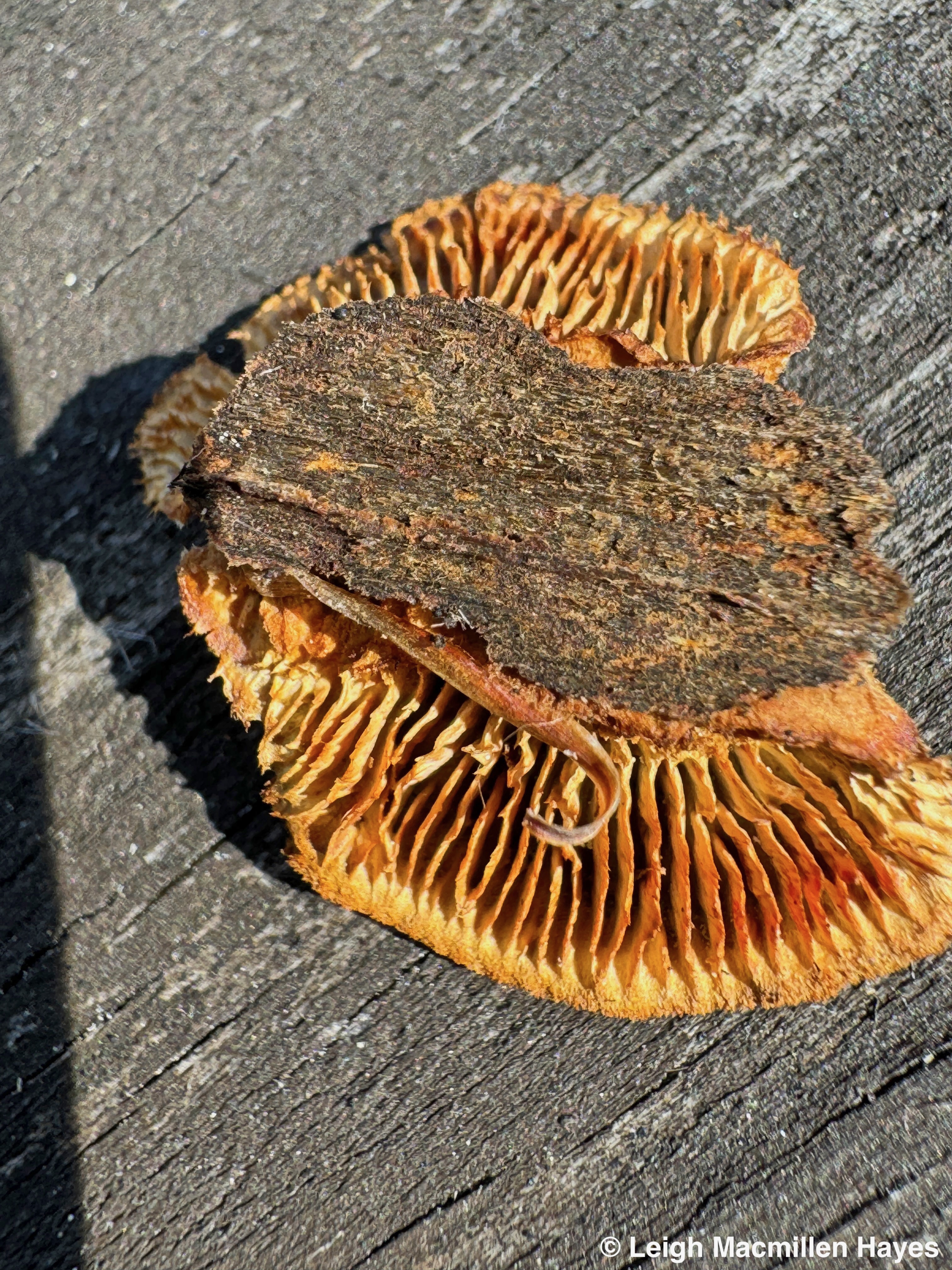
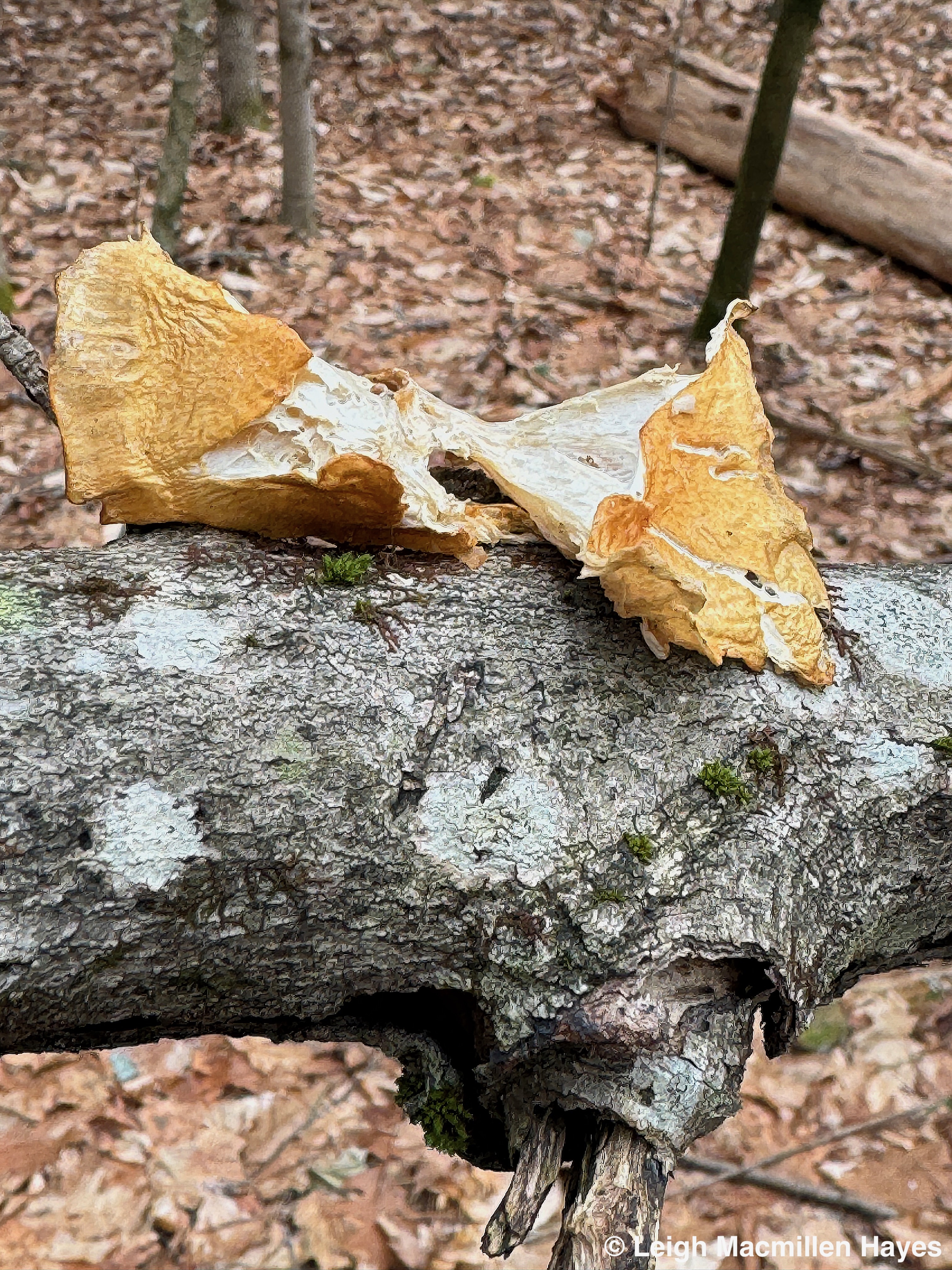
At the summit of what is known as Lookout Trail, the view is of the forest beyond, but we did look down at the picnic table and discovered mushrooms growing on the wood. The cap was like a tapestry of oranges and yellows and rosy browns.

It was the underside, however, that aided ID: Gloeophyllum sepiarium (Rusty-gilled Polypore or Conifer Mazegill).

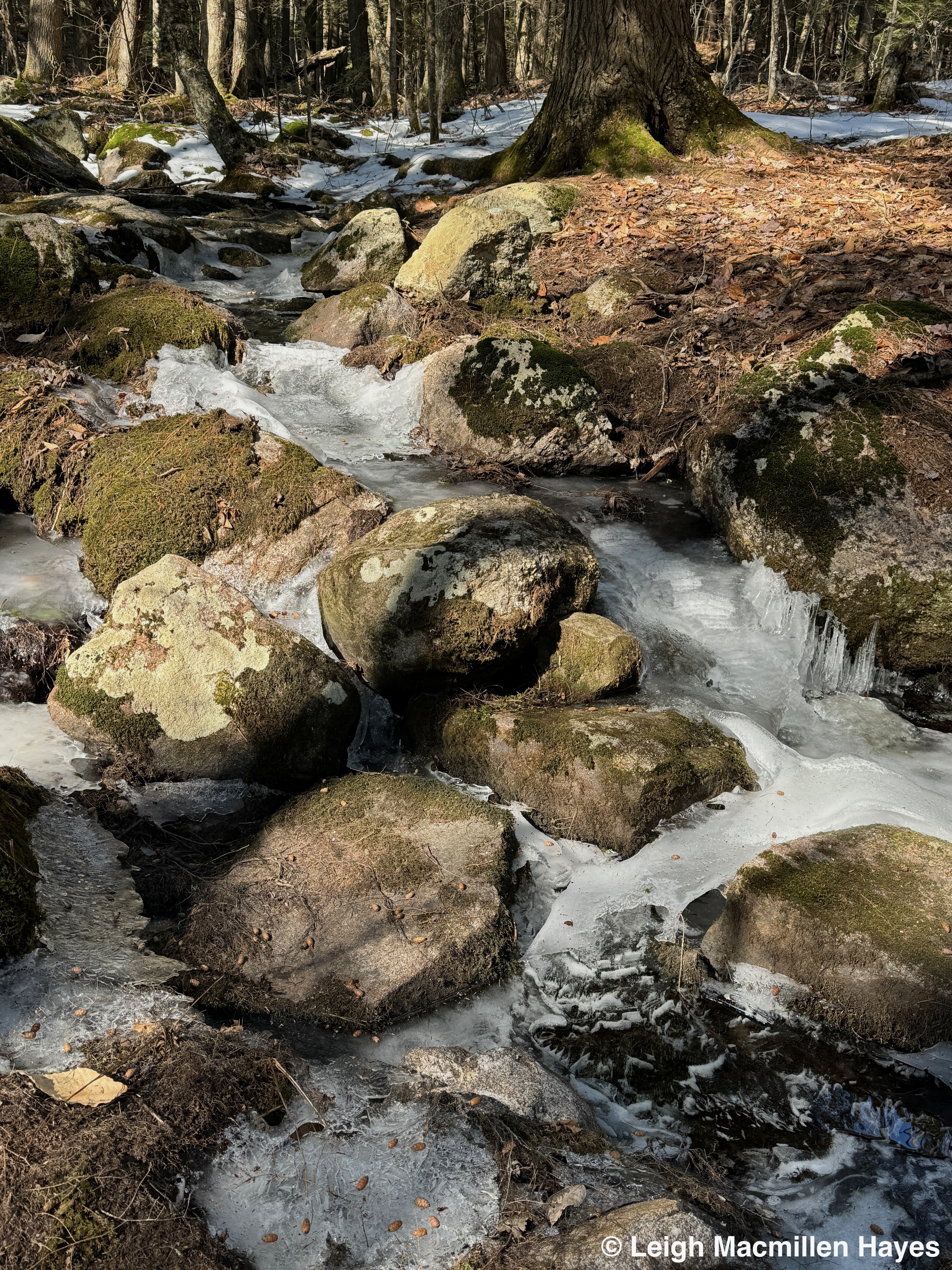
Occasionally there were brooks to cross and icicles to admire and sounds of percolating water flowing beneath the ice to encourage stopping for a few minutes to take it all in.

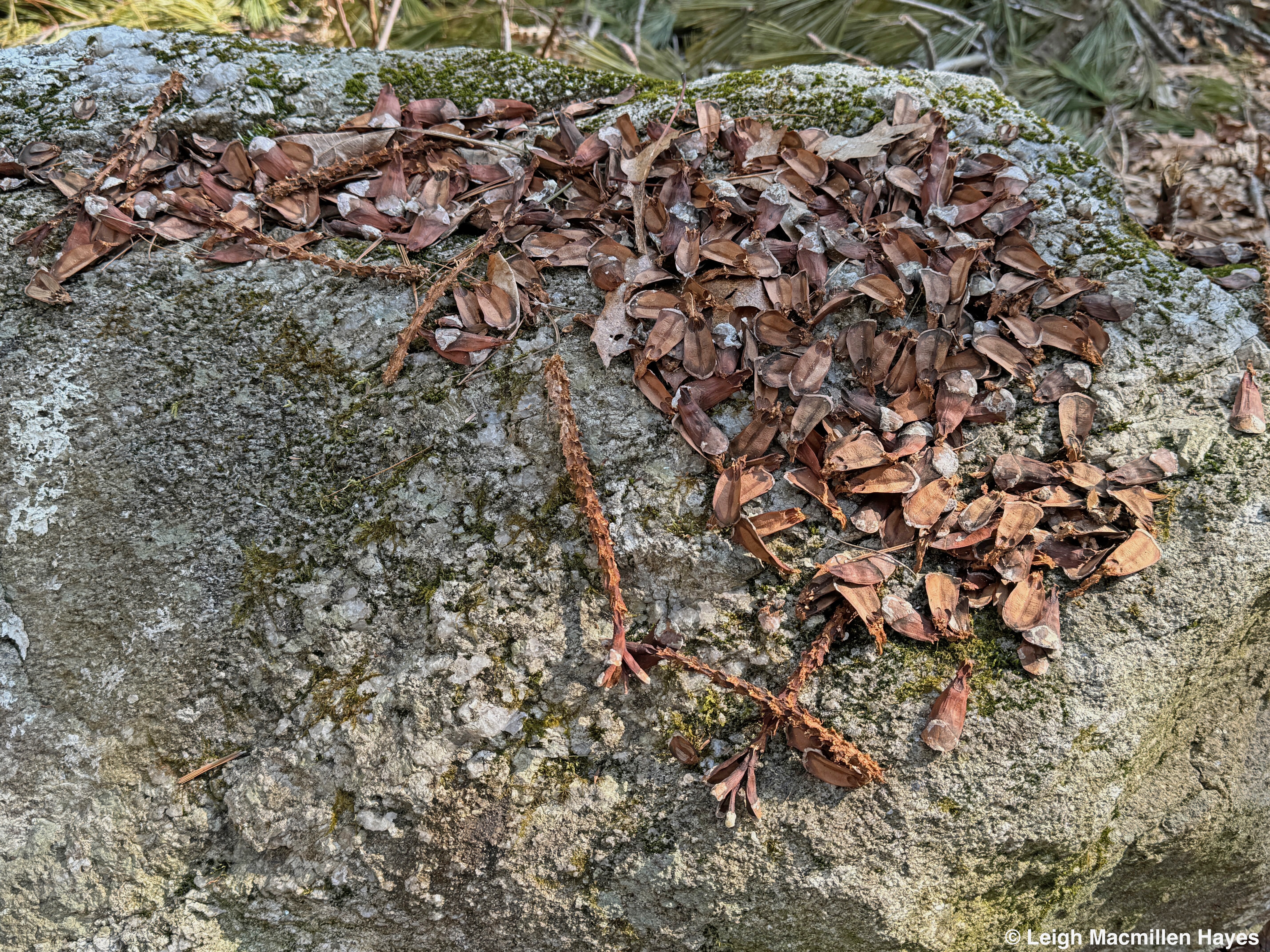
Heading downhill, in a boulder field below a granite ledge we discovered the territory of one very busy Red Squirrel. Middens covered numerous rocks.

And I could only imagine what the original cache had looked like. Since it takes two years for pinecones to mature, next year this squirrel may not be so fortunate, but living in the here and now, life is good.

At last we reached the lake for which the park is named and for the second year in a row, it did not freeze this winter. Being the second largest lake in Maine, it covers 45 square miles and at its deepest hole is over 300 feet in depth.

We backtracked a birds trail along the water’s edge and found our way to the perfect lunch spot.

The view from lunch rock found us dining with few words shared as we took in the vastness of this space while small waves broke along the shoreline and we realized we could have been at the coast.

Back on the trail, we hiked a couple more miles before returning to the bog’s opposite shoreline. Surely, the beaver would not let me down.

And there is was. The lodge that is. With mud on it. That meant a family could have overwintered in this one.

Wouldn’t you feel warm and cozy inside that building?

And there was evidence that another tree had been dined upon in the fall. But . . . no signs of smaller trees being cut for a food supply. Are they still home? I do not know, but maybe another visit in a month or so will reveal the truth.

There was, however, lots of sign that humans had been cutting trees: to clear trails so people like us could enjoy them.

And we did as we journeyed the West Side of Sebago Lake State Park.

So you must be wondering why this was an Oopsy of a Mondate. No, I didn’t fall. Nor did My Guy.

In fact, we had a wonderful time exploring and loved every minute of our adventure.

But . . . there was some logging going on and it wasn’t until we got home and I looked at the Sebago Lake State Park website that I discovered this message: February 25, 2024 | Campground infrastructure improvements begin tomorrow, Monday 2/26/2024. While heavy trucking activities occur, State Camping Rd. in Naples will be closed to foot-traffic for public safety. However, the Day Use Area, found at 11 Park Access Rd. in Casco will remain open to visitors. Thank you for your patience and understanding while these improvements occur.

Oopsy. Don’t follow our footsteps, but rather go to the Day Use Area instead.

Happy 9th Birthday, wondermyway!

Thank you to all who read and comment and share wondermyway.com. Some of you have followed my blog posts since the beginning, February 21, 2015. A few have joined the journey as recently as yesterday. I’m grateful for the presence of all of you in my life.

To mark this occasion, I thought I’d reflect upon those moments when my wonder gave me a glimpse of the “Thin Places” that I’ve experienced either by myself or in the company of others.

To quote my friend, Ev Lennon, “A Thin Place is a spot of beauty, loveliness, space–an example of the wideness and grandeur of Creation.”

I think of them as places that you don’t plan a trip to visit, but rather . . . stumble upon.

I had
the track of
a bobcat to thank,
for it showed me the way
to a special friend.
It was without expectation 
that we met
and spent at least
an hour together.
And then I realized
though its sight is not great,
it was aware of my presence
and I hightailed it home,
but I will always
celebrate time spent
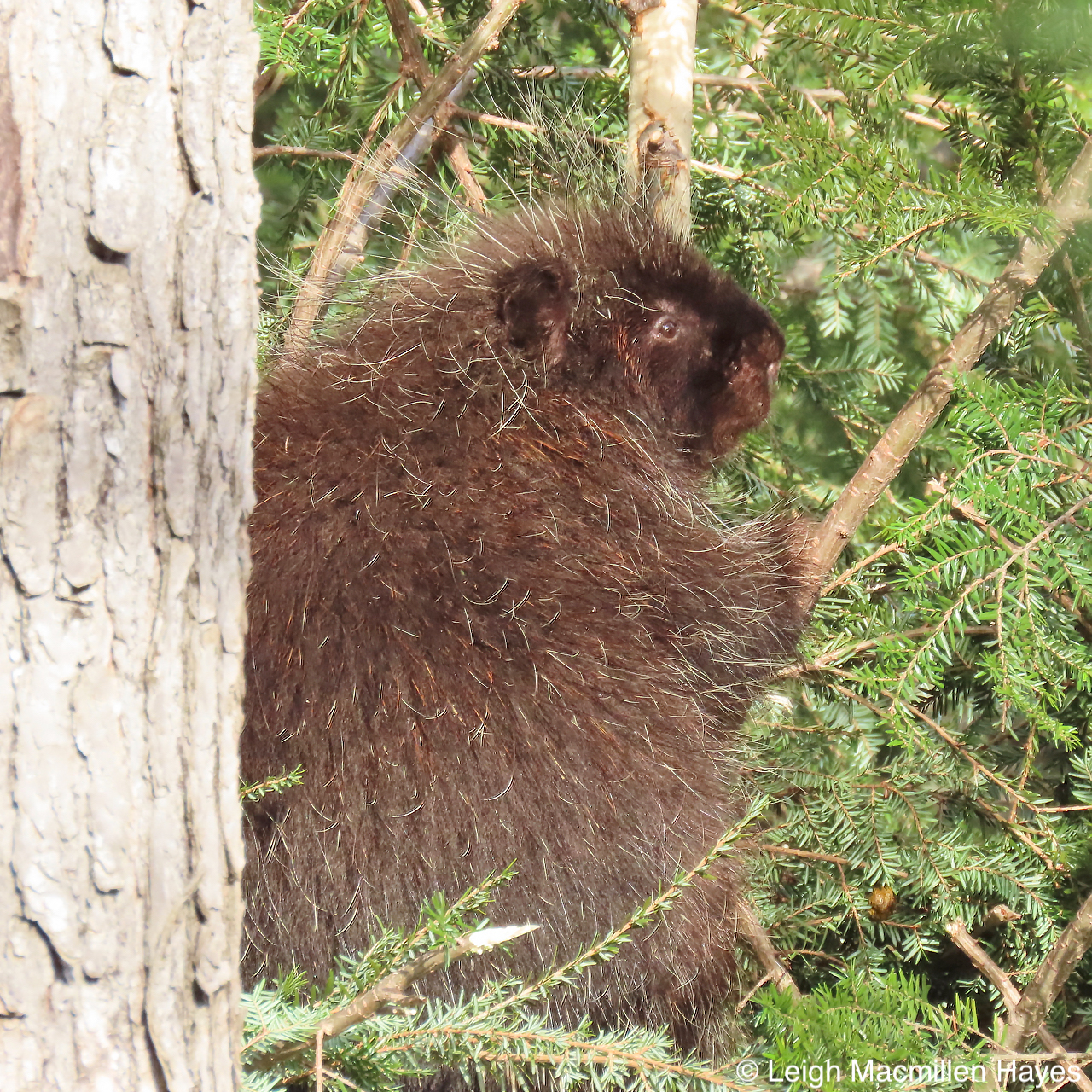
with the Prickly Porcupine.
Something quite small
scurrying across the snow
captured my attention
and suddenly
there was a second
and a third
and then hundreds
of Winter Stoneflies.
All headed west from the brook
toward mature tree trunks
to beat their drum-like structures
against the bark
and announce their intentions to canoodle.
Though I could not hear
their percussion instruments,
I am grateful
to learn
with those who
march to the beat of a different drummer.
Standing beside quiet water,
I was honored
on more than one occasion
to have my boot and pant legs
considered the right substrate
upon which to transform
from aquatic predator
to teneral land prey
before becoming
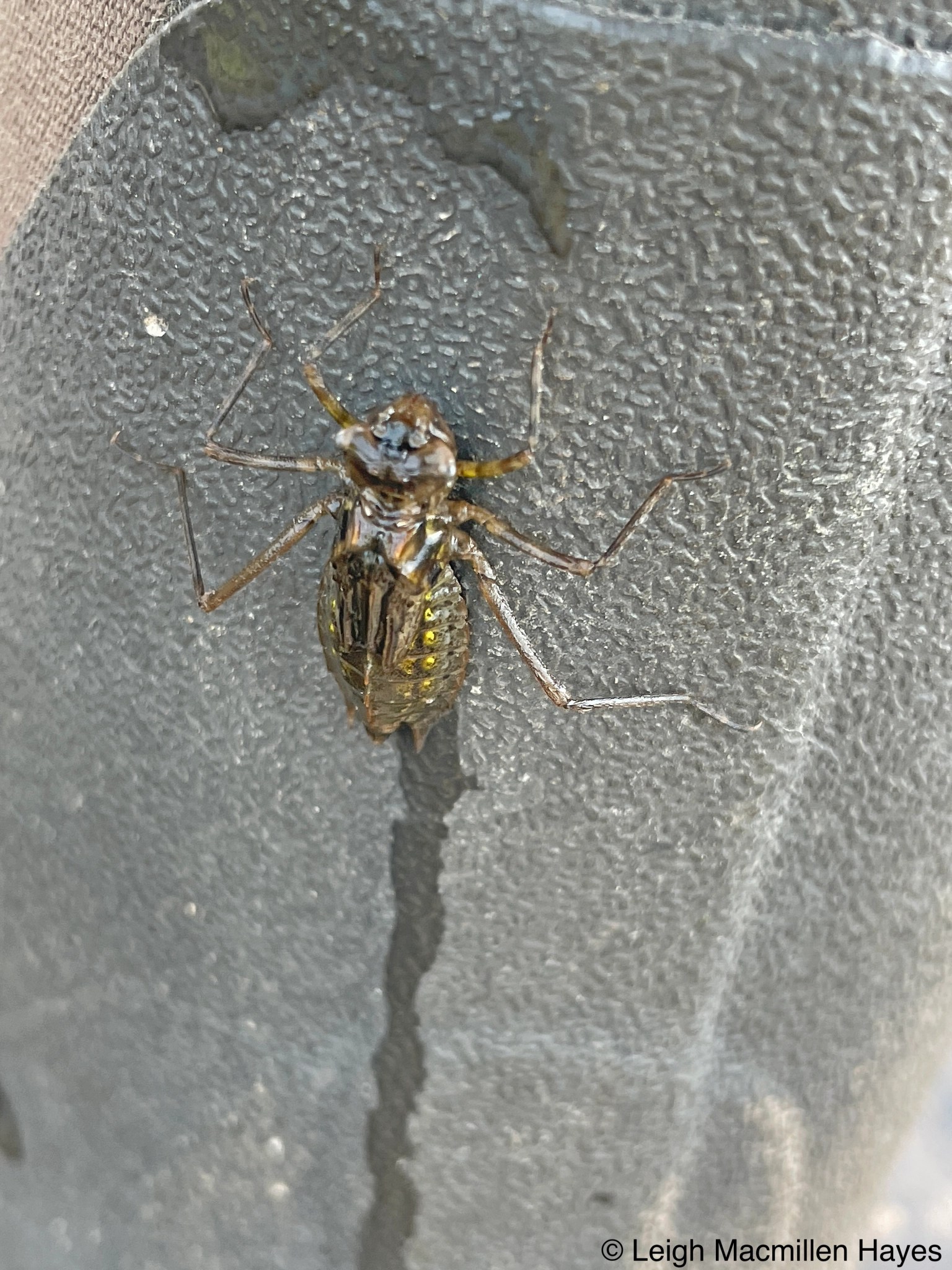
a terrestrial flying predator.
It takes hours
for the dragonfly to emerge
and I can't think of a better way
to spend a spring day
than to stand witness
as the mystery unfolds
and I begin to
develop my dragonfly eyes
once again.
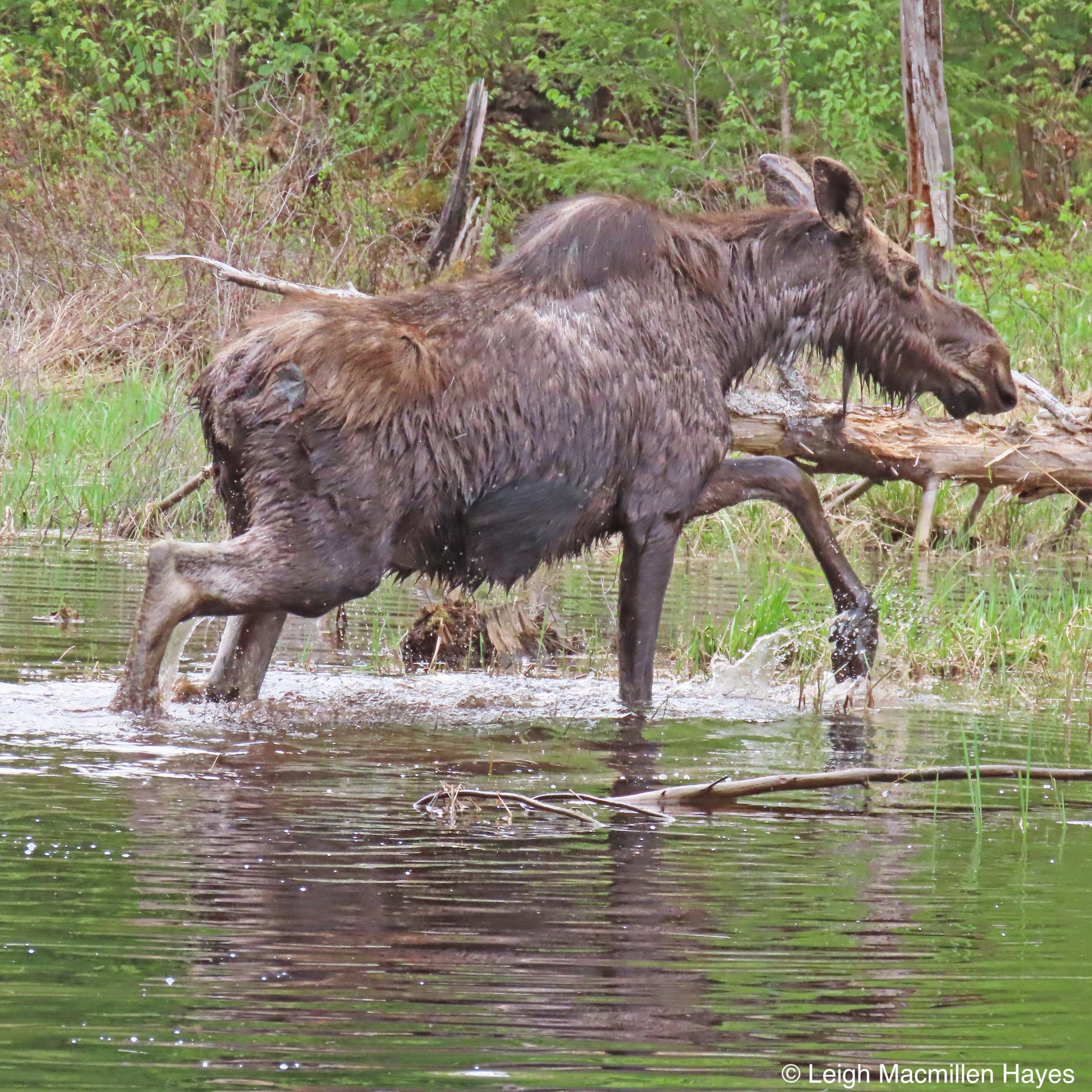
It took me a second 
to realize that I was
staring into the eyes
of a moose,
and another second
to silently alert My Guy
while grabbing my camera.
She tip-toed off
as we relished our time
spent in her presence
and at the end of the day
had this Final Count
on a Moosed-up Mondate:
Painted Trillium 59
Red Trillium 3
Cow Moose 1
One was certainly enough!
Some of the best hours
I spend outdoors
include scanning
Great Blue Heron rookeries
to count adults and chicks
and get lost in the
sights and sounds
of rich and diverse wetlands.
Fluffy little balls
pop up occasionally
in the nests and the
let their presence be known
as they squawk
feverishly for food.
And in the mix of it all
Nature Distraction
causes a diversion of attention
when one swimming by
is first mistaken for a Beaver
but reveals its tail
and morphs into a Muskrat.
I give thanks to the Herons for these moments.
What began as a "Wruck, Wruck" love affair
continued
for longer than usual
and due to
a rainy spring and summer
I was treated to a surprise
in the form of developing frog legs.
In the midst of my visits
one day I heard
the insistent peeps
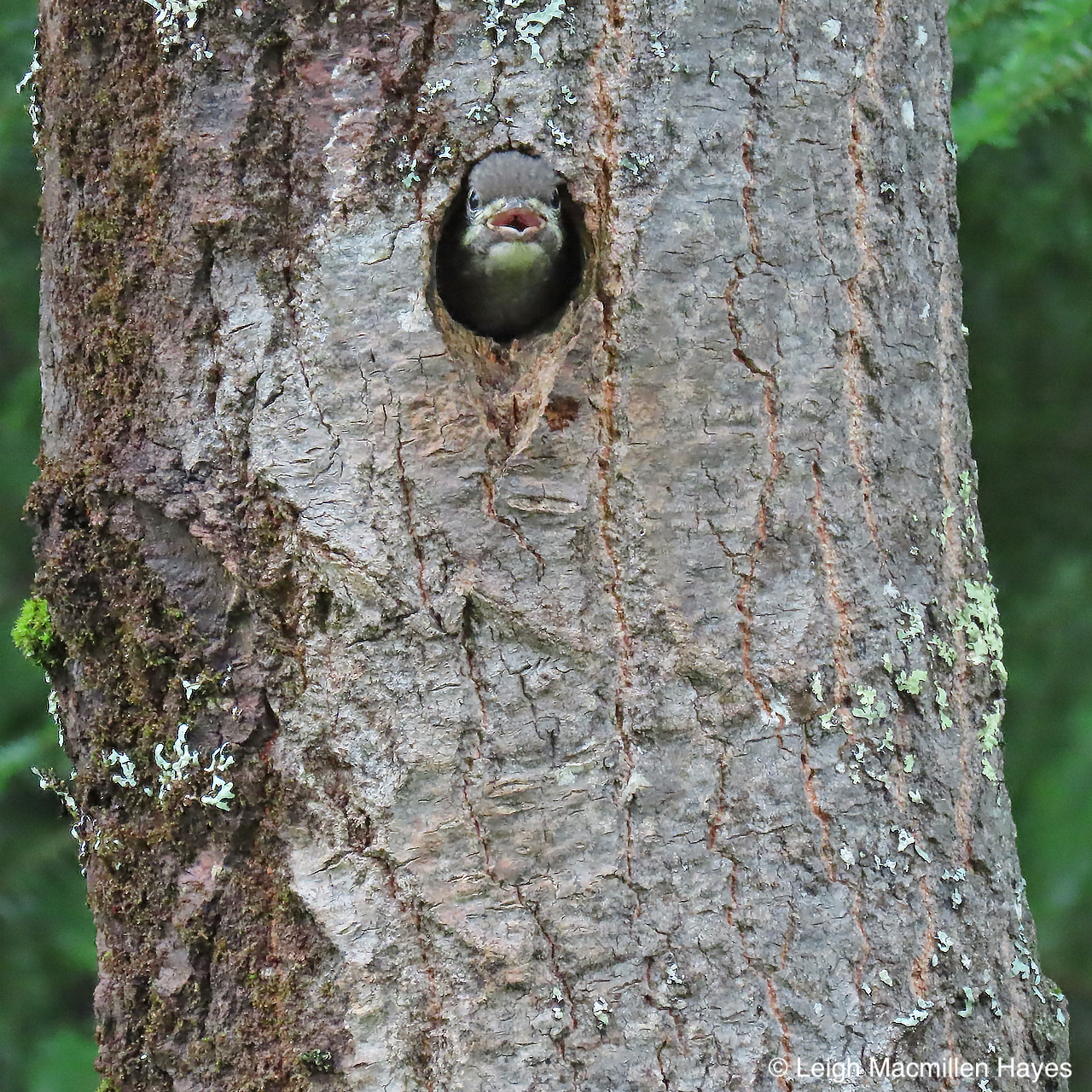
of Yellow-bellied Sapsucker chicks
demanding a meal on wings,
which their parents
repeatedly provided.
Walking home 
from the pool
another day,
I was honored
to spend about ten minutes
with a fawn,
each of us curious
about the other
until it occurred to me
that its mother
was probably nearby
waiting for me to move on,
so reluctantly I did,
but first gave thanks
that something is always happening
right outside my backdoor.
While admiring shrubs
that love wet feet,
I counted over
one hundred branches
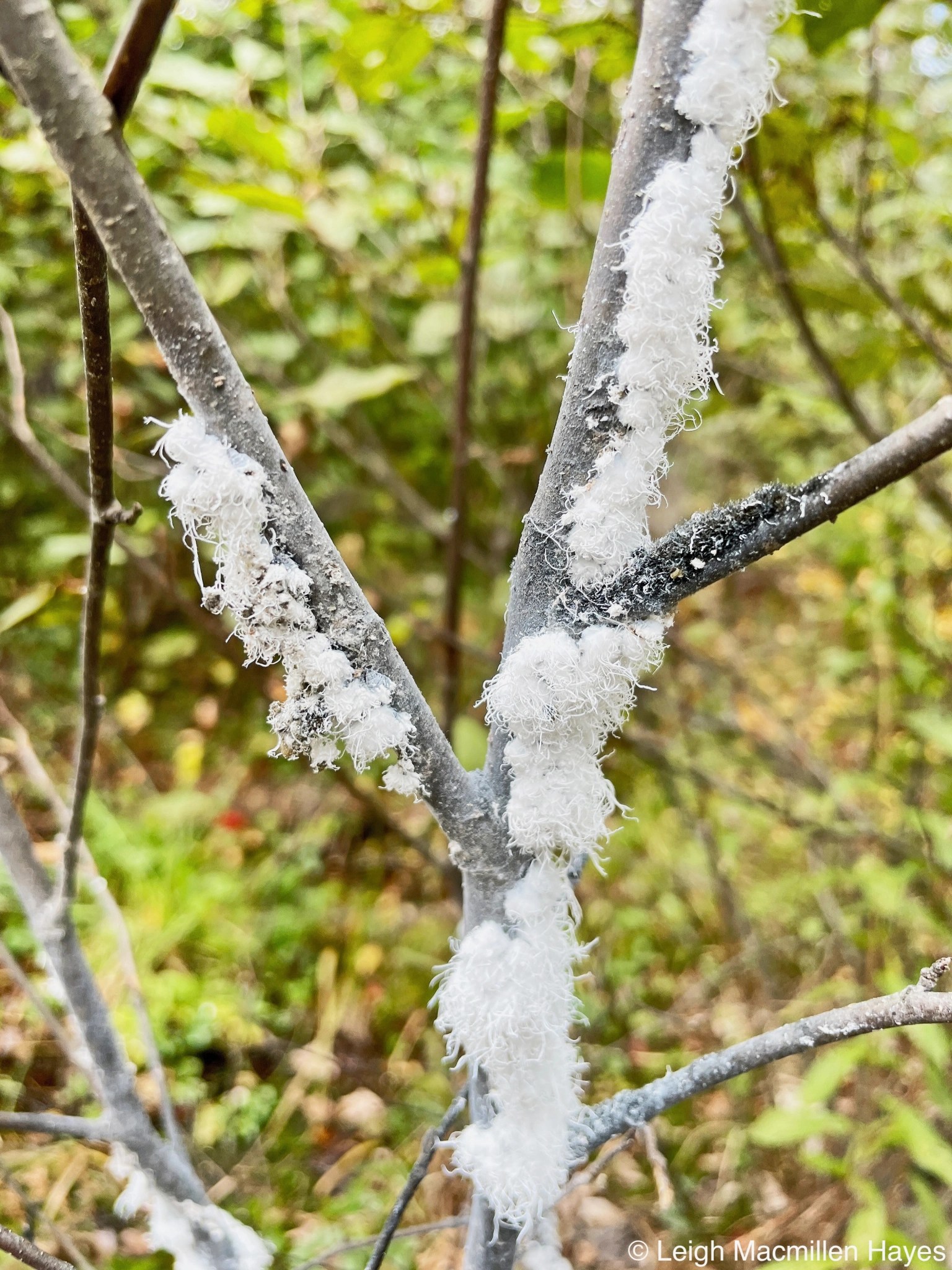
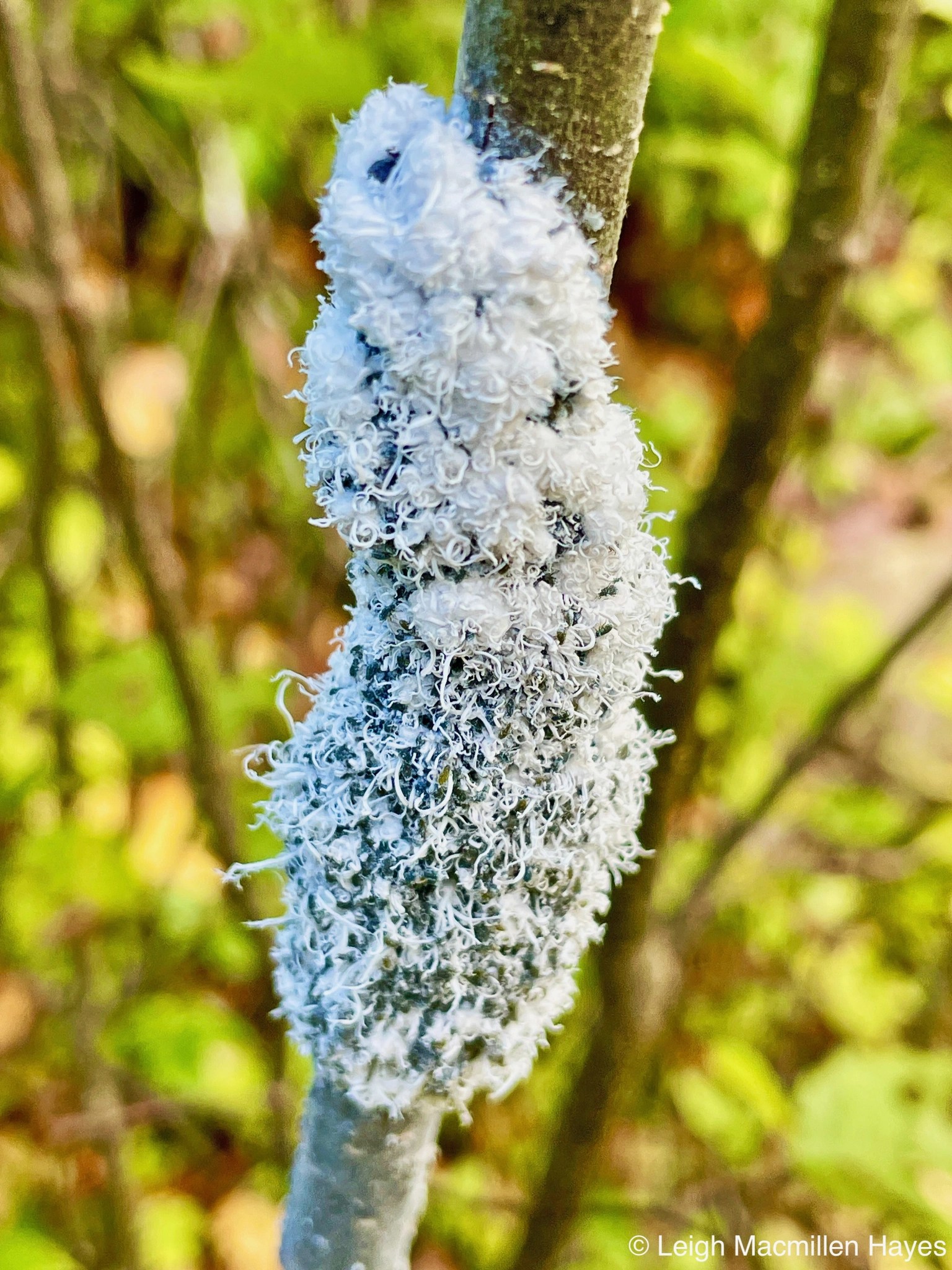
coated with white fluffy,
yet waxy ribbons.
Theirs is a communal yet complex life
as the Woolly Alder Aphids
suck sap from Speckled Alders.
Communal in that
so many clump together
in a great mass.
Complex because
one generation reproduces asexually
and the next sexually,
thus adding diversity
to the gene pool.
Along with the discovery
of coyote scat,
and Beech Aphid Poop Eater,
a fungus that consumes
the frass of the Aphids,
it was an omnivore, herbivore, insectivore kind of day.
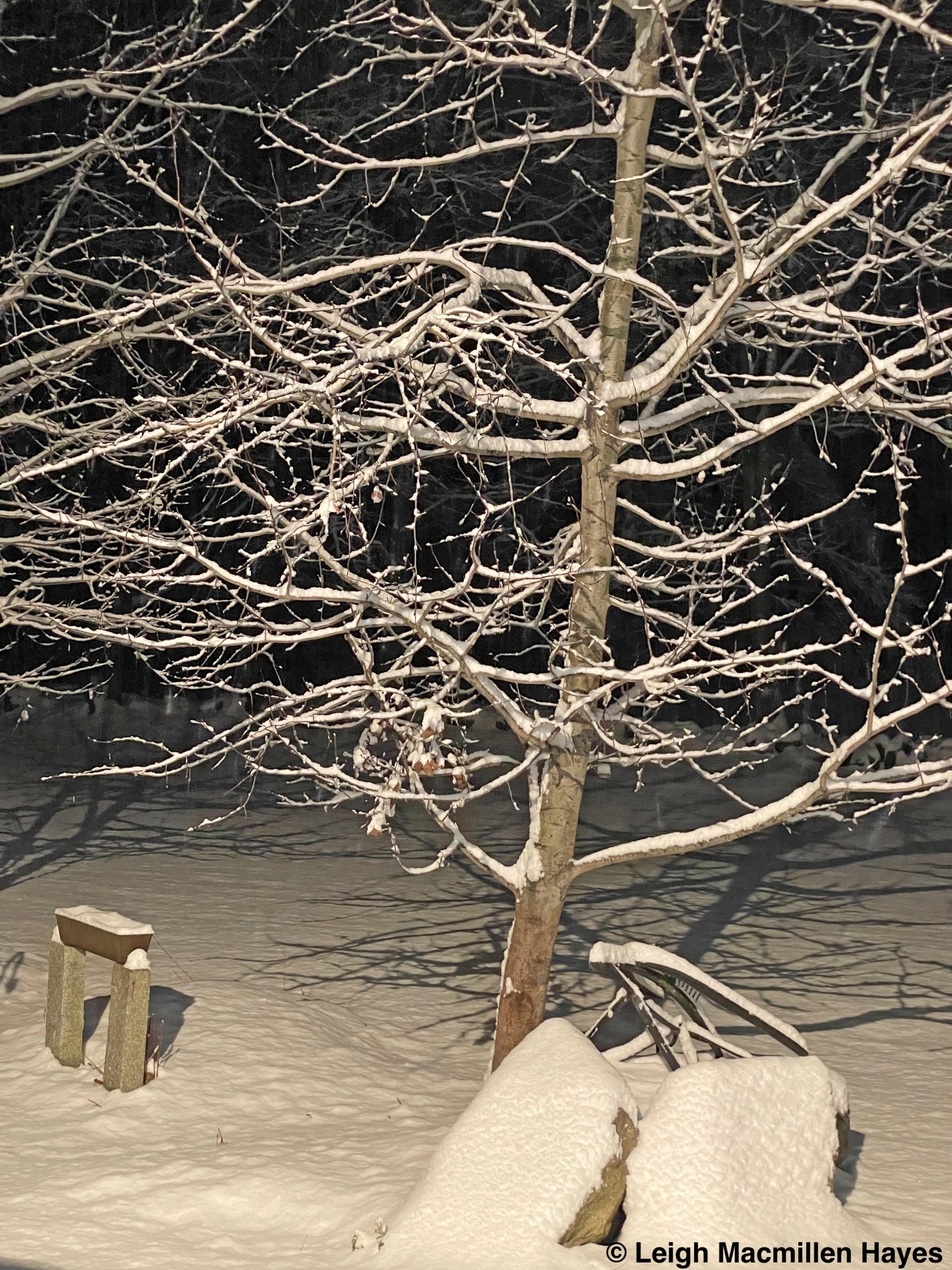
Awakening early, 
a certain glow
in the sky
pulled me from bed
and I raced downstairs
to open the door
and receive the quiet
that snowflakes create.
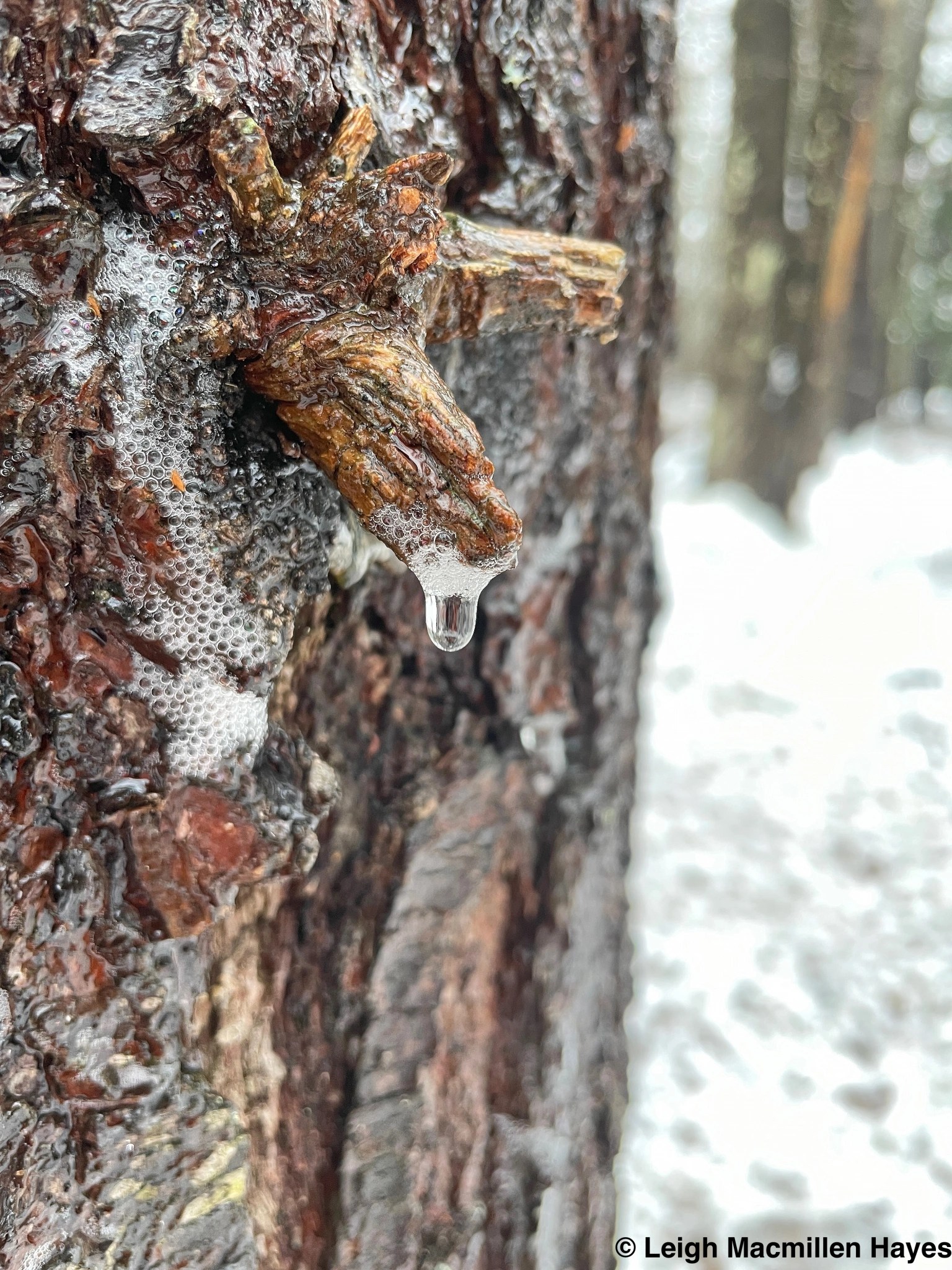
The snow eventually
turned to rain,
which equally mesmerized me
as I watched
droplets elongate
and quickly free fall,
landing on bark below
in such a manner
that caused them
to mix with sap salts and acids.
The result was
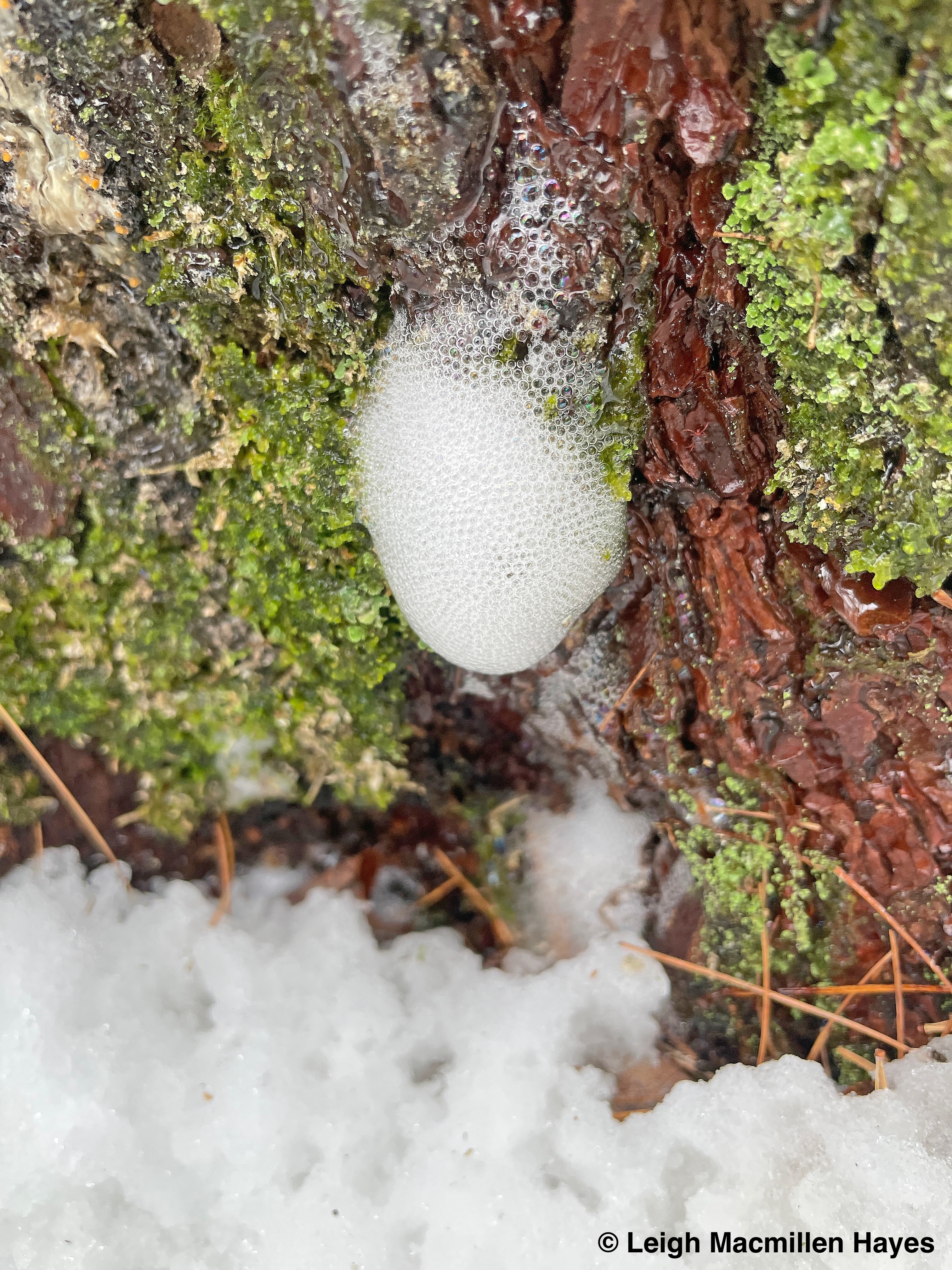
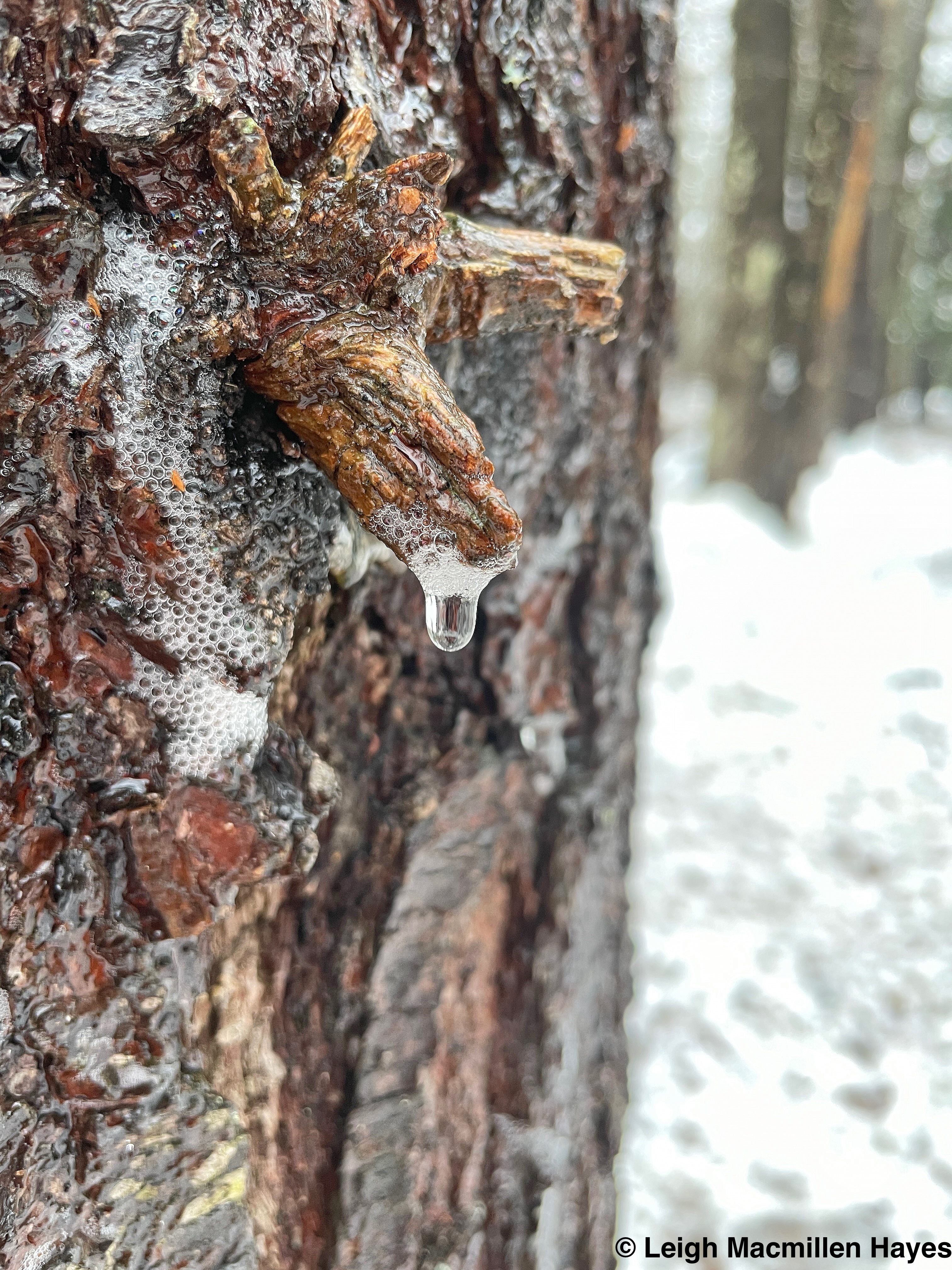
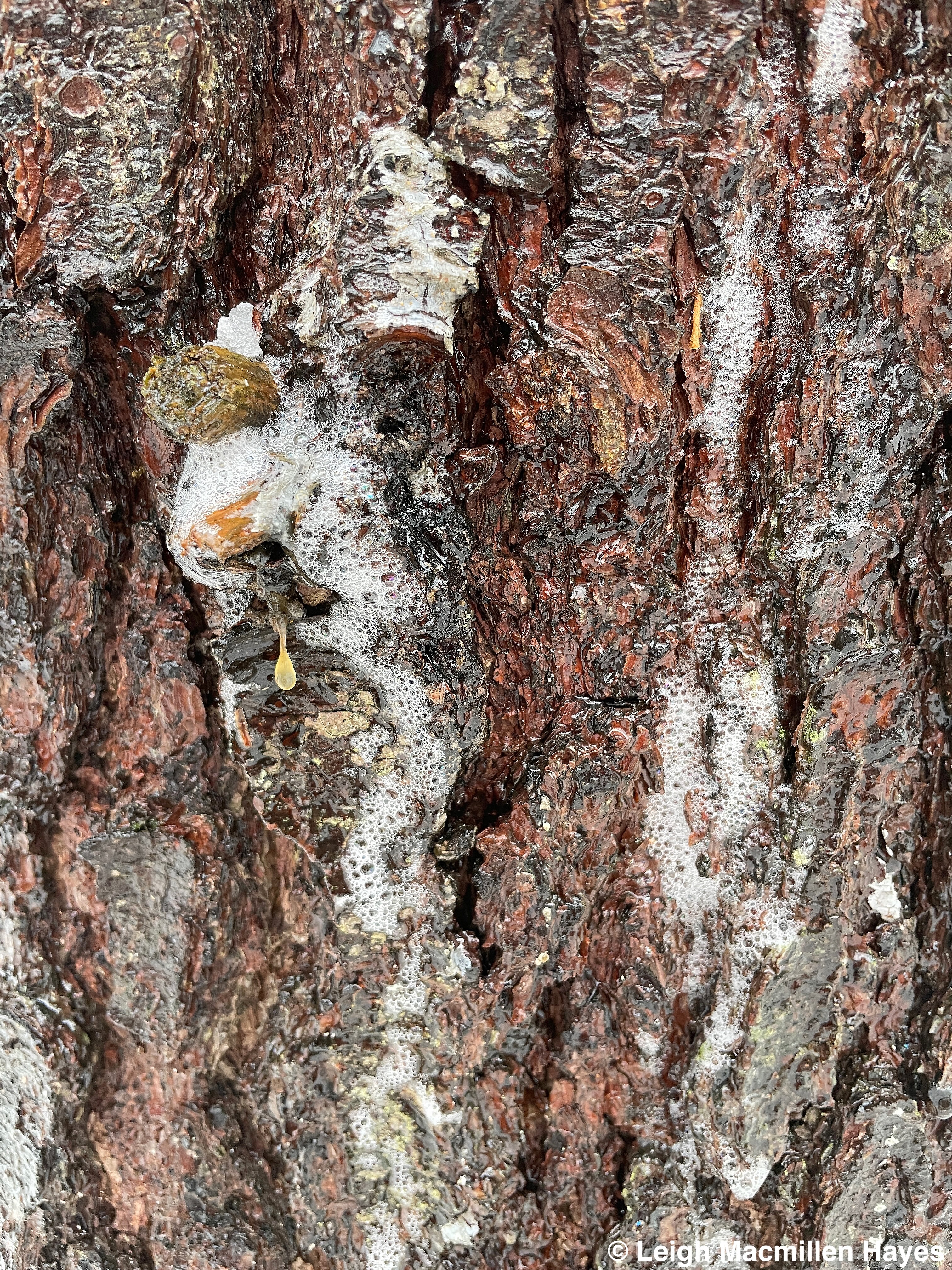
White Pines foaming
in the form of
Pine Soap
with its hexagonal shapes:
worth a natural engineering wonder
and I gave thanks for being present.
Occasionally, 
it's the action
outside the backdoor window
that keeps me standing sill
for hours on end,
as a variety of birds fly
in and out
of the feeding station,
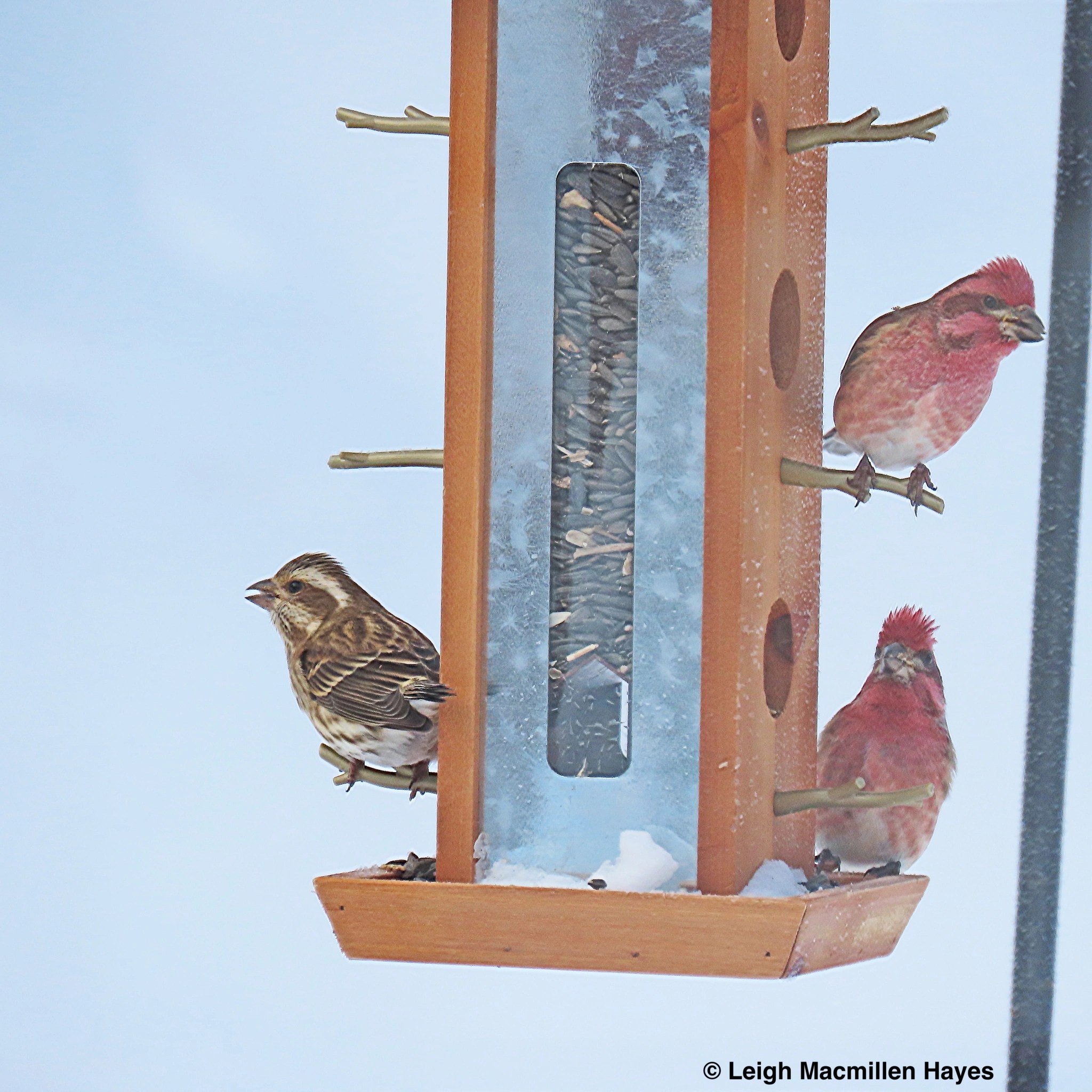
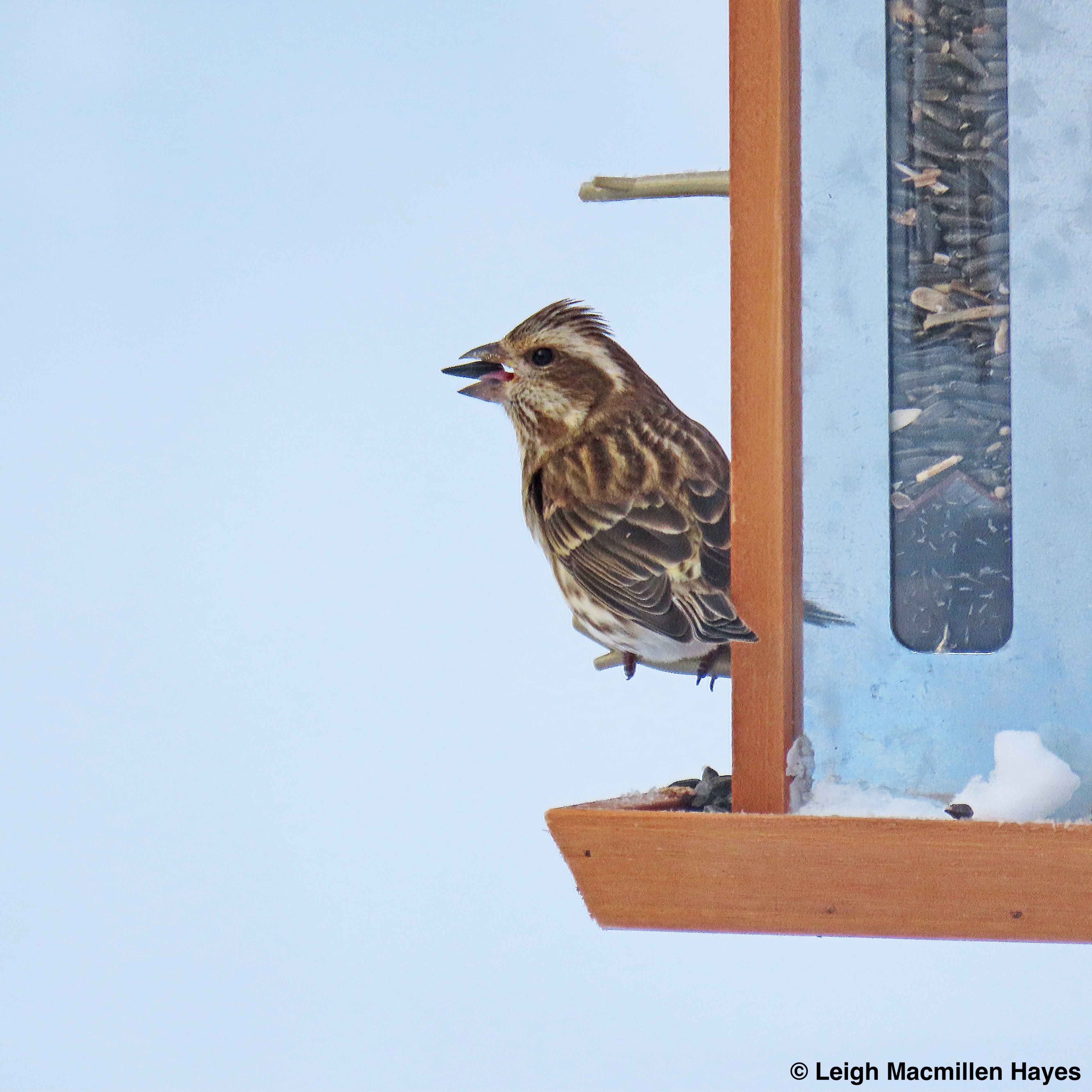
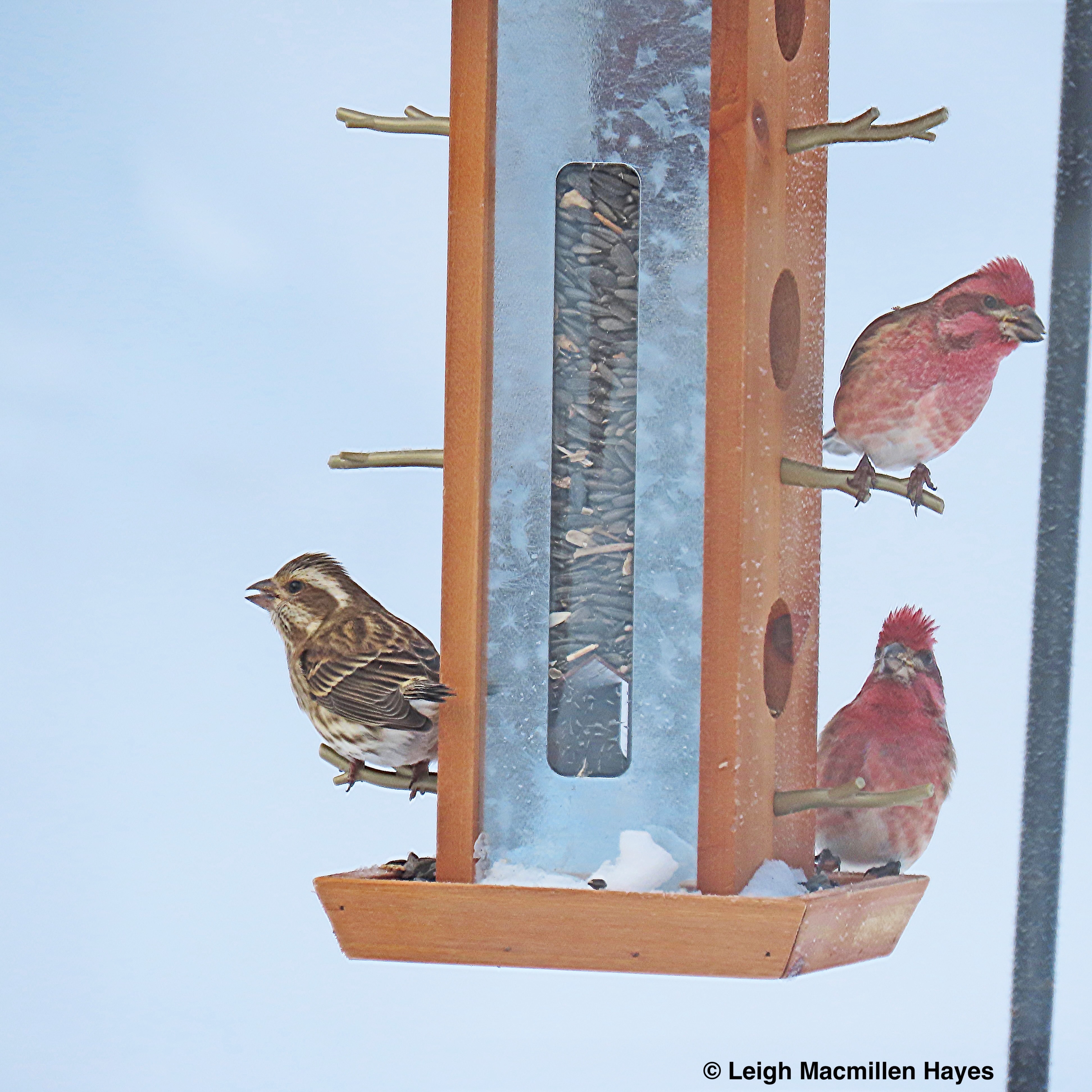
such as these Purple Finches,
the males exhibiting
bad hair days.
Bird seed is not 
just for birds
as the squirrels prove daily.
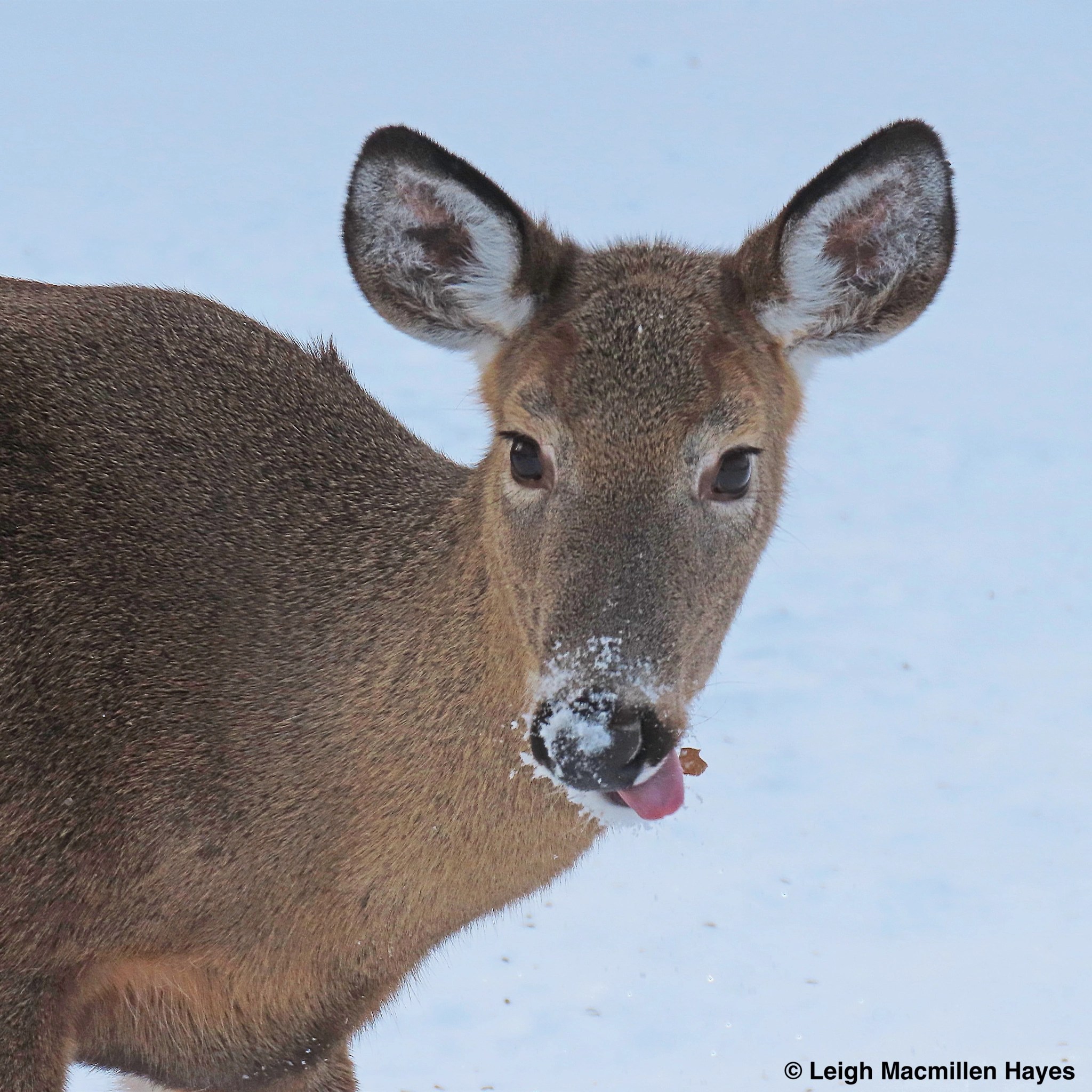
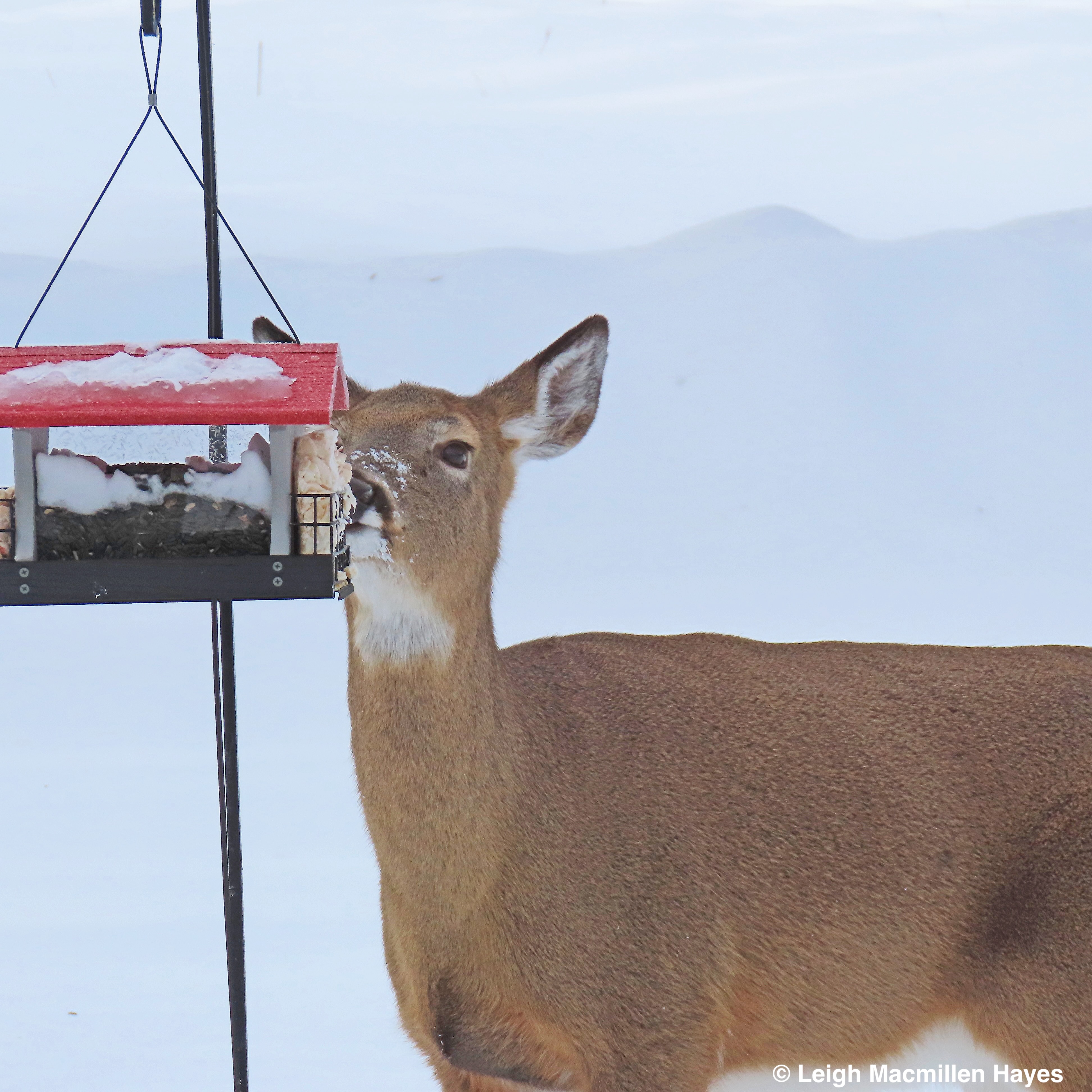
And White-tailed Deer
often make that
statement at night.
But this day was different
and they came
in the morning
using their tongues
to vacuum the seeds all up.
At the end of the day,
my favorite visitors
were the Bluebirds
for it was such a treat
to see them.
But it was the mammals
who made me realize
not every bird has feathers.
These are samples 
of the Thin Places
I've stumbled upon
this past year.

They are a
cause for celebration,
participation,
and possibility.
My mind slows down
and time seems infinite
as I become enveloped
in the mystery.

I give thanks
that each moment
is a gift
and I have witnessed
miracles unfolding
that did not
seek my attention,
but certainly captured it.

And I thank you again
for being
one of the many
to wander and wonder my way.

Winter Inventory

We live on the edge. The edge of a small town in western Maine. The edge of a neighbor’s field. The edge of a vast forest.

Our property only encompasses six acres, but it’s six acres that I love to explore and it’s been my outdoor classroom for a long time.

And so today, I invite you along to take a look; if you are a regular, you may have already met the friends I’m about to introduce, but their actions keep me on my toes, much like the deer who crisscross our yard on a regular basis.

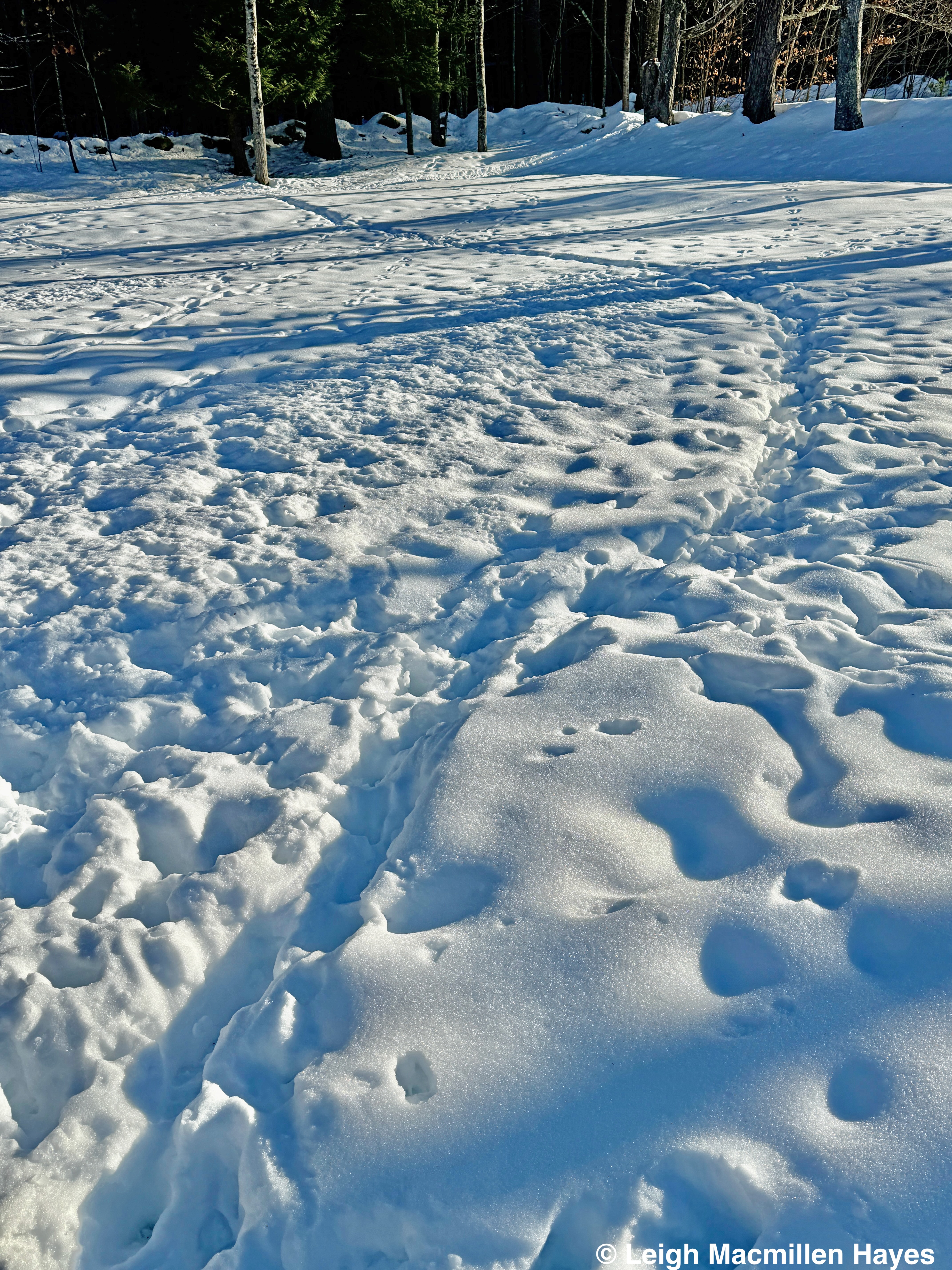
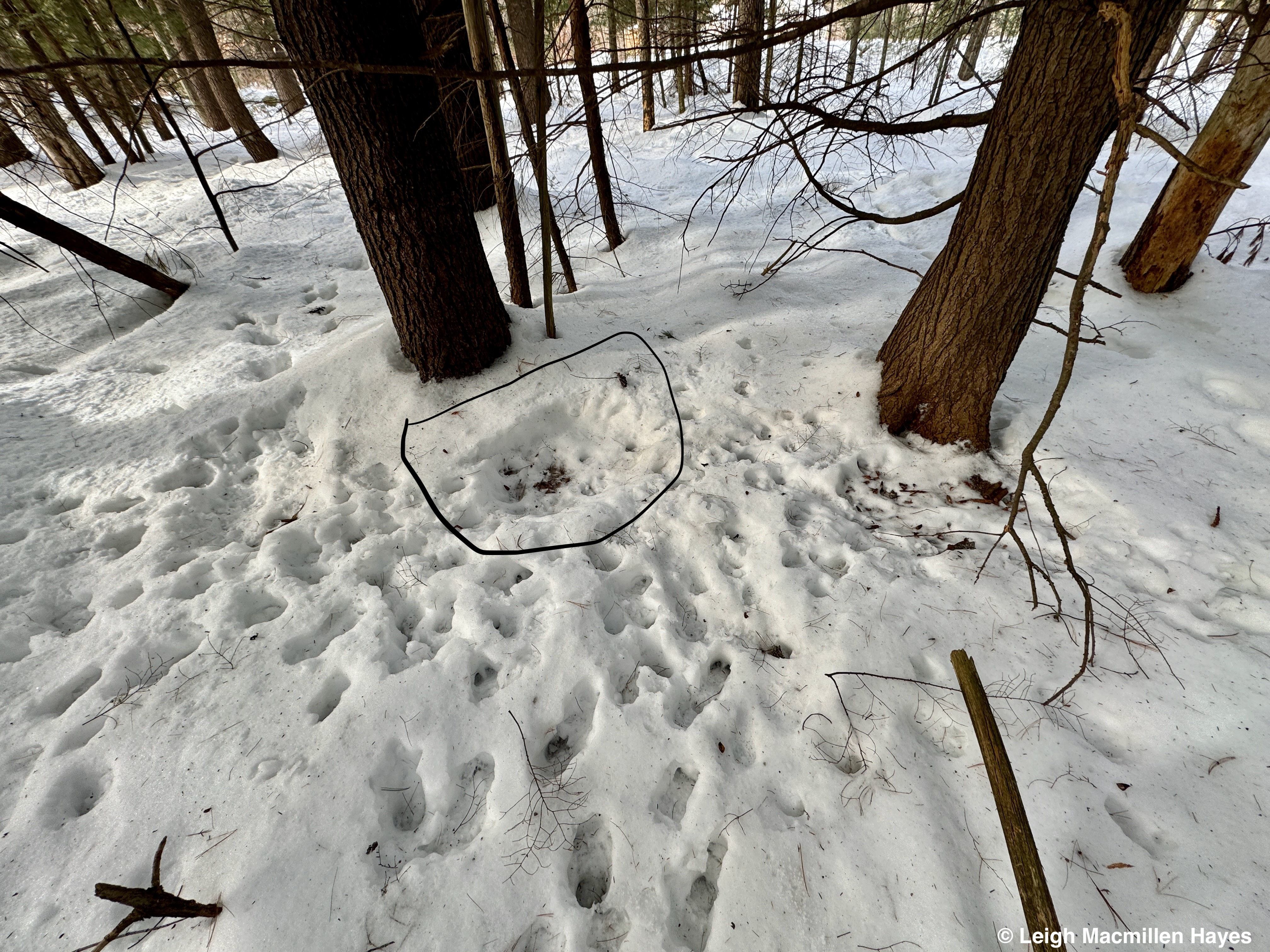
Though the acorn crop was abundant in our area, the deer make several trips day and night to consume sunflower seeds and corn and they’ve worn a path (deer run) making it easier to travel. They don’t always follow it, as you can see, but do so enough that it’s much like my snowshoe trails.

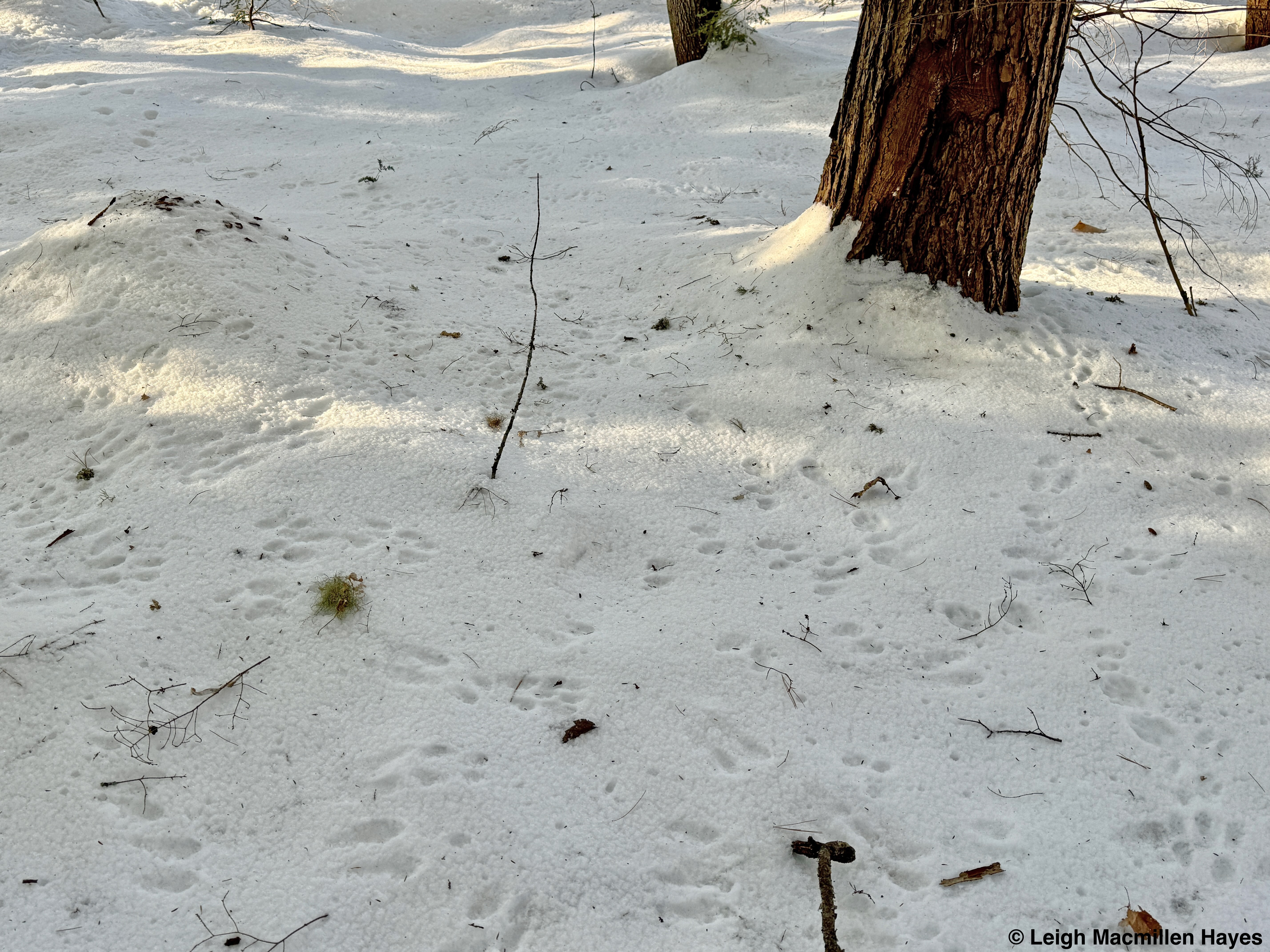
The yard is full of tracks, for besides the deer, there are gray and red squirrels who also frequent the feeders, an occasional red fox that I’ve yet to see this winter, and our neighbors’ dogs and cats. Everyone has a place at this table.

Of course, the deer run does lead to another species they love to munch on, the needles of a Balsam Fir. They frequently pause here before climbing over the stone wall into our wood lot.

And so I paused too. And discovered yet another cache and midden created by one of our local Red Squirrels. I’m in awe because until yesterday, I wasn’t aware of this one and I can see it from the desk where I’m writing right now. And to top it off, yesterday was the first day since I filled the feeders at the beginning of December that I saw a Red Squirrel chasing the Gray Squirrels away.

I, too, climbed over the wall and look who I met. Always on alert and often either skittering along the ground or a stone wall, or chastising me from its branch of choice, Red doesn’t realize that I’m a fan.

Next, I ventured over to the old cow path, bordered as it is by two walls, and checked on the cache and midden situation that’s become so familiar to me.

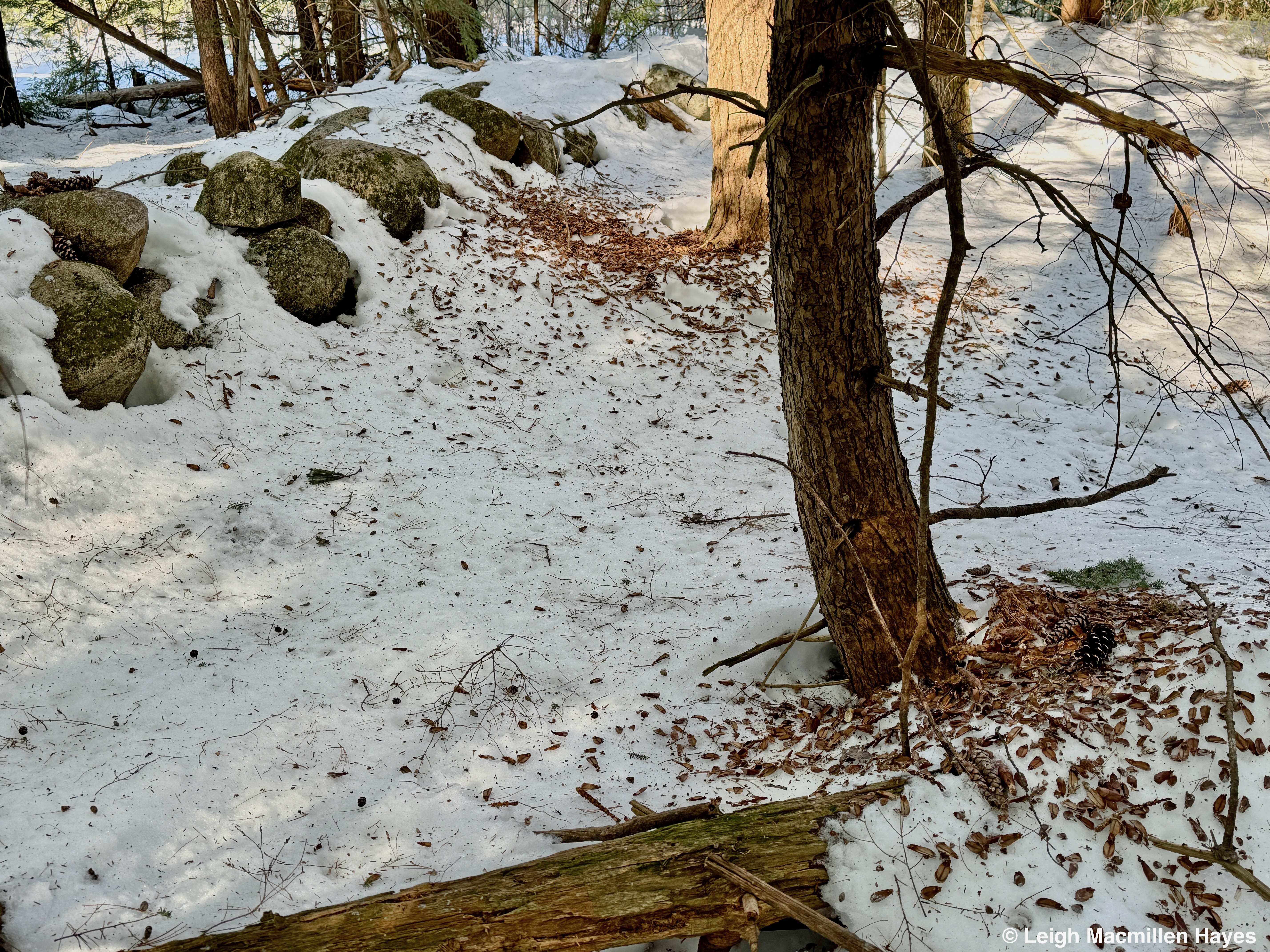
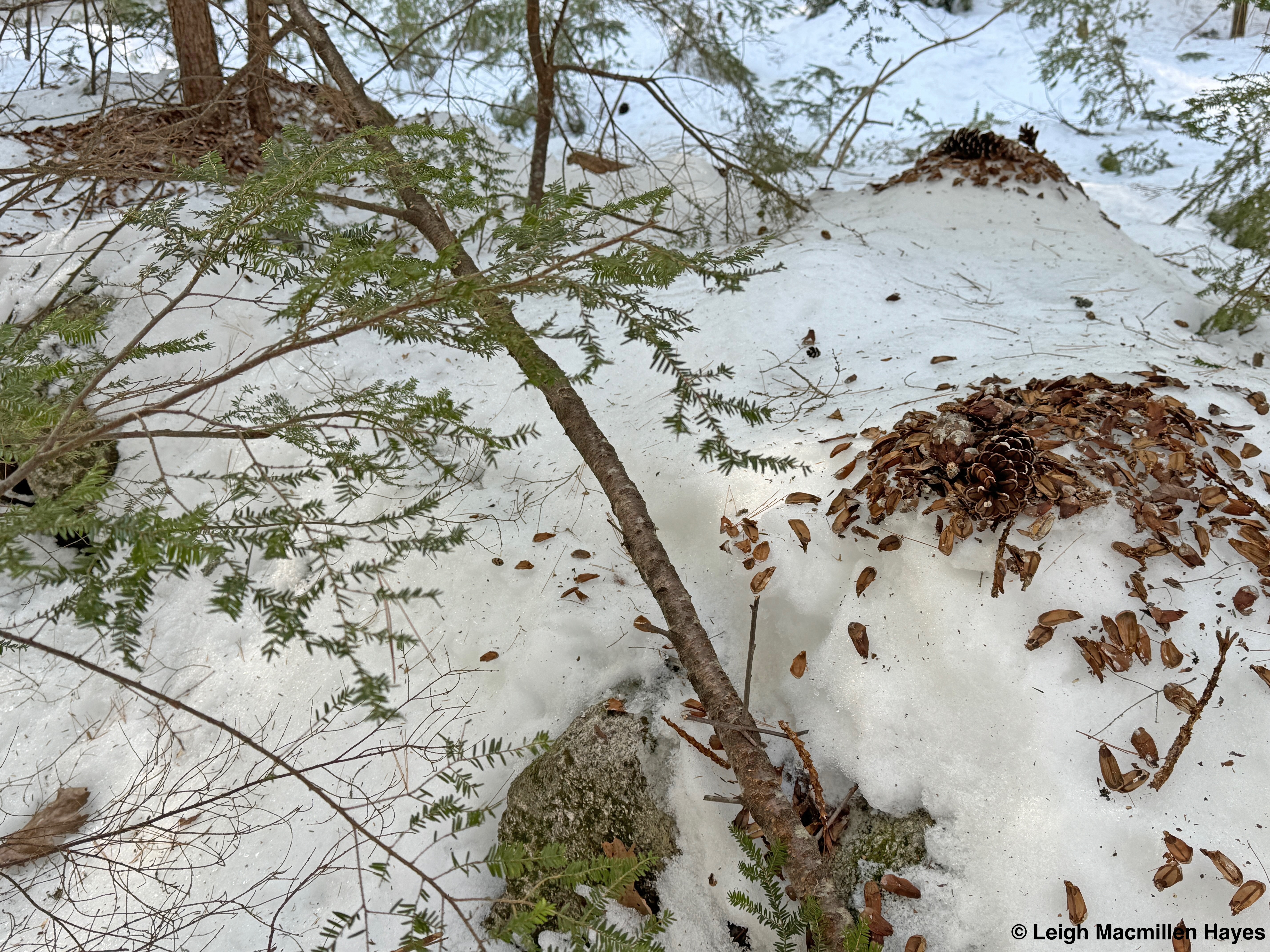
The cache or storage pantry of pine cones is located under the mound of snow the black arrow points toward. At last measurement as recordered in The Forever Student, Naturally, the pile was a foot high. As you can see if you look closely at the tops of the stones behind the snow-covered pile, you’ll spy several middens. So my question is this and I’ll have to wait until the snow melts to answer it: Are all of the cones the squirrel is consuming (well, seeds actually, for the midden is the pile of discarded scales that protect the seeds, plus the cob or core left at the end) coming from under the rocks, where I’m sure there was more storage space, or the bottom of the pile, because Red Squirrels do tunnel? I can’t wait to realize the answer in another month or so.

The pine tree beside the cache also provides a grand dining spot.

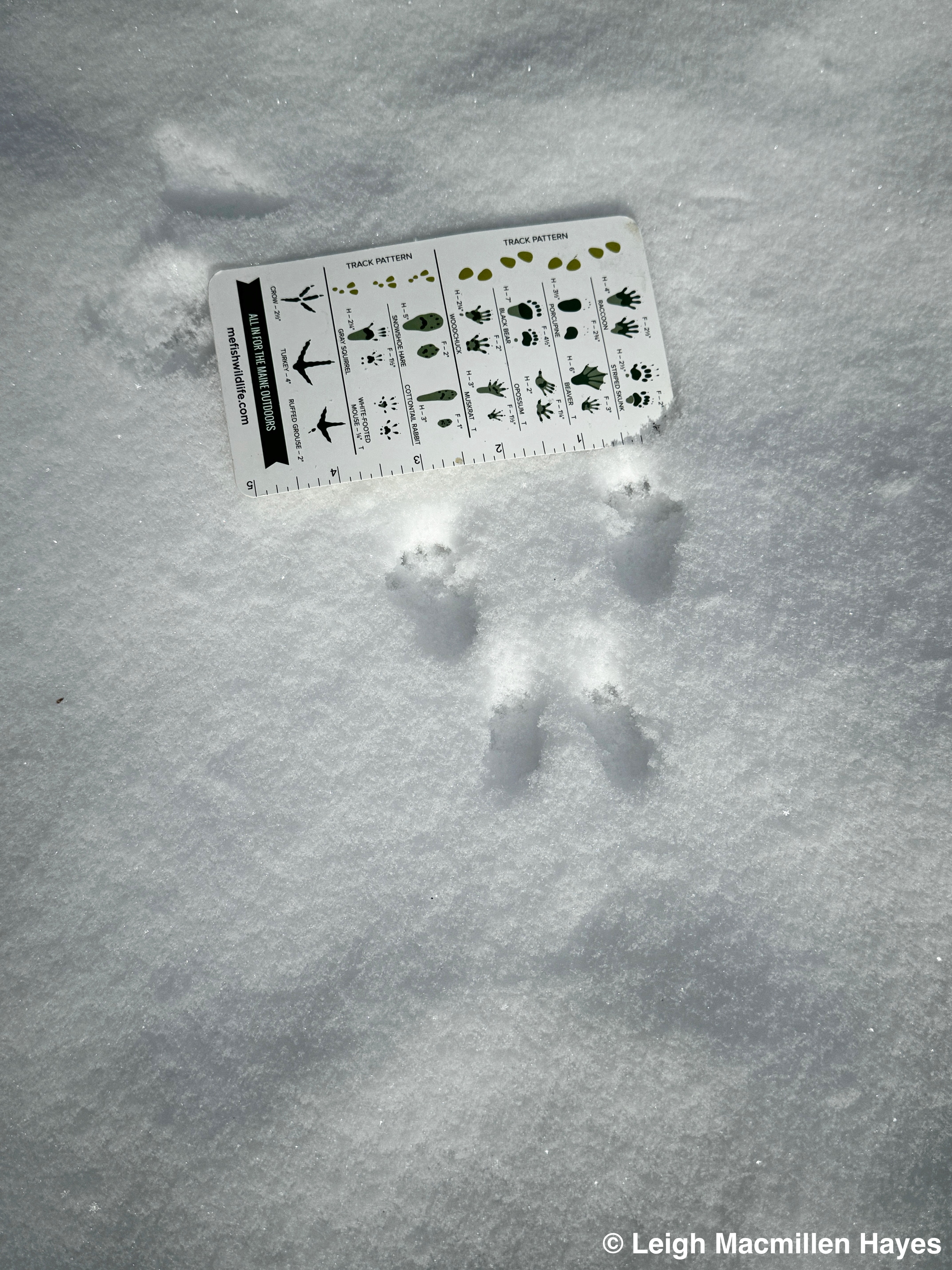
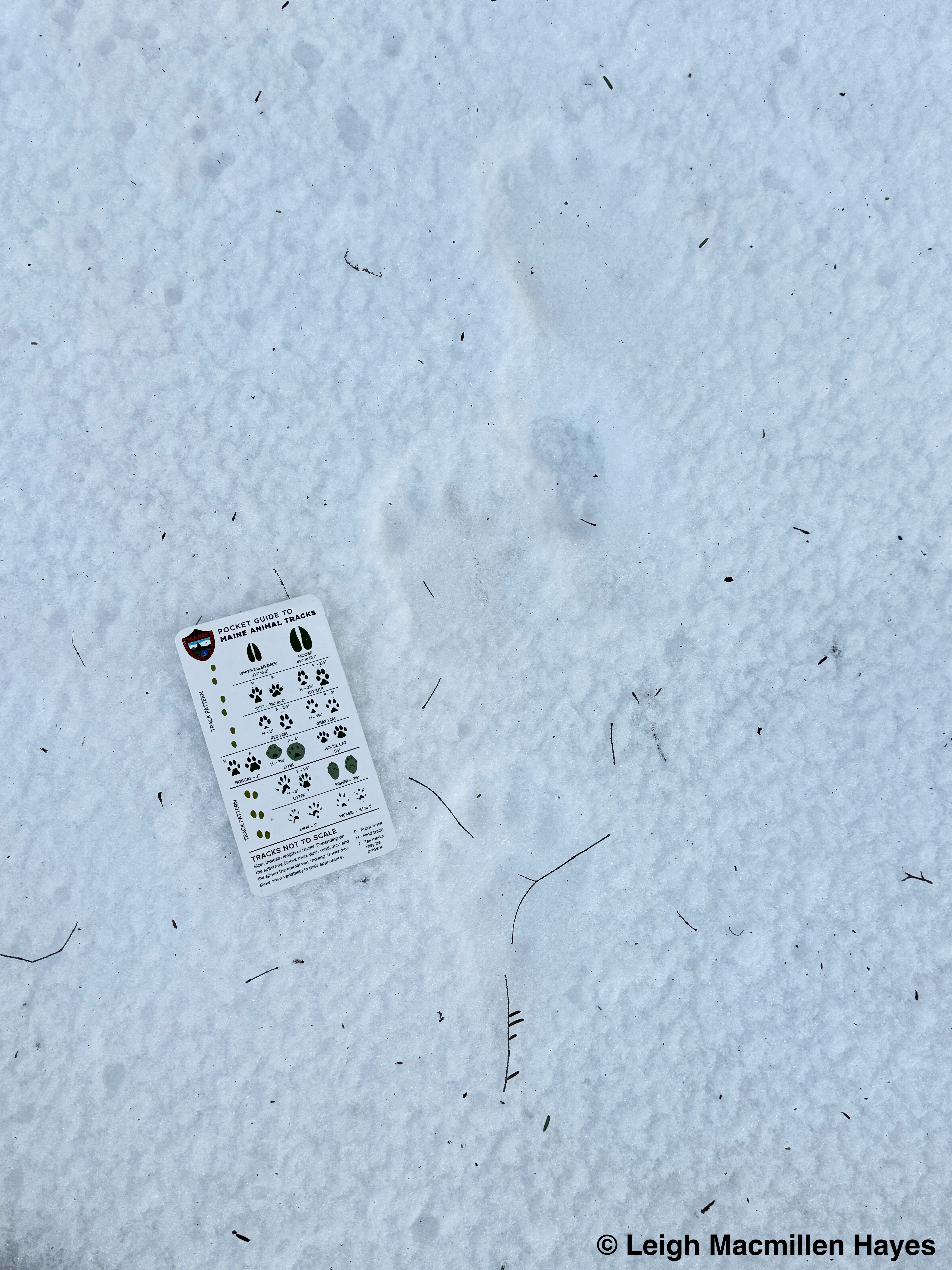
About an inch of snow fell overnight, so when I went into the woods this morning, I found fresh Red Squirrel prints, with the straddle or track width being the typical three inches. It was a bit nippy with the wind chill, so I didn’t get the card placed exactly as it should have been, but you get the idea. Its big feet in front are actually this hopper/leaper’s hind feet.

Okay, so I did risk the freeze for a minute because I spotted the set of four prints behind the first set I’d photographed and realized not only how close together the four were, but also the length of the leap from one spot to the next: My mitten and wrist holder are 19.5 inches in length and they didn’t cover the length of this motion–perhaps an attempt to quickly reach safety in the other wall or up a tree.

That action was on the eastern end of the path, but there’s more to see as I head west.

A few days ago, and probably because the night temperatures were more moderate, a family of rascals crossed from the other side of the wall and onto the path. By the baby fingers of the front foot, I know they were Raccoons.

As waddlers, Raccoons have their own pattern that is easy to recognize once you get it into your head. They don’t travel this way all the time, but most often I find their prints, with a front foot (baby hand) of one side and hind foot (a bit longer print) of the other side juxtaposed on opposite diagonals. If you look at the black lines I placed before each set of two prints I hope you’ll see what I mean. And notice the keys. It’s all I had in my pocket that day and I wanted something for perspective. I really didn’t expect to find the raccoon tracks.

I went back home and grabbed a tracking card to set on the ground. If you’ll look closely, you’ll note that it’s more than one animal, but all the same family. I followed them across the wood lot, over another stone wall, and into the field where they split up into four individuals before heading off in to the neighbor’s woods on the far side.

Back to the cow path I did return and this time it was a scene just off the path that drew my attention. Our Pileated Woodpecker has been active as evidenced by all the wood chips on the ground. That means one thing to me. Time to look for scat.

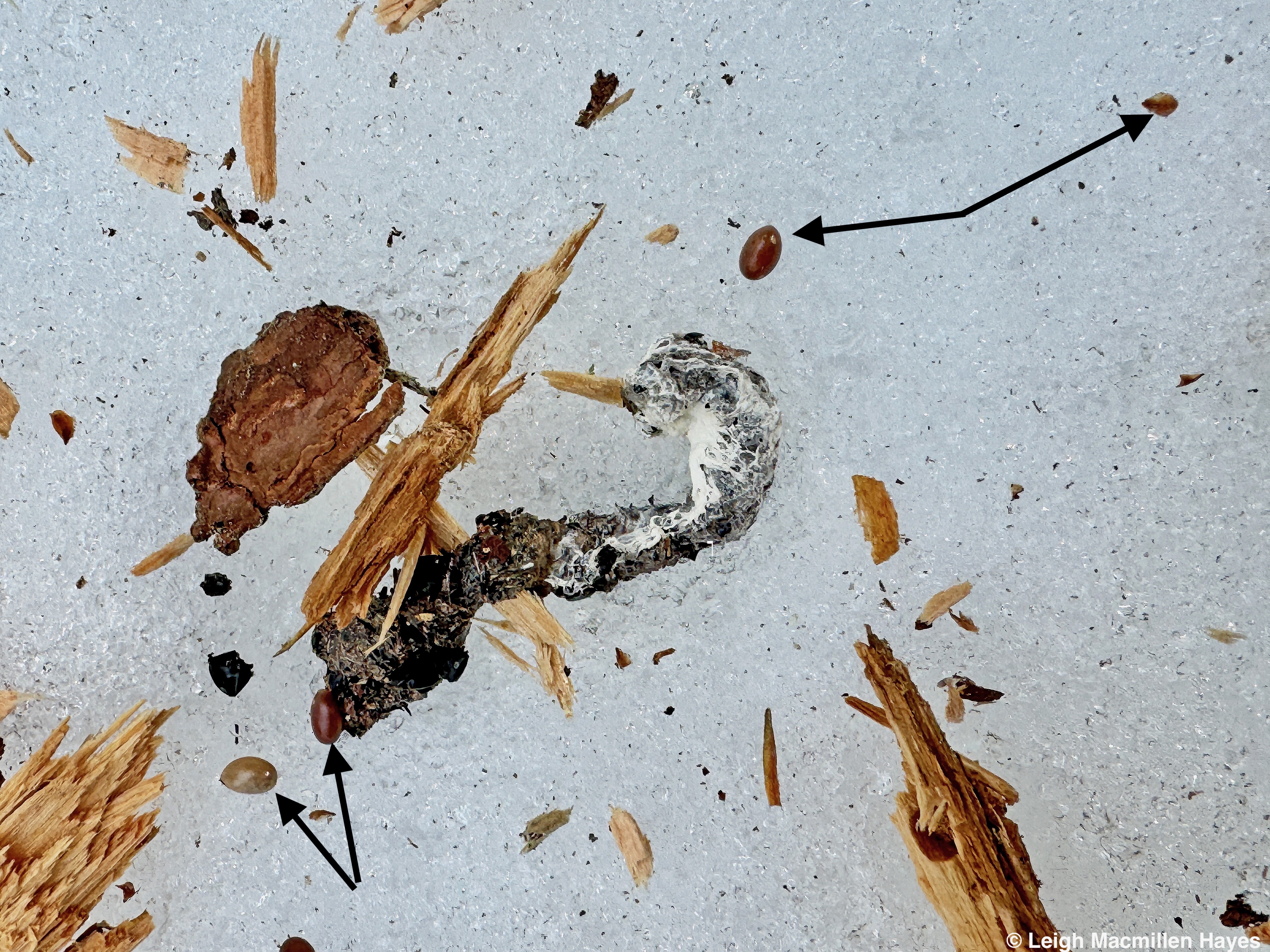
And I wasn’t disappointed. Check out that cornucopia stuffed chock full with insect body parts that the bird couldn’t digest.

Finding this is always like opening a Christmas present. The thrill never ends. But, curious spot here. Seeds. Staghorn Sumac seeds.

And on the pine tree and at its base, I found more of the Staghorn Sumac in bird droppings, a completely different form from the Carpenter Ant droppings.

Both followed me home! The Carpenter Ant scat is very fragile.

The sumac, being fleshier, held together better. Under the microscope I noted that there were some ant body parts mixed in with the sumac.

Here’s a closer look at one of the legs of a Carpenter Ant–notice the long “thorny” thing, which is the tibial spur located at the base of the tibia.

And an exoskeleton plus another leg. With lots of wood fiber in the mix. Lots of nutrients and fibers mean scat findings for me.

A power line bisects our property and I have a love/hate relationship with it. I do love that it looks like we could walk north to Mount Washington. But my destination was to the trees on the western (left-hand side), where we own at least one more acre enclosed by stone walls.

About half of that acreage is a combo of hemlocks and firs fighting for sun. In the end, the hemlocks will rule the world, but the firs are trying to compete.

It is here that I discovered Snowshoe Hare tracks and my heart smiled again. There’s not much on this portion of our land for the hares to dine upon, such is the landscape when the trees block undergrowth. But on either side of the walls, there’s plenty available to them in areas that have seen timber cuts within the last twenty years.

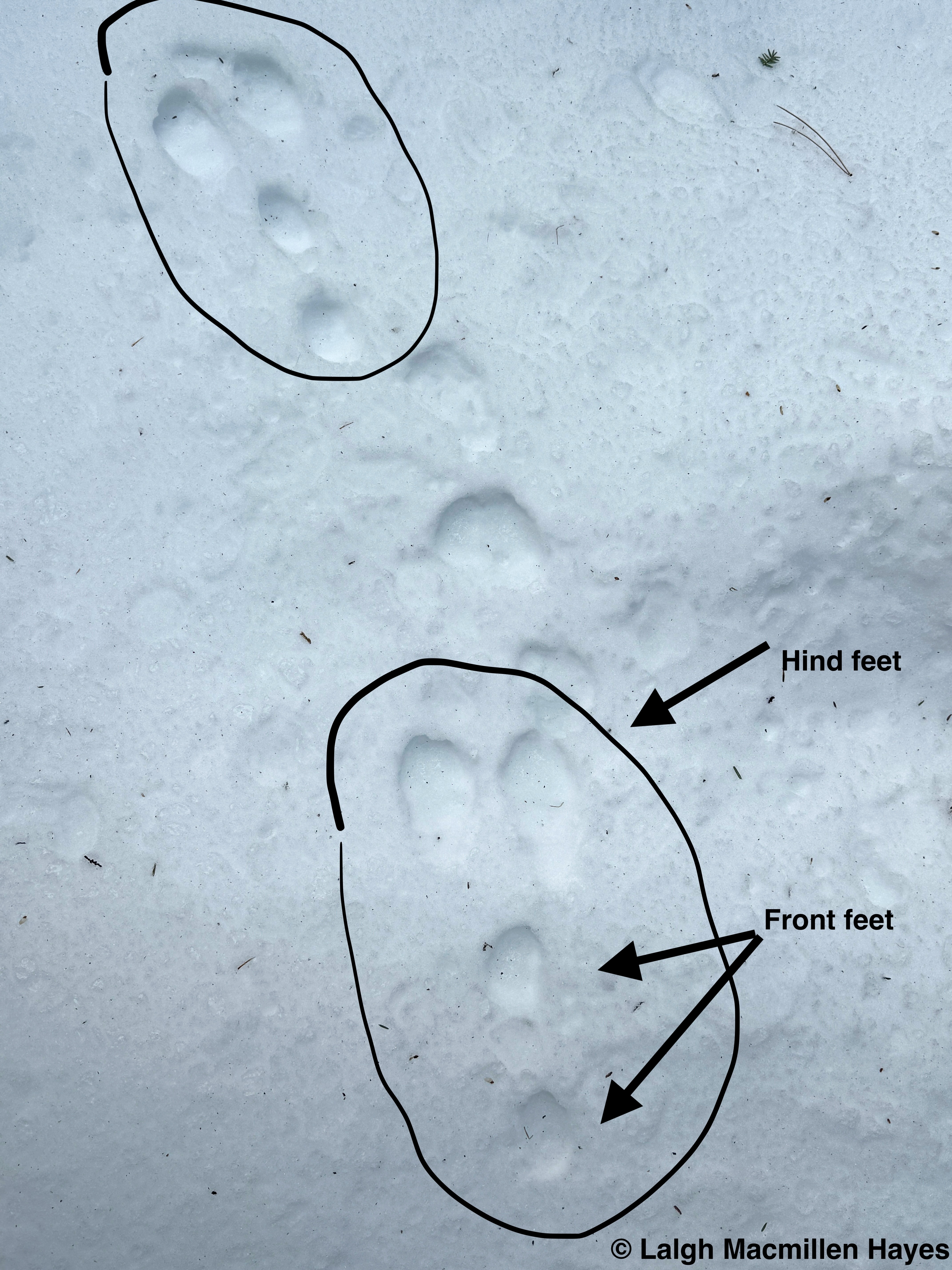
Here’s the thing about hare prints–as hoppers, the smaller front feet land first and often, but not always, on a diagonal. The much larger hind feet swing past where the front feet had been as the mammal moves forward, and thus appear to land in front when you look at the overall pattern. And my favorite part of this set of four footprints: the overall shape, which to me looks like a snow lobster with the front feet forming the tail and hind feet the claws. Do you see it?

This neighborhood on the other side of the power line also supports a Red Squirrel who in true squirrel tradition travels this way and that.

And like its relative on the other side, it took time to cache a bunch of cones and now feasts upon its supply.

And leaves its garbage for nature to recycle. Notice how the middens are often located on high spots such as the rocks along the wall–the better to be in a spot where you can see who or what might be approaching. Even those on the ground below trees mean that the squirrel probably did most of its dining from a branch above, and then let the trash fall.

What could a squirrel possibly fear in these woods? Besides coyotes and foxes and bobcats, oh my, think Fisher such as the one that left these tracks in the squirrel’s territory. As far as I could tell, the Fisher (and it’s not a cat, it’s a member of the weasel family) was only passing through, probably on its way to hunt down the hare. Though a squirrel would make a fine meal, as well.

Heading back across the power line, cases stood out on the White Pine saplings at the start of the cow path. The cases consisted of clusters of needles bound together. This is the work of the larval form of a Pine Tube Moth, Argyrotaenia pinatubana. What typically happens is that the caterpillar uses between ten and twenty needles to form a tube or hollow tunnel.

The caterpillars move up and down their silk-lined tunnels to feed on needles at the tip until they are ready to overwinter.

The moth will emerge in April, when I’ll need to pay attention again. Two generations occur each year and those that overwinter are the second generation.

Walking home via a different path in our woods, I spot deer beds. At least a half dozen spread out under the pines and hemlocks, the spot where the evergreens keep heavy amounts of snow from reaching the forest floor, thus making it easier for the animals to move.

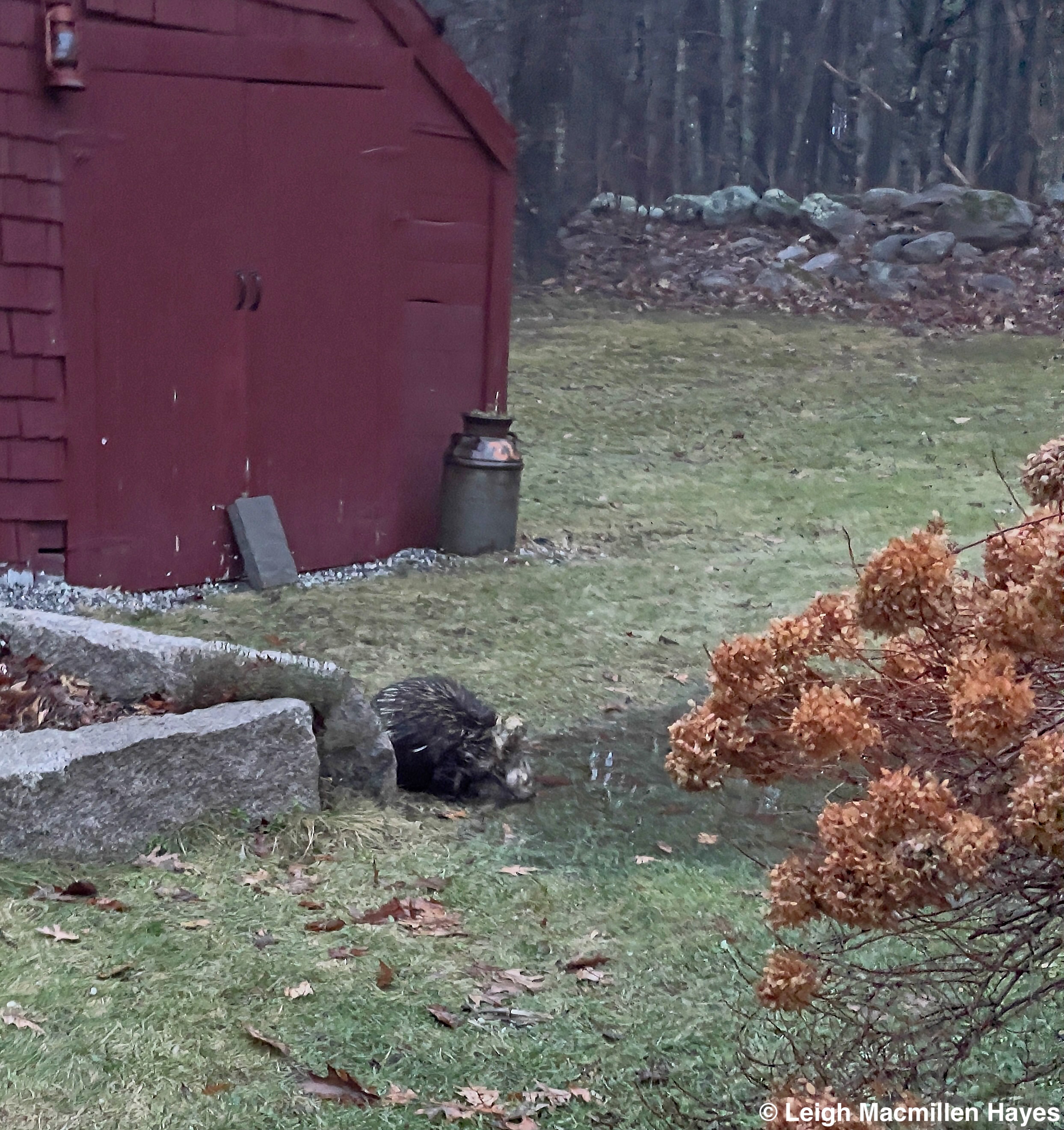
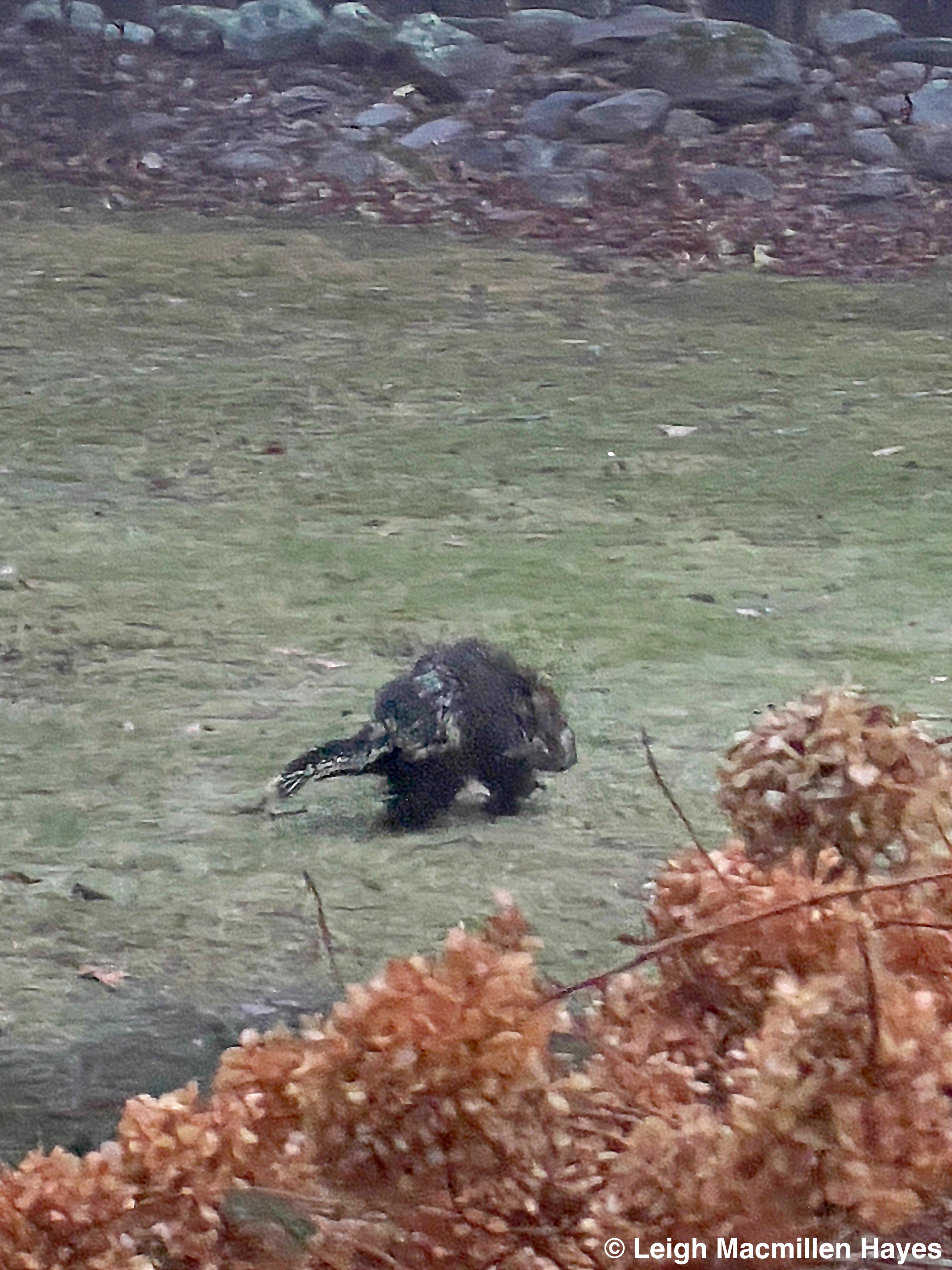
Finally back home, there’s one more member of our family to mention–a porcupine. This may be my friend Bandit, but I haven’t actually seen him in a while so I can’t be certain.

The porcupine did check out a tiny hole under the barn, but we don’t think it actually stayed there. Will it return. Probably, as the barn has long hosted this species; along with other small critters.

That’s a lot for now and at last I’m done counting the stock for our winter inventory. There’s more out there, but this is certainly enough to make me realize that they don’t live in our woods, but rather, we humbly reside in theirs.

World Spinning Out of Control, Naturally

If it seems like the world is spinning out of control, that’s because it is . . . on so many levels in so many ways. Even some things I’ve witnessed of late in the great outdoors don’t make sense.

Two weeks ago I sent this email message to my friend, an incredible naturalist, hunter, forester, David Sears. Dave knows everything and has taught me so much over the years.

Here’s the message: “Daily we have three deer come into the yard because now that there is snow on the ground, they can’t get to the acorns so easily, but do love the sunflower seeds by the bird feeders. It’s a doe and two skippers. On Thursday I saw another doe with them. And then, as I was finishing up writing the tree blog, Becoming Tree Wise, late afternoon yesterday, I saw two by the feeders and two about 20 feet away. A doe and a skipper in each set. The doe farther away was licking the butt of the skipper. At least that’s what it looked like she was licking from my desk. For minutes on end. And then the other doe and skipper approached them and got quite close. The second doe nudged the first and the first jumped away, paused and then headed back over the stonewall and into the woods. The second doe and two skippers remained close to each other and then I noticed the second doe was bent over. I was trying not to move because even though I’m inside, they hear me and startle easily. I finally grabbed my binoculars and realized the doe was licking the underside of the skipper. I have never seen this before. Have you? Two does bathing a youngster? And at this time of year?”

Unfortunately I did not get a photo of the licking behavior because I didn’t want them to run off into the woods as I tried to understand what I was seeing.

Dave’s response matched my thoughts: “Seems strange at this age. Certainly groom them when young, but a little old now.”

Me: “And two doing the grooming?”

Dave: “Mother nature doing her thing.”

Me: “Yup. She doesn’t read our books.”

About a week or less later, I was on a reconnaissance mission with friend and fellow naturalist Dawn Wood at Loon Echo Land Trust’s Tiger Hill Community Forest in Sebago, Maine, when we spotted the sashay track a porcupine leaves in fluffy snow.

We tried to follow the track to locate either its feeding tree or den, but this porcupine provided an example of more strange behavior. Itacted like a dog, doing zoomies across the landscape. Literally, it walked in circles.

All over the place. Was it rabid? It certainly wasn’t seeking a date because it was too late for mating season. And we couldn’t find evidence that it was evading a predator.

We never did find the feeding tree or den site and wonder if we’ll see the same behavior when we return to the site this week.

On another recent day, I was with Dawn again, climbing Bald Pate Mountain in South Bridgton, when she spied this dead mouse upon a branch. White-footed or Deer Mouse I can’t say for certain.

Our immediate thought was that a Shrike had impaled it on a branch, but upon closer examination, it wasn’t impaled, but perhaps had been dropped by a predator. The question remains: Why didn’t the predator return to enjoy the meal. Or is it being saved for a later date? Perhaps it was letting any toxins leach out?

At the end of many days, I’m left looking for answers, much like this Gray Squirrel on the snow mound outside a kitchen window. Of course, the squirrel must have been wondering why I wasn’t supplying more bird seed for it to consume. This same critter actually jumped partway up the kitchen door a few times in what I assume to be protest.

As for me, I wonder how to make sense of scenes like these that I’ve shared and how to keep an open mind as the world continues to spin out of control.

Birds Of A Feather?

The other day a friend asked if my bird feeders were busy, but I’d been so focused on looking at mosses through the microscope lens, that I had my back turned to the yard and no idea what was going on out there.

Then today dawned.

And as is typical, a large flock of Juncos flew in. I love to watch them sit up in the Quaking Aspen and then almost dive bomb before gracefully landing on the ground, where I always make sure to spread plenty of seed for the ground feeders. My seeds of choice–a wild bird mix and lots and lots of black oil sunflower seed. Plus suet.

Of course, the Blue Jays also had a presence and, in fact, always make their presence known with their loud squawks. But I do love their colors, especially against the snow, and so I welcome them.

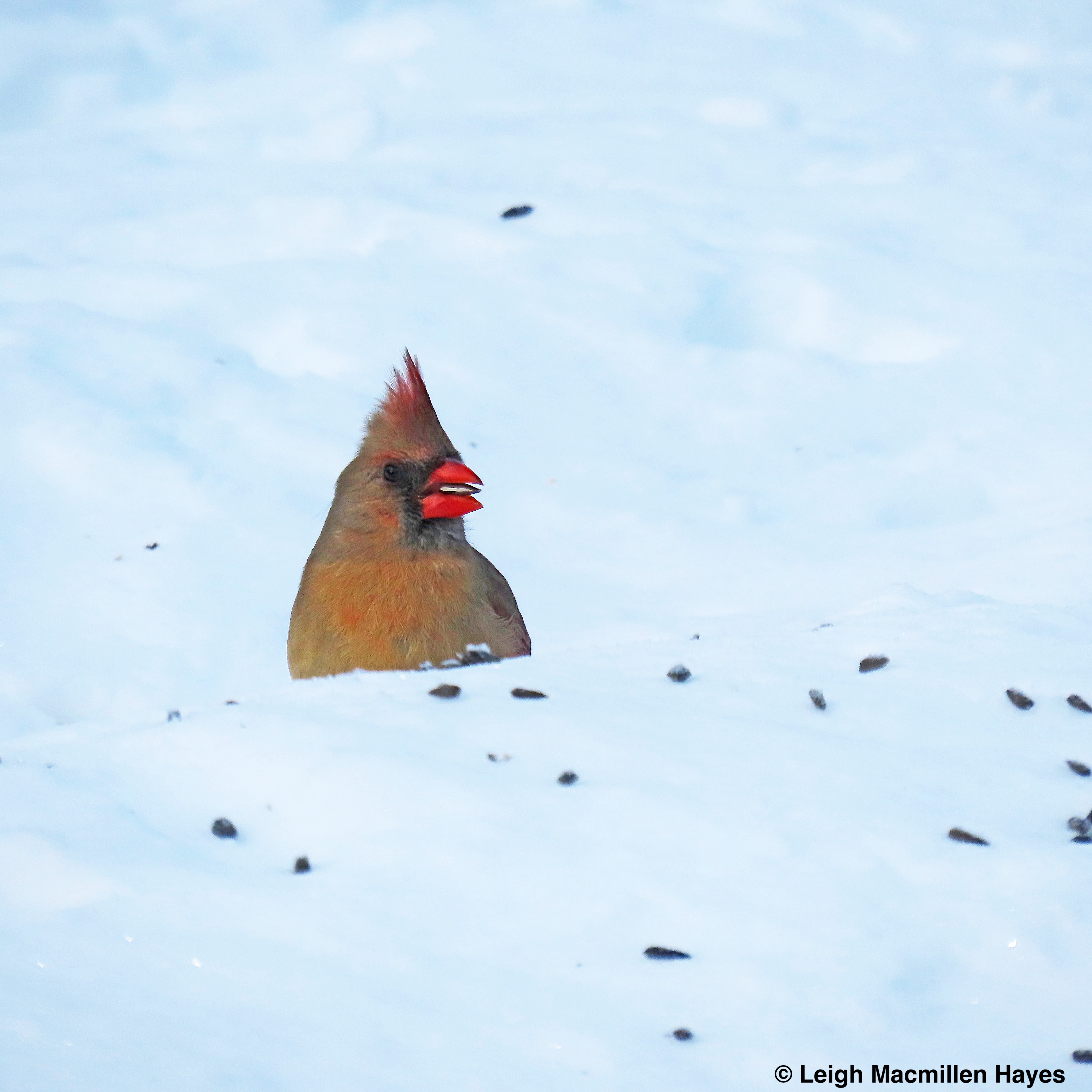
One of my favorite visitors is also the most timid–the female Cardinal. The second any little movement or sound startled her, she flew to a line of shrubs, a favorite hangout for most of the species that visit our yard. And when she flew, usually the others did as well. And then two minutes later, they’d begin to filter in again.

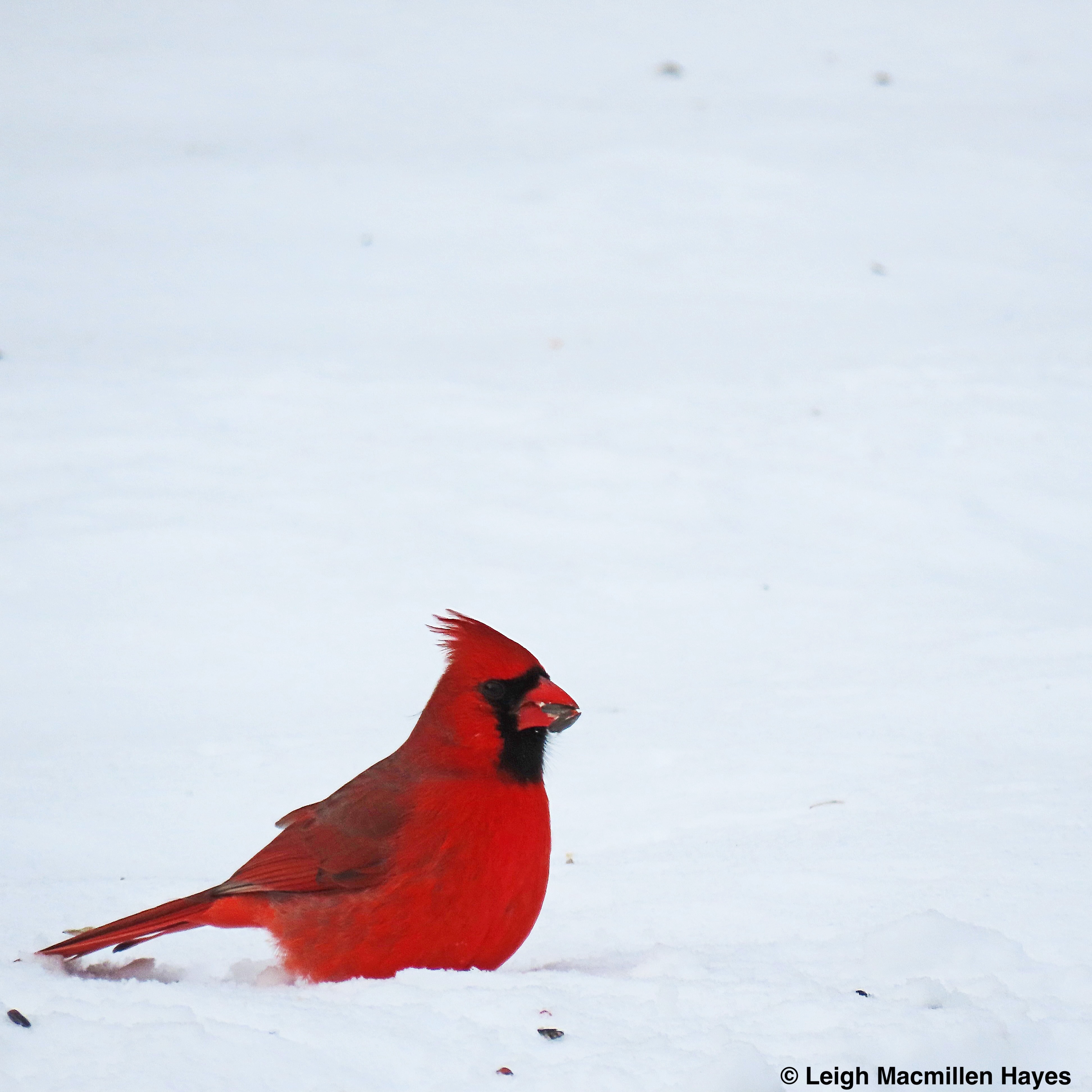
Her guy friend showed up as well, but she spent more time here than usual, despite his bossy attempts to get her to fly. Soon, though, he won’t be pushing her away, but rather sharing seeds beak to beak.

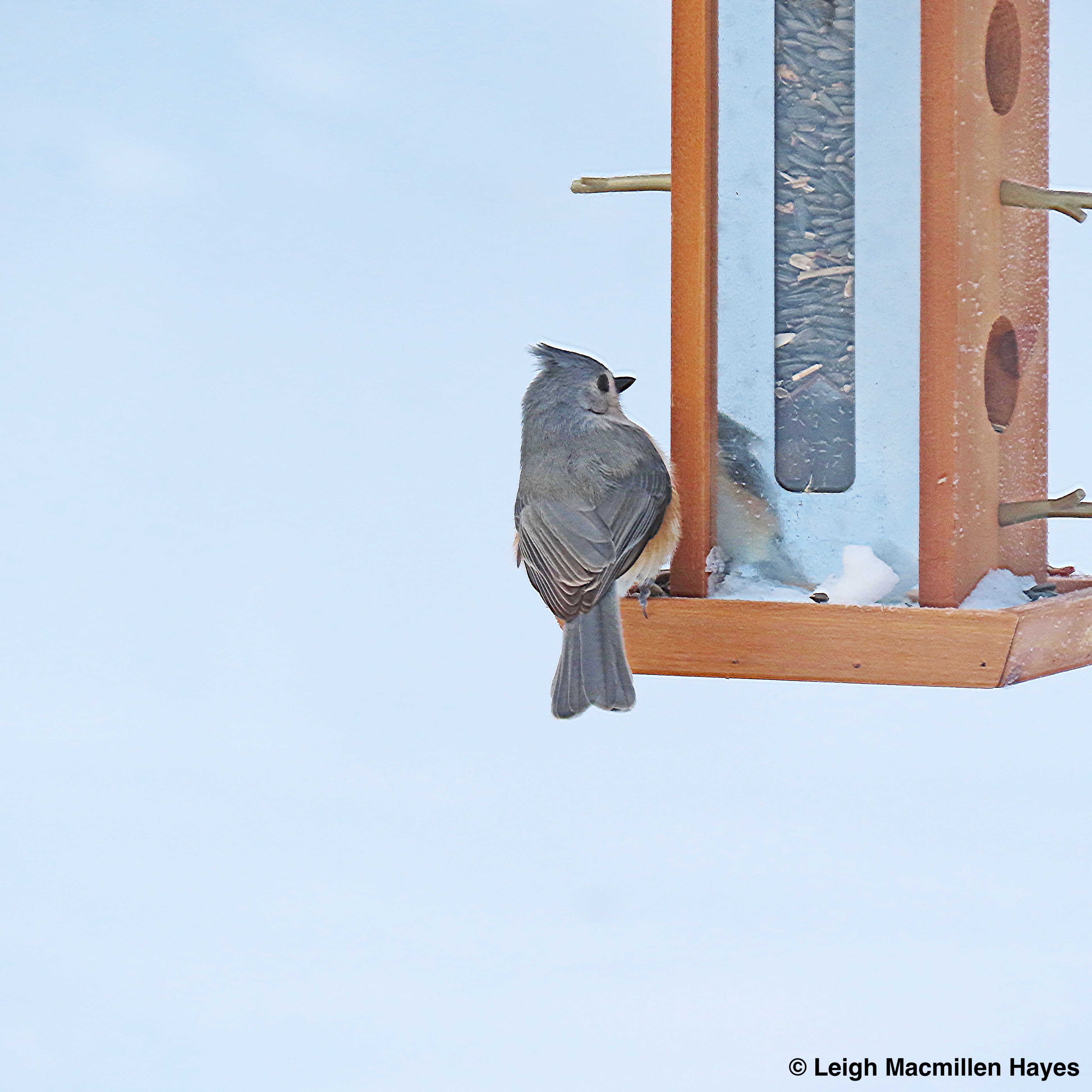
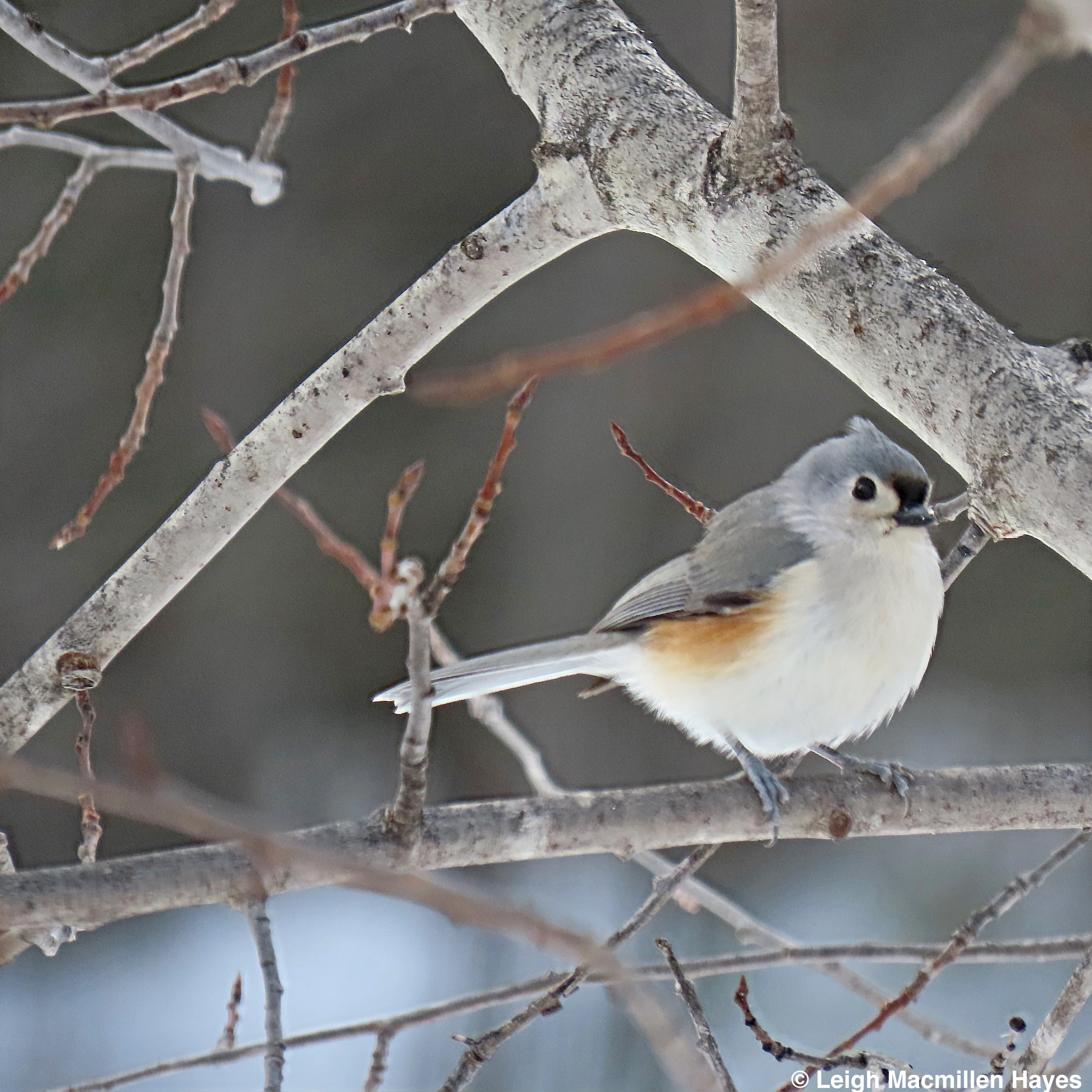
Tufted Titmice happened by and I had to wonder if this one saw its reflection in the feeder. That does happen and sometimes the results are comical.

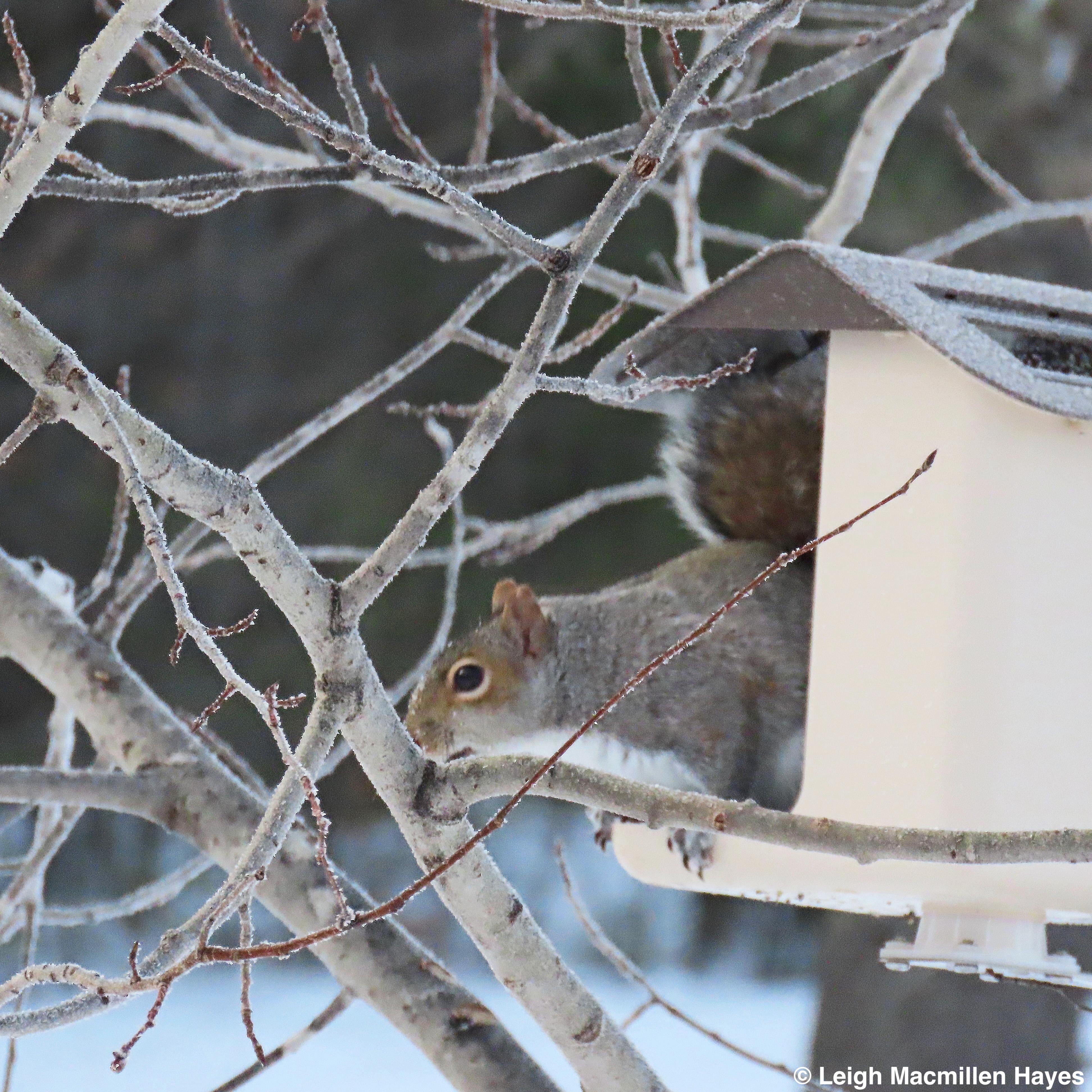
Meanwhile, at another feeder, a large Gray Squirrel that grows larger every day thanks to my offerings, made sure everyone knew that the feeder attached to the tree was his. We knew when we put it there, that this would be the case, but it was our only choice of position.

And so he dines. A. Lot.

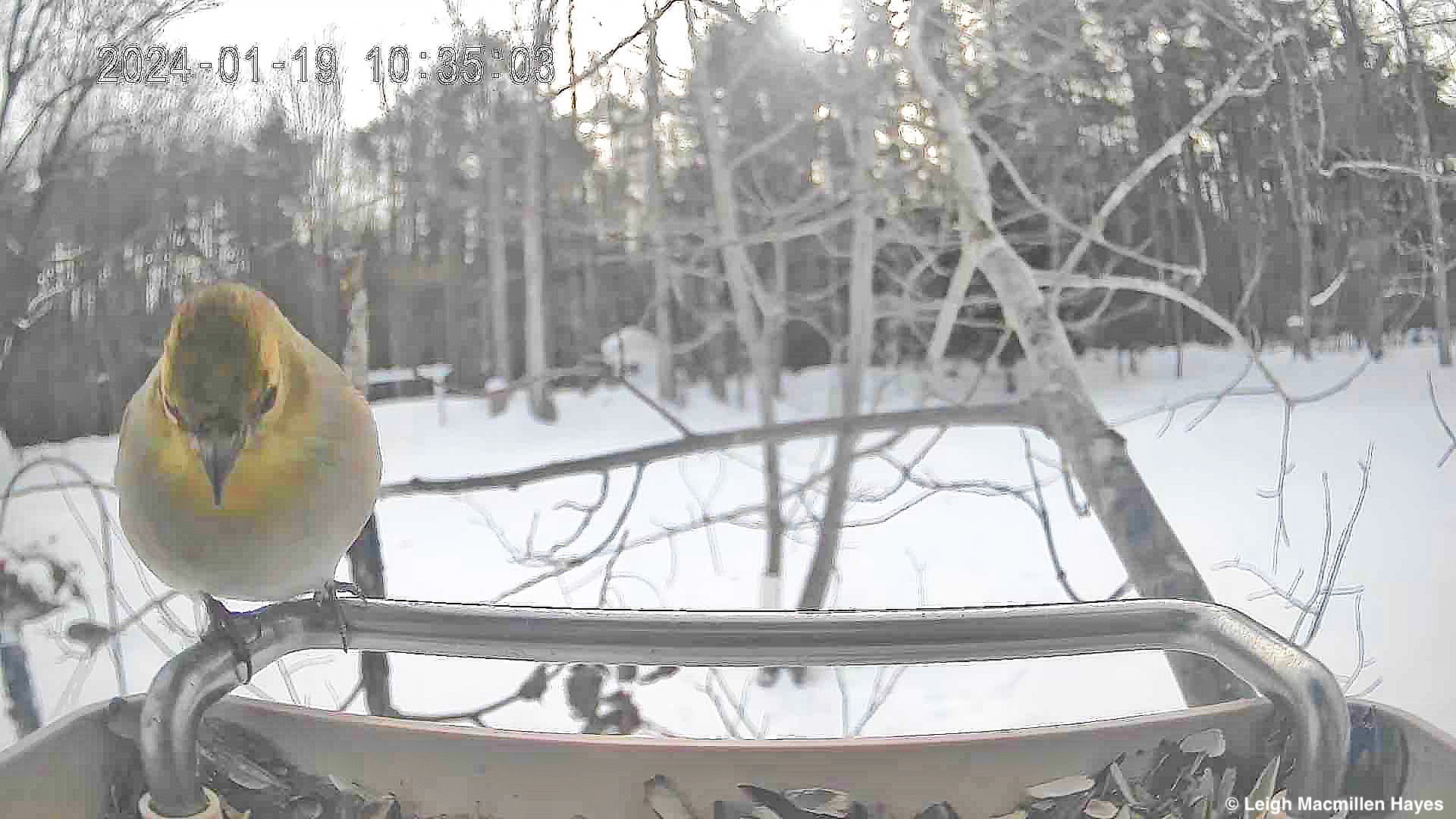
The good news is that eventually he leaves and others, such as this Goldfinch, fly in and look for just the right seed of choice.

Bingo. Mission accomplished.

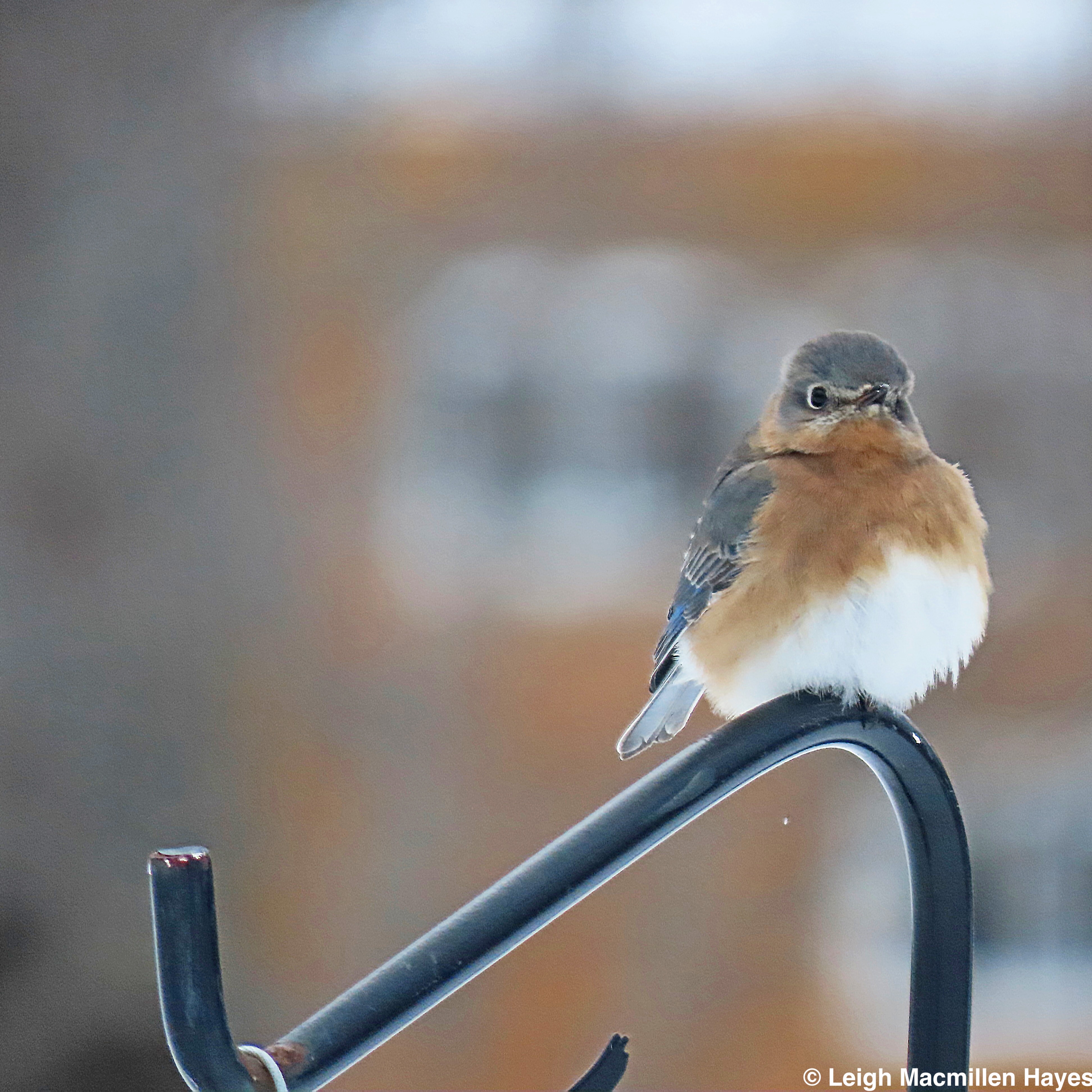
And then . . . and then . . . two surprise visitors arrived. Bluebirds . . . of happiness, of course, for they made me happy.

And then, another surprise visitor–a female Purple Finch who looked quite pleased with her tasty seed.

She was so pleased, that she apparently invited two males to join her. Their postures and bad hair day made me laugh–they seemed to have been put here to provide comical relief. That’s not true at all, but so it seemed.

With all of this action, I had to stand as still as possible to take these shots through the back door window. And because I was so still, I had yet another surprise.

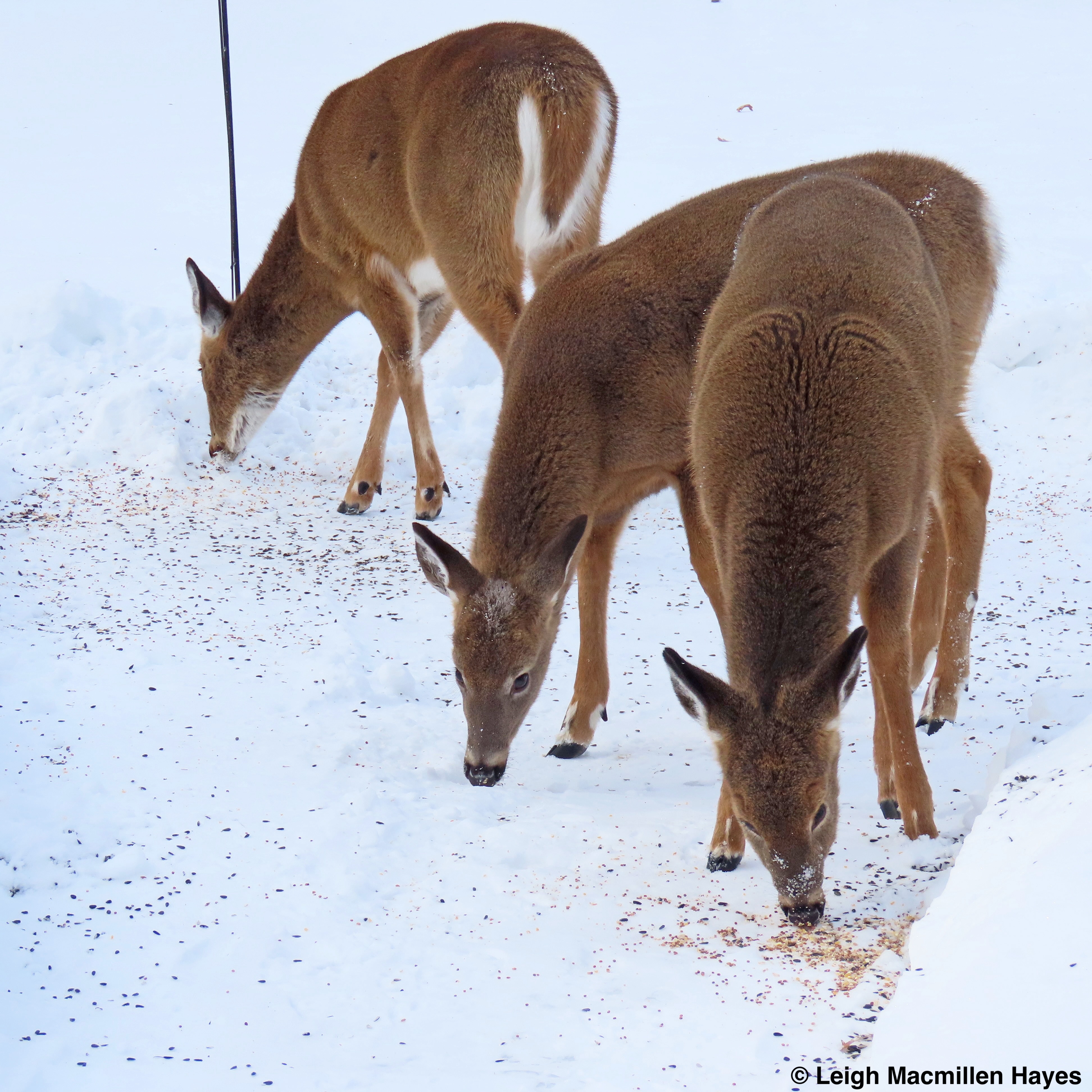
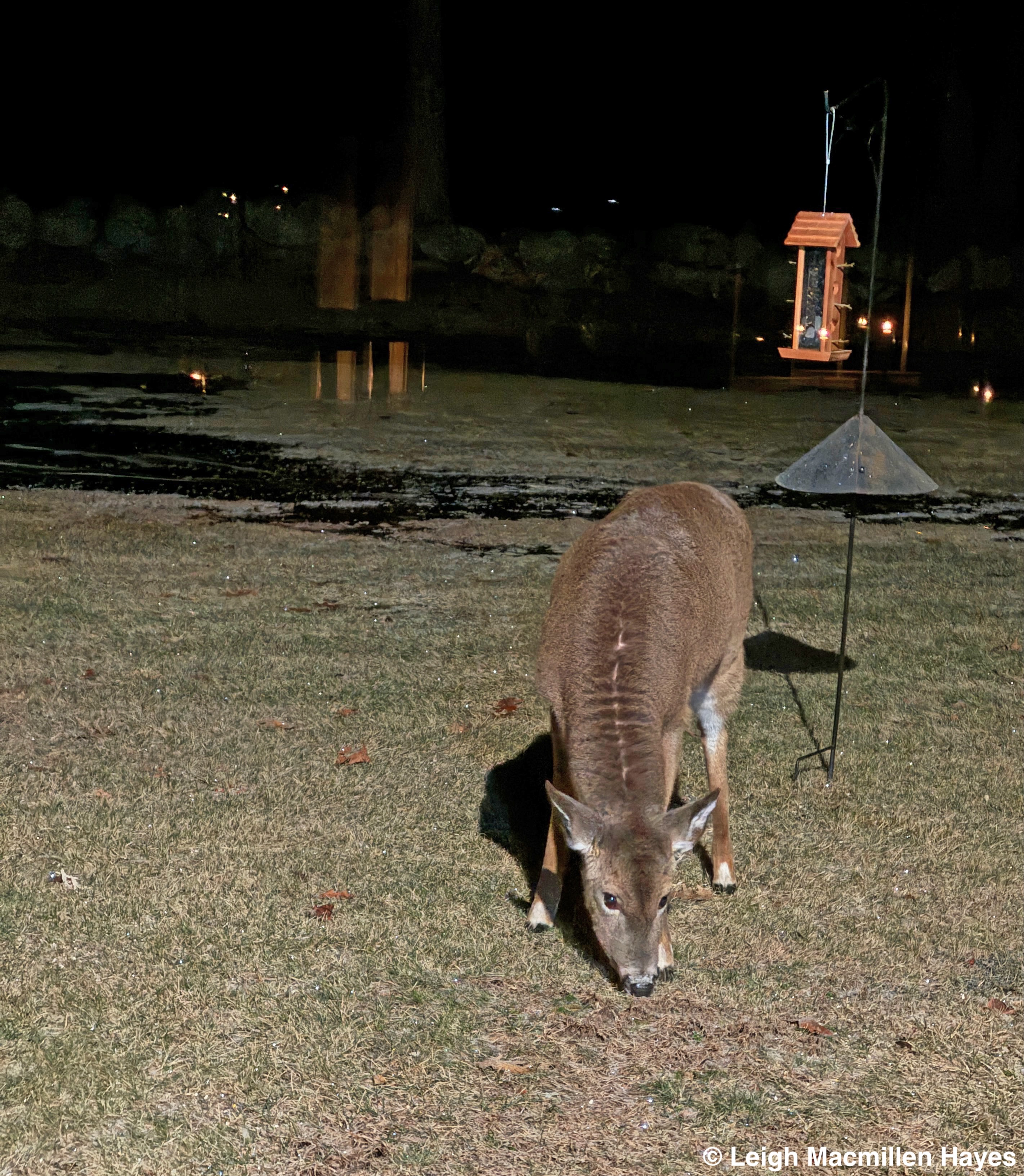
Bird seed is not just for birds, as the squirrels prove daily. And the White-tailed Deer often make that statment at night, but today . . . today was different. They came in the morning and were like vacuums as they consumed the seed.

Observing the birds, I often note that the Juncos can be quite defensive, the Male Cardinal sometimes suggests the female should leave (until that is when he decides to feed her), Chickadees fly in, grab a seed and fly off to a branch to break it open, and Goldfinches hang out together. As do the deer. These were the two young skippers, and they weren’t at all disturbed to be in each others space.

One of the skippers approach this feeder was instantly startled by its movement, but momma doe was much more curious, though in the end she chose to opt for seeds on the ground.

And all were delicious.

After about a half hour, my body tense from holding still for so long because after all, they were only steps from where I stood, the deer had consumed most of the ground seed and headed off to the woods. I waited a few minutes to give them time to depart without pressure and then went out to spread more seed around.

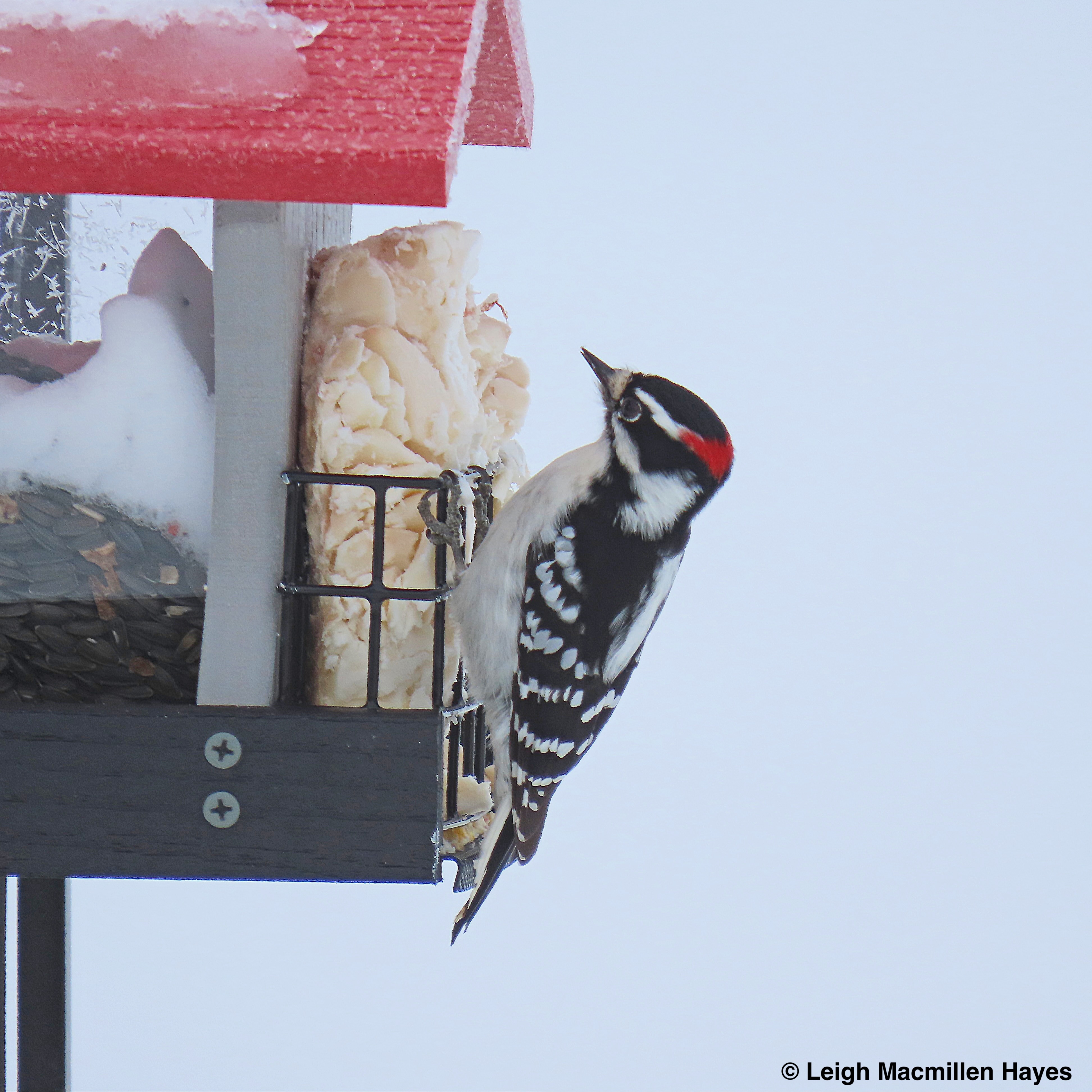
It took a few more minutes and then the action picked up again and in flew a male Downy Woodpecker to sample the suet.

His mate also arrived and waited in the Aspen to take her turn, though there are two suet feeders out there so I’m not sure why she felt the need to wait her turn.

And the rest of the mixed flock returned as well, including the Tufted Titmouse.

At the end of the day, my favorite visitors were the Bluebirds for it was such a treat to see them.

I can only hope they make a habit of returning to our yard.

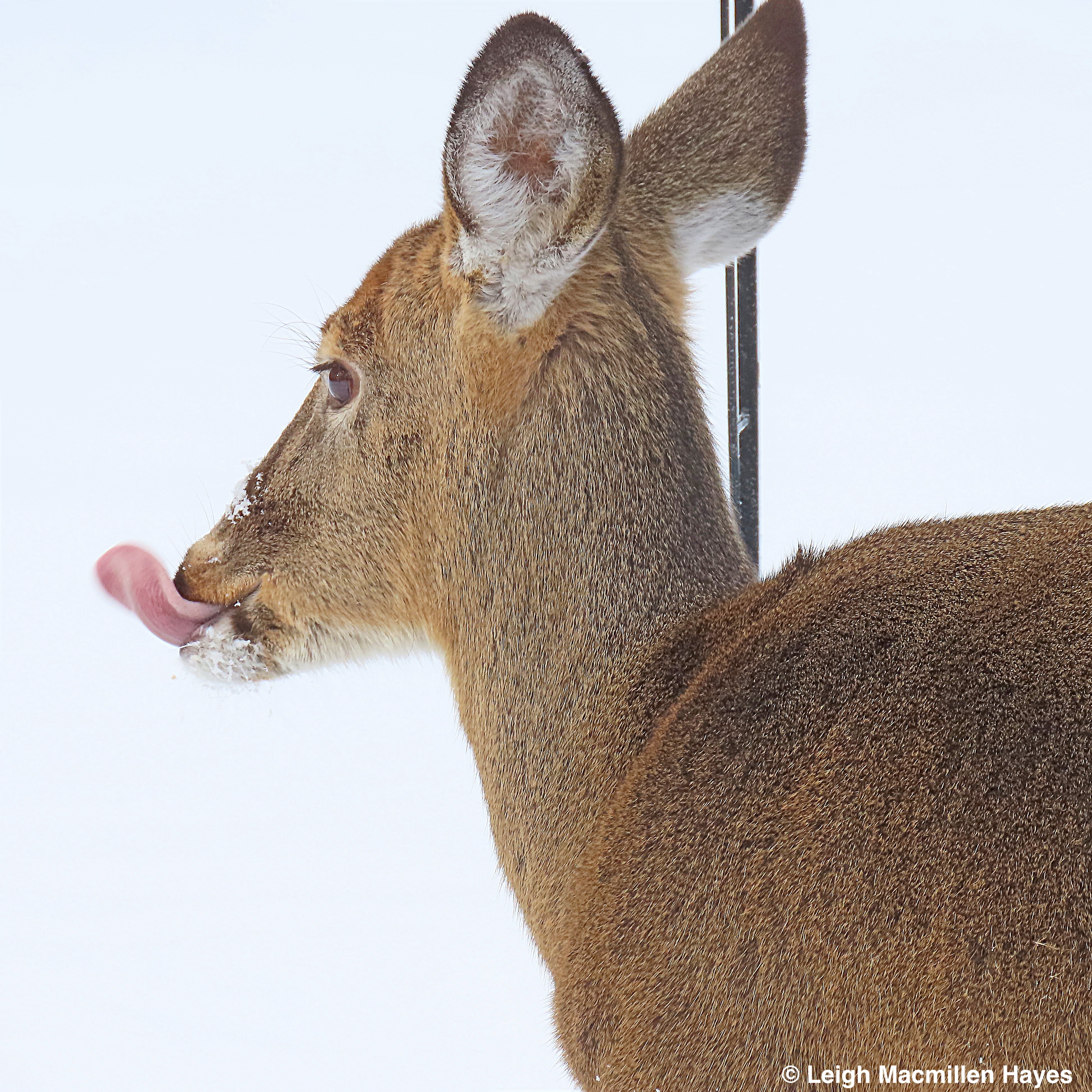
And the deer, who found everything tongue-licking good.

And along with the squirrels, proved that not every bird has feathers. I mean, seriously, have you ever watched Gray Squirrels fly from tree to tree? And Deer fly across a field? Certainly reindeer fly.

Wednesday Wanders

Today’s wander begins at the end because it can in my book of life. And by the end, I think you’ll understand why I made that choice. But don’t scroll ahead cuze then you’ll ruin the surprise.

Our deer friends are feeding on bird seed and corn right now about ten feet from the back door. Meanwhile, the fairies are flittering about behind this doe. Do you see their twinkling wands at work?

Actually, all the lights are kitchen reflections on the door window.

This, of course, has nothing to do with the rest of the day, but I do love our deer friends and like to honor them when I can.

Now on to the nitty gritty of the rest of the story. My friend Dawn and I are Maine Master Naturalists as you may know. And because of that, we must volunteer time to teach others about the natural world. An unpaid job that is hardly a hardship because it’s so much fun.

Right now, we are in the midst of offering a program every other week for Loon Echo Land Trust in Bridgton. And the winter focus is tracking. Not easy to do without snow or mud. Wait a second. The animals are always on the move, and without the snow, we must look for signs. And so we did.

The first, a special offering left on top of a rock that Dawn actually noticed this past weekend when her son and daughter-in-law were visiting, and which she complety embarrassed him by taking photographs of it.

Out came my scat shovel today and everyone took a look. By its form, size, and location, we determined Red Fox.

Our real mission today, however, was to explore the territory of a Red Squirrel. No, this is not my friend Red, but another who has established a territory in a different space that’s also been blessed with an abundant amount of pine cones this year.

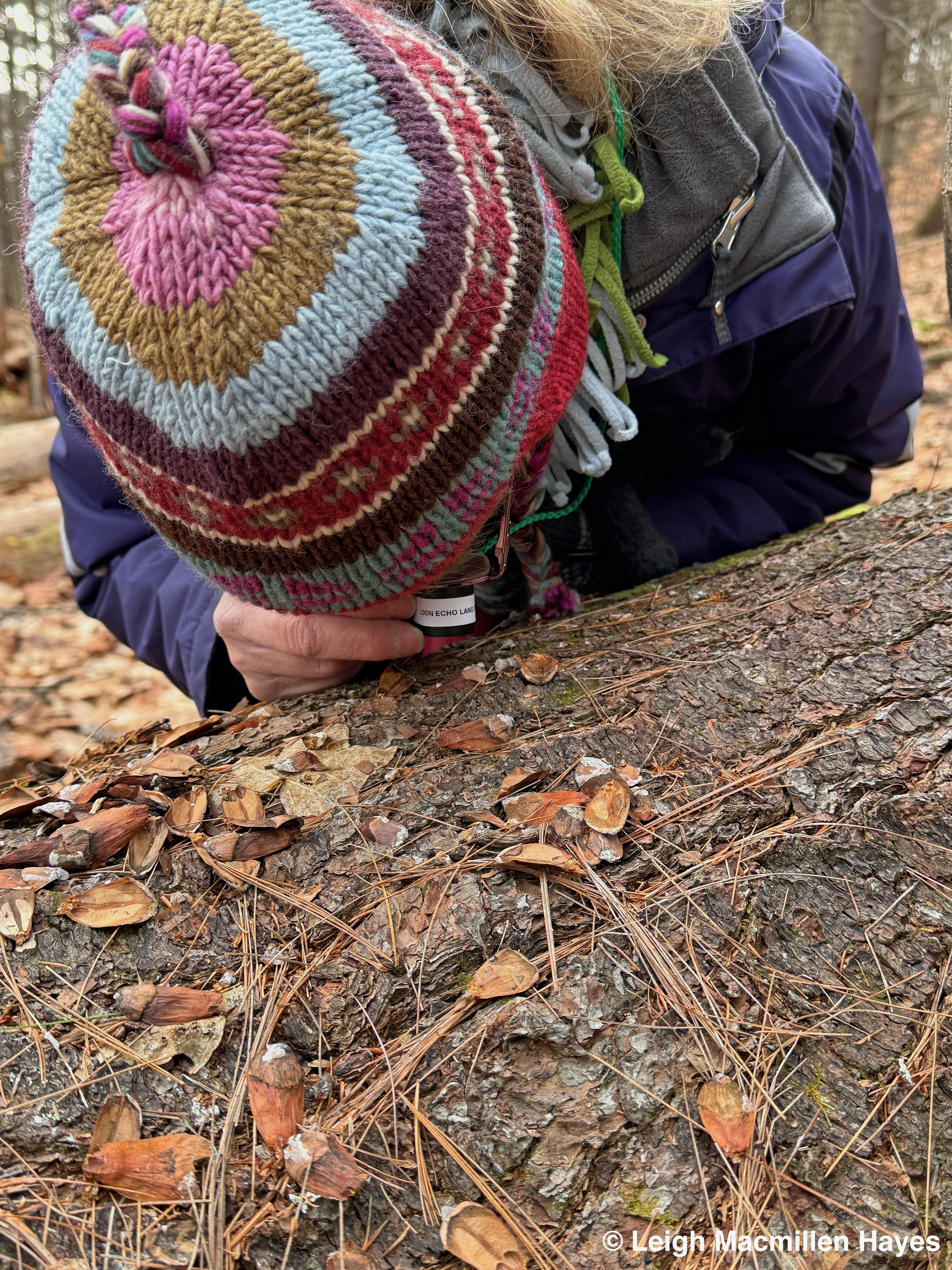
We wanted the partipants to take a close look at the scales where the seeds the squirrel sought had been stored. They got right into it.

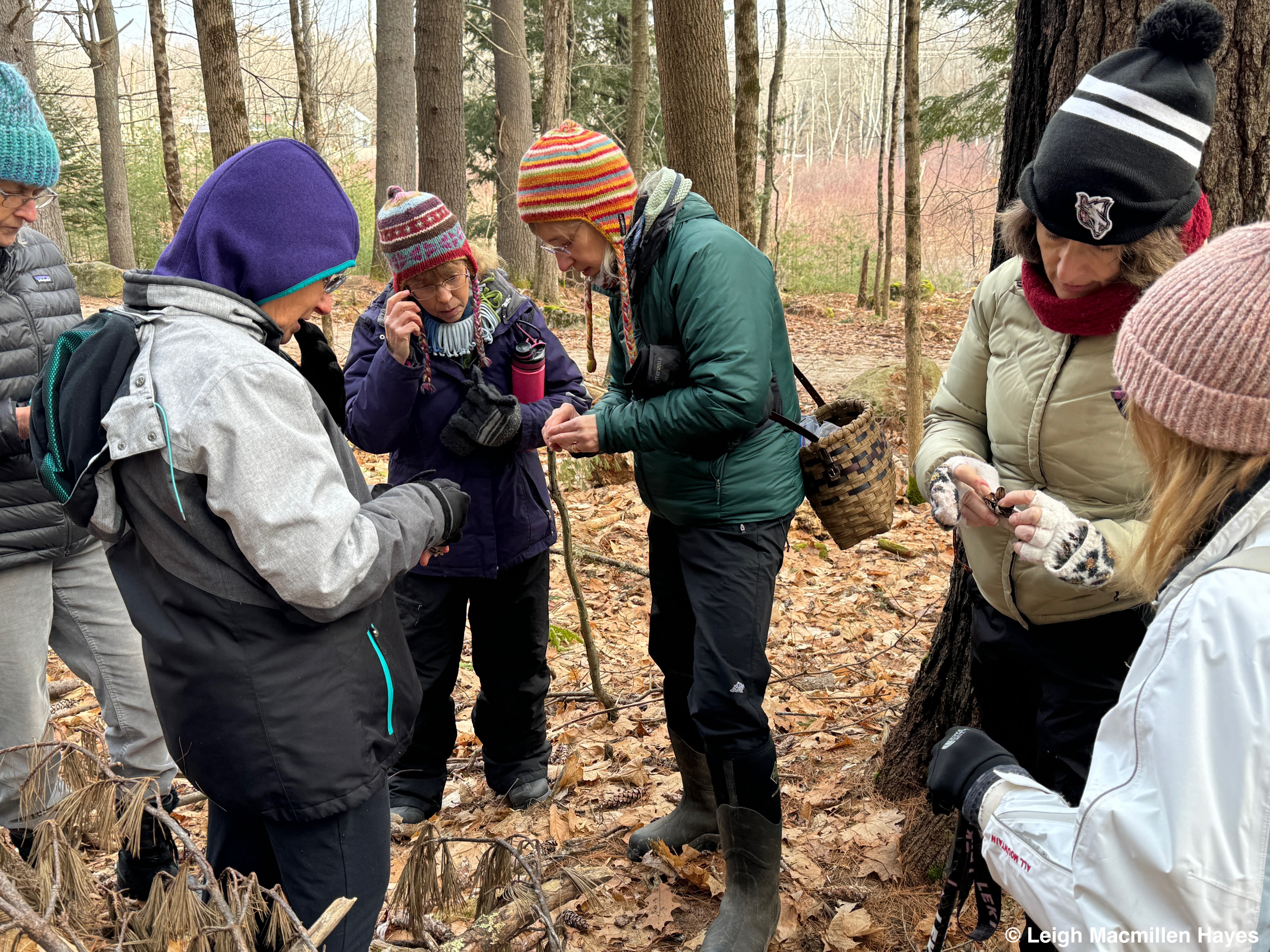
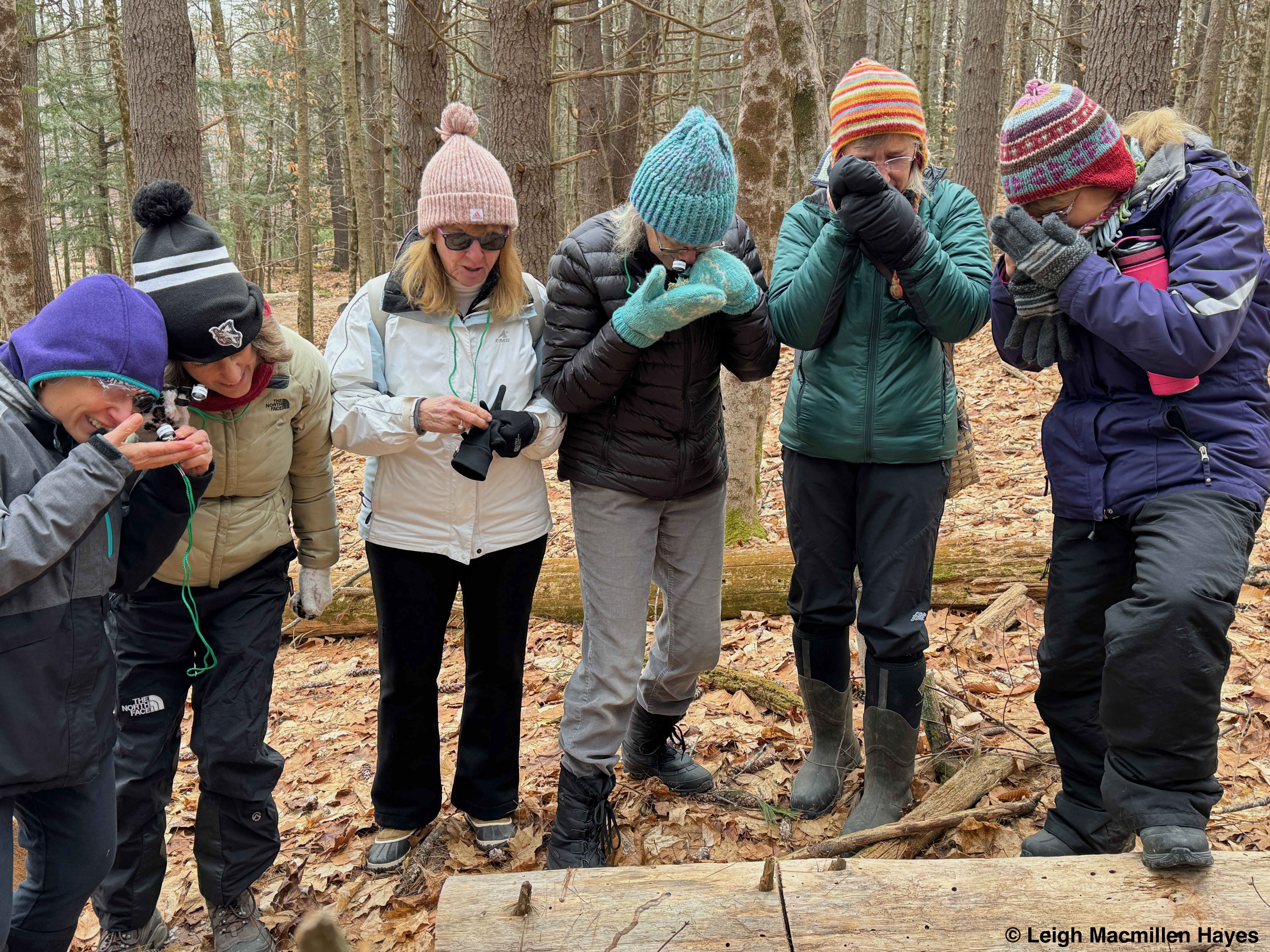
After locating caches and middens created by said squirrel, we taught the ladies how to use a loupe, aka hand lens, by holding it close to their noses and bringing the object closer until they could focus on it.

To say it opened up a whole new world is possibly an understatement.

Discovering the tiny seeds the squirrel consumes would have been enough, but there was more. In one section of this squirrel’s habitat we found numerous mushrooms upon branches, placed there by the rodent to dry. Talk about being in a food pantry.

And then . . . and then . . . we spotted hoar frost between a couple of stacked logs . . . and surmised that our little friend was living in the space below. How cool is that? Wicked, in these parts of the woods.

What we learned is that this particular squirrel’s territory is located between two downed trees and a wetland, about the size of half a football field.

At the edge of the wetland, it was time to turn our attention from the squirrel to another rodent.

Yes, a Beaver. Once our eyes cued in, just like spotting the squirrel’s mushrooms, beaverworks made themselves known.

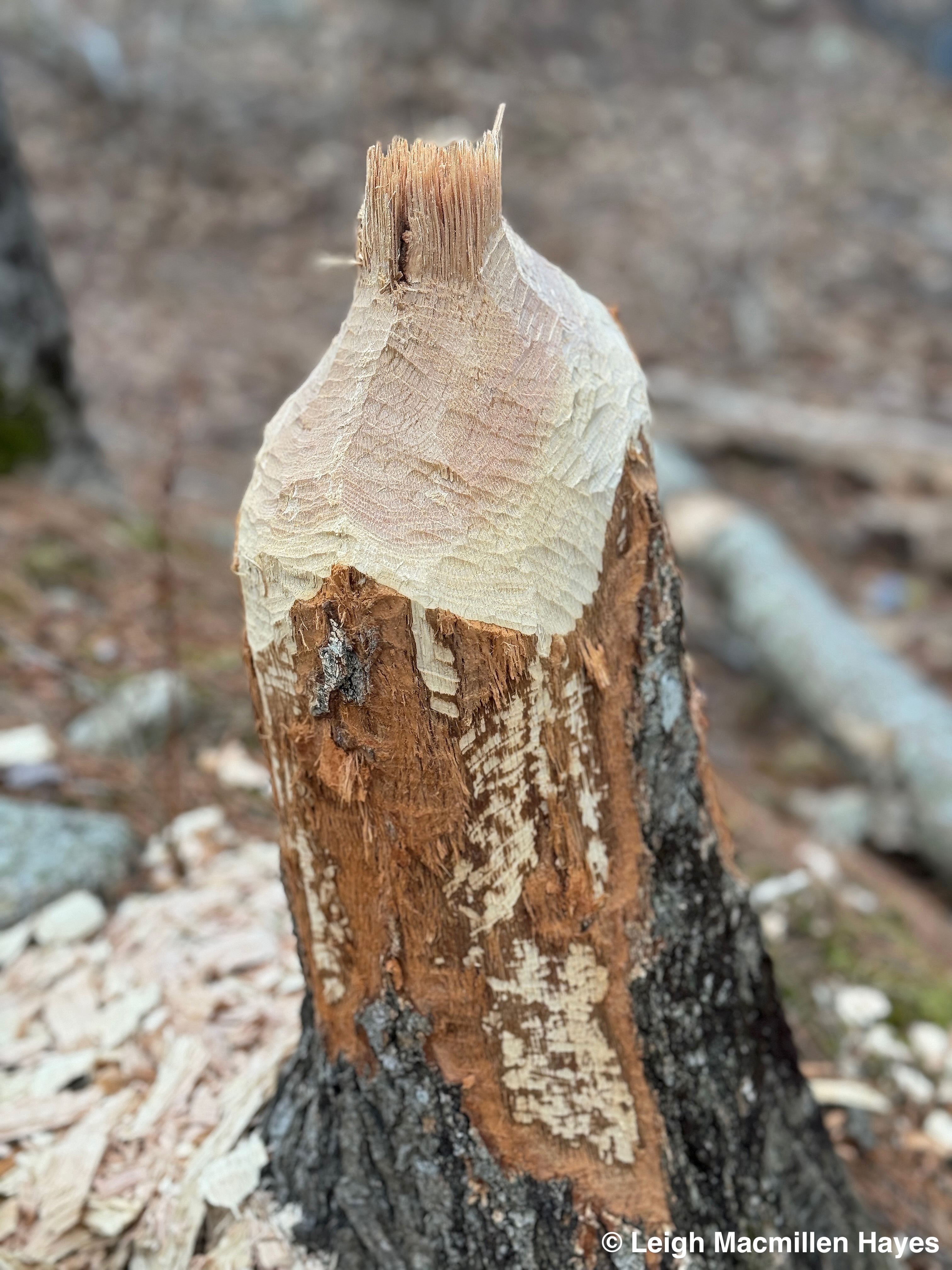
And so we encouraged partipants to channel their inner Beaver and try to chop down carrot trees.

Like any Beaver, they were eager to shout, “TIMBER.”

And rejoiced when their tree stumps matched the Beaver’s sculptures.

Finally, we took them along a path that led to more Beaver works, where we noted how its the cambium layer that this rodent seeks for its nutritional value. The rest is left behind, rather like a squirrel’s midden.

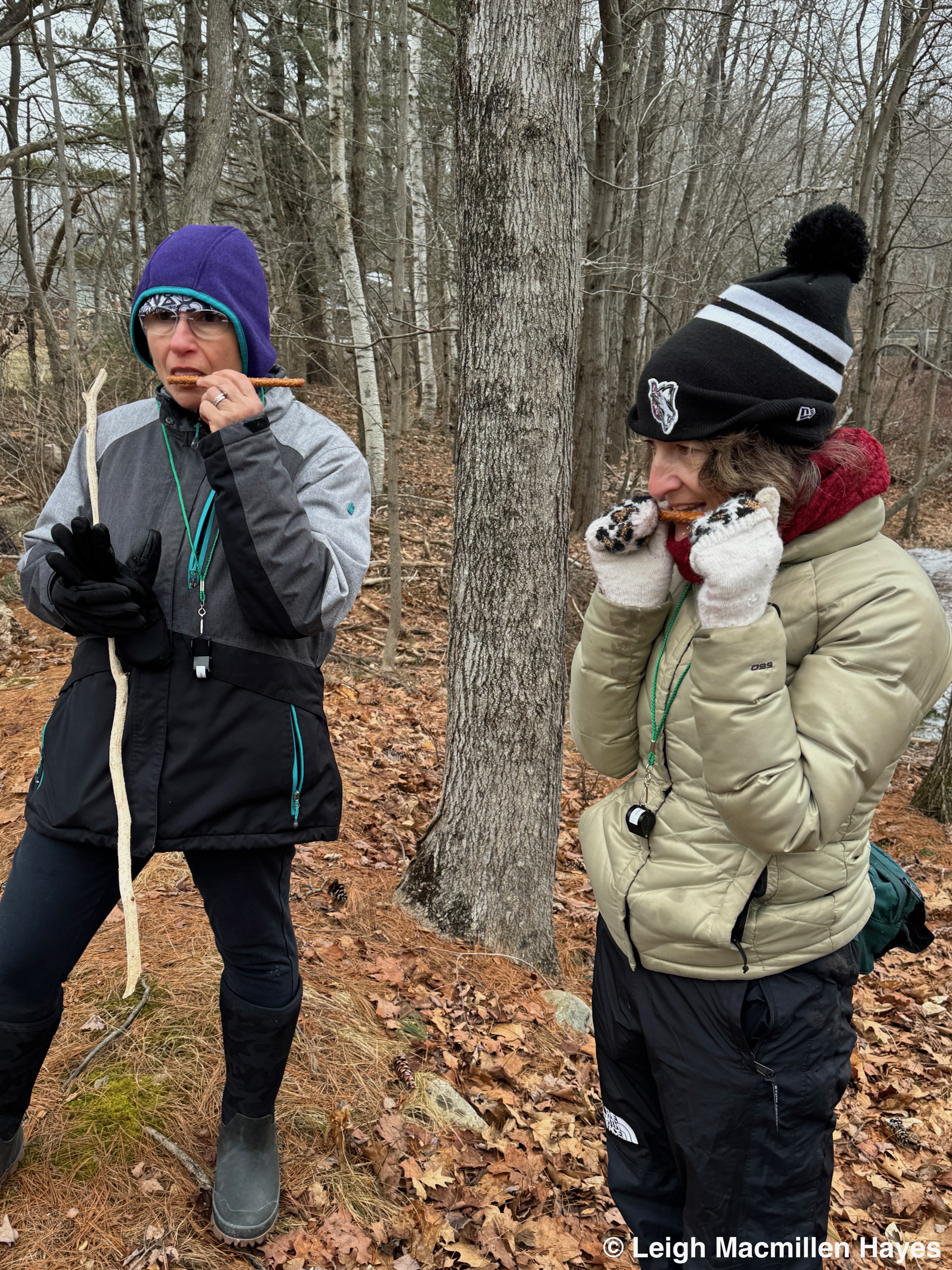
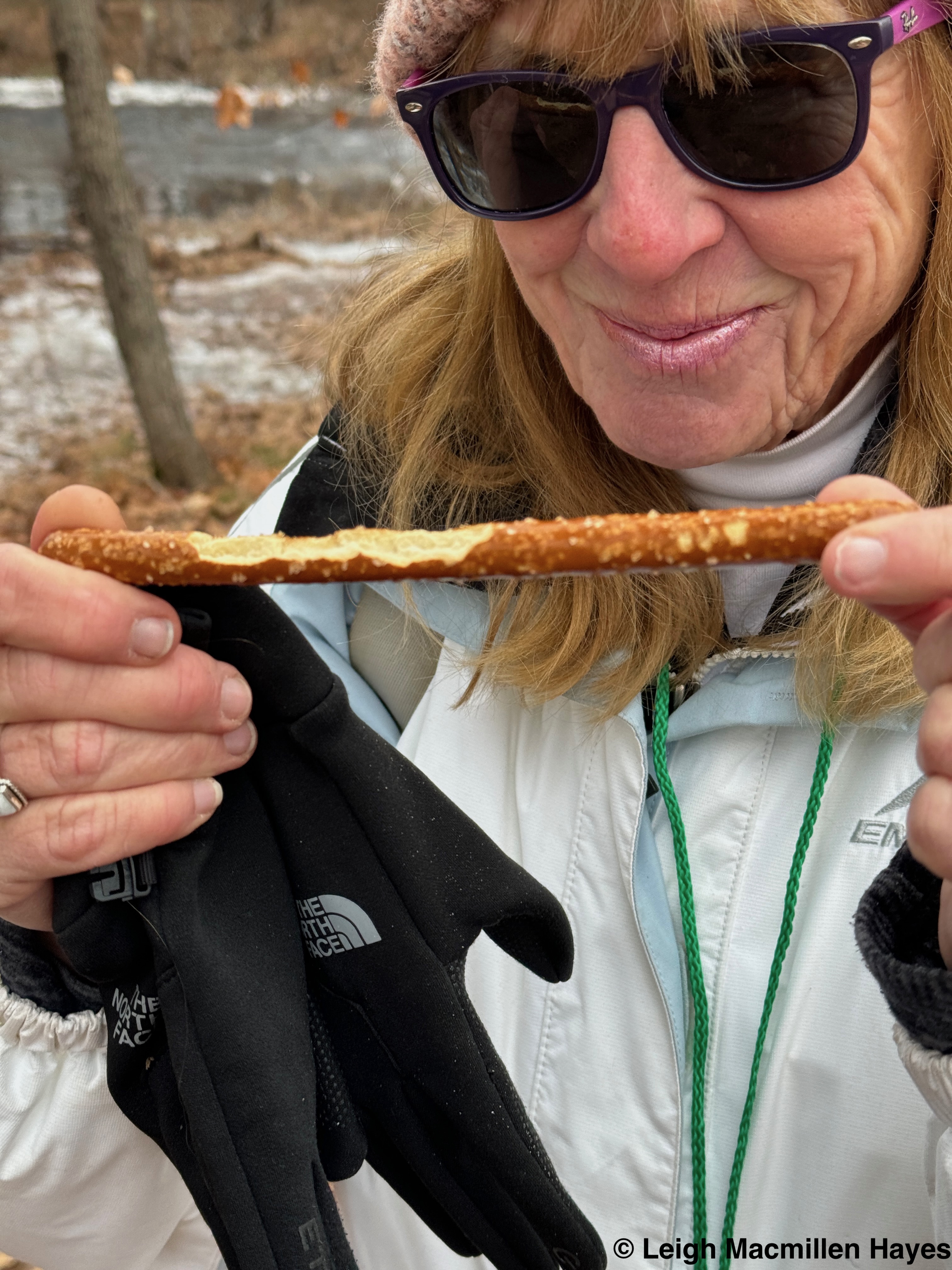
And so the inner Beaver channeling continued, this time with pretzel sticks and they were challenged to only remove the outer layer.

The competition was stiff, and a couple of Beavers broke their sticks so we’re not sure they’ll survive the winter.

But at least one was super successful.

While only one Beaver fells a tree, the family may help to break that downed tree into smaller pieces and there are at least three sections like this indicating that they’ve worked on it–maybe one at each spot. We don’t know for sure, but that’s the picture we like to imagine.

Below where we stood, we spotted the dam and talked about construction.

And then located the lodge. Another cool thing–more hoar frost at the top where a vent hole exists and is not covered with the mud that insulates the rest of the structure.

By evidence of the frost, we suspected the family was gathered within, probably consisting of mom and dad, at least two two-year-olds who will move on in the spring, and maybe a few youngsters.

As we walked beside a trail on our way to check out another lodge we determined wasn’t active, one among us discovered a kill site. So here’s the thing. When we first met in the parking lot, that same participant pointed to a Bald Eagle that flew just above the trees.

Could the eagle be the predator of what had been a duck? We suspected so.

The blood was fresh.

Nearby a Mallard had been quaking and we thought it was laughing at us and our enthusiasm and inquisitiveness. But perhaps it was lamenting the loss of a mate. Or at least trying to locate the mate that had become a meal–providing energy for another to carry on.

Yes, it’s sad. But this is nature. This is how it works.

After two delightful hours of discovery and learning, we said goodbye to everyone, dropped in at Loon Echo Land Trust’s office, and then went on a reconnaissance mission at another local spot, trying to determine if we should use it for a class we’ll teach for Lake Region Lifelong Learning, another volunteer venture.

And it was there, that just after we’d talked about being in hare territory and knowing that the lack of snow meant that a hare would stand out amongst the leaves, that . . . Dawn spotted a Snowshoe Hare.

We were so excited about how the morning had unfolded and spying the hare was a grand reward.

Can you track mammals without any snow. YES!

Wednesday Wanders, oh my! So much to learn. So much to share.

The Forever Student, Naturally

This story begins . . . at the beginning. Okay. Early morning, not enough coffee, humor. Rather, this story begins at a bird feeder located about twenty feet from our back door.

Birds, like this Tufted Titmouse, frequent it, especially on rainy days, which seems to be the norm this December. In fact, this year. Sadly.

But, there’s another visitor, who thinks its a bird. If it had the membrane that stretches from the wrist of a front paw to the ankle of a rare paw, we could at least call it a Flying Squirrel. It does not. It just thinks its entitled to the bird feeder selection, despite the fact that I spread plenty of seed on the ground and have a dangling corn feeder intended for such uses.

Eventually, it did resort to normal Gray Squirrel behavior and fetched an acorn, then frantically searched for a spot to cache it. And taught me a lesson.

I realized I’ve never paid particular attention to a Gray Squirrel caching acorns, one here, one there, for future food sources, or a future oak sapling if not dined upon. I knew they did that. But what I didn’t realize is that much consideration goes into location of said single cache. The squirrel moved through two gardens, across the yard, and paused about three feet from the back door to dig, all the while holding the acorn between its lips.

And in the end, that wasn’t the right spot and so it moved on.

And I stepped out the door. The hole was just deep enough and wide enough for that single acorn, but the last I saw of the squirrel , it still hold the nut tight as it pranced along the stone wall and then into the field beyond. Funny thing is that when I returned home an hour or two or three later, there was a second hole excavated but equally empty. Why dig here twice and not make a deposit?

The Gray Squirrel’s activity inspired me to step into our woods and check on the activity of my friend Red. He doesn’t disappoint and each day that I visit I notice new middens (garbage piles of discarded cone scales) and new cones added to the cache (food cupboard).

My favorite cache is now a foot tall and the cool realization is that he doesn’t dine upon this pile. Like the Gray Squirrel burying his acorns for future consumption, Red is dining on plenty of pine cone seeds, but saving up for that day when we have so much snow (will that day ever come again?) that he has a food supply available and doesn’t have to tunnel through the white stuff in search of a meal. Considering how many pine cone seeds he must consume each day, I have to wonder how long this source will last and will it grow taller and wider in the coming weeks?

On the other side of the cow path, for that is where the tall pile is located, I realized he’s started another cache, this one located under some discarded garden fence left behind by previous owners of the land. It’s actually a great spot in my squirrely mind, for its beside the wall so he can easily access it from a dry spot within and the fencing and sticks and leaves have created a shelter.

Much to my delight, I spotted Red on a pine branch, a perfect high spot on which to dine and keep an eye on invaders of his domain, such as me. My presence, however, did not stop him from peeling each scale to seek the two seeds tucked close to the cob.

And as is the custom, its only the seeds that he cares about, scales discarded because their usefulness is no longer important.

The base of the tree shows just how many scales he’s discarded over the last few months as his midden contiunes to grow. Considering this year was a mast pinecone production year for Eastern White Pines in western Maine, this is one well fed squirrel.

Another tree that produced a mast crop is the Northern Red Oak and the abundance of acorns has been a food source for the squirrels, especially the Gray, Porcupines, and White-tailed Deer.

The tree behind our barn is massive, with a coppiced base and therefore three large trunks. Our sons once built a fort in that space between.

At about 4:15pm the day before, our youngest son, his gal, and I watched Bandit, the local porcupine come from the acorns to a puddle beside the herb garden and pause for about five minutes as he sipped from it. That was another first for me. And them as well. In fact, for his gal, just seeing a porcupine in the wild was a first.

Then he waddled off to the woods on the other side of the stone wall, and probably found an Eastern Hemlock upon which to dine for the night. I found a few trees with downed twigs, but none that cried out, “I’m Bandit’s food source,” so I suspect I need to expand my search on another day.

Instead, I made a different discovery. We know that Bandit has spent time under the barn, and he’s left tracks when we did have snow that led to a neighbor’s shed, but I have wondered about the old oak tree and the hollow within its three trunks And today, I spied evidence that he has inspected the hollow. Do you see it?

How about now? Quills! I found them on both sides of the trunk.

And on the ground below.

About two inches in length, and some were longer, I love how his brownish hue is similar to that of the bundle of dried pine needles.

The hollow is dark and deeper than my camera could see. The curious thing is that there is no scat. Yet. You can rest assured that I will keep an eye on this spot.

I decided to hang out not too far from the tree and barn as day turned to dusk in hopes of spotting Bandit emerging. Much to my surprise, an Eastern Chipmunk appeared on the wall behind the tree. Wait. What? Shouldn’t he be in torpor? Yup. But chipmunks will make an occasional appearance on warmer days and we’ve had way to many of them this year.

A doe and her two skippers also appeared and watched me from the edge of the field, or at least listened to my movements, which I tried to minimize as much as possible, but those ears were on high alert.

About a month ago, when we did have snow, I discovered blood beside her tracks on this side of the wall and knew that she was in estrus. A day later, I noticed a young buck in the field and by the way he kept his nose to the ground and moved frantically, I knew he was on a mission to find her. Did he? Is she with child? Only spring will tell.

In the meantime, her twin skippers are still with her. They ran off before I headed in, but I suspect it wasn’t long before they returned under the blanket of darkness and munched on a bunch of acorns.

Bandit never did appear during the time that I waited. Who knows? Maybe he had spent a night and day or two in the hemlock of his dining choice. I’ll continue to search for evidence of his activities because it’s what I most enjoy doing.

There’s always something wild going on outside our back door, rain or shine or snow or sleet, and I’m grateful for each lesson they take the time to teach me. I am a forever student, naturally.

Keeping Watch

Settling in 
for a long winter's night,
I know not what happens
beyond the back or barn door.
Until I do
for by the incisor marks
left upon the attached shed floor,
I eye the work of a gnawer.
Scat, too, has happened
in this space,
comma shaped
and even a bit of a necklace connection observed.
Out the door 
I tromp through the snow
sighting a pattern
that only a sashayer would know.
And so I follow, 
under branches,
around trees and over stonewalls,
from one neighbor's yard to the next.
Into the woods,
the critter leads the way,
and I go forth,
wondering where we might glimpse each other.
Upon a corner section
of a stone wall,
where rocks are arranged in a triangular fashion,
my heart beats faster when I spy hoar frost.
I observe not 
the works of a porcupine den as I'd hoped,
but rather evidence of another
who shares these woods with us.
And then upon a branch
I behold the other,
creator of the midden,
a Red Squirrel disguised as a gray for such was its coloring.
Because I'd wandered
into our back forty,
others make known their presence,
in the form of mouse and weasel prints.
And back by the barn,
the snow has been tussled,
by not one,
but at least three species: porcupine, squirrel, and deer.
Mostly, it is the deer
who have disturbed the ground,
scratching away as they do,
in search of acorns.
As much as I'm scanning
up and down for mammal sign,
the beauty of these past three days
does not escape me.
I'm grateful for the brisk air,
sunshine and lack of breeze,
and for snowflakes still on display,
and others melting into decorative gems.
I'm grateful
to be one who notices,
trying to discern
what has happened and will happen next.
I'm grateful 
to recognize others
who contemplate as well,
peering upon the world from on high, yet hidden.
And I'm most grateful
for the one who knows more than the rest of us,
the Tree Spirit,
an exemplary at keeping watch.

Giving Thanks for Being Present

Those who know me know how excited I was to wake to snow. So excited in fact, that I awoke early, saw that certain glow in the sky through the window above our bed, and jumped up, not wanting to miss the day dawning.

At just before 6am, I turned on an outside light for a minute and opened the door to receive the quiet that the flakes created.

It snowed for a couple more hours before turning to rain and by the time I shoveled the driveway it was heavy cement.

But still the world glowed. Especially the beech trees that are like spots of sunlight on a gloomy gray day.

Into the woods, I trudged, though I didn’t plan to go far because I suspected hunters would be as excited since they could more easily track deer, so decked out in blaze orange as I was, I stayed in our woodlot, with the intention of checking on my friend, Red. His caches have grown this past week, so I knew he had food in the pantry.

What I didn’t expect to spy along the way was this: White Pines foaming at the mouth! What really occurred: sap salts and acids that had accumulated on the bark’s surface mixed together in the dripping snow and formed soapy suds or pine soap.

Pine soap on the tree and snow disturbed by plops of falling snow at the base of the tree offered a contrast of textures.

Much as I’m mesmerized by fire, I’m equally mesmerized by water, and especially in the form of droplets. I’m actually surprised I eventually dragged myself home.

But first, I had to watch the droplet elongate.

And eventually (which was only seconds later), fall free. Although, was it really a free fall?

I suppose it was, but it landed on another section of the bark and continued the process of mixing with the sap salts and acids.

The other cool thing about the pine soap–its hexagonal forms–worth a natural engineering wonder.

As it turned out, it wasn’t just the pine soap that was flowing down the bark. Some trees had started peeing. Do trees really pee? It’s actually sap and I think given the temp, that rather matched a March day, sap was flowing, giving the melting snow a yellowish tint.

Eventually I reached my friend Red’s favorite hangouts and though the snow conditions had deteriorated from the point of view of a mammal tracker, he’d left plenty of sign on top of the white surface to tell me he had dined.

A lot. But then again, every scale on the cone protects two tiny seeds and one needs to eat a lot to attain nourishment from them. That’s why he has to create caches or piles of cones to last throughout the winter.

I didn’t actually see Red today, and surmised that he’d decided to make an early day of it and was probably snuggled in somewhere under the wall, using the snow and leaves as insulation. I know from watching 315 15-second game camera videos a few Christmases ago, that Red Squirrels rise with the sun, follow much the same routine all day long, eating pine seeds, dropping scales, leaving behind the cobs, dashing along to the next cache, returning to the first, dining again and repeating this activity over and over again during the course of the day, before disappearing about a half hour before sunset. Each day. Every day.

On this eve of Thanksgiving 2023, I recall some sketches I did in 2019 at a workshop at Hewnoaks Artist Residency in Lovell, Maine. The presenter offered us a variety of materials to work with as we saw fit. My fascination with squirrels and pine cones is not new and that day I chose to sketch one in three stages and then highlight the scales of the opened cone with pieces of mica.

In the end, I give thanks for being present for today’s discoveries of pine soap inspired by snow, and tree pee (that reminded me of yellow topaz), knowing full well that not every moment is as bright and shiny as muscovite mica. And snow does melt. But here’s hoping more will fall. And I’ll head out the door and be present again. And again.

May you also have plenty of reasons to give thanks.

Porcupine as Teacher

I walked up two stone steps beside one of our pollinator gardens this afternoon and when I looked up, which wasn’t really up, but rather a few feet ahead instead of at my feet, I was startled.

“Whoa!” I exclaimed.

My sudden companion didn’t even make a peep, which in hindsight is surprising, because its brethren are known to make some various squeaks in different occasions, but it did turn quickly so that its back was facing me, such is its defense weapon.

Yes, in the middle of the day I met a porcupine. If you are a frequent flyer on wondermyway.com, you know that I’m fascinated by these large quilled rodents. And their quills. And especially their scat!

By turning its tail toward me, my friend was ready to go on the defense should I try to get too close. Notice how the 30,000 quills on its back side were raised–a message to me that I should beware.

No, a Porcupine cannot send its quills aflying, but if I nudged it, which I chose not to do, the barbed hairs would have detached easily and I would have been screaming for help.

Instead, my friend decided to move away from me. And I decided to follow at a reasonable distance, giving it some space.

Our property is bordered again and again by stonewalls, some once used to mark boundaries, others to keep animals in or out, and still others served as garden walls, their double-wide structures the garbage pail for small stones that popped up each year during the spring thaw.

My friend had a single wall to conquer and that’s when today’s lesson began.

Actually, it was a few lessons. Maybe the first was noting the coloration of my buddy. We are used to variation in colors of our local Porcupines, but typically they are either black, or black with a lot of white, or brown. This guy seemed to bear the “coat of many colors,” embracing all of the above.

Not only that, he donned a white mask, the opposite of a Raccoon’s black mask. Today that mask earned him a name. From this day forward, he shall be known as Bandit.

The second lesson Bandit taught me is that because his sense of sight is not as prime as his sense of smell, once he was on the stonewall, he had a difficult time making the move down to the next stone.

I moved to the other side of the wall, and watched in awe as he raised his front legs in the air and stood upon his hind legs, rather bear-like in stance it seemed. Okay, so he even looks like a mini bear.

I began to realize that I sometimes channel my inner porky when I’m hiking down a trail. Going up is rather easy, despite the increase in elevation and sweat effort. But coming down. That’s a different story and I need to know where to place each foot. Especially in this autumn season when American Beech and Northern Red Oak leaves are slippery and hide obstacles.

Bandit continued to test his next move for a few minutes. Of course, some of that may have included my presence, and perhaps he was also sensing my odorous being. I have to admit that I hadn’t showered this morning, and for one who has a keen sense of smell, I was probably a bit of a mystery since I didn’t smell like a Fisher or a Bobcat. Those are a Porcupines finest predators–going for the soft hairs on his face or stomach.

Eventually Bandit took a step of faith. I know the feeling because I’ve done the same frequently on a hike and it brought to mind descending South Baldface in Evans Notch, and thinking that I couldn’t possibly lower my body from one ledge to the next, especially given that I couldn’t see a safe spot to place my foot. Or any spot, for that matter. I thought that perhaps I should just wait for a rescue mission, but My Guy did what he does and patiently waited and then talked me over the edge. Bandit talked himself over the edge and that worked for him.

And then I watched him waddle through our woodlot, lifting first the legs on his left side, and then his right.

He traveled close to the stone wall that borders our land and our neighbor’s field and I worried he’d cross over and she’d let her dogs out and quills would fly. Well, not really fly, but you know what I mean.

Thankfully, she wasn’t home yet. And . . .

Bandit had a different idea. He started to climb an Eastern Hemlock on our side of the wall.

Higher and higher he climbed and I noted that like me, he much prefers going up to coming down.

Knowing that he was going up the trunk and would be looking for a place to settle down, and probably wouldn’t go anywhere else for the time being, I decided to leave him be for a bit and check on my friend Red.

I’ve actually been checking on Red frequently these past few weeks and today I noted that he’d finally started to really build up his caches in several places. Cold temperatures have triggered his need to grow the pantry.

And in the meantime, he needed to eat to maintain his stamina.

I also checked on the Northern Red Oak beside another stonewall behind our barn. I suspected that prior to our meeting, Bandit had been feasting upon the abundant acorn crop the tree had produced.

I scanned the acorns for scat, but haven’t turned up any sightings yet. That said, I’m sure it’s there and don’t worry. I’ll continue to search, because, after all, scat happens.

I also intend to keep an eye on a hollow within the tree, which in the past has served as a Raccoon’s retreat. Maybe this year Bandit will do some housekeeping in this place. Or under our barn. Or somewhere else, for the options are endless in our neck of the woods.

Finally, I headed out to the field on our neighbor’s side of the wall and up in the Eastern Hemlock spotted Bandit. Do you see him? I say “him” because males typically are the ones we spot during the day.

I’ve been waiting for such a sighting because it is the time for Porcupines to switch from a summer diet in a field or orchard to a winter diet of acorns and hemlock cones and buds.

Today I give great thanks once again for living in a place where I can spy wildlife frequently and always there is a lesson to be learned. Porcupine as teacher, as it should be.

The Dear One

When My Guy looked out an upstairs window this morning, he noticed an anomaly in the field. I looked with binoculars and confirmed his suspicions. A carcass.

Last night, at about 5:15, we heard a single gunshot. Closer than any I’ve heard in the past. The gunshot itself is not unexpected in these woods as it is deer hunting season in Maine. And based on the date, hunters had until 5:50pm on November 4th to take down an animal.

Was it mere conincidence that we heard that single shot and today discovered a carcass on the other side of the wall? My first inclination was anger at the hunter. I assumed before I actually approached the site, that he/she had taken the deer down in our woods, then dragged it to the field to dress. And all that happened while I was inside reading in a room closest to the field. But . . . we never saw any lights or vehicles and so I had to wonder how the person carried the meat out.

Mind you, I don’t have anything wrong with hunting. In fact, I have huge admiration for hunters because they know the natural world better than most and they don’t have to go to the grocery store to purchase processed meat. Theirs is the finest and freshest.

It wasn’t until a couple of hours later that I realized it was a kill site. And so the questions changed: Had the hunter injured the animal and another animal took advantage? Or was the animal ill or elderly and a predator did what they do and preyed upon it, such is life in the forest.

If you are still reading, please be aware that some photos are kinda gruesome. But it’s nature in its rawest form.

This is the site that greeted us, and made us realize a full meal had been devoured last night. It’s amazing to think that this occurred so close to home and yet we heard no howling. Or . . . we were so tired from yard work that we slept right through it?

I promised you gruesome and didn’t want to let you down. Here’s the thing. By the head, you can see it was a doe. Had she been entered from the hind. So it seems. Who would do that. Well, coyotes and bobcats both do. And bobcats also go for the back of the neck, but that wasn’t the case.

I started to look around for more evidence. And found that there had been a struggle and the doe had been dragged around the field as you can see by the bloodstained grass.

Tufts of hair highlighted the tussle and I can just imagine how awful it must have been for the doe.

As is the case at any natural buffet, the entrails had been left behind.

Also on display was the rumen and other chambers of the stomach. This article from Wildlife Online helps explain how a deer’s stomach works: “Deer are ruminants, which means that they “chew the cud”. Indeed, the word ruminant stems from the Latin ruminatus, meaning “to turn over in the mind” or “chew the cud”. Cud is thought to have roots in the Old English cwidi, meaning “what has been chewed”. More specifically, deer are “foregut fermenters”, so-named because the fermentation chamber is ahead of the “true” stomach. Overall, the stomach is compartmentalised into four chambers, each of which has a different role in the digestive process and, in order from the oesophagus to rectum, these are the rumen (sometimes called the “paunch”), reticulumomasum (“manifold”), and the abomasum (“true” or “glandular” stomach), which empties into the small intestine, which joins the large intestine and finally the rectum. Despite how this list might make it appear, the rumen and reticulum are essentially sections of the same the same functional space (chamber), because material moves back and forth between the two as it’s regurgitated for chewing and re-swallowed. Hence, some authors collectively refer to the two as the reticulorumen.”

Northern Red Oaks are masting in our area this year and so the acorn crop is abundant and after fermenting with microorganisms in the stomach, they begin to turn to a pasty cud. Don’t you want to regurgitate that?

When I looked at the ribs, I noted that they’d been gnawed off in a ragged manner and not one was left on this side of the doe. If she gets turned over tonight, I will check her other side. Think of it as a meal of spare ribs. Or at least rare ribs. Very rare. As in raw.

Crows visited the site several times today, but I scared them away each time I went out the door. What I did find on the carcass was a Blow Fly that I believe to be a Common Green Bottle Fly. Tom Murray, author of Insects of New England and New York states that their “normal food source is carrion.”

All the evidence I found was within about 20 X 20 feet and as I said, just over the wall from our house. I still can’t believe we didn’t hear any of the action.

Still thinking the hunter had taken that shot in close proximity to our property, I scanned the field looking for a gun shell, especially along the herd path, but found nothing. My neighbor thought the shot was taken farther out in the woods. I don’t know. It certainly sounded close, but that noise does carry.

Standing at the far edge of the field, I continued to look for evidence.

And that’s when I spotted several bobcat prints in the mud. Yes, the toenails are showing, for those who track with me, but . . . it was slippery mud and so they were needed for traction.

Bobcat. Maybe that’s why we didn’t hear anything. If it was coyotes, we would have heard the family howling to announce the feast.

And remember the ribs–with ragged breaks. That’s typical of bobcats. Did one bobcat eat all that meat? They are known to be solitary. I didn’t find a cache anywhere, but that doesn’t mean there isn’t one. And I did spot a large amount of scat, but for some reason didn’t photograph it. I’m losing my touch.

For a brief relief from the hard core deer carcass photos, because I wandered the field and woods looking for evidence, I noticed that Red has been active this last week, creating small caches that I hope I’ll be able to watch grow.

The Crows may not have cooperated and let me watch them dine, but Red did. And I began to wonder if he knew that a predator was nearby last night. Did he shiver in his sleep?

As for the doe, her sleeping days are over. May she rest in peace.

While she was a dear one, last night this deer lost. But others gained.

As my peeps know, I felt like it was a gift–Kill Site. Practically in my back yard. Did I interpret it correctly? We may never know, but I had fun trying to pull the story together.

And now, our neighbor has a game camera focused on it and we can’t wait to find out the rest of the story.

My Friend Red

It’s been two years since we’ve spent time together, and to be honest, I kind of doubt this is my friend from 2021, but perhaps an offspring. Anyway, what I do know is that last year was not a mast year in my woods and so there wasn’t much food available–the type my friend prefers to survive the winter months. But this year–pine cones and acorns abound.

As I headed down the cowpath that marks one of the boundaries of our property here in western Maine, I knew instantly by the chortling that greeted my ears that things had changed for the better.

You see, my friend is a Red Squirrel. And he spotted me before I spotted him. And then he let me know in no uncertain terms that I was not welcome. What kind of friend is that?

As I looked at the rocks along the inside path of the cowpath, I began to notice garbage piles Red had created, or middens as we prefer to call them, full of cone scales and the inner core or cob.

They were located in high places where Red could sit and eat in peace . . . that is until someone like me comes along, or worse . . . a neighboring squirrel, or even worse, . . . a predator. Given that a cone on this rock was only partially eaten indicated he’d been interrupted mid meal.

Maybe that’s why he continued to chastise me as he climbed higher up the tree.

It takes at least two years for an Eastern White Pine cone to mature. And once they do, Red has a habit of squirreling his way out to the tips of twigs, gnawing the cone stem and letting it fall to the ground. If you spot a pine cone with closed scales such as this, count the number of scales and then multiply that number by 2. That’s the number of pine nuts the cone offers.

And trust that all are still tucked inside.

Pine cones are in a way like Common Polypody ferns and Rhododendrons in that they predict the weather. If it’s dry, the scales on cones will open. If rain and humidity are in the air, the former being today’s weather, the scales will close tightly, overlapping and sealing the seeds from the outside world.

While wet weather dampens seed dispersal, dry windy days are best and that allows the seeds to be carried away from the mother tree.

In the photo above, you can see where the two seeds had been tucked in, close to the the cob, while the lighter shade of brown indicates where the wings or samaras that help carry the seeds were attached to the outer scale.

And I can attest that the sap on the scales is still sticky even though this cone no longer had any seeds stored inside. The sap coats the cones because its the tree’s reaction of placing a bandaid on a wound when its been injured or in this case had a fruit gnawed free.

One would think that Red’s face and whiskers would be covered in sap, and that does happen, but just as it stuck to my fingers initially, eventually it wore off. And Red is much better at grooming than I’ll ever be.

To get to the seeds, Red begins by holding the cone with both front paws, and turns it in a spiral, tearing off one scale at a time. Quickly! And gnawing each tiny seed packet open. The seeds may be small, but they are highly nutritious.
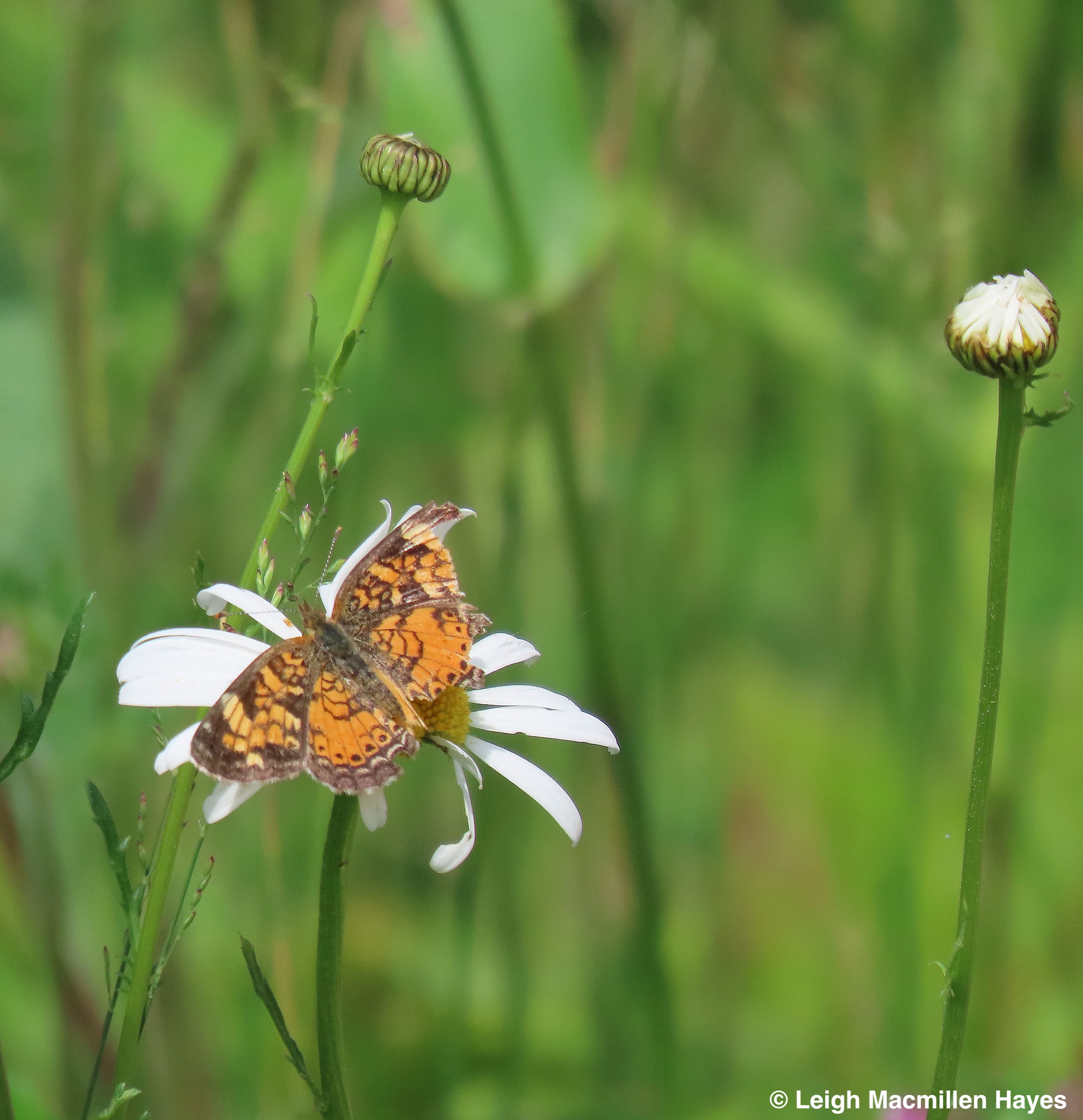
He continued to watch, vocalizing constantly, as I explored his territory below.

Upon every high spot, including tree stumps, there was at least a midden, but also a few cones for possible future consumption, though I did have to wonder if some went uneaten because he realized they were open and thus not viable.

More of the same I found upon some of the cut pine stacks we created long ago that serve as shelter and . . .

Storage! I’ve been looking for a cache for the past few weeks, a squirrel’s food pantry, and today I located a few small ones that I know will grow in the coming weeks. Cool. moist locations like among the logs, but also in the stone wall, offer the best places to keep the cones from drying out.

As he backed up but still chattered at me, one thing I noticed about Red, which will help me to locate him in the future, is that he not only has a reddish gray coat, but between his back and white belly there is a black stripe. Maybe he’s disguising himself so he can go trick-or-treating this week and his neighbors won’t recognize him.

So here’s the thing. Red is an omnivore. And though we associate him with pine cones, especially in the winter, he also eats flowers and insects and fungi and even smaller mammals if given the chance. And acorns. And this year is also a mast year for acorns in our neck of the woods.

He’d peeled the outer woody structure away and had started to dine, but again, something or someone, and possibly I was the culprit, had interrupted his feeding frenzy.

That said, I was delighted to find the acorn shell fragments because already in my collection I had samples from a Gray Squirrel and a Porcupine. Now I have all three and you can see by the tape measure how they compare in size, as well as the manner of stripping. As you can see, Red’s fragments are about a quarter inch in size, while Gray’s a half inch or so, and Porky’s are about three quarters of an inch. And the latter are much more ragged in shape.

Red. My Squirrel Friend. He just doesn’t know it. Maybe by the end of the winter he will because I intend to call upon him frequently to see what else he might teach me.