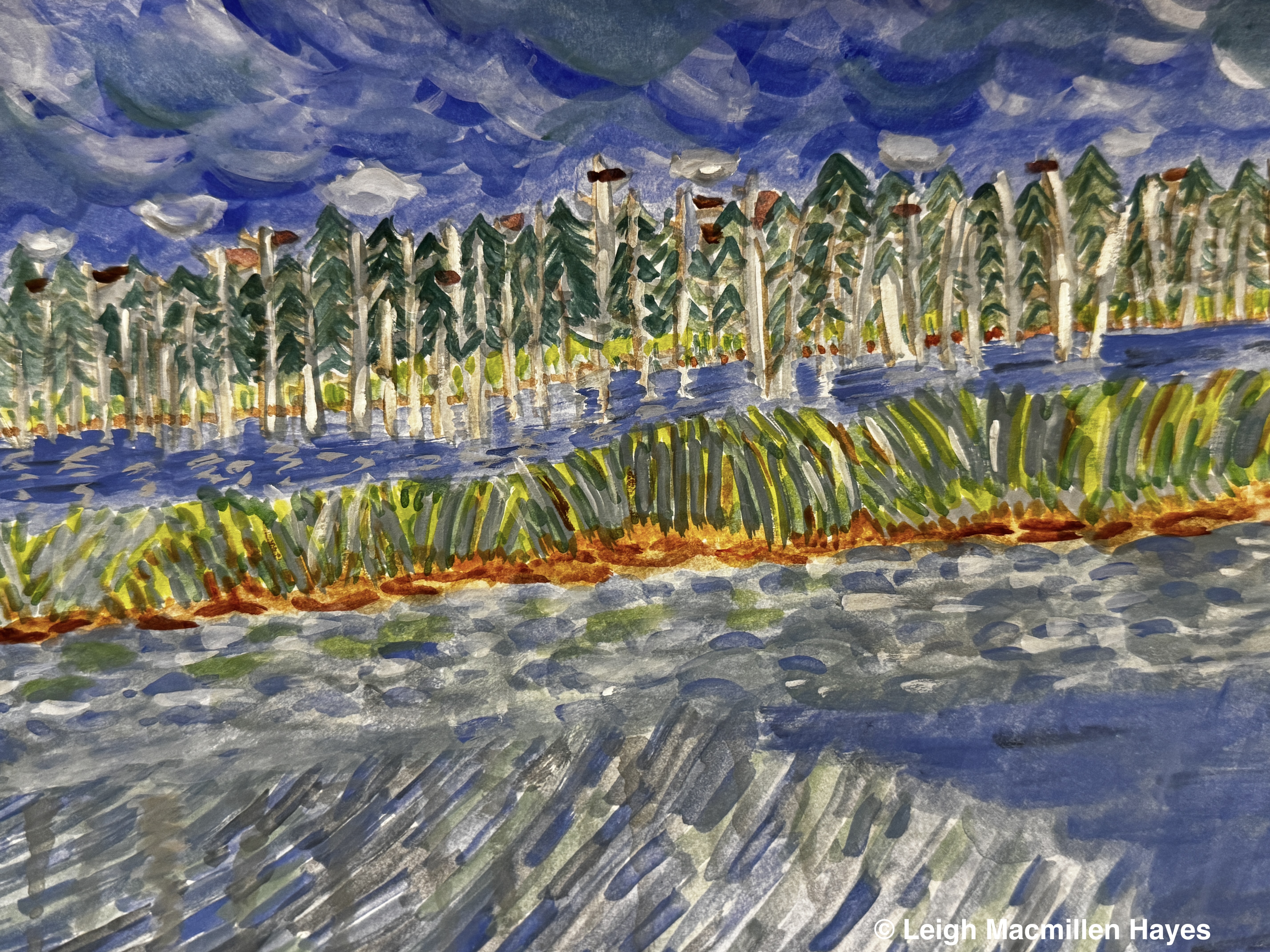
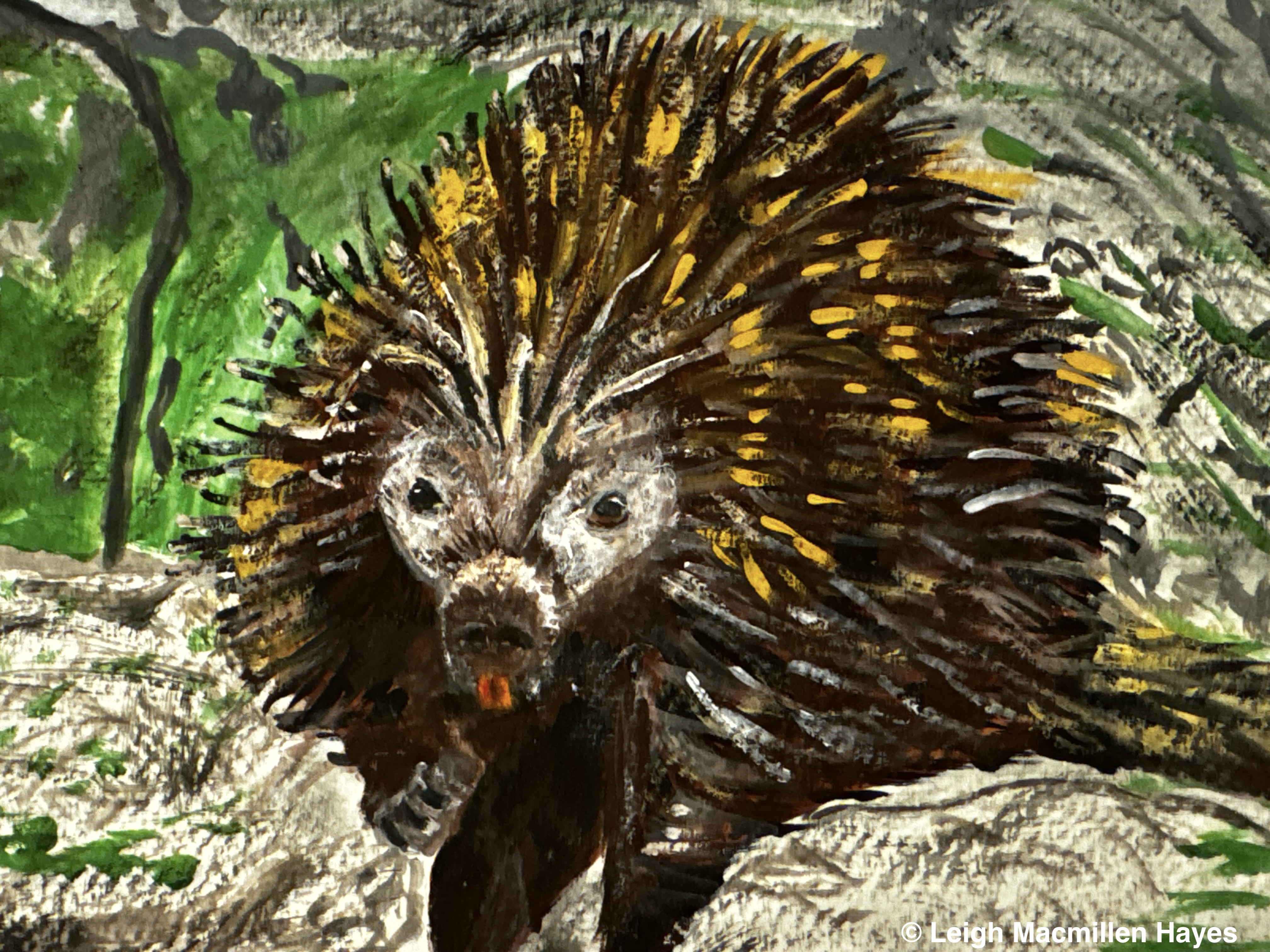
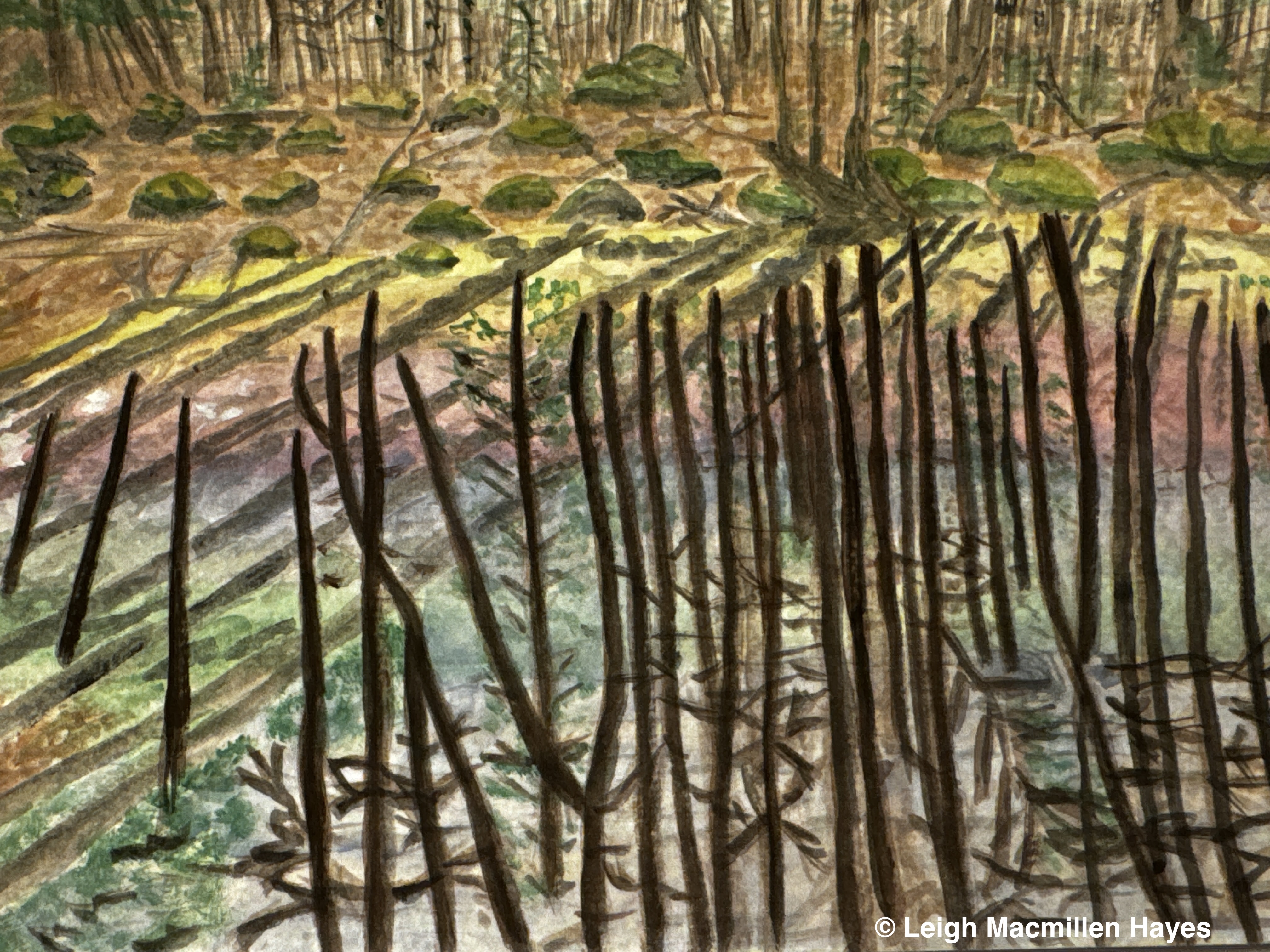
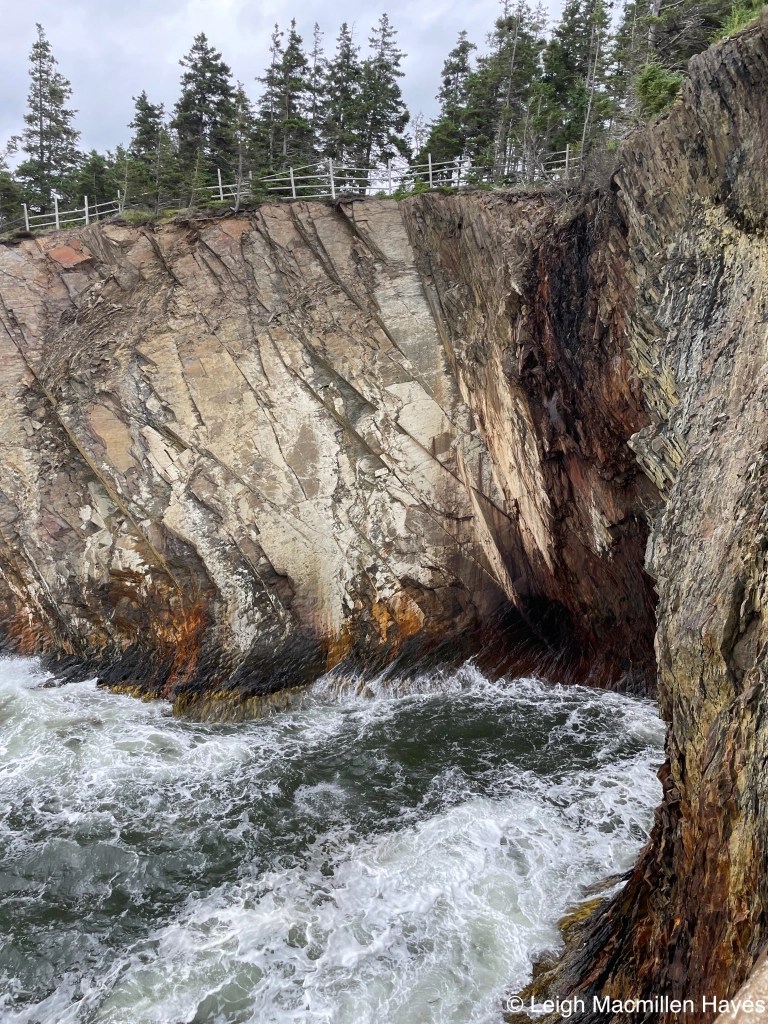
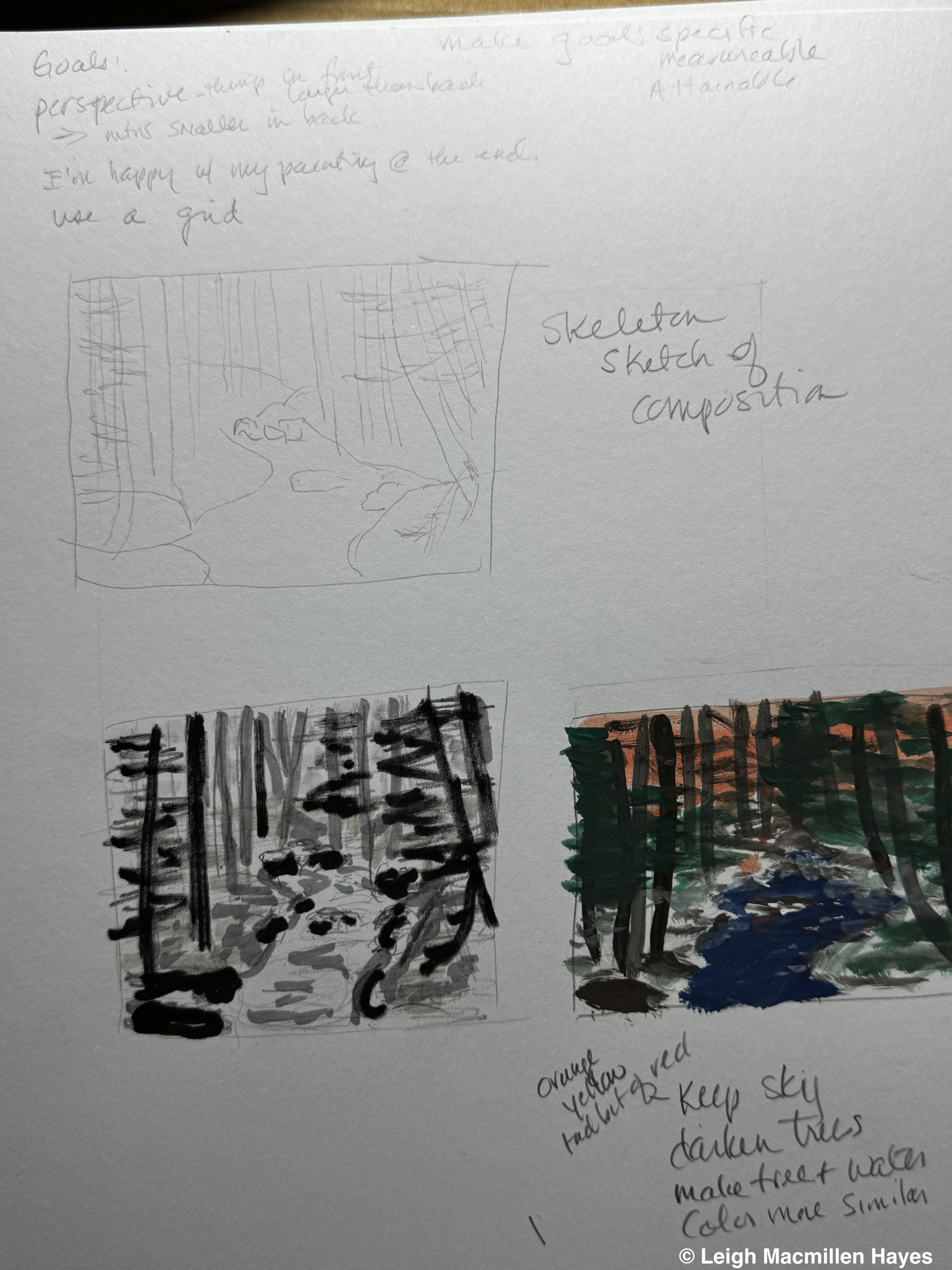
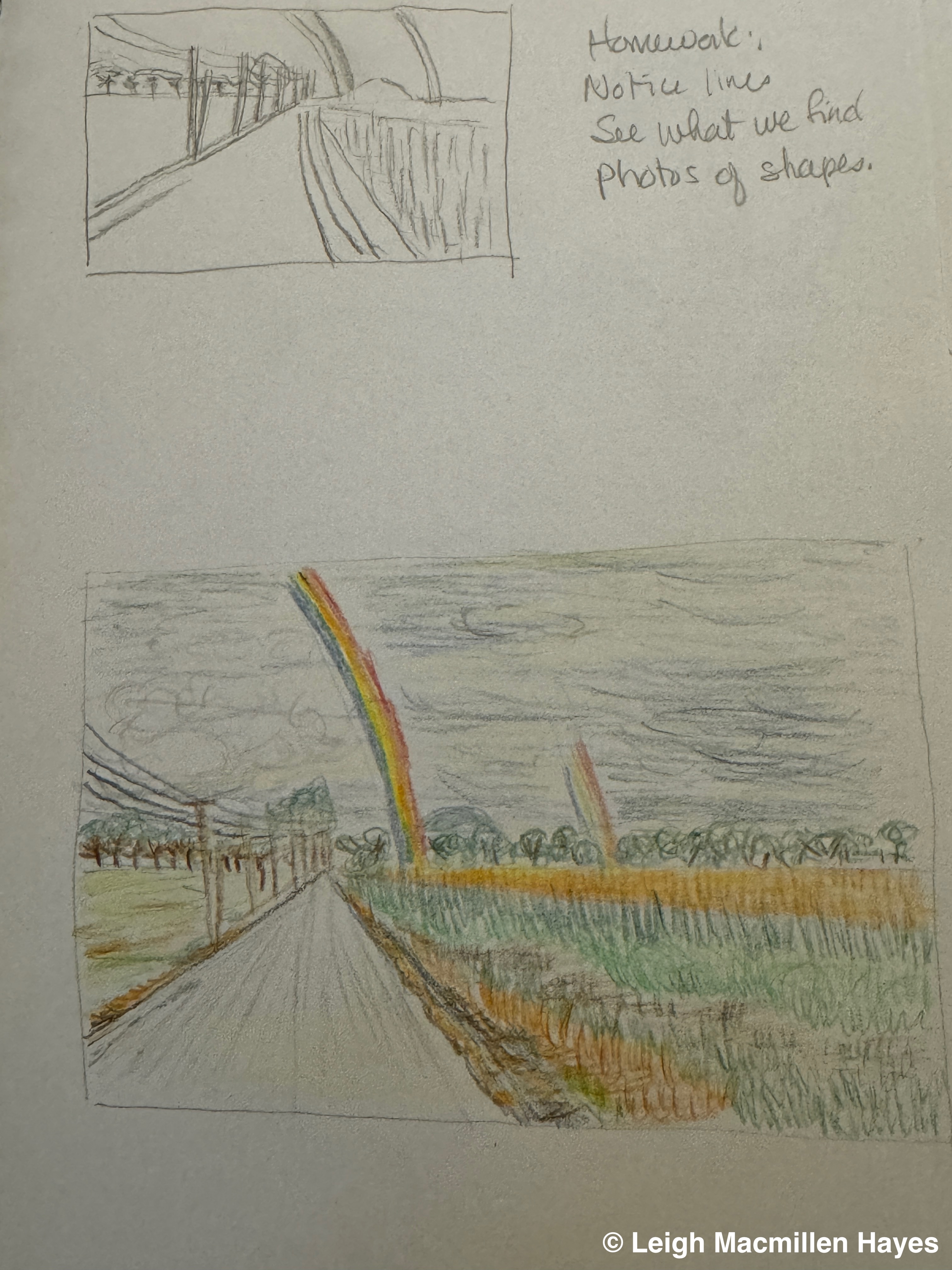
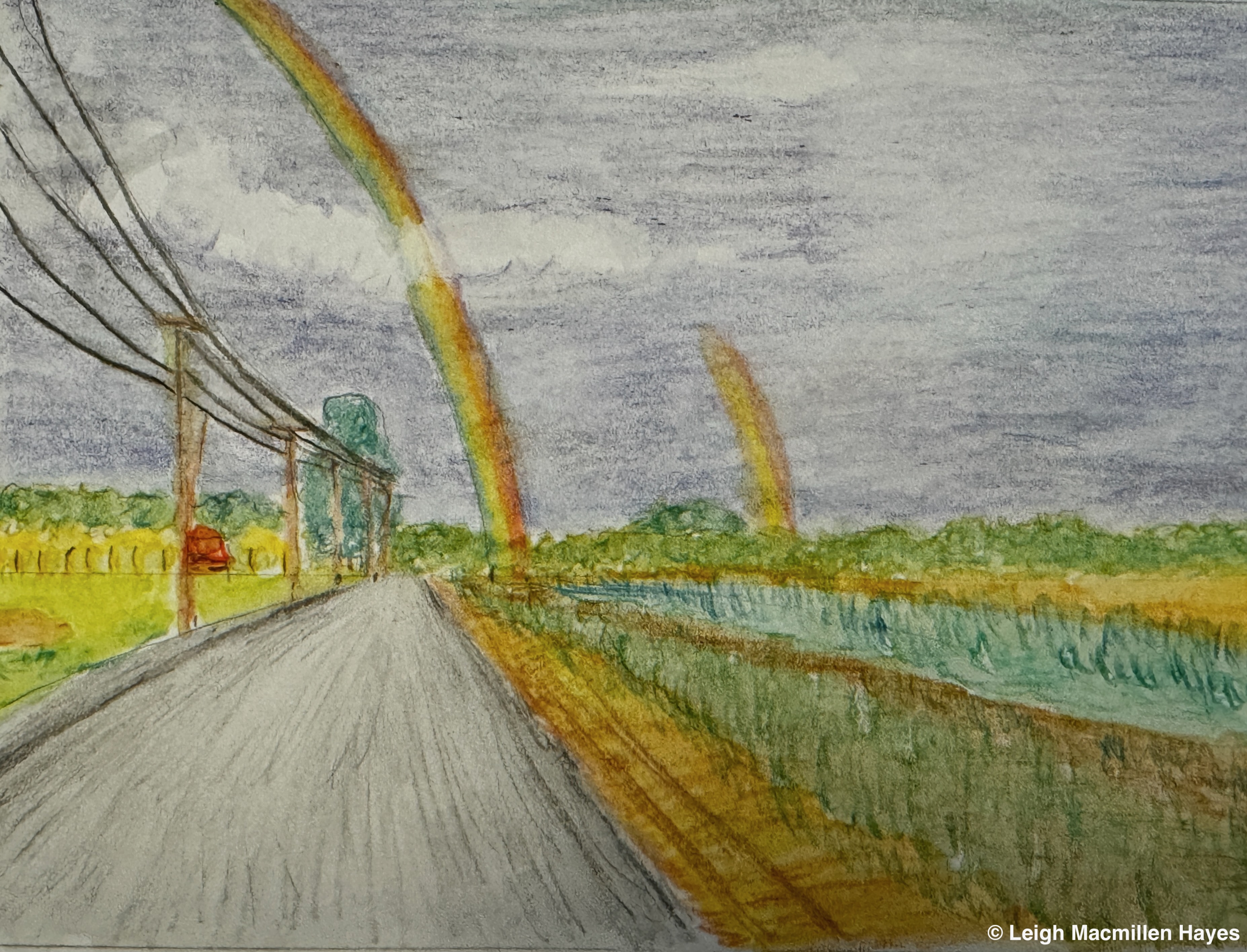
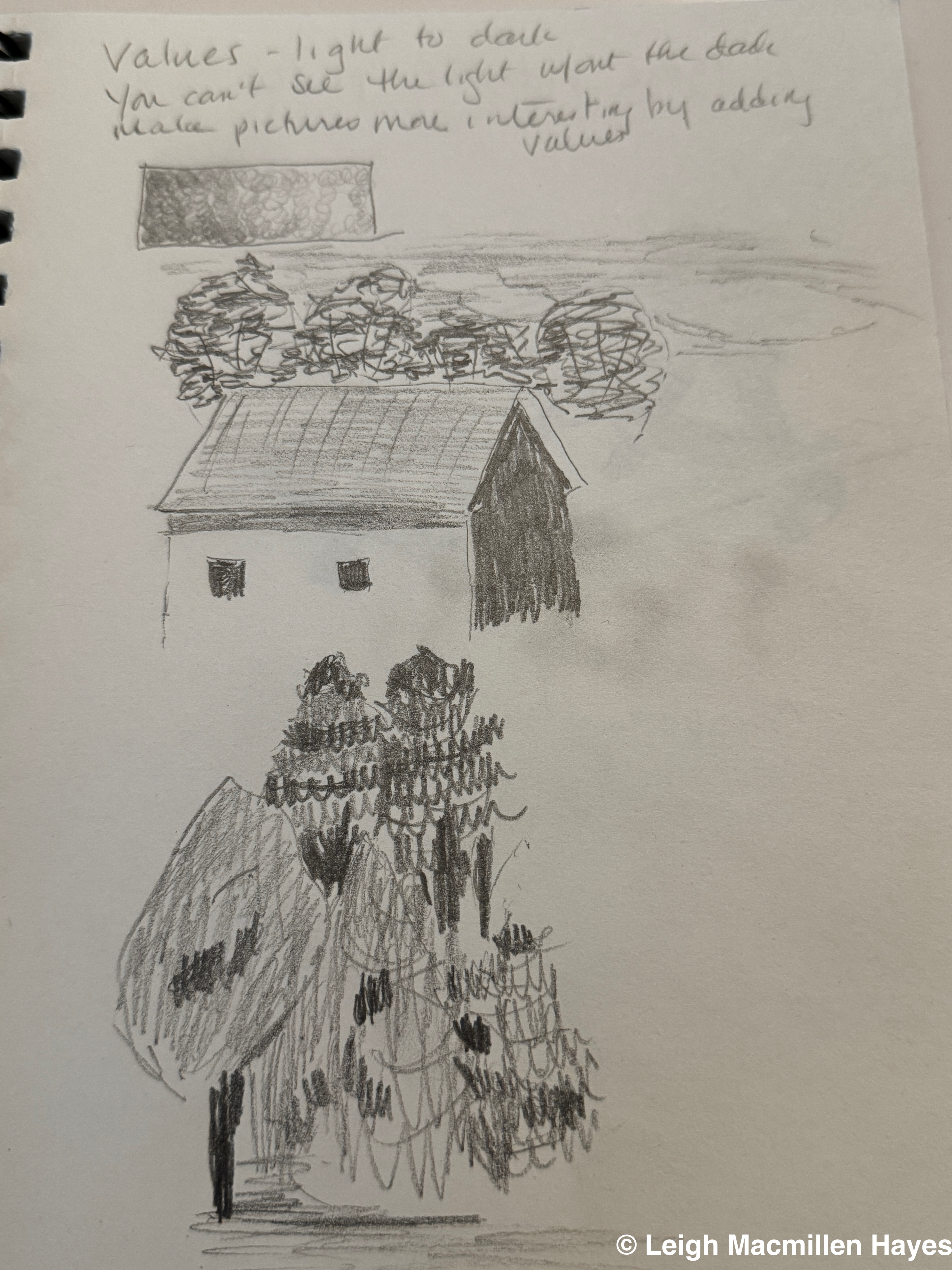
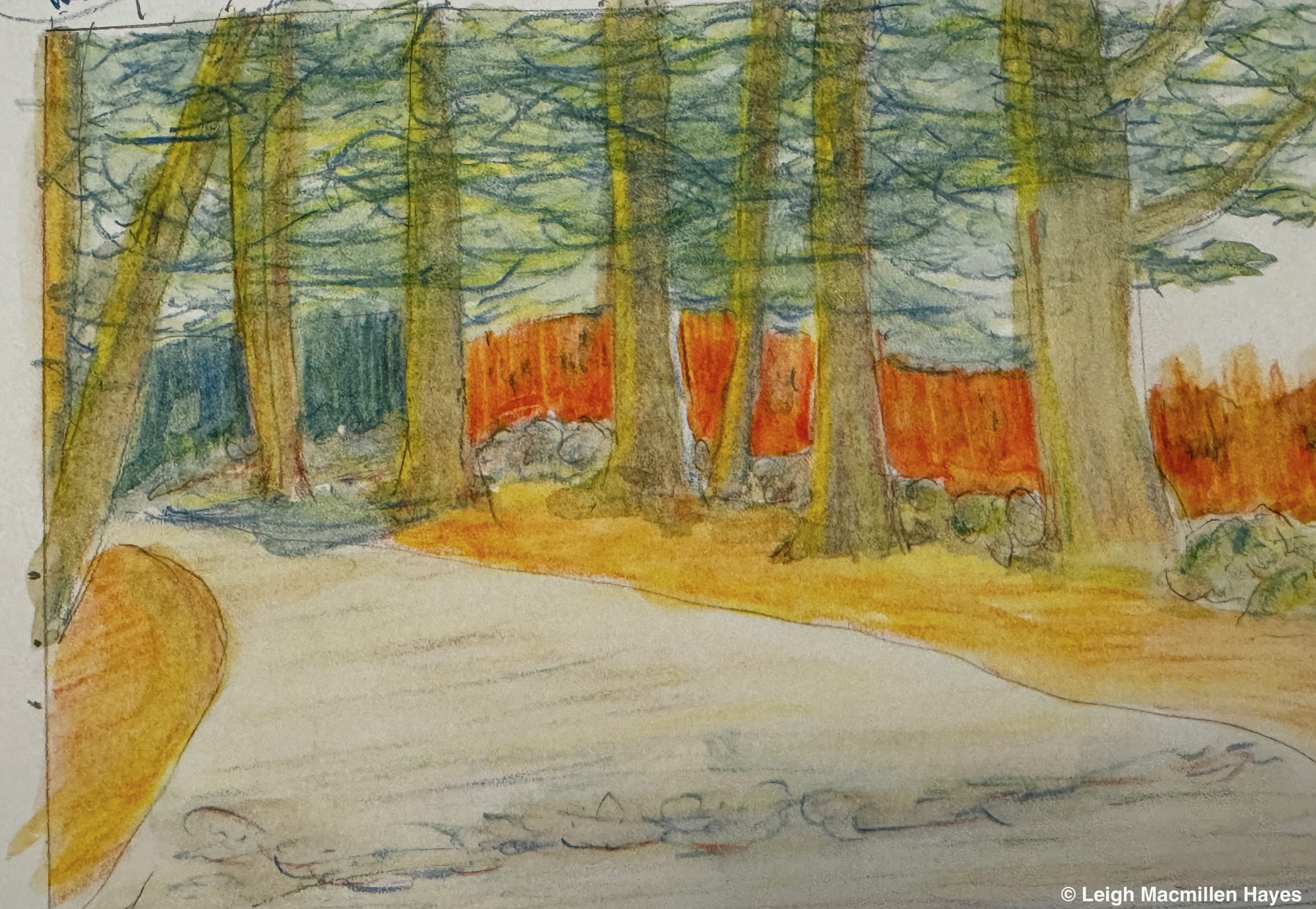
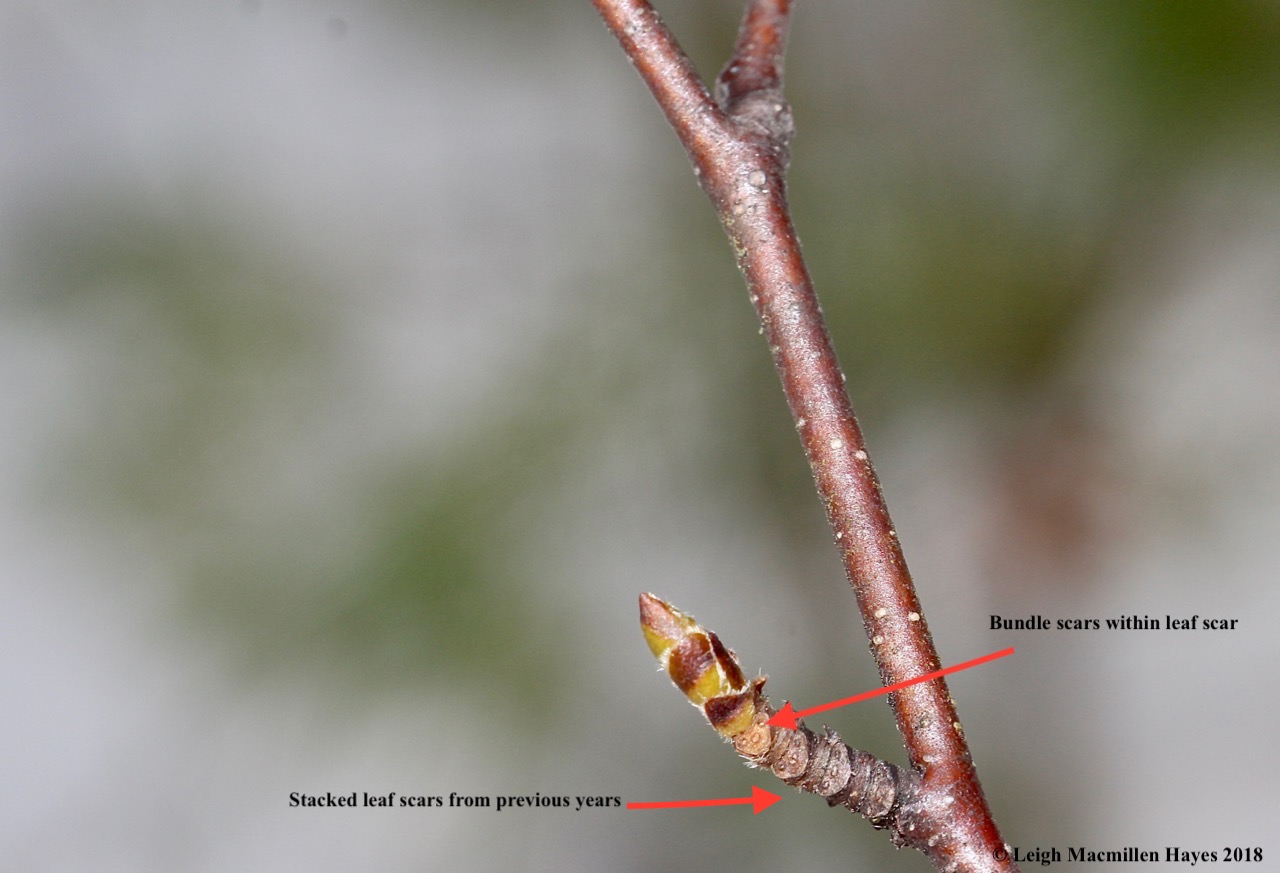
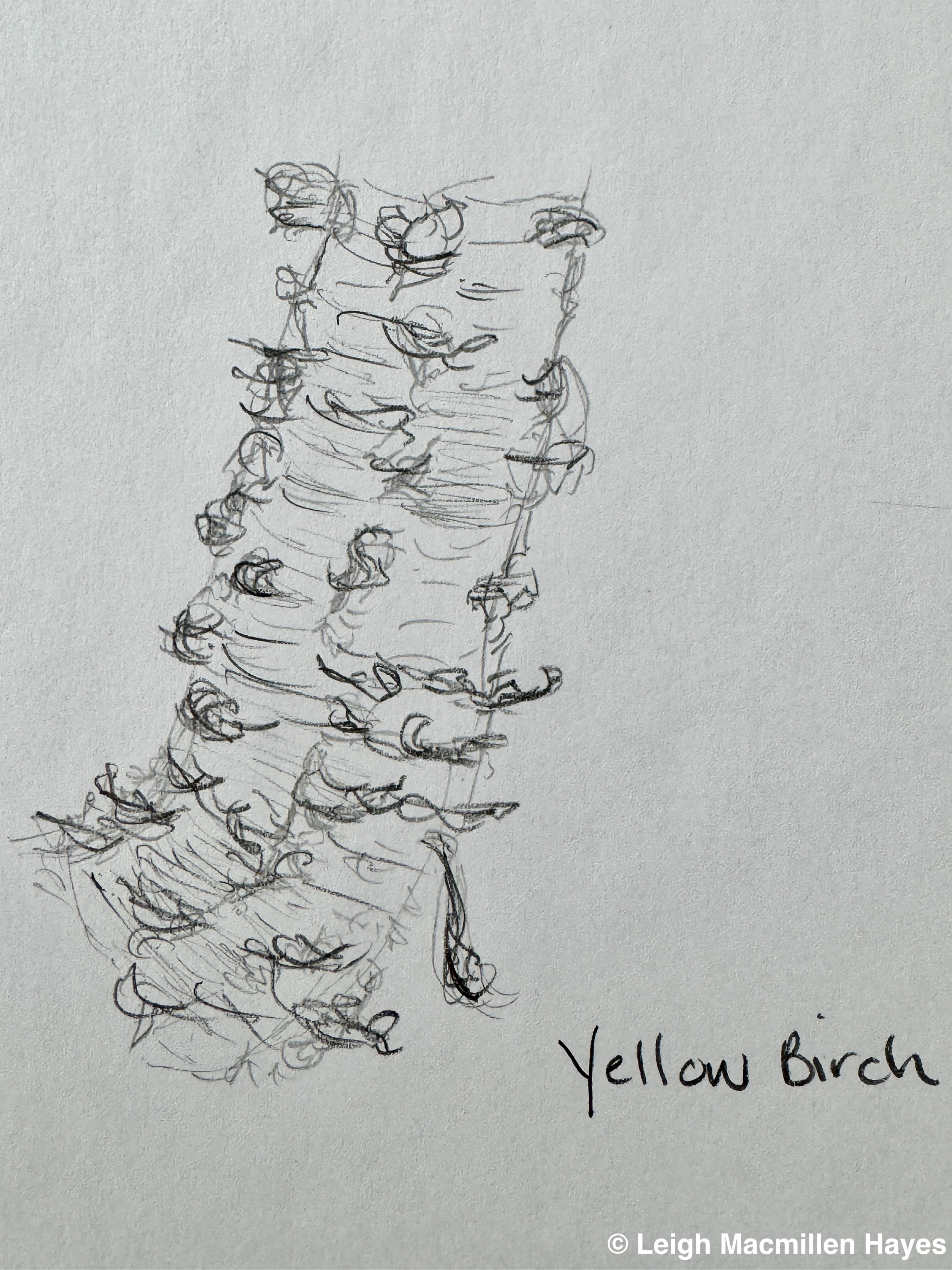
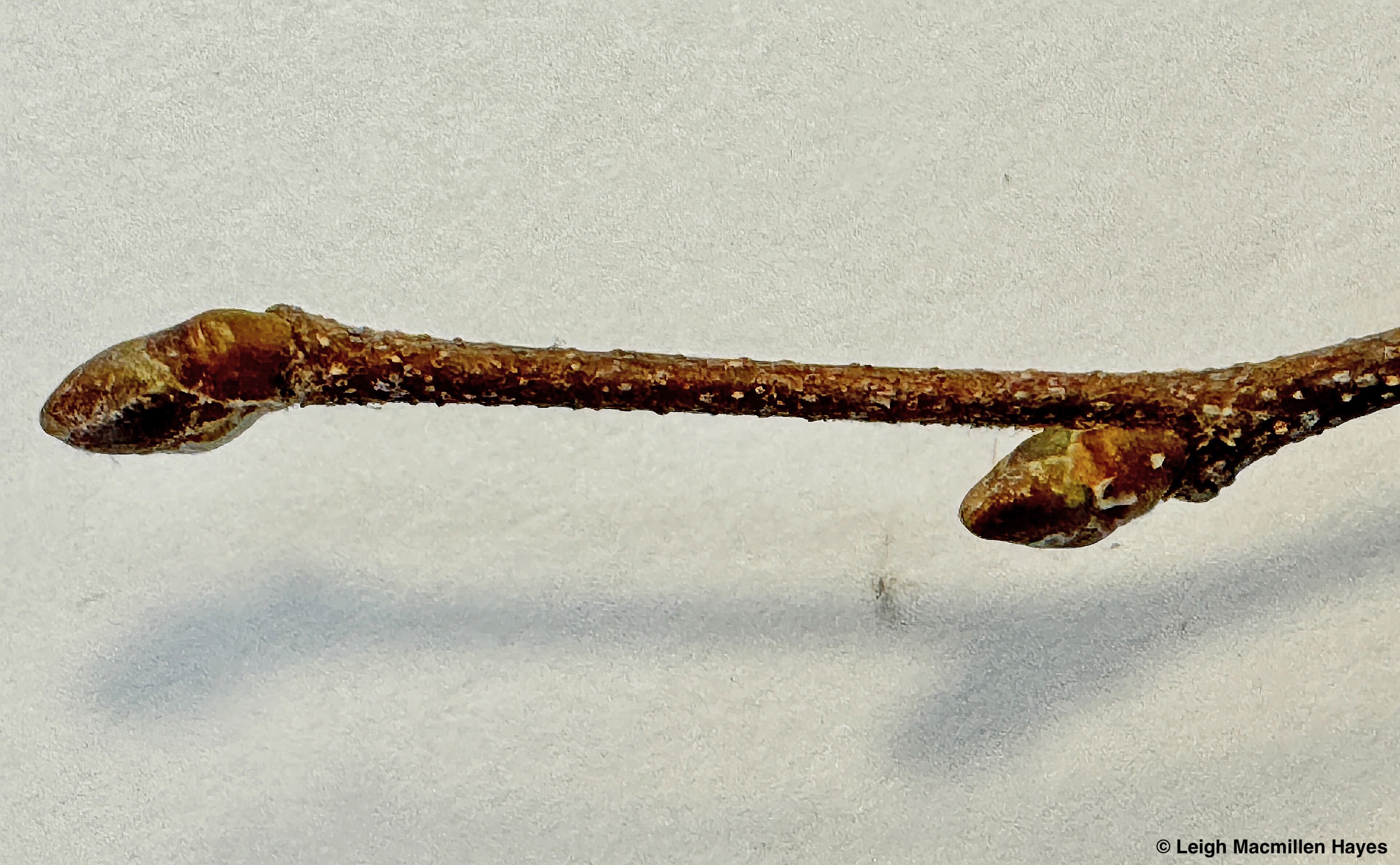
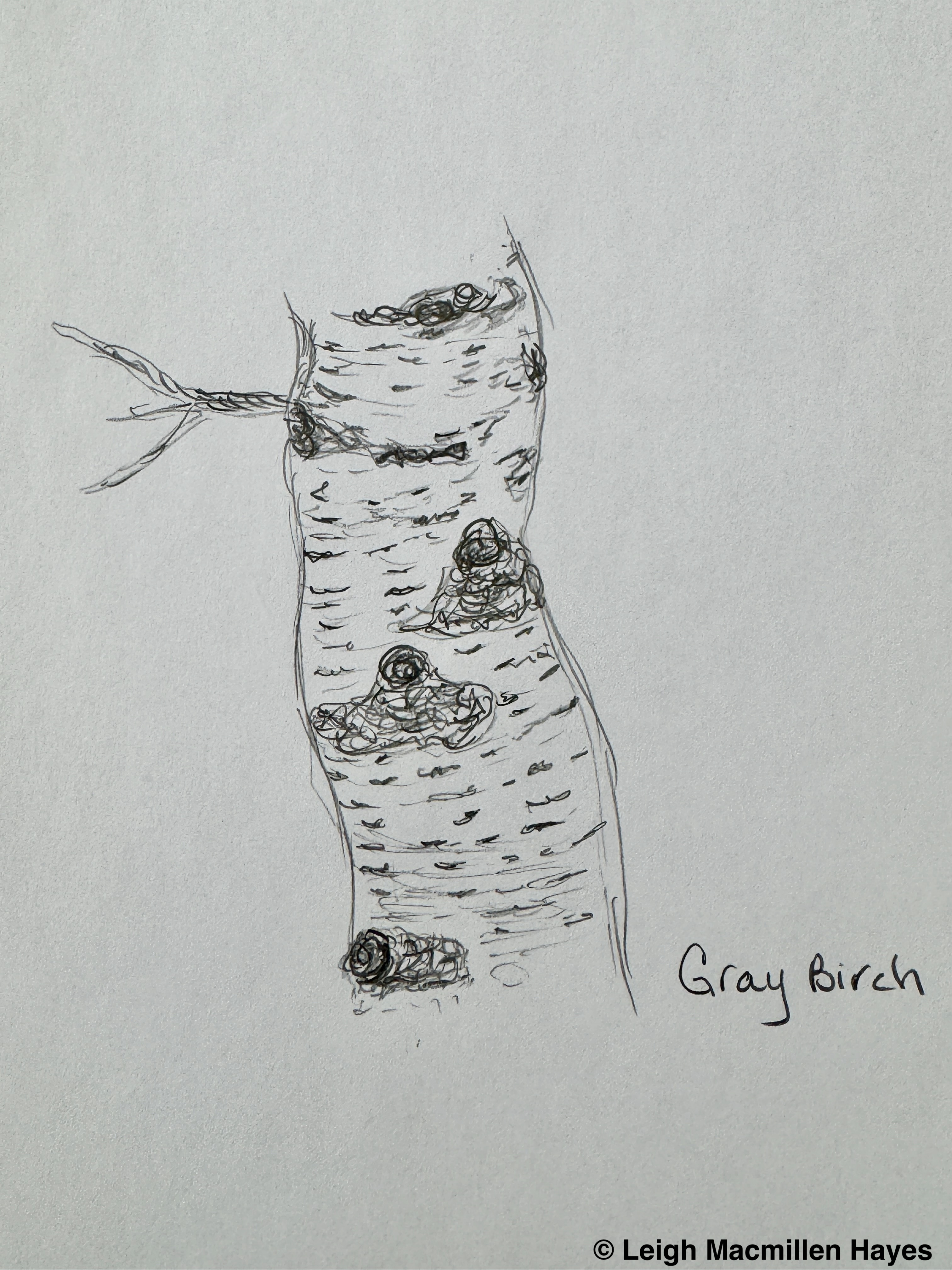
My Artistic Path: one year later

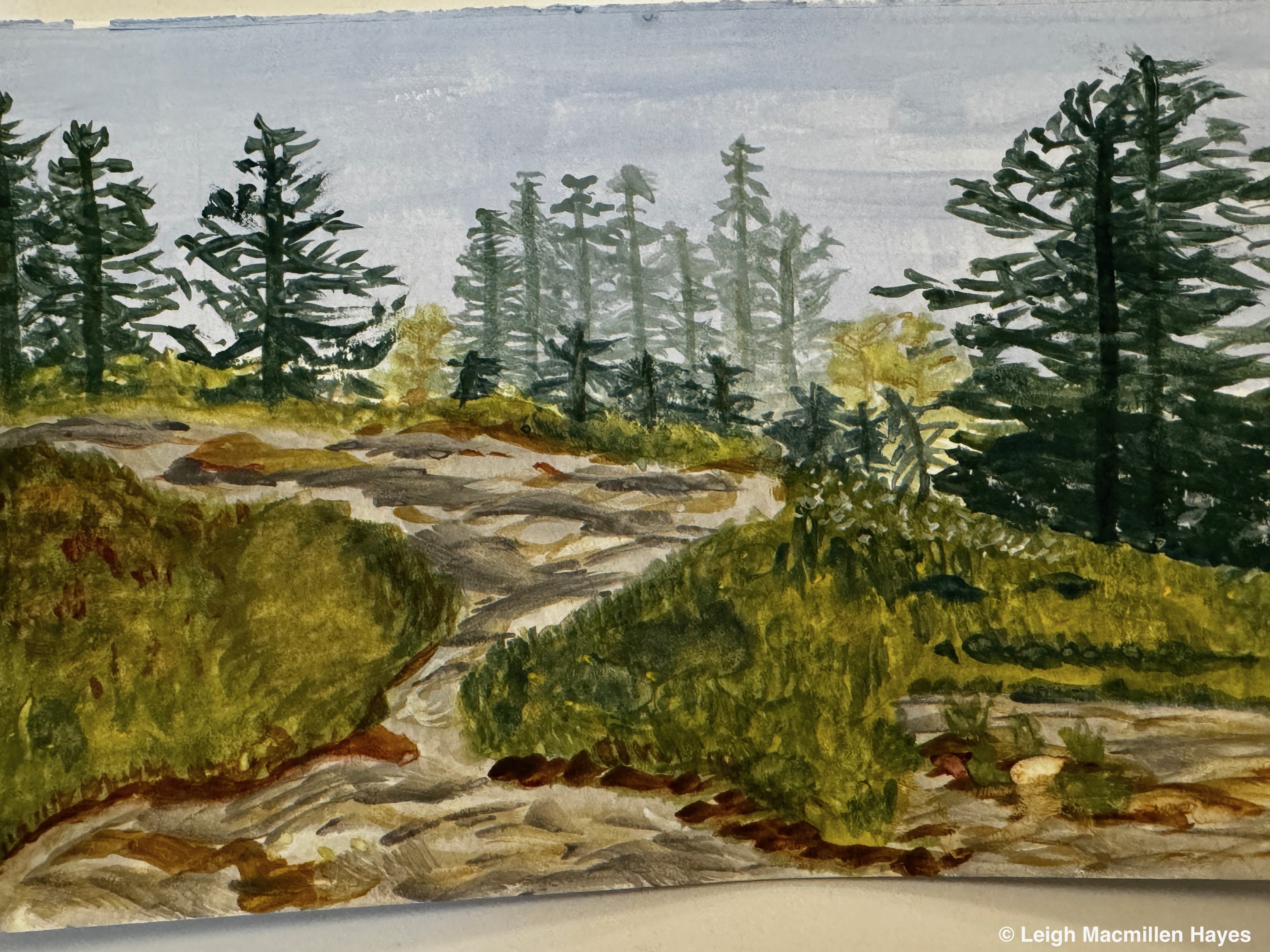
It’s all Jessie Lozanski’s fault that a year after publishing My Artistic Path, I’m publishing the next layer of paintings and sketches. Until I shared a few with my sister this afternoon, I had no idea how prolific I’ve been in this department. That said, some didn’t make it off the drawing board. Or rather, they did, but ended up in the trash, or in a pile to be considered at a later point in time. That’s the beauty of working with gouache, I can make changes at a later date. For me, that is liberating.

And now Dear Reader, you have three choices: 1) Read this entire post from beginning to end; 2) Scroll through the pictures and call it good; or 3) Click out of this post and pretend you either never saw it or that you did see it and loved all of it.

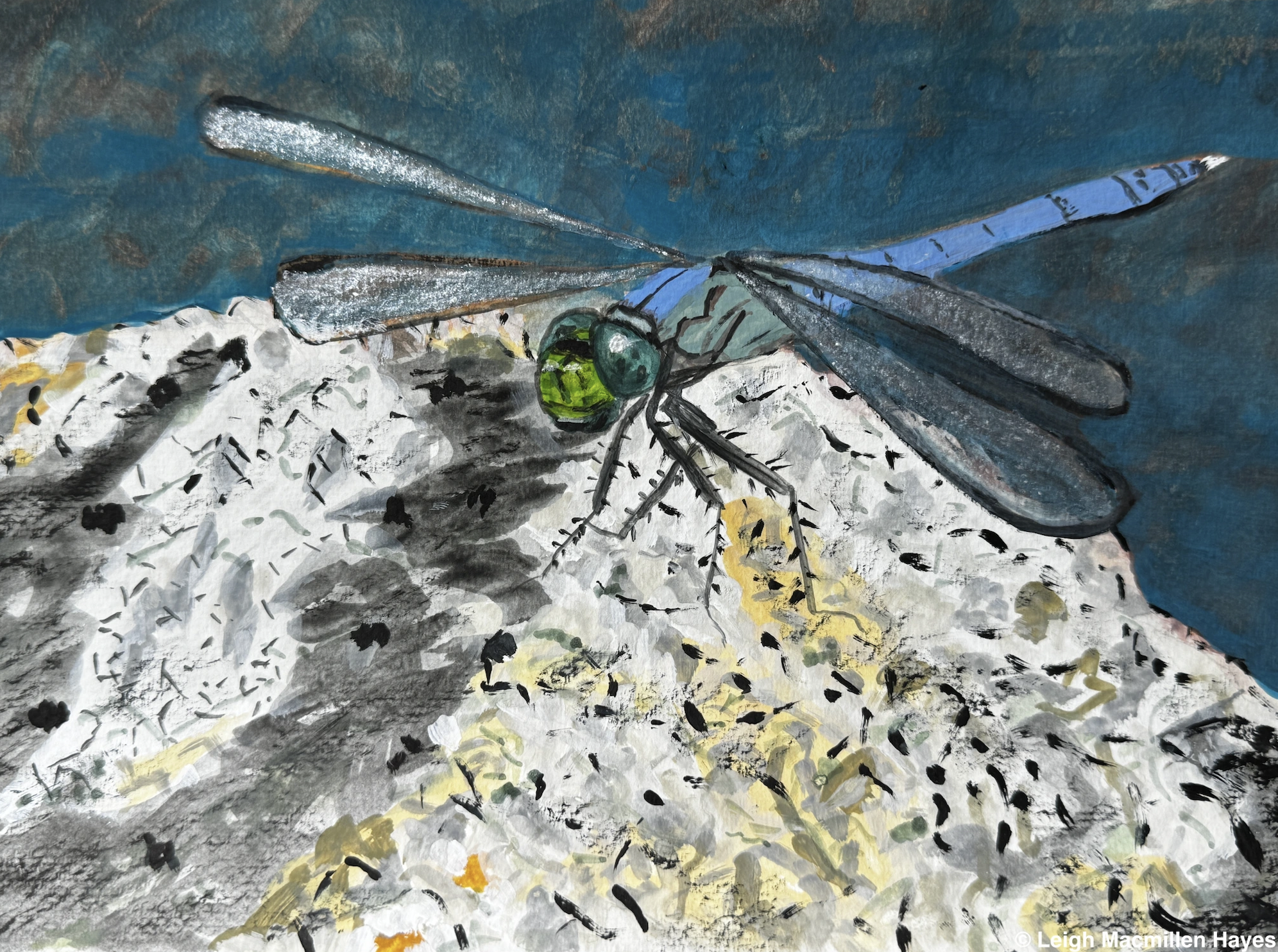
I have to say, I thought I’d paint more dragonflies like this Eastern Pondhawk, but when I scrolled through My Art Gallery, I discovered only a few others. That said, I did take some time to sketch the naiad forms of six families and then painted each one. You can visit all of those in Dragons of the Future if you wish.

Waterways also intrigued me as I tried to figure out how to make the water look as if it is flowing. This is Province Brook in Chatham, New Hampshire.

And then there are the critters and I’m afraid you’ll see a few of them along this journey. The fun thing about this Chipmunk is that it made an appearance on a February day. I was tracking with some friends and we were pretty certain that we’d discovered Chipmunk prints, but it didn’t seem possible. Until it was because as we backtracked, we saw him and he posed for a few photographs. Sometimes, when you need more food, you might make a mad dash from your winter home to locate it.

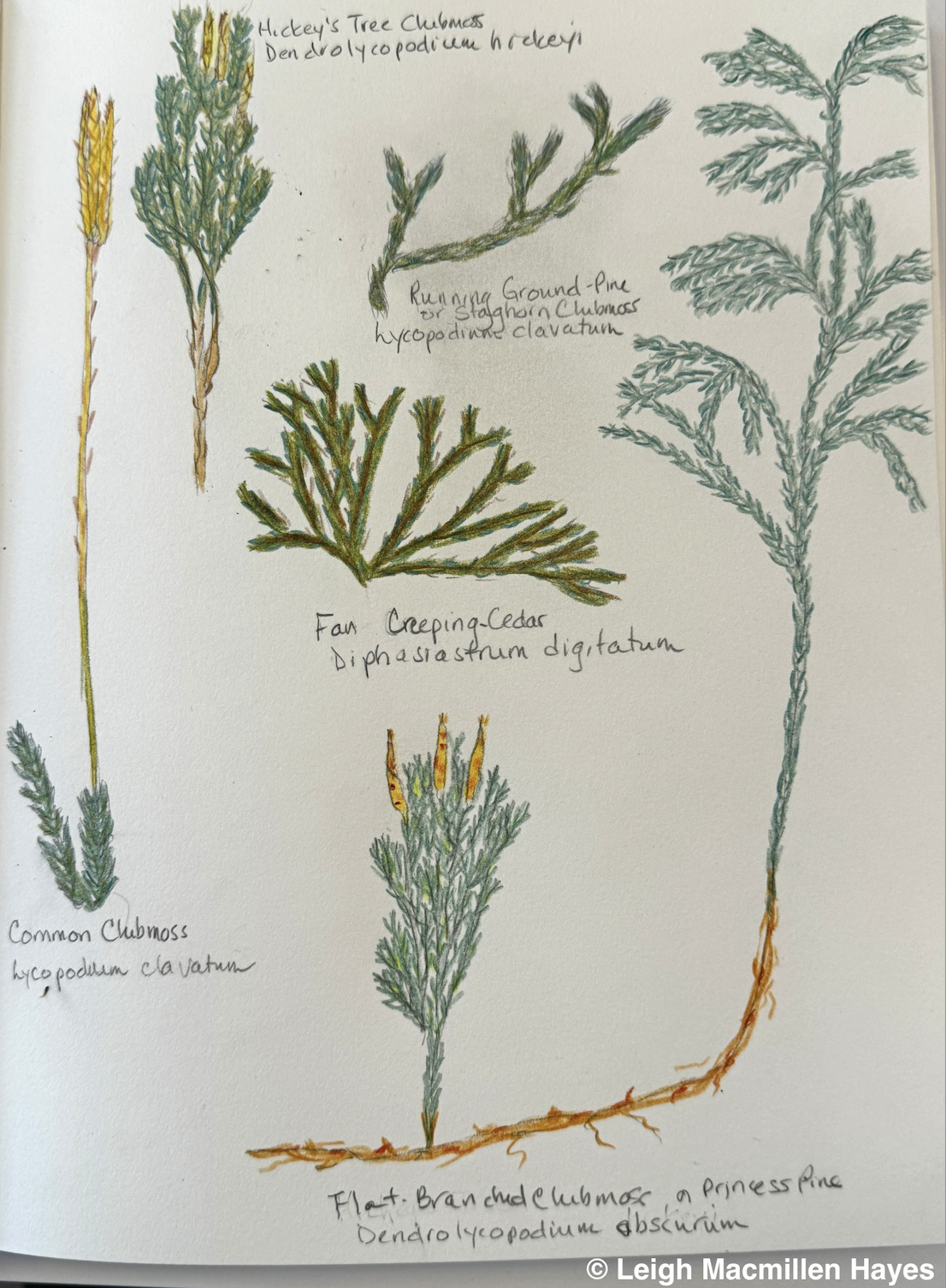
Clubmosses are one of the topics I’m trying to learn. . .when I take the time to do so. And so I sketched these after spending some delightful hours studying them as I wrote about in When is a Moss not a Moss?

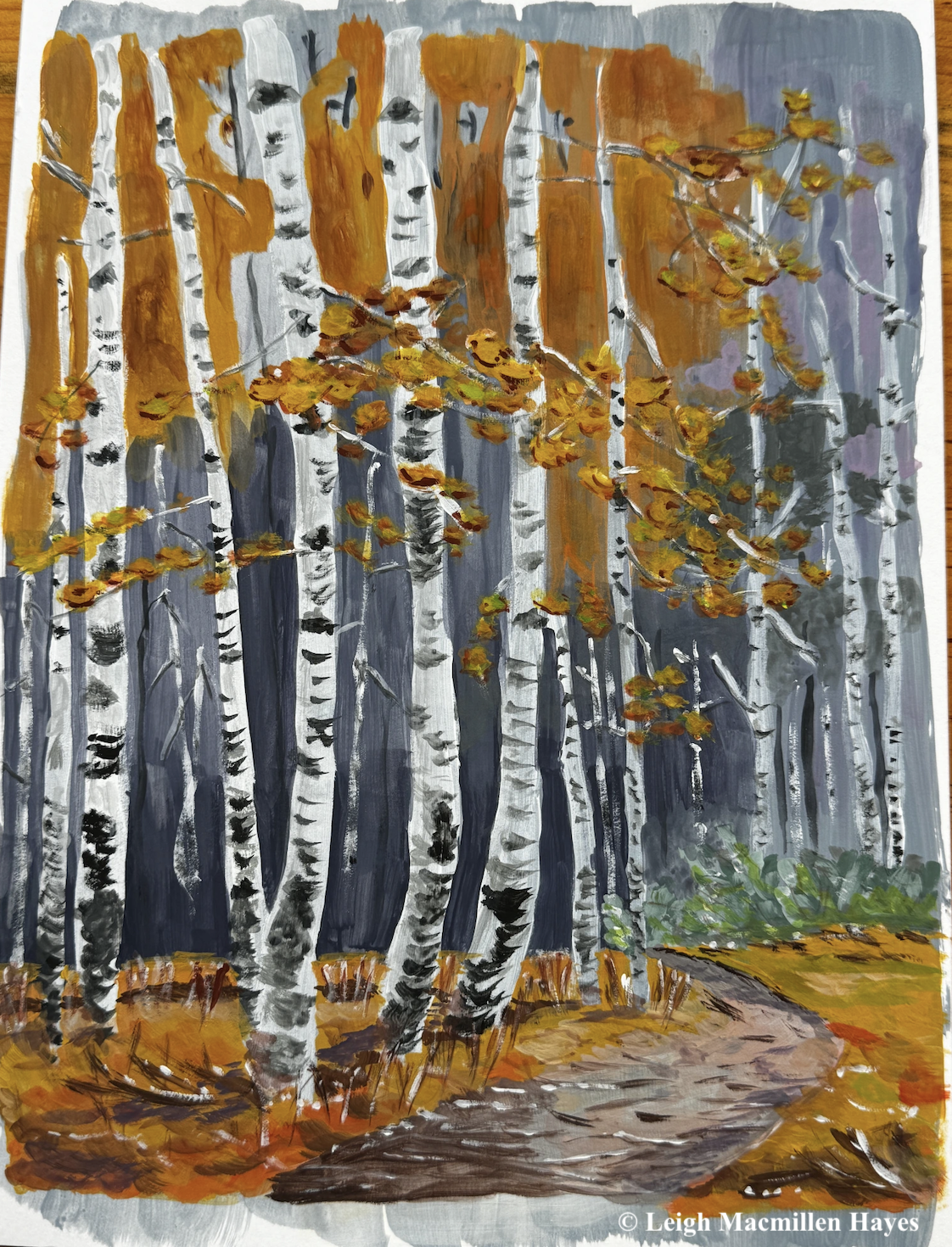
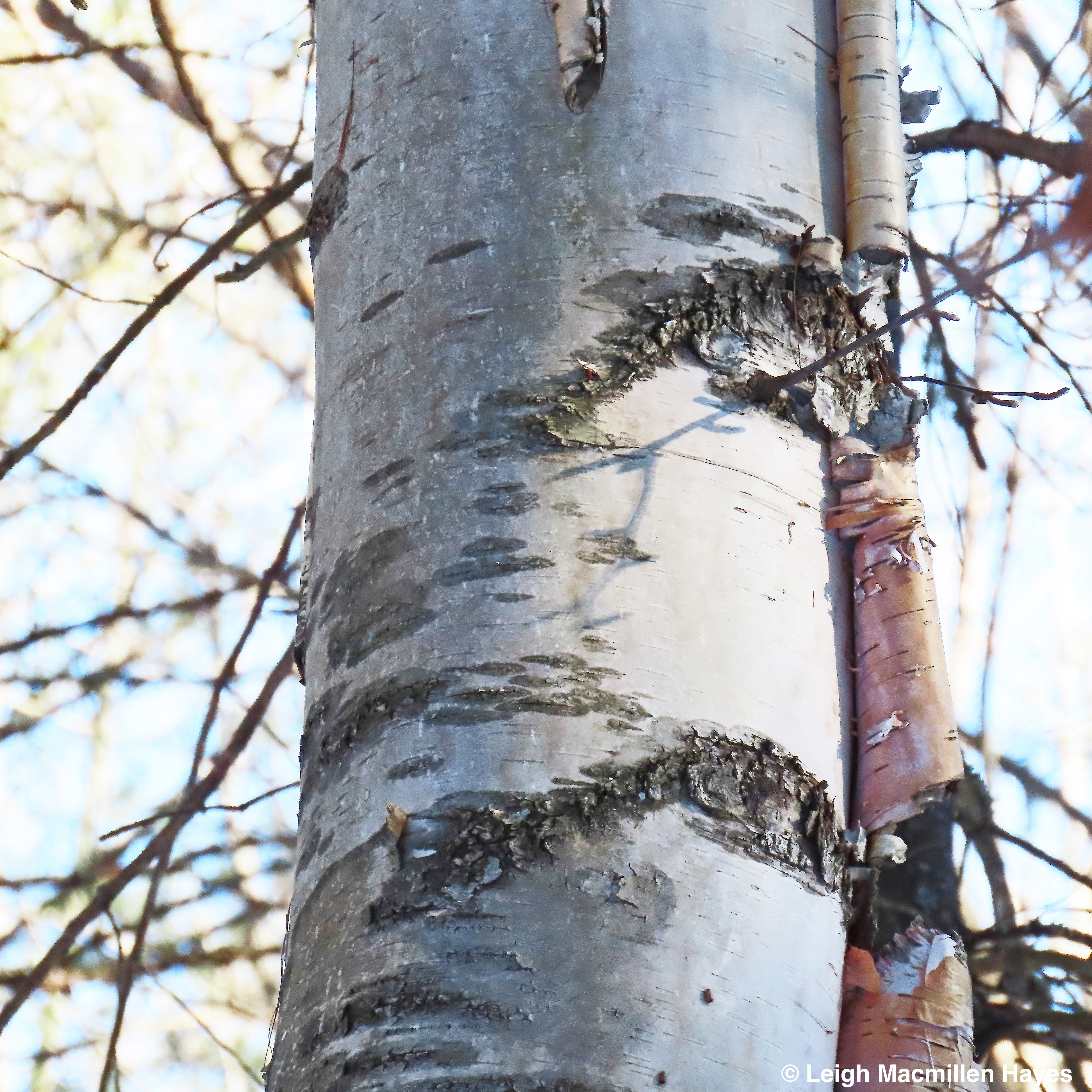
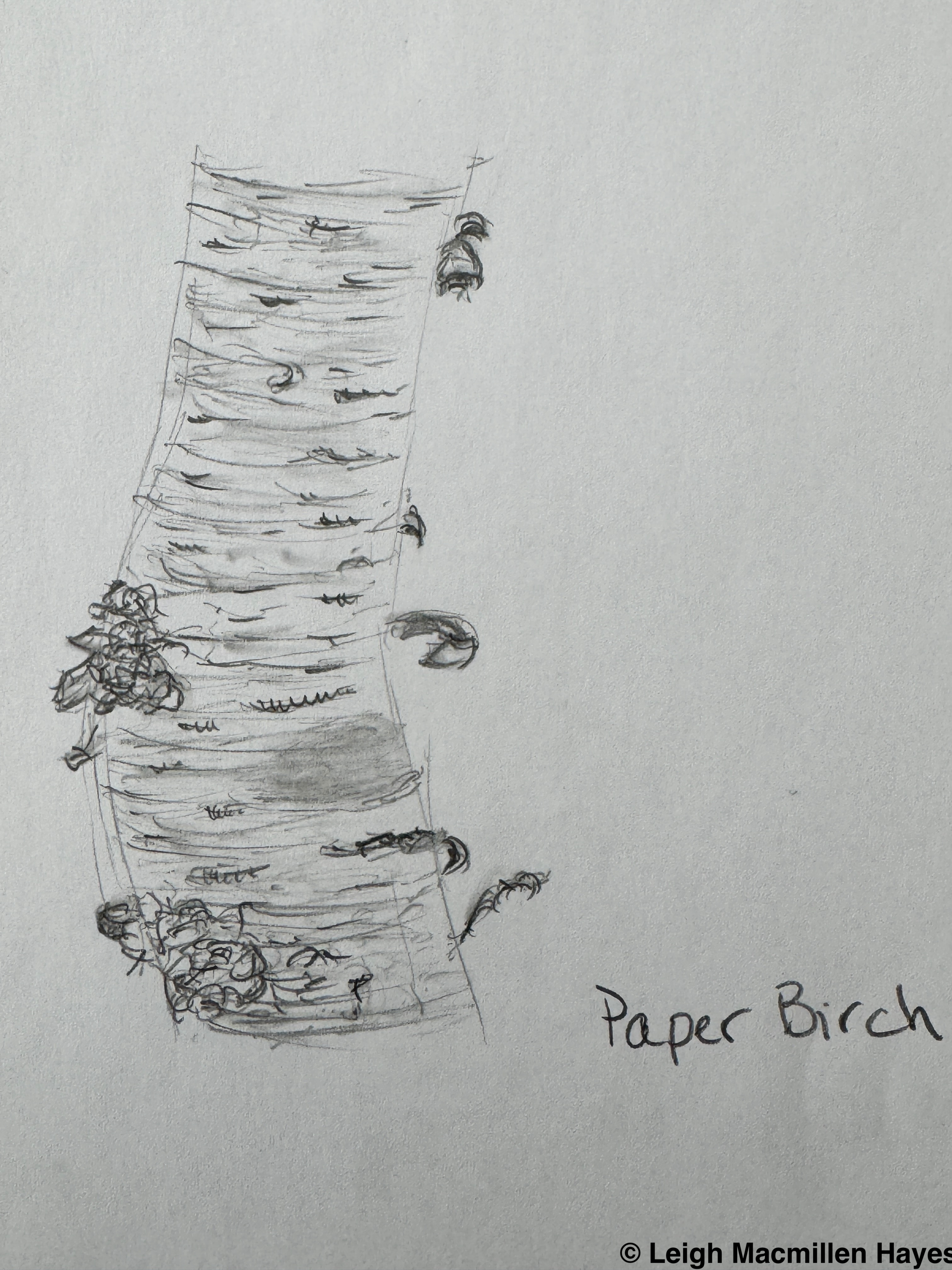
It’s the colors in this painting that I like. And figuring out how to paint Birch bark.

And then there was Forter Castle in Glen Isla, Scotland. I actually did three smaller versions of this castle and then decided to paint this larger picture based off one of those. It was a gift for Anne, our hostess when we were invited to spend a few nights there back in 2017, and in memory of her husband John. You can read more about that adventure here: From the Bonny Banks to the Highlands.

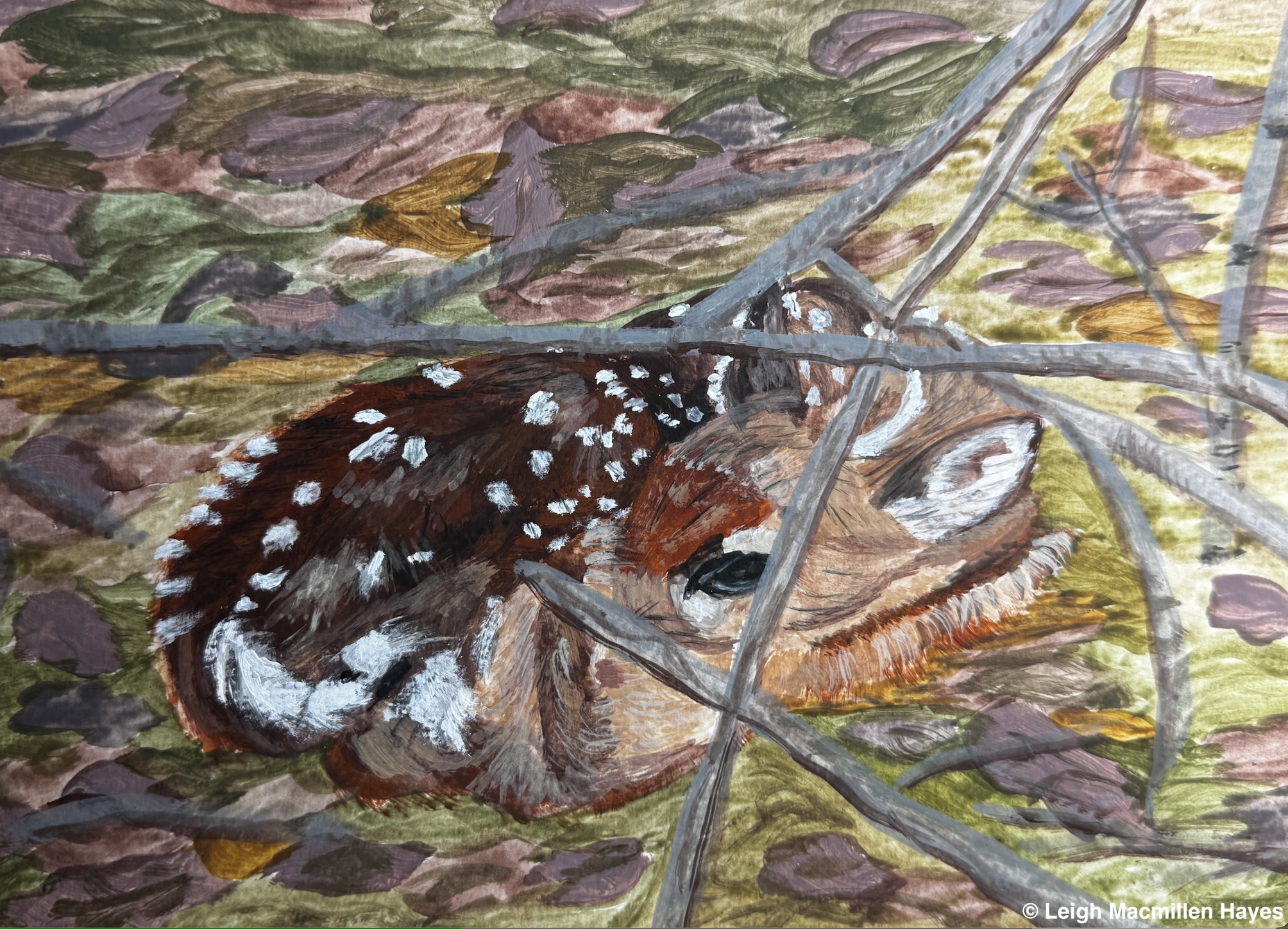
This next one will forever evoke the memory of my friend, Faith, who passed away this summer. We were on a Lakes Environmental Association walk at Holt Pond when we all “spotted” this fawn quietly waiting for momma. Quick pics and then we moved away.

And this is one of the Red Foxes who frequent our yard. In My Art Gallery, there are two more attempts, both in watercolor while this one is with gouache paints. Experimenting is fun.

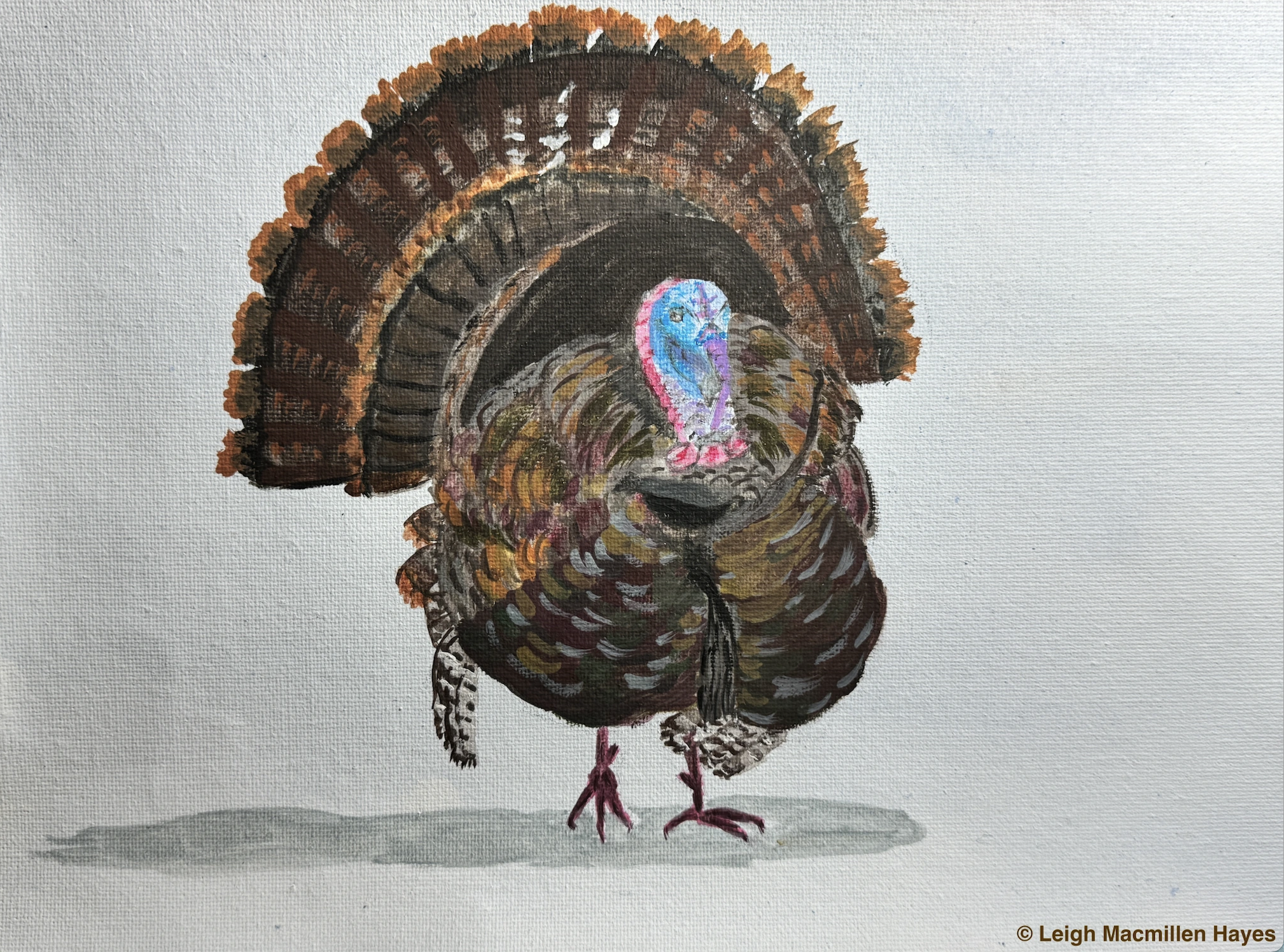
Tom Turkey! What more need I say.

In the midst of taking classes with Jessie this past year, which sadly ended in the spring, I purchased Grahame Booth’s book: Anyone Can Paint Watercolour Landscapes, and tried to follow the step-by-step instructions. This was a result of Lesson 1. There were six lessons altogether, and I thoroughly enjoyed the experience. You can see my other paintings based on the book by looking once again at My Art Gallery. Yikes, I’m beginning to sound redundant. Smiley Face!

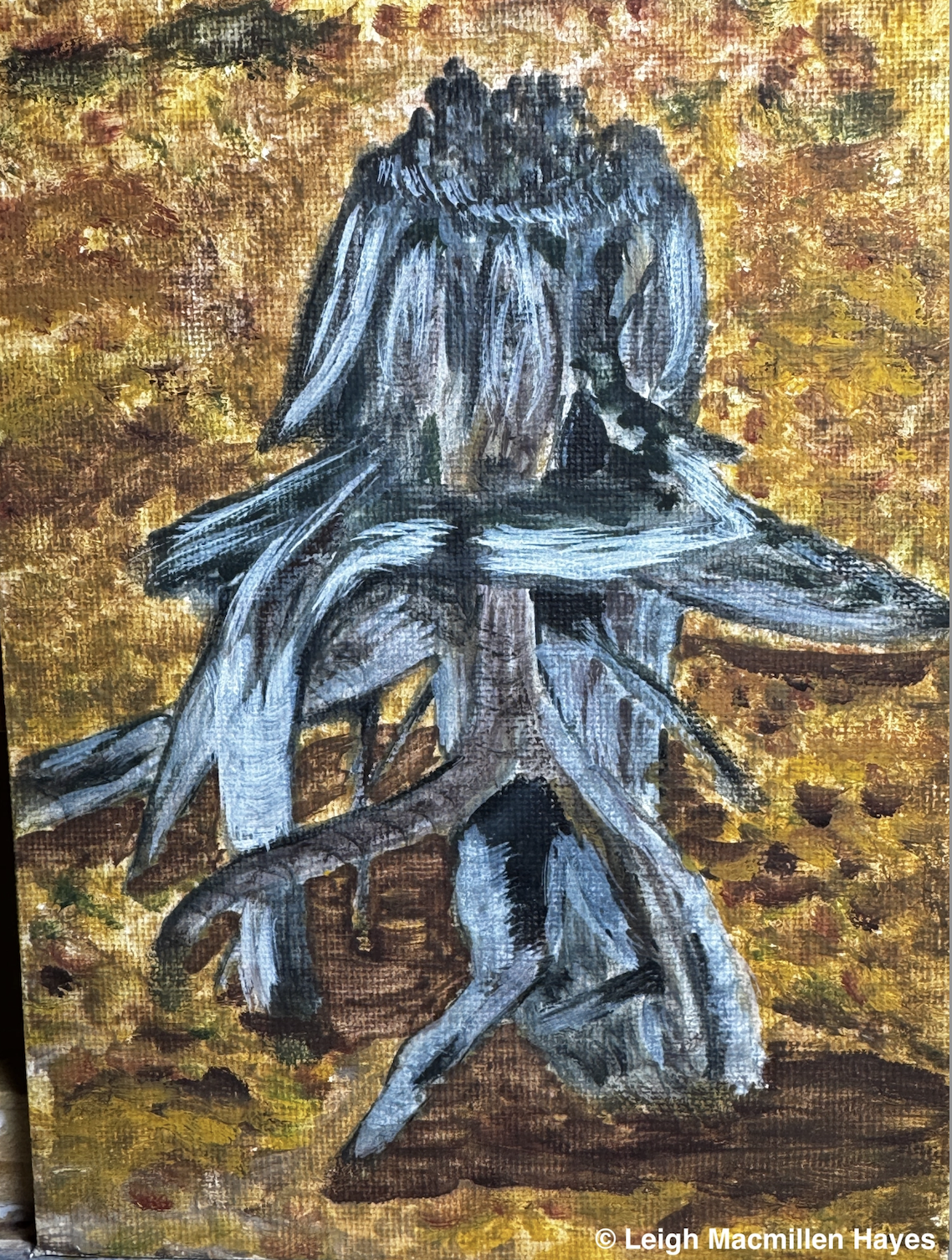
I like this one because I like the subject. I used a matted board to paint it. The stump is beside the Saco River in Conway, New Hampshire.

This one was for another friend because we had walked out to Kezar Pond in Fryeburg from her home the previous New Year’s Eve or Day, and it was just lovely.

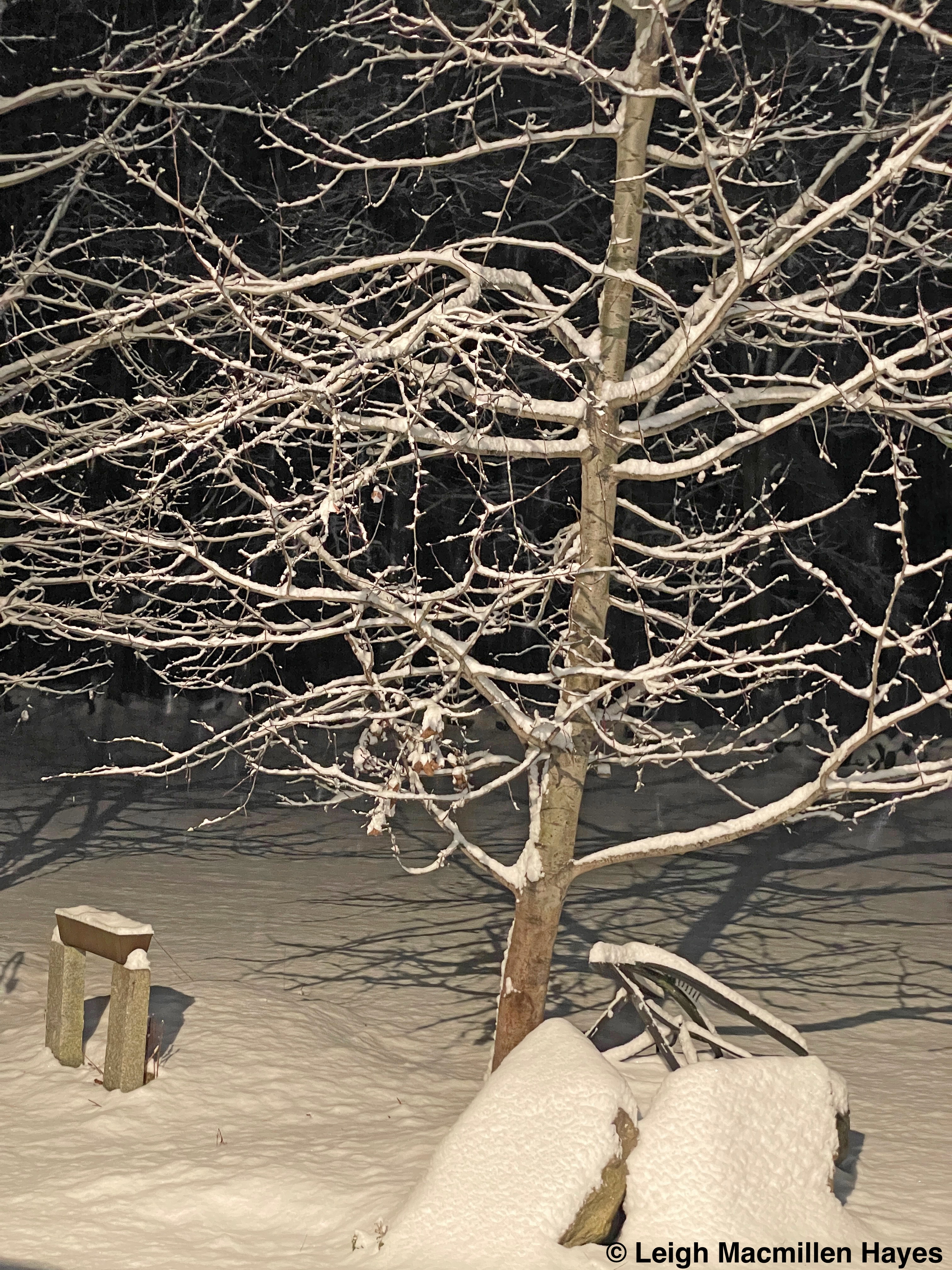
And then there is a perennial subject of mine–the Stairway to Heaven tree along the cowpath in our woods. I especially love it when snow outlines the branches.

Another favorite scene takes me back to my childhood in Clinton, Connecticut, and I painted this for my sister and brother-in-law as a keepsake. So many memories in the spot that was our little piece of Heaven for so many years.

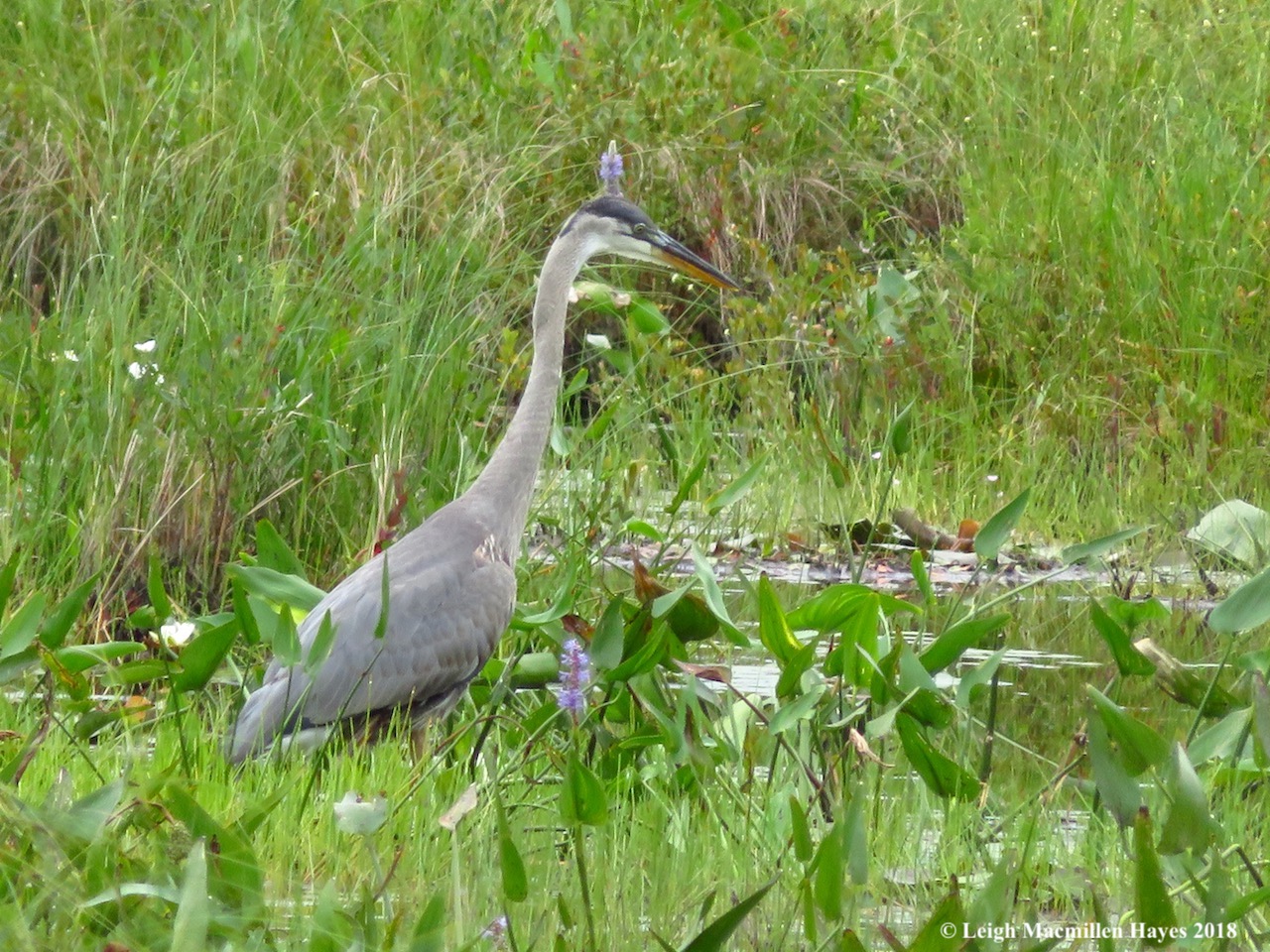
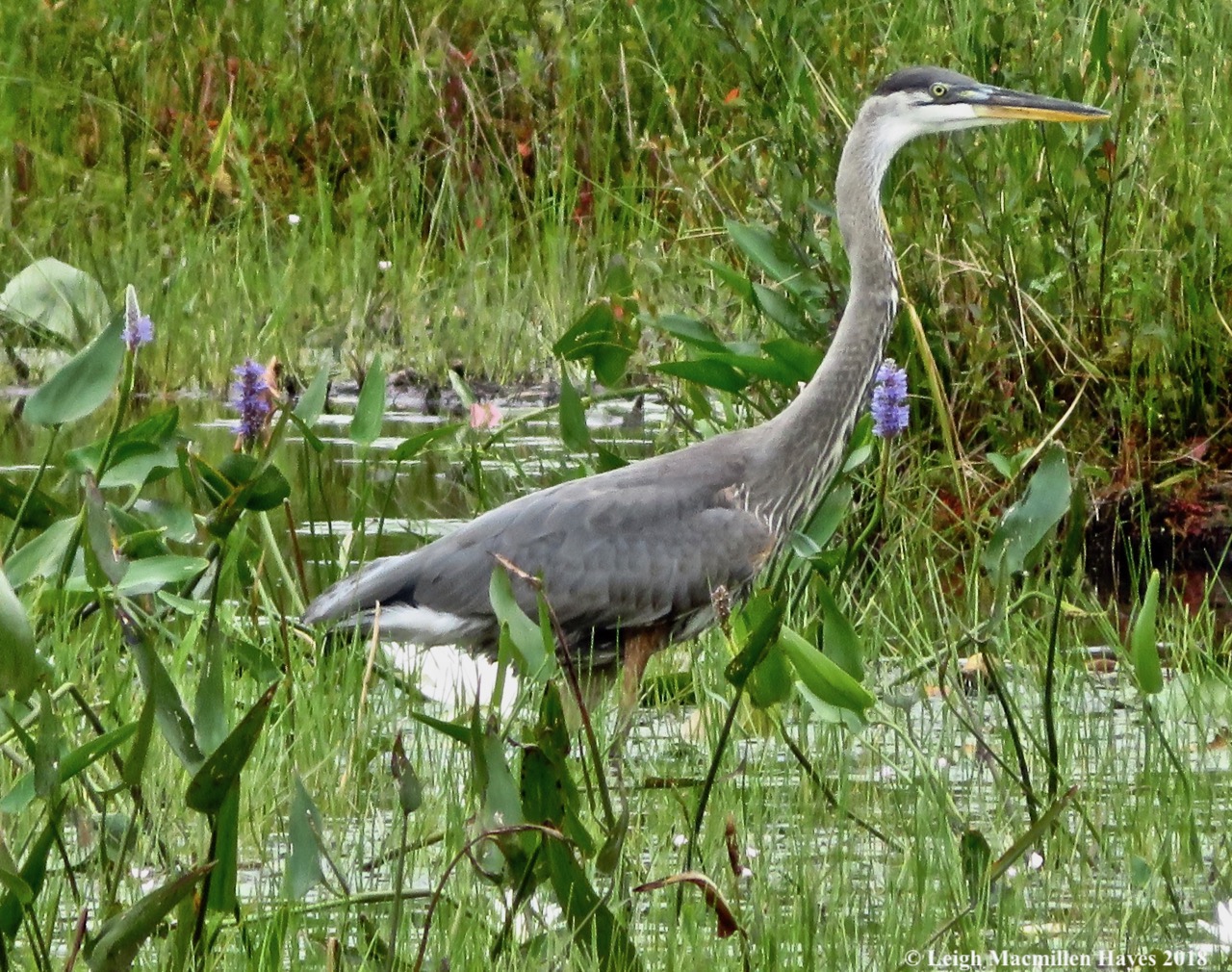
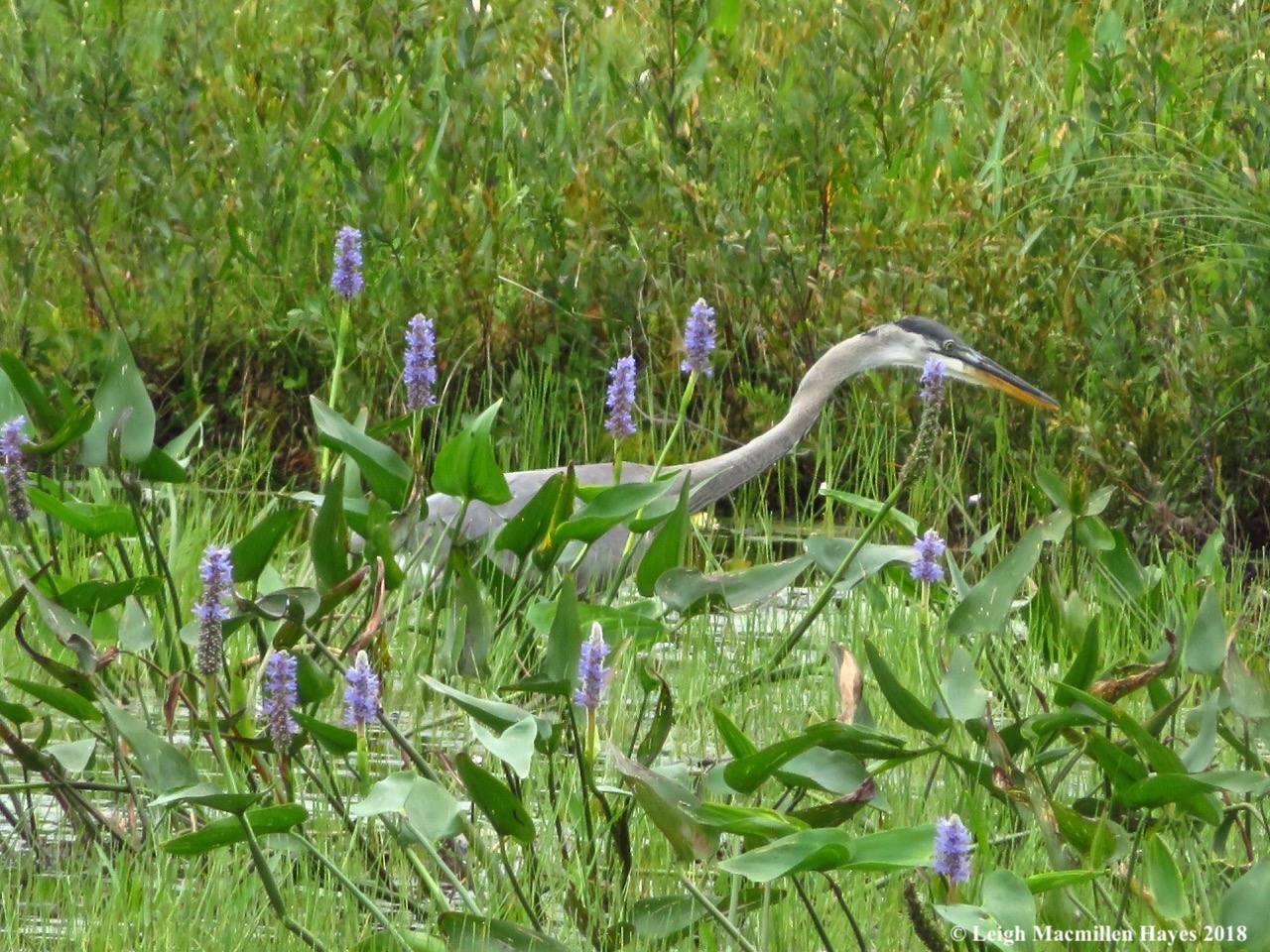
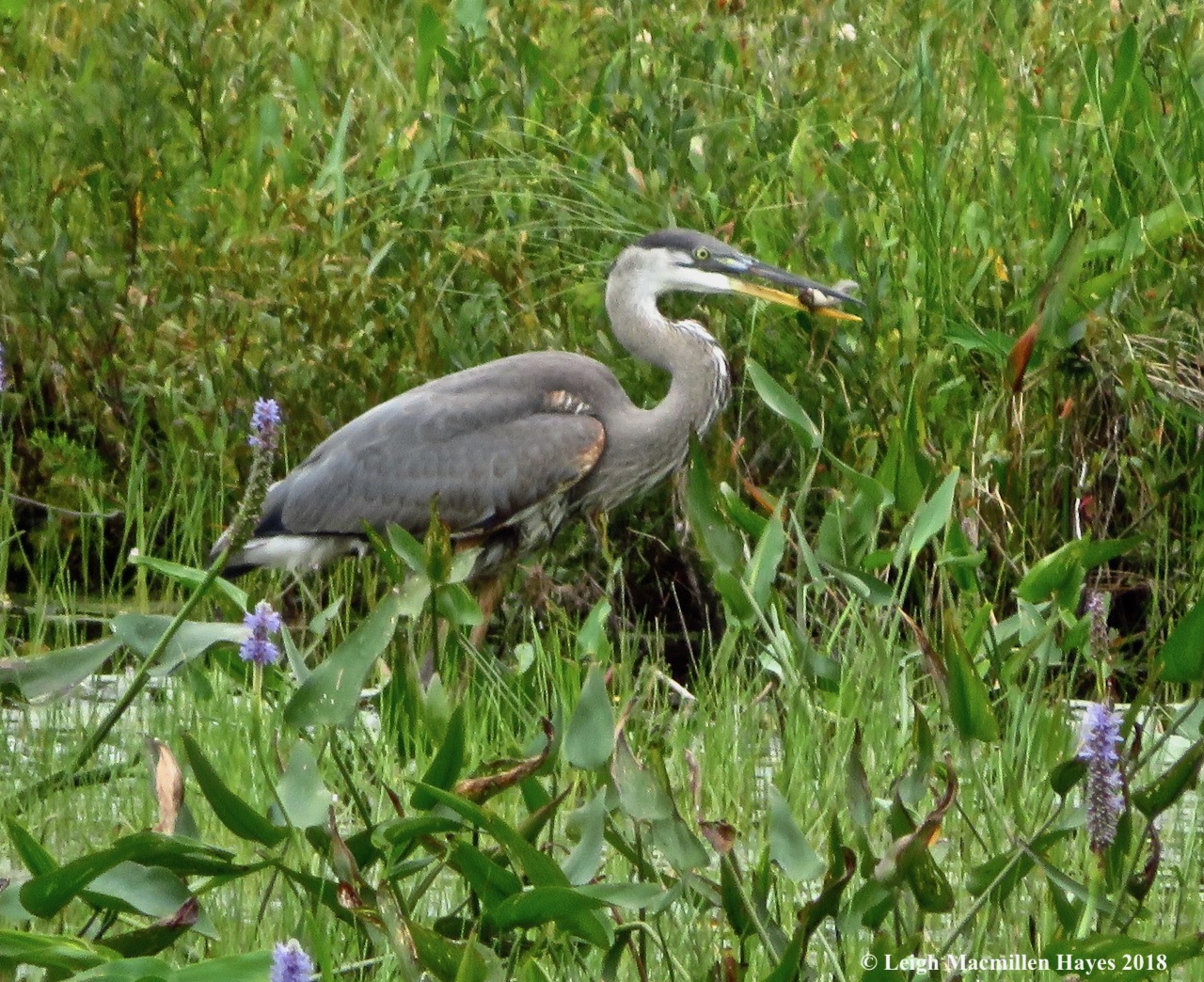
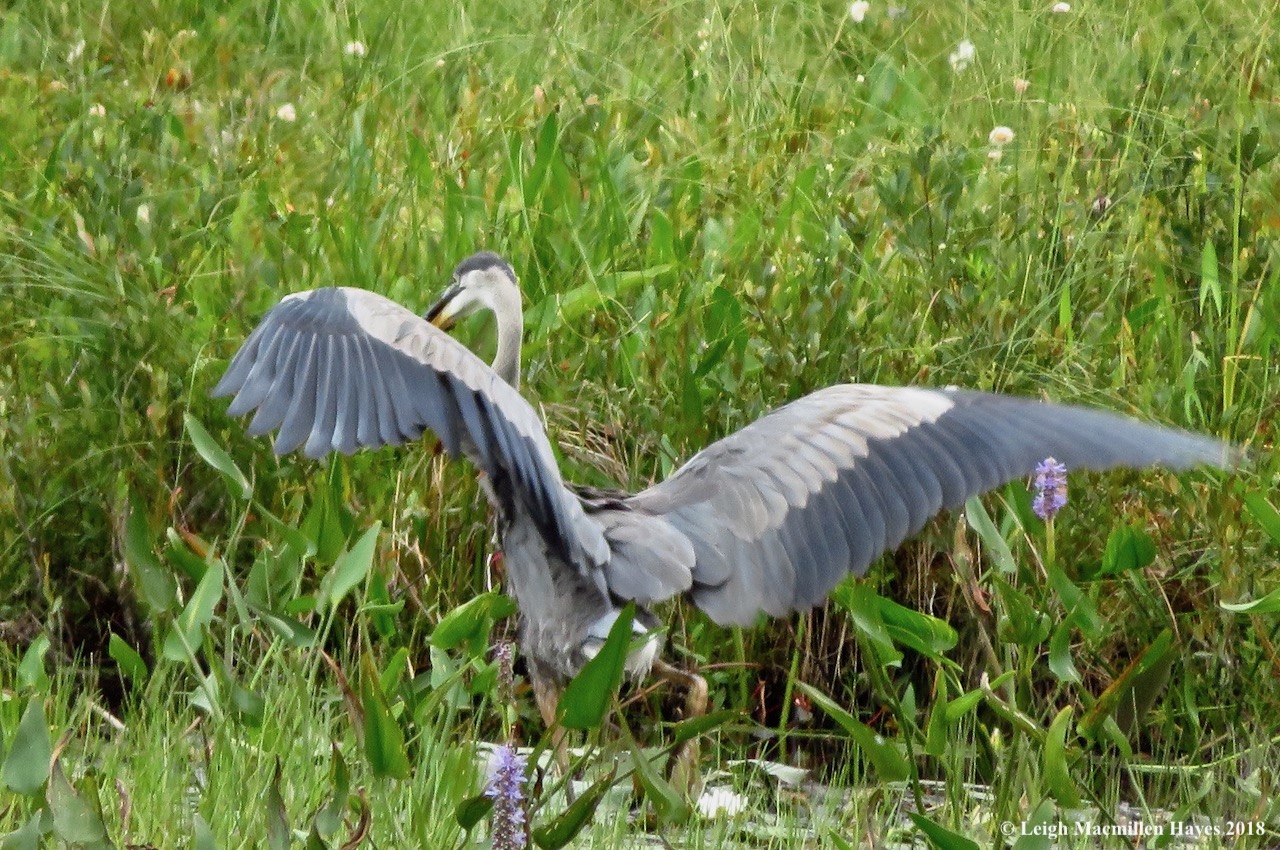
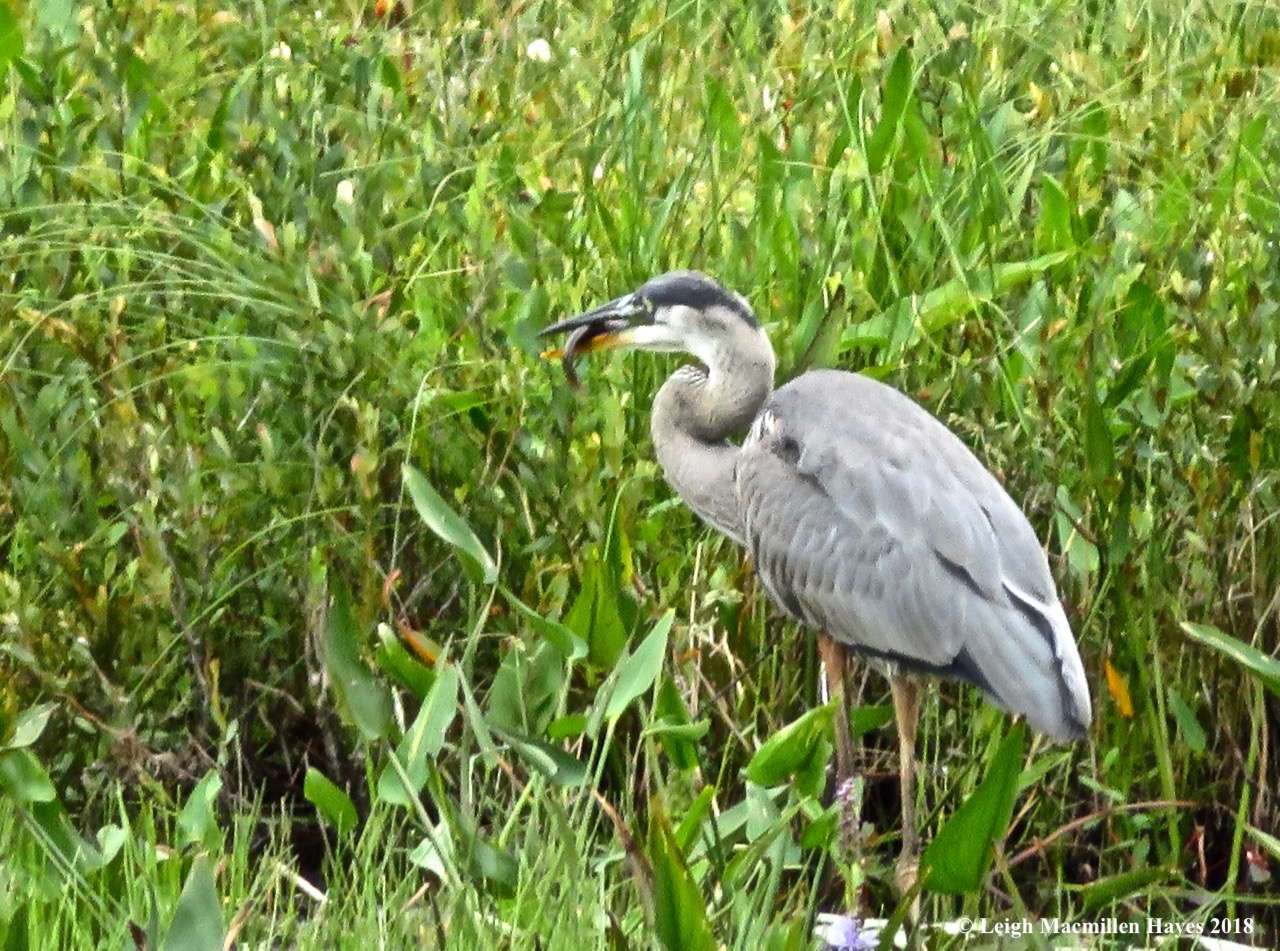
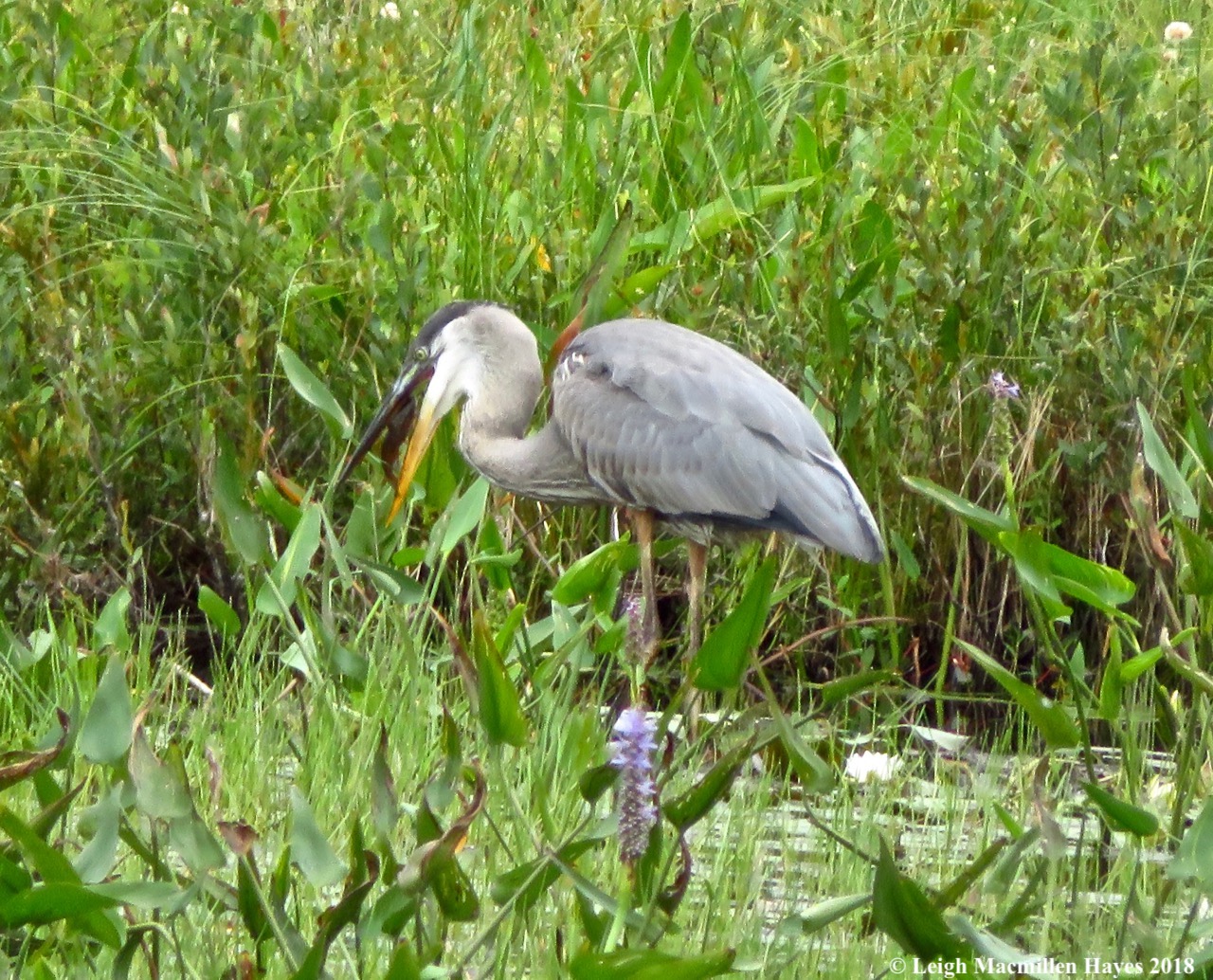
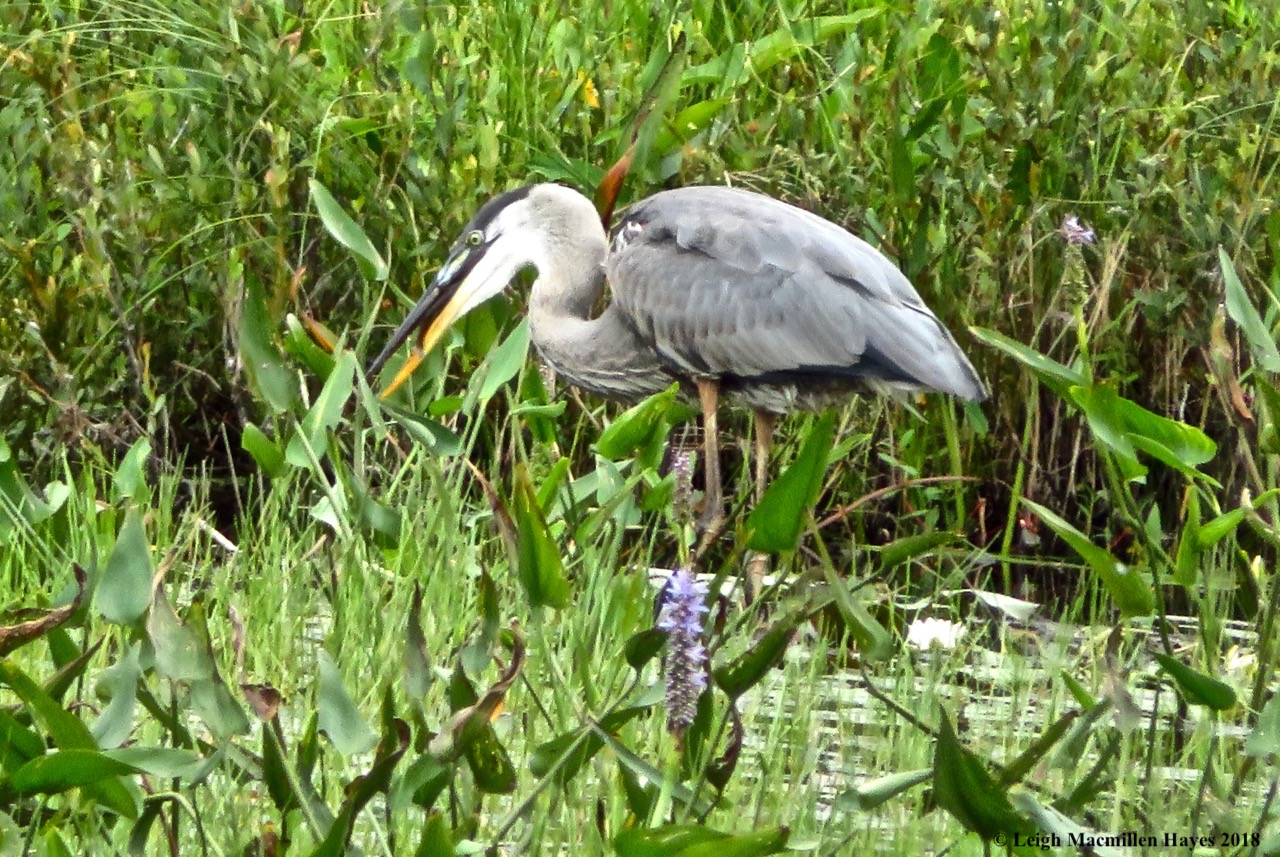
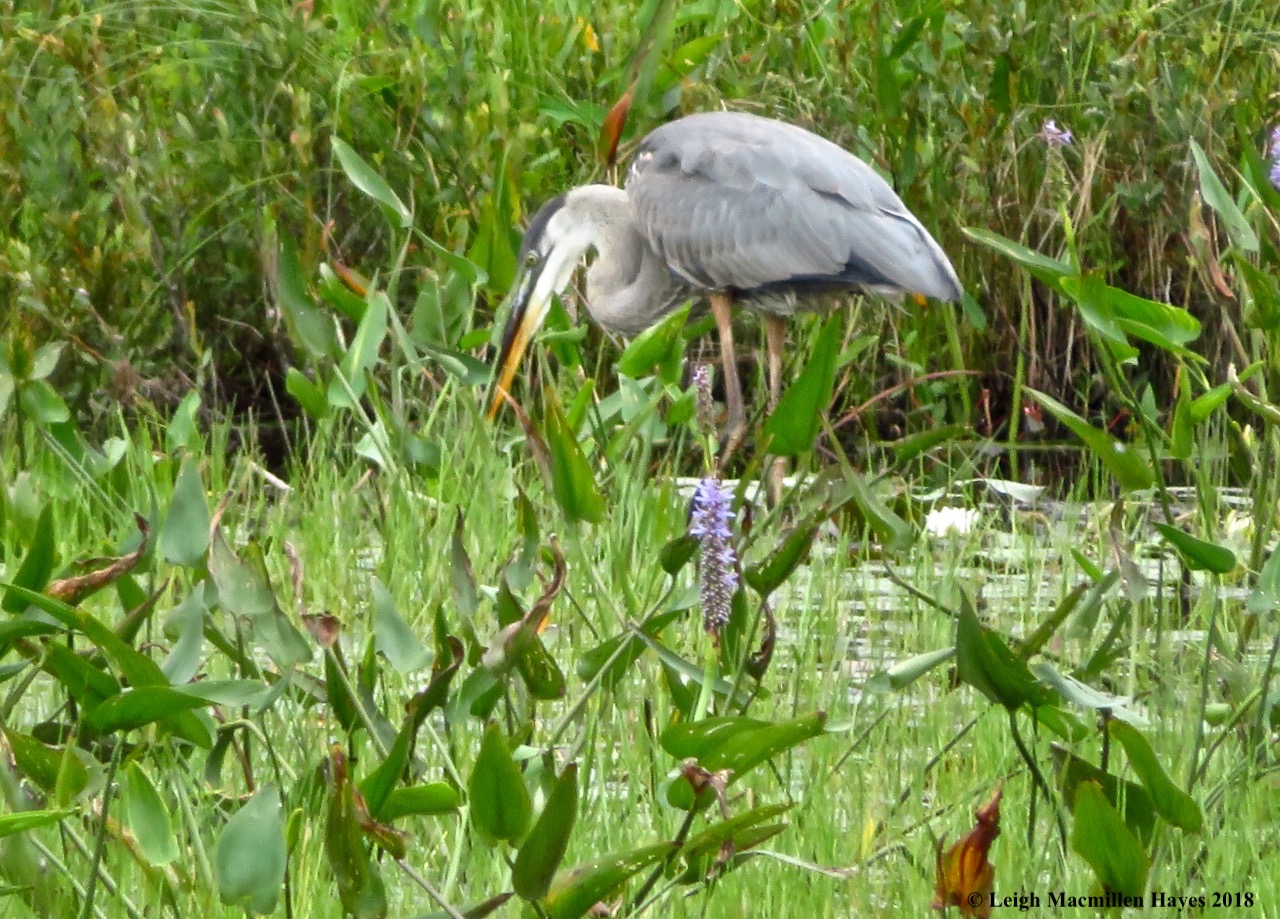
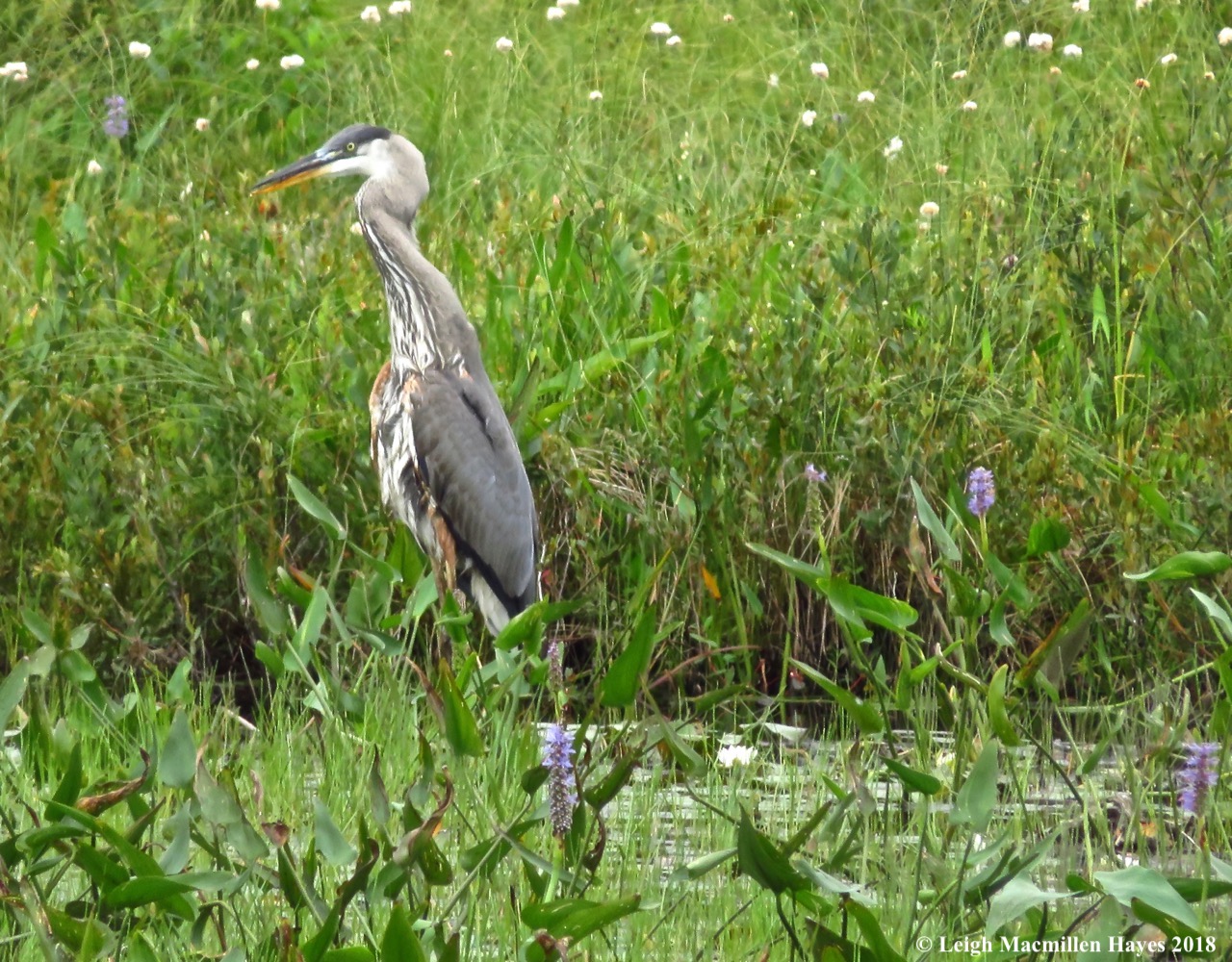
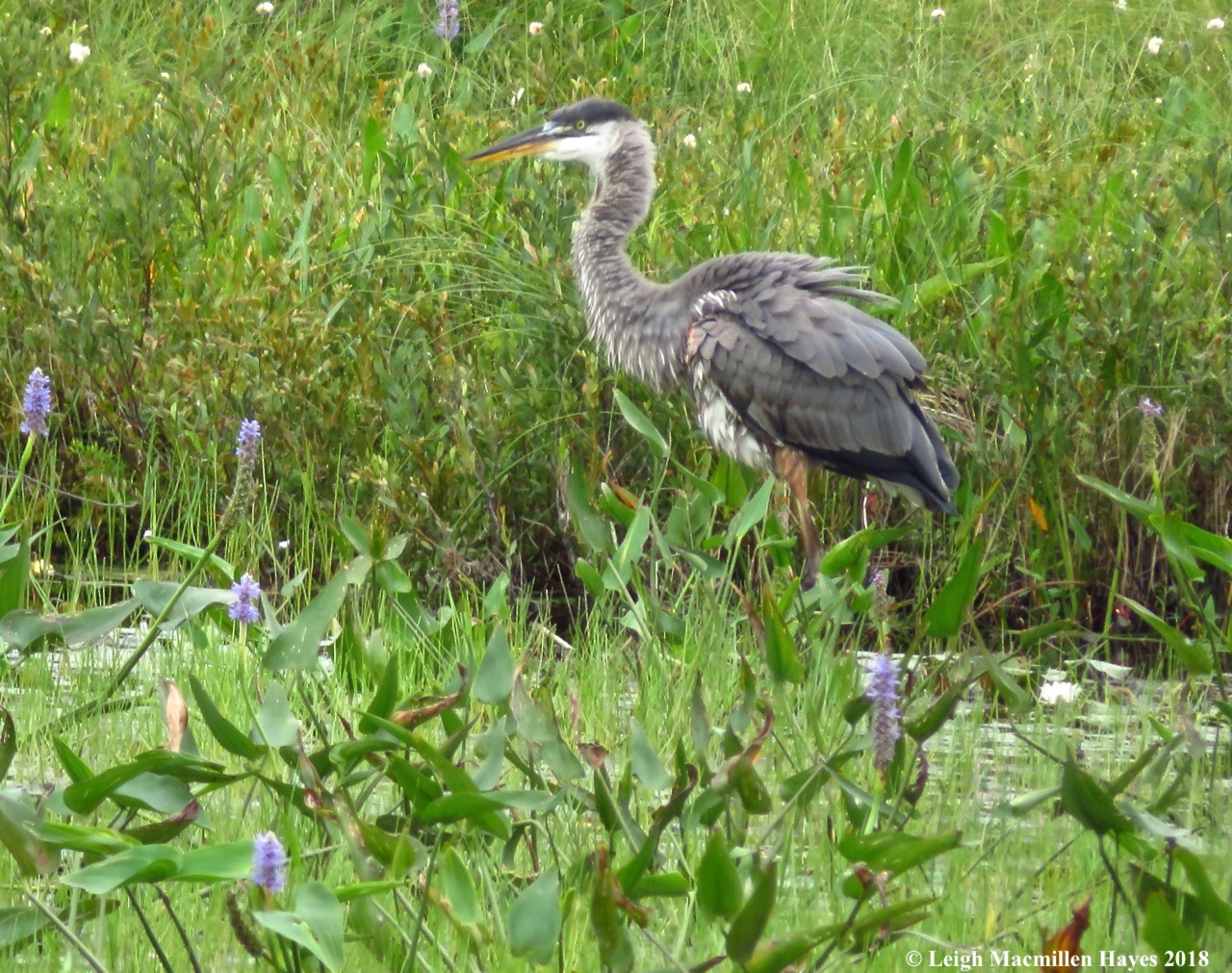
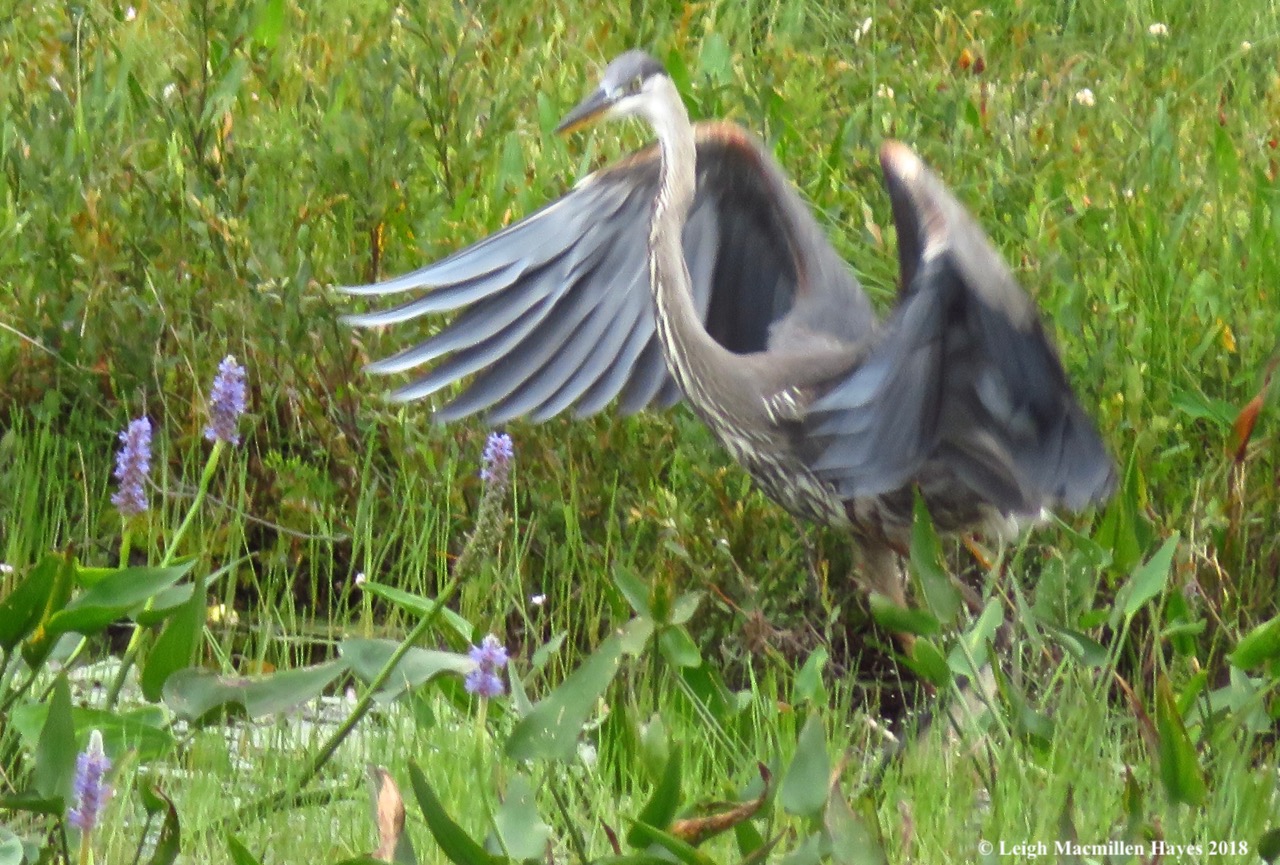
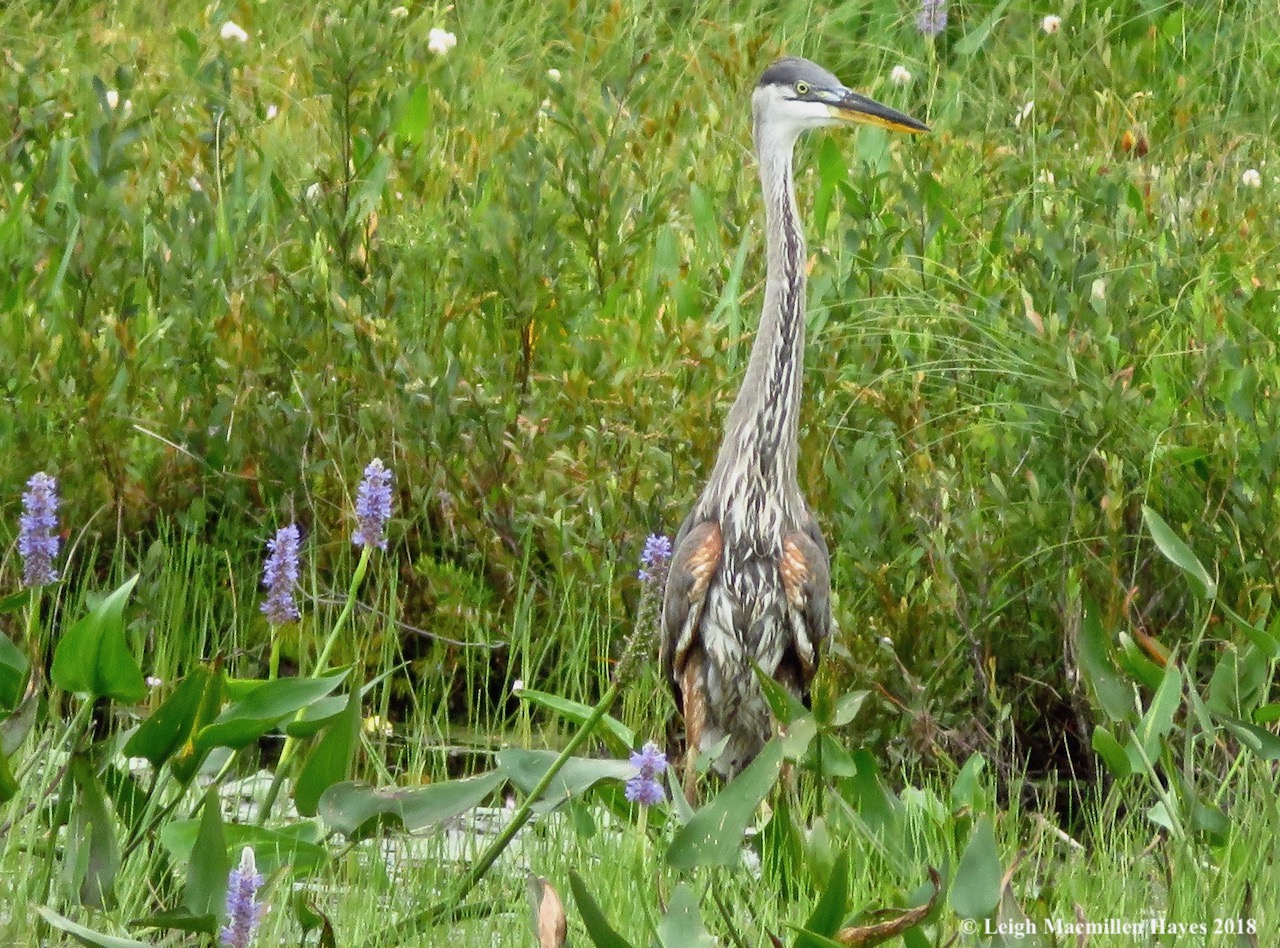
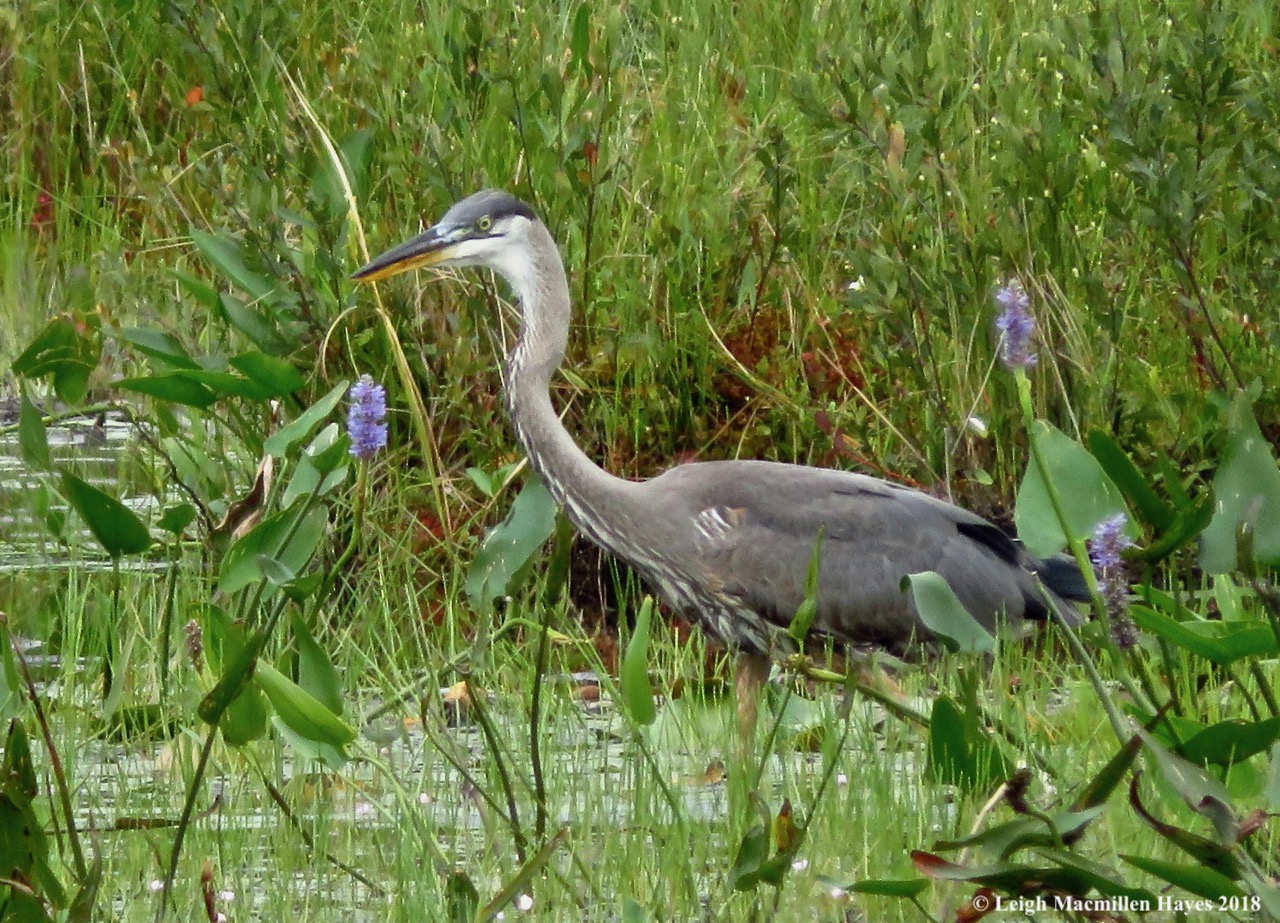
On and off, I’ve produced paintings of birds, and another favorite subject is the Great Blue Heron. I’ve also tried to paint rookeries, but often struggle with perspective. Of course, you can view my attempts you know where: My Art Gallery, to be shortened to MAG going forward.

No words necessary really–a male Northern Red Cardinal.

And his female counterpart.

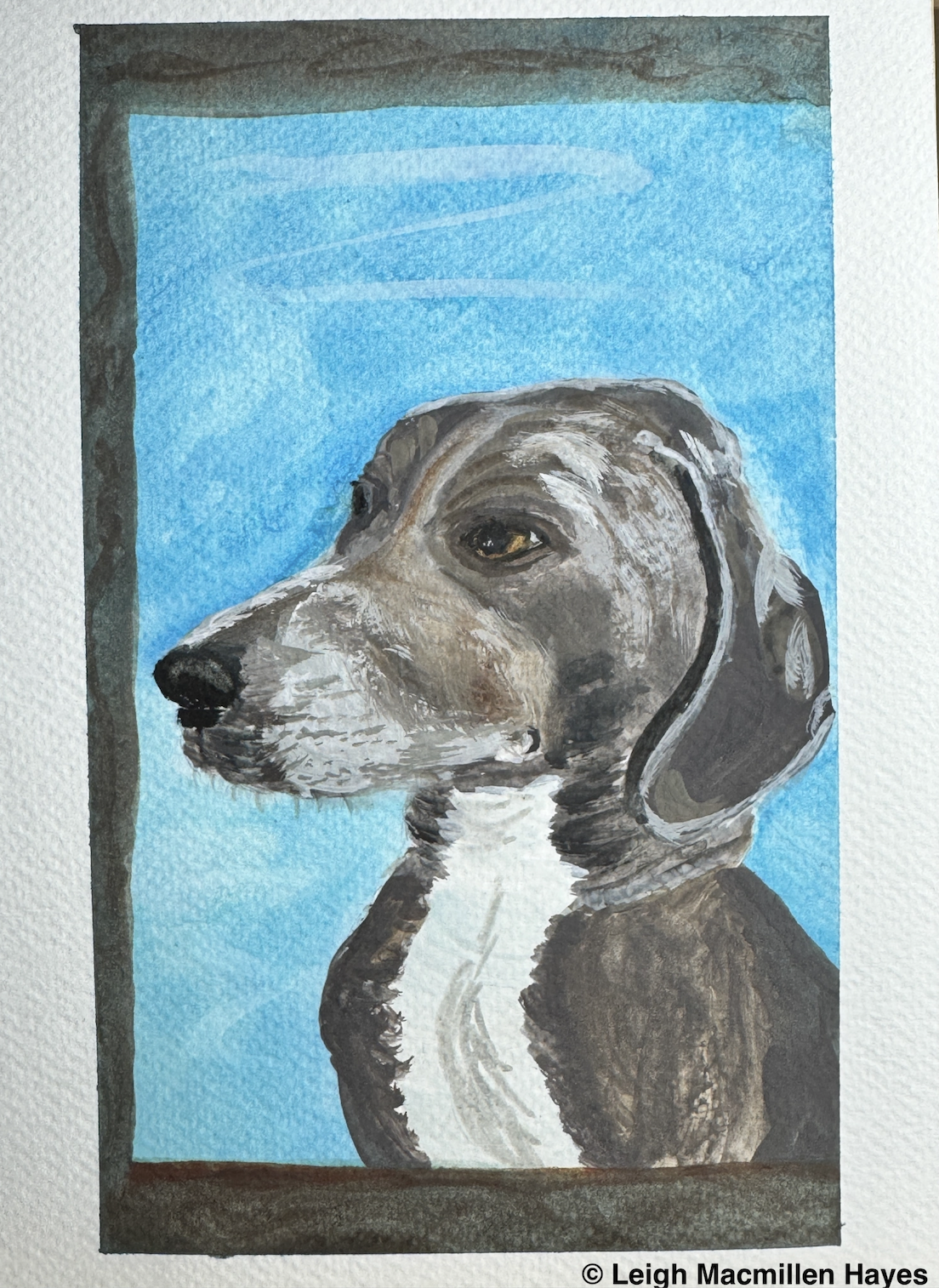
Our oldest son and his girlfriend rescued this energetic pup at the beginning of the pandemic.

And this pup belongs to our youngest son’s girlfriend’s mother.

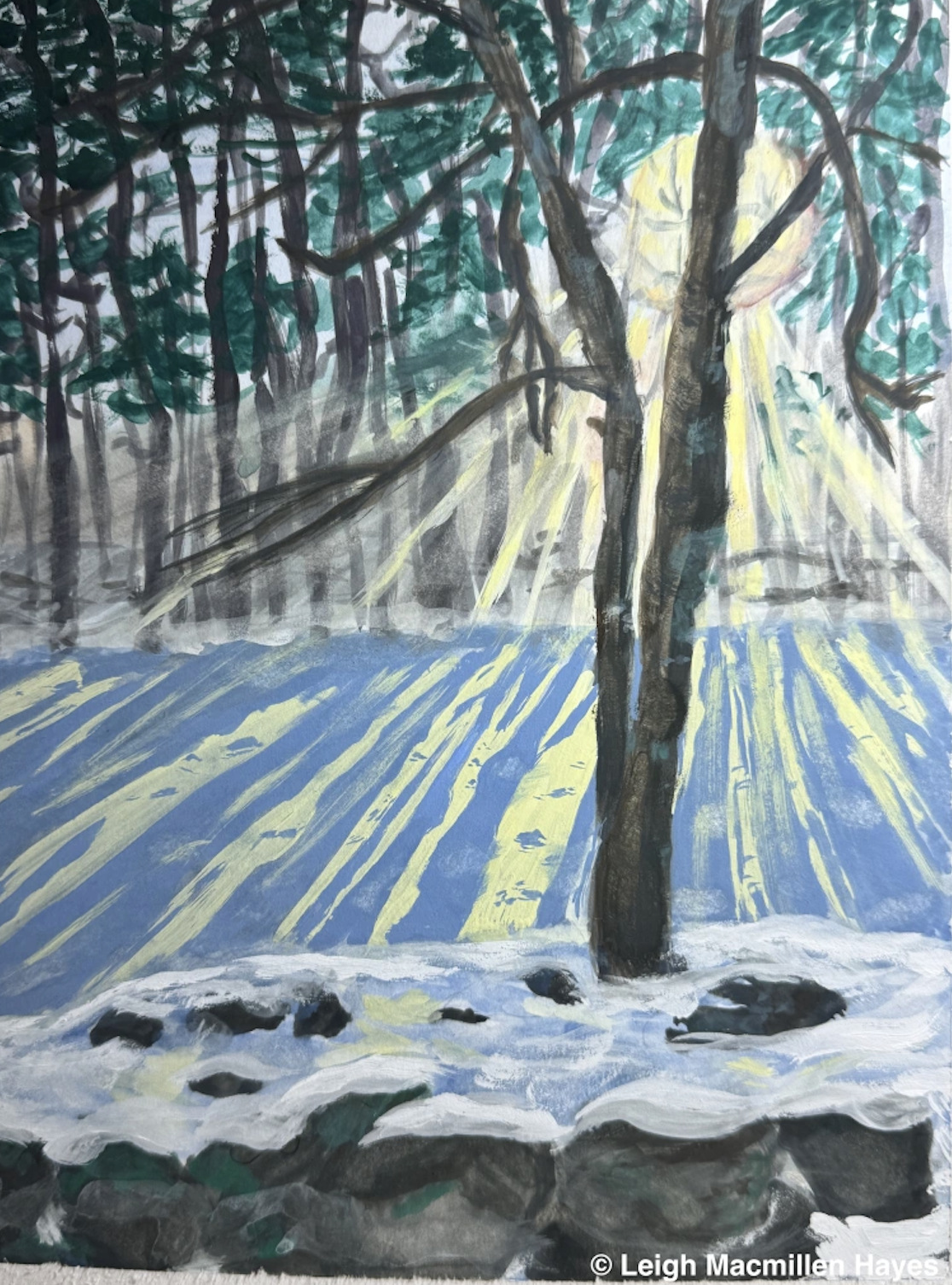
One morning, I stepped outside just after it had finished raining and the sun was shining through the trees out back and there was a layer of fog and shadows and it was just exquisite so I tried to capture it.

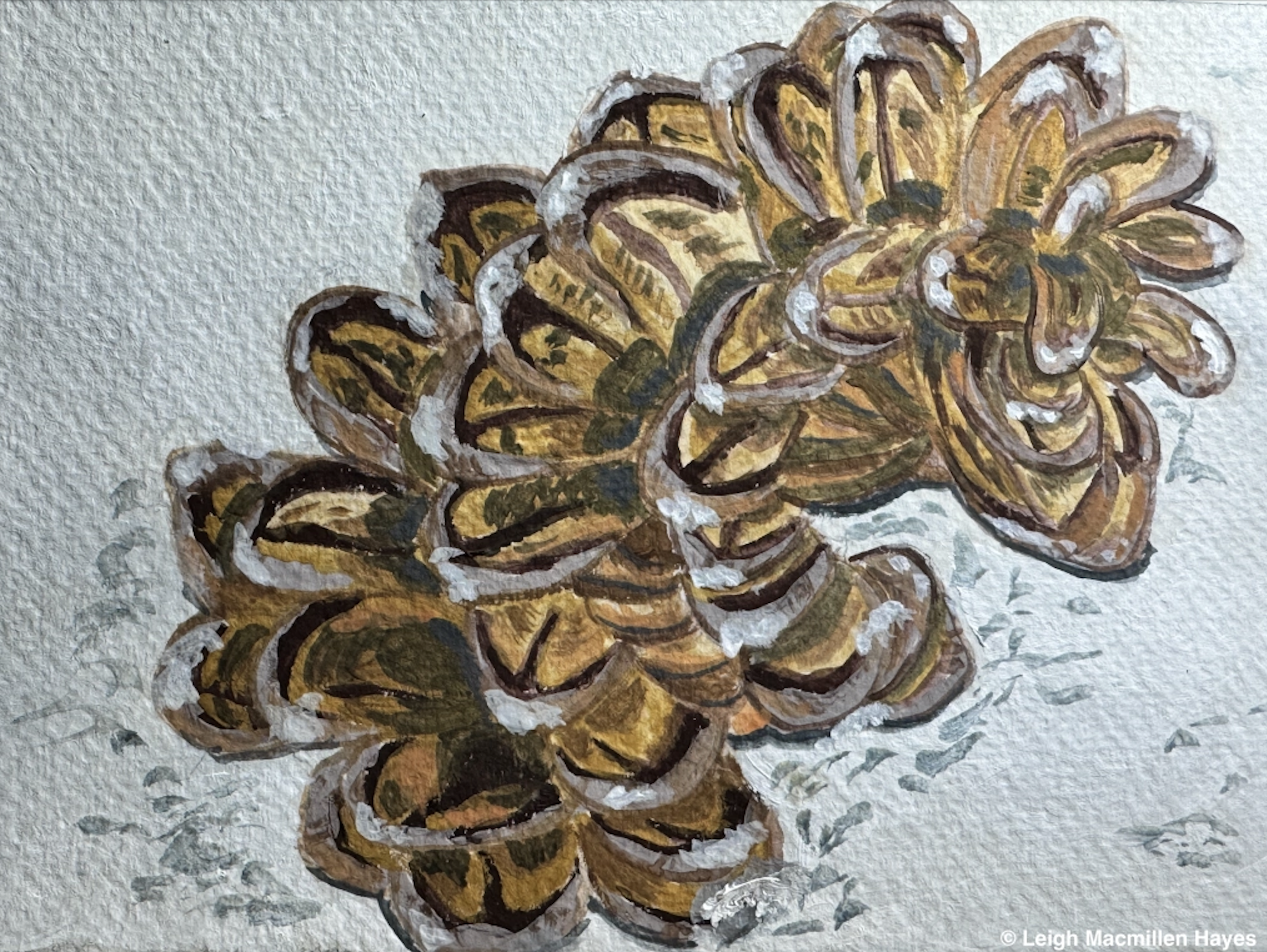
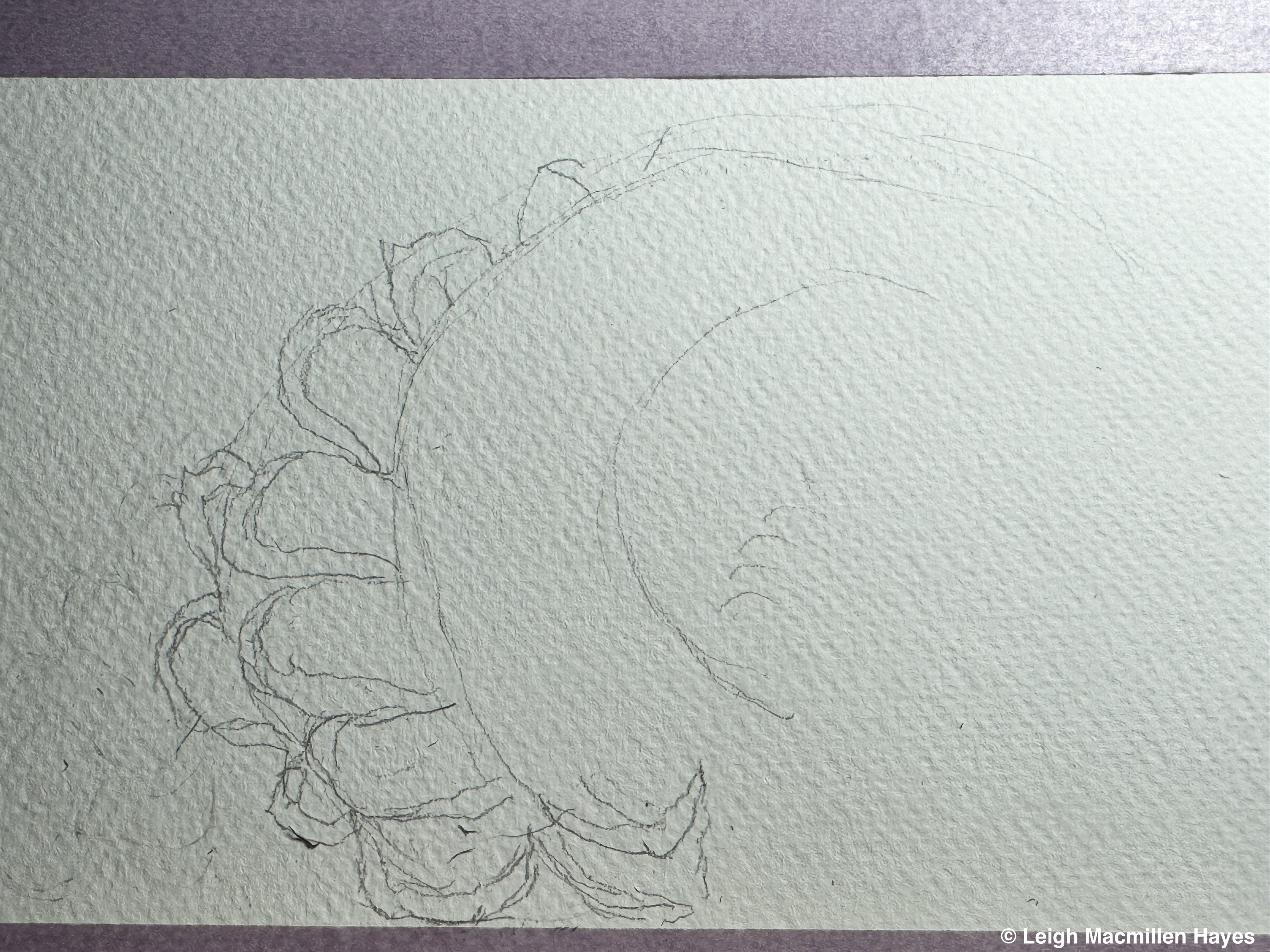
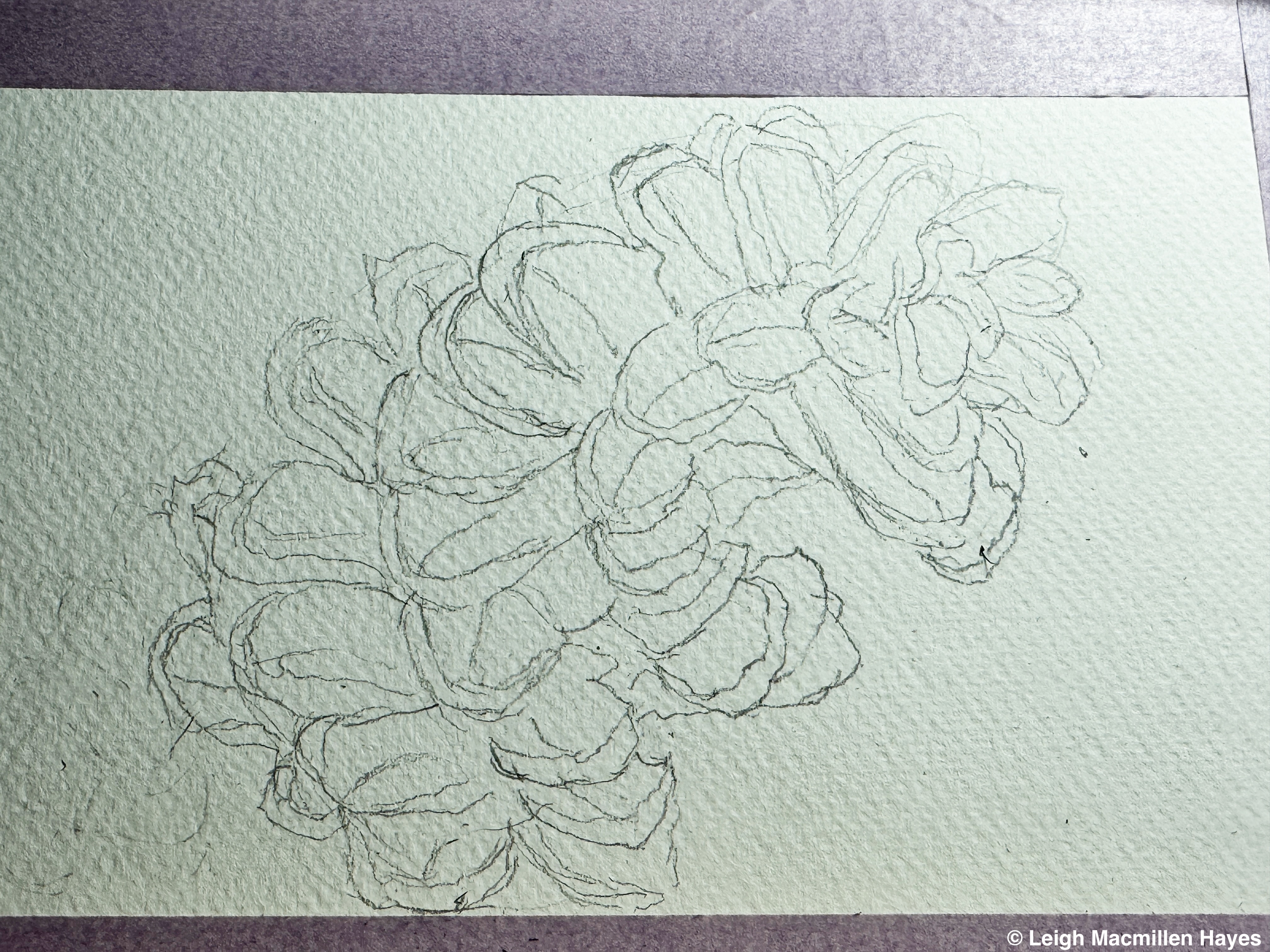
The White Pine Cone was something I started to sketch and then left for a long time, until I realized the scales were all arranged in a spiral of course and bingo, I knew how to go about it.

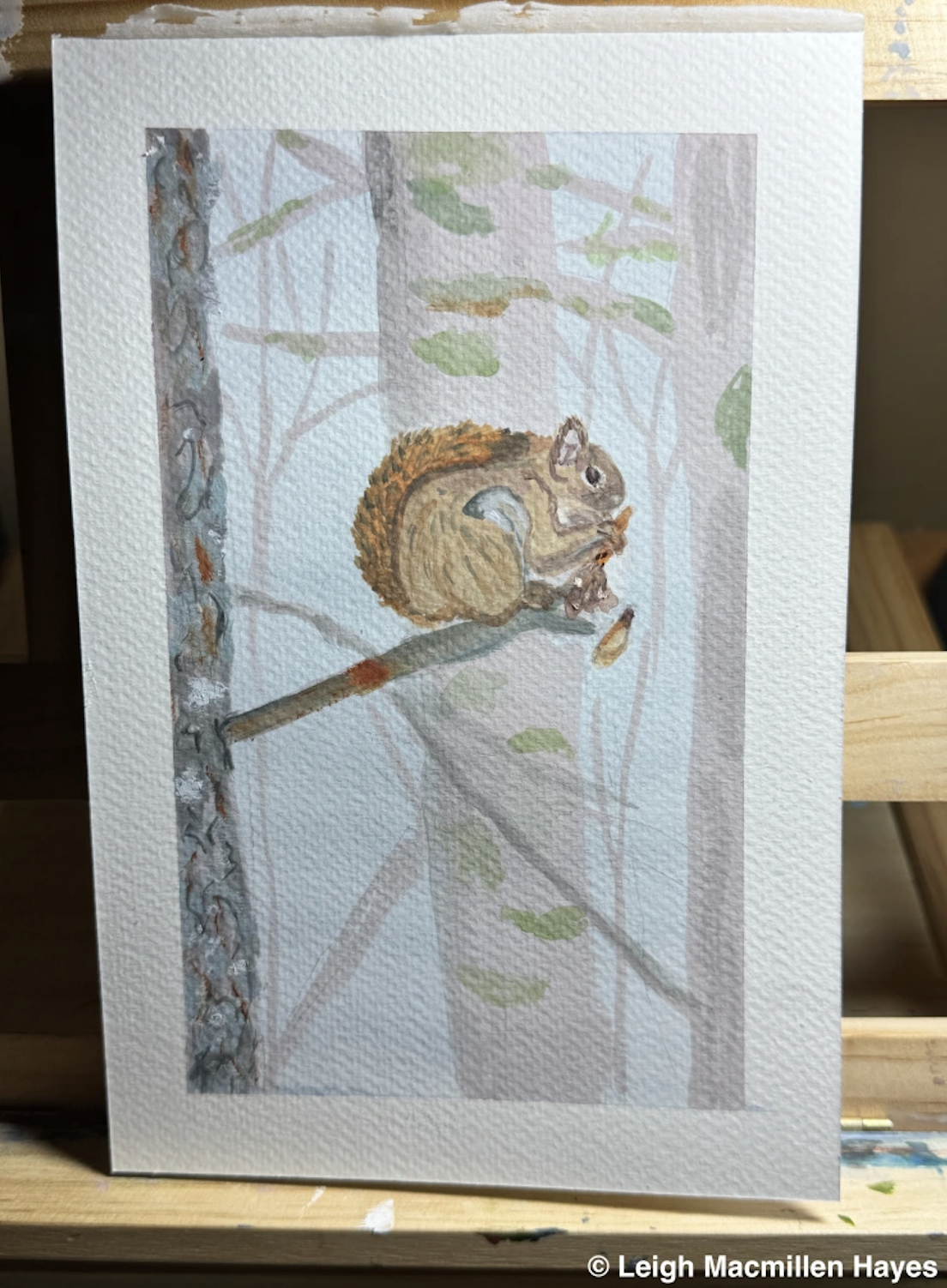
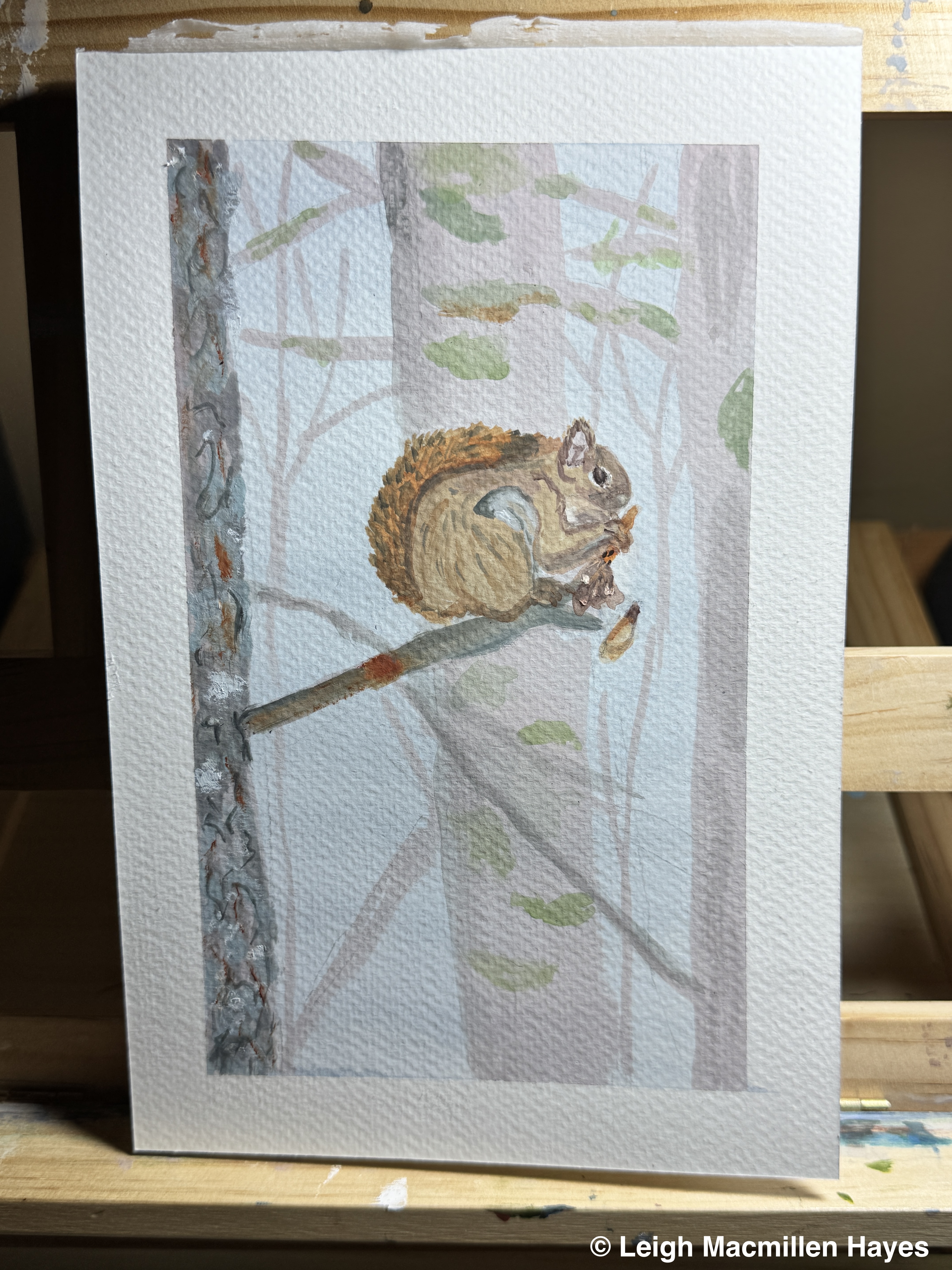
Turns out, I’m not the only one who knows to go about it–for Red Squirrels love to take each pine cone scale off in order to get to the seeds stored by such. Their method of descaling a cone is rather like us eating corn on the cob. I actually referenced both the pine cone painting and this one in Another Amazing Lesson from a Red Squirrel.

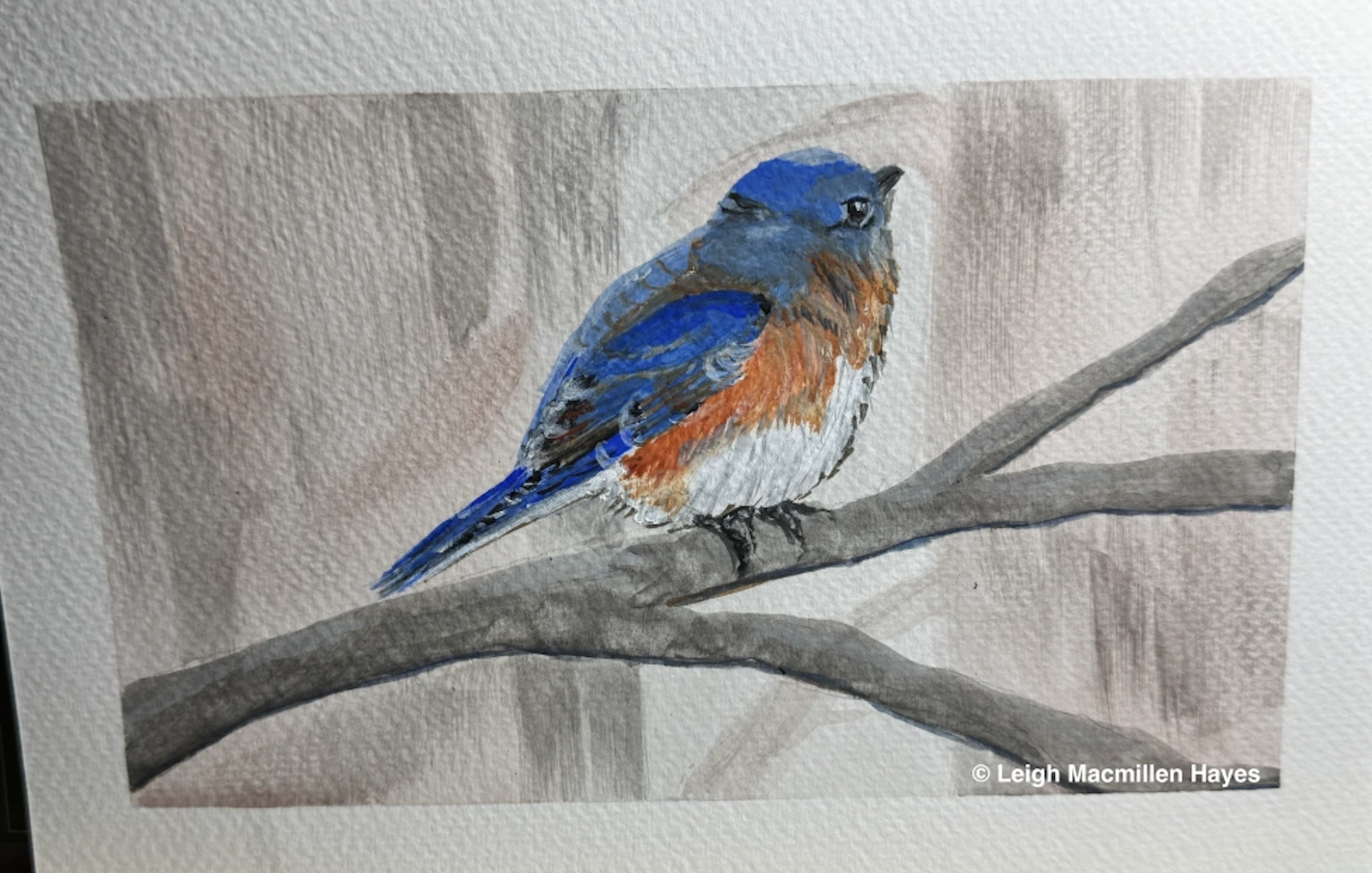
All last winter and spring, and into the beginning of the summer, my neighbor and I rejoiced because we had Bluebirds. In fact, a pair nested in one of our boxes, but that was around July 4th, and by the end of the week, she’d abandoned the nest. We’ll never know why.

A few more birds coming up–including this male Red Winged Blackbird at Brownfield Bog.

A Sharp-shinned Hawk in the backyard and field.

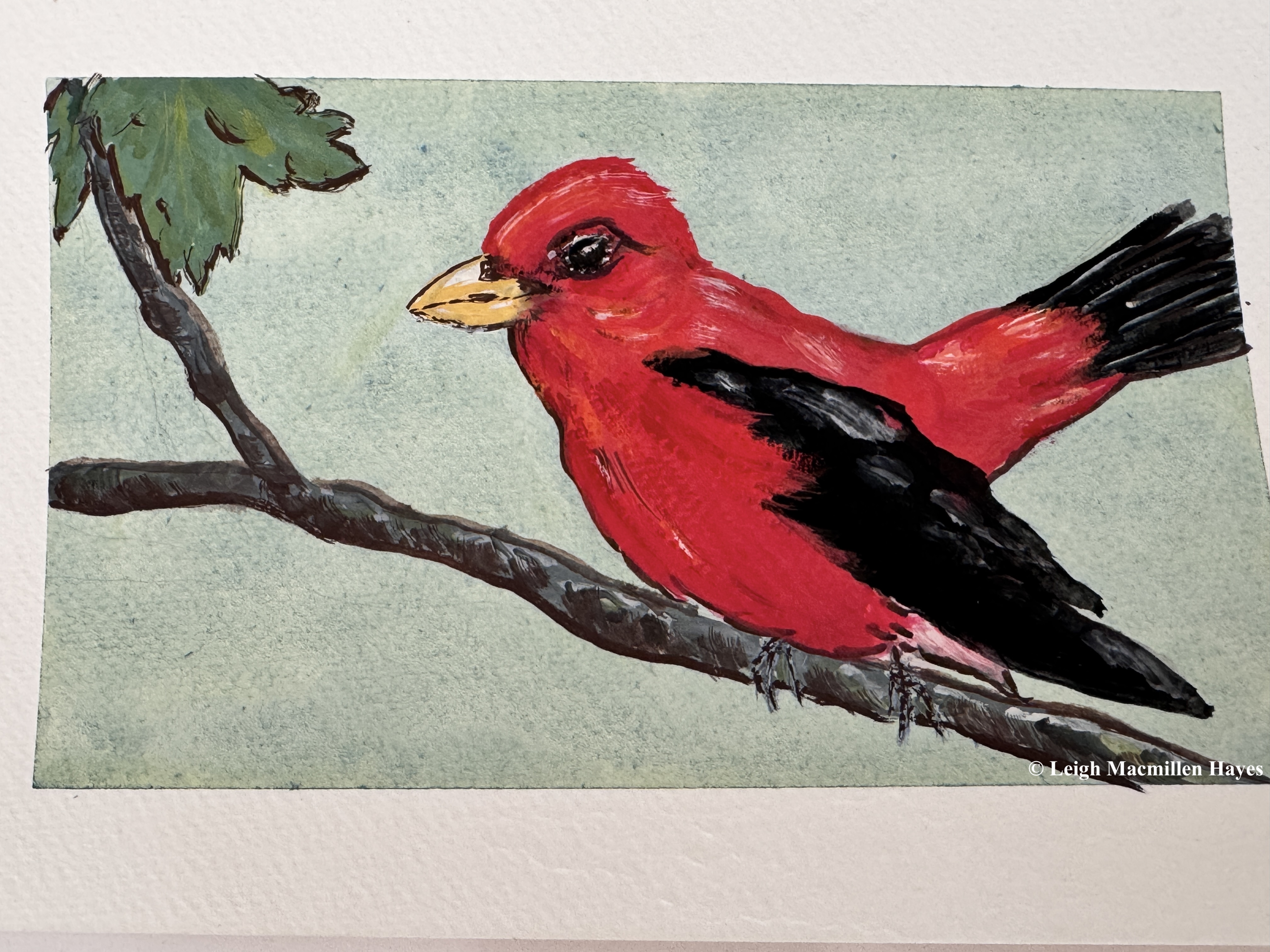
And a Scarlet Tanager on Mount Cutler in Hiram, Maine.

I did think I’d paint more butterflies, and perhaps this fall or winter I’ll attempt to, but it seems the Spring Azure is all I’ve done so far.

I’ve also made a couple of cards in the course of the year, this one for a First Grade student who was my penpal and she told me she really likes Dandelions. That girl will go far in life!

Another favorite topic of mine: Dog-Day Cicadas. If you type Cicada into the “Search” bar on my blog, you’ll discover several posts about these insects emerging. As I write, I can hear them “singing” from the treetops.

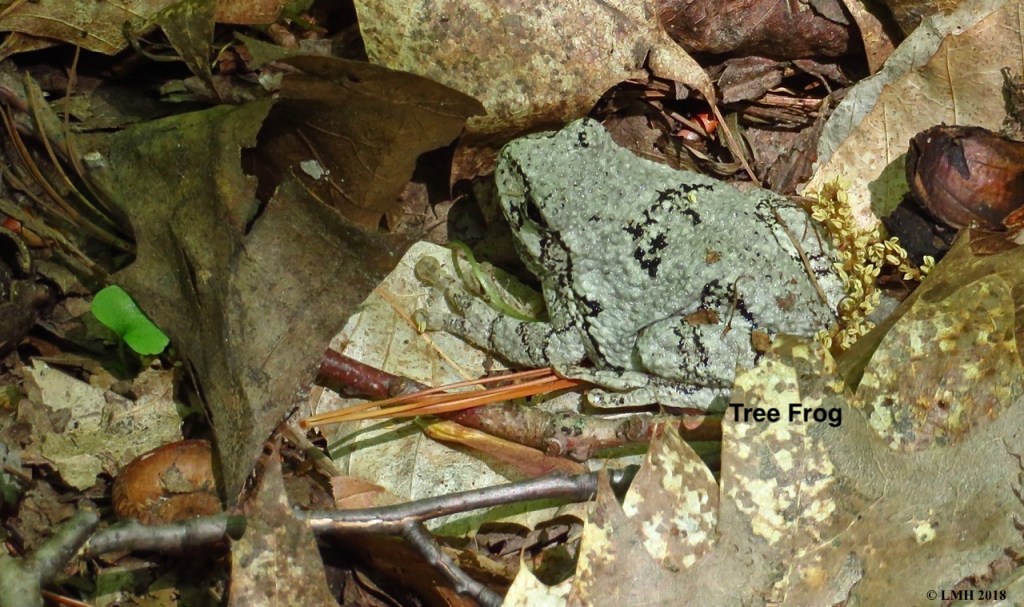
Sometimes, actually, more than sometimes, something catches one’s eye and this Tree Frog was one of those times. A friend and I had stopped to talk about a Snapping Turtle that seemed to be late laying eggs, and bingo, there was the frog on a tree.

Speaking of frogs and other critters who rely on vernal pools, visit MAG and you’ll find my Vernal Pool series, including a Fairy Shrimp that looks WAY bigger than its actual 1 – 1.5 inch size.

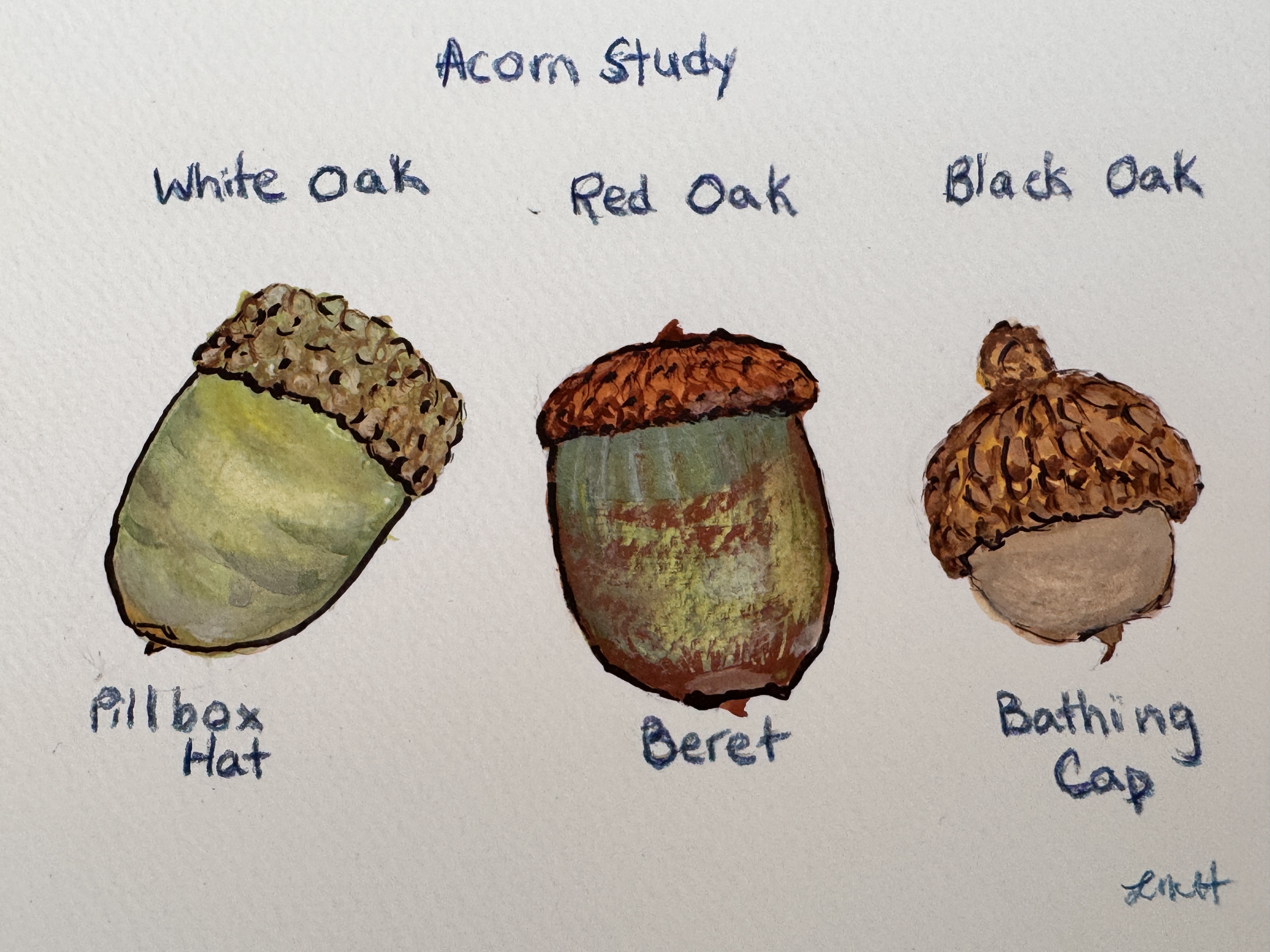
And then there was the day I pulled out a copy of National Audubon’s Field Guide to North American Trees because I wanted to get to know acorns better. Silly me, I came up with names for each one based on what they looked like to me, but I made the mistake of writing the names in pencil before painting a light colored wash on the paper. As I began to paint the acorns, I realized I wanted to change their names, but couldn’t erase them or paint over them. So . . .

I sketched them again, and gave them new names.

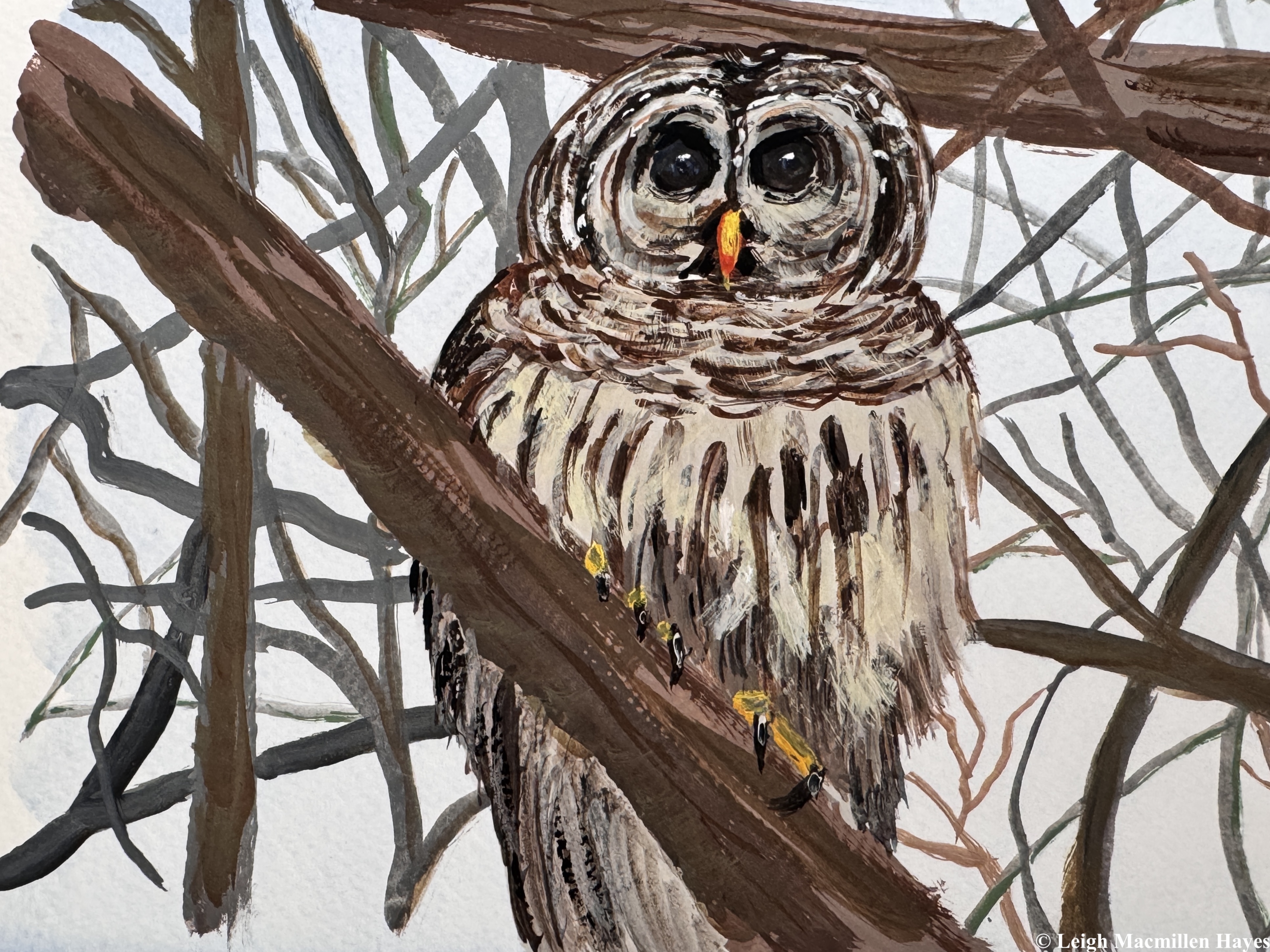
And finally the moment you’ve been waiting for, today’s painting:

I always like it when I try iNaturalist’s SEEK app on a painting and it agrees with me. Barred Owl it is.

Wow, I had no attention of pulling this all together today until about an hour ago when I was sharing photos with my sister and realized I hadn’t sent her any in a while. So thank you, B.S., for being my inspiration today . . . and always.

And thank you Dear Readers, for sticking with me today and always as I share My Artistic Path: one year later.

Vermonting We Did Go

Okay, so “Vermonting” is not a word. But we did go. And came home richer for the experience.

It takes us forever to plan a vacation, even a mini-one. Well, actually, it only takes a few minutes once we put our minds to it, but prior to that it’s a lot of “We should go to . . .” or “We need to get away,” or any of a myriad of other comments, and we do nothing.

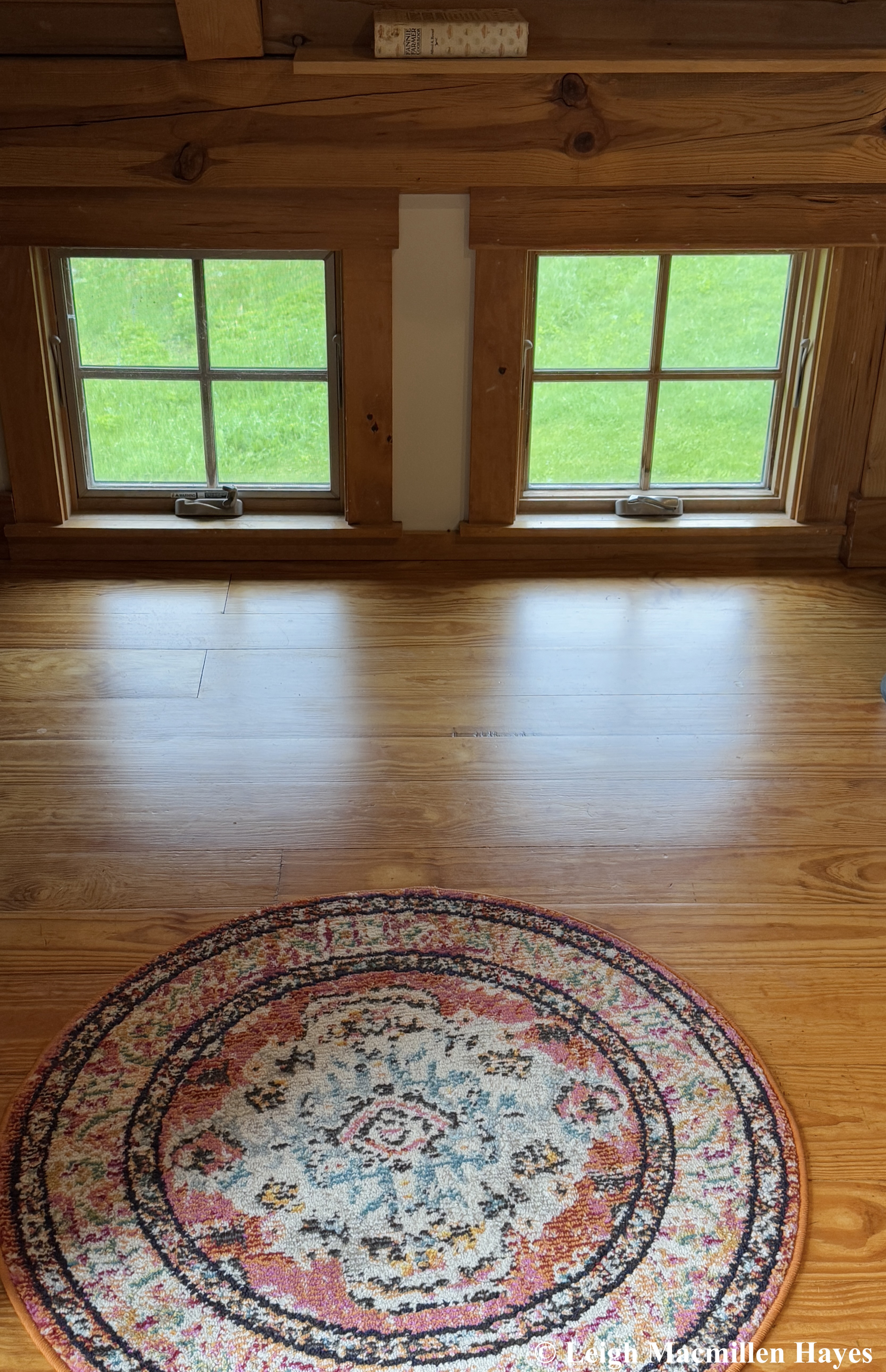
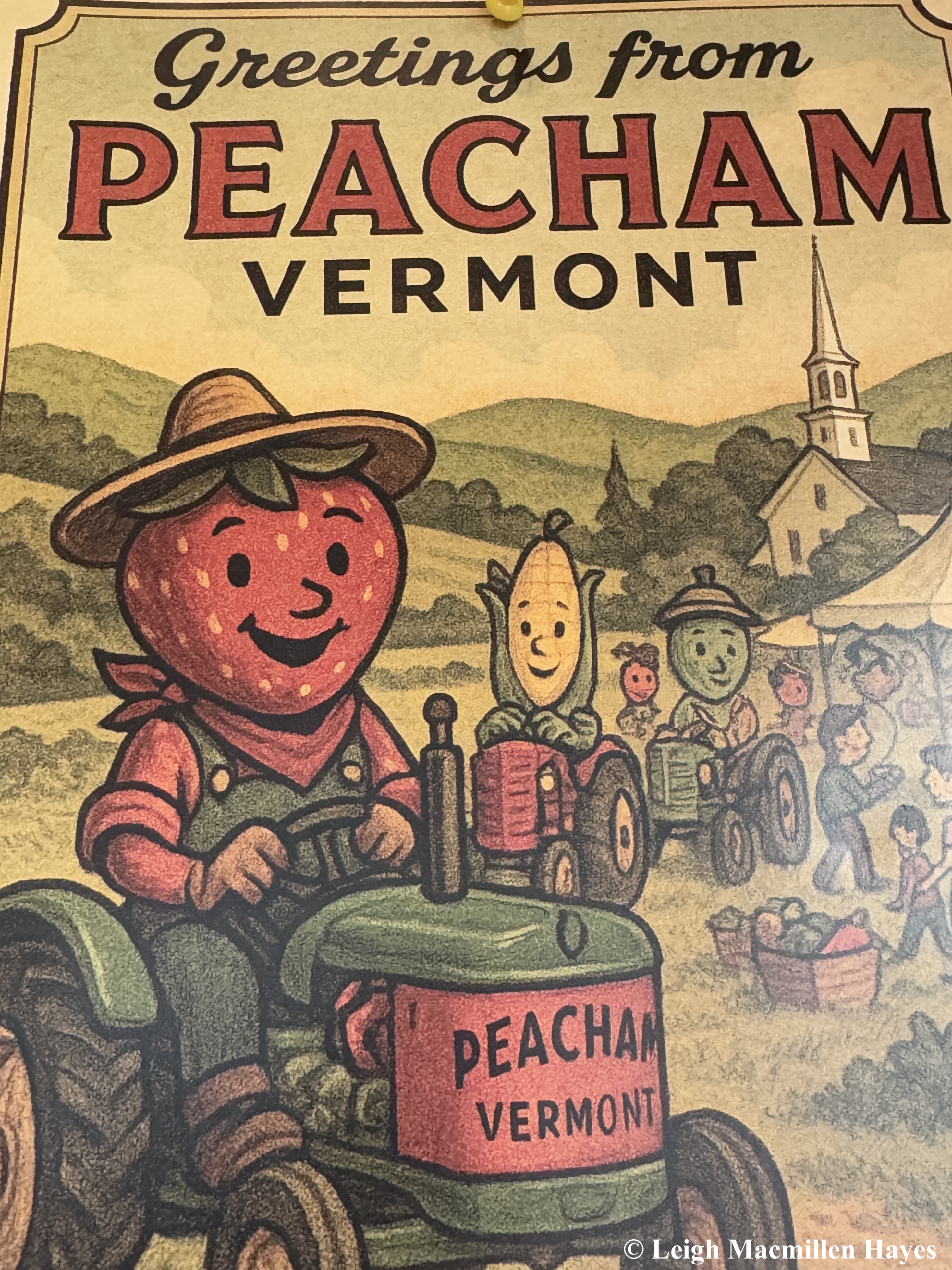
So about a week ago we cleared our calendars. We knew kinda sorta where we wanted to go, but didn’t know where we might stay, until we discovered The Barn in Peacham. We have a red barn attached to our 1870s farmhouse and long ago turned the upstairs into a movie theater/rec room for our sons, all that being a rather rough rendition of either–the movie seats were from an actual theater in our hometown, which was the best part. The seats are still all up there. And there’s a pingpong table and an air hockey table and trophies (remember the Porcupine Invasion last November?) and various other things, plus now a Yoga area for My Guy, but it’s hardly like the space we rented for the weekend as pictured above.

Cozy, roomy, tons of natural light, everything we needed, even eggs and English muffins if we came up short for our first morning.

I think one of my favorite things, and I had lots of favorites, were the little windows that lined the floor in all four rooms. And above these in the kitchen, a Fannie Farmer Cookbook on a shelf. It was touches like this that enhanced the already perfect space.

And our host and hostess, Chuck and Mercy, were equally delightful, and full of information. Thanks to them we discovered Three Ponds Sandwich Kitchen in Danville our first night and marveled in the deliciousness.

But what we were really there for was to hike. And so Saturday morning we went in search of the trailhead to Peacham Bog. If you happen to see My Guy this week, ask him how that search went. We’re still laughing.

We did find the trailhead, but obviously not where we expected it to be. And at the recommendation of Brian at the Groton State Forest Nature Center, we decided to hike the two miles in to the Bog and then continue along a multi-use trail before reaching Devil’s Hill, circling back along the same route.

The natural communities along the way made us feel as at home as the barn, for we (read “I”) felt like we were walking among old friends such as the Mountain Woodsorrel. I love its peppermint ice cream presentation.

And then, in a damp spot Swamp Beacons lit the way and I was drawn back in time to my first encounter with them while tramping through the woods in Lovell with friends Parker, Joan, and Dave. RIP Parker–please know that you accompany me on and off many a trail and I know that you would be happy that I actually remember some of what you taught me.

Vowing not to count Lady’s Slippers, we didn’t. But they were there, though most waning.

At last we reached the coveted bog, where a boardwalk was long ago placed to keep hikers like us from stepping onto the fragile environment.

It was at this point that another funny story evolved, but again, you’ll have to visit My Guy at his store to get the rest of the story.

At last reaching the platform with a bench at the end of the boardwalk, we sat down to eat sandwiches and take in the scene and sounds that surrounded us.

Sphagnum mosses formed the peat base and laurels and Tamaracks and Firs and flowers and insects all expressed themselves.

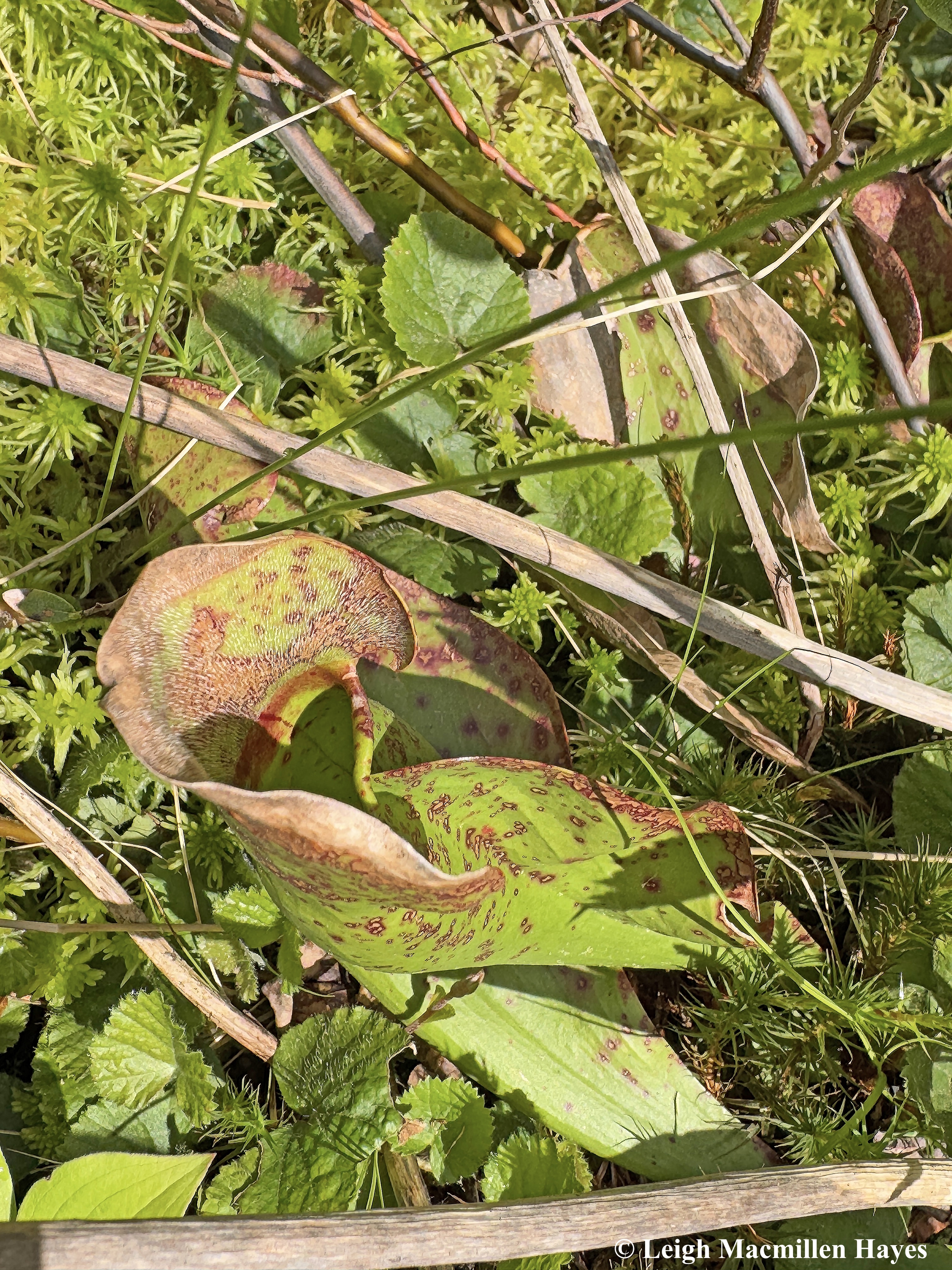
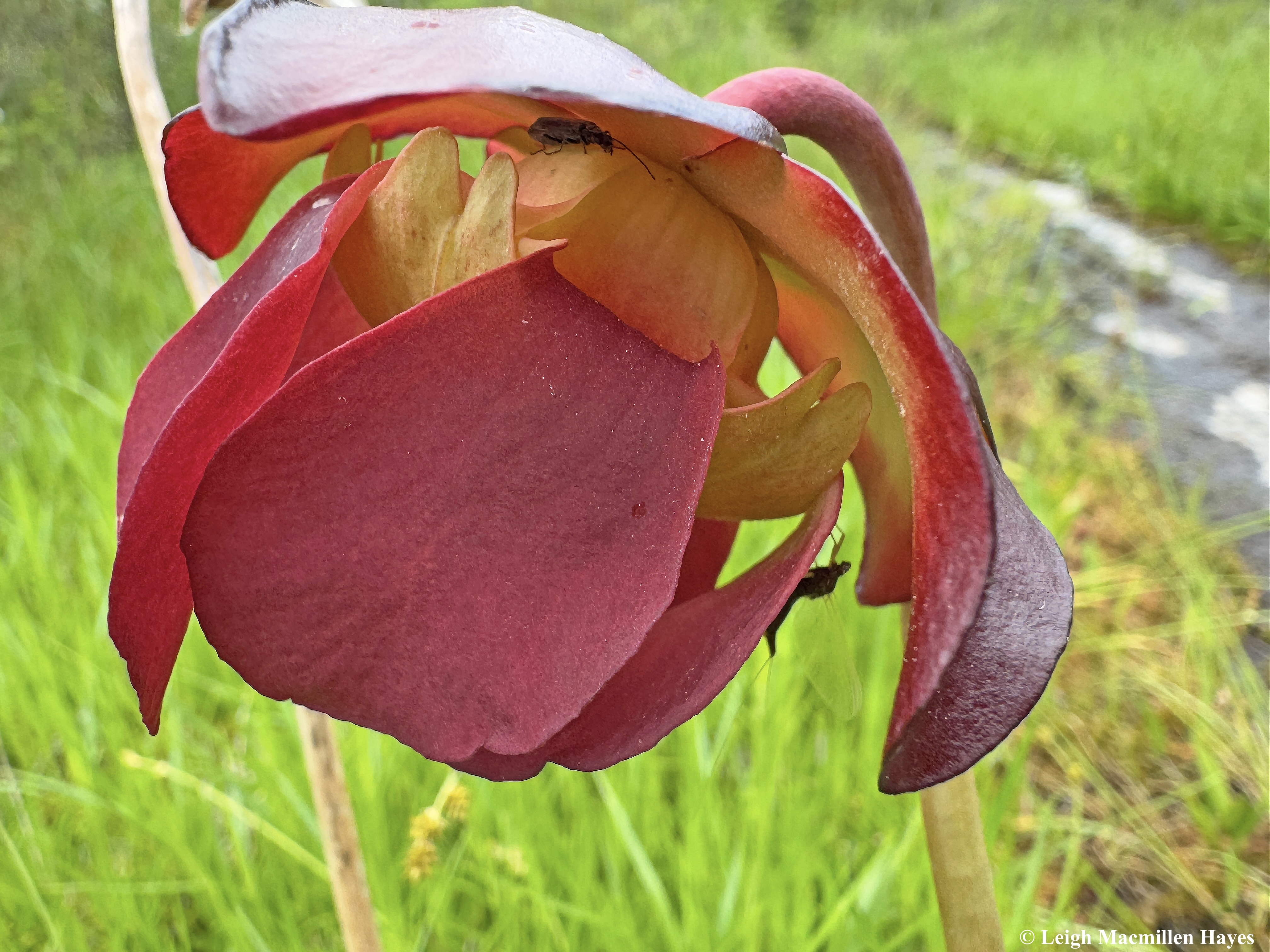
I, of course, can never see too many Pitcher Plants and be forever wowed by those downward facing hairs that entice insects in to the pitcher-shaped leaves where the end-of-life lurks.

And the otherworldly flowers were in full bloom, including this one that hosted a long-horned insect and a sub-imago Mayfly (read: Dun).

I’ve been wowed by these for a long time and years ago drew this rendition as a teaching tool that now is the background for my iPhone.

There were Unadorned Bog Flies pollinating Bog Labrador Tea.

And Cotton Sedge showing off their hairy tufts.

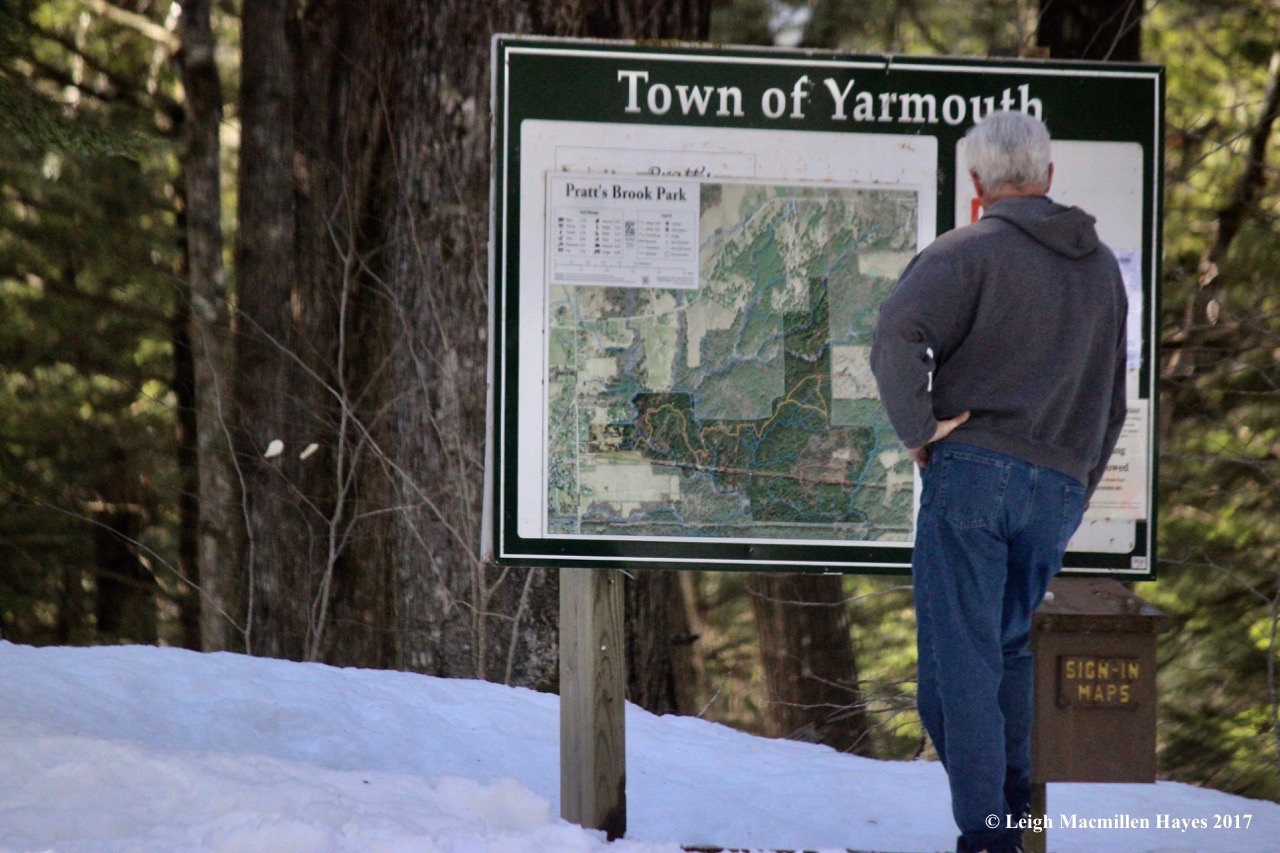
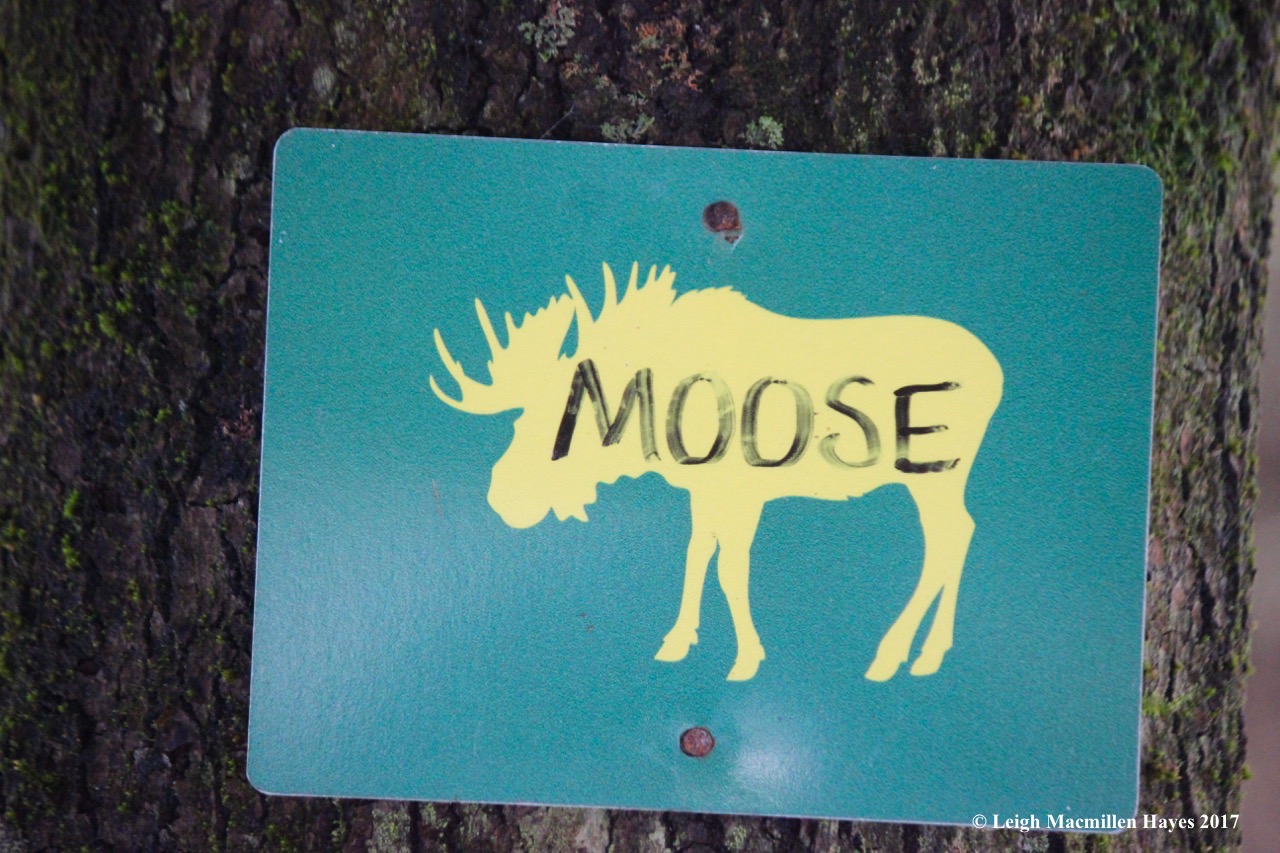
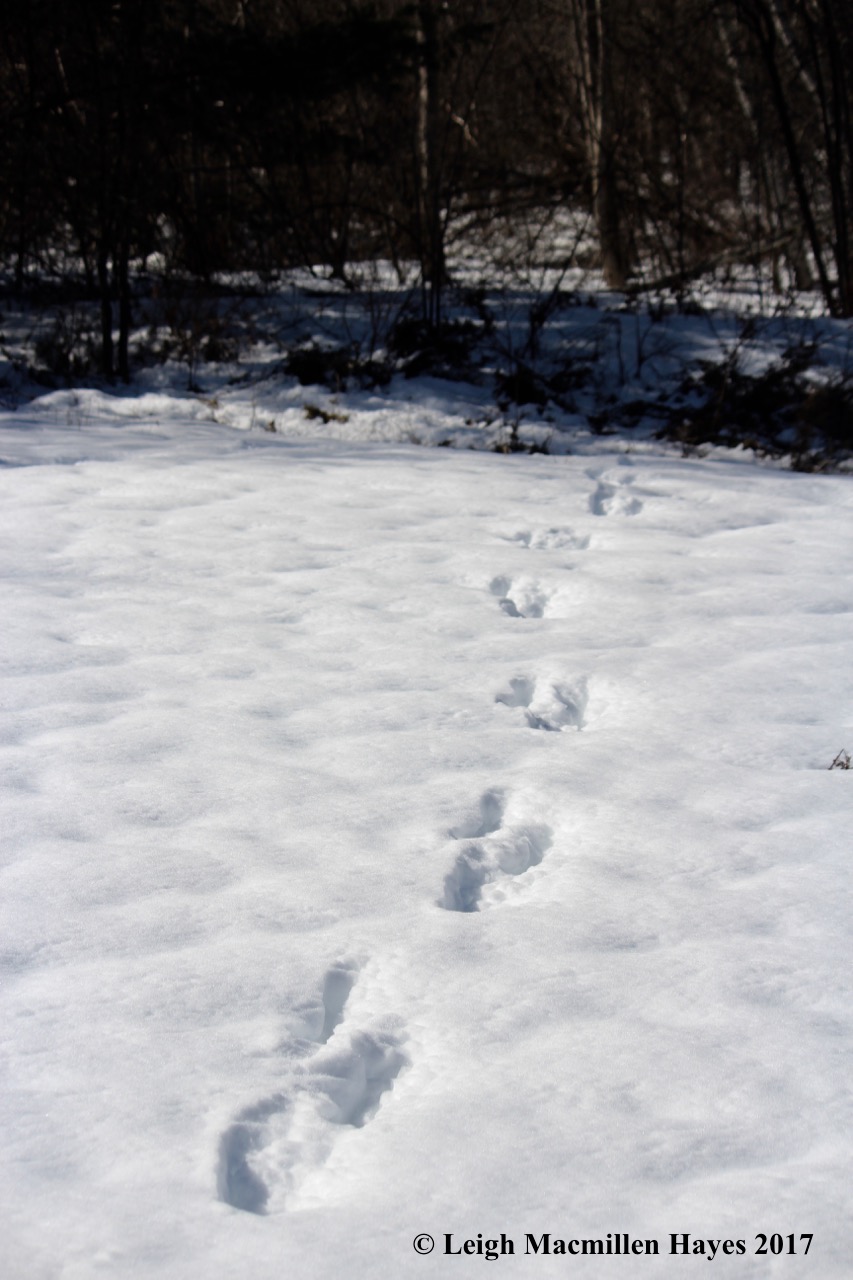
Our next leg took us from the Bog to the Groton multi-use trail, being used mainly by horse riders and moose. We saw neither, but their tracks were evident in the mud.

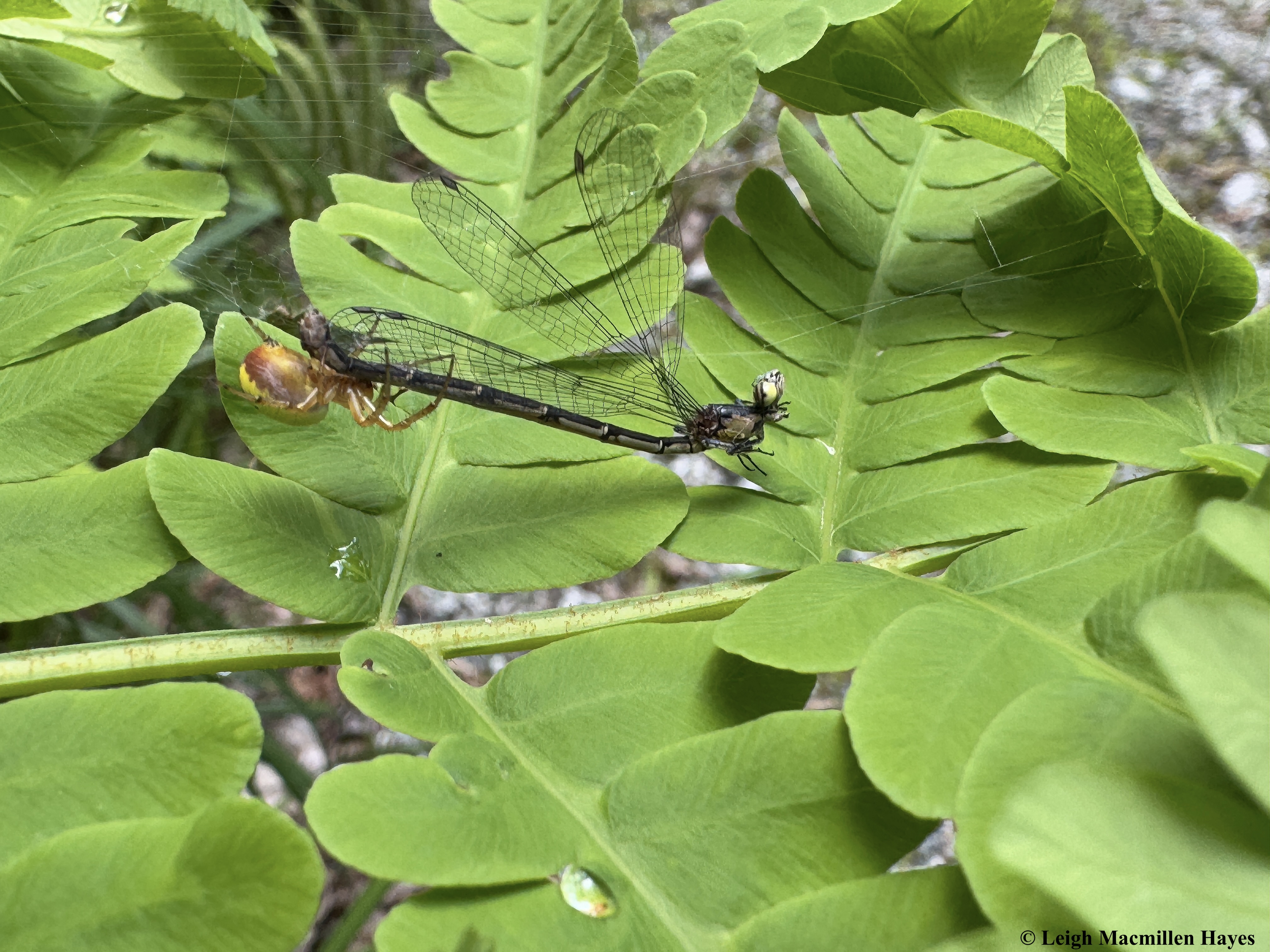
What we did spot was this Aurora Damselfly being wrapped up by an Orb Weaver Spider. I knew the damselfly immediately because of the uneven stripe on the sides of the thorax.

And had recently tried to paint a mature form of the same species.

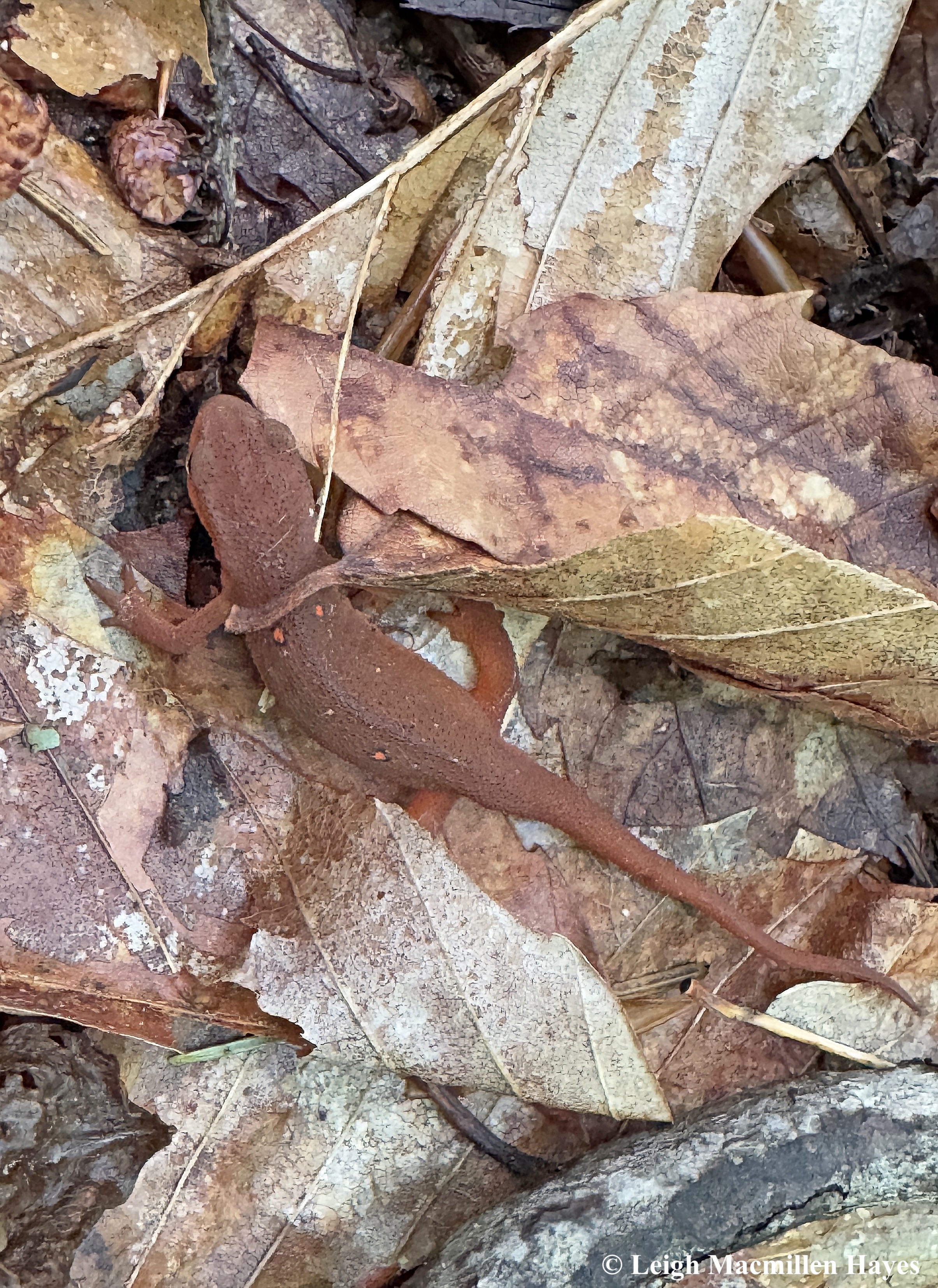
We also met a couple of Red Efts, the teenag and terrestrial stage of the Eastern Newt. The red spots act as a warning to predators because if consumed, they secrete poison toxins from their skins. As humans, we can touch them and live, but to ingest one would be harmful. So don’t try that.

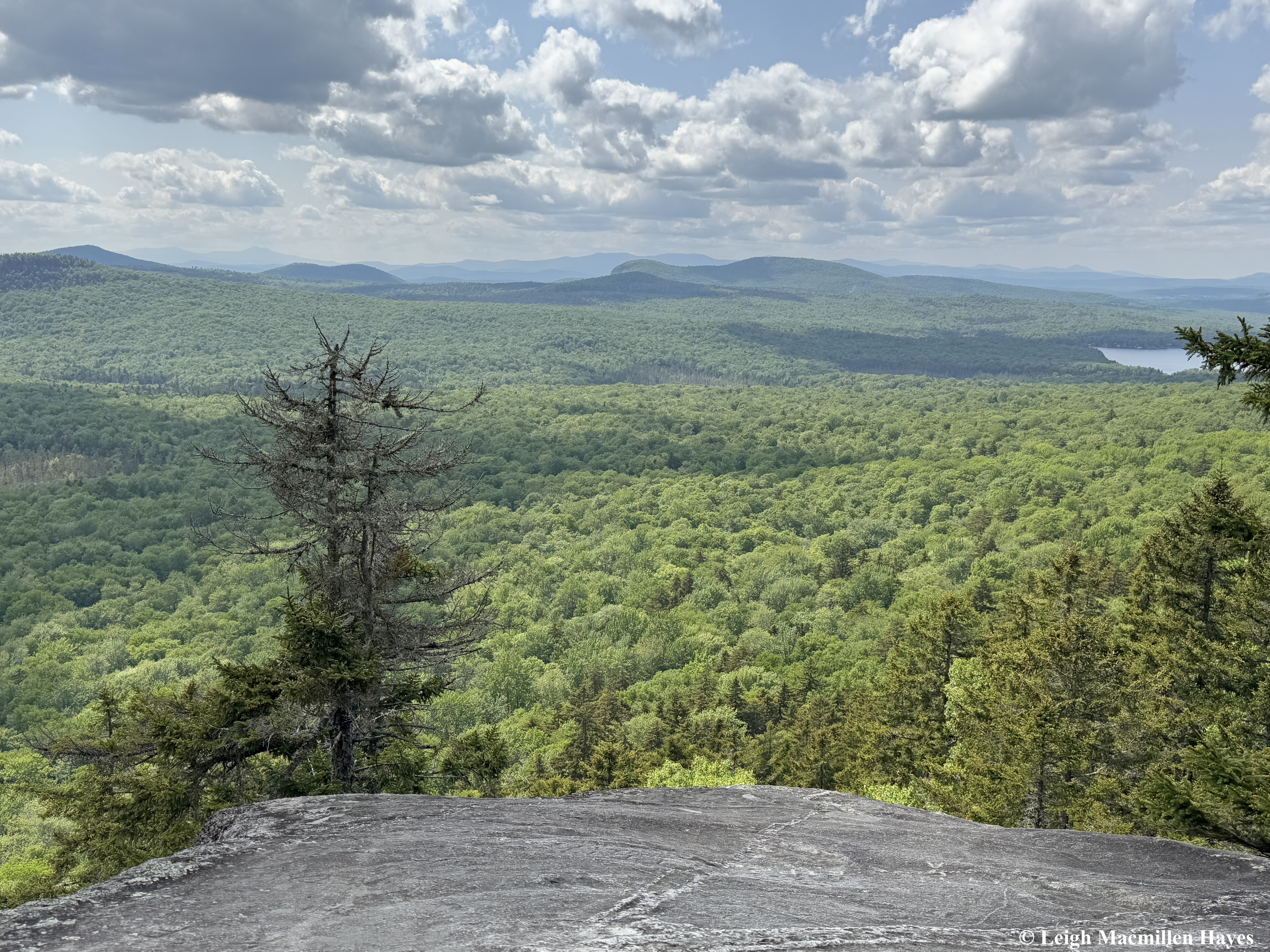
A couple of miles later we reached the trailhead for Devil’s Hill and snaked our way up the switchbacks to the summit, where this view of the rolling hills and iconic geography of Vermont stood out before us.

On the way down, a male Luna Moth presented itself, hiding as it was under a Striped Maple leaf.

I love these leaves and their twigs, especially the growth rings that stand out so predominately, and My Guy appreciates that the leaves serve as Nature’s Toilet Paper. TMI? But really, they are easy to identify and they are soft.

Returning on the multi-use trail before retracing our steps on the Peacham Bog Loop, we had to walk through tall grasses and sedges, which did not make my heart so glad because this was heavy tick territory. I had on tick gaiters and repellant. We took at least five off My Guy.

But, this pair of Craneflies did share a canoodle moment with us, so that won me over for a second.

All in all, we hiked over eleven miles that day, and were too beat to go out to dinner, so instead drove to the West Barnet Quick Stop, about 1.5 miles from our weekend home. There we ordered Chicken Cordon Bleu Paninis with Pesto, and a salad to share. And while we waited for our meal to be created, noticed Shain’s of Maine Ice Cream in the freezer, which made us chuckle. Wait a minute. We were in Ben & Jerry Country. Never fear–they had a much better presentation in another freezer.

And, while we waited, I asked the woman who was creating our salad if she lived in the area. “All my life,” she said, and added, “So far.” We chuckled, but then I asked if she knew so and so, a couple I know from church who had lived just down the road for many years (a fact I’d only learned days earlier).

Her face lit up with a smile as she recalled them and said they used to frequent her other store and that their daughter had worked for her. As tired as I was, that smile of hers was the perfect ending to a great day.

Well, it wasn’t quite over yet. For there was no TV at our weekend digs. And so I taught My Guy to play Parcheesi, and then I beat him.

The next morning we drove north to Orleans to meet my first college roommate and her husband, Bev and Bill, at the Carriage House for breakfast. Funny thing–as I drove up Route 91, there was one car in front of us and approaching it, with its Maine license plate, I spotted Lakes Environmental Association and a Loon Echo Land Trust stickers on the rear window. It had to be someone from our hometown. Sure enough, as I passed it, I recognized the mother of one of my former students. And a wondermyway follower.

Betty, if you are reading this, that was us on the highway with you on Sunday morning at 8:30 or so.

We spent two hours talking and eating and talking and talking some more over omelets and coffee and Bev and Bill suggested that we hike Mount Hor, which overlooks Willoughby Lake. I’d been to Willoughby before with Bev and two other dear friends, but never hiked in that area. And so we did. They gave us easy to follow directions and we parked and then walked almost two miles up the CCC Trail. I love that this was another project meant to keep people working when times were tough.

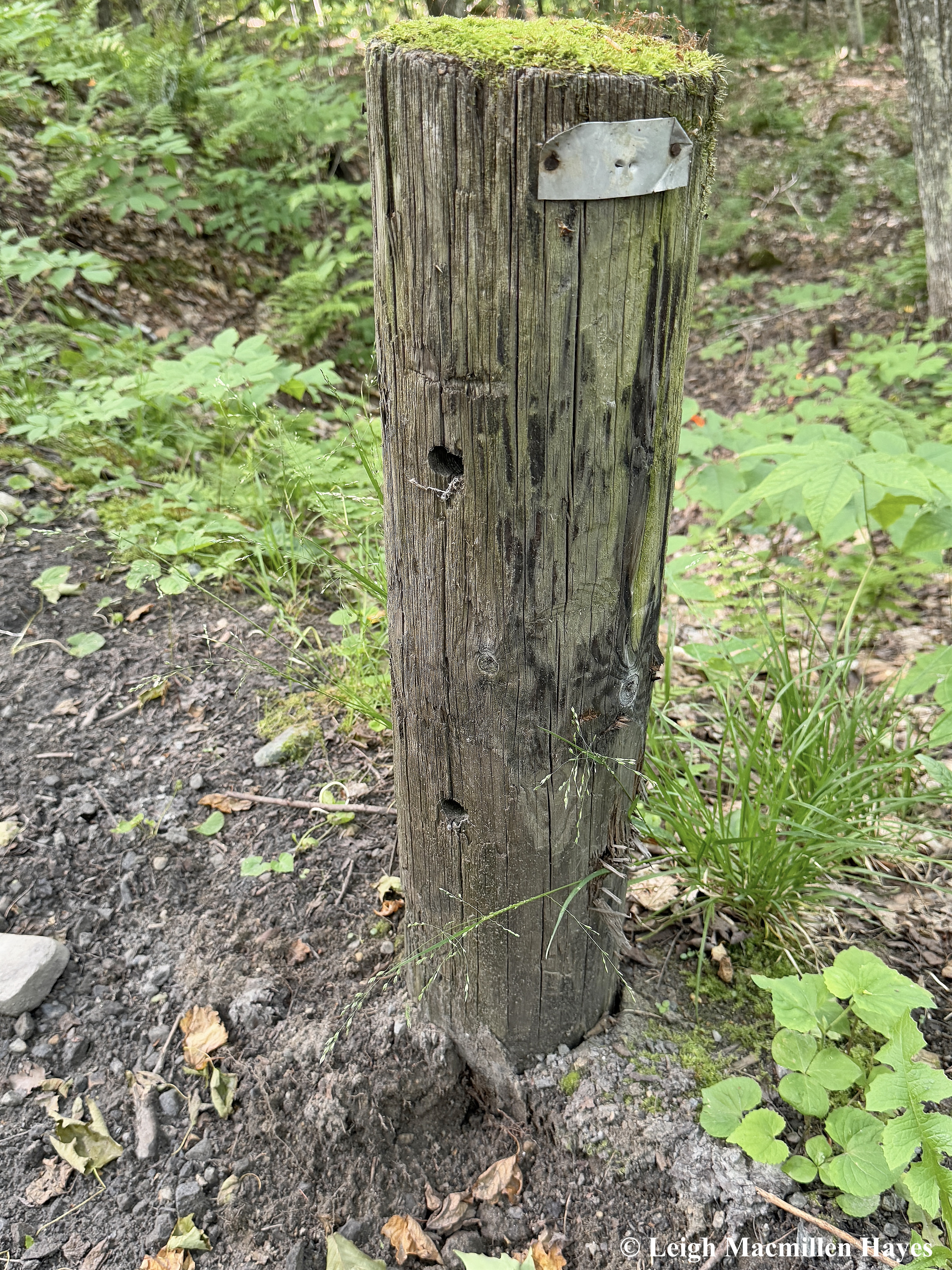
Though the hard packed surface we walked on was not the original road, we kept spotting these posts and my theory is that they were original and held cables that connected one post to another and kept vehicles from catapulting down the steep embankment.

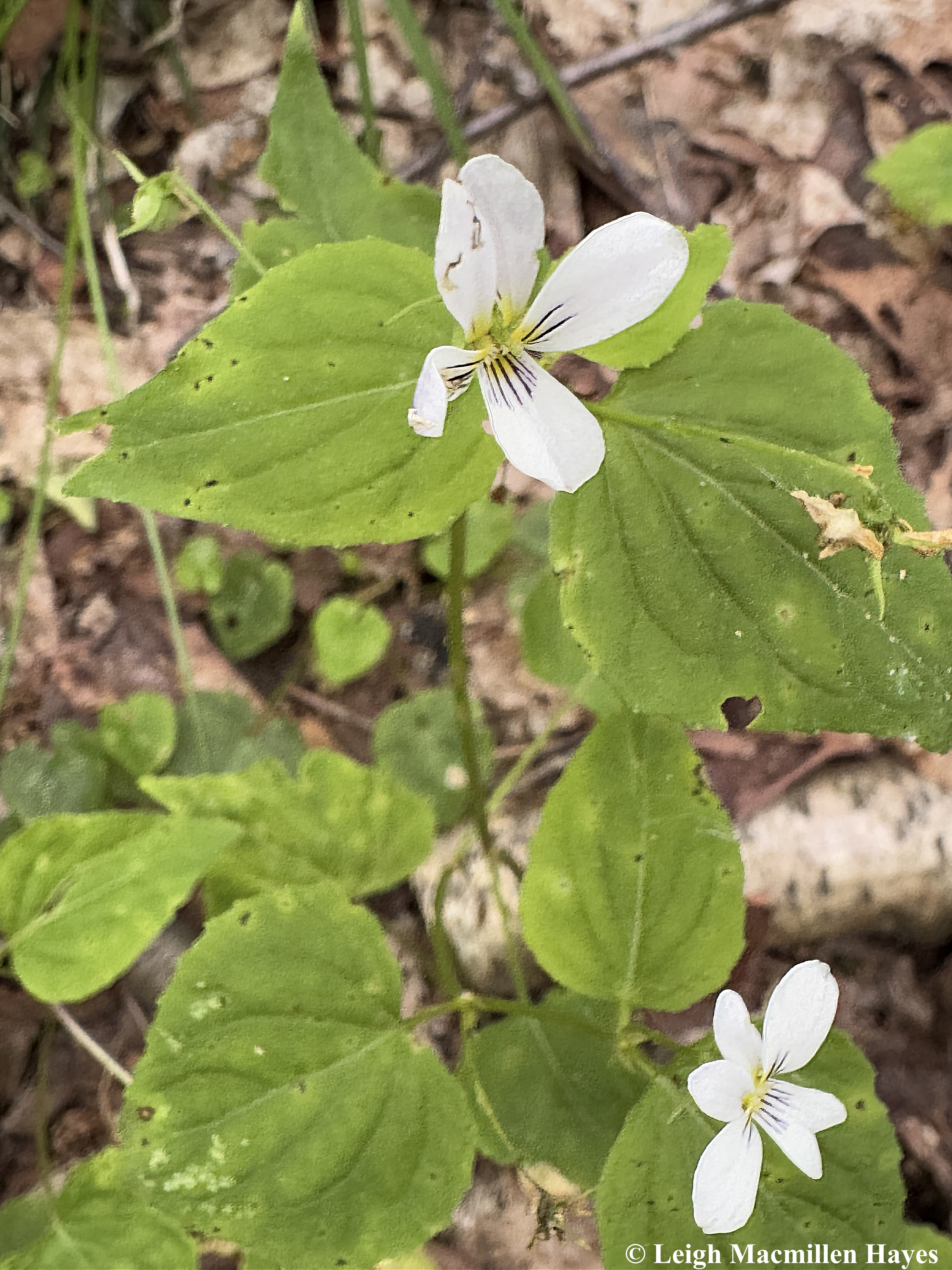
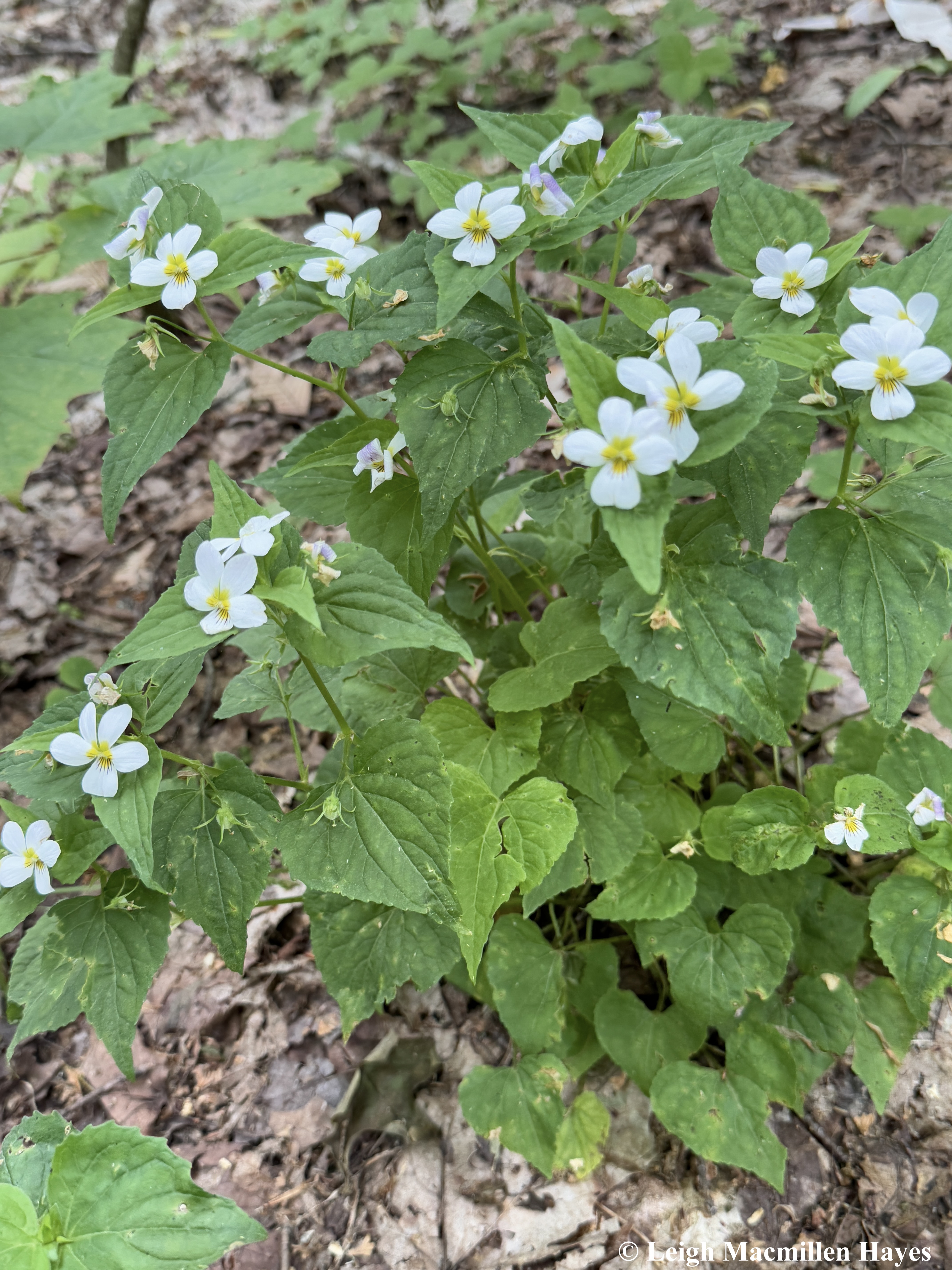
When we finally reached the actual trailhead for Mount Hor, I met a new flower. Canada Violet. It made sense since we were probably about ten miles from the Canadian border. Delicate. Pure white. A well-defined runway to the nectar. And leaves offering a different take on the violet theme.

What we soon realized was that it not only grew tall, but also in large clumps.

Oh my gosh, our next find–Maidenhair Fern. Such a unique presentation and color and, oh my gosh!

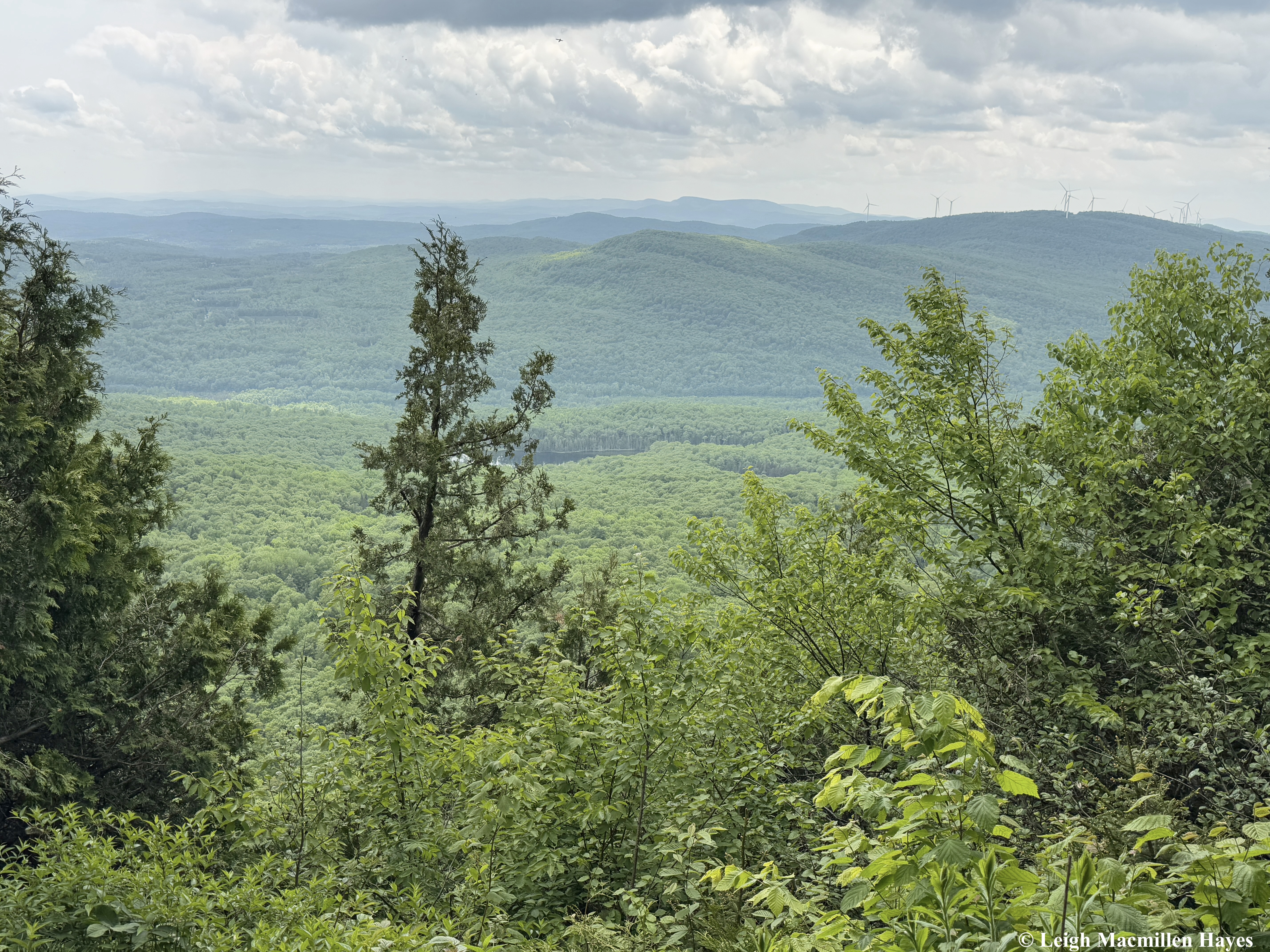
At the summit, we had three choices. First we headed to the Summit Vista, where the view included Cedar trees in the foreground and two delightful couples who were enjoying GORP and blueberries but when they heard that we had homemade Peanut Butter Chocolate Chip granola bars a la The Stow Away Baker in our backpack, they wanted to chase us down the mountain.

From there, we hiked another mile across the ridge line to the East View, overlooking Lake Willoughby.

While there, we spotted a Peregrine Falcon soaring on the thermals, but neither of us got a good shot of it. Still. Forever in our minds eye. And sometimes, those are the most memorable moments.

From the North Vista we looked across at the cliffs of Mount Pisgah and wondered how many more falcons we weren’t seeing.

Back down the CCC Road we did walk once we stepped off the mountain trail and my favorite find was a Mountain Maple, that stopped me in my steps for a few minutes as I had to remember who it was that I was meeting.

Back at Lake Willoughby North Beach, Mount Hor is on the right and Mount Pisgah on the left, creating a fjord-like presentation.

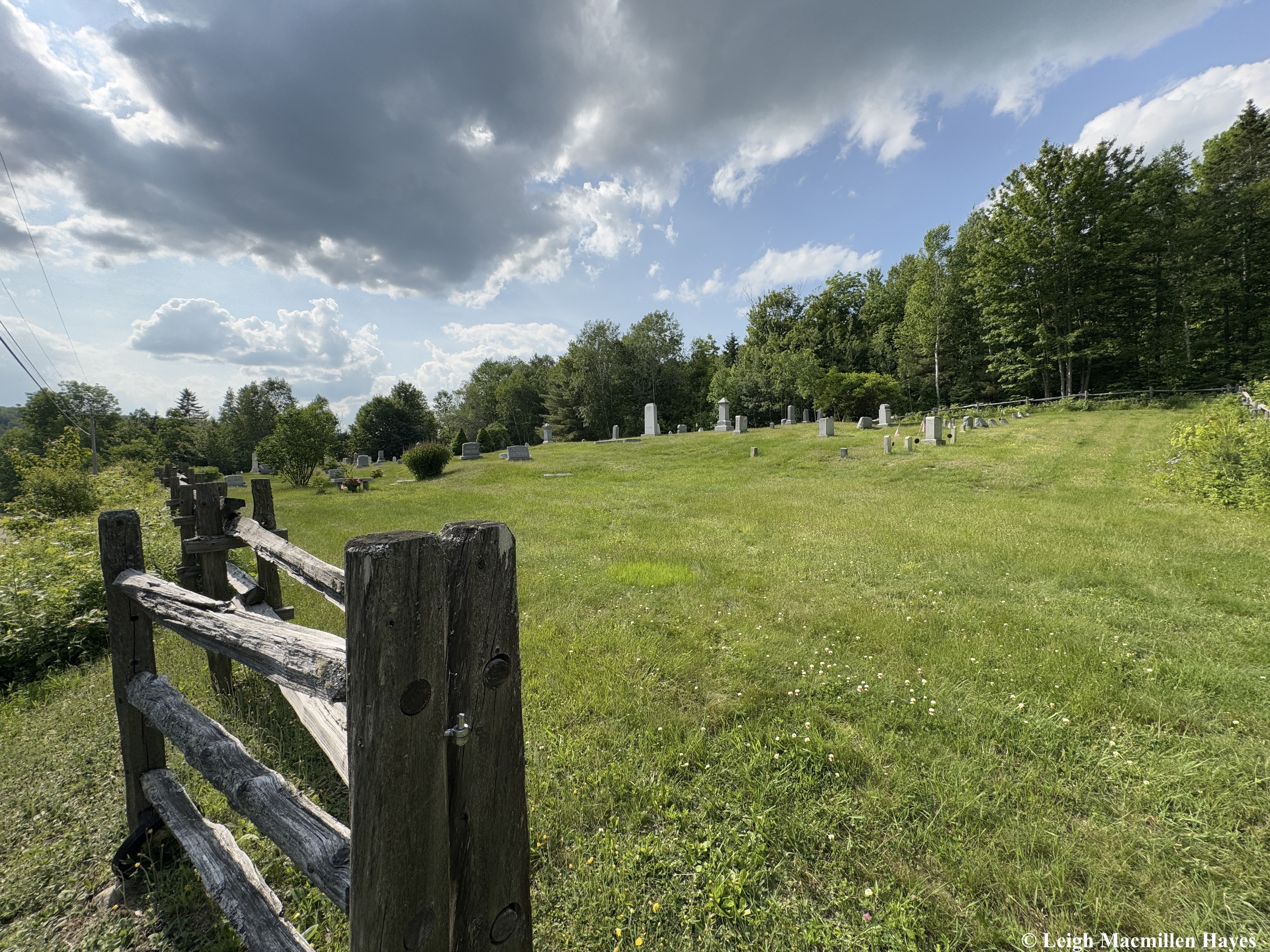
From there, we drove south to South Barton as I let my nose lead the way and found a cemetery I’ve visited in the past for some of my ancestors are buried here.

Recognizing family names is always a treasure. And actually, within the post railings of this place I noted at least three different families that have contributed to my DNA. I’m pretty sure my love of the north country, be it Northern New England or Canada, comes from these folks.

On the way back to our home base, we grabbed sandwiches to go from Three Ponds and gave thanks for their goodness.

And then this morning, after packing and cleaning and chatting briefly with Chuck, we had one more place to explore–Kettle Pond State Park within Groton State Forest.

So here’s the thing. My understanding of a kettle bog is that it’s kettle or bowl shaped. And has an outer layer of herbs, with the next layer surrounding it of taller herbs, and then a third layer of shrubs encircling the kettle, and finally, trees who like wet feet, like Red Maples, forming the final ridge around the pond.

None of this was present. Well, there were shrubs and trees, but not in layers like I’m used to seeing. And the shape of the pond was more north-to-south glacial-related than kettle-related. Hmmm?

Still, some great finds like this Spotted Salamander egg mass along with four others in a deep puddle along the trail. Can you see the embryos forming?

And a Garter Snake that had been basking on a rock in the trail until we happened along.

And Twin Flowers, each sharing a petiole, growing like a mat along a glacial erratic.

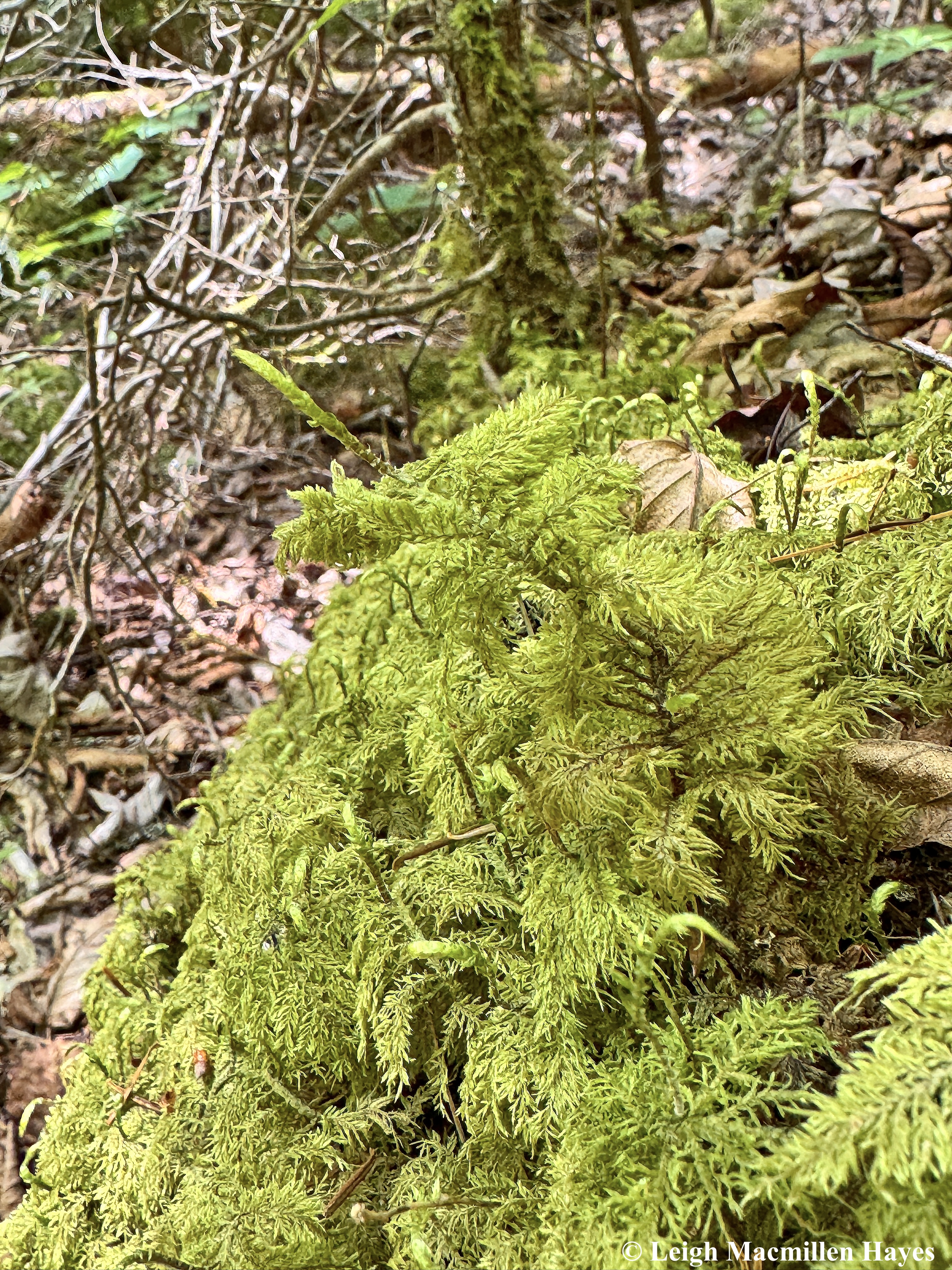
And Stair-Step Moss growing abundantly like a set of stairs here and there and even over there.

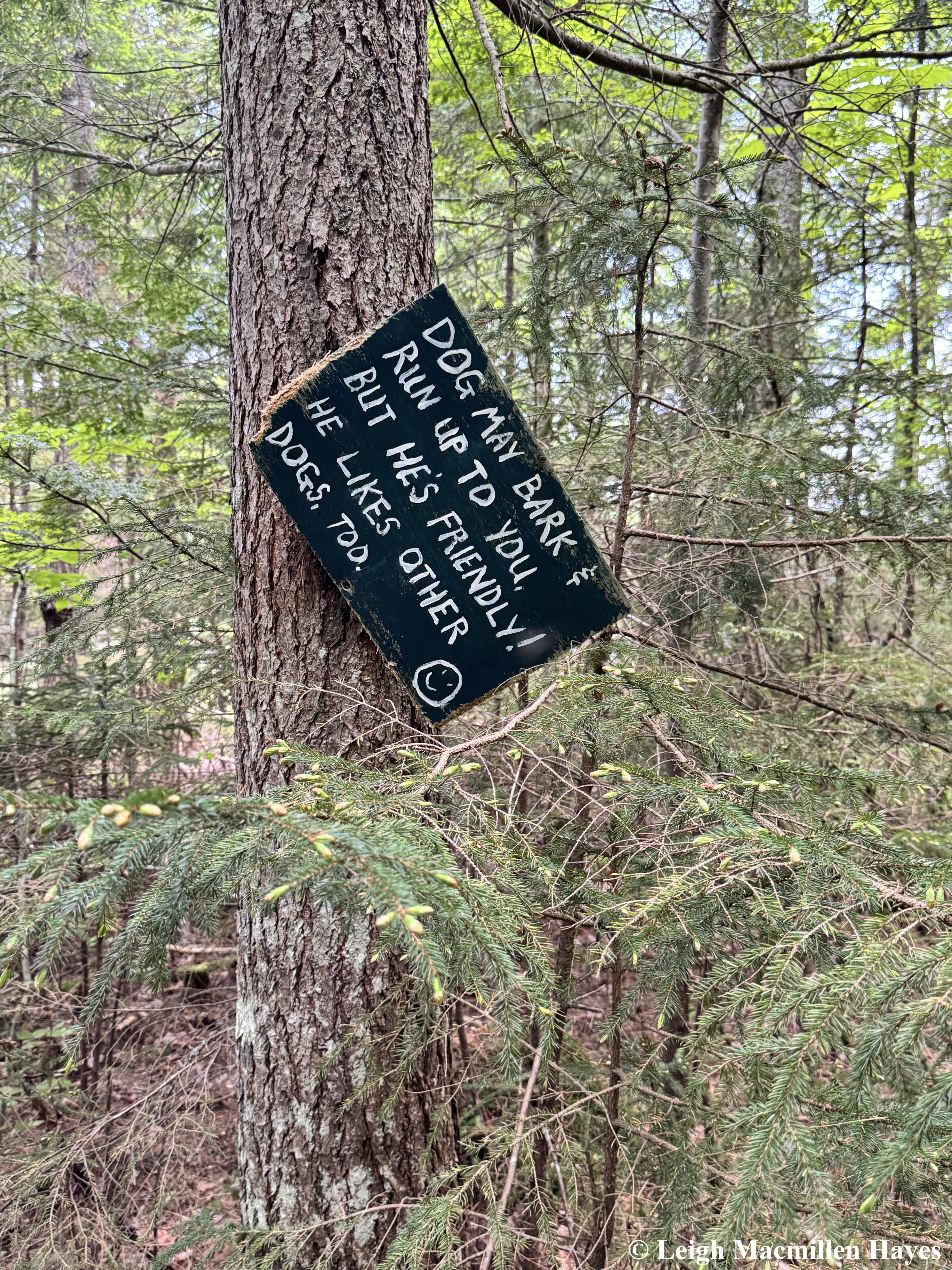
And a warning, which was more of an invitation at the only private cabin along the way, a route which offers lean-to shelters for groups to rent. I love this sign. We looked forward to meeting said dog, but sadly, no one was home.

Flat-fruited Pelt Lichen also lined the trail. So much to see. So much more to learn.

Oh, and an Eastern Newt in the water. It was like the Newt brought the trail to a full circle beginning with the Red Eft on our first hike of the weekend and ending with this adult form.

Our time Vermonting came to an end this afternoon, but oh, what a wonder-filled time we had. We hiked so many miles while meeting old and new friends, dined with dear old friends, met friends of friends who were old friends to each other and new friends to us, and just plain had fun making new memories.

Thank you Chuck and Mercy, and Bev and Bill, and Debbie and those at Three Ponds, and Brian at the Nature Center, and to all the others we met along the way for making our experience such a rich one.

Vermonting we did go. Word or no word, it was exactly what we needed.

Dragons of the Future

Spring is actually a combination of many seasons, beginning with winter that doesn’t want to let go, followed by mud, and then road-repair, with bug quickly taking form following several days of rain, and soon to come, my favorite of all–dragonfly season.

And so I thought I’d take some time to honor friends I’ve met in the past and try to get to know them better . . .

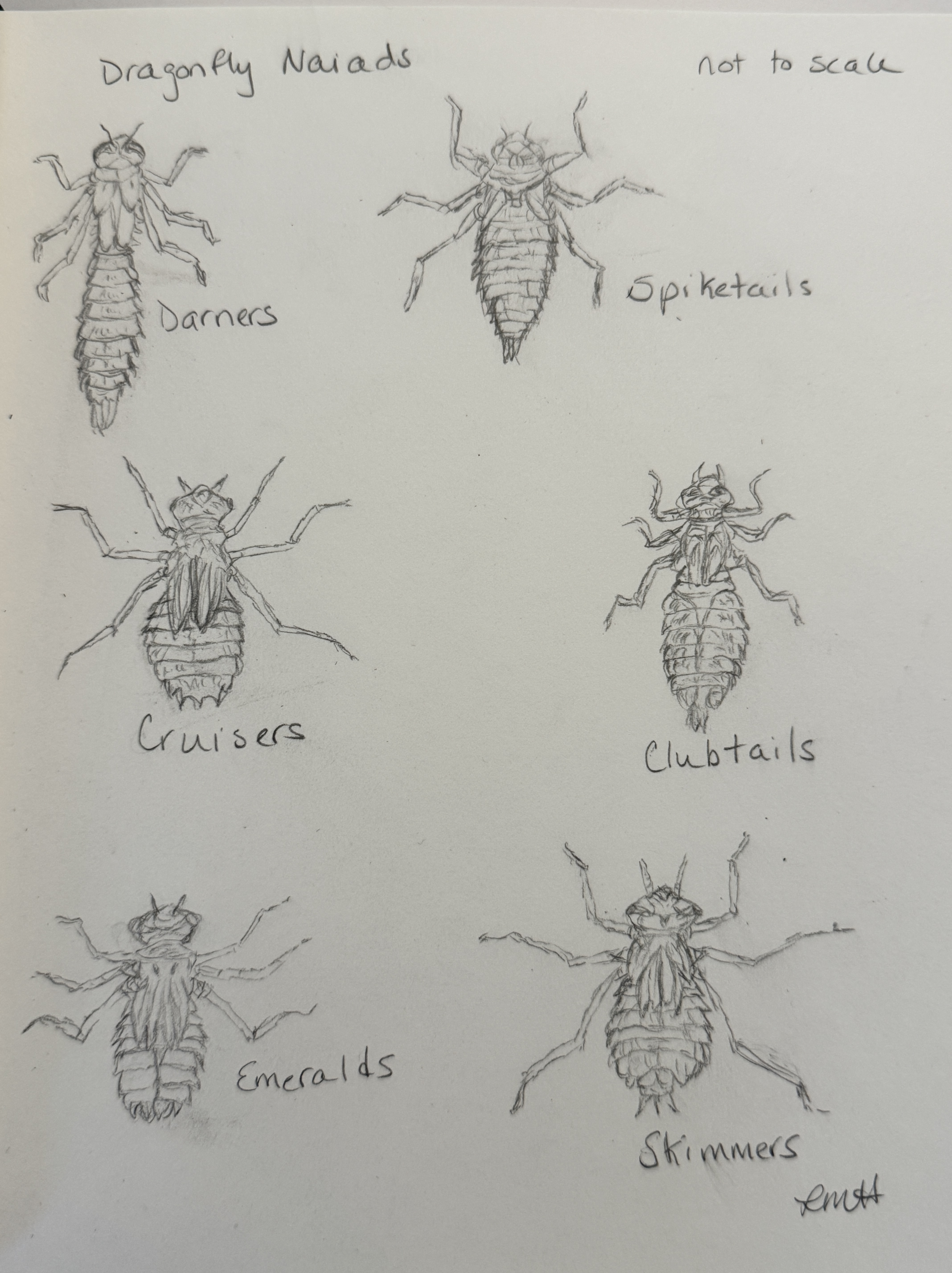
With my pencil first. Sketching is such a wonderful way to slow one’s self down and try to capture the essence of the object. Thankfully, with pencil and a good eraser, changes can be made and believe me, I have, and will continue to edit these.

Darner Naiad

And then I decided to take it one step further–by painting the Naiads (larval form) of six dragonfly families.

One of the incredible wonders of this world is that the aquatic form of dragonflies become terrestrial and we anticipate and celebrate their emergence every spring, knowing that BUG season won’t last too much longer. Well, in some places. Right Jenn?

Usually, they begin to emerge by the end of May and then it’s an ongoing process, with some waiting until late summer or early fall to transition from one world to the next.

This is a Black-tipped Darner that I met in the fall a few years ago when it was barely alive. It was on the grass by the outlet of Deer Hill Bog in Stow, Maine, which is a typical habitat for this species, though it isn’t common.

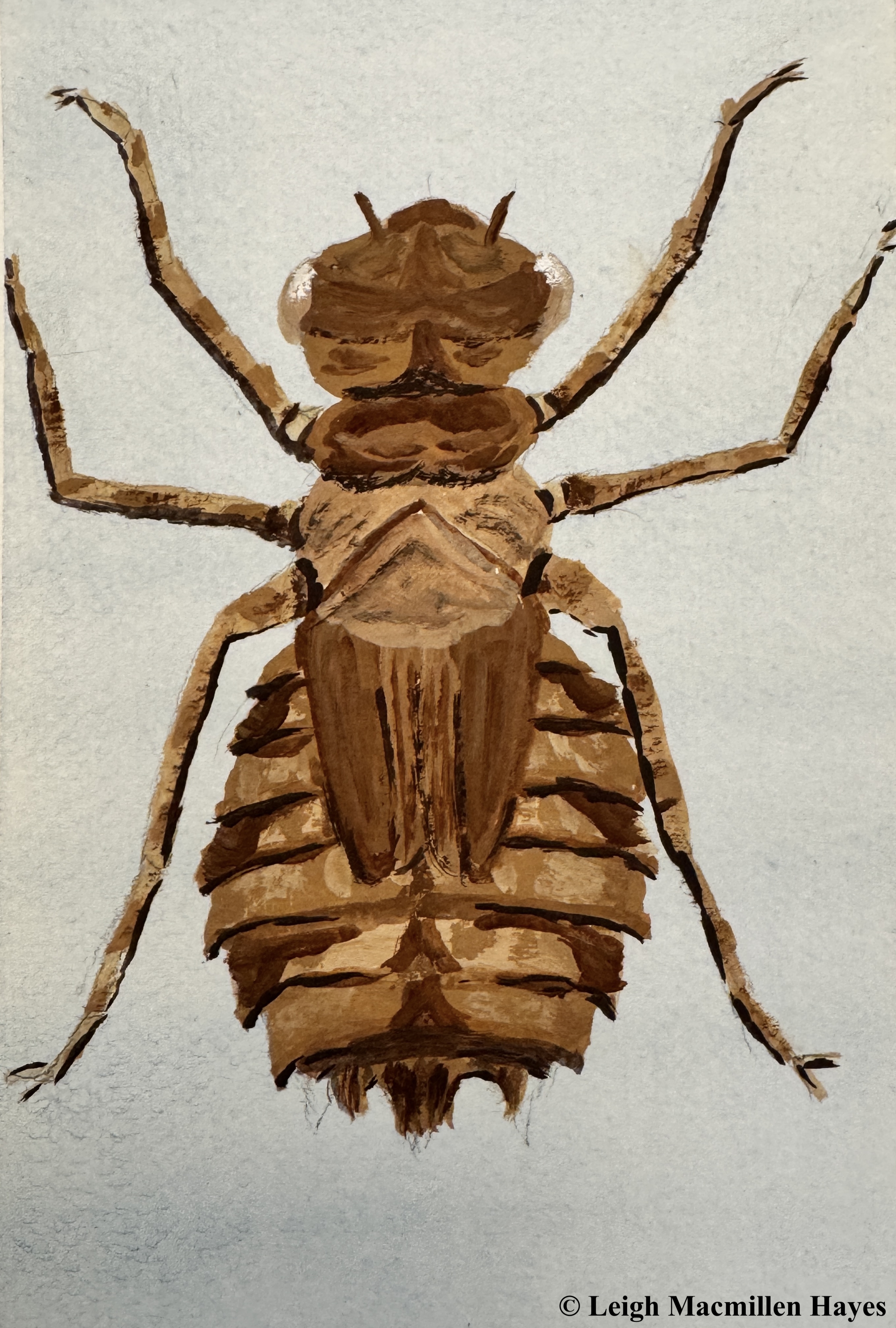
Stream Cruiser Naiad

After painting the Cruiser Naiad, I thought I’d use the iNaturalist APP: SEEK on it and bingo, SEEK identified it as a Stream Cruiser. All the rest came up as dragonfly/damselfly, so at least AI knew I was painting insects, but I was excited that it could reach the species with this one.

When immature, Stream Cruisers remind me of Oreo cookies, or maybe an Ice Box cake, which is actually rather funny because a few days after my birthday last year, I was the surprise recipient of an Ice Box cake. Thank you, Deb!

There are not a lot of cruisers in the Cruiser family, and as far as I can tell, this and the Swift River Cruiser are the only two found in New England.

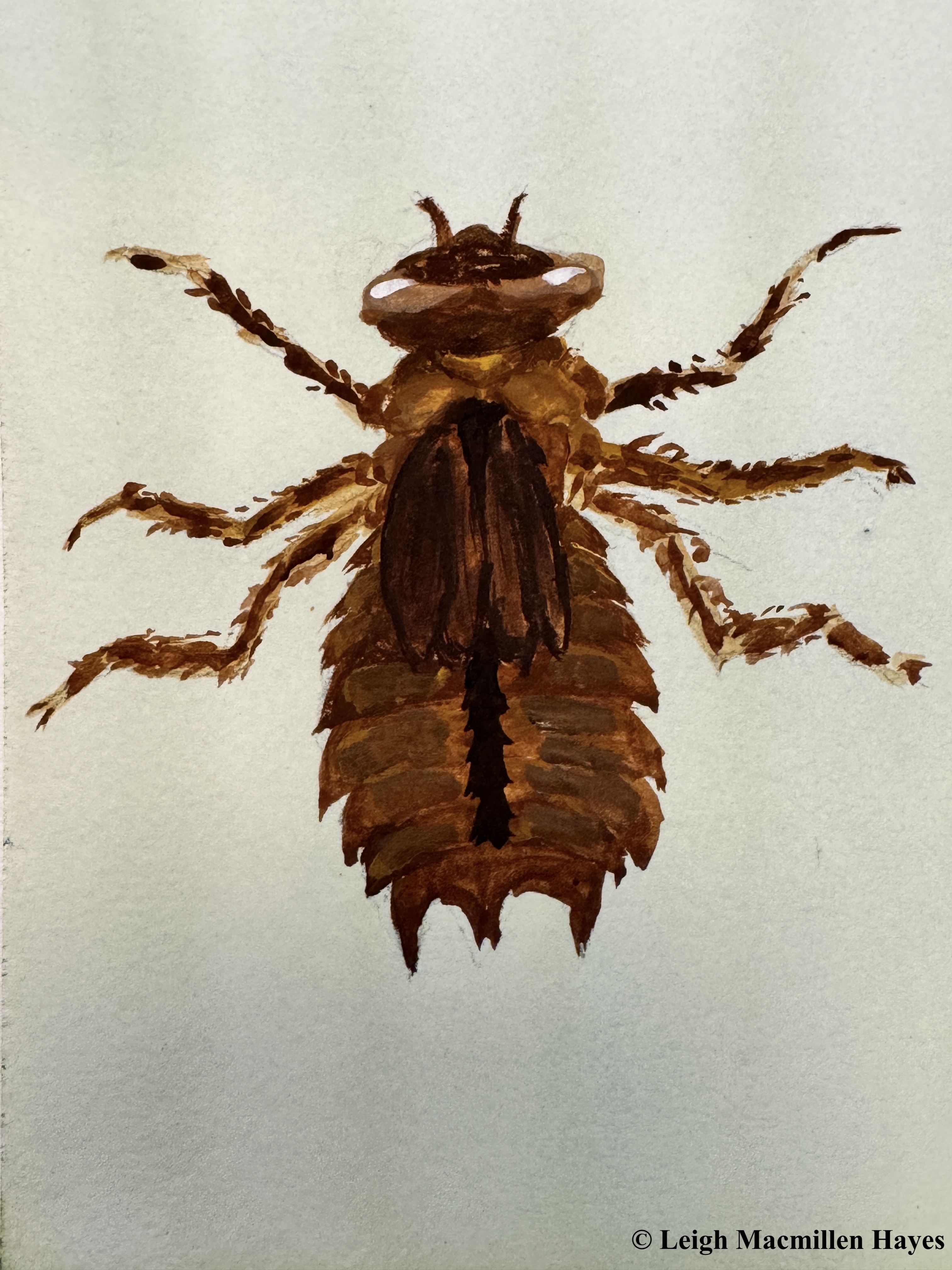
Emerald Naiad

Okay, so I tried to show the hairy body of the Emerald Naiad. If you’ve ever looked through a loupe or hand lens, you’ll know that the whole world is hairy!

Most Emeralds have greenish eyes and this Kennedy’s Emerald is no exception. In his field guide, Dragonflies of the North Woods, Kurt Mead writes, “Named for Dr. Clarence Kennedy, a professor at Ohio State University and a pioneering odonatologist.

Also in the Emerald family are the Baskettail dragonflies, this one being a COMMON Baskettail. I’ve commented before on the word “common,” and probably will again, but seriously, do you see anything common about this intricately-designed specimen?

Spiketail Naiad

So, um, I drew and painted this Spiketail Naiad, but to my knowledge, I’ve never encountered a Spiketail. I guess that should be one of my goals for the upcoming season. And I’m sure that having said that, I will start receiving photos of such from friends who have spent time with the adult members of this family.

Clubtail Naiad

Clubtails, however, I do know and meet often. They are so named because most adults have clubbed abdomens.

One of the ones I meet most frequently is the Lancet Clubtail–who loves to greet me on our dock or accompany me for a kayak ride. Do you see how the end of the tail is more club-shaped?

I will say that I often have to slow my brain down to differentiate between a Lancet, Dusky, and Ashy Clubtail.

I would be remiss if I didn’t mention the biggest Clubtail of all: Meet the Dragonhunter. Yes, he has a clubbed tail. But also yes, as his name implies, he eats other dragonflies. Oh, there are plenty of other things on his menu, but at up to 3.5 inches in length, this big guy may also eat butterflies and even other Dragonhunters!

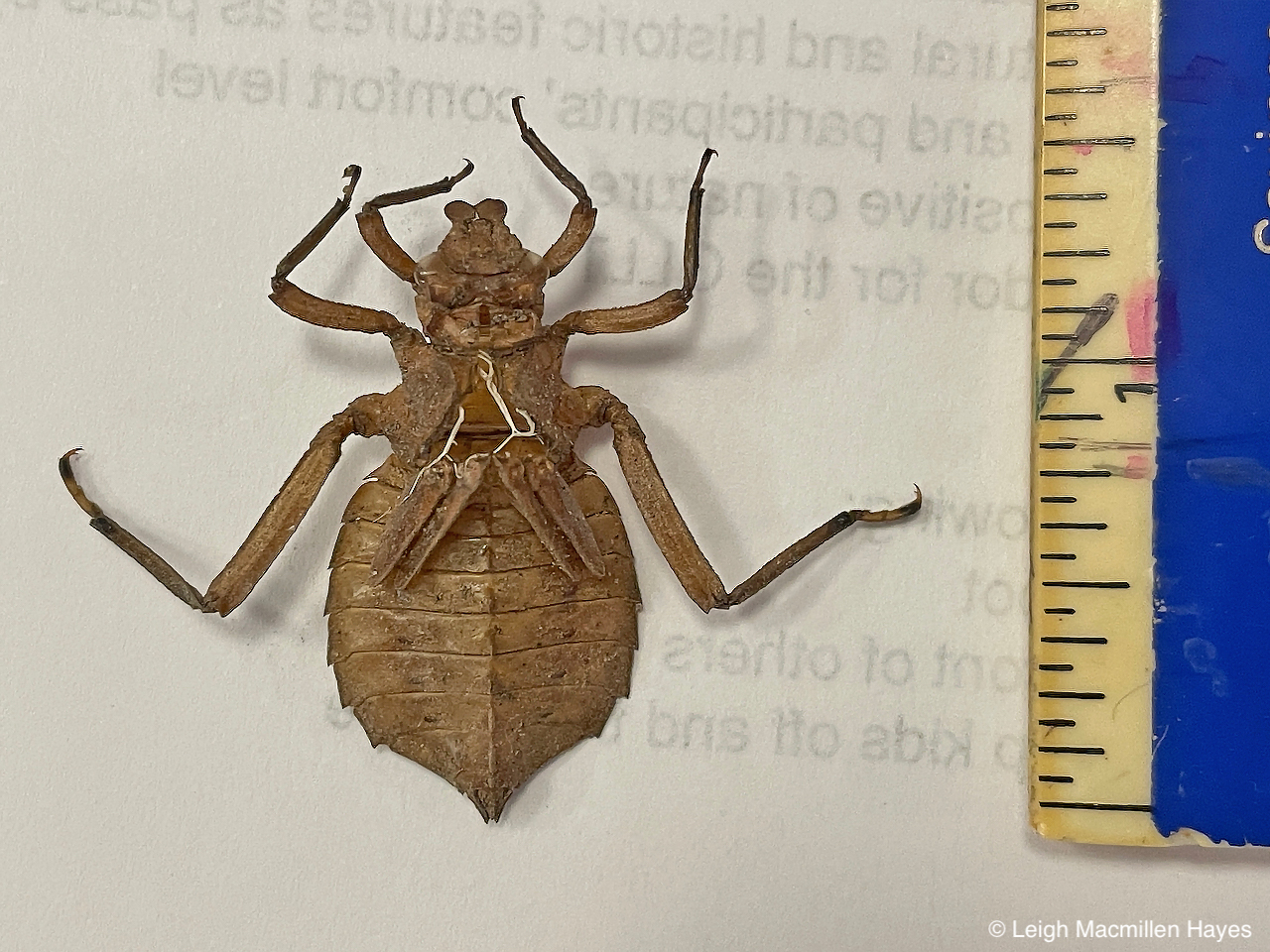
I would also be remiss if I didn’t share this photo of a Dragonhunter exuvia, which Dennis Paulson, author of  Dragonflies and Damselflies of the East describes as “wide, flat larva that resembles a wood chip.” The legs alone speak to its strength; formidable in the water and out.

And this is just a reminder to self that though I sketched and painted one form of a dragonfly naiad for six species, some may have other shapes. It’s the cerci at the tip of the abdomen that becomes key for identification to family.

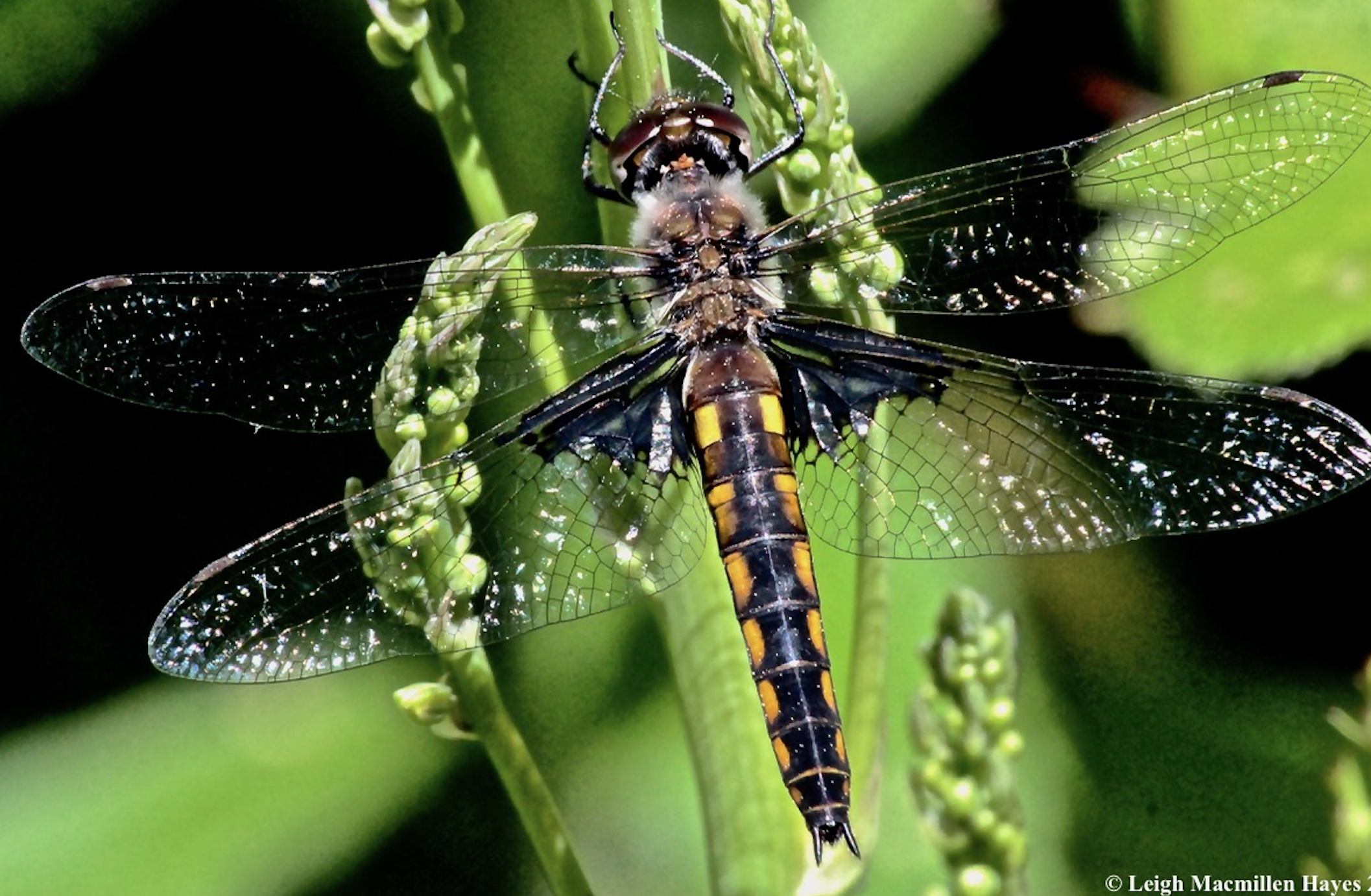
Skimmer Naiad

My final painting completed this afternoon is that of a Skimmer Naiad. This is the largest family of dragonflies and every ID book includes a thick section for skimmers.

That seems apropos because not only are there a lot of family members, but their abdomens are also quite thick or chunky.

Pictured above is a male Calico Pennant Skimmer. His counterpart has all the same markings, but where you see red, she sports yellow. And soon, a pair of cousins will fly before the Calico Pennants. The cousins are the Hudsonian Whitefaces. Their abdomens are similar, but they have clear wings and as the name suggests, white faces.

That being said, I again have to slow myself down when I spot a Hudsonian because I often mistake it for a Calico at first glance.

I share thousands of photos (and probably have shared at least a million over the last ten years) of Skimmers, but thought I’d keep it simple and end with this one–a male Spangled Skimmer. Note the white stigmas on his wings. That I am aware, no other dragonfly has these white stigmas.

Thanks for stopping by to check on my current Naiad collection.

Naiads are the dragonflies of the future.

And the future is close at hand.

I can’t wait for spring 2025 to debut her dragonfly season.

Another Amazing Lesson From A Squirrel

Maybe I’m a slow learner. Maybe I just need the same lessons over and over again.

Whatever it is, I’m grateful for all who teach me, non-human to human, because there is always something to learn.

This week it was my friend Red who led the class. If you were down the hall in this outdoor school, you may have heard him, for he tends to be quite loud, and a bit critical, when he’s not dining upon a pinecone that is.

His plan, as it often is, was to strip the cone of its protective scales and seek the tiny seeds tucked in by the core or cob of the cone. Each scale contains two winged (think samara that help the seeds flutter toward the earth when its warm enough for the scales to open on their own) seeds and to me it seems like a lot of work for a little gain.

But if you’ve ever watched a Red Squirrel at work, you’ve noticed they are quick and can zip through one cone in mere minutes. Of course, it helps that they don’t worry about the “trash” and just let the scales and discarded seed coverings or pods, and even half consumed cones and cobs pile up in a garbage pile known as a midden. Spotting one of these is a sure sign you’ve entered Red’s classroom. And if you pause and look around, surely you’ll find many more middens. After all, Red Squirrels are voracious consumers. But again, given the size of the seeds, they need to be.

So here’s lesson #1: Leave the scraps. Oh wait, not on our indoor dining tables, but in the woods. And not our food in the woods, unless you are composting. But downed trees and snags and leaves and all that will replenish the earth, just as my squirrel’s garbage will do.

I should clarify that Red shares the school with many others who have their own classrooms and I’m sure when I finish my latest assignments I’ll have more to learn from the porcupines and deer and hare and coyotes and foxes and bobcats and yada, yada, yada who live under the mixed forest canopy.

The sight of so many Eastern Hemlock twigs on the forest floor told me I’d stepped into Porky’s room so I looked for evidence, wondering if he was at his desk or not.

Lesson #2: Slow down and observe.

The answer was no, but he’d left his calling card on a dangling twig and so I know where I might find him should a prickly question enter my mind.

Because I was told by Red to slow down and observe, I noticed another spot where he’d visited and this time his midden was of a different sort in the form of snipped twigs. Much smaller snips than Porky drops, which is a good way to tell the two critter’s food source apart.

Just as Porky’s twigs had been cut with the rodent diagonal, so were Red’s.

I noted that he hadn’t eaten the buds at the tip of the twig, but once I flipped one over I discovered numerous buds or seed pods had been dined upon.

Lesson #3: Check twigs more often. And remember, this year was not a mast year for Eastern White Pines, so Red has to supplement with hemlock buds and cones. (And also remember, cones on hemlocks are not called pinecones because they don’t grow on pine trees. Conifer refers to cone-bearing, so both pines and hemlocks are coniferous trees.)

Back inside I decide to sketch a pinecone. It was a sketch I’d started months ago, but abandoned because it seemed to difficult to draw.

But then, thanks to Red, a realization came to mind.

Lesson #4: Pinecones have overlapping bracts or scales that protect those seeds developing inside of them. They close in the dark and open in light, especially on sunny days and it is then that the seeds become airborne on their samaras. And the bracts or scales grow in spirals around the core or what I think of as a cob. I knew that, but had forgotten it until I decided to sketch.

And so I drew some guidelines to aid me as I tried to recreate the cone’s spiral staircase.

It was fun to watch it grow and realize each cone actually fans out in a Fibonacci spiral sequence. It’s an amazing wonder of nature.

Feeling my drawing was complete, I began to add color in the form of gouache paint, scale by scale.

And slowly, the painting began to represent a cone . . . at least in my mind’s eye.

A dash more color and voila–my amateur attempt at painting a pinecone. I have to admit, I was rather tickled because I really didn’t think I could pull this one off. But I have my art teacher, the talented Jessie Lozanski, to thank for giving me the confidence to try.

And I have Red, my other teacher, to thank for the lessons because it was in watching him turn the cob ever so effortlessly that I was reminded about the cone’s spiral.

And so I tried to honor him as well. I may be a teacher, but I’ll always be a student.

Lesson #5: As we head into this new year, I hope you’ll join me in slowing down and noticing and honoring. Especially outdoors. Or even out your window.

I’m forever grateful to Red and all the other teachers who come in many forms, not just as mammals, for the amazing lessons I’ve learned and can’t wait for the next class.

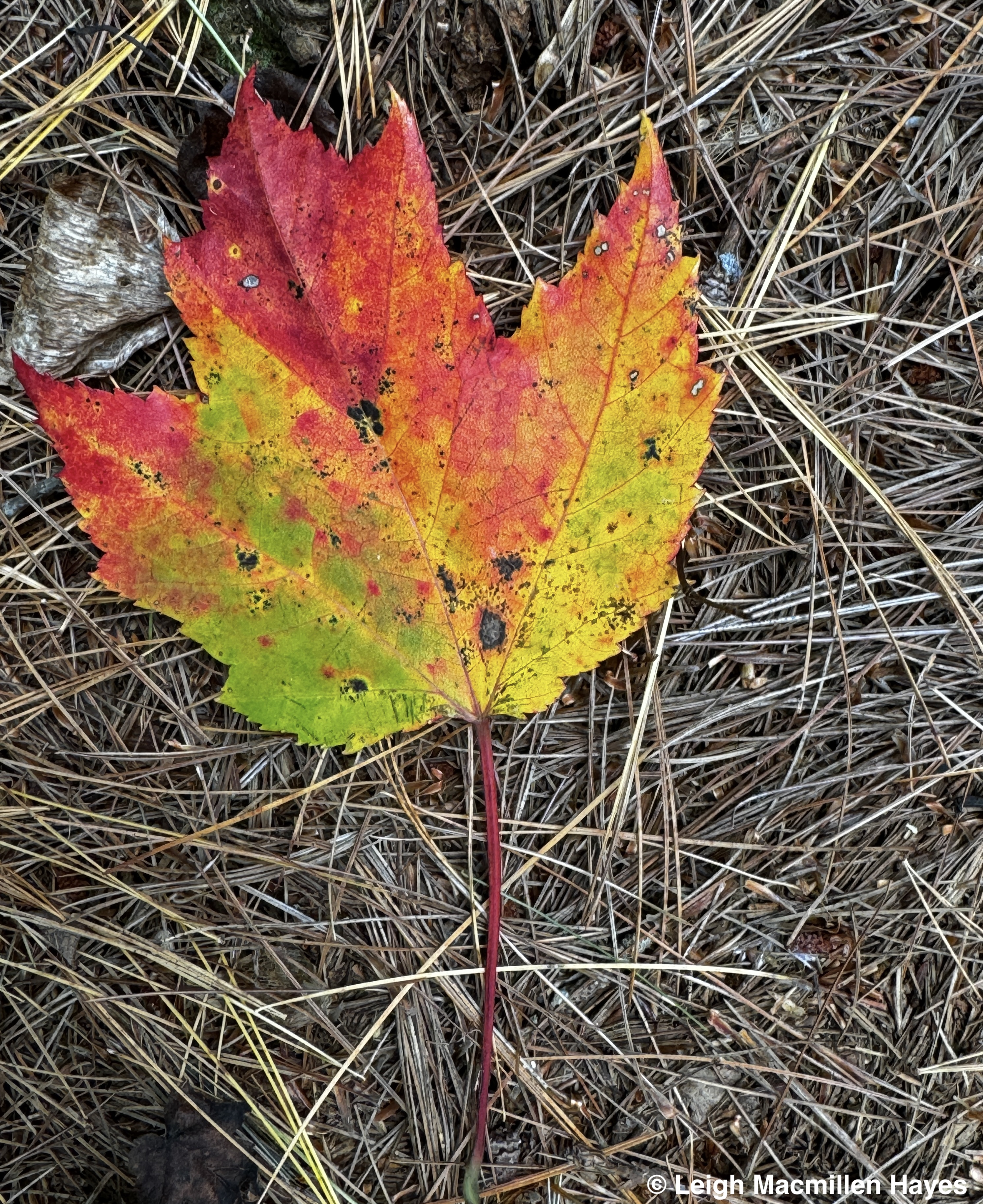
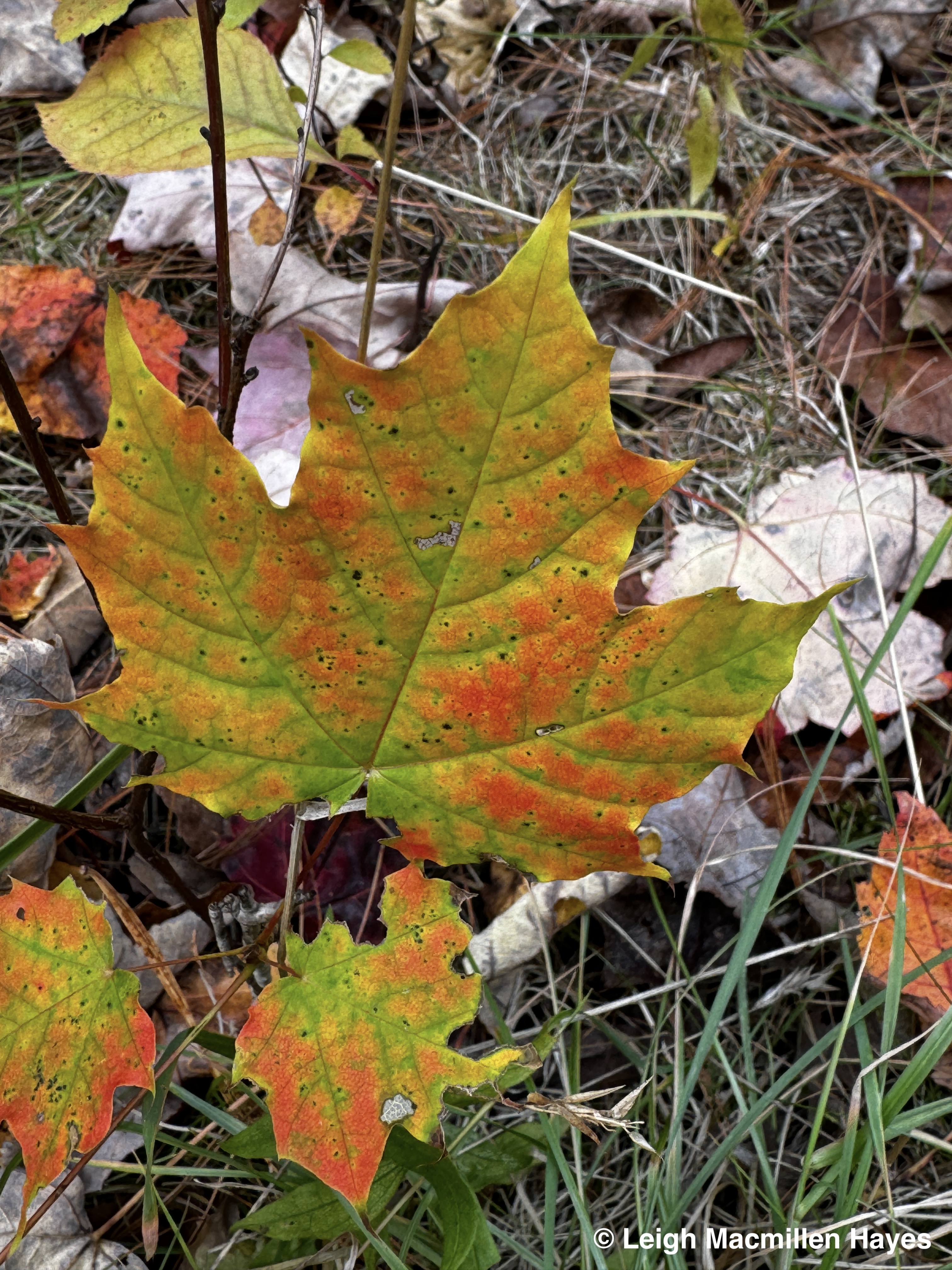
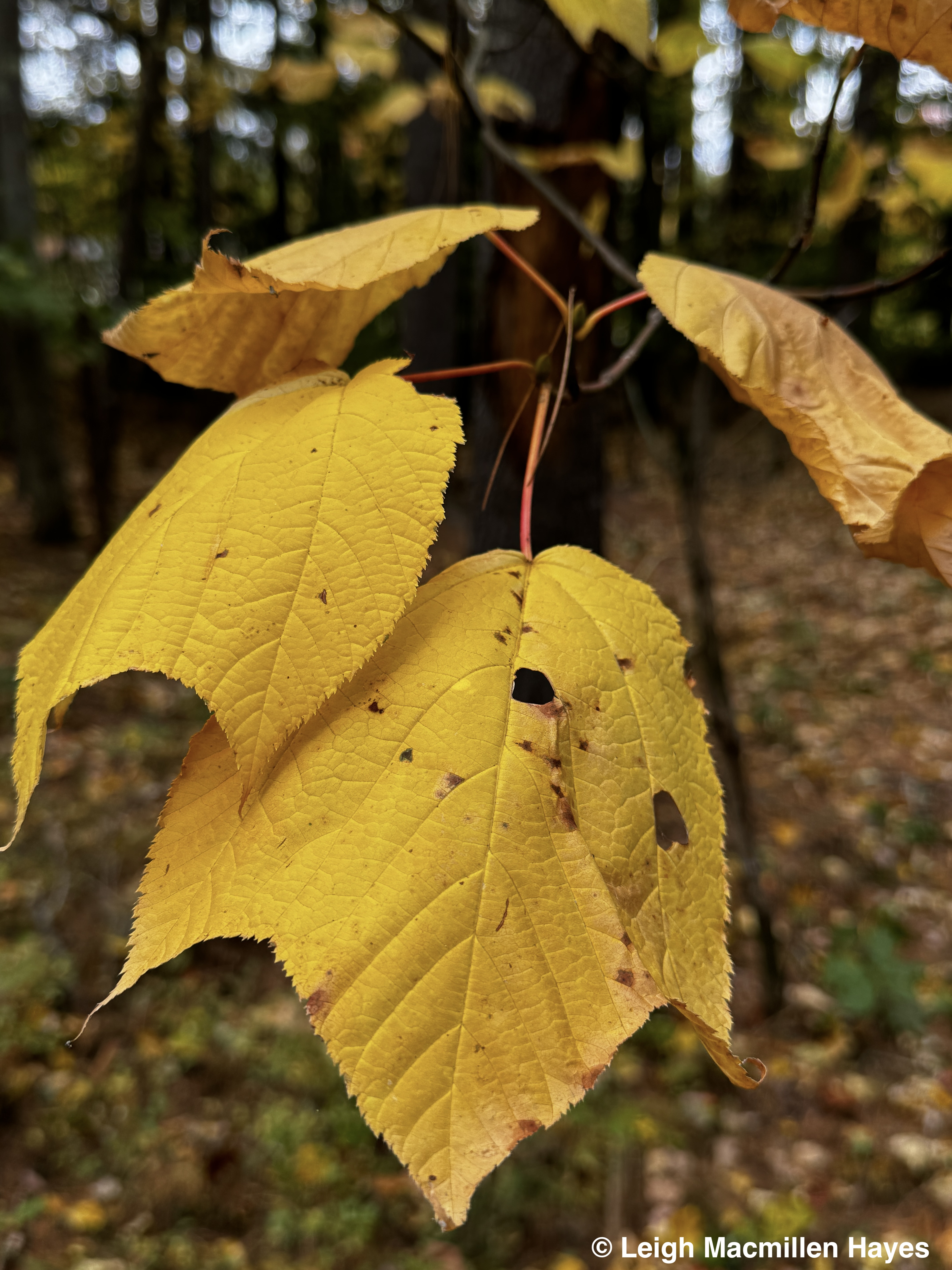
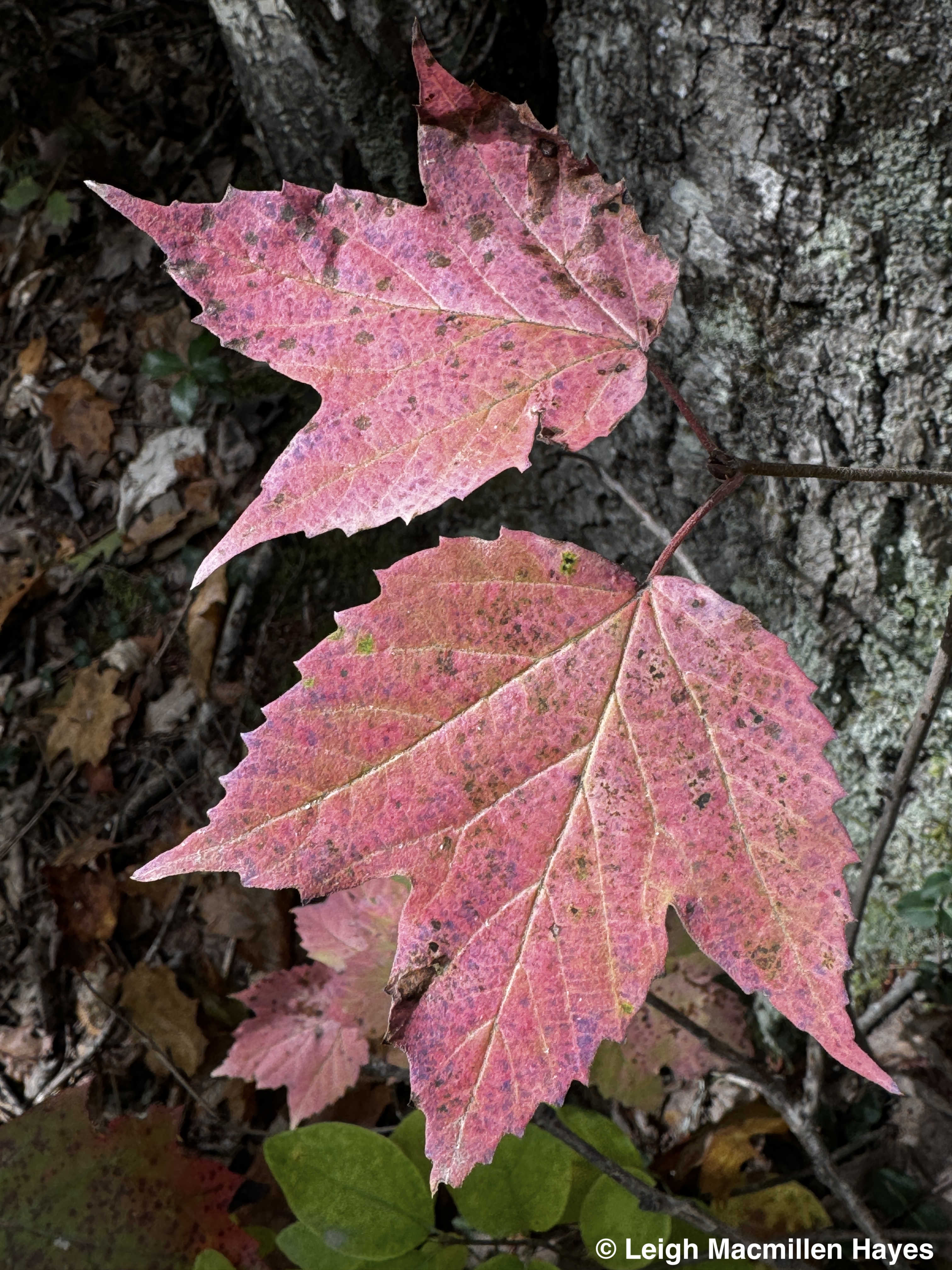
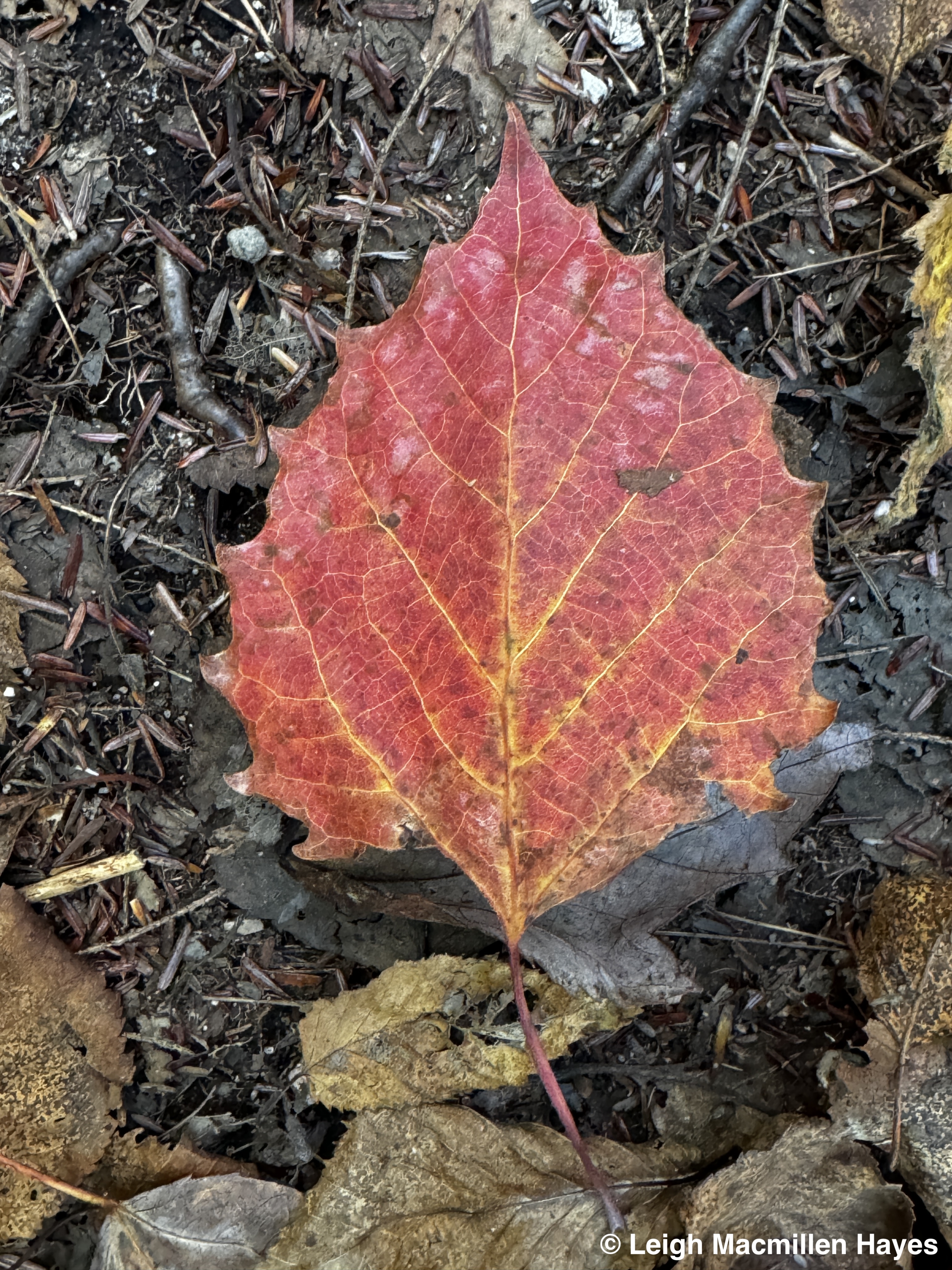
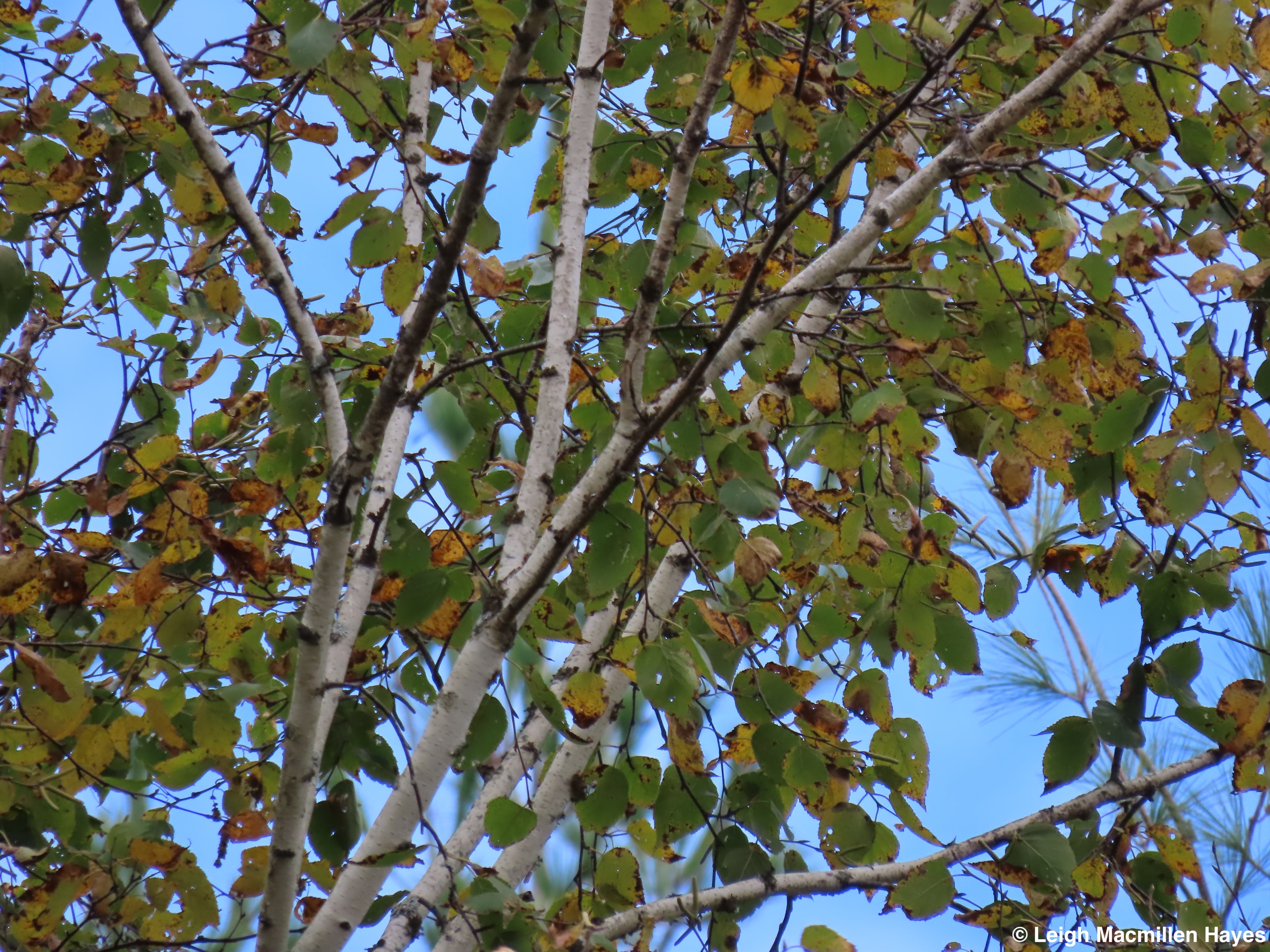
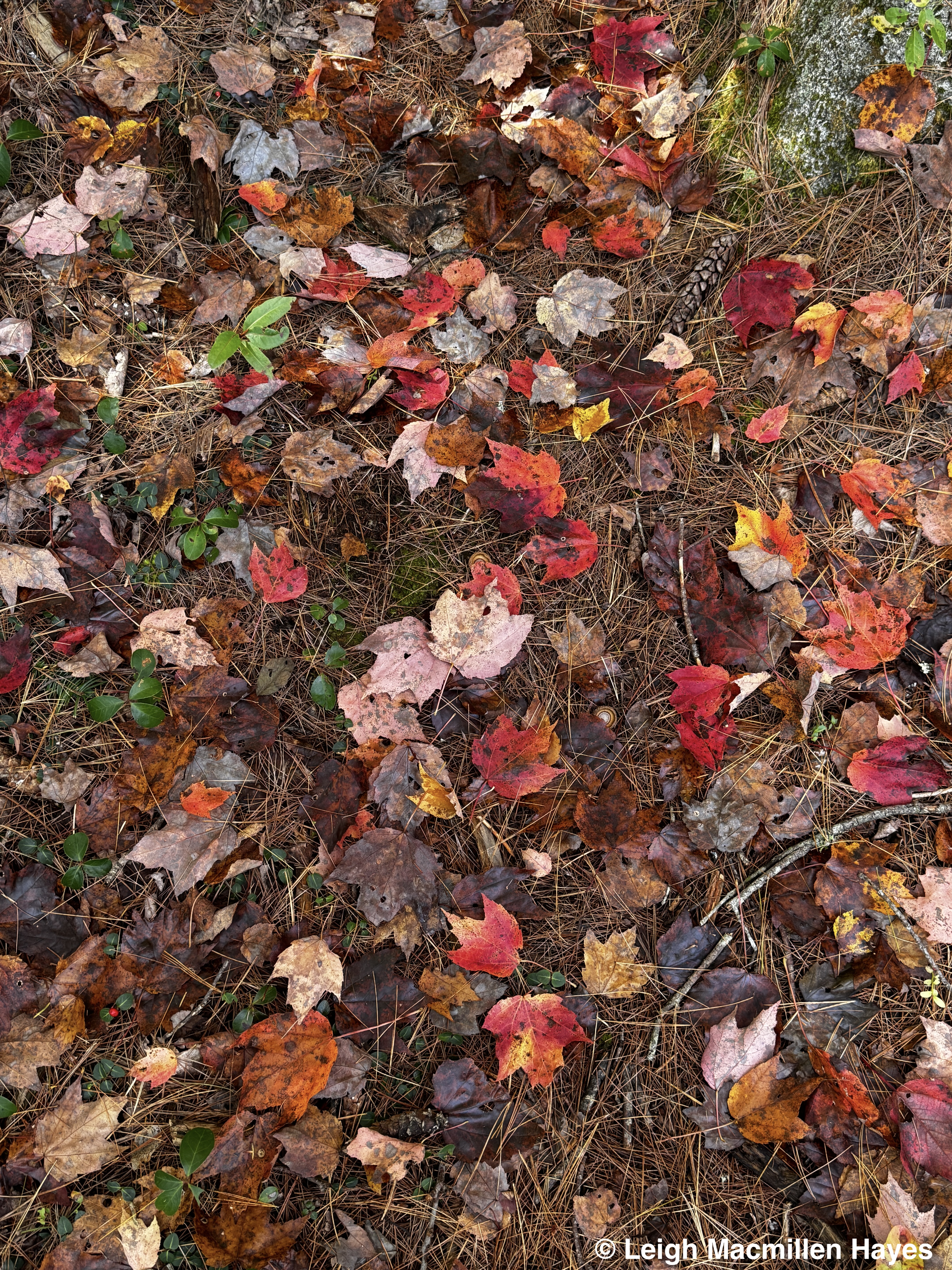
Celebrating the Work of the Leaves

In response to shorter days
and sunshine's declining density,
leaves begin the age old process
leading to their demise.
Like so many others, 
I make time to honor
the tapestry they weave
before they fall.
Chlorophyll, the green pigment
we associate with summer,
and necessary for photosynthesis,
slows and then stops manufacturing food,
and the leaves go on strike.
Veins that carried fluids
via the xylem and phloem close off,
trapping sugars, and promoting the production
of anthocyanin, the red color
we associate with Red Maples and Silver.
Though in the same family, 
Sugar Maple displays
the yellows and oranges
of the ever present Carotenoids,
which had previously been masked
by Chlorophyll.
Stripped Maple knows
only one hue,
making it easy
to spot its large display of brownish yellow.
One of my favorites
is the reddish-pinky-purples
of Maple-leaf Viburnum,
a shrub with maple-shaped leaves.
Ash follows suit,
though its leaves
are the quickest to drop
and disappear into the forest floor.
Big-tooth Aspens turn a golden yellow,
but other colors
have a tendency to seep in
and create a striking picture.
American Beech, 
Paper and Gray Birch
show off a yellow
to golden bronze presentation.
And a little late to the show, 
Northern Red Oaks
put their colors on display
after other species
have already dropped their leaves.
Not really a part of the foliage, 
but still important because it is present,
is the splotchy display caused by Anthracnose fungi,
a result of too much rain stressing trees
and not allowing them to properly respire.
Once connecting tissues 
between leaf petioles and their twigs
form a seal,
the forest floor is colored with gems
that will eventually turn various shades of brown
as they decompose and restock the soil with nutrients,
plus provide food for numerous organisms. And shelter.
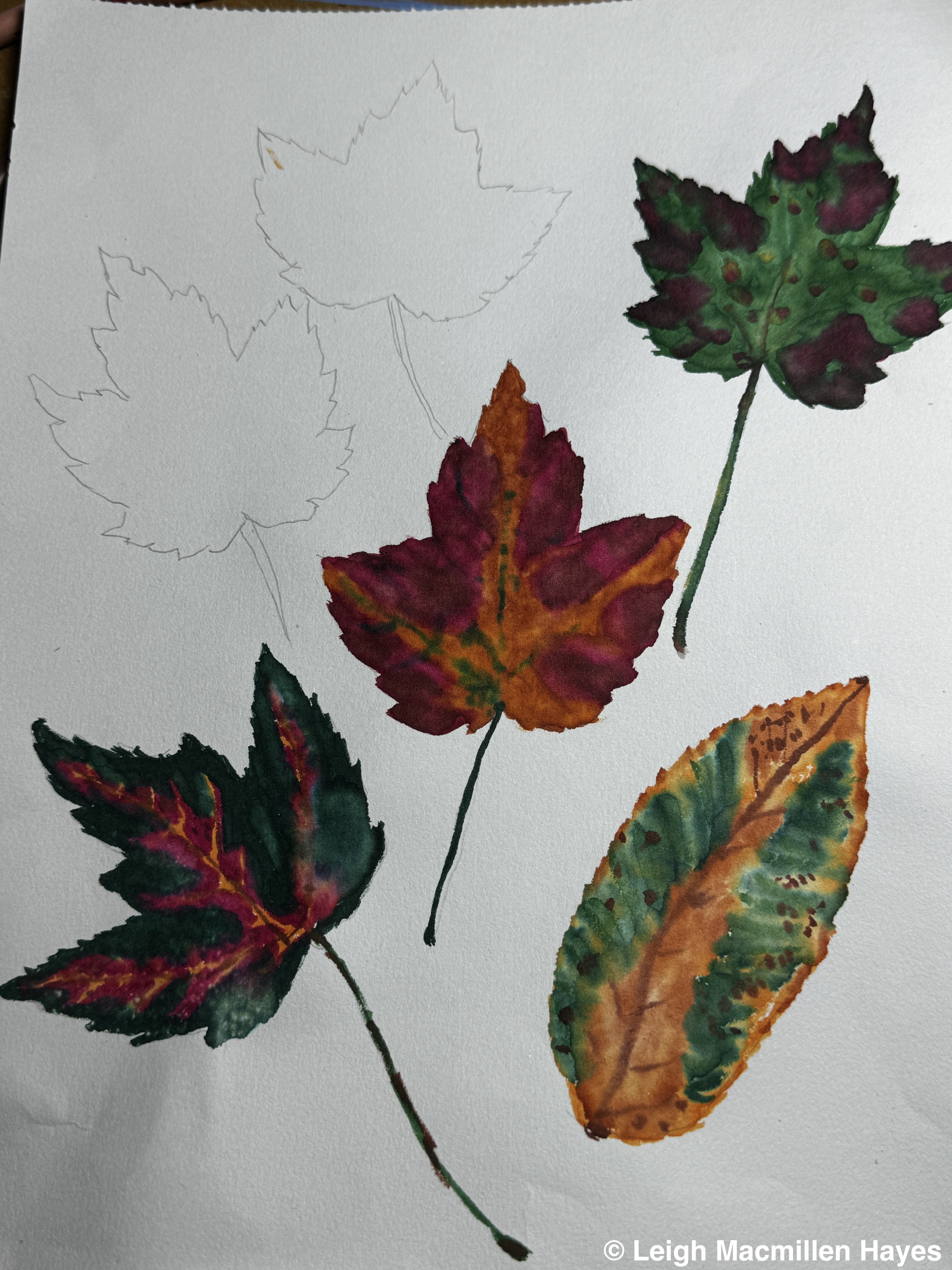
In a Senior College (Lifelong Learning) class
this past week,
I attempted to use watercolor pens
to capture the colors.
And then at home, 
I tried to do the same,
only this time using watercolor pencils
to show off the vibrant variety of hues.
In doing so, 
I was forced to slow down
and notice how the color changes
often followed the veins
in this biochemical process.
Fall foliage is fleeting,
and I give thanks
that every year
we can celebrate the work of the leaves.

When Is A Moss Not a Moss?

Sometimes I need to slow my brain down to figure things out. And other times . . . I need to slow my brain down to figure things out.

That’s exactly what I’ve been trying to do lately. Figure things out. Green things. Evergreen things. That means they add color to the forest floor year round.

Pour a glass of water or a cup of tea and join me as I take a closer look.

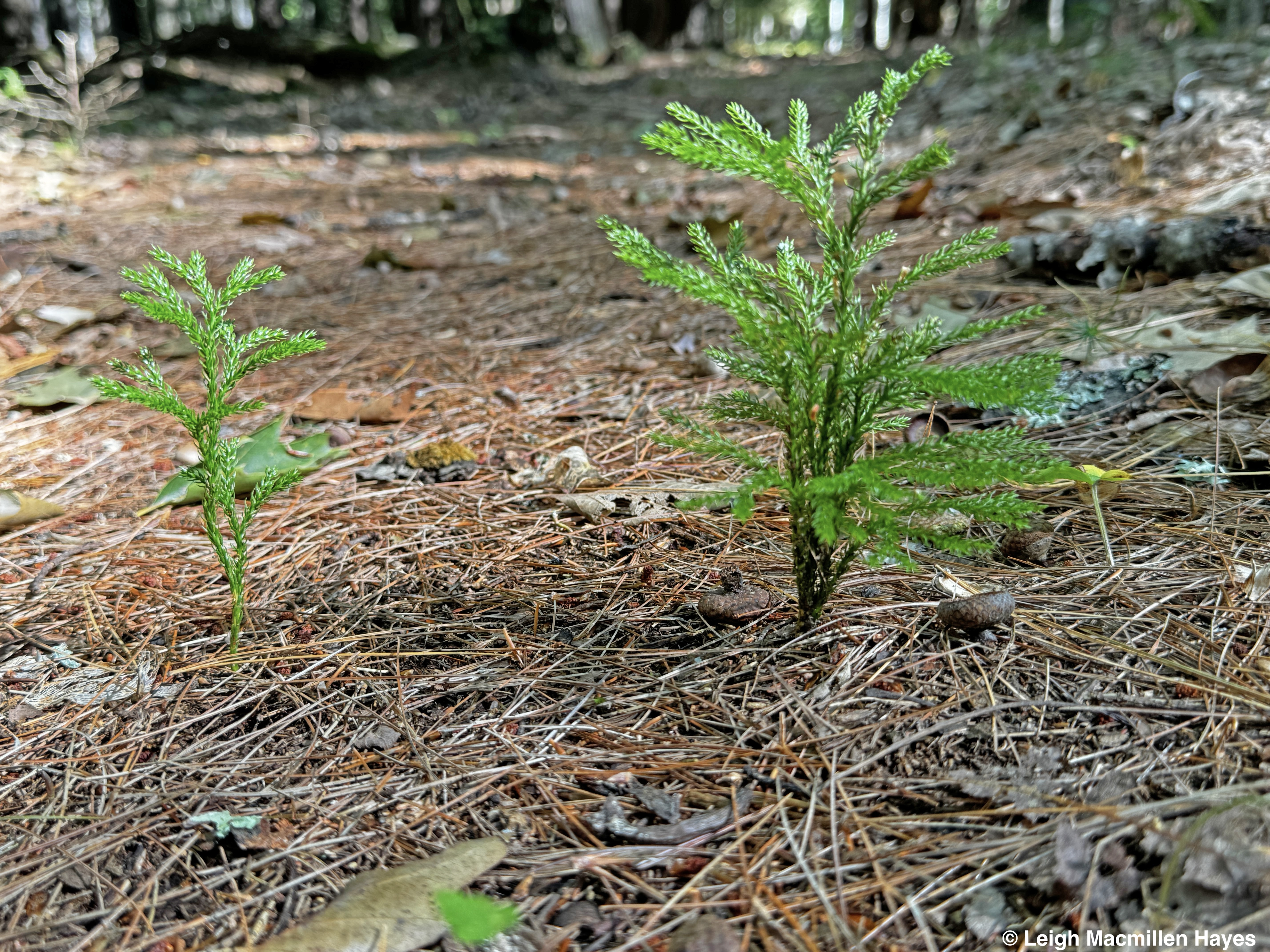
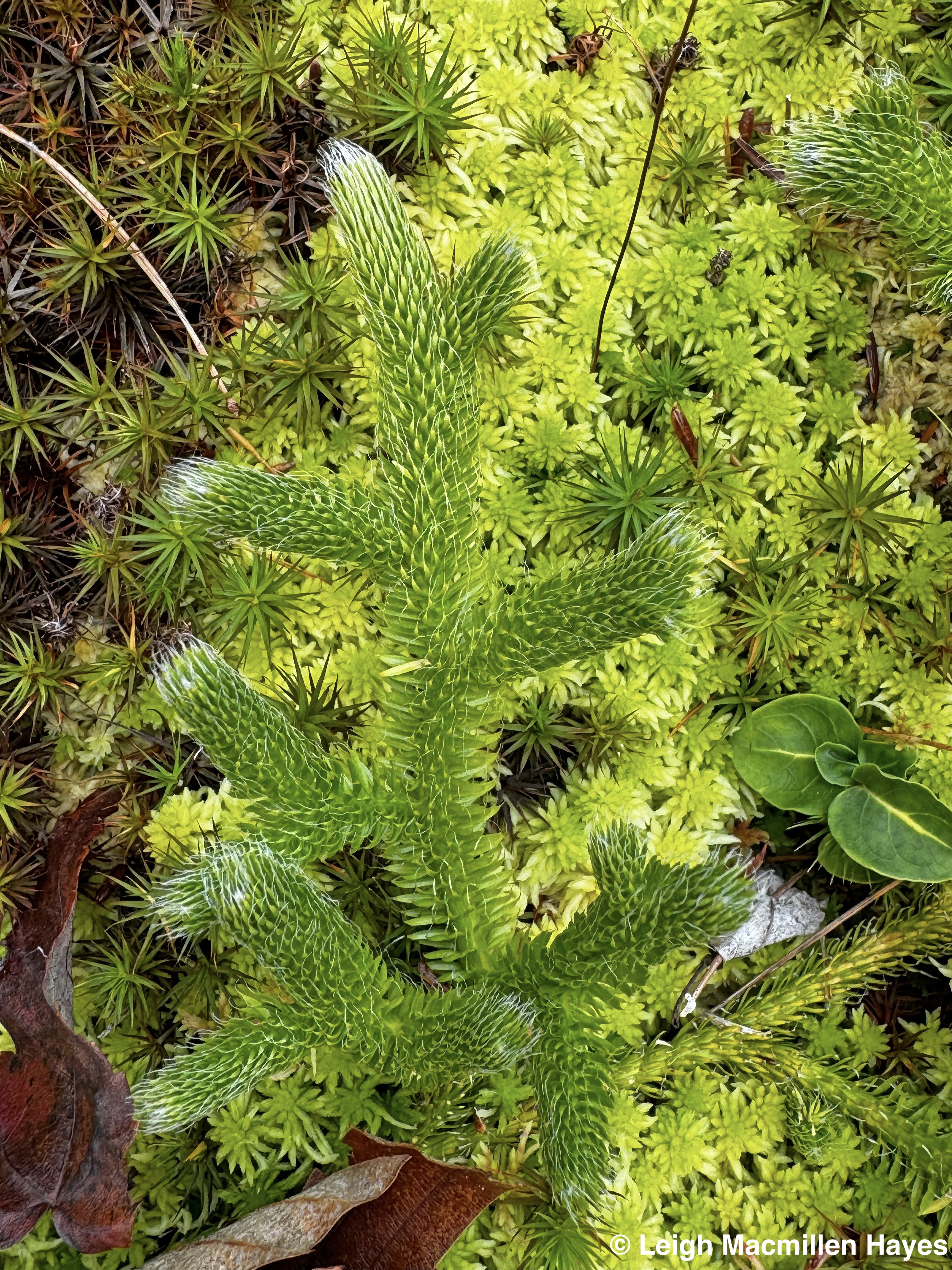
At first glance, these green growths appear to be miniature trees. But what I wanted to know was this: is the smaller “tree” on the left directly related to the larger “tree” on the right?

There was only one way to find out and though you aren’t looking at the same two in this photo, the question was recently answered when I began to dig into the ground and a friend lifted up the root system. If you look closely at this photo, the two species we were studying looked less similar than the two in the previous picture.

But indeed they were connected . . . with underground horizontal stems called rhizomes.

Meet Dendrolycopodium obsucurum, aka Flat-Branched Clubmoss or Princess Pine. Some of you know this well as your parents used to create Christmas decorations with it. I caution you–don’t be like your parents. Well, in this case anyway.

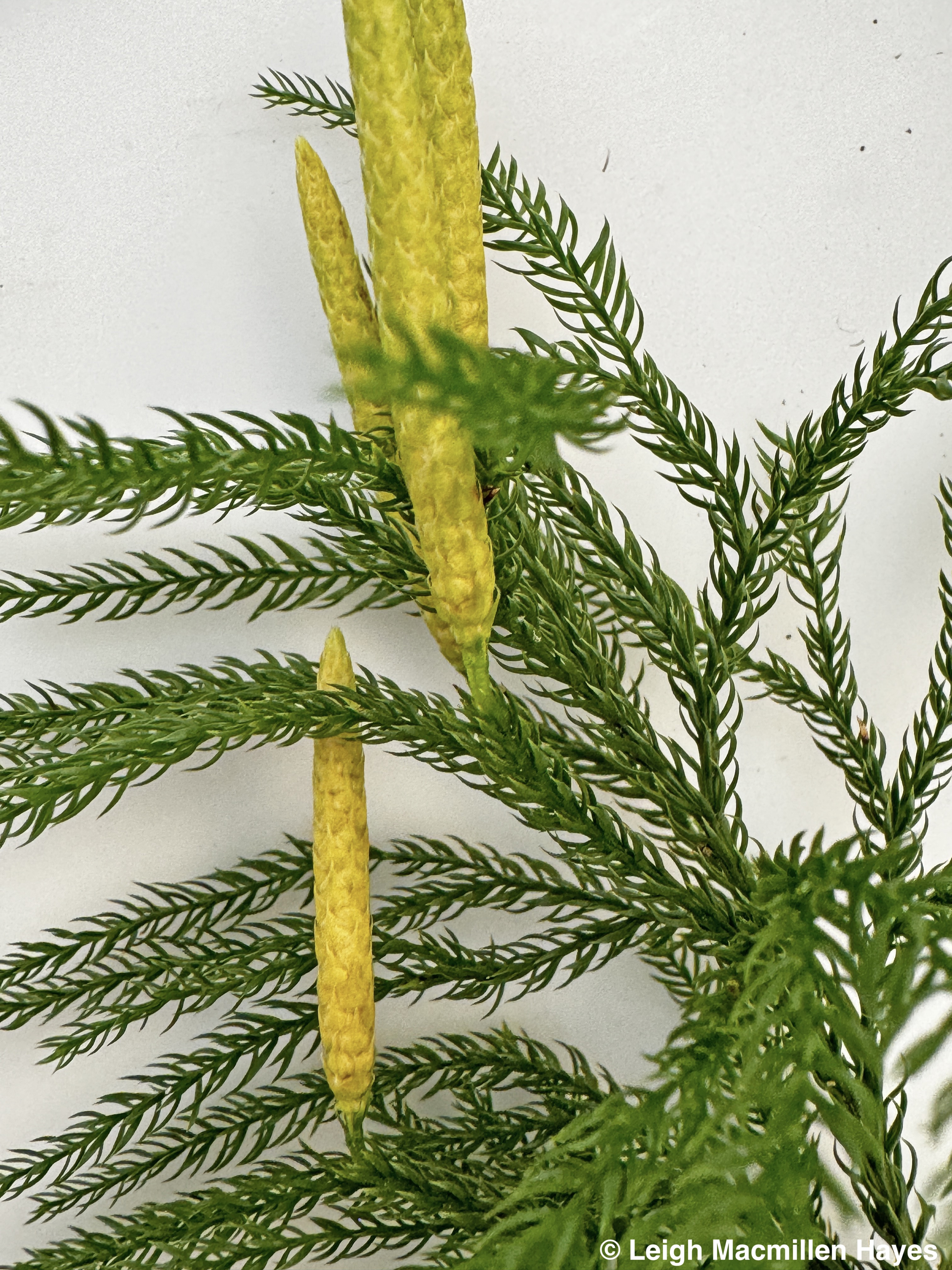
Clubmosses are vascular plants like our trees and flowers (but not mosses), thus they conduct water and food through their xylem and phloem. Their reproductive strategy is primitive. See that yellow “candle” or club? That is the strobilus (strobili, plural form) with structures called sporangia (sporangium). Some clubmosses have this structure and others have sporangia formed on the plant’s leaves. More on sporangia later, which means you’ll have to continue reading.

As I get to know these green things better, I’m trying to figure out their idiosyncrasies. And just when I think I know, I get zapped. But . . . the species above is closely related or a variant of the first species I shared. And sometimes they look super similar. The Flat-topped has smaller leaves on the lower part of its branches, but without a loupe, I can’t always spot that. And even with a loupe, my mind gets boggled. Am I seeing what I think I’m seeing. One thing that has helped me is that species, Dendrolycopodium hickeyi, or Hickey’s Tree Clubmoss, prefers drier soil. But really, they could be twins. And truth be known, they do hybridize.

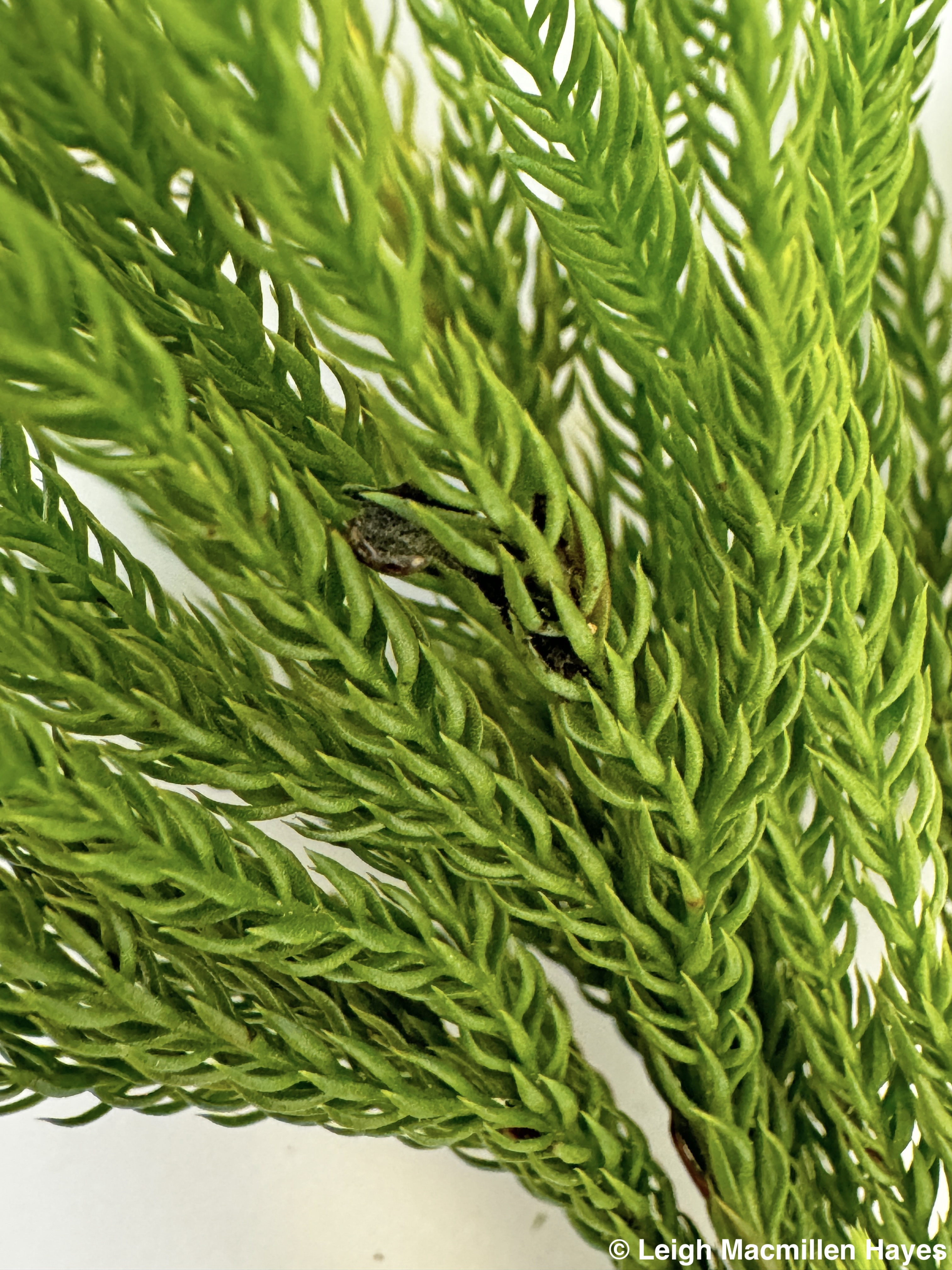
Right now, I’m thinking that Hickey’s leaves, as shown above, are consistently the same length and thicker in presentation as the branches are more rounded than those of the Flat-branched.

On our land, it grows abundantly along Central Maine Power’s Right-Of-Way and like Flat-branched has underground rhizomes. In fact, this afternoon I had a vision of a bedspread from my youth that I turned into roads and drove little rubber cars and trucks along when I played “Town.” I could easily have driven my little cars from one “tree” to the next and followed the rhizomes as if they were invisible roads.

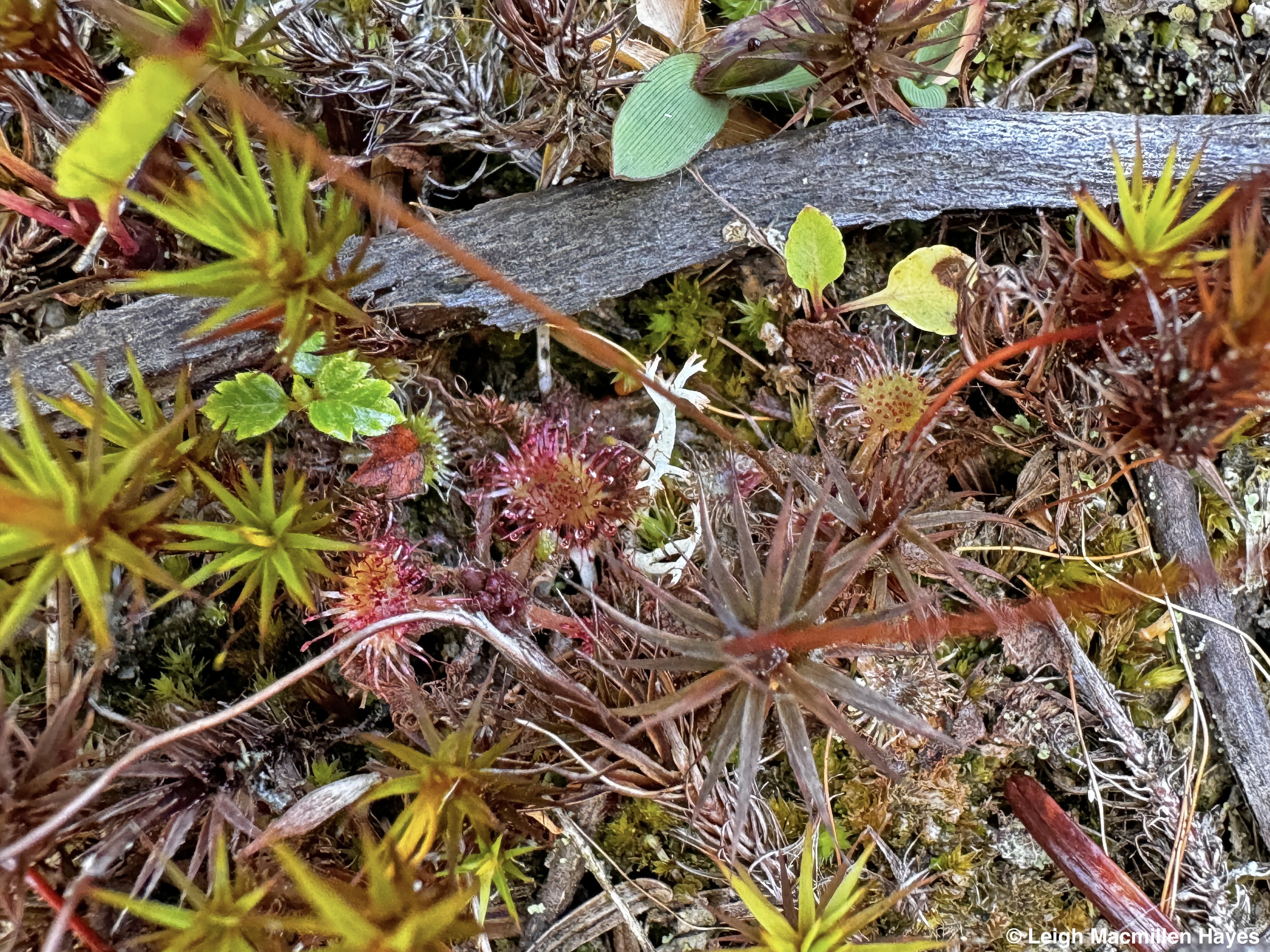
Cool sights reveal themselves when I do slow down like this and I thought that CMP had killed the Sundews that grow under the powerlines when they sprayed herbicides along the route several years ago. I’d given up on being the guardian of such special plants, and was delighted to discover their dried up flowering structures today and locate the wee carnivorous leaves below. Yahoo! High five for Sundews!

Where Flat-branched and Hickey’s have underground rhizomes, this particular member of the club features horizontal stems that are above ground runners.

And while the previous two were tree-like in structure, this one reminded me of a cactus.

Furthermore, I got all excited because I thought I’d discovered a species considered threatened in Maine. I talked myself into it being Huperzia selago or Fir-Moss. It looked so much like the black and white sketch in my field guide.

Until I realized the Fir-Moss has a sporangia-bearing region in the upper stem. And my species has strobili located at the tips of long slender stalks. And there is no mention of those transparent hairs in the description of the Fir-Moss (after all, it’s not Fur-Moss), but Running Ground-Pine or Staghorn Clubmoss does have this feature. Thus, this is Lycopodium clavatum.

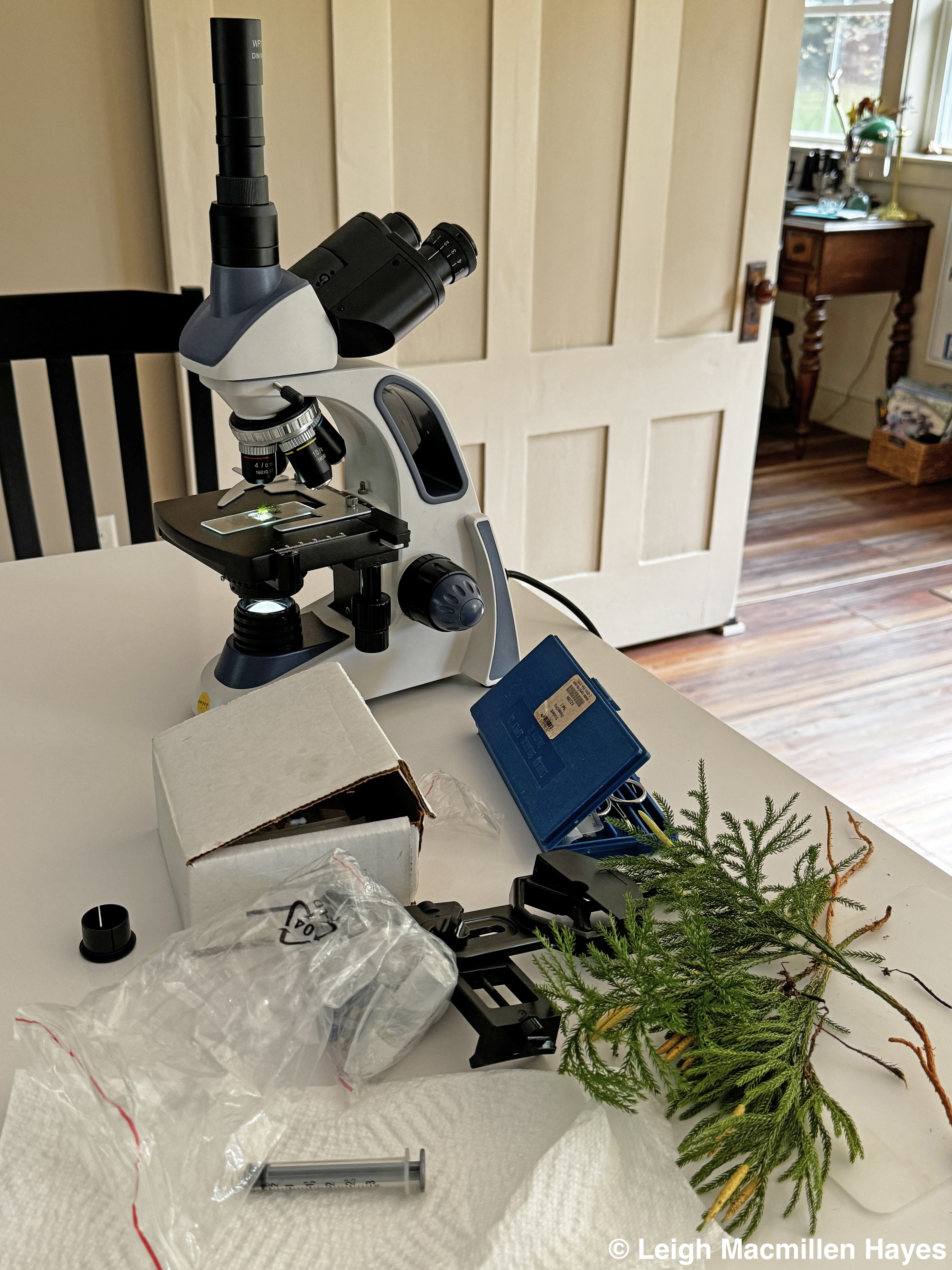
Back at home, it was time to set up the mini-lab and take a closer look. I try not to collect too much; in Ferns & Allies of the North Woods, Joe Walewski suggests we “consider the 1-in-10 rule: collect no more than one for every ten you see.”

The microscope has opened a fascinating world to me–as if it weren’t already fascinating enough. And see the pattern of cell structures–an art form all its own.

And then there was the strobili that covered the sporangia. That word sounds like dessert and this look at the structure made me think it could be some decadent butterscotch offering.

I cut a cross-section and was surprised to see the hollow center.

All those minute spores. Actually, I accidentally nudged a few as I walked in the woods this weekend, and had the honor of watching the “dust cloud” of spores being released.

One family member that doesn’t live in our woods, but is located close by is this, Diphosiastrum digitatum or Fan Creeping-Cedar, so named for its resemblance to cedars.

This specimen had followed me home a few weeks ago, and when I pulled it out of my now warped field guide, for so damp were the pieces that I stuck in there, it had dried into a flattened form of its former self.

I stuck a piece under the microscope and again was floored by the thickness and cell structure.

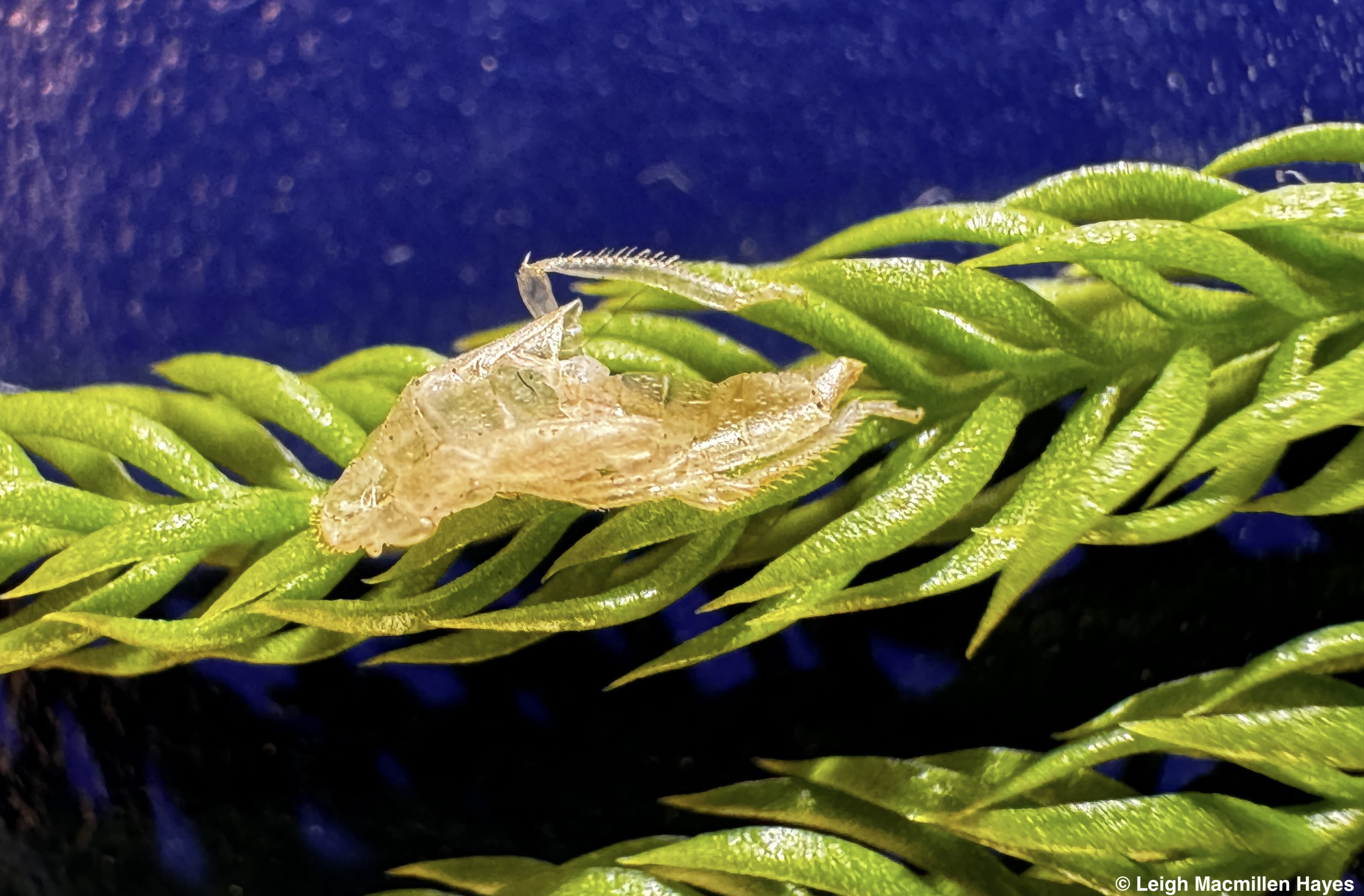
And then I had a surprise. A hitchhiker! Do you see the long legs?

Here’s another look. I don’t know who this was, but I do know that it was minute in size and it appeared to be a shed skin after the insect had molted.

Suddenly I was eager to find more. And so I checked out a piece of the Flat-branched . . . and wasn’t disappointed.

Here it is again. The second critter that is. Or was. And now I can’t wait until next spring and summer to find out what tiny creatures use these structures as places to molt. And maybe feed. The mouth structure, if that’s what it is on this one, appears to be almost fan-like and kind of reminds me of that on a slug.

The home lab grew into an art room as the hours passed.

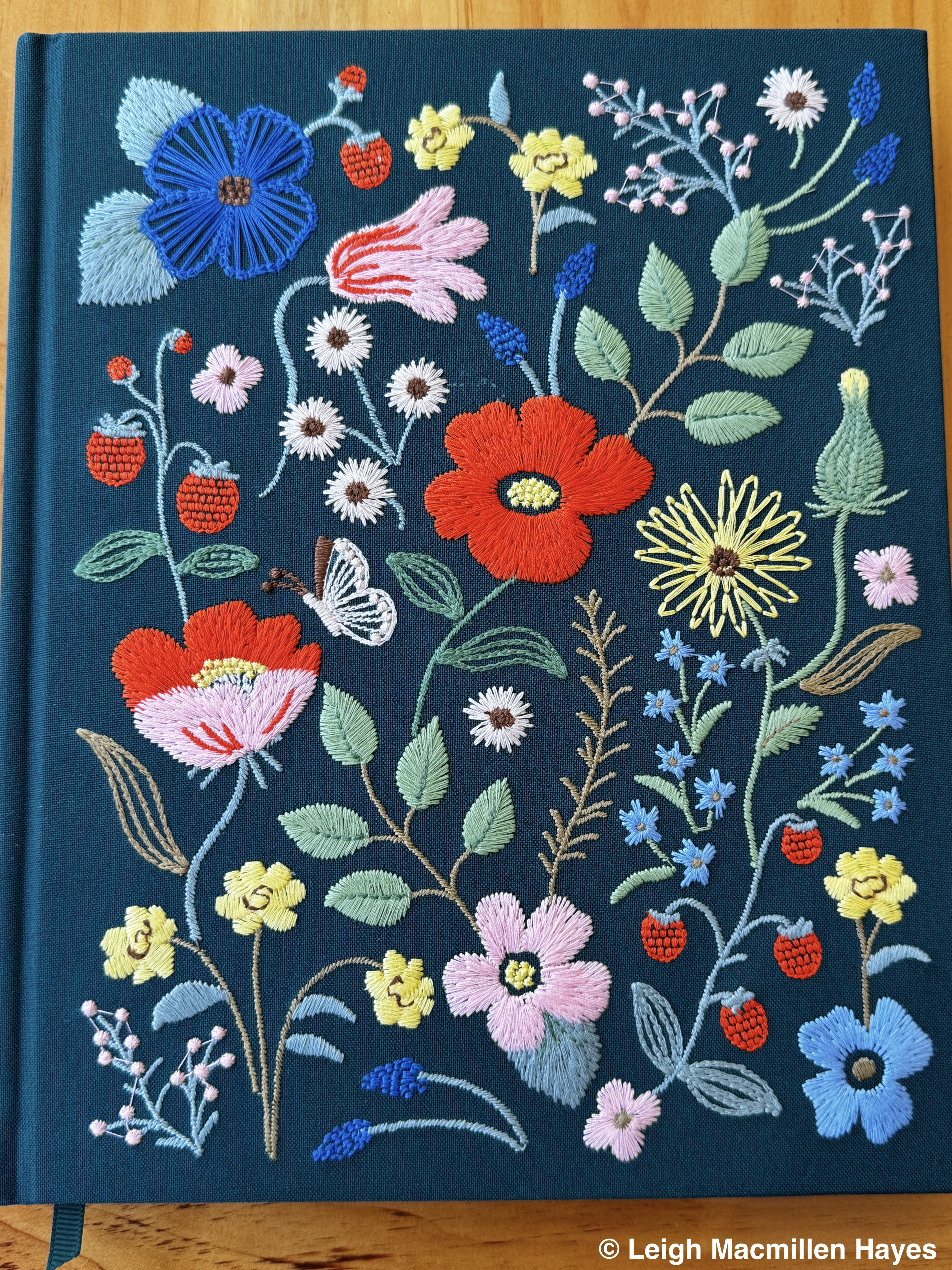
Recently my sister gifted me a sketch book and it begged to be opened. After running my fingers over the cover first, of course.

I have the perfect bookmark to mark the pages, created for me this past year by one of our first playmates.

Getting to know a species better through close observation and by sketching is one of my favorite pastimes. And I’m so glad I slowed my brain down, especially when it came to hickeyi on the left and obscurum on the right. The differences seem so obvious with these two examples, but step out the door and I suspect you may be thrown off course as well.

When is a moss not a moss? When it’s a Clubmoss, which is actually an ally or relative of ferns. And horsetails. All are non-flowering vascular plants.

Before you depart, dear reader, please remember that these are ancient plants that take a long time to germinate as most need a symbiotic fungi to provide nutrition to the gametophyte stage (think gamete, eggs, and sperm). They may lie dormant underground for up to seven years and then take up to fifteen years to develop reproductive structures. In the great coal swamps of the Carboniferous period, they reached heights of possibly 100 feet, something I have a difficult time comprehending when I look at their small forms in our woods. Their growth is slow and they deserve our respect.

And now I can’t wait to meet some others and get to know them as well. I spotted One-Cone Ground-Pine or Lycopodium lagopus on a hike the other day and kick myself for not taking its photograph. All in their own time. I’ve made a start and hope you will do the same.

My Artistic Path

In a way, this is A Lost Art Found continued. It’s the rest of the story, at least to this date.

Once I got hooked on painting, I couldn’t stop. What I’ve discovered is that it’s a lot like writing. You choose a topic, which for me so far has been from a photograph I’ve taken as I’m afraid to purchase an easel and try plein air; complete an outline or at least jot down notes to get an idea of where you are going with the topic in the form of a values sketch; choose how to frame the story whether upon watercolor paper or canvas, and the media being watercolors, acrylics, or gouache; begin a first draft of sketching a wee bit on the mat of choice and apply a light colored wash; paint the basic shapes to get the story on paper which may be more representational than factual; and then tweak, tweak, tweak, which sometimes takes me eighteen drafts to get to a publishable product, and even then, I know more changes can be made.

But here’s the thing. I’m brand new to this art form. And thanks to Jessie, my teacher/mentor, I’ve learned a lot and still have more to learn. Then what’s the thing? The thing is that in every painting I’ve completed so far, there’s plenty I can critique, but at least one thing that I like and so that’s what I want to focus on. The rest I can learn . . . down the road.

After our spring session of classes ended, I decided to keep going on my own.

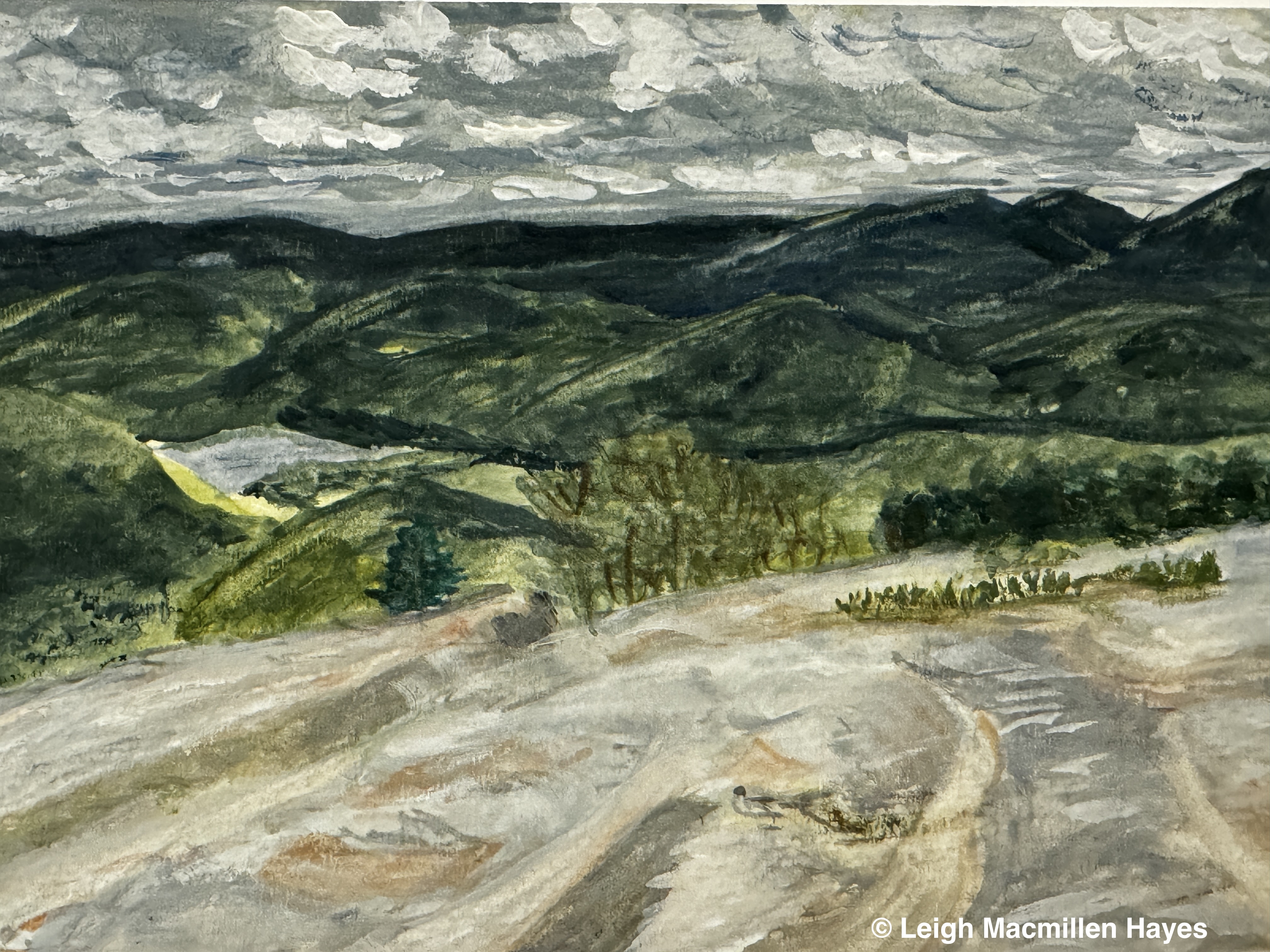
The view from the summit of Blueberry Mountain, Evans Notch, New Hampshire, looking toward Shell Pond below and the mountains beyond. My fav: the shape of the pond.

Frenchmen’s Hole in Newry, Maine. My fav: the color of the water, darker in the depths and lighter as if flowed over rocks to the next fall.

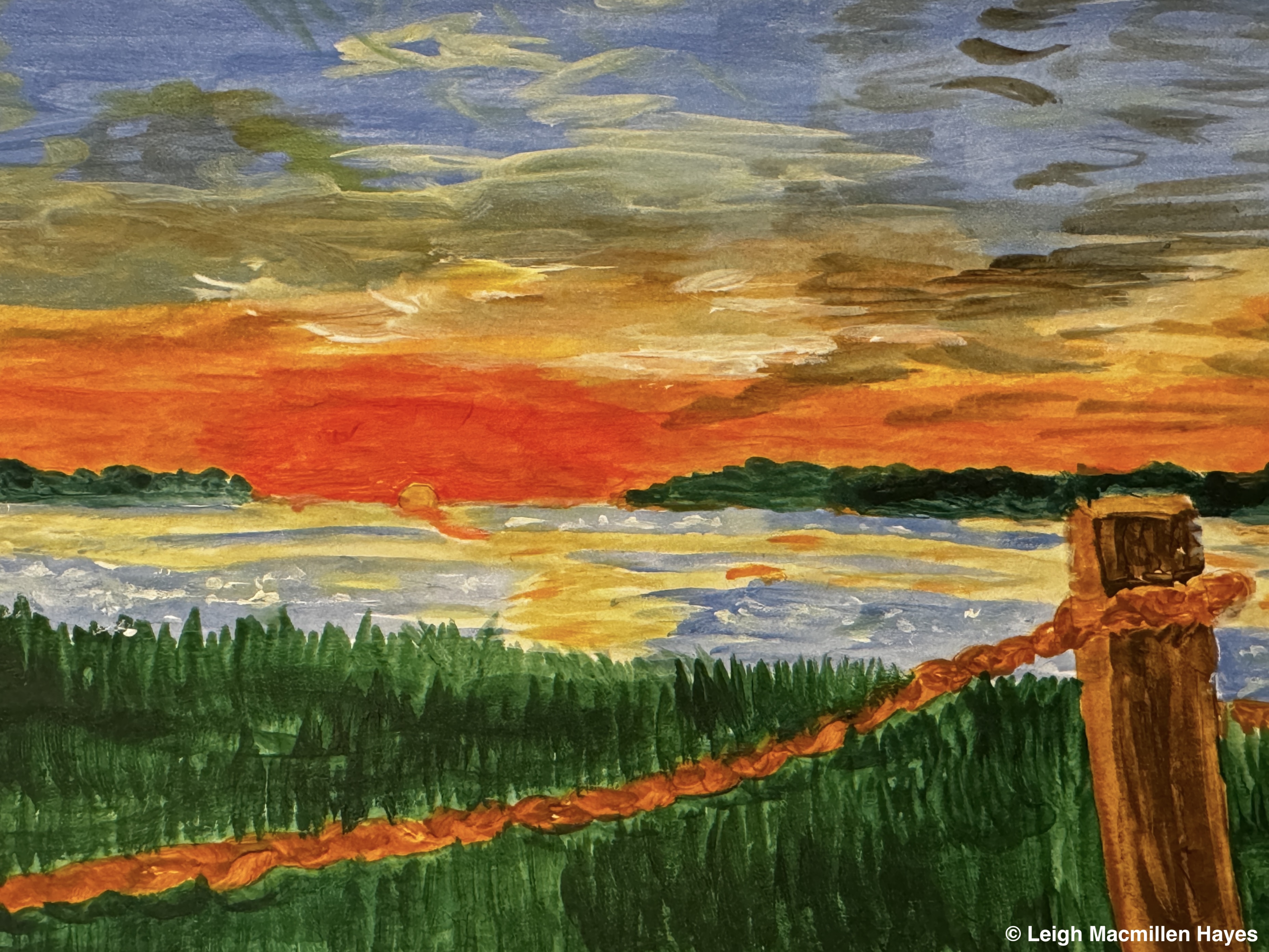
Sunrise, Lubec, Maine. My fav: the rope in the foreground. And the sky.

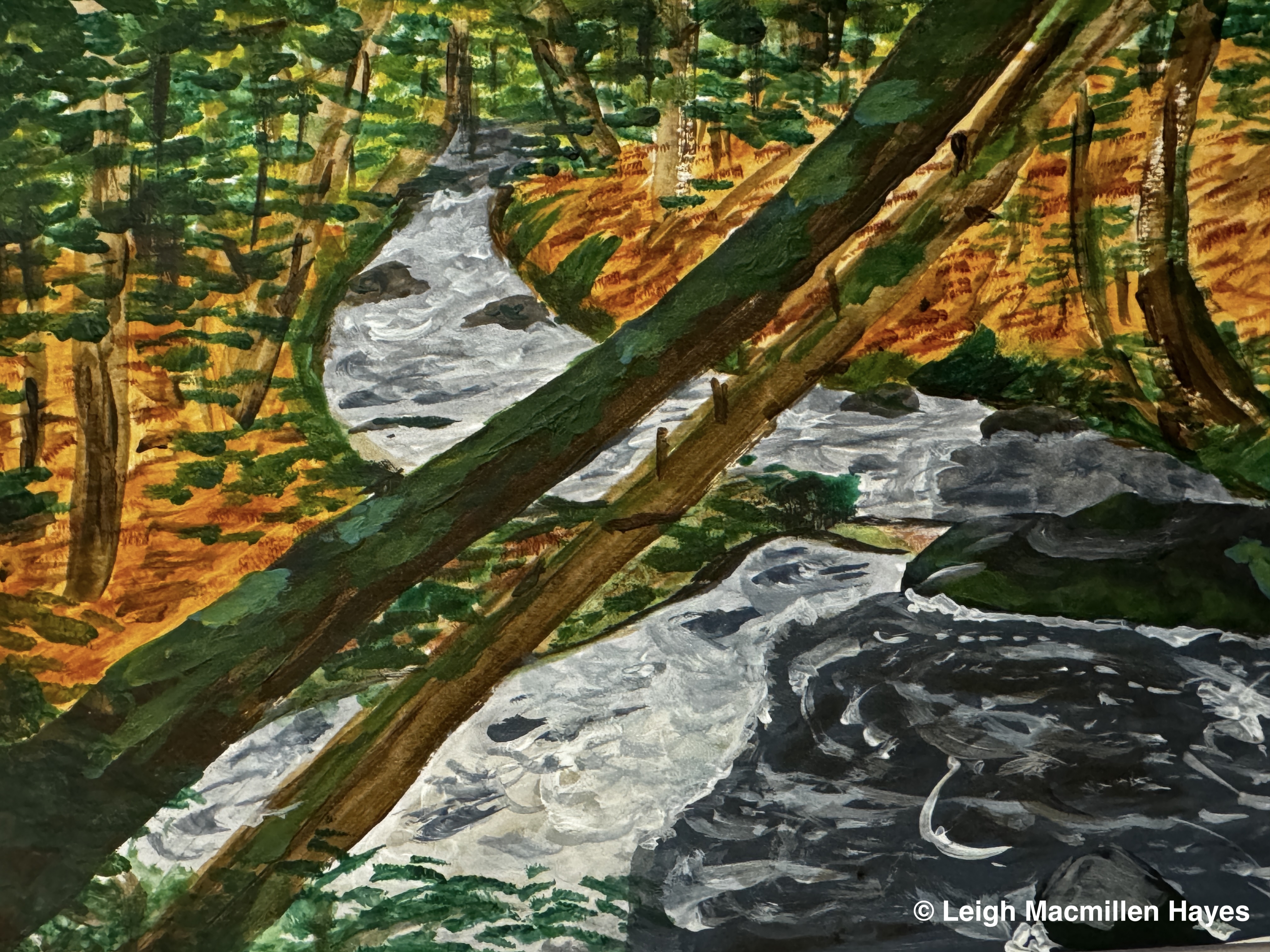
Carsley Brook, Lake Environmental Association’s Highland Research Forest, Bridgton, Maine. My fav: the trees leaning across the brook.

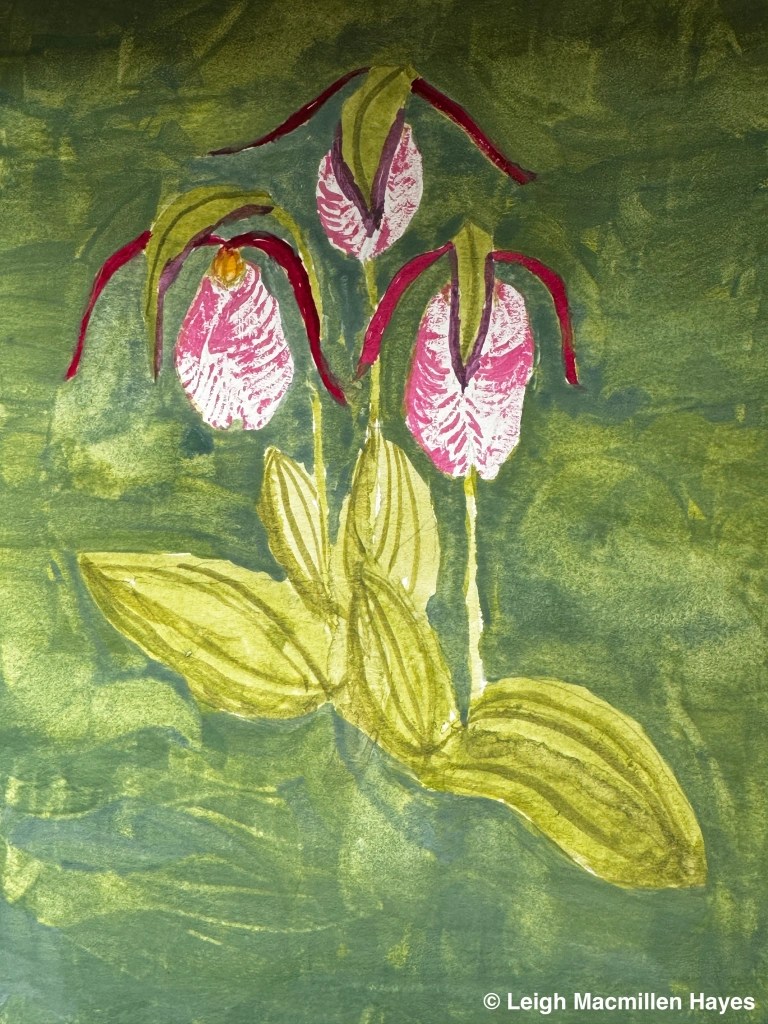
Lady’s Slippers from any of our counts as a gift for My Guy, who I’ve learned only likes to count them when they are in bloom. Since that season, he can’t be bothered to note the leaves or occasional seed pods and is praying it snows soon so I won’t continue to point them out. My fav: the shape of the flowers.

The fire tower at the summit of Pleasant Mountain. My fav: a sense of perspective with the mountains.

All of these were watercolor paintings. And then . . .

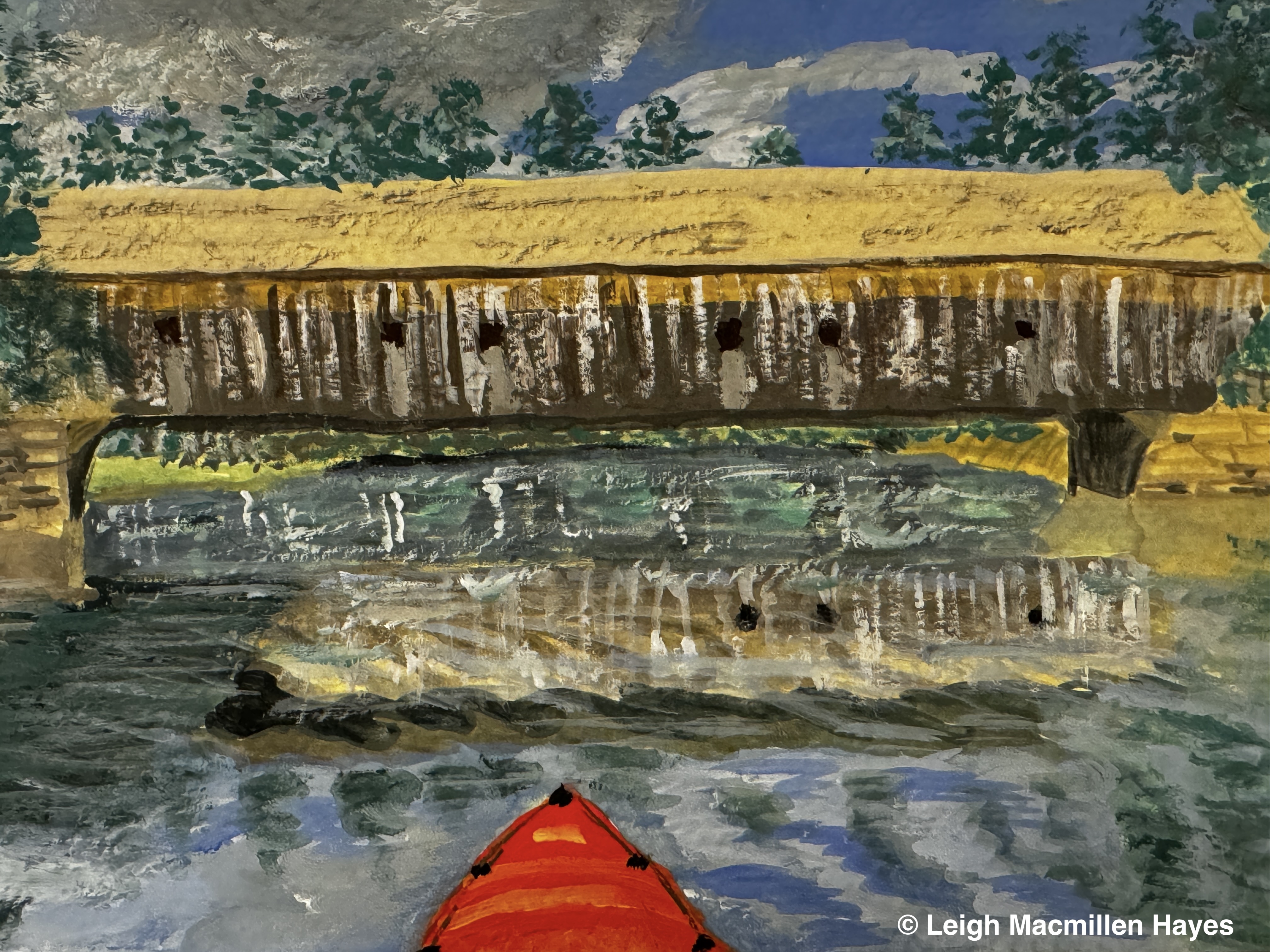
I purchased some gouache and painted Hemlock Covered Bridge. My fav: the bridge and the reflection, but also the lesson that this was a bit like completing a paint by number as I broke it up into different sections.

Fall reflection cropped from a river scene. My fav: All of it. It was like painting a jigsaw puzzle. And i loved creating the wavy lines.

Winter along Heald Pond Road, Lovell, Maine. The interesting thing is that this barn was taken down a few weeks after I painted this scene. My fav: the barn boards and the snow. And my learning–painting the lower background before adding the foreground trees.

Our barn at Christmas. My fav: The reflection in the window.

Interior of Hemlock Covered Bridge in Fryeburg, Maine. My fav: sense of perspective.

Sunlit part of spider web inside Hemlock Covered Bridge on mat canvas. My fav: texture of the boards and light between boards.

Bob Dunning Memorial Bridge, Pondicherry Park, Bridgton, Maine. My fav: the different beams that provide support as each represents a different species of native wood.

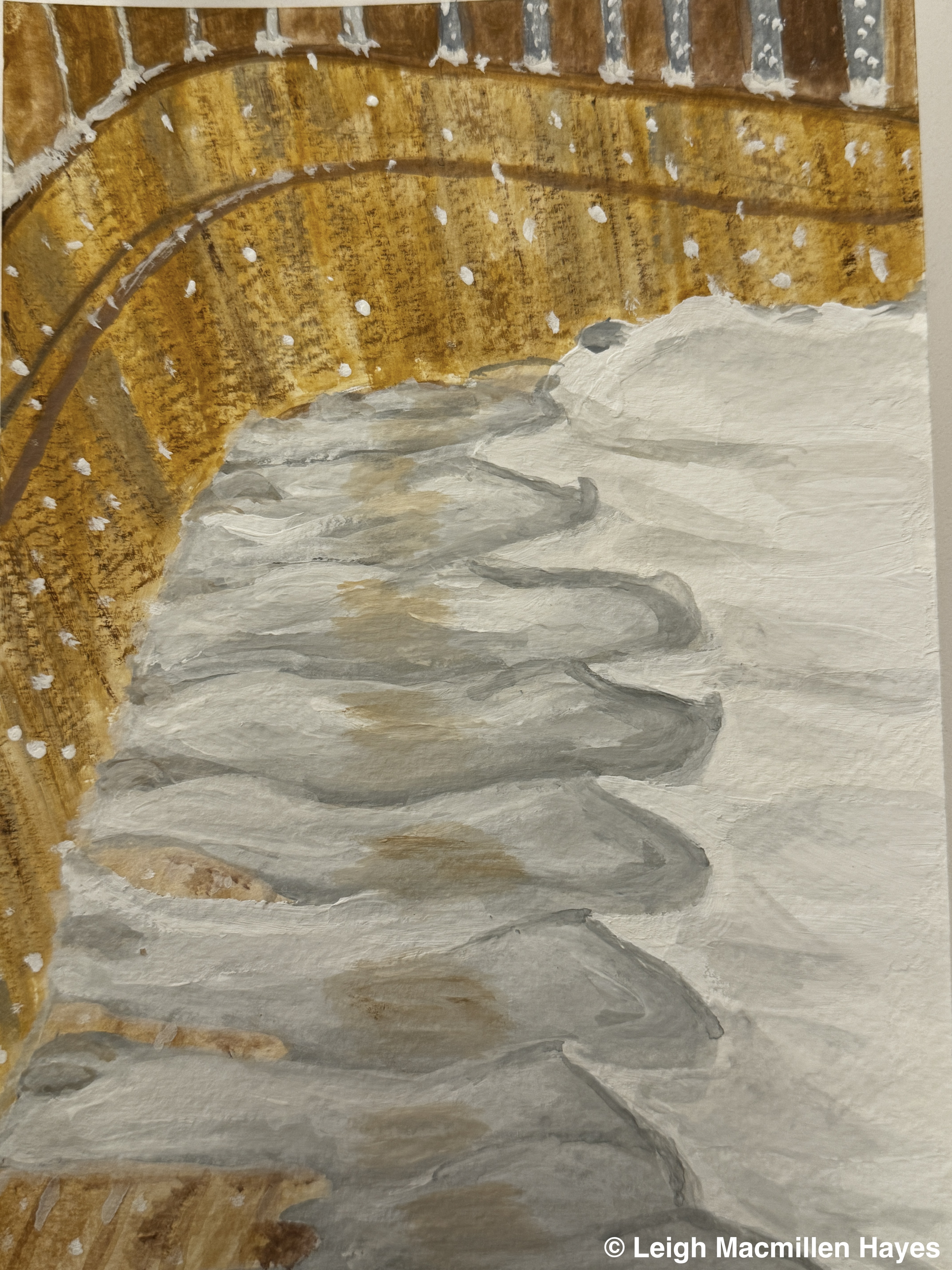
Approaching Bob Dunning Memorial Bridge on a snowy day when no one else had yet entered Pondicherry Park in Bridgton, Maine. My fav: the bend in the bridge.

Beaver at Albany Mountain trail, Bethel, Maine. My fav: the beaver’s face.

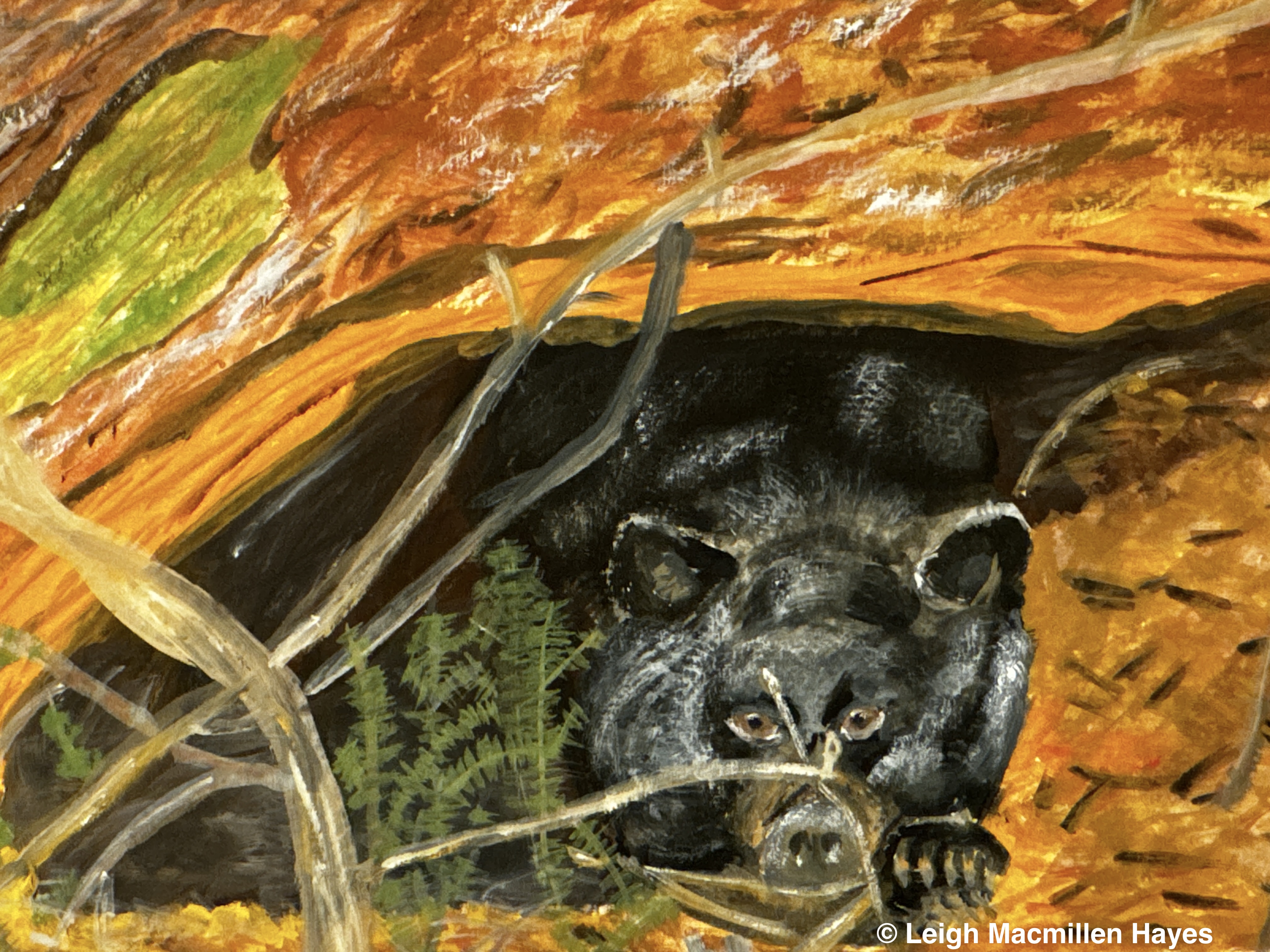
Denning Black Bear. Location a well-kept secret. My fav: the eyes.

Painted Turtle, Moose Pond, Maine. On mat canvas. My fav: colors of the water.

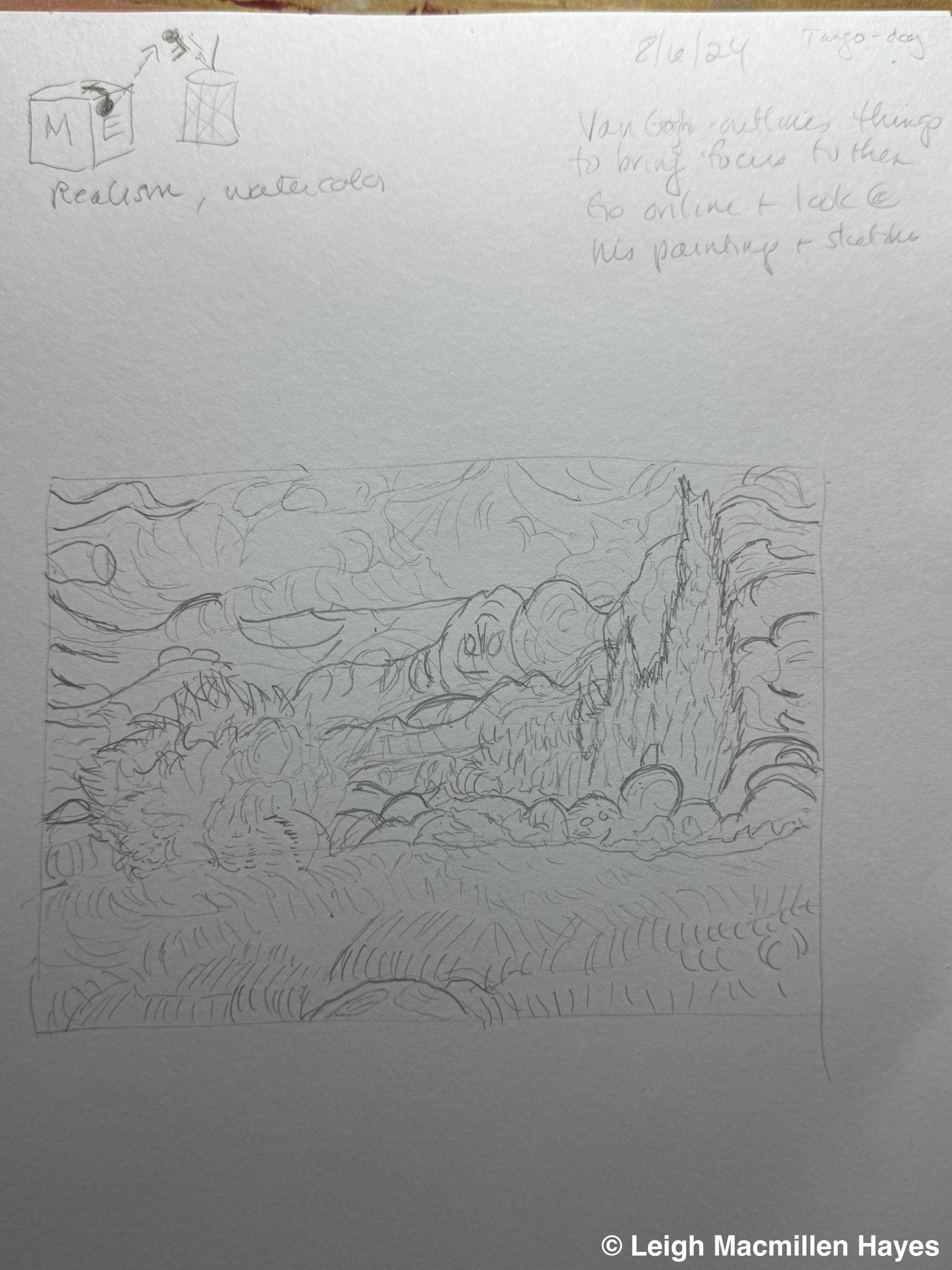
In August, Jessie offered a second class and we had to stuff our art critics in a box in the upper corner of the paper and leave them locked inside and then jot down what we wanted to work on for this session. She also had us take a look at Van Gogh’s style of outlining and bringing focus together.

And then, from a photo of our own, we tried to emulate the famous artist. This was a rough draft that I never finished. My fav: I love the colors and simplicity of it.

A second attempt at emulating Van Gogh. My fav: the trees in the background.

Third try. The sky was different. My fav: getting better at perspective.

In between classes I continued to paint. One of my absolute favs: Bandit! The porcupine I met in the yard last year. My fav: His face.

A Moose My Guy and I met in the beaver pond on Albany Mountain Trail, Bethel, Maine. My fav: His face.

What’s left of the Hayes Homestead, My Guy’s great-grandparents’ farm in Nova Scotia. My fav: shingles.

An amazing moment when I visited the vernal pool out back as the sun lowered and discovered that in the stillness of the water, a rainbow was created by the pollen, and while the tree shadows draped across the pond, they also were visible in their usual vertical presentation on the water. My fav: colors of the sunlight on the pollen.

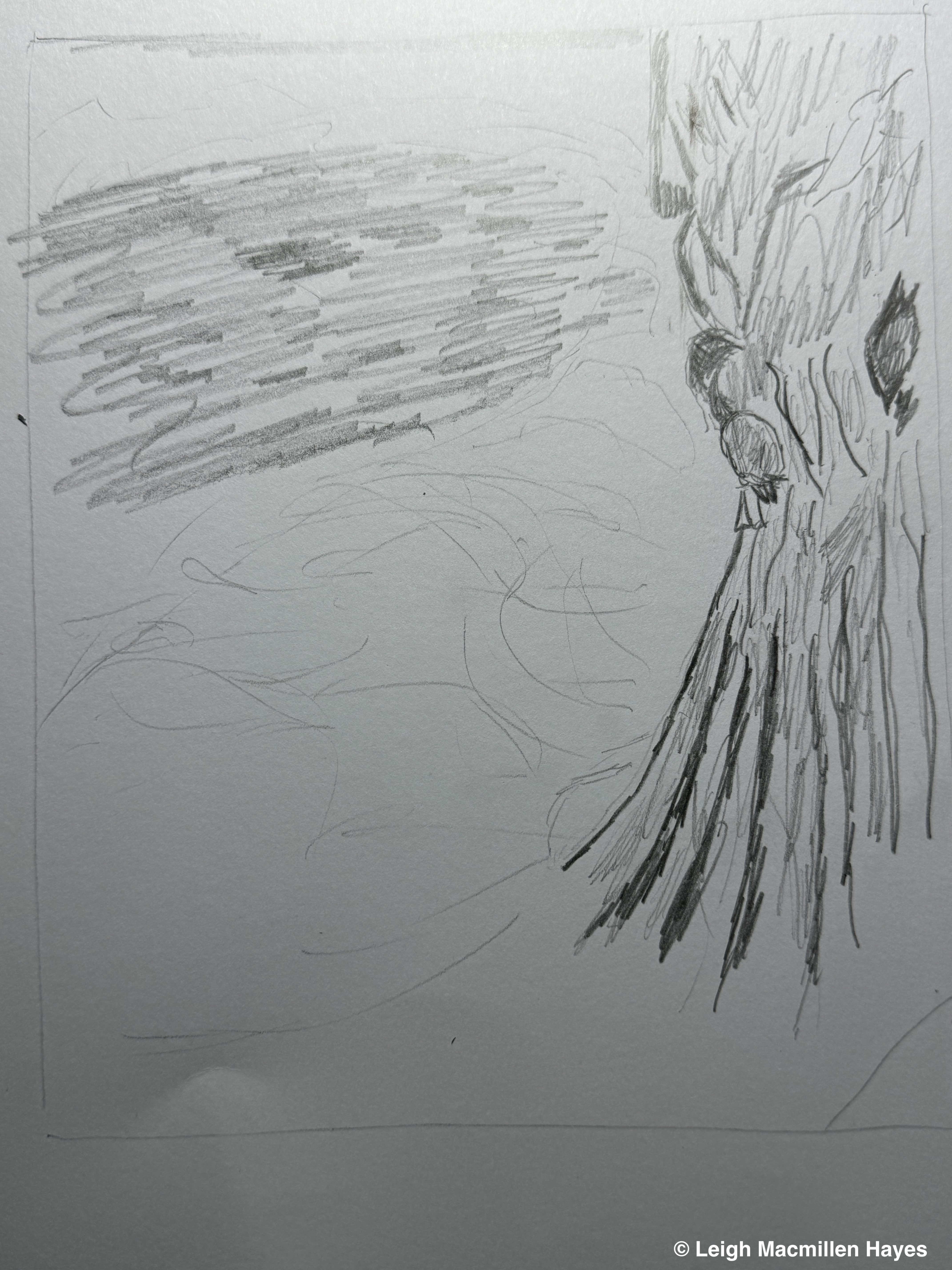
Back to class and learning more about values. I have to admit that I don’t always heed this advice and do a values sketch before painting.

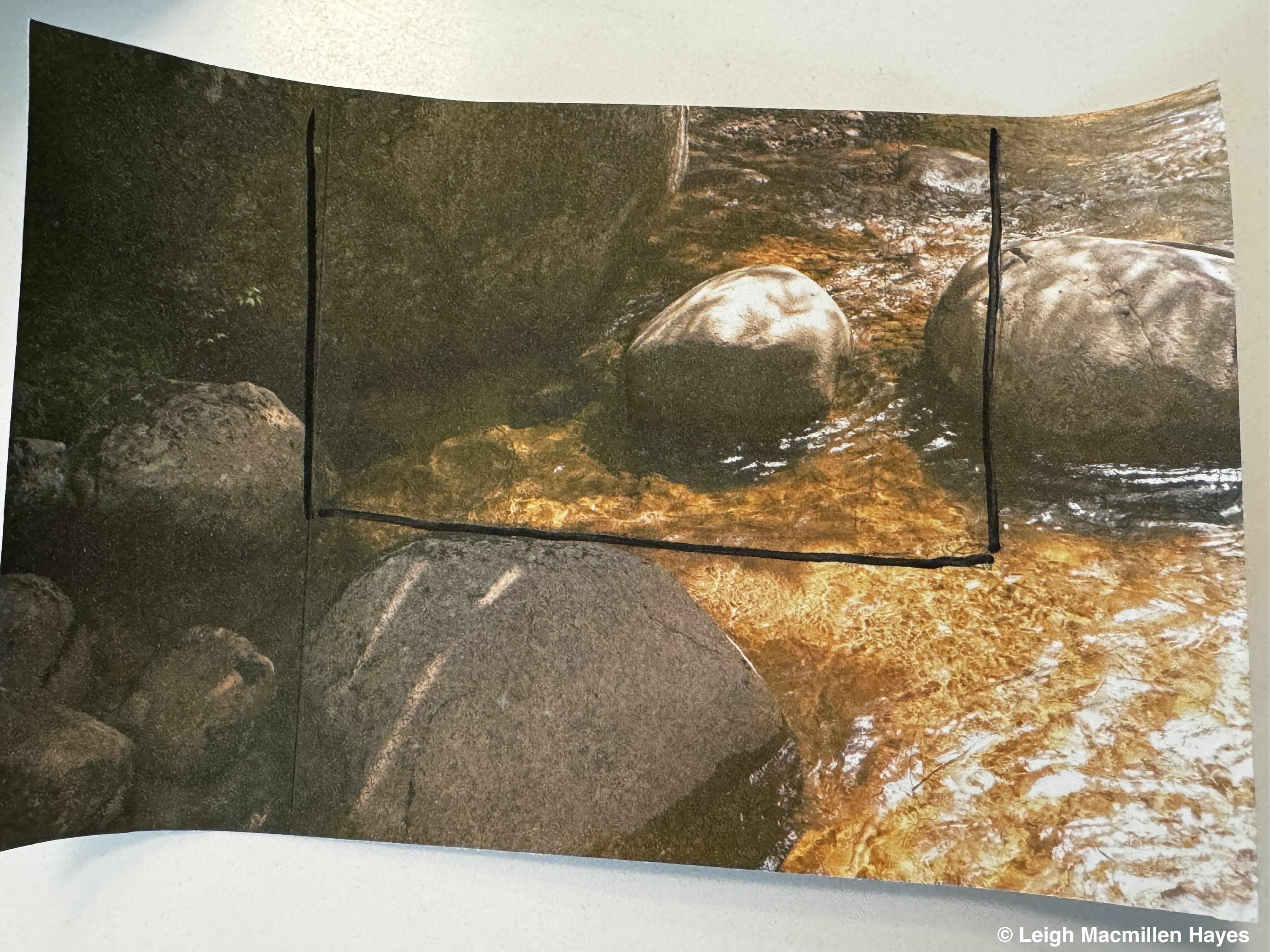
Photo of Ovens Cave, Nova Scotia.

Cropping the photo in sketches.

One final sketch before painting.

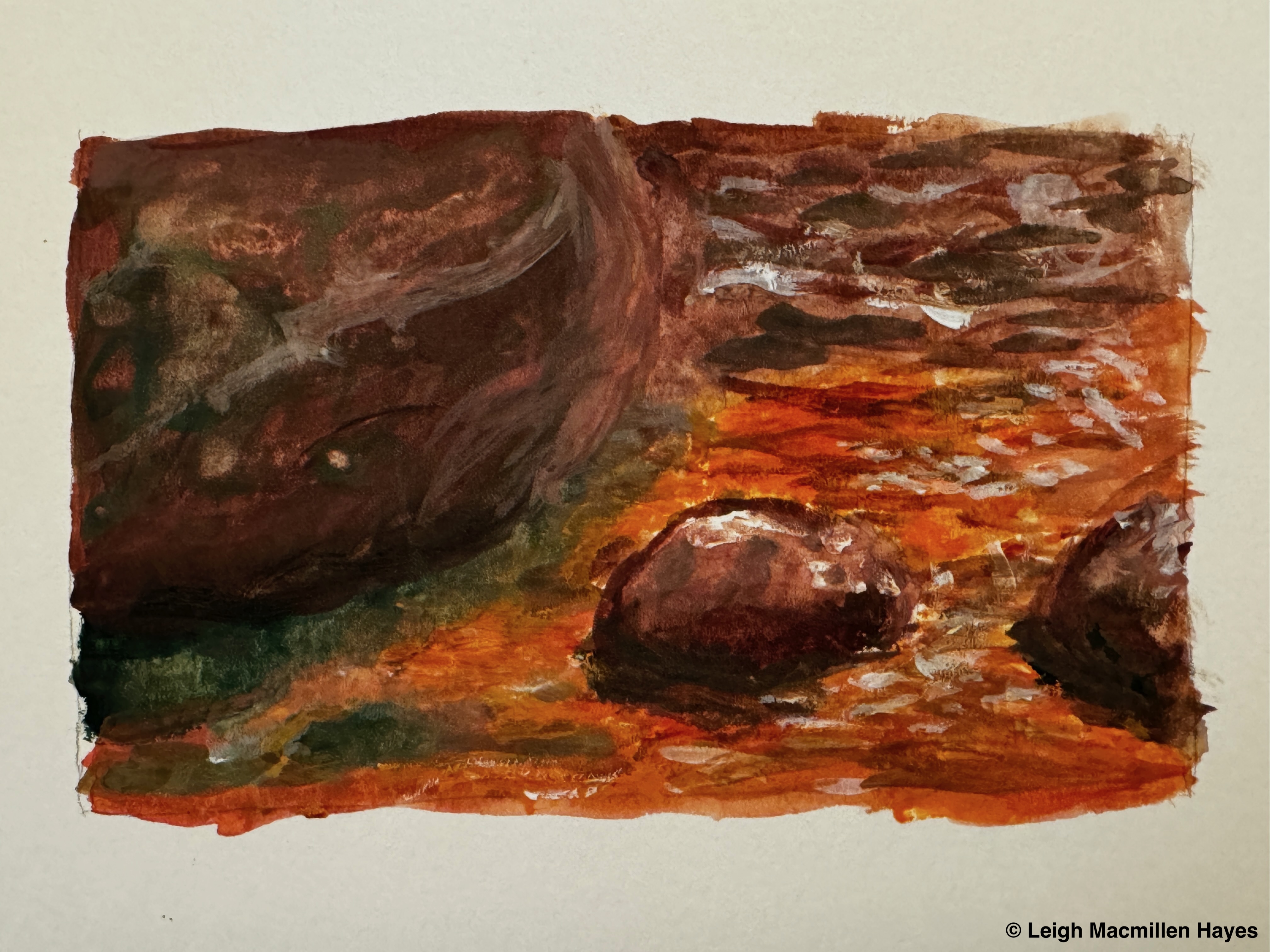
First attempt in gouache. My fav: colors of the rocks.

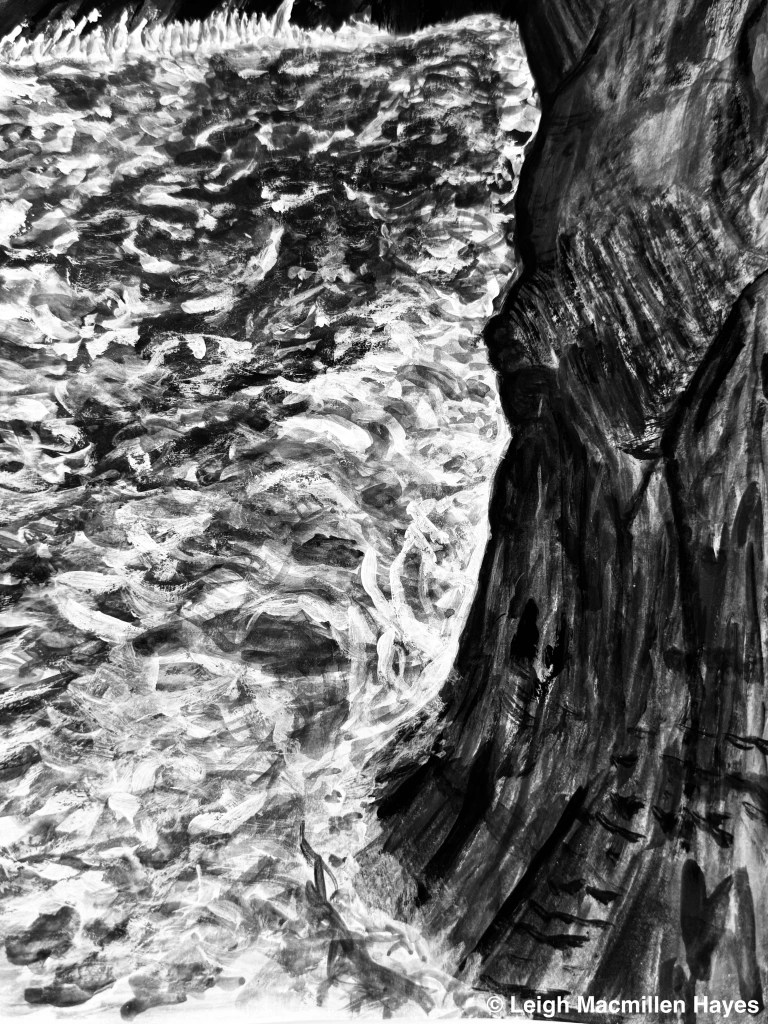
Jessie taught us a neat trick to check values by using a filter on our phones.

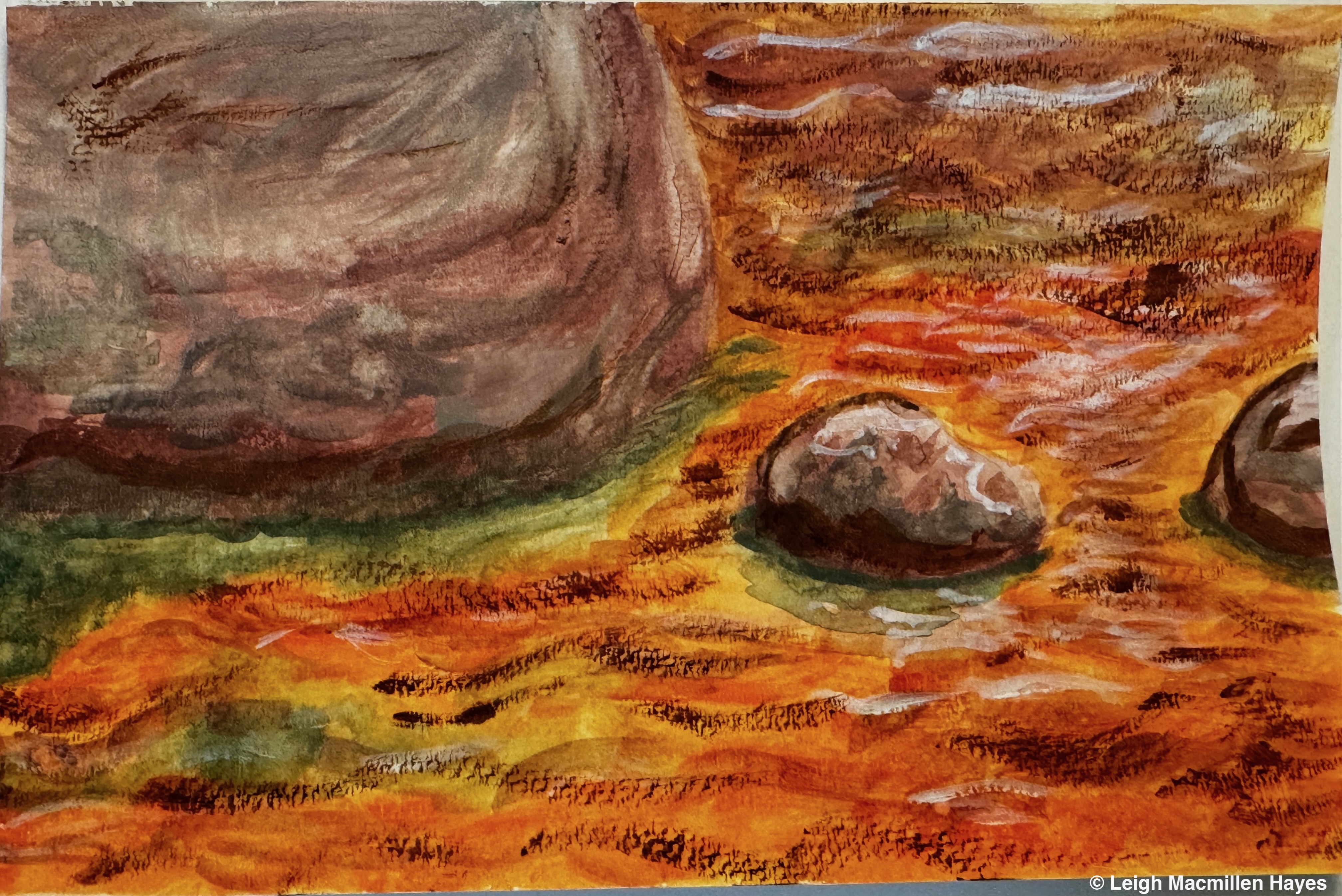
Trying to be more abstract with the same scene. My fav: the color of the water.

Values photo of the same.

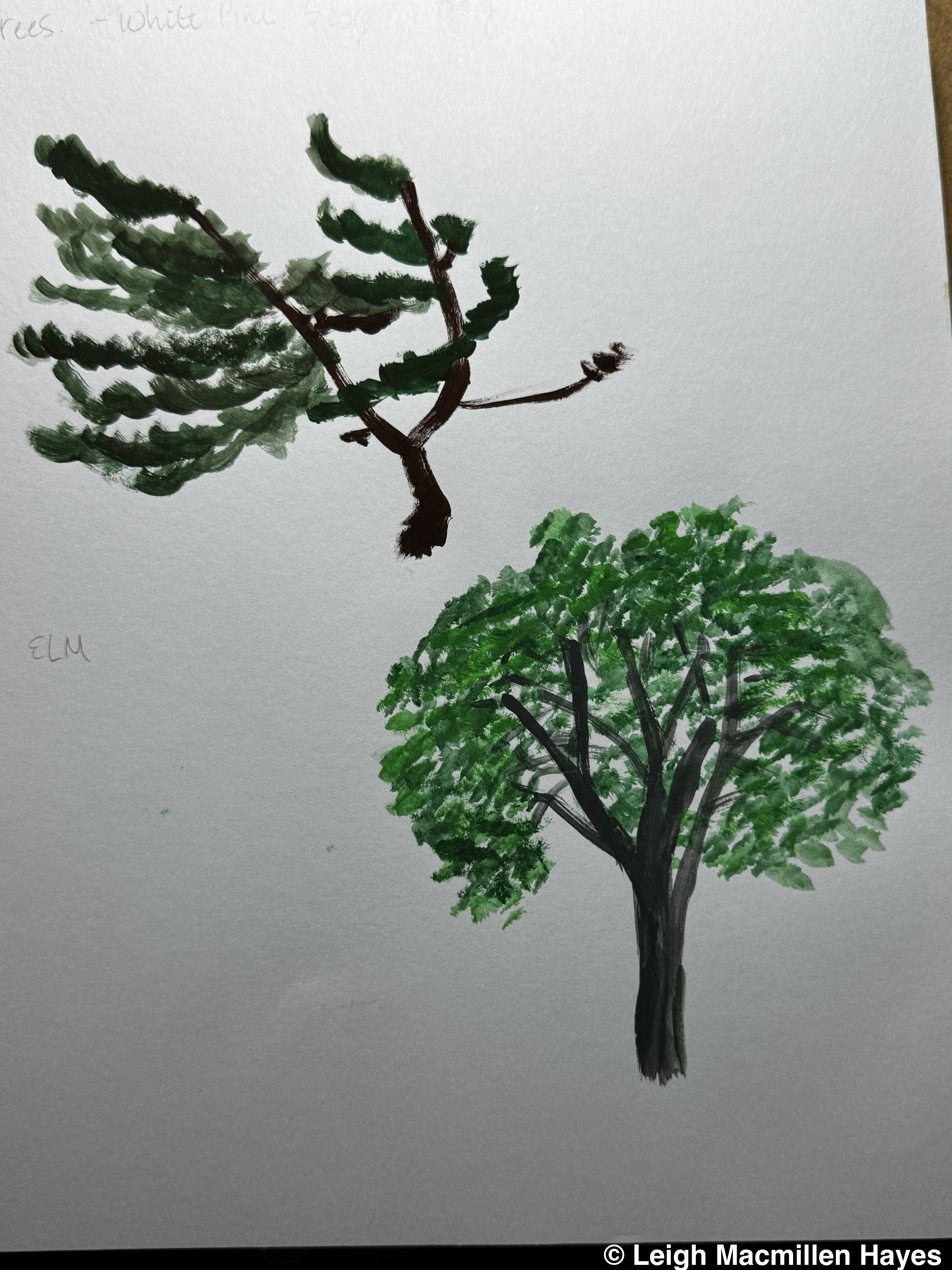
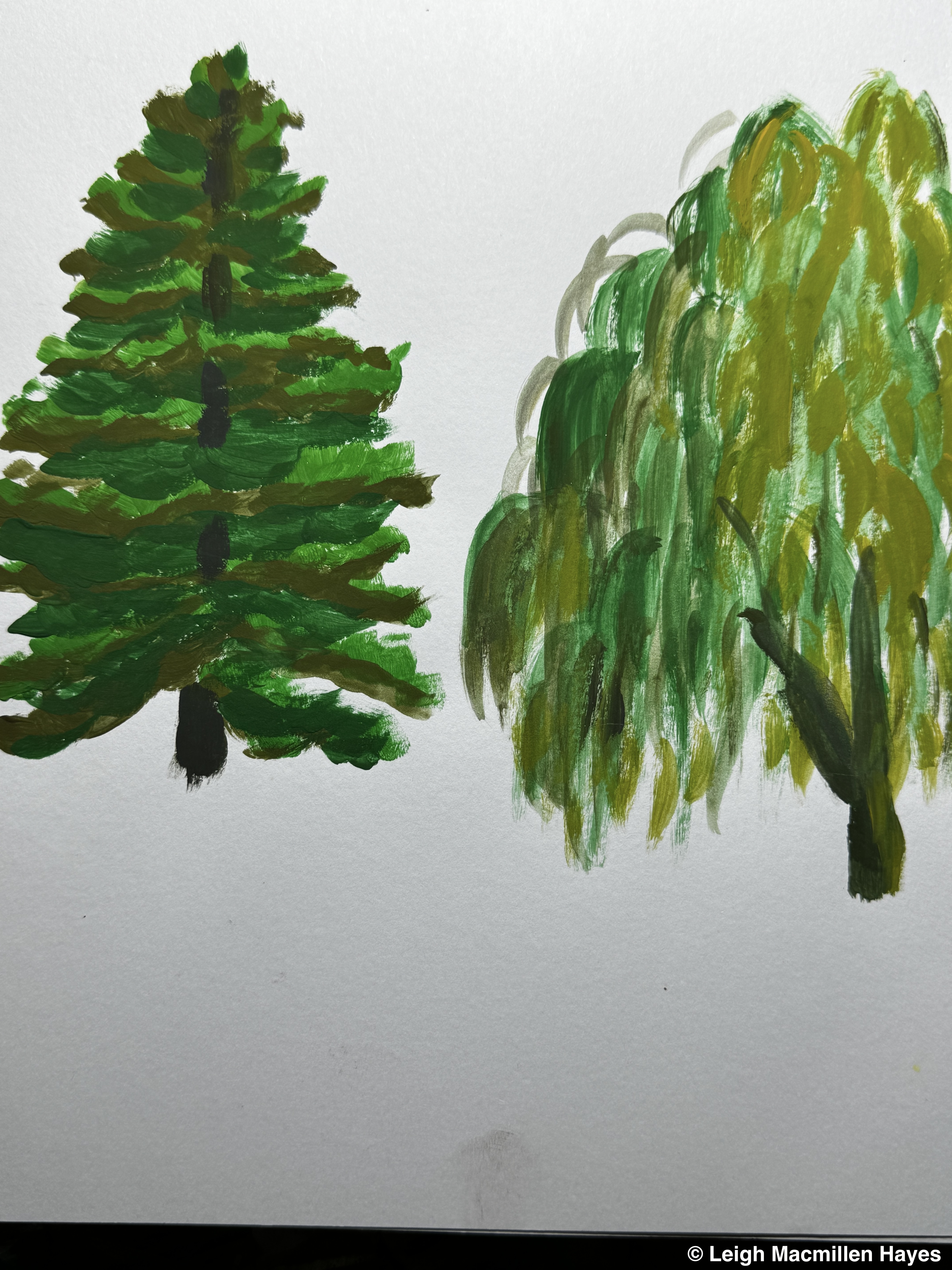
The third time we met we talked about basic shapes and had to quickly paint trees. It was supposed to be six trees, but our class only got through four. I guess we weren’t so quick after all. My fav: the willow. But also thinking about different shapes. And how to fill them in quickly.

Hairy Coo My Guy and I met in Scotland. My fav: the ear tag!

Values sketch of photo she offered in class, and getting the basic shapes on paper.

And then we could only use certain colors to paint the scene, filling in the shapes first before adding detail. This was mind opening for me. My fav: making blobs look like trees.

The same scene using different complementary colors on the wheel. I struggled with the values in this one. My fav: the trees still look like trees.

This one has been the most difficult for my family to understand. An intersection of granite ledges and tree roots on Bald Pate Mountain, Bridgton, Maine, on a canvas mat. My fav: the tree roots.

Ledges on descent of Rumford Whitecap Mountain, Rumford, Maine. My fav: the trees with the mountain backdrop.

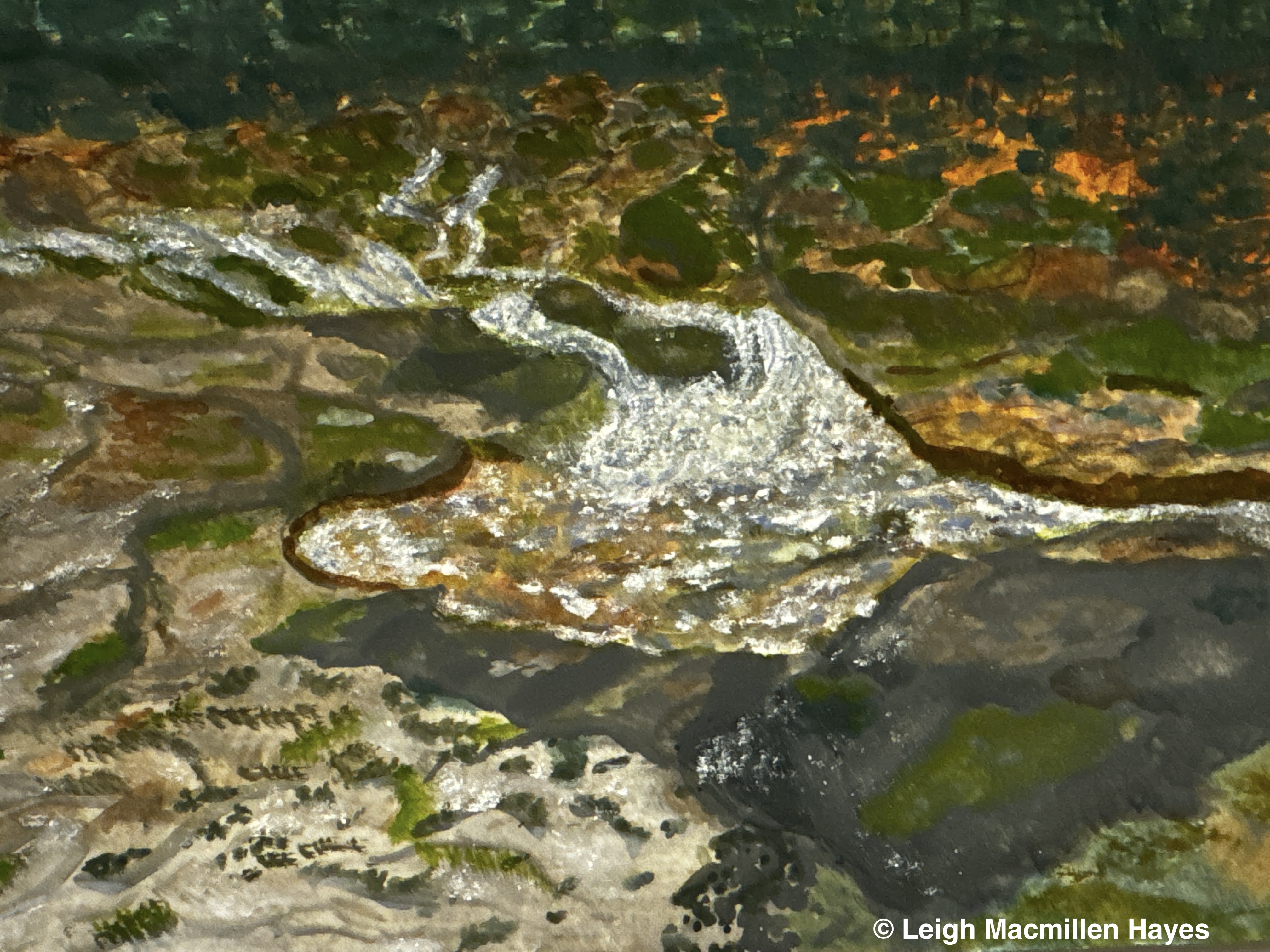
Bickford Slides, Blueberry Mountain, Evans Notch, Maine. And the discovery that I had accidentally purchased a small tube of shimmery white watercolor paint. My fav: water flowing over the mossy rocks.

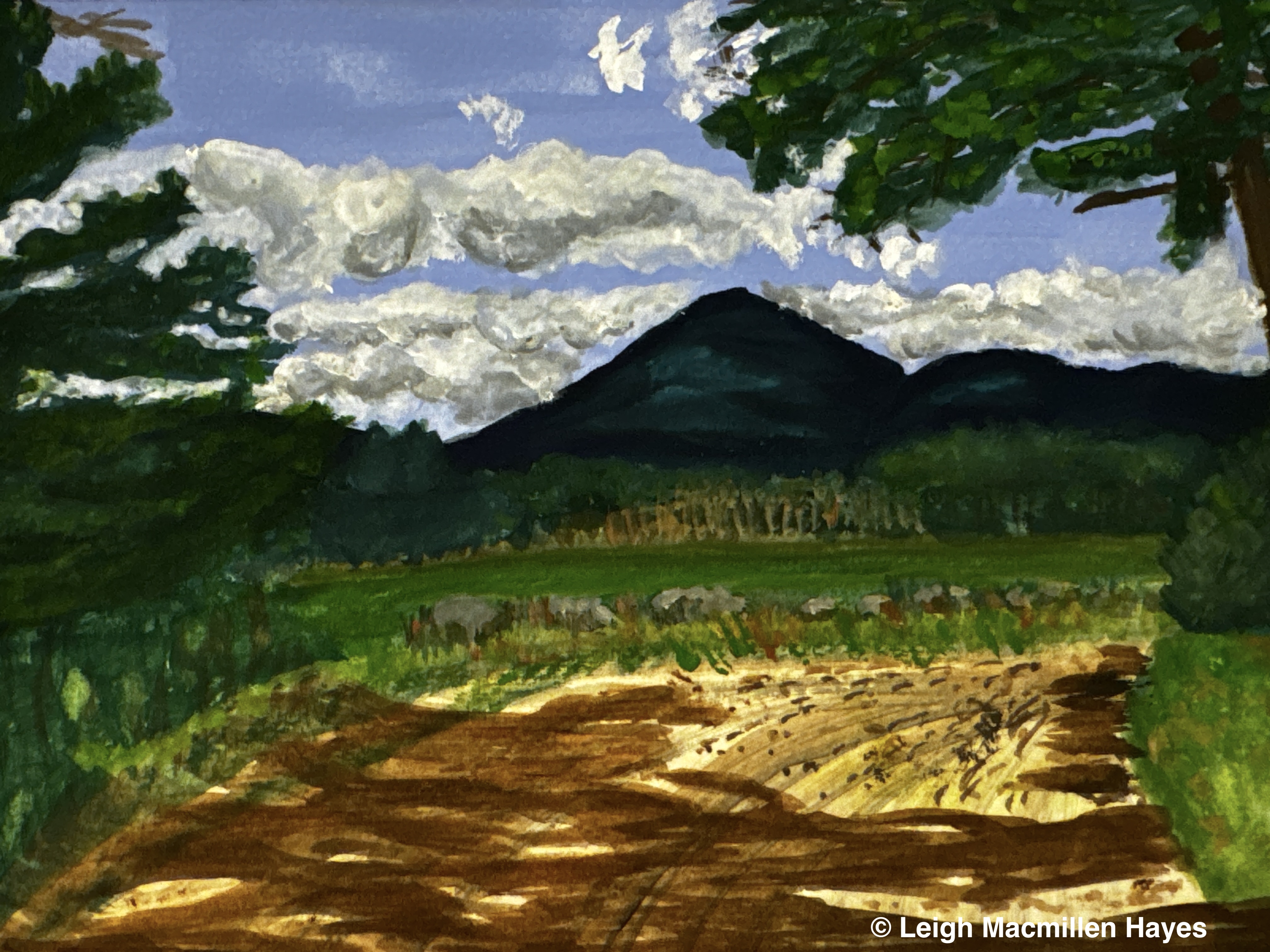
Shadows across Hemlock Bridge Road, Fryeburg, Maine. My fav: those very shadows. And the rocks that line the road.

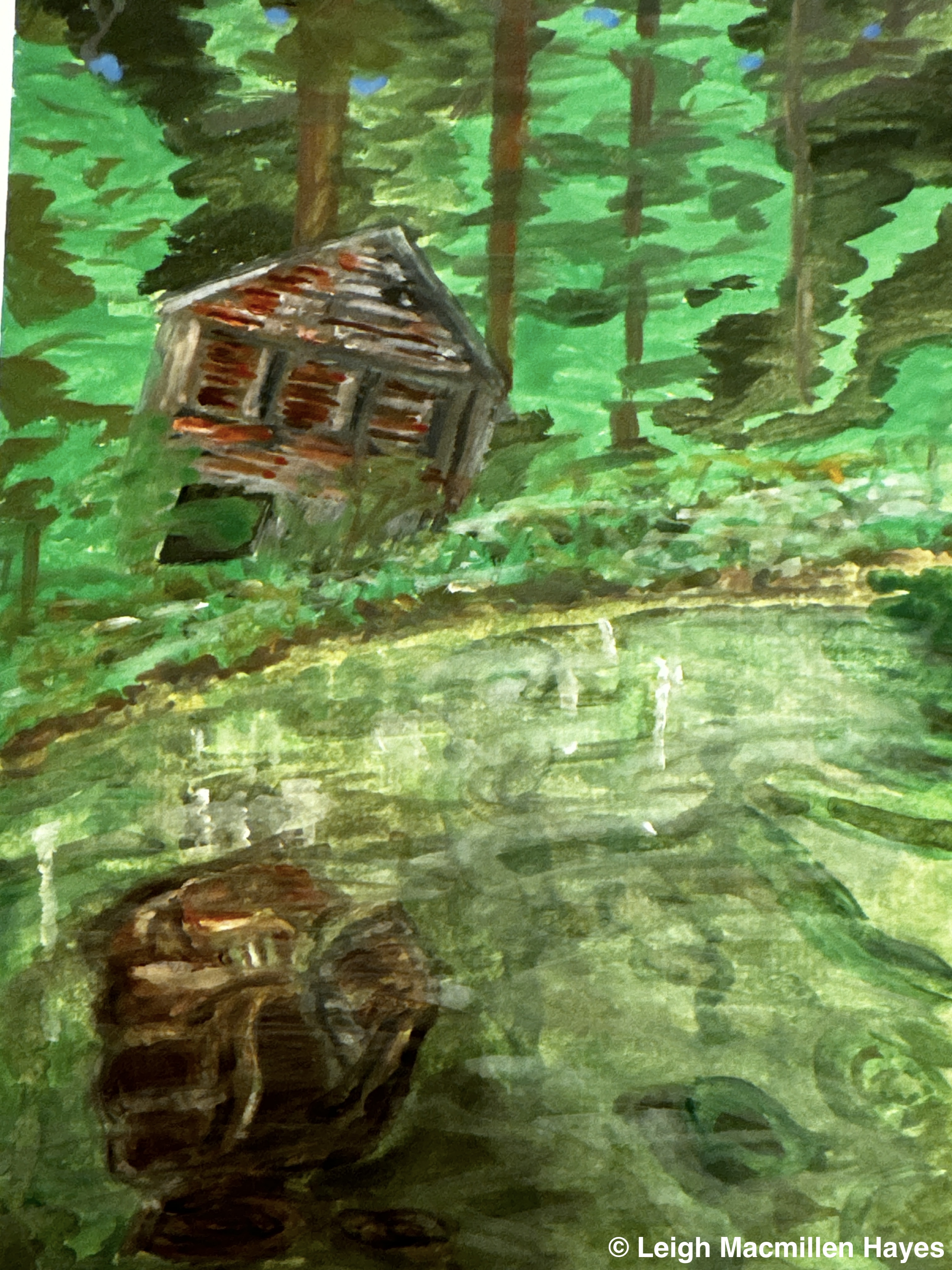
Back to gouache to capture the reflection of a falling down cabin on a small pond in New Hampshire. My fav: the trees and hints of the blue sky.

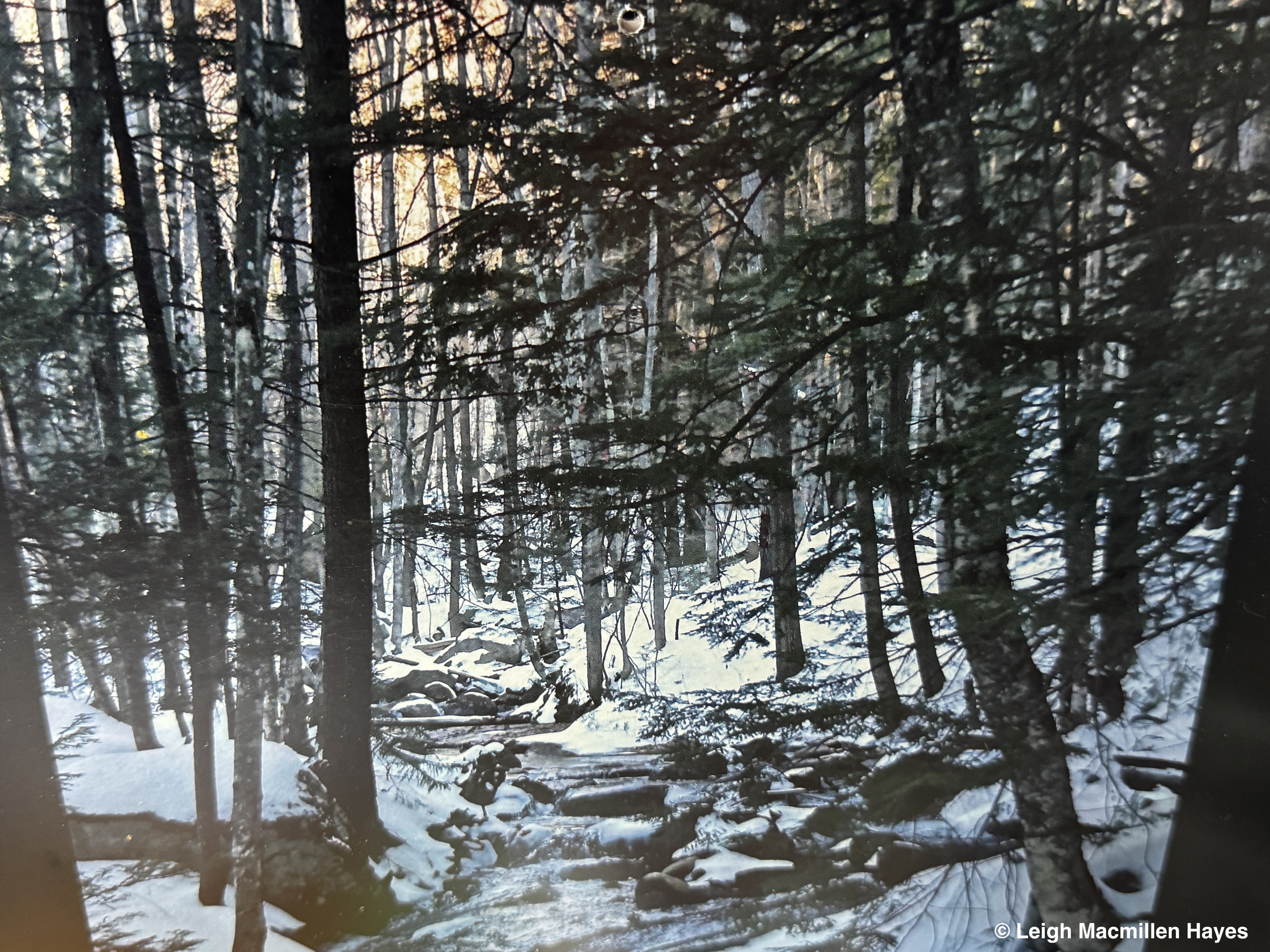
The final assignment took us two classes. This is the scene I chose to paint. Sucker Brook at Greater Lovell Land Trust’s Wilson Wing Moose Pond Bog Reserve, Lovell, Maine.

Planning with sketches, markers, and paint and figuring out what might work best. And simplifying the scene.

Jessie gave me a piece of Hot Press Finish paper upon which to work, and I have to admit that it was a joy to paint on this. I started with the sky color as the wash and then worked on the snow next, then the water, and finally the trees. My fav: sunlight reflected on the snow in the background.

After I shared that painting with a friend, she commented, “Can’t you do something other than snow until there is snow?” So, I painted a fall scene at the summit of Bald Pate. The mountain tops are not quite this color yet, but will be in a couple of weeks. My fav: contrast of colors.

My last painting to date on a larger canvas sheet was a Pileated Woodpecker that frequents our woods. I discovered, like the Hot Press paper, I really like the canvas except that it takes a while for the paint to dry. My fav: the bird’s head and the pine tree bark on the right.

That’s all I have to offer at the moment. And if you stuck with me this far, I’m impressed. Thank you!

I keep thinking about this creative journey and can’t wait to see where it takes me next. If you are interested, you can follow my artistic path by clicking on wmw art gallery every once in a while.

A Lost Art Found

At the end of April I began taking an art class offered by one of my peeps, a young woman who walked into the lives of many of us one day about twenty months ago; a young woman with a million talents to offer. Among those talents, she is a self-taught artist and we’ve been begging her to teach us.

At our first class, we had to draw a small box in the upper left-hand corner of the paper and place the person who has been our biggest art critic into it. That done, the critic was forever boxed–well, until she sneaks out, which she seems to do way too much.

And then we looked at some photographs in magazines and had to sketch them and determine the direction the eye would travel in the picture.

Next we looked at lines and perspective. I’d brought along my favorite colored pencils, but immediately felt my inner critic jump on me because all of my classmates were working with watercolor pencils, watercolor paint or acrylics. And the artist herself, gouache. Until I met her, I’d never even heard of gouache. Or at least never paid attention, if I had.

And so between classes I purchased a set of watercolor pencils and tried all over again. It certainly was a quicker way to create and I liked how I could blend the colors with a brush. But still, it was a long process to produce such.

Our next lesson was on values and we looked at how values add to the picture and stood outside and quickly sketched some scenes in the neighborhood.

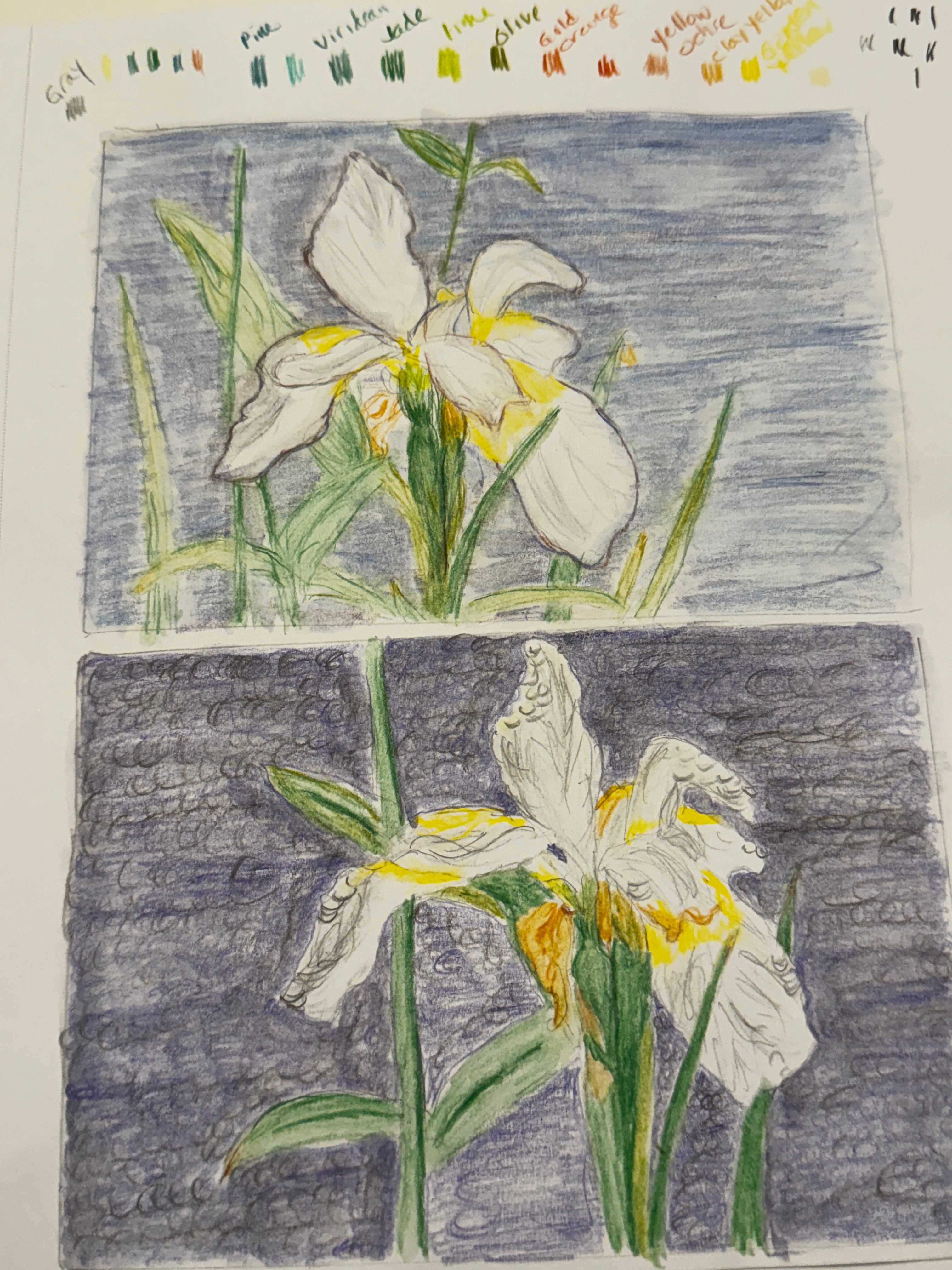
And then she produced a photo of a white iris for us to illustrate. I struggled with this because I couldn’t figure out how to make the flower pop and so I cheated (well, maybe it’s not cheating, but rather an artist’s prerogative), and outlined the flower with a different color.

When I later asked the artist how to do this, she showed me that by making the background darker the flower would stand out. And so I tried again.

The other thing about the artist’s prerogative–you don’t have to include everything in your illustration that is in the photograph. And so you can see I left some leaves out on the second try. But I did want more detail in the flower.

“Painting is not about ideas or personal emotion. Paintings are about freedom from the cares of this world, from worldliness. All art work is about beauty.” ~Agnes Martin

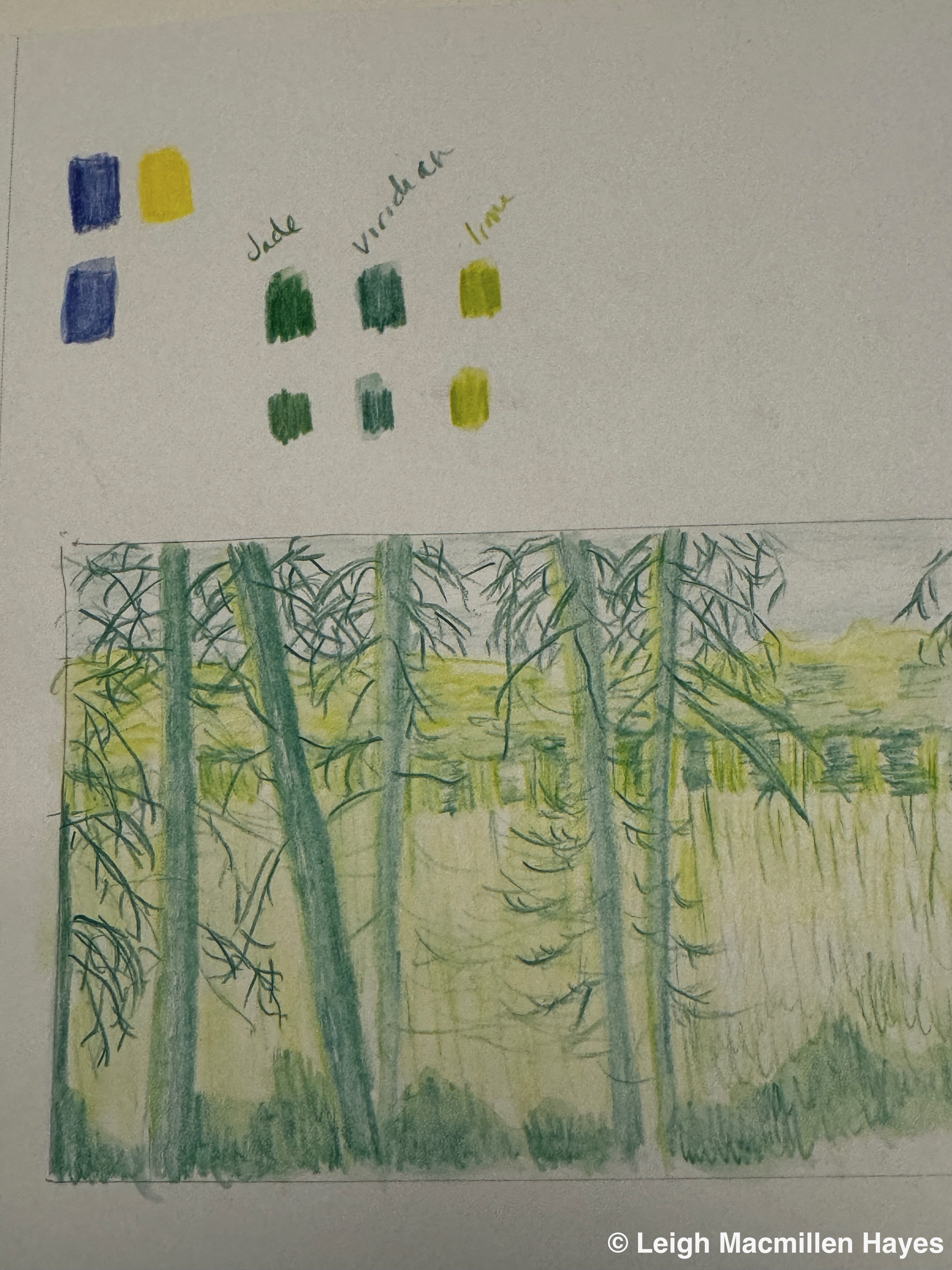
When we were asked to draw a scene from another photograph and complete it only with greens to get a sense of value, I again needed help since I couldn’t create green from blue and yellow, and so she helped me choose three colored pencils to use.

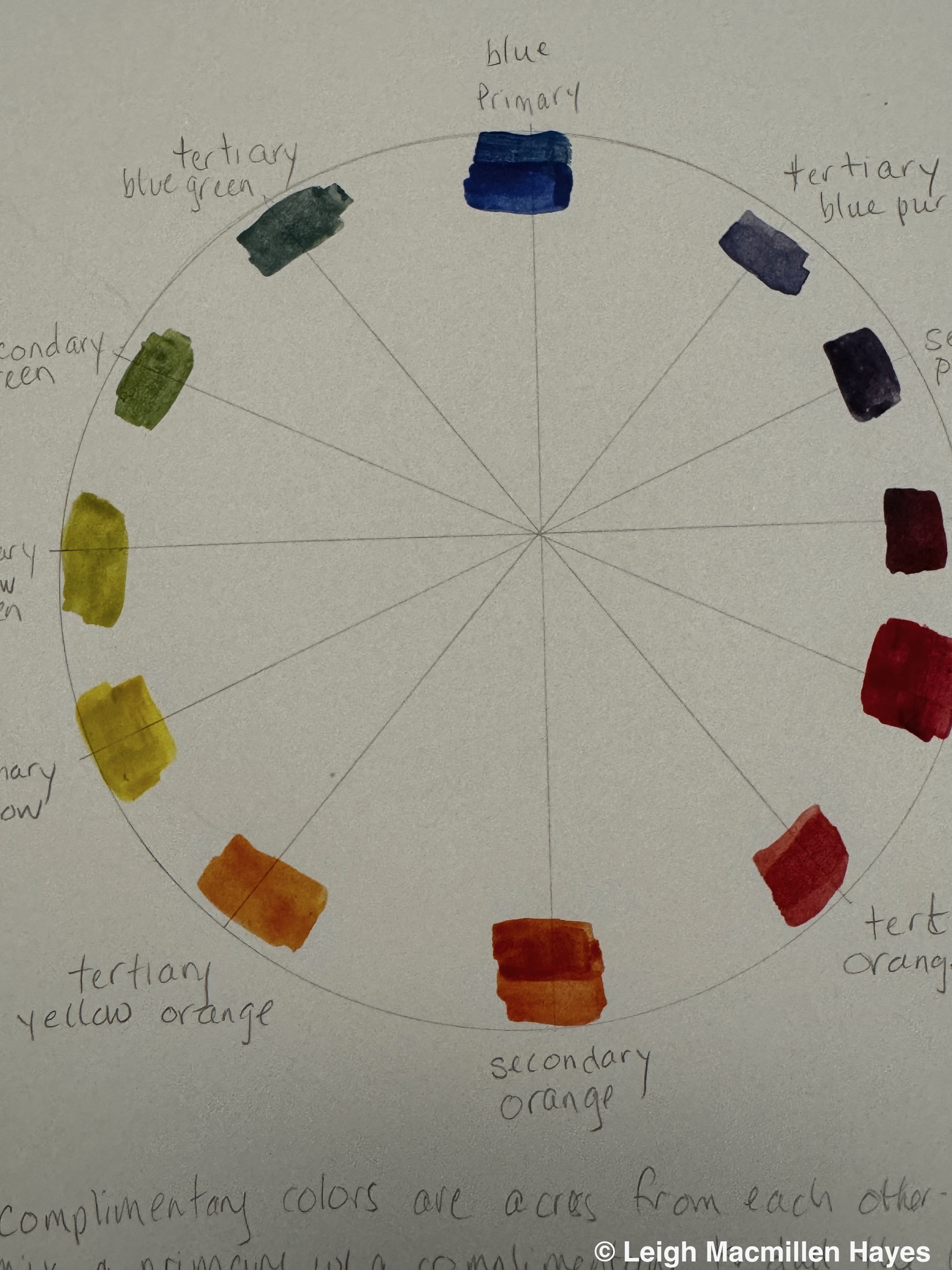
And then the third class was upon us and I was encouraged to borrow her watercolors because it would be easier to create a color wheel. And my confidence took a dip as I was giving up my beloved pencils for an hour or two. And walking down a path I hadn’t followed in many, many years.

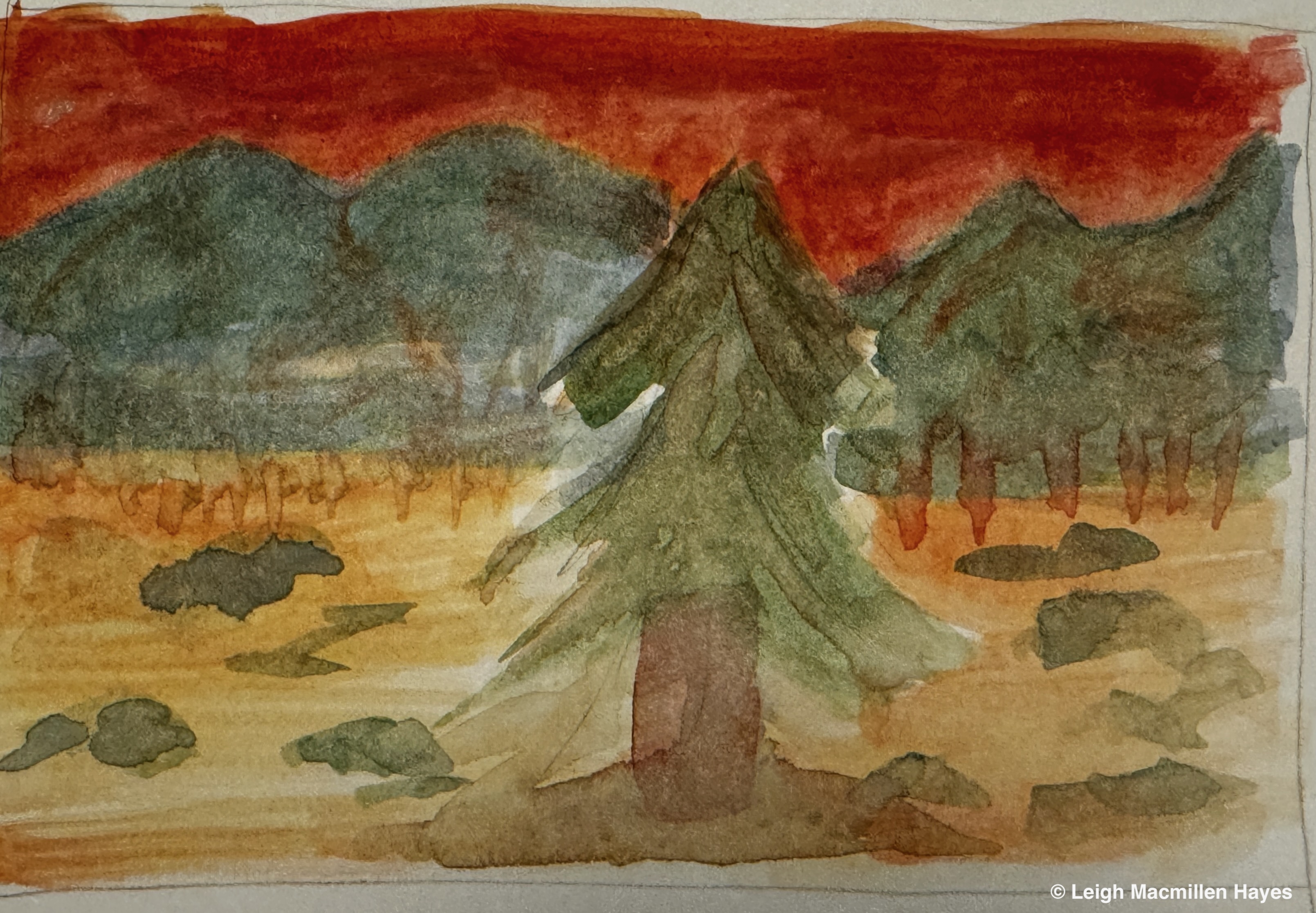
This was a study in complementary colors and from our mind’s eye we needed to paint a tree with mountains behind and use such colors. Not only was it kinda fun, but definitely a faster way to reach the end and the colors popped more.

Next we had to go big. Well, not that big really. I usually stuck to the size of the photograph, the easier to figure out how to position lines. But we were all given this photograph of Hemlock Bridge Road and had to use those same complementary colors to complete the scene. And so I played. And had great fun. And began to learn that I could let go. Sometimes.

That said, at home I attempted the same scene with the watercolor pencils and actually liked that as well. It was a different effect.

Back in class again, we learned more about using complementary colors and had different scenes to illustrate. This was with the watercolor pencils.

And then the afternoon dawned when composition was the topic. As we looked for the most interesting area in a scene. It never occurred to me to crop, just as we sometimes crop photographs.

I was a wee bit nervous for this one for a couple of reasons. One, I’d purchased some watercolor paints and new brushes. And two, the photo struck me as being a really difficult scene to replicate. Or at least represent. And so I did a painting smaller than the paper I was working on. And discovered that white was my friend.

A day or two later, I couldn’t wait to pull the paints out again, and give this another try. It’s much lighter/brighter than the actual photo or my first attempt, but I kinda like it.

That inspired me to go back to the other water scene and try it again. It looks nothing like the photo of an original painting, (I’m sorry, but I don’t remember the artist) but playing with the paints was becoming a favorite pastime.

A really favorite pastime, so much so, that I’m addicted; in a good way, of course. When I showed this to My Guy, he immediately knew where it was for we’d only climbed this particular mountain a week or so ago to count Lady’s Slippers. On a rainy day.

Over the weekend I photographed this Four-spotted Skimmer, so named for the four spots on each side: two per wing, the mid-wing spot being the nodus, and the black spot toward the tip of the wing being the stigma.

I know that what I like about sketching is that I can focus on details, but when painting with watercolors, that is much more difficult for me. And so I need to figure out how to let go a bit more. But that will come in time. Maybe.

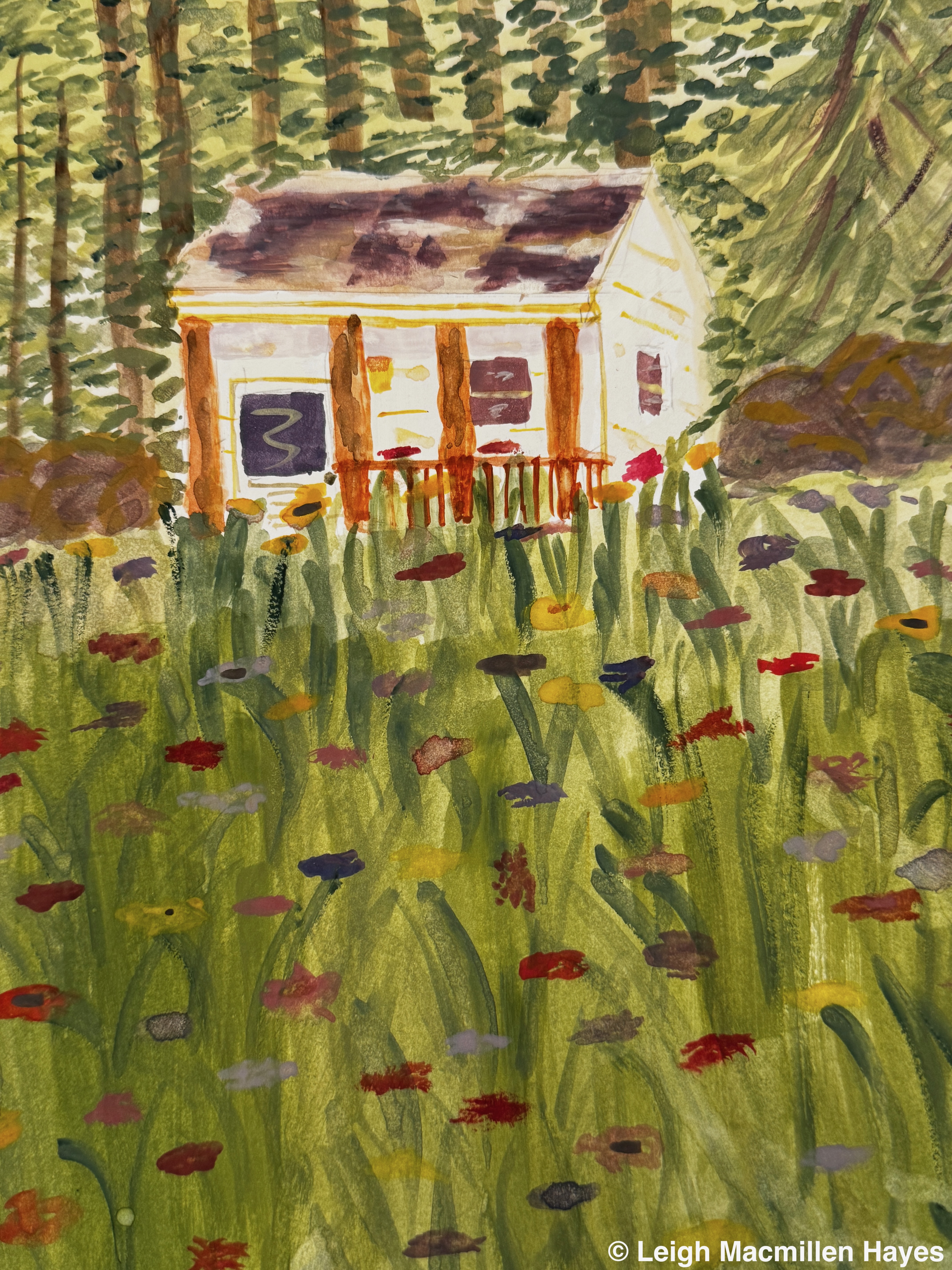
For our last class yesterday, we had to choose a scene of our own to illustrate. I chose the wee studio on our back forty (haha, we only own six acres total, so it’s rather hard to have a back forty), where a pollinator garden adds to the picture. Okay, so this is a painting. The garden looks nothing like that. And the stonewall behind is much smaller. And, oh geesh, here comes the art critic.

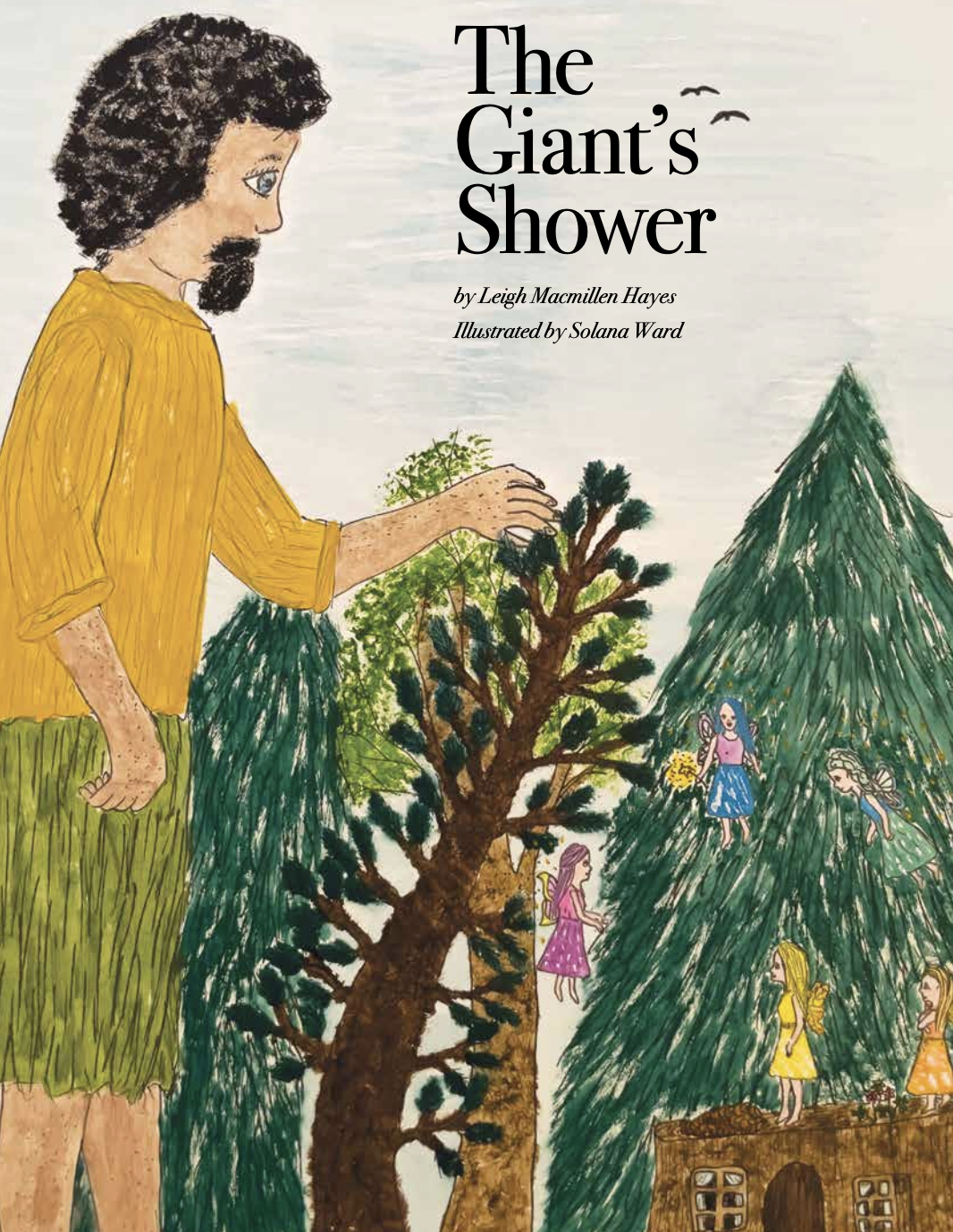
The cool thing about the studio, which I don’t use anymore, but someone suggested yesterday I should do my artwork in there, is that we won it at the Fryeburg Fair many moons ago when we paid $25 for five raffle tickets to support Harvest Hills Animal Shelter. To enter, one has to duck. I’ve always felt that was a plus for it put me into a different place where I could create. And thus, The Giant’s Shower, the fairy tale I wrote and Solona Ward illustrated, was written in that space.

At the end of the last class, we were invited to show off our paintings and I chose the mountaintop scene. We were down one because she is on vacation, but seated left to right are Pam, Linda, Debbie, and me.

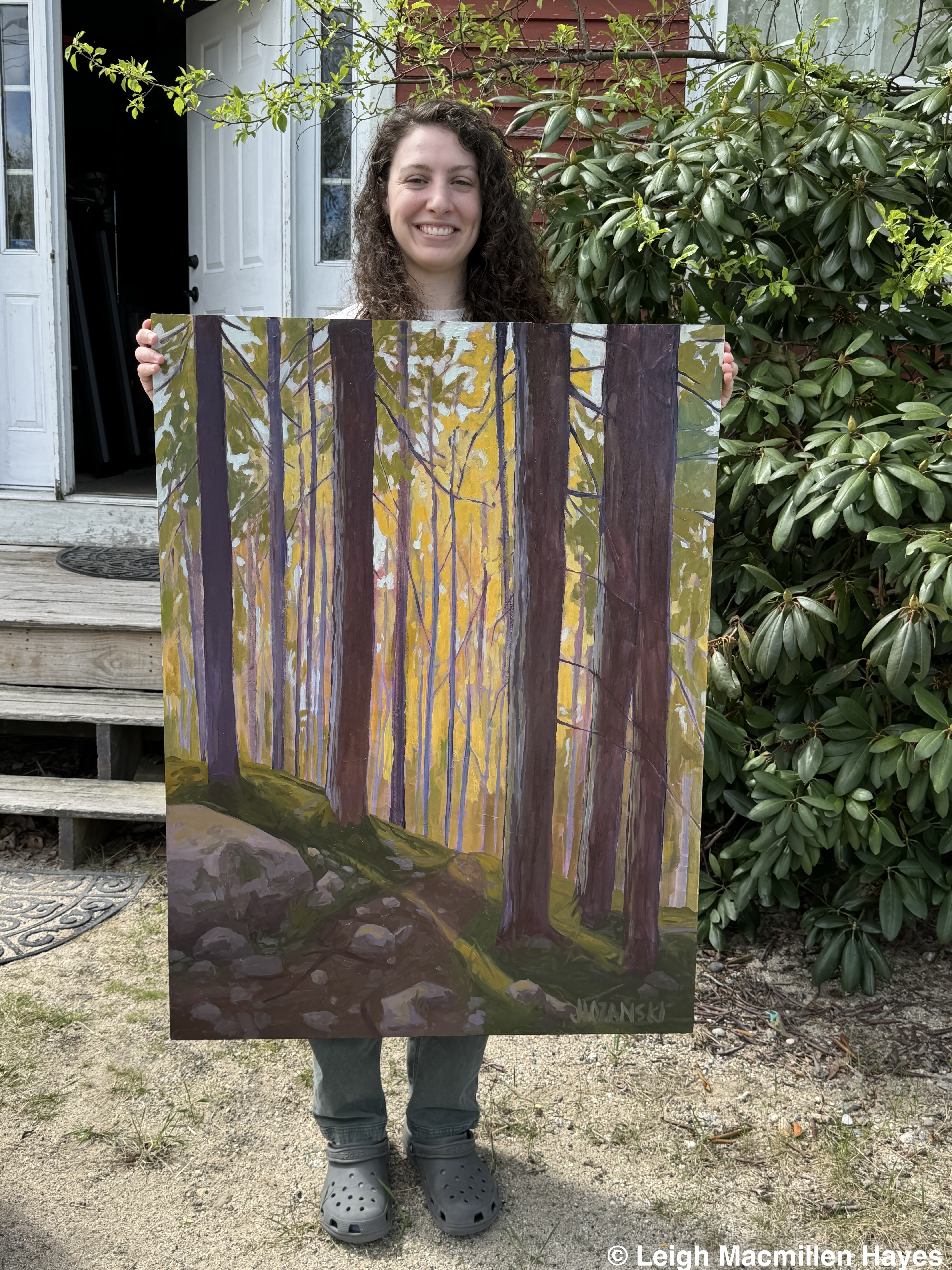
And our teacher for these past seven weeks was the one and only Jessie Lozanski, who recently painted this scene from photos I’d taken along a trail at the Bold Coast of Maine. It graces our kitchen and each time I look across at it I am transported to that time and place, but also to so many other times and places for it triggers many memories.

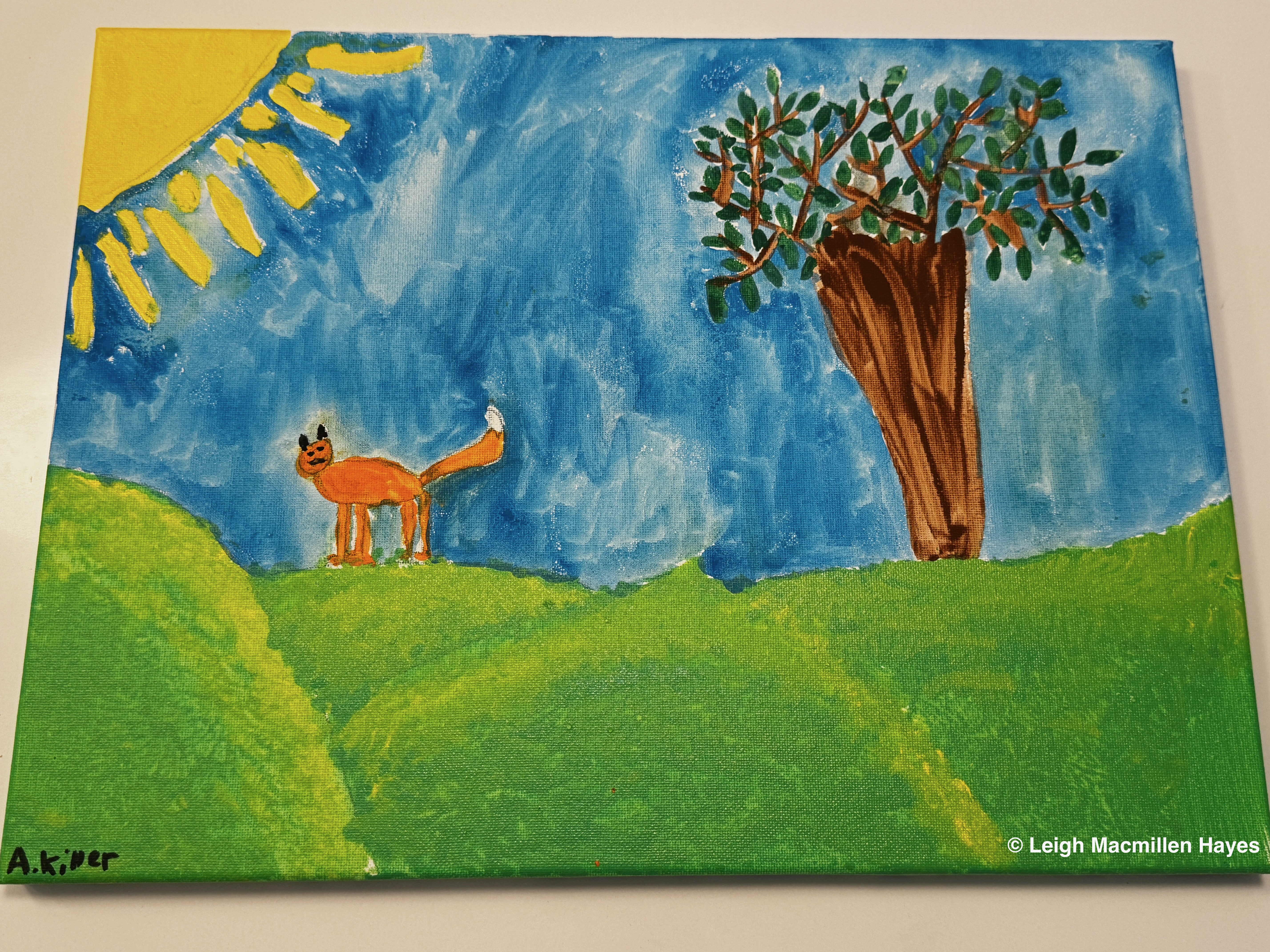
This morning I was gifted a painting by another student of Jessie’s. The painter of this scene is nine years old. And she’s an extraordinary naturalist whom I’ve had the pleasure of working with every other Wednesday for the past three school years. I love the grassy mounds and the fox and the tree–especially its trunk. This is an artist who is well on the way to finding her style and both she and Jessie will have their works for sale at Gallery 302s Art in the Park in July.

Here’s a photo of the young artist and her mom heading back along a trail we’d explored a few weeks ago. Anywhere we go, she finds inspiration.

The same is true of Jessie, and I know I take a lot of photos, but she takes a million more and I get it now because I’m looking at the world from a different perspective, like seeing the shades of green and yellow, and brown and even purple in our yard and the field beyond in a different light.

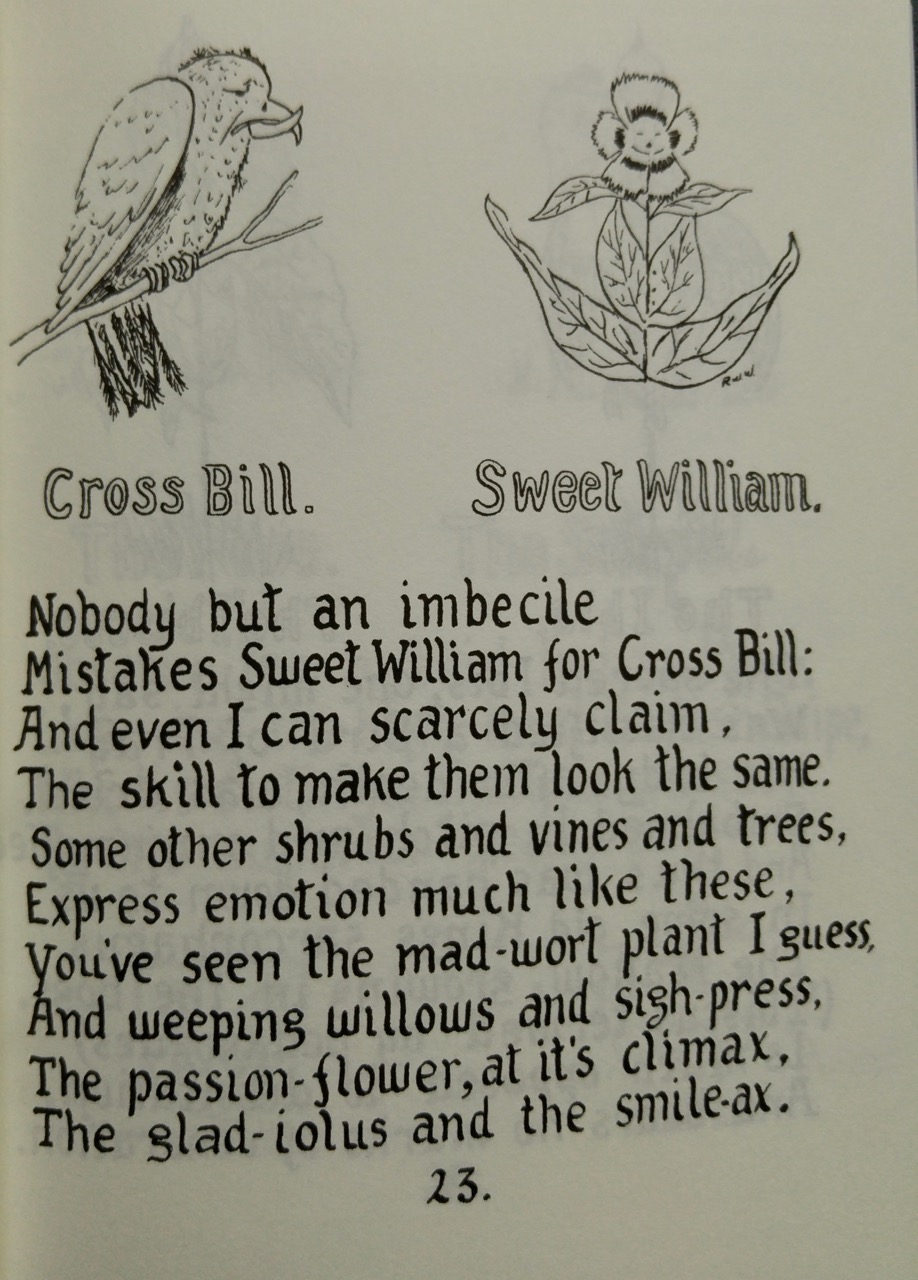
I am chuckling because shortly after purchasing the watercolor paints, I found this ditty in my collection. If I remember correctly, I painted this in college. Nobody is perfect. Thank goodness.

And I’m having fun finding an art that I thought I’d lost . . . all over again.

Pondering in Pondicherry

I love that I can step out the back door and explore hundreds of acres of woods or follow a path, cross a road, and step into a town park protected with a conservation easement. Lately, I’ve been spending a lot of time in the park, for starters because I love to spot the Mallards and look for Winter Stoneflies, but also because I’m working on getting to know bryophytes and lichens better. Of course, I could to that anywhere because mosses and lichens grow everywhere. And do not harm the substrates upon which they grow. In fact, they may actually help as in the form of mosses retaining water.

So, I invite you to step across the Bob Dunning Memorial Bridge and into Bridgton’s Pondicherry Park. Sixty-six acres of forest beside Stevens and Willet Brooks, with stonewalls, an old spring, and carved trails, including one that is ADA accessible, though in the current conditions, it’s icy and micro-spikes are the best bet for staying upright.

I’m almost certain these two ducks are named Donald and Daffy, but what I do know is that they laugh. A lot. Or at least that’s what it sounds like when they quack.

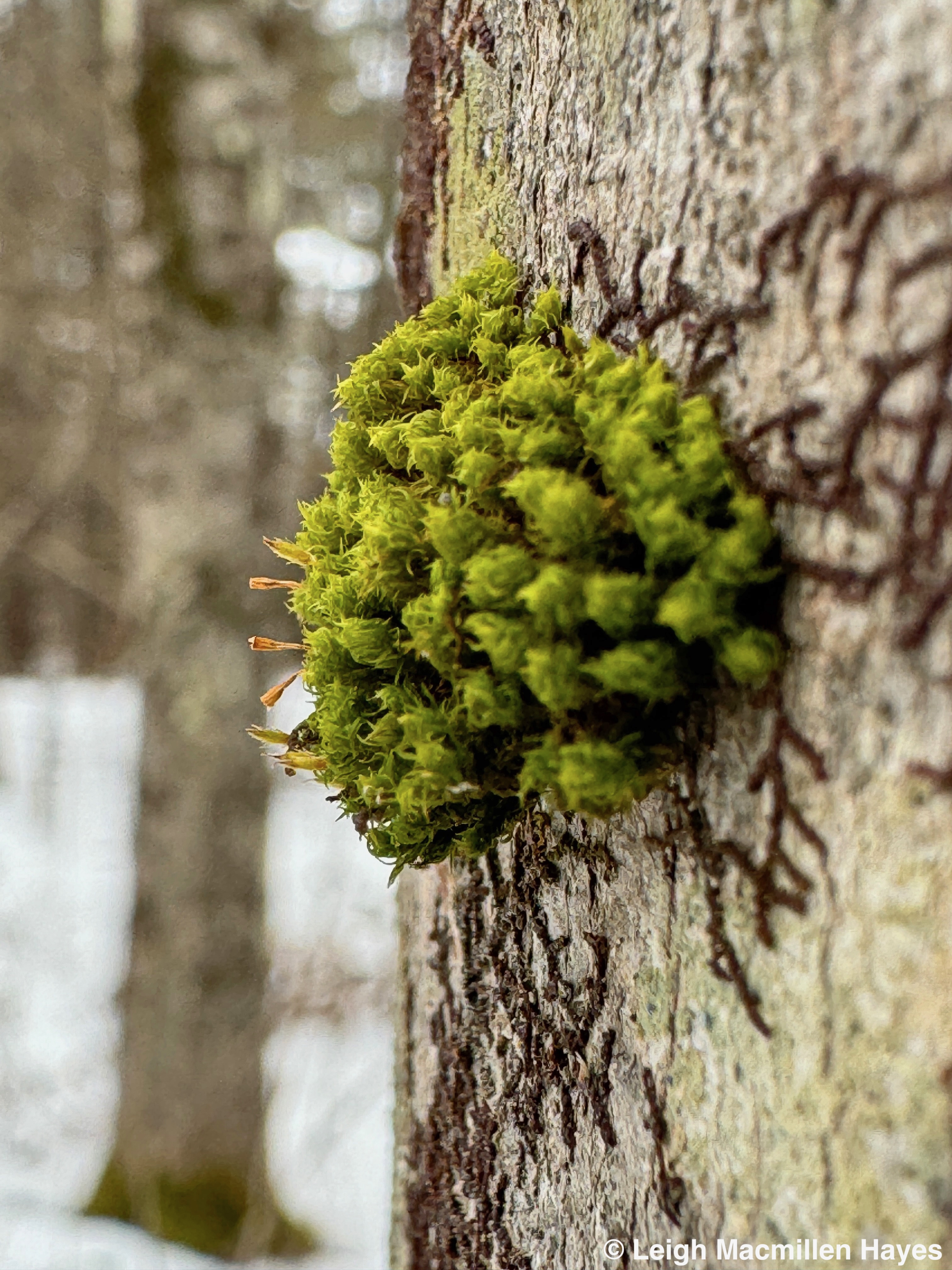
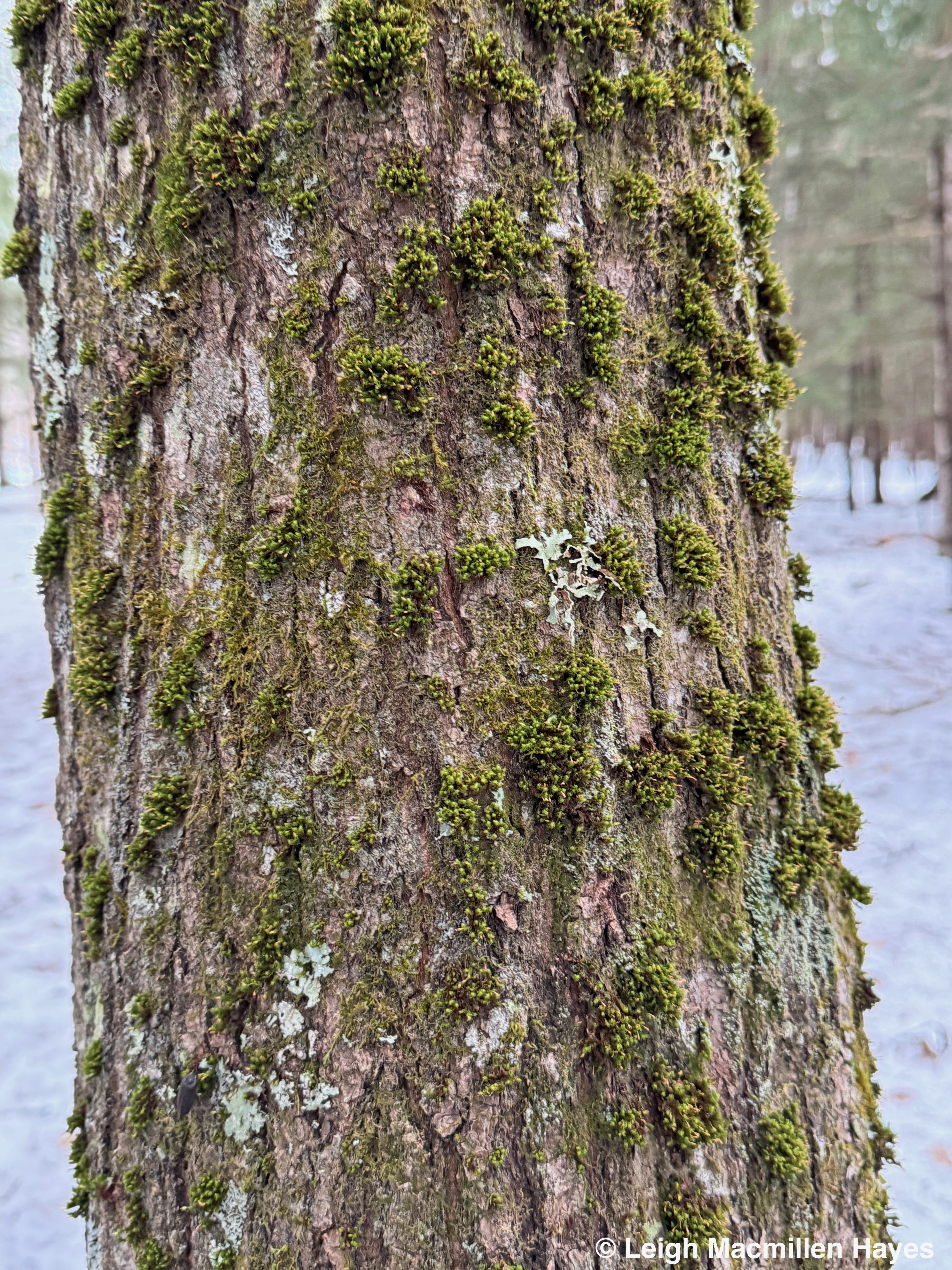
Finally, the reason I invited you along for this journey. One of my favorite little mosses. Meet Ulota crispa, or Crispy Tuft Moss (and Curled Bristle Moss and Crisped Pincushion . . . and probably several other common names). This moss is an acrocarp in form, meaning that the main stem generally grows upright and the capsules and seta or stalks that hold the capsules grow from the tip of the main stem. Usually, they grow upright that is, but in the case of Ulota crispa, they orient horizontal to the ground.

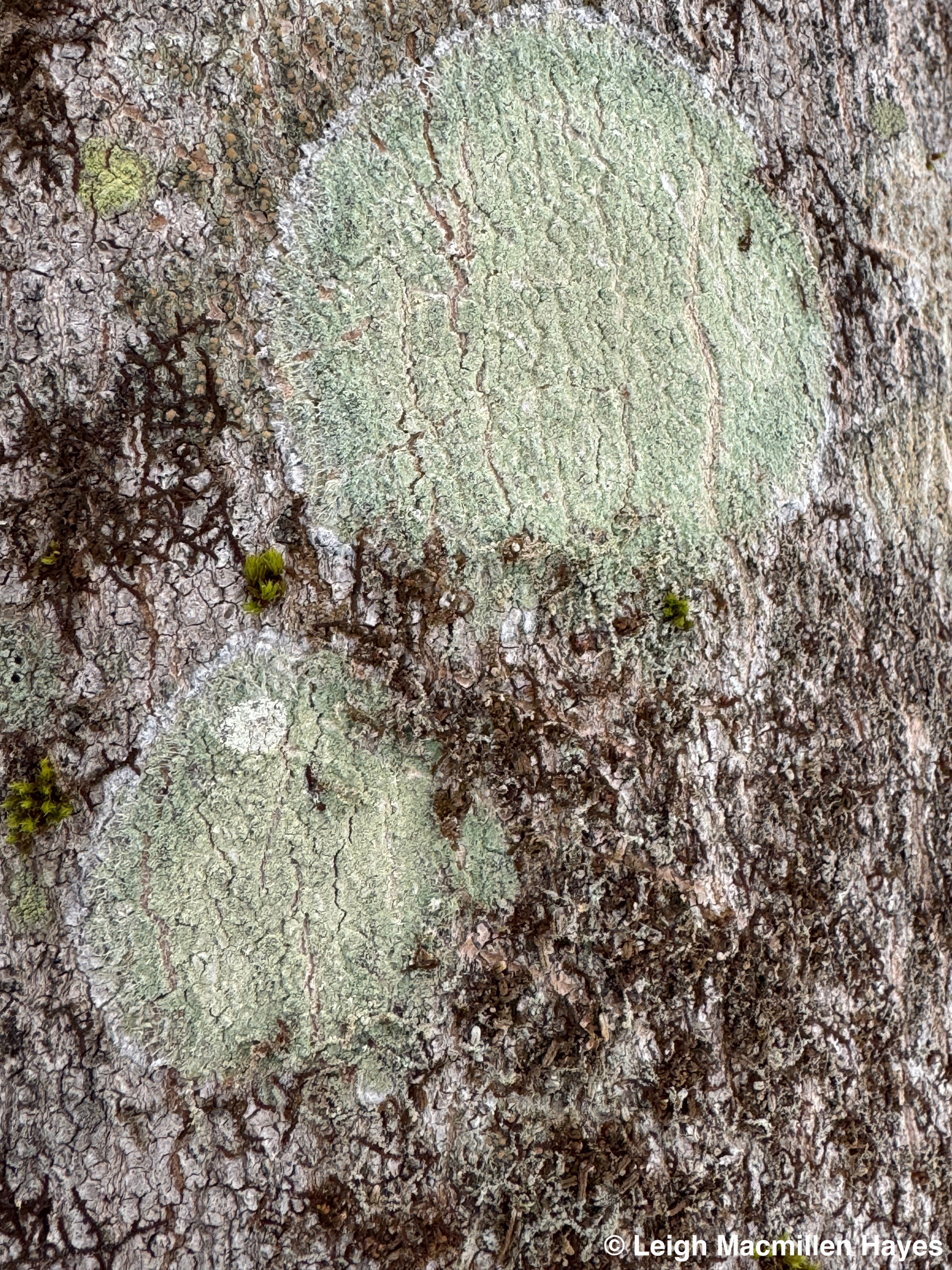
On this tree trunk, you might notice the pale green crustose lichen (crustose meaning crust-like and tightly pressed to the surface of its substrate) and the brown spiderwebby structure of a Frullania liverwort. Like mosses, liverworts are also considered bryophytes–meaning they don’t have a vascular system like plants and trees; nor do they produce flowers or seeds.

Ulota crispa grows in little tufts between the size of a nickel and a quarter. On some trees you might find one or two and others, such as this one, there are many.

My walk in the park was actually a self-assigned quiz because a friend and I had visited a few days prior and I wanted to make sure I could identify species on my own. As I always say when I’m tracking by myself, I was 100% correct in my ID.

But actually, this quiz did give me time to slow down and notice features, such as the thickness of the Brocade Moss, aka Hypnum imponens. This one is a pluerocarp in form, because the moss grows mostly prostrate, has many branches, and the capsules and seta (stem supporting capsule) arise from a side branch rather than the tip like that of the acrocarp.

I found one downed tree (and I’m sure there are many others under the snow) that looked as if it was covered with a carpet, a Brocade carpet. Given that a brocade fabric has a raised design, this common name seems to fit, though my research informs me that the Latin Imponens is the root for “imposter.” Apparently it can have different looks. That’s something I’ll need to pay attention to in the future.

Delicate Fern Moss, or Thuidium delicatulum, is another pluerocarp species. The fronds really do look like miniature fern fronds, in fact, twice-cut in fern lingo. But that’s a topic for another day.

I found the Delicate Fern Moss growing on a tree trunk, but also on a rock. Mosses don’t have actual roots, because remember, they are non-vascular plants. Instead, they have rhizoids, which look rather root-like, that anchor the plant to the substrate.

So how do they get water and nutrients? Via their leaves. And they have the unique ability of being able to dry out completely and stop growing, but pour water on them, or visit them on a rainy day after a dry spell, and they’ll begin growing again and turn from brown to green as photosynthesis kicks back into action.

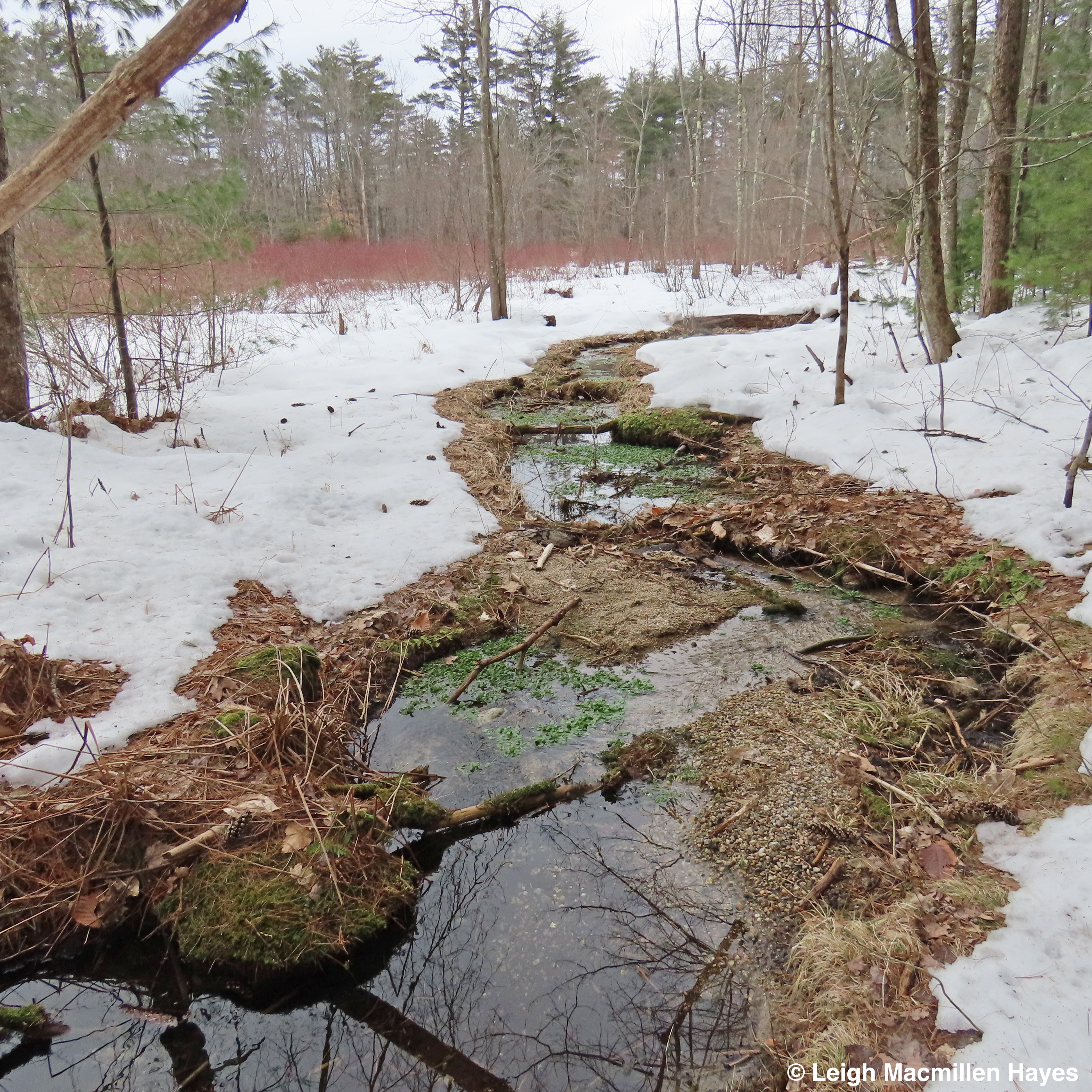
If you been in the park, then you may now this stream below the Kneeland Spring. And you realize that I’d probably already spent an hour on the path and hadn’t moved very far. The old joke that I can still see my truck in the parking lot doesn’t work this time though because I had walked there. But I could still see the parking lot.

What attracted me to the stream was the sense of color. On a bleak winter day, the view was breathtaking in a subtle way.

In particular, the bright green of a plant that isn’t a moss or liverwort, but rather a vascular plant known as Watercress. It grows in natural spring water, thus its abundance below the spring from which this water flows.

While I was admiring the Watercress, I met a moss that I swear I’ve never laid eyes on before, but don’t think I’ll ever forget going forward: Willow Moss, aka Fontinalis antipyrectica. Its one that prefers to be submerged, thus its location. When the water is warmer, I need to get to know it better, but it almost looked like the leaves were braided.

The funny thing about this spot is that as I was looking down, a young couple walked along the trail above me. In an instant, the young man and I made eye contact and at once recognized each other as we are neighbors. He said, “I wondered who was down by the stream.” He wasn’t at all surprised.

Because the snow is beginning to melt, I finally saw an example of the poster child for acrocarpous mosses: Common Haircap Moss or Polytrichum commune. Here are a couple of easy ways to ID it from other haircap species: when dry, the leaves don’t twist as they fold upward toward the stem and the leaves have reddish tips.

Mixed in with the mosses were some little structures that actually remind me of caterpillars. They are also non-vascular and are associates of mosses, these being liverworts. Bazzania trilobata does not have a common name as far as I know. That’s probably a good thing because it forces me to learn the scientific name.

A small piece may have followed me home and stuck itself under the microscope. Liverworts are also small and where a moss has leaves arranged in more than three rows, a liverwort has two rows, like this one. That said, some have a third row underneath. Another key is that while mosses often feature a midrib, liverworts as you can see by this example do not. There’s more, but that’s enough to get started.

Mosses and liverworts aside, I had been looking for examples of this foliose lichen upon a previous visit, and finally found this one. It’s one of the ribbon lichens, but I haven’t yet figured it out to species. And I don’t know if it grows on anything other than Eastern White Pines, for that is where I see it.

Lichens come in four forms. Earlier I mentioned crustose: crust-like or pressed against the substrate; foliose–foliage-like or leafy; fruticose: upright and pendant, think grape branch; and squamulose: with little raised scales.

So, which form is this? Ah, the quiz is now in your hands. Crustose, Foliose, Fruticose, or Squamulose. I’ll tell you it isn’t the latter. Of the first three, which is it?

The little black discs or bumps are its reproductive structures.

Here’s a great take-away from Joe Walewski’s Lichens of the North Woods: “Successional stages of lichen communities on rock progress from crustose lichens, to foliose lichens, and then on to fruticose lichens. In contrast, successional stages for lichen communities on tree bark follow an opposite pattern. Many crustose lichens are a sign of an older successional lichen community.”

If you answered my question above as the form being crustose, you would be correct. Common Button Lichen or Buellia stillingiana.

This next one pictured above is among my favorites. Maybe it’s because though I find it on other trees, I love how it appears between the “writing paper lines” on the ridges of Eastern White Pine bark. Known as Common Script Lichen, or Graphis scripta, you might see it year round as white spots on trees but the squiggly apothecia (reproductive or spore-producing structure) appear only when it gets cold enough.

And here again: same crustose form, different crustose colors. Do you see at least three colors? Two shades of green surrounded by a blueish-grayish white? The white fringe is called the prothallus, a differently colored border to a crustose lichen where the fungal partner is actively growing but there are no algal cells. Though named the Mapledust Lichen, Lecanora thysanophora, it grows on several species of trees just to keep us all questioning ourselves.

The final lichen of this journey, and believe me, there could be a million more, or maybe not quite that many, but . . . anyway, is the Common Green Shield. I’m realizing just now that I don’t have a fruticose lichen to share, but that I’ll leave for another day. This Flavoparmelia caperata demonstrates the foliouse form. One that my lichenologist friends, Jeff and Alan, describe as one you can easily ID while driving 60 mph. Of course, you should be looking a the road and not at the lichens or your cell phone, but should you glimpse it out of the corner of your eye, you can easily remind yourself that it is a Common Green Shield.

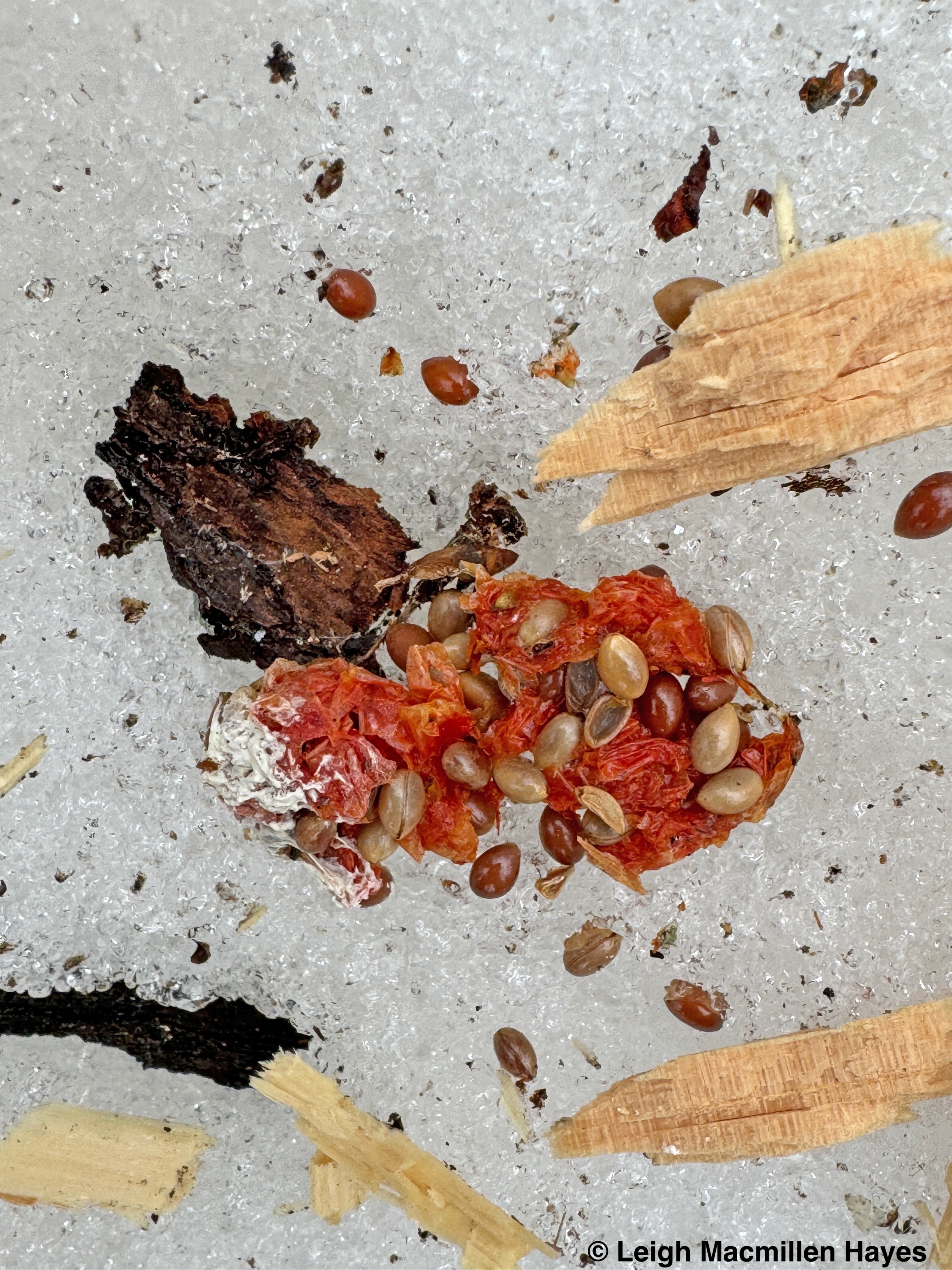
While finally making my way homeward, I was stopped by a sight that always invites a look. You may be tired of seeing it, but I hope I never am. The debris left behind by a Pileated Woodpecker.

There are at least two packets worth examining in this mess, and if you know what I mean, see if you can find them.

The tree was one rather gnarly Eastern White Pine and it grew near one of the old boundaries for the park was originally three different properties that were combined to create such an open space. You can read about that in Pondering the Past at Pondicherry Park. I suspect its growth pattern had something to do with being a boundary tree in an otherwise open area.

Do you see the bird’s excavation site?

And did you find this scat in the debris? Staghorn Sumac had been part of this bird’s diet prior to visiting the tree.

But carpenter ants were on the menu as well. Vegetable, Protein, Fiber. The perfect meal.

When I arrived home, it was time to do some organizing of my moss collection, some of these which I’d collected in the past and kept in Ralph Pope’s Mosses, Liverworts, and Hornworts: A Field Guide to Common Bryophytes of the Northeast.

The book is warped because, of course, most of these were damp when I placed them in it.

Here’s the thing about collecting mosses: only take just enough to study. Mosses can take a long time to grow, so you only need a small piece for closer inspection. As for lichens, if you need to, collect from those that have fallen off trees. Otherwise, let them be. They take even longer than mosses to grow.

And I encourage you to spend some time trying to get to know what you meet up close and personal. Looking through a loupe and sketching help me.

Slowing my brain down and noticing. I love that I am finally making time to do this again. And taking topics that had often stymied me and trying, trying, trying to get to know them better.

While I was pondering once again in Pondicherry, I did notice that someone was pondering about me. I went with the expectation of possibly seeing an owl while spending time quizzing myself on all of these species, and indeed I did. See an ice owl that is.

Becoming Tree Wise

So here’s the deal. A friend and I were supposed to lead a tree workshop today, but the weather didn’t cooperate. I’m not complaining about the few inches of snow–it’s the sleet that came first and the rain that is now eating up some of the snow that bothers me.

That said, I’m going to take you on a deep dive to meet some of the trees of Maine in their winter format. We are so fortunate to live in a section of the country where there is such variety, but that doesn’t mean we all know a species with just a quick glance. Oh, maybe you do. I know I sometimes have to slow my brain down before my mouth makes an announcement.

I found a drawing of a tree “cookie” on the internet this past week and decided to recreate it in one of my sketch books this morning. I like it because it helps me better understand how a tree works.

The key factor here is that trees are made of . . . wood. You knew that. But, what exactly is wood? Think scaffolding and plumbing. A tree needs structure to grow so tall, but it also very much needs food and water. Two components, therefore, make up the wood: Xylem and Phloem. Xy (think sky high) transports water from the roots, while Phloem (Think flow low) moves the sugar made in the leaves via photosynthesis during the summer down through the trunk.

As you can see from the sketch, the Phloem is only present on the outer layer of a tree–right under the bark. The Xylem makes up the majority of the wood.

And all those Xylem cells–they are made up of an outer wall of lignin, which gives the trees structure, and an inner layer of cellulose, which provides flexibility. Some trees, like Gray Birch, have a high concentration of cellulose, thus allowing them to bend under the weight of the snow, usually, but not always, without snapping.

The Xylem actually acts as a bunch of straws pulling up water, along with nutrients and minerals, from the soil. But can we actually see this action occuring in the trees? The answer is a resounding, “No.” It’s not at all like we might use a straw to slurp up a frappe, but rather a passive flow, where the water molecules evaporate through the stomata (holes in a leaf surface, similar to our pores), they draw other water molecules upward from the soil to the roots, and the roots to the Xylem, and the Xylem to the leaf, and the leaf to the air (Think water vapor = Transpiration).

Going back to the sketch above, the early wood of each year, which occurs in spring and summer, is much lighter in color than that of the late wood, but the two together create a ring documenting that particular year.

The heartwood, which isn’t labeled, is the inner core. It provides support for the trunk and is actually dead because over time the Xylem gets clogged up with resin. And each year more of the tree dies from the inside out.

If you are still with me, let’s get to the actual trees I want you to meet.

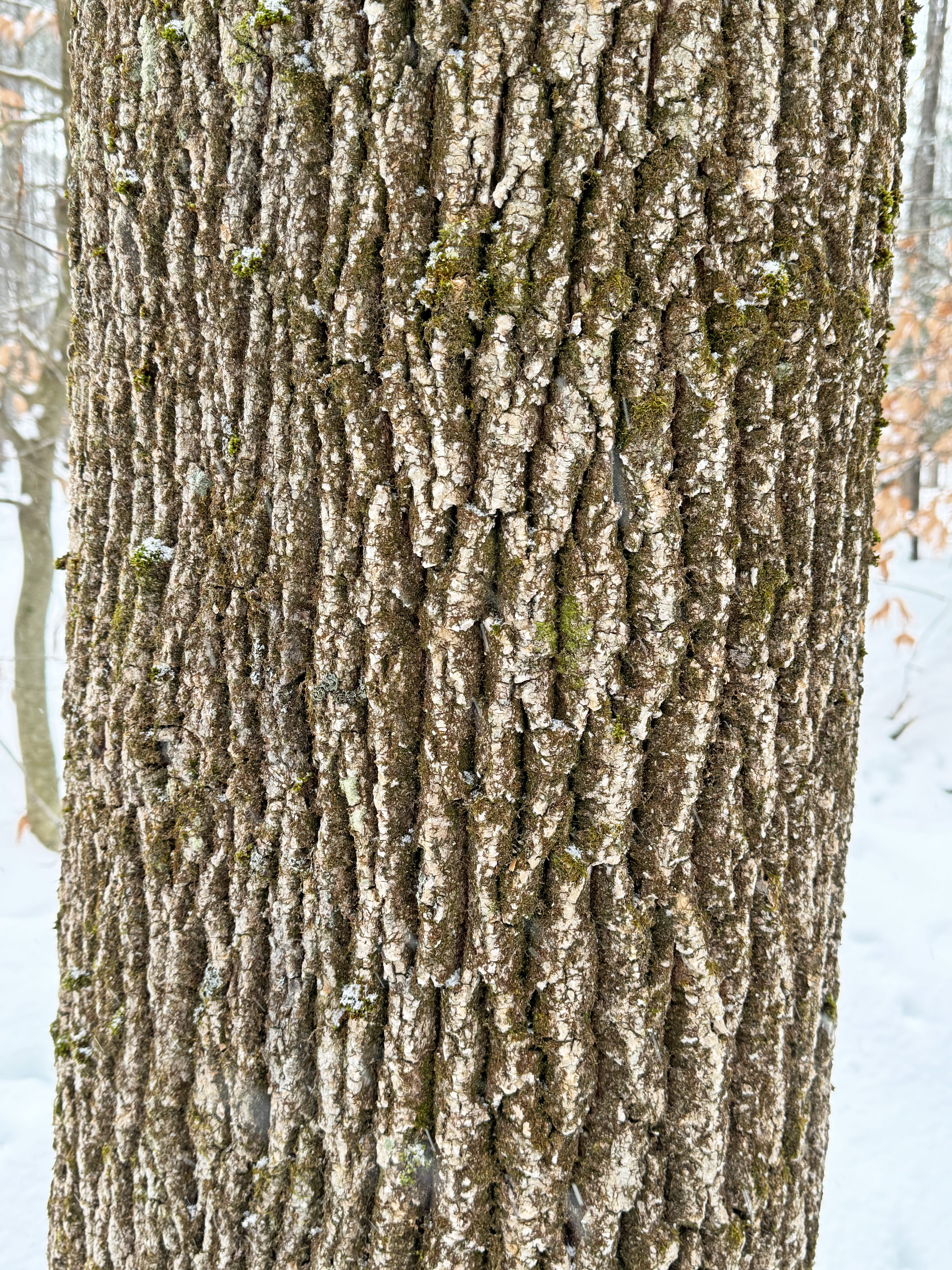
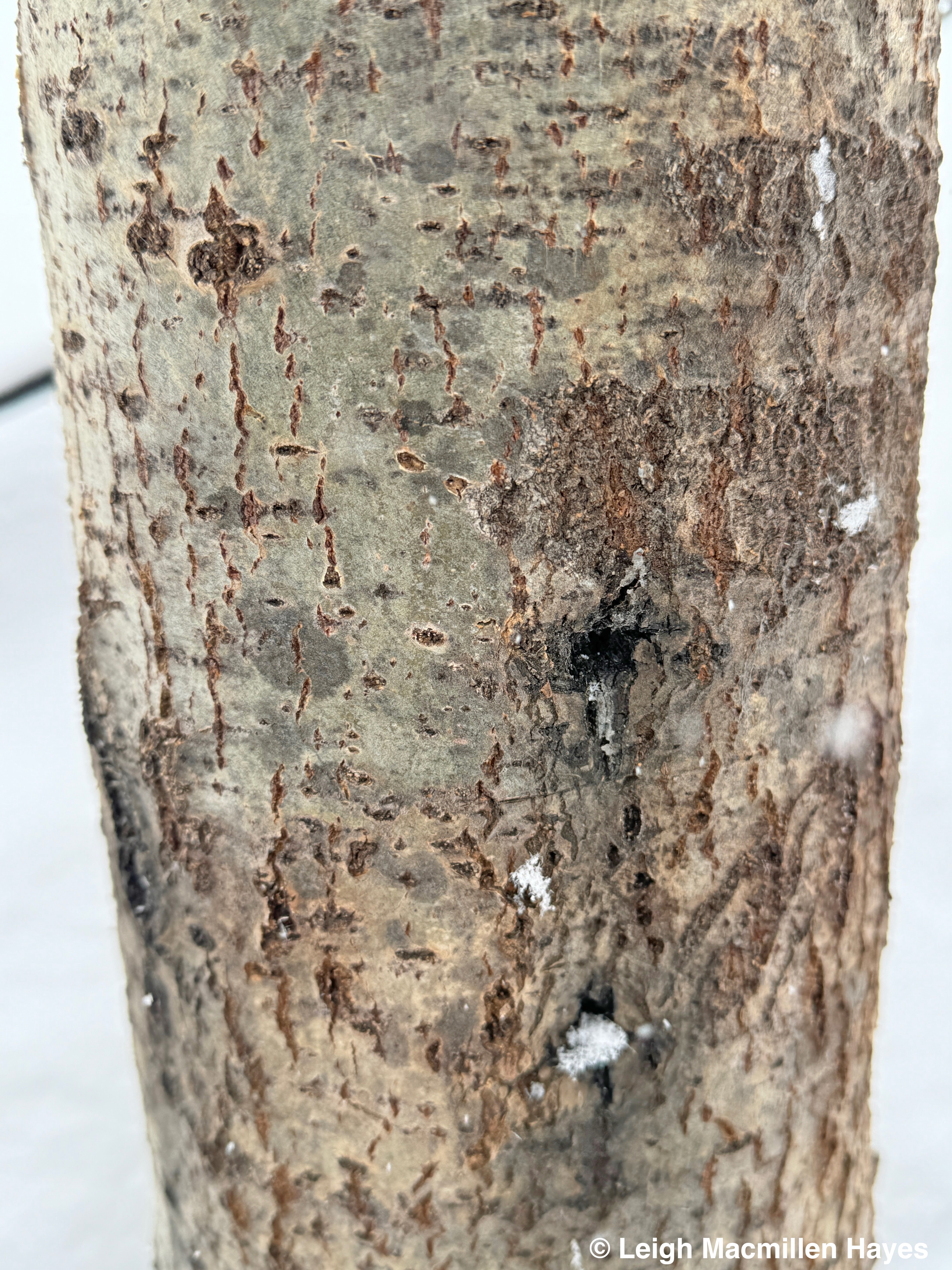
Up first is a White Ash, Fraximus americana. This is one of those species that once you get to know it, you spot it from a distance because of the pattern of the bark. What exactly is the pattern? Well, I see intersecting ridges that form obvious diamond-shaped furrows which appear as an X or cantaloupe rind, but others see an A for Ash, and still others see a V, and some even spy a woven basket. The thing is, whatever pops out for you and will help you identify it in the future should be your go-to image stored in your brain.

One of my favorite things about Ash bark is that it is corky and after a storm, you can pinch water out of it or stick a fingernail into it.

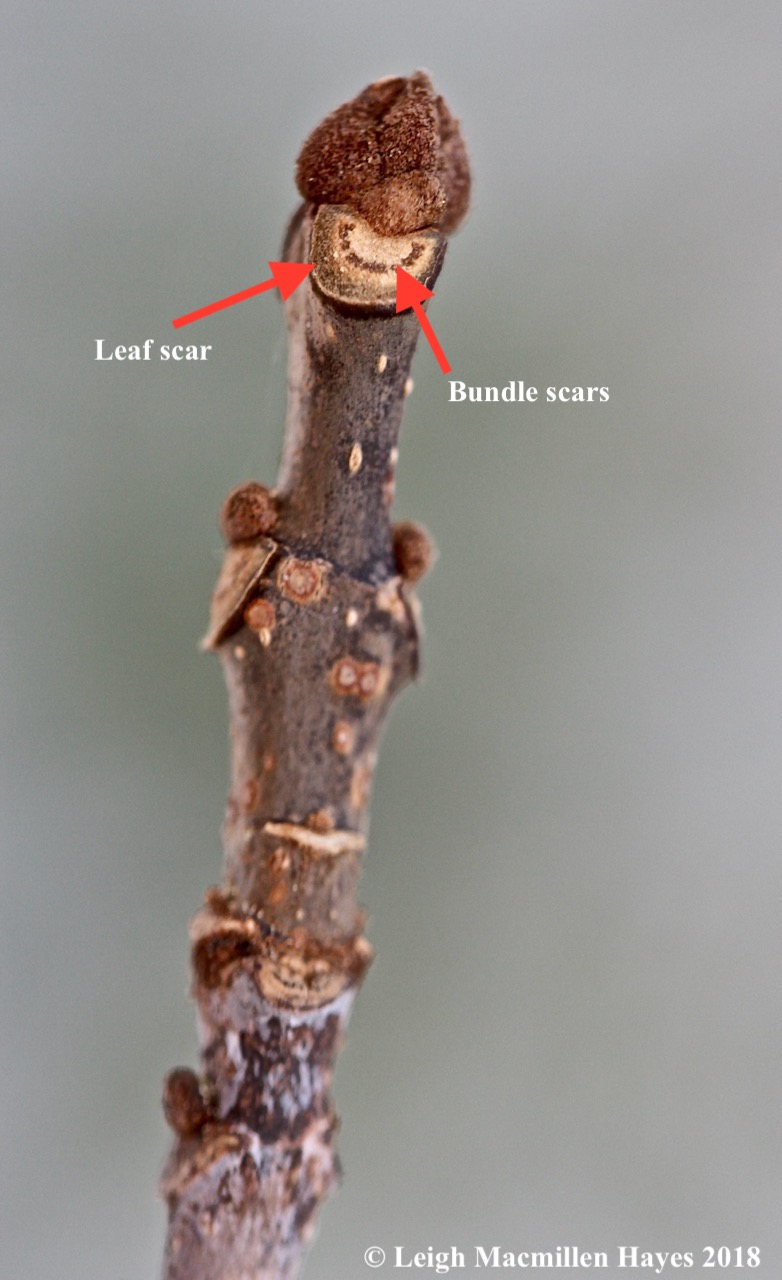
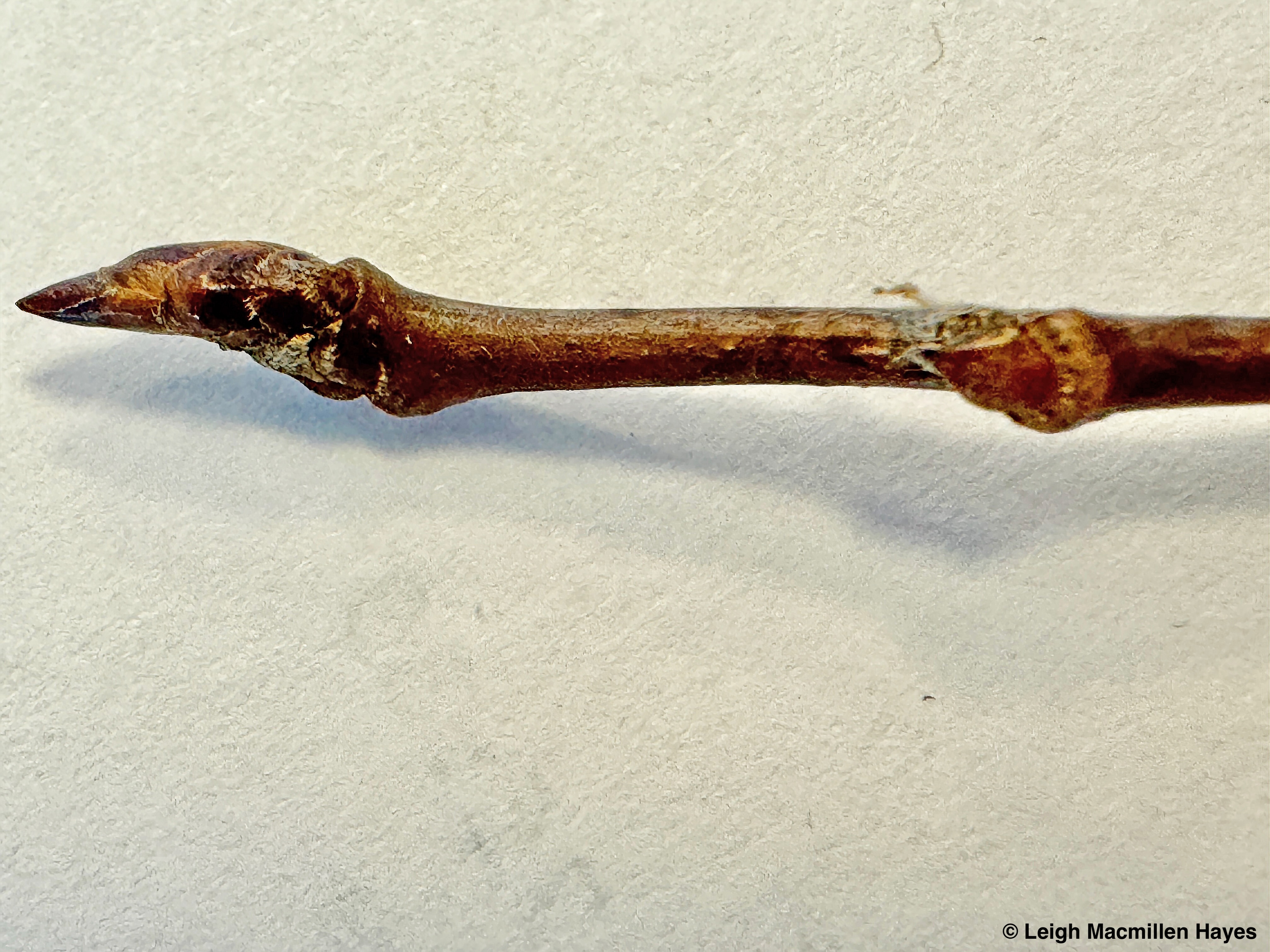
The twig is quite stout and ashy-gray in color. The buds are opposite, and the terminal bud at the tip of the twig is rounded or dome-shaped.

One of the features that speaks to the color of this Ash is the shape of the leaf scar below the new bud. A leaf scar is where last year’s leaf was attached until the end of the growing season. At that time an abscissa layer formed between the petiole (stem) and the twig. The leaf fell off and the tree healed the wound quickly with a protective cork. The bundle scars are part of the pipeline as they were the vascular tissue contained in the petiole of the leaf. Each tree has its own number of bundle scars located within each leaf scar.

Back to the shape–can you see how the bud dips a bit down into the leaf scar rather than sitting across the top of it. This tells us it is a White Ash and not a Green Ash. Add to that the fact that the terminal bud is not hairy.

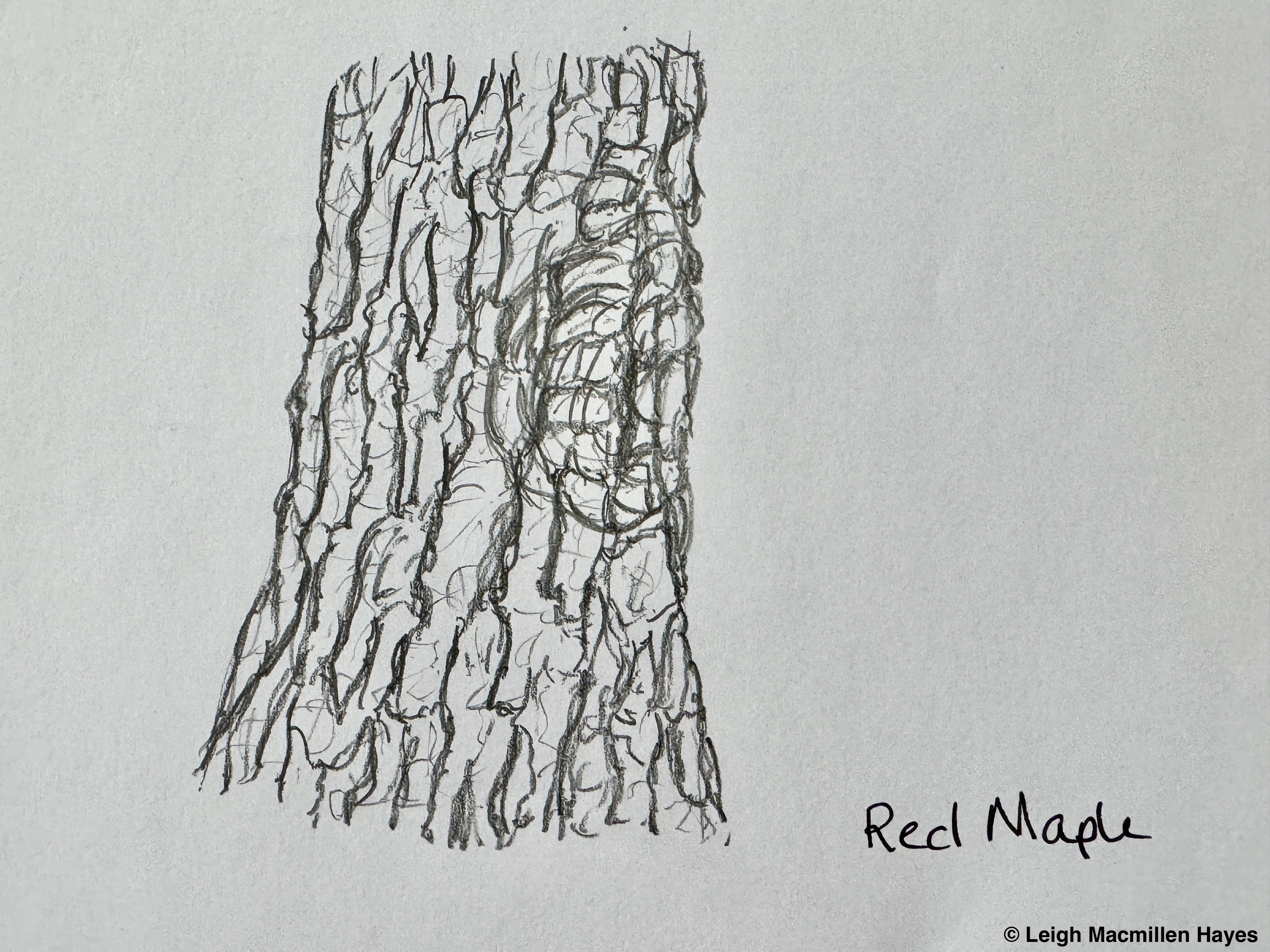
And my rendition of White Ash bark.

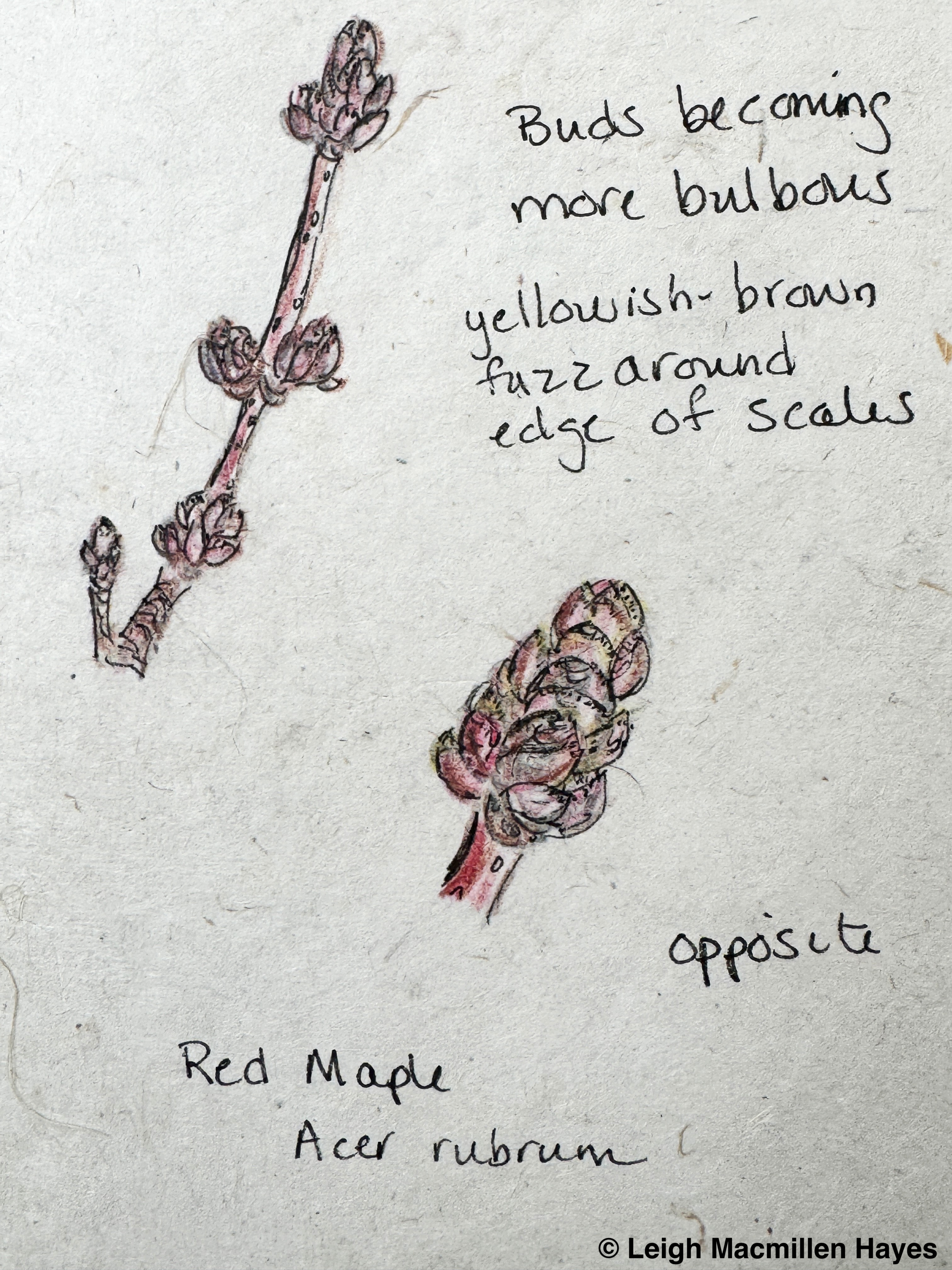
Up next is another favorite. Oh never mind. They all are my favorites. This is a Red Maple, Acer rubrum.

The bark is light to dark gray in coloration and almost smooth with crackled, vertical, plate-like strips. It curls outward on either side, and on older trees, look for tails to curl out on ends of strips.

Sometimes, it is difficult to determine if a maple is Red or Sugar, but one of the clues I look for is the Bull’s Eye target on the bark. There are several on this one, can you see the rounded patterns that aren’t completely formed? The target is formed as a reaction to a fungus.

Again, this is a tree with opposite branching. So one of the keys to tree ID is to know if the branching is opposite or alternate. I love this mnemonic devise: Very MAD Horse. Trees/shrubs with opposite branching include Viburnums like Hobblebush; Maples; Ash; Dogwoods (unless it’s the Alternate-leafed Dogwood); and Horse Chestnut.

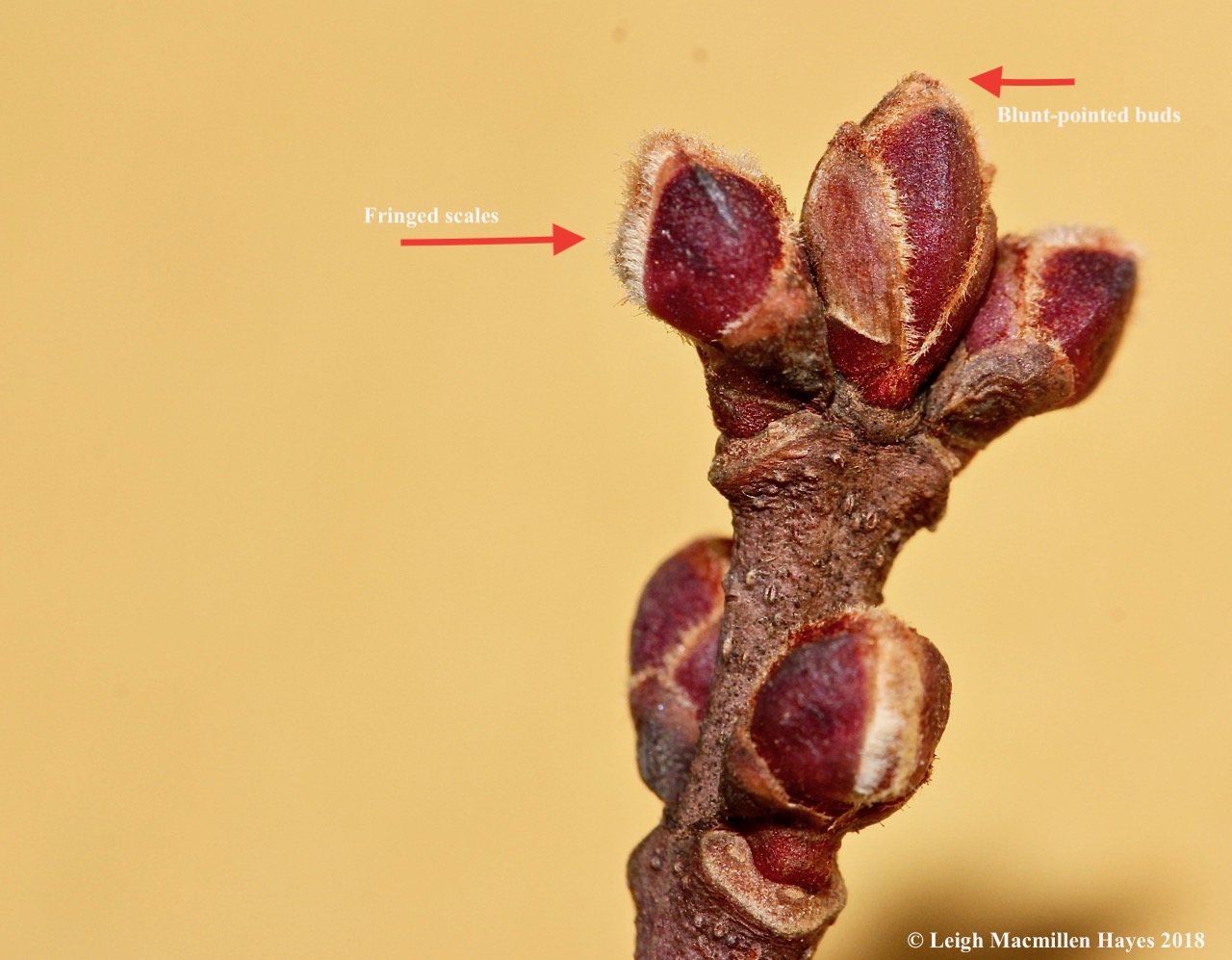
As you can see, the buds are red. This is another clue that it’s a Red Maple: there’s always something red on the tree. Sugar Maple buds are much smaller and brown.

Each bud has 3 or more scales and each scale is fringed with little hairs. The twigs are straight and also red, especially newer wood.

My rendition, though I do need to work on the target.

And the twigs/buds, which are already becoming more bulbous. I have to be honest with you. As a kid and young adult, I did not know that buds for the next year form in the previous summer and overwinter under those toasty scales for protection. I suppose I never actually thought about it. But of course they do, because that’s when the tree has the most energy. In April, they will flower, and by May the leaves will begin to form.

But right now, it is snowing again–YAHOO!

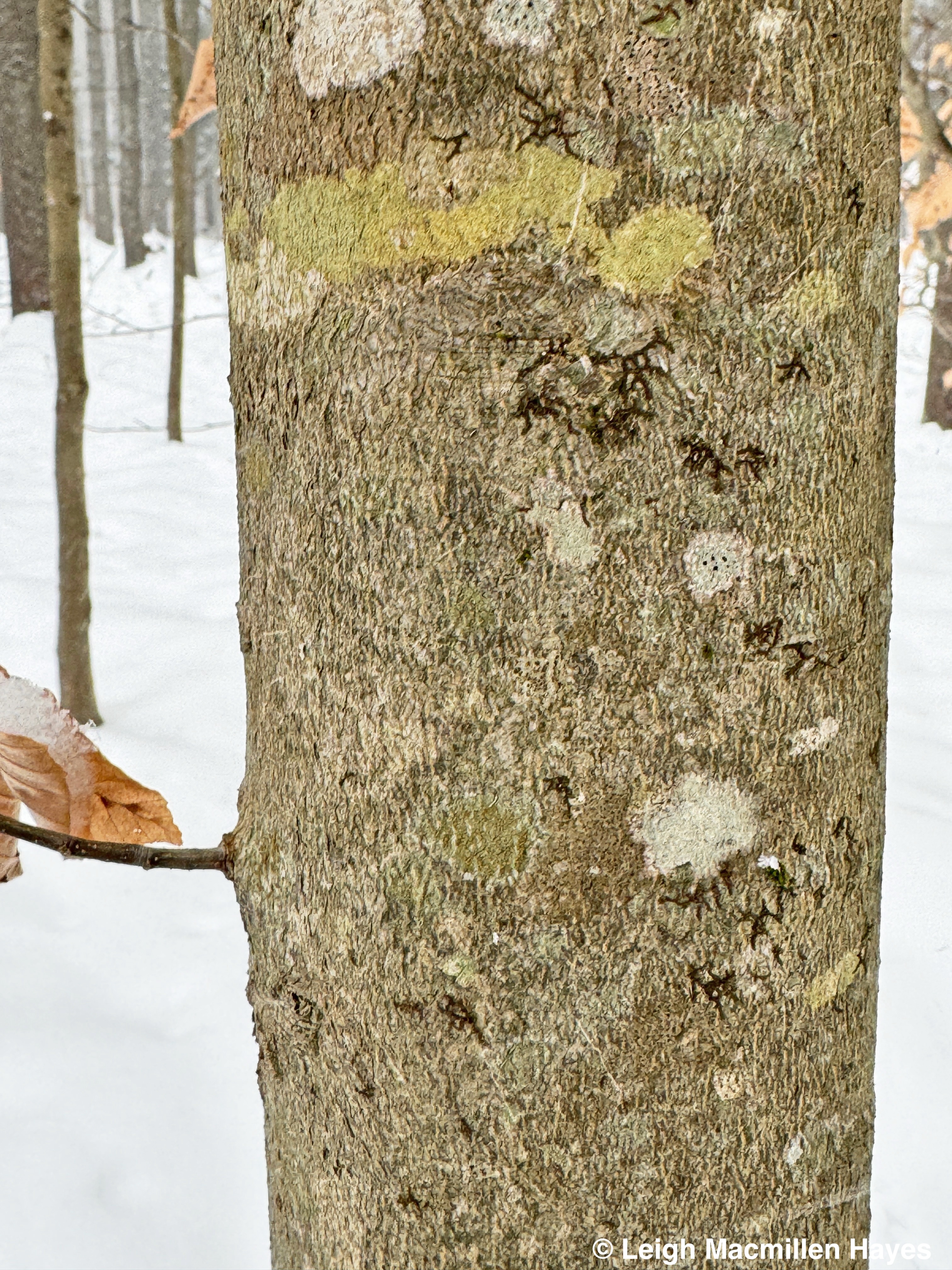
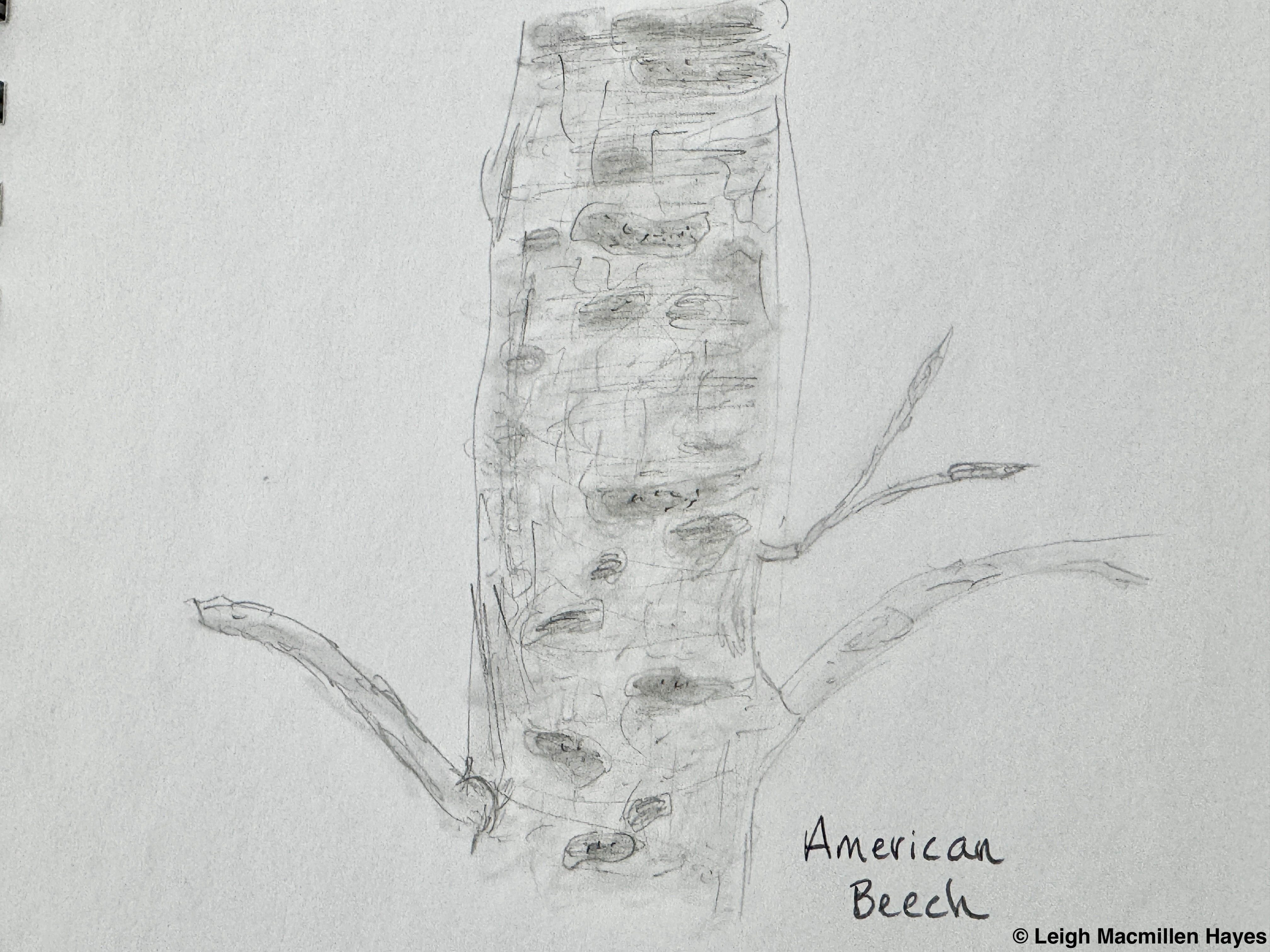
American Beech, Fagus grandifolia, is our next exhibit. These trees can tolerate shade and I will never forget when a local forester showed some students a tree cookie that was about two inches in diameter and he asked one to count the number of tree rings. Sixty years old. Yes, they tolerate shade.

In fact, Beech trees tolerate a lot. Typically, the bark is smooth, unless . . . there are cankers or blisters dotting it that are caused by the tree’s reaction to a fungus that gains access via a tiny puncture made by Beech Scale Insects. The insects are teeny little things, with fluffy white coatings, and they congregate on the bark for 50 weeks, where they pierce the tree repeatedly to get sap. For two weeks of their lives, they can fly. The rest of the time, they stay put and sip.

Another thing that Beech trees tolerate is Bear Claw marks and if you are a follower of wondermyway, I need say no more. If not, search for bear claw trees in the search bar.

They also tolerate humans carving initials. More than they should; And those initials and those bear claw marks will always be present as long as the tree lives. In fact, they’ll be in the exact same place at the same height that they were originally made, but they’ll have widened a bit each year.

All trees grow out from the heartwood, and up from the uppermost branches. So if you place a trail blaze on a tree, it will always be in the same spot, you just need to make sure that you don’t screw it all the way into the tree or the tree will grow around it eventually. (Rule of thumb: leave about two inches between the sign and the tree; and check it each year)

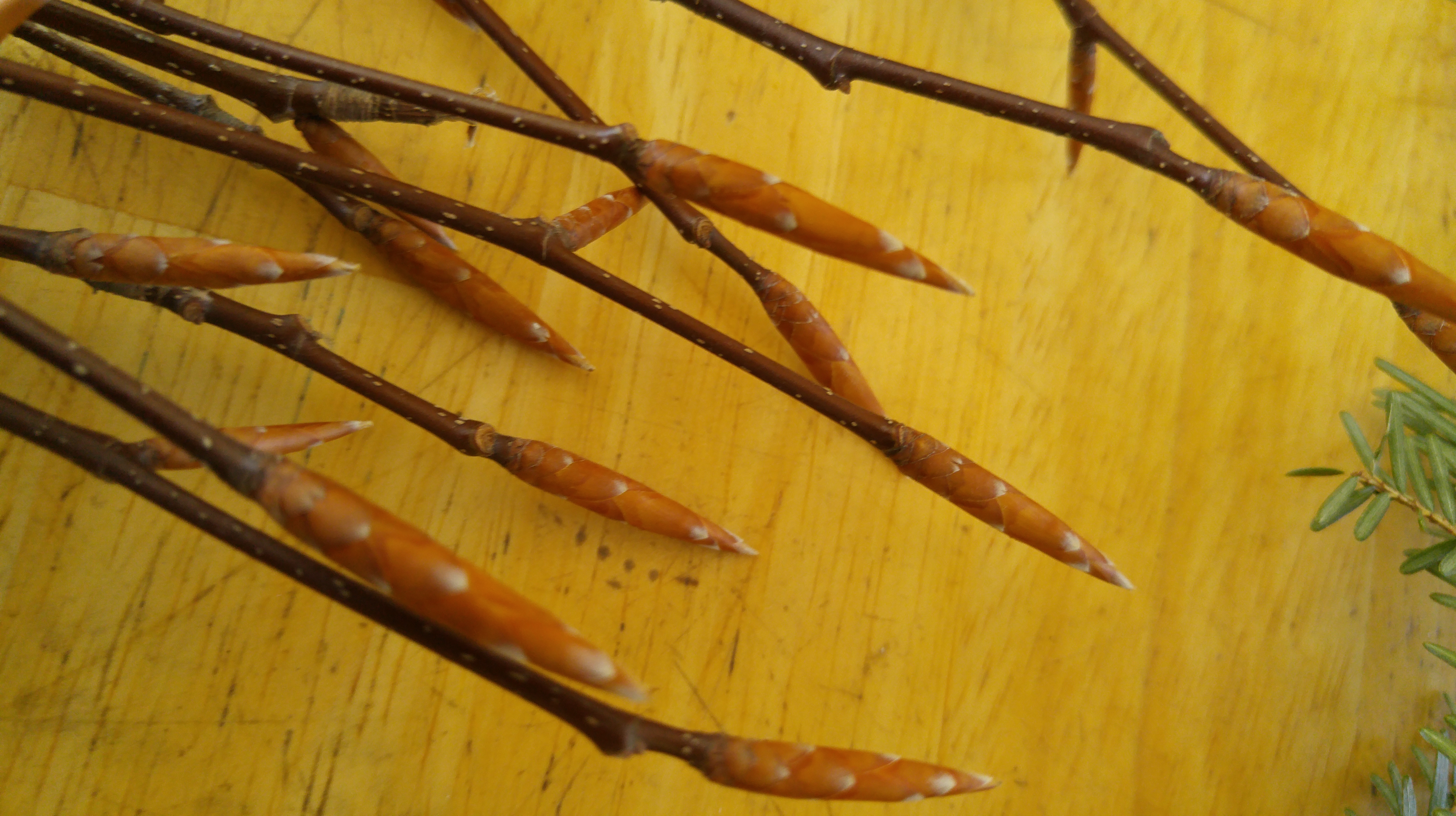
Beech twigs are deep brown with white lenticels. Oh yikes. We haven’t talked about lenticels yet. All trees have them. A lenticel is like the pores in our skin and allows the tree to exchange gases. Lenticels come in a variety of shapes including raised circular, oval, and elongated. (Remember, leaves have stomata for the same purpose.)

As you can see, the bud is sharp-pointed, covered with many scales, and a delightful golden brown. Some see it as a cigar. That description doesn’t work for me, but it is tapered at both ends. And really, nothing else looks like this in the north woods. While this photo is of a terminal bud, the twigs and buds are alternate.

Leaves on Beech are marcescent and wither on the trees over the winter. In fact, if there is a sudden breeze and the leaves start to rattle, I’ve been known to become rattled, thinking there is something or someone else in the woods with me.

And this time I present American Beech, which can be blotched with crustose lichens (look like they’ve been painted onto the bark).

And a twig, showing the growth rings, which occur where the previous year’s terminal bud had been.

And now for an upclose look at the bark of Northern Red Oak, Quercus rubra. (I almost wrote Maple, and for some you’ll know that as “my mouth or in this case my fingers before my brain”–like when I call a Beech, that I know darn well is a Beech, a Birch. Such is life.)

Red Oak bark is greenish brown or gray and has rusty red inner bark. When I look at it, I see wide, flat-topped ridges that run vertically parallel but also intersect like ski tracks. Shallow furrows separate the ridges.

The red inner bark is especially noticeable in winter.

The twigs and buds are alternate in orientation. The twigs are smooth, and greenish brown, but the buds are much more intersting as they occur in a crown at the tip of the twig. Each bud has many scales and matted wooly hairs. I love their chestnut brown color.

My rendition of a Northern Red Oak.

And the twig. As you can see, there are also buds along the twig, not just at the tip, and they do grow alternately. Also, Oaks have marcescent leaves as well, though most fall off before spring. I did spot a very mature Red Oak the other day that is overwhelming full of dried leaves.

And now let’s meet several members of the Birch Family. Up first is the Paper Birch, Betula papyrifera. You may know this commonly as a White Birch, but I prefer Paper, and will explain why after introducing you to its kin.

Betulin is a compound in the cells of the outer bark that is arranged in such a way as to reflect light and make it appear white. The betulin crystals provide protection from the sun as well as freeze/thaw cycles. It also protects the tree from pests. And to top it off, betulin is the reason the bark is a good fire starter as its highly flammable and waterproof. Your go-to for a rainy day fire. It was also used to build birch bark canoes.

Young Paper Birch bark is white, but often with an orange and pinkish tinge. It has thin, horizontal, light-colored lenticels. As it matures, the bark changes from white to creamy white. Sometimes I even see the colors of a sunset in it, including some blue in the winter.

The outer layers separate from the trunk into curled sheets, thus the paper nomenclature. But, I caution you not to pull it off, as prematurely exposing the cambium layer may harm the tree.

Older bark can sometimes make this tree more difficult to identify because it has gray sections of rough, irregular designs, especially around the base.

One of the features I look for on a Birch to determine if it is a paper, besides the curly bark, is the mustache that is drawn over the branches on the trunk. In the photo above, the branches are no longer there, but do you see two mustaches? Sometimes both ends droop down even more.

The twigs of Paper Birch are alternate, as are the buds. New growth on a reddish brown twig is usually hairy. And buds may grow on shoot spurs, which I’ll show you in a minute.

Paper Birch buds are covered with scales that are sticky, especially if squeezed. And for the most part, they are not hairy.

Their flowers are in the form of catkins, with tiny seeds protected by fleur de lis-shaped scales. Paper Birch catkins appear mostly in clusters of three.

My rendition, though I need to sketch one with the branches and mustaches. Another day.

This sweet tree has long served as a reminder to me to go off trail and look for a mesmerizing spring of water. Oh, not every Yellow Birch reminds me to do that, but I know where I took this particular photo and the spring is about an eighth of a mile behind it.

Yellow Birch, Betula alleghaniensis, has bronze to yellowish-gray bark that is shiny. And it too curls, but this time it curls away in thin, ribbony strips, giving the bark a shaggy appearance.

One special note about Yellow Birch, and the same is true for one of our conifers that I’ll discuss soon, is that the seeds struggle to germinate on the forest floor, but give them a moss-covered rock, or tree stump, or nurse log, and bingo, a tree grows on it. As it continues to grow, the roots seek the ground below and if it is upon a stump or log that eventually rots away, you have a tree in the forest that appears to stand on stilted legs.

So I mentioned for Paper Birch that they have spurs of stacked buds and so do the Yellow Birch. The bud appears at the end of the stack and by the leaf scars left behind you can count the age of the spur.

The twigs are not hairy, but they have their own unique distinction. I wish I could share this with you, but you’ll have to go out on your own and find a Yellow Birch twig–the distinction is a scratch ‘n sniff test. If you scratch it and smell wintergreen, then you have found a Yellow Birch.

Three to four catkins appear on Yellow Birches, but they are not clustered, so that’s another clue as to the color/name of the tree.

My Yellow Birch.

Gray Birch, Betula populifolia, is an early succession tree, meaning when an area has been cleared, this is one of the first trees to grow. Unlike Paper Birch, which can live to the ripe age of 90 or so if conditions are right, and Yellow Birch that can survive over 200 years, Gray Birches are not long lived and many only survive 30 – 60 years.

Often these trees are leaning, even if they don’t have snow piled upon them. And their lower branches remain on the tree, where Paper Birch tend to self-shed. The branches are pendulum, leaning toward the ground in an arc. And below each branch or where a branch had been, is a triangular shaped gray beard.

I mentioned earlier that I prefer Paper over White for a Paper Birch, and one reason is because Gray Birch also appear white. But Gray does tend to have a dirtier look to it and it has little to no peeling.

Gray Birch twigs are very fine, and super warty. In fact, it’s fun to run your fingers over them and feel the lenticels, like someone glued salt crystals to them. Their coloration is dull gray to brown and they are not hairy, nor do they smell like wintergreen when scraped.

The red brown to greenish brown buds are short, with scales that also lack hairs, and they are not sticky.

As for catkins, most appear in early spring as a single one or a pair. If you spot a single one in the fall/winter, then it is usually a solitary male.

Tada. A Gray Birch.

The final deciduous tree is a Quaking Aspen, Populus tremuloides. (I bet you are thinking, “Oh phew, she’s almost done, but never fear, I have four conifers to share with you.)

Quaking Aspens are also early succession trees, and they can grow from seeds, but also like to root sprout. One tree in Utah has over 50,000 stems from one root and covers over 100 acres.

The bark is grayish-green, and more so green on a wet day like today. It also has horizontal bands that become more evident as the tree matures.

The buds of the Aspen are alternate, shiny and dark brown. They aren’t sticky like its cousin, the Big Tooth Aspen. I think the most defining feature of these buds is their varnished appearance. My experience is that Porcupines love them.

The twigs are thick, smooth, and chestnut brown.

I haven’t sketched this tree yet, so I’ve added it to my to-do list.

Balsam Fir, Albies balsamea, smells like a Christmas Tree. This is a conifer that stands straight and tall as if in military fashion.

Its bark is pale gray and smooth, but covered with small dash-like raised lenticels and blister bumps filled with a sticky resin. Pick up a stick when there are puddles nearby, poke a blister and let the resin ooze onto the tip of the stick and then place the stick into a puddle and watch the essential oils form and change shape on the water’s surface. This works best on calm water.

Being an evergreen, Balsam Fir have leaves (needles) that are always on them, though they lose some each year. And gain new ones, of course. If you were to remove all the needles, you’d find a smooth twig.

The needles appear to be arranged in a flat manner, but actually spiral around the twig. They are shiny above and have two rows of white lines below, which are actually the stomata.

At about an inch in length, they attach directly to the twig and some have notched tips.

Their cones are 2 – 4 inches in length, and are dark purple before maturity. The unique thing about Balsam Fir cones is that they stick up from the twig rather than hanging down like other conifers.

I think I found the only Balsam Fir in the forest that wasn’t military straight, but as I always say, “Not everything reads the books we write.”

And my offering of the twig.

Eastern Hemlock, Tsuga canadensis, has cinnamon red to gray bark. As the tree matures, the bark features narrow, rounded ridges covered with scales that look like they could flake off, but they are rather sturdy.

Overall, the tree has a lacy look and its leader bends over making it appear to dance in the forest.

Hemlocks are like Yellow Birches, in that they need a moist area to set root and often grow on moss-covered rocks or tree stumps or nurse logs, so called because they are rotting trees that provide nurturing places for other things to take form.

While the Balsam Fir needles are about an inch long, Hemlock needles are about a half inch in length. And whereas the Fir needles are directly attached to the twig, Hemlock needles are attached via tiny petioles or stems. And the underside also has two rows of stomata, but so close together, they may appear as one.

The twigs are very fine and very flexible.

Hemlock cones are about 3/4 inch in length ( I got carried away with the size of this one, or you could say its a macro look at the cone) and oblong in shape. They are pendant, meaning they hang off a slender stalk. And small rodents and birds love to eat their seeds that are attached as a pair to the underside of the scale.

Oh, did I say they are all my favorites? Well, maybe my favoritist of all is the Red Pine, Pinus resinosa.

The bark is reddish brown to pinkish gray. I see it as a jigsaw puzzle, but my friend and fellow naturalist Dawn, sees it as a topo map.

Its broken into irregular, thin, flaky scales, that you may see on the ground surrounding the trunk.

As the tree matures, those scales are broken by deep fissures into irregular looking blocks.

Red Pine was of particular importance during the 1930s to 1960s, when the Civil Conservation Corps (CCC) planted plantations of this species on former pastureland as a reforestation project. Once in a while I stumble upon a grove of Red Pines planted in rows and realize that I’m in such a plantation. They were considered a cash crop for telephone poles.

The orange-brown twigs of the Red Pine tend to curve upwards and if you look upward you’ll notice that the needles are all clustered at the end, giving them the look of bushy chimney sweep brooms.

The needles are in bundles of two, and they are about 4 – 5 inches long. If folded in half, they break cleanly.

Red Pine cones are egg-shaped, about two inches in length, and lack prickles like some other species sport. It takes two years for them to mature.

What do you see? Jigsaw puzzle? Topo map? Or something else entirely?

Finally, we have reached the last species for today, White Pine, Pinus strobus. I’m showing you the bark of a mature tree, but if you look at a young pine you’ll note it is very different with its smooth, pea green bark.

Mature trees, such as this, have dark gray to brown bark, with long flat ridges, and deep, dark furrows. What I love about mature White Pines is that the flat ridges have lines that resemble writing paper and I love to write.

White Pine twigs are slender and gray-green to orange-brown. Bundles of five needles is the count for White Pine, which is cool because it spells its name: W-H-I-T-E, or M-A-I-N-E, since it is our State Tree. (Please remember that Red Pine has only two needles in a bundle, and doesn’t spell its name.)

Cones are 4 – 8 inches long, cylindrical, and also take two years to mature. And it takes a Red Squirrel about 2 minutes to peel back the scales and eat all the seeds as if they were corn kernels on a cob.

Dear readers, if you made it this far, I thank you for sticking with me. I do love to write and maybe I’ve written too much.

But I hope you’ll venture out and get to know these trees better by studying their idiosyncrasies and coming up with your own mnemonics to remember their names.

May you become tree wise and may I continue to learn about and with the trees.
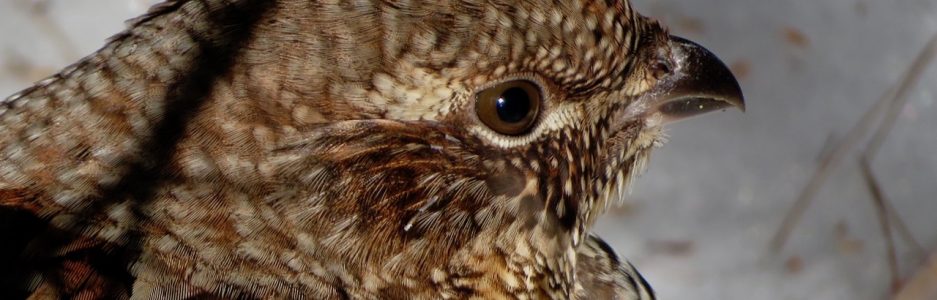
The Giant’s Shower

I did a thing. Years ago I wrote a children’s story. Well, a bunch of them actually. And I tried to sell this particular one to publishing houses. No takers. Then, a couple of years ago I purchased a Fairy Coloring Book created by the one and only Solana, teenage daughter of the Fly Away Farm Wards in Lovell and Stow, Maine, and approached her about illustrating my fairy tale. She took on the task and did an amazing job. Then I asked copyeditor Pam Marshall to wave her magic wand over it. And finally a few weeks ago I asked graphic designer Dianne Lewis to use some fairy dust and turn it into an actual book. I always said I’d never self-publish a book. And tada: I did just that.

Aisling, a fairy who lives on Sabattus Mountain in the western Maine village of Lovell, has a vision during the Midsummer Eve celebration. 

Twinkles, flitters, a bit of fairy dust and some tsk-taking are necessary to make Aisling’s vision a reality. 

You and your children will delight in the story accompanied and the colorful and whimsical illustrations created by artist Solana Ward.  

Marita Wiser, author of Hikes and Walks in and around Maine’s Lakes Region had this to say about the book, “The fairies in The Giant’s Shower will captivate children with their merry life in the forest. It’s not all magical though, as they moved from New Hampshire to Sabattus Mountain in Maine to avoid a certain devil. At least they thought the giant was a devil, but the situation wasn’t what it seemed at first. Both the writing and the detailed illustrations capture many features of the woods of northern New England, and the fun of fairy life and houses.” 

A naturalist and writer, many of you know that I hike frequently in Maine and New Hampshire, and those adventures inspired this story. I feel the fairies’ magic whenever I’m among moss-covered ground and tree stumps.

Included in the book are directions to the two featured settings, Sabattus Mountain and Arethusa Falls. Both are easily accessible for young hikers who might experience some magical moments while exploring. 

Also included is a list of character names and their explanations, as well as instructions to create fairy houses and fairy dust. 

The Giant’s Shower is available for $16.99 at Bridgton Books, Hayes Ace Hardware, Fly Away Farm, or by contacting me: thegiantsshower2023@gmail.com.

Giving Thanks for Being Present

Those who know me know how excited I was to wake to snow. So excited in fact, that I awoke early, saw that certain glow in the sky through the window above our bed, and jumped up, not wanting to miss the day dawning.

At just before 6am, I turned on an outside light for a minute and opened the door to receive the quiet that the flakes created.

It snowed for a couple more hours before turning to rain and by the time I shoveled the driveway it was heavy cement.

But still the world glowed. Especially the beech trees that are like spots of sunlight on a gloomy gray day.

Into the woods, I trudged, though I didn’t plan to go far because I suspected hunters would be as excited since they could more easily track deer, so decked out in blaze orange as I was, I stayed in our woodlot, with the intention of checking on my friend, Red. His caches have grown this past week, so I knew he had food in the pantry.

What I didn’t expect to spy along the way was this: White Pines foaming at the mouth! What really occurred: sap salts and acids that had accumulated on the bark’s surface mixed together in the dripping snow and formed soapy suds or pine soap.

Pine soap on the tree and snow disturbed by plops of falling snow at the base of the tree offered a contrast of textures.

Much as I’m mesmerized by fire, I’m equally mesmerized by water, and especially in the form of droplets. I’m actually surprised I eventually dragged myself home.

But first, I had to watch the droplet elongate.

And eventually (which was only seconds later), fall free. Although, was it really a free fall?

I suppose it was, but it landed on another section of the bark and continued the process of mixing with the sap salts and acids.

The other cool thing about the pine soap–its hexagonal forms–worth a natural engineering wonder.

As it turned out, it wasn’t just the pine soap that was flowing down the bark. Some trees had started peeing. Do trees really pee? It’s actually sap and I think given the temp, that rather matched a March day, sap was flowing, giving the melting snow a yellowish tint.

Eventually I reached my friend Red’s favorite hangouts and though the snow conditions had deteriorated from the point of view of a mammal tracker, he’d left plenty of sign on top of the white surface to tell me he had dined.

A lot. But then again, every scale on the cone protects two tiny seeds and one needs to eat a lot to attain nourishment from them. That’s why he has to create caches or piles of cones to last throughout the winter.

I didn’t actually see Red today, and surmised that he’d decided to make an early day of it and was probably snuggled in somewhere under the wall, using the snow and leaves as insulation. I know from watching 315 15-second game camera videos a few Christmases ago, that Red Squirrels rise with the sun, follow much the same routine all day long, eating pine seeds, dropping scales, leaving behind the cobs, dashing along to the next cache, returning to the first, dining again and repeating this activity over and over again during the course of the day, before disappearing about a half hour before sunset. Each day. Every day.

On this eve of Thanksgiving 2023, I recall some sketches I did in 2019 at a workshop at Hewnoaks Artist Residency in Lovell, Maine. The presenter offered us a variety of materials to work with as we saw fit. My fascination with squirrels and pine cones is not new and that day I chose to sketch one in three stages and then highlight the scales of the opened cone with pieces of mica.

In the end, I give thanks for being present for today’s discoveries of pine soap inspired by snow, and tree pee (that reminded me of yellow topaz), knowing full well that not every moment is as bright and shiny as muscovite mica. And snow does melt. But here’s hoping more will fall. And I’ll head out the door and be present again. And again.

May you also have plenty of reasons to give thanks.

I’m in Frog Heaven

The ice went out on the vernal pool in our woods on April 5th and by the 6th the wood frogs were singing their love songs and egg masses had already been attached to fallen branches.

Once I spy such I become addicted to visiting the pool on a regular basis to keep an eye on the activity. As much as I’d love to bring some home, I know that that would interrupt the natural process and so I do the best I can by peering into the water.

One of my great finds early on turned out not to be as extraordinary as I first thought. What I thought were blue spotted salamander egg masses slowly morphed into wood frog masses. They were laid out like sheets on the floor of the pool rather than attached to sticks as is normally the case. But it didn’t all make sense as up to the point that I spotted those masses, I hadn’t seen any salamander spermatophores.

Daily visits to the pool garnered a better understanding and about two weeks later not only had the spotted salamanders left their deposits on the pool floor . . .

and the next day their eggs on sticks . . .

but the so-called blue-spotted suddenly began to look more like wood frog masses with tadpoles developing inside. Perhaps they were laid at the very edge of the pool by young wood frogs just getting the hang of the annual ritual.

With the help of my son who works for a film editing house in Manhattan, I’ve pulled all of this together into a video so even if you can’t get to a vernal pool, perhaps you can enjoy the magic of this place for a few minutes by clicking on the link and watching: Are You in Frog Heaven?

There’s so much more to come and I’ll do my best to keep an eye on the action.

In the meantime, why not create a Frog and Toad Chorus as you stay at home.

In the amphibian world, males sing as a means of attracting a mate and defending a territory.

Here’s how to conduct your own chorus: Assign a species to various family members who will imitate the sound as best they can. Have fun leading your gang as you control who “sings.” And then head outdoors to see if you can identify the species based on your knowledge of the songs they create.

Wood Frog: quacking duck or wruck, wruck in early spring

Spring Peeper: high-pitched peep-peep in early spring

American Toad: sustained trill lasting up to 30 seconds (from your lips or throat), early to late spring

Green Frog: throaty gunk! like banjo strings, late spring – early summer

American Bullfrog: deep, resonant rr-uum, or jug-o-rum, late spring – early summer

Gray Tree Frog: slow, musical bird-like trill lasting 2 or 3 seconds (use your lips or tongue), late spring – early summer

Are you in Frog Heaven? I know I am.

Mondate Challenge

It was a mere drizzle when we stepped outside and walked to Pondicherry Park, but eventually we needed to pull up the hoods of our raincoats. Our journey was rather quick as we followed first the Snowshoe Hare trail, and then the Pasture Trail, which led us to the Stonewall Loop, where two thirds of the way around, we diverted.

1-crossing onto LEA property

Our main intention had been to cross over the stonewall that marks the park’s boundary and explore the Pinehaven Trail owned by Lakes Environmental Association. It is on this land that the Maine Lake Science Center is located, but there are other cool features as well.

2-You Are Here

As the first sign informed us, we had arrived. And you can see by the moisture that it was raining in earnest.

3-park rules

Funding for the Pinehaven Trail signs and low-element course was provided by LEA Board Member Roy Lambert and his wife Mary Maxwell, summer residents of Bridgton who have made a huge impact on protecting the lakes and ponds we all love. Roy has brought the LakeSmart Program to LEA and Mary has spearheaded LEA’s invasive plant patrols.

Despite the fact that the sign warned us the course is “dangerous when wet,” we decided to test it out. After all, we were accompanied by a leaf as indicated.

4-Birds on a Wire

Broken into four wonderful sets, each offering a variety of activities, we began by becoming birds on a wire.

5-my own nuthatch pose

Though I would have liked to say that I was a Barred Owl or Cooper’s Hawk, being a Nuthatch wasn’t so bad.

6-my guy nuthatch

My guy . . .

7-walking the tightrope

was also a Nuthatch.

8-next set of challenges

Set Two meant getting more practice in the art of walking on a balance beam. It looked so easy, but with each one, the level of difficulty increased a bit as our confidence did the same . . . for the most part.

10-balance beam series

And at first, our eyes saw only a few anomalies in the woods, but once we focused we realized each leg of the course was more involved than first anticipated.

11-swinging beam

The second set found us not only keeping our balance on the beams that zigzagged through the grove, but also on a swinging beam.

12-stepping up

And then we had to step up and up and up.

14-around the white pine

One of my favorite parts was circling the tree like a rock wall climber might do.

15-tree hugger!

In the process, I got to hug the pine, not that I ever need an excuse.

13-bench

My other favorite part of Set Two was the bench. There were other benches along the trail, but I found this one to be the most aesthetically appealing. Even if you don’t want to try out the course, you can walk the trail and sit a bit. You might just see a deer–we did. And in the past I’ve seen other animals including a red fox.

16-Alanna's signs

As we walked on, not sure if there were more sets, we spied the first interpretive sign created by LEA’s Education Director, Alanna Doughty, and featuring her explanations and drawings. I LOVE them. And want to decorate my house with them. I didn’t tell my guy that. The other thing I loved about all the signage–it was mounted on rough-edged boards, adding to the natural look. Do I know the creator of those boards? A local box company perhaps?

17-third set

Much to our delight, not much further on we came to Set Three.

18-Enchanted Forest

The forest really was enchanted and we found ourselves using all four modes of operation in order to get from one piece of wood to the next.

19-tree cookie steps

There were lots of tree cookies to step on and more balance beams to conquer.

20-hopping along

Sometimes we hopped like toads, who don’t leap as far as frogs with their longer hind legs.

21-a balancing act

Other times we had to channel our inner Cooper’s Hawk as there was no place to put our hands.

22-waiting for the wires to stop swaying

And in doing so, my guy figured out that pausing to wait for the wire to stop swaying made for an easier crossing. He succeeded. (I need to sneak back and practice this one some more as my knees were a tad too shaky.) We suspected that kids run across without giving it a thought. And so our excuse–it was raining.

23-yeegads--getting higher

Though it looked intimidating at first, moving across the log was fun, but I wasn’t so sure about the beam that turned out to be the highest one yet. It felt like crossing a brook and so after he finished I asked my guy to come back and give me a supporting hand. He laughed and asked if I expected him to stand in the imaginary water. Yes! Chivalry at its best. Once I started across while grasping his hand, I felt rather confident and soon let go. At the other side, I rejoiced in my success. And thanked him, of course.

24-clean water

Onward still, we encountered another one of Alanna’s signs, simple yet informative. And still, we were accompanied by a leaf. And no, we didn’t place the leaves on the signs.

This sign struck me as extremely important, not that the others weren’t. But . . . clean water is what the Lakes Environmental Association is all about.

26-Paul Bunyan's Playground

At last we reached the final set, or first if you approach from Willet Road. Again, a leaf ;-)

As for how good would we be as lumberjacks? Well, my guy would pass. I’d almost get there, but I have to work on my log rolling skills.

26a-variety of swings

What I liked about the final set was not only the focus on various types of trees, but also that the same theme was executed in a variety of ways and so we crossed another swinging step bridge.

27-I got this!

Sometimes, the choice to be a Nuthatch or Barred Owl didn’t exist and we had to become Cooper’s Hawks as we had nothing to grab onto while moving forward.

28-now you don't see him

There were opportunities to be apes as well and then disappear around the back sides of rather large pine trees, their girth indicative of the fact that the land had once been agricultural and the trees grew in abundant sunshine after it was no longer farmed. So, do you see my guy?

30-now you do

Now you do! Circling around that tree was as fun as the first and it had ash tree foot and hand holds.

31-Me Tarzan

He Tarzan! And notice how the piece he was about to step onto was set on a log. Yup, it was a foot seesaw. There were several and we really liked them.

32-rope climbing, log rolling

The last set included climbing a rope to the upper deck and then descending the ladder to another and on to a balance beam and then the log rolling. He did it all. I saved the wet log for another visit.

33-Mast sign

Just beyond the final set was Alanna’s last sign and a hot topic this year since last year’s mast crop of white pine cones, acorns, maple samaras, and beech nuts have meant a banner year for squirrels and mice. Remember, those little rodents don’t have as much food this year and they’ll become food for the predators and nature will try to balance itself once again. Oh, and not only are Alanna’s drawings beautiful but her humor and voice come through in the interpretive signs.

34-across the boardwalk and back into the park

As for us, we had finished our balancing act, crossed the science center’s driveway, followed the second portion of the Pinehaven Trail and wound our way down to the board walk that passes back into Pondicherry Park. From there, we found our way home.

What a blast. I think we were both a bit let down that we’d finished the course.

Thank you LEA, Alanna, Roy and Mary, for providing us with a delightful Mondate Challenge . . . even in the rain.  My guy and I highly recommend the Pinehaven Trail.

A’pondering We Will Go

August 3, 9:30 am – 12:30 pm
A’pondering We Will Go: Get inspired by the beauty along the trail at the John A. Segur Wildlife Refuge East. This will be a stop-and-go walk as we pause frequently to sketch, photograph, and/or write about our observations, or simply ponder each time we stop. Location: John A. Segur Wildlife Refuge East, Farrington Pond Road, Lovell.
Degree of Difficulty: Easy.

j1-pickerel frog

That was our advertisement for this morning’s Greater Lovell Land Trust walk, but we weren’t sure the weather would cooperate. Docent Pam and I emailed back and forth as we looked at various forecasts and decided to take our chances. As it turned it, it did sprinkle occasionally, but we didn’t feel the rain until we finished up and even then, it wasn’t much. Instead, the sound of the plinking against the leaves in the canopy was a rather pleasant accompaniment to such a delightful morning. Our group was small–just right actually for it was an intimate group and we made a new friend and had a wonder-filled time stopping to sit and ponder and then move along again and were surprised by tiny frogs and toads who thought the weather couldn’t get any better, as well as other great finds. Here, a pickerel frog showed off its rectangular spots for all of us to enjoy.

j2-Sucker Brook

After a first 20-minute pause in the woods, we continued on until we reached Sucker Brook.

j3-Colleen

Each of us settled into a place to listen . . .

j4-Bob

photograph . . .

j6-Judy

and write.

j7-heron

I have no idea how much time had passed, but suddenly we all stirred a bit and then someone who was noticing (I think it was Ann) redirected our attention.

j8-heron

We were encouraged to focus on another who was also paying attention.

j9-heron

And narrowing in . . .

j10-heron and fish

on lunch.

j11-wings

When the young heron flapped its wings, we were all sure the meal was meant “to go.”

j12-securing the catch

But thankfully, the bird stayed.

j13-lunch

And played with its food.

j14-lunch making its way down

Ever so slowly, the fish was maneuvered into its mouth.

j15-gulp

And swallowed.

j16-down the throat it goes

Down the throat it slid.

j16-feathers ruffled

And then the feathers were ruffled–rather like a chill passing through its body.

j17-movement

Wing motion followed.

j18-searching

But still, the Great Blue Heron stayed.

j19-next course

And stalked some more.

j20-Isaiah

We continued to watch until we knew we had to pull ourselves away.

j21-the journalists

If we didn’t have other obligations, we might still be there. Gathered with me from left to right: Judy, Colleen, Isaiah, Pam, Ann, and Bob.

j22-owl pellet

On our way back, again we made some interesting discoveries that we’d somehow missed on the way in, including White Baneberry, aka Doll’s Eye, a bone we couldn’t ID, Indian Pipe, and this owl pellet smooshed, but full of tiny bones–vole-sized bones.

j22-Pam reading what she wrote

We stopped one more time, to share our morning’s observations.

j23-Judy reading her poem

Reading aloud is never easy, but because our group was small and we’d quickly developed a sense of camaraderie and trust, the comfort level was high.

j24-Ann's landscape sketch with heron

Sketches were also shared, including this one of the landscape that Ann drew–including the heron that entered the scene just before she quietly called our attention to it.

j25-stump and lichen

And my attempts–the first of a tree stump from our woodland stop, and then a lichen when we were by Sucker Brook.

A’pondering We Did Go–and came away richer for the experience. Thanks to all who came, to Pam and Ann for leading, and to Isaiah for his fine eye at spotting interesting things along the way.


All Twigged Out

In preparation for a senior college class I’ll be teaching this week entitled “All Things Spring,” I headed out the door in search of twigs.

t-Mount Wash

Of course, it doesn’t look like spring quite yet. But then again, it does. And on this crystal clear day, the silhouette of the buildings atop Mount Washington were visible.

t-vernal pool

Before I could settle down to the work at hand, I visited the vernal pool, where all was quiet. But, I know the time is nearing. I could smell spring in the air and feel it in the warm sunshine that enveloped me and my surroundings.

t-chick 4

And then I slipped into the gray birch grove to begin my hunt,

t-chick 3

while a black-capped chickadee wondered what I was up to–no good, as usual.

t1-table top (1)

At last, I filled my satchel, but only enough–never wanting to take more than necessary. In fact, since I don’t know how many students will be present, they may have to share.

My plan is to begin with a slide show of flowers and ferns, mammals and birds, and of course, life evolving at the vernal pool (all photos were taken a year ago). I’ll bring some fun things to share, including scat–I sure hope they (whoever they are) think it’s fun.

And then we’ll look at twigs through a hand lens so together we can examine the idiosyncrasies of our common deciduous trees,

t1-sugar maple (1)

such as these sugar maples and . . .

t1-striped maple twigs (1)

a few striped maples.

t-beech

We’ll look at beech,

t-quaking aspen

quaking aspens and several others.

t-opposite

My materials are almost ready, though I still need to pull something together about fern crosiers. Oh my!

t-alternate

I’m nervous, but excited. My hope is to instill a sense of wonder, but maybe no one will show. That would be okay–I’d just quietly slip back into the woods.

Until then, I’m trying not to feel all twigged out.


Dear Aunt Ruth

My memories are snapshots of times spent with you and Uncle Bob and all the cousins. I loved visiting your home–whether we drove down the long road and driveway with Dad or walked via the old dump road and skeet field with Mom. Each time we arrived, you welcomed us with grace and your unassuming manner.

I remember sipping lemonade on the back porch, riding the wooden horse, and checking on Dale’s bunnies, especially Peter who soon became Mrs. Peter. I remember lunches at your kitchen table, and the time we bit into our tuna sandwiches only to discover the bread was filled with ants. Why that sticks with me, I don’t know, but we all thought it was funny. I remember family reunions, where food and laughter and aunts and uncles and cousins were abundant. Eventually, it evolved into a musical gathering–such was the talent of the clan.

But most of all, I remember your flower and vegetable gardens and your love of all things natural.

p-kiosk

And so today, as my guy and I ventured to a park we’d never before visited, I took you with us. I wanted to share with you our findings, just as you used to share stories of your gardens and wildlife sightings with us in Christmas cards after I moved north.

p-moose trail

Our first observation–a moose! Well, not really.

p-deer tracks

But we did see evidence of deer and I knew you’d be glad they were running away–leaving your gardens alone. Oh, and those pesky raccoons! Raising eight children didn’t seem to phase you, but those raccoons in the corn field–that did rattle you.

p-gardens on high

The gardens in these woods differ from yours–and right now, given the snow cover, the only ones visible were high up in pine trees, where yesterday’s snow offered nourishment to the mosses and lichens that grow there.

p-locust legume-like seed pod

We did, however, find one similarity–the legume-like seed pod from a locust tree. It’s almost time to sow the peas.

p-apples

In these woods, we also found a symbol of the past–it was once farmland as signified by the apple trees. If memory serves me right, there was a very climbable apple tree beside your driveway.
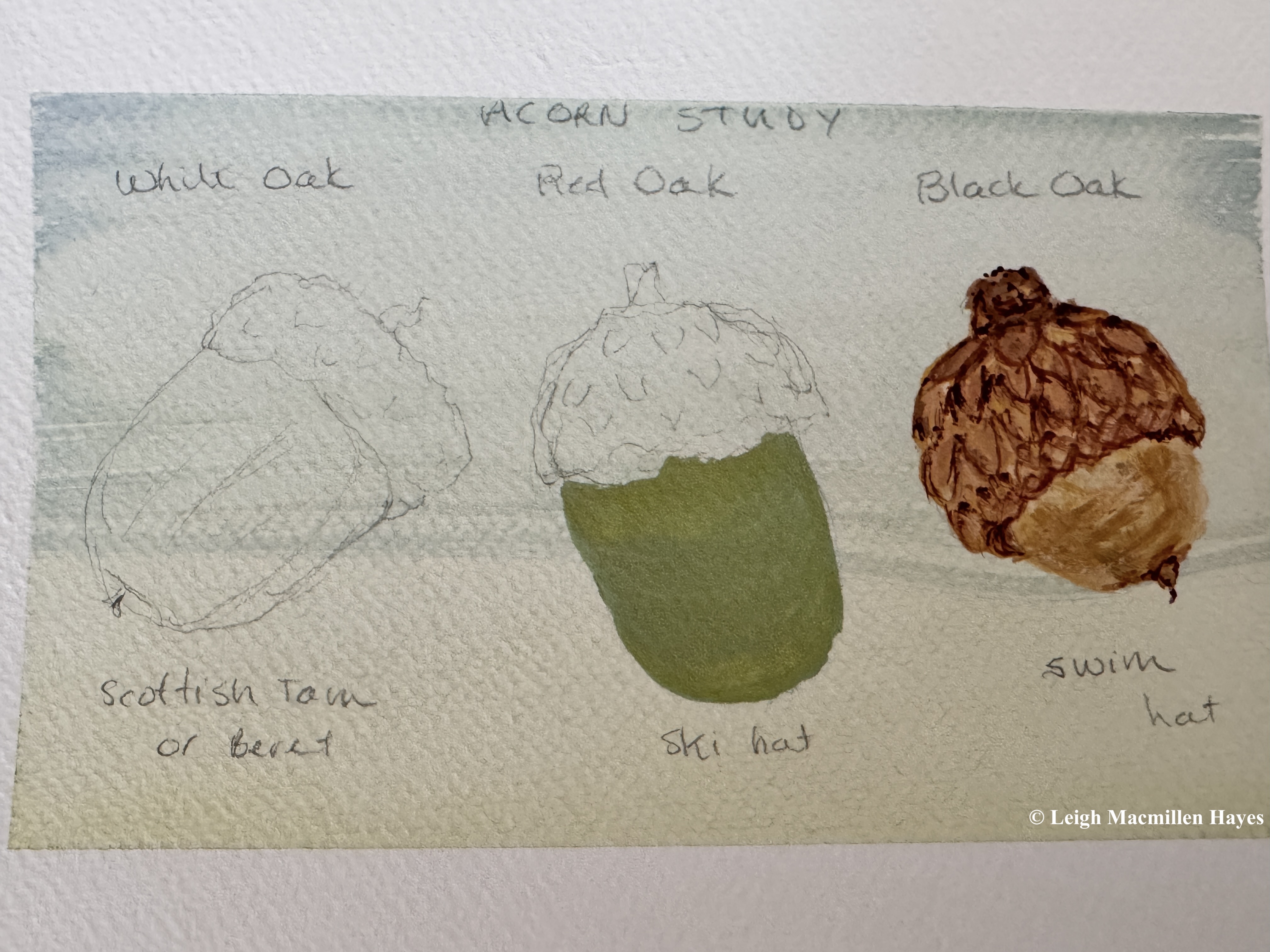
p-hidden acorn

And then we spied one impossible possibility–an acorn tucked into red maple bark. How did it get there? And will it germinate? If it does, what then?  I trust, you too, would have noticed such and wondered.

p-pratt brook 2

We followed the trails through the woods and sometimes beside the brook for which the property was named–Pratt Brook. It was a bit more bubbly than the creek in your yard, but such is the snow melt right now.

p-artist conks

Along the way, I noted a family of artist conks decorating a tree. And, that, of course, brought to mind the box of colored pencils you (or perhaps it was the cousins, though Neal had no qualms about telling us that our gifts were really chosen by you) gave me long ago. I cherished that box and used those pencils with care. They lasted into my early adulthood.

p-colors 1 (1)

And then my guy gifted me another box, which I again revere. One of my favorite pastimes is to sit and sketch and then add a dash of color. Whenever I do, Aunt Ruth, you are with me.

p-powerline

For a while we followed the power line trail, aka Bear Trail. As you can see, we tramped in the footsteps of many others who’ve traveled this way just today–via skis, snowshoes and hiking boots like us. We were an hour from home and close to the ocean, so the snow level was about six inches compared to at least two feet we walk upon daily. But today’s sun warmed us and initiated a meltdown.

p-spider

I didn’t mind being on the power line for a bit, for it was here that we saw our only sign of wildlife.

p-aster 1

It was also the spot where I knew we’d find wildflowers–and I wasn’t disappointed. Asters like these, and goldenrods, spireas and berries displayed their winter forms.

p-beetle 3

Back into the woods, we were almost done, when we spied this woodwork, carved by bark beetles.

p-bark beetles 1 (1)

And I was again reminded of my past observations when I moved a log and discovered a gnawer on the job.

p-me

The intricate work reminded me of Uncle Bob’s woodworking skills and I knew you’d appreciate that. You’d also appreciate that as I write, my guy is watching a National Geographic show about Wild Scotland.

Thanks for the memories, Aunt Ruth. And thanks for making time for us and showing an interest in all that we did–always as curious about our adventures as those of your brood. You were a remarkable woman and a genuine Yankee whom I was blessed to have as a part of my life.

Fondly, Leigh


Book of April: How to tell the Birds from the Flowers

It’s April Fools’ Day and I can’t think of a more appropriate book to share as Mother Nature showers snow upon us than How to tell the Birds from the Flowers and other wood-cuts by Robert Williams Wood.

b-11 (1)

A friend found this delightful little ditty at an independent book store in Brattleboro, Vermont, several months ago and couldn’t resist purchasing it for me. Thank you, A.J. 

Can you see from the cover what Wood had in mind? 

b-9 (1)

And his language–Flornithology? Oh my. Artistic license met poetic license. 

The first edition was published in 1917–in Kent, England. According to a little research, Mr. Wood was born in England, but went on to become a physicist at Johns Hopkins. And they say (whoever they are) that he had no sense of humor.
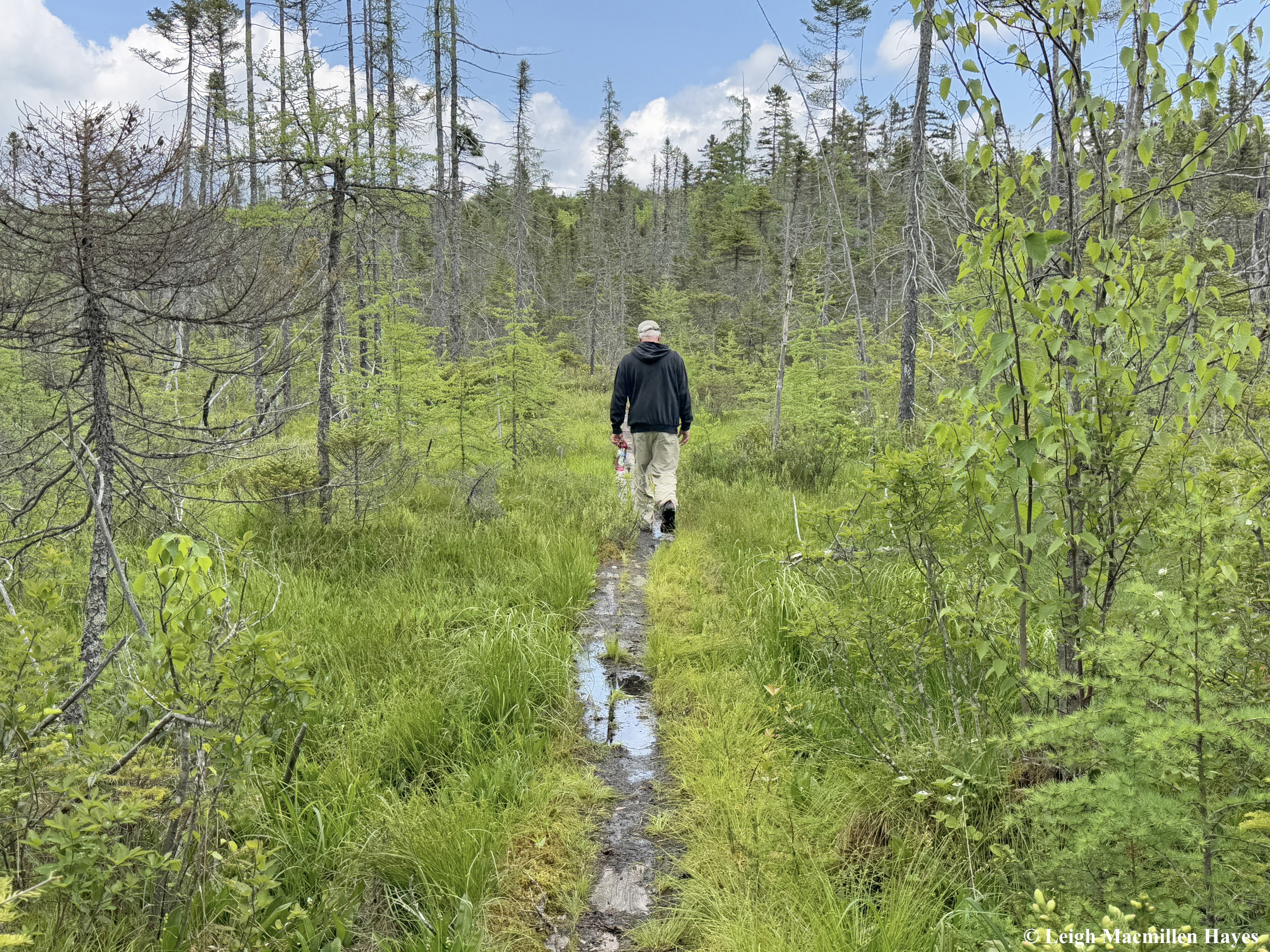
Read on: 

b-8 (1)

b-7 (1)

After this introduction, it gets even better (in my humble opinion). 

b-6 (1)

Whimsical rhymes and . . .

b-5 (1)

clever sketches;

b-2 (1)

Similarities and . . .

b-4 (1)

differences.

b-1 (1)

All found in the natural world. 

b-3 (1)

Doesn’t this just make you smile? The man lacked a sense of humor? Hardly.

And we know the Mother Nature also has a sense of humor. This isn’t the first time it has snowed on April first.

At the back of the book is a list of other facsimile reissues from Pryor Publications. Here are a few titles worth considering: Punishments in the Olden Times, Manners for Women, Manners for Men, A Plain Cookery Book for the Working Class and Why Not Eat Insects.
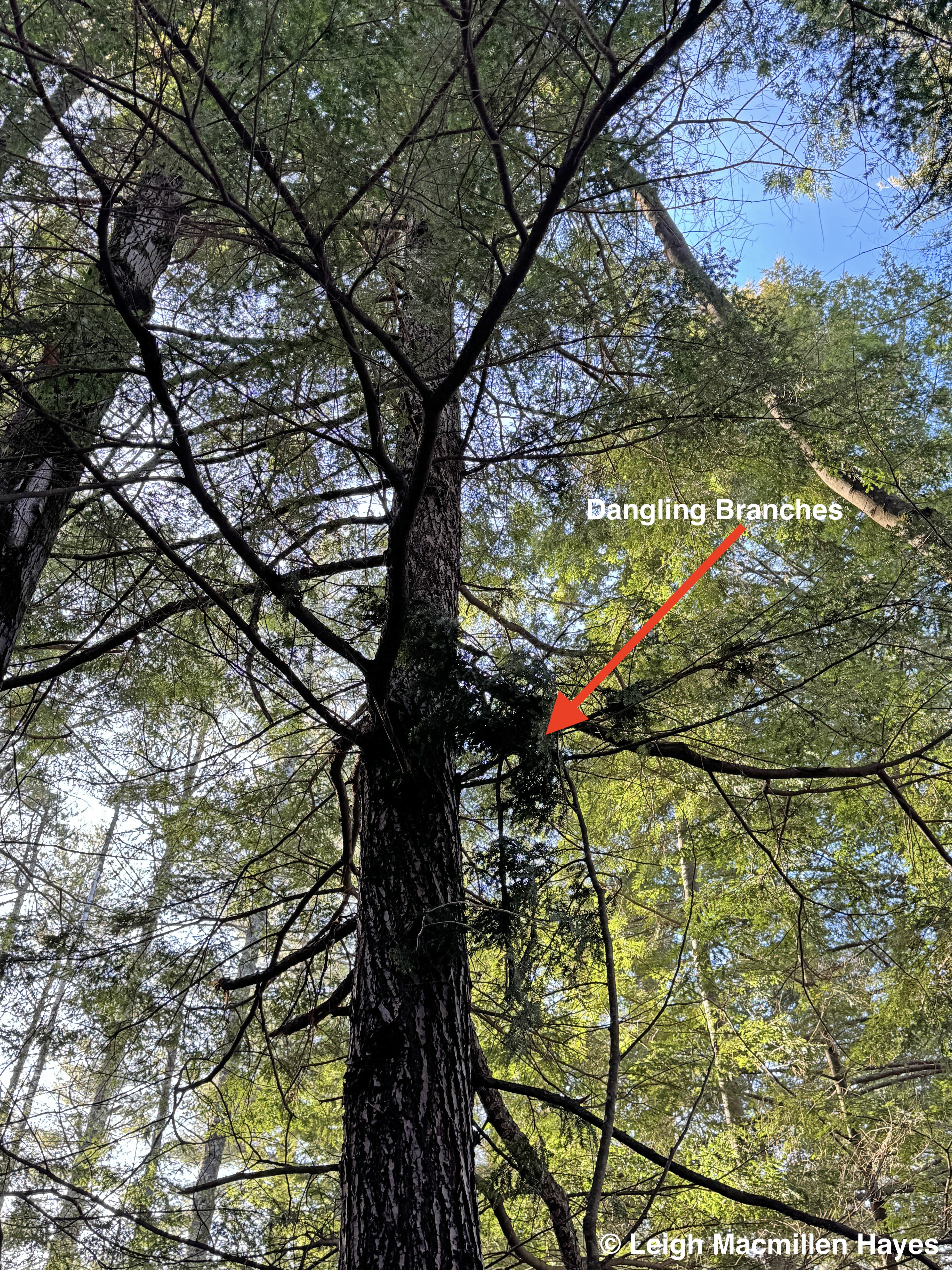
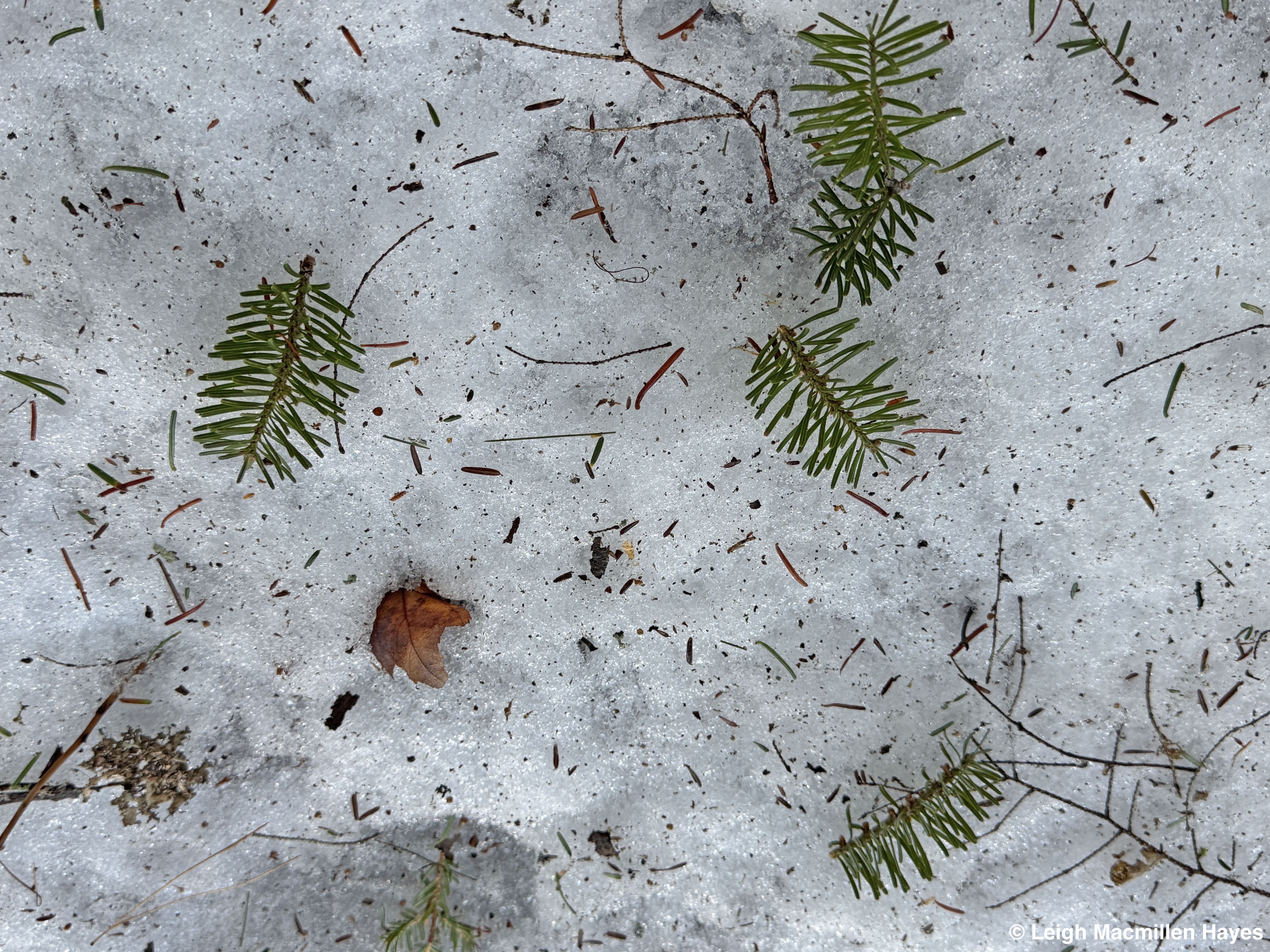
And on the back cover: “This updated edition originally published in 1917 now includes how to tell ‘The Eel from the Elephant,’ ‘The P-Cock from the Q-Cumber’ and ‘The Elk from the Whelk’ to name but a few. This book will be invaluable to those who are short sighted or just plain confused, the rest of you may even find it amusing.”

I think I fall into the latter group and that’s what A.J. had in mind (right?) when she gifted it to me because I find it quite amusing. 

Happy April Fools’ Day. 

How to tell the Birds from the Flowers and other wood-cuts (is he referring to himself?), versus and illustrations by Robert Williams Wood, 1917.

Tickling the Feet

I don’t often write about indoor events, but while the rest of the world was out playing in the brisk wind of this late winter day, a few of us gathered inside the community center at Two Echo Cohousing to meet some feet.

f-dorcas-and-sally

Meet the feet? Yes, mammal feet. It was an Advanced Seminar prepared for students and graduates of the Maine Master Naturalist Program by one of our founders and past president, Dorcas Miller.

f-gaby

Dorcas has gathered mammal feet from road kill and gifts. And we gathered to take a closer look at them, determine if their stance was plantigrade (walking–entire foot on ground as we do), digitigrade (tip-toeing like a fox or coyote), or unguligrade (en pointe in ballet, like the ungulates–deer, moose, sheep), and sketch what we saw.

f-tina

Sketching is a fabulous way to take a closer look.

f-mary

And so we did,

f-fred

with intensity,

f-beth-b

curiosity,

f-christy

smiles,

f-cheryl

and giggles.

f-gordon

From tiny

f-beth

to big, we had them all to study.

f-sharon

We wondered what we’d find.

f-ruth

And survived some interesting scents (think skunk).

f-susan-penny

Probably the best part was that we renewed friendships formed through a combined interest in learning about the natural world.

f-raccoon-1-1

My own sketches were rather primitive.

f-muskrat-1-1

But it was noticing the details that appealed to me most.

f-opossum-2-1

One of my favorite pairs–the opossum with its opposable thumb, puffy pads and grip bumps.

f-opossum-cast-1

When we finished sketching, we made some casts in clay. These illustrate the opossum better than I ever could.

f-red-fox-cast-1

My final cast was the red fox–I love that the chevron shows in the print on the left and the hairiness of its feet is evident.

f-cover-1-1

At the end of the seminar, we celebrated the release of the second edition of Track Finder, written by Dorcas.

f-dorcas-feet

And coveted her bear claw shawl–a gift from her guy.

f-attribution-1-1

As she gave me my signed book, she told me to take a look at the Acknowledgements. She acknowledged me! I’m not sure why, but I’m certainly humbled and honored.

I also love her note to her guy–about the road kill in the freezer.

Yup, we stayed indoors today and tickled some feet. They tickled us back.


Books of December: A Holiday Wish List

In the spirit of changing things up a bit, I decided that I’d include five books I highly recommend you add to your holiday wish list and two that I hope to receive.

These are not in any particular order, but I’m just beginning to realize there is a theme–beyond that of being “nature” books.

b-forest-forensics-1

Book of December: Forest Forensics

Tom Wessels, forest guru and author of Reading the Forested Landscape, published this smaller work in 2010. Though only 5″ x 7.5″, the book is rather heavy because it’s filled with photographs. Despite the weight, Forest Forensics fits into a backpack and is the perfect guide for trying to figure out the lay of the land. Using the format of a dichotomous key, Wessels asks readers to answer two-part questions, which link to the photos as well as an Evidence section for Agriculture, Old Growth and Wind, plus Logging and Fire. In the back of the book, he includes Quick Reference Charts that list features of particular forest and field types. And finally, a glossary defines terms ranging from “age discontinuity” to “Uphill basal scar,” “weevil-deformed white pines” and “wind-tipped trees.” In total, it’s 160 pages long, but not necessarily a book you read from cover to cover. If you have any interest in rocks, trees, and the lay of the land, then this is a must have.

Forest Forensics by Tom Wessels, The Countryman Press, Woodstock, VT, 2010.

b-shrubs-1

Book of December: Shrubs of the Northern New England Forest

Michael L. Cline is executive director of Tin Mountain Conservation Center in Albany, New Hampshire. In September, I had the pleasure of attending a talk he gave at the center about Shrubs of the Northern New England Forest. The 6″ x 9″ book weighs about the same as Wessels’, and will also fit handily into your pack. Of course, you might want to leave the books in your vehicle or at home and look up the items later–thus lightening your load. Using Brownfield Bog as one of his main go-to places, Cline describes 70 species of shrubs from Creeping Snowberry to Mountain Ash. The book is arranged by family, beginning with Mountain Maple and Striped Maple of the Aceraceae (Maple) family and ending with the American Yew of the Taxaceae (Yew) family. Each two-page layout includes photographs (and  occasionally drawings), plus a description of habit, leaves, flowers, twig/buds, habitat, range, wildlife use, notes and other names. I have no excuse now to not know what I’m looking at as I walk along–especially near a wetland. That being said, I’ll think of one–like I left the book at home, but I’ll get back to you.

Shrubs of the Northern New England Forest by Michael L. Cline, J.S. McCarthy Printers, 2016

b-bogs-and-fens-1

Book of December: Bogs and Fens

Ronald B. Davis’ book, Bogs and Fens, was a recent gift from my guy. I hadn’t asked for it, and actually didn’t know about it, so I’m tickled that he found it. I’m just getting to know Dr. Davis’s work, but trust that this 5.5″ x 8.5″ guide about peatland plants will also inform my walks. Again, it’s heavy. The first 26 pages include a description of vegetation and peatlands and even the difference between a fen and a bog. More than 200 hundred pages are devoted to the trees, plants and ferns. In color-coded format, Davis begins with the canopy level of trees and works down to tall shrubs, short and dwarf shrubs, prostrate shrubs, herbaceous plants and finally, ferns. He also includes an annotated list of books for further reference, as well as a variety of peatlands to visit from Wisconsin to Prince Edward Island. As a retired University of Maine professor, Davis has been a docent and guide at the Orono Bog Boardwalk for many years. Field trip anyone?

Bogs and Fens: A Guide to the Peatland Plants of Northeastern United States and Adjacent Canada by Ronald B. Davis, University of New England Press, 2016.

b-lab-girl-1

Book of December: Lab Girl

I’d never heard of Hope Jahren until this summer and then several people recommended her book, Lab Girl, to me. Rather than a guide, this is the story of Jahren’s journey from her childhood in rural Minnesota to the science labs she has built along the way. As a scientist, Jahren takes the reader through the ups and downs of the research world. And she does so with a voice that makes me feel like we’re old friends. Simultaneously, she interweaves short chapters filled with  information about the secret life of plants, giving us a closer look at their world. I had to buy a copy because for me, those chapters were meant to be underlined and commented upon. I do believe this will be a book I’ll read over and over again–especially those in-between chapters.

Lab Girl by Hope Jahren, Alfred A. Knopf, 2016.

b-hidden-life-of-trees-1

Book of December: The Hidden Life of TREES

And finally, a gift to myself: The Hidden Life of TREES by Peter Wohlleben. I’d first learned about this book in a newspaper article published last year and had to wait until recently to purchase it after the book was translated from German to English. Again, it’s not a field guide, but offers a delightful read that makes me think. And thus, you can see my bookmark. I’ve not finished reading it yet, but I’m having fun thinking about some different theories Wohlleben puts forth. As a forester, Wohlleben has spent his career among trees and knows them well. He’s had the opportunity to witness firsthand the ideas he proclaims about how trees communicate. And so, I realize as I read it that I, too,  need to listen and observe more closely to what is going on in the tree world–one of my favorite places to be. Maybe he’s right on all accounts–the best part is that he has me questioning.

The Hidden Life of TREES: What They Feel, How They Communicate by Peter Wohlleben, Random House, 2016.

And that’s just it–the underlying theme of these five books you might consider is TREES. I can’t seem to learn enough about them. One word of caution, each author has their own take on things, so the best thing to do is to read the book, but then to head out as often as you can and try to come to your own conclusions or at least increase your own sense of wonder.

And now for the books on my list (My guy is the keeper of the list):

Naturally Curious Day by Day: A Photographic Field Guide and Daily Visit to the Forests, Fields, and Wetlands of Eastern North America by Mary Holland, Stackpole Books, 2016

Mosses, Liverworts, and Hornworts: A Field Guide to Common Bryophytes of the Northeast by Ralph Pope, Cornell University Press, 2016.

Do you have any other suggestions for me?

One final thought about books–support your local independent book store as much as you can. Here in western Maine, we are fortunate to have Bridgton Books. Justin and Pam Ward know what we like to read and if they don’t have a particular book we’re looking for, they bend over backwards to get it for us.