Cloudy Mondate

Between the two of us, My Guy and I have lived within an hour or so of today’s destination for a grand total of 103 years. Yikes. That makes us old. Of course, we aren’t. But for some reason we never visited this spot before. Maybe because it’s a tourist hotspot, and we’re hardly tourists. In fact today, we were dressed in our usual garb because our plan was to hike. And we did. But . . . we also did that touristy thing for a wee bit. Cuze when in Rome . . . yada, yada, yada.

And so first we paused by the Pebble, a glacial erratic.
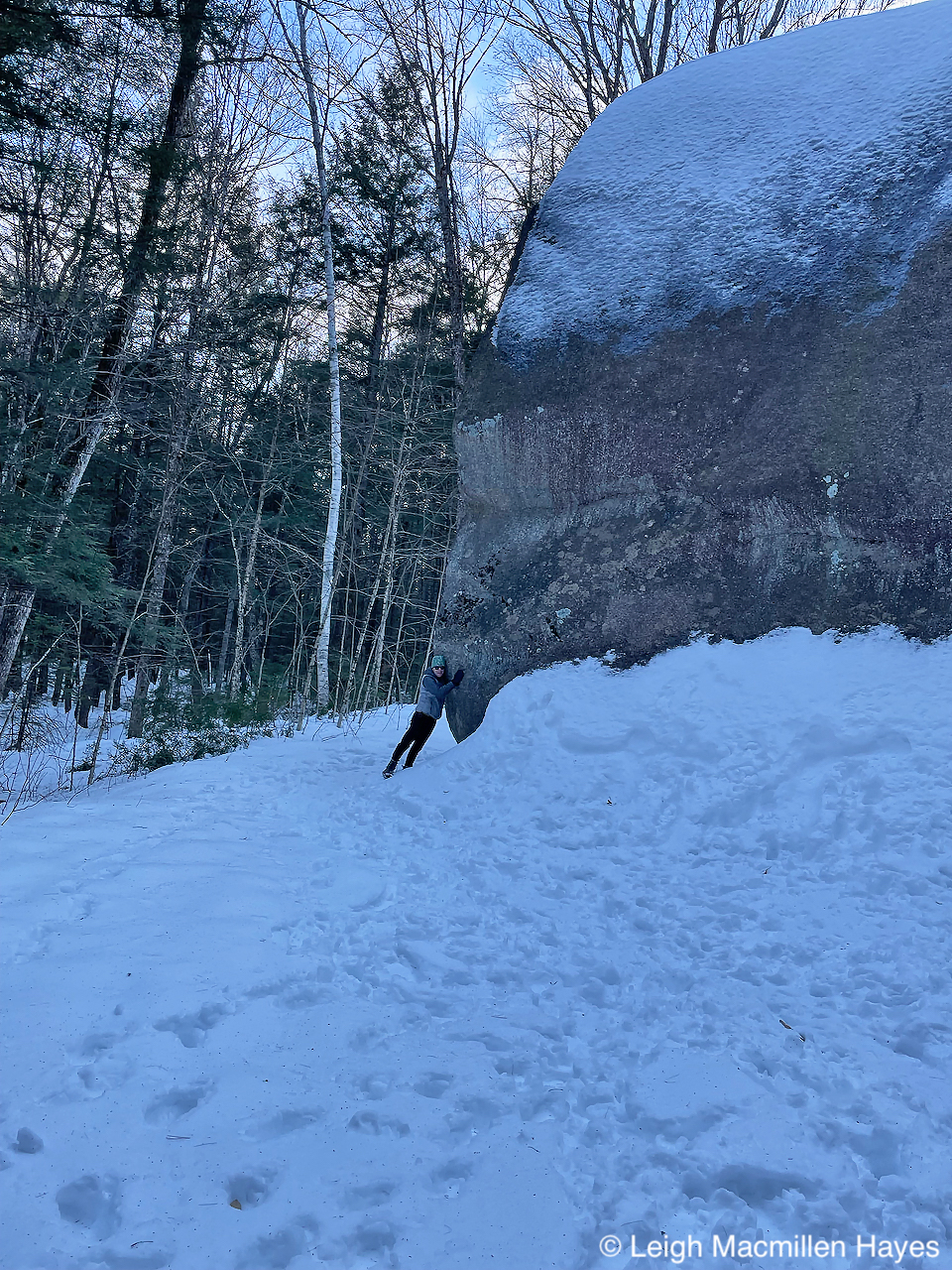
I suppose when you compare it to the Boulder located about a half hour north of the Pebble, which we visited on February 14, 2022, it is rather pebble-like.

But what we really wanted to see was the Falls of Song, a waterfall that drops forty feet and is so named for the changing sound of the water that constantly flows.

According to an interpretive sign by the falls, “An 1885 Boston newspaper description of the scenic beauty and amenities stated of the Falls of Song that ‘their location in the depths of the primeval forest, their exquisite setting under the overhanging cliffs, the silvery clearness of the water and their magical musical effects, seemingly changing their song at every hour of the day, unite to place these falls among the most interesting and wonderful in the United States.'”

Another set of falls to draw our fancy was the Bridal Falls, so named because in the right conditions they appear to be lacy like a bridal veil. I felt like the conditions were indeed right today.
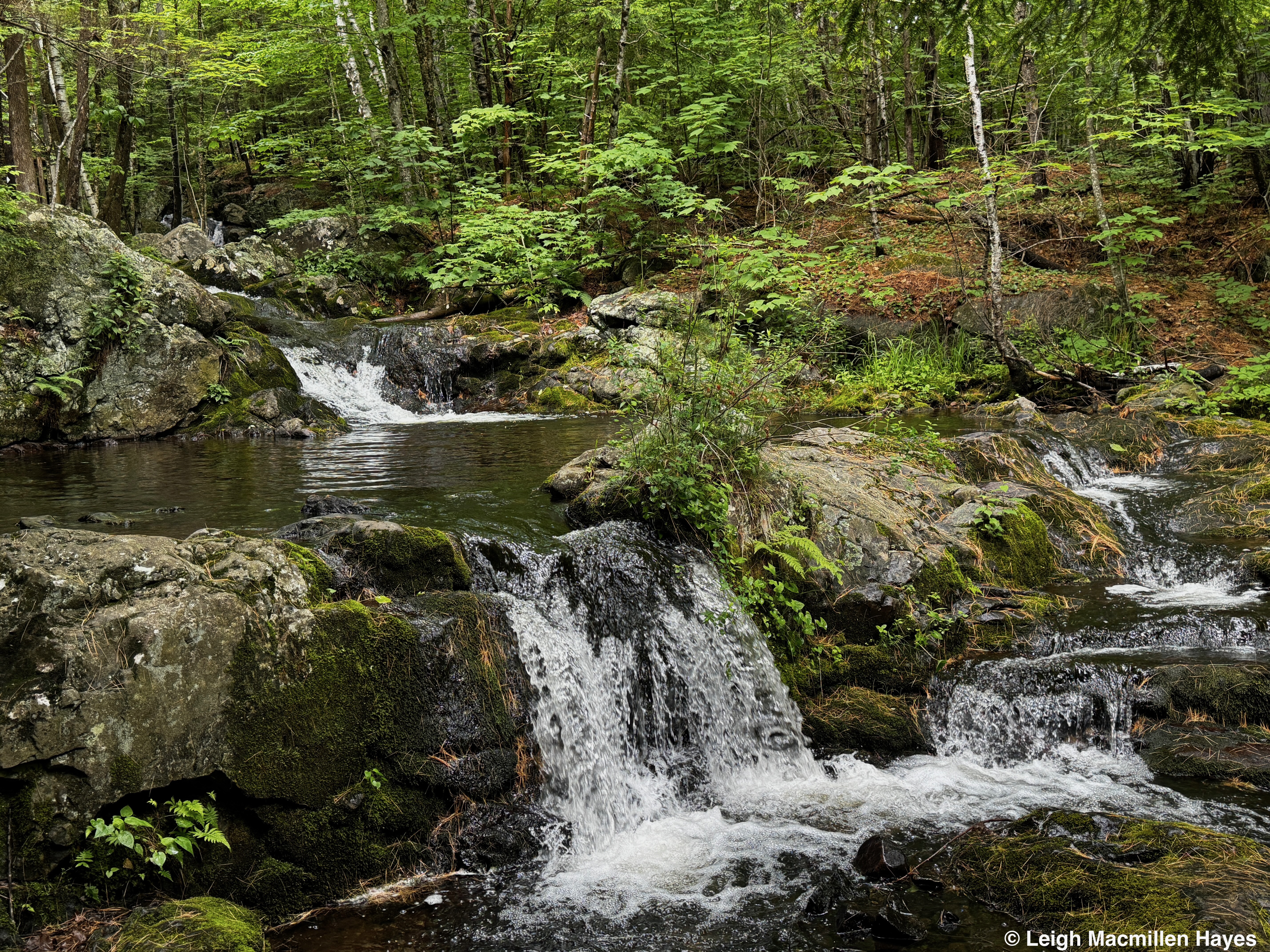
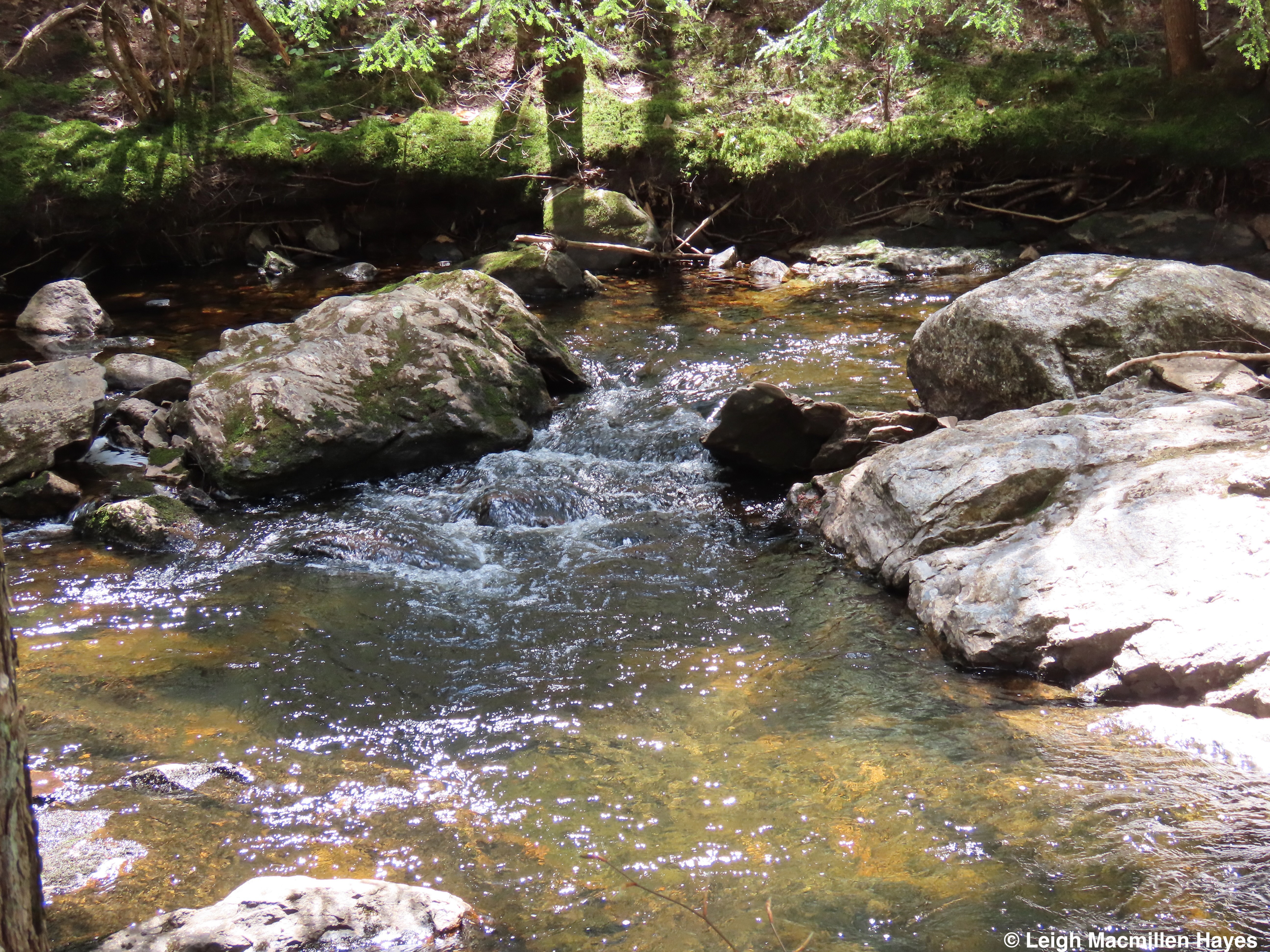
We followed the brook for over a half mile and the views kept changing and sounds kept enhancing our experience. If it had been warmer, we might have wanted to take a dip, but for today, just watching and listening as the water tumbled and plummeted and twisted and turned and glided and flowed was enough.

Back on the road as we drove up the mountain, we stopped again for a view from lunch bench and I found my place, which was my place in the early 1980s. Lake Winnipesaukee and Gunstock Mountain formed the backdrop and brought back memories of teaching and hiking and skiing and swimming and being. The best part is that this is the area where I learned to be. Be me.

To be native, like the Northern Bush Honeysuckle, for I began to realize all those years ago that this is the area where I belonged.

But today brought us to the home of others who also belonged in this place, beginning with Thomas and Olive Plant, the original owners of this mountaintop mansion. I could only hope to live here. But they did. For a while at least.
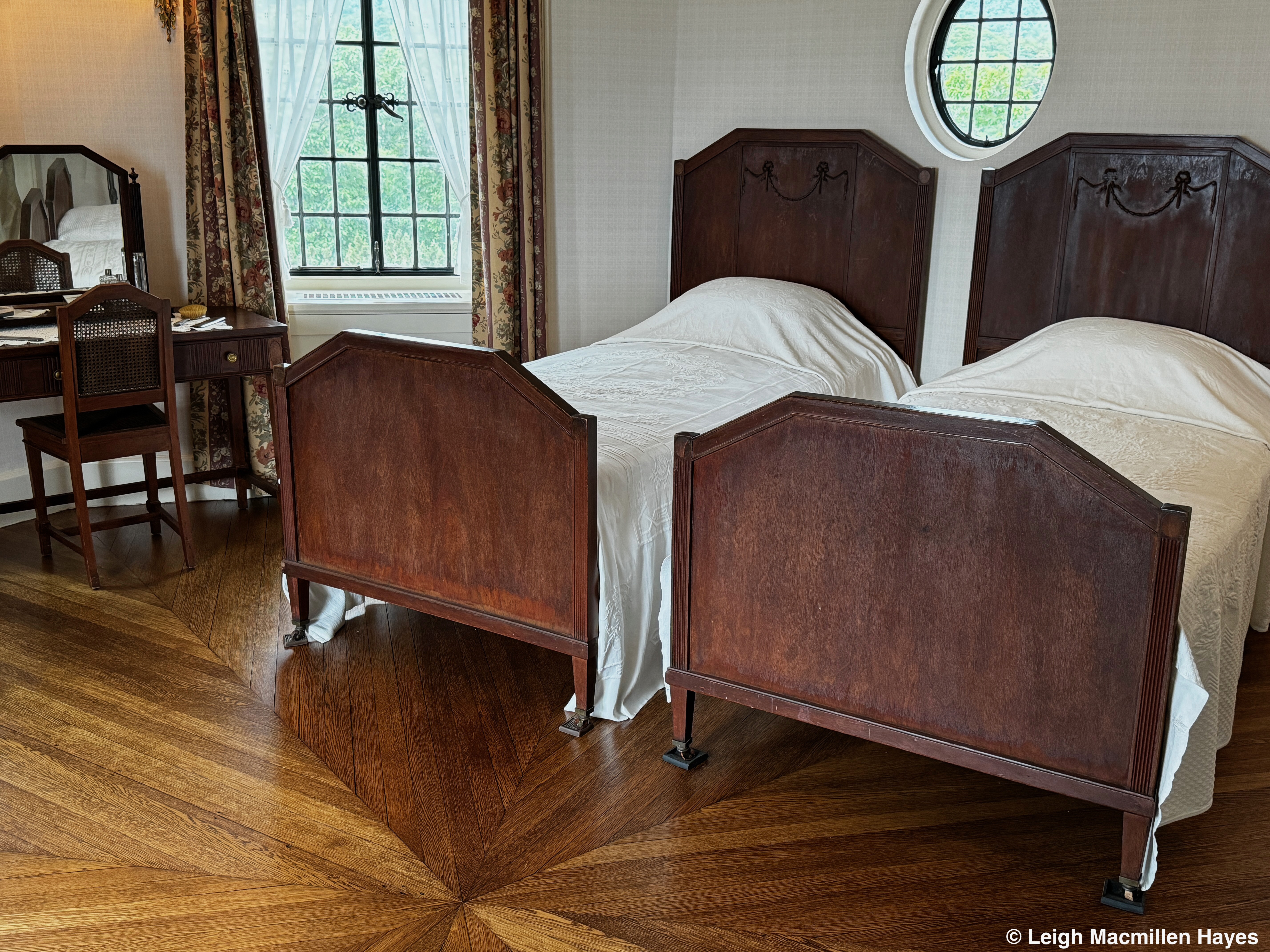
It’s a sixteen room home with halls and halls and an organ, and dumb waiter, and guest rooms like this one, and more halls, and sitting rooms, and great hall, and dining rooms, and servants quarters, and sunroom, and oh so much more. But this, the Brown Room, was my favorite, for recently carpet had been removed and the most incredible floor discovered, and it reminded me of our home, which had been similarly carpeted, and we discovered beautiful southern pine that has since brightened our days.

The sunburst pattern of the Brown Room floor–incredible.

But even more than the inside, we really enjoyed the outdoor living areas, this off the main hall, with a view of the lake and mountains beyond, Gunstock being straight across.

And an angel letting water form her wings.
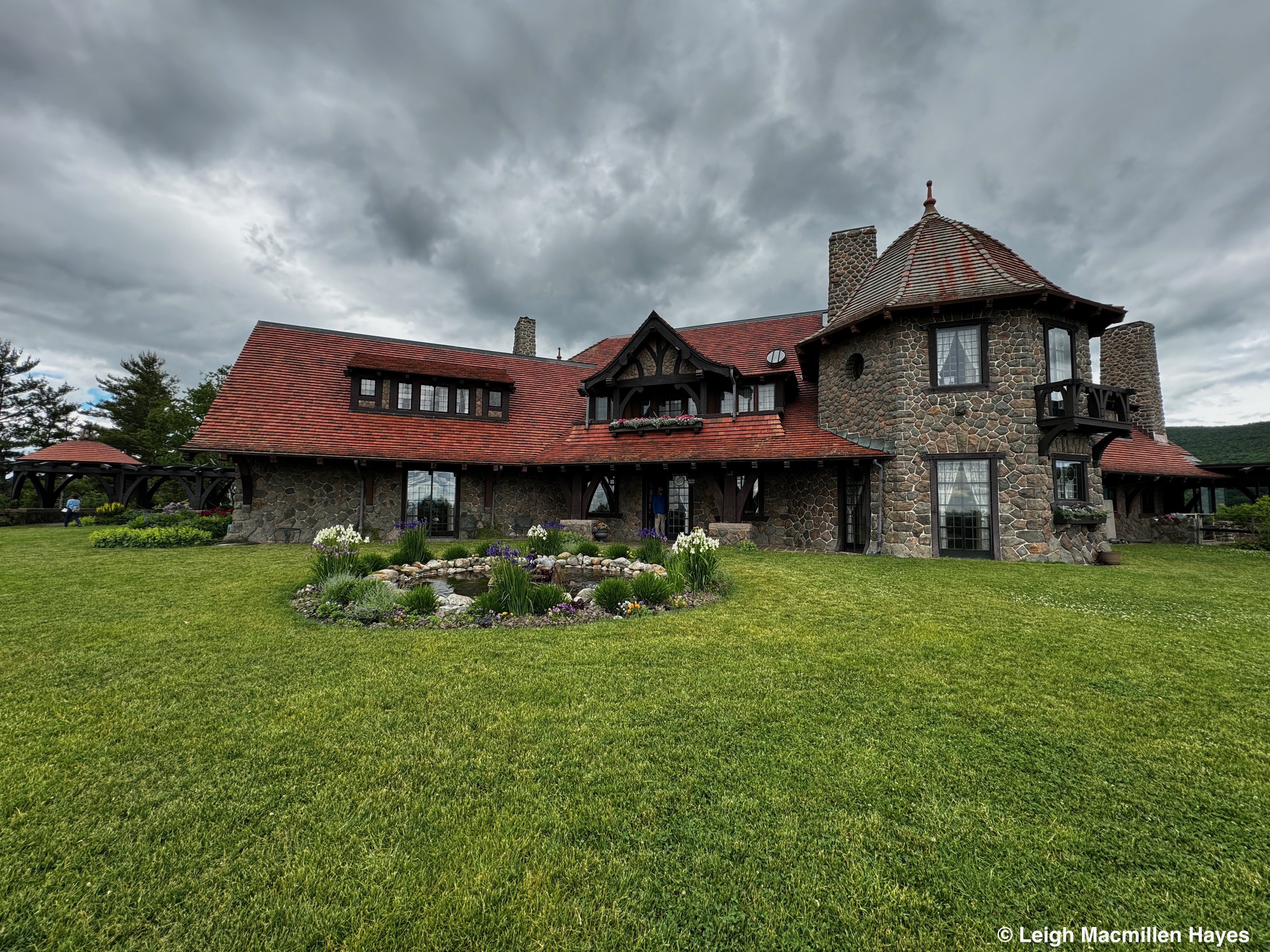
We’re thinking we’ll take the month of August and welcome guests here. Haha. As if we ever welcome guests, the introverts we truly are. But really, the focus should be on the Arts and Crafts architecture and way the building fits into the setting.

And the gardens. Exquisite.

Olive Plant, original owner of the property in 1914, would have approved of today’s gardens which are tended by a group of volunteers. In this space that surrounded the mansion she had a 100-foot glass greenhouse.

I don’t know if this was part of her greenhouse selection, but among the wall that formed part of nursery grows Ivy-leaved Toadflax, a plant I don’t recall ever meeting in the past.

Clouds there were upon occasion today, but the yard boundary offered glimpses of brightness.
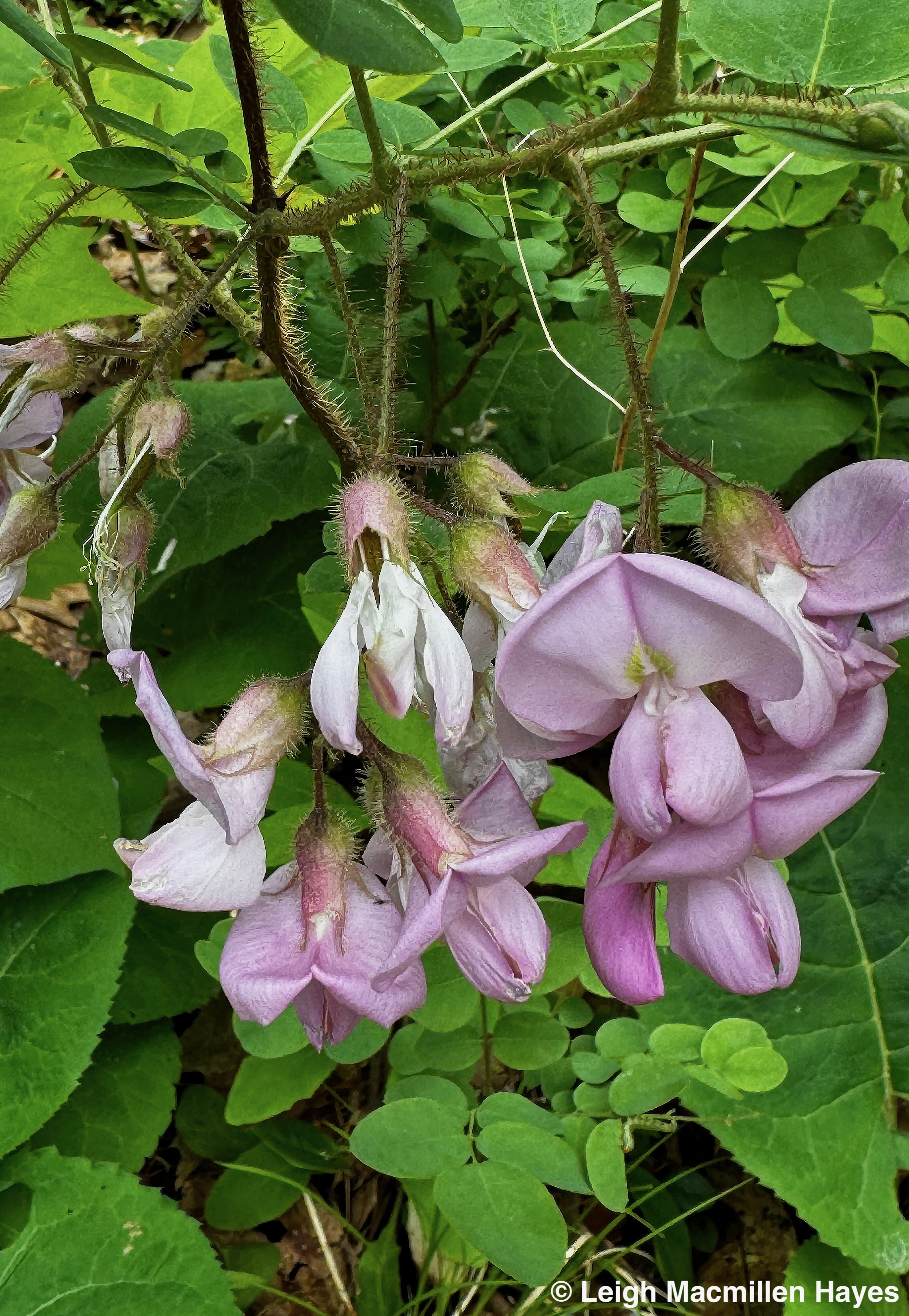
And along the trail where other specimens including this Bristly Locust, a legume.
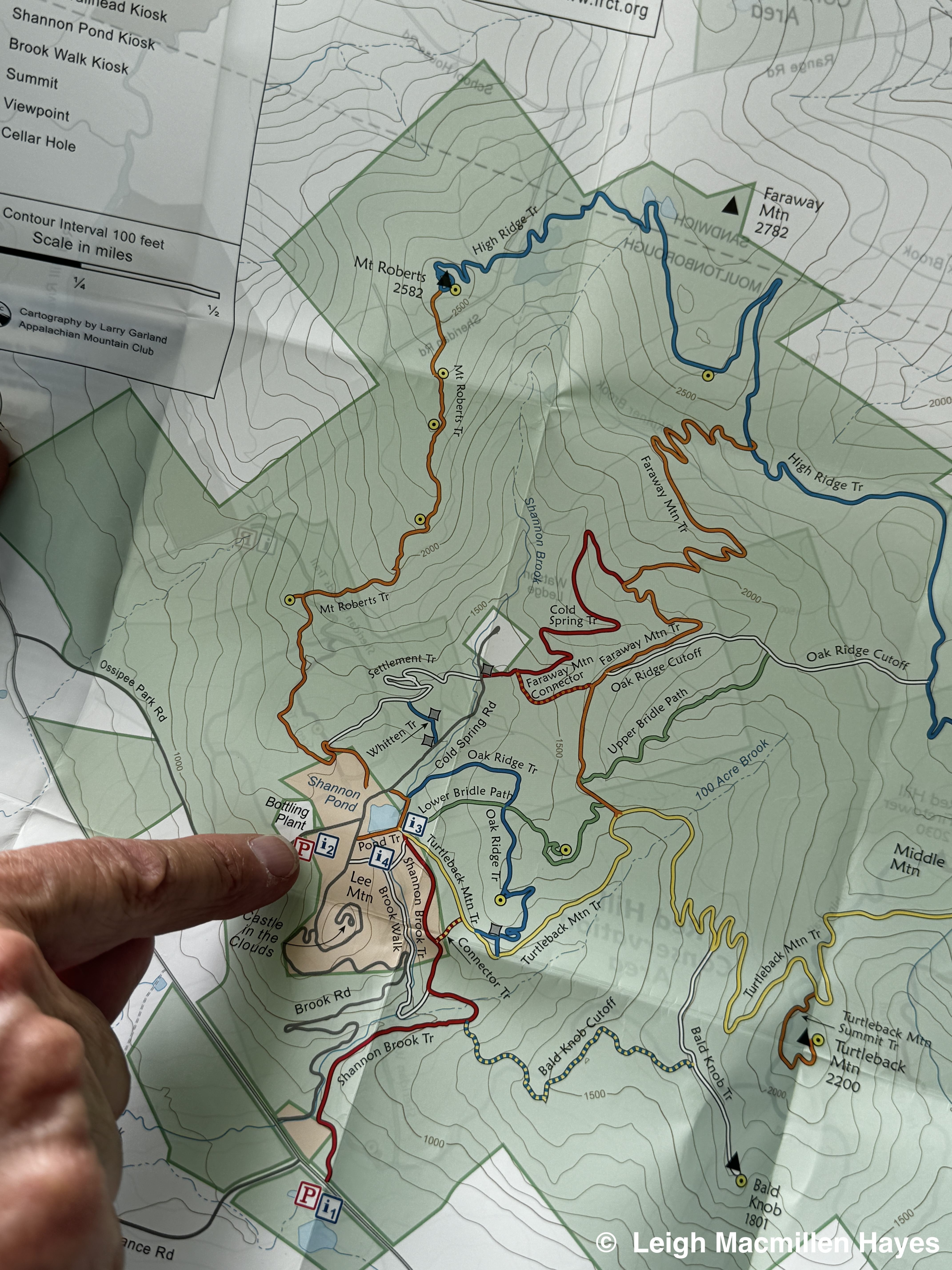
We’d hiked along the brook, spent time exploring the mansion and grounds, and the headed off to hike another trail with only so much time on our hands. At the intersection of trailheads, we had the good fortune of meeting two women with local knowledge who showed us where we were and where we wanted to go . . . that being heading up Mount Roberts. We knew we didn’t have time to summit for My Guy had to get home for a meeting (at which he later received a well-deserved Lifetime Achievement Award), but we made a plan for a turn-around time.

The trail was blazed with orange markers and we might have believed that a Black Bear had marked the way, for so chewed and scratched were the signs, but I suspect it was a Red Squirrel who had a good chomp or two or ten.

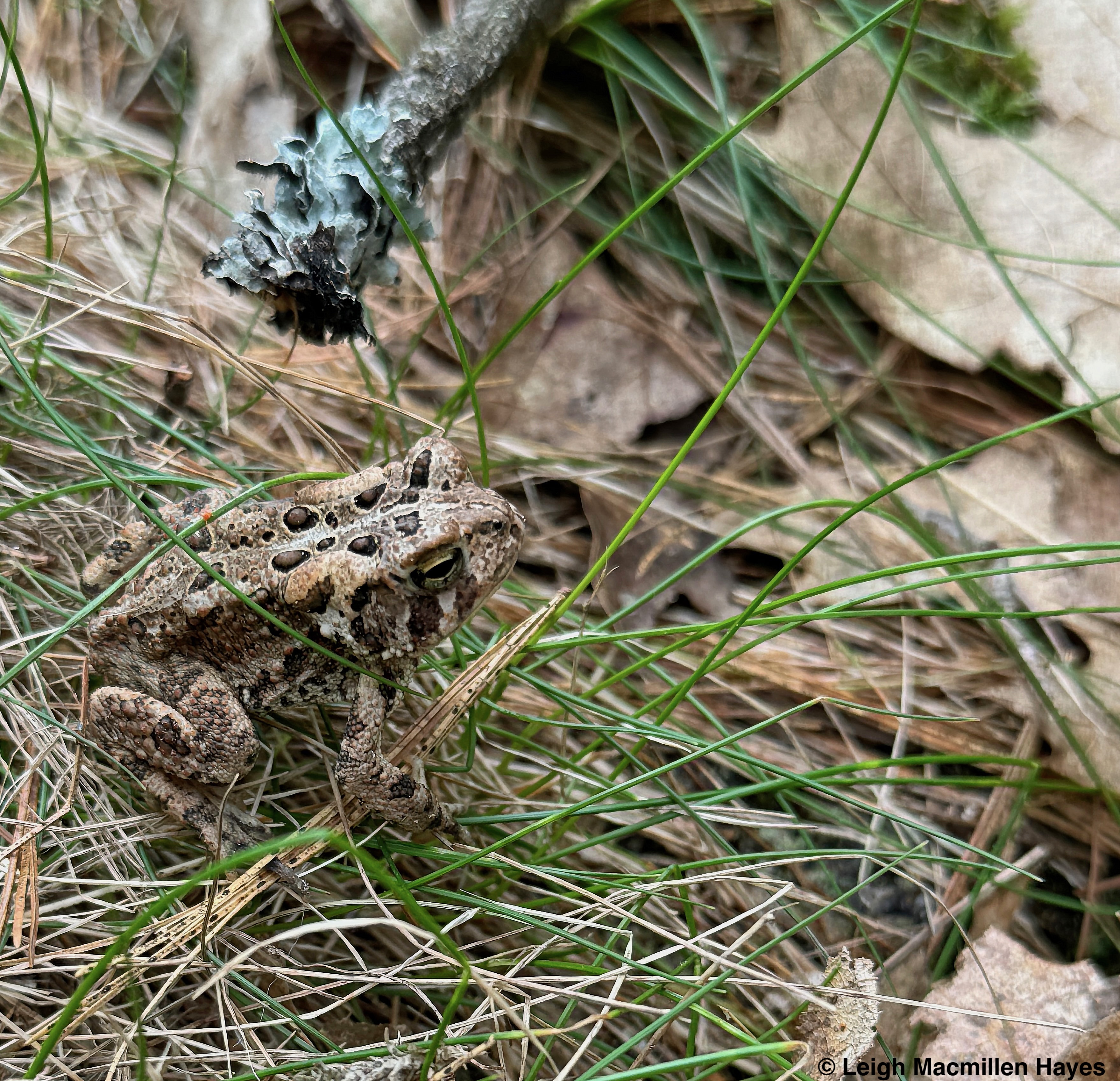
That said, a female American Toad, her tympana (ear membrane) about the size of her eye, and overall size of her body providing a clue to her sex, but also doing her best to blend in to her surroundings as she paused upon a stone on the trail.
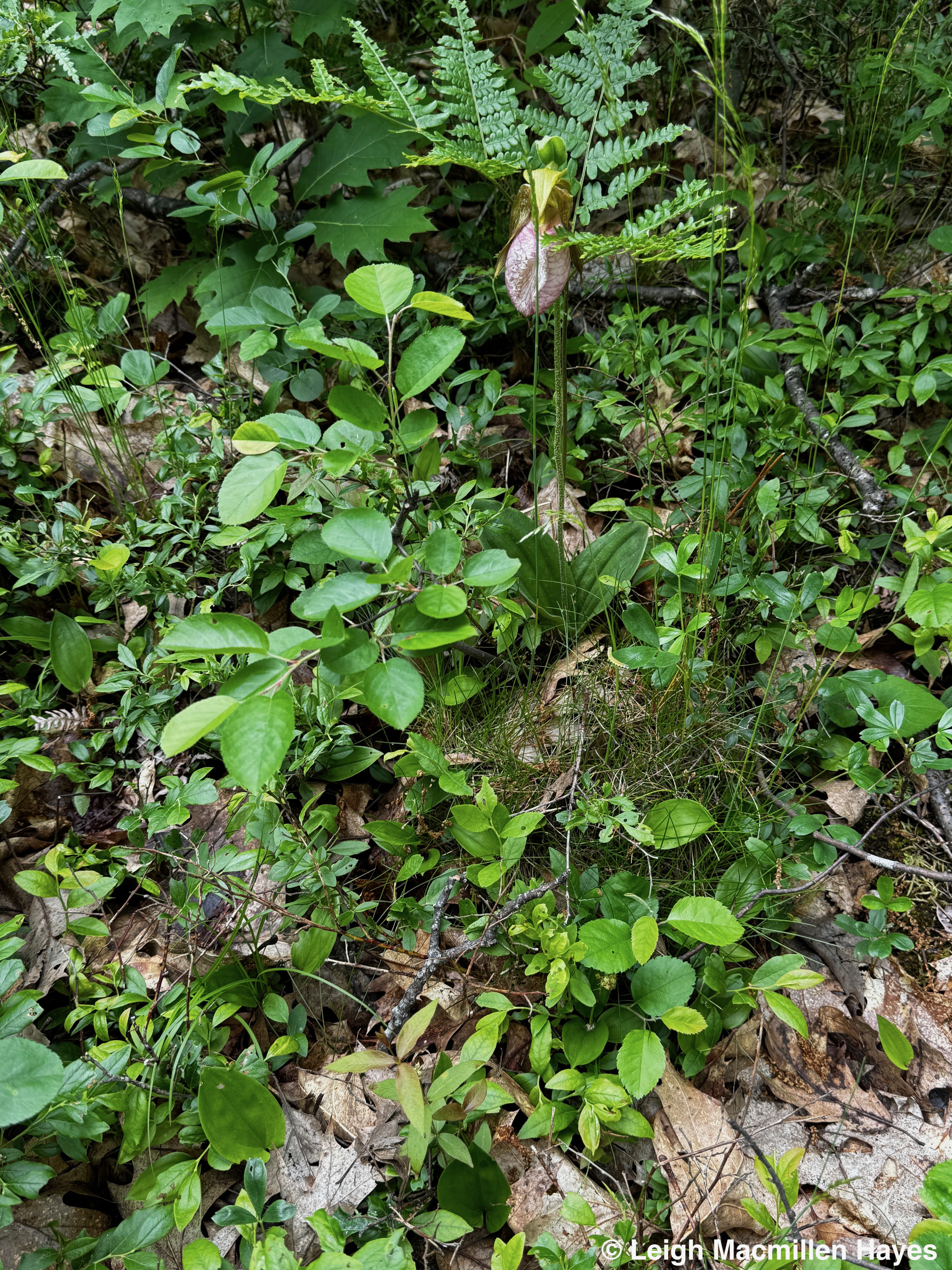
We’d hiked over a mile when I suddenly spied this from the trail. Ruh roh. That meant we had to start looking and counting, a task that slowed us down a bit.
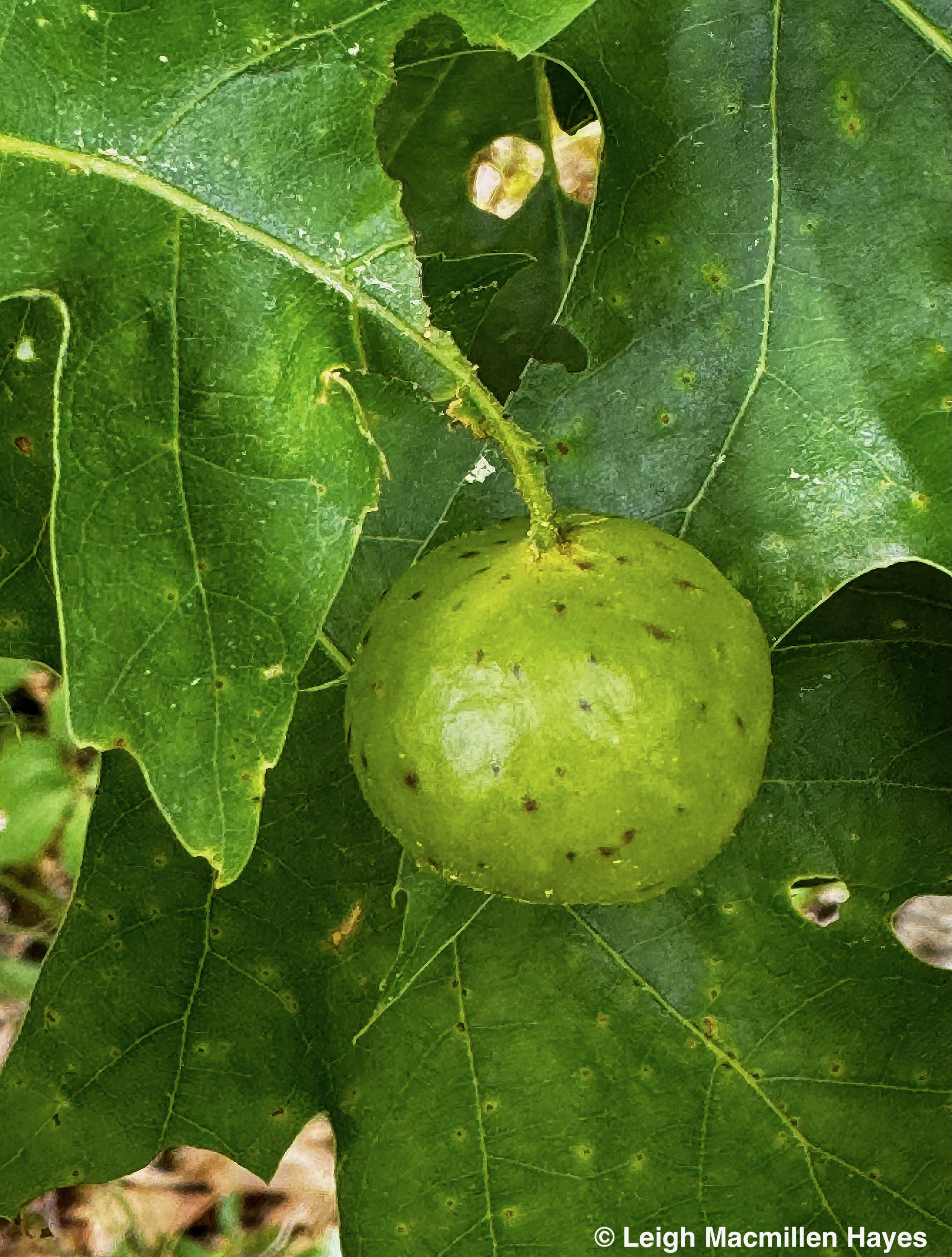
We had set a turnaround time, knowing that we wouldn’t be able to hike the entire 2.5 miles to the summit because My Guy needed to get home for a meeting, and so at 3:15pm, with 1.7 miles behind us, we stopped our upward ascent, but before descending, I spotted a green golf ball on a Northern Red Oak leaf.

Each time I spot one, I’m in awe for it’s such a cool structure. Though it looks like a fruit, it’s caused by a chemical reaction the leaf has when a wingless adult female wasp, Amphibolips confluent, lays an egg into a newly-forming leaf. As the egg hatches and larvae grows, that chemistry causes the leaf to mutate and grow with it.

The wasp is commonly known as an Oak Apple Gall Wasp, and thus this is an Oak Apple Gall.

We chuckled on the way down, for we did pay more attention to the flora, and couldn’t believe that we’d passed by this Lady’s Slipper display located inches from the trail. But that’s what happens when you are moving on My Guy-speed, and watching every spot where you place your feet. Our total count on the way down: 52, but I’ve a feeling we missed many more.

And hiding under some trees near the trailhead: Ragged Robin, a treat because I’ve only encountered it a few times. I love its frayed, yet delicate display.

Because our descent was much faster than the ascent (and still we counted Lady’s Slippers, but that’s why I think we missed some), I stole a few minutes beside Shannon Pond where a small field of Lupine bloomed.

And a female Mallard swam toward the shore. She and a few jumping fish were the only wildlife spotted today.

That was okay, for we had a splendid Mondate wandering under the clouds, which seemed truly appropriate since we were at the Lucknow Mansion property now known as Castle in the Clouds in Moultonborough, New Hampshire. Why did we wait so long to visit? Maybe because it’s practically in our backyard.

The May Flower Whisperer

In rain or shine, as May gives way toward June, My Guy and I set off to hike a few local trails.

It’s not whether we have a view . . .

or not . . .

or if we have to stand beside lunch rock rather than sit (well, he sat, I didn’t) . . .

or even the challenges the trail chooses to offer, like crossing a well-mudded beaver dam that is rather tricky . . .

and spying the well-mudded lodge where the local residents were probably relaxing after a long night’s work,

but rather, the sights at our feet that drew our attention, such as the Black Chokeberries pink anthers and delicate petals enhanced by raindrops.

Scrambled-egg Slime Mold (aka Dog-vomit Slime Mold) showed off its intricate structure that looked more like a bunch of worms swarming together upon a decaying log.

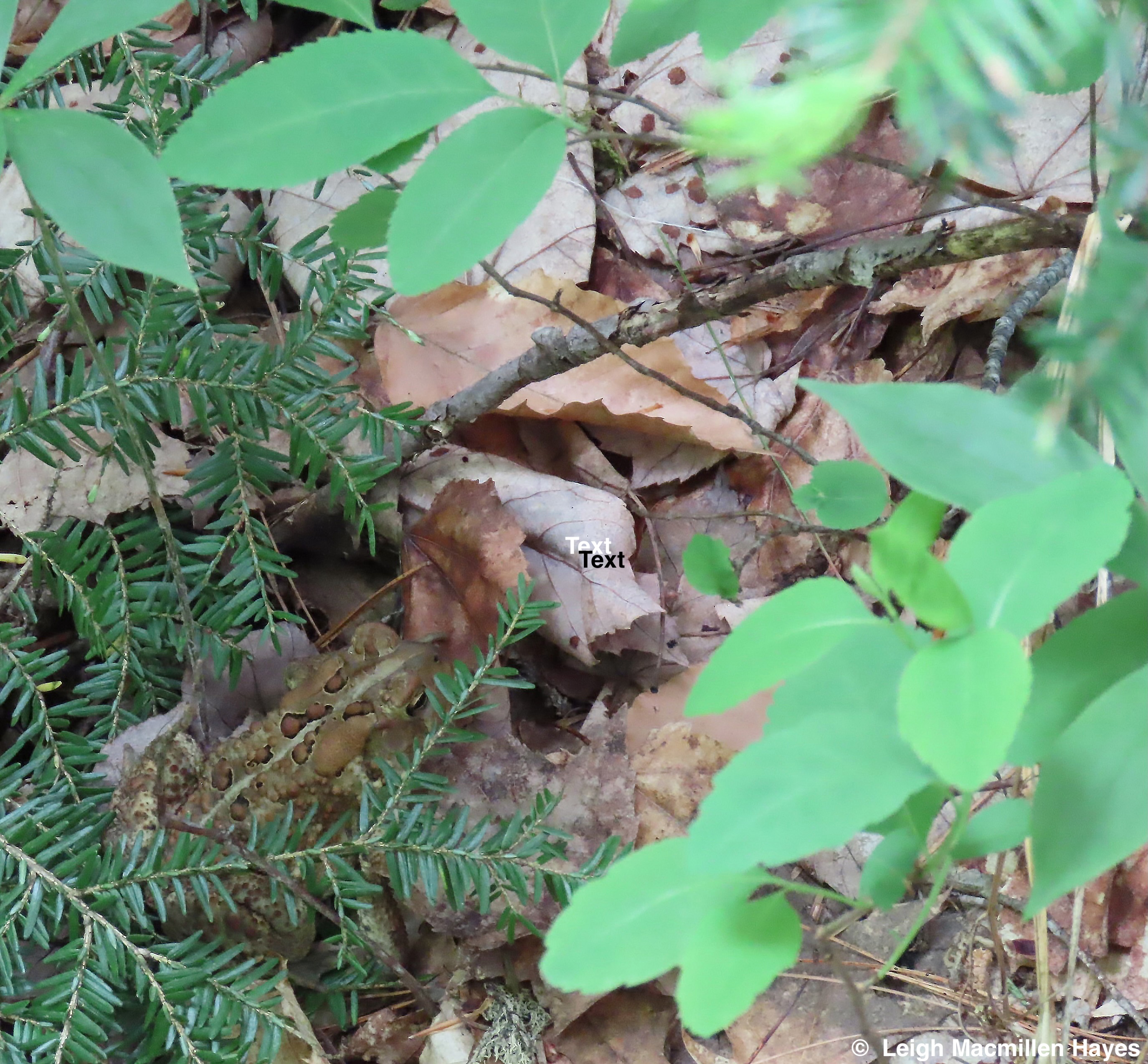
Because we were always looking down, an American Toad, so certain it was invisible for so camouflaged was it, wasn’t. Invisible that is.

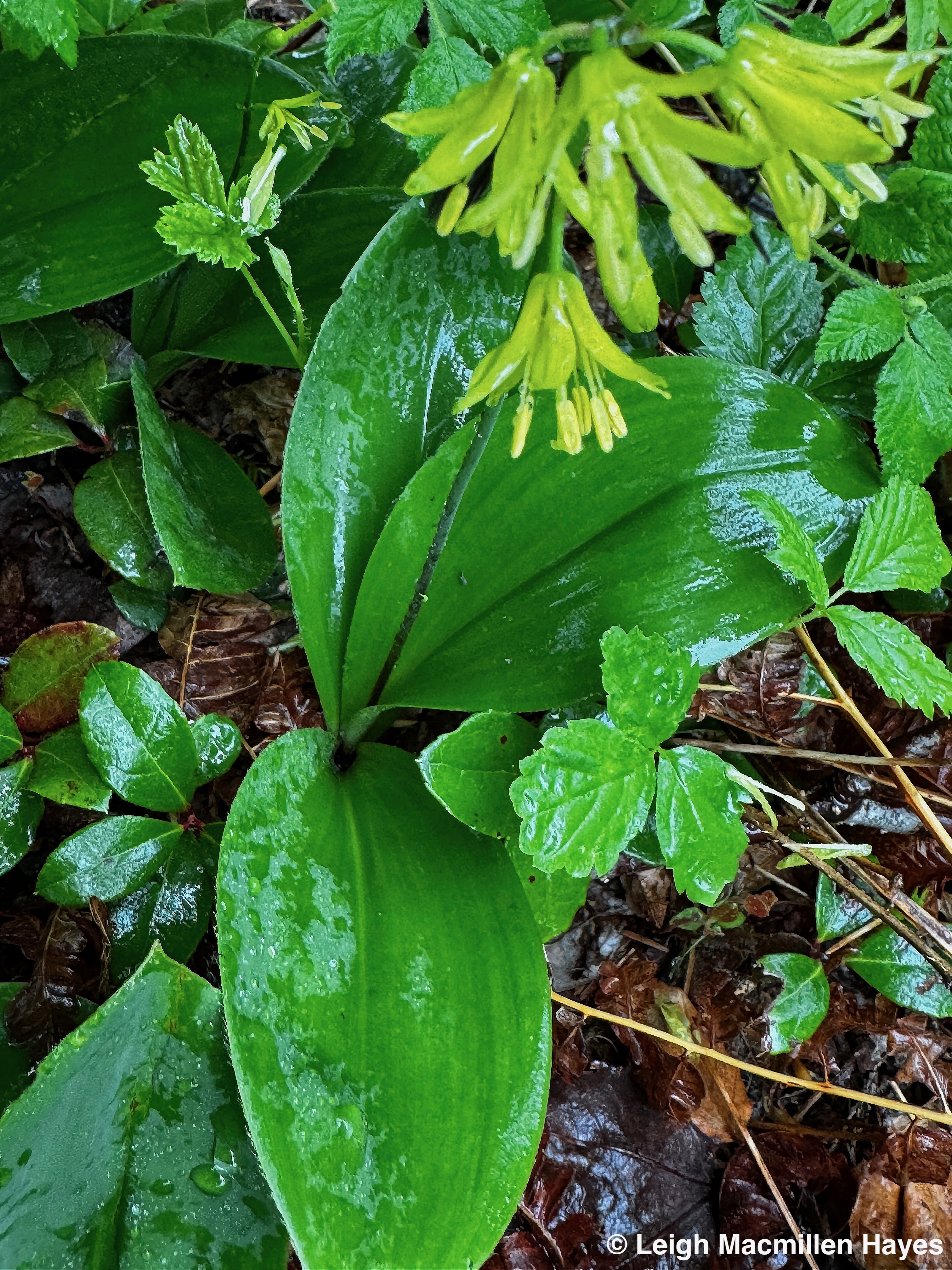
Plentiful were the Blue Bead Lilies, with their anthers hanging long awaiting pollination before rising in fruit forms that will soon look like . . . blue beads.

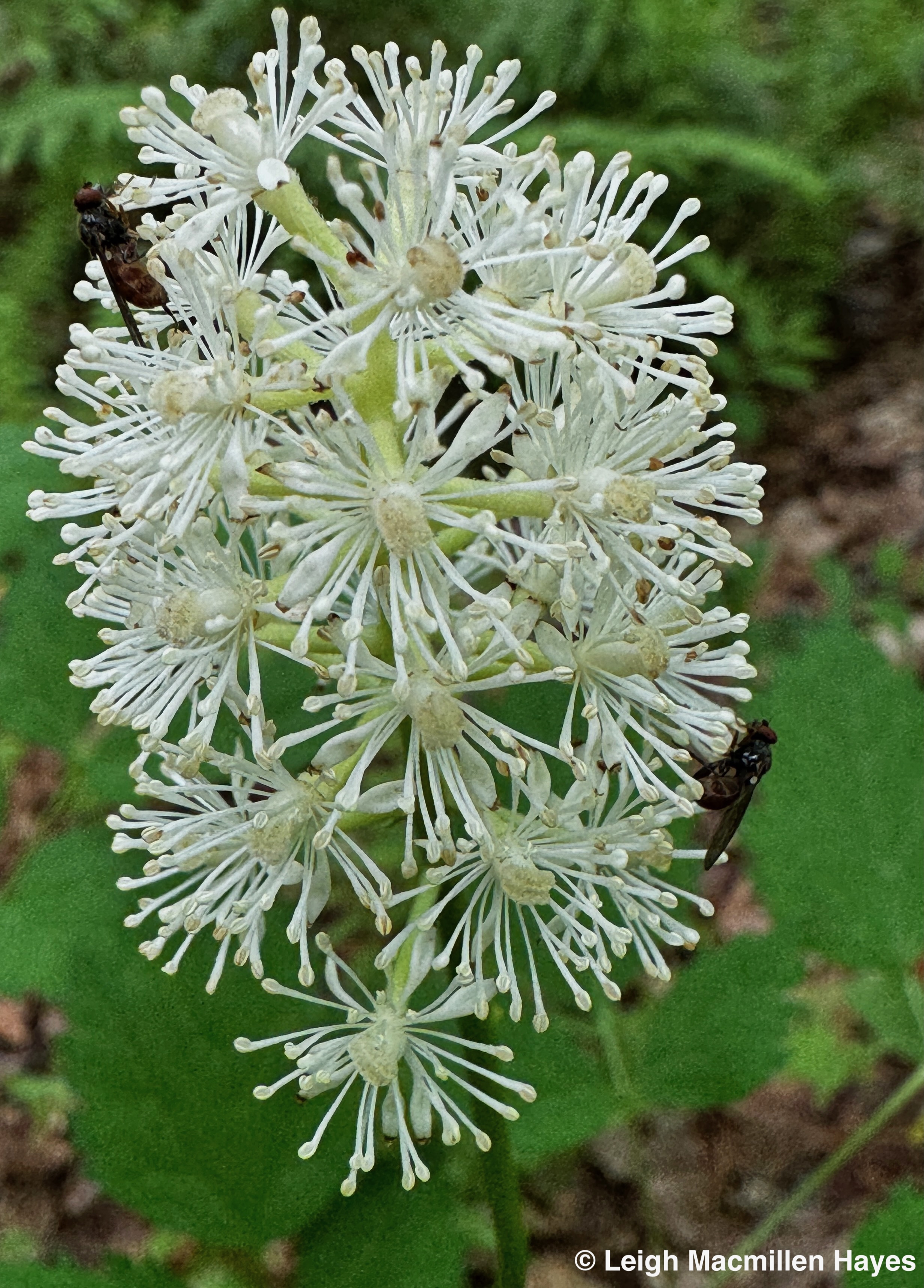
In several spots along one of the trails, White Baneberry, aka Doll’s Eye, so named because its fruit form resembles such, showed of its firework display and the insects were attracted.

And a carpet of Bunchberries, those with six leaves rather than four, asked that their floral displays be acknowledged.

Not to be overlooked, Wild Geranium’s runway lines upon each petal functioned as the nectar guides they were intended and the pollinators rejoiced.

I, too, rejoiced, for on the first rainy day, May 27, 2024, the trail we hiked, which is known by locals for its mosquito population, wasn’t at all buggy; but on our May 30, 2024, hike, our faces were constantly buzzed, though nary a bite, making me think they were all males. We kept an eye out for dragonflies and finally made their acquaintance, including with this Common Whitetail Skimmer, that hardly looked common.

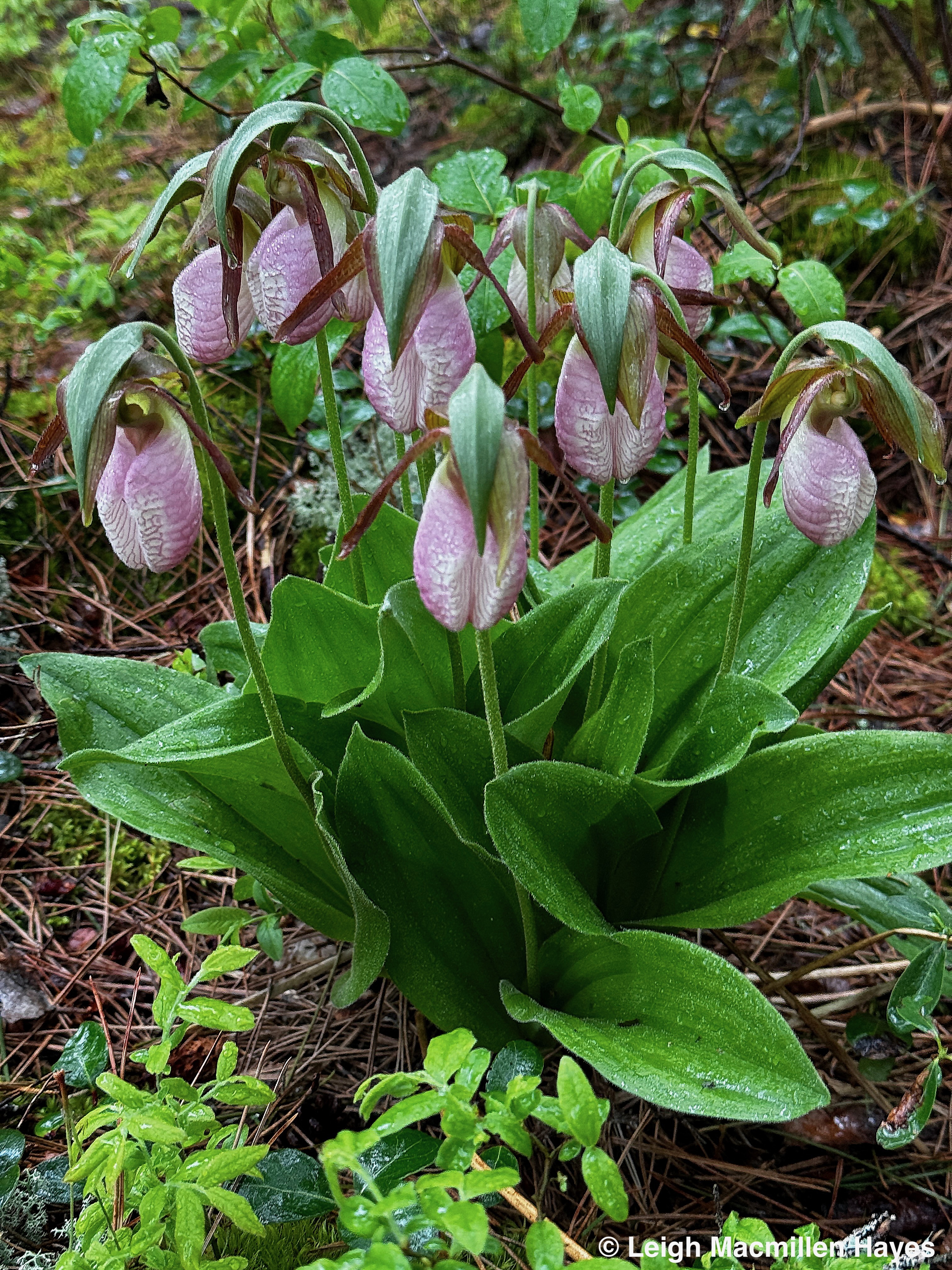
The real reason, however, for our hikes this week was greed. Yes. Greed. You may know My Guy suffers from Blueberry Greed in the summer, but spring brings out another type and he takes on the mission to locate and count Lady’s-slippers. And he always wants more.

It may sound like an easy task because some are proud to stand straight and tall and can be seen easily from the trail.

But some, like the American Toad, like to hide. We, however, are persistent in our survey.

We found pinks of many hues, and their white variants.

And no spring feels right without a visit to My Guy’s favorite bouquet.

Lady’s-slipper pollination is a curious thing. Bees are lured in by the guide lines to a slit in the front petal, the slipper-like pouch, or flower’s labellum. Once inside, the bee cannot exit the way it entered because the petal structure turns inward.

The exit is at the top of the slipper, but to reach it, the bee must move through a hairy interior and rub against the flower’s stigma, depositing any pollen it may have carried in and brushing against the pollen mass called the pollenia before flying out.

Some bees get frustrated with the dilemma of discovering there is no nectar and the task of finding the exit and instead chew their way out, which seems to be what happened to this flower.

One flower in all that we found, did present as if it had been pollinated, for rather than the downward pose, the slipper was almost parallel to the ground and beginning to deflate.

Twice we came upon last year’s capsule, which is a rare treat for so few are actually pollinated because the bees learn not to bother. Fortunately, one woody capsule contains thousands upon thousands of seeds, which are released when the woody structure splits its seams.

Near the end of yesterday’s hike, the sun finally brightened the sky and forest, and we weren’t the only ones to enjoy it for a gartersnake basked beside the trail and helped us spot another flower to add to our count.

And on Monday’s hike we had another special sighting: an Ovenbird’s nest that I spotted because I saw the parent fly up through vegetation beside the trail as we approached.

We covered a lot of miles, hiked slower than My Guy’s normal pace, and kept reminding ourselves of the numbers so we didn’t lose track, but rain and mosquitoes didn’t hold us back.

Lady’s-slippers have a symbiotic relationship with fungi. A fungus helps break the seed and allows it to obtain nutrients and energy from organic matter in the soil, while the plant, once established, gives nutrients back through its roots. It takes anywhere from 3 – 7 years for the seed to develop underground and then may take another ten years of presenting as two pleated leaves, before a flower is produced. That means that by the time it first flowers, the plant might be 17 years old. So please, please, please, enjoy them the way we do. In their natural state.

Our count (which include last week’s visit to Wolfe’s Neck Woods State Park):

Wolfe's Neck
2022: 411
2023: 324
2024: 475

Albany Mountain
2020: 150
2021: 47
2022: 266
2023: 274
2024: 364

Overset Mountain and Sanborn River Trail:
2022: 286
2023: 351
2024: 598!!!!!!!!!! (You know who wanted to make it to 600, but came up just shy)

Grand Total this year: 1,437.

I'm not sure we are done and I know everyone is seeing them everywhere, which is a glorious thing. Now I'm wondering if all of last year's rain showers meant more fungi for My Guy's May Flowers.

Thanks to the Cardinal

I love this time of year when the windows are open and the birds wake me and invite me to head down the stairs and stare out the window. And so I did this morning.

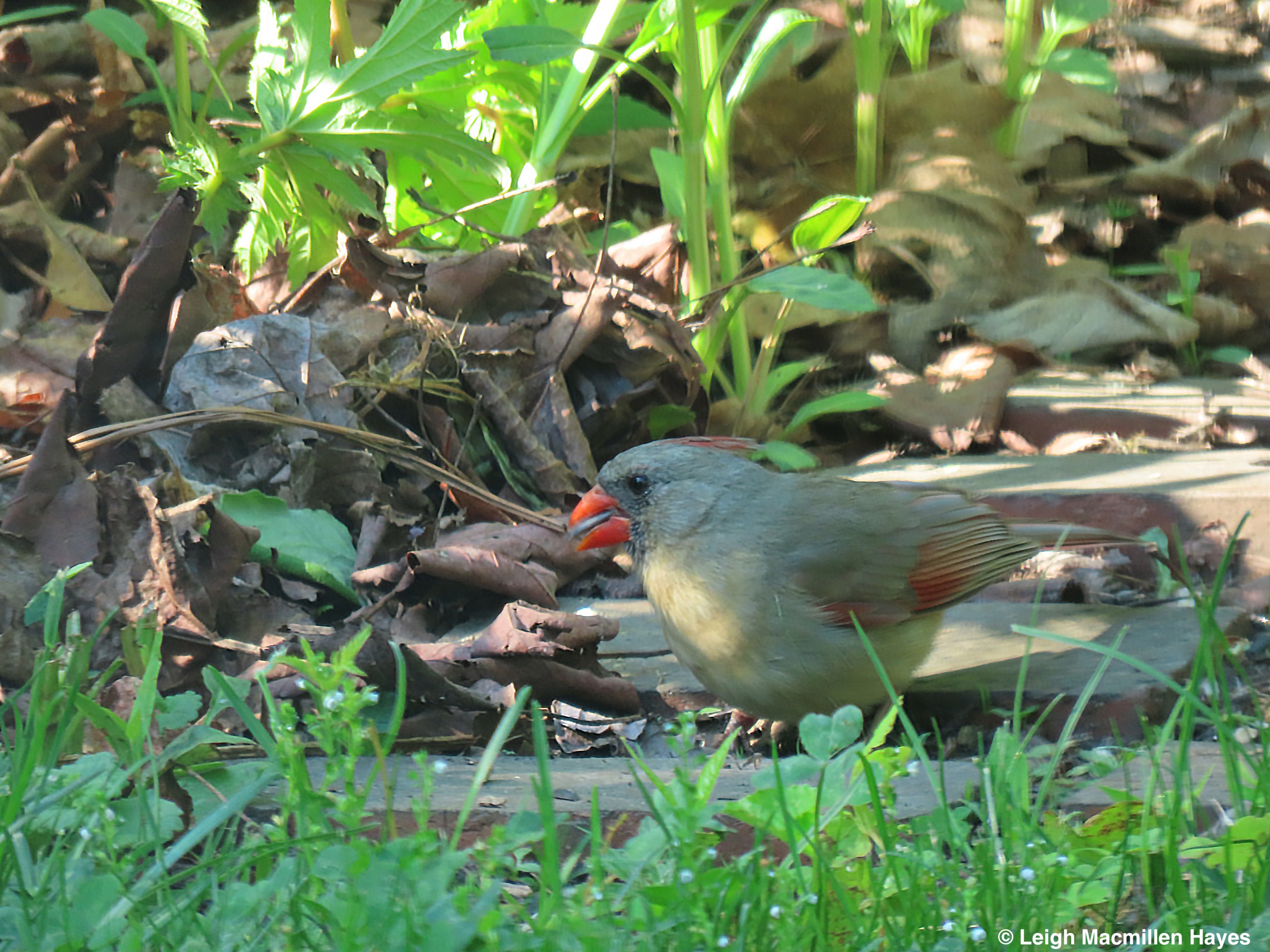
It seems the Northern Cardinals always announce their arrival with a “Chewip, Chewip, Chewip,” call and usually he arrives first, and she, pictured above follows. For some reason, I didn’t see him this morning, but maybe tonight as they are early morning and early evening visitors.

While watching her another bird flew in. This a House Finch. And it immediately amazed me. I didn’t realize that they eat Dandelion seeds . . . until, that is, I watched it do exactly that.

So, My Guy and I are at opposite ends of the spectrum when it comes to Dandelions. He wants to banish all from the yard. I want to encourage them and any other wildflower that chooses to appear.

And today, I decided to discern what I might hear when I take time to listen, and not just listen to the birds.

It was the voice of the Dandelion for which I yearned. Some call them weeds and wish they would wither and die. But the Dandelion wants us to know it is strong and persists even in the poorest soils.

And so it should.

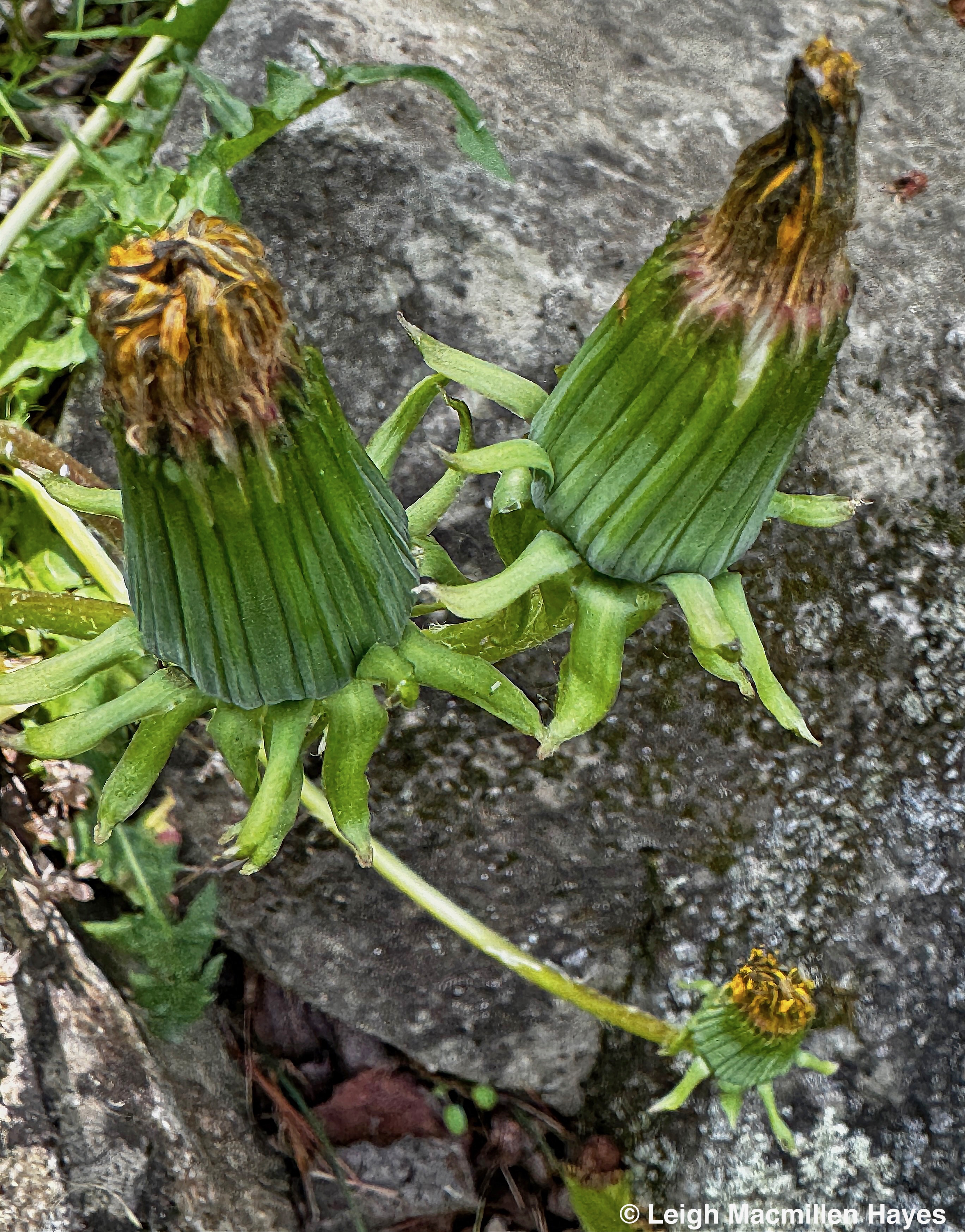
To begin, there are the green bracts. Some of the bracts are turned downward as if in a dance, perhaps to keep certain insects that might gobble up the flower at bay, while other bracts protect the developing flower.

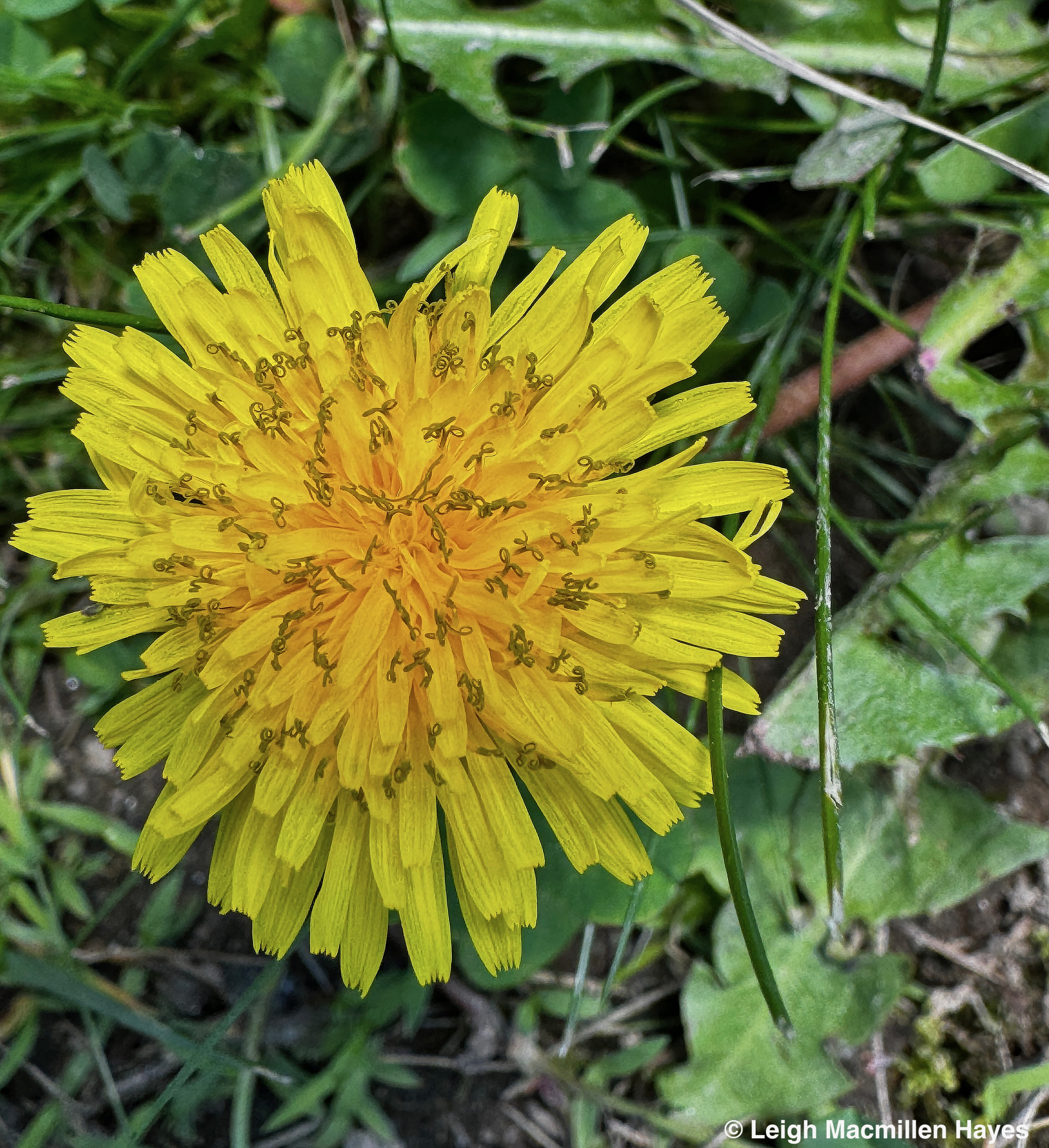
When the flowerhead begins to open, it does so one ray or “petal” at a time, for each “petal” is actually a floret, all of which combined look like the sun at high noon and make this plant a composite.

Toward the stem, each floret narrows into a tube, which rests on an ovary containing a single ovule. In that tiny tube is the nectar. While you may not see the tubes unless you carefully pull the flower apart, we can’t overlook the stigma, that tip of the pistil, or female part, covered with pollen. Each stigma for each floret is split at the end into two curling lobes.

The Dandelion sings out from its nectary, inviting insects to stop by for a visit. Meanwhile, the pollen remains in the protected areas within the circles or loops the two lobes of the stigma create.

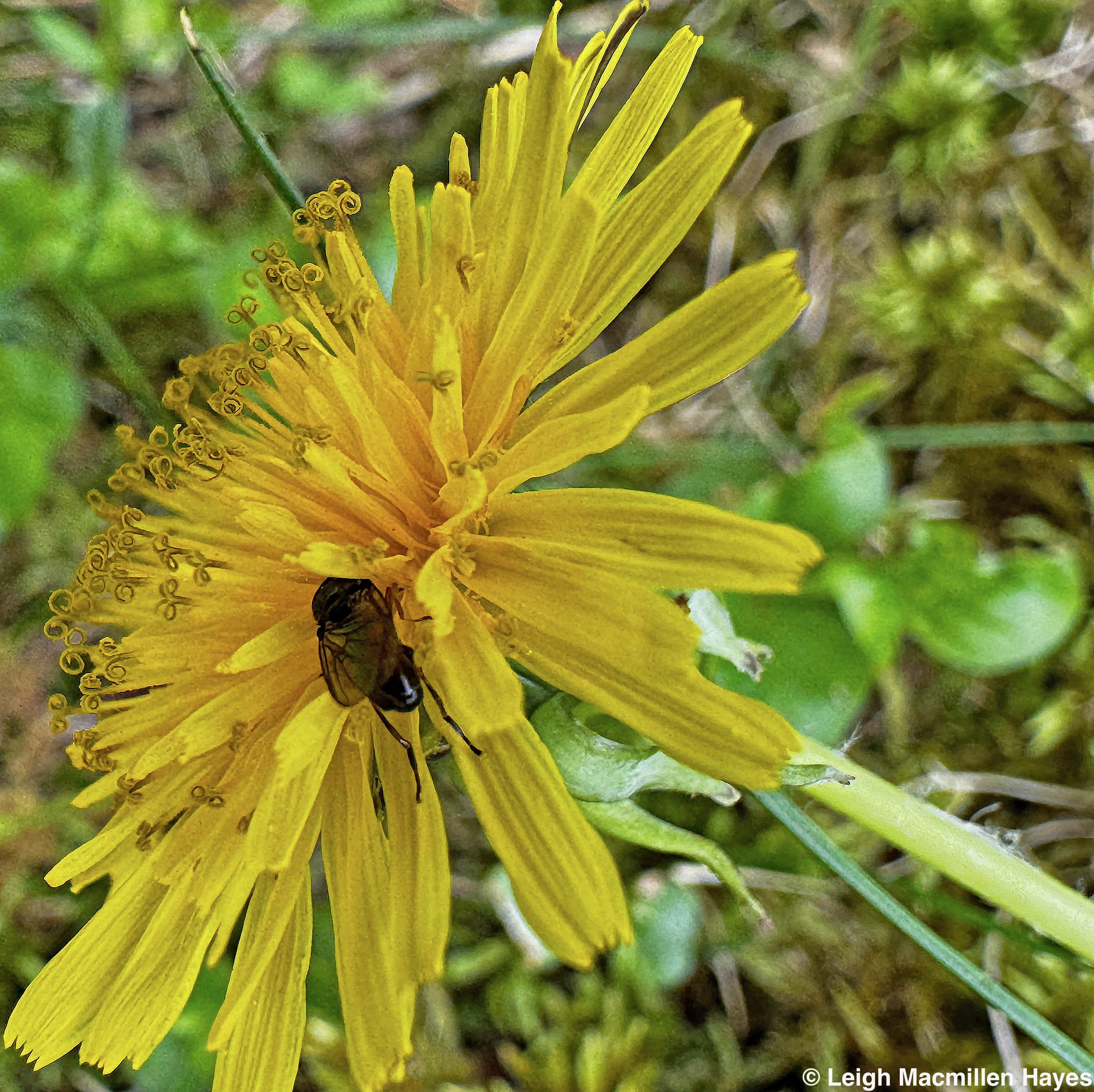
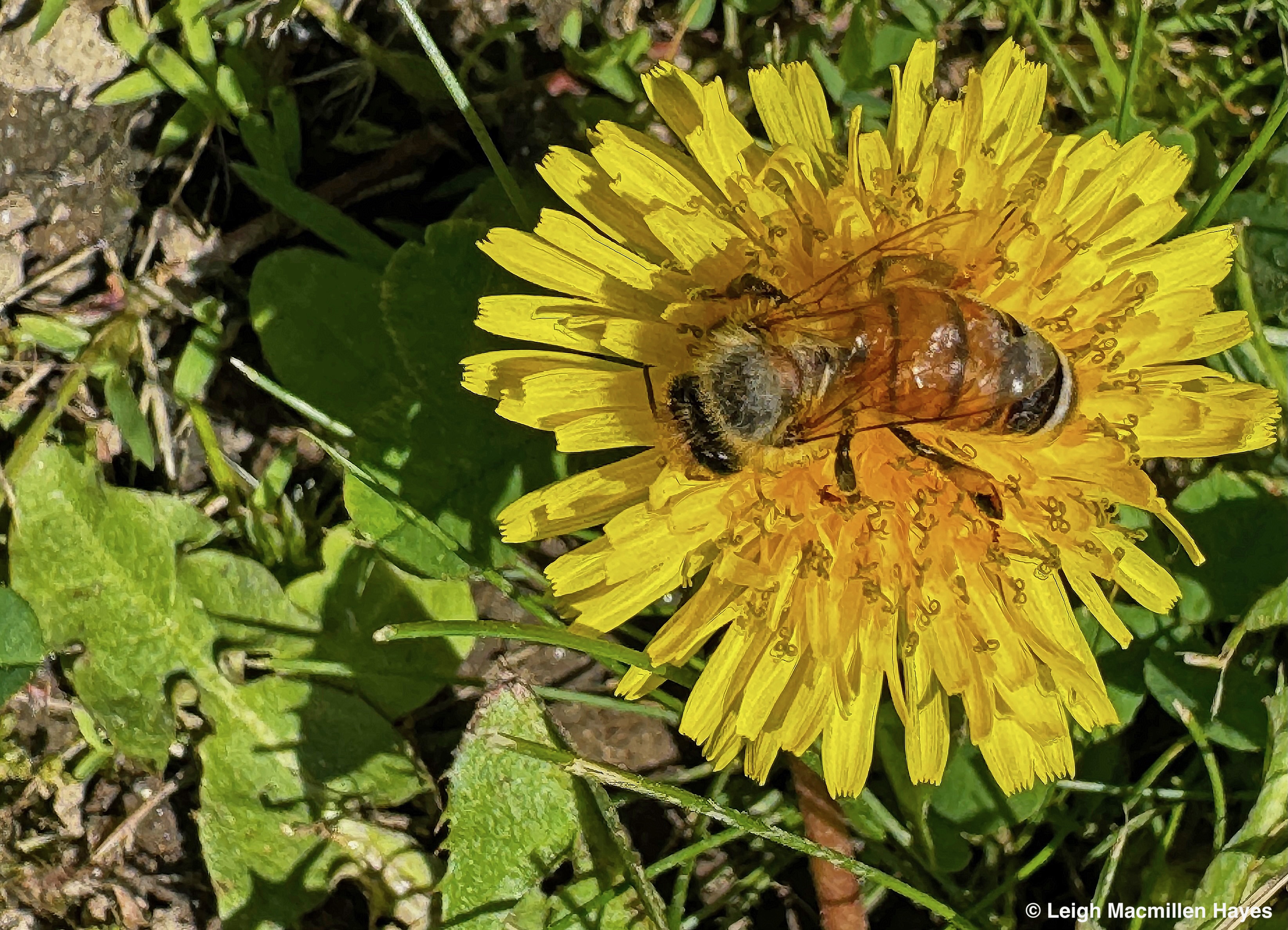
Bees and many flying insects seek the nectar and in the process of visiting the flower, they smear themselves with pollen grains, which drop off at the next flower where the insect seeks another drink, thus insuring cross-pollination.

Of course, if you are going to listen to a Dandelion in full flower, you should be equally wowed as it continues its journey.

In time, the entire head of the bloom matures, the florets close up within the green bracts, and the bloom looks almost like it did as a bud, and evokes an image of our life cycle–from birth to death.

But the transformation isn’t over yet. Next on the Dandelion journey, the flowerhead opens into a fluffy ball of seeds, that fluff being fine hairs attached to each seed that will serve as a parachute.

Each seed represents one floret. And they wait for us, the wind, animal. or bird to disperse them. Out into the world they are ready to go. I don’t know about you, but it’s hard to resist the temptation to pick a stem and blow on the puffball.

As I walked around our yard today, I noticed carpets of another composite, with a flower of the same color, but this one a Mouse-ear Hawkweed.

One easy way to differentiate between the two plants is by their leaves. Both have basal leaves, but those of the Dandelion are irregularly lobed.

The Mouse-ear Hawkweed leaves are entire, and entirely hairy. And much shorter in length.

Some call them weeds, but I prefer to think of them as volunteers who reflect the sun’s image. When I take the time to listen to them, they remind me that we are all interconnected and we need each other to survive, a lesson the pandemic certainly taught us. And that includes letting the undesirables flourish–in our yards and in our lives. I know I need to remember that.

If we take the time, really take the time, to slow down and observe, watch the variety of insects that pollinate flowers like Dandelions and Hawkweeds, and begin to understand that we need to save the flowers in order to save the bees and their relatives who also pollinate the fruits and vegetables we need in order to flourish, then we may change our minds and realize they are desirable after all.

And not all the seeds will end up growing in your lawn, as the House Finch taught me today.

Thanks to the Northern Cardinal for leading me to the House Finch, and subsequently the Dandelion and Hawkweed.

Eyes on the World About Us

Sometimes we hike with a purpose, My Guy and I. And on those days, he actually slows his pace down.

And opens his eyes wide, much like the Red Squirrel–ever on the alert.

Was it the Fringed Polygala, aka Gay Wings he sought? No, but I certainly did. Those petal-like wings are actually sepals. Two of the petals are fused into a tubular structure, thus giving this plant a “bird-of-paradise” form. The fringe at the end of a third petal or keel below invites all to enter.

Don’t they look like birds in flight? Being a spring ephemeral, these delicate blooms will only last a few more weeks and then I’ll confuse their leaves with those of Wintergreen, but My Guy was rather oblivious to all of this.

Was it the Dandelions he sought? No, he scuffs at those. But the Flower Fly and I–we were two of a kind for this incredible display. Notice how each ray is notched at the tip like teeth. Those five “teeth” represent a tube-shaped floret. Fully open, the bloom is a composite of numerous florets.

Was it the Wolf’s Milk Slime he sought? No, I’m not sure he even spotted them for though we were moving at a slower than normal pace, one of us was even slower than the other. I couldn’t help it. I cannot resist this slime mold.

It was apropos that I should spot it on this trail and by the end you’ll understand why.

And so I did what I always have to do when I spot Wolf’s Milk. Picked up a stick. And poked one of the fruiting bodies. I could actually feel my peeps’ presence in the moment because they would have been doing the same, and maybe even taking a video as the salmony-pink paste inside oozed out.

As the mold matures, the paste actually turns into the spores and when we poke it later in the season, a puff of gray exits the ball. No, they are not puffballs, but they are the next best thing.

Was it the Painted Trillium he sought? No, but for once he did actually count them. I’ll let you know the total at the end.

Was it the number of blowdowns, he sought? No, but those were incredibly abundant, many occurring over the course of the past eight months. And actually, they were a hinderance to what he did seek.

Was it the Pink Lady’s Slippers he sought? BINGO! I do not know why, but My Guy loves to count them and especially to find displays like this. And I love that he loves this.

White Lady’s Slippers are a variation of Pink, and so they were included in the count.

We honored the very last one before we headed back to the truck–this being #475.

Yes, 475 Lady’s Slippers.

At this same locale in 2023: 324.

And in 2022: 411.

The thing we did notice this year, we were a week earlier than usual, and many of the flowers hadn’t completely opened. Note to ourselves: don’t be so impatient next year because we really love seeing them in full color.

And we do know we missed some because of the blow-downs, but hey, we still did well.

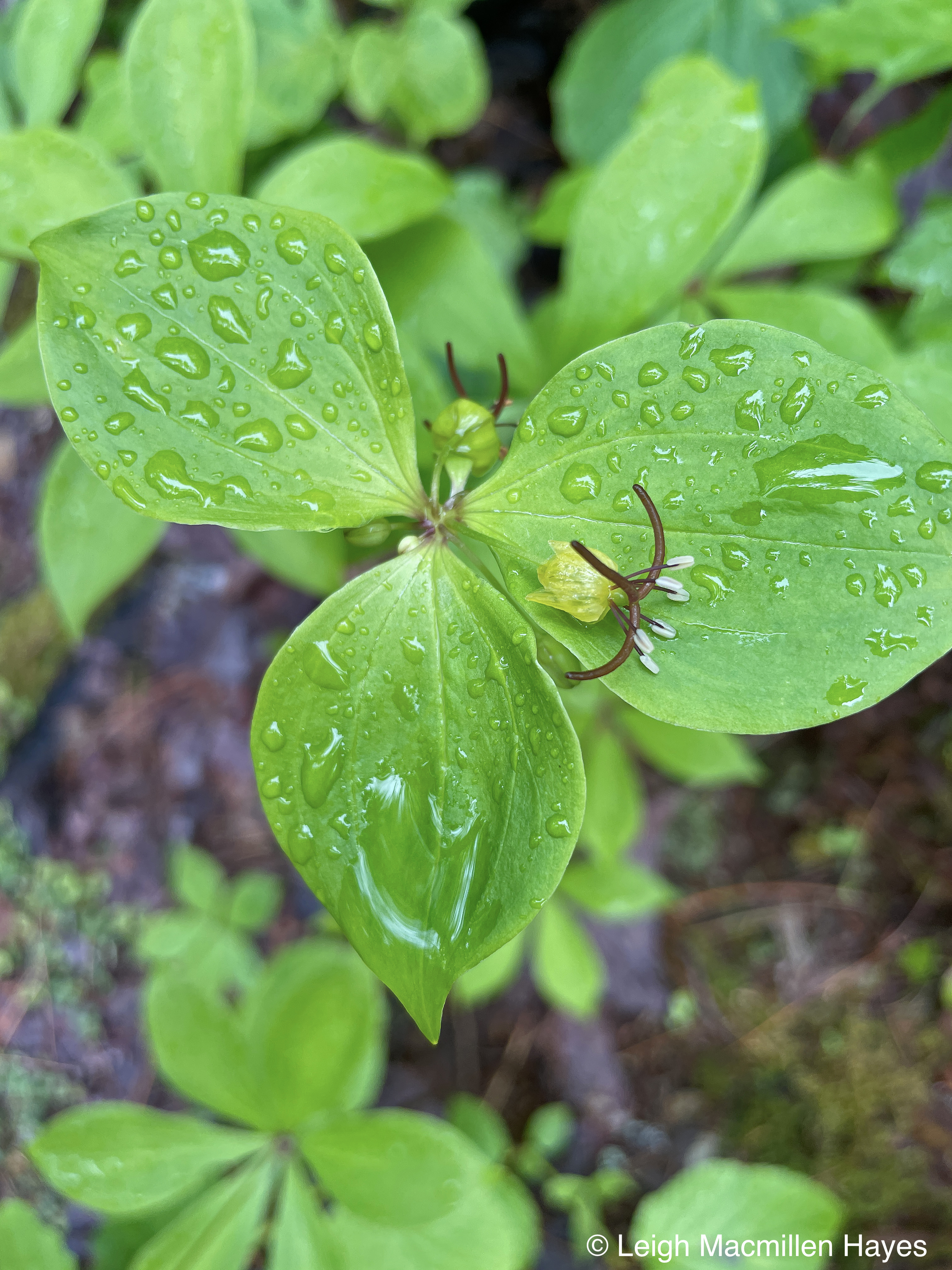
Number of Painted Trillium: 2. My Guy usually refuses to count them, but we didn’t spot one until we were almost done, so he figured he could. And then the second one appeared.

I couldn’t help but smile.

Where were we? By this photo some of you may now know our location. In front of us was Googins Island, as viewed from the rocky coast at Wolfe’s Neck Woods State Park in Freeport, Maine.

Now do you understand why I said the Wolf’s Milk Slime Mold was located in the right place?

And Googins Island has long been home to this Osprey nest, where the expectant parents had their eyes on the world about them. Just as we had.

A Day of Firsts

This has never happened before. Then again, there’s a first for everything.

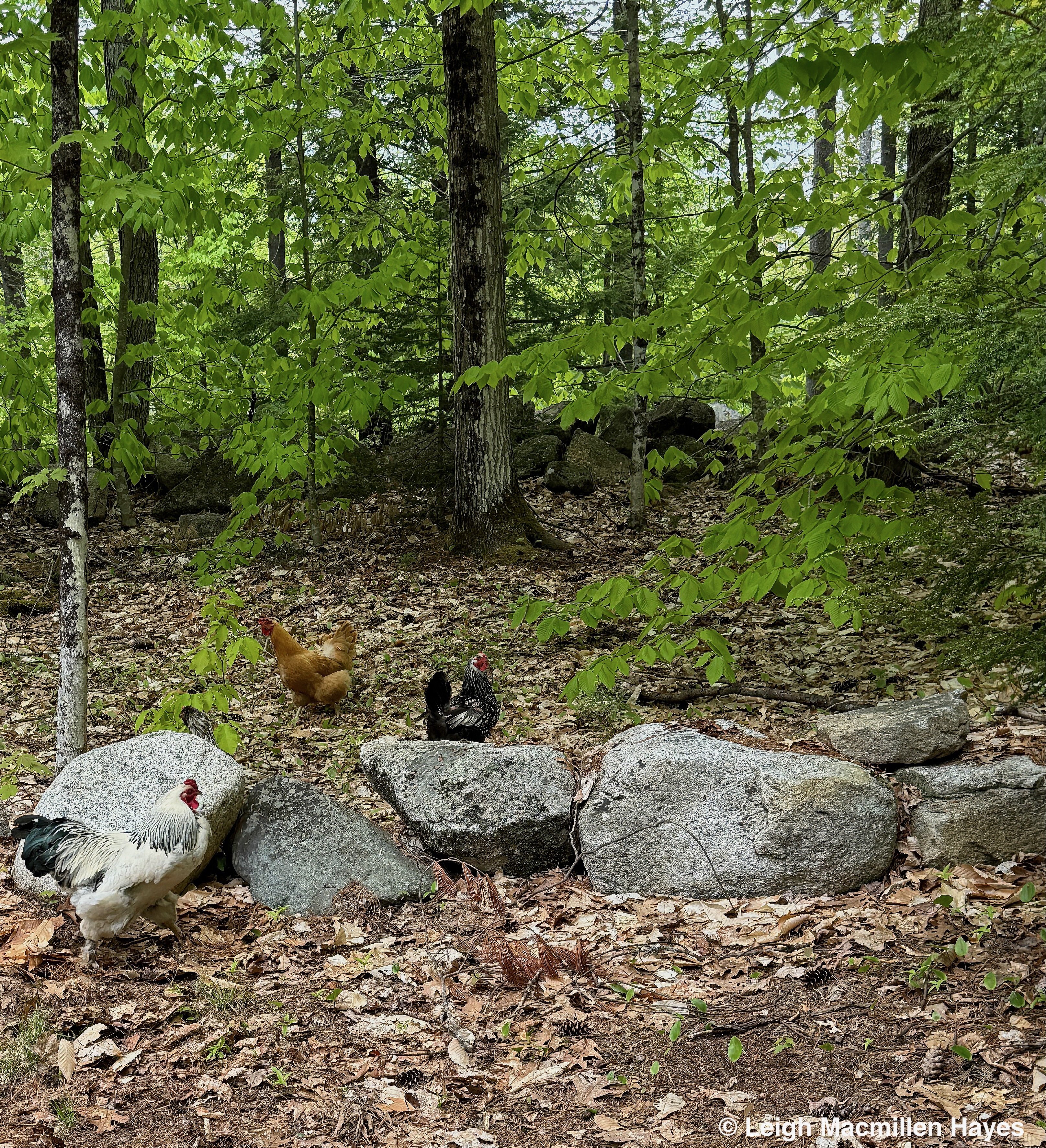
My Guy and I have been hiking together for the last 38 years, and in all that time, never, ever have we been greeted by neighborhood chickens, with one rooster even sending us off to the tune of his cock-a-doodle-do.

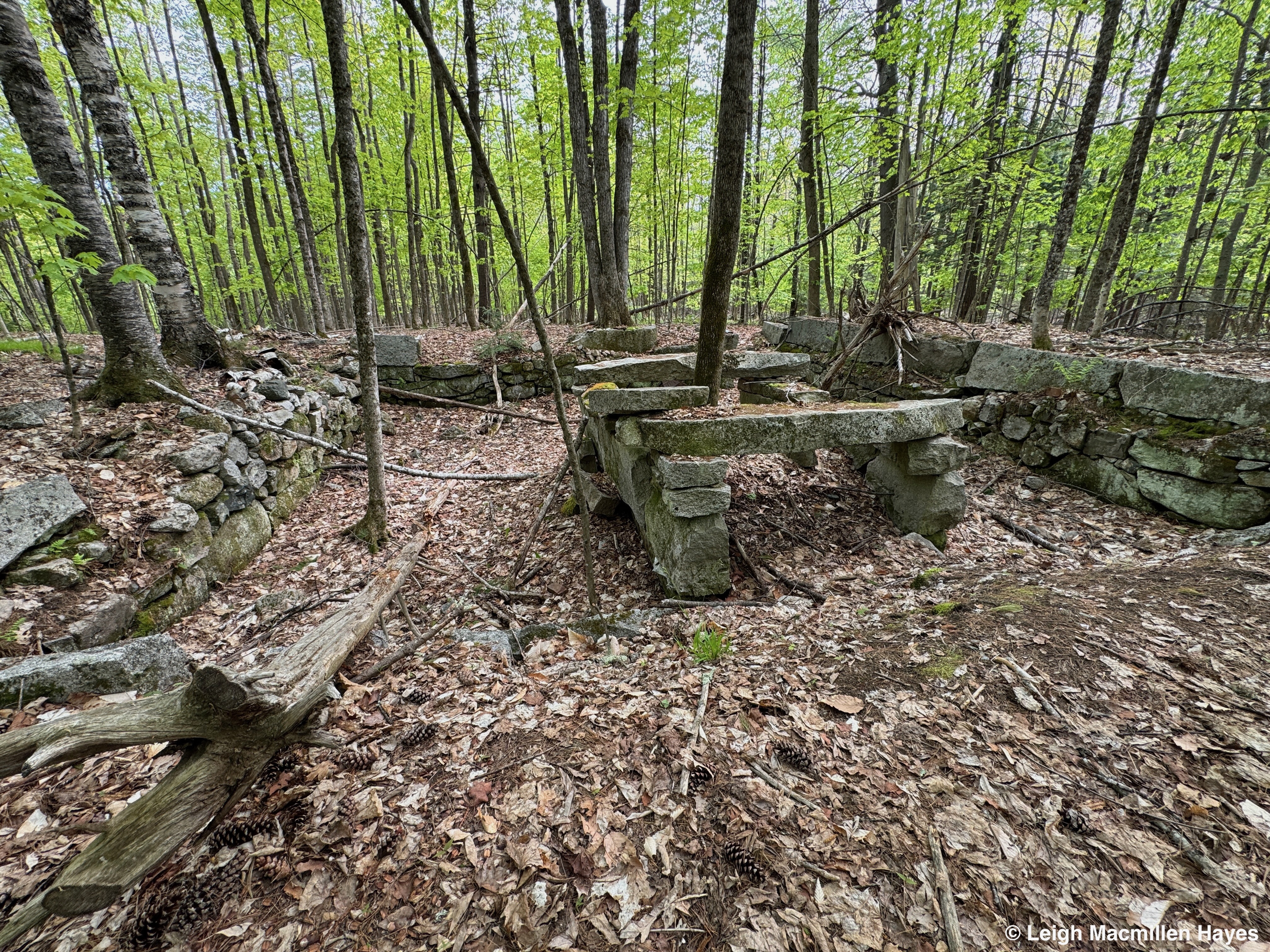
The past is always present and just after the send off, we paused by the homestead foundation, possibly that of A.H. Evans, which is located within feet of the trail’s head. And it appears that if this did belong to A.H., he was the head of a large family for it’s a huge foundation.

The barn foundation was also impressive and we could sense the work that went into such a creation.

And based on the configuration of rocks and boulders between the house, outbuildings and barn, all were once attached.

Again, assuming all of this belonged to A.H., I did discover a 1916 document that suggested he grew rutabagas: “A. H. Evans, Fryeburg, raised 90 bushels rutabagas in 1-8 of an acre.”

At some point in time, the land also must have served as a saw mill close to what is now a small stream, but may have been more of a brook in the past, there’s a pile of saw dust that hikers must climb. This is not uncommon in Maine woods. And it’s forever soft underfoot, however many years later.

We spotted a few Painted Trilliums, and lots of Sessile-leafed Bellwort, and other flowers waiting to come, and a Chipmunk peeking out from a rocky ledge, and mosses, and lichens, and so much more, (oh, and a few Black Flies, but again, not bad in the scheme of things), but this was the first American Toad of the year for us. Toads can remain absolutely still, a smart adaptation as they blend into the scenery.

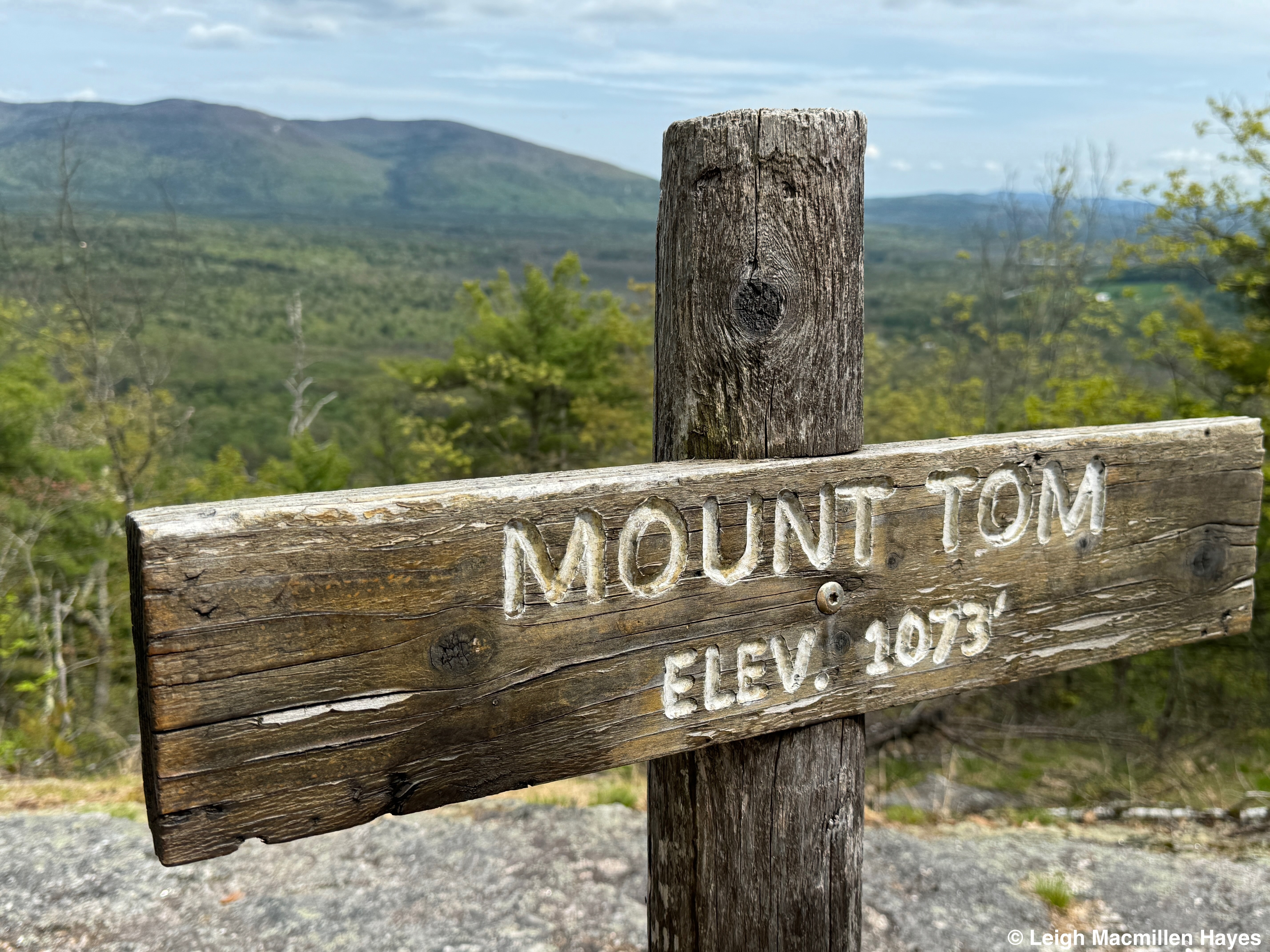
It’s about two miles to the summit, which isn’t all that high, but it’s the perfect quick hike (okay, remember who I was hiking with) for an afternoon. And at said summit, we stood for a few moments as we gazed upon the ridgeline of our hometown mountain–Pleasant by name.

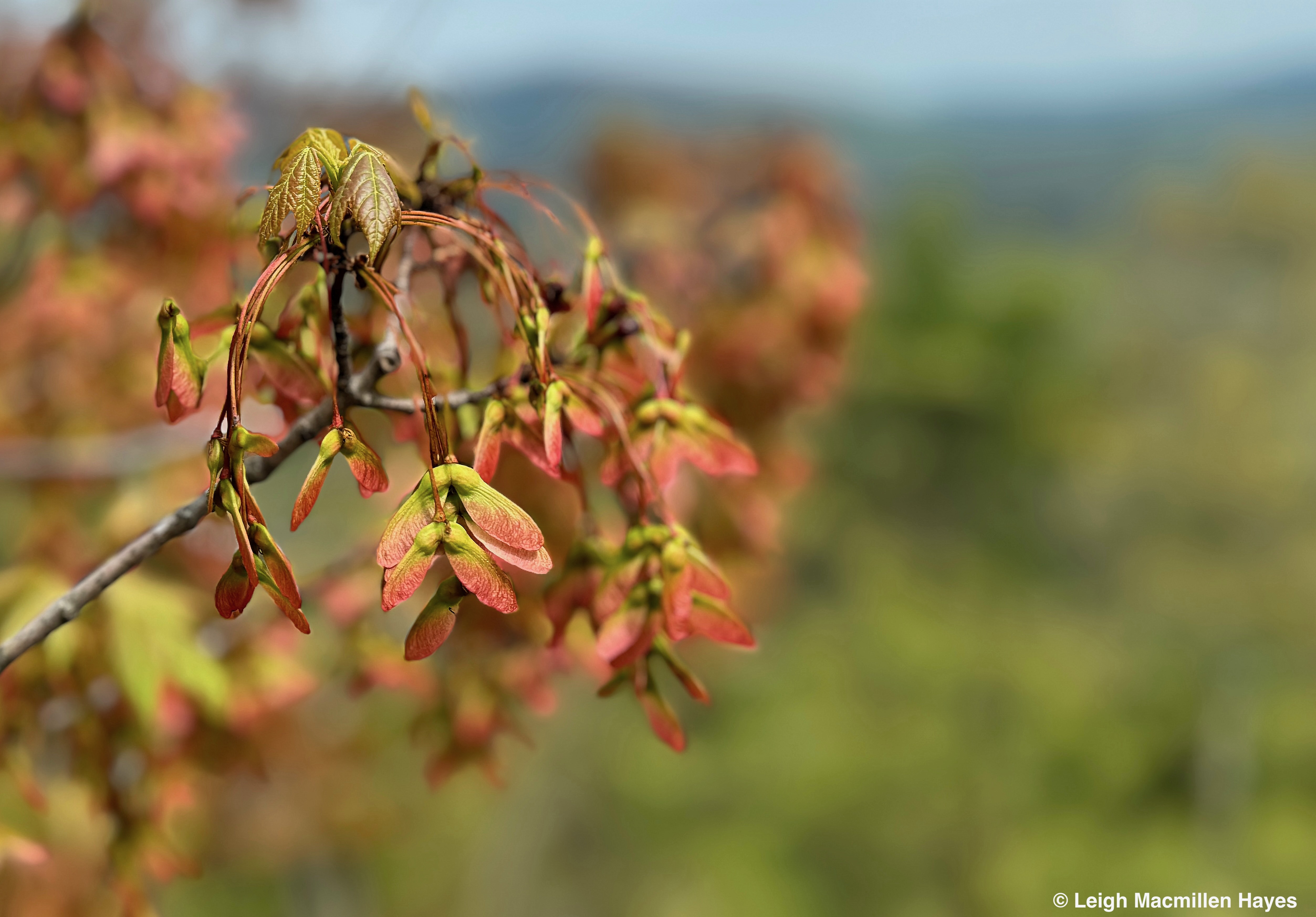
And at the summit, a Red Maple showed off its gifts to the future in the form of an abundance of samaras. Well, I see them as gifts. Given that we have an abundance of Sugar Maple seedlings growing in our yard doesn’t exactly thrill MG.

As we started to walk back along the trail, I spotted something we’d both missed on the way up. Wild Columbine. In flower. The. Most. Spectacular. Flower. That structure. Those colors.

And because we took a different path down, Striped Maple showed off its own set of flowers, limeade green in hue. I chuckled later when I commented on how the Beech leaves gave the trail such a summery look, and MG mentioned that he had even spotted toilet paper. It took me a second, during which I searched for a roll of white, before I realized he was referring to Nature’s Toilet Paper, for so large are the leaves of Striped Maples, and soft, and not poisonous, so you know they are safe to use. Not that we often encounter Poison Ivy in the woods, but it could happen.

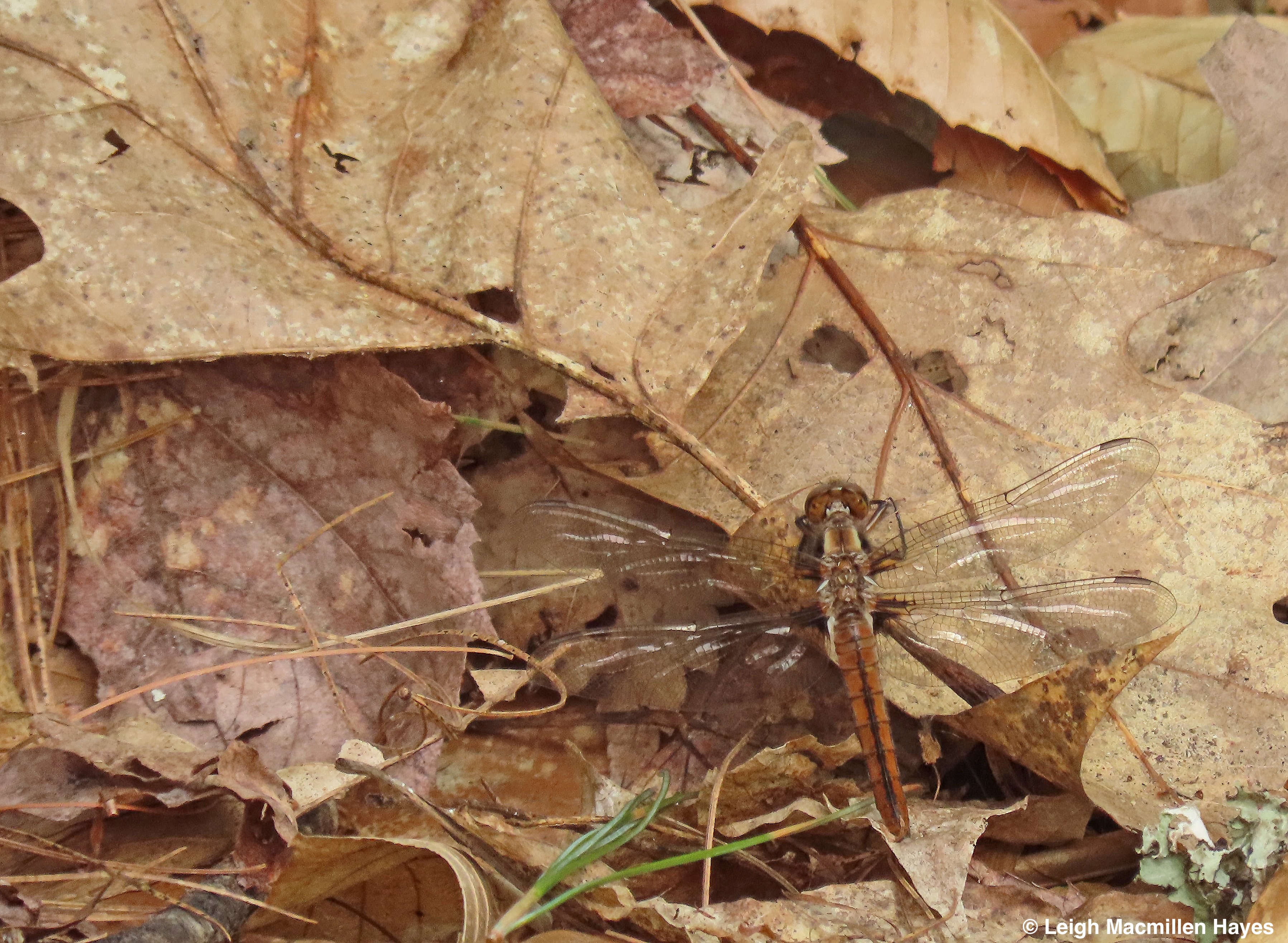
Back at the trailhead, the chickens weren’t there to congratulate us for a safe return, but we encountered probably the best finds of the day–several immature Chalk-fronted Skimmer Dragonflies. Let this next season begin.

Indeed, this was a day of firsts.

Savoring Spring

My paths were multiple this weekend as if I was on a quest.

On a bridge over a brook,

down a road through the forest,

beside a bog,

along a boardwalk,

and even following this guy down low and up high.

Together today, we circled another brook (if one can actually circle a brook, but we did),

enjoyed this view from lunch roots,

and dessert on the rocks where we could peek down on said roots.

Though I may have been alone for much of the weekend, I never really was for the bird song, including the conk-er-ies from this male Red-winged Blackbird, accompanied me where ever I hiked.

There were Eastern Chipmunks adding to the chorus as they chortled at me and I chortled back, though I did wonder if life hasn’t always been so easy for this one given the marks on its body and a very short tail.

I watched Painted Turtles bask, despite cooler temperatures, though the air was probably warmer than that of the water.

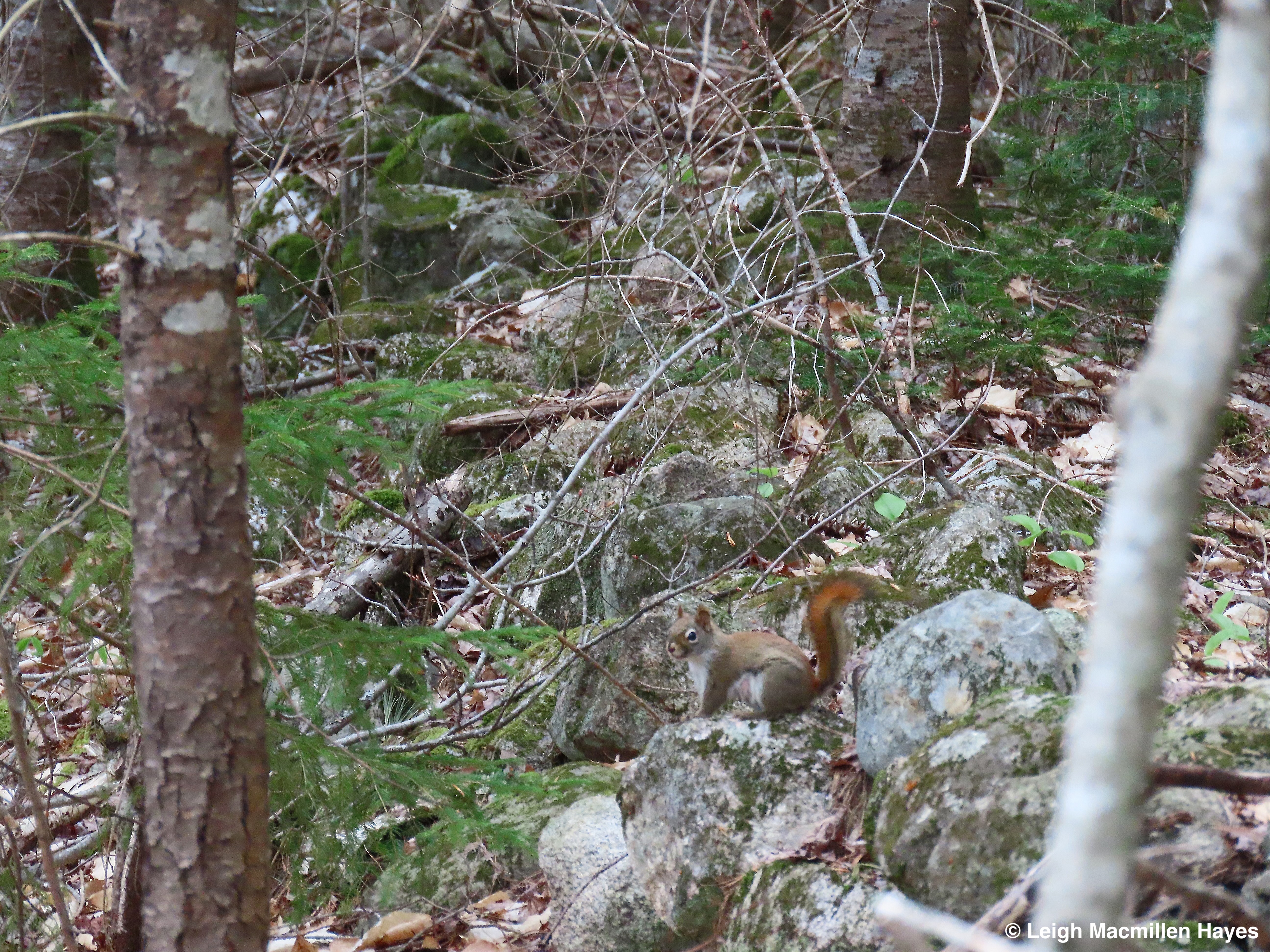
And I was chastised by this Red Squirrel, but really I had done nothing wrong–except to enter his territory without an invitation.

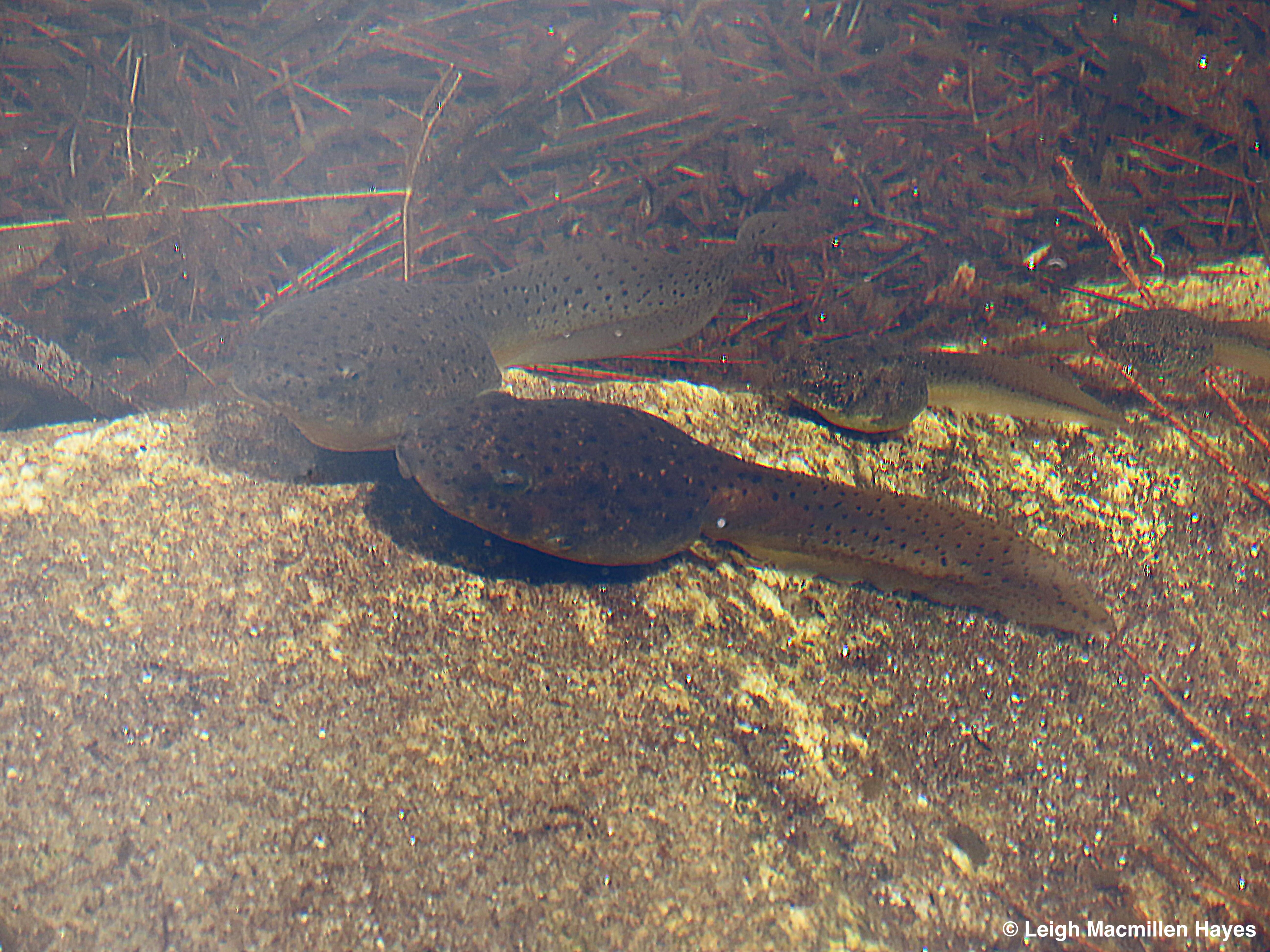
In the depths of the water today, tadpoles. HUGE tadpoles of the Bullfrog sort, which take two years to mature. I spotted tiny hind legs growing beside where the abdomen meets the tail. There were also lots of smaller tadpoles, too big to be Wood Frogs or Pickerel, but I suspected either one-year old Bullfrogs, or perhaps they were Green. Or both.

A few flying insects also brightened the days (and I have to say I’m not referring to Black Flies, which I hardly spotted–and actually caused me concern, for where have the little biters gone?), including this Anglewing butterfly. I can’t name it to species, for it is either a Comma or Question Mark, but never in the time I watched did it pose so that the underwings were visible. Okay, so My Guy and I spotted it today and when I explained to him the difference between the two, the C having a small white comma on its underwing and the QM, a small comma and a dot looking rather like the punctuation mark, he decided it must be an Exclamation Mark instead.

And in the same area, an American Lady added her color to the scene.

Leatherleaf’s bell shaped flowers reminded me of clothing hanging from an outdoor line.

And I’m really beginning to believe there are a trillion Painted Trillium, though I didn’t actually count. There’s something to admire about those olive green leaves and perhaps it’s that we don’t often see that color in nature.

I even spotted a few that chose a different paint palette. I could explain away the color of the leaves by thinking that perhaps they were showing off their anthocyanin, which gives fall leaves their red color and is seen in the spring as well, perhaps serving as a sunscreen for the plant. But the color of the petals was equally amazing, though who knows, maybe it’s common and I was just paying attention to it for the first time. That does happen. A lot.

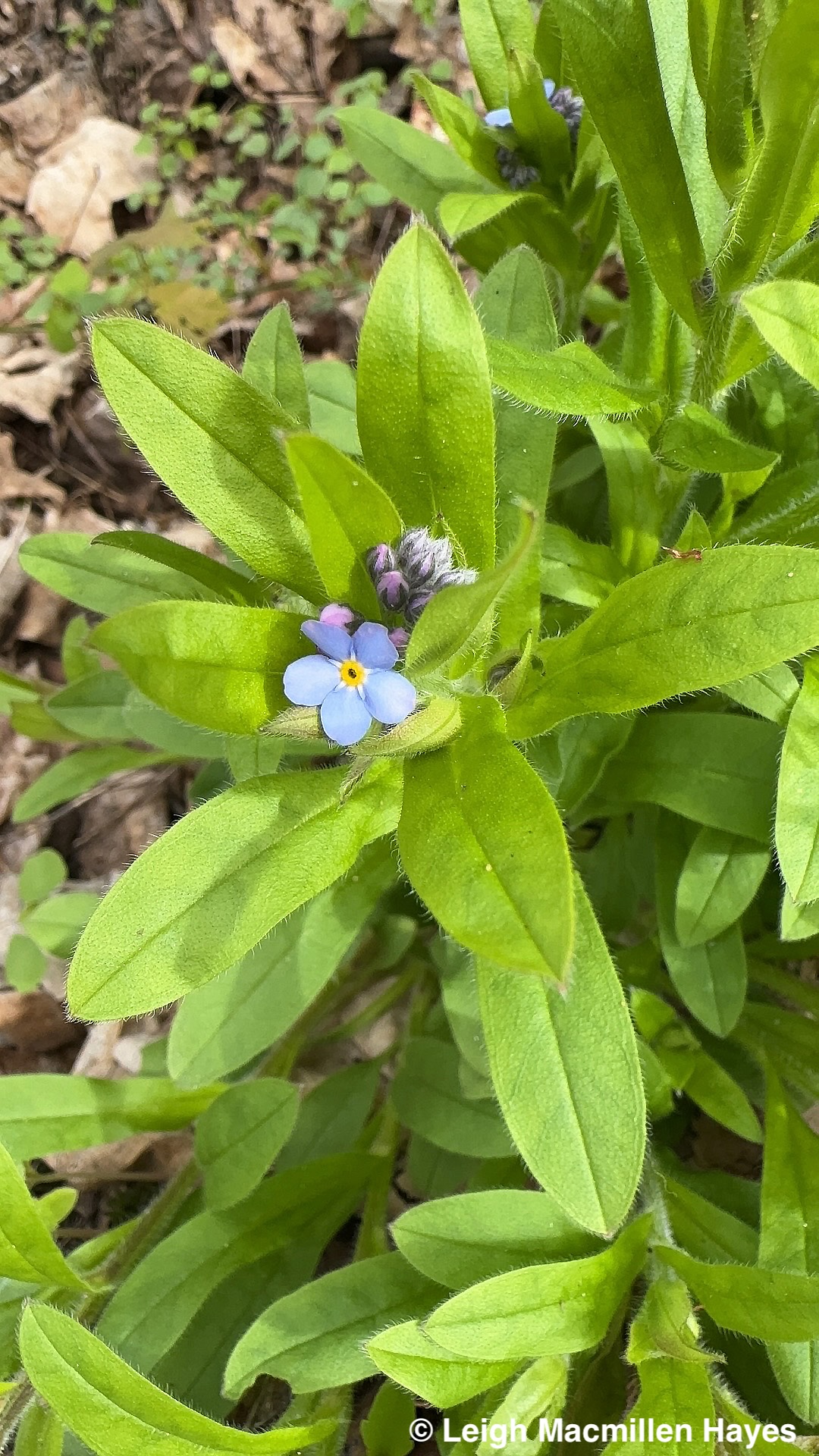
And then there was the amazing blue hue of Forget-Me-Nots. I surely won’t. Forget you that is.

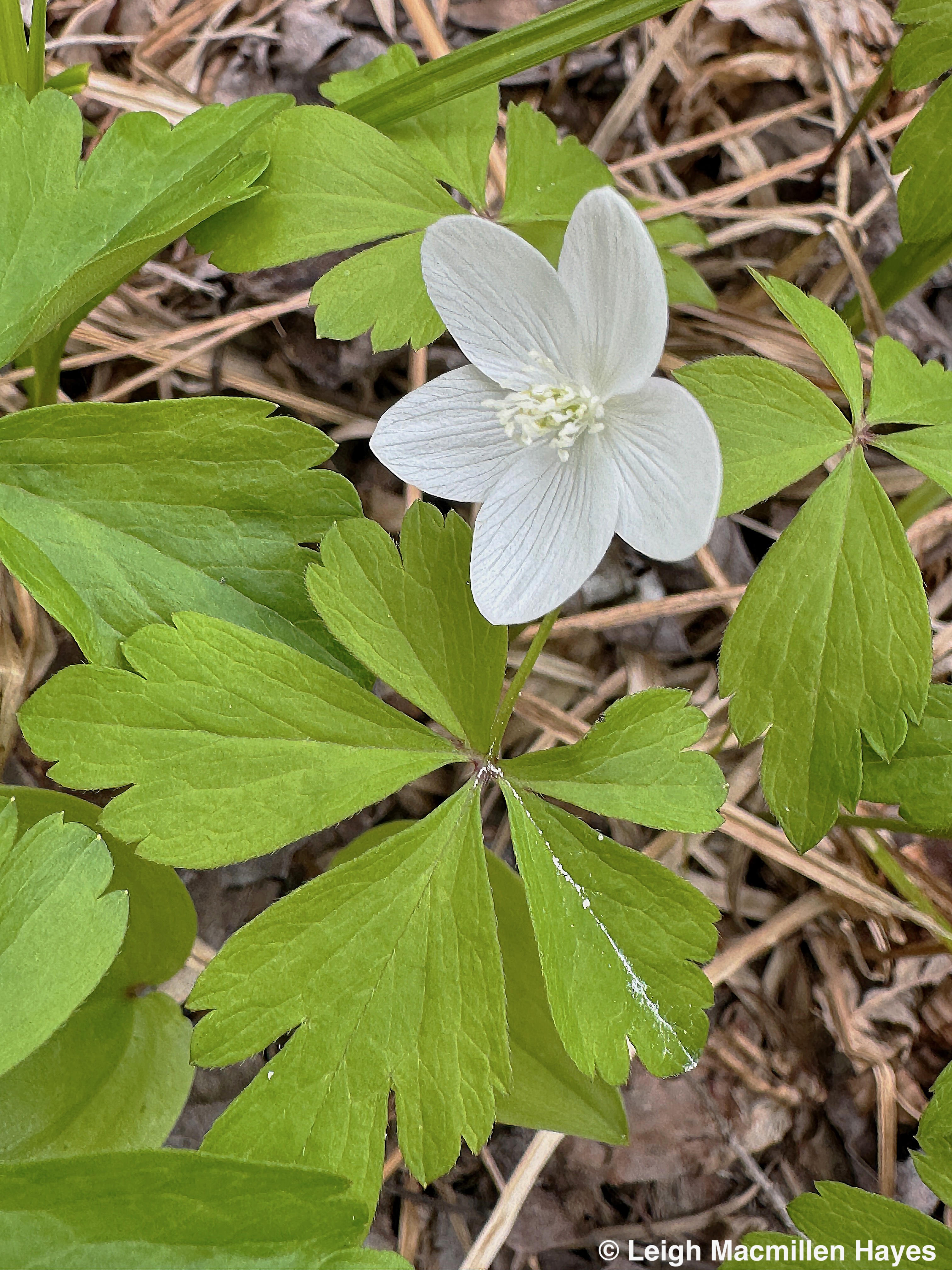
And Wood Anemone, its compound leaves notched, and flowers deeply veined, looking so tender and fragile.

Not looking tender, and hardly fragile, but still beautiful, was the carnivorous Pitcher Plant, of which I paused beside several. I’ve known this particular one for at least twenty years so when I encounter it, I always feel like I’m meeting an old friend. Because I am.

Hiding beneath its lime green leaves, American-Fly Honeysuckle’s delicate flowers did dangle in their manner of two. The shrub always surprises me, though it is a native, but I don’t get to greet it often enough.

All of these flowers bloom so early because they take advantage of sunlight before leaves emerge. That’s all changing now and in another week it will surely look more like summer around here. What I love about some leaves, especially American Beech, is that they are so hairy to start, and look like they’d make great fringed skirts for fairies. The other thing I became aware of this weekend, was the raindropy sound of their bud scales hitting the ground.

I love winter, but this season to follow is flying by, and already the Trailing Arbutus has reached its waning hour.

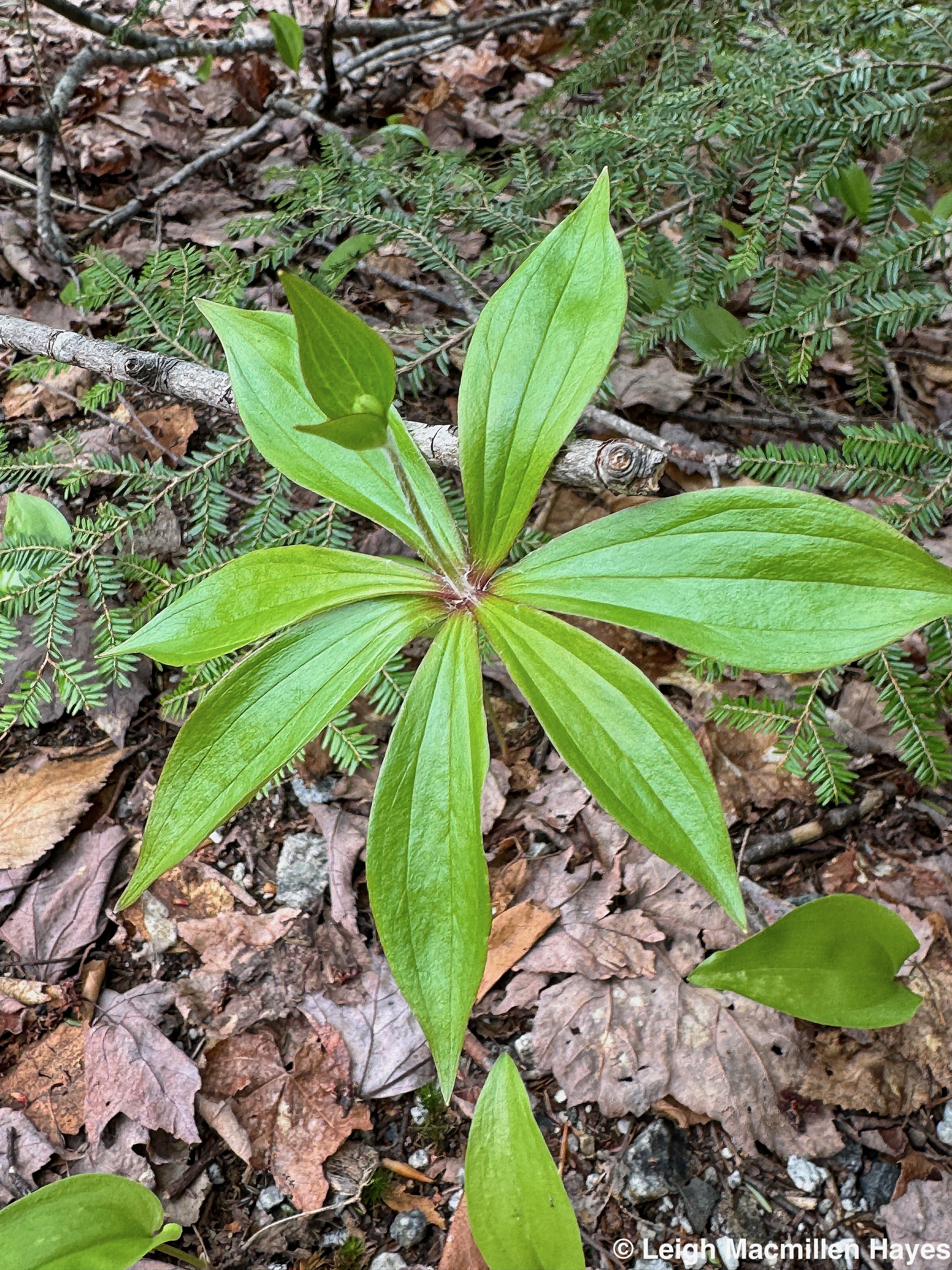
But there is hope in the form of others, like this Indian Cucumber Root, creating a second tier and a bud, and in a few weeks I’ll be seeking out its otherworldly flowers.

I’m savoring spring–before it moves on. I hope you are on the same quest.

Somewhere Under The Rainbow

Somehow we thought the rain wouldn’t fall upon our hike today, until it did. And so we sat in the truck for about 15-20 minutes, waiting for the drops to slow down, which they did.

The rain, however, enhanced everything. And as the sun came out, the water and warmth combined to create a Black Fly Festival, one which will last for several more weeks.

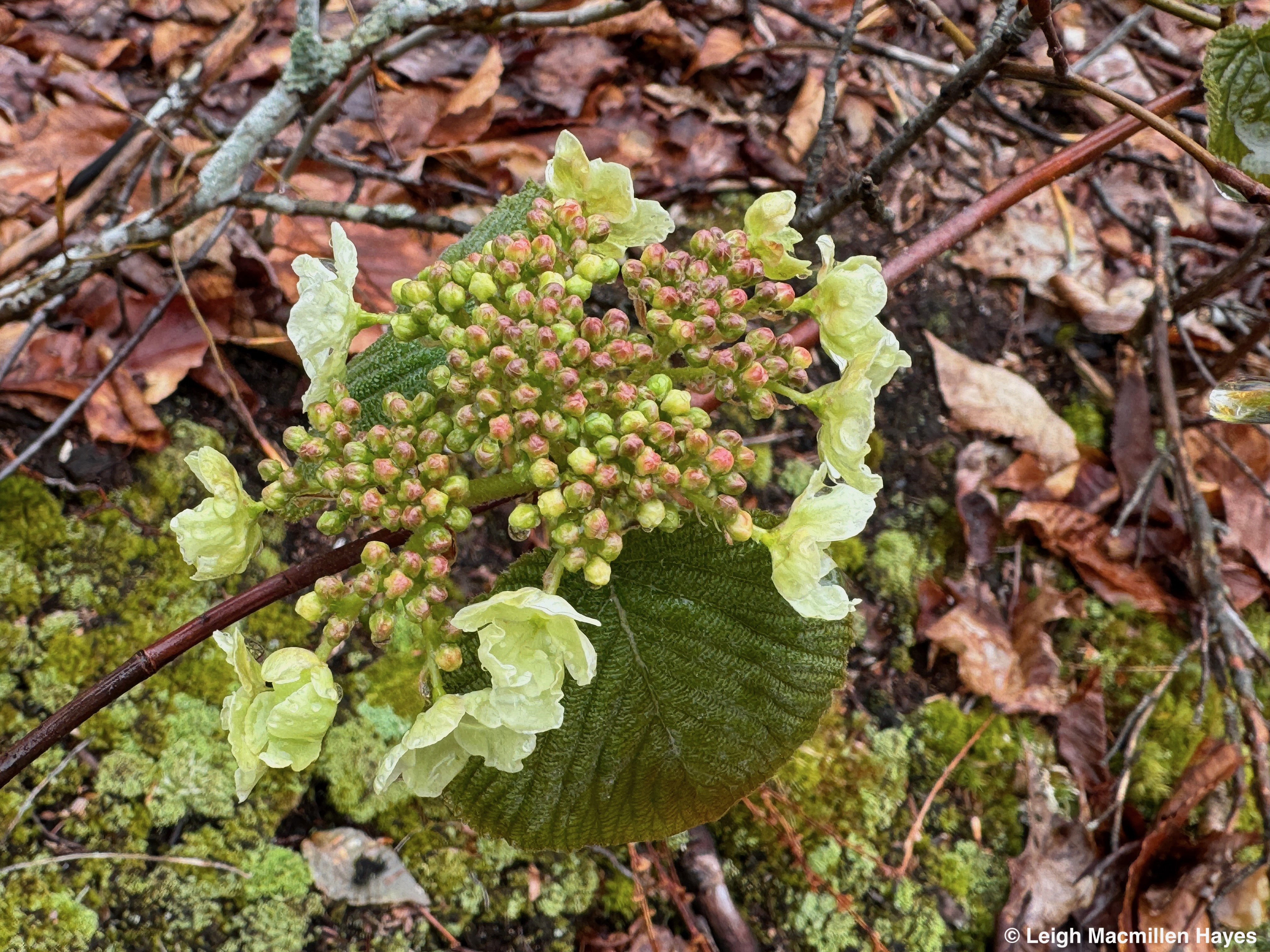
But, April/May showers do bring May flowers, and I sooo love the pastel colors that Hobblebush produces, its non-fertile showy flowers on the edge meant to entice insects to visit about a hundred tiny fertile flowers preparing to bloom in the center.

In wet seeps, Round-leaf Yellow Violets did show off their cheery faces, with violet-veined runways showing the way to the nectary, much like lights at an airfield that aid landings.

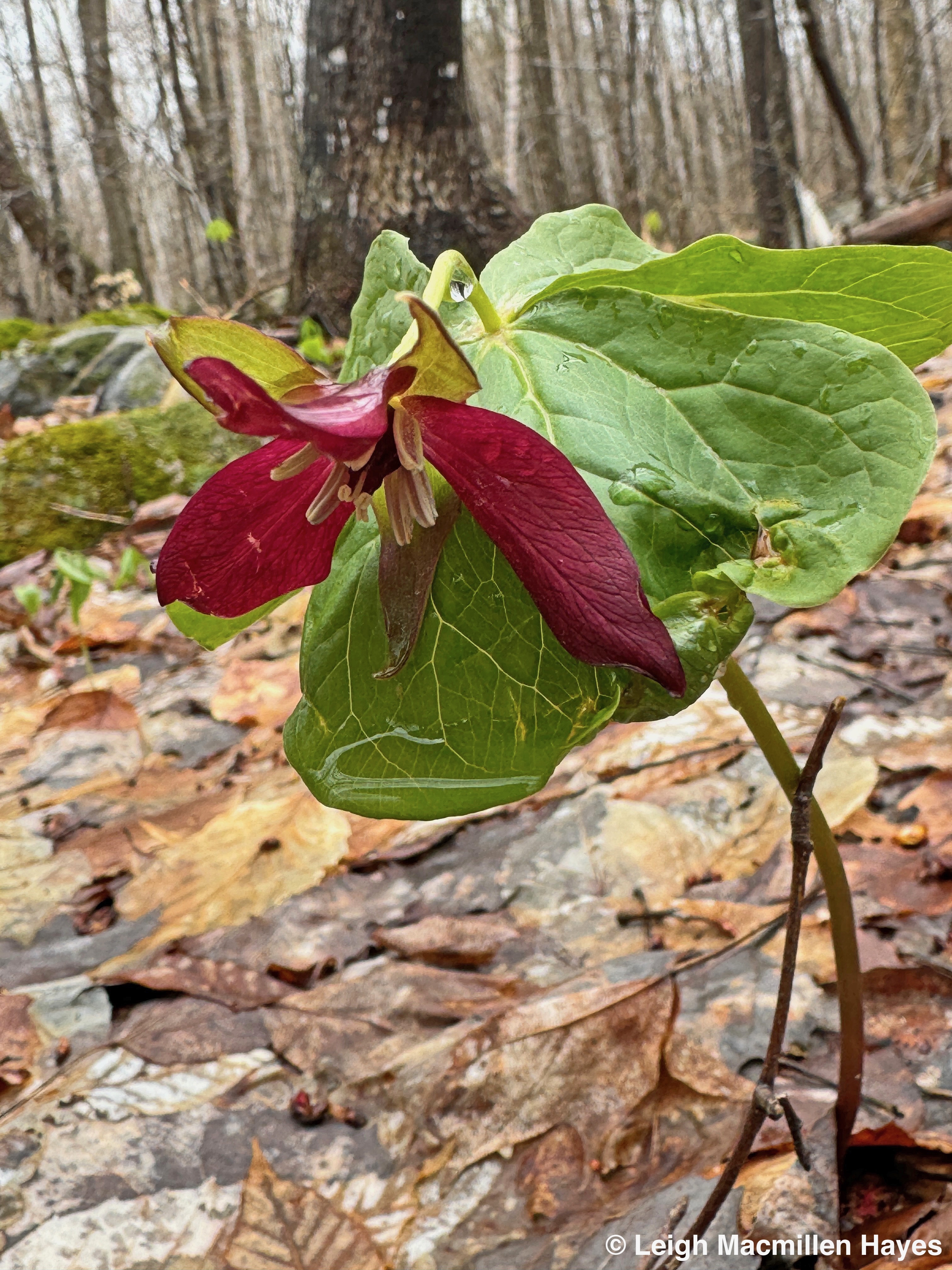
And fortunately My Guy didn’t question the fact that I was taking more photos of Red Trillium, for I’ve hardly reached the trillion I intend to take. Really though, in a few weeks our attention will turn toward his beloved Lady’s Slippers, and there are comparatively fewer trilliums than slippers in the forests through which we wander.

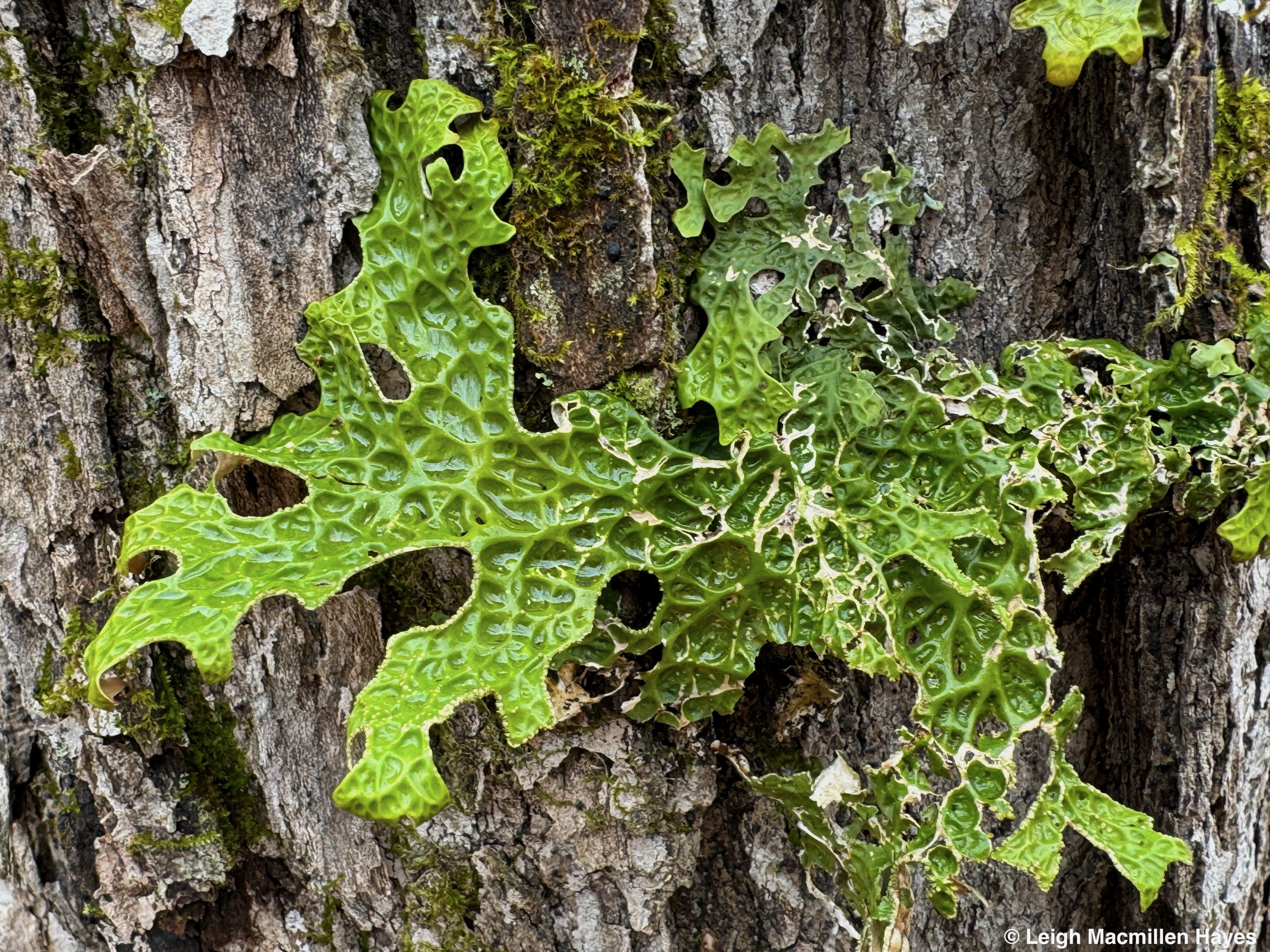
Because of the rain, Lungwort, a foliose lichen consisting of a fungus and a green algal partner living together in a symbiotic relationship with a cyanobacterium, showed off its greenliness since the alga had kicked into action to provide food for the fungal structure. It’s sensitive to air pollution and habitat loss, so spotting it is always a treat and reminds us of why we love living here in western Maine.

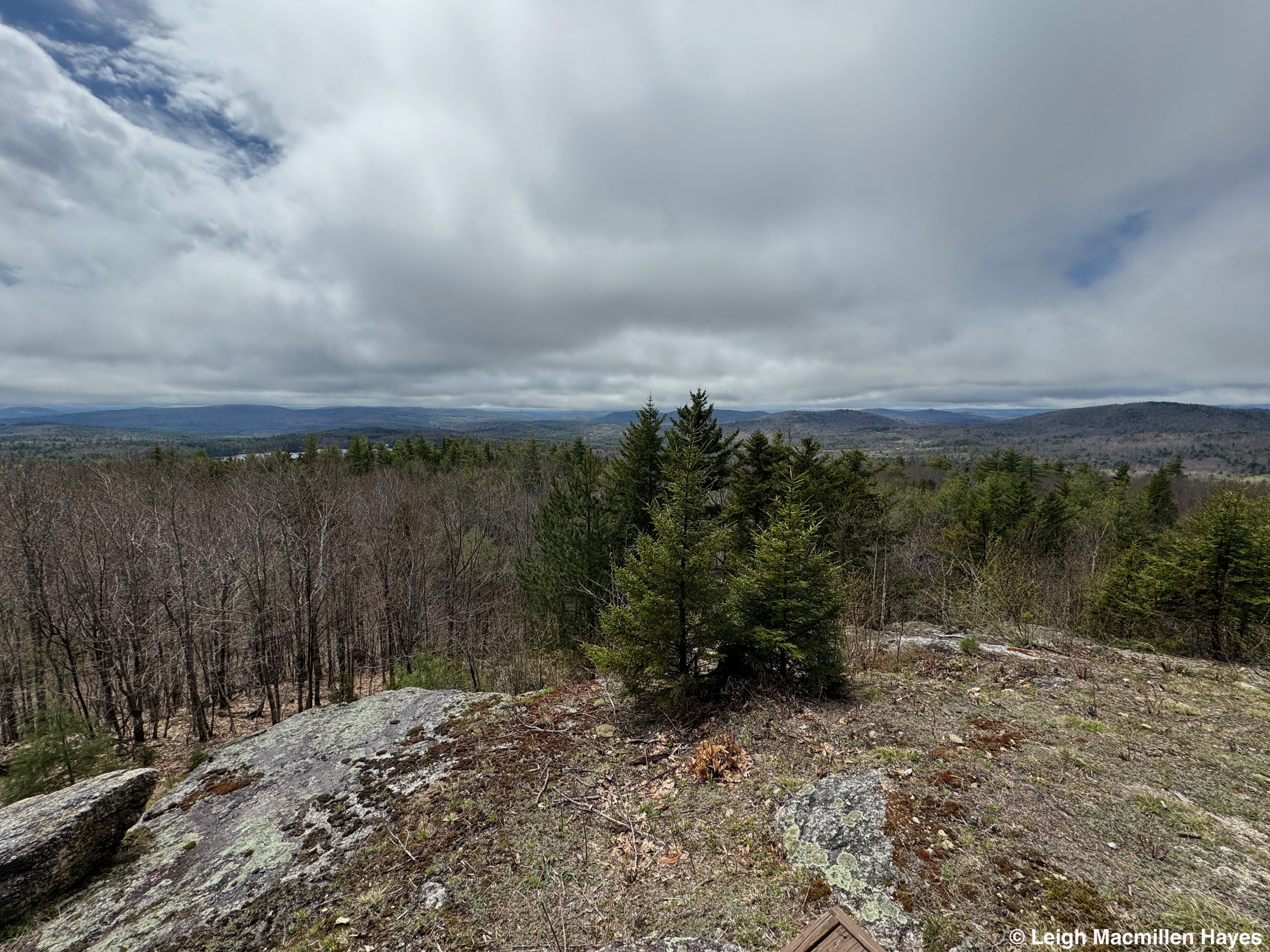
Below the summit, we paused to share lunch with the Black Flies and take in the view of the mountains, though many were obscured by the cloud cover.

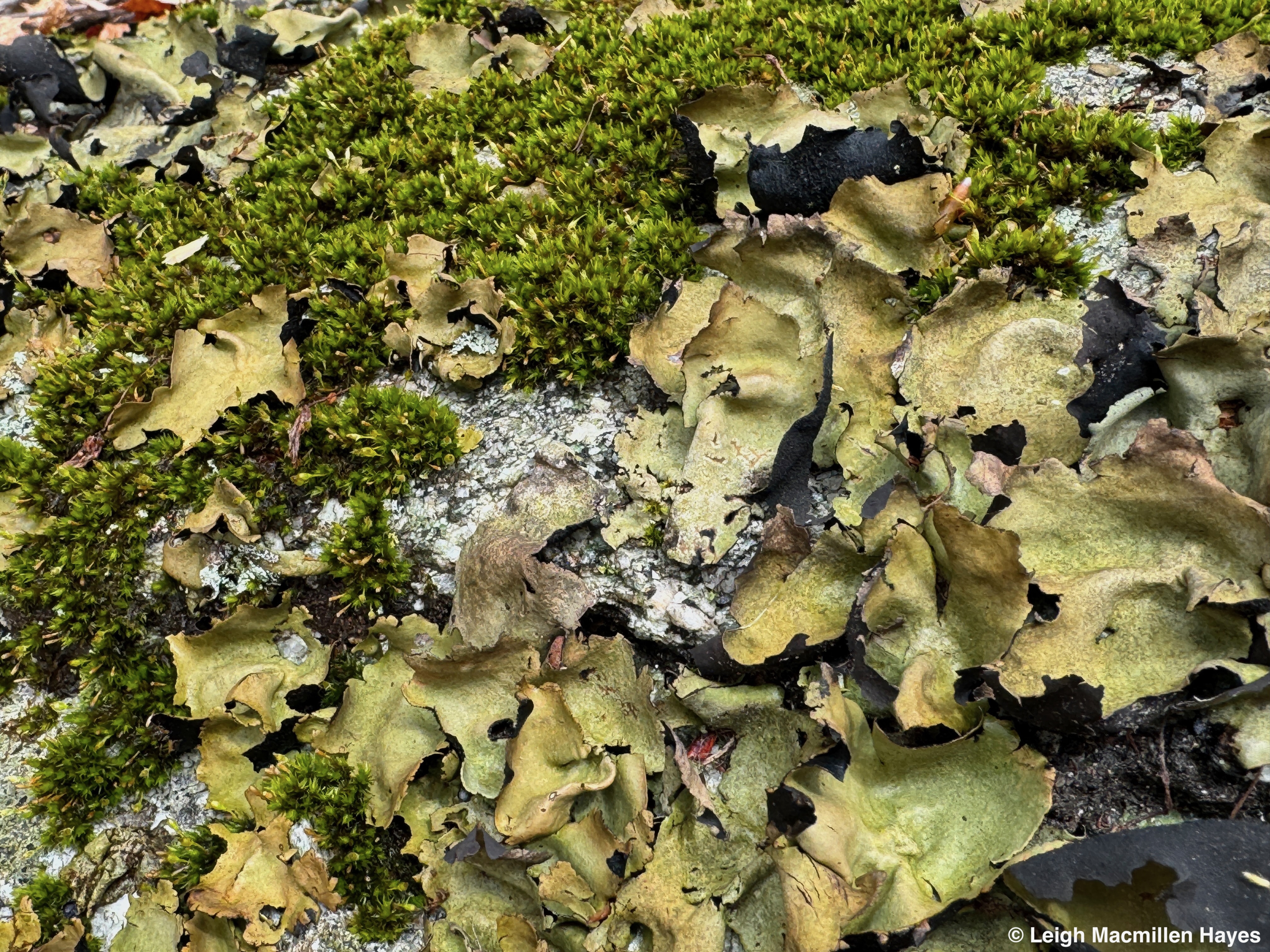
On our descent, there were more hues of green to add to the art palette in the form of the larger Rock Tripe, an umbilicate foliose lichen, and Rock Tuft Moss scattered in its midst.

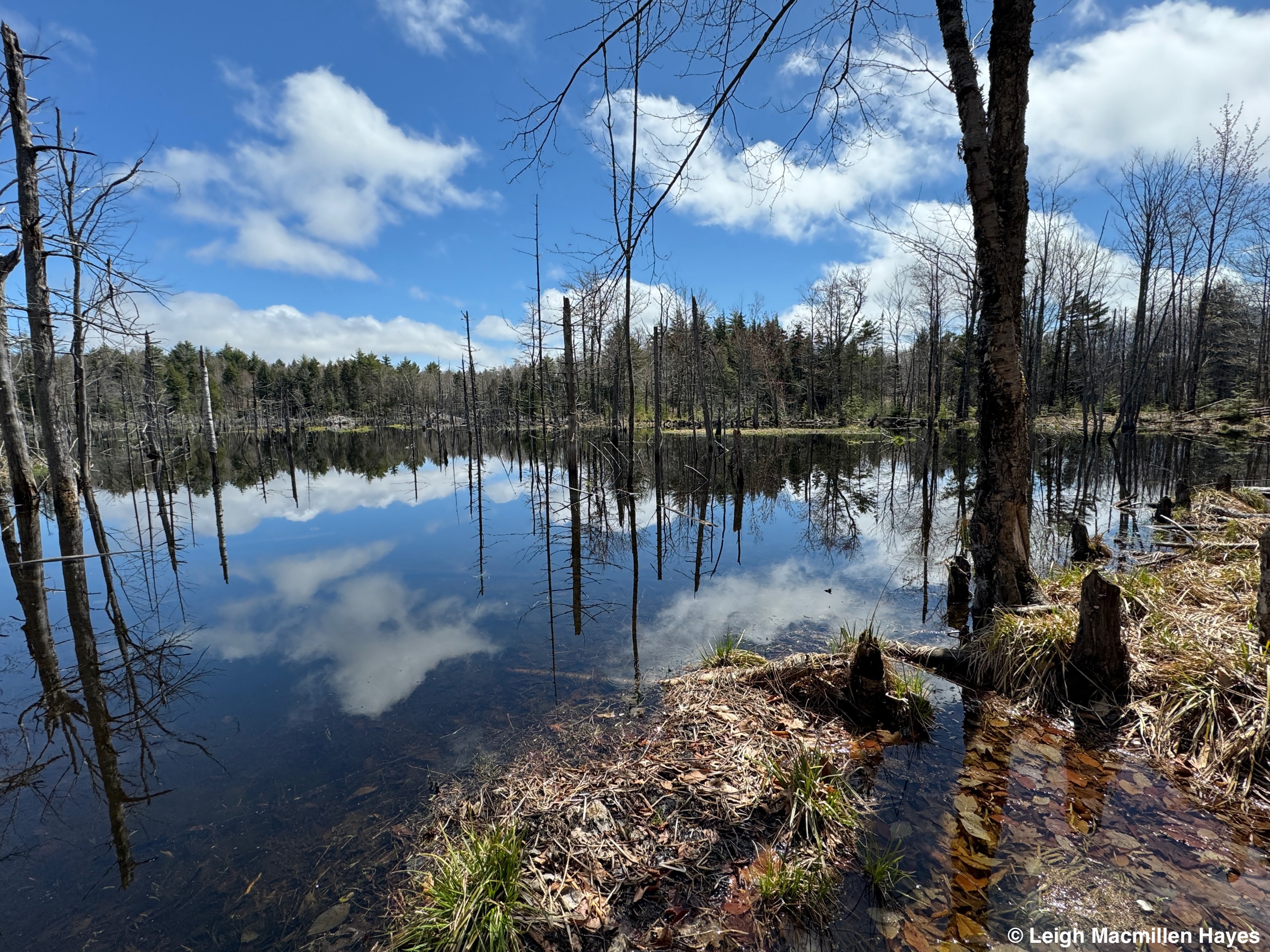
At a beaver pond, we noted several beaver lodges that looked abandoned and a long dam, but it was the reflection of the sky and clouds that also garnered our attention. The day had transformed as was visible both above and below.

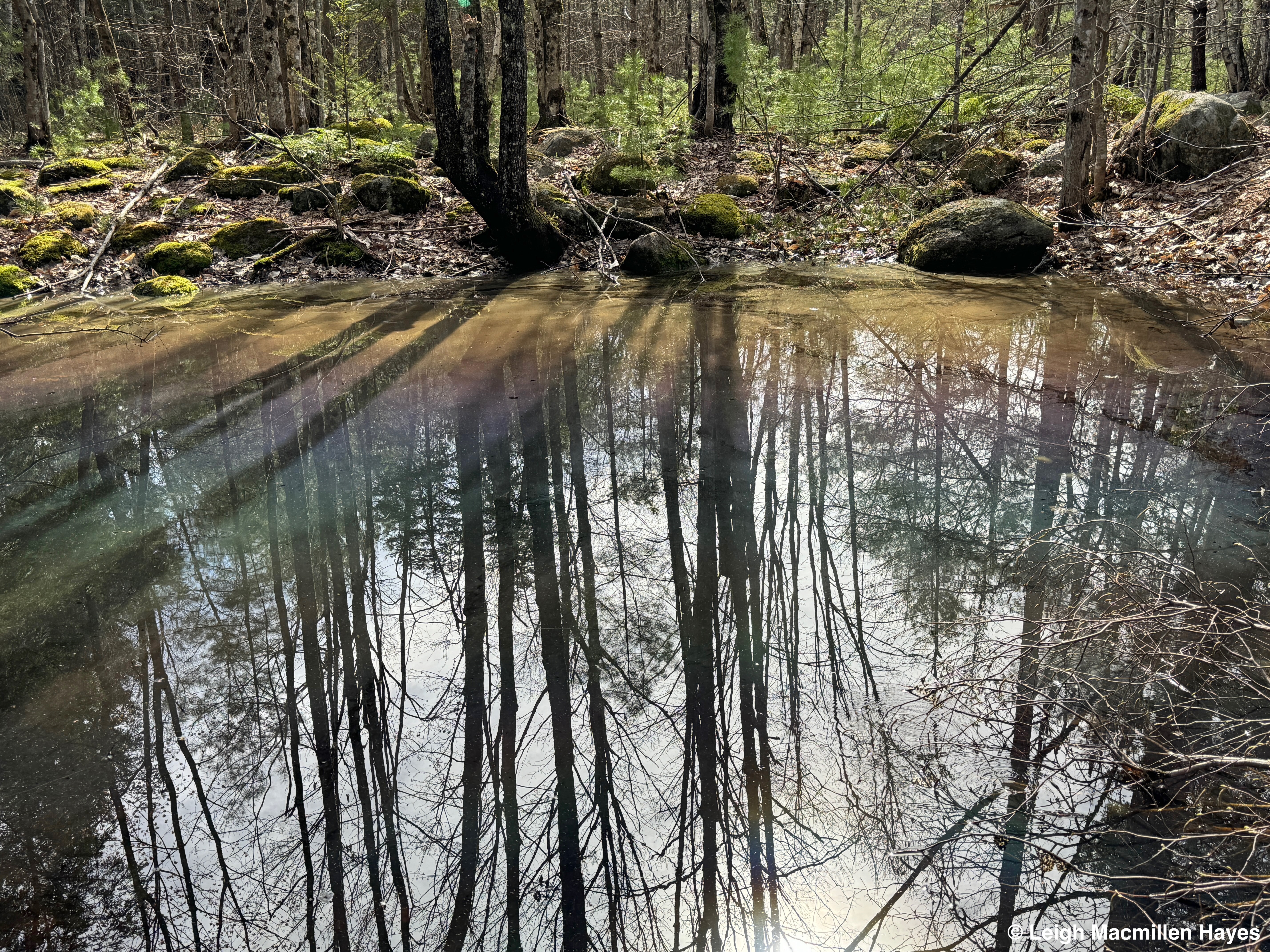
Back at home, I wandered out to the vernal pool to check on the activity. A few days ago I realized that tadpoles were beginning to emerge from egg masses, and today’s warmer weather brought even more into the picture, which in this case included both what I could see under water, as well as the reflection of trees and sky upon the water.

It was when I stopped looking into the depths, however, and focused upon the scene before me, that I realized I was seeing something I’ve never noticed before.

As I had approached the pool, I saw that it had a coating of Birch and Maple pollen and thought with a smile of a fourth grader spotting such last year and looking confused as he asked me if it was ice. No Daniel, it’s not ice. But his initial reaction made sense.

What I noticed today was that the pollen added a rainbow to the water’s surface as the sun got lower in the sky. Yellow by the far shore, orange, red, purple, blue, and green.

So, what caused this rainbow to appear? I’m a huge fan of taking a stick to a Balsam Fir blister to gather some resin and then tossing it into a puddle or still water to watch the natural resins or essential oils appear. Was that happening here?

Maybe this was from decaying vegetation and the sun being at the right angle?

Maybe it had something to do with the pollen as well as the sun’s angle?

I don’t know, but certainly it was fun that this day which began with rain, and showed off a variety of vibrant colors during our five-mile hike, should end somewhere under the rainbow.

A Smile of a Mondate

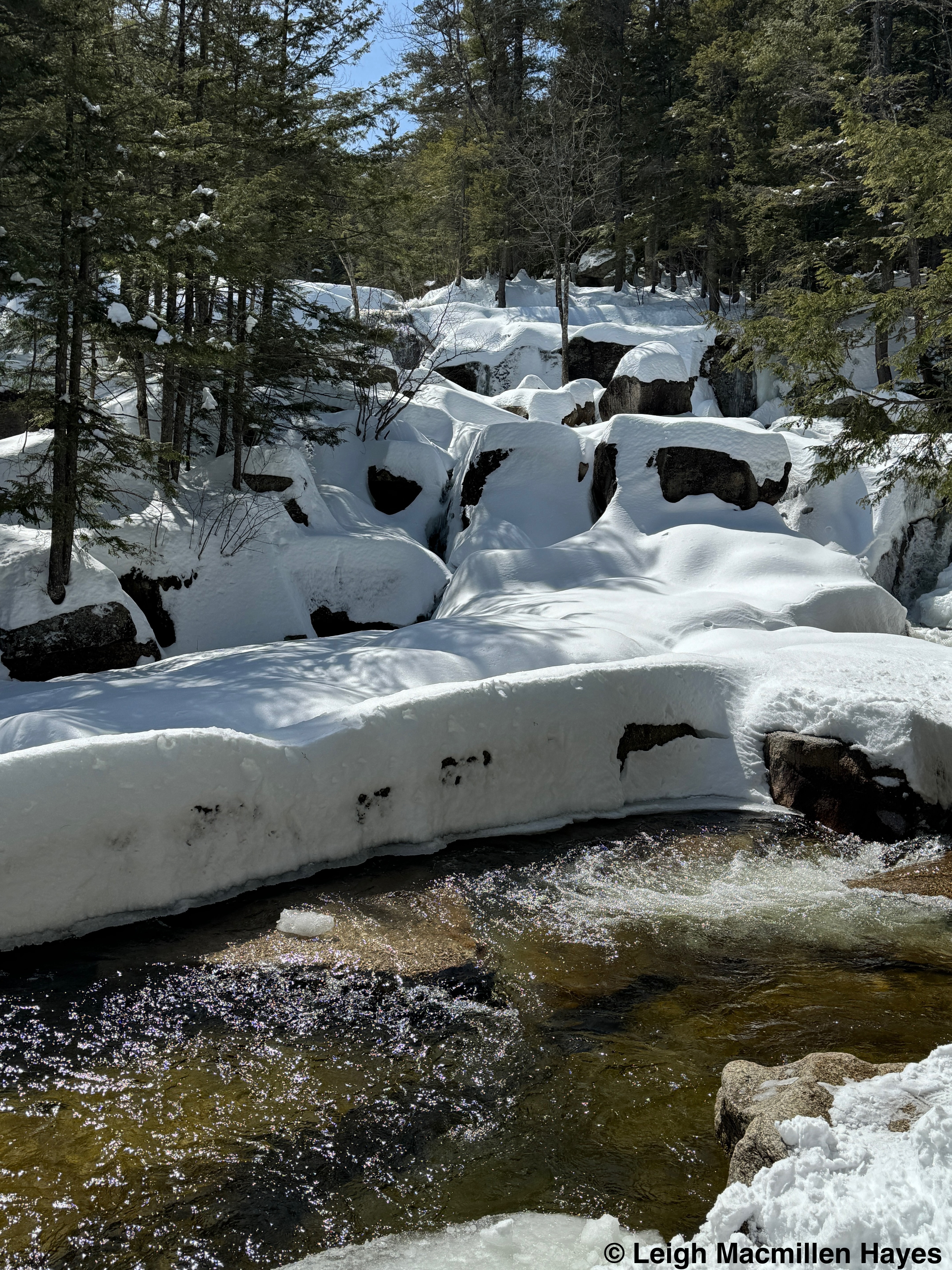
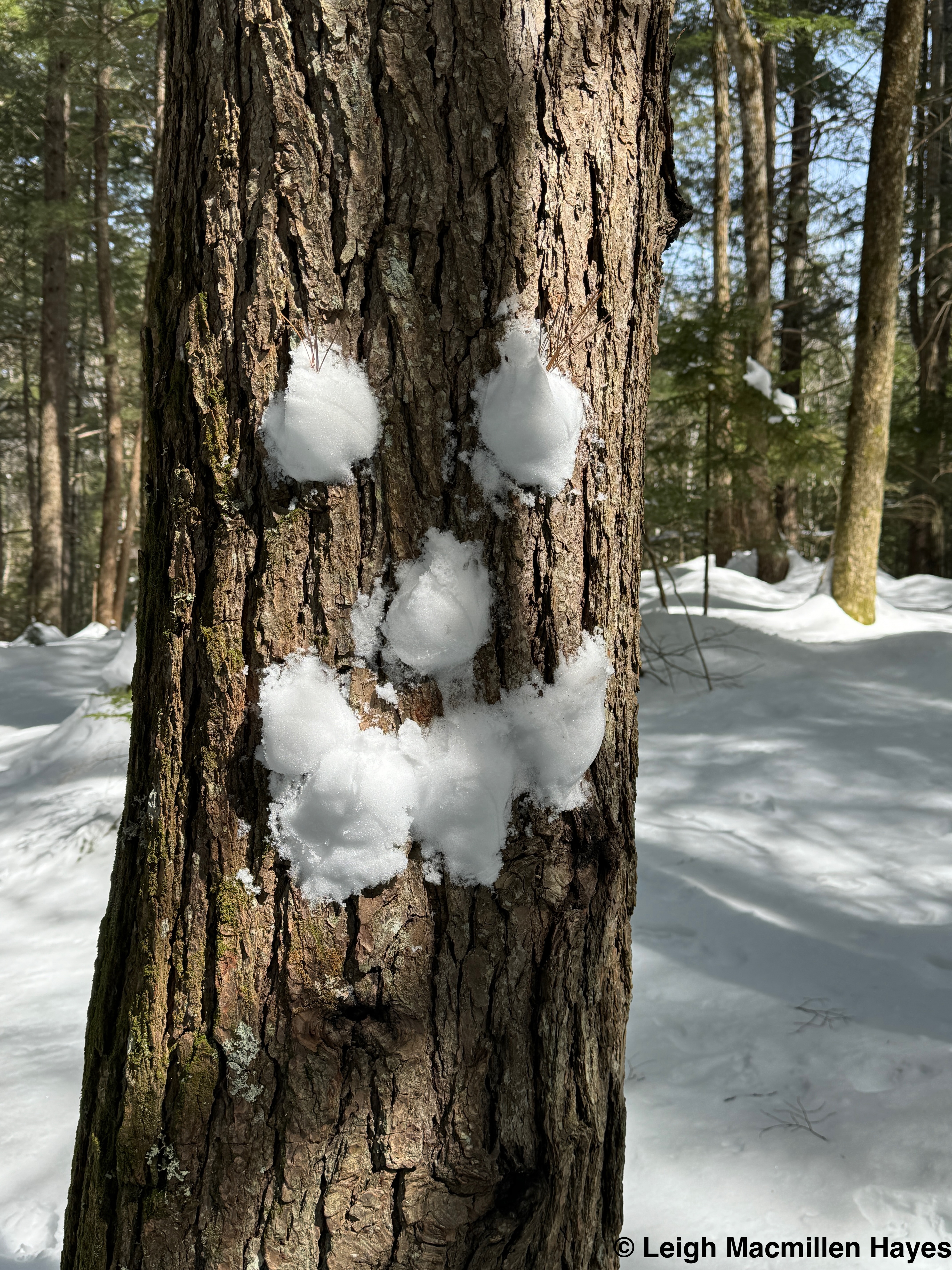
In case you are missing snow, I thought I’d bring you some today. But only because about a month ago, the day after Palm Sunday and a major snowstorm here in the north country, My Guy and I went to Diana’s Baths in Bartlett, New Hampshire, to hike.

It was the first of two storms in a matter of less than two weeks that dropped almost two feet of snow each and transformed Lucy Brook into a winter wonderland. Here’s a bit of history from northconwaynh.com: In the 1860s, after building a house and barn on the banks of the brook, George Lucy built a water wheel powered sawmill. In the 1890s, George built a 12-room boarding house for tourists to visit the site. In the 1930s Chester Lucy built a concrete dam with a water feed and turbine system to replace the water wheel used to power the sawmill. Both the rooming house and sawmill were eventually sold to the US Government and have become part of the National Forest land. Due to the deterioration, the buildings were eventually removed from the site in the 1960s. Remnants of the site can still be seen today including the old cellar holes and parts of the dam system, feed tube and turbine gears used to power the sawmill.

Today, it looked much more summer-like in appearance, but still so much water flows due to snow melt in the surrounding mountains, and it’s BRRRRR.

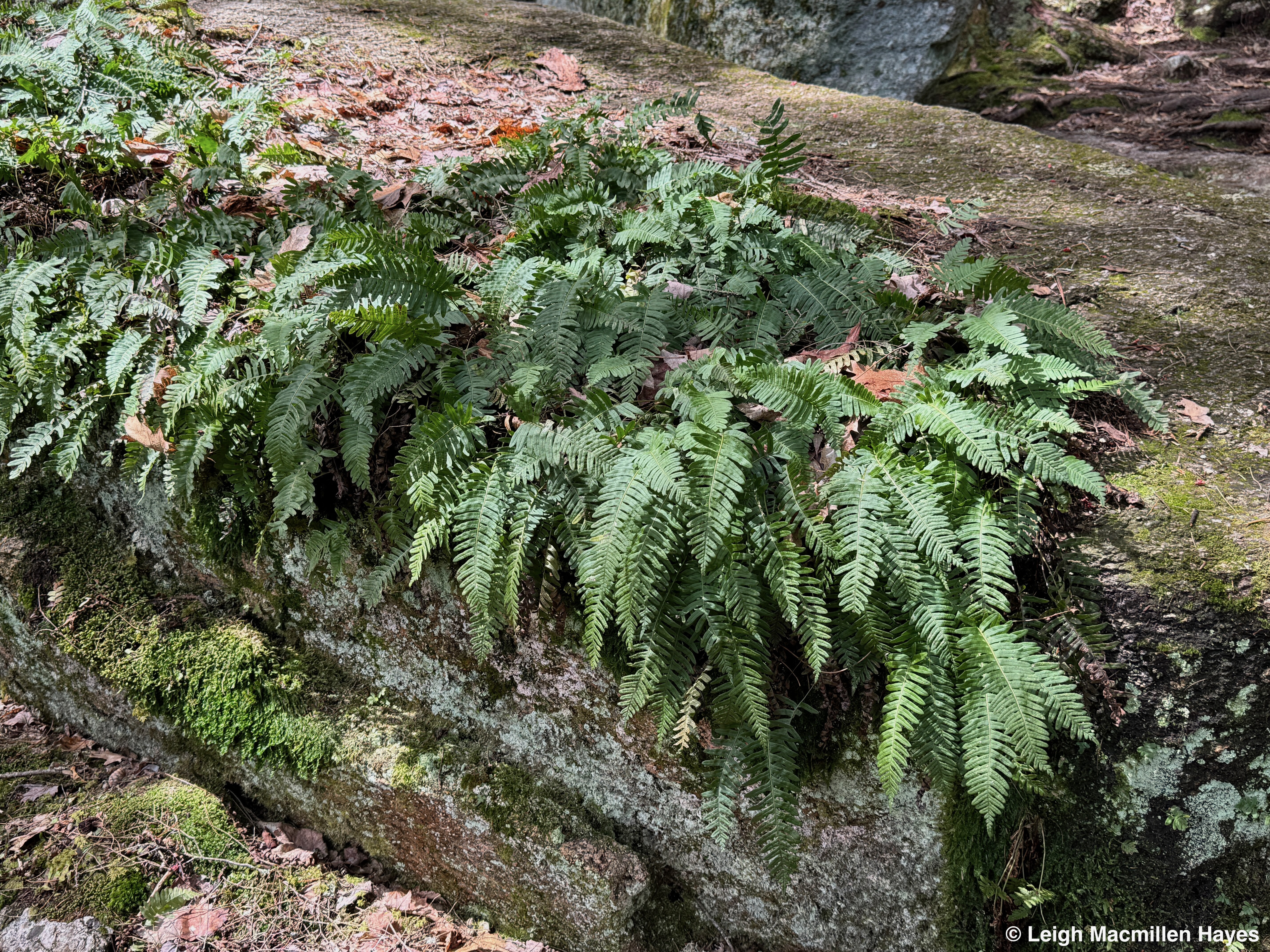
As we ventured forth, I spotted many a boulder experiencing the bad hair day of Common Polypody Fern and every once in a while try to teach My Guy a wee bit about a species. I tell him that someday he can co-lead a nature walk with me. He, of course, guffaws. But ask him what poly and pody mean and he may remember many and feet, for the fern fronds grow from creeping rhizomes.

Last year’s sori (group of spores) were still visible on the underside of some leaves. The sori located in rows on each side of the mid-vein, are circular, orangish brown and not covered by tissue (indusium).

Because we were in a damp environment beside the brook, False Hellebore leaves, with their pleated presentation, brightened the morning. And held raindrops signifying yesterday’s weather.

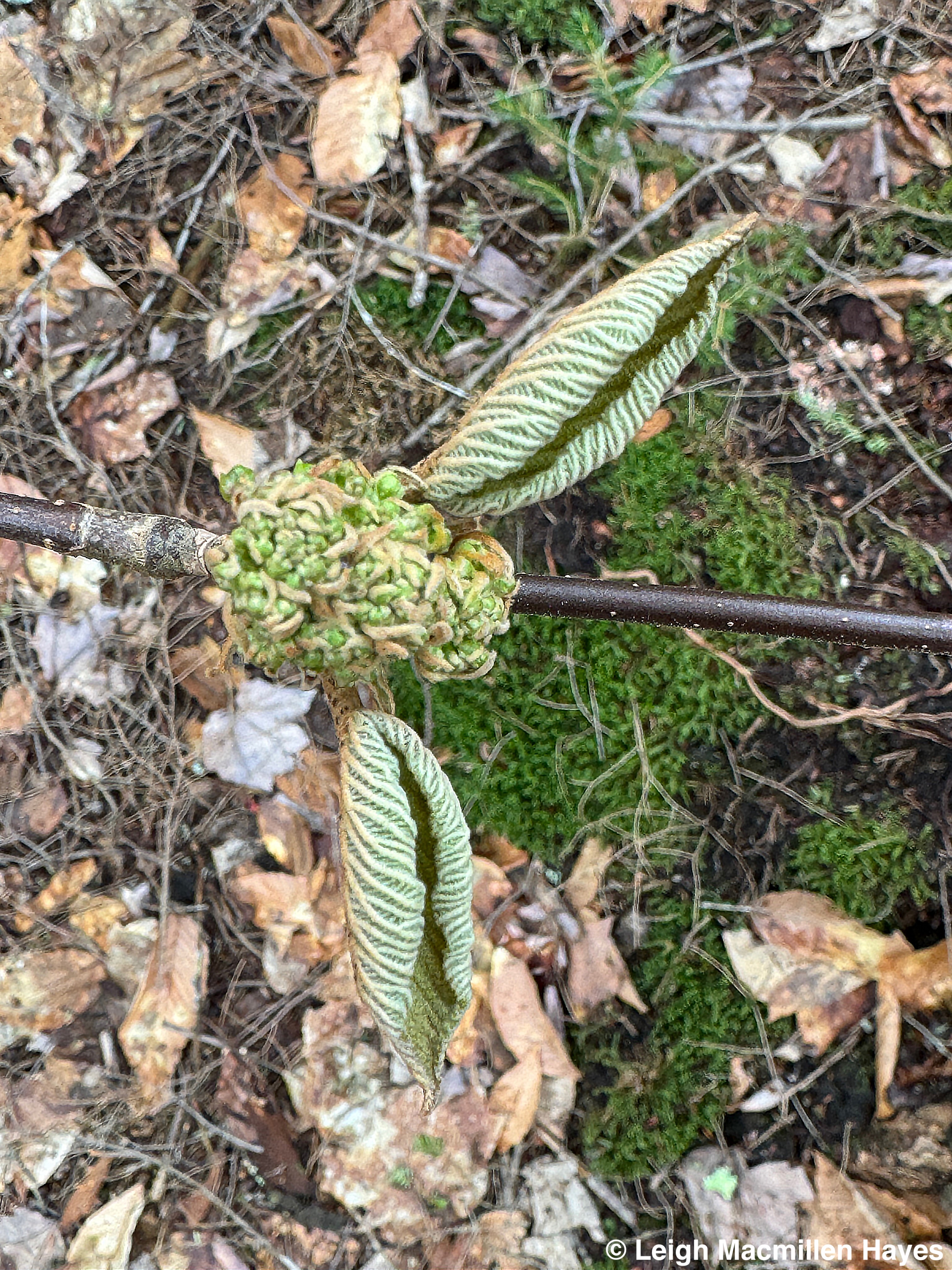
We also encountered numerous Hobblebush shrubs, some even featuring flowers preparing to open into what will be a fantastic display on another day. On this day, it was enough to see their accordion leaves beginning to unfurl, and those flowers presenting like a bunch of worms crawling over each other as if to say, “Me first. Me first.”

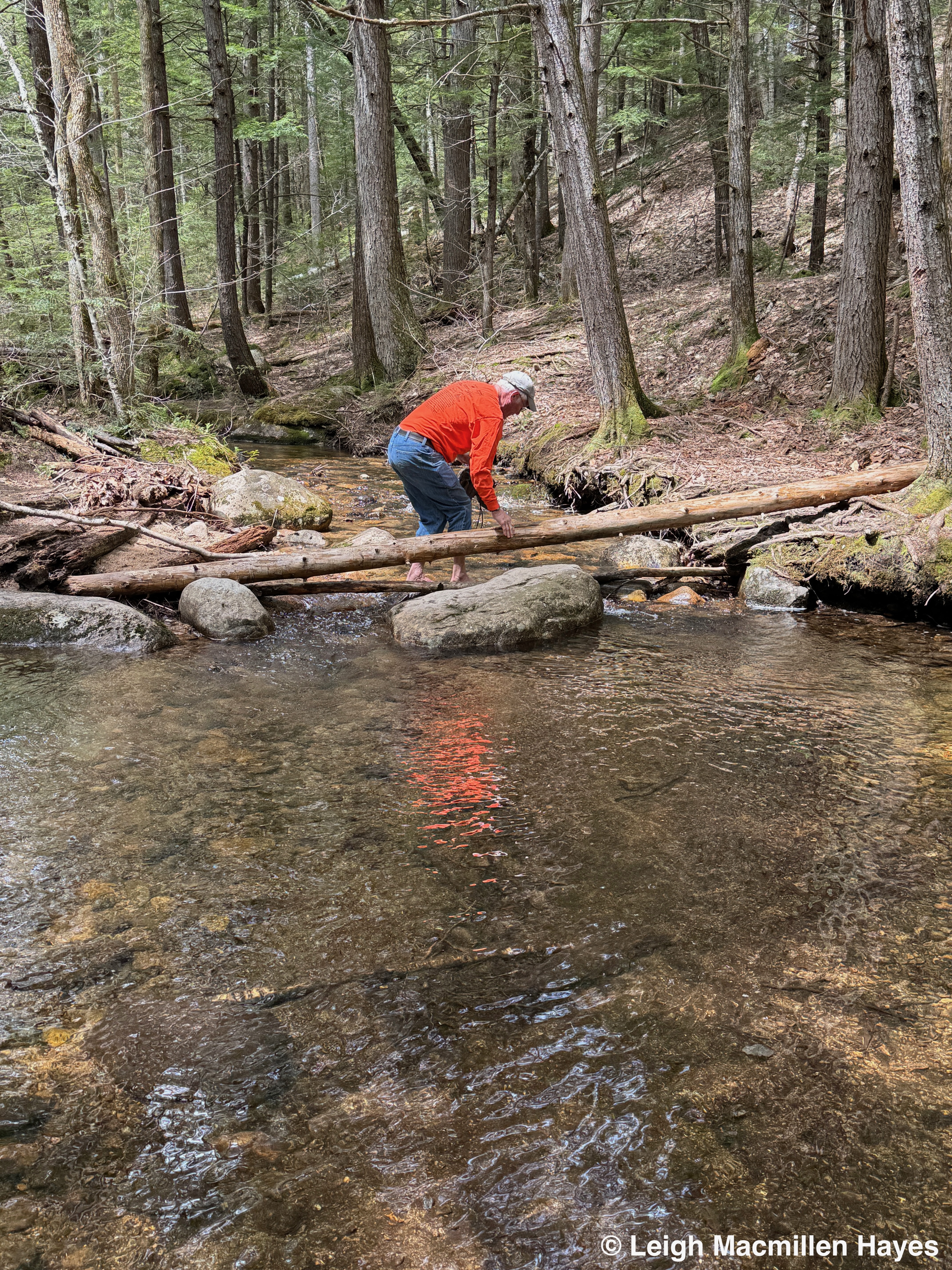
We crossed tributaries several times though we didn’t actually cross Lucy Brook as originally intended for the water was still too high for us to manage safely. But . . . we bushwhacked for a bit before sitting upon some tree roots to take a lunch break.

It was while My Guy sat there, that I poked around and discovered this–Wall Scalewort, a leafy liverwort. Liverworts differ from mosses in that the leaves are typically arranged in rows of two with a possible third row below, while moss leaves whorl around the stem. And most mosses have mid-ribs, which liverworts lack.

That said, the Wall Scalewort closely resembles Shingle Moss, which I spotted along this same tributary in March.

But a closer look today made me realize that I could see the leaf arrangement was succubous where the bottom edge was visible, as opposed to incubous. Succubous arrangement is like roof shingles that don’t let the rain in, while incubous leaves are arranged so the top edge is visible and do let the rain in. Thank you Sue Alix Williams in Mosses & Common Liverworts of the Northeast for that explanation.

Eventually we reached a turn-around point and came up with Plan B for the rest of today’s hike as we made our way out. While I was able to cross with my high leather hiking boots, My Guy chose to take his boots and socks off and watch his feet turn red from the chill. Thankfully, his better half, ahem, that would be me, had packed a towel because we suspected this could be the case.

Now you might find this as odd, but since our discovery of the new privies last month, we’ve been quite taken with the artwork completed by Kennett High School art students in 2023.

Unbeknownst to us at the time, the paintings were a perfect segue from one trail to another.

And so we drove down the road to Echo Lake State Park and tried to convince the warden that even though we live in Maine, our hometown is just over the border and we should be able to hike the trails for free as New Hampshire Seniors don’t have to pay. He kindly informed us that the park isn’t officially open yet, as so it was free, but if we return in a couple of weeks, it will cost us $4 each. Not bad in the scheme of things.

Before us stood White Horse Ledge, one of the trails we had considered if we’d been able to cross Lucy Brook from our earlier destination. We were green with envy as we looked across at it.

But about half way around the lake, we found a different trail to the summit and decided to follow it. That said, we found several trails to the summit and the first we chose led us astray as it eventually petered out.

Despite that, we were thrilled. Okay, maybe it was me rather than we. Semantics.

And so today I celebrated my first meeting of 2024 with Sessile-leaf Bellwort, aka Wild Oat. And where there was one, there were a million, the subtle yellow bell dangling quietly below.

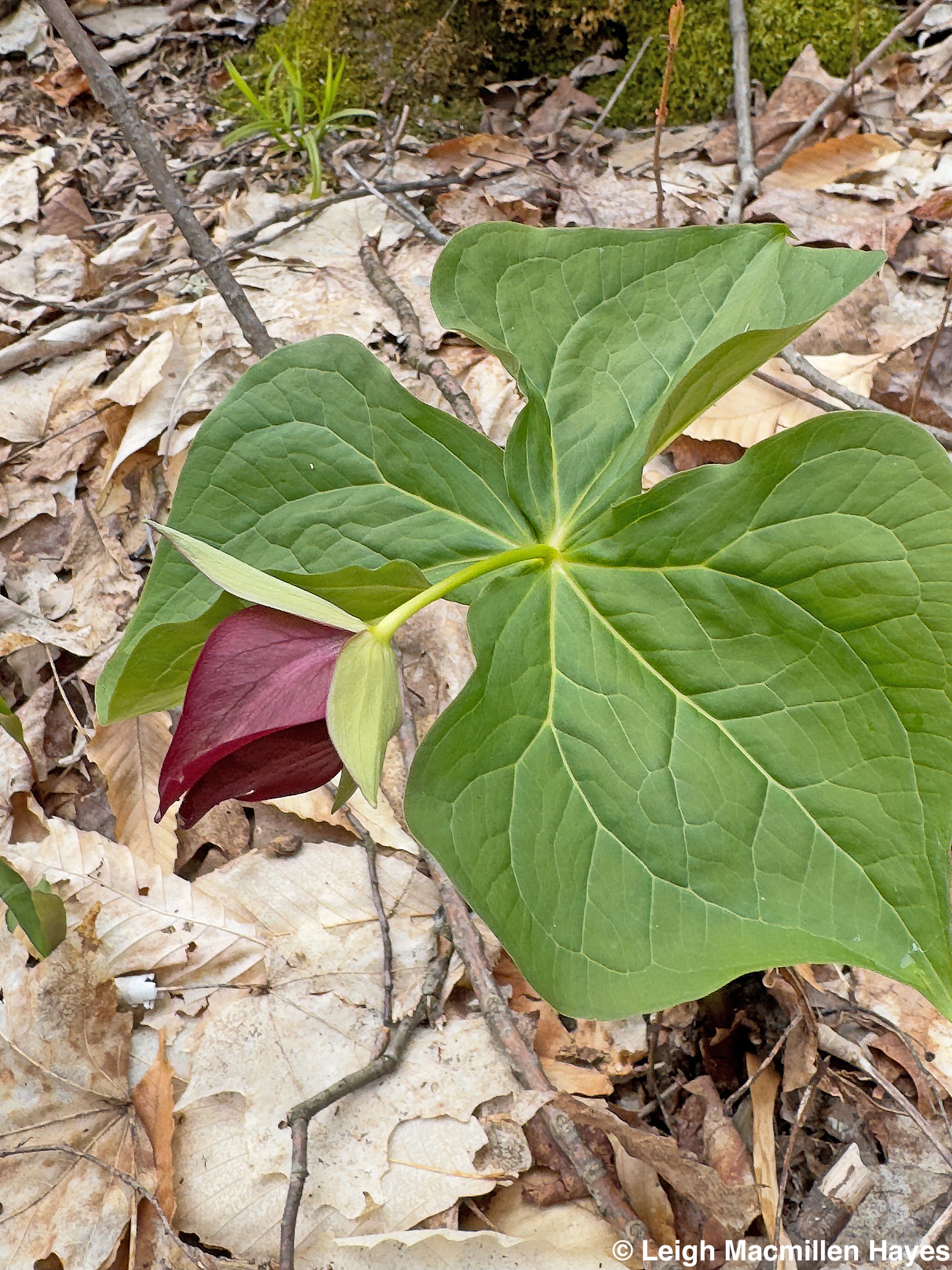
And then . . . and then, I spotted a Stinking Benjamin, or Red Trillium almost in flower.

And a few steps away . . . full flower mode. Trillium is a reference to the fact that the floral parts of the plant occur in threes: three leaves, three petals, three sepals.

Going forth, I’m sure I’ll honor a trillion trilliums, but these were the first and therefore the most special.

As we made our way back to a better trail, the leaves of Trout Lily caught my attention and then much to my delight I found two in flower. The leaves are maroon-mottled and the nodding flower features petals and sepals bent backwards to expose six brown stamens. This one is such a treat for me because I only meet it when I least expect to do so.

Once on the actual trail upon which we had to scramble to climb toward the ledgy summit, I spotted another that only grows in such habitats.

Take a look at the black arrow in the photo.  That is one hairy stalk rising from a rosette of basal leaves.

This native perennial wildflower, Virginia Saxifrage, grows out of cracks in rock, and has been known as a rock breaker even though it doesn’t actually break rocks, but rather, likes to grow in those fractures. It’s such a sweet little flower that is easy to overlook.

From the ledges above, we had a great view of Echo Lake, and the mountains beyond, with Cranmore’s Ski Area showing the last of the melting snow.

That brings me back to the snow of a month ago. I took it upon myself to figure out a way to make people smile.

And today, we did the same, though not with snow like this. But rather, with our actual smiles and friendly hellos as we greeted each hiker we met. Even if they weren’t smiling or making eye contact with us at first, we got them all to return the greeting and had some nice chats with a few.

I told My Guy that it kinda reminded me of our New York adventure last weekend, when I made it a point to try to make eye contact with each person we passed on the sidewalk or trail and to always leave them with a smile. A few actually looked at me and turned on a smile, which seemed to surprise them.

This was indeed a smile of a Mondate . . . on so many levels.

The Extraordinary Ordinary

I love to venture off and explore other places but more and more I feel drawn to just head out the back door and see what this land of field and forest and vernal pools and puddles has to offer. And so I do. Almost daily.

It’s land where the Red Maples are in full flowering mode, this cluster being male, each with five to ten slender stamens.

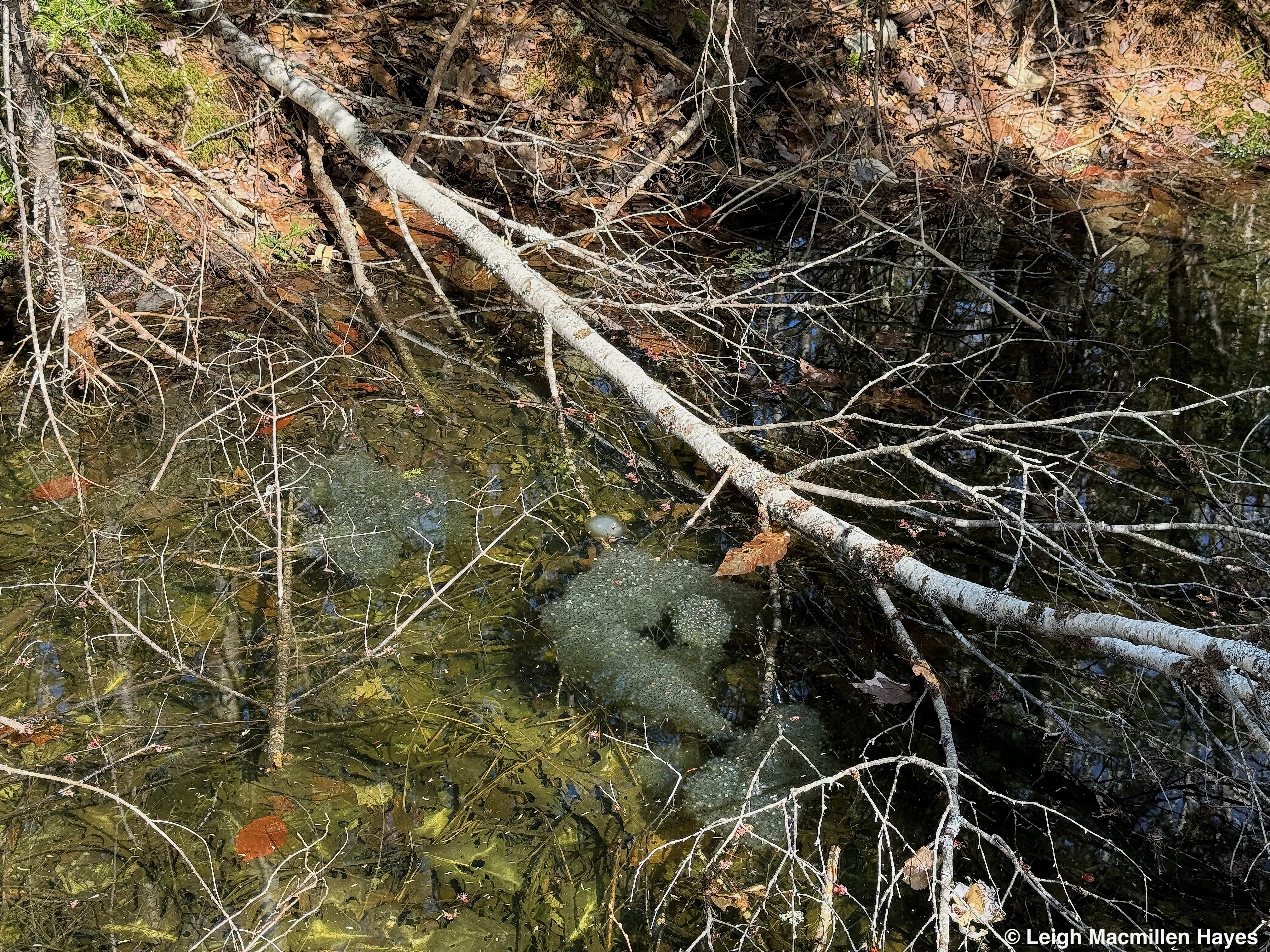
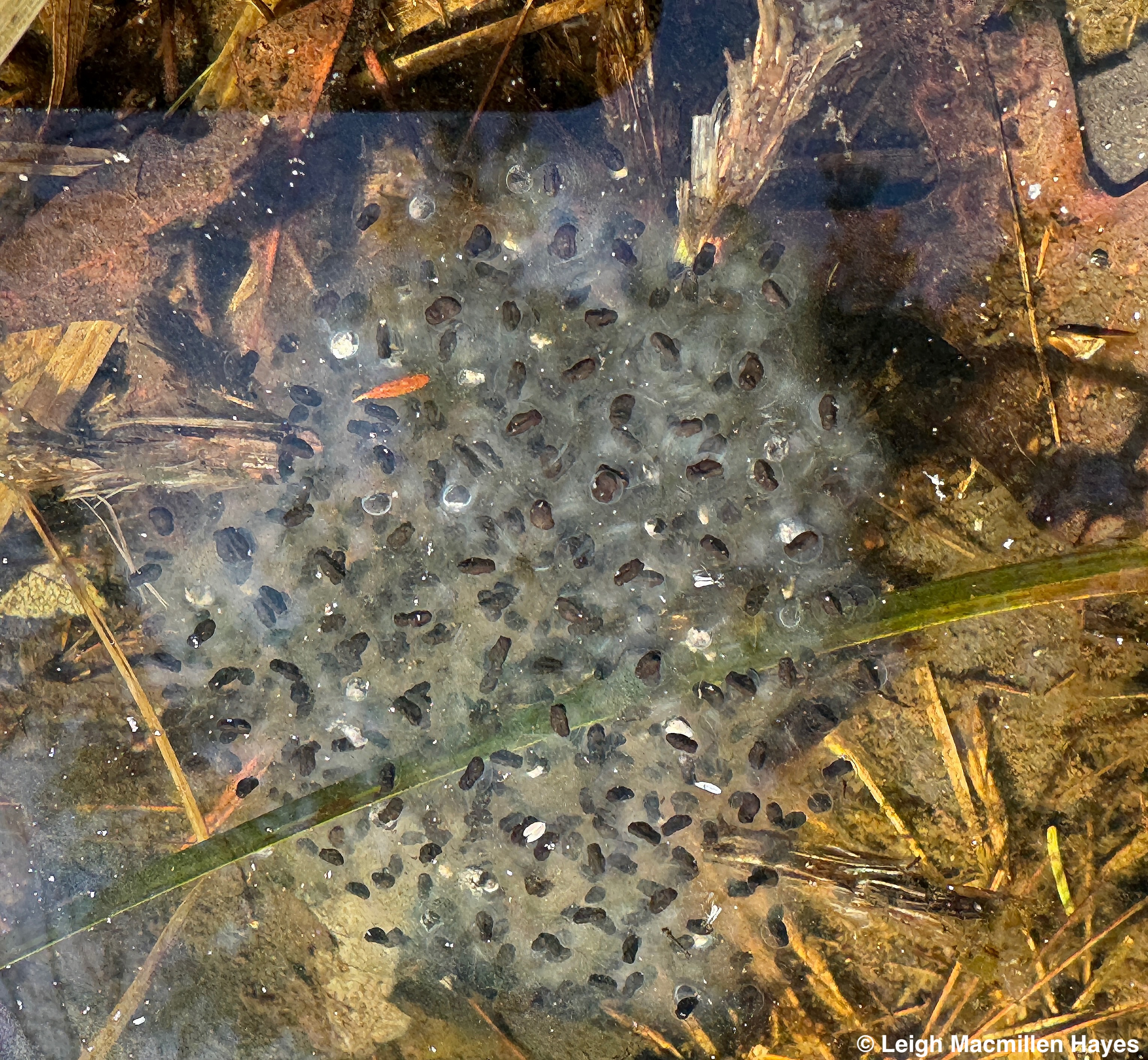
As beautiful as the flowers are, one of the real reasons I head out so often right now is that the vernal pools are full of egg masses, both Wood Frog and Spotted Salamander. Somehow, this year, except during Big Night, I missed the Wood Frog activity in the pools I frequent, but by the amount of egg masses, I know they were there.

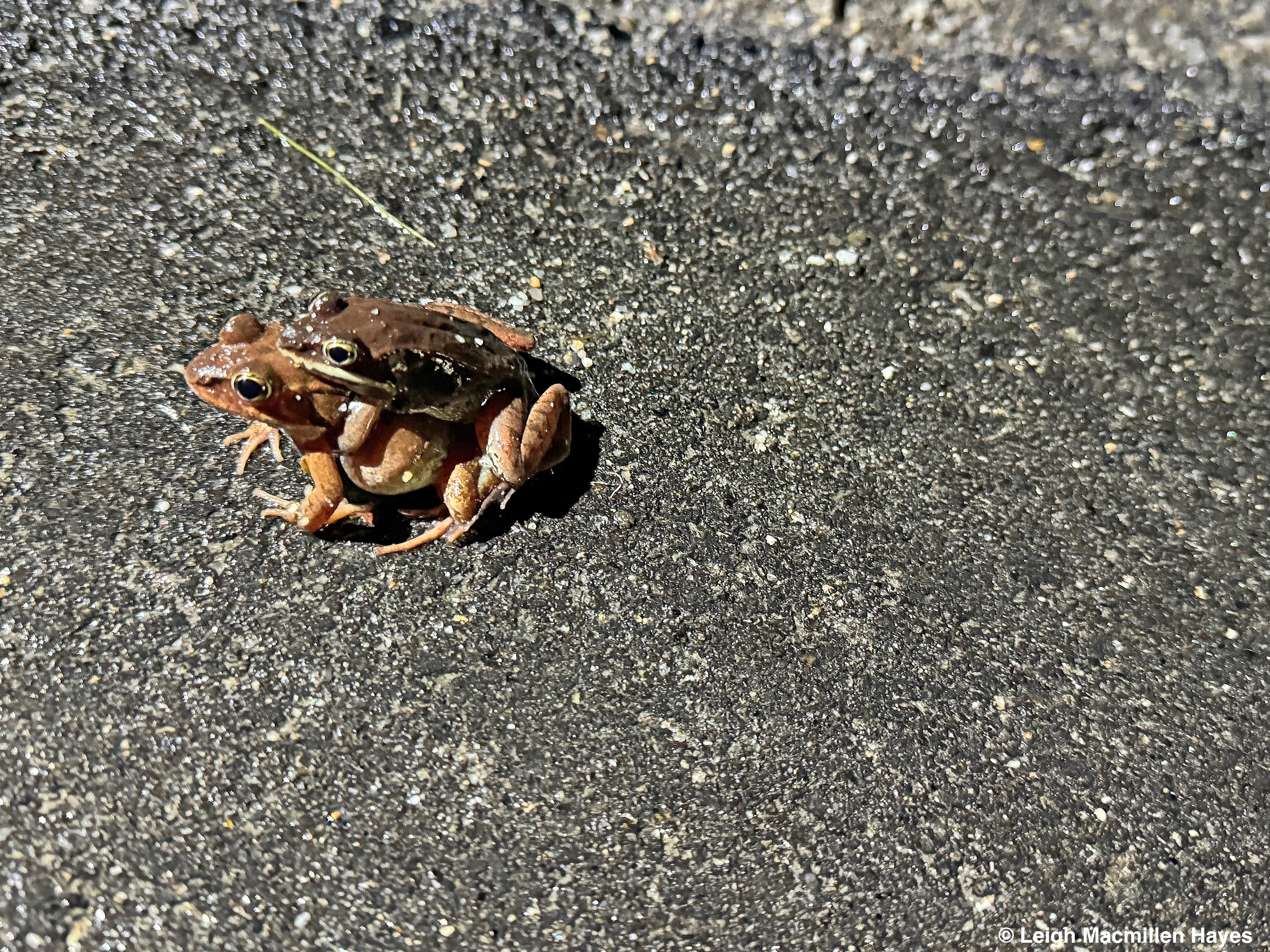
What cracks me up is that it isn’t just vernal pools that are used for the canoodling ritual. Sometimes, if there’s a rut on the way to the pool and he decides to start calling, and she responds, well, you know how it goes.

And so it must have, for this one mass is in the rut pictured above.

It reminded me of the two sets of Wood Frogs we had to gently move off the road during Big Night. They couldn’t even wait until they found a rut.

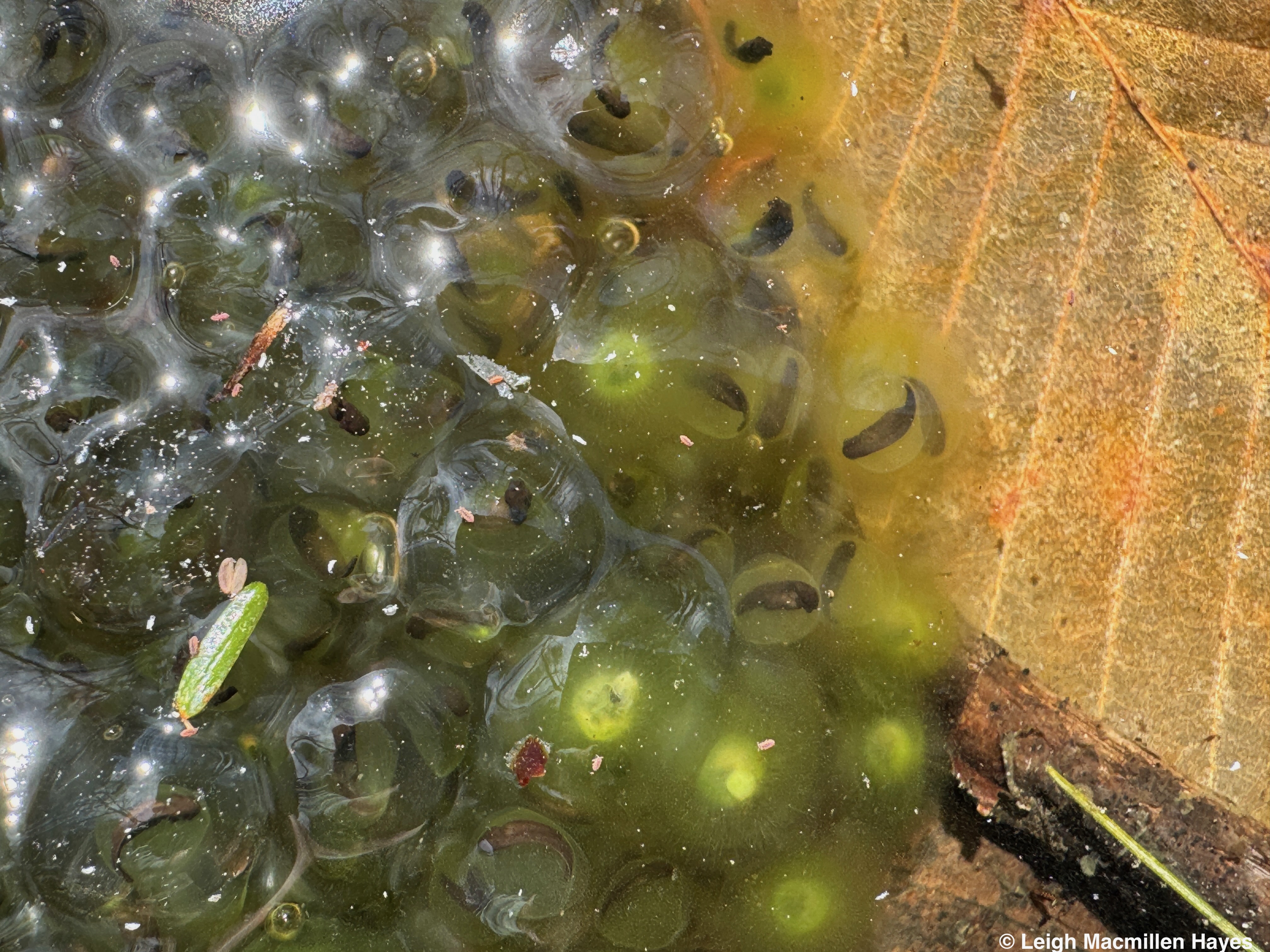
It’s only been about two or three weeks since the eggs were laid and fertilized, and already the embryos are taking on their tadpole shape.

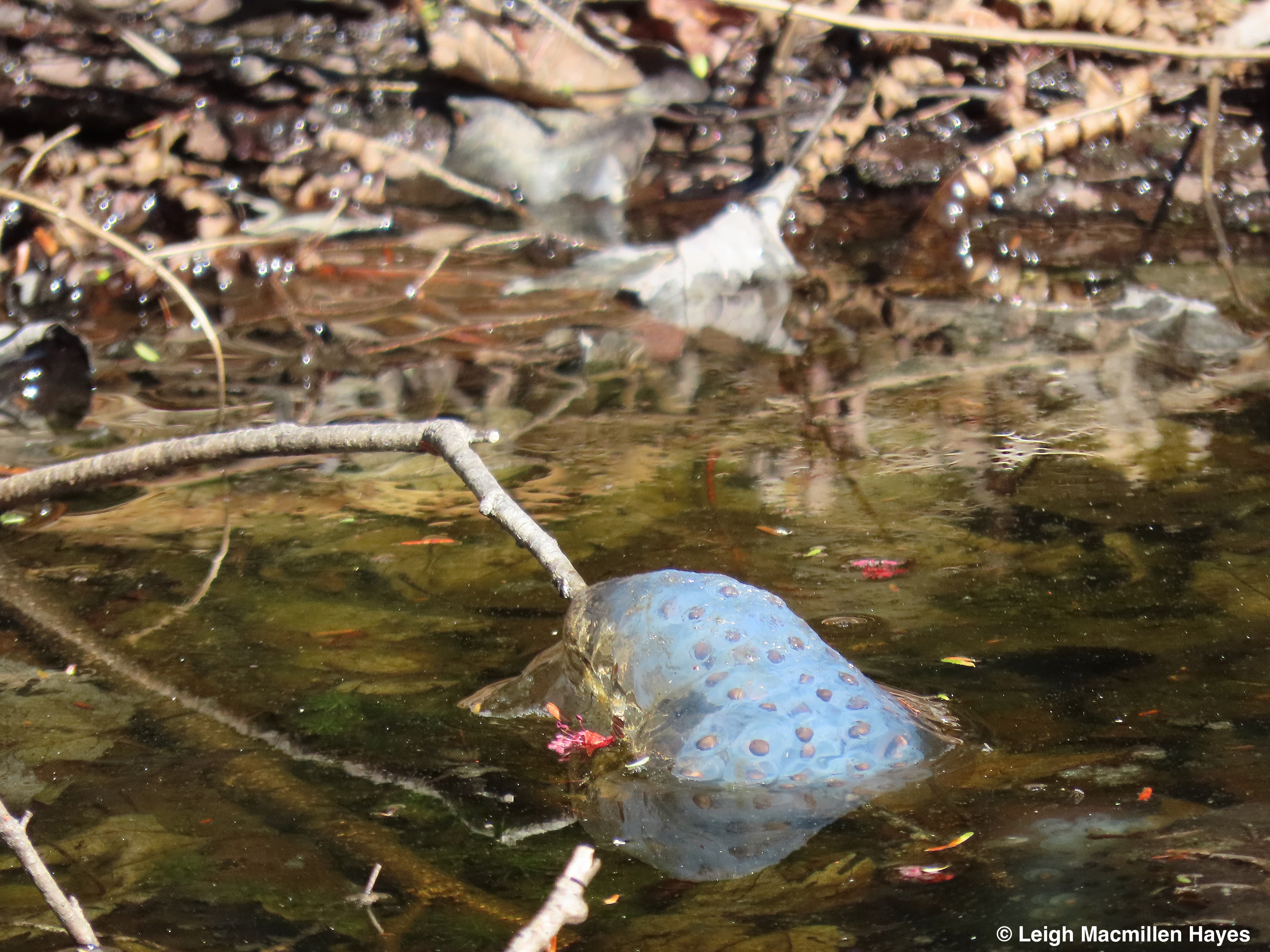
In another location, I spotted a Spotted Salamander egg mass that was also deposited about two weeks ago, at a time when snow melt and rain were the norm. We’ve had some rain since then, but the tide is quickly going down in the pools. Wait. There is no tide in these. Being rain/snowmelt dependent, the water is quickly evaporating and this mass probably will become food for something rather than turn into 100 or so salamander tadpoles.

But in “My” vernal pool, where I put “My” in quotes because I don’t actually own the land upon which it is located, I just think I do, the salamander embryos are also taking form.

Of course, when one is stooped over and staring into the water, there’s more to see like this Water Strider. Water Striders are so cool as they skate along the surface thanks to some hairs at the ends of their legs that we can’t see. At least I can’t. Those hairs don’t get wet and instead attract water molecules. I placed an arrow on the photo because the shadow a strider creates with what appear to be larger than life feet speaks to this adaptation.

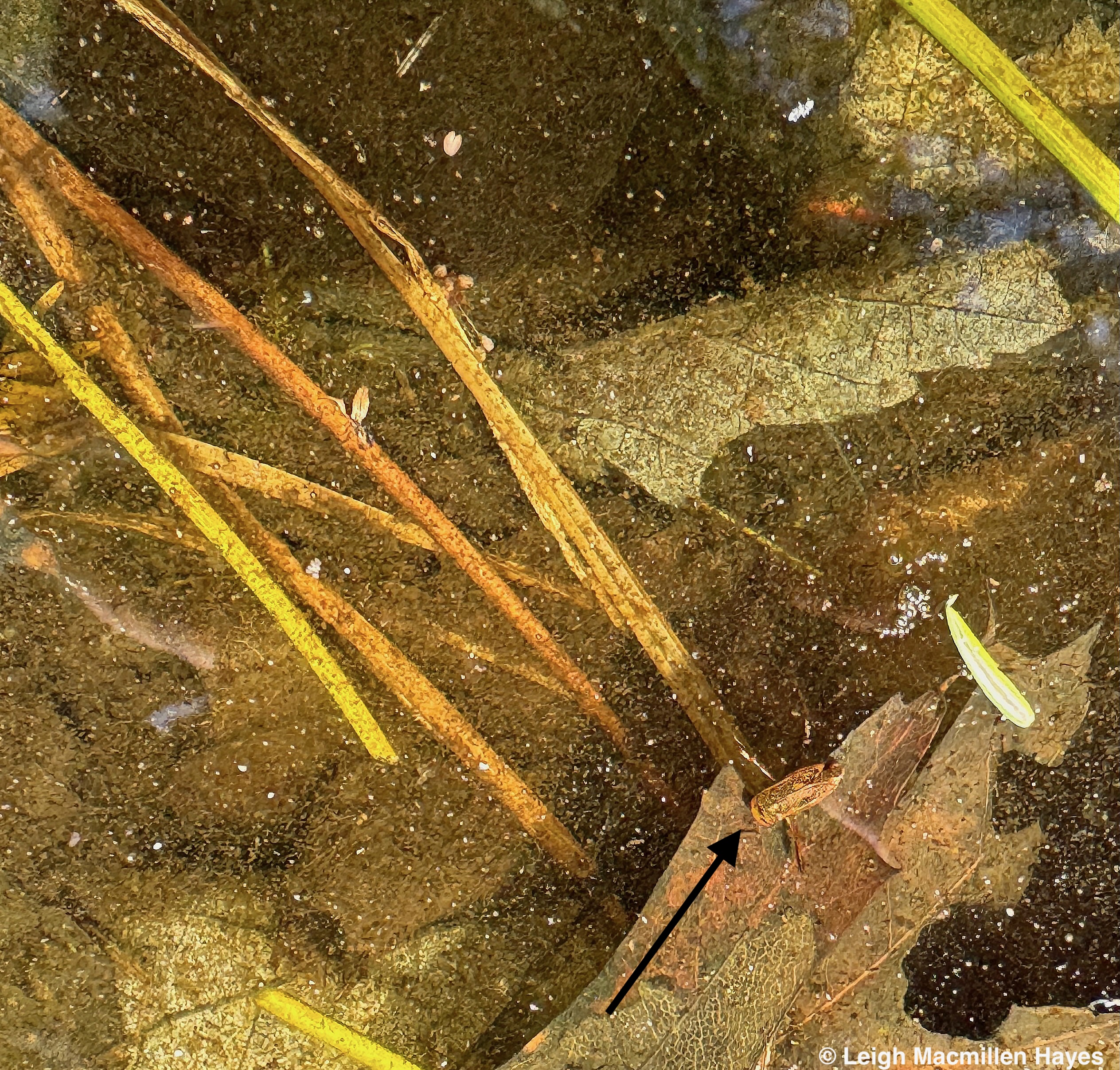
And in this case, the arrow points to a Water Boatman. I love how his tiger-like body design, though not intentionally, mimics the oak leaf above which he swam. Unlike the skating strider, a Water Boatman uses its hind legs as oars.

In one of the shallowest pools I know of outback, Mosquito and Caddisfly Larvae move about, the first suspended in the water column just below the surface, breathing air through tubes at the end of the abdomen. The Northern Case Maker Caddisflies took advantage of all the plant material, including a Red Maple flower to add a bit of class to its house.

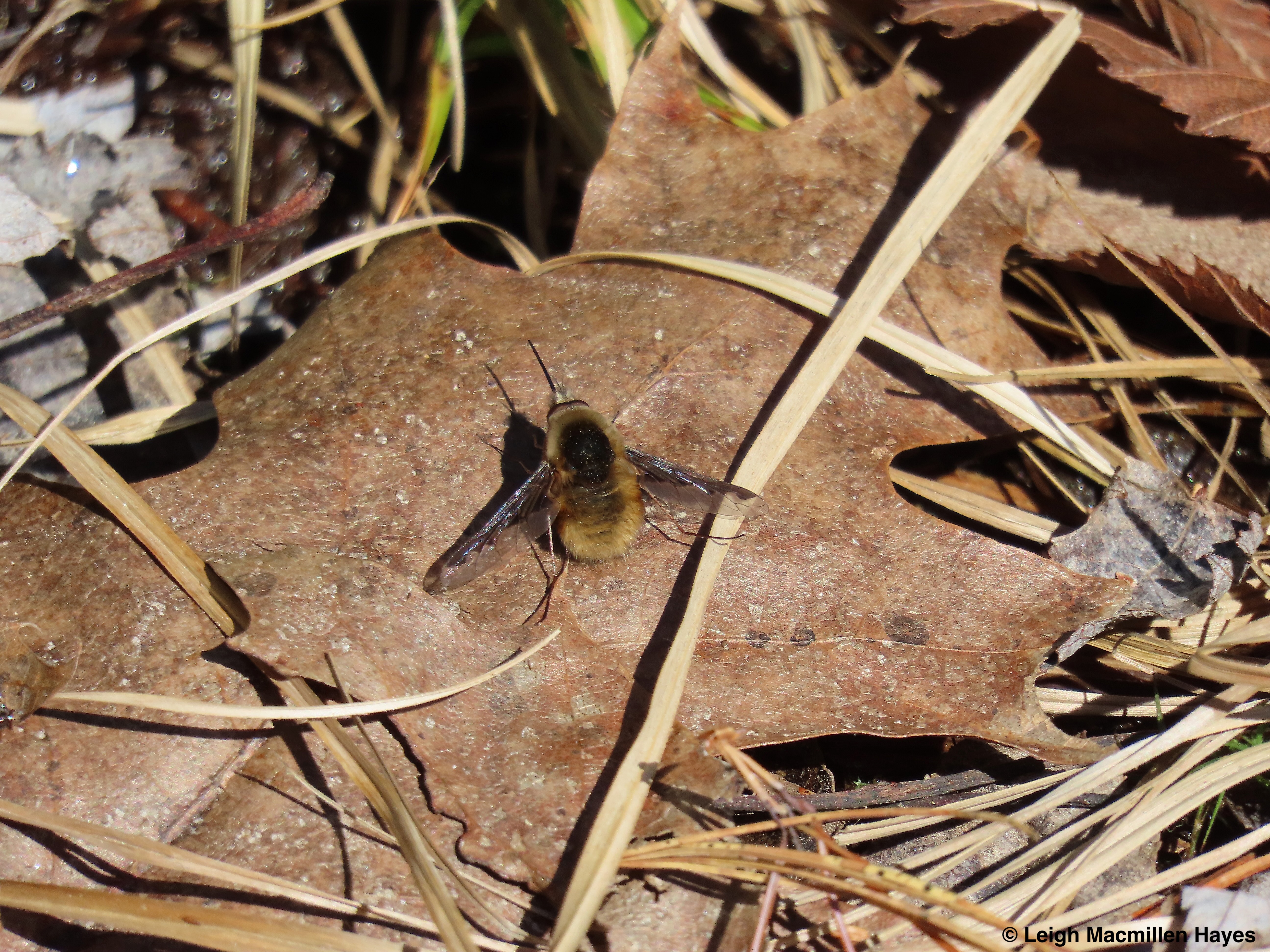
When I wasn’t looking into water, I did notice a few other things like about five or six Greater Bee Flies frequenting one area. The cool thing about bee flies is that they do look like bees, but don’t sting. While they feed on nectar, they also parasitize the nests of solitary bees and I have to wonder if that was what their behavior was about.

Several Six-spotted Tiger Beetles with their metallic green coloring, dashed here and there, always on the move as they looked for other insects to devour. Here’s the thing about these beetles–not all have six white spots, or even any spots.

Speaking of spots, I love the violet-blue markings on a Mourning Cloak Butterfly. This species overwinters under tree bark and other protected places as adults, so they are one of the earliest for us to encounter in the spring, along with Question Mark and Comma Butterflies. And then we get to enjoy a second brood in the autumn that will hibernate as adults.

So it’s not all about insects, though I suspect if I look hard enough I will find one in this photo. But it was the first Bluet of the season that I needed to note. Sure, they’ll be commonplace soon, but this one is the harbinger. And it was enhanced by the contrasting red caps of some British Soldier lichens.

As I walked toward home this afternoon, this Turkey Vulture rode the thermals and I took its photo to honor my neighbor for she alerted me Monday to the fact that she’d spotted some vultures and a Bald Eagle in our ‘hood, and we met on Tuesday afternoon to search for a kill site in an orchard behind some other houses. We didn’t find anything, but I love that she was curious. And that occasionally we share natural occurrences with each other and sometimes walk the same stretches of land. Thank you, Karen.

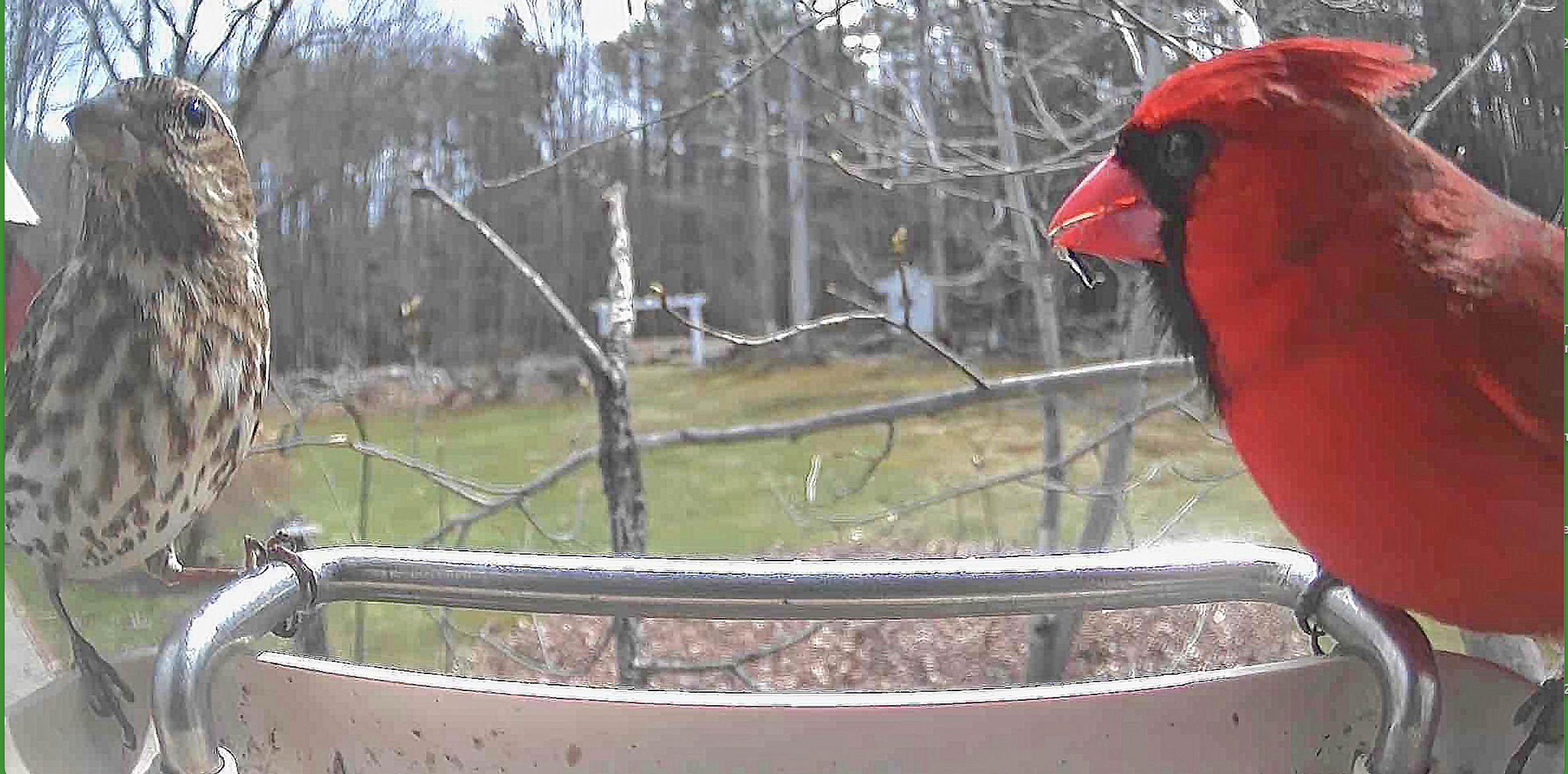
Back home, I was surprised to find these two sharing a feeder, a female Purple Finch on the left and male Cardinal on the right. She would squawk at other finches, but not at the Cardinal. And so they fed simultaneously for a while. If only we could all take a lesson from them.

As a self-confessed home body, I love how the land that surrounds my house and beyond has been my classroom for so long now (30+years), and that it has taught me to celebrate the extraordinary found in everything ordinary.

The Giant’s Shower

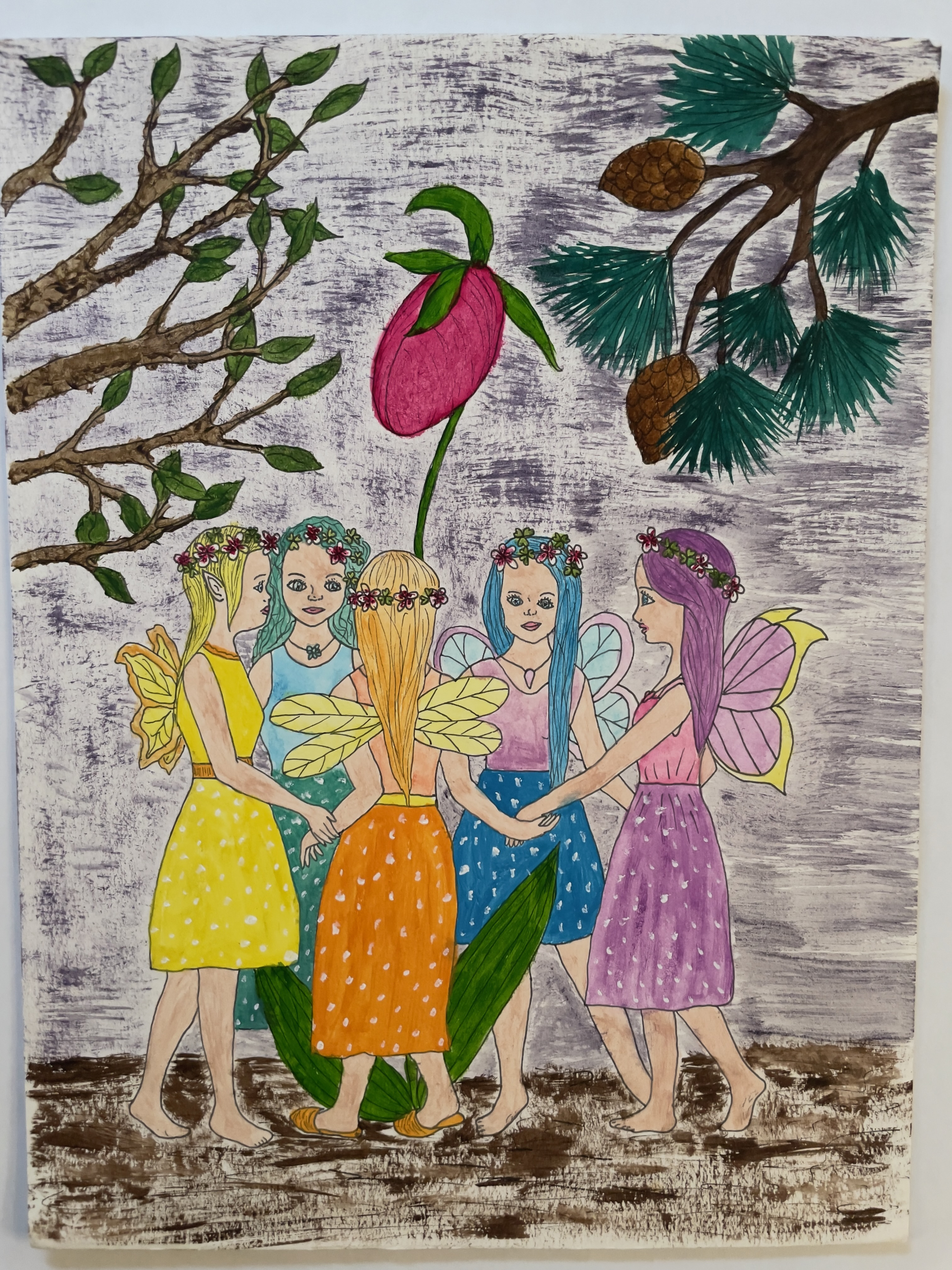
I did a thing. Years ago I wrote a children’s story. Well, a bunch of them actually. And I tried to sell this particular one to publishing houses. No takers. Then, a couple of years ago I purchased a Fairy Coloring Book created by the one and only Solana, teenage daughter of the Fly Away Farm Wards in Lovell and Stow, Maine, and approached her about illustrating my fairy tale. She took on the task and did an amazing job. Then I asked copyeditor Pam Marshall to wave her magic wand over it. And finally a few weeks ago I asked graphic designer Dianne Lewis to use some fairy dust and turn it into an actual book. I always said I’d never self-publish a book. And tada: I did just that.

Aisling, a fairy who lives on Sabattus Mountain in the western Maine village of Lovell, has a vision during the Midsummer Eve celebration. 

Twinkles, flitters, a bit of fairy dust and some tsk-taking are necessary to make Aisling’s vision a reality. 

You and your children will delight in the story accompanied and the colorful and whimsical illustrations created by artist Solana Ward.  

Marita Wiser, author of Hikes and Walks in and around Maine’s Lakes Region had this to say about the book, “The fairies in The Giant’s Shower will captivate children with their merry life in the forest. It’s not all magical though, as they moved from New Hampshire to Sabattus Mountain in Maine to avoid a certain devil. At least they thought the giant was a devil, but the situation wasn’t what it seemed at first. Both the writing and the detailed illustrations capture many features of the woods of northern New England, and the fun of fairy life and houses.” 

A naturalist and writer, many of you know that I hike frequently in Maine and New Hampshire, and those adventures inspired this story. I feel the fairies’ magic whenever I’m among moss-covered ground and tree stumps.

Included in the book are directions to the two featured settings, Sabattus Mountain and Arethusa Falls. Both are easily accessible for young hikers who might experience some magical moments while exploring. 

Also included is a list of character names and their explanations, as well as instructions to create fairy houses and fairy dust. 

The Giant’s Shower is available for $16.99 at Bridgton Books, Hayes Ace Hardware, Fly Away Farm, or by contacting me: thegiantsshower2023@gmail.com.

A Week of Wonders

Every. Little. Thing. Captures. My. Attention.

Whether wandering along the board walks at Holt Pond for six hours with a friend, or . . .

hiking up the new Patterson Hill Trail with My Guy, there’s always something to look at.

One of the most beautiful, and also most difficult to spot, is the Phantom Crane Fly, so named for its black and white markings. As it floats through the air, for I swear it looks like a little box adrift rather than an insect that is flying, its presence is so subtle that it is easy to miss because it blends in with both light and shadows. Shady edges of wetlands are its preferred habitat and that’s exactly where this specimen and a bunch more were spotted . . . at least in the moment. Finding them to photograph is not easy.

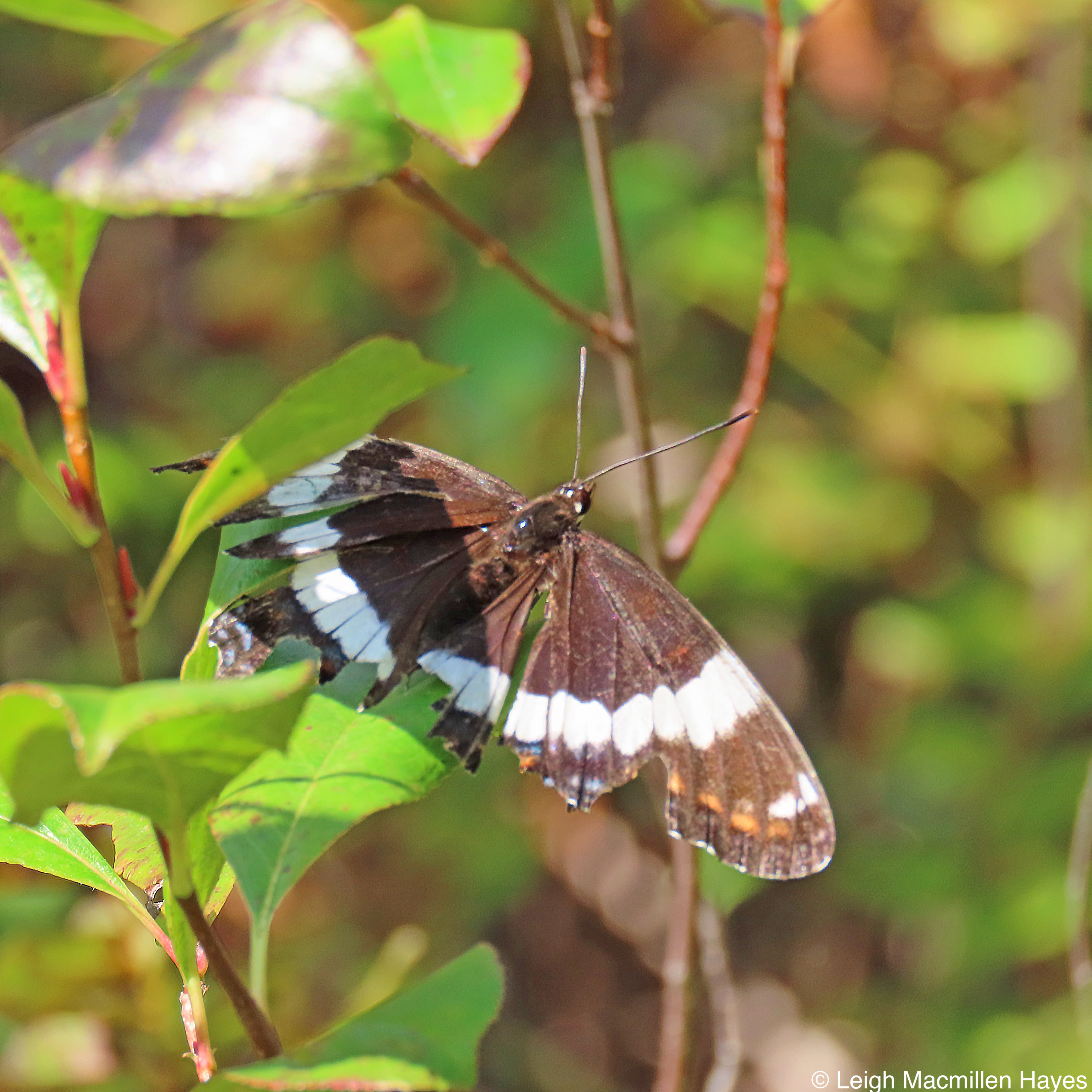
While the black and white coloration seems to help the crane fly disappear into its landscape, the White Admiral Butterfly, who utilizes those same colors, but with a different pattern, plus a few other hues in the mix, is hardly inconspicuous. And by the tattered wings, it seems this insect has escaped becoming a meal on more than one occasion. That, in itself, is reason to celebrate.

Of course, if you are a follower of this blog, you are hardly surprised to spy a dragonfly. It’s Meadowhawk Season, for those who thought the season is actually autumn. And take my word for it because you can’t see it, this is a Cherry-faced Meadowhawk, one of the most common species, along with White-faced Autumn, and Ruby Meadowhawks.

If you near water, be on the lookout for a bunch of pairs in tandem flight as he continues to grasp her behind her head while she dips her abdomen on the surface of water in the act of ovipositing eggs. Sometimes, many tandem pairs will oviposit simultaneously, for there is safety in numbers.

In addition to the Phantom Crane Flies, I’ve been looking for this species, a Pale Green Assassin Bug for months, and tada, a nymph makes an appearance. While its name sounds intimidating, this is actually an insect to admire for it eats flies, wasps, aphids and other small insects that you might consider pesky things.

This was another for whom I’ve been searching, stalking actually, as I pace around gardens. And then, the other day a colleague invited me to join her behind our land trust office, and there Charlotte was, writing a message in her orb-shaped web. Now to find Wilbur. But he’s probably busy getting ready for the Fryeburg Fair.

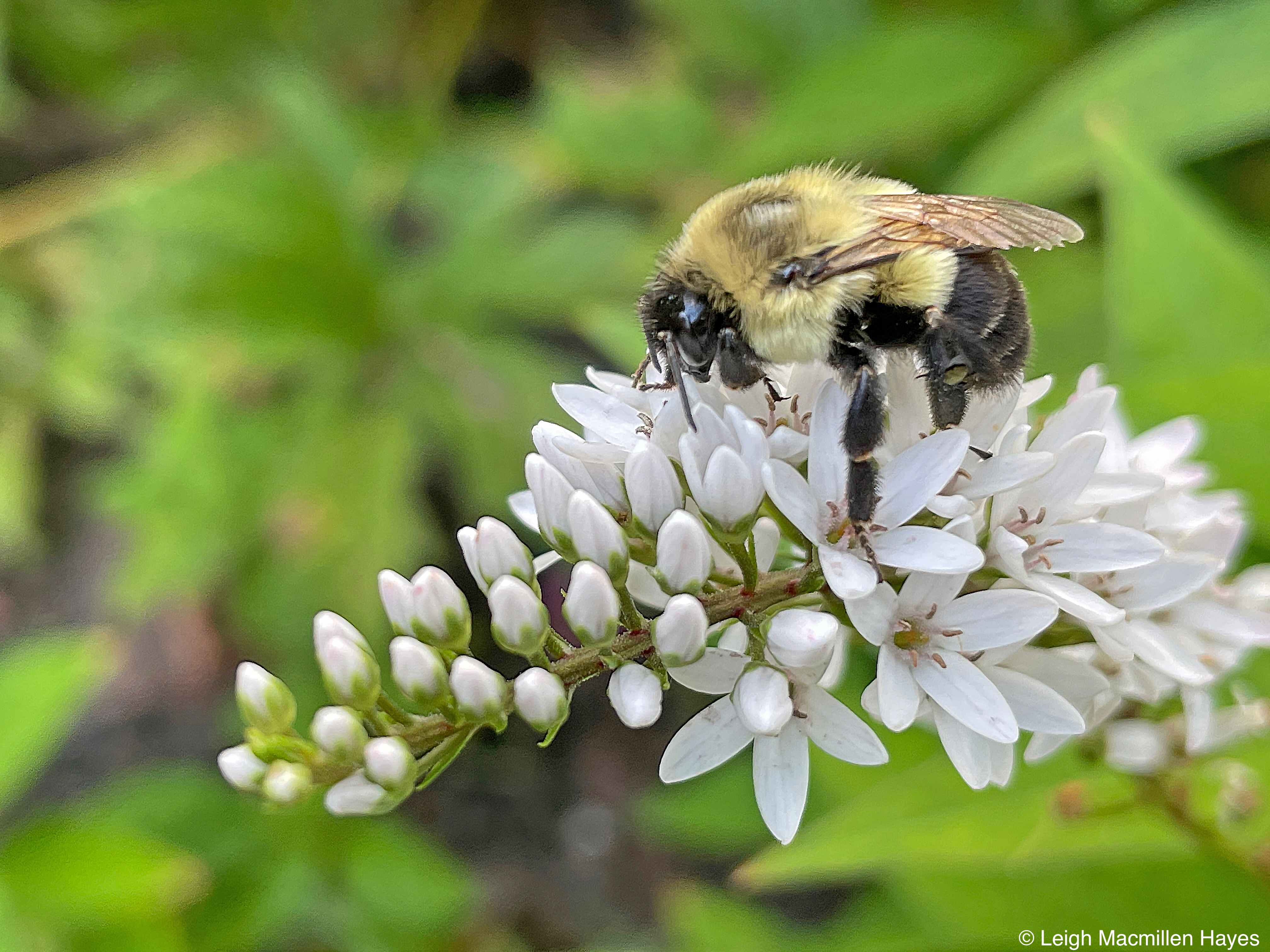
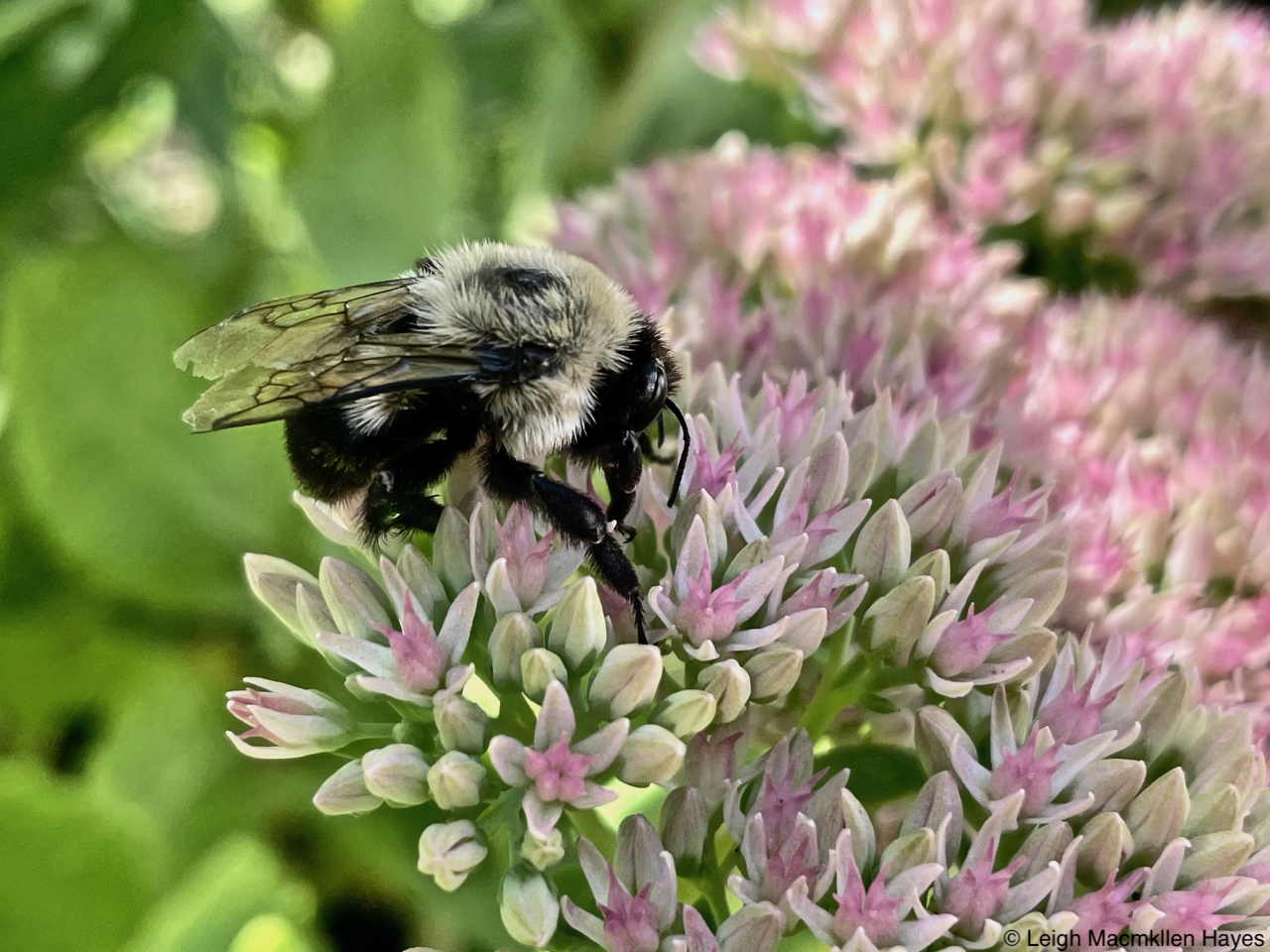
And today, it was this big Bumblebee that surprised me for though it moved its antennae and abdomen, it seemed to remain in one spot on the Gooseneck Loosestrife.

In fact, it stayed so still, that I was able to get into its face, without worry of being stung. Did an Ambush Bug have hold with its claws? Or was a Crab Spider somehow involved? I walked away several times and returned to find it in the same spot, unlike all its other cousins who were busy as . . . bees! But, on a final visit, it had disappeared. I looked under the plant and on the ground below, thinking it might just be a skeleton if a predator had sucked its guts, but found nothing, so can only assume that it finally flew.

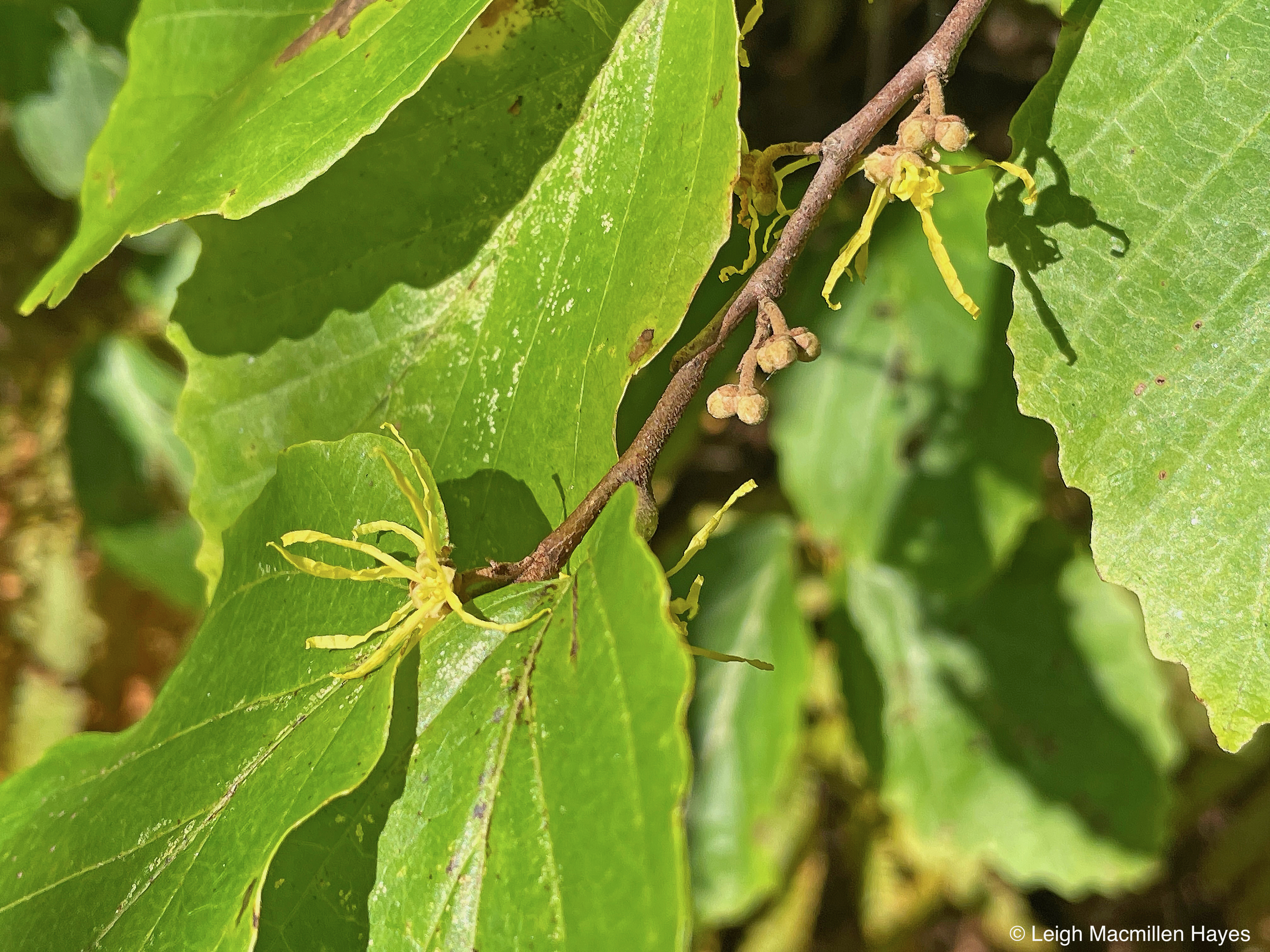
The next two photos are of flowers and not insects. Actually, there are fewer and fewer flowers in bloom right now as we enter the early phase of autumn, but Witch Hazel has started to show off its ribbony display and that made me happy to think that all is right with the world.

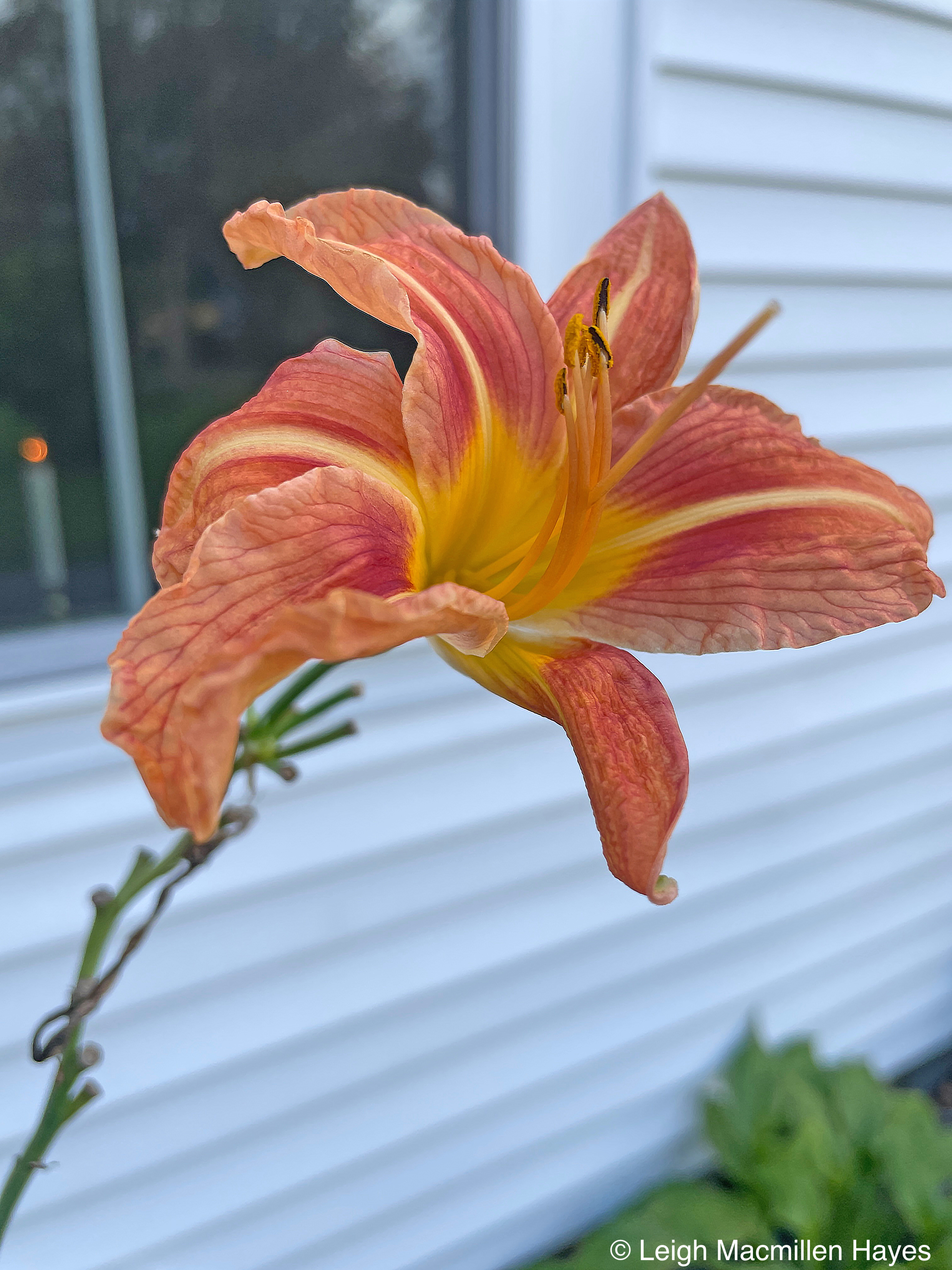
Until, that is, I arrived home a few days ago and found a Day Lily blossoming in mid-September, which is quite late, especially considering all of its brethren had had their day in the spotlight back in early July. Houston, we have a problem. (And maybe sending more aircrafts into space isn’t the wisest decision.)

That said, dear readers, I leave you with something that I hope will bring a smile to your face as it did to mine. My Guy returned from a business trip toward the end of last week and said he had a gift for me. He opened his backpack and pulled out this box of Jelly Slugs! For those who know me, you’ll know that he knows me as well!

It’s been a week of wonders indeed, and though these are only a few samples, I’m grateful for every little thing that captures my attention.

Bugmania

Each spring and summer I find myself basking in insect awe. 
In my Book of Shoulds, everyone should behold these masters of land and air who all have the same body plan: Head. Thorax. Abdomen. 
Let's start with the Sedge Darner's head.
That "face"--oh my--yellow-green mouth parts below darker bluish-green eyes. 
And a T-spot just below the eyes and thin black crossline lower down on the face.
What a treat to meet this handsome guy.
And then there's the contrast of Halloween colors on the Great Golden Digger Wasp.
Take a look at its thorax connected to the head. 
It actually consists of three segments, the prothorax, mesothorax, and metathorax,
each supporting a pair of legs.
It's hard to tell, but the front wings are attached to the prothorax, with the hind to the metathorax.
Meanwhile, upon another flower there's a view of the abdomen, the beginning of which is quite skinny on this Thread-waisted Wasp. How does that body function? 
This female Blue Dasher offers a perfect stance to truly see the head, thorax, and abdomen.
When trying to identify insects, coloration is important, as well as shape and placement.
Compound eyes provide complex vision with thousands of tiny lens creating an entire scene.
Compared to a dragonfly's eyes, those on a butterfly like this Painted Lady are much smaller,
but her clubbed antennae are much longer. 
Antennae are actually segmented sensory organs that function differently for each group of insects. 
They may be used for smell, taste, touch, air motion, or maybe even vibrations.
In the case of the freshly emerged Dog-day Cicada, the antennae are short, but the eyes bulge from the sides. 
And that camouflage coloration will be useful as this insect disappears into the treetops singing raspy love songs in an attempt to attract a mate, while trying not to be eaten by a predator. 
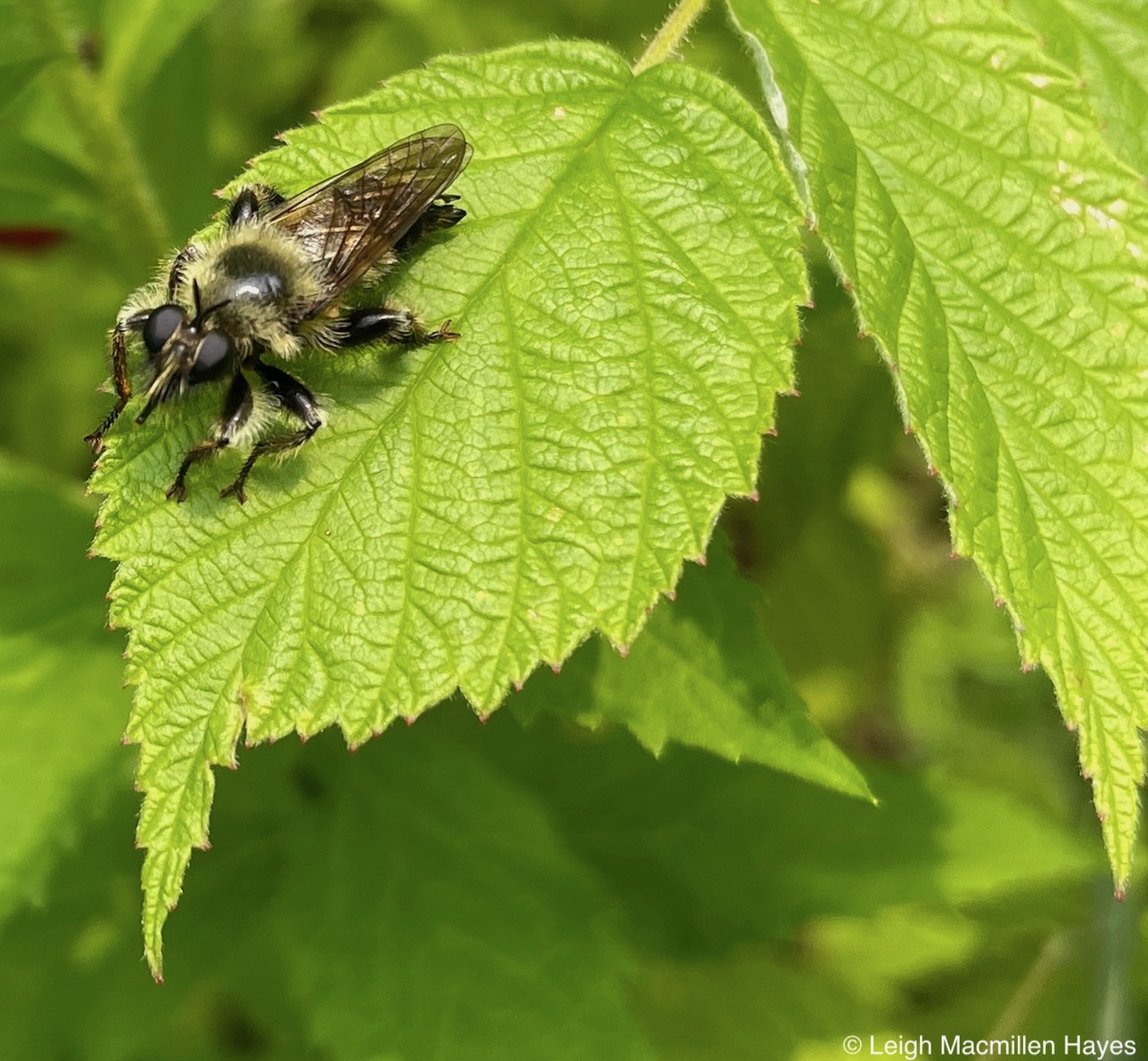
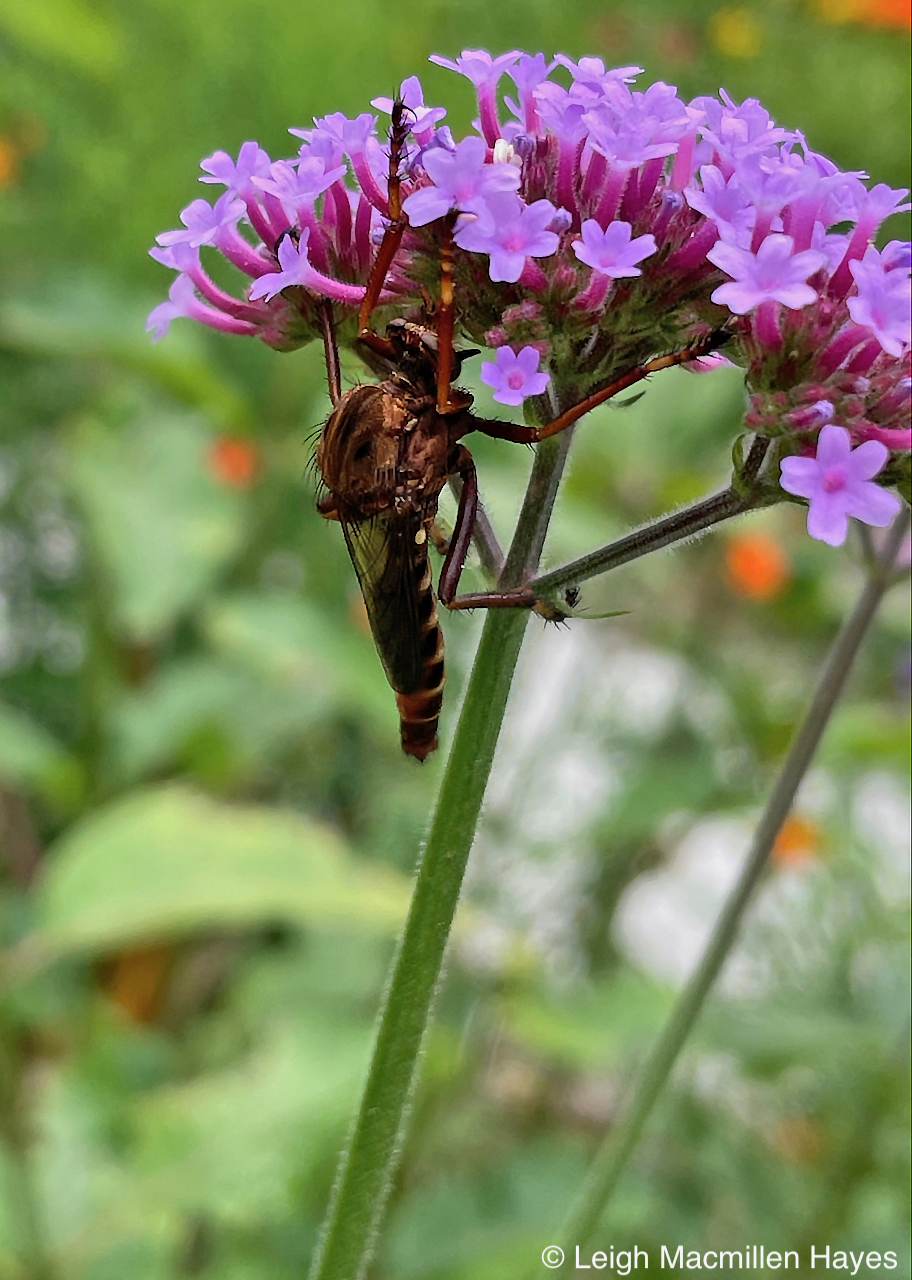
Behold next the Robber Fly, this particular species with such a hairy body that it mimics a bee.
Its proboscis, or mouthpart is rather beak-like, the easier to consume insects. 
The Goldenrod Soldier Beetle can spend a long time actively pursuing pollen on one plant, as has been my experience in its presence. It's a similar body structure as a firefly, but the legs strike me as being much longer. 
While I was focused on this Bumblebee seeking nectar with its tongue, an Ambush Bug lay in wait, hoping for a big, hairy meal of its own liking. It didn't succeed this time, but one of these days I'll spot the leftovers of an Ambush Bug's dinner. 
The first Monarch of the season, at least for me, was sipping from a Marigold with its super long straw-like proboscis. I've noted them before, but notice again the club-shaped antennae, a feature of a butterfly, unlike the feathery antennae of a moth. 
The Silver-spotted Skipper is another butterfly, albeit much smaller than the Monarch. For such a small one, its eyes are huge and proboscis equally long, as it reached deep into the Wild Bergamot. 
The Dog-day Cicada pictured earlier gave me a unique opportunity to look at its underside as it perched upon a broken stem. Do you see the zebra-striped design below its eyes and above its legs? That's the start of its mouthpart, which is tucked against its body until its decides to dine. Moments after this photo was taken, the Cicada made its first flight ascending high into the treetops.
The Great Black Wasp with its iridescent blue wings, offers a prime example of the amazing construction of insect legs. Insect legs have moveable joints between some segments. 
So here's how the song goes: 
The pretarsus (toe-like with one or two small hooked claws) is connected to the tarsus (foot-like), 
the tarsus is connected to the tibia (longest part of leg), 
the tibia is connected to the femur (largest and thickest), 
the femur is connected to the trochanter (kinda like a hip joint), 
the trochanter is connected to the coxa (joins body)
the coxa is connected to the body! 
Now shake dem insect bones! 
The fiercest looking legs are the lobster claws of the Ambush Bug, 
the better to snatch prey and hold it in position to suck its guts out. 
Another incredible insect feature: wings. 
Muscles that work the wings are attached to the thorax. 
But how do such scaly membranes provide the gift of flight for such a robust looking body? 
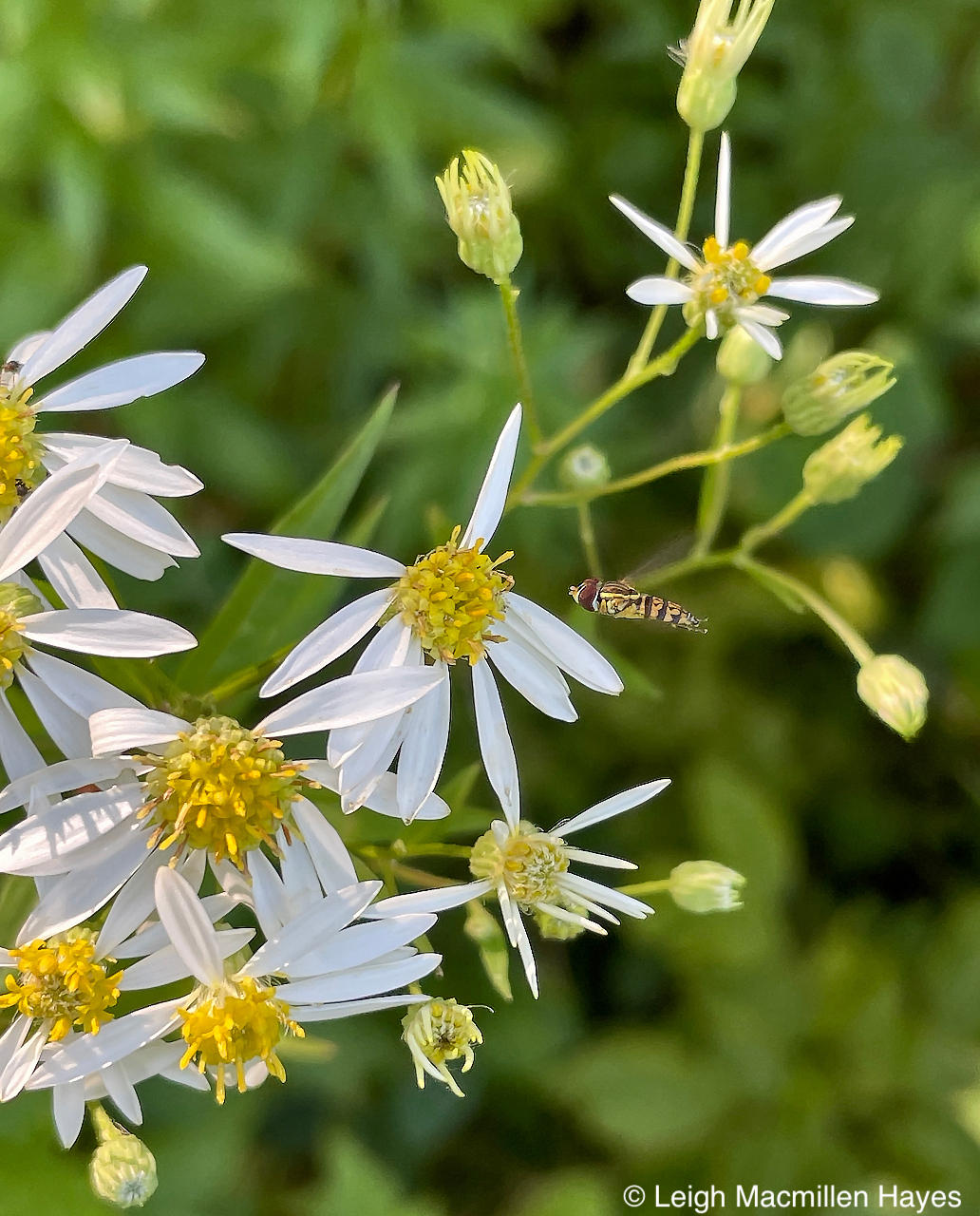
Even the much tinier Hover Fly is amazing as it flaps its wings so rapidly that they are almost invisible and can "hover" in place, much like a Hummingbird. 
In the end, it all comes down to investing in the future by canoodling upon the flowers that nourish you and you help pollinate. 
And then it's time to be like the Robber Fly and find a safe place that will protect you from the elements so you can  take a rest. As August continues into September, my hope for you is that you'll spend a few moments basking in insect awe and develop or continue to nourish your own form of Bugmania. 

Our Blue Greed Mondate

Somehow that time of year always sneaks up on us. And yet today dawned and the writing was on the wall: This is that time of year-kind-of-day. But the question remained: Would we be rewarded?

Well, we had to find out and so this morning we set off in search of this small mountain nestled in the midst of so many behemoth uprisings. It took us several wrong turns before we finally shared that sudden “Aha” moment that indeed the pasture road was the correct road. It was all rote from there.

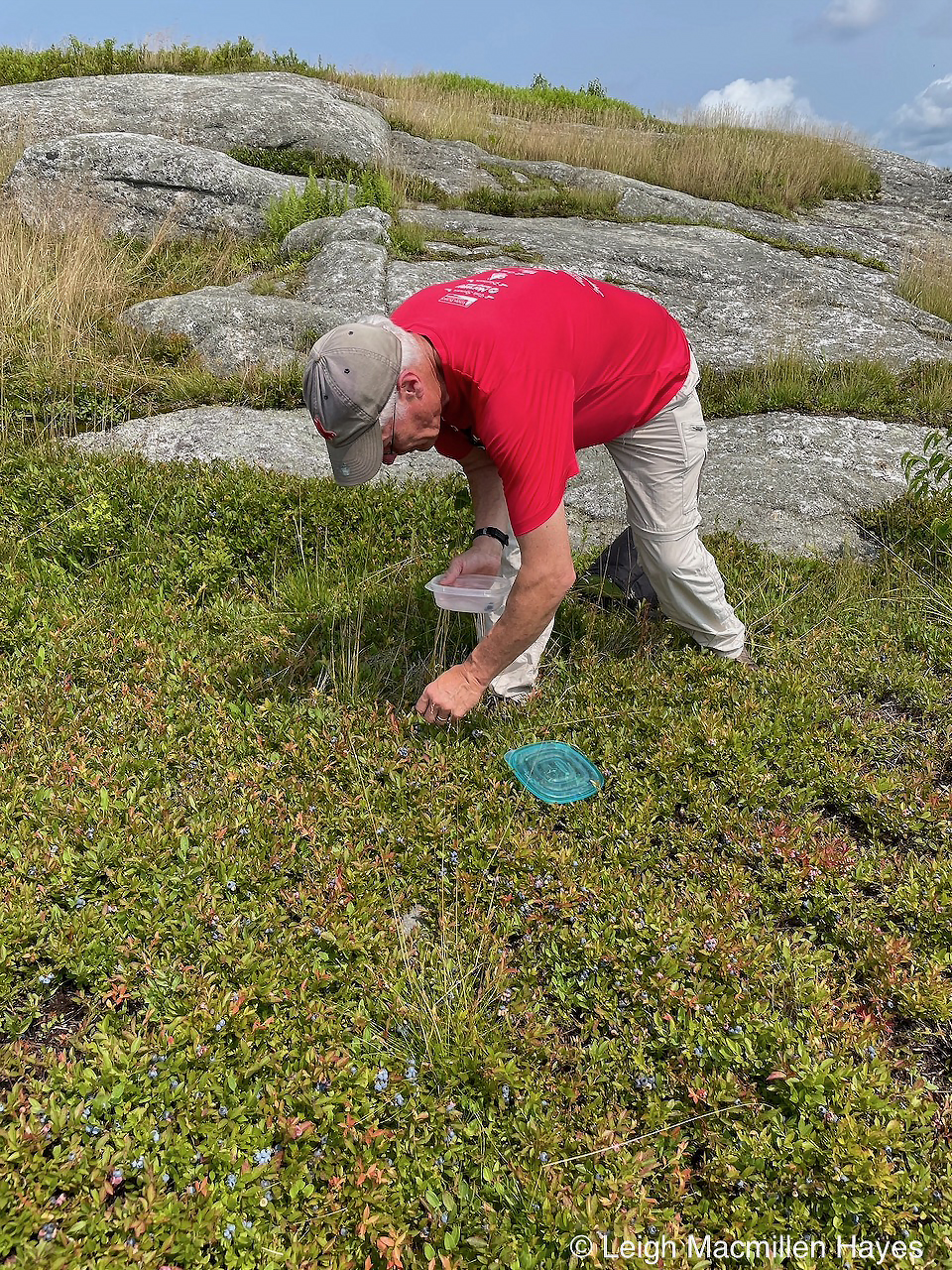
Last year we discovered the mountain top had been cut back and there were no little specks of blue to glean, but that cutback lead to this year’s abundant offerings. My Guy was in his happy place.

Well . . . one of his happy places. This one offering such sweetness in a manner all blue.

I chuckled when I overheard a mom commenting, “This is just like Blueberries for Sal.” I immediately texted our friend Kimmy for she and I know otherwise. Drop the “S” from Sal and you’ll know what I mean.

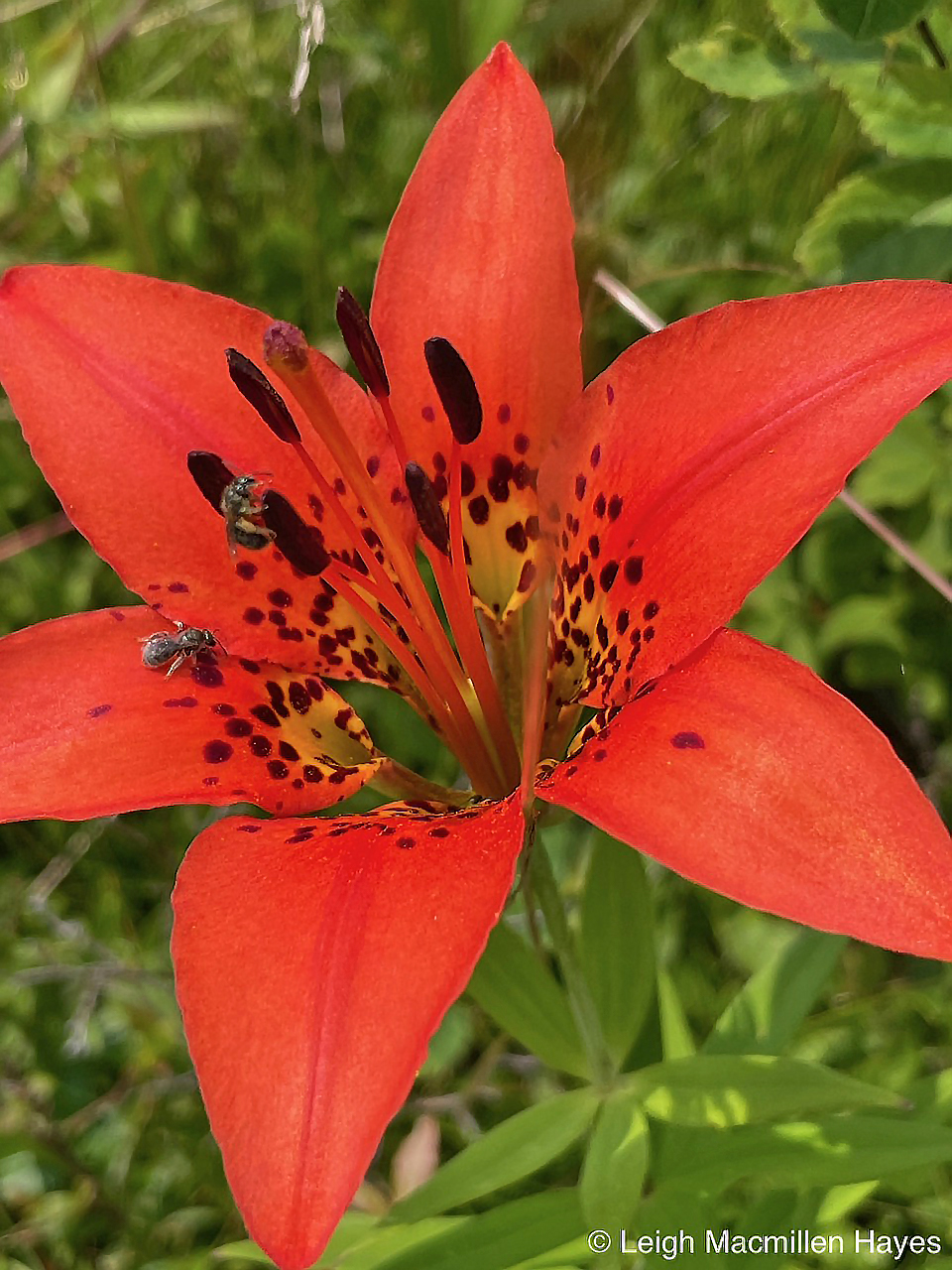
That said, his blueberries are my pollinators and with pollinators you have flowers, this one being one of many, many Wood Lilies.

There was also the Red-shouldered Long Horn Pine Borer, so frantic in its activity upon the Steeplebush flowers.

Plus a Paper Wasp upon Yarrow, . . .

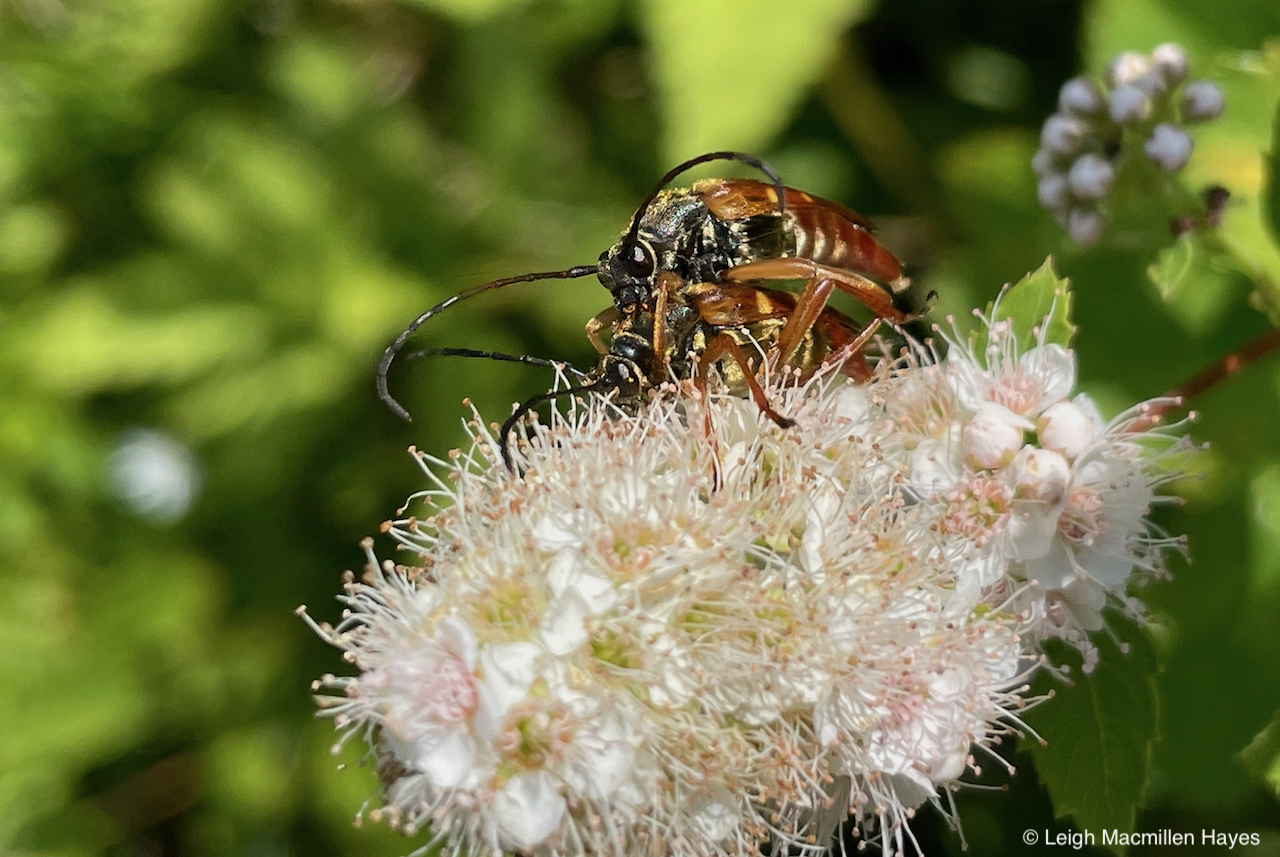
And Flower Longhorn Beetle on Bristly Sarsaparilla. The season is short and there’s so much work to be done and the rain may have slowed things down so when the sun doth shine, it’s all insects on hand.
We finished up our hike, grabbed a to-go lunch at a locally eatery and then took off in the tandem kayak, with the same mission on our minds. Picking more blueberries for him, of course.

And checking out the local wildlife activity for me. We watched a beaver pass by our dock two nights ago, so we knew there was an active lodge somewhere in the area.

We actually found two new lodges and other older ones that were turning into islands. But we didn’t spy any beaver activity, probably given that it was the middle of the afternoon.

I, however, spotted a couple of species that envied My Guy’s blue greed, this being a male Slaty Blue Skimmer pausing in the midst of defending its territory.

And my heart was glad for we also spent some time with this tiny male Blue Dasher, another Skimmer who posed longer than I expected.

Only yesterday, I included his mate in Hunting for Dragons. Suddenly, here he was, albeit with a few Red Mite hitchhikers attached to his thorax.

While My Guy’s Blue Greed may be low and highbush blueberries, mine is definitely insects, and the bluer the better.

Rewarded were we, indeed!

Slippery Eyes

Exactly one year ago on a fine sunny day, My Guy and I drove to Wolfe’s Neck State Park in Freeport to fill the inner most recesses of our lungs with salty ocean air.

Today dawned rainy as has been the forecast now three days old, but we returned to the park with one quest in mind.

To see if we could match the count of Lady’s Slippers we encountered last year and Nature did not disappoint.

But, she also presented others to honor in their wet formations like a few remaining dandelion seeds and translucent bracts offering a sunshiny display.

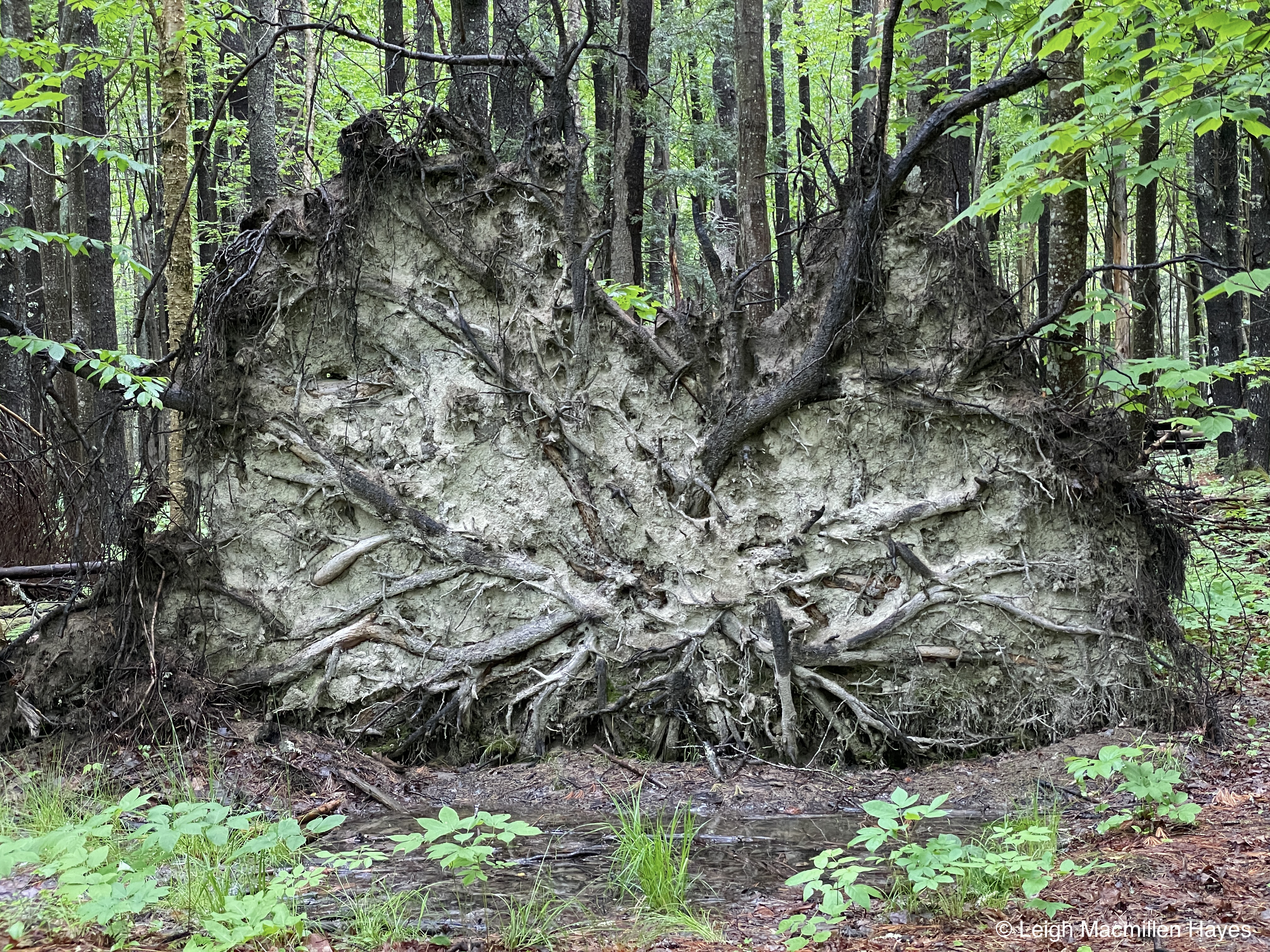
Even the underside of a windblown tree, one of many, showing off its shallow root system created an artful design to admire.

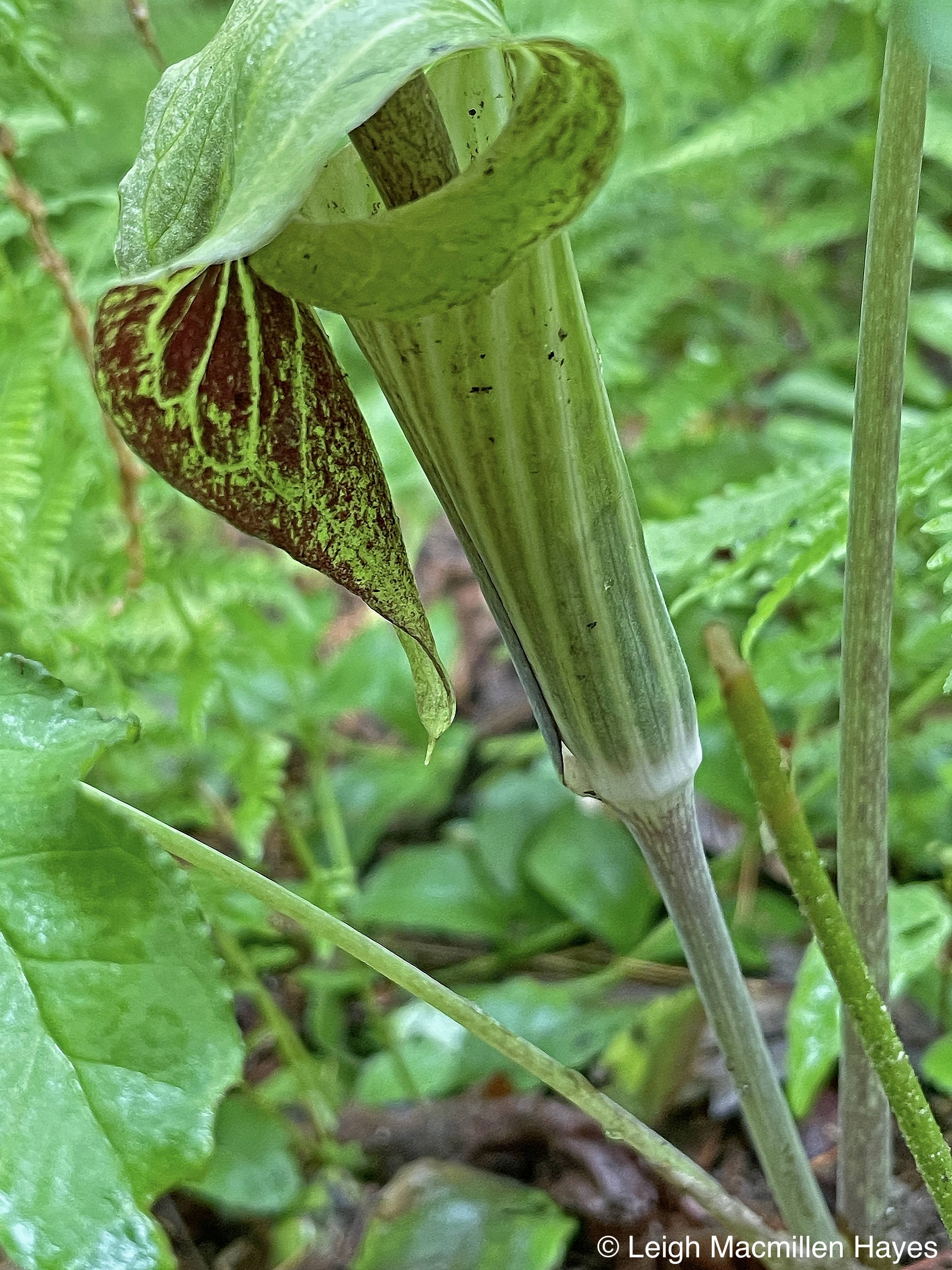
Hiding beneath two three-part leaves, a long club or spadix sitting in a hooded base or spathe known as a pulpit indicated that Jill and not Jack was doing the preaching in these woods.

Though the weather changed from drizzly to dry, or maybe because it did so, White Baneberry celebrated with a show of fireworks.

And Indian Cucumber Root began to take the next step in its two-tiered story, for at least one flower had been pollinated and rather than dangle below the leaves, rose above in anticipation of a fruit forming.

There was all that to see, but My Guy, whether walking along the yellow brick road or over rocks and roots, only had his sight on one species that actually slowed him in his tracks.

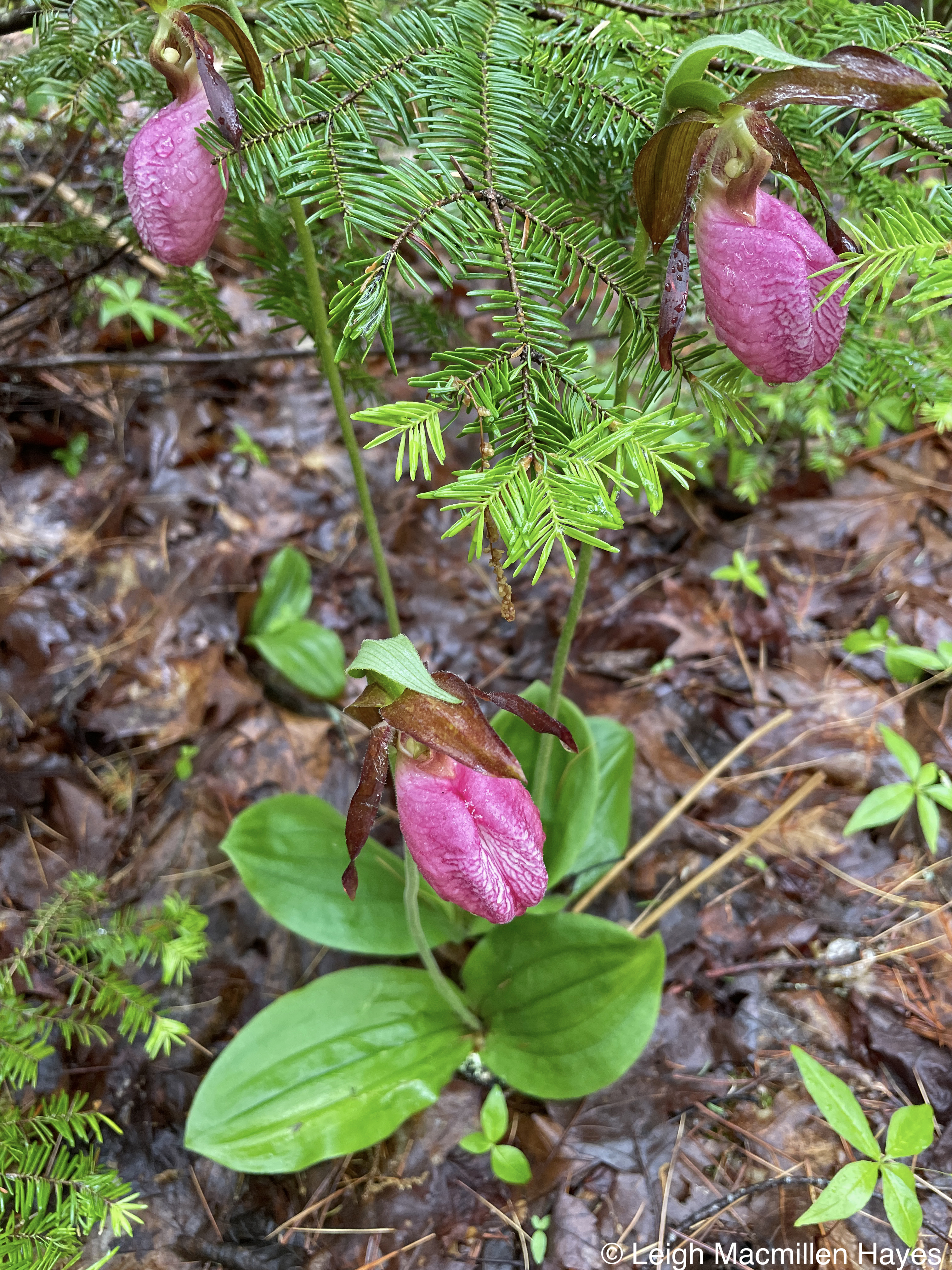
Looking left and right, and peeking under and over, he kept count of his Lady’s Slippers.

Whether they grew in groups or singly, including this one that surprised even him, for it had sprouted from a mossy substrate upon a rock, each one mattered.

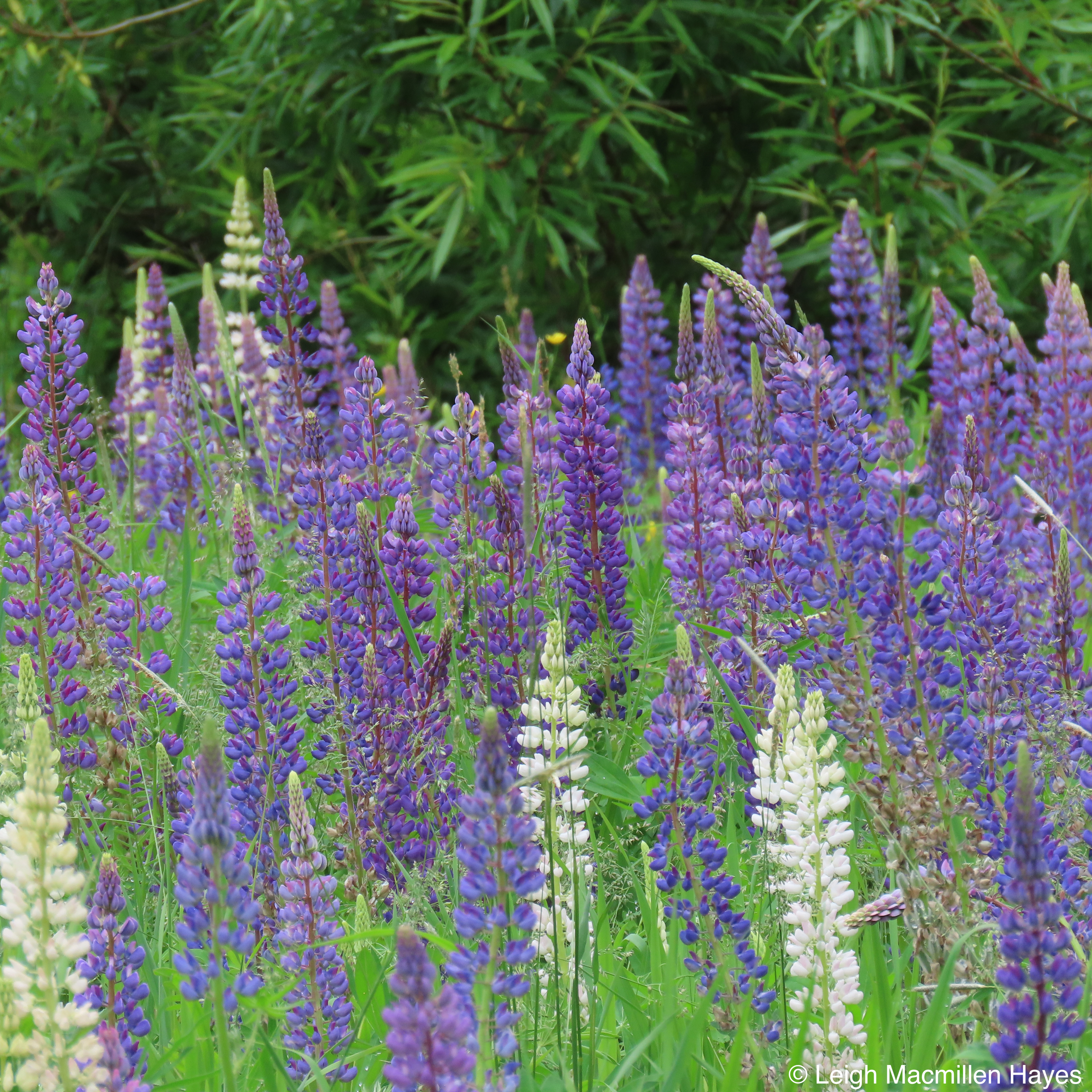
When at last we departed the park, I paused the truck beside a small pond outlined with Lupines.

They may not be Lady’s Slippers, but their own unique design and colors deserve to be honored as well.

We didn’t count the Lupines, but our Slippery Eyes took in 324 Lady’s, a total of 87 fewer than last year, but still we gave thanks.

The Richness of Life

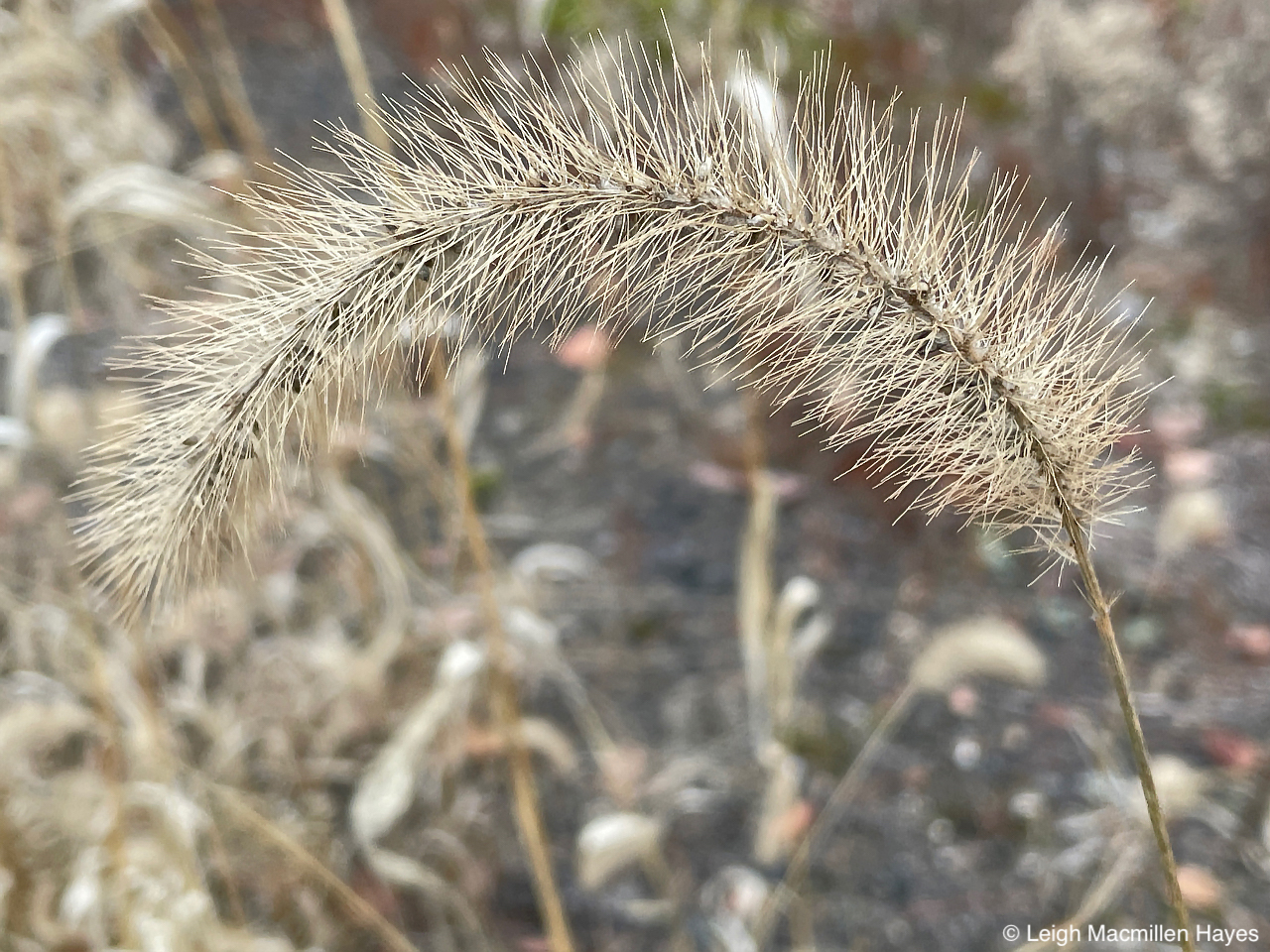
In the midst of walking toward the vantage point upon the Mountain Division Trail in Fryeburg, Maine, grows a grass of distinction for its form,

All fluffy and arced as the seedhead is, Giant Foxtail seems an apropos common name, though its known as a pest to farmers who grow corn.

I’m struck over and over again as I walk upon the paved pathway,

by the colors and textures of so many seeds ready to float astray.

And then there is a tree that cannot make up its mind

and chooses instead to be two of a kind.

Its known as a conifer because it grows needles each year,

but this Tamarack sheds them in deciduous form as winter draws near.

I next pause beside one who displays all ages,

from yesterday’s cones to today’s catkins and tomorrow’s buds waiting to turn spring’s pages.

Some of the Speckled Alder cones hide beneath tongues imitating piles of snakes stretching out,

made from galls caused by an infection to increase the surface for spores from a fungus to spout.

Another with long, feathery white plumes overpowers a chain-linked fence along the way,

the seeds of this native vine, Virgin’s Bower, await a breeze to help them stray.

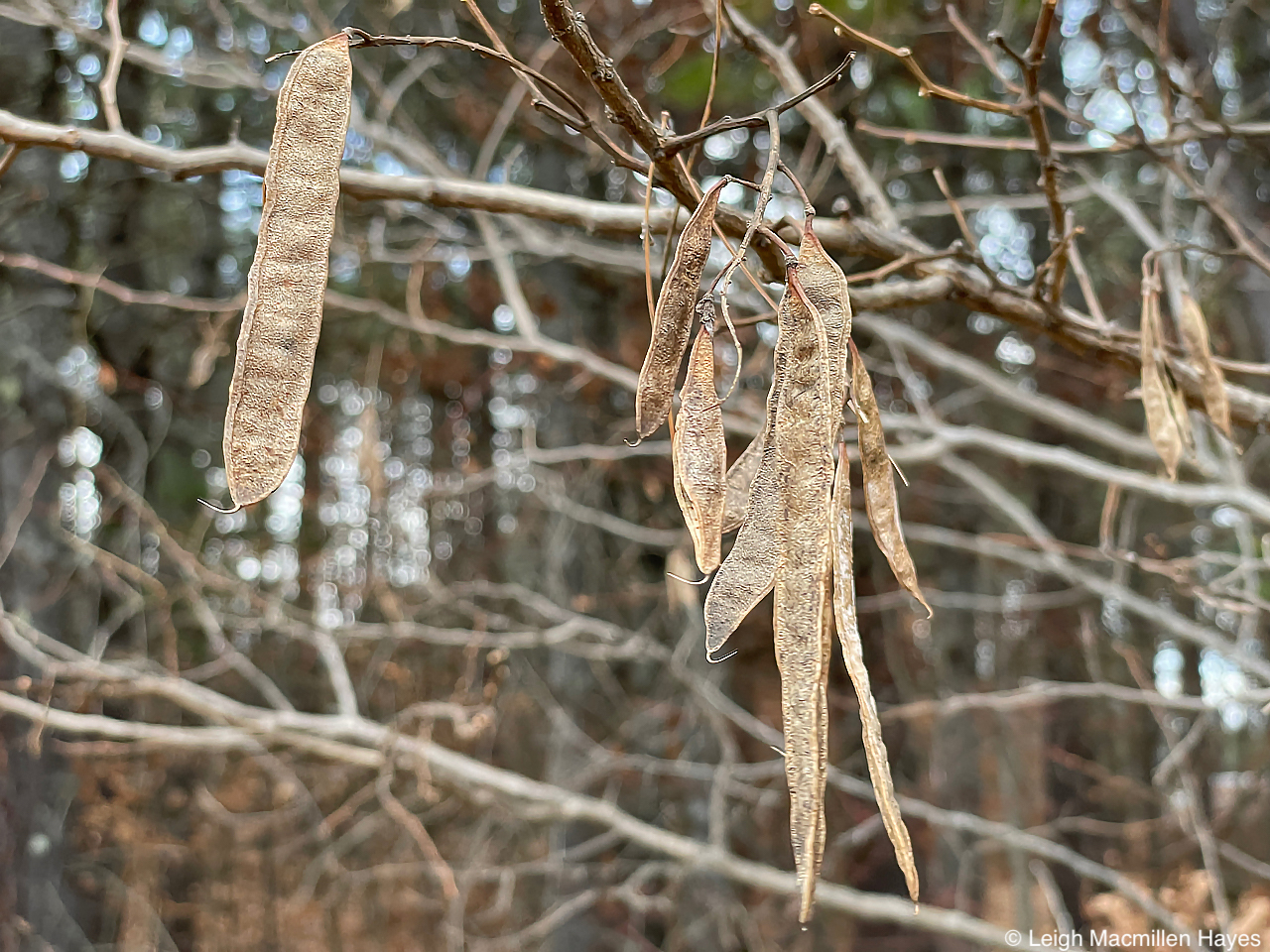
Other seeds also announce their presence, these hanging from trees.

Being Black Locust, their pods are inedible legumes related to peas.

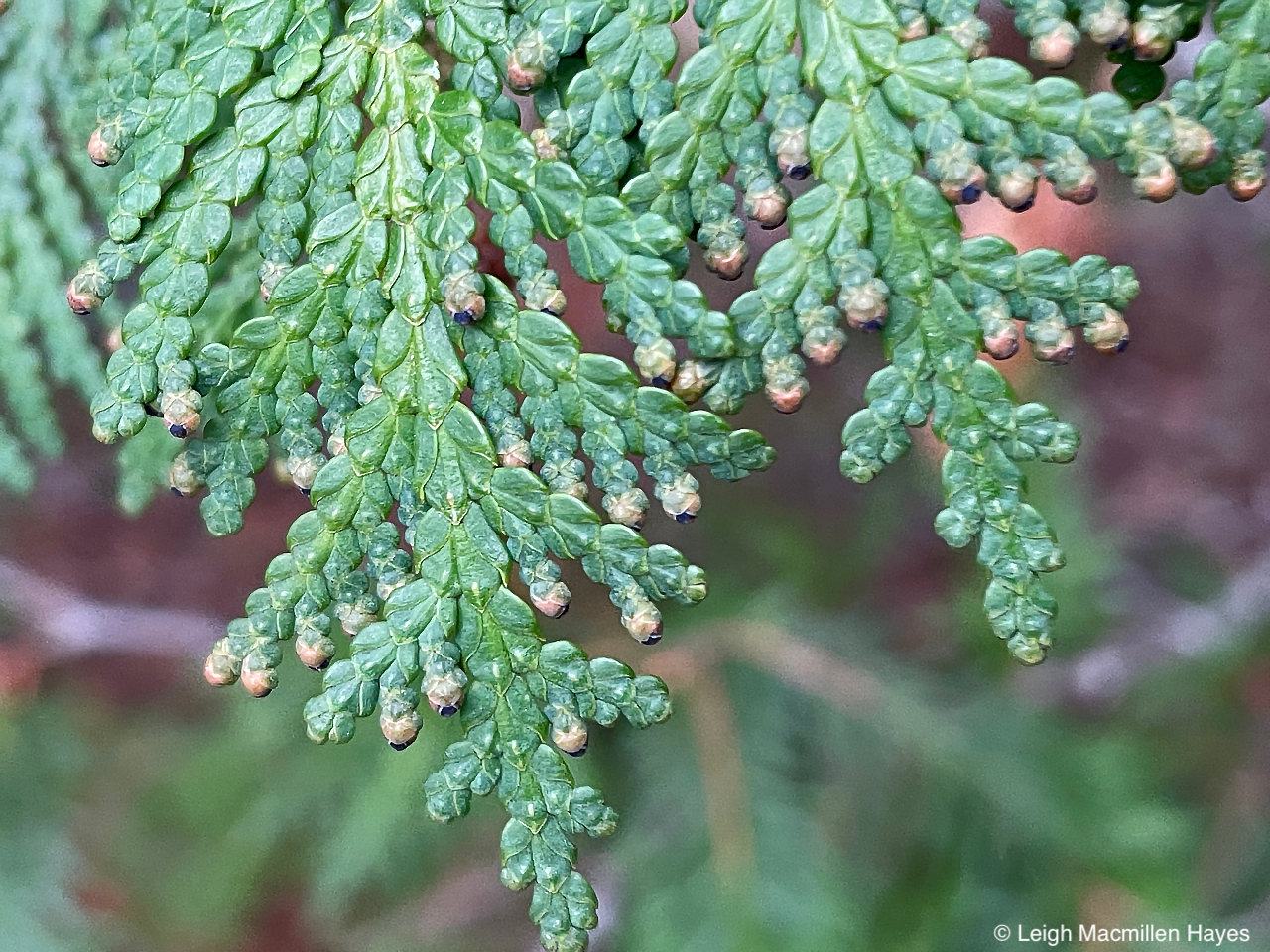
Tossed into the mix these scale-like needles that make me think of braids form a flat spray.

The tiny flower buds at the tips of Northern White Cedar’s leaves preparing to bloom next May.

What amazes me most about this extremely warm November day,

is spotting flowers in bloom like the colorful Calico Aster array.

And then there was a plant bright yellow in flower with lance-shaped leaves of green on display for no apparent reason,

This Showy Goldenrod being one I couldn’t recall noticing before but will recognize when we meet again in another season.

Even the insects are confused this fall,

such as this flower beetle taking advantage of an in-bloom Yarrow offering a nectar haul.

One of my favorites though, knows that the flowering season should have ended by now,

As the Evening Primrose showed off a Christmas display of deeply-veined basal leaves meant to wow.

Thankfully, a nest the size of a basketball I spot dangling from a branch shows signs it is no longer full of life,

The hornets who built the papery structure have abandoned it, causing us who follow the trail no more strife.

At last, returning to the vantage point from whence I have come,

I’m filled to the brim with colors and textures that would mean only death to some.

At the end of today’s journey I realize

this place is as rich in death as it is in life and I have won the prize.

Needed: Minds to Wonder

Along a paved trail seemingly flat that follows a track to a vanishing point did I walk today.

It’s a place some see as desolate, but nature always has something to present and today it was signs of the season to come that drew my attention.

Hints of autumn’s hues . . .

contrasted sharply with summer’s chlorophyll-induced greens.

Redder than red winterberries bespoke the presence of a nearby male–since as a dioecious species, female flowers and male flowers grow on separate shrubs. They also signaled bird food and seasonal decorations–depending on who arrives first: Avian species or human.

Disturbed though the land is, Asters such as this Calico, invited visitors like the Paper Wasp to stop by for a sip of nectar.

Goldenrods also sent out messages and Bumble Bees RSVPed . . .

for they had baskets to fill one pollen grain at a time.

In the mix along this route of disturbed soil and gravel, there were those whose seedheads, while reminiscent of a dandelion, proved more beautiful than the Pilewort’s actual nondescript flower.

Less obvious, but no less beautiful, Wood Sorrel quietly softened the edges of the rocks upon which it grew.

Jewelweed, also known as Touch-Me-Not for its seed’s habit of springing forward when touched, had a visitor all its own whose name I wasn’t allowed to catch.

Similar in color to the Jewelweed, a Monarch butterfly filled up . . .

perhaps a last series of sips before the long journey south.

All of this color and action was observed by a Chippy, who was busy adding to his collection of goods, while his kin added their clucks to the chamber music orchestrated by grasshoppers and crickets.

The Mountain Division Trail in Fryeburg, Maine (home to the Fryeburg Fair), is hardly flat and not at all desolate–it just needs people with eyes to see and ears to hear and minds to wonder as they wander. Okay, so maybe it was desolate in terms of being deserted of people, but I kinda like it that way. As for being dismal and bleakly empty–I beg to differ.

Completing the Collection

Collect: to gather an accumulation of (objects) especially as a hobby.

Over the years I’ve collected many things from turtles to tea cups and seaglass and heart-shaped stones and tree cookies and dragonflies and books (oh my, yes have I ever collected books) and even . . . the crème de la crème: scat!

But today’s collection is one that is fleeting as the days are getting cooler and shorter and even if you feel as if this is all I’ve written about lately, it’s because the days are getting cooler and shorter and this collection will soon disappear. And then it will be time for SCAT again!

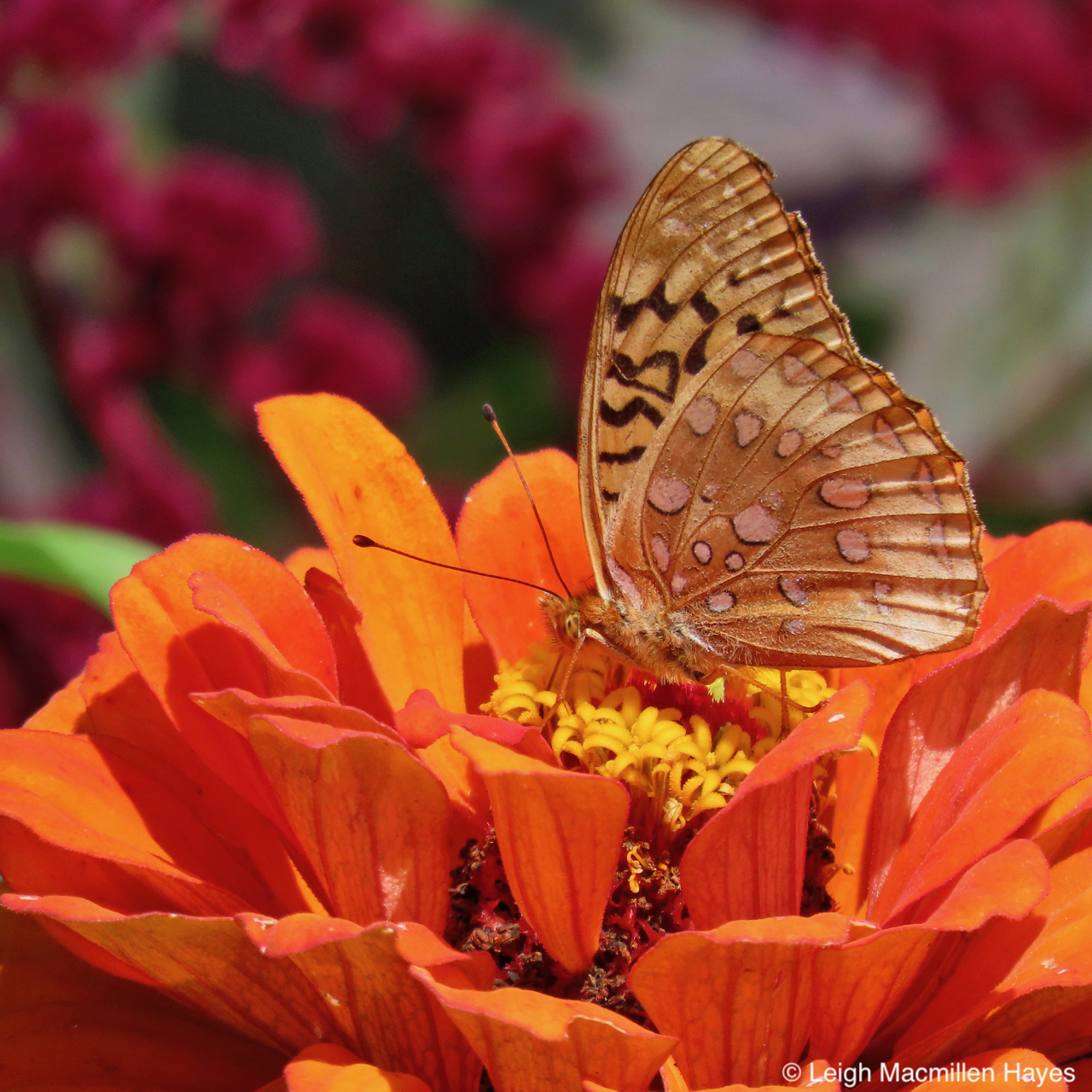
Yes, today’s collection is about insects, this being a Great Spangled Fritillary Butterfly. There was a time when I couldn’t be bothered with insects because I knew them as pesky things, except for the butterflies, of course. But it was when I finally decided to take a good look at them and get to know their idiosyncrasies that I realized there’s something to admire about each and every one. Well, maybe not Black Flies or Deer Flies, but then I remind myself that they are bird and dragonfly and damselfly food, and all is okay with the world once again.

One of things I’ve learned about the natural world and this butterfly speaks to it, is just how hairy many insects and plants and even tree leaves are. In the case of a butterfly, it makes sense because it begins life as a caterpillar, often a fuzzy caterpillar. And then there are those veins in the wings. And the pattern. How in the world does a caterpillar pupate and turn into soup as it digests itself, releasing enzymes to dissolve all of its tissues?And then reorganize its cells that transform rapidly to become legs, wings, eyes and other parts of an adult butterfly? How indeed!

The next insect in my collection: the Goldenrod Soldier Beetle. Though its name is for the flower it most often frequents, it can be found on any flower. There are at least 19 species of soldier beetles in North America, but this is the only one found in the Northeast: Chauliognathus pensylvanicus.

The name “soldier” apparently comes from the fact that the first species to be identified has a color pattern that reminded someone of the red coats of early British soldiers. That’s not the case with this being.

Paying attention to details is prime in learning to ID insects. Many are look-alikes and I was sure this butterfly was a Painted Lady. Instead, she’s an American Lady, due to the fact that she features a white spot on orange located on the forewing. The Painted Lady doesn’t have such a spot.

Another insect that tickles my fancy is the Sweat Bee. I’m a goner for that iridescent green head and thorax. While Sweat Bees are common on flowers, such as this tall sunflower, they also are attracted to our perspiration and this afternoon I had one that kept approaching my bare, sweaty feet.

Keeping with the bee theme, I’m always in awe when I happen upon a Tri-colored Bee, whose name speaks of its abdominal color pattern: one band of yellow, two intense orange, another yellow and then two bands of black.

Then there’s this insect. I’ve mentioned that I can stand still and not be bombarded by Bumble Bees, but this Flower Fly that chooses to mimic a bee adds a new chapter to the story. It makes the herb garden come alive with its insistent buzzing and it likes to charge at me as if it is ferocious. Intimidating? Yes. Will it sting me? No. And so I stand my ground.

One that could sting is the Honey Bee and I try to give each one I encounter the room it needs to carry out its duties of gathering pollen and nectar. Unlike Bumble Bees, Honey Bees are not native, but then again, neither am I.

That said, I have the joy of seeing many Bumbles and learned from them that while Honey Bees seem to devote their attention to one flowering species in my neck of the woods, I’ve watched the Bumbles move from one plant to another . . .

making me think that diversity is the key to their existence.

When bees visit a particular flower in the garden, I always know it before even looking for the plant that may jiggle a bit. If you click on the link above, and turn up the volume, I hope you’ll hear what I hear that signals a Bumble Bee is in a Turtlehead. When the bee squeezes into the flower and wiggles around to try to reach the nectar at the base, it causes the front “lips” to open and close as if the flower were trying to speak or the turtle snap. As you can see, the lower lip is lined with furry hairs that probably help keep out crawling insects who might steal the nectar without pollinating the flower. The bee has to push past sterile stamen to reach the nectar and I’m not sure if the sound I hear is its wings fluttering in super-fast time or the wings rubbing against the stamen and petals. It’s a tight squeeze, but as you can see from the video, the bee gets well dusted with pollen.

Of course, no insect post of mine would be complete, without a dragonfly in the midst. That said, dragonflies don’t make it in every time, but this Autumn Meadowhawk Skimmer kept landing on several bygone Daylily stalks. I thought I could get it to walk onto my hand, but though it would let me place a finger in front of it, walking onto the finger was not going to happen today. We’ll save that adventure for another day.

Since all things must come to an end, I suspect the same will soon be true for this tattered Great Spangled Fritillary Butterfly. But I rejoiced that we could spend some time together and felt I should honor it to complete my collection.

The Pollinator Party

The invitation is simple: Meet in the garden. All are welcome. Any time. Any day. Just come.

Enjoy the celebration . . .

White Admiral Butterfly

of life,

Hummingbird Clearwing Moth

and work.

Sweat Bee

Of color,

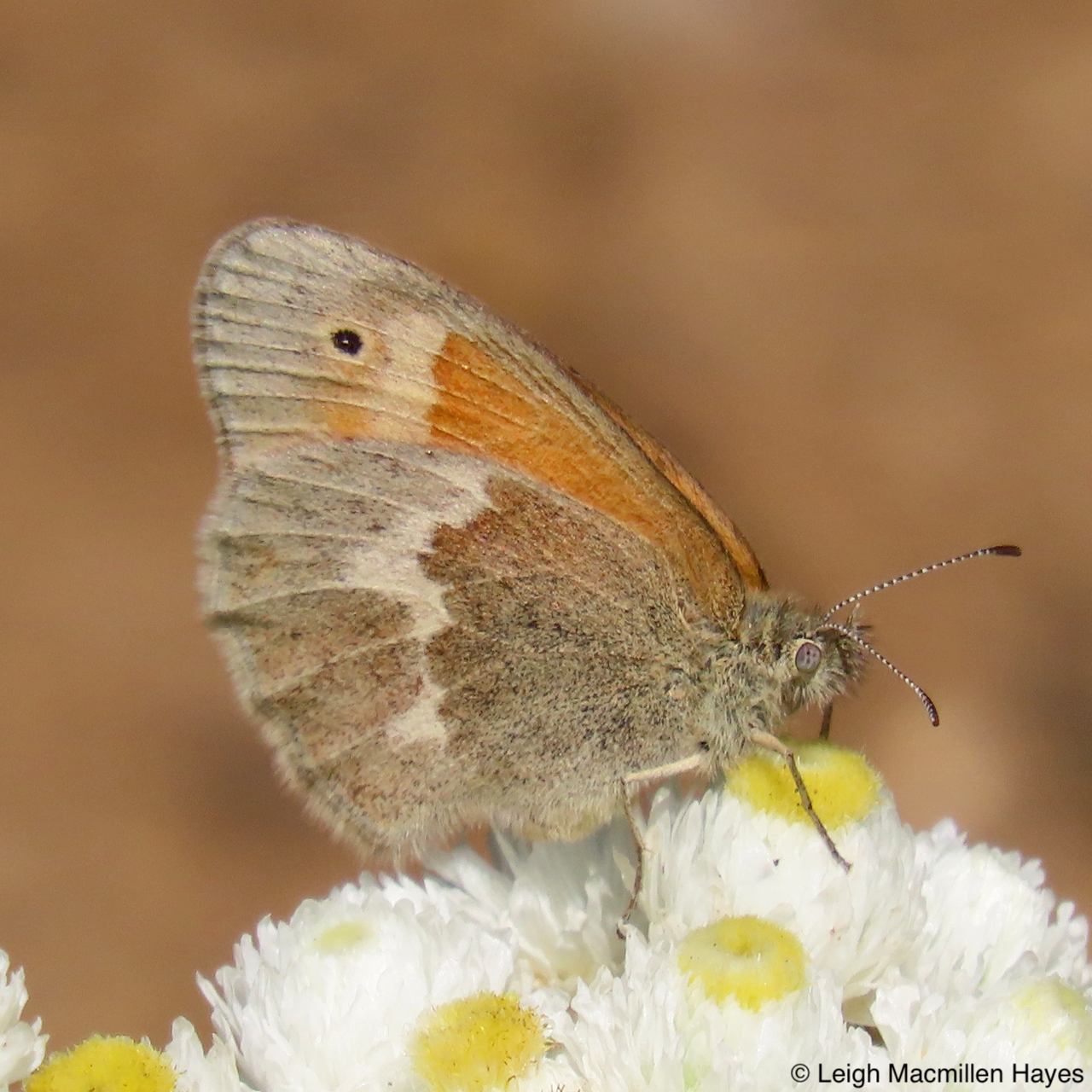
Plain Ringlet Butterfly

texture,

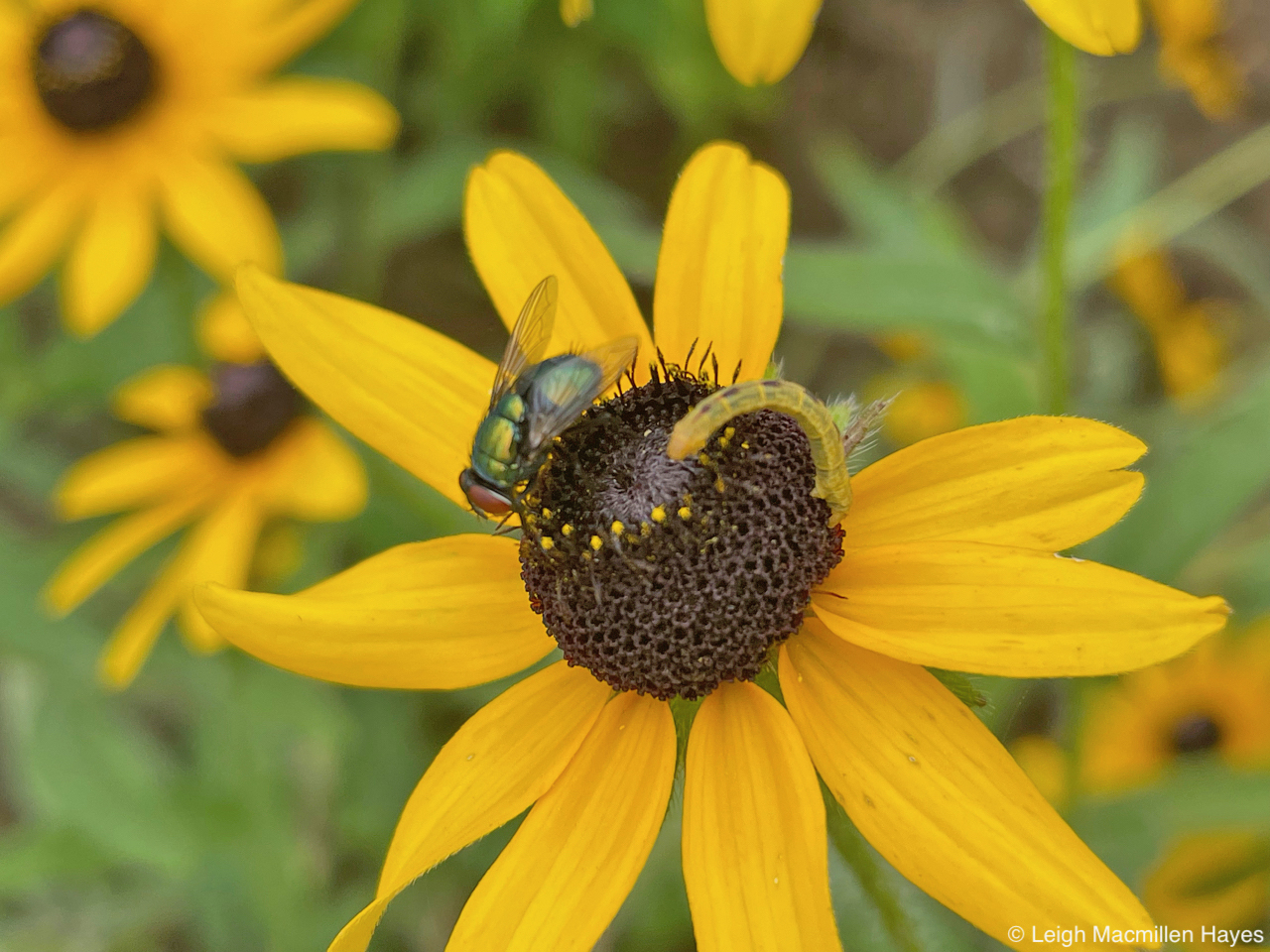
Common Green Bottle Fly

and design.

Little Copper Butterfly

But really, the celebration is all about the fact that pollinators are a critical piece of our food and flower supply.

Goldenrod Soldier Beetle

We depend on them for a large amount of food that we need for a healthy diet. 

Great Spangled Fritillary

And they help move pollen from the male structures of flowers to the female structures, which ensures new seeds, fruits, and plants will grow. 

Thread-waisted Wasp

Likewise, these insects benefit from the plants they visit.

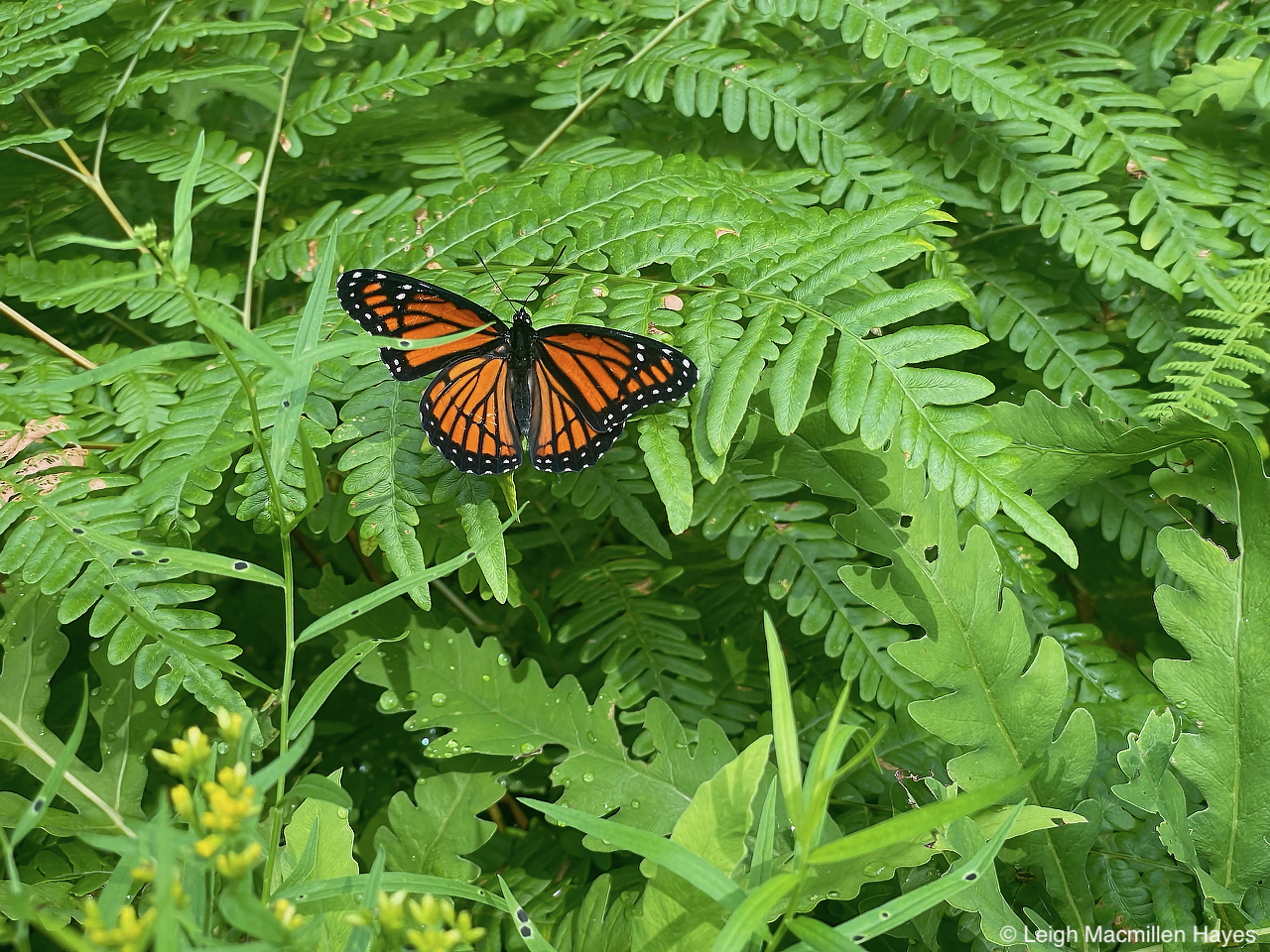
Viceroy Butterfly

Nectar provides carbohydrates and pollen can be a source of proteins, fats, vitamins, and minerals.

Black-tipped Ichnuemon Wasp

But many pollinators are at risk. Declining populations are due to a loss of feeding and nesting habitat, overuse of chemicals and pesticides, and changes to weather patterns.

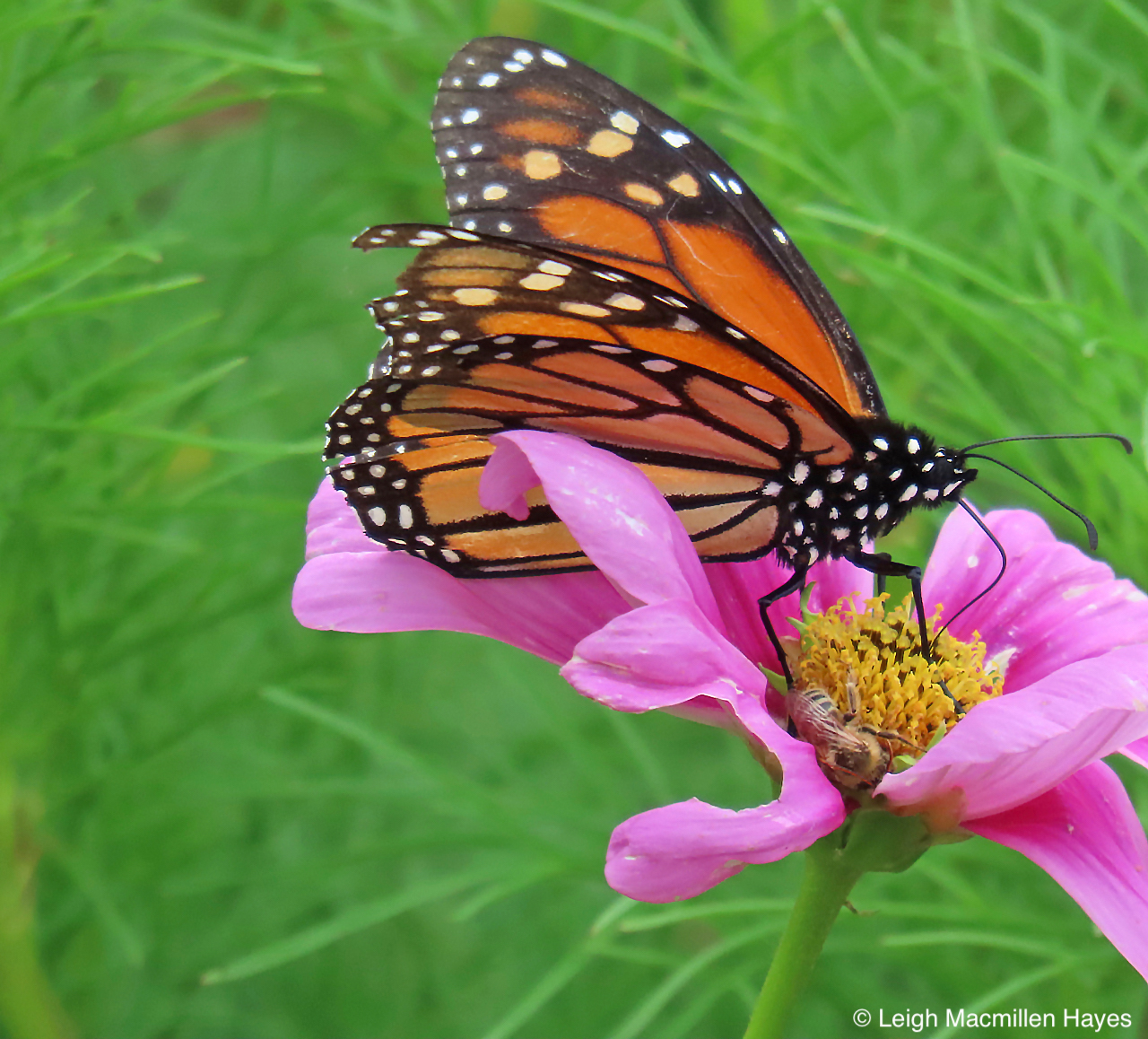
Monarch Butterfly

The Monarch Butterfly has officially been designated as endangered by the International Union of Conservation for Nature.

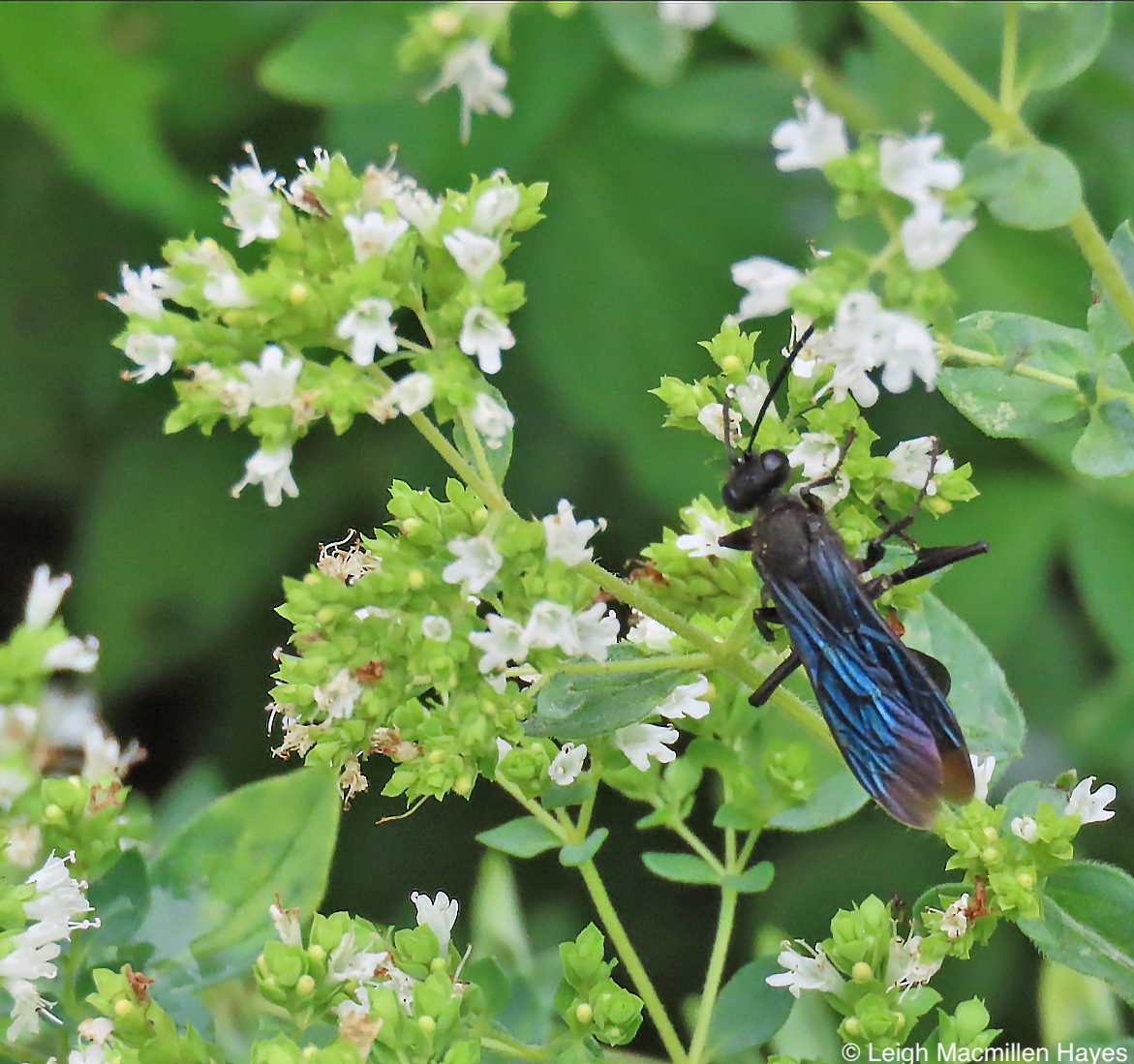
Great Black Wasp

In short, pollinators need us . . . and we certainly need them.

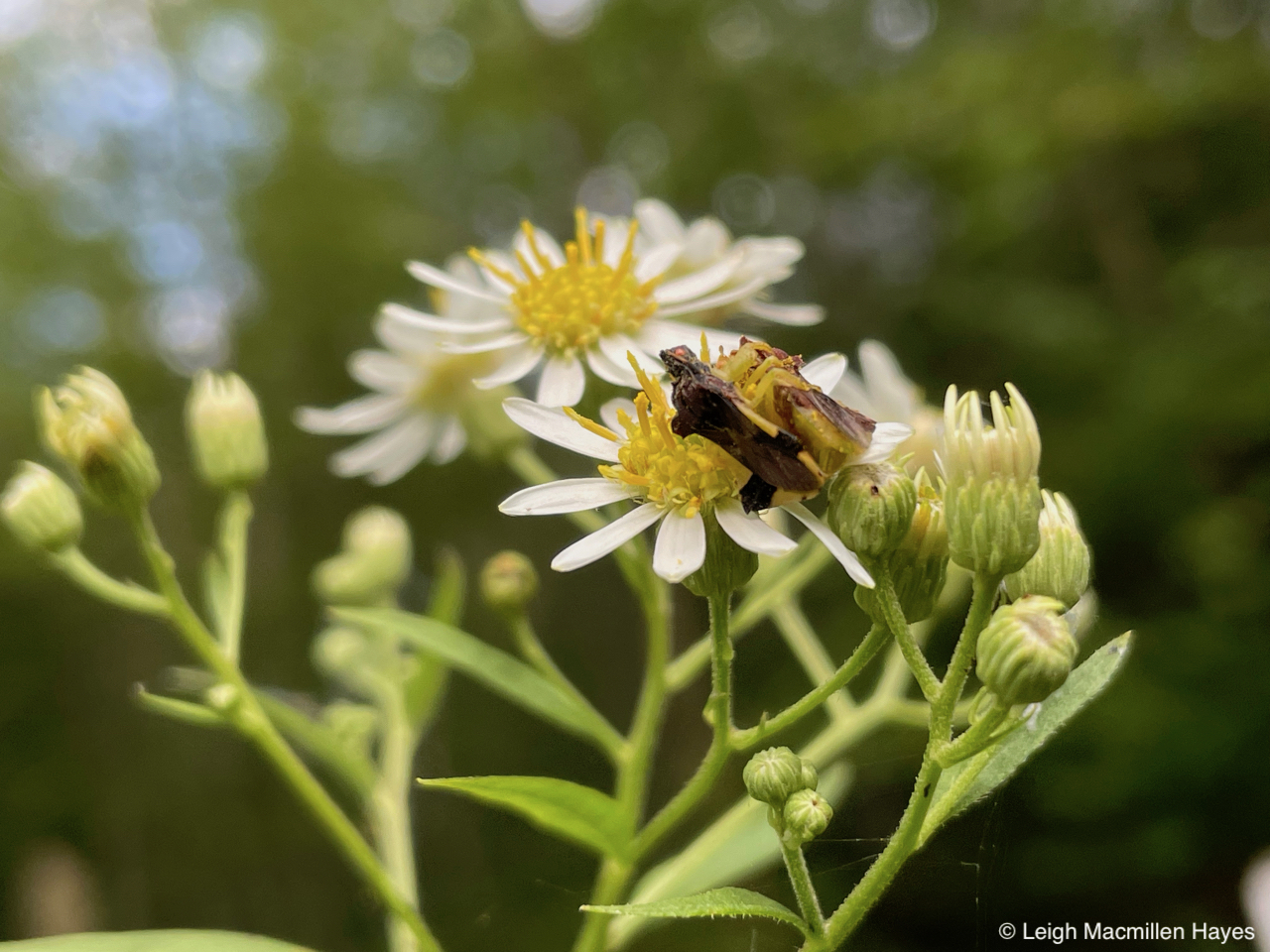
Ambush Bugs

I invite you to accept the invitation and spend time observing and appreciating; in the process you might also get to witness a couple of canoodlers.

Clouded Sulphur Butterfly

By the same token, you could happen upon one whose life has come to an end, but give thanks that it chose a beautiful spot to fall asleep forever.

Please RSVP as soon as possible: The Pollinator Party is going on NOW and it won’t last forever.

Just Another Boring Mountain Mondate

No need to read on. You know it will be photos of today’s finds. Ho hum.

Our day began as it always does, with a shared piece of CraftonMain Lemon Meringue Pie topped with a raspberry, while we sat and watched this pair enjoy a meal of their own. Wait. We don’t always begin with the pie–but sure wish we could. Cardinals, however, have been blessing us with their appearance for years.

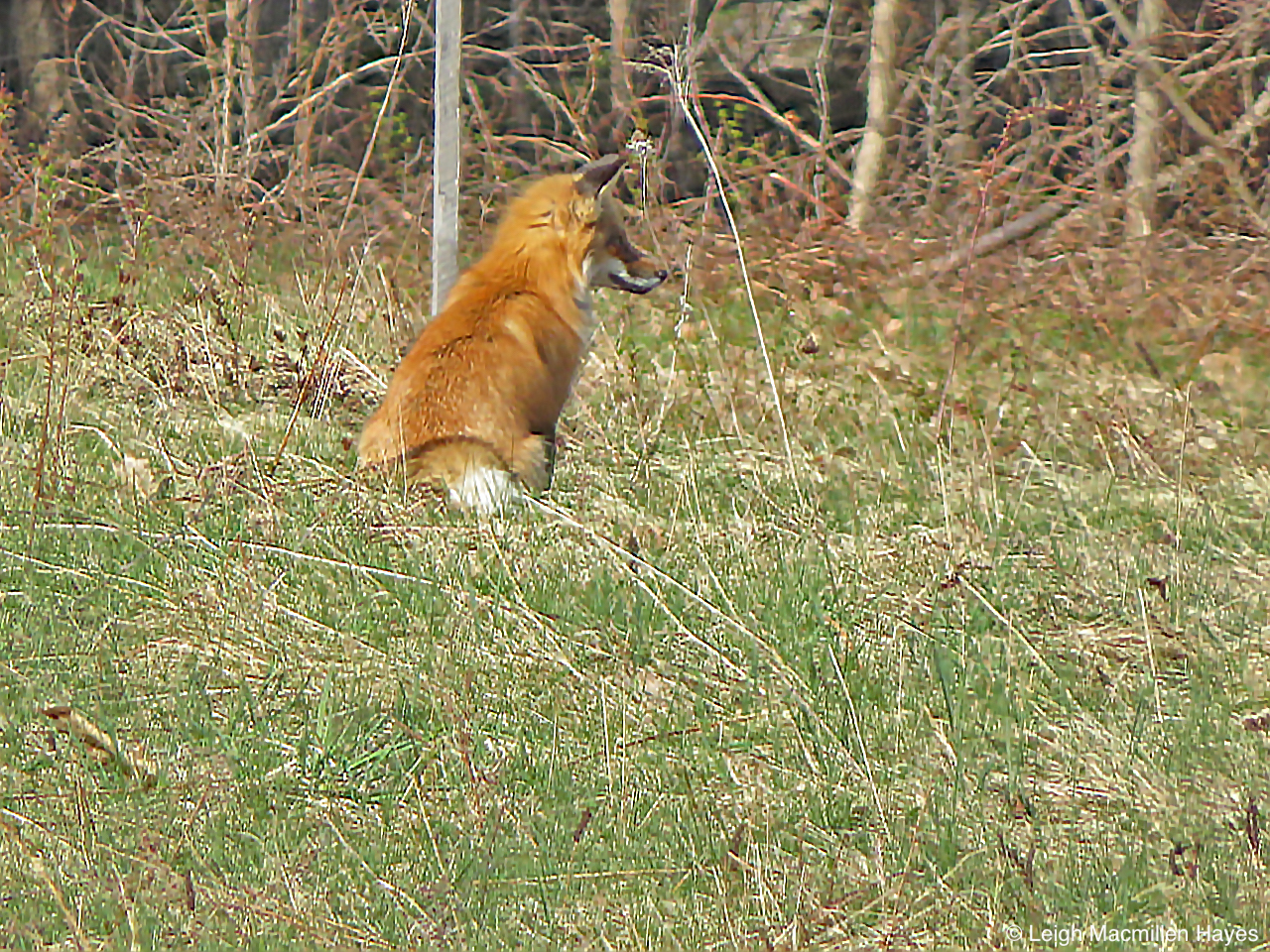
And then there was the sighting of the neighborhood fox in the field beyond our stonewall; it had its eyes on the neighbor’s dogs while we had our eyes on it. Don’t worry, the dogs didn’t become breakfast. In fact, as their mistress began to walk toward the fox (we don’t think she spied it, nor did the dogs or they would have given chase), the fox turned and dashed across the field, over another stonewall and into our woodlot.

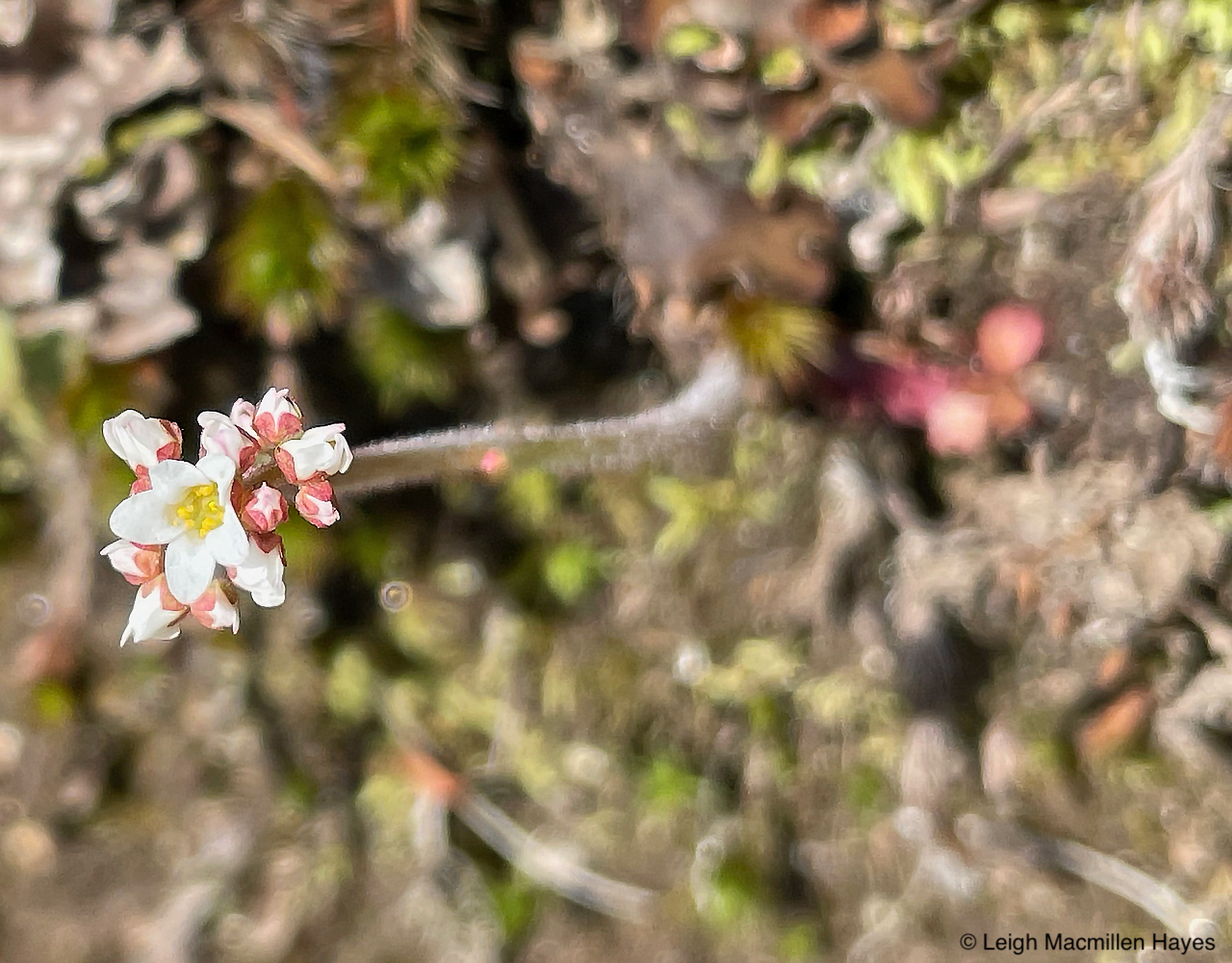
At last, it was time to begin our hike along a trail we haven’t visited since August 2019. Our intention had been to climb it in 2020, but during the first year of the pandemic, it was closed and then we never considered it . . . until this morning. And as we started up, I remembered . . . this is the mountain where the Early Saxifrage grows.

 It’s also known as rockbreaker for its habit of cleaving to the rocks, and perhaps suggested the Latin name–Saxifraga virginiensis. Saxum-rock and frangere-to break.

A funny name for such a diminutive and delicate display.

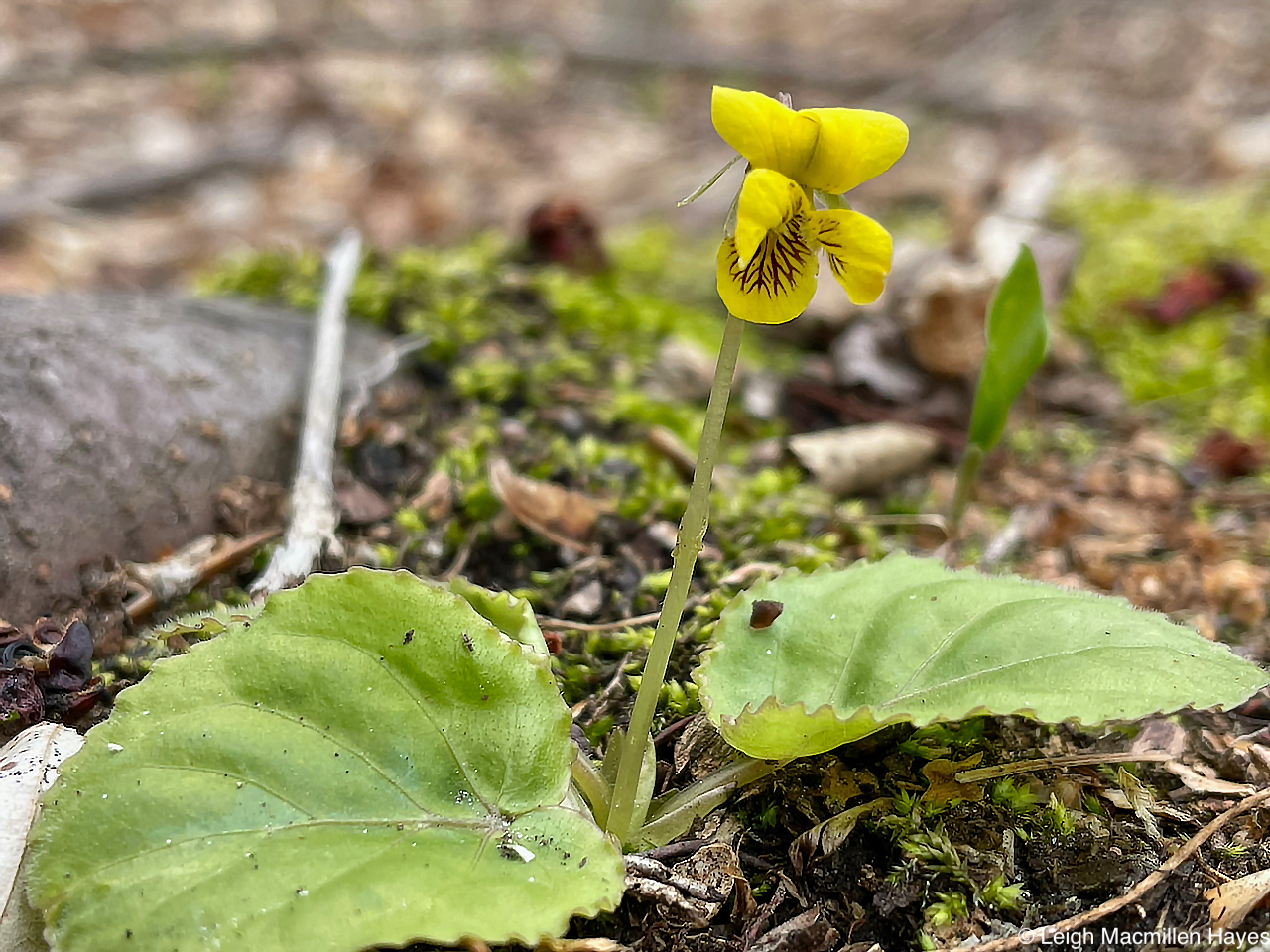
Round-leaved Violet with its scalloped-rimmed leaves more heart shaped than its name suggests also grew along the trail. Spying these tiny offerings of yellow with those incredible magenta runways meant to attract pollinators always brings a smile as if they were meant to brighten the day of all who hike this way.

Our journey found us enjoying the sound of the water’s rhythm as we climbed higher . . .

and contemplating each step once we turned away from the brook.

At the summit, the view from lunch rock included a look to the southeast where the sky predicted the forecast of a front moving in.

Meanwhile, our hometown mountain stood out in the sun.

But the grand lady, Mount Washington, was starting to disappear into the clouds.

It was windy and a bit chilly at the summit, but that didn’t stop the Brown Elfin butterfly from flirting with a few others where the blueberries grow.

I also spotted one Spring Azure. Both are rather small butterflies and if you look closely, you might spot that their antennae are patterned white and black.

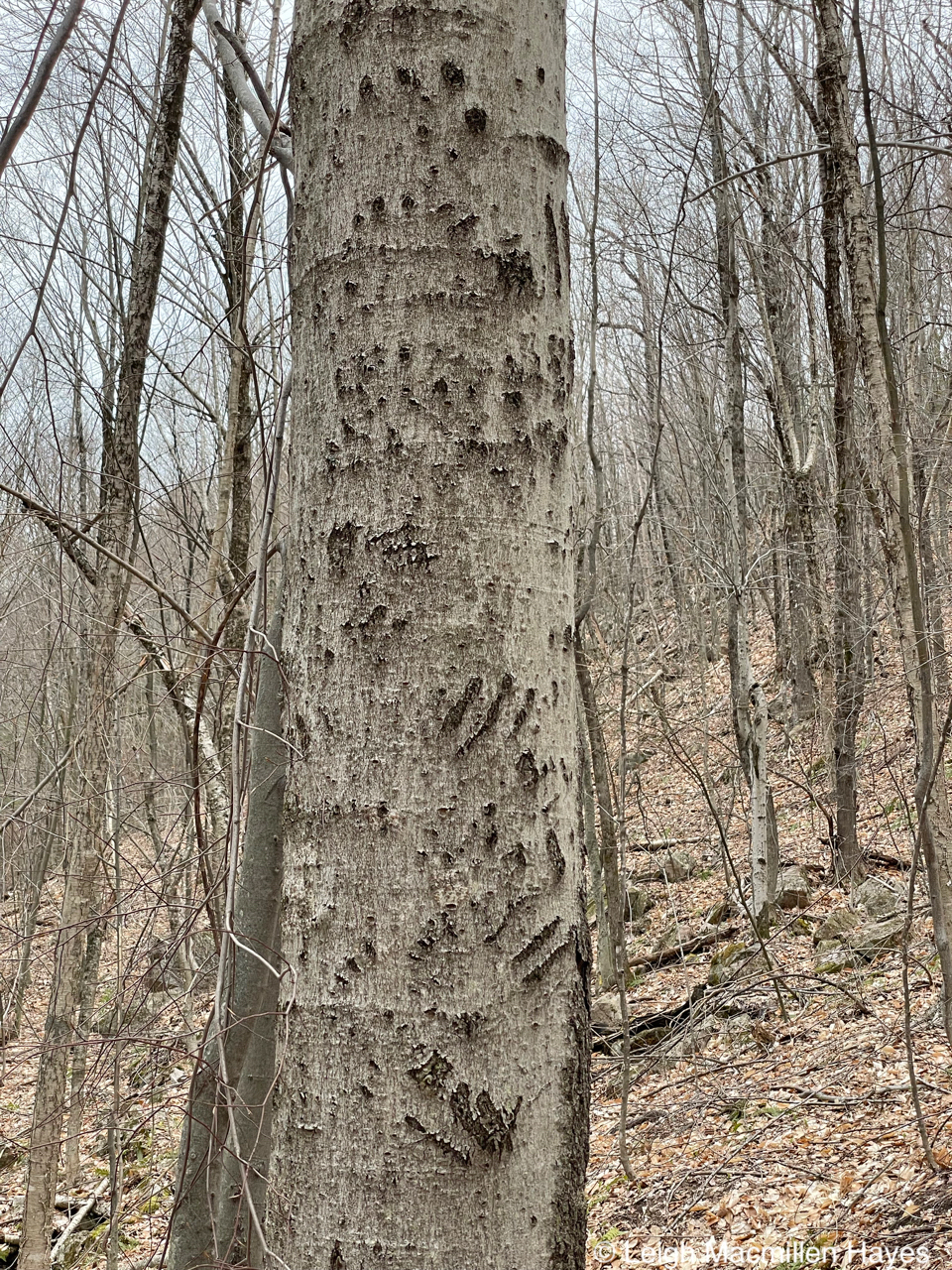
On the way down, we did what we often do–looked for bear claw trees because we know they exist here. And because I know such an activity will slow my guy down. ;-) Bingo. He spotted one that was new to us.

I went in for a closer look and couldn’t believe all the marks on display.

And so I began to circle around the trunk.

One can only imagine the crop of Beech Nuts this tree must have offered.

But enough is enough. It’s just another bear claw tree, after all. Nothing to write home about. Or is it? Think about the bear and the blueberries the Brown Elfin Butterfly will help pollinate and the Beech Nuts the trees will produce and all the connections that will be made, which will include the Cardinals and the Red Fox and the flowers and all that is part of the forest. And be wowed like us. It was hardly just another boring mountain mondate on Burnt Meadow Mountain in Brownfield, Maine.

Until We Meet Again

It’s been a week of memorial services for four friends and so I dedicate this post to them and their families.

Moments of tears,

Reflections of love,

Interspersed with humor.

Stories of wanders,

Tales of wonders,

Interspersed with generosity.

Gifts of longevity,

Embracement of days,

Interspersed with encouragement.

Celebrations of lives,

Memories of times,

Interspersed with goodbyes.

It has been my weighted honor to say good bye to Bob Vivian, Ann and Don Ineson, and JoAnne Diller. You all lived life to the fullest and I am so grateful for our time together for each of you had a way of making me feel as if I was the most important person in the world when I was in your presence. Your passings have left me sad, but equally grateful for I’ve been blessed with so many teachings that will remain with me forever . . . until we meet again.