It’s all Jessie Lozanski’s fault that a year after publishing My Artistic Path, I’m publishing the next layer of paintings and sketches. Until I shared a few with my sister this afternoon, I had no idea how prolific I’ve been in this department. That said, some didn’t make it off the drawing board. Or rather, they did, but ended up in the trash, or in a pile to be considered at a later point in time. That’s the beauty of working with gouache, I can make changes at a later date. For me, that is liberating.
And now Dear Reader, you have three choices: 1) Read this entire post from beginning to end; 2) Scroll through the pictures and call it good; or 3) Click out of this post and pretend you either never saw it or that you did see it and loved all of it.
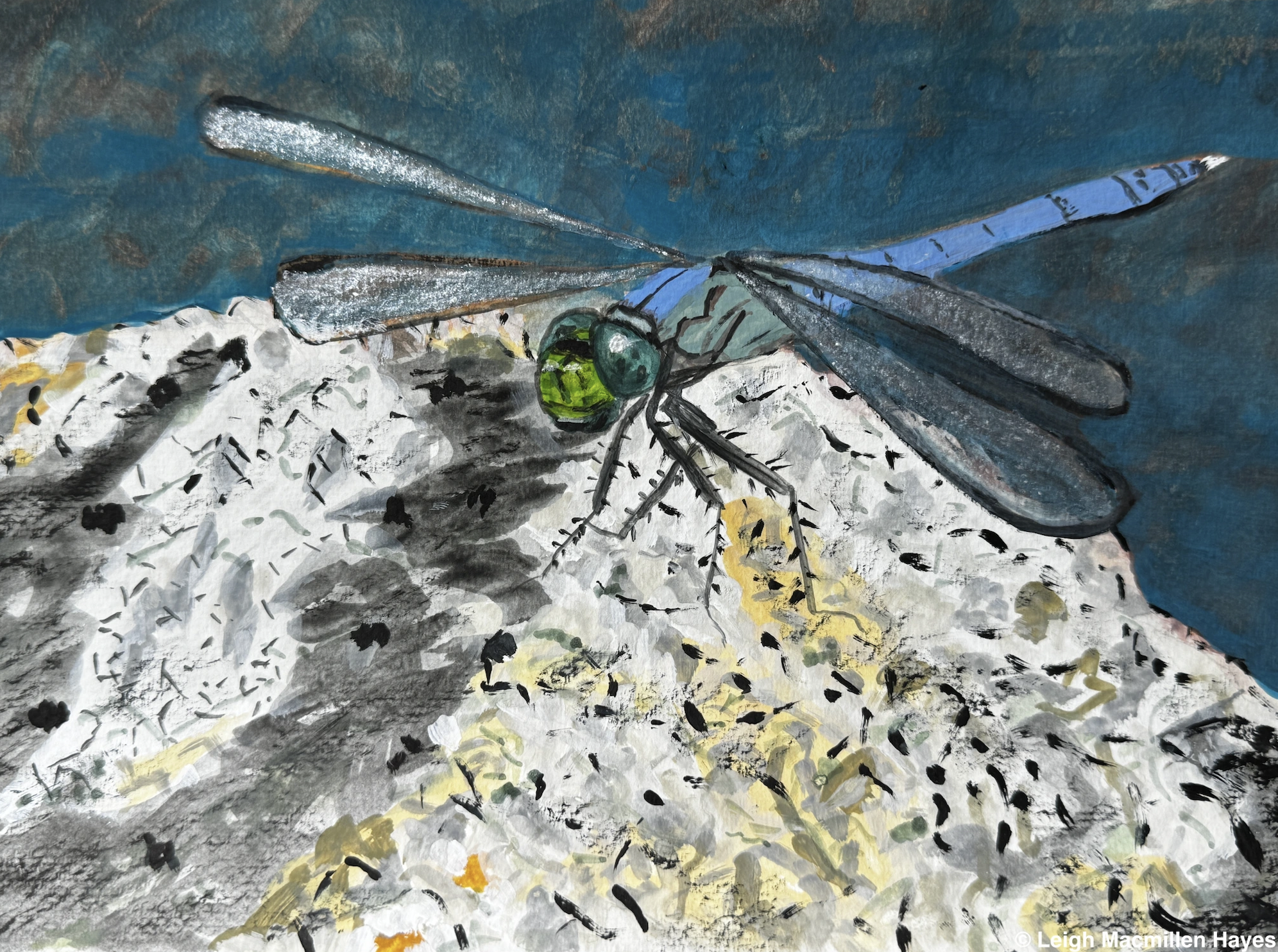
I have to say, I thought I’d paint more dragonflies like this Eastern Pondhawk, but when I scrolled through My Art Gallery, I discovered only a few others. That said, I did take some time to sketch the naiad forms of six families and then painted each one. You can visit all of those in Dragons of the Future if you wish.

Waterways also intrigued me as I tried to figure out how to make the water look as if it is flowing. This is Province Brook in Chatham, New Hampshire.

And then there are the critters and I’m afraid you’ll see a few of them along this journey. The fun thing about this Chipmunk is that it made an appearance on a February day. I was tracking with some friends and we were pretty certain that we’d discovered Chipmunk prints, but it didn’t seem possible. Until it was because as we backtracked, we saw him and he posed for a few photographs. Sometimes, when you need more food, you might make a mad dash from your winter home to locate it.
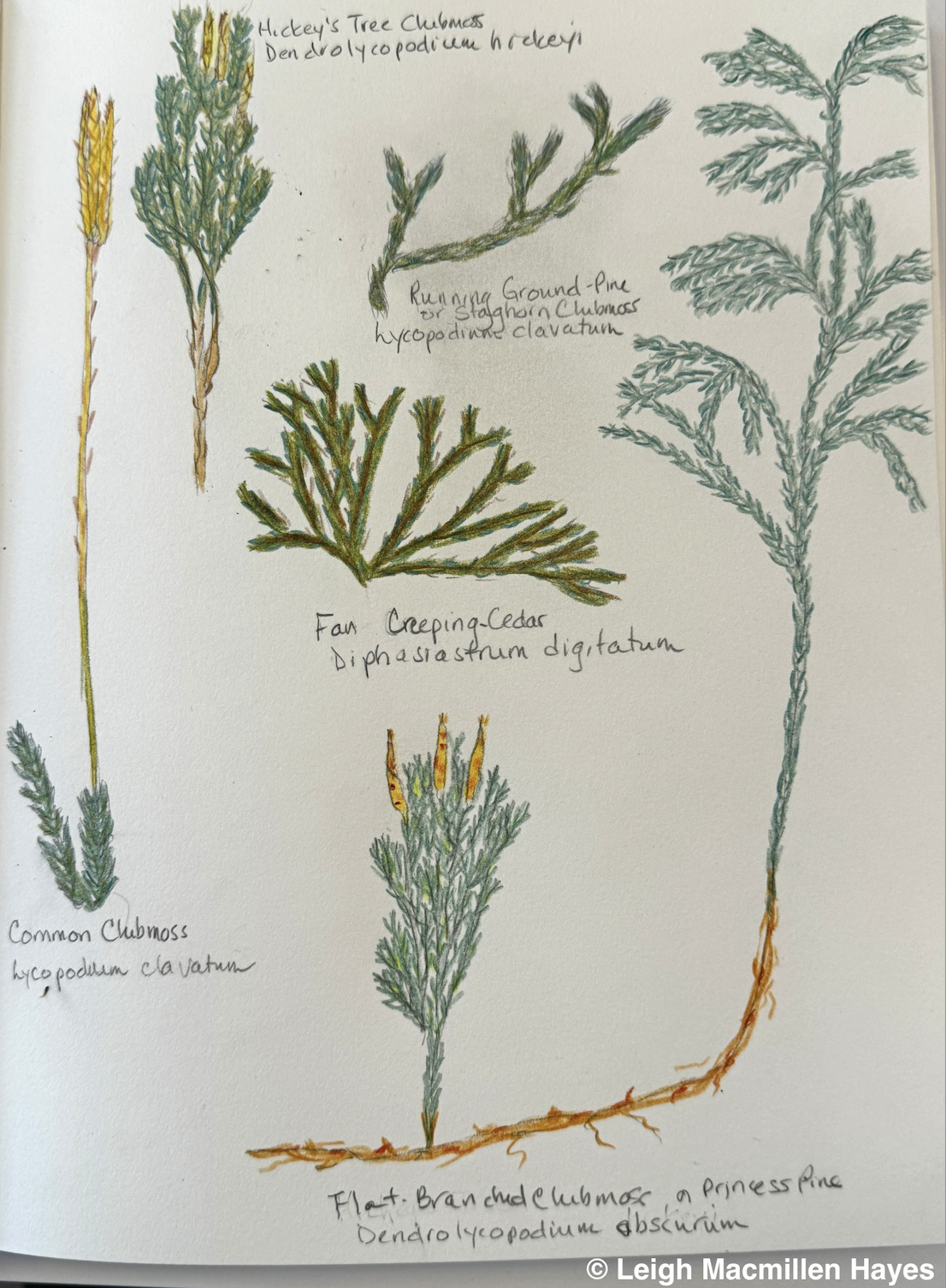
Clubmosses are one of the topics I’m trying to learn. . .when I take the time to do so. And so I sketched these after spending some delightful hours studying them as I wrote about in When is a Moss not a Moss?
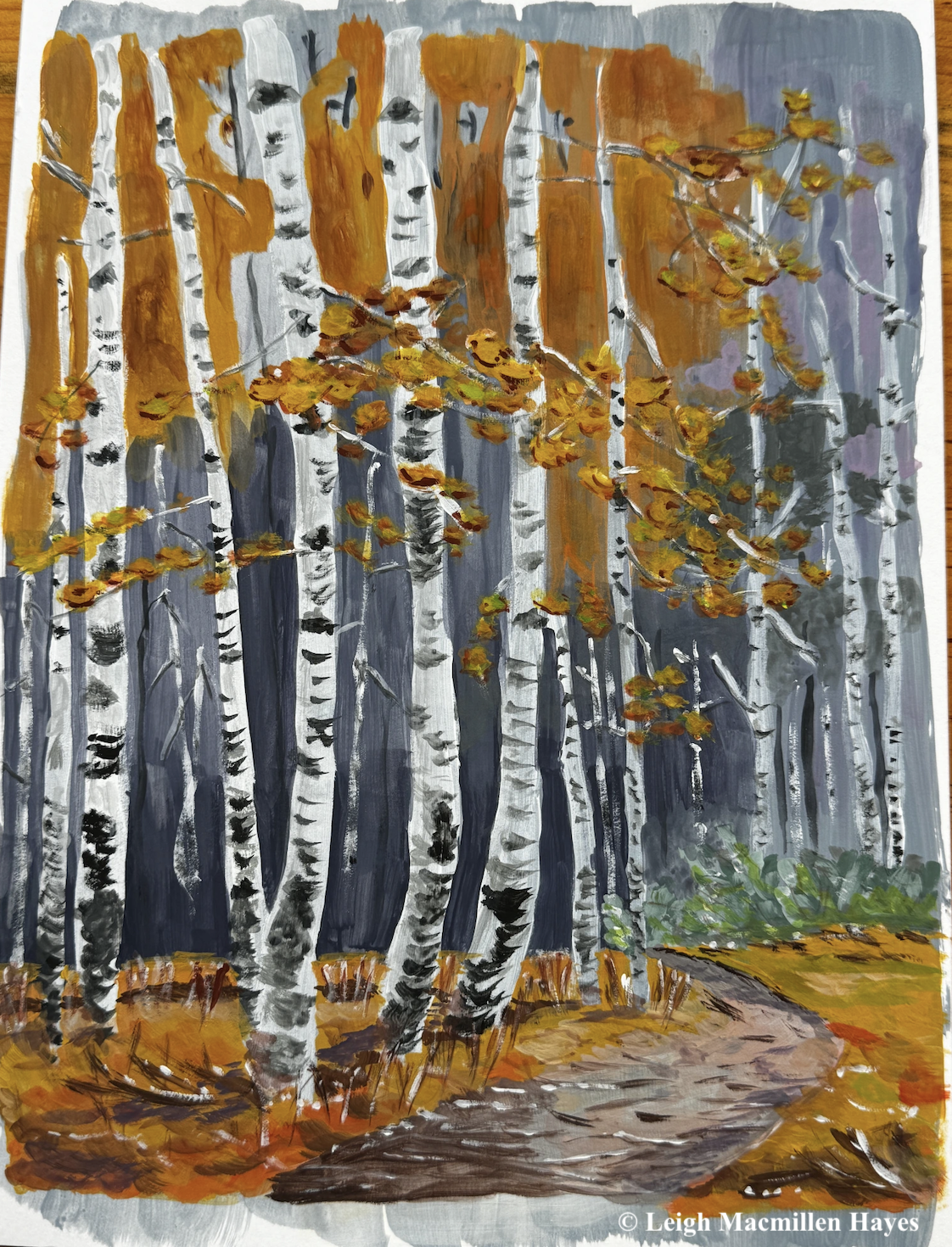
It’s the colors in this painting that I like. And figuring out how to paint Birch bark.

And then there was Forter Castle in Glen Isla, Scotland. I actually did three smaller versions of this castle and then decided to paint this larger picture based off one of those. It was a gift for Anne, our hostess when we were invited to spend a few nights there back in 2017, and in memory of her husband John. You can read more about that adventure here: From the Bonny Banks to the Highlands.
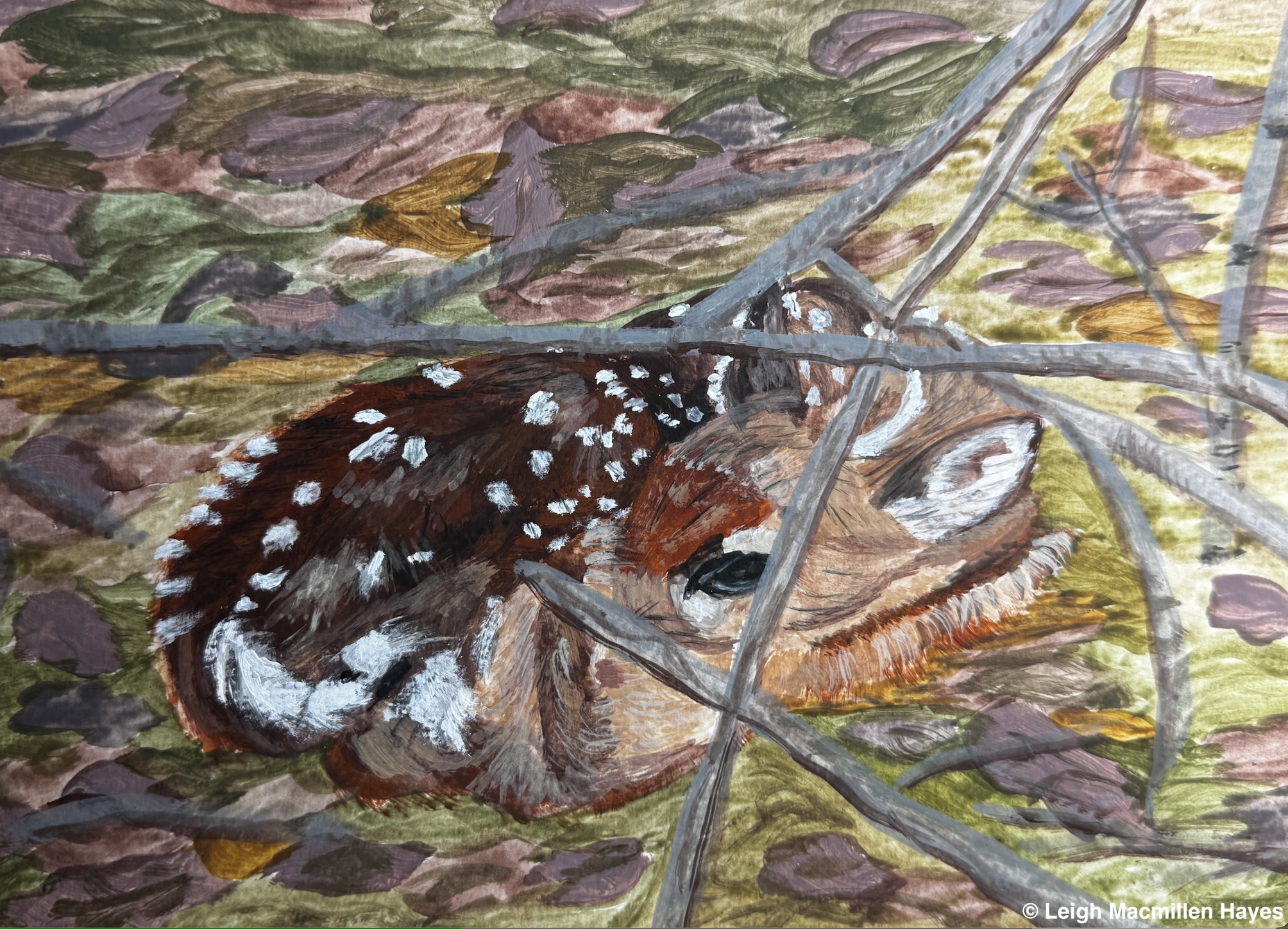
This next one will forever evoke the memory of my friend, Faith, who passed away this summer. We were on a Lakes Environmental Association walk at Holt Pond when we all “spotted” this fawn quietly waiting for momma. Quick pics and then we moved away.

And this is one of the Red Foxes who frequent our yard. In My Art Gallery, there are two more attempts, both in watercolor while this one is with gouache paints. Experimenting is fun.
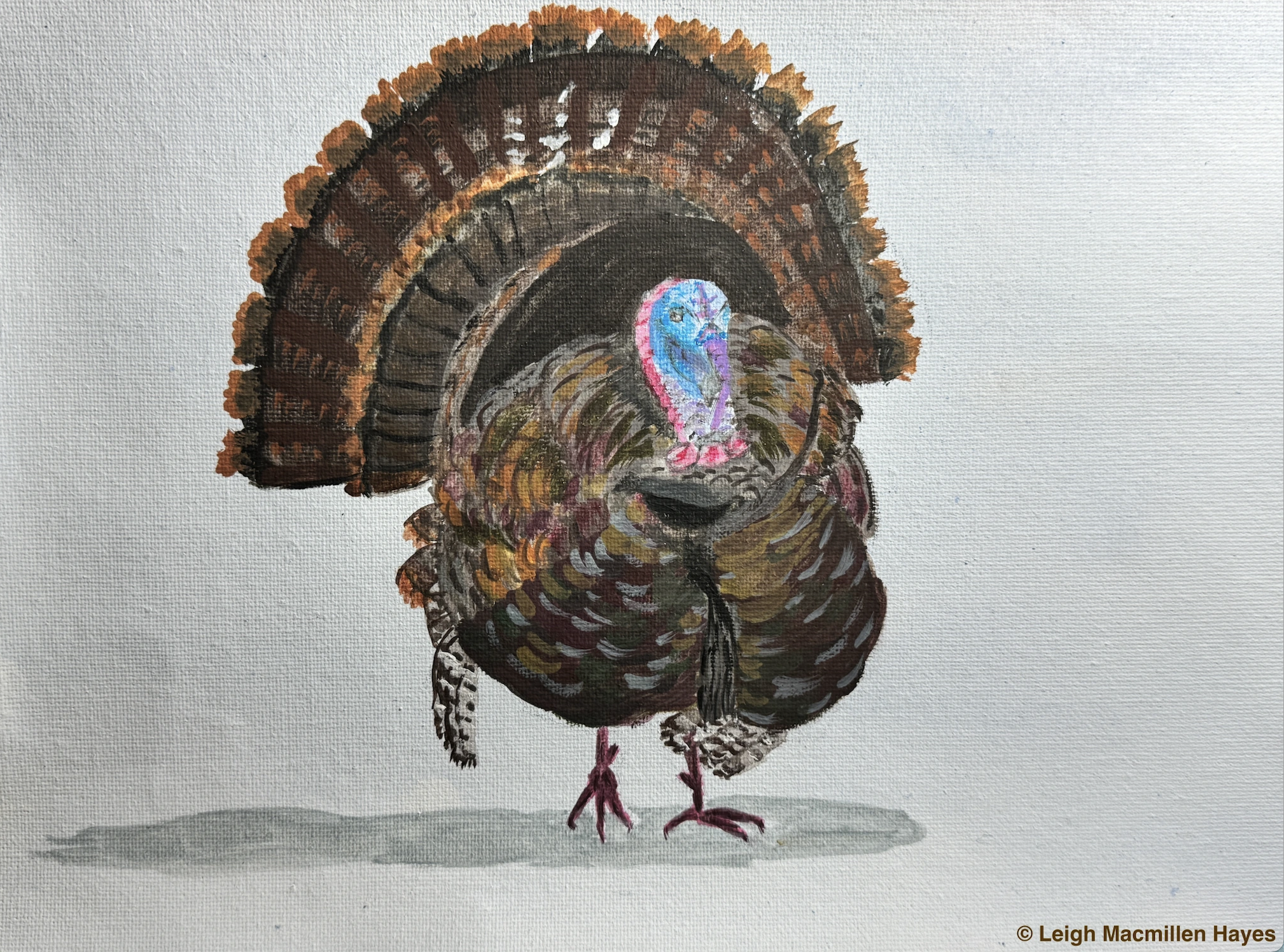
Tom Turkey! What more need I say.

In the midst of taking classes with Jessie this past year, which sadly ended in the spring, I purchased Grahame Booth’s book: Anyone Can Paint Watercolour Landscapes, and tried to follow the step-by-step instructions. This was a result of Lesson 1. There were six lessons altogether, and I thoroughly enjoyed the experience. You can see my other paintings based on the book by looking once again at My Art Gallery. Yikes, I’m beginning to sound redundant. Smiley Face!
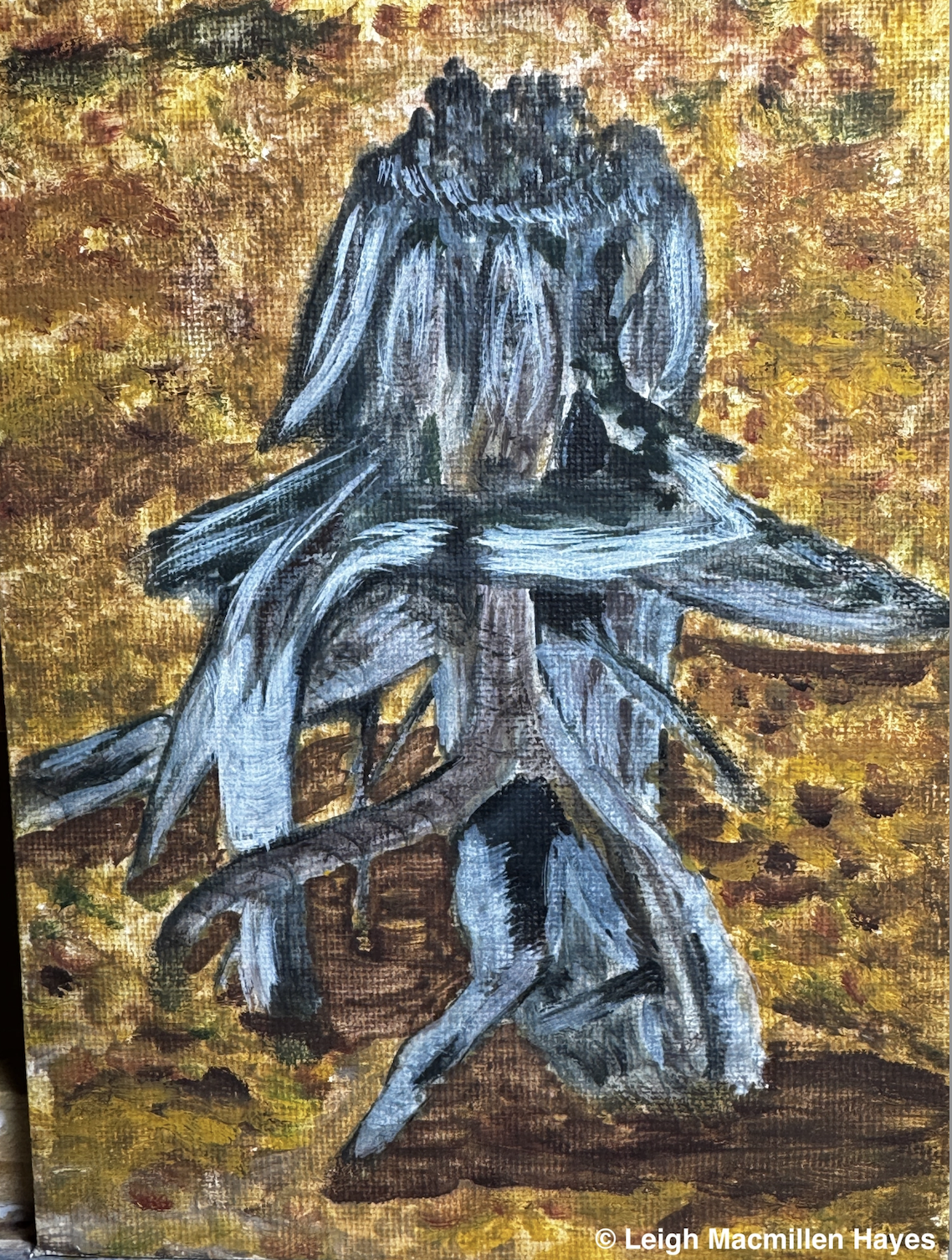
I like this one because I like the subject. I used a matted board to paint it. The stump is beside the Saco River in Conway, New Hampshire.

This one was for another friend because we had walked out to Kezar Pond in Fryeburg from her home the previous New Year’s Eve or Day, and it was just lovely.

And then there is a perennial subject of mine–the Stairway to Heaven tree along the cowpath in our woods. I especially love it when snow outlines the branches.

Another favorite scene takes me back to my childhood in Clinton, Connecticut, and I painted this for my sister and brother-in-law as a keepsake. So many memories in the spot that was our little piece of Heaven for so many years.

On and off, I’ve produced paintings of birds, and another favorite subject is the Great Blue Heron. I’ve also tried to paint rookeries, but often struggle with perspective. Of course, you can view my attempts you know where: My Art Gallery, to be shortened to MAG going forward.

No words necessary really–a male Northern Red Cardinal.

And his female counterpart.
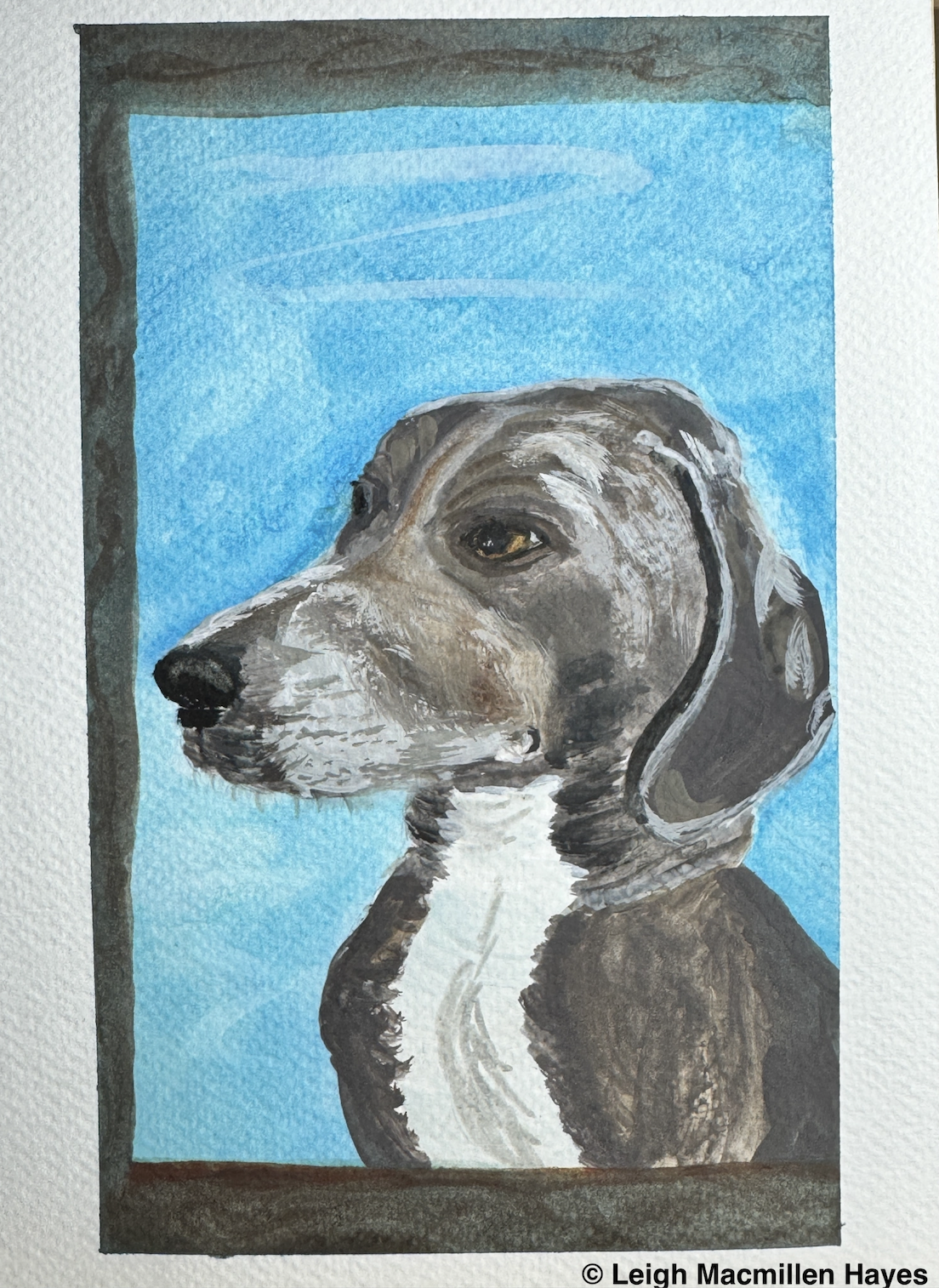
Our oldest son and his girlfriend rescued this energetic pup at the beginning of the pandemic.

And this pup belongs to our youngest son’s girlfriend’s mother.
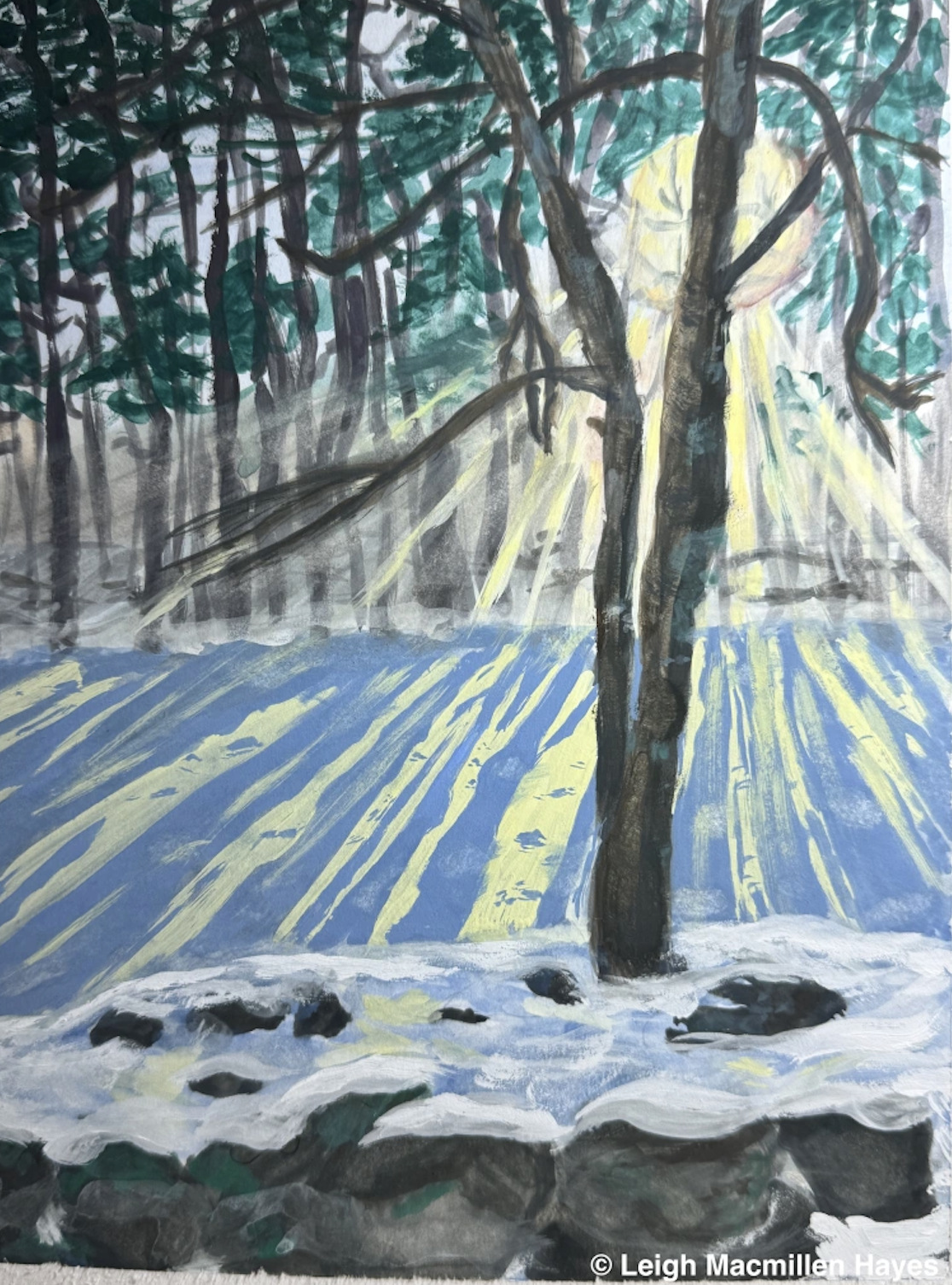
One morning, I stepped outside just after it had finished raining and the sun was shining through the trees out back and there was a layer of fog and shadows and it was just exquisite so I tried to capture it.
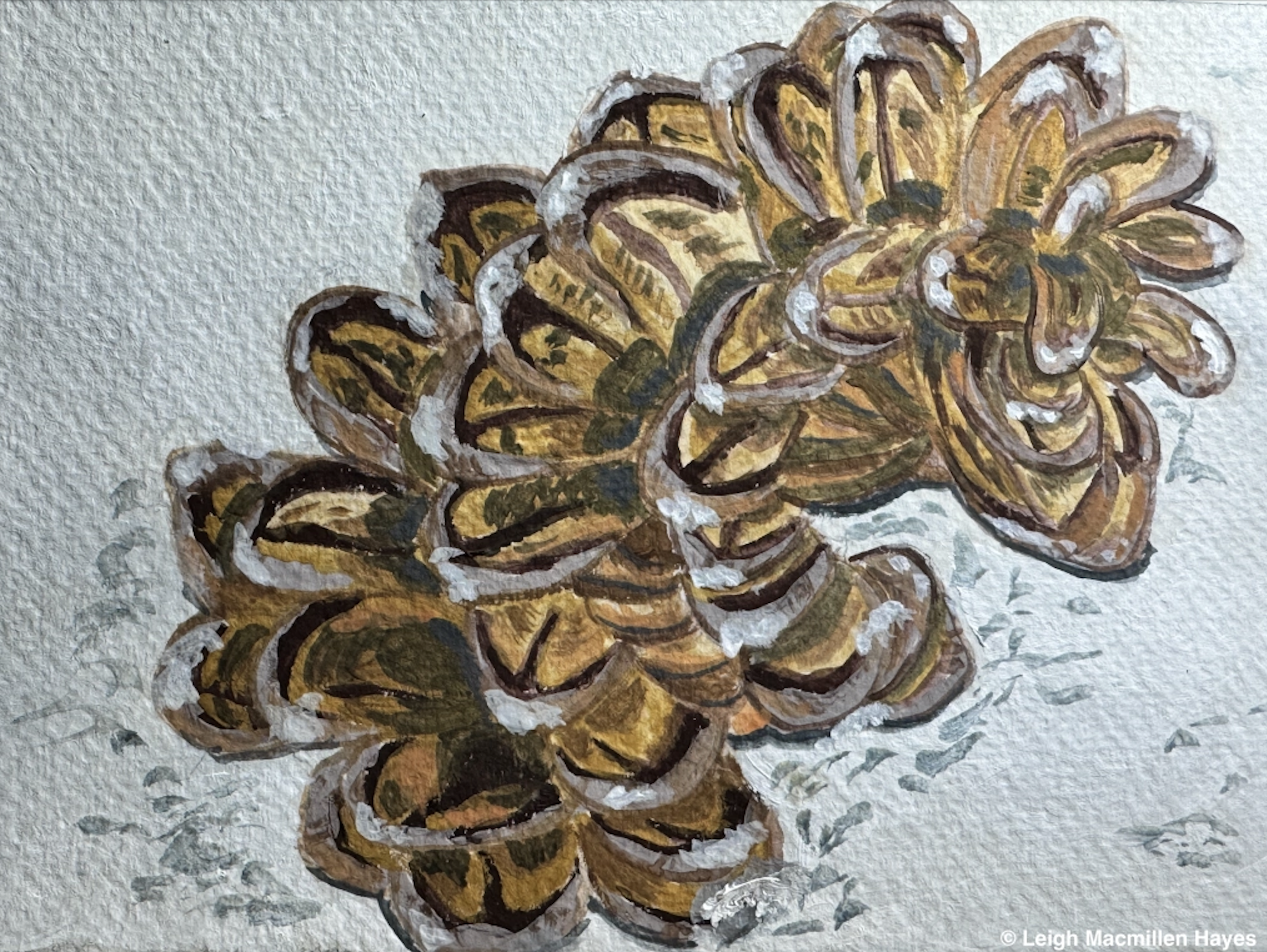
The White Pine Cone was something I started to sketch and then left for a long time, until I realized the scales were all arranged in a spiral of course and bingo, I knew how to go about it.
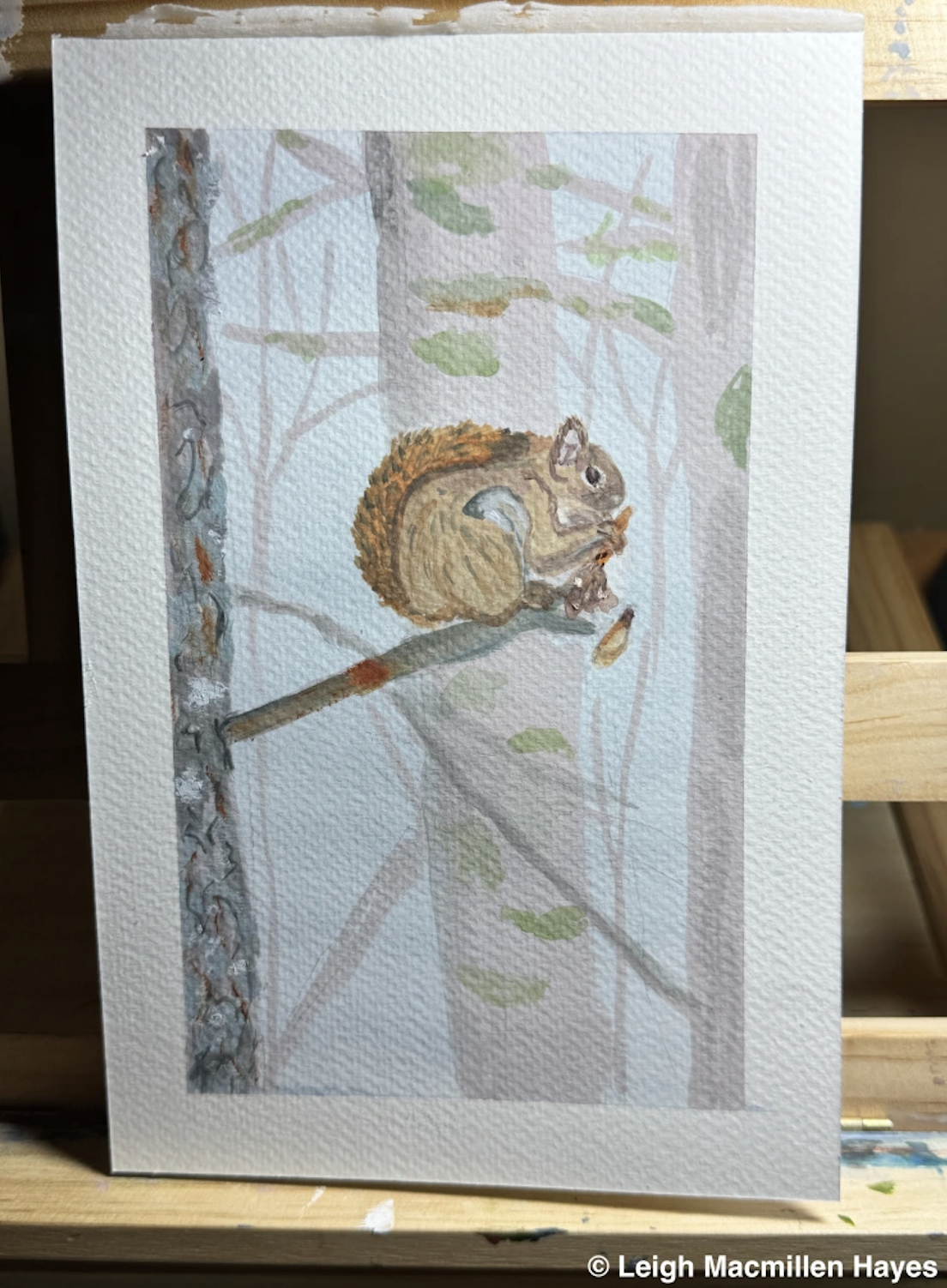
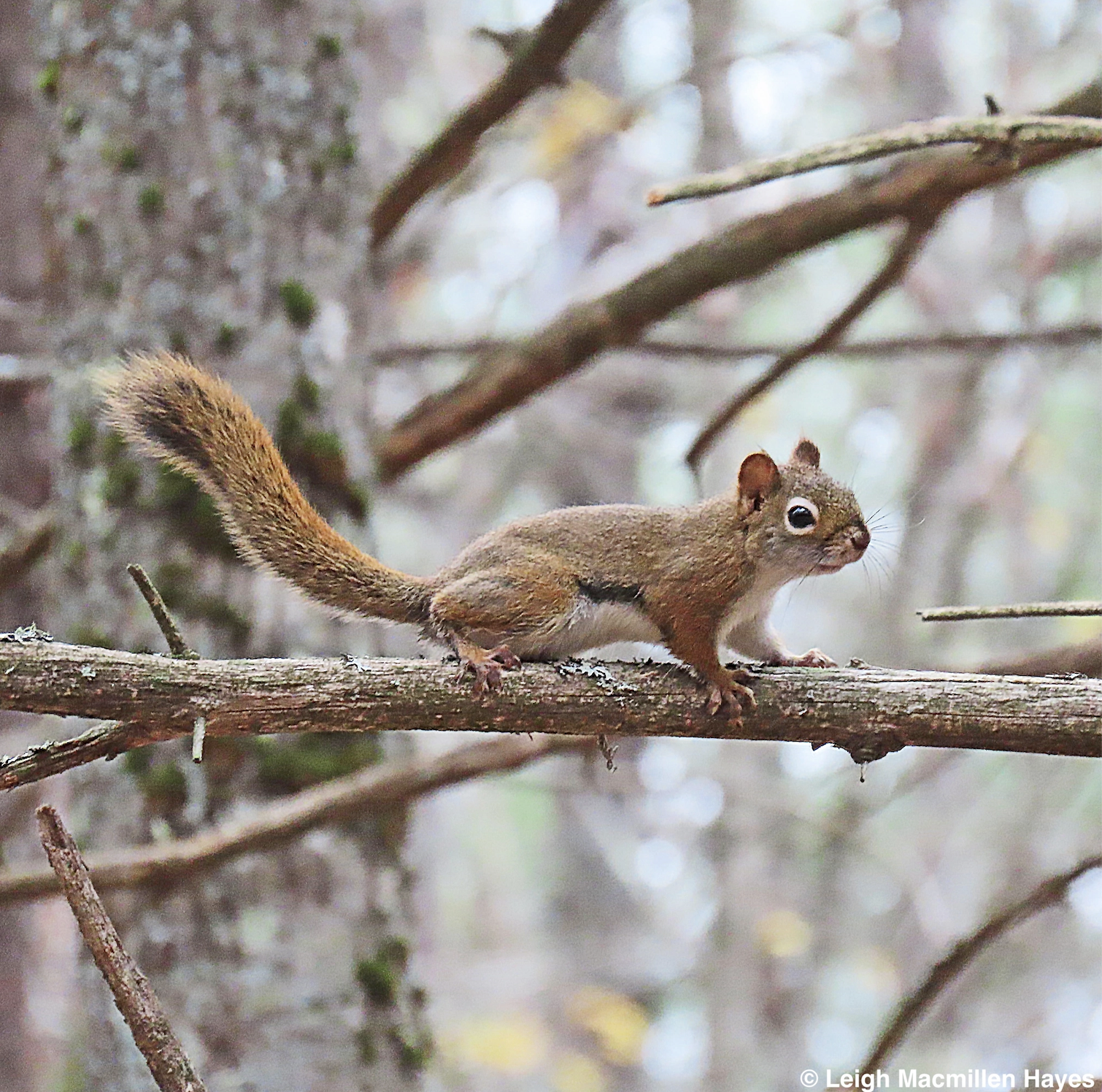
Turns out, I’m not the only one who knows to go about it–for Red Squirrels love to take each pine cone scale off in order to get to the seeds stored by such. Their method of descaling a cone is rather like us eating corn on the cob. I actually referenced both the pine cone painting and this one in Another Amazing Lesson from a Red Squirrel.
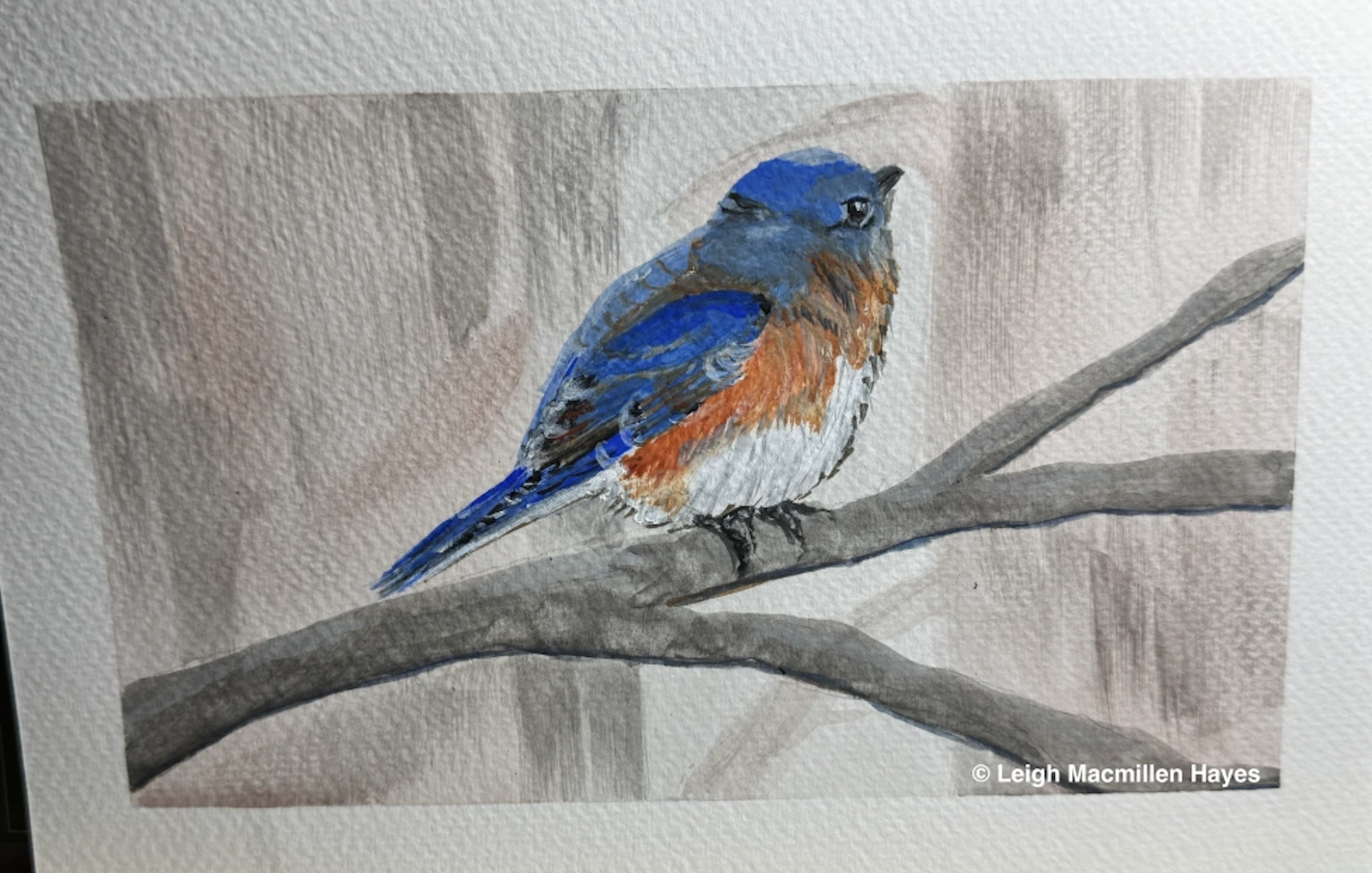
All last winter and spring, and into the beginning of the summer, my neighbor and I rejoiced because we had Bluebirds. In fact, a pair nested in one of our boxes, but that was around July 4th, and by the end of the week, she’d abandoned the nest. We’ll never know why.

A few more birds coming up–including this male Red Winged Blackbird at Brownfield Bog.

A Sharp-shinned Hawk in the backyard and field.
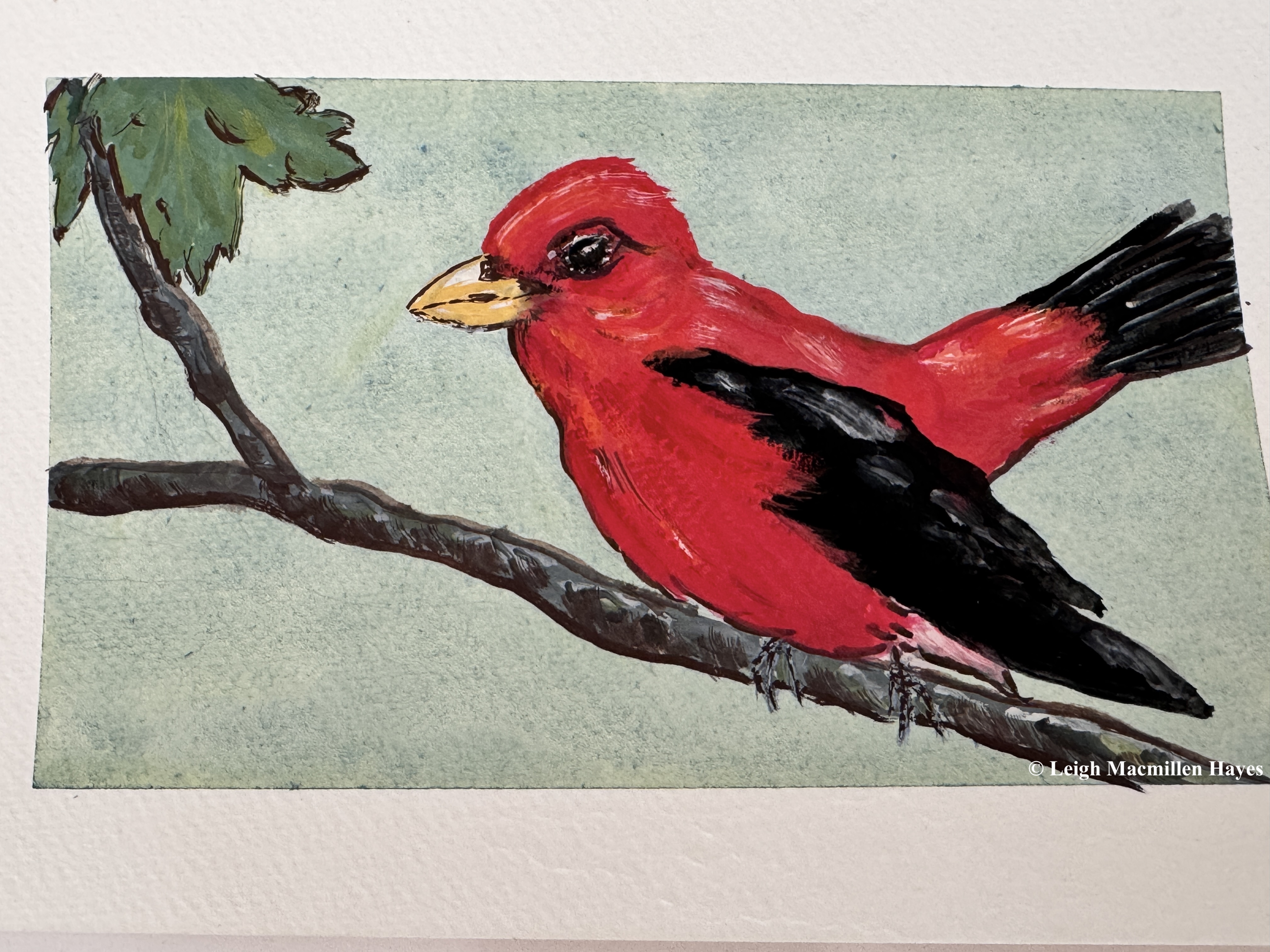
And a Scarlet Tanager on Mount Cutler in Hiram, Maine.

I did think I’d paint more butterflies, and perhaps this fall or winter I’ll attempt to, but it seems the Spring Azure is all I’ve done so far.

I’ve also made a couple of cards in the course of the year, this one for a First Grade student who was my penpal and she told me she really likes Dandelions. That girl will go far in life!

Another favorite topic of mine: Dog-Day Cicadas. If you type Cicada into the “Search” bar on my blog, you’ll discover several posts about these insects emerging. As I write, I can hear them “singing” from the treetops.

Sometimes, actually, more than sometimes, something catches one’s eye and this Tree Frog was one of those times. A friend and I had stopped to talk about a Snapping Turtle that seemed to be late laying eggs, and bingo, there was the frog on a tree.
Speaking of frogs and other critters who rely on vernal pools, visit MAG and you’ll find my Vernal Pool series, including a Fairy Shrimp that looks WAY bigger than its actual 1 – 1.5 inch size.
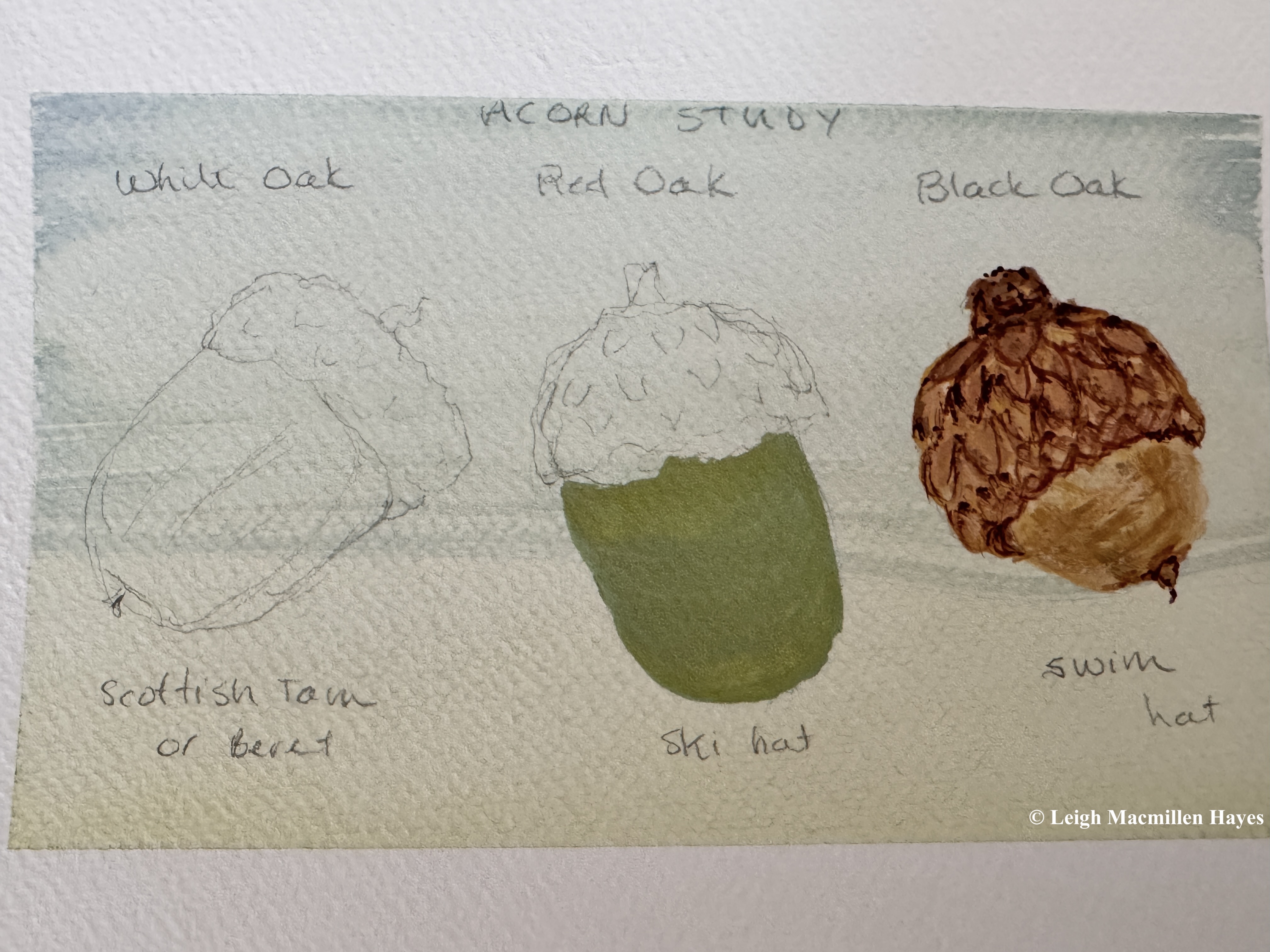
And then there was the day I pulled out a copy of National Audubon’s Field Guide to North American Trees because I wanted to get to know acorns better. Silly me, I came up with names for each one based on what they looked like to me, but I made the mistake of writing the names in pencil before painting a light colored wash on the paper. As I began to paint the acorns, I realized I wanted to change their names, but couldn’t erase them or paint over them. So . . .
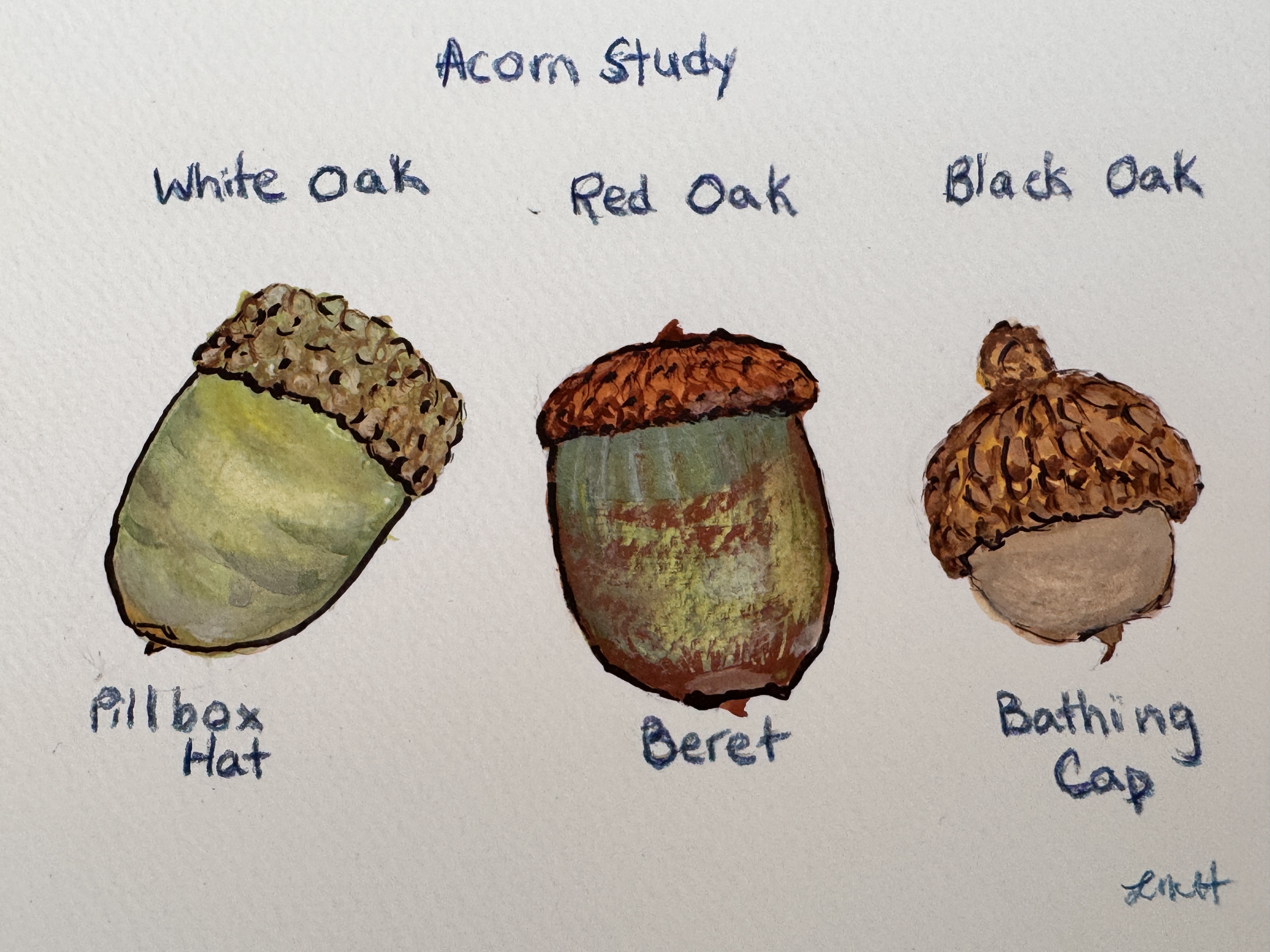
I sketched them again, and gave them new names.
And finally the moment you’ve been waiting for, today’s painting:
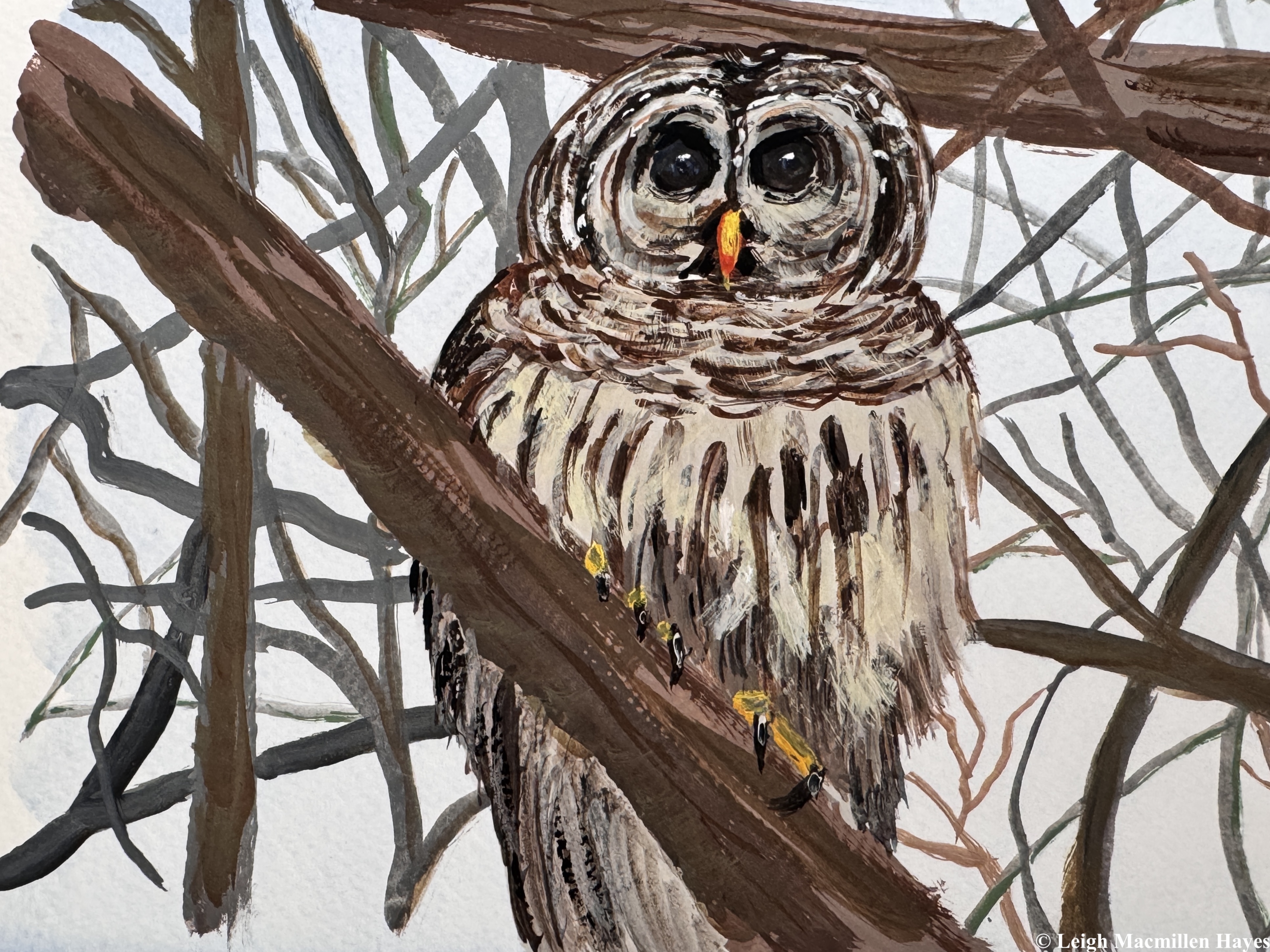
I always like it when I try iNaturalist’s SEEK app on a painting and it agrees with me. Barred Owl it is.
Wow, I had no attention of pulling this all together today until about an hour ago when I was sharing photos with my sister and realized I hadn’t sent her any in a while. So thank you, B.S., for being my inspiration today . . . and always.
And thank you Dear Readers, for sticking with me today and always as I share My Artistic Path: one year later.





 wondermyway