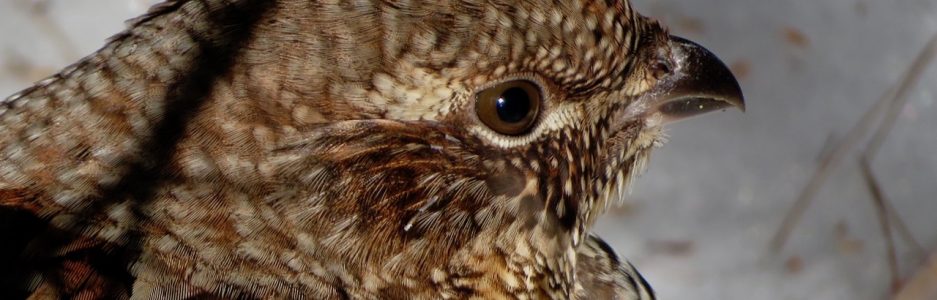
It’s been a while since I’ve written about a Mondate, and believe me, we’ve had numerous. And other dates during the week as well, but today found us exploring a new-to-us property that’s just too special not to share. And I think the owners would appreciate it. I know that we appreciate that M suggested this to us. She was spot-on correct that we’d like it.
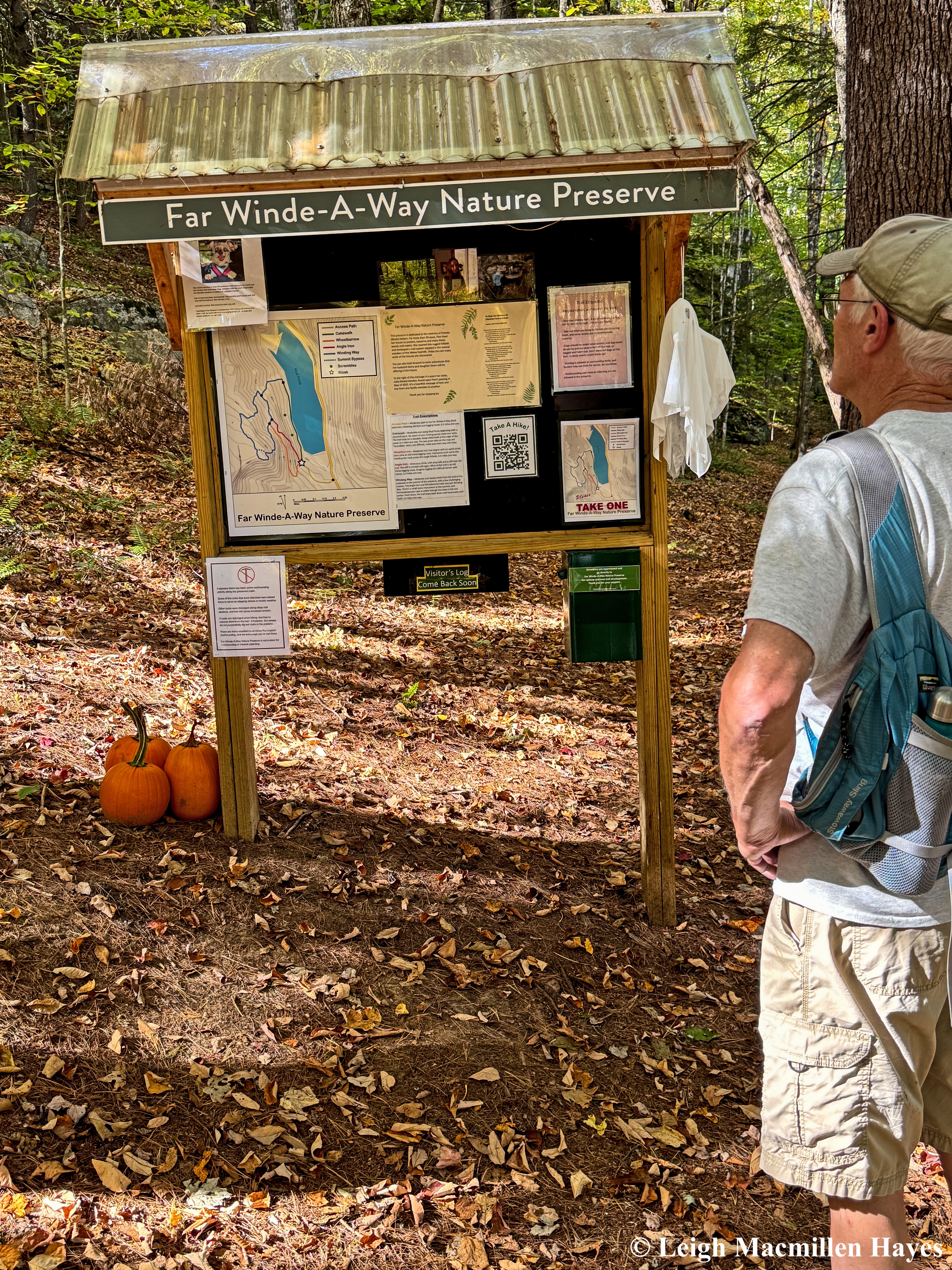
We’d been by a trail sign on the road a bunch of times to hike other trails in Greenwood, but until M mentioned it, we hadn’t really paid much attention. Until today. The kiosk is about .2 in from the road and I loved that there were pumpkins and a ghost to decorate it. And all the information hikers need to enjoy the area. Though My Guy goes without, I highly recommend trekking poles should you go forth on the well-marked trails. They are steep in places. And rocky in others. But that all adds to the fun.

For me, the fun was enhanced by spotting examples of this pleurocarpous moss. It took me a while to learn that pleuro refers to side and carpous means fruit, thus they have a side fruit. They are low, tangled mats with branches that rise from the main stem.
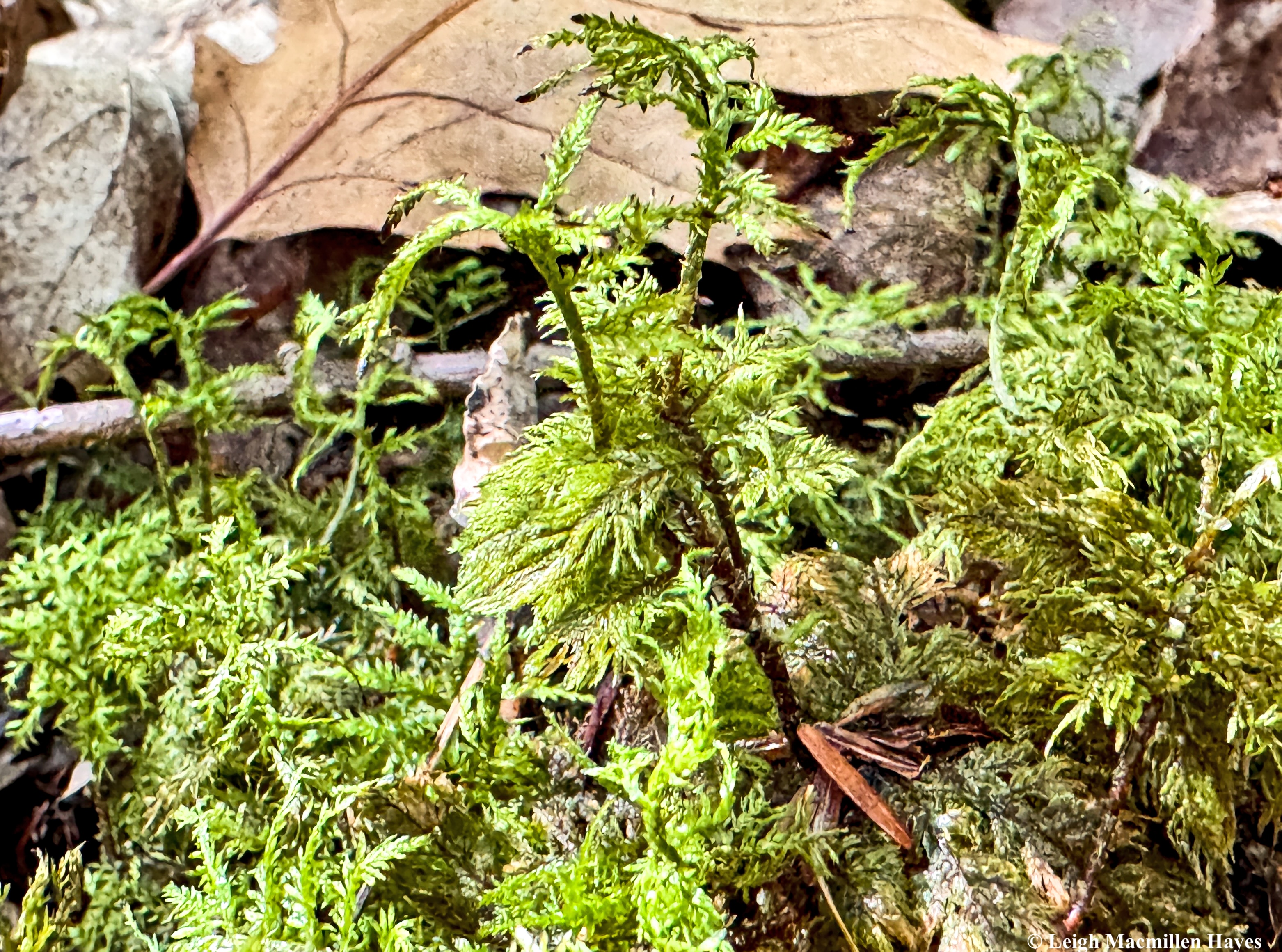
This particular moss is the Stair-step Moss or Hylocomium splendens. It prefers deep shade and damp conditions. Due to the dry conditions we’ve been experiencing, this year’s growth of a new step rising from last year’s stem probably didn’t occur until recently.

There were other mosses, giving the trail a fairy-land look at times, but also abundant were the Christmas Ferns, which decorated long stretches of our route.

And not to be left out were the Common Polypody that always give boulders a bad-hair day look.
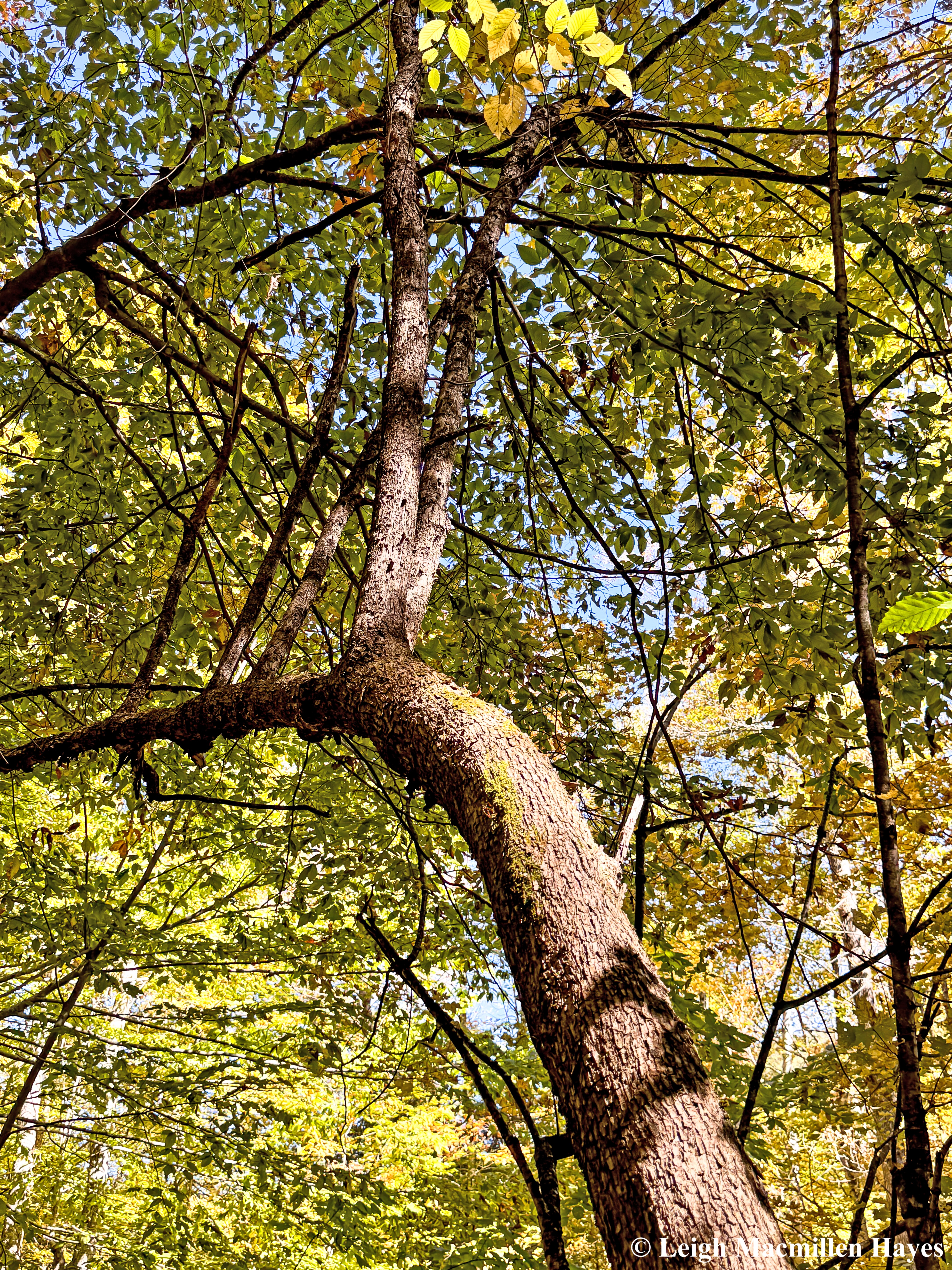
Those items would have been enough, but we realized from the start that we were in Hop-Hornbeam territory, and several surprised us. Typically, this is a tree that stands straight and tall, but a few must have been hit by other trees during storms perhaps, and their trunks had turned. Despite that, other branches took over and reached for the sun.

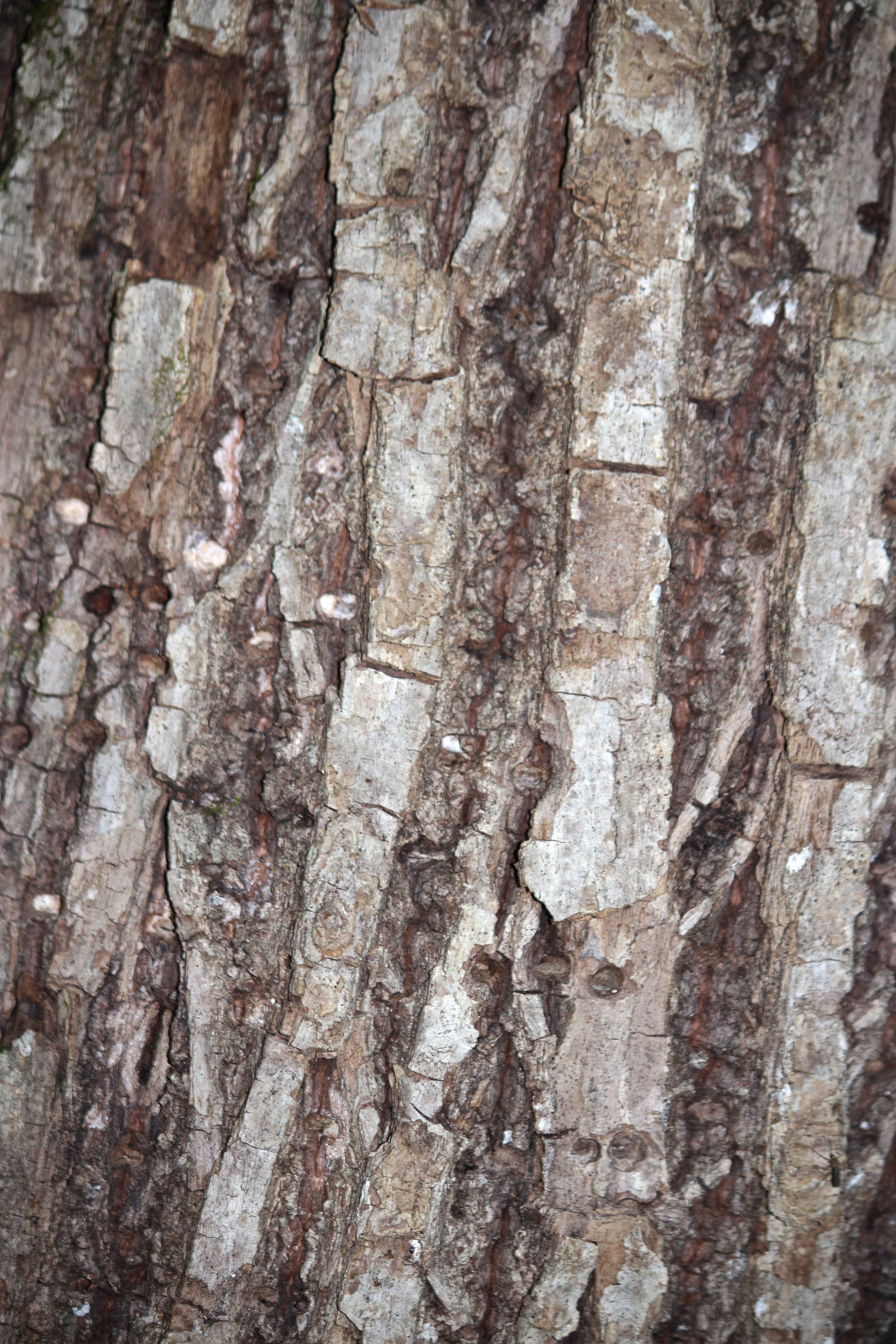
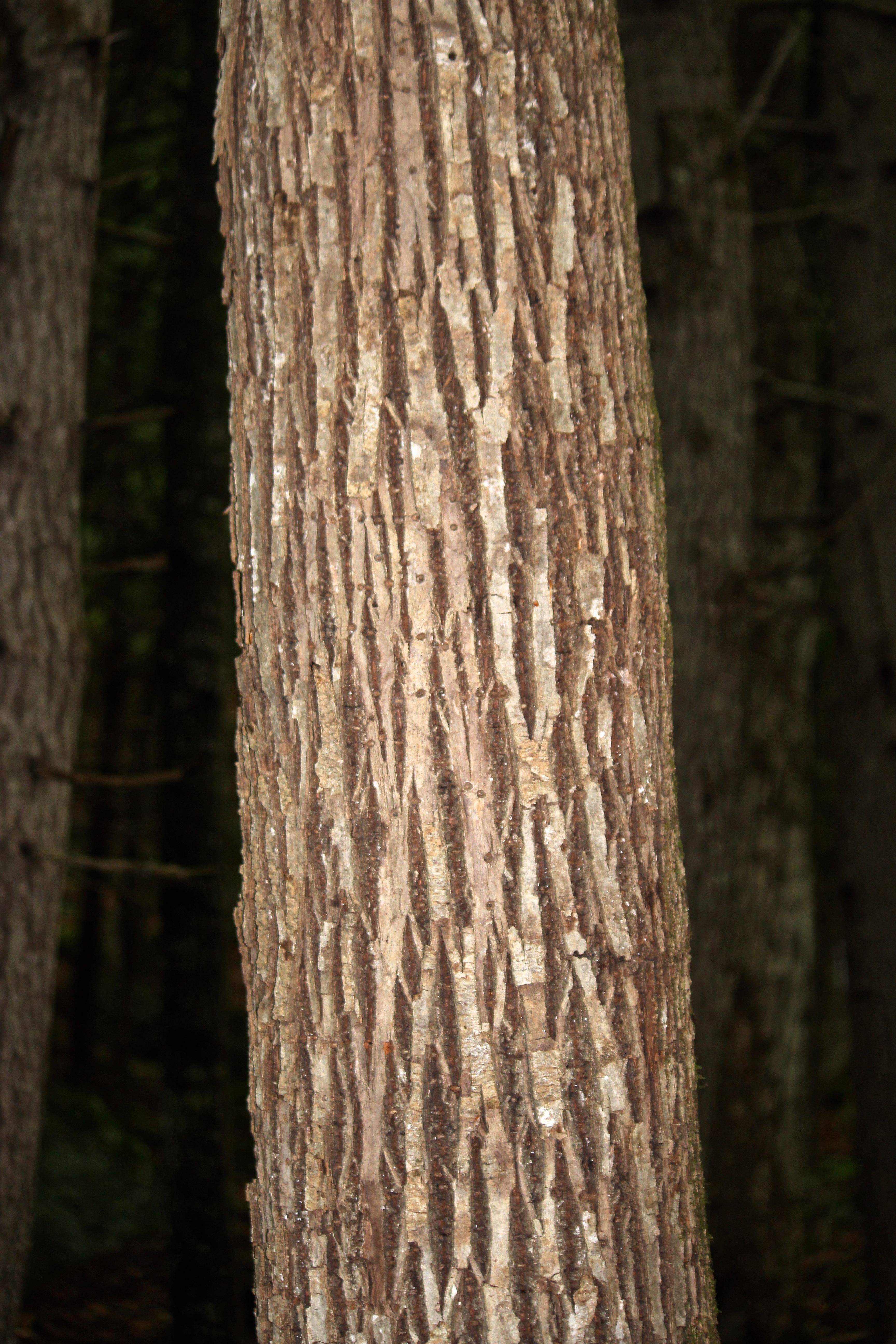
The other day some of us were looking at a sample of this tree and I asked them what they noticed about the bark. Their responses: shaggy and vertical lines. Spot on. Sometimes the bark is a bit tighter to the tree than this one we saw today, but it’s a great example of how this bark behaves. If you rub your hand on it, some pieces will flake off.
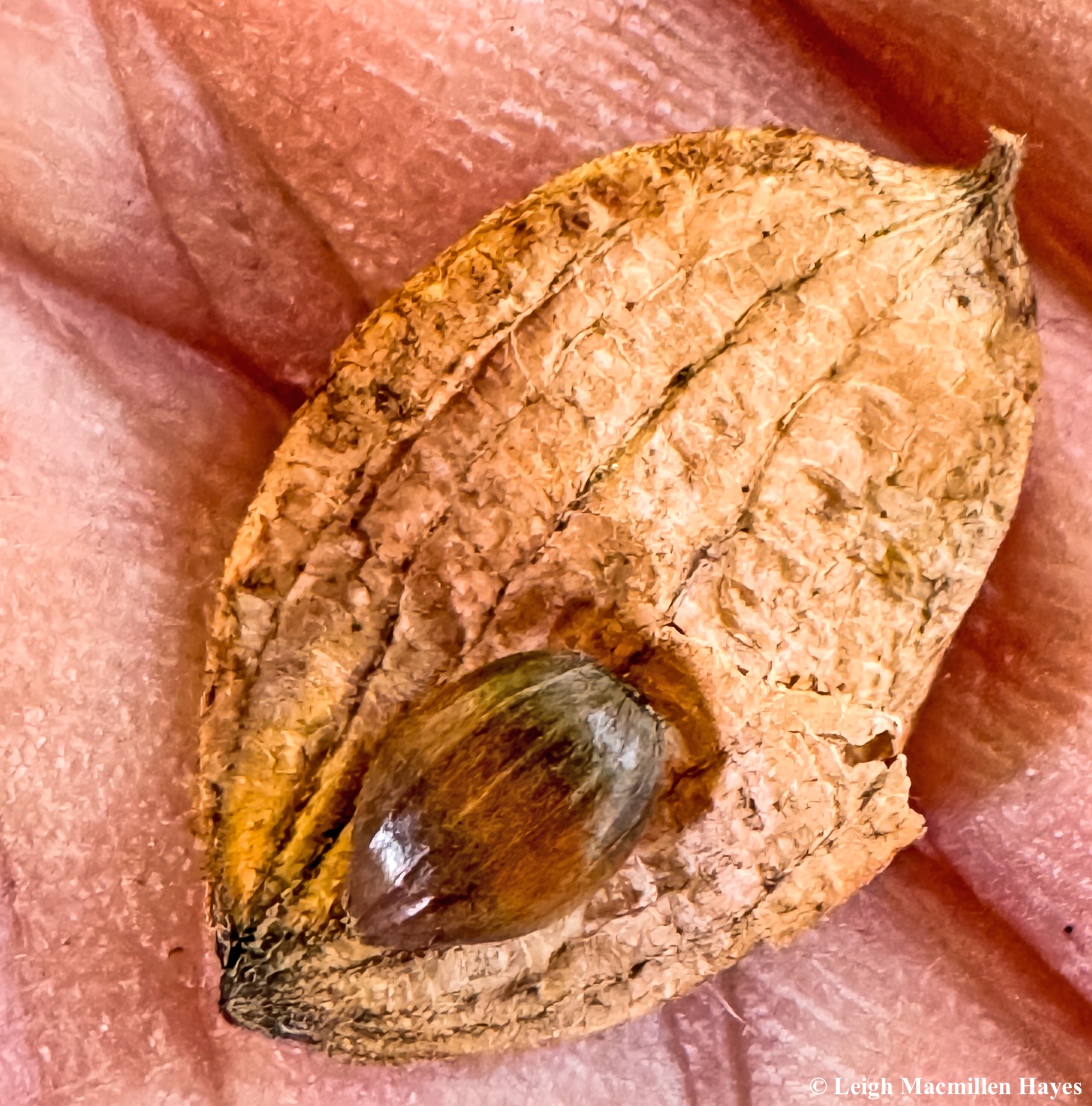
What I really wanted to see since we were in the presence of so many Hop-Hornbeams, were the hops for which it was named and BINGO! They were scattered along the trail, so I picked one up and slit the inflated paper-thin casing open and pulled out a seed. Such a small nutlet compared to the bouyant sac it was borne in.

The leaves are double-toothed and just as these emerged in the spring, male and female flowers would have developed. Being a member of the Birch family, the flowers are in the form of catkins, the male being longer and reddish-brown, while the female would have been shorter and green. Pollen is dispersed by the wind.

During the summer, the fertilized females form into cone-like structures, or strobiles, and their shape gives them their name for they look like hops.
I challenged My Guy to find some of these, which he’d never seen before. Knowing he likes a challenge, like counting Lady’s Slippers and looking for Bear Claw trees, I knew he’d pull through, and he did. But, he also developed Warbler Neck, for so high up in the tree does one need to look in order to spy the hops.

And so to counteract that, I suggested he look down. Success again. This guy is good!

At lunch log, we had a chance to enjoy the view and realized we were looking at Noyes Mountain, which we had hiked about a month ago.

With the camera, I could pull in the rocks on Noyes where we ate lunch before descending into an old mine below.

After circling around the summit of Far Winde-a-Way, where the views may be better in the winter, but we didn’t mind because that’s where we found some of the hops, we began our descent and noted a few artifacts, which got My Guy talking about the fact that metal cans for motor oil were replaced by plastic in the 1980s. He is Mr. Hardware, after all.

And I found a stone that had split naturally in quarters.

Well, maybe they weren’t exact quarters, but still it was worth a wonder to notice.

Another tree that we noticed as we descended was an American Basswood. The bark is similar to Northern Red Oak, but without the red in the furrows between the ridges, and the ridges are flat, almost brushed. Again, I rubbed my hand along the almost smooth surface.

I kick myself now, because I didn’t think to look for their fruits, but I did spot leaves on the forest floor. They are typically quite large, and have an assymetrical base, so if you fold a leaf in half, one base will be shorter than the other. The only other trees in our woods with this feature are the American Elm and Witch Hazel.

Next we reached a brook, where I’m sure the water cascaded over the moss-covered rocks in the spring when we experienced about fourteen rainy weekends, but today it was almost all dry, except for a few pools.
Creating a spider-web appearance on the pool’s surface were about a dozen Water Striders, so speedy in their dance routines.

And hiding at the edge, perhaps in hopes of capturing a Water Strider for a meal, was a Green Frog, with its dorsal lateral folds beginning behind its eyes and continuing down the edges of its back.

At the Cakewalk, for so a trail closer to Mud Pond is named, we met Mouth Rock. We’re pretty sure this wide-mouthed boulder ate all the cake because we never found any.
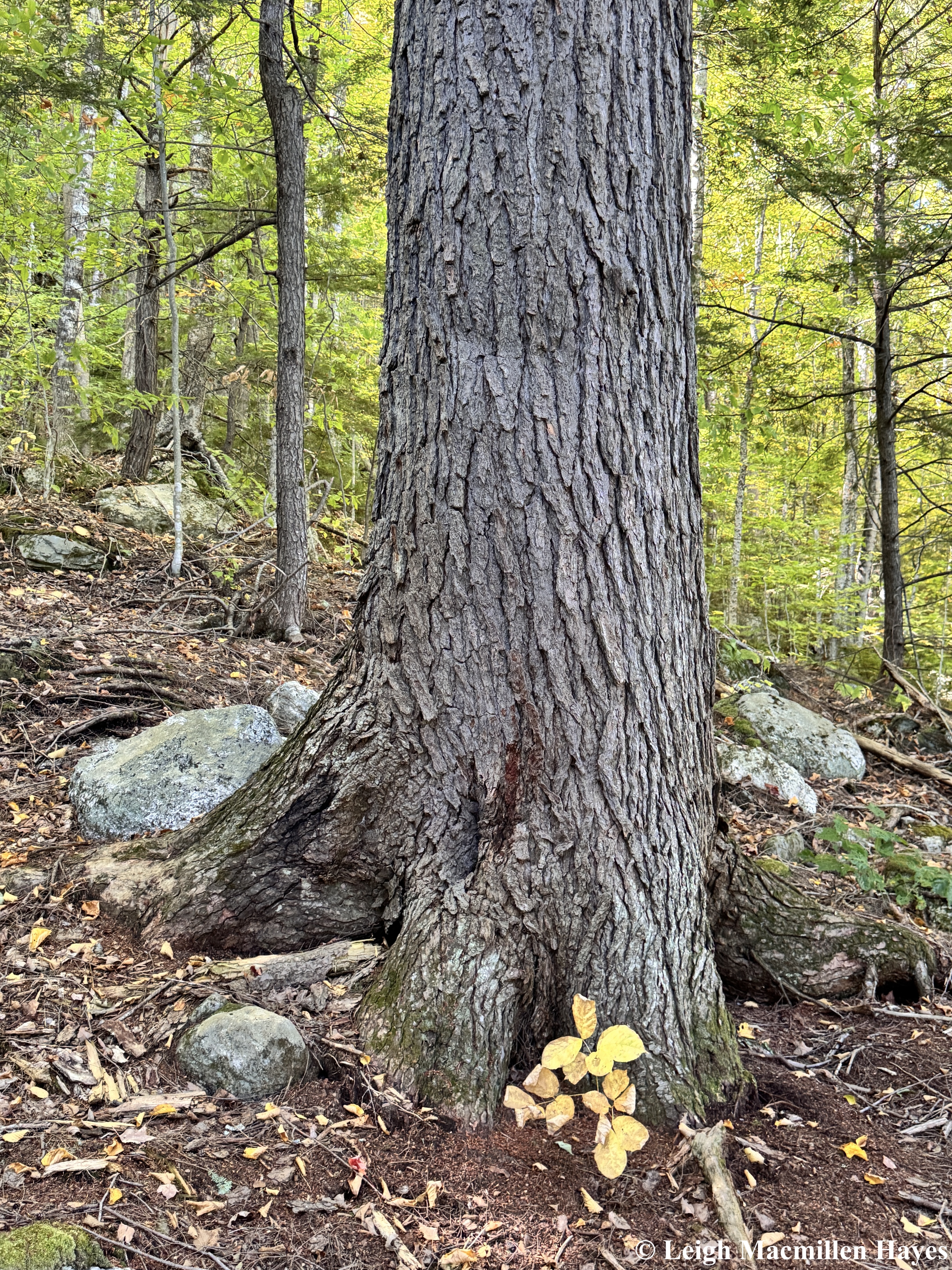
But our finds did include a champion! Co-champion actually–for the largest Eastern Hemlock in Oxford County according to Far Winde-A-Way Nature Preserve‘s website.
And I quote: The tree is: 10 feet in circumference, 90 feet tall, with a crown spread of 60 feet.
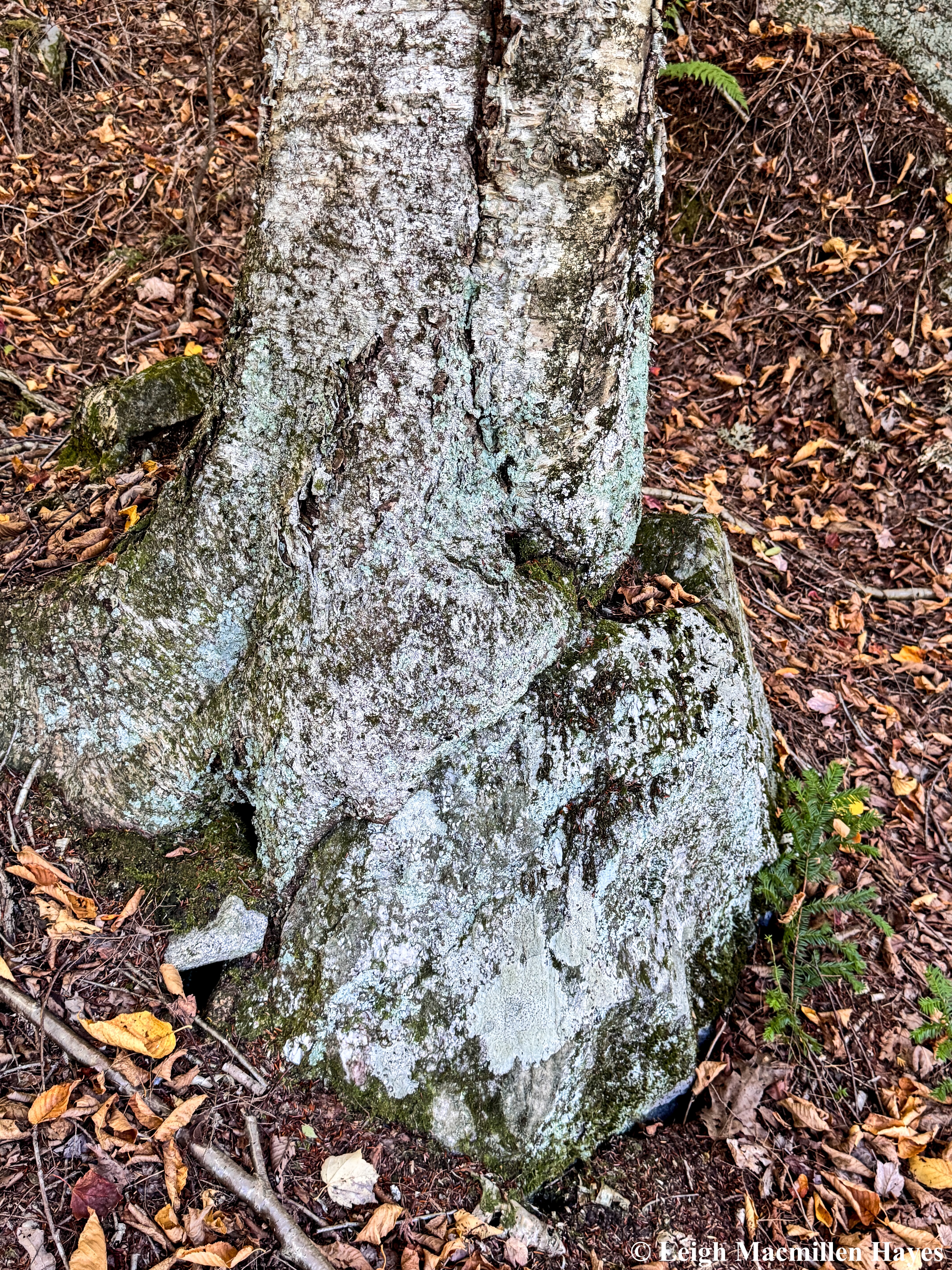
We also found this great specimen. Rock or tree? Tree or Rock? Rock and tree! Tree and rock!
Where does one end and the other begin for they looked like twins. Maybe that’s what happens when you spend so much time together. Kinda like some people looking like their dogs (we had a neighbor when I was growing up who always had beagles and he really did look like a beagle himself. Of course, we never told him that.)
Anyway, this is a Yellow Birch that got its start in the moist soil that probably formed on the moss atop the rock and then sent its roots downward and trunk upward, but really, the two could have been one.
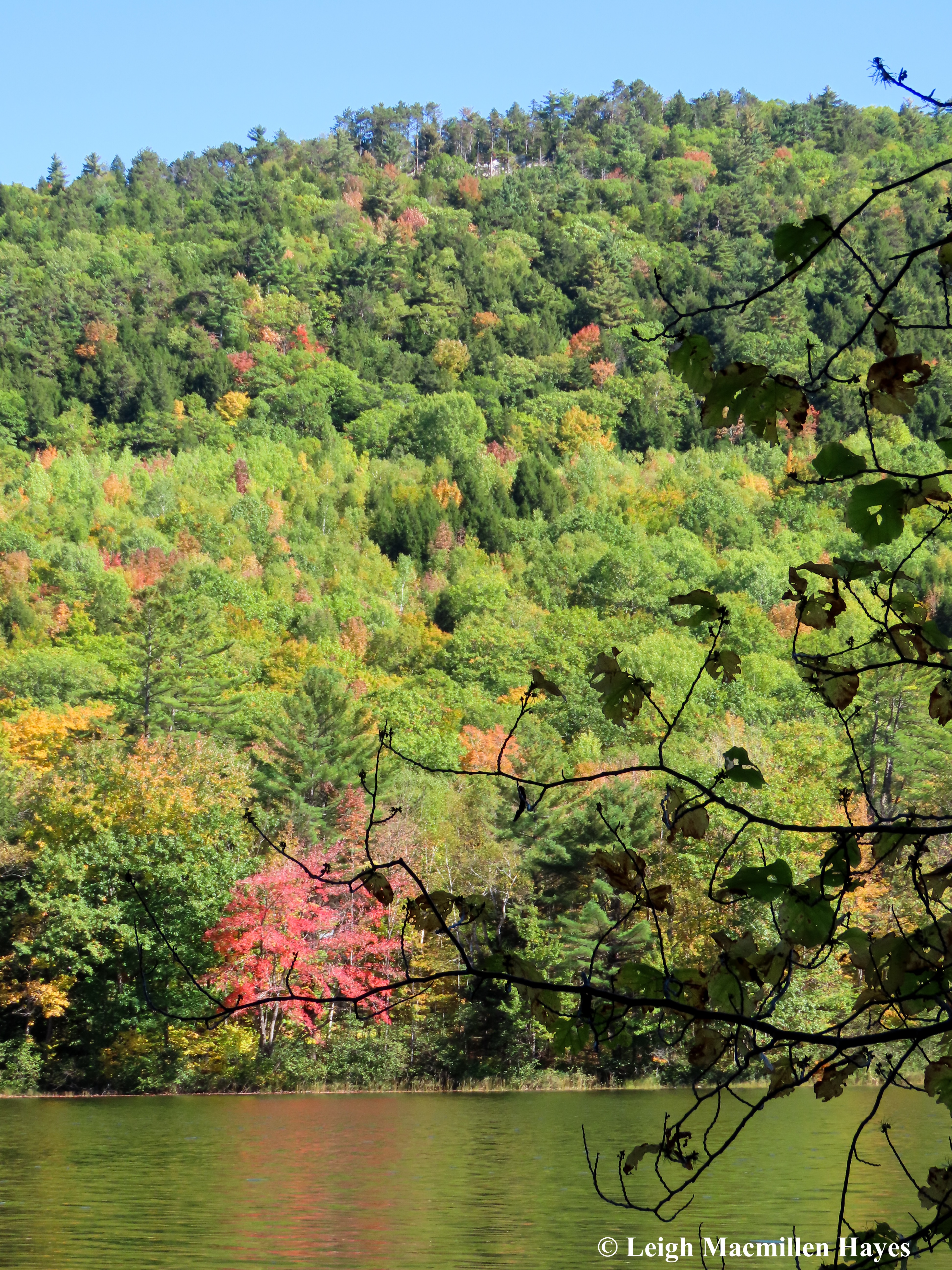
One of our last views before heading back up to the kiosk, was of Noyes Mountain again, only this time it included Mud Pond. And our early fall foliage season. Foliage reflections are among my favorite.

I’ll close this Far Winde-a-Way Mondate by giving thanks not only for My Guy and his love of new adventures, but also for the family that made these hiking trails available so that all of us could enjoy them: The husband and daughter of the late Pam Nelson. “This preserve is dedicated to the memory of Pamela (Roots) Nelson. For more than 30 years, Pam lived her dream to protect, conserve and enjoy these woods and waters. She roamed this rugged hillside and developed a trail system steeped in the natural wonders of the Maine foothills. Today you can enjoy some of the beauty she discovered.”
Pam passed away in 2022, but her family carries on her tradition, and this poem at the kiosk was written by her sister.
Thank you to M for suggesting Far Winde to us, and to the Nelsons for sharing it with all of us.






 wondermyway