My Artistic Path: one year later

It’s all Jessie Lozanski’s fault that a year after publishing My Artistic Path, I’m publishing the next layer of paintings and sketches. Until I shared a few with my sister this afternoon, I had no idea how prolific I’ve been in this department. That said, some didn’t make it off the drawing board. Or rather, they did, but ended up in the trash, or in a pile to be considered at a later point in time. That’s the beauty of working with gouache, I can make changes at a later date. For me, that is liberating.

And now Dear Reader, you have three choices: 1) Read this entire post from beginning to end; 2) Scroll through the pictures and call it good; or 3) Click out of this post and pretend you either never saw it or that you did see it and loved all of it.
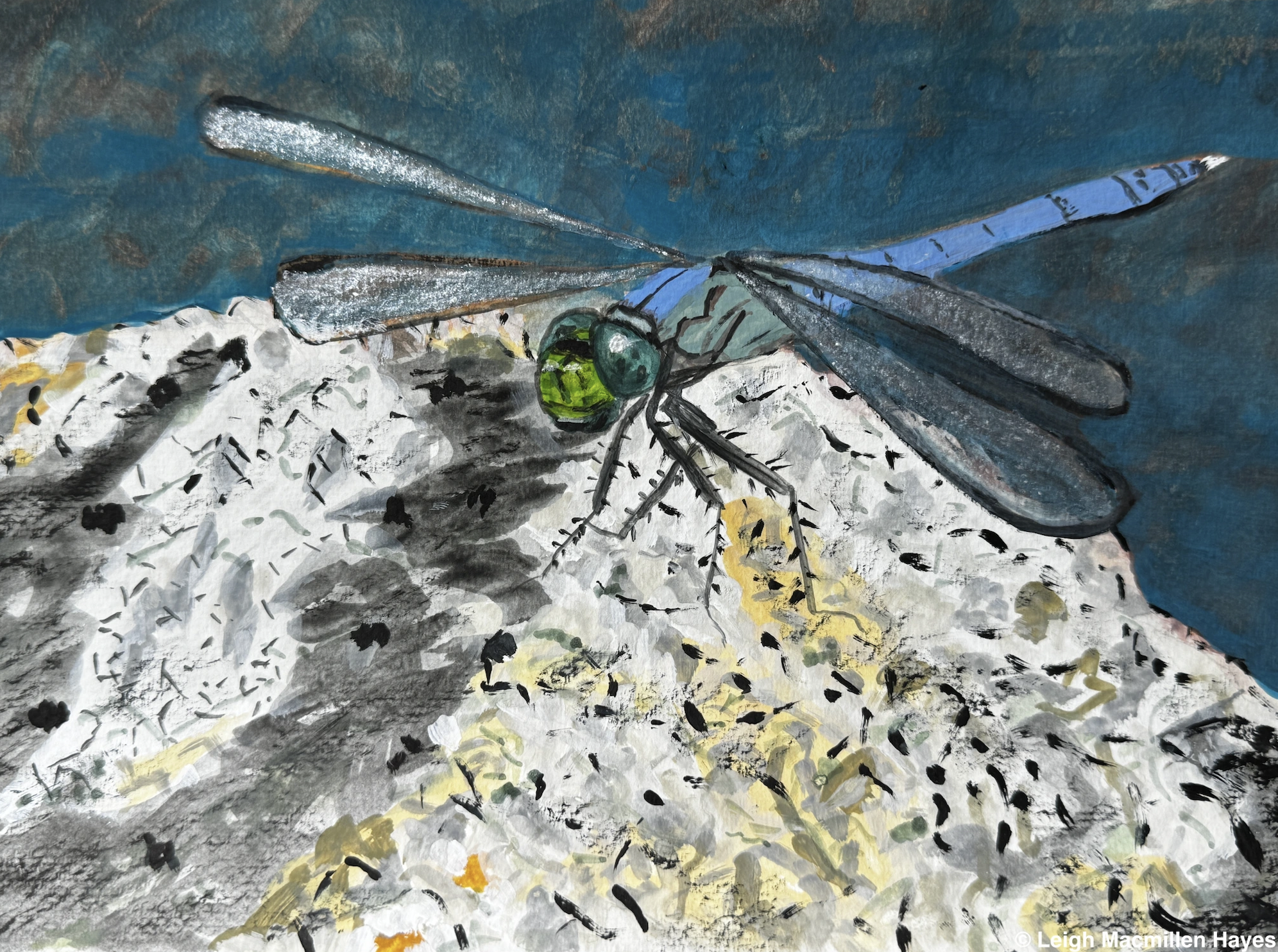
I have to say, I thought I’d paint more dragonflies like this Eastern Pondhawk, but when I scrolled through My Art Gallery, I discovered only a few others. That said, I did take some time to sketch the naiad forms of six families and then painted each one. You can visit all of those in Dragons of the Future if you wish.

Waterways also intrigued me as I tried to figure out how to make the water look as if it is flowing. This is Province Brook in Chatham, New Hampshire.

And then there are the critters and I’m afraid you’ll see a few of them along this journey. The fun thing about this Chipmunk is that it made an appearance on a February day. I was tracking with some friends and we were pretty certain that we’d discovered Chipmunk prints, but it didn’t seem possible. Until it was because as we backtracked, we saw him and he posed for a few photographs. Sometimes, when you need more food, you might make a mad dash from your winter home to locate it.
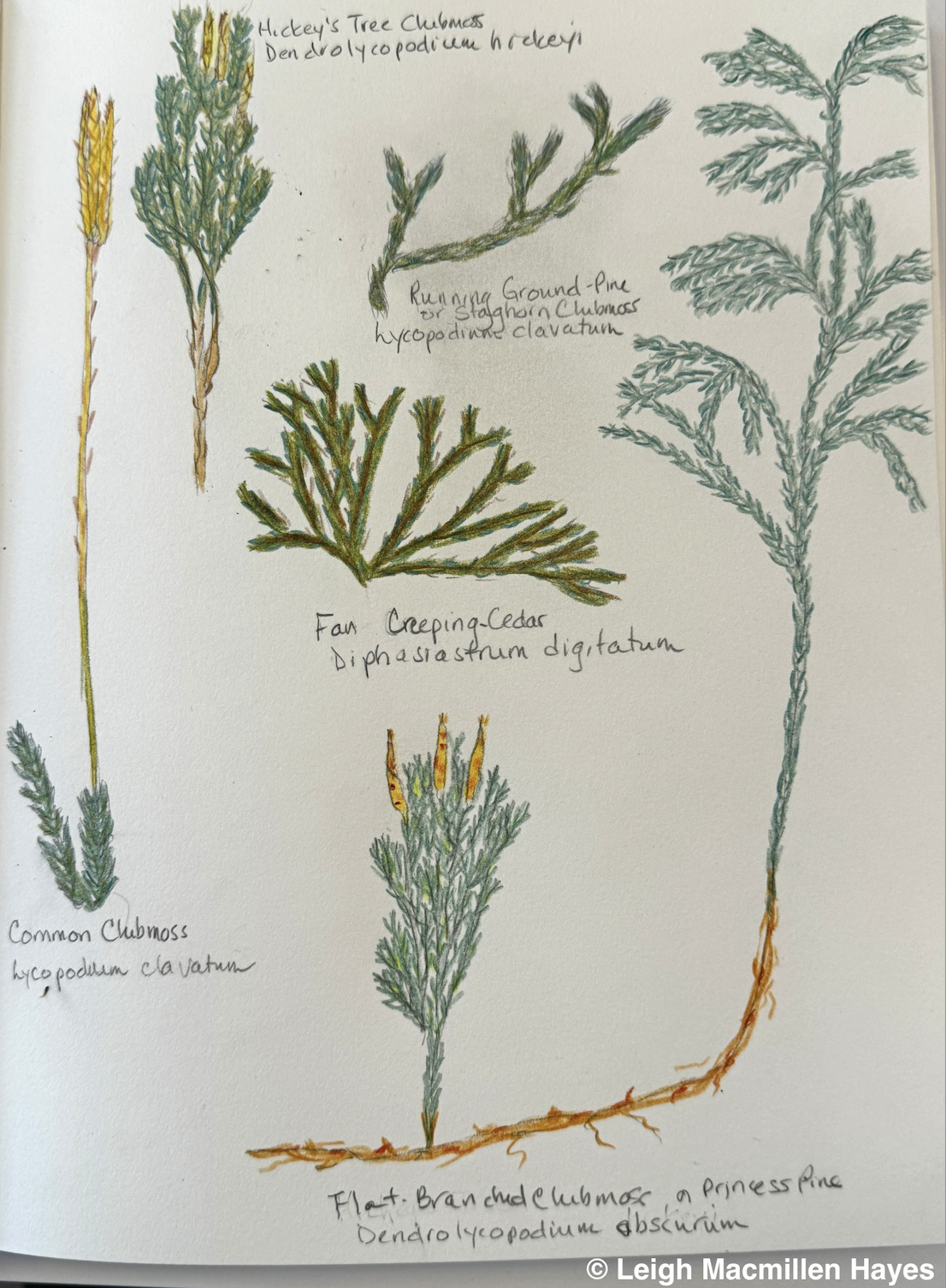
Clubmosses are one of the topics I’m trying to learn. . .when I take the time to do so. And so I sketched these after spending some delightful hours studying them as I wrote about in When is a Moss not a Moss?
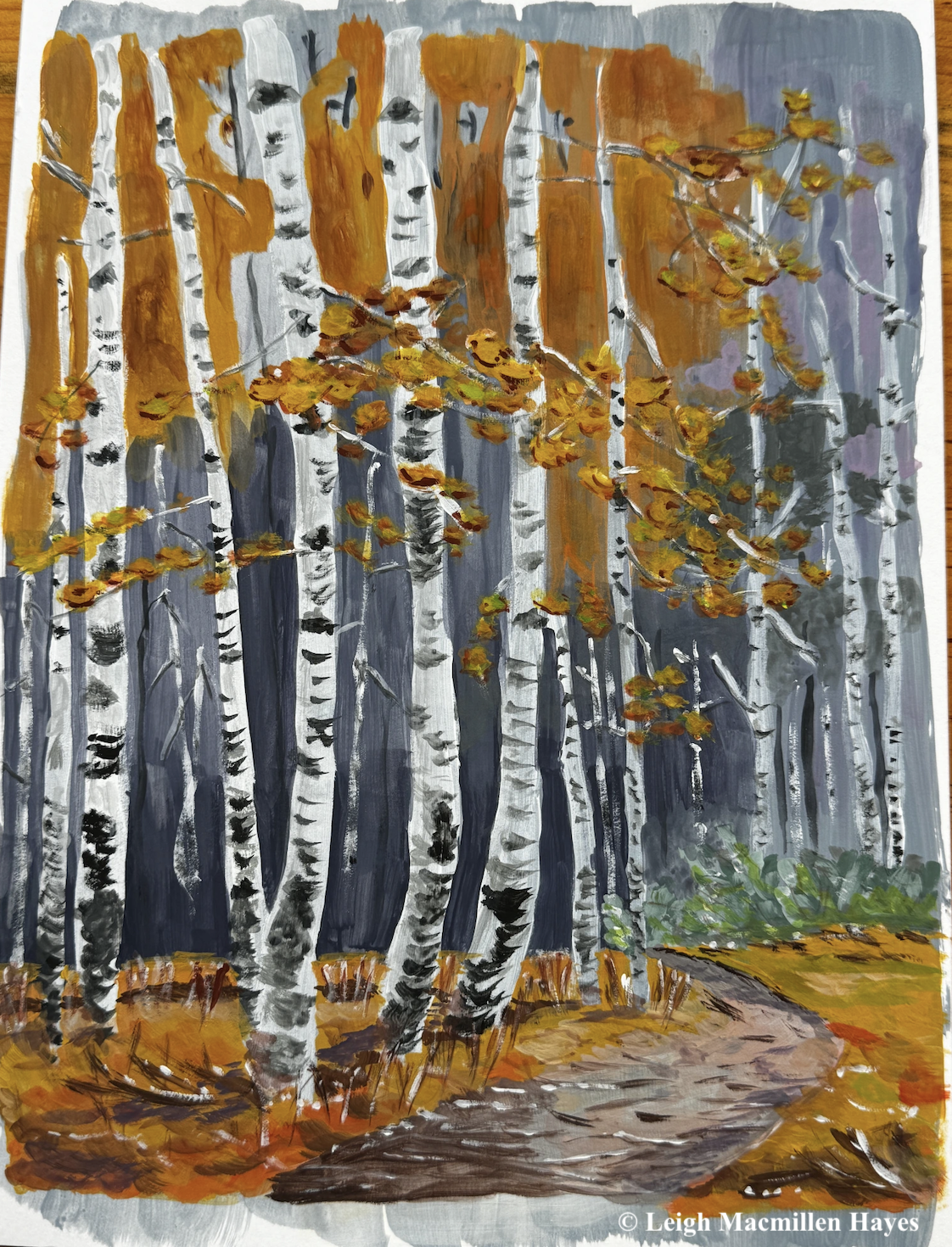
It’s the colors in this painting that I like. And figuring out how to paint Birch bark.

And then there was Forter Castle in Glen Isla, Scotland. I actually did three smaller versions of this castle and then decided to paint this larger picture based off one of those. It was a gift for Anne, our hostess when we were invited to spend a few nights there back in 2017, and in memory of her husband John. You can read more about that adventure here: From the Bonny Banks to the Highlands.
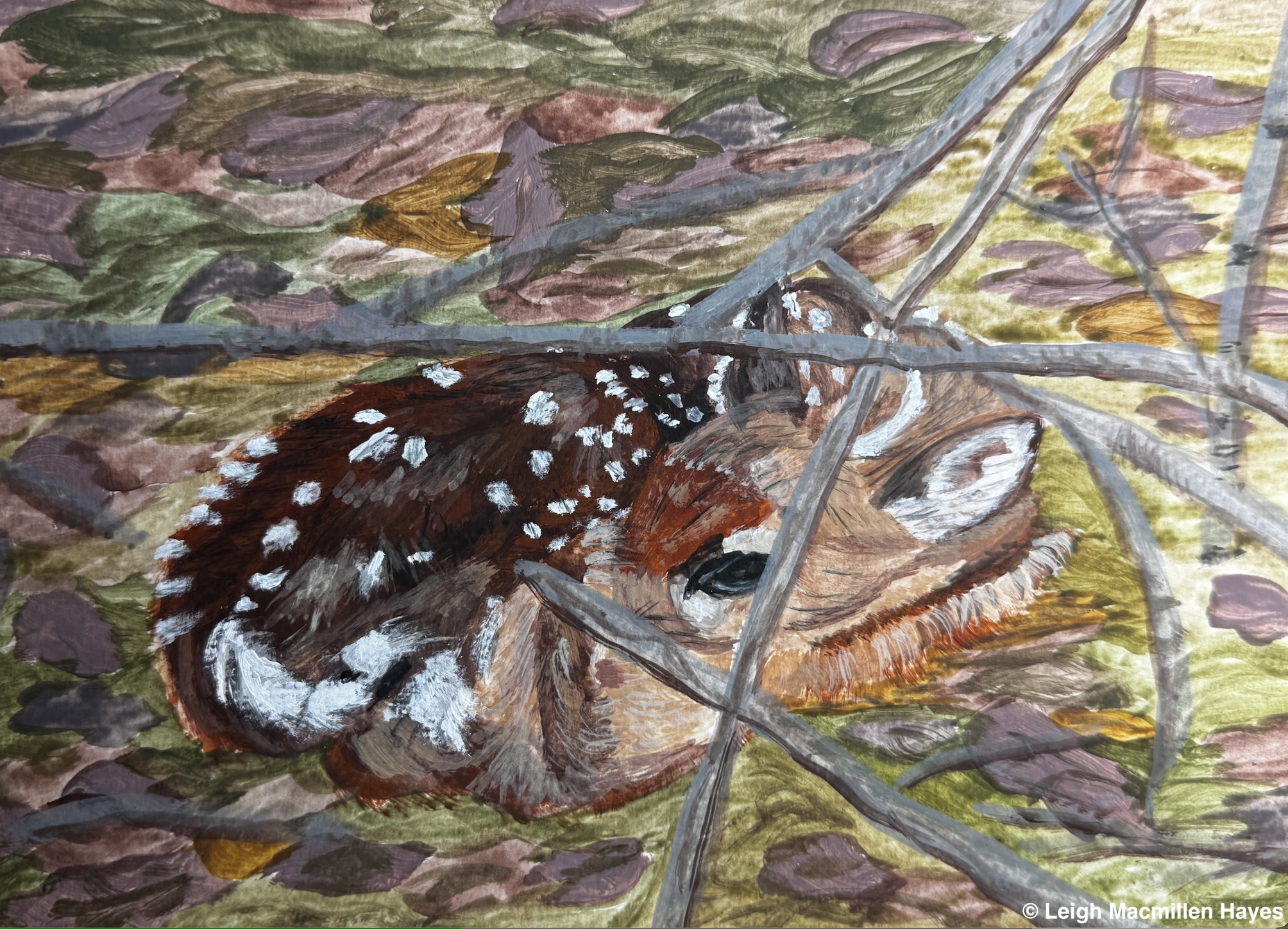
This next one will forever evoke the memory of my friend, Faith, who passed away this summer. We were on a Lakes Environmental Association walk at Holt Pond when we all “spotted” this fawn quietly waiting for momma. Quick pics and then we moved away.

And this is one of the Red Foxes who frequent our yard. In My Art Gallery, there are two more attempts, both in watercolor while this one is with gouache paints. Experimenting is fun.
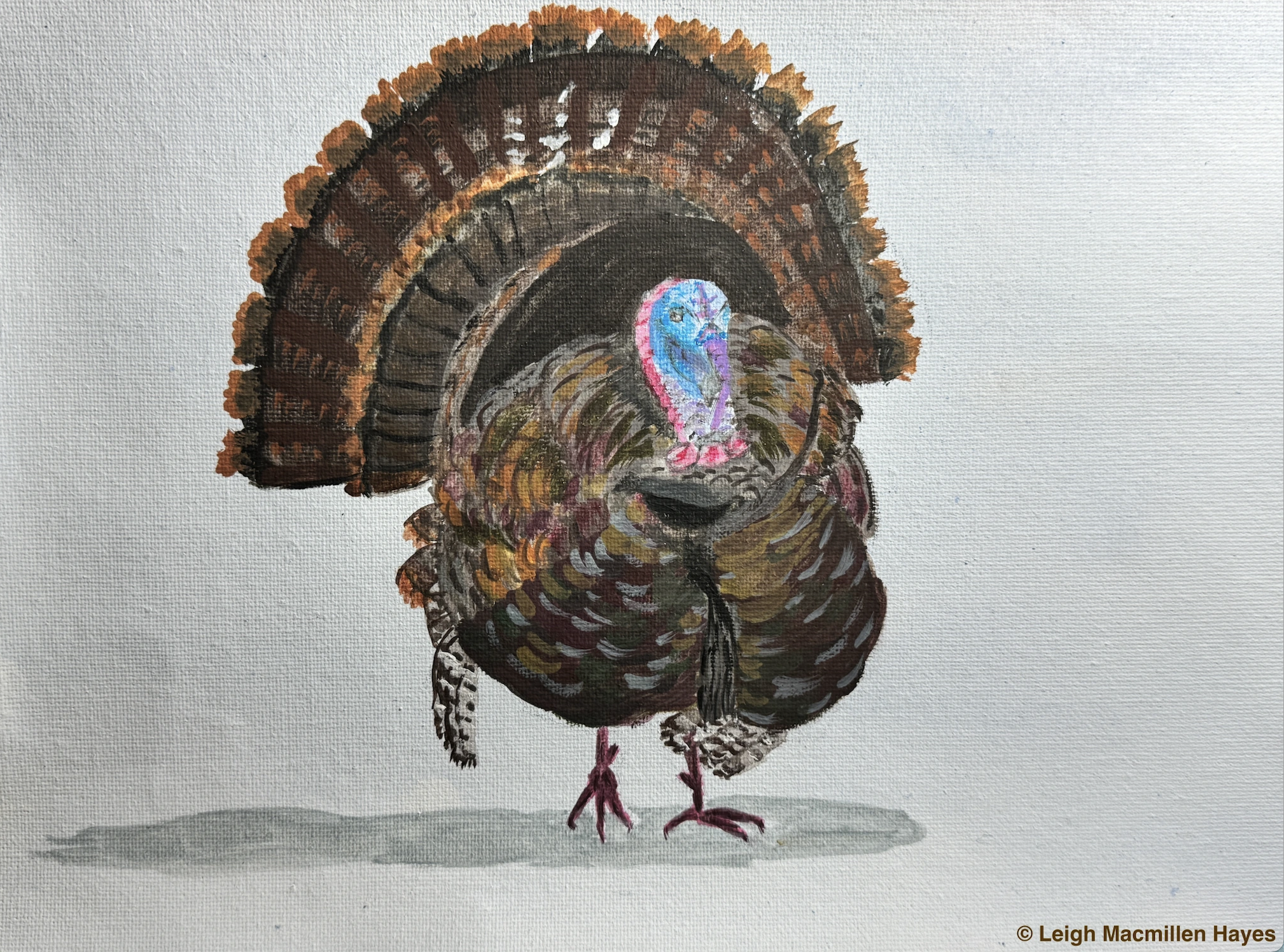
Tom Turkey! What more need I say.

In the midst of taking classes with Jessie this past year, which sadly ended in the spring, I purchased Grahame Booth’s book: Anyone Can Paint Watercolour Landscapes, and tried to follow the step-by-step instructions. This was a result of Lesson 1. There were six lessons altogether, and I thoroughly enjoyed the experience. You can see my other paintings based on the book by looking once again at My Art Gallery. Yikes, I’m beginning to sound redundant. Smiley Face!
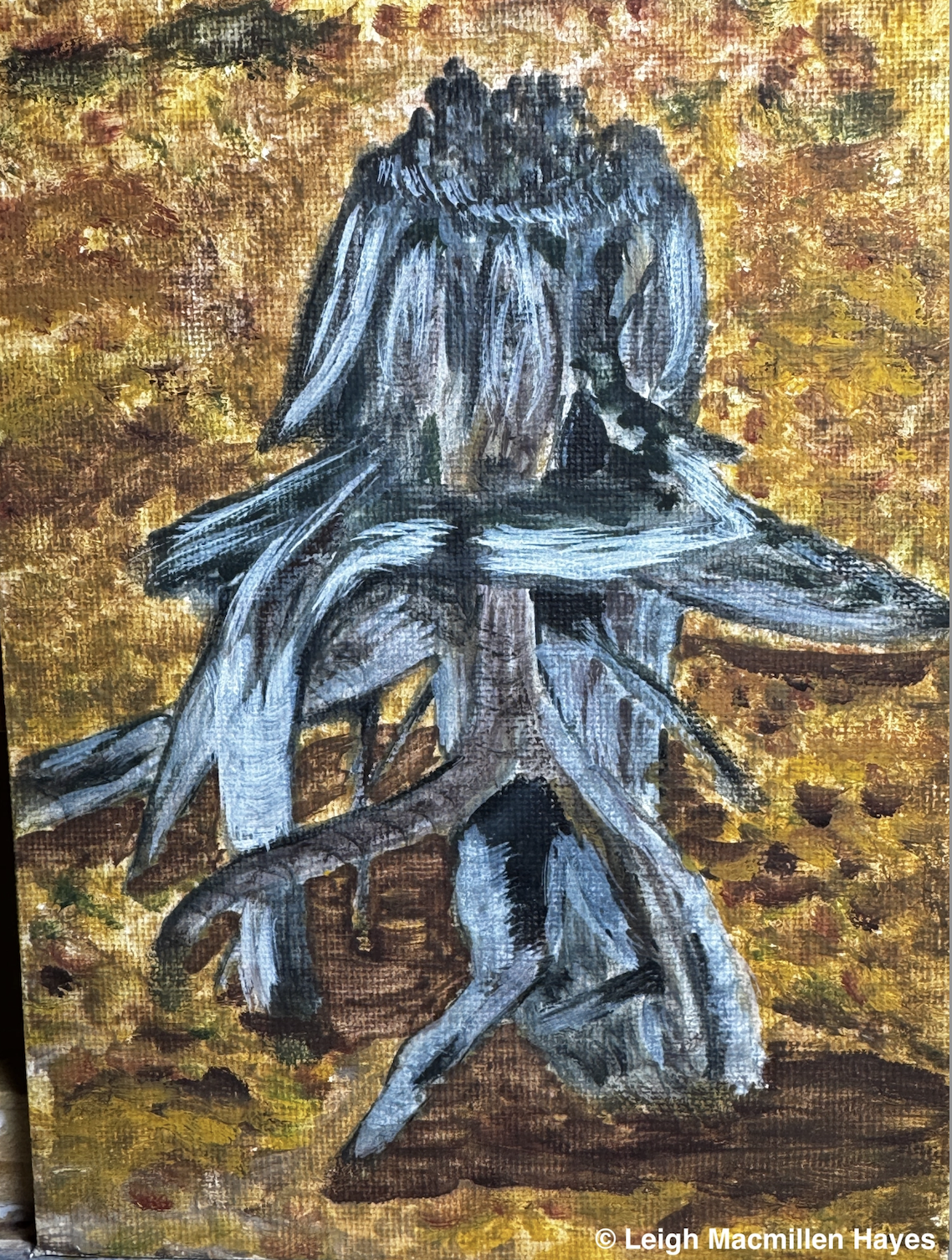
I like this one because I like the subject. I used a matted board to paint it. The stump is beside the Saco River in Conway, New Hampshire.

This one was for another friend because we had walked out to Kezar Pond in Fryeburg from her home the previous New Year’s Eve or Day, and it was just lovely.

And then there is a perennial subject of mine–the Stairway to Heaven tree along the cowpath in our woods. I especially love it when snow outlines the branches.

Another favorite scene takes me back to my childhood in Clinton, Connecticut, and I painted this for my sister and brother-in-law as a keepsake. So many memories in the spot that was our little piece of Heaven for so many years.

On and off, I’ve produced paintings of birds, and another favorite subject is the Great Blue Heron. I’ve also tried to paint rookeries, but often struggle with perspective. Of course, you can view my attempts you know where: My Art Gallery, to be shortened to MAG going forward.

No words necessary really–a male Northern Red Cardinal.

And his female counterpart.
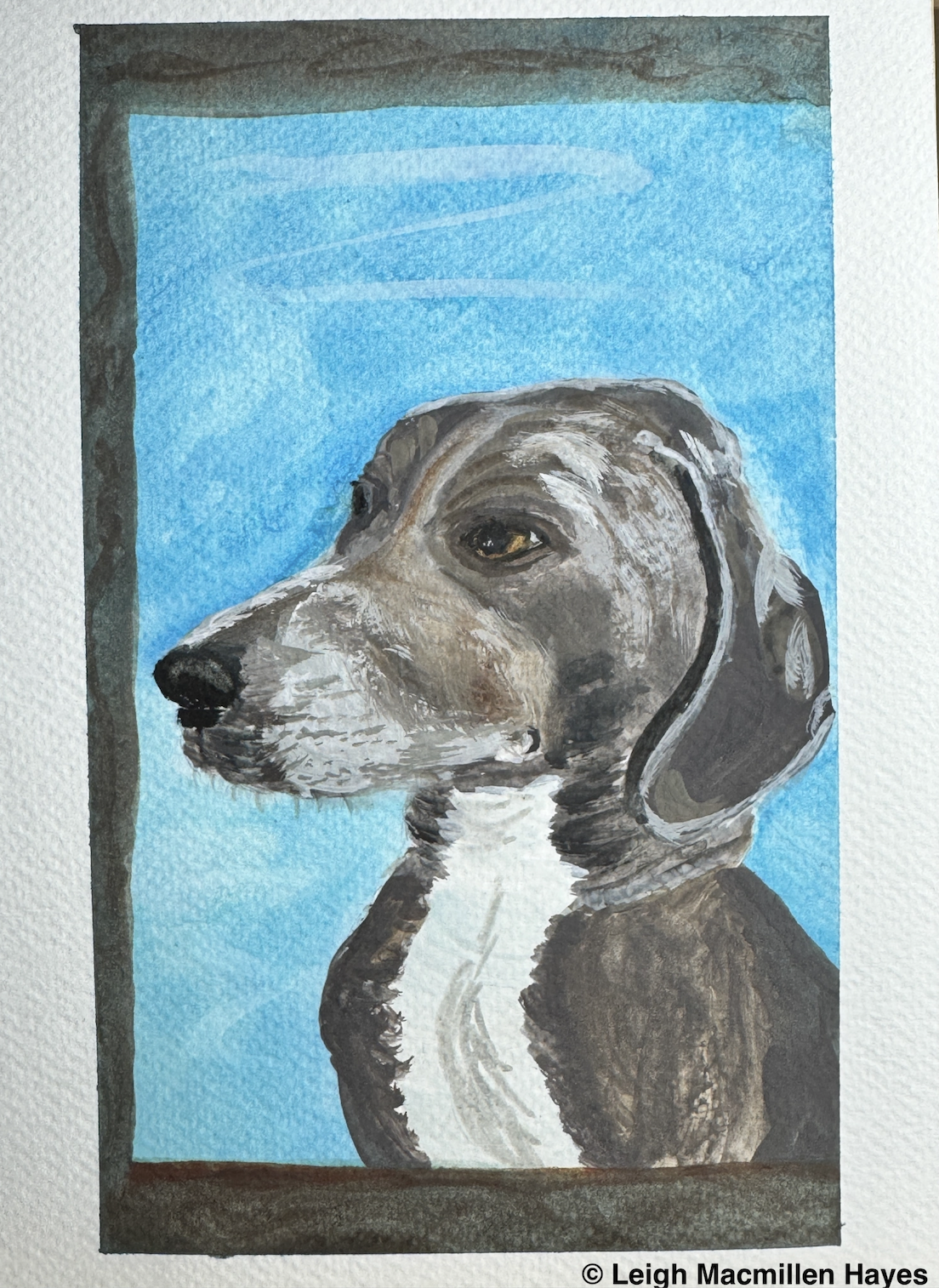
Our oldest son and his girlfriend rescued this energetic pup at the beginning of the pandemic.

And this pup belongs to our youngest son’s girlfriend’s mother.
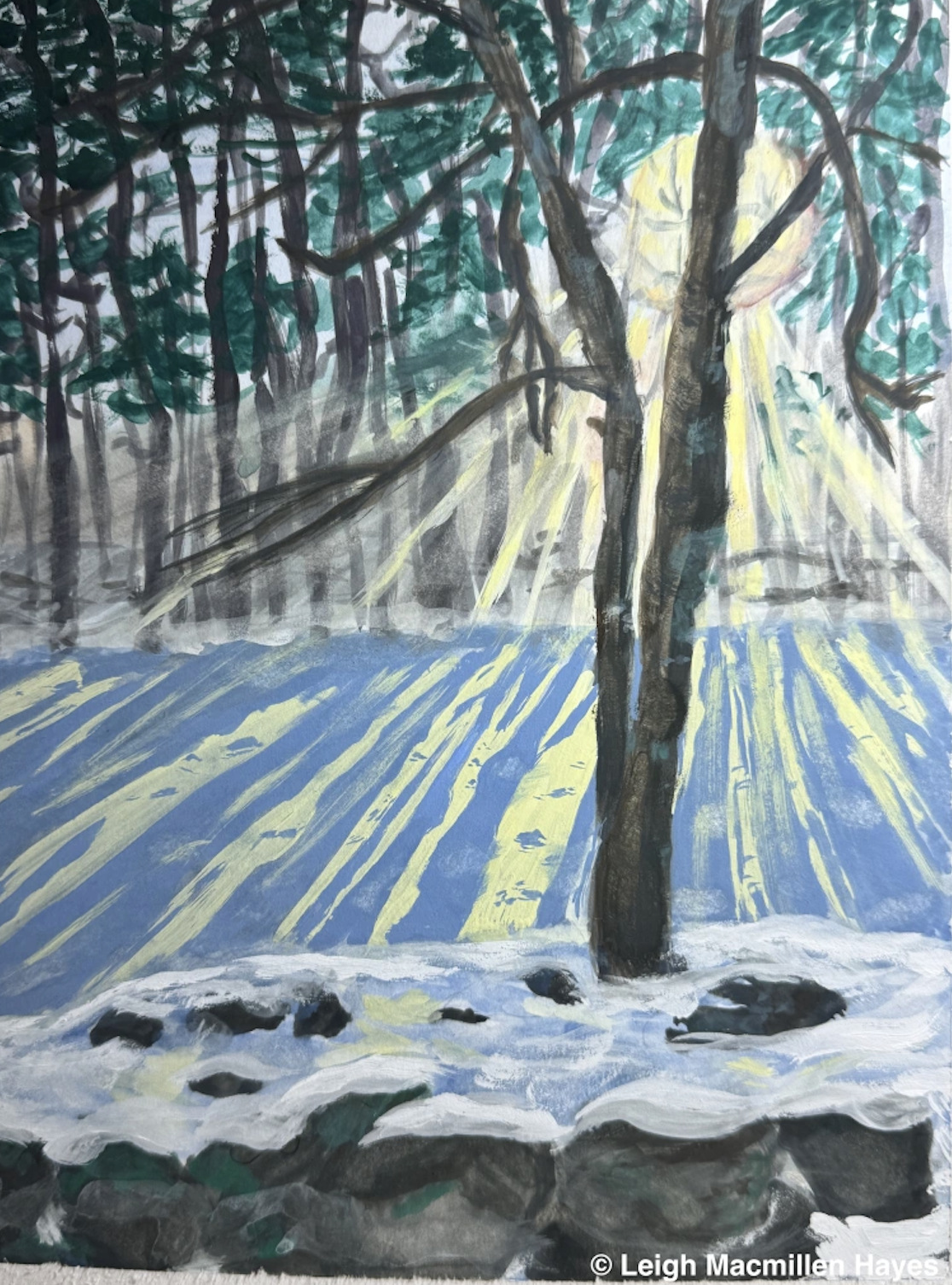
One morning, I stepped outside just after it had finished raining and the sun was shining through the trees out back and there was a layer of fog and shadows and it was just exquisite so I tried to capture it.
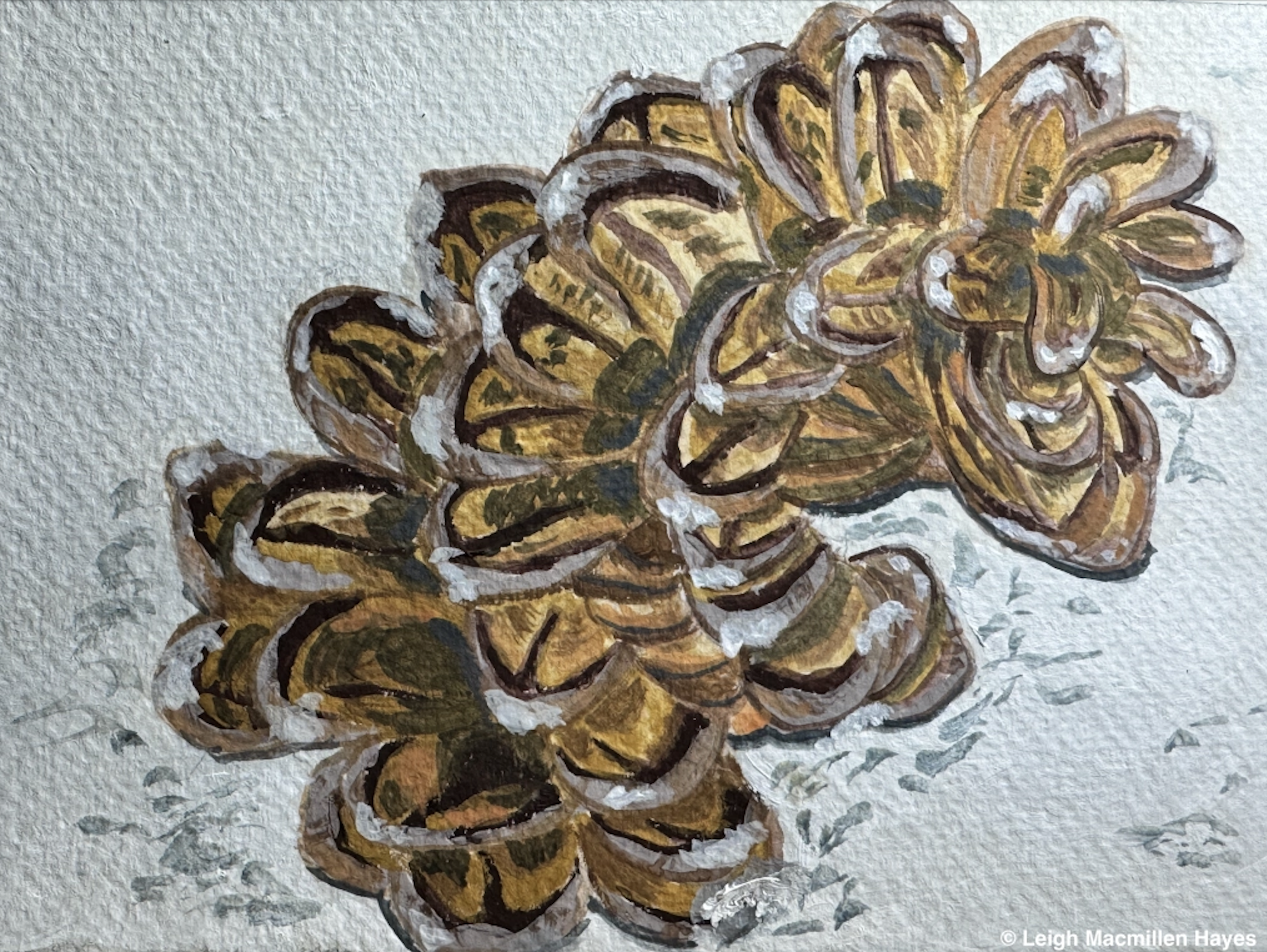
The White Pine Cone was something I started to sketch and then left for a long time, until I realized the scales were all arranged in a spiral of course and bingo, I knew how to go about it.
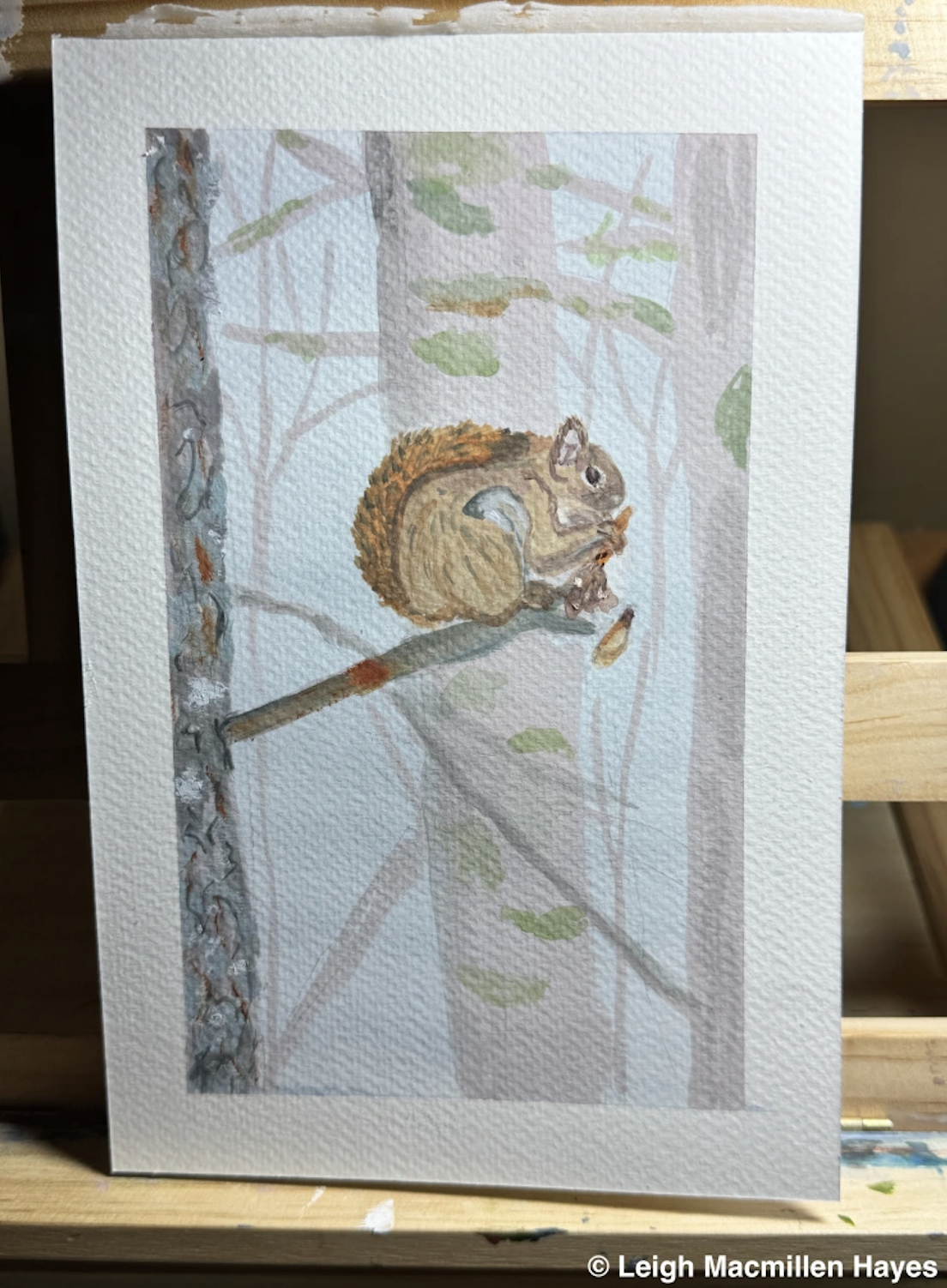
Turns out, I’m not the only one who knows to go about it–for Red Squirrels love to take each pine cone scale off in order to get to the seeds stored by such. Their method of descaling a cone is rather like us eating corn on the cob. I actually referenced both the pine cone painting and this one in Another Amazing Lesson from a Red Squirrel.
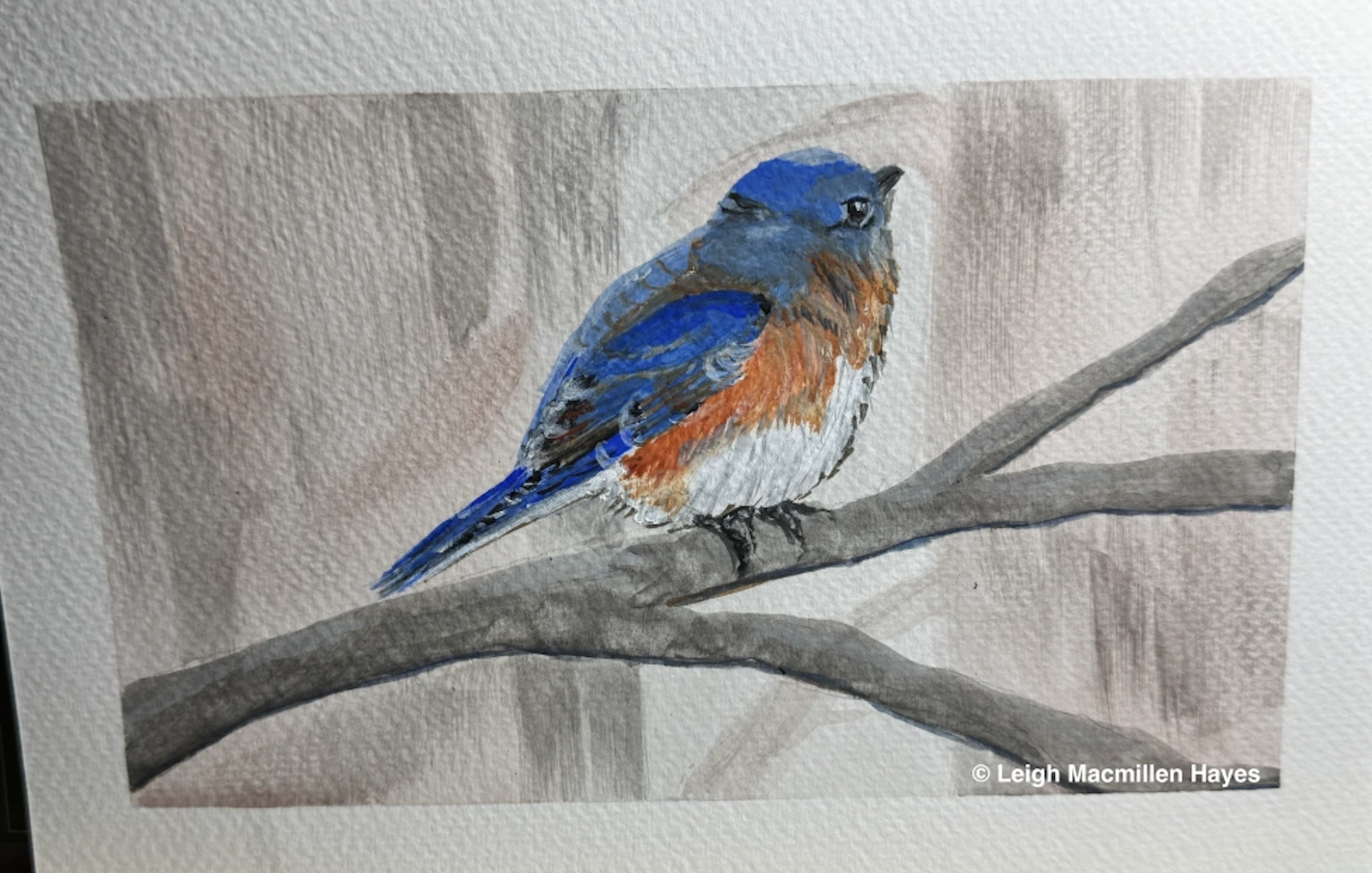
All last winter and spring, and into the beginning of the summer, my neighbor and I rejoiced because we had Bluebirds. In fact, a pair nested in one of our boxes, but that was around July 4th, and by the end of the week, she’d abandoned the nest. We’ll never know why.

A few more birds coming up–including this male Red Winged Blackbird at Brownfield Bog.

A Sharp-shinned Hawk in the backyard and field.
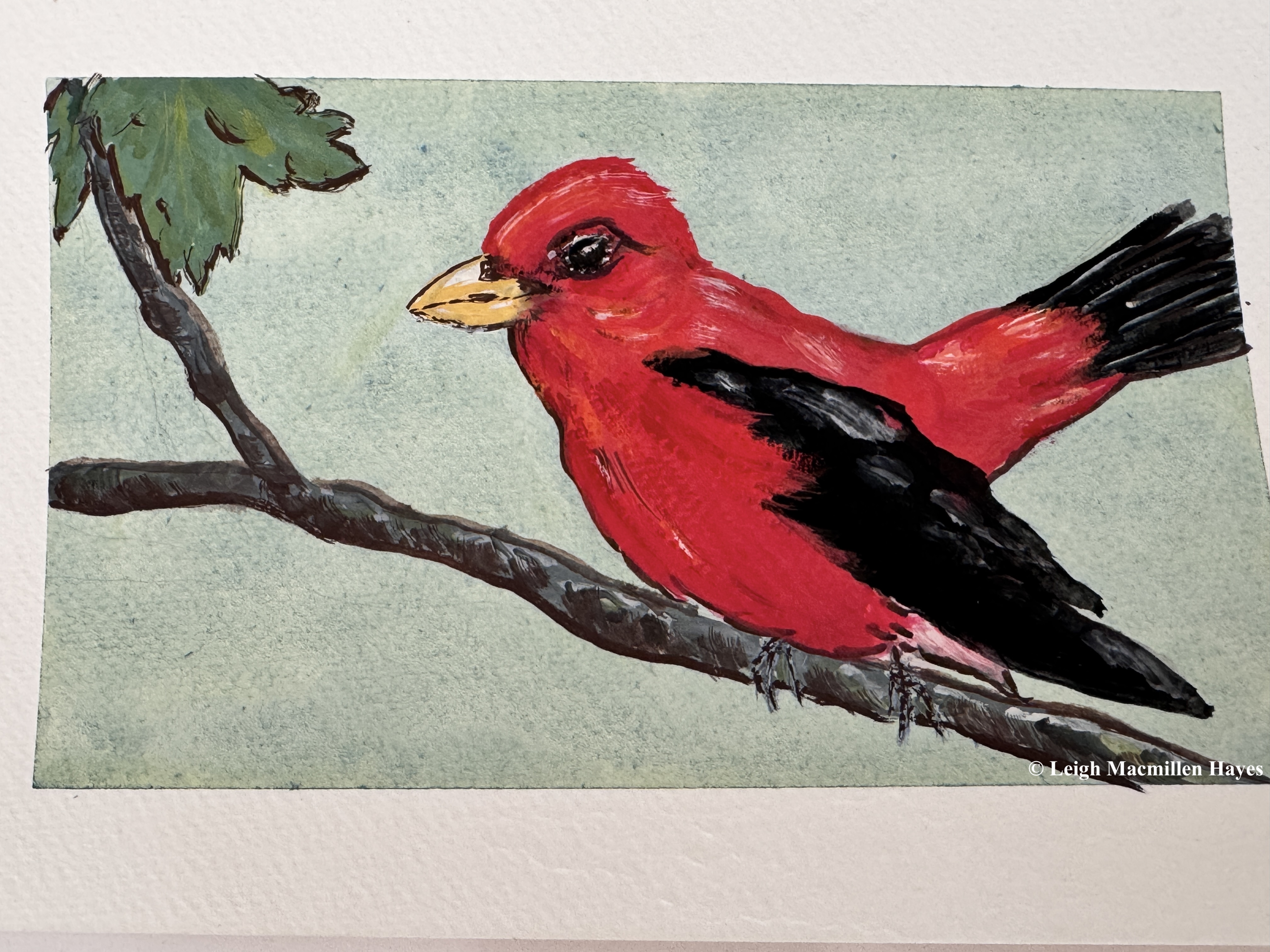
And a Scarlet Tanager on Mount Cutler in Hiram, Maine.

I did think I’d paint more butterflies, and perhaps this fall or winter I’ll attempt to, but it seems the Spring Azure is all I’ve done so far.

I’ve also made a couple of cards in the course of the year, this one for a First Grade student who was my penpal and she told me she really likes Dandelions. That girl will go far in life!

Another favorite topic of mine: Dog-Day Cicadas. If you type Cicada into the “Search” bar on my blog, you’ll discover several posts about these insects emerging. As I write, I can hear them “singing” from the treetops.

Sometimes, actually, more than sometimes, something catches one’s eye and this Tree Frog was one of those times. A friend and I had stopped to talk about a Snapping Turtle that seemed to be late laying eggs, and bingo, there was the frog on a tree.

Speaking of frogs and other critters who rely on vernal pools, visit MAG and you’ll find my Vernal Pool series, including a Fairy Shrimp that looks WAY bigger than its actual 1 – 1.5 inch size.
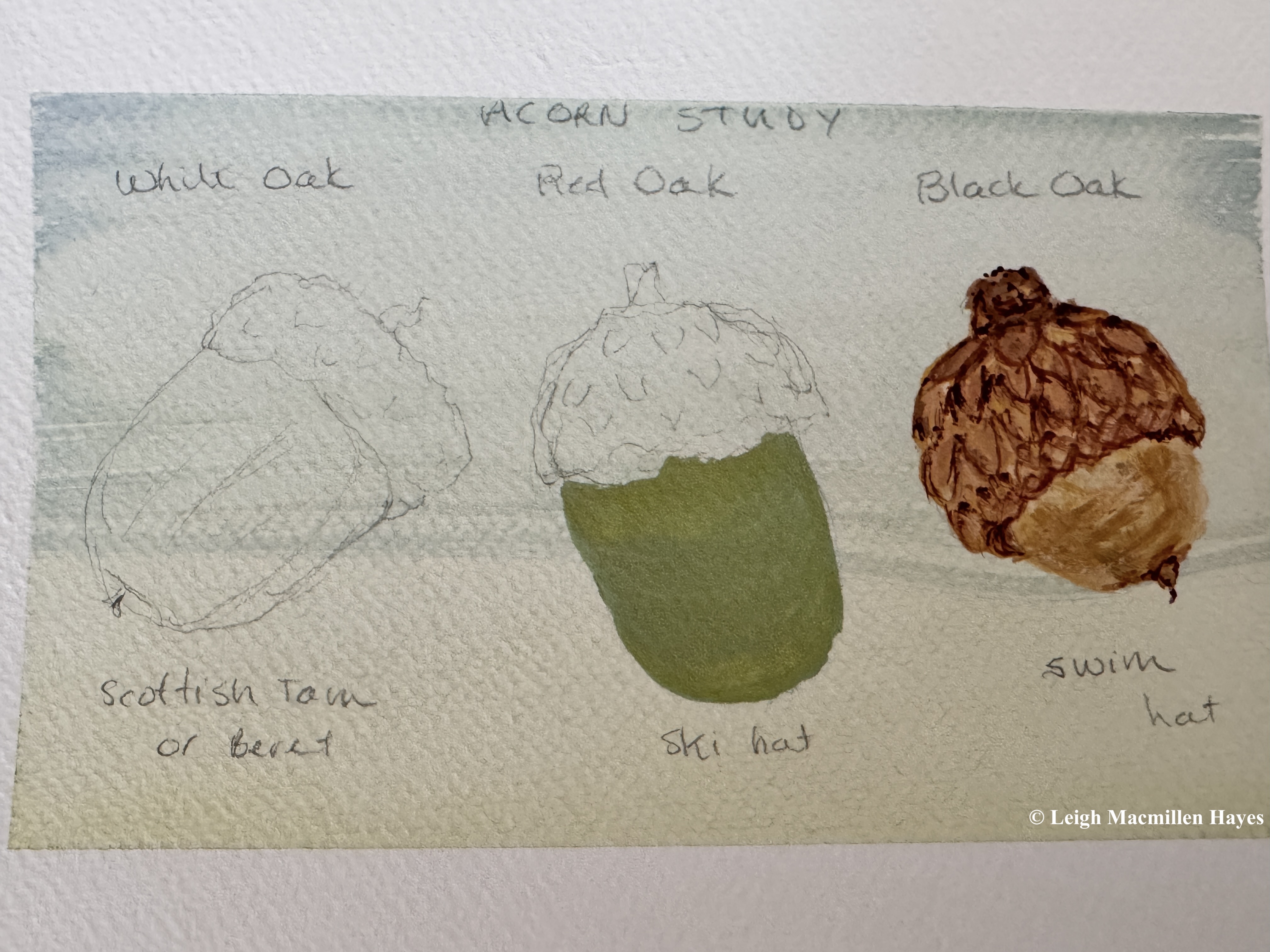
And then there was the day I pulled out a copy of National Audubon’s Field Guide to North American Trees because I wanted to get to know acorns better. Silly me, I came up with names for each one based on what they looked like to me, but I made the mistake of writing the names in pencil before painting a light colored wash on the paper. As I began to paint the acorns, I realized I wanted to change their names, but couldn’t erase them or paint over them. So . . .
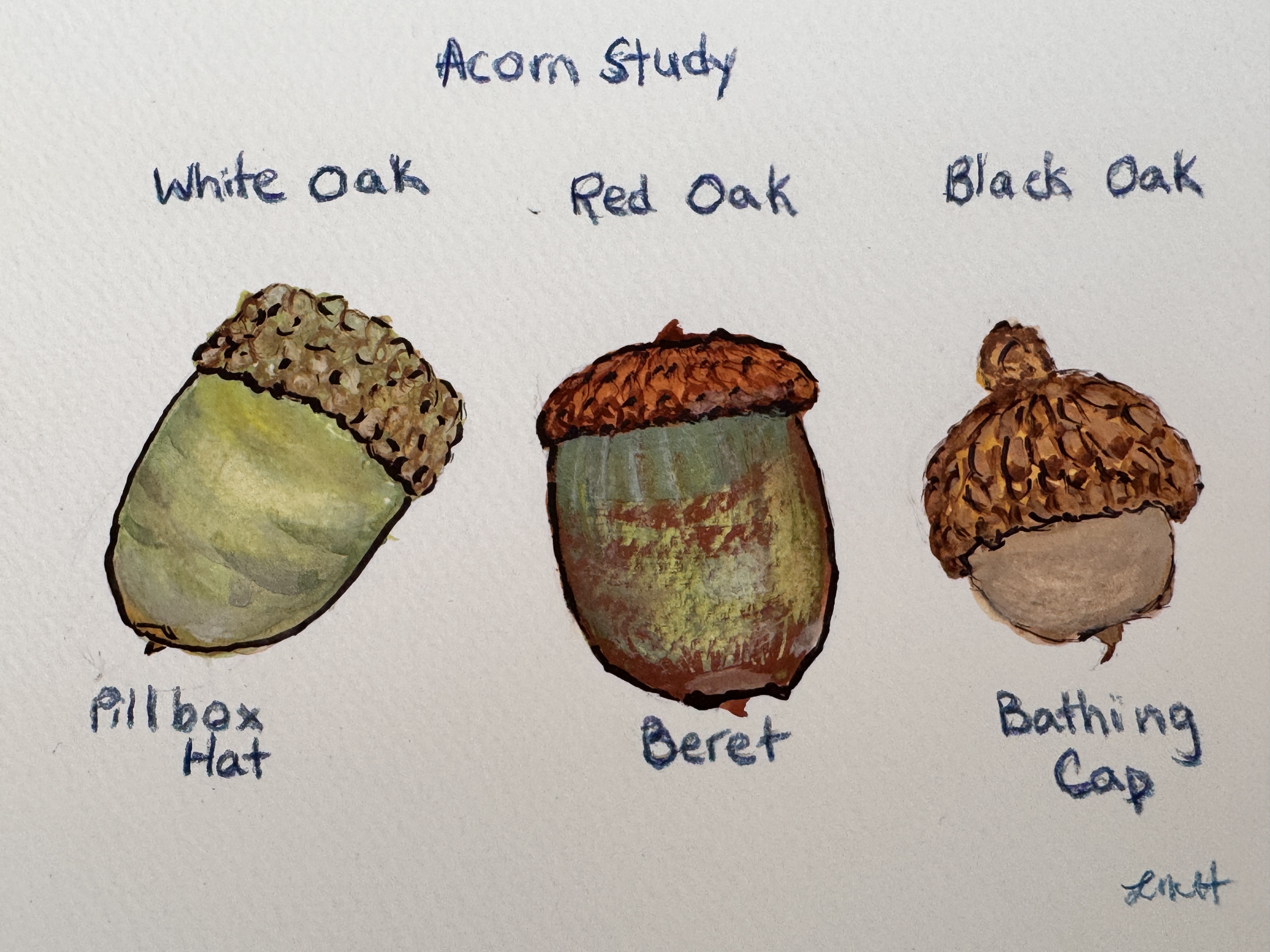
I sketched them again, and gave them new names.

And finally the moment you’ve been waiting for, today’s painting:
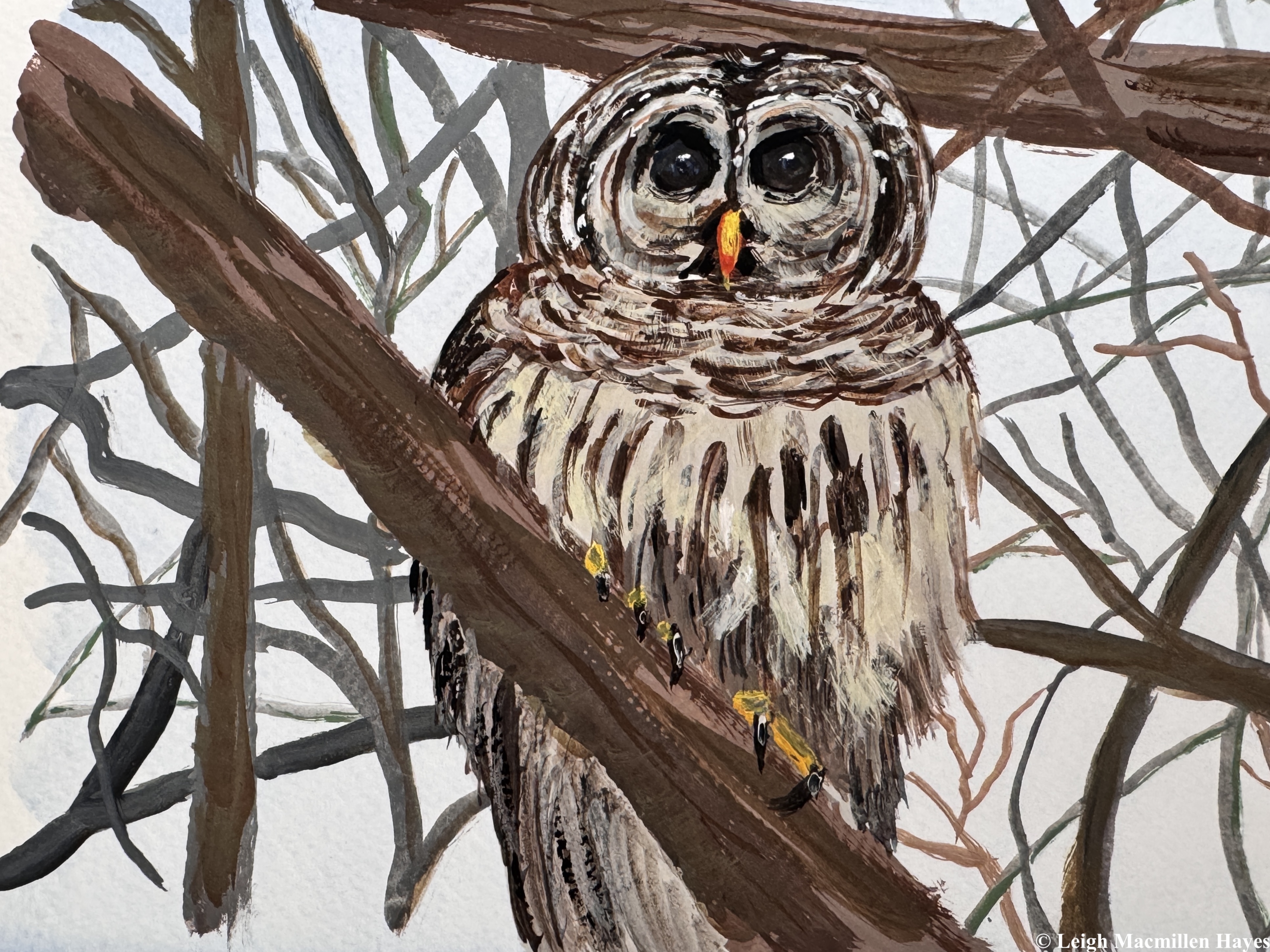
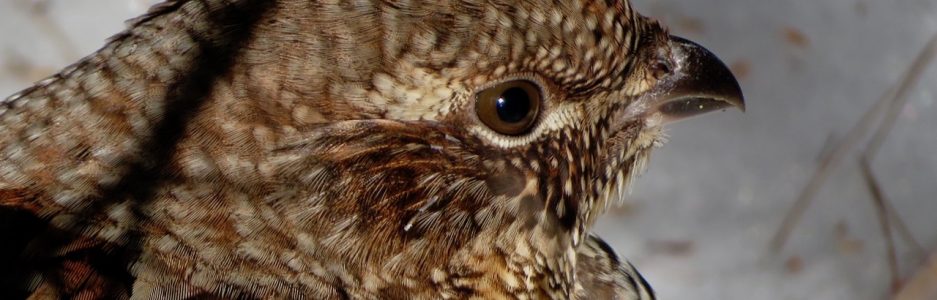
I always like it when I try iNaturalist’s SEEK app on a painting and it agrees with me. Barred Owl it is.

Wow, I had no attention of pulling this all together today until about an hour ago when I was sharing photos with my sister and realized I hadn’t sent her any in a while. So thank you, B.S., for being my inspiration today . . . and always.

And thank you Dear Readers, for sticking with me today and always as I share My Artistic Path: one year later.

Happy Bird-day Bird Count

Established in 1900 by an officer of the Audubon Society, the intention of the Christmas Bird Count (CBC) is to monitor the status and distribution of bird populations.

Our local count, known as the Sweden Circle CBC, typically takes place two days after Christmas, unless, of course it snows. Within several weeks prior to the event, organizer Jean Preis rallies volunteers and assigns sections within the circle to leaders and their assistant birders.

I had the good fortune to lead the southeastern section and so at 8am I headed off to begin searching for birds along the road, at backyard or front yard feeders, and just about anywhere within the assigned section. For the first 45 minutes I was alone as planned, and kept blaming my limited sightings on that fact, as well as the brisk morning temperature.

Other than the temp in the teens, I couldn’t say the weather was at fault for it wasn’t all that windy and there was nary a cloud in the sky.

By 9am, I was joined by the rest of my team, Maine Master Naturalist student Juli, and her oldest children, who are naturalists in their own right, Caleb and Ellie.

Juli took over the challenging task of driving, all the while searching for movement. Caleb, Ellie, and I had a much easier task–we just needed to search high and low and if we spotted something, to let Juli know in as gentle a manner as possible so we wouldn’t cause her to jam on the breaks.

At Plummer’s Landing on Long Lake, we got out of the vehicle, as would be our custom for the rest of the day. Down to the ice we walked, our eyes scanning the surrounding scene as we listened. The only sounds we heard–the wailing of the ice. If you’ve never heard that, it’s almost as good as birding! As for birds near the lake . . . not a one.

But there was a beautiful red maple tree by the landing that made for a perfect teaching moment–the clock face that helps birders locate a bird someone spies. I pointed to 12:00 at the top, then 3:00 to the right side, 6:00 at the bottom, and 9:00 to the left. Instantly, the kids caught on and for the rest of the day they were able to direct us–that is, when we did spy a bird.

Ever so slowly, we made our way along main roads and back roads and noticed few birds. In a way, I wasn’t surprised for my feeders have had only a few regular visitors this year. And when I’m in the woods, or even on the edge of a field, I’ve seldom seen or heard a bird since November when the snow fell. Before that, juncos were extremely common sights no matter where or how I traveled. Where have they gone?

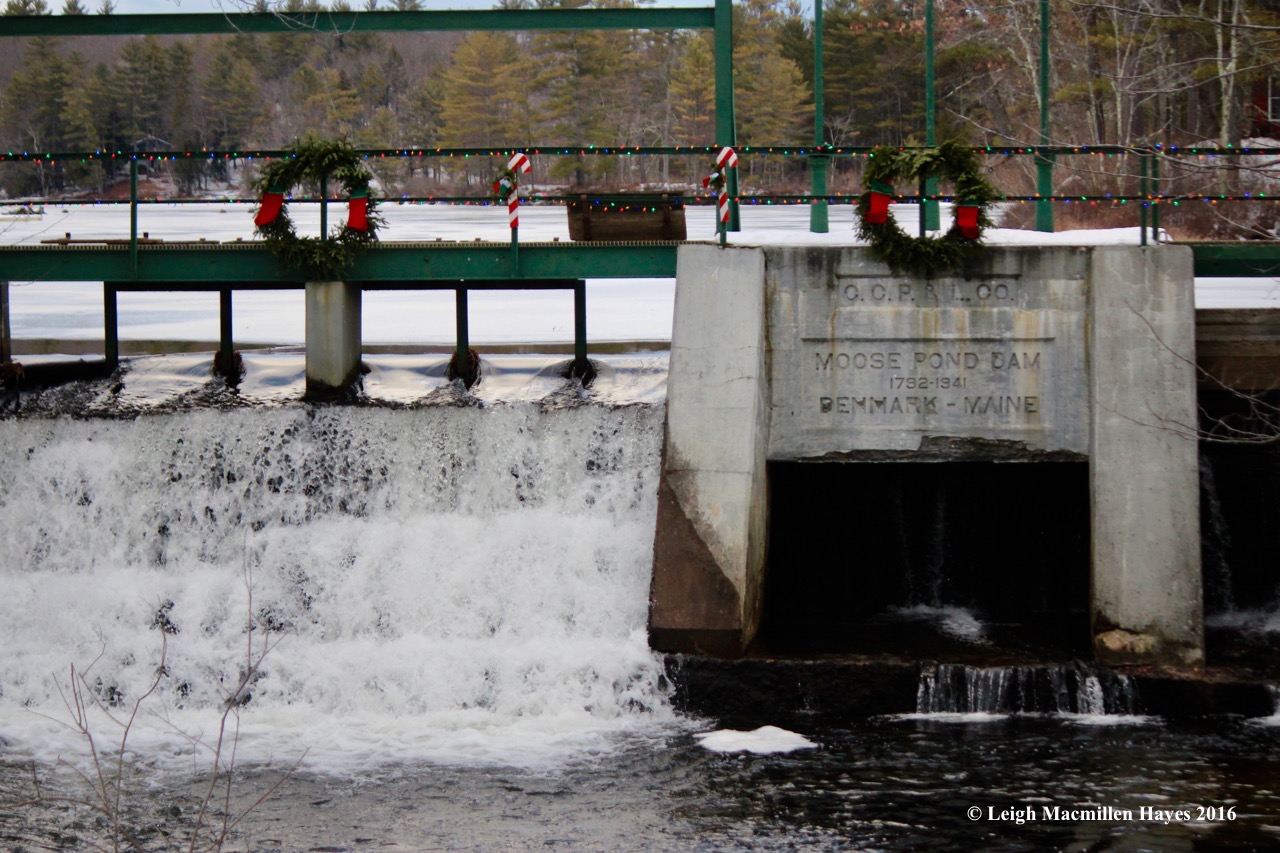
Despite the lower than usual numbers, I was sure we would see something by the old Central Maine Power dam not far from the Stevens Brook Outlet. But . . . all we heard was the roar of the water.

And all we saw . . .

was water racing toward the lake and . . .

the dancing legs of icicle formations. That was OK because we enjoyed admiring them. Still, we wanted birds to count. To that point, our tally included a few chickadees and a couple of tufted titmice.

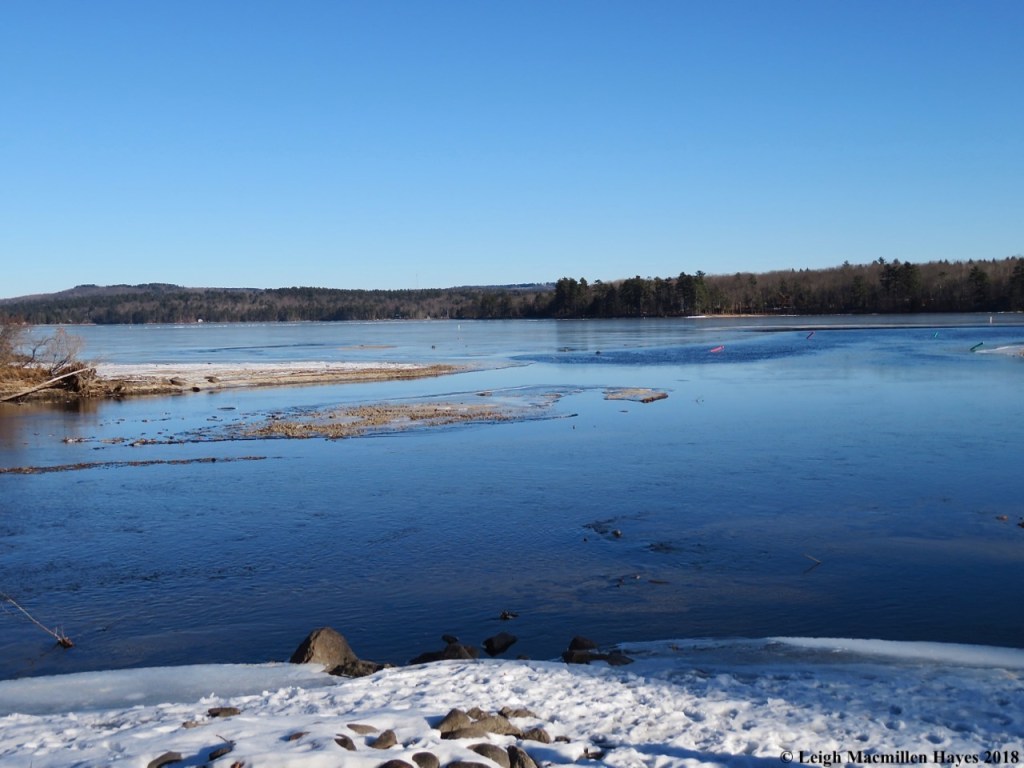
Onward we moved, toward the outlet of Stevens Brook into Long Lake where we were certain the open water would provide us with something worth reporting.

All was quite quiet, however, and we didn’t see any waterfowl to note. But then . . . the biggest find of our day let itself be known.

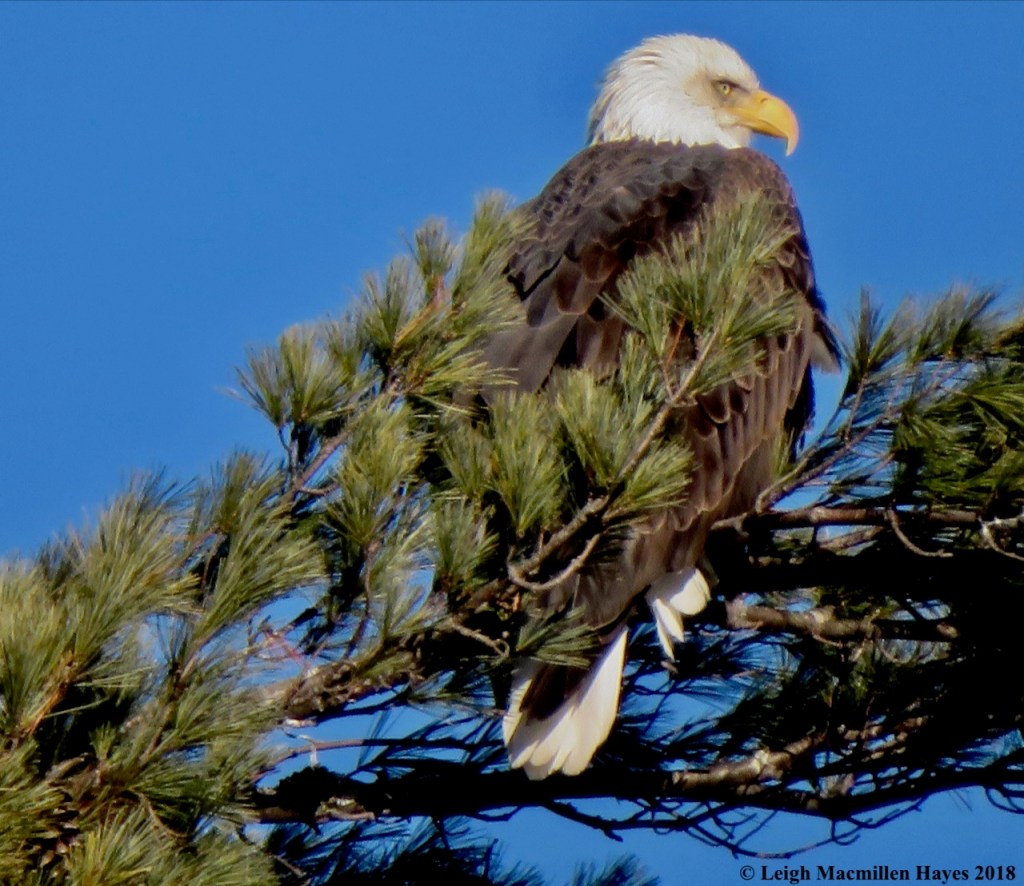
High up in a white pine above the opposite bank of the outlet, a bald eagle sat in wait. We practically danced in the icy parking lot–and knew that no matter what else we might see, we were golden with this discovery.

Eventually, we pulled ourselves away from the eagle, and continued on while looking left and right, up and down. At last, a front yard feeder yielded some more chickadees, a white breasted nuthatch and a hairy woodpecker. Things were picking up. Sorta.

And then as Juli drove down one back road, we spotted five crows in an unplowed driveway. They flew off when we paused, so we continued on down the road. Returning a few minutes later, we again spied the five crows in the same spot. And Caleb, who as a youth hunter has learned the ways of the woods from his dad, knew that where the crows were gathered there must be a carcass. He asked his mom to stop the vehicle while he crossed the road to check the area. Bingo! He encouraged us to join him. Just off the clearing he’d discovered a deer carcass. We weren’t certain how it had come to perish, or why its head was missing, though we had some thoughts on both, but we did notice that many had come to dine. If we’d been more into our tracking mode than our birding mode, we might have been able to write the first two chapters about the manner of death and loss of the head, but we had a different mission on this day.

Another body of water called our names. Last year, I’d seen robins and various other birds in a wetland associated with Woods Pond, so we jumped out at the town beach and stood still to listen and watch. Nada. The ice on the pond, however, was enticing. And though they didn’t have skates, Ellie and Caleb found the conditions to be much to their liking.

Even the clipboard with the field tally didn’t pose a problem as they slid to and fro across the frozen wonder.

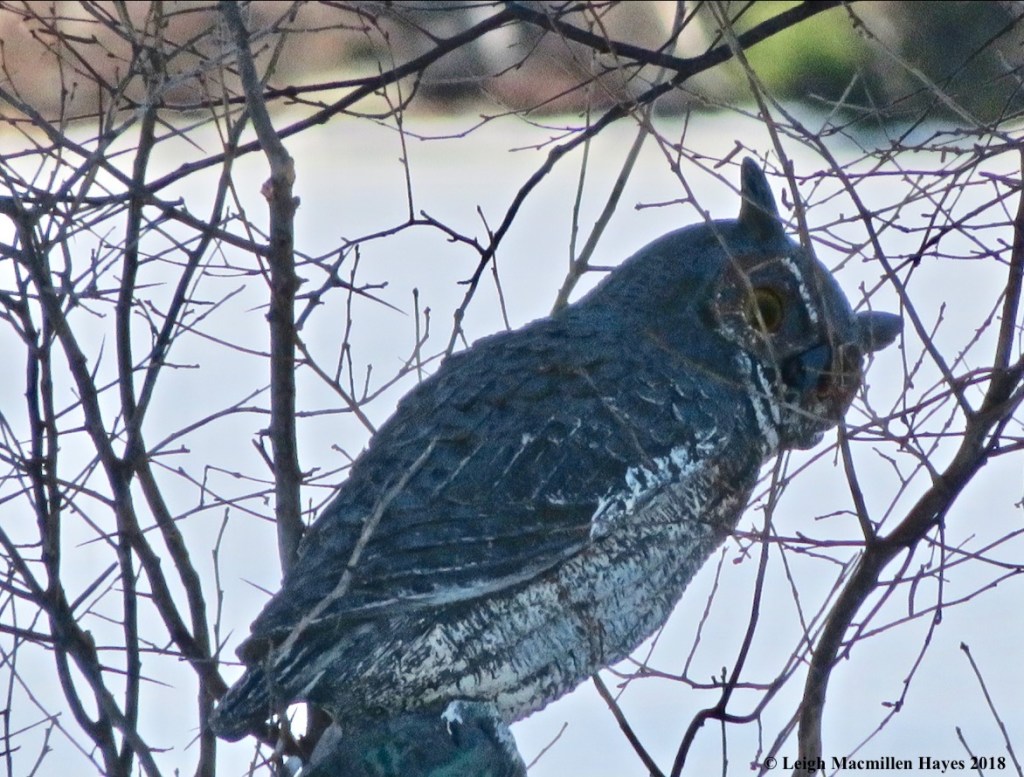
Eventually we moved on and added a couple more chickadees to the list. And then we saw one who was not on the list and though he is native to this land, he’s not typically seen here in winter. So we filled out the Rare Bird Form for the Great Horned Owl Plastica species.
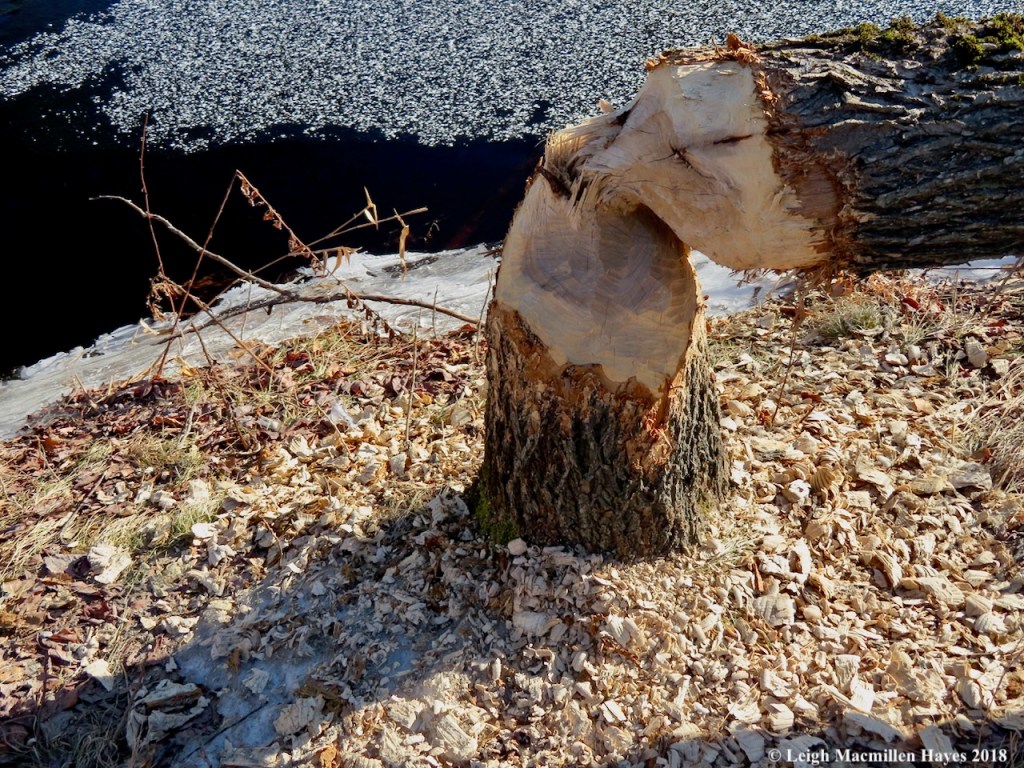
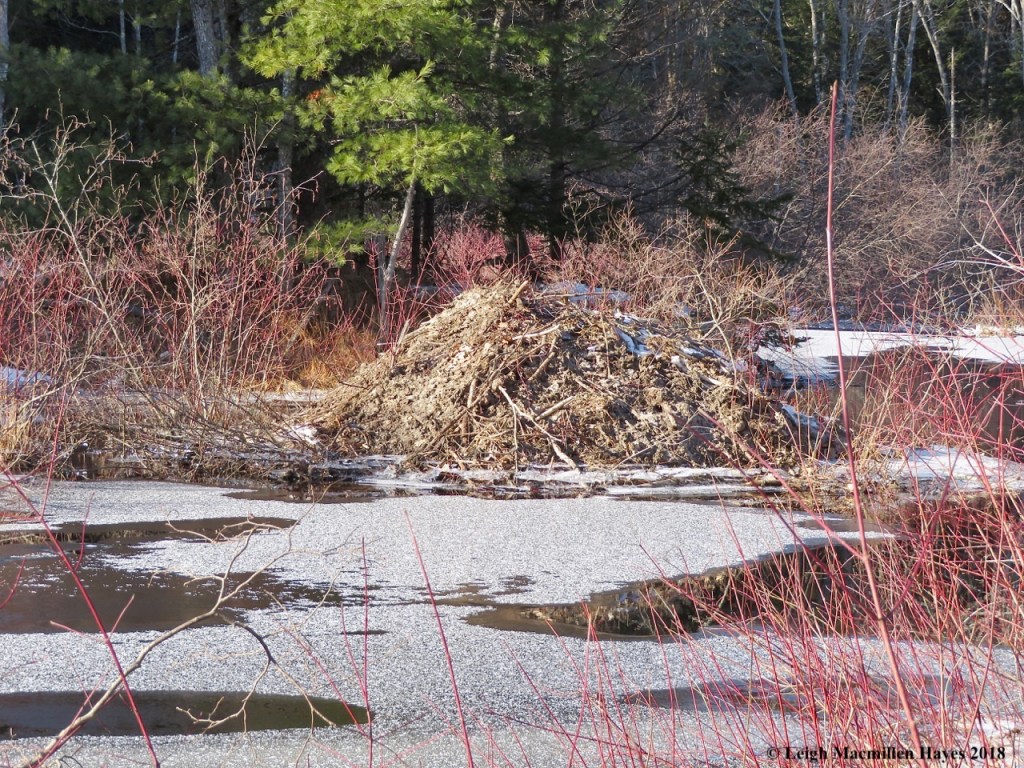
One of our final stops as a group was on what we fondly refer to as the Dump Road. At a swampy area, we thought for sure we’d have some luck. And we did. In the form of beaver works.

Peering across the road in search of birds near the open water, we noticed more beaver works.

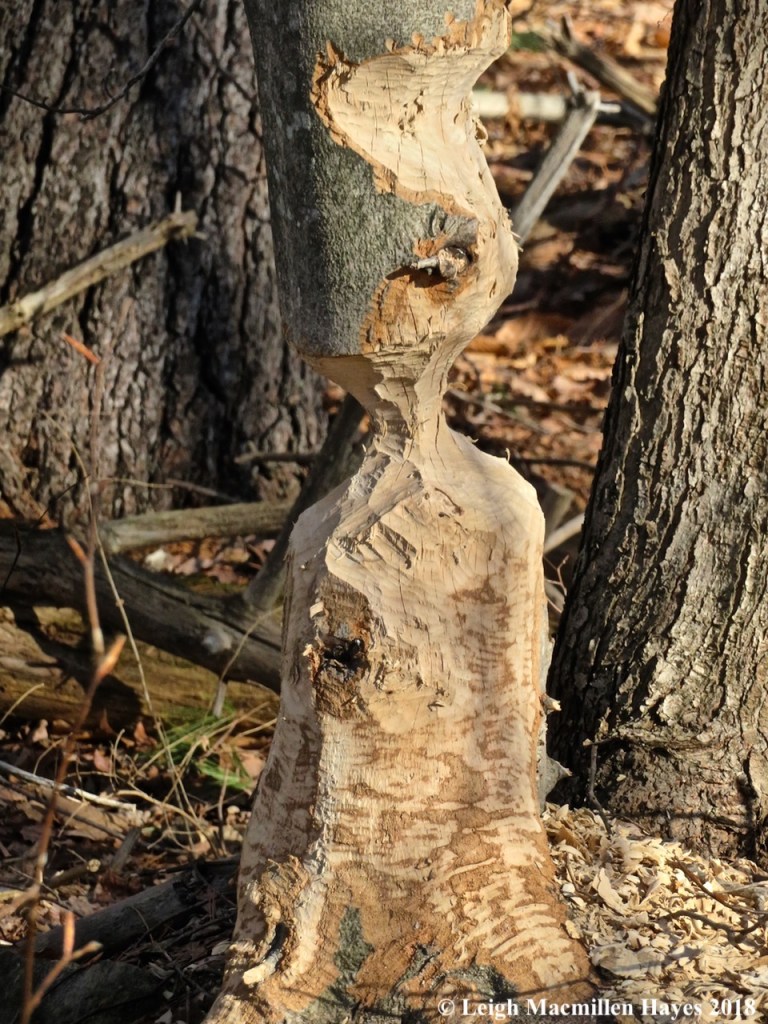
And our luck turned to awe as we admired a beech tree that still stood despite its hourglass shape. Why hadn’t it fallen?

The lodge looked well maintained and we rejoiced to think that it was located close to town and yet we’d never spied it before. Because of the CBC, we’d been given the opportunity to get to know our town just a wee bit more intimately.

After the beaver lodge sighting, Juli and her kids headed home, and so did I . . . for a quick lunch break. And then I journeyed down several more roads, adding a few more dashes to the tally. I found more chickadees, a few more white-breasted nuthatches, and some mourning doves.

Toward the end of the day, I decided to return to the dam, but still . . . stillness in the bird world despite all the sound and movement.

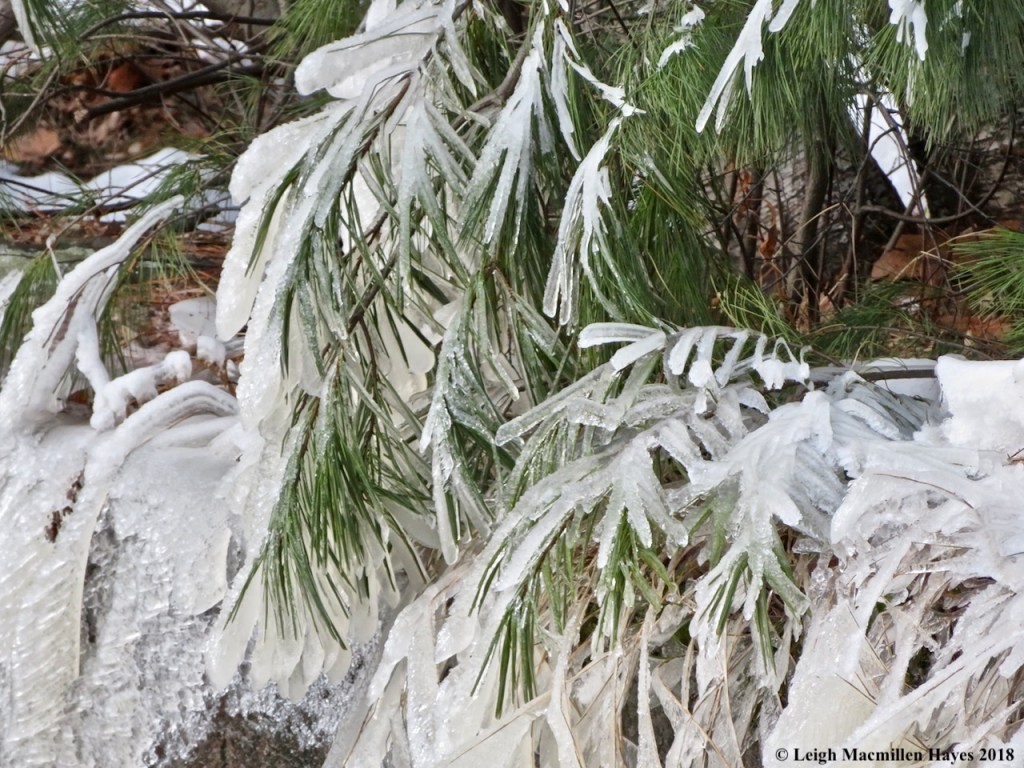
And ice-encrusted needles that looked so featherlike.

By 4pm the CBC had drawn to a close and our offerings seemed so skimpy. I was almost embarrassed to turn in the form, only to discover that most of the other birders in the Sweden Circle had had a similar experience. The Denmark and Fryeburg sections had the most sightings to report, but all in all, the numbers were down significantly. A few of us gathered around Jean’s table to compute the final numbers and wonder why they were so low. Too cold in November? When the snow and cold snap occurred early, did the birds fly elsewhere? Was there not enough food this season? One among us has spent the last few weeks joining the CBC in various locations around Maine, and he said that our experience was not unique.

Despite that, Juli, Caleb, Ellie, and I finished up the day smiling because we had seen an eagle. And today was Juli’s birthday–so it was certainly a wonder-filled present for her on this year’s Christmas Bird Count. Happy Bird-day, Juli!

Calling All Birders

Each year, for the past 116 years, expert and novice birders have spread out across America between December 14 and January 5 to observe and catalog birds for the Audubon Society’s Annual Christmas Bird Count.

b-dam

And so this morning, I ventured to Denmark (Maine, that is) to join a small group of fellow citizen scientists as we drove and walked around our assigned quadrant within a 15-mile circle.

b-chickadee-2

Kathy, Katie, Stan and Howie welcomed me with open arms despite the fact that I was a few minutes late and they were already on the road. When it comes to birding, I’m always a wee bit nervous because I know the winter species at my feeding station like Black-capped Chickadees, but am not so great with others. This group, however, likes to joke and laugh, thus making the day a pleasure even in the cold wind.

b-chickadee-1

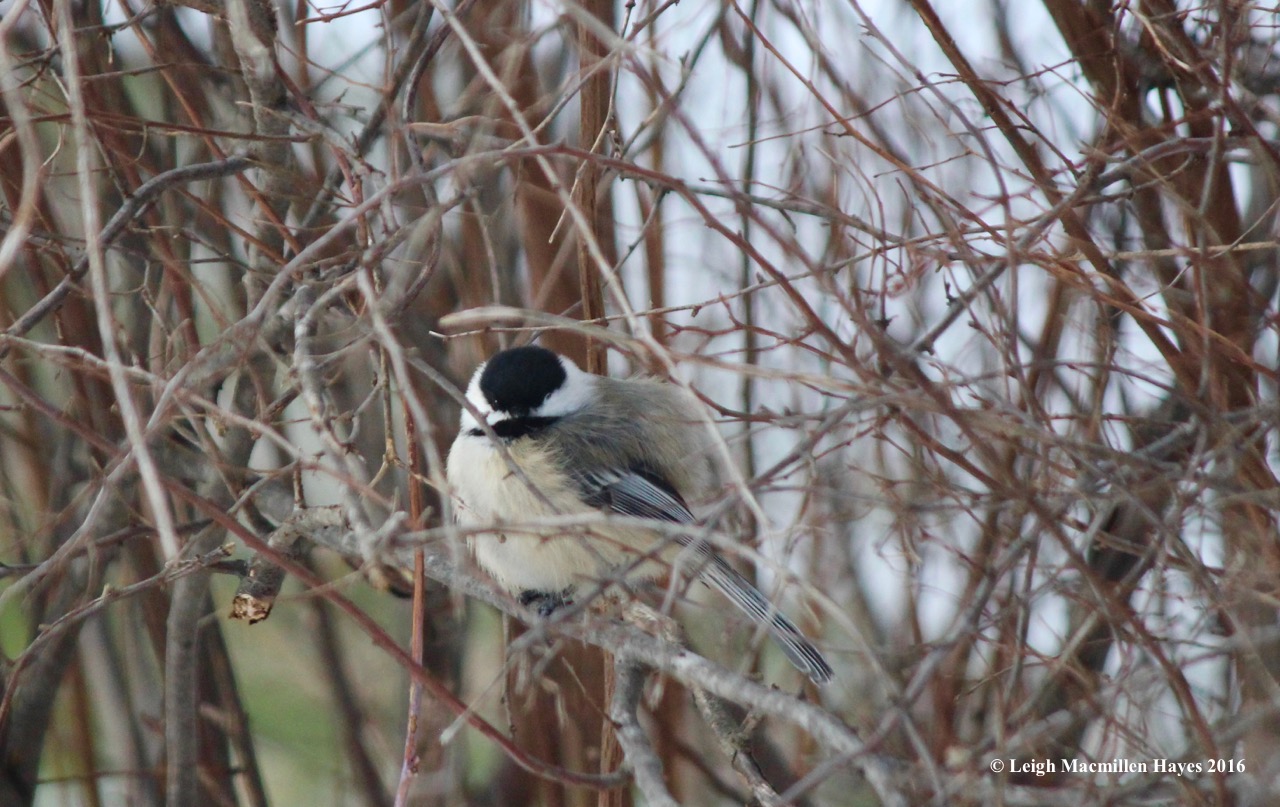
We weren’t the only ones who felt the chill and thus the need to puff up and appear as if wearing a down-filled jacket. Everywhere it seemed, we saw Black-capped Chickadees and Blue Jays. It was interesting to note that a year ago our Blue Jay count was 16. Today’s count–bunches and bunches, making us wonder if the mast acorn crop had anything to do with their abundance.

b-white-breasted-nuthatch

White-breasted and Red-breasted Nuthatches also seemed plentiful, and often, when we stepped out of the car, their yanks greeted us.

b-downy-1

b-downy-female

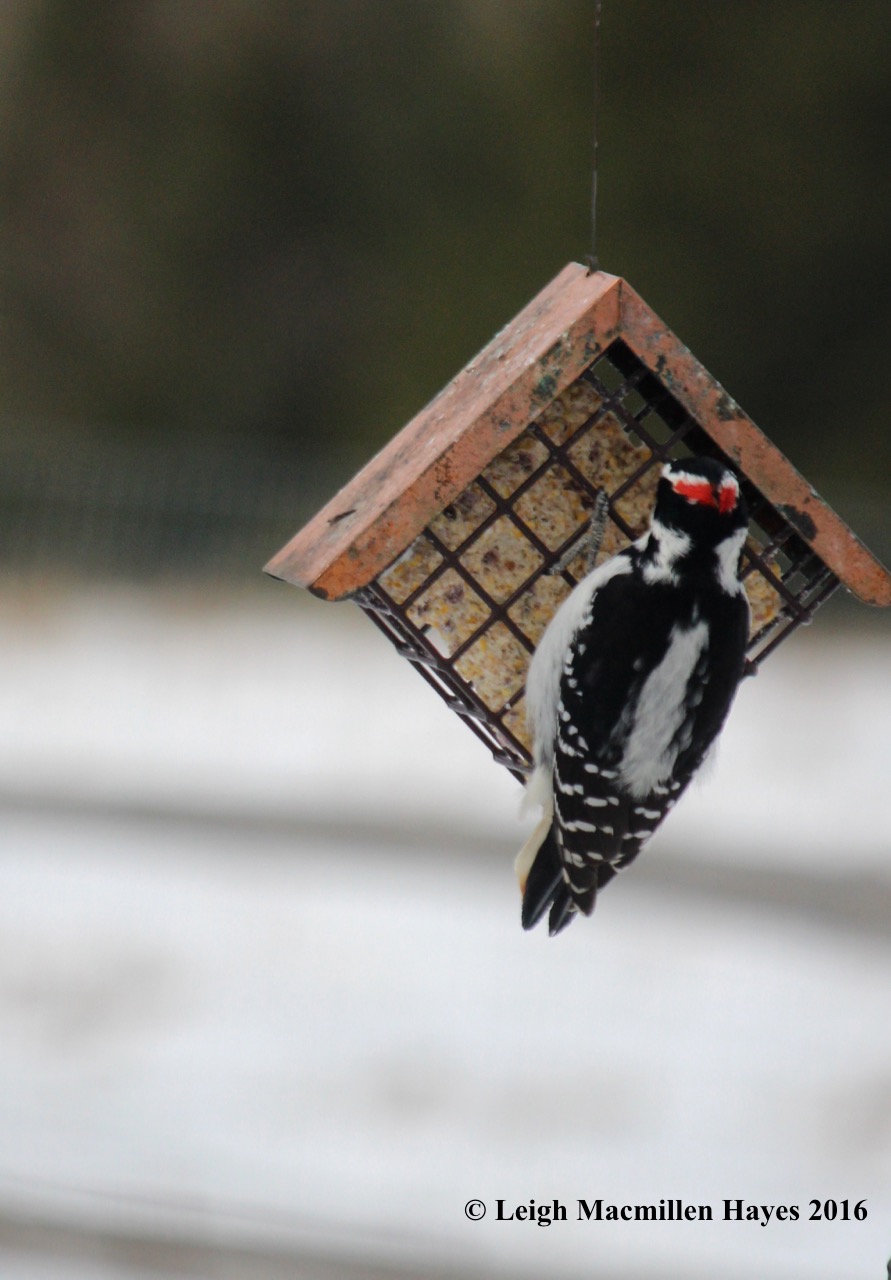
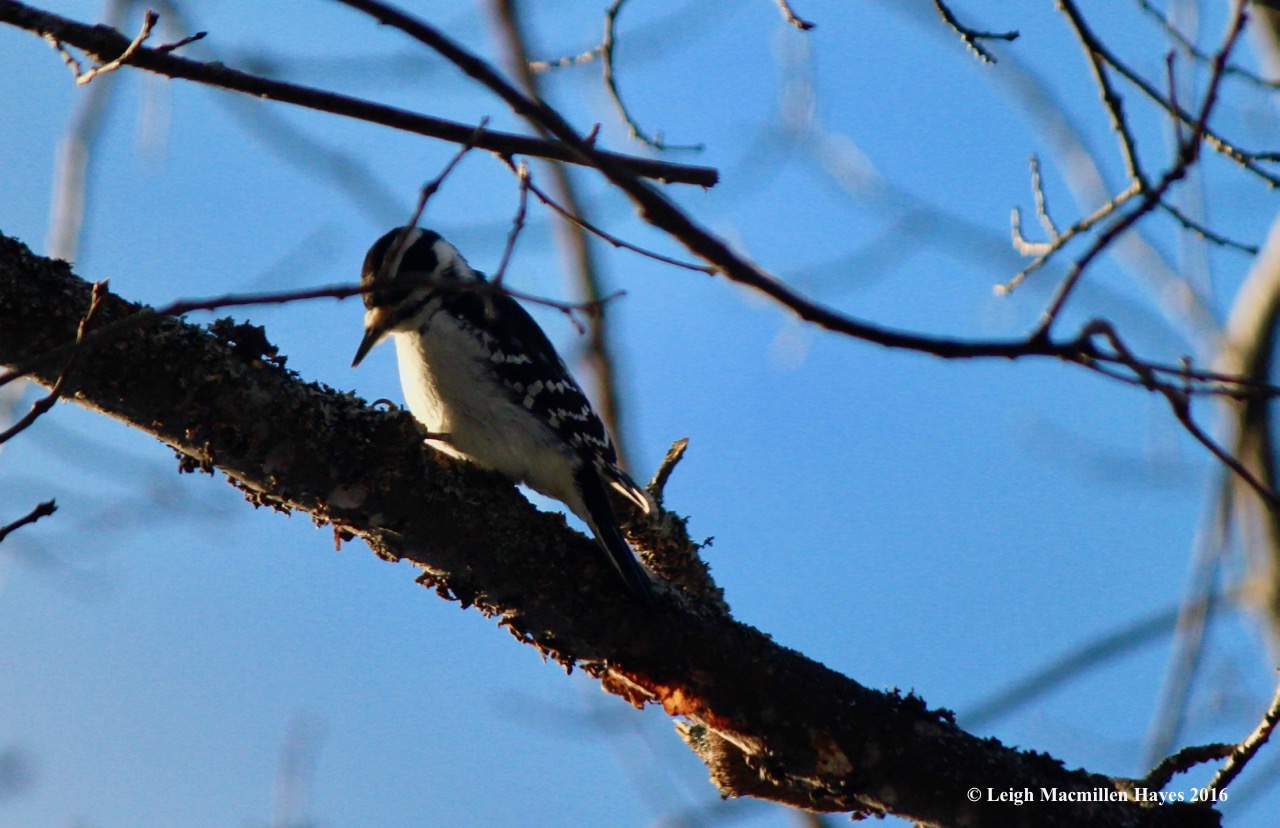
Hairy and Downy Woodpeckers made their presence known with a greeting of another kind.

b-pileated-1

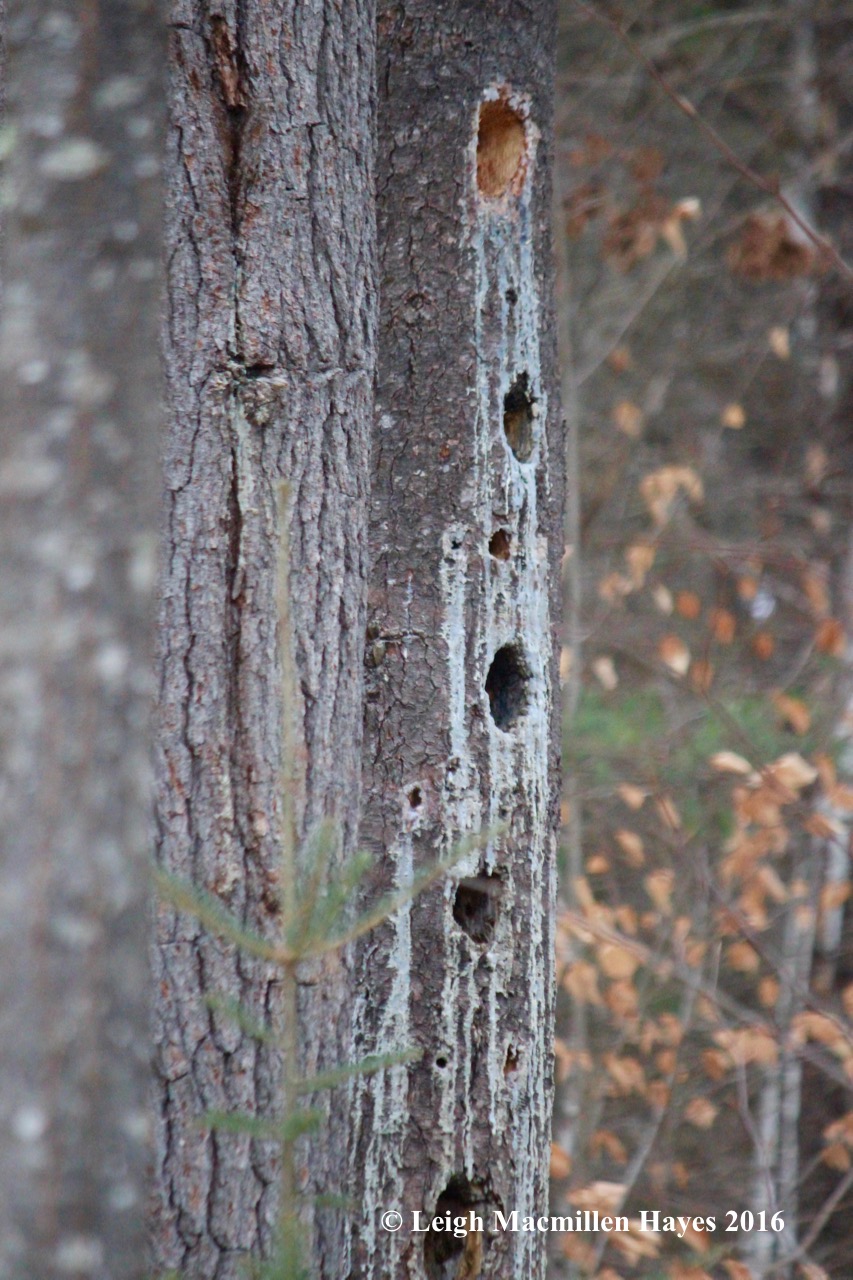
I did hope we’d see a Pileated Woodpecker. Their works were certainly evident all along our route.
b-pileated-2

Some holes more recent than others.

b-pileated-pole

Other holes more productive than some.

b-mourning-doves

Instead, we saw Mourning Doves,

b-goldfinch-2

American Goldfinches,

b-cardinal1

and Northern Cardinals.

b-cardinal-2

For a few minutes we watched a male and female cardinal flit about in a shrub as they dined on its berries.

Here and there, we peered through our binoculars into people’s yards, especially if they had bird feeders. Thankfully we never heard sirens and no one yelled at us for stalking. In fact, one woman came out and said, “I know you are doing the Christmas Bird Count.” She went on to tell us about her observations, including an increase of Blue Jays as we’d noted, and dead swallows this past summer–perhaps due to the lack of insects.

b-turkeys1

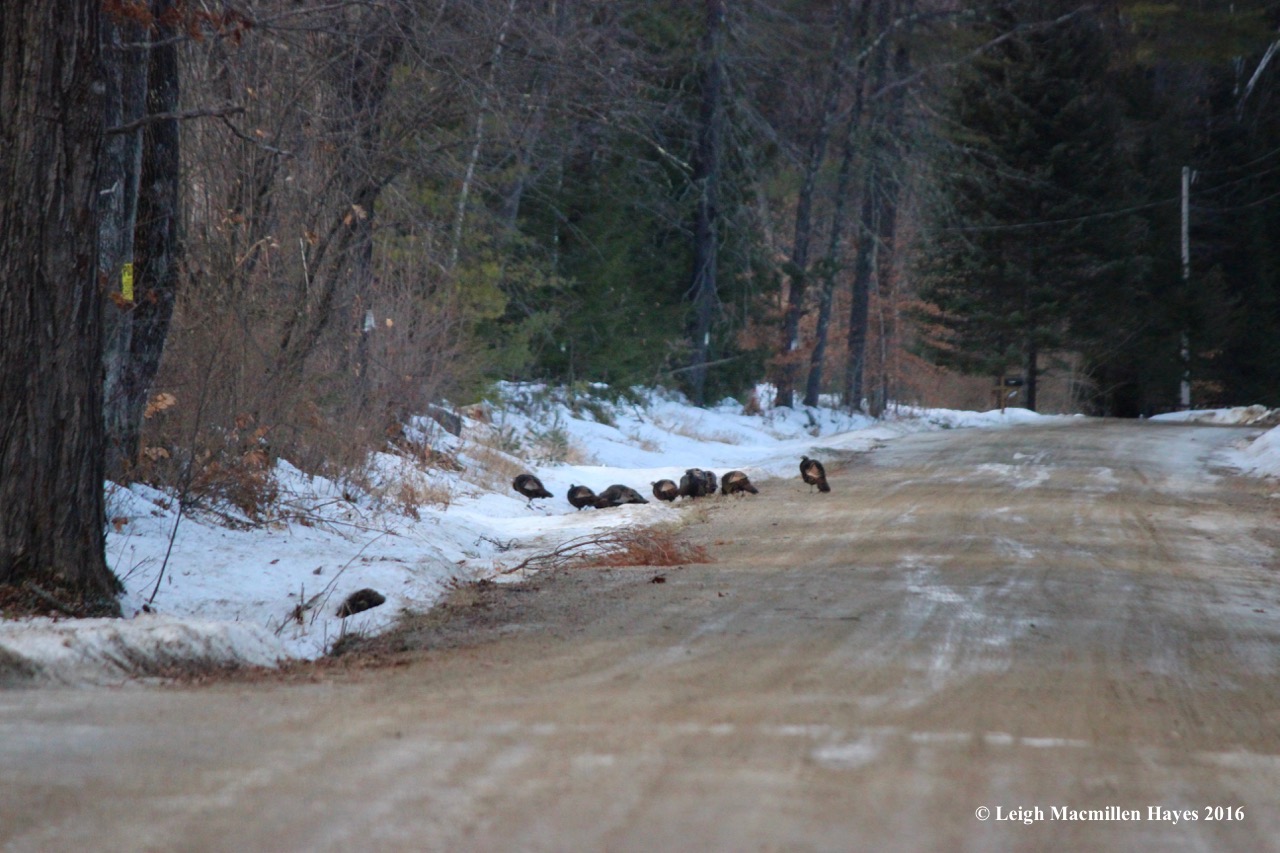
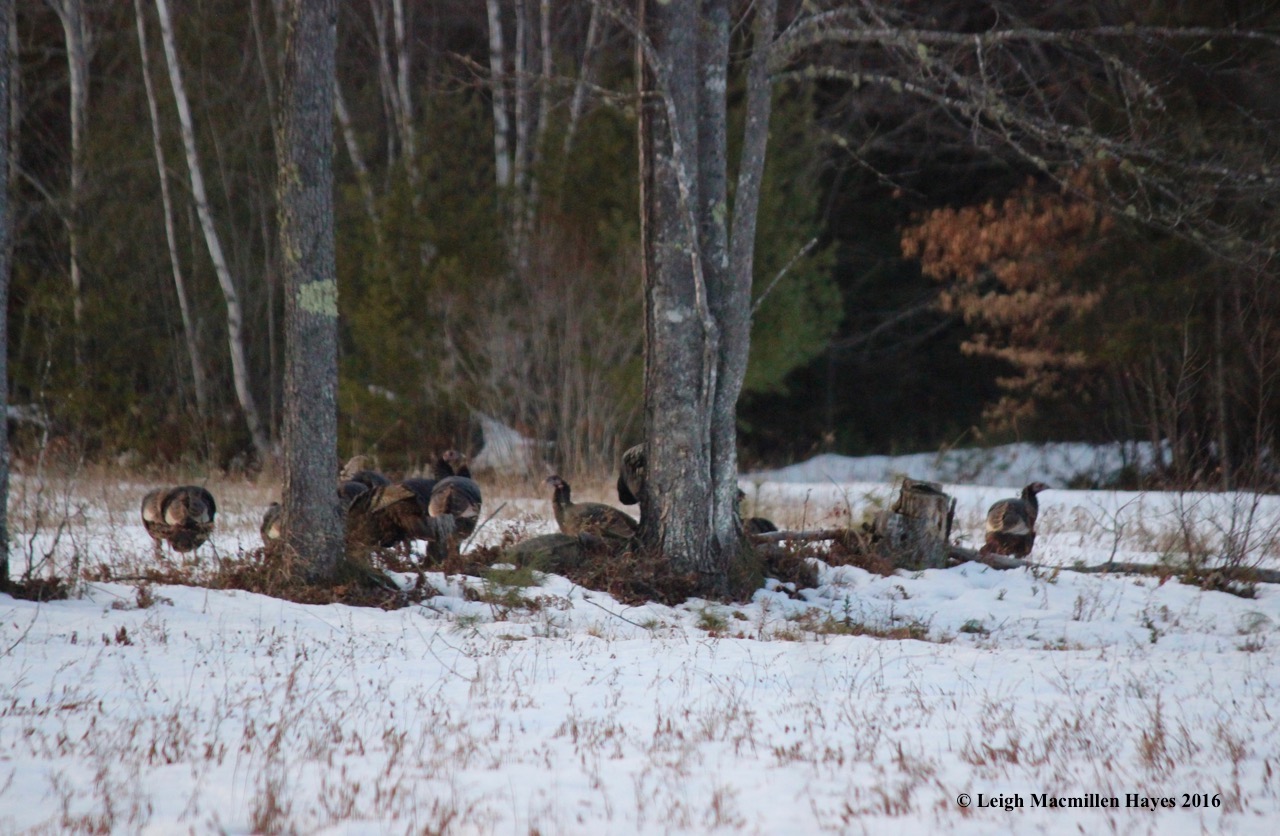
It wasn’t until the end of the day that we finally saw Turkeys.

b-turkeys-2

That surprised us given we all encounter them frequently, whether crossing a road or in the woods.

b-snow-bunting-3

Our favorite siting of the day–a Snow Bunting.

b-snow-bunting-2

I’d never seen one before so was thrilled with the opportunity.

b-snow-bunting-1

Snow Buntings are nicknamed Snowflakes for the behavior of a flock that swirls through the air and lands on a winter field. Today, only one, but actual snowflakes fell as we watched. And one was enough to make us happy.

b-lizard

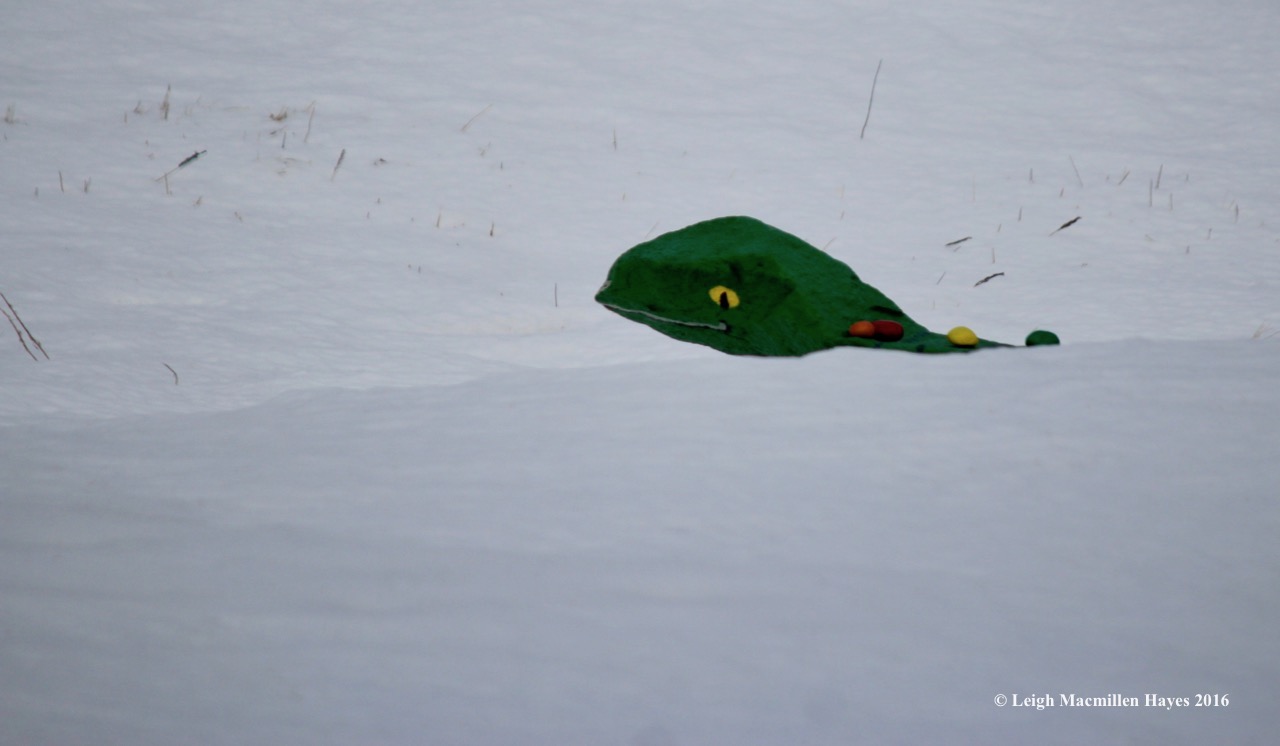
We saw other birds to add to our list. And . . . we encountered a couple of novelties including the Denmark Lizard, a rare species indeed.

b-owl

Our final view–an owl. OK, so you need to use your imagination. But with this group of birders, that was easy to do.

By 4:00pm, our time together was done for another year. And we were all grateful for the opportunity to participate in the bird census, break bread together at lunchtime and make more than enough Blue Jay jokes.

Prior to 1900, the tradition was to shoot birds for identification and fun, including a holiday hunt where the biggest pile won. The Christmas Bird Count was first proposed by ornithologist Frank M. Chapman after the realization that the bird population was declining.

Because of Mr. Chapman, we spent a delightful day participating in a census that helps assess the bird population and guide conservation efforts.

We’d heeded the call.