Omnivore, Herbivore, Insectivore, Oh MY!

I walked out the door this morning and wandered down one trail and then another and intended to go farther into the woods, but as often happens, I was stopped in my tracks.

On granite at my feet, covered as it was with lichens of the crustose and foliose sort, I spied a rather large specimen of scat. High point. Center of trail. Classic.

Based on the size and hair and bones packed within, I knew the creator: a coyote. If I awake during the night I can sometimes hear the family members calling to each other, the youngsters learning to hunt so they’ll be ready when they disperse.

The trail narrowed by a small stream and I was wearing my muck boots so proceeded at will. It’s been a few months since I’ve traveled this way and was surprised at how grown in it had become this summer. While the Sugar Maples do not like wet feet from all the rain we’ve had, other species have thrived, including the Red Maples, and this shrub that bordered each side of the trail.

It’s leaves still entact showed off that they are doubly toothed in a rather random order. So each little “tooth” is like the edge of a saw, but if you look closely, you’ll note that there are bigger teeth made up of a series of smaller teeth before the leaf margin cuts in toward the main vein and then heads out again to form the next bigger tooth made up of smaller teeth. And those veins in between the main vein and those that lead to the margin–reminded me of the crinkles on an apple doll person, since it is apple season.

The leaf buds, which form in the summer for next year, are hairy and have only two scales. Because of recent warm weather, at least one decided to jump the gun and open now rather than waiting until next spring. I’ve seen that with other plants of late, including Blueberry, Daylily, Sheep Laurel, and Partridgeberry.

Others who best not jump ahead are the catkins of this species, the longer green and red being the male pollen carriers that will slowly elongate over the winter and turn more yellowish red in the spring. The female flowers are tiny magenta catkins located just above the males.
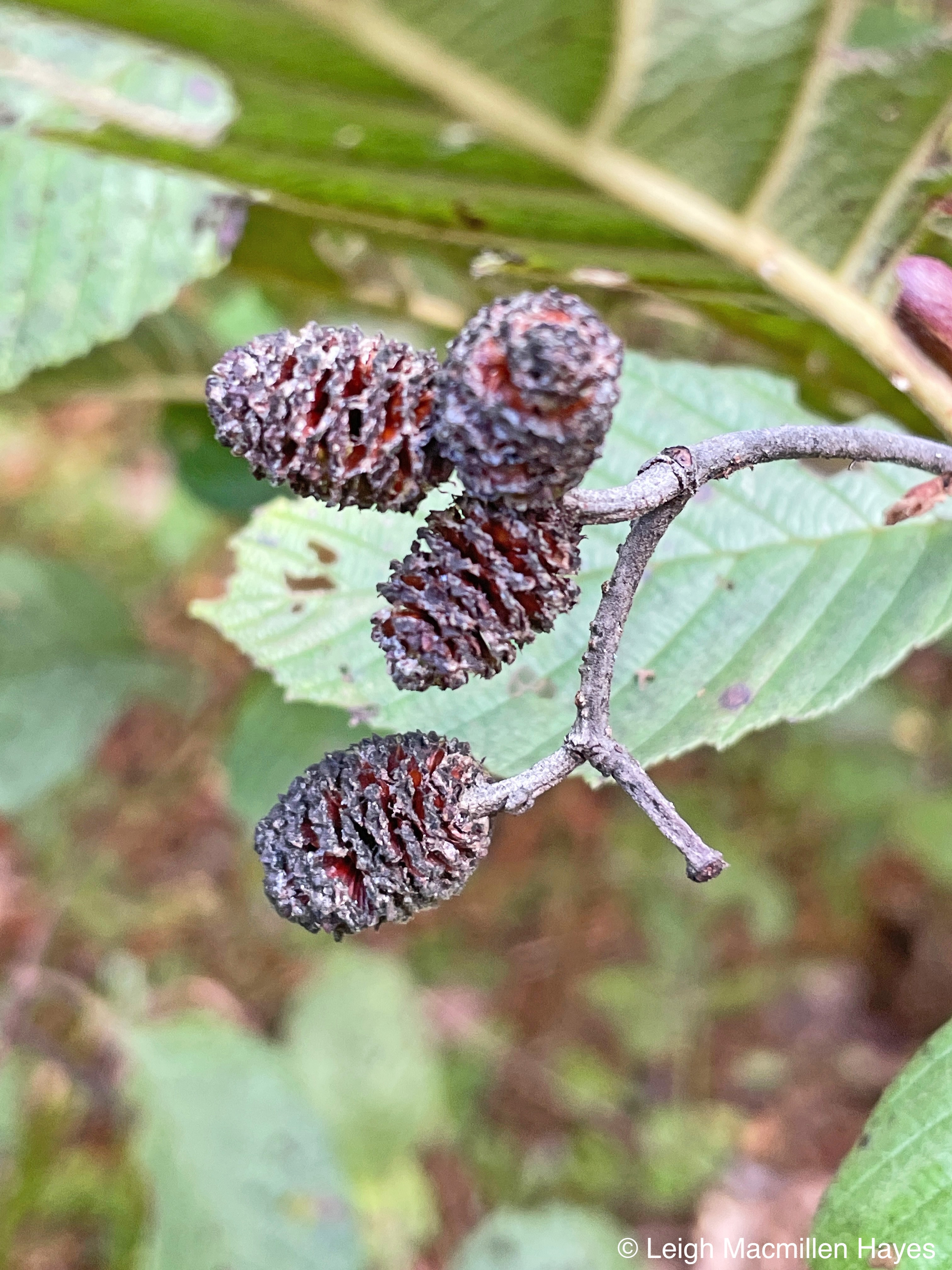
Once the females are wind pollinated, the males will drop off and the females will form into a fruit that resembles a cone.

The name of these shrubs, if I haven’t already spilled the beans, is Speckled Alder, so named for the white dots (think lenticels for gas exchange) that populate the bark. These shrubs love wet feet, which is why they are growing on either side of that small stream.

Some of the Speckled Alder cones hide beneath tongues imitating piles of snakes stretching out, made from galls caused by an infection to increase the surface for spores from a fungus to spout. It’s a smart strategy.

I also found a few Lady Beetles today, including one larval form. They were on these shrubs for one reason.
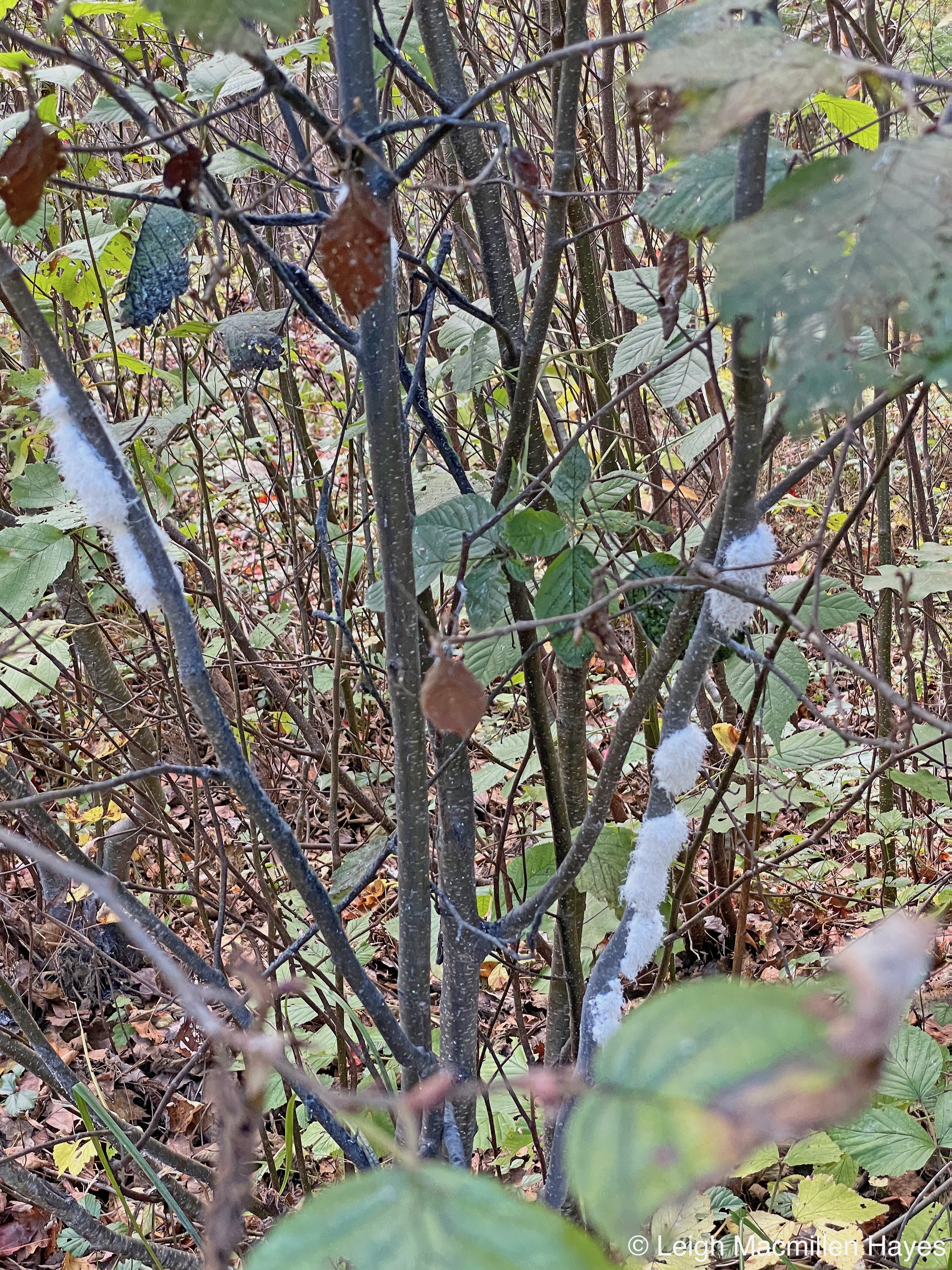
That reason being the Woolly Alder Aphids who live a complex life in which they alternate between a generation reproducing asexually (no guys, just gals), and one reproducing sexually with both males and females adding to the diversity of the gene pool. The males and females fly to Maple trees to canoodle, but those found on the Alders are all female.
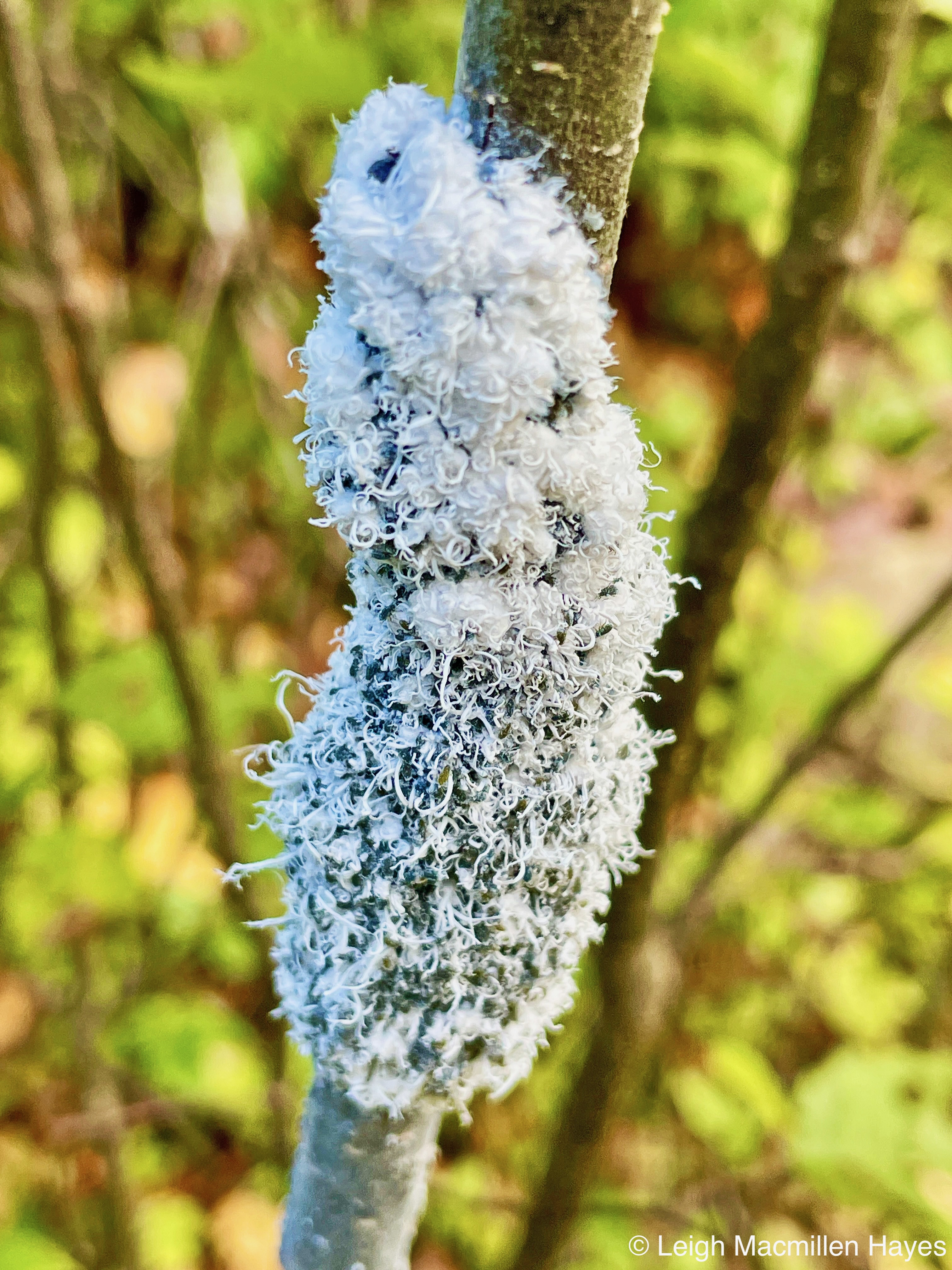
They live such a communal life as they suck sap from the shrub, that one might think this entire mass is just one insect. Hardly. And do you see all that waxy wool that covers their bodies? If you watch these insects for even a few seconds, you’ll note that the hairs move independently. It’s almost otherworldly.

Since they’ll overwinter, I think of the wool as providing a great coat. In the summer, ants, and now Lady Beetles, and even a few other insects farm them to get the aphids to excrete honeydew from the sap.

The aphids don’t harm the the shrubs, but I saw so many today that that fact is hard to believe. I gave up on counting branches but over one hundred played host.

That said, there was another character in the mix. Do you see the top branch that leans out to the right?
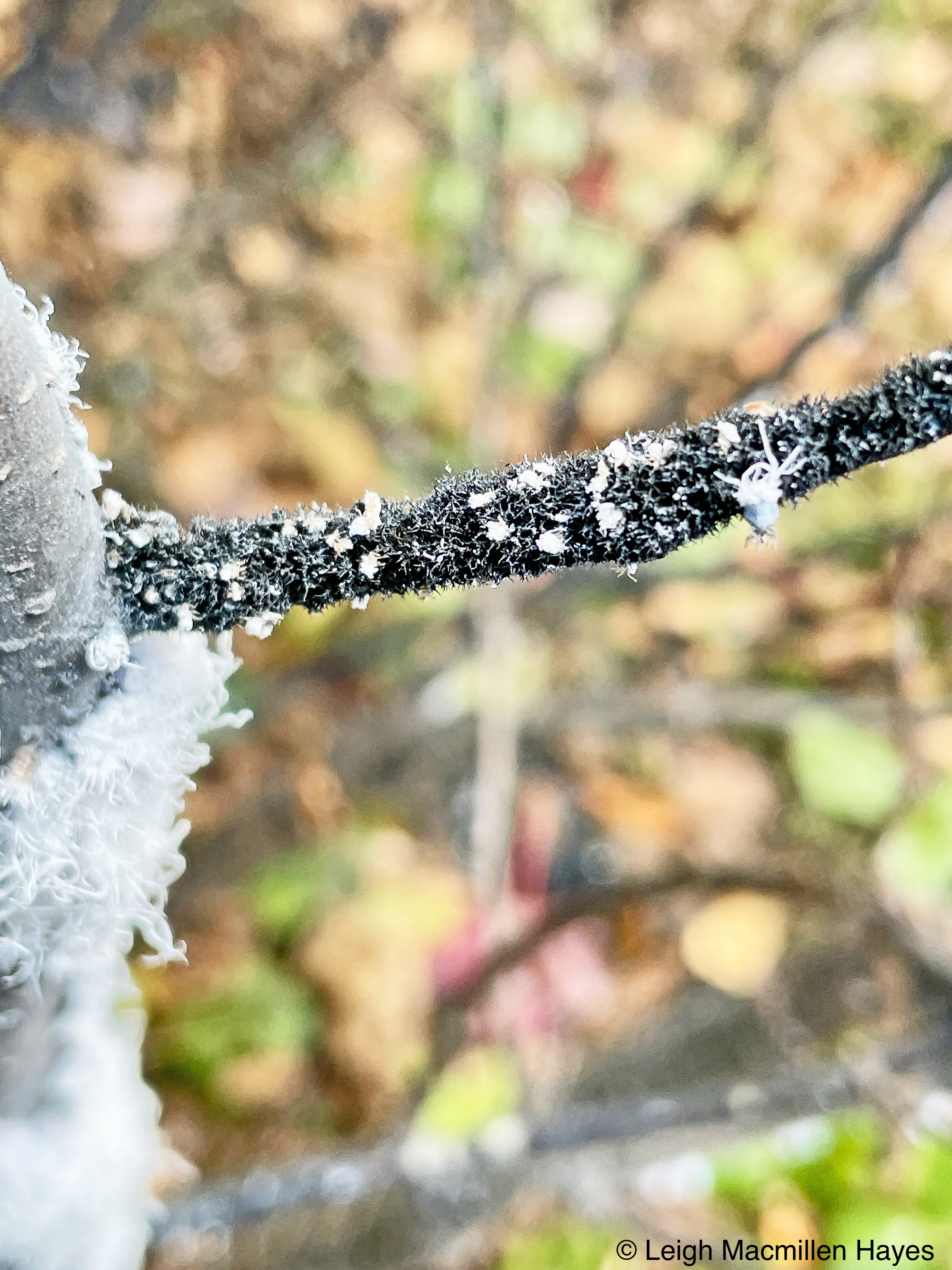
The sweet honeydew I mentioned forms a substrate for a nonpathogenic fungus called sooty mold that blackens leaves and bark beneath colonies of aphids. The mold is known scientifically as Scorias spongiosa or, my favorite and drum roll please . . . Beech Aphid Poop-Eater: A fungus that consumes the scat (frass in insect terms) of a Beech Blight Aphid (not the same as Beech Scale Insect that causes Beech Bark Disease). Alders are in the Beech family.
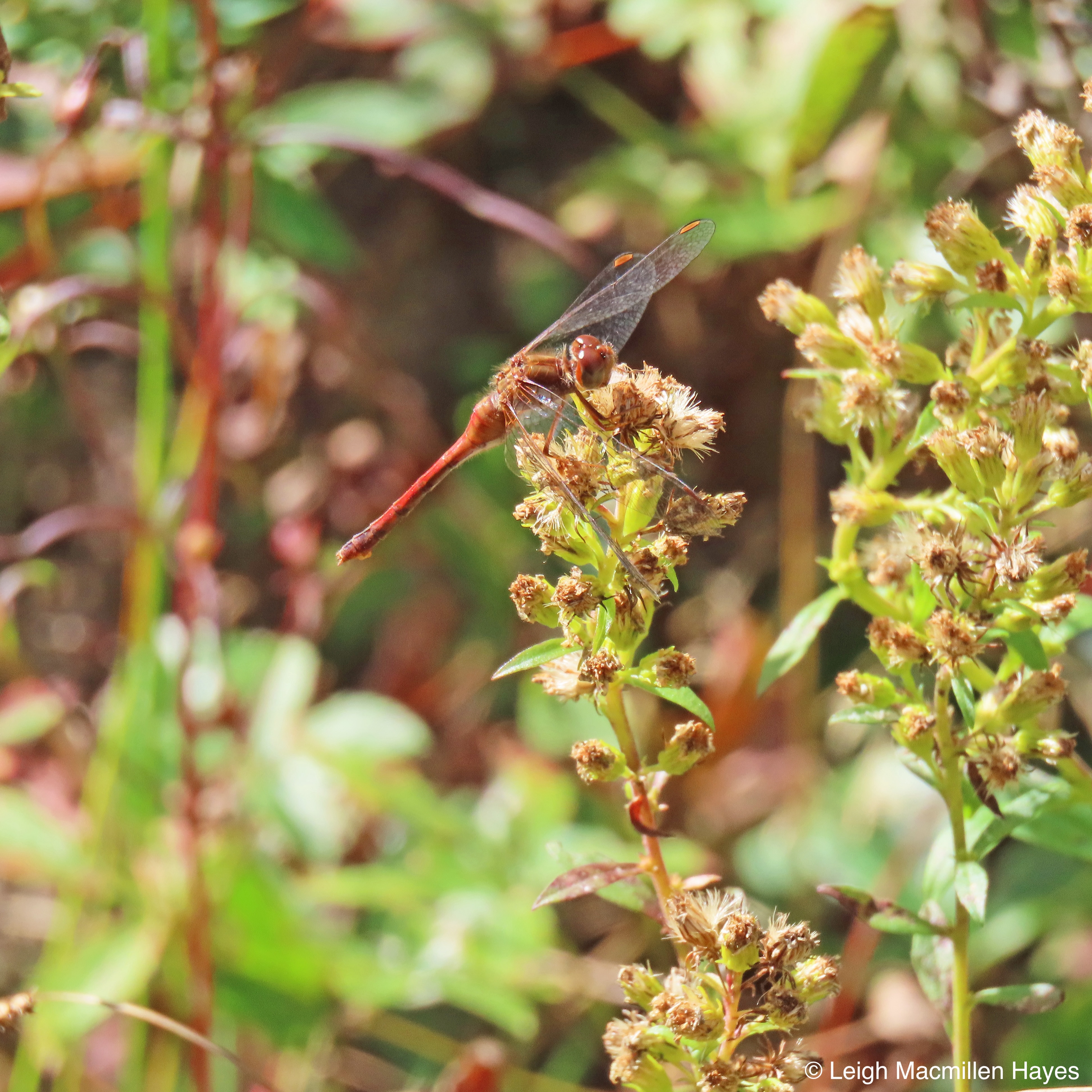
As I left a few Autumn Meadowhawk Dragonflies flew ahead of me on the path. They’re days are numbered, so I’m always thrilled to see them flying and posing.

Omnivore, Herbivore, Insectivore, Oh MY! And all of this within a ten-foot stretch of the trail.
A Spider’s Feast

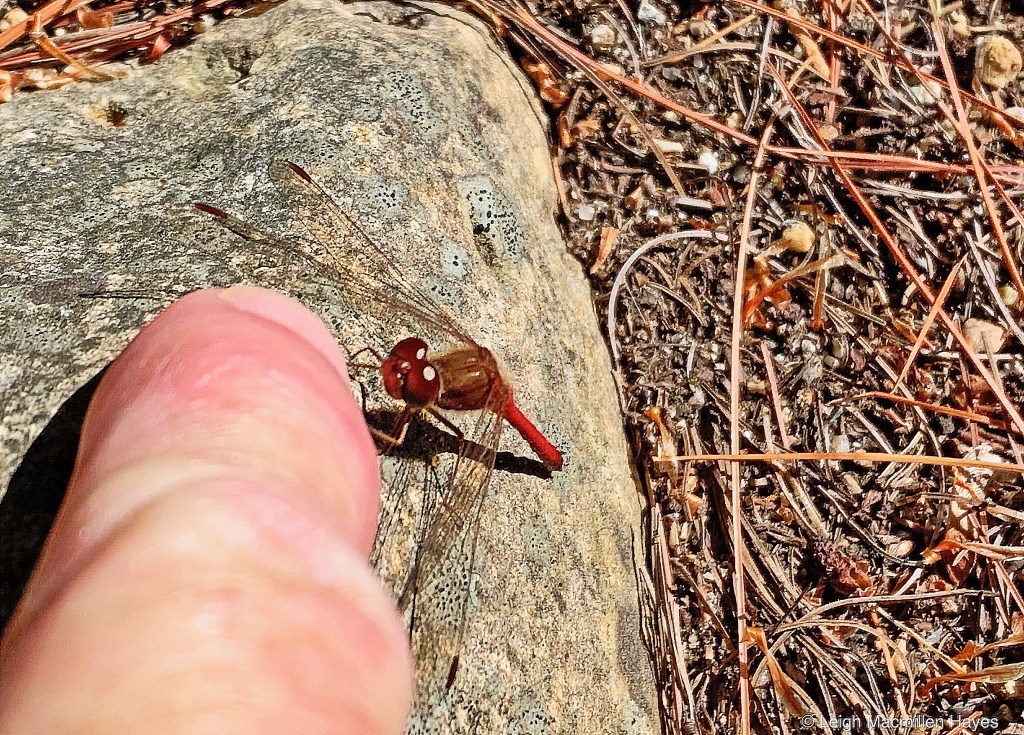
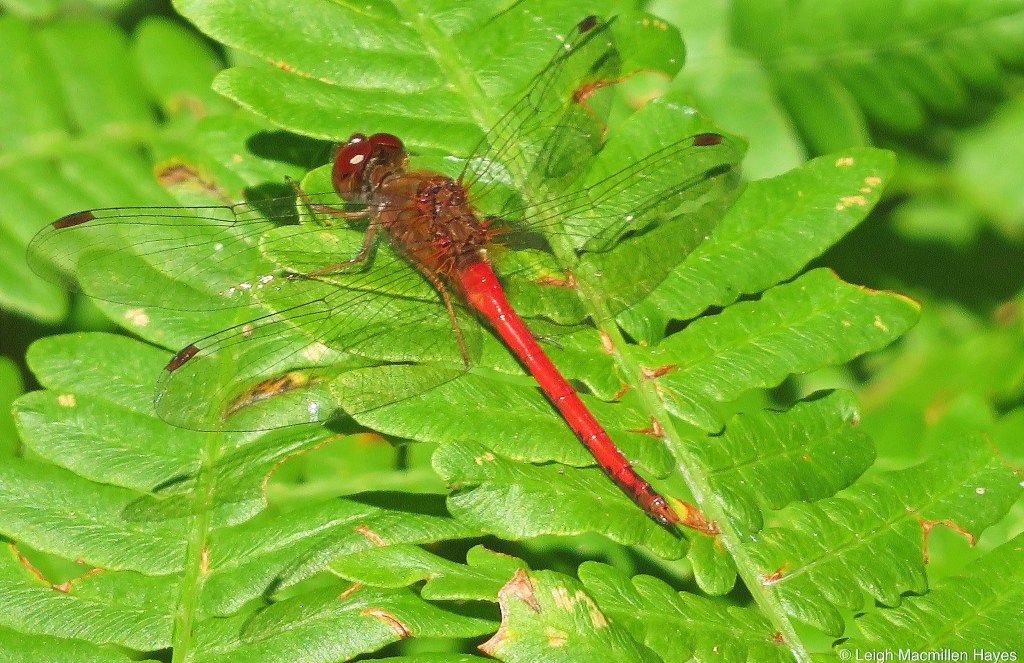
In the changing light of the early afternoon, I began chasing male Autumn Meadowhawk dragonflies. That’s no surprise, I’m sure.

But what did surprise me was that I didn’t notice any females. And that reminded me of the Calico Pennants, for in the early summer it was the males of that species that I spotted most often. Where were the females?

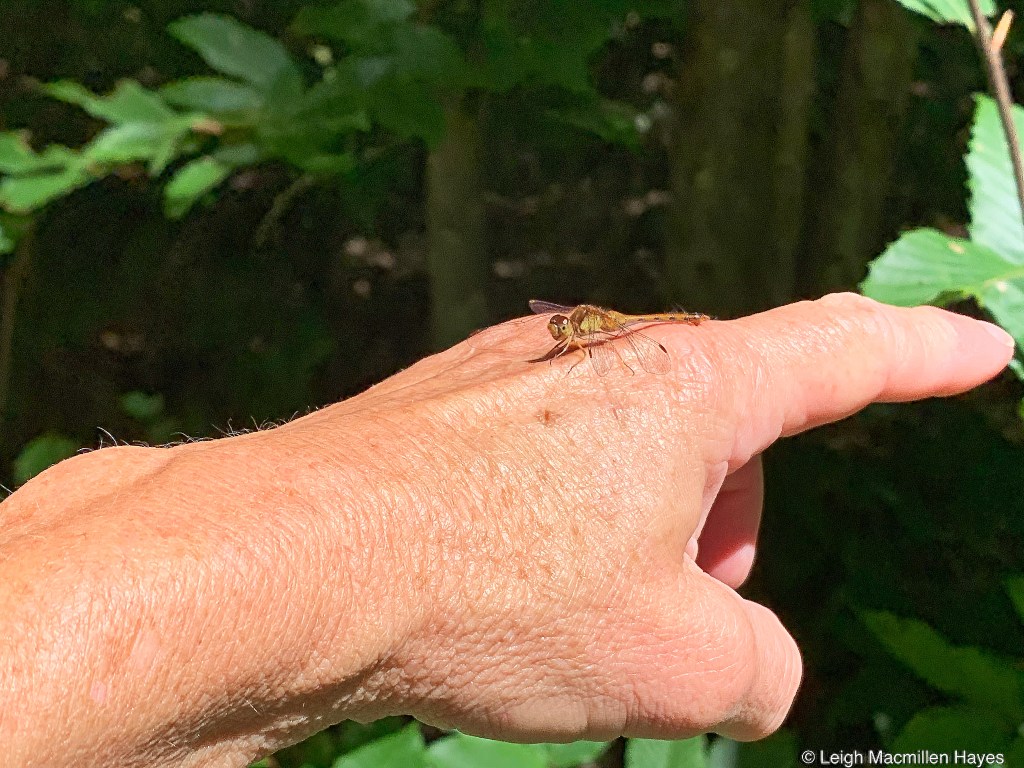
Perhaps mating was no longer on the minds of the meadowhawks and given the cooler temp of the day, I could convince one to climb upon my finger to gain some warmth.

And so it did . . . until in a flash, it flew off. In pursuit of what? I didn’t know.

And so I turned my attention to a Mottled Grasshopper, also known as a Pine Tree Spur-throated Grasshopper, or more scientifically Melanoplus punctulatus. Had it been on a tree, I might have missed spying it, but upon the rock it posed thus allowing me to spend some time in admiration. Ah, the eyes. Two segmented antennae. Those teeny, tiny feet that support such a large body. And that body suited in armor. Its colors and patterns reflecting an artistic creator. Lest I get carried away, I moved on in search of more dragonflies.

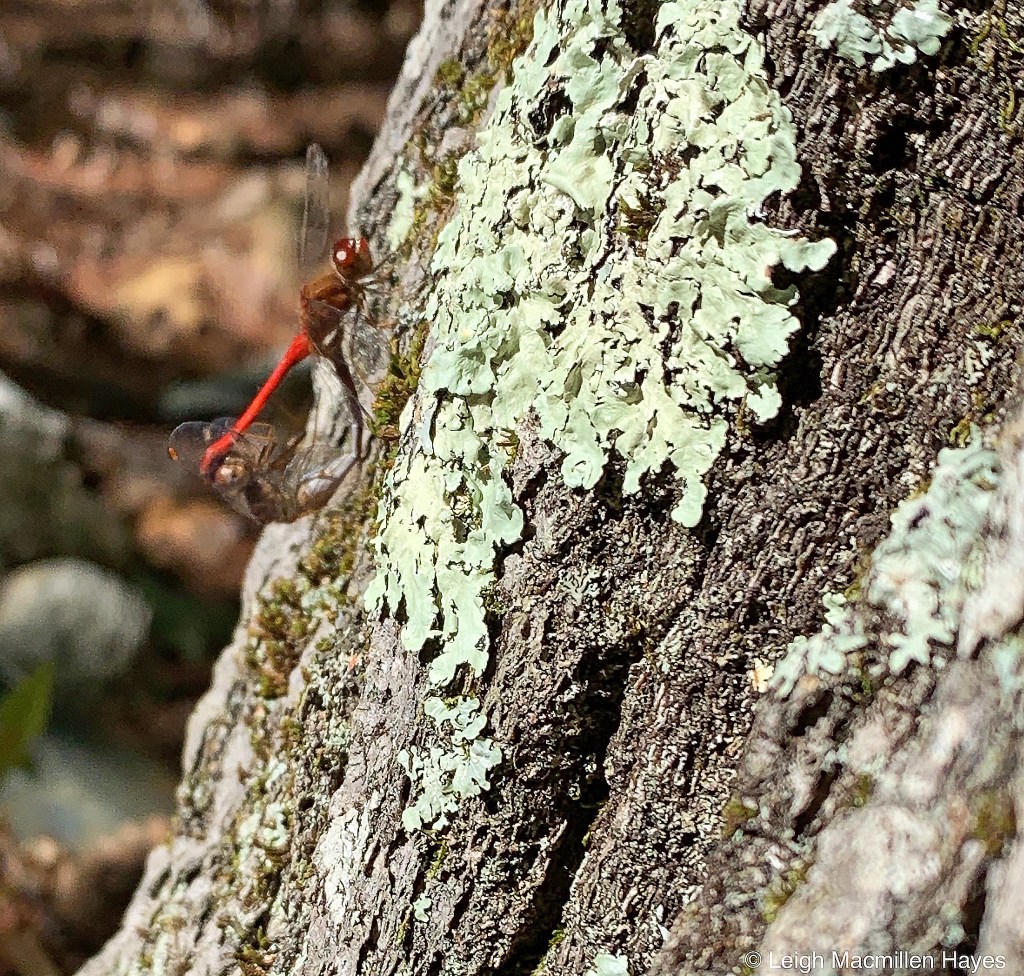
And suddenly I spotted a canoodling pair that flew past me and landed on an oak tree, where their bodies formed the mating circle. But again, just as they’d flown in, off they went in tandem, toward the pond so he could make sure it was his sperm that fertilized the eggs she deposited along the shoreline.

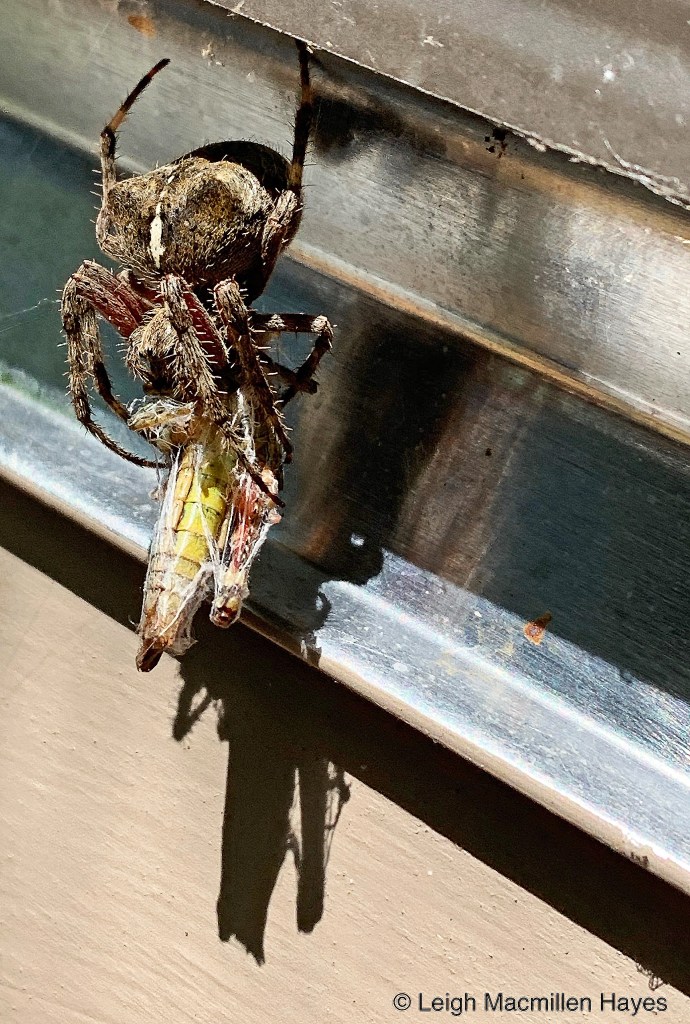
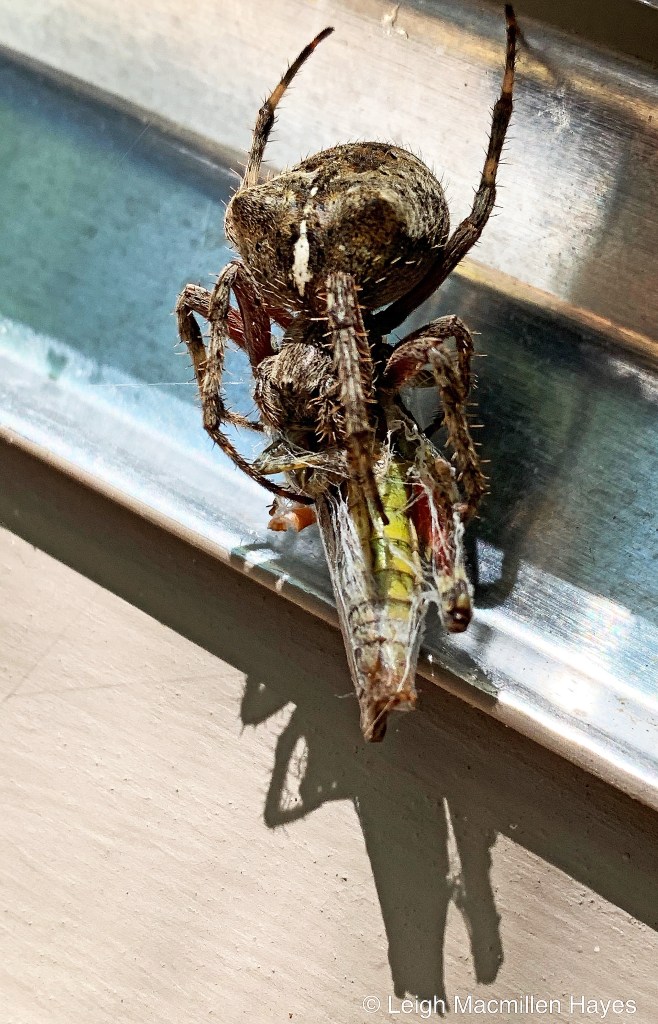
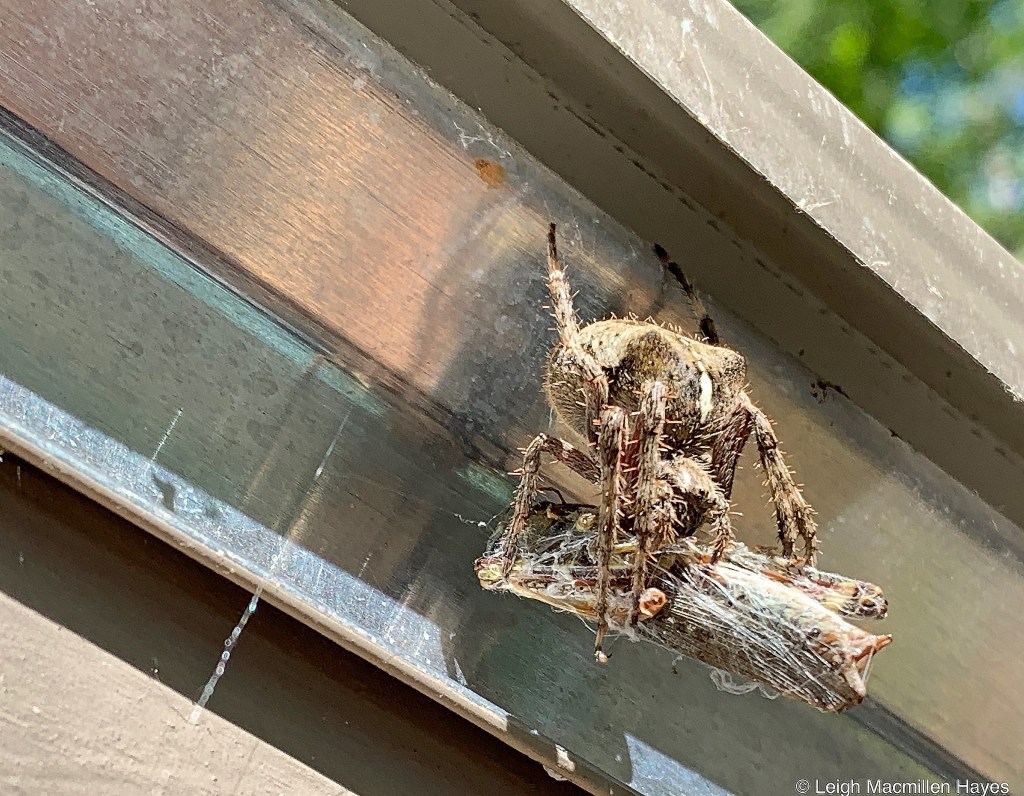
What was I to do? Why, look around, of course. And that’s when I spotted a huge orbweaver in action as it dangled from the camp shed.

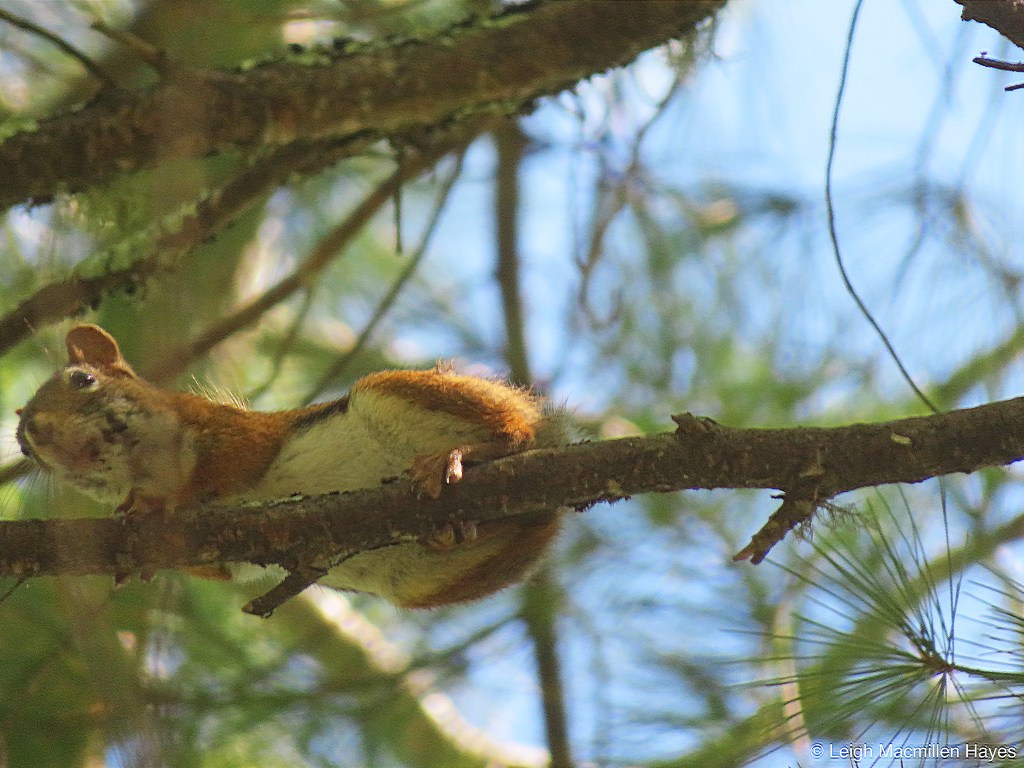
I was immediately mesmerized as I realized it was a grasshopper that must have climbed the building and become ensnared. The red squirrel above me was not as enchanted with my presence and so he scolded.

Looking up into the white pine, I searched for the branch upon which he sat.

It took a moment for he was rather high up in the tree, but at last I spied the chatterbox.

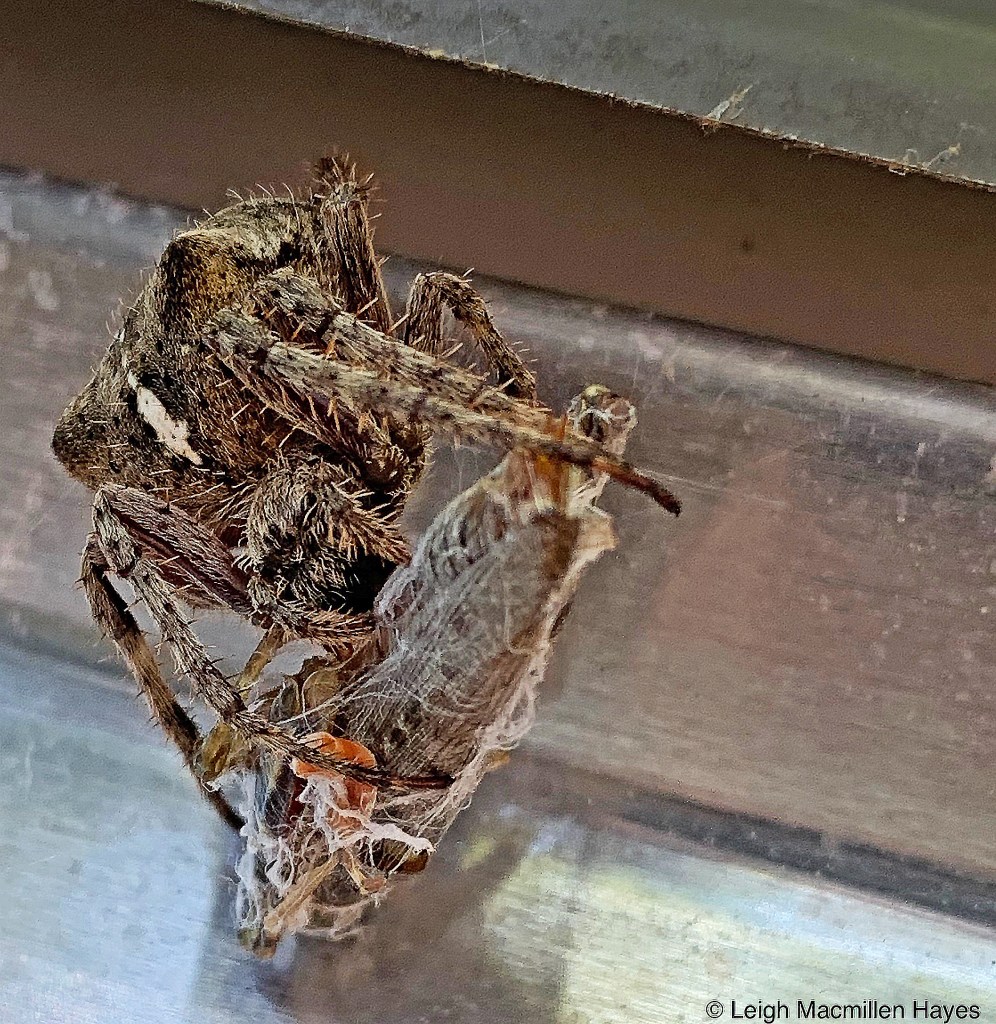
But my main focus was on the feast waiting to happen. First it had to be wrapped.

I’ve seen wrapped insects in webs before, but I what I found most fascinating about this one was the size of the predator and its prey. The spider was hardly daunted.

From different angles, I tried to gain a better understanding. Not only was the wrap so intriguing, but have you ever wondered how such a large spider can dangle upside down, held only by thin threads of silk? Then again, have you ever broken through a spider web? Some are mighty strong and sticky.

While that action continued on the front of the shed, I looked to the side to see if there was any evidence of an old feast. None was evident, but I did see another grasshopper heading toward the roof line.

And then it turned . . . toward the front of the building. A wrong turn?

Indeed. Slowly it advanced . . . until it encountered an entanglement and realized its poor choice of direction.

With care, it retreated.

And so I returned to the front of the shed to check on the action where the well wrapped meal could have been mistaken for a small fish.

Orbweavers typically bite their prey to kill them, then wrap their meals in silk for later consumption. Really wrap. I watched for well over an hour and then headed off for a hike with my guy.

Just before leaving I glimpsed at the side where the live grasshopper had tried to escape. In the moment, it was a success story for I didn’t see it anywhere.

Upon returning three hours later, I immediately checked upon my friend. Wait. Did I just call this incredibly huge, hairy/spiny arachnid “my friend”? I do suffer like many from arachnophobia, but at the same time, their structures and behaviors garner my awe.

As for the wrapped grasshopper, I guess you could say it was “toast.” The spider had turned and it appeared that meal was being consumed.

I looked for crumbs this morning, but found nary a morsel. Somewhere there may be a small ball of indigestible parts on the ground that I overlooked. Even the web had been destroyed, which is typical spider behavior–consume the silk as morning approaches, thus reabsorbing any moisture used in its construction, as well as the dew. Perhaps it’s like a sip of juice to help with digestion.

A meal of toast and juice–a spider’s feast.

Prowling for Pollinators . . .

So maybe this morning wasn’t the best choice to go searching for pollinators since the temp was in the 50˚s and delightfully so. Crisp air. Blue sky. Autumn Teaser. What’s not to love?

But search I did. I suspected most of those I sought were sleeping within the flower petals or had found some other warm spot to spend the night and early hours of the day.

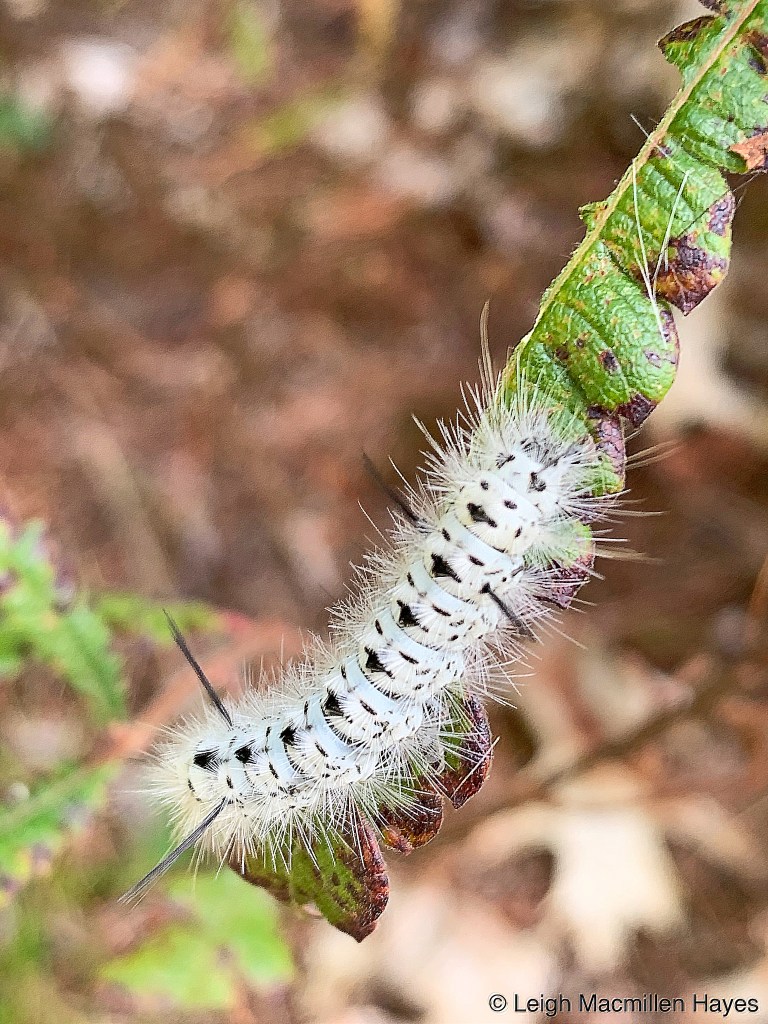
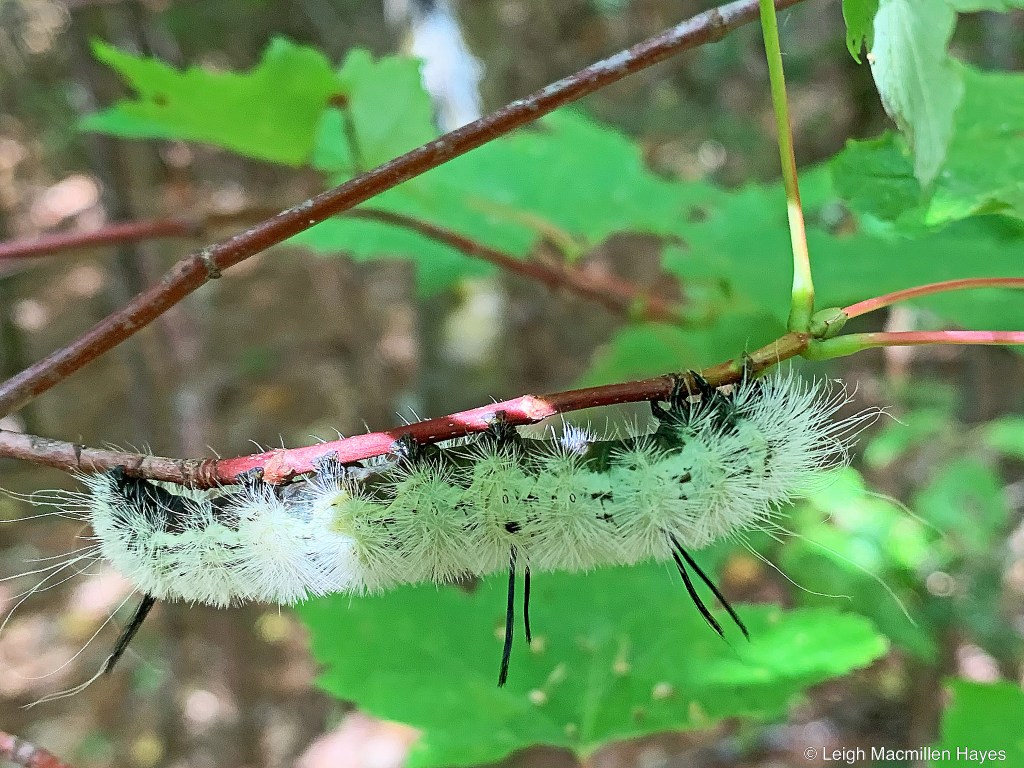
One well wrapped and ready for the next season was a native young Hickory Tussock Caterpillar. Do you see the detached hairs above it on the yet unmunched half of the Sweet-fern leaf? In a way, tussocks remind me of porcupines for their hairs are barbed like a porky’s quills and can easily detach.

Though most that I’ve been seeing are about one inch long, I discovered one that was at least three inches and perhaps considering using the hairs to spin a cocoon.

Recently friends and I commented that we hadn’t seen many of these caterpillars this year and then we recalled that last year’s prolific sightings occurred late summer/early fall. The good news is this: though they defoliate many tree species including but not limited to hickories, they do so at a time when the trees are preparing to shut down and so no overall harm seems to be done. And being native, they are subject to natural enemies so we can only hope that this year’s prevalence is much lower.

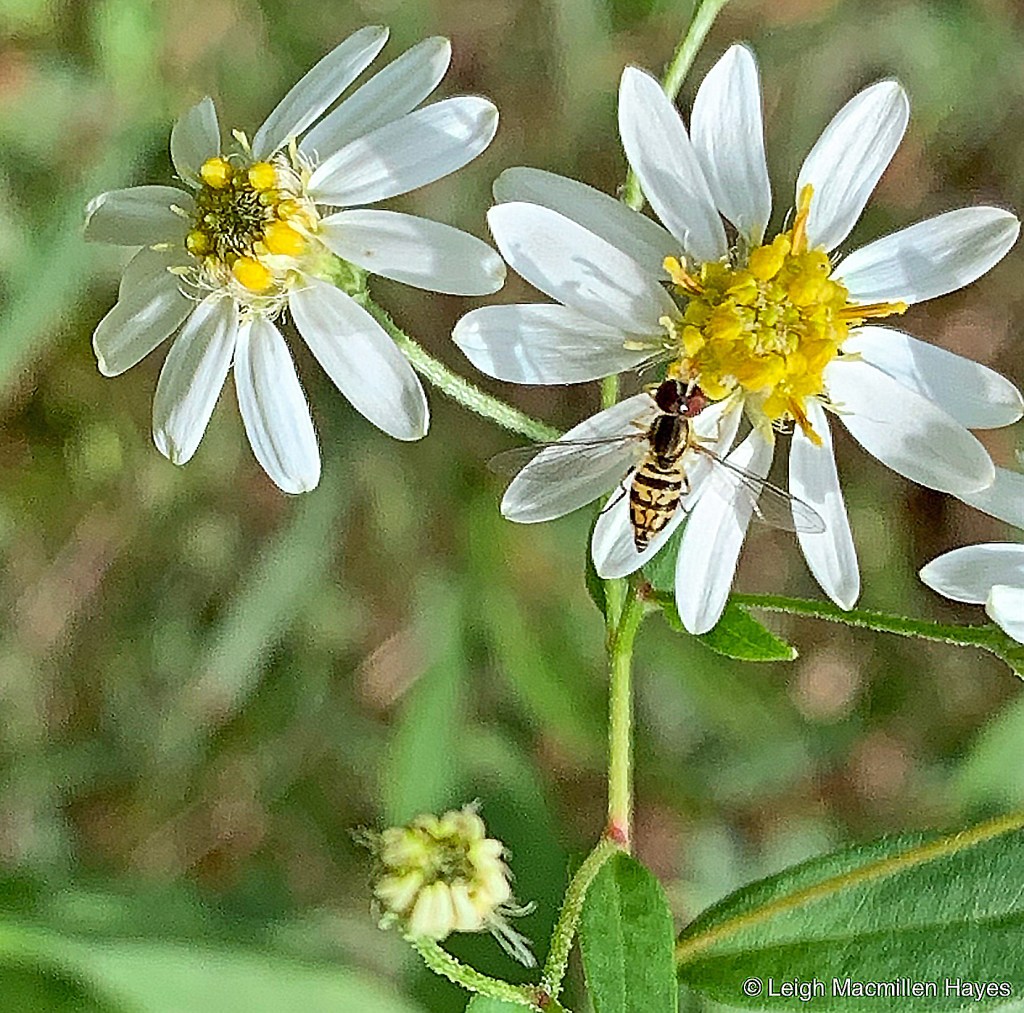
Mind you, as the morning progressed, there were a few pollinators on the move including this tiny hoverfly upon an aster. Though they don’t have pollen baskets and can’t carry as much pollen as a bee might, hoverflies visit so many flowers that they are seen as pollinator champions.

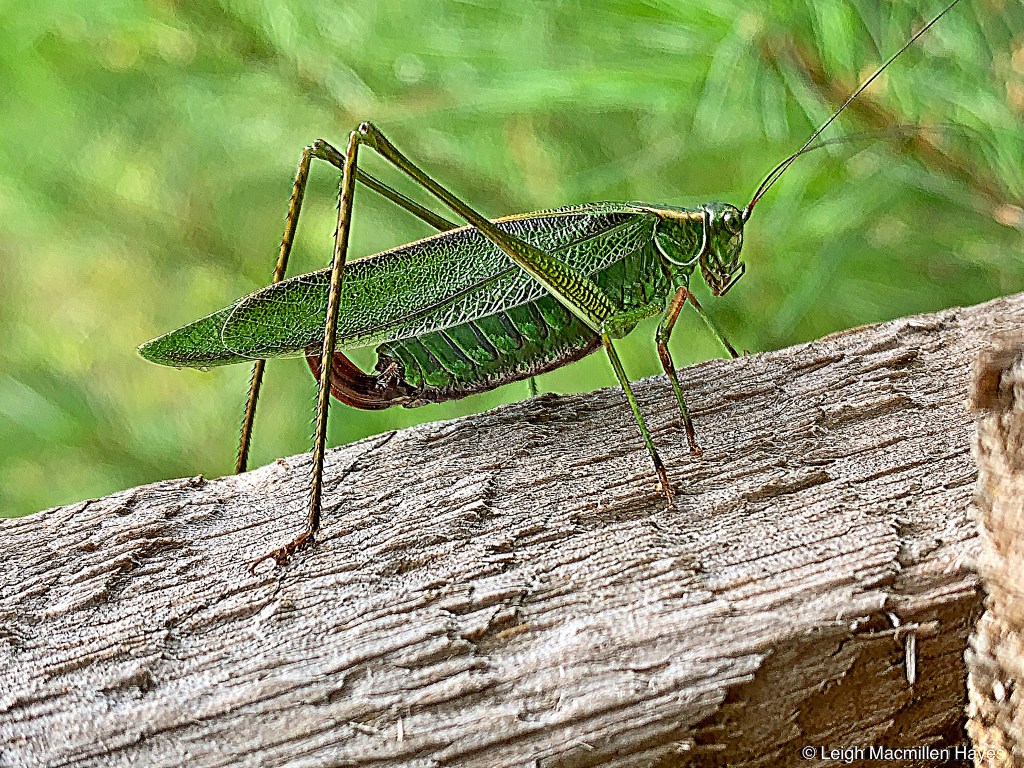
As my search continued, I stumbled upon a female Katydid walking along a wooden fence. Katydids’ antennae are long (as in at least the length of the body) and thin, thus differentiating them from their grasshopper cousins.

Another way to identify one is the camouflaged leafy structure of their wings, much resembling the veined foliage upon which they spend their time dining. And this one–a female, so proclaimed because of its thick, upwardly curved ovipositor (egg-laying structure).

Under the same fence post, a grasshopper did rest, its antennae much shorter.

What surprised me most as I explored one place and then another and another: the variety of dragonflies that still did fly. I’m rather partial to a few, including this male Pondhawk Darner with its greenish face and white claspers. If only his gal had been around, they would have made a handsome couple.

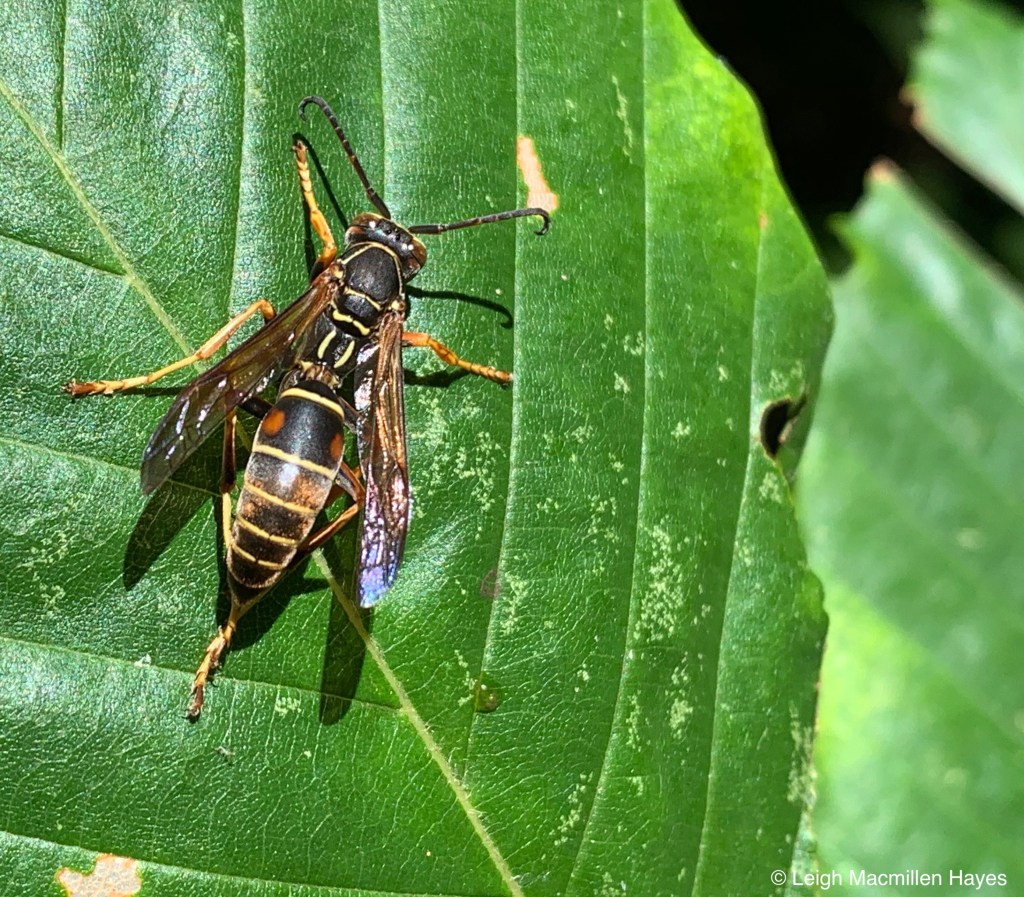
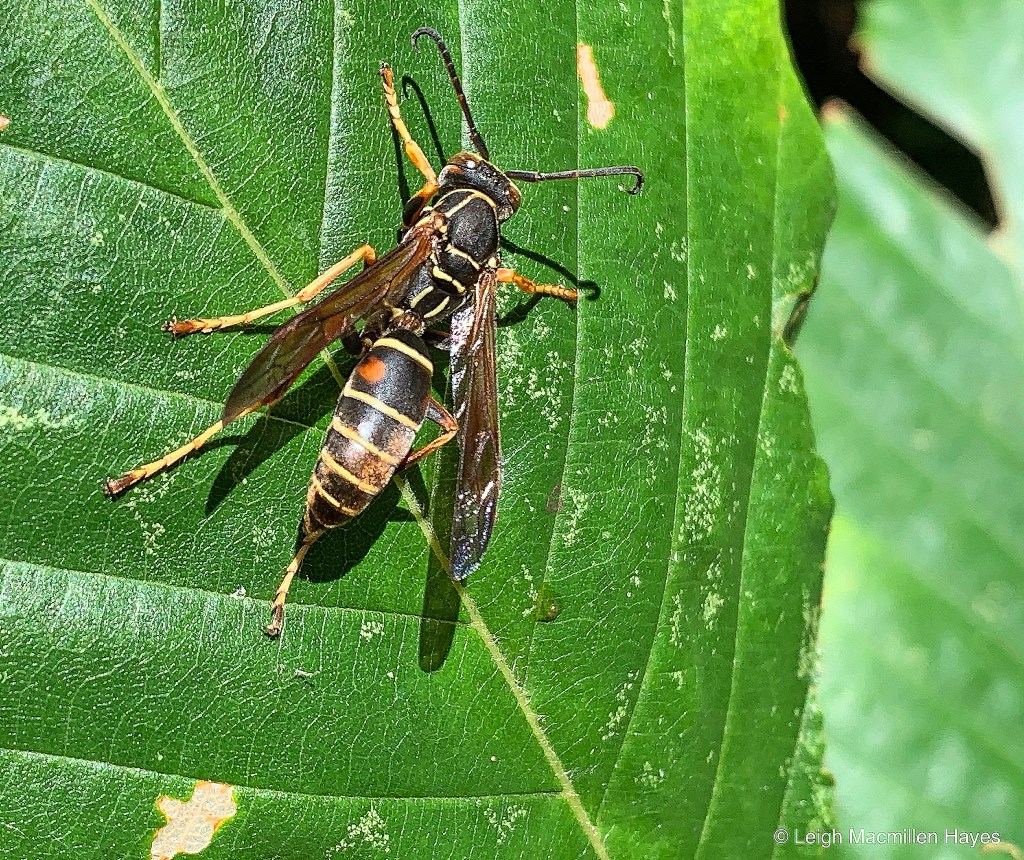
In another spot a Paper Wasp paused. Watch its hind legs.

Ever so slowly . . .

it practiced . . .

Edward Scissorhands moves. Paper Wasps are pollinators and I had to wonder if it was transferring some pollen on its legs in wasp-ballet style.

Finding a few pollinators and other insects was fun, but the creme de la creme of this morning’s expedition was time spent with so many Autumn Meadowhawks who shared every trail I walked.

Not only do Autumn Meadowhawks have yellowish legs, but their coloration matches the newly formed American Beech buds, making their timing seem serendipitous.

Being a coolish morning, I thought I might entice at least one upon my hand for they seek heat. These are wee dragons as you can see by the size of this female.

I swear she smiled at me. I smiled back.

While prowling for pollinators . . . I made some great finds and my morning search was well rewarded.