Slippery Slope Mondate

My Guy and I took in an old fav from a different perspective today. That’s because I always thought that the Micah Trail at Loon Echo Land Trust’s Bald Pate Mountain Preserve was for Camp Micah only. This morning I learned that anyone can begin the ascent via this sweet trail and so we made it our mission to do so this afternoon.

There is room for about four vehicles to park at the trailhead on the left-hand side of Moose Pond Cove Road off Route 107 in South Bridgton, Maine. Maps are available at the kiosk located a few steps in from the parking area.

Afew more steps and we met new bog bridging, always a welcome sight and so we crossed and then continued on up the trail, pausing frequently to search for bear claw trees among the American Beeches.

No such luck in the bear claw department, but we were serenaded by a flock of Chickadees singing their rather wispy fall songs, if they are songs indeed.
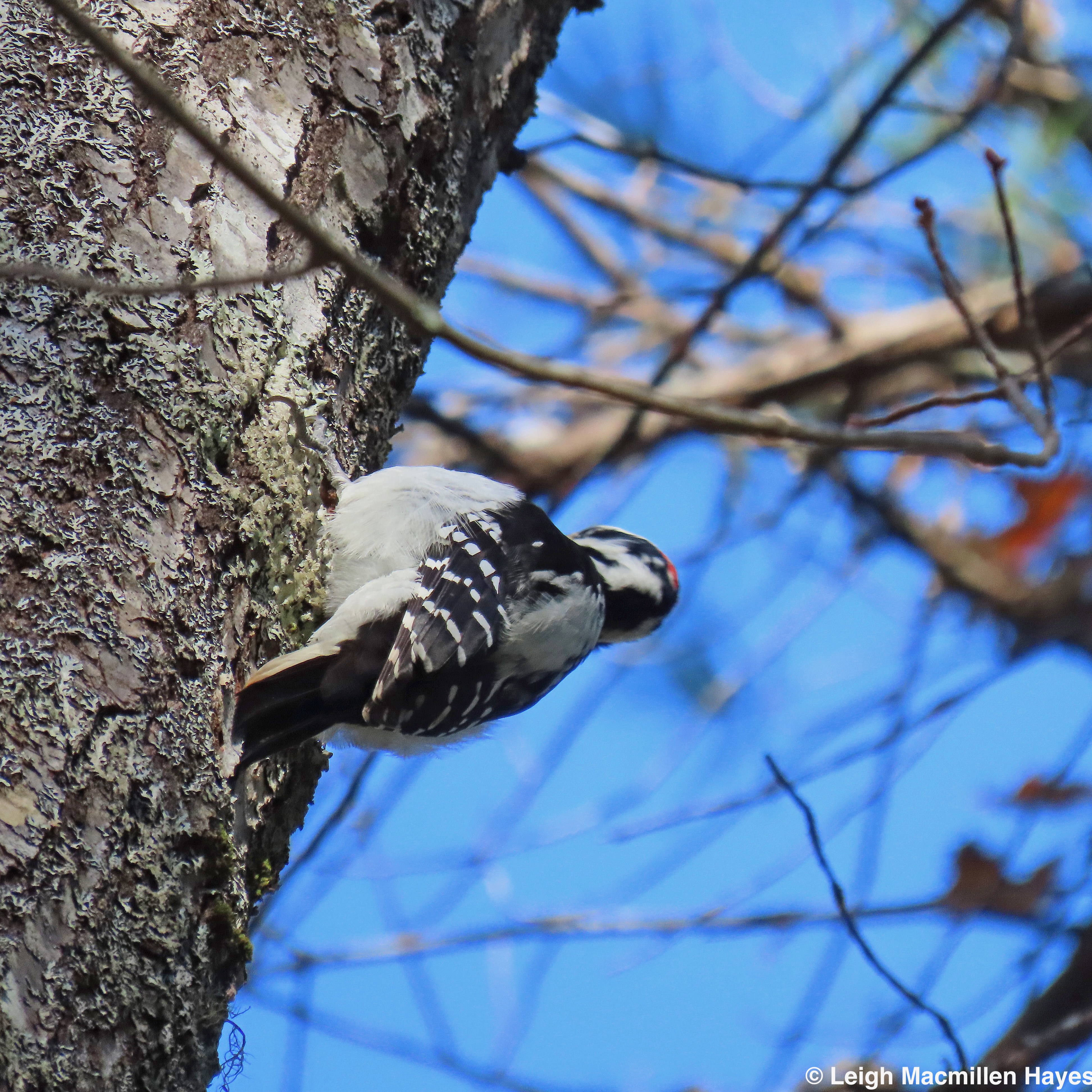
And a Hairy Woodpecker or two did what woodpeckers do . . . it pecked. This is a male as you can see by the hint of red at the back of its head. And he’s all puffed up, in reference to the brisk temperature of the day. Trapping air between his feathers helps him to warm up. Wearing several layers helps us do the same.

Once we reached the South Face Loop Trail, it was a quick ascent to the summit. Just before the summit, we paused to honor the bonsai tree–which is really a Pitch Pine. The summit of the pate is home to a Pitch Pine Forest. Though these trees can stand straight and tall, on mountain tops they take on a contorted structure.

The “pitch” in its name refers to its high resin content, thus making it rot resistant.

The needles are bundled in packets of three–making it easy to remember its name: Pitch–three strikes you’re out!

Another easy way to identify Pitch Pine is to look for needles growing right out of the bark–both on the trunk and branches.

Pitch Pine cones take two years to mature and upon the tip of each scale is a pointed and curved prickle.

They open gradually but depend upon fire for their seeds cannot be released until they are heated to an extremely high temperature.

That being said, this is the only native pine that will re-sprout when damaged.
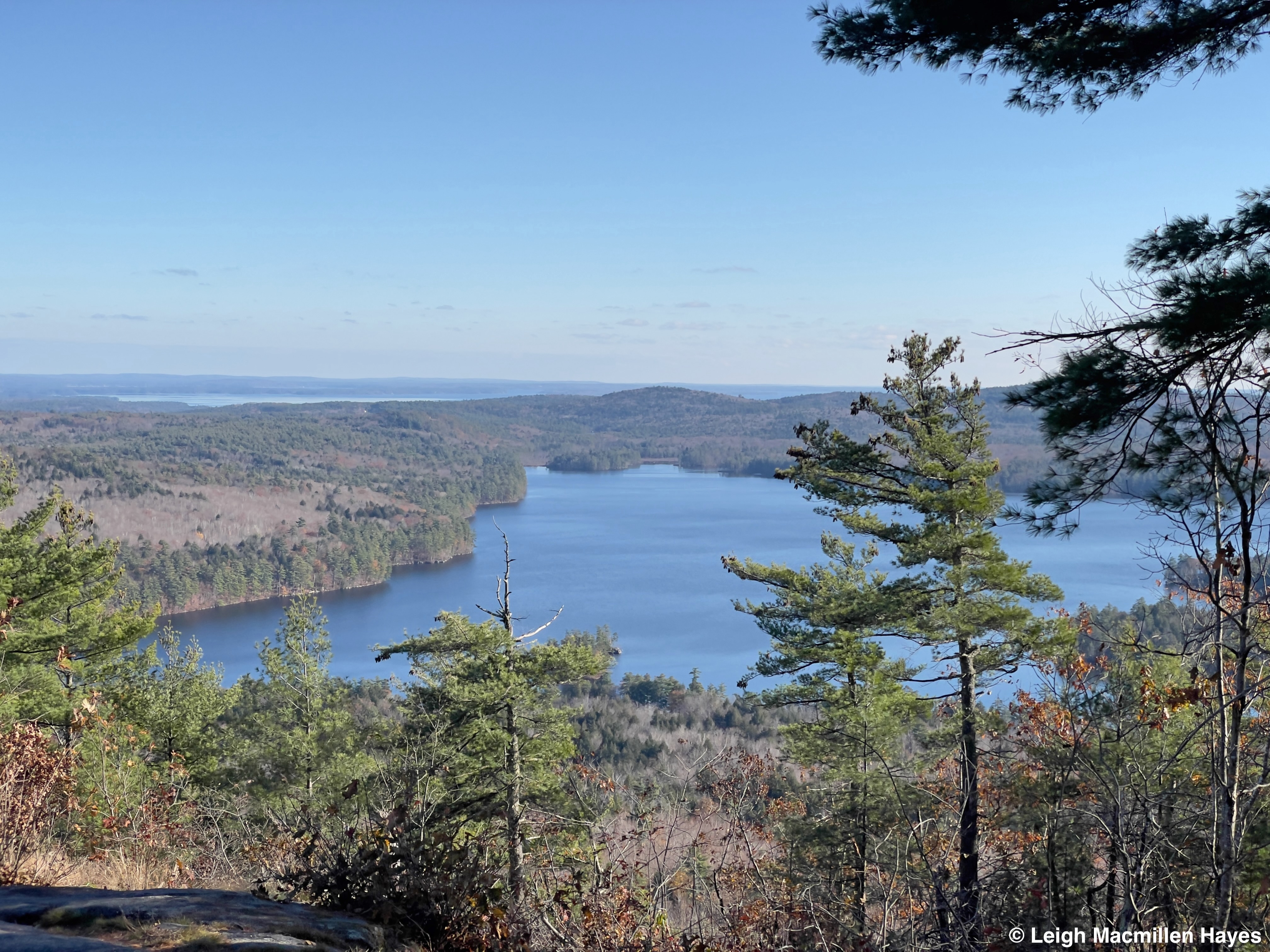
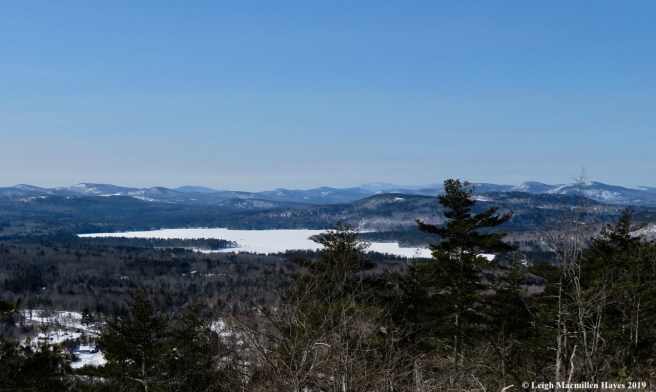
I was told this morning that there had been some view openings and we were thrilled to discover a couple of them, includng this one overlook Peabody Pond with Sebago Lake in the distance.

And no visit to the summit is complete without paying homage to our friends Faith and Ben by taking a photo of their beloved Hancock Pond.

You may note the difference in the sky view from one pond to the next–snow showers are in the forecast for tonight so as we looked to the west, we could see the front moving in. No accumulation is expected, but any day now it will be most welcomed by us.

Though most of our foliage has dropped to the ground, another view at the summit included the scarlet colored blueberry leaves turning any day into a cheery one.
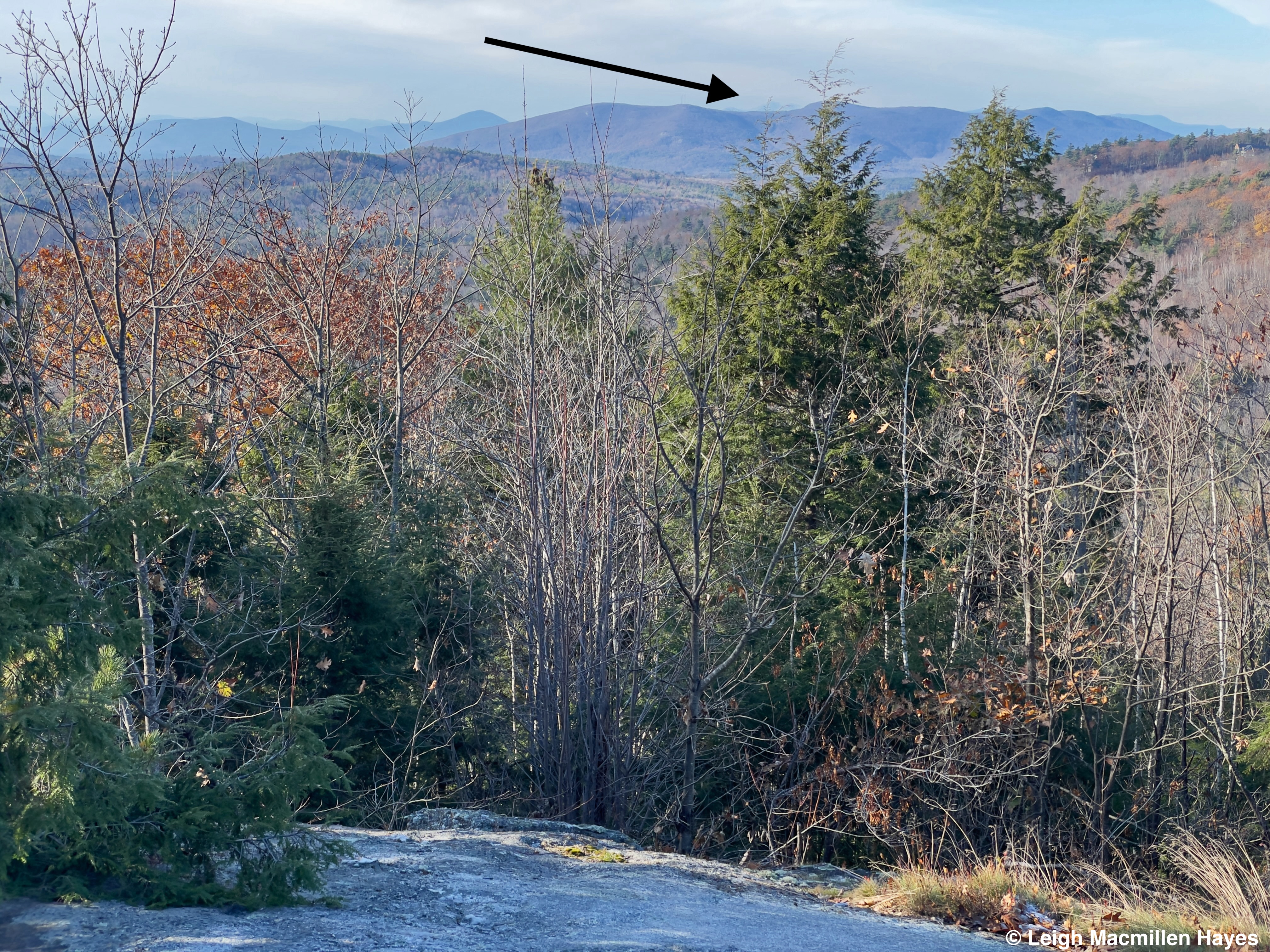
A quick loop we made next around the Bob Chase Trail, noting that we could almost see Mount Washington located in the saddle of our other beloved: Pleasant Mountain. On a clear day, this view is spectacular.
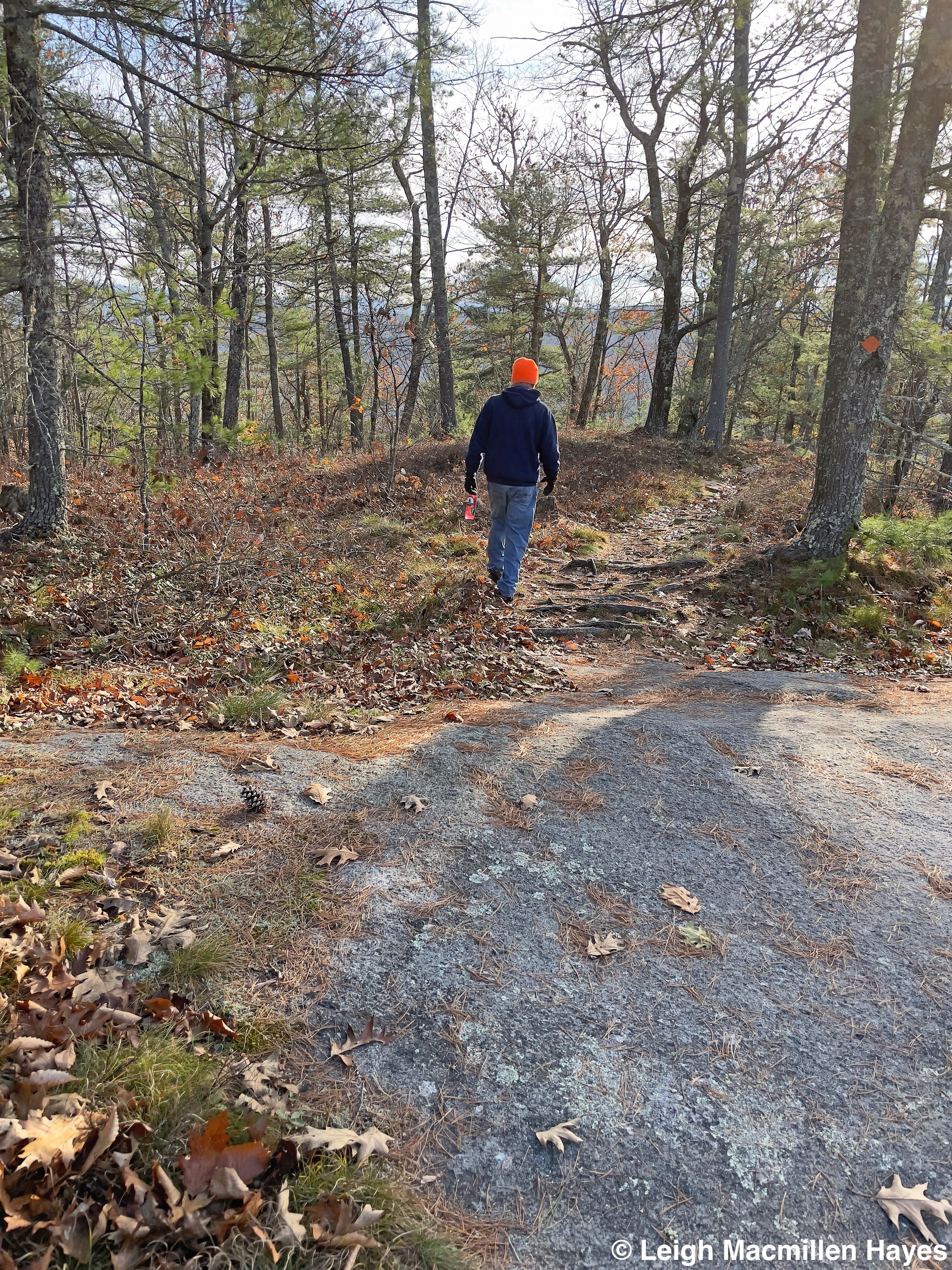
At last it was time for us to return to the South Face Trail and continue to follow the loop down. This section of trail we don’t often use so we did have to backtrack once and locate the orange blazes again.
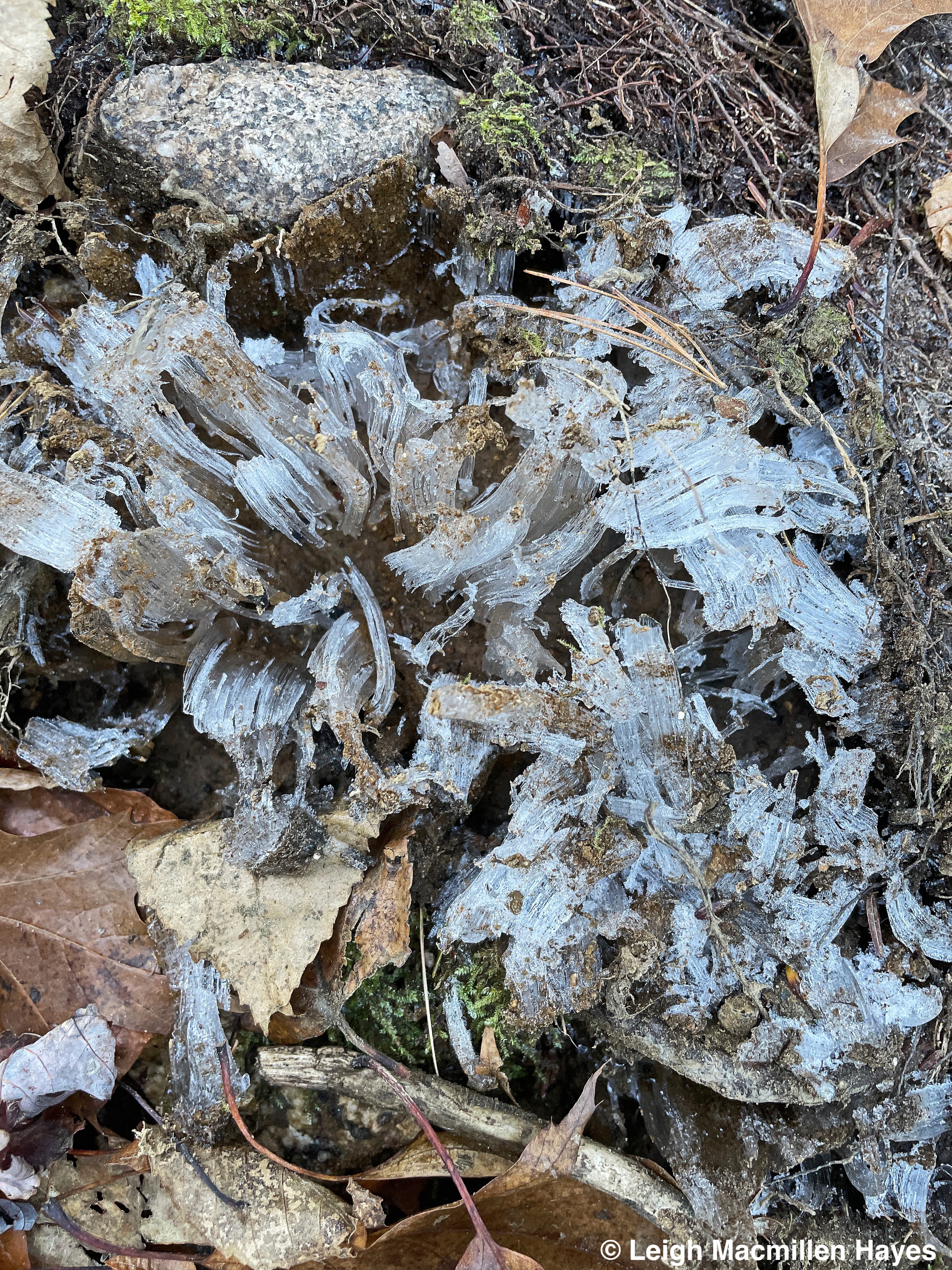
You might think that upon our descent it would be the ice needles that gave us a difficult time. The six-sided slender ice constructions form in moist soil and can take on a variety of presentations from straight to arching curves. And yet, they grow perpendicular to the ground’s surface.

But, they were no bother and only crunched under our feet if we stepped on such in the trail.
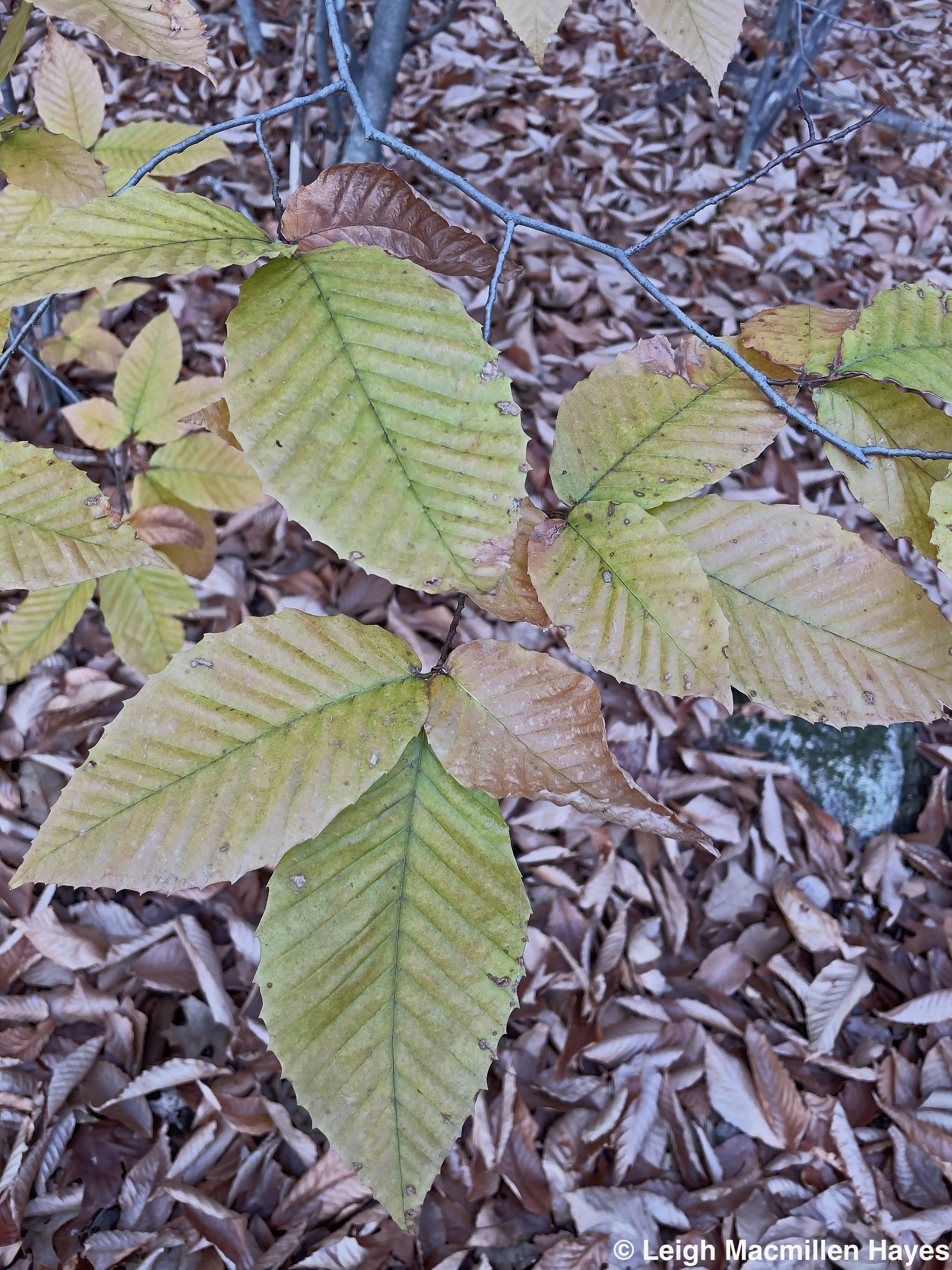
The leaves, however, offered a different story. We had to make sure we weren’t fooled by the fact that many American Beech leaves still have some greens and bronze hues.

And others, though dried up, will wither on the trees until spring as they are marcescent (mar-CESS-ent). Some trees, such as the beech, especially those that are younger, choose to hang on to their leaves until spring.

Most deciduous trees drop their leaves in autumn, when cells between the twig and the leaf’s petiole create an abscission layer, thus causing the leaf to fall off. Not so in the case of marcescence, and I know that many will rattle and initially startle me all winter long. But, they also provide another hue in the winter landscape.
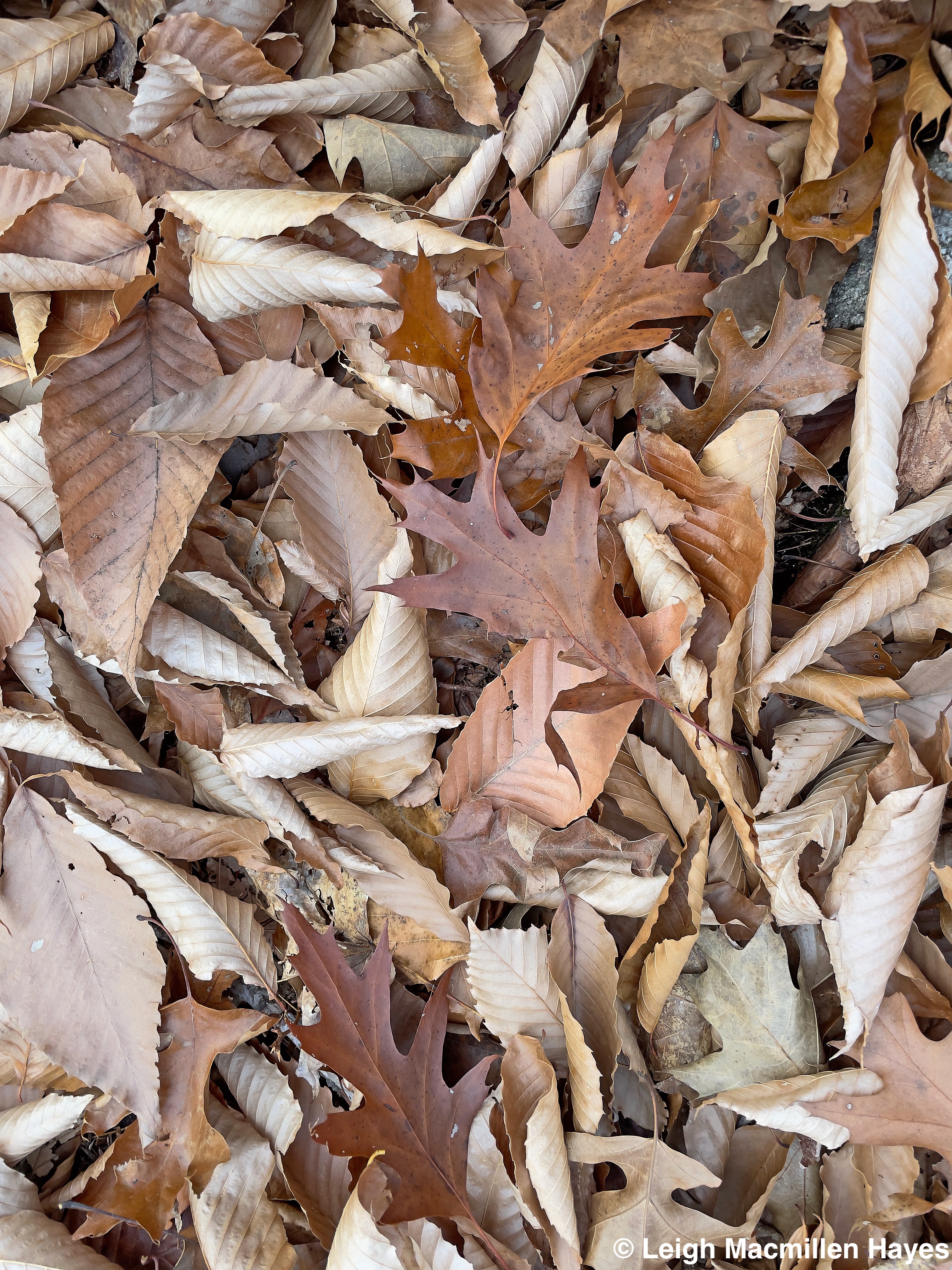
Northern Red Oaks also do the same, though in my observations, many are loosing their leaves with November winds, but some will remain throughout the winter.

Today, three seemed to play Tic-Tac-Toe on the trail before me.
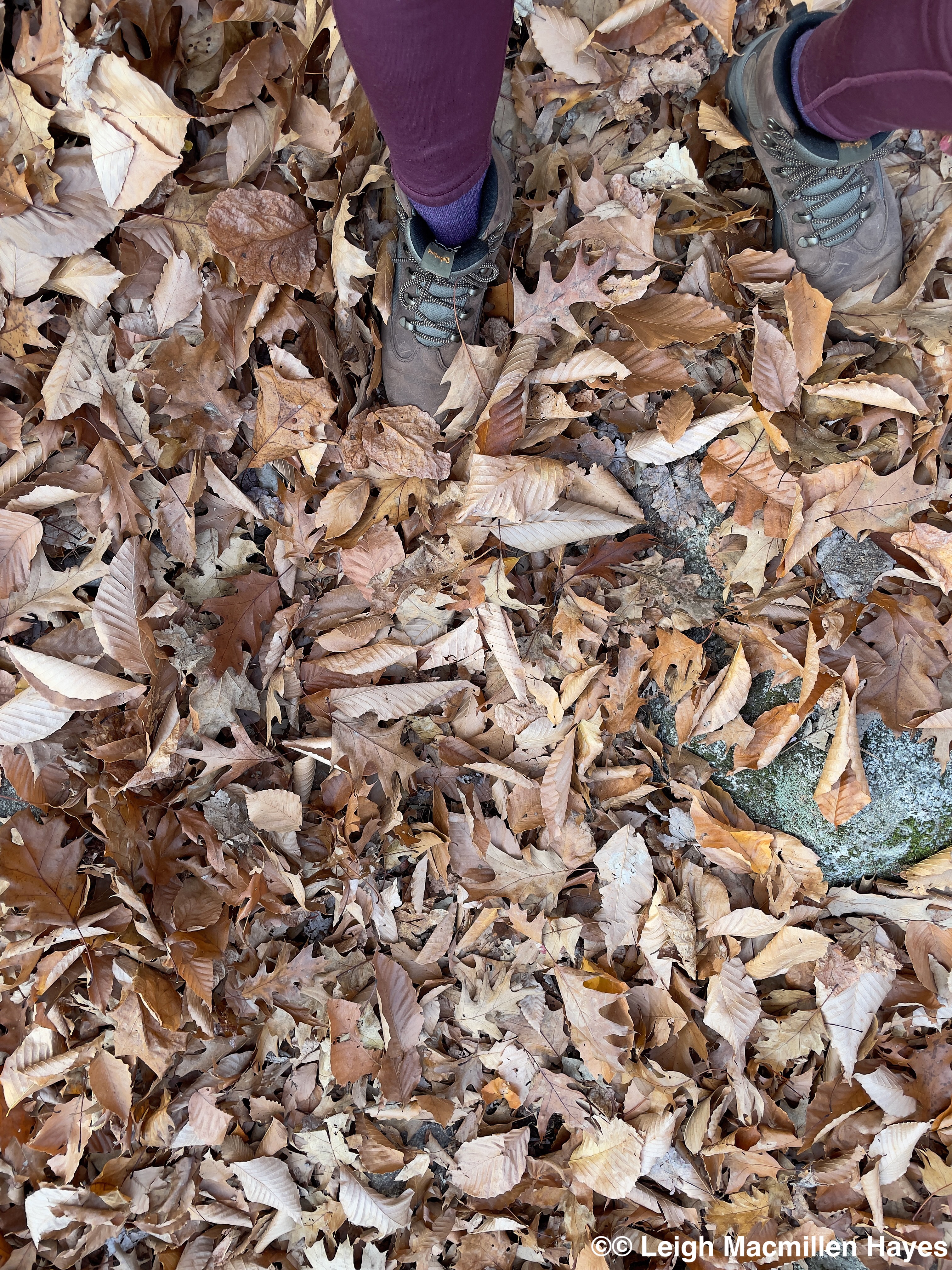
So, young beech may retain their leaves, but look toward the sky and you’ll notice bare branches and look at your feet and you’ll see where they have all landed. A word of warning if you are hiking in New England right now–these leaves make for a very slippery slope, especially upon your descent. Hike with caution. Even My Guy has learned to do this.
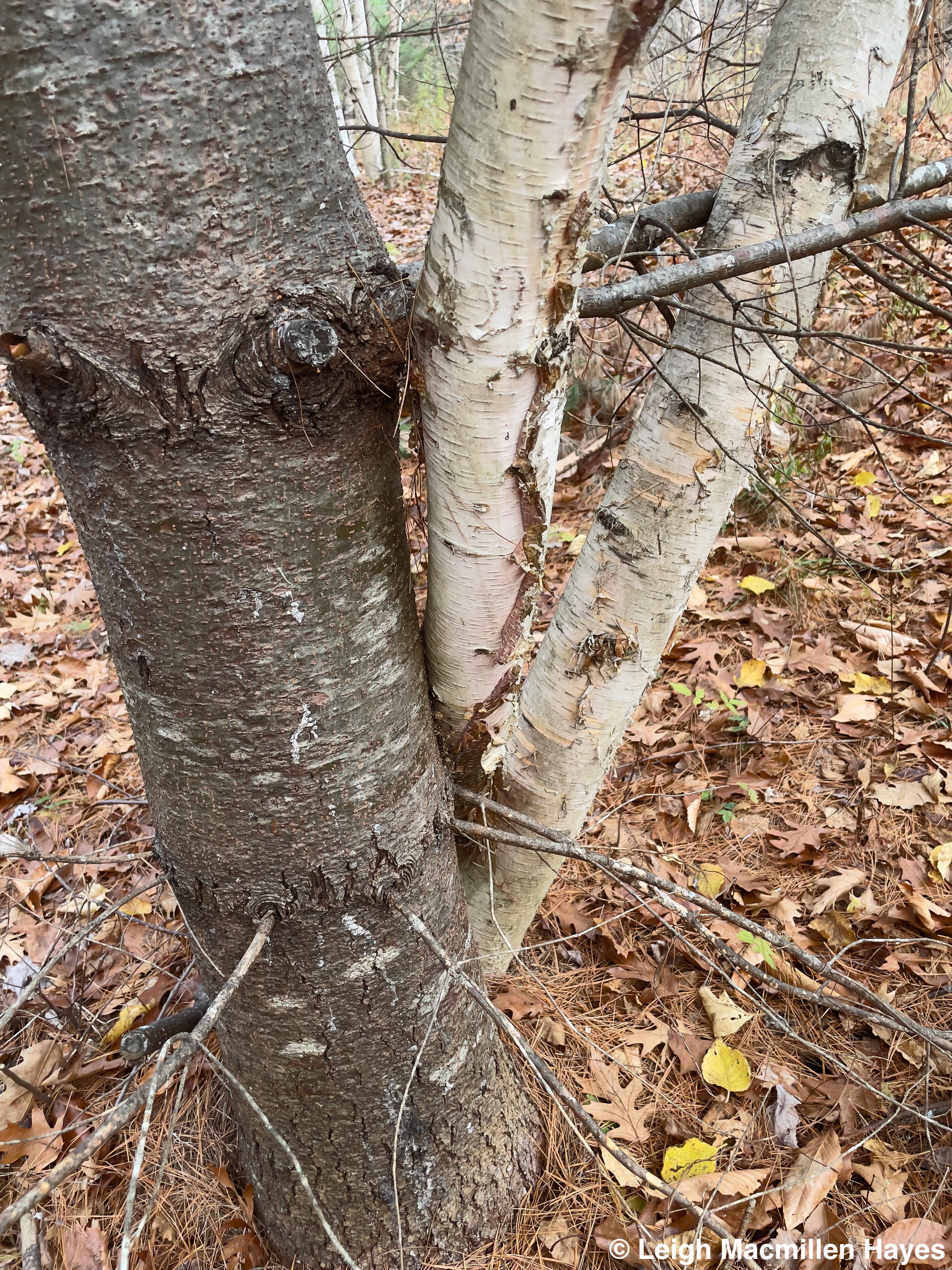
As our hike came to a close, I noticed two trees close to the trailhead that I’d missed on the way in. An Eastern White Pine and a Paper Birch. Do you see what I see?

They had found a way to grow in the same space and actually fused together. Wind must have caused frequent branch movement. It probably took many years for the surfaces to gradually abrade, with the cambium of the trees touching and forming an adhesion, necessary for a graft union, and the trees fused.

It always strikes me when trees do this, especially those of different species. My Guy and I had been on a slippery slope on this Mondate, but the world seems to be on an even slipperier slope these days.

Maybe we all need to be like the trees and figure out a way to live together without so much conflict.
Seeking Change

I wasn’t going to pre-hike Loon Echo Land Trust’s Bald Pate Mountain Preserve in South Bridgton today to prep for a climb there tomorrow because I figured there wasn’t really much to see except the snow. But, at the last minute, it felt like the right thing to do.

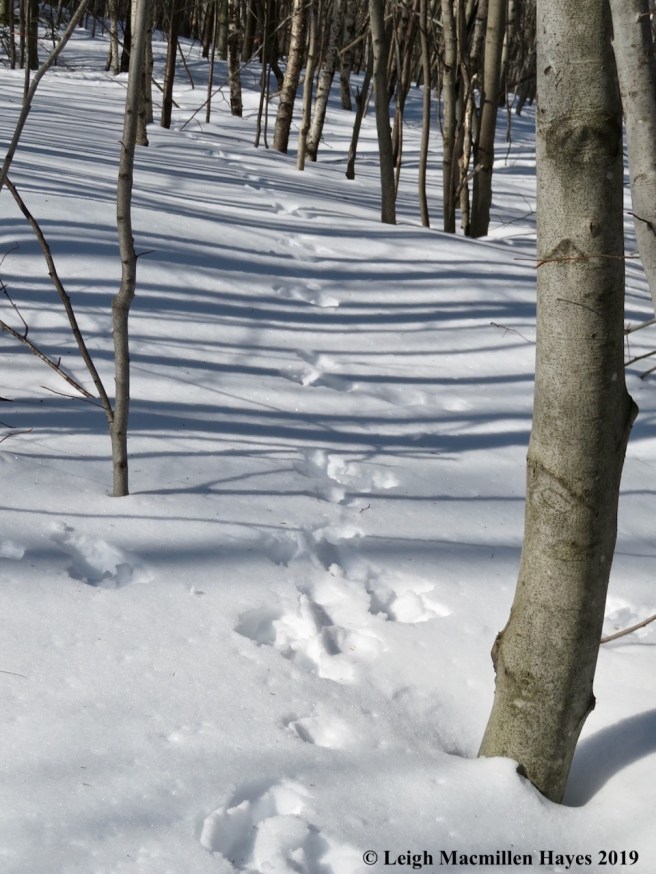
And, of course, it was. As I headed up the Bob Chase Trail, so named for the man who was the driving force behind the land trust, and its public face for fifteen years, I noted those who’d passed through the woods at some point within the last couple of days, including snowshoe hare, foxes and coyotes. Oh, and domestic dogs a many.

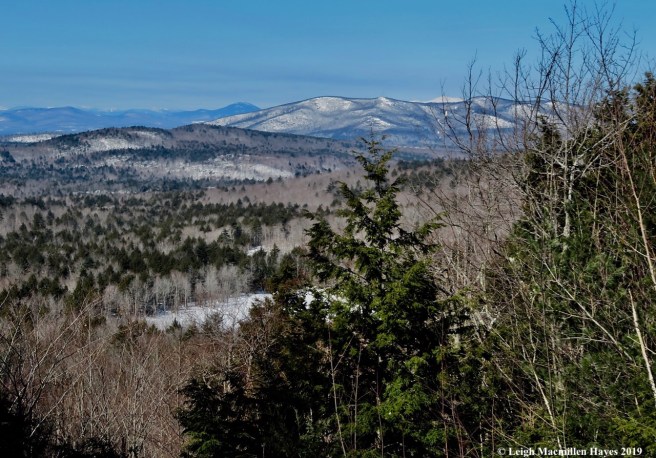
There were the views to admire as well, including this one from three quarters of the way up, where Mount Washington sits in the saddle of Pleasant Mountain.

The fun thing about a telephoto lens is that one can bring those distant peaks into view. Doesn’t the cellphone tower roadway up Pleasant Mountain make it look like you could walk directly onto Mount Washington? And can you see the weather station at the top of Mt Wash?

It doesn’t take long to reach the summit of Bald Pate where the view encompasses Hancock Pond in Denmark (Maine) and I was beginning to wonder what I might share as signs of spring, since despite the frigid temps and snow depth, we are on the cusp. Drive down any western Maine road and you can bear witness to that. The frost heaves and potholes have made themselves known for the past several weeks.

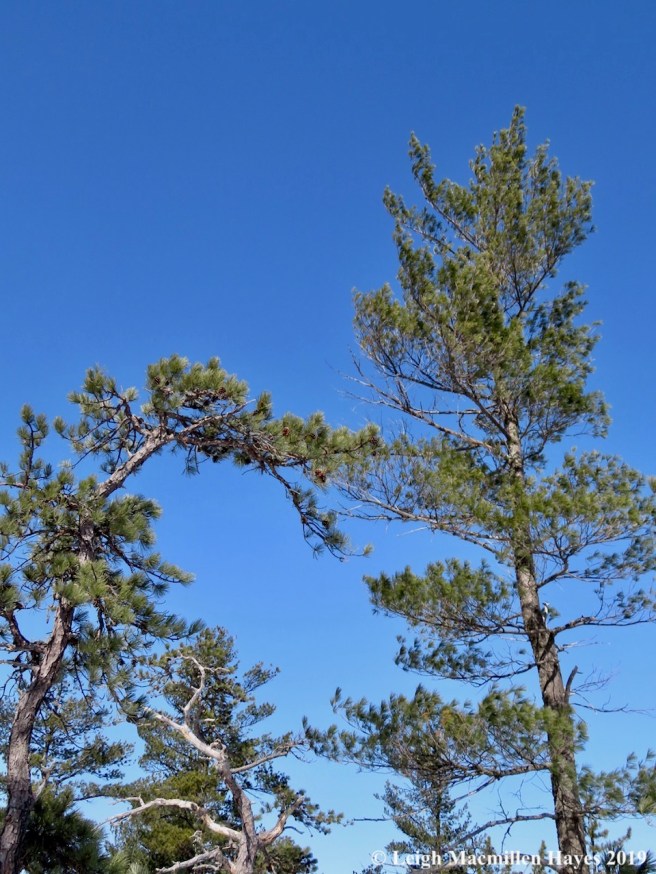
But, then I looked up–at the leaning Pitch Pine beside the Eastern White Pine.

And there was my answer! Pitch Pine cones take two years to mature and upon the tip of each scale is a pointed and curved prickle.

They open gradually but depend upon fire for their seeds cannot be released until they are heated to an extremely high temperature.

That being said, this is the only native pine that will resprout when damaged.

While the cones of the Eastern White Pine where almost nowhere to be seen, on a Pitch Pine they may remain for 10 – 12 years.

The needles are bundled in packets of three–making it easy to remember its name: Pitch–three strikes you’re out!

Another easy way to identify Pitch Pine is to look for needles growing right out of the bark–both on the trunk and branches.

I always think of it as our bonsai tree for though it can stand straight and tall, on mountain tops it takes on a contorted structure. The “pitch” in its name refers to its high resin content, thus making it rot resistant.

Though not located at the summit, I hope I remember to share my favorite evergreen found on this property. Meet Jack Pine. It doesn’t typically grow in our area, but there are two along the trail and either they were planted or they came in on a skidder during a previous logging operation and planted themselves.

As I’ll surely share tomorrow, I love mnemonics and that’s what helps me remember the names of the various evergreens. You see, Jack Pine has bundles of two short needles: think Jack and Jill.

Its cones also take two years to mature and tend to be slender and curved.

I was thinking that with the three varieties of White, Pitch, and Jack, there must be a fourth and bingo–just as I returned to the parking lot I found it: a young Red Pine with its needles of two. (I used to think it had three for R-E-D, just as White has five for W-H-I-T-E or M-A-I-N-E for it’s our state tree, but I used to think incorrectly!)

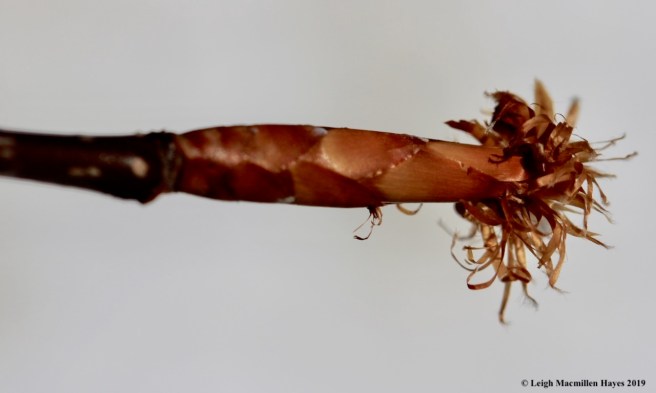
It wasn’t just the pines, however, that drew my attention. The tree buds are swelling and suddenly quite noticeable. Each bud, like this beech, which may contain miniature leaves or flowers, is covered with scales, which in themselves are actually modified leaves.

By May those scales will curl back and eventually fall off as the leaf and or flowers emerge, but today I found a couple that decided to get a head start. It’s the same every year–there are always a few in the crowd who want to be first. Do they survive? One of these days I’ll mark one and check back on it.

I did see several beech buds that had curly topped heads, a site I’d not seen before. This will certainly be a point of discussion tomorrow as we try to solve the mystery.

And there was an oak that also wanted a head start. Perhaps it’s because they’re located on a mountain and closer to the sun?

Some of my favorite finds included the striped maple buds and their subtle spring colors.

And then I found red maple twigs on the ground. That, too, will become a subject of further research on our walk. I suspect I know why they were on the ground, but we’ll see what conclusions the participants draw.

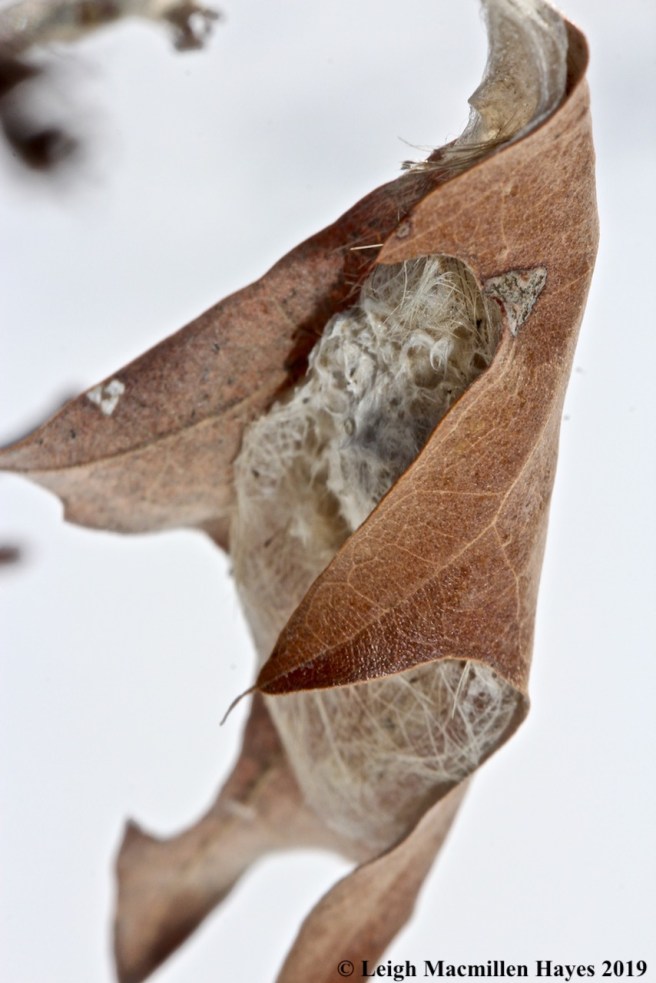
And then, and then, because I was looking, I found a couple of other surprises. This one is the cocoon of a Polyphemus Moth. Check out how it wrapped itself in the leaf. And can you see the silky outer layer of the cocoon located within?

And another–a Promethea Moth. Its cocoon was attached to the branch by a strong peduncle or stem and it had incorporated the curled red oak leaf. Talk about camouflage–at first I thought it was just a marcescent leaf that had withered but not fallen yet.

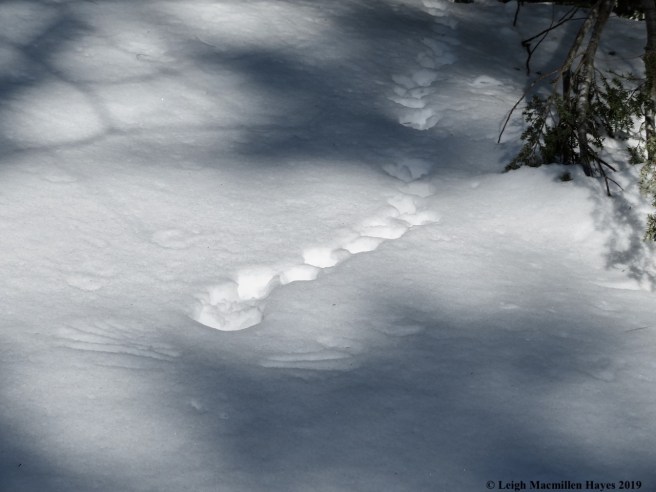
Our tour will include other flyers as we’ll take a closer look at the tracks and wing marks in the snow and try to figure out what the story was behind them.

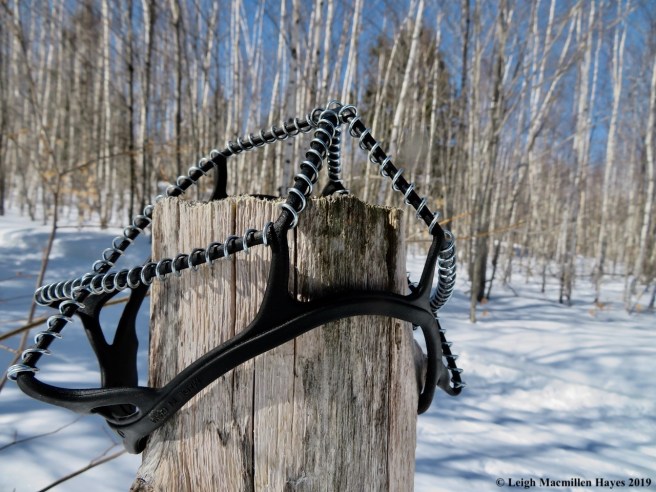
And speaking of stories–many a trail features such a sign left behind accidentally by a hiker who lost a bit of traction when the Yaktrax fell off. Any takers? This one has been on the stump for a while so I think it’s fair game if you need one.

Jon Evans of Loon Echo and I plan to take the group to the summit and then find our way to the Foster Pond Outlook, where the stone cairn that’s usually three or four feet tall is barely a memory right now.

About two hours after we start, we’ll lead the group out, and if the sun is shining much as it did today, the trees’ shadows will bridge the gap between winter and spring and help those who are seeking change bring it into focus.

I feel honored that Jon invited me to help him lead this one for it’s in conjunction with the Lake Region campaign called Bring Change 2 Mind. The group focuses on encouraging conversation and ending the stigma surrounding mental illnesses and substance use disorders. Our aim tomorrow will be to discuss and reflect on how time spent outdoors can encourage positive mental health and well-being.

It may be too late to sign up, but here are the details just in case: Hike for Mental Health.

Even if you can’t join us, I hope you’ll head outdoors and find the change you seek.