World Spinning Out of Control, Naturally

If it seems like the world is spinning out of control, that’s because it is . . . on so many levels in so many ways. Even some things I’ve witnessed of late in the great outdoors don’t make sense.
Two weeks ago I sent this email message to my friend, an incredible naturalist, hunter, forester, David Sears. Dave knows everything and has taught me so much over the years.

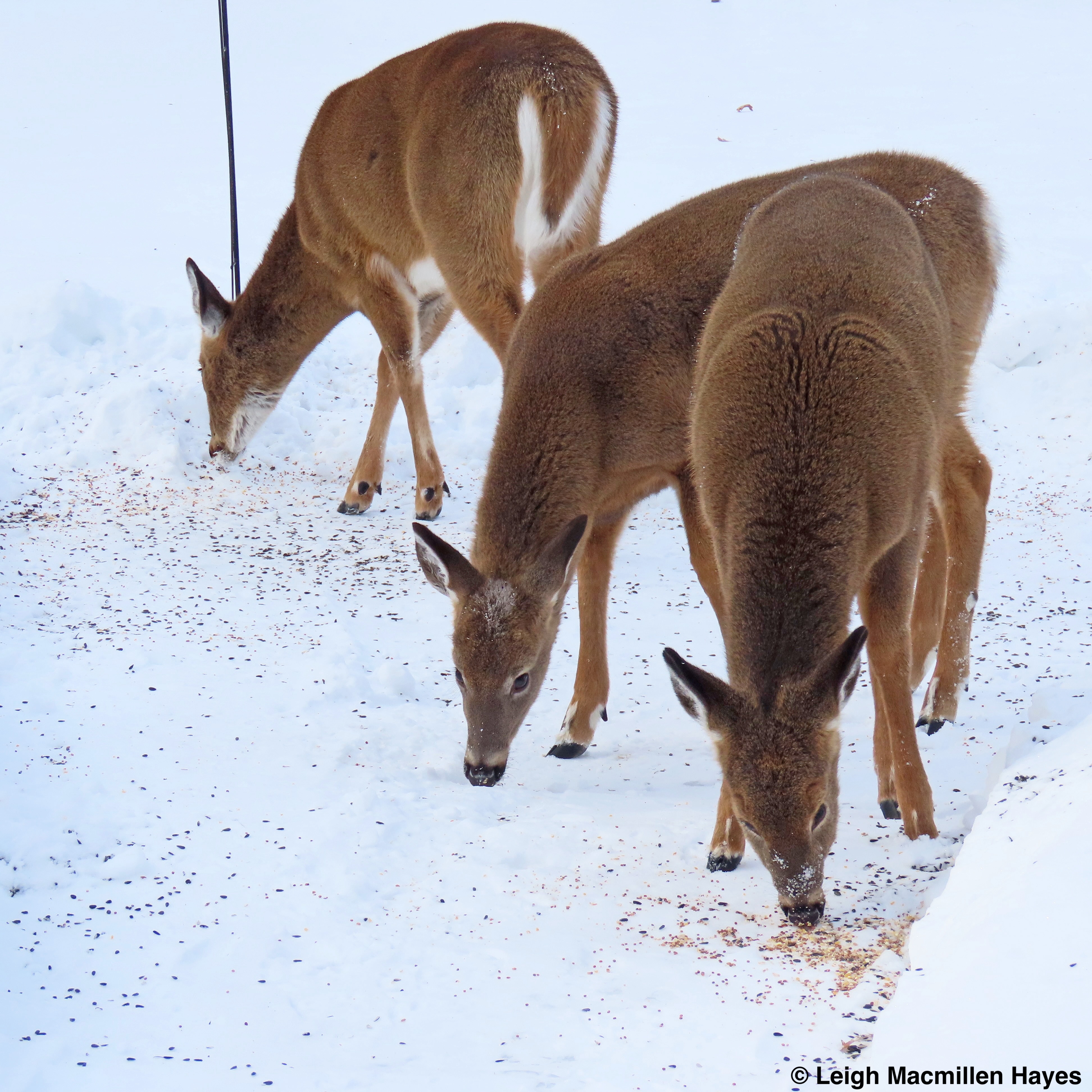
Here’s the message: “Daily we have three deer come into the yard because now that there is snow on the ground, they can’t get to the acorns so easily, but do love the sunflower seeds by the bird feeders. It’s a doe and two skippers. On Thursday I saw another doe with them. And then, as I was finishing up writing the tree blog, Becoming Tree Wise, late afternoon yesterday, I saw two by the feeders and two about 20 feet away. A doe and a skipper in each set. The doe farther away was licking the butt of the skipper. At least that’s what it looked like she was licking from my desk. For minutes on end. And then the other doe and skipper approached them and got quite close. The second doe nudged the first and the first jumped away, paused and then headed back over the stonewall and into the woods. The second doe and two skippers remained close to each other and then I noticed the second doe was bent over. I was trying not to move because even though I’m inside, they hear me and startle easily. I finally grabbed my binoculars and realized the doe was licking the underside of the skipper. I have never seen this before. Have you? Two does bathing a youngster? And at this time of year?”

Unfortunately I did not get a photo of the licking behavior because I didn’t want them to run off into the woods as I tried to understand what I was seeing.

Dave’s response matched my thoughts: “Seems strange at this age. Certainly groom them when young, but a little old now.”

Me: “And two doing the grooming?”

Dave: “Mother nature doing her thing.”

Me: “Yup. She doesn’t read our books.”

About a week or less later, I was on a reconnaissance mission with friend and fellow naturalist Dawn Wood at Loon Echo Land Trust’s Tiger Hill Community Forest in Sebago, Maine, when we spotted the sashay track a porcupine leaves in fluffy snow.
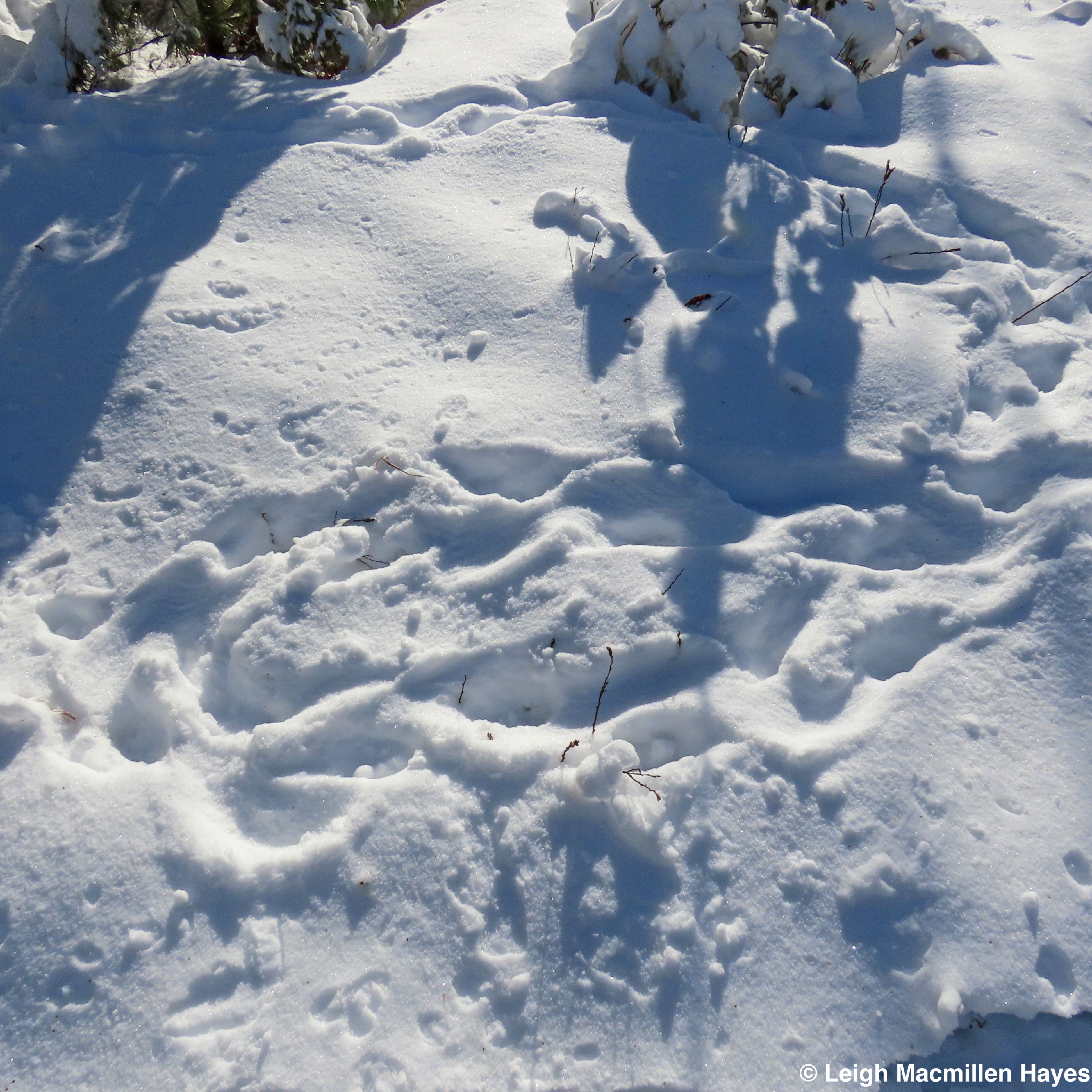
We tried to follow the track to locate either its feeding tree or den, but this porcupine provided an example of more strange behavior. Itacted like a dog, doing zoomies across the landscape. Literally, it walked in circles.

All over the place. Was it rabid? It certainly wasn’t seeking a date because it was too late for mating season. And we couldn’t find evidence that it was evading a predator.

We never did find the feeding tree or den site and wonder if we’ll see the same behavior when we return to the site this week.

On another recent day, I was with Dawn again, climbing Bald Pate Mountain in South Bridgton, when she spied this dead mouse upon a branch. White-footed or Deer Mouse I can’t say for certain.

Our immediate thought was that a Shrike had impaled it on a branch, but upon closer examination, it wasn’t impaled, but perhaps had been dropped by a predator. The question remains: Why didn’t the predator return to enjoy the meal. Or is it being saved for a later date? Perhaps it was letting any toxins leach out?

At the end of many days, I’m left looking for answers, much like this Gray Squirrel on the snow mound outside a kitchen window. Of course, the squirrel must have been wondering why I wasn’t supplying more bird seed for it to consume. This same critter actually jumped partway up the kitchen door a few times in what I assume to be protest.

As for me, I wonder how to make sense of scenes like these that I’ve shared and how to keep an open mind as the world continues to spin out of control.
To Overlook and Be-yond

This afternoon I pulled into the parking lot at Bald Pate Preserve and heard my phone ring. I’ve never quite mastered the art of the swipe to answer and so as usual missed responding immediately. But . . . I put the car into park, or so I thought, and then tried to return the call to our youngest in Colorado. As I dialed, or rather, pushed the phone icon and listened to it dial and ring, I heard the phone ringing in another part of the truck. What in the world? A ventriloquist phone? And then I opened the cubby between the front seats and discovered my husband’s phone. And saw that our youngest was trying to reach him. Meanwhile, I felt like I was in motion. Because I was. The truck was in neutral rather than park and I was almost to the middle of the parking lot before I applied the brake. Somehow, I managed to make the call. After we chatted for a few minutes, with concern and wisdom, he asked, “Mom, are you hiking alone? Should you be?” “Yes,” I responded. “I’ll be fine. There are other cars here so I’m sure I’ll see people.” To be honest, though, I hoped I wouldn’t. This was one day when I needed to just be.

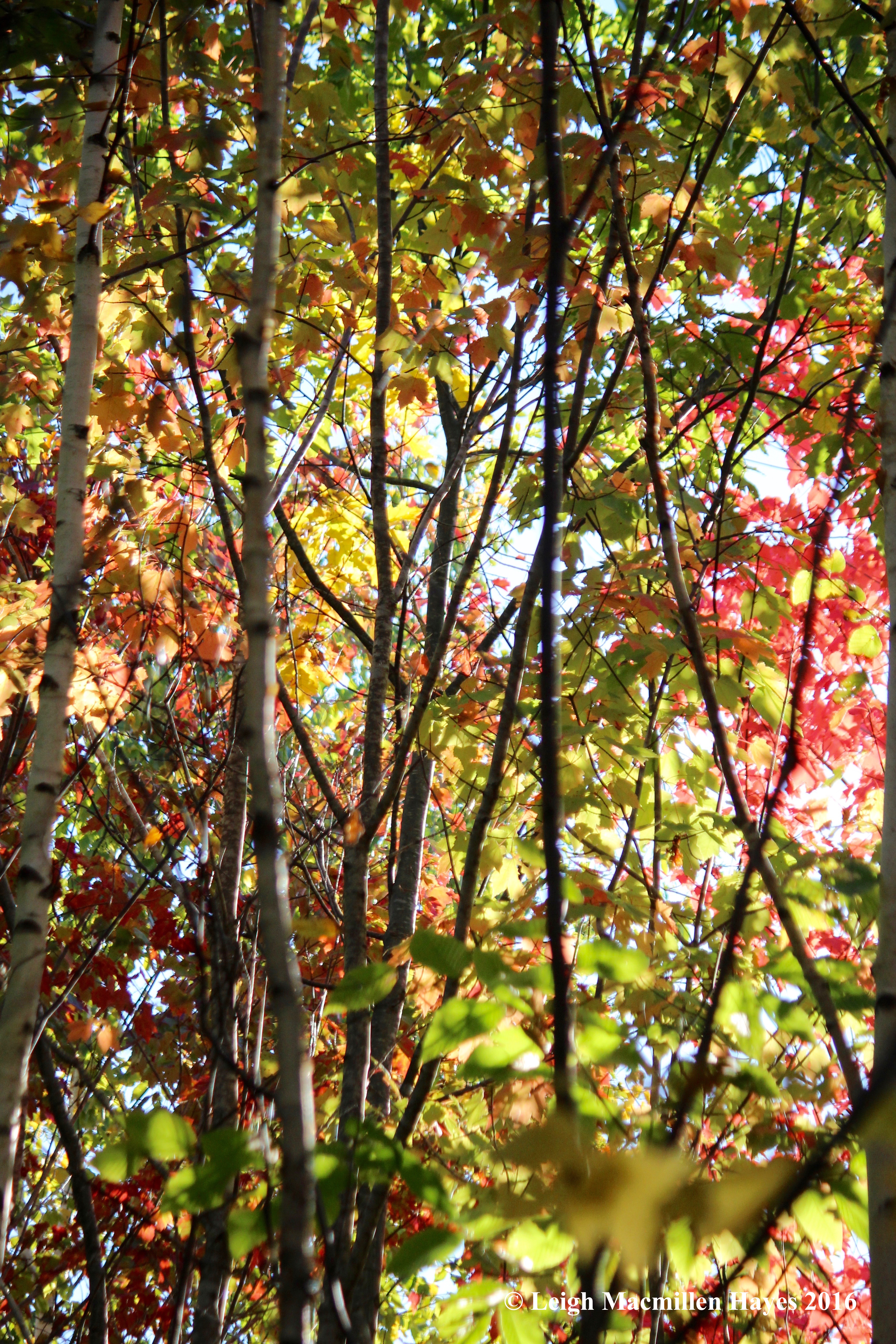
b-red-maples-against-sky

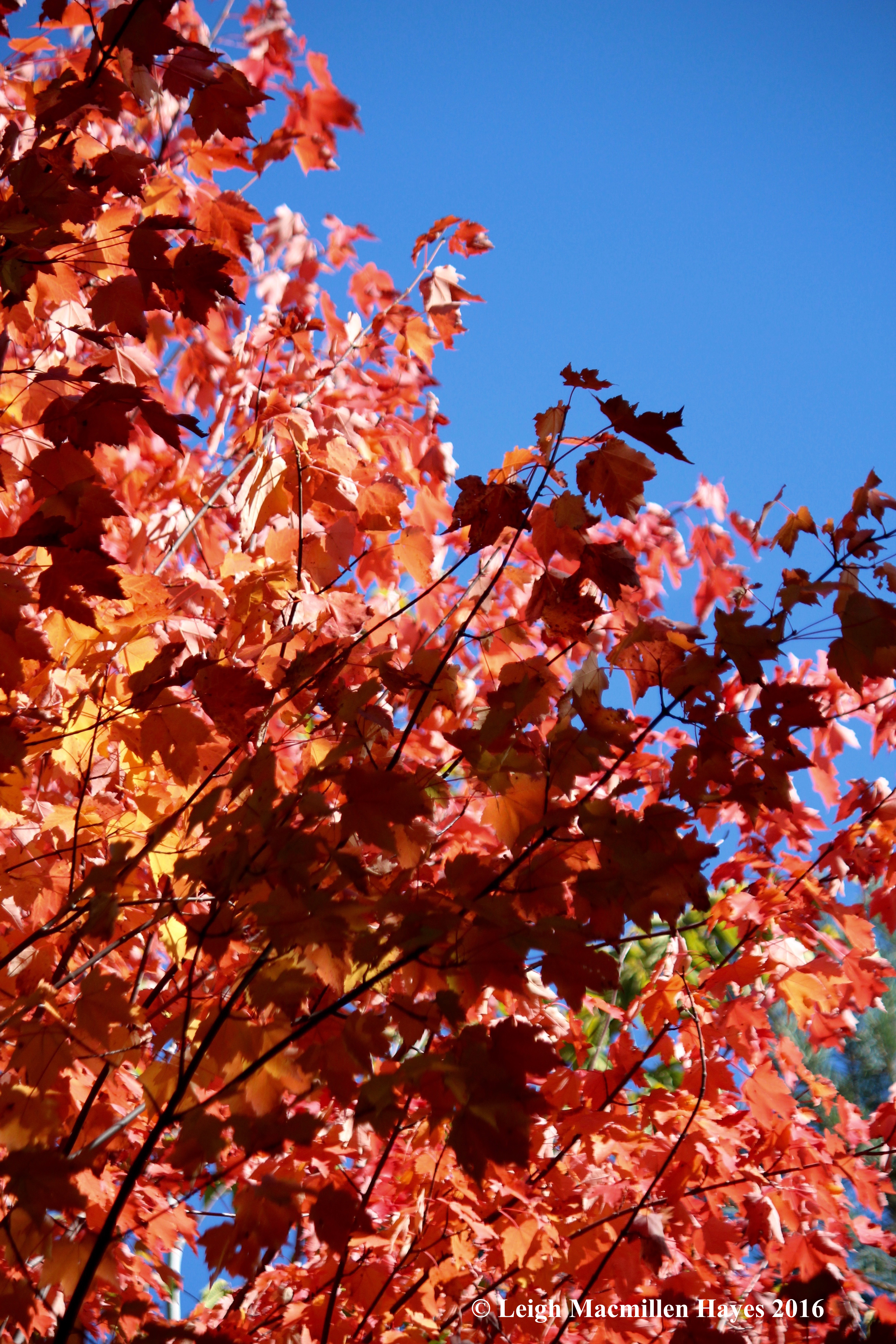
I needed to wander among the red maples

b-red-oaks-against-sky

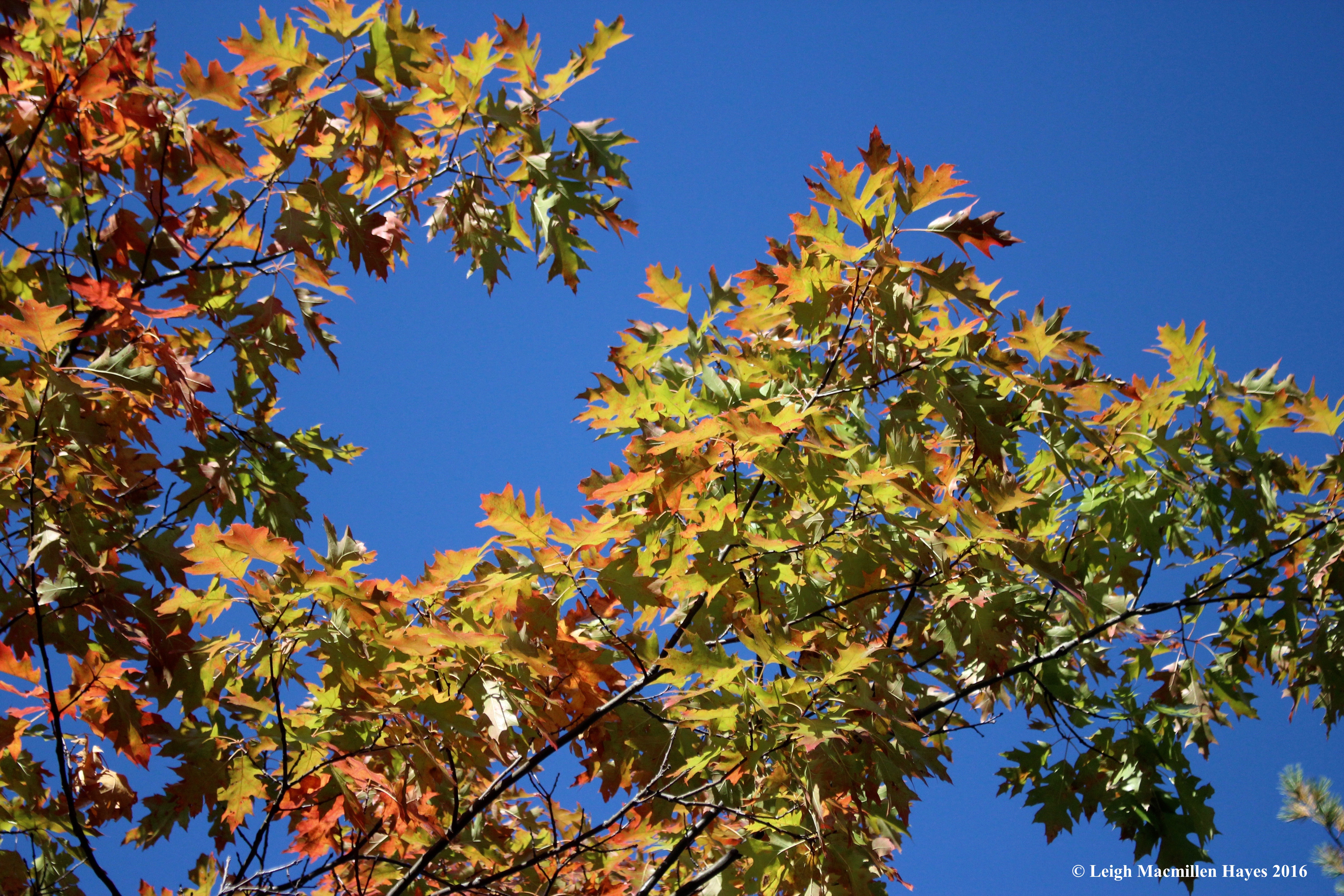
and red oaks that graced the sky.

b-sarsaparilla

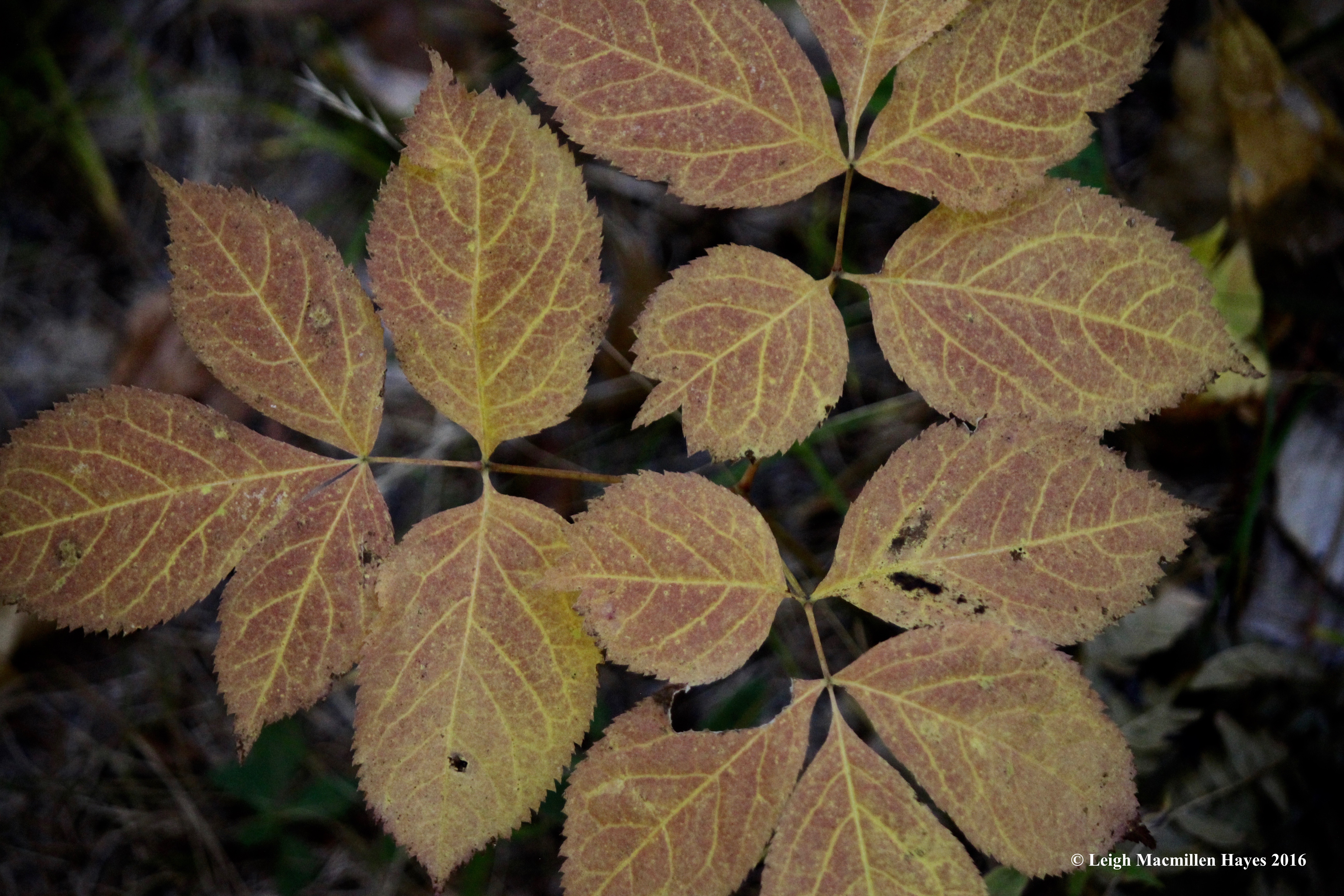
I needed to embrace the subtle coloration of sarsaparilla

b-blueberries-1

and vibrant hues of blueberries.

b-red-maple-1

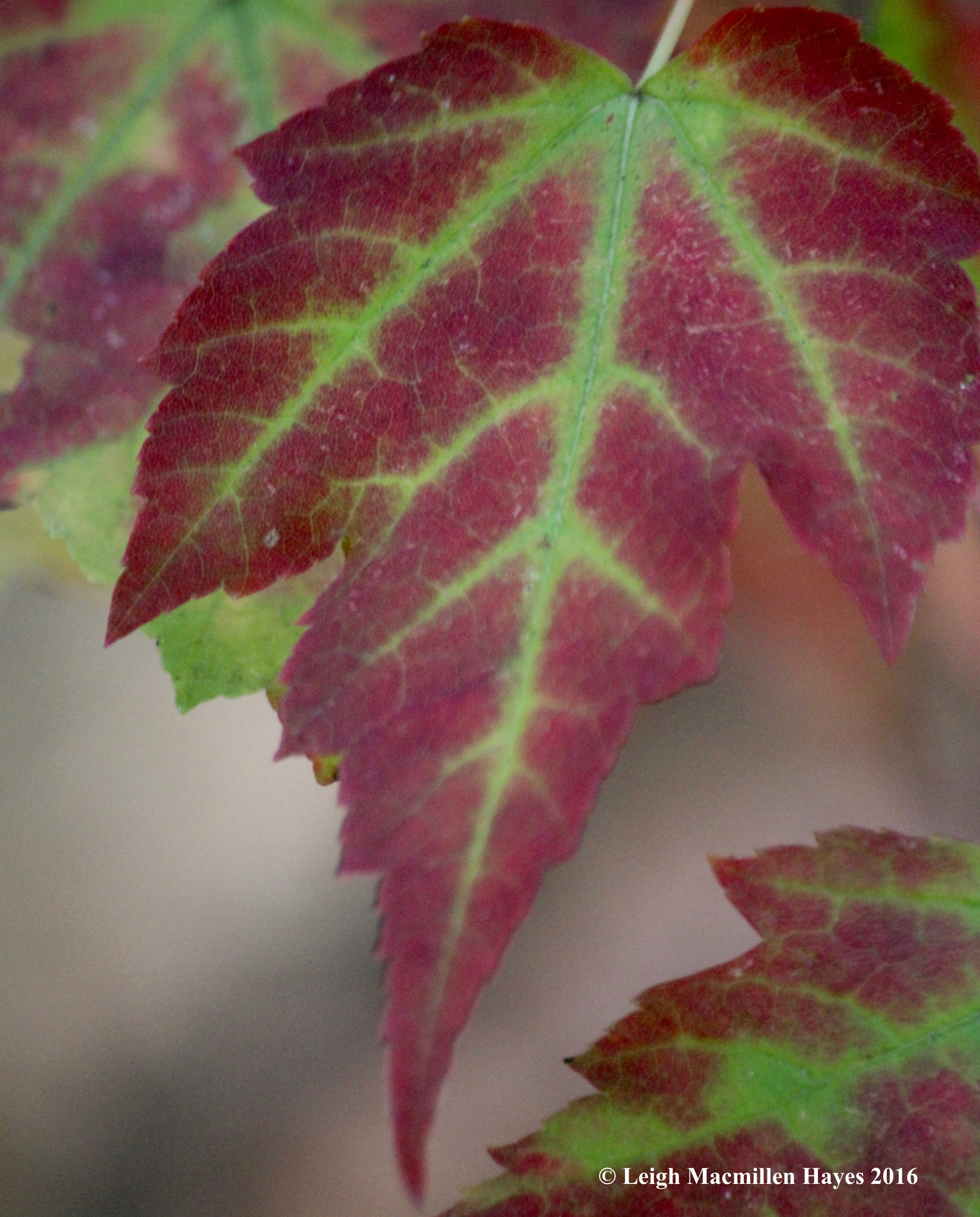
I needed to admire the veins that bring nourishment to trees

b-red-oak-veins

and all that live therein.

b-polypody-spores

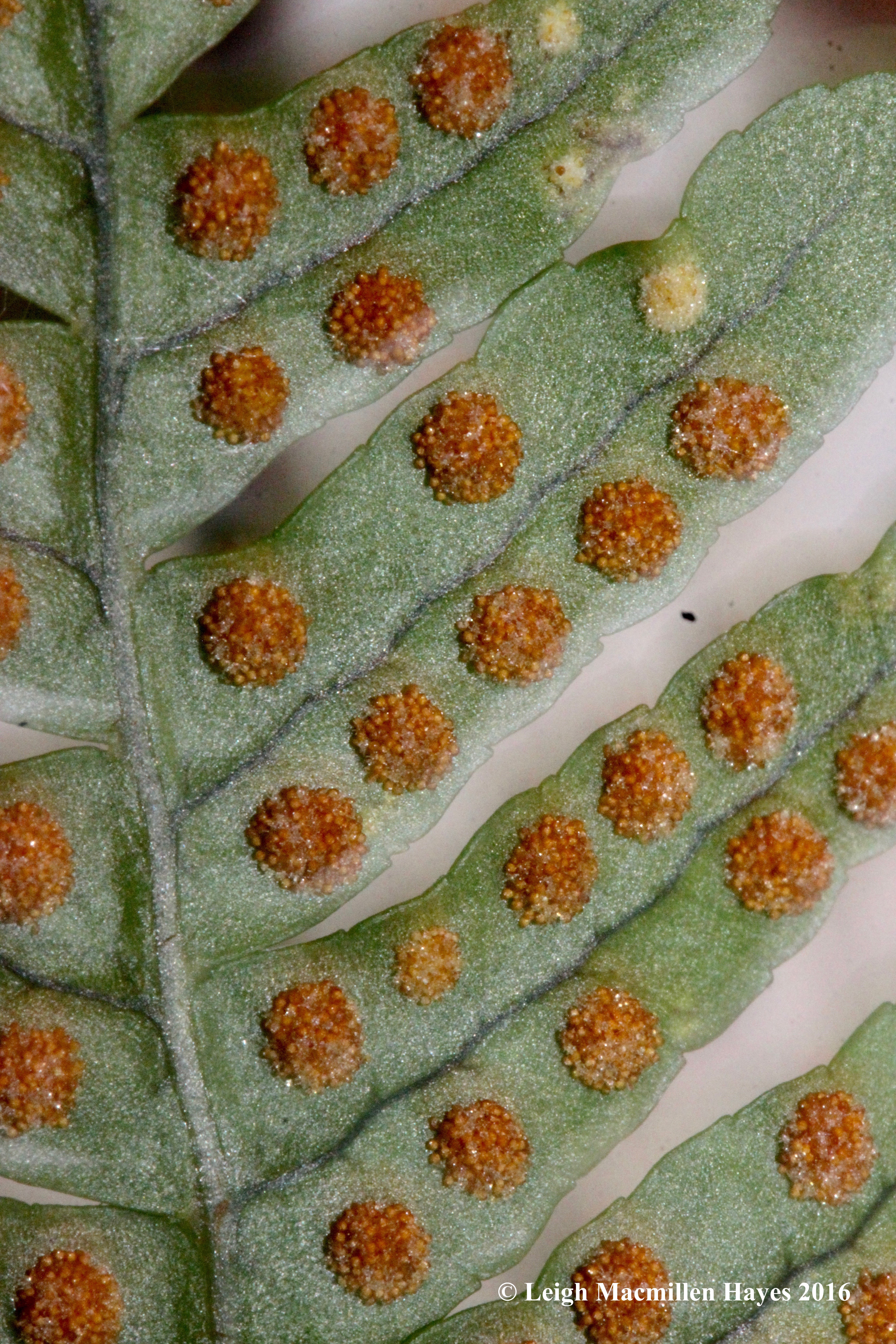
I needed to observe life giving forces

b-winter-green

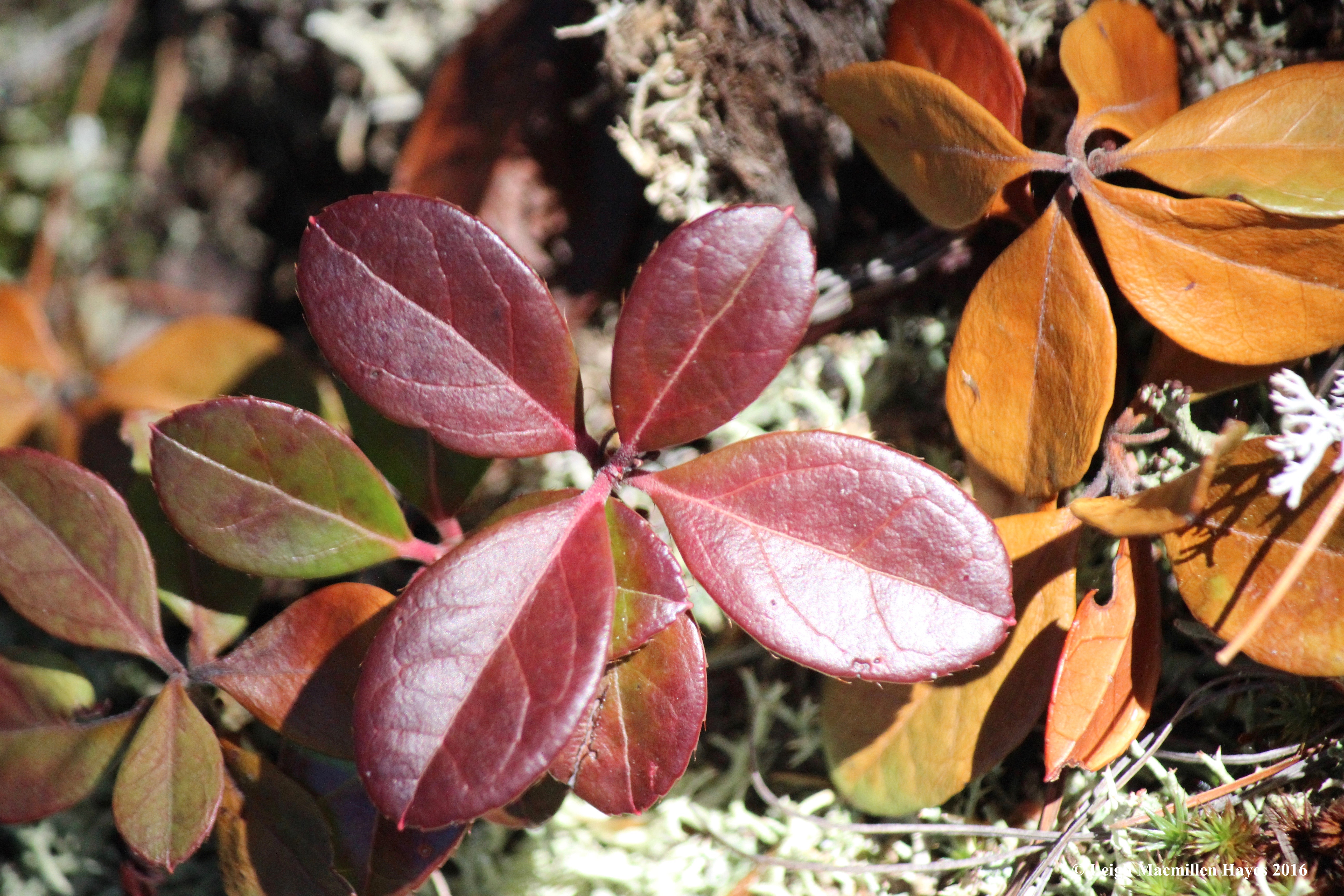
and the differences among kin.

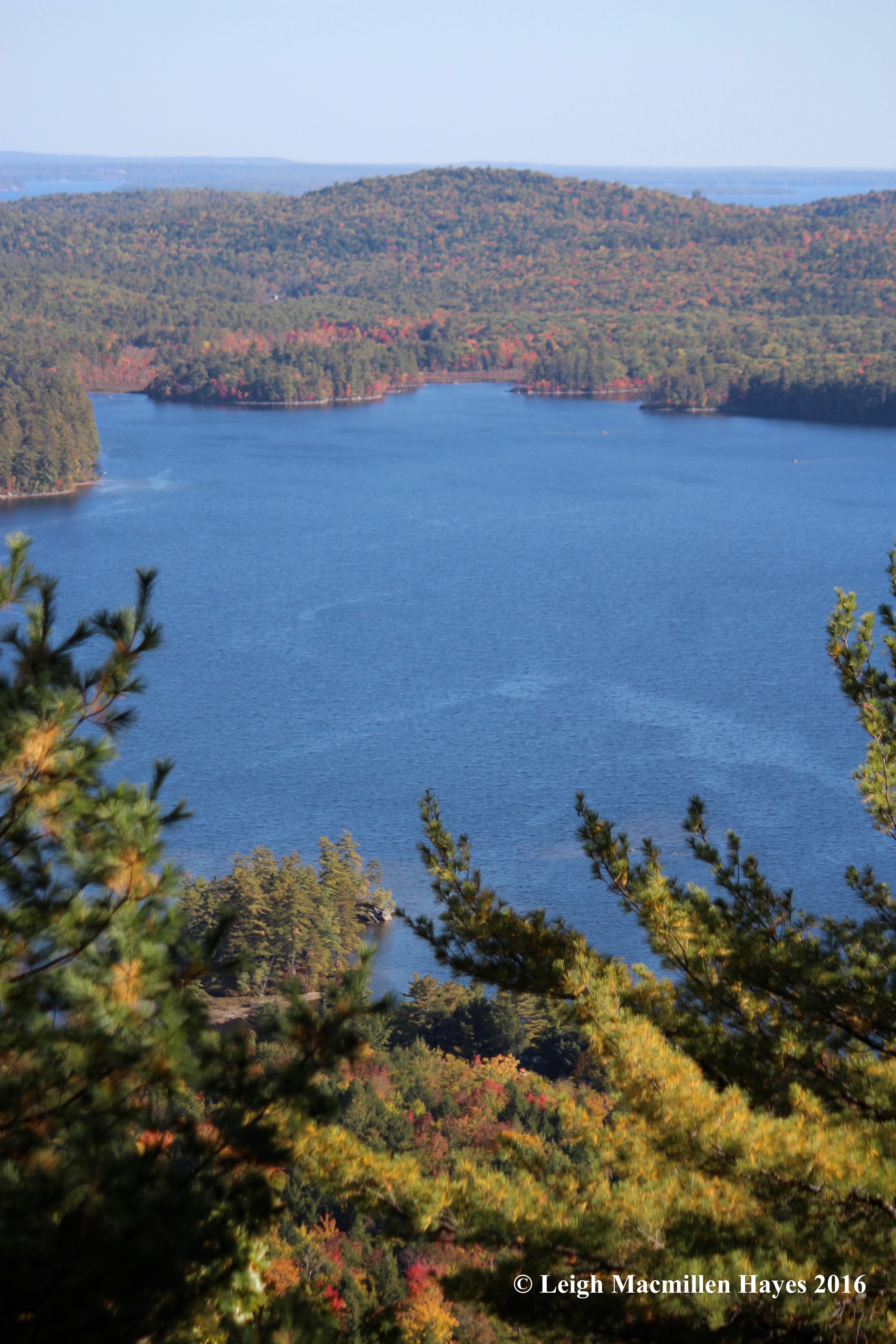
b-foster-pond

I needed to pause at each overlook

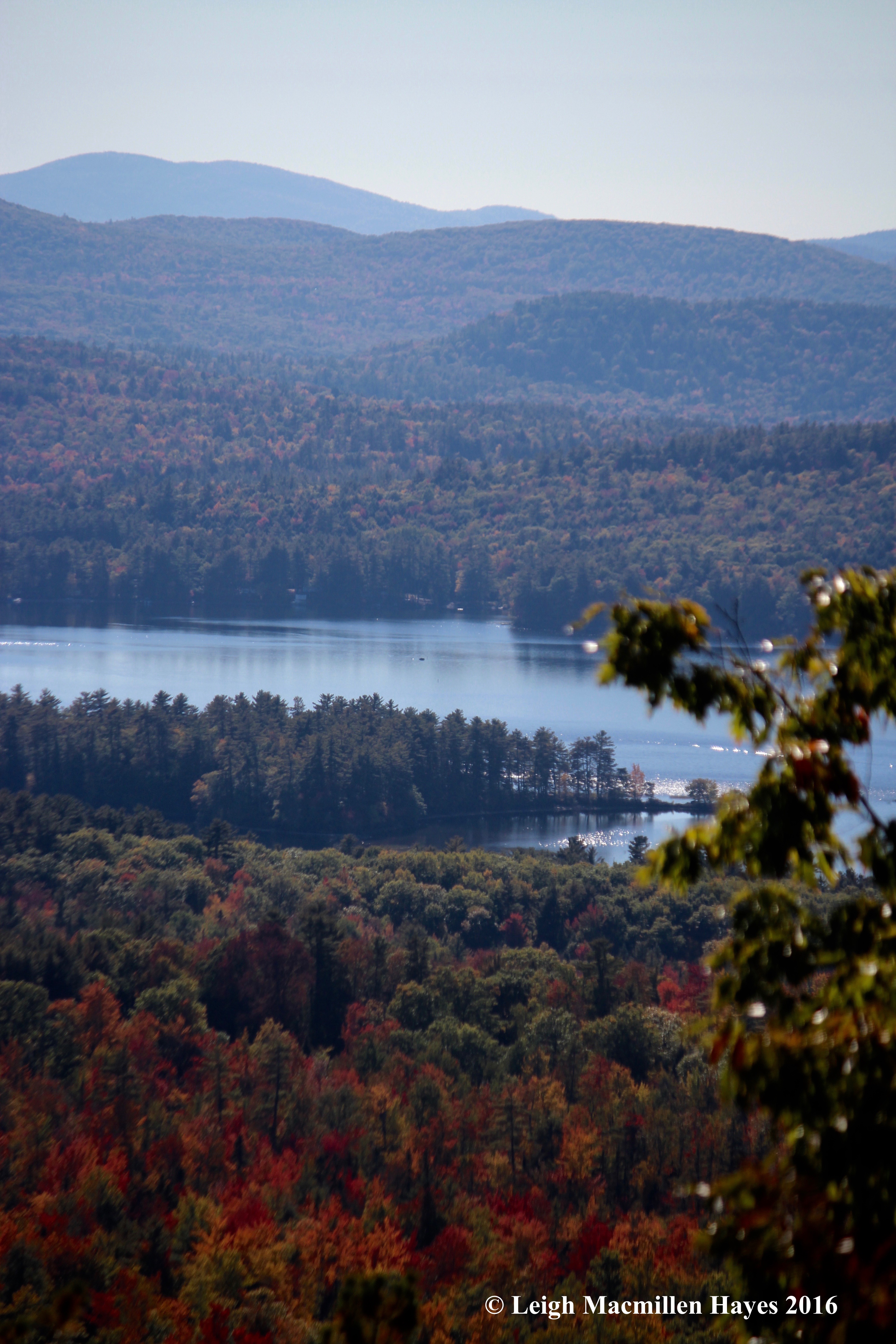
b-peabody-pond

where the view offered up life’s changes.

b-hancock-pond

I needed to say farewell

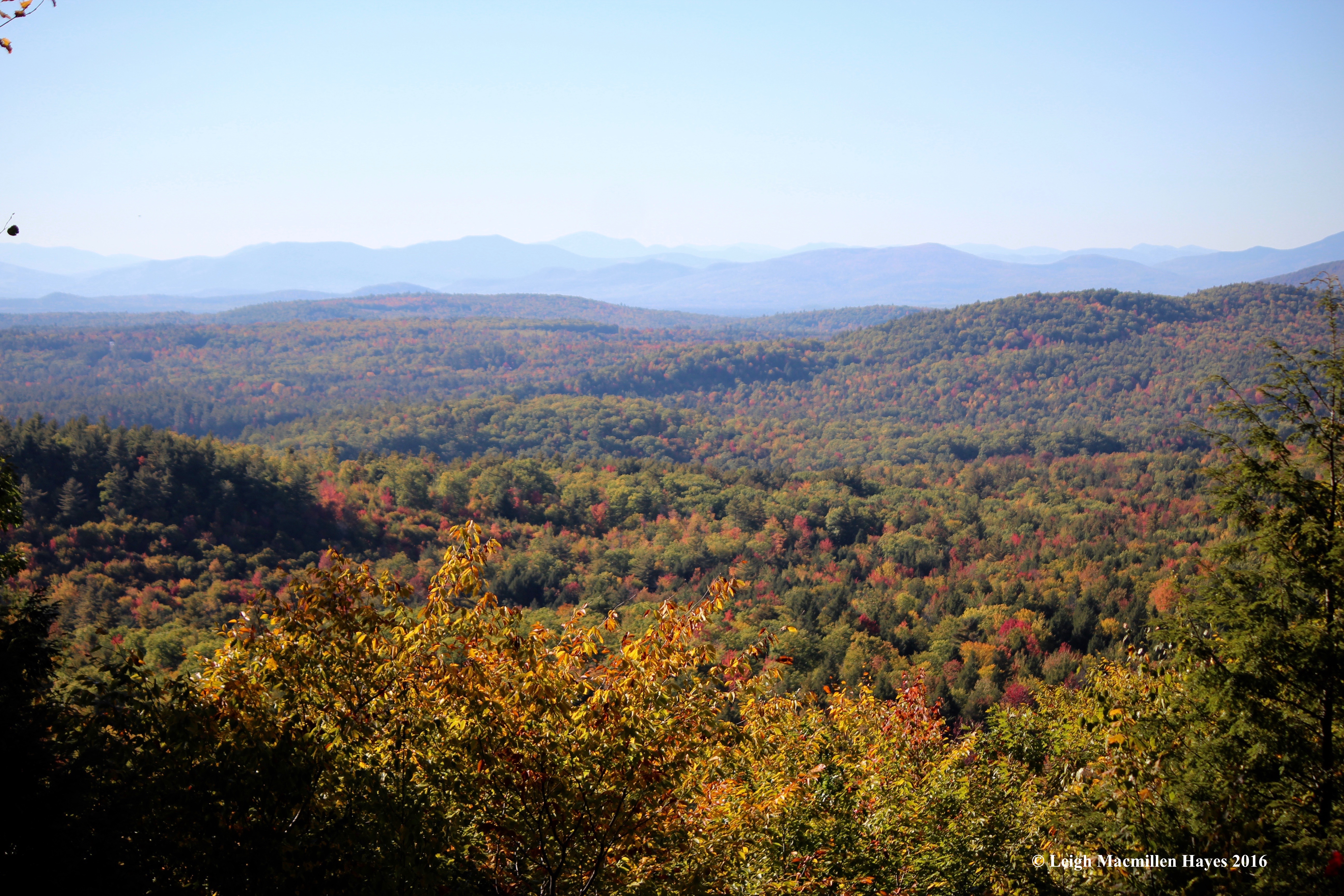
b-white-mountains

as I looked toward the beyond.

b-trees

For you, Brother Bill, I needed to walk the trails today and lift up your  life which ended unexpectedly this morning. I trust that you’ll be forever in my heart and going forth will travel with me as I wonder and wander. I trust you’ll watch over me and help me understand the great beyond. May you rest in peace, big brother.

On Hands and Knees to Wonder

When I invited Jinny Mae to join me at Loon Echo Land Trust’s Bald Pate Preserve this afternoon, she eagerly agreed. And three hours later, I know she had no regrets. Though we never reached the summit, neither of us cared. Our minds were boggled by all that we had noticed.

b-foster-2-1

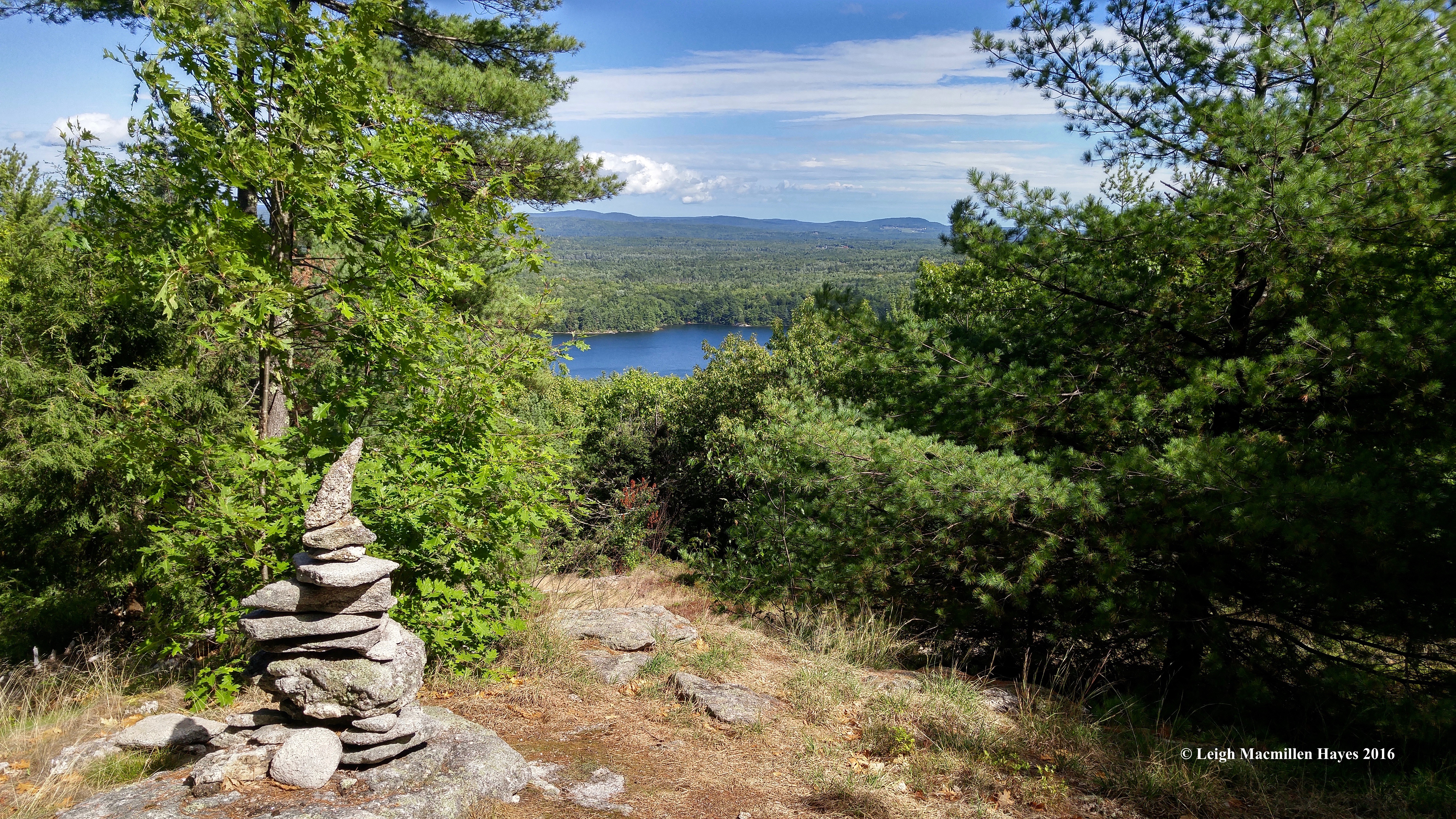
Somehow we managed to beeline our way to the Foster Pond Lookout. And then we slowed down. To a stop.

b-shield-2

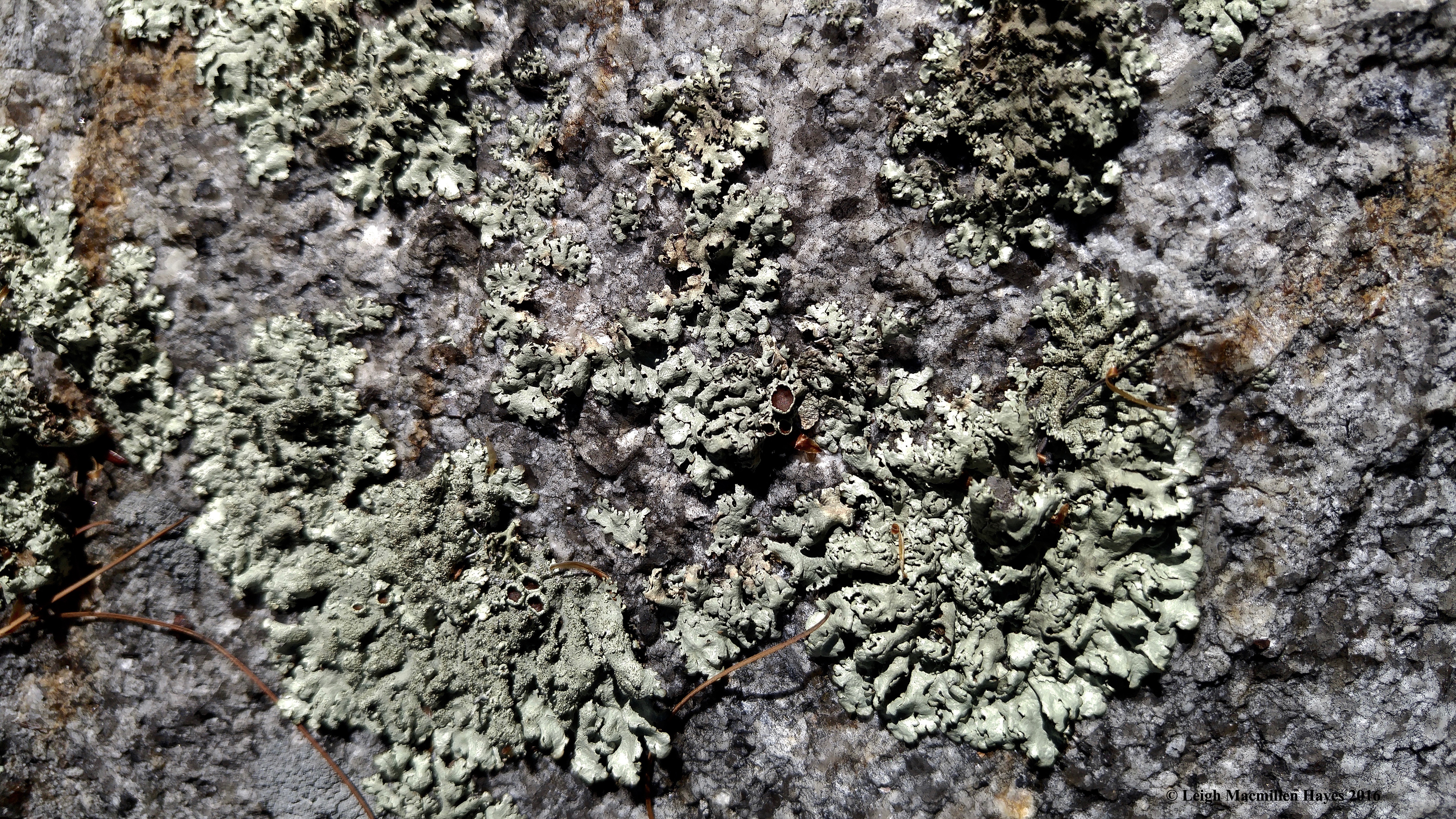
And so we got rather personal with the rock substrate as we took a closer look. At lichens. For what seemed like ever, it was thought that lichens were symbiotic life forms consisting of Freddy Fungus and Alice Algae, who took a liken to each other and their marriage formed a single organism. Sometimes, cyanobacteria or blue-green algae was tossed into the mix. The fungus provided shelter (algae can only live where they won’t dry out and so being surrounded by fungal cells meant Alice could live outside of water), while either of the photosynthetic partners, algae or cyanobacteria, produced food from the sun.

It’s no longer just a story about Freddy and Alice living together, however. New scientific research deems another partner in the mix–yeast, which also provides protection. I feel like just stating that puts me way out of my league.

b-shield-1

Our goal wasn’t to understand those relationships per say. We just wanted to spend some time looking and developing an eye to recognize these structures while appreciating their life’s work that often goes unseen.

b-shield-on-rock-2-1

Some grow at an especially slow rate–think hundreds of years rather than decades. That in itself, should stop us in our tracks. And yet, as we stand 5+ feet above those that grow on rocks, we hardly notice them.

b-green-shield-5-1

The  dark brown fruiting bodies, called apothecia, are where spores are produced and life continues. Walk tenderly, my friends.

b-toadskin-2

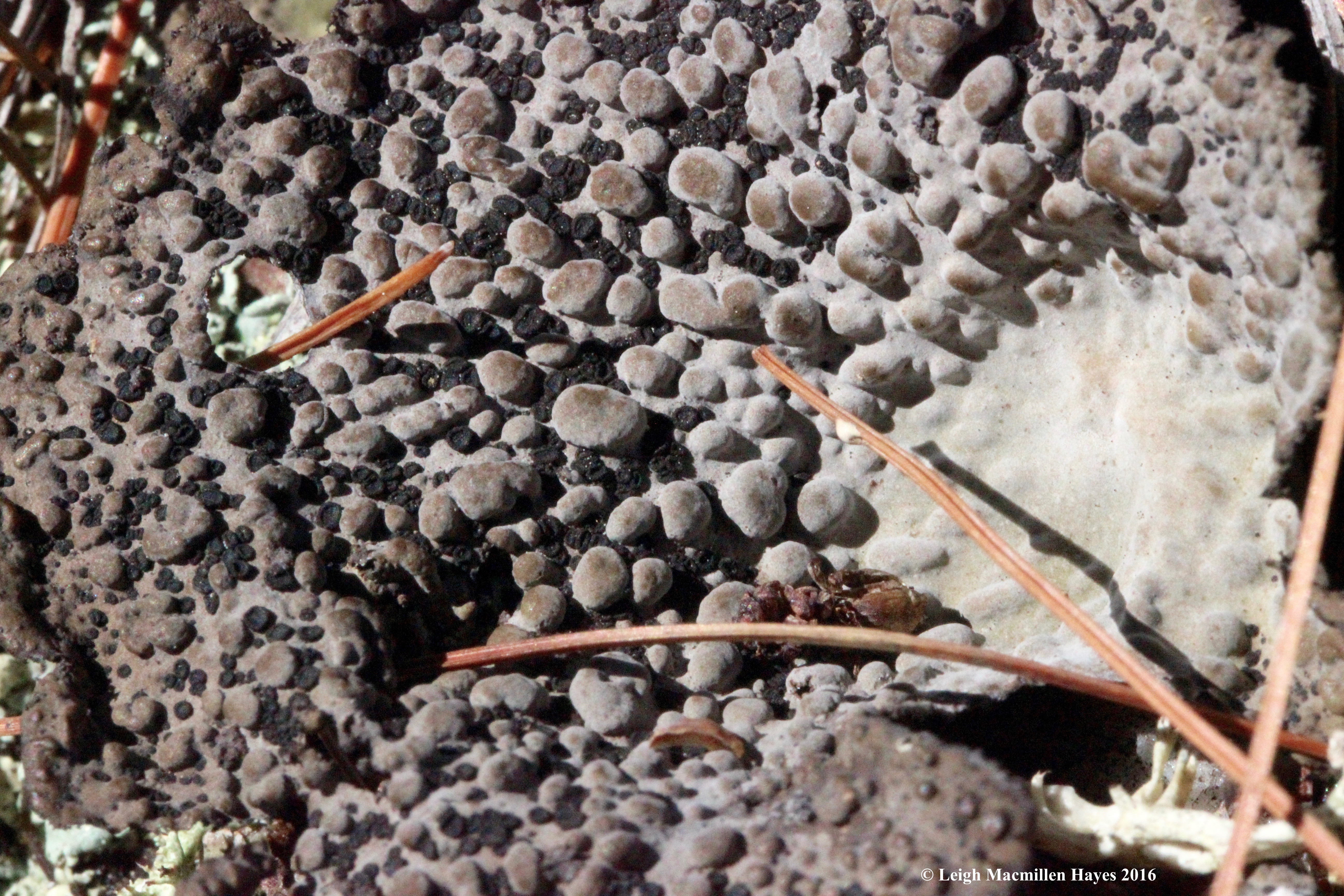
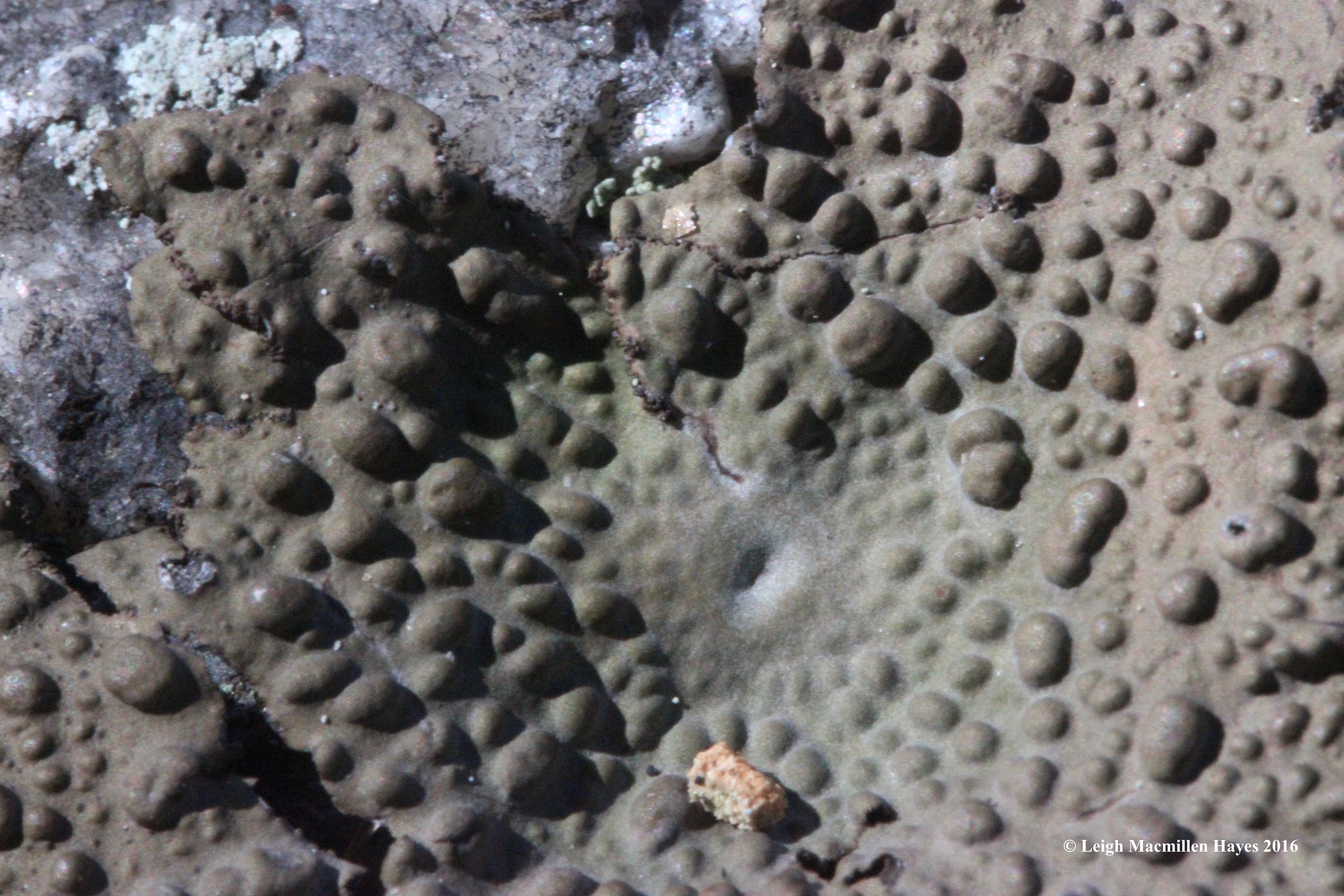
Jinny Mae’s excitement over the toad skin lichen was contagious. Notice its warty projections–much like the skin of an American toad, which varies in color.

img_6343

I spied this toad a few days ago, but its skin certainly helps qualify the lichen’s common name.

b-toad-skin-lichen-3

If you look in the center, you can see the point where the lichen attached to the rock–the belly button of this particular lichen making it known as an umbilicate lichen.

b-toad-skin-lichen-wet-and-dry

And among the favorite finds of the day, Jinny Mae was the first to spy this. It had rained this morning and everything was dry by the time we hiked, but some signs of moisture remained. In this case, it’s wet toad skin contrasted by dry toad skin. If you are willing to give up some water from your water bottle, you can create the same contrast. And note the black dots–its fruiting bodies or apothecia where its spores are produced.

b-british soldier patch (1).jpg

The more we looked, the more we saw.

b-Gritty British soldier lichen.jpg

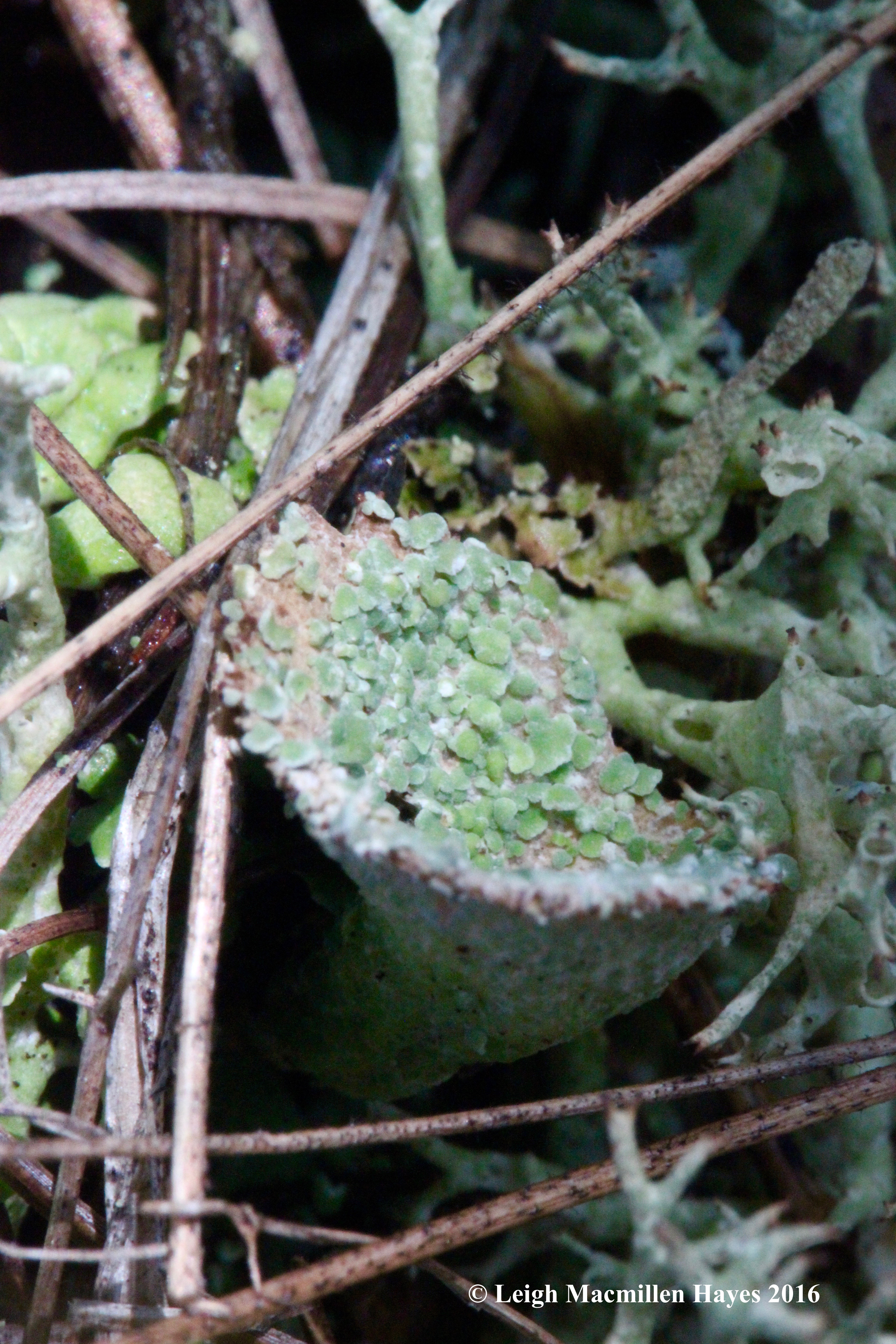
British soldiers were topped by their brilliant red caps–forever announcing their presence.

b-pixie 1.jpg

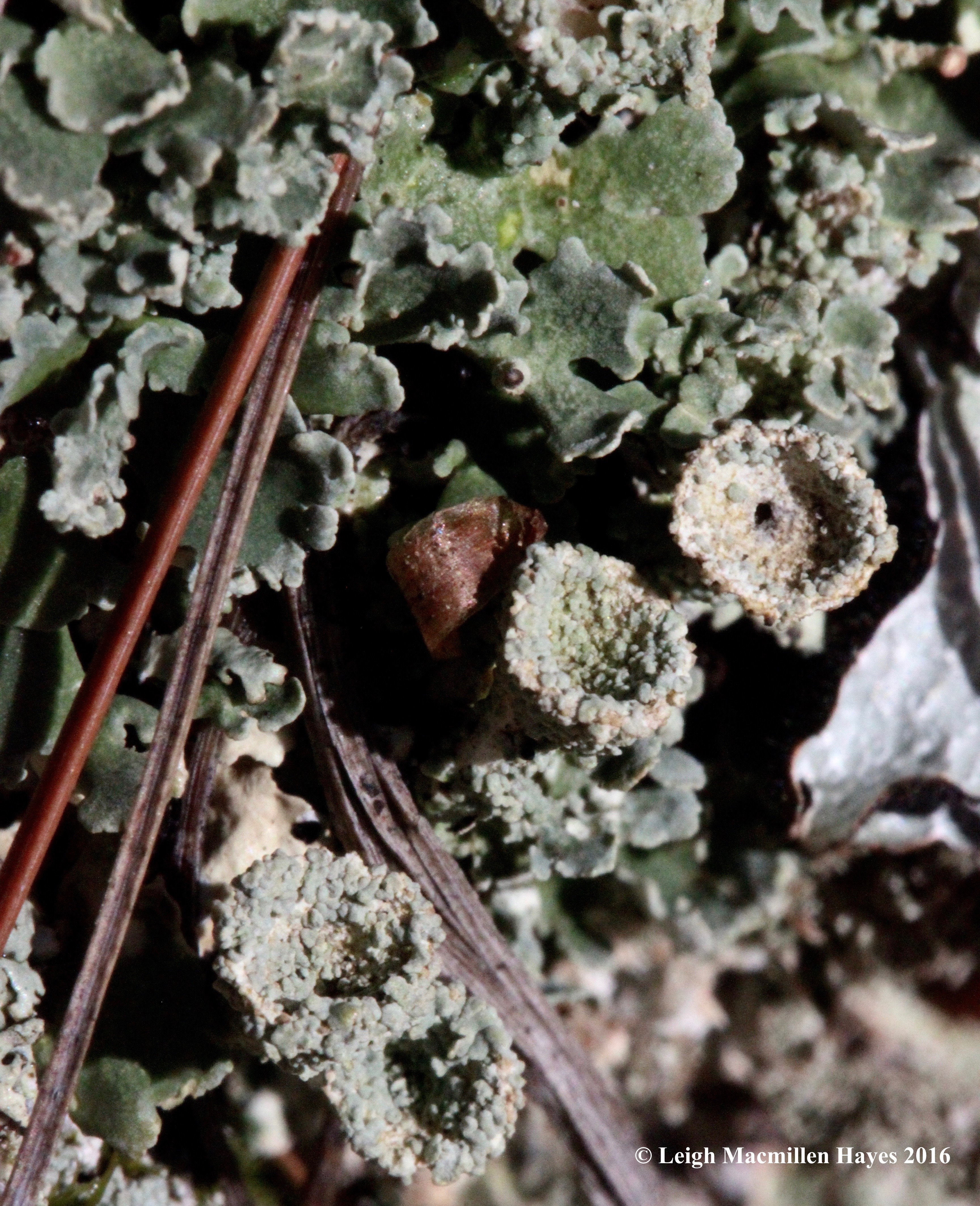
Pixie-cup lichen stood like goblets, ready with magical potions.

b-pixie-cup-filled-to-the-brim

Some were filled to the brim and almost overflowed with life.

b-reindeer-1

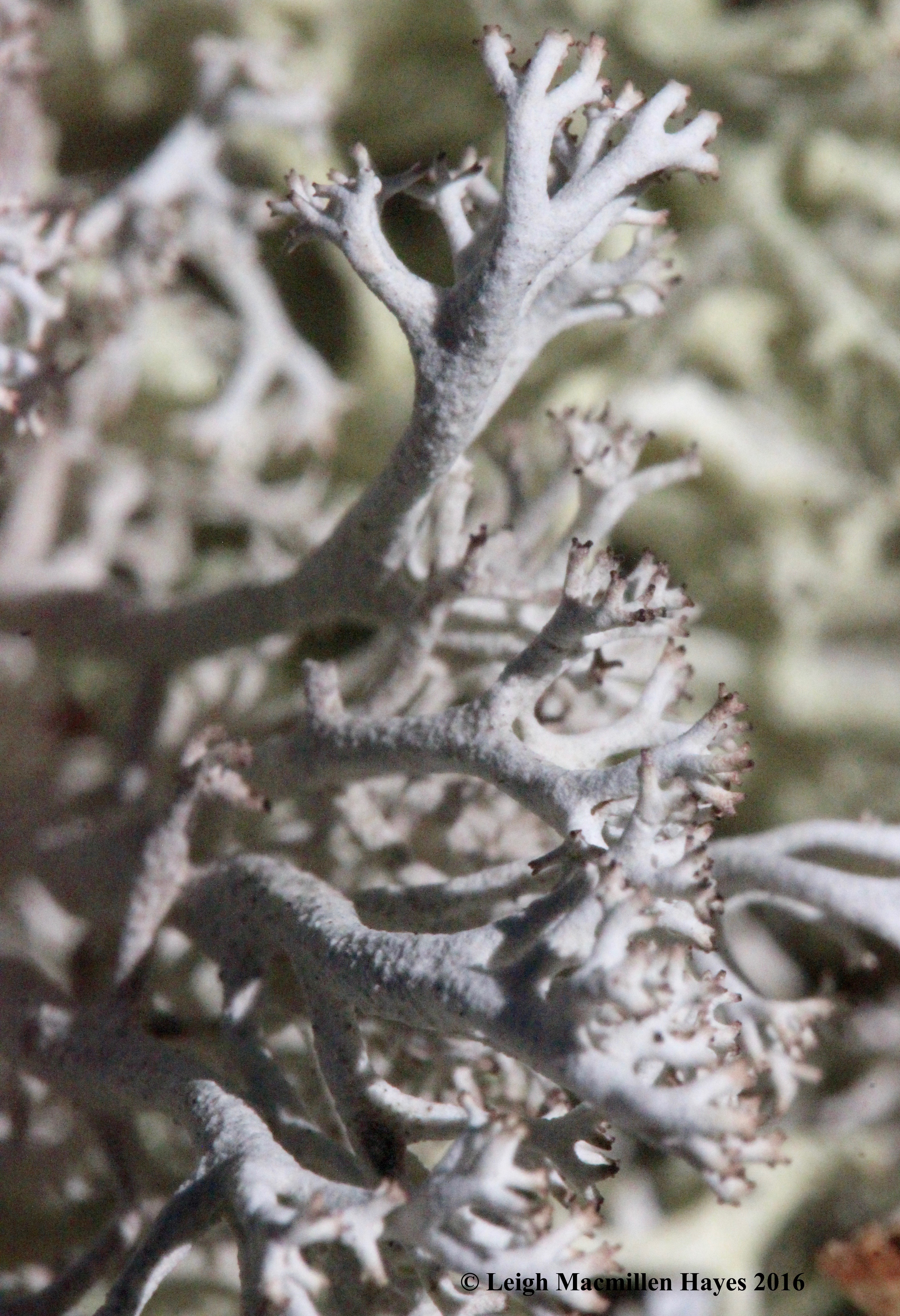
We marveled at the green,

b-reindeer-gray

gray,

b-reindeer-foam-1

and foam-like structure of reindeer lichen. These are treats for reindeer and caribou, neither of which frequent our region except for one night a year.

b-yarn-moss

And then we looked at the next layer in succession on a rock. Once the lichens have established themselves, mosses move in. Did you ever think about the fact that mosses don’t have flowers, stems or roots? Instead, they feature tiny green leaf-like structures and microscopic hair-like structures. They send their “hairs” into the crevices created by the lichens and anchor themselves to the rocks. Today, we found a moss neither of us remember seeing before.

b-yarn-moss-2

To us, it offered a square presentation and we debated its identity. While we thought it may be yellow yarn moss, I’m now leaning toward medusa moss–though their leaf edges are smooth and these are obviously toothed.  Do you know? Which ever it is, we were wowed.

b-view-from-the-rock-1

We finally moved on, hiking to a false summit to take in the western view.

b-polypody-among-rock-tripe-1

The late afternoon sun and breeze played havoc with our views, but we eventually reached the rock tripe wall, where common polypody took advantage of the living conditions.

b-tripe-wall-1

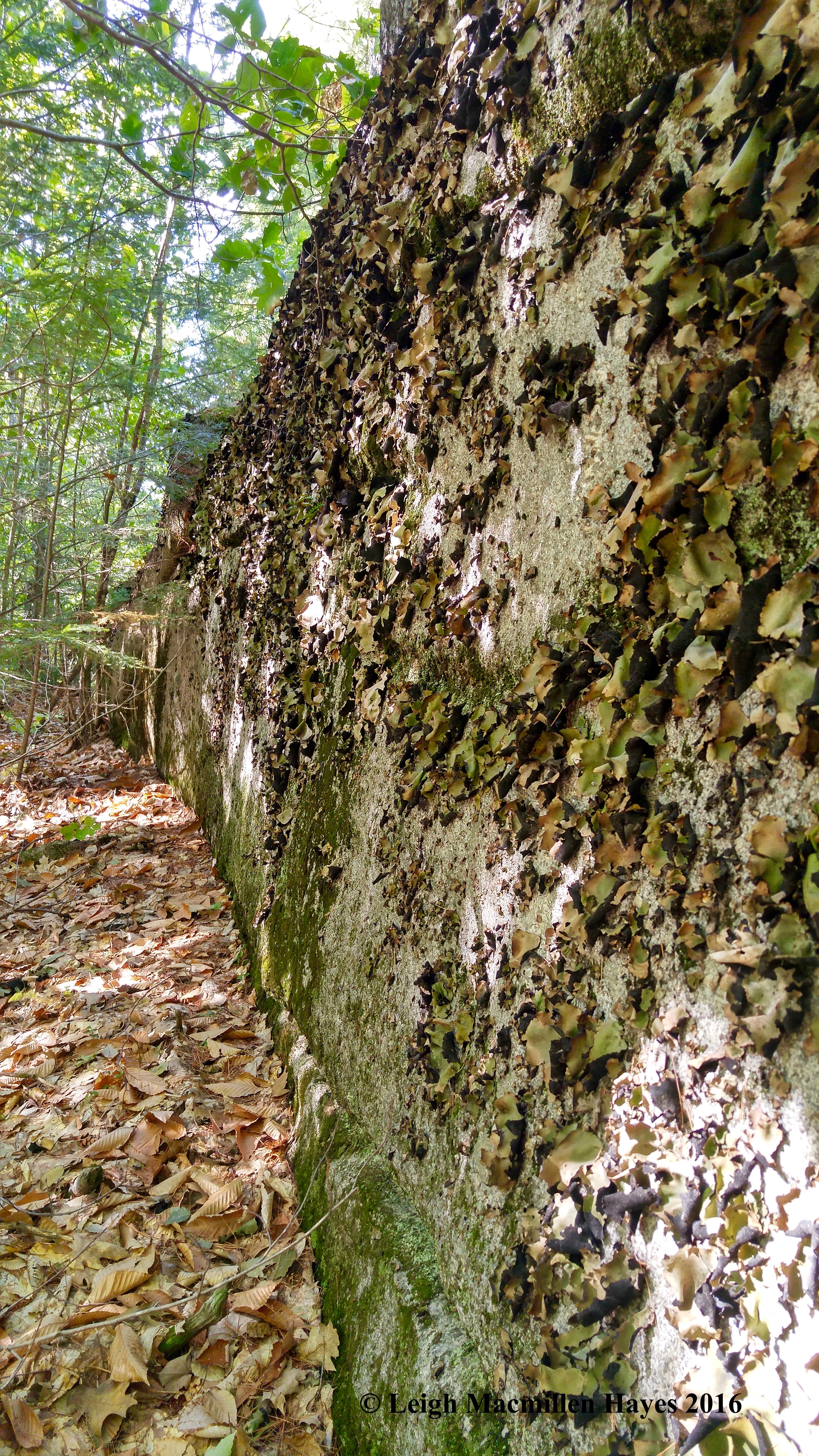
The lichen covered a ledge, some of it green from the morning rain, but surprisingly much of it still brown. Like the toad skin lichen, rock tripe are umbilicate and attached to the rock at a single point. They reminded me of elephant ears flapping in the breeze.

From there, we headed down. Our pace on the slow side all afternoon.

And sometimes we had absolutely no pace at all, unless you consider the motion (and grunts) as we got down on our hands and knees and even our bellies to take a closer look. It was all worth a wonder. And we did.