Walking My Thoughts Among Life and Death

People present me with cool gifts and yesterday was no different. First, I received an email from a friend asking if I could ID a bug she’d found on the ground following a quick but harsh storm on Wednesday night. And after I did so, she asked if I’d like it for my collection.
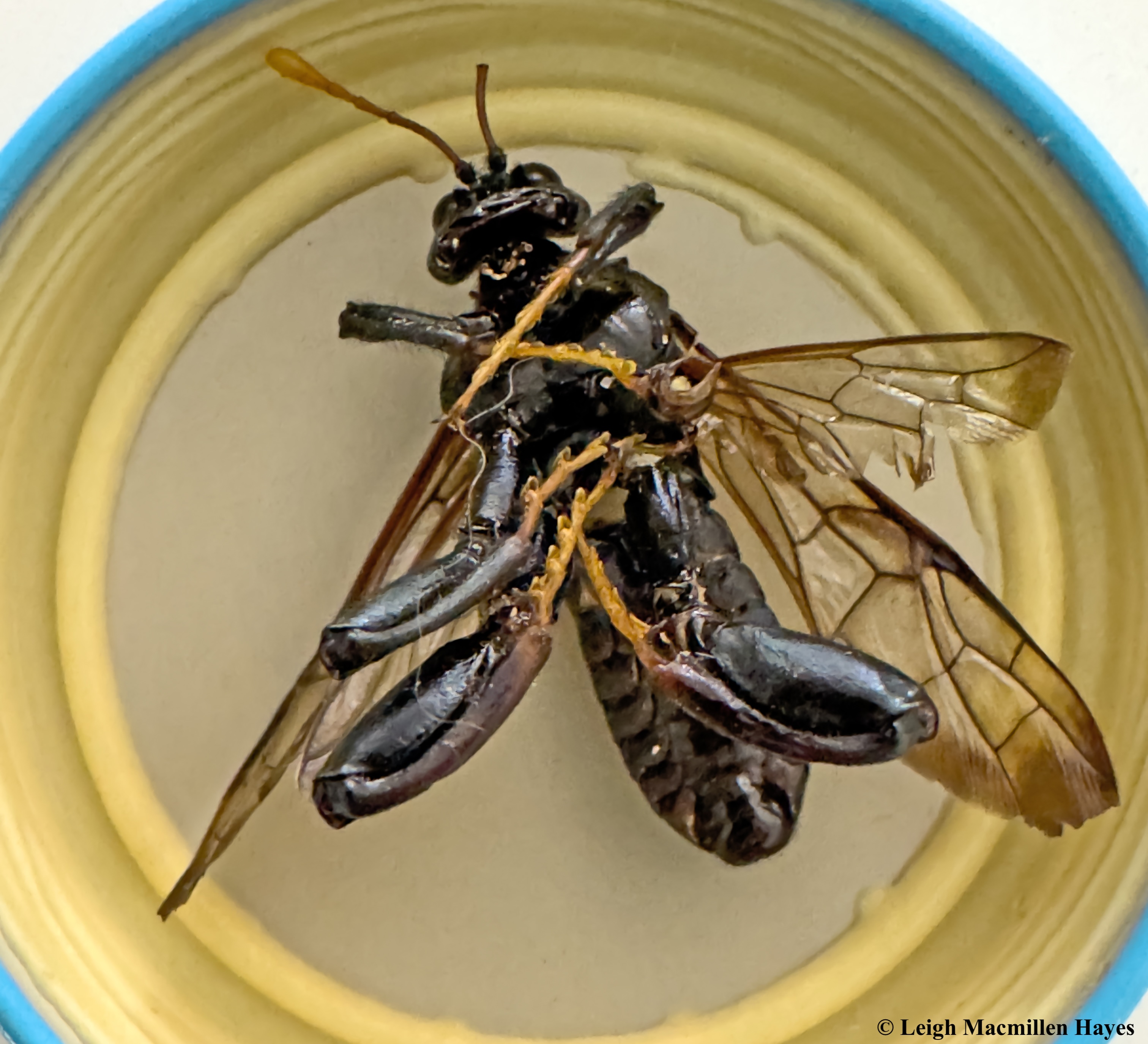
Like it? I’d LOVE it. Look as those beefy legs. All meat on the femur and tibia, which give this insect a rather mean look. That and it’s size. From head to tip of abdomen it measures 1 1/4 inches, and it has a wing span of 1 7/8ths. Not one you really want to meet in a vacant alley.
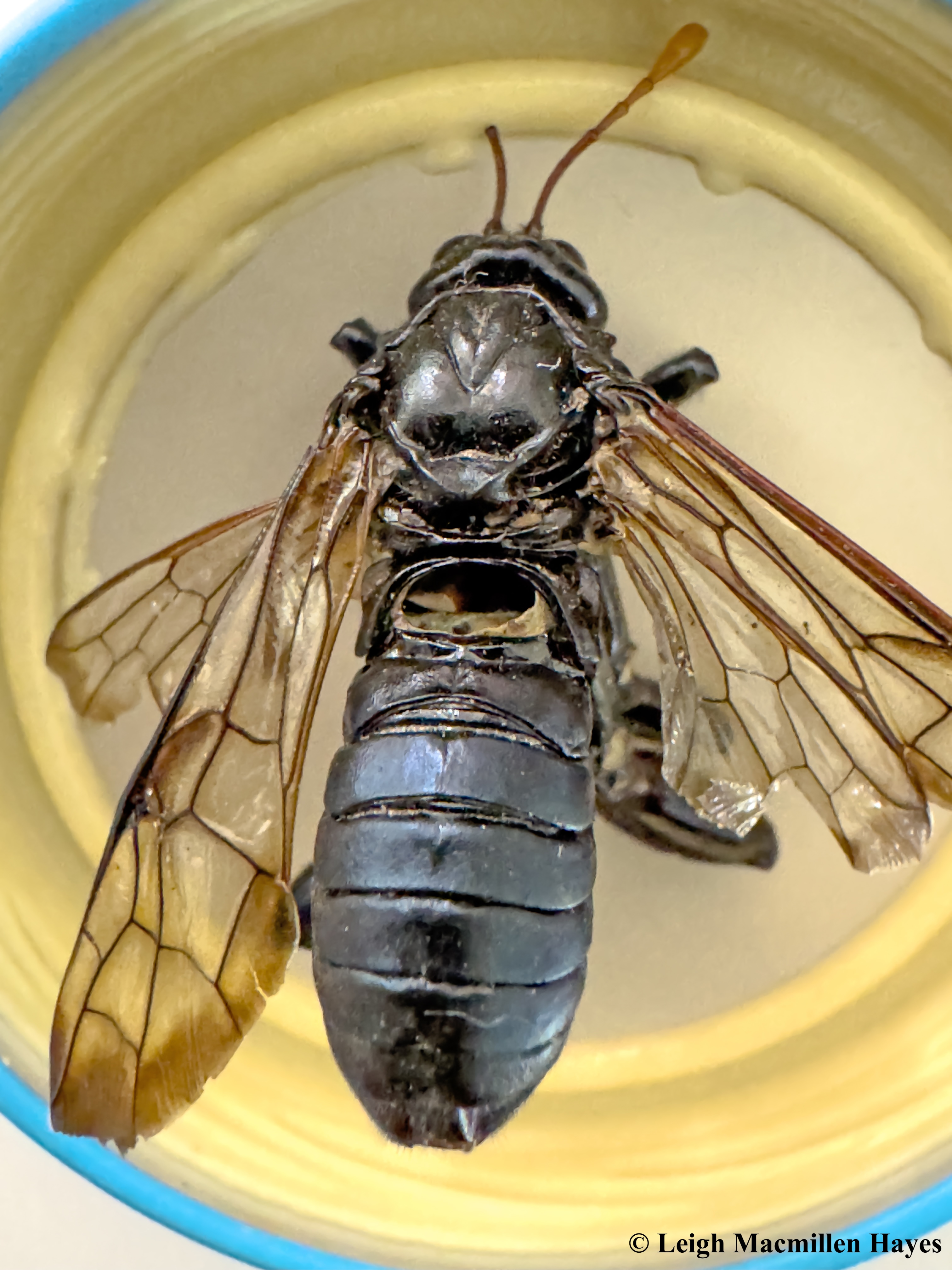
Before I was gifted this creature, I asked if it had a whitish spot on at the top of the abdomen and was correctly informed that it did not.

Except: upon closer inspection after I picked it up from Kappy yesterday, I discovered that it did indeed have such, only where the spot had been was now a hole. And it appeared that the guts had been sucked out of it.

That got me to thinking about the weather this past week and the Bumble Bees I went in search of during some rain on Thursday. All were taking a mid-day siesta as they clung to flowers and water droplets formed on their bodies.

Some had been better at locating a spot under the foliage, but by the matted hair on the thorax, it didn’t seem to make a difference. Wet is wet.

And one I thought was rather silly because it could have easily climbed into the Hosta flowers to sleep, but instead chose the outside upon which to wait out the storm. It really wasn’t much of a storm on Thursday, but rather a pleasant summer rain that we needed.

Then on Friday I found this sight, an Ambush Bug using its raptorial legs to hold its prey, a Bumble Bee.

At less than a half inch in size, Ambush Bugs sit silently on or under flowers, waiting for the right moment to do as their name implies and ambush an insect with their hooked forelegs, then inject a venom to immobilize the victim. They also inject a liquifying fluid that turns the prey’s insides into a buggy milkshake, the summer drink that they slurp through a straw-like beak.

Knowing they can take down prey many times their own size, I began to wonder about my bees and the Mighty North American Elm Sawfly (the larvae of which, I’ve just learned feed on foliage of willow, birch, maple, cottonwood, aspen and other poplars, and of course, elm trees).

I wondered if the rain on Wednesday night and again on Thursday, helped the Ambush Bugs because they had wet and lethargic insects clinging to flowers or leaves and just waiting to be victimized–in a buggy sort of way.
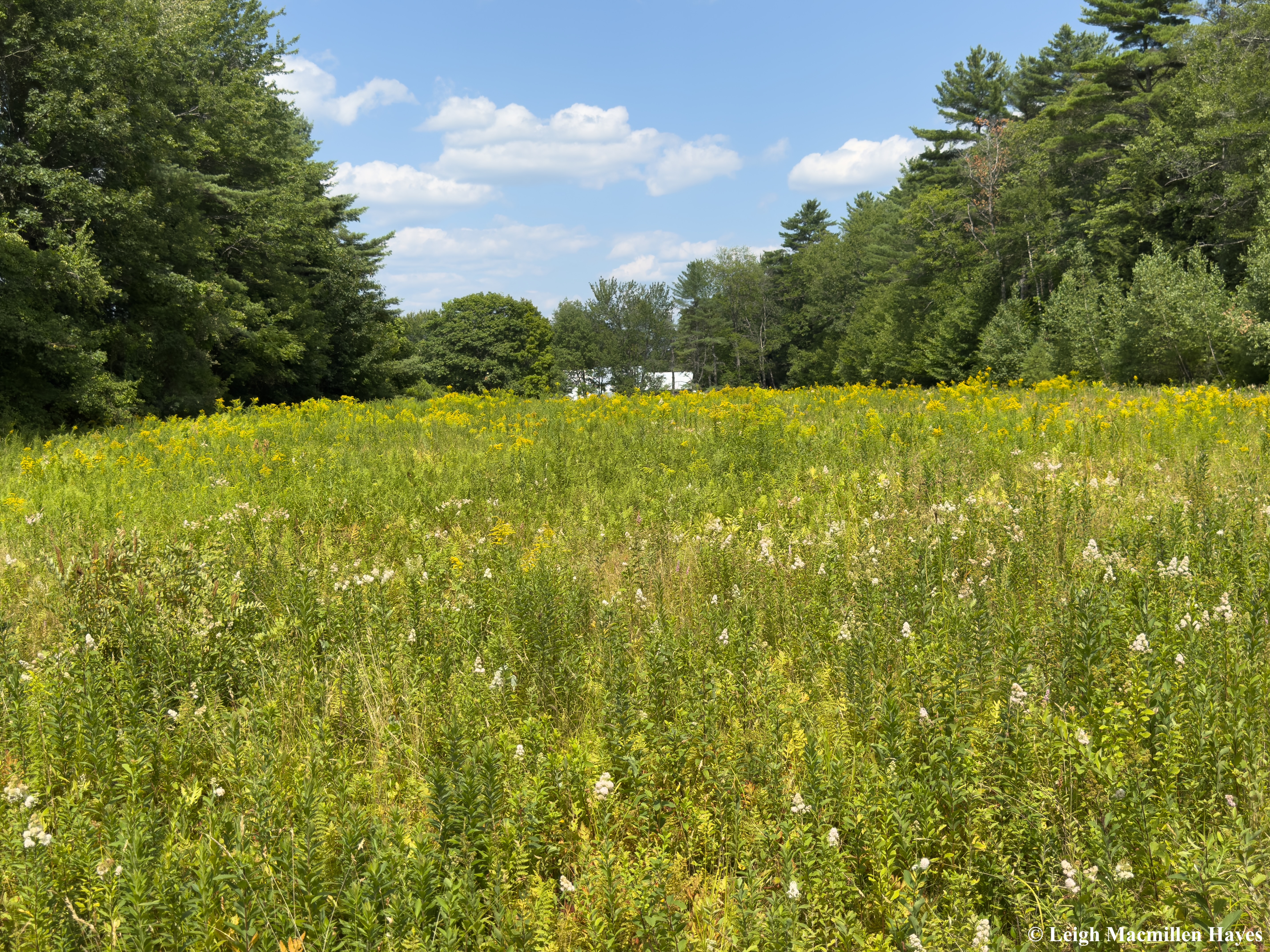
I’ll probably never know, but today, I headed out to the field, which I’ve decided is actually a meadow, and I think I’ve said that before, to see if I could find more Ambush Bugs.
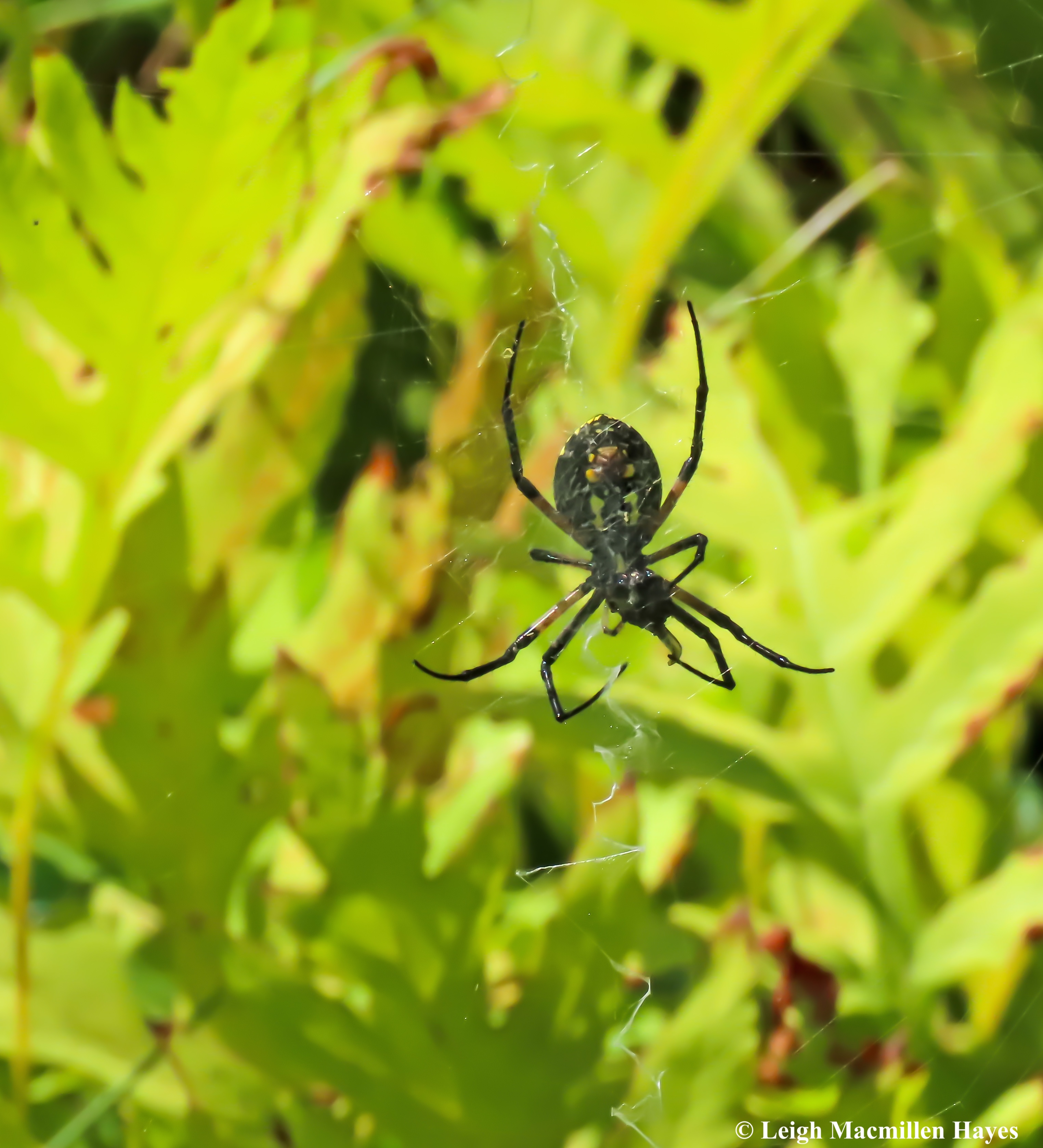
My neighbor, Karen, who owns the field, saw me and followed a cutover path her husband created (mowed) and we met in the middle to chat for a few minutes. And then, as we were about to go our own ways, we saw a species the two of us have been seeking for several weeks now. The best part is that we saw the Black and Yellow Garden Spider at the same time.

As it turns out, when I checked my blog posts for last year, we spotted the first of this species on August 3rd. Well, I did anyway. I think Karen was a few days ahead of me, but once I had cataract surgery, the whole world opened up and gave me a Field of Vision I hadn’t experienced in a long time.

Today’s female was working on spinning a meal into a package, and it was difficult to tell what she’d caught. But that didn’t matter to us. We were just so happy to have spotted her . . . together.
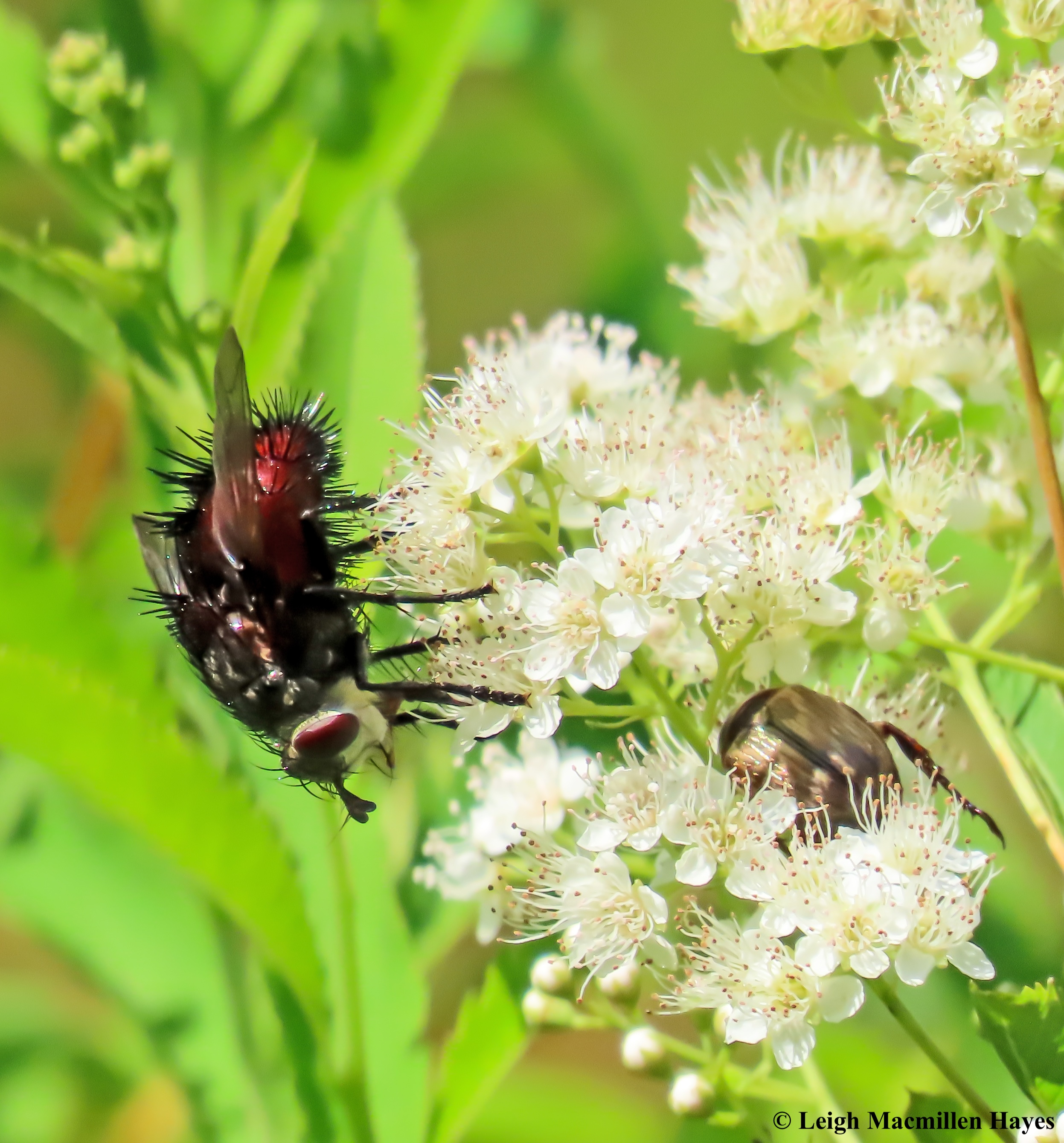
Later in the day I was back in the field, and again had a first sighting for this year–a Tachnid Fly, its dark oval eyes and bristly oversized body a giveaway. Tachnid Flies are considered beneficial because they dine on lots of other insects including sawflies (hmmm), borers, and green stink bugs, plus tent caterpillars, cabbage loopers, and spongy moth larvae.

Suddenly an interesting looking insect flew in . . . only it wasn’t one insect but two, and moving rather rapidly across the flower tops.
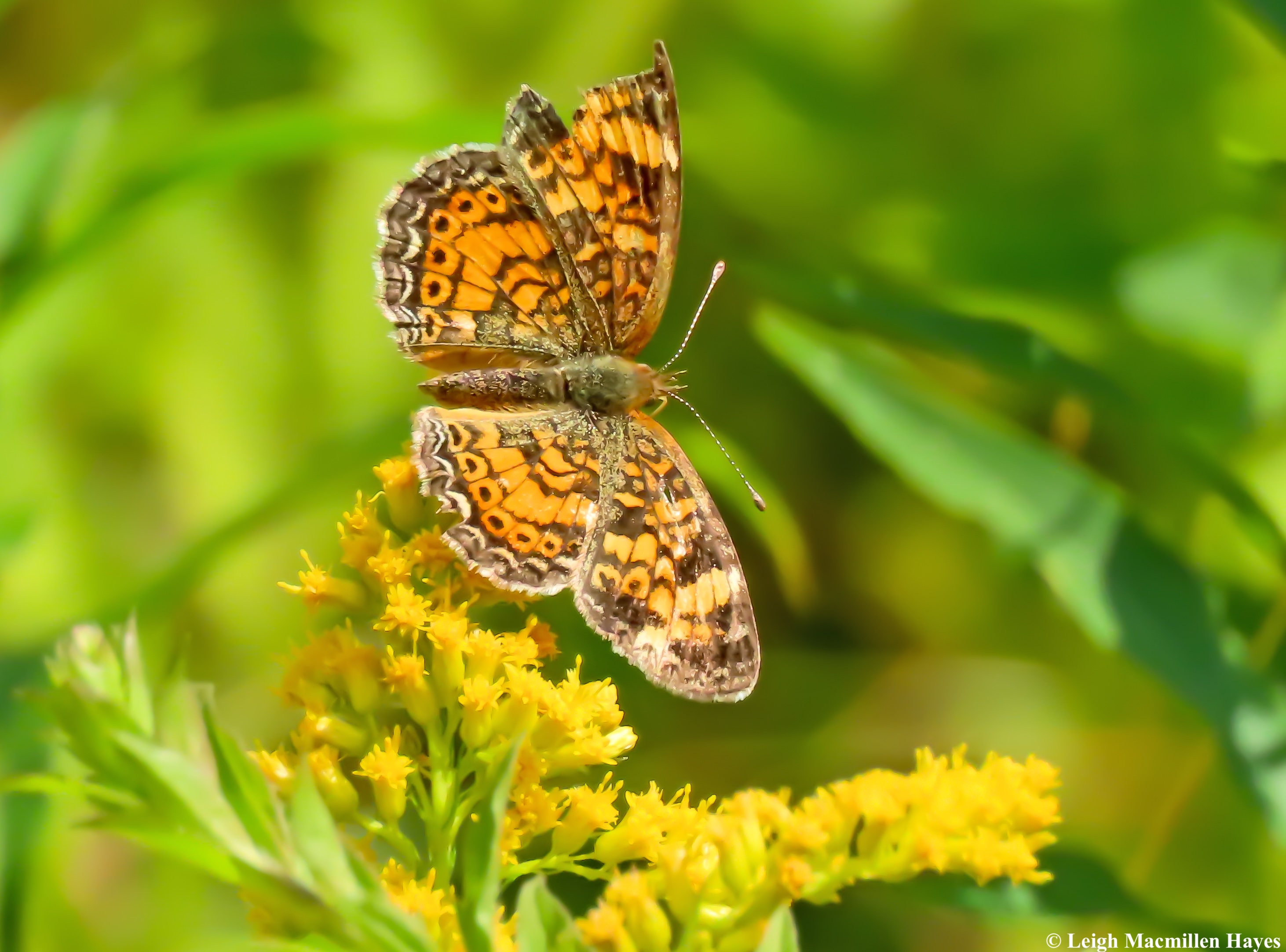
As they moved on, my eyes caught the action of a Pearl Crescent Butterfly, its forewing tattered and I thought of part of the conversation Karen and I had had earlier. She wondered where all the dragonflies have gone.

There are still a few Calicos and Spangles, and I suspect we’ll see more in the future, especially as the Meadowhawks continue to emerge, but our neighborhood was rich this year with birds nesting and many of the dragonflies became food for the young and I suspect this butterfly had a narrow escape at becoming such a meal. Bugs feed birds and that’s a good thing.

And then the Gold-marked Thread-waisted Wasps paused nearby and showed off their true canoodle form before moving on again.

At last my search paid off today, and I began to spot one Ambush Bug after another, laying in wait.

I just had to remind myself to look for insects hanging below flowers rather than buzzing about in true and frantic pollinator mode, such as this Yellowjacket. The Ambush Bug is by the left side of its face, but blends in incredibly well with the Goldenrod.
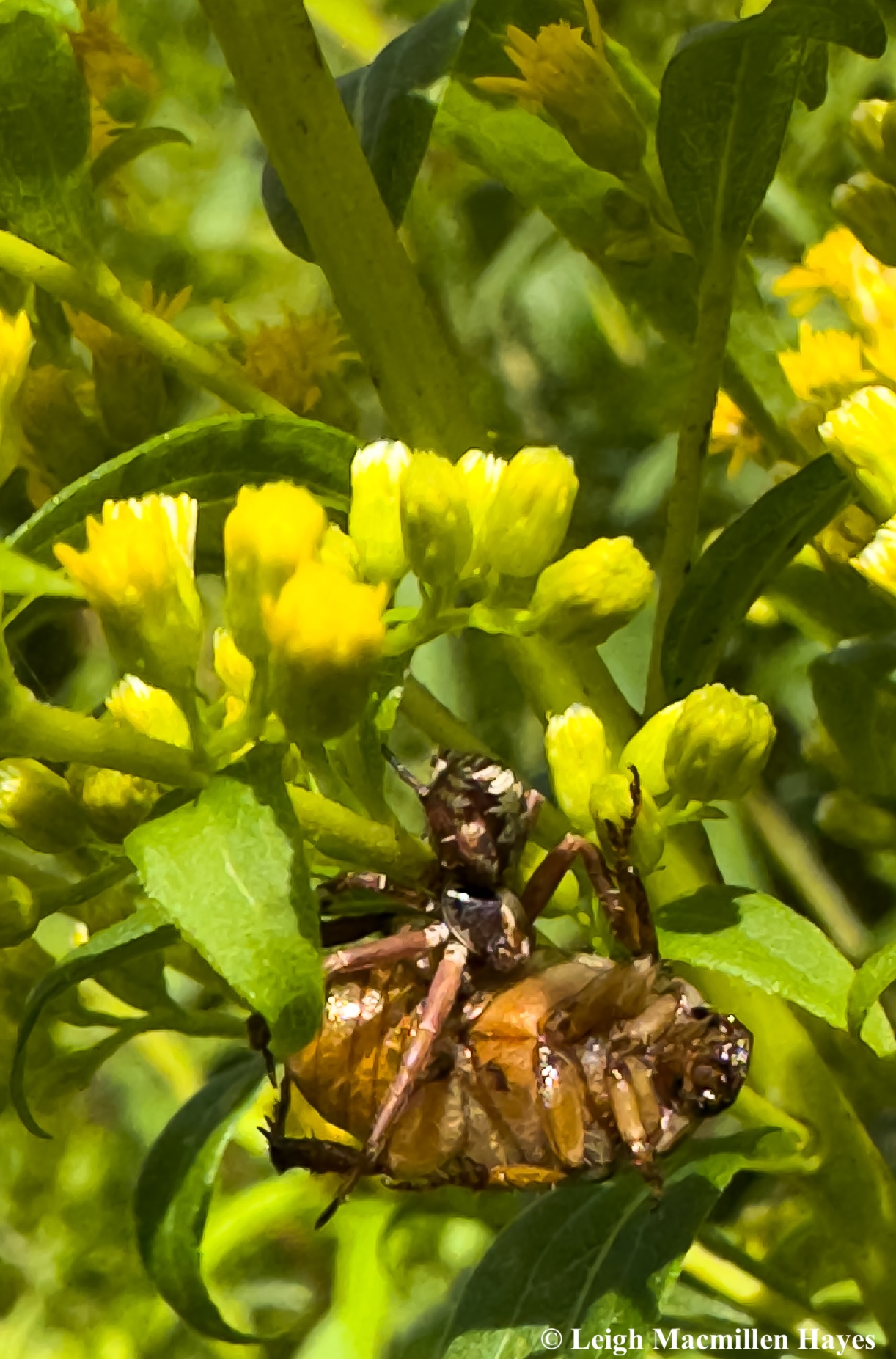
As it turned out, there were also spiders enjoying feasts much bigger than themselves.
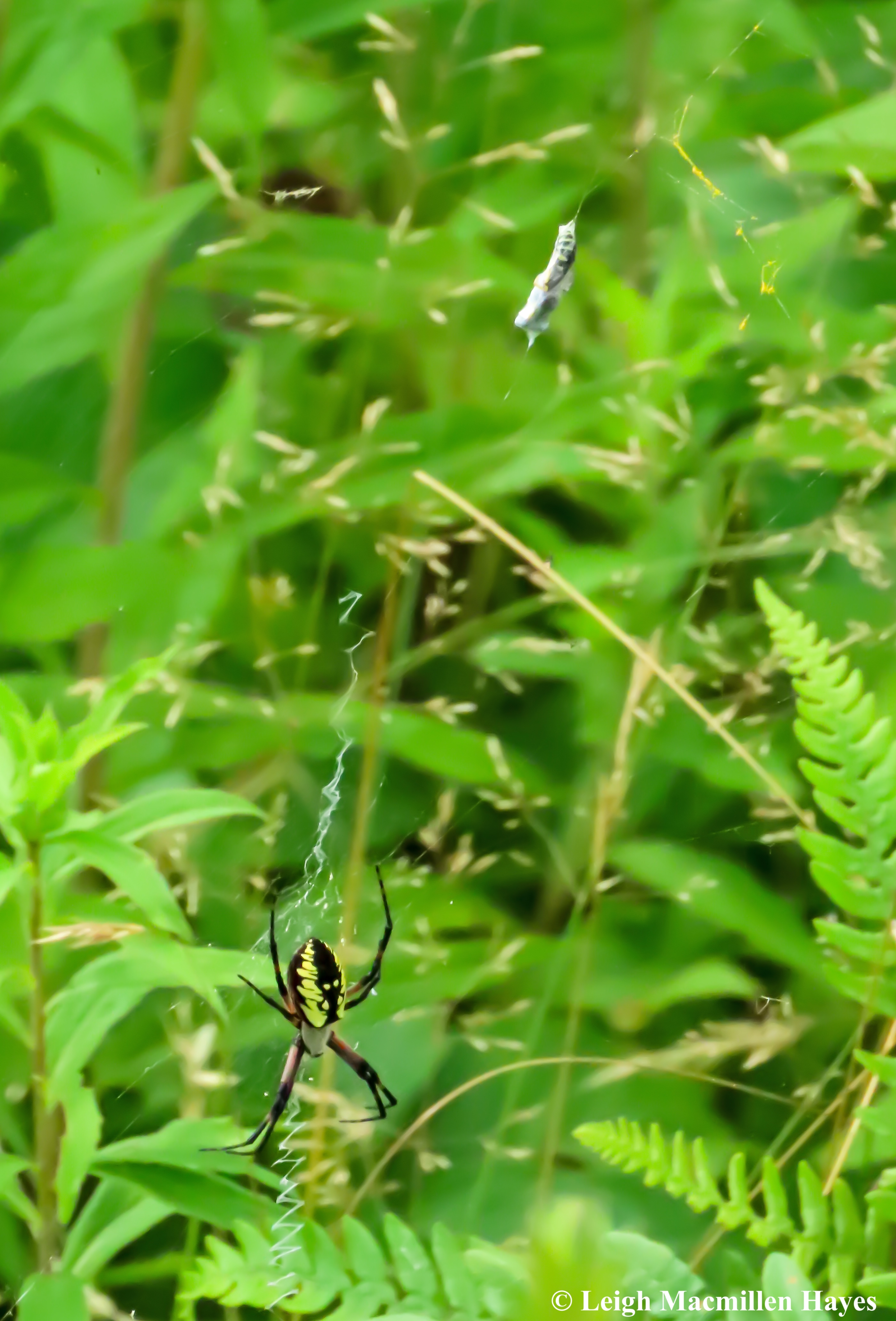
And then another Black and Yellow and then this, the third, with a packaged meal suspended in the web above.
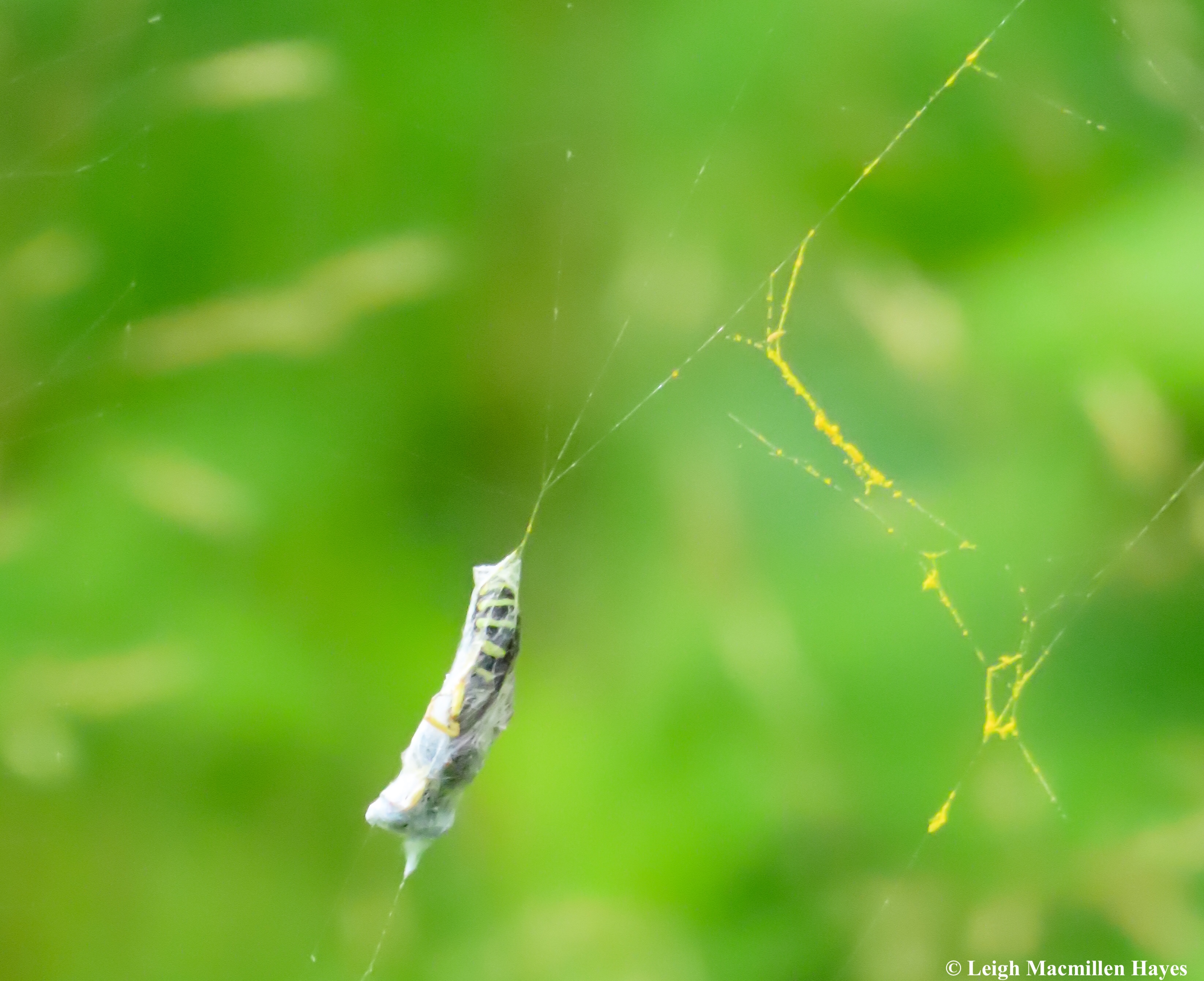
I couldn’t be sure of what species had been captured, but by its markings suspected it could be Locust Borer. What I loved even more than the doggy-bag meal, was the yellow Goldenrod pollen trapped on the spider web.
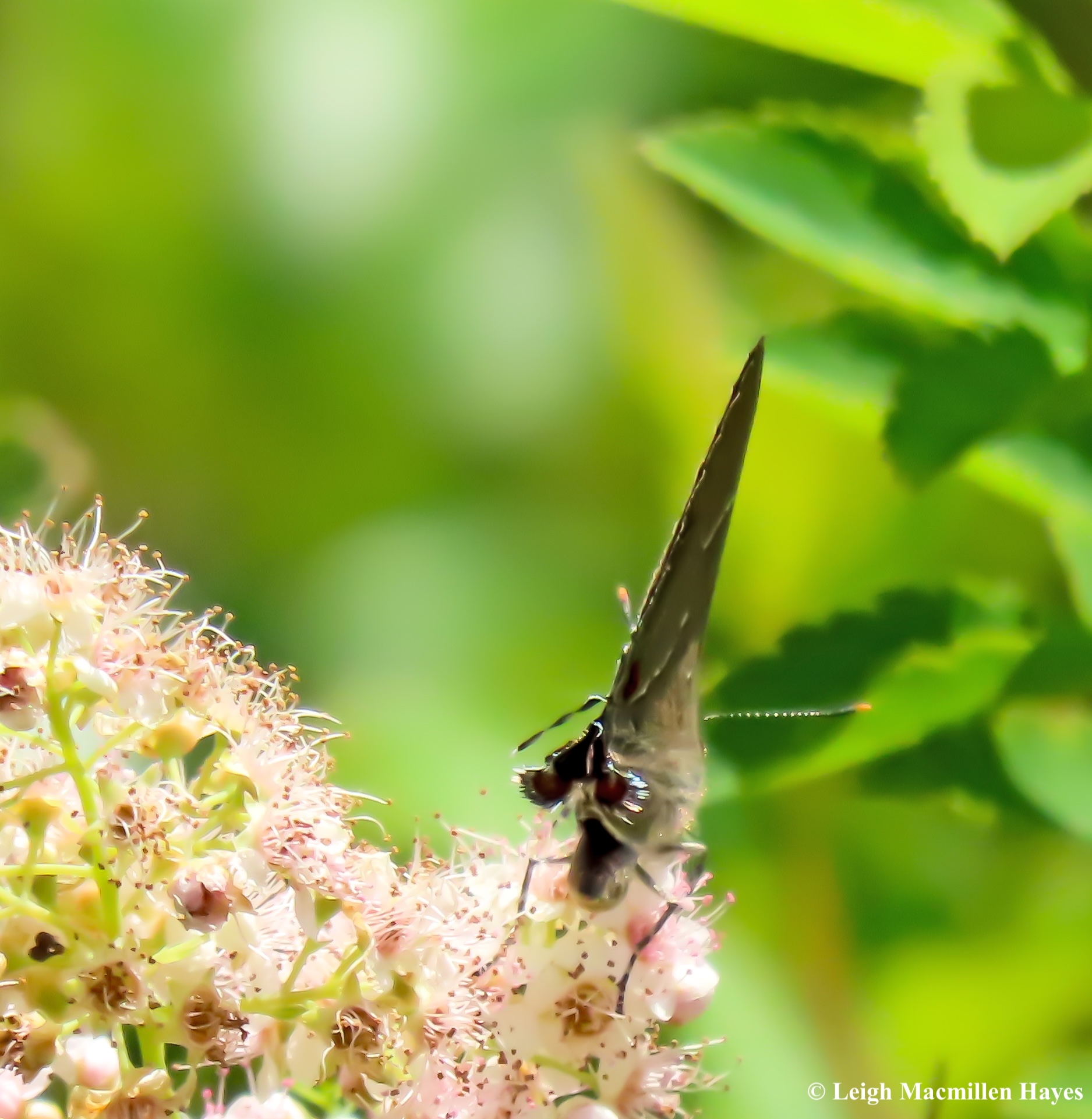
And then, as I circled back, I found myself looking at the butt end of a small butterfly I met for the first time in this very place last year.

This is a White M Hairstreak Butterfly. Do you see the upside-down M marking just below the orange on its hindwing? This is a RARE sighting! Well, I actually first spotted this species on August 3 of last year and contacted Ron Butler, one of the author’s of Butterflies of Maine and the Canadian Maritime Provinces, along with Phillip G. deMaynadier, John Klymko, W. Herbert Wilson, Jr, and John V. Calhoun. At that time, it was the furthest inland record, according to Ron. And here, one year later, we meet again. Well, not the same butterfly, but its offspring and I’m thrilled to realize that this is now part of its habitat.

What a day. What a week. I don’t have all the answers about life and death, but do love that I can take my thoughts for a walk in my neighbors’ field and try to gain a better understanding. Yes, bugs feed birds; and bugs feed other bugs; and the circle of life goes on and I’m always thrilled to watch so much of it play out and open my eyes and mind to the possibilities.
This Land Is . . .

My land. I’m sure of it. I don’t own it all, but I walk it often because it’s not posted and I know it well. Well, only just so well. It’s constantly offering me new learnings.

o-Mt Wash

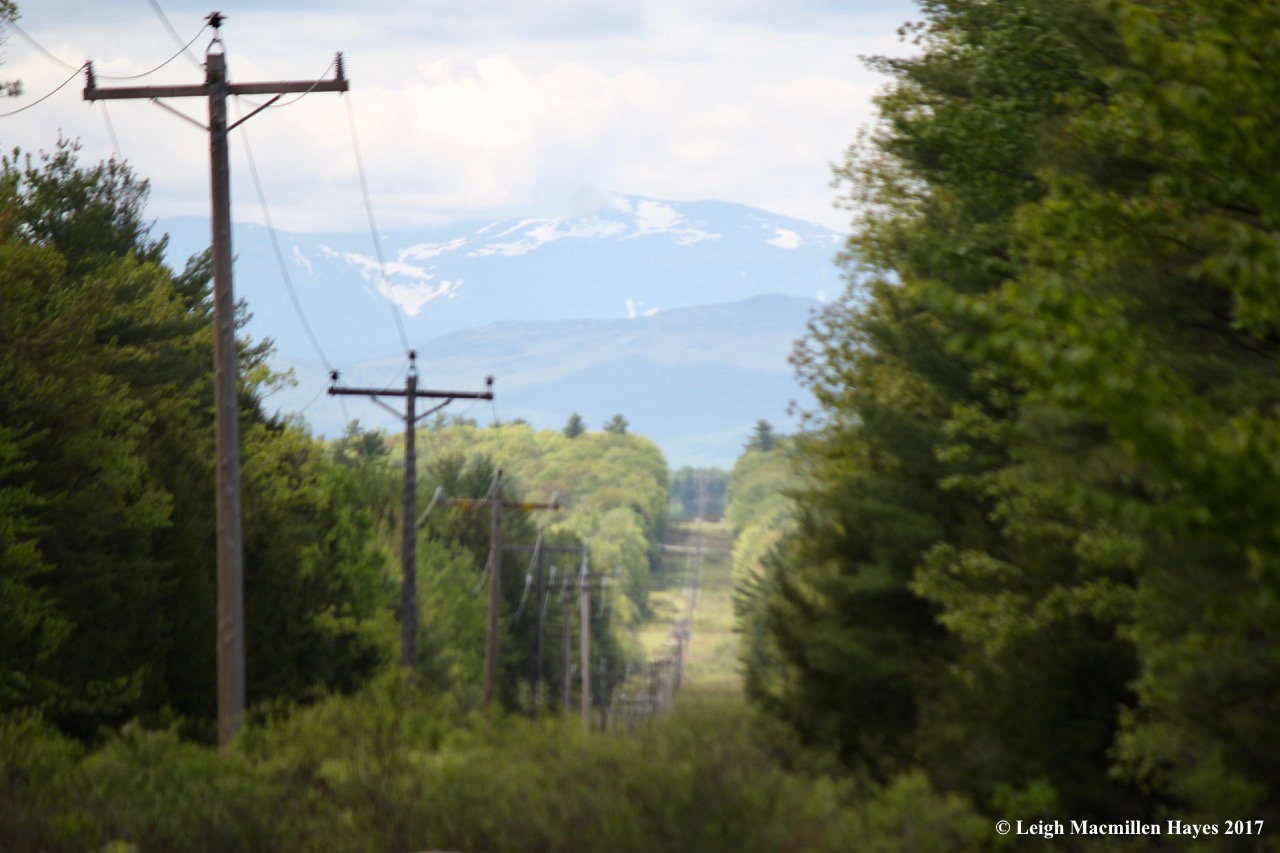
And so once again, out the back door I ventured, intending to head north toward the land of snow–haha. My sister asked the other day if we still had snow. We don’t have any on our land, but this is our view from the power line right of way–yup–we’ve got snow ;-) (in our view).

o-tick

I changed my mind about the direction, however, when I saw numerous dog ticks on the tips of grass as I crossed our neighbor’s field. Though they aren’t the purveyors of diseases such as Lyme disease, Babesiosis, and Anaplasmosis, seeing them still unnerved me and I decided to head in the opposite direction where it isn’t so grassy. Of course, that’s where the deer ticks live. Nightly tick checks are a must every day.

o-early yellow rocket 1

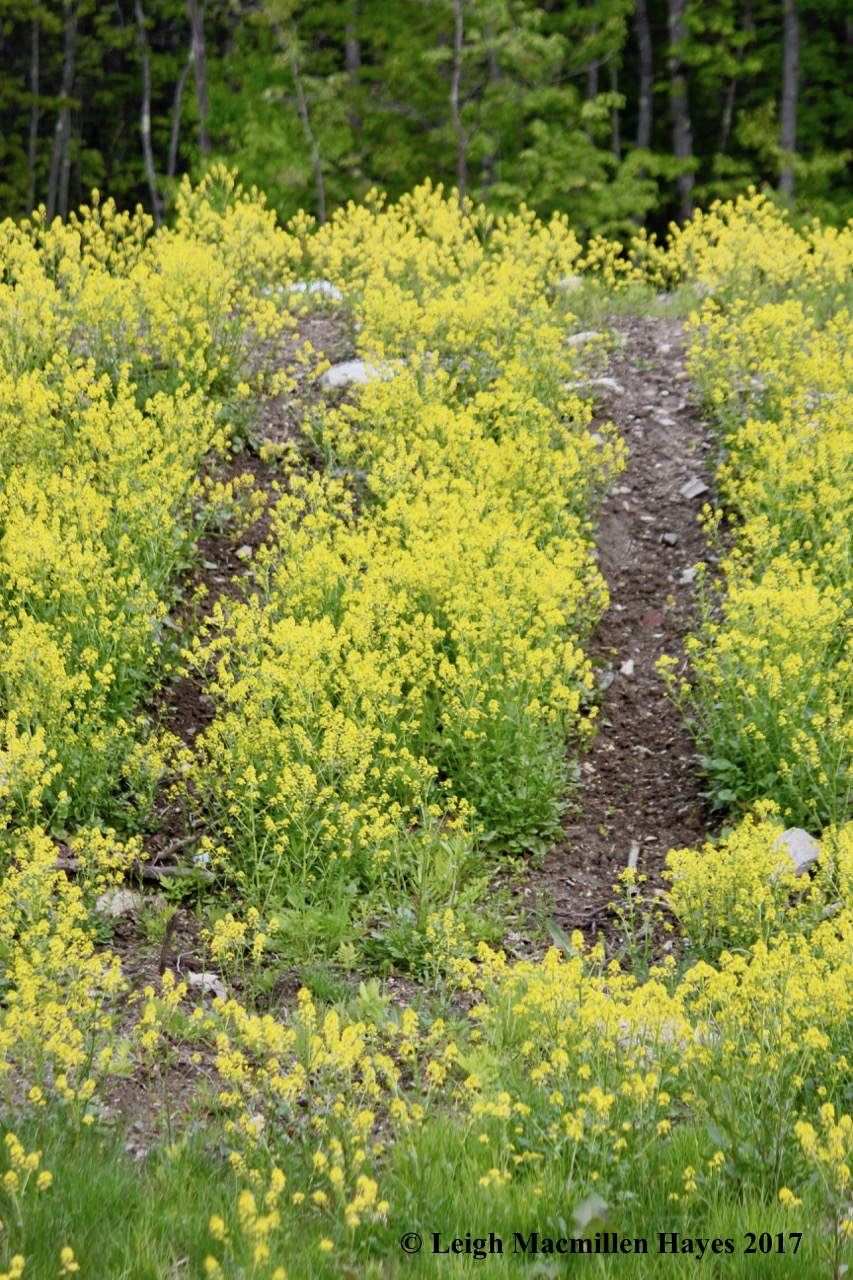
It was in the opposite direction that I was caught by surprise. Behind a local business, where the land had been disturbed a year ago, a wall of yellow greeted me.

o-yellow rocket 3

It was a sea of early yellow-rocket that is common along roadsides and fields. Apparently this one spot was the cat’s meow for it to grow so prolifically.

o-bee 3

What was more prolific–the sound.

o-bee 1

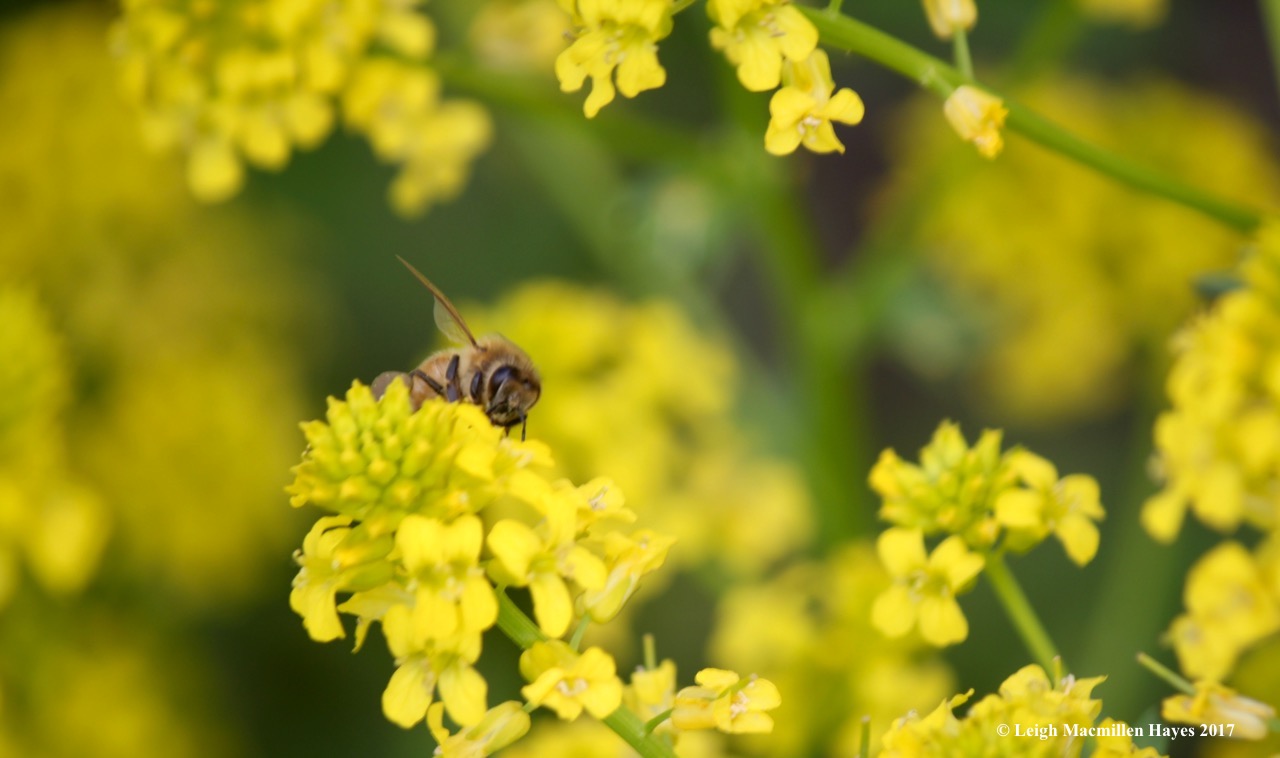
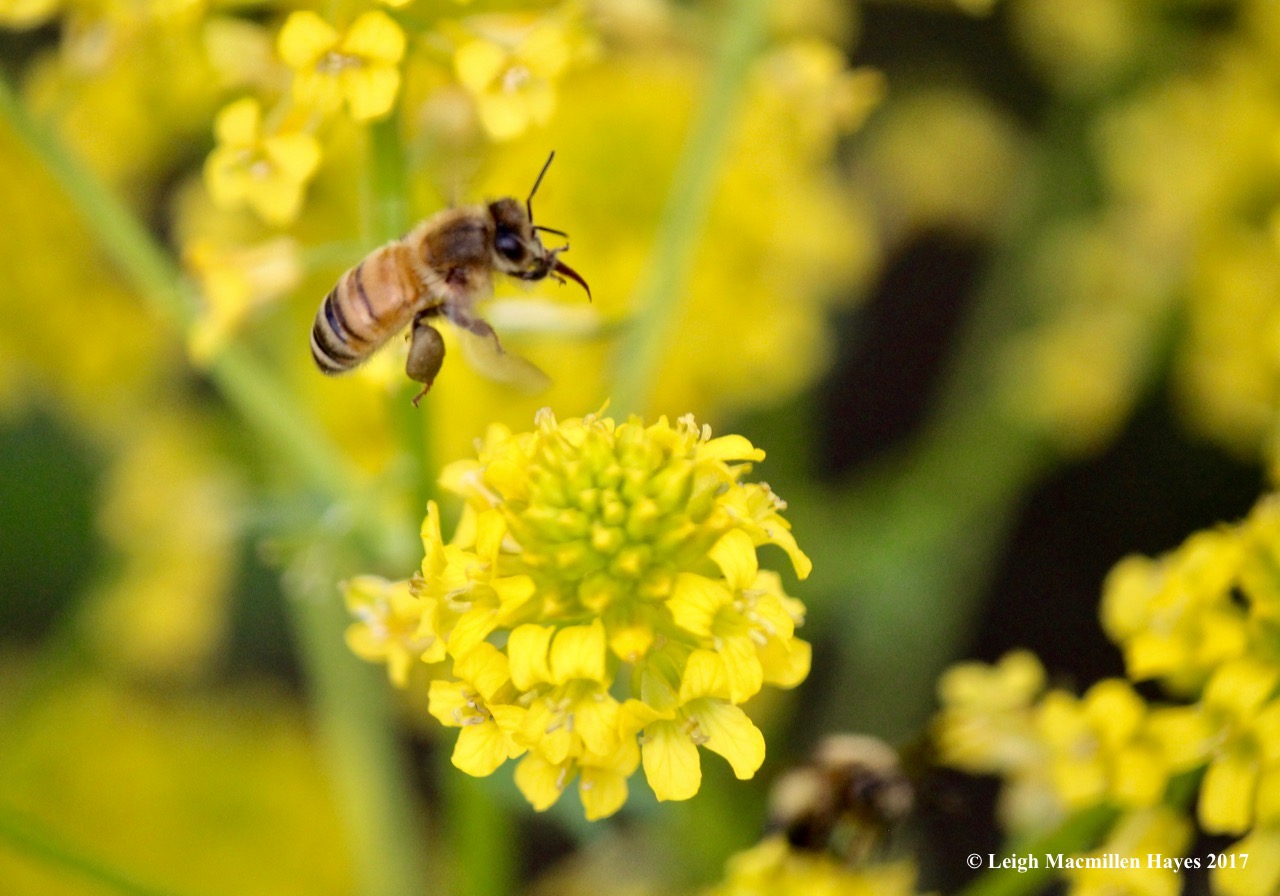
Bees and other insects hummed as they worked,

o-bee 2

filling their pollen sacks to the brim.

o-fritillary 1

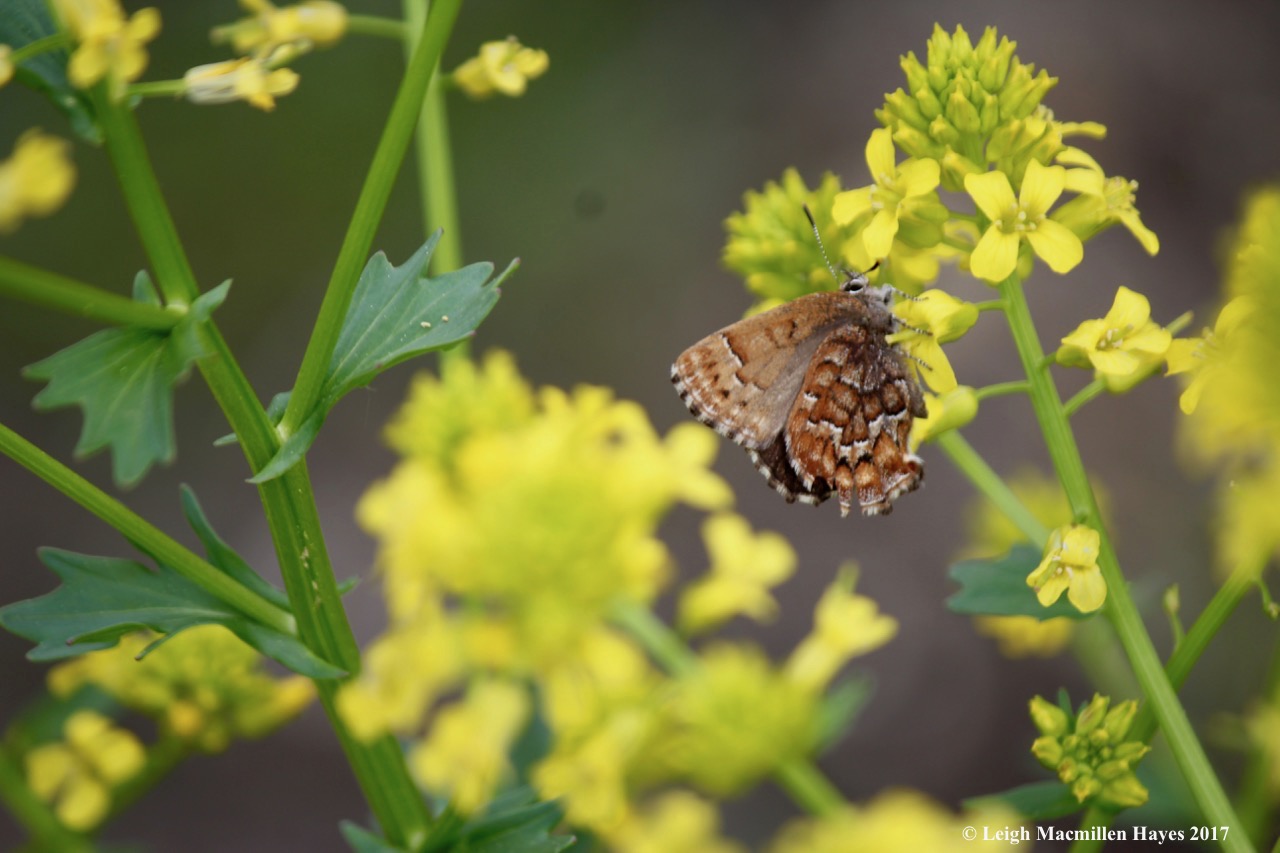
Even a fritillary butterfly enjoyed the goodness within.

o-fringed 2

Those weren’t the only wings I saw. It was a complete surprise to also discover gaywings or fringed polygala growing deeper in the woods.

o-turkey print

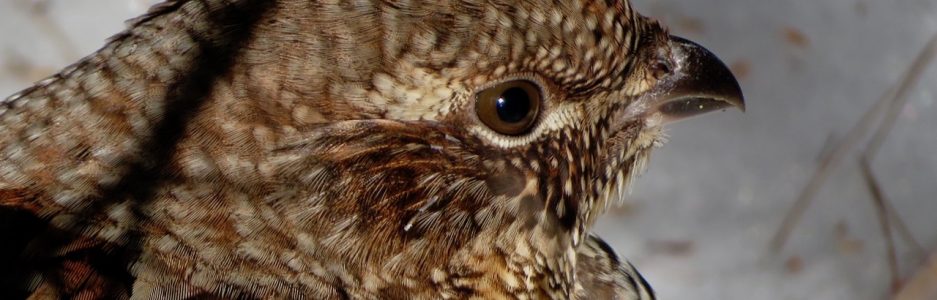
Walking along, I flushed a couple of deer and a ruffed grouse. And though I didn’t see or hear any turkeys, I knew they’d been there by their signature prints.

o-tadpole 1

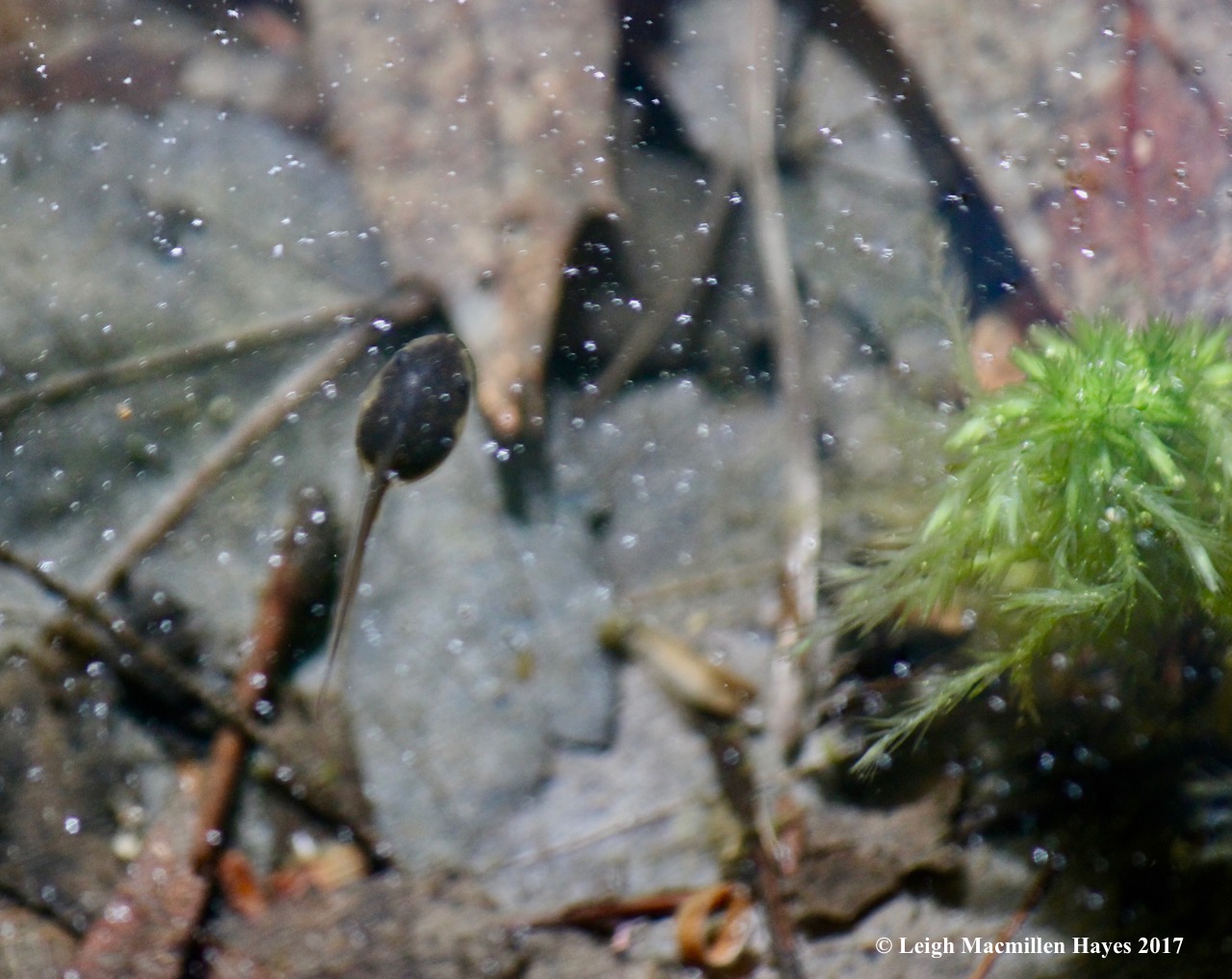
And then I slipped off the trail to stop at a vernal pool that I don’t often visit. The water is shallow, but tadpoles are growing.

o-tadpole 2

A week or two ago after they’d just emerged, they were easy to spot as they clung to their egg masses or swam by water’s edge. But they are maturing and I had to stand still or they’d disappear under the leaf cover.

o-water scavenger larvae

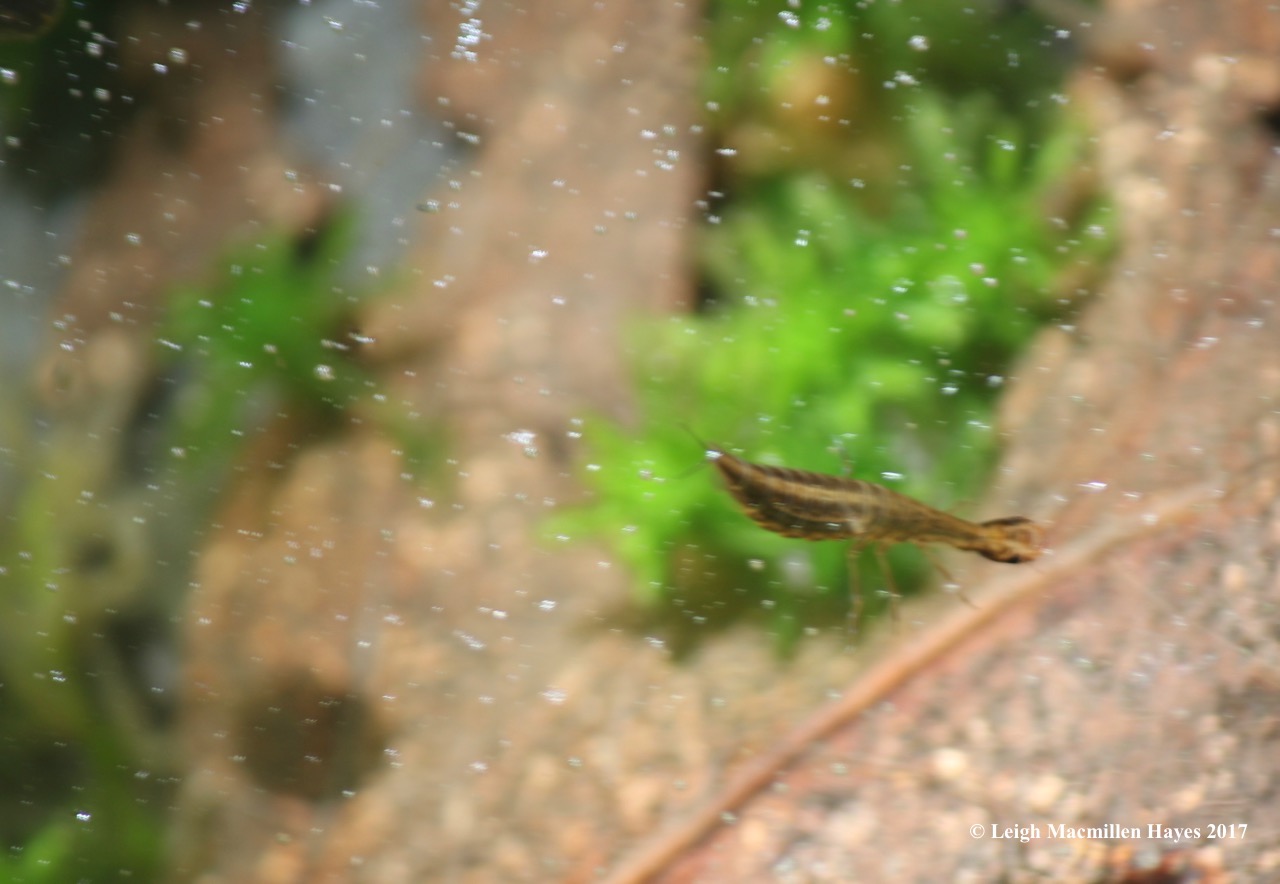
While standing there, I spotted another resident I didn’t immediately recognize–the larval form of a water scavenger beetle. According to A Field Guide to the animals of Vernal Pools,  “they are poor swimmers and will hang from the water surface (where they obtain oxygen) or hide in vegetation to await prey.” That all makes sense given their body structure.

o-sugar ant?

On the way back, another insect stopped me. I think they were sugar ants with a white thorax. But why were they on beech leaves? Then again, every insect seems to like beech leaves. I guess I don’t think of them as being sweet, but . . .

o-old gate in wall

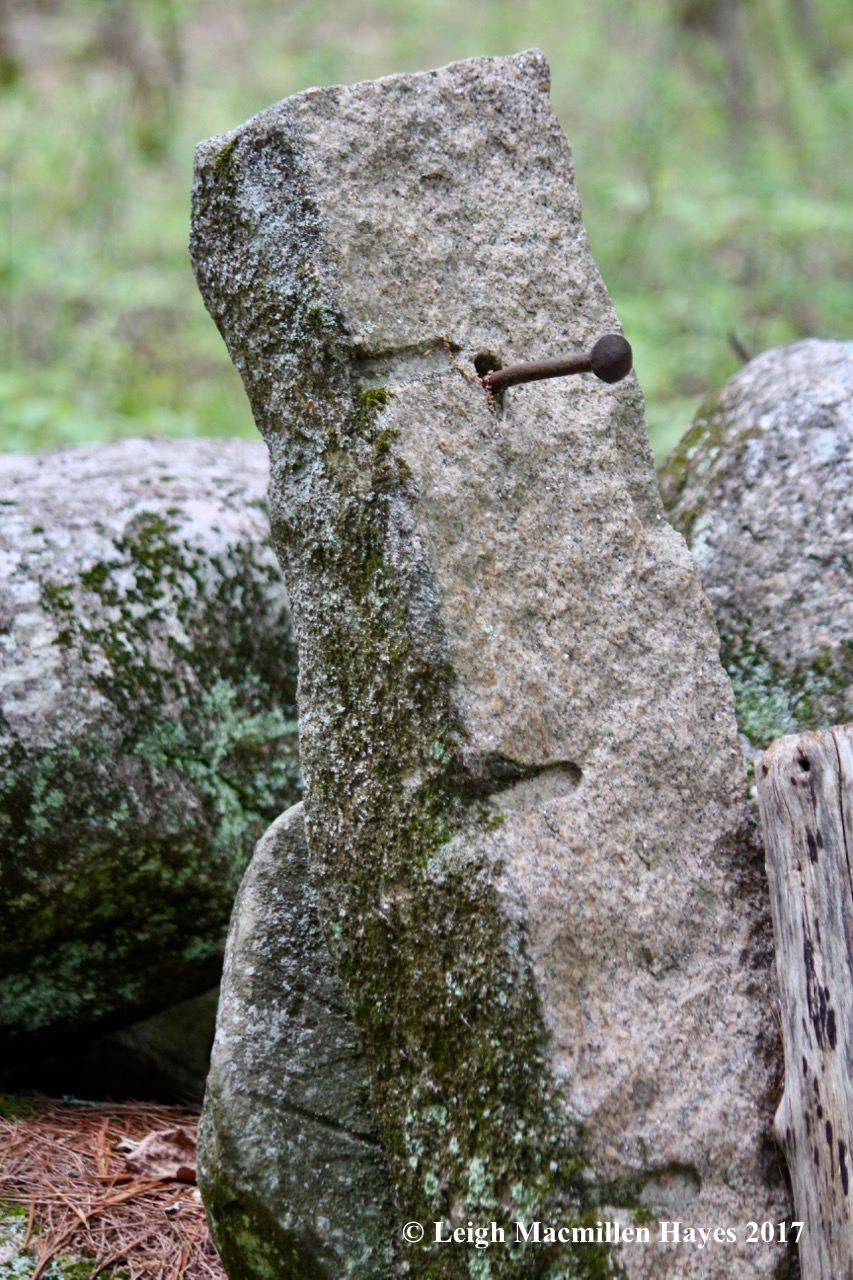
As I headed home, I paused by an old wall and gate. This land was farmed in the late 19th and early 20th centuries. The walls formed boundaries for animals and are owned by numerous neighbors I’ve never met. Thankfully, they let me and others cross–though few will do so until hunting season begins in the fall.

Anyway, it all got me thinking about who owns the land. And then I knew the actual answer. The plants. The trees. The flowers. The insects. The amphibians. The birds. The mammals. They all own the land. We are mere visitors. I thank all of nature for letting me trespass and gain a better understanding of its various life forms.

This land isn’t my land. And it wasn’t even made for you and me. But I have great reverence for it. And for those who have protected it.

Happy Memorial Day.

The Need for More

Yesterday I stopped into our local independent bookstore, Bridgton Books, to purchase a title recommended to me by a friend (thanks D.B.), H is for Hawk by Helen Macdonald. While there, Pam, one of the proprietors, showed me Reading Rural Landscapes by Robert Sanford because she thought I’d be interested. Of course I was, and so for all of two seconds I debated about which to buy and guess what–I’m now the proud owner of both titles. I had earned a $10 credit (for every $100 spent, you receive $10 off if you belong to their book club and there is no book club fee–truly independent).

At camp, I was also reading another book (purchased at Bridgton Books a year or two ago). Well, actually rereading it because I like the author’s style/voice and maybe just a wee bit because she’s an Episcopalian. And she lives in Alaska–another draw for me. If You Lived Here, I’d Know Your Name: News from small-town Alaska by Heather Lende.

3 books

Both last evening and this morning, I read from all three. Not simultaneously, of course. It’s always been that way for me. Skipping from one topic to the next. Easily bored? I don’t think so because being bored is not part of my makeup. More like an insatiable need to know more.

The bees and wasps and flies and ants and hummingbirds have the same insatiable need right now, as they flit and walk and crawl from one plant to the next, sucking nectar and exchanging pollen along the way.

beebee2

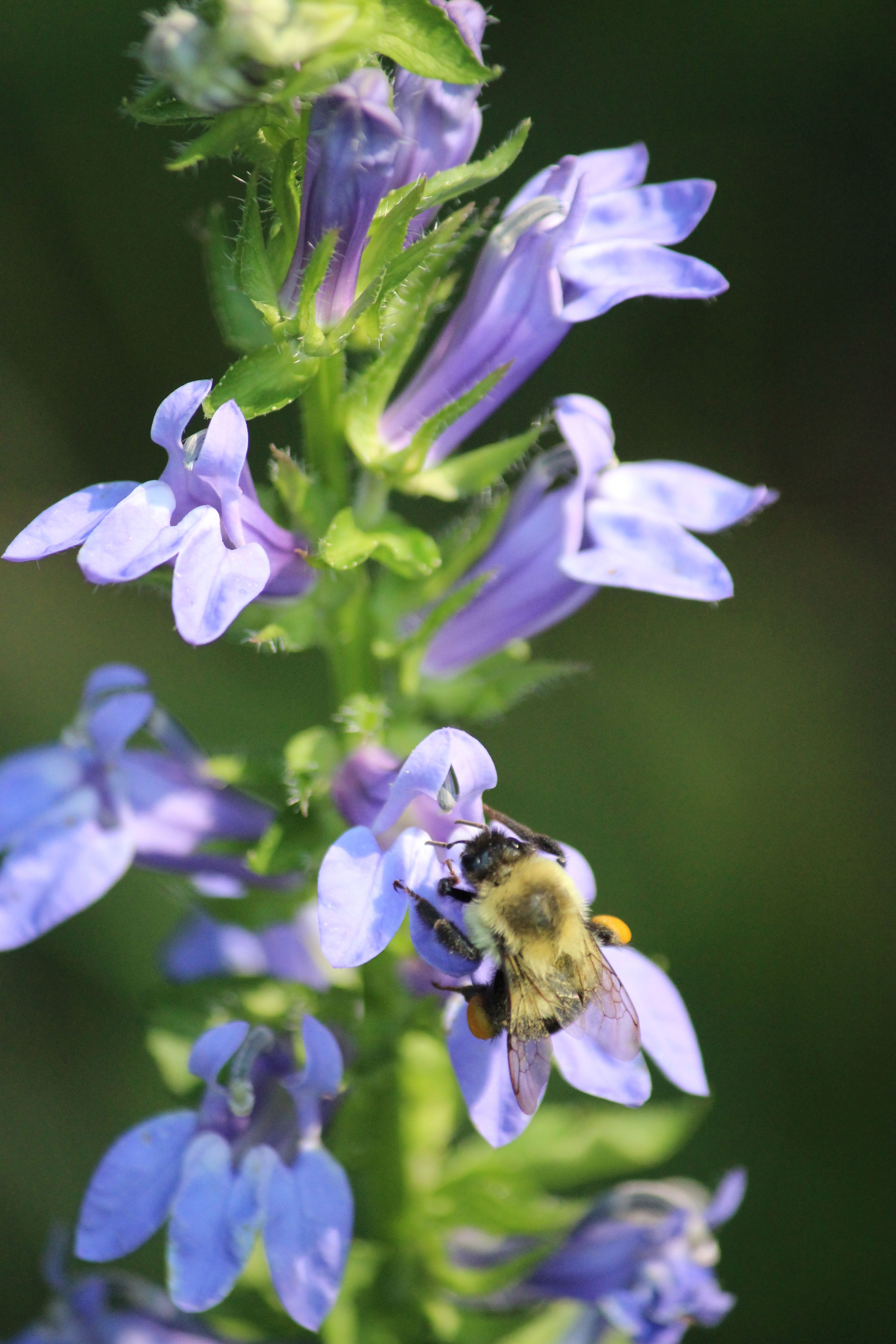
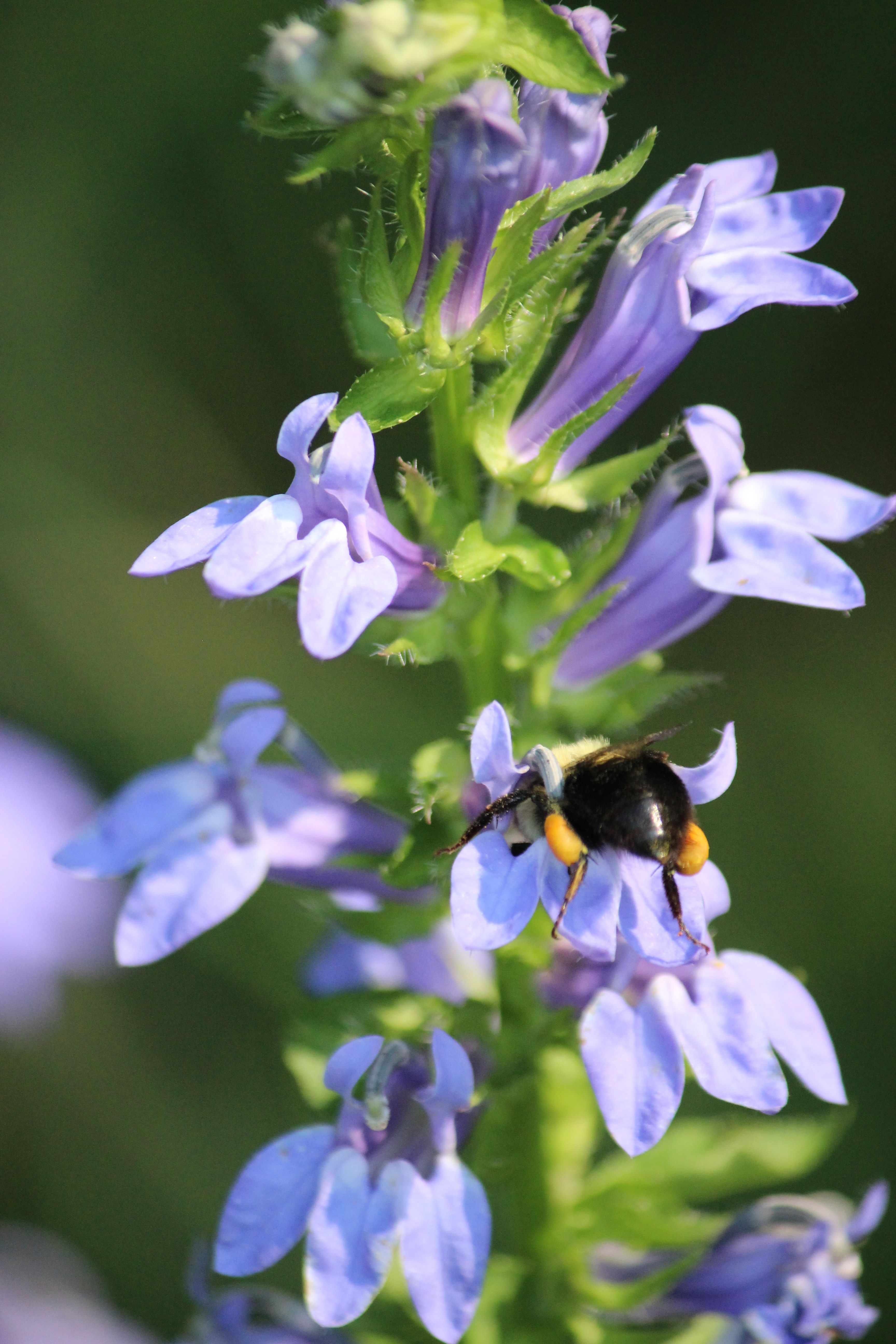
This busy bee was well-laden with pollen. Its bright orange sacs bulge on its hind legs like a kid wearing arm floaties in the water.

bee on mintbee on mint 2

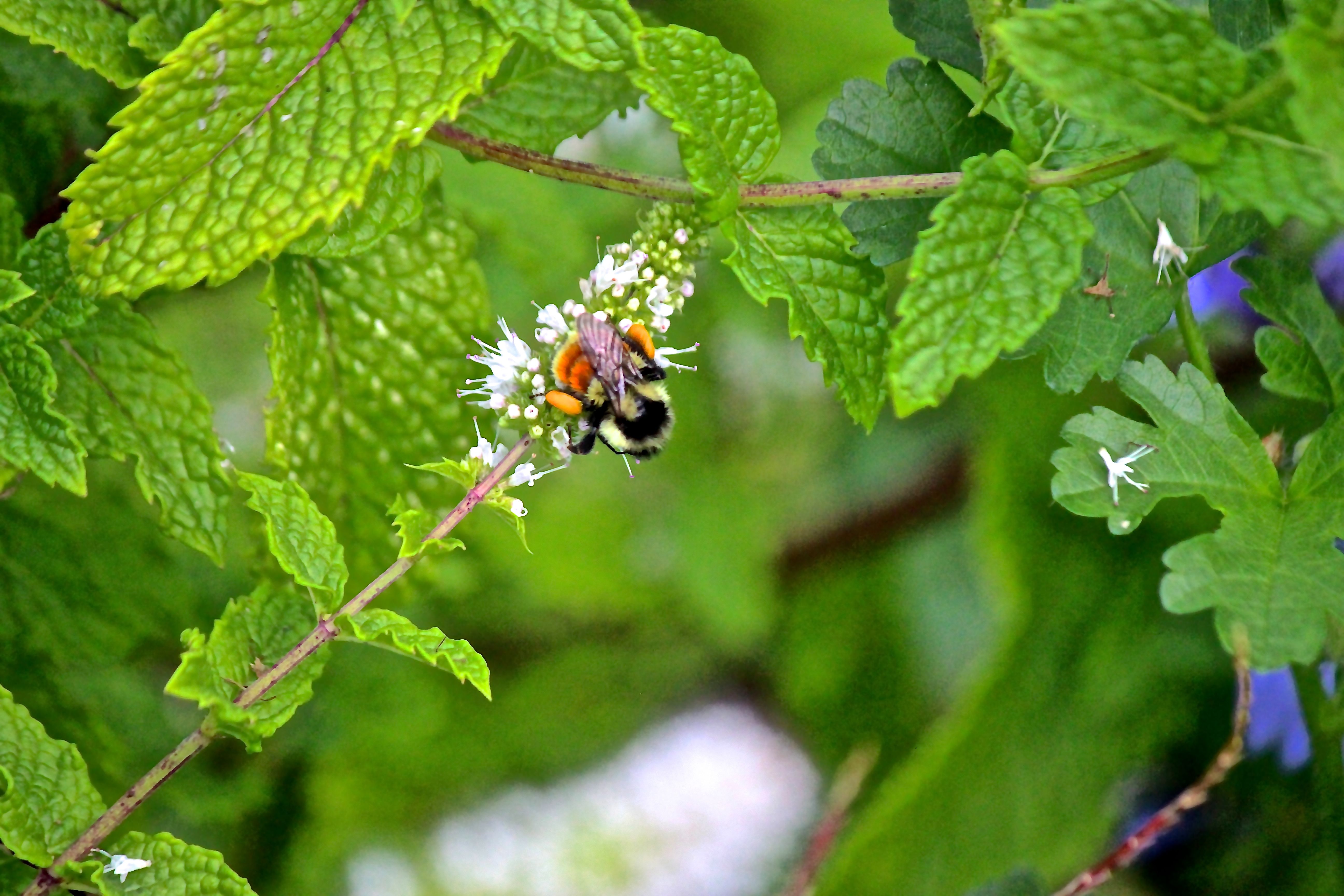
Every time a bee visits flowers, the pollen sticks to its fuzzy body–its antennae, legs, face and body. Think pollen magnet!

The middle legs are equipped with comb-like hairs that scrape off the pollen and transfer it to the pollen presses located on the hind legs.

bee 3

Like our calves, the bee’s legs have a tibia or lower leg section. The tibia is shiny and surrounded by hairs, including some that are rather long and stiff. These form the pollen basket. Located at the lower end of the tibia  is another comb-like structure (ankle), and on the metatarsus (heel or foot) is the press. When it comes to pollen collection, the two structures work together like levers.

Nectar moistens the pollen, making it sticky. The pollen is transferred to the press, and then is manipulated between the press and comb until it sits flat on the bottom of the tibia. Each time a new batch of pollen is added, it’s pressed onto the bottom, forcing the pervious batches to move further up the tibia.  A full basket (think one million grains of pollen) bulges, but hairs hold the pollen in place as the bee flies from one plant to another before heading home to stock the nest.

beefly on goldenrod

It’s not just hairy bees who are active in the gardens.

large blue wasp

Gathering for the family is important business.

wasp 2

Thanks to the goldenrods and asters, there’s plenty of pollen and nectar still to be gathered.

yellowjacket

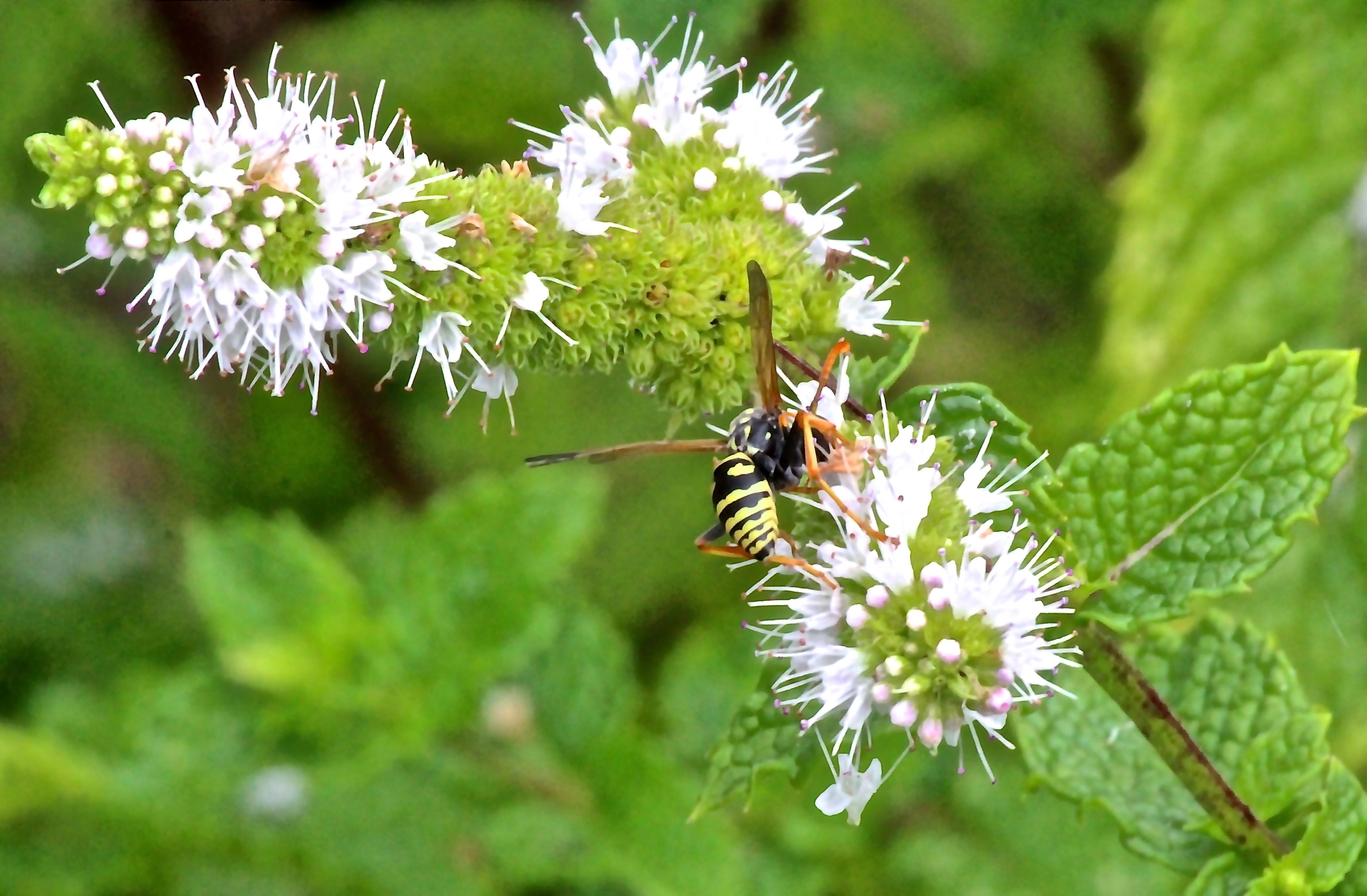
The mint seems to be the biggest hit among the variety.

spiders 1

And there is other action as well. A funnel weaver tried to challenge the larger spider, but quickly retreated.

spider 2

Whenever I take a closer look at the crawling and flying members of the gardens, I’m in awe of their colors, patterns, hair or lack of, and overall body structure.

inchworm

You may have to look closer to find the visitor on this coneflower.

red legged grasshopper

This red-legged grasshopper tried to make itself invisible.

grasshopper 2

The camouflage worked better once it climbed to the top of the fence. When grasshoppers fly, I can hear their wings make a rasping sound. But moving as this one was, there wasn’t a peep. The crickets and cicadas, however, I couldn’t see, but they’ve been contributing to a chorus all day.

hummer approaching

hummer approaching 2

hummer approaching 3

hummer approaching 4

hummer approaching 5

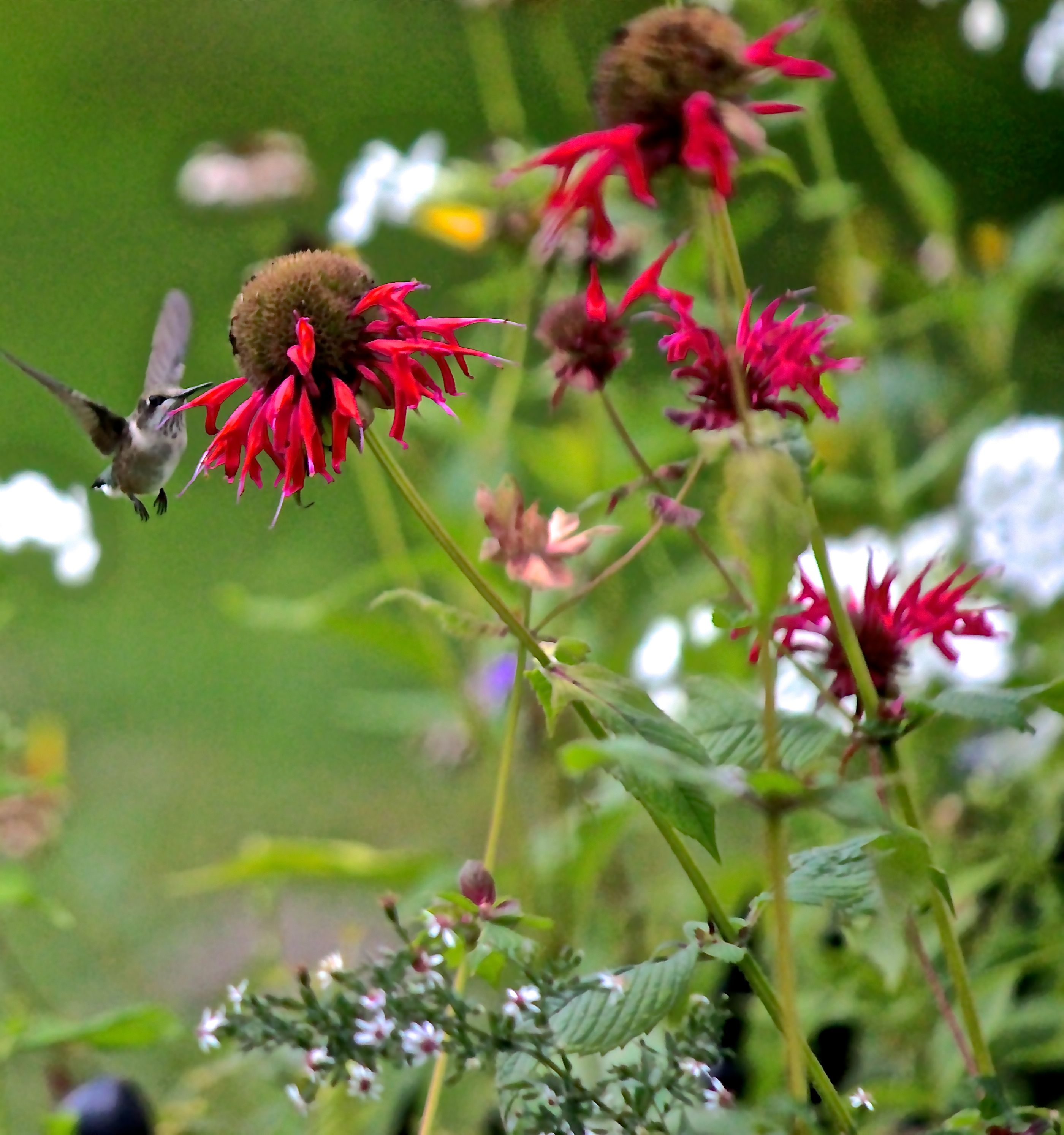
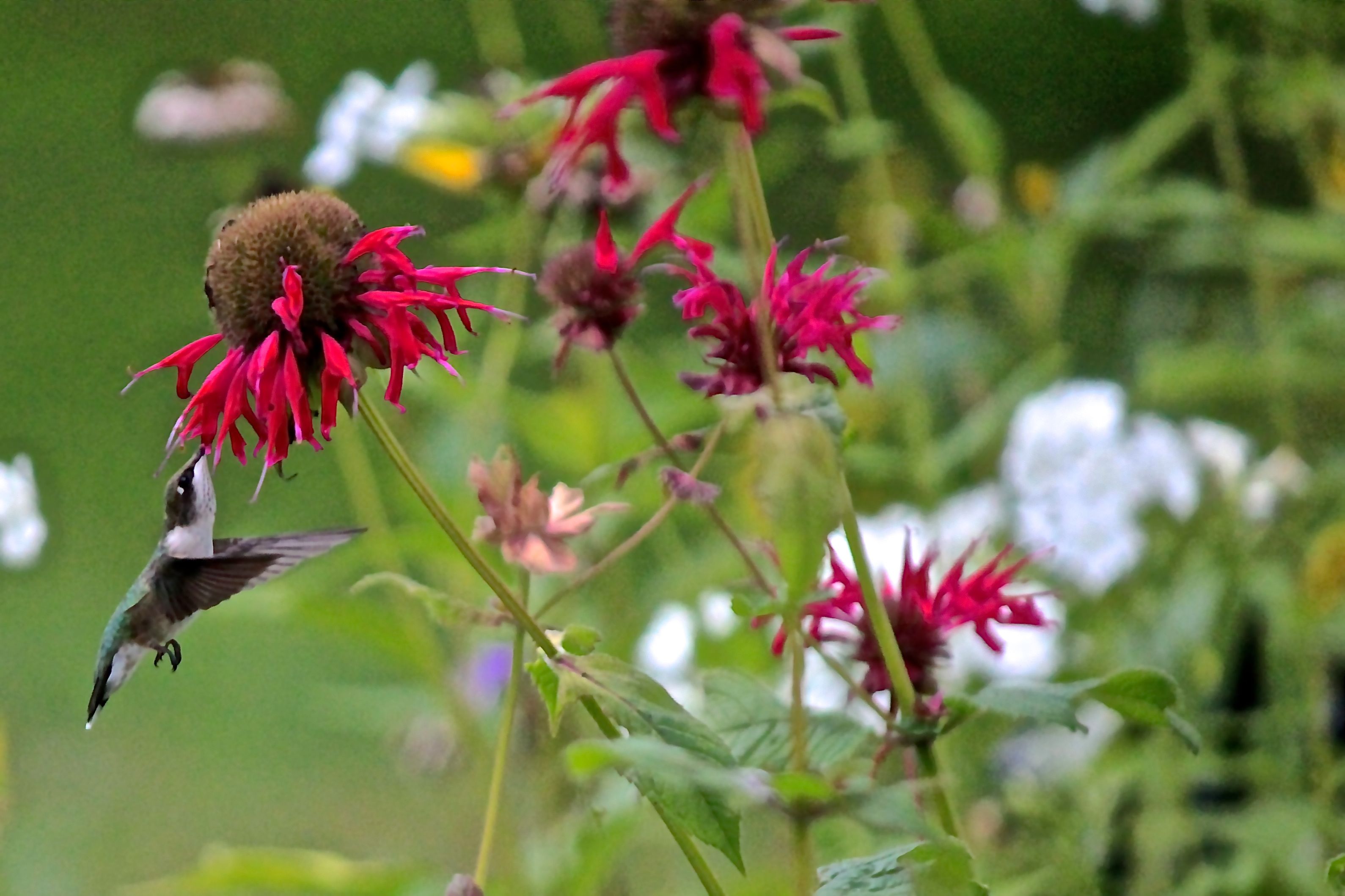
And then there is the hummingbird–ever swift and beautiful with its iridescent colors. Whether it is dining on nectar or insects attracted to the nectar, I don’t know, but it always returns, seeking more.

We all have the need for more. The frightening thing is that oftentimes we take more than we need. For the sake of the birds and insects, we need to think about that and how we might change our ways.