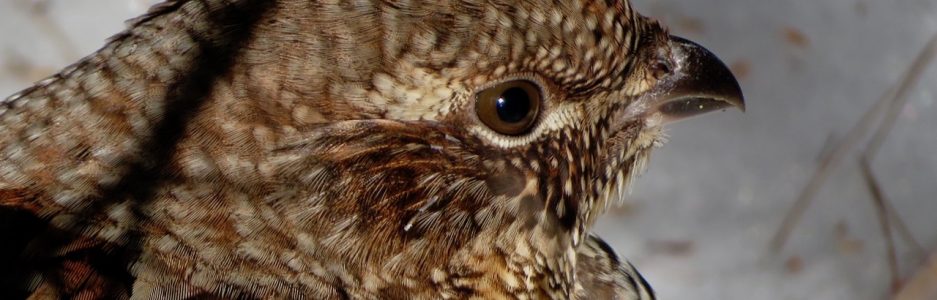
Sometimes it’s the big things that pull me out the back door and other times it’s the small things. But this past week, it was an in-between thing that did the trick. And kept me returning for more and more.
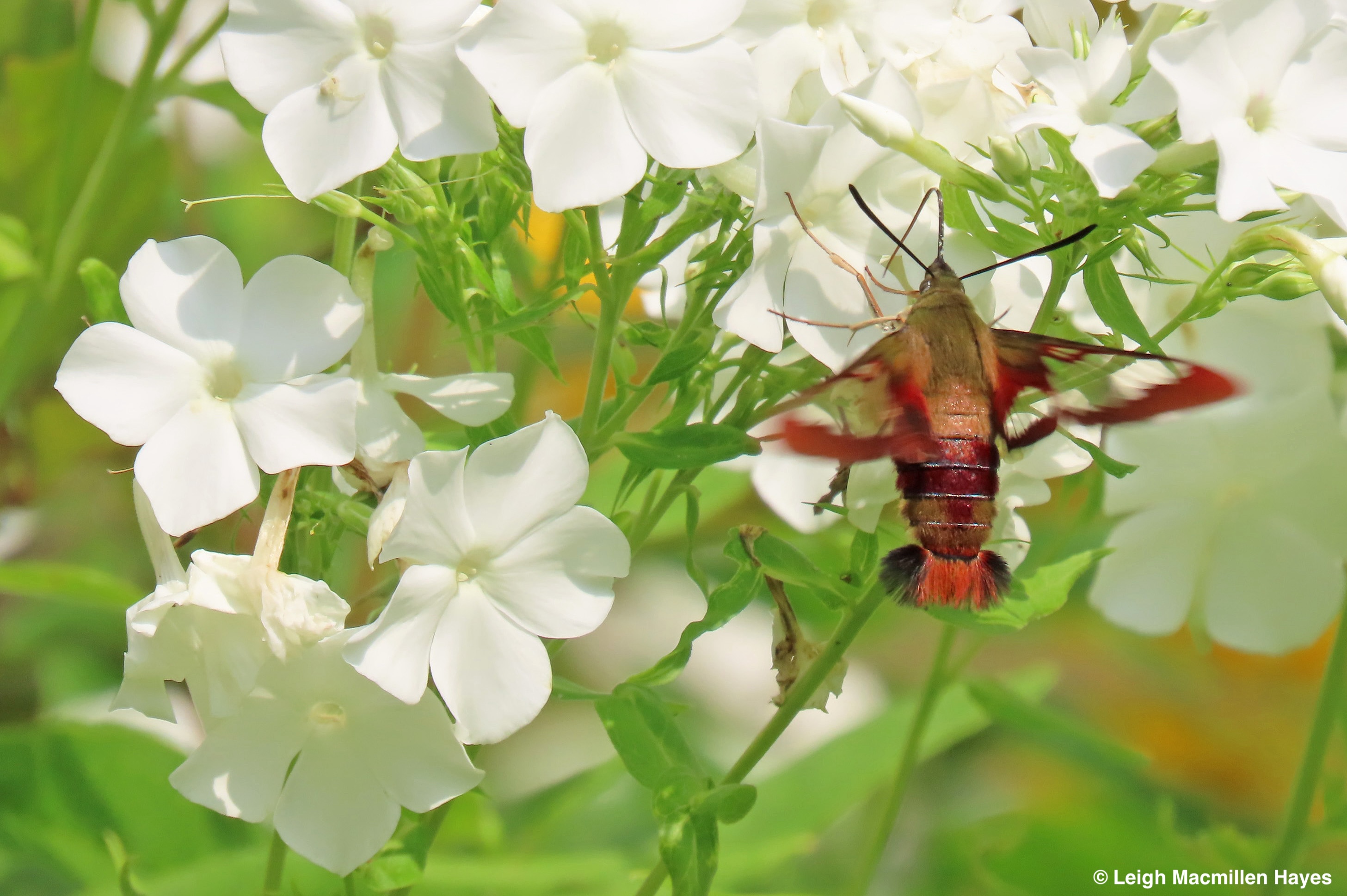
Feeding on the Phlox outside the kitchen window was a Hummingbird Clearwing Moth. I’d seen it on several occasions, but the minute I stepped outside it flew off. Until this day when it let me snap numerous photos as I watched it seek nectar from the same flowers our local Hummingbirds love to visit.

And once I was out there, I knew it was time to climb over the stonewall and visit the neighbor’s field to see what it had to offer, given that so many goldenrods are in full bloom.
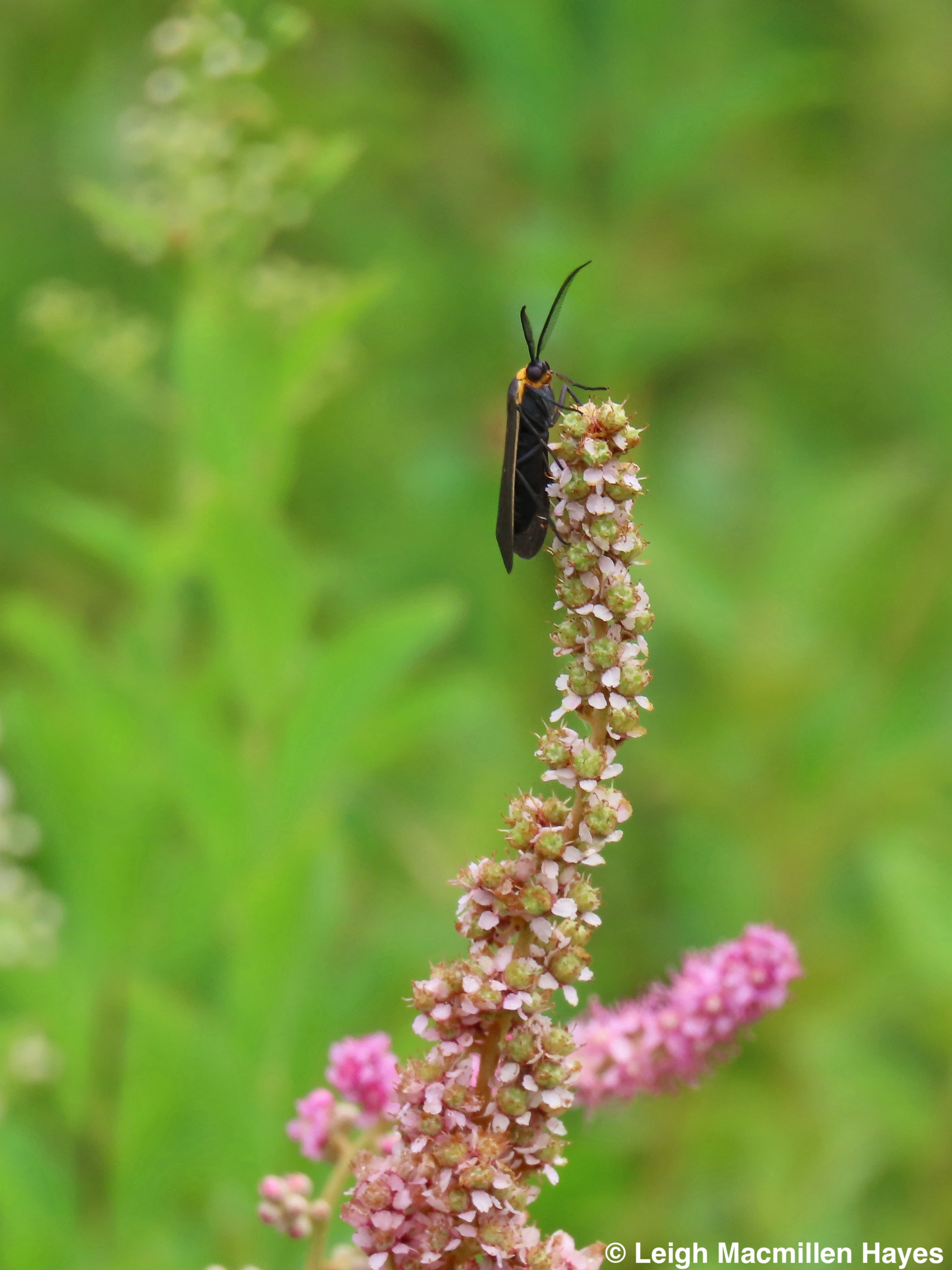
Upon a Steeplebush, a Netwing Beetle looked like it was holding court. I love the featheriness of its antennae standing tall above those beady eyes.
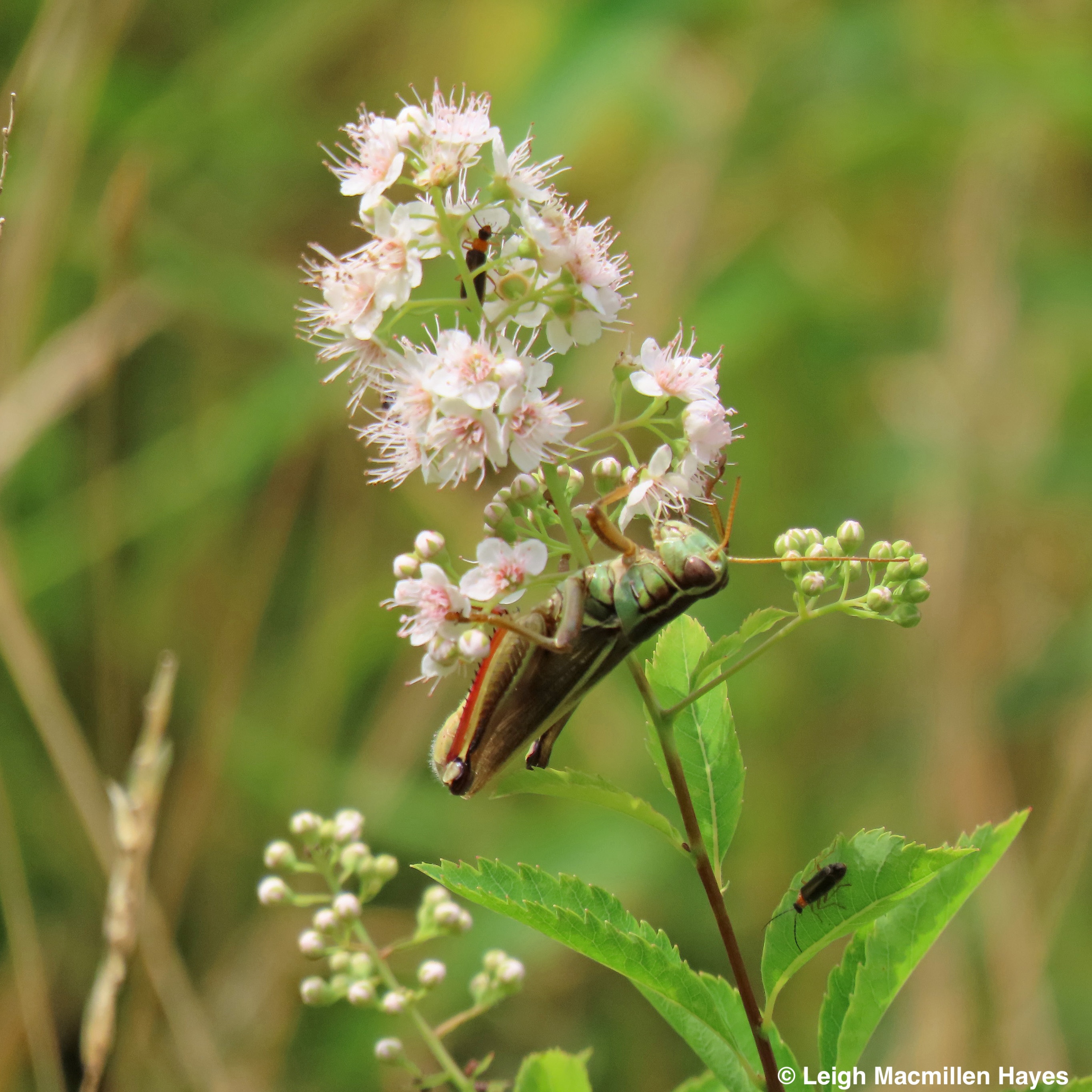
On a nearby Meadowsweet, another in the Spirea family like the Steeplebush, a Two-striped Grasshopper was certain that I couldn’t see it. I could. And I could hear grasshoppers and cicadas and crickets and birds, a field orchestra in full rehearsal form.

And as has been the action of so many Gold-marked Thread-waisted Wasps, these two were canoodling. I suspect we are surrounded by so many because they are so good at reproducing. Not a bad thing.

Also on frequent display and frequently in flight were the Pearl Crescent Butterflies.
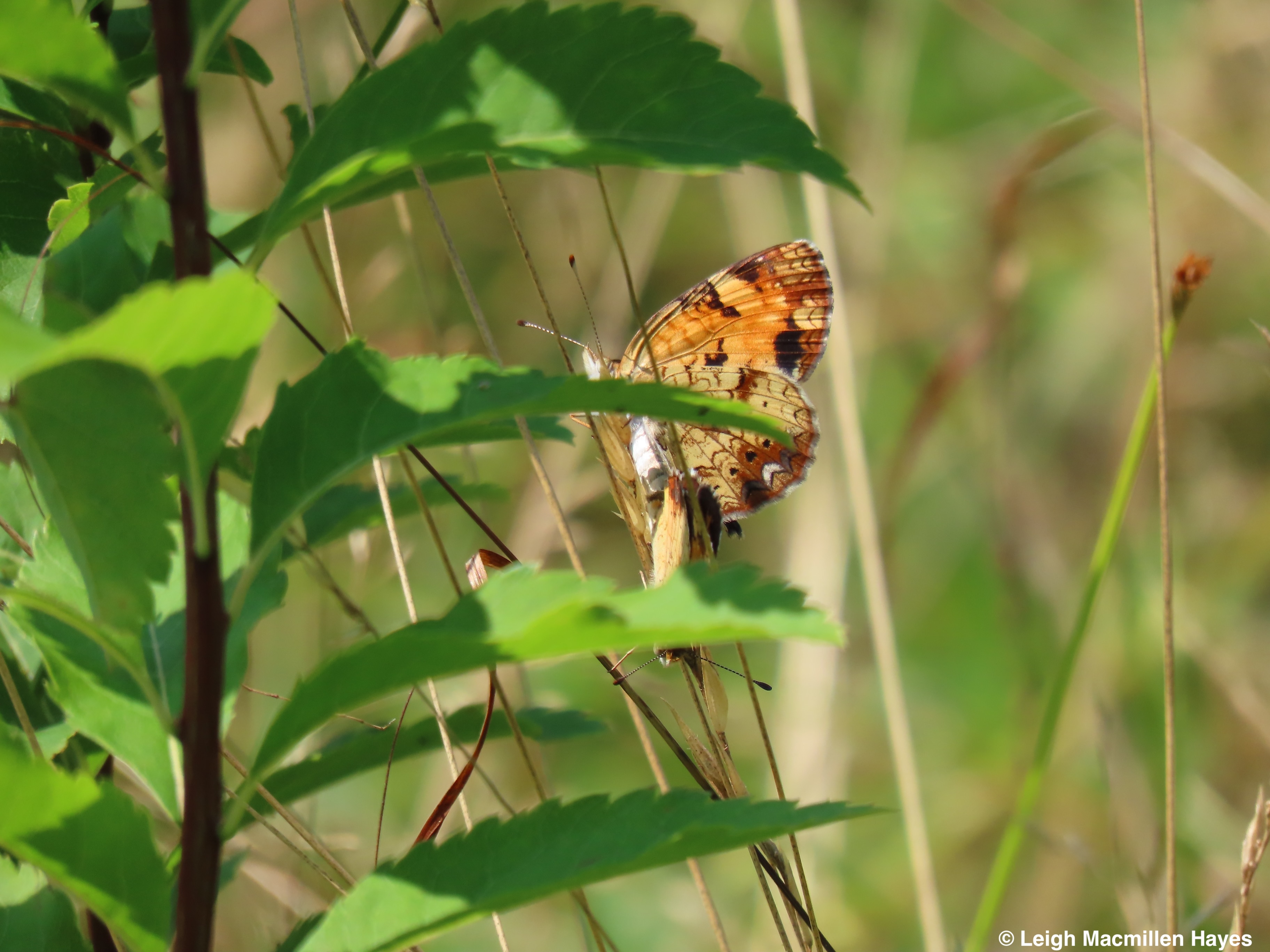
And they too canoodled, though a bit discreetly. If you look at the underwing, do you see the pearly-white crescent? Thus the common name.
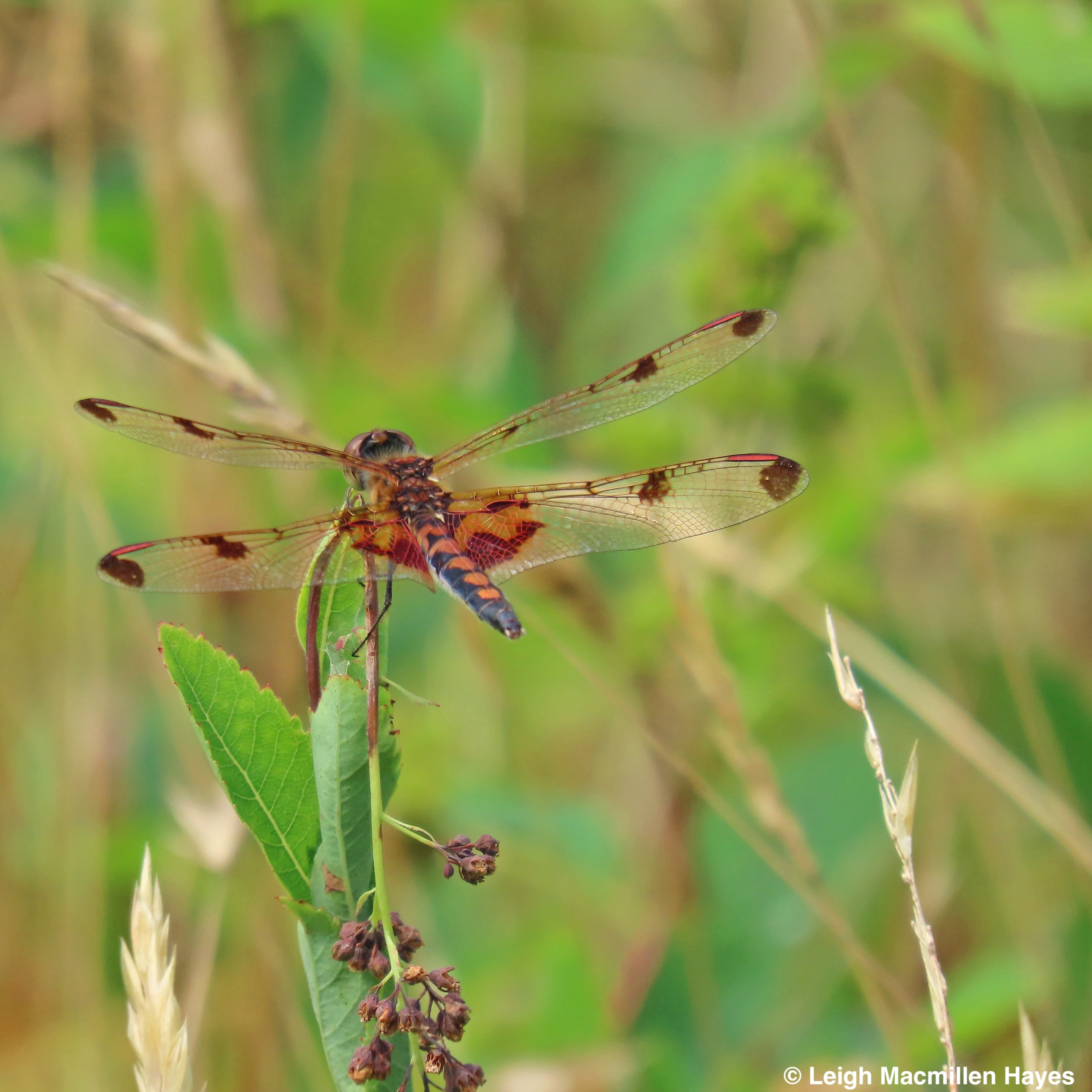
I had hoped to find a date for this male Calico Pennant Skimmer Dragonfly, her coloring would be all in yellow where his is red, but I’m afraid for the moment he’s still single. Maybe one day soon a gal will show up. I know I’ll keep looking.

Along the dragonfly line of field residents, this immature Blue Dasher Skimmer also posed for me. Again, on a Steeplebush, which gives height and vision for those who seek prey.

But some, like this Lancet Clubtail, prefer lower vegetation, and I suspect that’s where most of its meals were found.
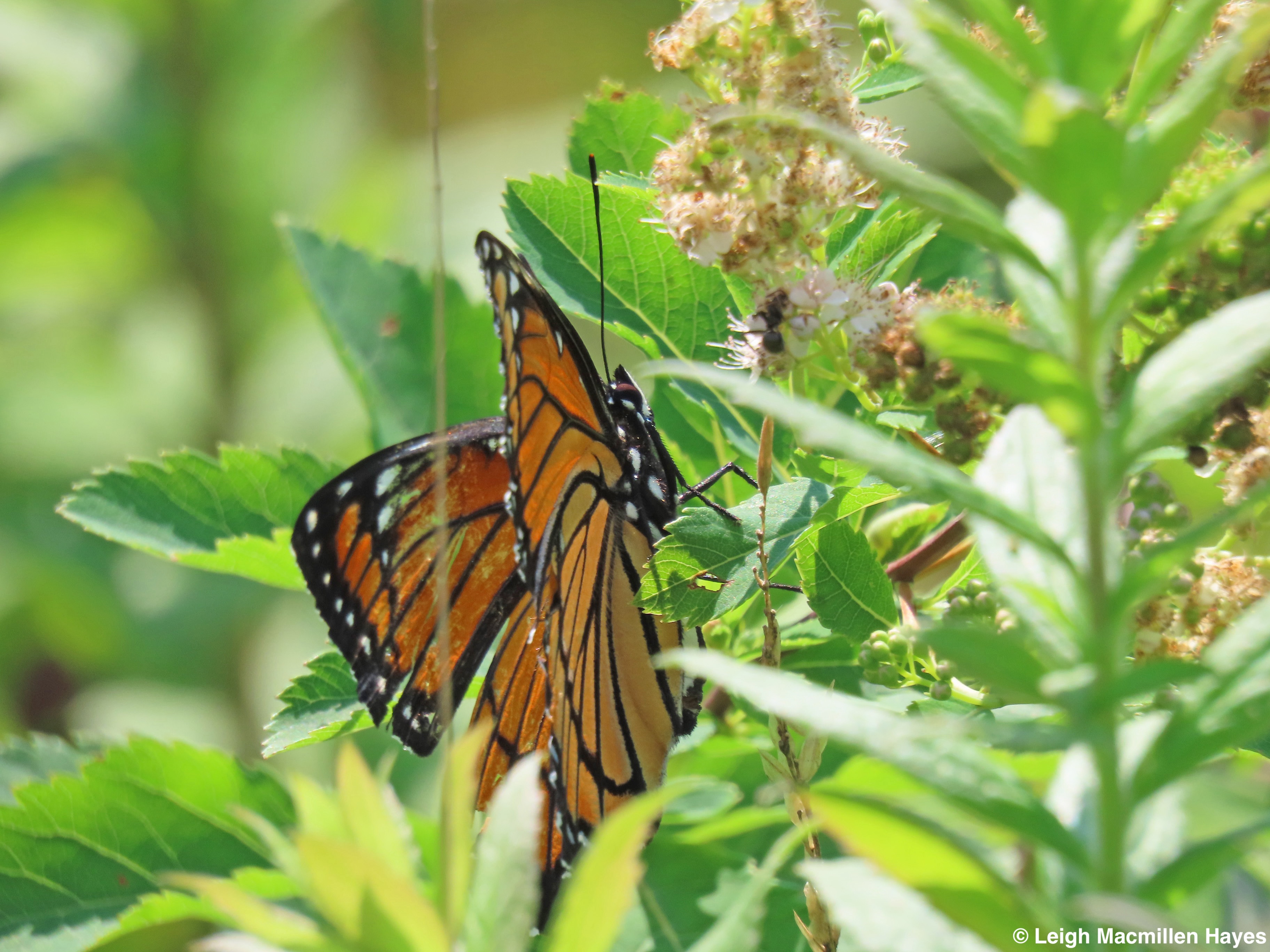
My heart skipped a beat when I saw this large orange butterfly and I thought, “First Monarch of the season for me.” Until it wasn’t. This being a Viceroy, so identified by the lines or transverse bands on upper and lower wings. Monarchs don’t have that additional band.

My heart skipped another beat when I spotted this female Jagged Ambush Bug hanging out among the Goldenrod flowers. My, what powerful looking front legs she has. The better to grasp a meal. Can you spot a potential meal in her sight? I saw it, but she never showed any interest while I was watching. Darn. I hoped for a little action.

Believe it or not, the Jagged Ambush Bug can tack down an insect as large as a Bald-faced Hornet, such as this one. I haven’t witnessed it yet, but there’s still plenty of summer left.
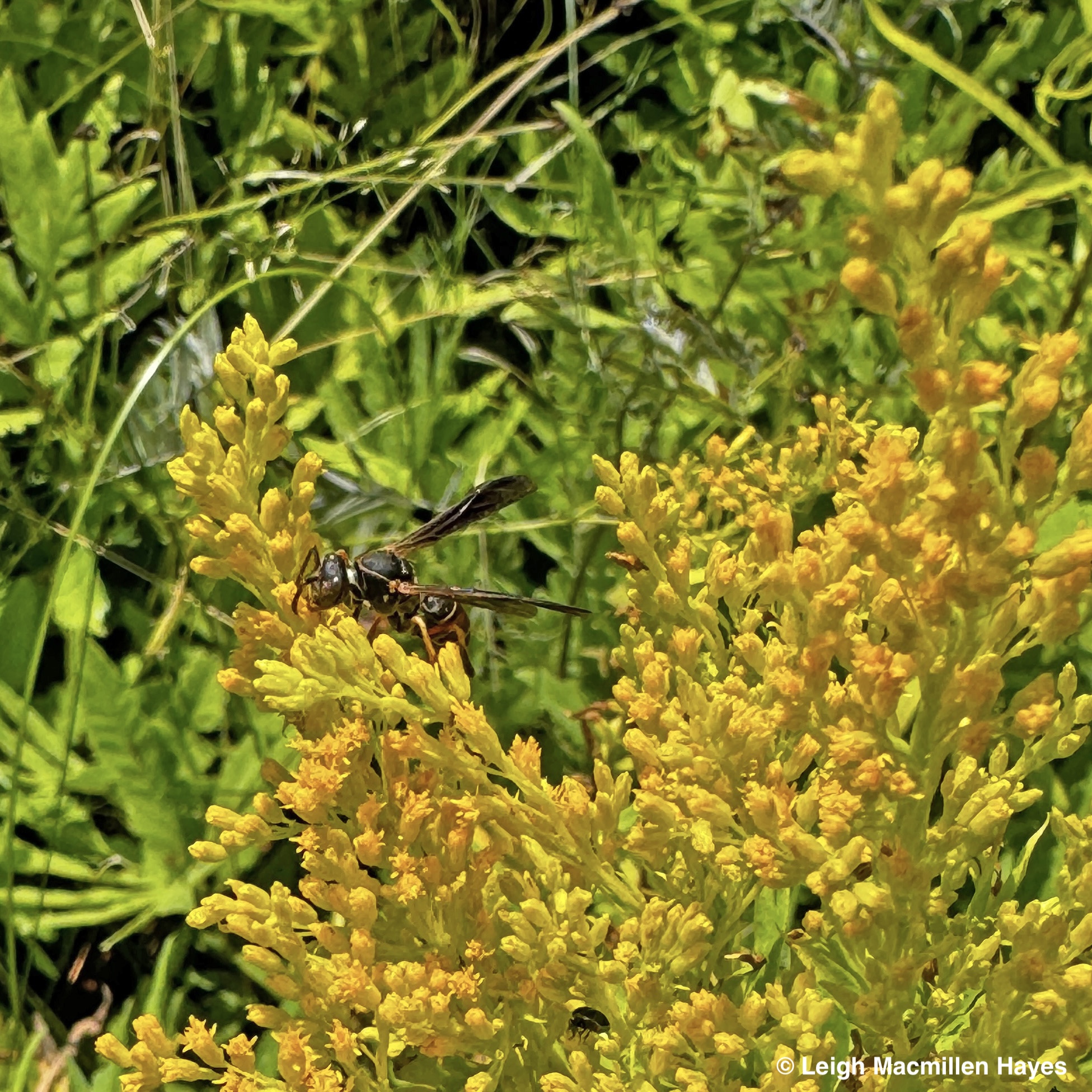
Paper Wasps were also making the rounds. And really, the flowerheads fluttered constantly with all the frenzied activity happening upon them.
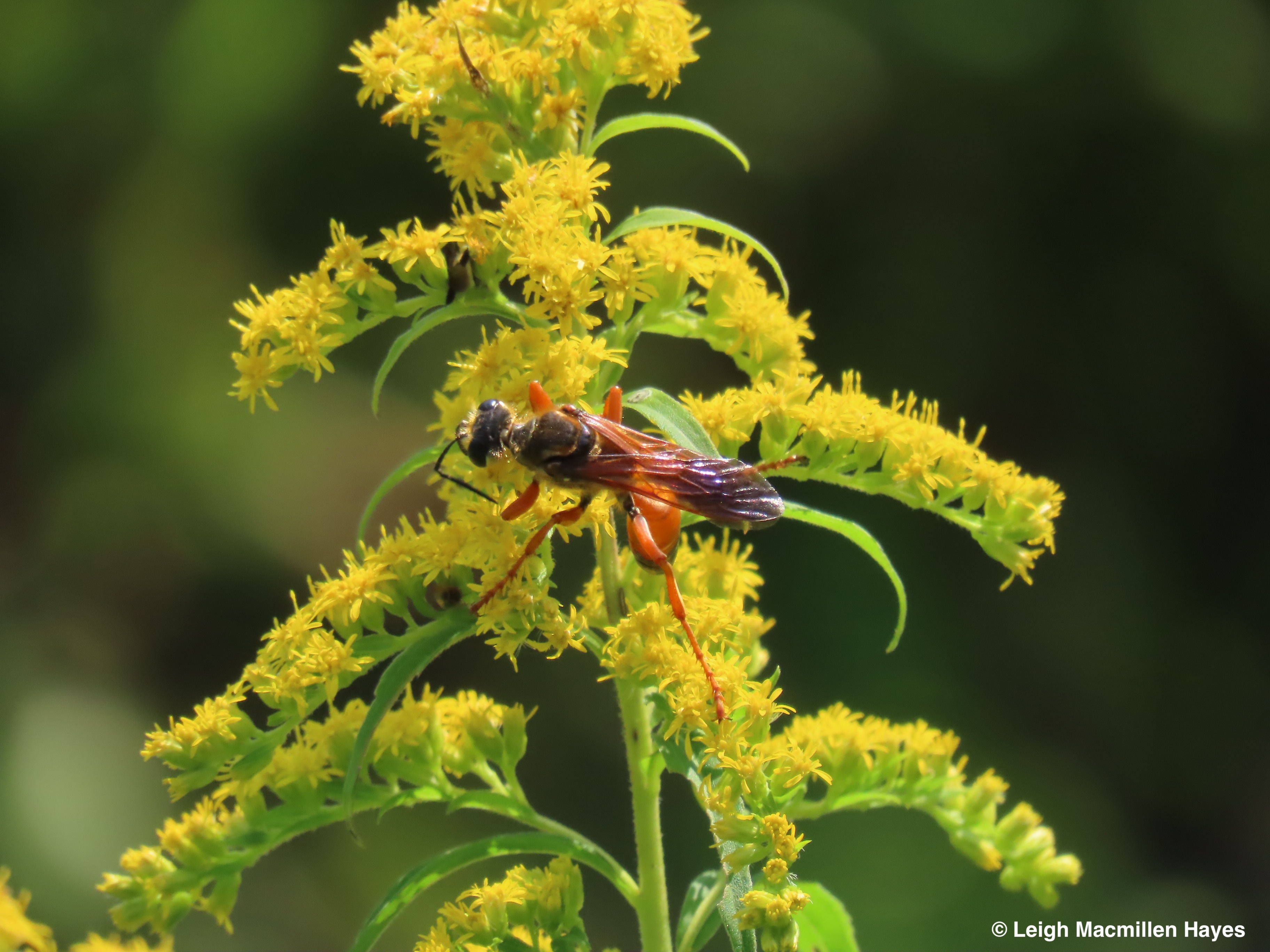
Even a Great Golden Digger Wasp partook in some of the nectaring collection.
But . . . there was something else I wanted to see. And I suspected that if I really looked, I might have success.

Bingo. It was the white packages at the outer edge of the web that led me to the creator. Charlotte.
I had a feeling Charlotte would be writing messages somewhere in the field.

And indeed she was. Years ago, when I didn’t dare walk into the field because of ticks, I wrote a children’s story about kids coming upon these large Black and Yellow Garden Spiders as they ran through Goldenrod flowers. Of course, that was about 28 years ago and I was starring out the window at the same field I can now walk in.

And because I can now do so, I found Charlotte 2 . . .

And Charlotte 3 who was preparing a meal for later. It looked to be a grasshopper of choice. If I spotted three, can you imagine how many more spiders there are out there?
In my story, if I recall correctly, the young boy character was afraid to run through the field and the young girl tried to give him some facts about Black and Yellow Garden Spiders because she wanted to become an entomologist. I should pull it out of the filing cabinet and reread it, but it’s not one for publication. It was just fun to write.

The reason I can go into the field now is thanks to my neighbors, Karen and Bill. He has mowed a circular trail so she can walk her dogs, and I love it because I can walk my thoughts. It’s a place where I can meet old friends and learn from them, and make new acquaintances.
And right now it’s a place where I can celebrate my new sight thanks to the medical team that performed cataract surgery on both of my eyes over the past two week. Until all of this happened, I had no idea how much I’ve been missing (think road signs and car blinkers for starters–never mind all the little things in nature that I love to spy).
I’m forever grateful for this new field of vision, the nurses and techs and Dr. France of Eyecare Medical Group physically for me, and my neighbors who carved this path as a way to save all those critters, who like me, call this place home. Of course, many of the critters are also a source of pollination for their vegetable gardens.
But I’ve saved the best for last. For I spotted one more critter in the field, and when I got home, it was on the Hydrangea.

This is a White M Hairstreak Butterfly. Do you see the M marking just below the orange on its hindwing? This is a RARE sighting! To be sure of ID, I grabbed Butterflies of Maine and the Canadian Maritime Provinces by Phillip G. deMaynadier, John Klymko, Ronald G. Butler, W. Herbert Wilson, Jr, and John V. Calhoun from the shelf in our study. And there it was: “Status and distribution in Maine: Probably a rare colonist.” Of the five authors, I’ve worked with Ron Butler in the past, so I reached out to him.
After I finally attached the photo (he had to remind me that I had neglected to do that), Ron sent this response:
“Hi Leigh,
Definitely! And the furthest inland record to date. Do you post your observations to iNaturalist? If not, can you send me the date and lat-long (or location on a map – I can get the lat-long) for this record?
Thanks – Ron”
According to the comments section in their book, “The White M Hairstreak is an expected and welcome addition to our region’s fauna, with the first adult observation in Falmouth by Doug Hitchcox on 24 July 2018, followed by two more records in 2018 from Rockport (Brian Willson) and Eliot (Bryan Pfeiffer and Josh Lincoln). A female was also recorded from Eliot on 5 August 2020 (John Calhoun), making this the first known repeat occurrence at a Maine locality.
I am in great company. Of course, I’m already anticipating the next edition of the book–haha.
I thank you again, Karen and Bill, for giving me the opportunity to explore the field and to my medical team for making sure my vision is crisp and clear.
Field of Vision indeed!
 wondermyway