It’s become a tradition for us to spend Memorial Day or at least a day during this weekend searching for one of My Guy’s favorite blooms. I don’t even remember how the count began, but now he cannot not count them.
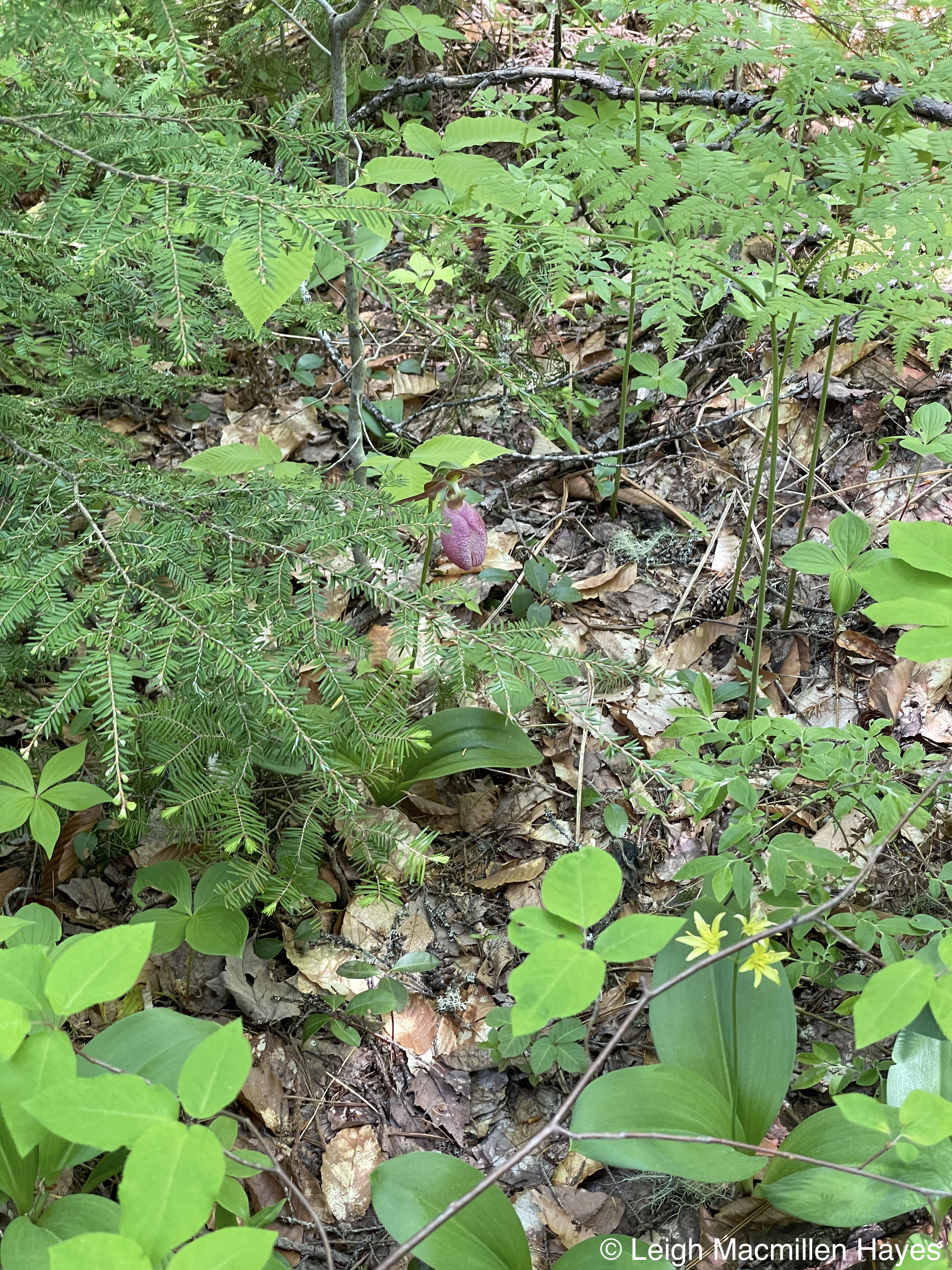
What we’ve learned over the years is that they like a variety of habitats. from dark forests to bogs, and even mountain tops. And they like to hide. So we must really don our Lady’s Slipper eyes (just as I’ve been donning my dragonfly eyes lately) and look for them.
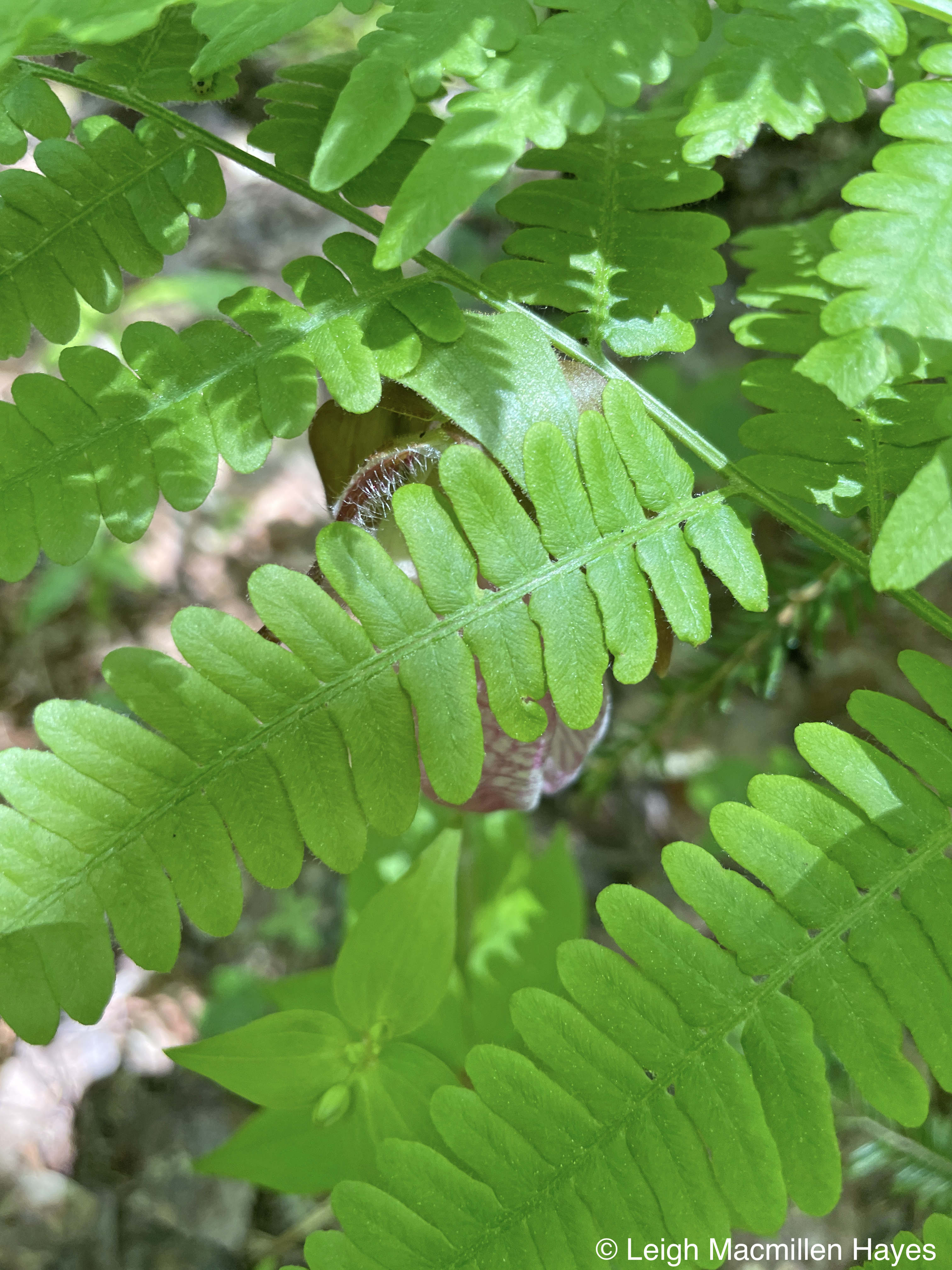
I mean . . . really hide.
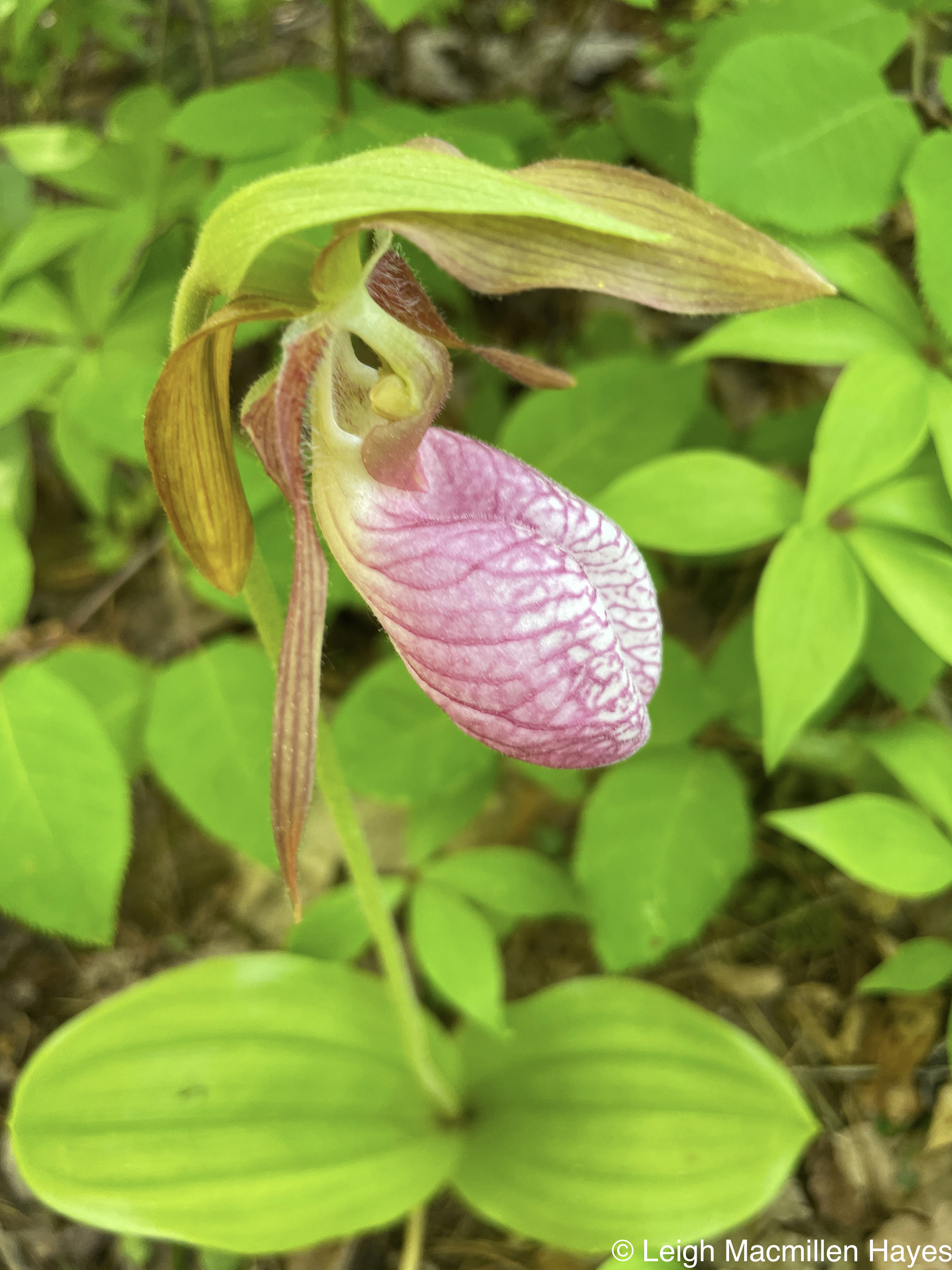
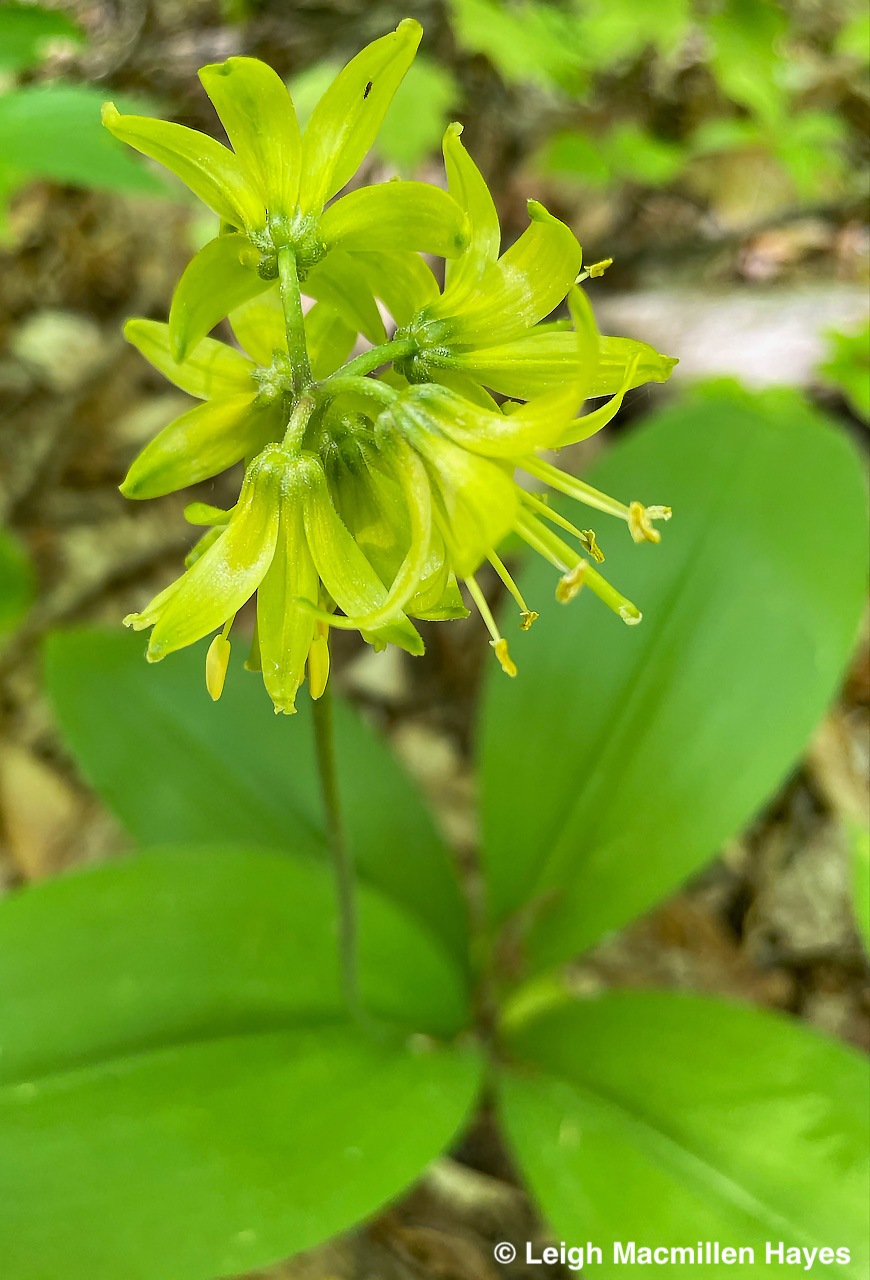
It’s acidic soil that they are rather fond of, just like Yellow Clintonia, the beacons of many a forest trail. But while Clintonia seems to bloom anywhere and everywhere, Lady’s Slipper need Rhizoctonia fungi in order to grow and show off a blossom. According to Jack Sanders, author of The Secrets of Wildflowers, “Unlike most seeds, the minute and dustlike Lady’s Slipper seeds contain no food to allow them to grow. However, the outside of the seed is susceptible to attack by Rhizoctonia fungi, which digest the outer cells. If things balance out just right, the inner cells escape digestion and absorb some of the nutrients the fungus obtained from the soil. Not until this happens can the seed germinate and begin growing . . . The symbiosis with the fungus doesn’t end there. In order for the infant corm (or ‘proto-corm’) to obtain minerals and other soil foods, it must use the ‘go-between’ services of Rhizoctonia fungi. The fungi, in turn, take from the seedling Lady’s Slipper foods that are photosynthetically manufactured. These sensitive and complex relationships make native orchids of all kinds relatively uncommon . . . What’s more, in the wild, it takes from 10 to 17 years for a Lady’s Slipper seed to become a mature plant capable of blooming.“
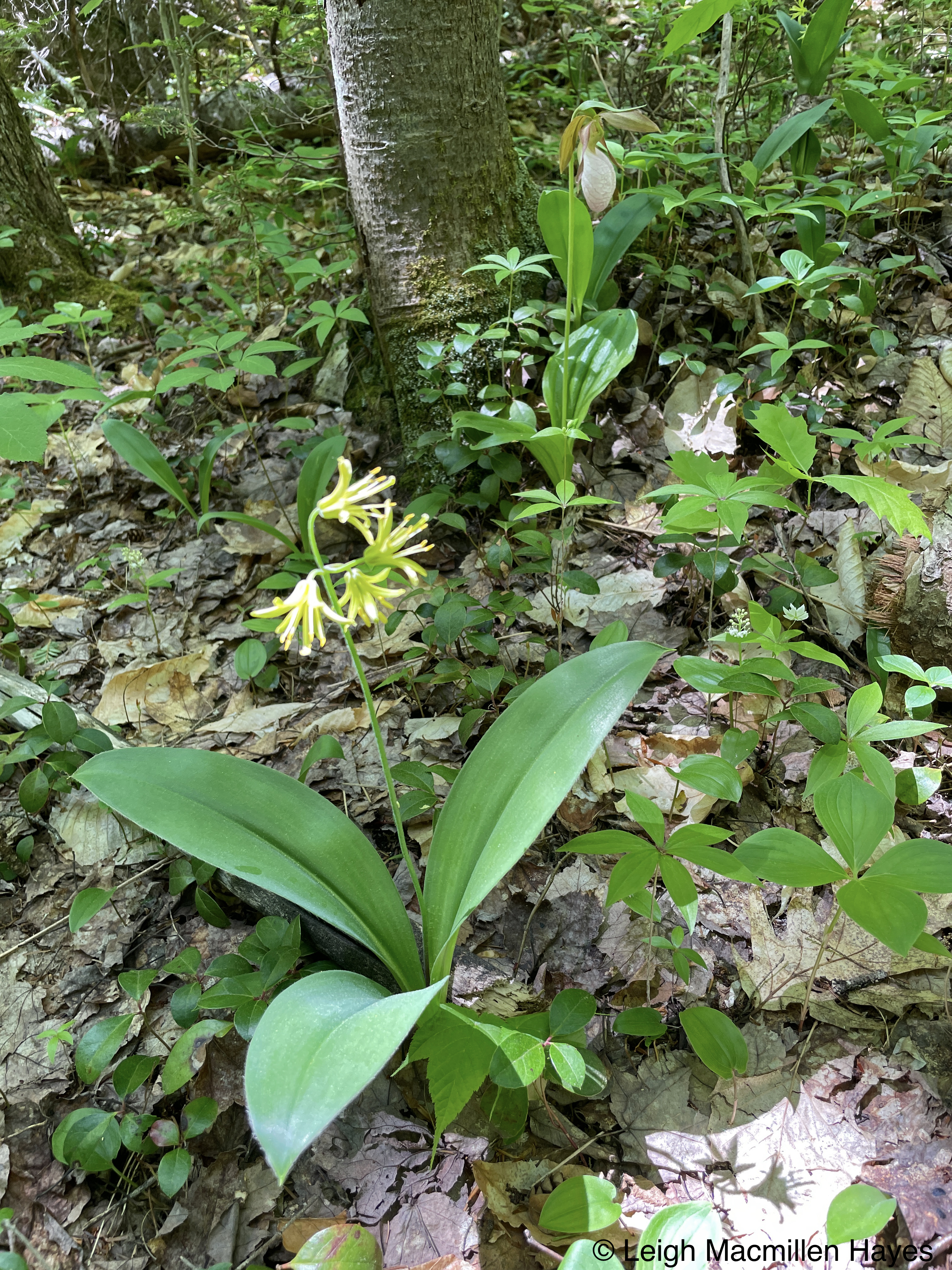
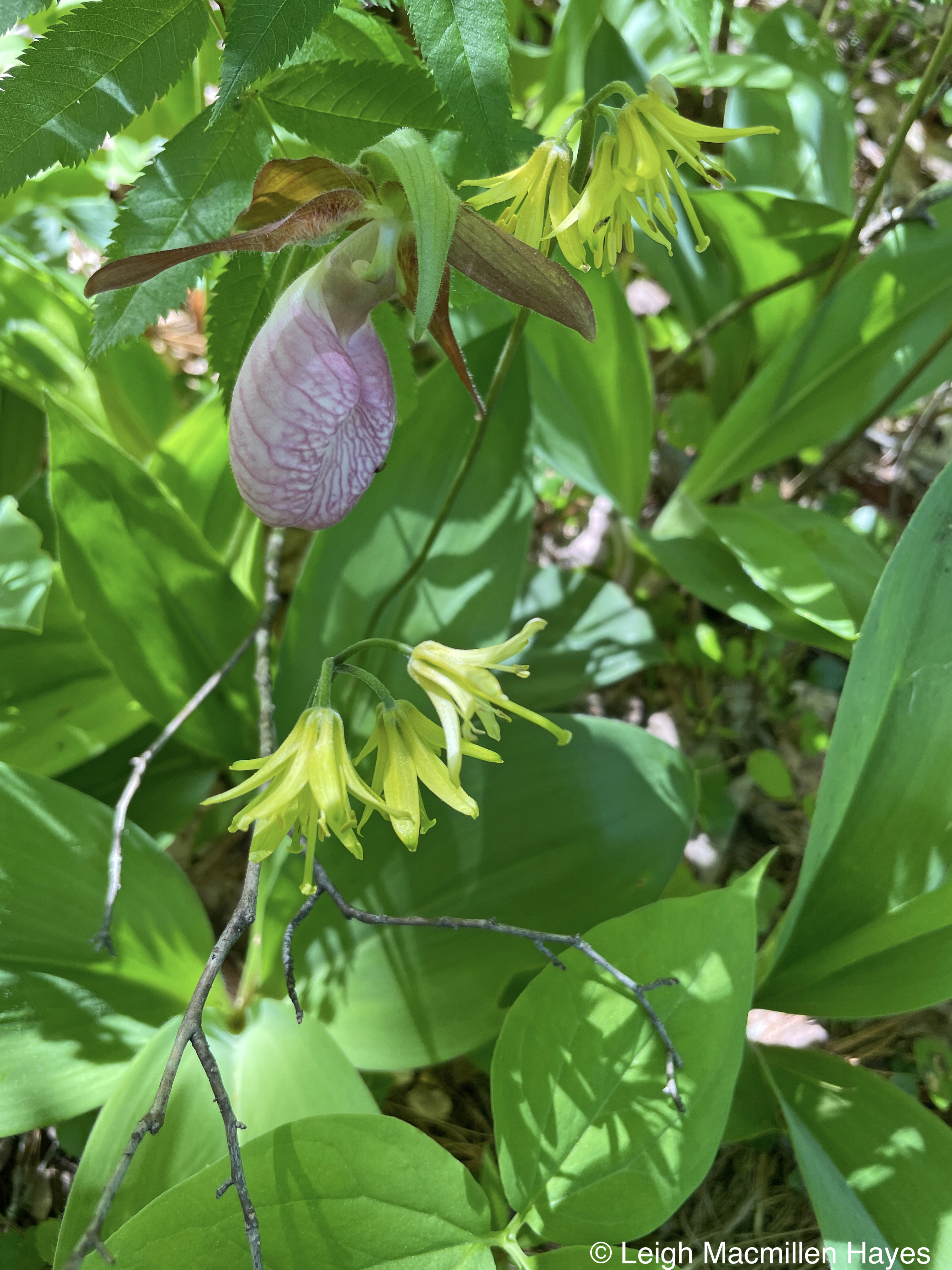
So here’s the thing. Yellow Clintonia and Pink Lady’s Slipper flowers look nothing alike. But their leaves–that’s a different story and when there are no flowers to confirm, one like me, must slow down and notice the features. Do you see what I mean? Clintonias are members of the Lily Family, with six lily-like tepals (segment of the outer whorl in a flower that has no differentiation between petals and sepals). And their leaves can be folded in half with the inner vein forming the fold line.
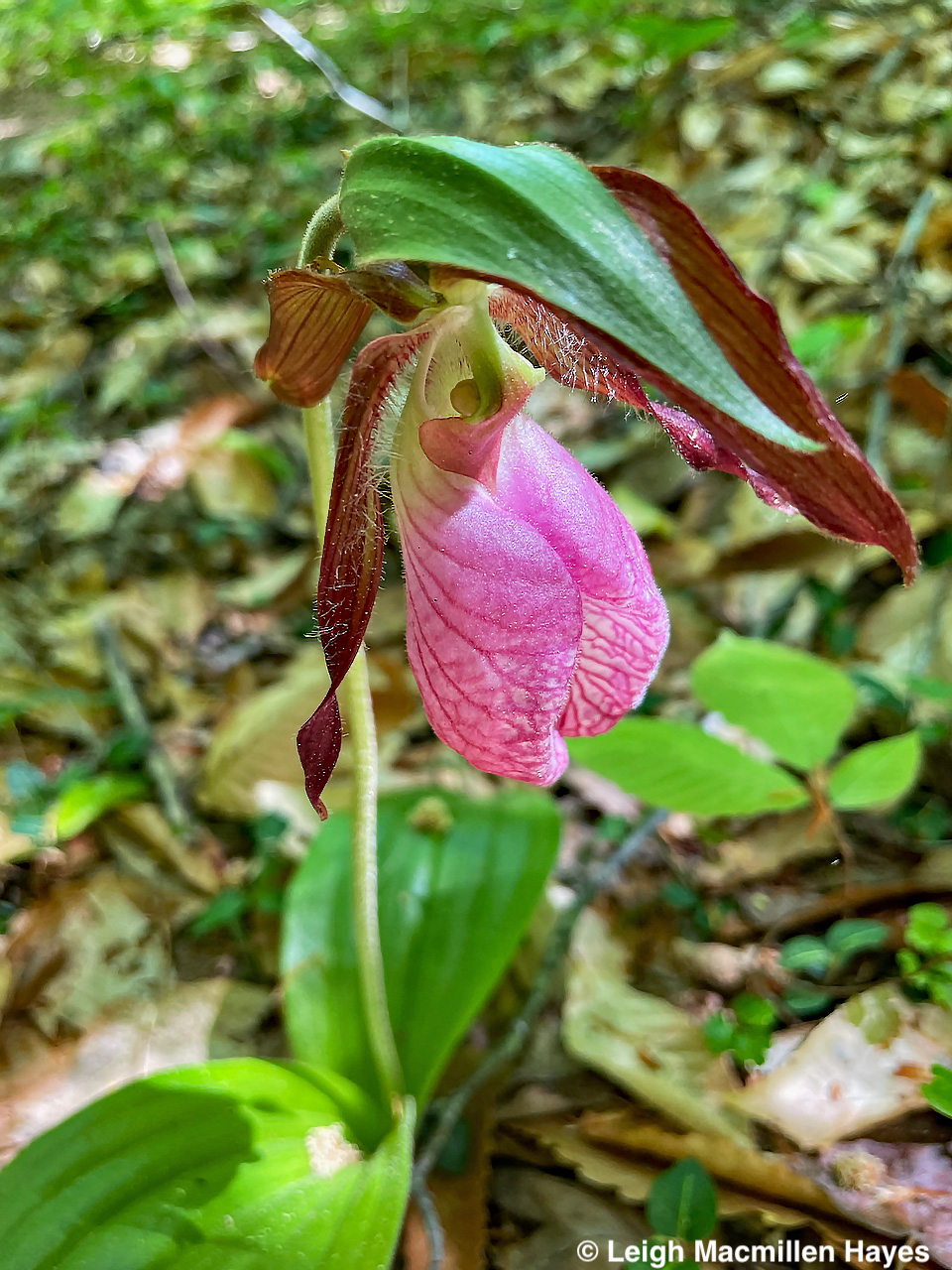
Lady’s Slippers, on the other hand, are orchids. The flower is a moccasin-shaped, inflated pouch, but also two lateral petals that twist outward. And the leaves–take a look. Remember folding paper in an accordion-like manner to create fans, or tissue paper to create flowers? That’s what Lady’s Slipper leaves look like to me. Multiple pleats.

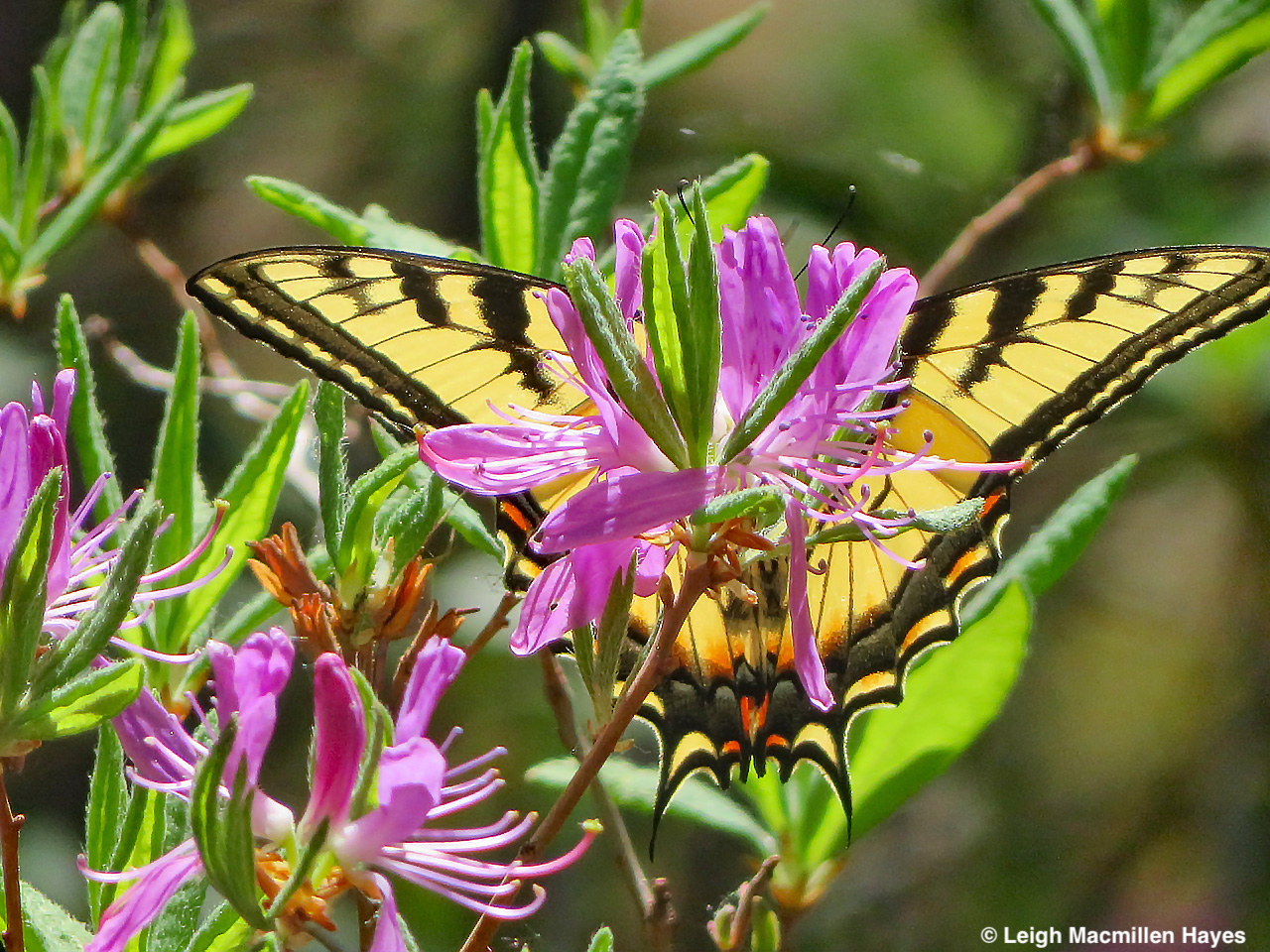
Lest you think nature didn’t distract us, there was a male swallowtail puddling in a wet seep that we had to pause and admire.

And we certainly didn’t want Indian Cucumber Root, in the same lily subfamily as Clintonia, to think we were ignoring it for it has just begun to offer its unique flower to the world.

But our real focus, of course, were the slippers, even those decorated in white, which is a form of the pink.
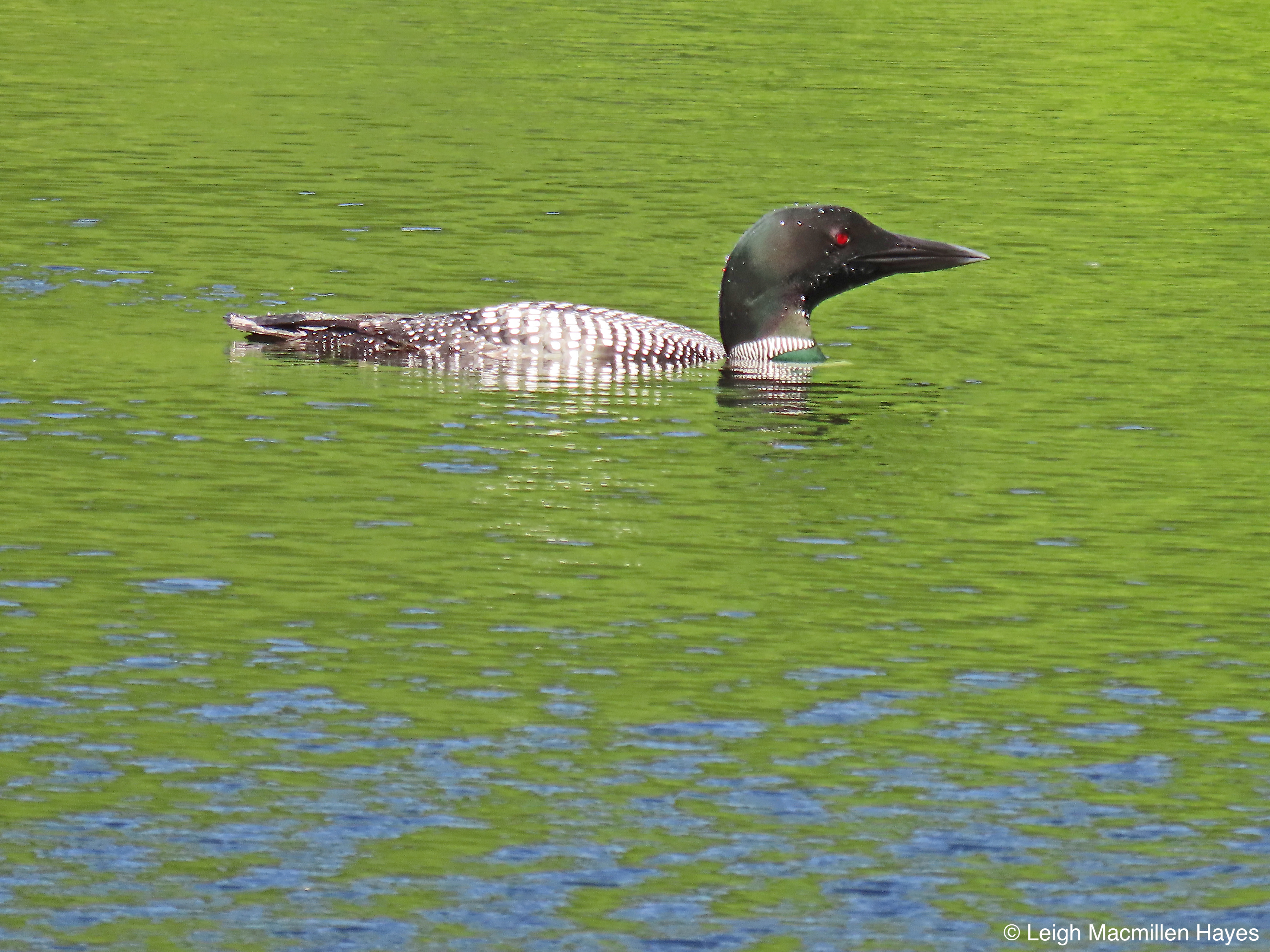
Until, that is, the Common Loons begged to be noticed and so we did.
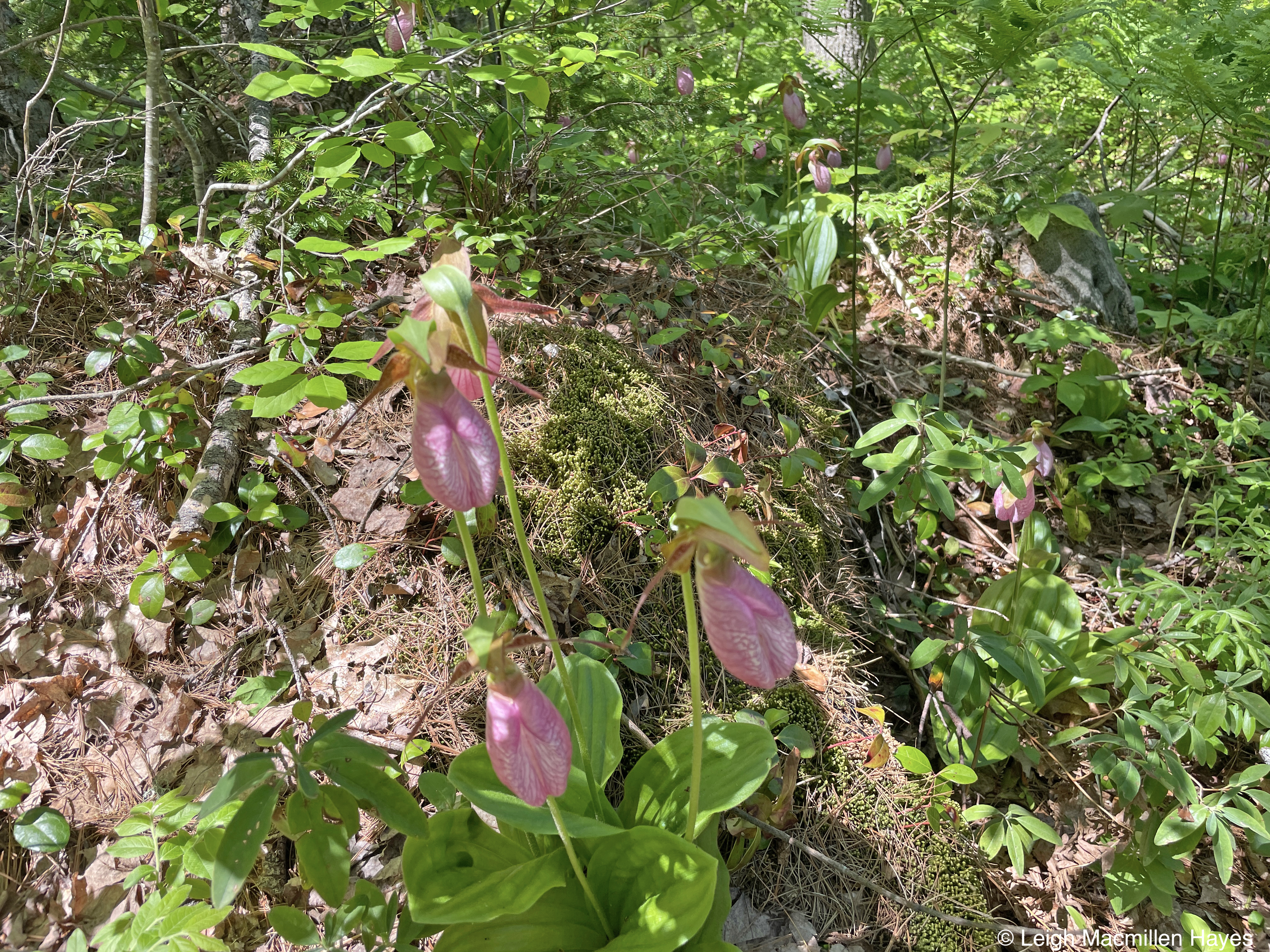
A few miles into the hike, we reached one of My Guy’s favorite spots. Just the other day I heard him describe it as a field of Lady’s Slippers. I’m pretty sure he was thinking football field. I happen to think it’s closer to the size of my office. But, it does produce about fifty flowers each year.

While he was meticulously counting those fifty, a Bald-faced Aerial Yellowjacket flew in and started chewing some wood. My attention was indeed diverted.
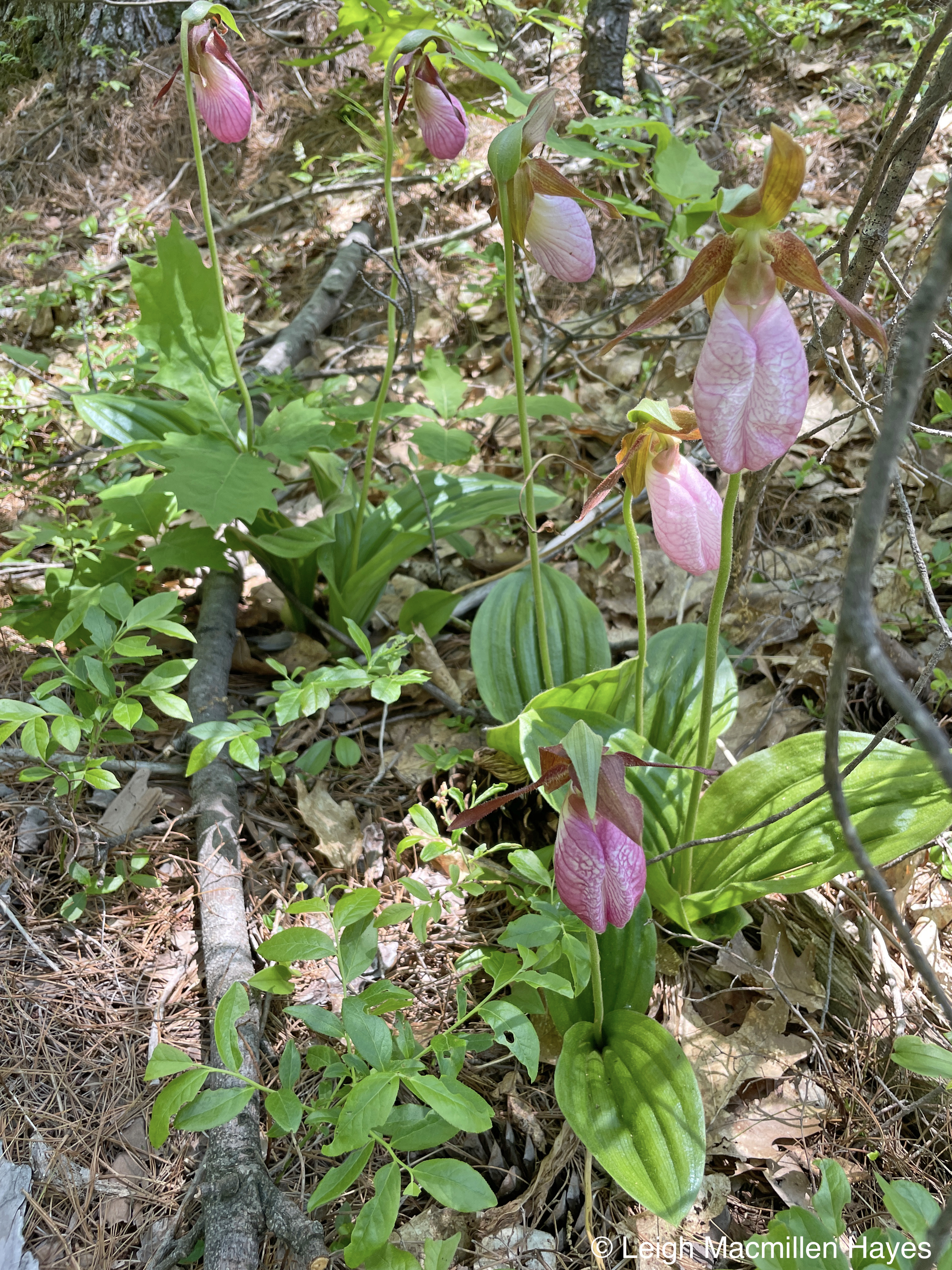
Heading to the summit, we didn’t find as many, but still they were there and we paused to admire this grouping. I wonder if there was a nurselog below them that offered the right growing conditions and thus the line.
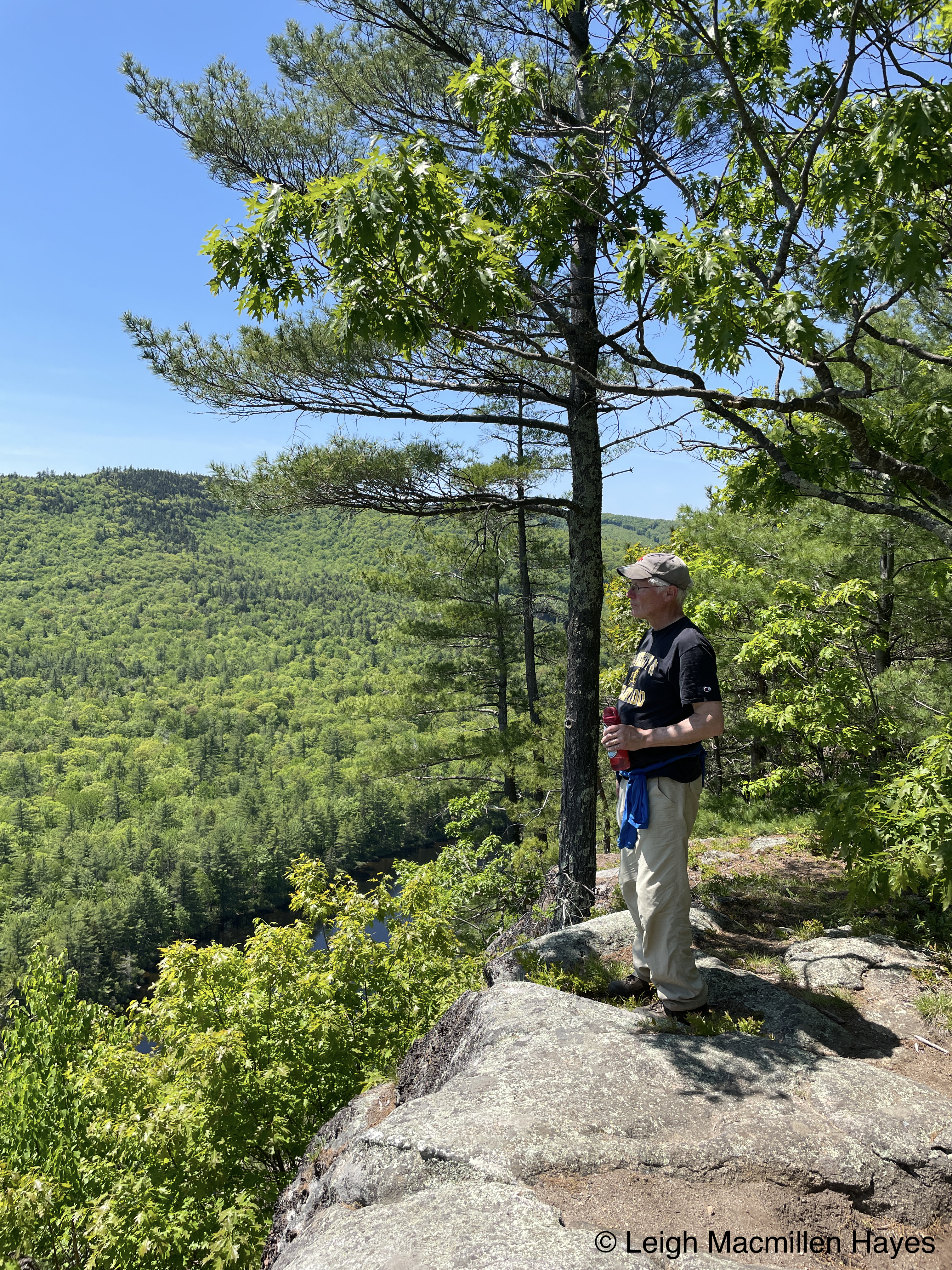
At the summit, after finishing dessert (we’d eaten our sandwiches below by the pond), someone had to survey his kingdom.
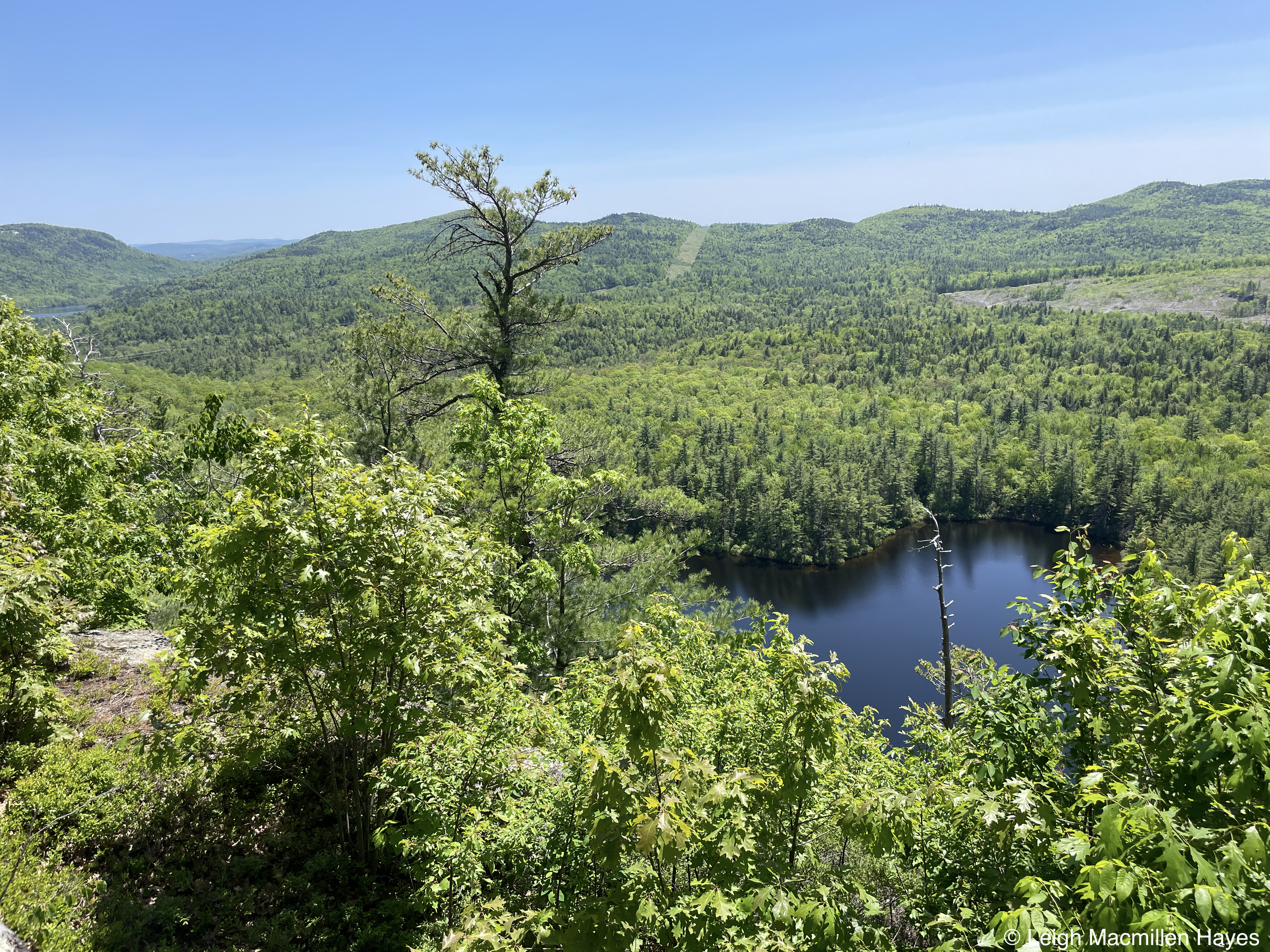
It’s always worth a look.
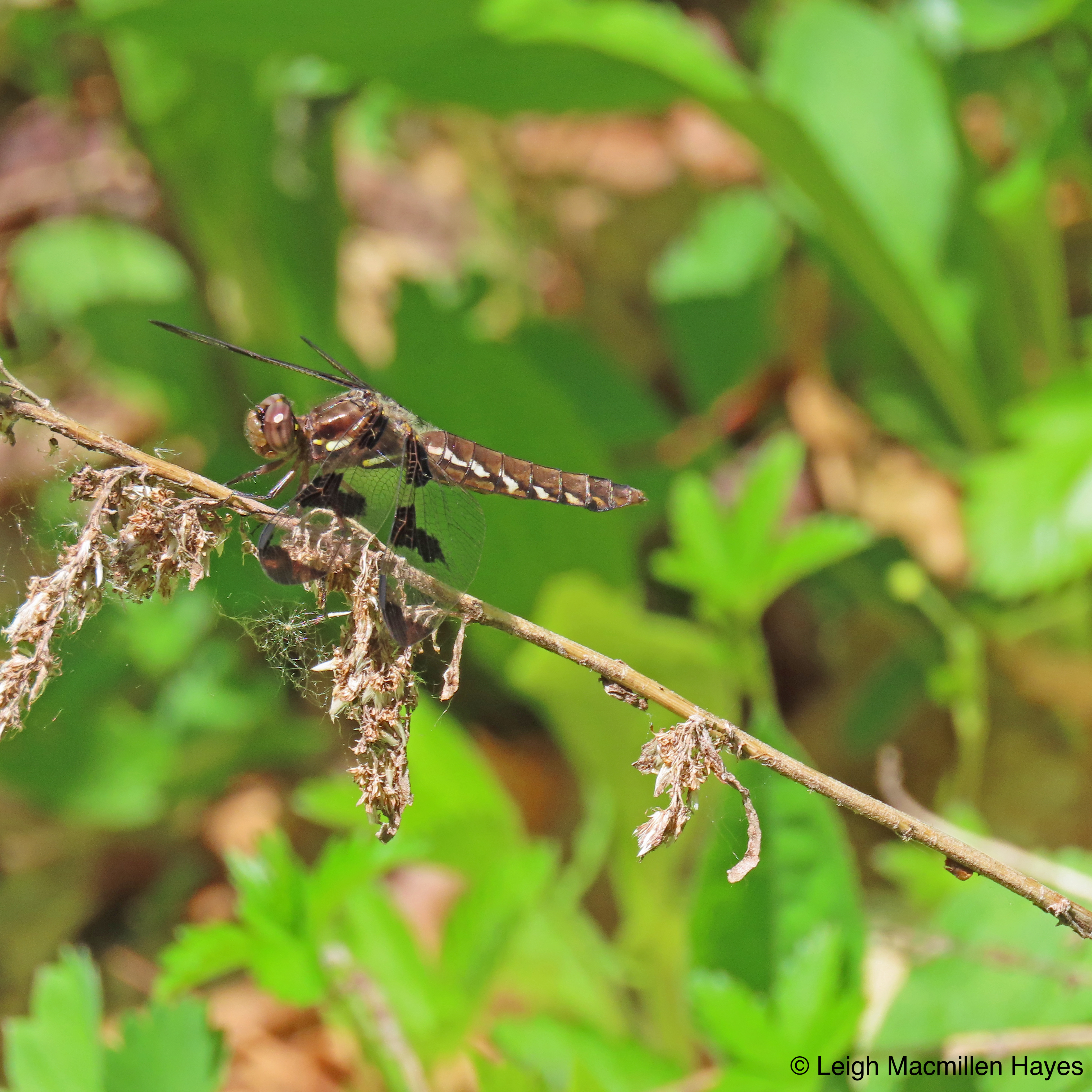
We found some more as we descended and then followed a different trail out, where another lady made herself known.

Meet a female Common Whitetail Skimmer dragonfly, who is hardly common with her tail markings, and spots on her wings.

We were almost finished when we spotted this Lady’s Slipper blowing in the breeze. Note the curve in the stem, and the closed moccasin.
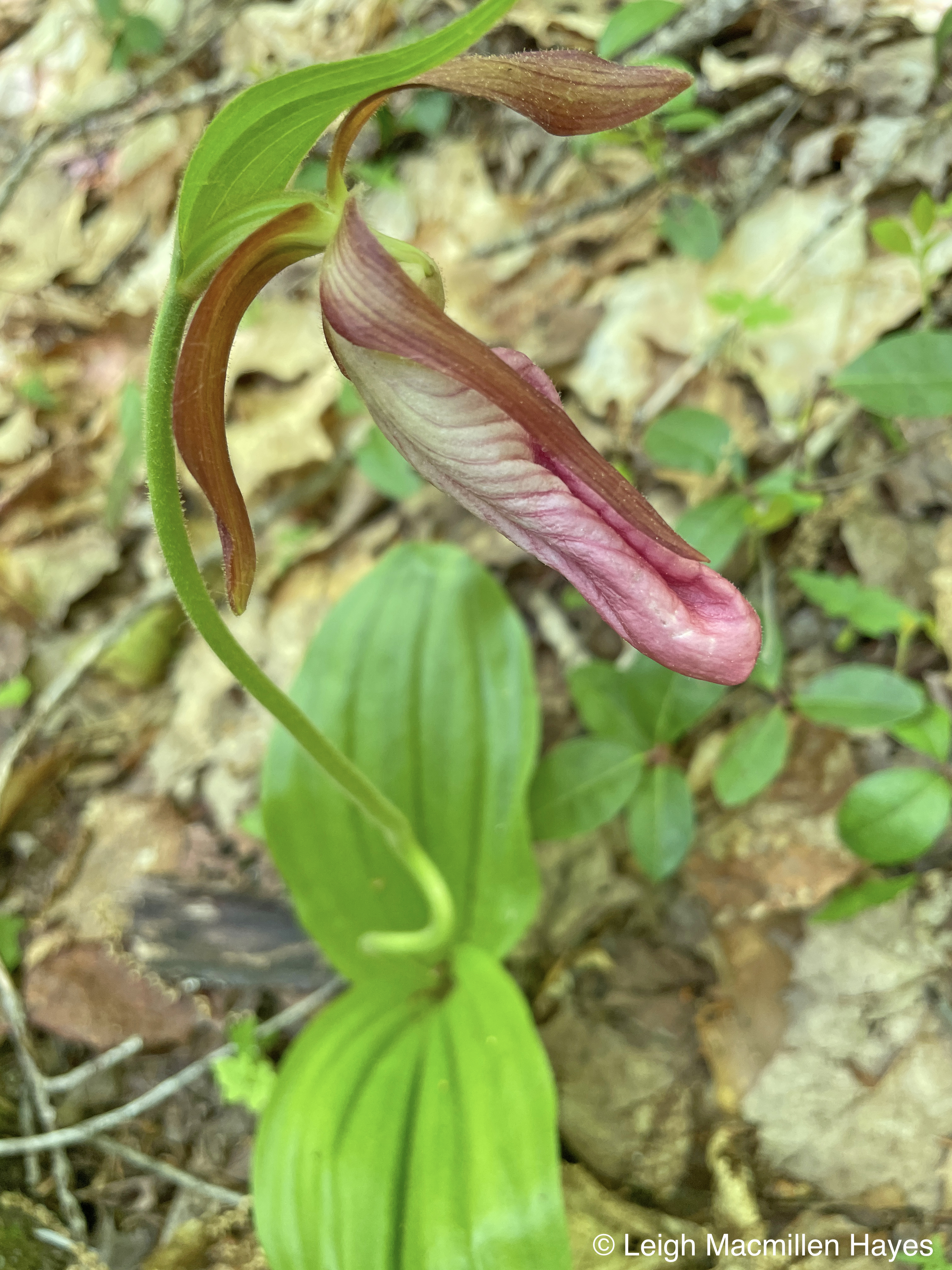
I don’t know if removing the leaf will help the flower to fully develop, but it made me think of today, Memorial Day, and the fact that so many have in the past and do presently work so that we can enjoy the freedom of going for a hike in the woods–thank you to all who have served our country, past, present, and future, including our dads, uncles, cousins, and friends.
The question remains: How many Lady’s Slippers did we honor on this Mondate? 351. And those were only the ones we could spot from the trail. I’m sure we missed some. Can you imagine how many more might be out there.






 wondermyway