Pressed to find a new mountain trail

Several friends had told us about a mountain in New Hampshire that we’d never climbed before and so we thought we’d change that situation today. As we drove toward Jackson, there were occasional raindrops and I turned on the windshield wipers, but road conditions were good, thankfully. We could see in the mountains, though, that there was mixed precipitation and we promised ourselves that if conditions warranted, we’d go somewhere else and leave today’s Plan A for another day.

By the time we reached the dirt road to the trailhead, it was really beginning to snow/sleet, and so rather than drive the 1.2 miles up, I found a good place to park, and walk up we did. Mind you, had My Guy been behind the wheel, our journey would have been different. But . . . as steep as the road was at times, I LOVED walking along it.
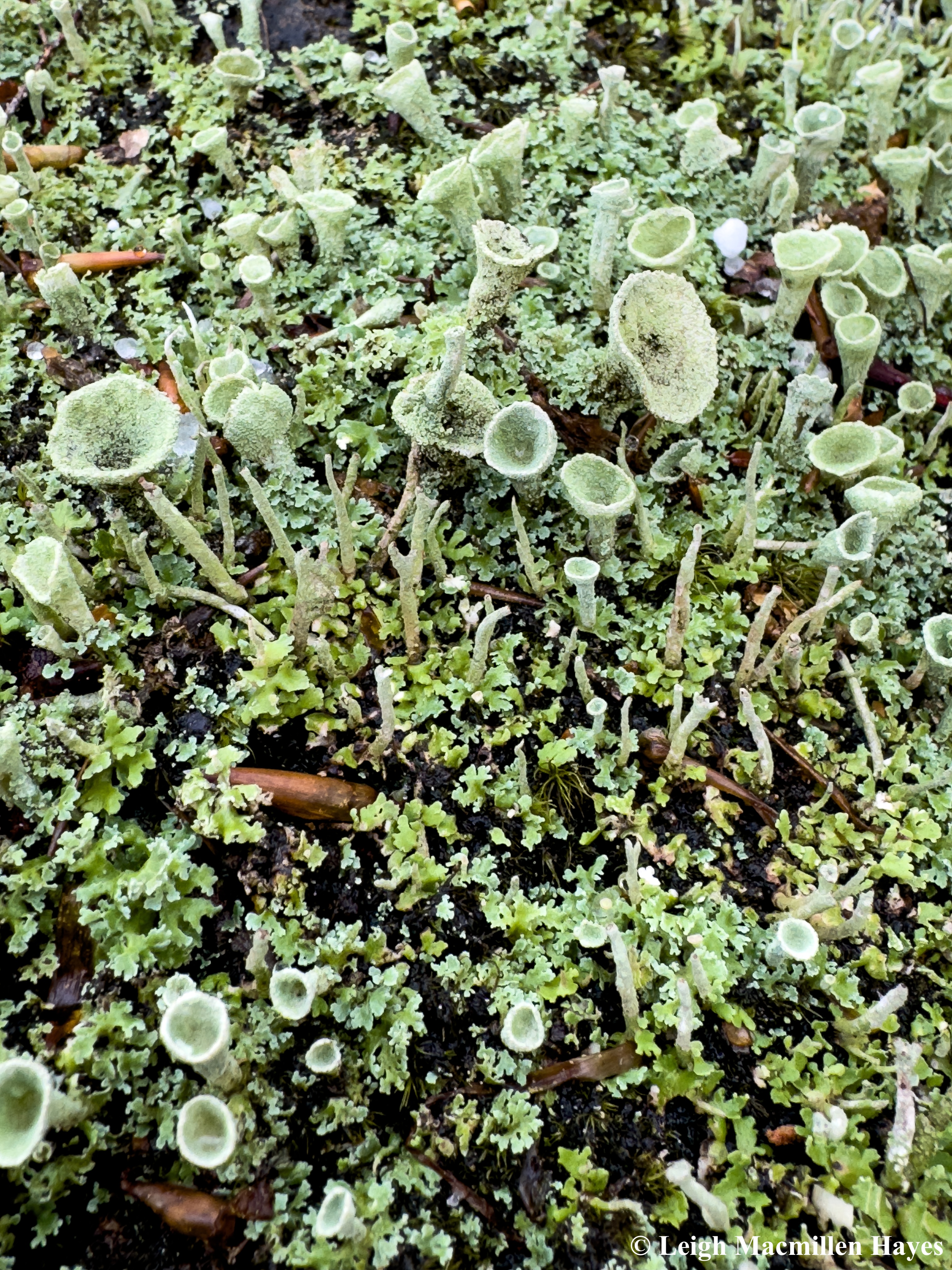
First, there were the over-sized Pixie Cup Lichens, looking as if they were on steroids, though perhaps it was the crisp mountain air that appealed to them.

And then some old raspberries from the Purple-flowering Raspberry bushes and I told My Guy that the first time I remember encountering them was on a nearby road leading to the Mountain Pond loop. He recalled the adventure and the company we kept that day, but not the flowers, which were in bloom given that it was in a different season.
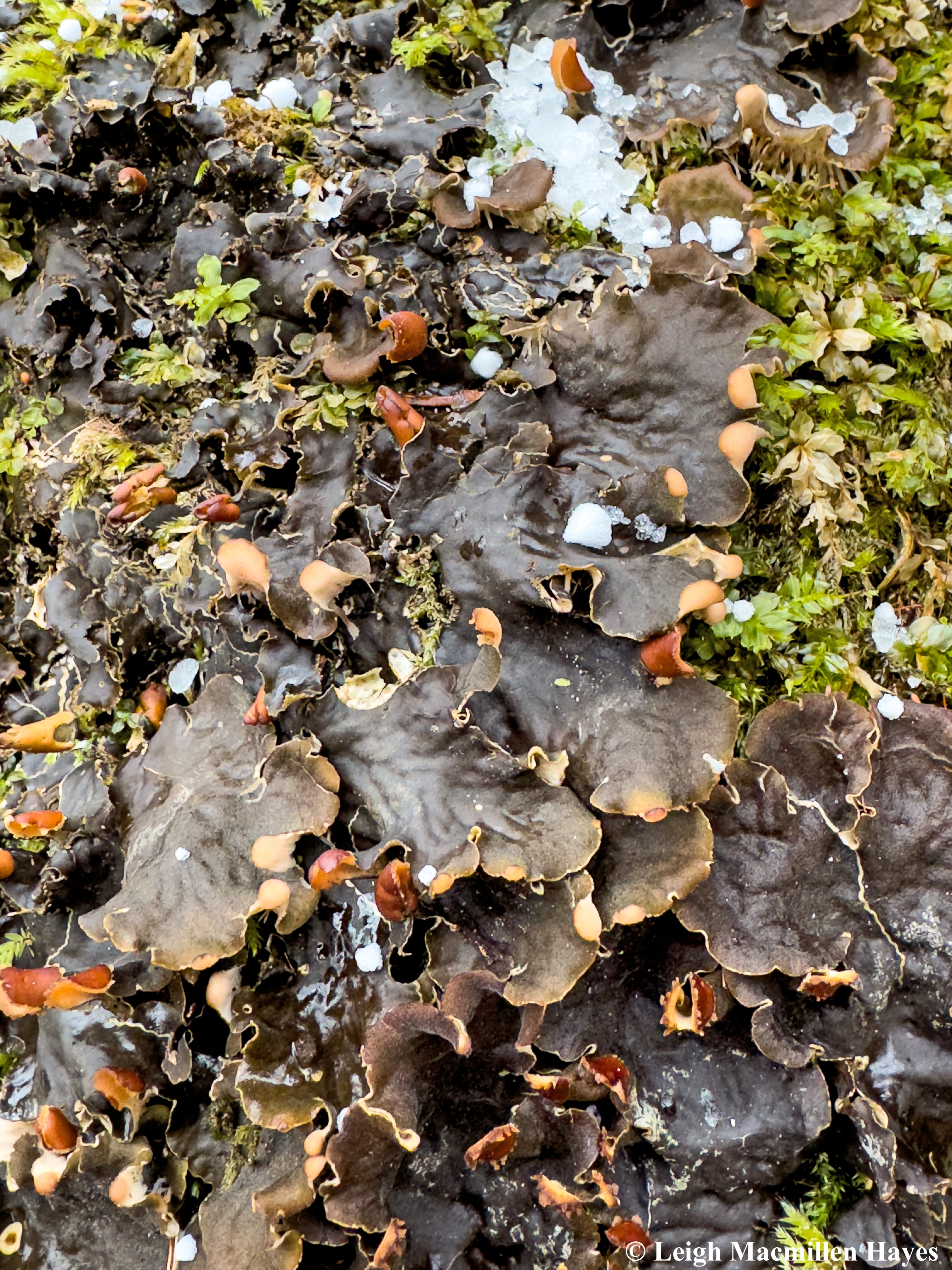
At the base of a Sugar Maple was a HUGE patch of the Many-fruited Pelt Lichen, its apothecia the tan-brown saddle-shaped lobes.

And then there were the also HUGE leaves of Coltsfoot, an interesting plant that likes disturbed areas like this and flowers first before it produces leaves. Spotting the leaves in the fall, reminded me of the spring flowers.

And I borrowed this one from another post I wrote two years ago. Though the flowerheads look like Dandelions, the stems have modified leaves, and it really is a unique plant.

Why the name “Coltsfoot?” Because the leaves are supposed to resemble the foot of a colt.

Ah, but the best part of the long walk up this road was the fact that there were camps and they needed electricity. Well, the poles were there. And the wires were there. But over and over again, we discovered the wires were on the ground, buried under the leaves and it seemed like they’d been down for a long time.

What intrigued me though? I mean, seriously, a telephone pole in the middle of the woods interests a so-called naturalist? YUP! All of those marks you see below the mangled number are the bite marks and scratch marks of a Black Bear. The bear turns its head to the side and then scrapes the bark with its upper incisors coming to meet its lower incisors.
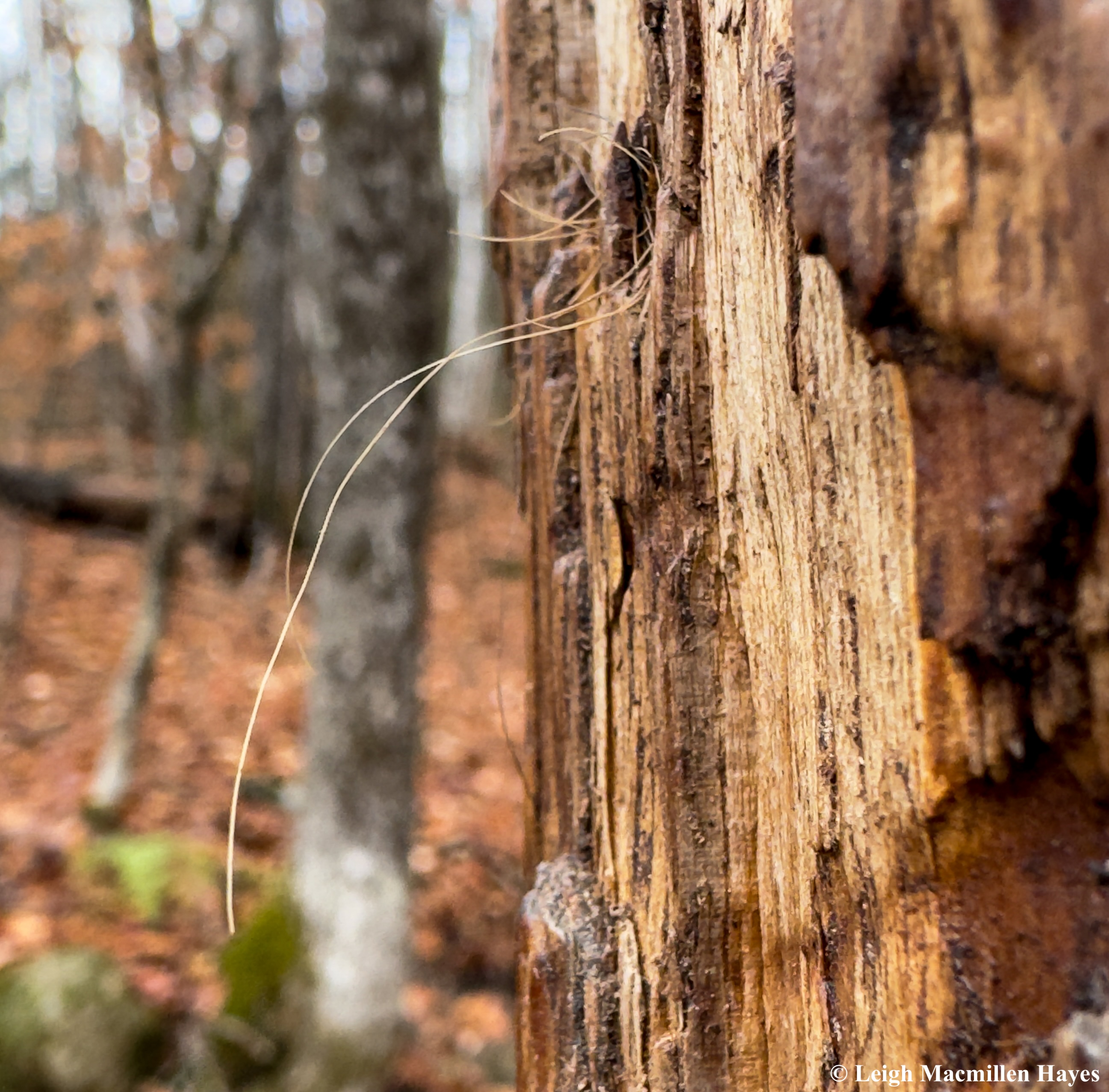
In the process of doing this, it usually has its back to the pole as it might be leaving a scent or at least getting a good scratch out of it.

And in the process, some bear hair gets stuck. Yes, that’s bear hair. It’s bleached out from the sun, indicating this was deposited at least six months or more ago.
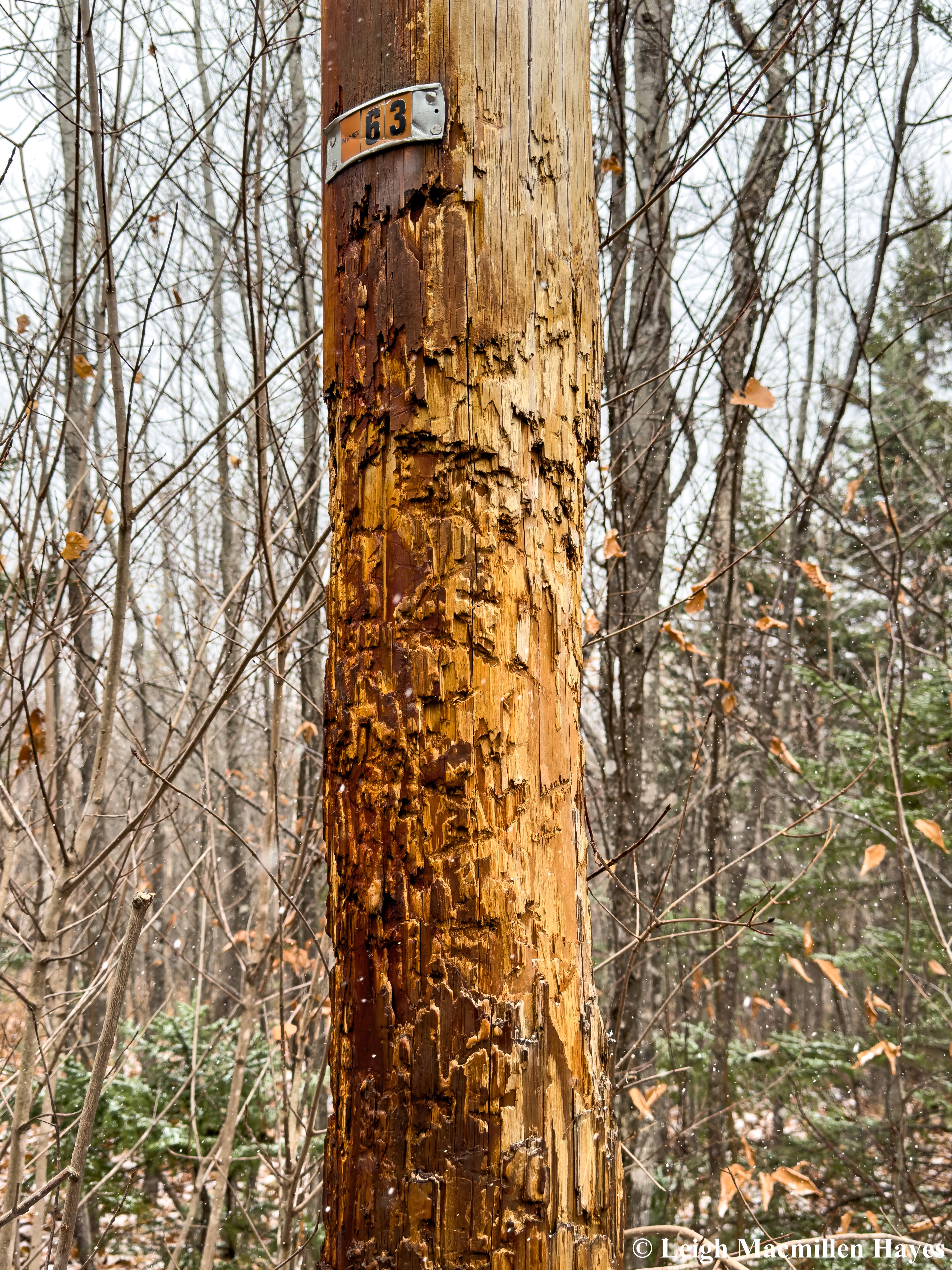
As we continued up, every pole became my friend. My Guy is used to this and so he patiently waited while I gave them the once over.

And again I was rewarded, this one being with black hair, indicating it was a more recent deposit.

I could have turned around then and headed home.
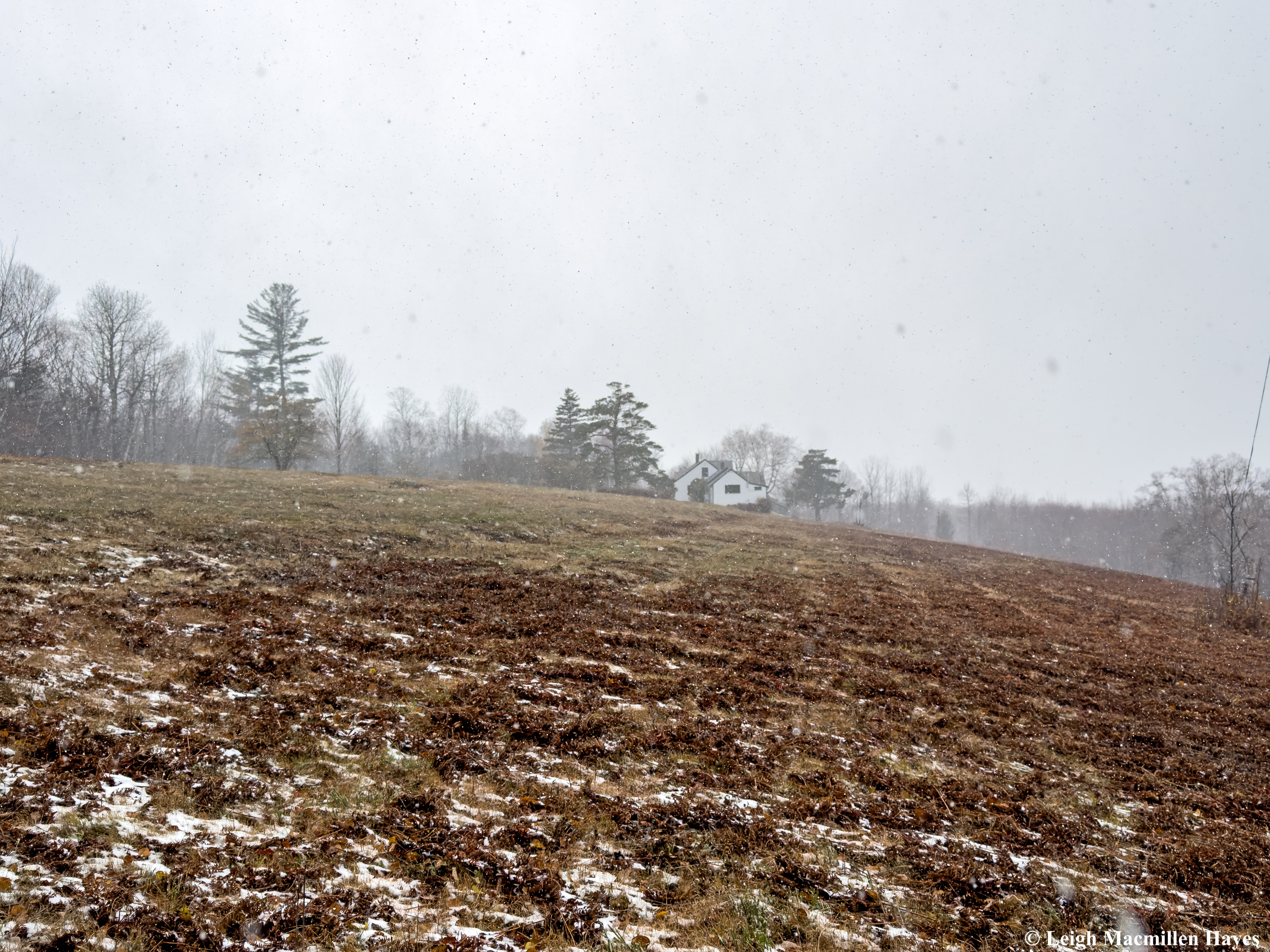
But we didn’t because we’d finally reached the trailhead, which is located on historic Hayes Farm, dating back to the early 1800s, and My Guy was sure he must have some ownership in the land.

Like a few views during our trip to Virginia last week, any mountains beyond were obscured in the moment.
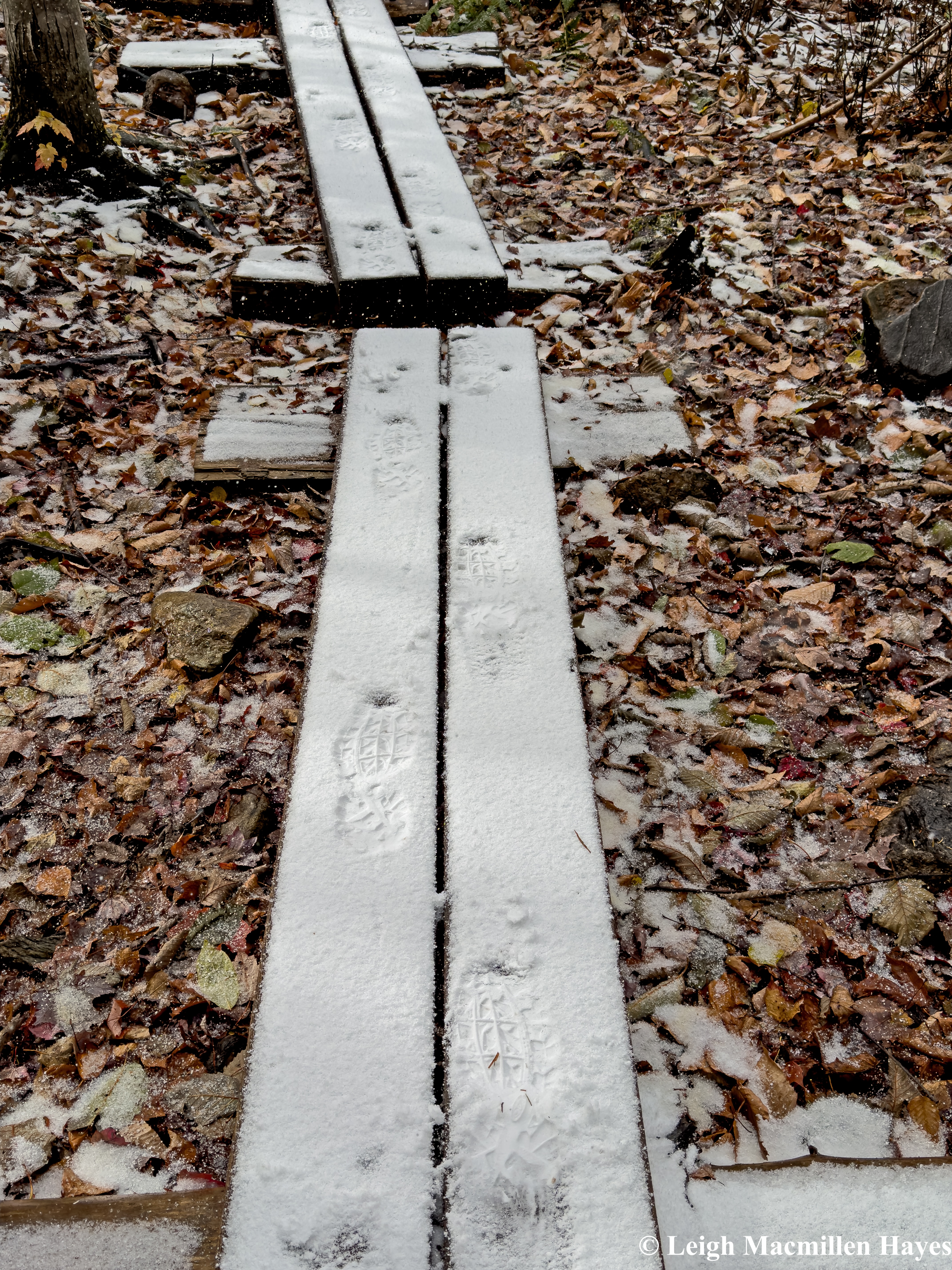
Across the field and then into the woods we ventured, our footsteps being the first to make an impression in the snow.
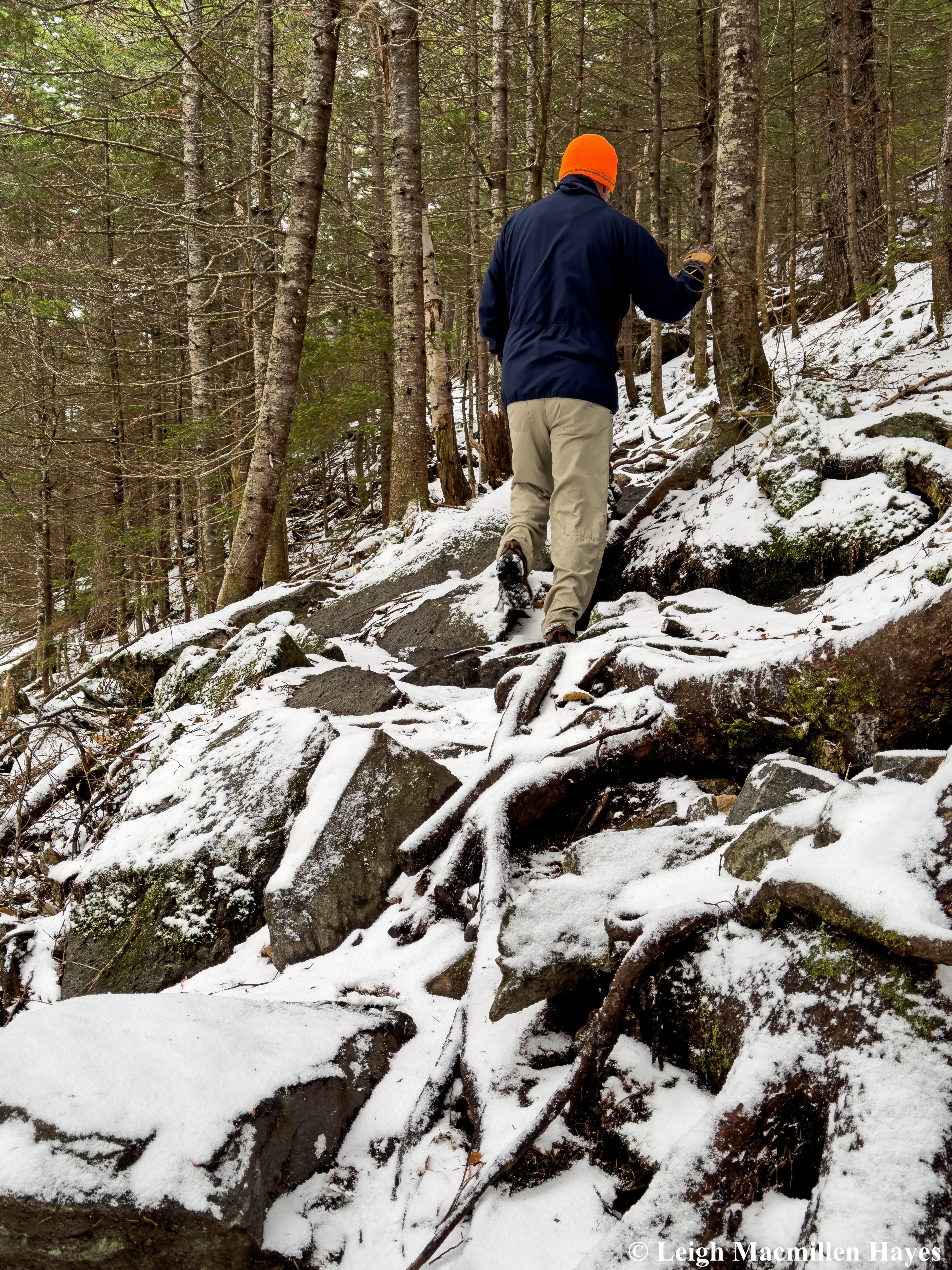
For much of it, as we followed one switchback to the next, the trail was moderate and then it got a bit more challenging, especially with snow thrown into the mix.

We’d read that there were six switchbacks, but we counted several more. With each one, I’d ask My Guy what the number represented at the pizza joint he worked at when he was in college–1 being plain, two-green pepper, three-onion, four–green pepper and onion, and so it went. If you meet him, throw a number at him and stand in awe as he shares a flavor. Of course, we can’t check the facts so have to trust that he’s not making it up. But then again, I know this guy, and he’s not.
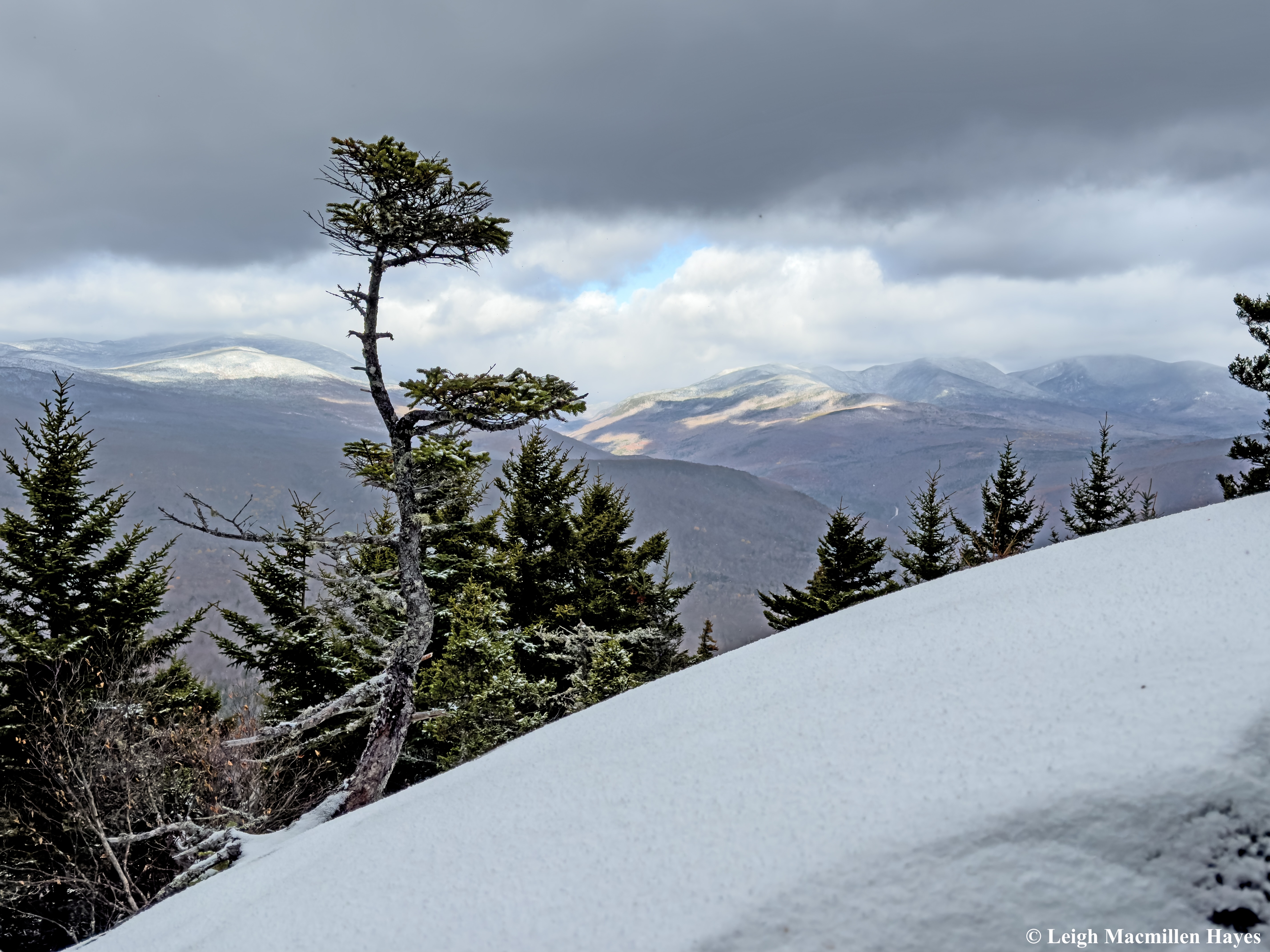
We were almost to the summit, where we knew we wouldn’t have a view, but saw a spur trail and decided to follow it. About twenty feet later we stood behind a boulder and looked out at the Presidential Range.

Like two days ago, it was another super windy day, and we could see the trees sway a bit above us, but felt rather protected in the woods. And at this boulder, it was the same and so we decided to turn it into lunch rock. There was no where to sit, and so we stood and ate our sandwiches, enjoying the view before continuing on.

A short time later, we reached the summit, and as expected there was no view of the surrounding mountains. But we did find the Geological Survey Marker and recalled being on a mountain in Maine when a woman hiked up to said marker, taped it with her hiking poles, told us she was on a mission to touch as many as possible, turned around and proceeded down the mountain. To us, it felt like she was missing a lot, but to her, it was what she did and who were we to dispute that.
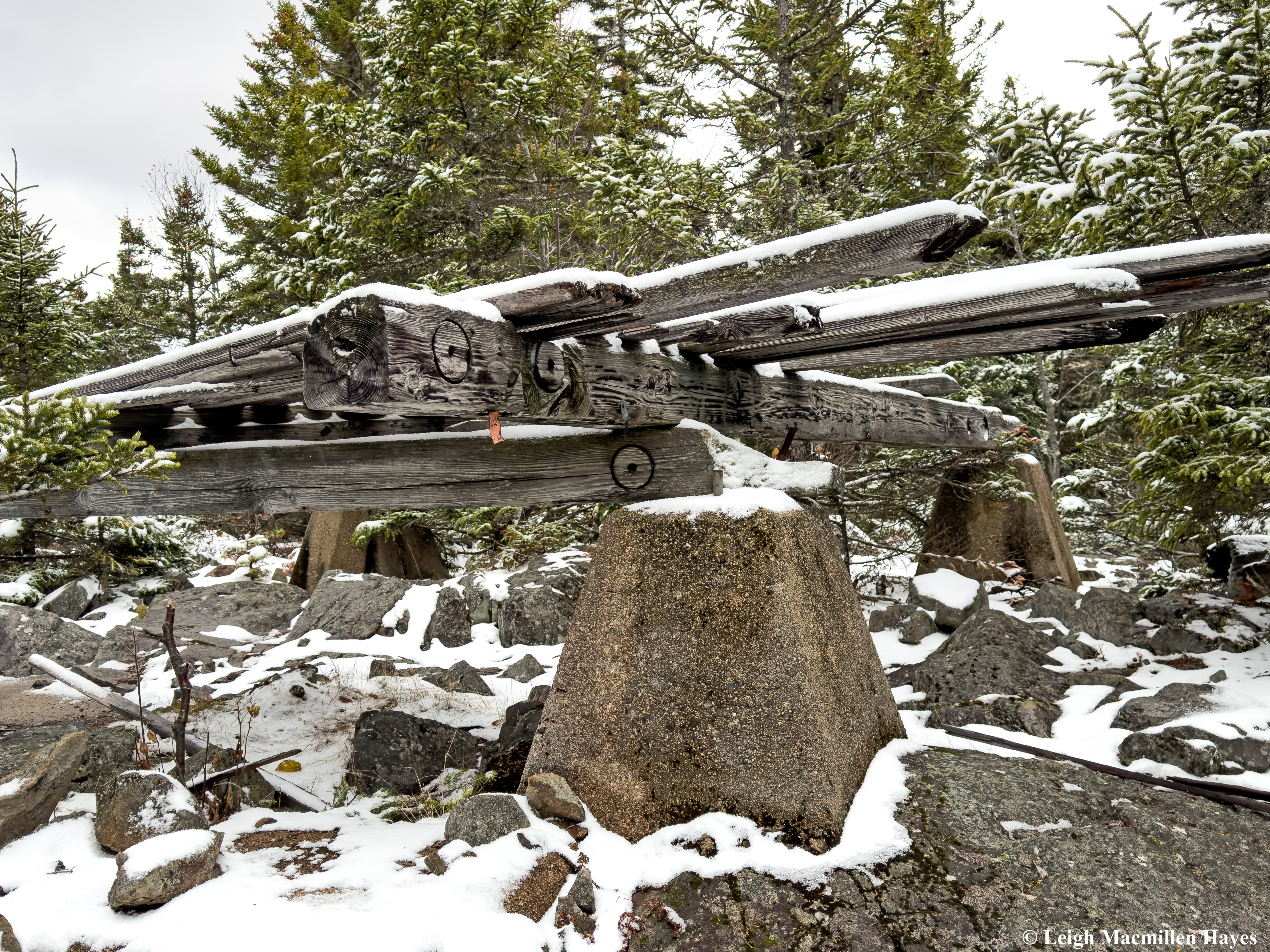
The summit was once the site of a fire tower, back in the day when that was the means to spot smoke or flames in the woods. Now, the four cement stanchions and some boards are all that remain, but we did wonder about work to build this one and so many others like it. That said, I’d read that the original trail up this mountain was rather a straight line, and perhaps that made it easier to get materials to the top.
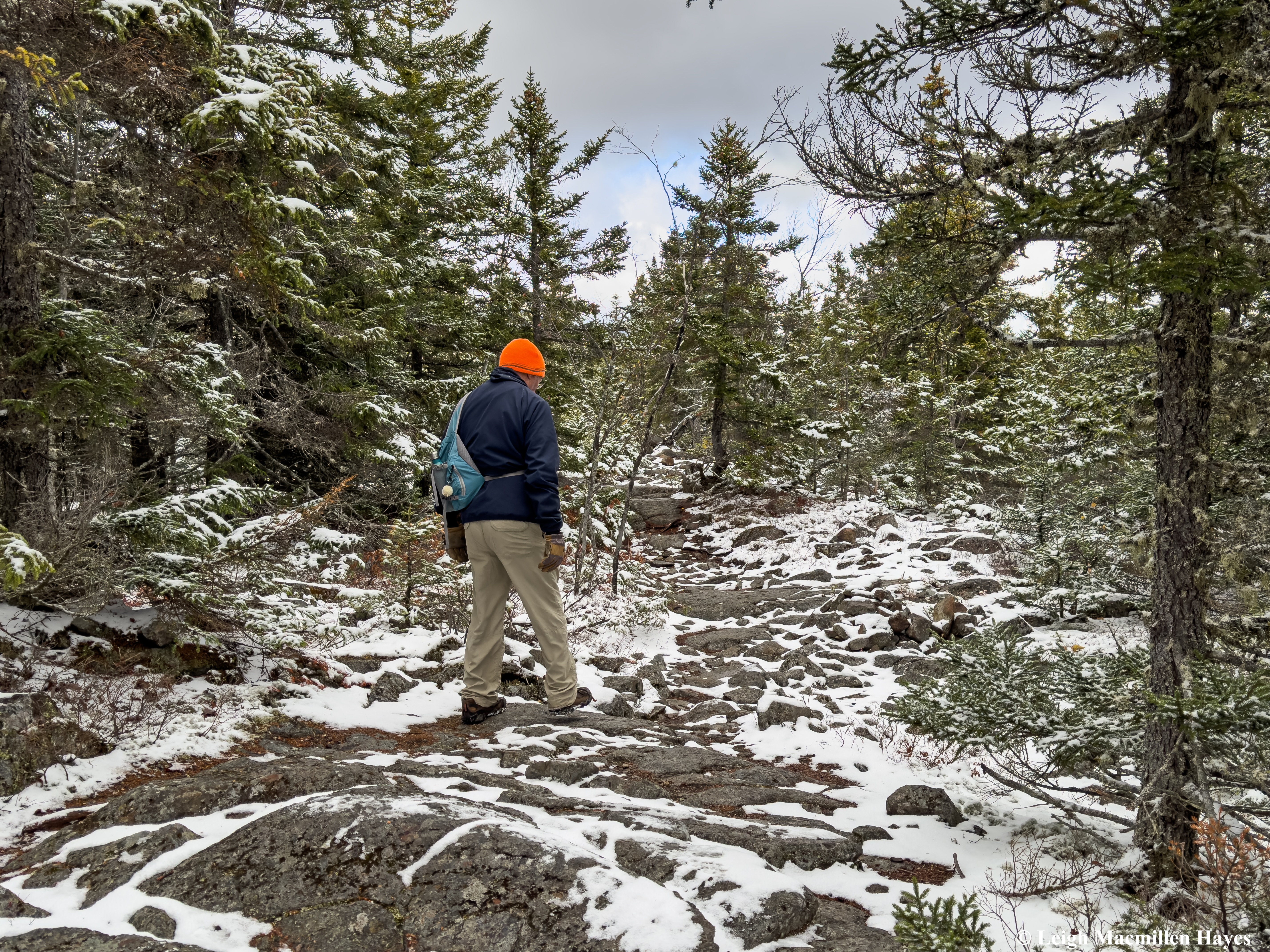
From the summit, there was another .7 miles to go to reach a ledge with a view and an old mine, but we had set a turn-around time because My Guy had a commitment later in the afternoon, so we went a wee bit in that direction and then decided to save the rest of the journey for another day. We really liked this trail and want to visit it in a different season and complete the entire length of it.

On the way down, a few things captured our attention that we’d missed on the way up, including these two trees that intertwined.
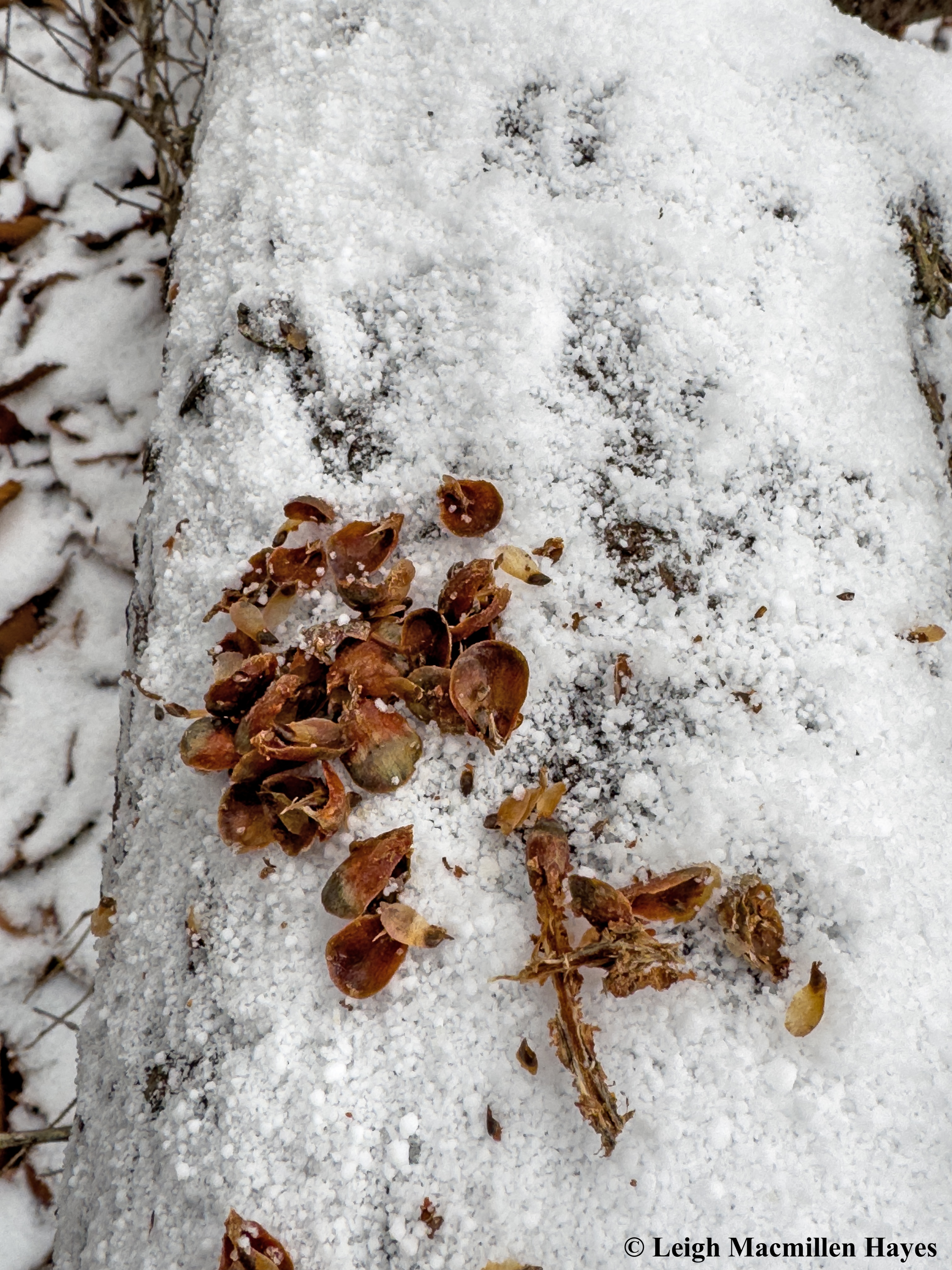
And the midden (trash pile) of a Red Squirrel, who had popped out to dine between our ascent and descent.
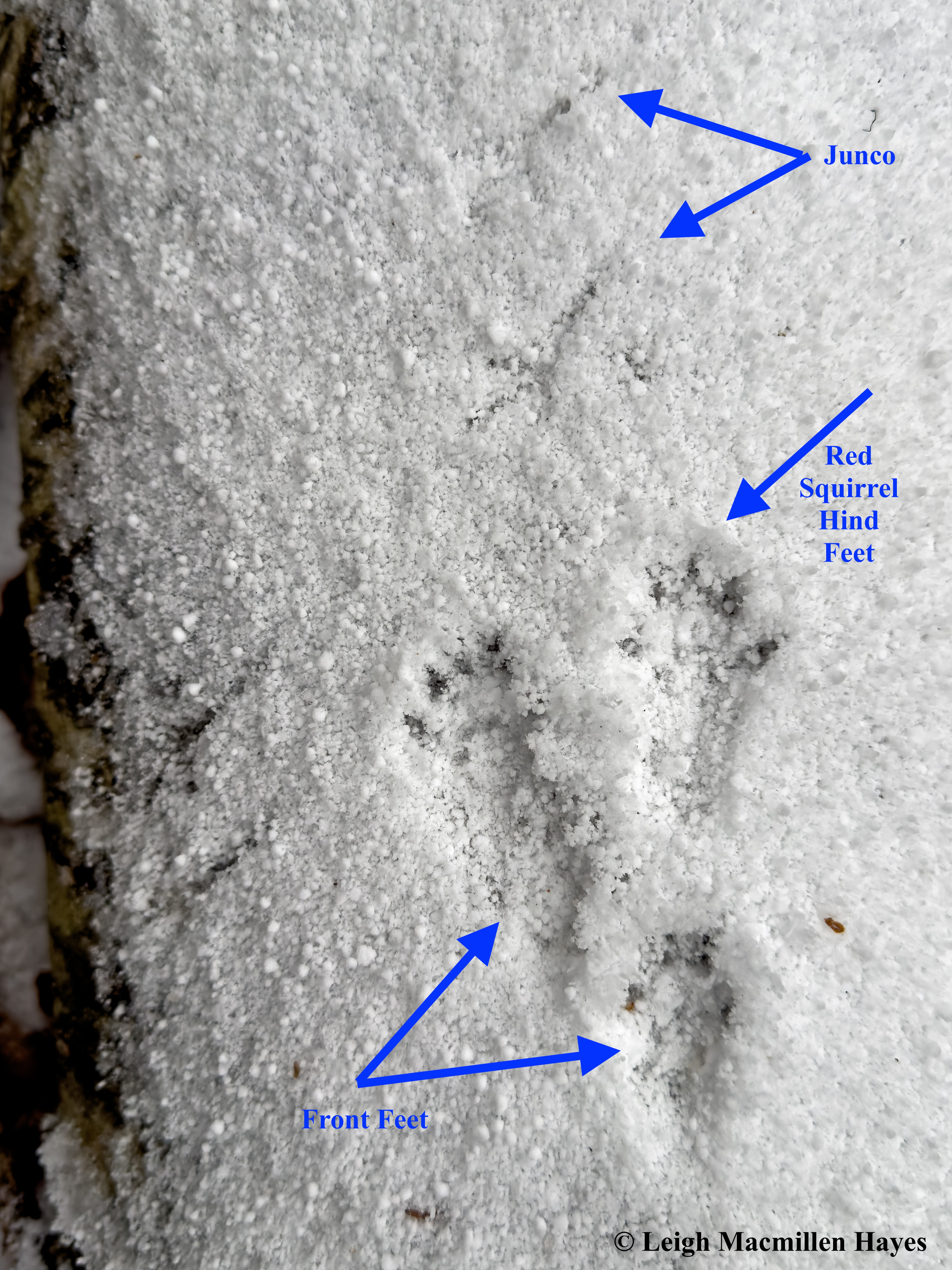
On the same downed tree, we spotted the squirrel’s track pattern and that of Juncos which flitted about in the trees as we passed by.

And back at Hayes Farm, which is protected by a conservation easement with Upper Saco Valley Land Trust, conditions had changed and the mountains came into view.

As we headed back down the road for that final 1.2 miles, giving us a 6.5 mile round trip, I continued to check the telephone poles, and then across a ditch, this colorful sight captured my attention. What in the world could show off these colors in November. My mind quickly scanned my knowledge, which isn’t always up to par when it comes to flowers, but nothing registered. Until I took a closer look by crossing the ditch. And touched the petals and leaves. Um. They weren’t real! So strange. They were well embedded in the sidewall of the ditch. But why? We’ll never know.

What we did know is that we’d been pressed to find a new mountain trail and Iron Mountain did the trick. Guffaw. Did you catch what I did there?
Savor the Season

Spring is a time for reflection, growth, and processing, yet it seems to fly by before we even have time to reflect, grow, or process.

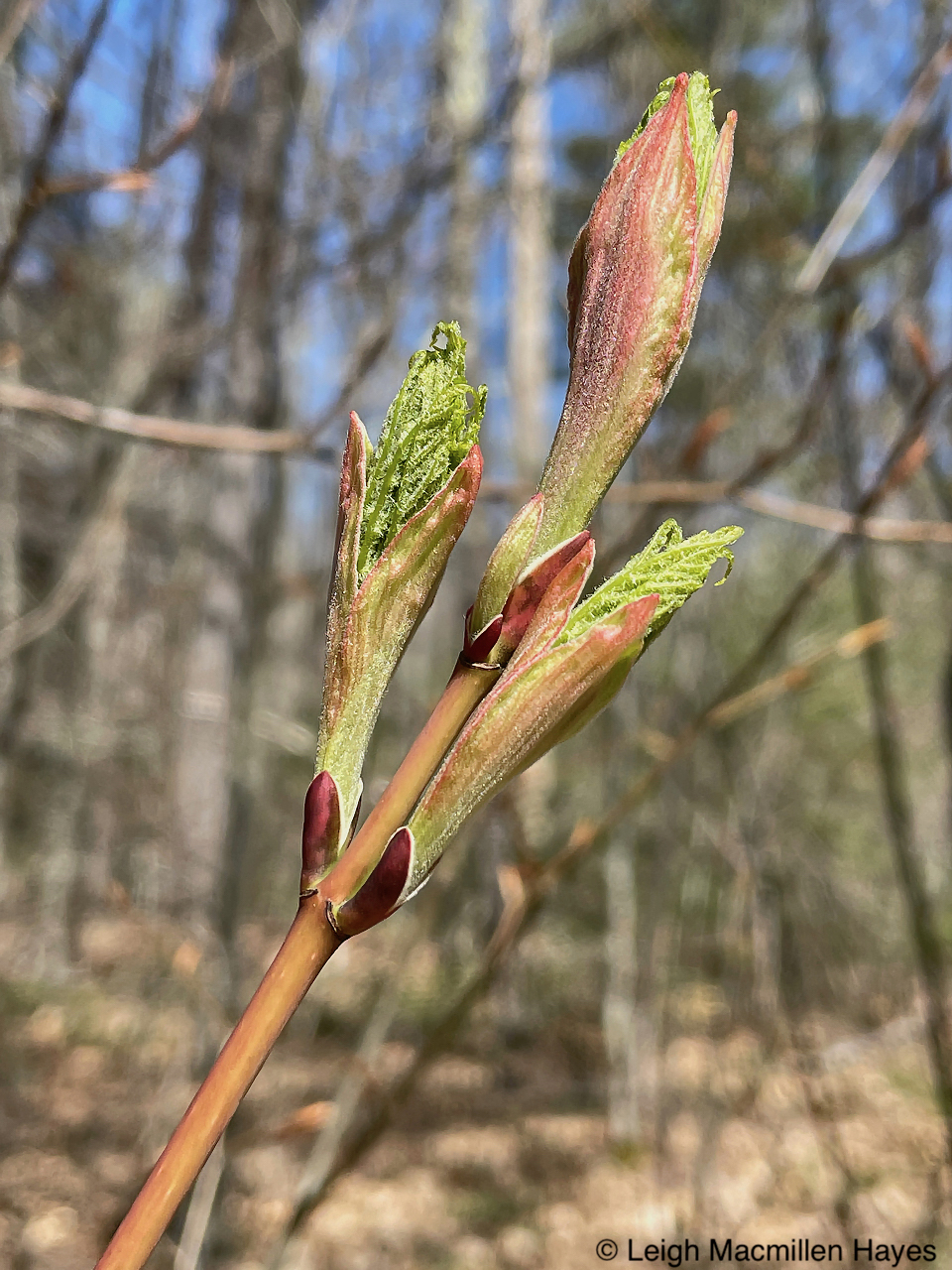
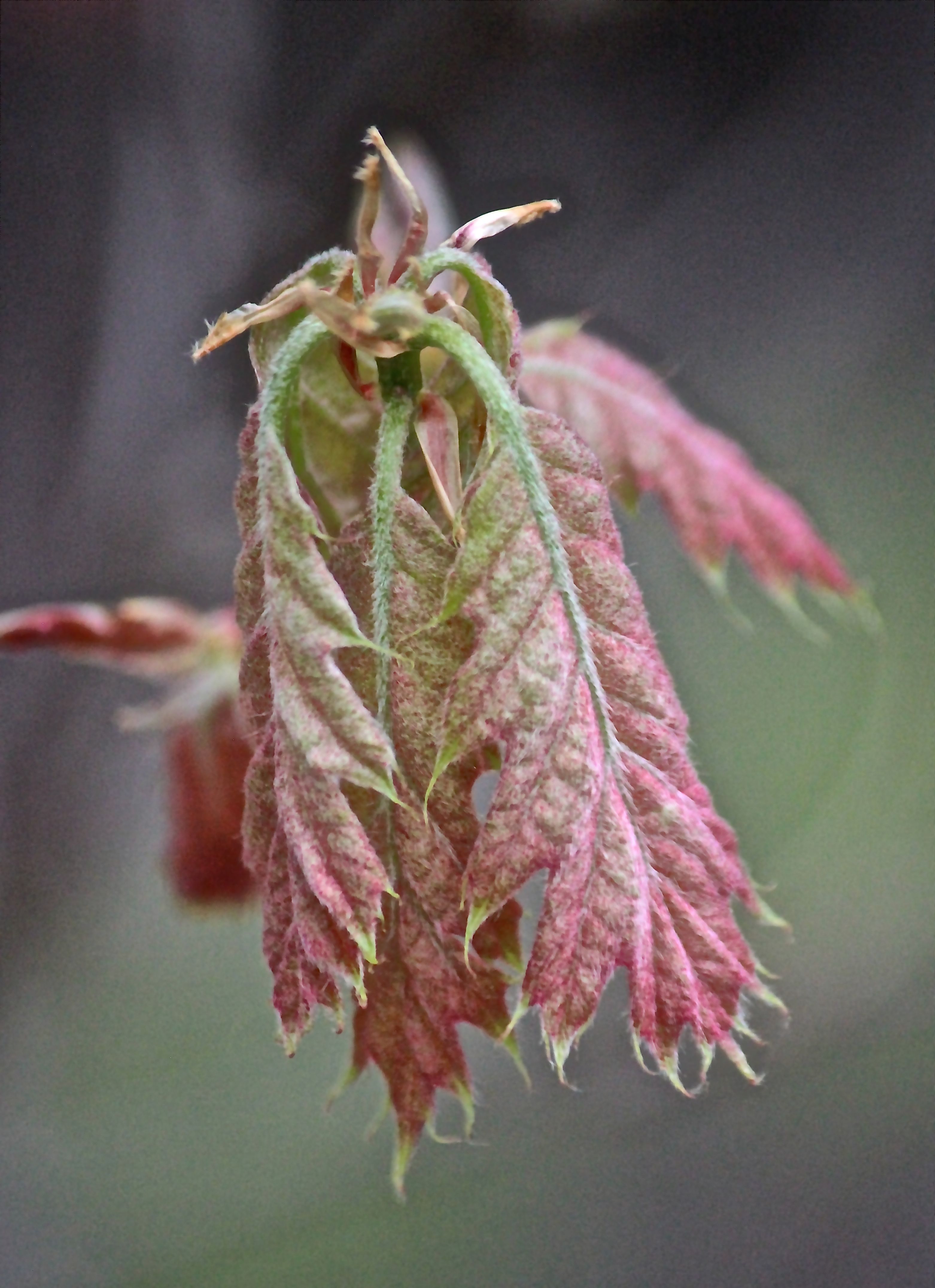
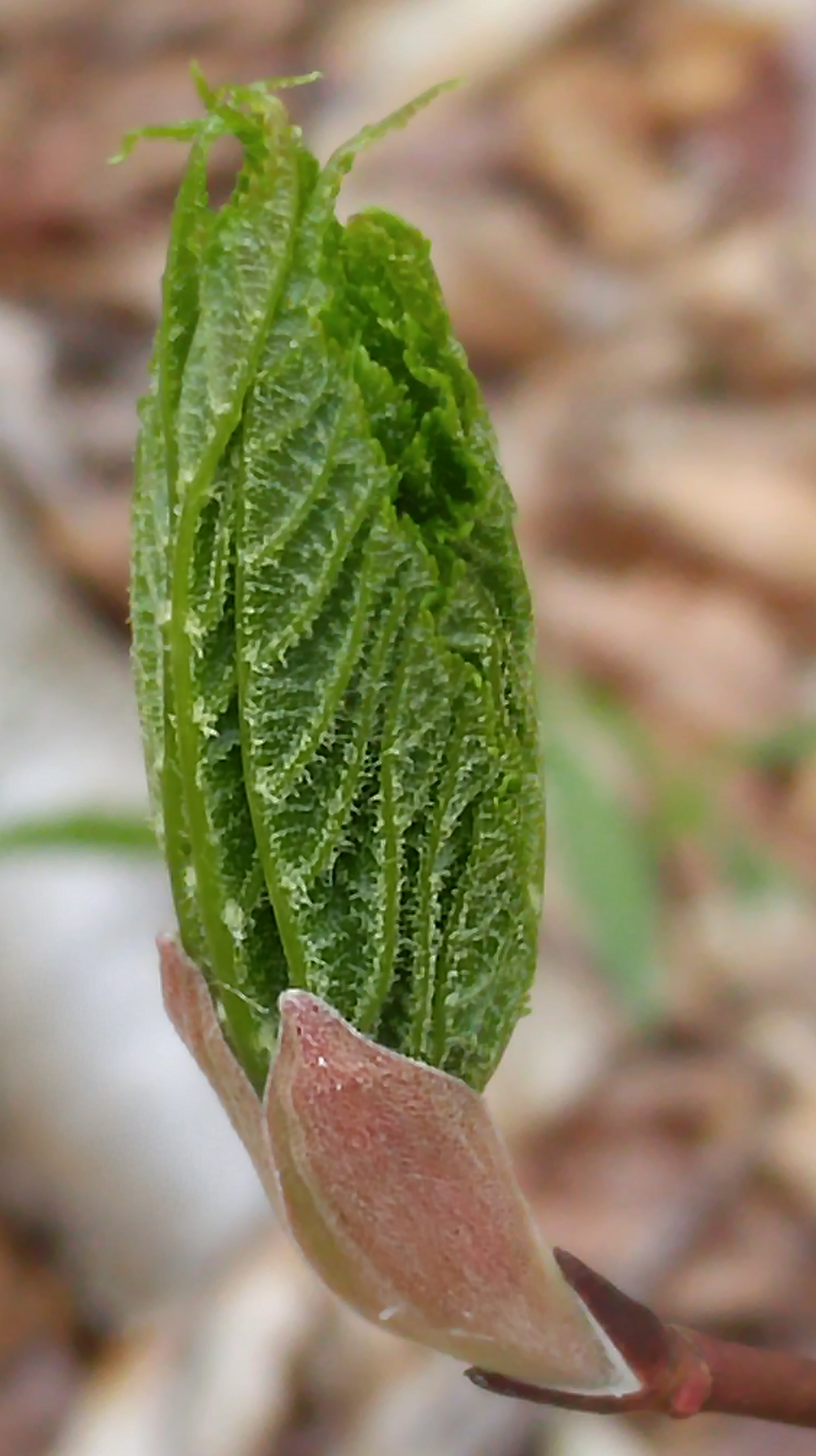
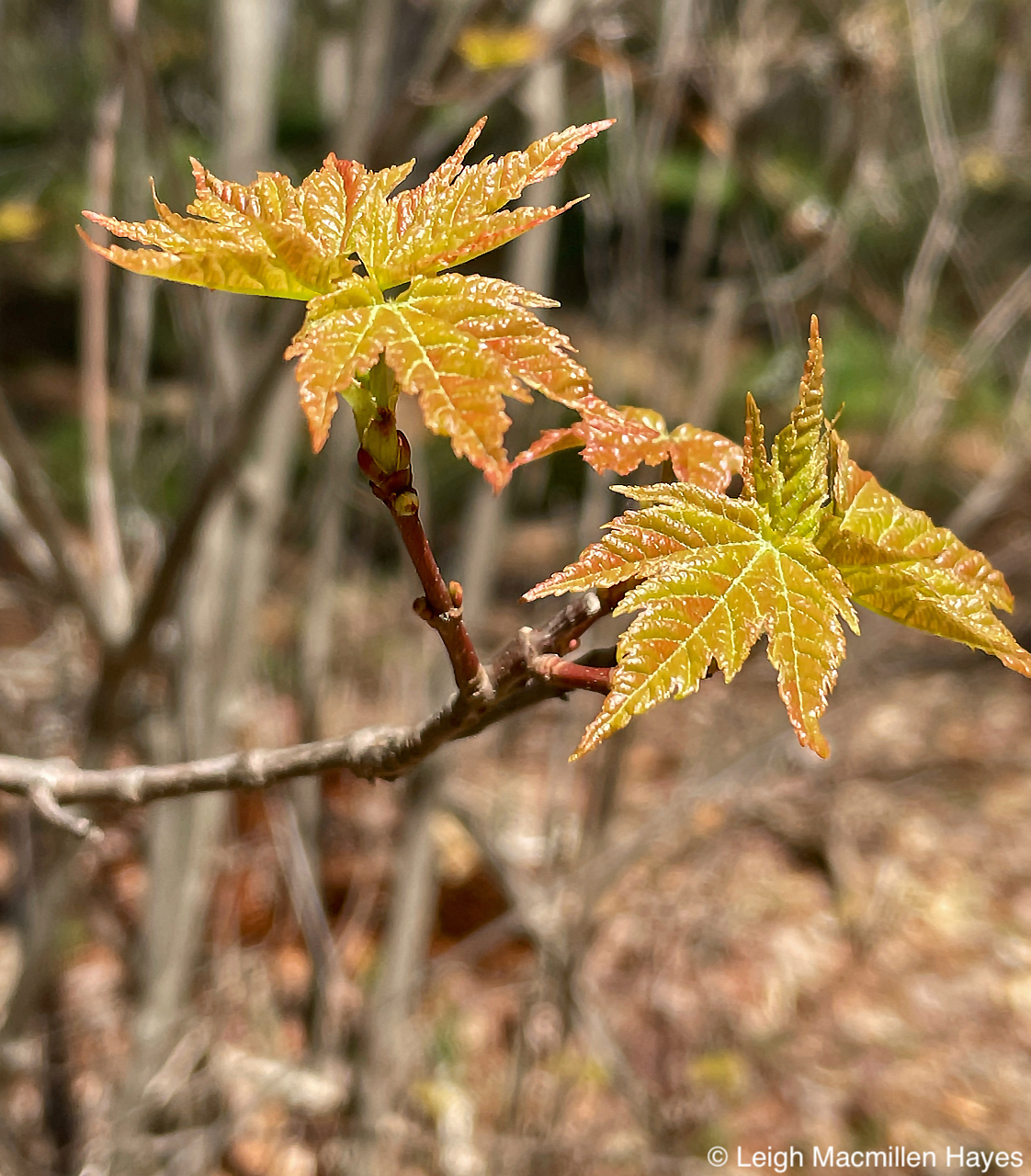
Where it seemed only yesterday, buds were swollen, Red Maple leaves unfurled and show off various hues of color caused by the presence of pigments called anthocyanins or carbohydrates that are dissolved in the cell sap and mask the chlorophyll. As our spring temperatures rise and light intensity increases, red pigment acts as a sunscreen to protect the plant from an increase in ultraviolet rays. And thus, spring reflects autumn, just with a much more subtle color palette.

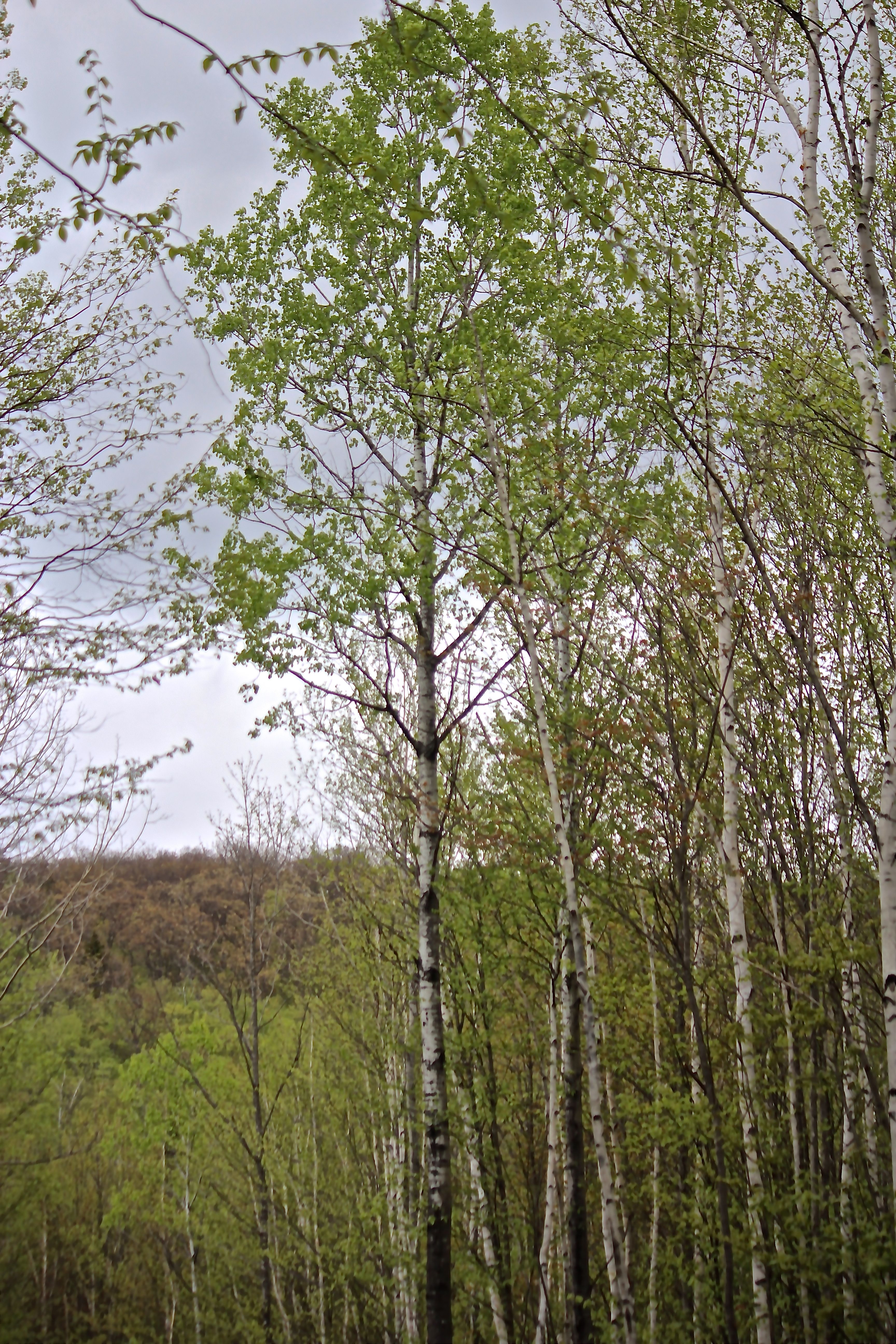
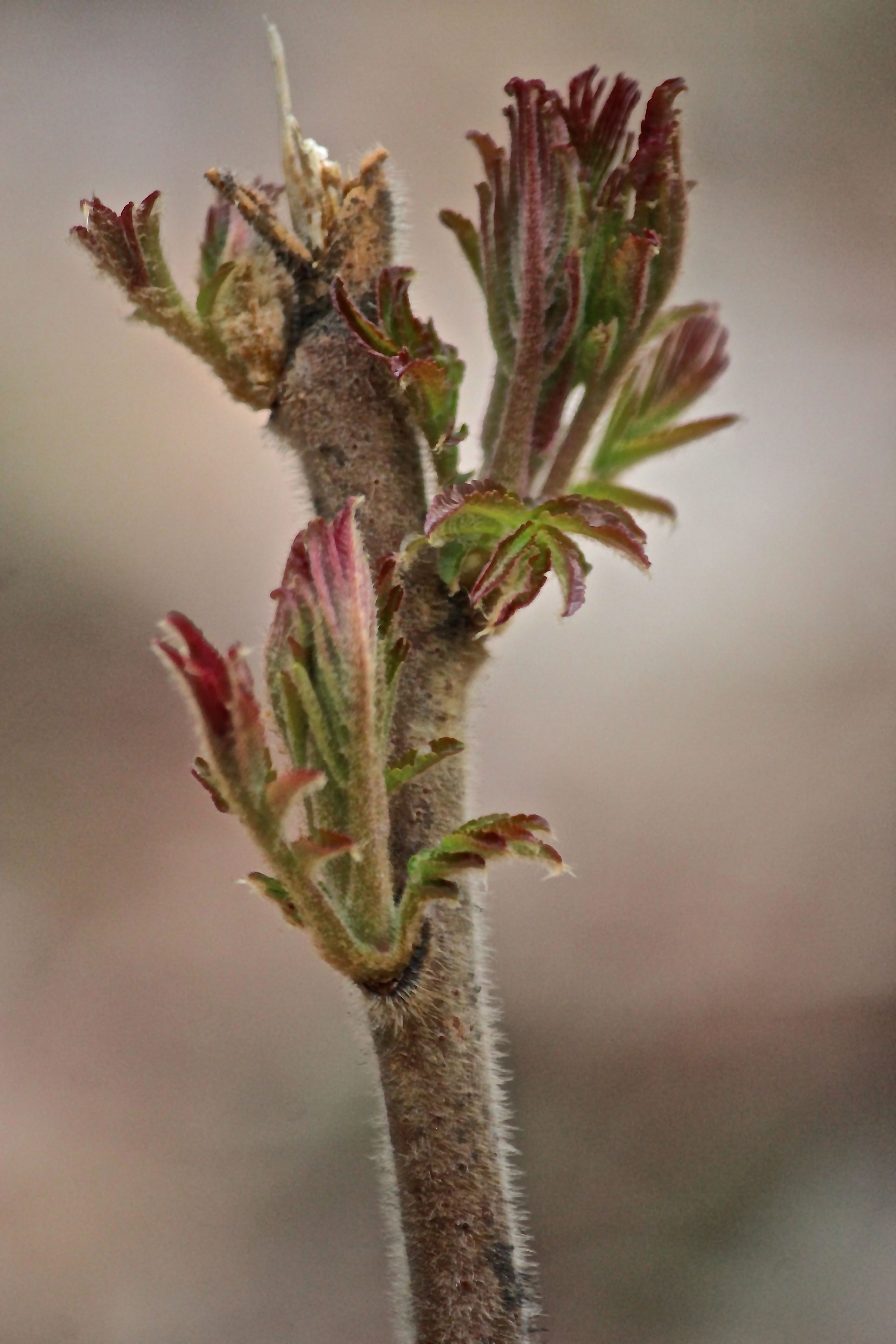
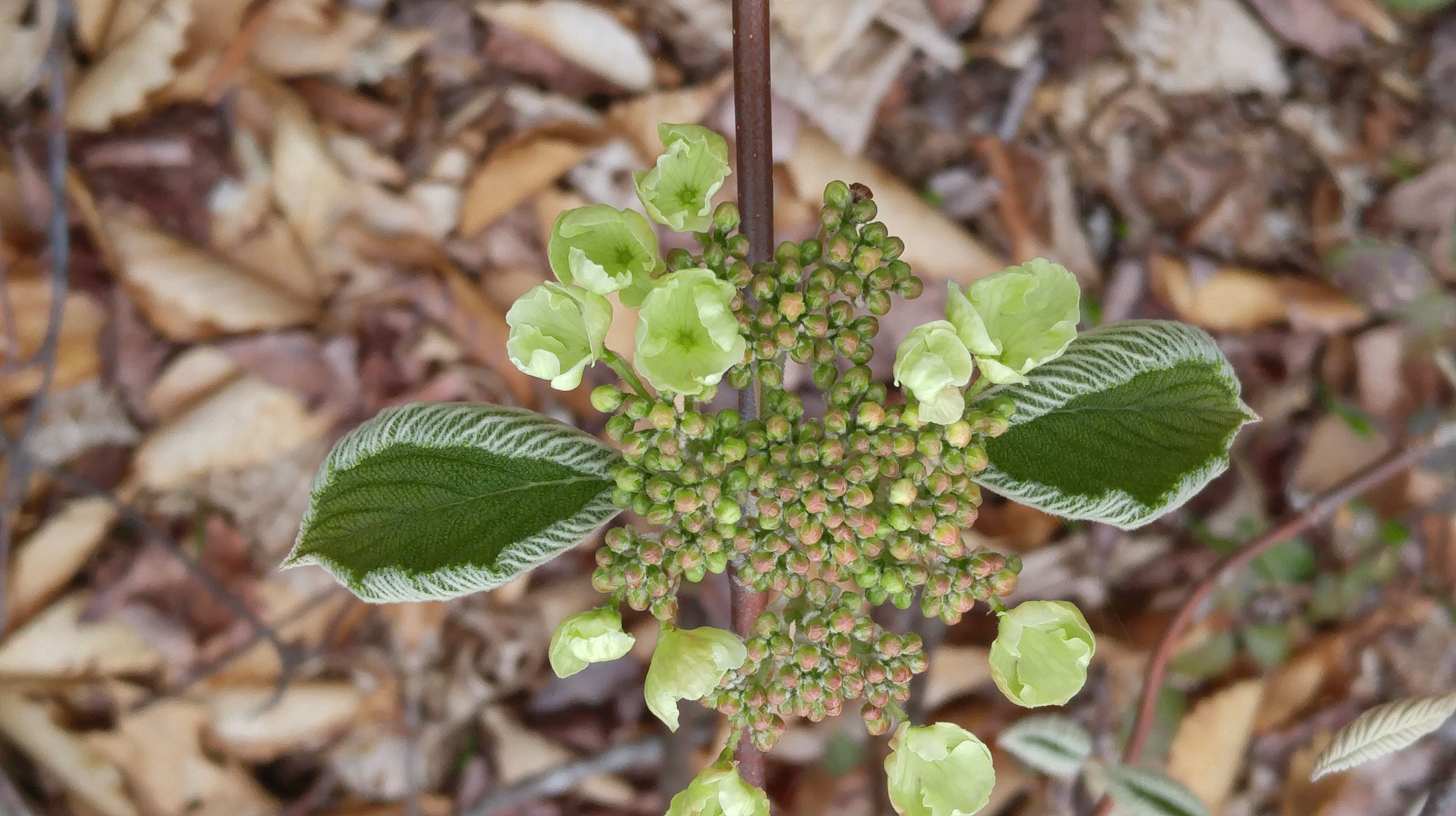
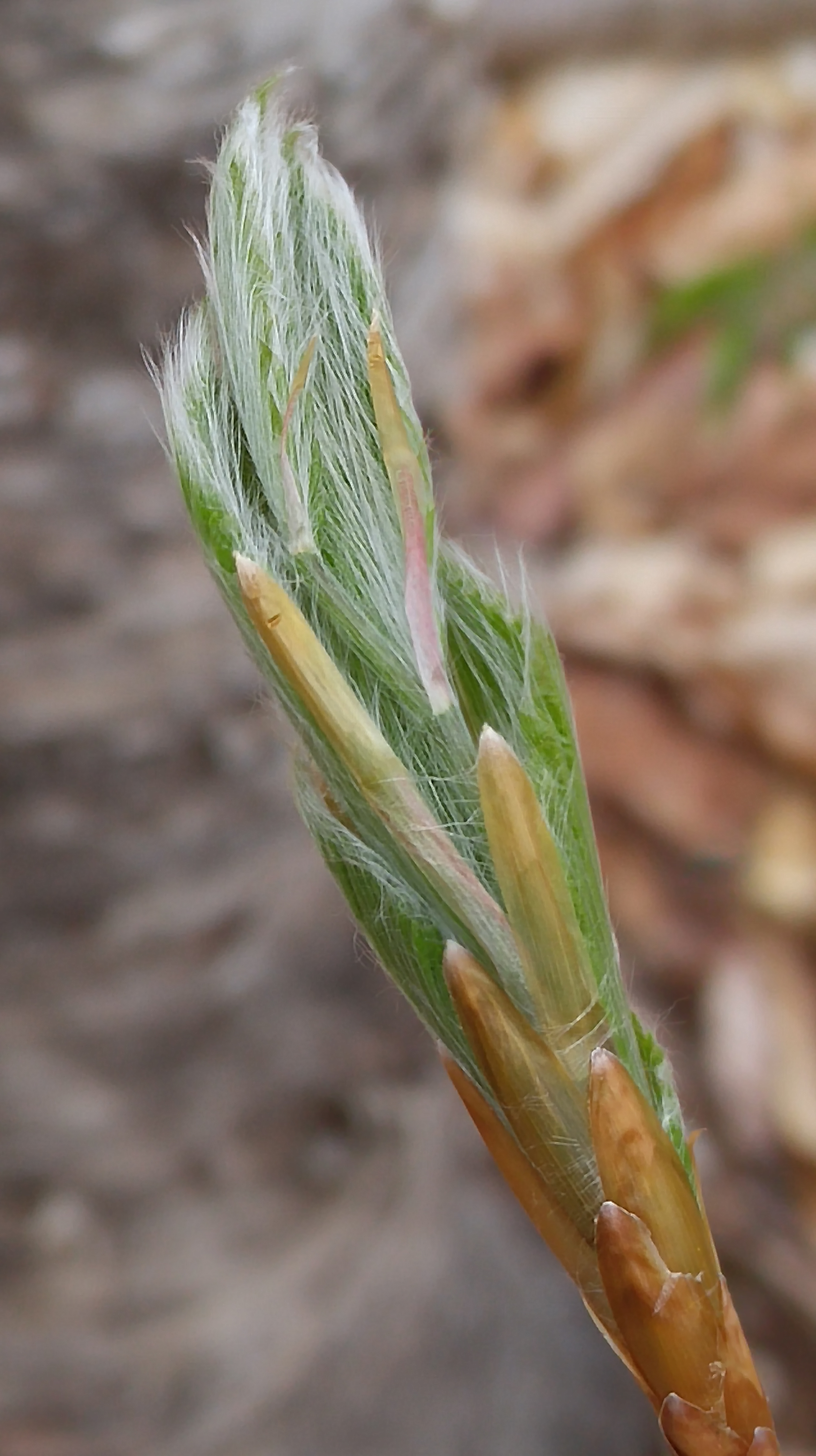
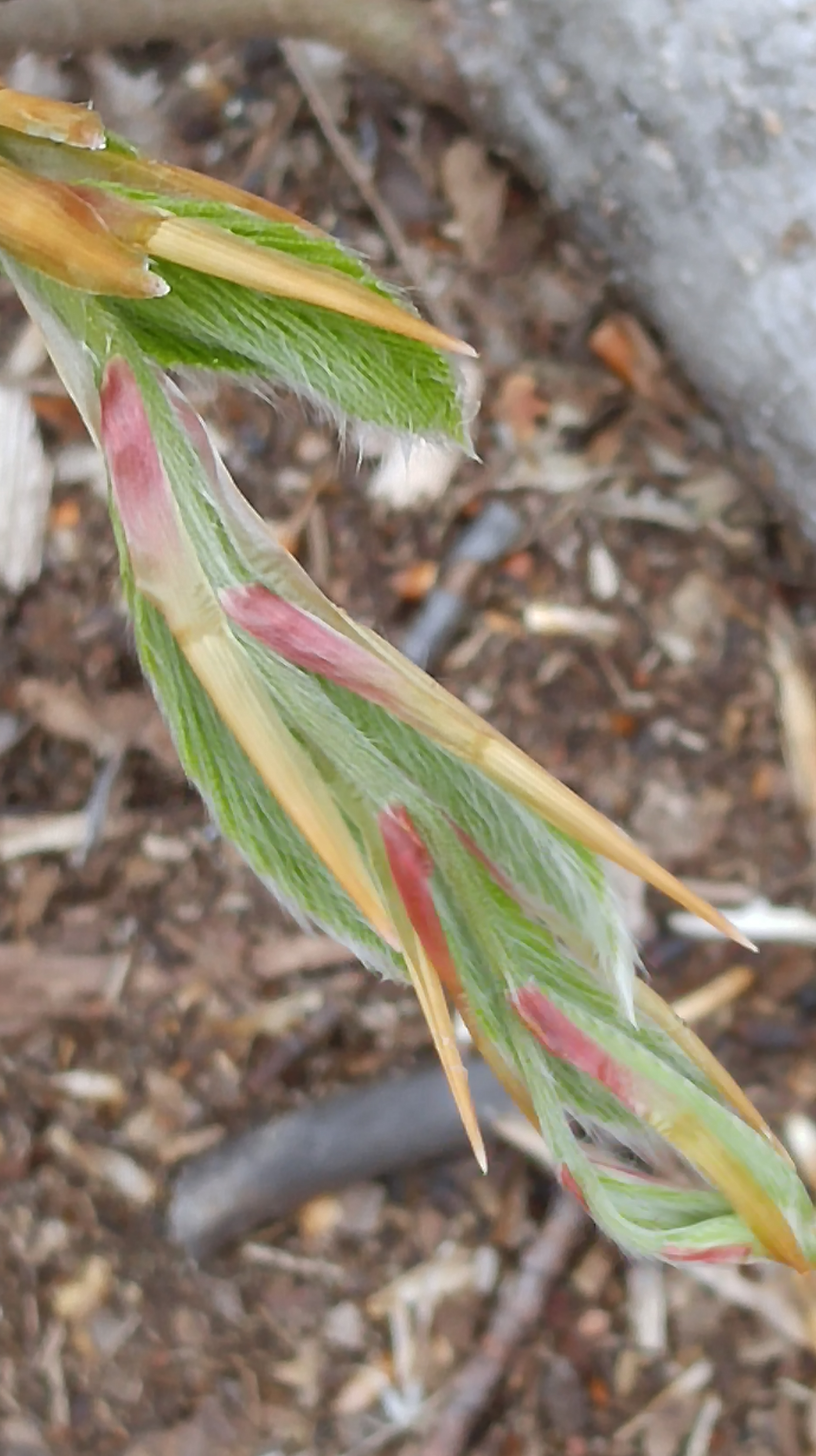
Paper Birch leaves also had burst through their buds and I don’t think I’ve ever paid attention to their accordion shape in this early stage. On such a sunshiny day, I also couldn’t help but admire the hairy twigs that glistened in the light.

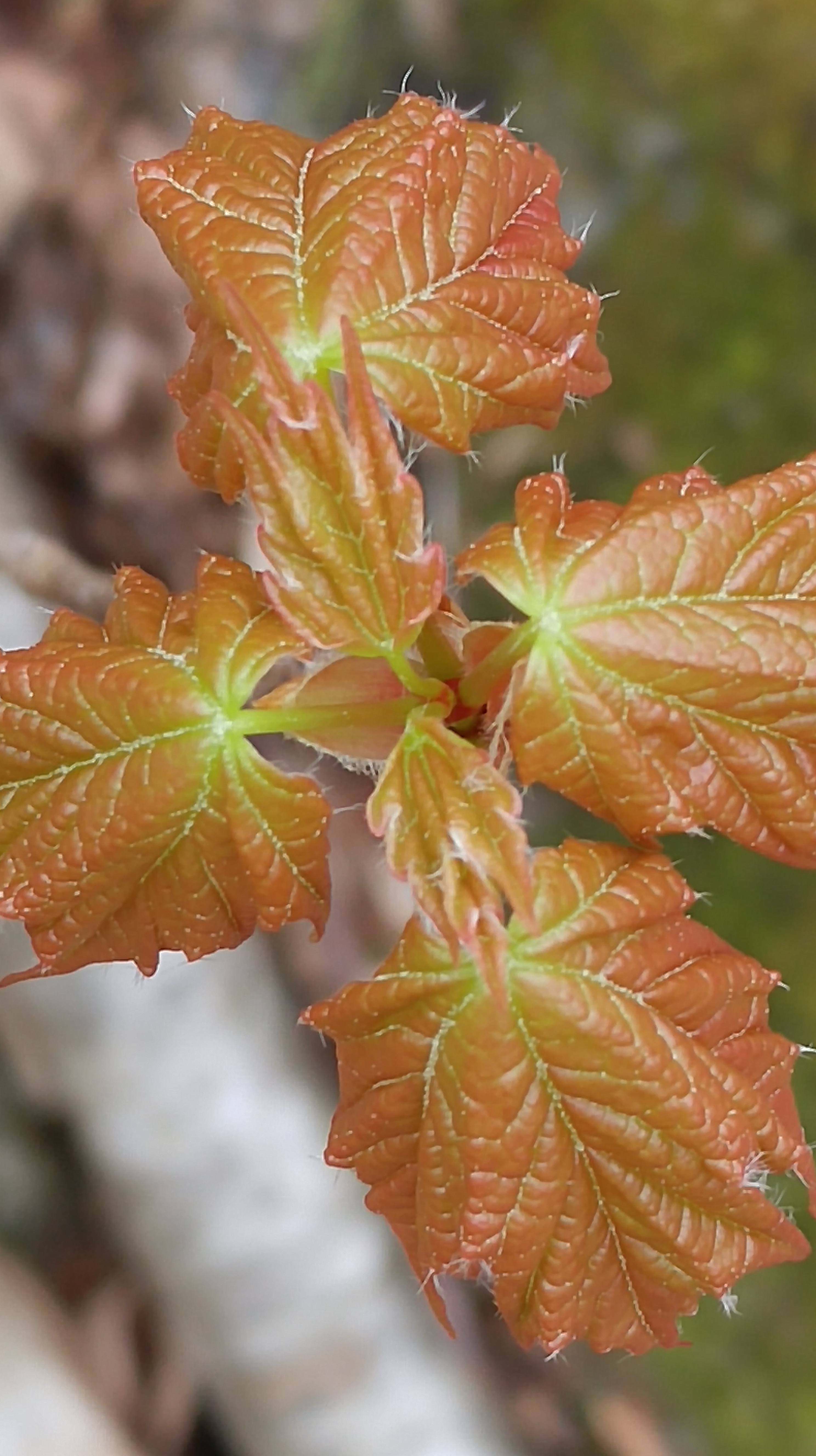
But the star of the show, the one who exhibits the most colorful apparel, is the Striped Maple.

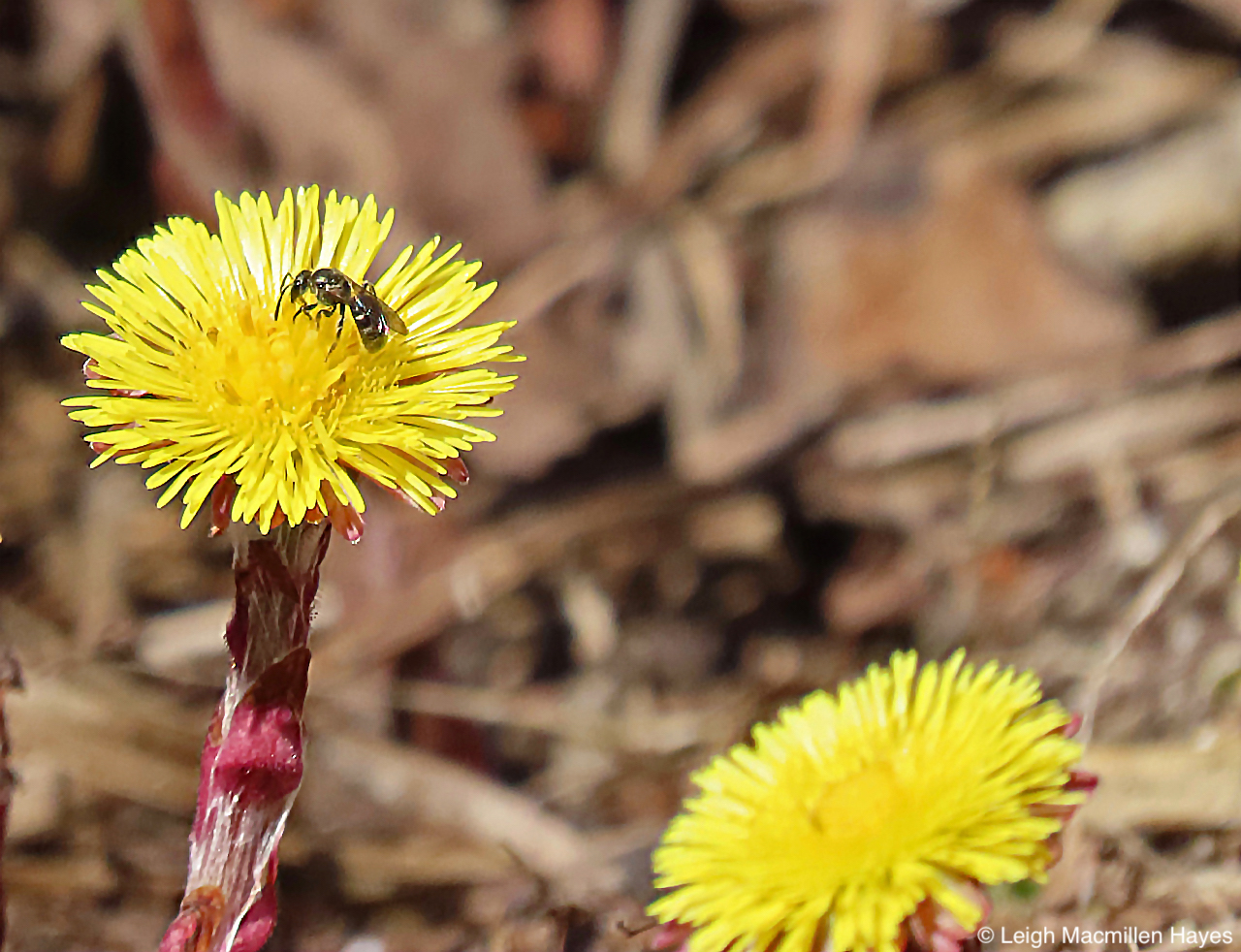
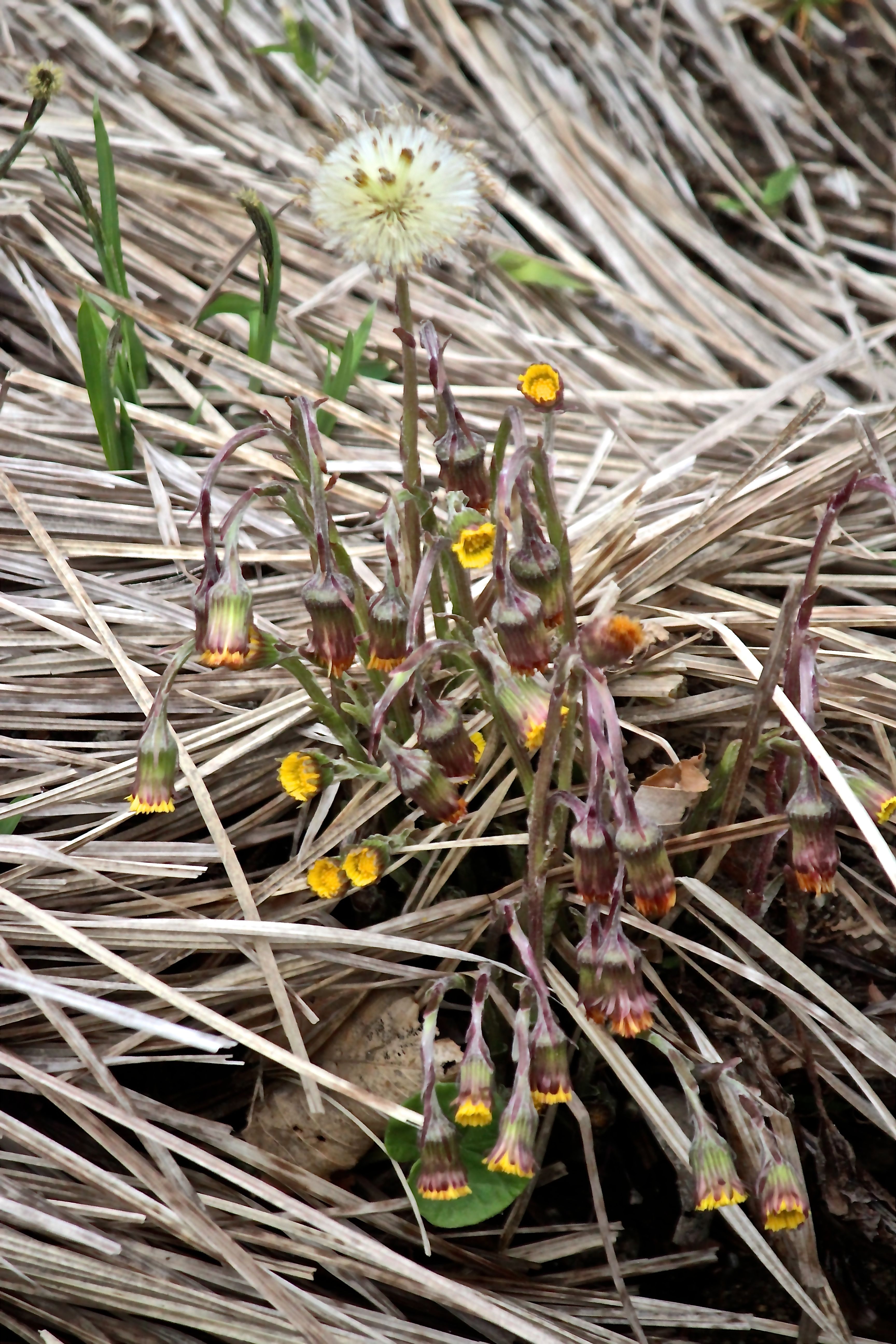
It’s not just tree buds to which one should pay attention, for Coltsfoot, a spring ephemeral whose composite yellow flowerhead resembles dandelions, blooms briefly. Of interest to me is that this plant grows in dry or wet lands we consider to be waste and thus brightens many a roadside soon after the snow melts. Plus, the flower stands atop a stem covered with reddish bracts and whitish hairs, but its green leaves won’t appear until after the golden flowers have withered. And notice the flower fly taking advantage of some nectar, as it unwittingly brushes against pollen before moving onto another to sip and unwittingly making a deposit.

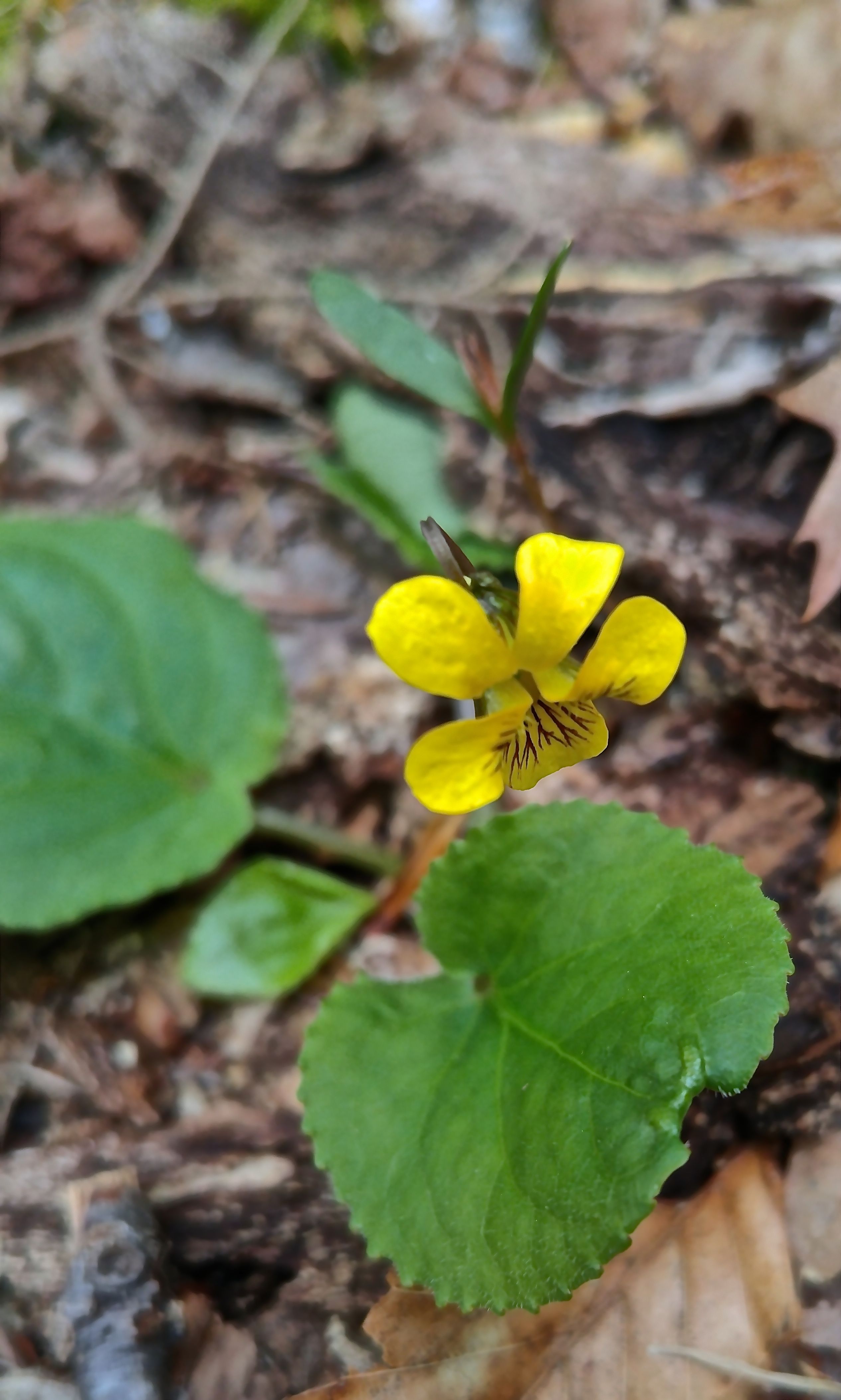
Exploring in a moist location meant occasionally finding flowers who like wet feet, such as this Kidney-leaf Violet with a runway of purple veins on its lowermost petal. Though I didn’t spot any fliers taking advantage of the runway lights, I’m sure there were some who liked the approach.

And it wouldn’t be almost May without Mayflowers, aka Trailing Arbutus, already in bloom, some of it white, and others this pale pink. If you do nothing else, stop and smell this delightful scent of spring. And if you can, observe it closely to see if the pink deepens with age.

If you move slowly and with intention through the woods, as I tried to do today, you may just get to spot an Eastern Comma Butterfly flitting about and occasionally pausing. This is one of three who overwinter as adults, finding a safe place behind bark in which to wait out the dormant season, and then flying on early spring days when the sun shines. How do they do this with nectar not necessarily available at the start of their season? They search out tree sap.

Amidst my journey, I approached one body of water as quietly as possible, and was surprised to spot these Canada Geese. Many of them overwintered on open water in places like Saco River’s Old Course, but it seems they’ve been quite chatty everywhere I I go lately and I hear them before I see them. These two were as quiet as could be. They served as a reminder that we, too, should be quiet once in a while.

The air was filled with bird song and flight, though I couldn’t always spot the creators or identify them by sound, but this one I do know for it’s a frequent flyer (pun intended): Song Sparrow.

What it was up in wings about, I’m not sure, but a moment later it walked into the greenery, and like so many others of its kind, I lost track of it.

The most special of all sights that I spotted today were the developing Wood Frog tadpoles at my favorite vernal pool. It’s all happening so fast.

Too fast. I wish for incremental levels of greenery and blooming and growing. I wish for a slow unfolding. I don’t want to miss the nuances of the changing hues.

Some see spring as an in-between waiting season, but I want to draw it out and savor each moment. Don’t you?

On Another Day

Today was a perfect day for a hike–cool temps and a breeze kept the bugs at bay. And so my guy and I headed off after lunch with a destination in mind. Backpack–check. Camera–check. Map–check.

And with the latter, it all ended.

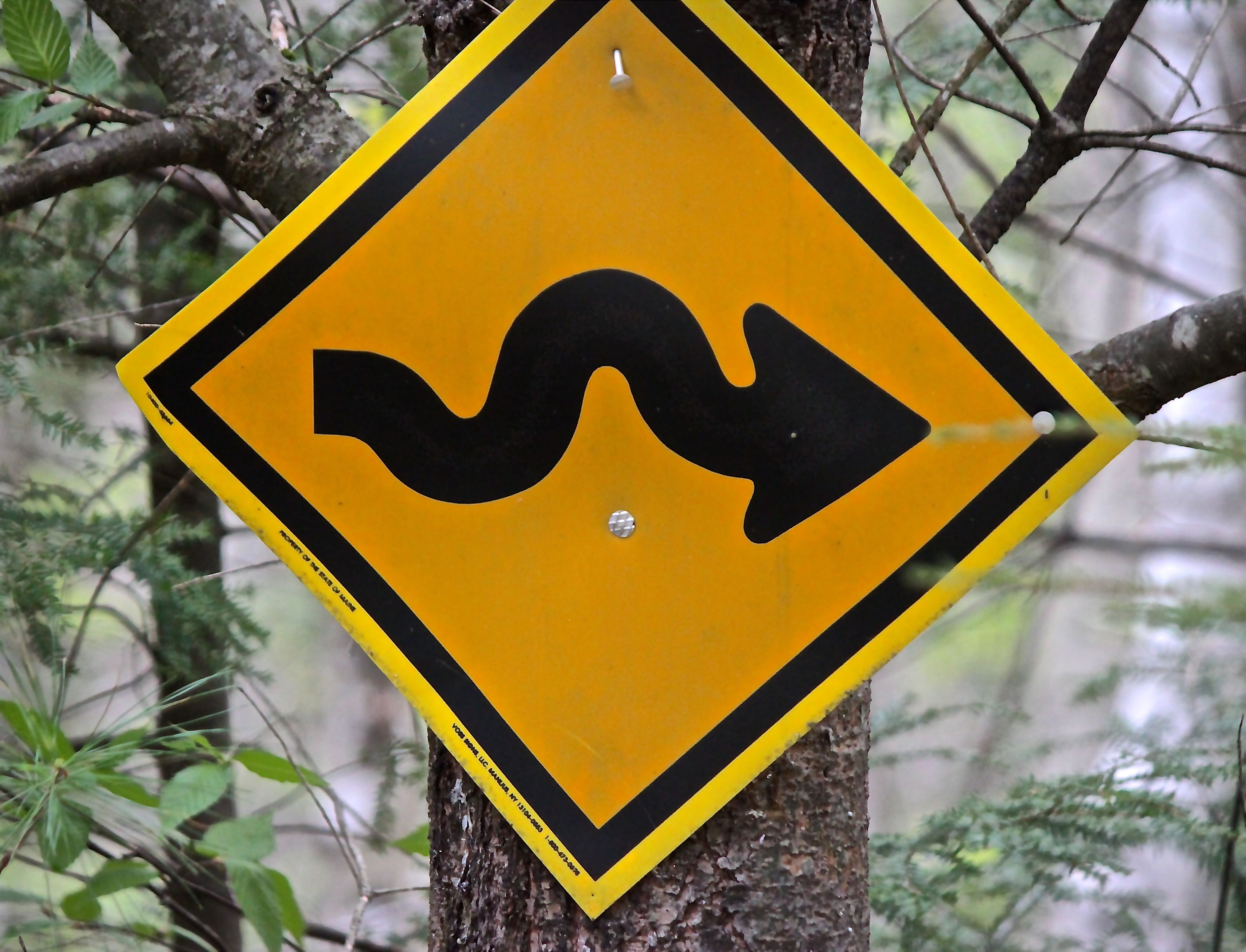
a-squiggly sign

We’d hiked our intended trail once before within the last ten years, but remembered that back then we had a difficult time following it. We were sure, however, that we could find our way today and we did. Until, that is, we reached a junction and read the snowmobile trail signs. Our gut told us to go straight but because we were on a snowmobile trail, the signs listed destinations. We looked at the map, looked at the signs, and convinced ourselves to turn right.

a-hobble 3

And so we journeyed on, enjoying the beauty of hobblebush even as it forced us to do what it was named for–hobble through the undergrowth.

a-hobble 2

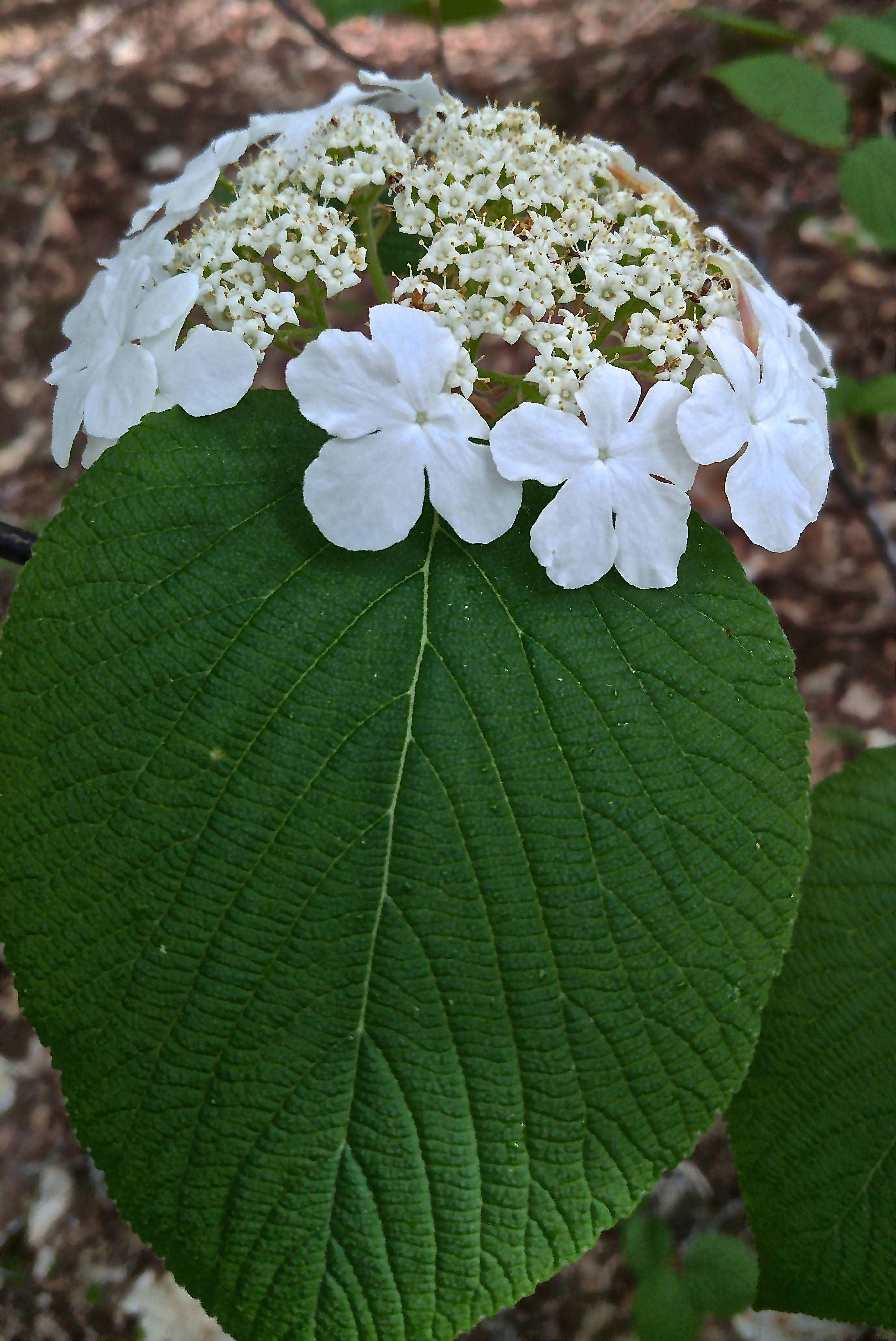
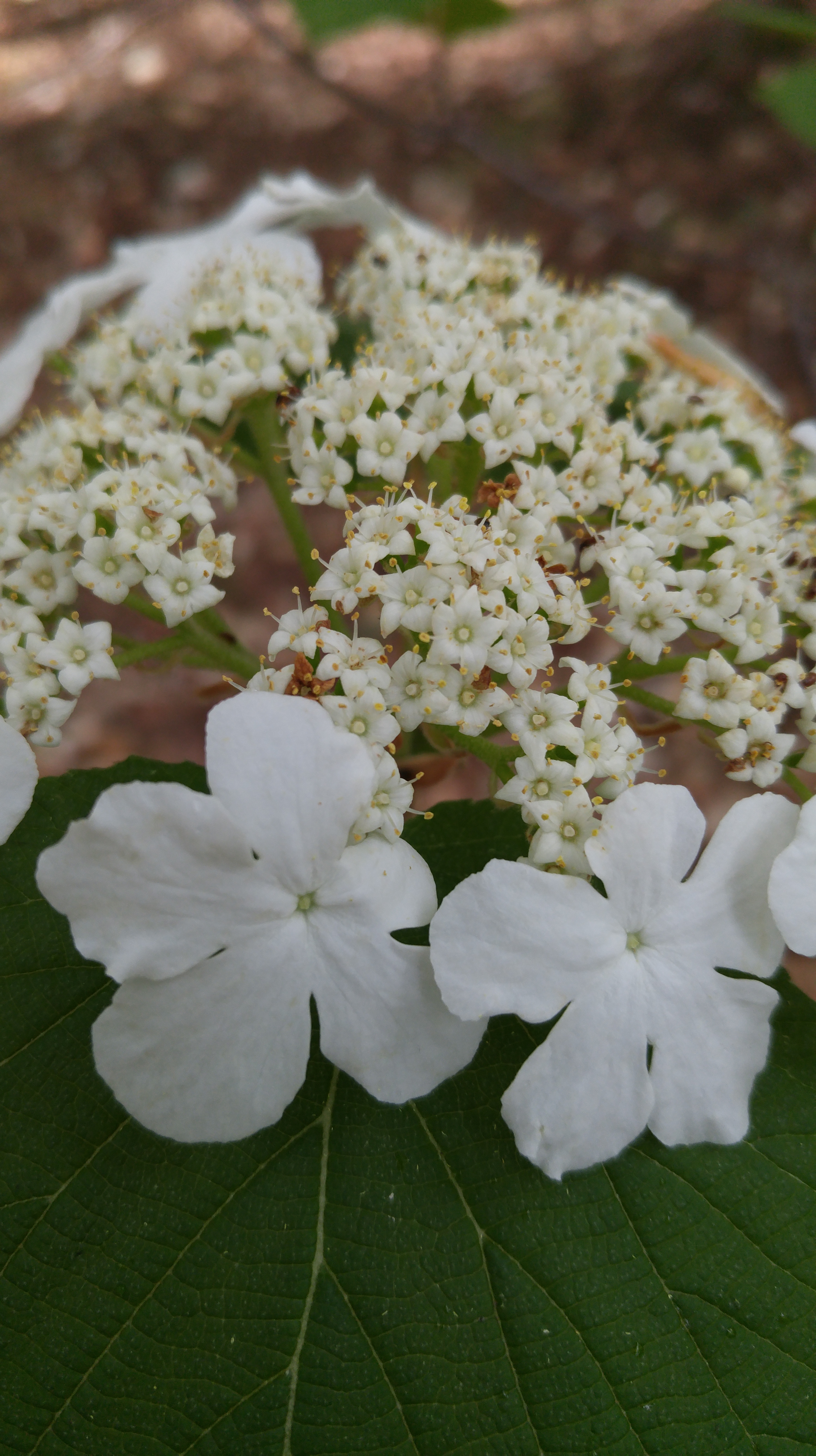
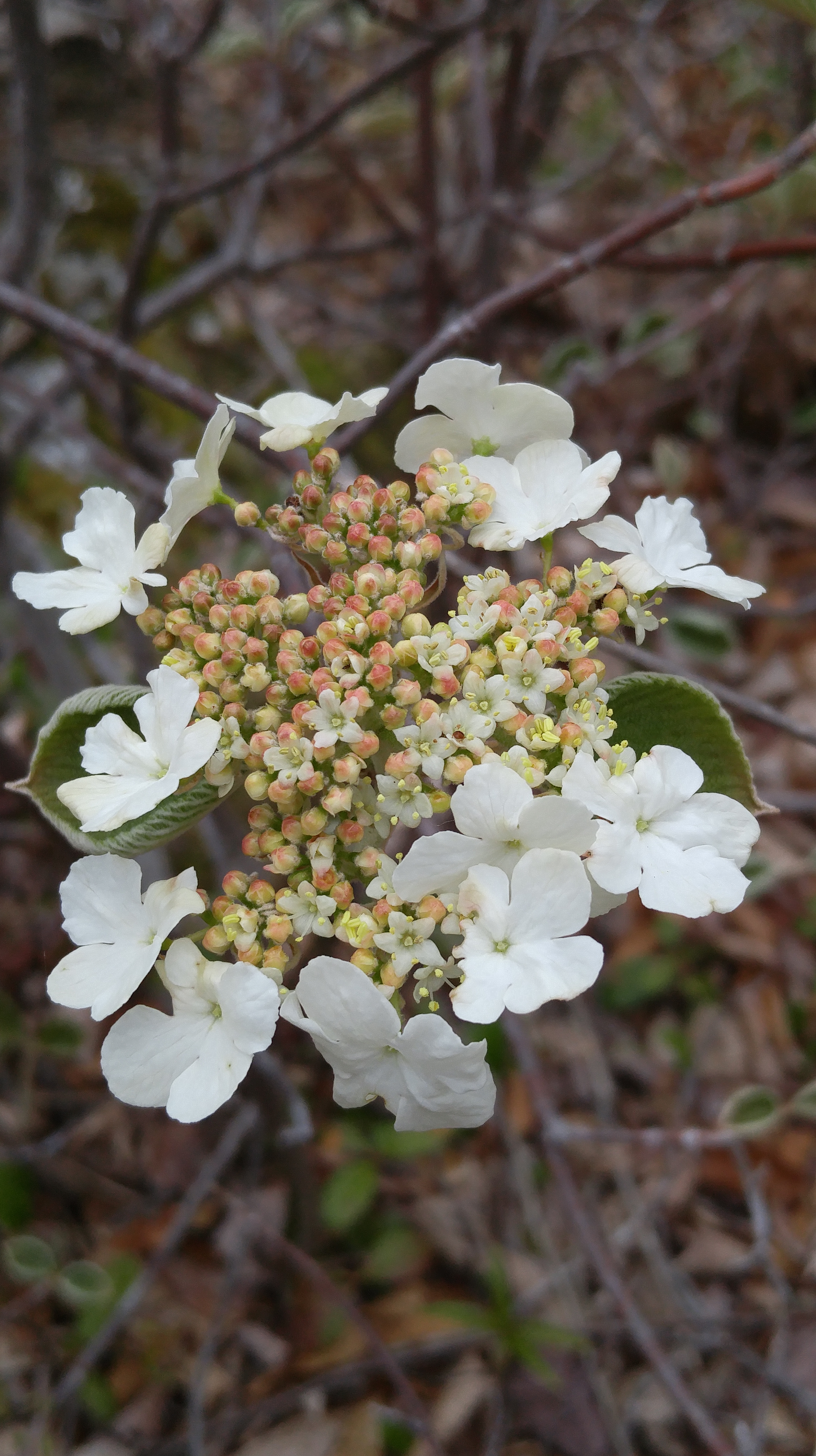
But how could we resist such beauty. Or should I say, how could I resist such beauty–my guy trudged on. I think it’s the complexity of the blossom that intrigued me most–large, five-petaled, sterile flowers encircled petite and fertile, waxy-white flowers. Why big showy flowers surrounding such tiny ones complete with stamens and pistils? Perhaps the outer sentry attract insects for the sake of pollination.

a-round-leaved violet 2

Also thinking about pollination–those purple runway lines of the round-leaved violets.  I’m not a fashion girl, but it’s flowers like this that make me realize you can combine a variety of colors to make a statement.

a-rose twisted stalk

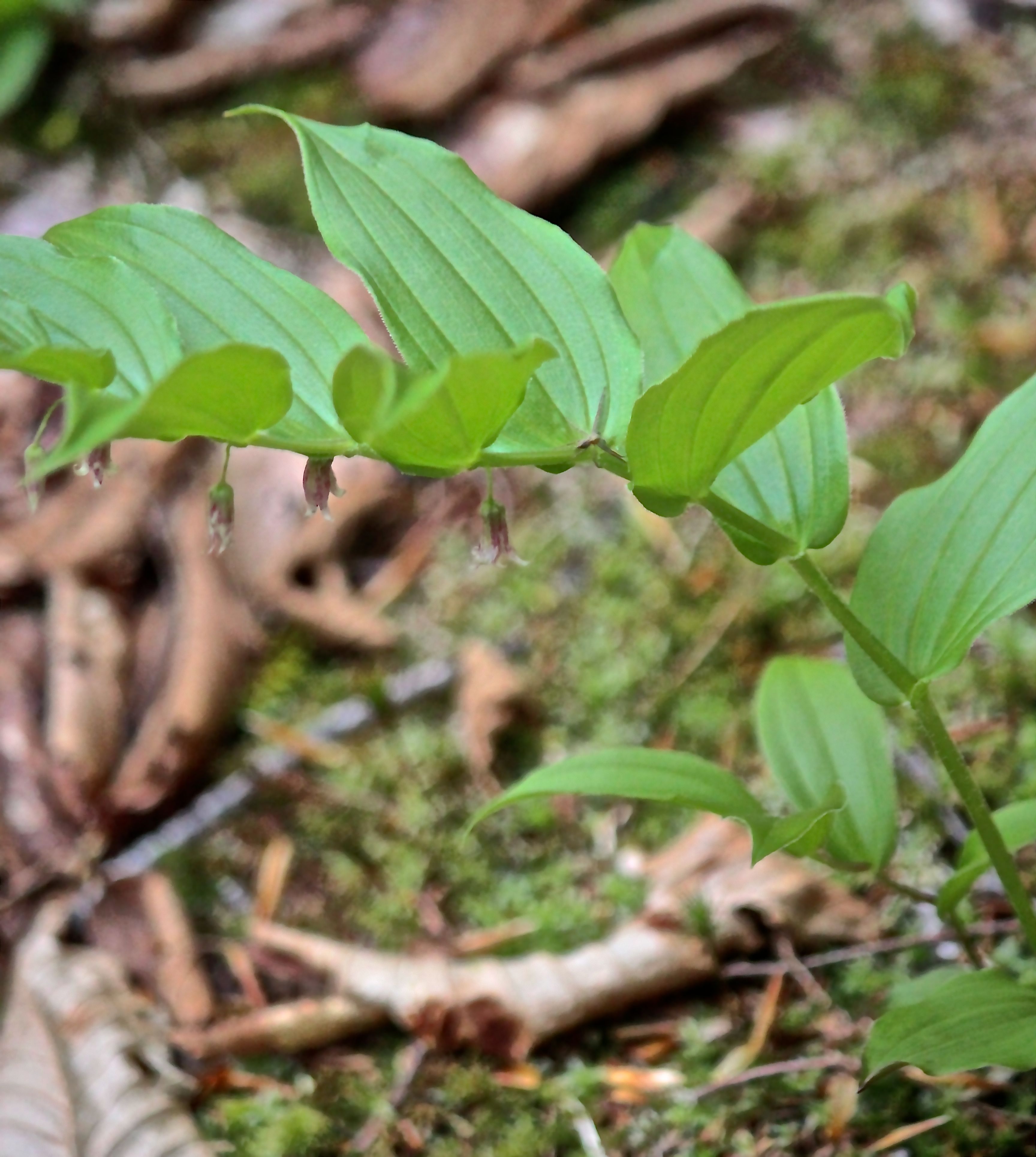
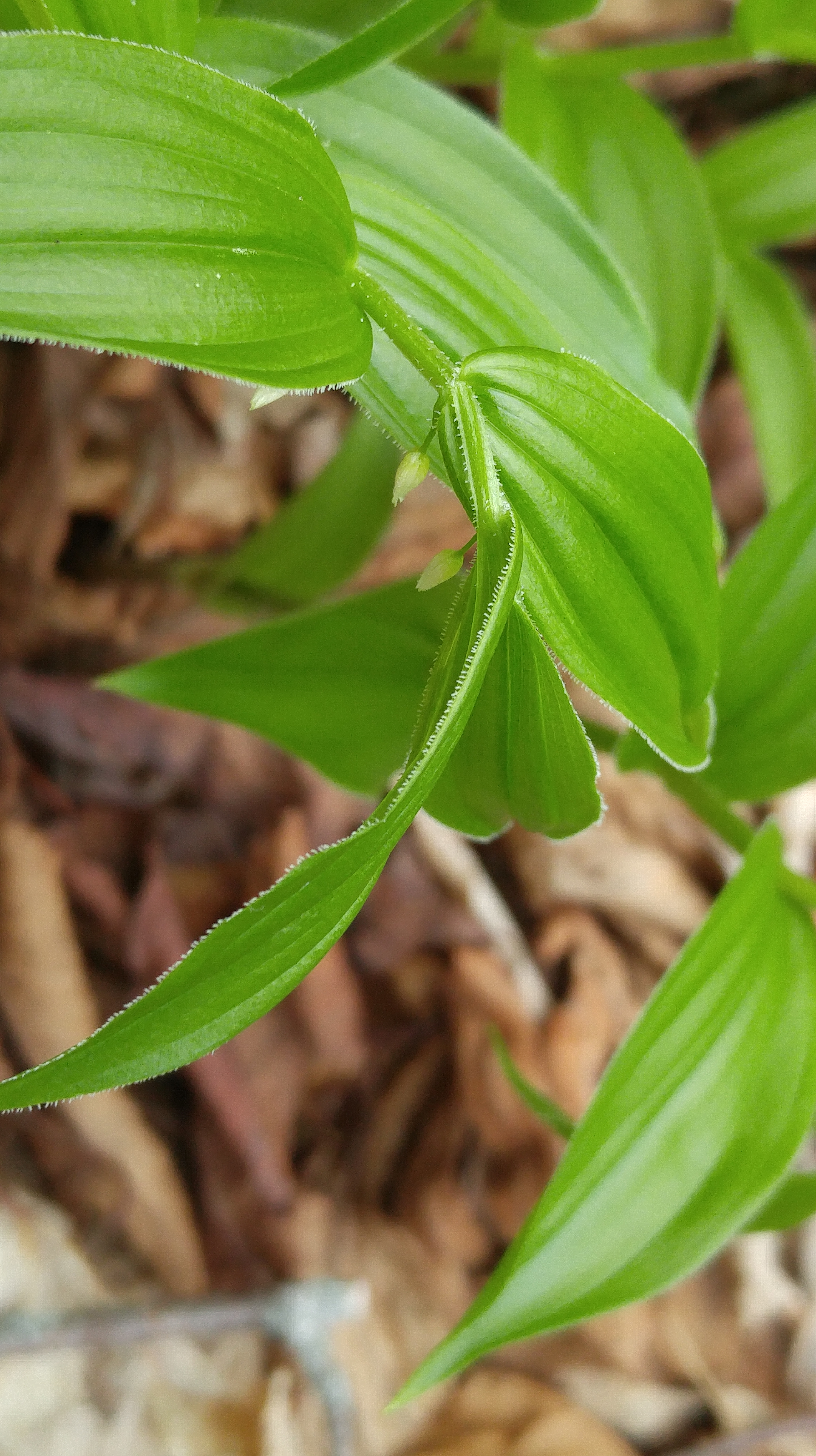
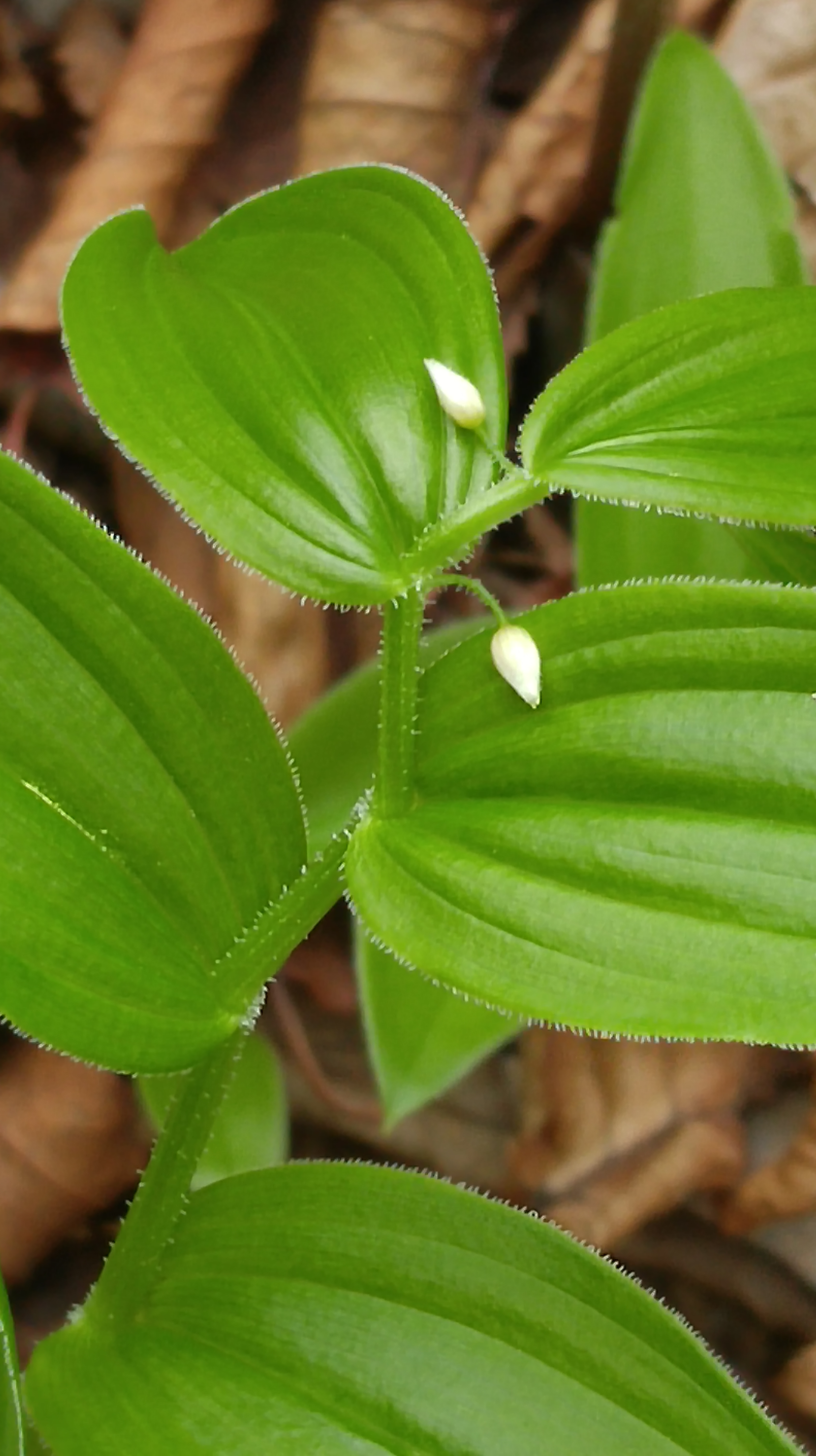
A much more subtle display of color–rose twisted-stalk. Not a great photo, but the  flowers dangled below the twisted stalk. Why rose?  The bell-shaped flowers that occur singly at the leaf axils are pale rose in hue. Why twisted? Because at each leaf junction the stem takes a distinct twist.
a-sarsaparilla

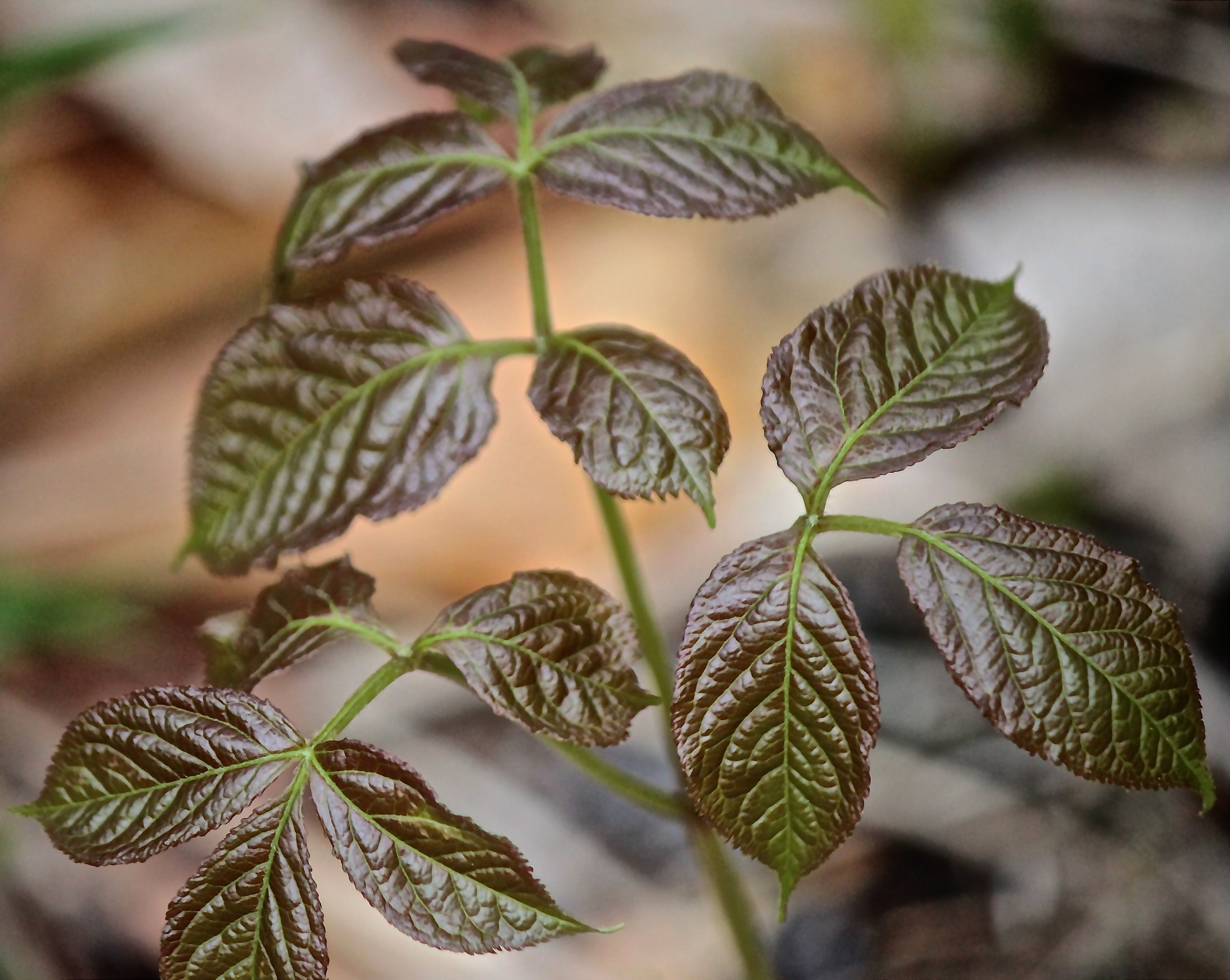
Adding to the subtle color of the season–sarsaparilla. I love the fact that this particular example shows the variety in the finely toothed compound leaves–in this case, two leaves sporting five leaflets, while another consists of three. It’s the three that sometimes gives this plant an undeserved bad rap–leaves of three, leave them be, refers to poison ivy. But this is not P.I. as we used to call it when I was a kid.

a-coltsfoot1

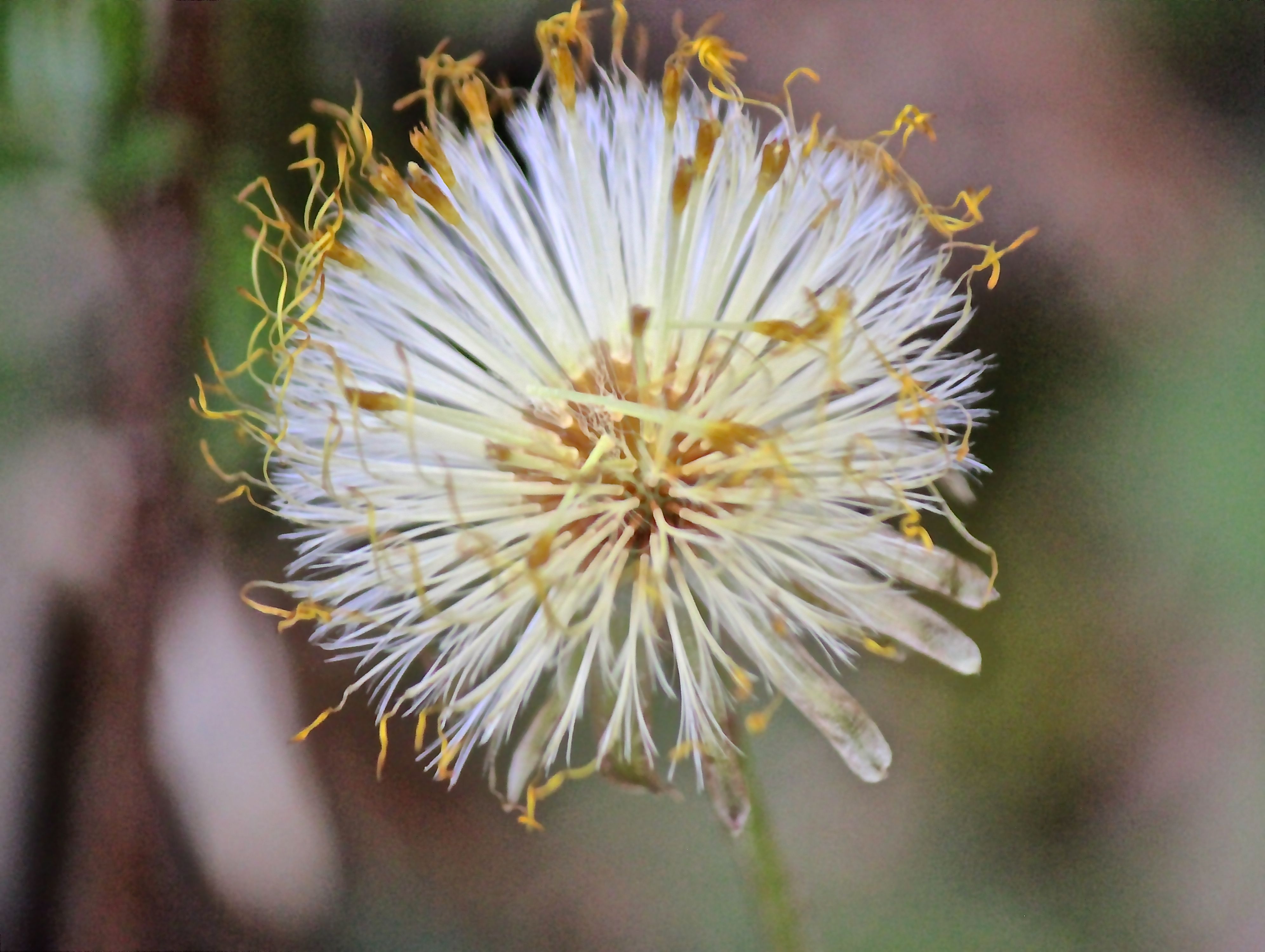
Another sorta look-alike, coltsfoot that resembles a dandelion. The difference–a coltsfoot seed ball retains its flower parts.

a-spring color

As the tender new leaves emerge, the landscape softens.

a-oak 1

From subtle colors

a-beech 3

to hairy fringes

a-sumac 1

and fuzzy coatings, the world embraces a softer point of view.

a-wet trail

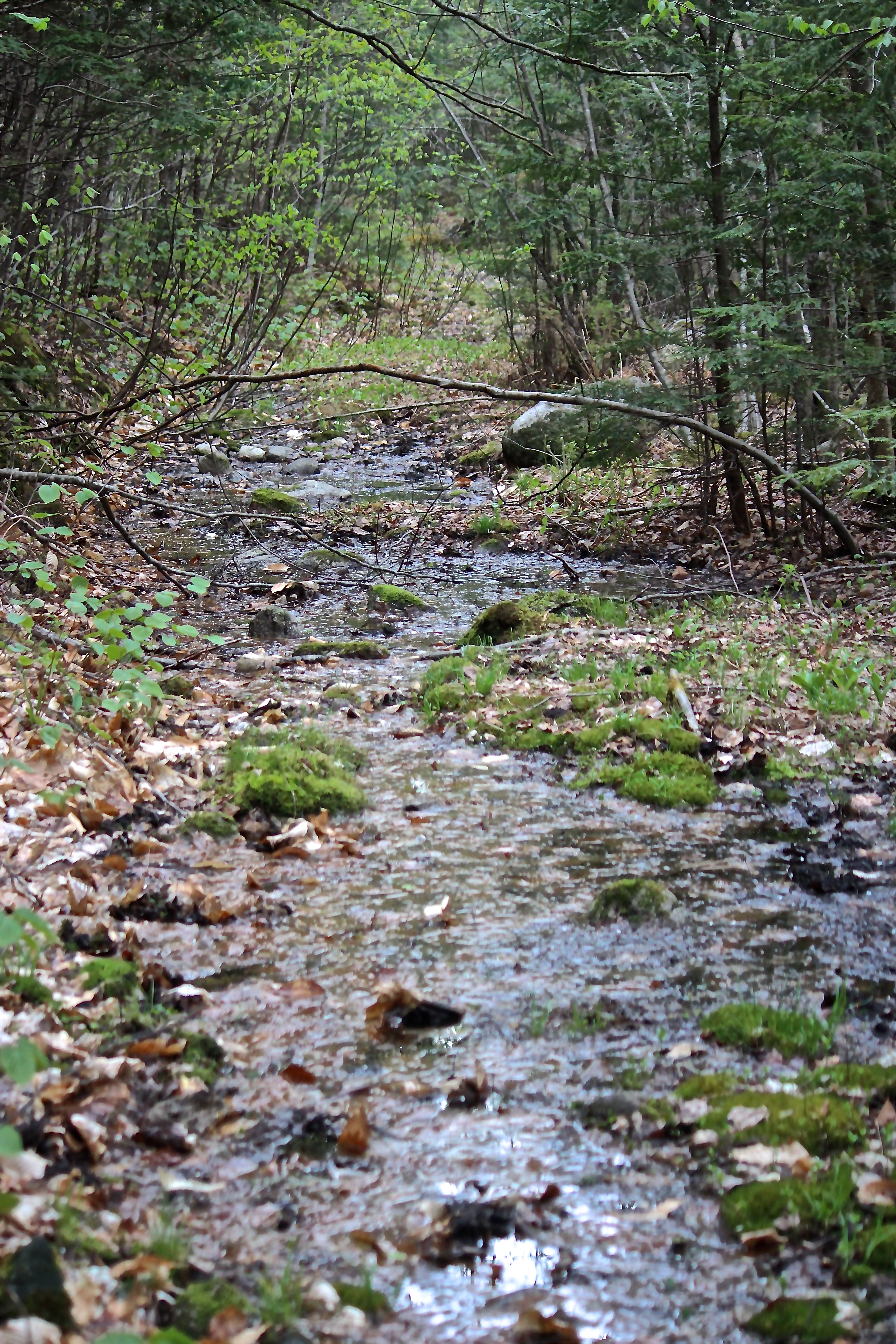
Though we continued to make delightful discoveries, it was evident that we were on the wrong trail.

a-brook crossing.jpg

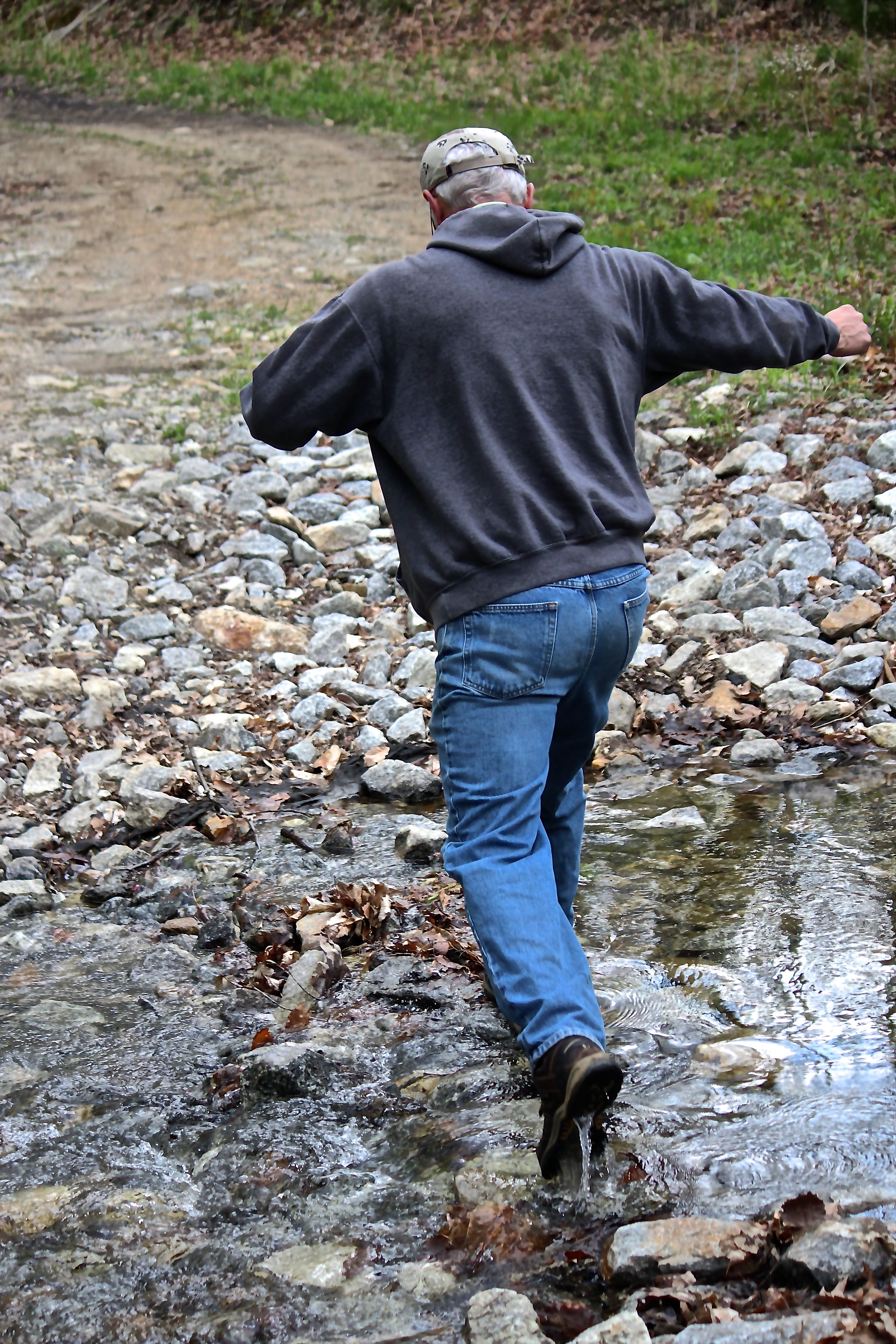
After a couple of hours, we turned back.

a-trail blaze.jpg

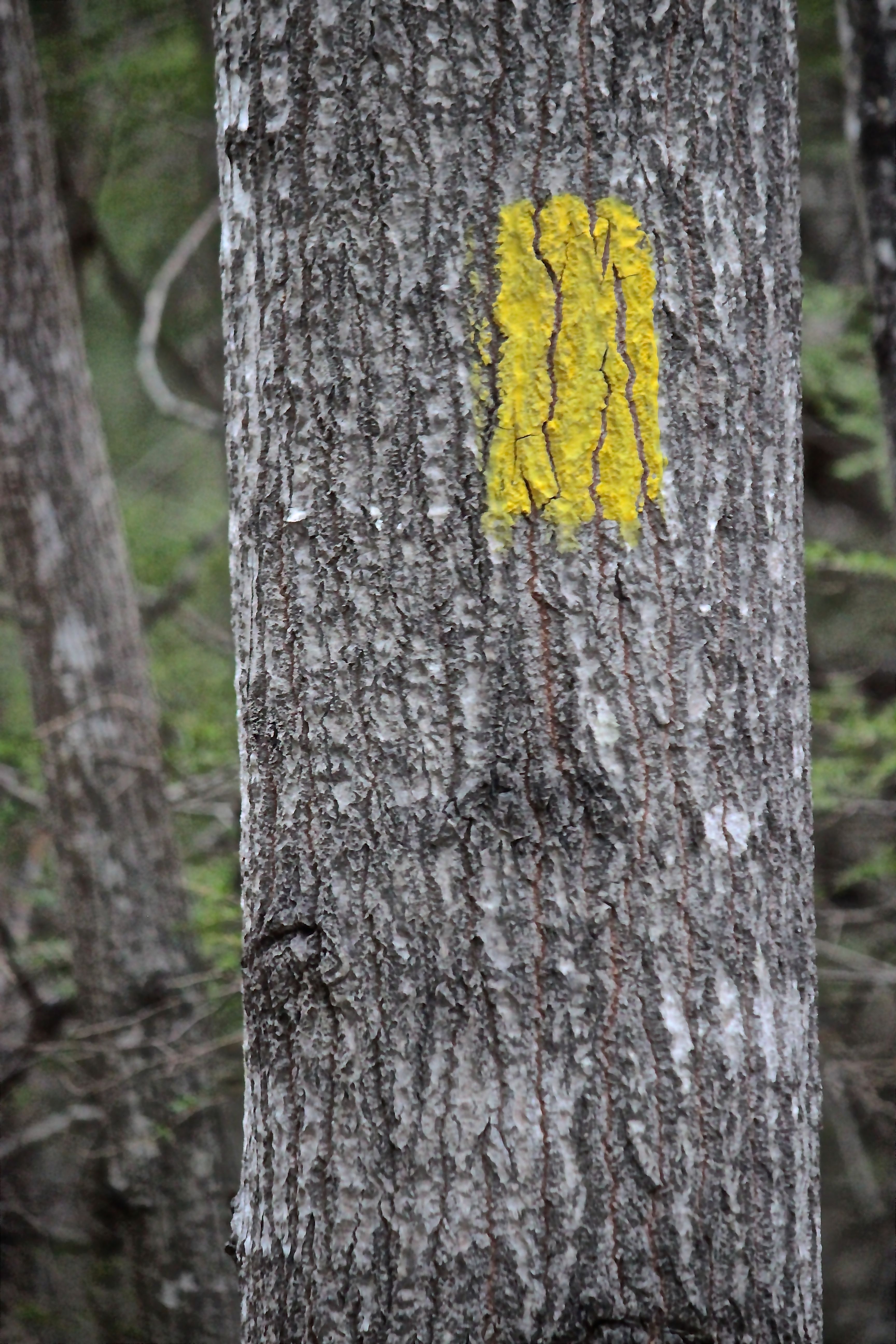
And at the point where we ignored our gut feelings and decided to turn right, we checked on the other trail–and found that it was blazed. Oh well.

We’ll save it for another day.


Spring In Slo-Mo

Spring is so fleeting in Maine. Oh, I know, it lasts the usual three months and the beginning and ending overlap with its seasonal partners, but really . . . one must take time to pause and watch or you’ll miss the most amazing action that occurs in slow motion right outside the window–and beyond.

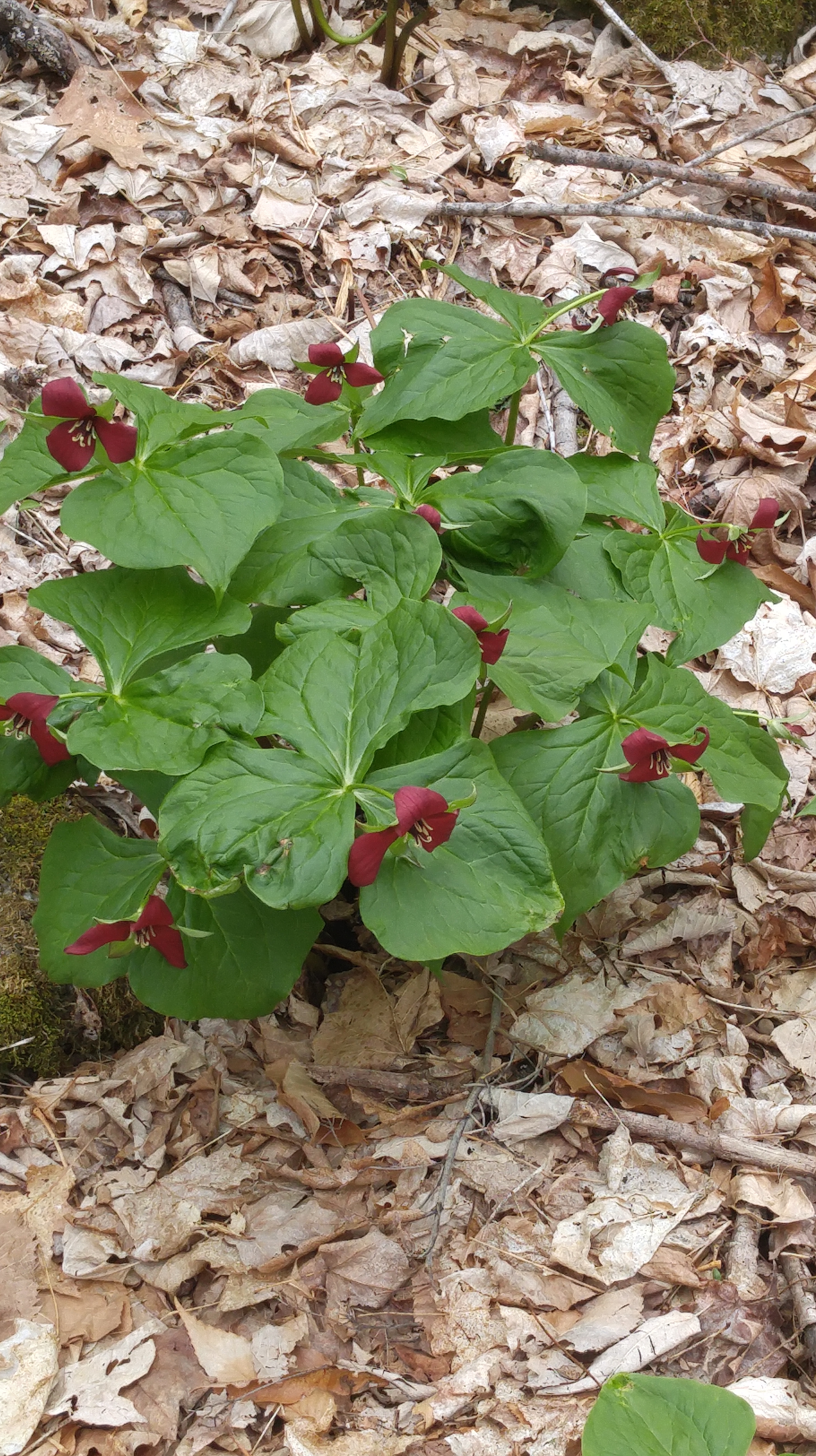
s-red trill 1

Jinny Mae and I drove beyond today to catch a glimpse of this most splendid season.

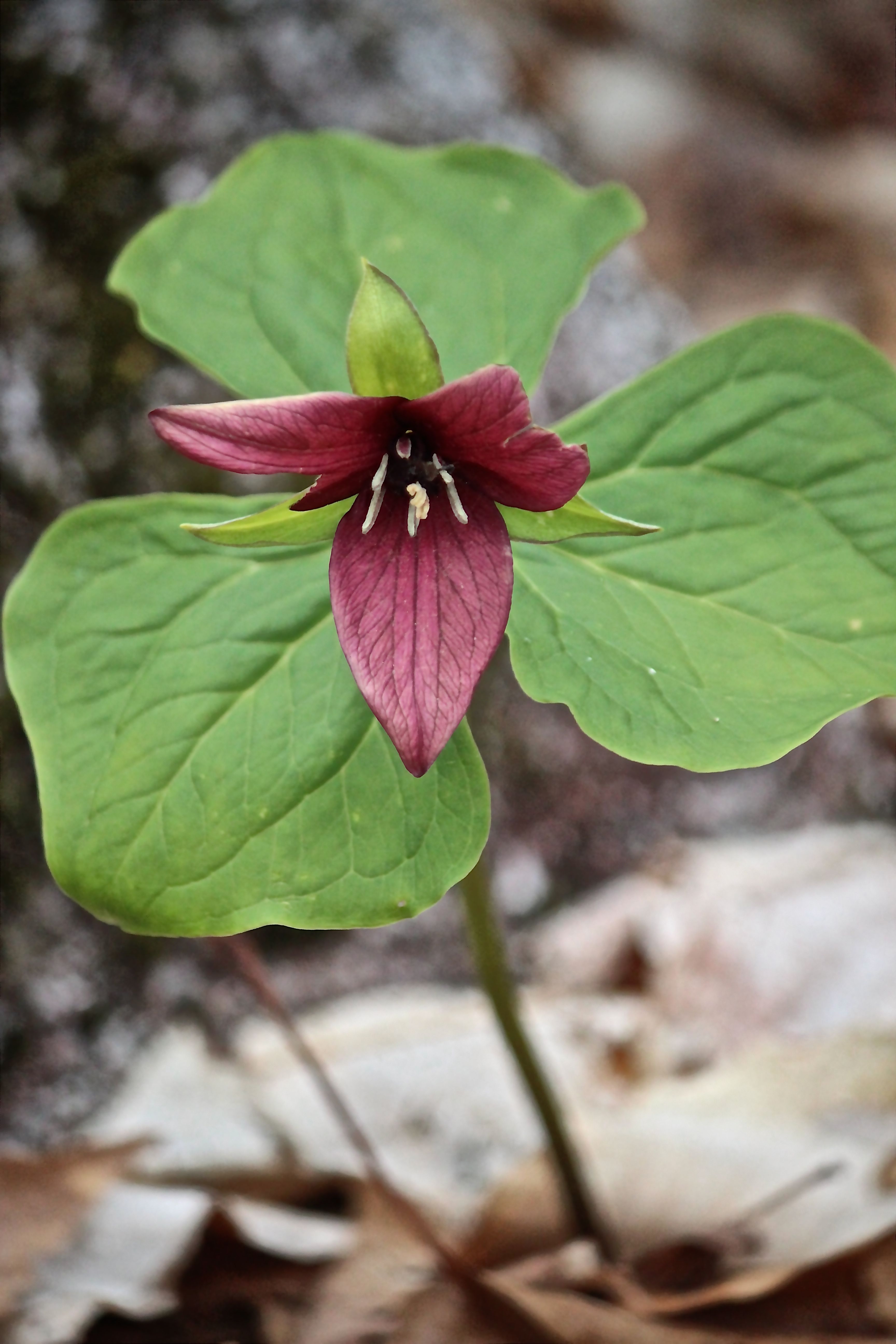
s-red trill 10

Among the offerings, red trillium also known as stinking Benjamin. The Benjamin part is from benzoin, a mid-16th century word derived from the French benjoin, that refers to “a fragrant gum resin obtained from a tropical tree of eastern Asia, used in medicines, perfumes, and incense.”  It’s been tagged “stinking”  because its nodding flower has an unpleasant odor. We didn’t bother to sniff. We were too busy being wowed by the fact that it surrounded us in great number.

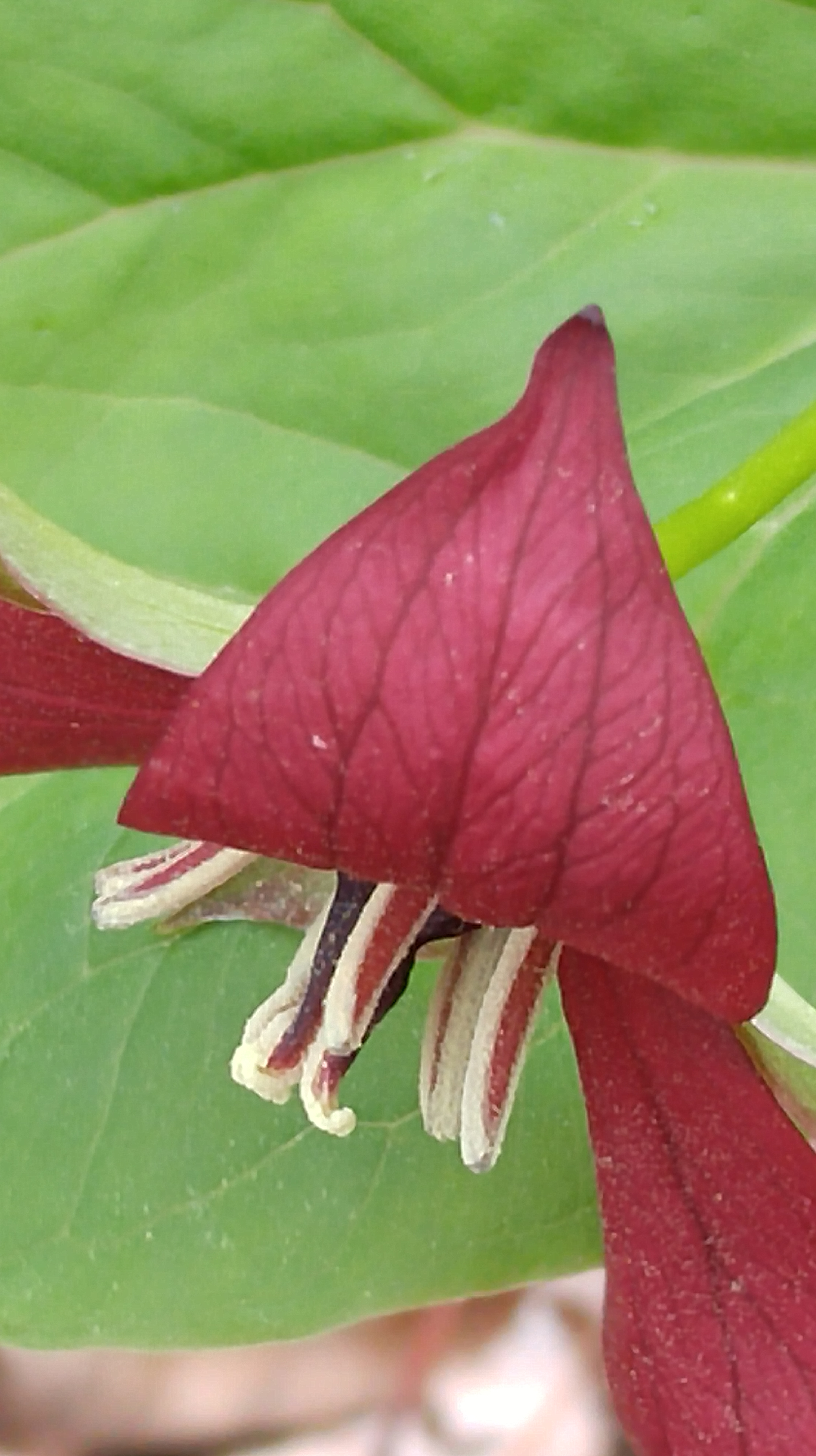
s-red trill 2

That smell, however, is of extreme importance. Along with the flashy coloration, the odor helps to attract pollinators–green flesh-flies that prefer to lay their eggs on rotting meat. Though this isn’t the perfect nursery, the flies assist the plant on the procreative end. And in this spot, stinking Benjamin rules, but I prefer to think of it as red trillium.

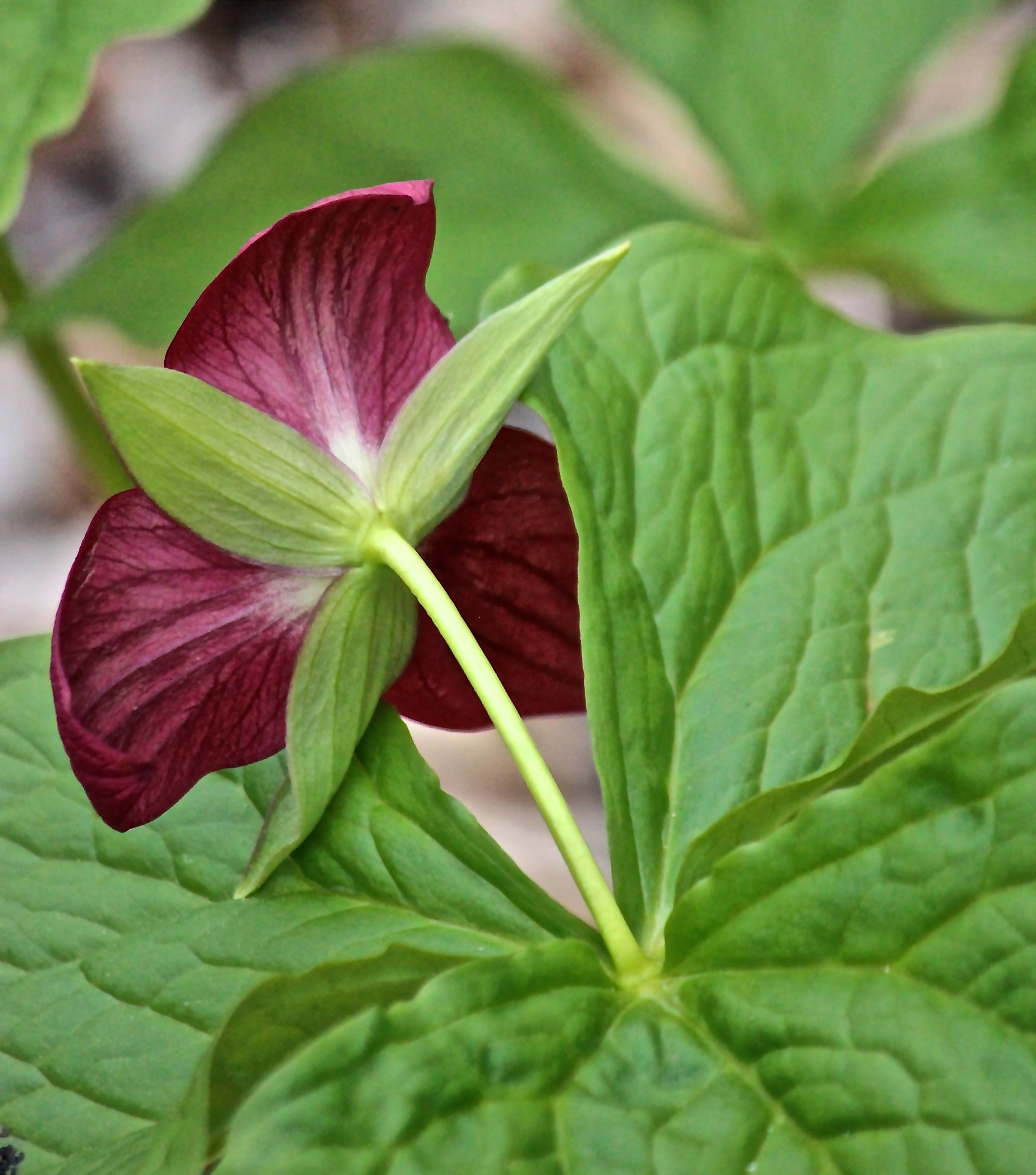
s-red trill back

Even from the backside, its design is one to behold.

s-false 1

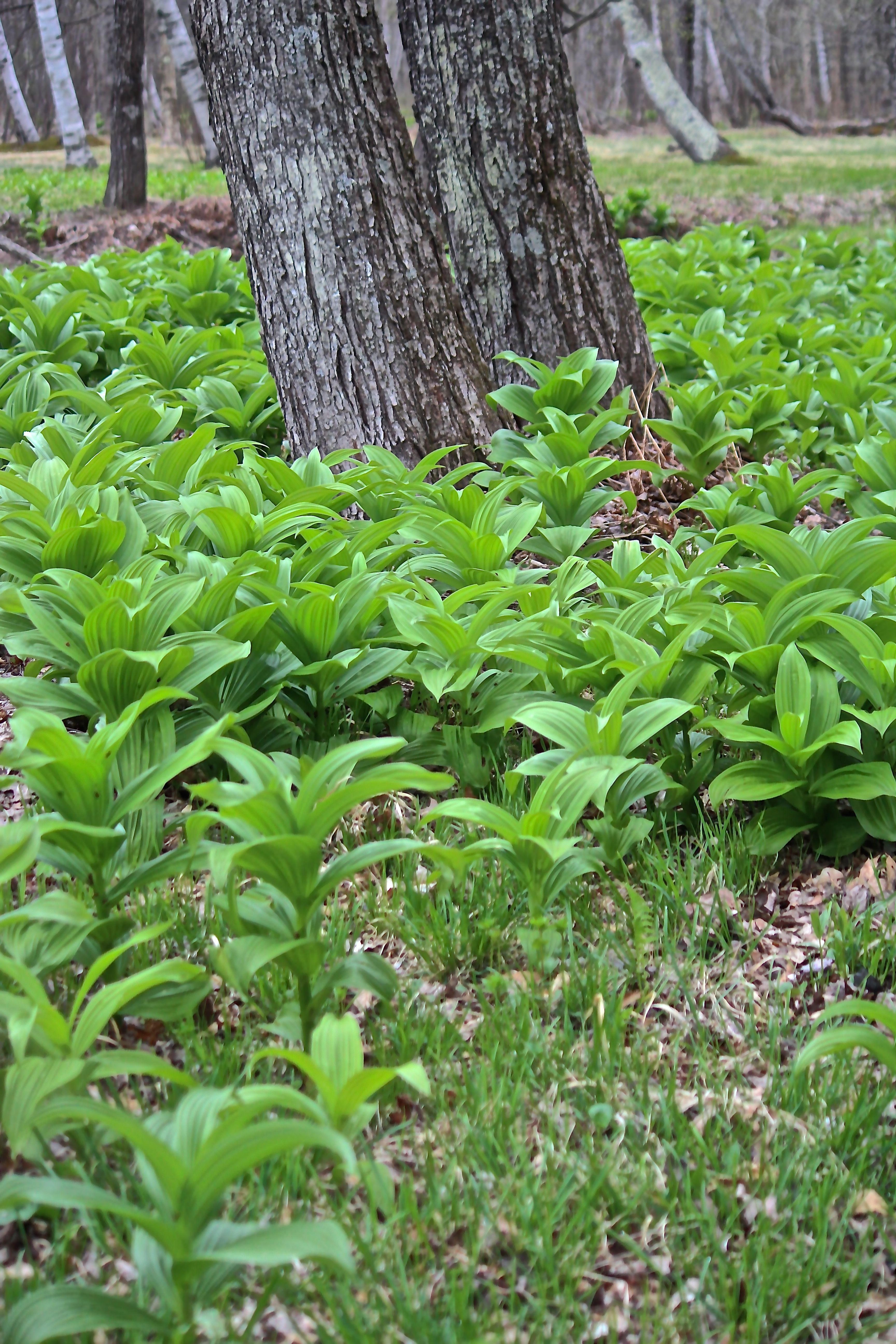
Equally abundant were the leafy structures of false hellebore.

s-fals3e4

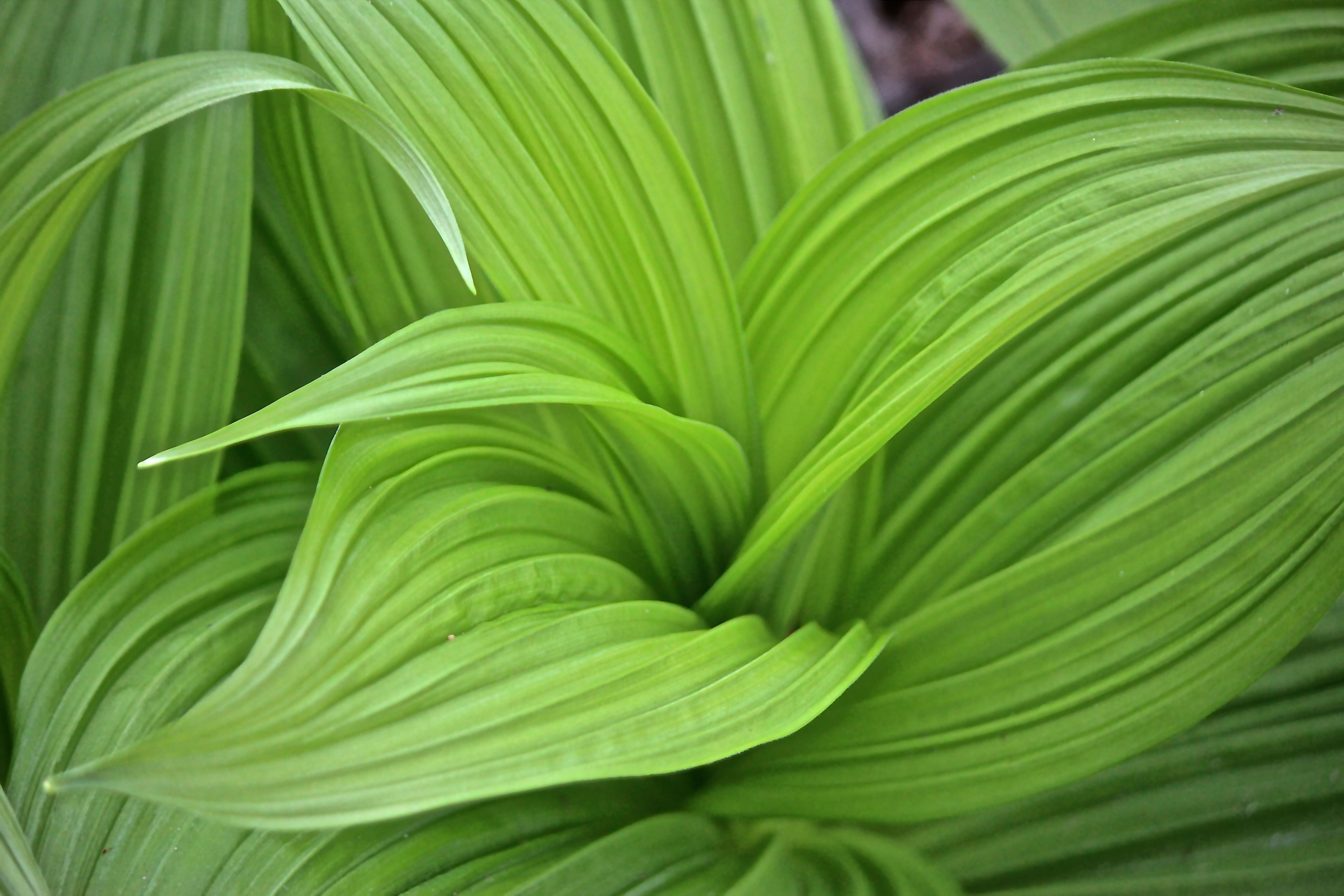
I was mesmerized by its pattern.

s-wood 2

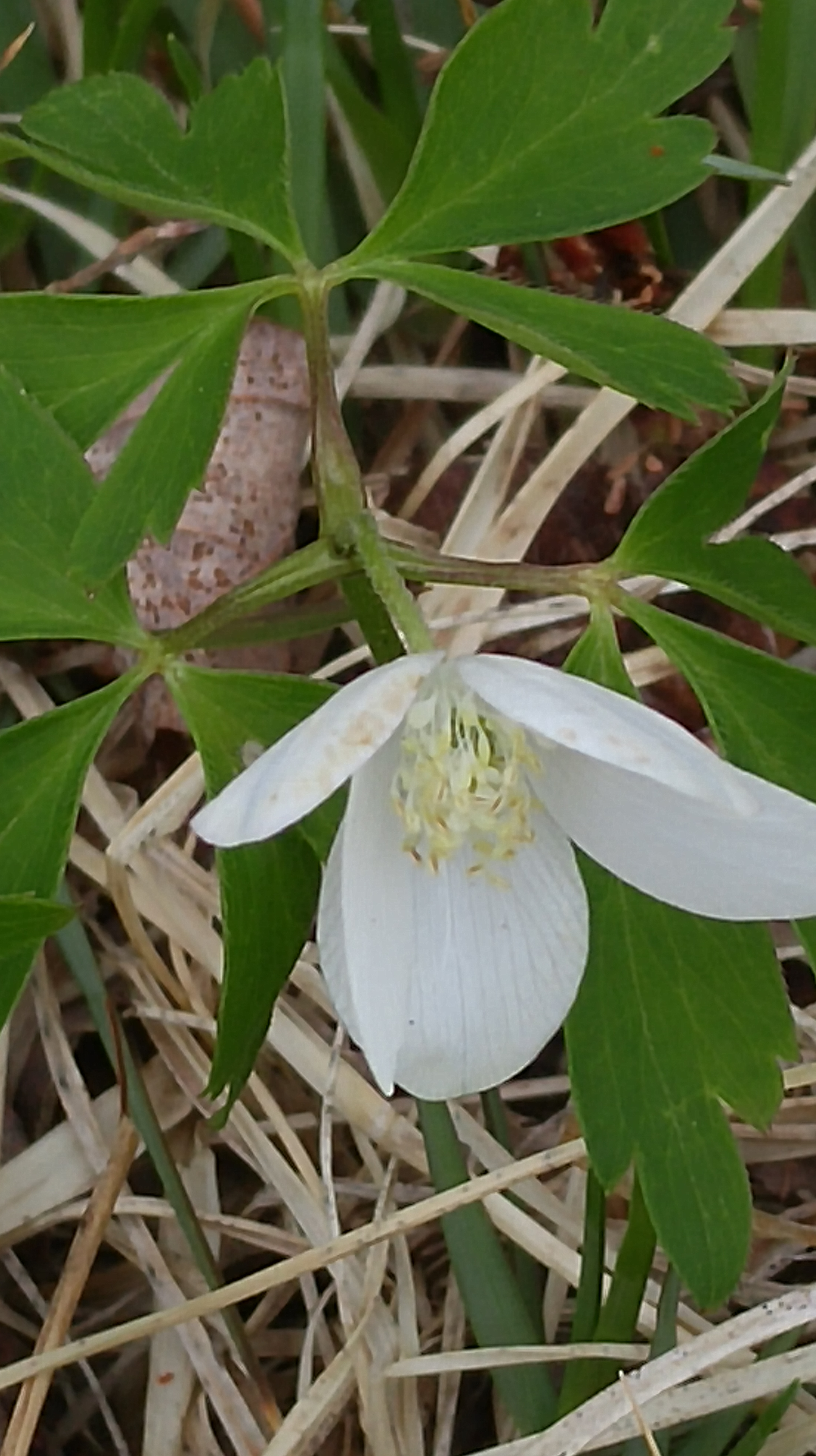
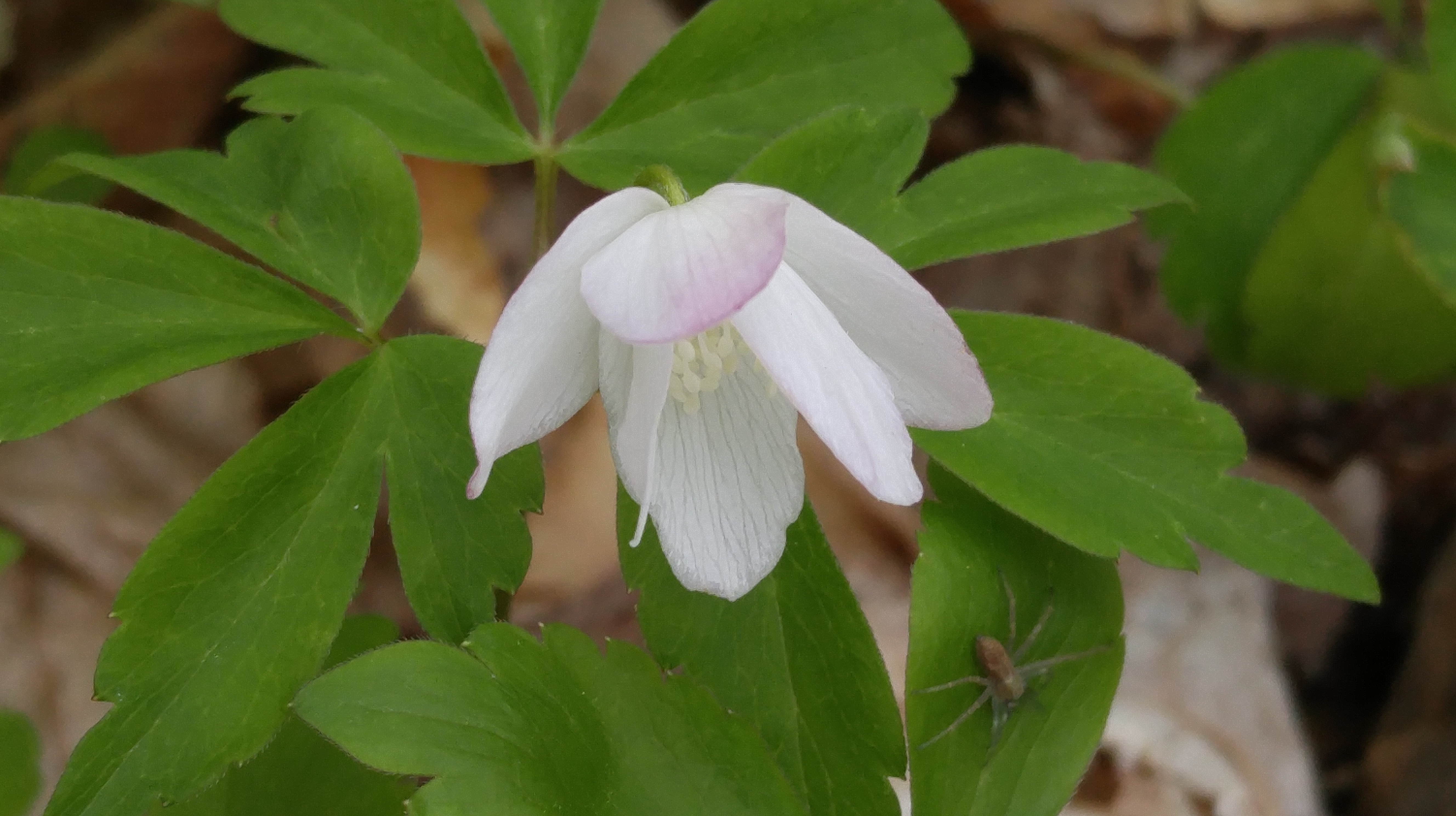
Unlike the trillium, wood anemones have little scent.

s-wood 1

Their graceful heads drooped, perhaps because the day threatened rain.

s-bellwort 3

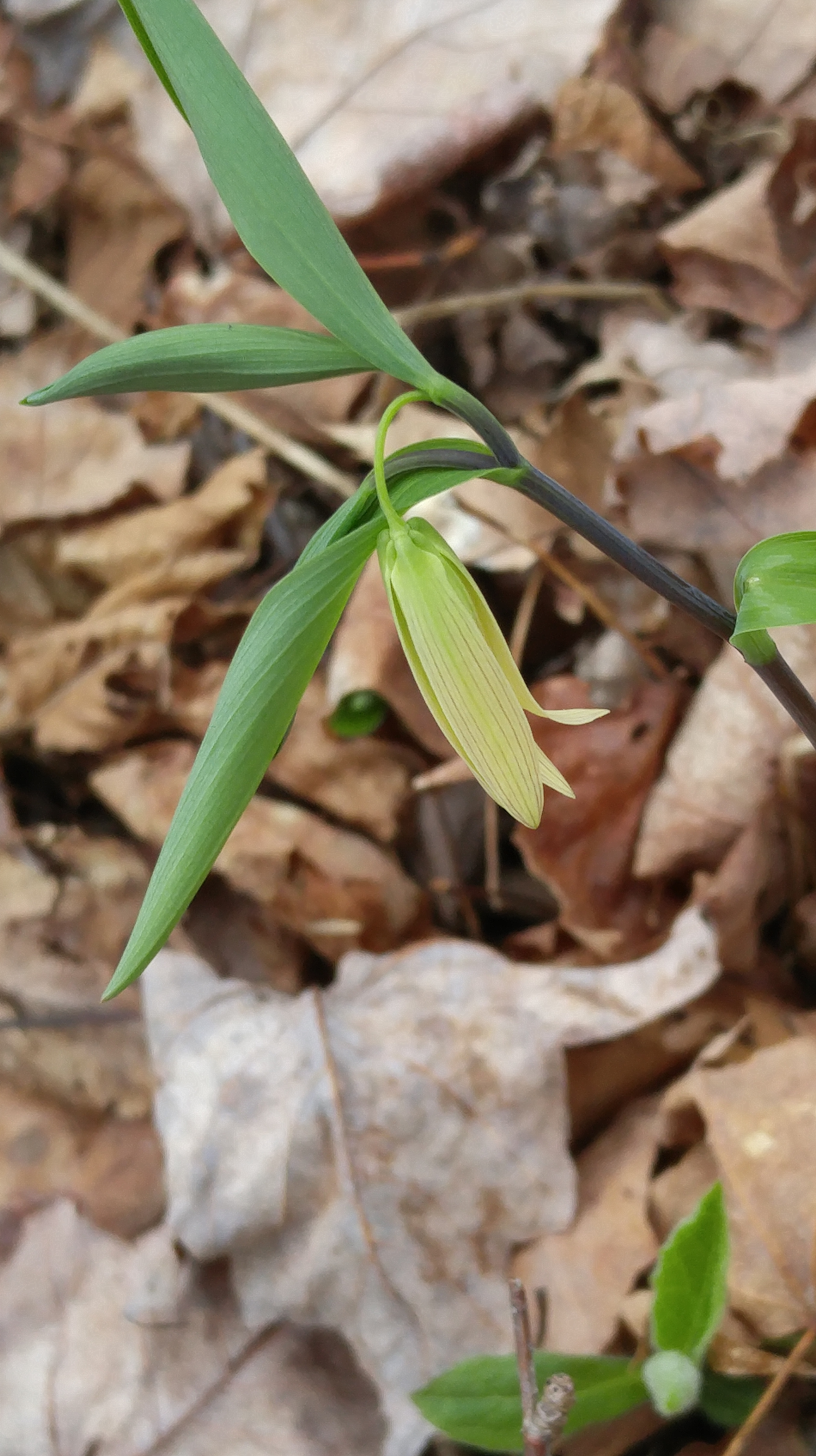
The offerings included sessile-leaved bellwort (aka wild oats),

s-dutchmen1

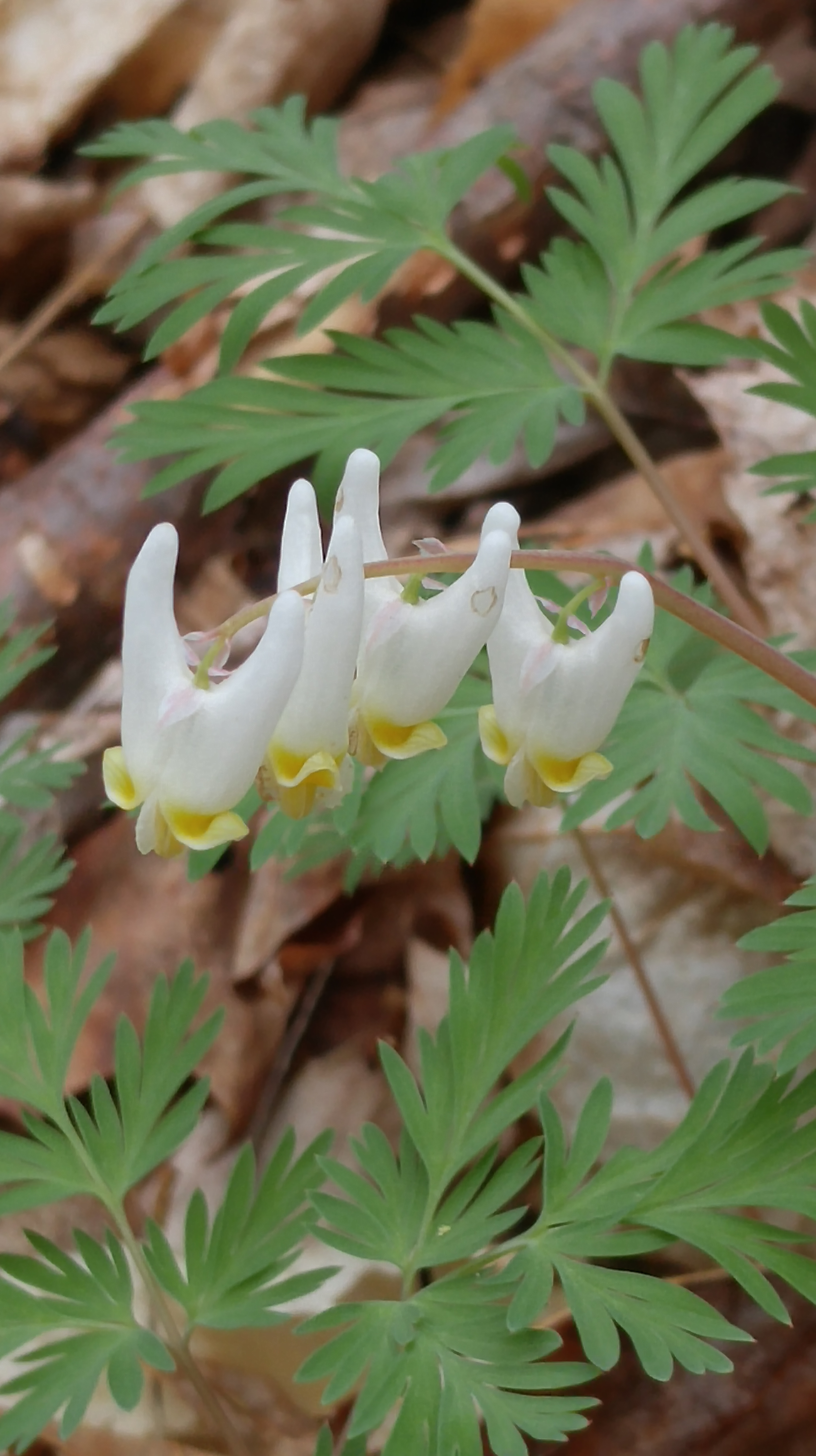
Dutchman’s breeches with leaves as interesting as their flowers,

s-ginseng 2

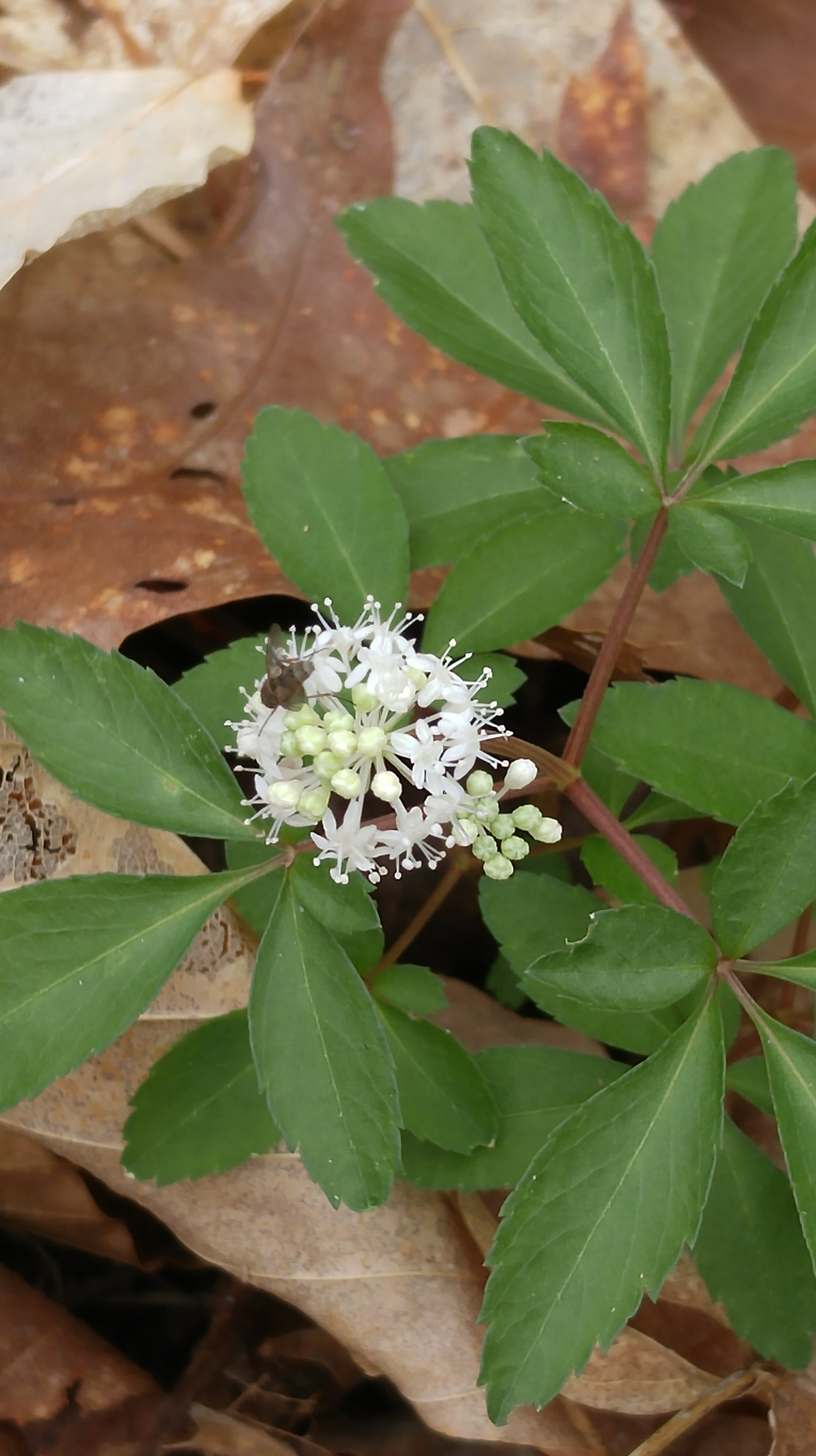
the delicate white flowers of dwarf ginseng,

s-twisted 4

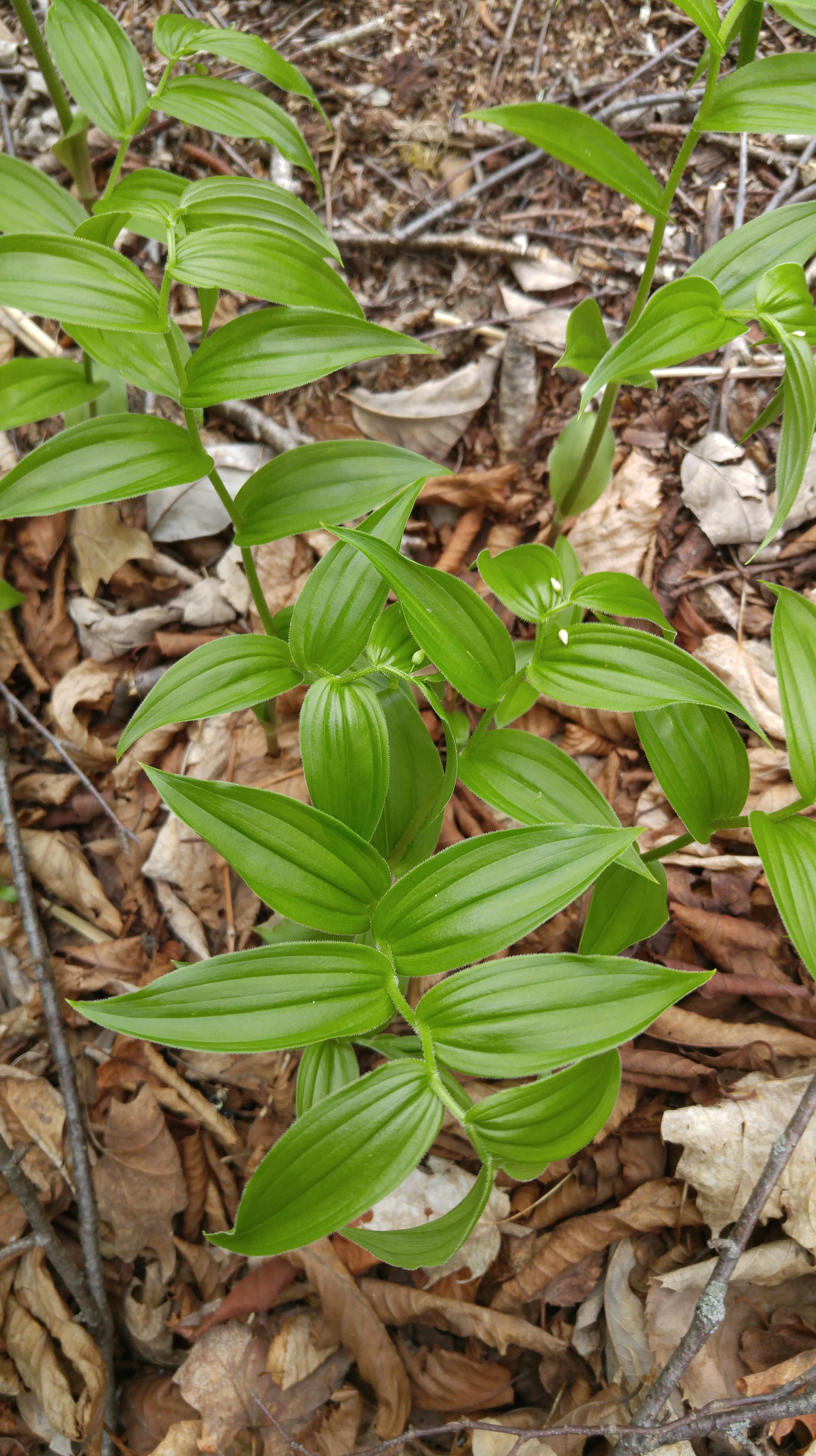
and  zigzag pattern of clasping twisted stalk.

s-twisted1

Its key features are minutely-toothed leaf margins, stalkless leaves that clasp the stem, and flowers dangling below.

s-twisted 3

The flowers hadn’t opened, but the closer we got, the more we appreciated its finer details.

s-hobblle 1

Ever so slowly, as is the case in all things, hobblebush flowers began to bloom.

s-hobble2

Outer sterile flowers form a ring around the delicate inner flowers that are fertile. Nature has a way of protecting its own.

s-colts 2

When we first spotted the fluff ball of seeds across the brook, we thought we were looking at dandelions. And then we saw the scaled stalks and lack of leaves. Coltsfoot it is.

s-cinnamon 3

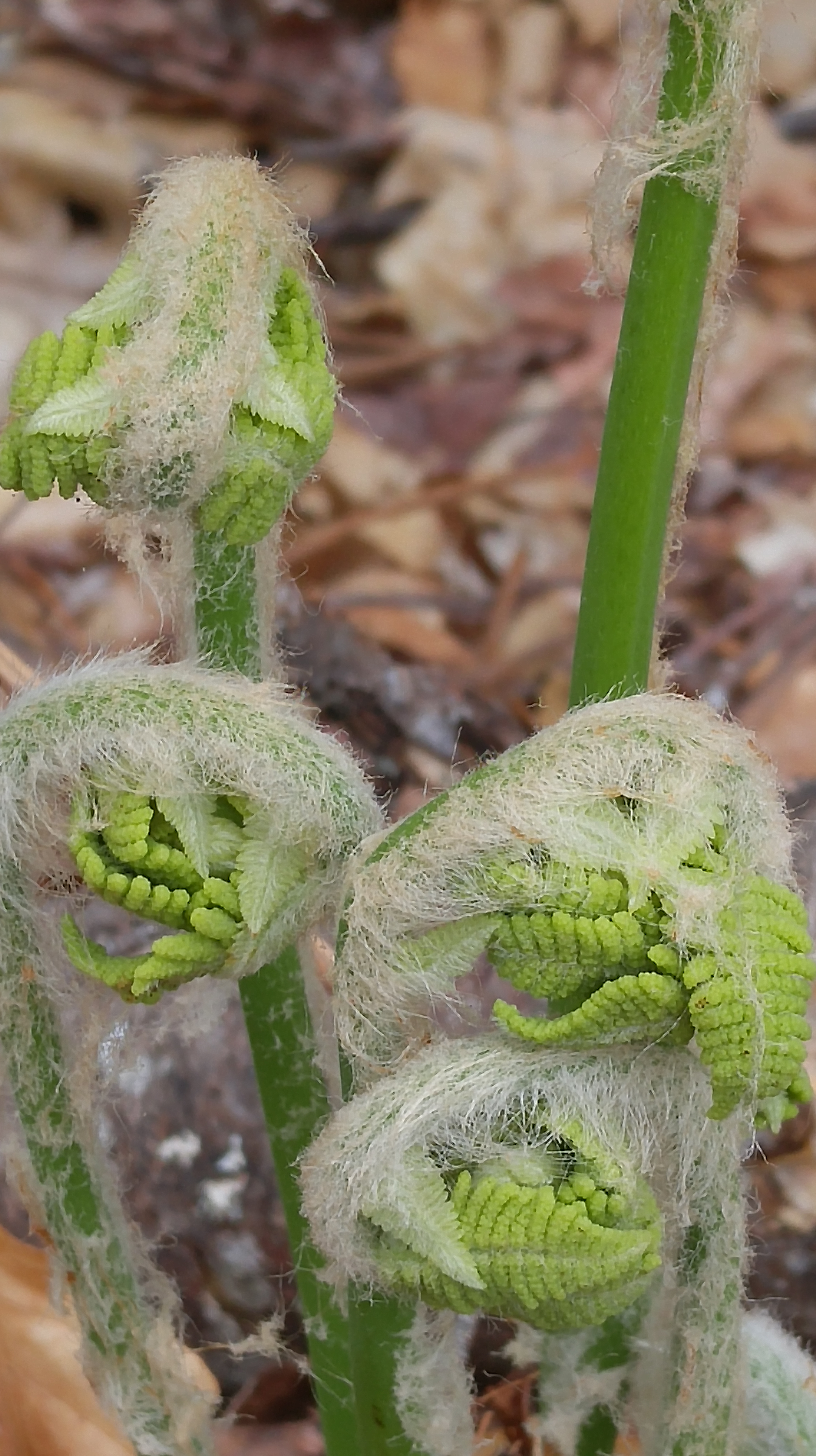
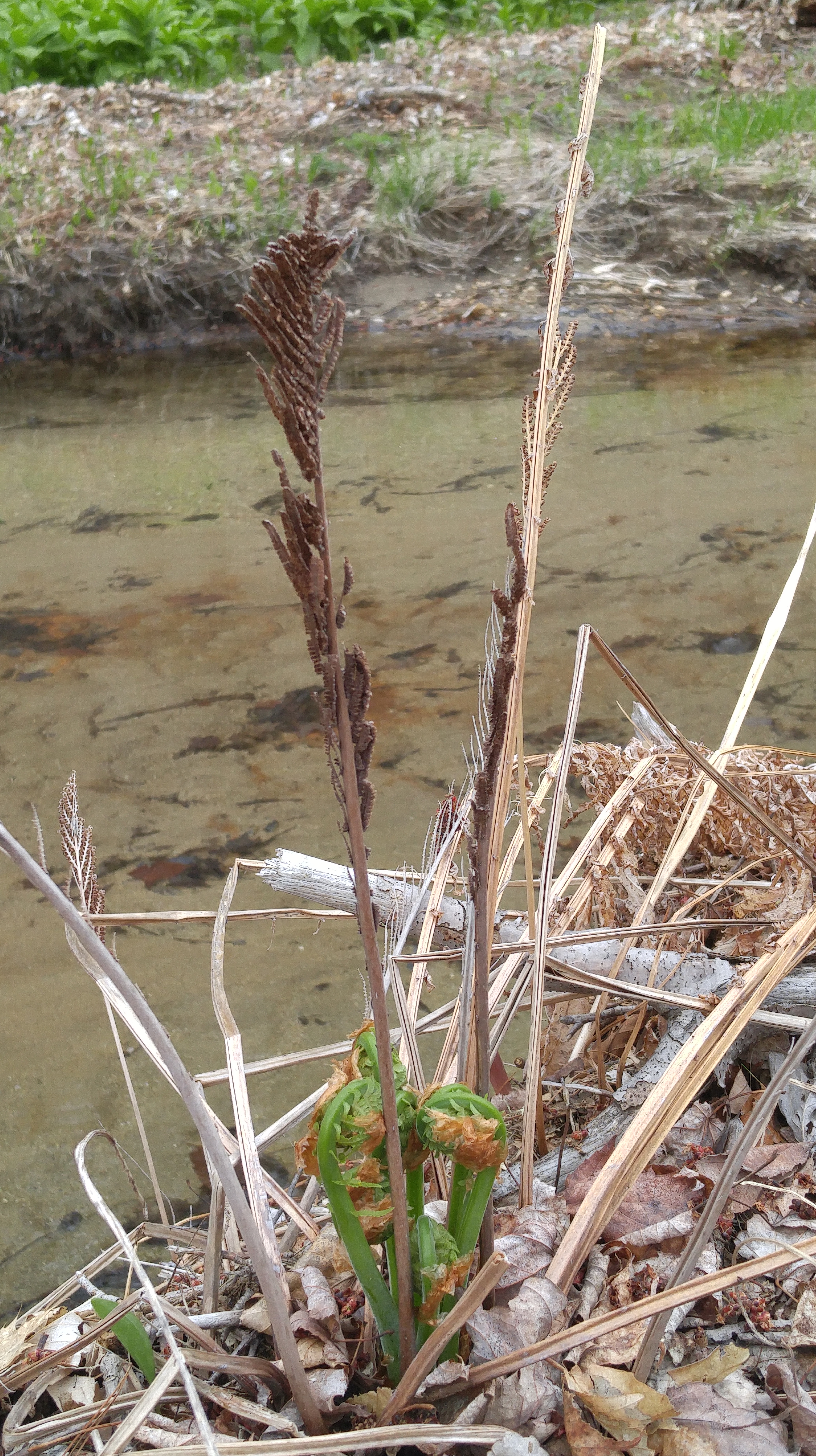
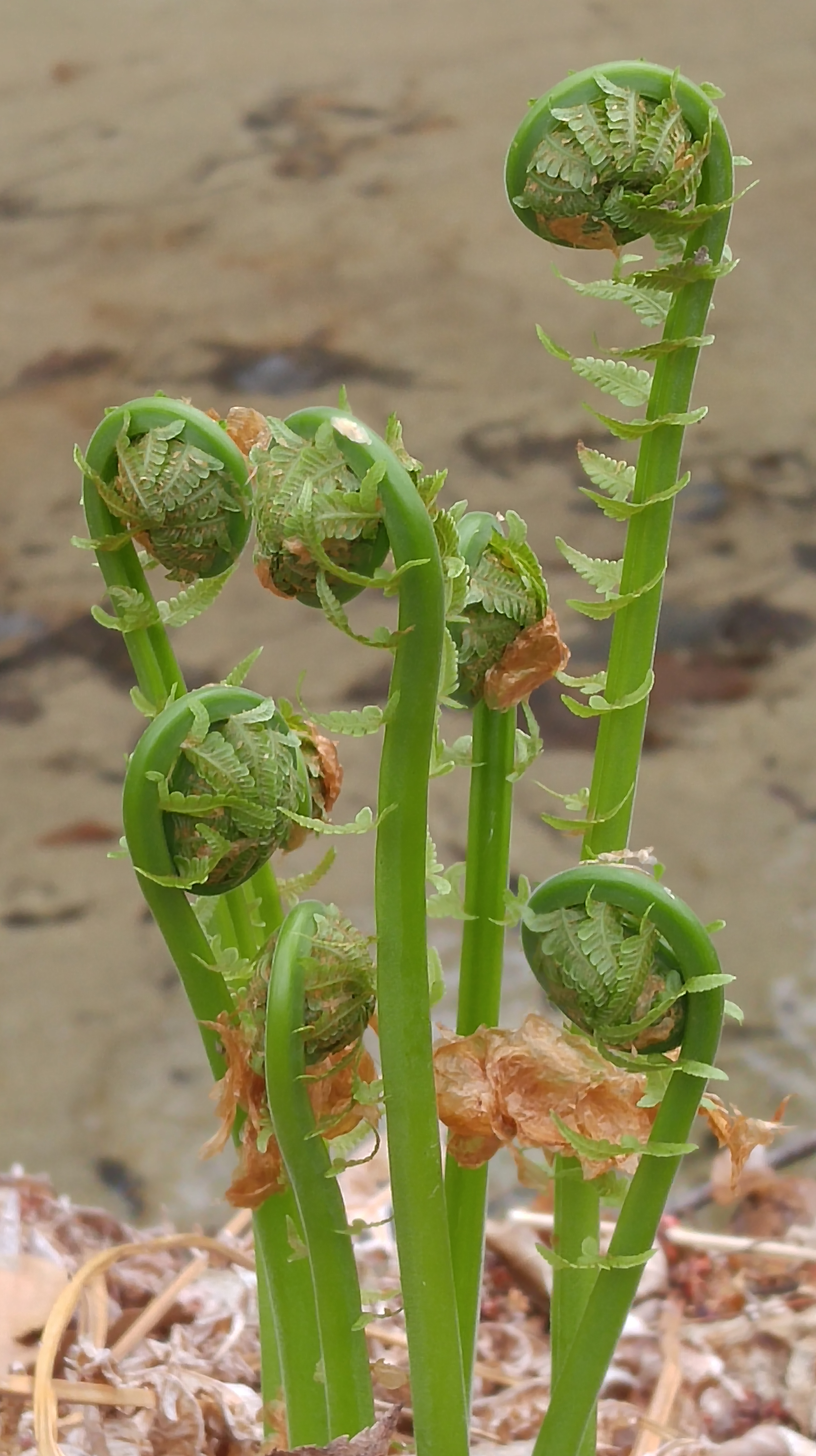
It wasn’t just the flowers that had us getting down on our hands and knees. There was the brownish wool covering of the cinnamon fern.

s-ostrich 1

And the hairless ostrich fern

s-ostrich 2

with its crook-shaped crosier, reminiscent of a bishop’s staff.

s-christmas 2

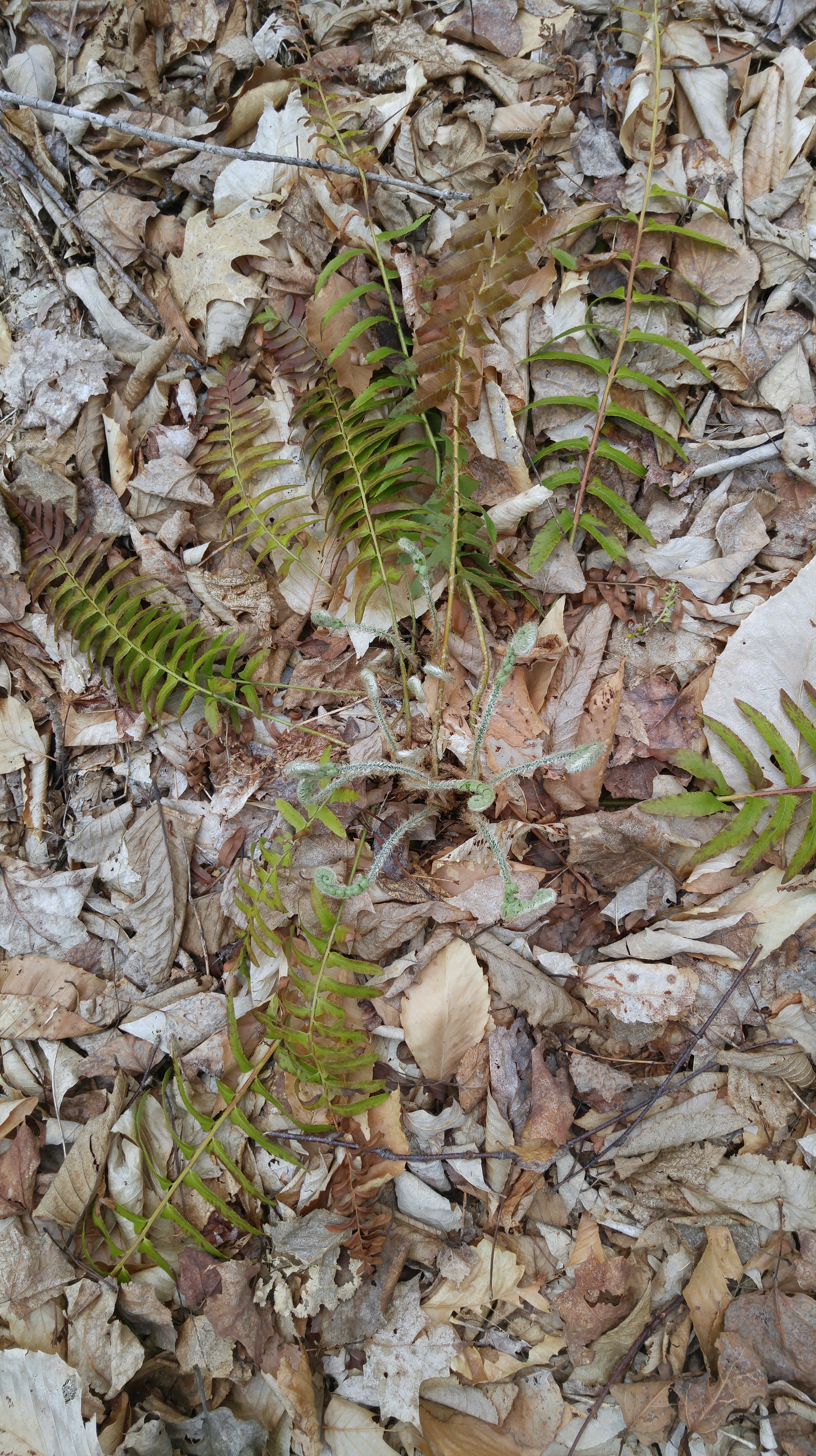
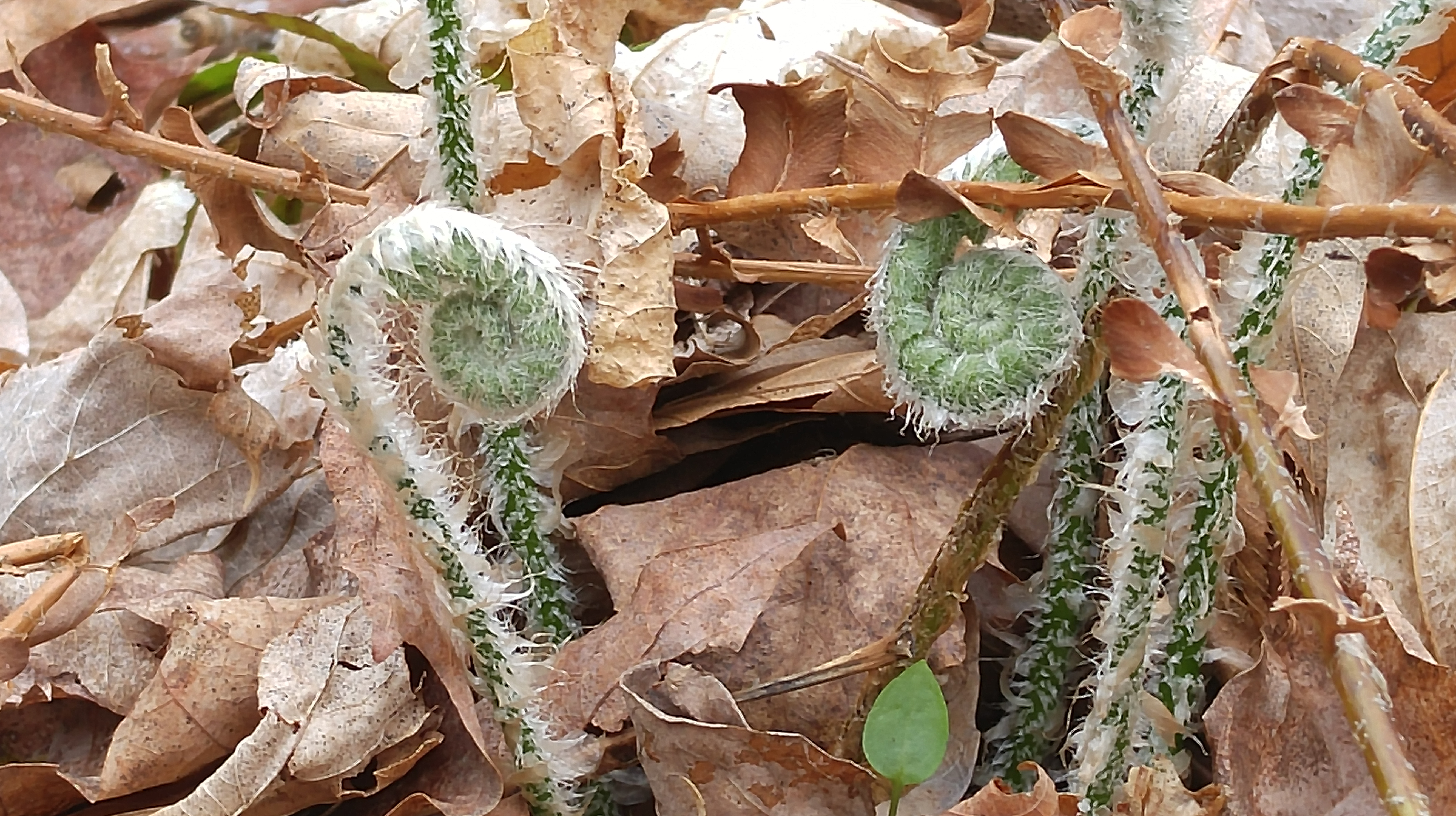
But my favorite today was one I’d never noticed before.

s-Christmas 4

Oh, I know it’s a Christmas fern, but the tightly-wound, silvery-scaled crosiers were new to me. It was yet another chance for us to wonder how we could have missed something that’s been here all along.

s-striped maple 1

And then we looked up. Well, sort of up. Striped maple leaves slowly opened in the understory.

s-red maple 1

And have you ever noticed that young red maples are a tad hairy along the margin?

s-beech 6

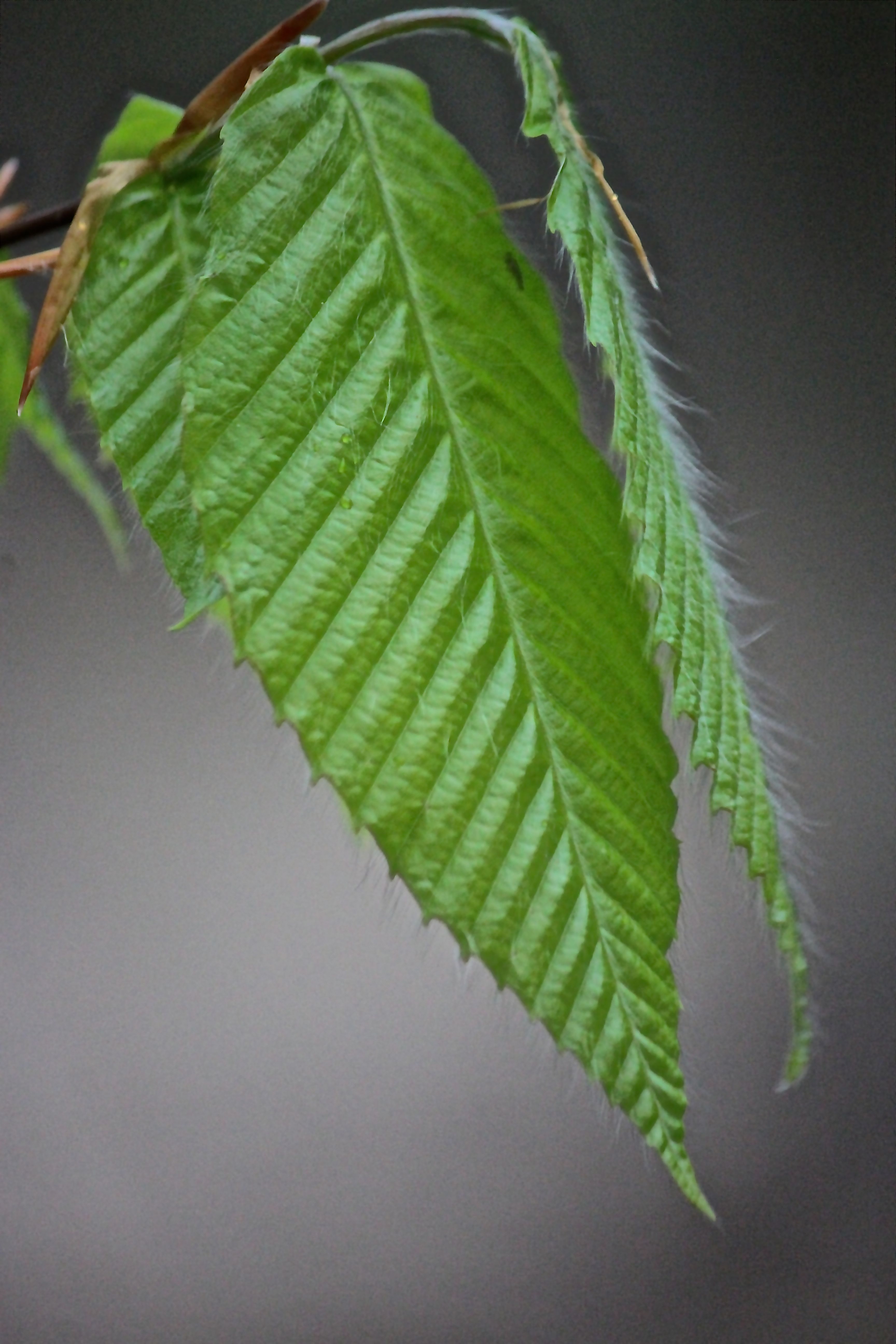
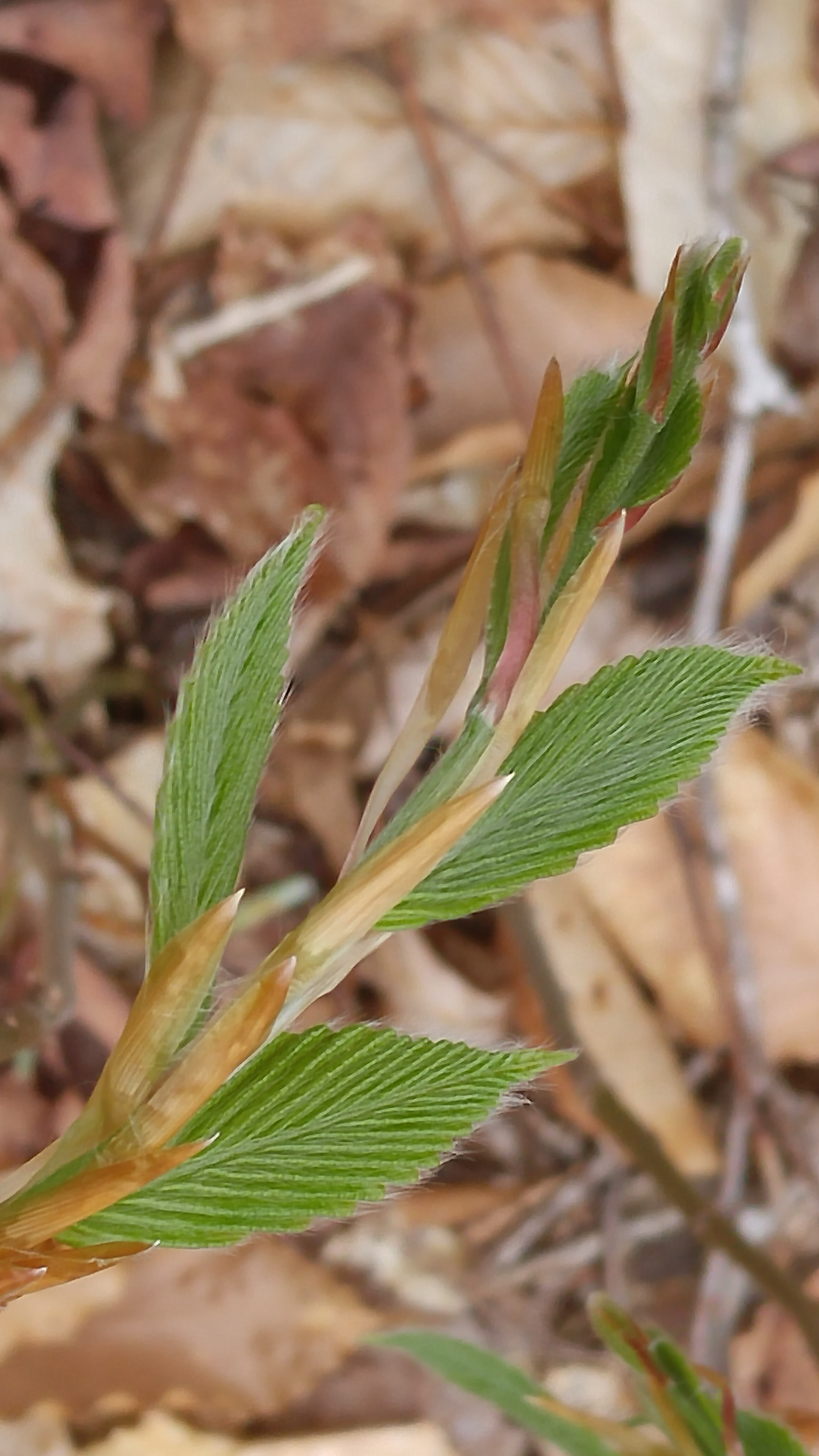
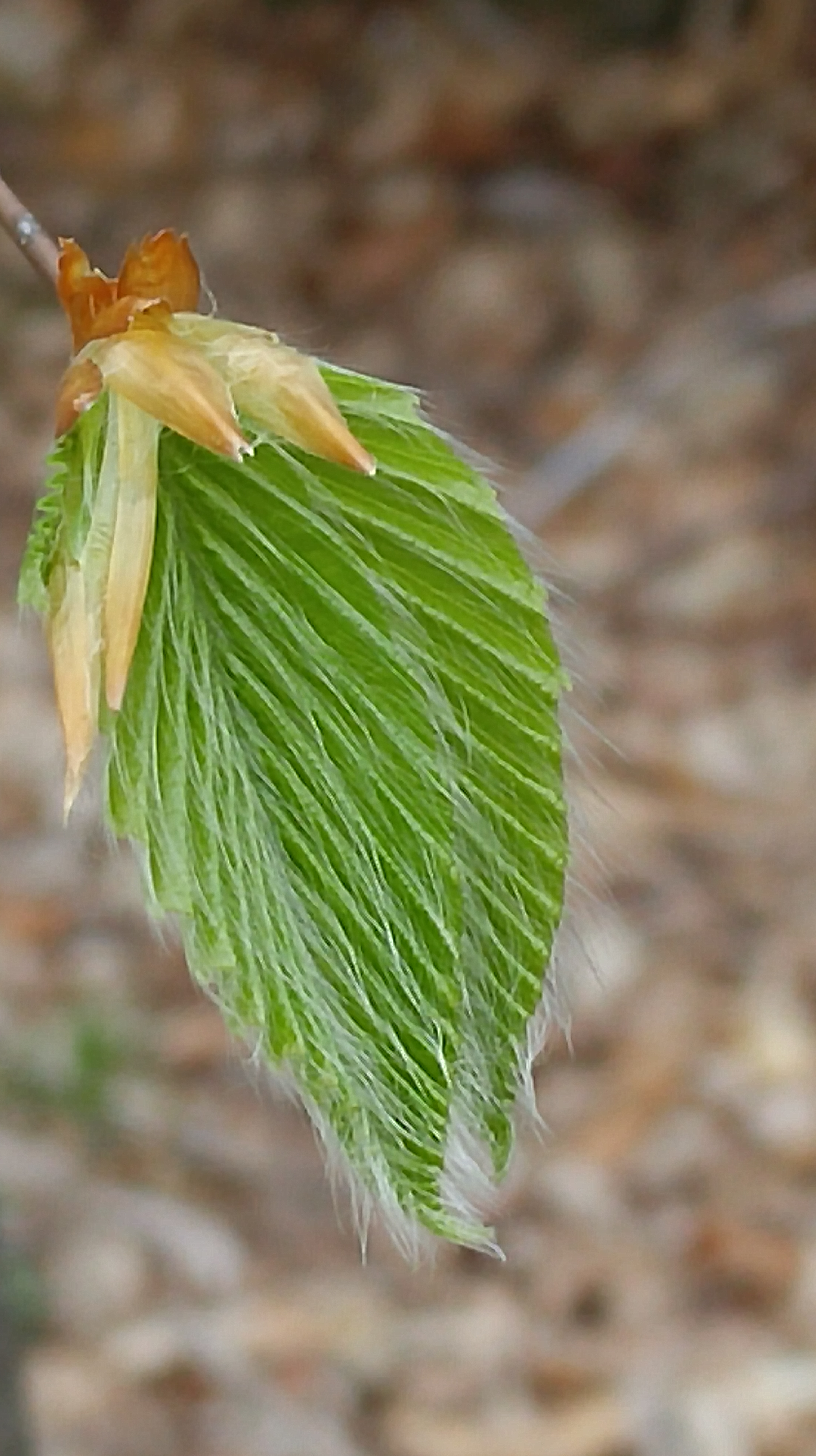
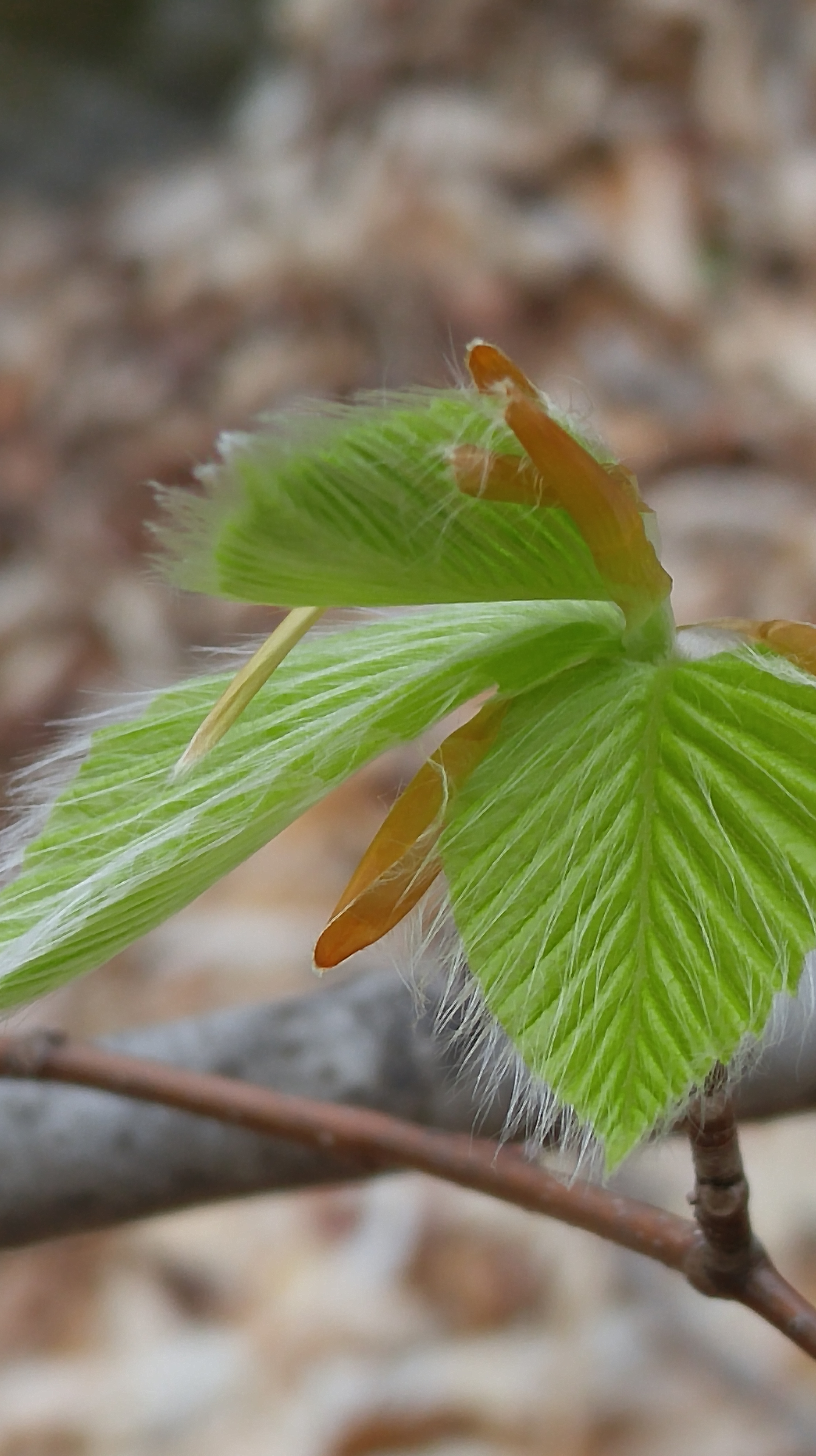
Even hairer, beech leaves.

s-beech 7

All winter long, bud scales enclosed leaves that are now slowly emerging.

s-beech 8

They’re absolutely beautiful in their plaited and hairy state.

s-beech 2

What leaves me wondering (ah, a pun), is the fact that these leaves are so hairy. It seems the hairs are intended to keep insects and others at bay.

s-beech 1

And yet, it won’t be long before the insects discover that beech leaves make a good meal and home.

s-ladybug

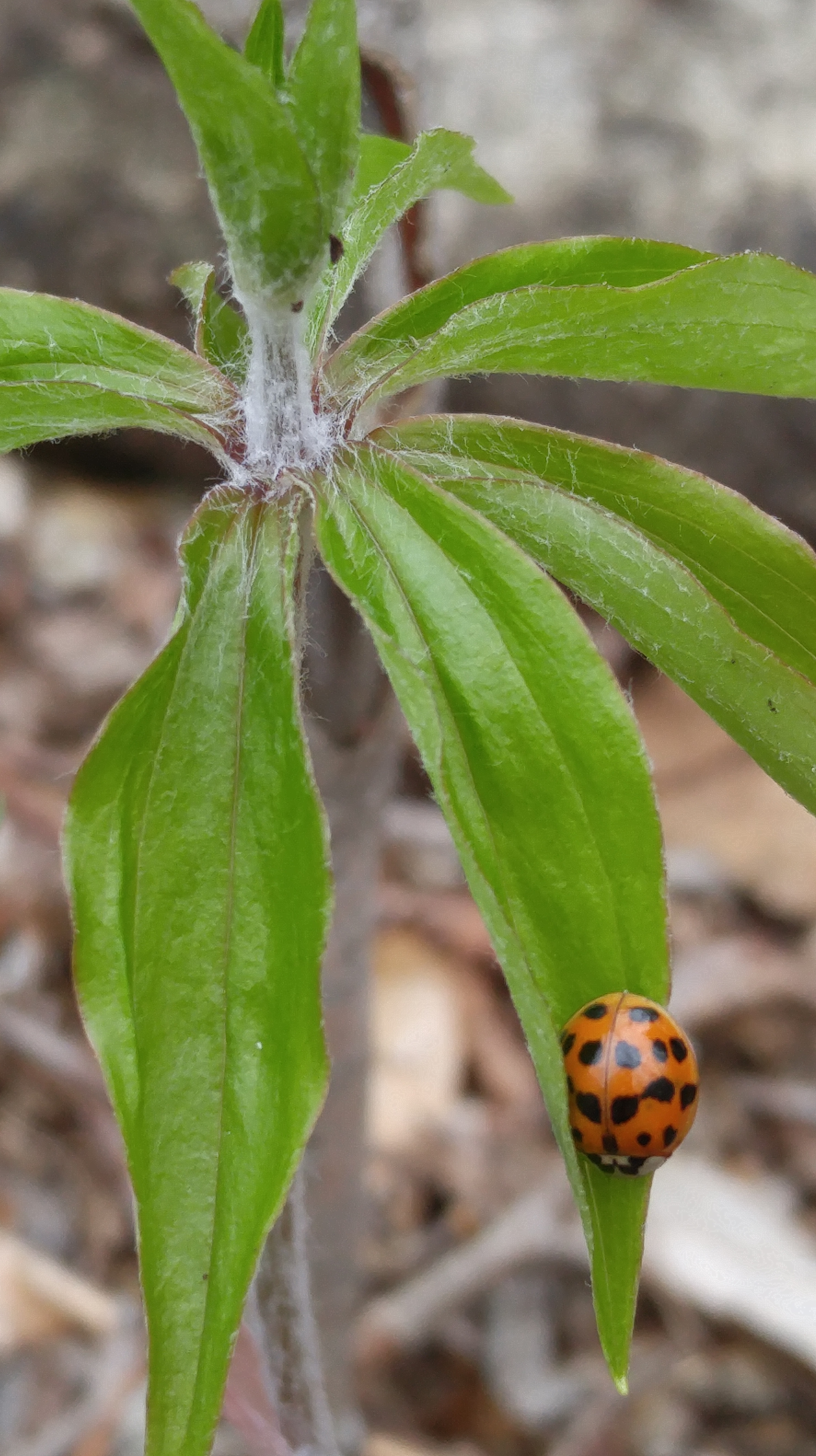
Speaking of insects, we found a ladybug presumably feeding on aphids–already. So why do ladybugs sport  bright orange or red color and distinctive spots? To make them unappealing to predators. They can secrete a foul-tasting fluid from their leg joints–the coloring is therefore intended to shout out,  “I taste awful.”

s-Mayfly 1

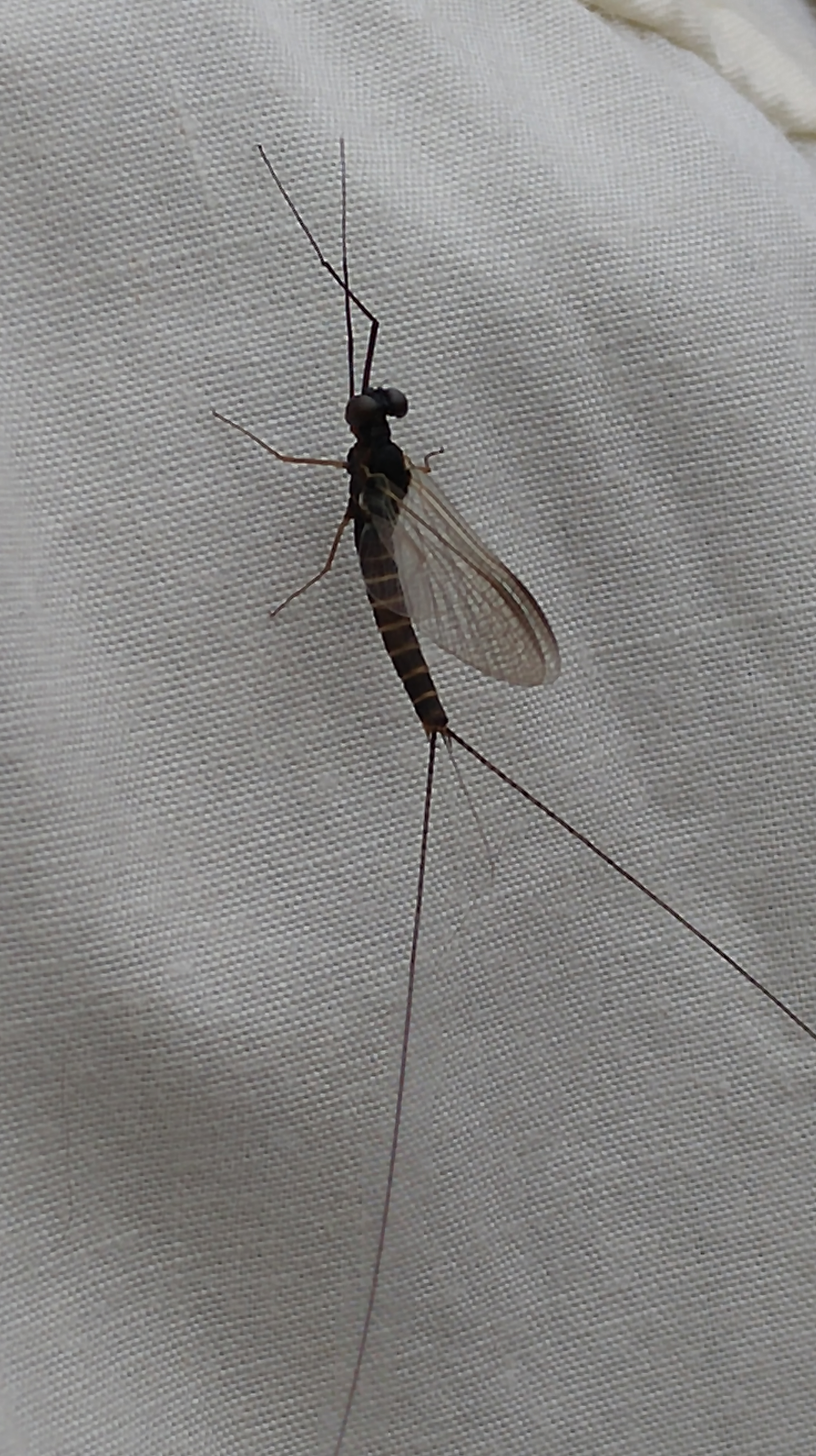
And Jinny Mae sported her own insect–a Mayfly, known to be more fleeting than spring, landed on her jacket. Oh, and did I mention the black flies? They swarmed our faces, but we practiced mind over matter.

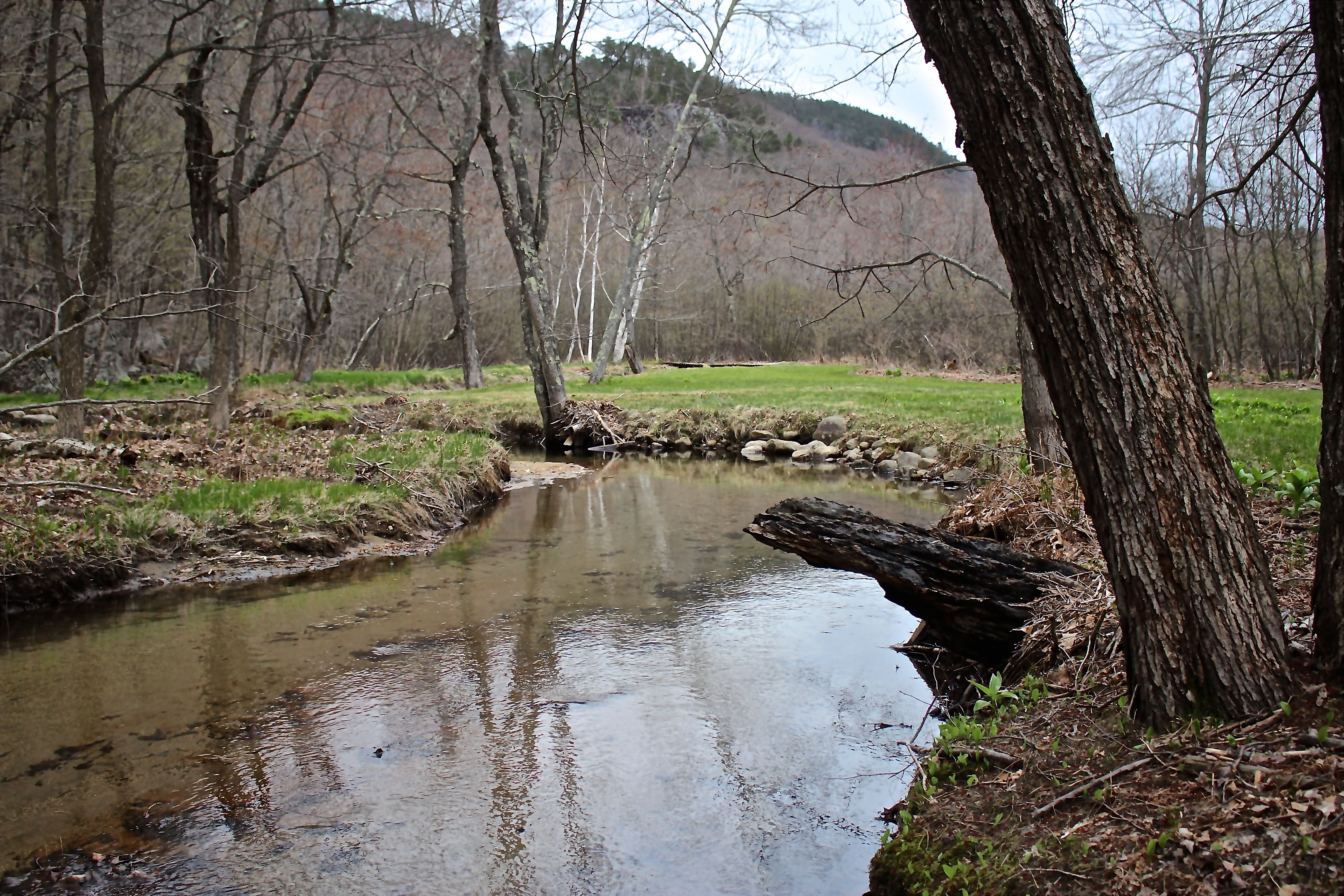
s-brook

We were in one of the most beautiful places on Earth,

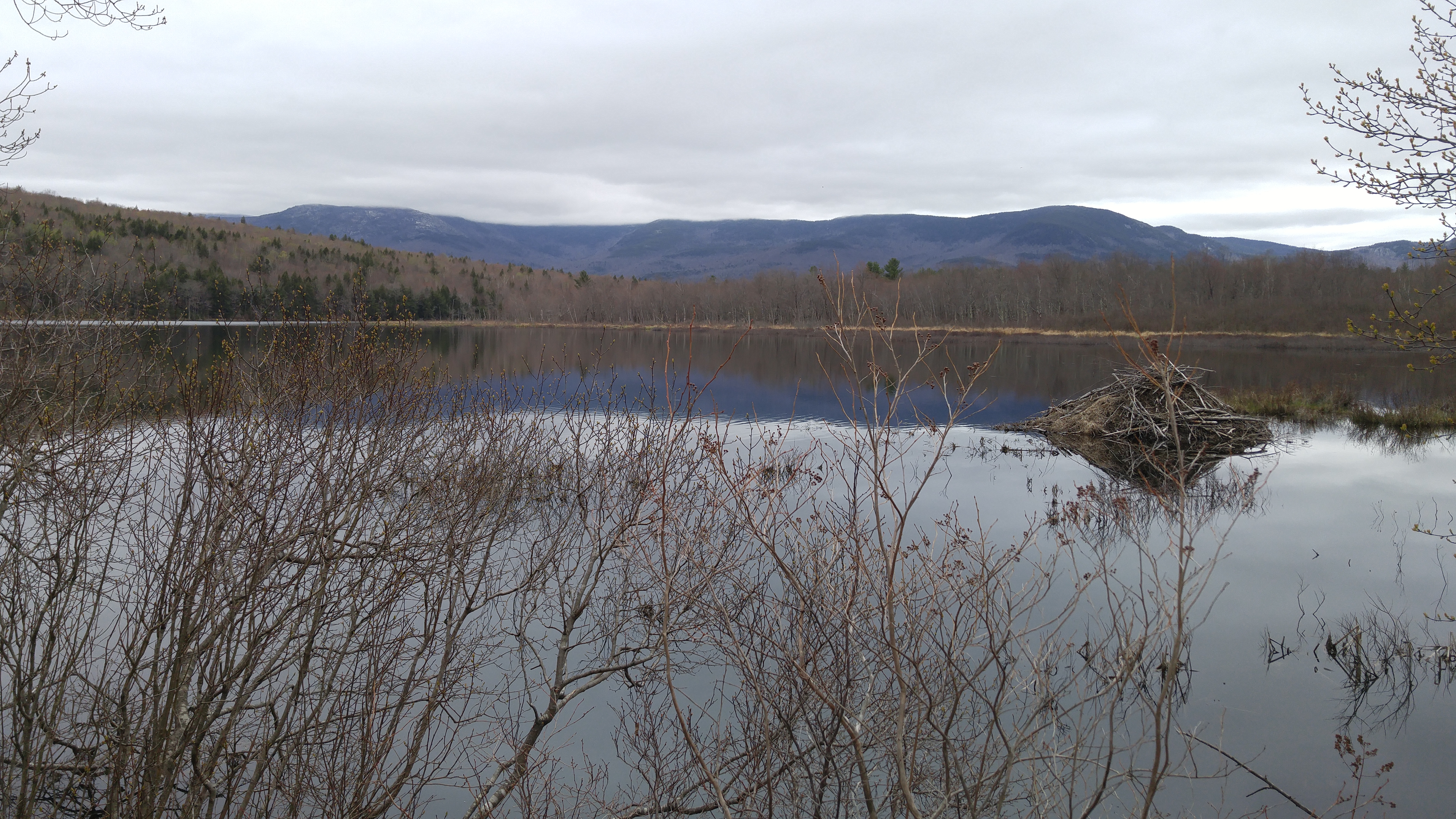
s-shell1

as evidenced by brook,  pond and mountains beyond.

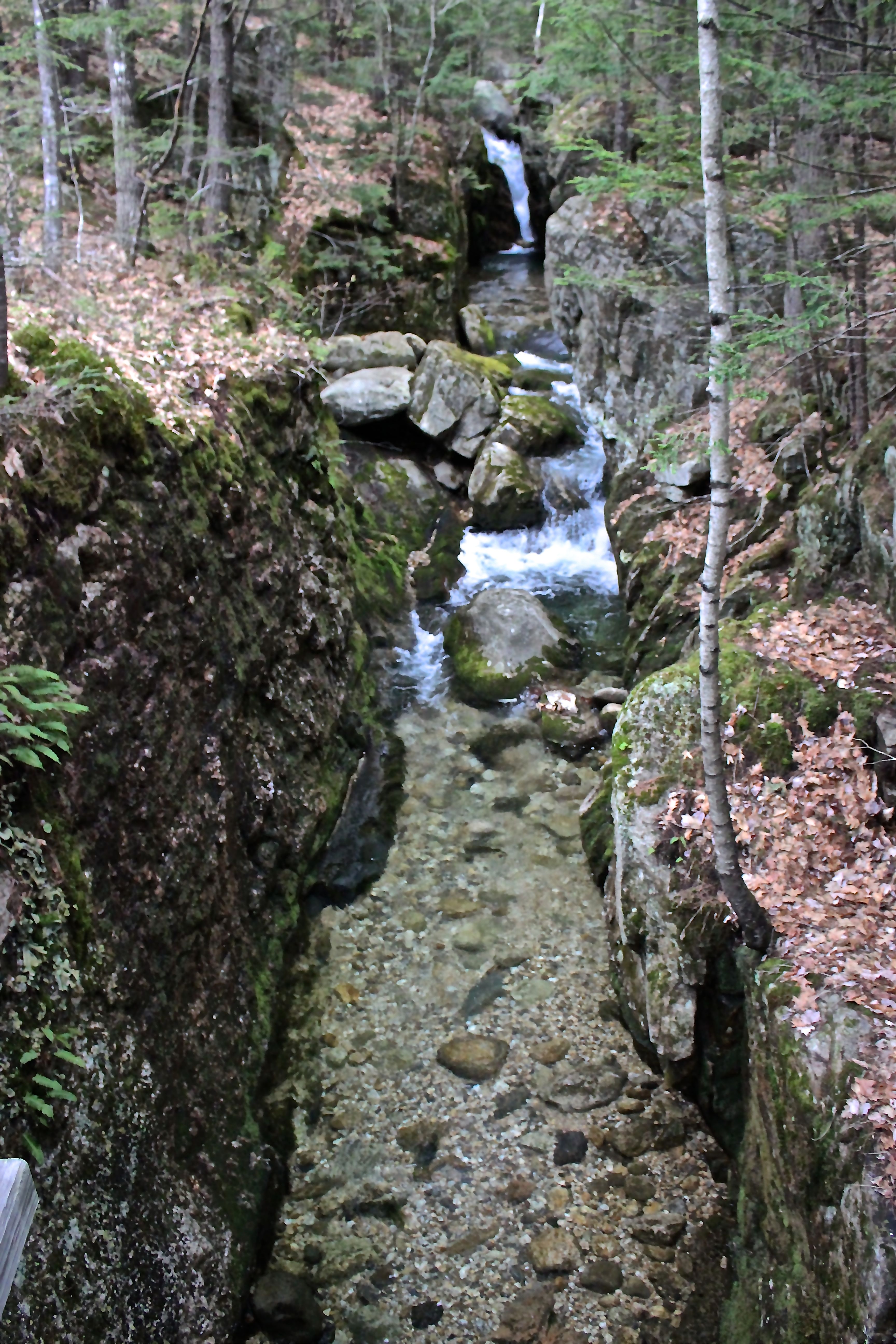
s-gorge 4

And then there was the gorge.

As we watched the water rush through, we gave thanks for a day spent moving in slo-mo to take in all that this fleeting season has to offer in its spring ephemerals.