Queen of the Butterflies

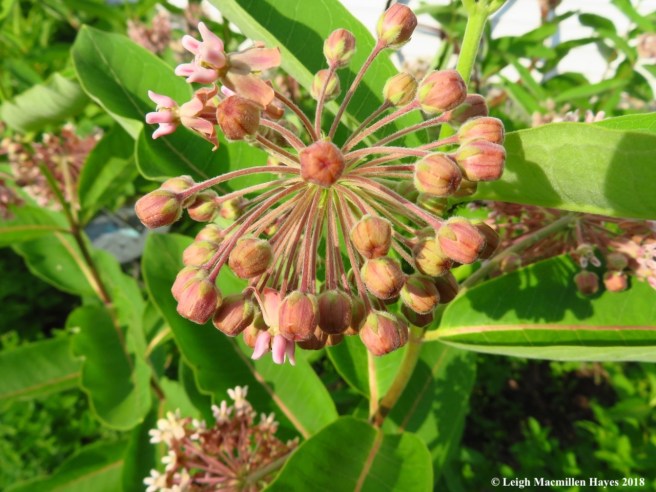
At the beginning of July, the Common Milkweed that I’m allowing to grow more abundantly in my herb garden began to blossom, its hypnotic scent filling the air with an almost honey-like fragrance.
m1a-milkweed flowers

Being close to the Fourth of July in its blooming, the milkweed’s formation reminded me of the fireworks that filled the sky over and over again. I only wish those had been as silent as the milkweed.
m2-ants and honeybees

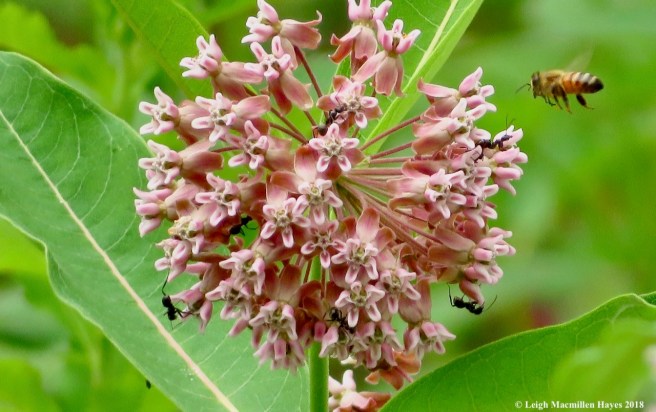
Then again, it was hardly silent or unnoticed for the bees and ants sought the sugary nectar stored in the shell-shaped structures.
m4-honeybee

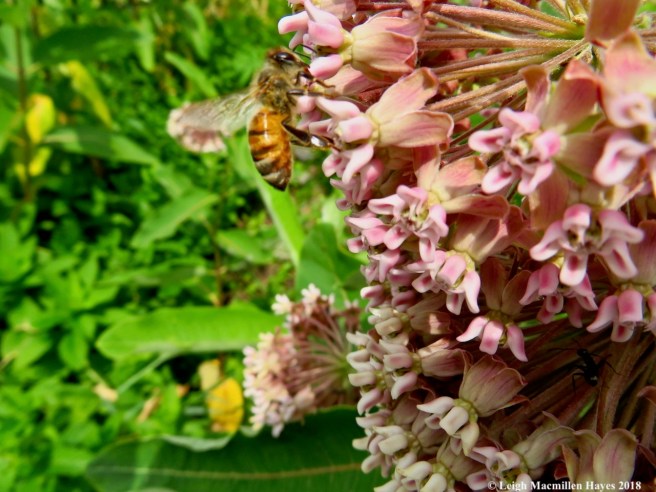
So few honeybees have I seen all summer, but as long as the milkweed was in bloom, I noticed four of them probing for the goodness hidden within.
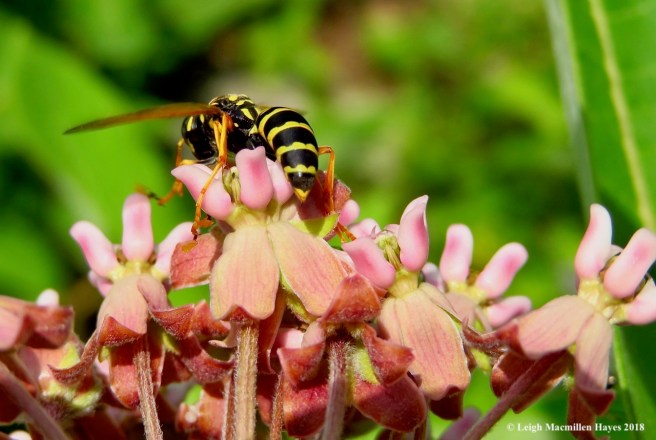
m8-wasp

Visitors were from every ilk, some with striped bodies,
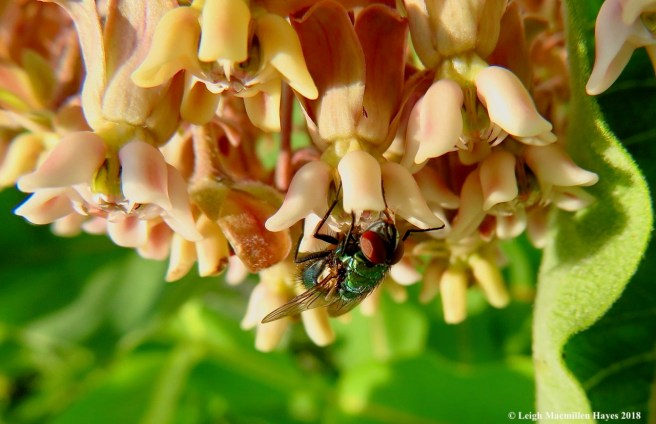
m9-tachinid fly

and others covered in spiky hairs.

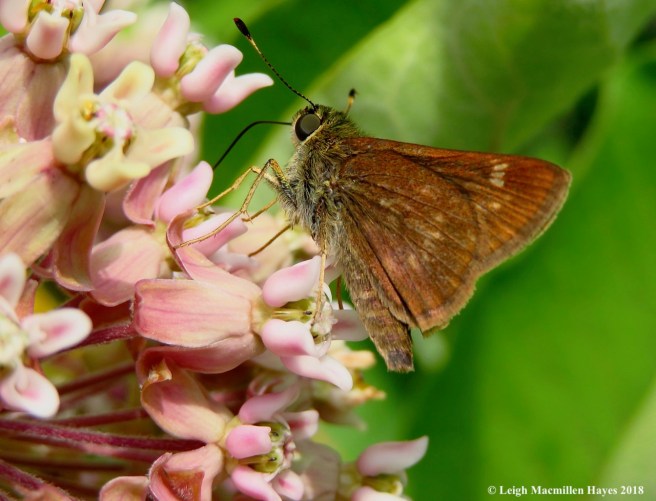
m7-skipper

The pollinators included skippers . . .
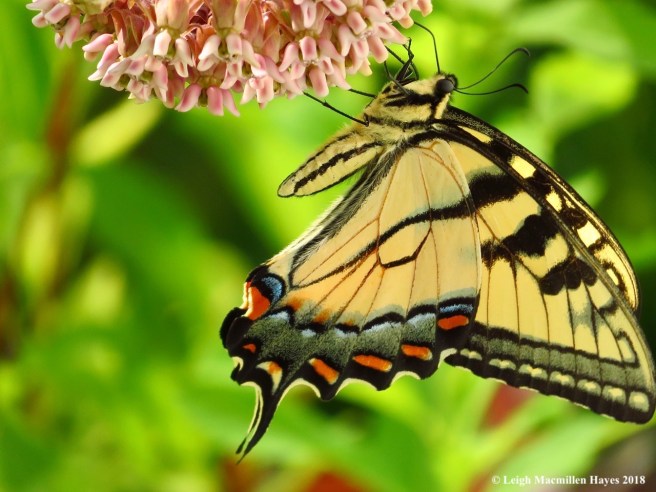
m1-swallowtail butterfly

and swallowtails.

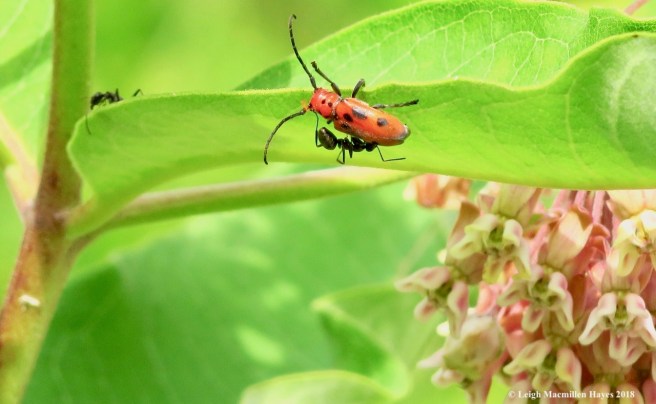
m5-red milkweed beetle and ant

Upon the plants’ leaves were Red Milkweed Beetles, this one being checked out by an ant. The bright red coloration announced the beetle’s distastefulness for he’s one of the few insects that can feed on the leaves of milkweed, store the plant’s defense chemicals and assure that he won’t be consumed.

m6-ant climbs over red milkweed beetle

The ant apparently discovered the beetle wasn’t worth dealing with and so climbed over it and moved on. Or maybe the beetle had accidentally rubbed against some nectar and the ant was attracted to it–for all of a second.

m10-honeybee

The milkweed flowers in my garden began to die back, but this week I discovered another place where they grow abundantly. And at least one honeybee recognized the same.
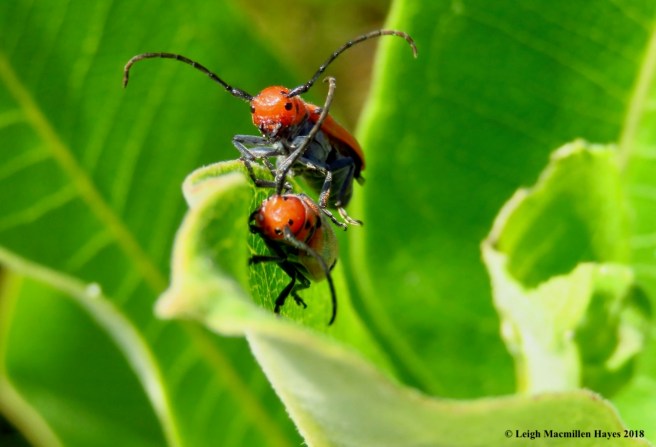
m17-red milkweed beetles

As did more long-horned Red Milkweed Beetles, and now rather than finding only one, I’ve noticed there often appear to be two working in unison to ensure a continuation of their species.
m15-monarch on dogbane


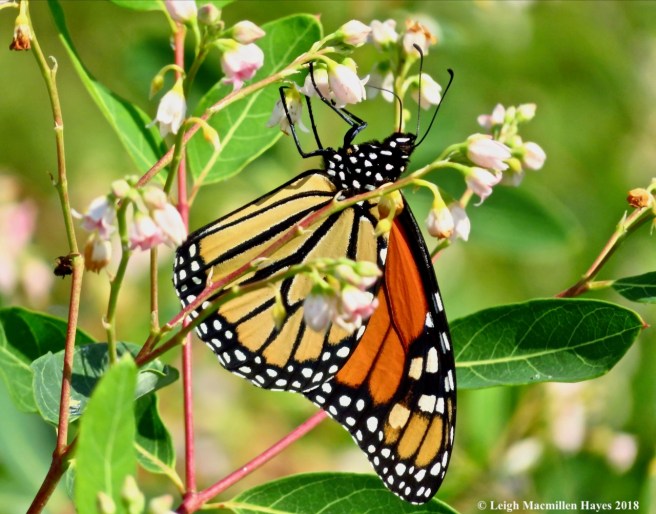
And much to my delight, I spotted sipping nectar from the Spreading Dogbane that grows beside the milkweed, a Monarch Butterfly.

m14-monarchs fluttering

And it wasn’t just one Monarch. I can’t say how many I saw in total, but I watched them for a while as they floated over the meadow flowers in their flap, flap . . .

m21-monarch and shadow

glide routine, sometimes chasing each other or their own shadow before alighting.

m13-monarch puddling

Like the Clouded Sulphurs I noticed the other day, the Monarchs too sought nutrients from the gravel road, their mouthparts, aka proboscises, extended in search of minerals.

m22-probiscus curled

When not in use, the tubular and flexible straw that serves as a mouth curled inward, retracted as it would be during flight.

m16-viceroy butterfly

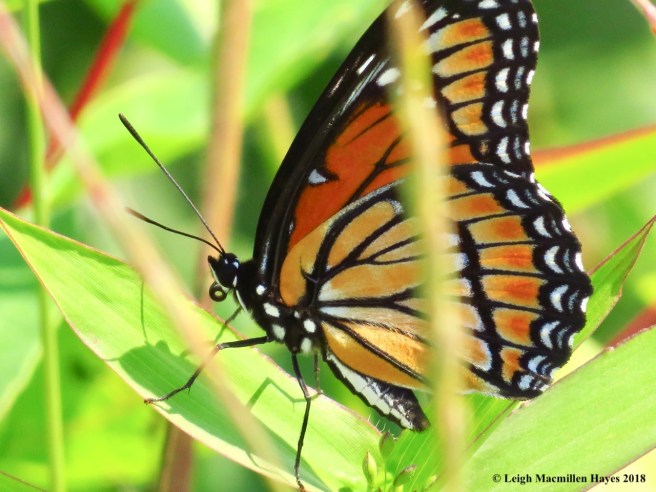
Also in the area, because it too likes the nectar of the milkweeds and other flowers offering a sweet meal, was the Monarch mimic, a Viceroy. The differences between the two: Viceroys have a wing span of about 2-3 inches, while Monarchs’ span is 3-4. And Viceroys have a black horizontal stripe that crosses near the bottom of its back wings. Well, actually, it looks more diagonal. And really, who came first? The Monarch or the Viceroy?

m19-silvery checkerspot butterfly

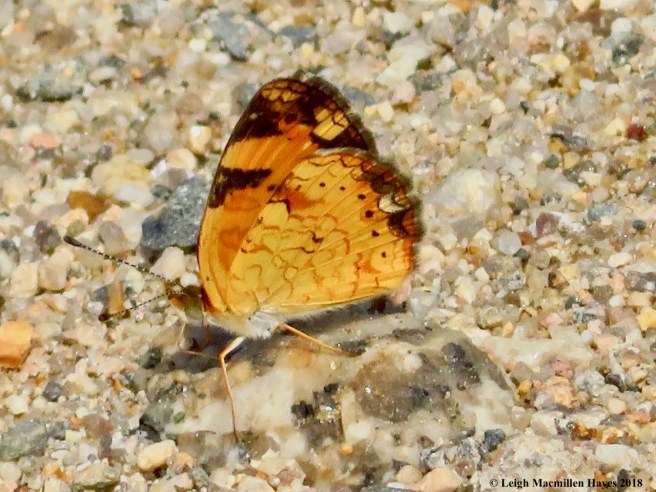
Also present because it too feeds on native milkweeds, a few small Silvery Checkerspot Butterflies, their wing span less than two inches.
m20-silvery checkerspot butterfly

And they also sought those road nutrients, so suffice it to say, its a butterfly habit . . . at least in this neck of the woods.

m24-milweed tussock moth caterpillars

I had to eventually leave the road and meadow behind and run home to grab something, which meant an opportunity to check on my milkweed plants. Those in the kitchen garden hosted some Red Milkweed Beetles, but that was the most interesting thing I saw, besides the fact that the dried flowers were transforming into warty green seedpods. But by the front door, where more milkweed grows, I noticed first a pile of caterpillar scat on a leaf. Getting down on my knees to look underneath, I spotted a mature Milkweed Tussock Moth and its larvae feeding.

m24-tiny monarch caterpillar

And then my heart was still, for I found a tiny Monarch caterpillar.

m25-adult monarch caterpillar

And near it, one that had been very hungry and seemed to have stopped eating. I can’t wait to check again and see if it’s still there–only in a transformed stage.
m26-two monarch caterpillars

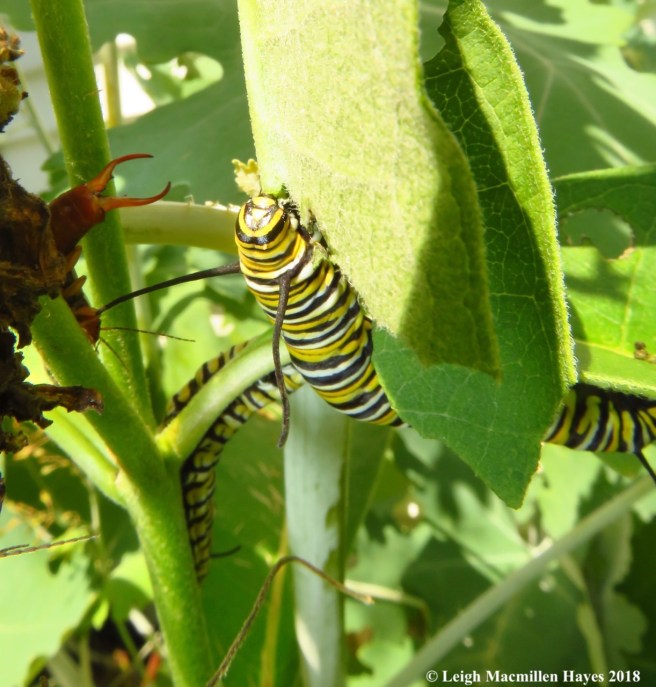
As I continued to look, there were more, these two clearly munching away.
m29-munching leaves like an ear of corn

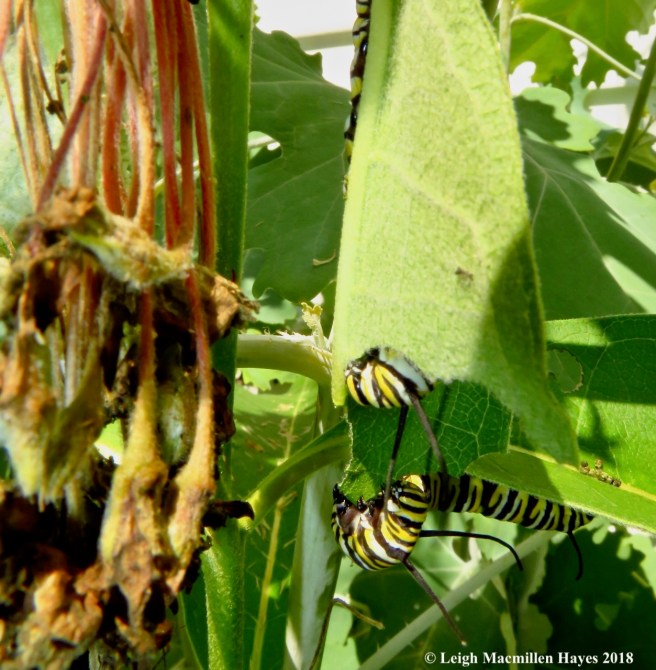
They reminded me of humans eating corn on the cob for it seemed they moved back and forth as they chomped on the plant’s leaves. Monarchs, and other butterflies that feed on the green leaves in their caterpillar form, are like the Red Milkweed Beetle in that they can tolerate the chemicals and it makes them not tasty to predators.

m27-medium-sized monarch caterpillar

Everywhere I looked, I began to see Monarch caterpillars in various stages of growth.
m30-probiscus curlced

My hope is that I’ll discover chrysalises as I continue to search and eventually our yard and flower gardens and the field beyond will be full of the queen of the butterflies:  Monarchs.


Capturing Wonder

I’m envious of friends who own acres and acres of land with layers of trail loops that provide a diversity of habitats for exploration. But then I remember that beyond our six acres there’s a vast forest that I’m welcome (well, I think I’m welcome–it’s not posted and in Maine that generally means I may trespass) to tramp through. For the most part, that’s my late fall to early spring playground. But we also live within walking distance of a large woodland park where I spend an equal amount of time. Of course, I tend to get greedy about it and think of it as my own. That’s how it felt this morning when I wandered there after church without encountering another soul. I went in search of wonder. And I found it both there and back at home.

rice 2

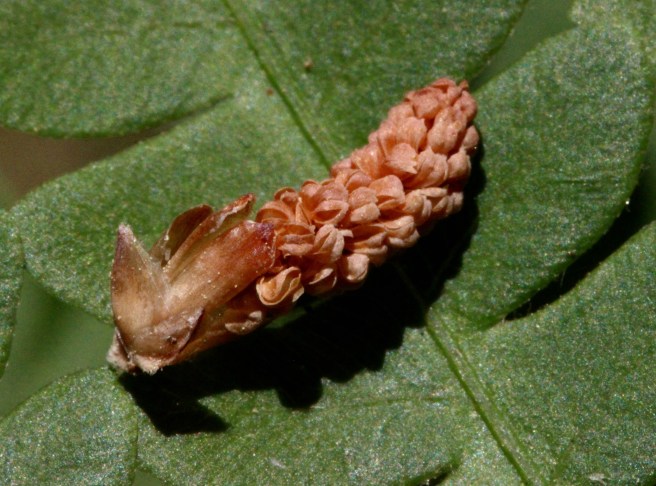
Everywhere I walked, or so it seemed, rice krispies lay scattered at my feet.

rice krispie

They are the newly fallen male pollen cones of our white pines. And yes, they are the size of rice krispies. Once mature, their sacs split open, sending pollen wafting through the air where some of it actually finds the female seed cones. And much of it covers our vehicles, driveways, lawn furniture and window sashes, like a coating of yellow snow. When their mission is completed, they turn brown and fall to the ground. Eventually, they’ll disintegrate, adding to the richness of the forest floor. Worth a wonder.

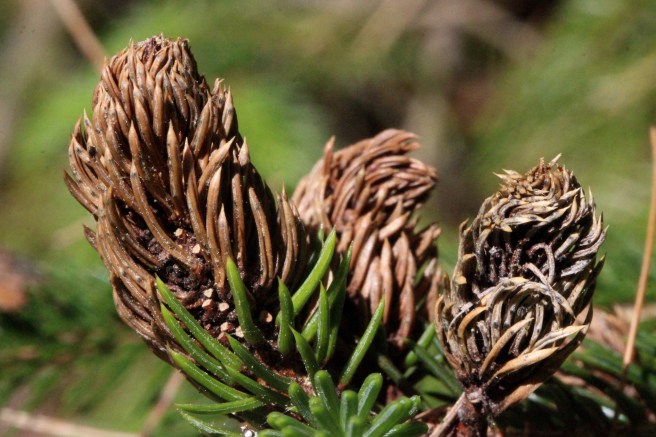
spruce gall

Further along, I encountered the rather cone-like shape that adorns the tips of spruce trees. These brown, prickly galls were caused by the Eastern spruce gall adelgid, which is closely related to aphids. Will the tree die? Perhaps. Certainly, it’s disfigured.

Eggs are laid in early spring and emergent nymphs begin feeding at the base of tender new shoots. The gall forms as they feed and completely encloses them like a warm, protective covering–keeping predators and diseases at bay. The galls I noticed are older as they are dried out. But typically, the nymph emerges from the gall in August, molts and flies to another branch to start the cycle again. The adelgids are parthenogenetic, meaning only females occur, reproducing without males. They typically produce two generations each year, with the latter overwintering as partly grown females. Worth a wonder.

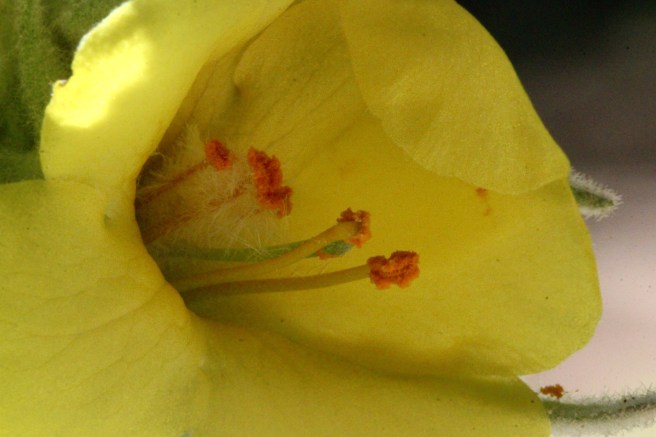
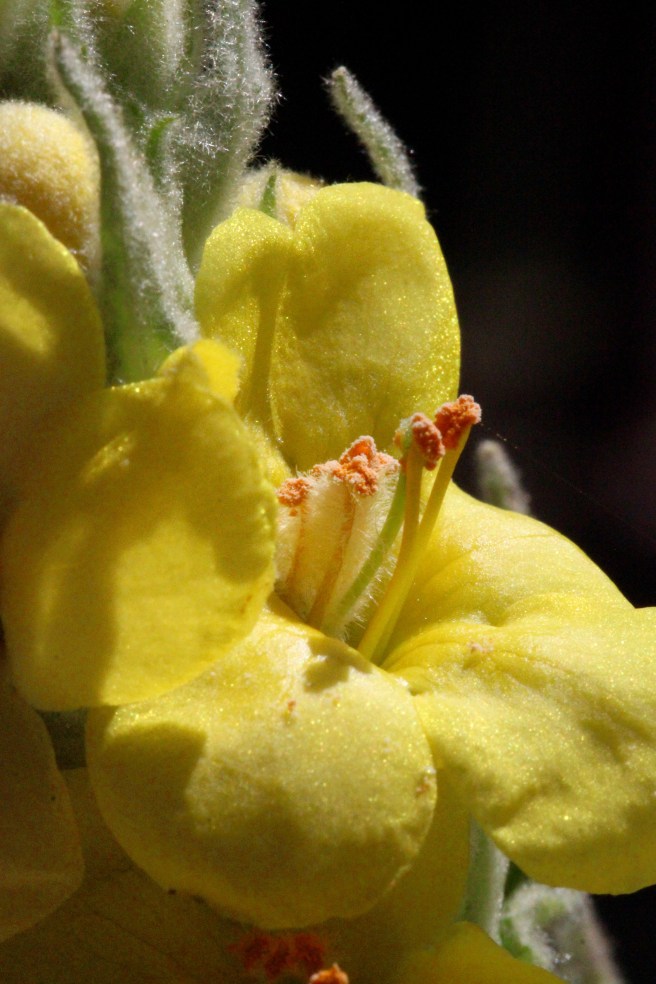
mullein 4

And then I came to a dry, sunny spot where common mullein stands tall, this one almost as tall as me. According to lore dating back to Roman times, it is said that the stems were dipped in tallow to make torches–either for witches to use or to be used against them. Thus, some know it as hag taper. Others refer to it as candlewick plant because the dried leaves and stems were used to make lamp wicks.

mullein 2

It seems to me that it’s hardly common at all given its uses and structure. Over the course of the summer, five-petaled yellow flowers will bloom randomly in a dense,  terminal cluster.

Though it’s also called flannel leaf and bunny’s ear for its wooly leaves, they aren’t the only hairy spots. Check out those three upper stamens, short and extremely woolly. Apparently, they contain a sap that lures insects to the plant. The longer and smoother two lower stamens serve a different purpose. They produce the pollen that fertilizes the flower. Worth a wonder.

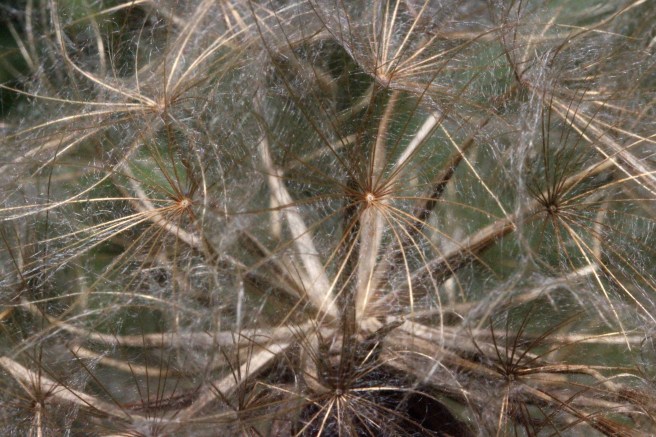
Goat's beard seedhead

As I headed out of the park via a different trail than I’d entered, I was stopped in my tracks by a plant that stood about three feet above ground. I think this was my favorite find of the day. I have so many favorites that it’s hard to choose one. But just maybe this is the one.

Meet meadow salsify, aka meadow goatsbeard. The latter name refers somehow to the fluffy seed head. Though there were not goats nearby for me to examine the similarity, these were beside a donkey pasture. (And donkeys are known to protect goats from predators.) The feathery down that will become parachutes during dispersal is finer than the finest spider web. And perhaps more beautiful. Worth a wonder.

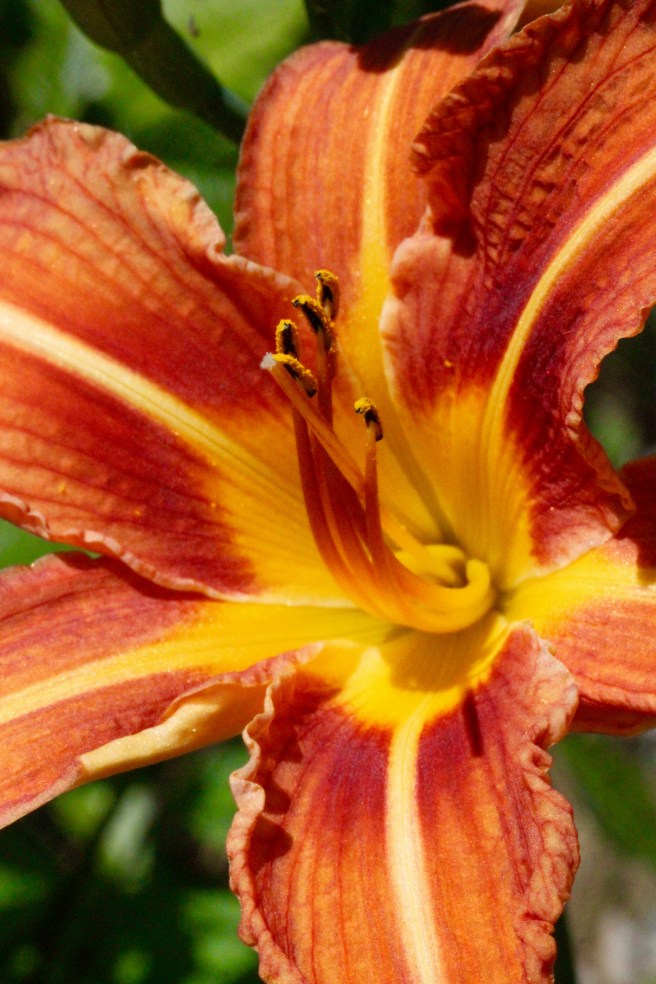
Day lily--perfect.jpg

On my way home, I stopped to admire my neighbor’s day lilies–the first blossom of the season for this perfect flower.

milk 0

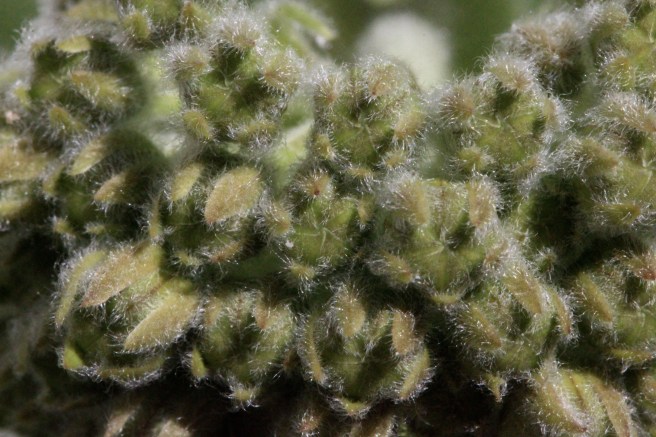
Back at home, it was the fuzzy coating of another summer flower that grabbed my attention.

milk 4

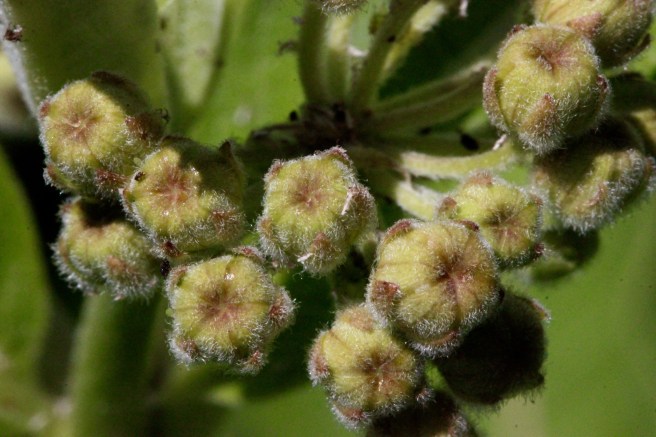
The flowerhead offered a show featuring a variety of presentations.

Milkweed 1

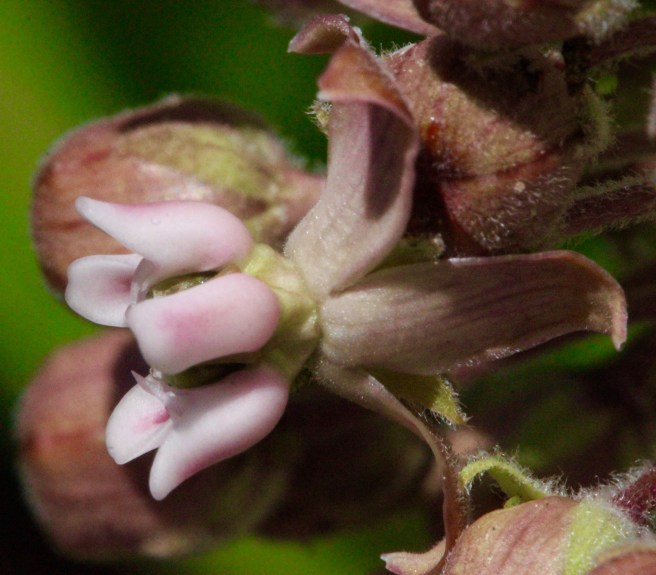
Ever so slowly, the pinkish flowers of common milkweed are beginning to open.

milkweed 2

In my mind, it’s an example of another hardly common common plant.

milkweed 5

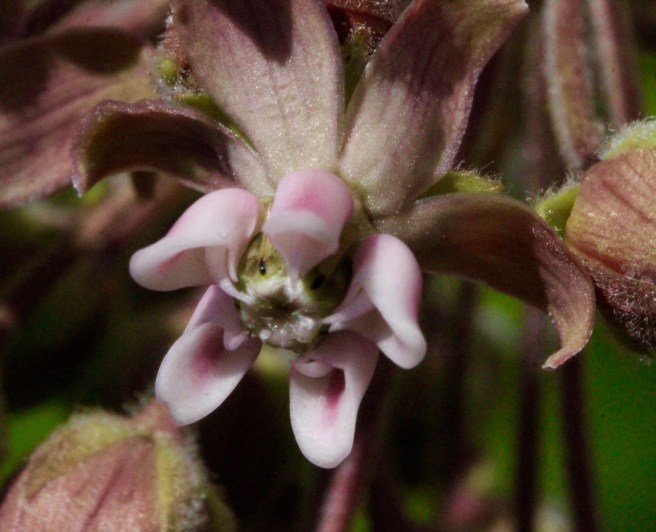
The flowers are complex and invite a closer look. Overall, they droop in a globe-like umbel. What you see here is five upright hoods, each with a pointed, incurved horn.  Surrounded by those hoods are the fused column of stamens and heads of the styles–where the magic happens.

Since there is no scent yet, the insects don’t seem to have discovered it, but they will. It will nourish many with its nectar and pollen and provide shelter and hiding spots for others. I promise to keep an eye on it and all its visitors because it also is –worth a wonder.

I’m thankful that each day offers new opportunities to capture wonder.