Zodiac One: Maiden Voyage

The message arrived the day before: Leigh, I am ready for the morning. The truck is loaded. I suggest wellies unless you don’t mind wet feet. I plan on being there for 6:00am. All you need is your camera.

And so I set the alarm for 4:30am, spent an hour reading and sipping coffee in the peace of a quiet kitchen, and then headed out the door with my camera on my shoulder.

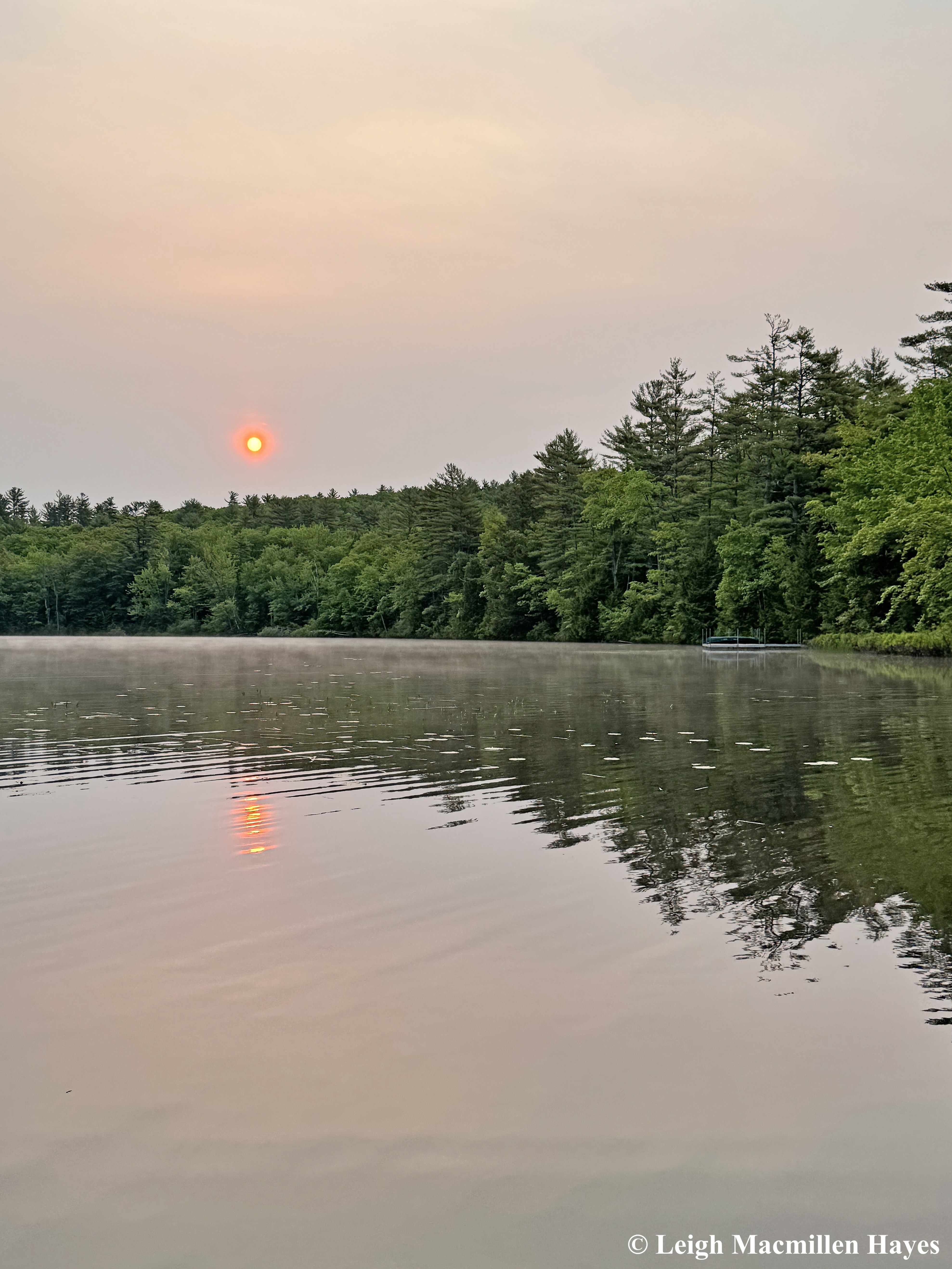
As the sun rose, it became apparent that the smoke from the Canada wildfires was going to cast a haze upon this June day.

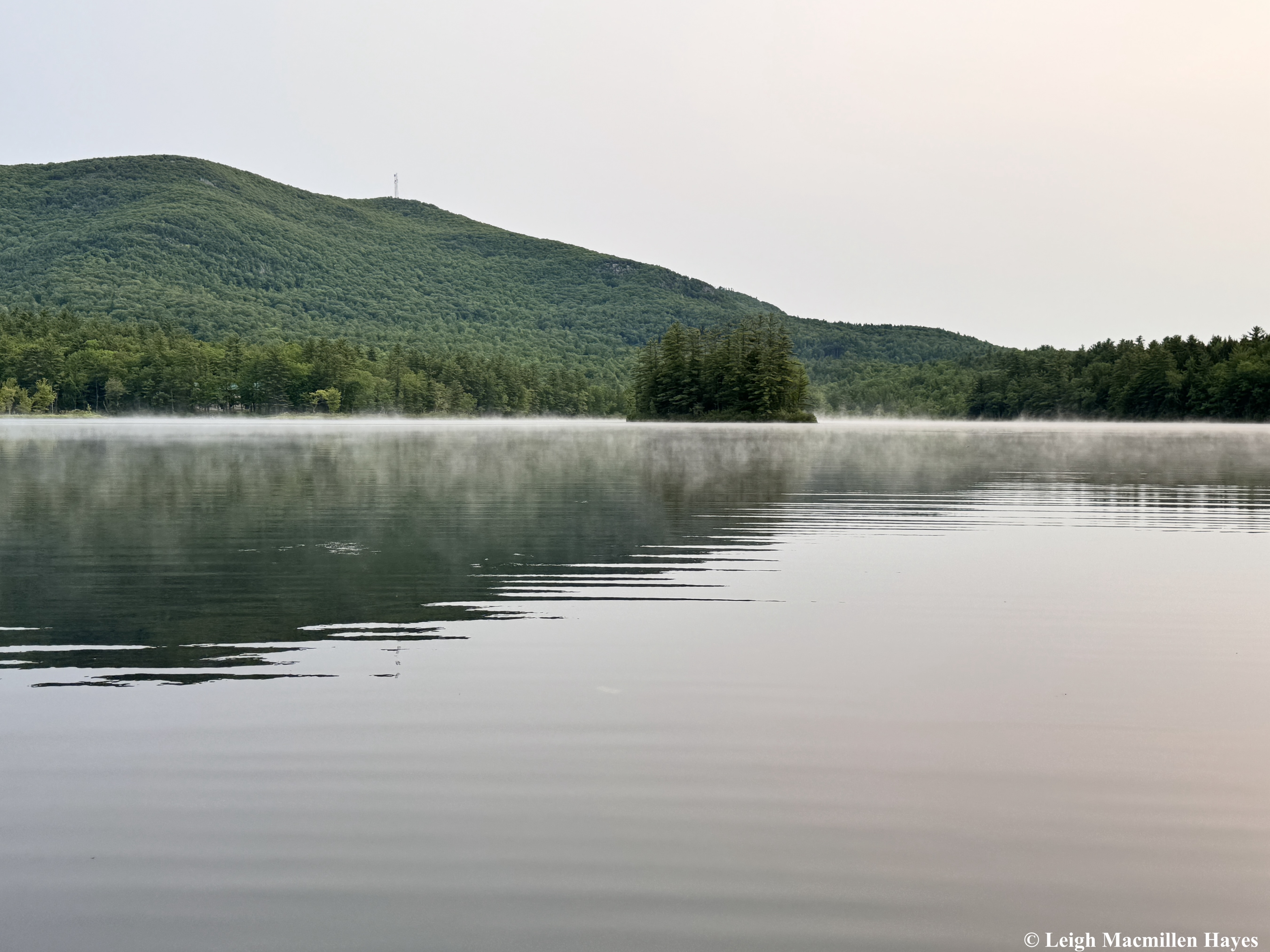
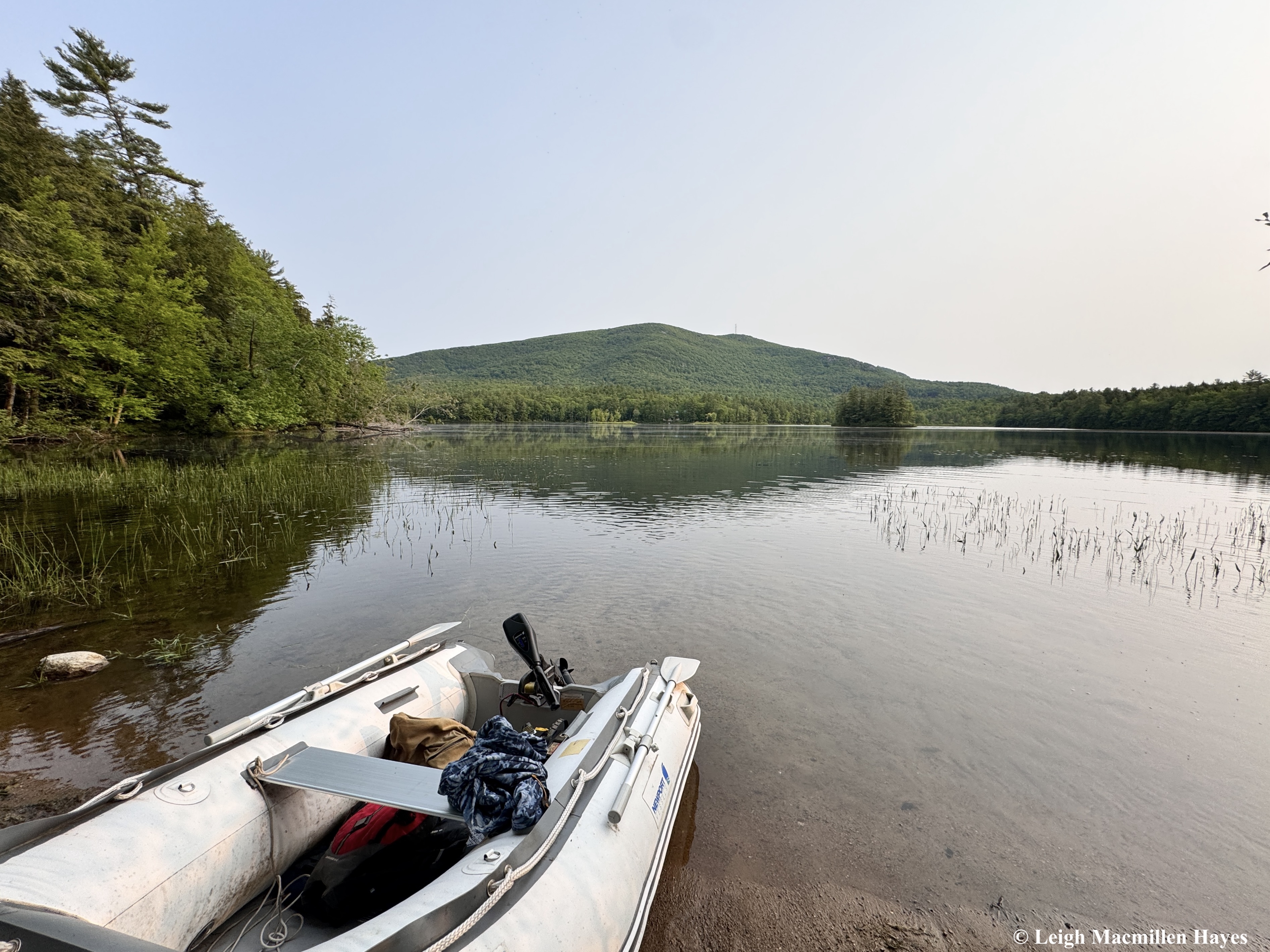
And indeed it did. But, at 6:00 in the morning, with the temperature at 48˚, lake fog, or in this case, pond fog, danced across the surface of the water like fairies performing a swirling ballet. Actually, the fog occurs when cool, moist air meets relatively warmer water, causing the water to evaporate and condense, thus creating mist that burns off as soon as the sun rises.

With Pleasant Mountain’s Southwest Peak in the background, I knew my place in the world.

The captain of the boat wondered if I’d ever been on the pond before. I have. Once. This past winter when Laurie LaMountain, of Lake Living magazine, and I spent a day tramping through the snow and across the pond and sometimes getting fake lost, but finally finding our way back to her house seven miles later.

I had not, however, ever seen it in the spring or summer. Well, except from the teepee on the Southwest Ridge of the mountain.

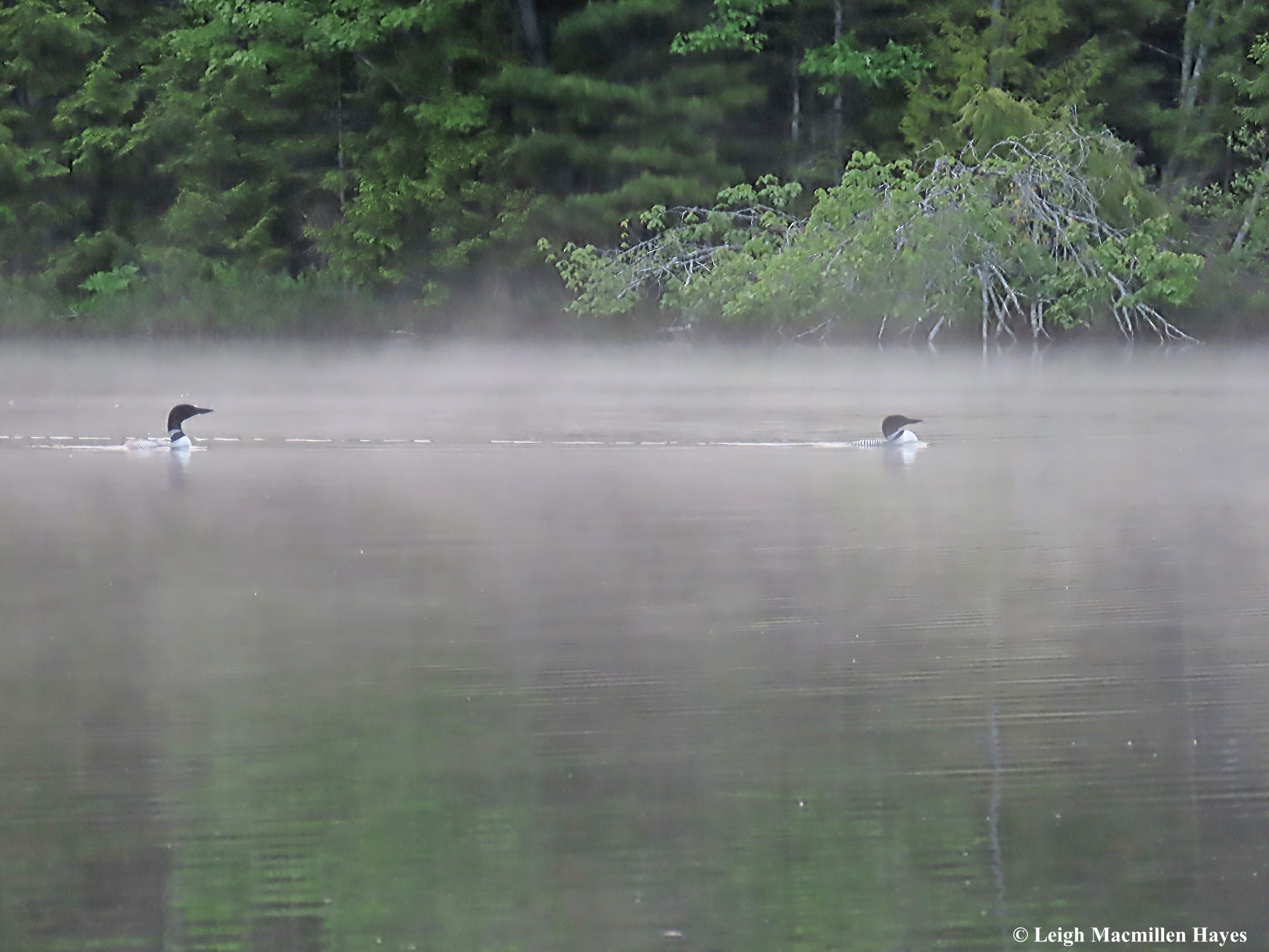
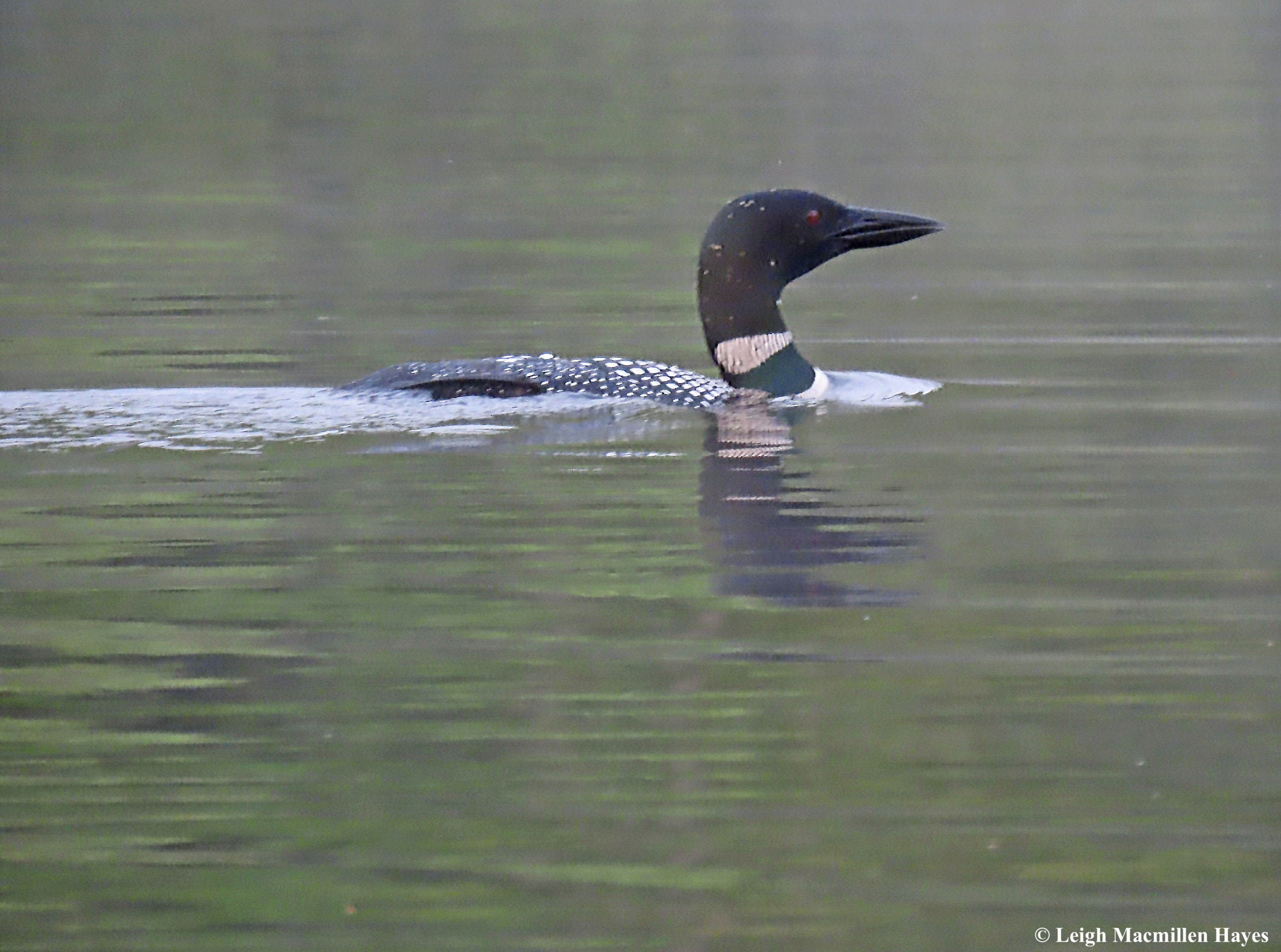
Once upon the water, we first heard, then saw a pair of Common Loons swimming and diving for breakfast. Bass are plentiful in this body of water, and we saw plenty of them as well.

There was a third loon that the other two greeted, but within a half hour it took to the air and flew south.

I found that curious because in the wee hours of the previous morning I heard one fly over our house, announcing its presence with a Loon tune, and wondered if it was a teenager looking for a place to find a mate or at least hang out where the resident pair(s) wouldn’t mind. Maybe this third Loon was doing the same and the others suggested it move on. Or maybe they were its parents and again, they looked forward to be empty nesters for another week or so.

After spying the Loons, our tour took us near Pickerel Weeds and suddenly our eyes clued in on the beginning of other life forms.

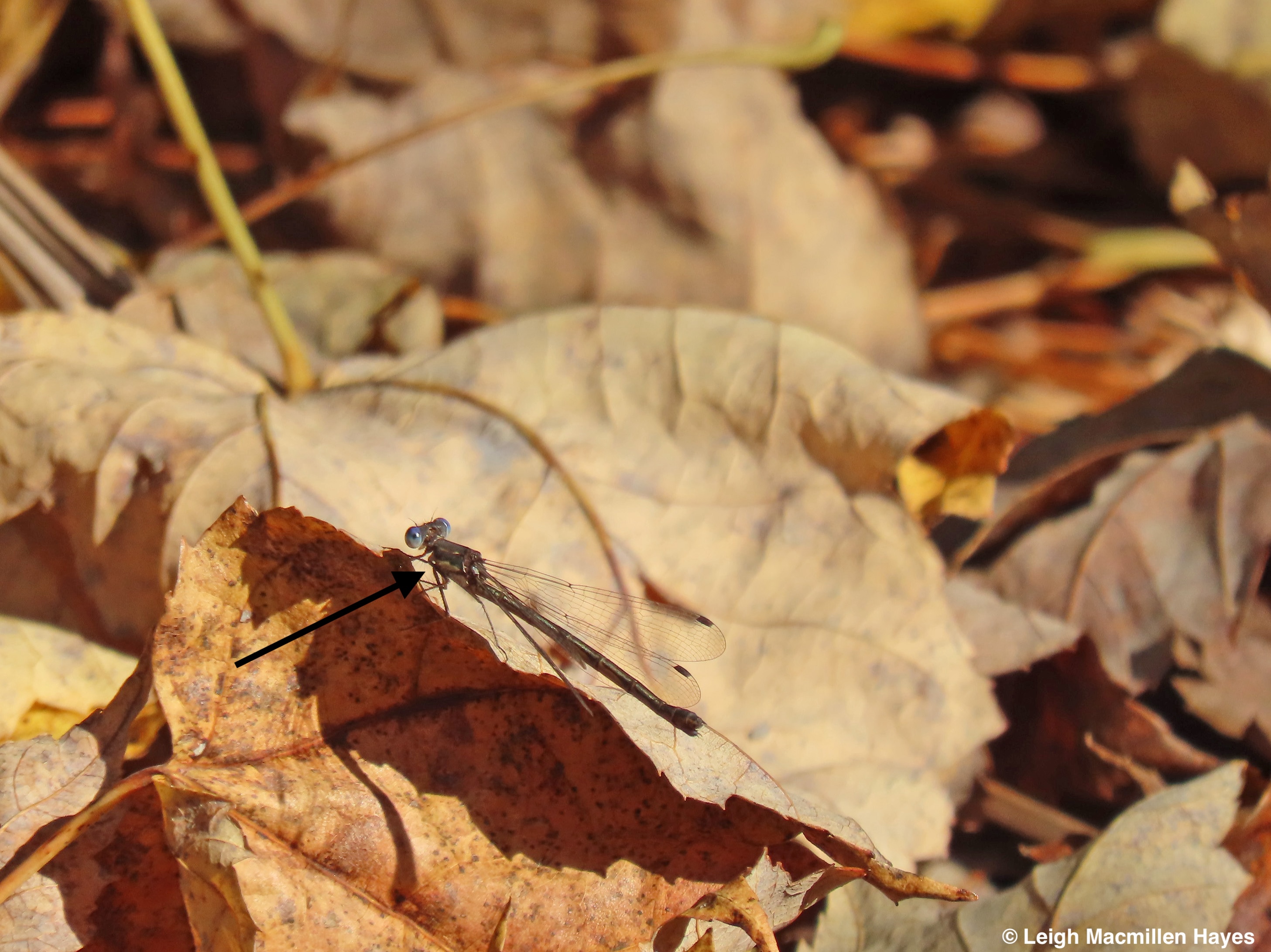
By now it was 6:20am and obvious that the Damselfly Naiads had already chosen this day to climb up the stalks maybe as early as 4:00am to begin their new life as terrestrial fliers. I’ve seen this occur later in the morning, but did not expect that they emerged so early when the air was still a bit chilly.

I probably should not have been surprised, for a few weeks ago I saw them emerging in another place on an equally chilly day.

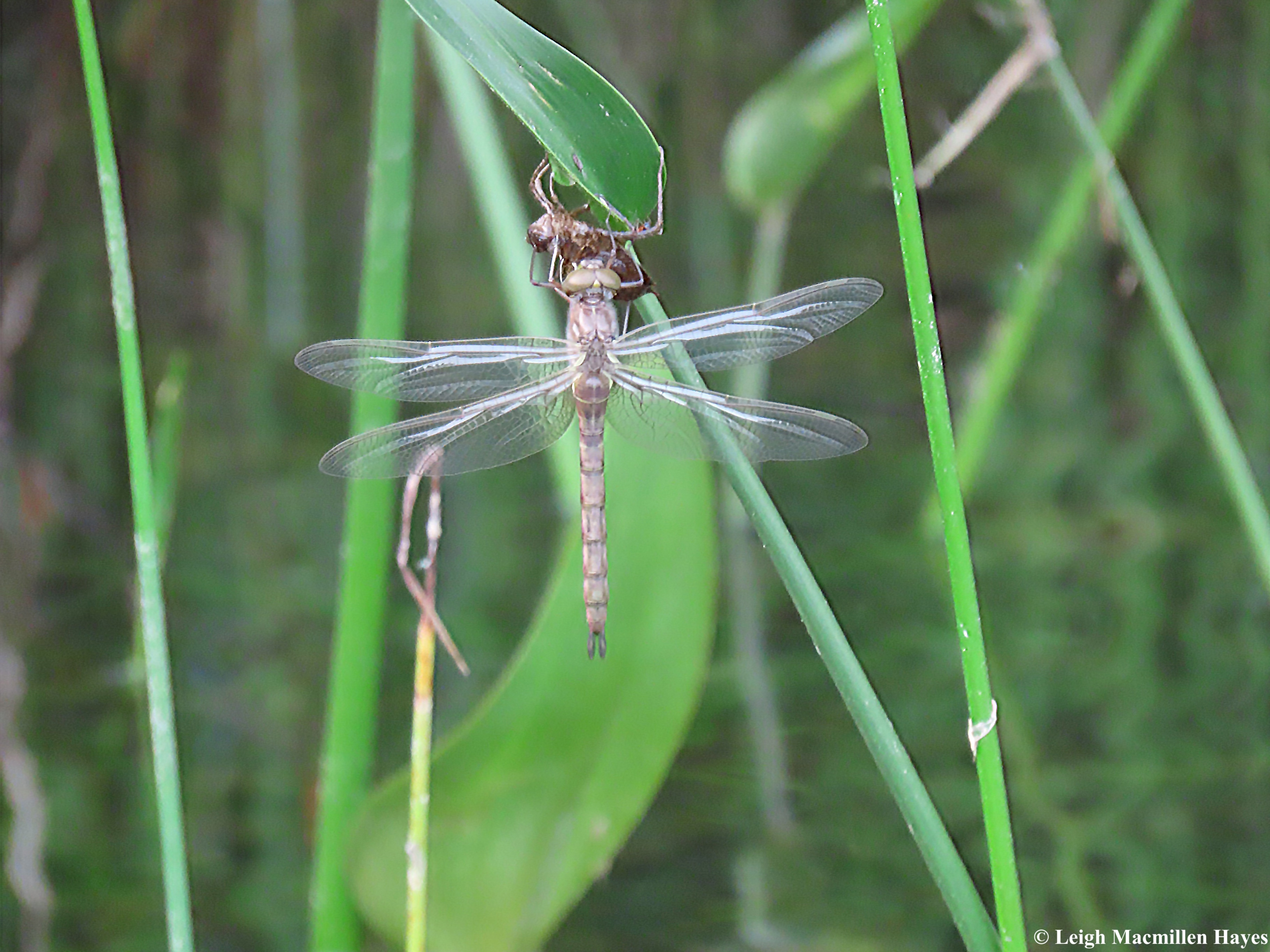
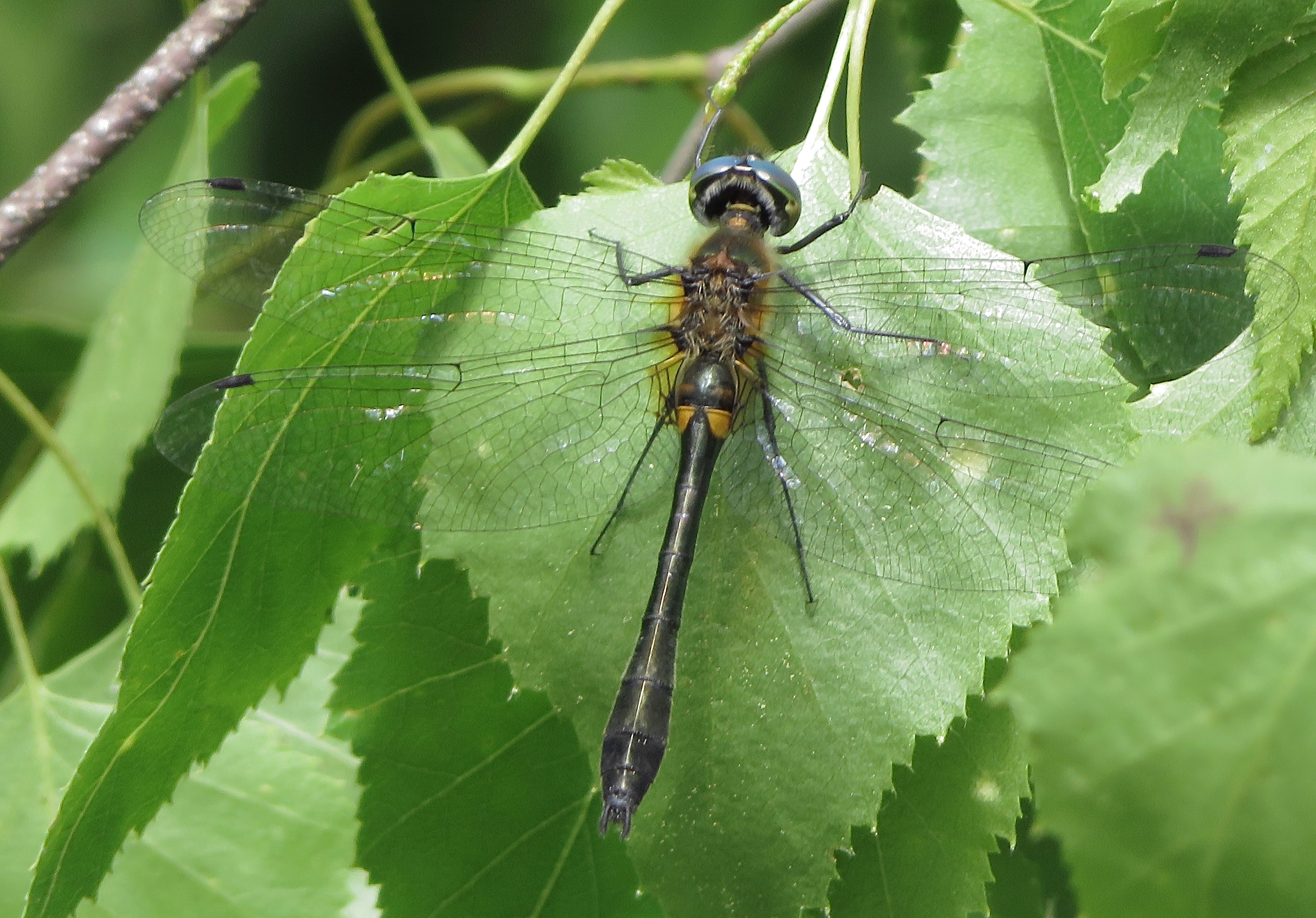
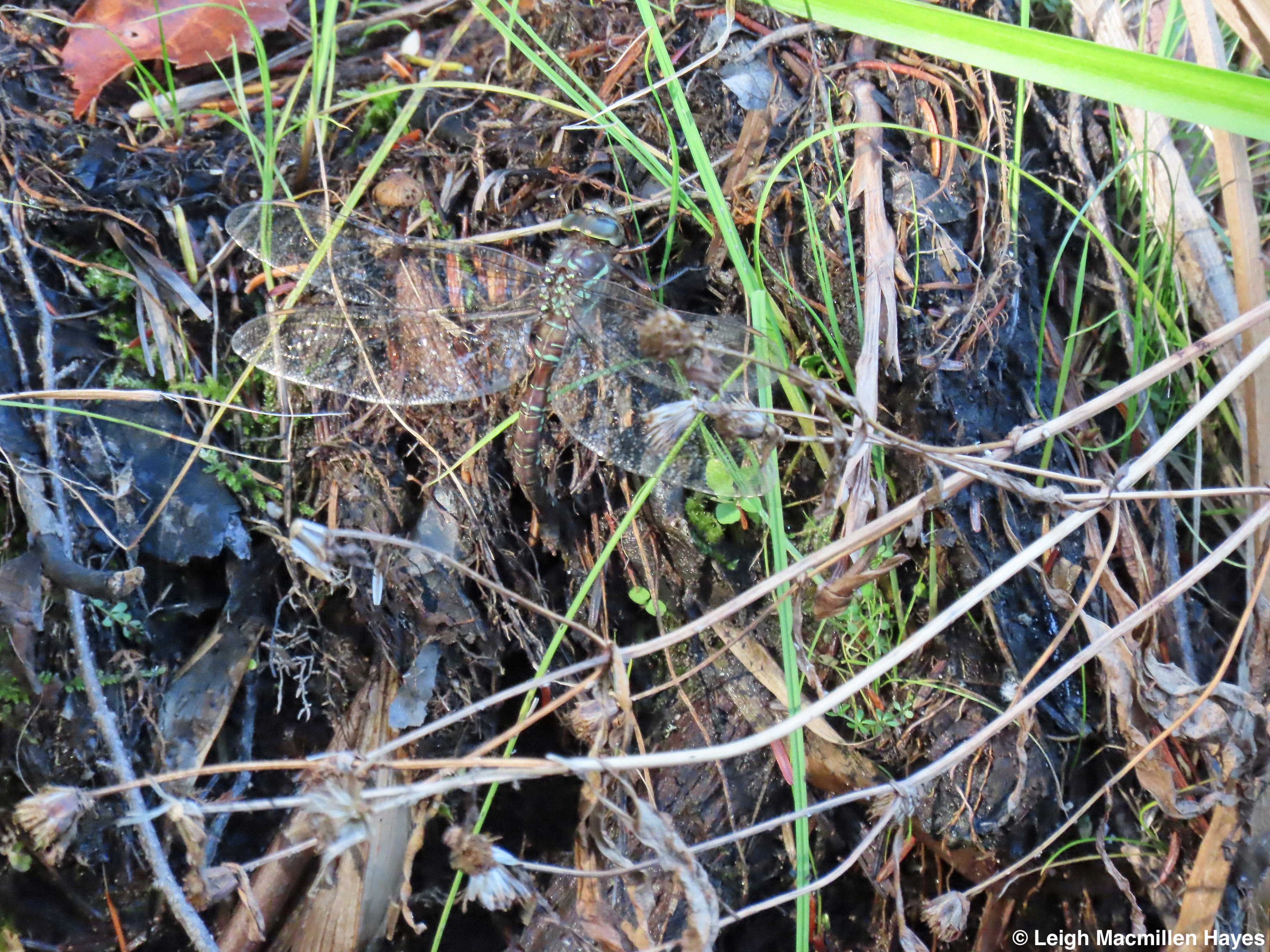
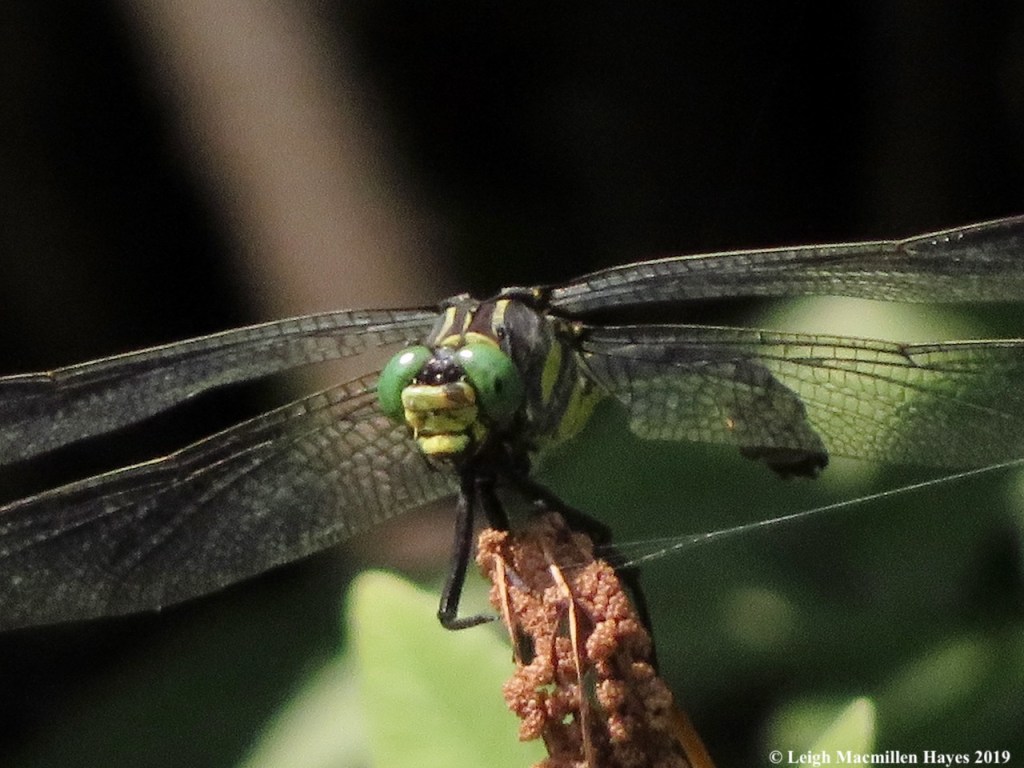
Of course, where Damselflies are, so often are there Dragonflies, and this Darner spread its wings in our presence, so shiny and cloudy as was to be expected until they dry out.

With its wings spread, thorax and abdominal colors would begin to transform providing a clue to its name, but I suspected it was a Common Green Darner. We didn’t have time to watch that color change and so we silently moved on, for such is the ability with an electric motor.

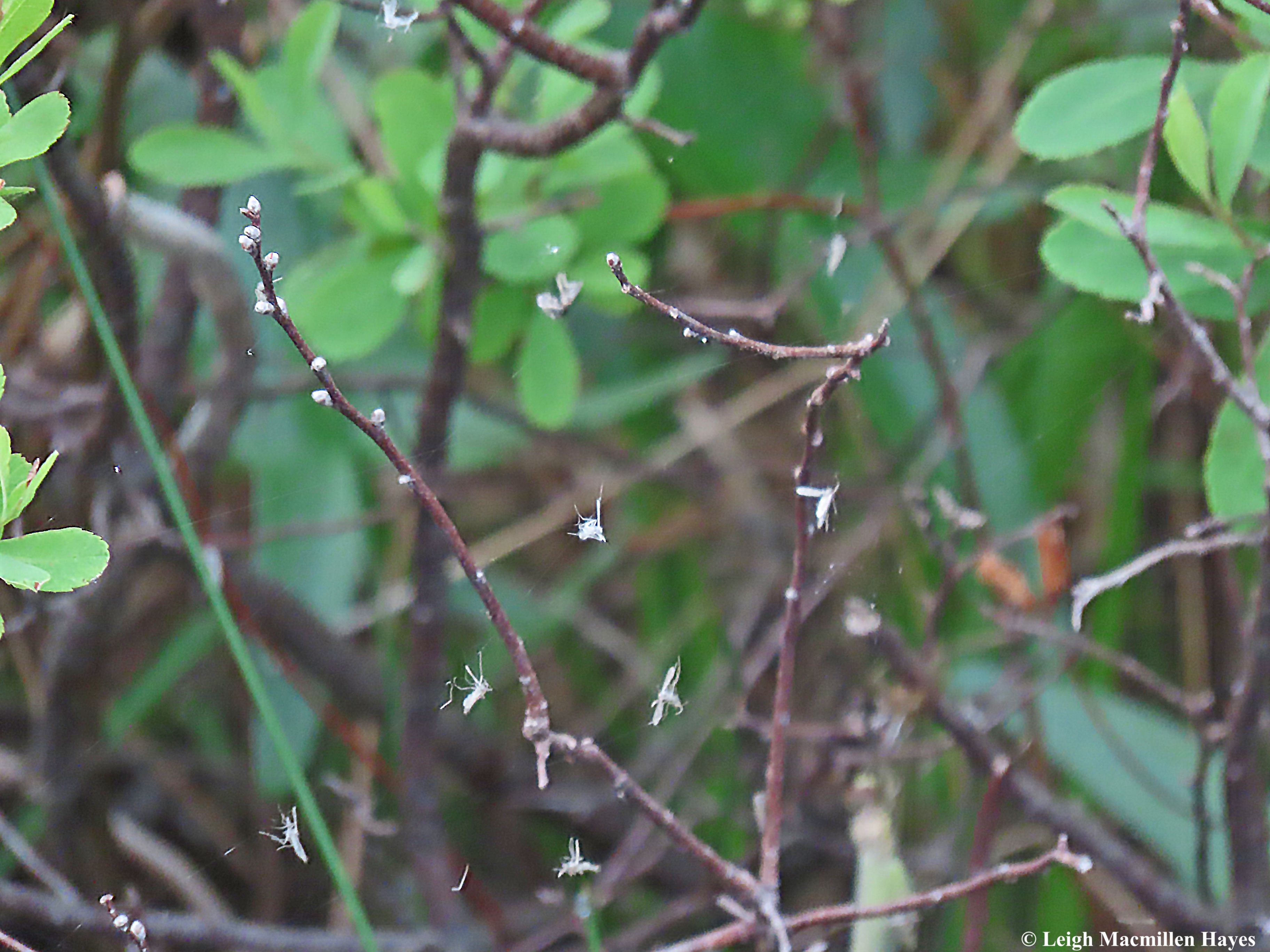
Among the vegetation behind the Pickerel Weeds there were many orb spider webs and among the webs, looking as if they, too, had been performing a dance, were little Whiteflies taking their final bows.

Posed above and ready to fly off at any moment were Kingbirds with their handsome tuxedo appearance, looking like they were ready to attend a formal dinner.

And perhaps they were.

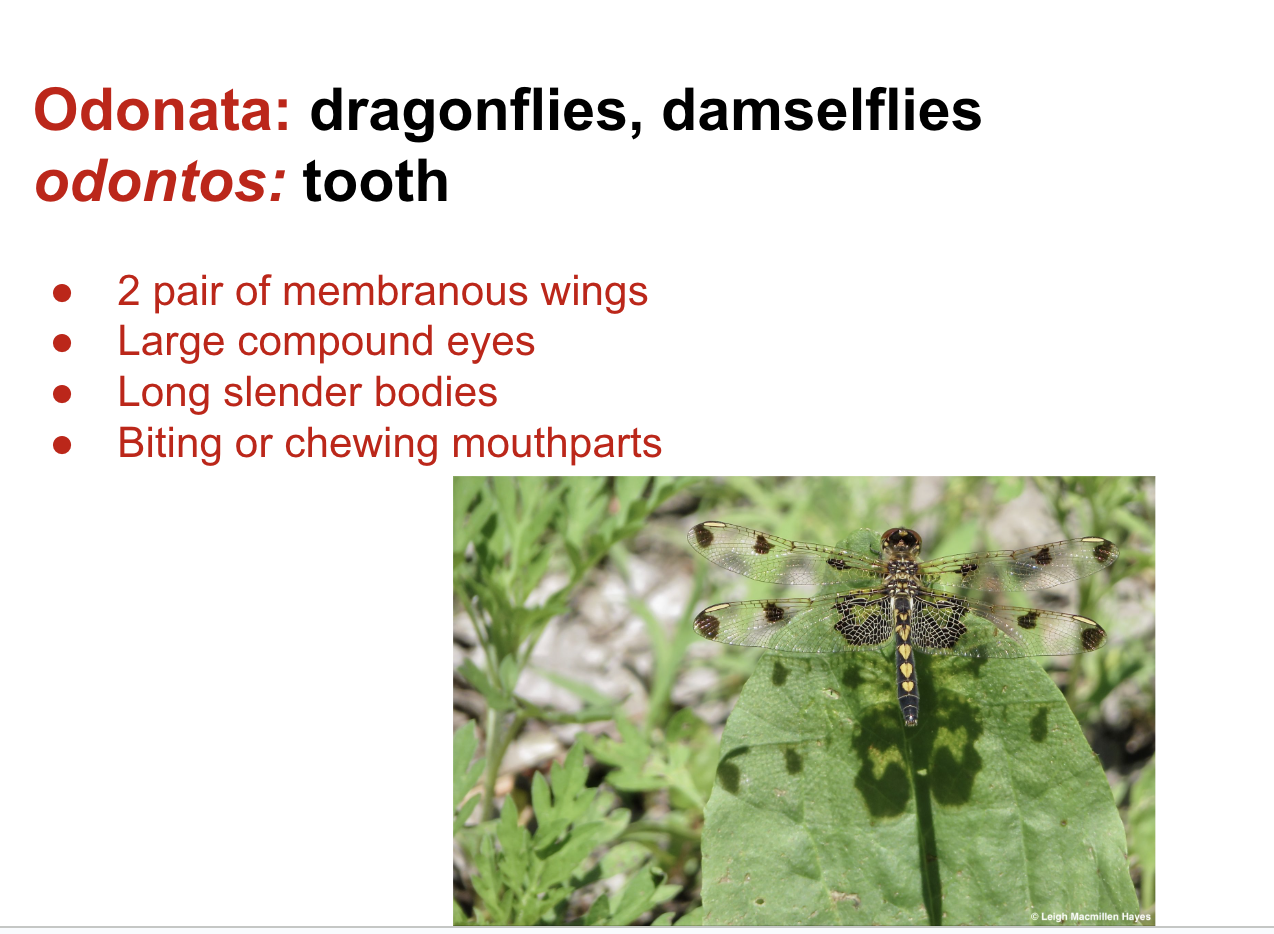
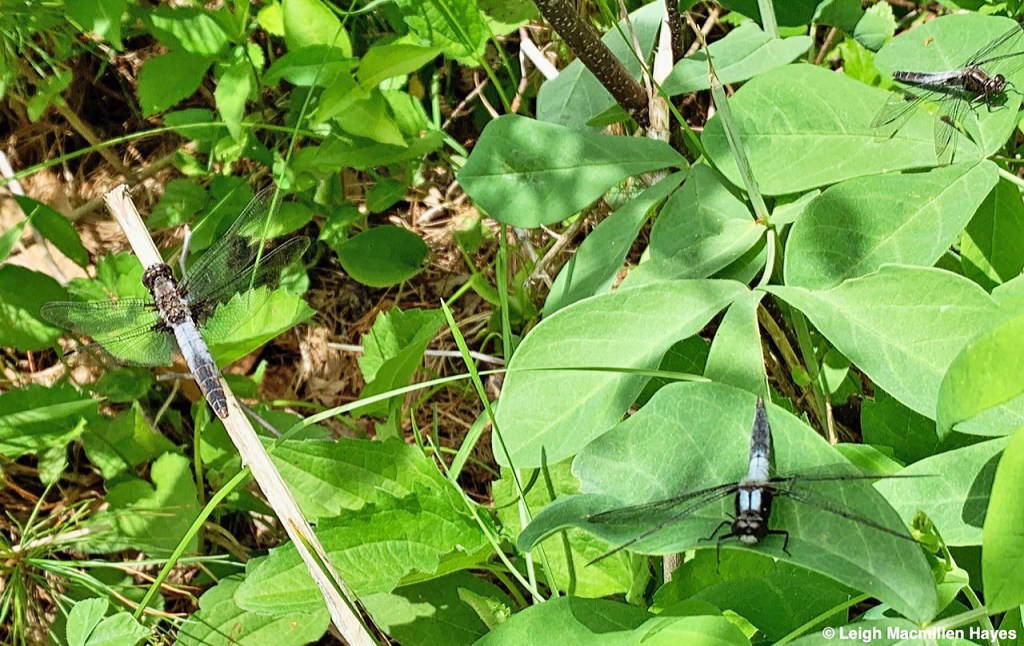
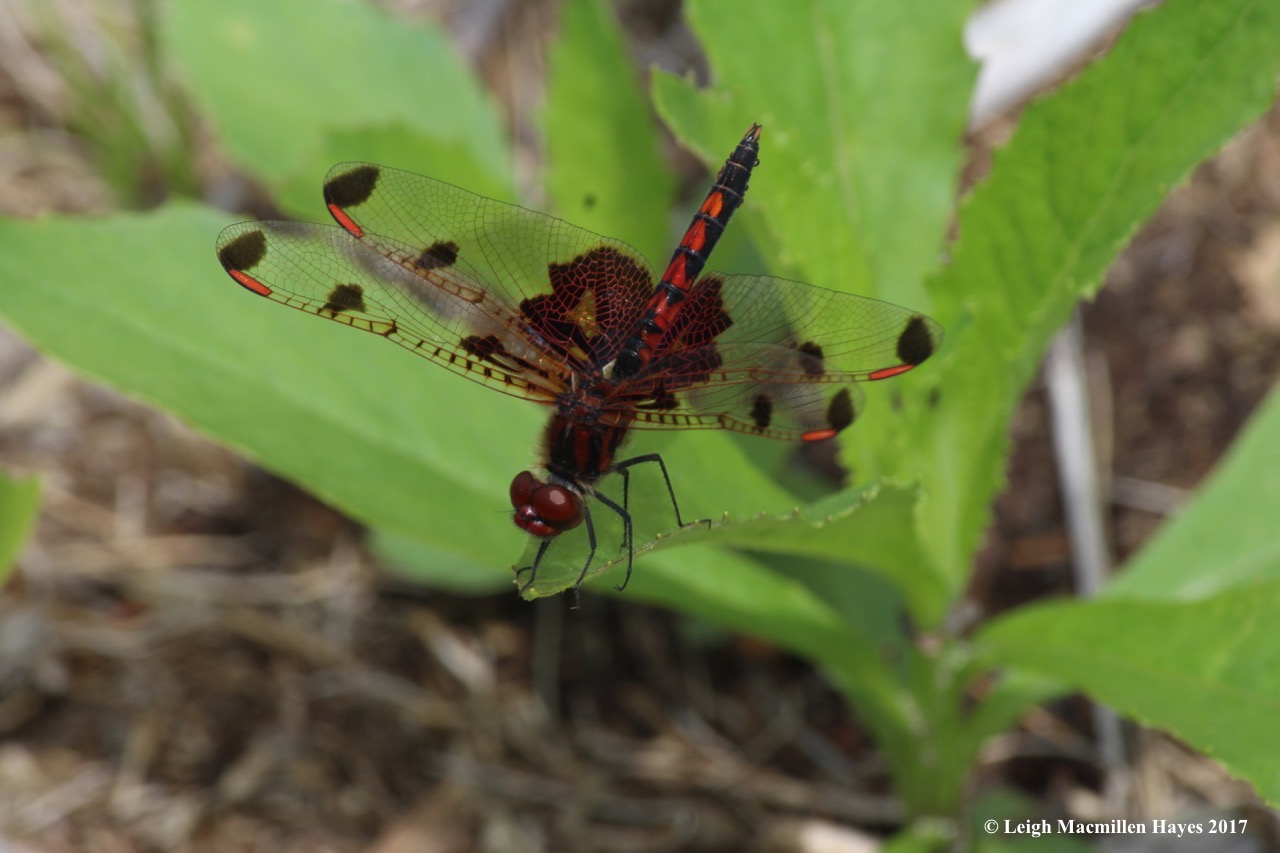
For everywhere on the northwestern side of the pond, more Dragonflies had emerged, and after a few minutes it became obvious that they were all of the same family: Calico Pennant Skimmers.

In fact, they were also all the same gender, the yellow hearts on the abdomen and coloration on the thorax and wings all leading me to think they were females.

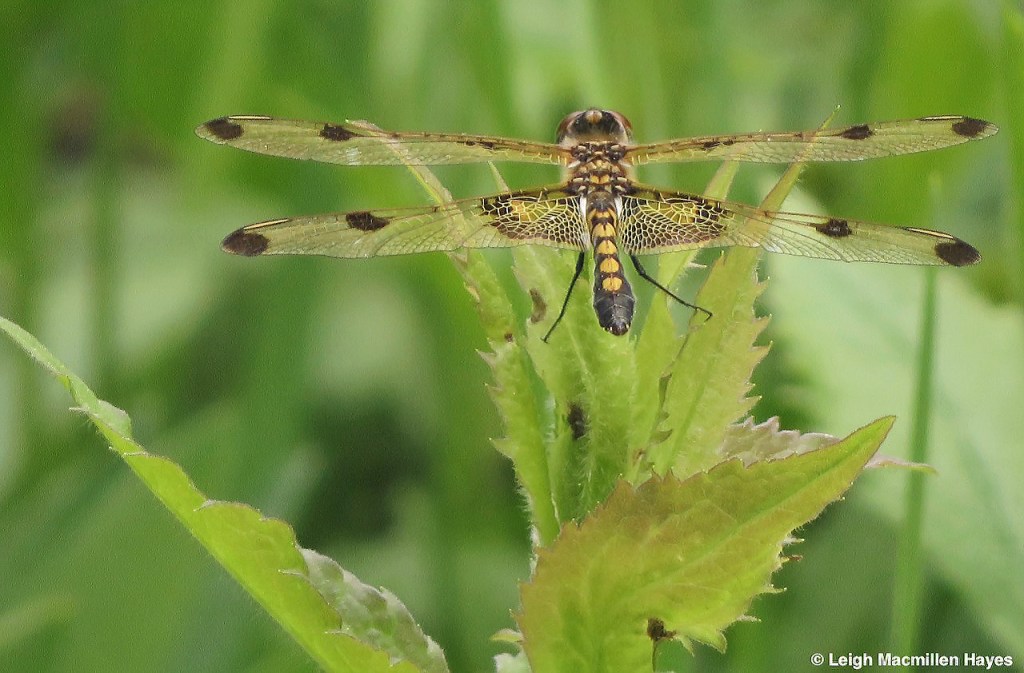
The Calico Pennant in the name comes from the design on the wings, which once opened and dried is really stunning.

Although, I say that they were all females, it could be that all begin life with this hue and it only changes to red for males and bright yellow for females as the individuals mature.

In one spot, we found at least five, plus a bunch of Damselfly exuviae also upon the stems and leaves.

Do you see all five, two being almost a mirror image? Why “almost”?

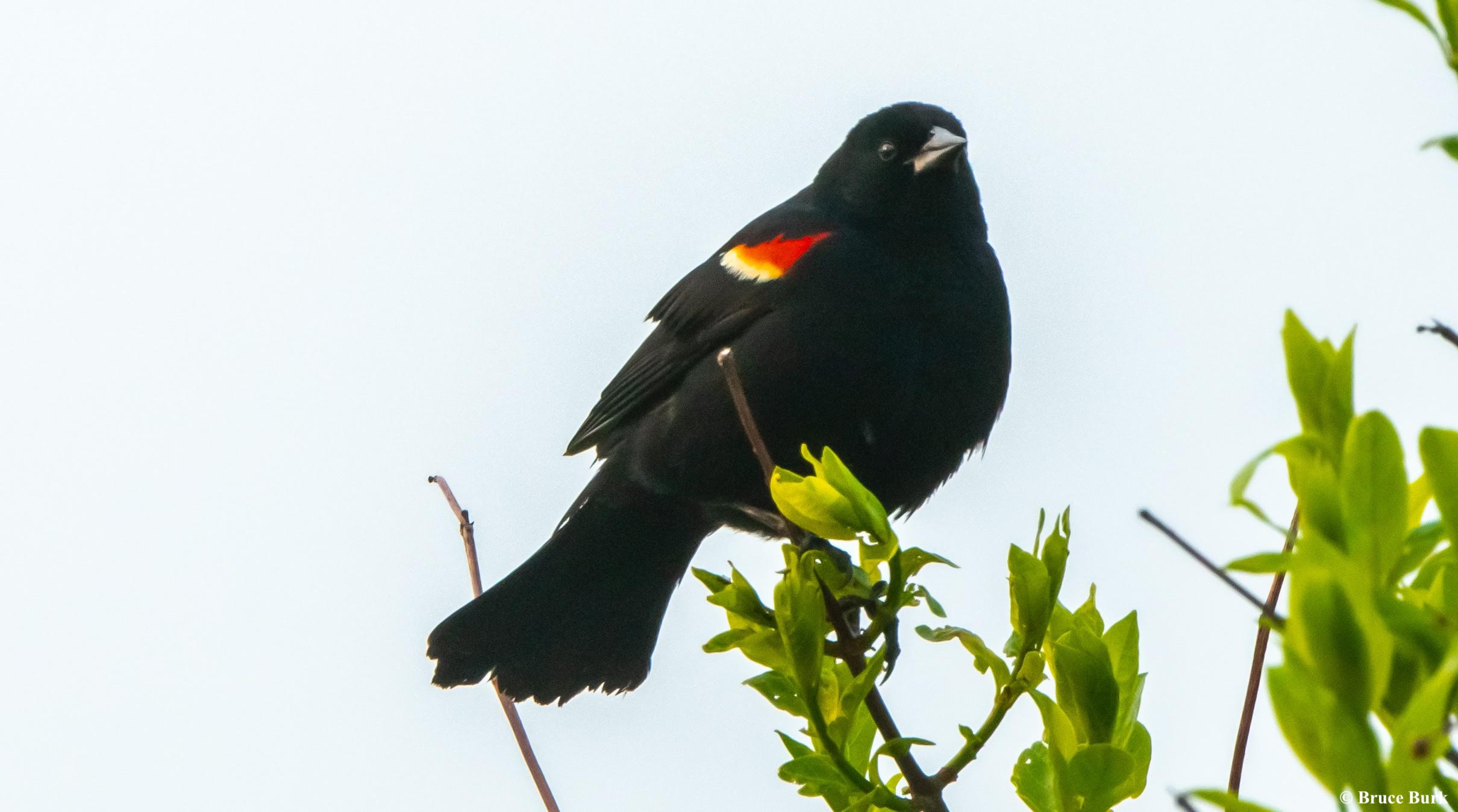
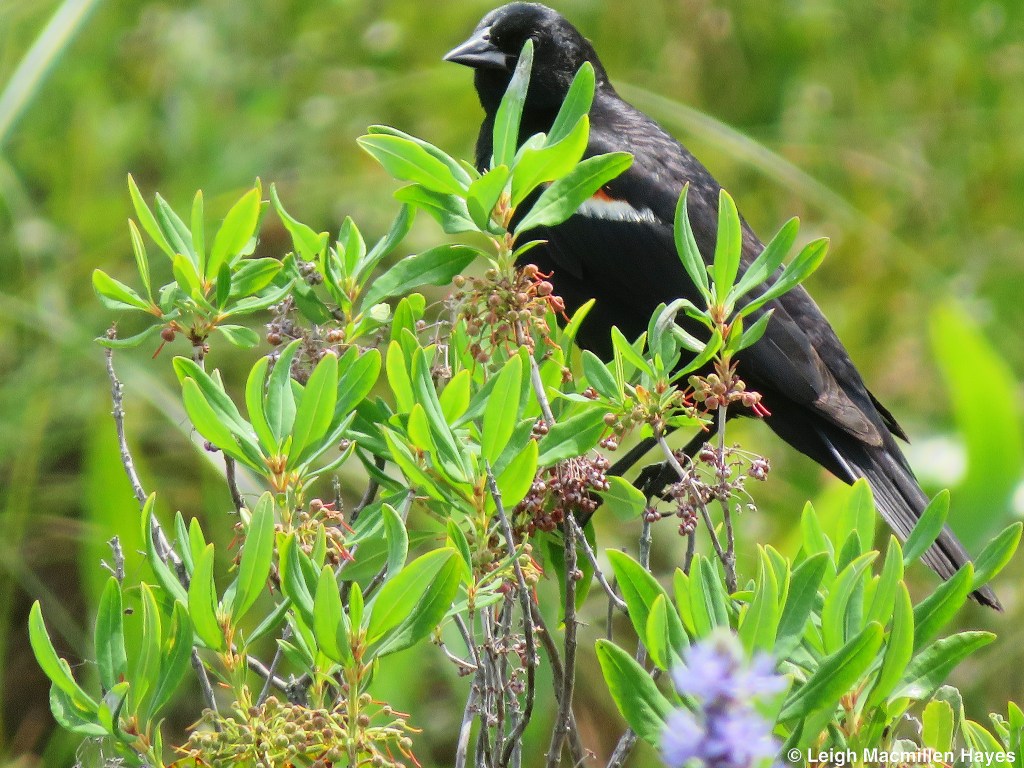
Loons and Kingbirds weren’t the only ones on the morning hunt. This handsome male Red-winged Blackbird seemingly had a family to feed and wanted to make sure we didn’t approach. Thank goodness for telephoto lenses.

In the midst of the shrubs below, his Mrs. was on the hunt and had a full mouth. If you look carefully, you may notice some Dragonfly exuviae below her, their shed skins left behind once they took flight–the insects, that is.

We wondered if the Mrs. was taking advantage of this morning’s Dragonfly offerings and capturing those that were just emerging, an easy meal for herself, but probably also for some wee chicks she may have tucked away in a nest nearby. Their meal would have to wait until we moved on, and so we quickly did.

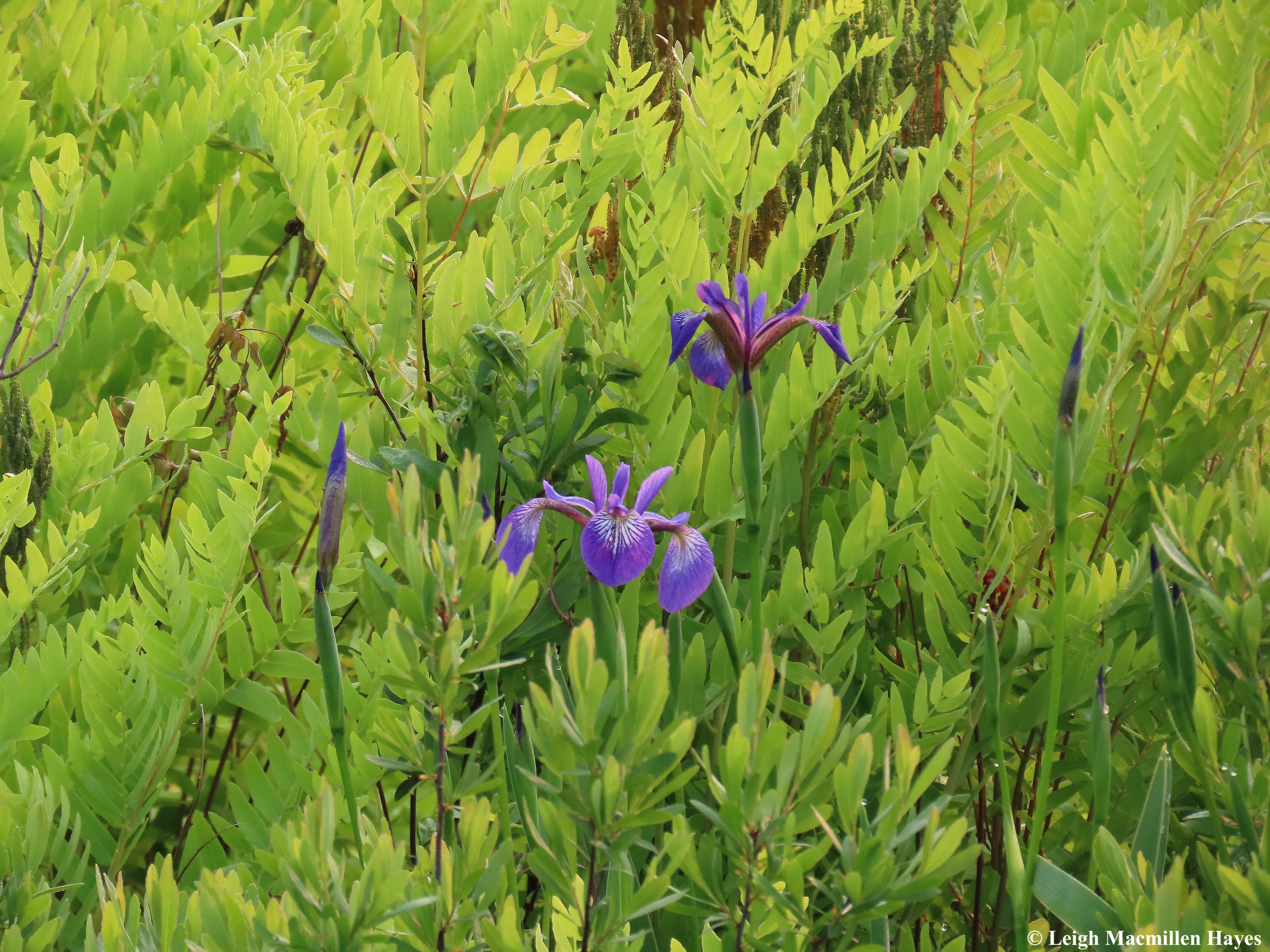
But not without pausing for a moment to admire the newly opened Blue Flag Iris among the Royal Ferns. Though the ferns have their own crowns of fertile stalks, the irises looked like exquisite tiaras fit for queens.

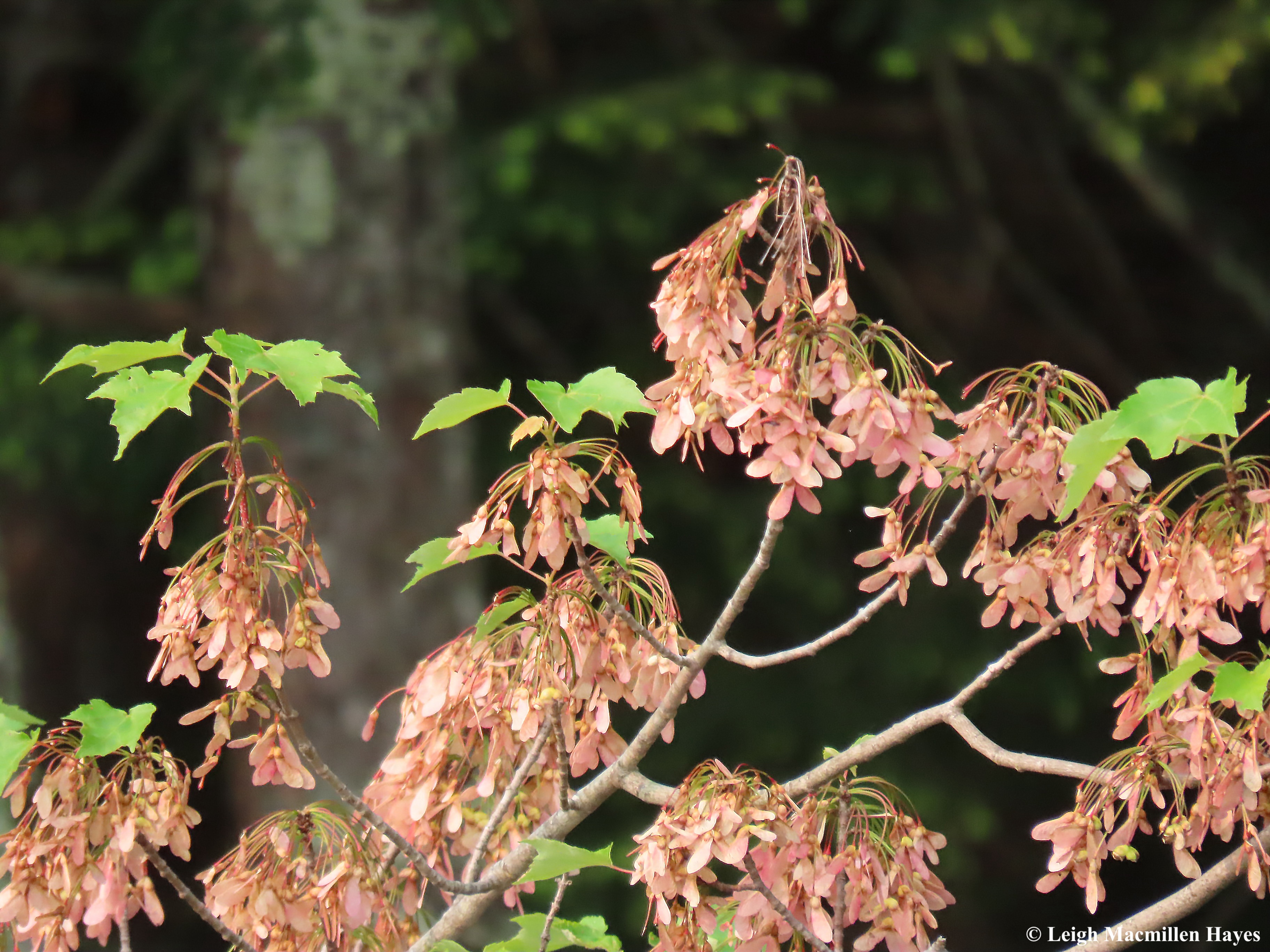
Finally heading back toward the boat launch, we saw explosions of Red Maple seeds dangling like chandeliers that perhaps the Queen Irises had ordered.

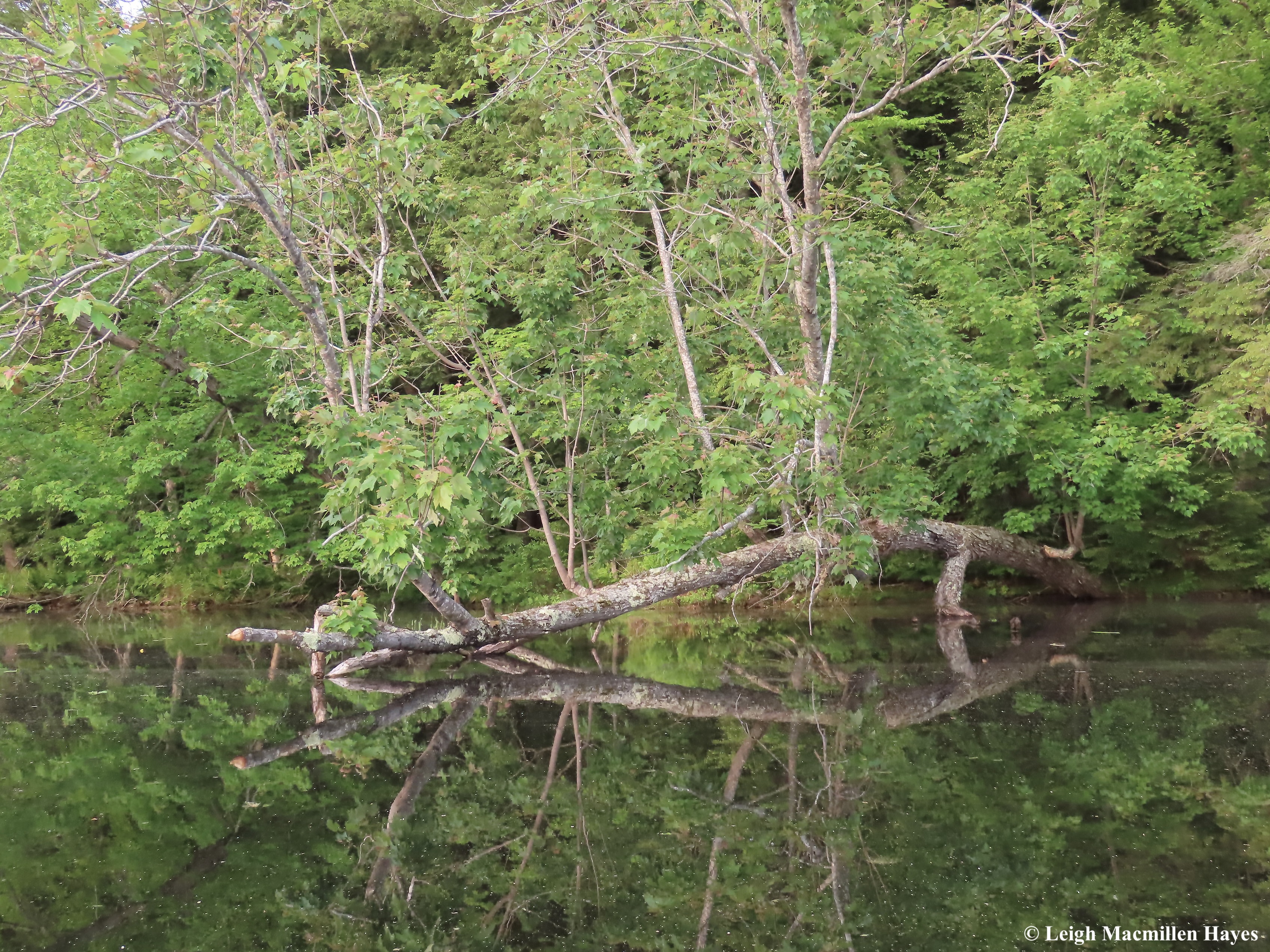
And another Red Maple that gave us pause for it deserved being noticed since it had obviously fallen years ago, but lifted its branches upward and was still in rather good health, its roots at least partially intact. Perseverance.

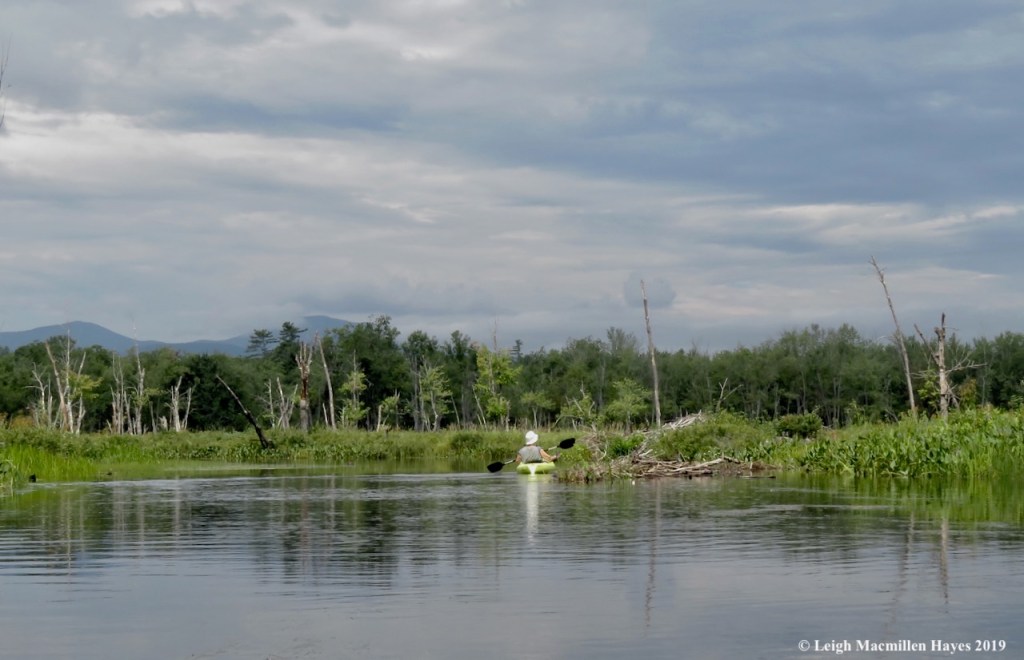
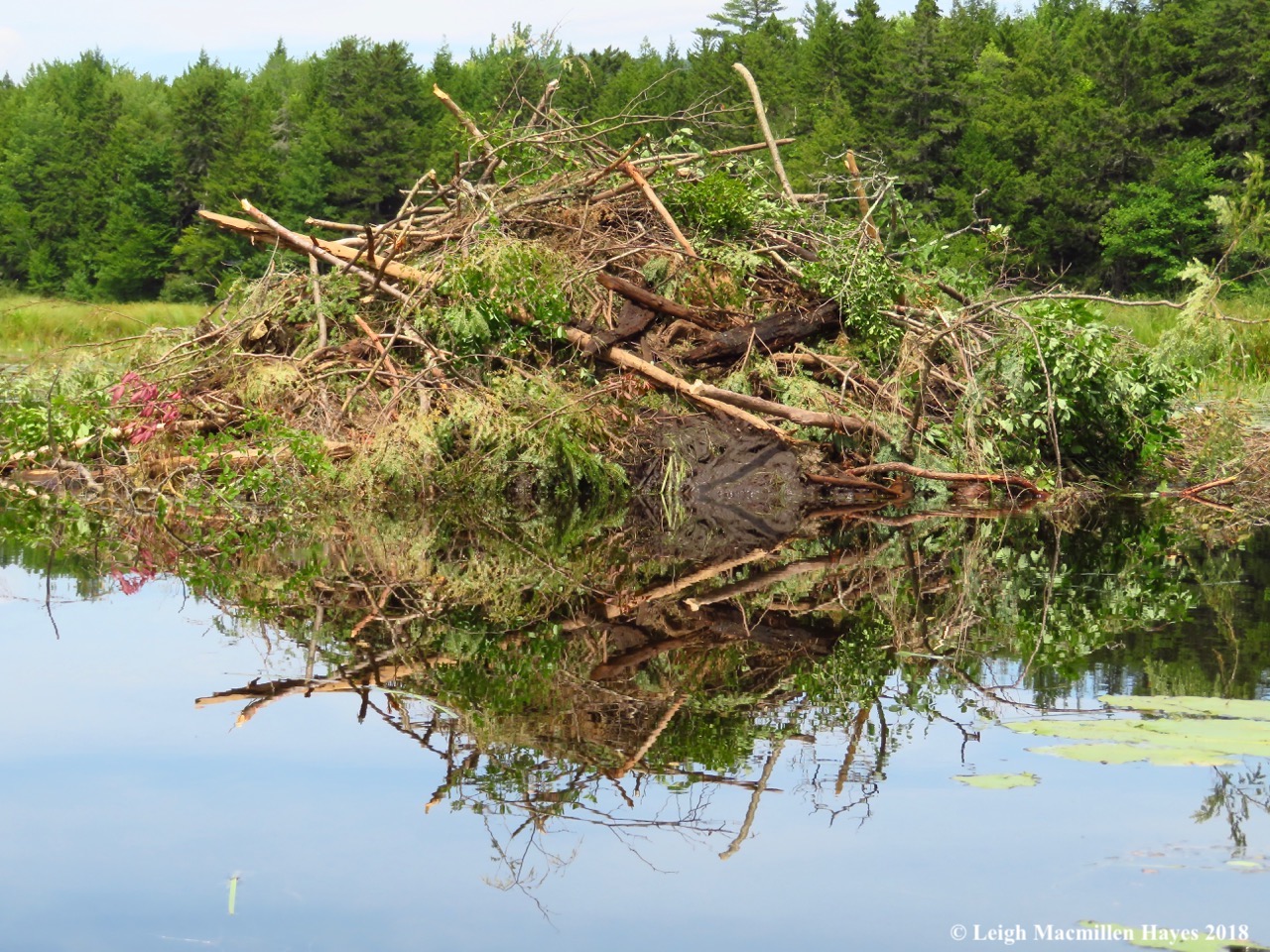
And then we noticed the tip of it. Across the pond we’d spotted a small beaver lodge in an adjacent wetland, and wondered about the Beaver’s own peserverance–it looked as if the tip of the tree had been harvested this past winter from the ice, and looking at other parts of the tree behind the tip, there’d been some harvesting previous years. We didn’t get close enough, but suspect the Beaver may have felled the tree, and its been a source of building material and food ever since.

Two hours later, Captain Bruce landed the Zodiak at the boat launch, and I gave great thanks for the invitation to explore Beaver Pond in the quiet of the morning.

The Black Flies were plentiful as they buzzed in our ears, but they weren’t biting so that was good.

We also saw several turtles swimming, including one huge Snapper that swam under the boat and neither of us captured in a photograph, and possibly a Water Snake.

Zodiac One: a maiden voyage for me. Here’s to many more! Thank you, Bruce.

Memorial Day Dragons and Damsels

It finally stopped raining and with a wee bit of sun late this afternoon, the temperature broke 60˚ and I found myself exploring a local wetland where all kinds of interesting things happen daily. And yearly. In cycles. And sometimes I happen to be there.

One of my favorite events is the emergence of dragonflies and damselflies. It seems like we endure Black Flies for most of May, all the while looking forward to our champs, the Ondonata family, to step in or rather up out of the water and transform before our eyes and take on the world. This usually happens by Memorial Day.

And this year is no different. The dragons and damsels have been emerging for the past couple of weeks, but now is prime time. And they are just in time because the Black Flies and Mosquitoes have had a heyday with all this rainy, cold weather, and today . . . as it warmed up, so did they and I have red welts on my neck to prove that they are biting. It’s all good, I remind myself. It’s all good. They are bird food. And so are the dragonflies, who eat the Black Flies, et al, and if they become bird food, all the more energy sent the bird’s way.

Cloudy wings and clinging to its shed skin indicated that this dragonfly had just made that magical transformation from its aquatic life to terrestrial existence. And I was there to protect it. For a while anyway. Until the Black Flies sent me scurrying onto the next great find.

That next being a damselfly, also with cloudy wings indicating it had also just emerged. Though I don’t know who the first dragonfly was that I met today because it didn’t yet have enough colors and pattern to make that determination, I did learn that this damsel is called Aurora! I don’t recall ever greeting it before, but based on the the lack of shoulder stripes, black patch with wavy edges on the thorax, and yellow sides led to this ID once I consulted Damselflies of the Northeast by Ed Lam.

Now it’s one I don’t think I’ll forget. AND, I love that it is named for my ten-year-old naturalist friend, Aurora. Or she for it. Or neither, but they both share the name of an electrical phenomenon.

As I looked about, I spotted several other newly emerged dragons and damsels, all with their signature cloudy wings, but then I spied this one.

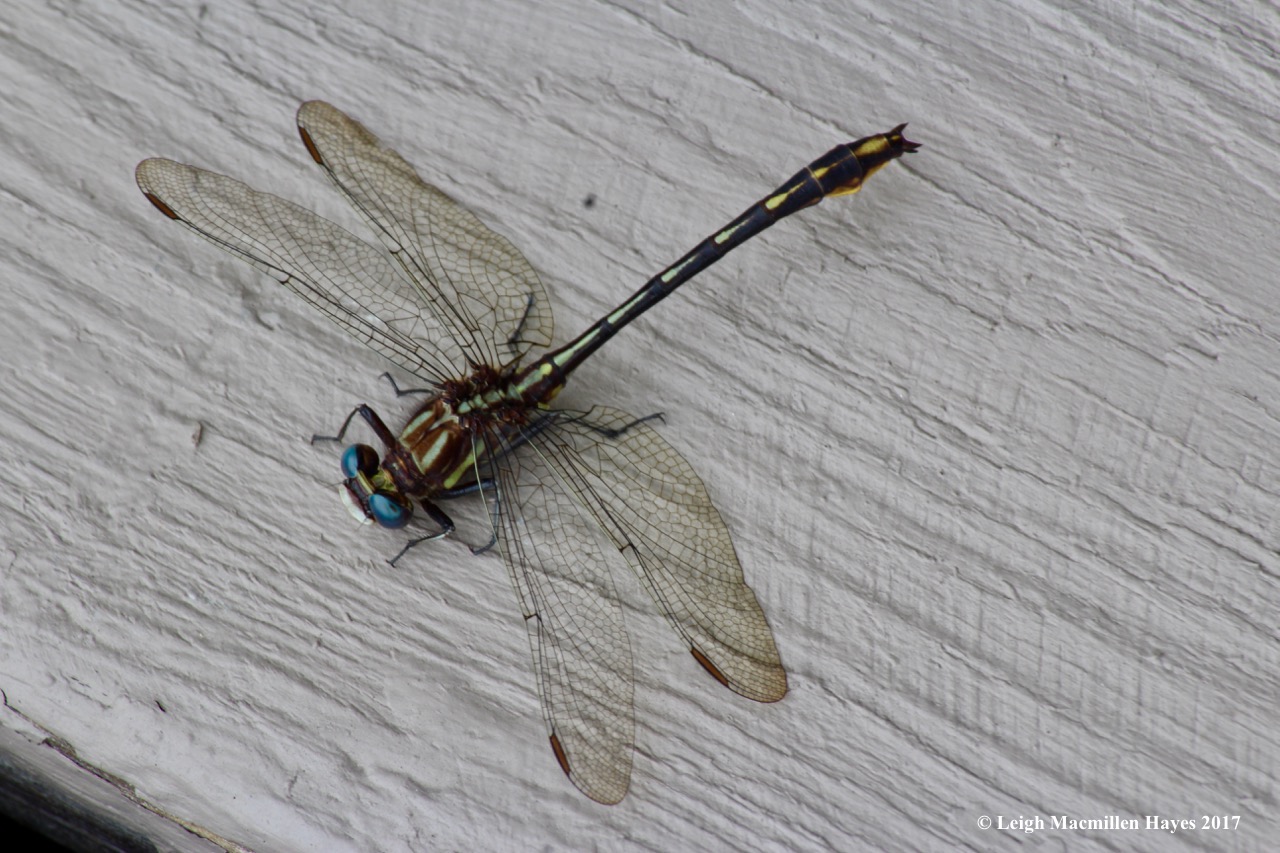
Yes, it’s wings are cloudy, but this Lancet Clubtail has an issue going on, for its wings are folded, rather like the main character in my fairy tale, The Giant’s Shower, for Falda’s wings are also folded.

That didn’t stop Sir Lancet from climbing up a fallen branch with gusto. But I did wonder about his fate.

That said, I moved on because I had some Painted Turtles I wanted to meet, figuring that they’d be basking after several days of temps in the 40˚s. Being ectotherms, they rely on external heat to regulate their body temperature. Sun is their friend.

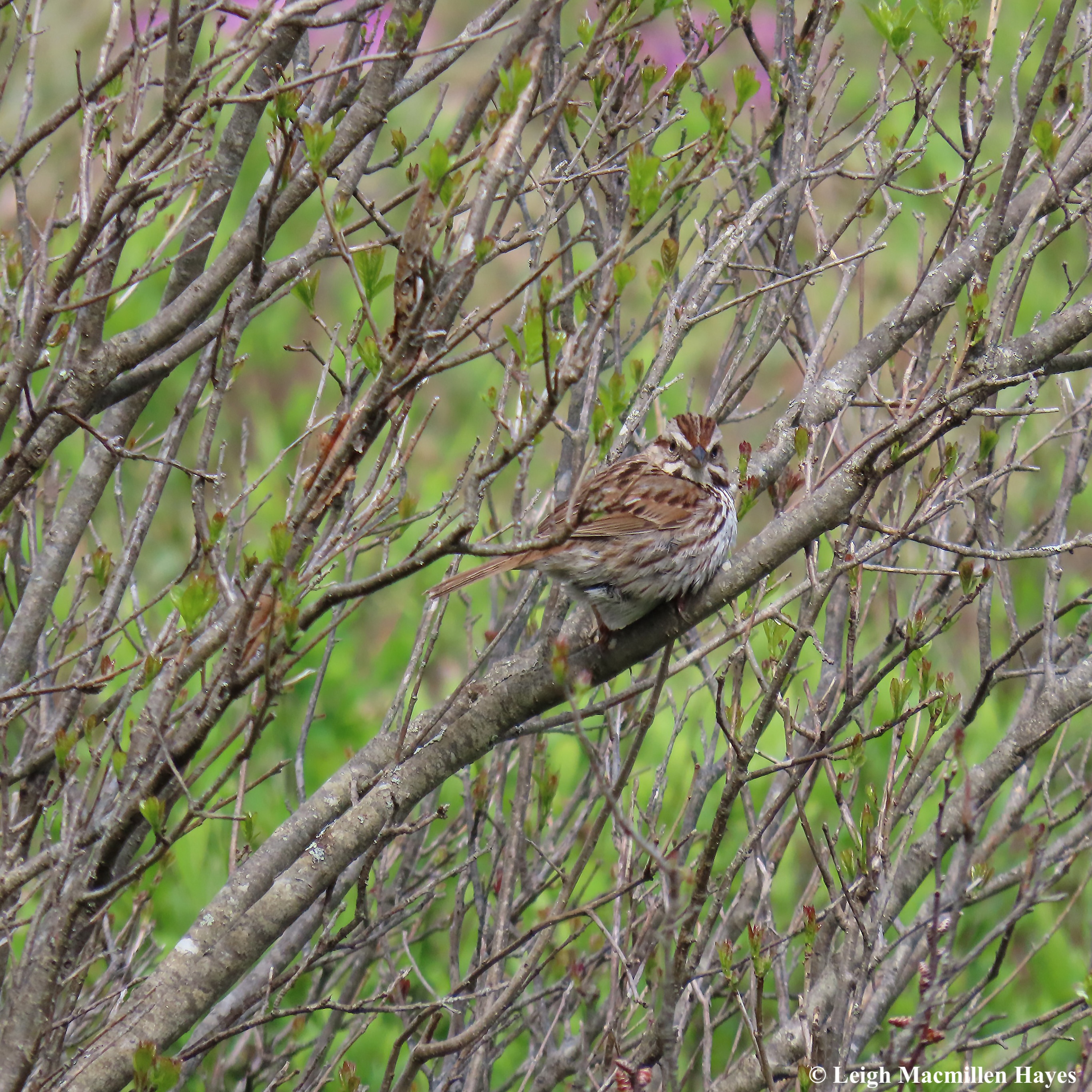
Being in a wetland, the bird song was plentiful, but though the Merlin app included a chorus of plenty including Redstarts and Towhees and Common Yellowthroat and more, the only one who posed was a Song Sparrow.

I walked about a mile away from my starting point, but really was eager to return because I knew there was more to see and learn in that spot.

Almost back, I met a Dreamy Duskywing Butterfly, a species I’ve met in this place before but not sure we’ve encountered each other anywhere else. I love the tapestry of its dusky wings.

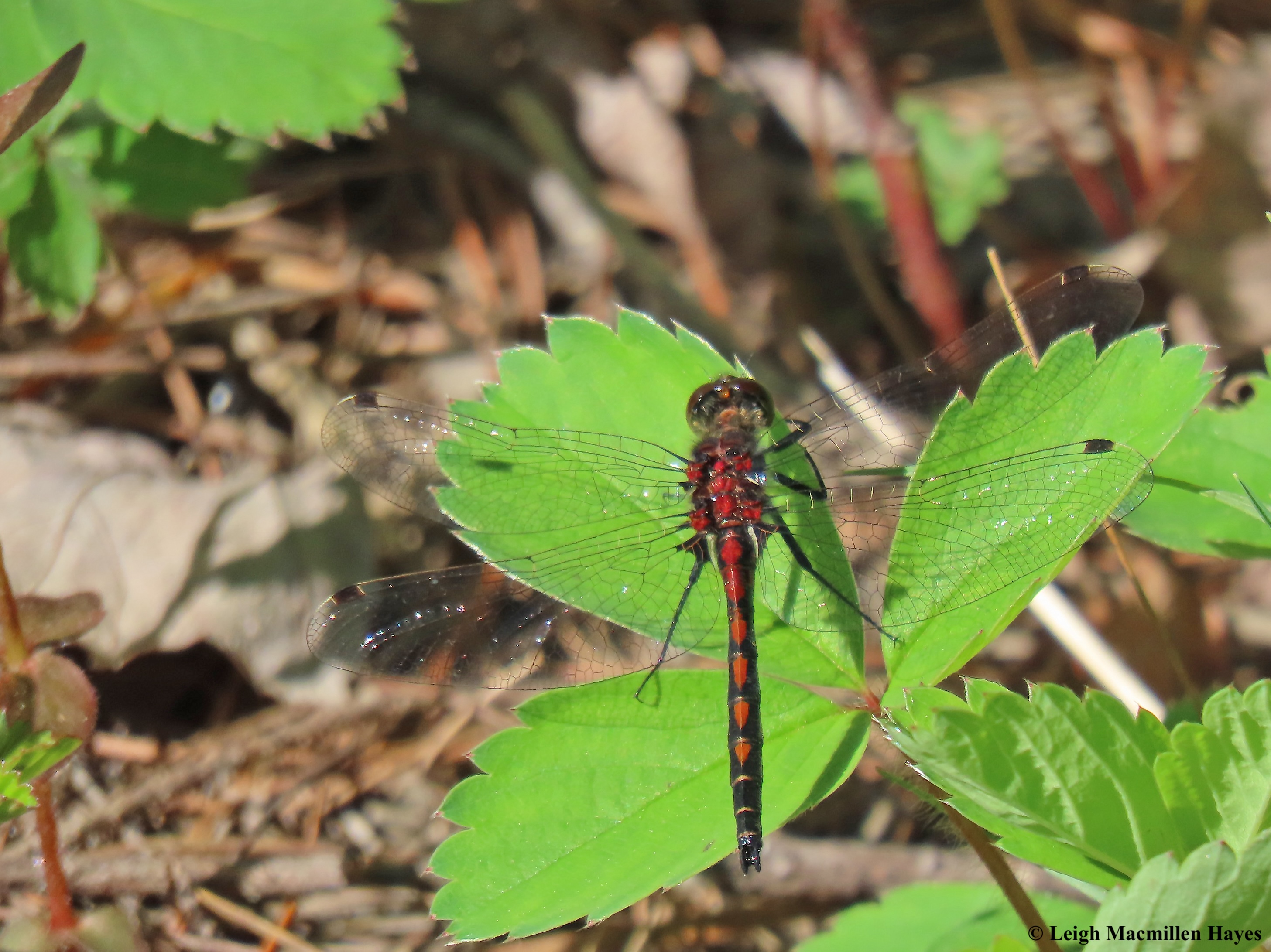
A moment later, an old friend flew in–Hudsonian Whiteface–this being a male, for the female’s markings are yellow. These are early spring skimmers, and I have to remind myself not to confuse them with Calico Pennant skimmers who have similar, yet different abdominal markings, he being red and she yellow. Also, the Calicos, being pennants, have a stained glass basal wing pattern that the Hudsonian’s don’t exhibit.

Back at base camp, or rather, my starting point, I checked on Sir Lancet. He’d crawled up the branch to a rather perfect hiding spot at the Y, at least to my eyes. And look into his eyes I did. Including the three simples eyes, singularly called ocellus, which are arranged between the two large compound eyes. Each ocellus offers a single lens with which to view the world, while the compound eyes offer multiple lenses. Amazing. I can’t even begin to imagine such sight.

But what I also noticed about my folded-wing friend was the green “blood” that seemed to be stuck within those wings. Dragons and damsels and other insects that emerge from an exuviae break through their old skin, their wings coming out first with the head, and then pulling the abdomen out slowly and pumping their insect blood first into the wings until they reach full length before drawing said blood back into the body and allowing the abdomen to extend to full length and slowly take on the hues of its adult self.

I’ve seen this in others with folded wings though, where the insect blood seems to have become blocked and is still visible in the transparent wings and maybe that’s why they are deformed? But what causes this?

I don’t have an answer, but try to remind myself that eventually this dragonfly will become units of energy for a bird or another insect and that’s its way of giving.

Meanwhile, though it was getting late and the temperature was starting to drop again, two immatures caught my attention–a Mayfly subimago or dun and another Lancet. Both had cloudy wings announcing their age.

And both were fairly safe in each other’s company, for the Mayfly has no mouthparts, not that it could eat anything as large as a dragonfly at this point, and the Lancet wasn’t quite ready to eat yet for it had some more work to do in order to become a flying predator.

Slowly Lancet’s wings became more transparent and though dinner prep was on my mind and I knew I needed to head home, I waited until it spread its wings and then without a backward turn or wave goodbye, took off. Despite that, I wished it my usual, “Fare thee well.”

And as I walked back to the truck, a young Lancet met me. I was totally surprised to find it land with wings folded over its back. Had we just met only steps away by the water? How cool would that be if it were true.

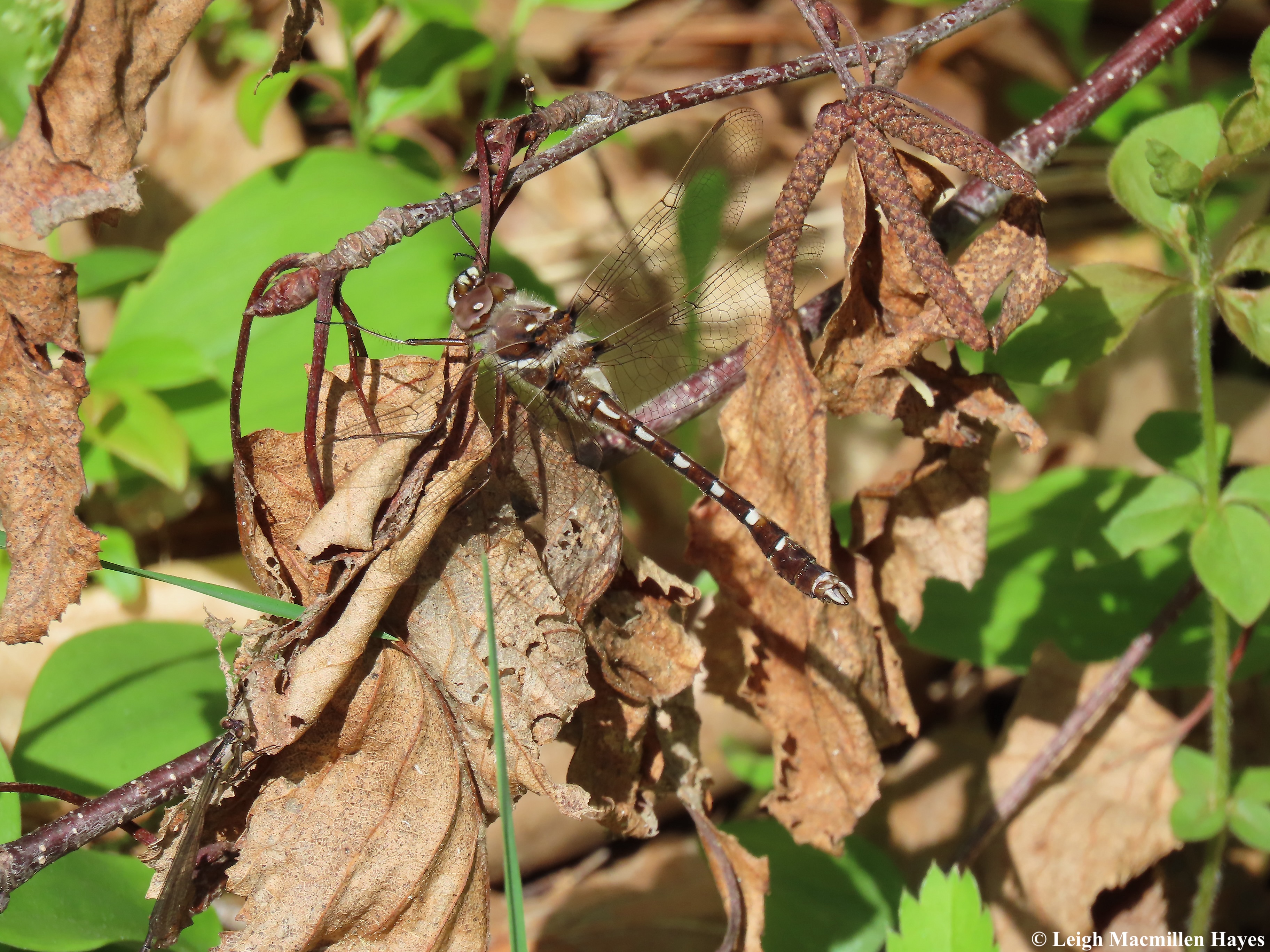
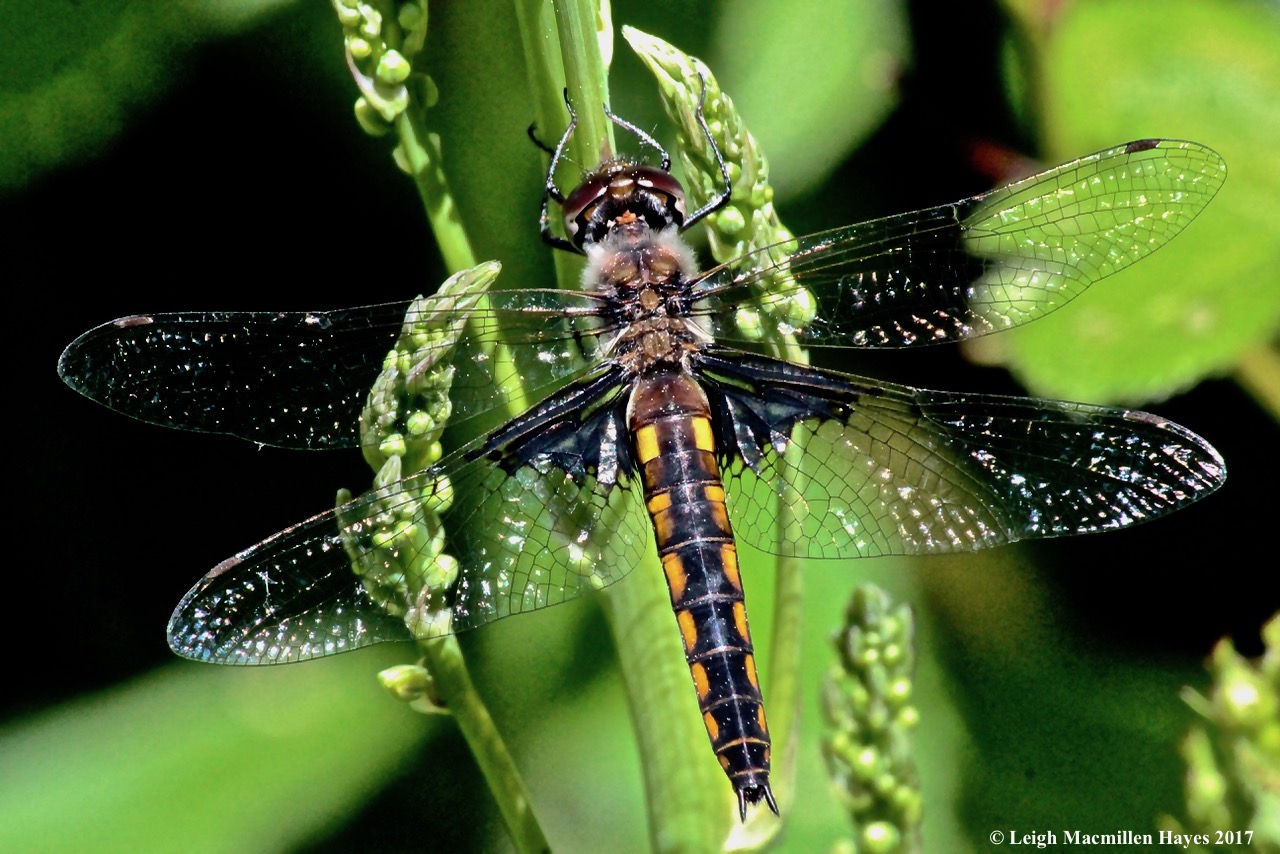
And then my all-time favorite appeared, a Stream Cruiser with its Oreo Cookie coloring. I was asked the other day what my favorite bird is and I came up with at least five different species, but the Stream Cruiser will always be my favorite dragonfly.

And dragonflies and damselflies on Memorial Day weekend–another favorite for we all know that the Black Flies will now be on the decline.

Memorial Day weekend not only means a return of the Dragons and Damsels who slay those other pesky bugs, but also a time for us to remember those who died serving our country, like my Mom’s brother, age 19, who died in World War II. Thank you Uncle B. We never met, obviously, but Mom brought you alive in my mind for you were her best friend and I know you are with me and trust you would approve my curiosity and adventures and reverence for the natural world .

Love Bugs

It didn’t start out that way for me. Loving bugs, that is. I thought they were just that . . . bugs. Bothersome. Biting. Stinging. Needing-to-be-swatted critters.

And then one day that all changed for me as I began to take a closer look. And since the past two weeks a friend and I shared our keen interest in these critters during two Senior College (Lifelong Learning) classes, I thought I’d bring some of it alive again in this space.

If you attended these classes, there will be some repeated information, but it’s not all here, or we’d need four hours! And I’ve added a few things that I didn’t have time to include in class.

Enough said. Let’s get started.

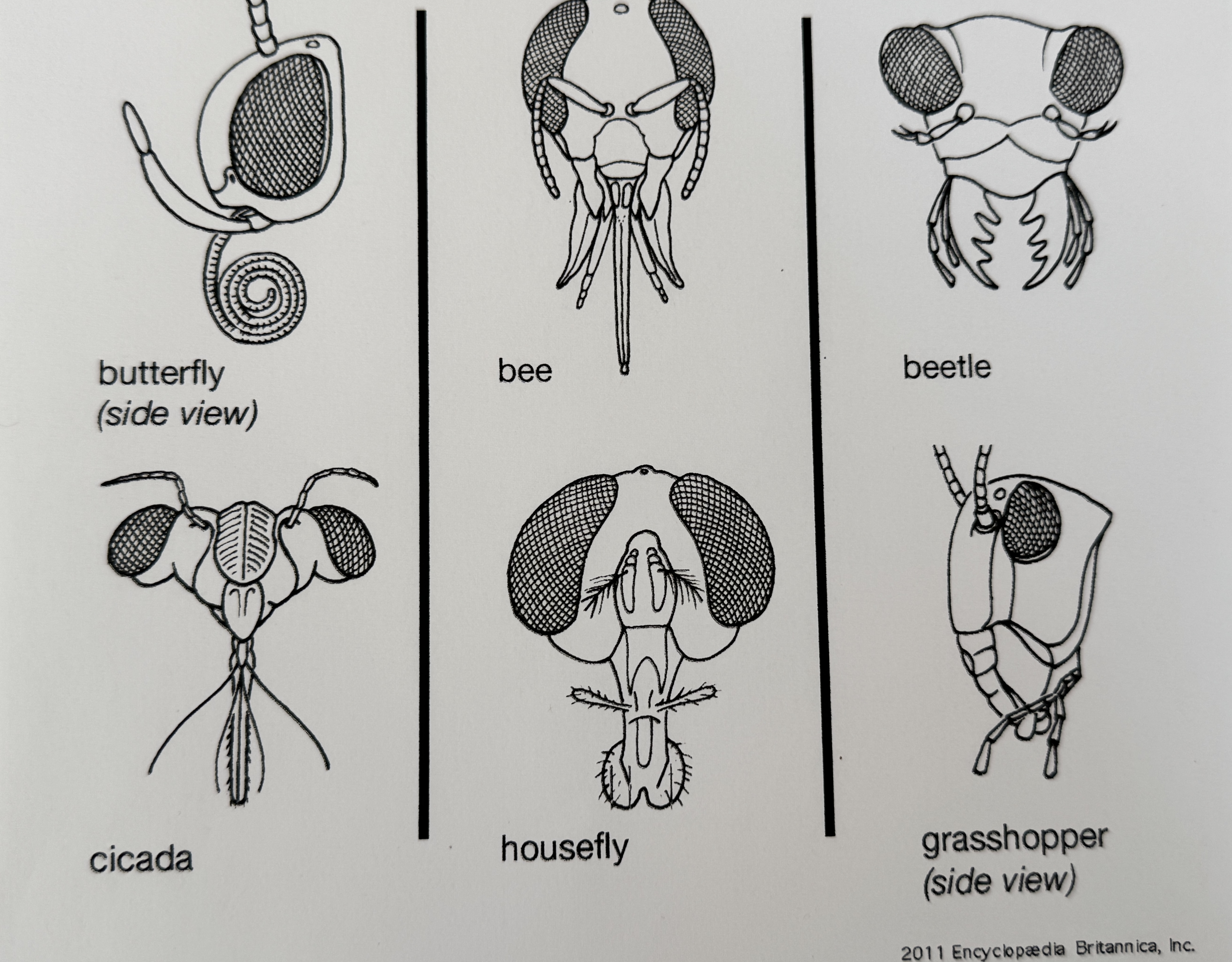
Most, but not all, insects have mouth parts, but they come in a variety of forms. The most basic are for chewing, but sponging, siphoning or sucking, and piercing, then sucking are also important. Mosquitoes, adult fleas, lice, and some flies puncture tissue with a slender beak or proboscis, and suck the fluids within. Butterflies, moths, and bees also dine on fluids, but the proboscis of these species lack the piercing adaptations and extend only when their feet touch and “taste” a sweet solution. A spongy tip, aka labellum, on the tip of the proboscis allows most flies to sop up liquids or easily soluble food. Other insects, like ants, grasshoppers, beetles, and caterpillars nibble and grind their food with jaws or mandibles, which move horizontally.

Think mosquito: sticking a straw into a juice box (through your skin) and then sucking; bee and butterfly: using a straw; fly: adding a sponge to the tip of the straw; caterpillar: using pliers horizontally. You get the picture?

And then there are the legs and feet. Because insects live in a wide range of habitats, there are a wide range of structures to get the job done.

Cursorial: (running) Insects like Tiger Beetles, who have long and narrow legs and move swiftly (even when canoodling, though they do slow down a wee bit).

Saltatorial: (jumping legs) In this case, it’s the hind legs of Grasshoppers that are filled with bulky strong muscles to help propel them forward that come to mind.

Fossorial: (Digging) These insects, such as Dog-day Cicadas, live underground for the first few years of their lives and need their legs and feet, which look like modified claws, to dig. They tend to be broad, flat, and dense.

Natatorial: (Swimming) Aquatic beetles and bugs can move swiftly through water.

Raptorial: (Hunting) Enlarged with powerful muscles, these are found at the front of the insect where they are ready to strike at any time, then grab and hold prey, such as a Robber Fly has.

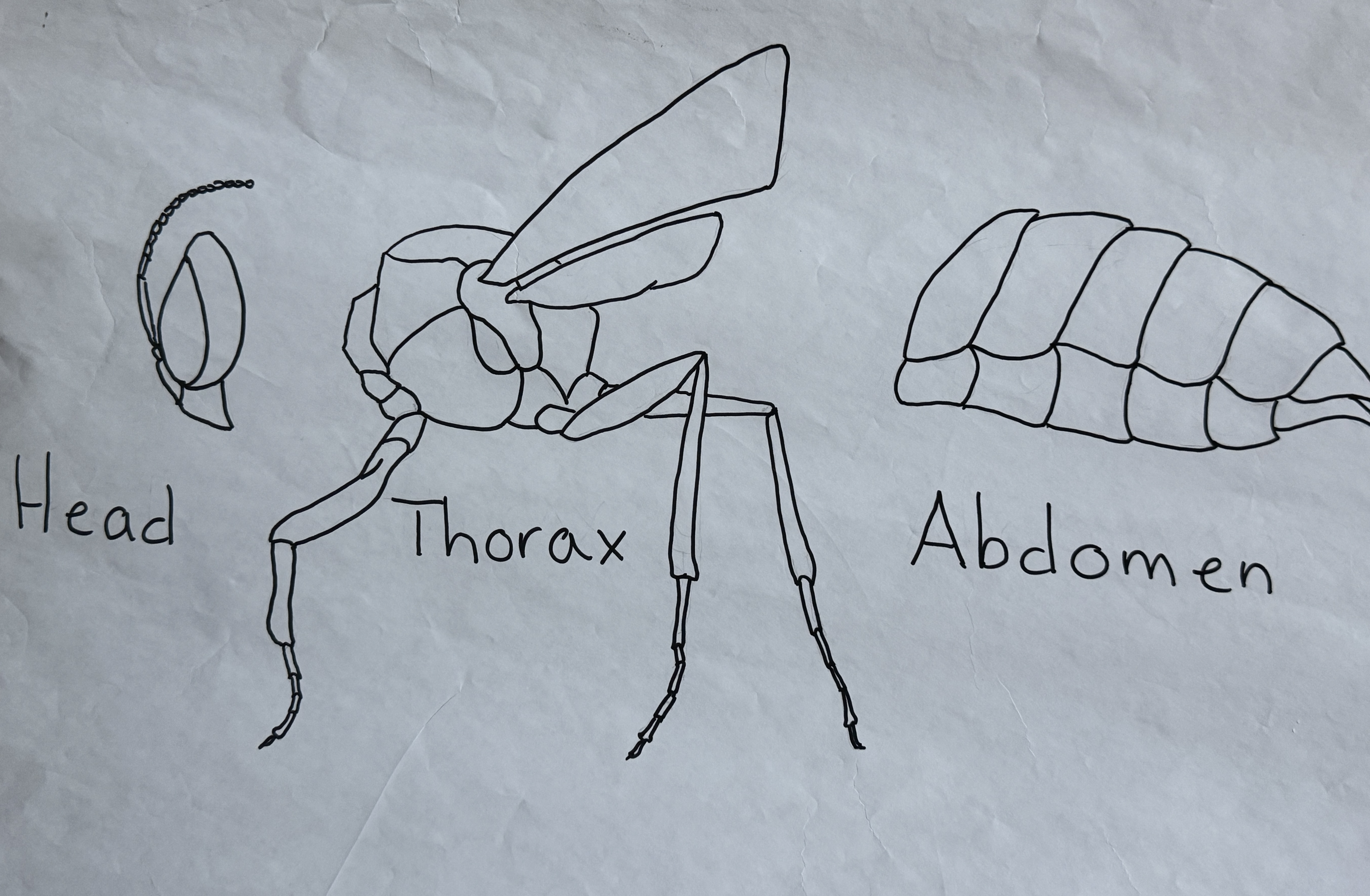
And just a reminder from science class all those years ago, without going into all of the details, like the fact that there are three sections in the thorax, the head contains the eyes, proboscis, and antennae, thorax supports three pairs of legs, and wings (and halteres or modified wings shaped more like clubs that help with balance and steering when in flight), and an abdomen.

I could share tons of photos of Bumblebees (and I’ve found it written as one word, and two), but this is one of my favorites because it shows the insect’s RED tongue seeking nectar from the Goldenrod.

This is another favorite because I sometimes forget that despite the rain, the insects are still out there during the summer, and perhaps finding the right spot to avoid getting wet comes with age.

Bumblebees are very hairy. They build underground nests and I have to wonder why this one didn’t return to hers, but perhaps the rain came down suddenly. It did rain a lot last summer.

In the spring, the queen who overwintered, conducts a reconnaissance mission in search of a good nest site and you might spot one in a weaving flight close to the ground as she checks out every little hole that might serve as the right underground chamber for her brood.

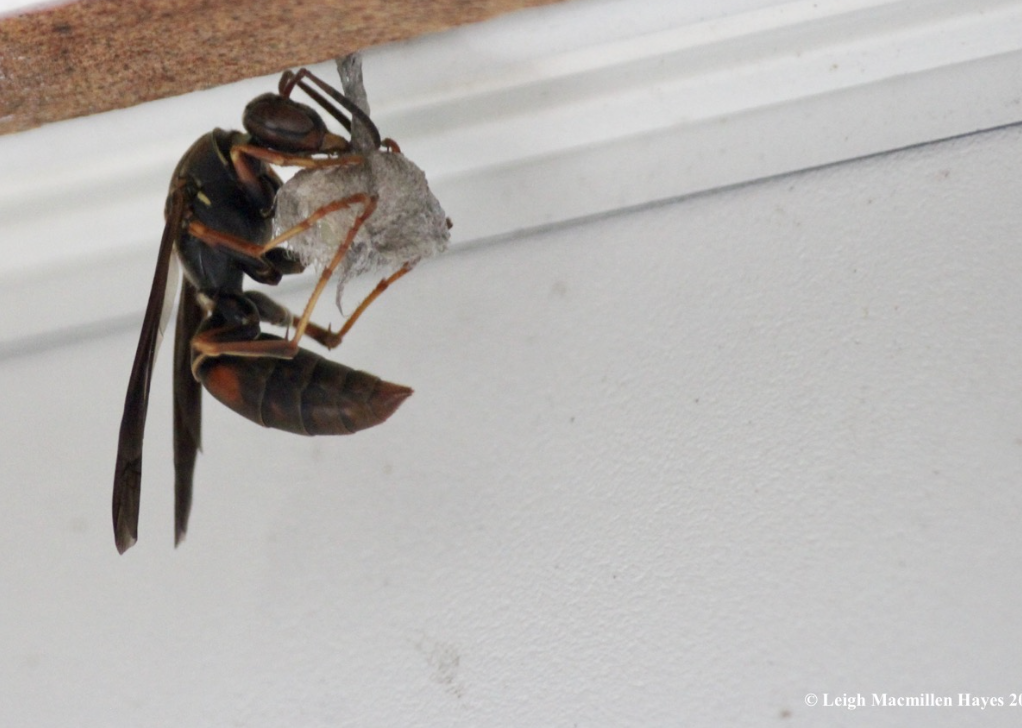
Paper Wasps are easy to identify because unlike other wasps and bees, they hold their wings out to each side rather than folded over the back. The fertilized queen also overwinters behind tree bark or under leaves.

So this wasp decided that a door jam in our house was the right spot to place a nest. Heck. It was protected. Out of the weather. Warm. All the comforts of home.

To build such a nest, fiber is gathered and chewed from buildings and trees and fence posts and then mixed with saliva until it becomes a papery substance.

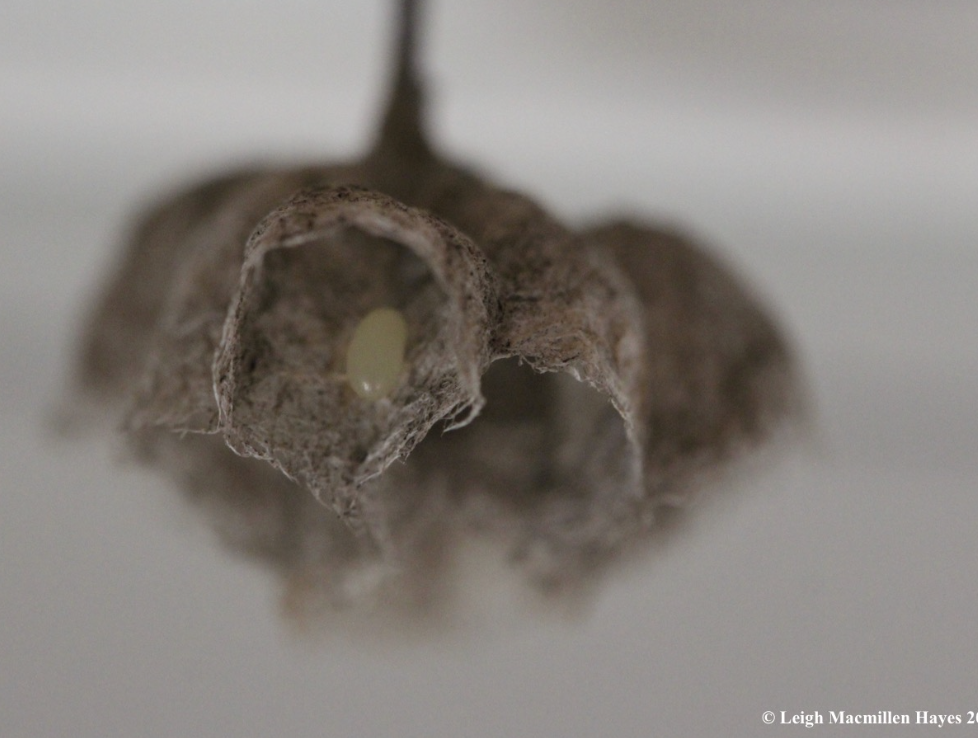
The hexagonal cells created face downward and tada, a nursery is formed, each cell supporting one egg.

I am probably one of the few people in the world who spent several days standing on a kitchen chair to get a series of photos as this nest was being built.

And I was successful in my efforts, that is, until My Guy discovered it and decided that it really wasn’t such a good idea to have a nest in the house. I guess it speaks to how well the door didn’t fit into the door jam. We’ve since completed a reconstruction project of our own, so sadly, this won’t occur again, but never fear, there are usually lots of nests around the outside of the house.

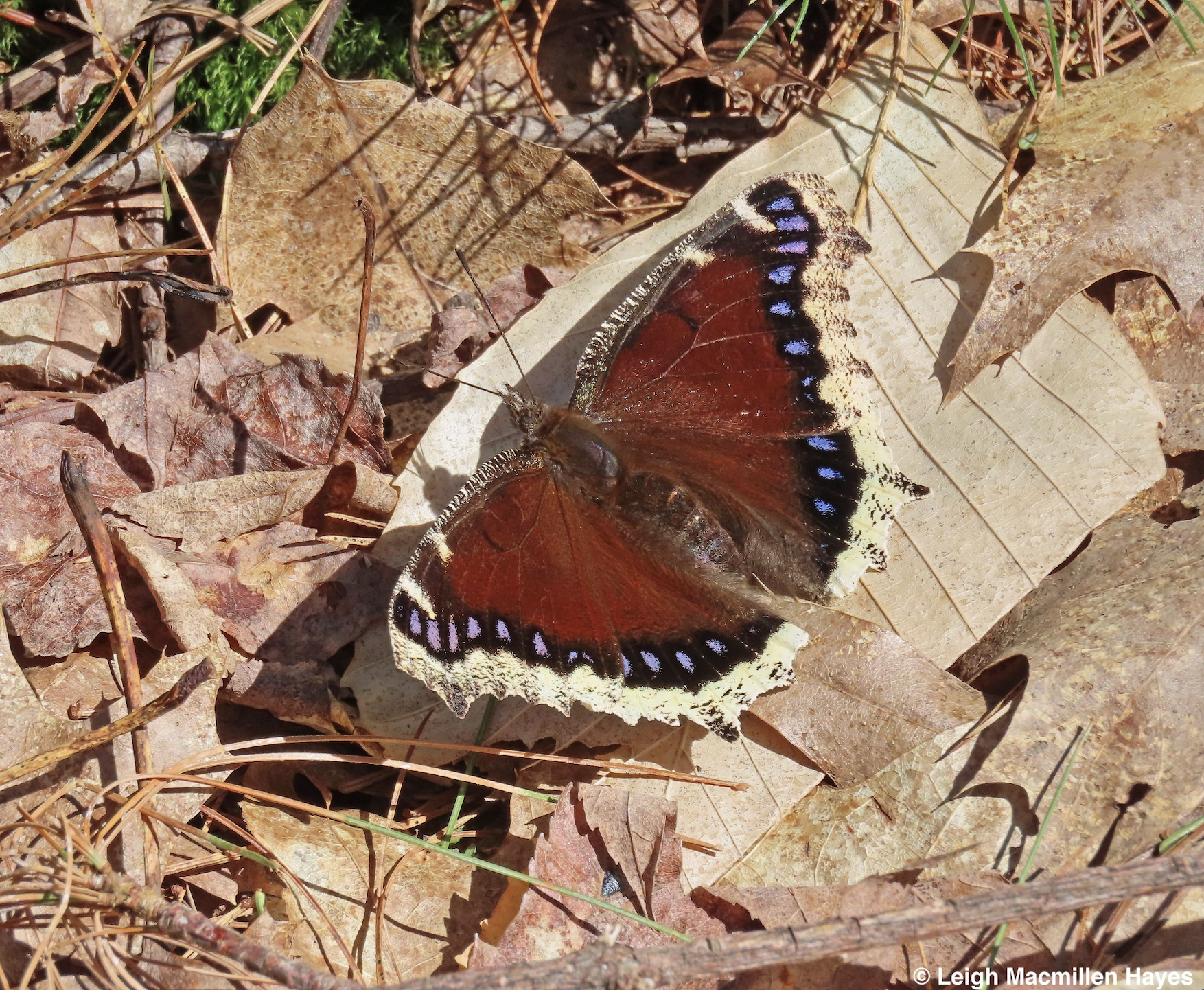
Another who overwinters behind bark as an adult is the Mourning Cloak Butterfly, so named because the coloration is supposed to remind us of a cloak one might wear while mourning the loss of a loved one.

One activity that butterflies engage in, and usually it’s the males who do this, is “puddling.” We think of butterflies as flitting from flower to flower, sipping nectar here and there.

BUT . . . they need more. Yes, flower nectar is good for energy, but when your mind is on something else, you want to supplement your diet. Sugar water won’t give you that something extra to produce viable offspring.

Puddling means injesting salts, minerals, and amino acids from mud, scat, fermenting fruit, or carrion. In this case, the Tiger Swallowtails are seeking these treats from a squished frog. When they get around to canoodling with a mate, they’ll pass along a wedding present via their spermatophore, which will give their brides an extra boost and the females will pass that on to the eggs, thus giving them a higher chance of success.

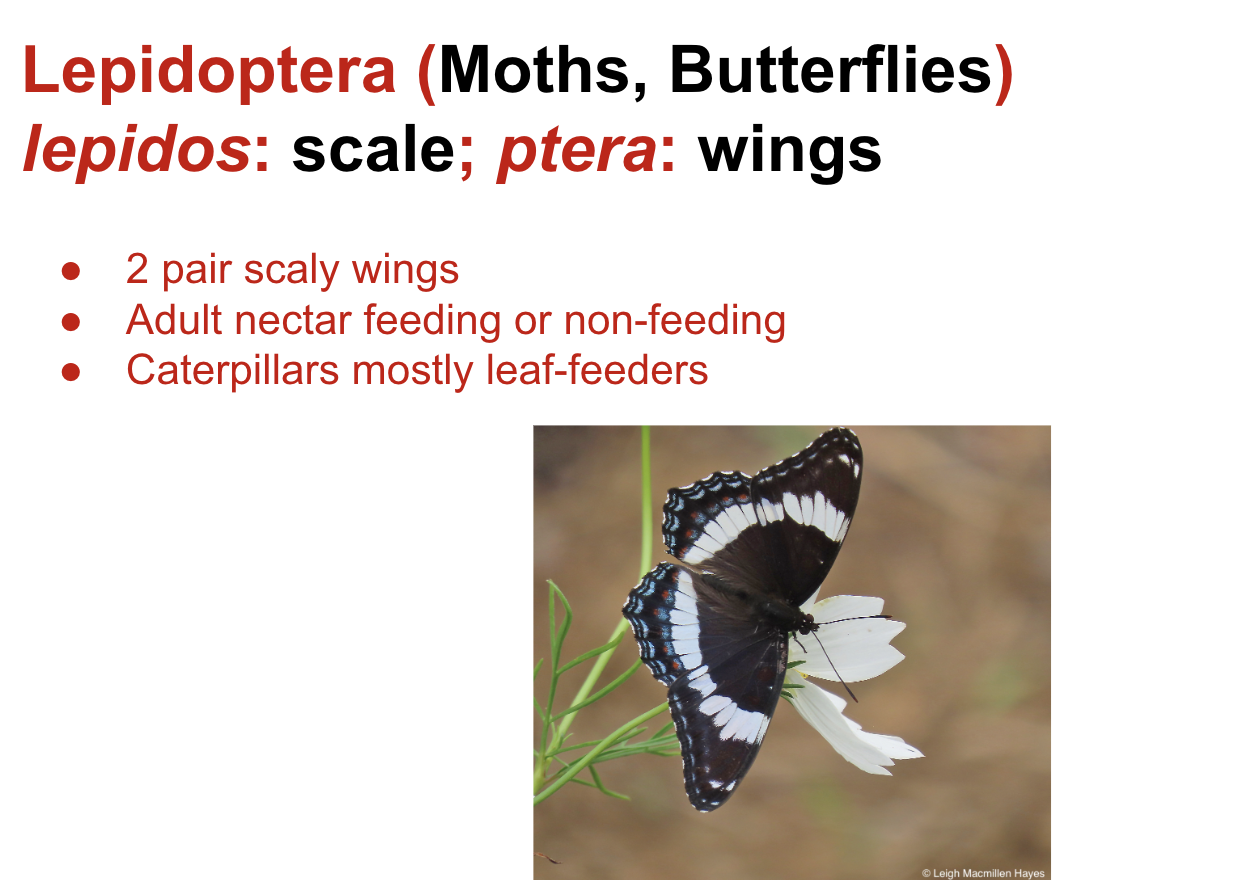
For me, it’s the last two items in the list that help me best differentiate between butterflies and moths.

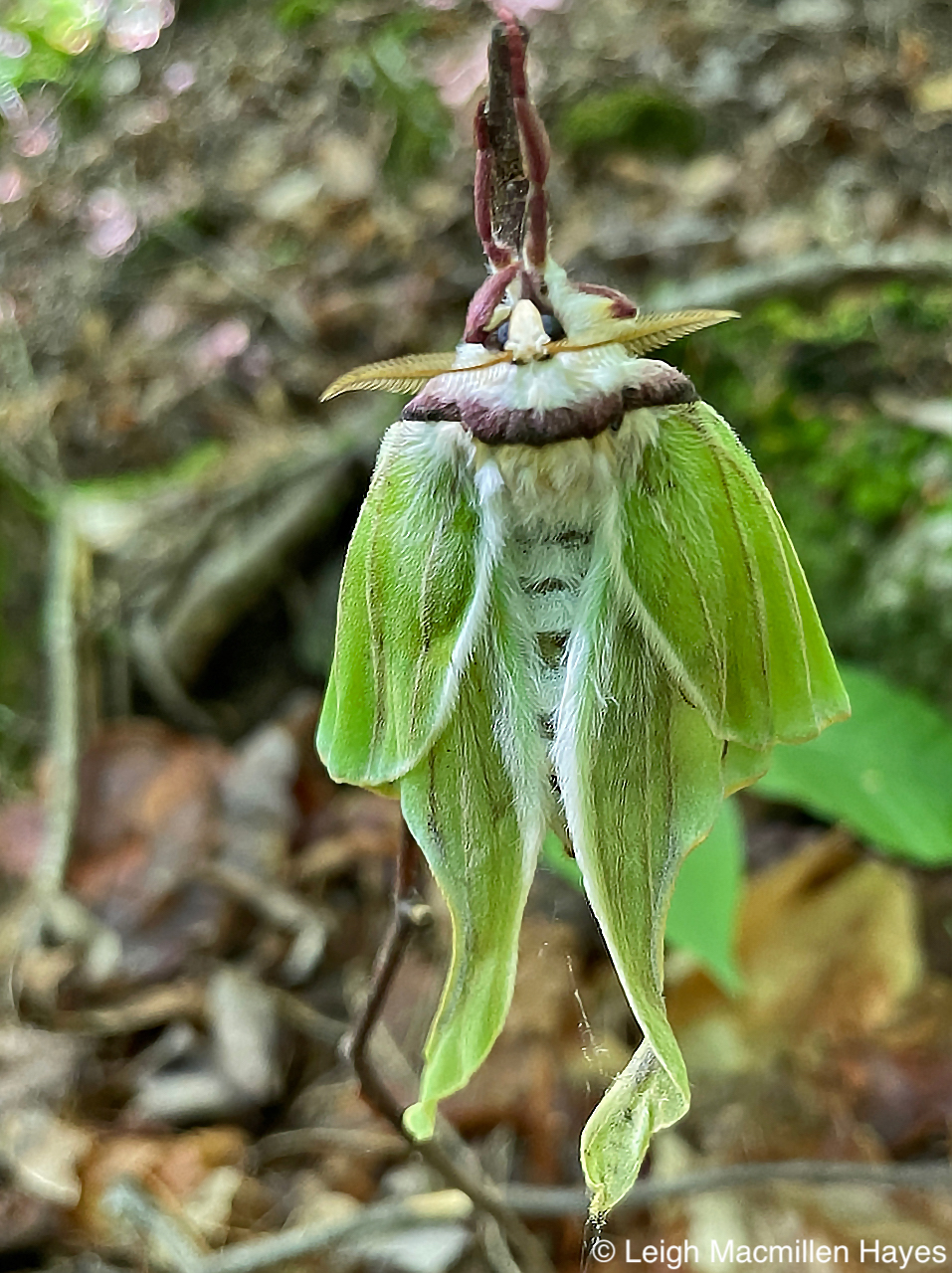
Notice the feathery antennae of the Luna Moth, who by the way, has no mouth parts because as an adult the job is only to mate. Leave the eating to the caterpillars in their larval form.

It’s just the opposite for the Clearwing Hummingbird Moth, who has a long proboscis like a butterfly that extends into the flowers to seek nectar. When in flight, the proboscis curls up and is tucked to the side of the moth’s head.

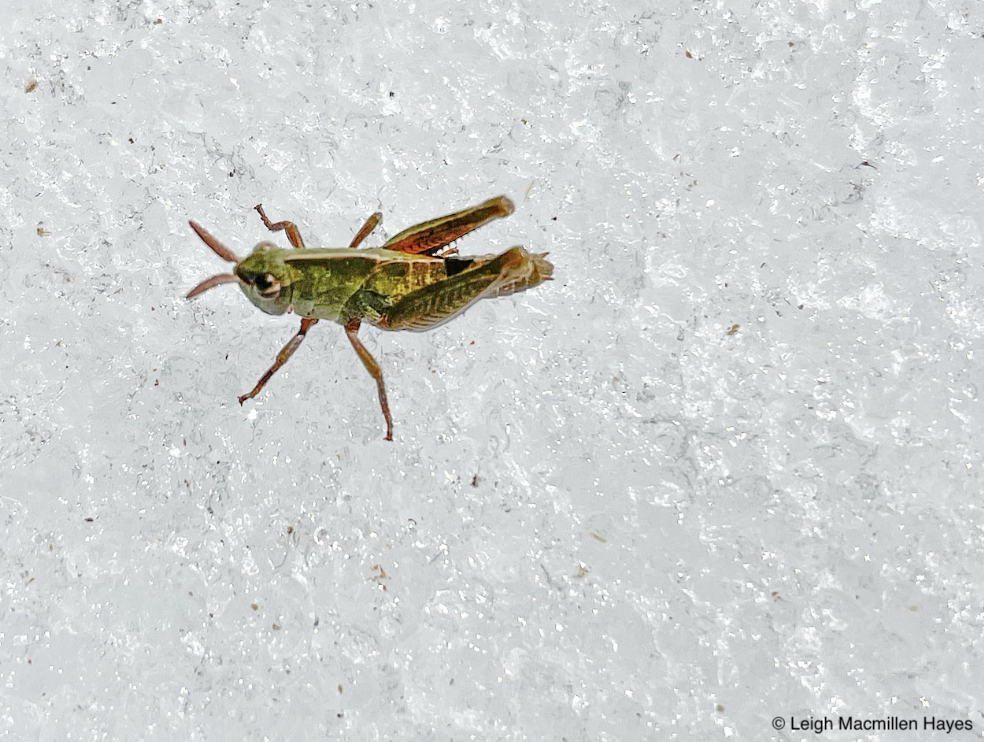
Grasshoppers molt as they grow and this was a larval form I spotted one extremely cold and blustery March day. It hasn’t any wings yet, but those will come as it sheds its skin several times before reaching adult size. Still, the youngsters look very much like their future mature selves.

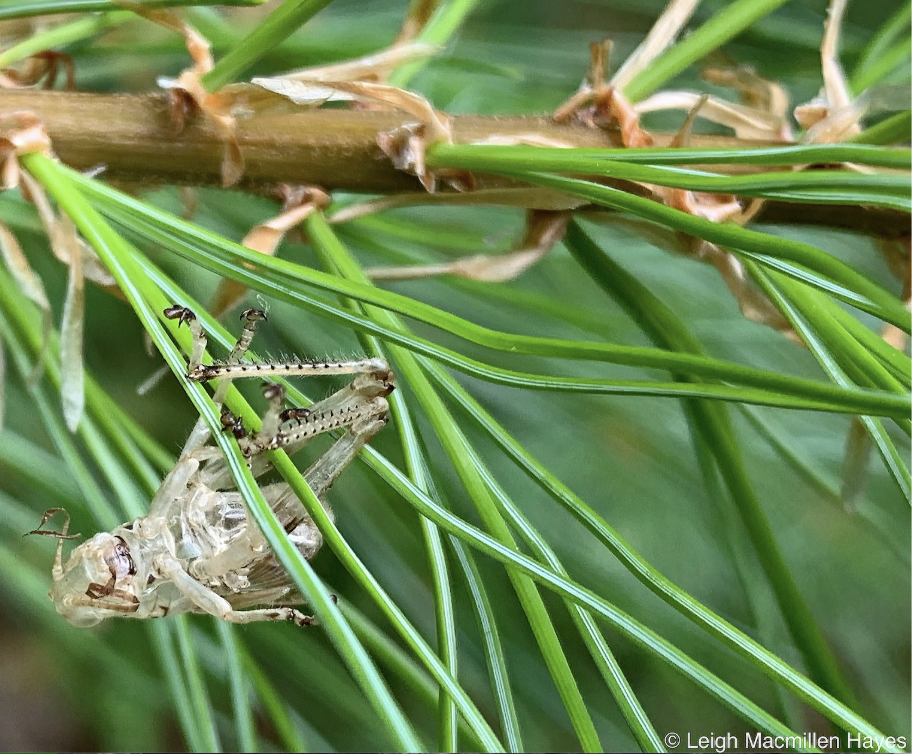
And to round things out, I found this molted skin in the fall and was totally intrigued by how much detail it included, right down to the spars on the hind legs. Of course, they should be there, but I was totally surprised because I hadn’t thought about it before.

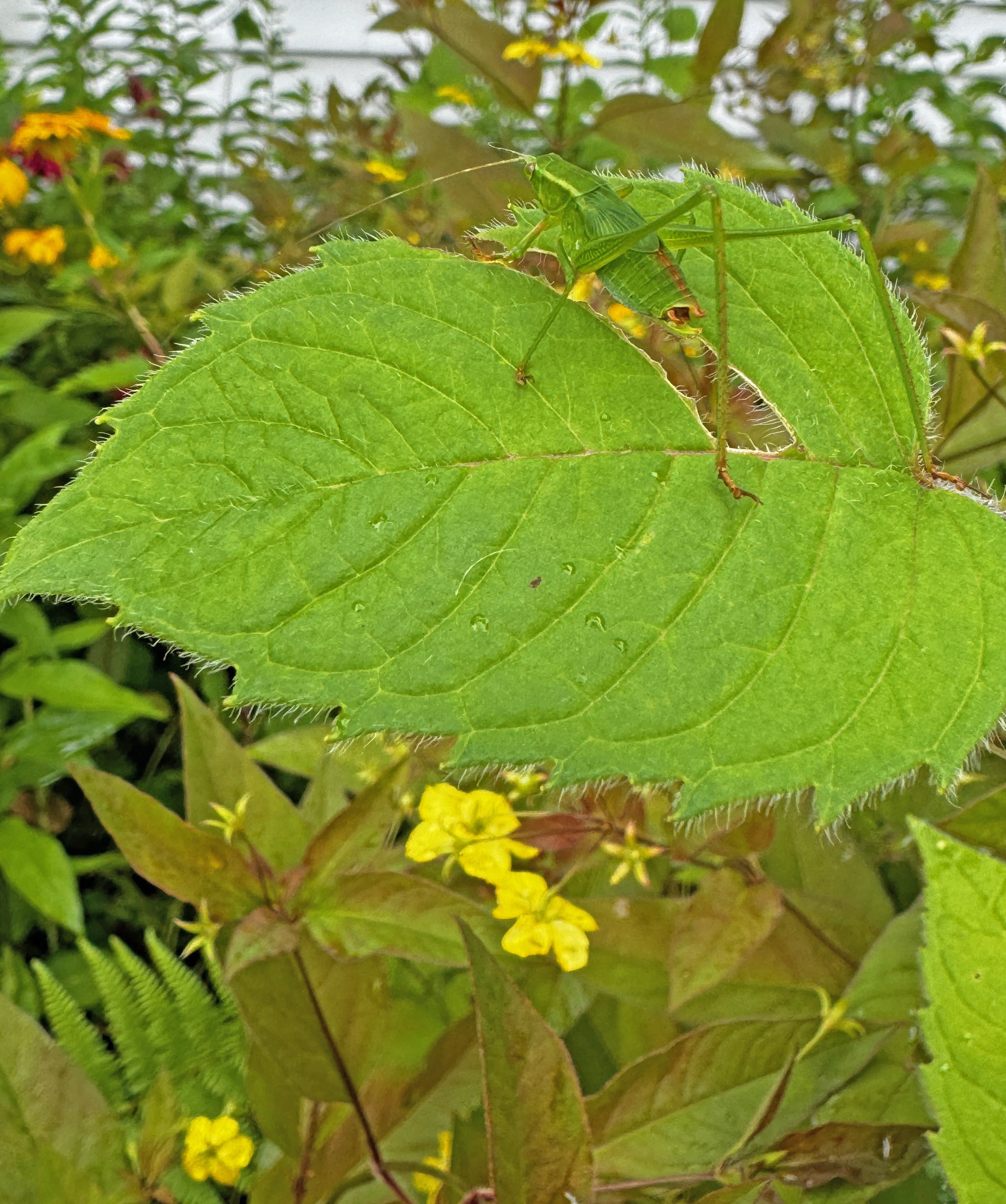
My next friend is a “Where’s Waldo” feature because it blends into its surroundings so well. Curiously, I grew up with the ever present summer song of Katydids in Southern New England, but despite living in the North Country for all of my adult life, I haven’t heard one in years. Then again, I only see one or two a summer it seems, so maybe there aren’t too many around who will listen.

Both dragonflies and damselflies begin life as aquatic insects. Think natatorial legs.

As some of you know, I could share a million photos of dragonflies and I’d never get tired of it, though you might. I am limiting myself to just a couple, including this female Racket-tailed Emerald, so named for the abdomen that widens toward the end somewhat like a tennis racket. I love imagination!

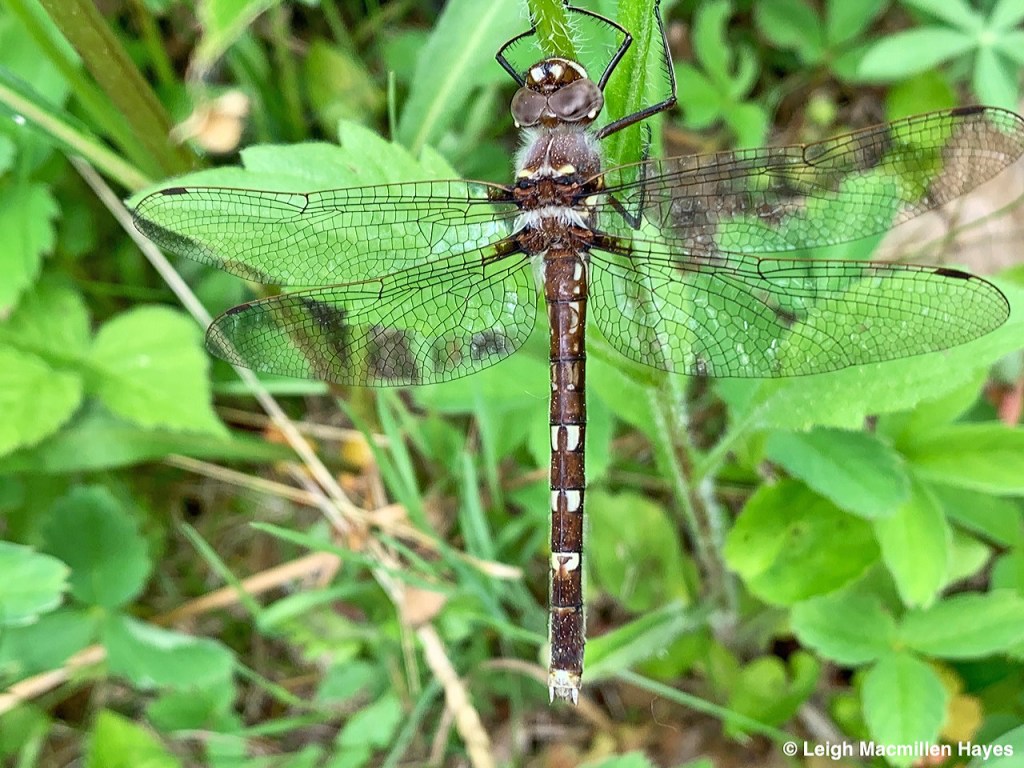
But probably my favorite dragonfly is the Stream Cruiser, especially when it has newly emerged and presents in browns and whites that make me think of Oreo cookies or a no-bake Icebox Cake (which I was honored with for my birthday this past year–thanks Deb!)

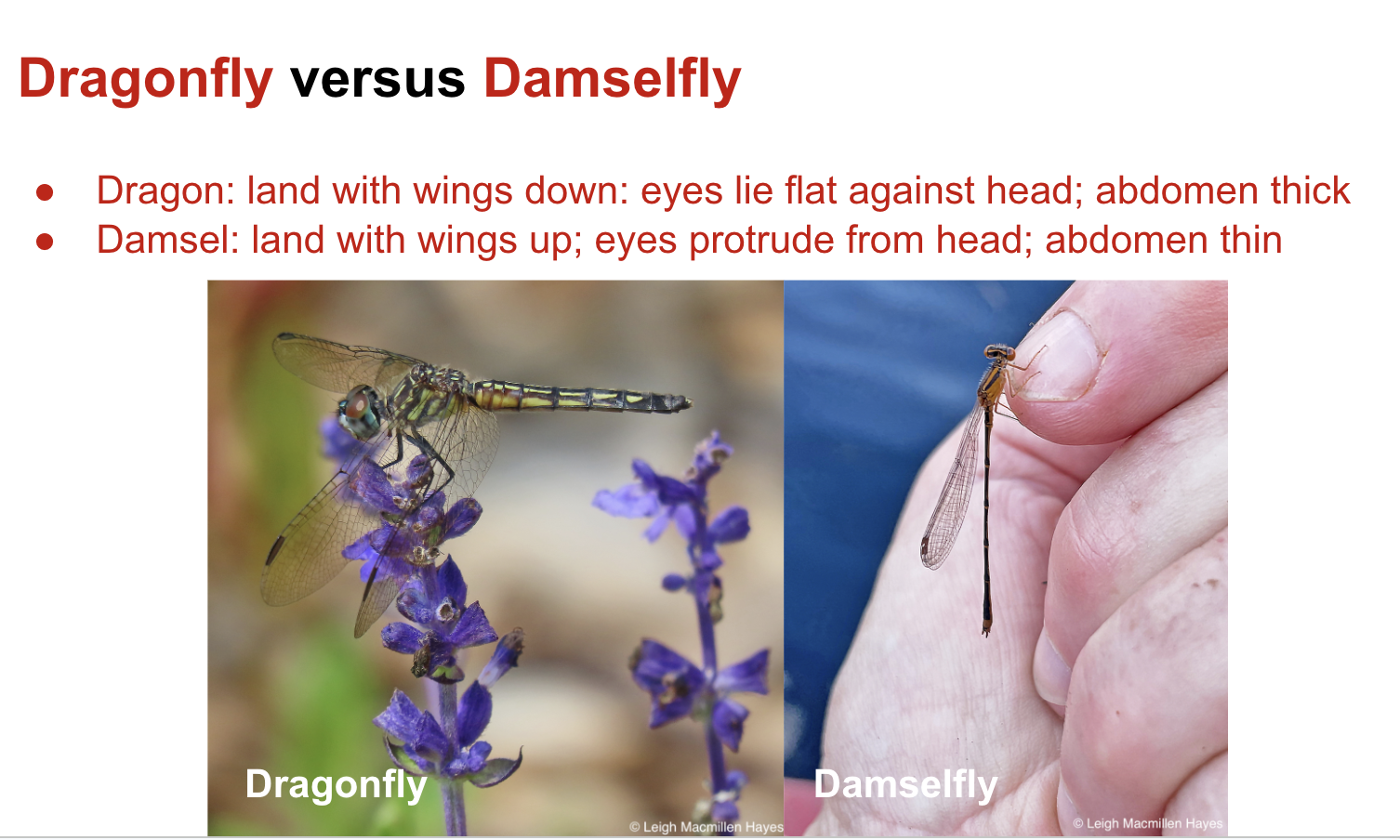
Just like there are subtle differences between butterflies and moths, the same is true for dragons and damsels.

I often meet members of this Orange Bluet family of damselflies when I’m paddling near our camp. My only wish is that this one had gone for the meal that awaited–a Deer Fly; before I became the Deer Fly’s meal. It wasn’t my lucky day.

The Orange Bluet is a pond damsel, so called because its wings are clear and closed when it perches.

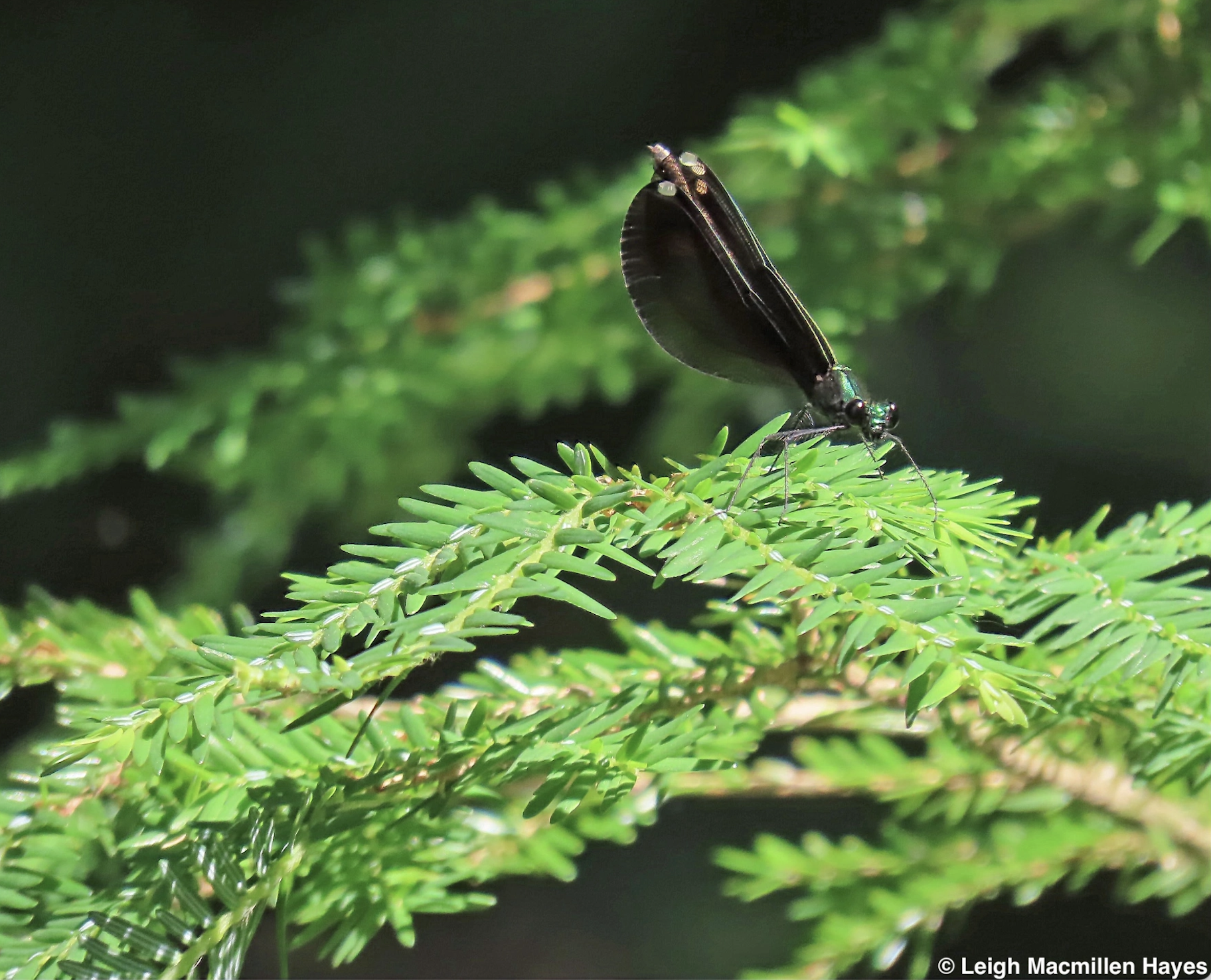
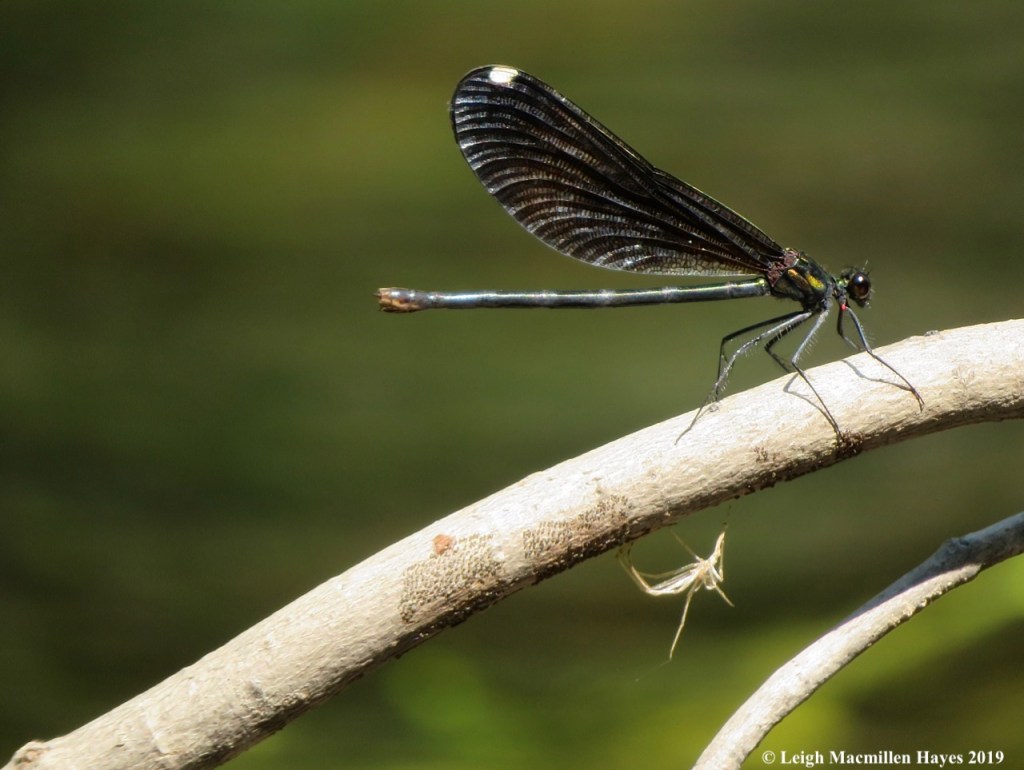
Among the damelflies, there are also broad-winged varieties, such as this female Ebony Jewelwing. If you are near a stream or damp spot in the woods, be on the lookout for these beauties. And note the white stigmas on her wings. Her guy’s wings are all black.

And one last damsel that I wanted to include is a member of the spread-wings. It’s easy to think of these as dragonflies because the wings are . . . spread a bit apart like the dragons. But . . . note the thin body. And the arrangement of the eyes. Damsel eyes are a bit like barbells.

Beetles come in so many shapes and sizes and colors. And their antennae are variable as well. I just love the antennae on this Oriental Beetle.

There are also a variety of long-horned (long antennae) beetles, but what caught my eye was that these two were totally undisturbed by an ant that was seeking nectar as they romped.

Because I stalk my “gardens” and the adjacent field, I happen to know that these two canoodled for hours. I did miss their point of departure, but can safely assume I’ll meet their children in the future.

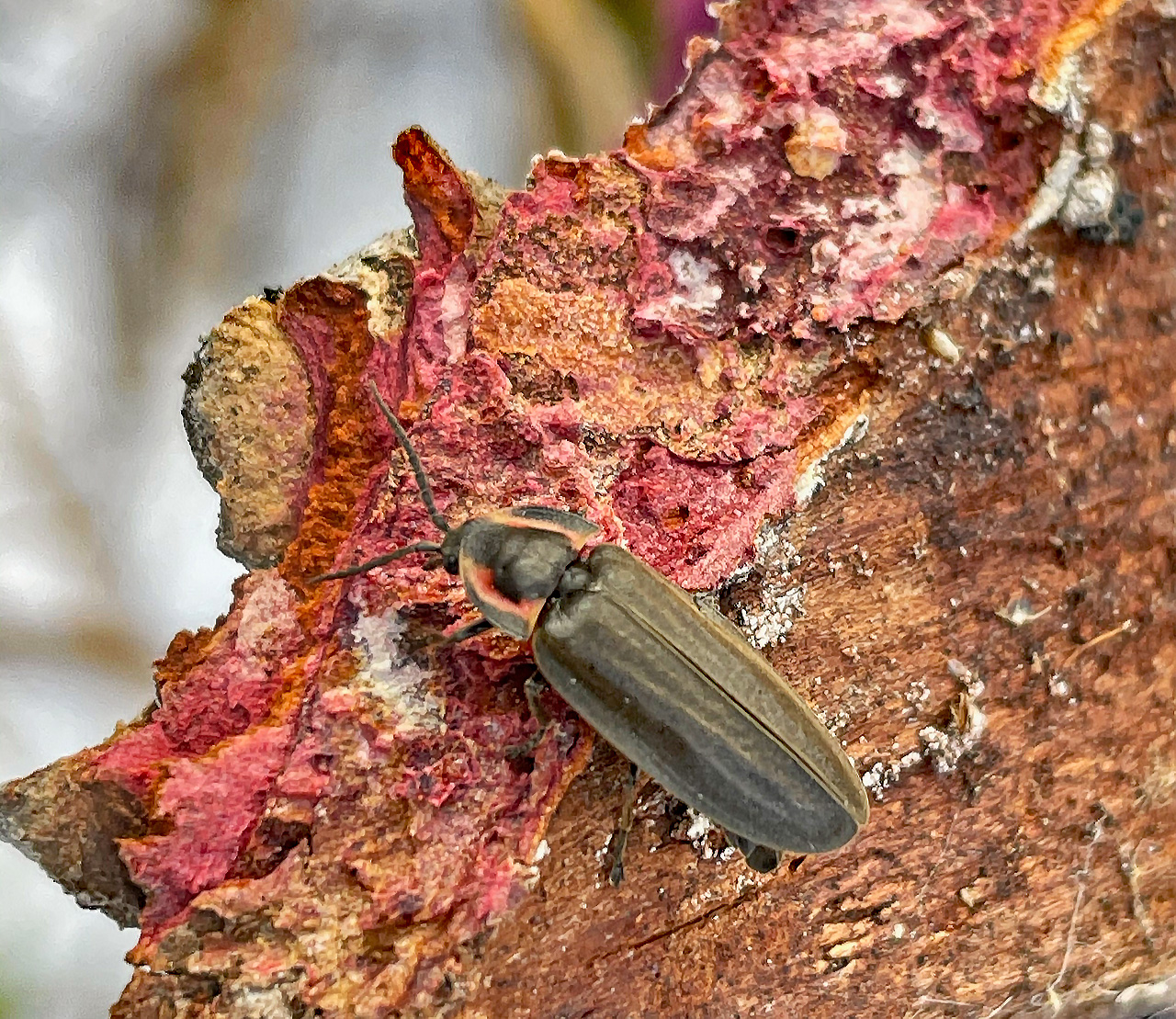
My final beetle to share today is the Winter Firefly, who is fireless as an adult. Though I’ve never seen this, I’ve read that the Winter Fireflies eggs, larvae, and pupae glow. But not the adult.

Though visible all year, now is a fun time to locate these beetles. (Wait–it’s a fire”fly,” but not a fly? Nope! And if you call it a Lightning Bug, which are its close relatives, you should note that it’s also not a bug!)

Notice the pink parentheses bracketing the shield behind its head–as a former English teacher, that makes my heart sing.

One of the most mysterious true flies in my neck of the woods is the Phantom Crane Fly. Think Phantom of the Opera when you look at the coloration. And seriously, this crane fly literally floats through the air, looking like the small outline of a box if you are lucky enough to spot it.

Crane flies are not oversized mosquitoes and they will not harm you.

Another in the Crane Fly family is the Winter Cranefly, a tiny, mosquito-looking insect with super long legs. The lightbulb is two inches long, so that should give you a bit of perspective on this insect’s size.

Like all members of the family, these can be found in moist places. And the males form swarms in an effort to perform pre-canoodle dances to entice a mate.

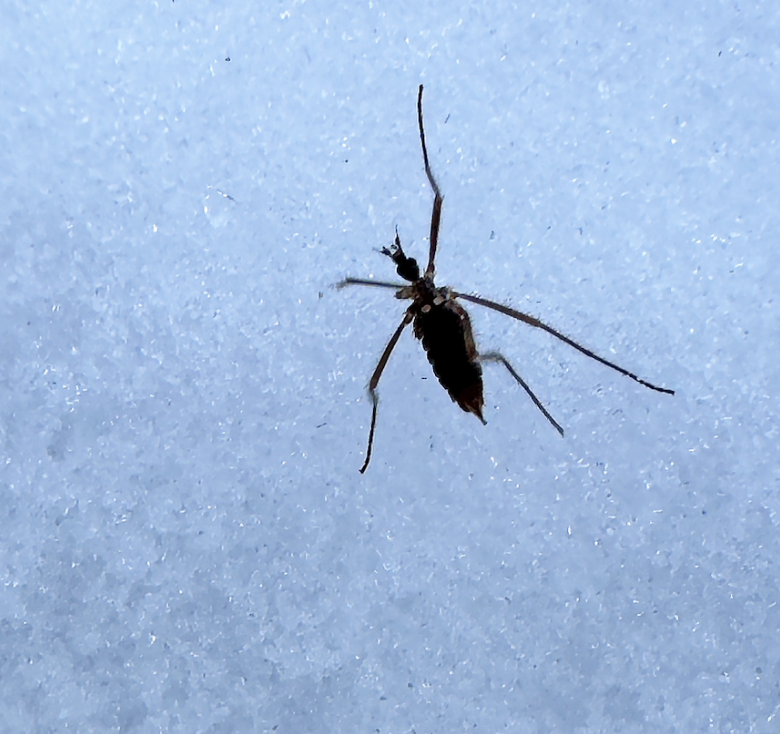
Another who is closely related to the crane fly family is also most readily seen on snow, this being the Snow Fly. It differs from other crane flies, however, in that it is wingless.

When I first spotted this one about a month ago, on a frigid day, I thought it was a spider at first. Until I counted its legs. 1. 2. 3. 4. 5. Yikes. Certainly not the eight legs of a spider. But . . . where’s leg #6?

Snow Flies, I learned, have the ability to self-amputate a limb that is beginning to freeze as a way to stop icy crystallization from spreading to the rest of the body, and especially its organs.

Since that first sighting, I’ve spotted a few more, and thankfully, all feature complete sets of three pairs of legs.

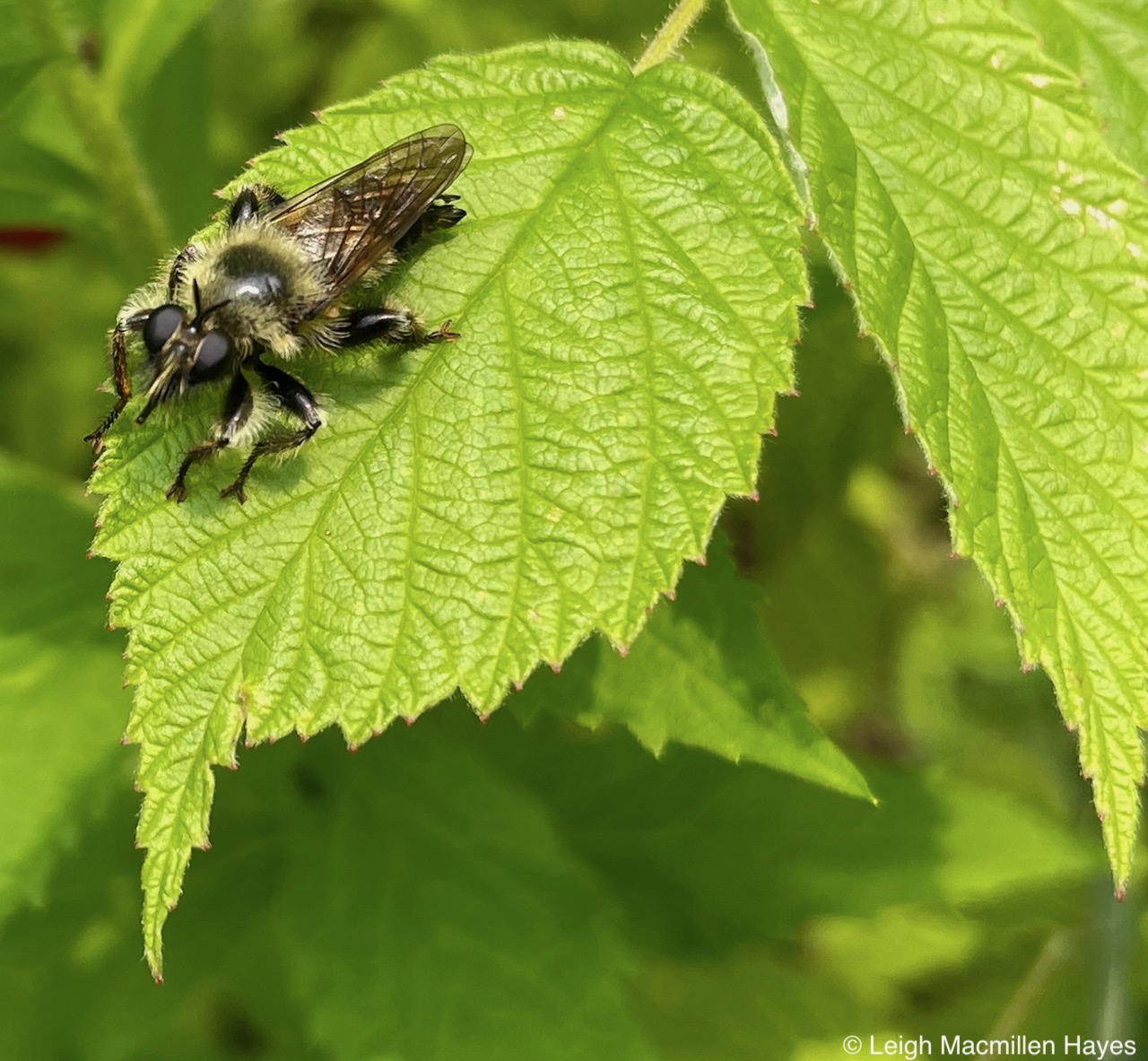
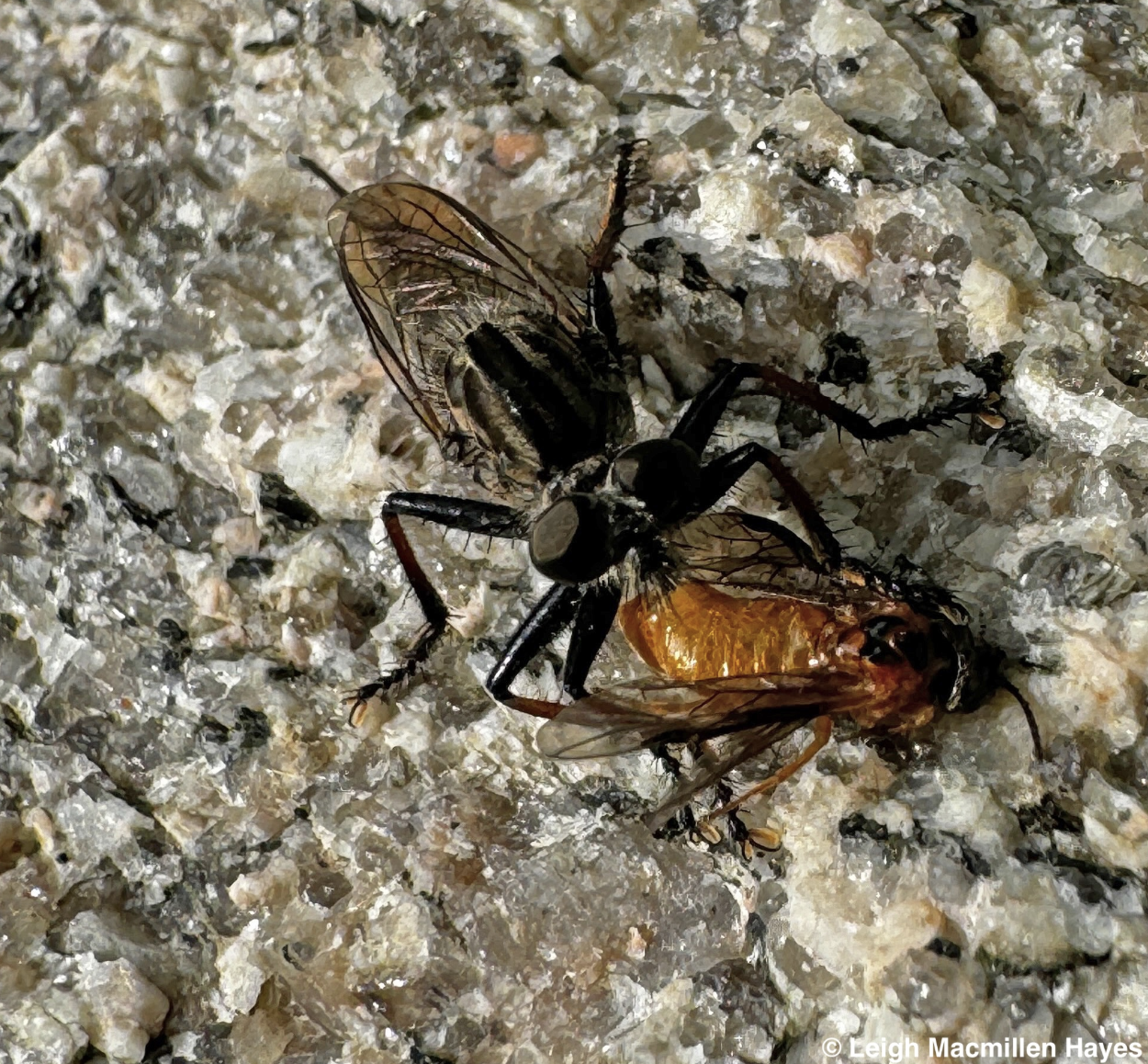
Next up in today’s lesson plan, the Robber Fly. This particular species has such a hairy body that it mimics a bee. Its proboscis, or mouthpart, is rather beak-like, the easier to consume insects.

Robber Flies wait patiently, or so it seems, and then when the time is right, they pounce. And stab the prey with their straw-like mouthparts, injecting the subject with enzymes that paralyze it before sucking the liquified guts. Yum.

While I found the Bumblebee hanging out on a rainy day, it was a humid day when I spotted this Robber Fly taking advantage of a little shade. And perhaps actually awaiting a meal that might fly or crawl into the plant.

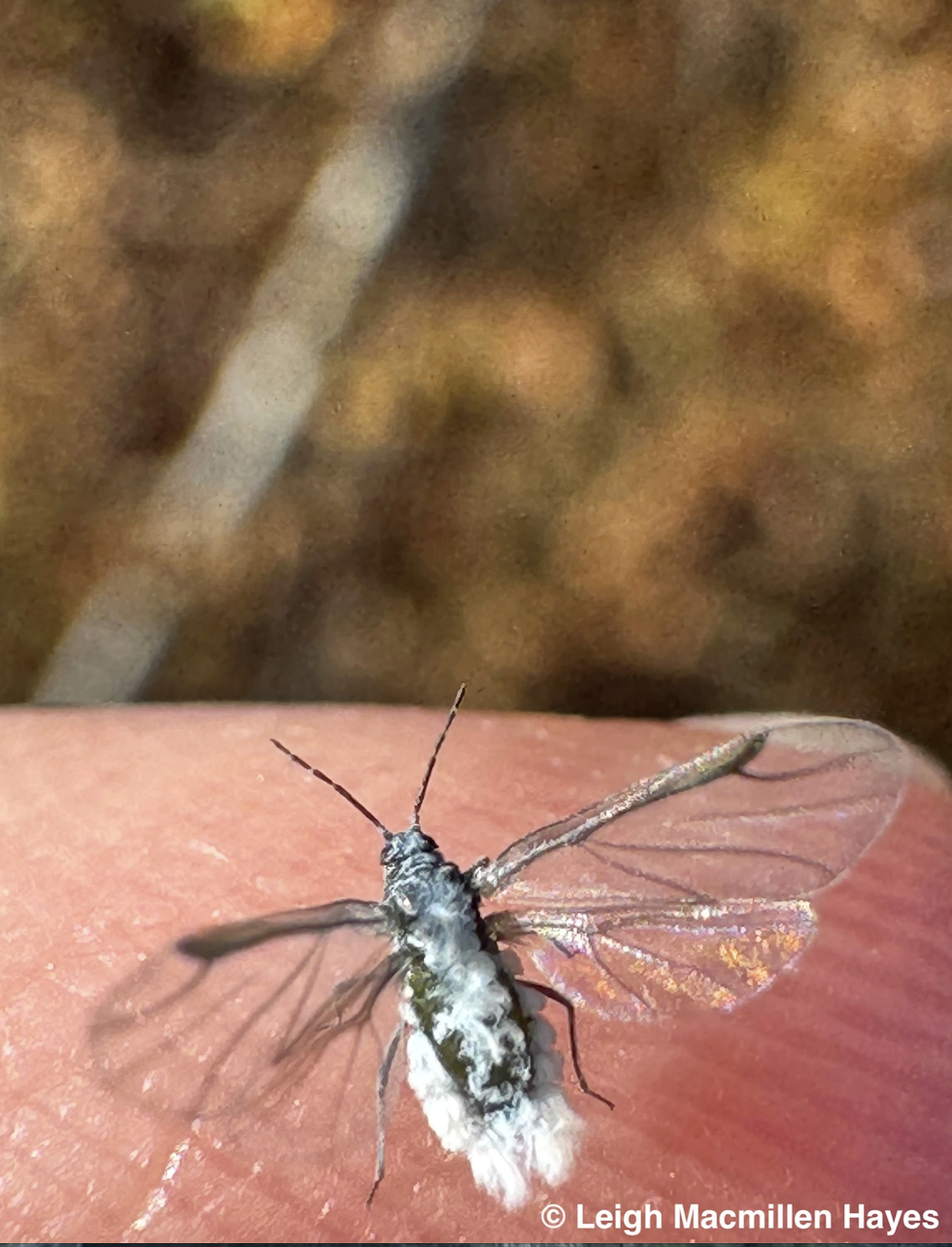
The final order of the day encompasses the True Bugs. Most True Bugs suck juices from plants. Including this wooly aphid that looks like a snowflake when in flight.

It’s the white fluff covering their body that is their defining characteristic. The fluff is made of small waxy fibers that serve to help keep the aphids hydrated. The hairs may also deter predators from ingesting them.

Sap-suckers though they may be, they don’t harm their host plants, and are a delight to spot in flight–much like little fairies flying about the woods.

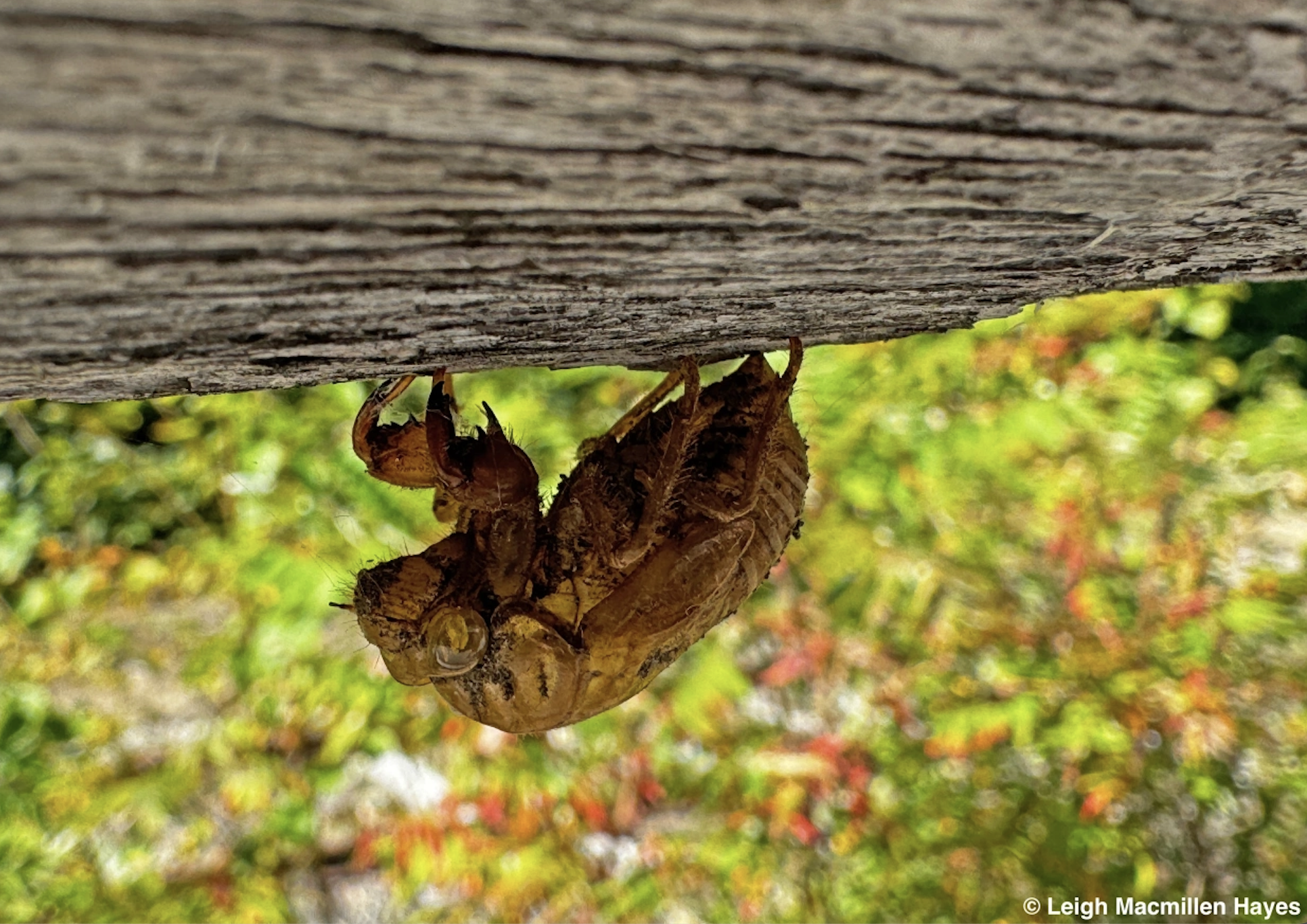
Another sap-sucking insect is another one of my favs: the Dog-day Cicada, this one being the cast skin of a nymph. I could wax poetic about them, but you can read more by visiting Celebrating Cemetery Cicadas, Resurrection, Consumed by Cicadas, My Love Affair, to name a few. I guess I really do like them since I’ve written about them so many times.

Love bugs yet? If not, I hope you at least will take some time to appreciate them. In winter and summer. And spring and fall.

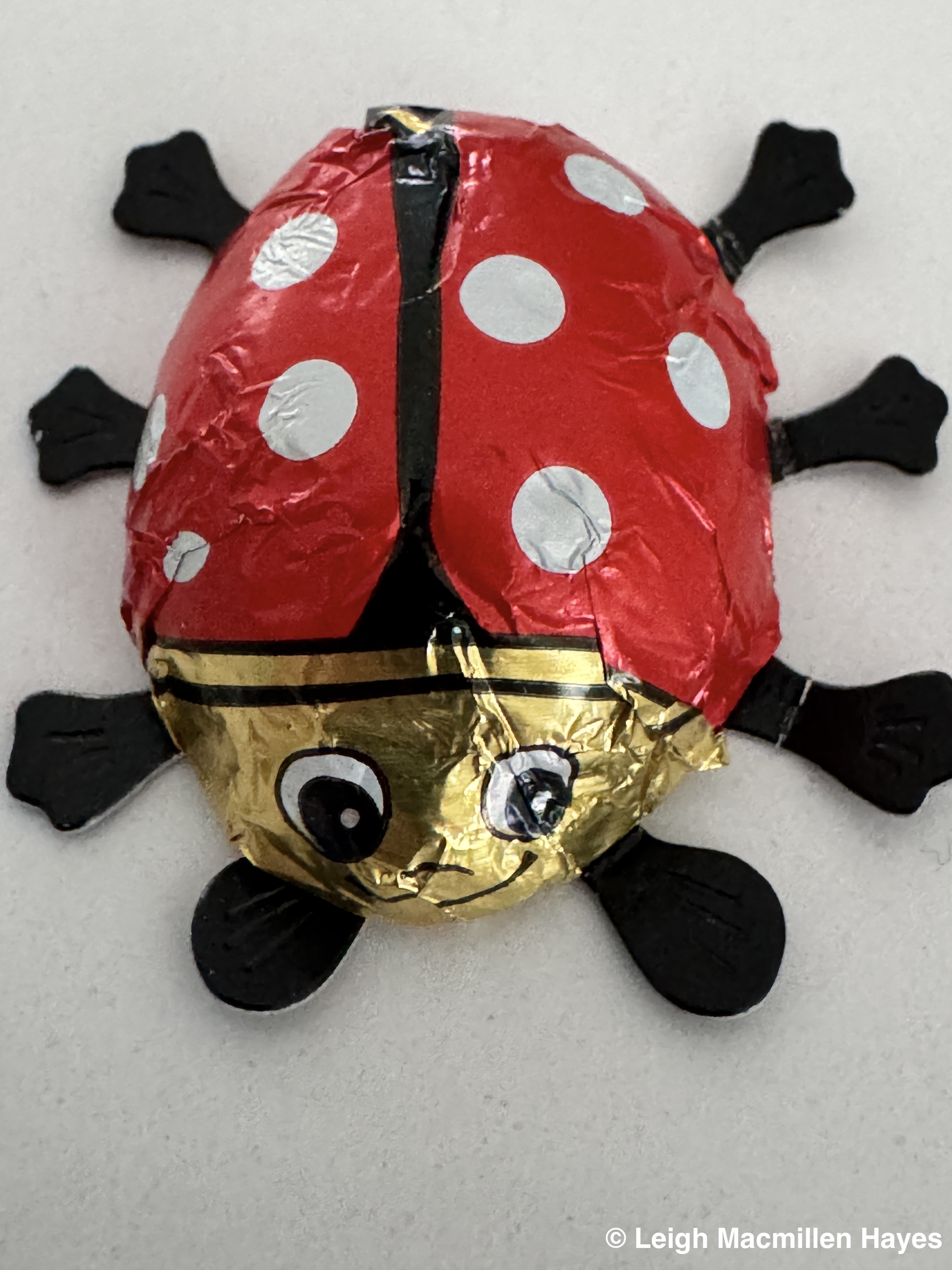
Of all my favs, and there are many it turns out, this one pictured above probably tops the list. It is, after all, chocolate! Under those leathery elytra wings, of course. My friend, Aurora, gave this to me a year ago, and I don’t think she realizes how much I really love it and that it sits in a shady alcove on my desk so it doesn’t melt. Bugs should not melt! Nor should they be eaten! Especially Love Bugs!
Where The Beaver Led Me

Where there is water there may be Beavers. And so I explored two locations on several occasions this weekend in a quest to spend some time with one of the most incredible mammals of our region.

One such spot is beside a wetland associated with a brook. It’s a place rich with color and texture, and ahh, those fall scents of earth and water and fallen leaves and Balsam Fir all settled together in the late afternoon after the morning sun has baked them.

The other was beside another brook that served as the outlet for a small pond, and again the colors and textures and scents filled my senses, enhanced by a slight breeze that made for a most delightful exploration on October days with temperatures in the 70˚s.

I don’t want temps to remain in the 70˚s always, but these days are gifts meant to be cherished and remembered by our skin and our soles.

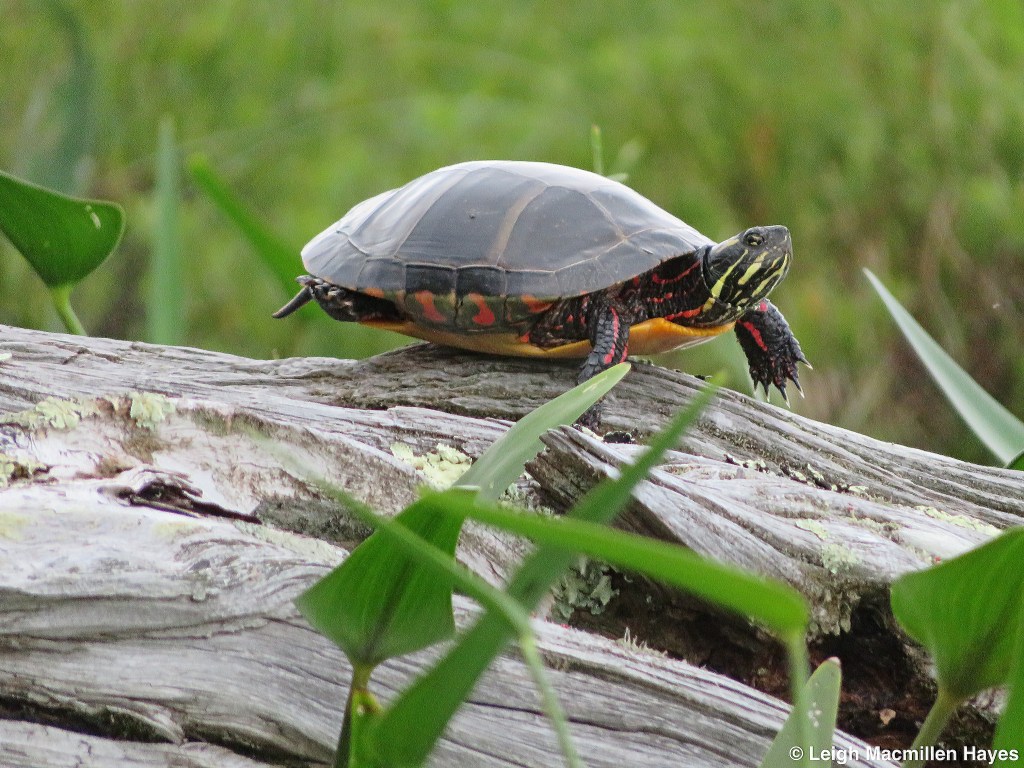
I discovered along the way that I wasn’t the only one basking in the sunlight, for Painted Turtles also took advantage of the warm rays to regulate their body temperature. It also provides an opportunity to hang out with friends as they congregate along logs and rocks.

Easter Painted Turtles, beautifully adorned as they are, feature intricate red coloring along the sides of their shells and bodies, plus a orangy-yellow belly, and lines of red and orange and yellow green on their necks and legs.

But beyond all of this, I’m reminded that they play a vital role in maintaining the health of their ecosystems as they consume a diverse diet from aquatic plants, to algae, insects and small invertebrates, thus cycling nutrients throughout the habitat–an environmentally healthy habitat.

I gave thanks to the Beavers for reminding me of that fact.

Back to the Beavers, my journey continued when I spied new Hemlock branches atop a lodge.

And then I began to find pathway after pathway across land to water where the family, since there are usually two or three generations of Beavers who live in a lodge and work the area together, had dragged downed trees and branches overnight and carried them between their teeth out to their residence.

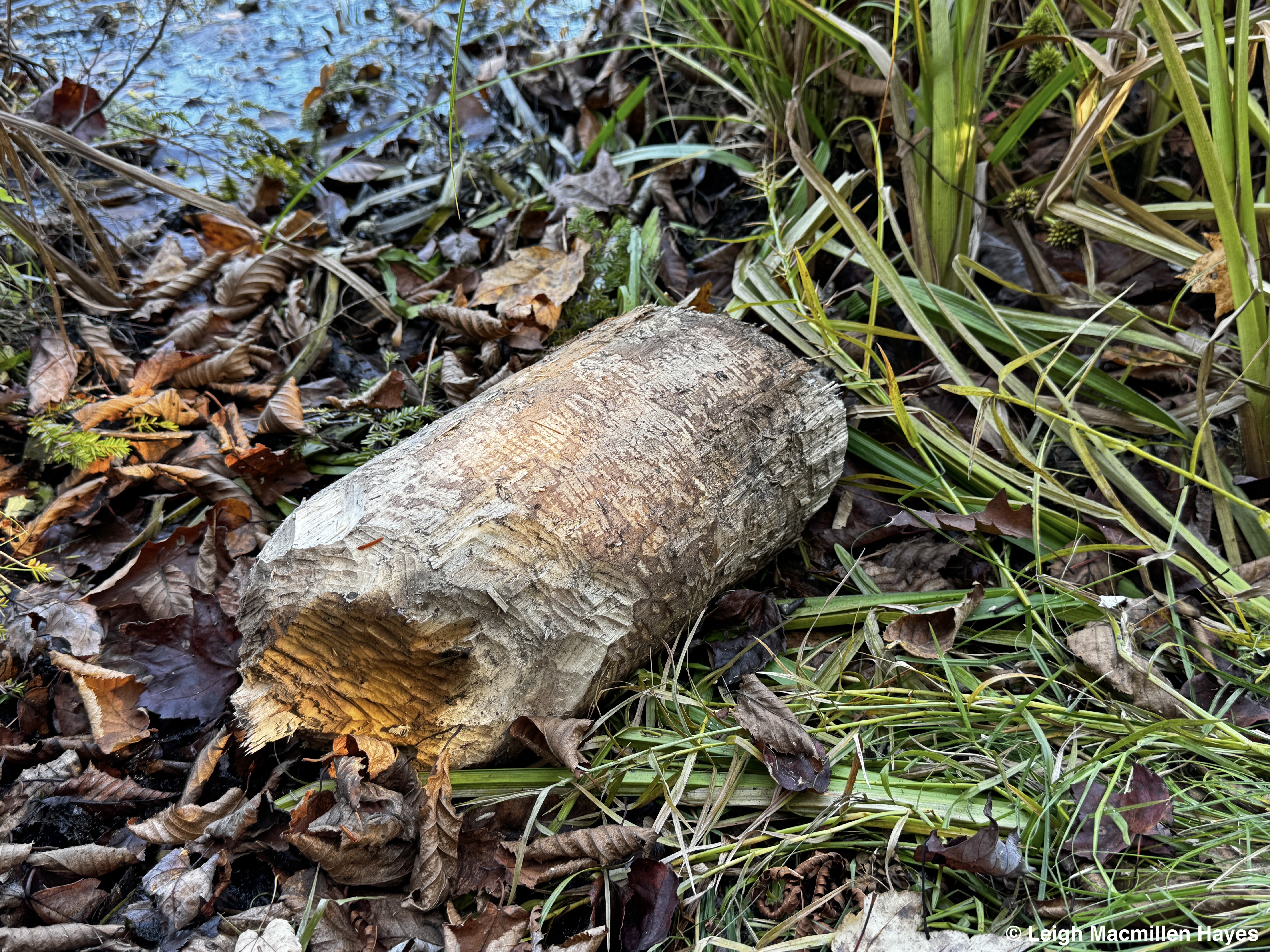
Their works were many and sculptures magnificent as they chiseled away and when I spotted this tree, I had visions of one standing on its hind feet and using its tail to form a tripod, the better to steady its body, as it turned its head to the side and began to work. With head cocked, it created the consistent angle of the half inch groove as the upper and lower incisors come together.

To reach such heights, I could only assume it was a mature Beaver. That, or one stood upon the back of another. Ah, but that’s the stuff of fairy tales. (I do like fairy tales–just saying).

As I looked around the base of a tree for more evidence, I discovered this. What could it possibly be? Scat?

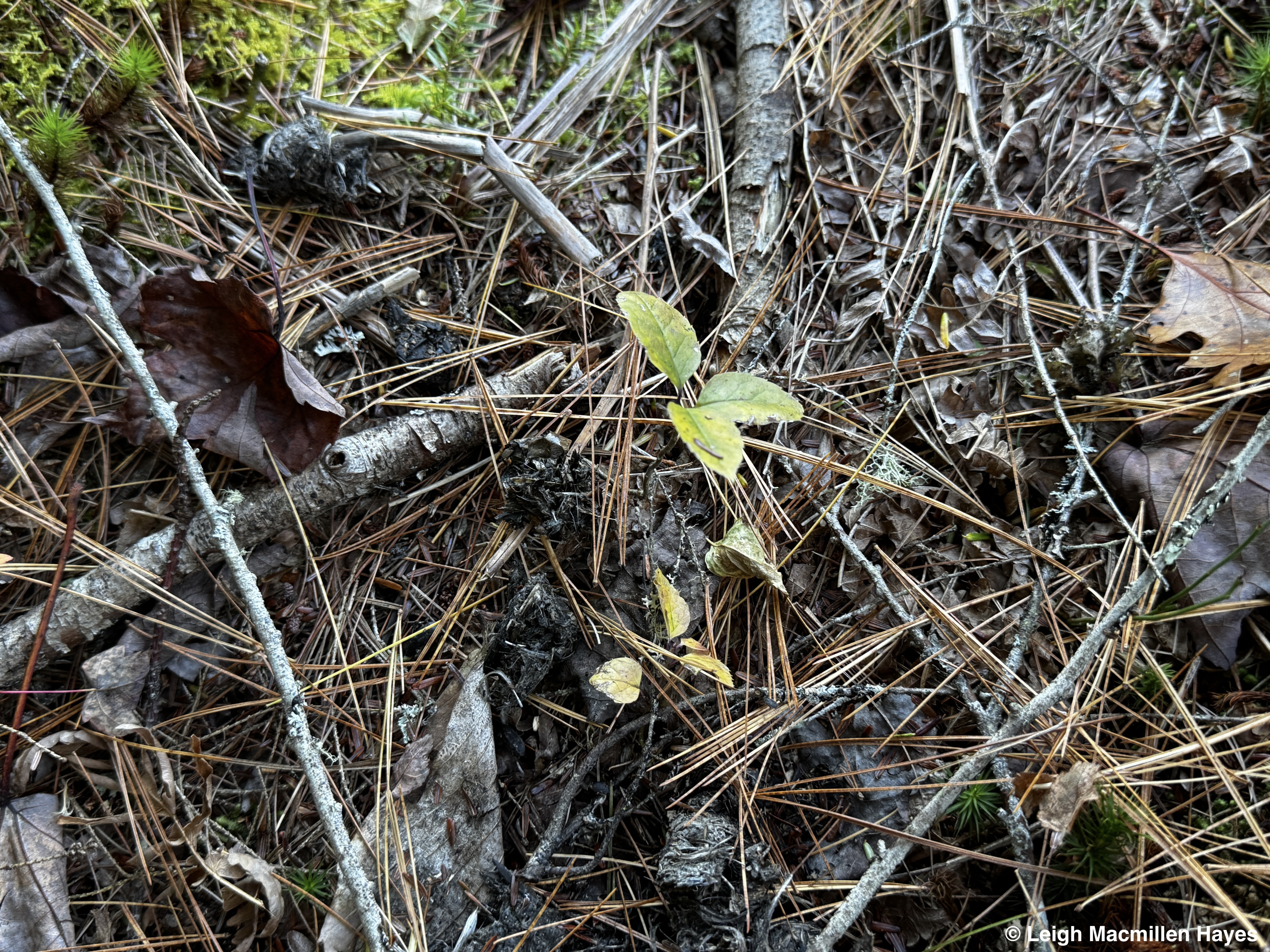
No. Pellets? Yes. Several of them. Filled with bones. And maybe hair. And/or feathers.

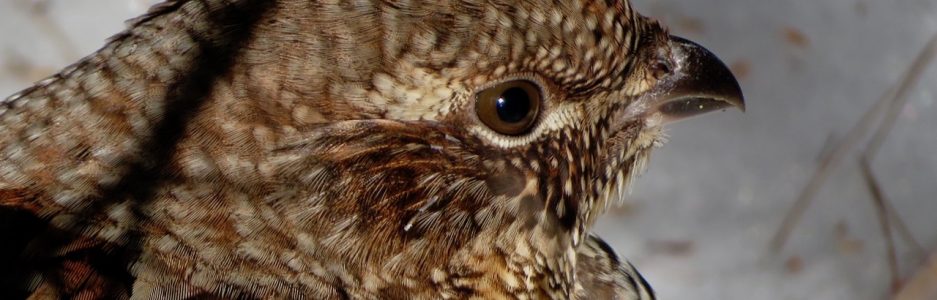
The creator? My brain automatically went to Barred Owl and I’ve seen and heard the owl in these woods on many occasions.

But . . . these natural treasures could also have been produced by a resident eagle or hawk or so many other birds. Based on the number of pellets under this one tree, its a certain signpost of a productive area for whatever bird chose to prey from above.

Moving farther along as I bushwhacked, I knew I was getting closer and closer to the animal of my dreams when I spotted trees being turned into logs.

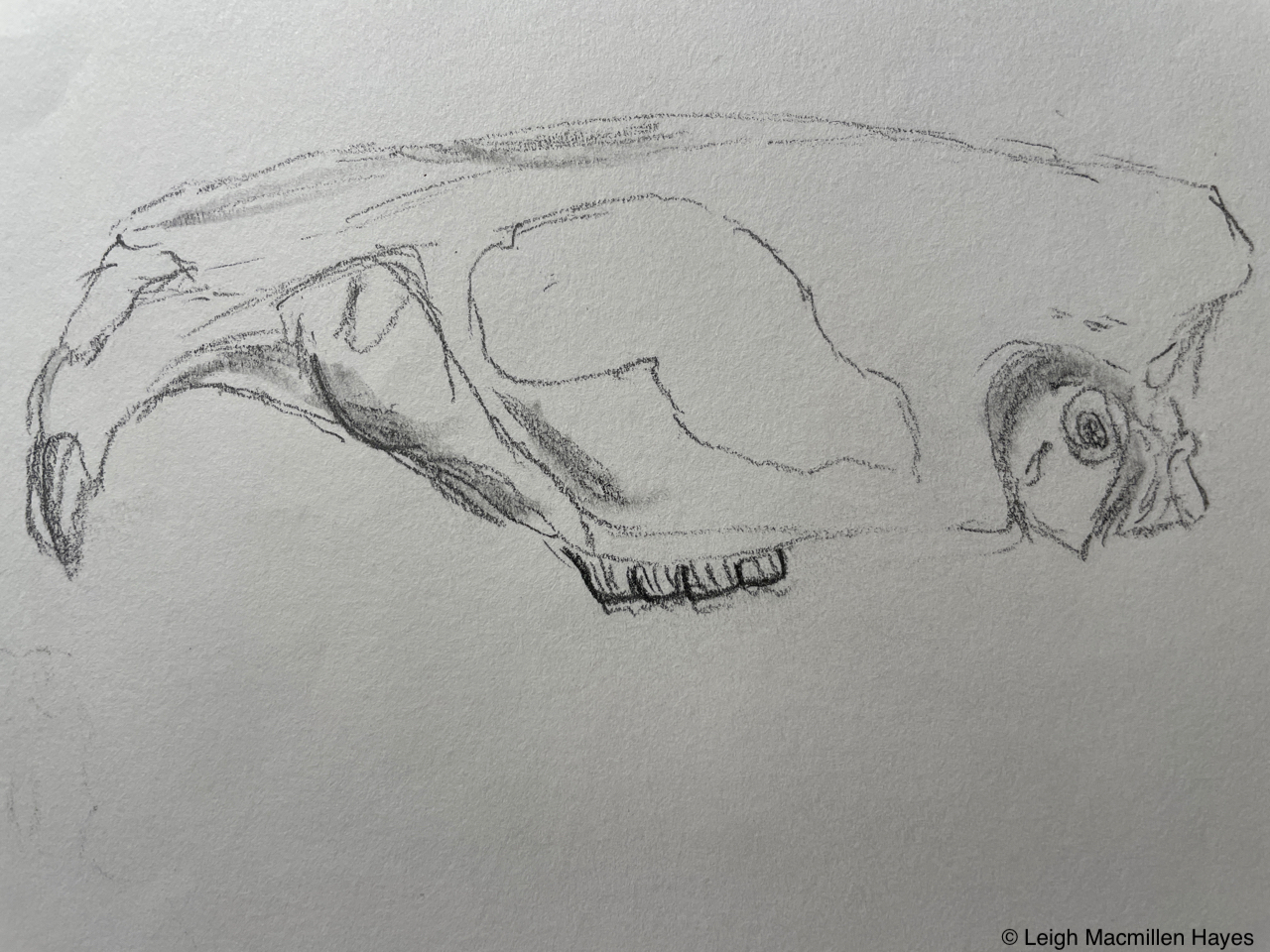
A beaver’s dental formula is this: 2 incisors on top, 2 incisors on bottom, 0 canines on top, 0 canines on bottom, 2 premolars on top, 2 premolars on bottom (that look like molars), 6 molars on top and 6 molars on bottom, for a total of 20 teeth. Recently, I was able to sketch the upper part of the skull of an older family member, who’d lost some of its molars.

These large, semi-aquatic rodents are gnawers. To that end, their incisors are highly specialized for chewing through really, really tough things and they grow continually throughout the critter’s life.

And like all rodents, the front surface of their incisors is coated in enamel reinforced with iron (hence the orange color), which makes it resistant to wear and tear from gnawing.

When the chisel-like teeth chew and fell trees, the much softer white dentine layer (the section behind the enamel) is ground down quicker than the enamel, thus creating a sharp chisel surface.

As strict herbivores, a Beaver’s diet varies with changes in the season. During spring and summer, they are drawn to waterlilies, algae, grasses, sedges, herbs, ferns, shrub leaves and shoots. By late summer, however, tree cutting begins as they gradually change their dietary habits from herbaceous to woody materials. Twigs, roots, bark and especially inner bark become the source of nutrition. Aspen, birch, alder, and willow are favored species, but beavers will cut almost anything including conifers.

Occasionally, I saw individual logs on land or upon a muddy spot in the water. Again, the consistency of the gnawing was to be admired.

And where there are Beavers, there may also be Porcupines. At least, there was a couple of years ago when I spent some winter days tracking one to this cozy little den. Remnants of scat are all that remain and spiders have instead made a home in the hollow of this tree.

And then I spotted the most amazing feat of all. A widow maker dangling from a tree (that is if you are about eight inches tall), its bottom gnawed off and more gnawing about a foot and a half off the ground.

My search was interrupted again when a Spotted Spreadwing Damselfly entered the scene in a sunny spot. So named Spreadwing because unlike other damselflies that fold their wings over their backs when at rest, the Spreadwings, um, spread their wings. On the of left hand side it looked like this insect had four wings rather than two, but such was the sun’s angle in that spot and thus the shadows upon the leaves.

Identification was based on the lower side of the abdomen, where it is difficult to see, but there are two spots below the thorax stripes as compared to the Great Spreadwing with has two yellow stripes with brown between them, and no spots.

Autumn Meadowhawks were also on the fly and I kept seeing males with no ladies about.

A couple of hours later, one flew in, but though they danced in the air together as he chased her, they never did canoodle, in my presence anyway. And the last I saw of them, they headed to separate branches of a pine tree, perhaps to spend the night in rooms of their own.

The Beavers weren’t canoodling either, but they were certainly active given the rolls of mud and grasses and sedges and probably reeds I kept finding along the water’s edge.

And then I discovered the much sought after (at least by me) Beaver print. It’s a rare occasion to see a print, but sometimes I do in the snow. Their tails and the trees they haul swish away such evidence of their travels.

As I stood beside a Beaver path and downed trees just above where I spotted the print, another flying insect entered the scene. And I had the joy of watching her as she deposited individual eggs in vegetation.

With her ovipositor located under her abdomen, the female Swamp Darner punctures a hole in mud, and logs, and aquatic vegetation in which to lay her progeny. The cool thing is that her eggs can survive a year without water, incase the level is low as it is right now. I suspect by spring these will be quite wet.

I never did find the Beaver(s) of my dreams, but spied another platform that may have been a lodge in the making. I hope they are still living there as the evidence leans in that direction.

At the end of the day, however, my heart was full with all my findings in both locations and I gave great thanks to the Beavers who led the way and all the discoveries I made as I searched for them.

Our Happy Place Mondate

Imagine our joy. Imagine our smiles that showed our joy.

We’d considered a hike for this Mondate, but awaking to another humid day put the damper on that.

How should we spend the day? What would make us both happy?

A paddle seemed the perfect solution.

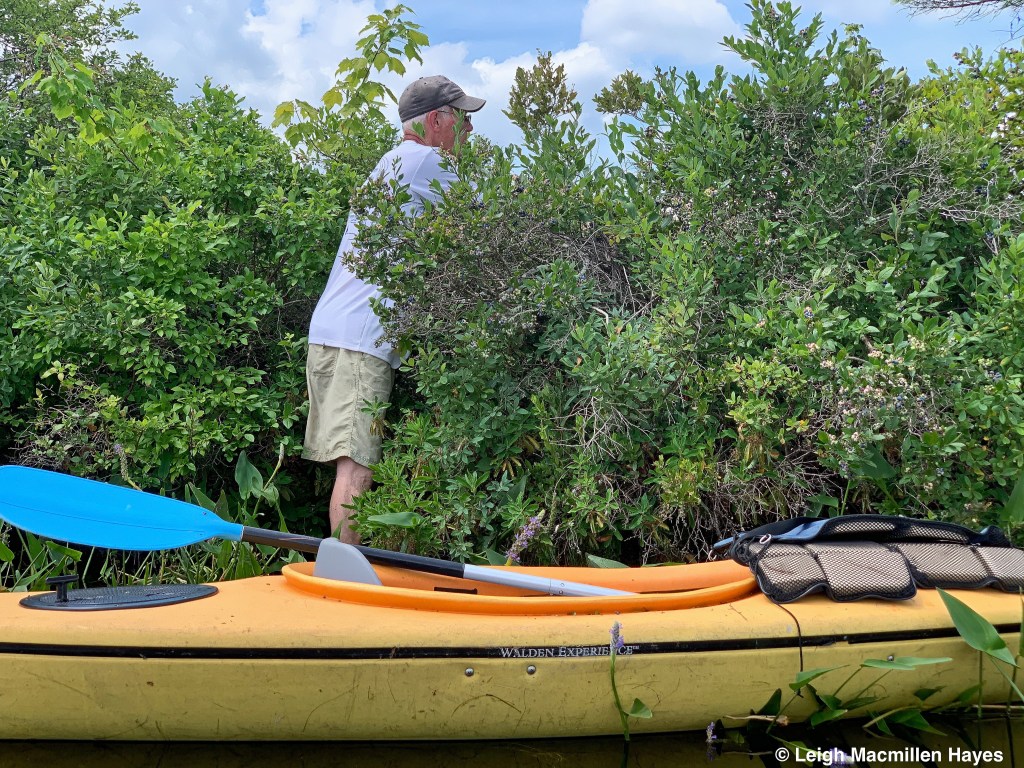
And so off we headed into the deep blue sea. Or rather, deep blue pond. My guy sought another hue of deep blue. In the form of certain berries so named for their color.

I, on the other hand, sought others, such as this Lancet Clubtail dragonfly who returned to my dirty kayak over and over again–a sibling chasing him off in between.

As we explored the edges of islands, my guy searching for fulfillment of the containers he’d brought along, Swamp Spreadwing damselflies, their form so dainty, posed frequently to my liking.

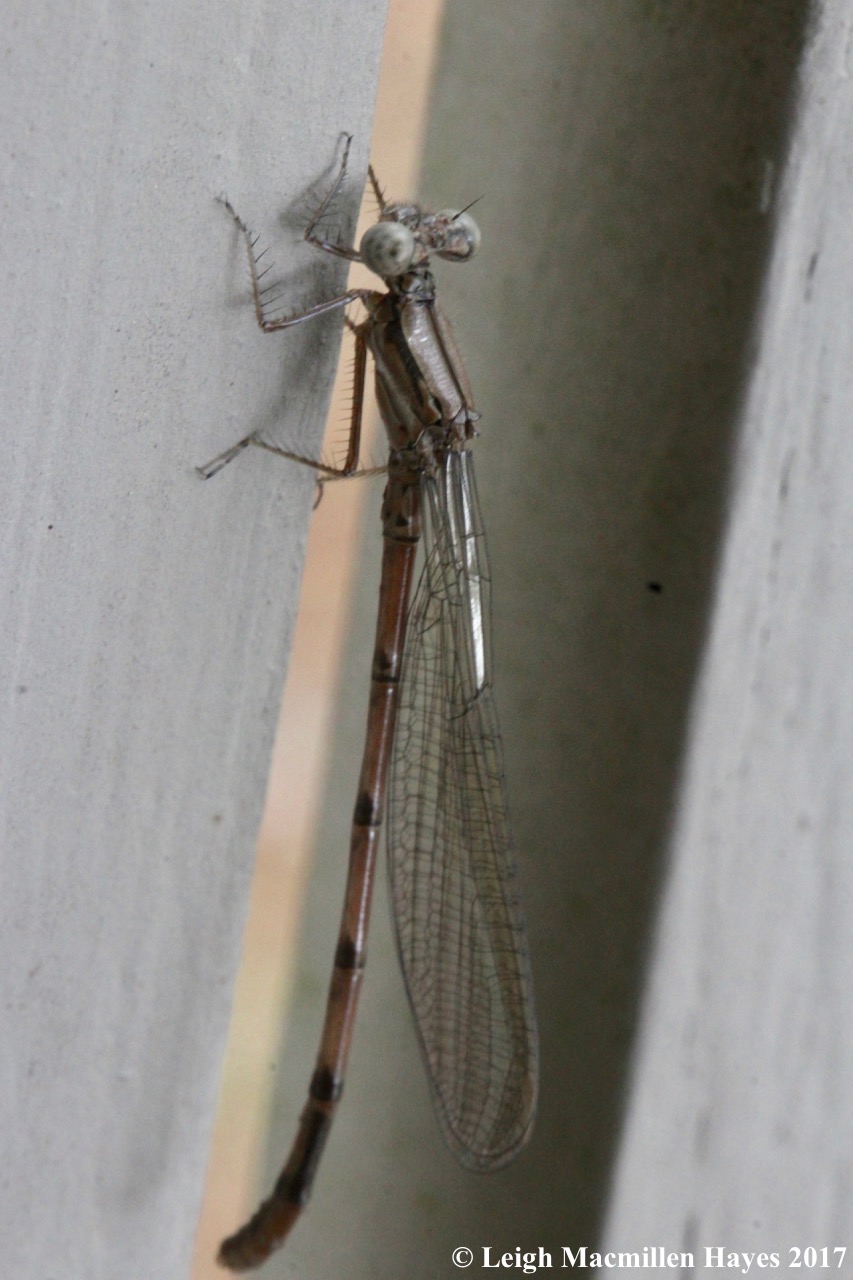
Among the branches of my guy’s desire, webs had been created . . . and unfortunately for some spreadwings, canoodling acts were ended by the sticky structure created by others.

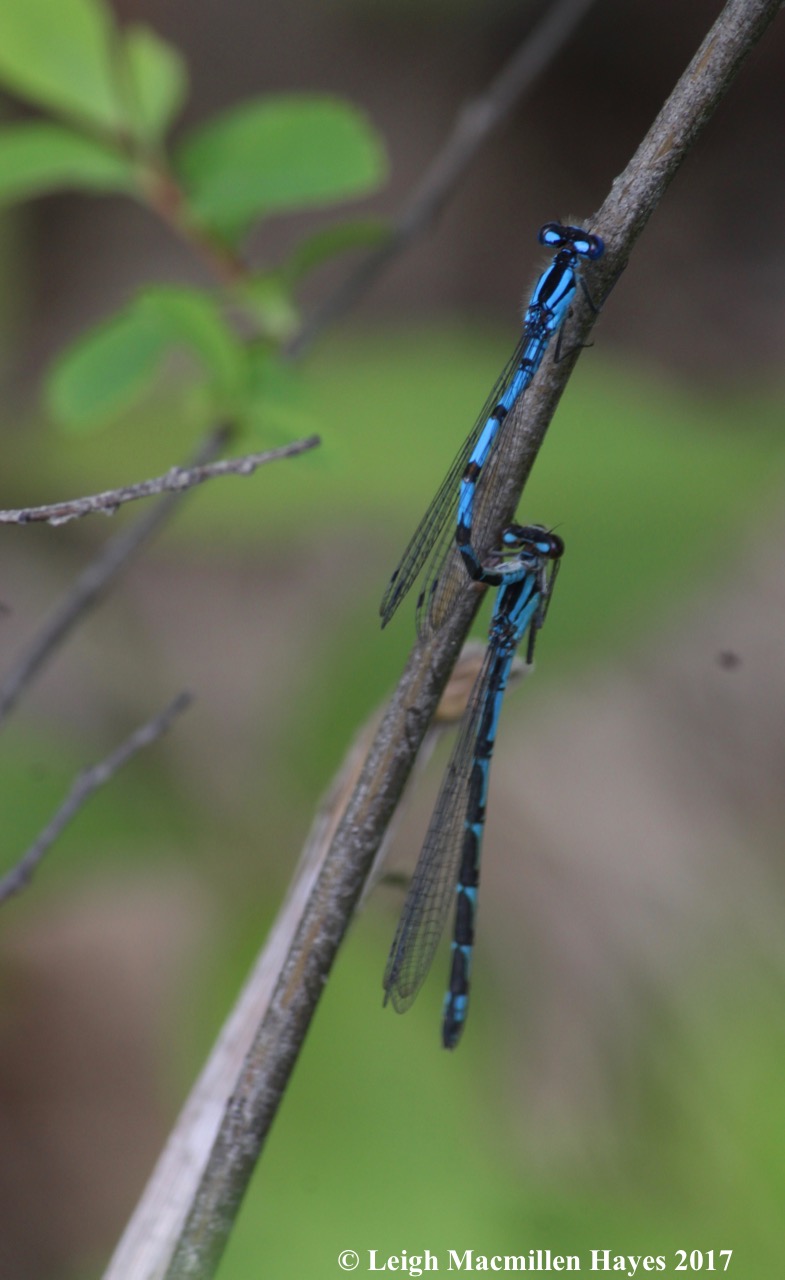
Despite that, those known as Familiar Bluets found a way to continue the circle of life through their heart-shaped wheel.

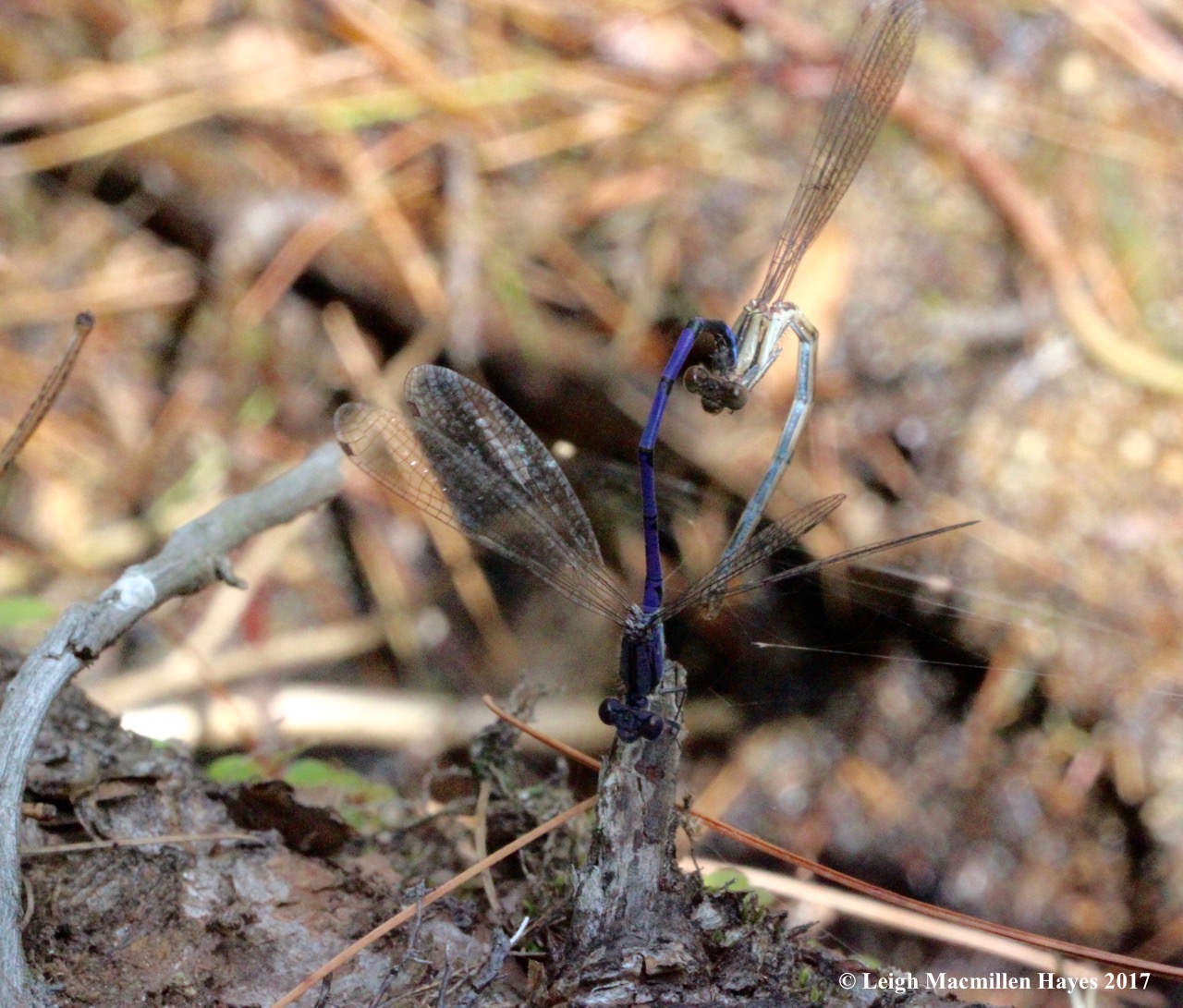
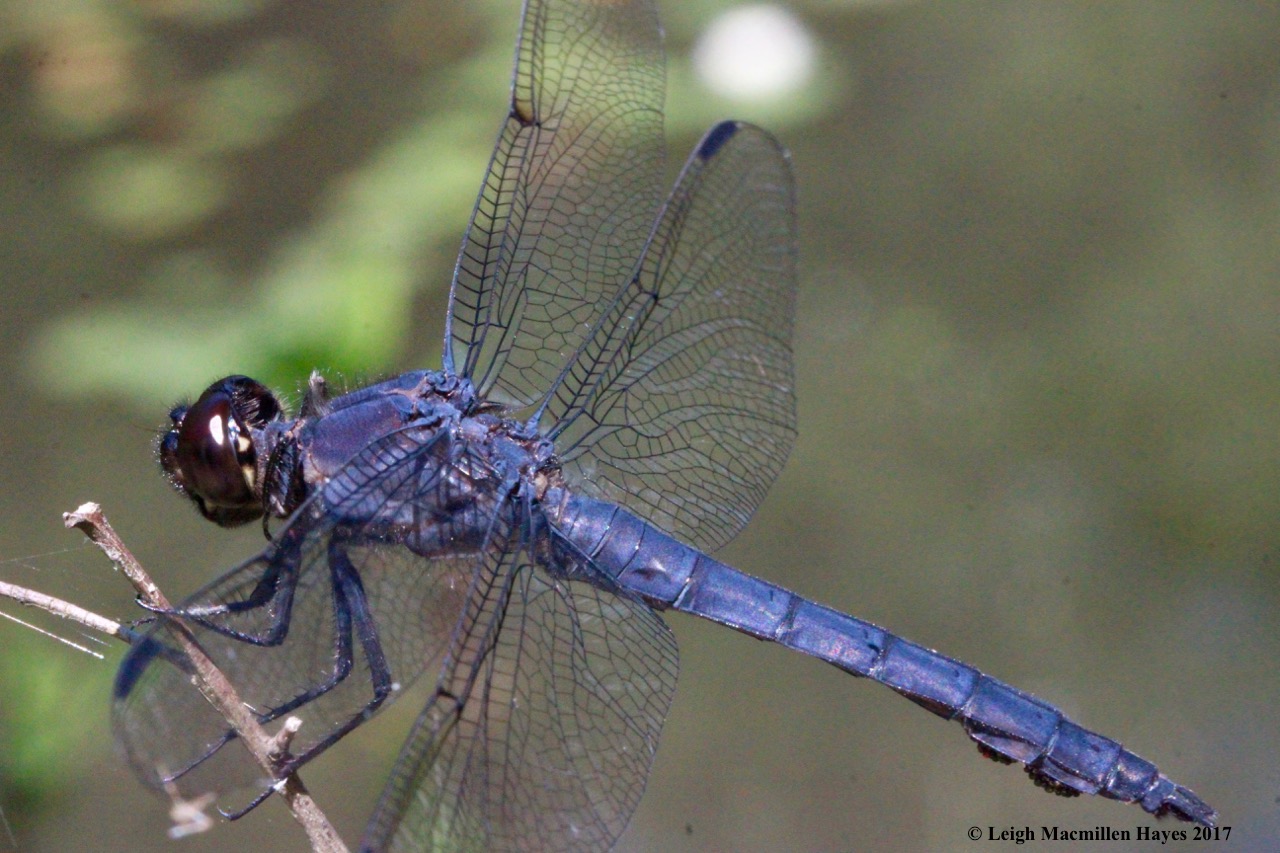
Slaty Blue dragonflies were not to be outdone and she clung to him from her lower position.

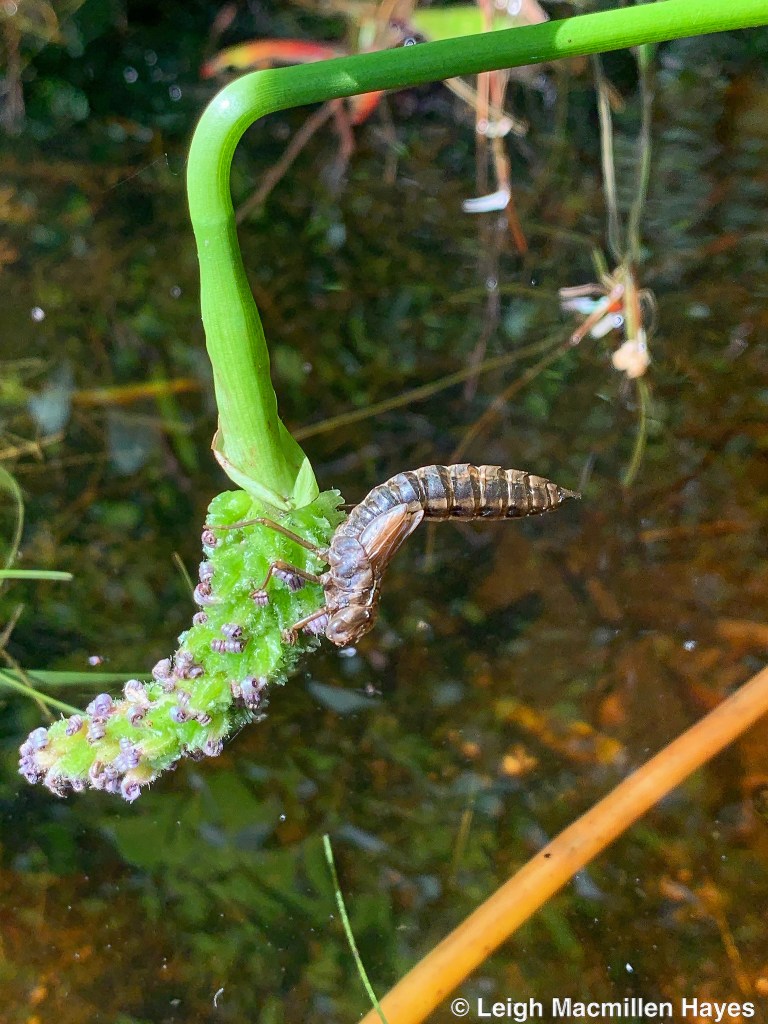
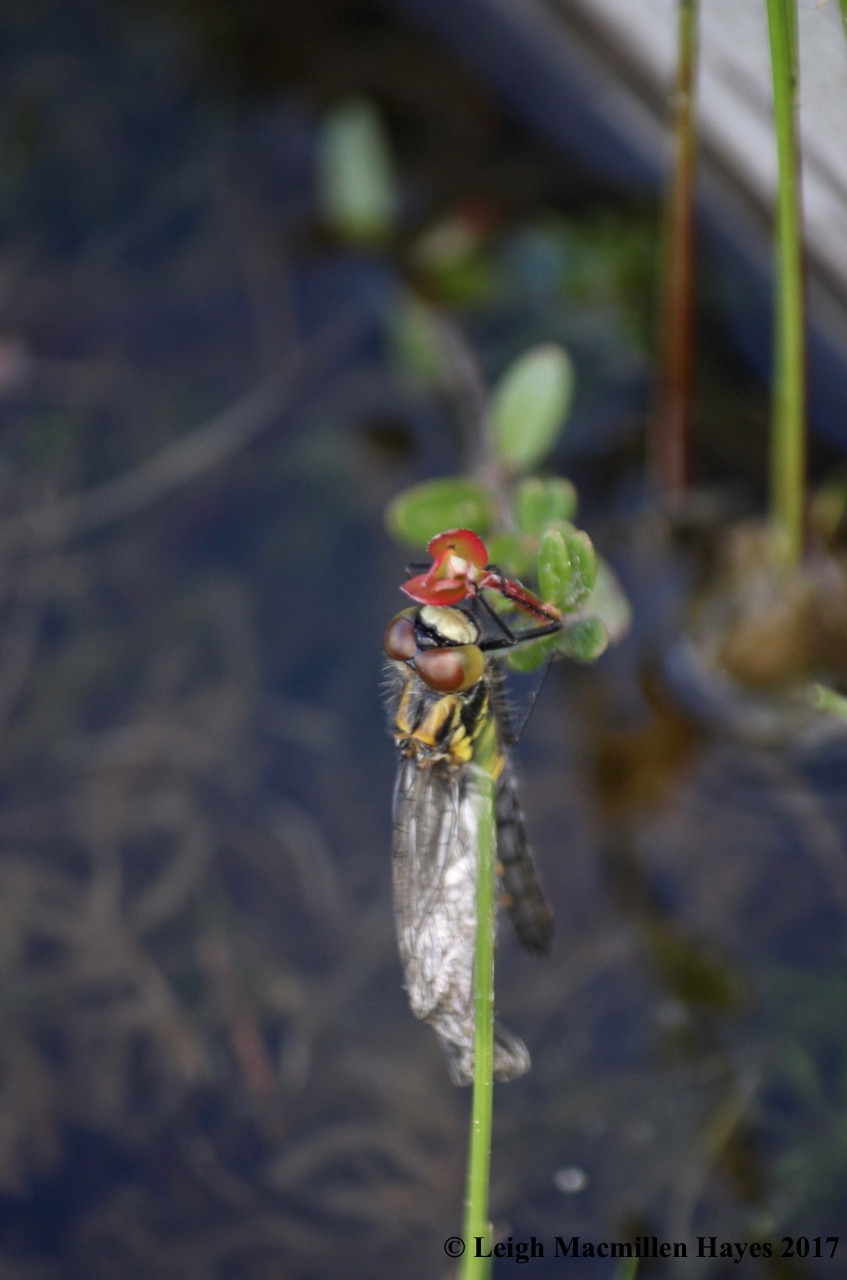
As all things go in the natural world, not every dragonfly nymph completed the transformation to adulthood and thus a few were left in suspended animation. This one, in particular, reflected the bent form of the Pickerel Weed upon which it wished to emerge. So what happened? Why was the plant stem bent? Why didn’t the dragonfly complete the cycle of life? I’ll never know, but it’s worth wondering about.

Every once in a while upon our journey, I remembered to let the entire scene fill my scope and summer fill my soul. Did my guy do the same? I kinda think so, but can’t say for sure.

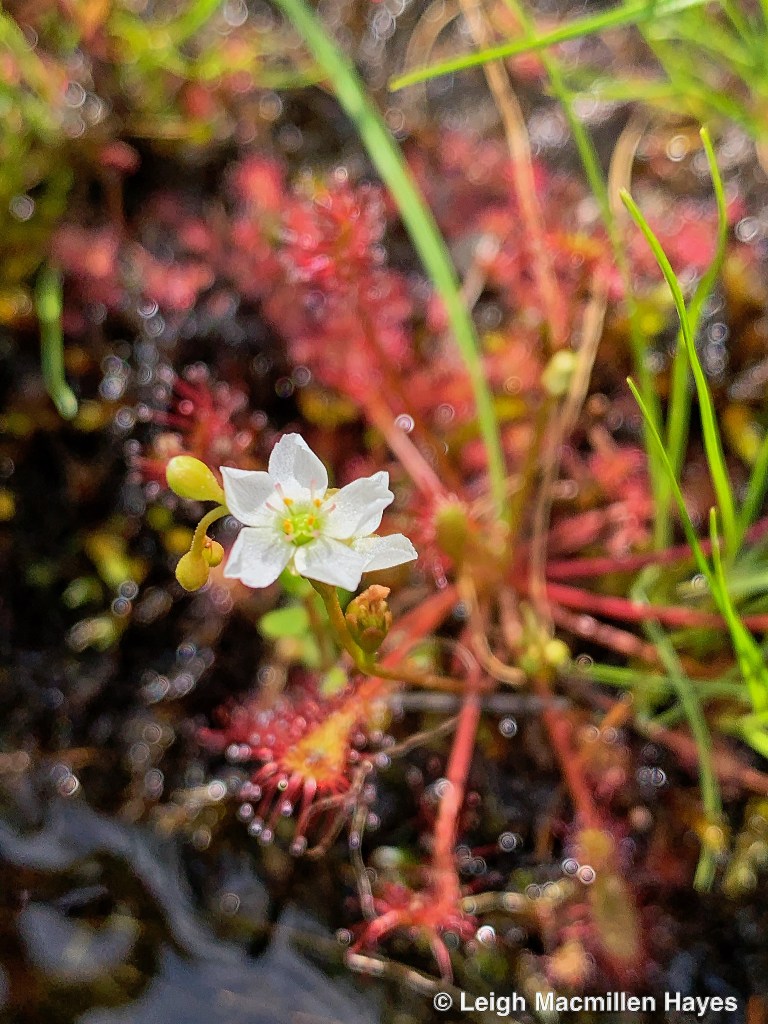
After all, his focus was on little berries of blue, while I took in a few other things, like the teeny flowers of Spatulate-leaved Sundew. Such a dainty flower for a carnivorous plant.

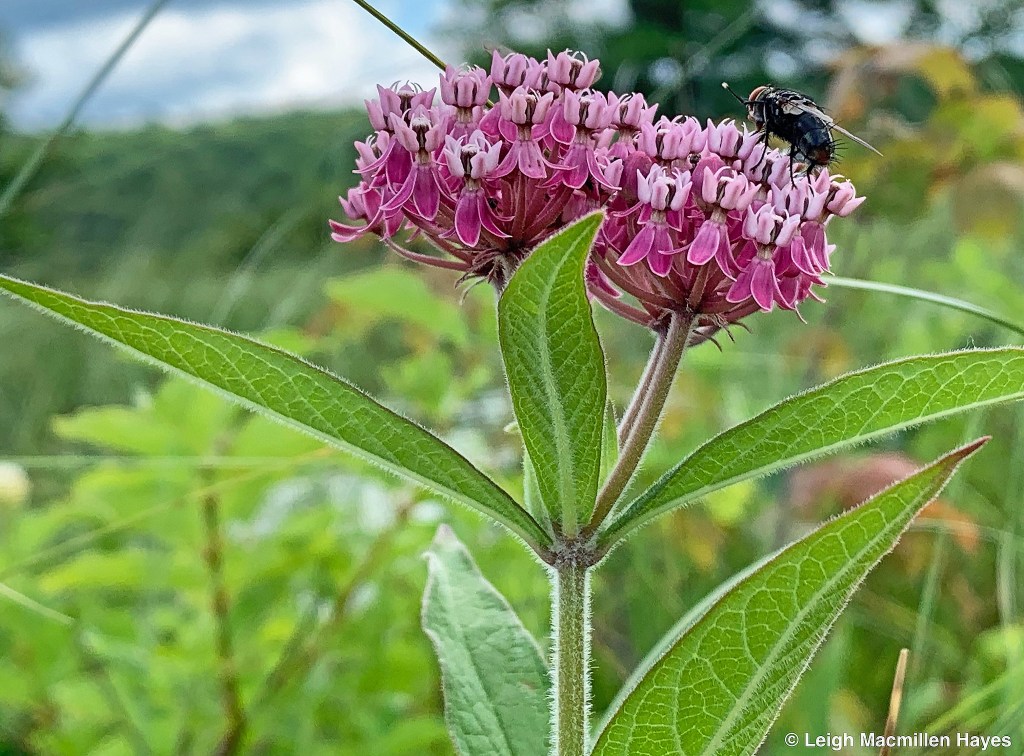
And the there was the Tachnid fly on the Swamp Milkweed.

The flies weren’t the only ones pollinating the flowers.

With eyes so big, and waist so thin, it could only be one: a wasp. But not all wasps are to be feared and this Great Golden Digger proved it has much to offer the world.

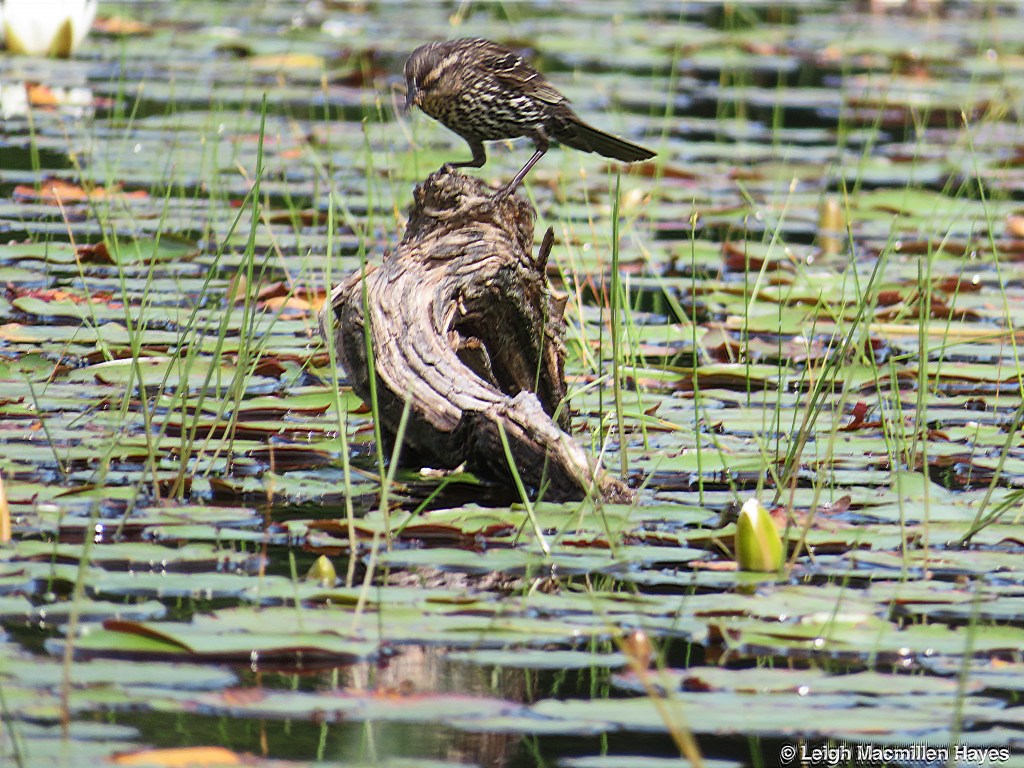
Into the mix flew a female Red-winged Blackbird, her focus not at all upon her reflection, but rather food to feed her young.

Fortunately for her, the mister also searched and provided.

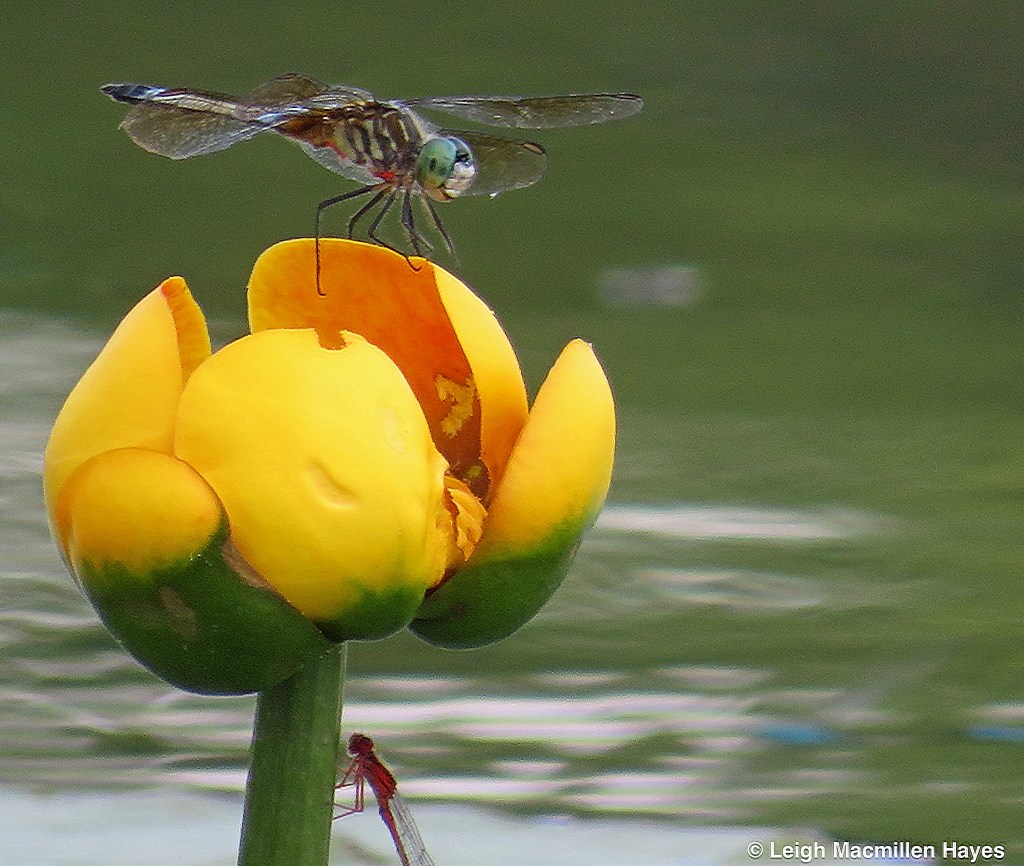
As my guy foraged, I continued to hunt. My form of hunting, however, embraced only photographs, such as a small Blue Dasher Skimmer upon a Yellow Pond Lily.

Who ever determined such wee ones with white faces, metallic eyes, bright thorax stripes, and a blue abdomen with black tip as common? For me, the Blue Dasher will always be worth a wonder.

That’s exactly what I did on this Mondate as a Lancet Clubtail whirled upon my hat much like a beanie copter. I wondered while I wandered.

My guy foraged and foraged some more.

And in the midst of it all, I met a dragonfly new to me this summer who is supposed to be common: a male Widow Skimmer.

What a day. What a Mondate. What a dragonfly. What a wonder. Our Happy Place. Indeed.

Pond Friends

My day began with an exploration of the edge. The edge of a favorite place I hadn’t explored much lately. And so it was to old pals that I had a chance to say hello.

=

The first was so old that it almost wasn’t. Okay, so that makes no sense, but it was no longer the Fishing Spider it had once been . . . and since become. Rather, it was the exuviae of the spider–a shed skin dangling by the water’s edge.

Much tinier by comparison was a Jumping Spider, its spotted patterned-body contrasted in size upon the Bracken Fern leaflet upon which it quickly moved.

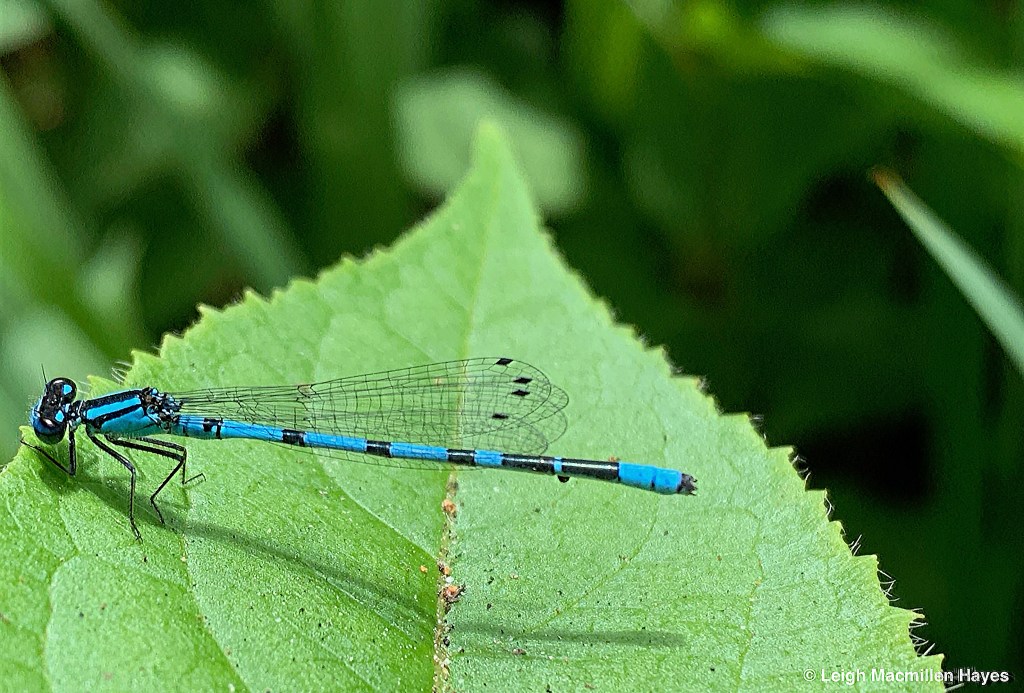
In the same space Northern Bluet damselflies graced the landscape and I realized I need to give them more notice for they are as important as their dragon cousins I spend much of my summertime focusing upon.

And so . . . I present to you another old friend, a male Eastern Forktail. This is one of my favorites for I love the contrasting coloration with bright greens and blues offset by black.

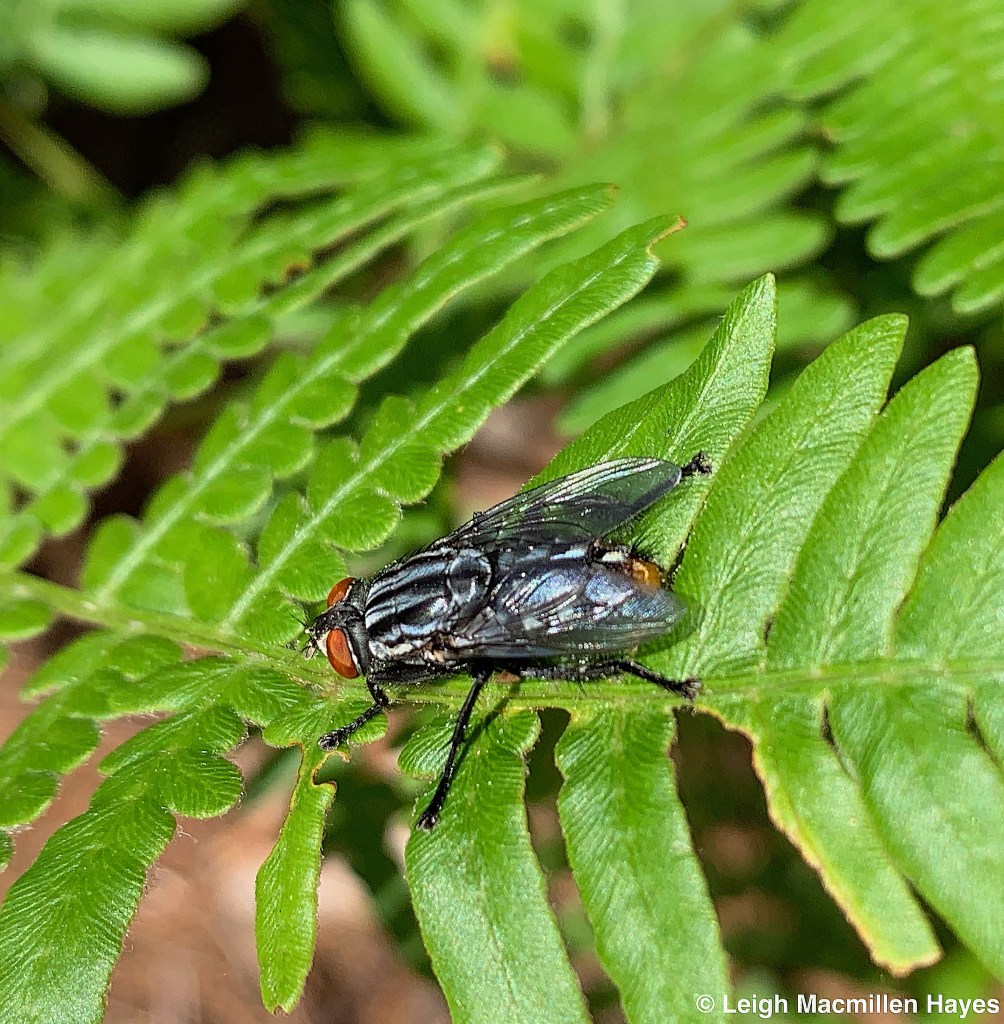
Among the Brackens another did fly . . . and land. This Flesh Fly is known not only for its red eyes, but also its red “tail” or butt.

Speaking of red, by mid-afternoon, my guy and I headed off in the tandem kayak as the sky darkened.

After making the acquaintance of a daughter and son-in-law of an old friend and recalling the tornado we all survived three years ago and sharing favorite spots on the pond, we paused ever so briefly by an active beaver lodge. Do you see the fresh mud? Don’t let that and the ripples in the water lead you to believe that the beavers came out to greet us.

I was with my guy, remember, and he has a need to be as active as the rodents within. Oh, the mud wasn’t his doing, but the ripples were.

The beavers present activity was, however, noted by the Spadderdock roots floating upon the surface of the pond. That’s a carbon-loading beaver treat.

A treat for my eyes is always a turtle sighting and though this painted one seemed to be surfing, as I explained in my ever-knowledgeable way to my guy, it was basking in the sun as a means to absorb the UV rays of the sun. He was sure it was just preparing to slip back into the water and as we approached it of course did so, thus proving him right. Um, but I was as well.

All the friends I’ve mentioned till now we’ve met before. And actually, I’ve had the privilege of meeting this last one once before, but sometimes it’s the second meeting that drives the characteristics home.

I mean, seriously, how many times have you met someone for the first time and forgotten their name? But upon that second meeting you focus on how their nose sticks out further and they have such a dark shell and a line of yellow dots under their double chin and they hang out in the shade more than the sun and you realize you do remember them: Common Musk Turtle.

I love my pond friends who are my best friends, whether we met for the first time or again and again and again.

Secret Brook Mondate

After a delightful morning following friends in New Hampshire as we traversed their trail adjacent to the White Mountain National Forest, they told us of a different route to try before we headed off for our afternoon adventure. From the parking area at the trailhead, they said, begin hiking in a certain clock-face orientation and you’ll reach the falls that only the locals know about.

Bingo. We did as they further suggested and listened for the water, crossed a dry stream bed, and then made our way carefully down a steep embankment to the very spot they’d described. After pausing and enjoying the sight and sound for a little bit, we both came to the same conclusion. Rather than head back up to the trail, why not follow the stream to its source.

That meant walking beside moss-covered rocks as the water flowed forth.

At first it was on the easy side as we followed its course.

Our route became more challenging when we crossed slash at various times. (Can you see my guy?)

And ducked under and crawled backwards to get past some downed trees.

Hobblebush and Witch Hazel slowed us down. Well, maybe it only slowed me down. Again, can you spy him?

And then there were boulder fields to work our way around and through. Despite the sometimes challenging terrain . . .

as we continued to follow the water flowing south to its northern source . . .

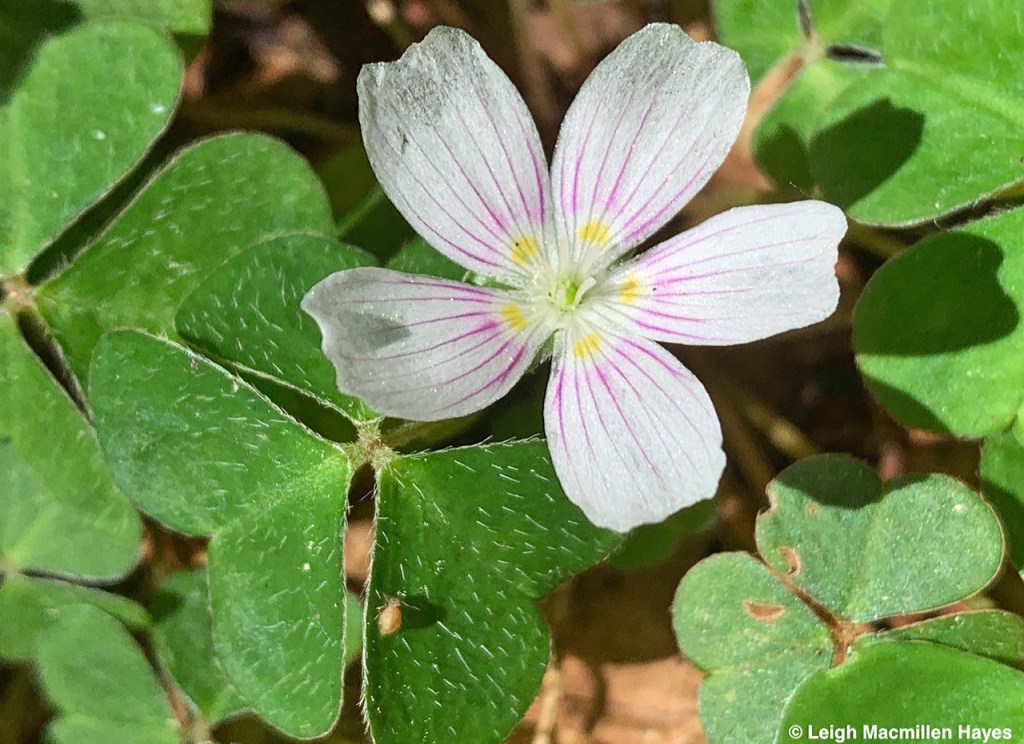
the bushwhack provided us with delightful moments, such as the sight of a few Wood-sorrel flowers still in bloom.

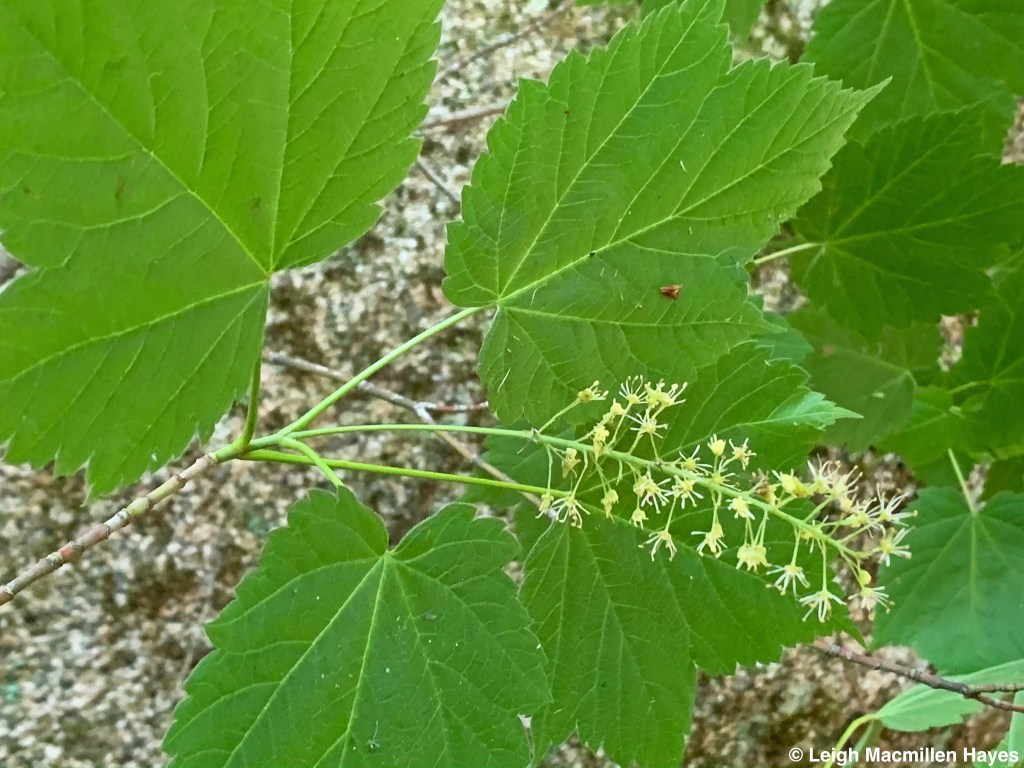
The same was true of a Mountain Maple, its flowers splashing forth like a display of fireworks.

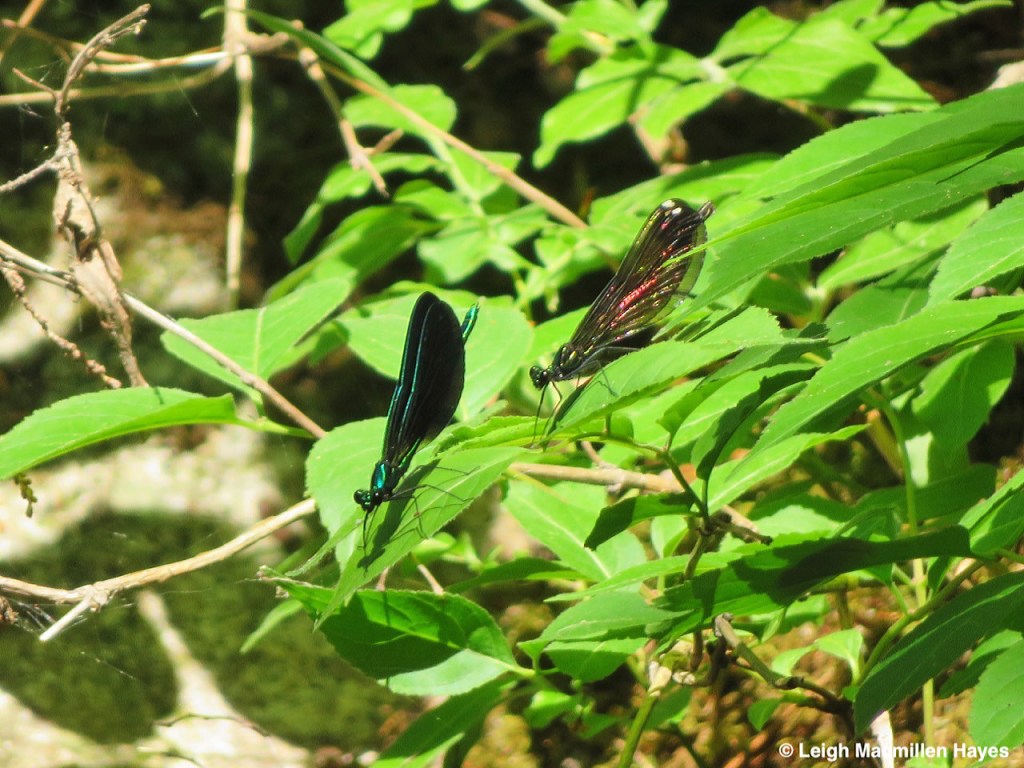
Occasionally damselflies known as Emerald Jewelwings landed nearby, he of the darker colors and she with a white dot at the tip of each wing.

At last we arrived at the pond that is the source of the brook. Whenever we are there we scan the landscape in hopes of spying a moose. A few tracks along the brook reminded us of their presence, but no actual sighting on this day.

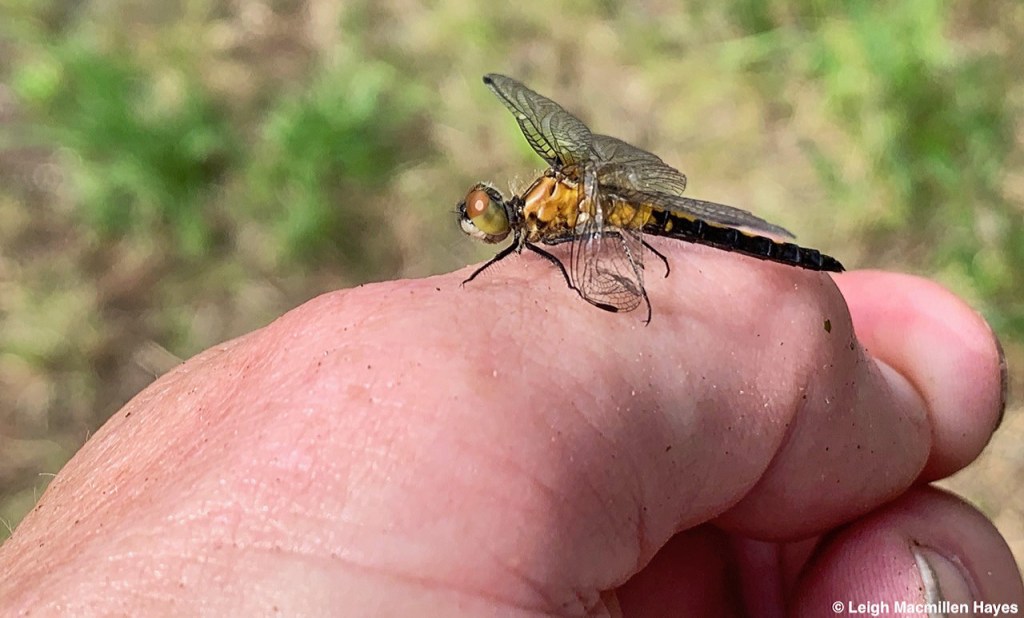
We did spy more than a dozen Chalk-fronted Corporal dragonflies sunning on a rock.

And what I think was a Frosted Whiteface stuck in a spider web. Of course I had to free it.

Before setting it upon a Steeplebush, I did try to unfold its wing for the mosquitoes were thicker than thick and we’d been the source of their lunch. We only hoped this female could fly again and gobble up the pesky insects.

We could only imagine that the man in the buff we encountered as we hiked beside the brook must have provided the mosquitoes with an appetizer and dessert. We don’t know for sure because as he walked toward us, we quickly diverted for a short distance before returning to the brook, all in the name of social distancing, of course.

For our return trip, we stuck to the public trail, but gave great thanks to our morning hosts for telling us about the secret brook.

P.S. Happy Birthday Dr. Bubby! Thanks for letting us be a part of your birthday celebration.
Marvels of the Meadow

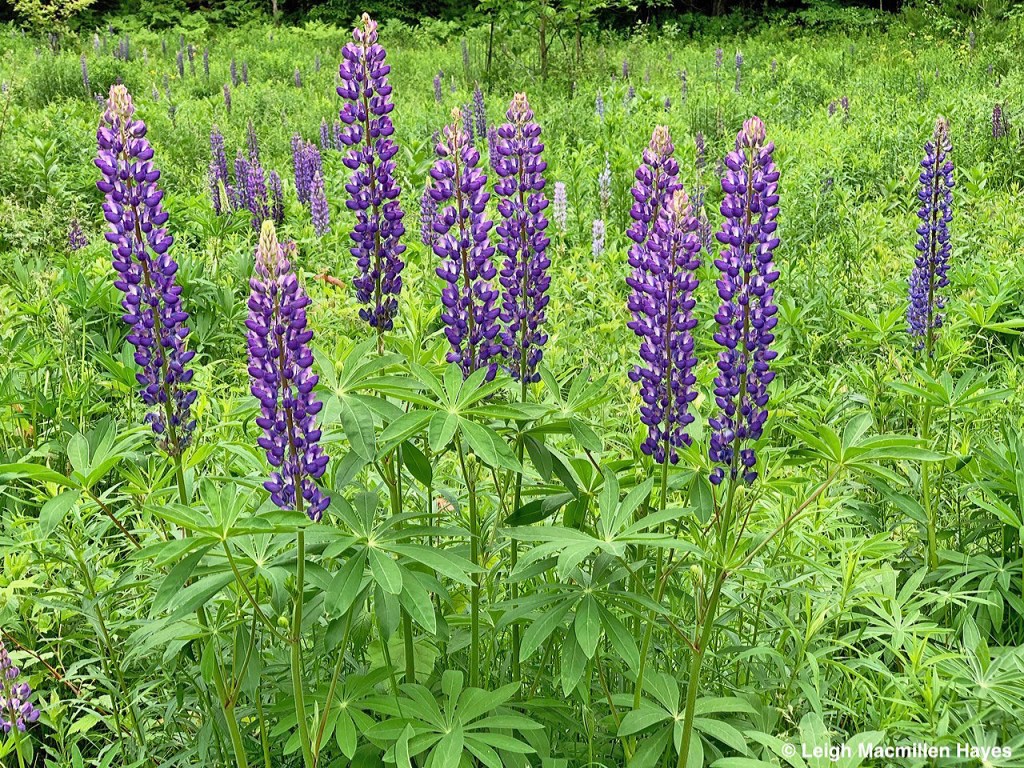
“My lupine meadow is in full glory!” a friend wrote in an e-mail. And she encouraged visitations. So . . . I went. Actually, we went, for I invited another friend to join me.

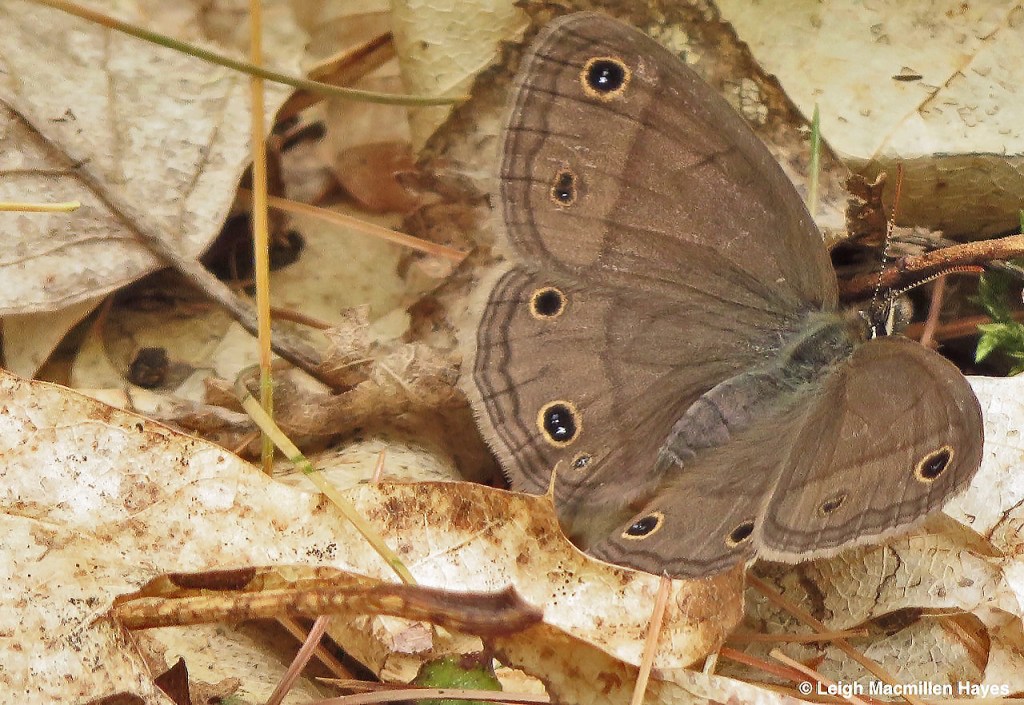
The first hint that we were in for a treat was the greeting along a woodland path where small butterflies teased us into admiring them. Erratic in flight, we rejoiced when one finally paused and we could zoom in on its pattern displayed in so many shades of brown.

It didn’t take long to reach the meadow . . . well, that is after we also paused along the way to try to gain a better understanding of leaf rollers and every other little thing that caught our attention.

But then . . . our focus was upon the scene before us.

Lupines everywhere we glanced.

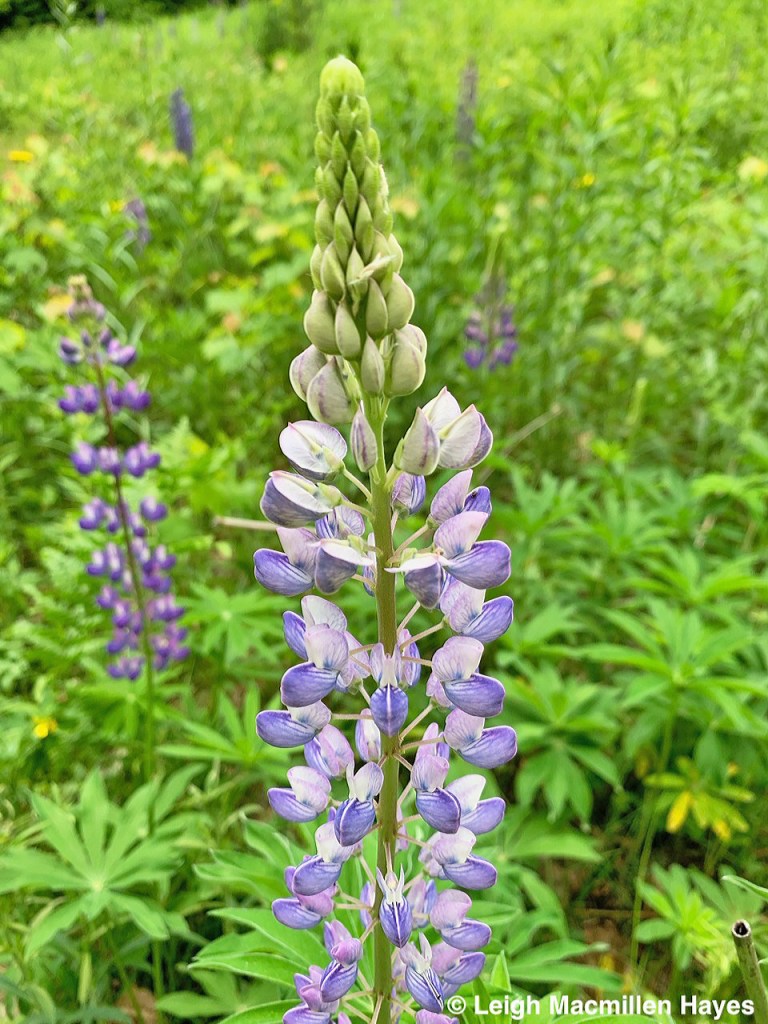
They ranged in presentation from those with pinkish hues . . .

to deep purple . . .

and every shade between.

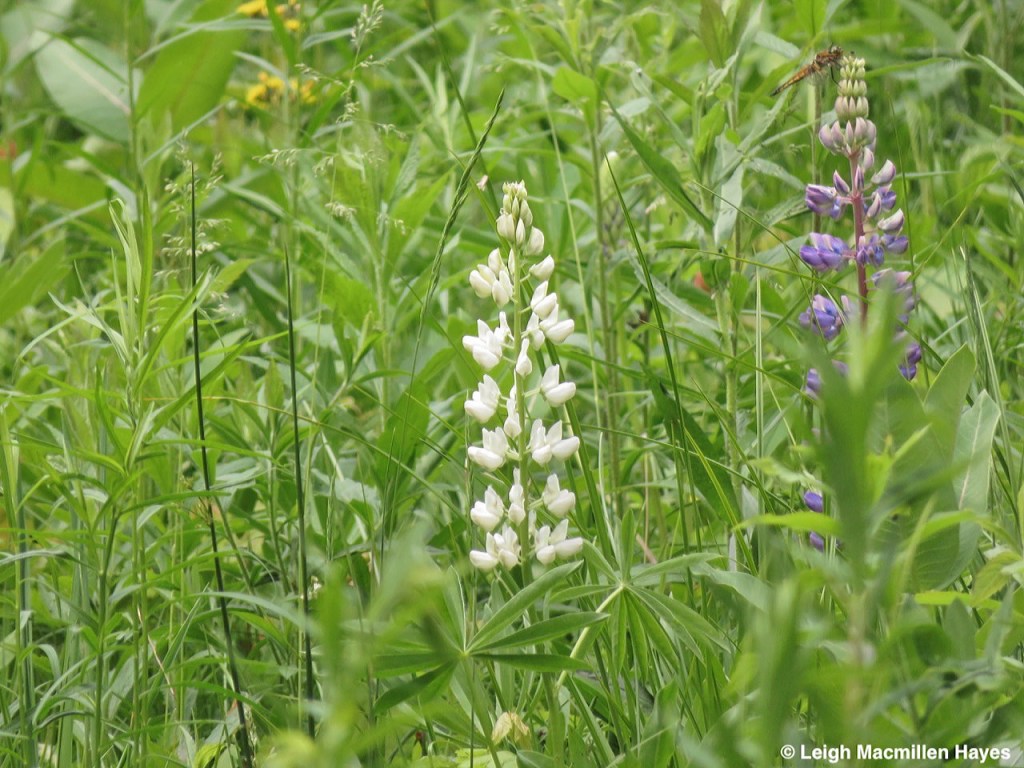
In the midst of all the purplishness stood a lone white spire.

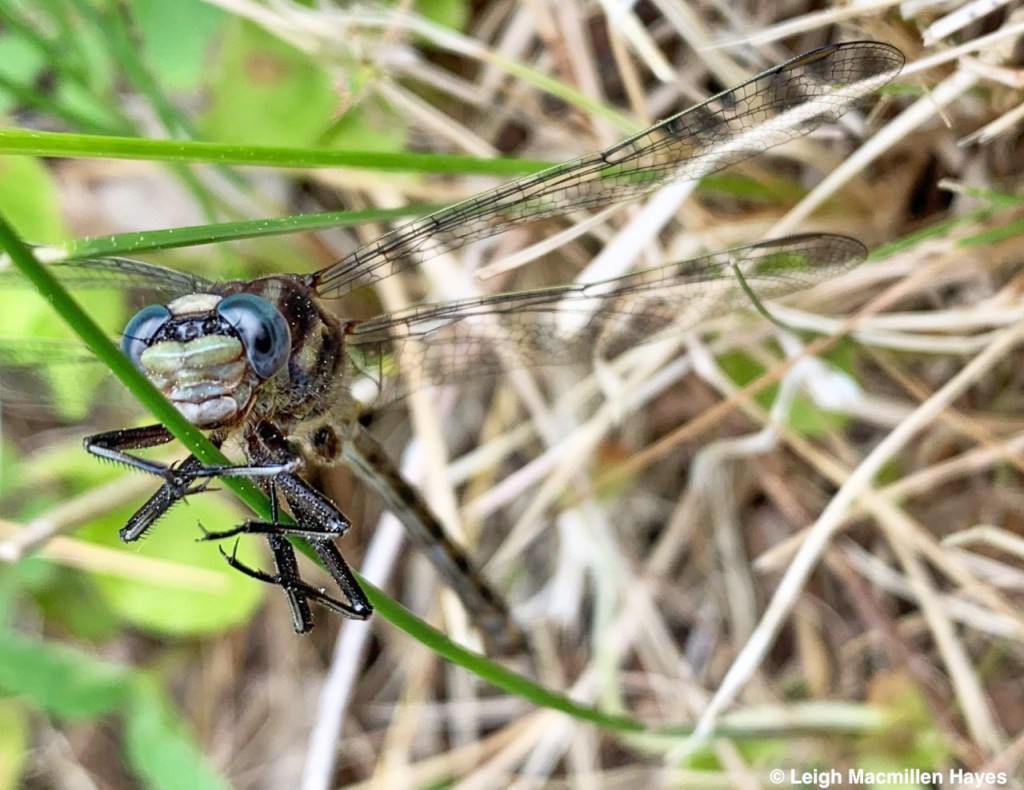
As we started down one of the mowed paths, it soon became apparent that there was even more to see, like the face of this clubtail dragonfly who refused to leave its perch even when I tried to coax it onto my finger.

And then . . . my heart almost burst for upon one of the flowers were two immature Stream Cruisers and I couldn’t recall ever becoming acquainted with them in a prior life. Certainly one wouldn’t forget that chocolate and cream layered cookie face. (Yes, it was noon.) Okay, so I forget a lot of things, but really . . .

that was one memory to behold.

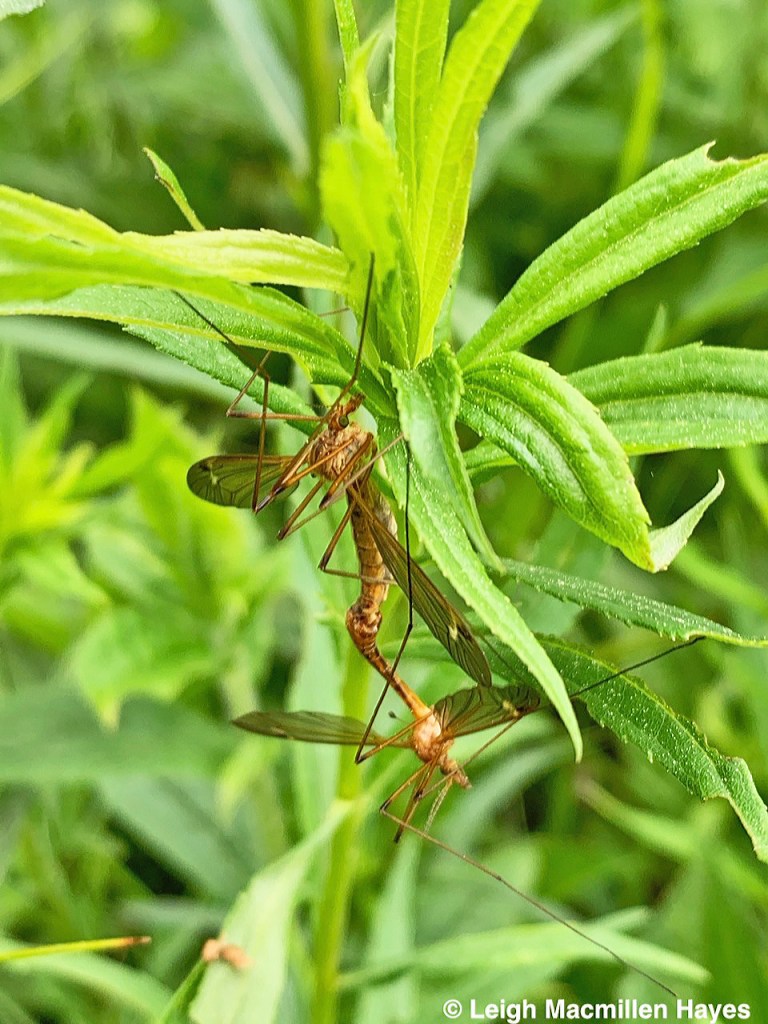
Of course, there were others, such as the canoodling craneflies who thought they’d escaped my vision by carrying out their love act below a leaf.

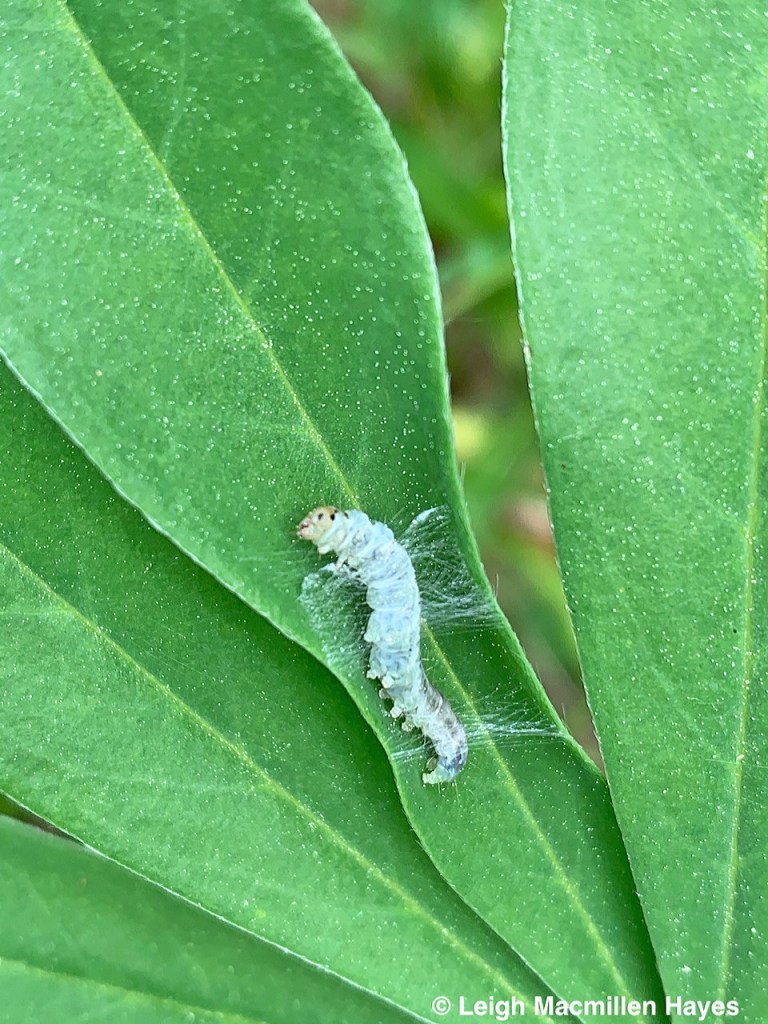
And then one of the most curious, made even more interesting because we’d examined some rolled up leaves on our way to the meadow . . .

Under our watch (mind you we took turns going in for a closer look as is our new way of being in the same place at the same time), a secretion was discharged as this little critter turned its head from side to side and ever so slowly the leaf curled inward.

Though we didn’t see any honeybees, the bumbles were there to perform their magical act.

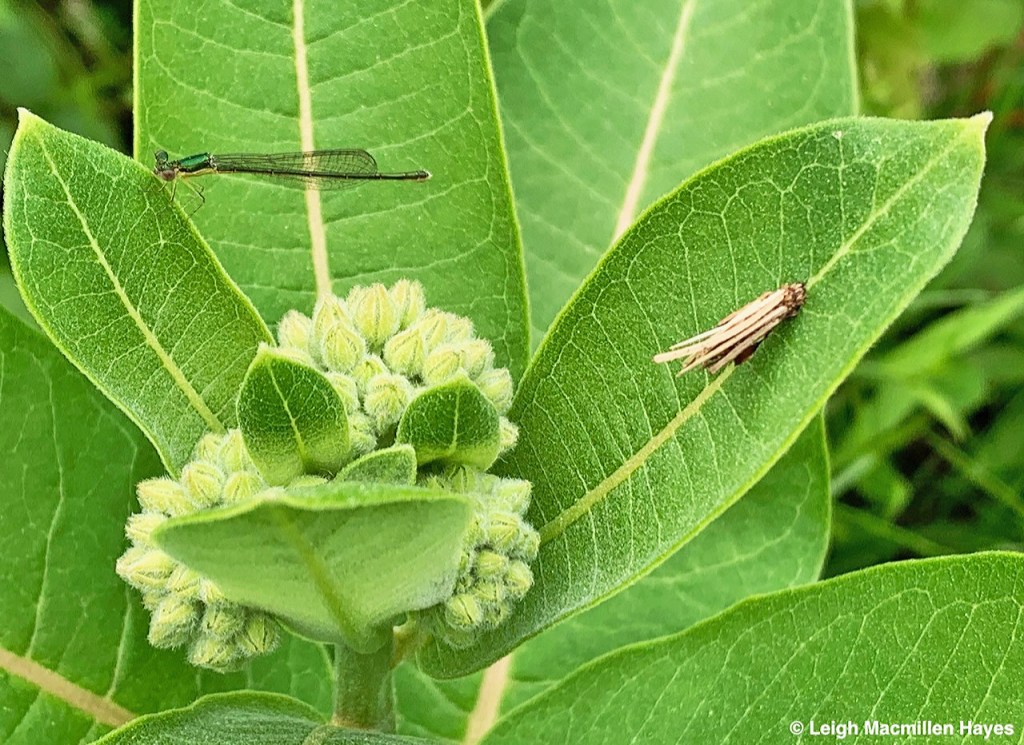
Occasionally we pulled our focus away from the lupines and noticed other flowers in bloom, such as lilies and columbines, and daisies, and buttercups, and cinquefoils, and even those promising future blossoms like the milkweed. A Sedge Sprite damselfly waited for its next meal to pass by, while a larval bagworm hid within its protective case.

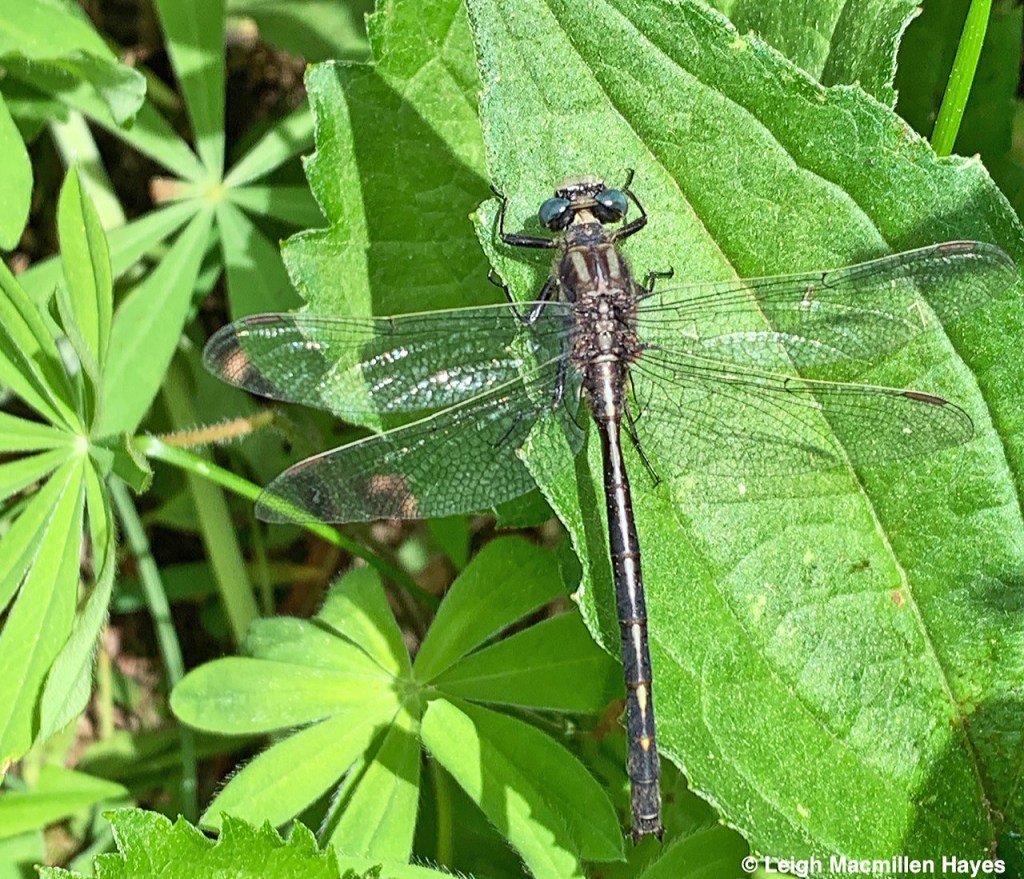
Upon another leaf, we spotted another clubtail, and I assumed it was the same species as the first dragonfly that had greeted us. Though I called both Sir Lancelot, for I thought perhaps they might be Lancet Clubtails, I knew that I’d have to figure it out back at home. If I’m not mistaken, because there are no markings on the last two segments (segments 9 & 10 in dragonflyspeak), rather than an Arthurian legend, this was actually an Ashy Clubtail.

As the sun’s rays grew stronger, Ashy changed its orientation, extending its abdomen directly toward the star at the center of the solar system in order to cool off. The obelisk position reduces the surface area to heat. It’s behaviors like this that boggle my mind, but they are innate.

Not to go unnoticed, for they made sure we paid attention with each step we took, were the Chalk-fronted Corporals. Their behavior reminds me of small children as they run ahead and just as I catch up, they run (fly) ahead again and wait, and just as I catch up, they run ahead and . . . you get the picture.

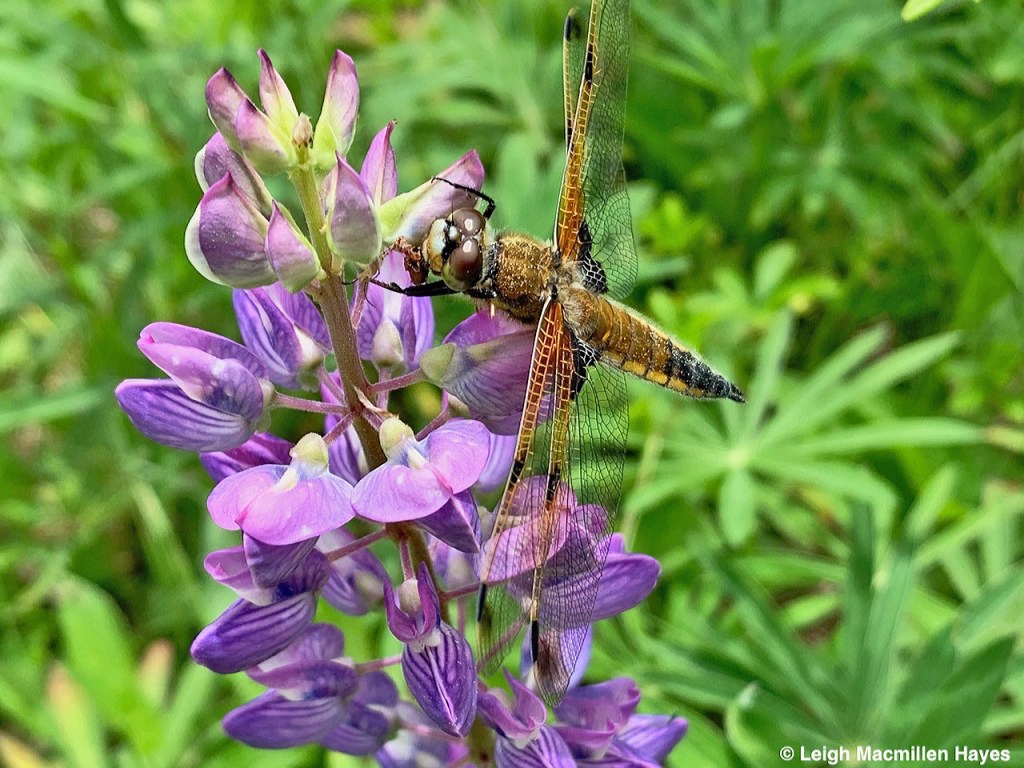
Others also made themselves known and it seemed the more time we spent looking, the more we saw. Well, maybe “seemed” isn’t the right term, for indeed . . . the more time we spent looking, the more we saw, like this Four-spotted Skimmer shimmering in the sunlight.

And a Racket-tailed Emerald showing off its gorgeous green eyes.

There were even a couple of female Calico Pennants, but not a red-colored male in sight.

The meadow isn’t all that large, but . . . we spent at least two and a half hours circling it and shared a vision of others wondering as night fell where we might be . . . in our happy place.

Fortunately, I guess, though unfortunately on some levels, we pulled ourselves away by midafternoon, much as the canoodlers had done. But our bug eyes were as wide open as his.

In the end, we offered up thanks to our hosts, Linda and Heinrich, for inviting us to enjoy the full glory of their lupines and all the marvels of the meadow.

My Other Favorite Season Begins

It’s been a yard work kind of weekend for my guy and me, but in the midst of it all, the habitat that this is kept drawing my focus. Oh, I shoveled more piles of dirt than I care to count and shook it down as many times as my guy did to separate the rocks from the loam and raked it all into place and did it all over again for hours on end, but in between I did what I love to do on days such as this. I stalked.

I stalked insects including mimics.

And wee ones like sawflies.

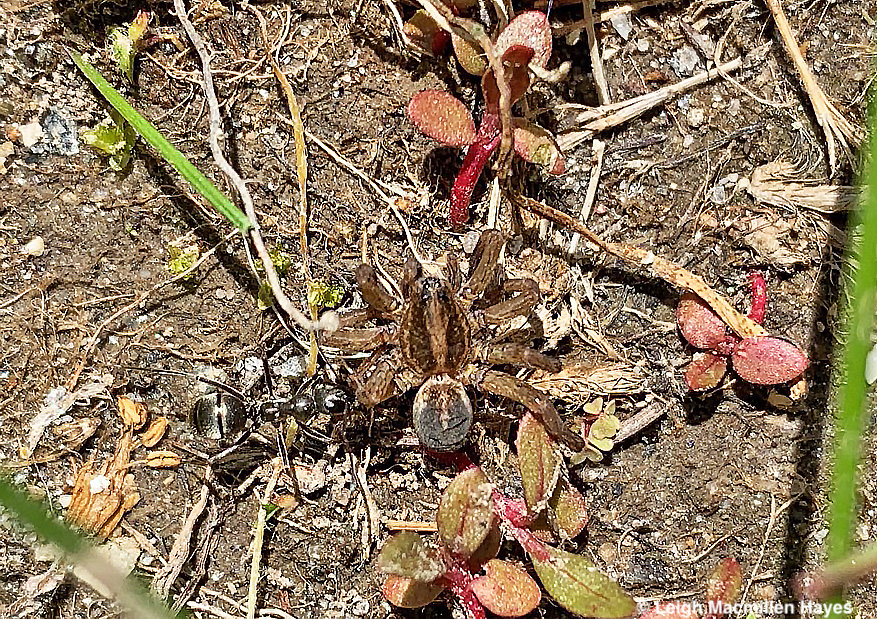
And ants trying to bring spiders home for lunch.

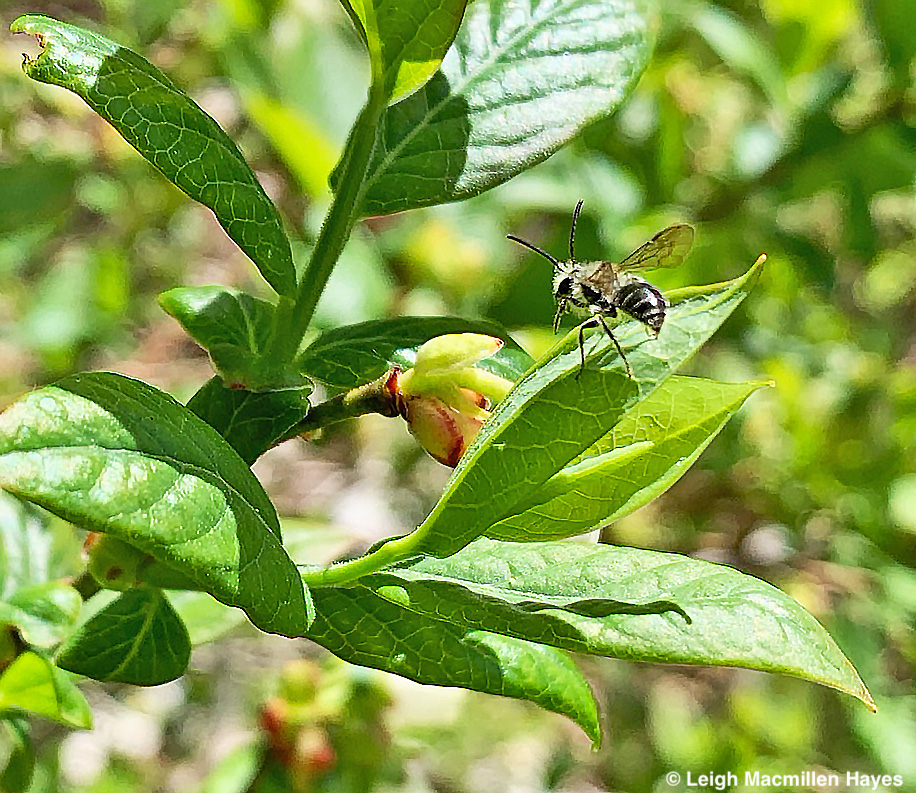
And miniature wasps pausing on blueberry bushes.

And hoverflies seeking nectar from azaleas.

And then. And then. An Eastern Forktail damselfly upon one of those mounds that we were working on.

And then . . . the crème de la crème for the weekend: a female Dot-tailed Whiteface dragonfly.

My other favorite season is officially underway. Bring on the damsels and dragons. And everyone else in between.

Mondate with Pam and Charles

Don’t tell her husband who wasn’t able to join us today, but Pam fell fast and hard for another guy. His name is Charles.

It was supposed to be just the three of us kayaking when we launched this morning, Pam, my guy, and me.

But it soon became apparent that this other guy was trying to woe her with bouquets of wildflowers, including Cardinals so red,

Turtleheads so white,

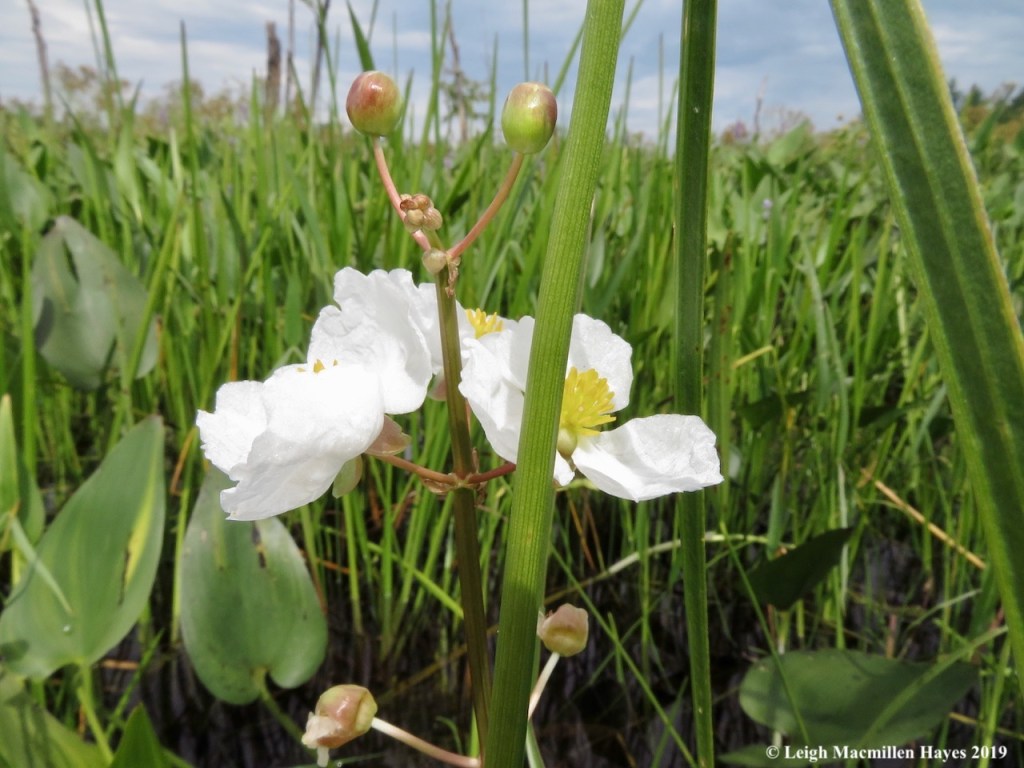
Arrowheads with broad leaves,

and those whose leaves overtopped the flowers.

But I think Pam was most wowed when he presented her with Ground-nut, its maroonish flower with a pair of upper petals forming a hood or keel, a pair of lower lateral wings, and a lower keel that curled upward.

And then Charles made a point of inviting his friends to meet Pam, though we wondered if the Painted Turtle always grimaced or if perhaps he was jealous of all the attention bestowed upon her.

The female Ebony Jewelwing Damselfly was much friendlier and happy to say hello in its lighthearted manner.

And the Dragonhunter Dragonfly made frequent visits to get . . .

to know . . .

Pam better. We’re grateful he didn’t decide to gobble her up.

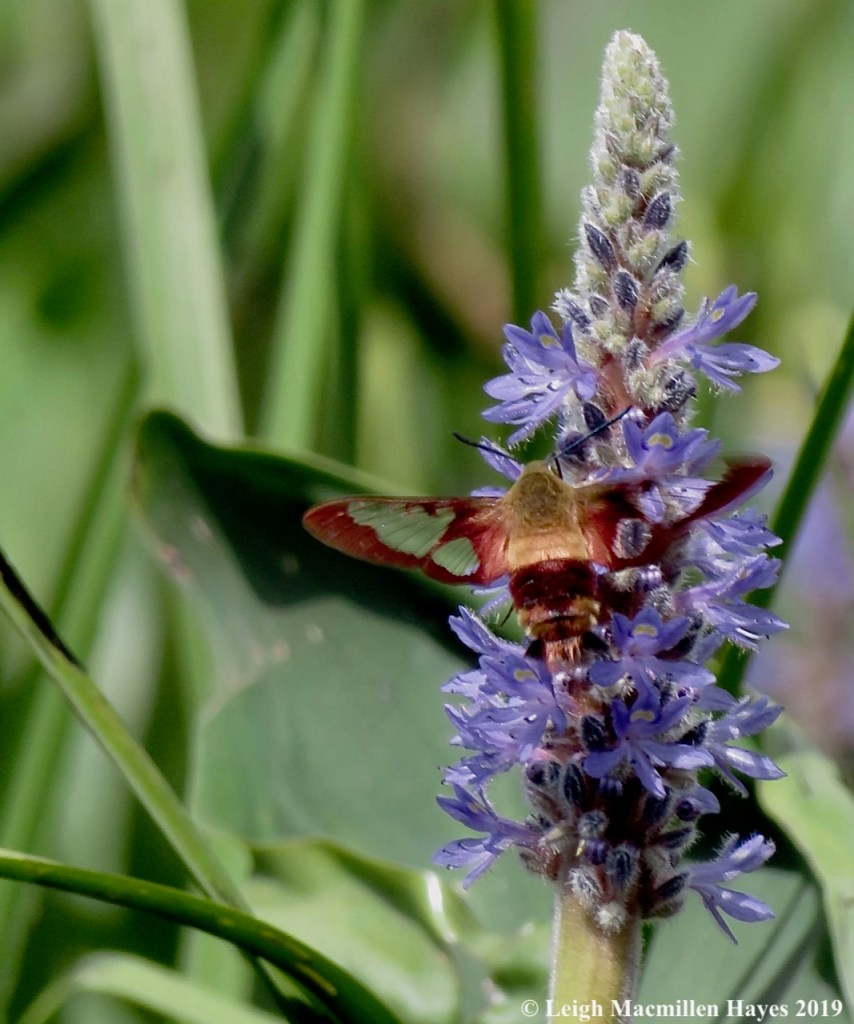
But perhaps Pam’s favorite moment was when Charles presented not just a Pickerel Weed in flower, but also a Clearwing Hummingbird Moth pollinating it.

Oh, he wasn’t one to make things super easy, that Charles.

But he’d asked my guy to help us portage around the dam, and so we never had to get out of our kayaks. Chivalry at its best.

Continuing our paddle, we began to think of Charles’ estate as Brigadoon for such were the colors each time we rounded a bend.

Around a final corner, Charles revealed his mansion with promises of many happy days to come.

It was so large that we knew it was an example of a big house, little house, back house, barn, which made sense given that Charles’ family had long lived in the area.

On one of the walls inside, he’d painted a scene that reflected the outdoors, including the mountains in the background.

From the backdoor it was a straight shot and suddenly we emerged onto his pond. The man was wealthy, but we told Pam that if she was going to fall for him, she had to do some serious thinking for her guy Bob is really the one who holds the strings to her heart.

In the end, though she thanked him for sharing his place with us today, Pam did inform Charles that they could remain friends, but not get any closer than that. And she added that the next time they meet, Bob will be with her.

My guy and I were thankful that she introduced us to the kind man as the three of us explored his property: Charles River and Charles Pond in Fryeburg, Maine. But we’re equally grateful that their relationship will remain merely aquatic.

Island Hopping Mondate

Paddling together in “Big News,” our double kayak so named for it was a gift from the Neubigs many moons ago (thank you, Carissa and Bob), is one of our favorite summer pastimes. With wrist almost fully mended, it’s an even sweeter journey for me because it means I don’t have to work hard.

1-prepping the kayak

And so it was that my guy prepped Big Red for today’s journey–an exploration of the northern basin of Moose Pond. The “pond” is a 1,697 water body with a 33.3 mile perimeter that’s broken into three sections. We know the north best, which offers about a four-mile round-trip journey from camp up into the islands of Sweden. The other section that we don’t visit as often, but do enjoy exploring, is the southern section in Denmark, for it’s equally interesting.

2-BLUEBERRIES!

Today, though, my guy had a mission worth gold in mind–to make some headway on his blueberry greed.

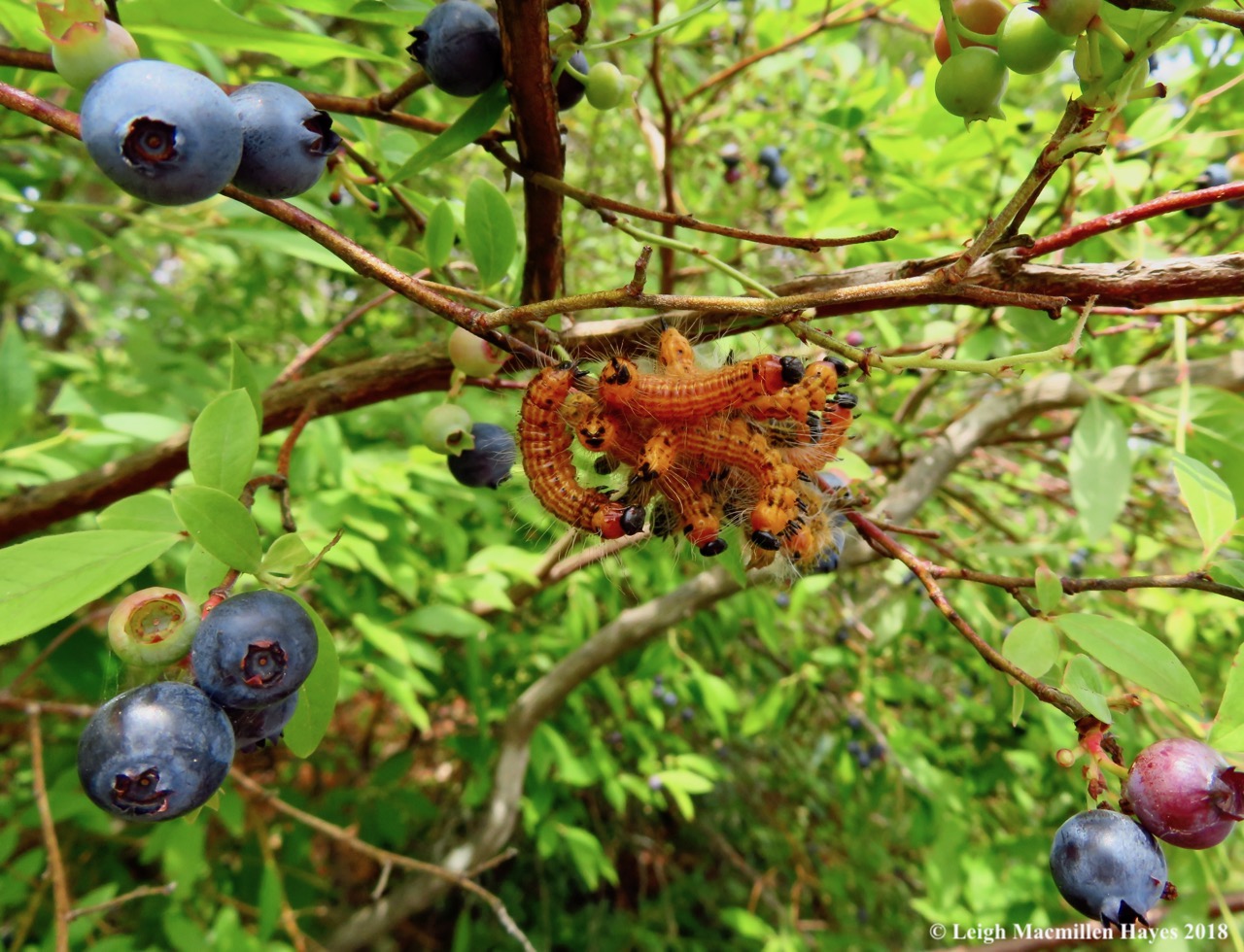
6-yellow-necked caterpillars

Along the way we discovered an interesting sight. Our friend, and pond neighbor from the western shore, Lili Fox, asked yesterday if I could identify some yellow and black caterpillars. After a wee bit of research, I suggested Yellow-necked Moth Caterpillars. I didn’t expect to meet them quite so soon myself, but immediately recognized the group that clustered at the tip of a blueberry twig. At first, they seemed immobilized, but then I realized they were in the defense form that I’ve witnessed with other caterpillars, curling outward to form a U. I’d just picked a few berries below and so they saw me as prime predator. Fortunately, no attack was made.

8-yellownecked 2

Overall, they have yellow and black stripes, but it’s the yellow segment or neck behind their black heads for which they were named. These very hungry caterpillars were reaching maturity and soon should drop to the ground. They’ll apparently overwinter burrowed below as pupa and emerge in adult form next year.

10a-fluffy yellownecked

I assumed that those with the most wiry hair were the oldest. We probably should have shaken them off the branches and into the water, but we didn’t. Nature knows what to do and some will become a food source for wasps or birds, passing along the energy contained in the blueberry leaves to another level.

3-variable dancer damselfly

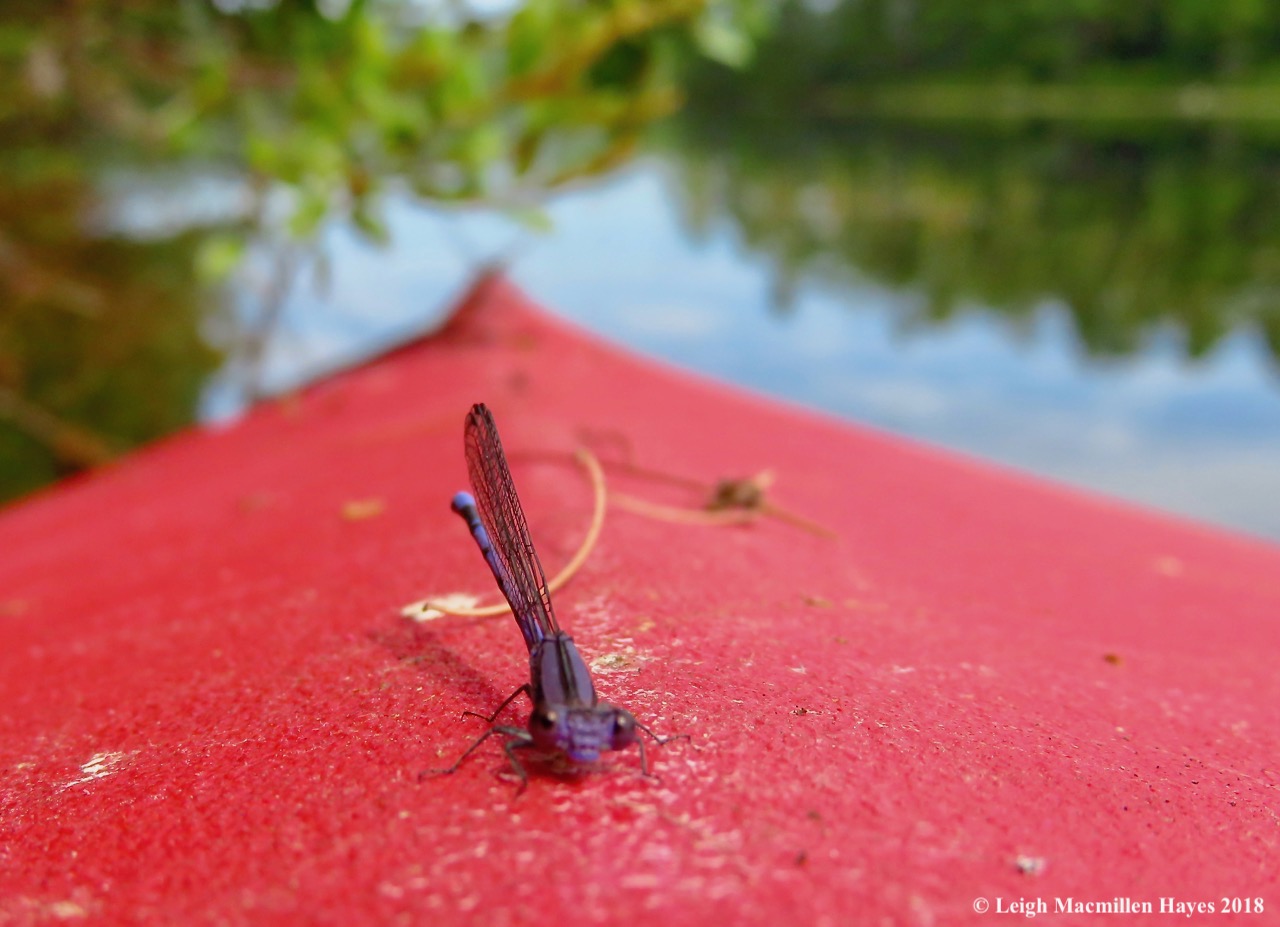
In the meantime, I became the Yellow-necked Lookout Warden as my guy continued to pick. Accompanying me with his own bulbous set of eyes was a male Variable Dancer Damselfly.

4-spreadwing

The damselflies actually could care less about the caterpillars and more about finding a mate and so they all posed, either on the kayak, or nearby vegetation.

5-orange bluet damselflies

Both turned out to be the right substrate on which to perform mating rituals, this being a pair of Orange Bluet Damselflies on the kayak.

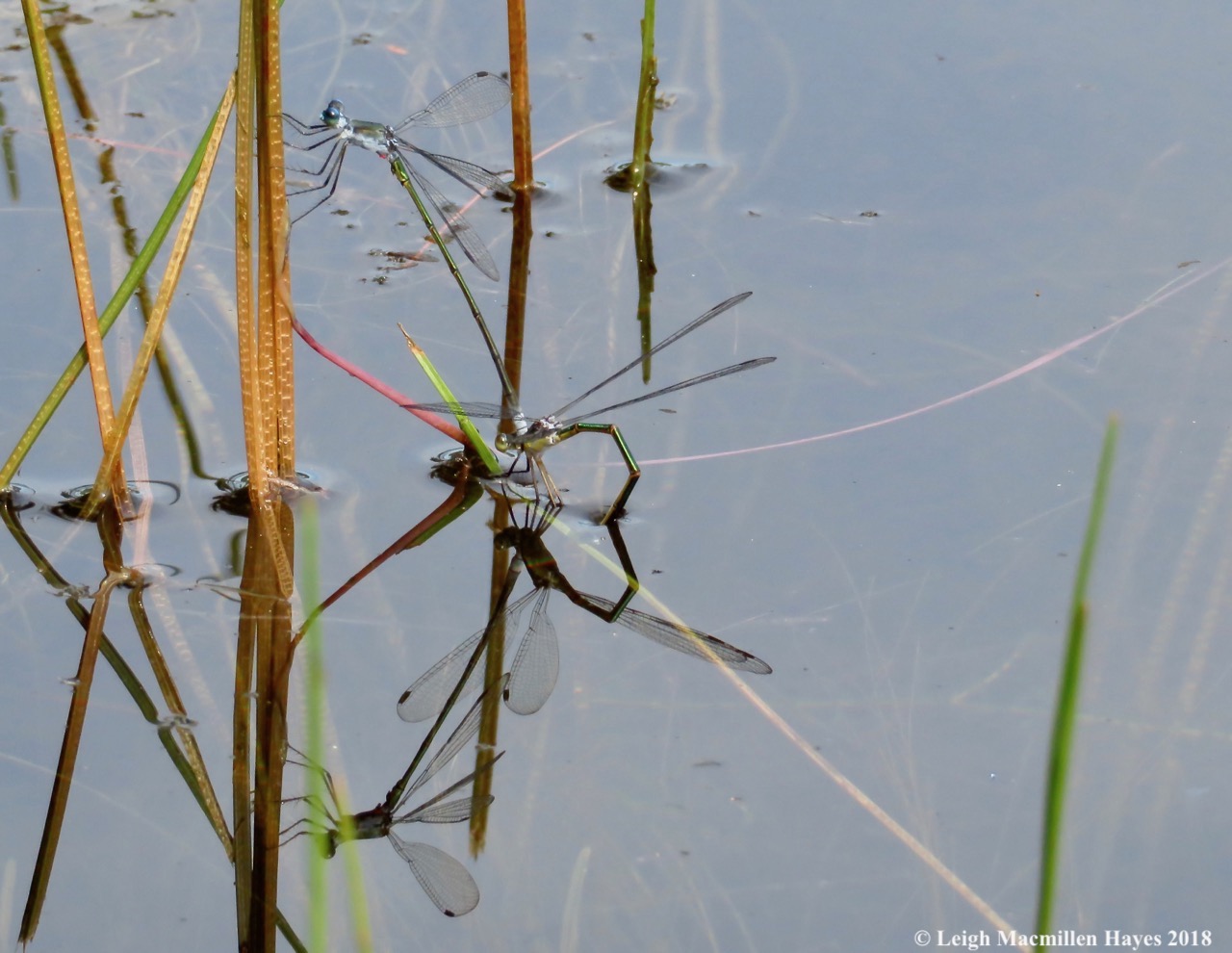
7-emerald spreadwings canoodling

And Emerald Spreadwings offering a reflection on the pond of their canoodling efforts.

10-heading north

At last we continued further north, island hopping along the way.

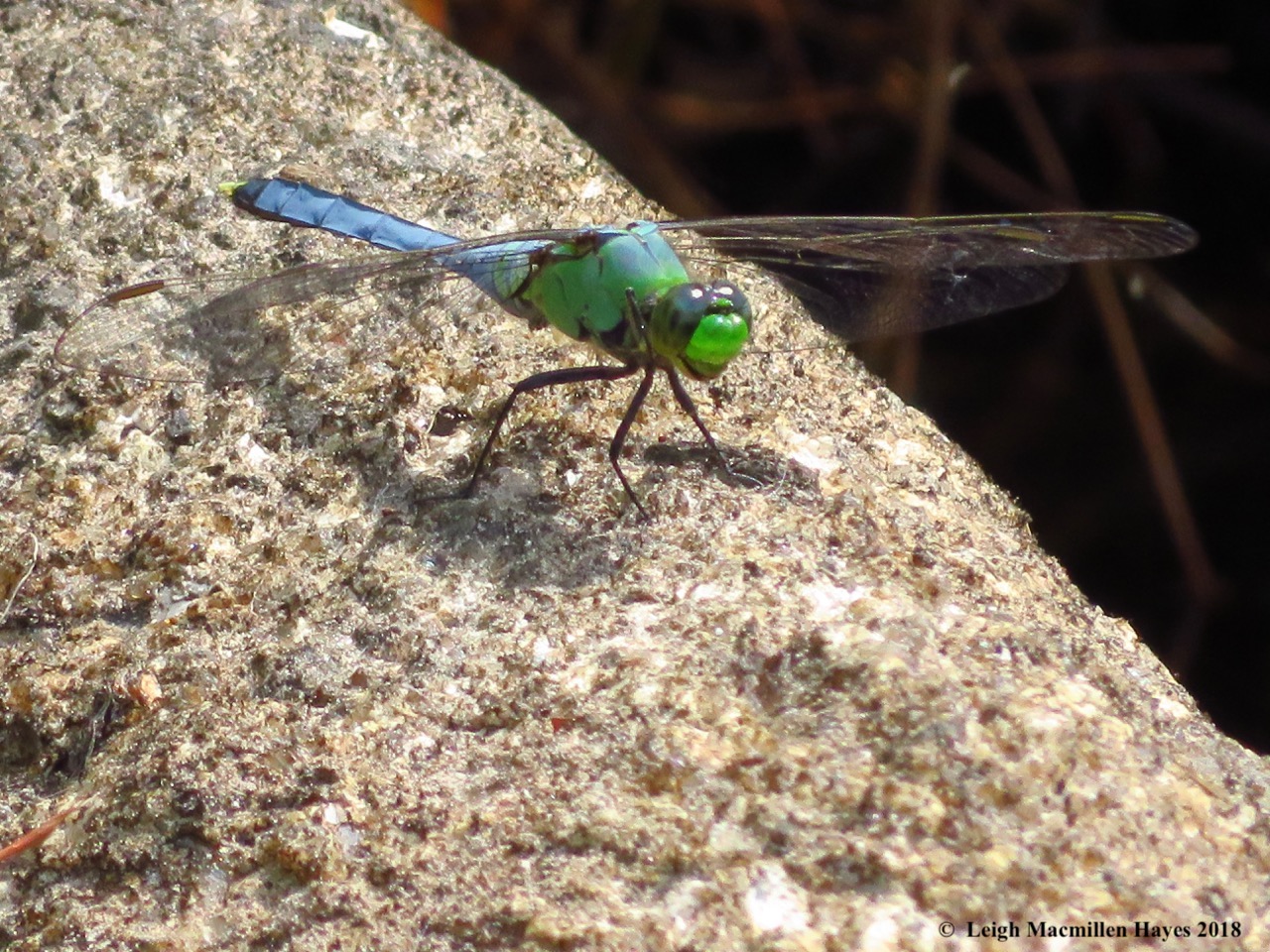
12-Eastern Pondhawk Dragonfly

Though their natural communities all looked similar, with each stop came a different offering, including the Eastern Pondhawk that displayed one of my favorite combinations of color-sky blue pond green.

13-EAstern Pondhawk

Eye to eye, we contemplated each other. I have no idea what he thought of me. Well, actually, I’ve no idea if dragonflies can think. Is all their action instinctive? As for my thoughts, I didn’t want to gobble him up in a literal fashion, but wish I could have taken him with me so I could continue to stare, infatuated with his colors as I was. On his thorax I saw a watercolor painting reflecting a sunny day by the pond.

14-Floating Heart Plant

Another island and another find–the delicate flower of a Floating Heart Plant.

14-bullfrog on lily pad

And then a frog on a lily pad, a young frog that is.

15-bullfrog froglet

If you look closely, you may see her tail extending behind. I couldn’t help but think that she’s got big feet to grow into.

16-beaver lodge

Beside one of the last islands we visited, we saw that the neighborhood had changed quite recently and a new house had been built. Though none of the residents came out to greet us, we weren’t surprised. Based on the greenery and wet mud we suspected they’d been busy as beavers all night and needed a rest.

17-beaver island

A quick look around and we knew the source of their building materials. It reminded us that they’ve been secret visitors to our land in the past and have helped themselves to young saplings much to our dismay. Then again, it is their land as well. We’re just the ones who pay the taxes.

11-spadderdock with damselfly exuvia

Of course, no water adventure is complete without a photo of Spatterdock, this one featuring a damselfly exuvia.

17-fragrant water lily

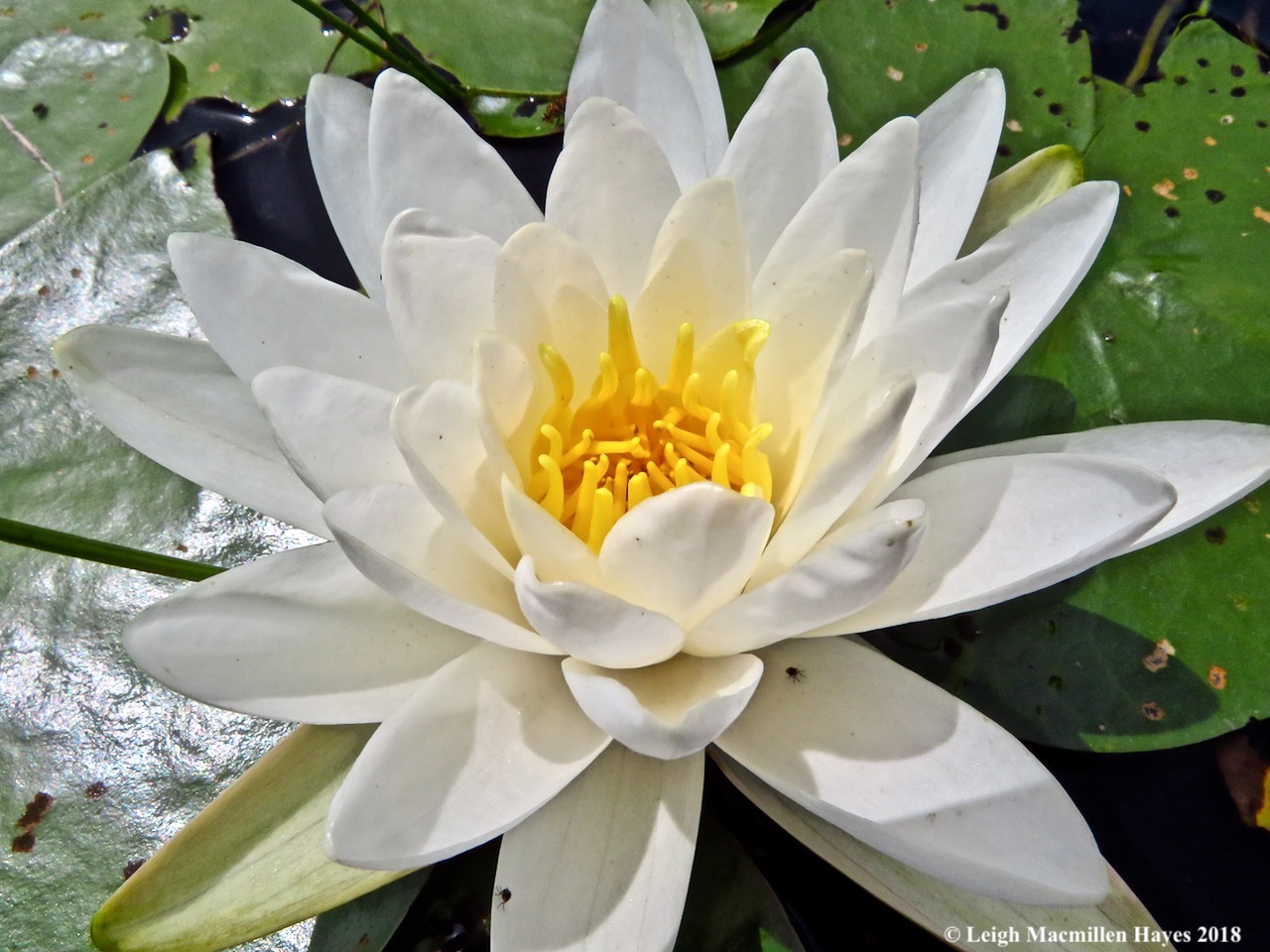
And Fragrant Water Lily. That rayed presentation. Those prominent yellow stamens. The symmetry. And, of course, the fragrance.

18-honeybee

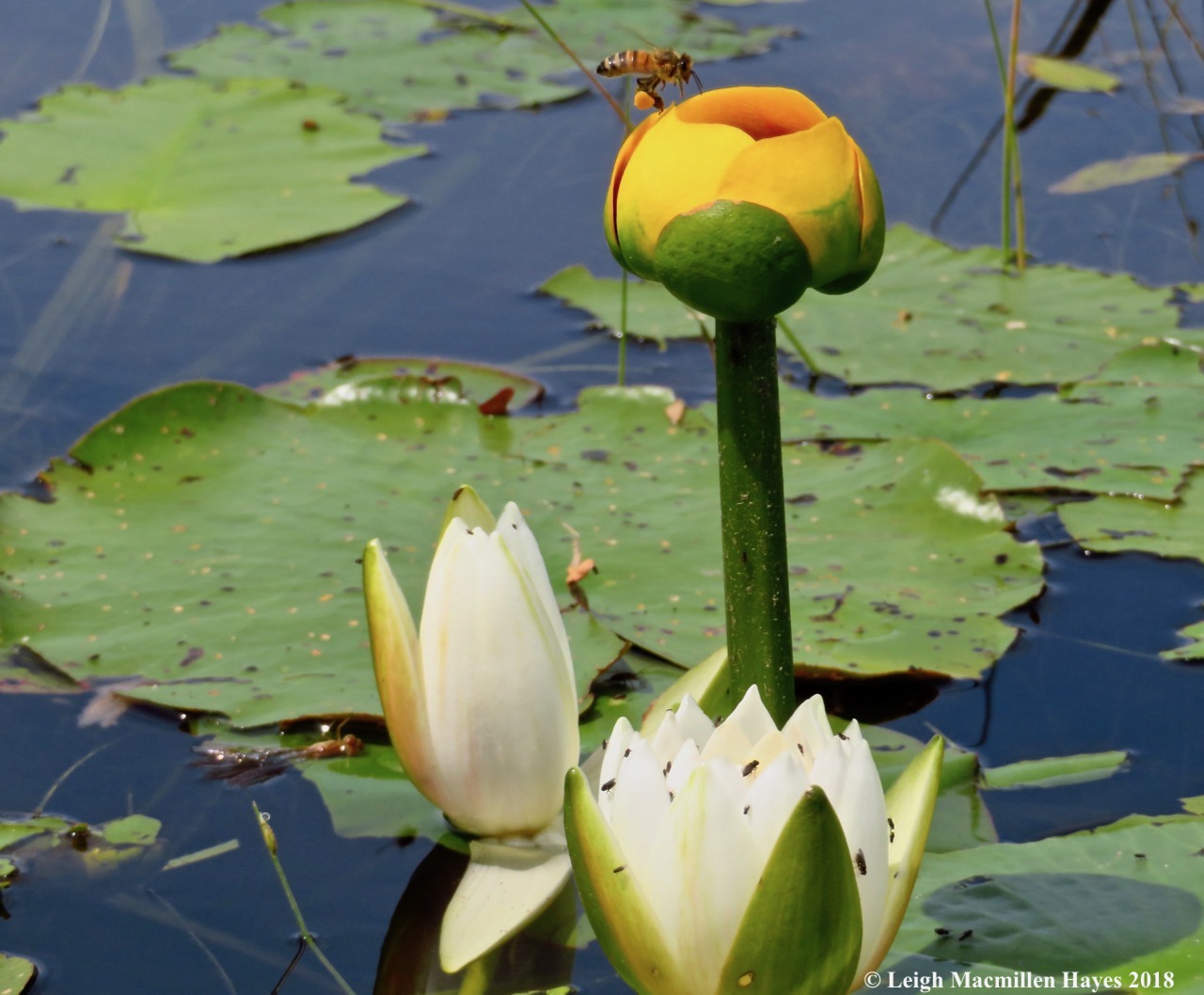
What could be better than the two together? The two together with small flies on one and a honey bee, its buckets full, visiting the other.

19-painted turtle

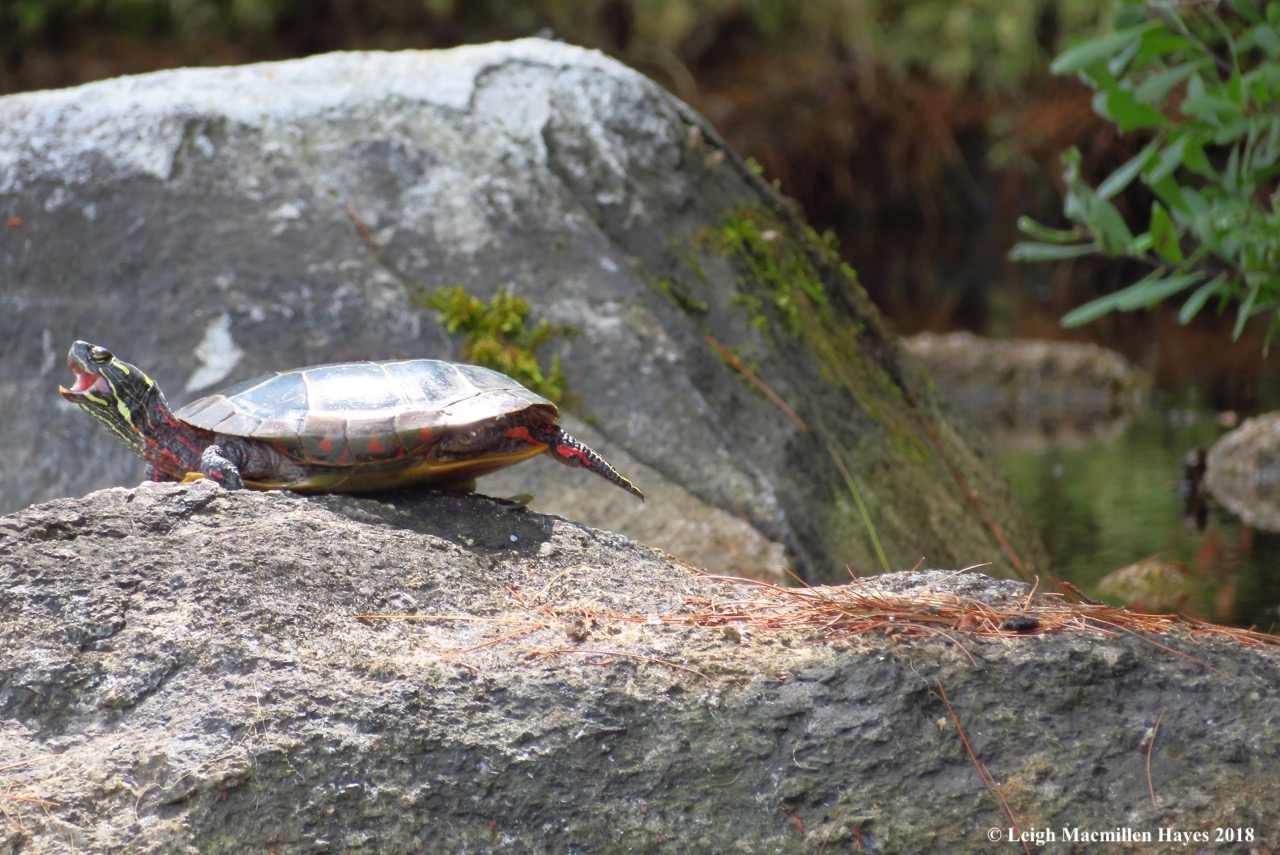
At last, it was well after lunch, which we’d neglected to pack and my wrist was sore, so my guy said he’d paddle us home. And because we’d startled a turtle earlier, he said he’d find one for me. Wow! Both the turtle and I were impressed.

20-turtle basking

As turtles do, he stretched out his back legs demonstrating how they need to capture additional heat given that they are cold-blooded animals. Basking helps them to absorb warmth and vital UV rays.

21-waving goodbye

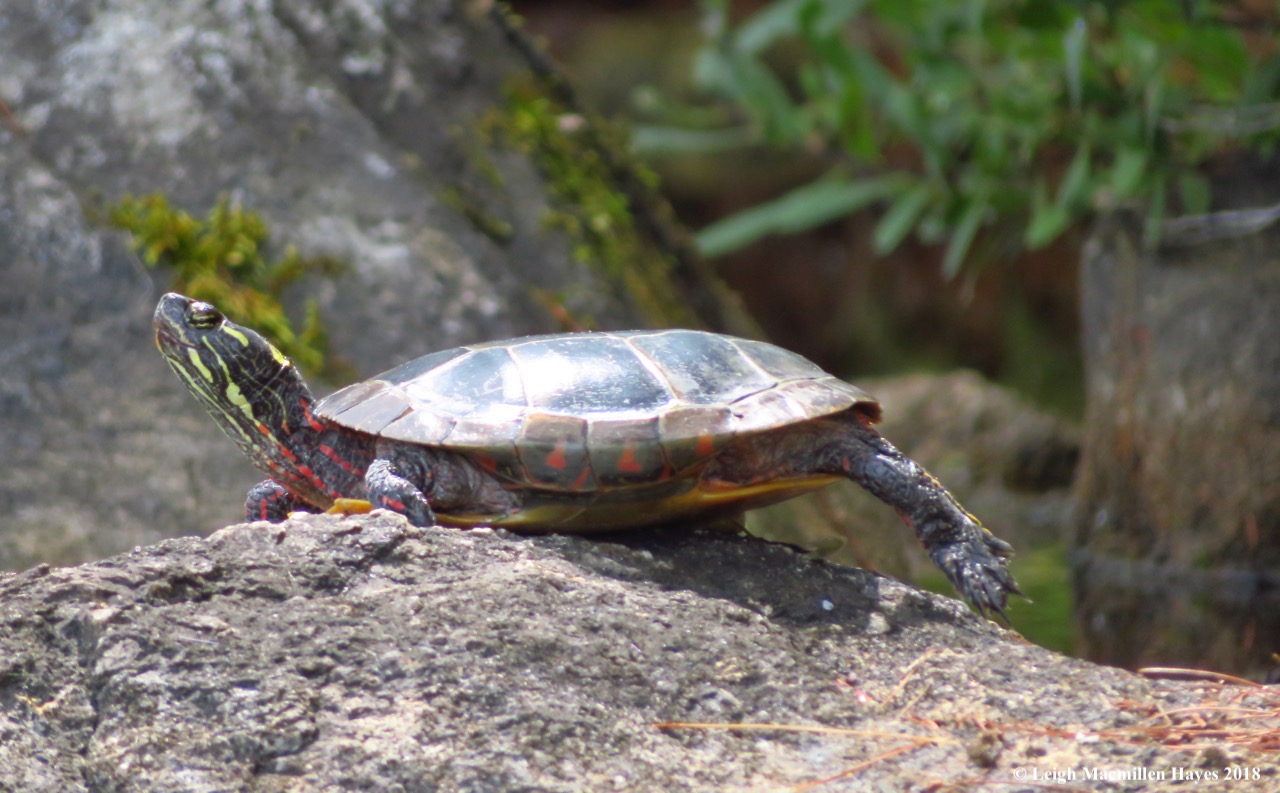
What he did next surprised us. He began to wave his front left leg–I took it as a goodbye, but it was probably either a way to push an insect toward his mouth or an aggressive move telling us to move on. We did, heading back to camp as we finished up our Island Hopping Mondate.


Flying on the Wild Wind of Western Maine

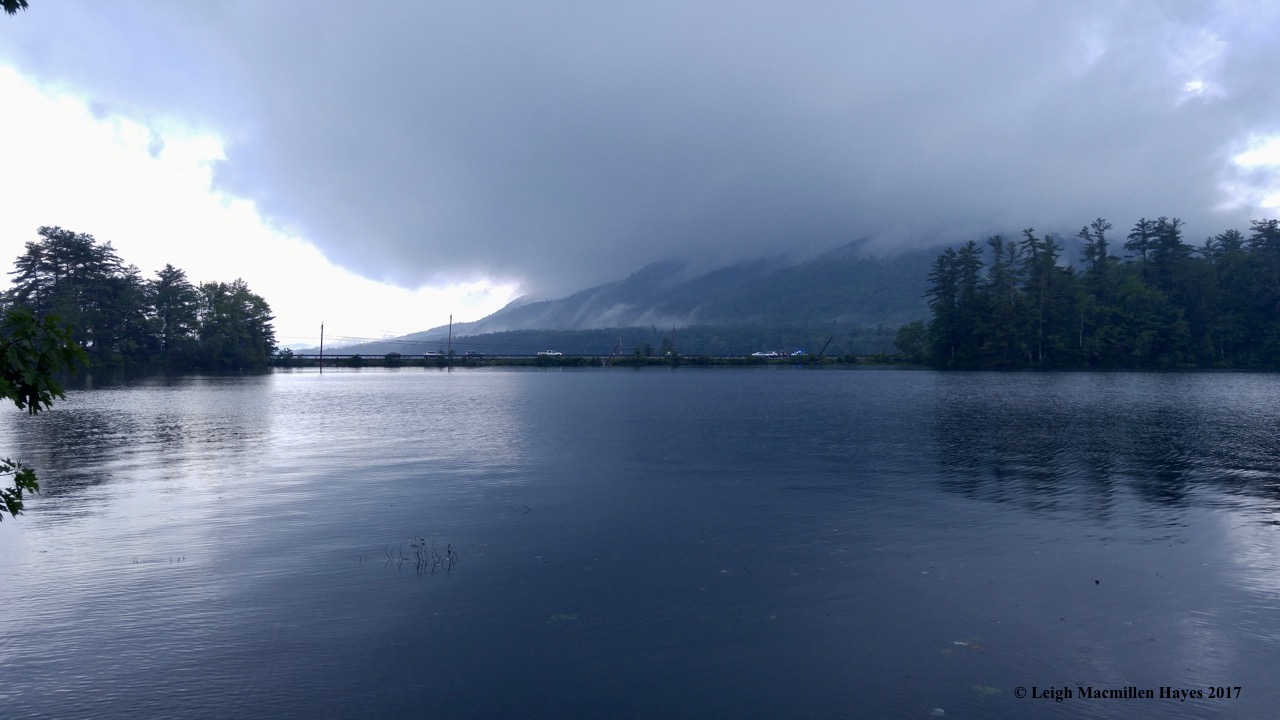
My intention was good. As I sat on the porch on July 1st, I began to download dragonfly and damselfly photographs. And then the sky darkened and I moved indoors. Suddenly, and I mean suddenly, the wind came up. Torrential rain followed. And thunder and lightening. Wind circled around and first I was making sure all screens and doors were closed on one side of the wee house and then it was coming from a different direction and I had to check the other side. Trees creaked and cracked. Limbs broke. And the lightening hit close by. That’s when I quickly shut down my computer and checked my phone to see how much battery life it had. And saw two messages. One was an emergency weather alert. Tornado Watch. And the other was from my friend Marita, warning me that there was a tornado watch for our area. I stood between the kitchen door and the downstairs water closet, where a hatchway leads to the basement. But, there was stuff in the way and I really wanted to watch the storm. At the same time, I was frightened. Of course, in the midst of it all, the power went off.

ph 3 (1)

It didn’t last all that long, as storms go, but the damage was incredible, including telephone poles left standing at 45-degree angles. Soon, the neighbors and I assessed our properties. We somehow lucked out and only two branches plus a bunch of twigs fell. Others were not so fortunate. Trees uprooted along the shoreline or crashed onto houses, sheds, vehicles and boats. Our neighbors float shifted about thirty feet north from its usual anchored spot. And the National Weather service did indeed determine it was an EF-1 Tornado with winds of 90-100 miles per hour.

d-firetruck on causeway

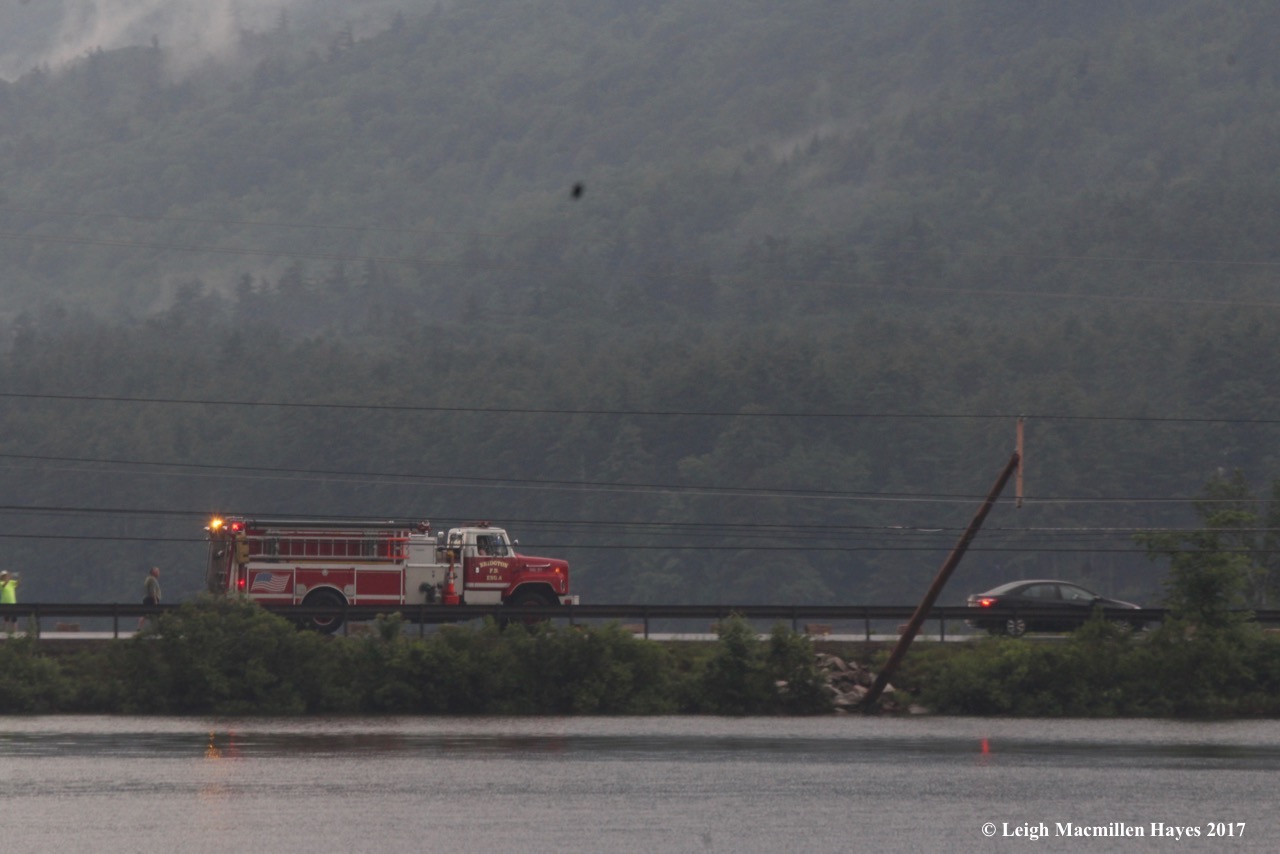
At first traffic along the causeway moved extremely slowly because fallen trees had closed the south-side lane, but eventually the police shut the road down and the fire crew arrived to begin the clearing process. After the first storm, it rained on and off, but once my guy got back to camp (he dodged a detour–don’t tell), we still managed to grill a steak and sat on the porch in the dark, which is our evening habit anyway. Central Maine Power worked most of the night and they’ve been at it all day–resetting poles and lines while neighbors’ generators and the buzz of chainsaws filled the air.

And my focus returned to others who also fill the air–though in a much more welcome manner, to we humans that is. Damselflies and dragonflies. Other insects don’t necessarily agree with us–as they become quick food.

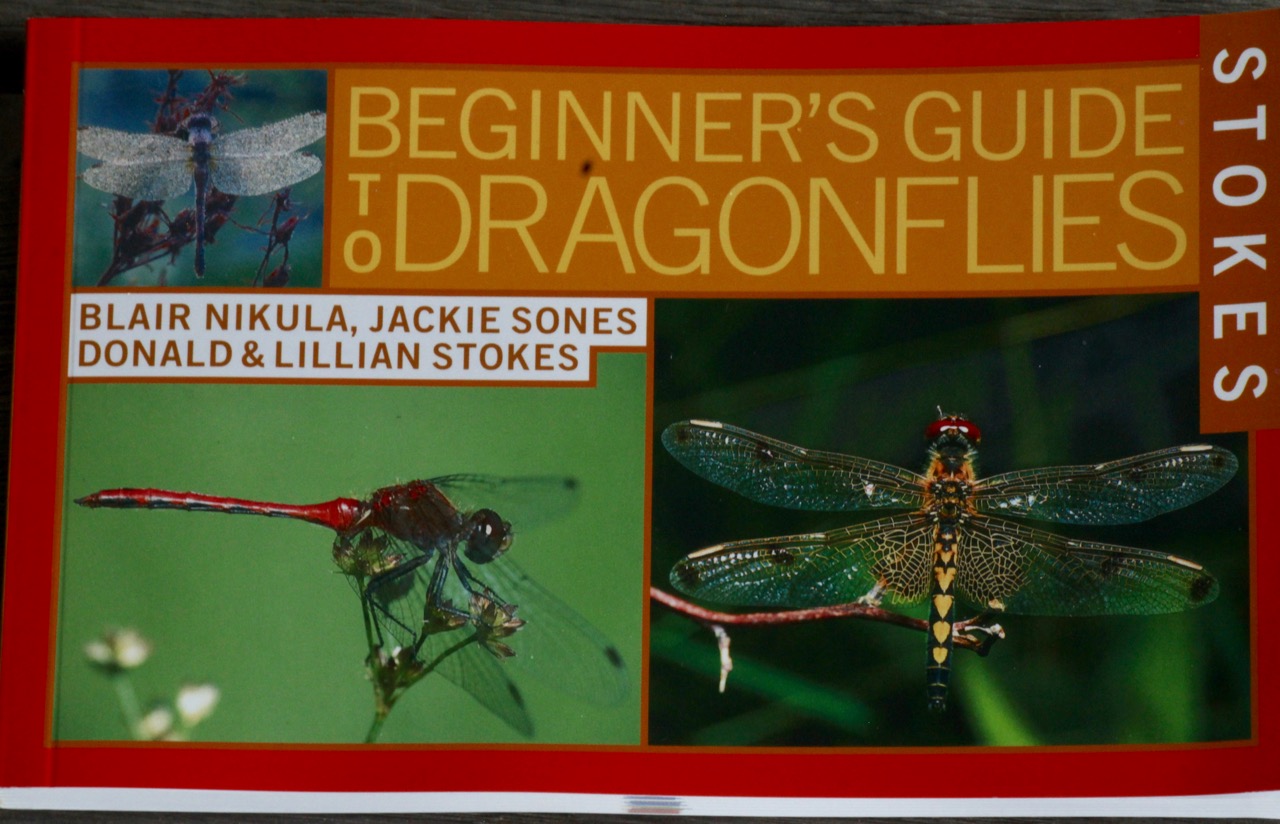
Therefore, it seems apropos that the Book of July is the Stokes Beginner’s Guide to Dragonflies and Damselflies by Blair Nikula, Jackie Sones, with Donald & Lillian Stokes.

d-book

It’s not a big book by any means, and doesn’t include all species of the insect order Odonata, but for me right now, it’s enough. And it fits easily into my pack. I can not only try to give a name to what I see, but more importantly to recognize the subtle differences in these favorite of insects.

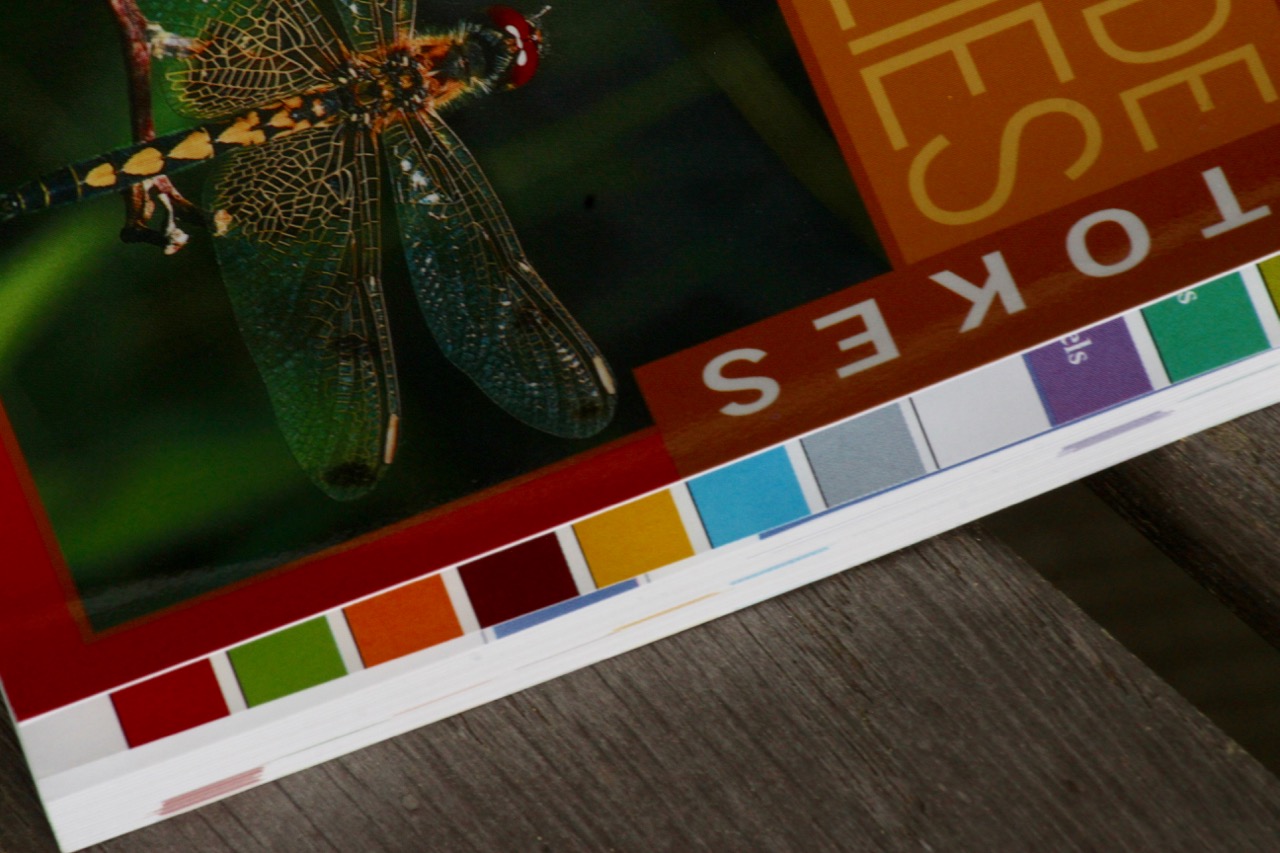
d-book key

One of the features I really like is that it has a key on the inside cover, first divided between damselflies and dragonflies, and then further divided by families based on size, percher or flier, flight height, wings, body colors, eye position and other clues. As you can see, there are color tabs and I can quickly move to that section and search for the species before me. I’ve discovered that I’m now looking at eye position and colors as a quick key, with other features falling into place.

The book also discusses the life cycle and behavior of damselflies and dragonflies.

d-pond damsels mating, Marsh bluets 1

Of course, it all begins when he grabs her–for damselflies such as these marsh bluets, he clasps her by the neck. Dragonflies do the same, only he clasps his female of choice behind the eyes.

d-damsel love, variable dancers

Eventually damsel love occurs as the mating couple forms a “copulation” wheel, thus allowing him to remove any sperm she may have already received from another, and replacing it with his own. Sneaky dudes. Soon after, hundreds to thousands of eggs are deposited, either in the water or on vegetation, depending on the species.

d-damselfly nymph1

Emerging from an egg, the larvae develop underwater. Damselflies such as this one, obtain oxygen through the three tail-like projections at the end of their abdomens. From 8-17 times, they molt, shedding their outer shells, or exoskeletons.

d-exoskeleton shrubs

In the spring, the big event happens. We all celebrate the emergence of the last stage in the larval skeleton, when the insects climb up vegetation or onto rocks, or even the ground, and make that final metamorphosis into the damsel or dragonfly form we are so familiar with, thus leaving their shed outer shell (exuviae) behind.

d-emerging dragonfly

On a warm, sunny spring day toward the end of May, there’s no better place to be than sitting in the presence of an emerging adult.

d-emerging 2

I encourage you to look around any wetland, even as the summer goes on, for you never know when those moments of wonder might occur.

d-Broad-winged damsel, River Jewelwing 1

In the guide, the authors include all kinds of observation tips. And then, the real nitty gritty. The first thirty-six pages of the Identification section are devoted to damselflies. And those are divided into Broad-winged damsels, Spreading, and Pond damsels. This is a river jewelwing, and for me it was a first a few weeks ago. I spotted this beauty beside the Saco River in Brownfield Bog–its iridescent green body showing through the dark-tipped wings.

d-pond damsel, ebony jewelwing, male

In the same category, the ebony jewelwing is equally stunning with brilliant green highlighted by black accents. This was a male; the female has a white dot or stigma toward the tip of her wings.

d-spreadwing, common spreadwing

Spreadwings are next and so named for their spread wings. This one happened to be a common spreadwing, though really, I don’t find them to be all that common.

d-pond damsel, variable dancer

The pond damsels are the ones I do see often, including the female variable dancers. Check out her spotted eyes.

d-pond damsel, sedge sprite 1

And one of my favorites for its colors and name–the sedge sprite. If you noted the dancer’s eyes, do you see how the sprite’s differ?

From page 79-155, dragonflies are identified. I don’t have one from every type, but I’m working on it.

d-clubtail, lancet clubtail, male

Clubtails have clear wings, and their coloration is often green, yellow or brown. Check out those eyes–and how widely separated they are. Meet a lancet club tail, so named for the yellow “dagger” markings on its back.

d-Emeralds, Ameican Emerald 2

The emeralds are known by their eyes, which are often green. This American emerald has a black abdomen with a narrow yellow ring at the base near the wings.

d-baskettail, common baskettail 1

Also included with the emeralds is the common baskettail. Notice how stout this handsome guy is.

d-skimmer, chalk-fronted corporal male

Among the easiest dragonflies to actually get a good look at are the skimmers. And it seems that on many paths I follow, the chalk-fronted corporals are there before me. His thorax has two bluish-gray stripes with brown on the sides. And his wings–a small brownish-black patch.

d-skimmer, slaty blue 2

Then there’s the slaty skimmer, in a shade of blue I adore. His wings are clear, except for the black stigmas toward the tips.

d-skimmer, common whitetail

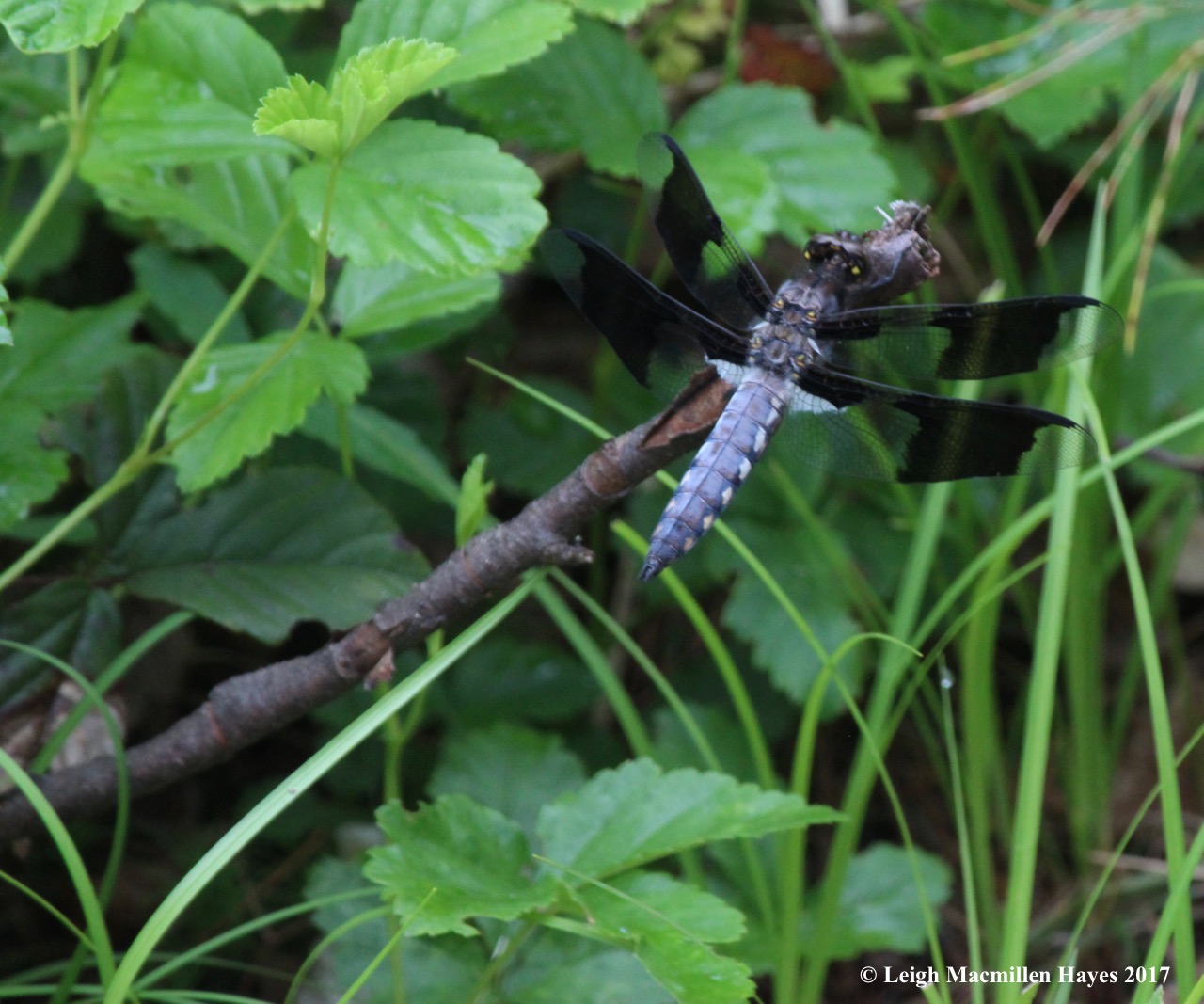
The common whitetail is also a skimmer. Not only is his abdomen different–with white markings on the side, but he has wings with black and chalky white bases and broad black bands in the middle.

d-skimmer, calico pennant, male

They’re all pretty, but I think that so far, my all time favorites are the calico pennants; the male with red highlights including stigmas on his wings and hearts on his back, plus a hint of red everywhere else.

d-skimmer, calico pennant female

For once the male isn’t to be outdone in the color department, and the female looks similar except that she’s yellow.

d-skimmer, yellow legged meadowhawk, wings

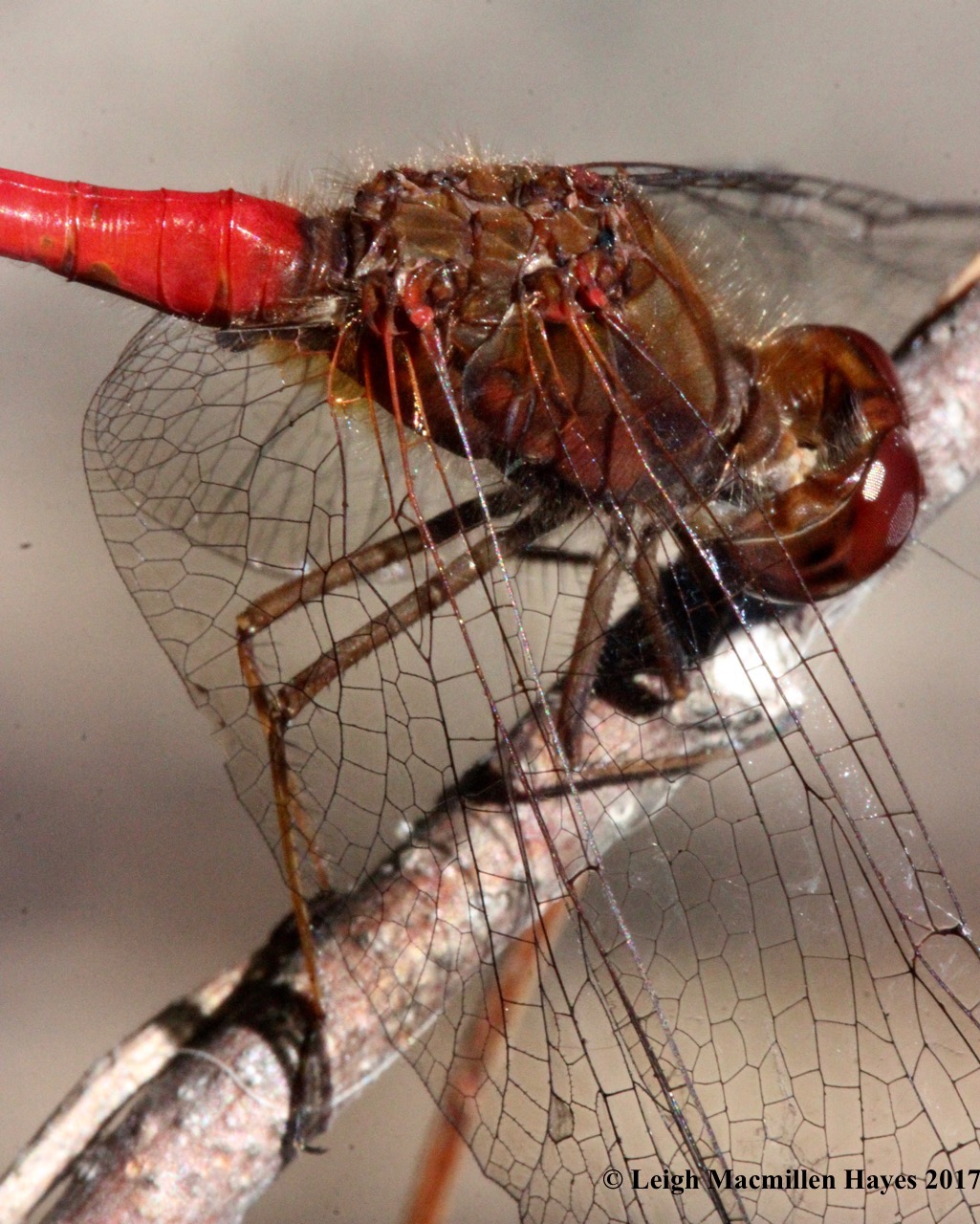
There’s so much to admire about damselflies and dragonflies. I mean, first there are those compound eyes. But look at the thorax–where both the three pairs of legs and two pairs of wings attach. I find that attachment to be an incredible work of nature. It’s awe inspiring at least.

d-ending, female calico pennant on screen

Then again, nature is awe-inspiring. When I awoke as the sun rose yesterday morning, I wondered about the damsels and dragons. Did they survive the storm? I stepped outside to once again check for damage and look who I spotted on the porch screen. Mrs. Calico stayed for about an hour or two, letting her wings dry off before heading out to perform today’s duties–flying on the wild wind of western Maine.

Damselflies and dragonflies are one more point of distraction for me these days. I won’t always get their ID correct, but I’m thankful for the Book of July, Stokes Beginner’s Guide to Dragonflies and Damselflies, that I found at Bridgton Books.

Stokes Beginner’s Guide to Dragonflies and Damselflies by Blair Nikula, Jackie Sones, with Donald & Lillian Stokes. Little, Brown and Company, 2002.