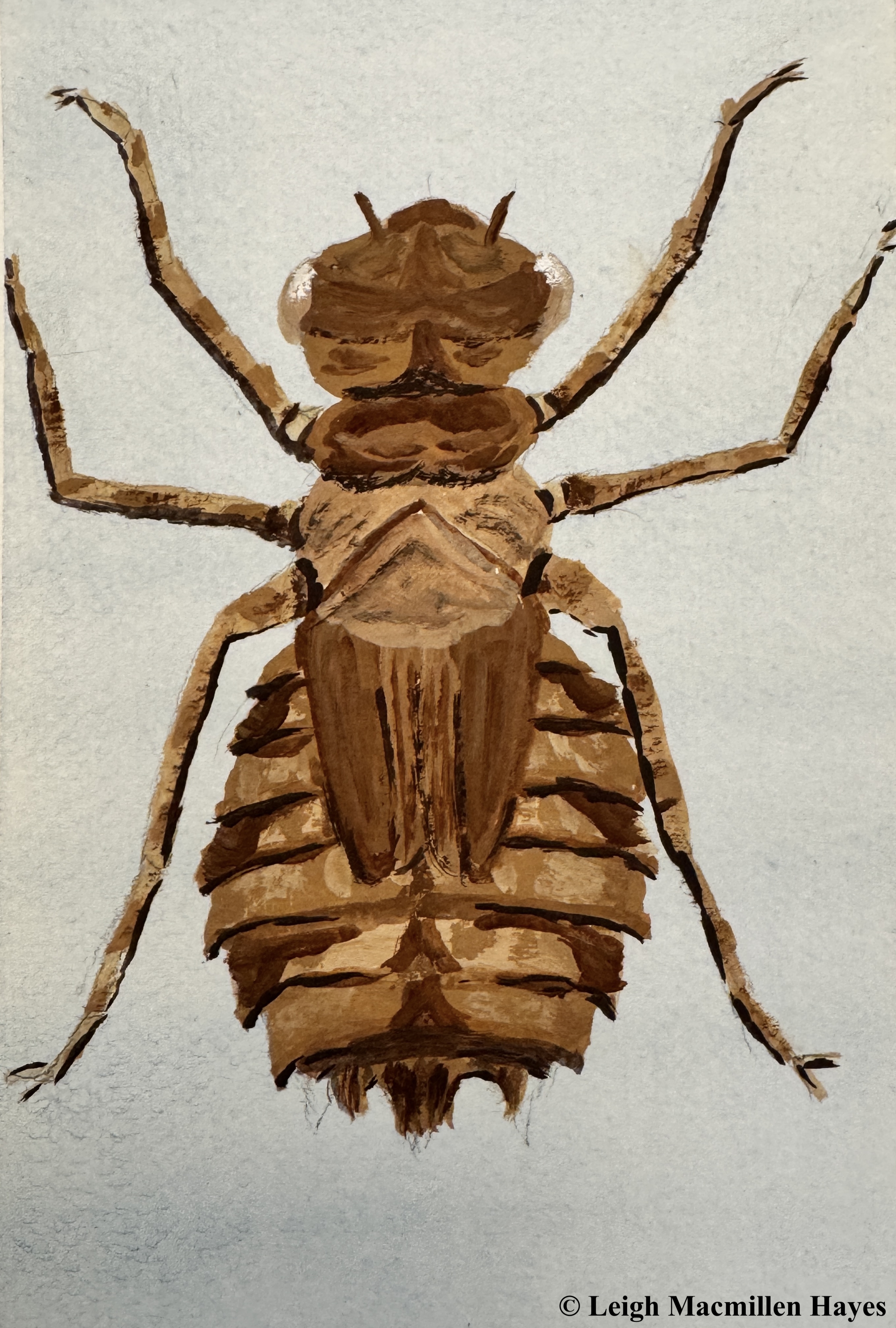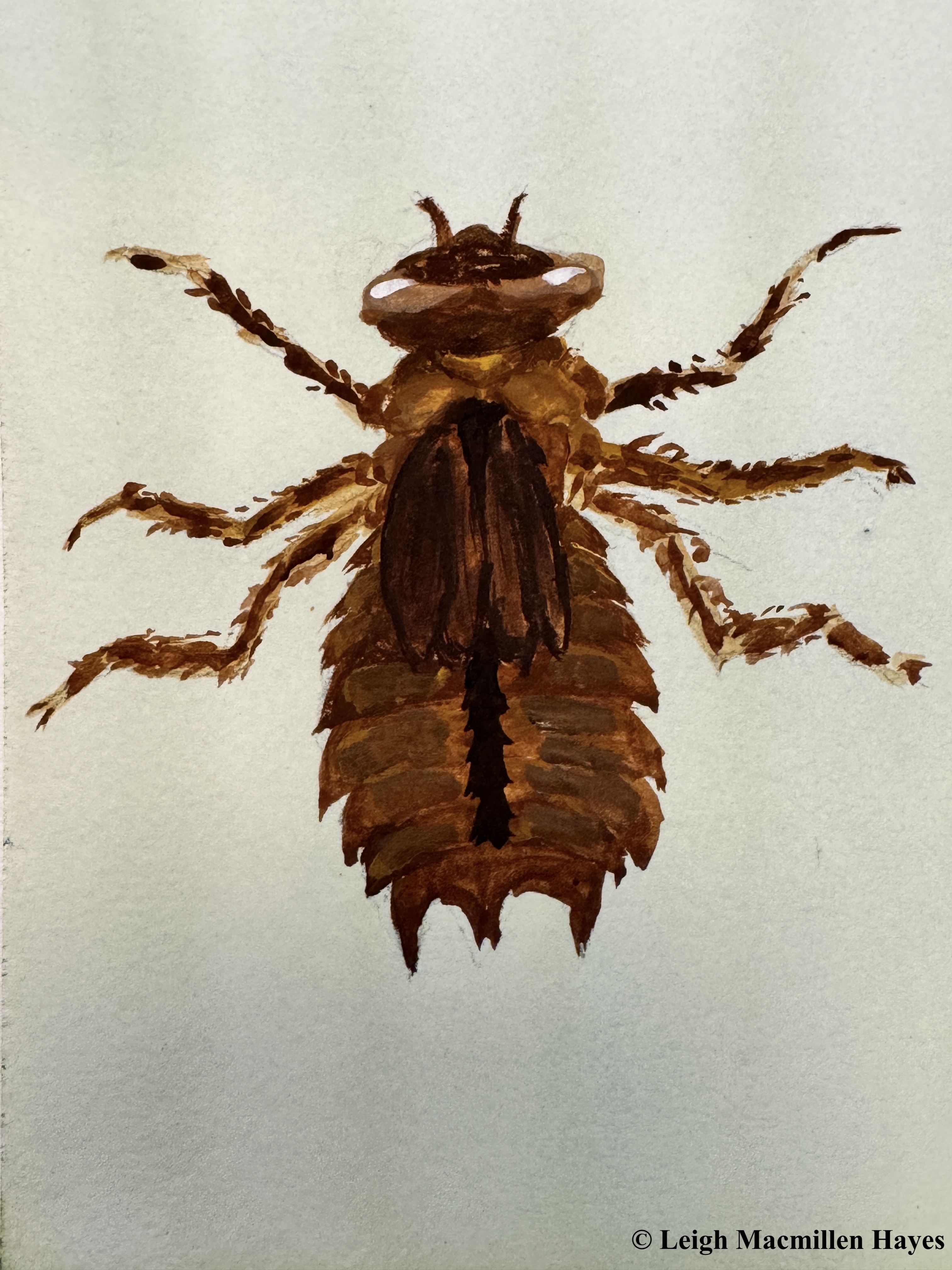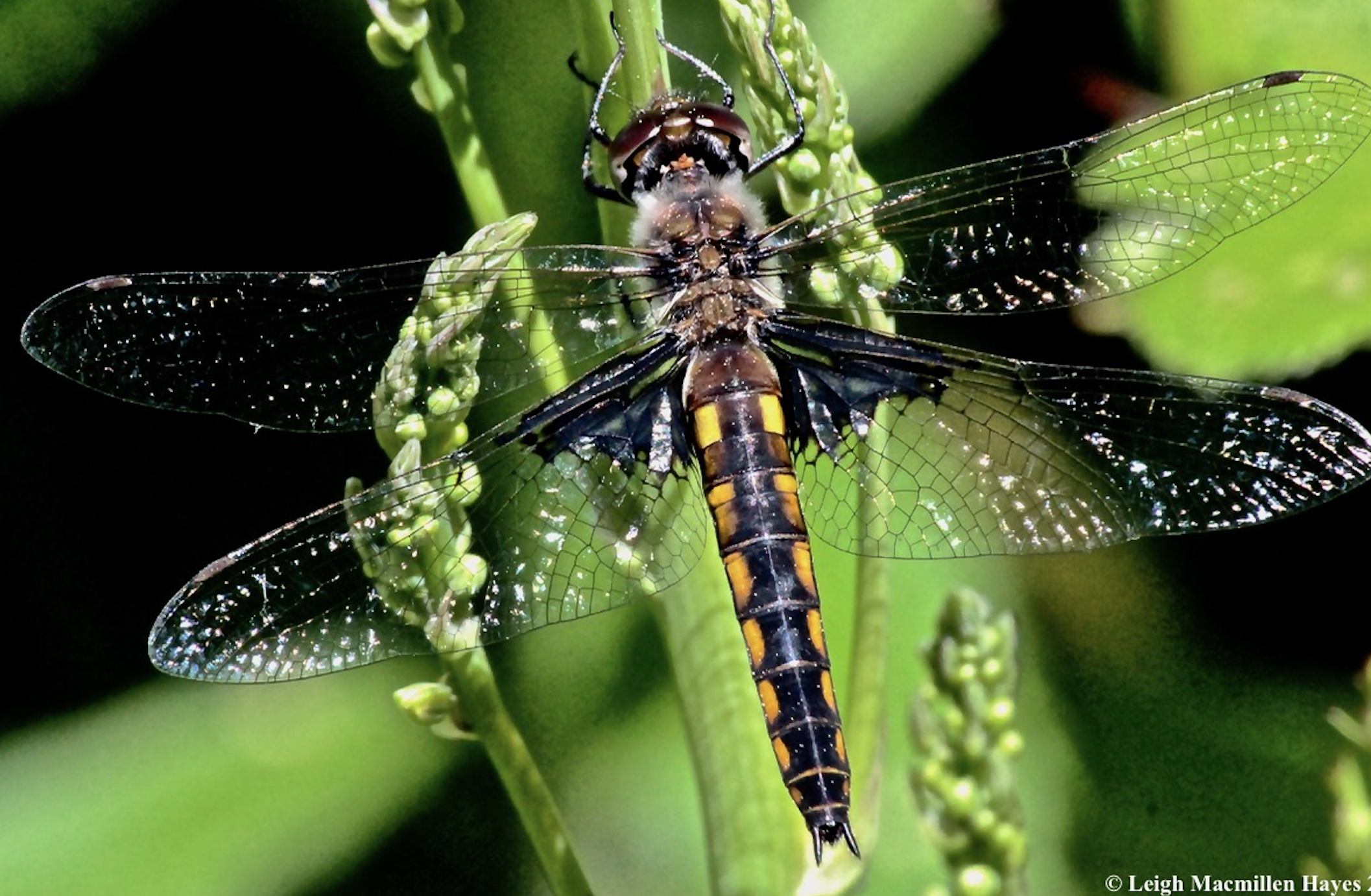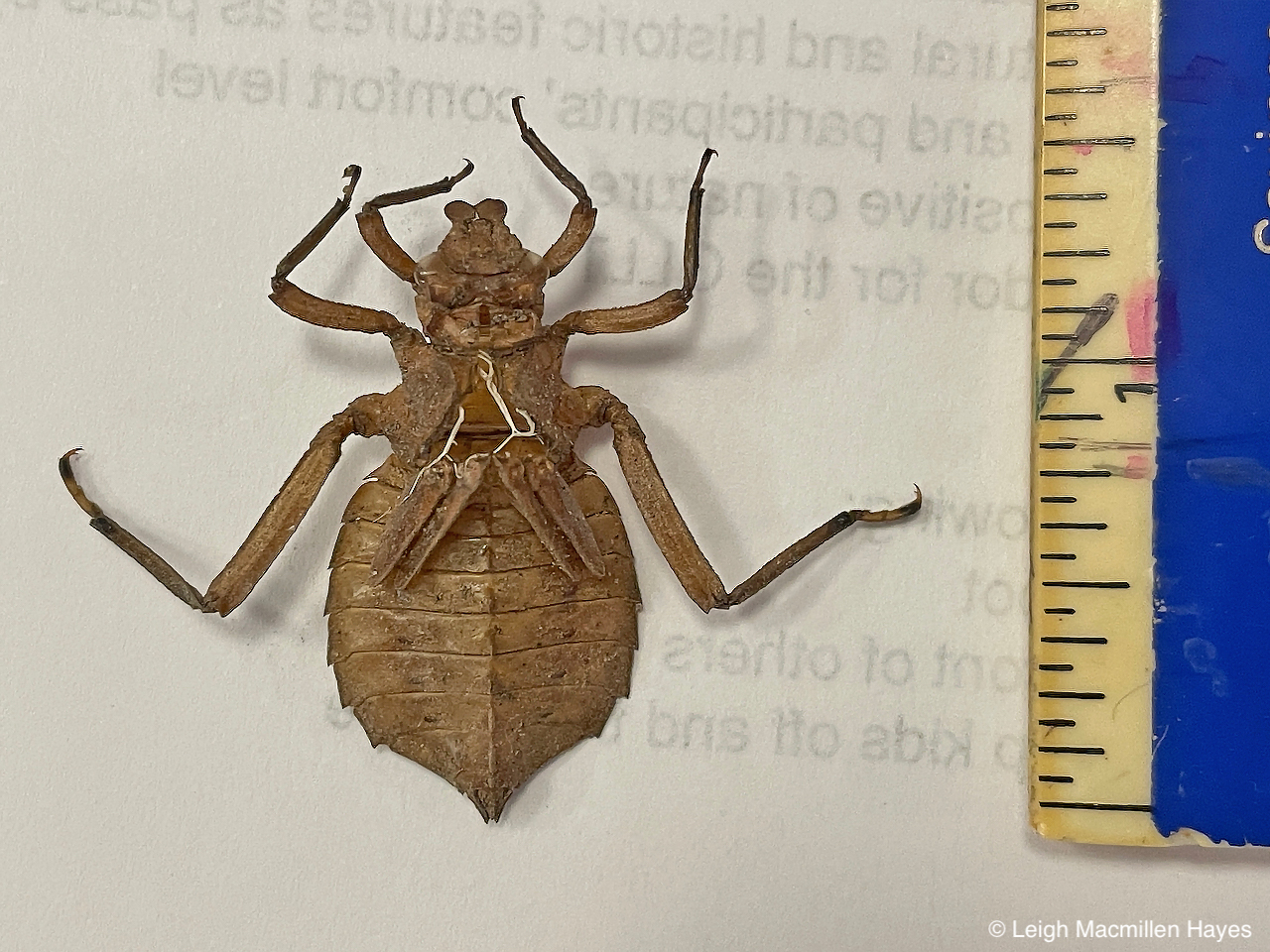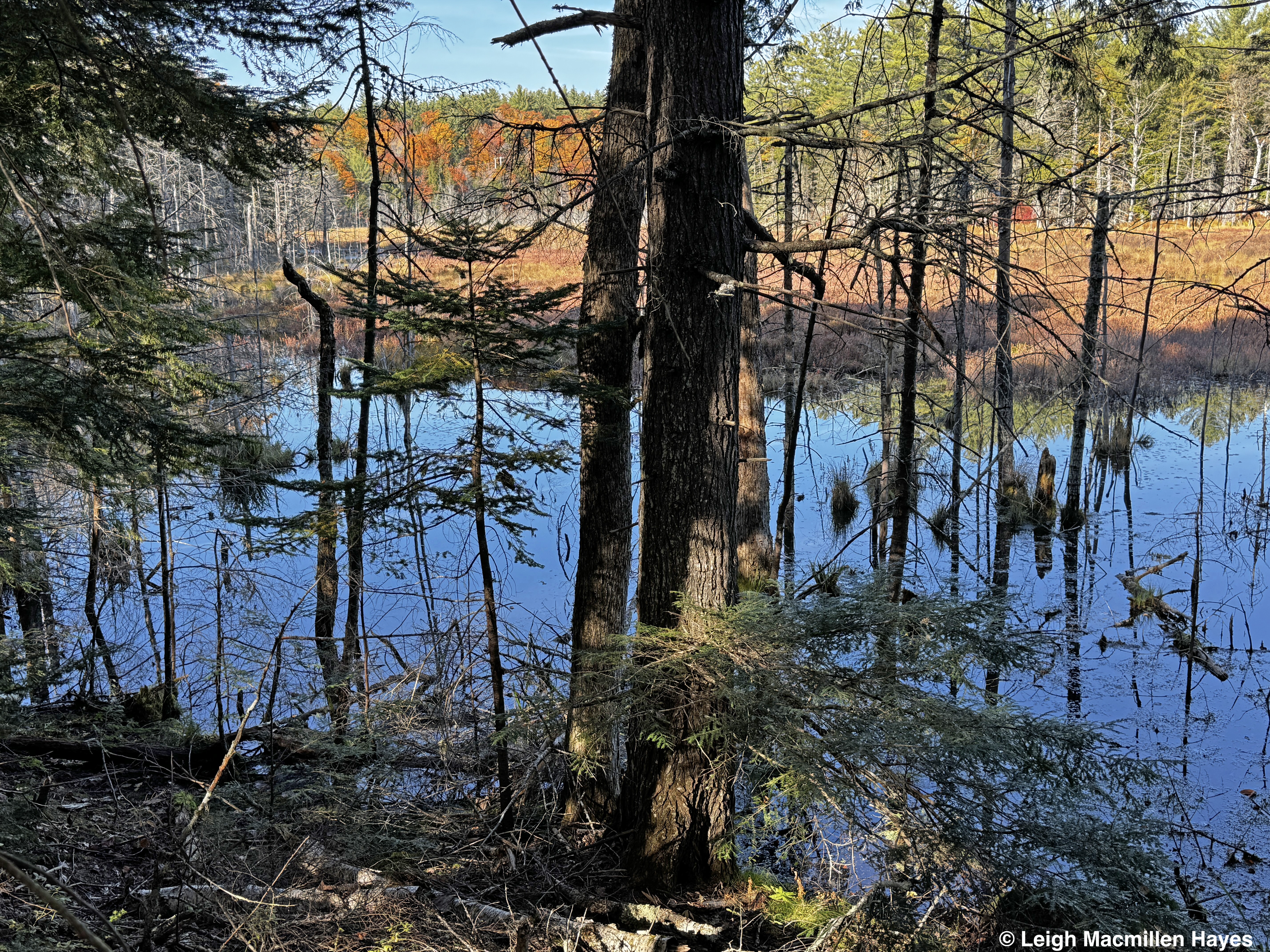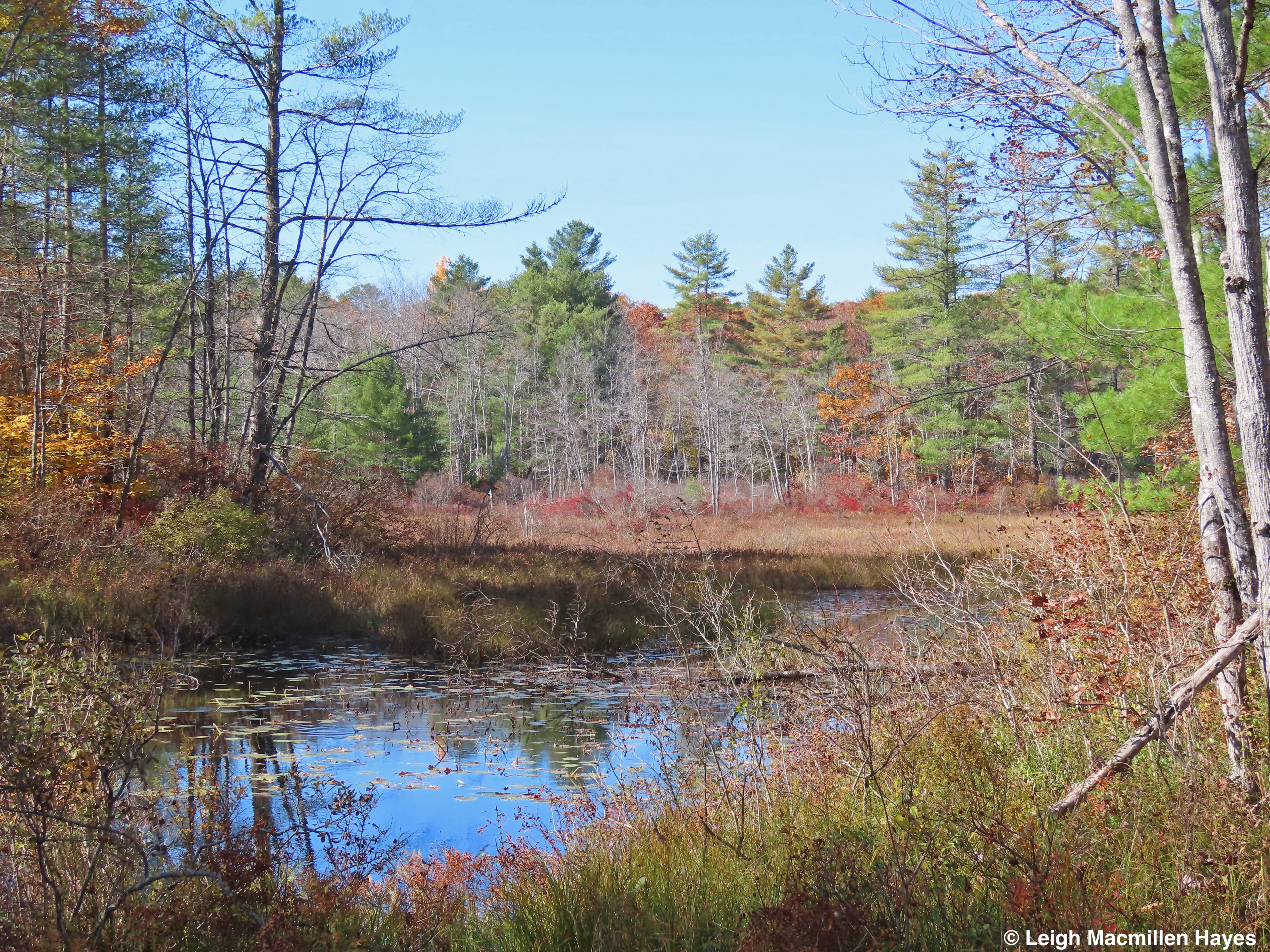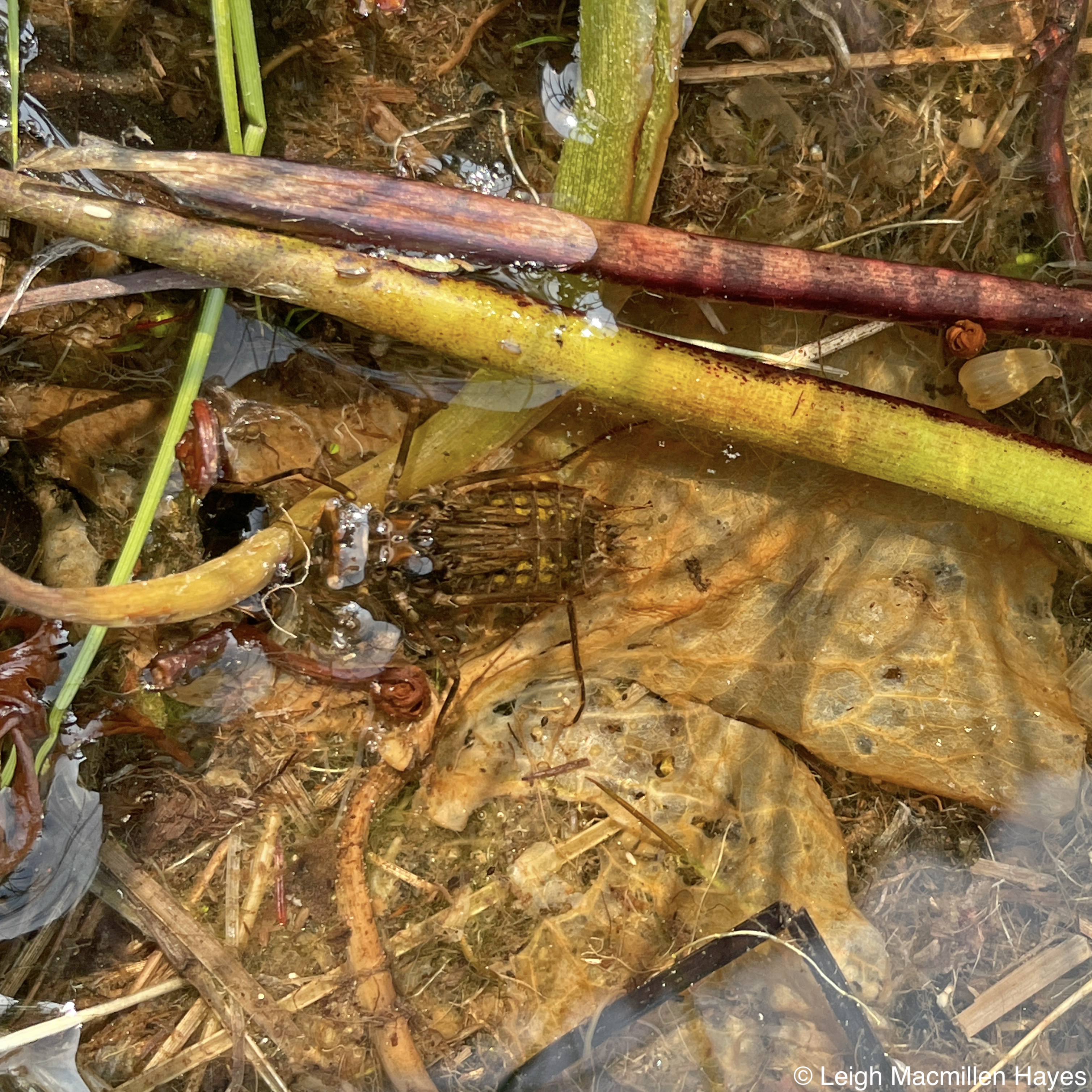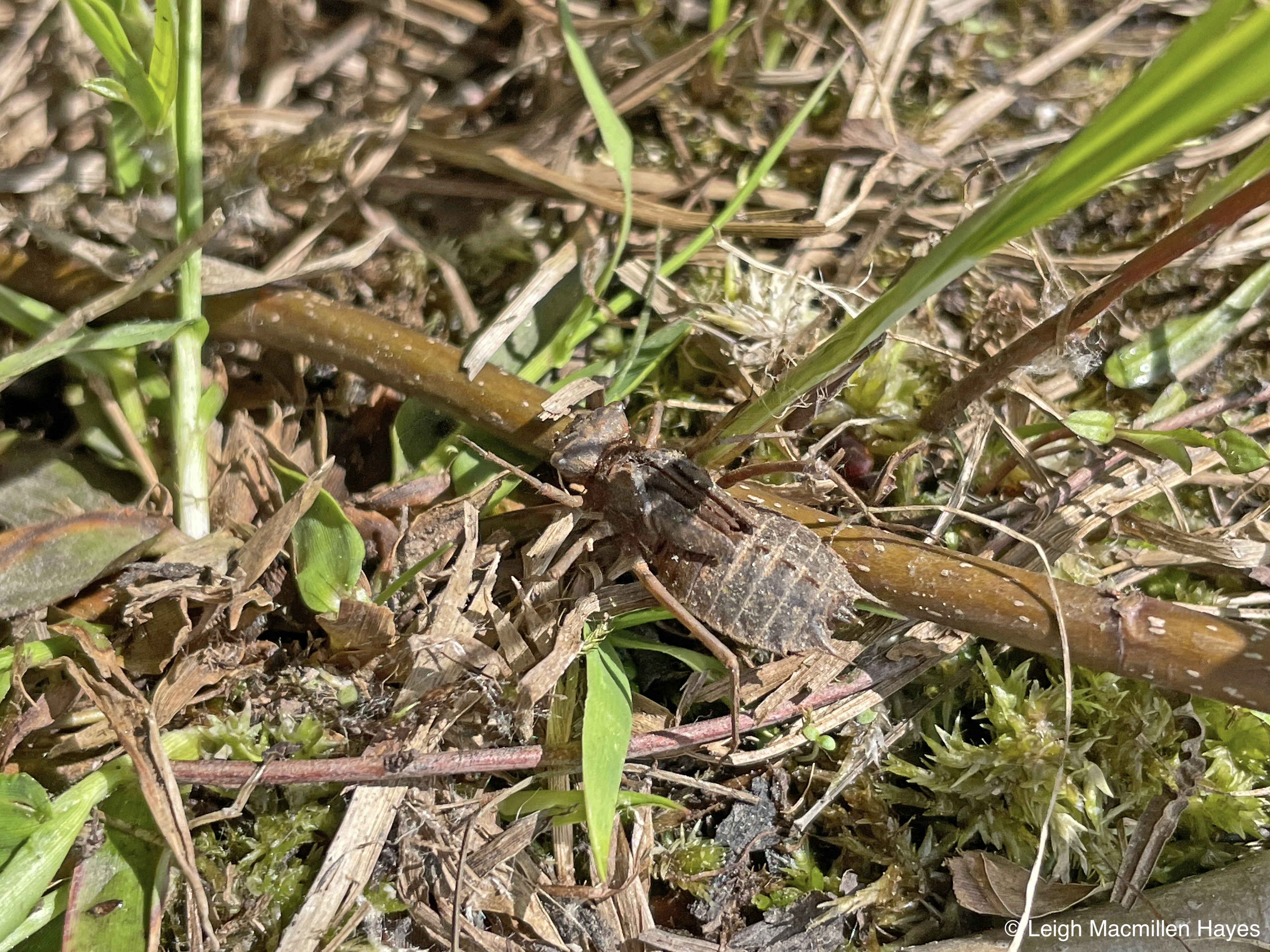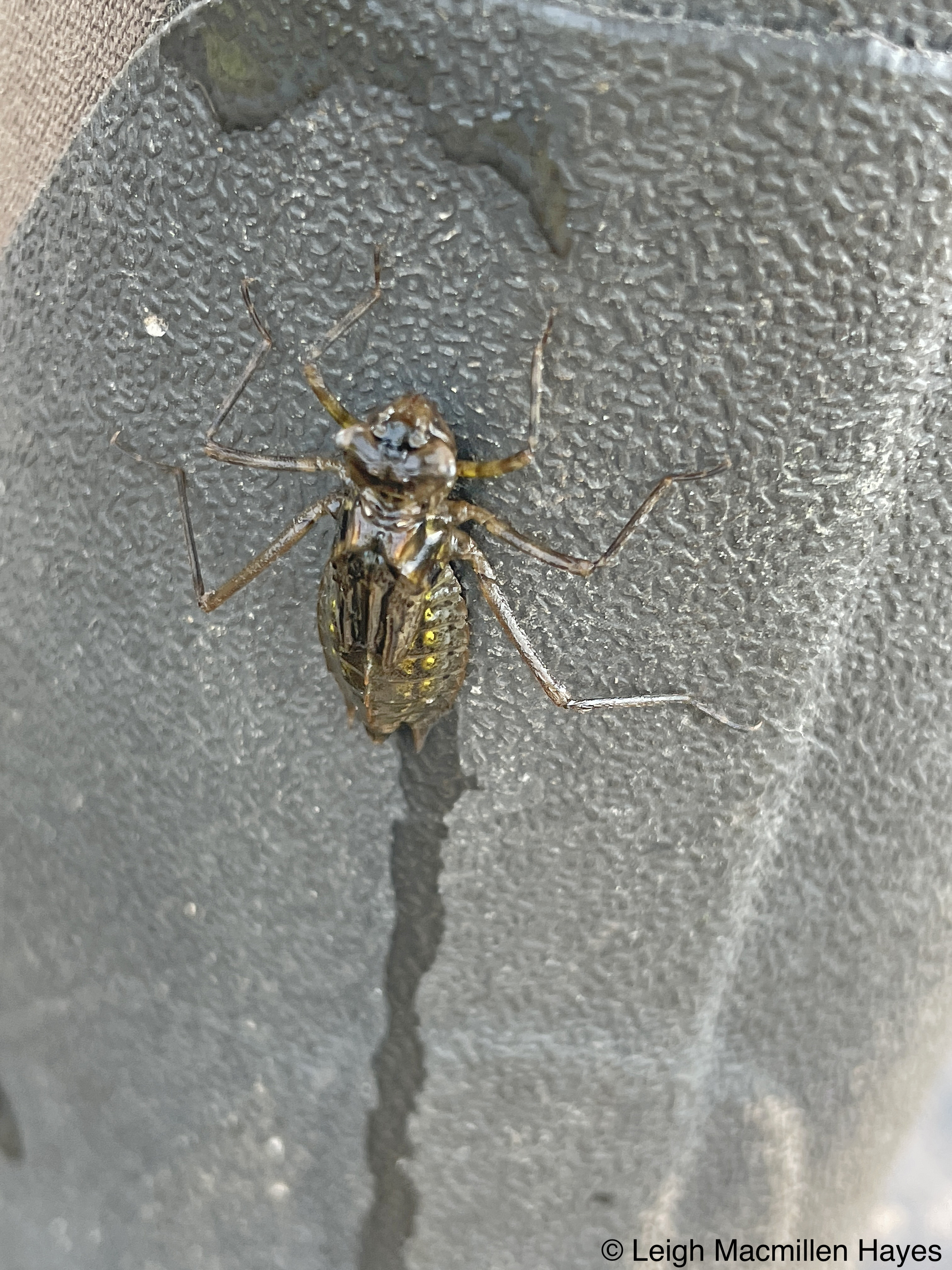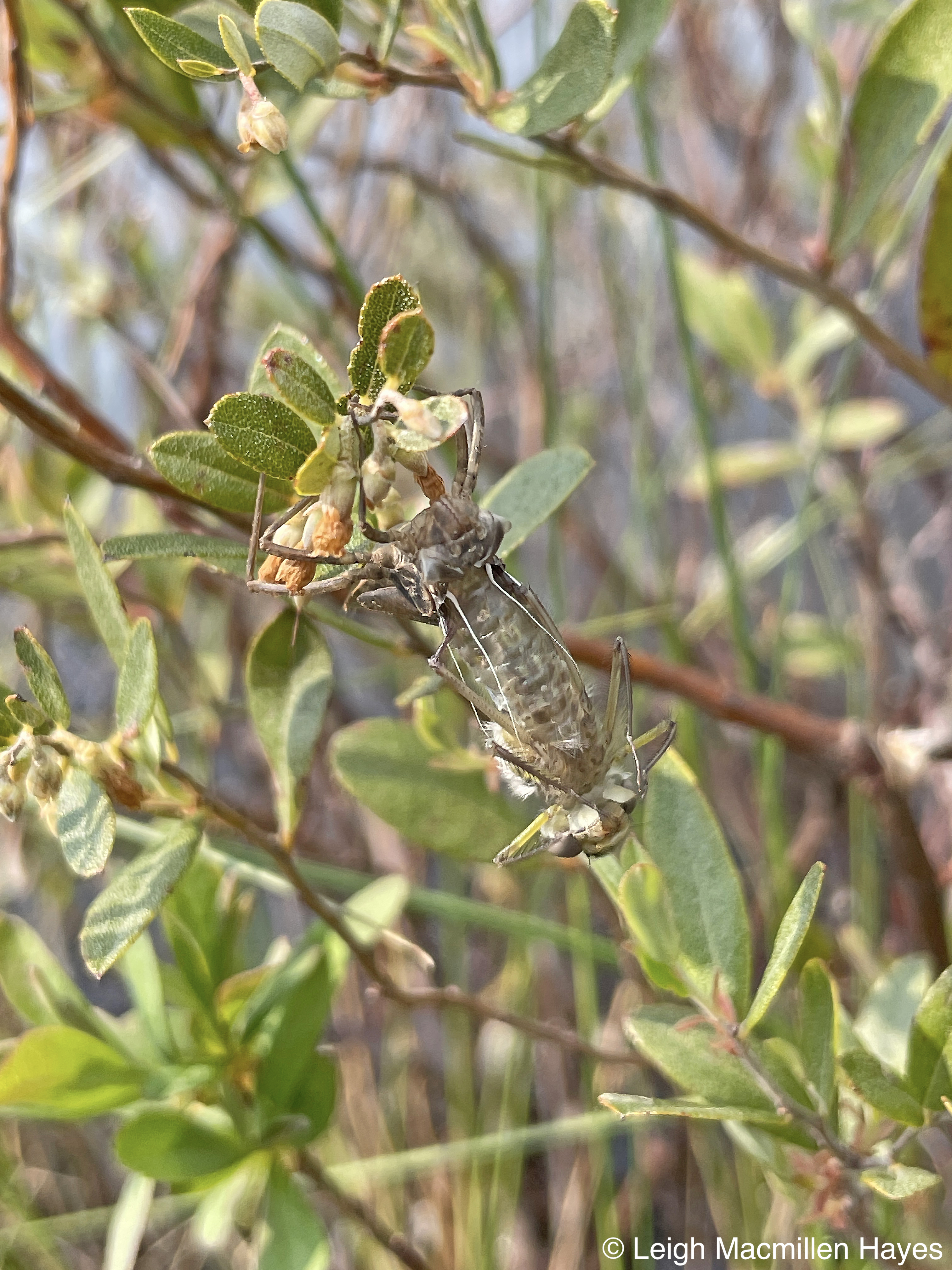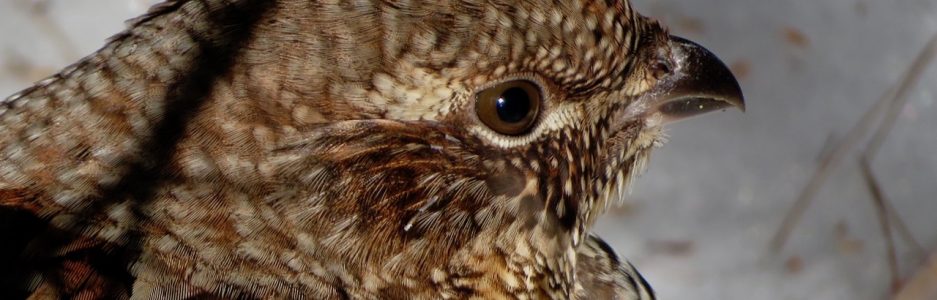
Bogging in Maine

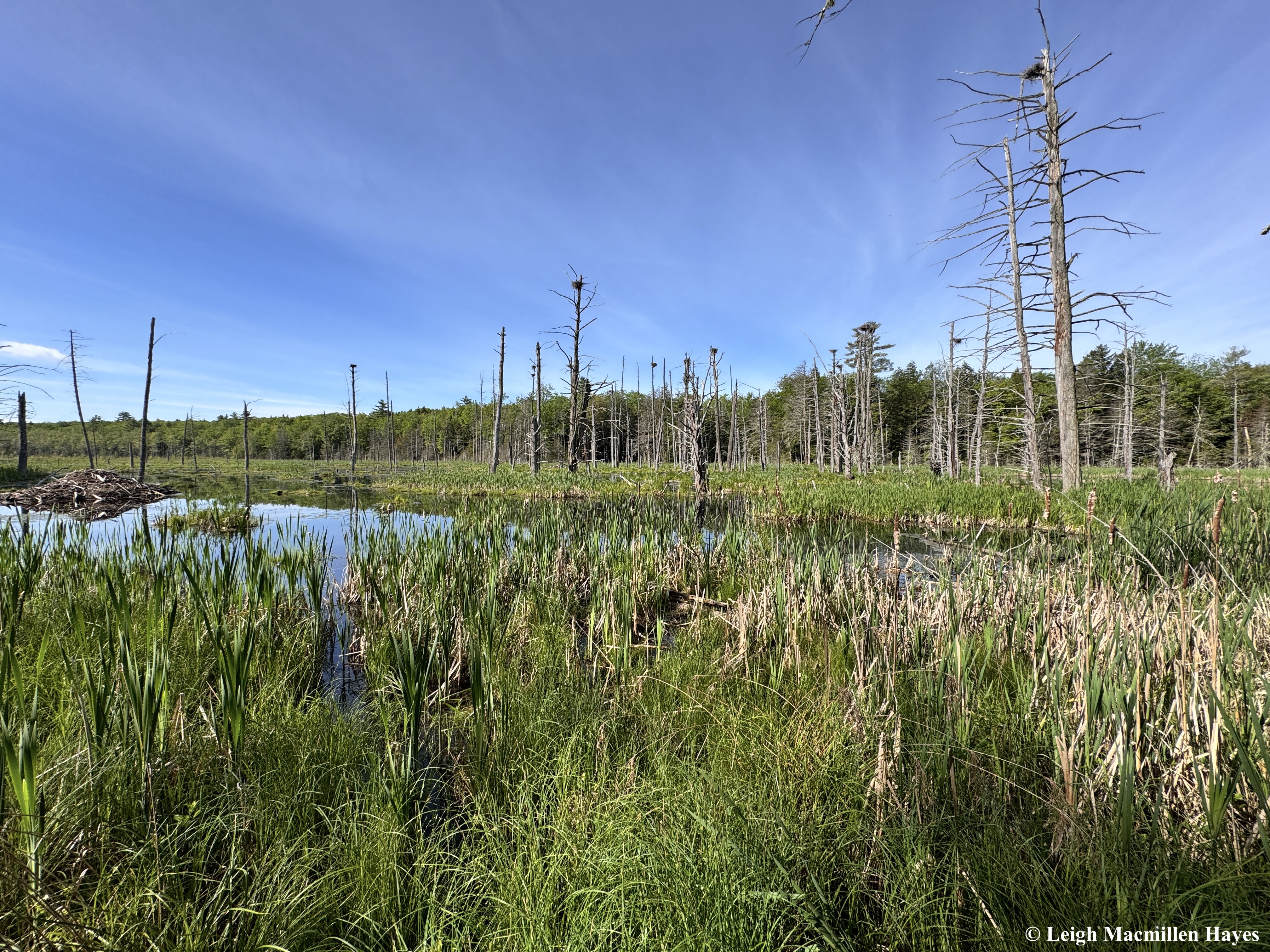
What is a wetland? Basically, it is wet land! But more specifically, wetlands are often those transition zones between dry land and deep water.

There are four basic types of wetlands, which can be broken into even more types, but let’s stick with the four: marsh, swamp, bog, and fen.

Marshes are typically located along shores of rivers and streams, and even the coastline. Plus they can be found in the shallow water of ponds and lakes. Cattails, Arrowhead and other soft-stemmed emergent plants grow in these areas.

Swamps are found along rivers, streams, and lakes where mainly woody-stemmed plants such as shrubs and trees, like this Tamarack, grow.
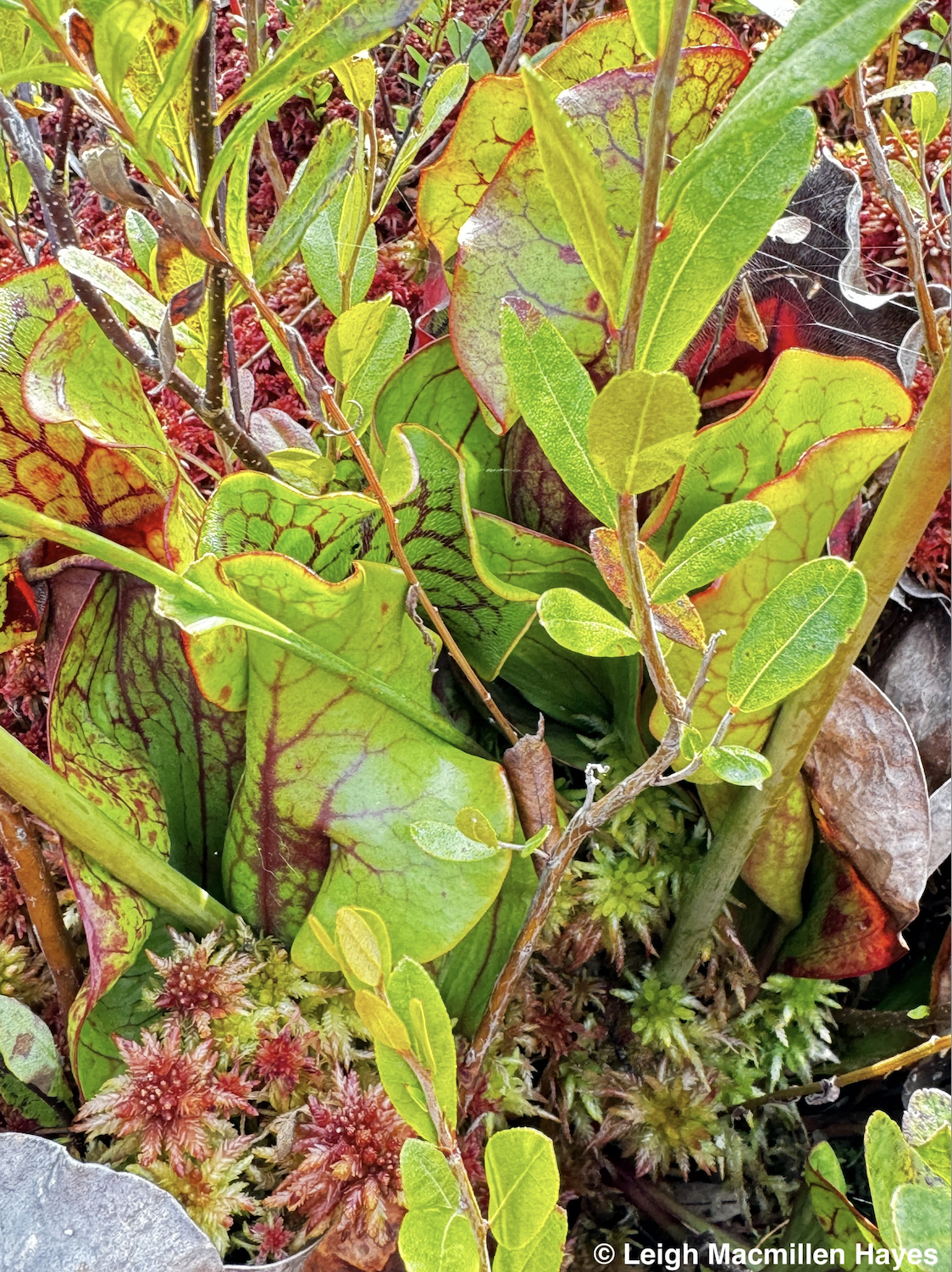
Pitcher Plants and Sphagnum Moss
Round-leaved Sundews

Bogs are found in our northern climate and often are deep depressions that have no drainage. They are covered with a surface carpet of sphagnum moss and insect-eating plants like the Pitcher Plant and Sundews.
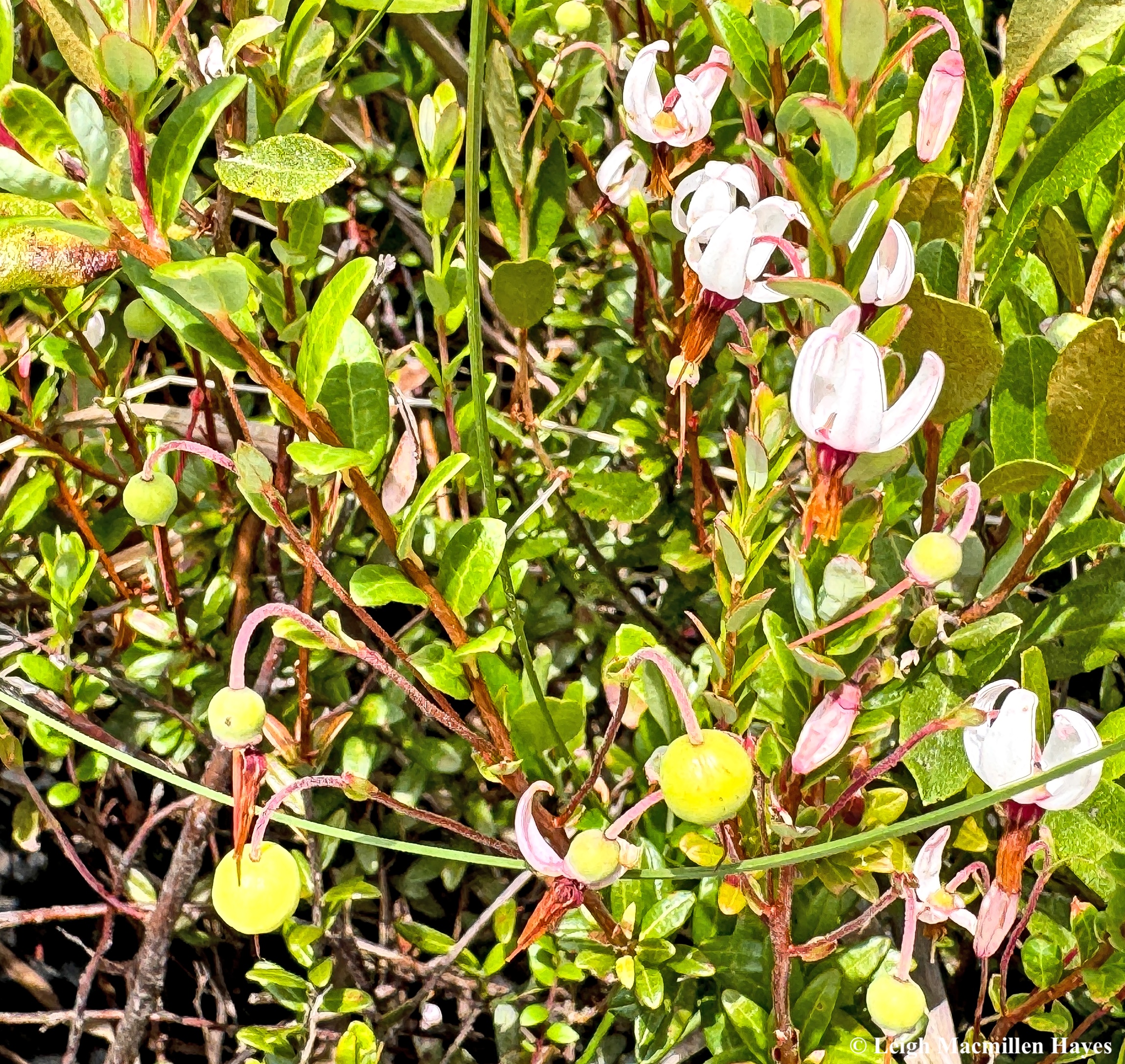
Cranberry flowers and fruits

Native Cranberries also flourish in the stagnant and acidic water of a bog.

Sphagnum Moss
Leatherleaf

Like bogs, Fens are found in northern climes, but the water is slow-moving, and does have some drainage. Layers of peat (sphagnum moss) and sedges and grasses and low shrubs like Leatherleaf may grow in these areas. The carnivorous plants like them as well.

But it’s not just the flora that makes a wetland so special. These places provide habitat for a wide range of insects and animals and birds as well. In fact, they act as nurseries, or places where any of the critters might raise young.

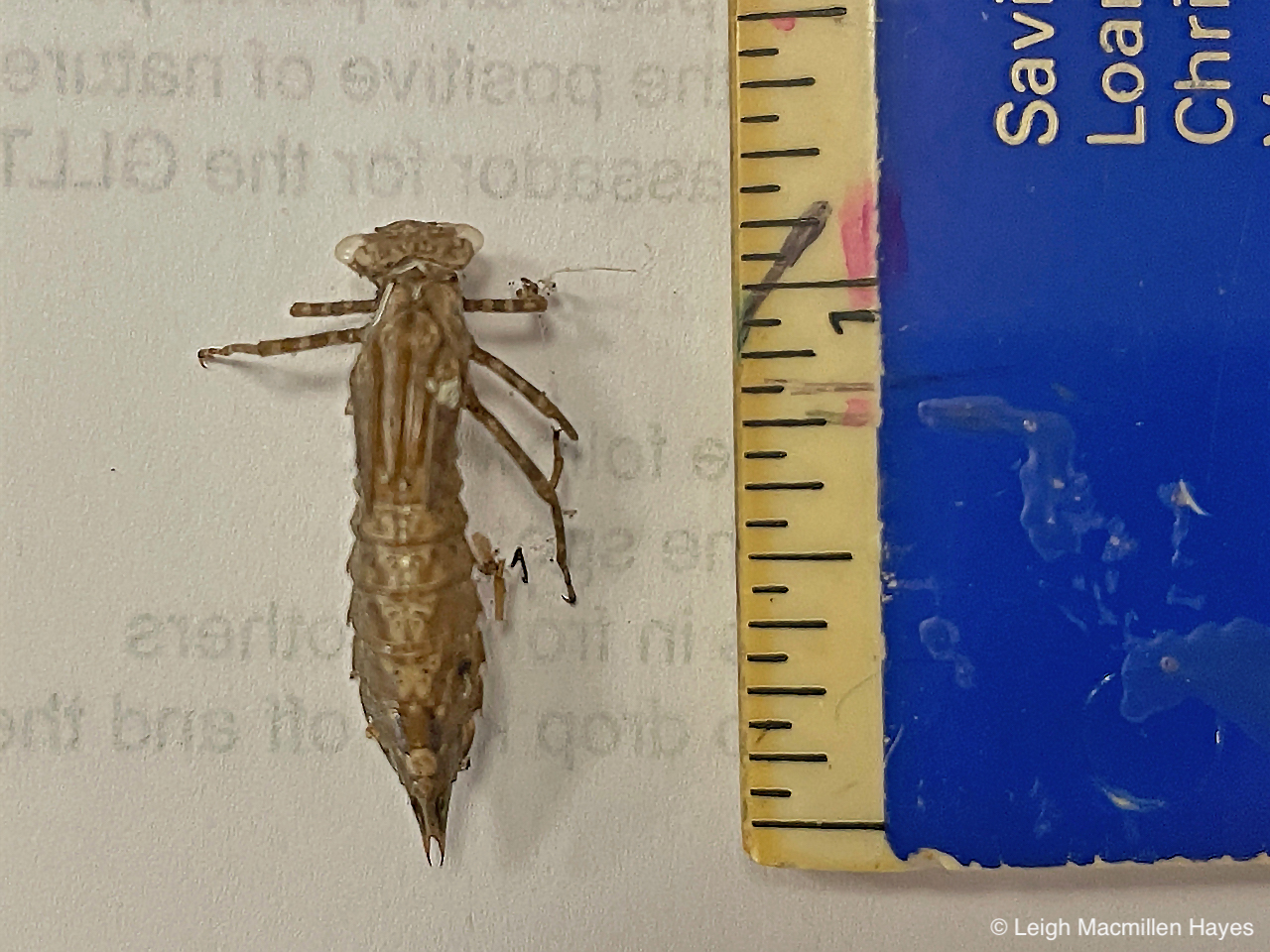
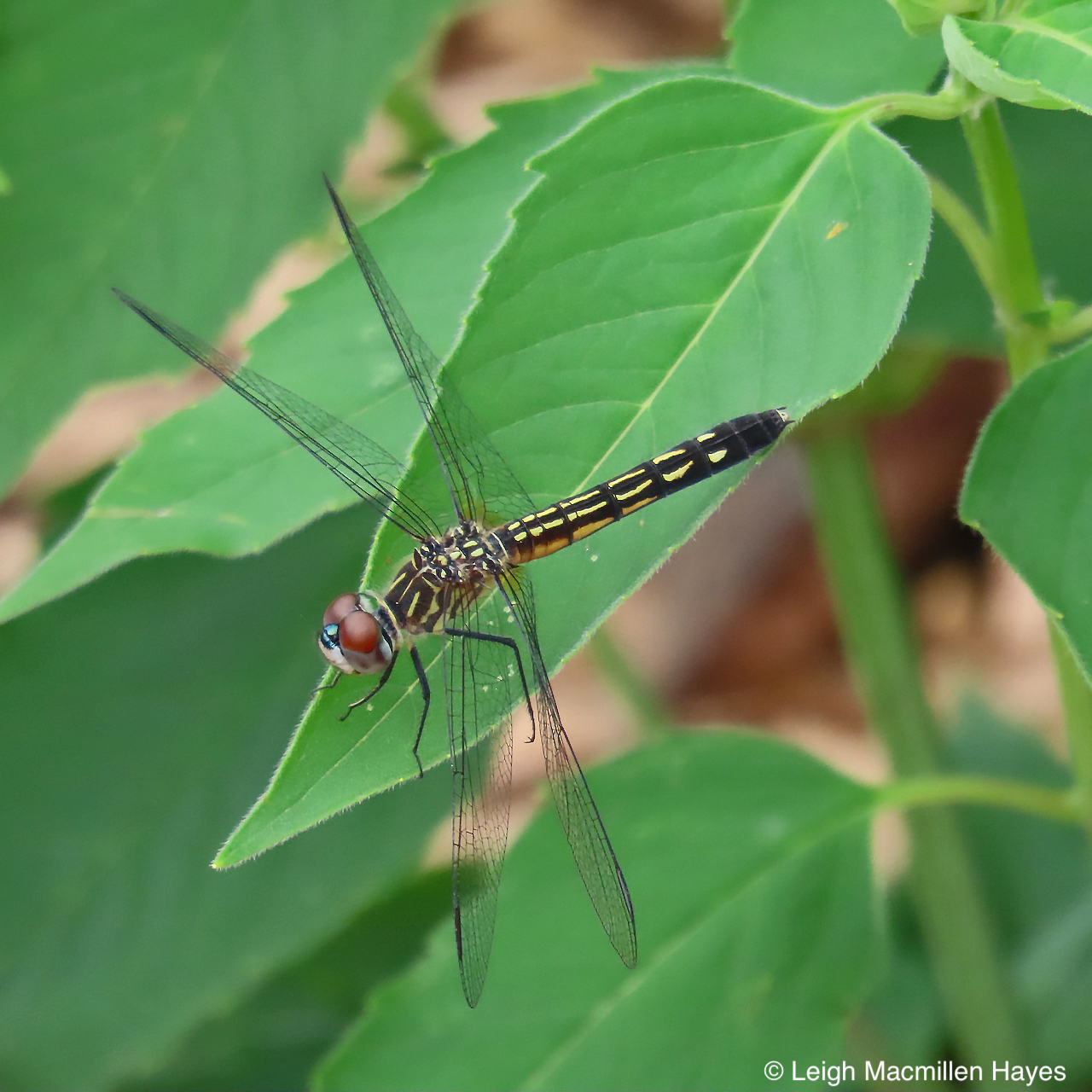
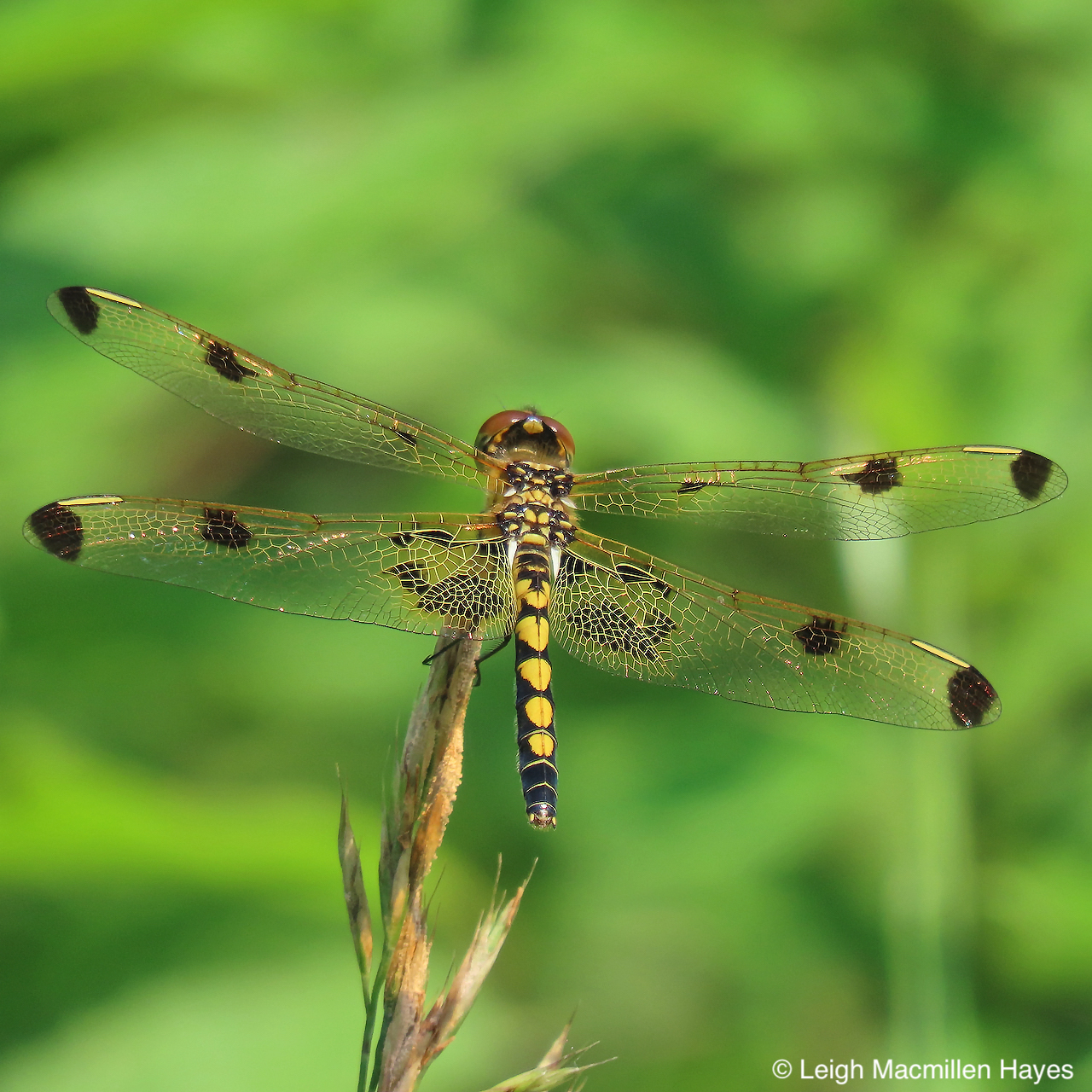
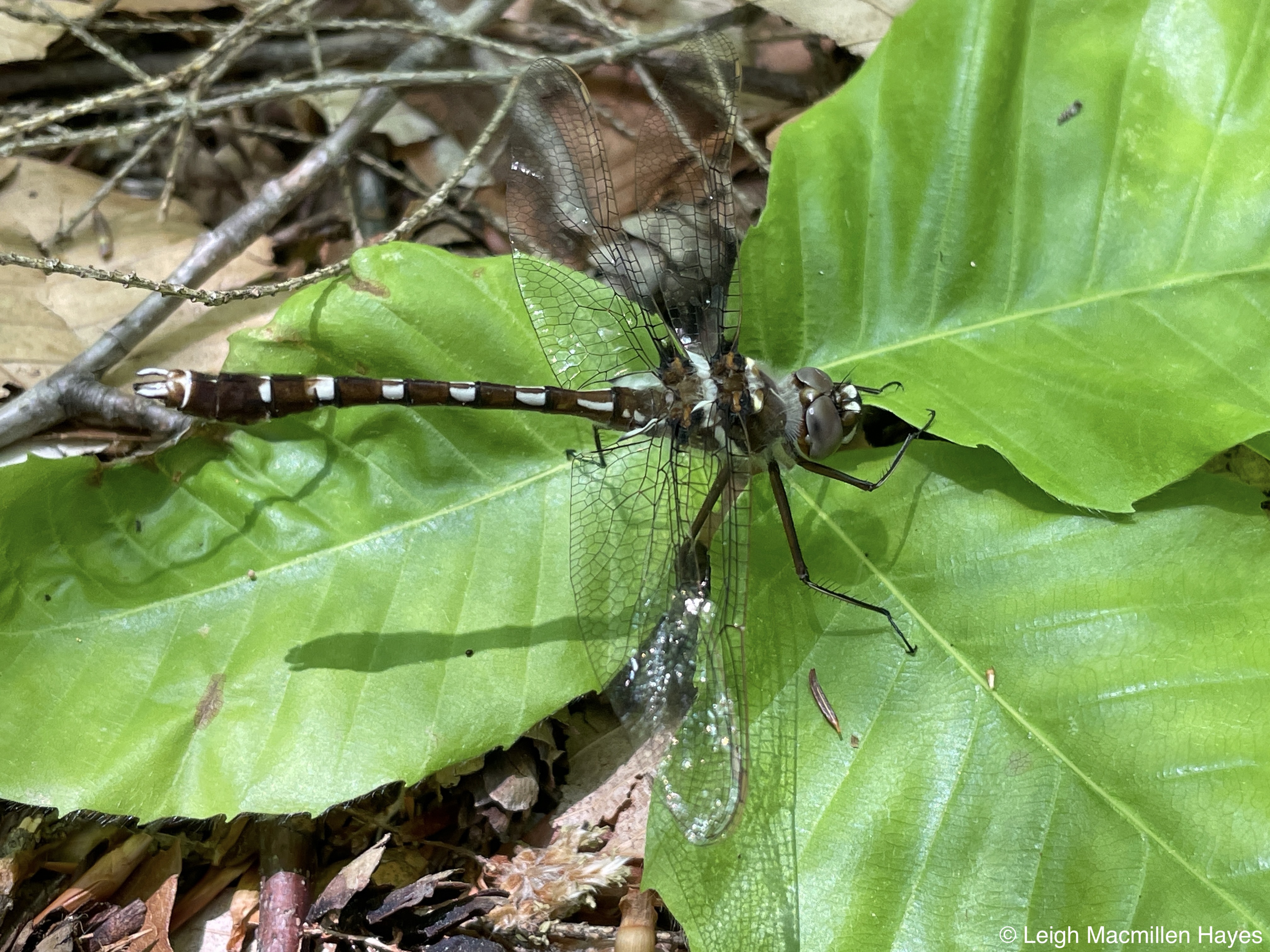
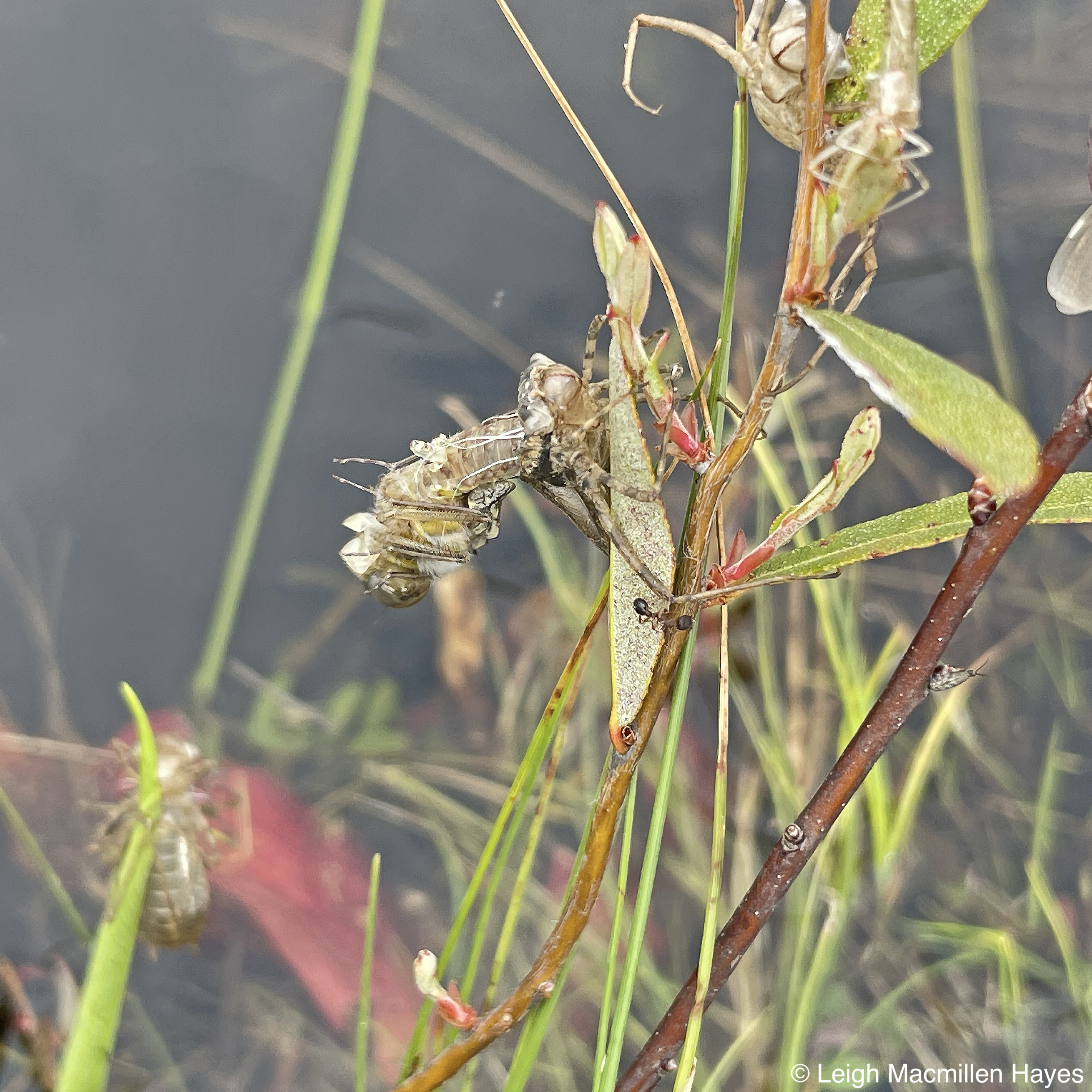
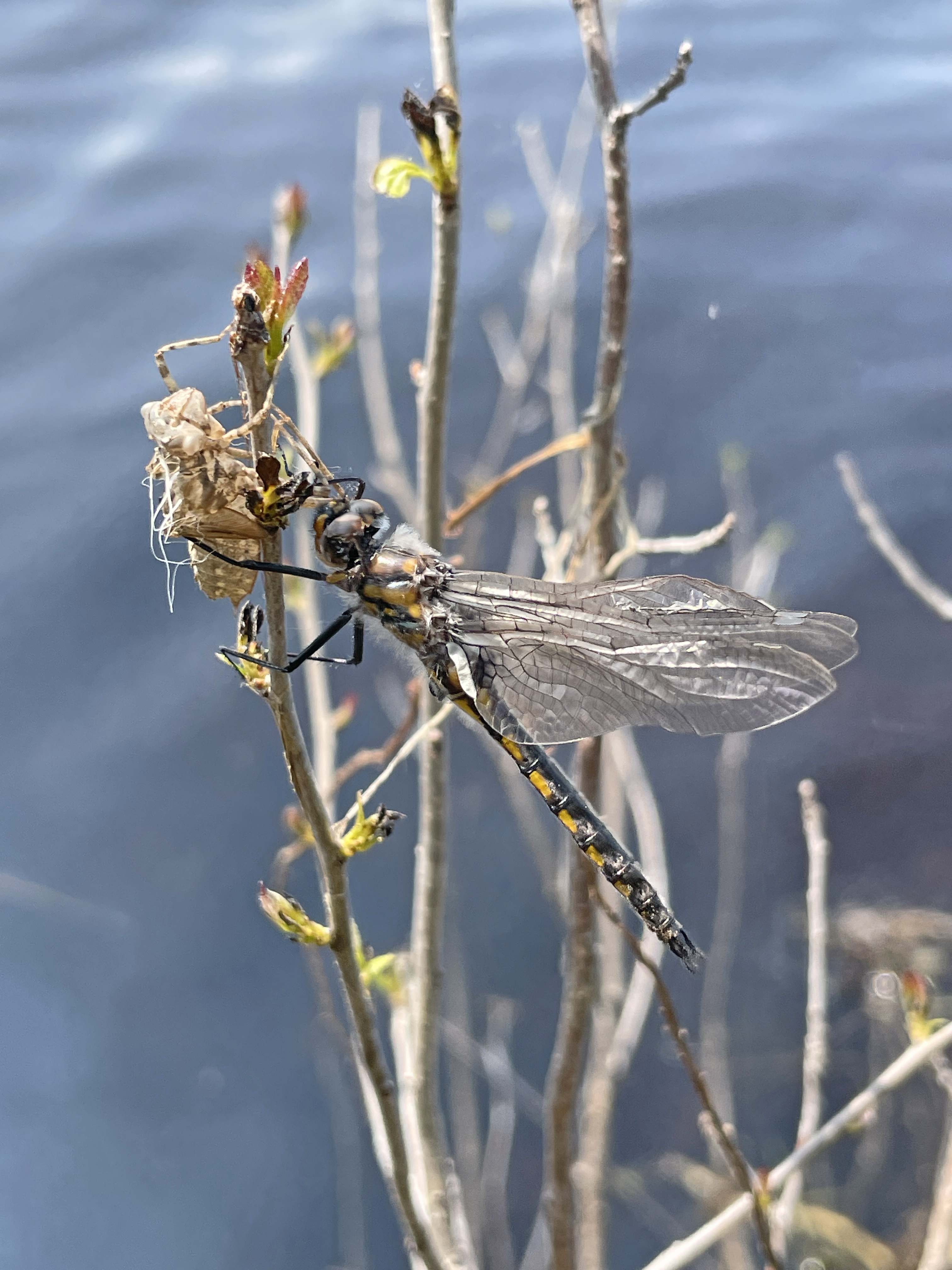
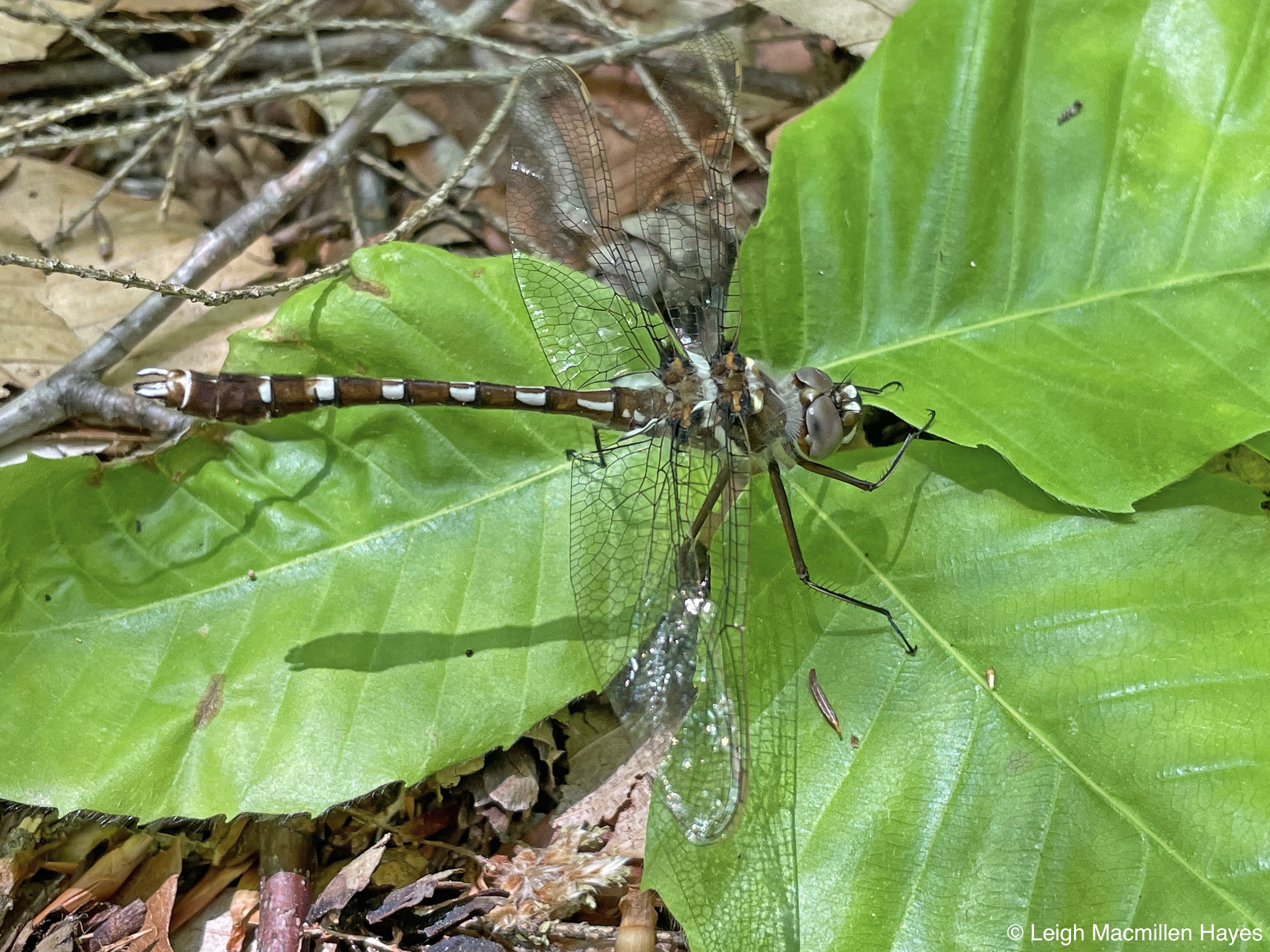
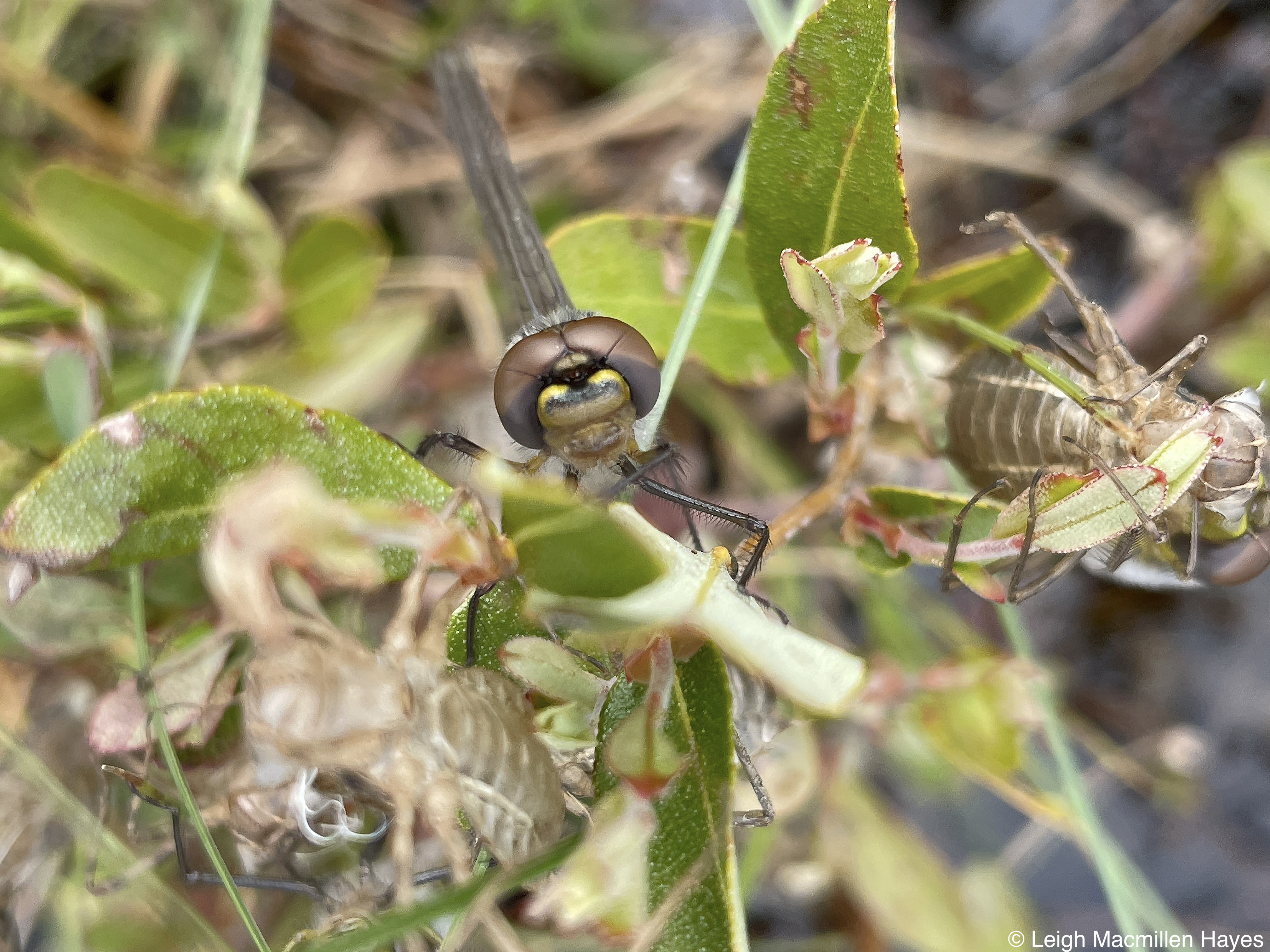
And as soon as the sun warms the air in the spring, friends and I scour the wetlands in hopes of discovering who is emerging on any particular day. One of my favorites to watch is dragonfly emergence (in case you are new to this blog and didn’t already know that. You can learn more here: Developing Dragonfly Eyes, but really, type “dragonfly” into the search button of this blog and a bunch of dragonfly related posts will pop up–all worth a read, I promise you.)
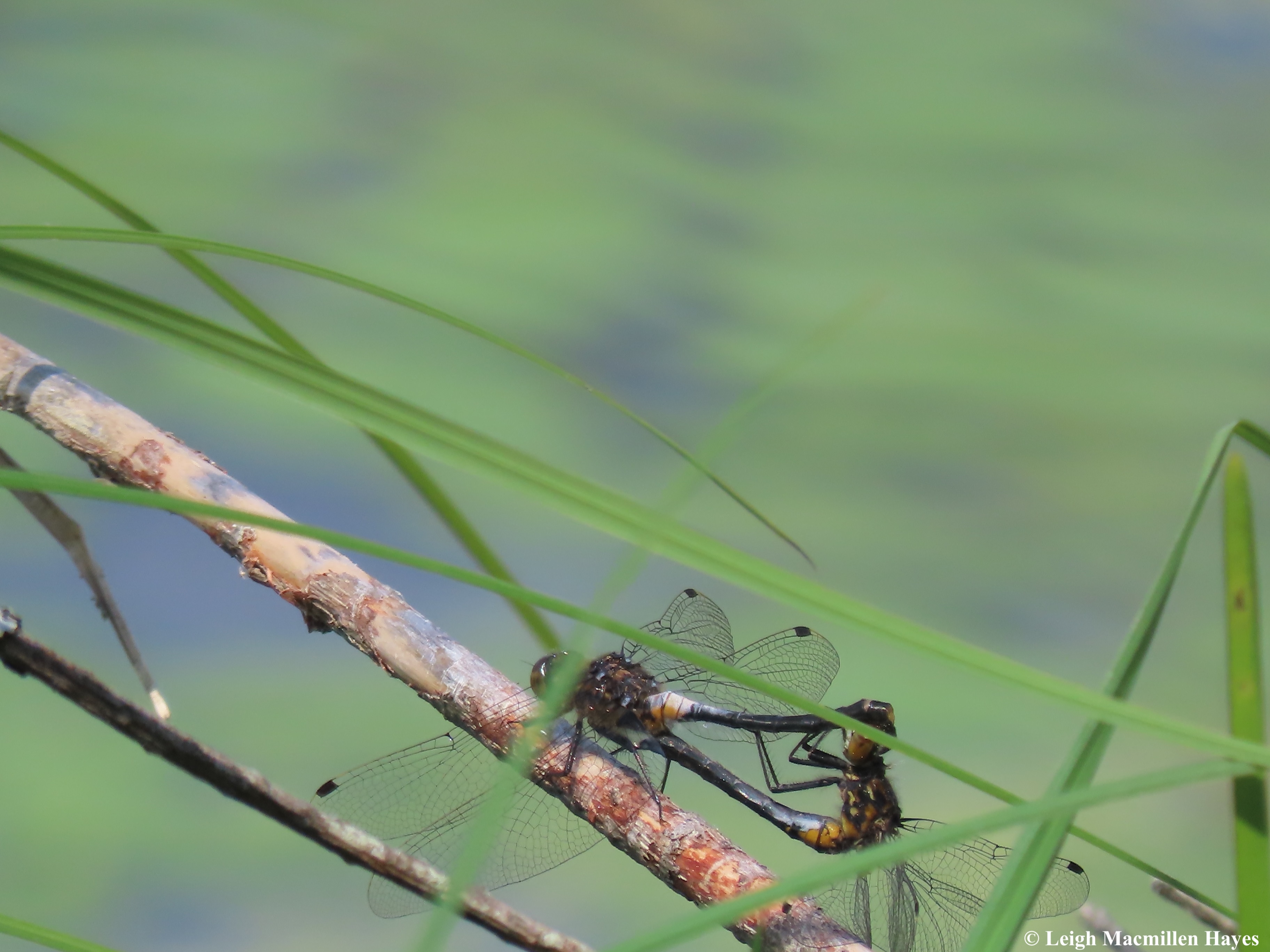
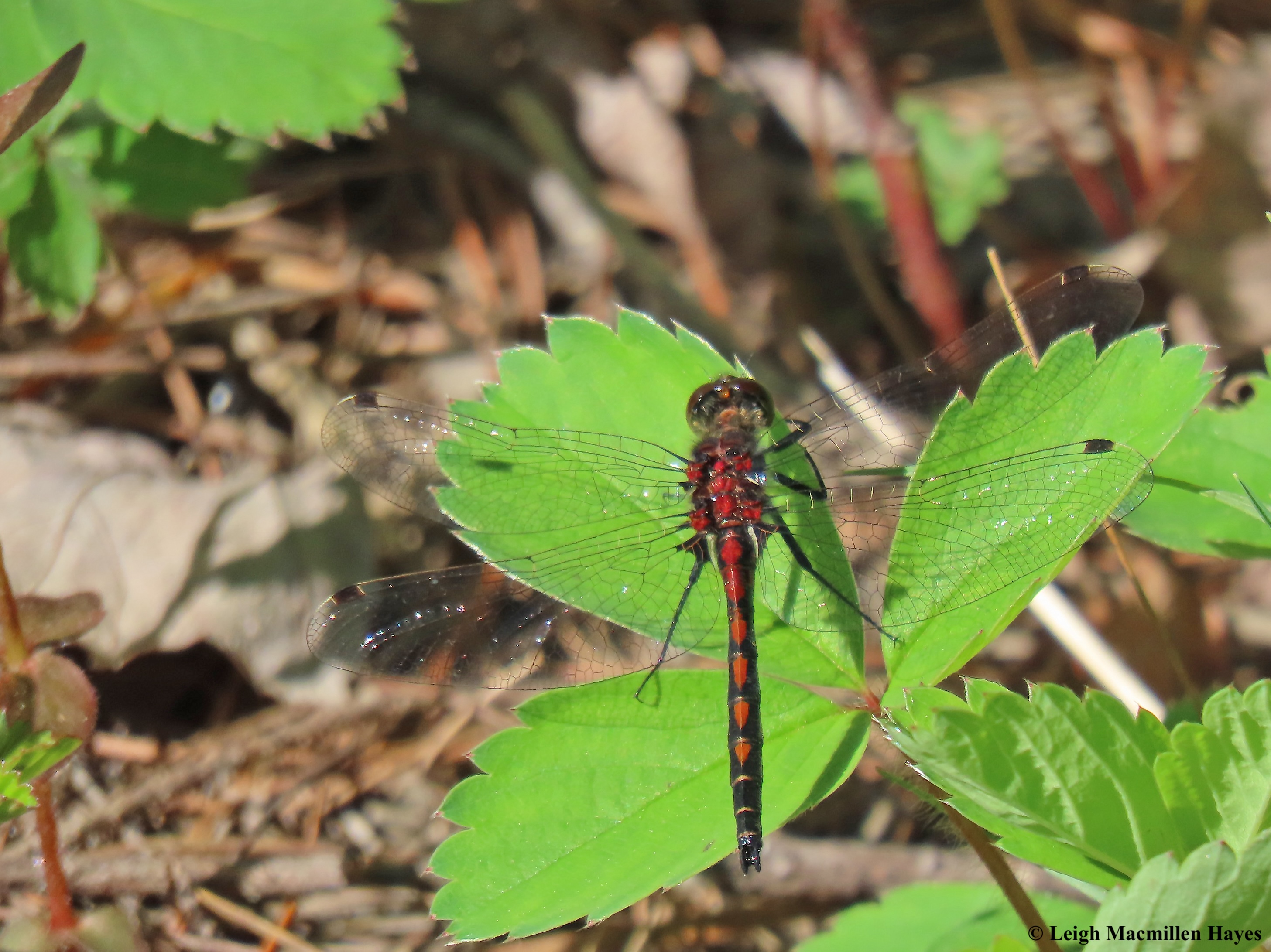
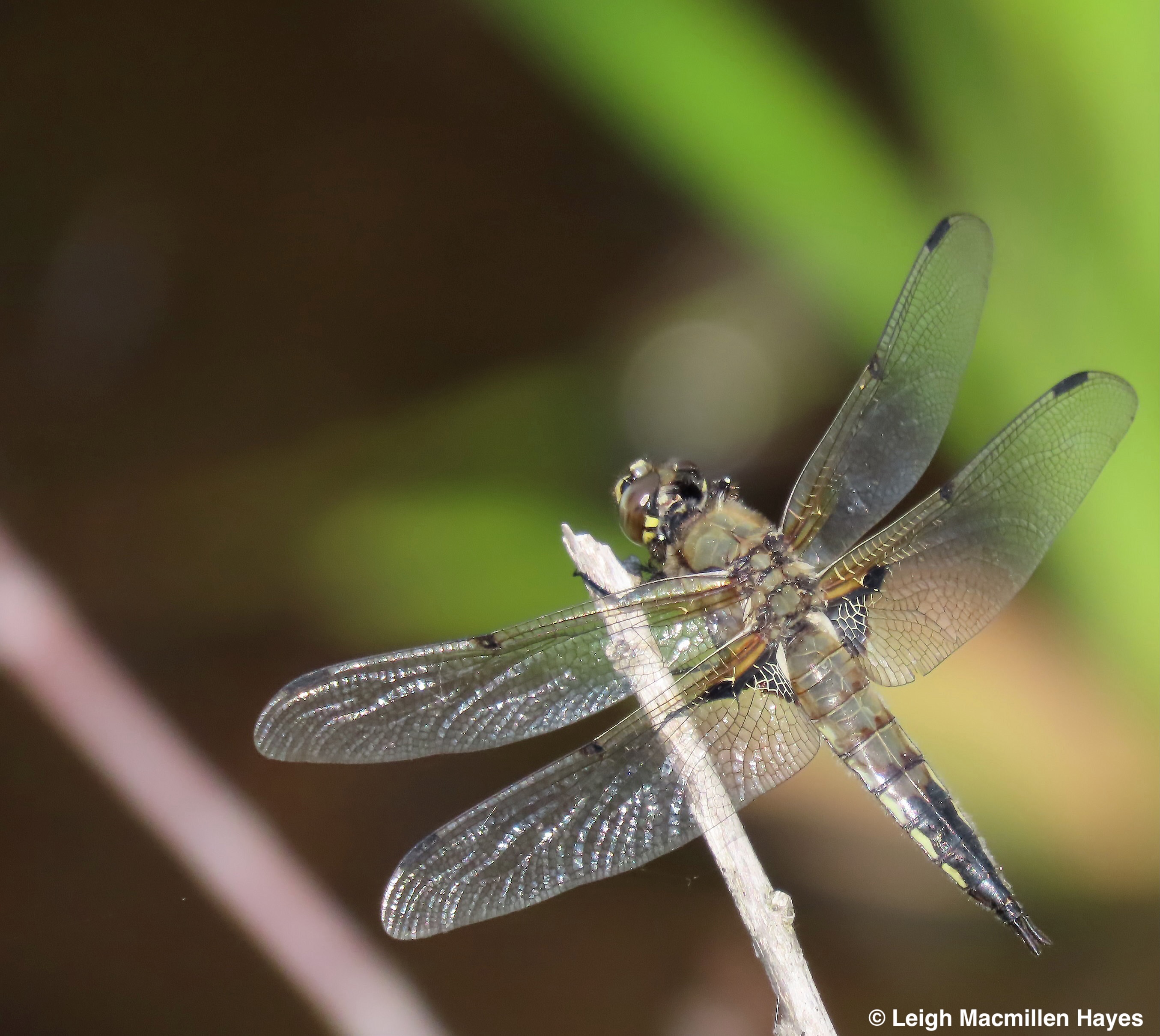
And like other insects, once emerged and a few days old, canoodling commences and dragonflies such as these Belted Whiteface Skimmers find each other and a presumably private place to mate. Private, that is, until I show up!

Eggs are laid in a variety of ways and places depending upon the species and this is a female Eastern Pondhawk taking a break upon a lily pad.

And here is a Forktail Damselfly laying eggs upon vegetation.
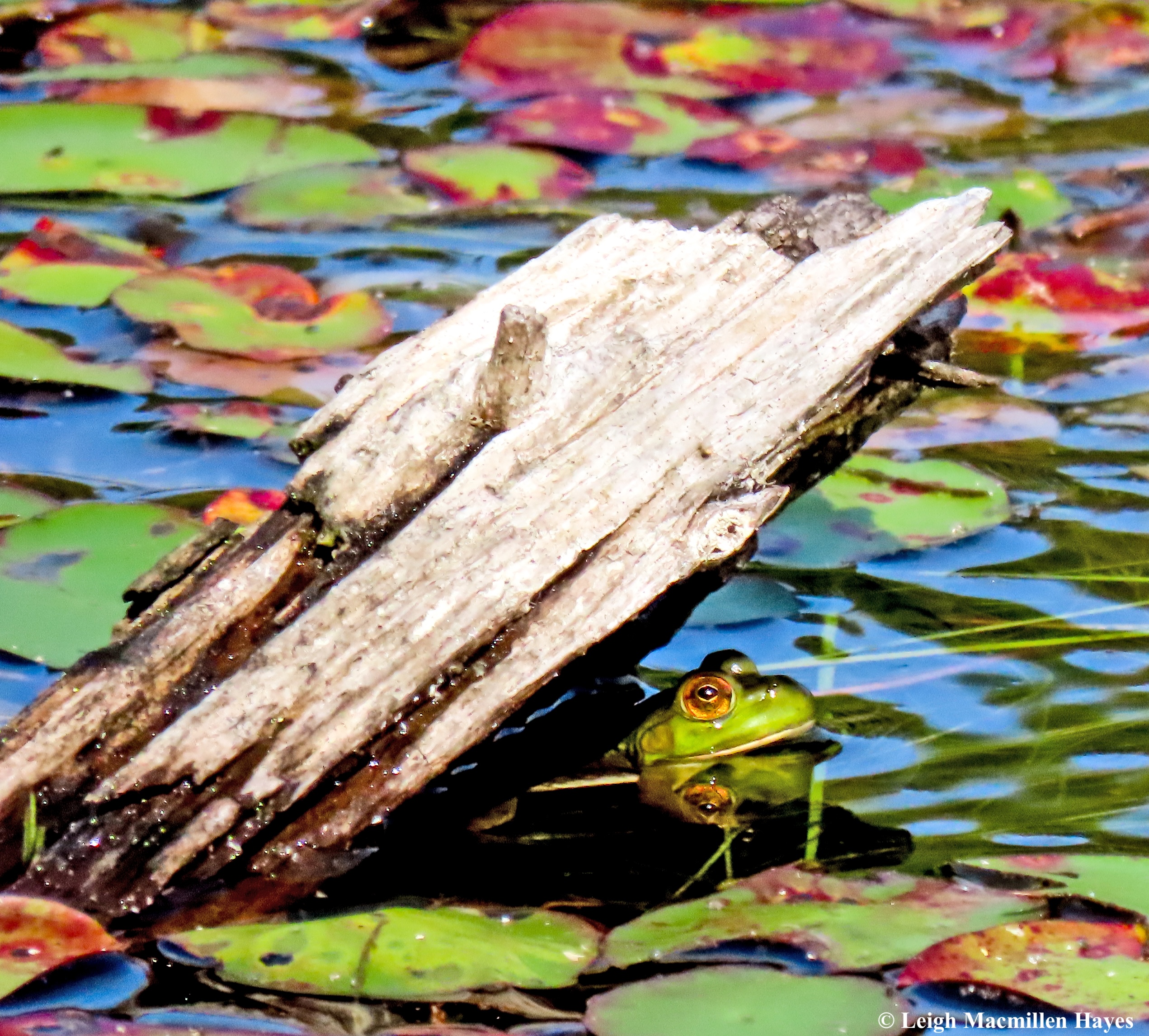
Frogs are also a highlight of a wetland, whether they are hiding in the shade on a hot summer day like this Bullfrog …
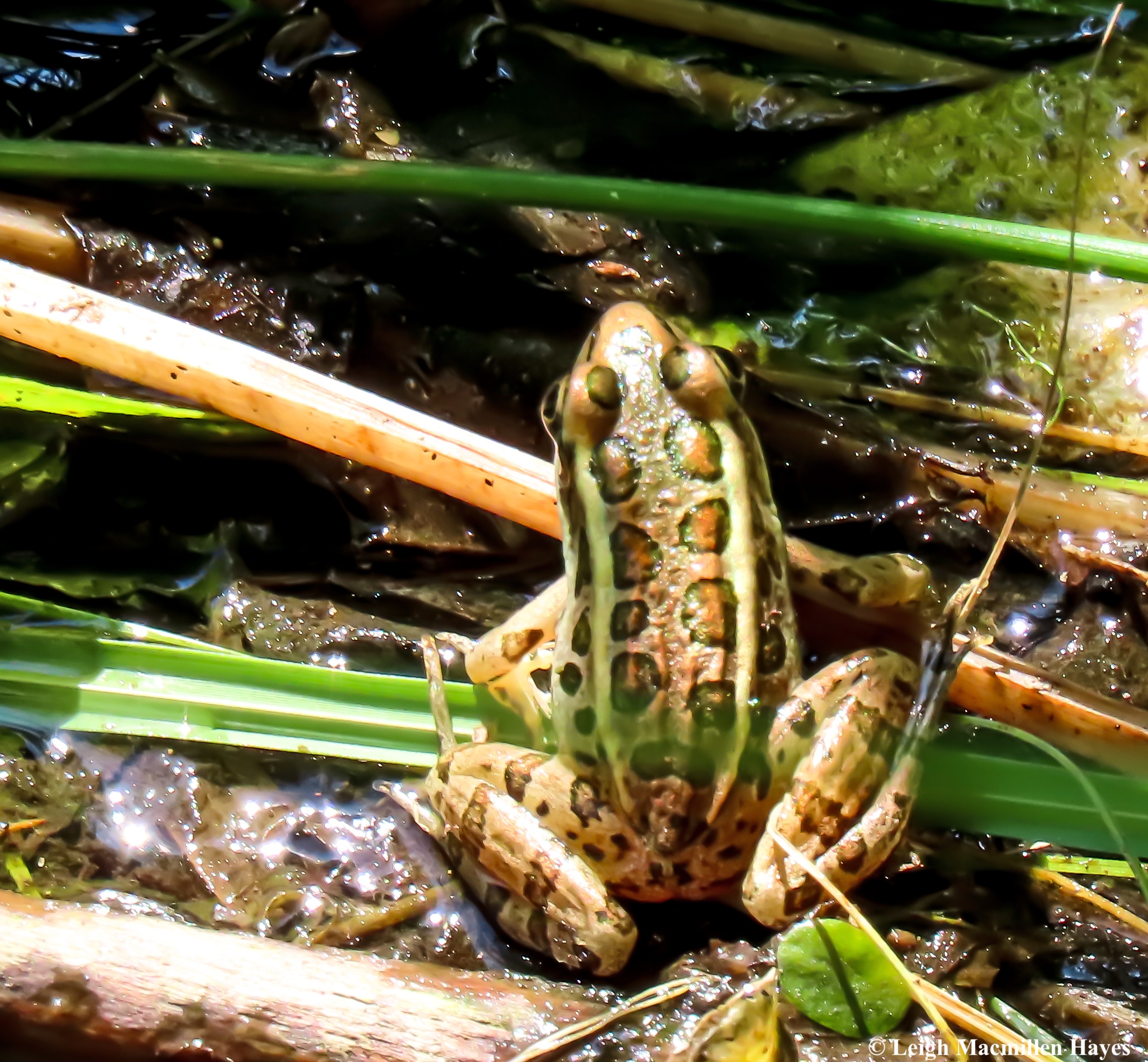
Or pausing briefly in the sun, such as this Pickerel Frog chose to do. Actually, it wasn’t so much basking as trying to remain hidden from my sight by not moving until I passed.
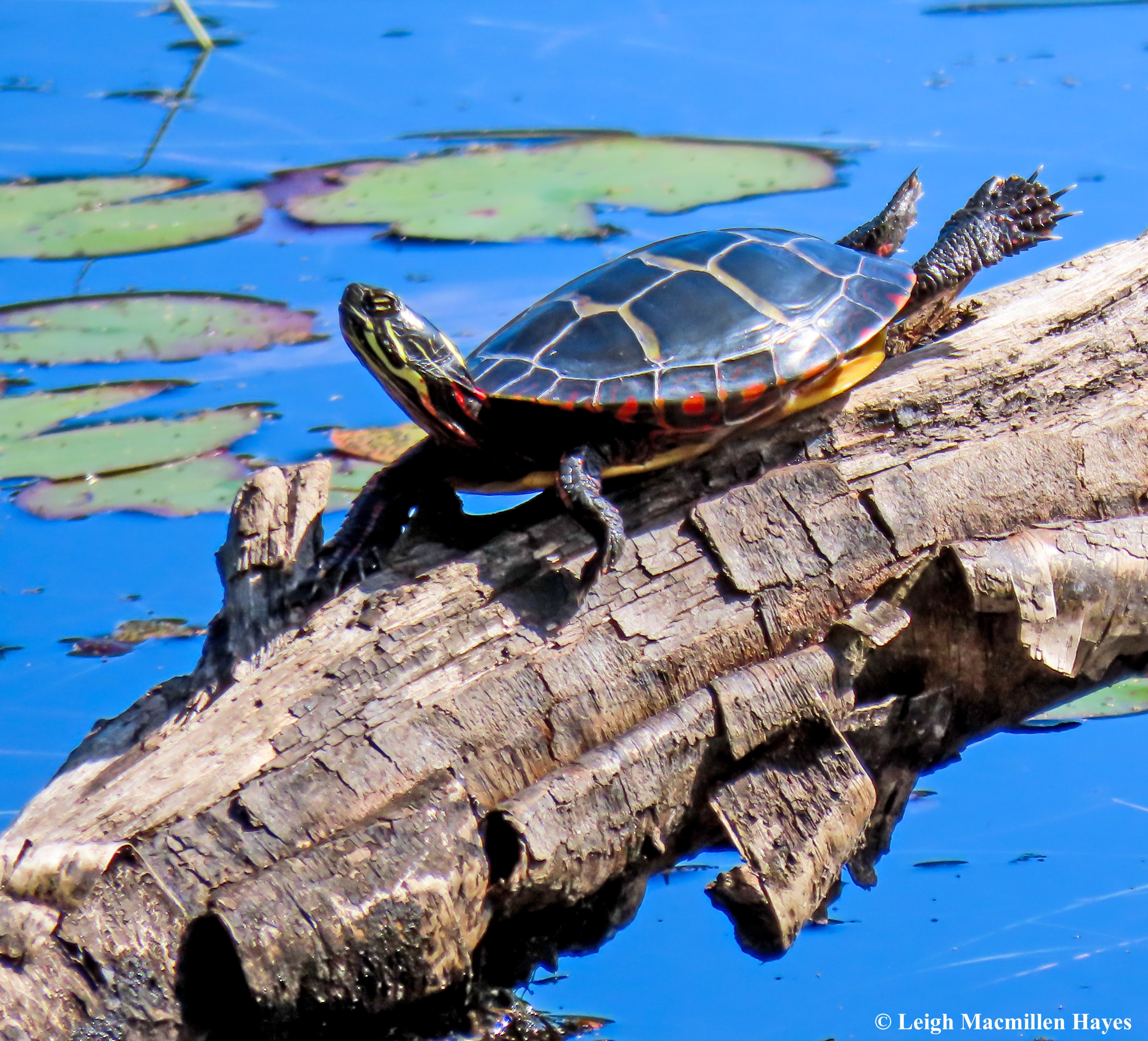
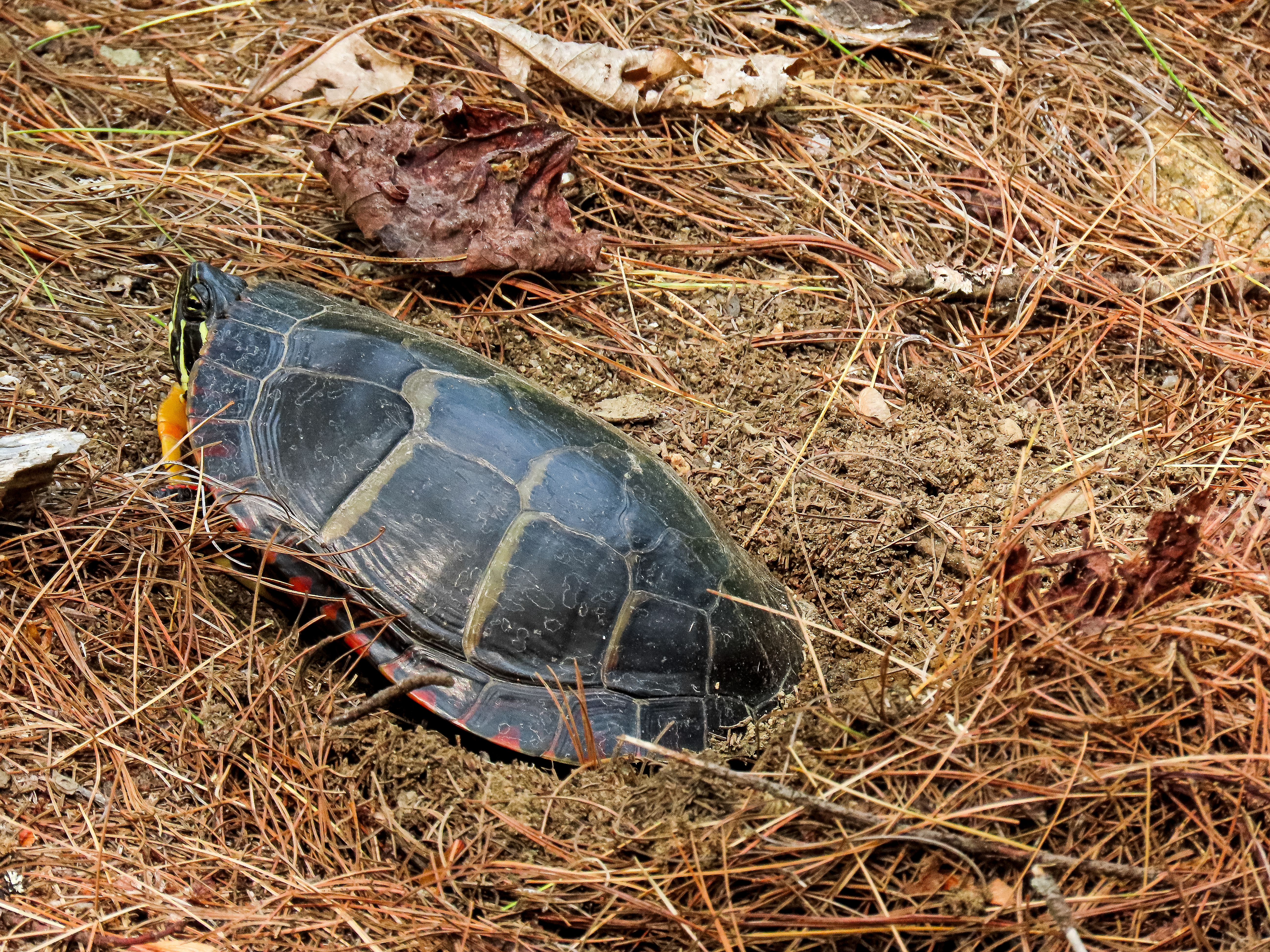
Those who do love to bask, (frogs do this as well) are the Painted Turtles, and the more surface area that is exposed to the sun’s beams, the better. Sometimes I’m surprised when I do capture a photo such as this one, for they are quick to sense my presence or hear me coming, and quickly slip into the water. But if you wait a few minutes, sometimes they’ll reemerge.
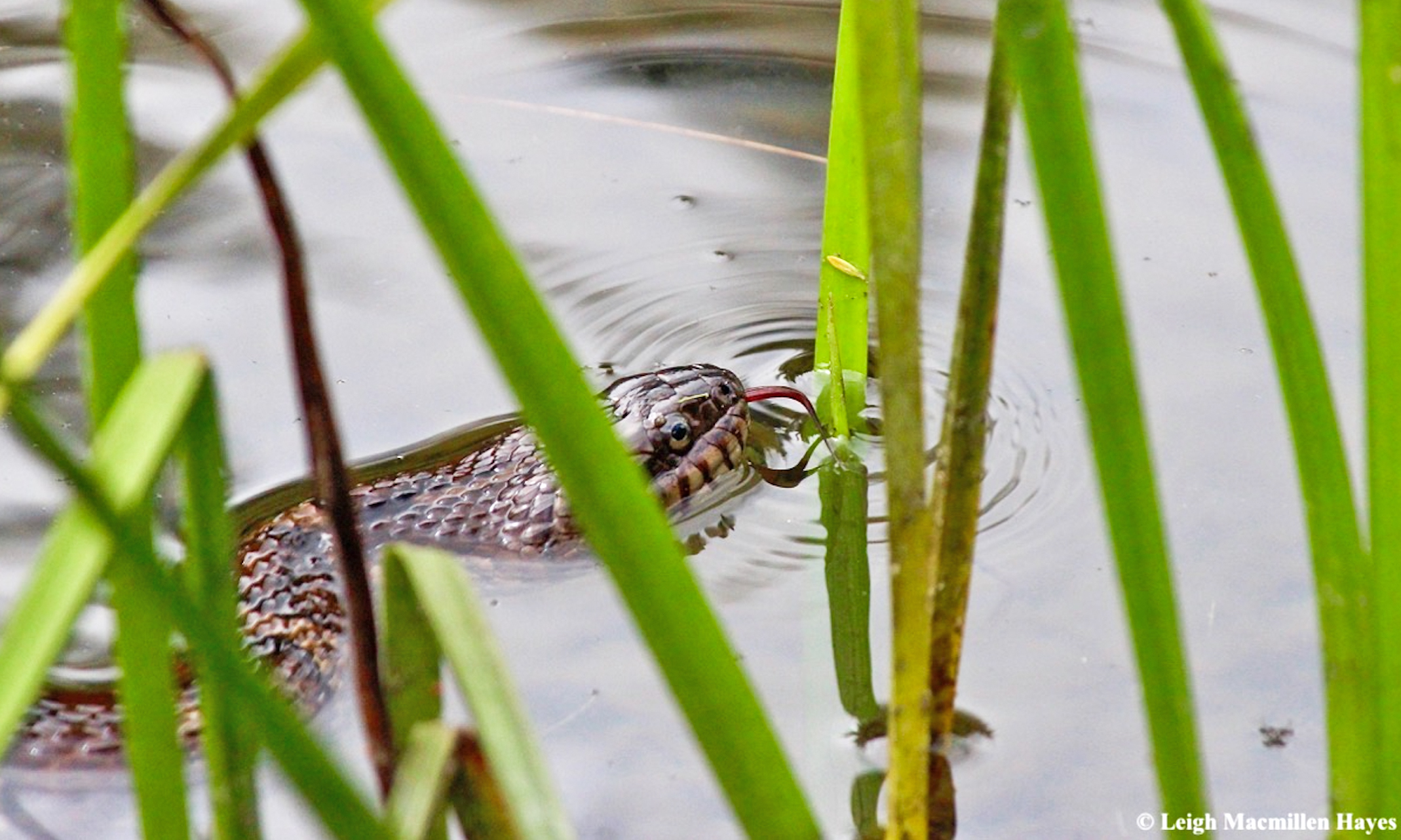
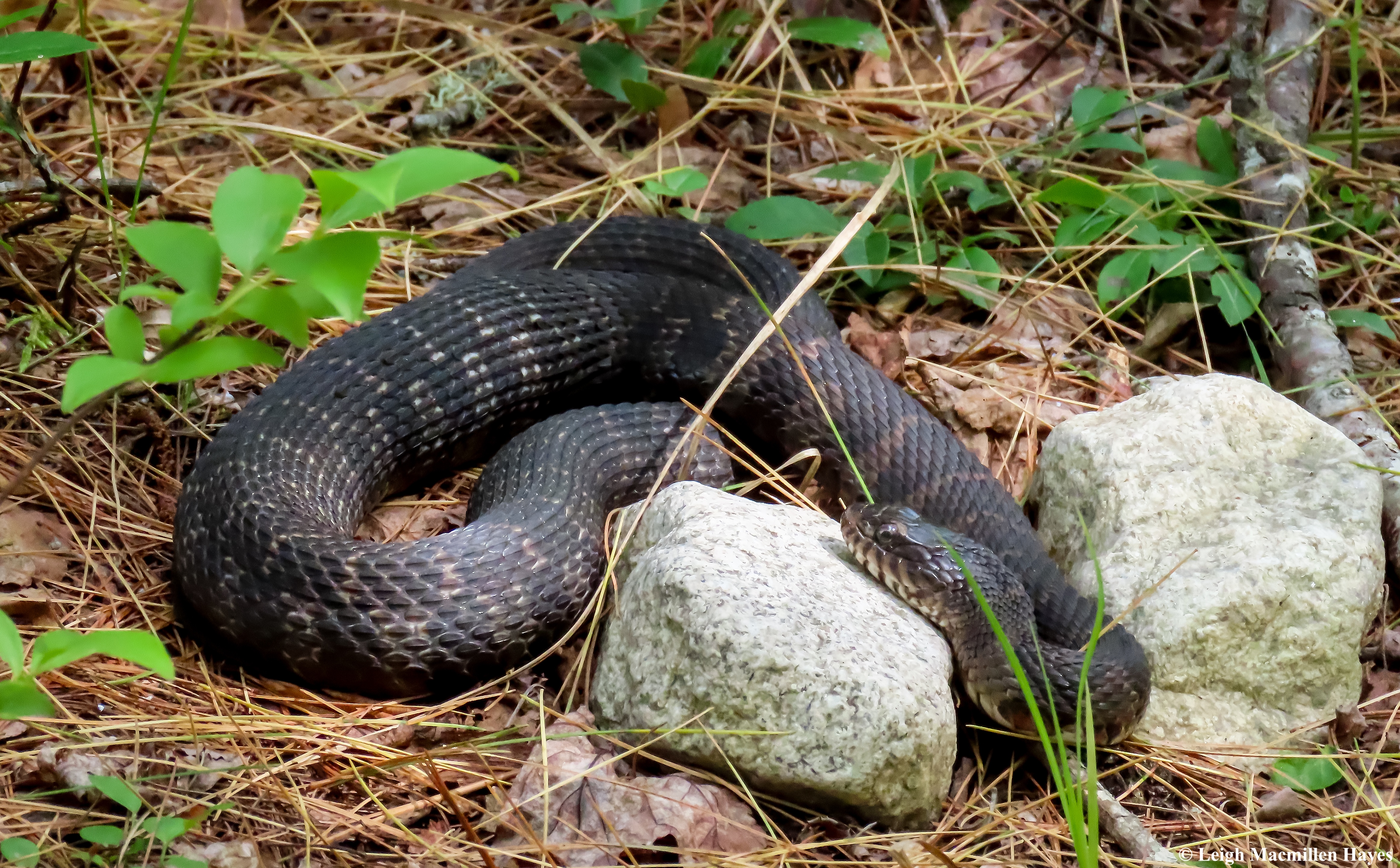
And there are Northern Watersnakes always on the prowl, using their tongues to make sense of their surroundings.
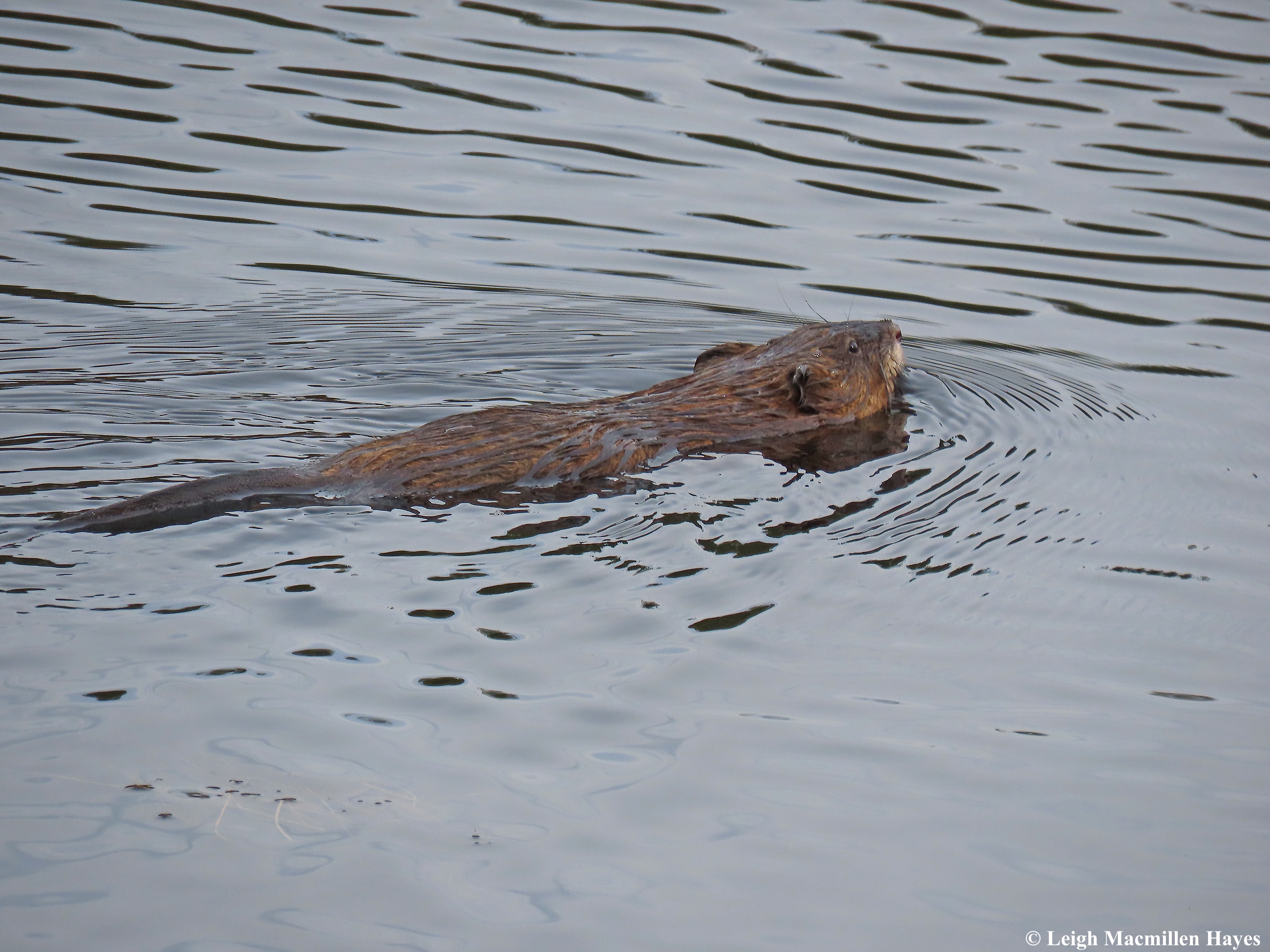
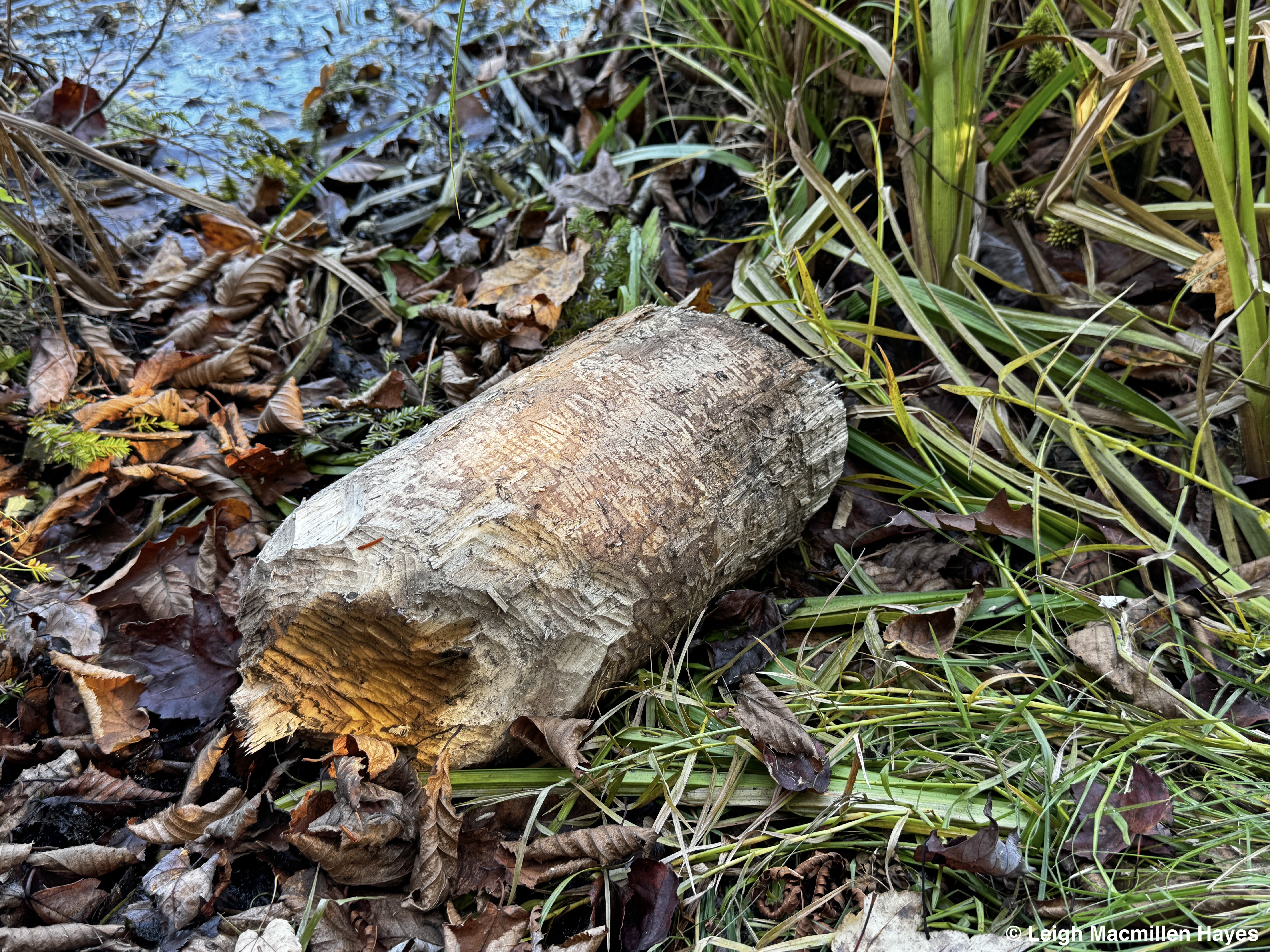
Mammals also use wetlands for forage for food and build homes and one of my favorites is the American Beaver, who knows the value of a wetland, and can create one in a short time by building a dam. Beavers build dams to created a deeper pond through which to navigate, for they are better at swimming than walking. They may alter the wetland to suit their needs for a few years, but then move on and let the dam breach and then a new type of wetland emerges and more critters move in and take advantage of what it has to offer.

That all said, it wasn’t until I spent more time with the animal pictured above that I realized it was actually a Muskrat–look at that thick, rounded tail, unlike the flat paddle of a Beaver’s.

And birds! Oh my. Mergansers . . .

And momma Wood Duck and her offspring . . .

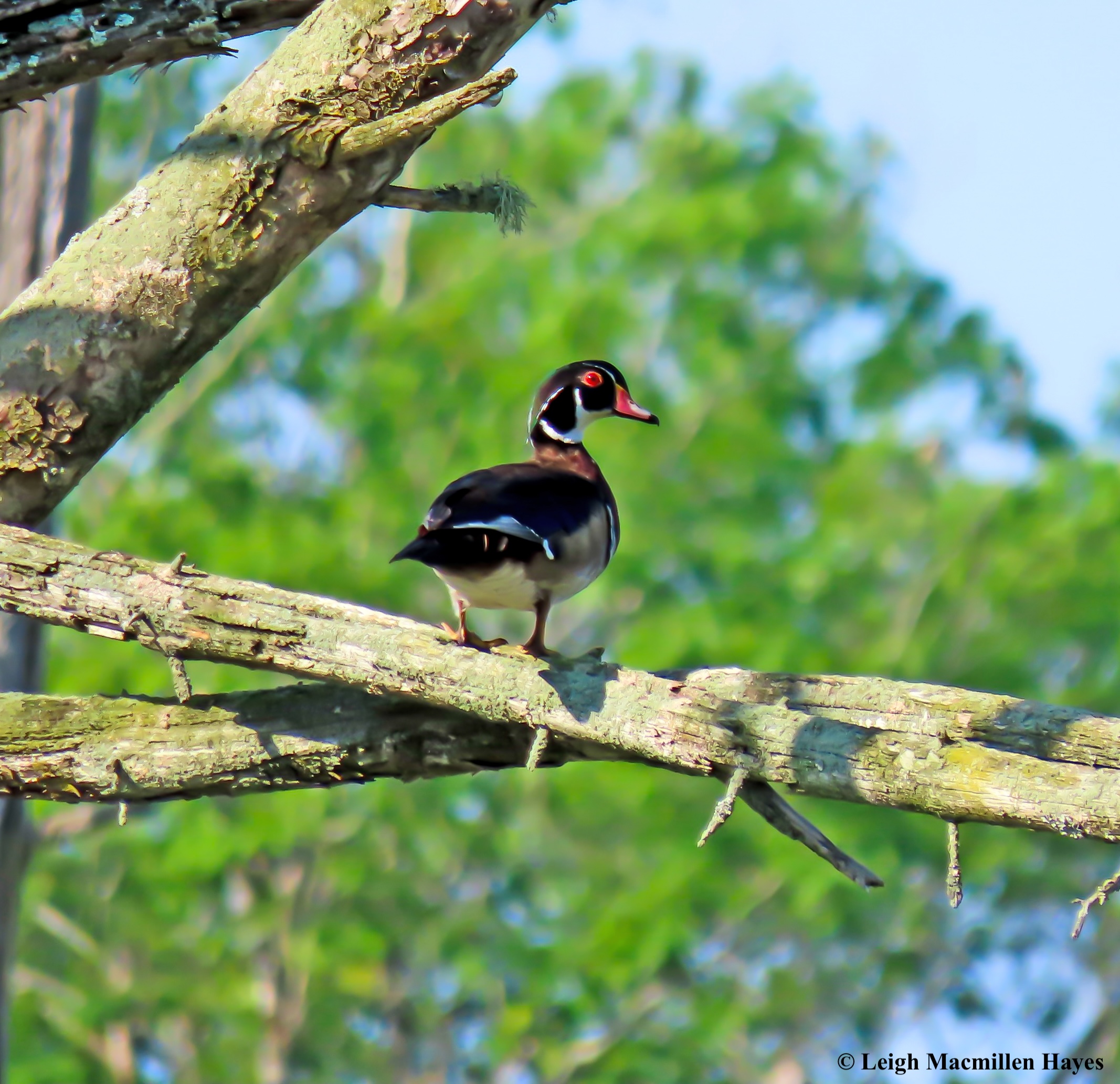
and Papa Woodduck . . .

And Great Blue Herons always on the prowl for fish or amphibians know the value of the wetland as a food pantry.

So, this spring and summer and fall, I’ve been following My Guy and our friend, Bruce, beside and into and sometimes, thanks to Bruce’s drone, over a variety of wetlands.
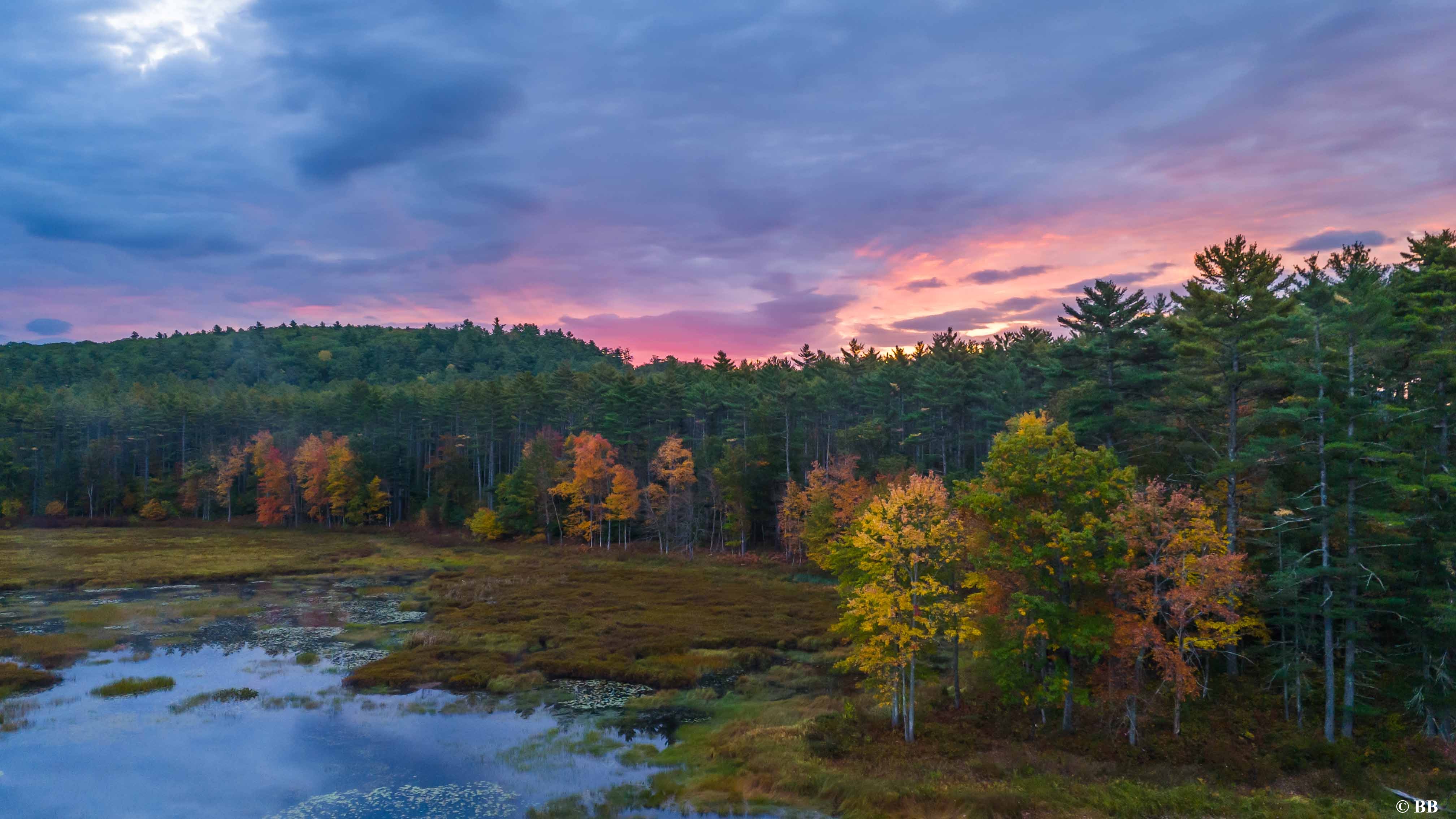
Bruce is an early riser (understatement), and occasionally I’ll meet him at a predetermined location as we did this past weekend–before the sun has risen. Though the thought of staying in dreamland for another hour or so is enticing, I never regret the decision because we get to view the world before it officially wakes up.

And with his drone we explore these areas we cannot easily access. This is one My Guy and I walked all the way around a few weeks ago without ever spying, though we knew it was there. But Bruce and I bushwhacked through a forest of White Pine Saplings and mature trees and reached the edge before he launched his bird and we were offered a glimpse of this most beautiful wetland with pockets of water connected by meandering rivulets.

The stream turned to forest for the trees told more of the story, as they closed in and I recalled that it wasn’t far from that spot that My Guy and I walked through a damp area where Royal Ferns grew and we found one teeny tiny mushroom fruiting on a hot summer day.

The mushroom was the little Orange Peel Fungus, and its name seemed so obvious. And the soil moist despite the severe drought.

Another day we began our exploration in the afternoon beside a small pond.

And the Droney-bird picked up on the wetland to the south.
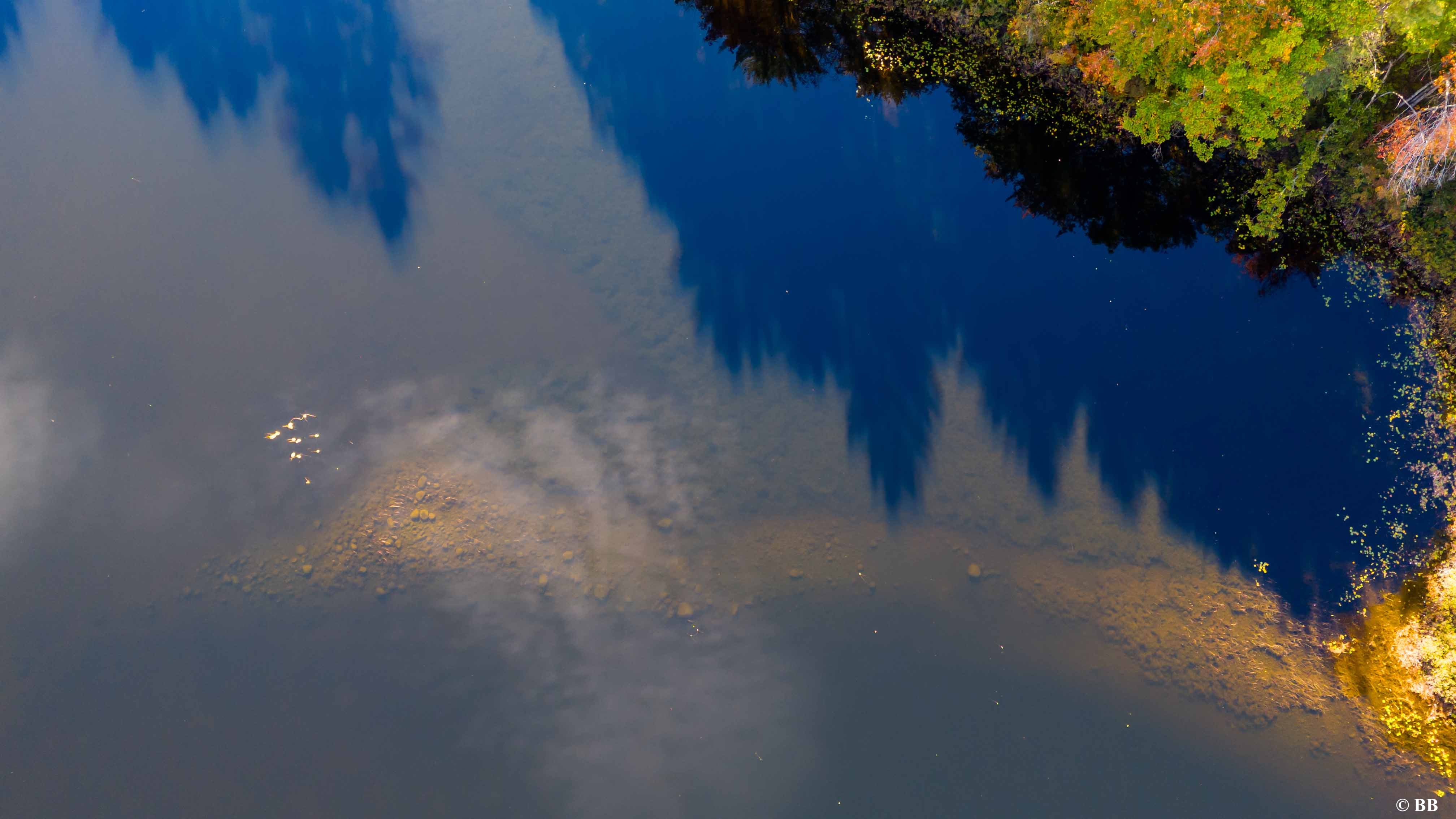
But that day what struck us as being more important was that it also took a clear picture of a sandbar in the water.

And as Bruce navigated it closer to the watery surface, we could see clear to the bottom. Mind you, it’s not a deep lake, but this is the water of Maine. Clean and clear.

And we celebrate wetlands for the critical role they play in maintaining the health of the environment.
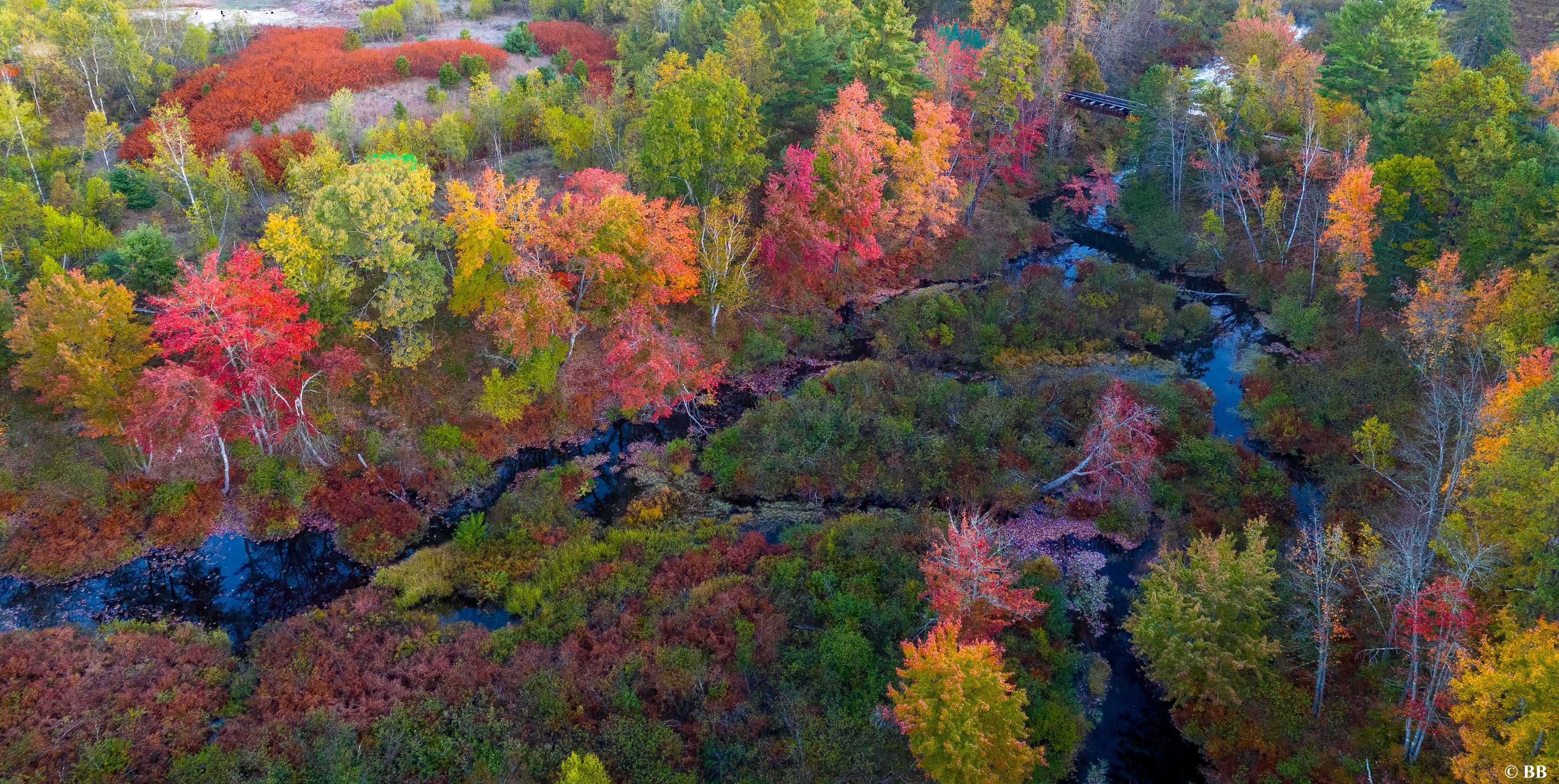
When I think about their ability to store and filter water and act as a natural sponge, absorbing and retaining large amounts of water during the heavy rainfalls of spring, and removing pollutants before they enter streams, and rivers, and lakes, it all seems so obvious that they should do this when you have a bird’s eye view.
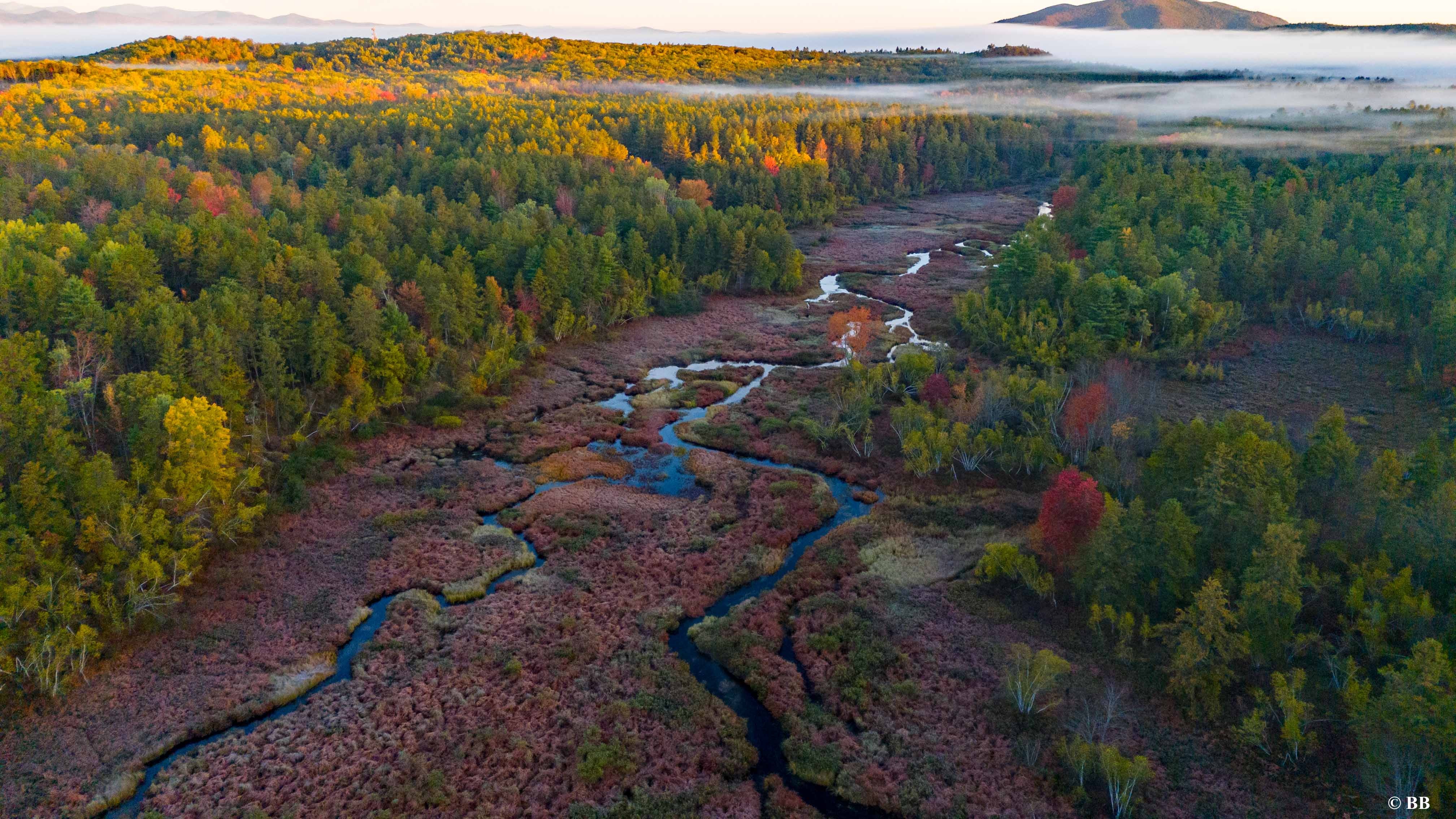
So here’s the curious thing about this wetland. It is located beside a local dump. And the more I think about that, the more I question those who created the dump, but give thanks for the unwavering workhorse that this wetland is in the ecosystem.
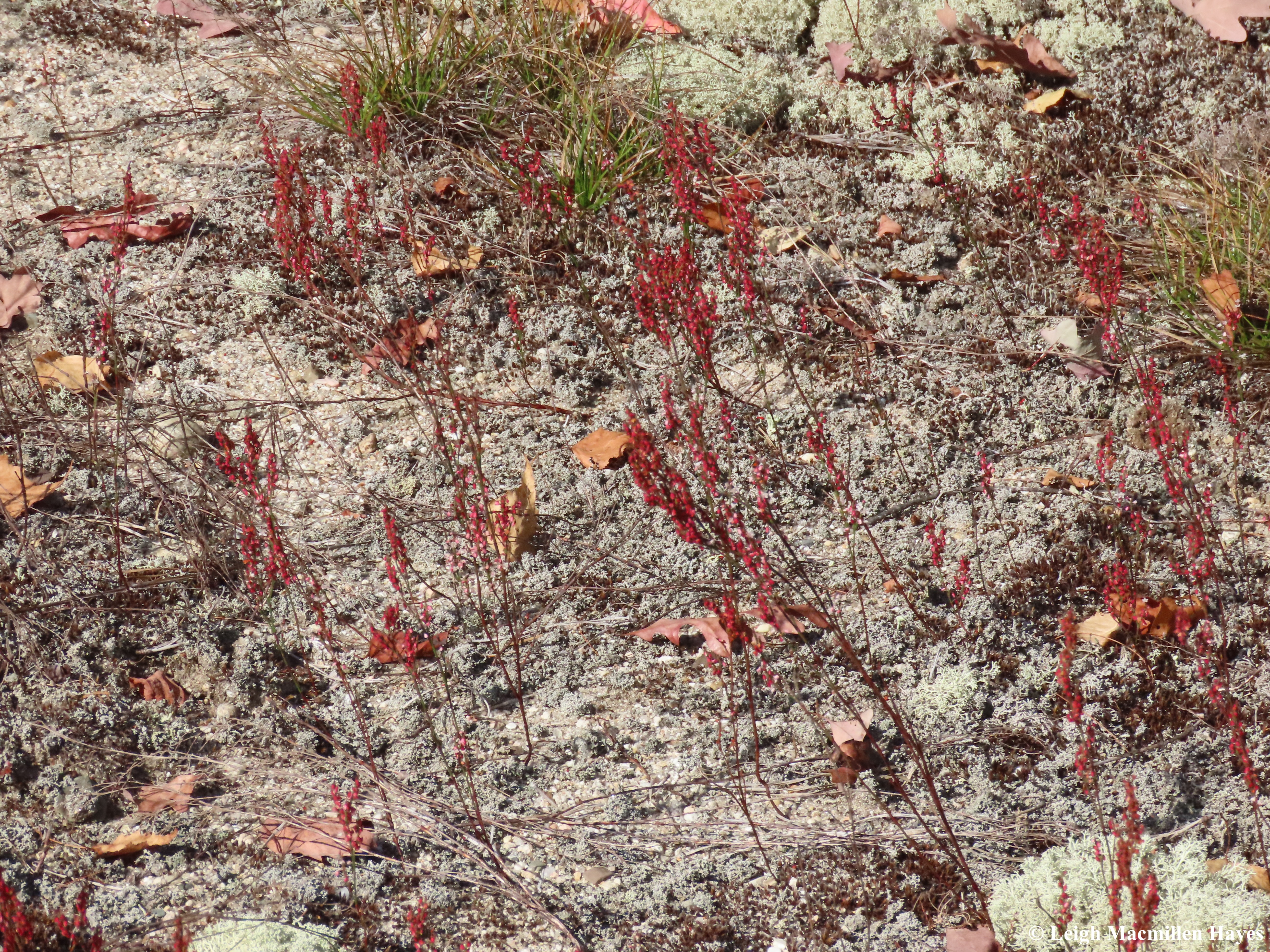
It was on the rise above this particular wetland, in a very sandy spot covered with Reindeer Lichen, that Bruce and I made a discovery. Well, he discovered it first and asked for an opinion. I’m full of those and so I met him and we took a look.

The discovery was a plant new to us both. Sand Jointweed or Polygonum articulatum. As you can see, the flowers are astonishing in their pink and white display.
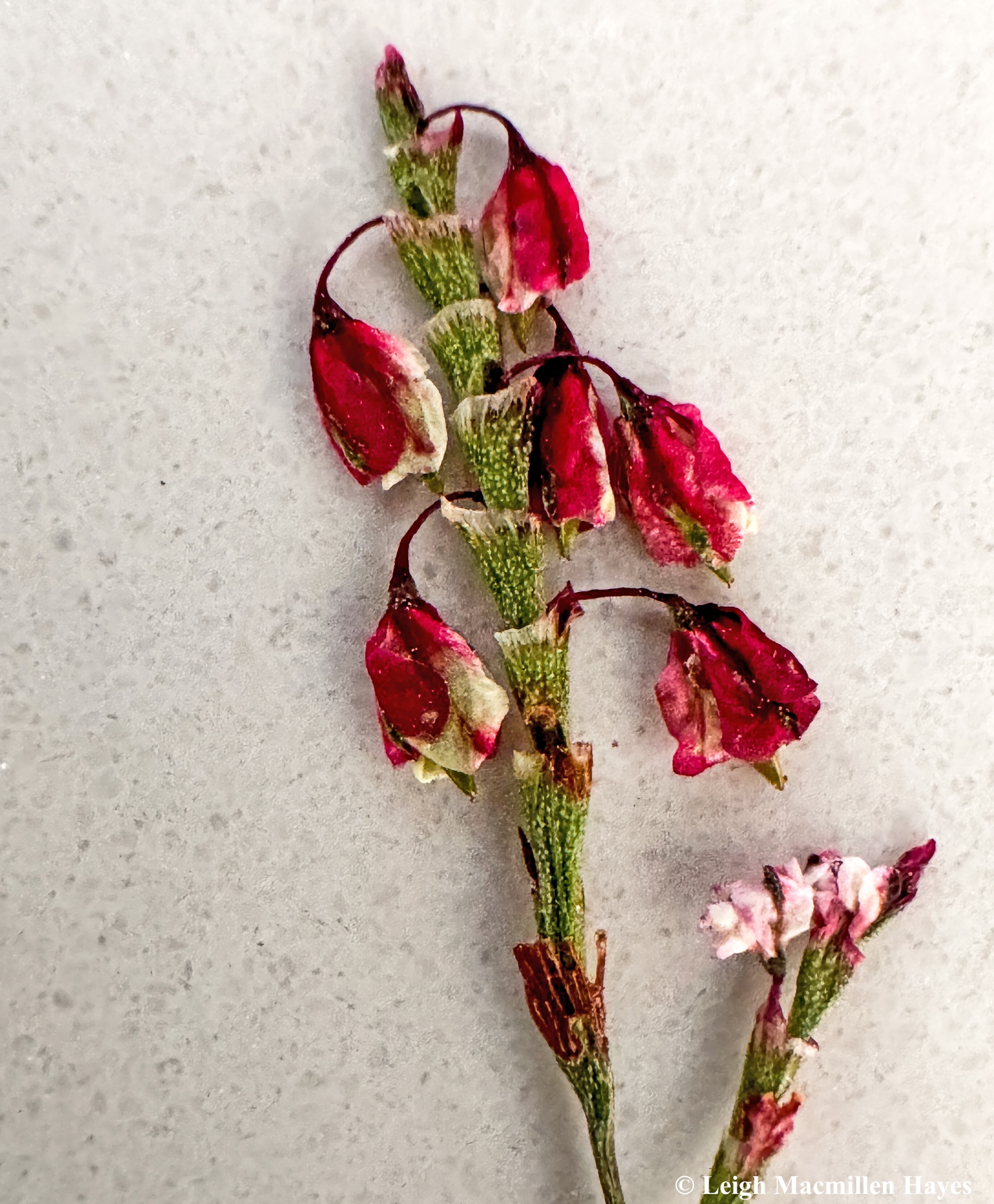
It was the stems that I found equally fascinating. At the base of the flower stalks there are sheathing bracts, giving it a jointed or segmented appearance. We didn’t see any leaves, but perhaps we need to look again. I think we were just amazed to have discovered a plant neither of us recalled meeting before. Often though, that means we’ll meet it again soon.

The small snippet followed me home, and today I looked at the flowers under the microscope and I was astonished to realize that they look rather like a map of a wetland.

I don’t jump at the invite every time it arrives for an early morning mission to explore a wetland, and one day really regretted it because when My Guy and I finally got to the location, we found a note with Bruce’s observations. We scanned the area with our eyes for about an hour before deciding that we were too late.

But . . . we promised ourselves that we’d pack a picnic supper and try again.

First we spotted one Bull Moose.

And then a second, and had a difficult time deciding that we should head home.

Did you know that 25% of Maine’s land area is wetlands? That’s four times the wetland area of the other New England states combined. The natural buffers they provide sustain the deep clear water we appreciate, and take for granted.

The margins or places where the land and water come together are bridges between two worlds. As many as 90% of all living things in our waters are found in these wetlands, no matter what form they take. I guess that’s why I love exploring them so often, because there’s always something to see. And another lesson to learn.

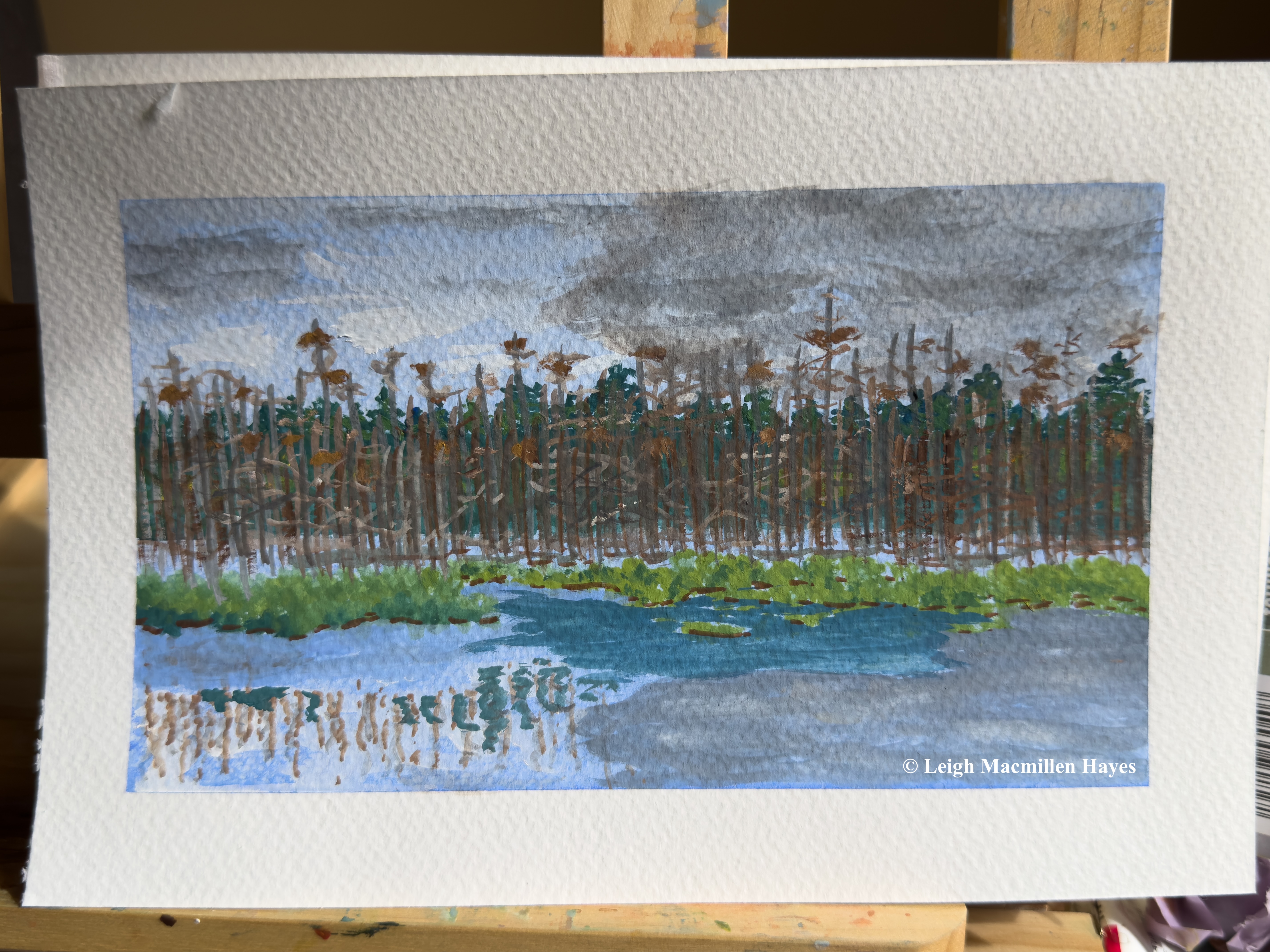
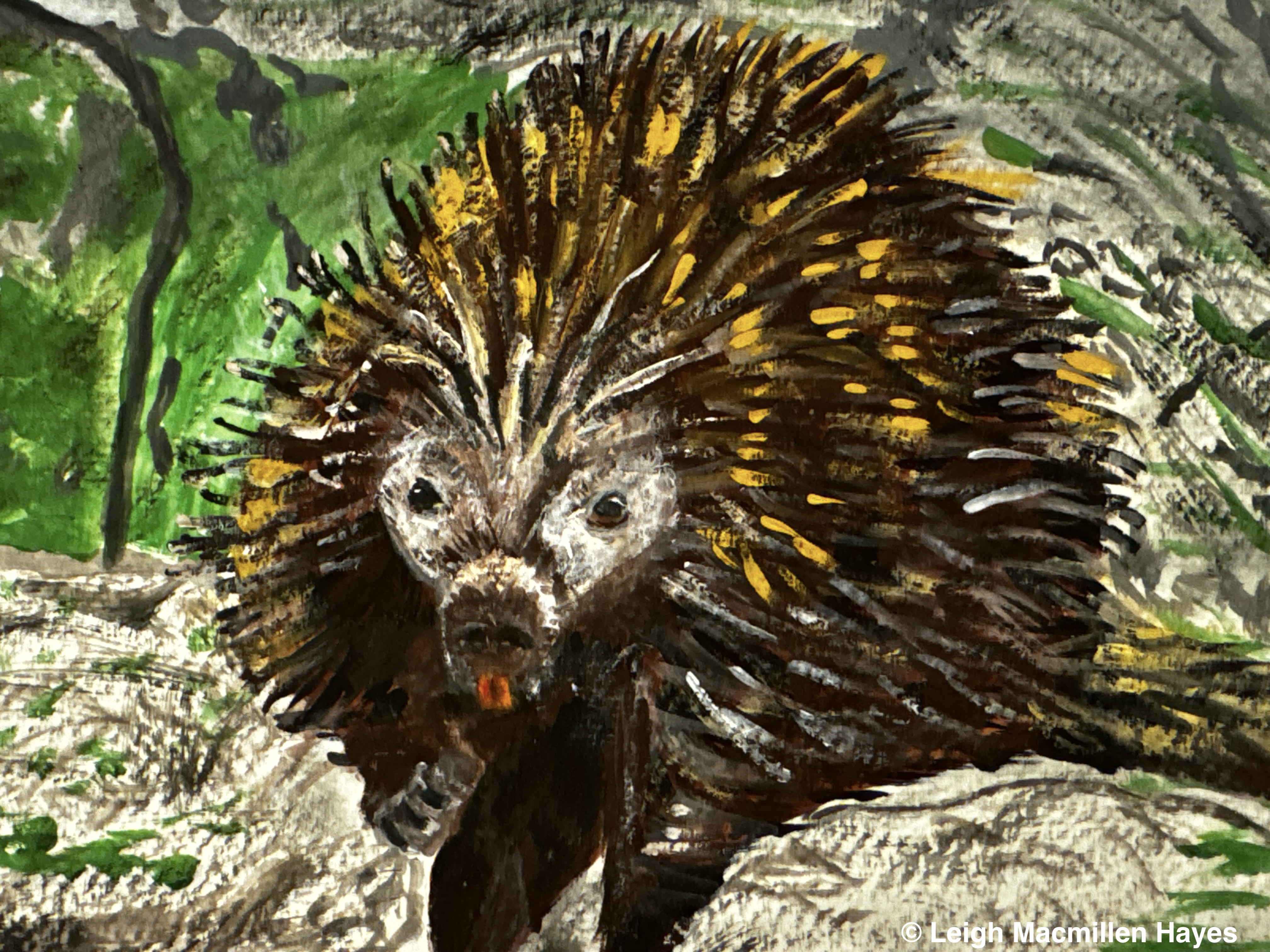
I leave you with this, a watercolor Bruce’s wife Eileen sent me recently. It was inspired by one of our local wetlands.

Some may see wetlands as dark and shadowy areas, mosquito hatcheries, with an abundance of leeches mixed into the scene, but the rest of us know their true value and I give thanks for living in this place where it’s so easy to go Bogging in Maine. And to share it with others. Thank you MG, BB, and EJB!

On the Cusp of Autumn

It occurs every year, autumn that is. But this year it hasn’t even started and already feels different. In the past week, My Guy and I have followed many a trail or waterway, both on foot and by sea, oops, I mean kayak on local lakes and ponds, and every offering has been unique.

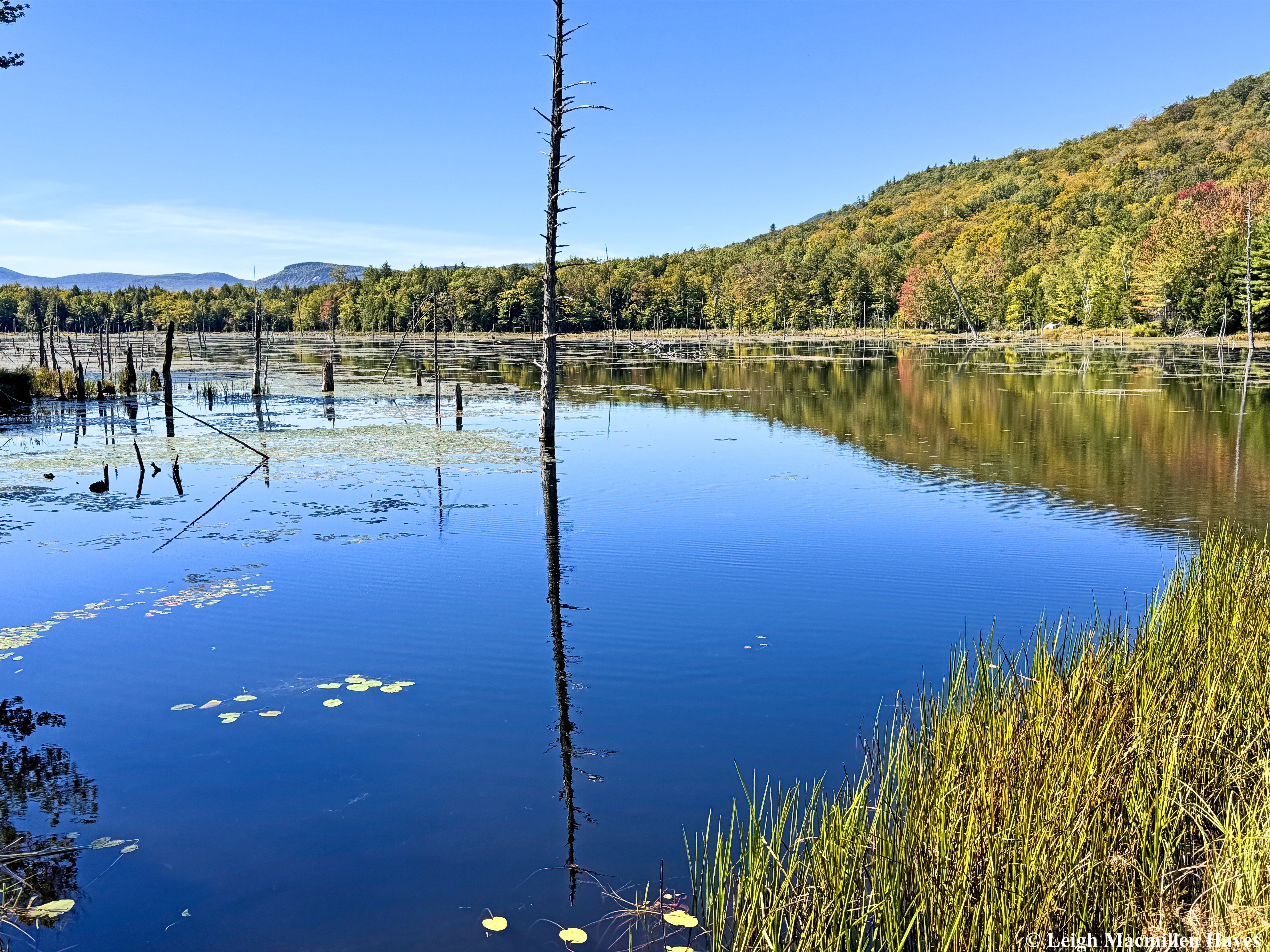
Some, such as this, being Brownfield Bog as we locals know it, or Major Gregory Sanborn Wildlife Management Area as the State of Maine knows it, took us by complete surprise. The last time we’d wandered this way together was in the spring, when despite wearing Muck Boots, we could not travel some parts of the trail because the water was so high. That was in the Time-We-Actually-Experienced-Rain. That time has long since passed and now western Maine is in a severe drought and don’t the Lilypads know it. What about all the mammals and birds and insects that depend on this water? It was an eerily quiet walk in a place that is usually alive with action.

Where the Old Course of the Saco River crosses through the bog, there was some water. But still, not enough. And we know of other areas of the Old Course, such as in Fryeburg Harbor, where there is no water.

As for the Saco, it too, was incredibly low and sandbars were more the norm.

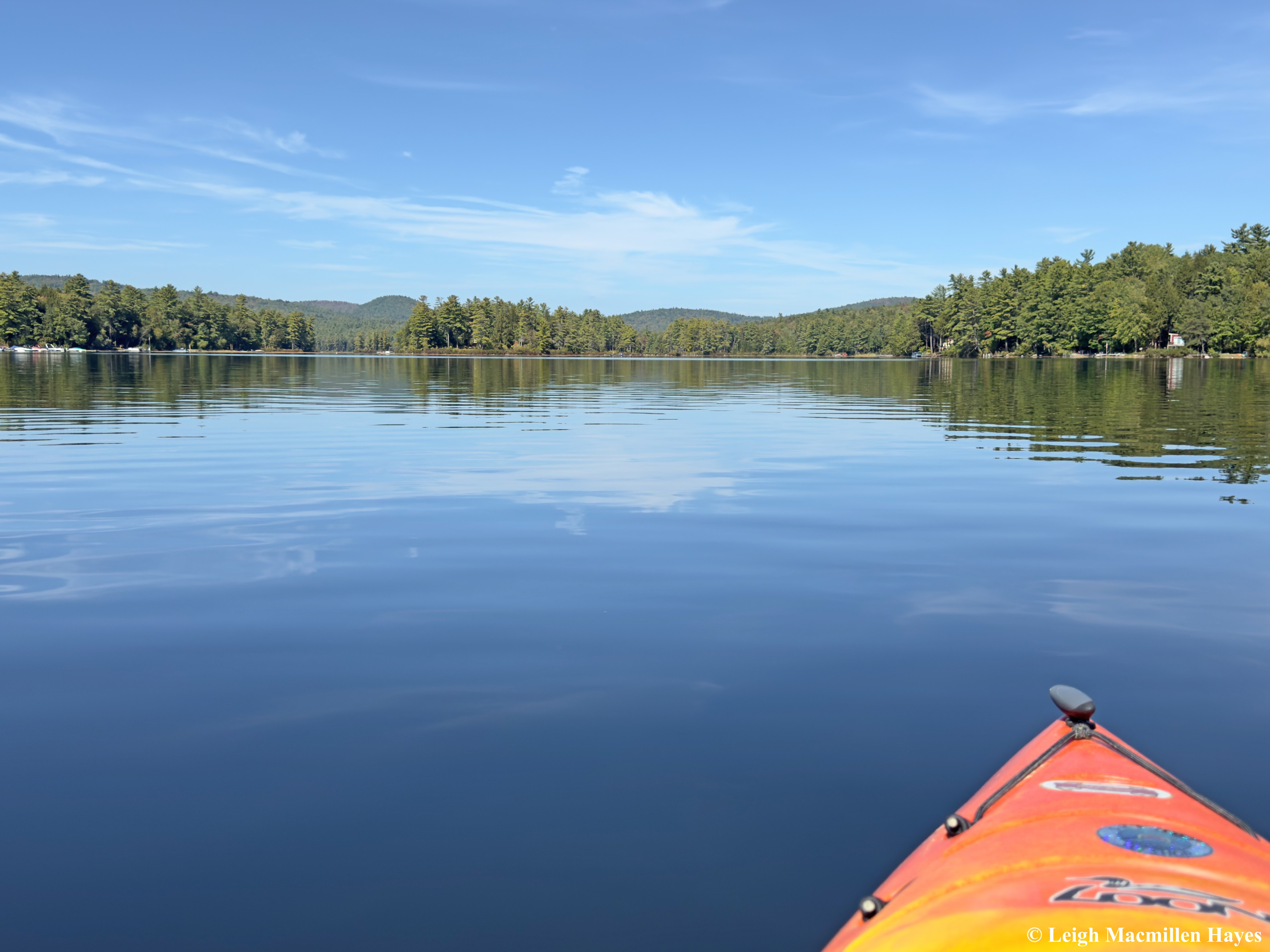
Other adventures found us paddling our favorite pond.

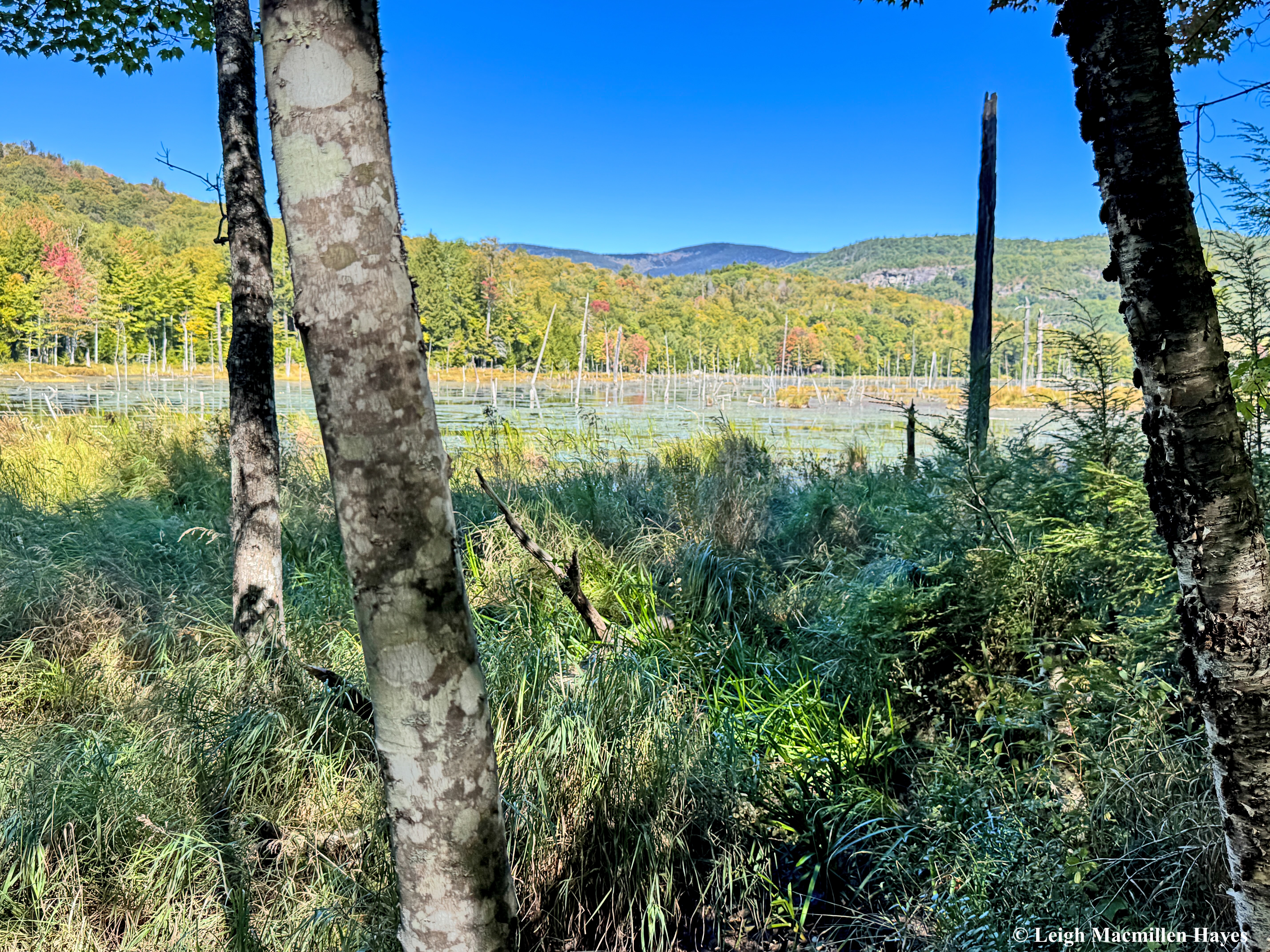
And bushwhacking around another bog.

What kept making itself known to us–the fact that the trees are turning much too soon, and many leaves aren’t even turning, but rather drying up and falling.

That meant that some paths or bushwhacks found us crunching the dried leaves with each step we took. We could hardly sneak up on a Moose or a Bear, or even a Squirrel.

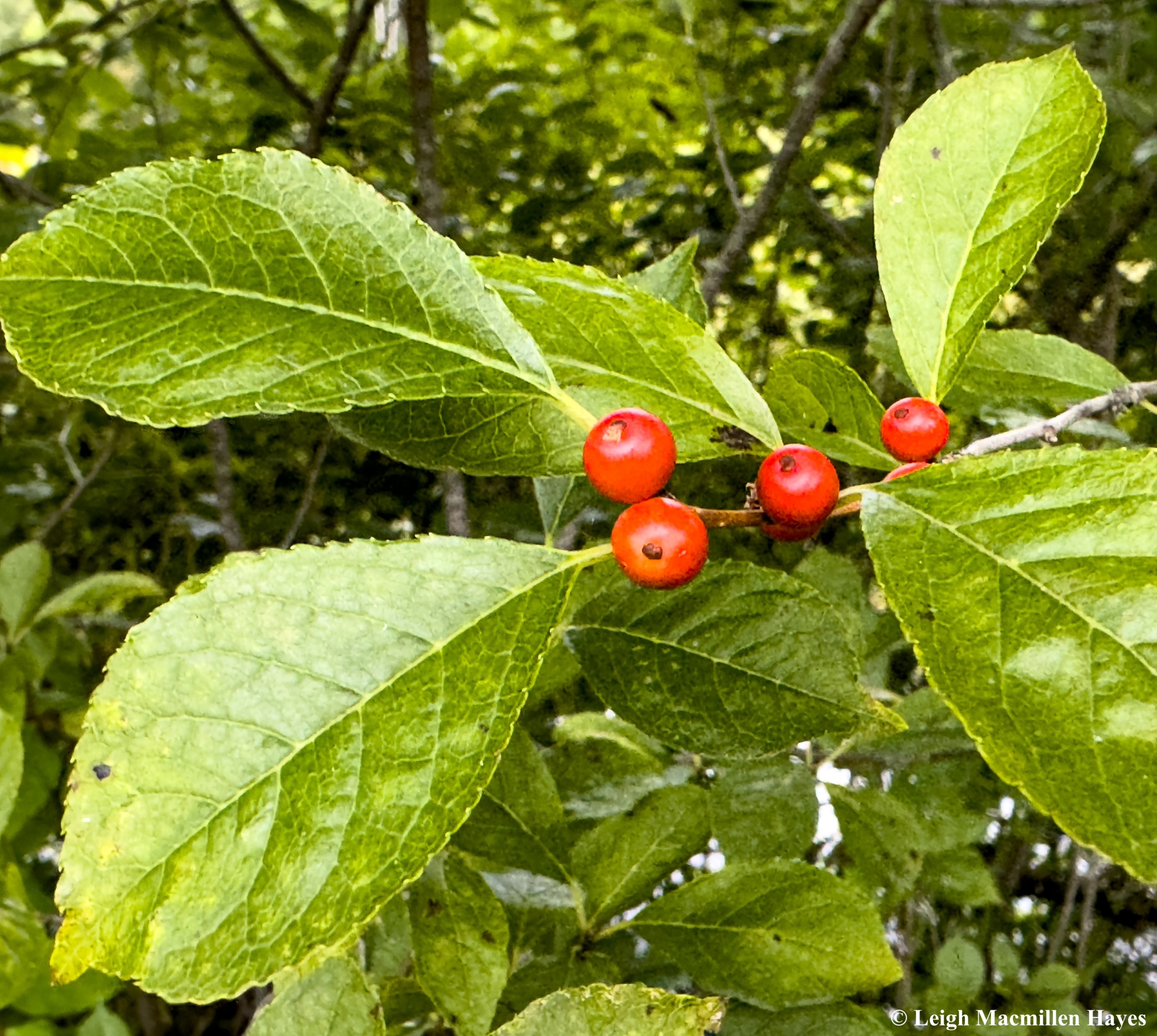
Despite such dry conditions, we did find the varied colors of Wild Raisins or Witherod drupes dangling in clusters below their leaves.

And Winterberries showing off their enticing red hues–ready to attract birds and maybe become part of our holiday decorations. Only a few branches for us, mind you. We leave the rest to the critters because we know their importance in the food chain.

Late summer flowers were also in bloom, including the brilliant color of the Cardinal Flower.

And in a contrast to the red, there were Ladies’ Tresses, a wild orchid, one of the few with a fragrance if you can bend low enough to smell it.

I think one of the greatest wonders is how many variations there are on a theme, in this case flowers for take a look at the Pilewort or American Burnweed, this one growing upon a Beaver Lodge.

What you are looking at is the flower heads: They are about a ¼ across and petal-less. The inner bracts, with their purplish tips form a ½-inch tube exposing just the yellowish to creamy white stamens at the top. And the seeds are teeny tiny, as you can see, with tufts of white hairs to carry them like parachutes upon a breeze.

Along one trail, we spotted another teeny tiny display that surprised us due to the fact that we haven’t seen many mushrooms this summer. But the Orange Peel Fungus apparently had enough moisture, at least to produce these two forms.

Critters were also a part of our sightings and several times we encountered young Northern Water Snakes, not more than two pencils in length.

In another spot where we expected to see Water Snakes, we instead met a Garter. Mind you, none of these wanted to spend any amount of time with us.

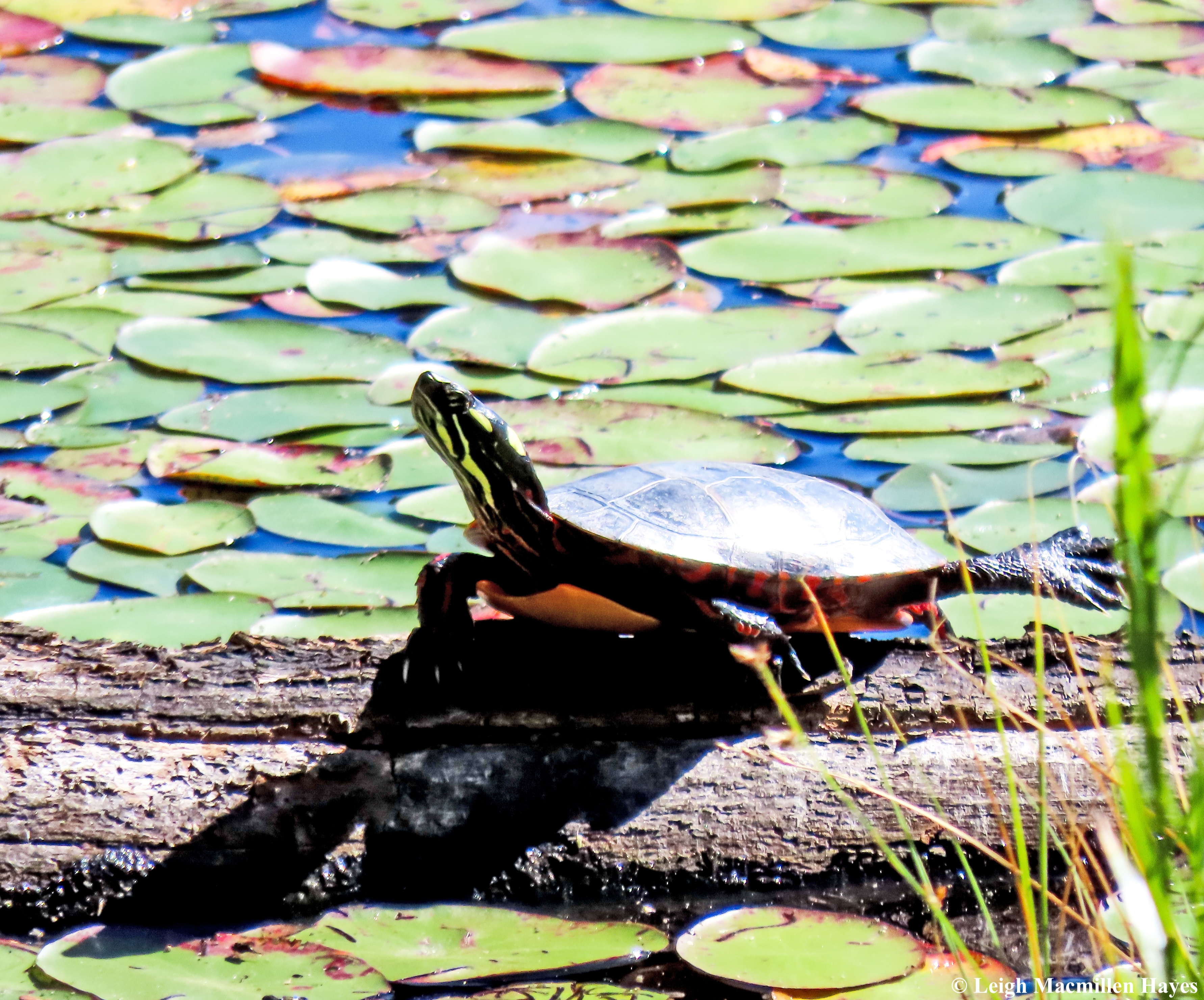
And despite the cooler morning temps that we’ve been experiencing, including lows in the mid-30˚s the past few days, or more likely, because of those temps, the Painted Turtles were still basking, soaking up the sun’s warmth. I love how they stick out their legs to absorb more warmth. It truly looks like a Yoga position, and I know this personally because along one of the trails we traveled in the past week, My Guy showed me several poses he’s learned recently. He also showed me those he struggles to perform.

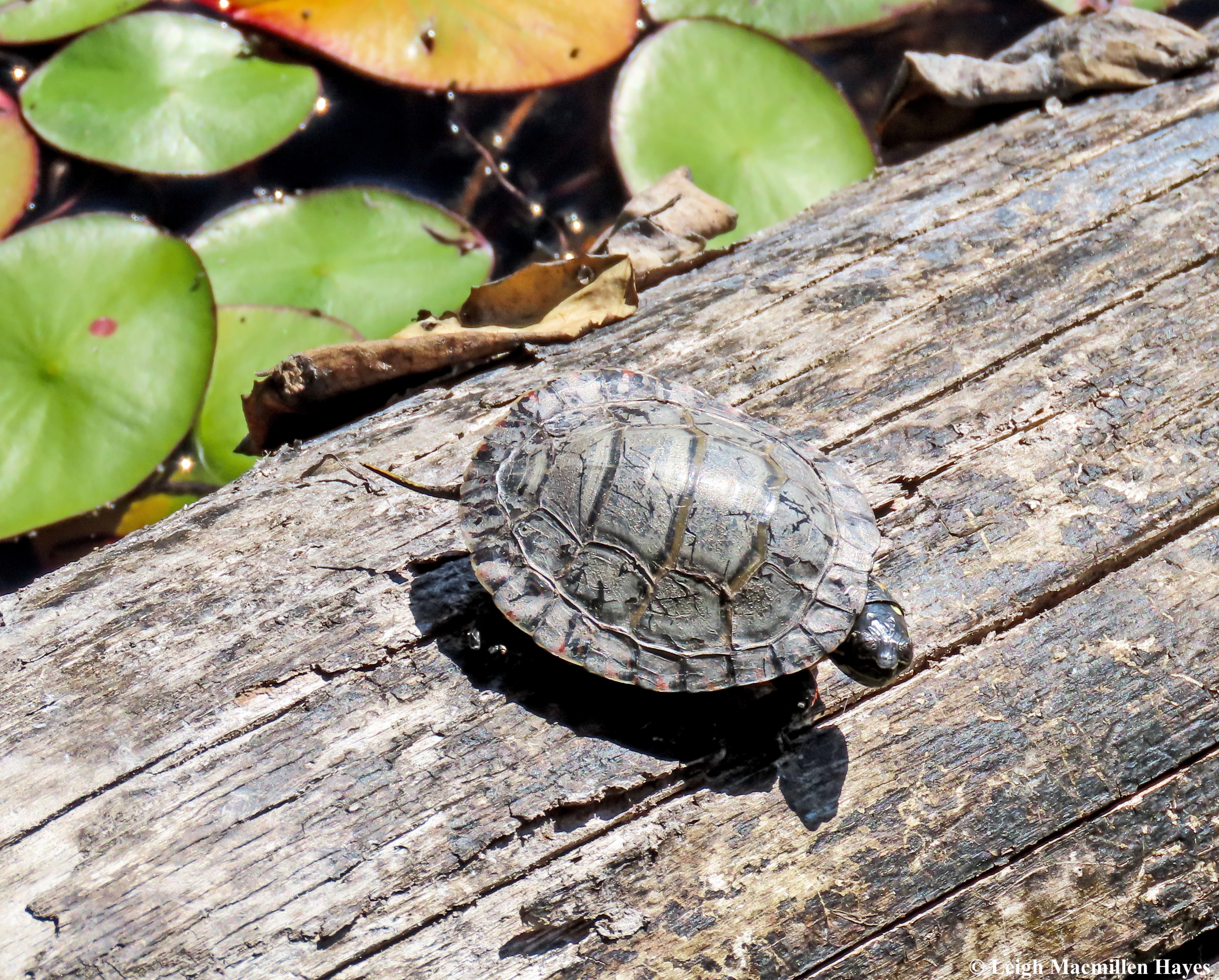
Not all turtles were of the same size, and this was a tiny one, who stayed on this log for at least two hours as we spotted it before we embarked on a bushwhack and it was still there when we returned, though it had changed its position. And gave me a wary look.

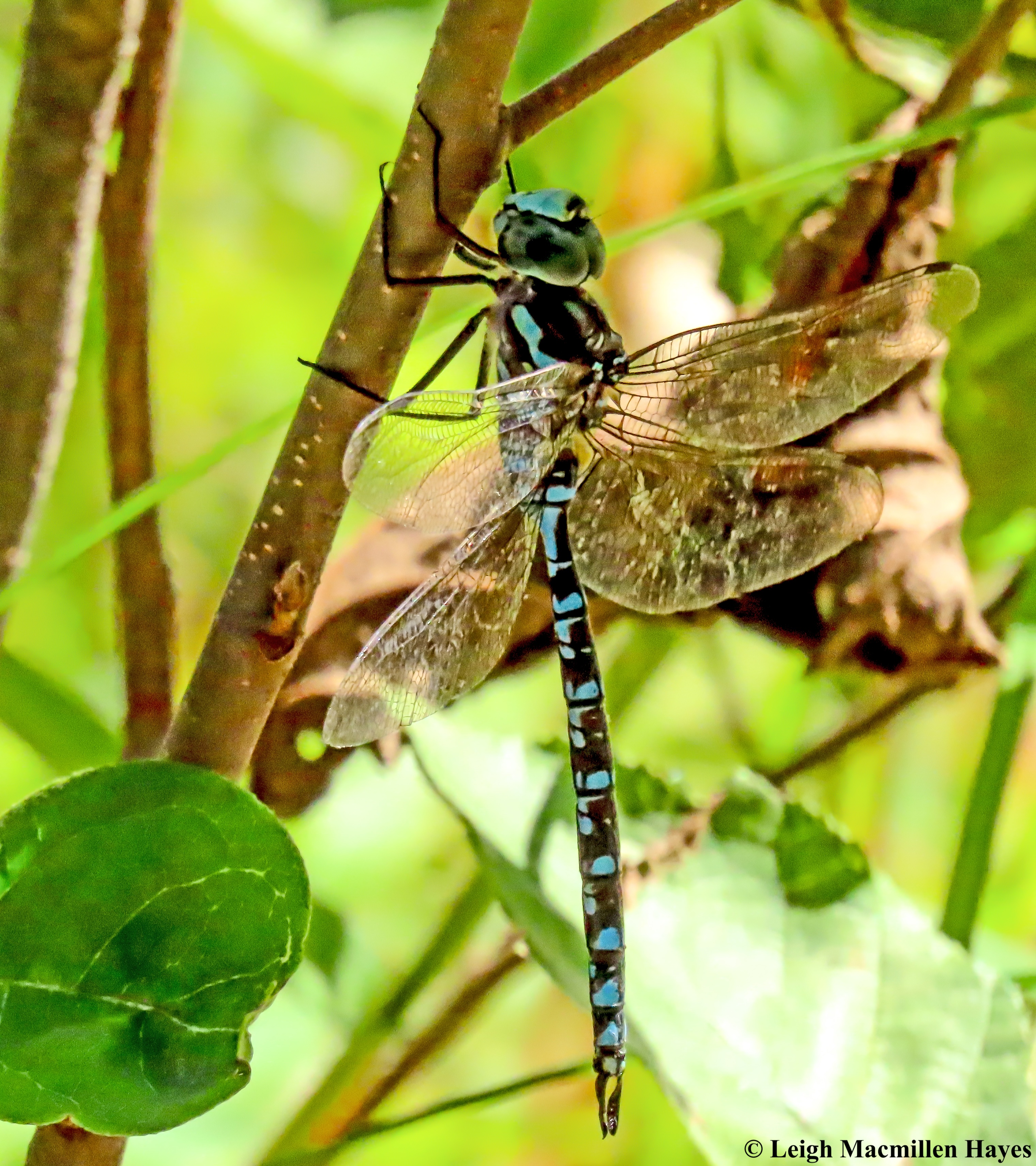
My Dragonfly fetish was also fulfilled for the Darners and Skimmers continue to fly and occasionally pause. Well, the Skimmers often pause, but the Darners are usually on the wing–patrolling territory while looking for a meal, and even more so, a mate. That’s why it’s always a moment of joy for me when one stops and my admiration kicks up a few notches. In fact, it’s the notch in the side thoratic markings that help with ID–in this case a Canada Darner. I’ve discovered this summer that they are numerous ’round these parts.

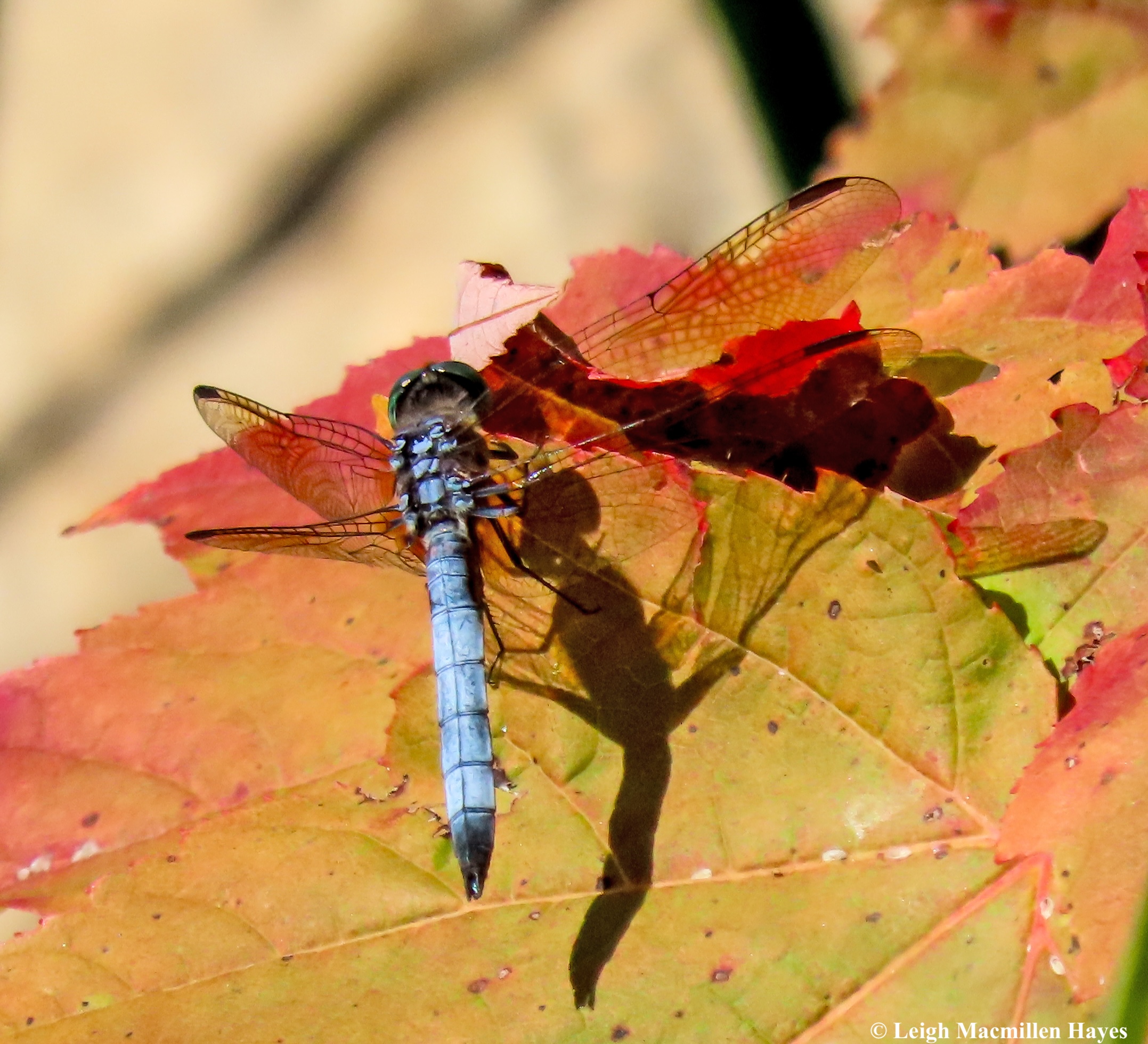
While the Darners are on the largish size in the dragonfly world, most of the Skimmers that are still flying are much smaller. The Blue Dasher, as this is, is probably considered medium in size.

What a display, no matter how big, with the blues and blacks and greens contrasting with the Red Maple leaf’s hues.

And then there’s the dragonfly’s shadow. It’s almost like it was a different creature.

My surprise was full of delight when I realized as I floated beside a Beaver Lodge, that I was watching female Amberwings deposit eggs into the water as they tapped their abdomens upon it. I rarely spot Amberwings, and yet they were so common in this spot.

And overlooking all the action, perhaps not only to defend its territory, but also to eat anything that got in the way, a Slaty Blue Skimmer, twice the size at least of the Amberwings and Blue Dasher.

Birds, too, were part of the scenery wherever we were. This Eastern Phoebe spent moments on end looking about, from one side to the other, and then in a flash, flew to some vegetation below, grabbed an invisible-to-me insect, and flew off.

Much to the surprise of both of us, despite the loud crackling of leaves and branches upon which we walked in one place, we didn’t scare all the Wood Ducks off, and enjoyed spending a few minutes with this Momma and Teenager. Usually, this species flies off before we spot them on the water.

Even the male hung out and when I suggested to My Guy that he look at it through the monocular, he was certain he really didn’t need to because he could see it without any aid. And then he did. And “Oh wow!” was the reaction. And I knew he’d finally seen a male Wood Duck–for the first time. And that moment will remain with me forever.

One of our other favorite moments occurred on our favorite pond, where we first spotted a Bald Eagle on a rock that the low water had exposed. And then it flew. As birds do.

And we followed it with our eyes, and watched it land above us in a White PIne.

And thus, we spent a good twenty minutes with it, admiring from our kayaks below.

The Bald Eagle was sighted not to far from our favorite Beaver City–where we know of at least five lodges located within a football field-sized area. And this one above had been abandoned for the last few years.

But fresh mud and fresh wood told us that someone was home. Probably more than one someones. We love the possibilities. The mudding is an important act–preparing for winter by coating the outside and closing up any holes or airways that might let cold air penetrate. Of course, the “smoke hole” at the top will remain, much like a chimney in our homes.

Just a Beaver channel and a hundred yards away, another of the five lodges also showed signs of winter preparation. It’s a busy neighborhood.

No matter where or how we traversed, one of the things that stood out to us is that despite the autumnal equinox being September 22 at 2:19pm. fall is already here thanks to the summer’s drought.

It’s usually mid-October when we begin to celebrate the color change–that time when Chlorophyll, the green pigment we associate with summer, and necessary for photosynthesis, slows and then stops manufacturing food, and the leaves go on strike.

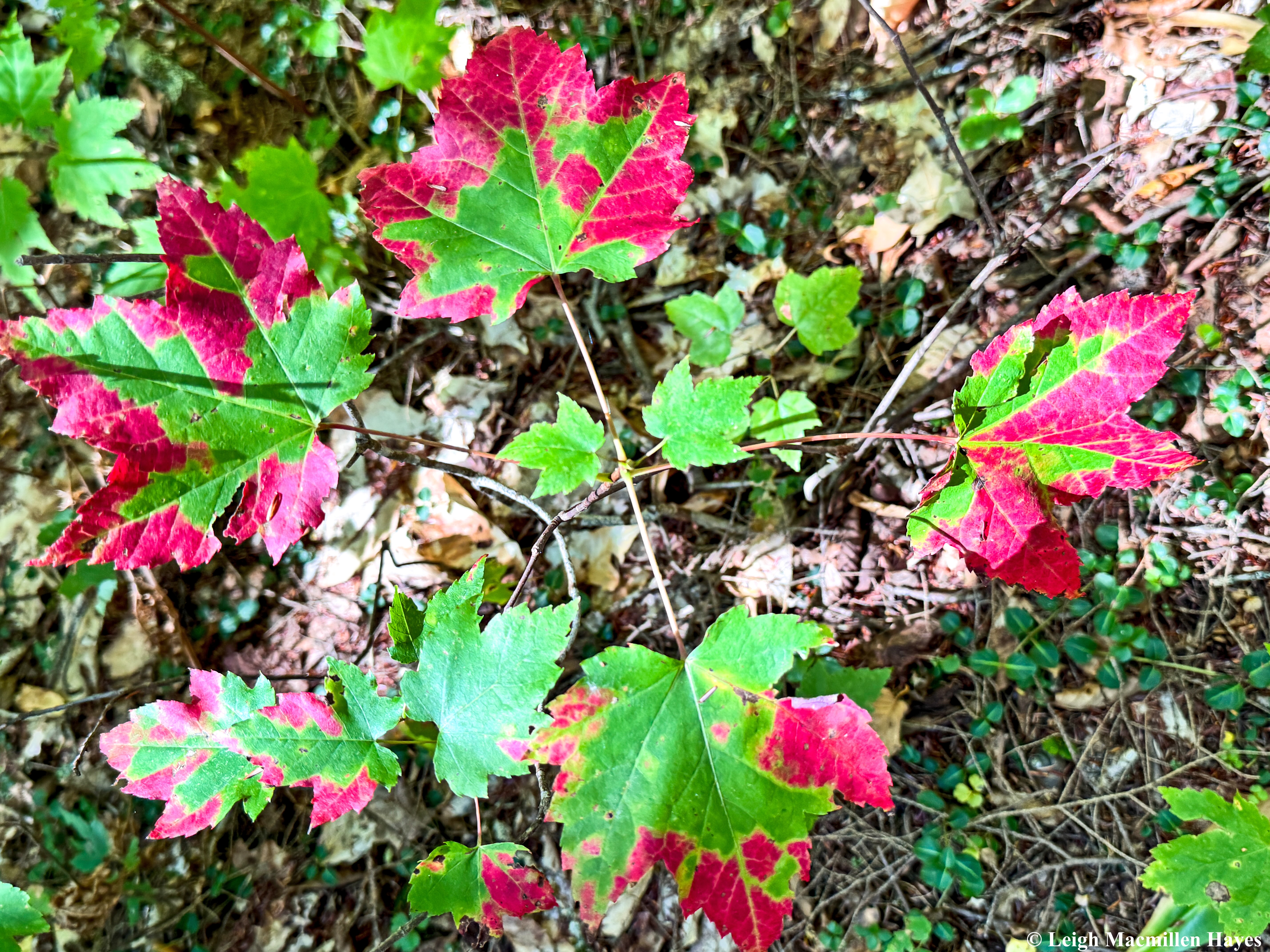
Veins that carried fluids via the xylem and phloem close off, trapping sugars, and promoting the production of anthocyanin, the red color we associate with Red Maples like these.

Tonight, as I finish writing, we are on the Cusp of Autumn, which is about seventeen hours away. But this year, I think it’s already here and if you have planned a fall foliage tour for mid-October I hope you won’t be too disappointed. I suspect we’ll not have many leaves left on the trees by that point.

But . . . maybe I’m wrong. There’s always that possibility.

No matter what–Happy Autumnal Equinox!

Great Blue Herons COUNT

Community science, aka citizen science or participatory science, is an opportunity that allows laypeople like you and me to contribute meaningful data in a short amount of time that researchers can use to inform larger conservation efforts. And along the way, we get to learn more about a particular species, as well as those who share the same habitat.

For the past 25 years, I’ve had the pleasure of being involved in a variety of such local research projects, and one of my favorites is HERON Observation Network of Maine. For the last 16 years, friends and I have monitored first one and then several Great Blue Heron Rookeries (colonial nesting habitats).

With landowner permission, we visit the rookeries several times between May and July and our job is to count the number of nests, number of active nests, inactive nest, adults, adults incubating, young, and fledglings. It’s rather intense work to move binoculars or cameras from tree to tree and some trees have double or triple-decker nests, and some nests are tucked into the background, and young can be difficult to see if they are so tiny that they are tucked down into the nest, and it’s easy to get confused and then have to start all over again.

Ah, but I can’t think of a better place to be on a summer morning than in these wetlands where aquatic life explodes in color and sound and texture and even life and death.

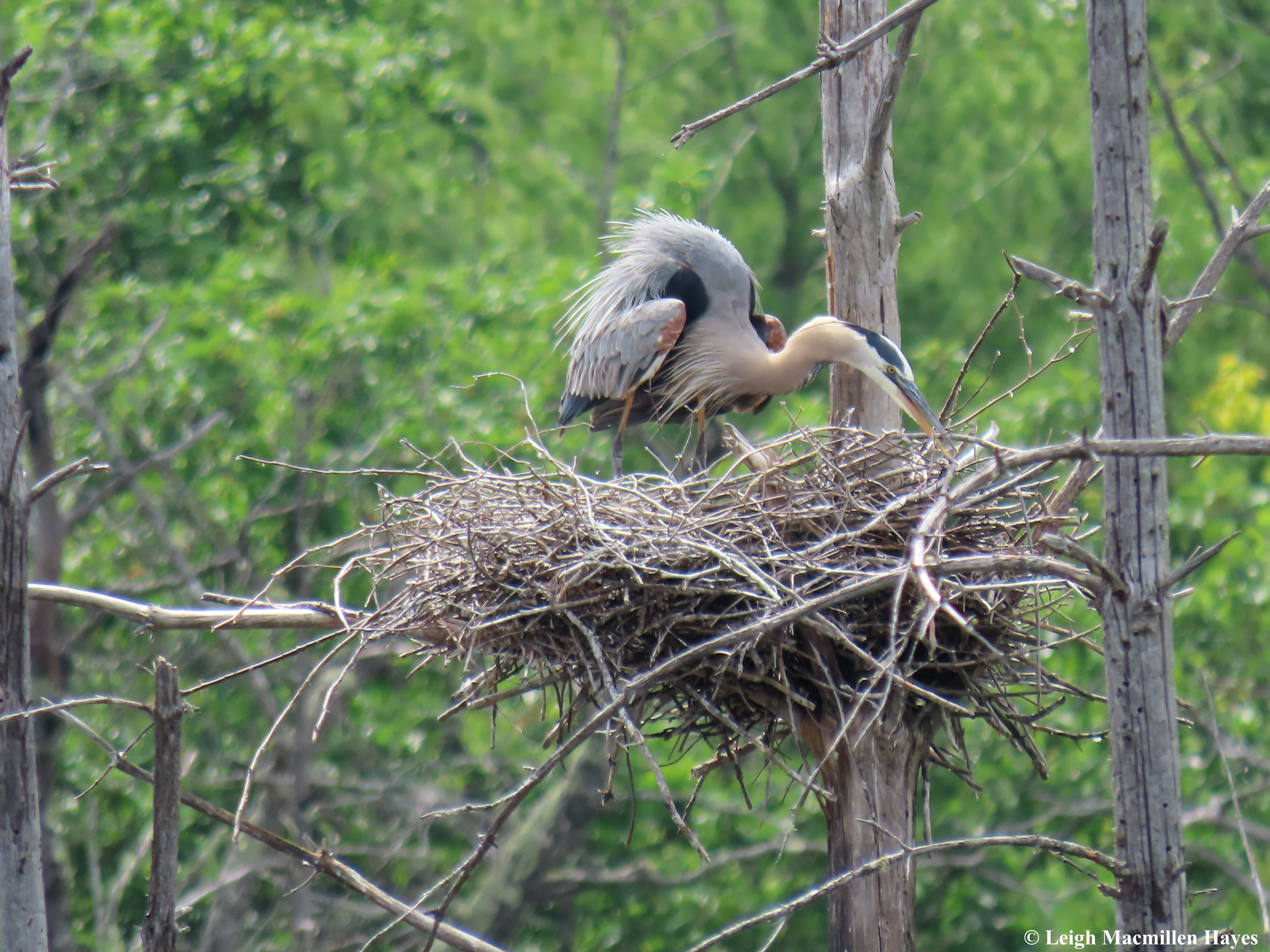
Sometimes it looks like a female is merely rearranging sticks to create a stronger nesting site.

But then . . . much to our surprise and delight, a fuzzy head is spotted and we know we have babes to look for, and suddenly that makes the job more difficult.

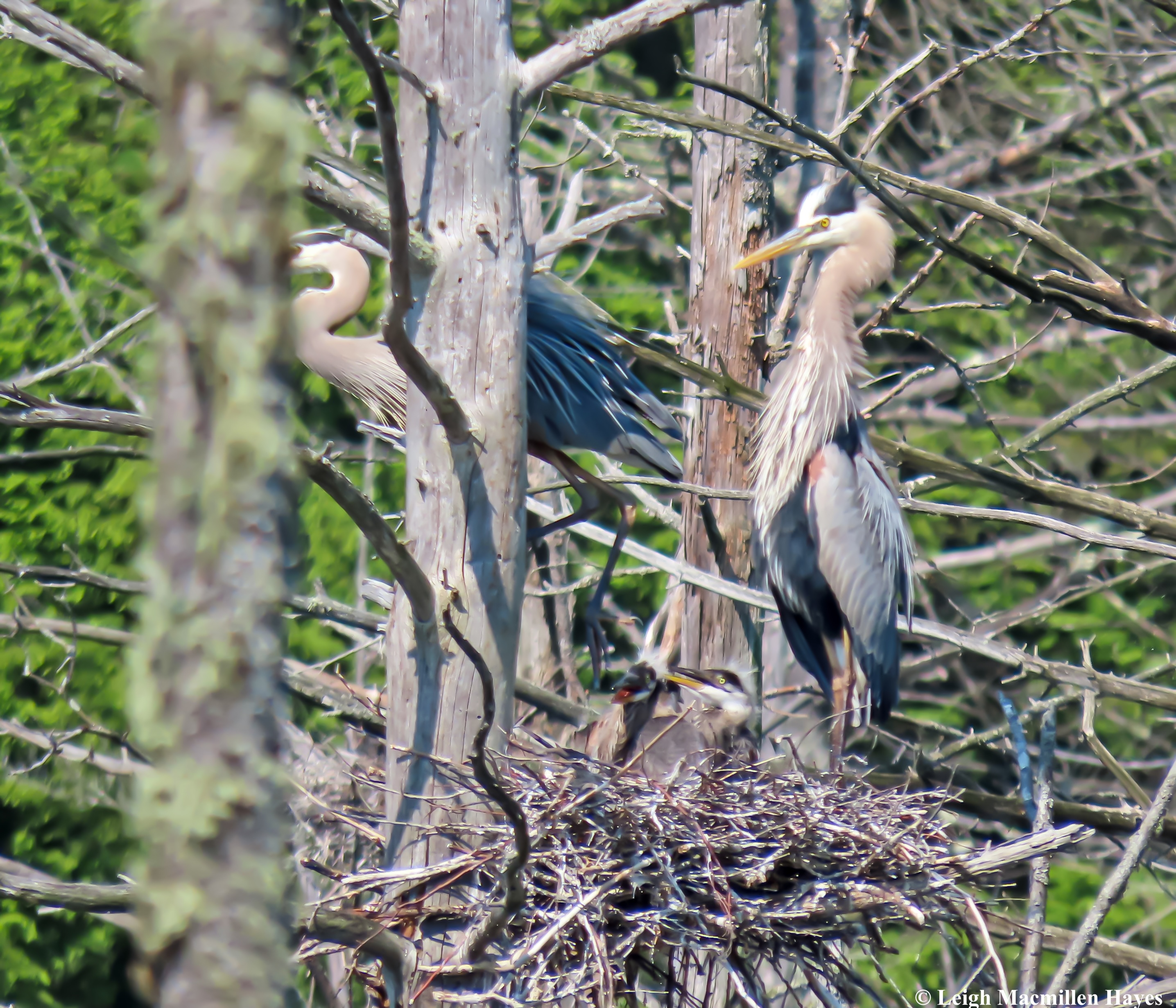
Especially when one head turns into two and we have to add another line to the tally sheet while the adult cools off and seemingly shades the youngsters.

The adults, meanwhile, not only take turns tending to their young, but they also take turns heading off to fish for meals. And when one is secured, that adult flies back to the nest and takes a few minutes to semi-digest the food.

At this point, the young begin to squawk, and I’ve often wondered if their sounds encourage the regurgitation that follows.

Ever so slowly, we can watch the food item come up the big bird’s throat and then with mouth open wide, it coughs and tada . . .

The young ones are happy to dine on their own form of baby food.

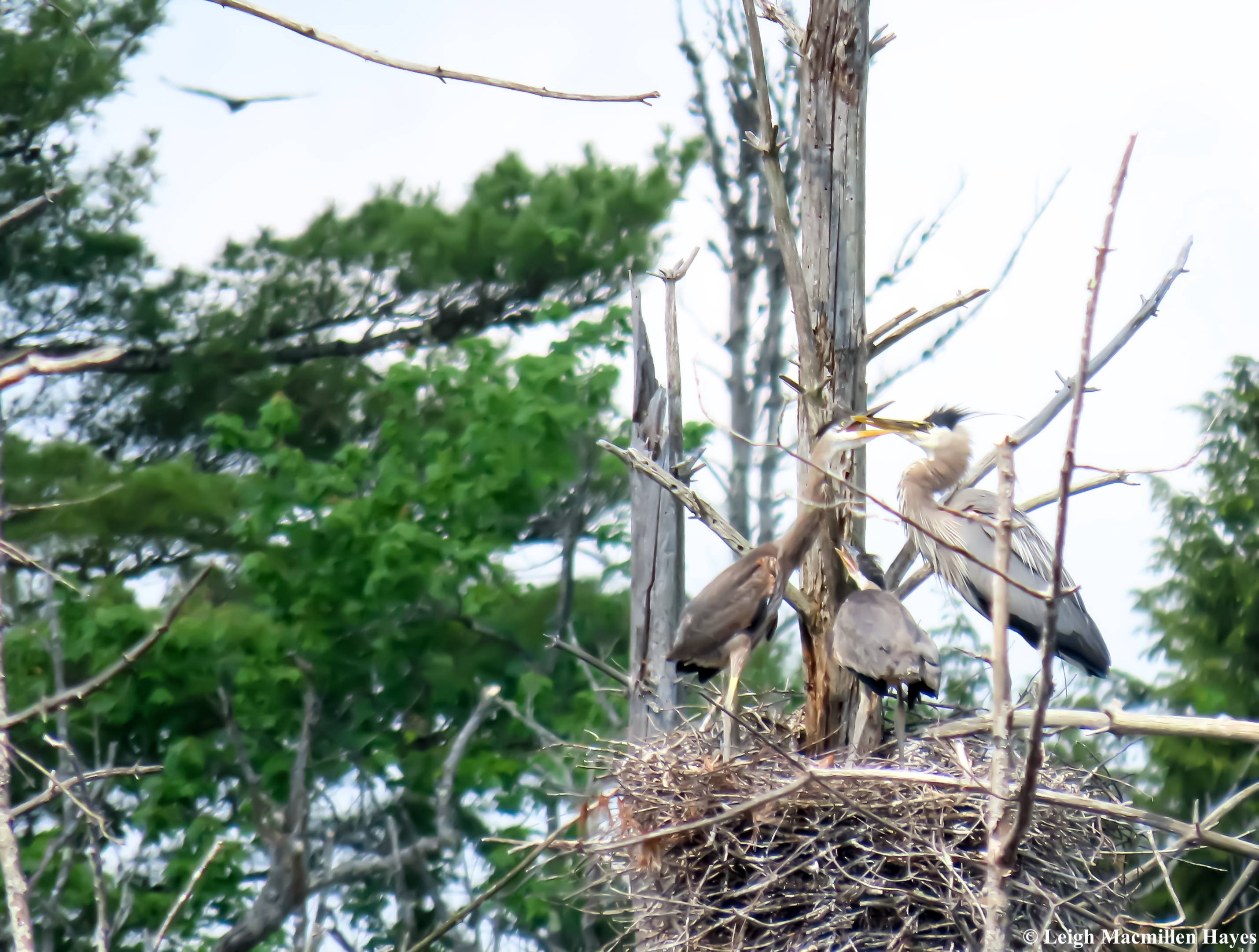
Even as they grow, the feeding ritual continues. One parent will fly in and join the family, while prepping the meal delivery.

And the other will fly out the back door in search of more to fill those ever-begging mouths.

And the kids will squawk until the remaining parent provides.

As weeks turn to a month or more, the birds turn into tweens, growing to the point where one wonders how they can all still fit in the nest, despite the fact that Momma built it to be about three feet wide, using sticks that Daddy provided.

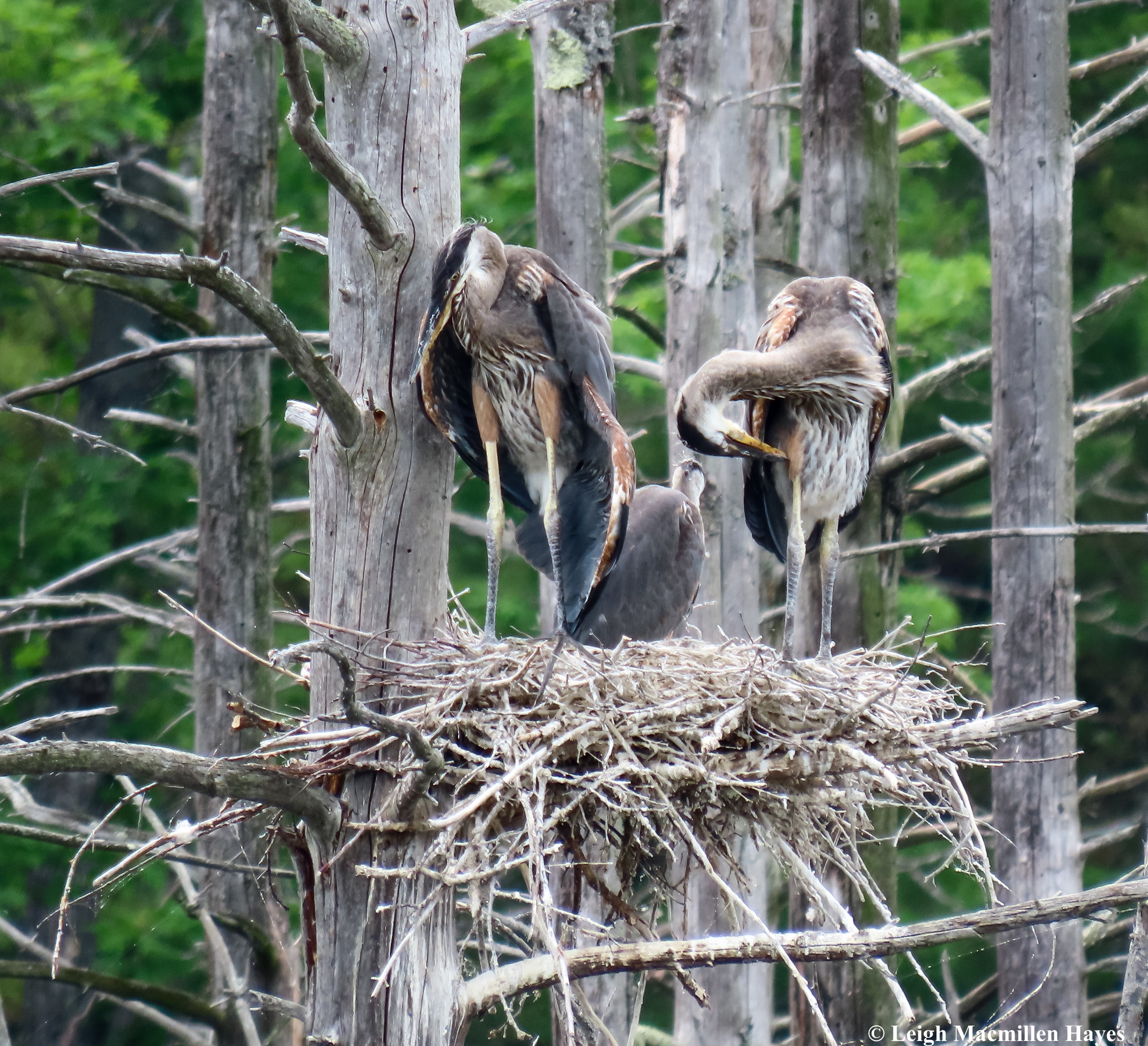
And those tweens, like so many of their human counterparts, start to preen between meals, fixing their feathers over and over again.

Preening is important for several reasons: to keep feathers clean, free of parasites, waterproofed, and properly aligned for optimal performance because that first flight is getting closer and closer.

Despite all their preening, however, the younger birds are still dependent upon their parents for meals on wings because they haven’t yet fully fledged and started their own hunting habits.

In the midst of taking count, life happens all around us and we rejoice in any other sightings that might distract, even if it means starting the count again. That’s why, at one of the larger rookeries, we have a few landmark trees so we know if we get confused we can locate said tree and count from there.

We also try to keep track of where each nest is located in the landscape, but if you were to read my notes, you might get totally lost. I do!

Other distractions include Red-winged Blackbirds, even if their meal of choice is one of our beloved dragonflies.

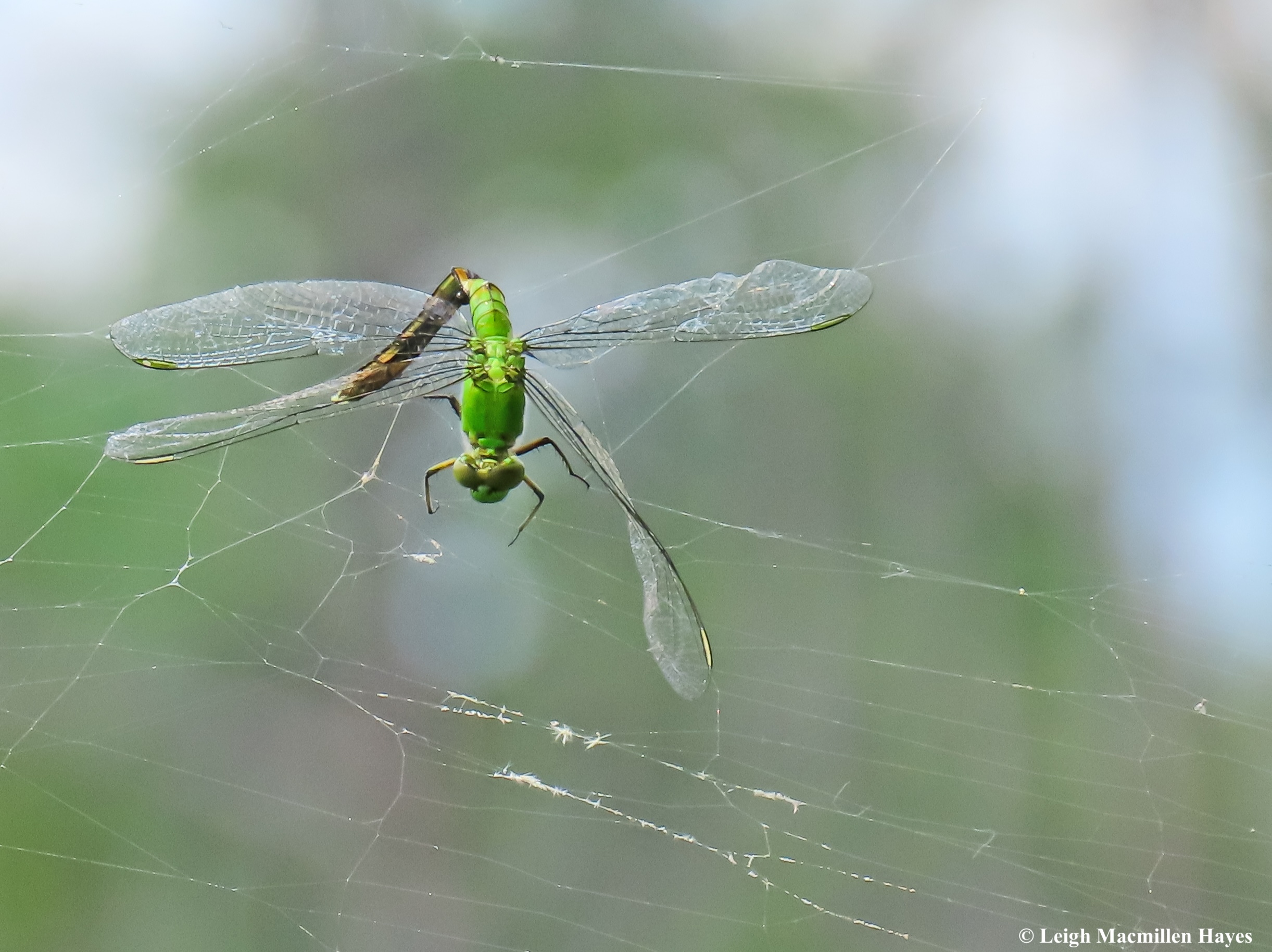
Spiders also make meals of dragonflies, but despite the fact that this female Eastern Pondhawk Dragonfly got snagged, she was still a picture of beauty.

And usually when we spot Wood Ducks such as this male, they fly at the first inkling of our invasion into their space. But when you are far enough back and tucked into the trees beside the wetland, sometimes you are offered a glimpse, and this was one of many in an old snag.

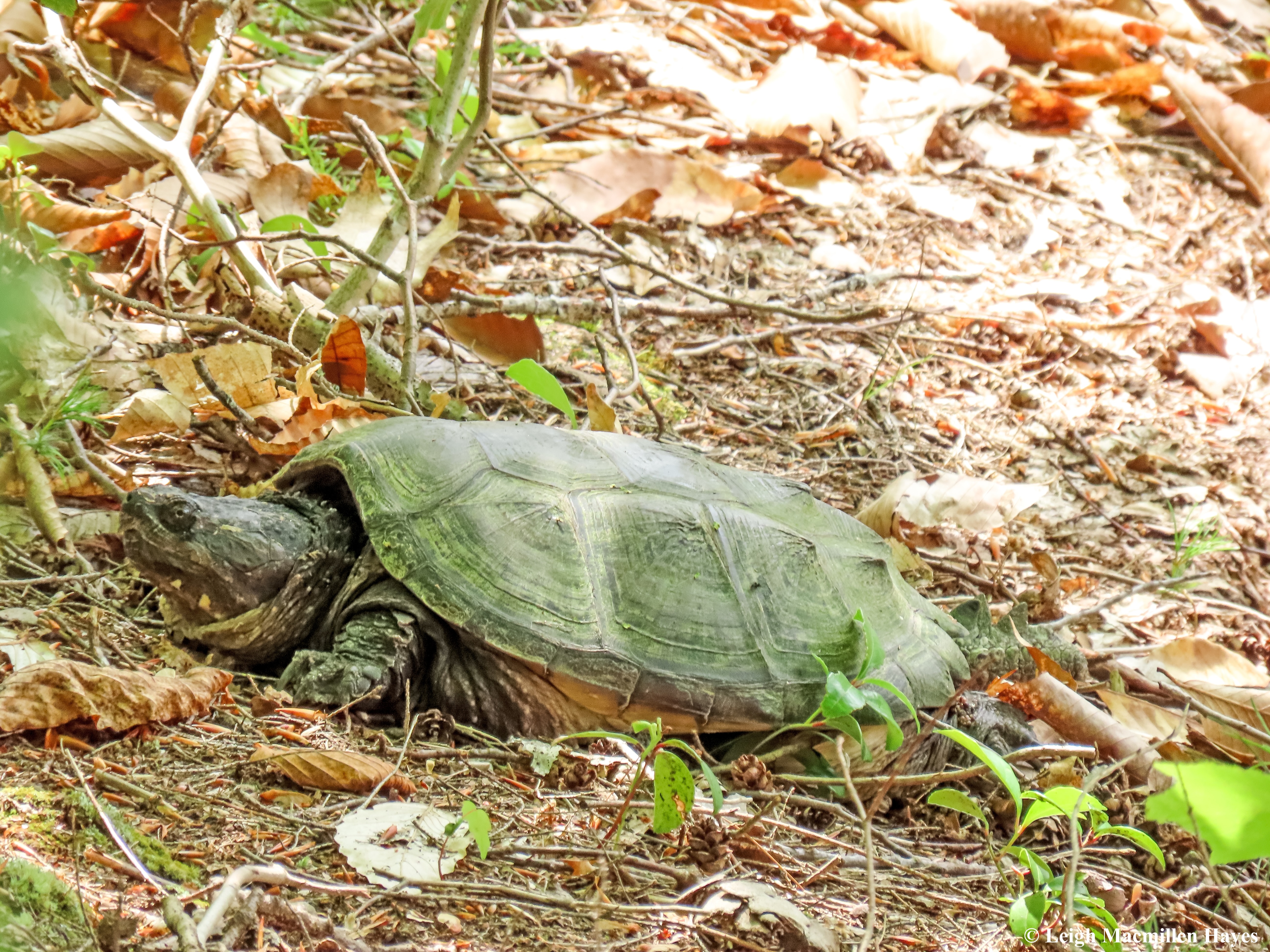
In the hike to and fro the wetland, there other offerings, like a Snapping Turtle on her way up a hill to lay eggs.

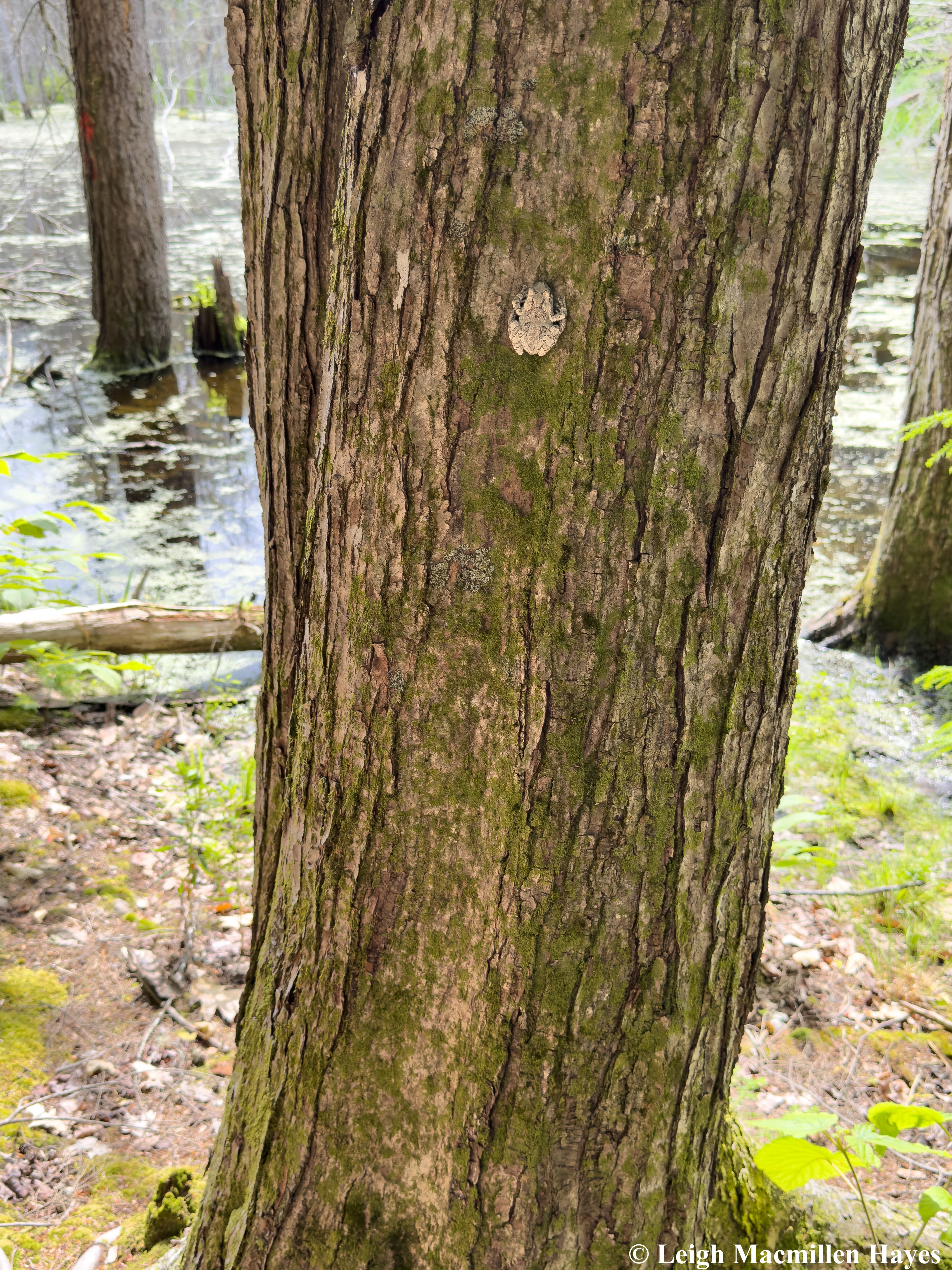
And while pausing to talk, a Tree Frog was spotted.

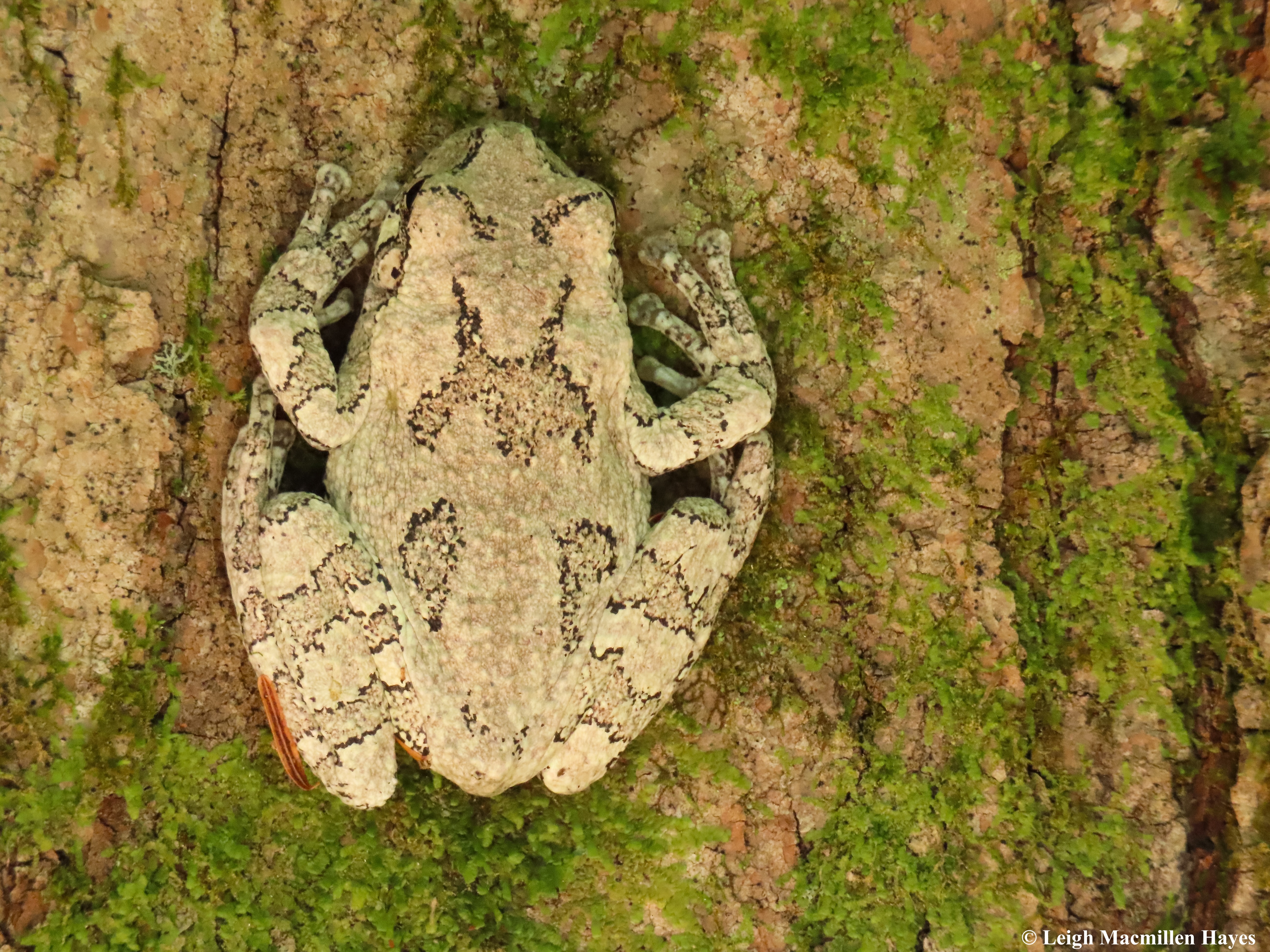
And we gave great thanks that it allowed us to invade its inner circle for a few moments. Look as those toes, the ginormous suction cups that they are.

Even a Little Wood Satyr added magic to the scene.

And under a tree we spotted a number of pellets full of bones. We don’t know the creator of the pellet, nor the food that was consumed, but someone had a favorite feeding tree.

And now the rookeries are empty and the tweens have turned to teens and must hunt for themselves. It’s a task that takes great focus, but those eyes are all seeing.

And the beak is quick to snag.

And though the meal may be small, its one of many to come and success is key.

I’ve tried to commemorate these morning’s with a few paintings, including this teen and its catch.

And an adult on the hunt.

The Tree Frog.

And one of the rookeries, this one being the most successful.

2025 numbers:

Rookery 1: zero nests as has been the case for about six years now and I suspect I’ll be told not to bother with that one next year, but then again, some other Great Blue Herons could decide it’s just the right place and build a new rookery. The last year that we saw nests and birds, a Bald Eagle was in the area and within a week there were no more Herons to count.

Rookery 2: 21 nests observed; 18 inactive; 3 active; 5 adults; 3 young upon the first visit in May.

21 nests observed; 21 inactive. Yes, all nests were empty two weeks later. We knew when we didn’t hear any squawking as we approached that things were not good, but we were totally surprised to not spy any Herons. What had happened during the two week interval we’ll never know. But we suspect maybe a Bald Eagle in this locale as well. Or maybe an owl? Last year, the rookery had declined drastically from the first visit to the second, but not to this extent.

Rookery 3: 1 inactive nest; 59 active. YES! 60 nests in all, an increase of 7 from last year. And of 2024’s 53 nests, only 46 had been active. So 59 was a huge number! Have you ever tried to count birds in a wetland, where the nests are at least a football field or more away from you? It is not easy. And takes about two hours plus the hike in and out to complete. Oh, and the count: the number of adults varied with each visit, becoming less and less as the weeks went on because they were out hunting for larger fish to feed their growing brood. The youngsters at our last count: 122, plus 7 fledglings. That’s a lot of mouths to feed. And think of size of those birds, some nests with 4 kids, plus the two adults. Talk about tight living quarters.

Shoulder and neck muscles tense. The brain gets befuddled. Mosquitoes buzz in our ears.

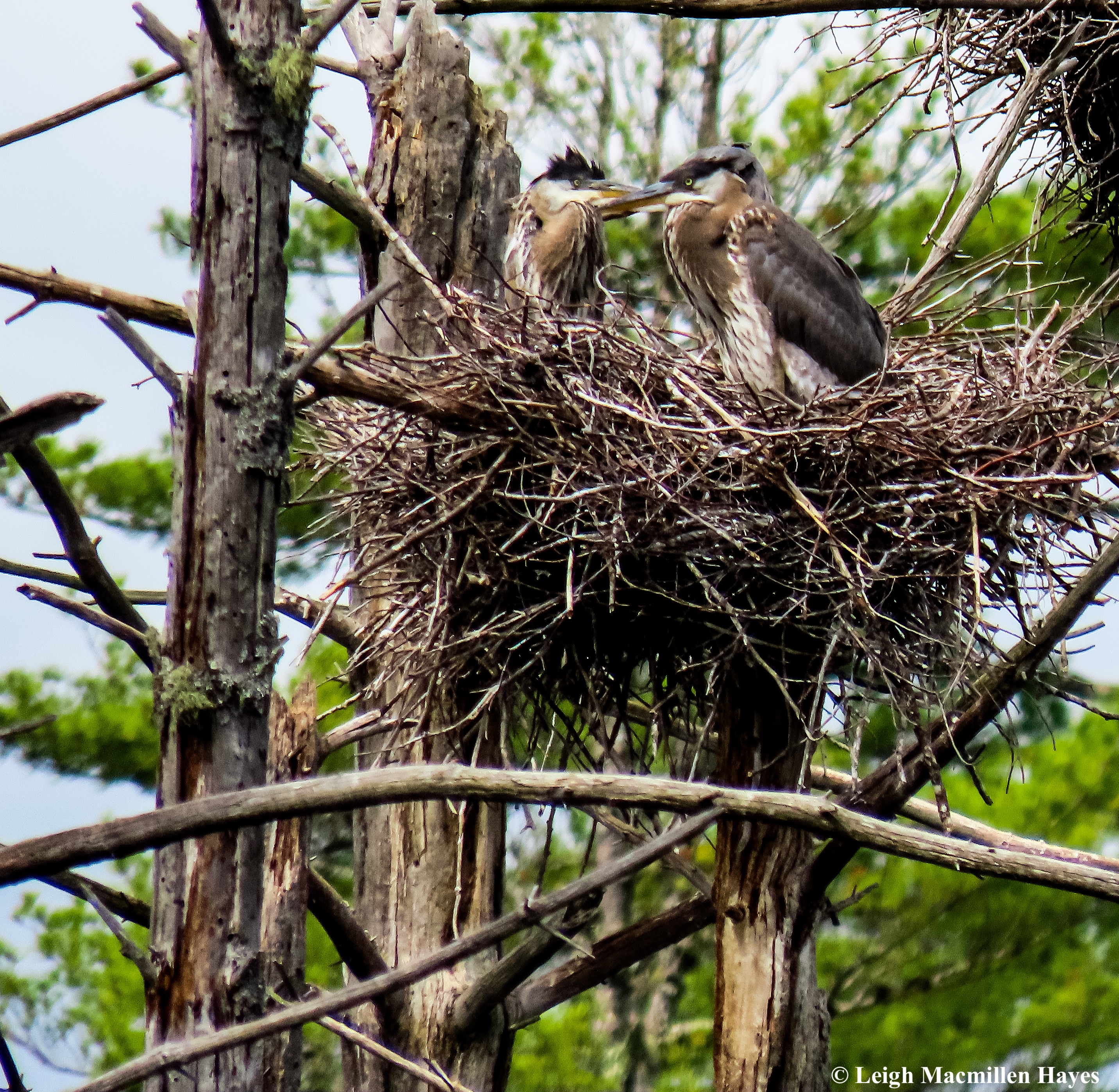
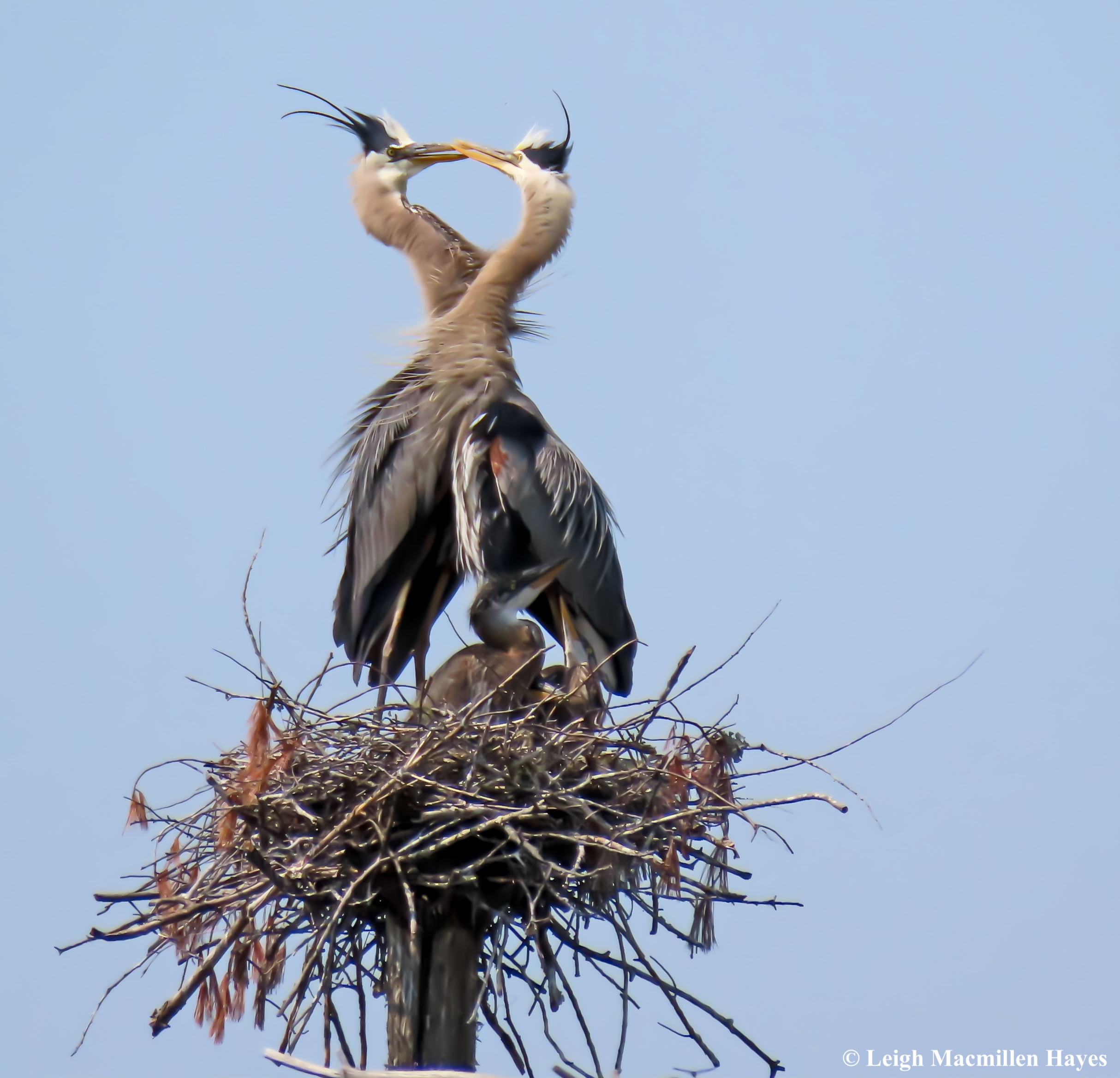
But at the end of the morning, I can’t think of any place I’d rather be than spotting these two sharing a moment and give great thanks for all the moments we get to witness because we take part in monitoring the rookeries and making the Great Blue Herons count.

Thanks also to my companions. I won’t name them because I don’t want anyone to bug them about locations, just like I won’t name the actual locations or their State ID numbers because these are special places that need to be left undisturbed.

Student Teacher in the Field and Yard Classroom

I am so thankful that I was born with a desire to learn and somehow landed in at a most pleasant neighborhood school. Of course, the classrooms vary depending upon the season. These past two days, and actually these past few weeks, I’ve been majoring in field and yard lessons.

Oh, don’t get me wrong–that doesn’t mean field and yard work, though I did help mow the lawn today.

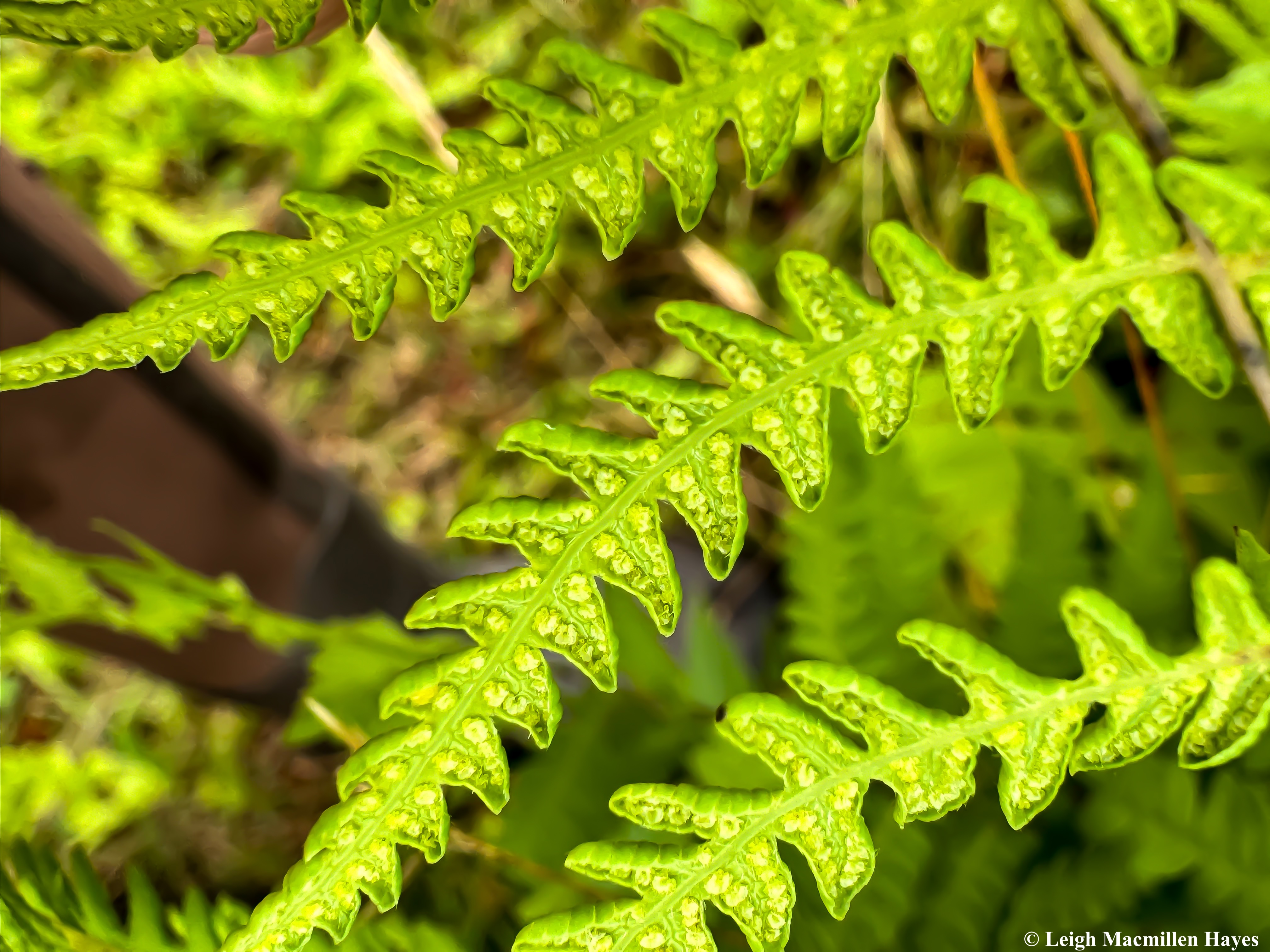
Let’s begin, however, with the class in the field, which is really more of a meadow given how wet it can be and some of the species who call it home attest to that, including this Marsh Fern.

At first glimpse, I thought it was a Lady Fern, but there was something different about the leaflets–they seemed to present as three-dimensional.

When I turned the blade over, I saw why. On fertile leaflets, such as these, the subleaflets curl around the kidney-shaped indusia which cover the sori, or spore cases.

There are lots of other ferns out there including Interrupted and Sensitive, but Marsh is one I don’t often see, so to have it on display in the school hallway is exciting to me.

Meadowsweet, or Spirea, is another plant that doesn’t mind wet feet, also indicating that this class leans toward being a wet meadow.

And today, I met a new-to-me insect species with a funny name.

Tumbling Ragdoll, aka Mordella marginata, is a Tumbling Flower Beetle. I love the name, and am reminded that as a child I loved my Raggedy Andy doll made by an “aunt” who wasn’t actually related to our family; my sister received Raggedy Ann. Years later, my sister also later created Andy and Ann for me, so I have a complete set, plus one from “Aunt” Betsy.

Anyway, from Tom Murray’s Insects of New England & New York, I discover that these beetles are so named because “When threatened their escape method is to jump and tumble about wildly.”

For science lab, I will attempt a mere scare in the future to see if that is true; but today approached with care so as not to disturb them.

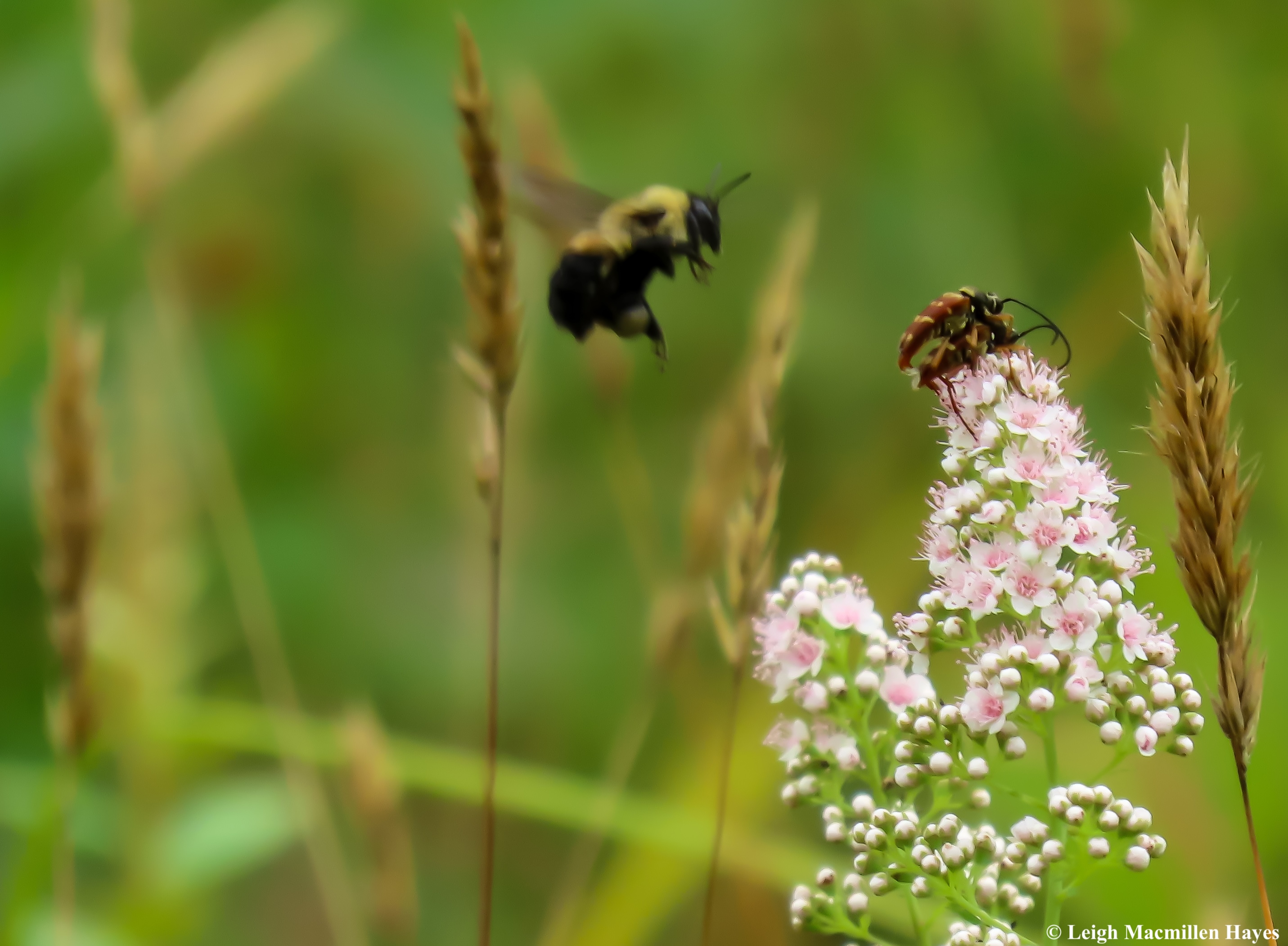
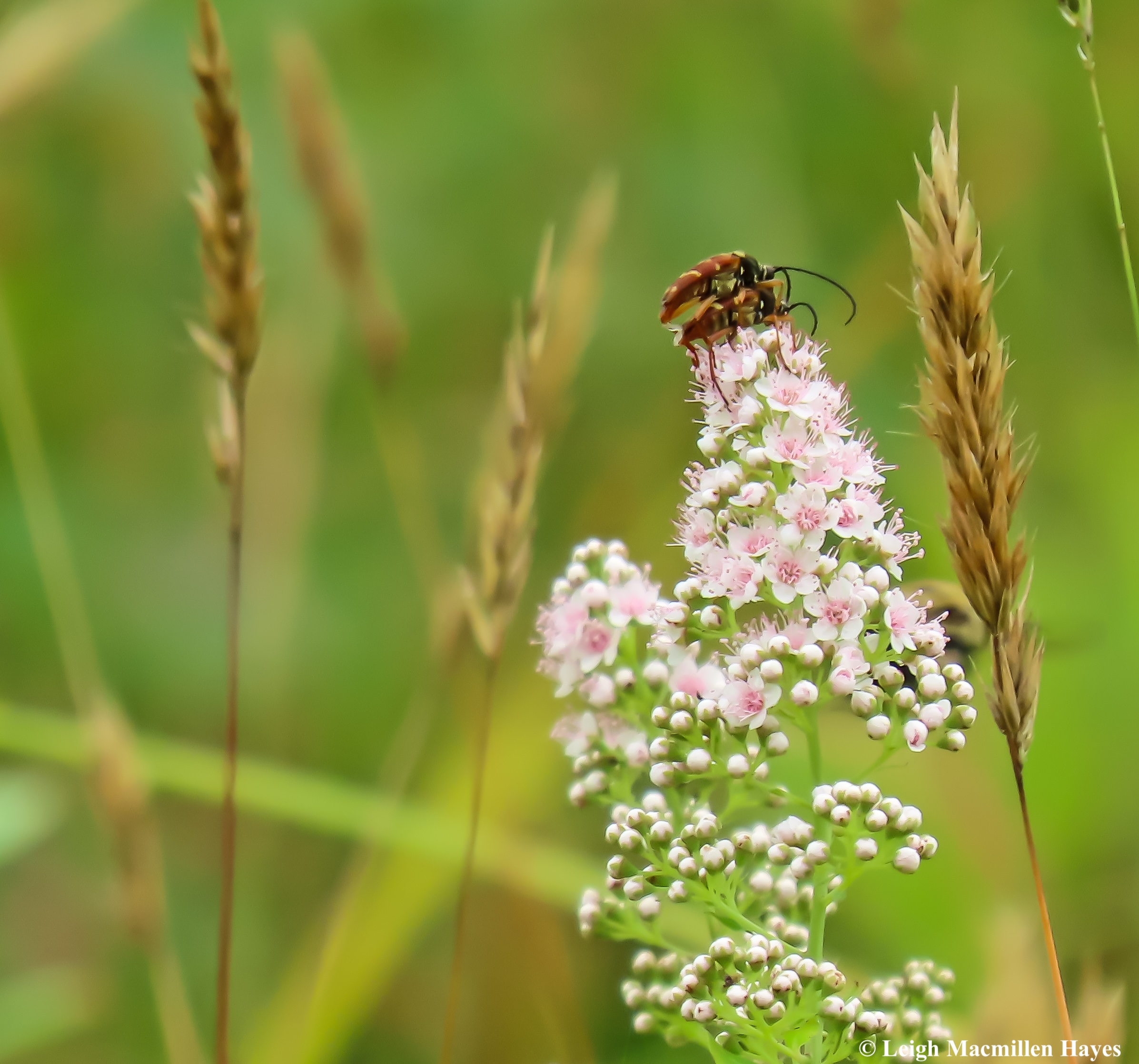
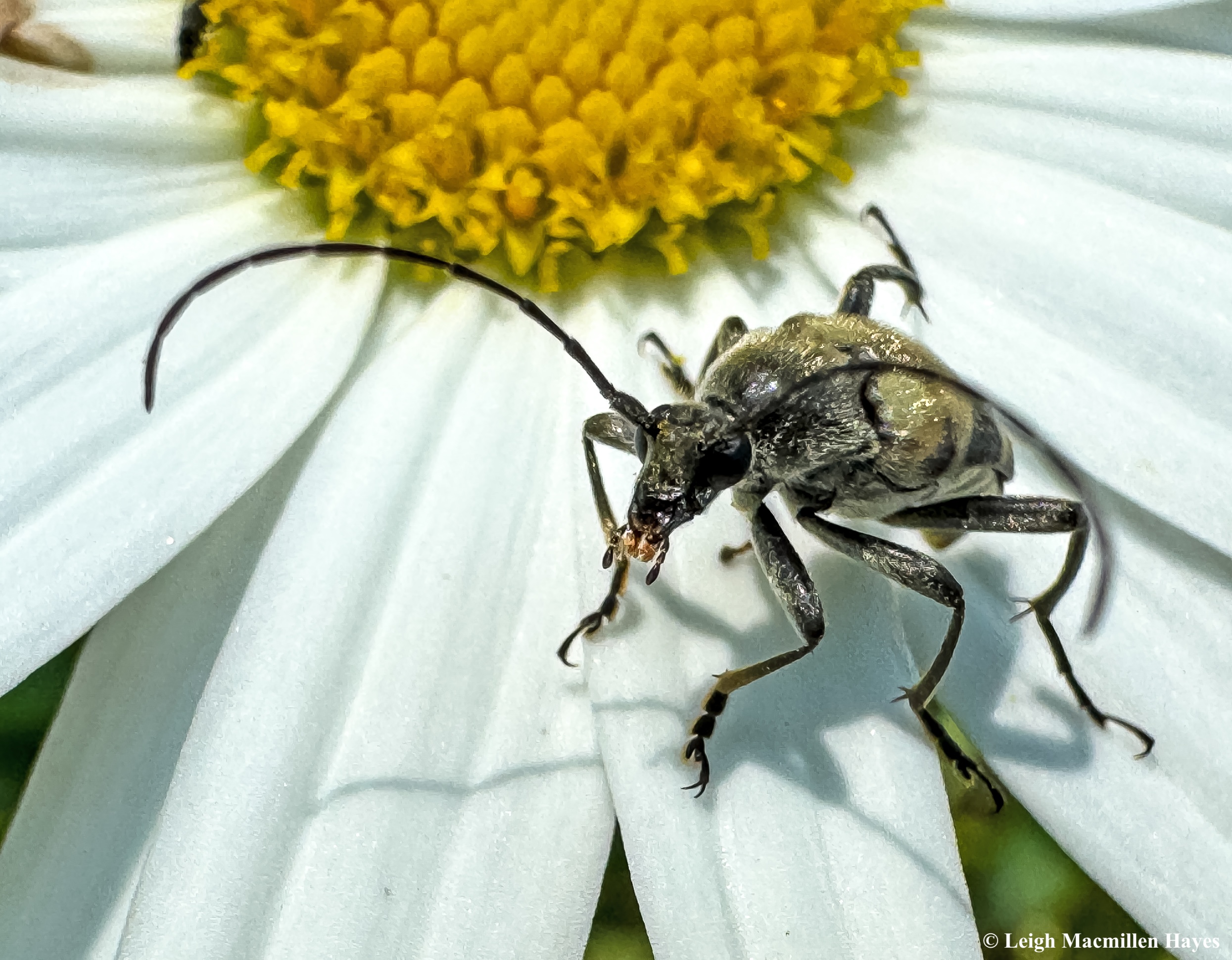
When I got up from my chair to sharpen my pencil, I spotted what my friend Amanda calls a B-52 Bomber Bumblebee. It was large and fast. But that didn’t disturb the Banded Longhorn Beetles at the top of the Meadowsweet.

They were mid-canoodle, and nothing was going to pause their intense interest in each other.

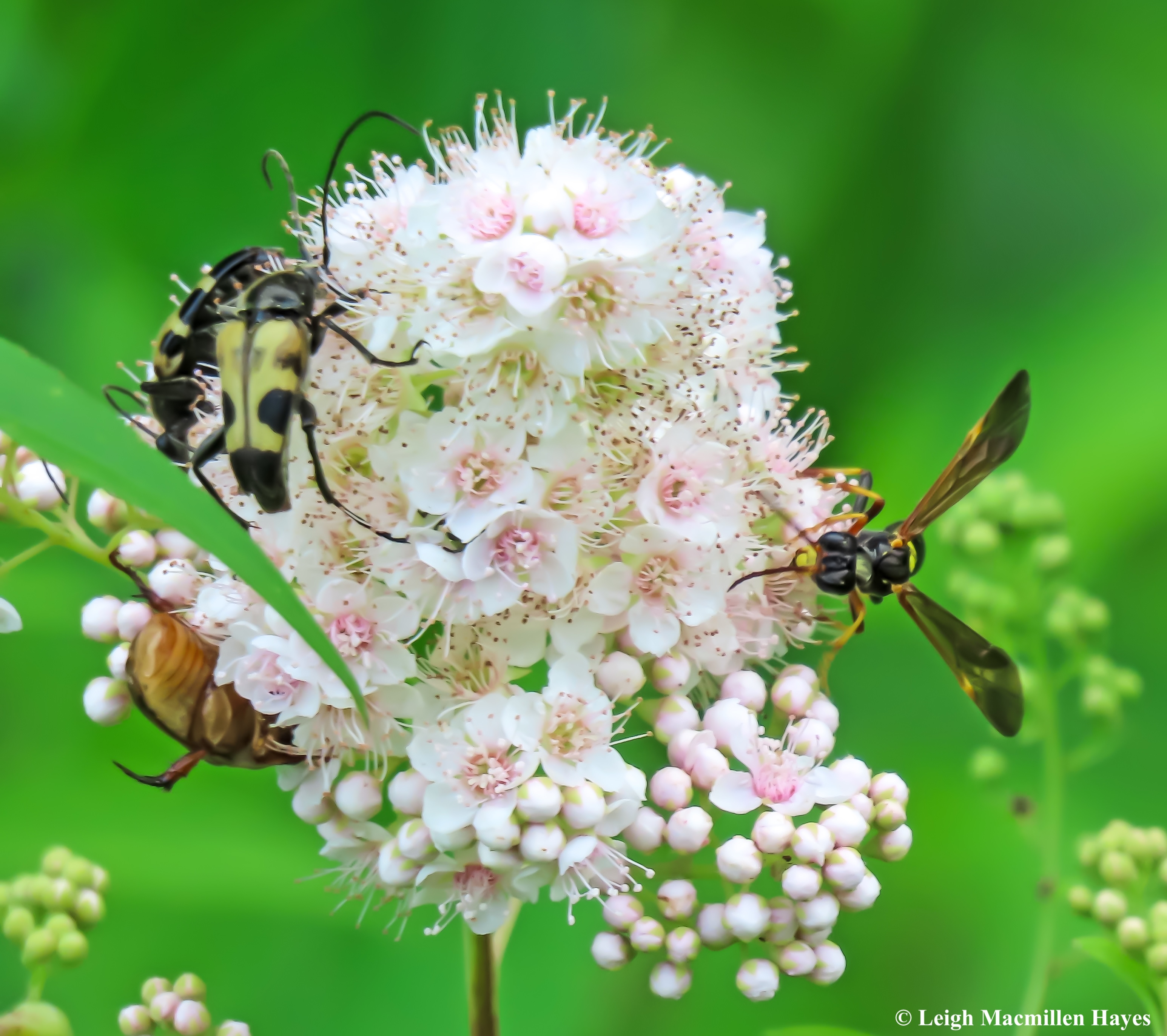
Upon another Meadowsweet, it was as if the whole community had shown up to pollinate the flowers, and miraculously, they all got along. At least while I watched. I love that the teacher had lined up this subtle lesson–about putting aside differences to work for the common good.

She reiterated it more than once.

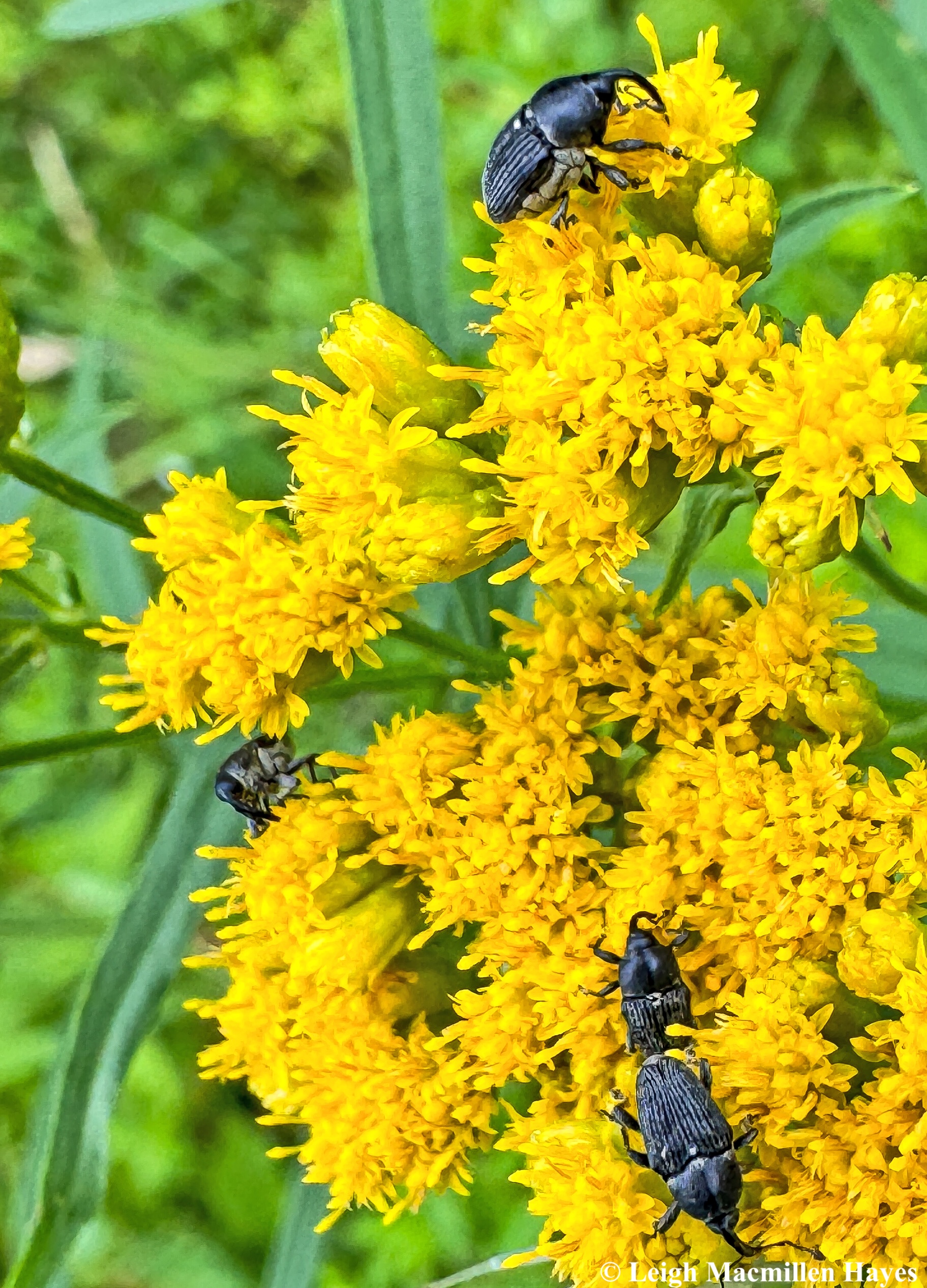
Over by the window, there was another new-to-me species to meet. By their tiny, yet robust bodies, and long snouts that seemed to grow right out of their heads, I knew they were Weevils. If I got the answer correct on the homework, these are Rugged Flower Weevils, aka Odontocorynus salebrosus.

Ragged. Rugged. Interesting choices for today.

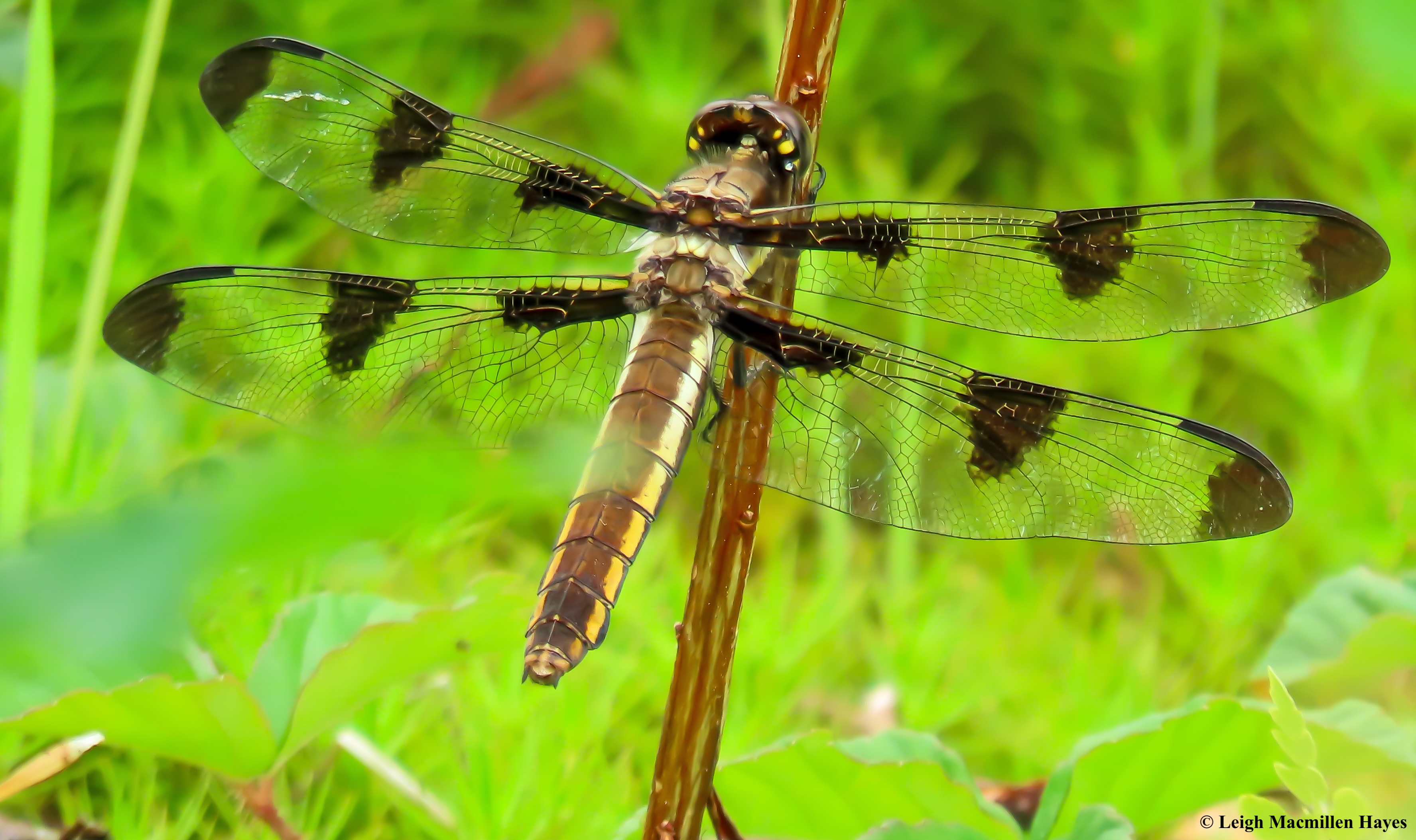
In the midst of it all, some old friends stopped by to visit, including a slew of male and female Calico Pennant Skimmer Dragonflies and this sole female Common Whitetail Skimmer.

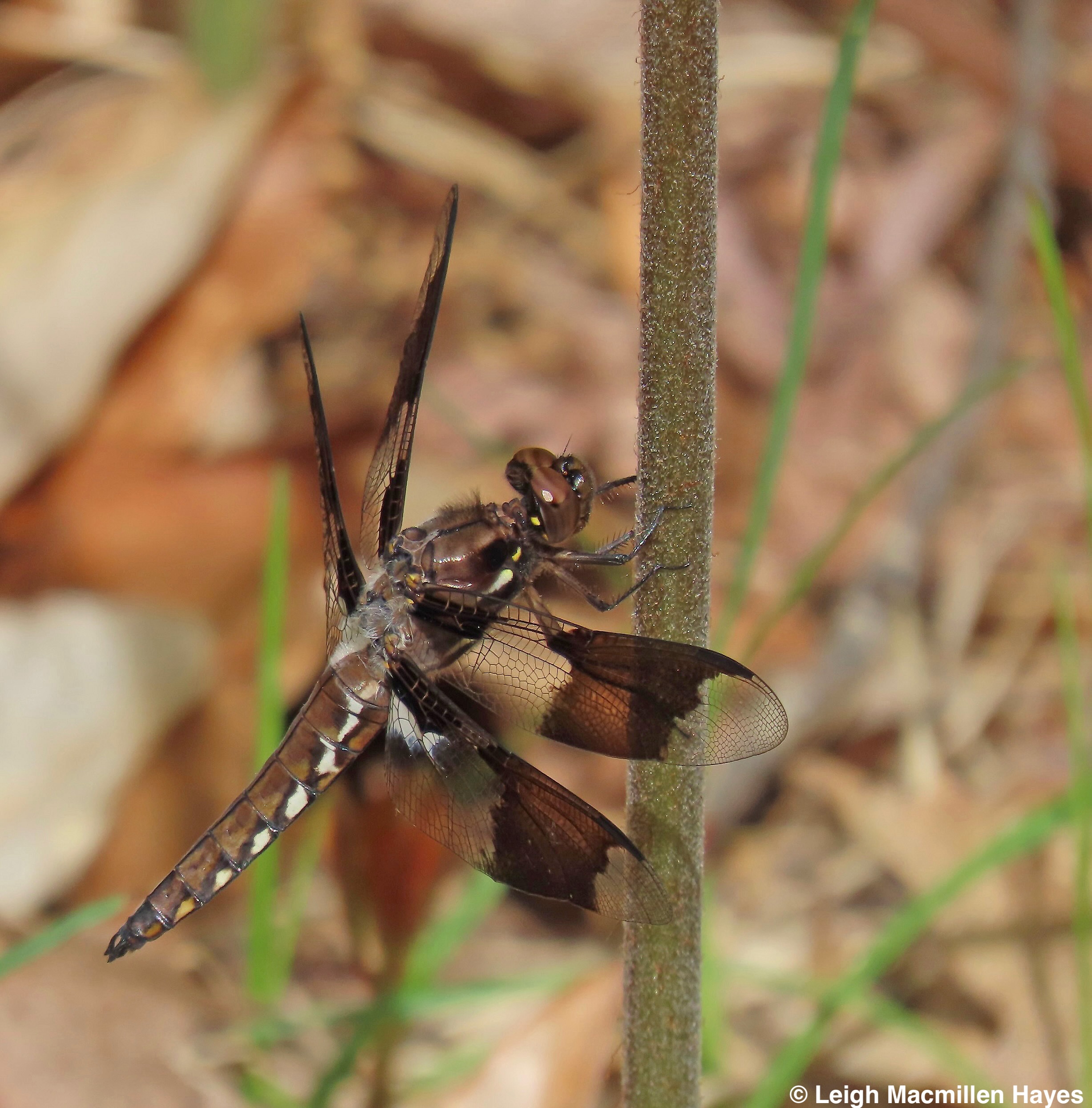
I asked the teacher what is so common about this dragonfly that instead seems quite exotic with black splotches on the wings and a two-toned abdomen. I also inquired about the name Whitetail. She said she’d get back to me. Later, in the classroom next door, I saw a single male Common Whitetail, and its abdomen is much whiter (a light blue actually), so I know why that part of the name, but the female certainly wasn’t taken into account when naming occurred several hundred years ago.

And much to my surprise and delight, a male Spangled Skimmer stalked the halls, another indicator in my mind, that this is more of a meadow than a field.

Look at those white stigmas on the wings. It’s the only Skimmer I know of with such markings, thus making it easy to ID on the spot.

After recess, I crossed back over the wall to the classroom in the yard. Judolia cordifera is one of the Flower Longhorn Beetles, and those long horns were so obvious.

But that face. If I have nightmares tonight, I hope my mom will understand why. And my teacher won’t mind when I take a nap during class tomorrow.

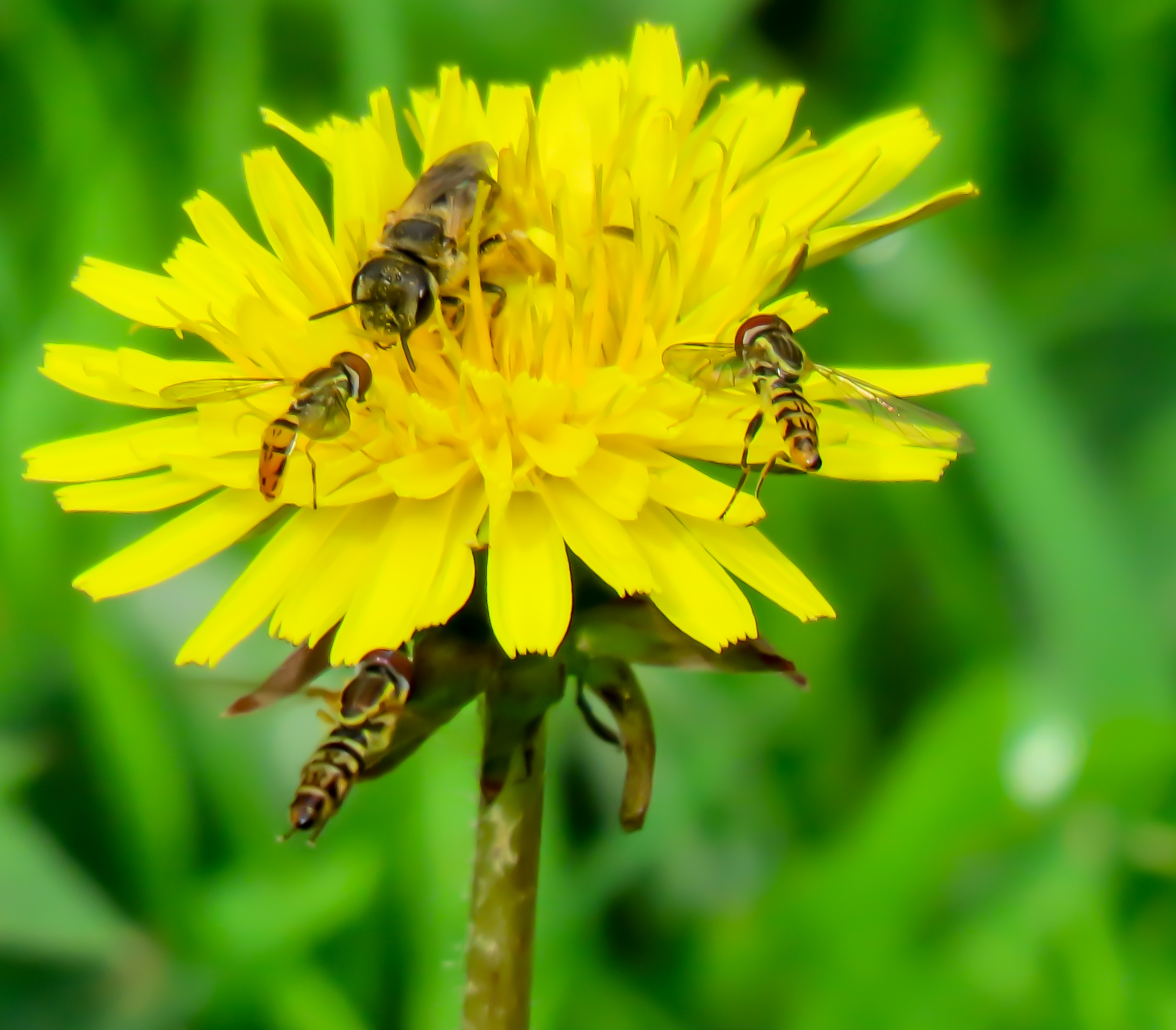
Sweat Bees were also busy pollinating, especially the composite flowers, but its the Crab Spider who presented today’s challenge as the teacher wondered if I saw it. Camouflaged as it was, its duty is to mimic the daisy petals. For the moment the Sweat Bee survived, but the spider often wins in the end.

During lunch, this Gray Catbird landed about ten feet from the table where I sat with my classmates. As a person who dabbles in art, and loved Painting 101 with Miss Jessie, the many shades of gray stood out to me. But I was reminded that a Catbird is more than just a gray bird. First, there’s the small black cap, dark tail, and the rufous-rusty patch under the tail. Sometimes its hard to see the patch, but from my spot at the cafeteria table, I had a spot-on view.

And just before class let out, our school mascot flew in. Or rather, the child of our school mascot. Being so young, it was only an arm’s length away from me, but being the mascot, it seemed not to mind my presence.

Then again, maybe it did for the immature Red-breasted Nuthatch looke around, perhaps for back-up. I know it has several siblings, but the others weren’t feeling so brave as to stand so close to me.

At the end of the day, before the last bell rang, I realized that I was the student teacher–always learning something new and finding joy in sharing those learnings.

Today’s lessons were brought to you from the Field and Yard Classrooms. Stay tuned for more lessons.

My Little World

Between our six acre plot of land and our neighbors’ field, which is probably about three or four acres, I feel like we live in a special place. Oh, I know I’m not alone and so many others have their own special places. What I’m most grateful for, however, is the ability to enjoy it by wandering and wondering on an almost daily basis and getting to know it intimately. That said, there are always surprises and perhaps that’s what makes it extra special in my eyes.

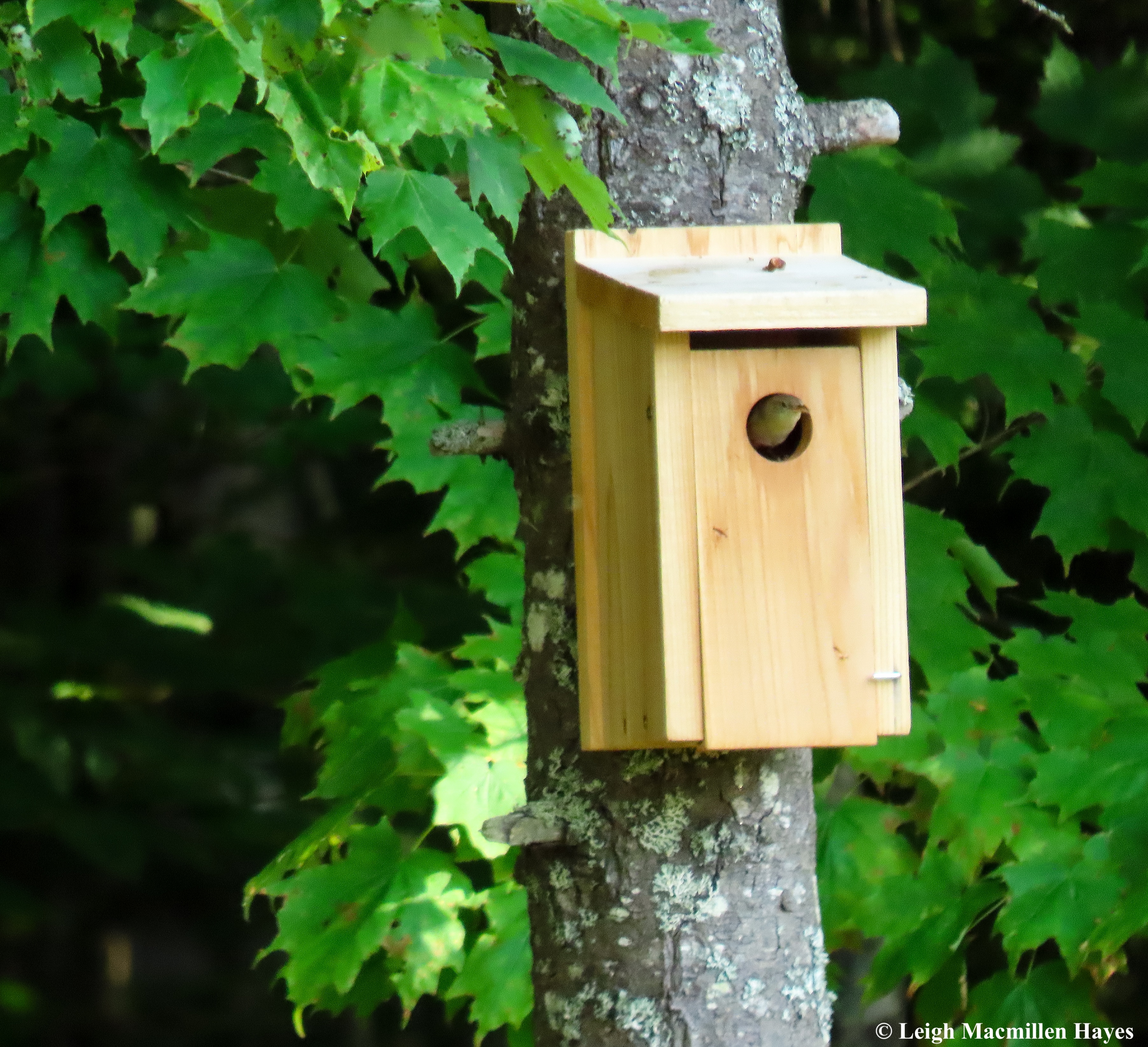
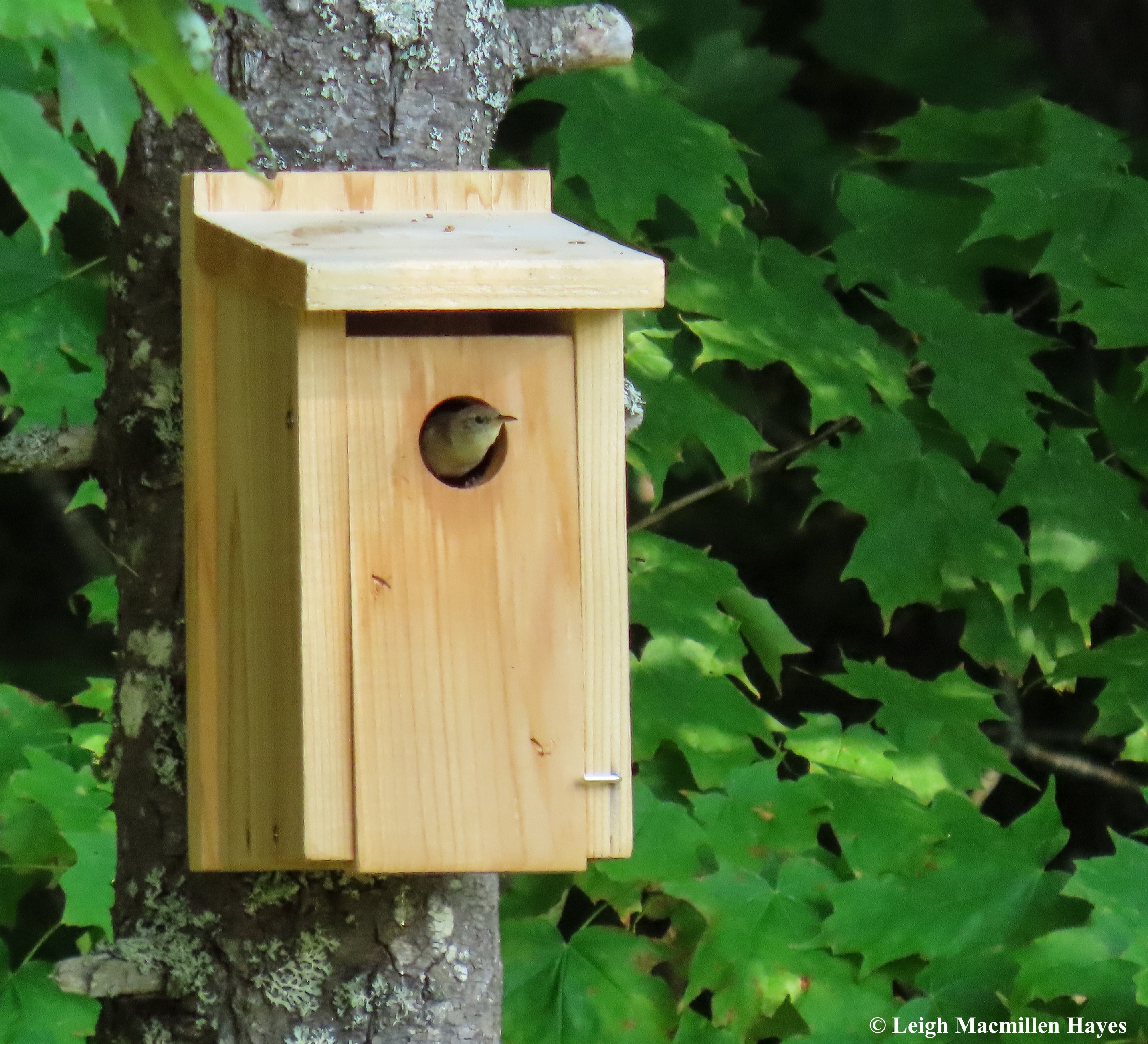
One day recently, after spotting no activity for about two months at the Bluebird Box My Guy had nailed to a tree along one of the stonewalls, I noticed activity. In the form of a House Wren.

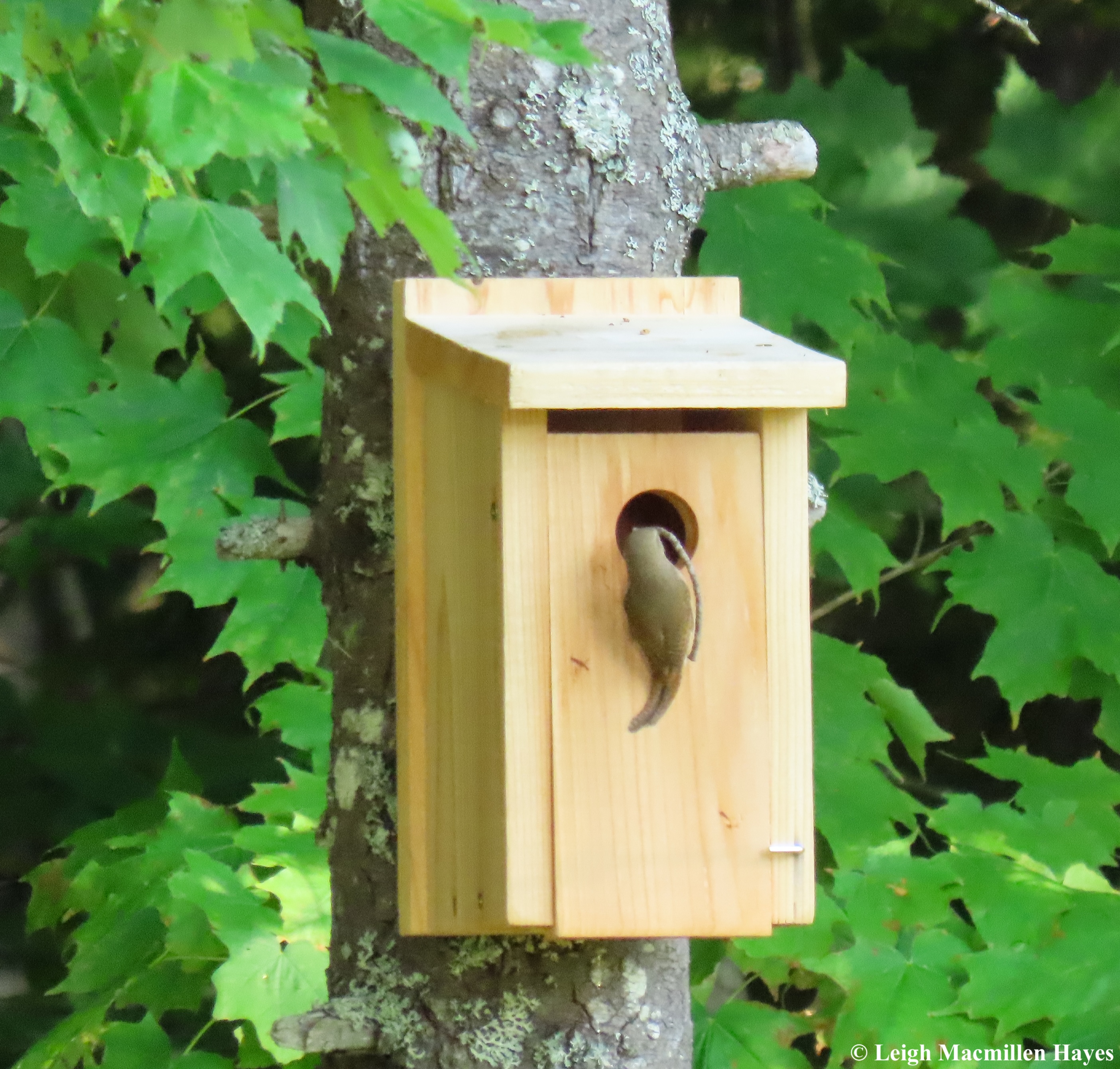
For hours, sticks were picked up and brought to the box, the better to build a platform for the nest cup to rest upon. Sometimes they were too big. At least to my untrained mind.

But a little finagling this way and that; I admired such perseverance. And knowledge.

Tada, in that stick did go to join the others. With many more to come.

For two days, the Wren worked in the same manner. And then. Nothing. Being a Male Wren, it was just being a Male Wren . . . filling a possible site here and probably in other boxes near the field, as well as in tree cavities and she chose a different piece of real estate to set up housekeeping.

To say I’m disappointed is an understatement, but it’s the Wren Way. And I’m only a guest here.

I love being a guest here because I see all sorts of Natives make themselves known, including this youngster who followed in the footsteps of its parents, crossing the yard at an angle. Fortunately, the backdoor often serves as a screen so I can photograph many of the species with whom we share this land and not disturb them.

That same “screen” helped me capture a shot of an immature Red-bellied Woodpecker, who has the slightest hint of his parents’ crimson red upon his head. He stops by at least once a day, but is always in motion. And never stays long.

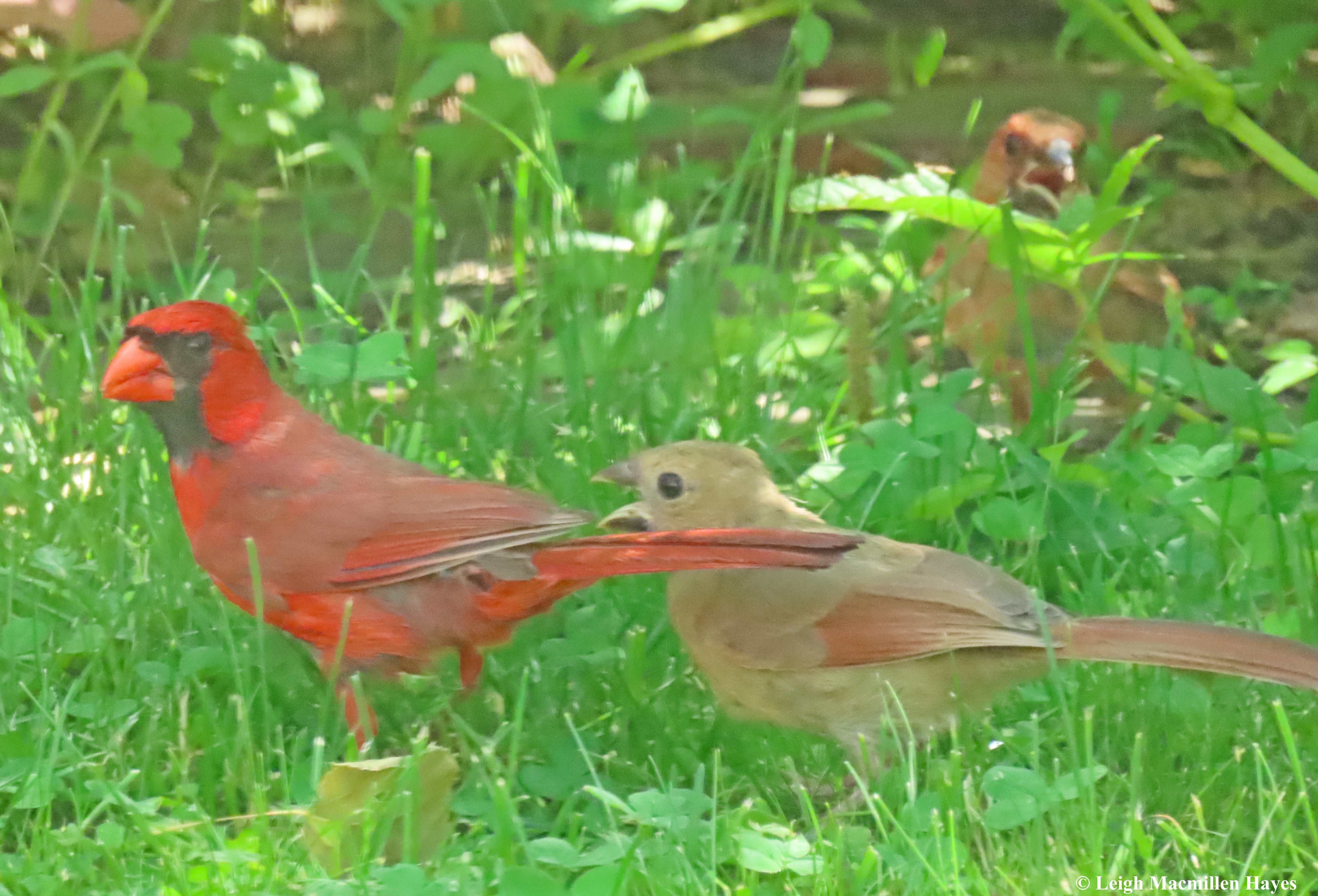
The Cardinals also bring their young to visit on a regular occasion, and sometimes the young’uns even come on their own. Watching them reminds me that many wild parents are amazing caregivers. Beavers and White-tailed Deer and Moose and Coyotes are among those who stay together as a family unit for a year or more. But not all are the same, like the frogs and salamanders who lay eggs and then leave the vernal pool.

What I have to wonder is how does this all work–why do some stay with their young and others abandon them?

Speaking of young’uns a wee bit more, as I headed up to the field, I met a recently fledged Robin, its breast all speckled. Though the Robins are constant backyard visitors, it wasn’t till I wandered about the yard that I found their nest.

And now I regret that I didn’t realize its position earlier, for I would have enjoyed keeping an eye on it.

As I said, the field belongs to our neighbors and I’m eternally grateful that they mow a path meant for them and their dogs, but I’m allowed to trespass by climbing over one of our stonewalls . . . and I do. Daily. Sometimes several times a day.

It’s a place that serves as one of my classrooms and I’m always amazed at who I meet there, including this Frosted Whiteface Skimmer Dragonfly. The yellow and black thorax and base of the abdomen, indicate this is a female. And though you can’t see her white face, she has yellow spots on the thorax segments 4 to 7, with 7 being very small.

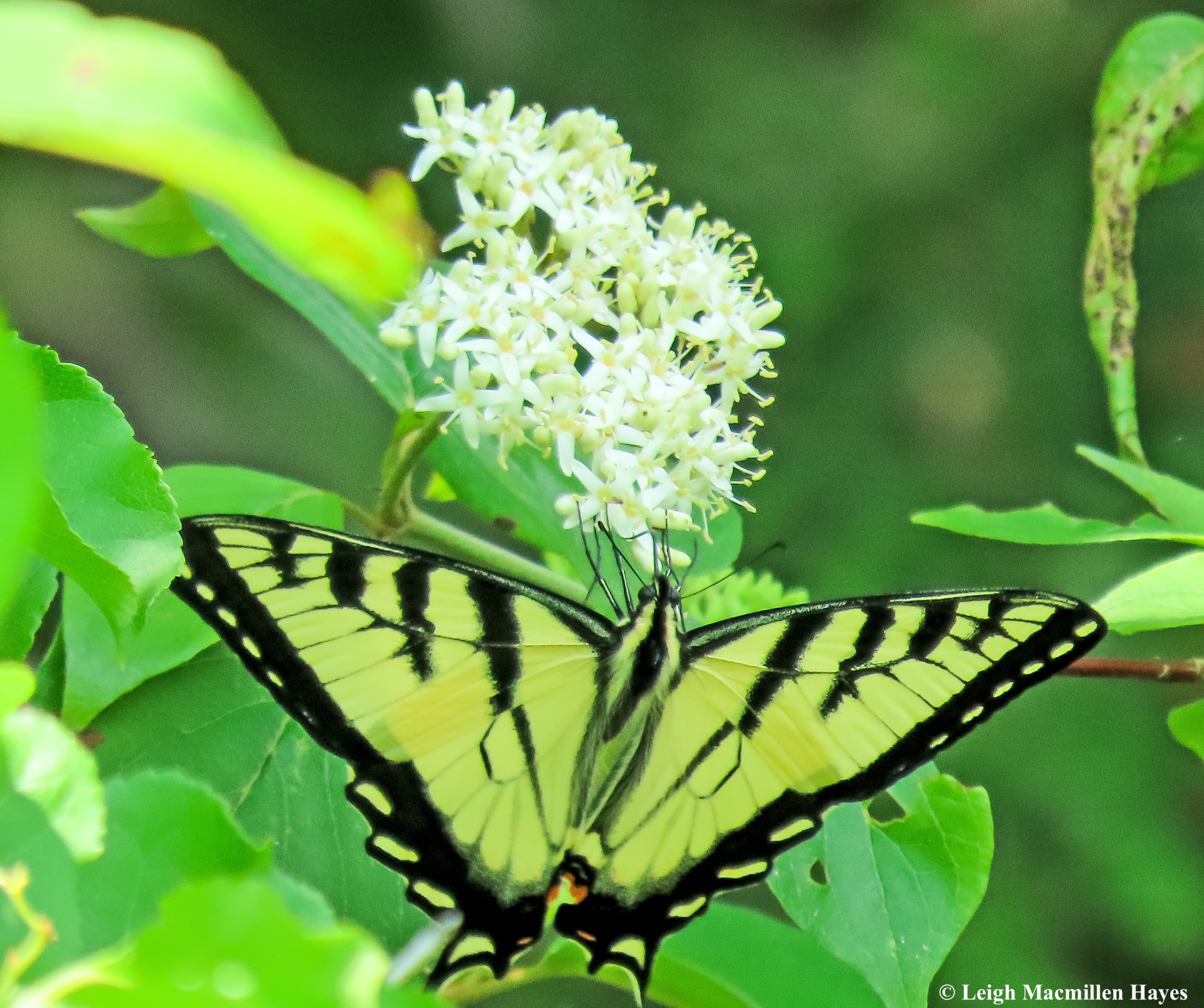
The most abundant butterfly of the season so far is the Tiger Swallowtail, and this one took advantage of the flowering Dogwoods at the top of the field.

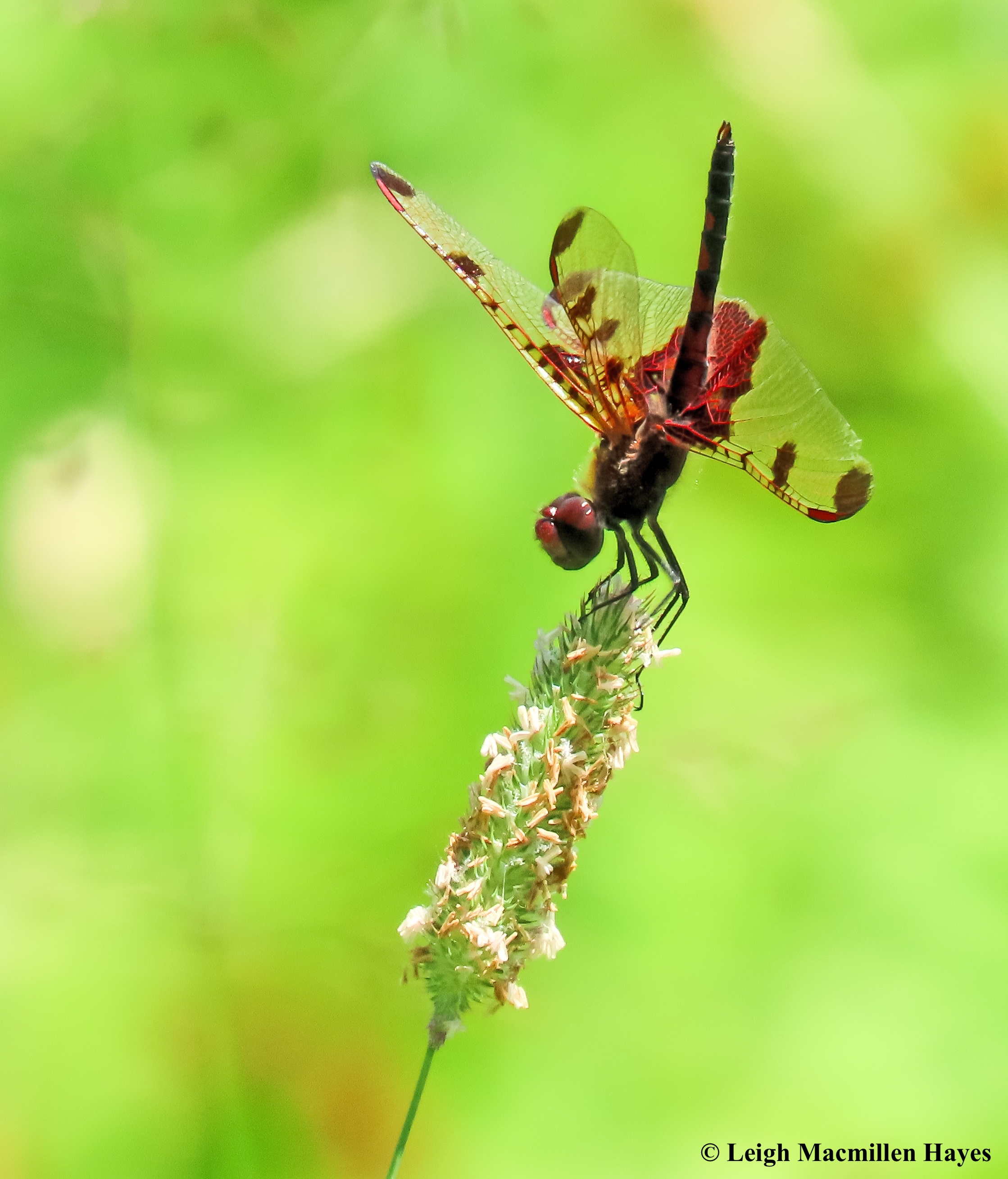
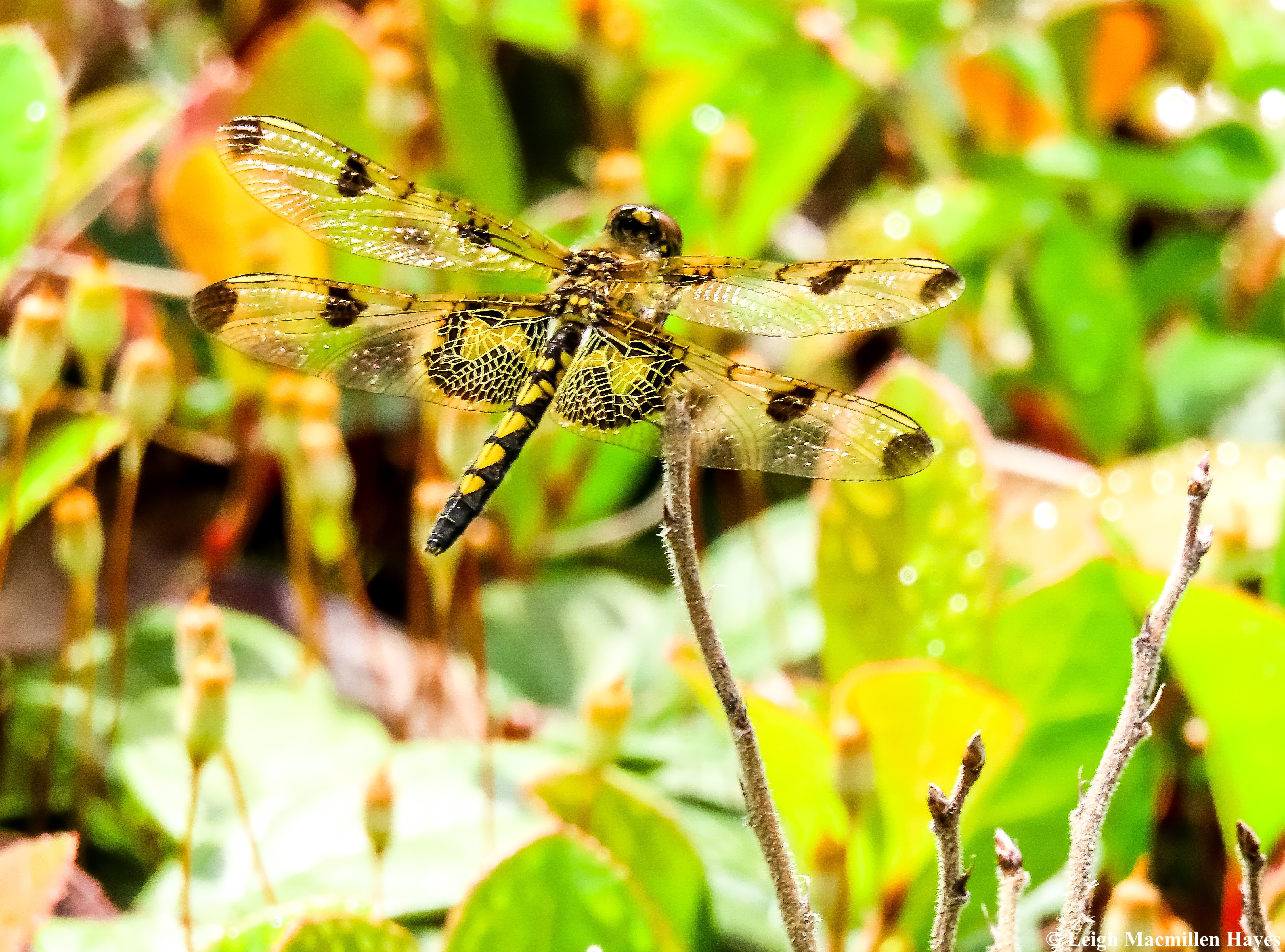
Everywhere, there were Calico Pennants, one of my favorites (one out of a million), this being the female with her yellow markings.

While My Guy practices Yoga several times a week, the dragonflies do so even more frequently, especially if its super hot, like today’s temp of 91˚ that felt like 96˚, or so the weather app told me.

The Calico’s handstand is actually an obelisk posture, with the abdomen pointing toward the sun in a manner meant to minimize the surface area exposed to solar radiation. Again, I am in awe.

Calico’s male, bedecked in red, chose the same stance.

Back over the wall and into our yard, Oriental Beetles are making their presence known. What captures my attention is the texture of wings and thorax, and the hairy and spiky legs, and the funky antennae that look like handmade forks.

Apparently some mistake them for this, the Japanese Beetle, but though there are similarities in the wings and antennae, in my brain that’s it. These are not insects high on anyone’s list of favorites, but look at that iridescent green thorax and the hairy, dotted design on its abdomen.

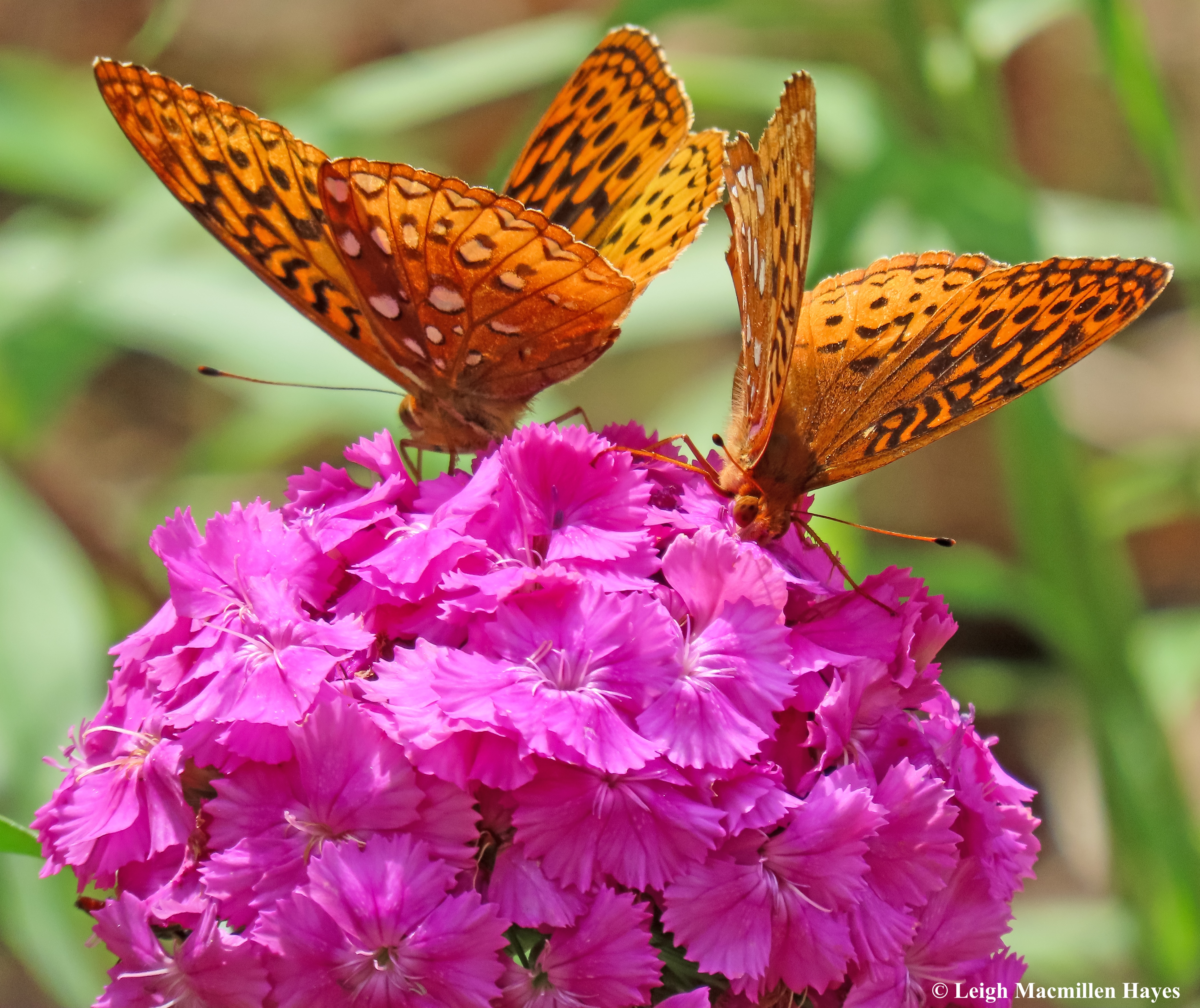
I also spent time circling my newest pollinator garden and among the frequent visitors are the Fritillary Butterflies.

I do, however, worry about some other visitors who keep dining on the flowers rather than pollinating them.

In the wee hours of the morning and all night long, Deer stop by to nibble. There are at least two does and two fawns, and so far the garden has enough to offer them, and the pollinators, and me. But I do worry.

Especially since via the Game Camera I discovered that a neighbor I thought had moved on is still around, and the end of the garden may be in the mouth of the Woodchuck. I hope not, but we’ll see what happens.

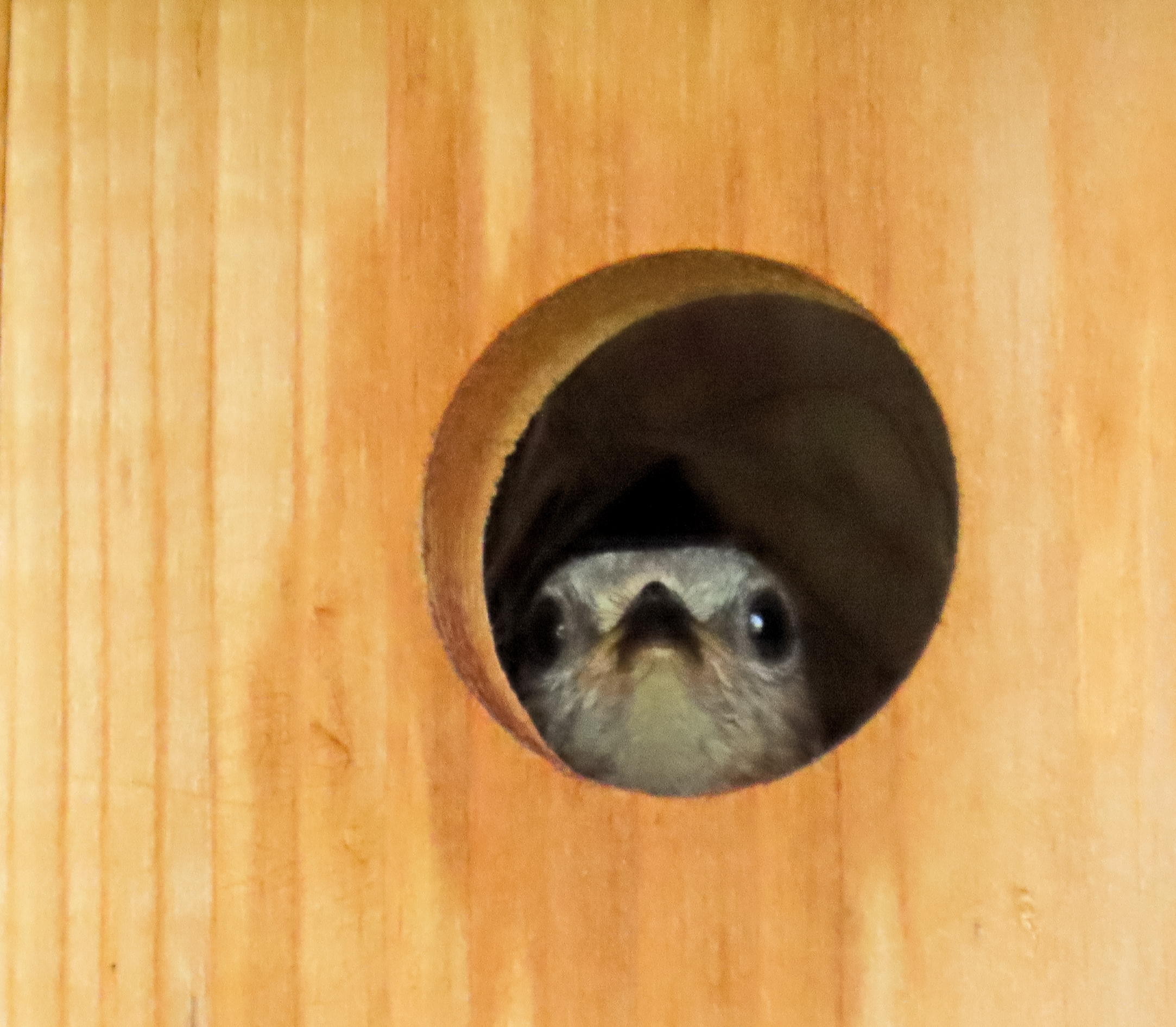
That said, there’s another new neighbor in the ‘hood. Remember the male Wren who worked so hard to fill the birdhouse with sticks? And then I didn’t see him at this spot again. A few days later I spotted a male Bluebird checking it out. And tada . . . a female is sitting on eggs, I do believe.

My little world. It may be small, but really, it’s huge. This is only a smattering of what happens here daily and nightly and I feel so honored to be granted the opportunity to keep an eye on it all. It so enhances my life to spend time wandering and wondering upon these acres.

I hope you have a little world to explore and get to know intimately.

Summer Fauna among the Flora

As spring bid adieu and summer waved hello, I found myself wandering and wondering with others and alone and stopping in my tracks repeatedly, which is kinda what I do all the time I guess you could say, but suddenly this week there were a few special events that called for attention.

The first was Momma Snapping Turtle that I spotted beside a trail as I co-led a walk with Dawn Wood for Loon Echo Land Trust. Thanks to the magic of a camera lens, it may appear that we were close, but believe me, we all realized the sensitivity of the situation as this mother was digging in the dirt and laying eggs right before our eyes and we were transfixed–from a distance. There were fourteen of us and we tried to stand quietly and watch and ask questions and after about ten minutes decided it was time to come up with Plan B and reroute ourselves so that we wouldn’t stress her out.

In another place a day later, it was a Painted Turtle upon which I focused and gave thanks that it didn’t consider plopping back into the water as they often do when we so much as breathe. From the spot where I stood, I think this was also a female, given the shorter nails, but I couldn’t say for sure because tail length and plastron (bottom shell) orientation are also key to ID. The male has a longer tail and a more concave or indented plastron, while the female’s is more convex or flatter.

That said, when I spotted this one, I knew its gender immediately, for like the Momma Snapper, this Momma Painted was also in the process of laying eggs. She pulled her head into her shell the moment I spied her.

In the few moments we spent together, however, she ever so gradually extended her head.

But I felt like she was keeping a wary eye on me. And very much wanted me to move along.

And so I did.

And then it was the insects that begged for attention, this being a female Calico Pennant Skimmer Dragonfly. Her coloration is yellow, while his is red. One of the things I love about perching dragonflies such as the Skimmer family, is that within their territory, they return to the same perches over and over again–flying off to capture food or defend said location, but usually back to the same twig or flower or one close by, making it easy to spend some time with them.

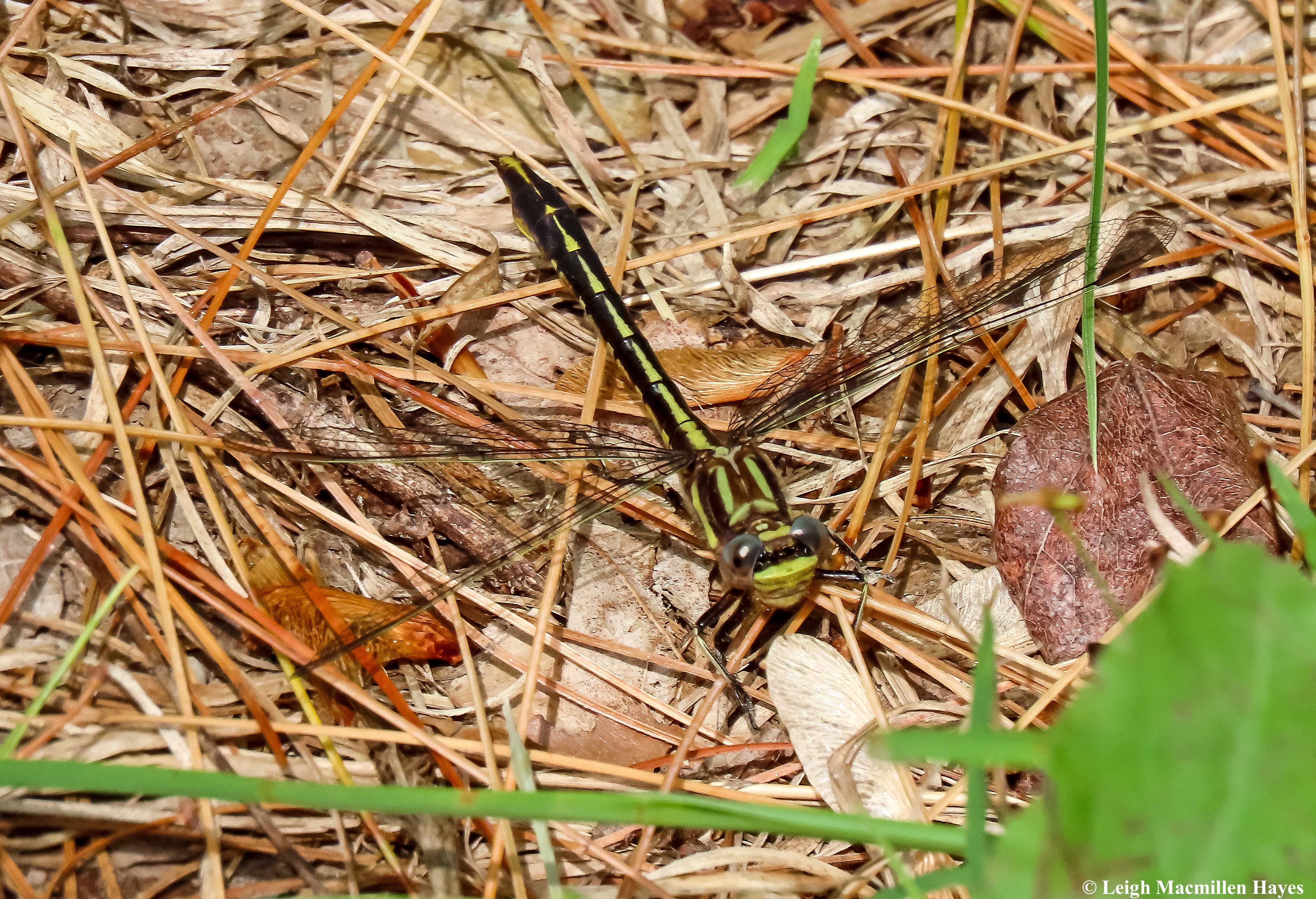
The Clubtail family is the same, this being a Lancet. These dragonflies often land on our dock or our kayaks and spend some time with us.

I swear they are as curious about us as we are about them. But maybe again, they are checking out our predator abilities. I much prefer letting them be the predators as they munch on Mosquitoes and Deer Flies and make time in the woods or on the water so much more comfortable.

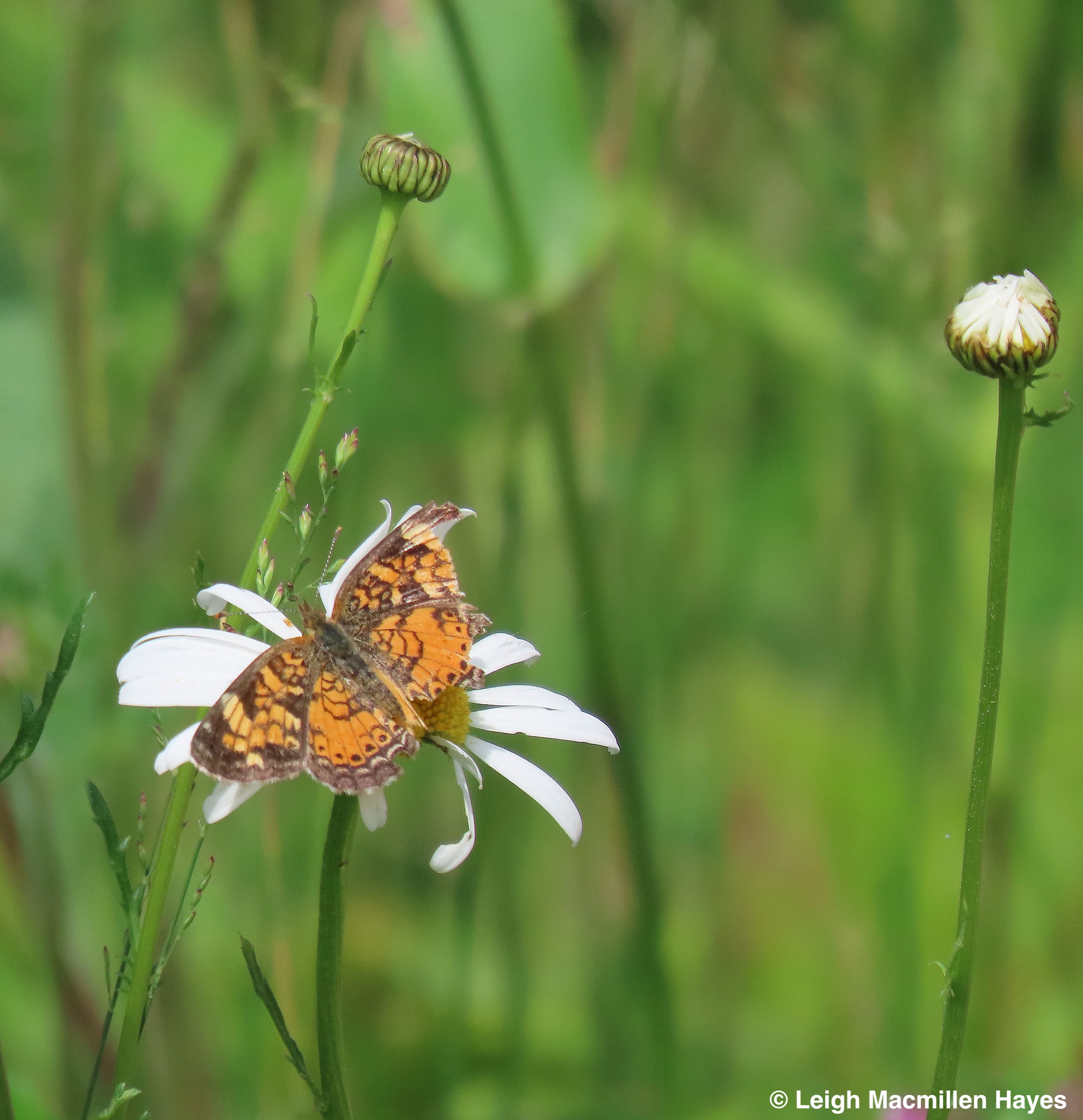
And then there are those who seek nectar and Meadow Hawkweeds are a valuable resource right now for Flower Flies and Bees and Wasps and Butterflies like this little Northern Crescent. Last summer I spent a lot of time with this species in my neighbor’s field and was thrilled to realize that as long as there was food available during the fall in the source of Goldenrods and Asters, they were present.

One of the most abundant butterflies this year has to be the Tiger Swallowtail. Canadian and Eastern, and probably hybrids in the mix, they are everywhere. Everywhere. Adding grace in their flutter-bys and color to the landscape. As well as serving as pollinators.

Dropping drastically back down in size, my attention was also drawn to the Long Dash Skipper Butterfly. According to the comprehensive field guide, Butterflies of Maine and the Canadian Maritime Provinces, by PhillipG. deMaynadier et al, “The Long Dash is named for the conspicuous stigma on the male forewing. Found on forewings of most other small, orange and brown skippers in our region, a stigma is a specialized patch of scales that emits pheromones used during courtship. In the Long Dash, the stigma is surrounded by black scales, making it appear larger than it really is.” Thus, this would be a male Long Dash Skipper upon one of its favorite flowers, Red Clover. But from the book, I’ve learned I should also look for it upon Cow Vetch, Common Milkweed, Spreading Dogbane, hawkweeds, Ox-eye Daisy, and knapweeds.

Keeping pace with me despite its much shorter legs, the Six-spotted Tiger Beetles, which I love for the iridescent green, practically ran ahead, reminding of Chalk-fronted Corporal Dragonflies who insist upon flying five feet in front, waiting till I almost catch up, and then flying another five feet ahead, over and over and over again. The only time I’ve seen the Six-spotted Tigers slow down is when they are canoodling. But even then, they are on the move.

Another insect, which is much slower, may have significant value in our landscape. If I’m correct with the ID, and I’m waiting for iNaturalist to confirm, this is Atanycolus cappaerti, a parasitic wasp. I can only hope that my ID is correct, because . . . according to Cornell University’s College of Agriculture and Life Sciences, A.cappaerti “attack [Emerald Ash Borer larvae] at rates high enough to be considered significant for biological control. While studies are still ongoing, the use of the native parasitoid A. cappaerti for augmentative biological control would be desirable from an environmental perspective as it is already established and has a niche in the ecosystem.” That’s in Michigan. But maybe in Maine as well? Please let it be so. This past winter we all noticed that EAB had spread significantly in our area.

Basking just down the trail from the wasp was a Northern Water Snake who didn’t seem to mind my presence, and I tried not to mind its either.

He was aware of me, and I say he because in the Northern Water Snake world, the male is smaller than the female, and this one wasn’t really all that big, but still . . . a wee bit intimidating. Of course, it did nothing to make me feel that way, so the intimidation was all in my mind. Instead, he let me take a few photos and pass by without a confrontation, as is always the case. I remember once stepping out of a canoe and practically landing on one, who stayed put. And another time, realizing that one was basking in Maleberry shrubs at the edge of a pond as a few of us paddled by within mere inches–or so it seemed.

As spring gave way to summer this past week, I think one of the things that stood out most to me was sighting the turtles laying eggs. Though they don’t hatch at exactly the same time, it will take about two to three months for the eggs to incubate. Of course, temperature has much to do with that. But my experience in the past is that about the autumnal equinox we may see baby turtles crawling out of small holes, if not sooner. And if predators don’t get to them first. There’s always that risk.

I do love winter, but summer fauna among all the flora–so much life happening right before our eyes–its like an explosion of color and form and pattern and texture and sound. And it’s only the beginning. I can’t wait to see what the rest of the season has in store for us.

Where The Moccasins Led Us

Rituals. We follow them. Some more than others.

For My Guy and me, there is one in particular that captures our attention beginning in mid-May.

And so I follow him . . . across Beaver dams,

beside the Atlantic Ocean,

up mountain trails,

even on the hottest day so far with Canada wildfire smoke casting a haze.

This year it was more trails than usual that were included in our ritual and along the way we spotted Wild Columbine in bloom, growing as it does among the rocks, and always pleasing our senses with its brilliant colors and artistic nodding presentation.

Fringed Polygala, and how I love the way those two words roll of my tongue, also showed off, making its common name of Gaywings so apparent. Doesn’t it look like a Bird of Paradise coming in for a landing upon its very own leaves?

Upon one of our journeys we found a few Red Trilliums still in bloom, though it seemed late in the season for them. But as My Guy teases, I did what I do and added this photo to the other trillion I have of this plant. They all need to be honored, don’t they?

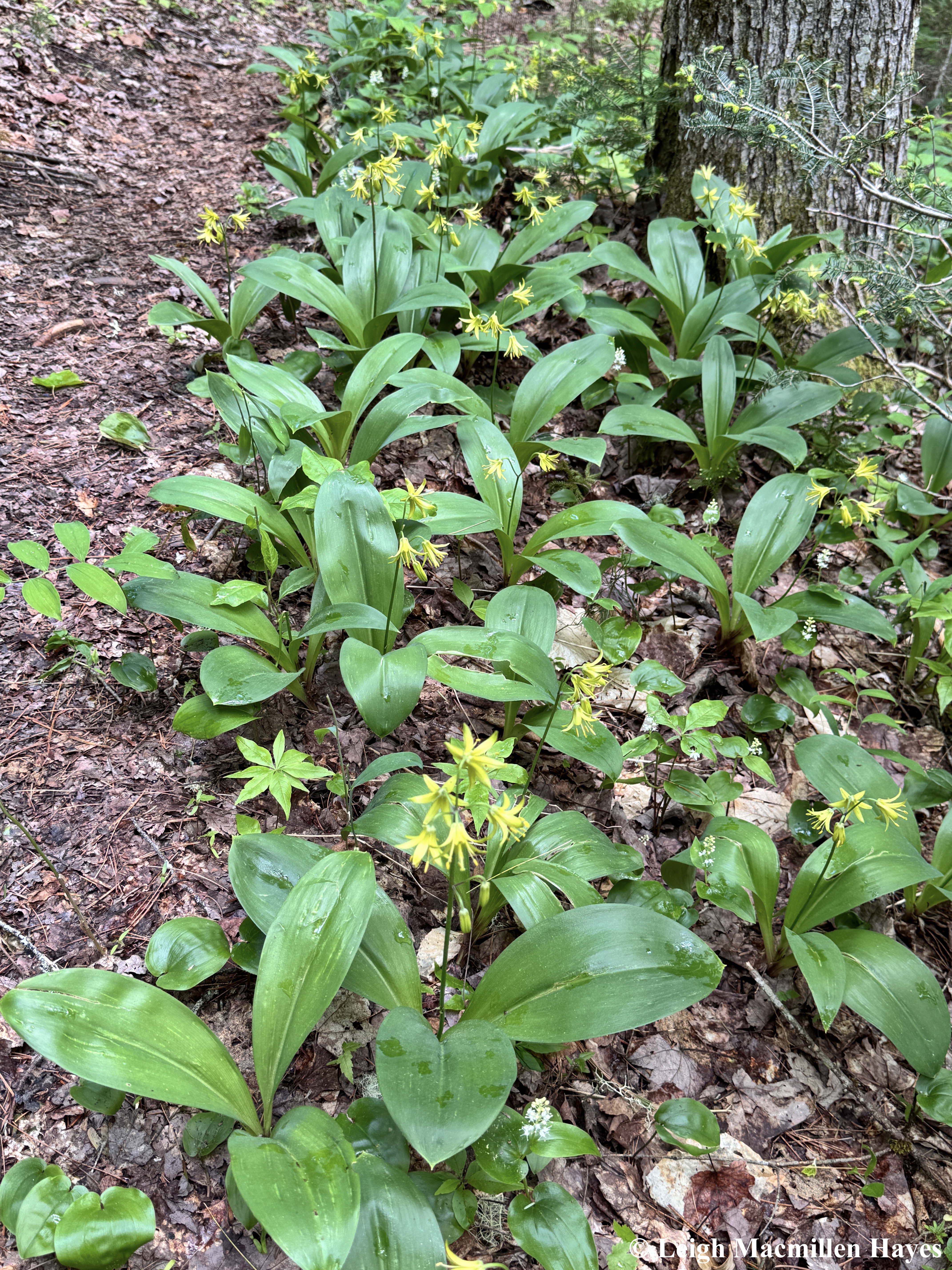
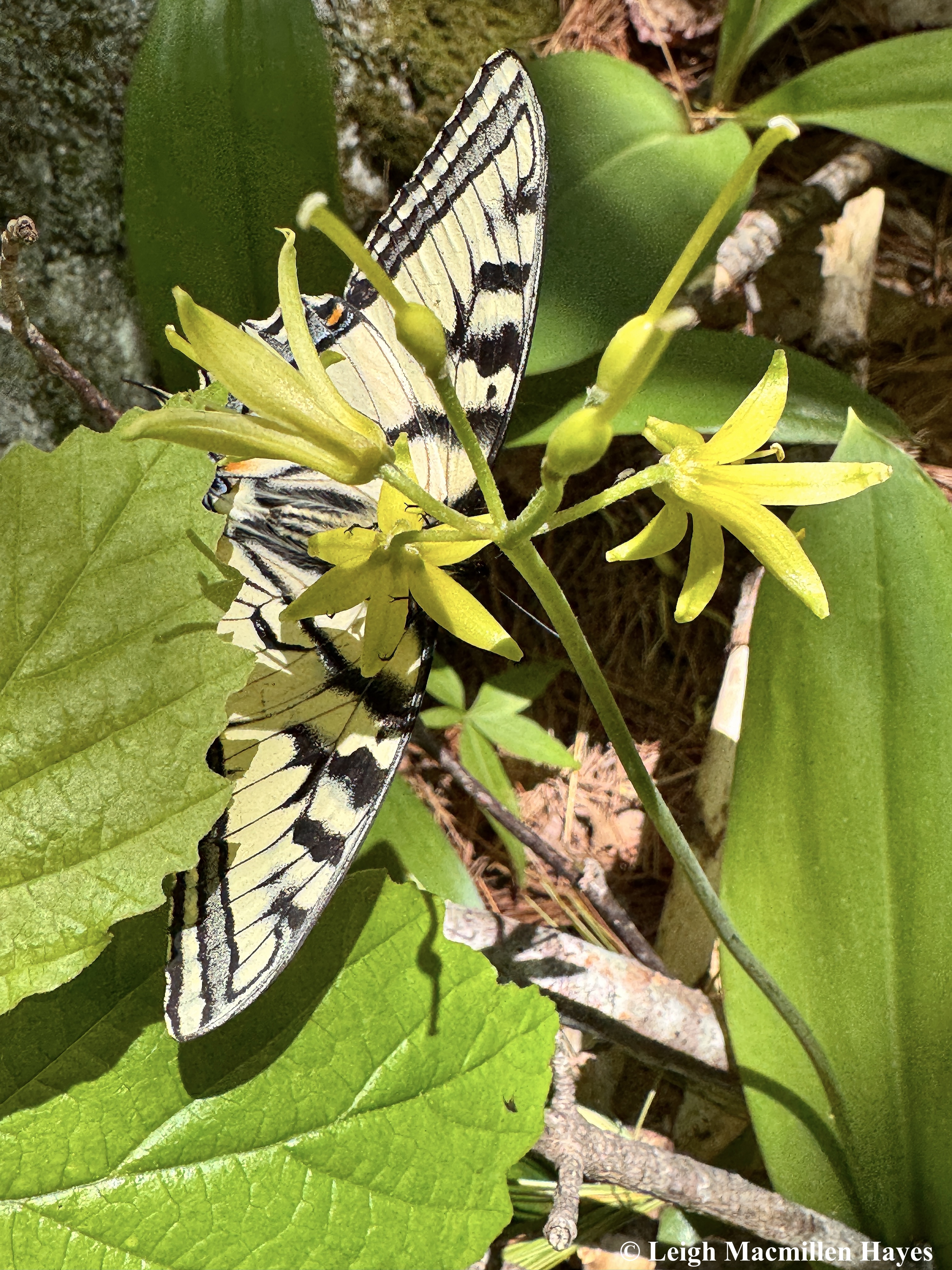
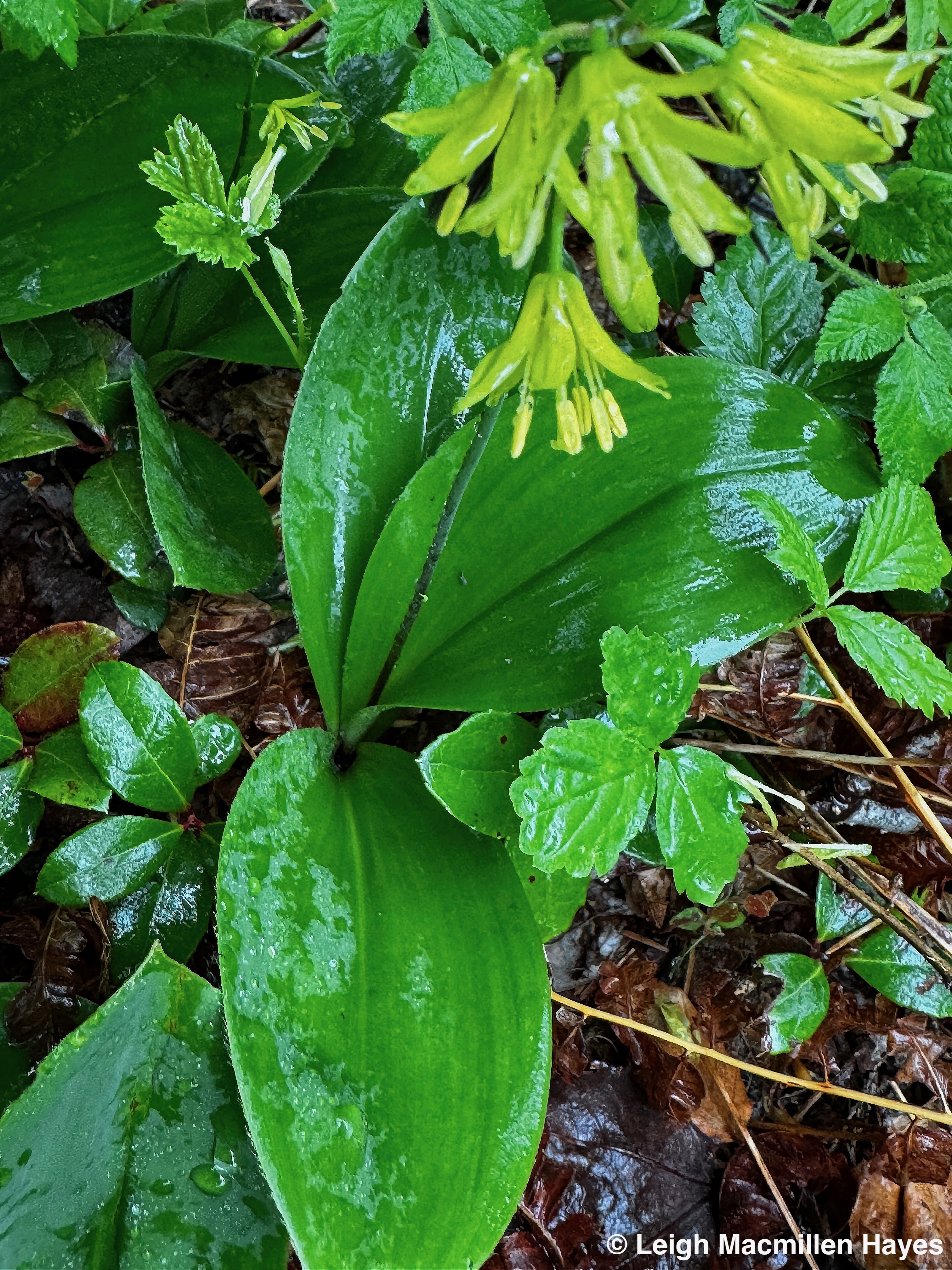
Seemingly everywhere, Clintonia, aka Blue-Bead Lily bloomed, adding specks of sunshine to the path and lighting our way, even on the grayest or rainiest of days. Yes, we even hike on rainy days.

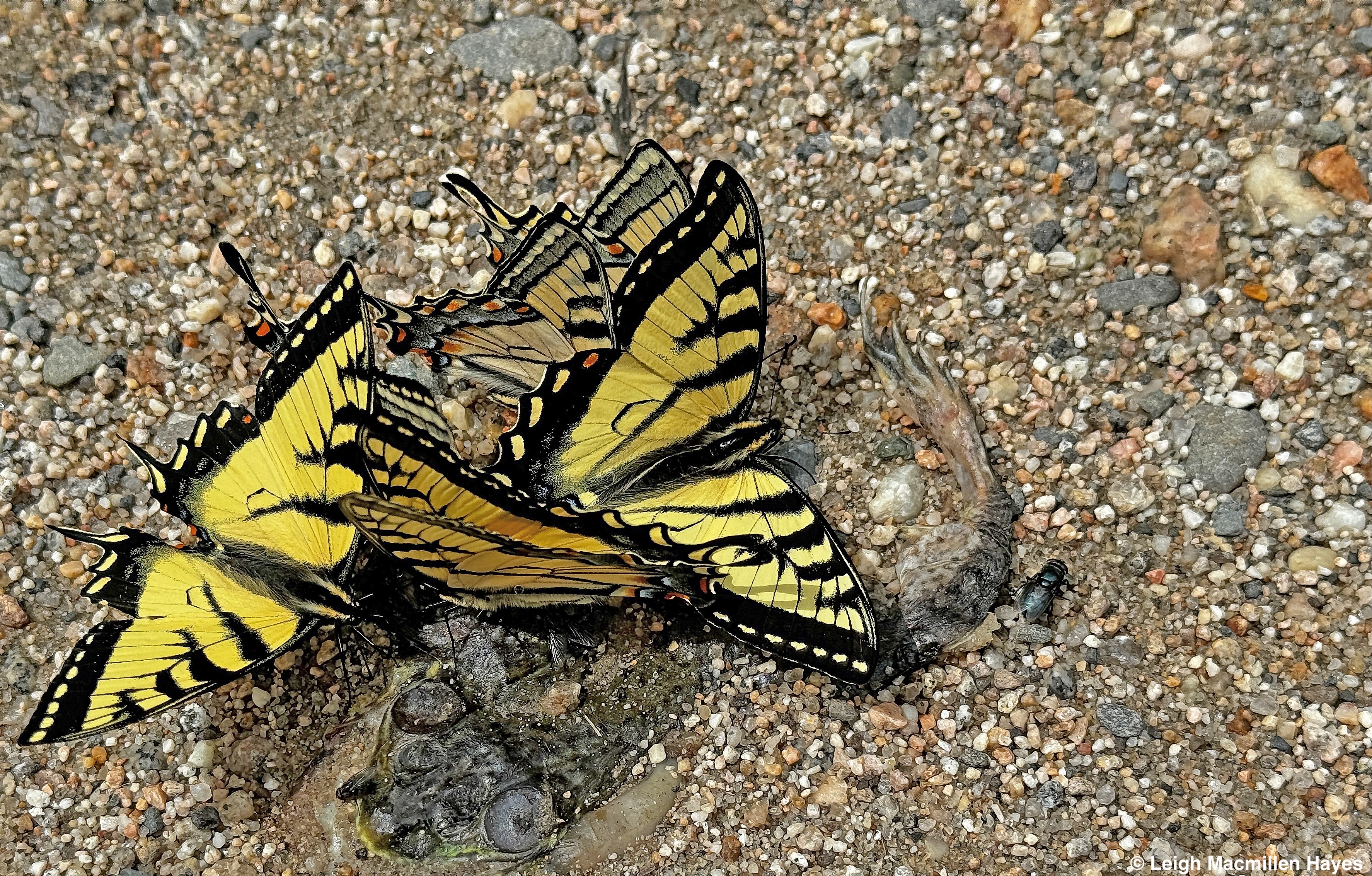
On sunnier days, the Tiger Swallowtails added their own yellow to the equation. Can you see the tiny pretarsi or insect feet of the butterfly as it held on why sucking the flower’s nectar?

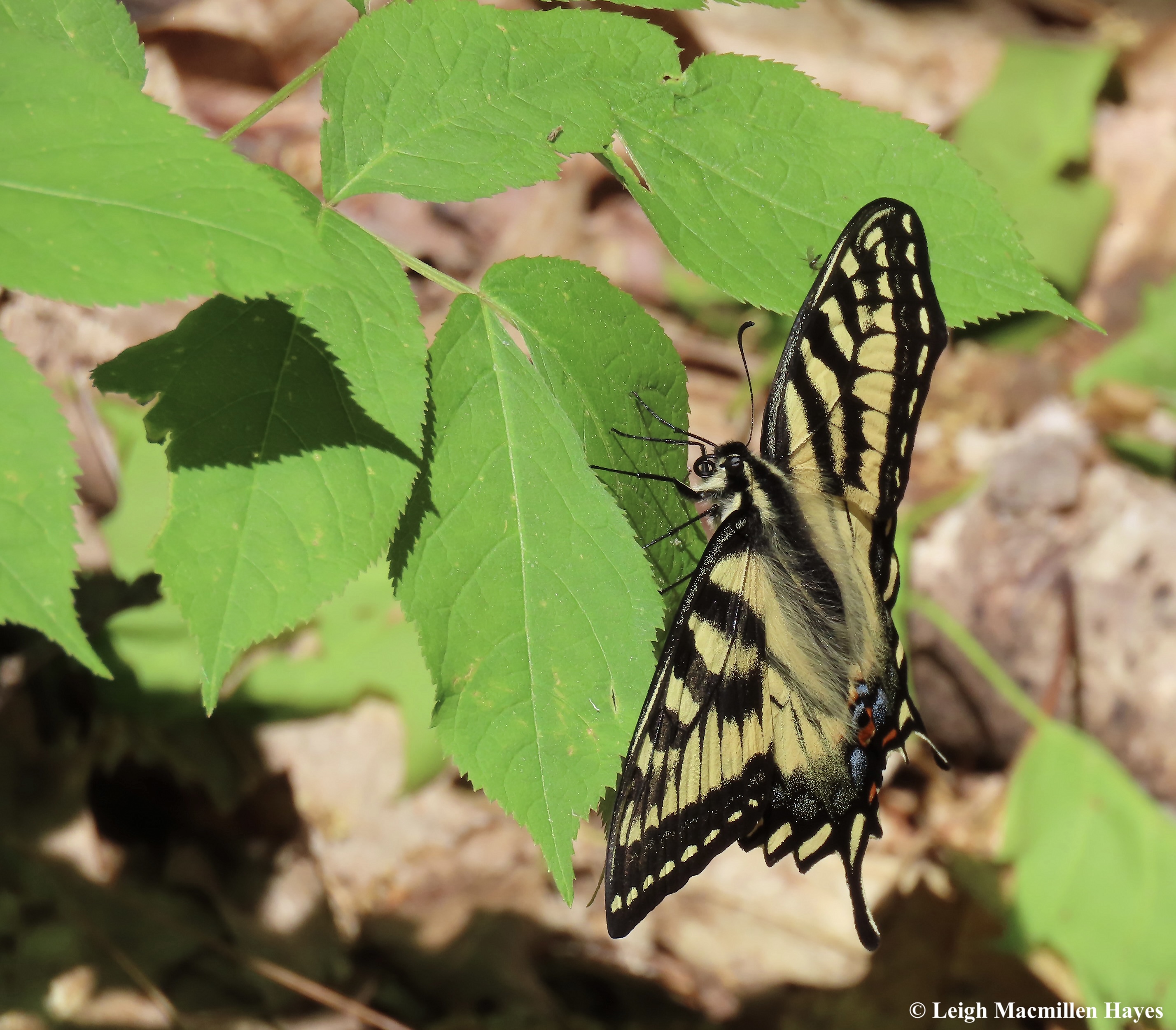
This spring it seems the Tiger Swallowtails are everywhere we travel by foot or truck. What I love about this one is that it was taking a break upon the leaves and you might be able to see its proboscis or siphoning mouthpart coiled up because there was no nectar to seek in that moment.

Right now the Swallowtail butterflies are the largest we’ve seen flying, but during a hike the other day, we spotted one of the smaller ones, this being a Northern Azure feasting upon Black Chokeberry flowers at a summit.

Jack, or rather Jill-in-the-Pulpit, for she needed the extra leaves to help her in her mission of producing seeds, greeted us in various places where the soil was moist including beside the cow path in our woods, where it totally surprised me despite the fact that we’ve lived in this house and wandered about for over thirty years.

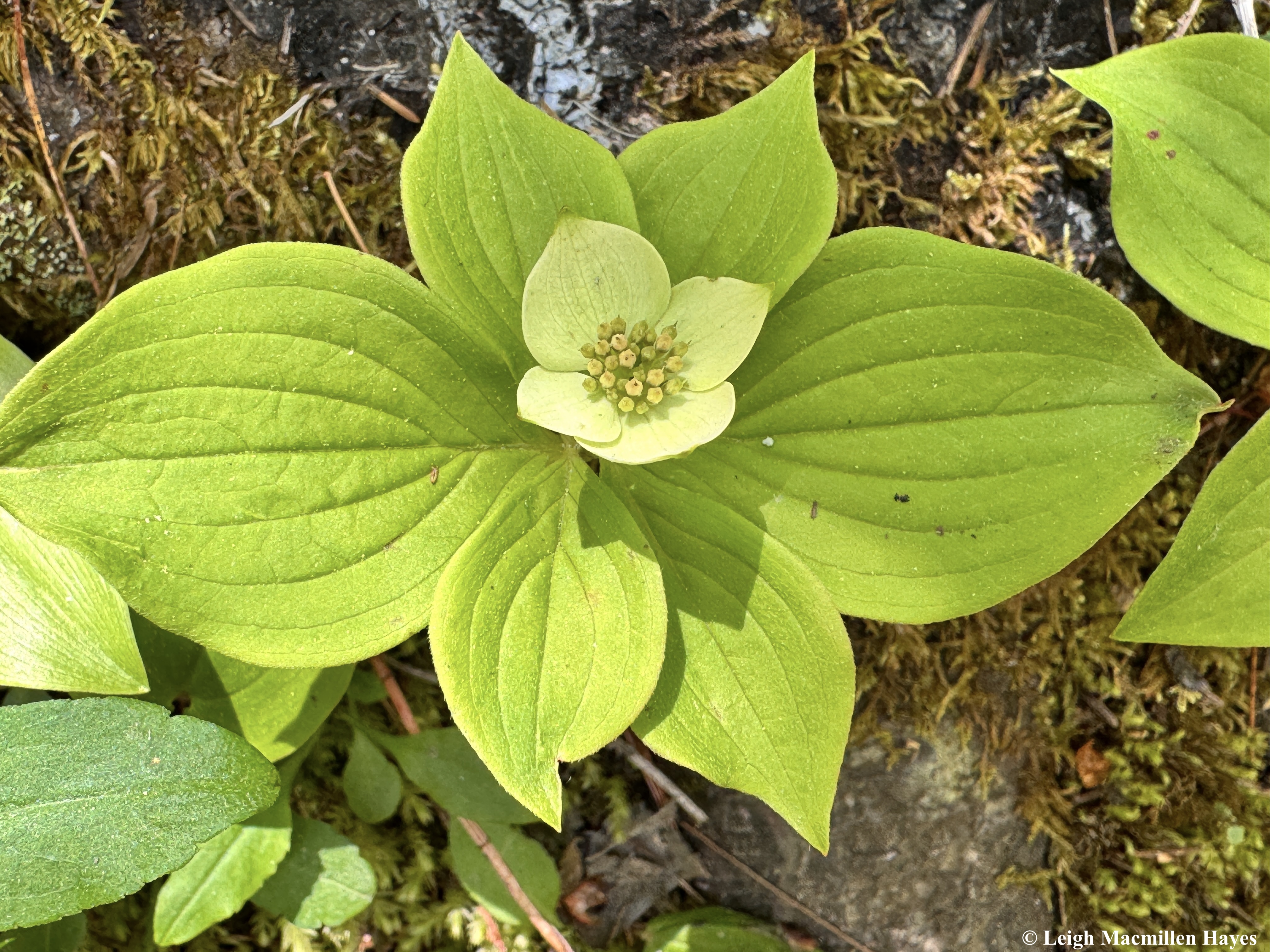
As one week turned to the next, and the flowers that were in full bloom kept changing, suddenly Bunchberry was added to the list. Again, like Jill-in-the-Pulpit, Bunchberry needs two extra leaves in order to have more energy to produce flowers followed by the berried fruits that bunch together in a cluster of bright red. You may look at the veins on those leaves and immediately know the family to which this wee plant belongs–if you guessed Dogwood, you are correct.

One of the earliest bloomers of spring, has already formed into a fruit, in this case three sided. Meet the Wild Oat of Sessile-leaf Bellwort. It reminds me that in a snap of the fingers, the season passes by much too quickly.

It wasn’t just flowers that marked our journeys. About the same time that we began the latest ritual, dragonflies and damselflies slowly began to emerge, for which we always give great thanks as they gobble up some of the Mosquitoes and Black Flies that so annoy us. This American Emerald had only just made the transformation from aquatic form to terrestrial hours earlier based on the sheen still visible on its drying, but not quiet dried yet, wings.

Much more mature were these two, who had formed the marital wheel in order to canoodle. I knew they were Emerald Dragonflies, but wasn’t sure which species until I searched my guides back at home: Uhler’s Sundragon, a new species for me.

And in at least one spot, some smaller female dragonflies deposited eggs as they tapped the water’s surface with their abdomens. Think of it as Naiads to come, who will live in the water for 1 – 3 years, depending upon species, before climbing out and transforming miraculously into terrestrial fliers.

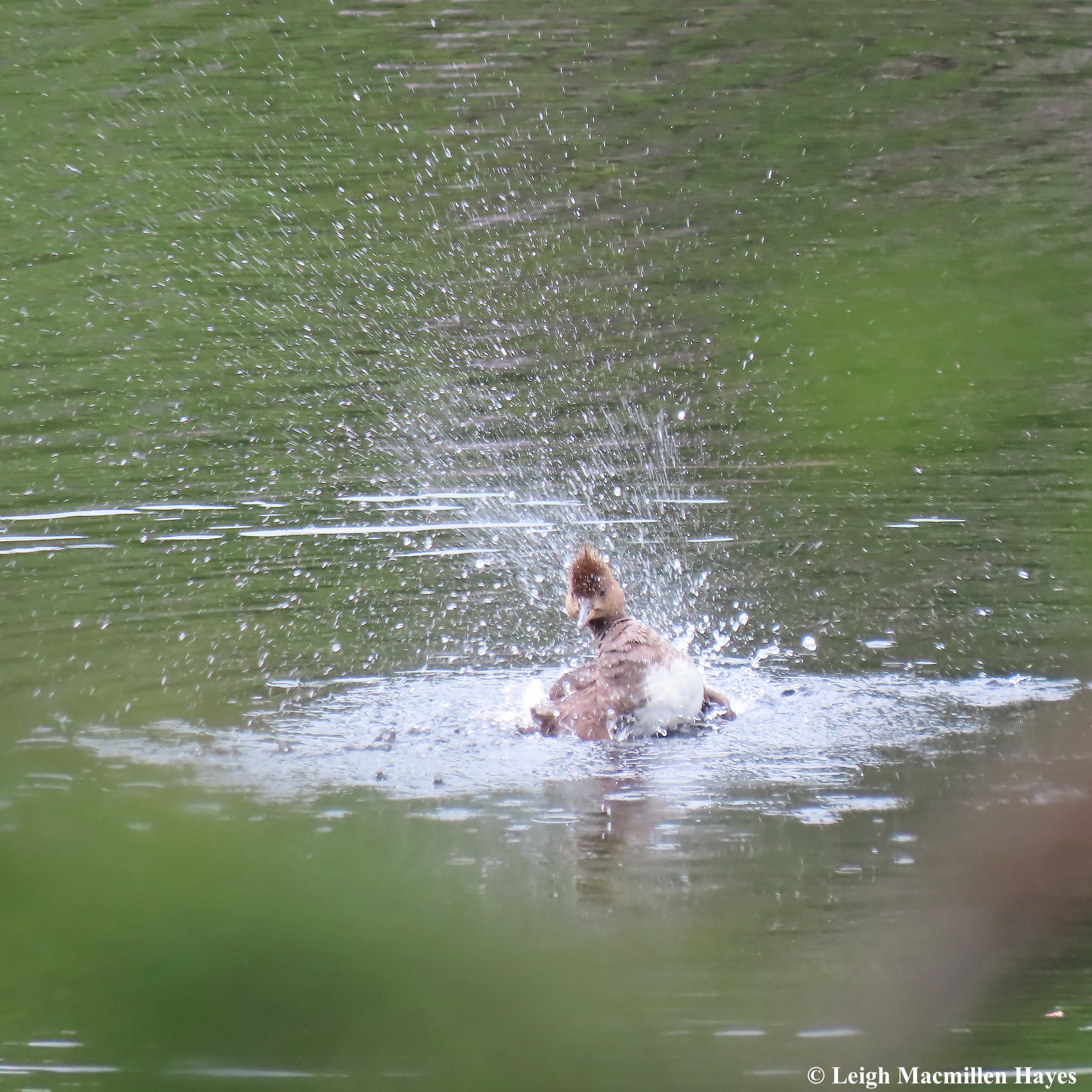
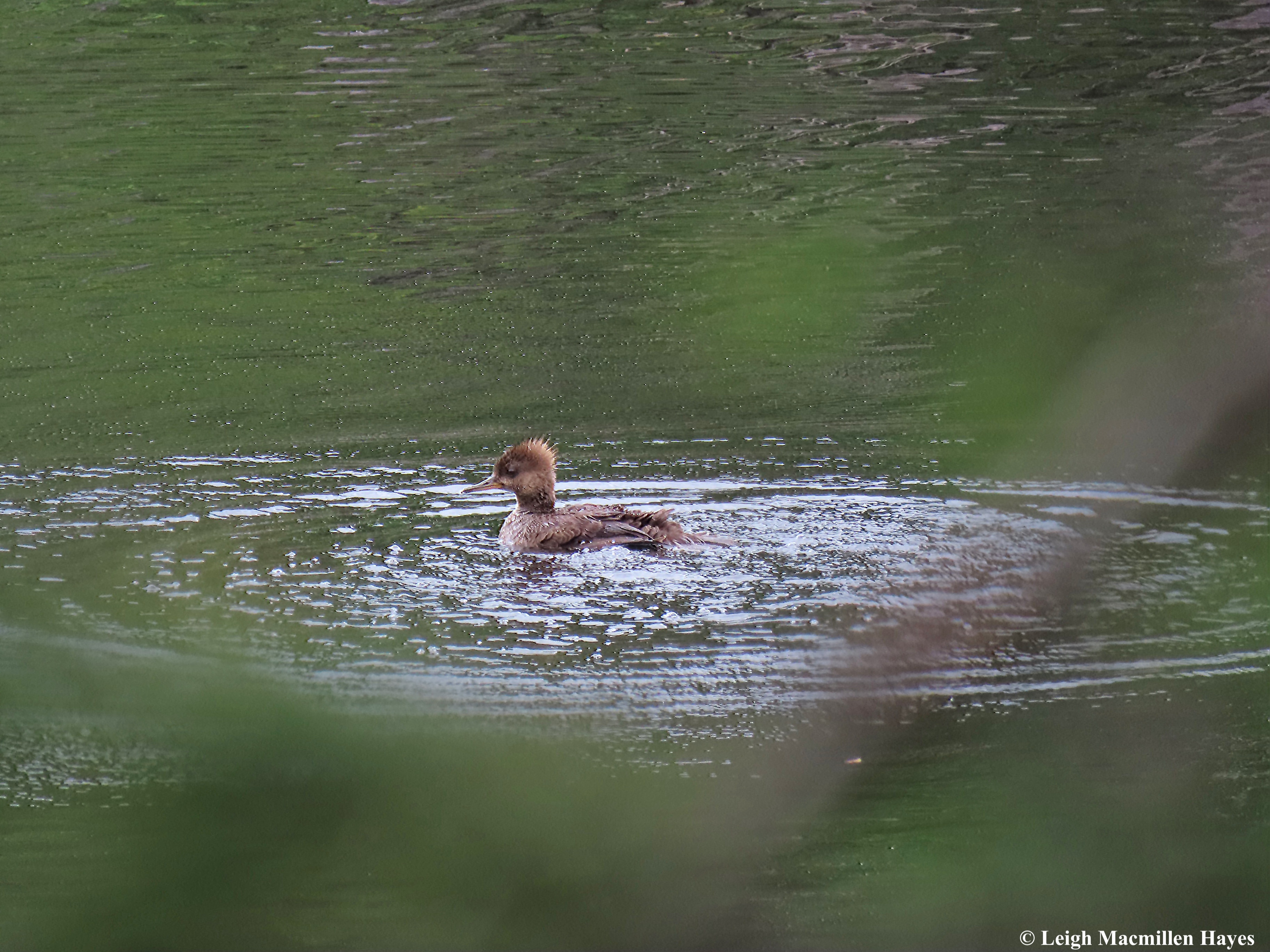
Being beside water in another place, and looking between tree branches, we spied a Common Merganser taking a bath.

We stood just far enough back, that it didn’t realize it had an audience as it splished and splashed.

And finally shook itself off, with water spraying everywhere, before it continued on its journey . . . and we did the same.

Basking Painted Turtles became a common sight as well, and this one had the cushiest place upon which to recline, all others being on fallen logs or rocks and boulders in the water.

One, however, that I assume was a female, though I didn’t want to disturb it and get any closer to check the length of its nails, I surmised had been laying eggs or was about to. Our time together was limited so I don’t have the entire story, but she was in a safe place, no matter what.

One of our most unusual sightings as we performed the ritual was spying a Bald Eagle steal a fish from the grip of an Osprey. If you look closely at the center of the photo, you might spot the thief on its get-away mission–it is flying above the picnic tables, about in the middle of the trees.

As it flew over our heads, the Eagle had the audacity to look back to see if the Osprey was hot on its tail. It was. We don’t know how this story ended either, but we assume the Osprey had to cast its fishing line again.

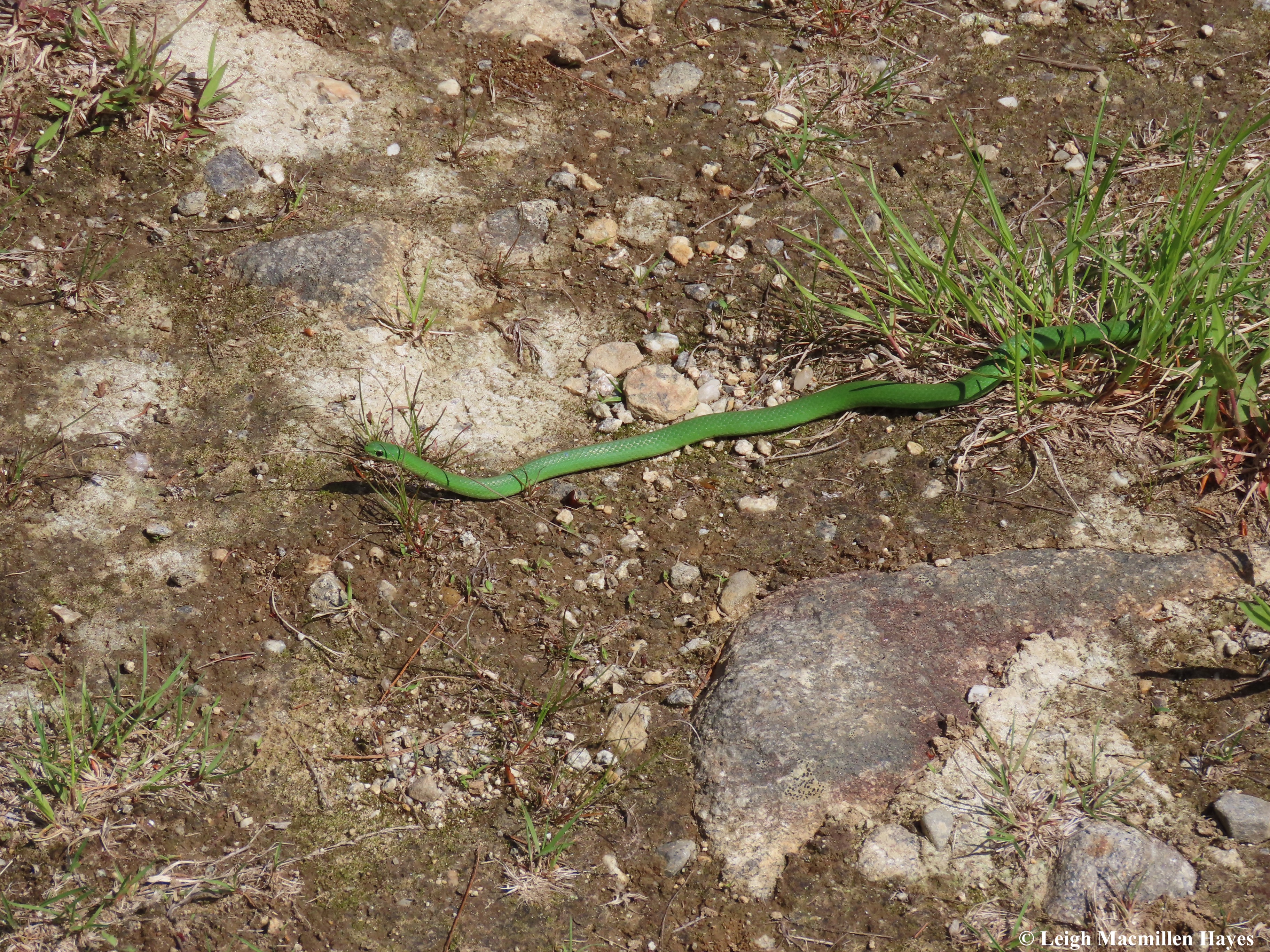
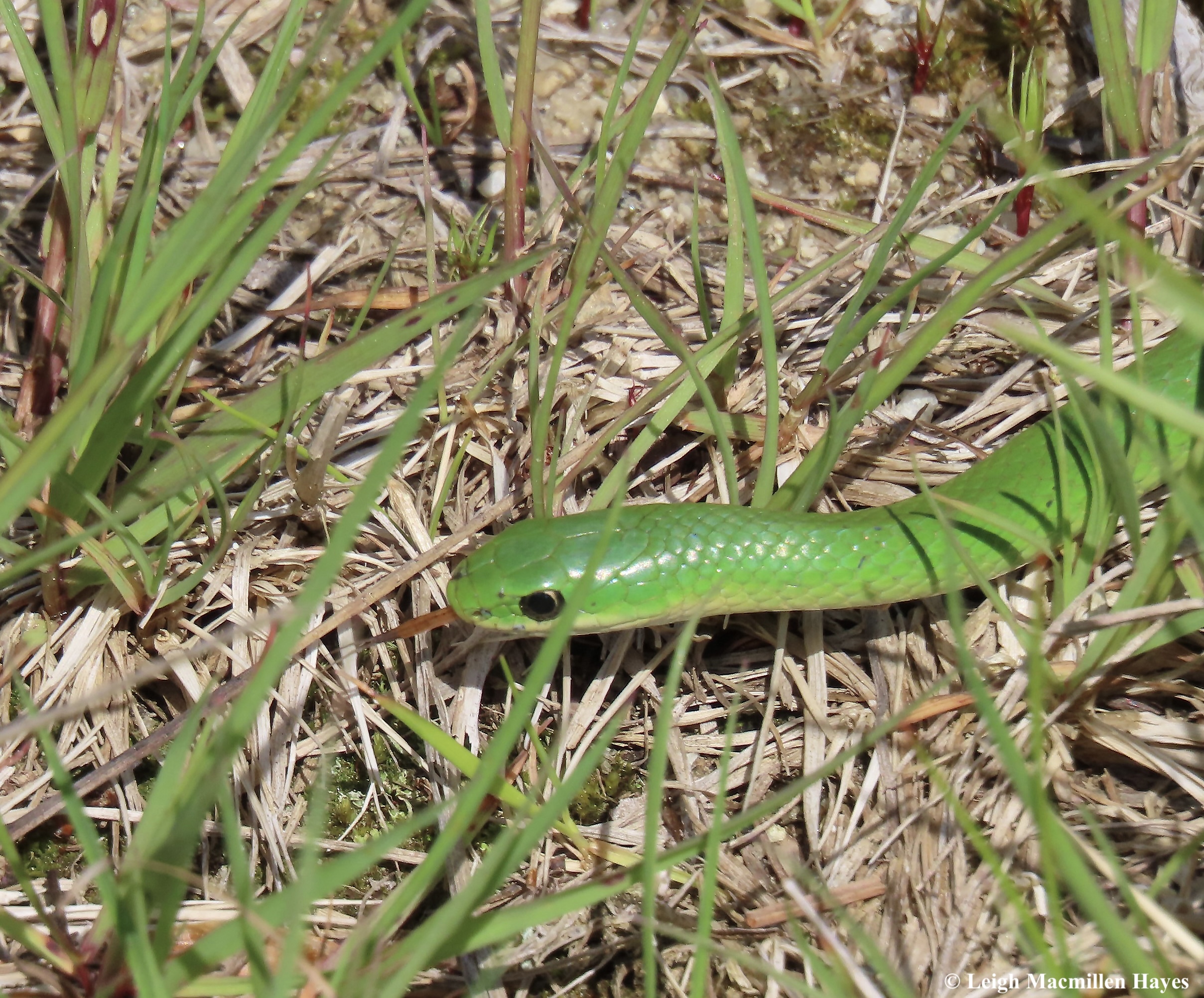
Another fun sighting occurred as we crossed under a powerline on the return trip of a seven mile hike around a river, over to a pond, up a hill behind the pond, and back down and out. Almost the color of the grass that sparsely grew along this section of the trail, a green snake slithered across just after My Guy had stepped that way.

I just love its forked tongue–sensing the trail in snake manner as it did.

The two tines at the tip of the tongue, seen here as it withdrew this sensory organ, help it to smell in stereo and thus find its way and find a meal.

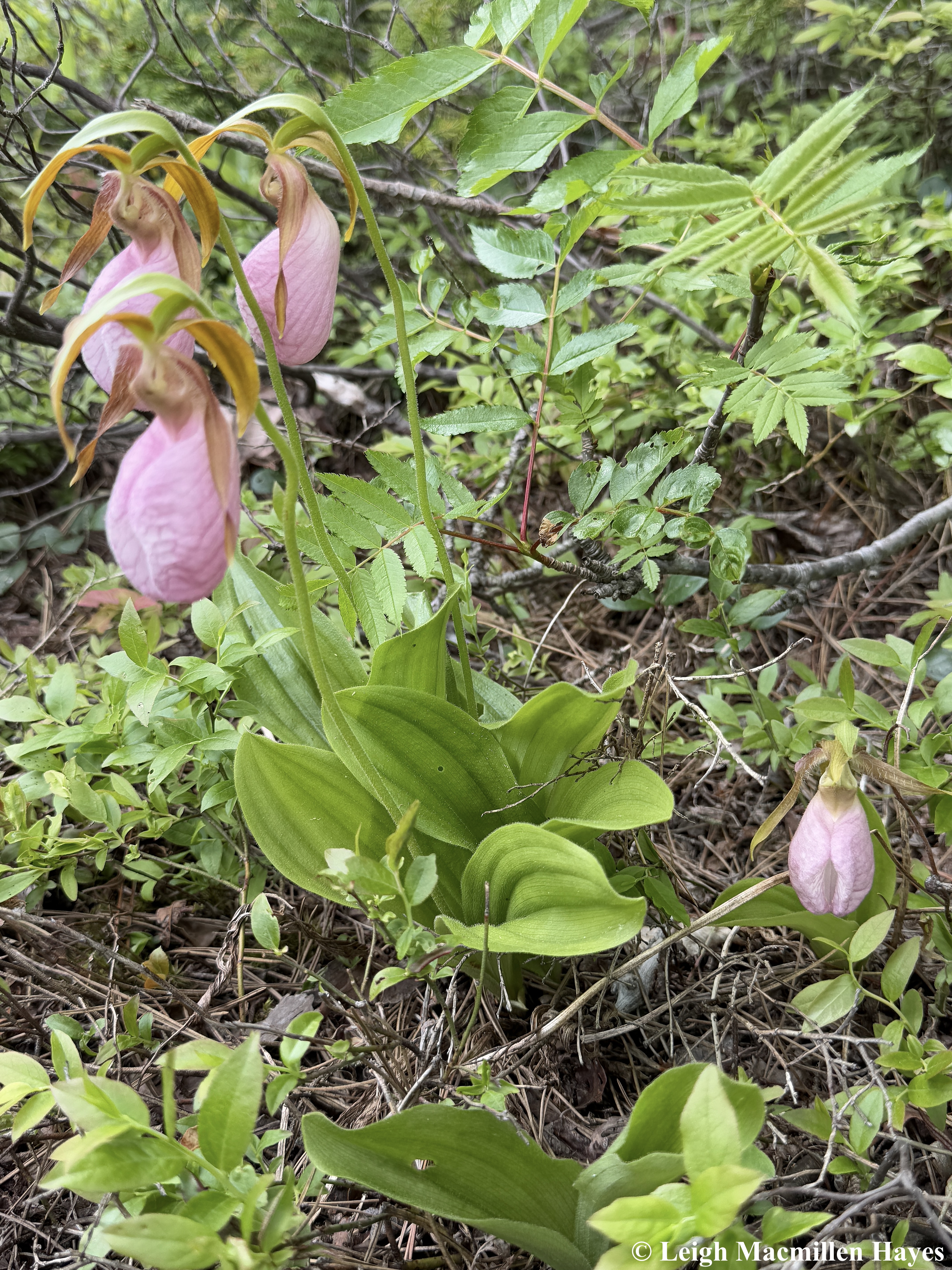
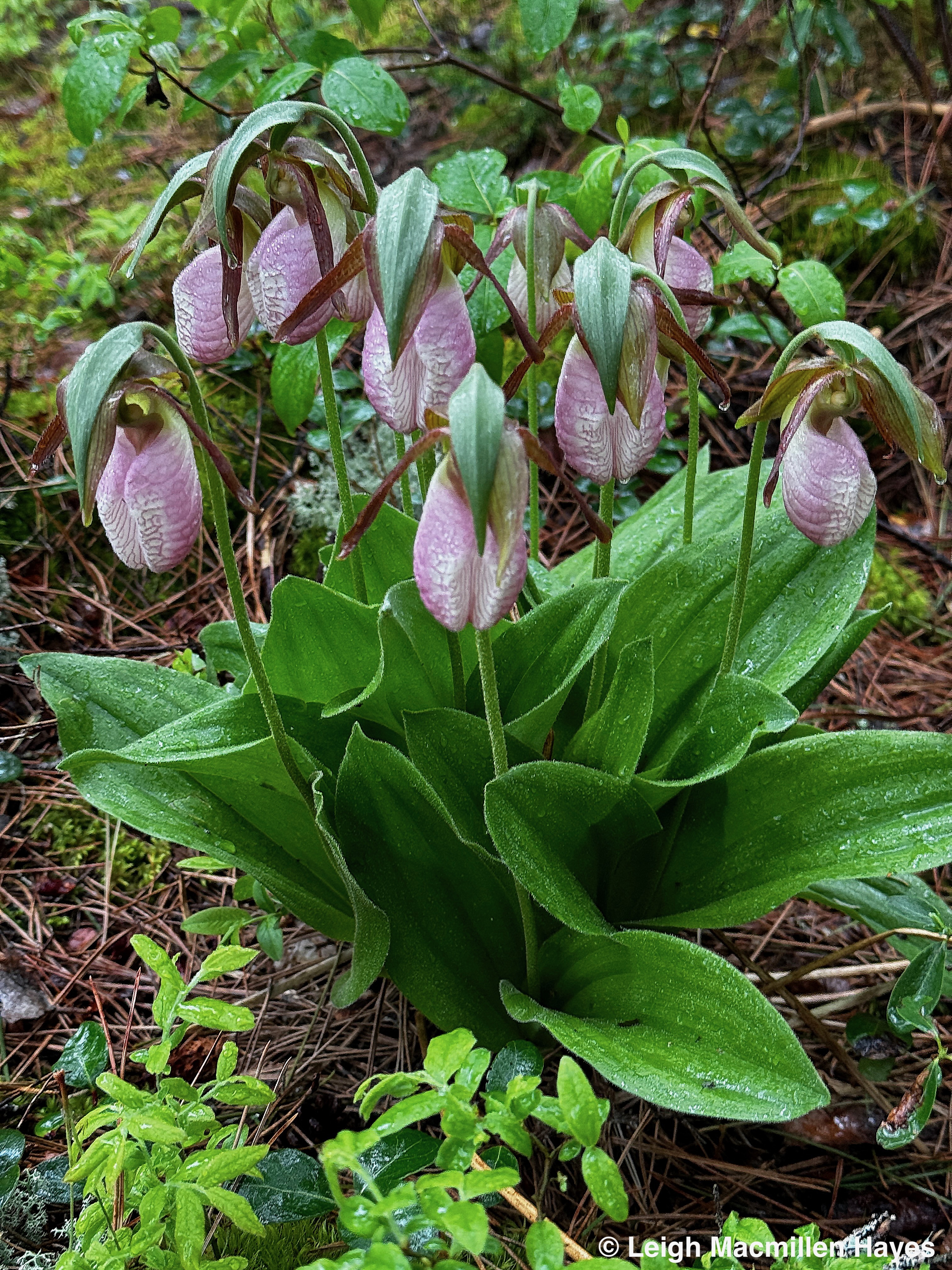
All of these things we saw because of the ritual that we perform every year at this time. It’s one that we now realize involves some greed, but still we feel compelled to do it. We count Lady’s Slippers.

I always thought that orchids were something you received on Prom night and that they grew at the florist. I had no idea that they were actually wildflowers until about thirty years ago. According to Orchids of New England and New York by Tom Nelson & Eric Lamont, Lady’s Slippers are one of 65 species and variants found in our region.

And so they deserved to be counted.

But, oh, how they hide. Do you see the one in the photograph above?

How about now?

Knowing that they can be elusive causes My Guy to slow down for a change. It’s no longer the destination that counts, but rather the number of Pink (and their white variants) flowers that we can spot.

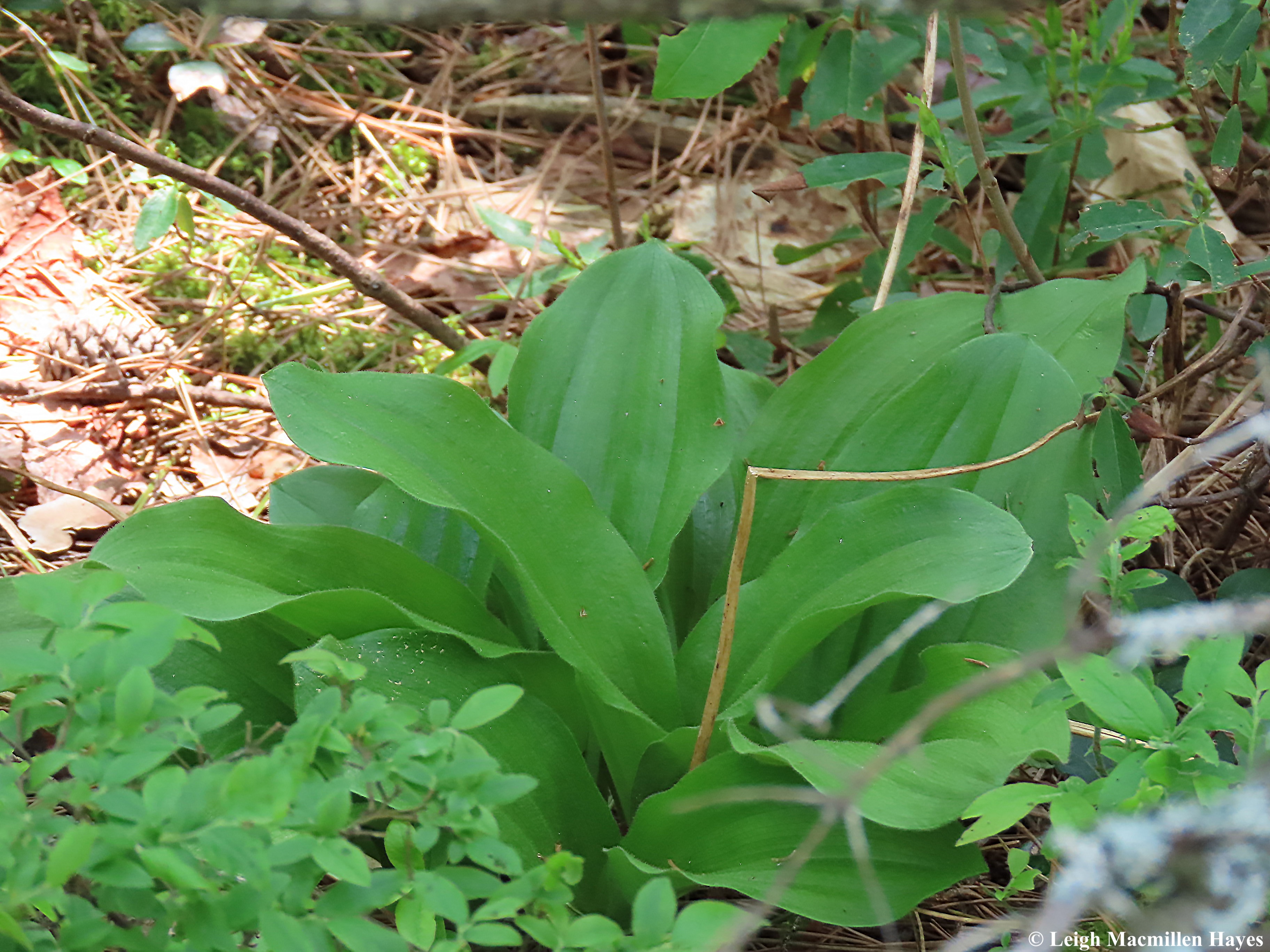
Some are tall, and others quite small. And some are sets of leaves with no flowers yet as in the foreground. We don’t count those.

Here’s the thing about Lady’s Slippers. It takes a long time for a minuscule seed to become a plant. The seeds, developed in capsules, are beyond numerous, but each one has no food source or endosperm. So . . . it must develop a relationship with a Rhizoctonia fungus in the soil to survive. From the fungus the plant gets nutrients for germination and growth. The fungus, in turn, receives nutrients from the orchid’s roots.

BUT . . . all of this takes time. And the presence of the fungus.

Years. First, after at least three years the plant produces a pair of two basal leaves that fold like accordions and remind me of the paper fans we used to make as kids.

One author says it’s another 5 – 10 years before the plant produces a flower; another states 10 – 17. Either way, by the time you spot one, it’s been working for a long time to become a thing of beauty. (And should not be picked or transplanted.)

We found one that stymied us for it appeared to have three basal leaves. I can only wonder if there was a second plant there and something happened to its other leaf.

In one spot, we found what we call a bouquet. Sometimes we see three or four grouped together, but in this case 14 plants in bloom.

And in another spot where we expected the same, nada. What happened. My Guy was disappointed because this is his favorite and he loves to show it off to anyone who happens to be hiking that way.

We have a theory, though we don’t have scientific knowledge to back it up. But here goes. Last summer, our count was quite high. The previous spring and summer it had rained. A. Lot.

Last year, we experienced a drought. This year fewer flowers in most places that we hiked in the last few weeks. Perhaps less of the fungus?

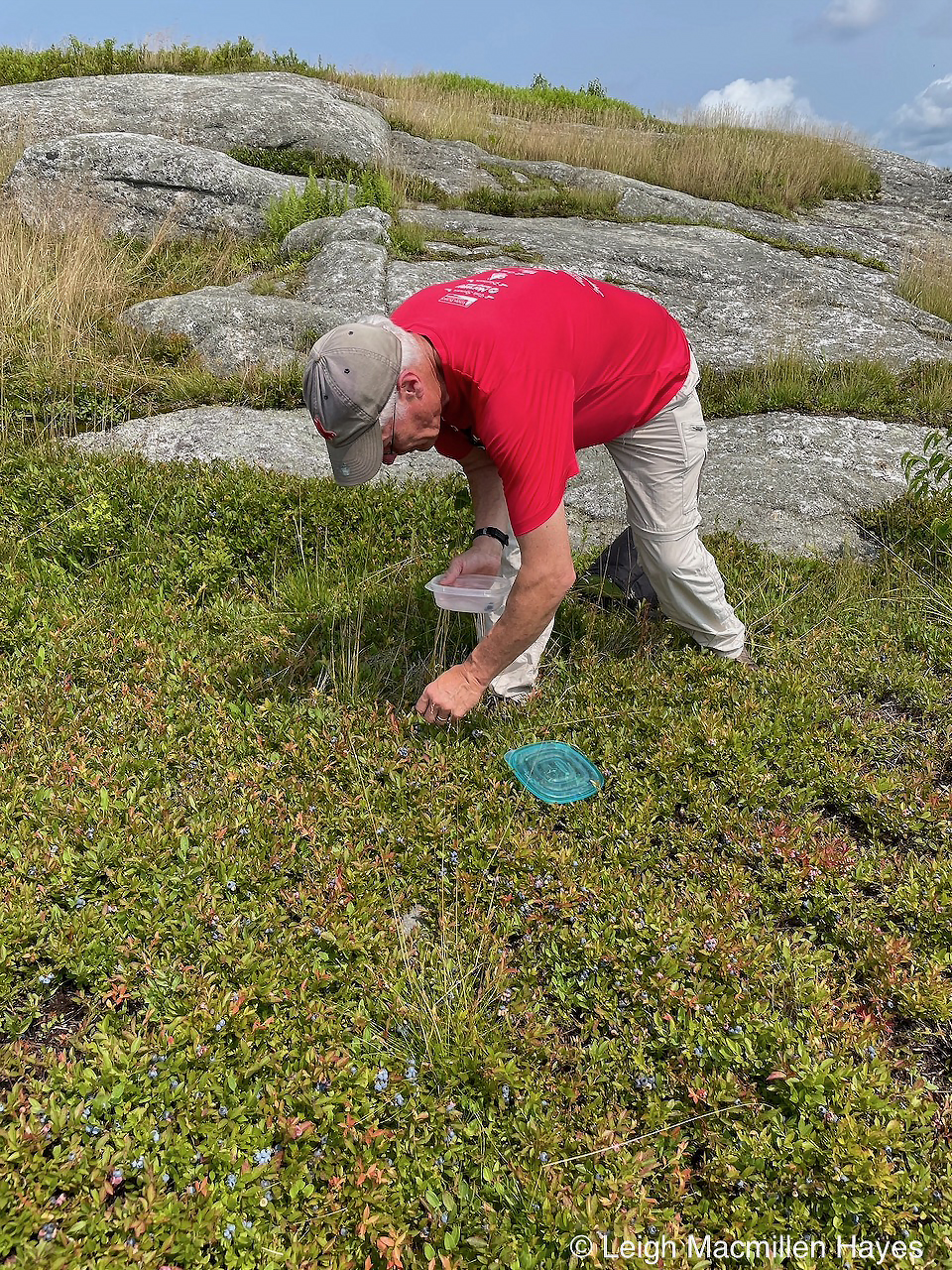
And sometimes the flowers are spotted growing in a bit of a line, making us think perhaps there is a rotting nurse log beneath the soil. As for soil and habitat, acidic seems to be the favorite and we often find them among Low-bush Blueberries and towering over Reindeer Lichen.

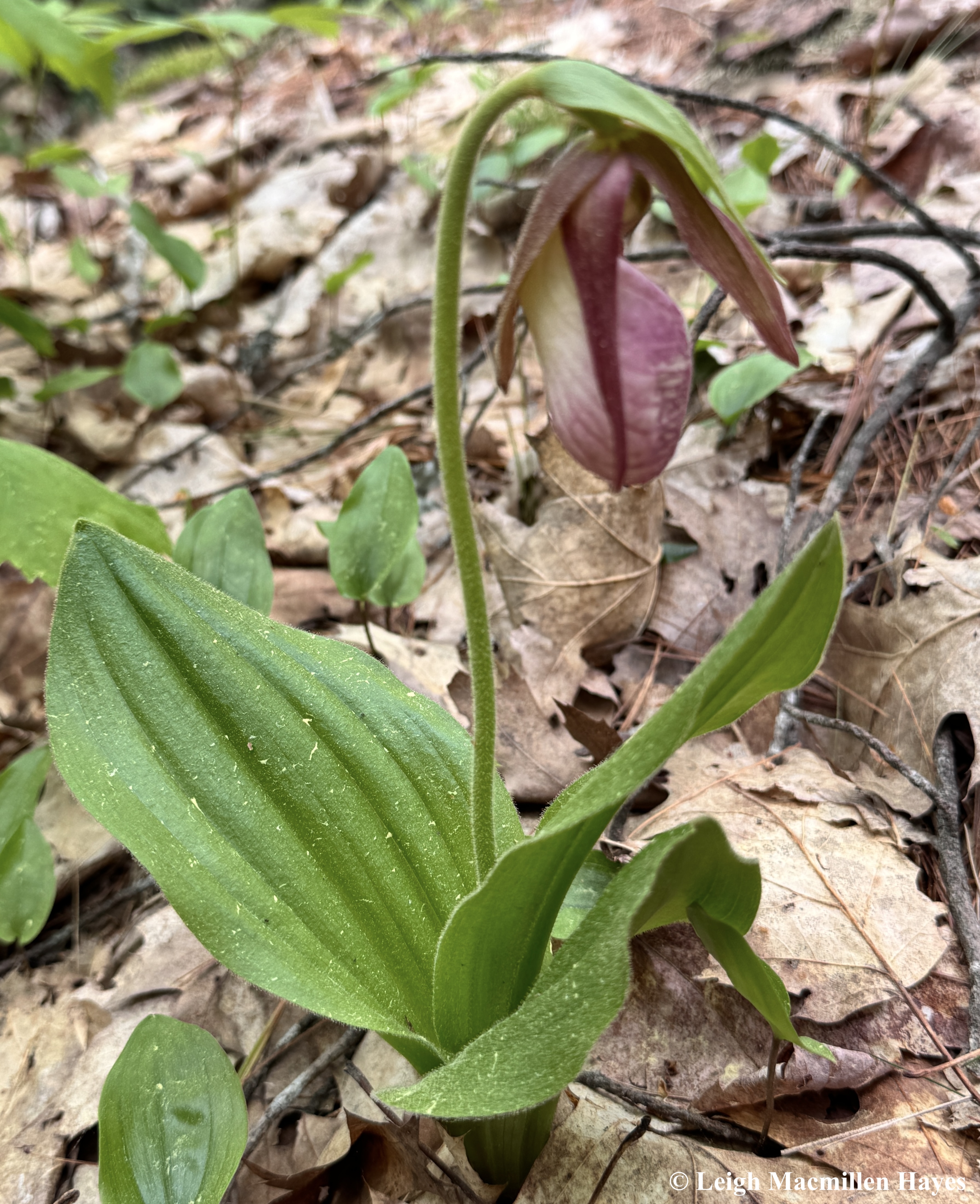
And then there’s pollination: Lady’s-slipper pollination is a curious thing. Bees are lured in by the guide lines to a slit in the front petal, the slipper-like pouch, or flower’s labellum. Once inside, the bee cannot exit the way it entered because the petal structure turns inward.

The exit is at the top of the slipper, but to reach it, the bee must move through a hairy interior and rub against the flower’s stigma, depositing any pollen it may have carried in and brushing against the pollen mass called the pollenia before flying out. It strikes me as being like a house of mirrors. And all I want to do is quickly find my way out.

Some bees get frustrated with the dilemma of discovering there is no nectar and the task of finding the exit and instead chew their way out, which seems to be what happened to this flower.

It looks like the bee frantically tried to escape this one.

I tried to honor them with a painting, but our best way is by counting each and every one. I’m going to share last year’s numbers and this years. Also, this year, we counted along a bunch of other trails than just the Big Three as My Guy refers to the first three for which I have been keeping records since 2000.

Wolfe’s Neck State Park: 2024: 475; 2025: 159

Albany Mountain: 2024: 364; 2025: 411

Sanborn River and Overset Mountain: 2024: 598; 2025: 526

Grand Total of the Big Three: 2024: 1,437; 2025: 1096

Plus these trails all from this year only:

Mount Tom: 25 (but we were there on May 18, and this was the kick-off event that got us going this year; more may have bloomed since then. Actually, after spotting the first one, My Guy wasn’t sure he wanted to count this year, but let me tell you, he still has the greed!)

Mount Tire’m: 31

Proctor Pond Reserve: 41

Kezar River Forest: 63

Narrow Gauge (only 1.5 mile section): 56

Sleigh Trail at Notch View Farm: 44

Home woods: 2

Grand total of all trails: May 18 – June 6: 1,358

Even with the extra trails, the count was down.

But still . . .

Where the Moccasins (Lady’s Slippers) Led Us–up and down many a path with so many wonder-filled moments and sighting along the way. Counting Lady’s Slippers is a ritual that we love to share together and with others.

Zodiac One: Maiden Voyage

The message arrived the day before: Leigh, I am ready for the morning. The truck is loaded. I suggest wellies unless you don’t mind wet feet. I plan on being there for 6:00am. All you need is your camera.

And so I set the alarm for 4:30am, spent an hour reading and sipping coffee in the peace of a quiet kitchen, and then headed out the door with my camera on my shoulder.

As the sun rose, it became apparent that the smoke from the Canada wildfires was going to cast a haze upon this June day.

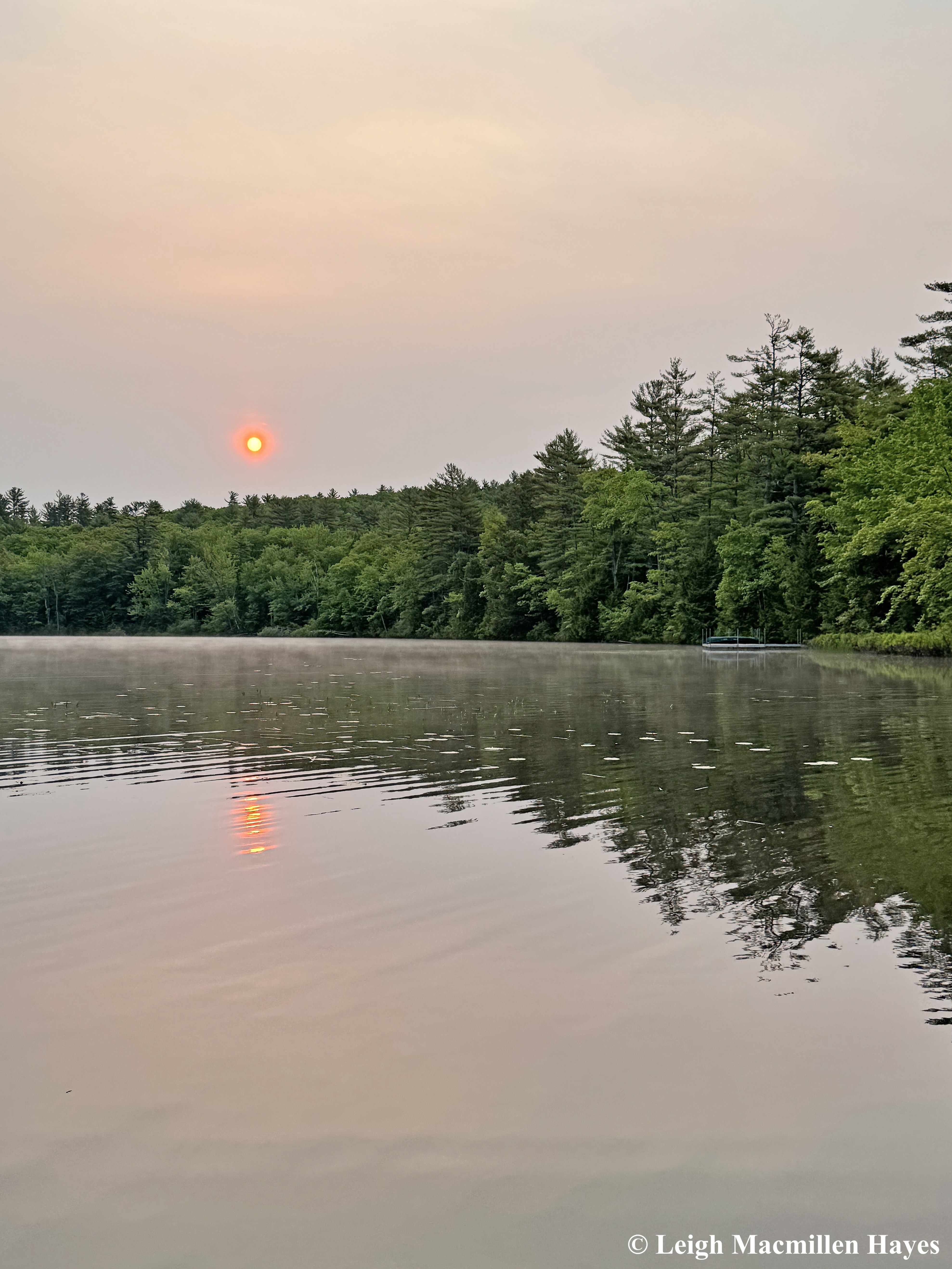
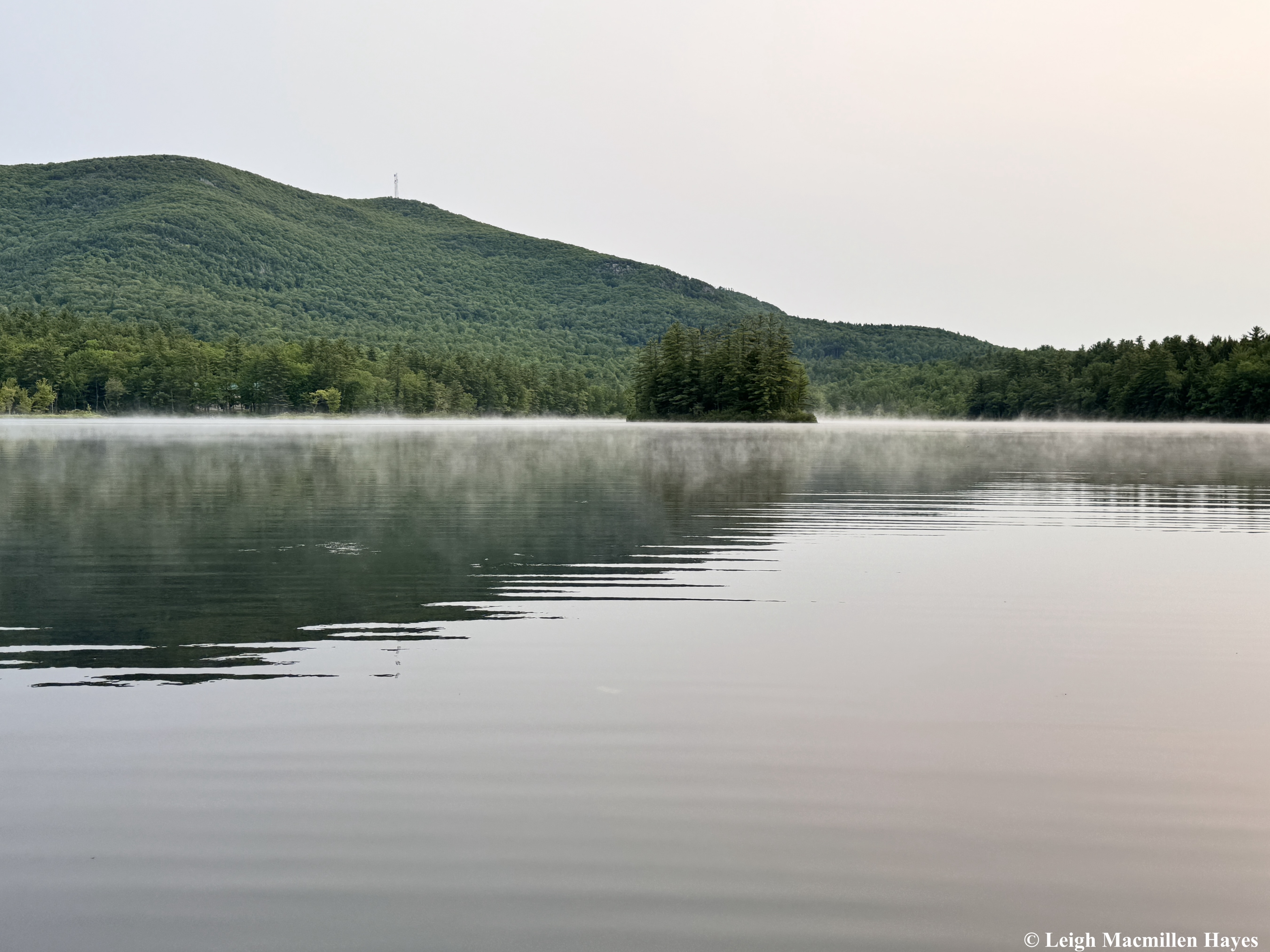
And indeed it did. But, at 6:00 in the morning, with the temperature at 48˚, lake fog, or in this case, pond fog, danced across the surface of the water like fairies performing a swirling ballet. Actually, the fog occurs when cool, moist air meets relatively warmer water, causing the water to evaporate and condense, thus creating mist that burns off as soon as the sun rises.

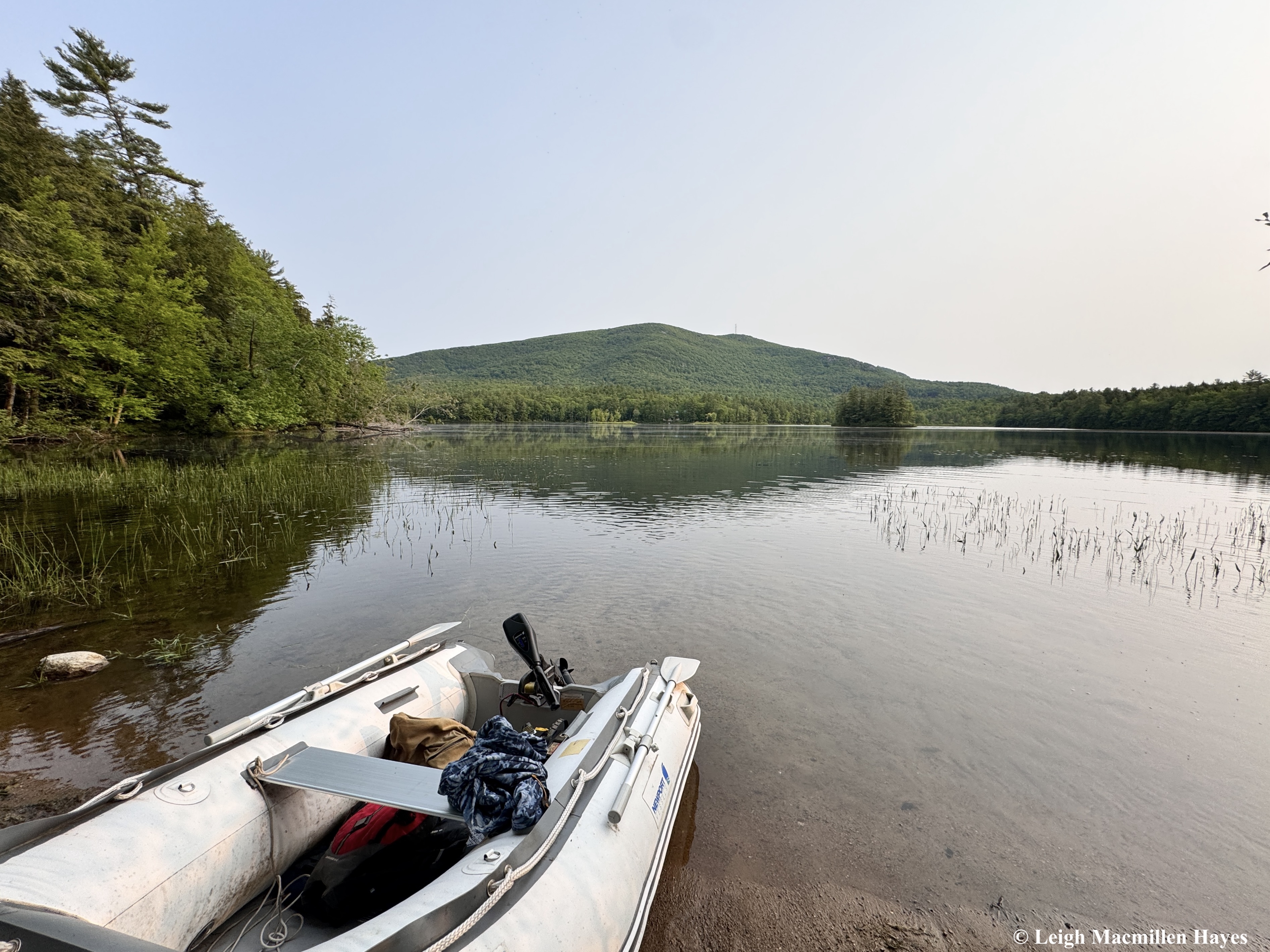
With Pleasant Mountain’s Southwest Peak in the background, I knew my place in the world.

The captain of the boat wondered if I’d ever been on the pond before. I have. Once. This past winter when Laurie LaMountain, of Lake Living magazine, and I spent a day tramping through the snow and across the pond and sometimes getting fake lost, but finally finding our way back to her house seven miles later.

I had not, however, ever seen it in the spring or summer. Well, except from the teepee on the Southwest Ridge of the mountain.

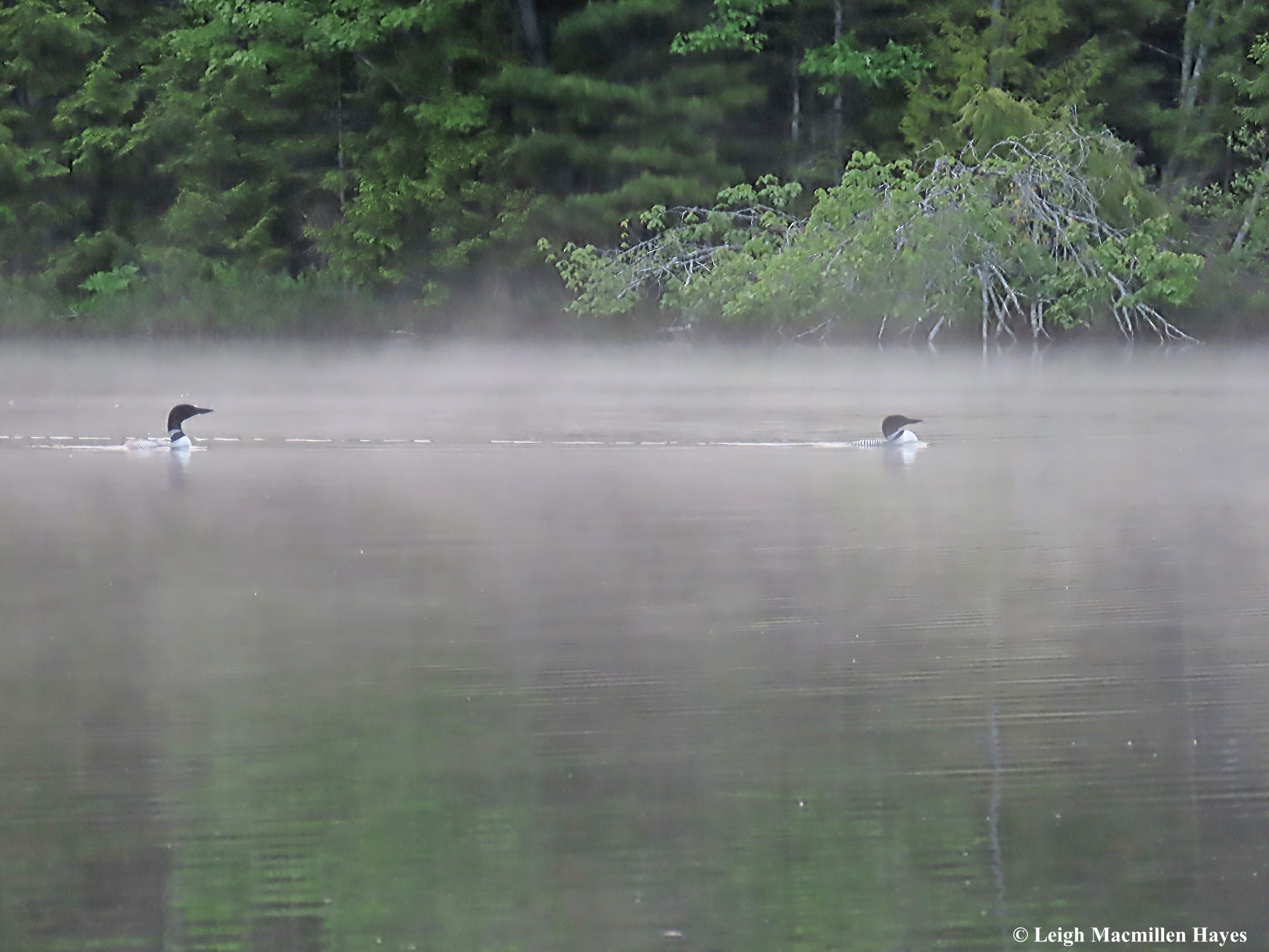
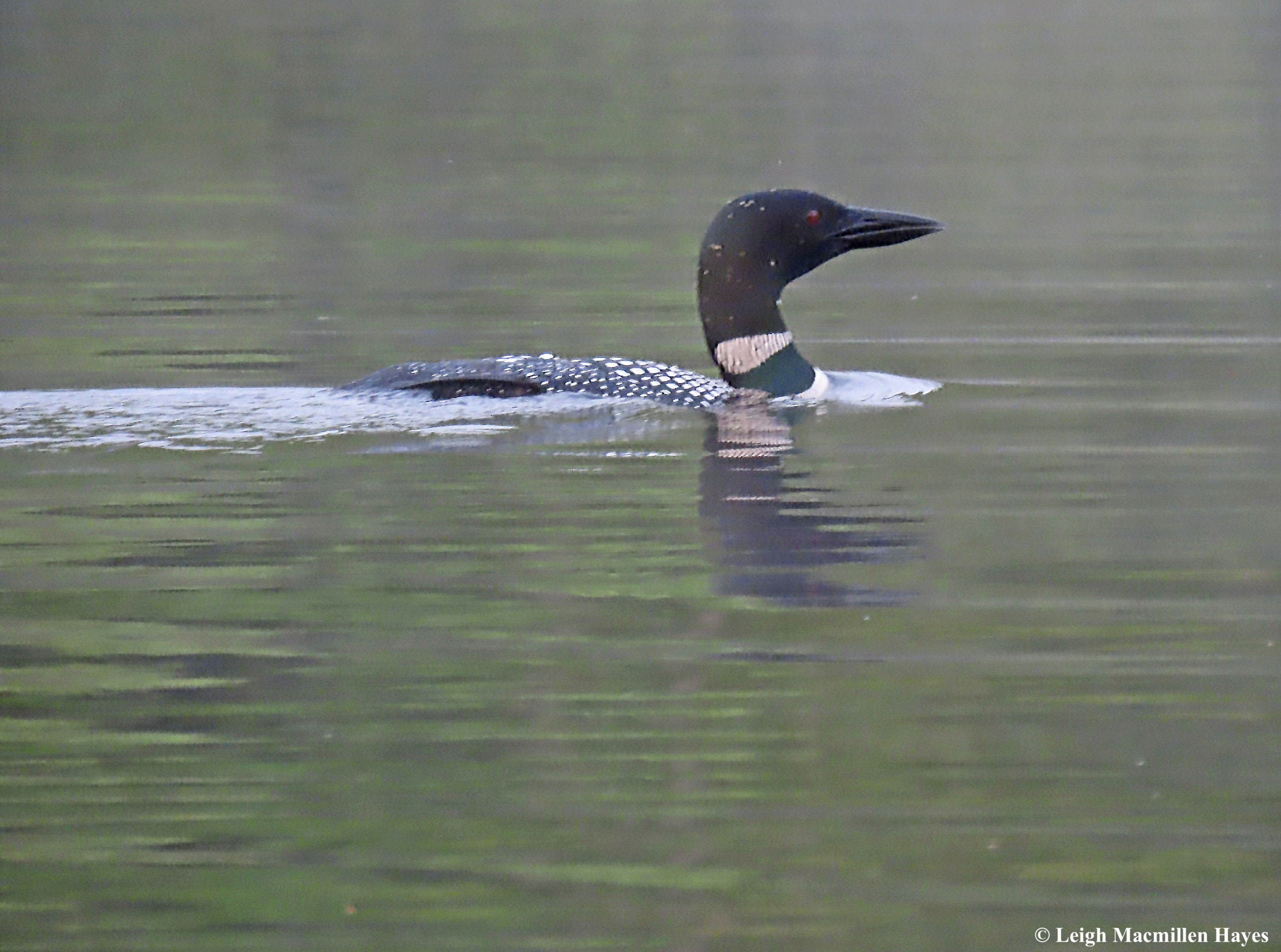
Once upon the water, we first heard, then saw a pair of Common Loons swimming and diving for breakfast. Bass are plentiful in this body of water, and we saw plenty of them as well.

There was a third loon that the other two greeted, but within a half hour it took to the air and flew south.

I found that curious because in the wee hours of the previous morning I heard one fly over our house, announcing its presence with a Loon tune, and wondered if it was a teenager looking for a place to find a mate or at least hang out where the resident pair(s) wouldn’t mind. Maybe this third Loon was doing the same and the others suggested it move on. Or maybe they were its parents and again, they looked forward to be empty nesters for another week or so.

After spying the Loons, our tour took us near Pickerel Weeds and suddenly our eyes clued in on the beginning of other life forms.

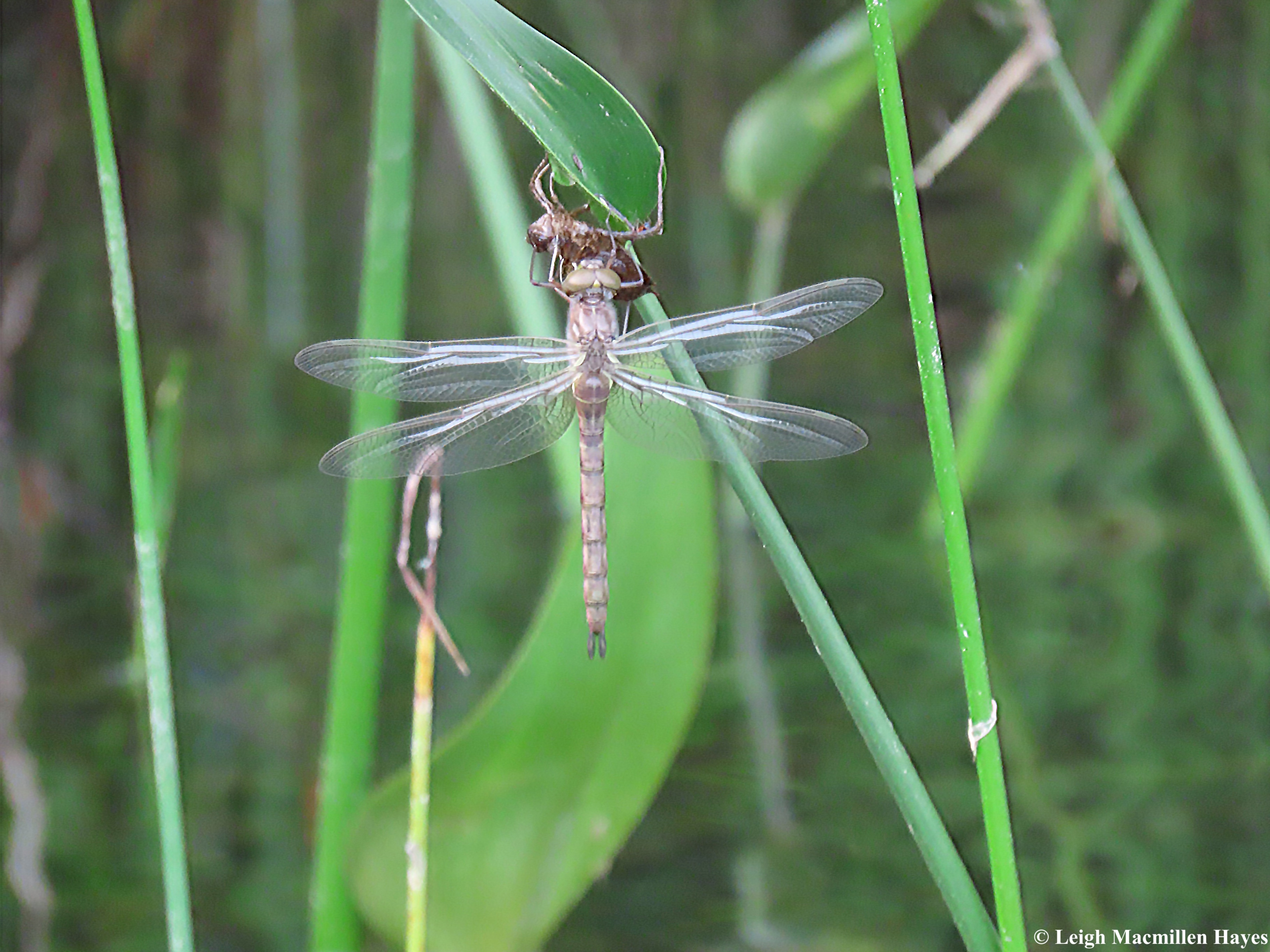
By now it was 6:20am and obvious that the Damselfly Naiads had already chosen this day to climb up the stalks maybe as early as 4:00am to begin their new life as terrestrial fliers. I’ve seen this occur later in the morning, but did not expect that they emerged so early when the air was still a bit chilly.

I probably should not have been surprised, for a few weeks ago I saw them emerging in another place on an equally chilly day.

Of course, where Damselflies are, so often are there Dragonflies, and this Darner spread its wings in our presence, so shiny and cloudy as was to be expected until they dry out.

With its wings spread, thorax and abdominal colors would begin to transform providing a clue to its name, but I suspected it was a Common Green Darner. We didn’t have time to watch that color change and so we silently moved on, for such is the ability with an electric motor.

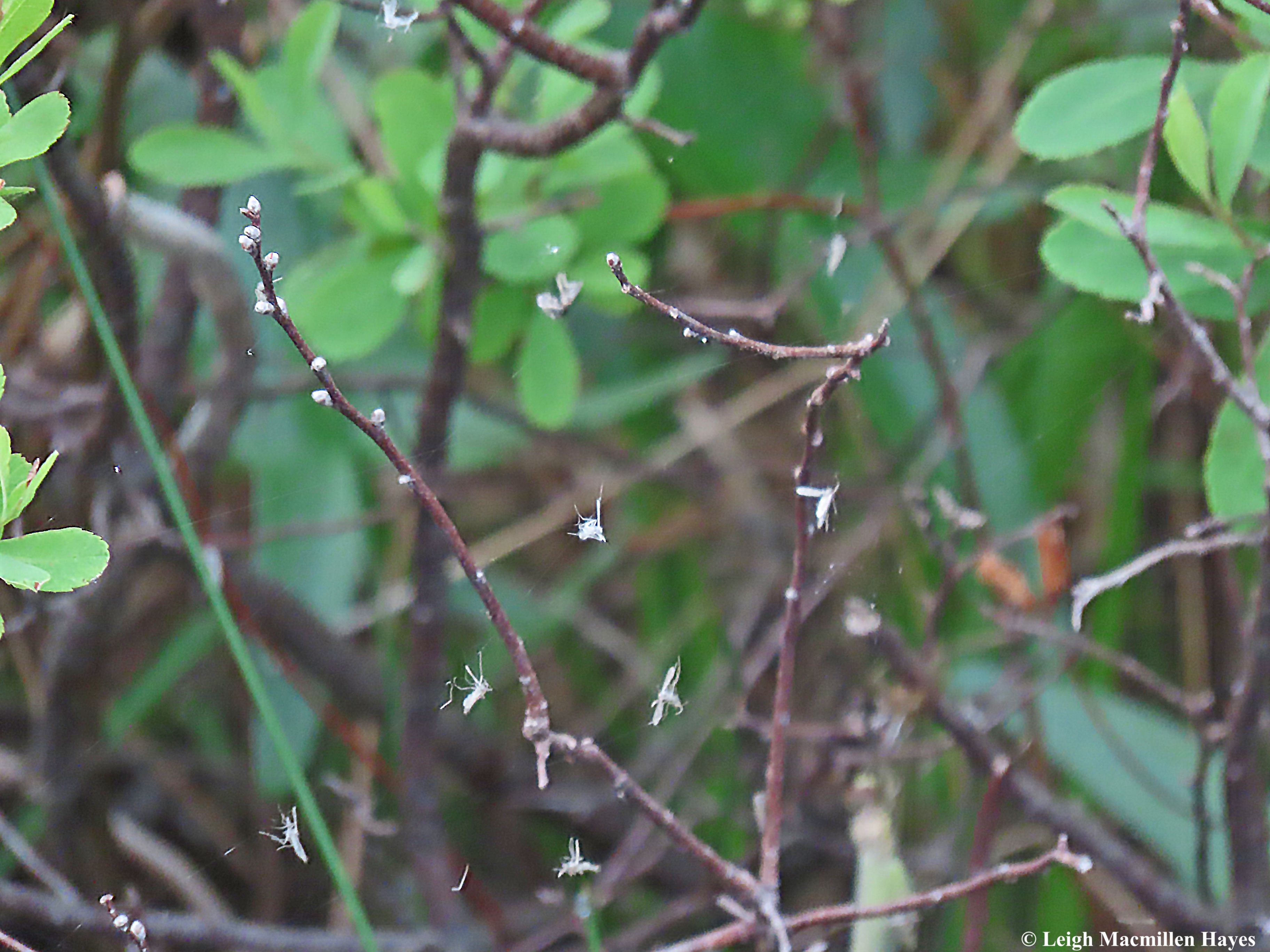
Among the vegetation behind the Pickerel Weeds there were many orb spider webs and among the webs, looking as if they, too, had been performing a dance, were little Whiteflies taking their final bows.

Posed above and ready to fly off at any moment were Kingbirds with their handsome tuxedo appearance, looking like they were ready to attend a formal dinner.

And perhaps they were.

For everywhere on the northwestern side of the pond, more Dragonflies had emerged, and after a few minutes it became obvious that they were all of the same family: Calico Pennant Skimmers.

In fact, they were also all the same gender, the yellow hearts on the abdomen and coloration on the thorax and wings all leading me to think they were females.

The Calico Pennant in the name comes from the design on the wings, which once opened and dried is really stunning.

Although, I say that they were all females, it could be that all begin life with this hue and it only changes to red for males and bright yellow for females as the individuals mature.

In one spot, we found at least five, plus a bunch of Damselfly exuviae also upon the stems and leaves.

Do you see all five, two being almost a mirror image? Why “almost”?

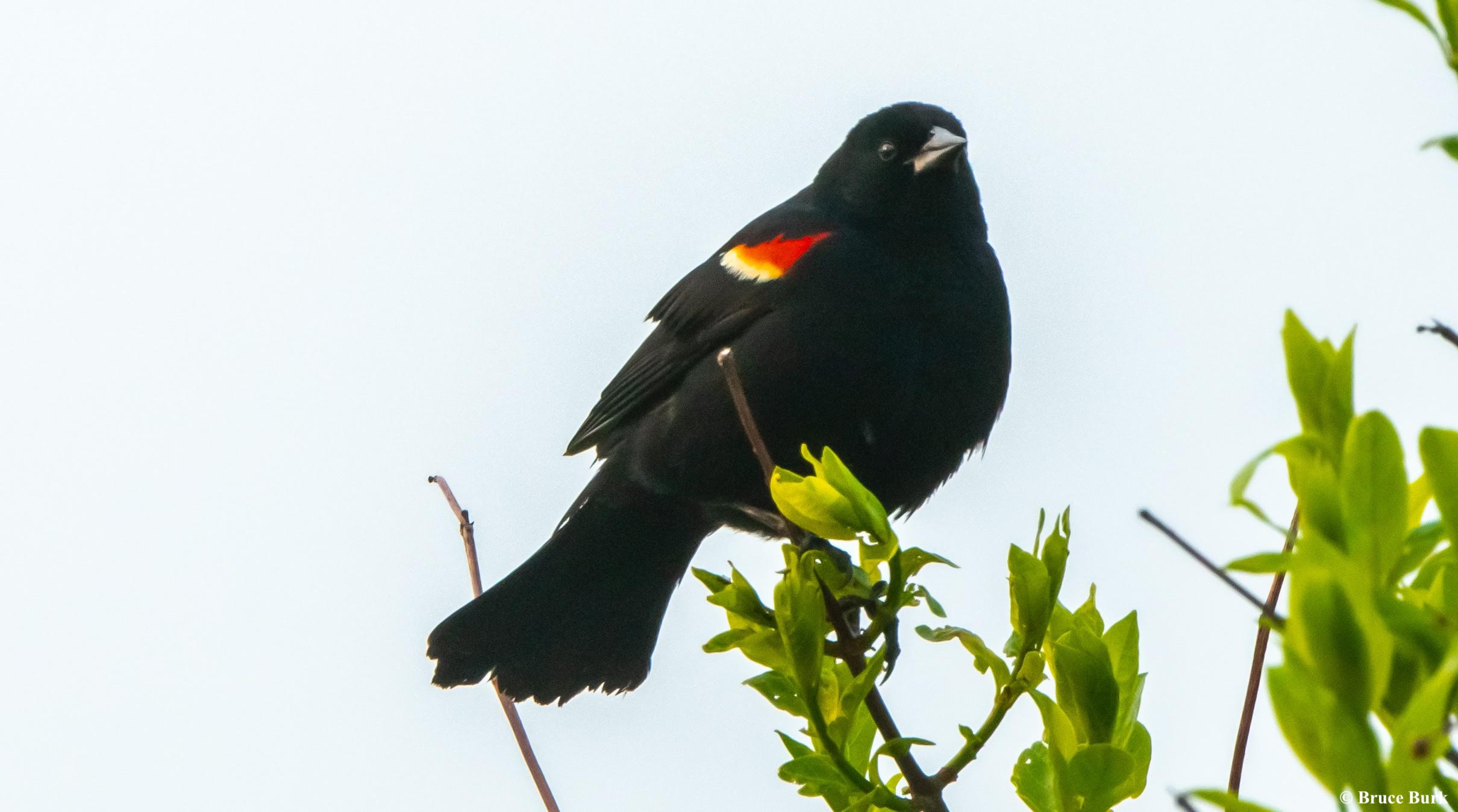
Loons and Kingbirds weren’t the only ones on the morning hunt. This handsome male Red-winged Blackbird seemingly had a family to feed and wanted to make sure we didn’t approach. Thank goodness for telephoto lenses.

In the midst of the shrubs below, his Mrs. was on the hunt and had a full mouth. If you look carefully, you may notice some Dragonfly exuviae below her, their shed skins left behind once they took flight–the insects, that is.

We wondered if the Mrs. was taking advantage of this morning’s Dragonfly offerings and capturing those that were just emerging, an easy meal for herself, but probably also for some wee chicks she may have tucked away in a nest nearby. Their meal would have to wait until we moved on, and so we quickly did.

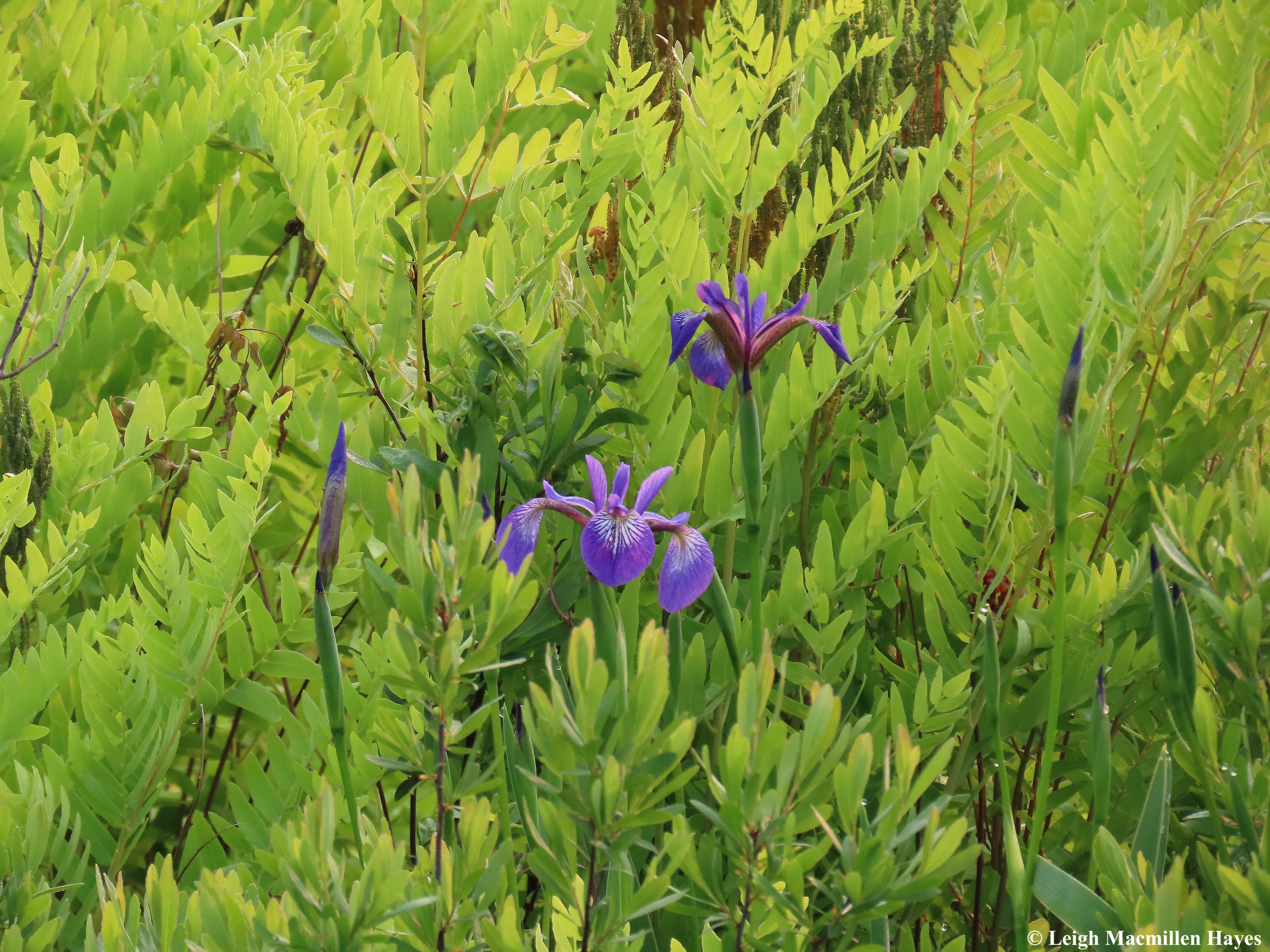
But not without pausing for a moment to admire the newly opened Blue Flag Iris among the Royal Ferns. Though the ferns have their own crowns of fertile stalks, the irises looked like exquisite tiaras fit for queens.

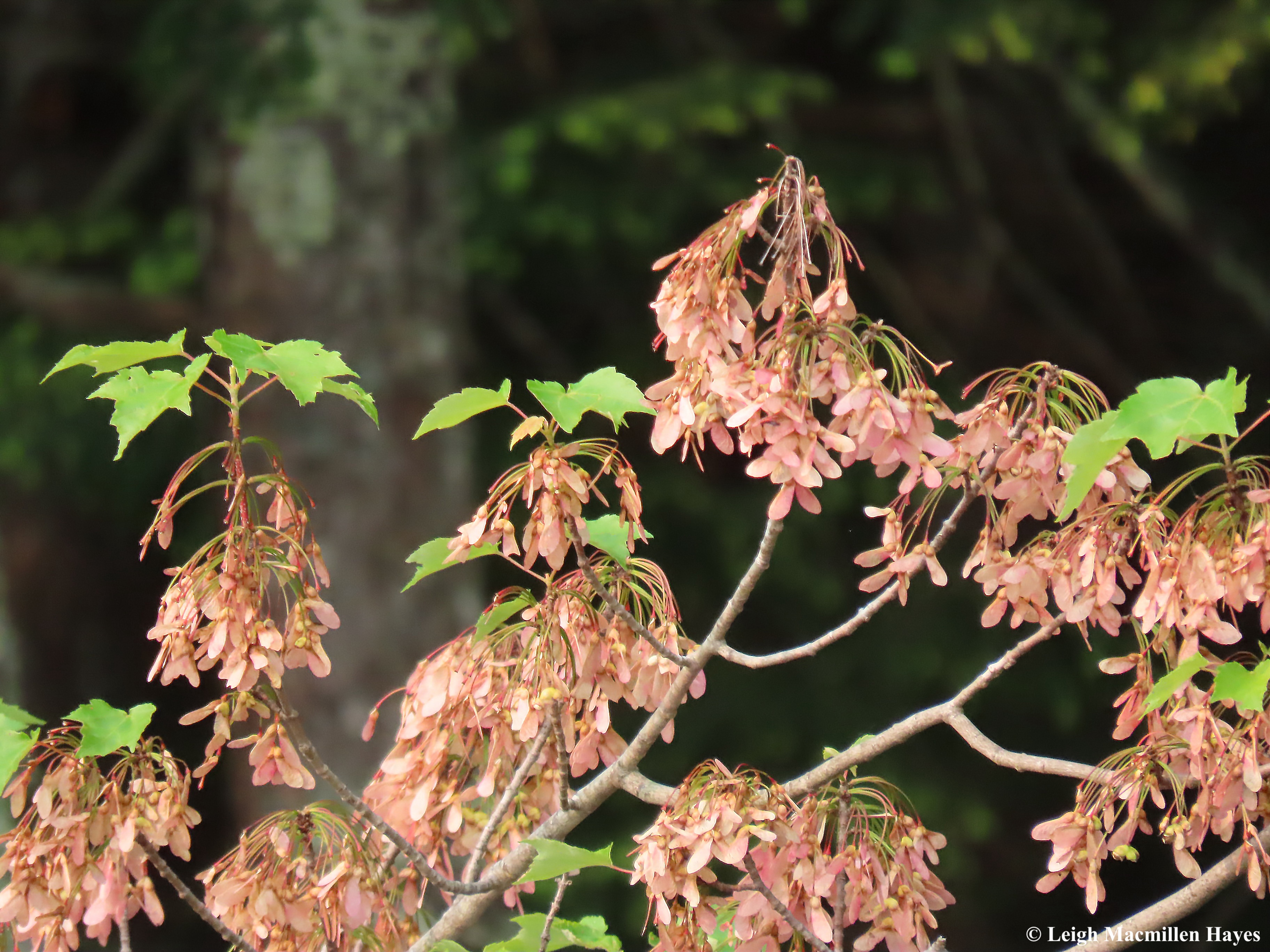
Finally heading back toward the boat launch, we saw explosions of Red Maple seeds dangling like chandeliers that perhaps the Queen Irises had ordered.

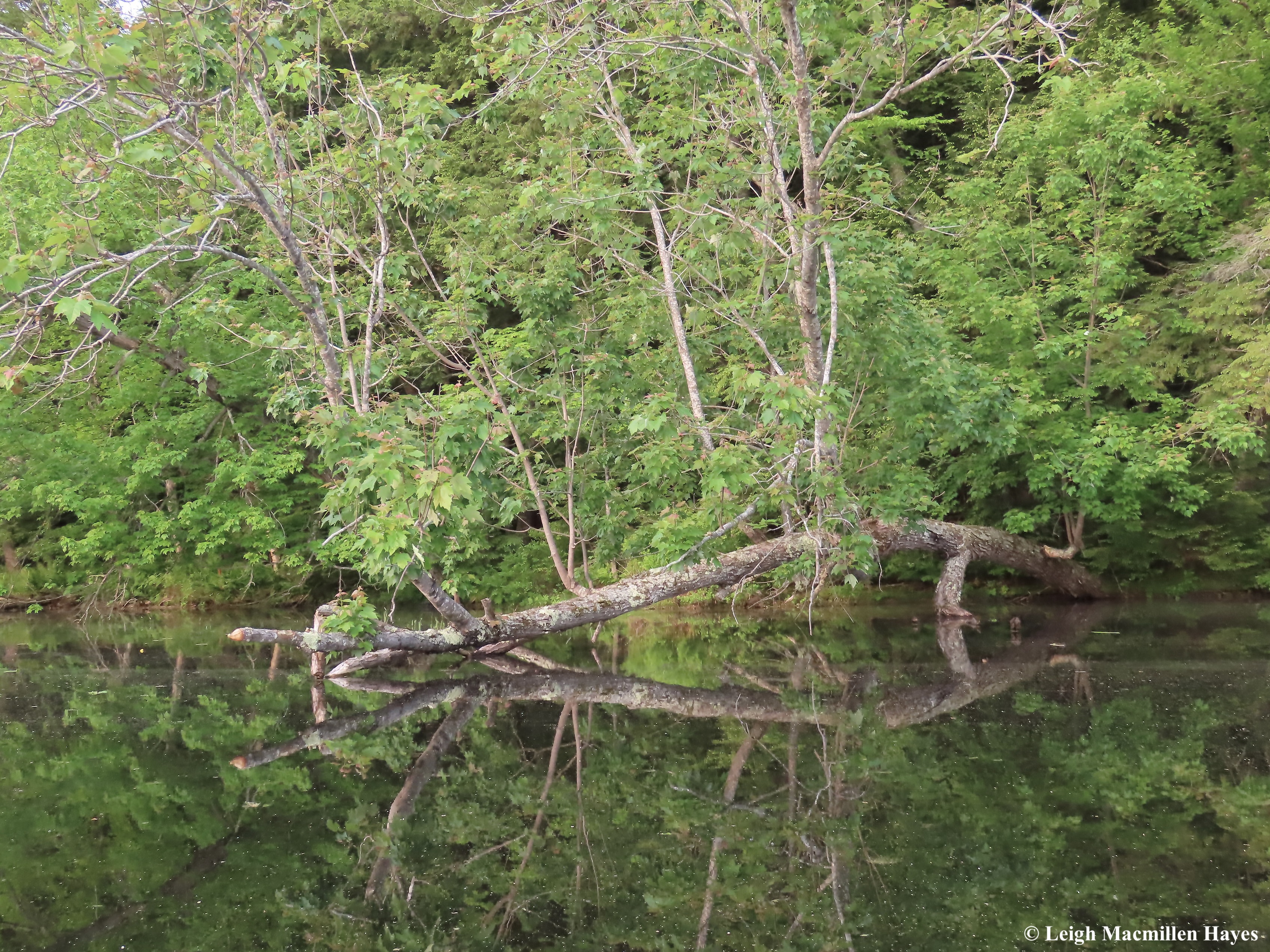
And another Red Maple that gave us pause for it deserved being noticed since it had obviously fallen years ago, but lifted its branches upward and was still in rather good health, its roots at least partially intact. Perseverance.

And then we noticed the tip of it. Across the pond we’d spotted a small beaver lodge in an adjacent wetland, and wondered about the Beaver’s own peserverance–it looked as if the tip of the tree had been harvested this past winter from the ice, and looking at other parts of the tree behind the tip, there’d been some harvesting previous years. We didn’t get close enough, but suspect the Beaver may have felled the tree, and its been a source of building material and food ever since.

Two hours later, Captain Bruce landed the Zodiak at the boat launch, and I gave great thanks for the invitation to explore Beaver Pond in the quiet of the morning.

The Black Flies were plentiful as they buzzed in our ears, but they weren’t biting so that was good.

We also saw several turtles swimming, including one huge Snapper that swam under the boat and neither of us captured in a photograph, and possibly a Water Snake.

Zodiac One: a maiden voyage for me. Here’s to many more! Thank you, Bruce.

Memorial Day Dragons and Damsels

It finally stopped raining and with a wee bit of sun late this afternoon, the temperature broke 60˚ and I found myself exploring a local wetland where all kinds of interesting things happen daily. And yearly. In cycles. And sometimes I happen to be there.

One of my favorite events is the emergence of dragonflies and damselflies. It seems like we endure Black Flies for most of May, all the while looking forward to our champs, the Ondonata family, to step in or rather up out of the water and transform before our eyes and take on the world. This usually happens by Memorial Day.

And this year is no different. The dragons and damsels have been emerging for the past couple of weeks, but now is prime time. And they are just in time because the Black Flies and Mosquitoes have had a heyday with all this rainy, cold weather, and today . . . as it warmed up, so did they and I have red welts on my neck to prove that they are biting. It’s all good, I remind myself. It’s all good. They are bird food. And so are the dragonflies, who eat the Black Flies, et al, and if they become bird food, all the more energy sent the bird’s way.

Cloudy wings and clinging to its shed skin indicated that this dragonfly had just made that magical transformation from its aquatic life to terrestrial existence. And I was there to protect it. For a while anyway. Until the Black Flies sent me scurrying onto the next great find.

That next being a damselfly, also with cloudy wings indicating it had also just emerged. Though I don’t know who the first dragonfly was that I met today because it didn’t yet have enough colors and pattern to make that determination, I did learn that this damsel is called Aurora! I don’t recall ever greeting it before, but based on the the lack of shoulder stripes, black patch with wavy edges on the thorax, and yellow sides led to this ID once I consulted Damselflies of the Northeast by Ed Lam.

Now it’s one I don’t think I’ll forget. AND, I love that it is named for my ten-year-old naturalist friend, Aurora. Or she for it. Or neither, but they both share the name of an electrical phenomenon.

As I looked about, I spotted several other newly emerged dragons and damsels, all with their signature cloudy wings, but then I spied this one.

Yes, it’s wings are cloudy, but this Lancet Clubtail has an issue going on, for its wings are folded, rather like the main character in my fairy tale, The Giant’s Shower, for Falda’s wings are also folded.

That didn’t stop Sir Lancet from climbing up a fallen branch with gusto. But I did wonder about his fate.

That said, I moved on because I had some Painted Turtles I wanted to meet, figuring that they’d be basking after several days of temps in the 40˚s. Being ectotherms, they rely on external heat to regulate their body temperature. Sun is their friend.

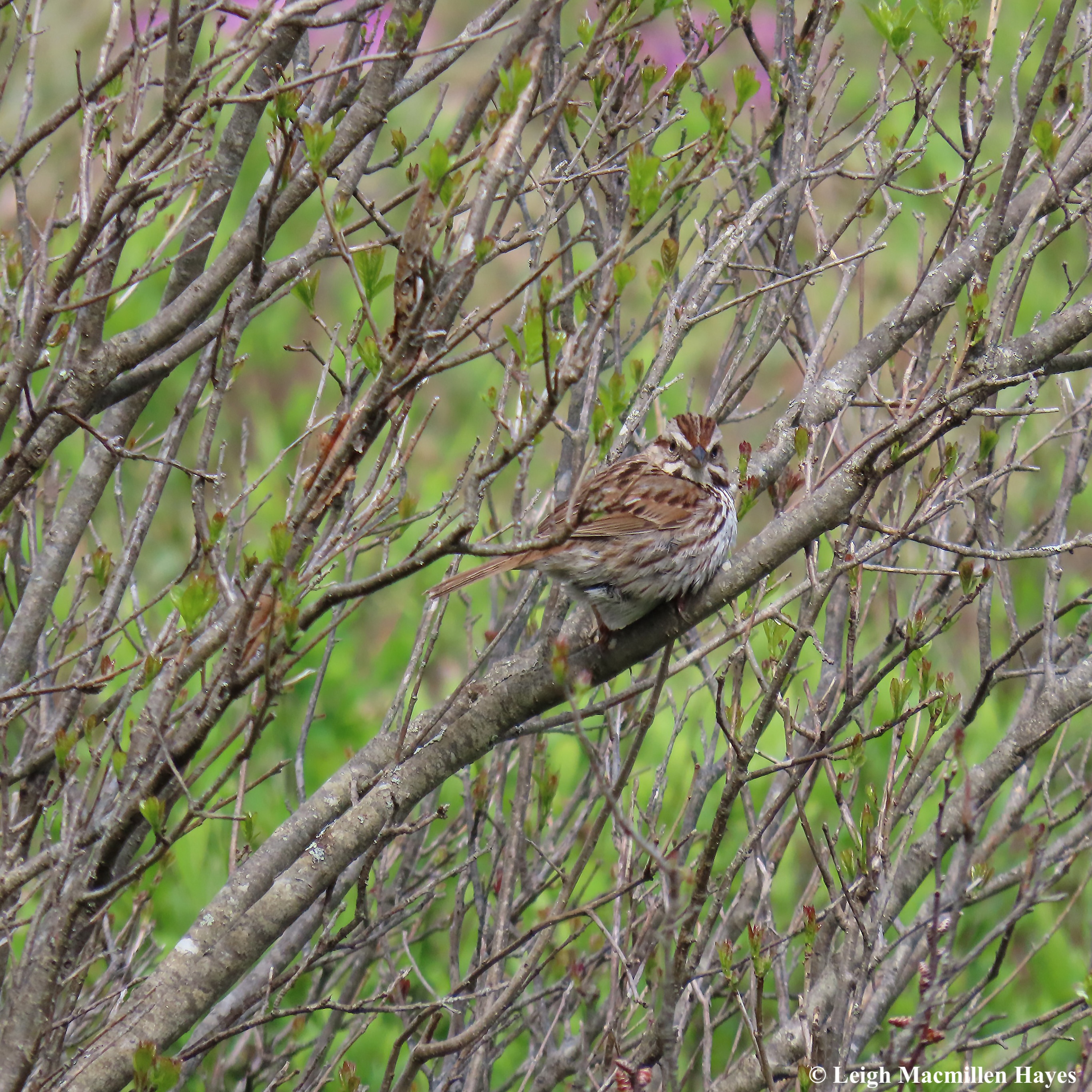
Being in a wetland, the bird song was plentiful, but though the Merlin app included a chorus of plenty including Redstarts and Towhees and Common Yellowthroat and more, the only one who posed was a Song Sparrow.

I walked about a mile away from my starting point, but really was eager to return because I knew there was more to see and learn in that spot.

Almost back, I met a Dreamy Duskywing Butterfly, a species I’ve met in this place before but not sure we’ve encountered each other anywhere else. I love the tapestry of its dusky wings.

A moment later, an old friend flew in–Hudsonian Whiteface–this being a male, for the female’s markings are yellow. These are early spring skimmers, and I have to remind myself not to confuse them with Calico Pennant skimmers who have similar, yet different abdominal markings, he being red and she yellow. Also, the Calicos, being pennants, have a stained glass basal wing pattern that the Hudsonian’s don’t exhibit.

Back at base camp, or rather, my starting point, I checked on Sir Lancet. He’d crawled up the branch to a rather perfect hiding spot at the Y, at least to my eyes. And look into his eyes I did. Including the three simples eyes, singularly called ocellus, which are arranged between the two large compound eyes. Each ocellus offers a single lens with which to view the world, while the compound eyes offer multiple lenses. Amazing. I can’t even begin to imagine such sight.

But what I also noticed about my folded-wing friend was the green “blood” that seemed to be stuck within those wings. Dragons and damsels and other insects that emerge from an exuviae break through their old skin, their wings coming out first with the head, and then pulling the abdomen out slowly and pumping their insect blood first into the wings until they reach full length before drawing said blood back into the body and allowing the abdomen to extend to full length and slowly take on the hues of its adult self.

I’ve seen this in others with folded wings though, where the insect blood seems to have become blocked and is still visible in the transparent wings and maybe that’s why they are deformed? But what causes this?

I don’t have an answer, but try to remind myself that eventually this dragonfly will become units of energy for a bird or another insect and that’s its way of giving.

Meanwhile, though it was getting late and the temperature was starting to drop again, two immatures caught my attention–a Mayfly subimago or dun and another Lancet. Both had cloudy wings announcing their age.

And both were fairly safe in each other’s company, for the Mayfly has no mouthparts, not that it could eat anything as large as a dragonfly at this point, and the Lancet wasn’t quite ready to eat yet for it had some more work to do in order to become a flying predator.

Slowly Lancet’s wings became more transparent and though dinner prep was on my mind and I knew I needed to head home, I waited until it spread its wings and then without a backward turn or wave goodbye, took off. Despite that, I wished it my usual, “Fare thee well.”

And as I walked back to the truck, a young Lancet met me. I was totally surprised to find it land with wings folded over its back. Had we just met only steps away by the water? How cool would that be if it were true.

And then my all-time favorite appeared, a Stream Cruiser with its Oreo Cookie coloring. I was asked the other day what my favorite bird is and I came up with at least five different species, but the Stream Cruiser will always be my favorite dragonfly.

And dragonflies and damselflies on Memorial Day weekend–another favorite for we all know that the Black Flies will now be on the decline.

Memorial Day weekend not only means a return of the Dragons and Damsels who slay those other pesky bugs, but also a time for us to remember those who died serving our country, like my Mom’s brother, age 19, who died in World War II. Thank you Uncle B. We never met, obviously, but Mom brought you alive in my mind for you were her best friend and I know you are with me and trust you would approve my curiosity and adventures and reverence for the natural world .

Wednesday Wanders=Wonder-filled

You know when you start something and you have no idea of what the future will hold and yet, you forge ahead cuze that’s what you naturally do? Well, that’s been the experience fellow Master Naturalist Dawn and I have had since I retired in October 2023.

At the time, I knew I would deeply miss outings with the Greater Lovell Land Trust docents, a group of dedicated volunteers who love to learn and then share that knowledge with the public. But, I’d made a promise to step away so the new person could have some space.

I’m a teacher at heart, however, and needed to continue down that path. So, prior to retiring I had approached Loon Echo Land Trust and asked if I could lead some winter walks for them, sharing the art of tracking and other winter wonders with their participants. That idea was well received and I invited Dawn to help. We began in November 2023 and when March 2024 arrived, and we should have been winding down, I realized we were having so much fun that the program needed to continue and so it did until last July. And then we took a brief hiatus.

The hiatus ended in September 2024, and on our first outing among our finds were a few Brown Hooded Owlet larvae, with their striking colors and pattern.

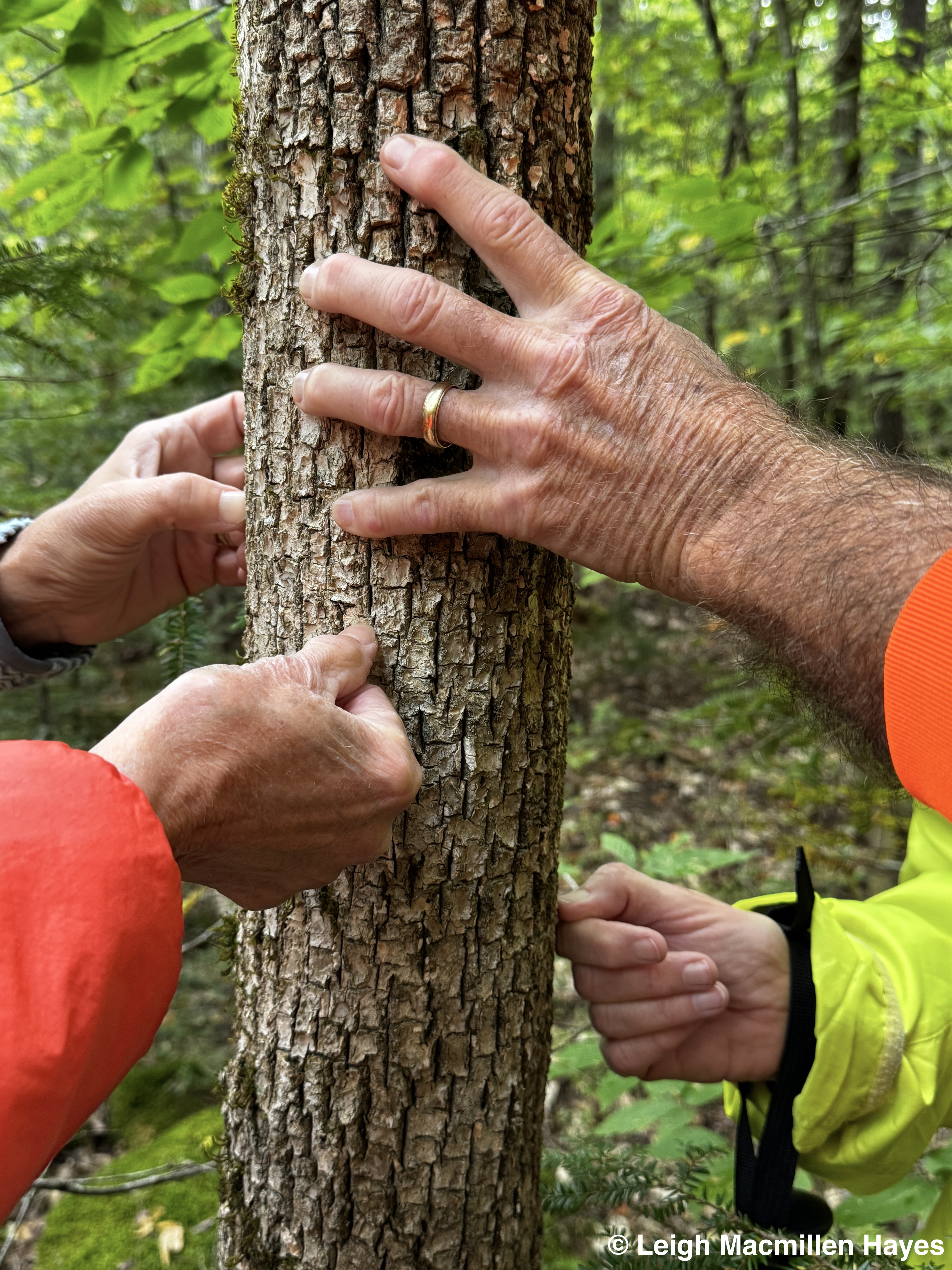
On that same journey, we reached a wetland where Black Ash grow, and encouraged participants to poke their thumb nails into the bark. I love it when people are willing to try and in this case, they realized the bark is corky. Especially after it has rained.

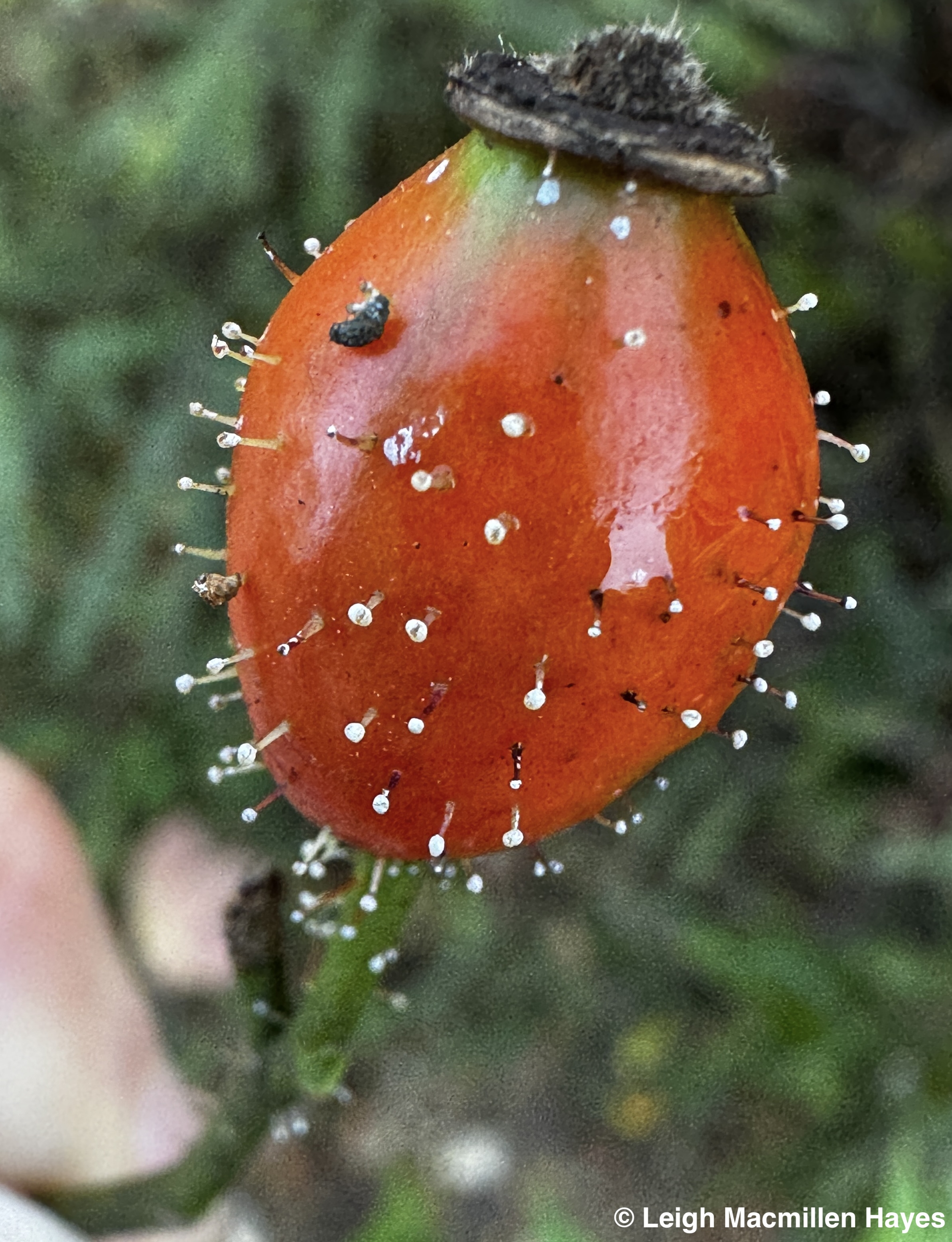
October found us being wowed by rose hips. Because–look at those spikes. We thought maybe a slime mold, but instead discovered it’s the gland-tipped hairs on the hips of Ground Rose. Otherworldy indeed.

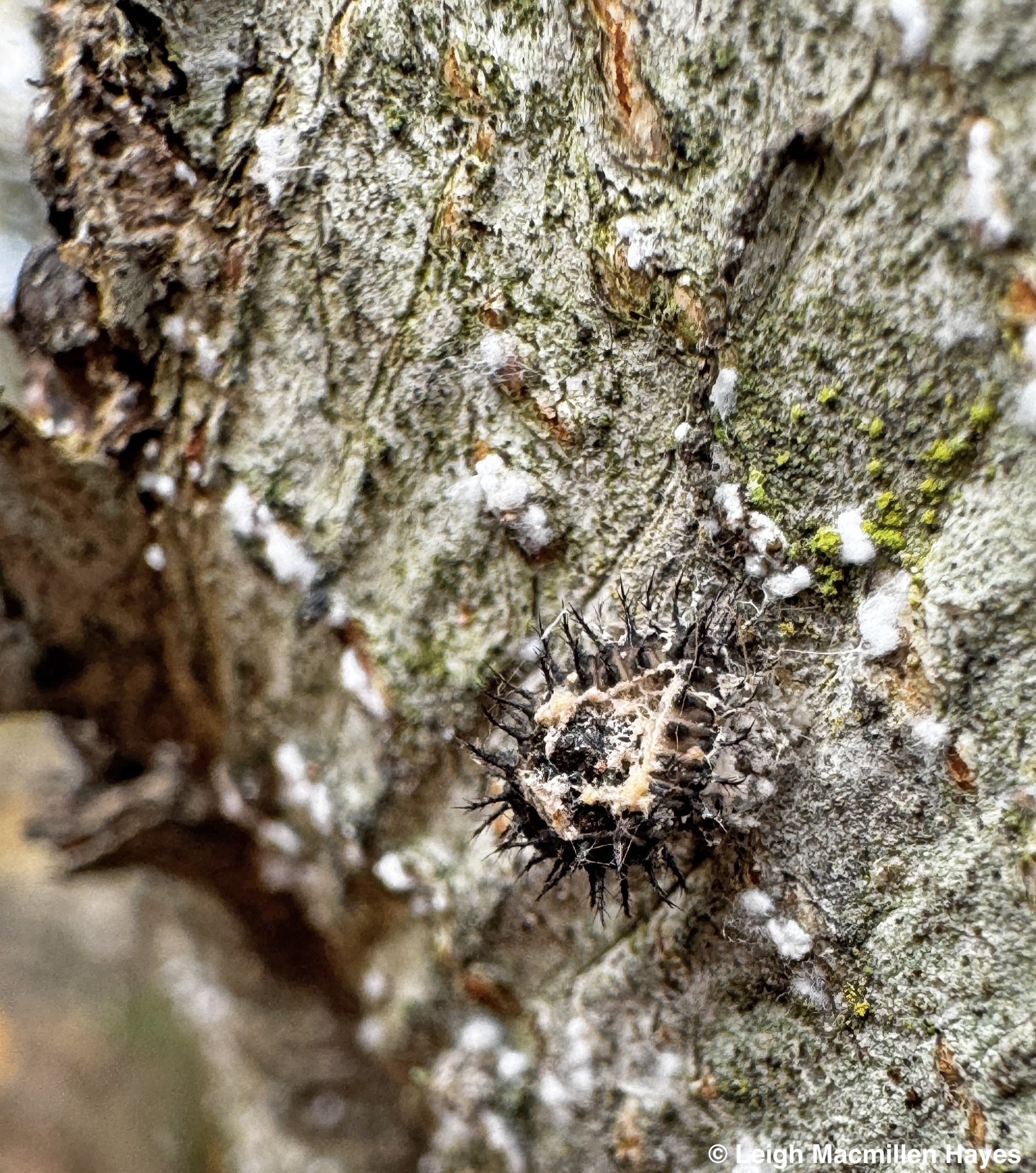
And speaking of otherworldly, the larval form of Lady Beetles also caught our attention, this one having been predated. So spiky as well, and especially when you think of what an adult Lady Beetle looks like–it doesn’t seem to match up. But . . . that’s how the natural world works.

In November, we were only a wee bit surprised to still be greeting Meadowhawk Dragonflies. Notice the tattered hind wing–this one had met with some difficulties we could only imagine.

On another November expedition, while exploring an area where Beavers were quite active and had been busy mudding/insulating the outside of a lodge, plus gathering their winter food supply, we asked participants to become the critters and cut down their own trees. But . . . they had to hold the tree trunk as upright as possible and turn it, because certainly they couldn’t walk around it like a Beaver can.

Timber!

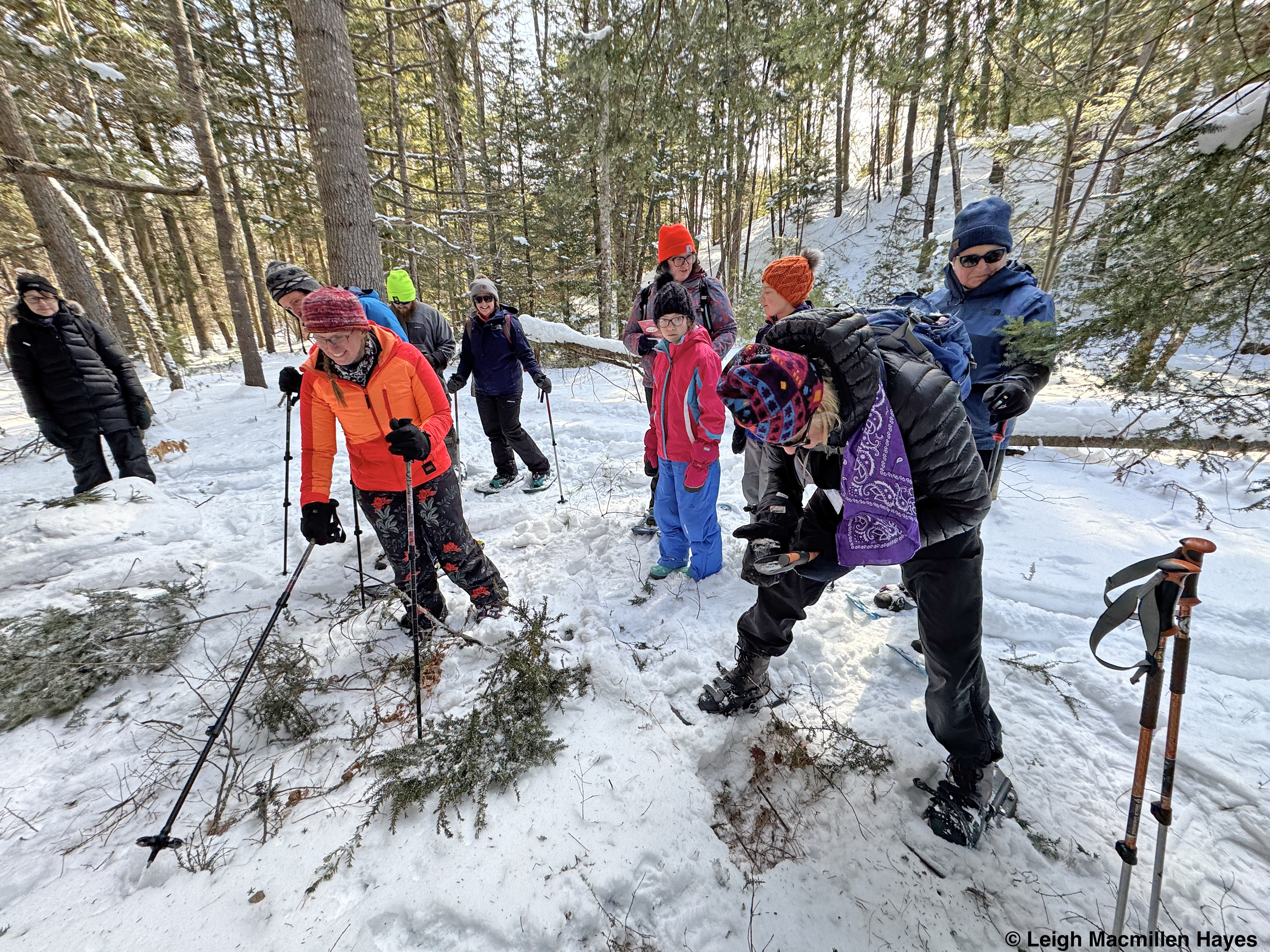
With a bit of snow in December (actually on Thanksgiving Day we had a lot of snow, but then the amount dwindled daily), we started tracking in earnest, spending the start of each walk with a brief explanation of how mammals move and clues to the prints they leave behind.

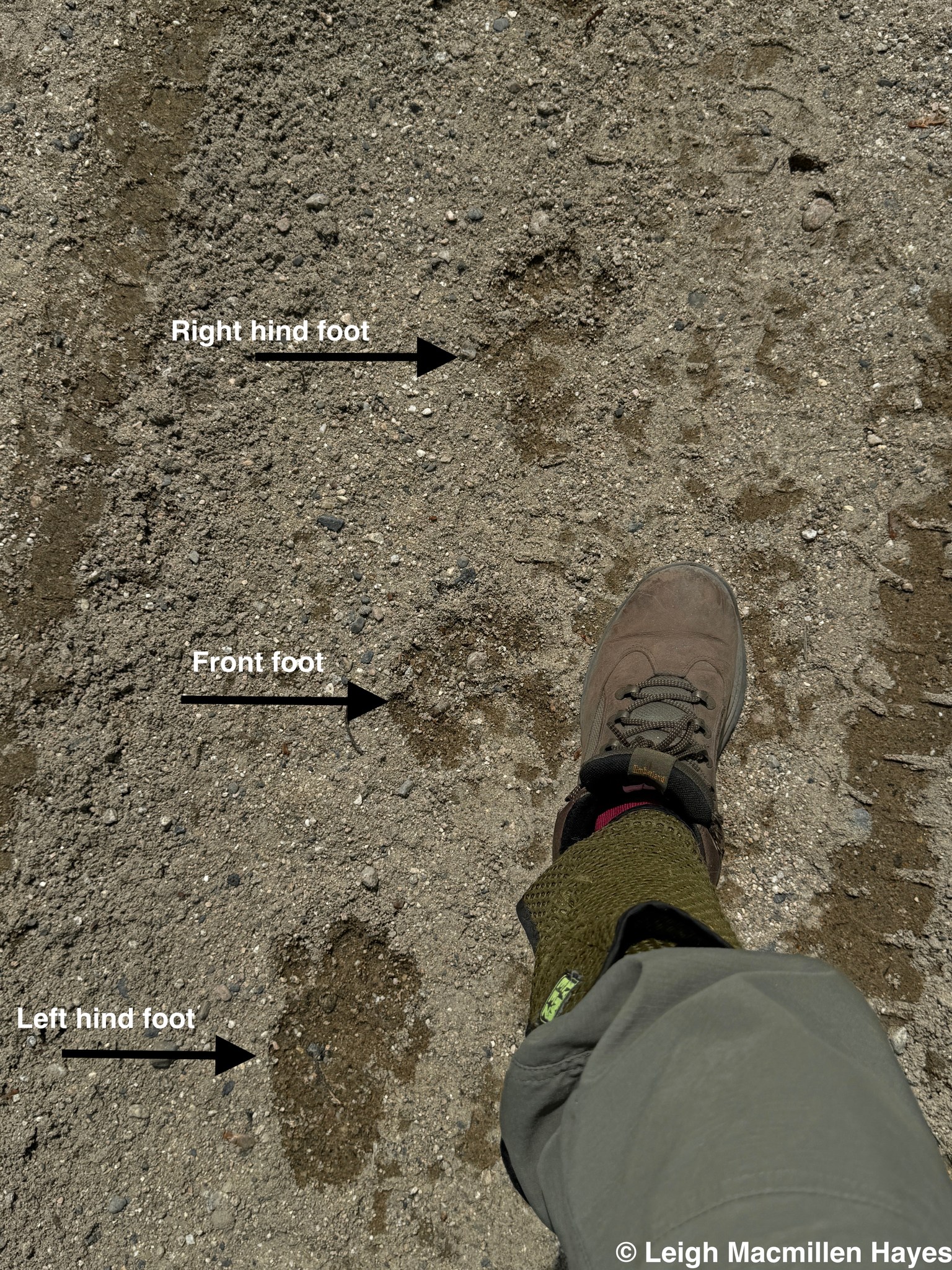
Measuring took on new meaning as stride (length from the front of one foot to the front of the next in a track) and straddle (length between the outside of one track and the outside of the next in the pattern, for example, put your feet together and measure from the outside of the left foot to the outside of the right and you have determined your trail width or straddle, which is key for some mammal print ID) were taken into consideration.

On a cold winter day in January, you would have thought that we’d bring hot cocoa. We had the cups. And we had the thermos. BUT . . . inside the thermos we had what we call mammal blood (red gelatin), and the group split into pairs and went off to find just the right spot to protect their “mammal’s blood” so we could check its temperature about twenty minutes or more later. It actually turned out to be later because we got caught up with tracking an actual critter in the meantime.

When we did check, it was the pair with the highest temperature that won bragging rights. They had found a suitable protected spot for their critter to survive.

We were still tracking in February, and were excited to follow a Porcupine to its den, and then backtrack to its feeding trees, where Eastern Hemlock branches minus buds and some needles, decorated the ground.

And though we had to dig to find, Porcupine scat in its typical comma shape, did happen.

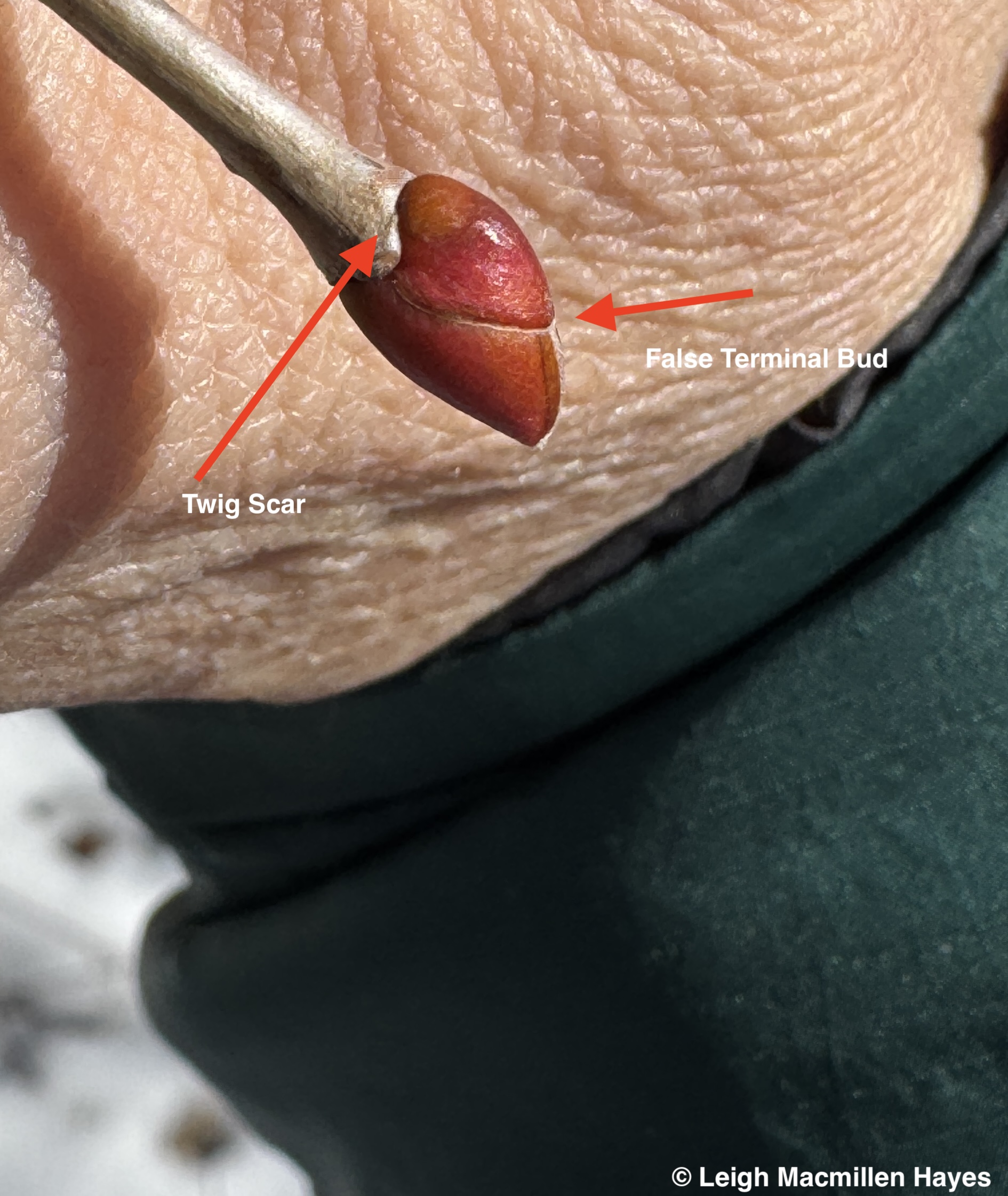
In March, it was the large red buds of Basswood that garnered our attention. And after posting photos of these, an arborist friend commented that the buds look like a mouse wearing a helmet and I’ll never unsee that going forward. Thank you, Eli!

As the temperature began to rise with the March sun, we also spotted deer beds such as this one and knew to look for deer hair! The red arrows point to some as it was time for them to shed their winter coat and with their body heat melting the snow, some stuck to the edges.

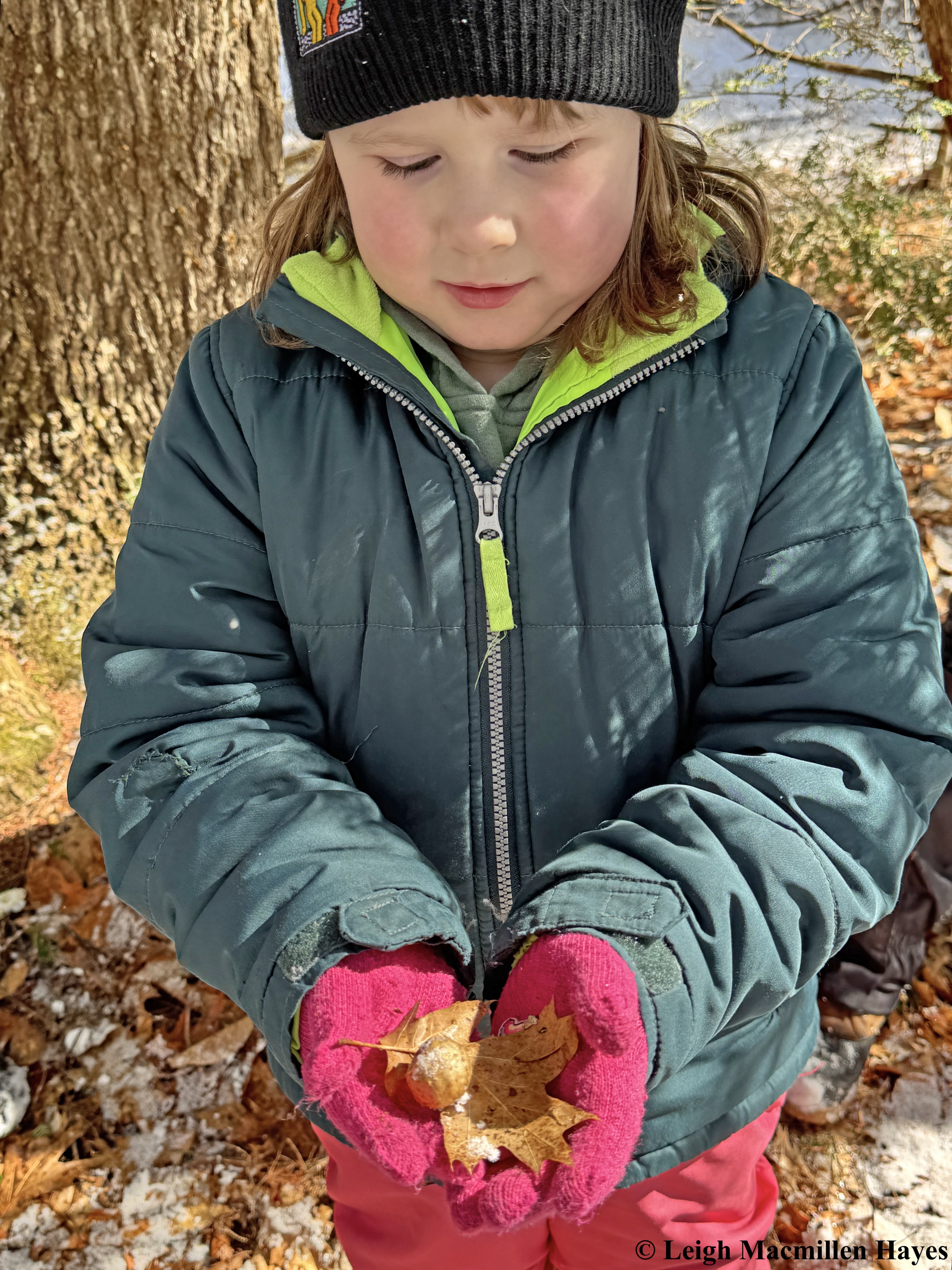
In April, on our way to a vernal pool, one of the many curious naturalists among us found an Oak Apple Gall, that would have been bright green when first formed last spring/summer.

Though it had snowed the day before, we did find Fairy Shrimp in the pool, and rejoiced as always because finding just one of this species makes the pool significant by Maine standards.

As I mentioned in a previous post, there are four species, each with a different count, that help determine if the pool is significant, but any pool that dries up in the summer and then fills up again in the fall is considered ephemeral or vernal.

When the calendar turned to May, we turned our attention to dipping in rivers and streams, curious to see what macro-invertebrates we might meet in those spaces. Out came the D-nets, which we don’t use in vernal pools, because we don’t want to disturb the egg masses of Wood Frogs and Salamanders.

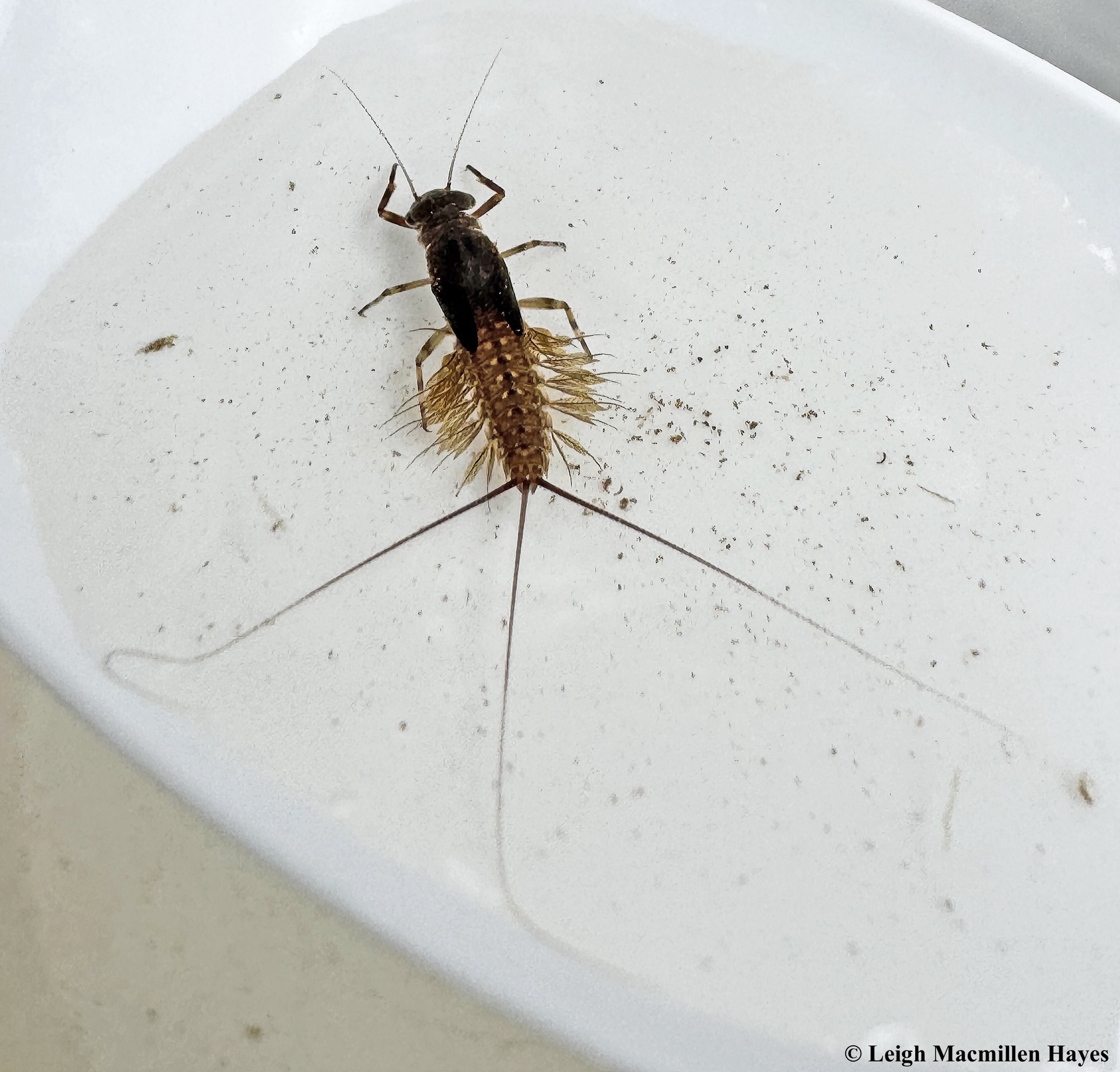
It’s always fun to meet the different species, including a variety of Mayflies in their larval form, with gills along their abdomens and three tails. Long tails quite often. And all that come out of the water, including Mosquito and Black Fly larvae, must go back in.

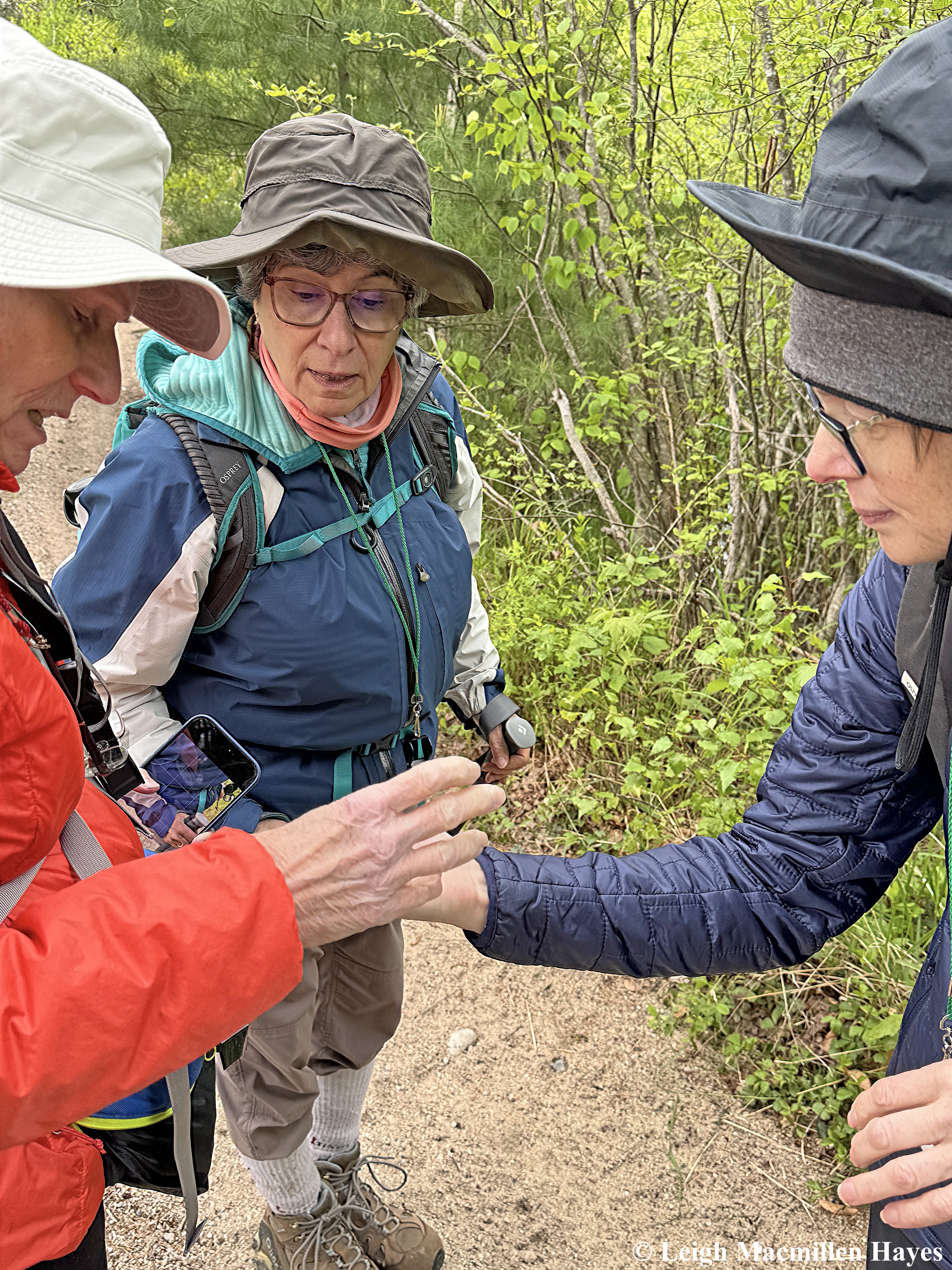
All of this brings me to this morning, when our group was quite small because some had apparently cancelled for various reasons and others were no-shows. That said, we had the best time, as we always do. But today felt extra special. You see, we had a plan to walk down an old trail, but since we were waiting for the no-shows, we thought we’d give them some time to locate us if we first visited a pond located about a hundred feet from the parking area and in the opposite direction of our intentions.

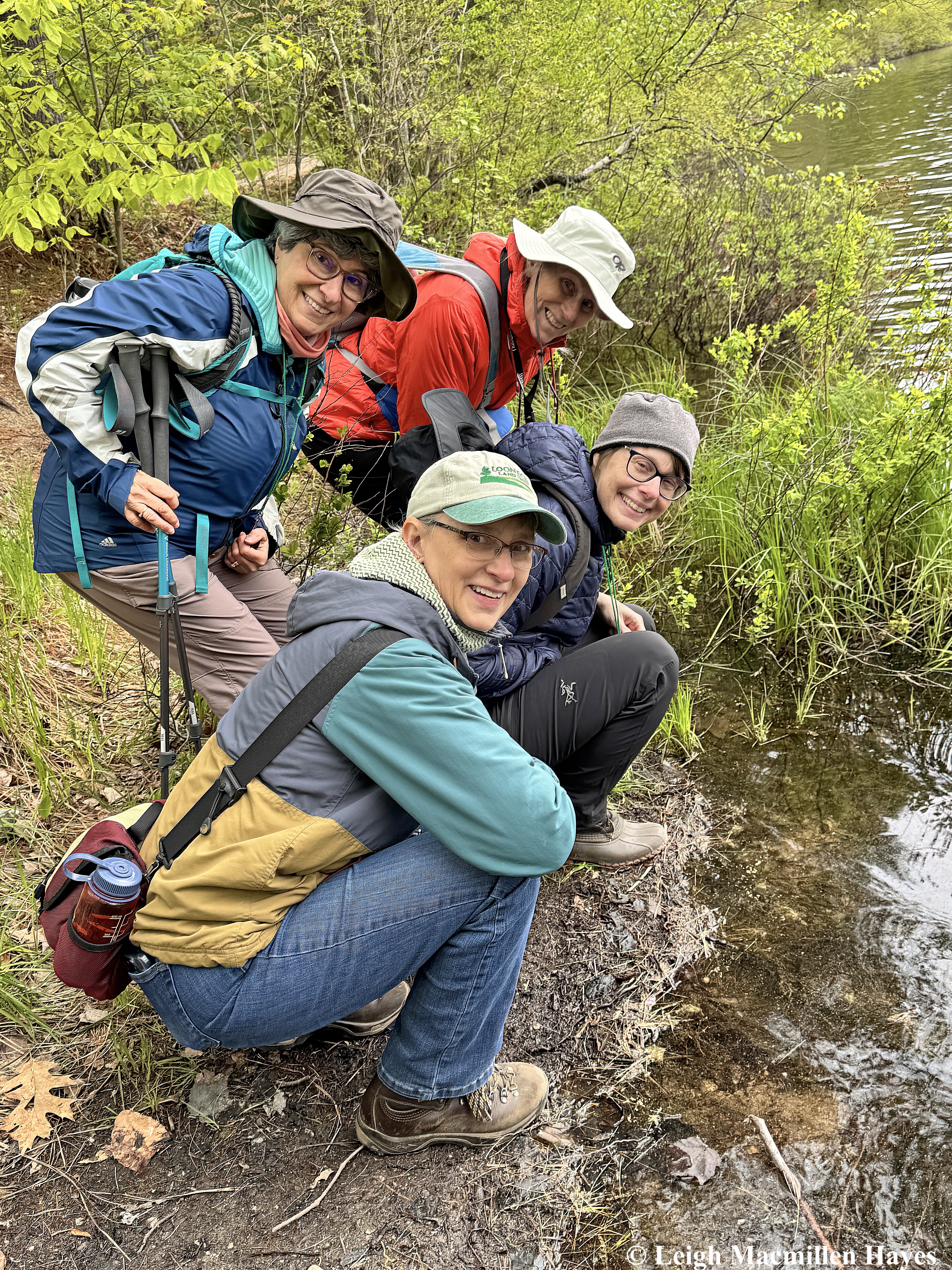
It was while squatting there that we realized miracles were taking place. But . . . we still wanted to share the trail with the participants, so we promised we’d return to the edge before it was time to depart. (As for the no-shows–we’re bummed they missed out.)

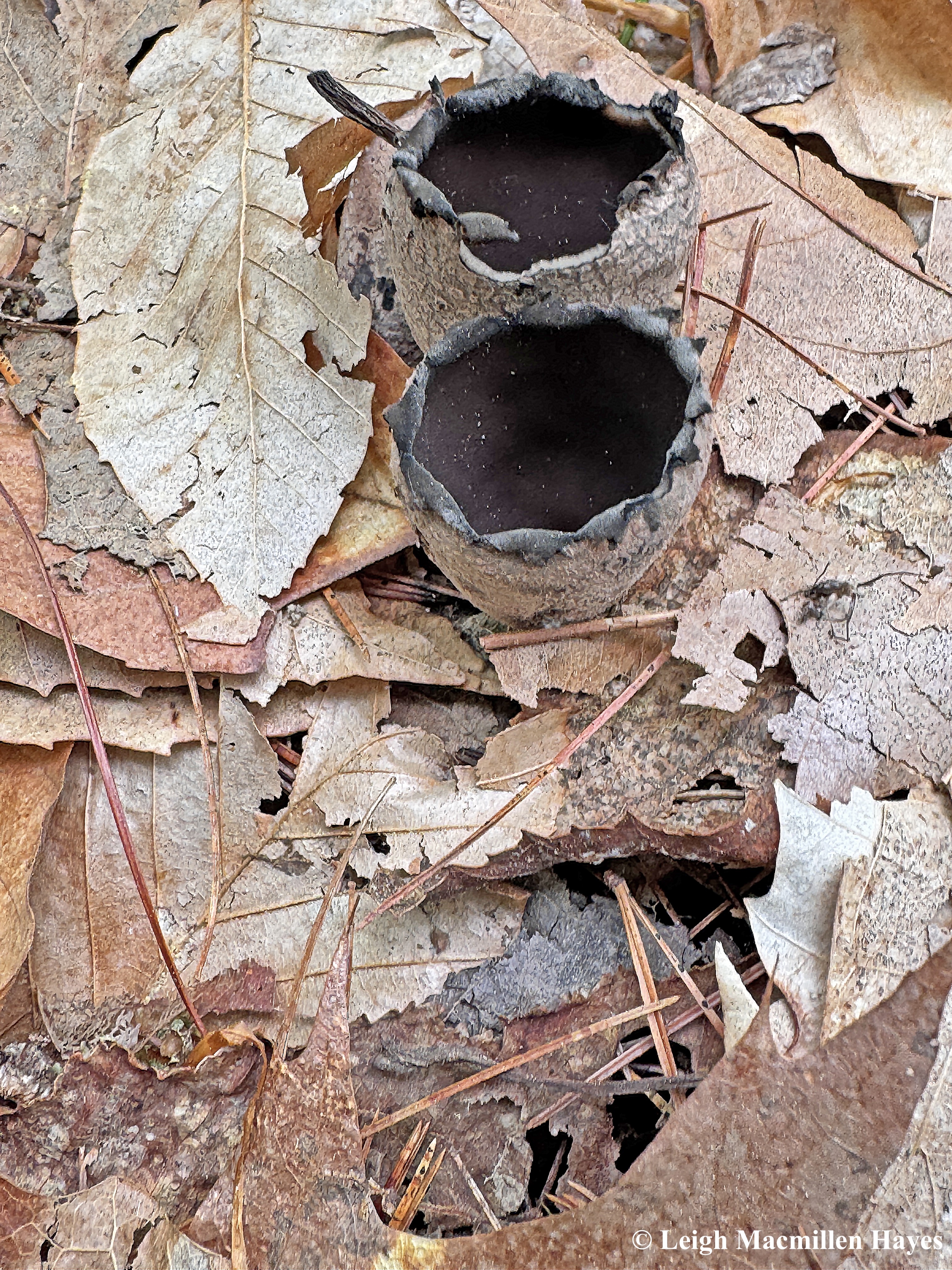
One of the participants who is a fungi enthusiast, and has eagle eyes, somehow spotted these mushrooms. None of us knew what they were, but iNaturalist’s SEEK app identified them as Devil’s Urns.

When I arrived home, I looked them up my Audubon Field Guide, and bingo: “Large, leathery brown, urn-shaped cup; Season: March-May; Habitat: Clustered on fallen deciduous wood, especially oak; Comments: This is one of the first mushrooms to appear in the spring in the East.”

Well done, Julie.

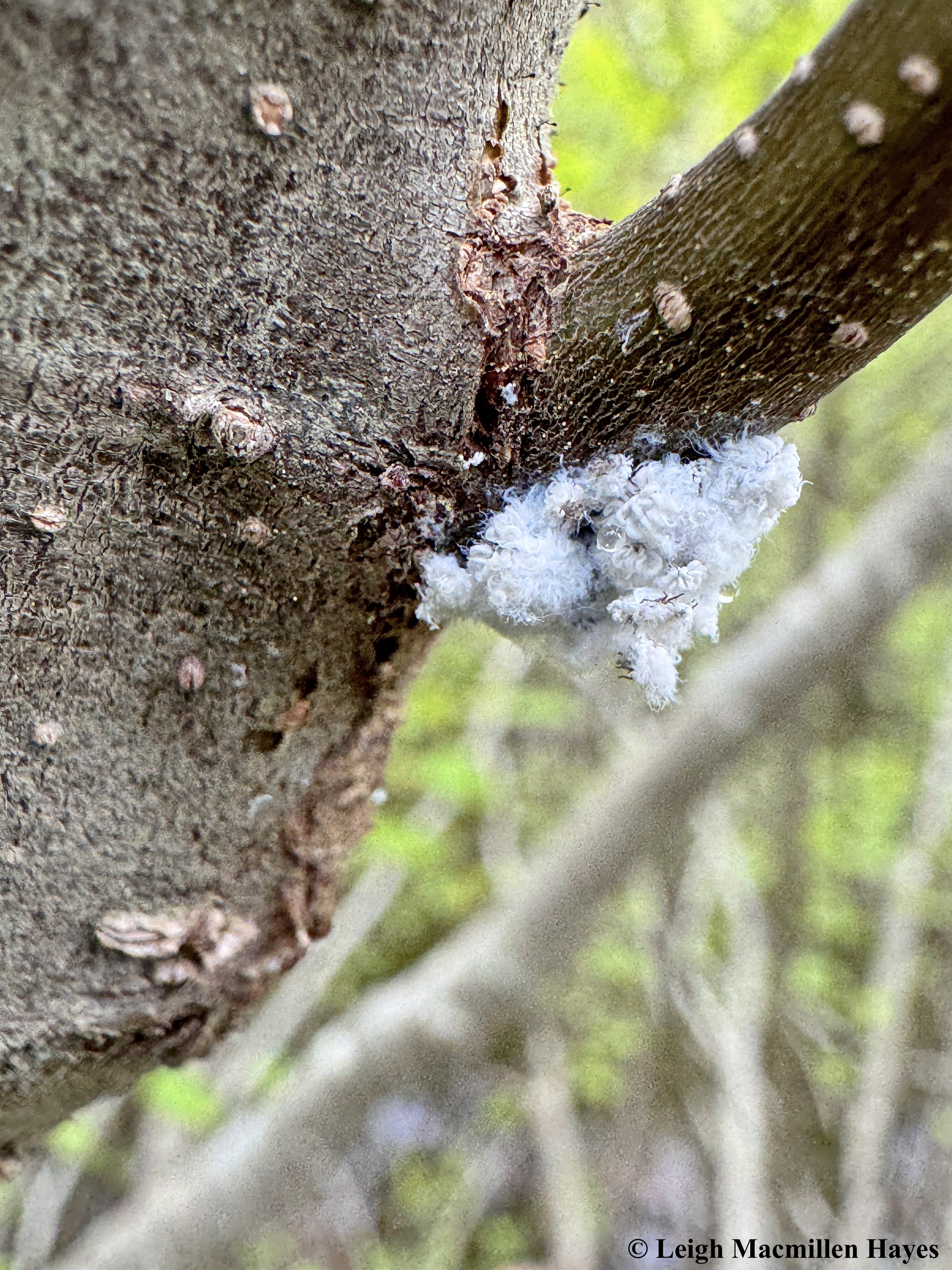
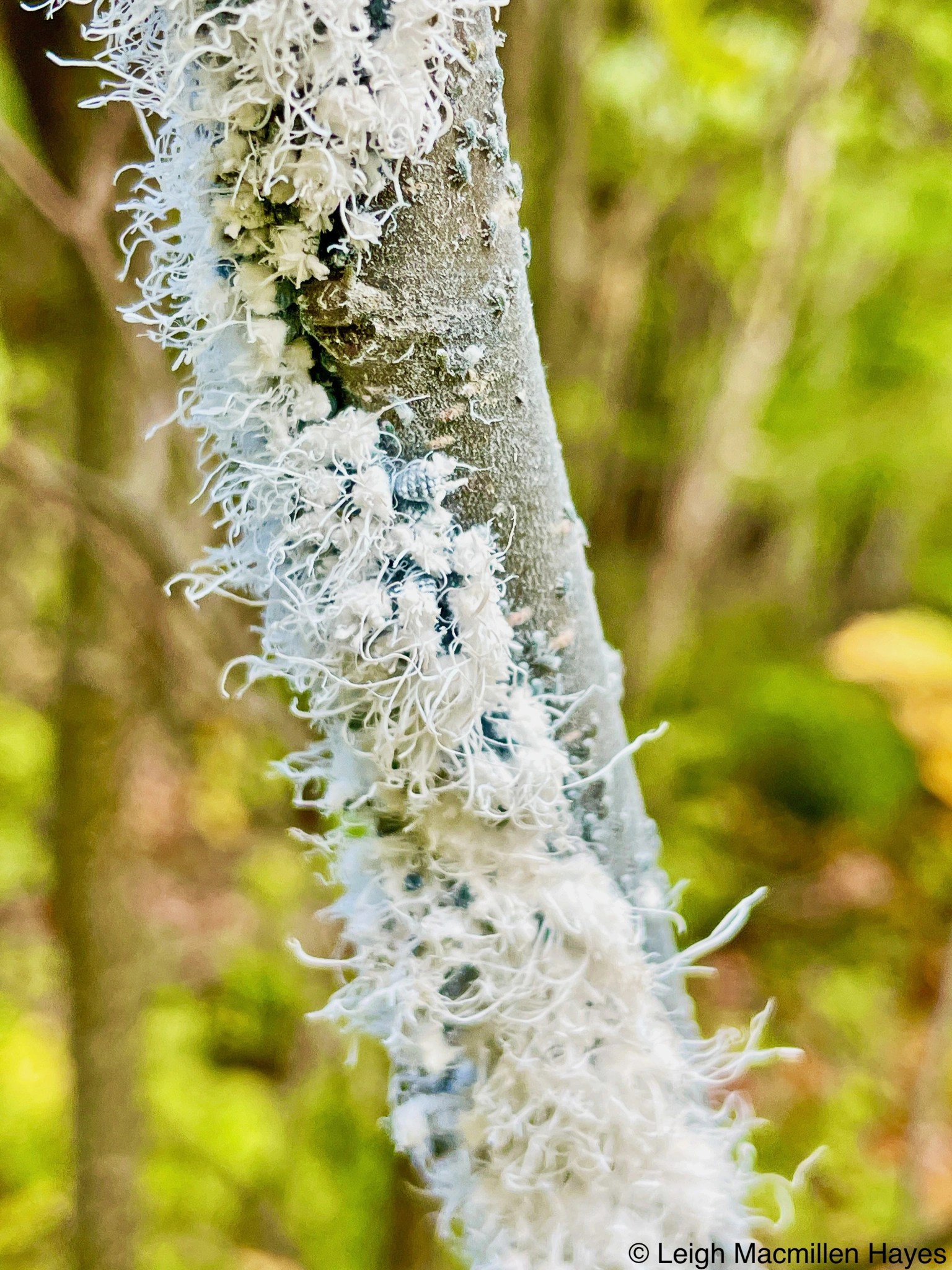
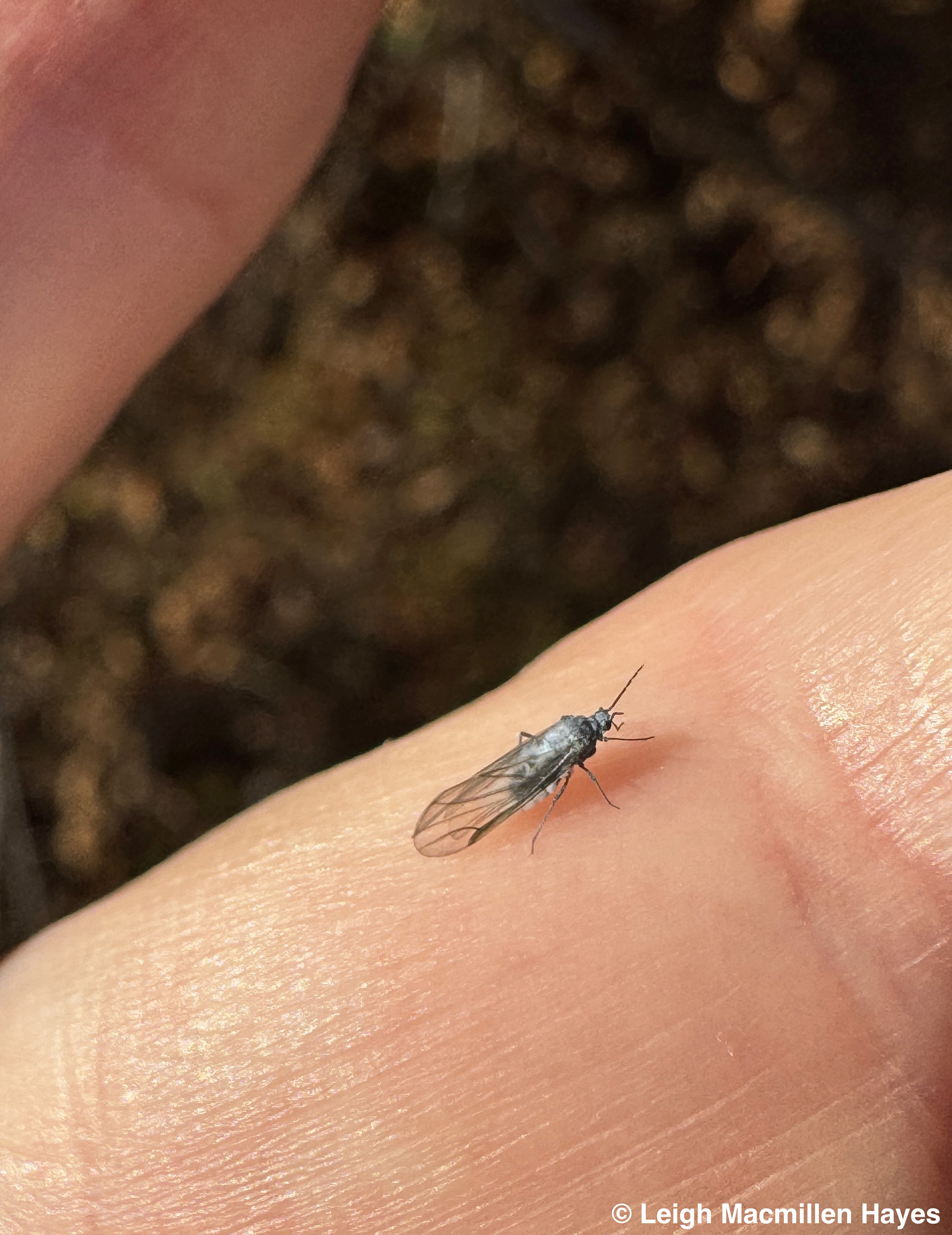
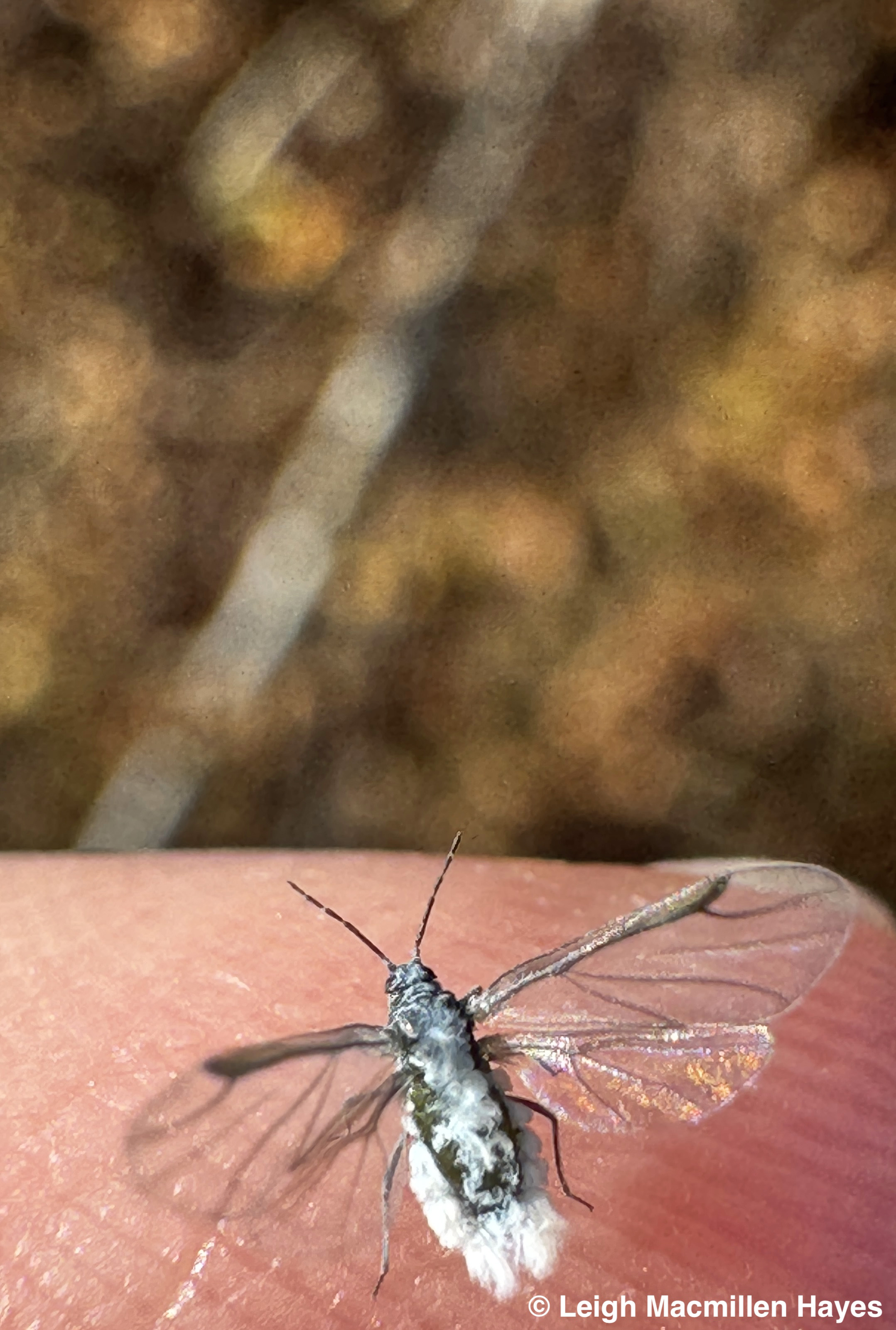
Woolly Alder Aphids were also visible, and once we saw one clump, we began to notice several. As we described how ants “farm” or seemingly tickle them to get them to secrete honeydew, one participant saw an ant and another saw drops of said liquid. Can you see it?

Well done, Marie.

And remember the little girl who found last year’s Oak Apple Gall on the way to the vernal pool in April? Well, another among us today found this year’s galls on newly emerged Oak leaves. It got us all thinking about leaves and insects and how mature insects lay or inject eggs into buds when they first form in late summer and so the moment the leaves begin to unfurl the following spring, larval forms jump into action and leaf miners and rollers and gall makers and everyone else have a heyday.

Well done, Heidi.

Marie, Julie, and Heidi also took an up-close look at last year’s Speckled Alder cones and we noted that the male catkins have already fallen to the ground for this year, their pollination duty now completed.

Lady’s Slippers, and Wild Sarsaparilla, and Star Flowers, and Canada Mayflowers, and Rhodora, and Dewberry, and Bastard Toadflax, and even Poison Ivy were admired and noted.

But, we all had a mission that we wanted to fulfill, so with about a half hour left, we retraced our steps rather quickly.

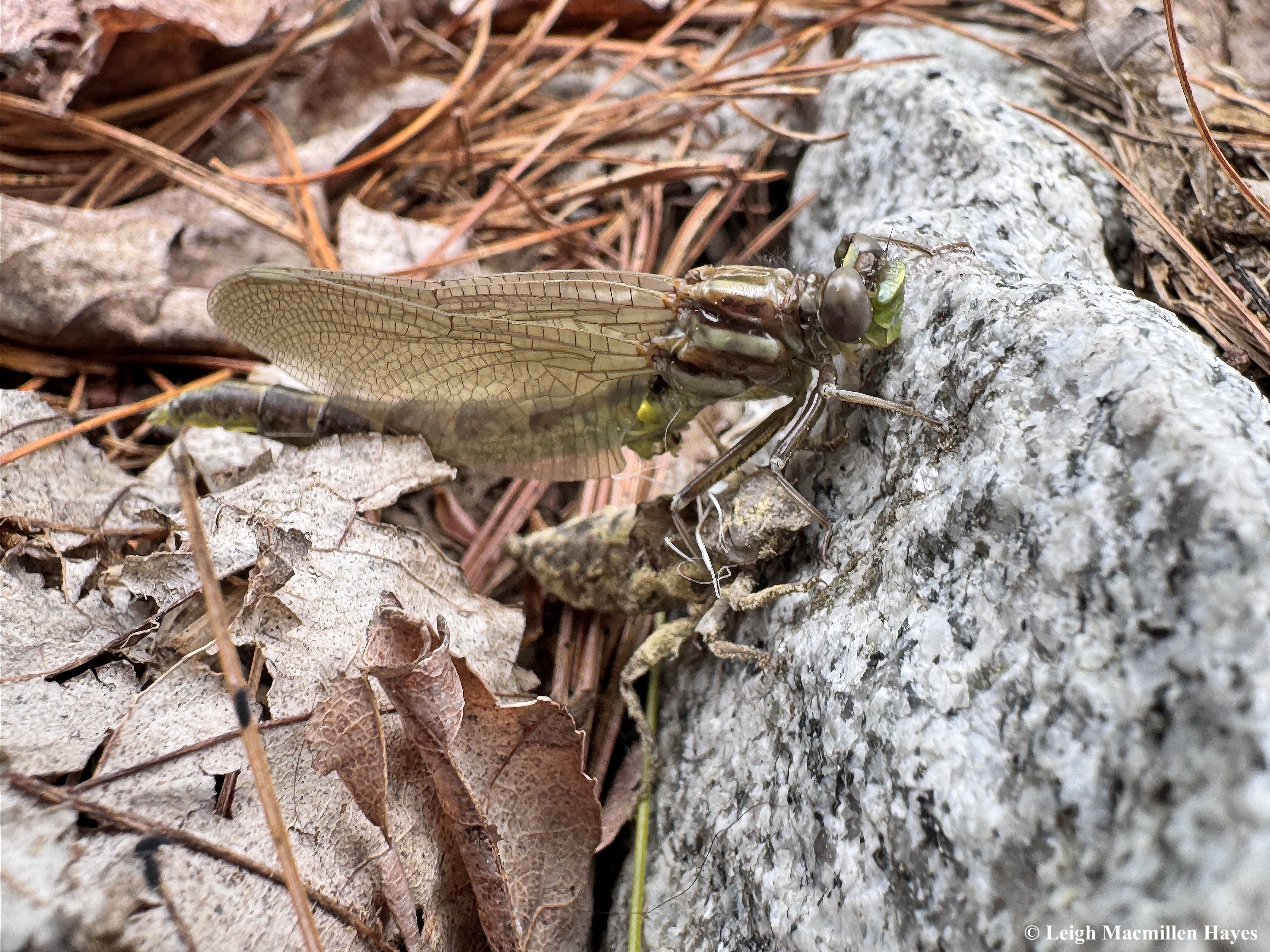
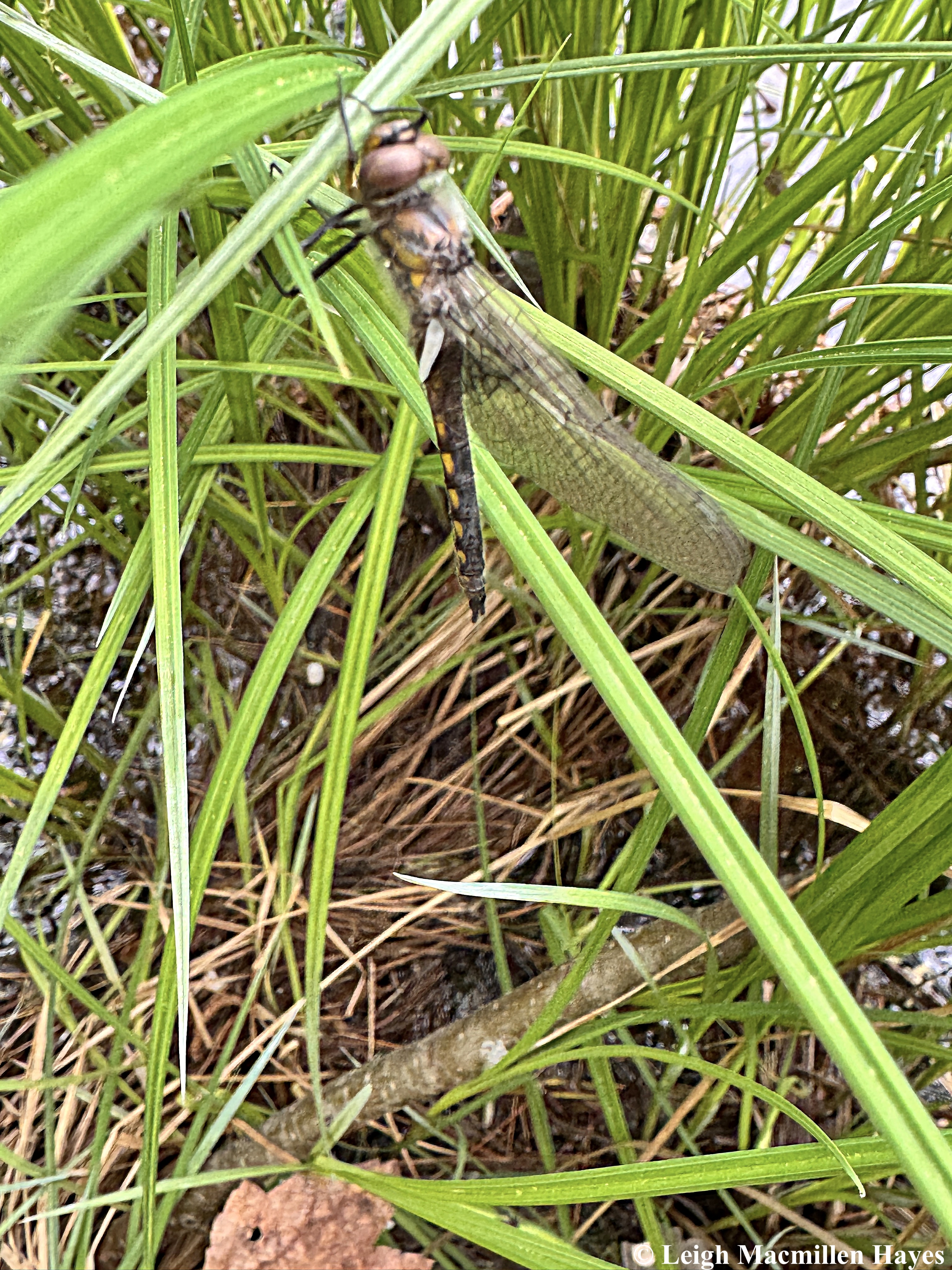
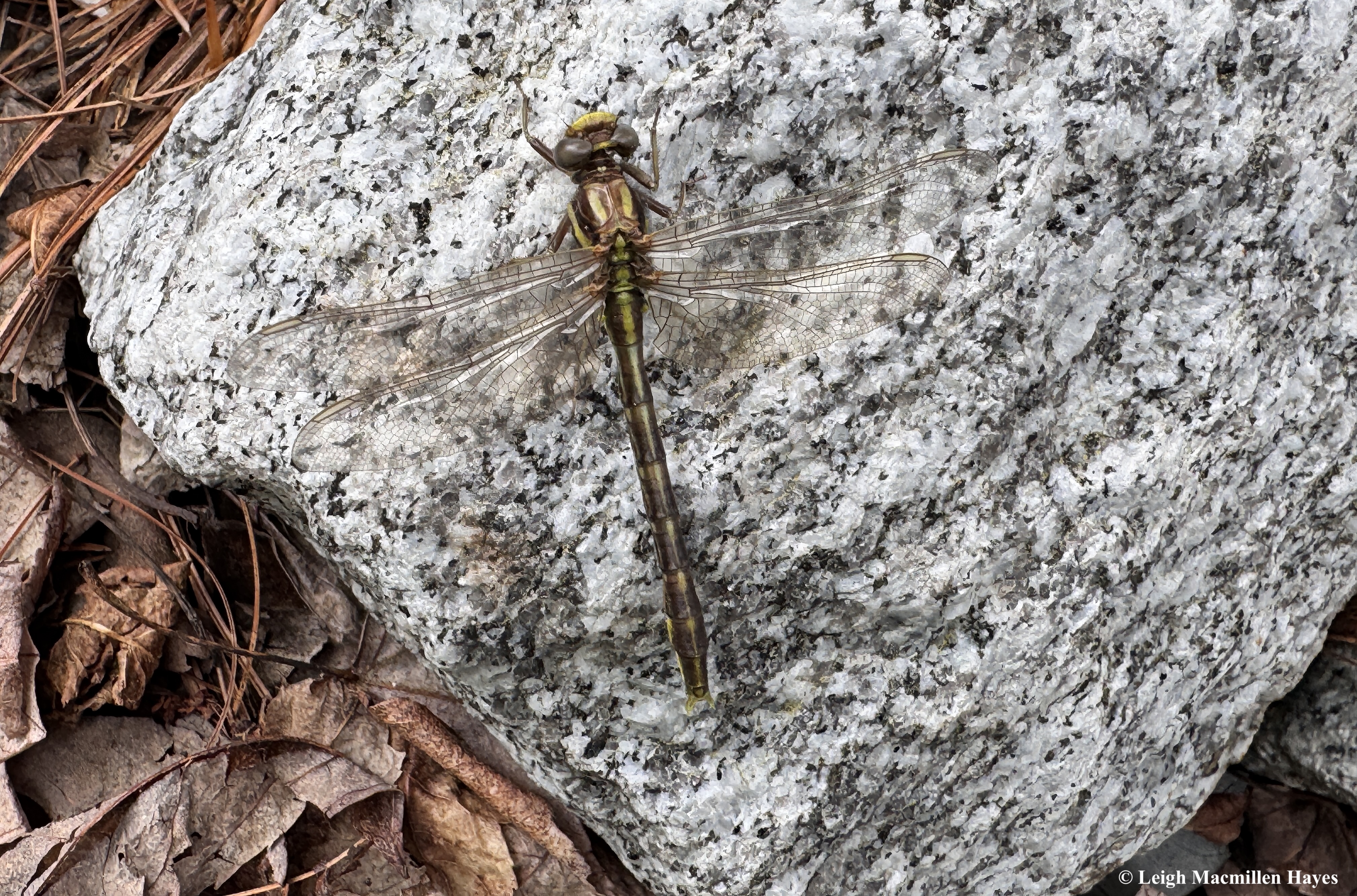
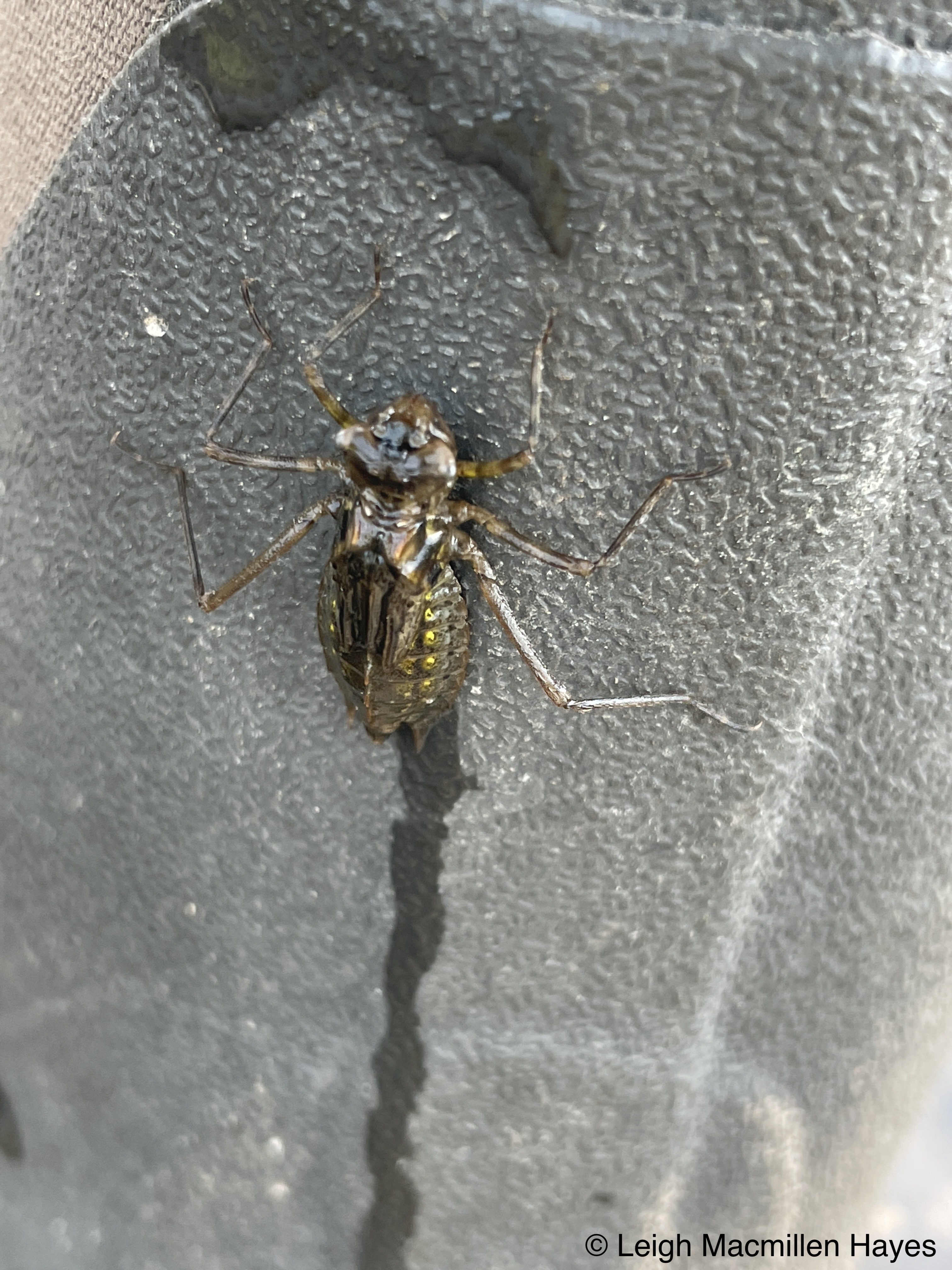
And into the plants at the pond’s edge we peered. Do you see it? A dragonfly naiad (nymph or larval form) upon a broken branch, with the adult form starting to split through the exoskeleton at the point between the wing pads. How could this be? Yes, we’ve seen dragonflies for the last week or two, but it was cold this morning. Raw. Breezy. Seemingly inhospitable for these summer fliers.

Apparently not, for once we looked around, we began to notice them everywhere. The dark naiad climbing up the rock was in search of the perfect spot. And if you look below the rock, you’ll see two naiads, one that is grayer in color, because its adult form had already eclosed or emerged; and the other browner one with the adult starting to pull out of the aquatic skin.

Here’s a closer look at the ones under the rock. Notice the eye placement. That is key to Identification according to family. In this case, with the eyes spaced far apart, it could be either a Petaltail or a Clubtail.

As I said, they were everywhere, and we felt it our duty to watch over them. To protect them from being predated, which is actually kinda funny, given that they are predators. But predators of the best kind because they feast upon Mosquitoes and Black Flies and Deer Flies, and others, of course, but it’s for those first three that we appreciate them.

Can you see how the adult is pulling out of the skin?

And do you see thin white strings extending from the exuviae to the back of the dragonfly? Those were the spiracles or underwater breathing tubes, which are no longer needed by the adult.

A few minutes later it is further out–can you see that? Once it gets its abdomen all the way out, it typically holds onto its shed skin and then pumps its insect blood into its wings so that they expand, before drawing that blood back into its body, allowing its coloration to eventually take true form.

Look for the white strings again.

Do you see them now? Completely unnecessary and therefore left behind.

When the wings are at full length, they are held over the back and cloudy in color until it’s time to spread them and let them dry before first flight.

The eyes on this newly emerged dragonfly, along with its abdomen markings and cerci or claspers at the tip of the abdomen, tell us its in the Emerald family, and I suspect a Common Baskettail.

As we watched, we noticed some had wings that were stuck together, and this one with a curved abdomen. It was curious that it had left its exuviae before its wings emerged and so I wondered if they would unfurl.

A few delighted us because we got to watch them spread their wings apart–translucent and shiny as they dried.

By the eye placement and beginnings of the markings, my identification stab is for Lancet Clubtail–one of the friendliest dragonflies who likes to land on us when kayaking. Or even on the dock.

As you can imagine, we had to pull ourselves away. The walk was supposed to end at noon, but it was 12:40pm when we finally finished–and honestly, I think we could have stayed a few more hours if we had food and other necessities.

All of our Wednesday Wanders for Loon Echo Land Trust are incredible because each one offers its own moments of awe.

Being honored, however, to share the emergence of dragonflies from their aquatic forms to terrestrial–and helping the ladies to understand that it takes hours for this process, and being surprised that so many had chosen what we considered to be a chilly spring day . . . it was beyond wonder-filled. As every Wednesday Wander is. But today, today was over the top.

Dragons of the Future

Spring is actually a combination of many seasons, beginning with winter that doesn’t want to let go, followed by mud, and then road-repair, with bug quickly taking form following several days of rain, and soon to come, my favorite of all–dragonfly season.

And so I thought I’d take some time to honor friends I’ve met in the past and try to get to know them better . . .

With my pencil first. Sketching is such a wonderful way to slow one’s self down and try to capture the essence of the object. Thankfully, with pencil and a good eraser, changes can be made and believe me, I have, and will continue to edit these.

Darner Naiad

And then I decided to take it one step further–by painting the Naiads (larval form) of six dragonfly families.

One of the incredible wonders of this world is that the aquatic form of dragonflies become terrestrial and we anticipate and celebrate their emergence every spring, knowing that BUG season won’t last too much longer. Well, in some places. Right Jenn?

Usually, they begin to emerge by the end of May and then it’s an ongoing process, with some waiting until late summer or early fall to transition from one world to the next.

This is a Black-tipped Darner that I met in the fall a few years ago when it was barely alive. It was on the grass by the outlet of Deer Hill Bog in Stow, Maine, which is a typical habitat for this species, though it isn’t common.

Stream Cruiser Naiad

After painting the Cruiser Naiad, I thought I’d use the iNaturalist APP: SEEK on it and bingo, SEEK identified it as a Stream Cruiser. All the rest came up as dragonfly/damselfly, so at least AI knew I was painting insects, but I was excited that it could reach the species with this one.

When immature, Stream Cruisers remind me of Oreo cookies, or maybe an Ice Box cake, which is actually rather funny because a few days after my birthday last year, I was the surprise recipient of an Ice Box cake. Thank you, Deb!

There are not a lot of cruisers in the Cruiser family, and as far as I can tell, this and the Swift River Cruiser are the only two found in New England.

Emerald Naiad

Okay, so I tried to show the hairy body of the Emerald Naiad. If you’ve ever looked through a loupe or hand lens, you’ll know that the whole world is hairy!

Most Emeralds have greenish eyes and this Kennedy’s Emerald is no exception. In his field guide, Dragonflies of the North Woods, Kurt Mead writes, “Named for Dr. Clarence Kennedy, a professor at Ohio State University and a pioneering odonatologist.

Also in the Emerald family are the Baskettail dragonflies, this one being a COMMON Baskettail. I’ve commented before on the word “common,” and probably will again, but seriously, do you see anything common about this intricately-designed specimen?

Spiketail Naiad

So, um, I drew and painted this Spiketail Naiad, but to my knowledge, I’ve never encountered a Spiketail. I guess that should be one of my goals for the upcoming season. And I’m sure that having said that, I will start receiving photos of such from friends who have spent time with the adult members of this family.

Clubtail Naiad

Clubtails, however, I do know and meet often. They are so named because most adults have clubbed abdomens.

One of the ones I meet most frequently is the Lancet Clubtail–who loves to greet me on our dock or accompany me for a kayak ride. Do you see how the end of the tail is more club-shaped?

I will say that I often have to slow my brain down to differentiate between a Lancet, Dusky, and Ashy Clubtail.

I would be remiss if I didn’t mention the biggest Clubtail of all: Meet the Dragonhunter. Yes, he has a clubbed tail. But also yes, as his name implies, he eats other dragonflies. Oh, there are plenty of other things on his menu, but at up to 3.5 inches in length, this big guy may also eat butterflies and even other Dragonhunters!

I would also be remiss if I didn’t share this photo of a Dragonhunter exuvia, which Dennis Paulson, author of  Dragonflies and Damselflies of the East describes as “wide, flat larva that resembles a wood chip.” The legs alone speak to its strength; formidable in the water and out.

And this is just a reminder to self that though I sketched and painted one form of a dragonfly naiad for six species, some may have other shapes. It’s the cerci at the tip of the abdomen that becomes key for identification to family.

Skimmer Naiad

My final painting completed this afternoon is that of a Skimmer Naiad. This is the largest family of dragonflies and every ID book includes a thick section for skimmers.

That seems apropos because not only are there a lot of family members, but their abdomens are also quite thick or chunky.

Pictured above is a male Calico Pennant Skimmer. His counterpart has all the same markings, but where you see red, she sports yellow. And soon, a pair of cousins will fly before the Calico Pennants. The cousins are the Hudsonian Whitefaces. Their abdomens are similar, but they have clear wings and as the name suggests, white faces.

That being said, I again have to slow myself down when I spot a Hudsonian because I often mistake it for a Calico at first glance.

I share thousands of photos (and probably have shared at least a million over the last ten years) of Skimmers, but thought I’d keep it simple and end with this one–a male Spangled Skimmer. Note the white stigmas on his wings. That I am aware, no other dragonfly has these white stigmas.

Thanks for stopping by to check on my current Naiad collection.

Naiads are the dragonflies of the future.

And the future is close at hand.

I can’t wait for spring 2025 to debut her dragonfly season.

Where The Beaver Led Me

Where there is water there may be Beavers. And so I explored two locations on several occasions this weekend in a quest to spend some time with one of the most incredible mammals of our region.

One such spot is beside a wetland associated with a brook. It’s a place rich with color and texture, and ahh, those fall scents of earth and water and fallen leaves and Balsam Fir all settled together in the late afternoon after the morning sun has baked them.

The other was beside another brook that served as the outlet for a small pond, and again the colors and textures and scents filled my senses, enhanced by a slight breeze that made for a most delightful exploration on October days with temperatures in the 70˚s.

I don’t want temps to remain in the 70˚s always, but these days are gifts meant to be cherished and remembered by our skin and our soles.

I discovered along the way that I wasn’t the only one basking in the sunlight, for Painted Turtles also took advantage of the warm rays to regulate their body temperature. It also provides an opportunity to hang out with friends as they congregate along logs and rocks.

Easter Painted Turtles, beautifully adorned as they are, feature intricate red coloring along the sides of their shells and bodies, plus a orangy-yellow belly, and lines of red and orange and yellow green on their necks and legs.

But beyond all of this, I’m reminded that they play a vital role in maintaining the health of their ecosystems as they consume a diverse diet from aquatic plants, to algae, insects and small invertebrates, thus cycling nutrients throughout the habitat–an environmentally healthy habitat.

I gave thanks to the Beavers for reminding me of that fact.

Back to the Beavers, my journey continued when I spied new Hemlock branches atop a lodge.

And then I began to find pathway after pathway across land to water where the family, since there are usually two or three generations of Beavers who live in a lodge and work the area together, had dragged downed trees and branches overnight and carried them between their teeth out to their residence.

Their works were many and sculptures magnificent as they chiseled away and when I spotted this tree, I had visions of one standing on its hind feet and using its tail to form a tripod, the better to steady its body, as it turned its head to the side and began to work. With head cocked, it created the consistent angle of the half inch groove as the upper and lower incisors come together.

To reach such heights, I could only assume it was a mature Beaver. That, or one stood upon the back of another. Ah, but that’s the stuff of fairy tales. (I do like fairy tales–just saying).

As I looked around the base of a tree for more evidence, I discovered this. What could it possibly be? Scat?

No. Pellets? Yes. Several of them. Filled with bones. And maybe hair. And/or feathers.

The creator? My brain automatically went to Barred Owl and I’ve seen and heard the owl in these woods on many occasions.

But . . . these natural treasures could also have been produced by a resident eagle or hawk or so many other birds. Based on the number of pellets under this one tree, its a certain signpost of a productive area for whatever bird chose to prey from above.

Moving farther along as I bushwhacked, I knew I was getting closer and closer to the animal of my dreams when I spotted trees being turned into logs.

A beaver’s dental formula is this: 2 incisors on top, 2 incisors on bottom, 0 canines on top, 0 canines on bottom, 2 premolars on top, 2 premolars on bottom (that look like molars), 6 molars on top and 6 molars on bottom, for a total of 20 teeth. Recently, I was able to sketch the upper part of the skull of an older family member, who’d lost some of its molars.

These large, semi-aquatic rodents are gnawers. To that end, their incisors are highly specialized for chewing through really, really tough things and they grow continually throughout the critter’s life.

And like all rodents, the front surface of their incisors is coated in enamel reinforced with iron (hence the orange color), which makes it resistant to wear and tear from gnawing.

When the chisel-like teeth chew and fell trees, the much softer white dentine layer (the section behind the enamel) is ground down quicker than the enamel, thus creating a sharp chisel surface.

As strict herbivores, a Beaver’s diet varies with changes in the season. During spring and summer, they are drawn to waterlilies, algae, grasses, sedges, herbs, ferns, shrub leaves and shoots. By late summer, however, tree cutting begins as they gradually change their dietary habits from herbaceous to woody materials. Twigs, roots, bark and especially inner bark become the source of nutrition. Aspen, birch, alder, and willow are favored species, but beavers will cut almost anything including conifers.

Occasionally, I saw individual logs on land or upon a muddy spot in the water. Again, the consistency of the gnawing was to be admired.

And where there are Beavers, there may also be Porcupines. At least, there was a couple of years ago when I spent some winter days tracking one to this cozy little den. Remnants of scat are all that remain and spiders have instead made a home in the hollow of this tree.

And then I spotted the most amazing feat of all. A widow maker dangling from a tree (that is if you are about eight inches tall), its bottom gnawed off and more gnawing about a foot and a half off the ground.

My search was interrupted again when a Spotted Spreadwing Damselfly entered the scene in a sunny spot. So named Spreadwing because unlike other damselflies that fold their wings over their backs when at rest, the Spreadwings, um, spread their wings. On the of left hand side it looked like this insect had four wings rather than two, but such was the sun’s angle in that spot and thus the shadows upon the leaves.

Identification was based on the lower side of the abdomen, where it is difficult to see, but there are two spots below the thorax stripes as compared to the Great Spreadwing with has two yellow stripes with brown between them, and no spots.

Autumn Meadowhawks were also on the fly and I kept seeing males with no ladies about.

A couple of hours later, one flew in, but though they danced in the air together as he chased her, they never did canoodle, in my presence anyway. And the last I saw of them, they headed to separate branches of a pine tree, perhaps to spend the night in rooms of their own.

The Beavers weren’t canoodling either, but they were certainly active given the rolls of mud and grasses and sedges and probably reeds I kept finding along the water’s edge.

And then I discovered the much sought after (at least by me) Beaver print. It’s a rare occasion to see a print, but sometimes I do in the snow. Their tails and the trees they haul swish away such evidence of their travels.

As I stood beside a Beaver path and downed trees just above where I spotted the print, another flying insect entered the scene. And I had the joy of watching her as she deposited individual eggs in vegetation.

With her ovipositor located under her abdomen, the female Swamp Darner punctures a hole in mud, and logs, and aquatic vegetation in which to lay her progeny. The cool thing is that her eggs can survive a year without water, incase the level is low as it is right now. I suspect by spring these will be quite wet.

I never did find the Beaver(s) of my dreams, but spied another platform that may have been a lodge in the making. I hope they are still living there as the evidence leans in that direction.

At the end of the day, however, my heart was full with all my findings in both locations and I gave great thanks to the Beavers who led the way and all the discoveries I made as I searched for them.

Snow–Bugs and Flakes

Betwixt. Between. Be flowers. Be bugs. Be glad for there is so much to wonder about in the natural world. And I don’t even know the half of it. But I wouldn’t be happy if I wasn’t always learning.

It was 28˚ when I awoke this morning. Late this afternoon on this brilliant sunlight day, with temps at least 30˚ warmer, I walked out through our woodlot to the right and then looked back across the neighbor’s field toward our house, taking in the sea of seedheads and I was sure my insect hunting days had come to an end.

But much to my surprise, and really, I shouldn’t have been surprised, the chirps of crickets and grasshoppers, like this Red-legged example, filled the air. I might not have seen the grasshoppers if they hadn’t flown to a new spot occasionally, for so camouflaged are they in the current setting. Or always.

And then, much to my delight, I noticed a Saffron-winged Meadowhawk flying low and making frequent stops, allowing me to do the same. We live in a wet area, but still, I’m often surprised by some of species I meet here.

From the field, I decided to continue along the power line that crosses our property and the neighbor’s and many more beyond that and as I’d told my friend Meg from North Carolina the other day–Mount Washington, our mighty New England Rock Pile, is at the far end and it looks like we could walk right to it. Give or take a few days–or drive there in about an hour.

It’s along the path below the lines that I discovered Cotton-grass, which is a sedge, with its fluffy little heads speaking to the bogginess of this area.

Cottongrasses self-pollinate, their flowers being “perfect,” given that each contains both male (stamen) and female (carpel) parts. And the seeds are attached to parachutes waiting for a breeze (or animal) to move them to a new home.

Spotting the curly, cottony-hairs reminded me of the belly hairs of porcupines, which of course, reminded me of the Porky some friends and I spotted in another field in town yesterday. The time is coming when these critters, whom I’ve come to adore, will transition from life in the field to life in forest trees.

Last November I wrote about this particular porcupine, Bandit, whom I met in our yard, along the same route I began today’s journey. Perhaps soon, we will meet again.

Getting back to today’s story, I left the power line, and headed out an old logging trail that I tend to frequent most often in the winter. But it was sunny, and I was enjoying that warmth, and wondered what else I might spy along the way.

For starters, there were the “dried” Pearly Everlasting Flowers, which I should have gathered because they do dry so well. Instead, I just admired them.

And I had frequent encounters with more Saffron-winged Meadowhawks, flying much like White Corporal Skimmers in early spring–always landing and then moving a couple of feet ahead of me whenever I made a move.

Helping with ID of this species, are the fine black lines in the sutures of the abdomen. And the red stigma toward the tip of each wing is outlined in black. Otherwise, I might confuse it for an Autumn Meadowhawk.

I also had the pleasure of meeting a female Shadow Darner, but then I went to offer a finger for her, thinking she might want to take advantage of my body heat, and instead she tried to bite me. So, I let her be and we went our own ways.

At a former log landing, Juncos were on watch, and given how much seed is available, I know they’re mighty happy with the current conditions. It seems like they just arrived in the past week or so, but the good news is that many will overwinter here.

Oh and a few will fly to Connecticut so that my dear friend, Kate, can watch them as well.

Being an old logging road and log landing, conditions were apparently ideal this past summer, and I paused for a moment to admire forest succession, with grasses and herbs forming the floor, and more grasses and sedges growing taller, topped by Gray Birch, and a backdrop of Red Maples, and Big-tooth Aspen, and Paper Birch.

And then it was back to the now dry bed of a stream crossing where Speckled Alder shrubs are closing in on the trail, and Woolly Alder Aphids are living their best life seeking sap from the woody plants.

That Cotton Candy or even Cotton-grass look is actually a waxy material they produce from their abdomens, and when they group together like this, perhaps its meant to detract visitors. Or protect them from the weather. Had a I visited on a summer day, I’m sure I would have spotted ants trying to tickle them (it’s called farming) to take advantage of the honey dew the aphids secrete.

Speckled Alder Aphids live an interesting life style. Actually, according to Donald W. Stokes in his book, A Guide to Observing Insect Lives, “There are two life cycles in this species. In one, the aphids remain on alder trees throughout their lives. They are believed to overwinter as adults in the leaf litter at the base of an alder. In spring, they crawl up the plant and feed on its sap. There are several generations per year and adults of the last generation overwinter.

In the other life cycle, the aphids alternate between two plants. The aphids overwinter as eggs placed on maple twigs. In the spring they hatch into females, which feed on the undersides of maples leaves and reproduce. They are wingless, but in midsummer produce winged offspring, also females, which fly to alders. These females feed and reproduce on alders, and give birth to wingless young. Then in the late fall, they produce winged young, which fly back to maples and give birth to both male and female young. The males and females mate, and each fertilized female lays a single egg on a maple twig. Only the eggs overwinter.”

It’s things like this that add to my sense of wonder. Two life cycles? The adults of one life cycle overwinter while the eggs of the other are do the same? That’s amazing.

And on the fly in a bit of abundance right now for I saw a bunch today and I’ve been seeing them along many trails that I hike, are the flying aphids. If you stick your hand out and cup it, you can get one to land.

Don’t worry, they don’t bite. And they don’t even tickle, despite that waxy hair.

They’re actually kinda beautiful in their own way and as they fly they look like tiny flakes of snow, thus some refer to them as Snow Bugs.

So I have two forever-friends-since-birth and I’ve already referred to Kate earlier in this blog because she is a great lover of Juncos, along with everything else in the natural world, and so is her sister, Patty, who once told this joke when we were kids:

Q: What’s white and goes up?

A. A dumb snowflake.

One of these two is eleven months younger than me and the other is eleven months older and she and I just chatted yesterday and I’m so thankful to have them in my life all these years. Yes, B.S., I am also incredibly thankful to have you in my life.

But once again I digress. Except I had to tell that joke. Because it kinda reminds me of the aphids in flight.

Back to the power line, I decided to pull the Mighty Mount Washington in with the telephoto lens. Yes, dear readers, that is snow! Several inches of the white stuff has fallen over the last few days. And there is rime ice.

My favorite season is only a walk down the power line away.

Snow: Bugs and Flakes. It’s all wonder-filled.

My Neighborhood Grocer

This week may have changed my mind about grocery shopping. I’ve always felt like it was a bit of a drag. We spend way too much money as we tromp up and down the aisles, and really, if I could just get away with living on popcorn, life would be grand. Brown popcorn for meat, green and orange for fruits and veggies, yellow for cheese, and of course, butter . . . you get the picture.

Plus there’s the fact that we live in a tourist town in the western part of a tourist state. So summertime at the grocery store means a full parking lot, lots of people not sure of their way around, nary a smile exchanged, and certainly very little gossip shared in the middle of the aisle with townspeople we haven’t caught up with in a while.

But, today changed all of that.

For today, I realized that visiting the grocery store is a bit like entering a secret garden with a keen eye.

It’s a place where I might not always choose the same offerings as others, but that’s okay, because in this place we can each find what appeals to us and hover like a hummer.

I discovered a Nectar Smoothie Bar had been added. So many love the new addition and visited it repeatedly on the fly.

Another good thing is that most who entered, like the Tachinid Fly, brought their own straws so there was no waste.

Even the Great Golden Digger Wasp got into the frenzied sip on the move once the store manager announced a taste testing.

I’m pretty sure the word went out to all Northern Crescent Butterflies to stop by for they really did pack the place.

Pearl Crescent Butterflies also cruised the aisles.

And sometimes they were in the same place at the same time, neighbors greeting neighbors after all.

Every Gold-marked Thread-waisted Wasp seemed to want a quick energy drink.

And then there were those like the female Widow Skimmer Dragonfly who came to watch. By the coloring of her wings, I think a better common name for her would have been Sunglass Skimmer. Certainly, she might have had an easier chance of meeting a date in aisle five, rather than just hanging out along the edge of the store.

Unfortunately, there were a few uncouth customers such as this Robber Fly, who snagged a meal without paying.

The Robber Fly wasn’t the only one. A spider hiding under a bouquet managed to lure an American Lady Butterfly and then he did what spiders do and stunned her. The EMTs where called in and though they could get her out of the web, they couldn’t save her. So, her body is being donated to science and will be added to a bug collection of a young boy I recently met.

I chuckled at the bedraggled look of this Bumblebee, who didn’t realize the misters would come on in the produce section.

Though there are plenty of Japanese Beetles who seem to shop constantly, so far, I only meet one Oriental Beetle, and I do have to say I was rather taken by its fan-shaped antennae.

As is usual, there’s always a slow slug in the way, especially at the check-out. Why is that?

Not all shoppers stood out, such as this Green Lacewing who appeared to be hiding. Perhaps to avoid the misters that had pummeled the Bumblebee.

It does seem there’s always a celebrity or two in our midst during these summer days. Sometimes, it’s someone like Stephen King or Lois Lowry. But today it was Katydid. And she was listening–through the “ear” or tympanum located just below the “knee” of her front leg.

Do you see the tympanum on her right side? Do you think she heard that there was a spill in aisle 4?

The Black Swallowtail Butterfly certainly heard and in she fluttered to sip up the nectar before it spoiled.

Oh boy. The Gold-marked Thread-waisted Wasps seemed to find each other in aisle 7 and for all I know they may still be canoodling behind the bakery.

So you see, grocery shopping isn’t all errands and drudgery. Note to self: Think of it instead like a visit to the candy store. Stop and sample along the way. Smell the Phlox. And remember, the store is committed to providing customers like you and me outstanding value for quality products at every day low prices. Right?!

I hope you’ll visit my neighborhood grocer often and enjoy the experience.

Solstice 2024

There’s a local trail I’ve been traipsing along solo or with company these past few weeks and when I dragged My Guy there early this morning, and said I was bringing my camera, his response, “Why, there’s nothing to see there.” Seriously. Doesn’t he know me better than that after all these years?

It’s a place where Bullfrogs sit upon lilypads in true frog style and wait patiently for a meal to fly by. Given all the Gnats and Deer Flies that buzzed our faces and ears as we walked, I assumed there was plenty of food and actually offered some, but he wouldn’t partake. The frog, that is.

Another who should also have been enticed by the offerings, seemed to care more about defending his territory than dining, this being a Four-spotted Skimmer Dragonfly. The name Four-spotted refers to the small dark spots on the upper edge of each wing, there being two per wing, and thus four per side or four per front wing and four per backwing.

Equally nonchalant about all the available food, but curious about me, was the female Calico Pennant, another skimmer who loves to perch at the tip of plants and twigs and returns to the same site over and over again. Though I didn’t have a good view of her abdomen except for a hint of color on segment 7, the yellow-colored stigma toward the tips of her wings, and her yellowish face gave proof to her gender. Males have red stigmas and red faces.

The immature male Common Whitetail cruised and paused, cruised and paused. This is such a handsome skimmer (not that the others aren’t). And while its abdomen resembles the female, it’s the wing pattern that identifies its gender. I love the complexity of dragonflies, even if I do have to relearn the clues each season.

Apparently, there were other things to do besides defend territory, and certainly rather than eat the biting insects–for canoodling was in order each time I visited. In this love wheel, the male Belted Whiteface dons the red thorax and he has clasped his mate behind her head with his claspers, as is the dragonfly custom. As Kurt Mead describes it in Dragonflies of the North Woods, “Prior to selection of a willing female, the male will transfer sperm from his testes located on the underside of the abdominal segment 9 to his hamulus located on the underside of segments 2 and 3. This is accomplished by simply arching the abdomen until the undersides of the appropriate segments make contact.” Once clasped, she arches her abdomen toward his hamulus to receive his sperm and thus fertilize her eggs.

Also flitting about, for that’s how these damselflies seem to move through the air, were some Ebony Jewelwings. The white dot or stimga at the tip of the wing signals this is a female, where the male has all dark wings. I love the iridescent colors of this species. And note how she has her abdomen reaching upwark in an obelisk position? That’s the Odonata way of avoiding overheating–thus reducing the surface area that is exposed to the sun’s rays. Oh, to be able to stick your butt toward the sun and cool off. On a day like today, and yesterday, and the day before, with our first heat wave in New England in two years, this would have been a most welcome adaptation.

Also along this trail, an extremely smart Eastern Phoebe who used a slight crevasse in a boulder upon which to build her nest of mud and moss and lichens. On the first trip, a friend and I spotted five eggs in the nest About a week and half later, these little chicks snuggled together like a pile of fluff with an occasional mustard-colored beak visible.

A week or so later and they continued to grow. What surprised me is how quiet they were, but that’s probably another technique that doesn’t give away the location of the nest.

That said, a Phoebe built a nest on the backside of our barn. It’s too high for us to notice if any eggs or chicks were located within, but we listen to the adults call back and forth all day long ,which is how we found the nest–they told us where to look and flew off anytime we passed that way.

The chicks above fledged within the last week and that nest is empty with no sound from an adult. It makes me wonder if the barn nest might see a second brood (if there actually was a first) for they continue to awaken us at about 4:20am each day. Stay tuned.

Another sight worth noting–the footprint left behind by a moose–traveling in the opposite direction of my foot. This was discovered by an observant participant on a recent walk for Loon Echo Land Trust.

And an even better observation: the track of a Black Bear. My foot is located beside a front foot as you can see, with the larger hind feet registering before and after. The big toe is on the outside of the foot, opposite of ours. The better for climbing stability.

It still seems early for butterfly flight to me, but this Pearl Crescent showed us this morning that life hasn’t been easy given its tattered wings.

I think one of my favorite sightings along this path, other than the moose and bear prints, oh, and the dragonflies, of course, was something I couldn’t share with My Guy. The timing just happened to be right on this particular visit, when Eastern Tiger Swallowtail butterflies, so differentiated from the Canadian Tiger Swallowtail by the fact that the yellow band near the edge of the underwing was broken by black marks.

They were puddling, an act of probing for salt and minerals. Most puddlers are males, who ingest the nutrients that are then stored in their sperm. During mating, the male passes these goodies along to the female as a nuptial gift in his spermatophore. 

So we assumed it was scat upon which they puddled.

Until we realized it wasn’t. They’re choice of nutrient-offerings–a smooshed frog. The trail is not just for walkers. ATVs and even trucks use it.

Yes, the poor frog. BUT, the butterflies and flies made sure that it did not go to waste.

And another frog smiled. I’m smiling too, for it is officially summer. Happy Summer Solstice 2024.

And speaking of the solstice–be on the lookout tonight for the characters of my fairy tale doing some dancing in the woods, as they did in The Giant’s Shower.

The May Flower Whisperer

In rain or shine, as May gives way toward June, My Guy and I set off to hike a few local trails.

It’s not whether we have a view . . .

or not . . .

or if we have to stand beside lunch rock rather than sit (well, he sat, I didn’t) . . .

or even the challenges the trail chooses to offer, like crossing a well-mudded beaver dam that is rather tricky . . .

and spying the well-mudded lodge where the local residents were probably relaxing after a long night’s work,

but rather, the sights at our feet that drew our attention, such as the Black Chokeberries pink anthers and delicate petals enhanced by raindrops.

Scrambled-egg Slime Mold (aka Dog-vomit Slime Mold) showed off its intricate structure that looked more like a bunch of worms swarming together upon a decaying log.

Because we were always looking down, an American Toad, so certain it was invisible for so camouflaged was it, wasn’t. Invisible that is.

Plentiful were the Blue Bead Lilies, with their anthers hanging long awaiting pollination before rising in fruit forms that will soon look like . . . blue beads.

In several spots along one of the trails, White Baneberry, aka Doll’s Eye, so named because its fruit form resembles such, showed of its firework display and the insects were attracted.

And a carpet of Bunchberries, those with six leaves rather than four, asked that their floral displays be acknowledged.

Not to be overlooked, Wild Geranium’s runway lines upon each petal functioned as the nectar guides they were intended and the pollinators rejoiced.

I, too, rejoiced, for on the first rainy day, May 27, 2024, the trail we hiked, which is known by locals for its mosquito population, wasn’t at all buggy; but on our May 30, 2024, hike, our faces were constantly buzzed, though nary a bite, making me think they were all males. We kept an eye out for dragonflies and finally made their acquaintance, including with this Common Whitetail Skimmer, that hardly looked common.

The real reason, however, for our hikes this week was greed. Yes. Greed. You may know My Guy suffers from Blueberry Greed in the summer, but spring brings out another type and he takes on the mission to locate and count Lady’s-slippers. And he always wants more.

It may sound like an easy task because some are proud to stand straight and tall and can be seen easily from the trail.

But some, like the American Toad, like to hide. We, however, are persistent in our survey.

We found pinks of many hues, and their white variants.

And no spring feels right without a visit to My Guy’s favorite bouquet.

Lady’s-slipper pollination is a curious thing. Bees are lured in by the guide lines to a slit in the front petal, the slipper-like pouch, or flower’s labellum. Once inside, the bee cannot exit the way it entered because the petal structure turns inward.

The exit is at the top of the slipper, but to reach it, the bee must move through a hairy interior and rub against the flower’s stigma, depositing any pollen it may have carried in and brushing against the pollen mass called the pollenia before flying out.

Some bees get frustrated with the dilemma of discovering there is no nectar and the task of finding the exit and instead chew their way out, which seems to be what happened to this flower.

One flower in all that we found, did present as if it had been pollinated, for rather than the downward pose, the slipper was almost parallel to the ground and beginning to deflate.

Twice we came upon last year’s capsule, which is a rare treat for so few are actually pollinated because the bees learn not to bother. Fortunately, one woody capsule contains thousands upon thousands of seeds, which are released when the woody structure splits its seams.

Near the end of yesterday’s hike, the sun finally brightened the sky and forest, and we weren’t the only ones to enjoy it for a gartersnake basked beside the trail and helped us spot another flower to add to our count.

And on Monday’s hike we had another special sighting: an Ovenbird’s nest that I spotted because I saw the parent fly up through vegetation beside the trail as we approached.

We covered a lot of miles, hiked slower than My Guy’s normal pace, and kept reminding ourselves of the numbers so we didn’t lose track, but rain and mosquitoes didn’t hold us back.

Lady’s-slippers have a symbiotic relationship with fungi. A fungus helps break the seed and allows it to obtain nutrients and energy from organic matter in the soil, while the plant, once established, gives nutrients back through its roots. It takes anywhere from 3 – 7 years for the seed to develop underground and then may take another ten years of presenting as two pleated leaves, before a flower is produced. That means that by the time it first flowers, the plant might be 17 years old. So please, please, please, enjoy them the way we do. In their natural state.

Our count (which include last week’s visit to Wolfe’s Neck Woods State Park):

Wolfe's Neck
2022: 411
2023: 324
2024: 475

Albany Mountain
2020: 150
2021: 47
2022: 266
2023: 274
2024: 364

Overset Mountain and Sanborn River Trail:
2022: 286
2023: 351
2024: 598!!!!!!!!!! (You know who wanted to make it to 600, but came up just shy)

Grand Total this year: 1,437.

I'm not sure we are done and I know everyone is seeing them everywhere, which is a glorious thing. Now I'm wondering if all of last year's rain showers meant more fungi for My Guy's May Flowers.

Our Blue Greed Mondate

Somehow that time of year always sneaks up on us. And yet today dawned and the writing was on the wall: This is that time of year-kind-of-day. But the question remained: Would we be rewarded?

Well, we had to find out and so this morning we set off in search of this small mountain nestled in the midst of so many behemoth uprisings. It took us several wrong turns before we finally shared that sudden “Aha” moment that indeed the pasture road was the correct road. It was all rote from there.

Last year we discovered the mountain top had been cut back and there were no little specks of blue to glean, but that cutback lead to this year’s abundant offerings. My Guy was in his happy place.

Well . . . one of his happy places. This one offering such sweetness in a manner all blue.

I chuckled when I overheard a mom commenting, “This is just like Blueberries for Sal.” I immediately texted our friend Kimmy for she and I know otherwise. Drop the “S” from Sal and you’ll know what I mean.

That said, his blueberries are my pollinators and with pollinators you have flowers, this one being one of many, many Wood Lilies.

There was also the Red-shouldered Long Horn Pine Borer, so frantic in its activity upon the Steeplebush flowers.

Plus a Paper Wasp upon Yarrow, . . .

And Flower Longhorn Beetle on Bristly Sarsaparilla. The season is short and there’s so much work to be done and the rain may have slowed things down so when the sun doth shine, it’s all insects on hand.

We finished up our hike, grabbed a to-go lunch at a locally eatery and then took off in the tandem kayak, with the same mission on our minds. Picking more blueberries for him, of course.

And checking out the local wildlife activity for me. We watched a beaver pass by our dock two nights ago, so we knew there was an active lodge somewhere in the area.

We actually found two new lodges and other older ones that were turning into islands. But we didn’t spy any beaver activity, probably given that it was the middle of the afternoon.

I, however, spotted a couple of species that envied My Guy’s blue greed, this being a male Slaty Blue Skimmer pausing in the midst of defending its territory.

And my heart was glad for we also spent some time with this tiny male Blue Dasher, another Skimmer who posed longer than I expected.

Only yesterday, I included his mate in Hunting for Dragons. Suddenly, here he was, albeit with a few Red Mite hitchhikers attached to his thorax.

While My Guy’s Blue Greed may be low and highbush blueberries, mine is definitely insects, and the bluer the better.

Rewarded were we, indeed!

Hunting for Dragons

Living life in two forms, as members of the Odonate family do, I spend countless delight-filled hours peering into water for their naiad forms and watching them eclose upon vegetation. I so appreciate their flying acrobatics as they defend territory and, of course, their preference for smaller flying insects such as the ubiquitous deer flies and now a second hatching of mosquitoes.

This summer I’ve had the pleasure of standing upon boardwalks and other edges of ponds and streams as the naiads have literally decided the temperature is right and that particular day is the day that they are going to make the great transformation from aquatic to land form.

And I’ve been especially tickled when an Emerald or two or three, thought my boot was the perfect place to climb in order to split open its thorax and step out of its former self.

Earlier in the season, hundred upon hundreds seemed to emerge at the same time, and now we aren’t see as many as they’ve become bird food, passing energy gained from the insects they ate on to the birds who eat them.

By the color of the eyes, markings on their thorax and abodomen, and shape of the latter, I’ve been teaching myself, or rather the dragonflies have been teaching me their names, some of which I actually remember from one year to the next, this being the Racket-tailed Emerald. What distinguishes it from the Kennedy Emerald, at least for me, is the shape of the abdomen that rather resembles a tennis racket, unlike the long and slender tail of the latter.

Upon arriving “outta” rather than “upta” camp late yesterday, I plucked a few different exuviae from the foundation, in awe of the journey they each made since it’s about twenty feet from the water’s edge. Emergence is such a tenuous time, exiting the watery world, crawling to just the right place, and then beginning the process of shedding ones old ways for a new form–a time when they are most vulnerable. And so I am honored that they chose our little place and hope it provided the protection they needed.

Another who honored me recently was a Variable Darner, its hues of blues and greens among my favorite color combo. Capturing a photo of a Darner is no easy task, and so I was amazed that this one actually posed. Notice the thin black line across its face–a clue in the identification. (And I hope I’m correct on the actual species)

The Darner’s naiad form is long and thin as compared to most of the others.

This is a crisper look. I love the clear bubbles where the eyes had once been. And the wing pads that form during the last instar before the critter climbs out of the water.

Next up on the plate is a member of the Skimmer family. There are so many, many members of the Skimmer family, and Maine hosts quite a few of them. This is the Spangled Skimmer, a female by gender. She and her mate are the only ones with white stigmas on their wings, so if you spot a brown and yellow female or a blue male with the white you’ll be able to identify them immediately. Or share a brain with someone else as so many of us do.

Another Skimmer I recently met for the first time, or so I think, is an immature Blue Dasher. In Dennis Paulson’s Dragonflies and Damselflies of the East, I read that those red over gray eyes will turn green with age (not envy).

Here’s another look at its abdomen because it was the two rows of stripes that clearly helped me feel confident about this identification.

And I would feel remiss if I didn’t include this beauty, despite that fact that many of its ancestors have graced wondermyway.com in the past. What not to admire about this female Calico Pennant Skimmer? Those stain-glassed wings with yellow stigmas and the yellow hearts on her abdomen. Her honey is adorned in the same pattern, only with red where she displays yellow.

This is the shed exuvia of a Skimmer, perhaps one of the Slaty Blues that I didn’t photograph as they defended their territory late yesterday afternoon. I looked to see if anyone was flying today, but found the water’s edge to be rather quiet in the midst of so much rain.

The shed skin of this Stream Cruiser I did not find because this isn’t the right habitat for the oreo cookie of the dragonfly world. But . . . I just like to look at it and smile each time I encounter one.

What I have found recently, and also brings a bit of a thrill to my mind, is a Dragonhunter Clubtail.

These are the mighty monsters of the Odonata world, and they’ll even consume other dragonflies.

And here is the exuvia, which Paulson describes as “wide, flat larva that resembles a wood chip.” The legs alone speak to its strength; formidable in the water and out.

And the cool thing is that sometimes when you are hunting for dragonflies like the Dragonhunter, others make their presence known and you capture them in photographs rather than your jaws. The Bi-colored Sweat Bee didn’t have to worry about me.

Beauty and the Brawn: Two Kingdoms

It's a mix of both realms in the natural world;
a kingdom of beauty and a kingdom of brawn; 
and sometimes a kingdom that includes both, 
in such a way that it's all about one's perspective. 
Beauty fluttered in one recent day,
Upon hairy wings of orange and gray. 
The Inornate Ringlet Butterfly
May have lacked adornment, 
But its textures and lines and colors
From the zebra-striped antennae 
To fringed wings gave pause
In its teeny exquisite way. 
On a much larger scale, 
Upon a clover posed, 
A Tiger Swallowtail seeking sugary nectar
For a quick dash of energy 
As sucked through its extended proboscis. 
While the nectar provides nutrition,
It's not enough for that which is 
Utmost upon the butterfly's mind, 
If it is a mind they have, 
Or perhaps pure instinct
That urges them to reproduce. 
A stronger drink is indeed necessary.
The White Admirals
Embraced the same "thought" 
As they congregated 
On a small pile of scat. 
Mud. fermenting fruit, and carrion
Provide the same, 
That stronger drink
A source of sodium and minerals
That males store in their sperm
And pass on as a betrothal gift 
When they canoodle with loved ones, 
Ensuring that a little extra zing
Gives her eggs a better chance of success. 
Canoodling is also
At the forefront of 
The Luna Moth's adult form,
So much so, 
That it has no mouthparts 
Or digestive system
Despite its large body. 
With less than a week to mate,
This large silkworm moth
Must smell the pheromones 
Of a female counterpart,
and then . . . and then, 
Death doth come 
As is visible by this find. 
But still it provides an opportunity
To note those broad feathery antennae, 
The light green wings that match the color of leaves, 
And the reddish-brown forewing edges 
Branching out like twigs
In an attempt to avoid predators.
Another nectar feeder, 
The Clearwing Hummingbird Moth,
Hovers with its body stationary
As its transparent wings beat
In such a quick manner 
That they are nearly invisible. 
Unlike most moths, 
These take to the air 
Throughout the day. 
The subject matter transitions
From butterflies and moths 
To others such as a female Metallic Green Sweat Bee,
So named for her color 
And preference for seeking salts upon our skin.
Thankfully, unlike some bees, 
She isn't aggressive.
Rather, she's a buzz pollinator,
One who grabs the anther 
Of a flower with her mandibles, 
Curls her abdomen around it,
Vibrates her wing muscles, 
And relishes with glory 
As the anther releases its pollen, 
Which she gathers
Upon her hairy hind legs.
A Spring Fishfly 
I accidentally agreed was a Lacewing
In the field, 
Rests upon a twig 
As is its daytime habit, 
Wings pleated and folder 
Over its shorter abdomen. 
Like the Luna Moth, 
It only lives a few days as an adult. 
The feathery antennae 
Identify it as a male,
One with a twinkle in its eyes. 
Though kind of creepy in nature, 
The Woolly Alder Aphids 
Lead an interesting life. 
Eggs are laid upon Silver Maples, 
And as leaves burst in spring, 
Feeding takes place along the midribs. 
A winged generation soon follows,
Taking advantage that it looks like airborne seeds, 
As it floats through the airways
Until it reaches a Speckled Alder. 
Each little insect is coated 
With waxy streamers that shed water. 
As they imbibe on the Alder's juices
In an effort to gather sufficient nitrogen, 
They release unwanted carbs
In the form of honeydew,
And ants kick into action,
Farming the aphids 
To take advantage 
Of the sweet secretion. 
All is not pretty
In the natural world
Where though some 
Don't have a meal on their minds, 
Others must dine,
Such as this spider, 
That spent several hours
Wrapping a damselfly
For a future meal 
Upon an American Beech leaf. 
That was the first example of brawn, 
An exhibition of physical and muscular strength. 
In the case of the spider, 
I'm not sure I spotted an equal amount of beauty. 
But this Stream Cruiser, 
With its Oreo Cookie coloration
Was a sight to behold,
Despite the fact
That it beheld a meal of it own. 
And finally there was
The Dragonhunter, 
A clubtail dragonfly
Revered for its wide tail,
Large size,  
And bright colorations,
But feared for being 
The Monster of the Dragonfly World 
Due to its aerial ambush
Upon other dragonflies and anything else it can eat. 
It appears there is possible meal 
Dangling below the feet and wings of this one. 

It truly is a world of beauty,
but I recognize also 
that eating for the sake of reproduction
means that brawn is an important part of the mix
in this world of wonder. 

Two kingdoms indeed. 

Developing Dragonfly Eyes

Standing beside quiet water in so many places this past week offered rewards for those of us who took the time to look.

The first order of business was to watch for large aquatic insects moving quickly toward the shore or vegetation. Hormones send the signal that any give day is THE day to begin the quest. In Kurt Mead’s Dragonflies of the North Woods, he explains that just prior to THE day, the aquatic insect rests (goes into a state of diapause), “while the final changes are made inside the larval exoskeleton.”

Once out of the water, it can be quite a journey to cross land and find the right plant or tree. I’ve seen some travel more than ten feet for just the right spot upon which next to pose.

Should a boardwalk get in the way, scampering across it is of utmost importance. When one is on a mission, road blocks must be overcome.

I do have to say I had to relocate a few who thought my boot, green as it is, offered the right opportunity. Certainly I would have protected it from any predators at the period of time when a dragonfly switches from aquatic predator to teneral land prey before becoming a terrestrial flying predator. For hungry nesting birds, these could become quick snacks.

Searching for the perfect spot upon which to perch.

Once the perfect substrate is chosen, it takes a while before the insect begins to undergo metamorphosis into an adult. Then the magic begins. The skin at the back of the head cracks open, and ever sooooo slowly the head, thorax with wings that had been stuffed into little packages on its back, legs, and abdomen begin to emerge. This process of emerging from the larval skin is called eclosing.

With all the effort it can muster, it briefly pumps its body as it arches backward away from the vegetation. The pumping is followed by periods of rest because this process takes so much energy.

Over time, as in at least an hour, more and more of the body pulls free and its aquatic breathing tubes are no longer needed.

Colors are drab throughout the process making it difficult to ID to species, but that will come.

Ever so slowly, the legs harden and the dragonfly begins to extend them. If you look closely at this photo you might notice one emerging and another climbing up the vegetation to find its own spot for emergence.

Just before fully pulling its abdomen free, the dragonfly reaches up and grabs its shed skin or exuviae. And then it begins to unfurl its wings while pumping hemolymph, aka bug blood, into them. Once elongated, the wings are cloudy. It’s actually one of the easiest times to spot the process, for the cloudy grayish brownish wings become obvious among the foliage.

It’s rather like a “Where’s Waldo” moment when you do start to look. One here, another there. And, and look, yet another.

The next step, while still clasping the shed skin, is to extend the wings out, pumping the bug blood back into the body so the abdomen can extend and colors begin to emerge. At this point, the spread wings take on a shiny sheen as they dry.

This is the second most obvious way to spot a newly emerged dragonfly, for the shiny wings glisten with hints of rainbow colors.

Remember the naiads making a quick exit from life spent below water? Many of them stalk their prey among the underwater vegetation, and it seems sometimes the vegetation stalks them. Can you see a stem sticking through the body of this larval form?

I have to wonder if it’s the reason some wings are folded and never quite open all the way, thus leaving the insect unable to fly. Well, maybe it’s one reason.

Those who do fly off find that first flight to be a bit tenuous, lift off happening suddenly and the insects act like balloons floating toward the heavens. Within a day, however, the sheen begins to dry and true colors, like those of this Belted Whiteface form.

The same was true for this Stream Cruiser, the only cruiser species in our neck of the woods (at least to date). But, the right hind wing was stuck to the front wing and flight was difficult. That said, this particular species was found at least a quarter mile from water and it got there somehow.

All this being said, I highly encourage you to head to the water’s edge and take a look. I wasn’t rewarded each day this week, but more often than not, and I suspect you will be too. If nothing else, you might discover the papery remains of a discarded exuviae and once you locate one, you’ll surely see a bunch of others.

Go ahead. Take a peek.

The best part of this week for me was that not only did I don my own set for another year, but I had the pleasure of sharing the opportunity with so many people, young and more mature (nice way to say old), who developed their own set of dragonfly eyes.