A Blooming Surprise

Two days ago we awoke to a temperature of 27˚ and the ground was covered with frost. And the Juncos flew into the yard. And so it seemed that autumn was turning a new page.

But . . . the day before the frost, as I walked along a local trail, something tiny captured my attention and as I bent down, I realized that despite the fact that the leaves of this Low-bush Blueberry had shut down their food production process and let the anthocyanin that had been stored in the leaves finally show through since chlorophyll was no longer a key factor, the plant was flowering.
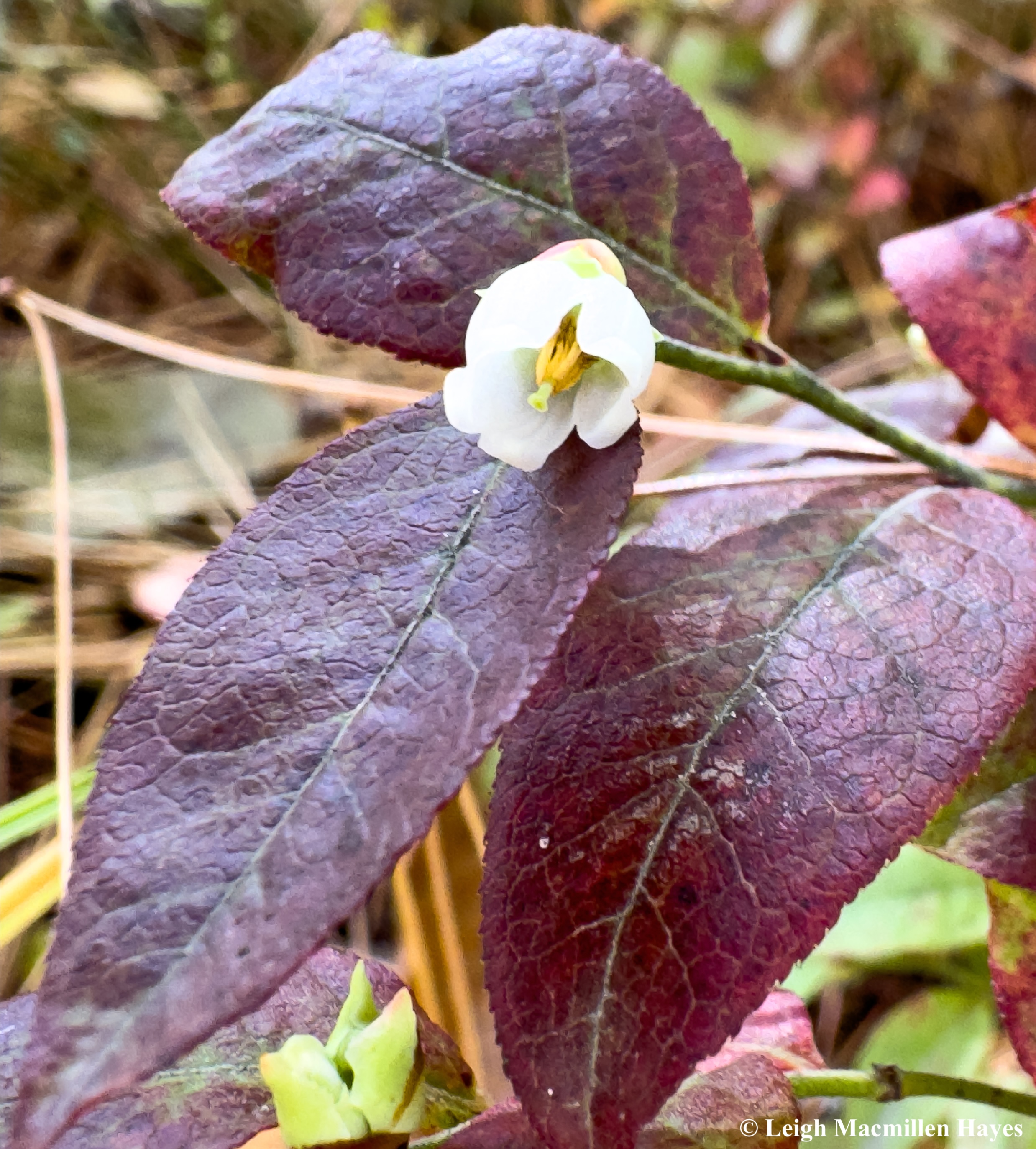
There were somewhere between a dozen and two flowers in bloom on this one plant. After seeing that, I checked others, but didn’t spot any more flowers.

Of course, I did what I always do when such an event occurs, and immediately sent the photos to my nephew who lives in southwestern New Hampshire. The past few years we’ve exchanged such photos when the out-of-the-ordinary occurs and last year it seems like we found a bunch of species in bloom at the wrong time. This was the first for both of us this year, and as he commented, probably because it’s been so dry. But still, it’s also been hot and the flowers seem to get confused–more than they used to, at least in our memories. How about for you?

And so today I stopped by St. Peter’s Episcopal Church in Bridgton, Maine, because I love the land that surrounds the building and wondered what it might have to offer. I actually stopped by twice–first in the late morning, and then again in the middle of the afternoon.

Seeing Hawkweed both in bloom and preparing to send seeds forth for future blooms wasn’t a surprise at all, for this flower is prolific and hardy.
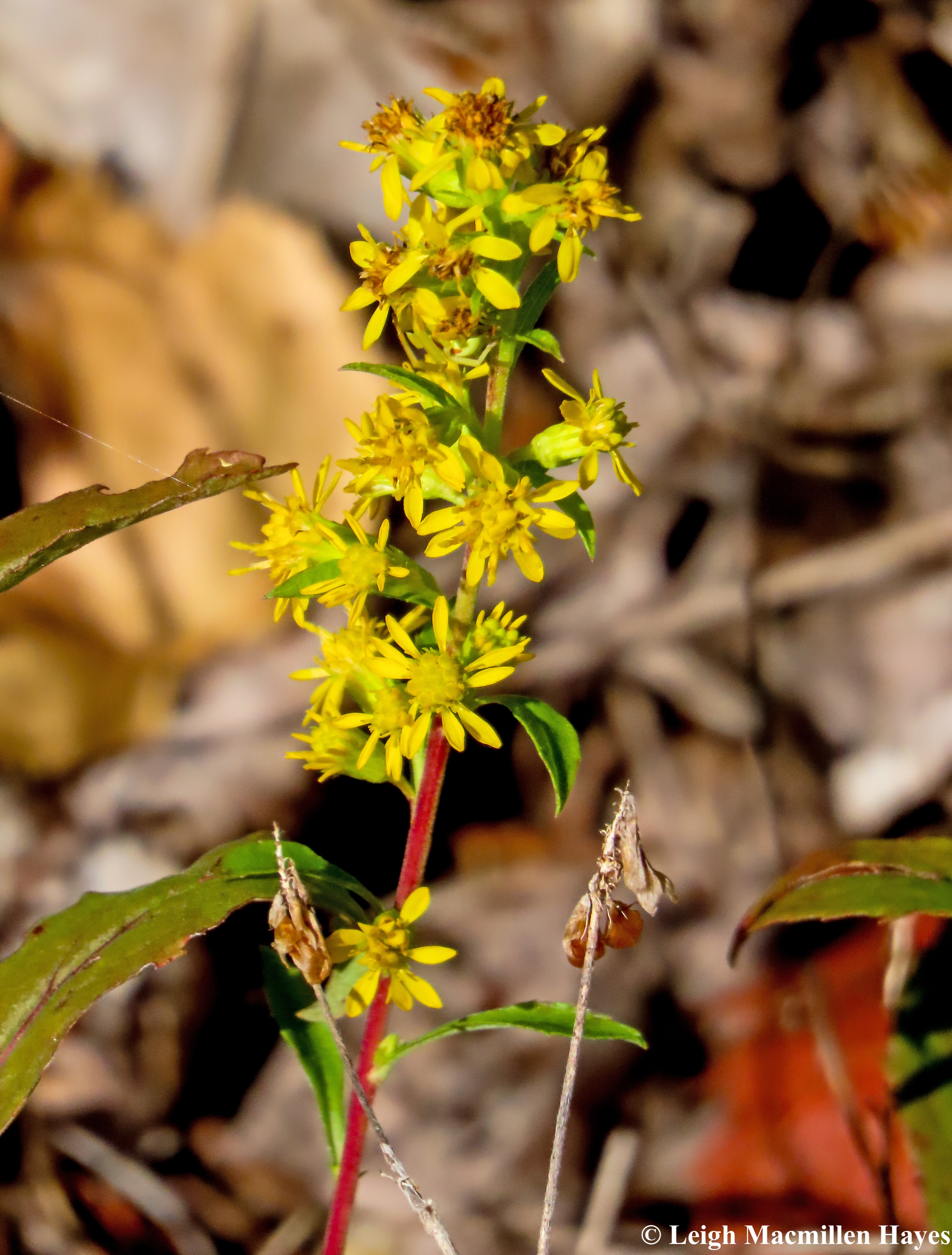
A few Goldenrods had also not yet achieved their gray-head status and instead served as beacons of light for any who were searching.

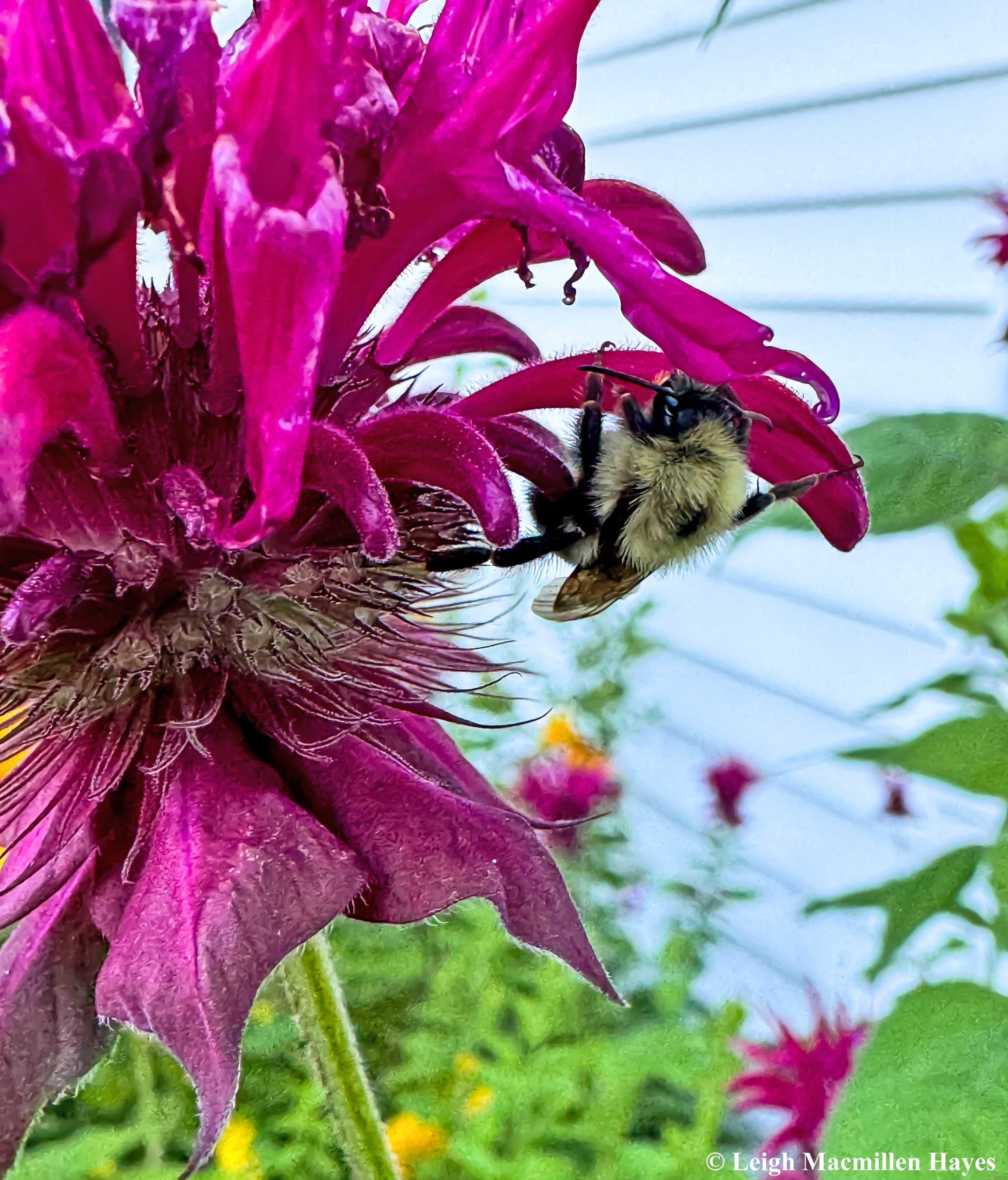
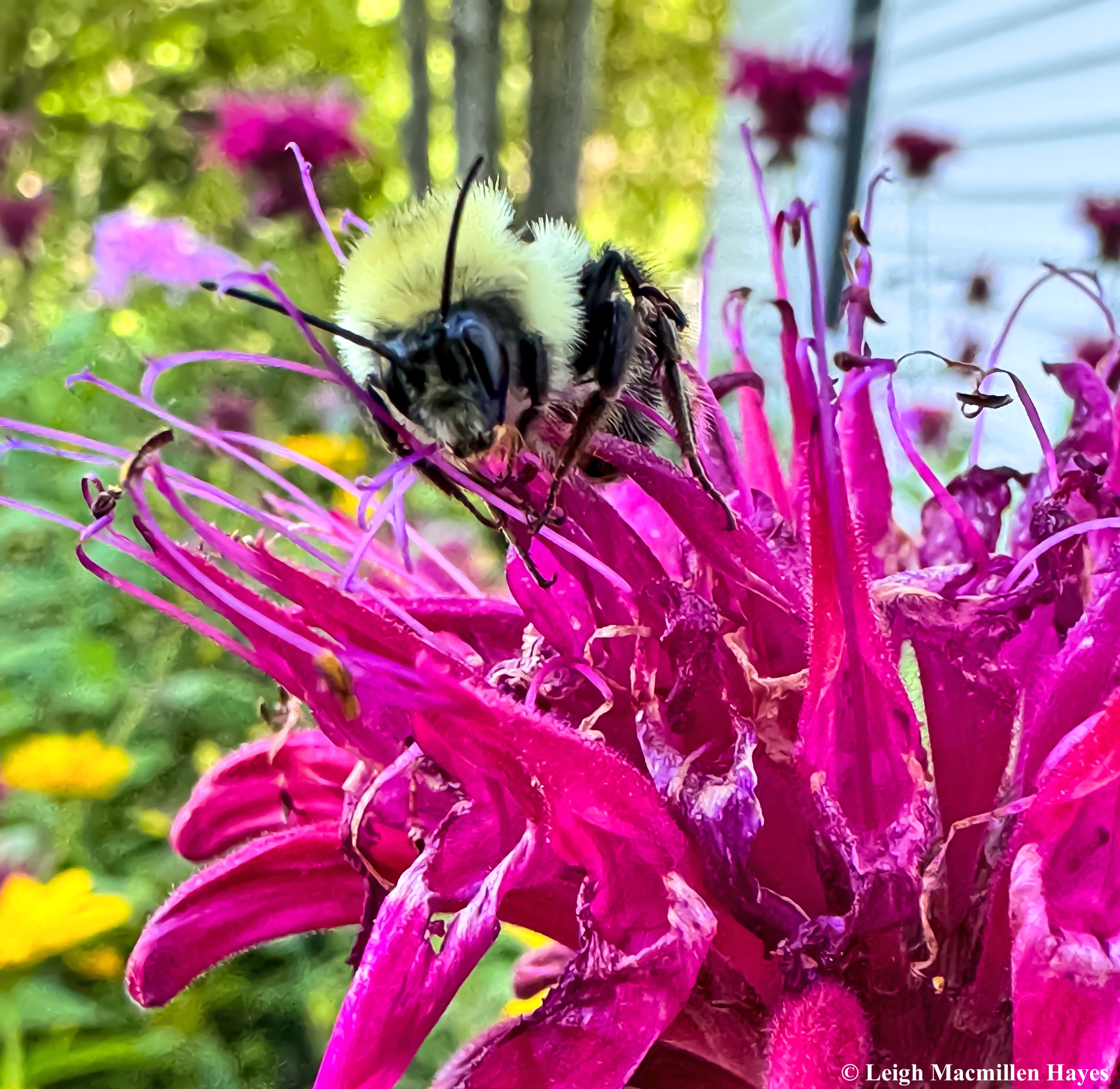
And the few Bumbleebees I saw gave thanks that there was still some food available.
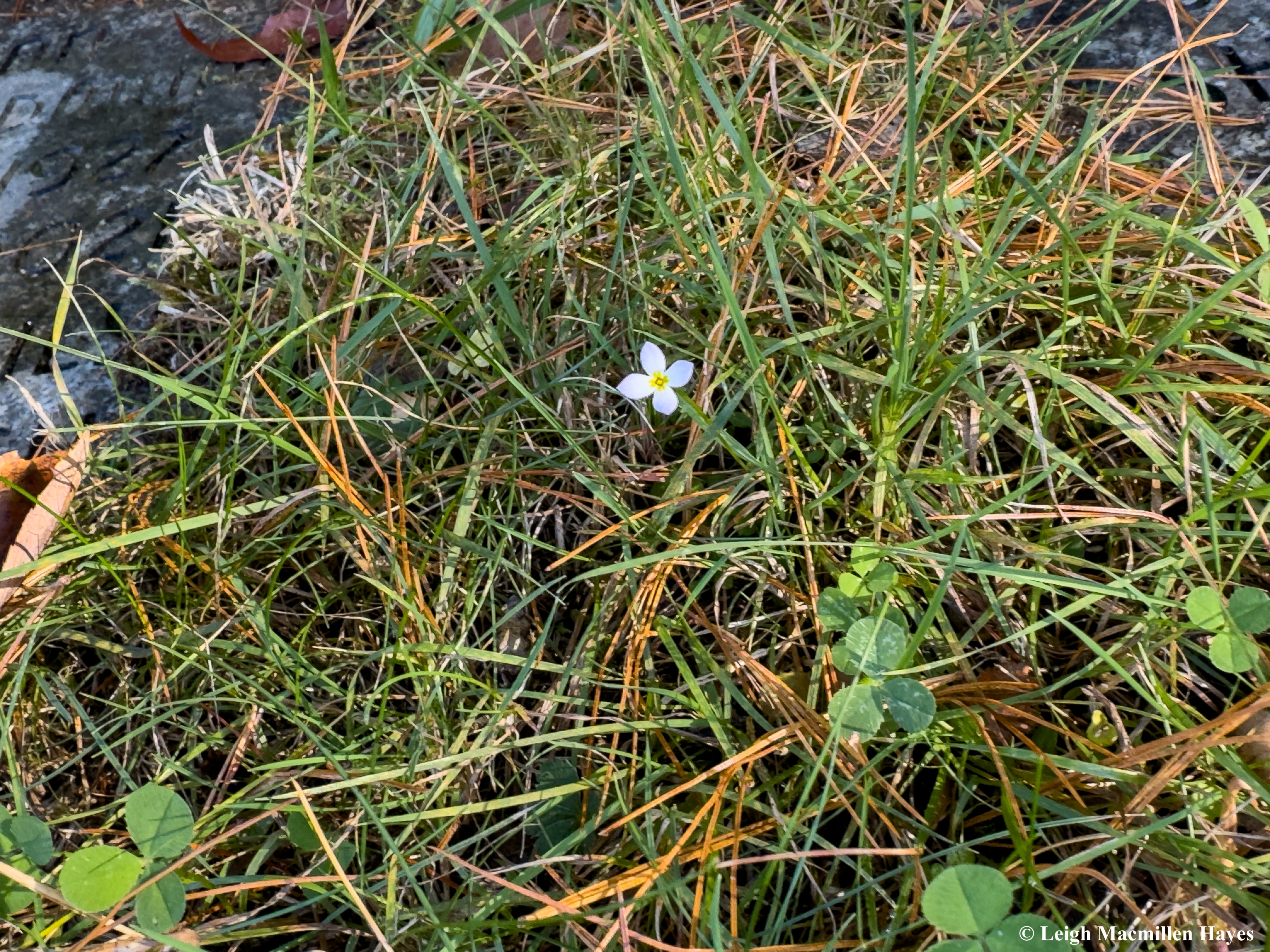
But then I spotted it . . . A single Bluet, aka Mayflower, one of our early bloomers that blossoms in May, showing off its perky little face between two grave markers in the church’s burial site.

I gave thanks for the Bluet, because it was located between two dear friends who died within months of each other, after a marriage of 71 years! To spend a few minutes wondering about the Bluet with them today was a blessing.

And no matter where I walked, be it the church lawn, woods, or parking lot, it seemed there were Autumn Meadowhawk Skimmer dragonflies, this being the male. If I moved, they moved a slight bit, but then landed nearby every time.
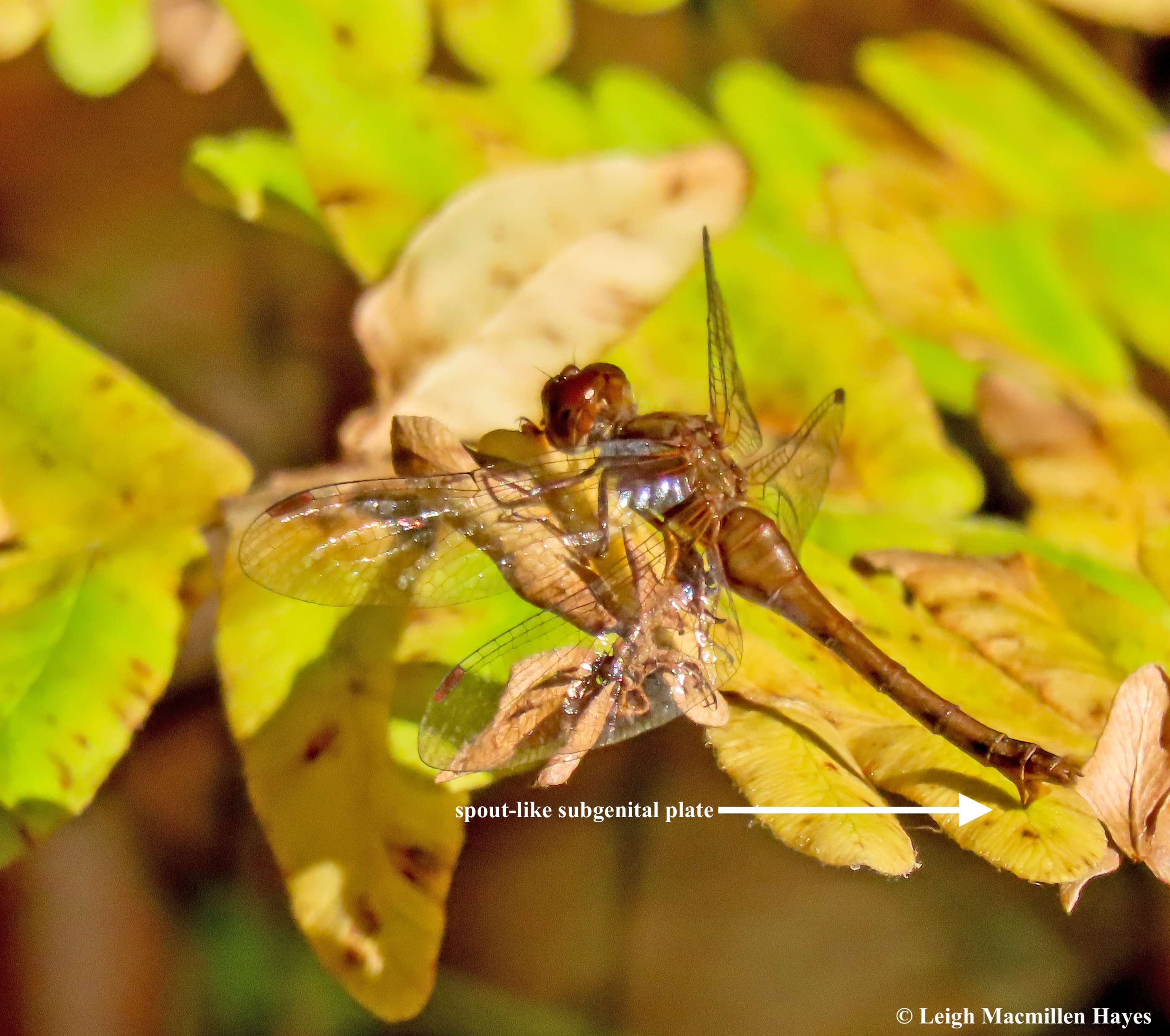
The females were also flying and landing everywhere I went. And I truly expected to find a pair canoodling, but they seemed more interested in landing near me than chasing each other for a date.

While female Autumn Meadowhawks are typically pale brown, as they mature, their abdomens may turn red like that of their male counterpart.
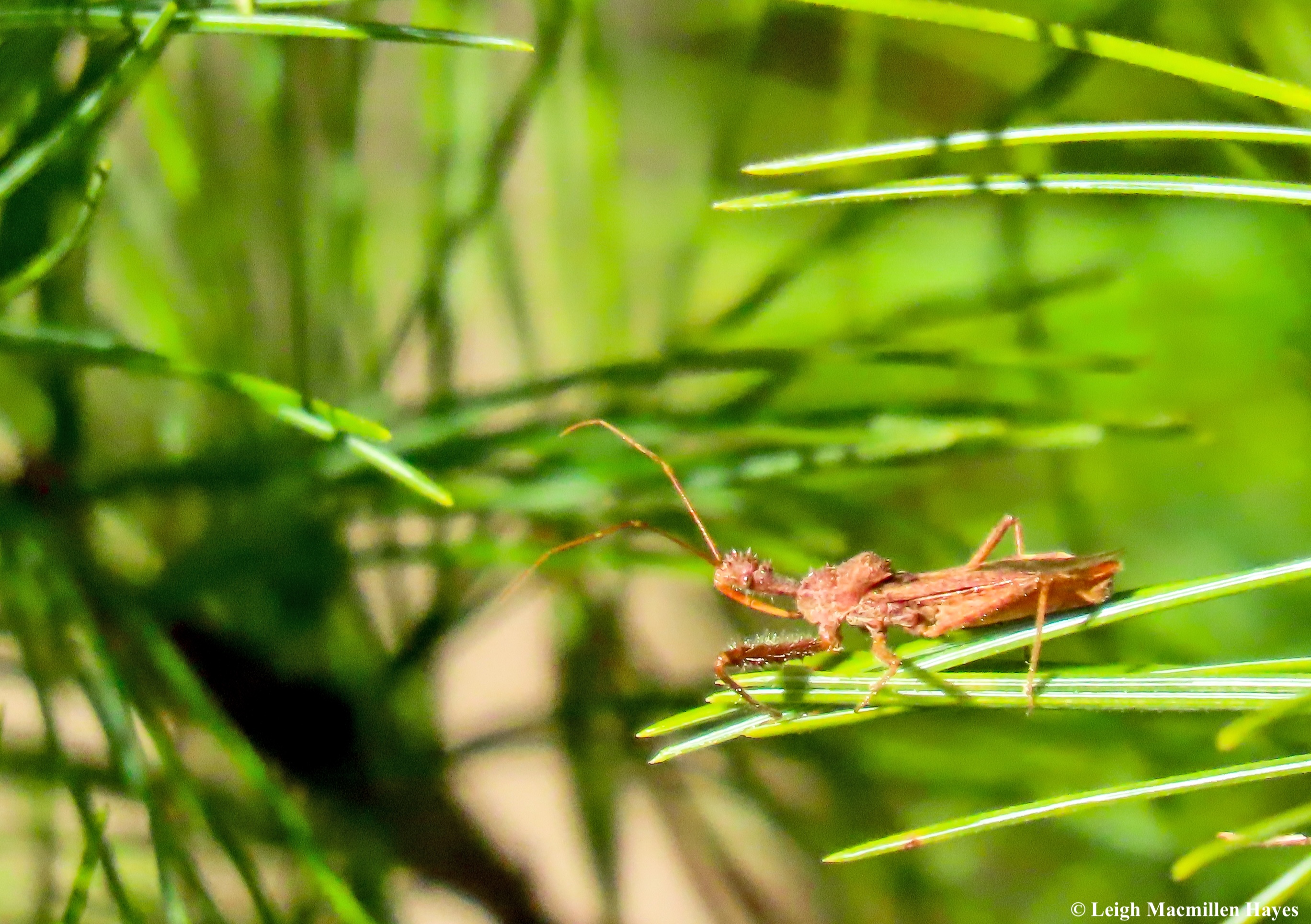
Of course, they all need to watch out for this guy. Or maybe he needs to watch out for them. The Spined Assassin Bug was on the move–the hunter or the hunted I don’t know, but it was just a fun find. And beside the church parking lot of all places. But then again, churches welcome all, especially those who are not perfect. Thank goodness!

As I continued to explore, I spotted one of my favorite fall finds dancing through the air rather like a little fairy, though some think of it as a snowflake, and just yesterday someone described these insects as bits of ash. All make sense to me.

I captured this one so I could take a closer look at those iridescent wings and the waxy fluff on the abdomen.
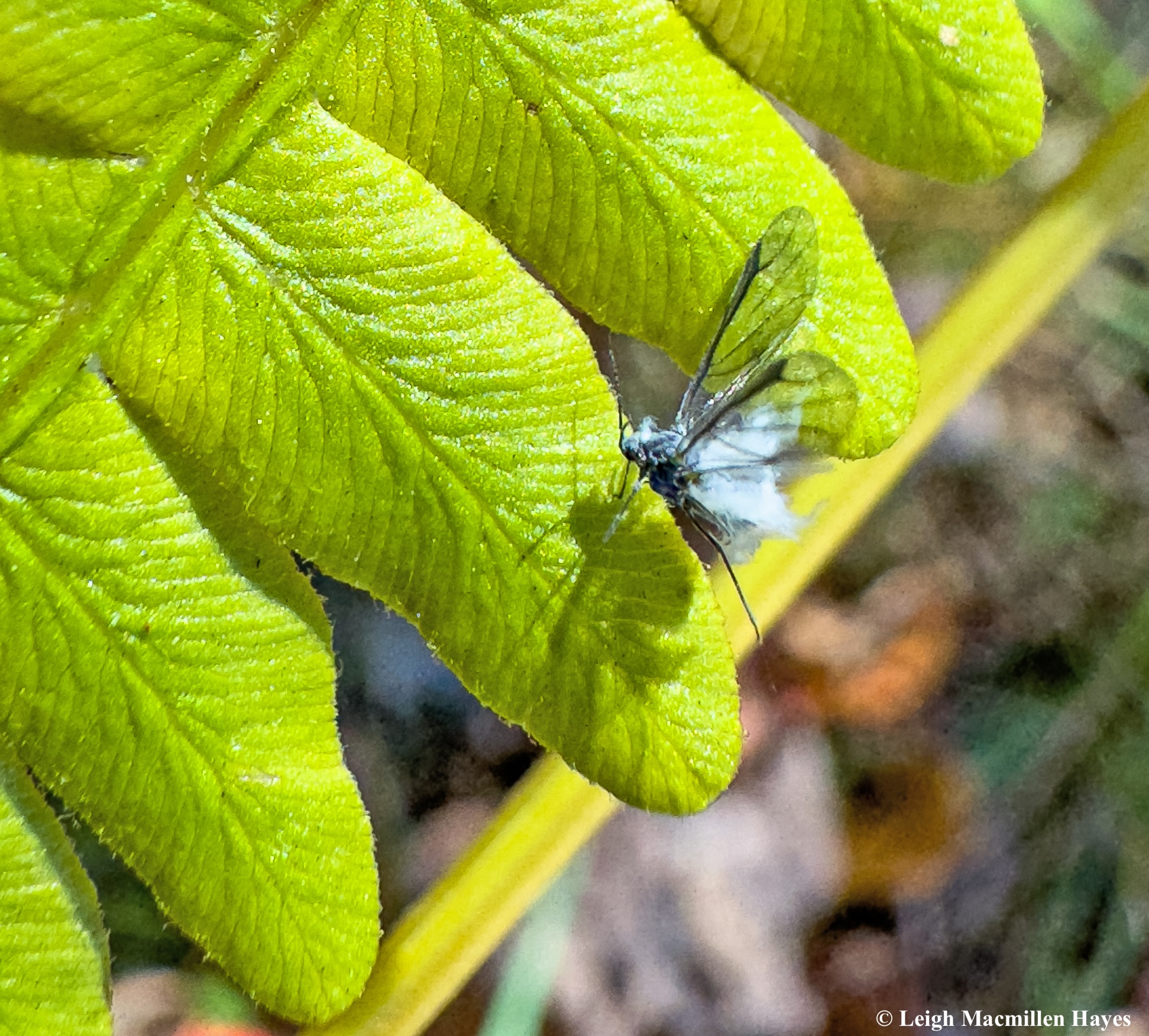
And then I released it onto a fern frond.

I invite you to notice the hint of blue as well.

This is the teeny, tiny Asian Woolly Hackberry Aphid, one who is searching for a sap source.
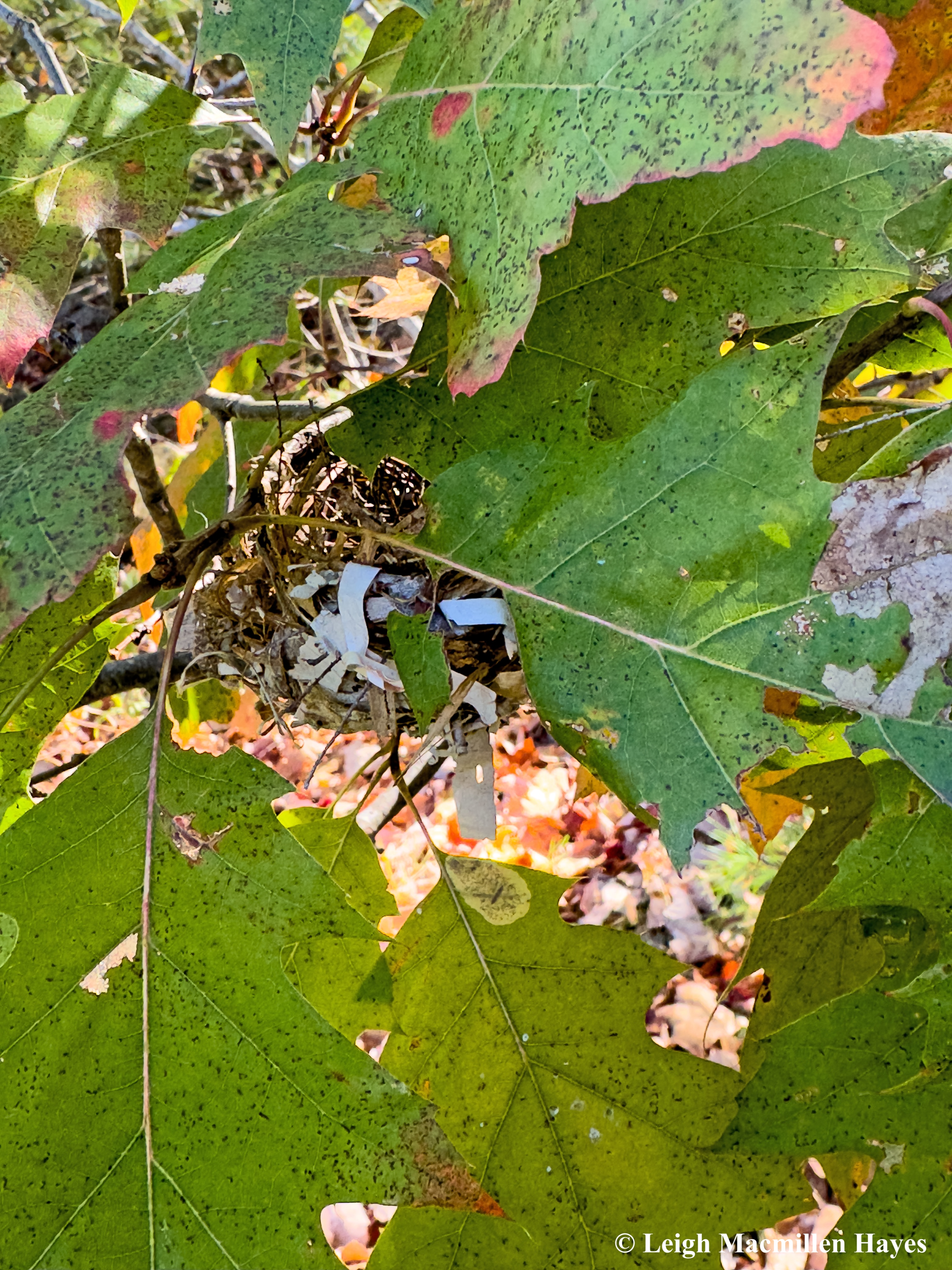
And then I came upon another surprise that I had forgotten. It was hiding below some leaves at about breast height.

A few of us first spotted this nest back in June when we accidentally approached it because we couldn’t see it hiding as it was below leaves, but Momma Red-eyed Vireo suddenly flew off. We apologized to her, took a quick photo of her eggs and promised her we would leave her be so she could raise her young in this place that we hoped provided safety. I never checked on her again.

But looking at the nest today, it appeared that she had a successful breeding season.
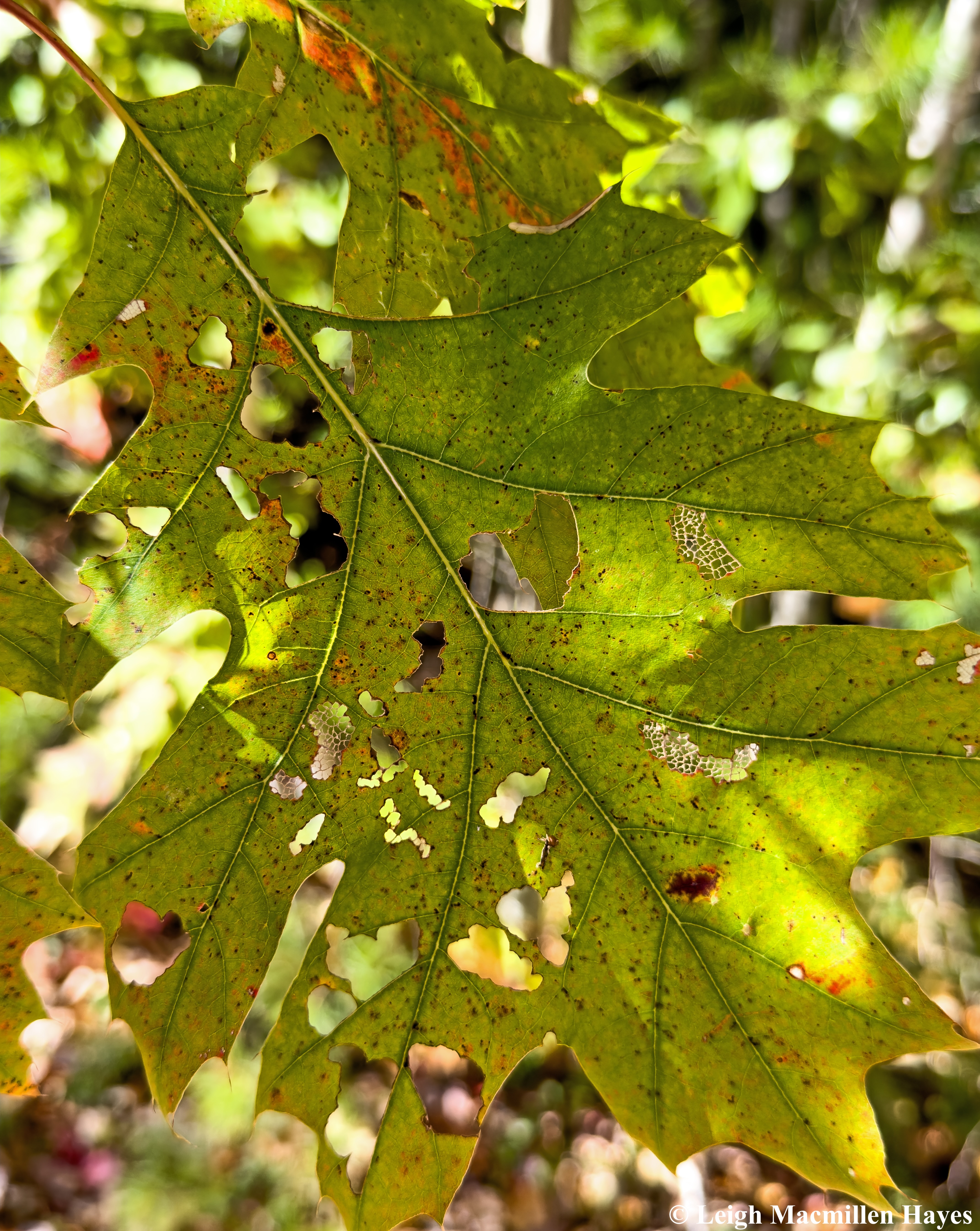
Looking at some Northern Red Oak leaves, like those that hid the nest, I was reminded of stained glass. Ours is a church that doesn’t have stained glass windows, but rather allows the outside world in. The ever-changing qualities of the natural world as seen through the windows serve as the scenes for us all to ponder each season.

And ours is a church with a group of people who wander out the door each week with others always welcome to join us as we wonder about all that surrounds us. We call ourselves Trail Snails, because slow is the manner of our movement.

And we have a mascot that was gifted to us by a couple from First Congregational in Bridgton, for they occasionally have joined our group to wander and wonder. T.S., short for Trail Snails, loves to pose along the way.
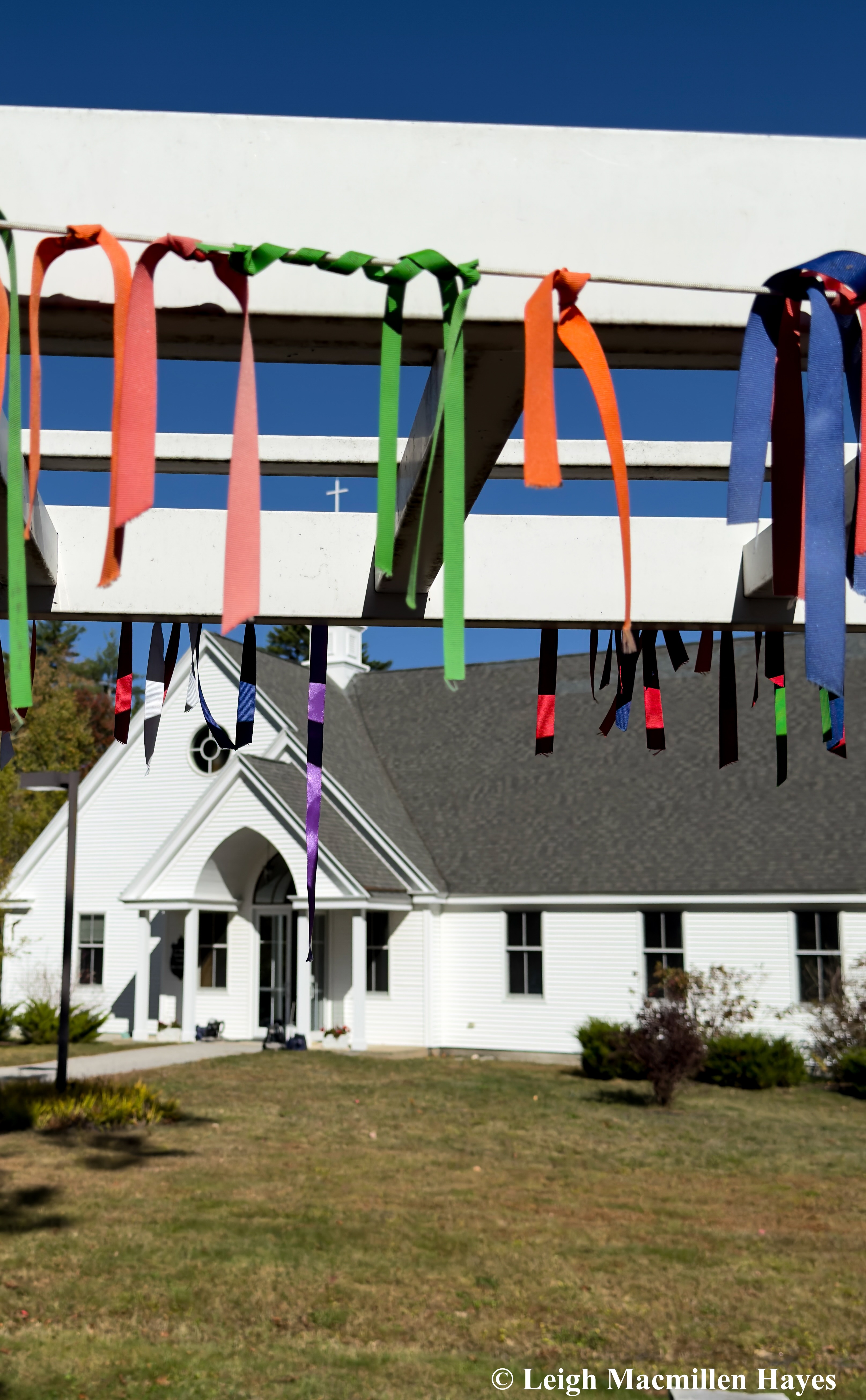
It’s also a church that knows the power of prayer and the ribbons tied onto the arbor actually represent specific prayers of parishioners and people we’ve only met for the first time.
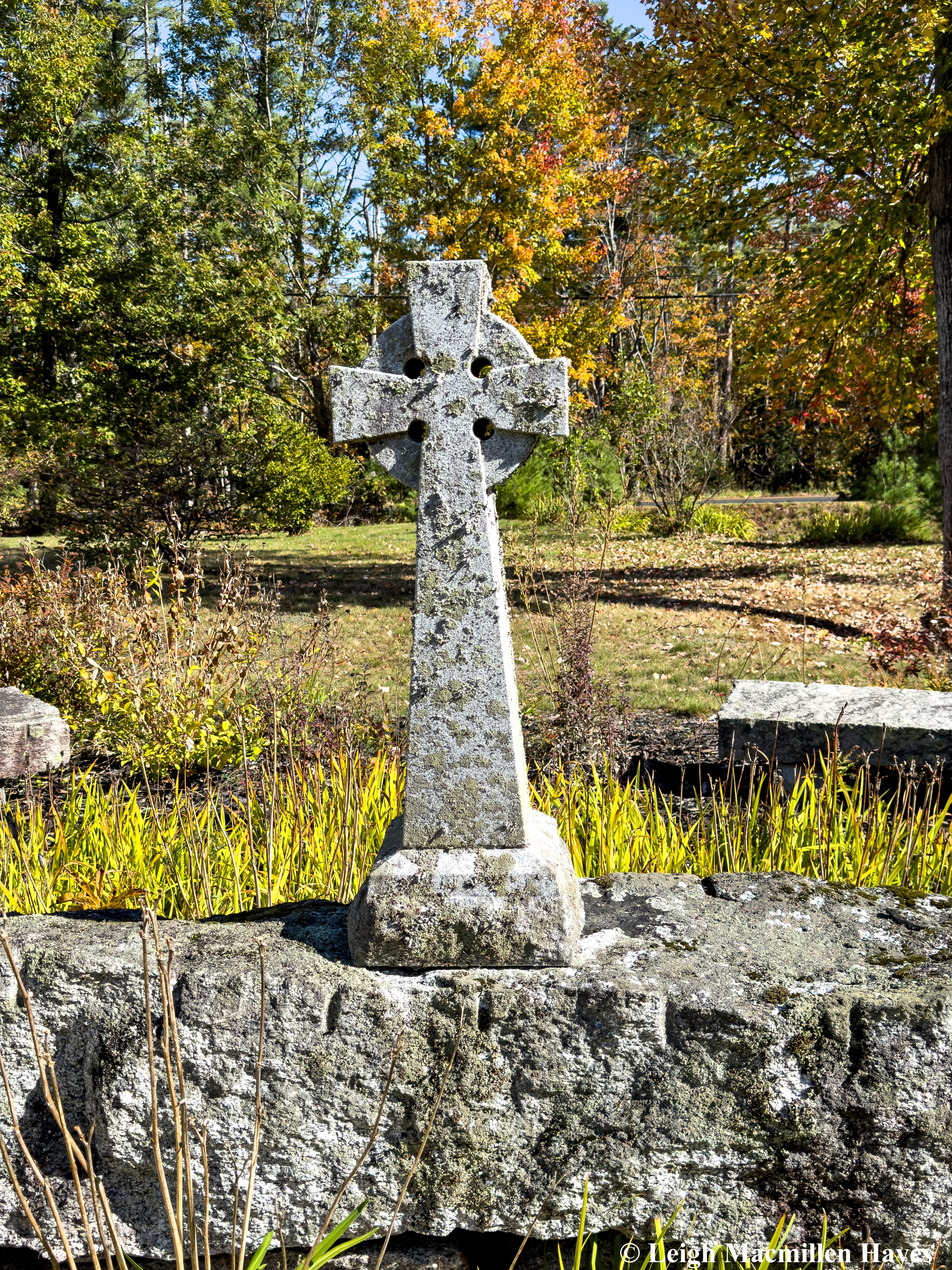
And there’s a beautiful Memorial Garden where all the flowers have now gone to sleep, but their leaves and seedheads offer different colors and textures in this season and anyone is welcome to sit in this space.

This all brings me around to my opening thoughts, for as I rounded the corner of the church building this morning, a shocking pink color on a bush mostly gone to fruit beckoned a closer look.

I wasn’t the only one peering in, for a Spotted Cucumber Beetle was making the rounds on the anthers within one of the flowerheads.

Blueberries, and Bluets, and even a Rose–a blooming surprise was each on this the eleventh day of October. Plus all the other wonder-filled finds.
Bee Quiet

They’re large. They’re robust. They’re in constant motion. Well, almost constant motion. You see, this story begins when I looked out a couple of windows at 6:00am. And then stepped outside.

For in the back garden, on the western side of the house, . . .

on more than one flower and in more than one pose, . . .

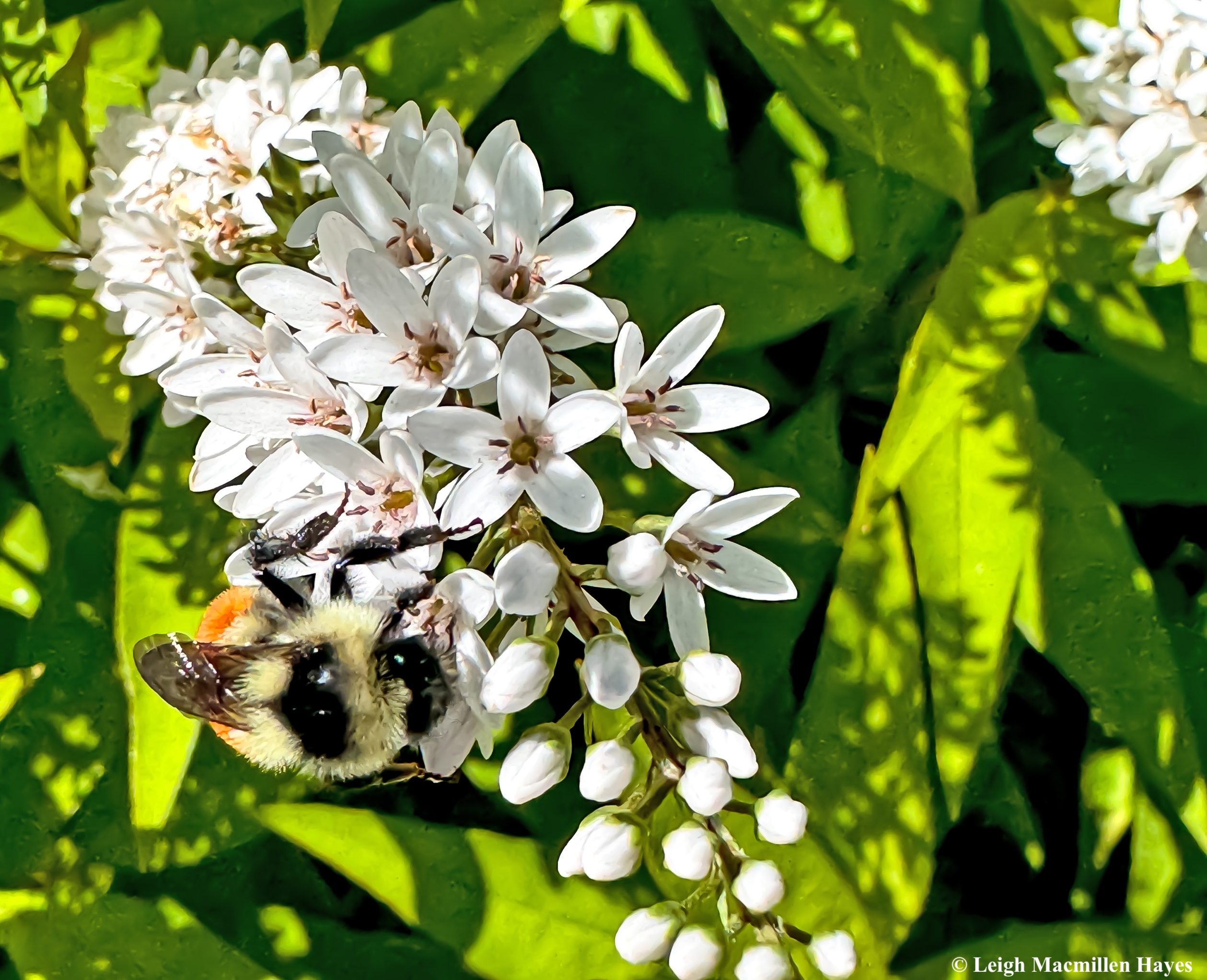
as well as in the driveway-side garden on the eastern side, Bumblee Bees slept.

I knew insects slept on plants and under leaves, but until this week I had only paid a wee bit of attention. And then, I went into my usual stalking mode and My Guy was rather amused.

Have you ever watched a Bumble Bee sleep? Even as the breeze blew its bed?

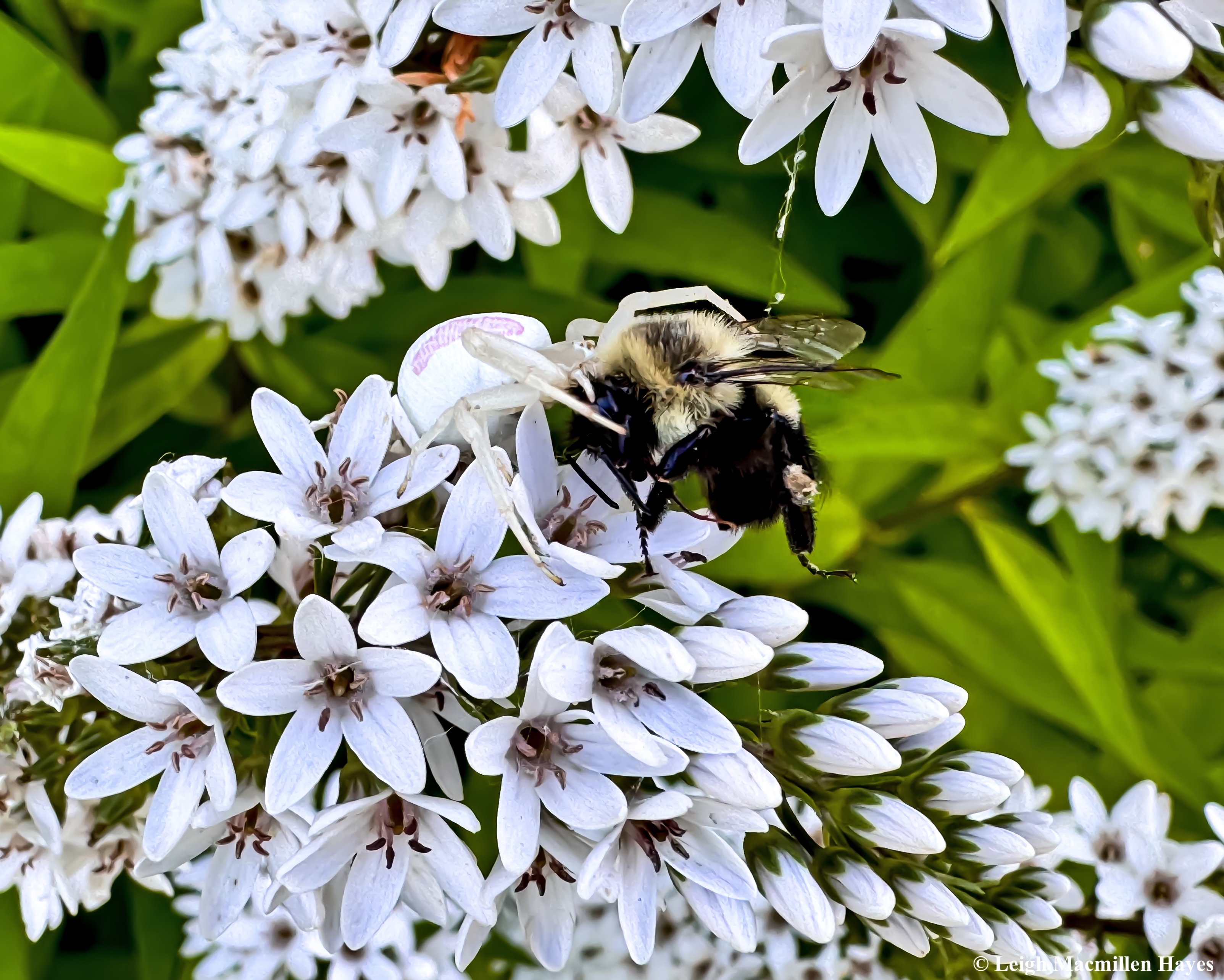
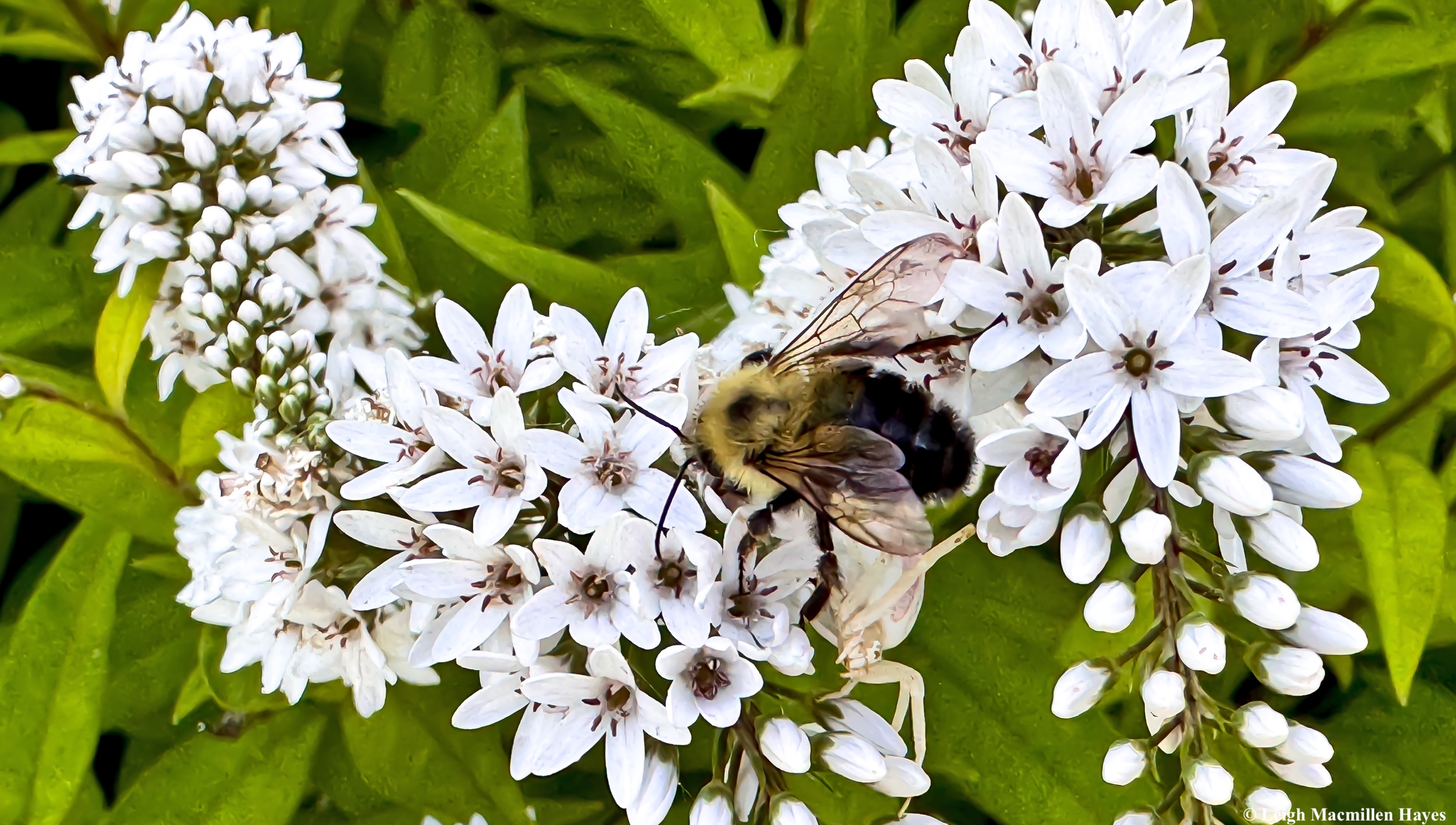
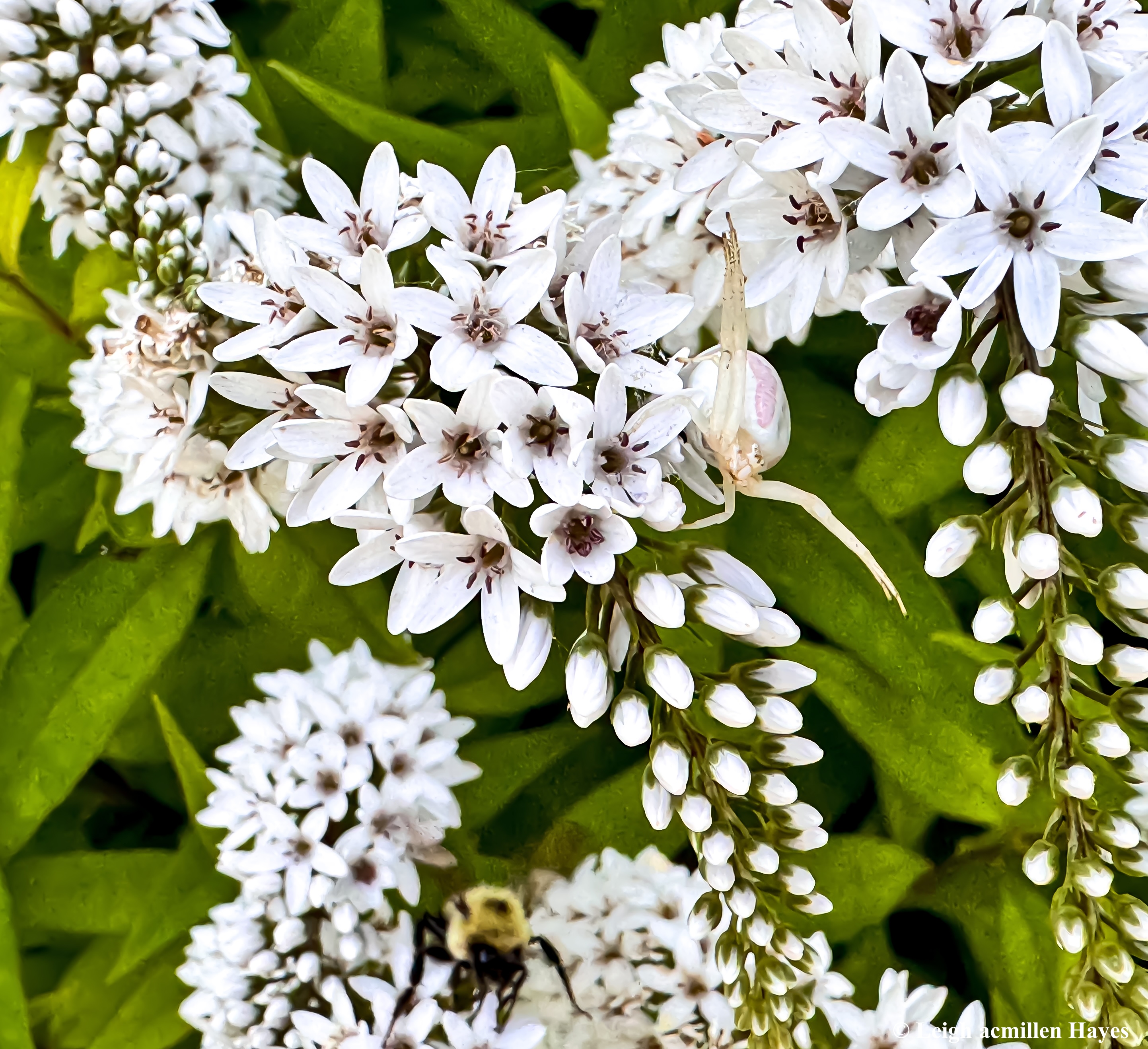
Because I was paying so much attention, I discovered one highly camouflaged Crab Spider had captured a Bee and turned it into a meal. While this may seem an easy task, for spiders capture insects in their webs all the time, I’ve come to learn that that isn’t always the case as I continued to watch this particular one. But I’m getting ahead of myself. In this moment, she had already immobilized her meal of choice and then secreted digestive enzymes into its body to break down its tissues.

That process meant she now had a Honey-flavored Smoothie or perhaps a RootBee Float to drink, the insect becoming a liquified meal.

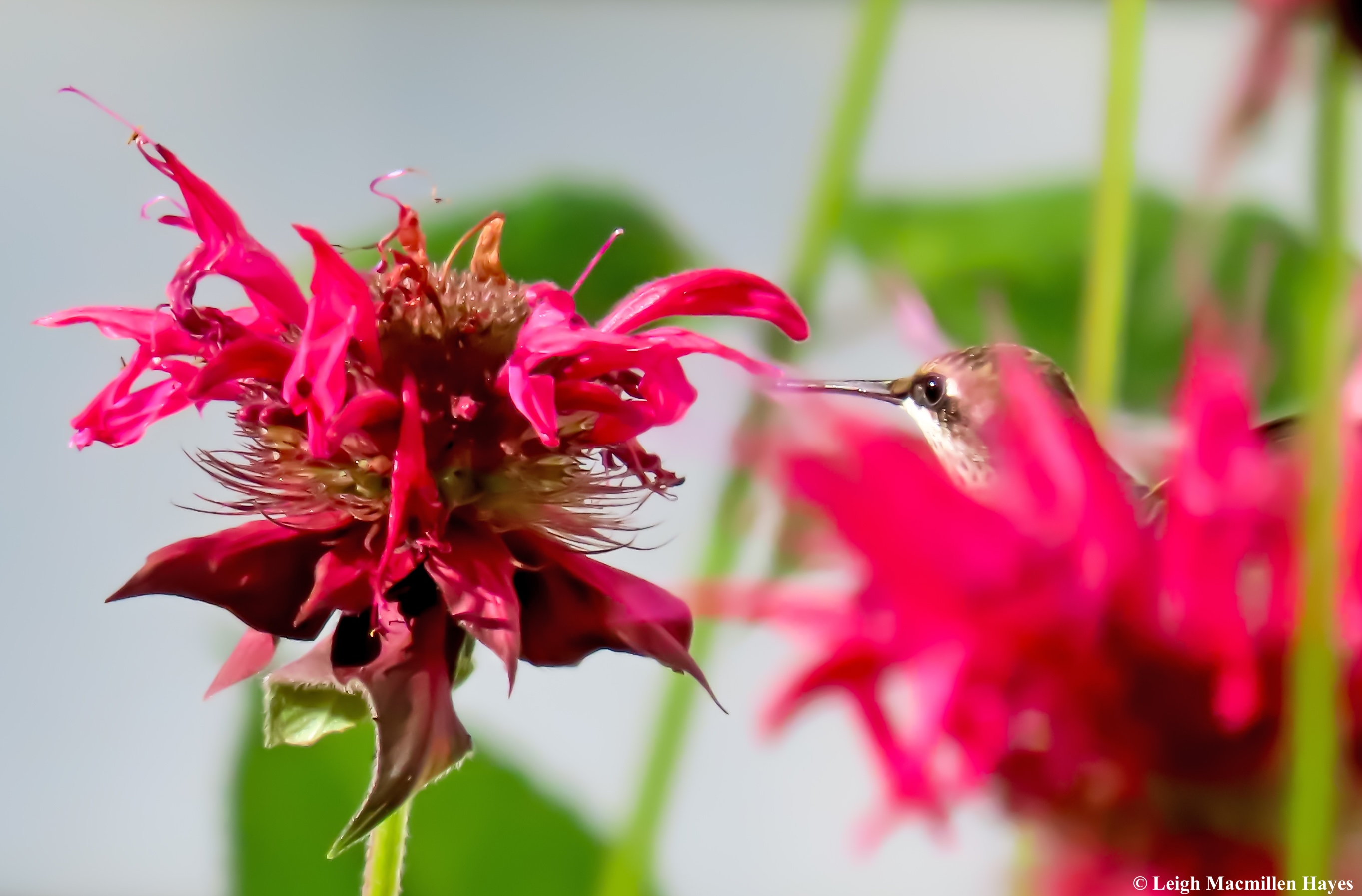
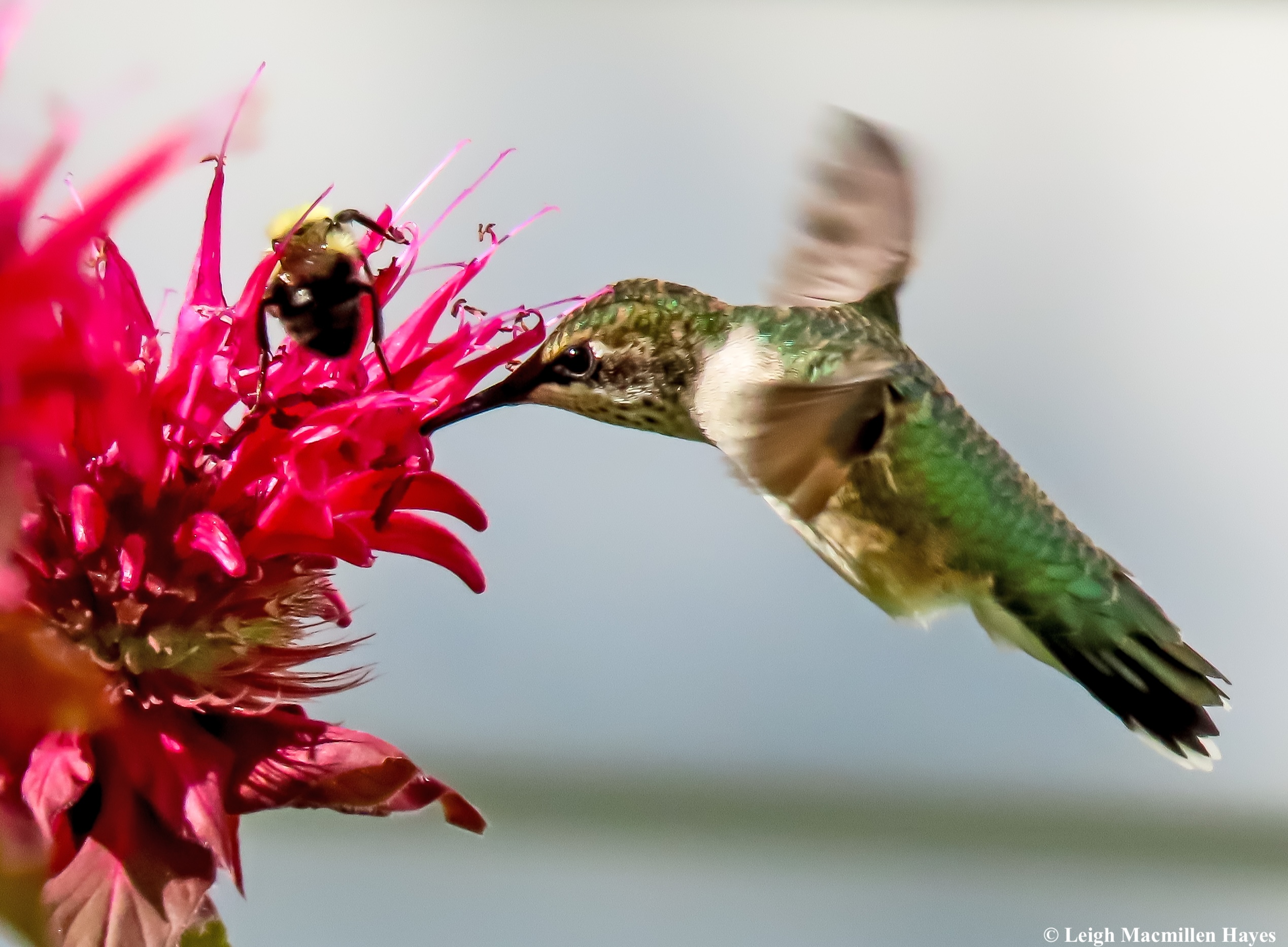
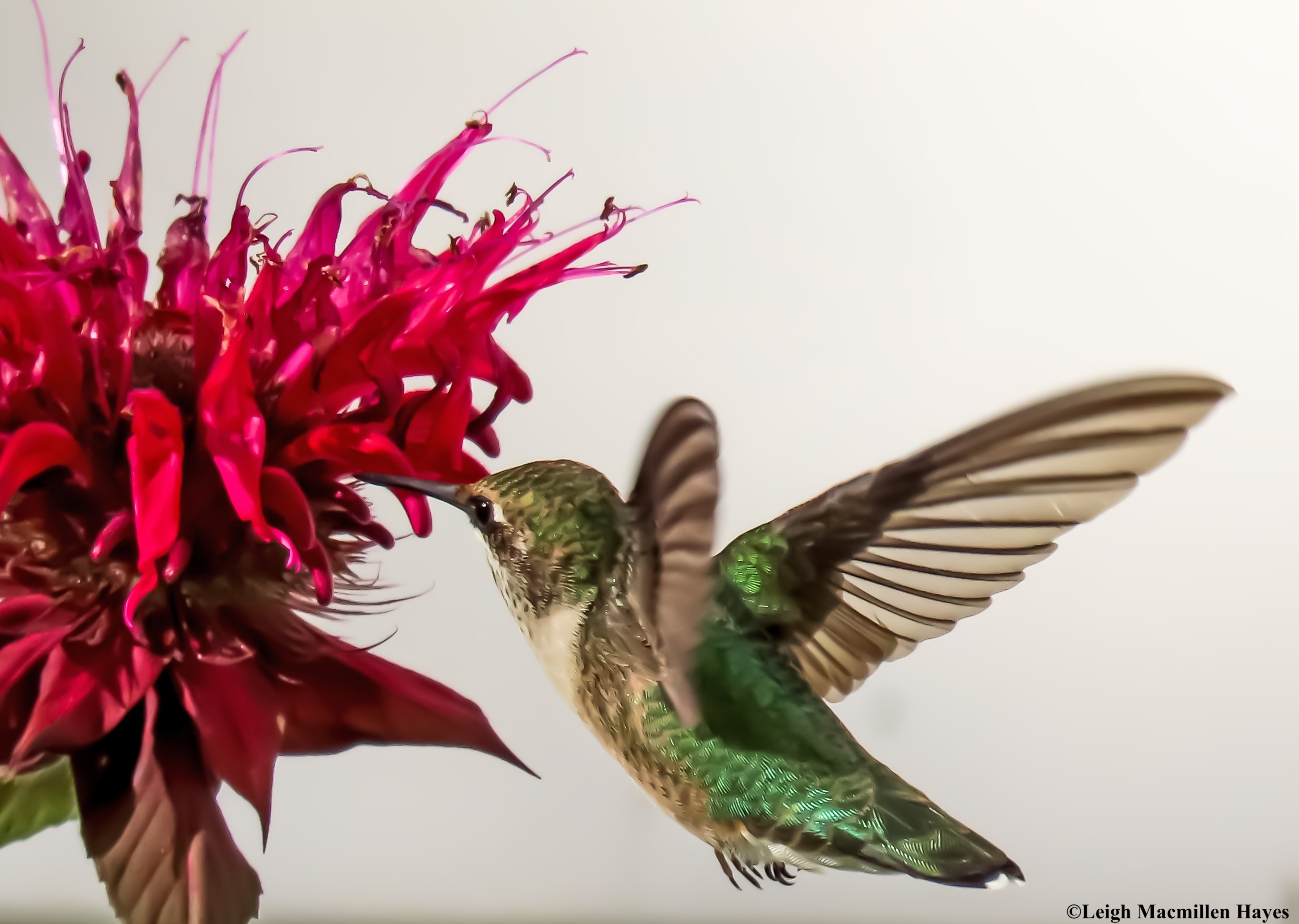
As I moved back and forth between gardens, I realized I wasn’t the only one paying attention, though the female Hummingbird had nectar and not Bees on its mind.

After leaving home for a few hours, I returned to find this Snowberry Clearwing Moth resting on a Hosta. My, how its fuzzy golden body and black abdomen mimicked those of the Bees.

As for the Hummingbirds, the Bees were not bothered. As for me, I tend to get in the Bees’ way, but they gently let me know by flying toward me and then backing off.

One of my realizations was how much nectar the plants produce, and of course, how so many insects are rewarded with this sugary treat–as well as these little birds. Don’t get me wrong. I know plants produce a lot of nectar, but I hadn’t thought about how when it is depleted, it takes the plant time to create more. And each plant is visited over and over again. I guess I’m just jazzed that this year I’m seeing more pollinators in the gardens and field than I have in a long, long time.

Including a Tricolored or Orange-belted Bumble Bee, which I saw in the field the day before and then in the driveway garden adding its own buzz to the story.

And still the Hummingbird flew in.

When I was a kid, my mother planted Beebalm around the base of a tree in our front yard and I detested the smell of it. But as an adult, I cannot wait for these flowers to blossom in our gardens, and usually within a day the Hummingbirds arrive–seemingly out of nowhere.

Another learning of the day(s) was that because it’s cooler in the late afternoon on the eastern side of the house, the Bees slow down sooner and actually tuck themselves into bed over the course of several hours.

Not all beds are the same, and its interesting to see what the choice might be, like this Hosta flower.

It was after 7 pm before the Bees on the western, and therefore sunnier side, decided to find a place to repose for the night.

The next morning, while most of the Bees were still asleep, I discovered that Madam Crab Spider had turned her meal around overnight. I don’t know why, but I could also see the faint lines of silk that she had used to secure it in place.

She had a plan and it wasn’t for me to know, but I appreciated understanding that she had received energy from the Bee, who had ultimately received energy from the flowers, which had received their energy from the sun, and so the web she wove was full of the circle of life.

Meanwhile, on the shadier side of the house, the Bumblers were just beginning to rise after a long night’s sleep and given that the temperatures have been in the 50˚s these past few nights, it was heavenly naps I’m sure they experienced. I know I did.

Have you ever watched a Bumble Bee wake up? Notice its antennae starting to quiver, and the same for its abdomen. I had to wonder if both were an act to warm up its body on such a cool morning.

And before it had that first sip of nectary caffeine, the Bee seemed to wobble around, rather unsure of its footing.

Once the sun warmed the world up for everyone, the Hummer started flying as well.

A moment I didn’t capture that she and I both shared, occurred just after I took the videos above. She had flown into the garden much to my surprise because I was standing right there, rather than my usual distance away (think telephoto lens), and in flew her Mr. He alludes my camera because his visits aren’t as often, and they are fast. As was the case in this instance. All I could do was watch as she moved below the blossoms and paused on a leaf to watch him. And he performed an aerial dance creating figure eights over and over again, before flying off. It was one of those moments that will be forever etched on my brain.

As for the Bee that had been the Spider’s meal–once she was done with it, she had discarded it and I found the body on the granite stone below the flowers. The color was a bit different, and in my brain, I wonder if the Bee’s pollen bags had exploded upon impact.

I again left for a wee bit of time, but when I returned, much was still the same.

Except–the Bee’s body was missing. And only some legs and a wing remained. Where had they gone, I wondered.

Above, Bee after Bee tempted the Spider, but she didn’t make a move and I suspected she was sated for the moment.

And below, I suddenly figured out what had happened to the body, being the great tracker that I am (LOL!) An Ant removed the body parts one by one.

The Hummer still flew, and occasionally took a break right above my head and I was grateful for the opportunity to watch it without it realizing I was there.

The Spider began to change position, and move from one plant to the next and even when I thought she’d take a meal, she didn’t listen to me.

The Ant completely removed all signs of the Bee and I suspect there’s one mighty happy Ant family in the garden.

And the Bees. Well they are hardly quiet, but all that buzz is a wonderful thing.

I give thanks to them and their friends like the Great Black Wasp with its iridescent blue wings, and the Great Golden Digger Wasp with its orange and black coloration, and the Hover Flies, and the Skipper Butterflies and Tiger Swallowtail Butterflies, and so many others who feast here because I know that they are doing all of us a service by pollinating the food we eat–it doesn’t get any better than that.

Next time you see Bees in your yard, I encourage you to Bee Quiet and maybe they’ll share their stories with you as well.

Student Teacher in the Field and Yard Classroom

I am so thankful that I was born with a desire to learn and somehow landed in at a most pleasant neighborhood school. Of course, the classrooms vary depending upon the season. These past two days, and actually these past few weeks, I’ve been majoring in field and yard lessons.

Oh, don’t get me wrong–that doesn’t mean field and yard work, though I did help mow the lawn today.

Let’s begin, however, with the class in the field, which is really more of a meadow given how wet it can be and some of the species who call it home attest to that, including this Marsh Fern.

At first glimpse, I thought it was a Lady Fern, but there was something different about the leaflets–they seemed to present as three-dimensional.

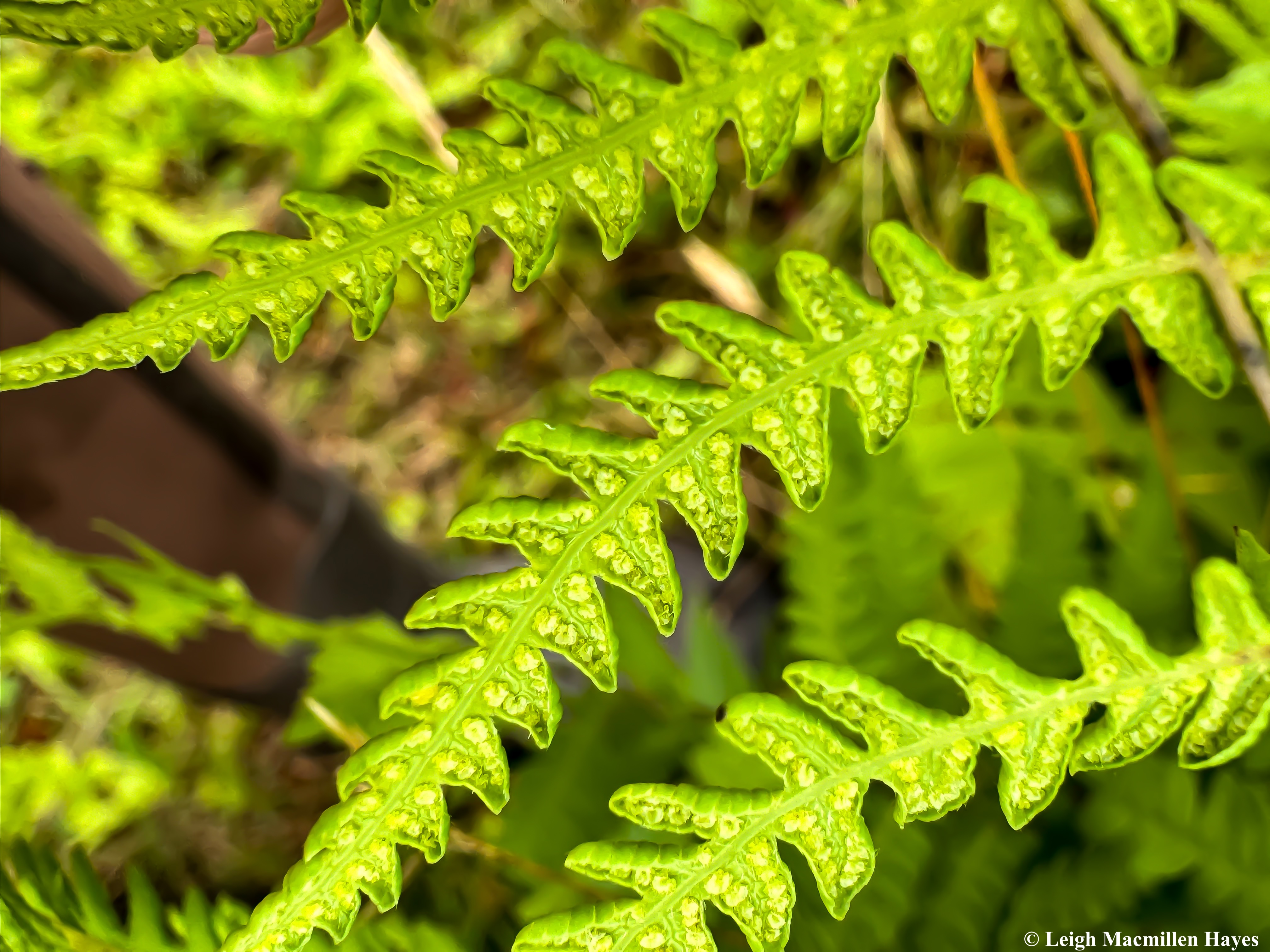
When I turned the blade over, I saw why. On fertile leaflets, such as these, the subleaflets curl around the kidney-shaped indusia which cover the sori, or spore cases.

There are lots of other ferns out there including Interrupted and Sensitive, but Marsh is one I don’t often see, so to have it on display in the school hallway is exciting to me.

Meadowsweet, or Spirea, is another plant that doesn’t mind wet feet, also indicating that this class leans toward being a wet meadow.

And today, I met a new-to-me insect species with a funny name.

Tumbling Ragdoll, aka Mordella marginata, is a Tumbling Flower Beetle. I love the name, and am reminded that as a child I loved my Raggedy Andy doll made by an “aunt” who wasn’t actually related to our family; my sister received Raggedy Ann. Years later, my sister also later created Andy and Ann for me, so I have a complete set, plus one from “Aunt” Betsy.

Anyway, from Tom Murray’s Insects of New England & New York, I discover that these beetles are so named because “When threatened their escape method is to jump and tumble about wildly.”

For science lab, I will attempt a mere scare in the future to see if that is true; but today approached with care so as not to disturb them.

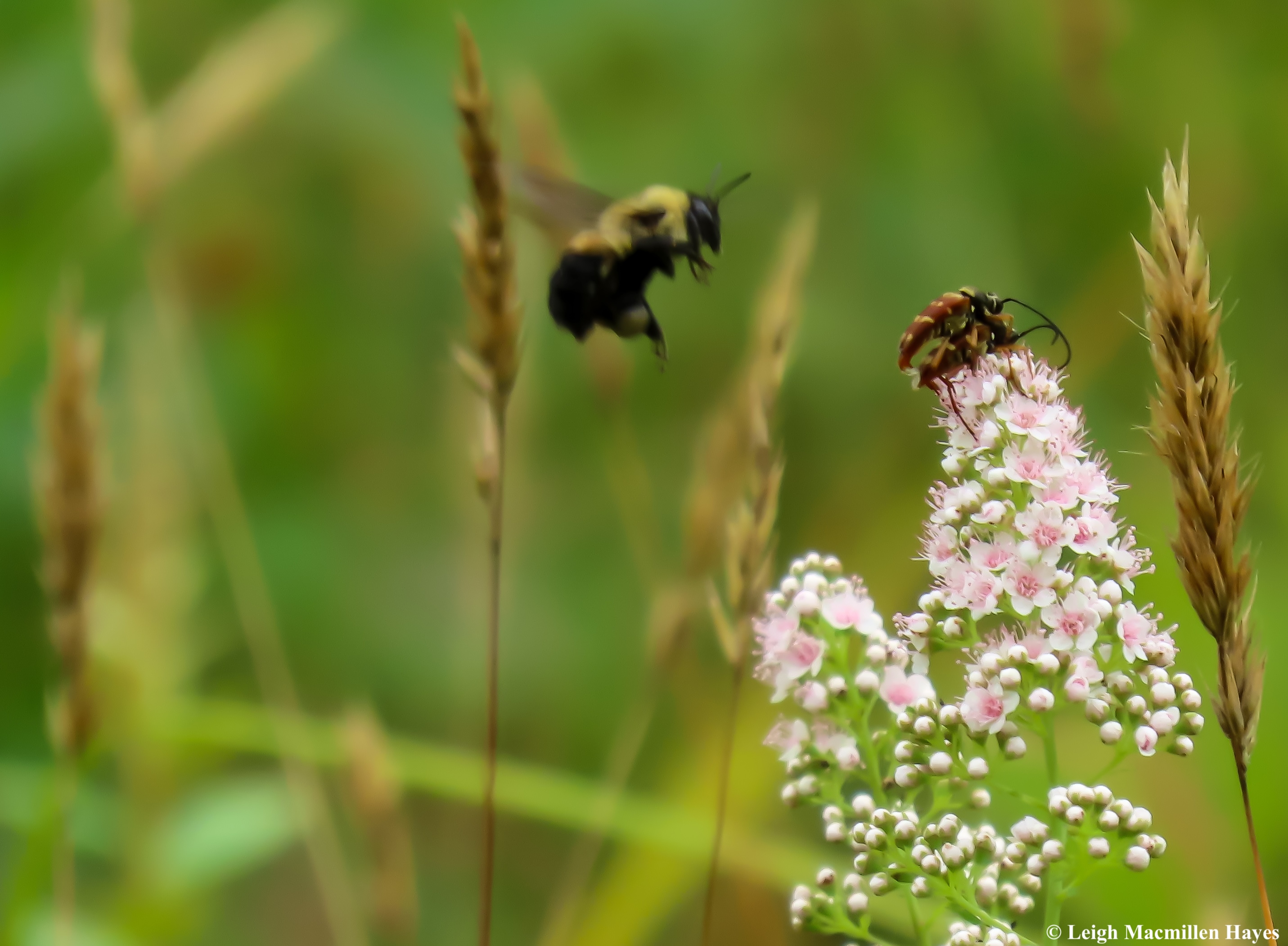
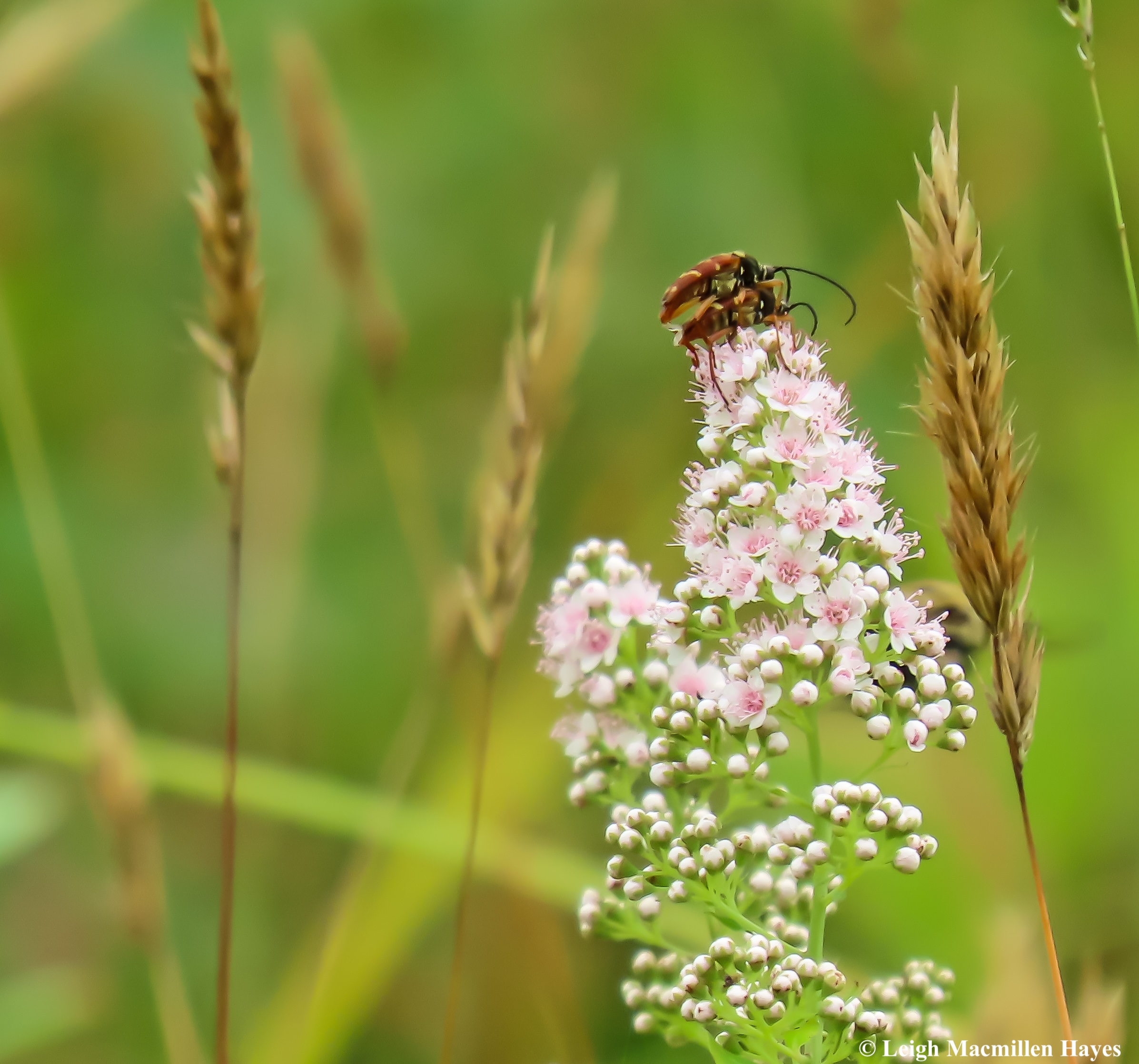
When I got up from my chair to sharpen my pencil, I spotted what my friend Amanda calls a B-52 Bomber Bumblebee. It was large and fast. But that didn’t disturb the Banded Longhorn Beetles at the top of the Meadowsweet.

They were mid-canoodle, and nothing was going to pause their intense interest in each other.

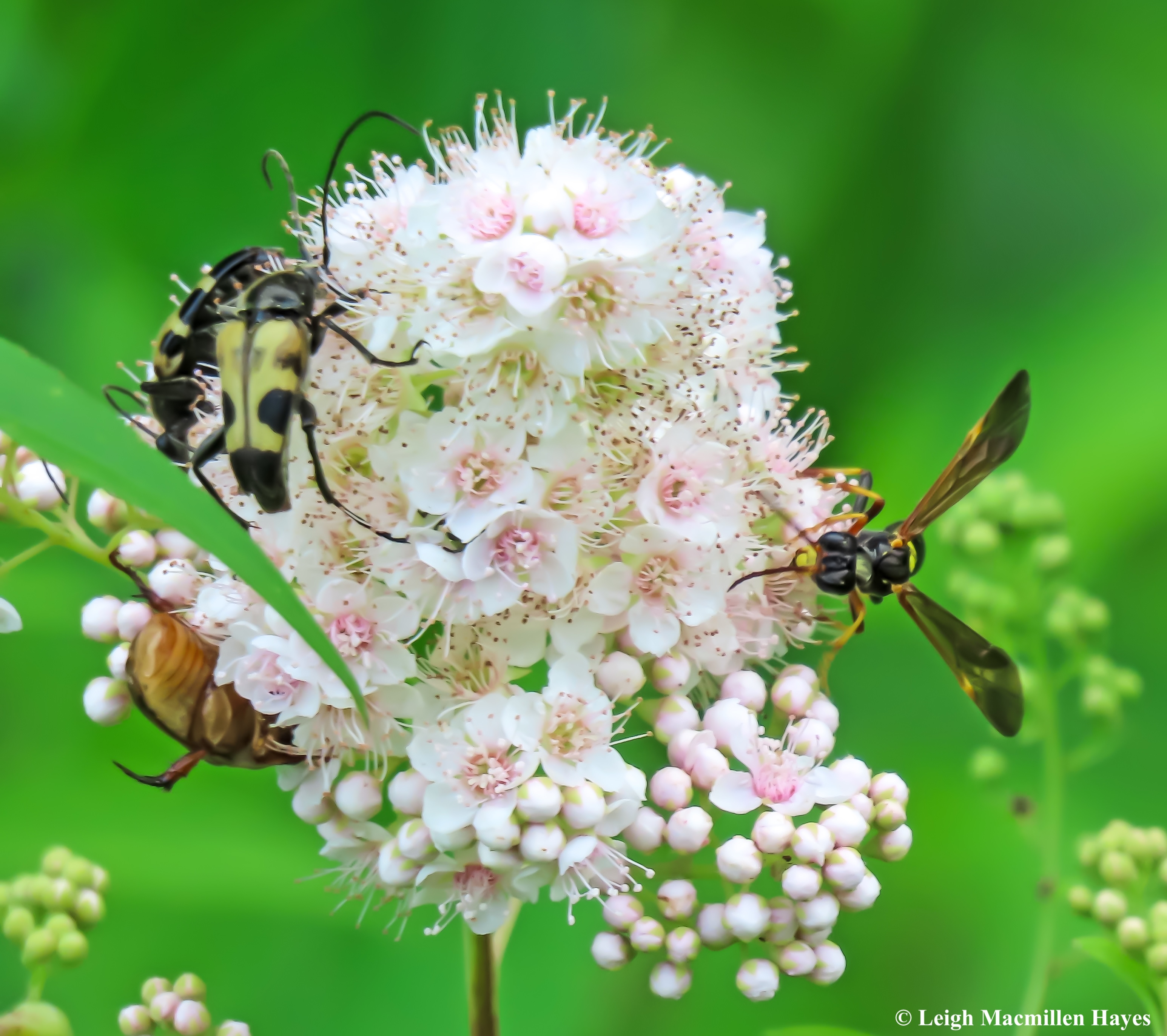
Upon another Meadowsweet, it was as if the whole community had shown up to pollinate the flowers, and miraculously, they all got along. At least while I watched. I love that the teacher had lined up this subtle lesson–about putting aside differences to work for the common good.

She reiterated it more than once.

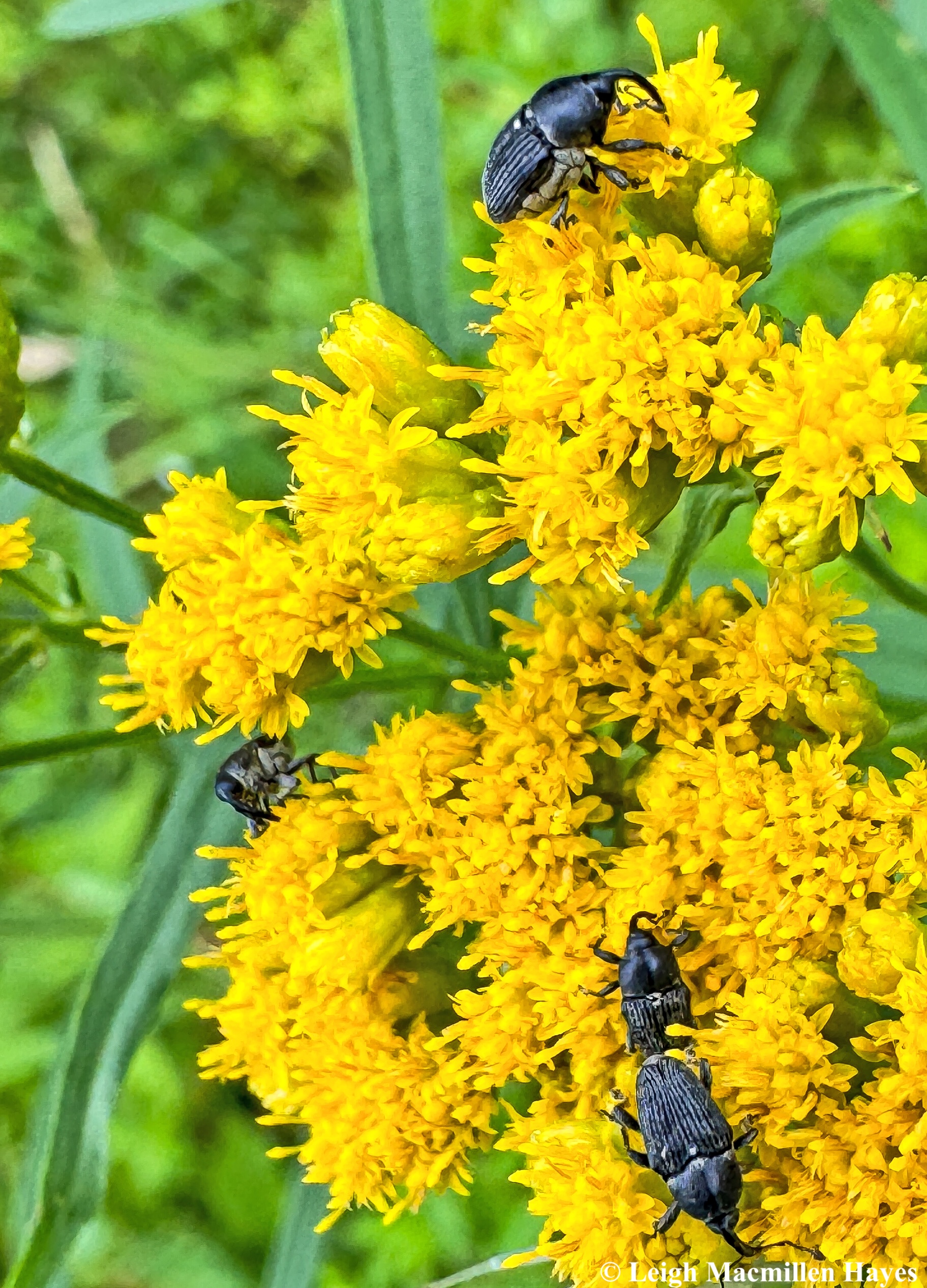
Over by the window, there was another new-to-me species to meet. By their tiny, yet robust bodies, and long snouts that seemed to grow right out of their heads, I knew they were Weevils. If I got the answer correct on the homework, these are Rugged Flower Weevils, aka Odontocorynus salebrosus.

Ragged. Rugged. Interesting choices for today.

In the midst of it all, some old friends stopped by to visit, including a slew of male and female Calico Pennant Skimmer Dragonflies and this sole female Common Whitetail Skimmer.

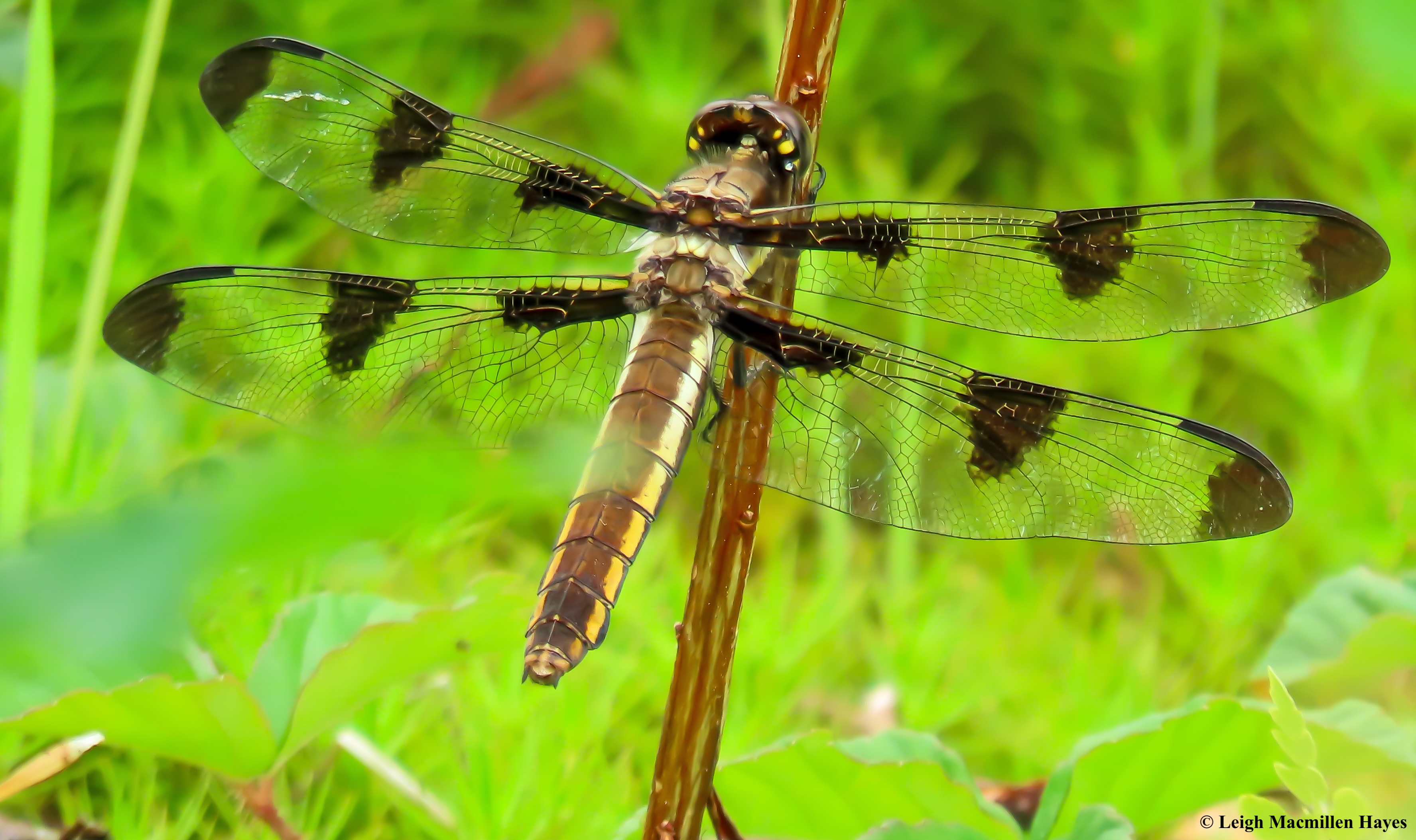
I asked the teacher what is so common about this dragonfly that instead seems quite exotic with black splotches on the wings and a two-toned abdomen. I also inquired about the name Whitetail. She said she’d get back to me. Later, in the classroom next door, I saw a single male Common Whitetail, and its abdomen is much whiter (a light blue actually), so I know why that part of the name, but the female certainly wasn’t taken into account when naming occurred several hundred years ago.

And much to my surprise and delight, a male Spangled Skimmer stalked the halls, another indicator in my mind, that this is more of a meadow than a field.

Look at those white stigmas on the wings. It’s the only Skimmer I know of with such markings, thus making it easy to ID on the spot.

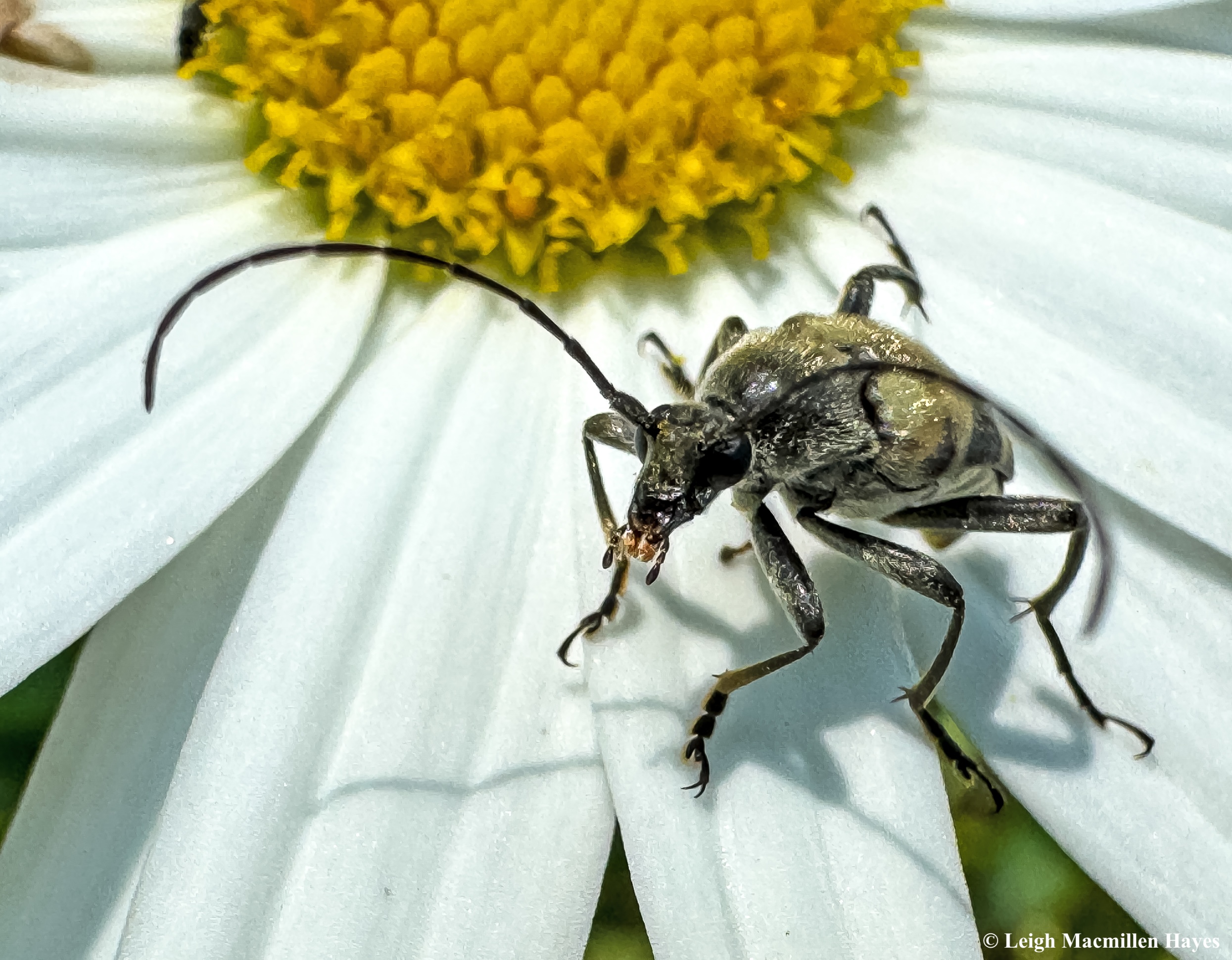
After recess, I crossed back over the wall to the classroom in the yard. Judolia cordifera is one of the Flower Longhorn Beetles, and those long horns were so obvious.

But that face. If I have nightmares tonight, I hope my mom will understand why. And my teacher won’t mind when I take a nap during class tomorrow.

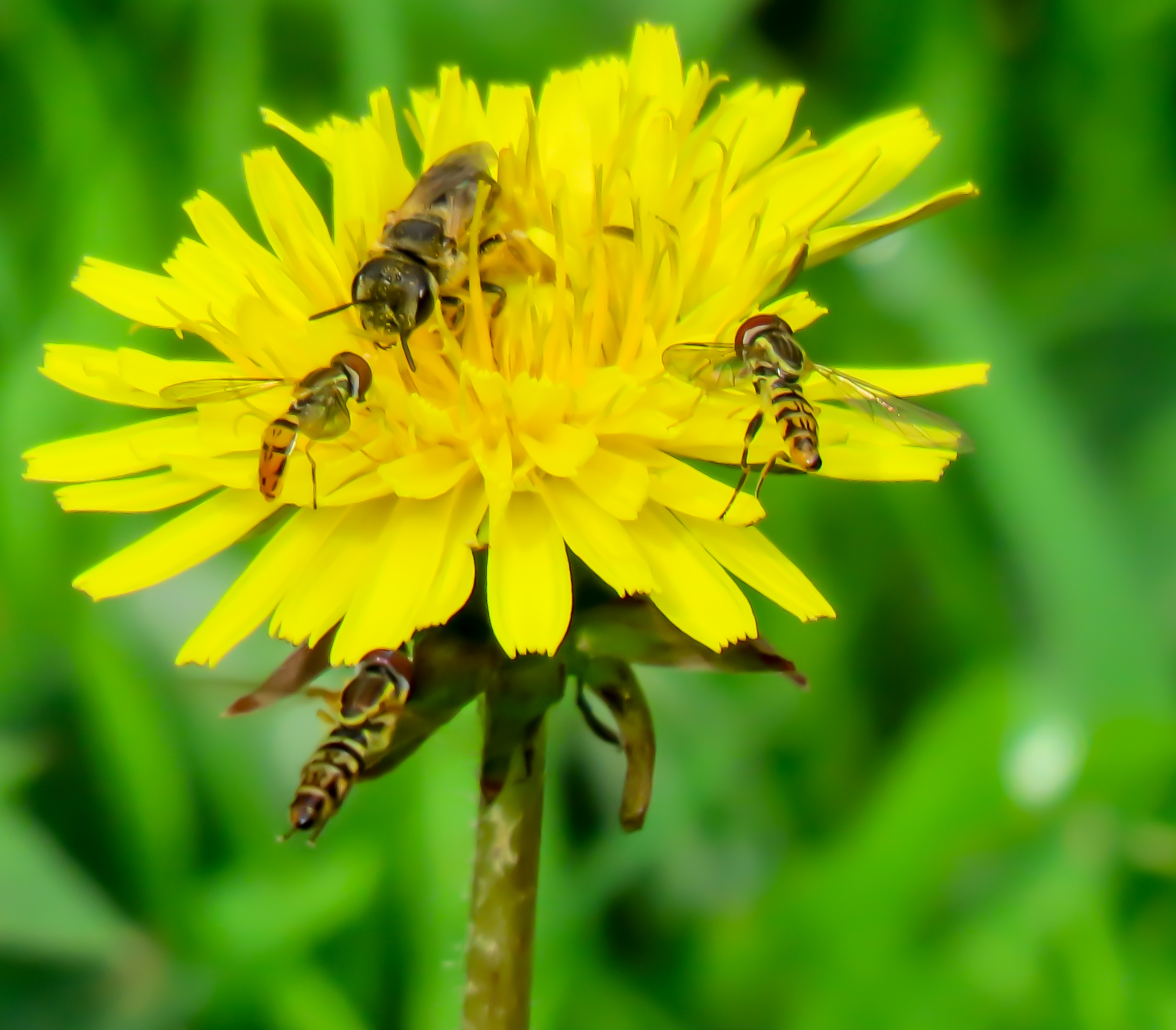
Sweat Bees were also busy pollinating, especially the composite flowers, but its the Crab Spider who presented today’s challenge as the teacher wondered if I saw it. Camouflaged as it was, its duty is to mimic the daisy petals. For the moment the Sweat Bee survived, but the spider often wins in the end.

During lunch, this Gray Catbird landed about ten feet from the table where I sat with my classmates. As a person who dabbles in art, and loved Painting 101 with Miss Jessie, the many shades of gray stood out to me. But I was reminded that a Catbird is more than just a gray bird. First, there’s the small black cap, dark tail, and the rufous-rusty patch under the tail. Sometimes its hard to see the patch, but from my spot at the cafeteria table, I had a spot-on view.

And just before class let out, our school mascot flew in. Or rather, the child of our school mascot. Being so young, it was only an arm’s length away from me, but being the mascot, it seemed not to mind my presence.

Then again, maybe it did for the immature Red-breasted Nuthatch looke around, perhaps for back-up. I know it has several siblings, but the others weren’t feeling so brave as to stand so close to me.

At the end of the day, before the last bell rang, I realized that I was the student teacher–always learning something new and finding joy in sharing those learnings.

Today’s lessons were brought to you from the Field and Yard Classrooms. Stay tuned for more lessons.

Giving Thanks to the Ovenbirds

On my way down the cowpath to retrieve our game camera, I heard among other bird songs, the “Teacha, Teacha, Teacha” of the Ovenbirds. But it wasn’t until I was headed back home a little while later that I actually spied them, which for me is a rare treat–maybe because I don’t spend enough time trying.

In the past, however, it’s always seemed like the minute I get anywhere near them, they stop singing and I can’t find them.

Today, that was different. And I did get to watch. BUT . . . there’s always a BUT in my posts, or so it seems. Anyway, but . . . then I spotted something else.

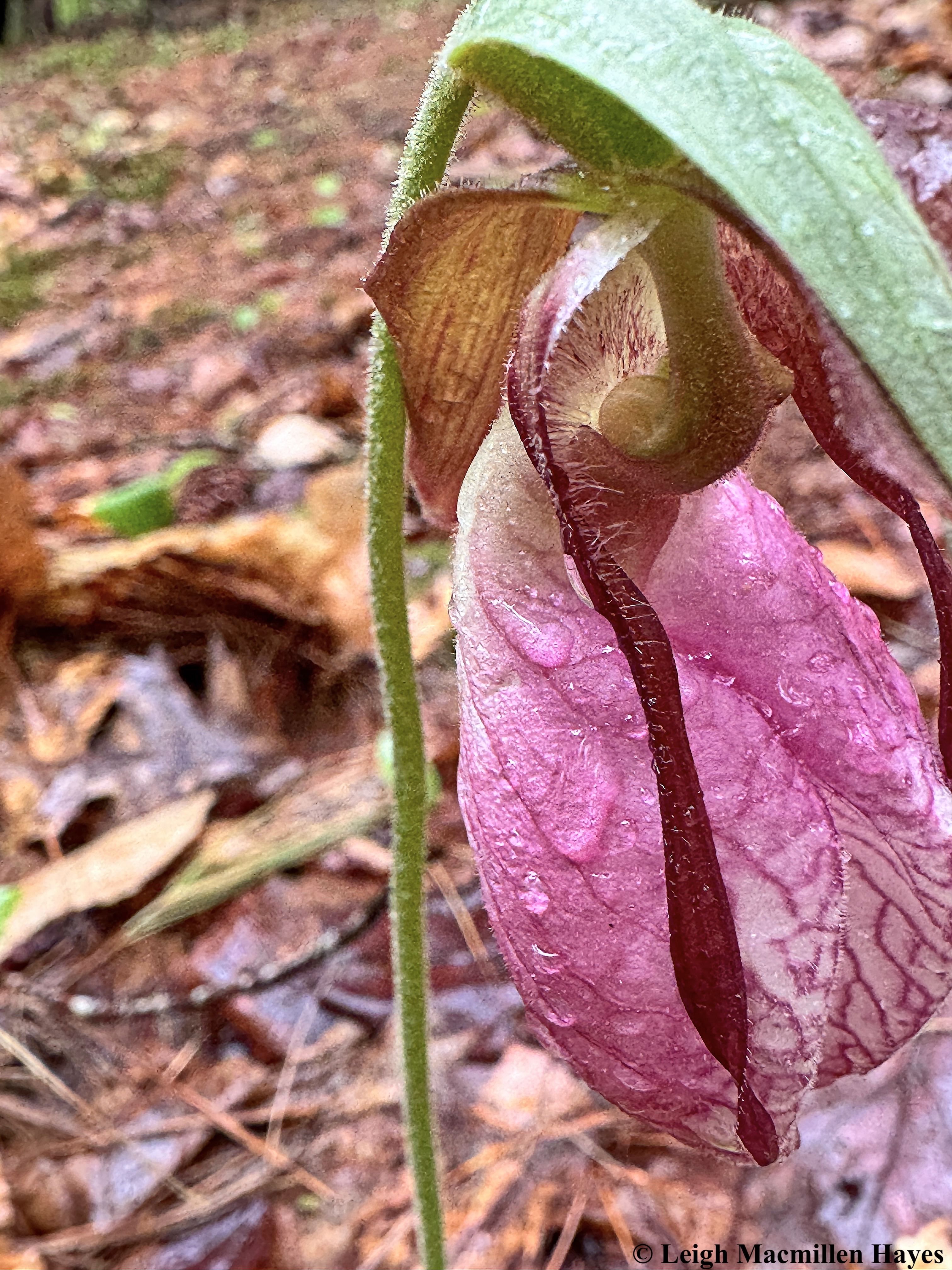
A beautiful pink Lady’s Slipper. And the leaves of four others–that I hope in future years will bloom.

With fingers frozen because it was raining and the temp was only in the 40˚s on this May day, I headed back to the house, pleased with my finds.
All the while, however, I kept wondering if there are other orchids on our land and so after lunch I donned my rain gear again and headed back into the woods.
First, I stumbled upon this fern, which grows in a vase-shaped form. There’s plenty of it along our stonewalls and at the edge of the field beyond, but while hiking with My Guy yesterday, I pointed some out and called it Interrupted and he wondered why such a name.

Because, I explained, ferns have sterile fronds for photosynthesis and fertile fronds for reproduction and in this case its fertile fronds have interruptions of spore cases in the middle of the blade upon which they grow, while most ferns carry their spores on separate stems or on the undersides of leaflets.

After the spore clusters ripen and drop away, the mid-section of the frond will be “interrupted,” leaving bare space between the leaflets, further reminding us of its name.

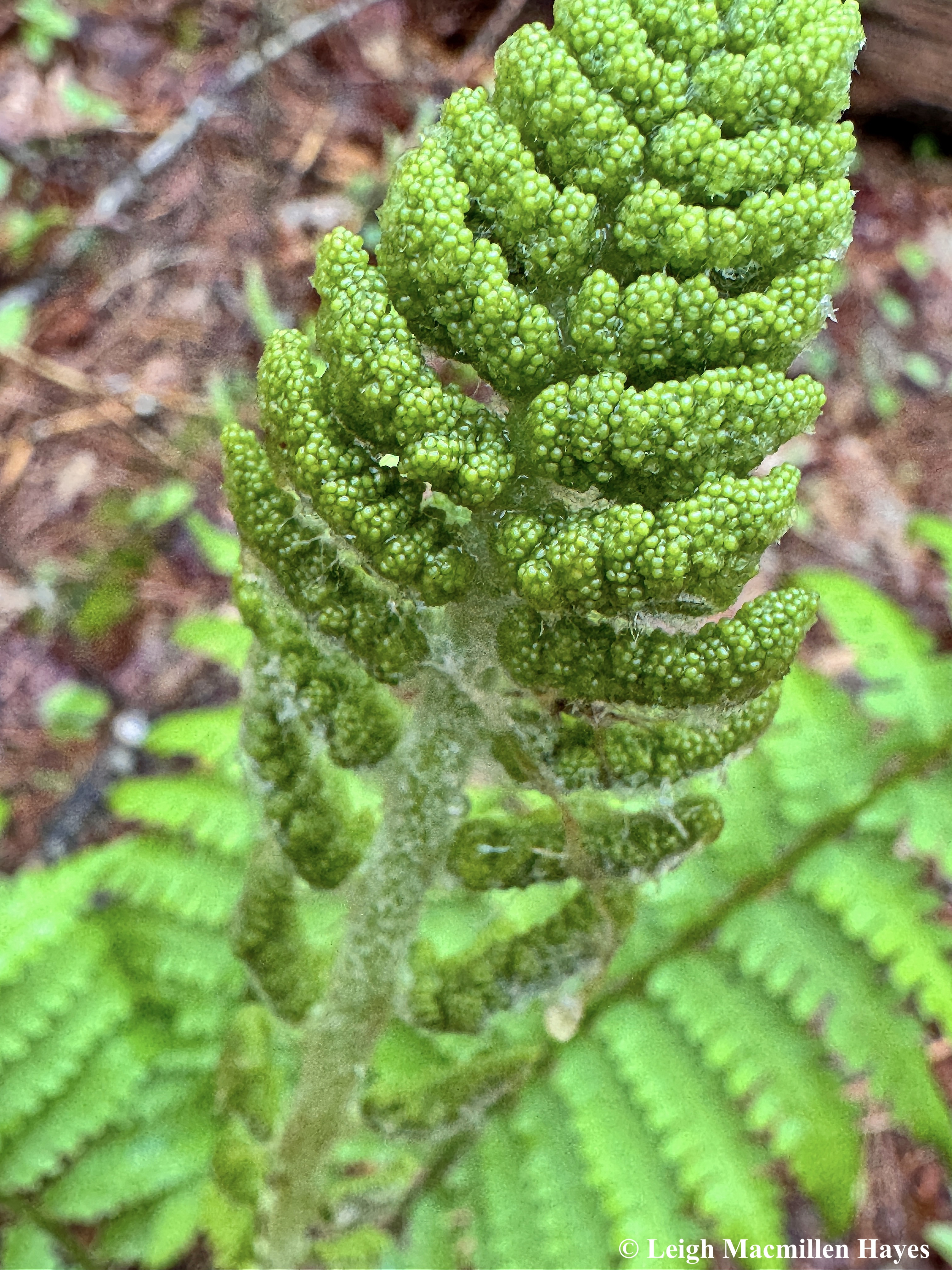
And where there is Interrupted Fern, there is often another member of its family, the Osmundas that is, this being a Cinnamon Fern. One of the differences is that the fertile frond is more like a wand that rises from the center.

There are no leaflets on these fertile fronds, and again, the sporangia are like tiny beads that will turn a warm cinnamon brown when the spores mature. And then, it really will look as if the frond is covered in cinnamon.

While the Interrupted will grow in forests and wetlands, the Cinnamon prefer wetlands, which tells you something about our land. Another that also grows here, though I forgot to photograph it, is their second cousin, the Royal Fern.

If an Interrupted Fern doesn’t have fertile fronds, it looks very much like a Cinnamon, but one of the key characteristics to tell them apart is that Cinnamons have hairy (wooly) armpits like this one above where you can see the wool on the underside where the leaflet meets the rachis or main stem. And Interrupteds don’t.

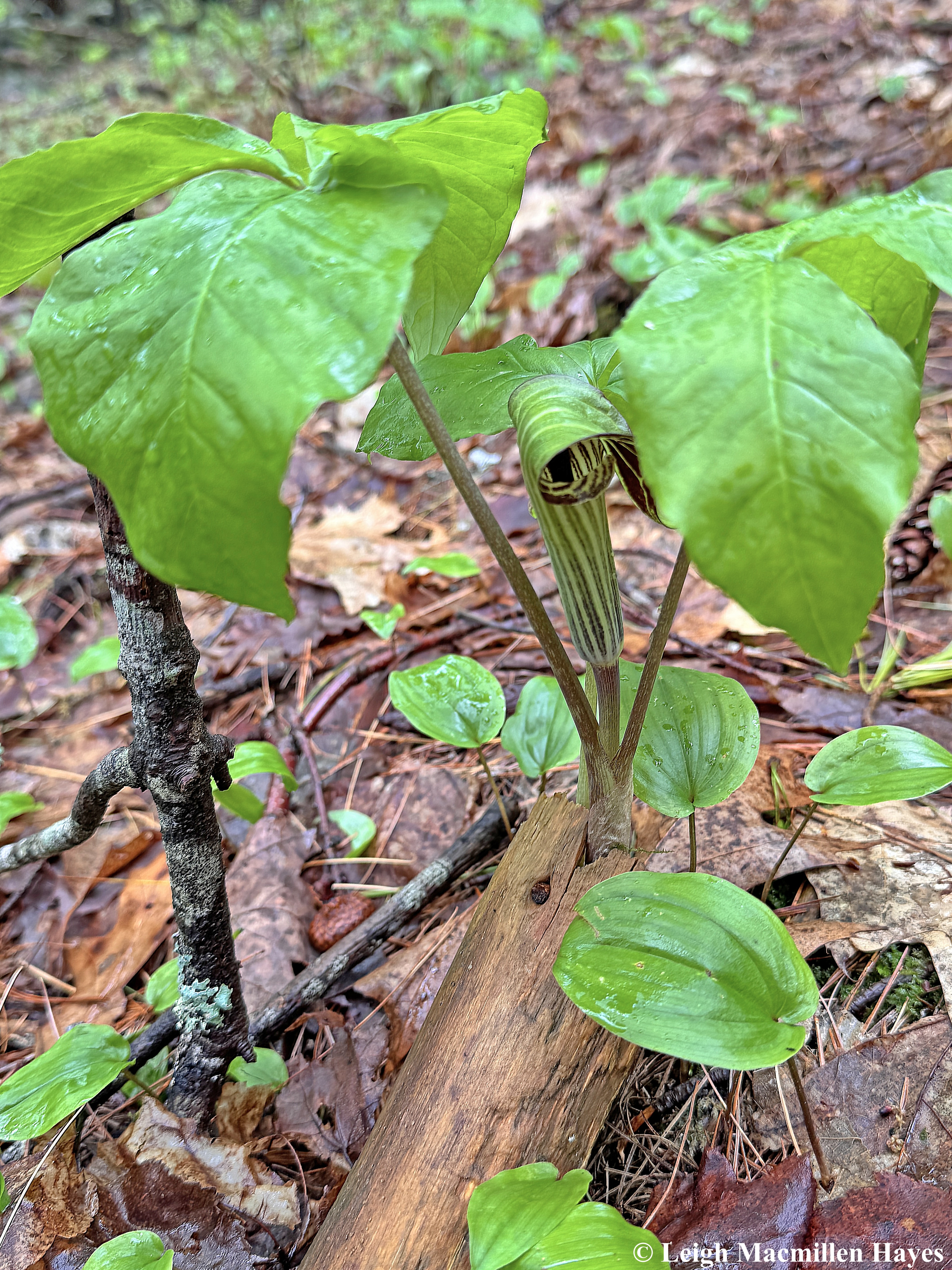
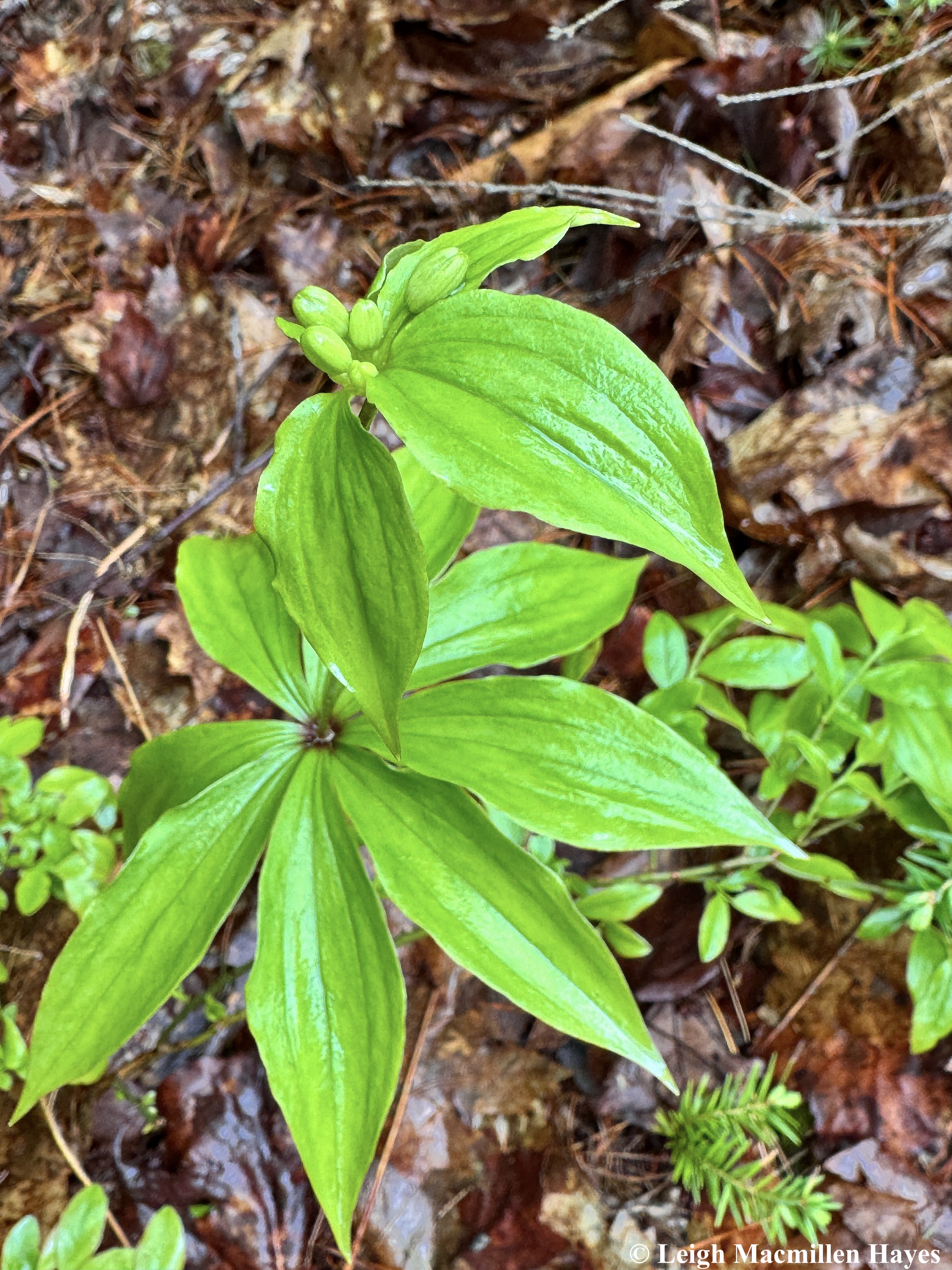
Being a bit of a wetland, I shouldn’t have been surprised by my next find, but I was. Jill-in-the-Pulpit! You may think it’s Jack, but like some other plants, including the Canada Mayflower that grows beside these, in order to flower the plant needs the additional energy stores of a second leaf (with three leaflets).

Once I spotted one, I began to notice they were everywhere in one spot on and near the cowpath, but the curious thing–the leaves had been devoured on some. By whom?

And do the leaves also contain Calcium oxalate, which this plant like some others stores in the roots and can cause blisters and other medical problems if consumed? Is that only in humans? So many questions.

That said, my quest now was to seek not only any other Lady’s Slippers, but also Jack-or-Jill in the Pulpits. All told on the latter, I did spot about twenty, but didn’t take time to differentiate how many of each gender.

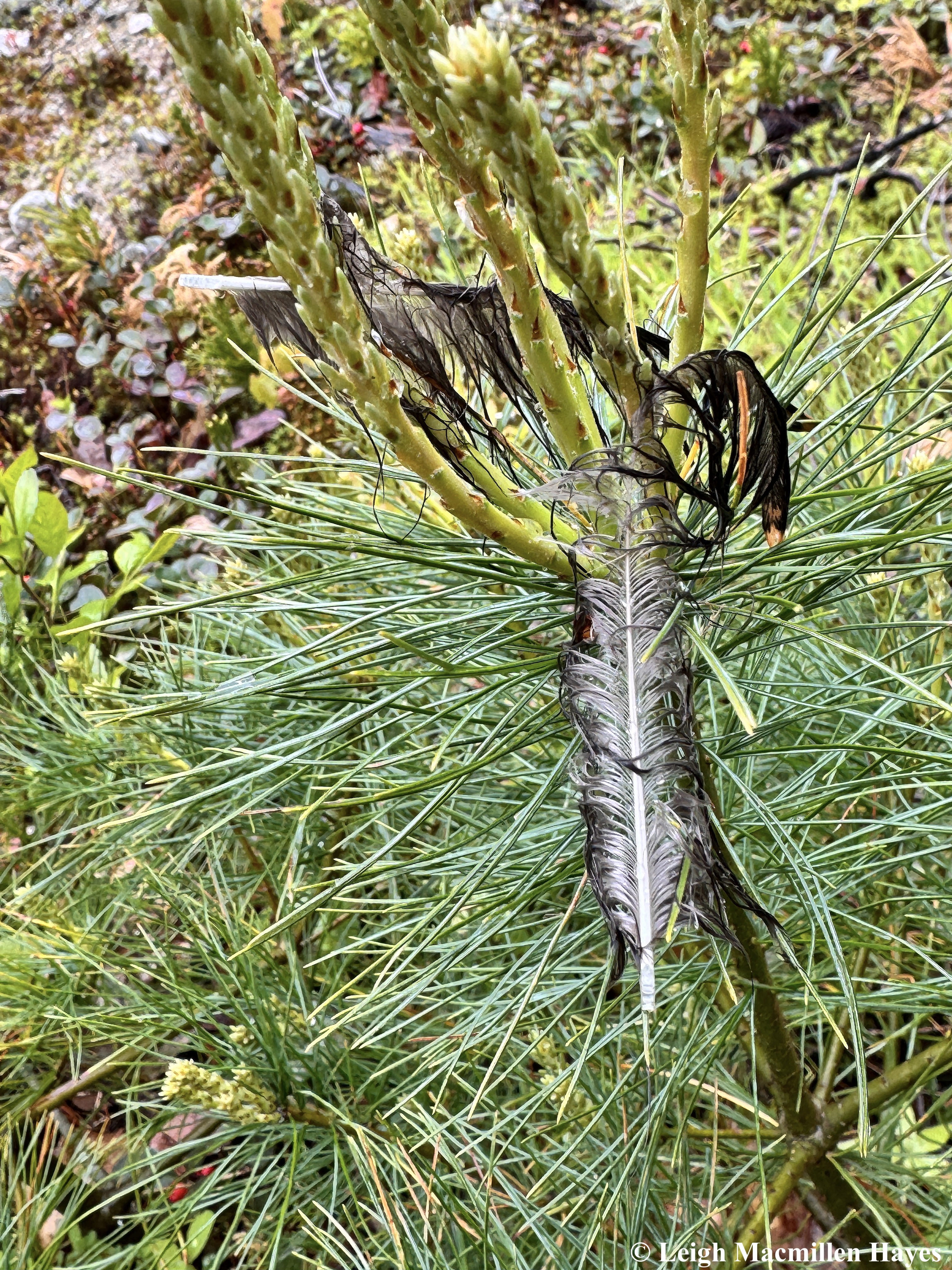
At last, I reached the powerline that crosses our property and it was there that some feathers decorating a pine sapling surprised me.

A closer look and I found a slew of feathers, all plucked. By one of our predatory birds–we do have Sharp-shinned and Broad-winged Hawks in the neighborhood. Or by another?

We also have a neighborhood Red Fox who passes through our yard and over the stonewall or up the cowpath on a regular basis. Plus Coyotes and Bobcats.

Mr. Fox needs to eat too. And in this case, he marked his territory–right at the end of the ten-second clip.

The question remains–who made a meal of the Turkey?

Again, I do not know, but as I searched for evidence or more remains, look what I found–another Lady’s Slipper hiding among some Low-bush Blueberries.

And so back to my original quest did I return.

And smack dab beside that orchid, another plant that I love, but didn’t realize we hosted–Indian Cucumber Root, with a root that is edible and delicious. And a flower or in this case, flowers, that will delight my soul in a week or less. And yes, this too, is a plant that needs an extra layer of leaves in order to produce a flower. So do we call this a female plant and all plants that only have one level or tier of leaves males?

I don’t know. But I had circled around, zigzagging actually, through the five acres of woods that we own beside our one-acre house lot, and landed back at the first Lady’s Slipper, delightfully decorated with the rain of the day.

Across the way, right where I’d first spotted him, an Ovenbird paused and called. I tried to capture both in a shot, but they are scurry-ers, if that’s a word for scurry they both did as if they were in a hurry and perhaps a wee bit confused. Maybe they were trying to distract me from finding their nest?

I didn’t look for it, but have an idea at least of its whereabouts. And I can only hope that any offspring they produce are well protected cause this is a wild place.

With fingers once again numb, I finally headed home, but first I stopped to check on these Jack-in-the-Pulpits that were the only ones I thought we had, growing as they do by a split-granite bench we made. I remember seeing Jack standing tall in the pulpit one spring as I headed out to the vernal pool, and upon my return someone had nibbled him. Whodunnit?

That said, I decided to place the game camera by all the other Jacks and Jills that I’d found earlier today and I’m curious to see if anymore get nibbled.

All of this because the Ovenbird called. It felt like Thanksgiving. Complete with a Turkey dinner. (Sorry, but I had to say that.)

And to think I thought I knew our land. There’s always something to learn. Or some things!