Eyes on the World About Us

Sometimes we hike with a purpose, My Guy and I. And on those days, he actually slows his pace down.

And opens his eyes wide, much like the Red Squirrel–ever on the alert.

Was it the Fringed Polygala, aka Gay Wings he sought? No, but I certainly did. Those petal-like wings are actually sepals. Two of the petals are fused into a tubular structure, thus giving this plant a “bird-of-paradise” form. The fringe at the end of a third petal or keel below invites all to enter.

Don’t they look like birds in flight? Being a spring ephemeral, these delicate blooms will only last a few more weeks and then I’ll confuse their leaves with those of Wintergreen, but My Guy was rather oblivious to all of this.

Was it the Dandelions he sought? No, he scuffs at those. But the Flower Fly and I–we were two of a kind for this incredible display. Notice how each ray is notched at the tip like teeth. Those five “teeth” represent a tube-shaped floret. Fully open, the bloom is a composite of numerous florets.

Was it the Wolf’s Milk Slime he sought? No, I’m not sure he even spotted them for though we were moving at a slower than normal pace, one of us was even slower than the other. I couldn’t help it. I cannot resist this slime mold.

It was apropos that I should spot it on this trail and by the end you’ll understand why.

And so I did what I always have to do when I spot Wolf’s Milk. Picked up a stick. And poked one of the fruiting bodies. I could actually feel my peeps’ presence in the moment because they would have been doing the same, and maybe even taking a video as the salmony-pink paste inside oozed out.

As the mold matures, the paste actually turns into the spores and when we poke it later in the season, a puff of gray exits the ball. No, they are not puffballs, but they are the next best thing.

Was it the Painted Trillium he sought? No, but for once he did actually count them. I’ll let you know the total at the end.

Was it the number of blowdowns, he sought? No, but those were incredibly abundant, many occurring over the course of the past eight months. And actually, they were a hinderance to what he did seek.

Was it the Pink Lady’s Slippers he sought? BINGO! I do not know why, but My Guy loves to count them and especially to find displays like this. And I love that he loves this.

White Lady’s Slippers are a variation of Pink, and so they were included in the count.

We honored the very last one before we headed back to the truck–this being #475.

Yes, 475 Lady’s Slippers.

At this same locale in 2023: 324.

And in 2022: 411.

The thing we did notice this year, we were a week earlier than usual, and many of the flowers hadn’t completely opened. Note to ourselves: don’t be so impatient next year because we really love seeing them in full color.

And we do know we missed some because of the blow-downs, but hey, we still did well.

Number of Painted Trillium: 2. My Guy usually refuses to count them, but we didn’t spot one until we were almost done, so he figured he could. And then the second one appeared.

I couldn’t help but smile.

Where were we? By this photo some of you may now know our location. In front of us was Googins Island, as viewed from the rocky coast at Wolfe’s Neck Woods State Park in Freeport, Maine.

Now do you understand why I said the Wolf’s Milk Slime Mold was located in the right place?

And Googins Island has long been home to this Osprey nest, where the expectant parents had their eyes on the world about them. Just as we had.
A Closer Look

In my continued quest to capture spring, I spent the morning taking a closer look.

p-ph star1

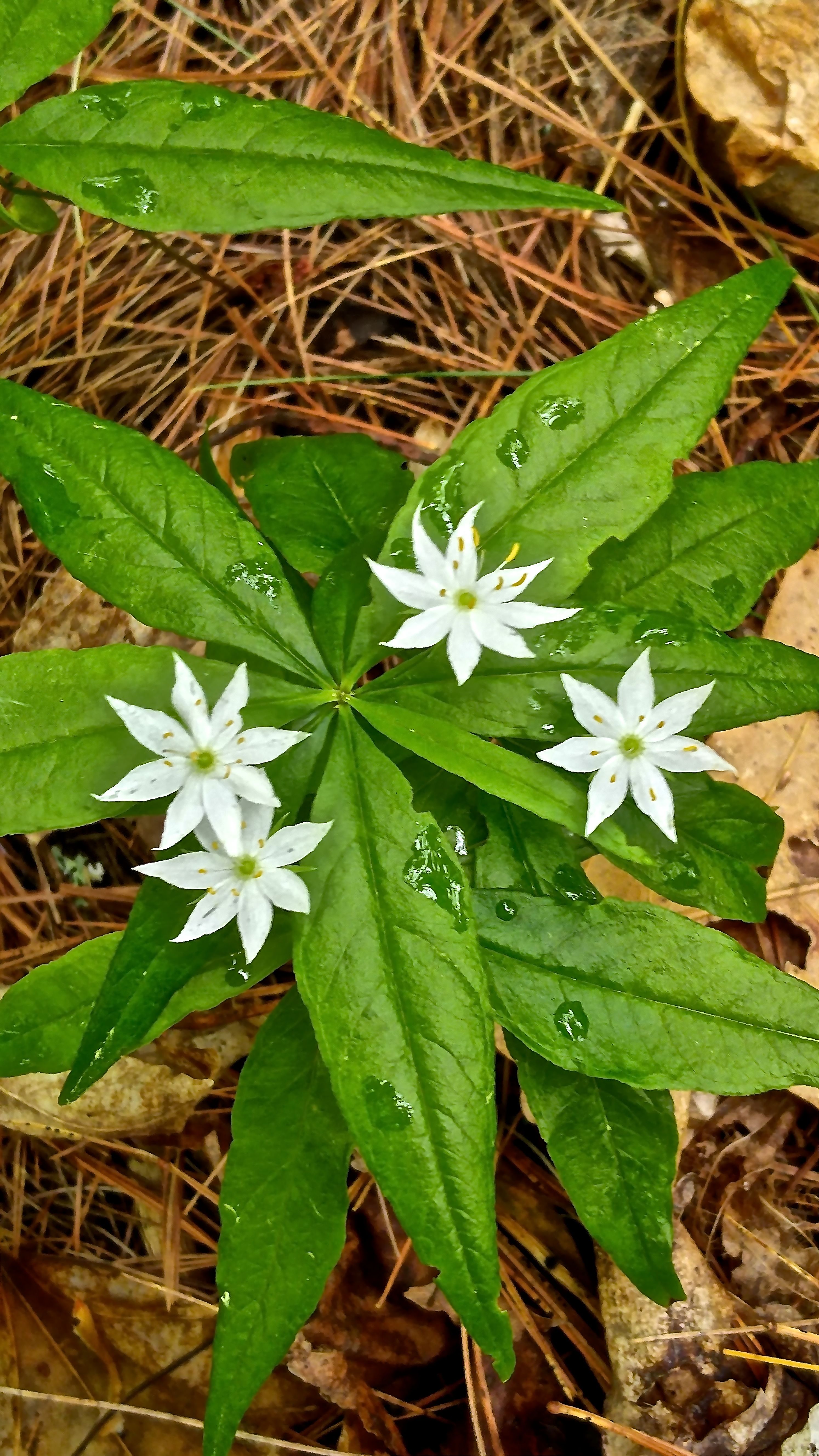
Lest I take myself too seriously, let me begin by saying my inspection wasn’t always as thorough as it might have been. I was wowed when I discovered a four-flowered starflower. I know they can produce up to five, but typically I see one, two or three flowers. Um . . . I think this is actually two plants. Oops. The great discoverer I have yet to become.

p-ph sars1

But check out the wild sarsaparilla with its three globe-shaped umbels.

p-ph sars 2

I don’t know if I’ve ever actually noticed the green-petals that fold back. And it’s a tad bit hairy.

p-ph buttercup

Whenever I see the common buttercup I’m transported to my childhood–we placed it under each other’s chins. If your chin reflected the yellow glow that meant you liked butter. Mine never failed.  ;-)

p-ph foam1

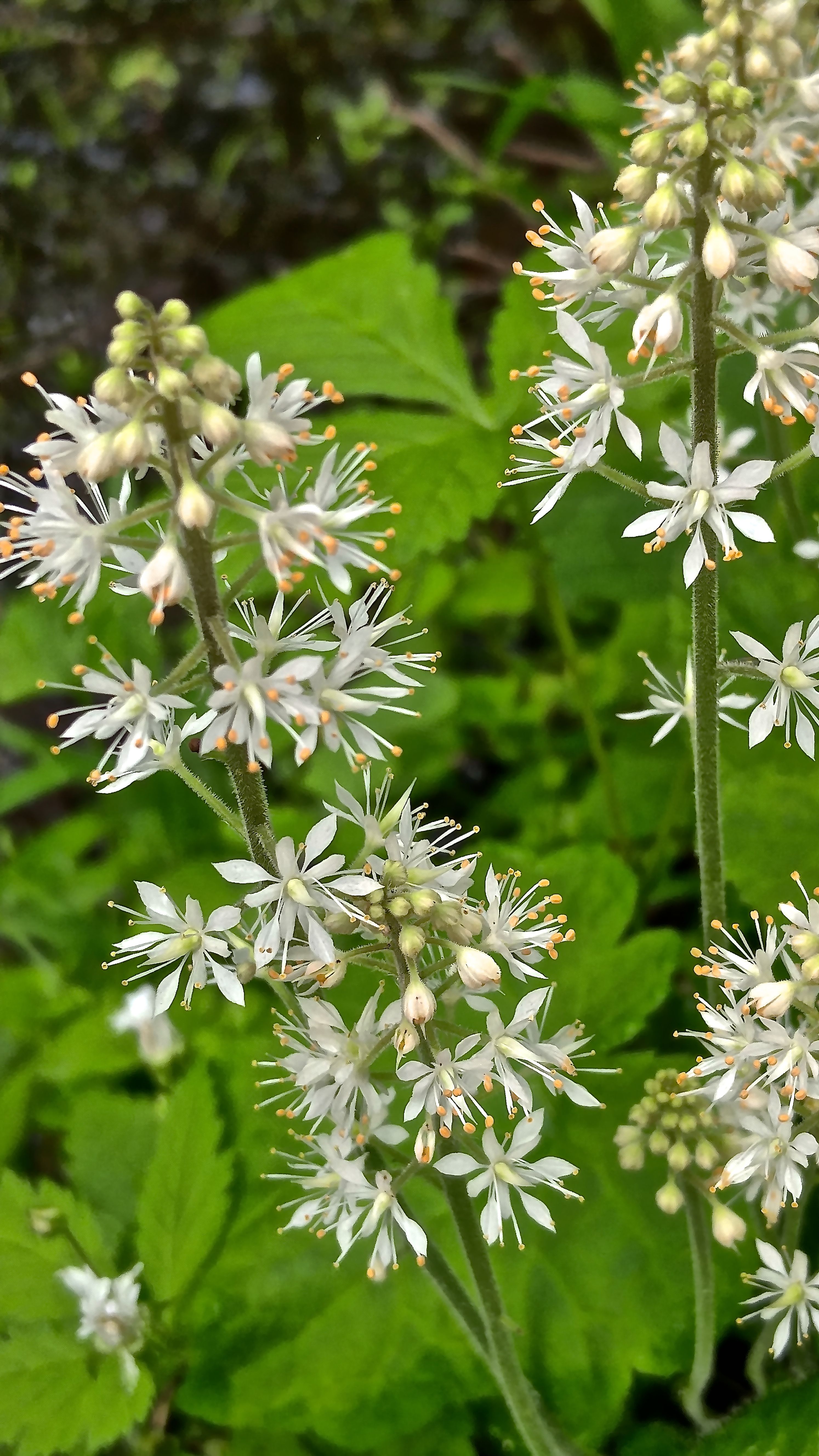
And then it was the tiarella that pulled me down.

p-ph foam 2

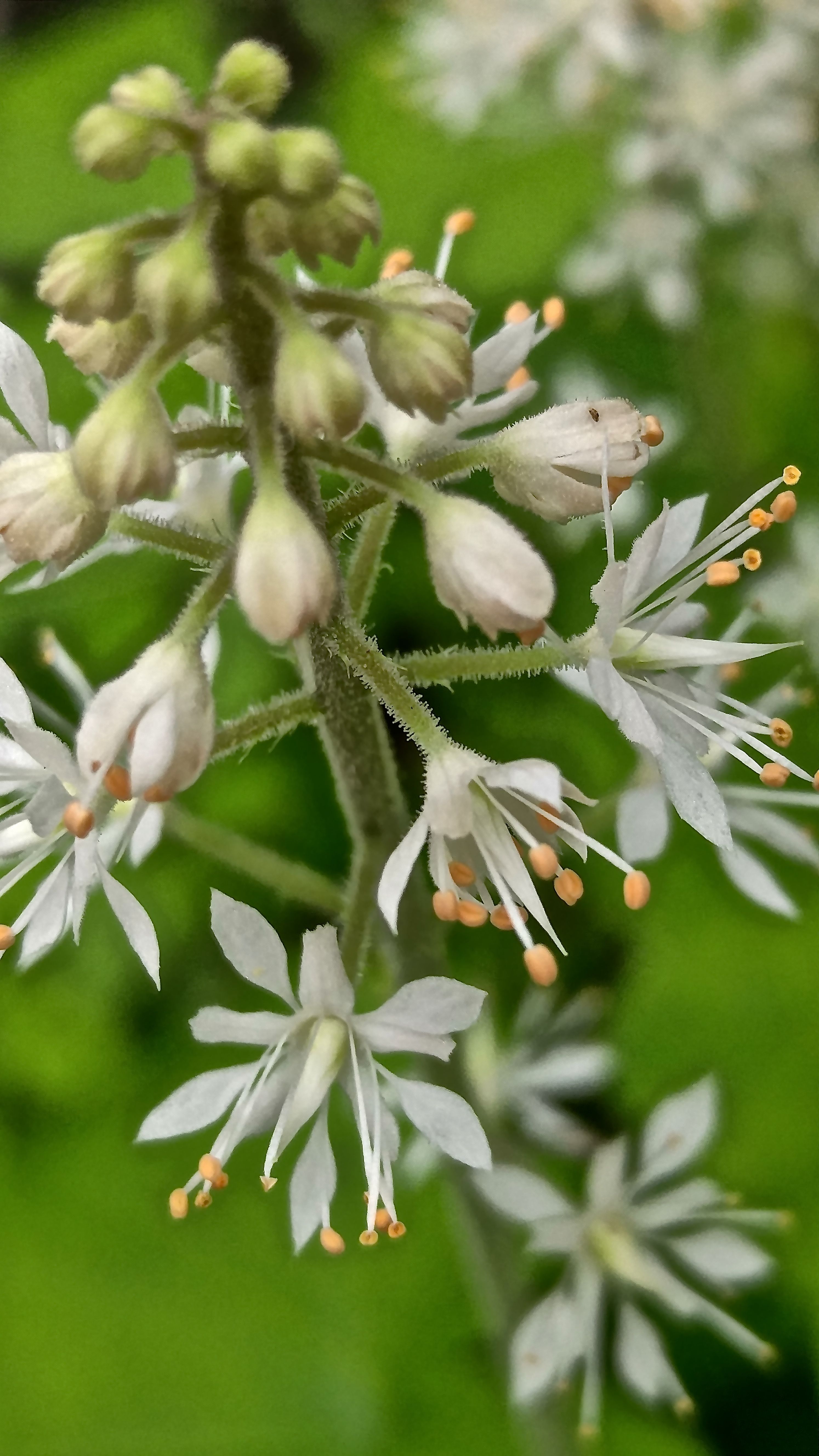
Its terminal cluster of flowers is said to resemble foam, thus the common name of foam flower.

p-ph foam 3

Holy stamens! Each spray of a flower consists of five sepals (outer circle that appear petal-like), five petals that narrow as if they form a stalk, ten yellow-anthered stamen and two pistils, one of which is longer than the other. Amazing. And more hair!

p-ph gaywings

Because it’s equally beautiful, bountiful and birdlike–I couldn’t resist another pause for  fringed polygala or gaywings.

p-elm2

The next attention getter–the double-toothed American elm leaf with its asymmetrical base.

p-ph beech leaves

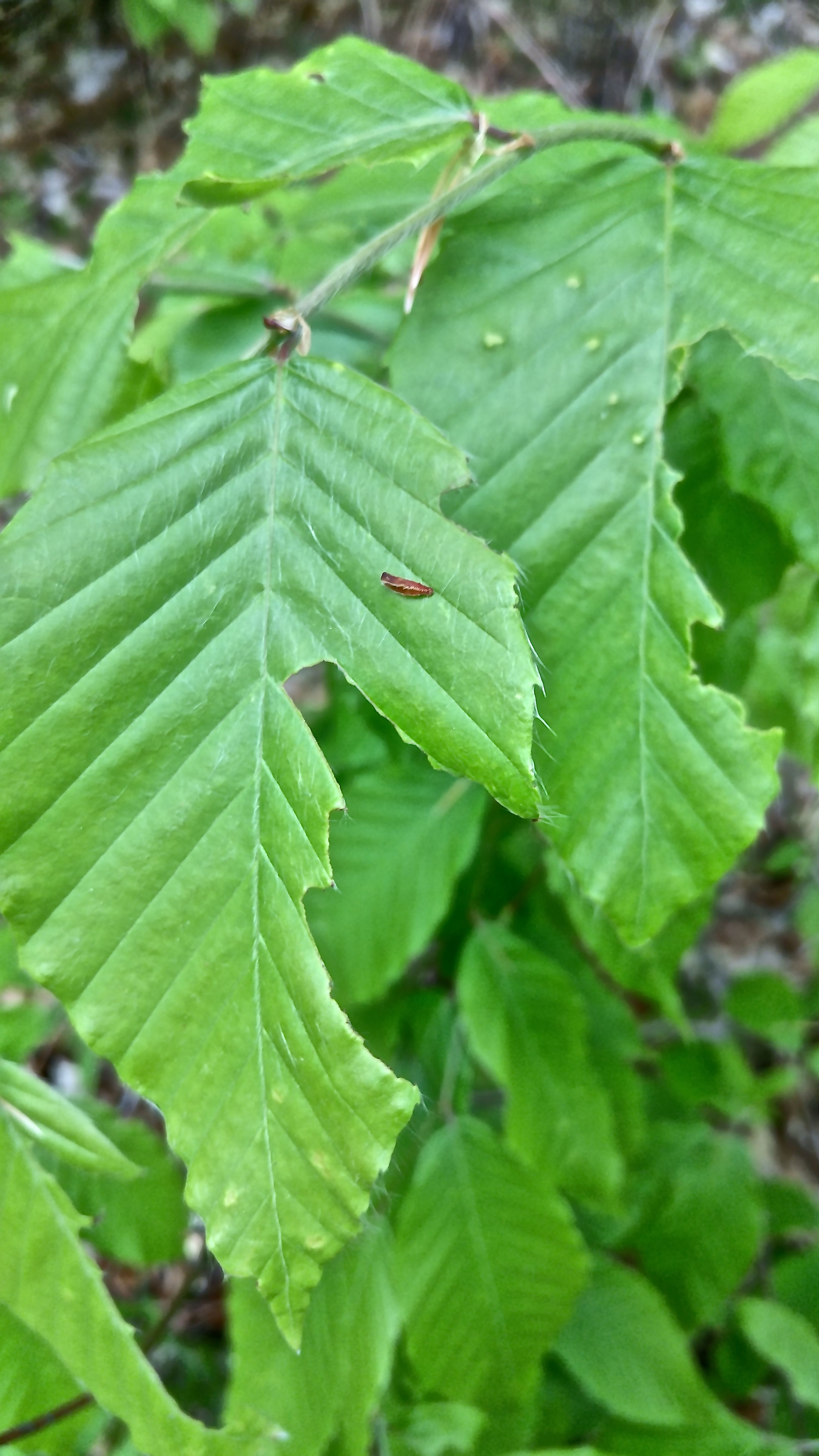
I love to contrast it with beech leaves. Apparently, both are quite tasty.

p-ph caterpillar 1

And I found a culprit. One of many. I know that the caterpillars and insects have to eat, but  it seems like the leaves work so hard to protect themselves only to be munched upon in a short span of time. So much for the protective hairs.

p-cinnamon2

What I really wanted to focus on, however, was the ferns. Last week’s crosiers are this week’s fronds and fertile stalks.

p-ph cinn2

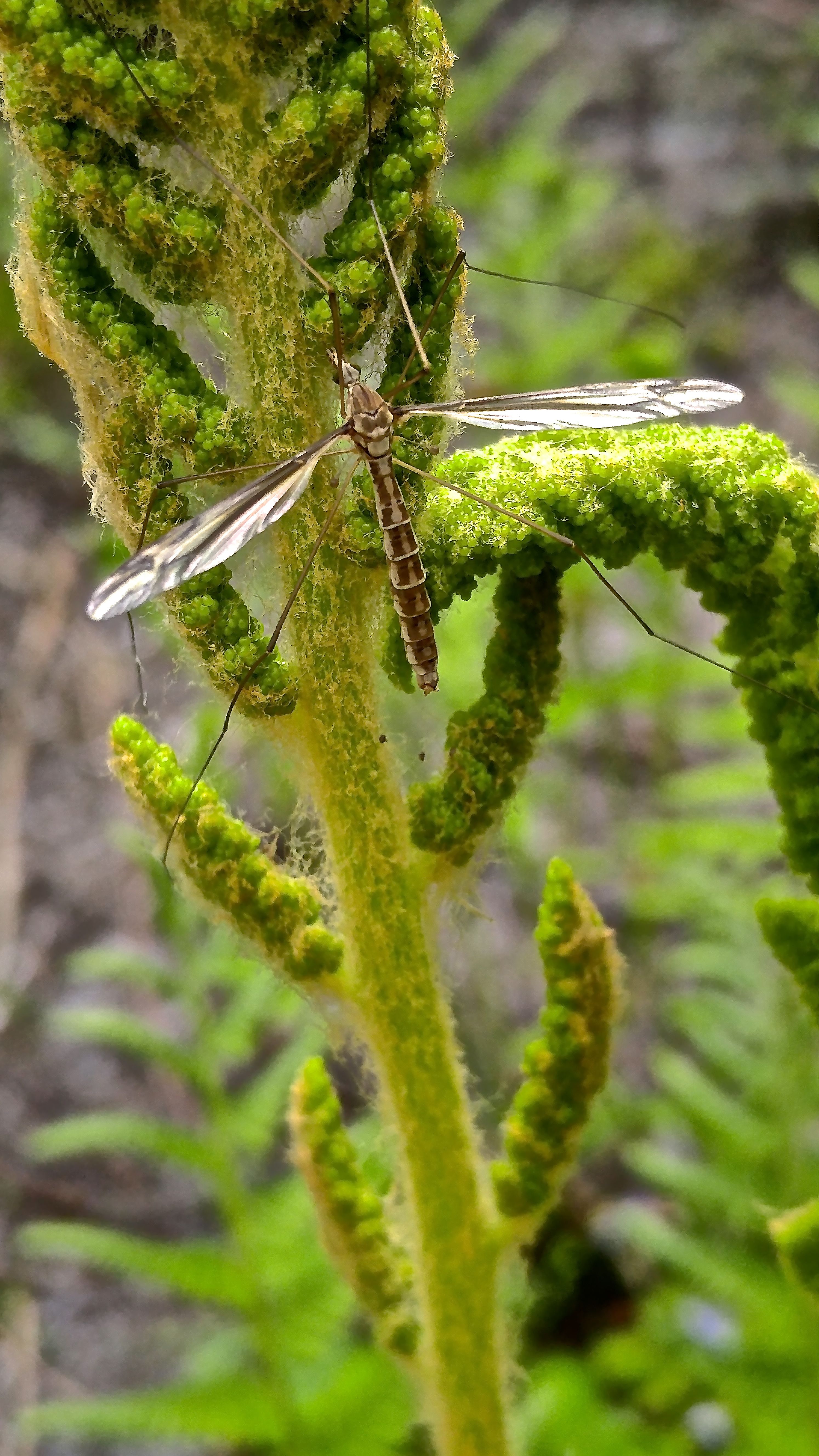
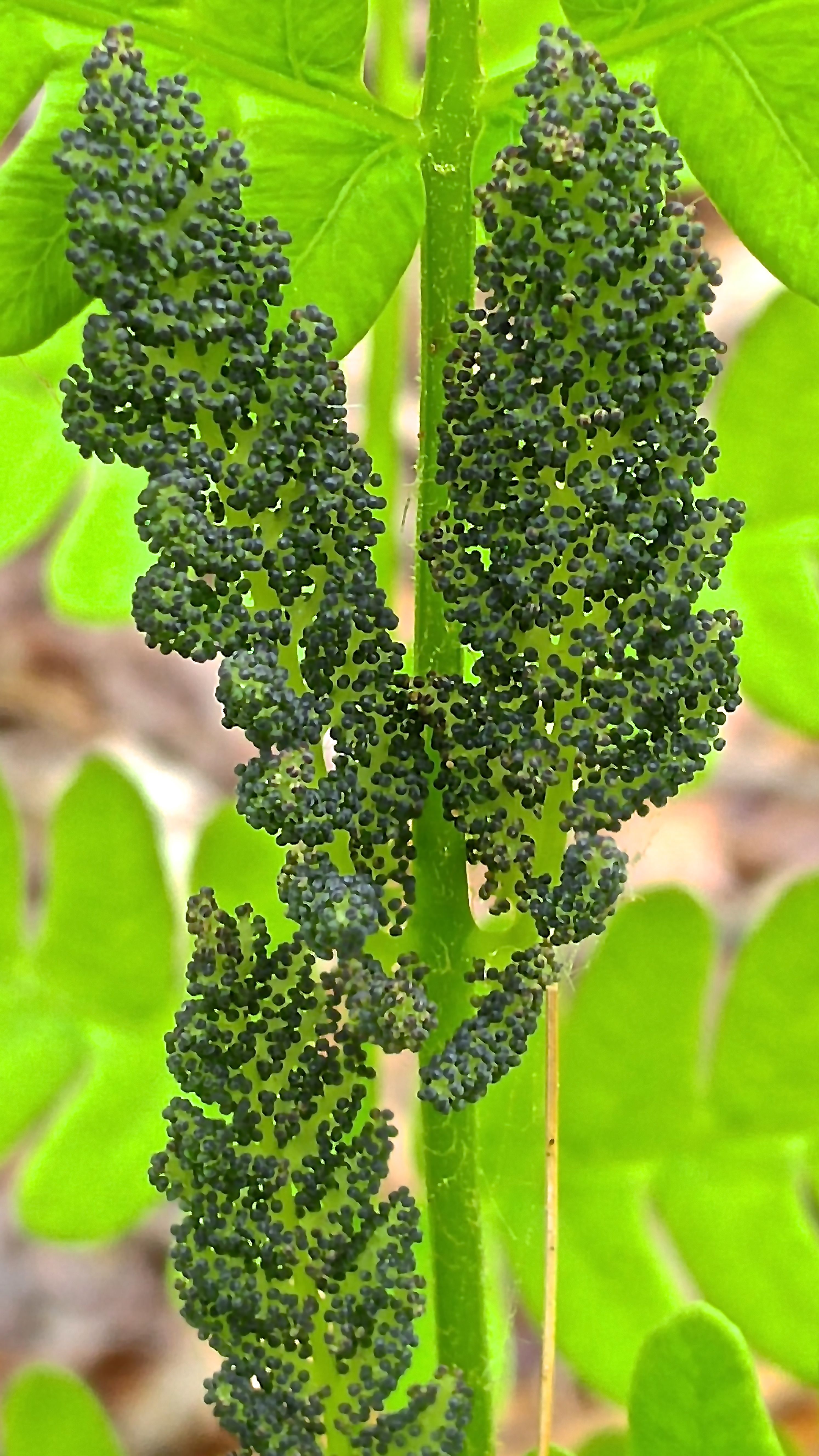
I guess I’m most fascinated by the manner of the tiny green spore beads clustered together–in some ways they mimic the shape of a frond. Again, hair.

p-cinnamon 3

Already, a few are turning the cinnamon color for which they are known.

p-ph crane 2

Upon one, I found a crane fly. Check out those body segments and spindly legs. Adult crane flies, like May flies, don’t eat. Their mission in life–to mate and lay eggs.

p-ph interrupted 2

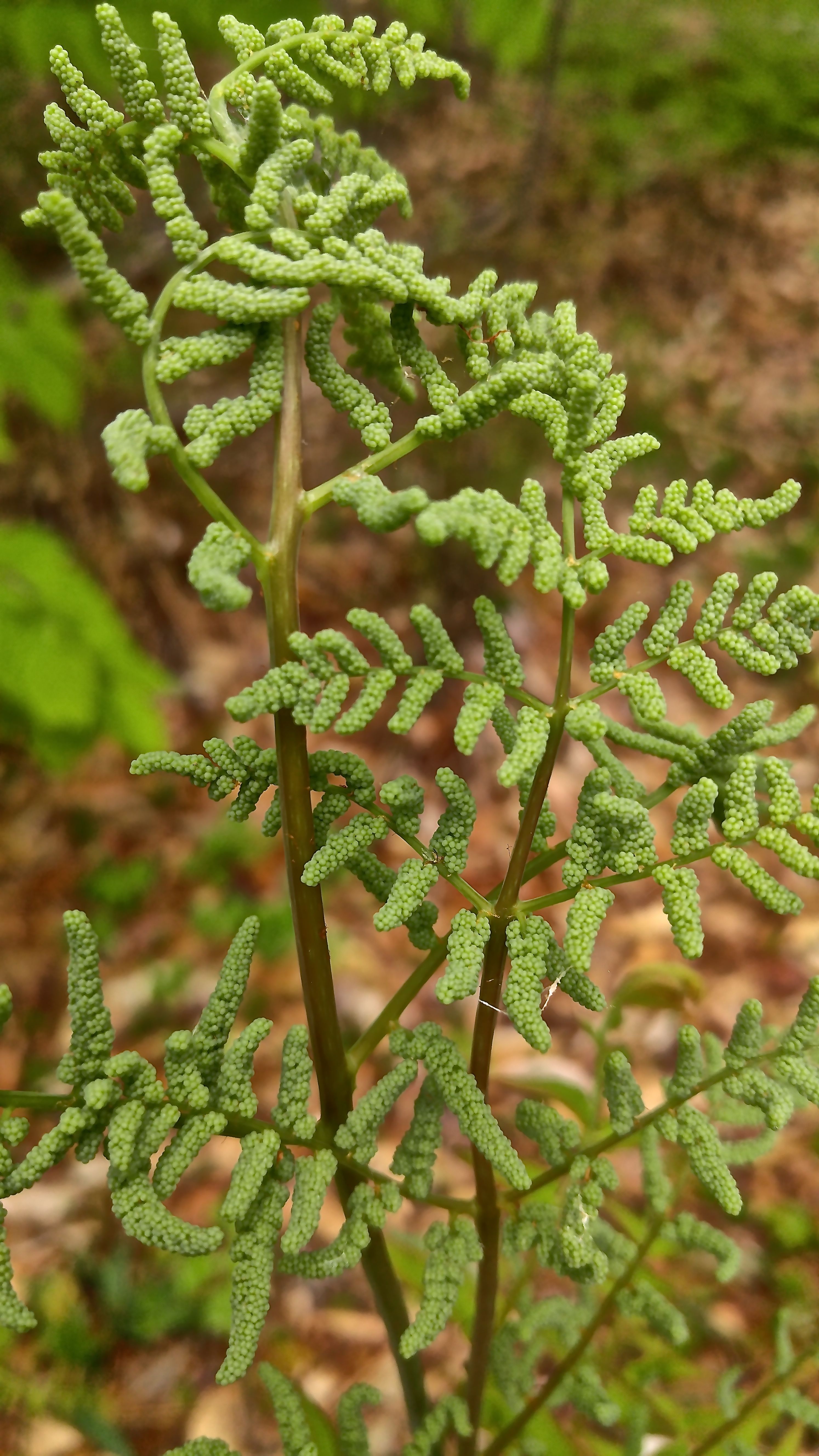
Because they like the same conditions, interrupted fern grows nearby. In this case, the fertile leaflets interrupt the sterile ones.

p-ph inter 3

It’s another beady appearance a tinge darker in color and the presentation is different.

p-ph royal 2

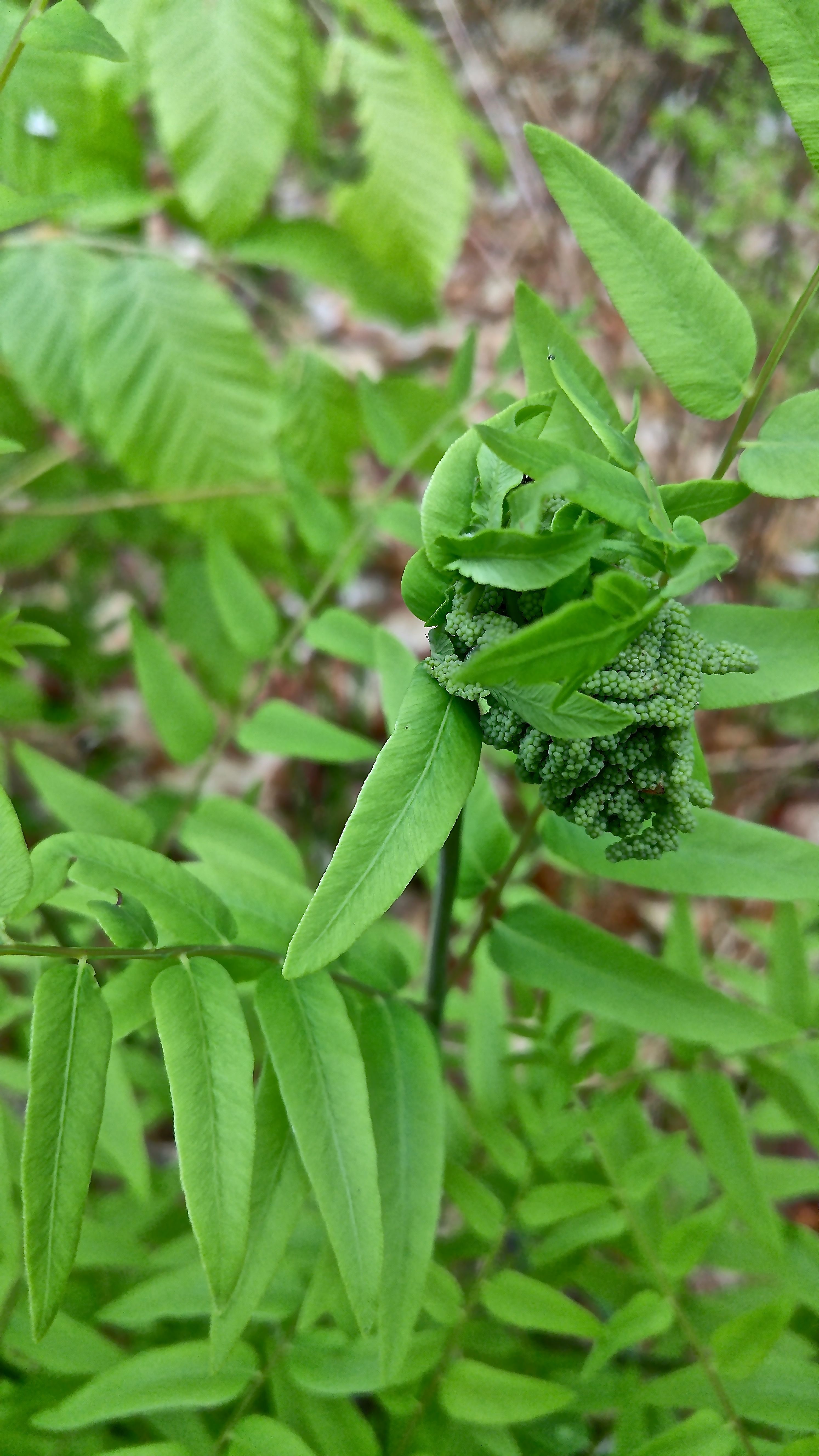
I think my favorite of all (don’t tell the others) is the royal fern. Maybe it’s because my friend Judy calls me the queen. I’m not sure what I’m the queen of, but I do love the crown that is beginning to unfurl.

p-ph royal1

Maybe it’s the elegant structure. Or that fact that no other is like it, so I can easily identify it. The spore cases are clustered at the tip of the fern giving it a bit of a crown appearance.

p-ph dew

The other fern that grows in this place hasn’t developed its separate fertile stalk yet. What drew me to the sensitive fern this morning was the drops of dew that gathered on the frond–and offered a magnification of its veins. A glimpse into its life-giving force.

I hope you’ll make time this spring to take a closer look and wonder about the world around you.