A Squirrel’s Garden

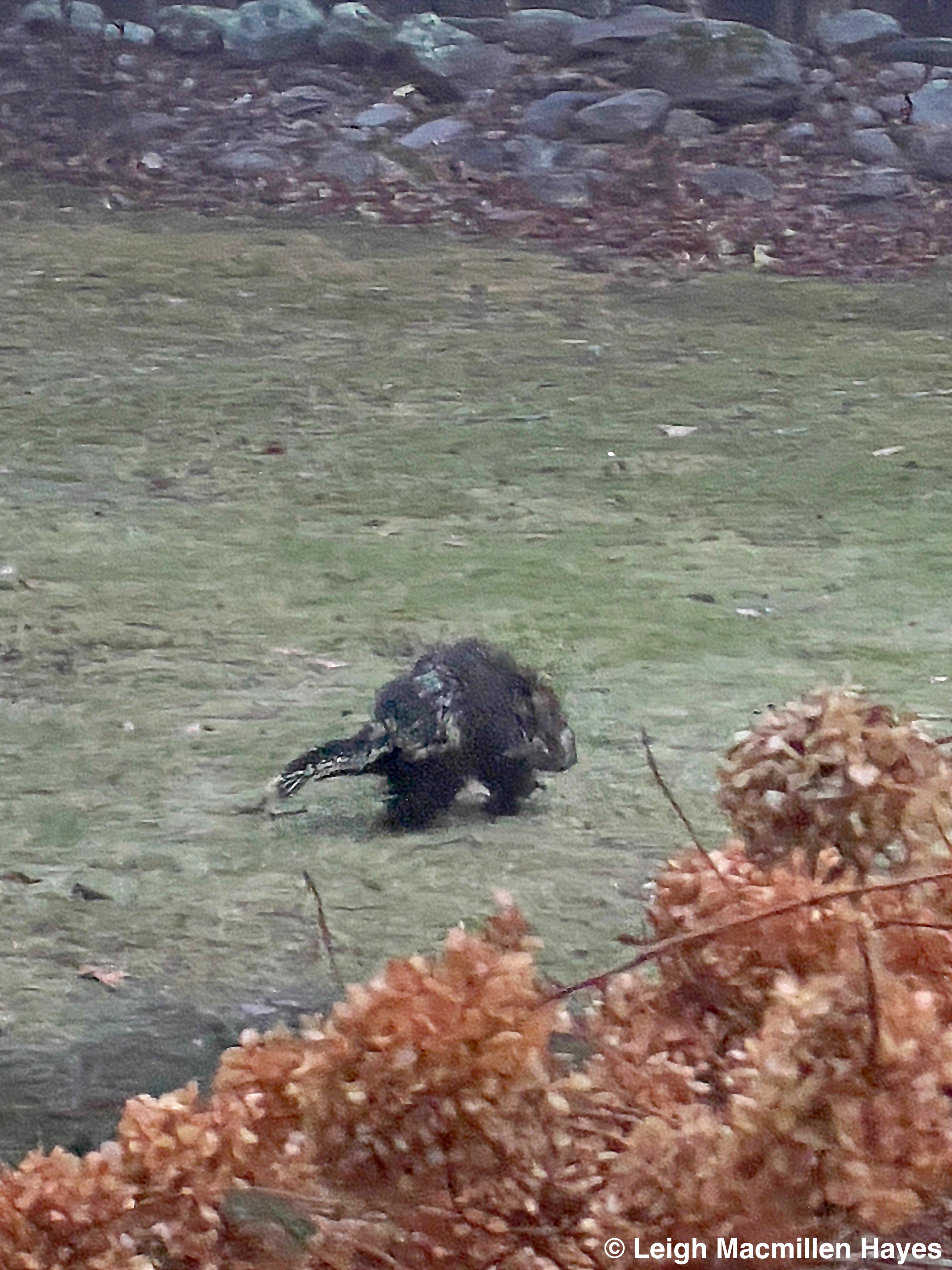
A lot has happened this week on many different fronts, both personal and public, both positive and not so, some comical (like the porcupine that awoke me one morning because it had managed to climb to the second floor of the barn and toppled our sons’ many “earned” trophies) and others more serious, with some in between thrown into the mix, cuze life happens.

To that end, some of my best moments were spent looking and wondering. In the woods. Of course. In our woods, in particular.

I headed out onto the old cowpath in search of a dear friend, not certain if I’d meet him or at least spot signs of his passing. And it wasn’t a deer I was looking for–although, in a way it was because I haven’t seen a single one in several months and any scat along this trail is from last winter and spring and at that time it was so prevalent that with every step I took, it was there.
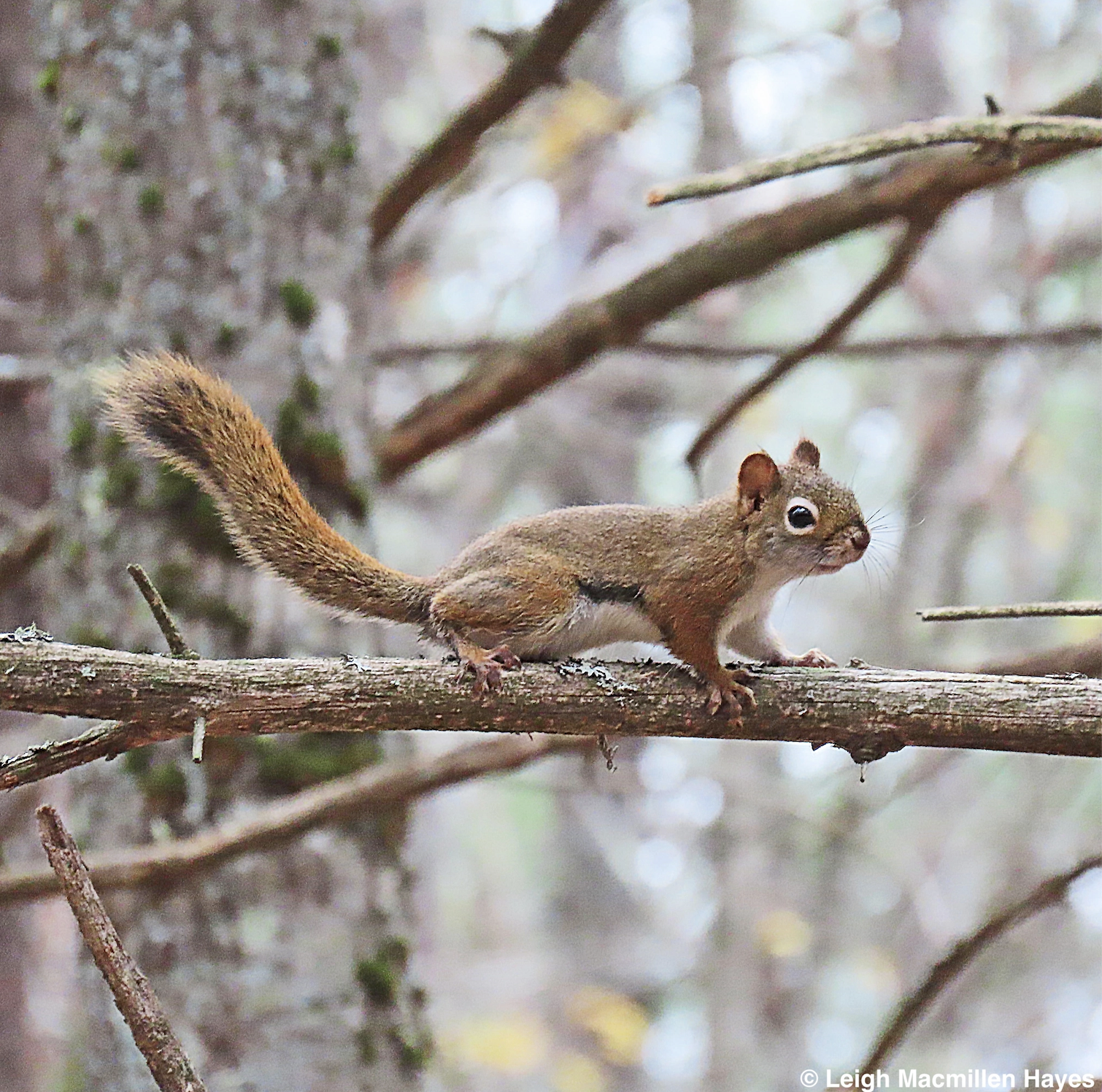
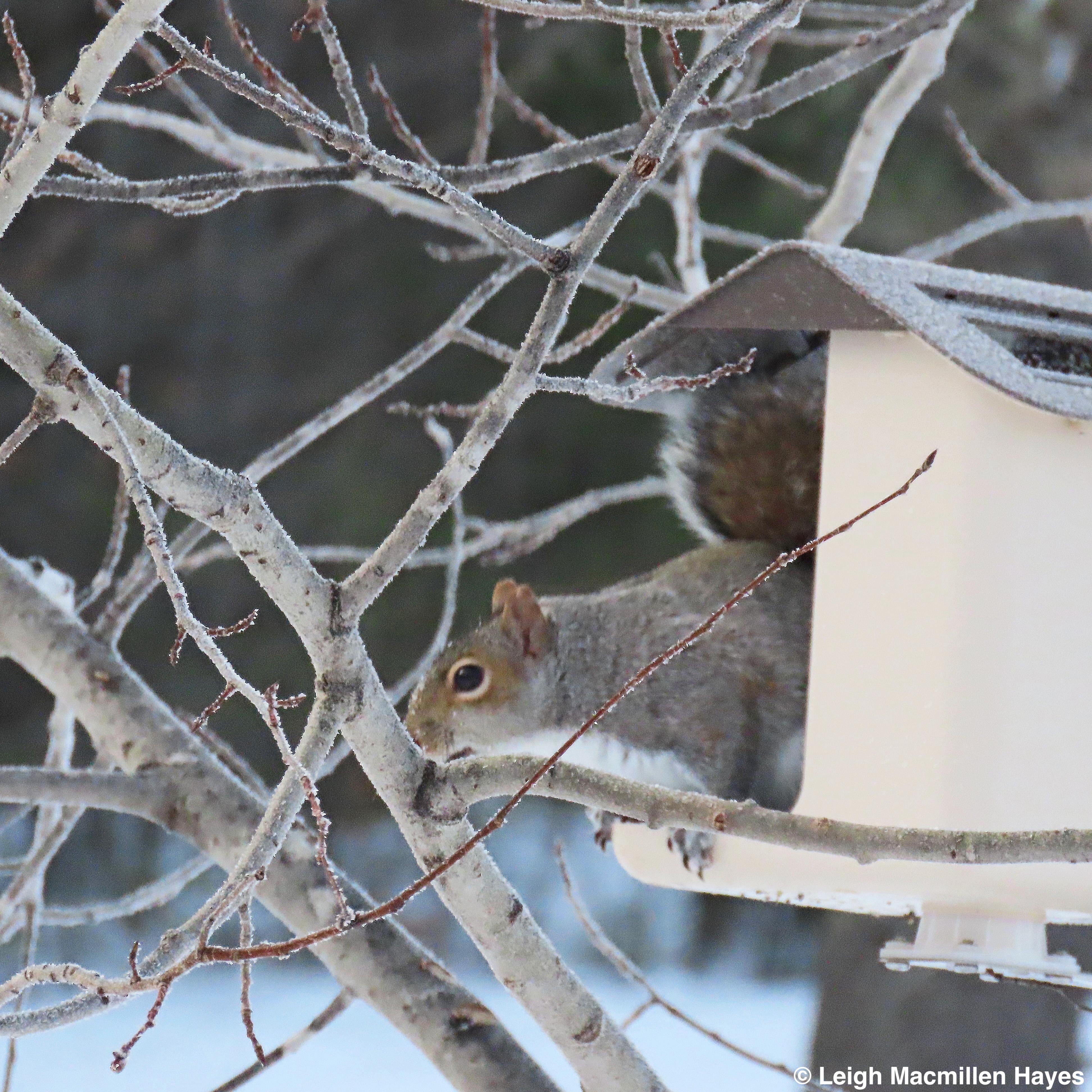
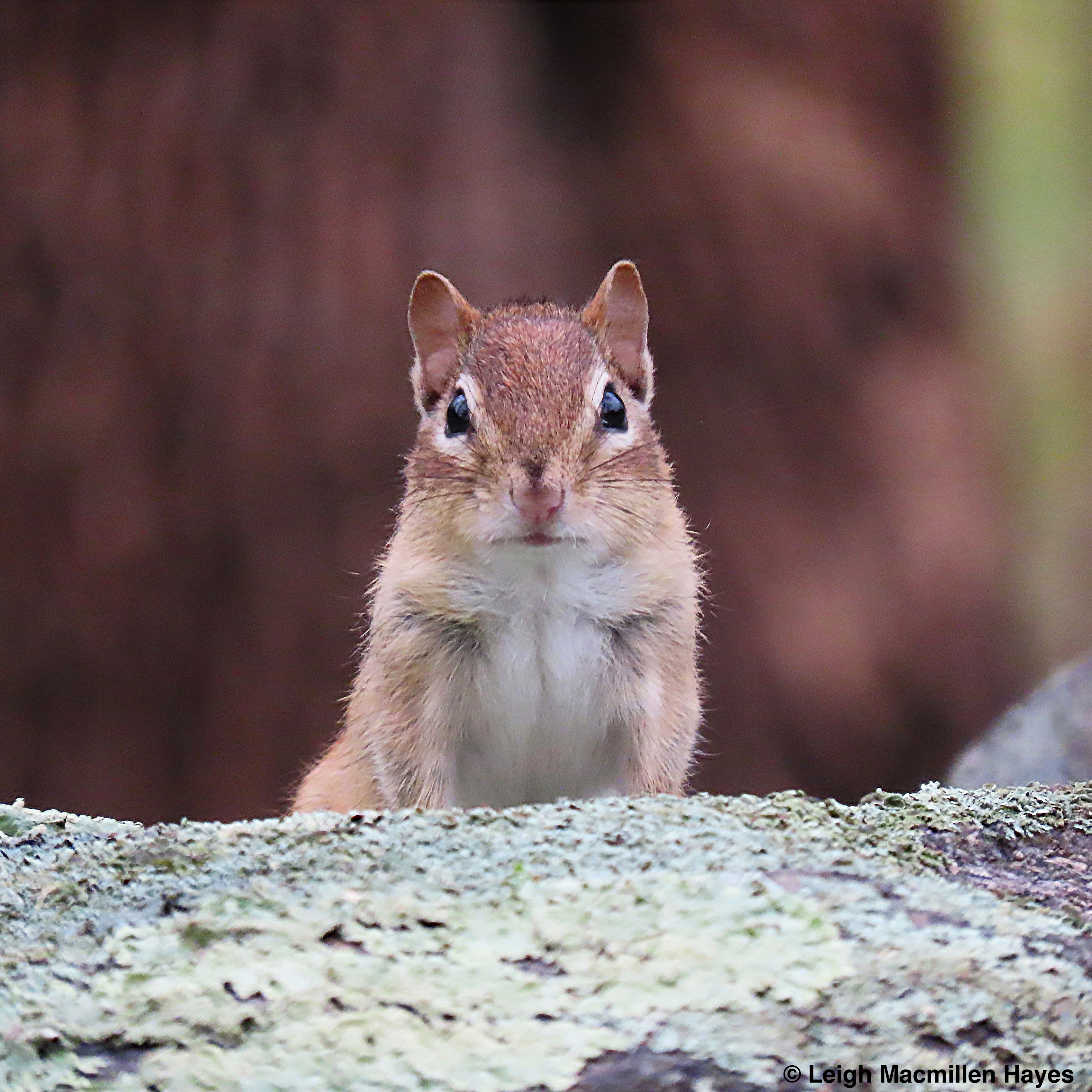
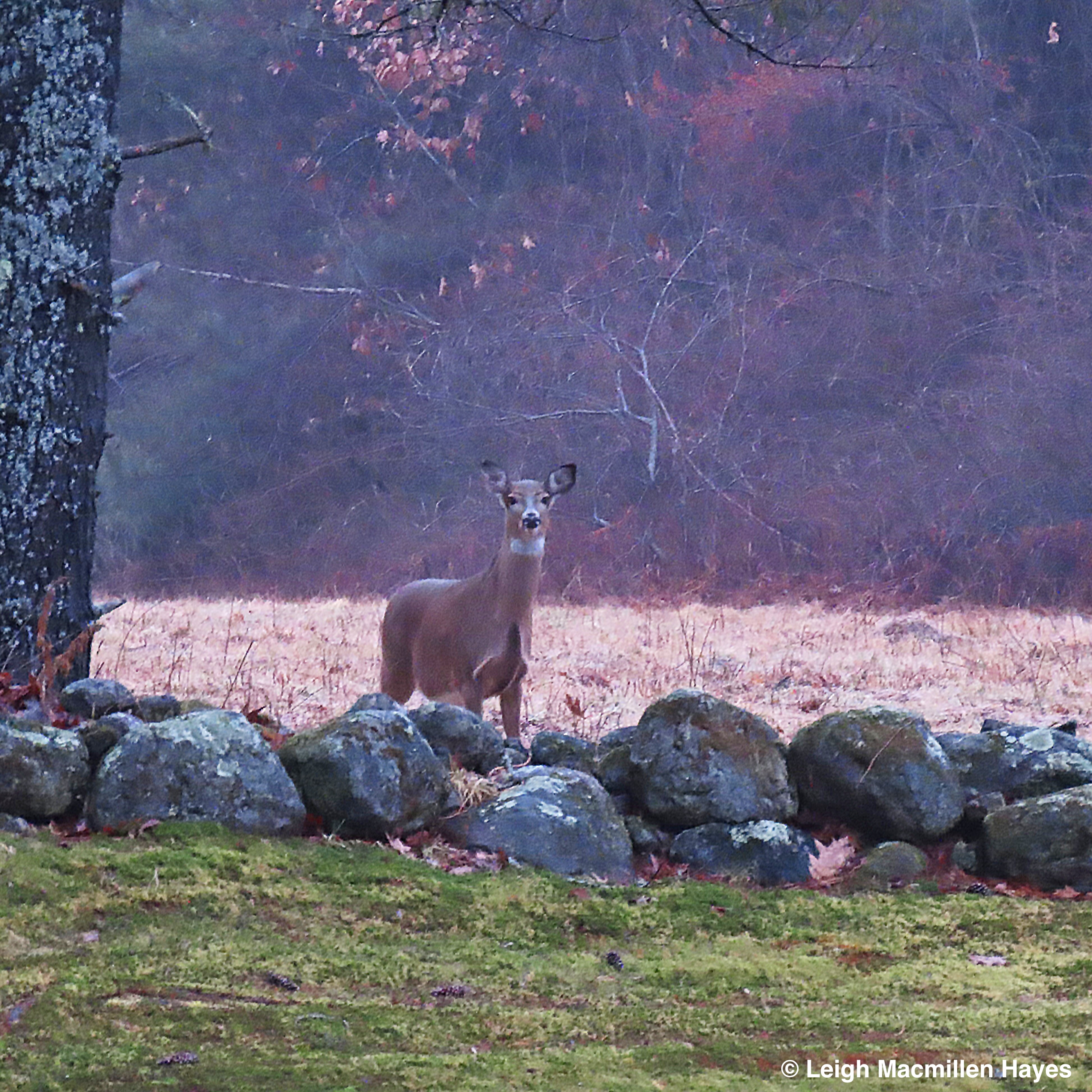
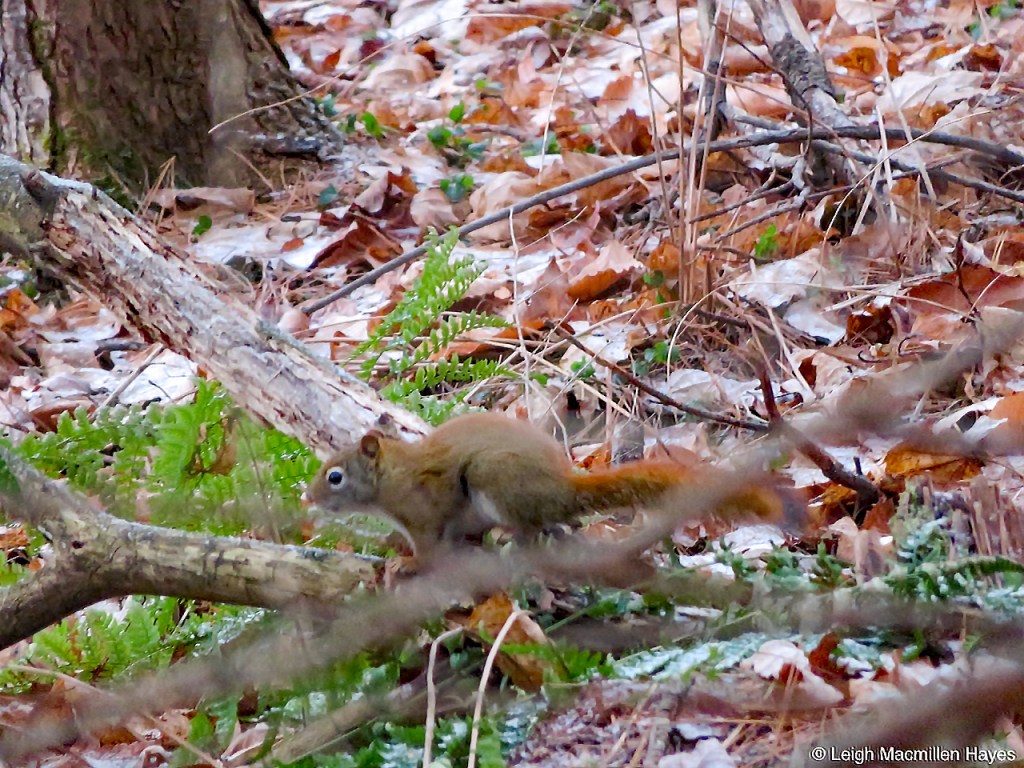
No, it was this little guy that I sought. This photo is from last winter when he and I spent hours eyeing each other.

Though his territory could have been several acres and there’s plenty of land out there to inhabit, he, like me, preferred the cowpath, and especially the stone walls since they served as perfect spots to cache his immense supply of pine cones, and as dining room tables, the better to see any approaching predators.

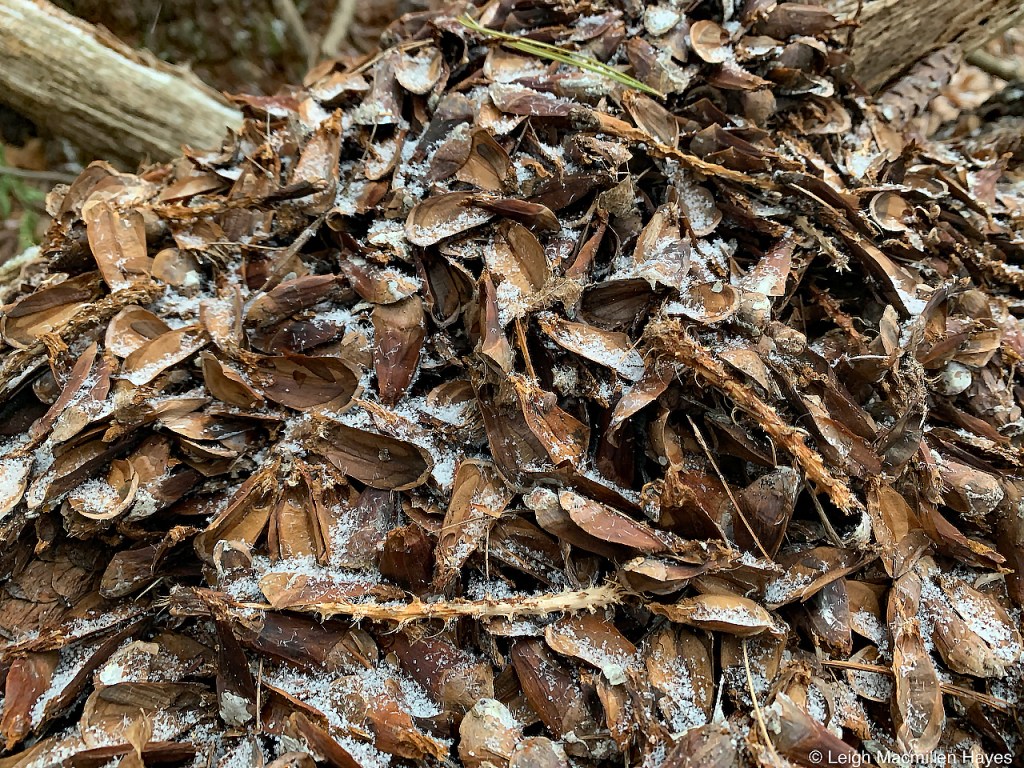
What he sought were the tiny winged seeds, tucked into each protective scale by the twos. If you’ve ever had the joy of watching him munch, you’ll know it’s fast paced as he deftly pulls the seeds out and discards the scales, getting right down to the “cob” of the cone.

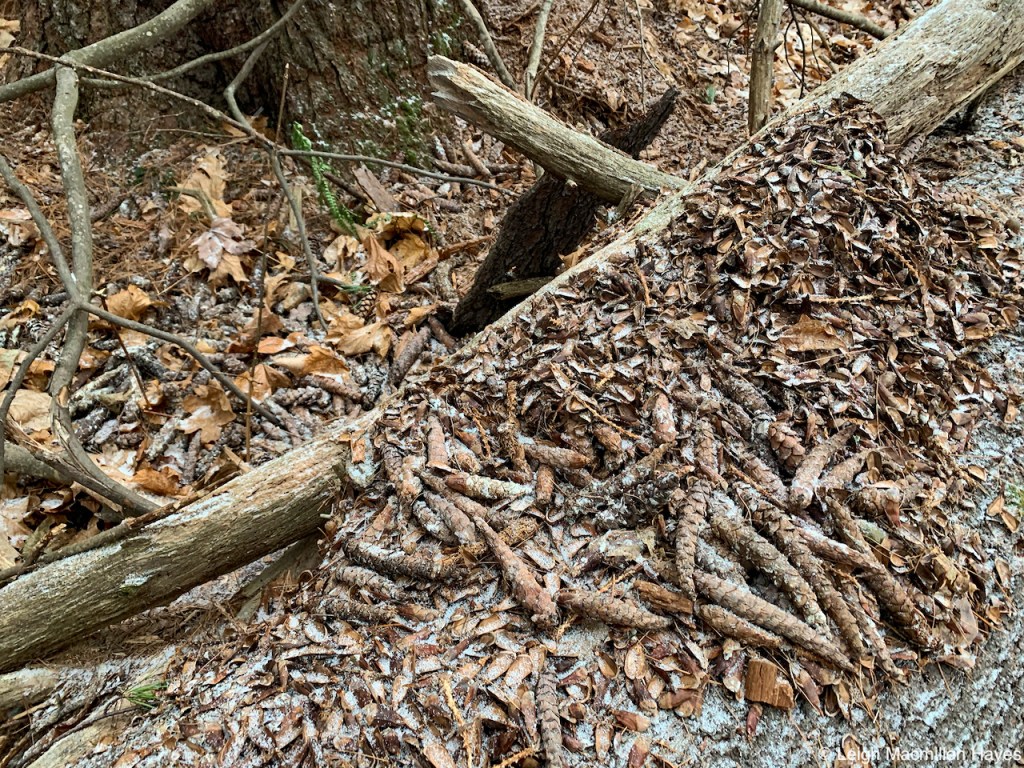
The result is a pile of half consumed scales and a few uneaten seeds and cones not quite yet opened and some scat and its all known as a midden (by us humans anyway) or the trash barrel.

Actually, any high place will do and if it has nooks and crannies to serve as storage shelves all the better. Last year was a mast year for the White Pines in our woods. It takes two years for a pine cone of this species to reach maturity.

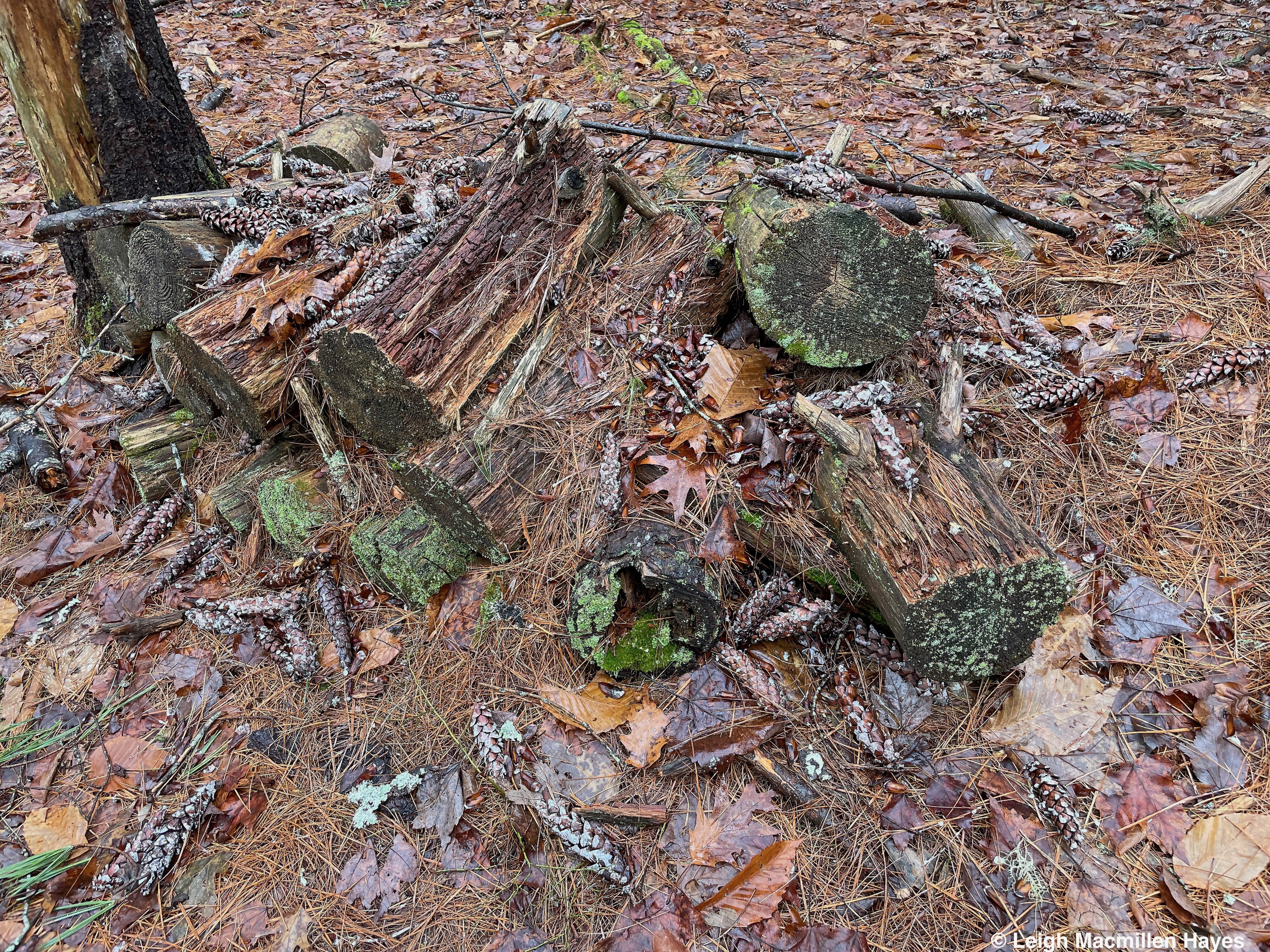
This year, there are only remnants of Red’s garbage pails and even they are almost hidden by twigs and leaves and needles.

But, while I was exploring his old neighborhood, I discovered something else in this pile that he had used for refrigeration and dining purposes.

Do you see what I spotted? Babies! No, not squirrel babies. But rather: Miniature White Pines.
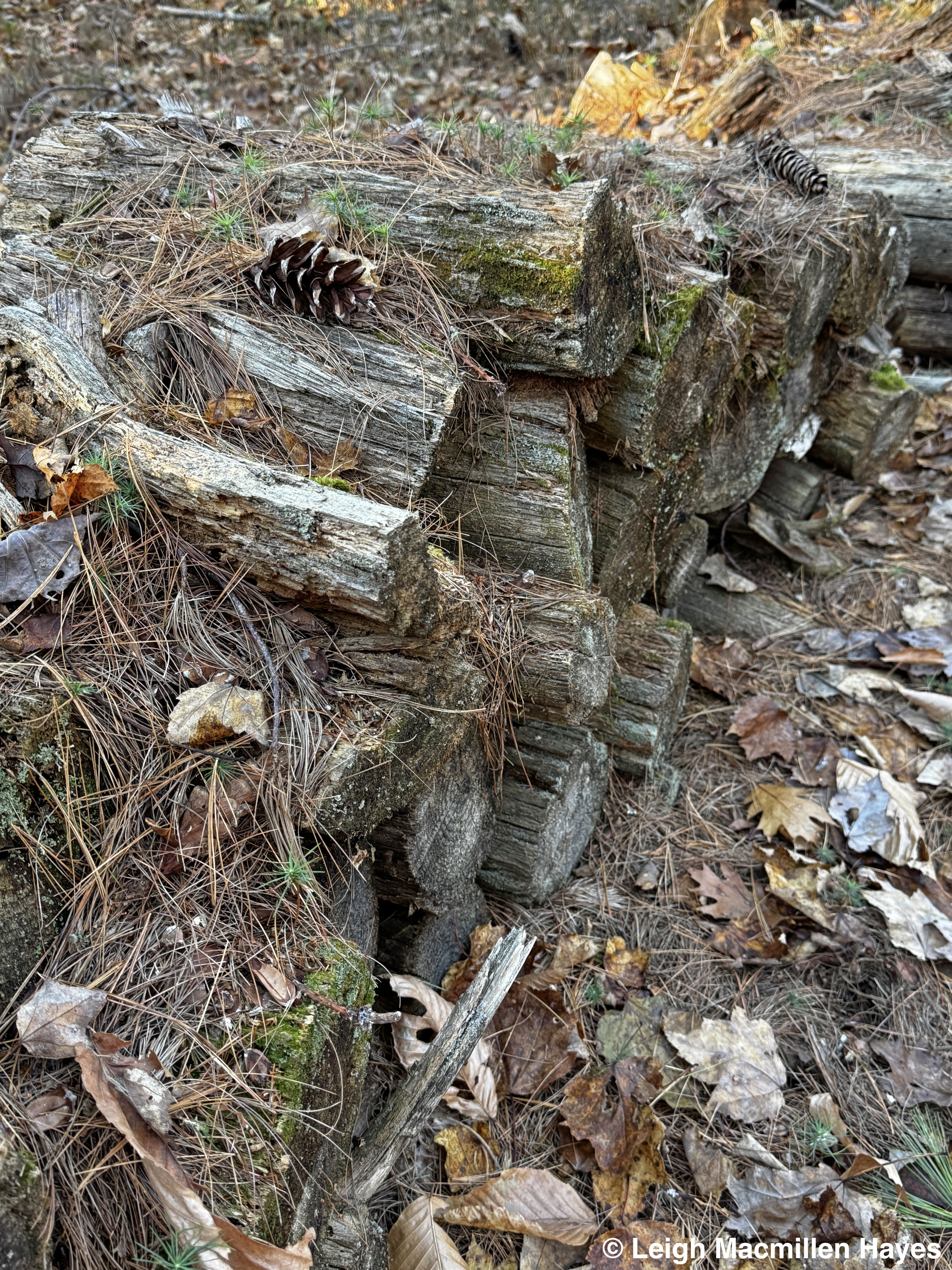
Once I saw those, I checked every stack that we’d cut years ago and found the same story written upon them. The seeds Red had left uneaten found conditions were right on the rotten logs. Will they survive? Maybe a few, but there are plenty more tiny saplings on the forest floor.

The thing is that I found no evidence of Red and not once did he squawk at me, so I suspect either he moved on to a better food source or became a meal for another, passing all of that energy and sunshine he’d consumed on to the next.

This year, it’s the Northern Red Oaks that have produced a mast crop–of acorns. Actually, they did so last year, and the year before as well. For those of us who frequent Red Oak woods, it’s like walking on ball bearings–and can be a wee bit treacherous as they roll under our boots.

Red Oak acorns are filled with tannins and so, unlike their White brethren which are gobbled up almost immediately by rodents and birds and deer among their consumers, it seems a little of this one is nibbled, and then a little of that one initially. Eventually, the tannins leach out, especially if the acorn has been buried for future consumption, and then the entire nut within may be eaten.

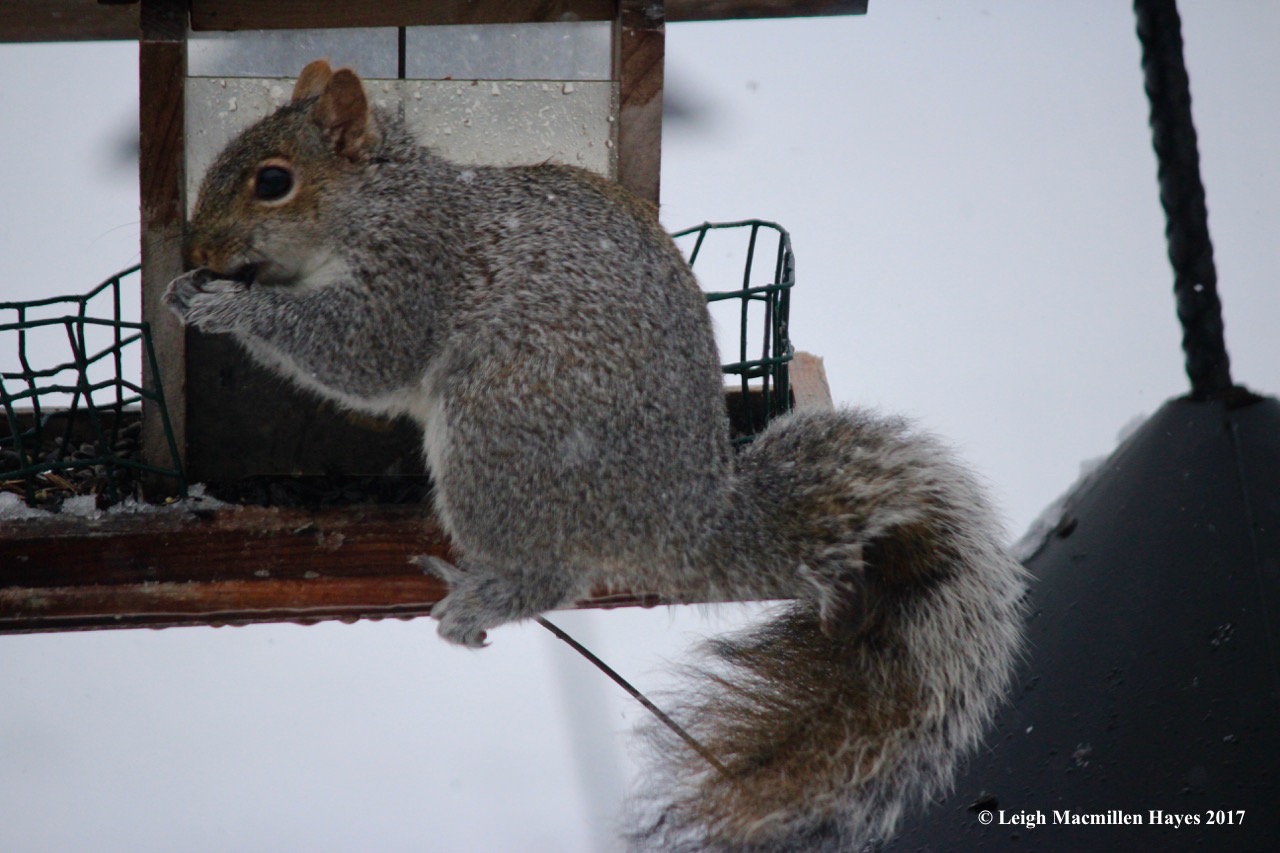
As I looked for Red this past week, I found instead his cousins, the Gray Squirrels in action. Where Red Squirrels are very territorial, Grays tend to have overlapping habitats, and there are at least three on our six acre plot of land.

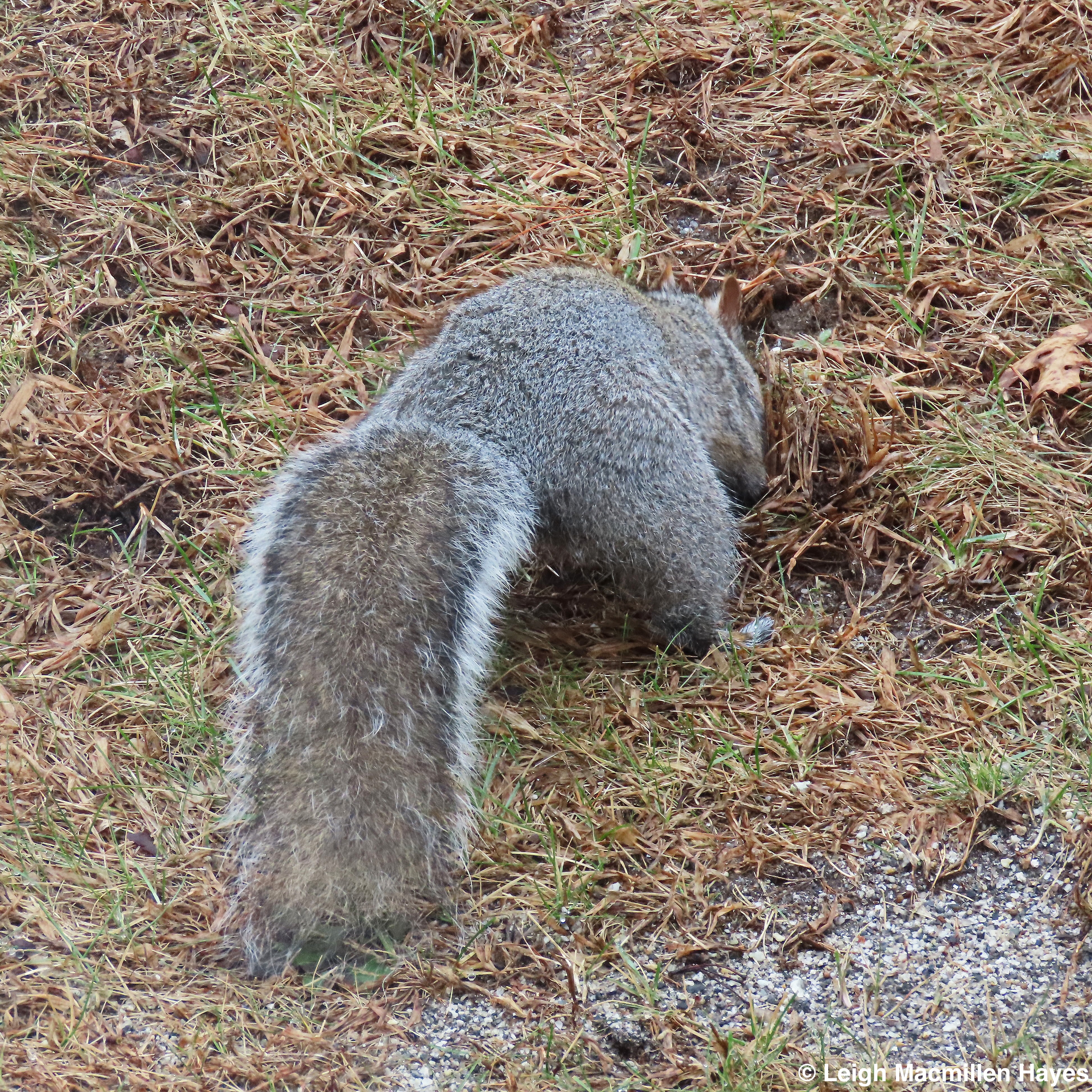
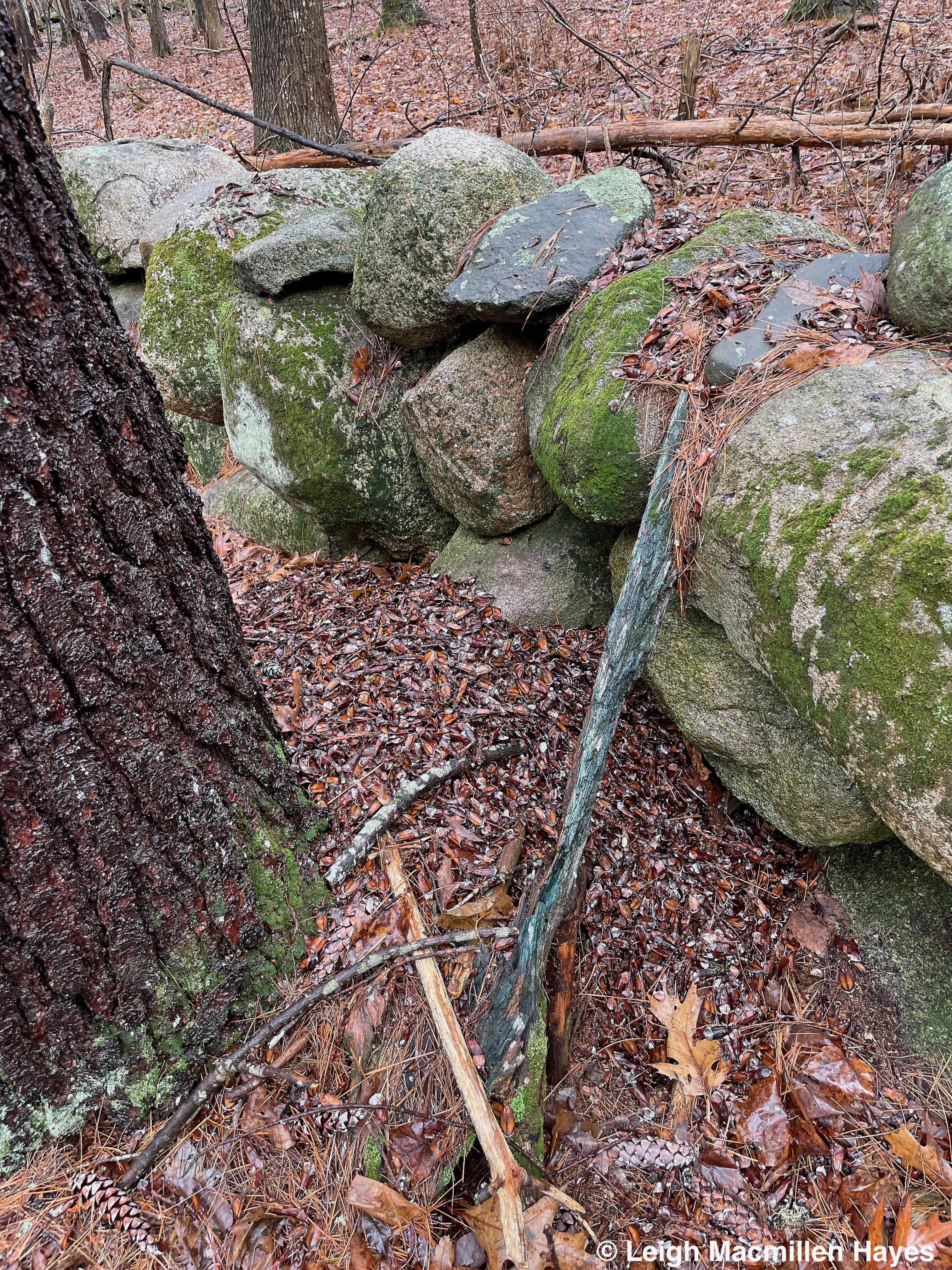
Burying acorns is their way of caching and it’s possible that what I observed was this squirrel leaving a scent mark with its nose so that come snowfall (and I have faith that it will fall–and can only hope abundantly), it can relocate the food supply. What this squirrel misses, another will find. And those that no one finds might turn into oak trees that will feed future generations, just as the pine saplings may someday do.

It’s for these critters and so many more that we ask that no motorized vehicles pass along the cow path, no matter how tempting it may be. (Thank you, Marguerite, for creating this sign for me.)

And if you are in there, you might happen along the rather rough labyrinth I created, a place that like the squirrels, I return to often.
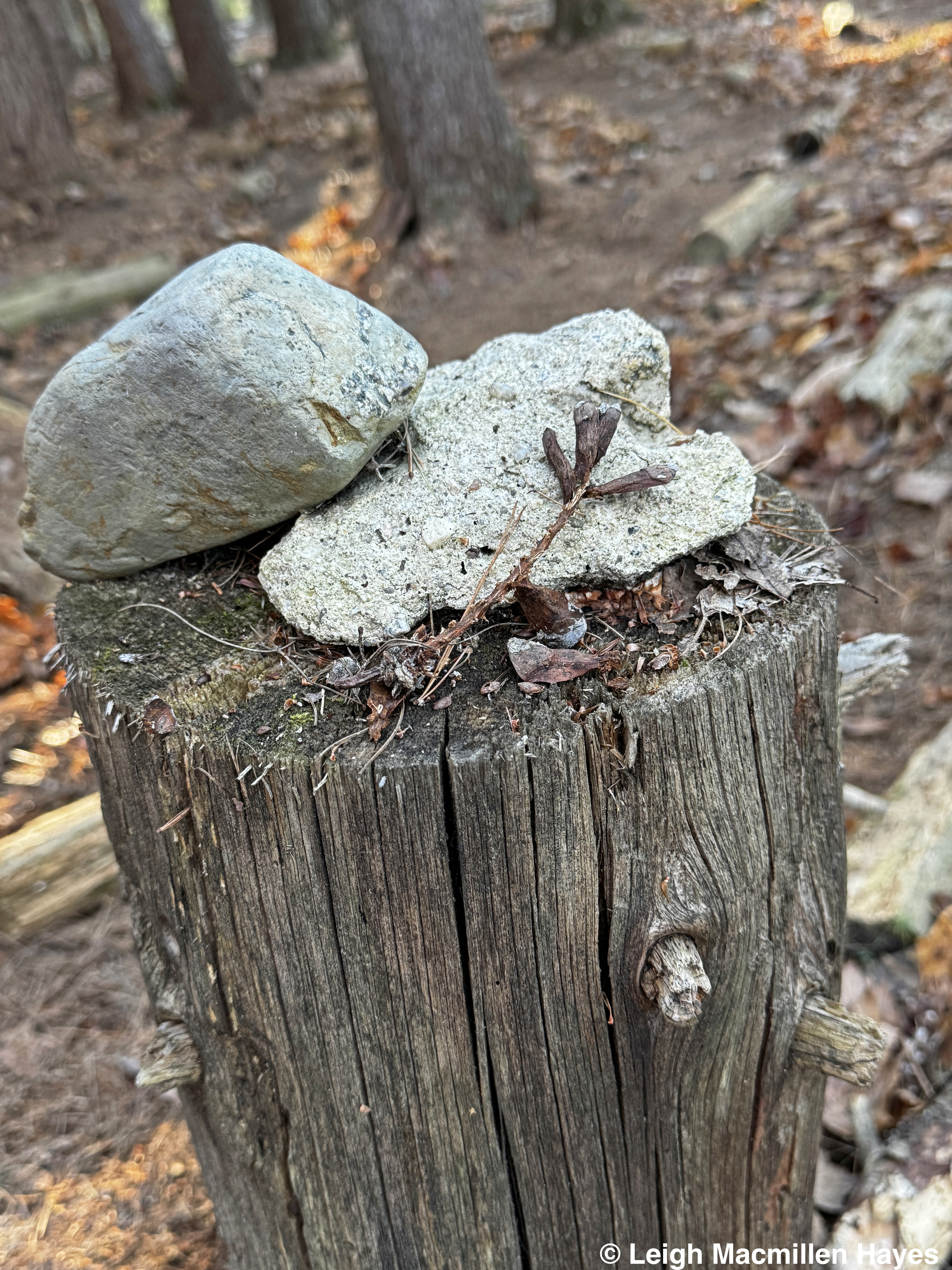
It’s at the start of the labyrinth that brings a smile to my face each time, for Red had visited and his calling card is still there.
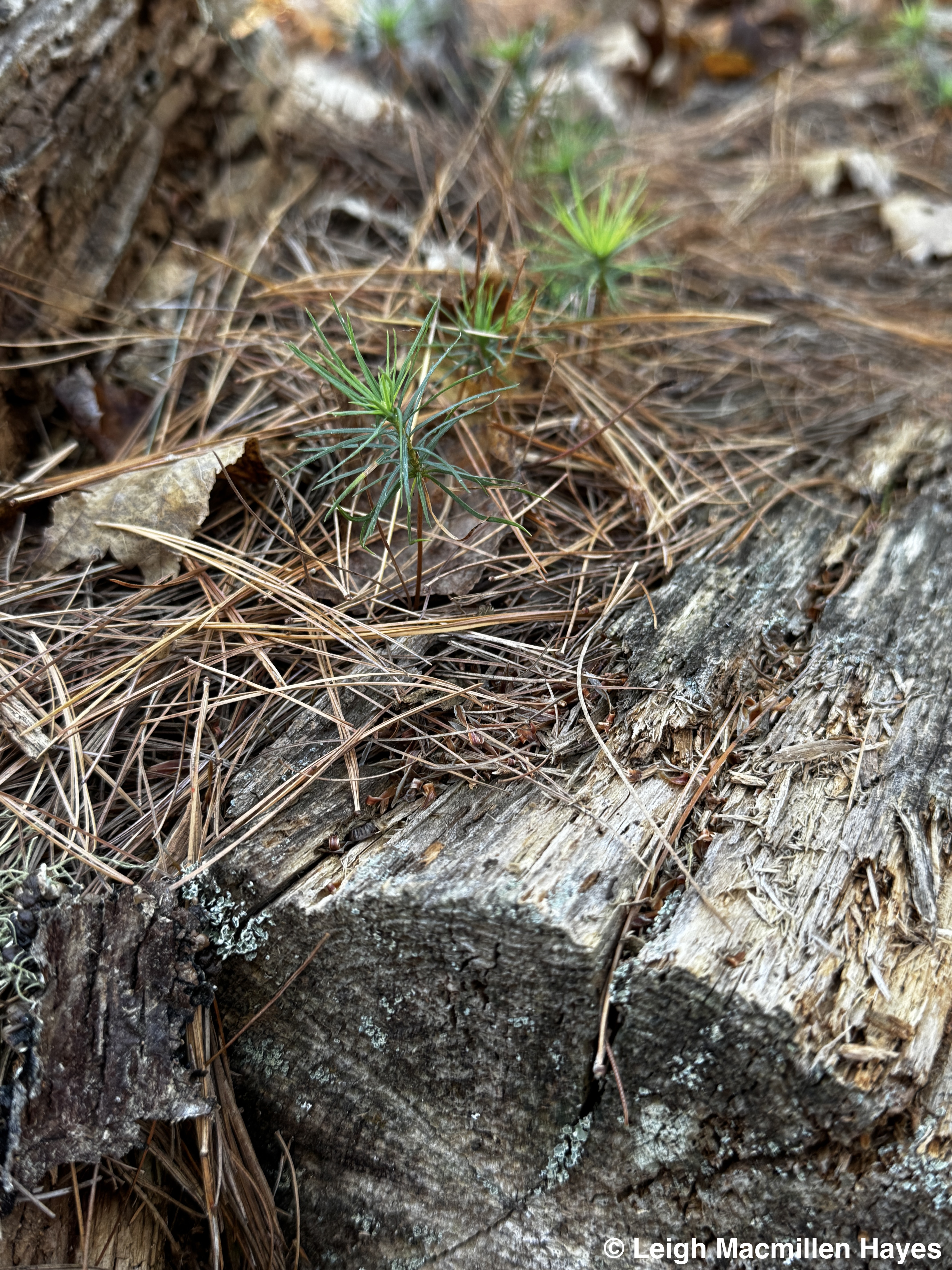
Thank you, Red, for planting your Squirrel Garden. And for capturing my mind and heart and soul this week.

Birds Of A Feather?

The other day a friend asked if my bird feeders were busy, but I’d been so focused on looking at mosses through the microscope lens, that I had my back turned to the yard and no idea what was going on out there.

Then today dawned.

And as is typical, a large flock of Juncos flew in. I love to watch them sit up in the Quaking Aspen and then almost dive bomb before gracefully landing on the ground, where I always make sure to spread plenty of seed for the ground feeders. My seeds of choice–a wild bird mix and lots and lots of black oil sunflower seed. Plus suet.

Of course, the Blue Jays also had a presence and, in fact, always make their presence known with their loud squawks. But I do love their colors, especially against the snow, and so I welcome them.

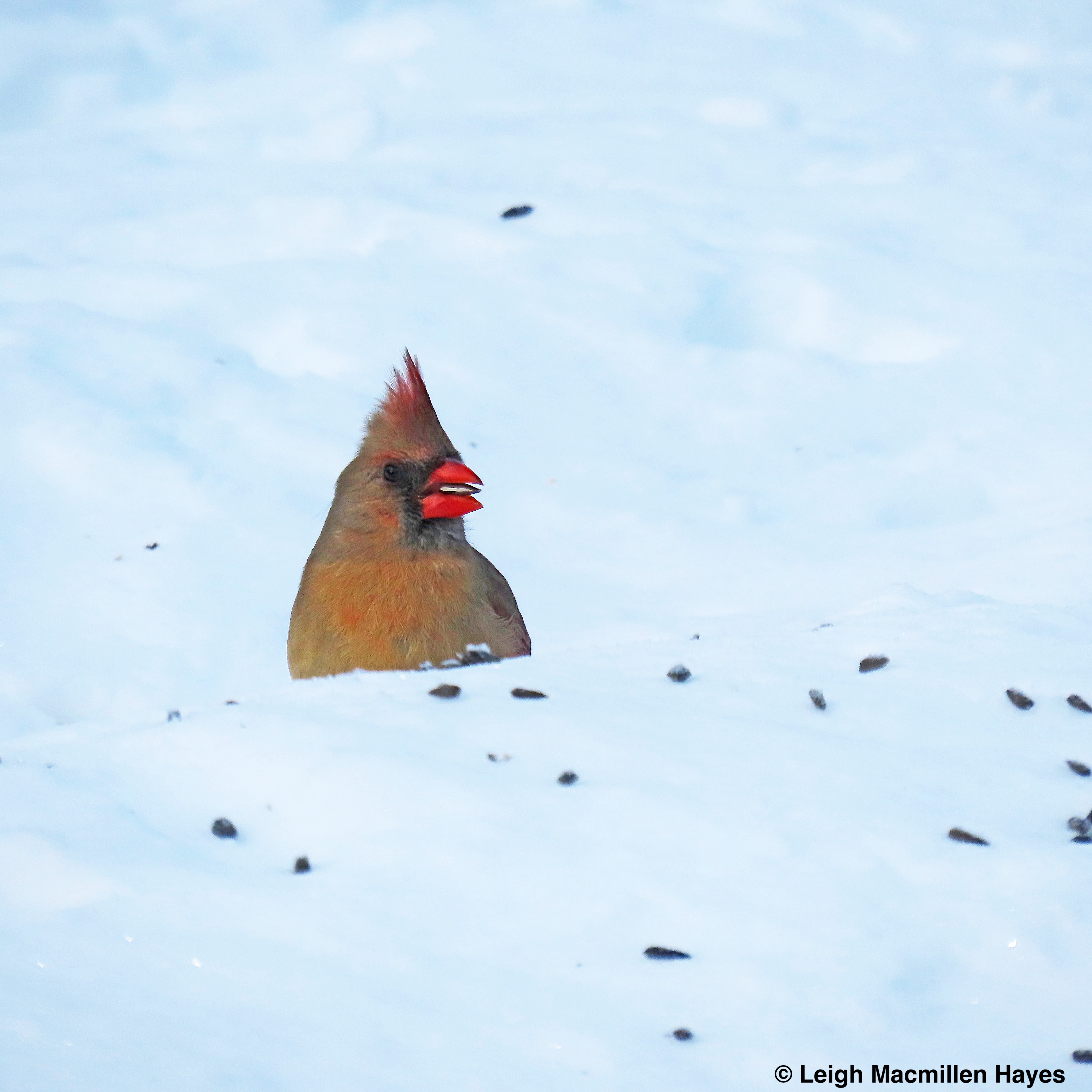
One of my favorite visitors is also the most timid–the female Cardinal. The second any little movement or sound startled her, she flew to a line of shrubs, a favorite hangout for most of the species that visit our yard. And when she flew, usually the others did as well. And then two minutes later, they’d begin to filter in again.

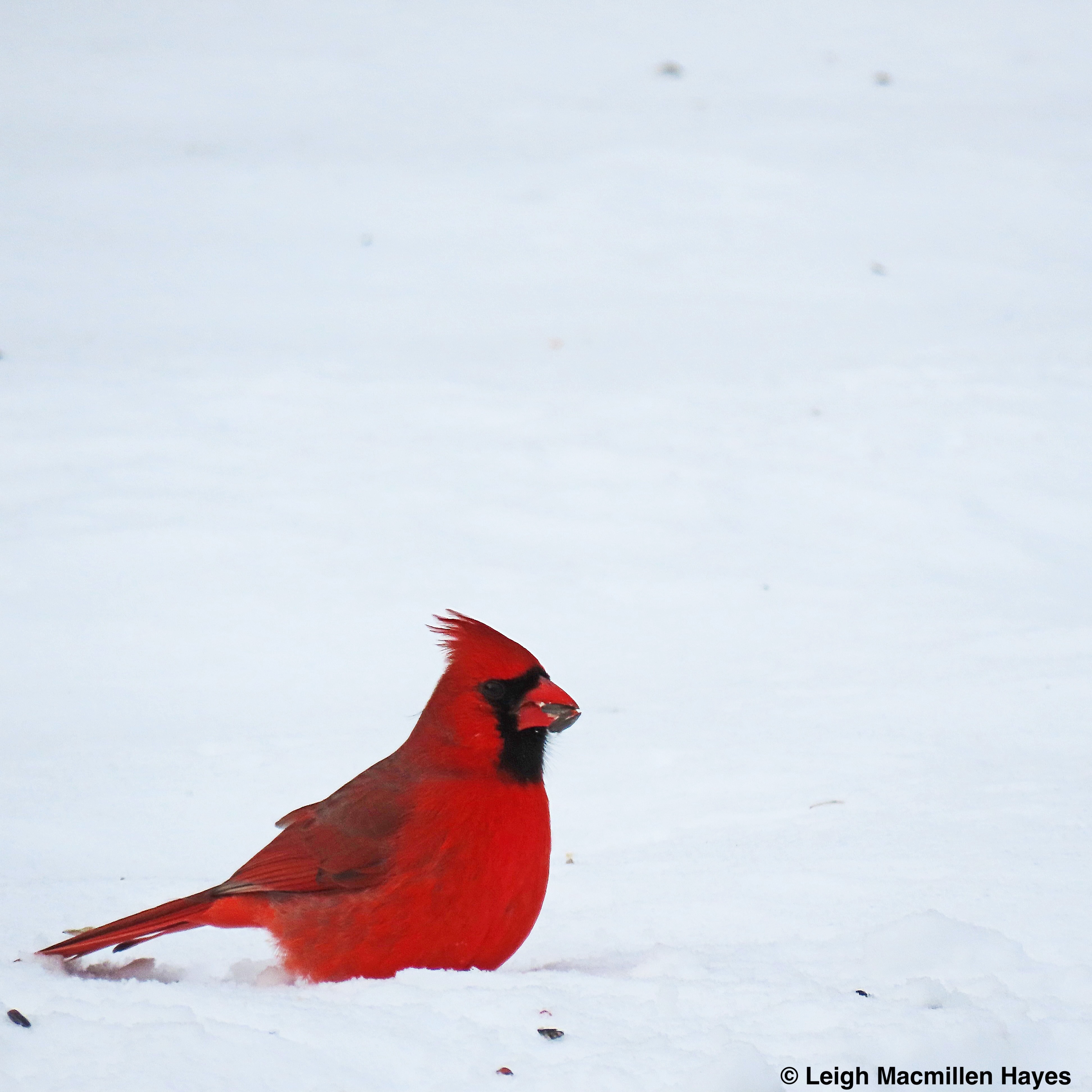
Her guy friend showed up as well, but she spent more time here than usual, despite his bossy attempts to get her to fly. Soon, though, he won’t be pushing her away, but rather sharing seeds beak to beak.
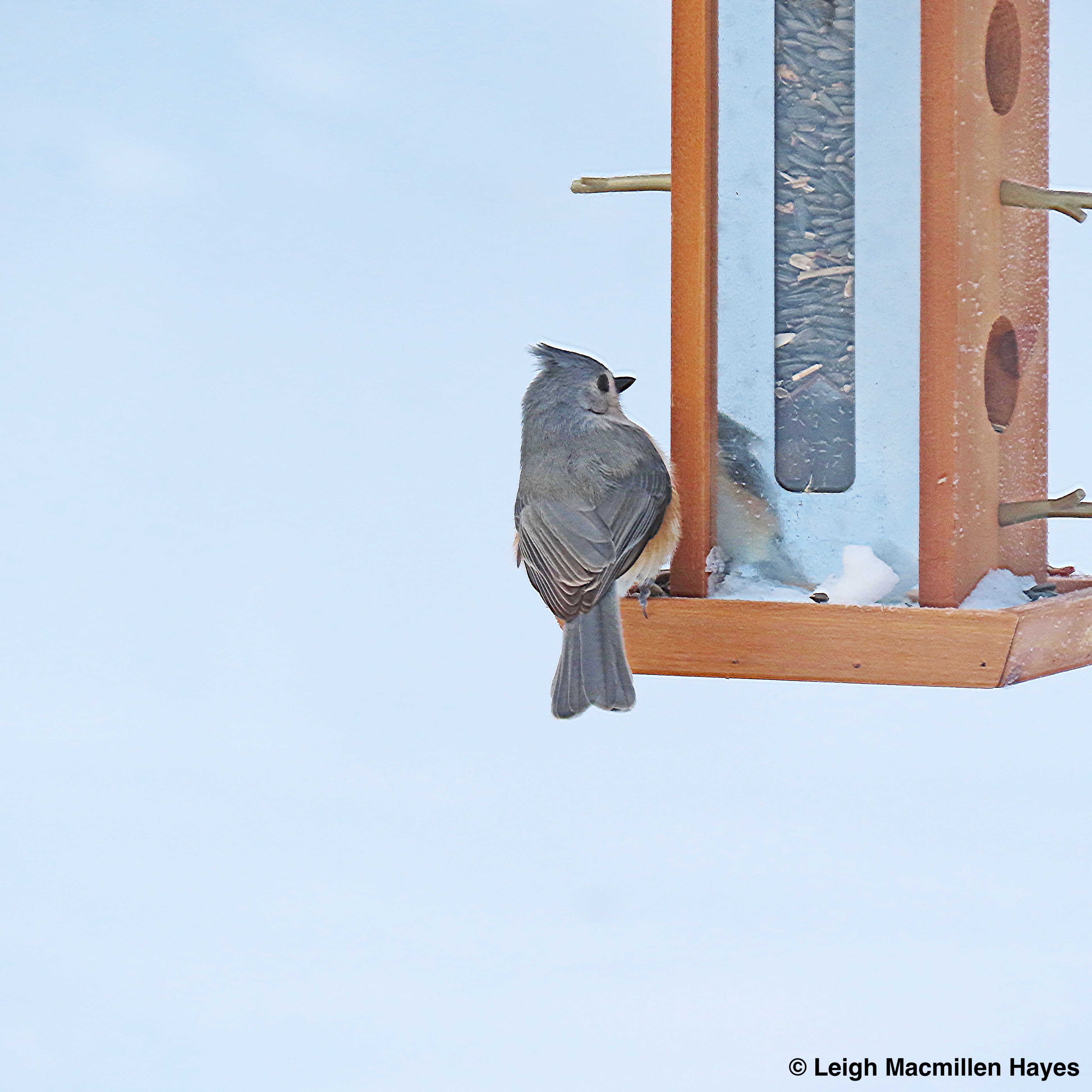
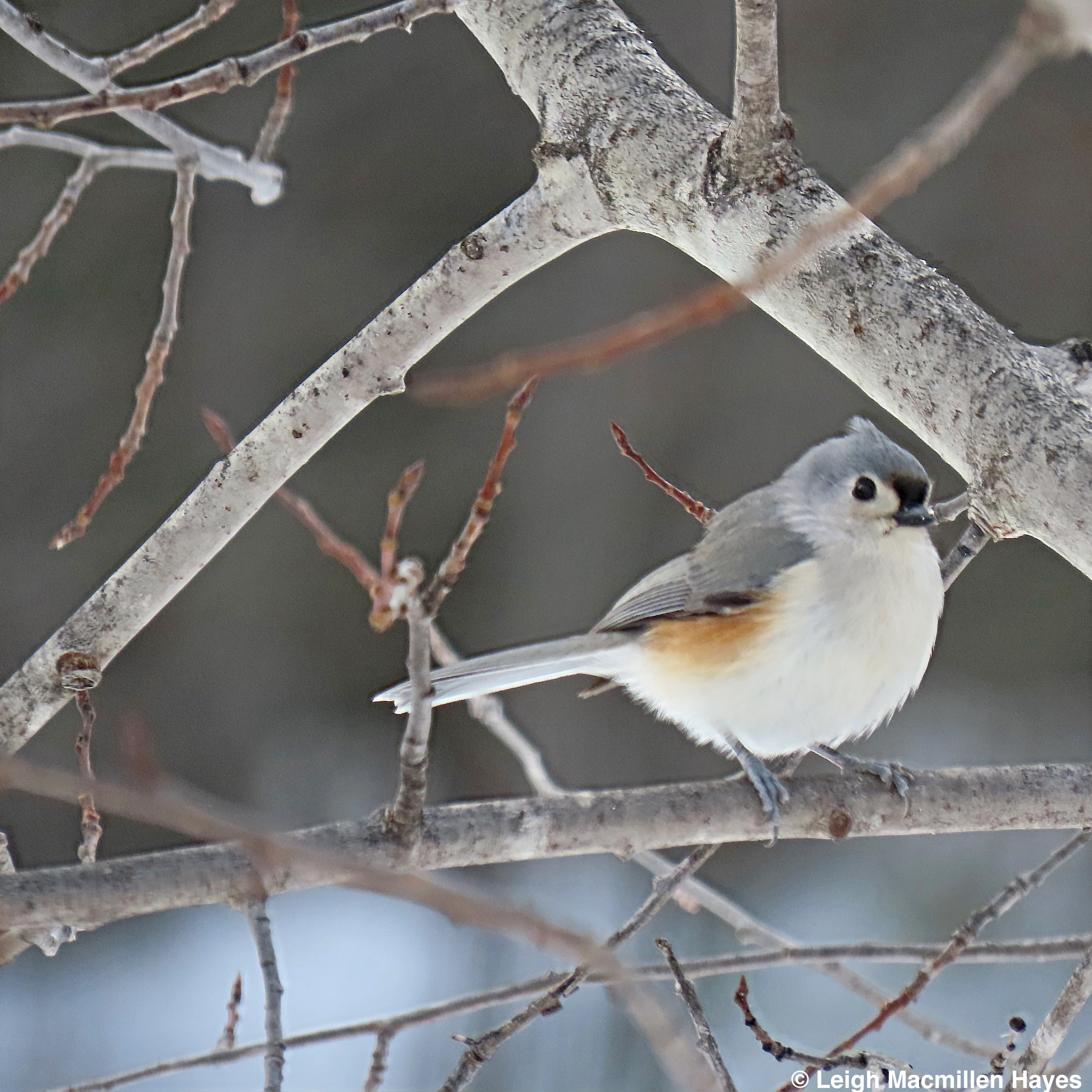
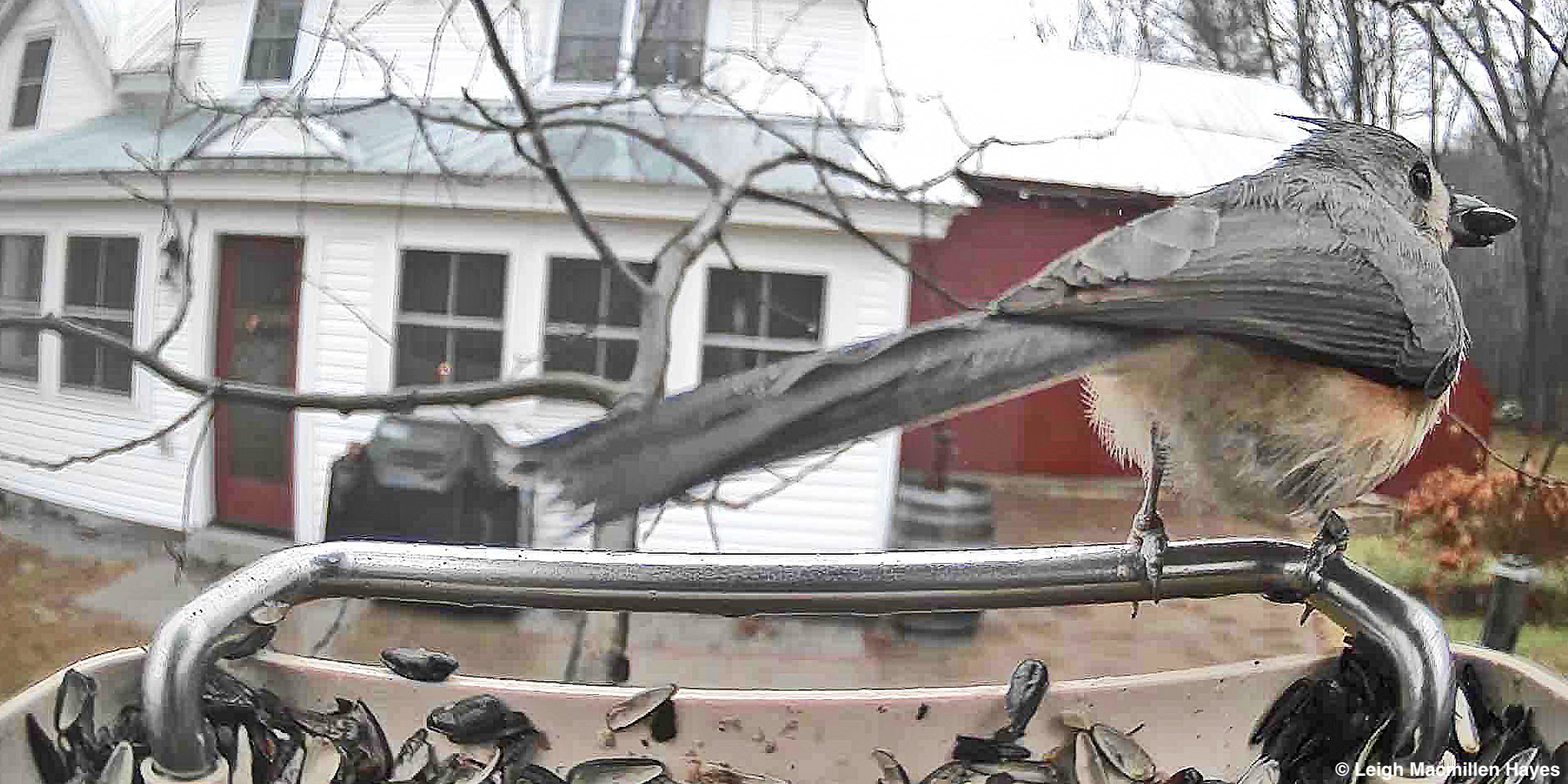
Tufted Titmice happened by and I had to wonder if this one saw its reflection in the feeder. That does happen and sometimes the results are comical.
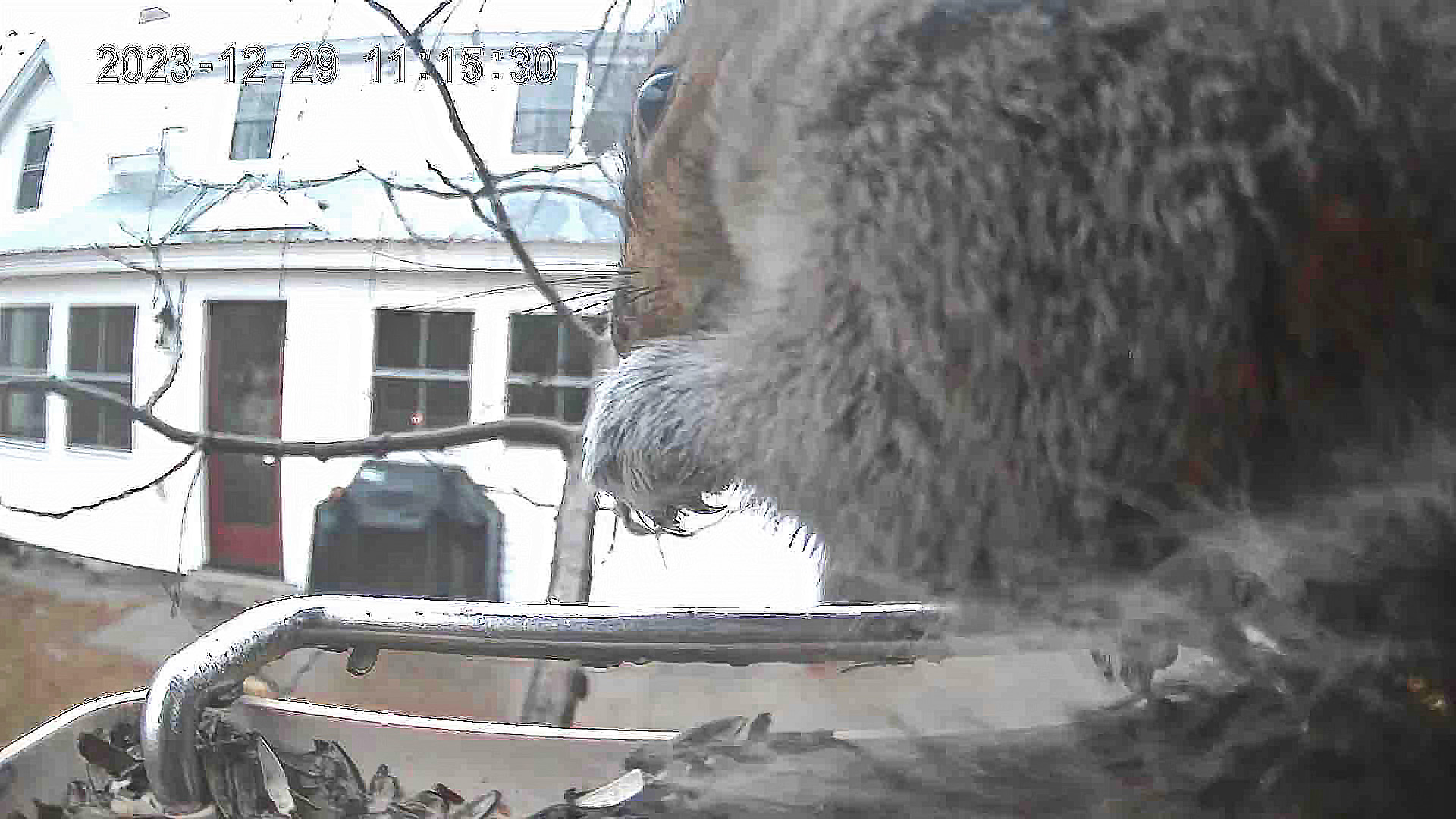
Meanwhile, at another feeder, a large Gray Squirrel that grows larger every day thanks to my offerings, made sure everyone knew that the feeder attached to the tree was his. We knew when we put it there, that this would be the case, but it was our only choice of position.

And so he dines. A. Lot.

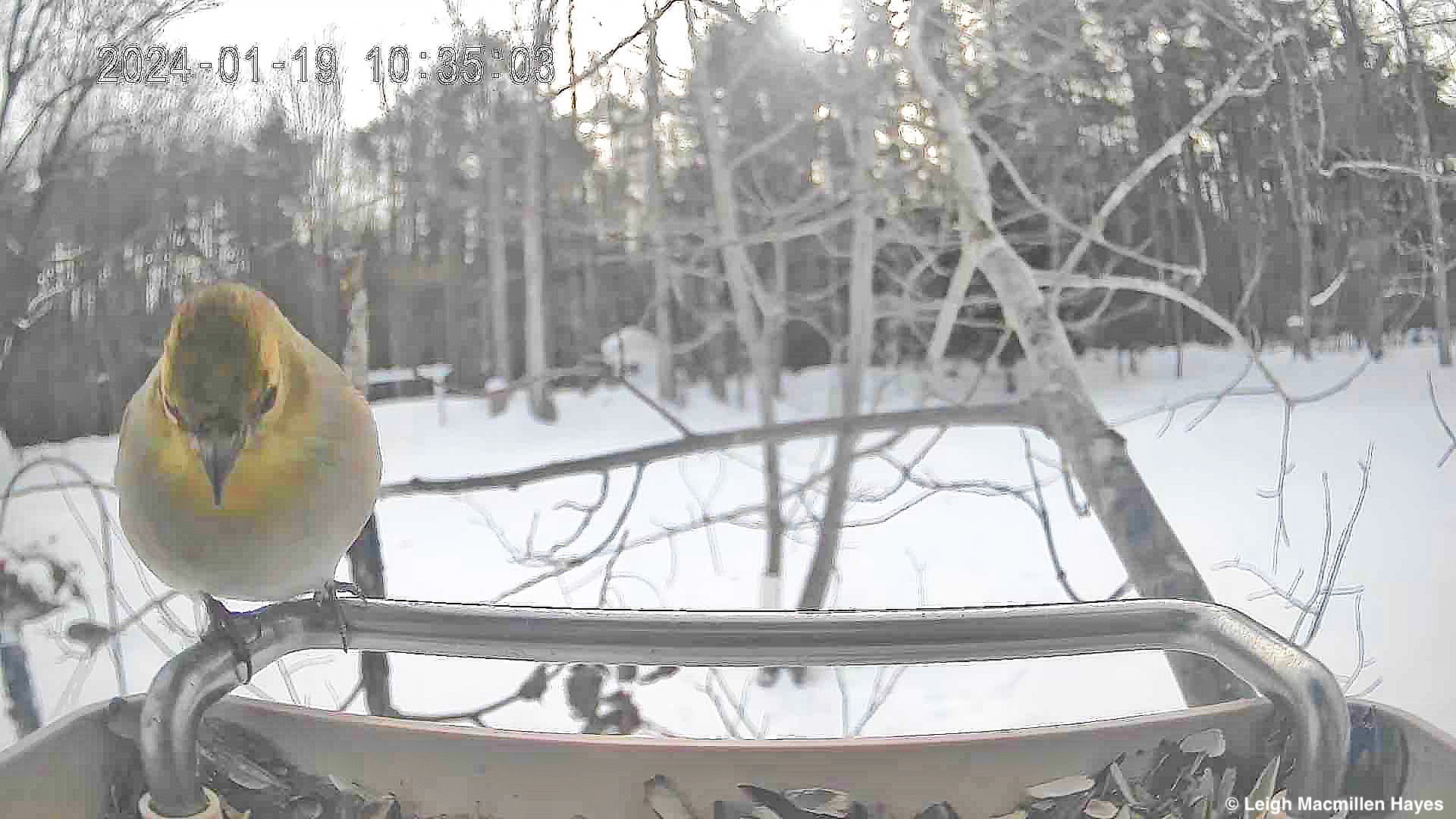
The good news is that eventually he leaves and others, such as this Goldfinch, fly in and look for just the right seed of choice.

Bingo. Mission accomplished.

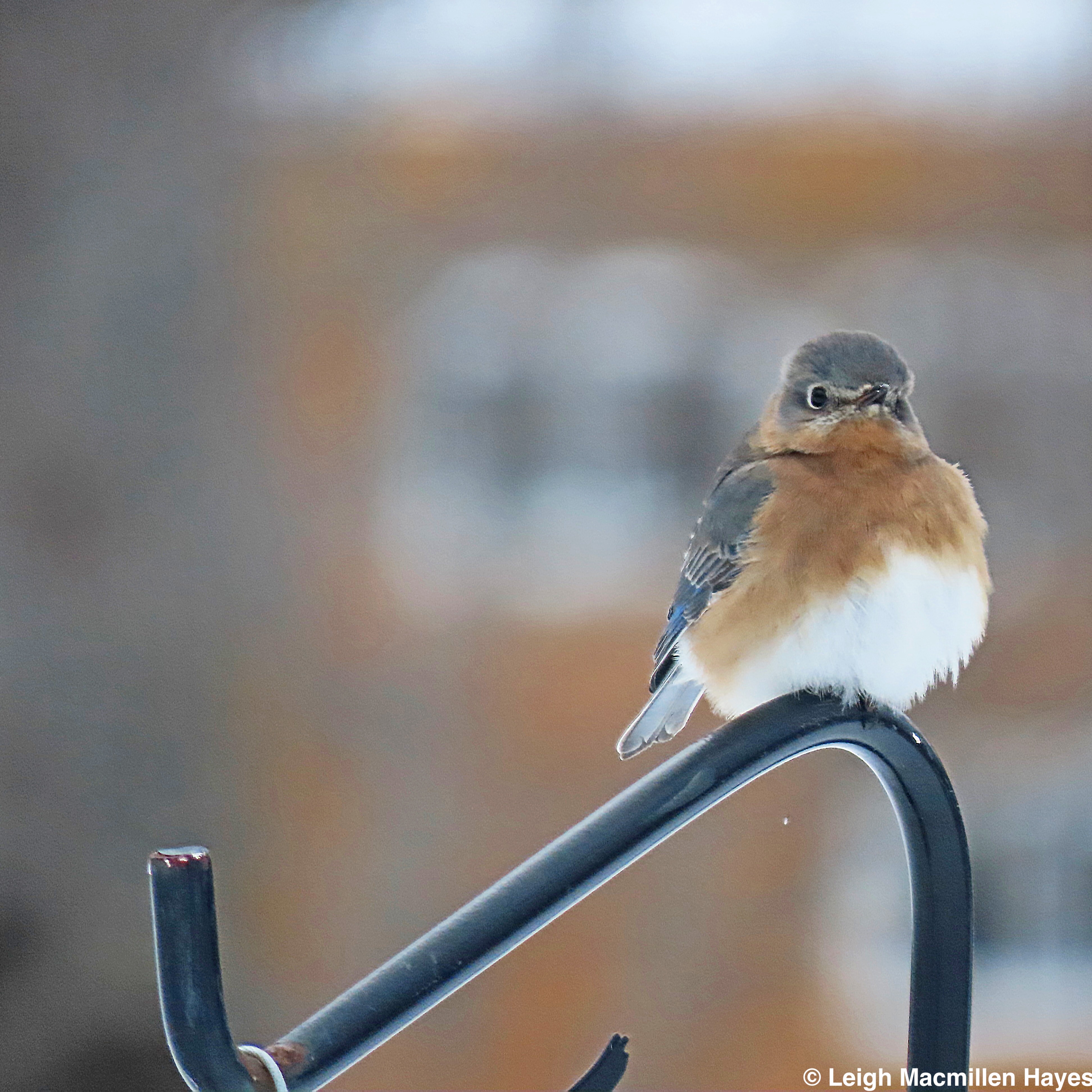
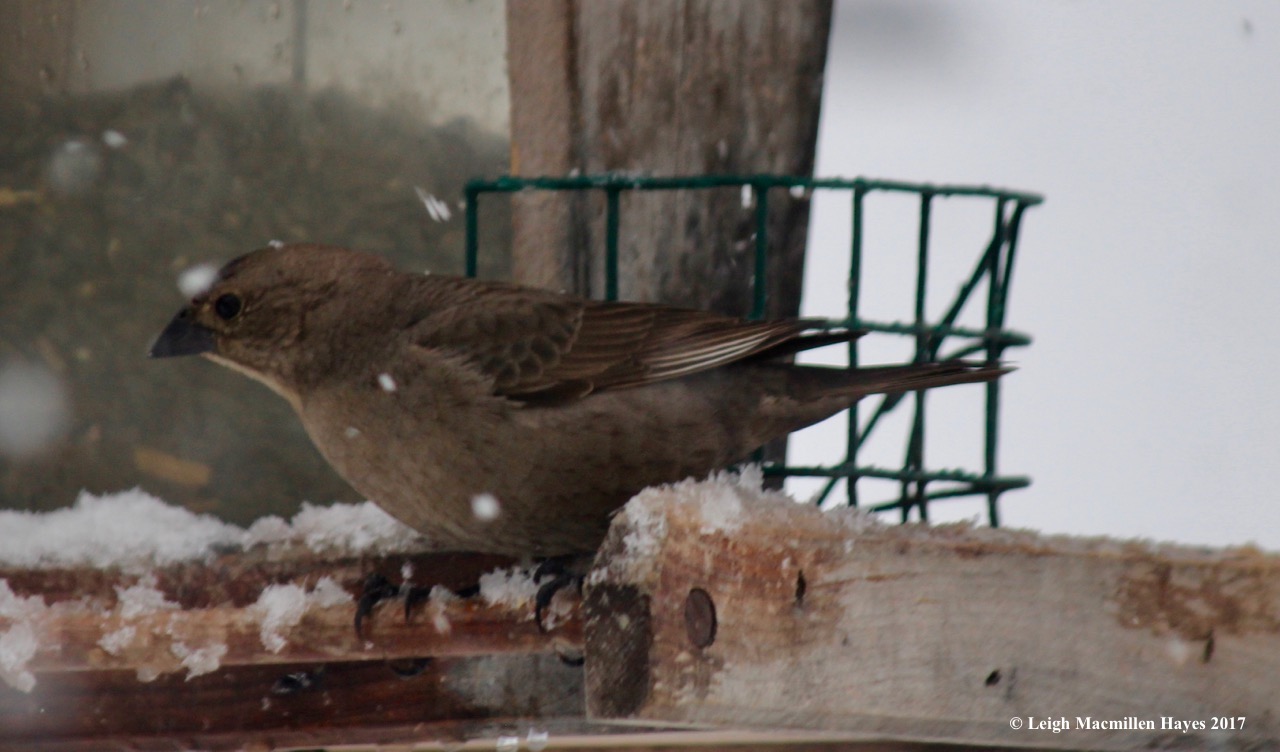
And then . . . and then . . . two surprise visitors arrived. Bluebirds . . . of happiness, of course, for they made me happy.

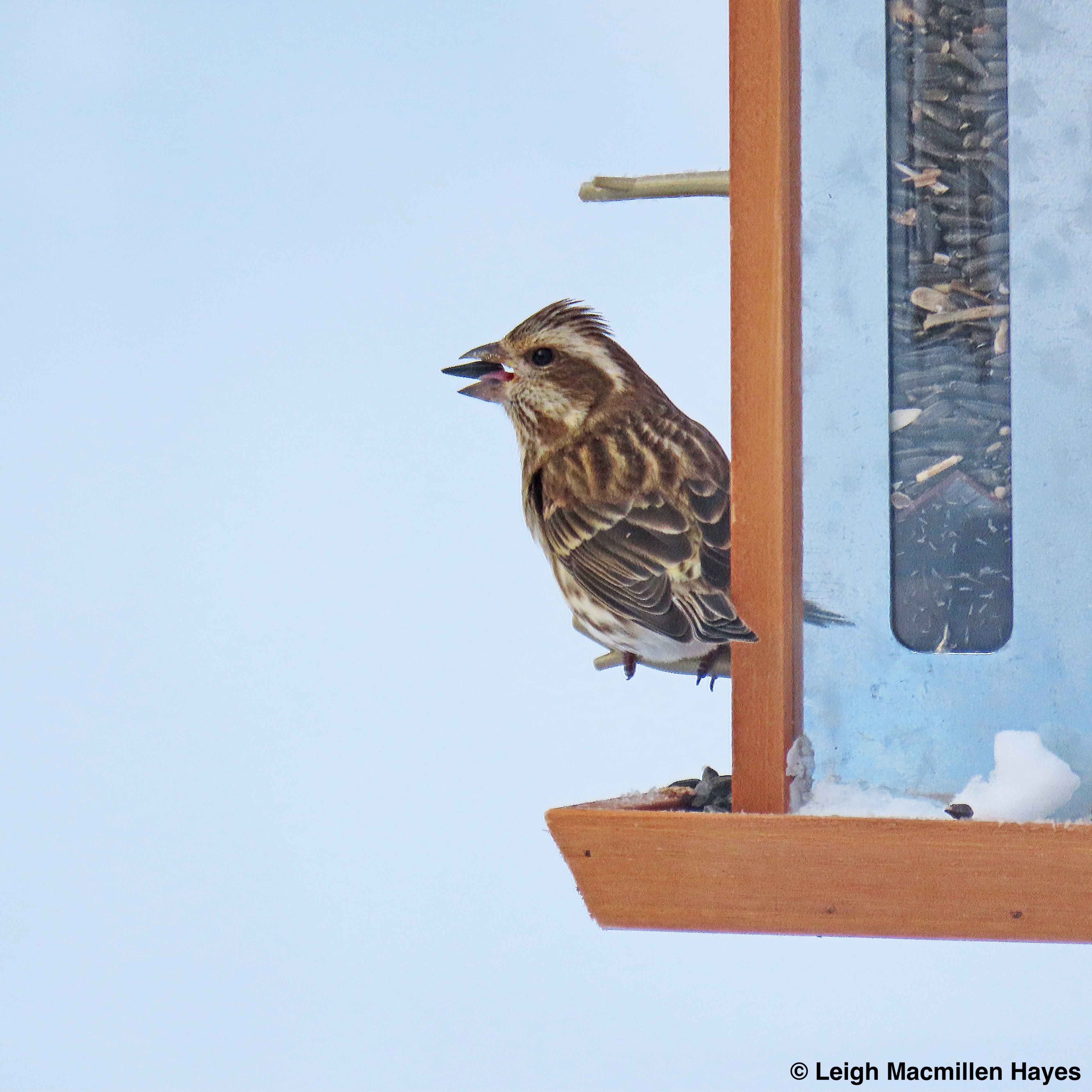
And then, another surprise visitor–a female Purple Finch who looked quite pleased with her tasty seed.

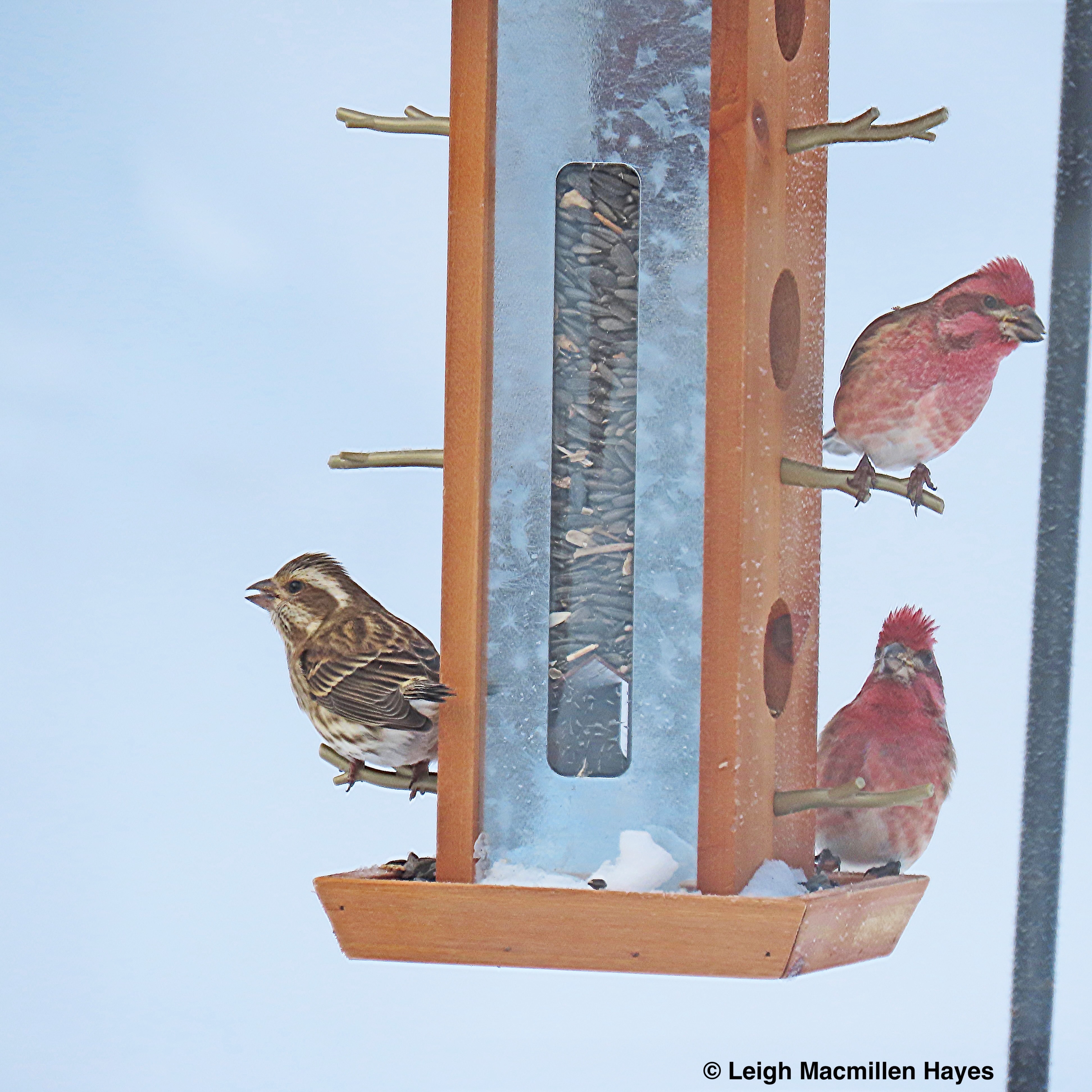
She was so pleased, that she apparently invited two males to join her. Their postures and bad hair day made me laugh–they seemed to have been put here to provide comical relief. That’s not true at all, but so it seemed.

With all of this action, I had to stand as still as possible to take these shots through the back door window. And because I was so still, I had yet another surprise.

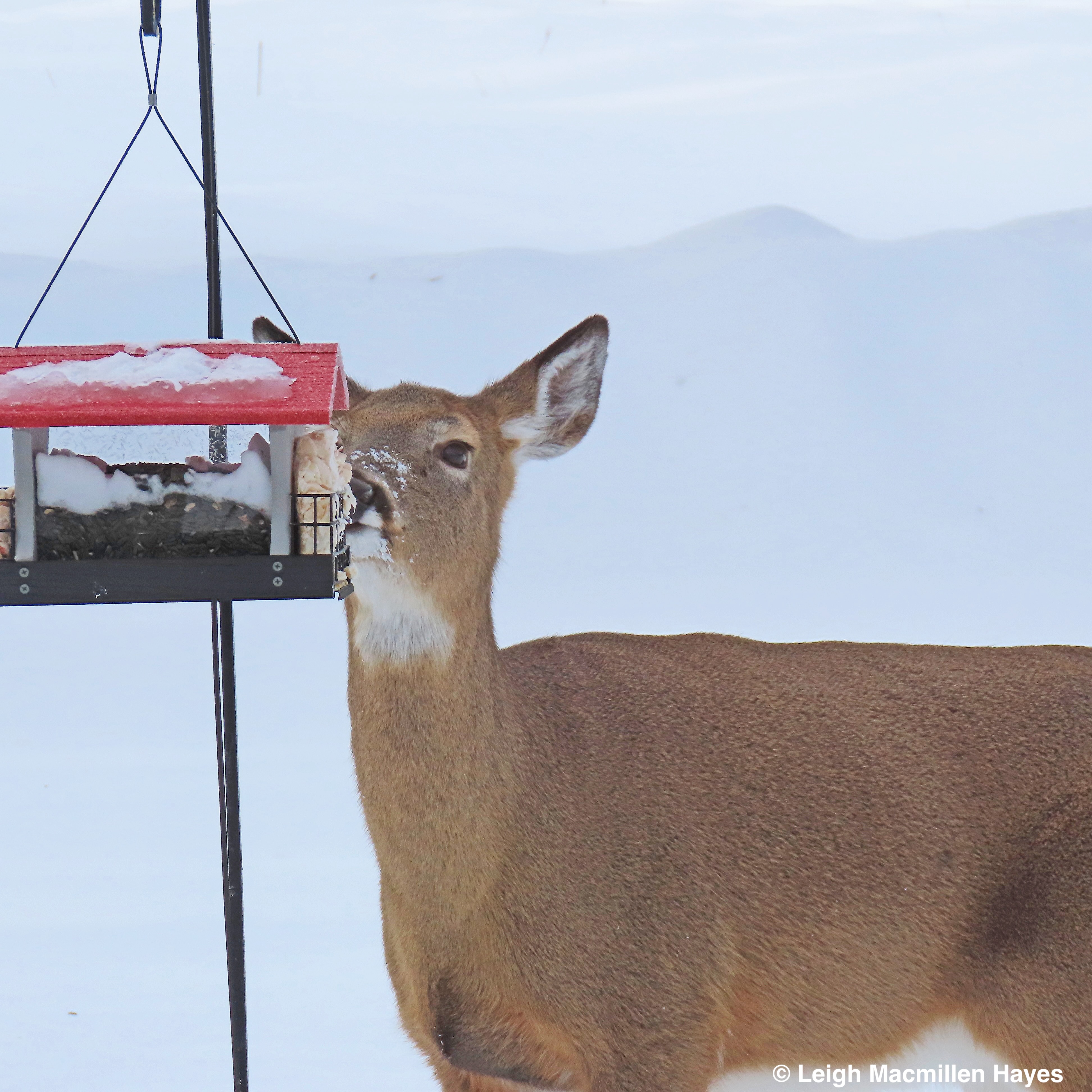
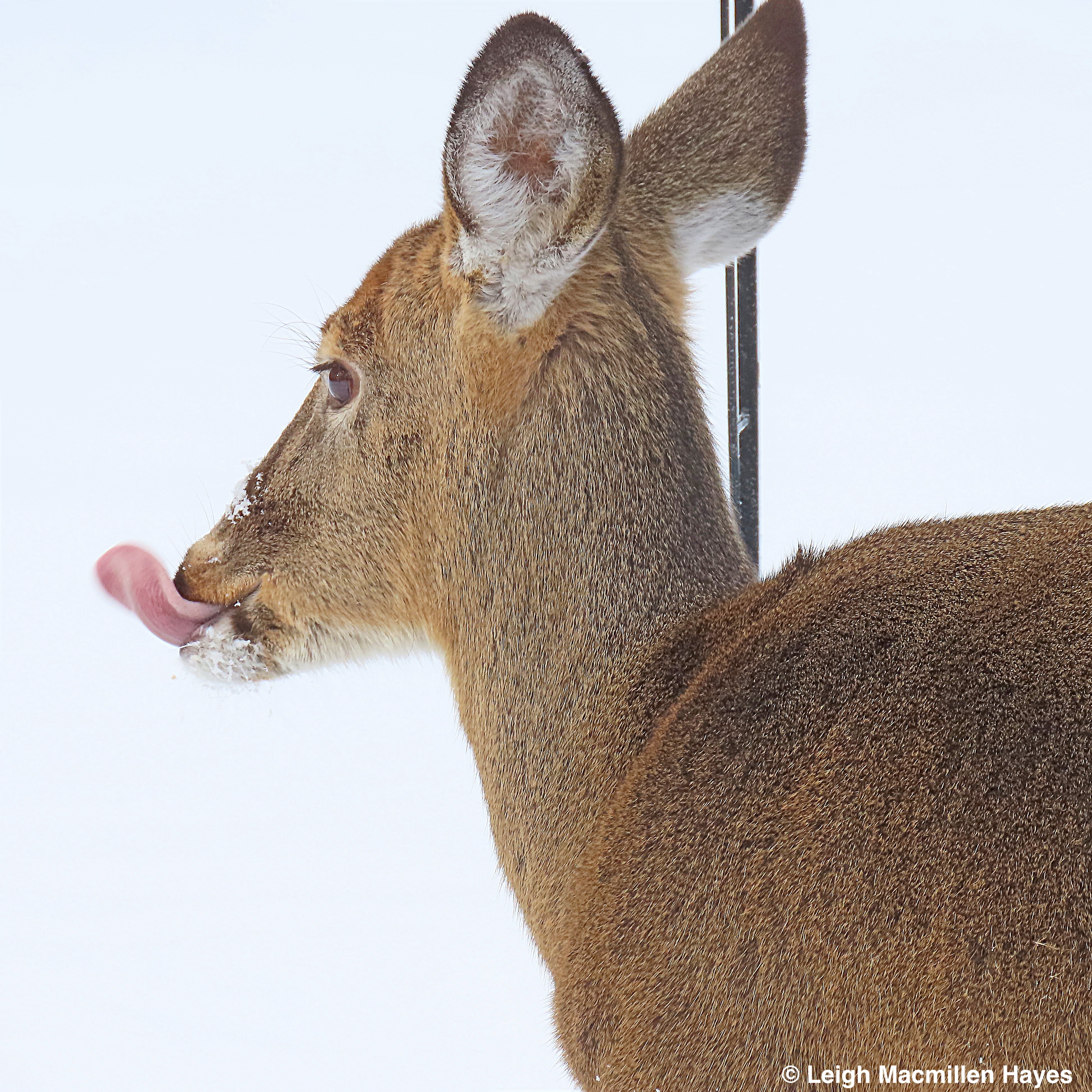
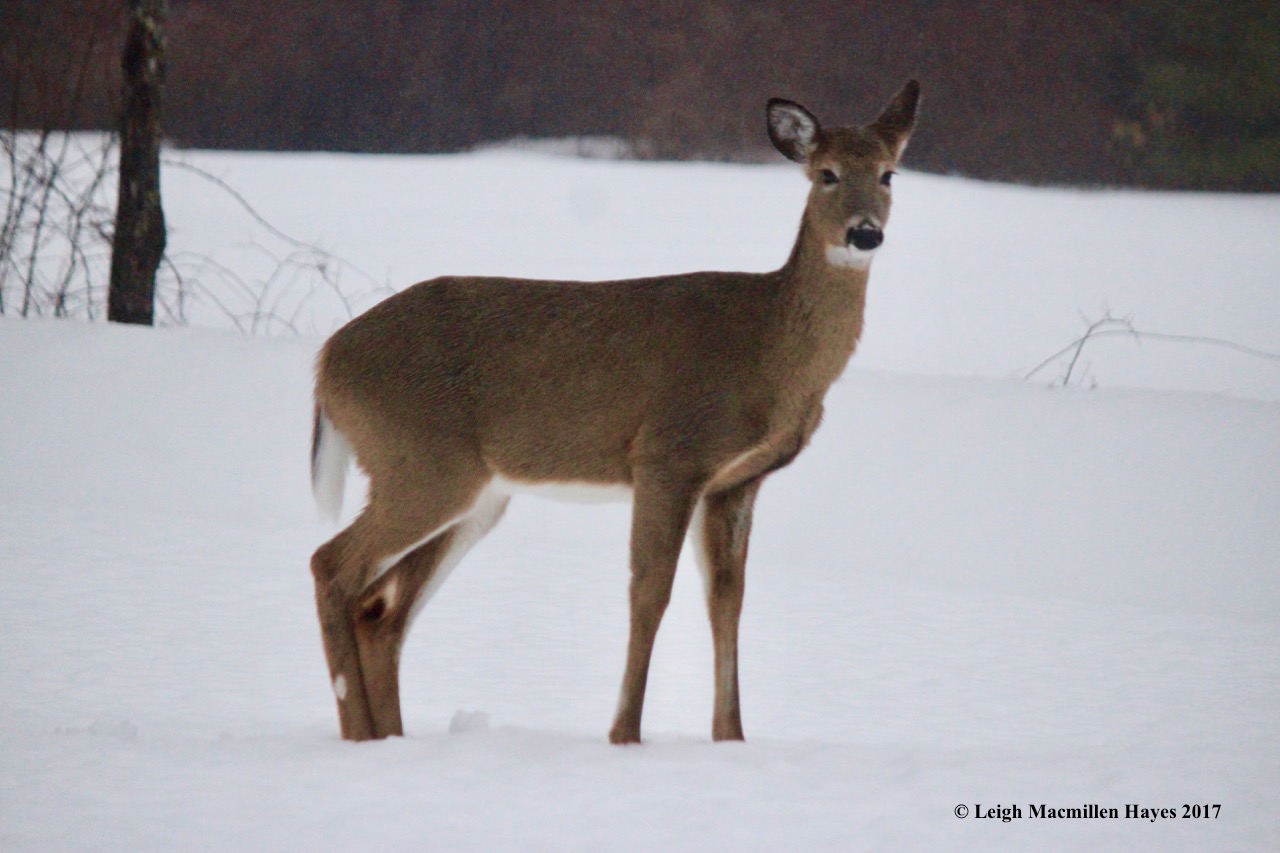
Bird seed is not just for birds, as the squirrels prove daily. And the White-tailed Deer often make that statment at night, but today . . . today was different. They came in the morning and were like vacuums as they consumed the seed.

Observing the birds, I often note that the Juncos can be quite defensive, the Male Cardinal sometimes suggests the female should leave (until that is when he decides to feed her), Chickadees fly in, grab a seed and fly off to a branch to break it open, and Goldfinches hang out together. As do the deer. These were the two young skippers, and they weren’t at all disturbed to be in each others space.

One of the skippers approach this feeder was instantly startled by its movement, but momma doe was much more curious, though in the end she chose to opt for seeds on the ground.

And all were delicious.

After about a half hour, my body tense from holding still for so long because after all, they were only steps from where I stood, the deer had consumed most of the ground seed and headed off to the woods. I waited a few minutes to give them time to depart without pressure and then went out to spread more seed around.

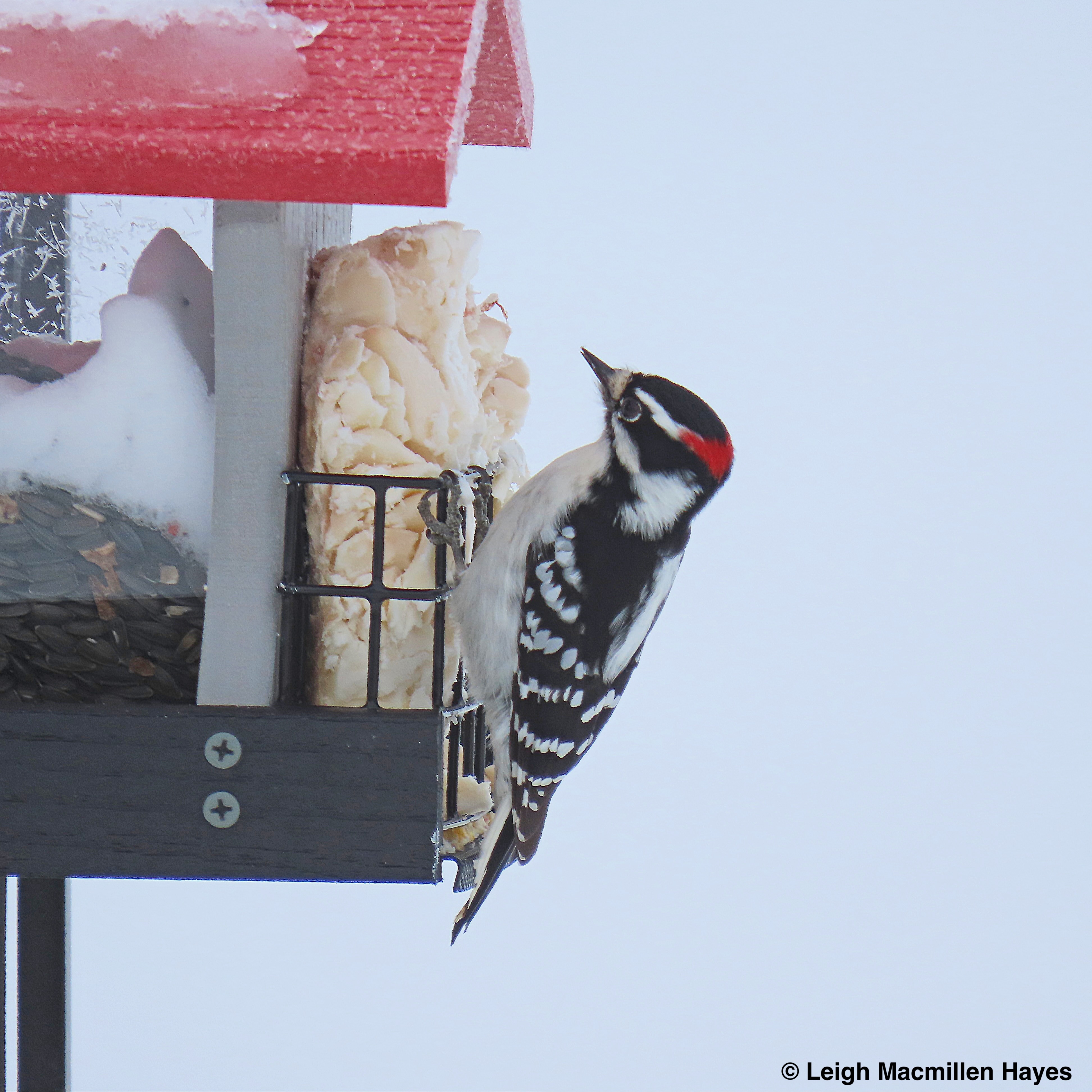
It took a few more minutes and then the action picked up again and in flew a male Downy Woodpecker to sample the suet.

His mate also arrived and waited in the Aspen to take her turn, though there are two suet feeders out there so I’m not sure why she felt the need to wait her turn.

And the rest of the mixed flock returned as well, including the Tufted Titmouse.

At the end of the day, my favorite visitors were the Bluebirds for it was such a treat to see them.

I can only hope they make a habit of returning to our yard.

And the deer, who found everything tongue-licking good.

And along with the squirrels, proved that not every bird has feathers. I mean, seriously, have you ever watched Gray Squirrels fly from tree to tree? And Deer fly across a field? Certainly reindeer fly.

The Forever Student, Naturally

This story begins . . . at the beginning. Okay. Early morning, not enough coffee, humor. Rather, this story begins at a bird feeder located about twenty feet from our back door.

Birds, like this Tufted Titmouse, frequent it, especially on rainy days, which seems to be the norm this December. In fact, this year. Sadly.

But, there’s another visitor, who thinks its a bird. If it had the membrane that stretches from the wrist of a front paw to the ankle of a rare paw, we could at least call it a Flying Squirrel. It does not. It just thinks its entitled to the bird feeder selection, despite the fact that I spread plenty of seed on the ground and have a dangling corn feeder intended for such uses.

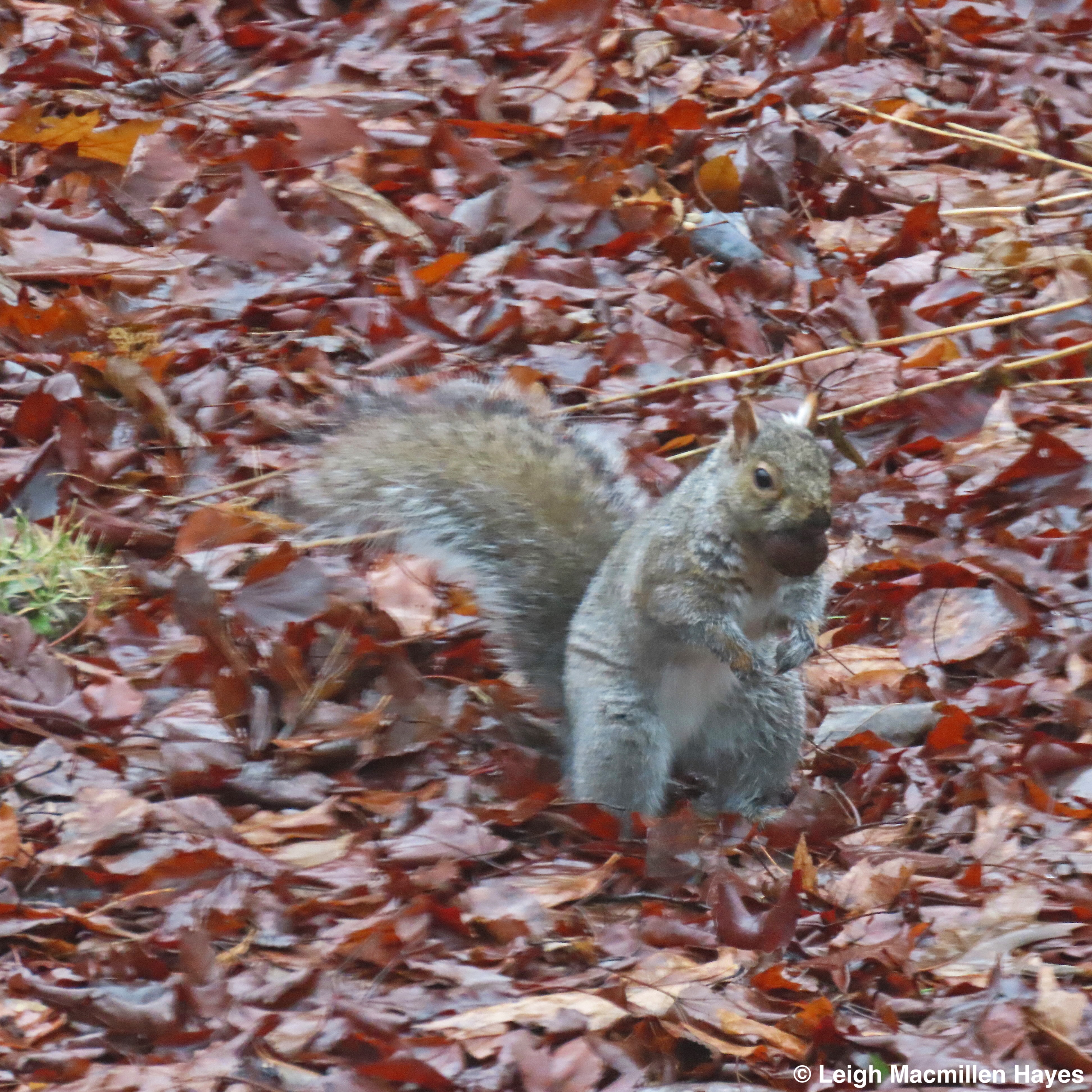
Eventually, it did resort to normal Gray Squirrel behavior and fetched an acorn, then frantically searched for a spot to cache it. And taught me a lesson.

I realized I’ve never paid particular attention to a Gray Squirrel caching acorns, one here, one there, for future food sources, or a future oak sapling if not dined upon. I knew they did that. But what I didn’t realize is that much consideration goes into location of said single cache. The squirrel moved through two gardens, across the yard, and paused about three feet from the back door to dig, all the while holding the acorn between its lips.

And in the end, that wasn’t the right spot and so it moved on.

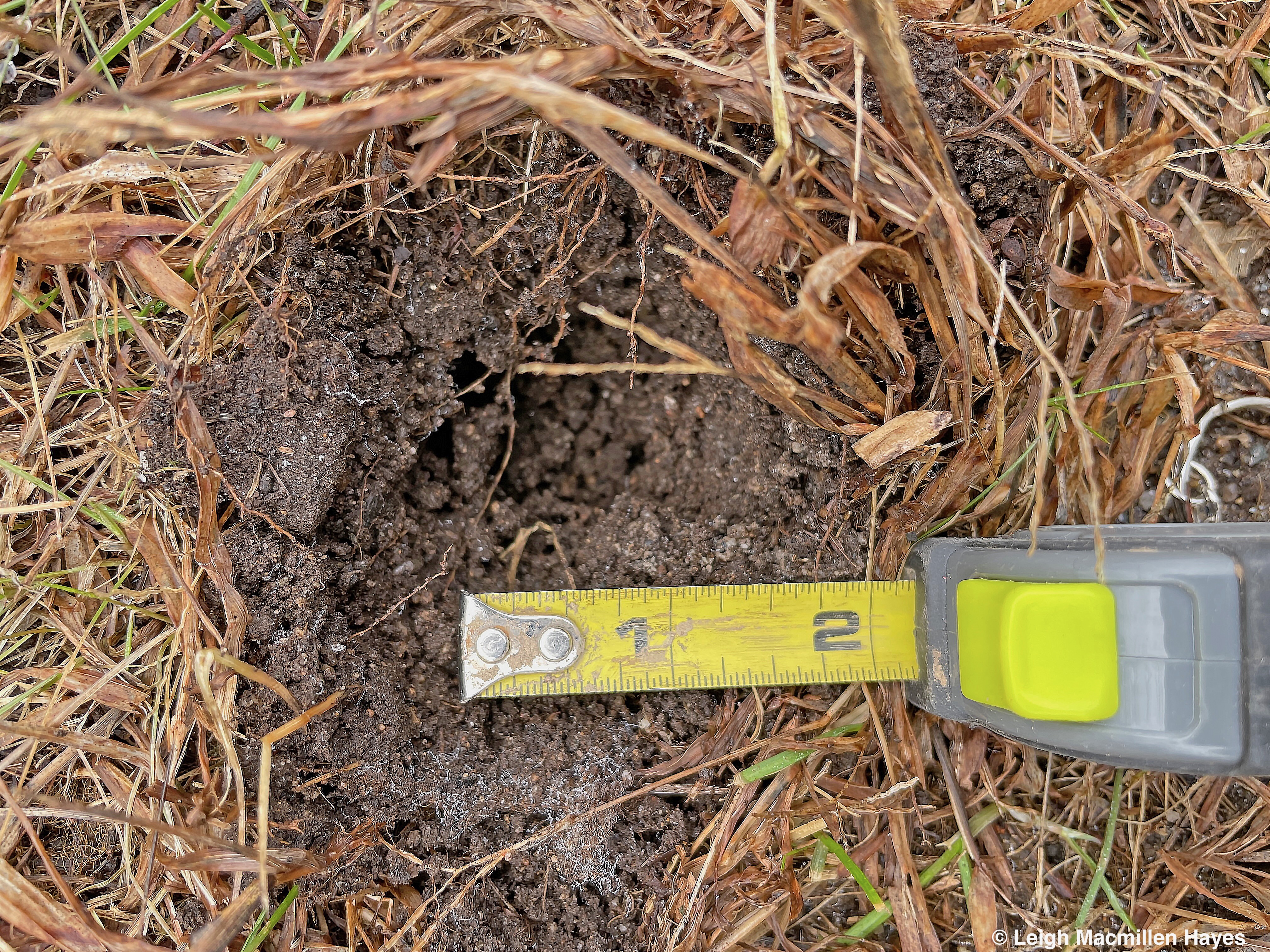
And I stepped out the door. The hole was just deep enough and wide enough for that single acorn, but the last I saw of the squirrel , it still hold the nut tight as it pranced along the stone wall and then into the field beyond. Funny thing is that when I returned home an hour or two or three later, there was a second hole excavated but equally empty. Why dig here twice and not make a deposit?

The Gray Squirrel’s activity inspired me to step into our woods and check on the activity of my friend Red. He doesn’t disappoint and each day that I visit I notice new middens (garbage piles of discarded cone scales) and new cones added to the cache (food cupboard).

My favorite cache is now a foot tall and the cool realization is that he doesn’t dine upon this pile. Like the Gray Squirrel burying his acorns for future consumption, Red is dining on plenty of pine cone seeds, but saving up for that day when we have so much snow (will that day ever come again?) that he has a food supply available and doesn’t have to tunnel through the white stuff in search of a meal. Considering how many pine cone seeds he must consume each day, I have to wonder how long this source will last and will it grow taller and wider in the coming weeks?

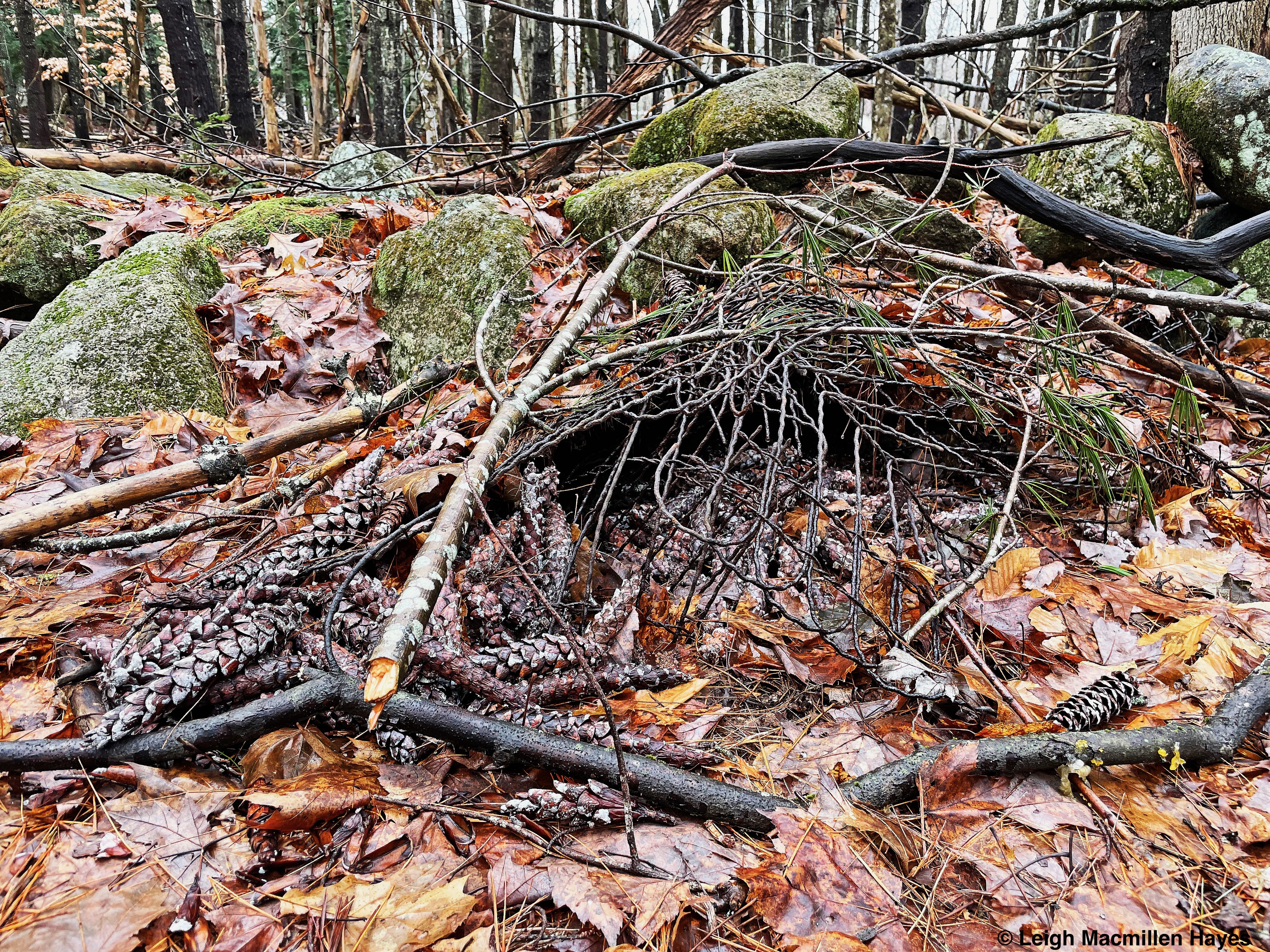
On the other side of the cow path, for that is where the tall pile is located, I realized he’s started another cache, this one located under some discarded garden fence left behind by previous owners of the land. It’s actually a great spot in my squirrely mind, for its beside the wall so he can easily access it from a dry spot within and the fencing and sticks and leaves have created a shelter.

Much to my delight, I spotted Red on a pine branch, a perfect high spot on which to dine and keep an eye on invaders of his domain, such as me. My presence, however, did not stop him from peeling each scale to seek the two seeds tucked close to the cob.

And as is the custom, its only the seeds that he cares about, scales discarded because their usefulness is no longer important.

The base of the tree shows just how many scales he’s discarded over the last few months as his midden contiunes to grow. Considering this year was a mast pinecone production year for Eastern White Pines in western Maine, this is one well fed squirrel.

Another tree that produced a mast crop is the Northern Red Oak and the abundance of acorns has been a food source for the squirrels, especially the Gray, Porcupines, and White-tailed Deer.

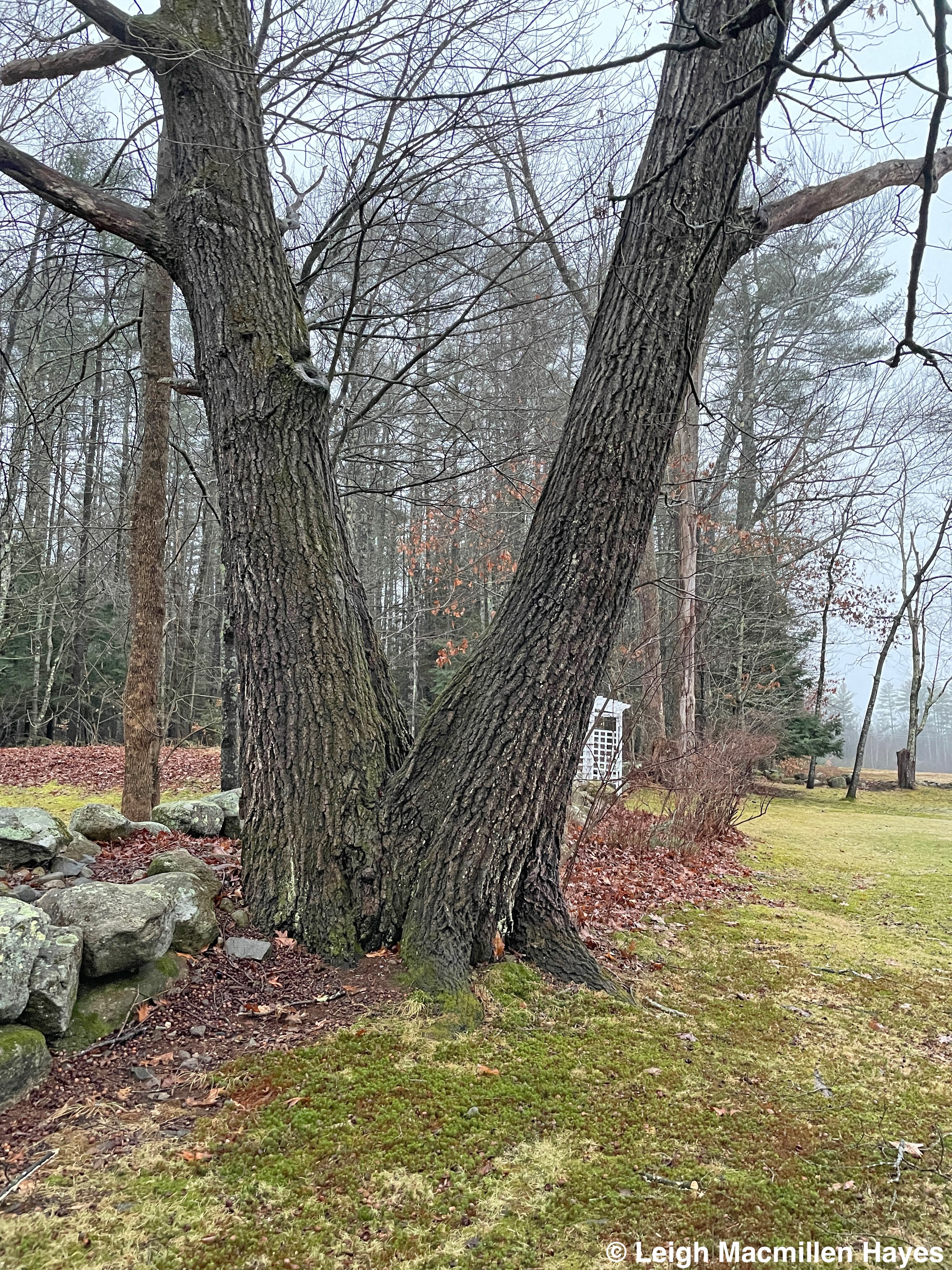
The tree behind our barn is massive, with a coppiced base and therefore three large trunks. Our sons once built a fort in that space between.

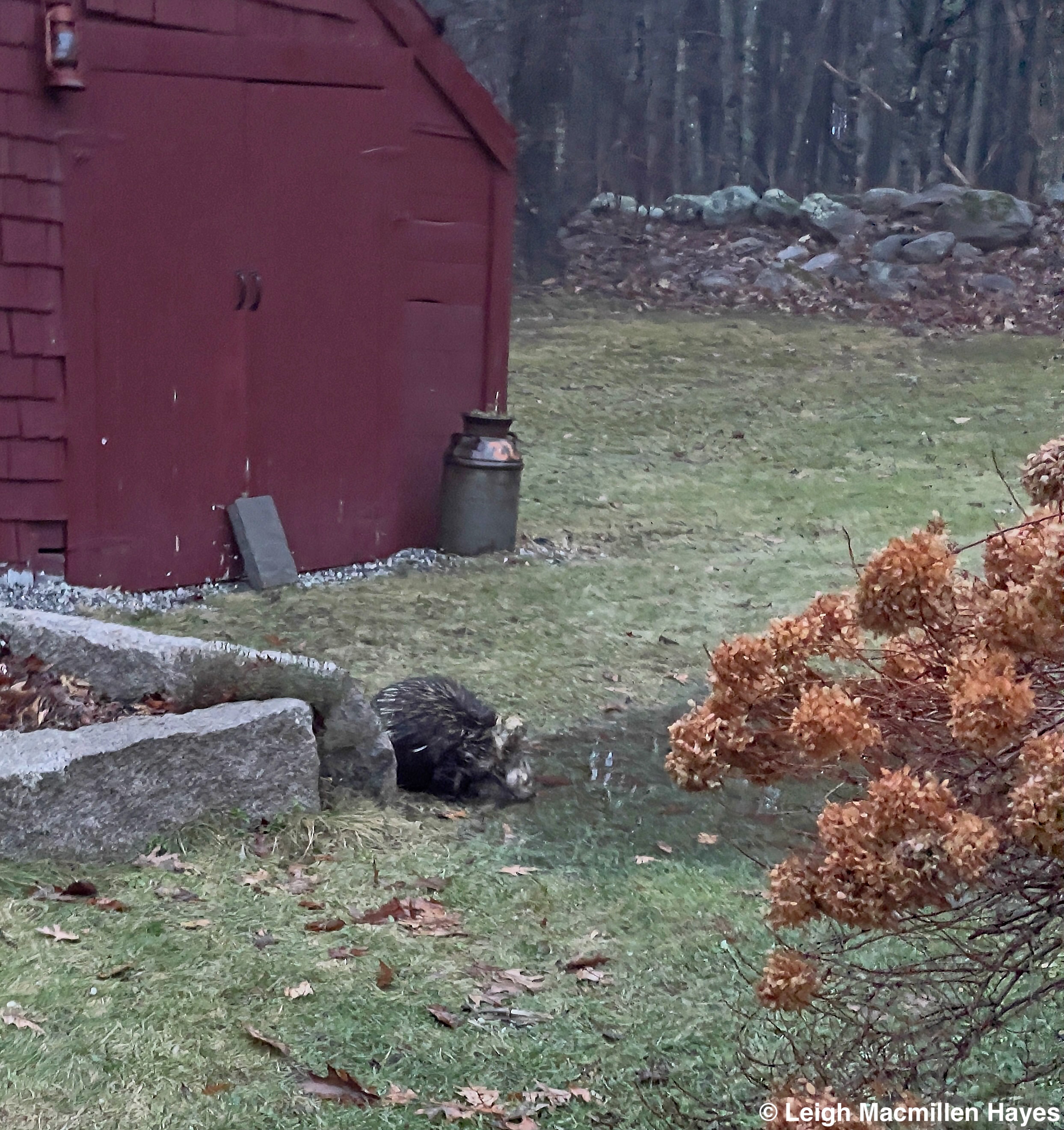
At about 4:15pm the day before, our youngest son, his gal, and I watched Bandit, the local porcupine come from the acorns to a puddle beside the herb garden and pause for about five minutes as he sipped from it. That was another first for me. And them as well. In fact, for his gal, just seeing a porcupine in the wild was a first.

Then he waddled off to the woods on the other side of the stone wall, and probably found an Eastern Hemlock upon which to dine for the night. I found a few trees with downed twigs, but none that cried out, “I’m Bandit’s food source,” so I suspect I need to expand my search on another day.

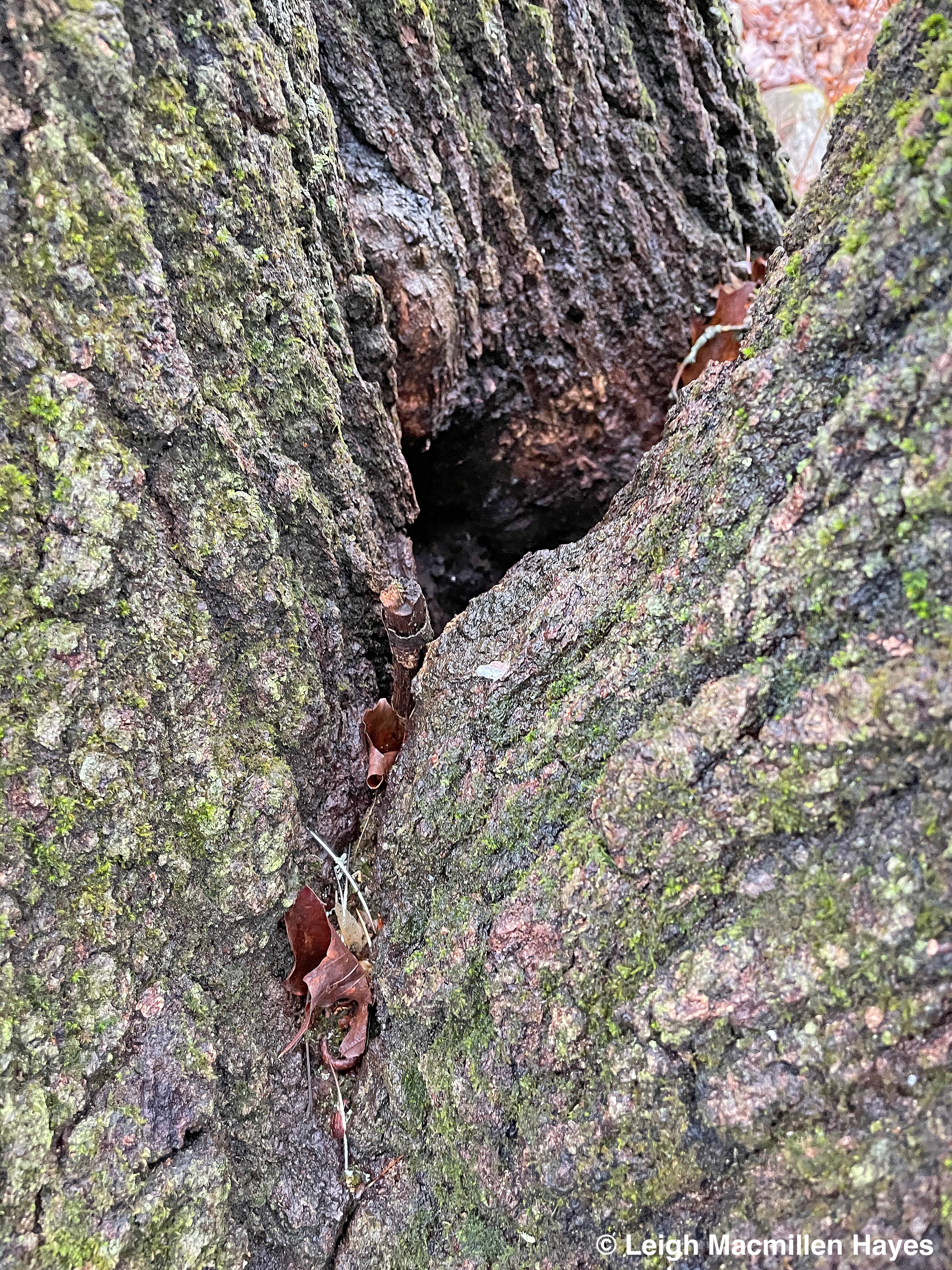
Instead, I made a different discovery. We know that Bandit has spent time under the barn, and he’s left tracks when we did have snow that led to a neighbor’s shed, but I have wondered about the old oak tree and the hollow within its three trunks And today, I spied evidence that he has inspected the hollow. Do you see it?

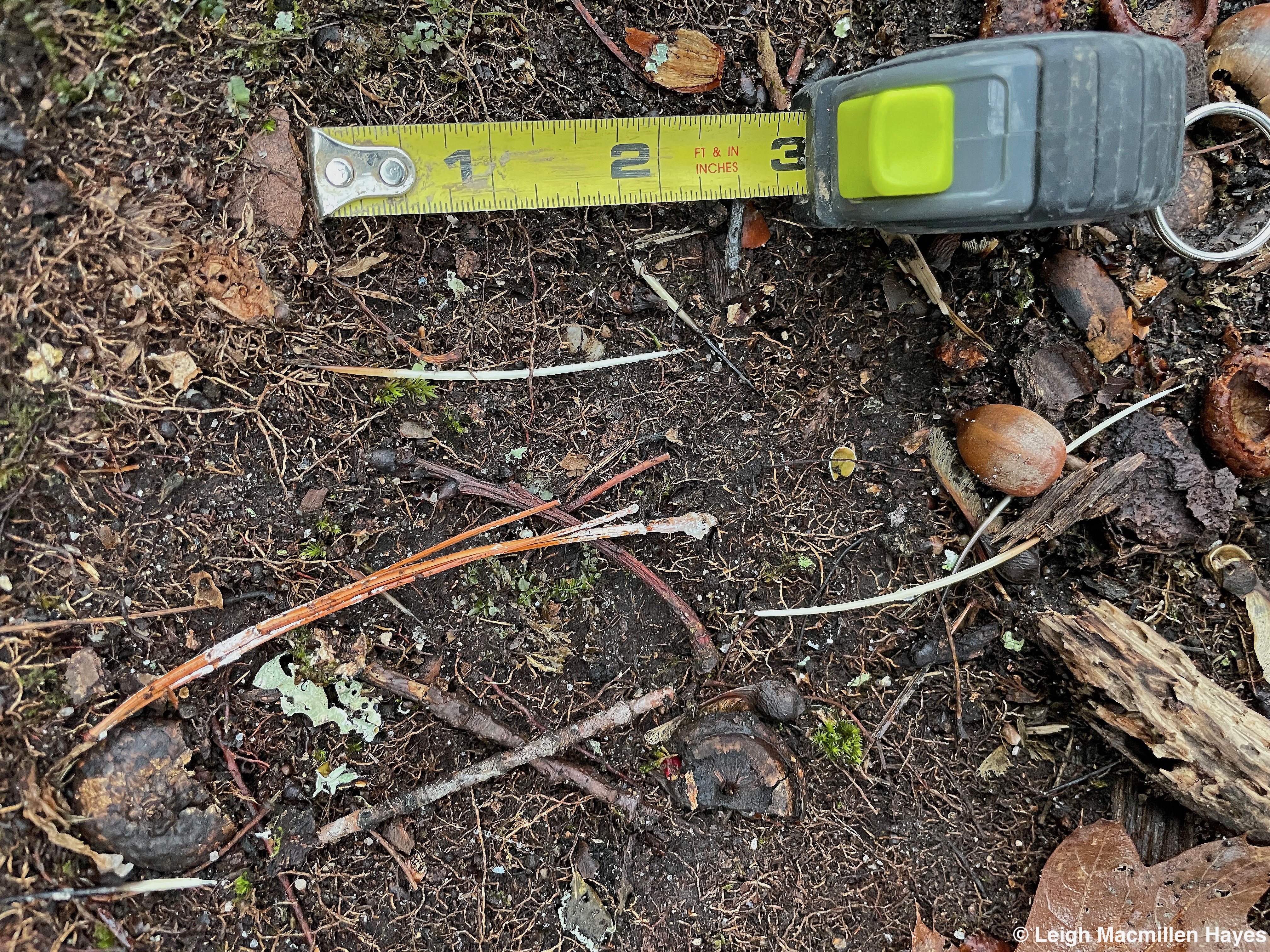
How about now? Quills! I found them on both sides of the trunk.

And on the ground below.

About two inches in length, and some were longer, I love how his brownish hue is similar to that of the bundle of dried pine needles.

The hollow is dark and deeper than my camera could see. The curious thing is that there is no scat. Yet. You can rest assured that I will keep an eye on this spot.

I decided to hang out not too far from the tree and barn as day turned to dusk in hopes of spotting Bandit emerging. Much to my surprise, an Eastern Chipmunk appeared on the wall behind the tree. Wait. What? Shouldn’t he be in torpor? Yup. But chipmunks will make an occasional appearance on warmer days and we’ve had way to many of them this year.

A doe and her two skippers also appeared and watched me from the edge of the field, or at least listened to my movements, which I tried to minimize as much as possible, but those ears were on high alert.

About a month ago, when we did have snow, I discovered blood beside her tracks on this side of the wall and knew that she was in estrus. A day later, I noticed a young buck in the field and by the way he kept his nose to the ground and moved frantically, I knew he was on a mission to find her. Did he? Is she with child? Only spring will tell.

In the meantime, her twin skippers are still with her. They ran off before I headed in, but I suspect it wasn’t long before they returned under the blanket of darkness and munched on a bunch of acorns.

Bandit never did appear during the time that I waited. Who knows? Maybe he had spent a night and day or two in the hemlock of his dining choice. I’ll continue to search for evidence of his activities because it’s what I most enjoy doing.

There’s always something wild going on outside our back door, rain or shine or snow or sleet, and I’m grateful for each lesson they take the time to teach me. I am a forever student, naturally.

Cached In My Heart

I knew it was going to be a great day when snowflakes began to fall. And when asked the day before how I intended to spend yesterday, I said I’d probably read, bake, and knit. But . . . those plans were postponed for a few hours because that white stuff was falling and I heard it calling my name.

Thankfully, it was only my name that it called and for the first time since March, I stepped back into Pondicherry Park, a place that I love, but have intentionally avoided because so many others have discovered it as a tonic to the worries of the pandemic and I wanted to give them space, knowing I could find plenty of other places to explore with the same quest in mind. But . . . it was snowing, and I suspected that others might be home reading and baking and, well, maybe even knitting, and I would have the place to myself.

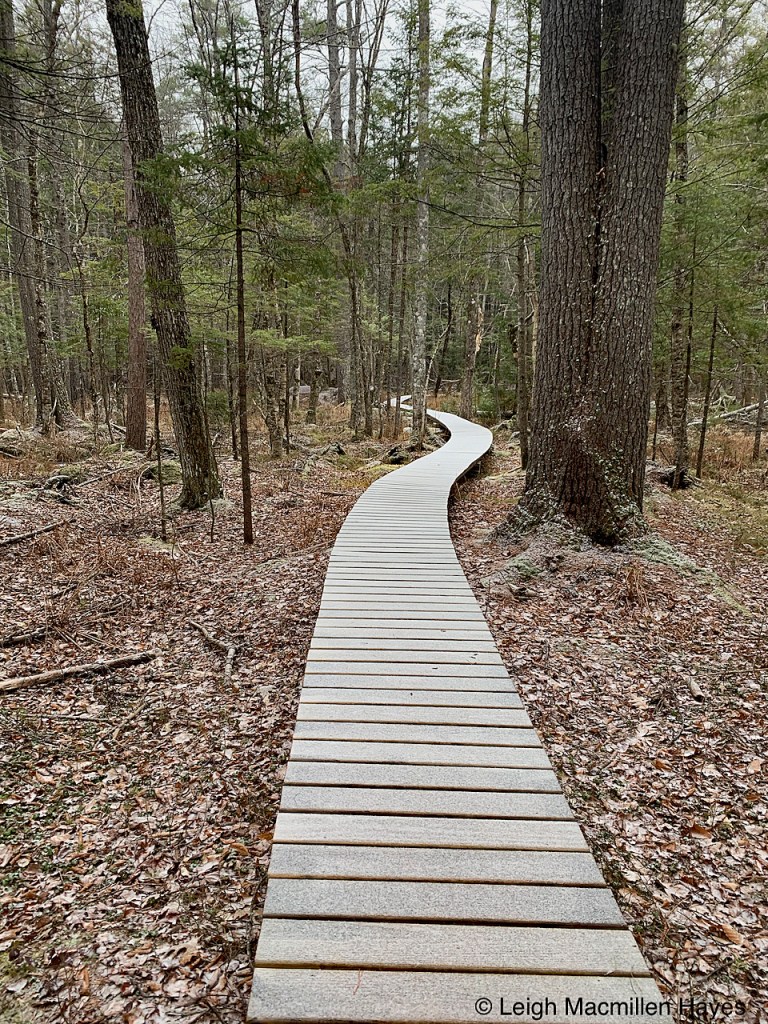
Soon, however, I discovered that I wasn’t really alone for even though the snow wasn’t piling up, tiny tracks on boardwalks indicated others were scampering about.

A few minutes into the hike, bright green moss invited me off trail to examine the base of pine where a hole beneath the tree . . .

and a cone still intact made me wonder: If this was the home of a little scamperer, what might it be eating other than this cone?

And then I twisted right–in more ways than one. And spread out along a downed pine and all around the base of another–a huge cache/midden: the cache being a collection of cones gathered and stored; and the midden being the refuse pile of scales and cobs left behind after the seeds were consumed.

I’ve been looking for one of these for a few weeks as the air temperature has dropped and wondered when the little guys would get their acts together and gather a supply to see them through winter.

One among them had, indeed, been busy, not only gathering, but dining, and with today being Thanksgiving, you might think this critter had the longest dining room table because it intended to invite everyone over for a meal.

But, its a feisty diner, and each meal is consumed quickly, with some chits and chats warning others to stay away–social distancing naturally.

Peeking under the dinner table, I discovered some cones tucked away in the pantry . . .

others in the fridge, with the door left open, thus exposing them to the elements . . .

and a few in cold storage.

On the other side of the pine table, holes in the midden showed the downstairs and upstairs doorways: all leading to Rome–or rather, the cache that must have been huge based on the size of the midden left behind. I did feel concern that so much had been consumed and there might not be enough for winter survival.

No need to worry. On the backside of the tree, three were tucked into furrows–making me think of a $20 bill stored away in a wallet, just in case.

My journey through the park eventually continued and meant a few pauses at favorite haunts, including one where the reflection nourishes my little friends . . . and me.

Occasionally more boardwalks curve through the landscape offering their own reflection–of this past year, which has taught us all that when there are curves in the road, we should follow and embrace them.

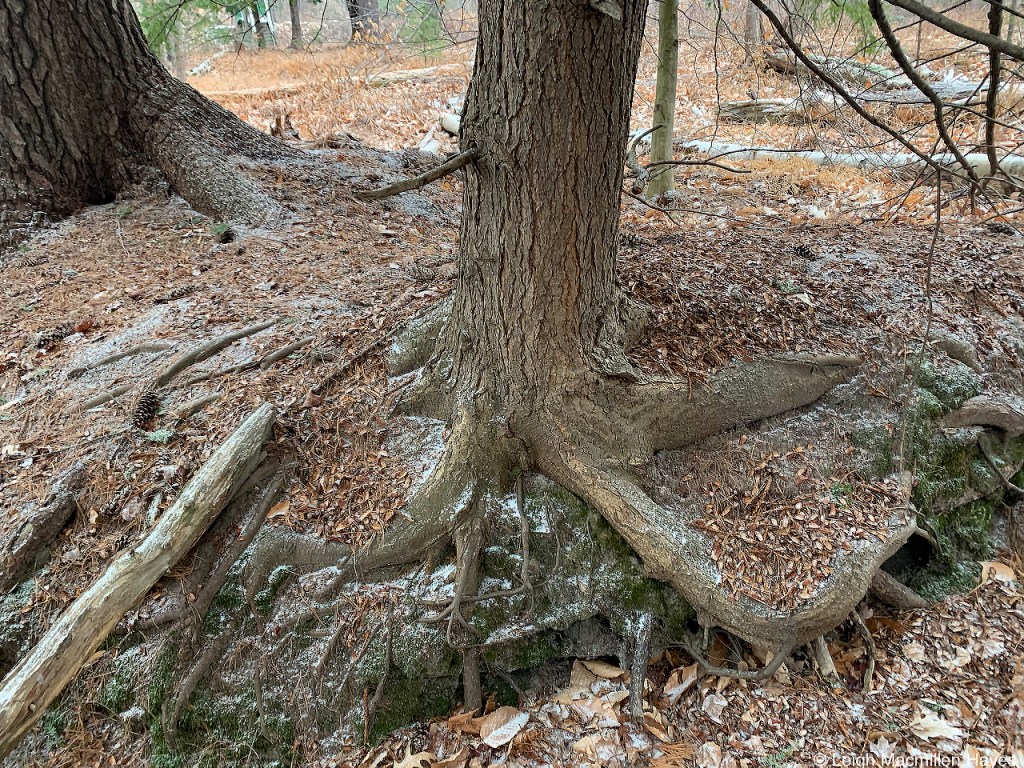
And if a hemlock grows beside a pine, it’s okay to cache your pinecone supply atop the former’s roots. You don’t always have do what the rest of us expect you to do.

Especially if you are the creator of the caches–a feisty Red Squirrel, ever ready to give chase to your siblings and chitter at any intruders such as me.

Of course, if you are a Gray Squirrel, you’ll take a different approach to winter preparations and store one acorn at a time and hope you remember where you left each one.

Three hours later, I finally found my way home, grateful that the stars had aligned, it had snowed, and I had the trails to myself. And then I began to bake, but never got around to reading or knitting or even writing this post for the phone kept ringing and there were envelopes and gifts to open, messages and emails galore to read, and cake to consume, and though we can’t be with our family or friends today, I gave thanks that on my birthday the squirrels let me share their world for a wee bit and I was showered with so much love–that I’ve cached in my heart.

Fair-feathered Friends

Thankfully, the prediction for 8-12 inches of snow for today didn’t come true. But it did snow, rain and sleet. And the birds were on the move.

b-red-winged 2

The moment I stepped out the door to fill the feeders and spread seed and peanuts on the ground I was greeted by the kon-ka-reeee of the red-winged blackbirds who stopped by for a few hours. Their songs filled the air with the promise of spring.

b-cowbirds

And with them came a few friends. Or were they? It seemed the cowbirds may have been scheming.

b-cowbird female

Mrs. Cow perhaps choosing others who might raise her young one day soon.

b-song sparrow

Another recent visitor also added its song to the chorus and its streaked breast to the landscape–such is the manner of the song sparrow.

b-tree sparrow1

American tree sparrows, on the other hand, have been frequent flyers all winter. This one paused long enough to show off its bicolored bill and white wing bars.

b-robins

And then there were those who chose to visit from a distance–the American robins appeared as ornaments in the oak and maple trees.

b-crow sentry

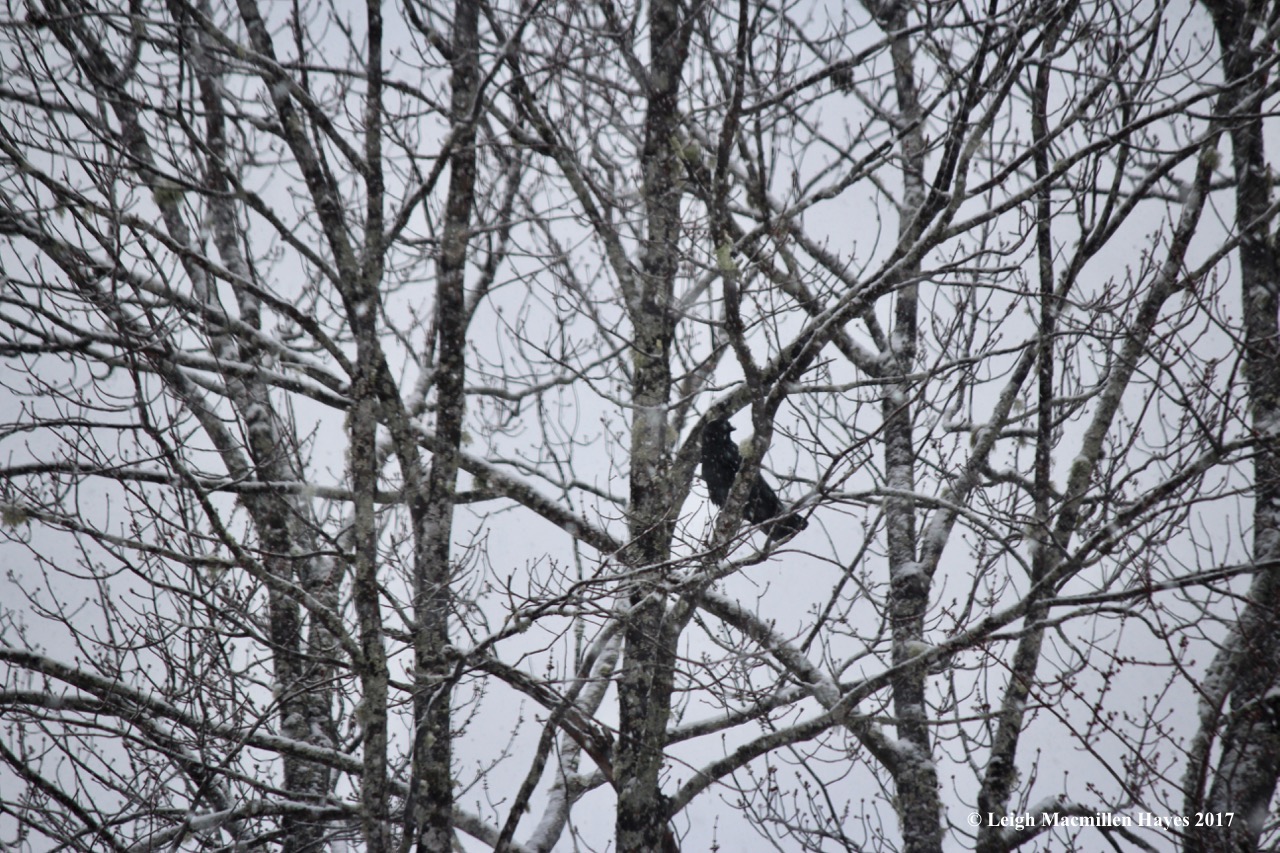
Meanwhile, a crow stood sentry–allowing all to eat in peace as it was ever ready to announce any intruders.

b-white-breasted nuthatch

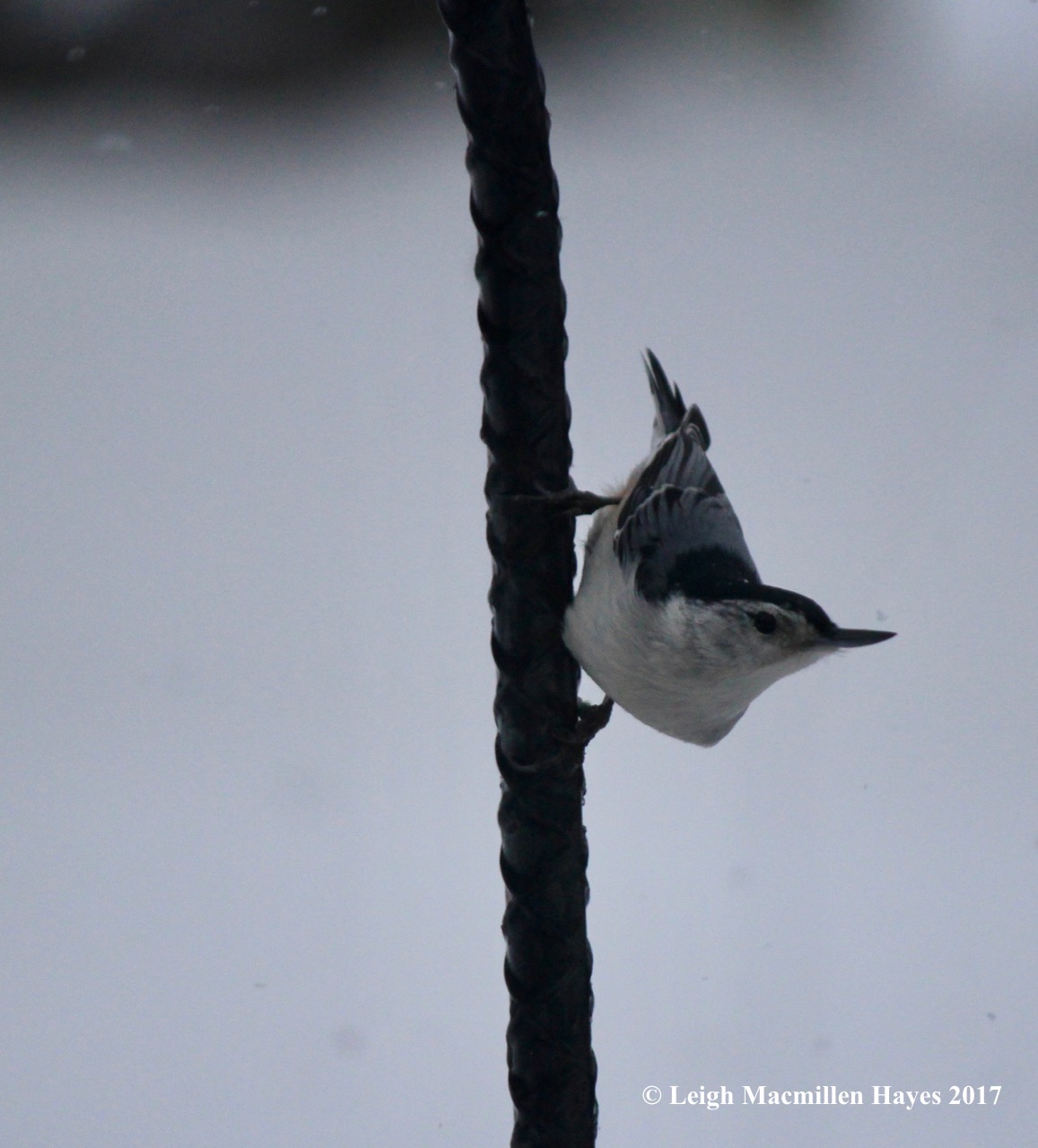
And so they came and went–some upside down like the white-breasted nuthatch.

b-chickadee waiting

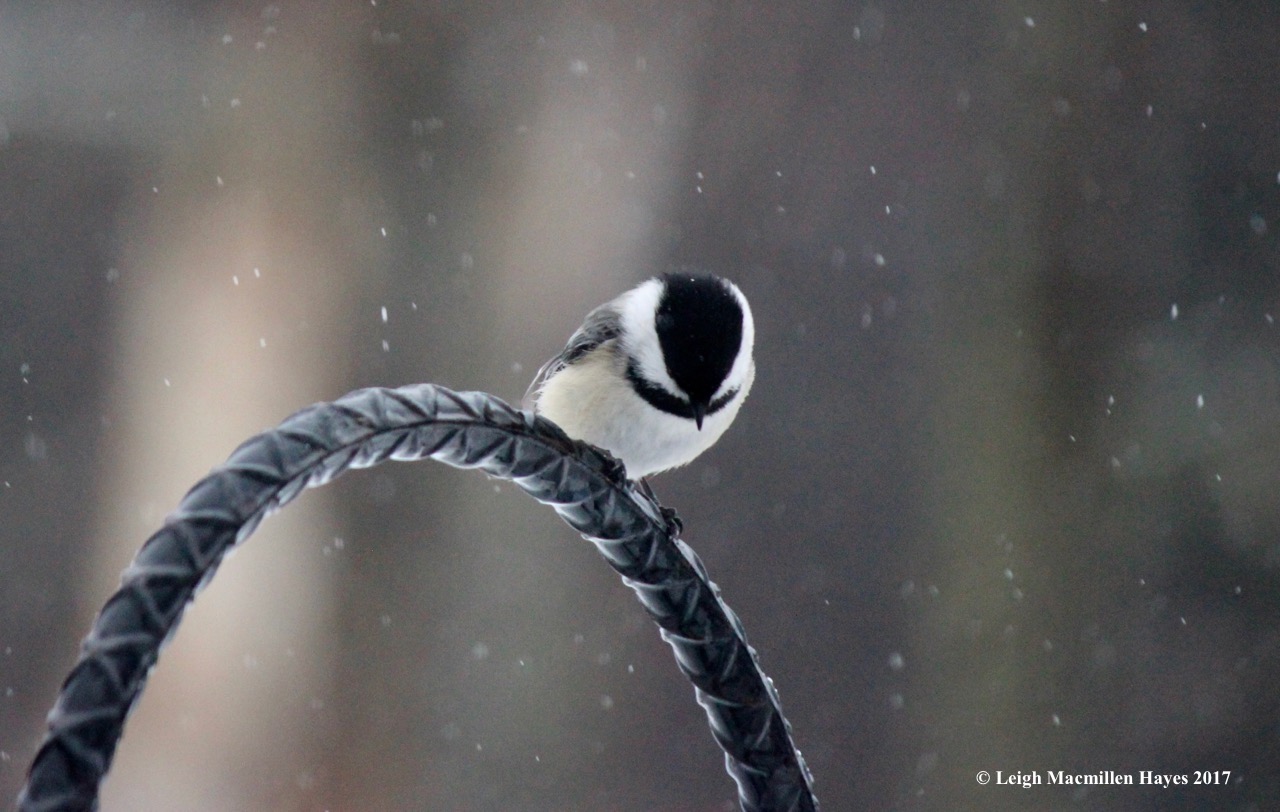
Others waiting patiently for a turn,

b-chickadee at feeder

confident in the knowledge that the wait was worth the reward.

b-chick and junco

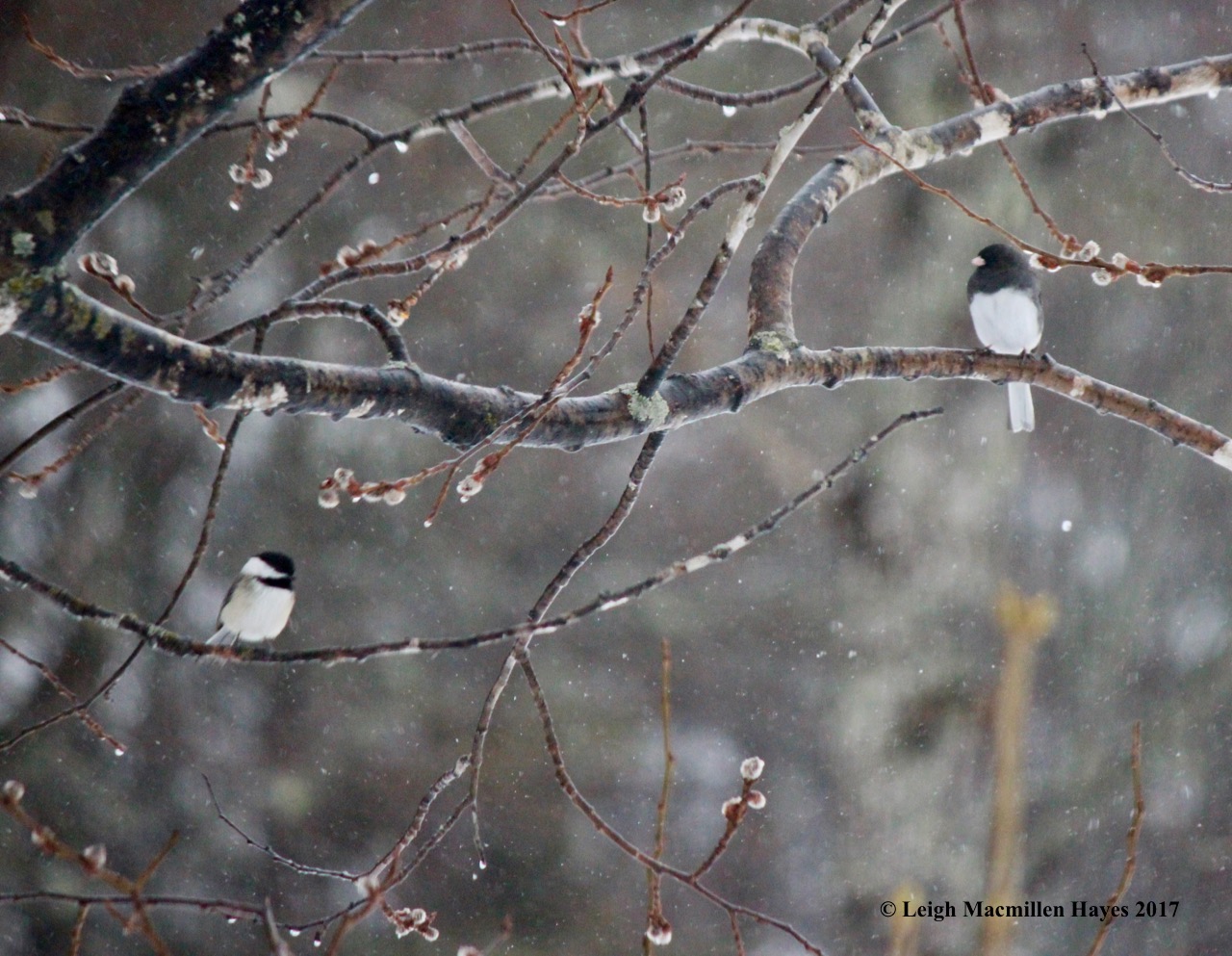
But not all . . .

b-junco in lilac

that waited . . .

b-junco waiting

remained patient.

b-junco--cigar?

The juncos gobbled the seeds . . .

b-junco with peanut

and the peanuts.

b-junco fight 1a

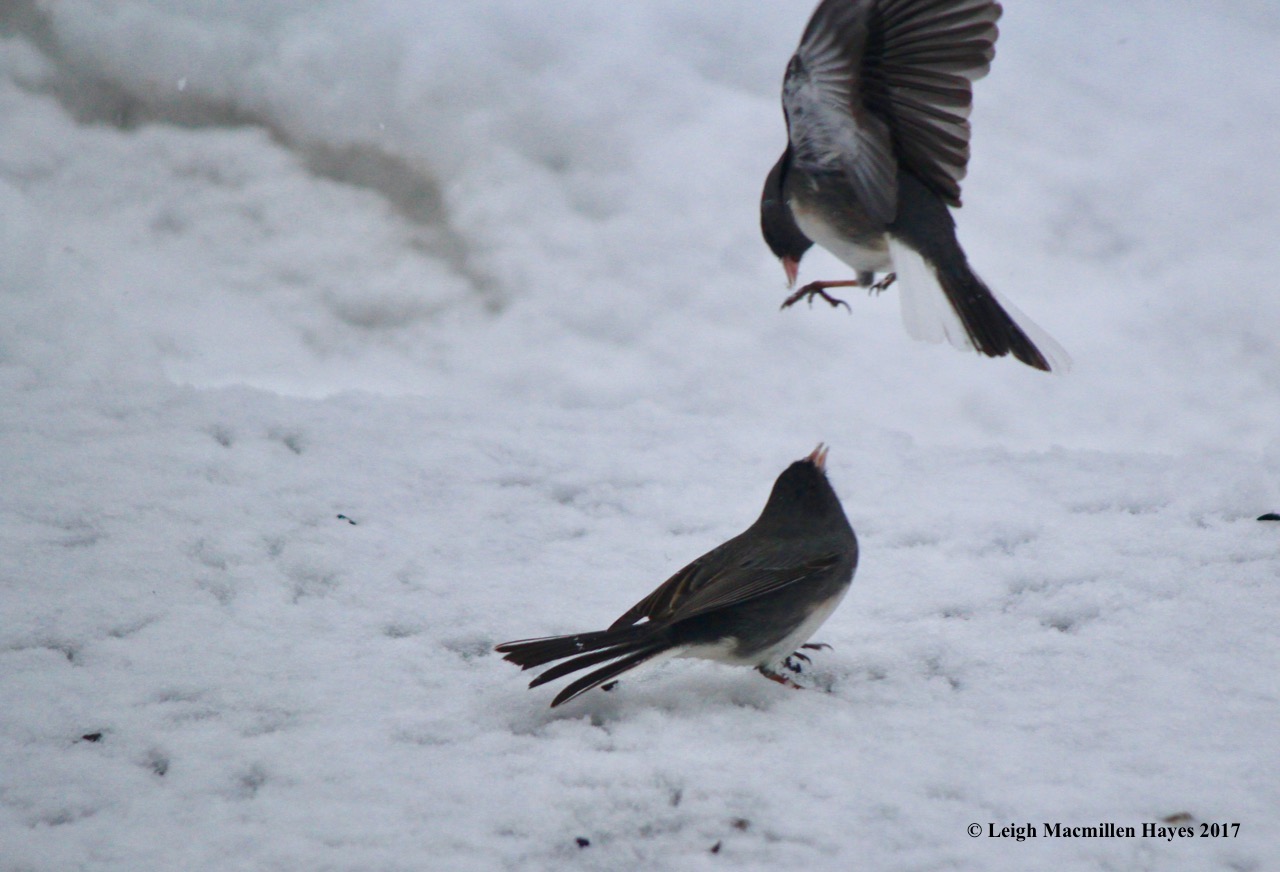
And like siblings, they squabbled . . .

b-junco fight 1

with attitude . . .

b-junco fight 2

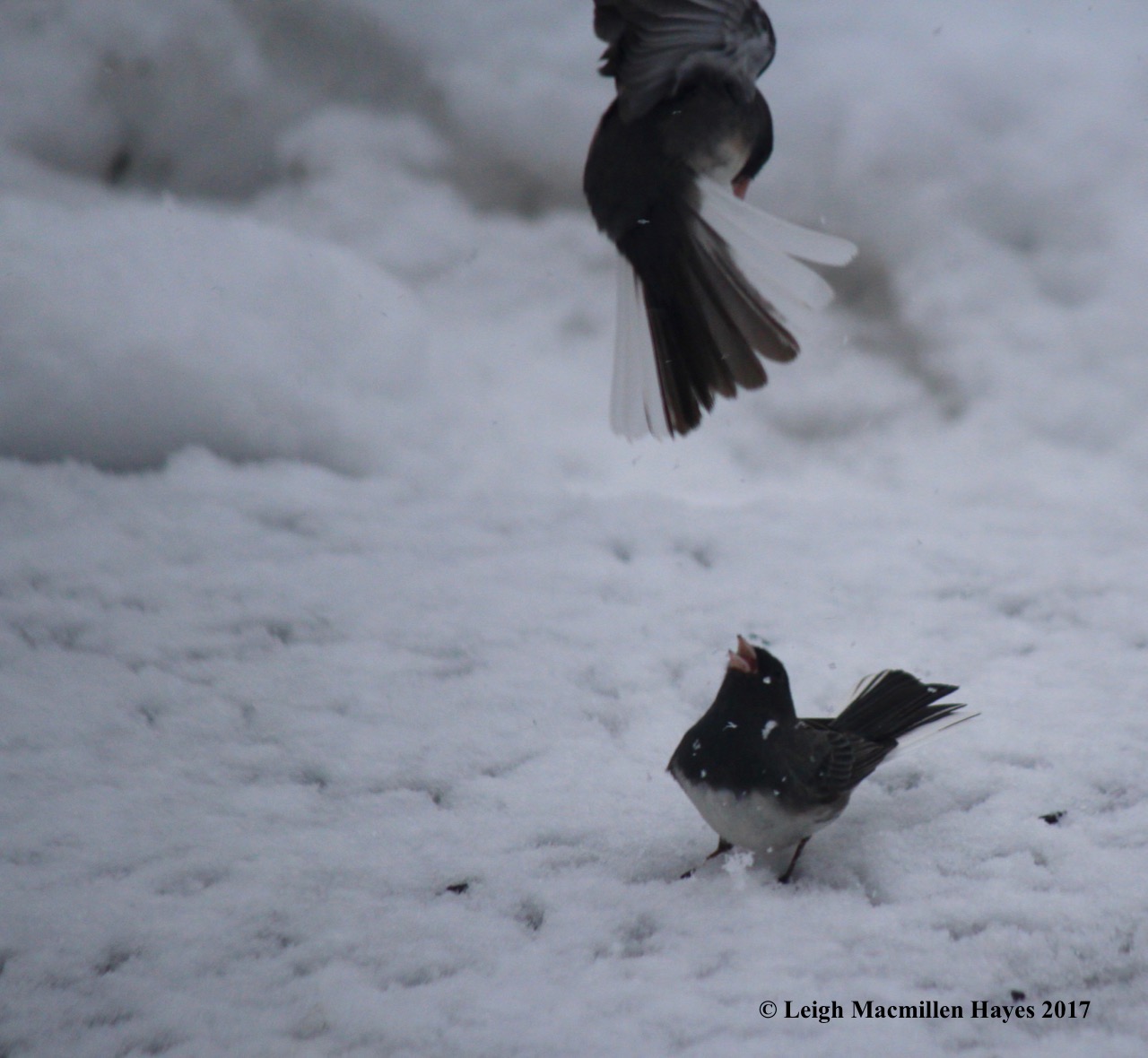
and insistence.

b-junco fight 3

Of course, there was always a winner.

b-junco up close

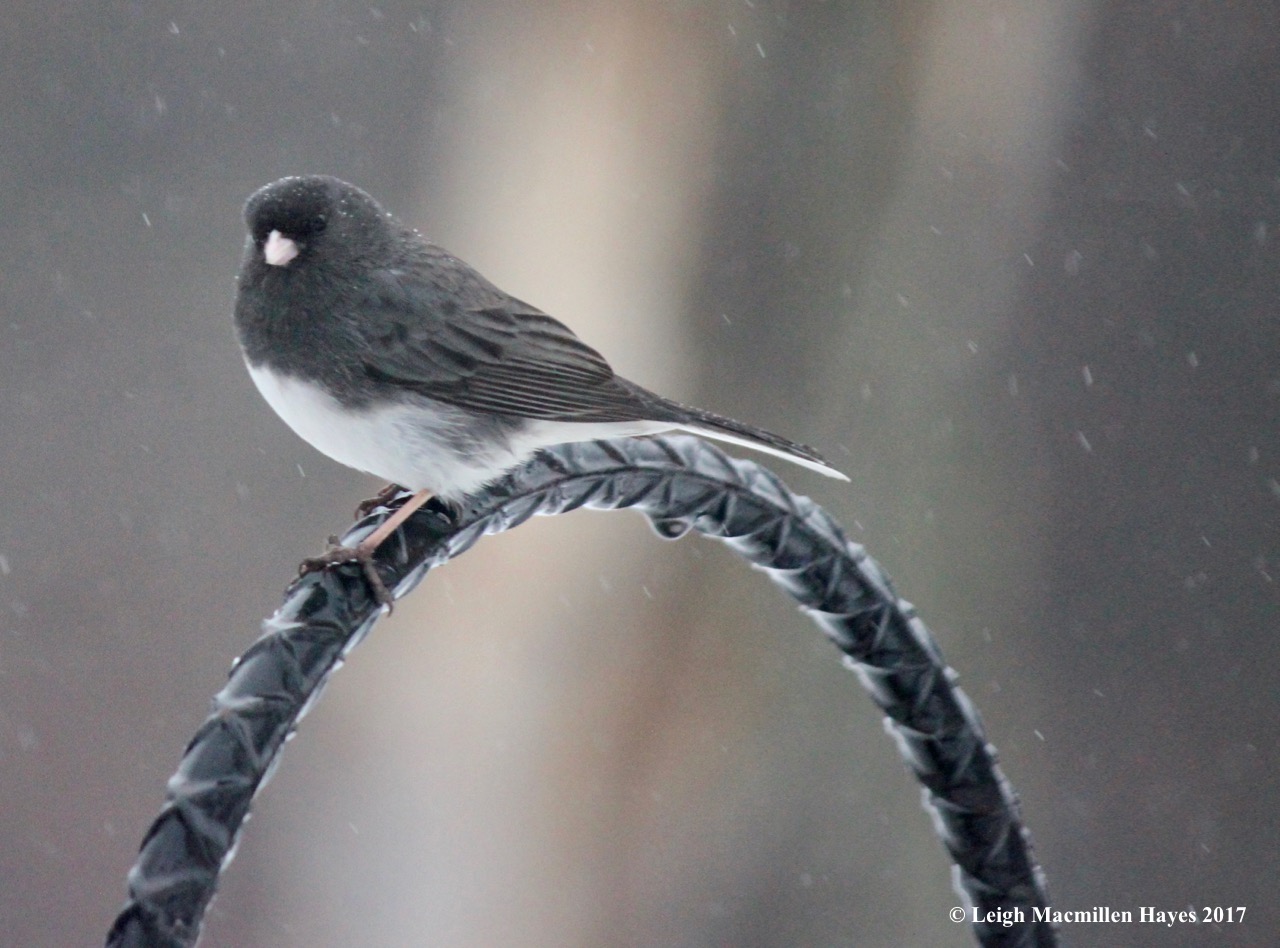
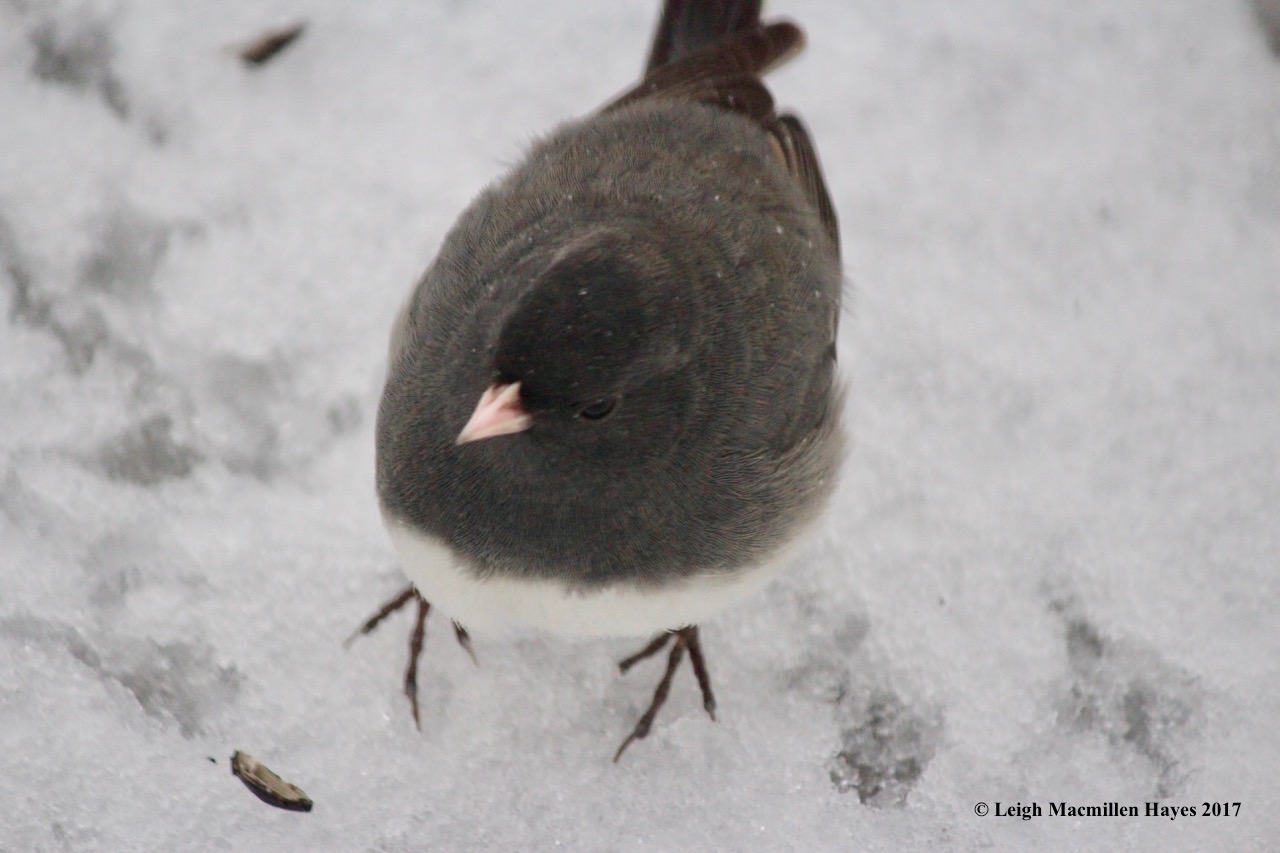
I love these plump winter visitors with their head and flanks completely gray, contrasting white  breasts and pale pink bills–making the junco an easy ID.

b-gray squirrel

They weren’t the only gray birds to visit the feeders. Oh, you mean a gray squirrel isn’t a bird?

b-squirrel in its tracks

Nor is the red. Don’t tell them that.

b-deer in yard

The same is true of this dear friend, who first spied some action in the distance . . .

b-deer looking at me

and then turned its eyes on the bird seed and me. But with one periscope ear, it still listened to the action to my right.

b-deer flying away

And then as fast as the birds that feed here all day, but flit in and out when they hear the slightest noise or sense a motion, the deer turned and flew off as a car drove up the road.

I played the role of a fair-weather naturalist today as I watched my feathered friends from indoors.

With friends in mind, I dedicate this post to my mom’s dear friend, Ella, who passed peacefully in her sleep the other day. I trust Mom has put the coffee pot on and she, Aunt Ella and Aunt Ruth are watching the birds out the kitchen window.