
Lest you think that I spend the colder months forgetting about six and eight-legged members of the natural world, rest assured that I do not. That said, this has been an incredible week of spotting these little members of the ecosystem that often go overlooked as people tramp through the snow.
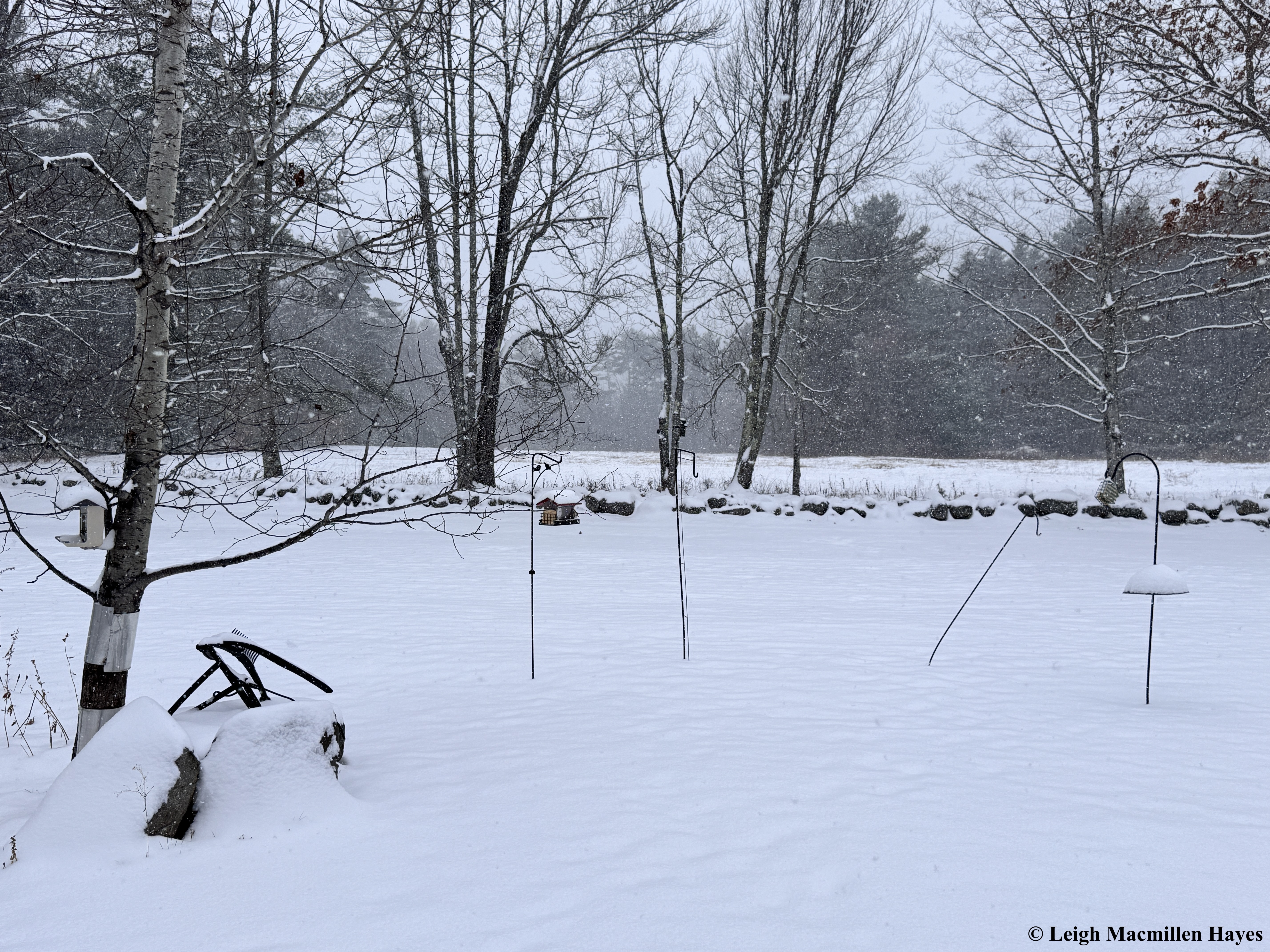
About eight inches of snow fell a week ago and in the middle of the storm, I did what I love to do. I headed out to explore in our woods. Have you ever stepped outside and listened on a snowy day? Really listened? It’s magical. The world’s sounds are muffled, except for the soft hush of falling snow.

It was while standing still and appreciating the quietness that I first began to notice these most beautiful creatures. I was compelled to check the coloration against a watercolor set gifted to me by a dear old friend. The legs of this Long-jawed Orbweaver are Sap Green Deep. Its head and abdomen: Raw Umber Deep, Greenish Yellow, and Turquoise Green Deep; and its pedipalps, those leg-like appendages near the mouth that look like boxing gloves: White Gold.
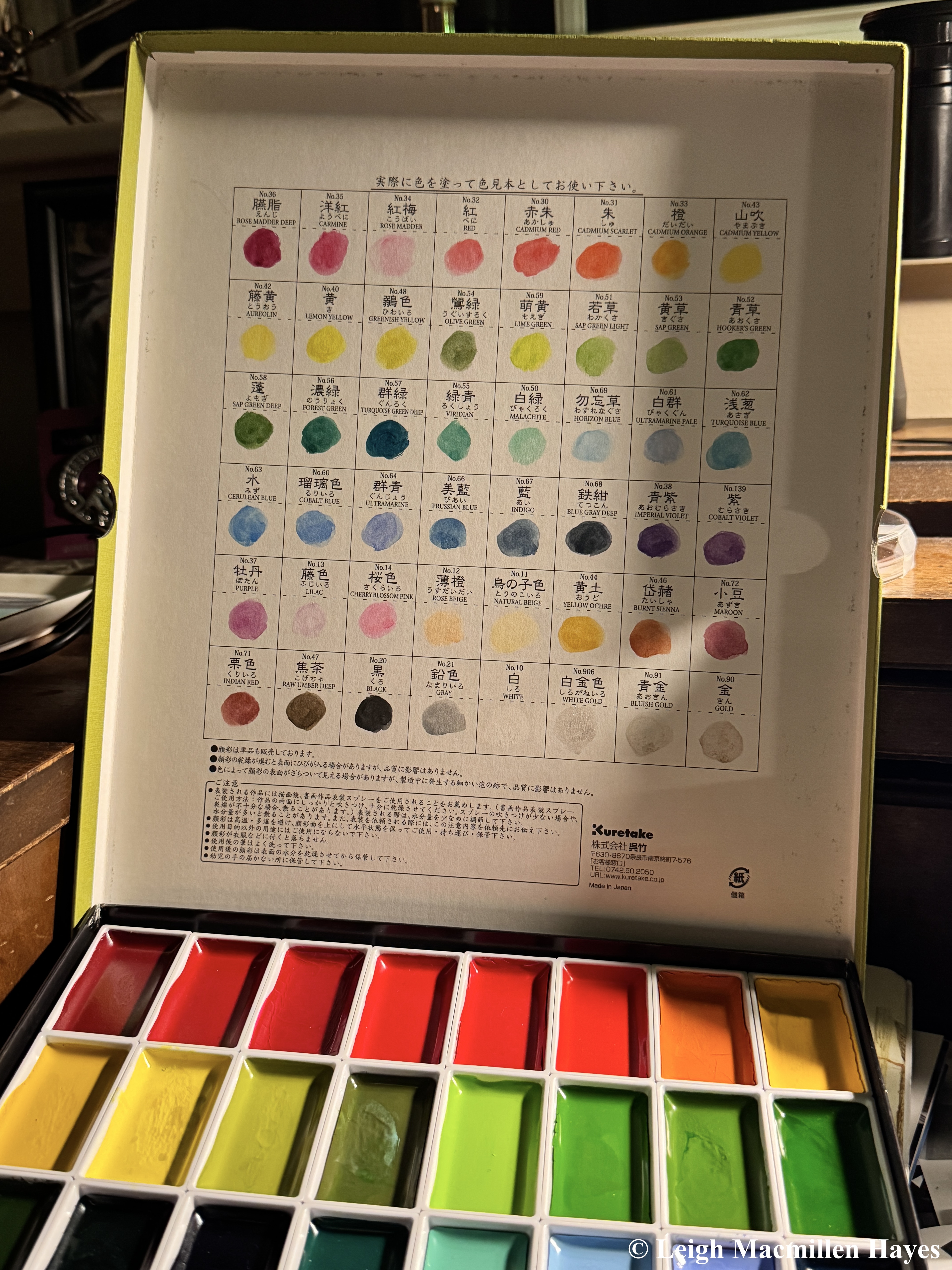
Of course, Crayola would have completely different, and certainly more creative names for the same colors.

Long-jawed Orb Weavers are also known as Stretch Spiders for their ability to spread their long, hairy legs out–two in front and two behind, when resting on a twig and blend in so well, that sometimes it is impossible to see them. Unless they are on snow, of course. And then their metallic coloration may catch your attention. Mind you, they are small.
What I can’t figure out is why they are walking on the snow on these cold days, given that their meal of choice is in the subnivean layer between the ground and snow–that being the Springtails, aka Snow Fleas, those little dots of pepper that perform circus acts as they jump around in our boot prints on warm winter days. I have yet to see any Springtails on the snow.
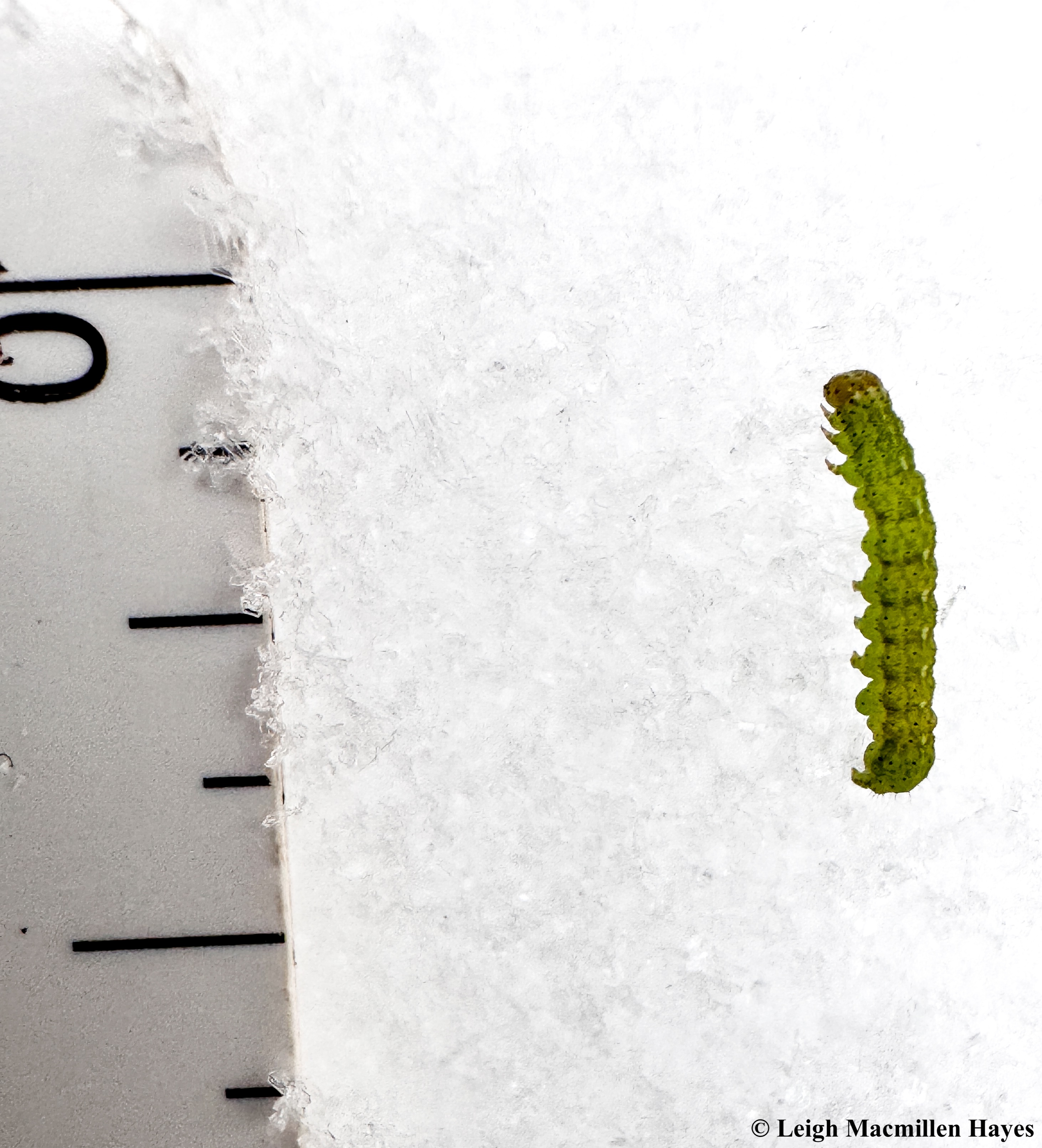
A few more steps and I discovered this Cutworm Caterpillar. Near this green one I also found a brown variation. While they may come to the surface on warmer days, I was surprised to find these Snow Worms when the temperature was in the low teens.

Apparently posing for the paparazzi is not in their DNA. And so I moved on.
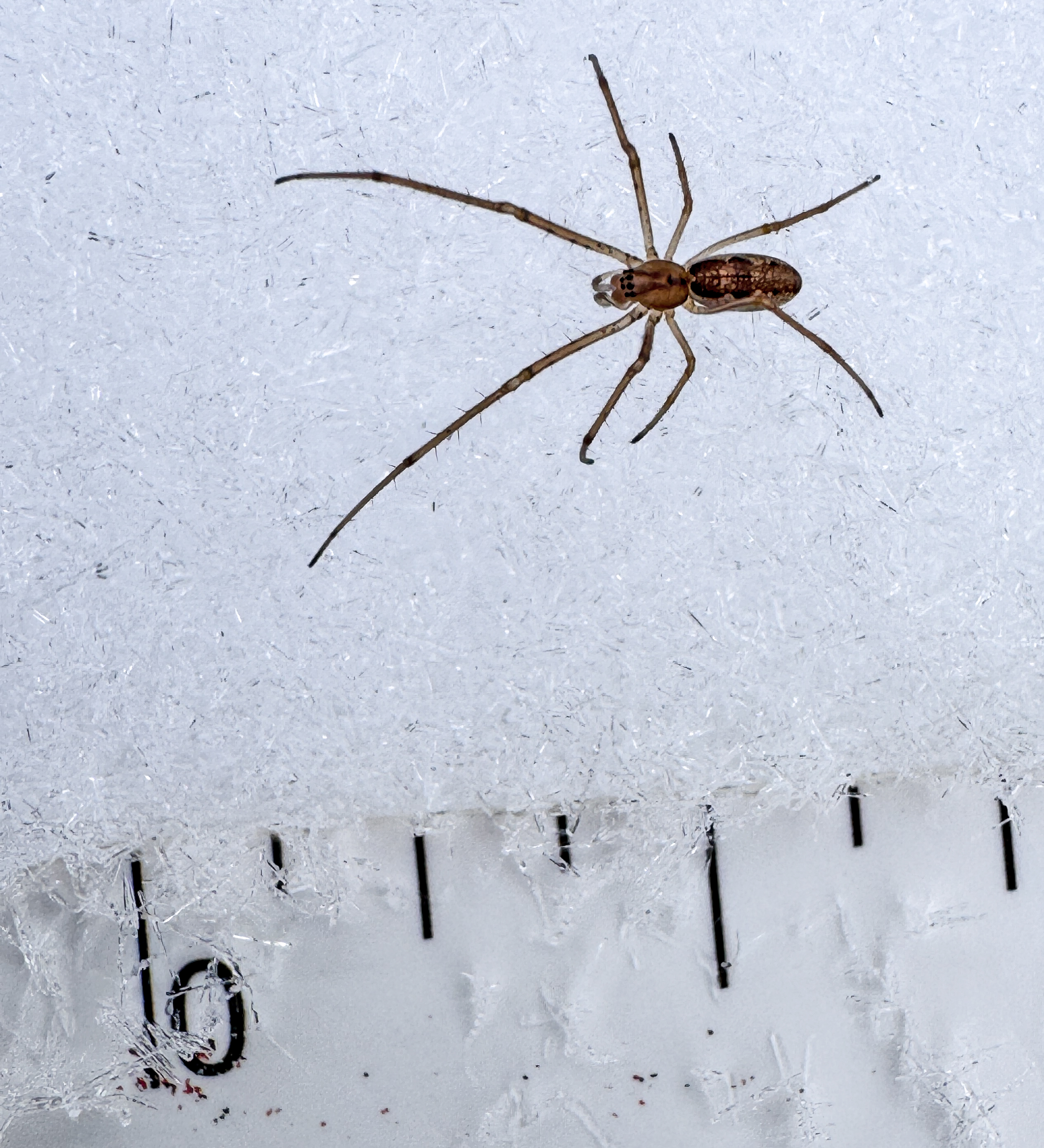
And discovered another Long-jawed, this one being hues of brown. I’ve been thinking about these spiders all week, and actually for many years, because there are days when I can go for a walk in the woods and see one every ten feet or less. Frigid days even, which has been the case this past week.

The question is: how does a tiny critter with such a fragile looking body and legs survive in these temps? I’ve read that some spider species can lower their bodies’ freezing point by producing a cryoprotectant, Glycerol, a natural anti-freeze compound that lowers the temperature at which their tissues will freeze.

But . . . another question arises: What happens when that antifreeze no longer seems to work?
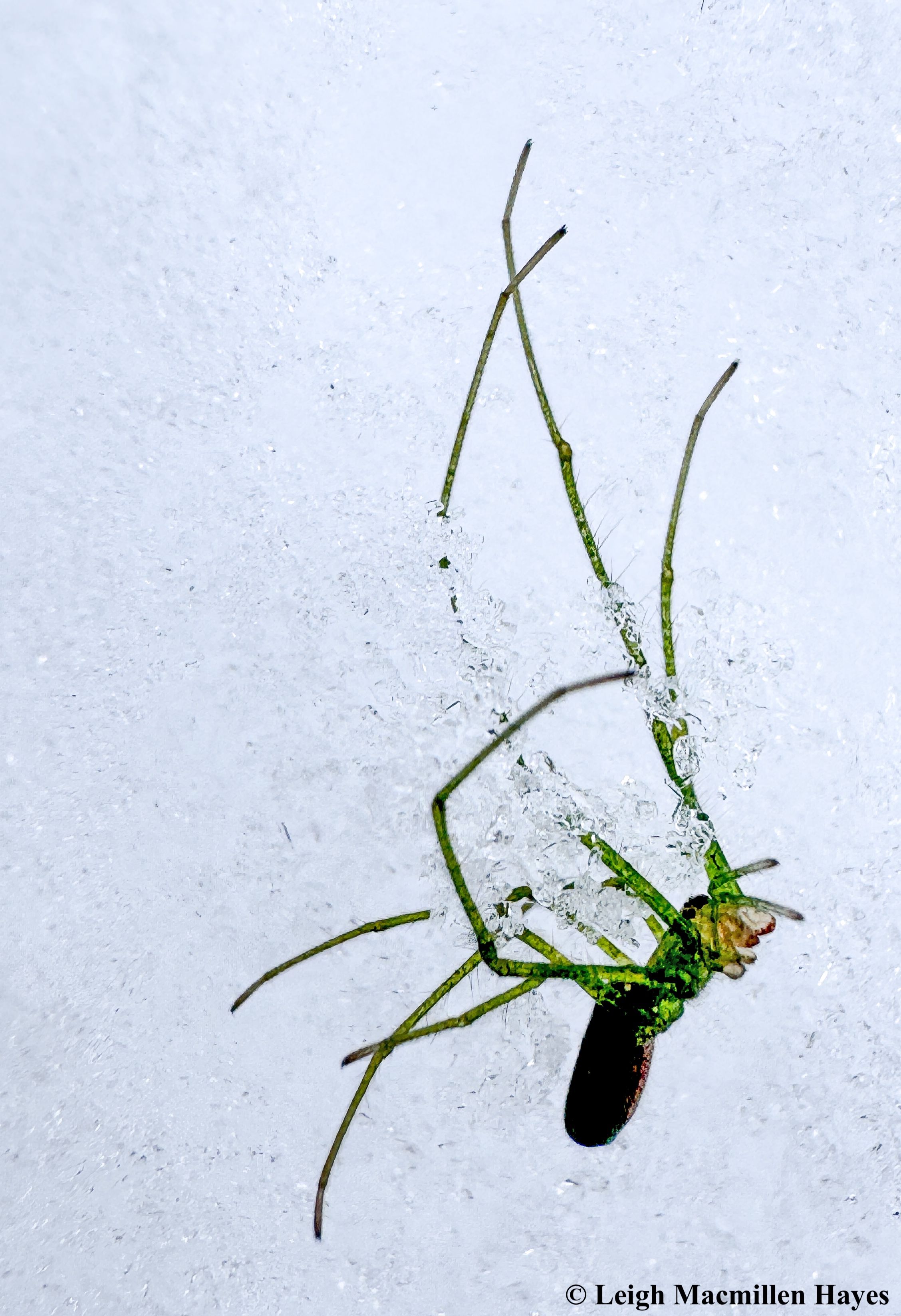
Answer: They curl up and die.

Or do they?
You see, I’d picked one spider up and held it in my hands for a few minutes in hopes of reviving it. And met no success.
The next day I picked up another and placed it in a Petri Dish, thinking I would look at it under the microscope.
A day later, and it was walking around inside the container.
Absolutely amazing to this wonderer.
And consequently, a few more have traveled home in my pocket and I’m wondering if they’ll revive as well in the warmth of our home. If so, what does that mean? That they can go dormant atop the snow in freezing temps, and thaw and become active when the sun warms them up? I guess my biggest question is this: Why are they on top of the snow, anyway, when it’s much warmer under it and that’s where their food source can be found.

There’s another critter I’ve been encountering quite a bit this past week and it looks rather ferocious.
But don’t judge a book by its cover as the old adage goes. While some look robust, like this one, others are small and slender. Again, I’ve read this, but not observed it: they don’t eat, but may sip snow. The main goal of the adults who are active in winter is to mate.

Who is this critter? A Snow Fly, a flightless Crane Fly.
They lack wings, but do have a set of halteres, those knob-shaped organs that help with stability.

This is a female Snow Fly, the gender being determined by the abdominal appendages. Notice hers is upward curving and tapered to a point.
Do you notice anything else about her? As in how many legs she has?

This robust male’s abdomen appendages are much blunter and pincer-like in shape.
Hmmm, again I ask, how many legs has he?
While the Snow Fly in the first photo I shared sported the typical six legs of an insect (as opposed to eight legs for a spider), the last three have only five. This is due to another amazing winter adaptation:
Snow Flies can self-amputate freezing legs to prevent ice from spreading to organs within their body.
What? We say all the time, “Nature is amazing!” It truly is astounding.

I watched as this male made his way down a brink of snow on only five legs.
He was quick and rather nimble.
As he approached the leaf below, I realized why it is difficult to spot these adults before the snow falls, for then they are well camouflaged in the leaf litter, just as the Orb Weaver spiders are camouflaged on their tree species of choice, their colors blending in and stretched out shapes making them look like the twigs upon which they pose.
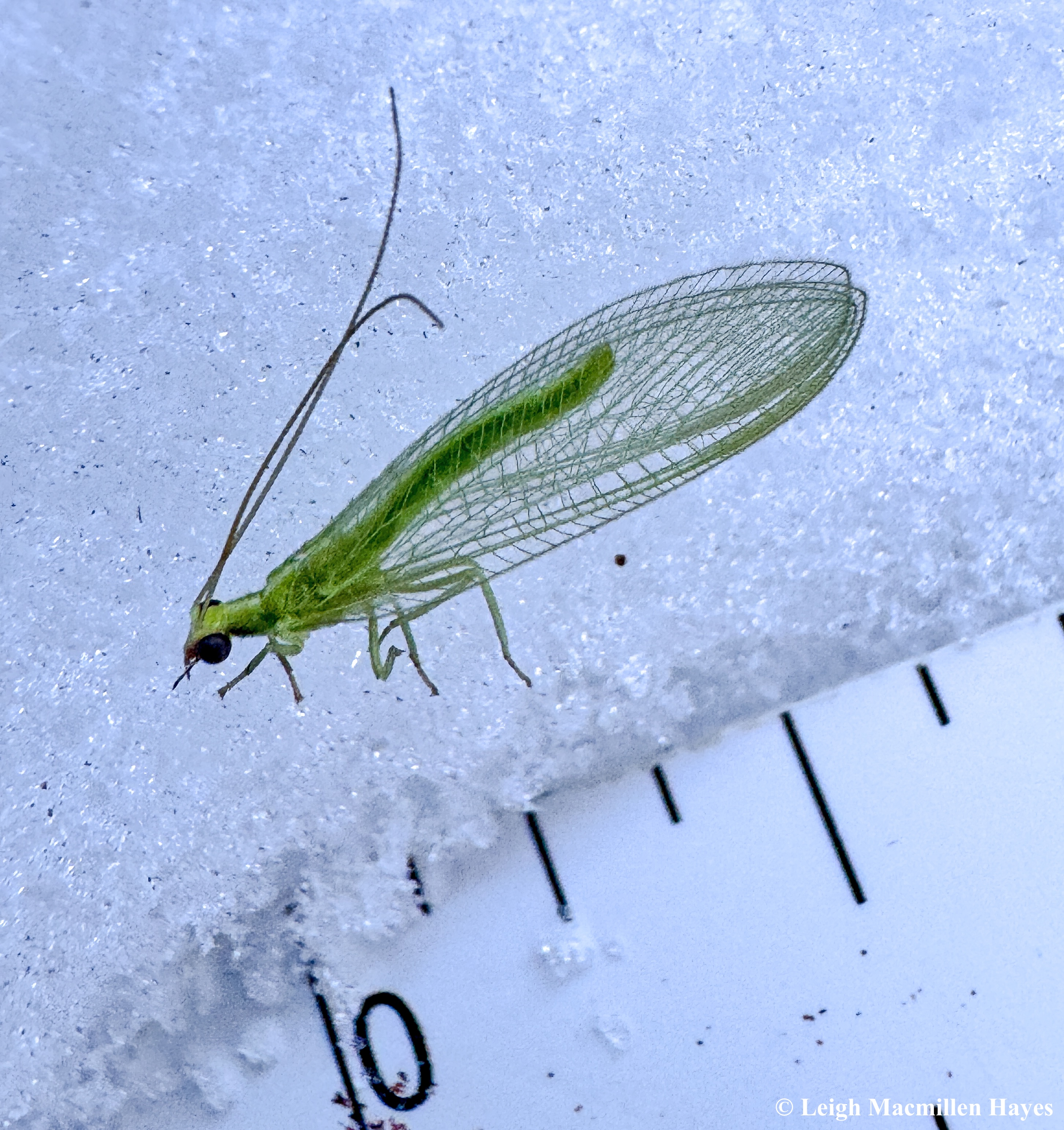
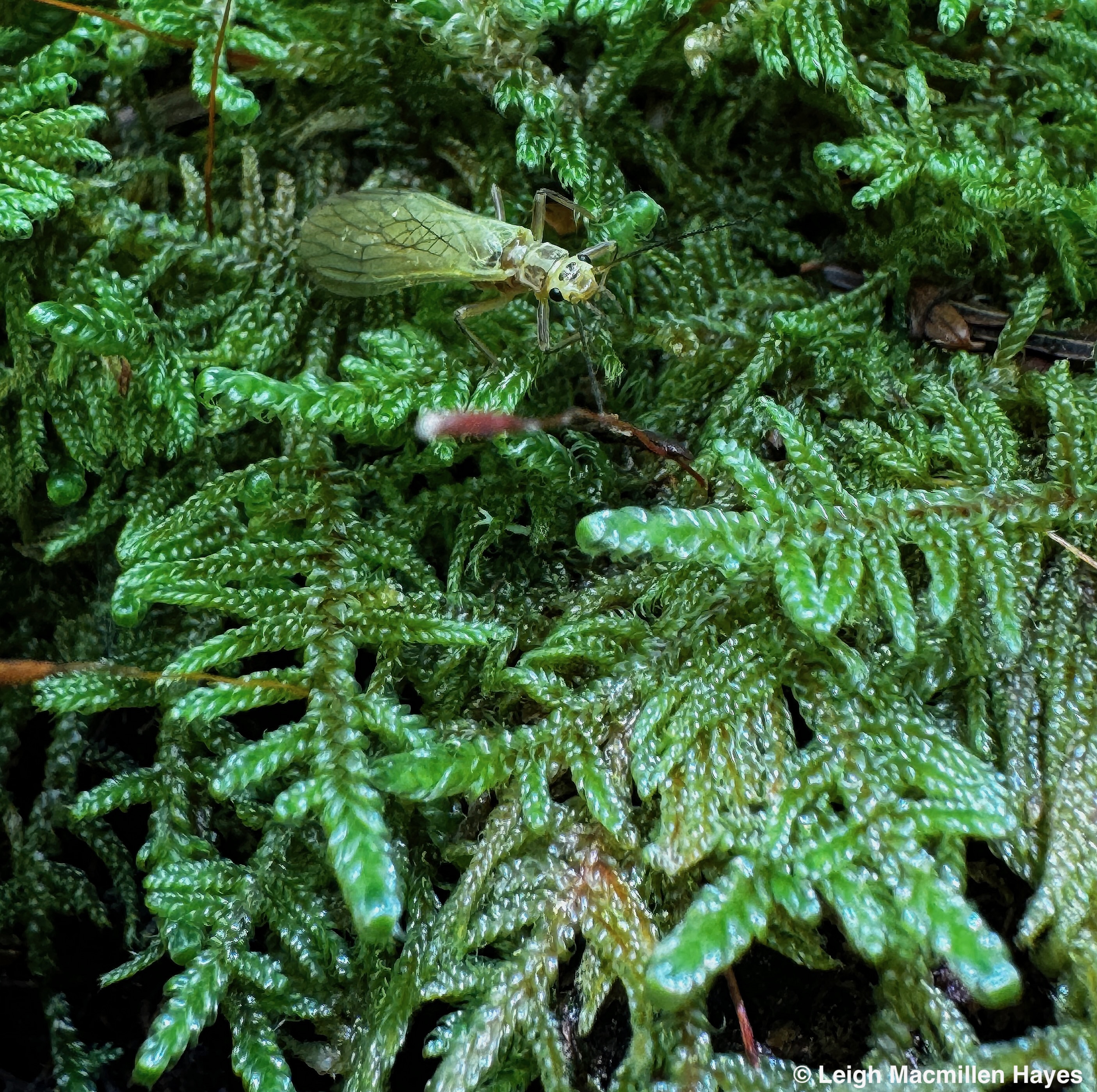
One last critter to share with you is a Green Lace Wing, who completely surprised me. I’m used to seeing them in the field during the summer months, and found this one on the trail just around the corner from the field yesterday.
Adults can overwinter behind bark and may come out on warmer days, but the temperature was 19˚F.
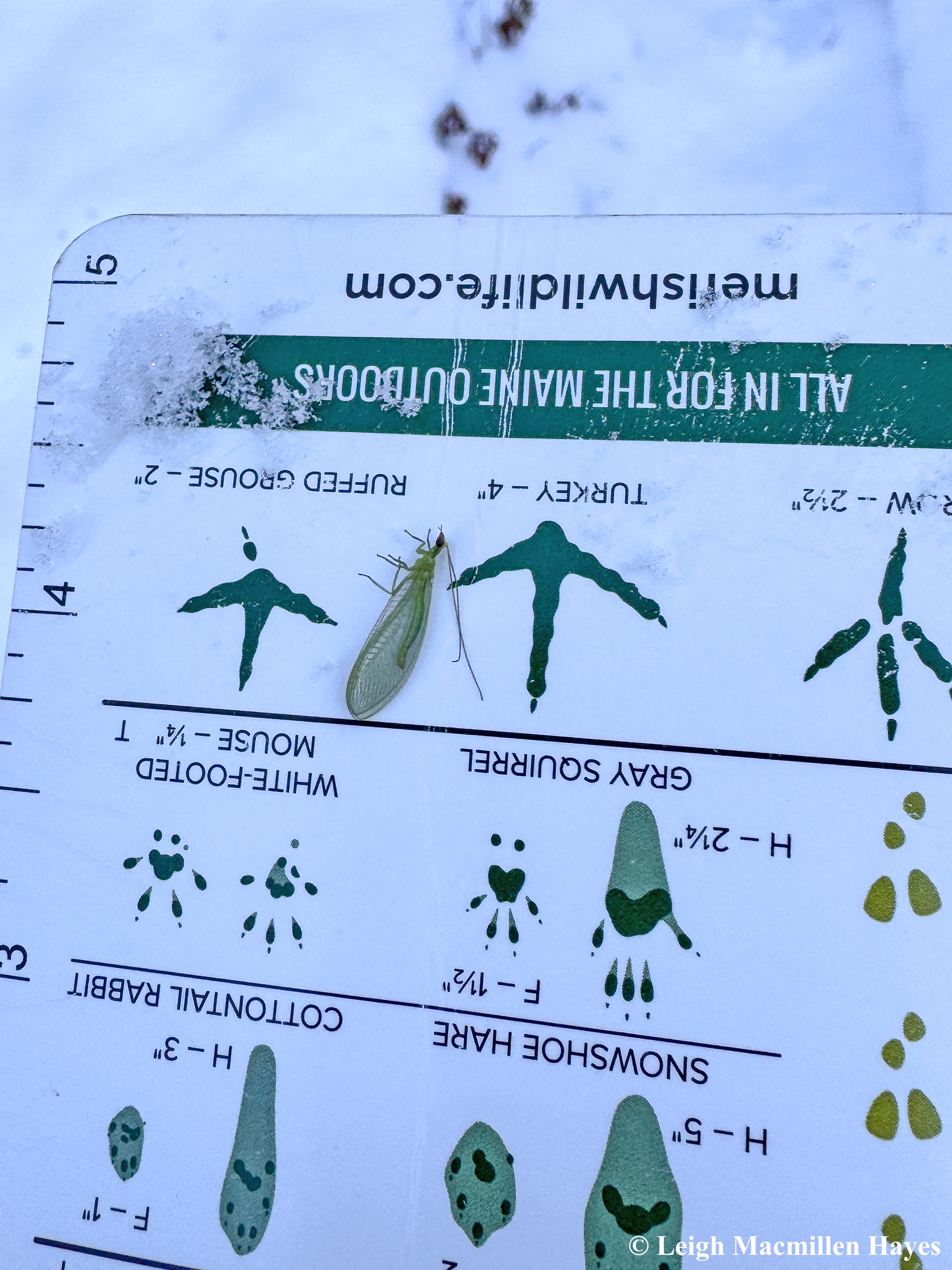
I didn’t have anything to carry it home in, so I scooped its fragile body up onto my little tracking card and carried it home, protecting it from being blown off by the wind. Unlike the spider, however, it didn’t revive once inside.
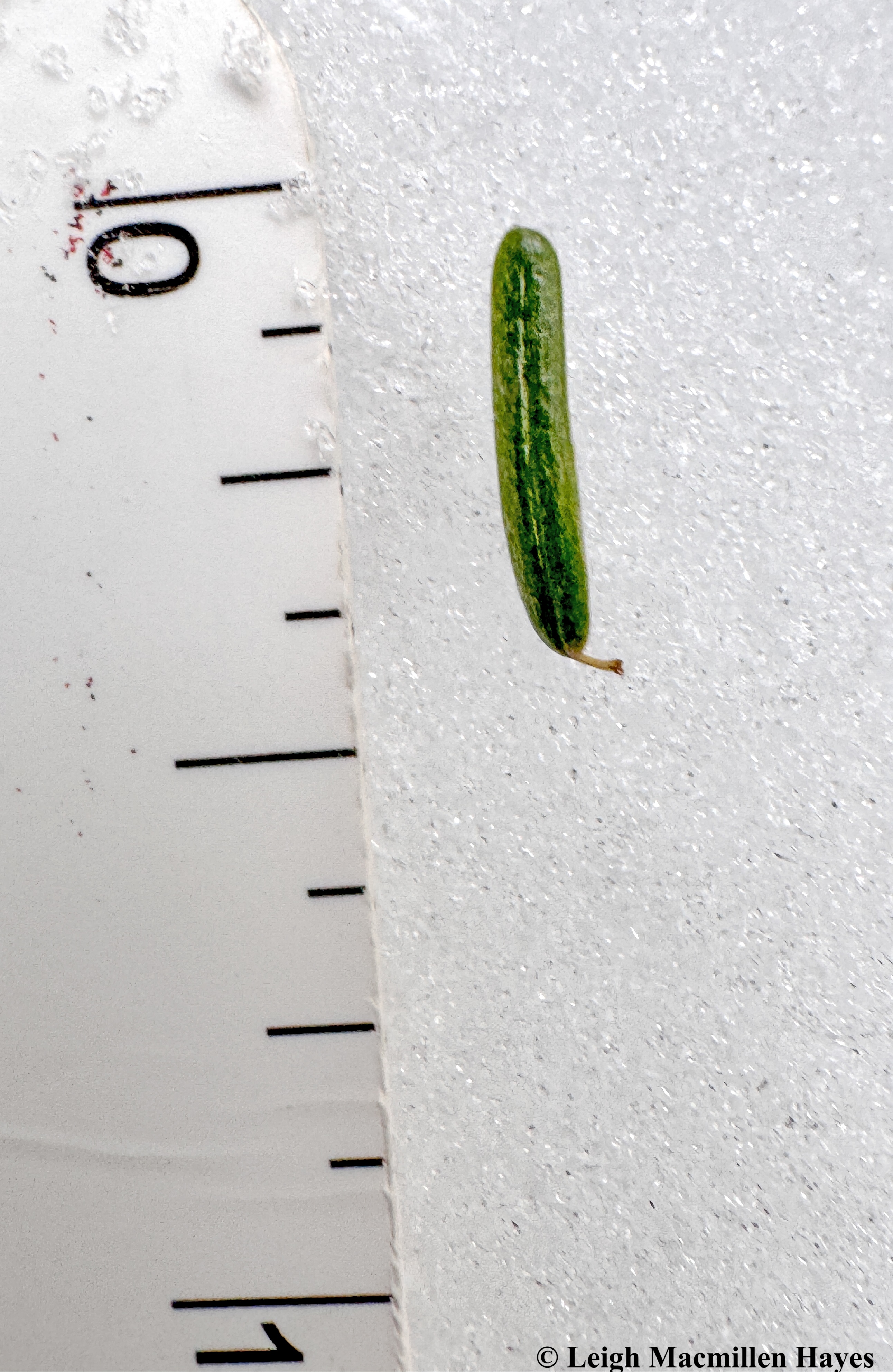
If you are so inclined to look down during a snowy tramp, don’t be fooled by some of the litter, such as Hemlock Needles with their short petioles, pretending to be green abdomens.

Or Birch Seeds that look like miniature butterflies.
I do hope you will venture out and search for these friends. They have a place in the ecosystem and provide us with one more reason to get outside and observe and stand in awe and try to learn no matter what the temperature is.
Spiders and Insects: A winter love story. For me, at least.





 wondermyway