Ode to the RAIN!

It began in spurts, 
The rain that is.
Starting with some drops on Tuesday,
Followed by a few more on Wednesday.
But today, much to our delight,
we awoke to the drumming of droplets
upon our metal roof,
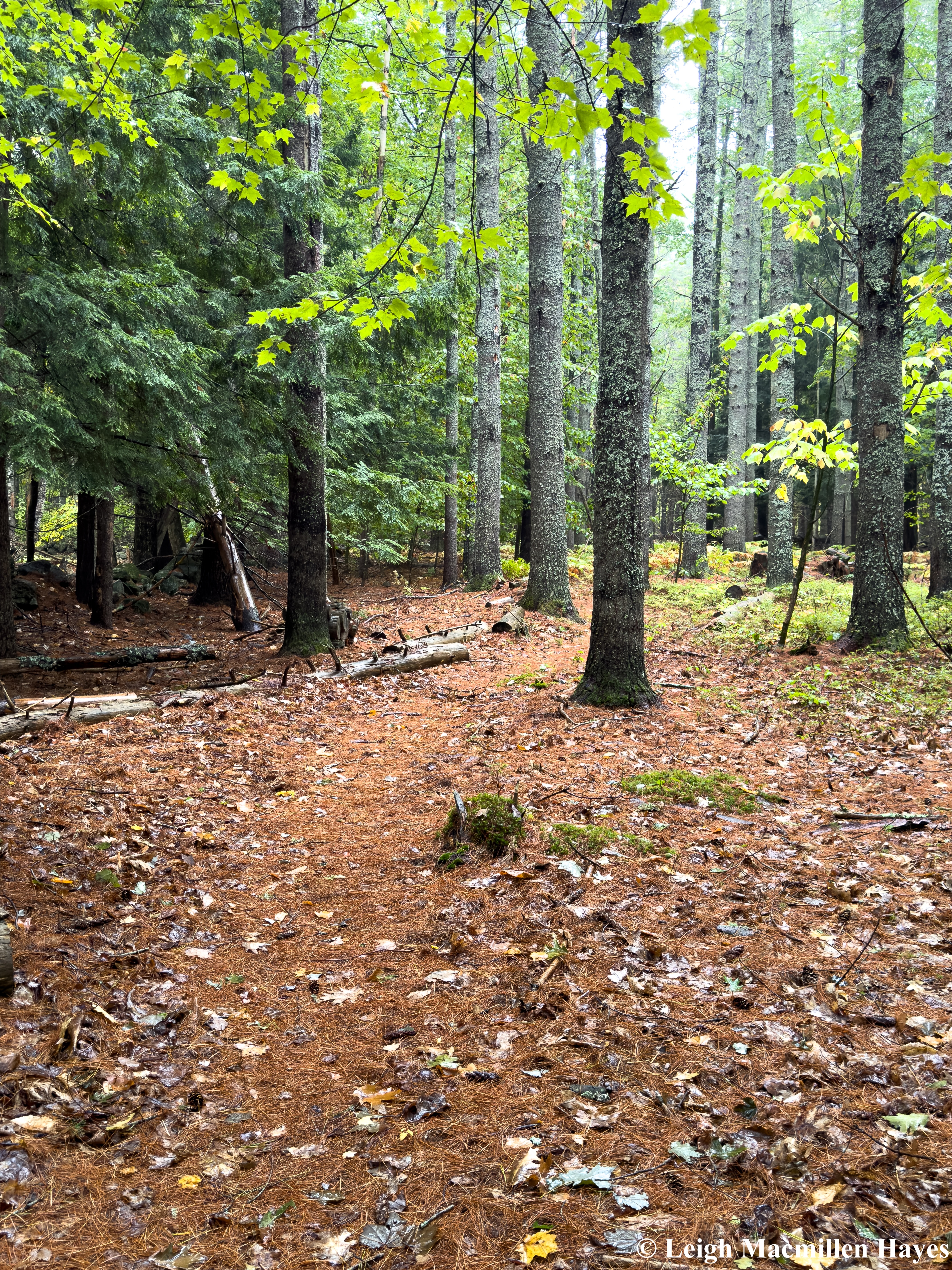
and I couldn't resist heading into the woods.
One Jack, or rather Jill-in-the-Pulpit,
lay down its sweet head
upon the wet ground
as if to kiss the moisture gathered there.
In a boggy section,
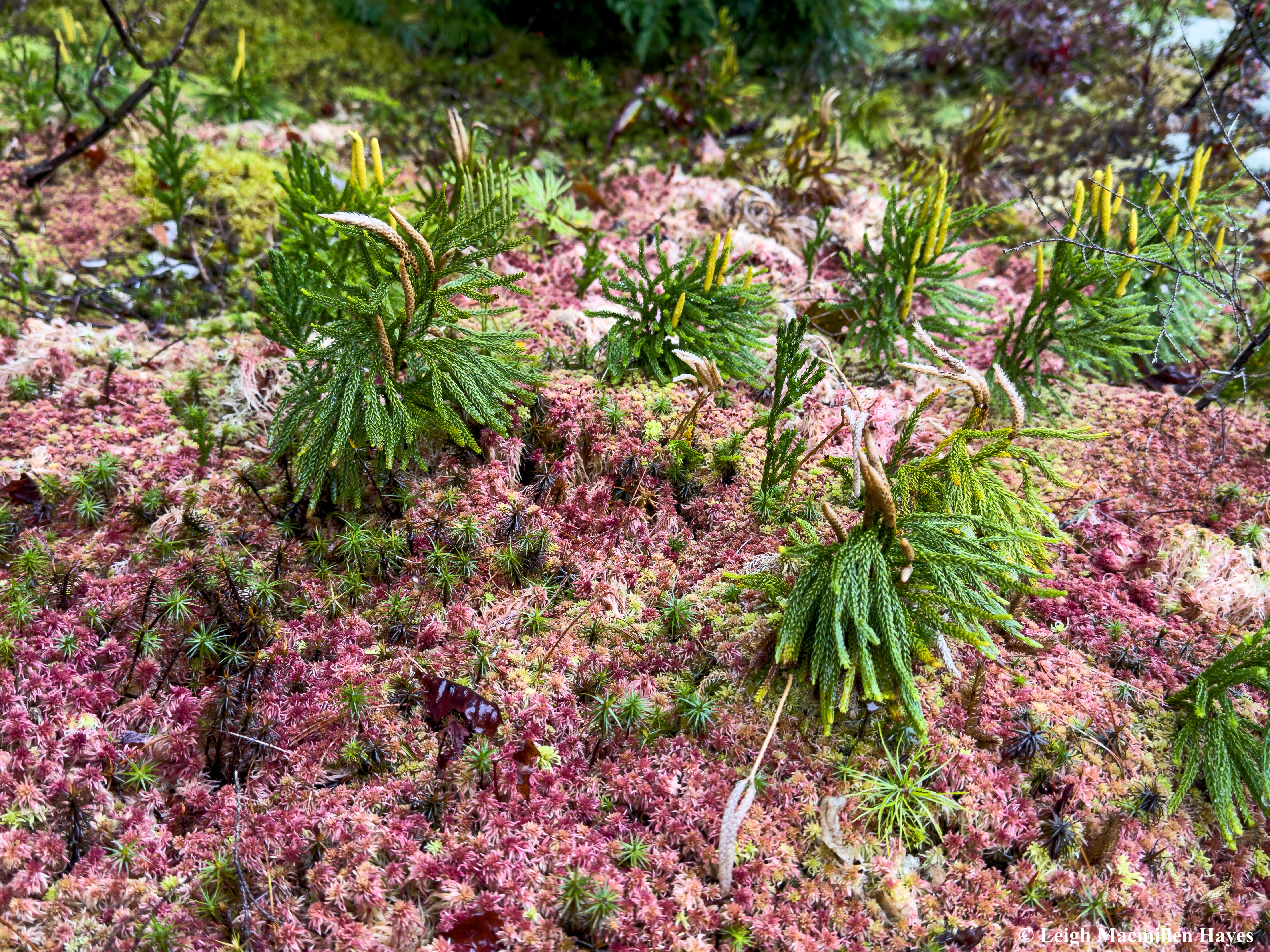
it made the Hickey's Tree Clubmosses
suddenly stand out in contrast
to the pink and green sphagnum below.
And upon every surface,
or so it seemed,
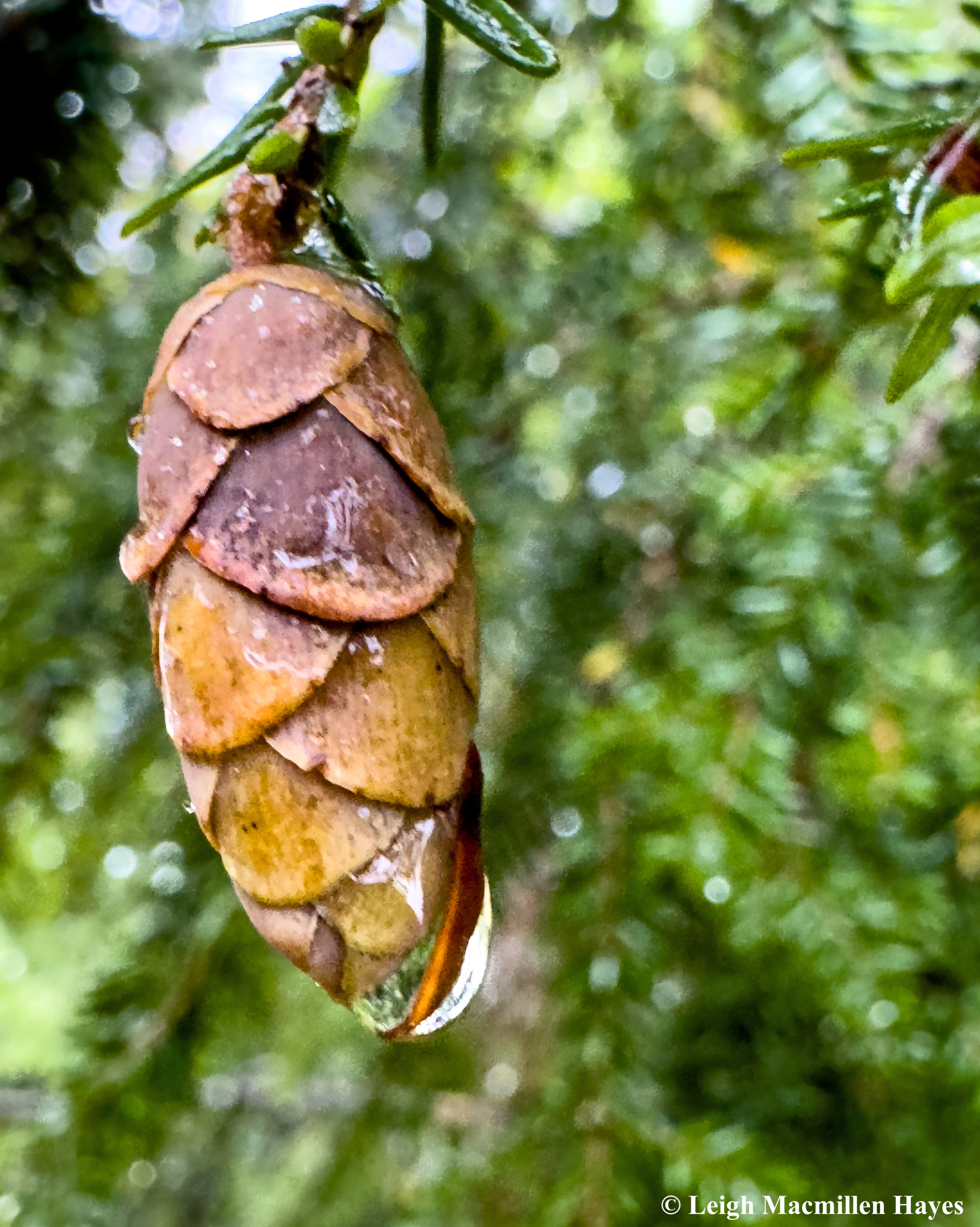
raindrops gathered,
sometimes hesitating for a moment.
Other droplets 
enhanced guidelines
and supporting threads
of a spider's web.
Because it was raining,
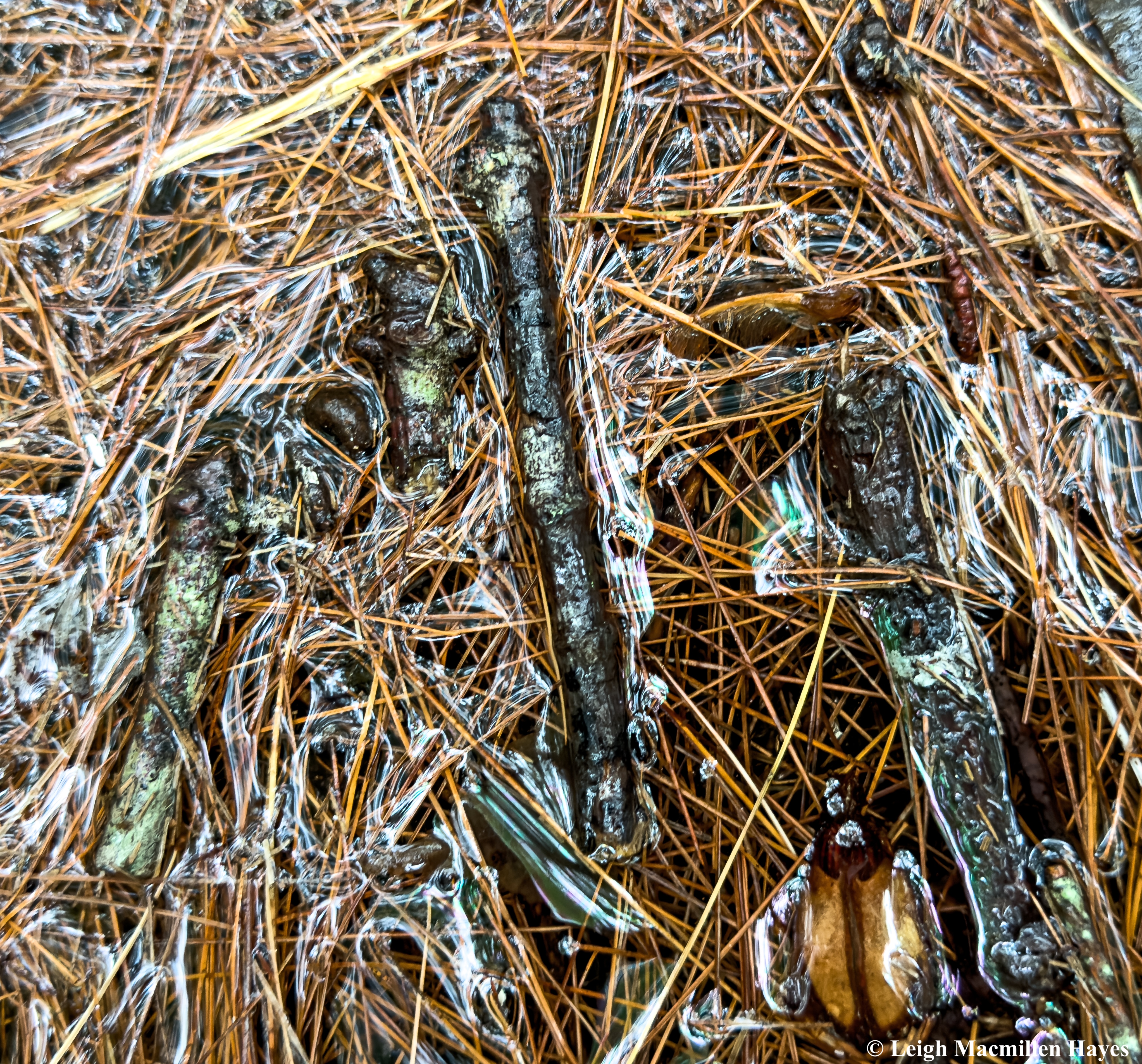
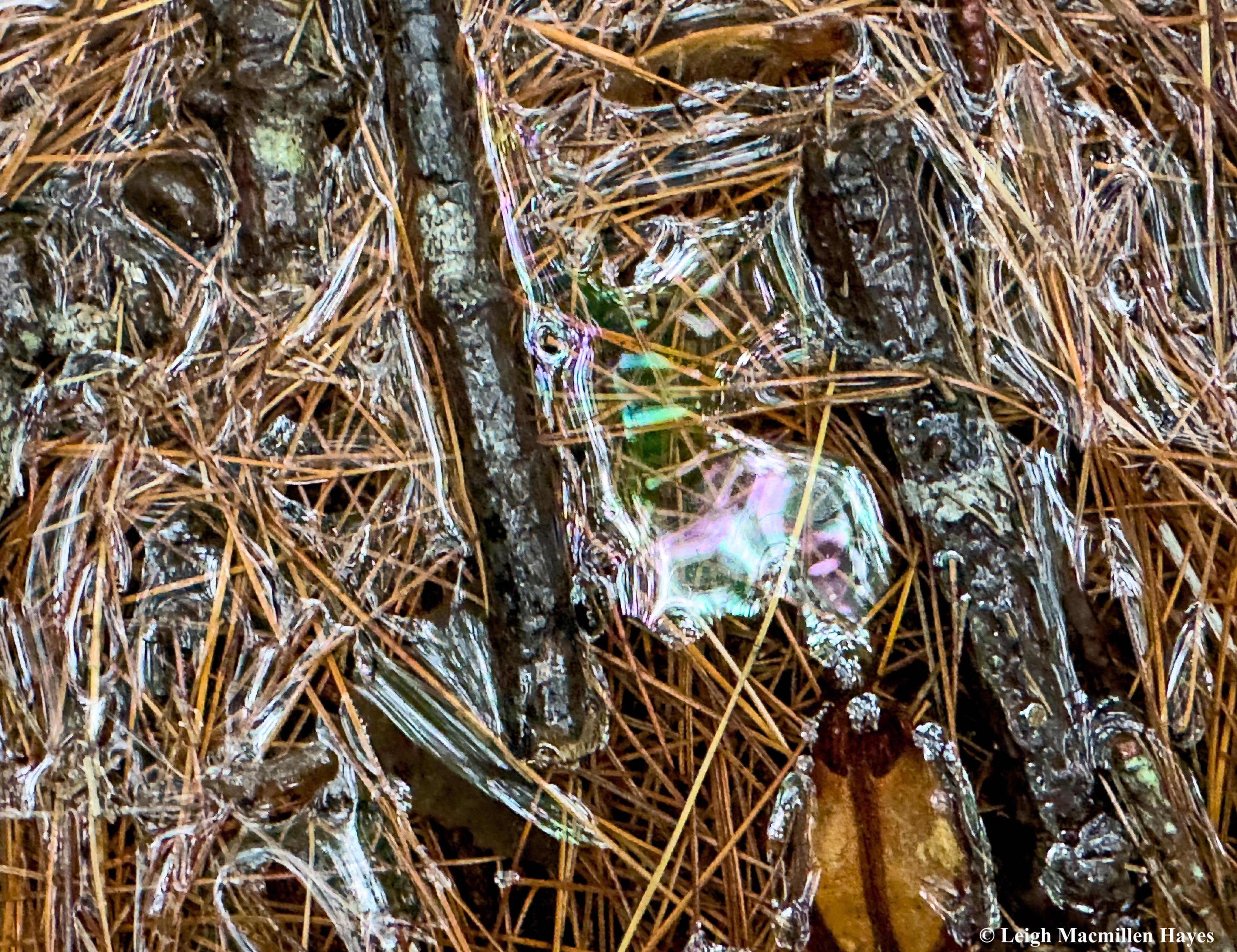
I decided to play and poked a stick
into the resin blister of a Balsam Fir,
then placed it in a tiny puddle.
My sense of wonder
was well rewarded
as the essential oils
created ever-changing rainbows.
But my real intention
for heading outside so early
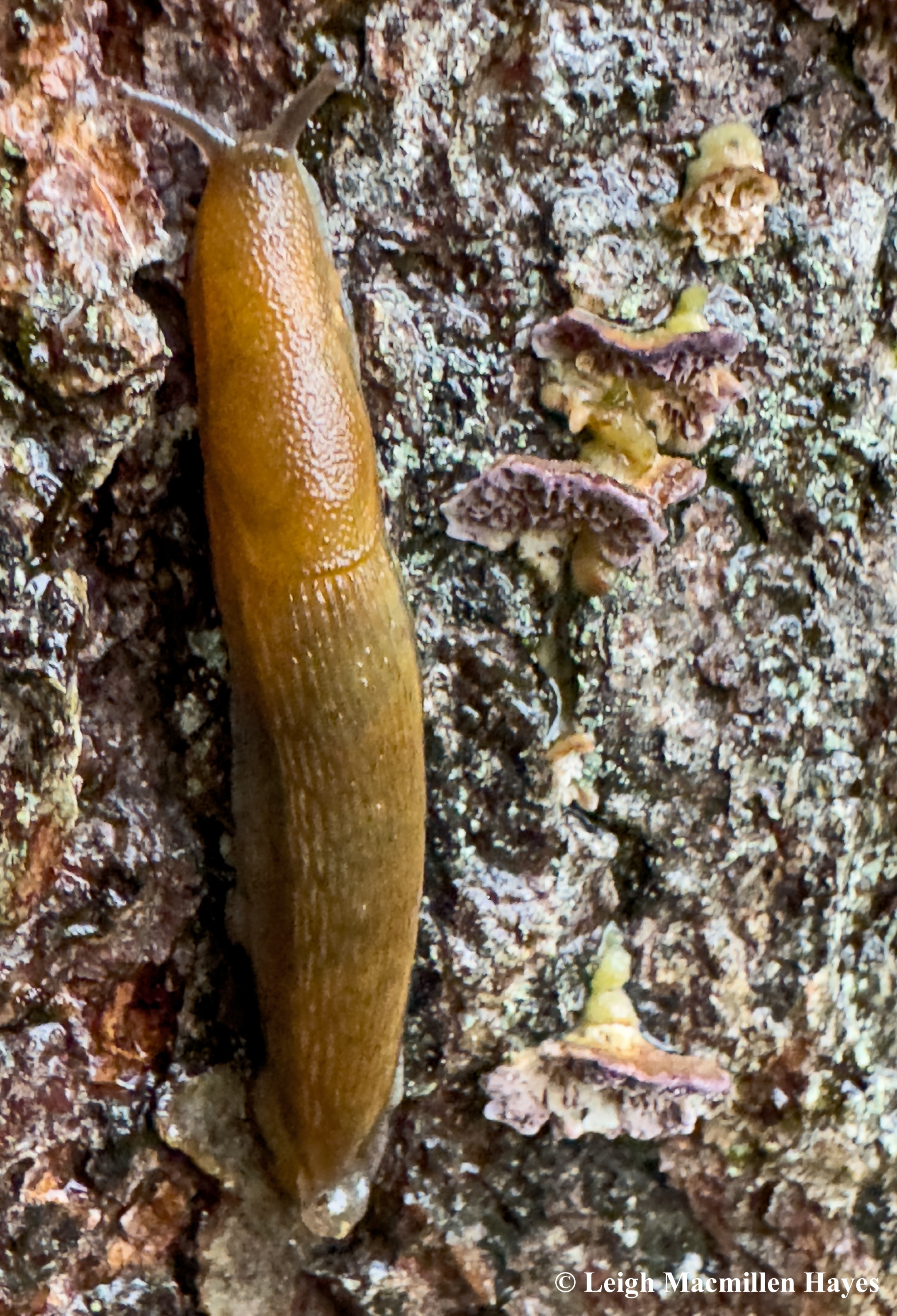
was to search for slugs
who haven't had an easy summer.
I was rewarded 
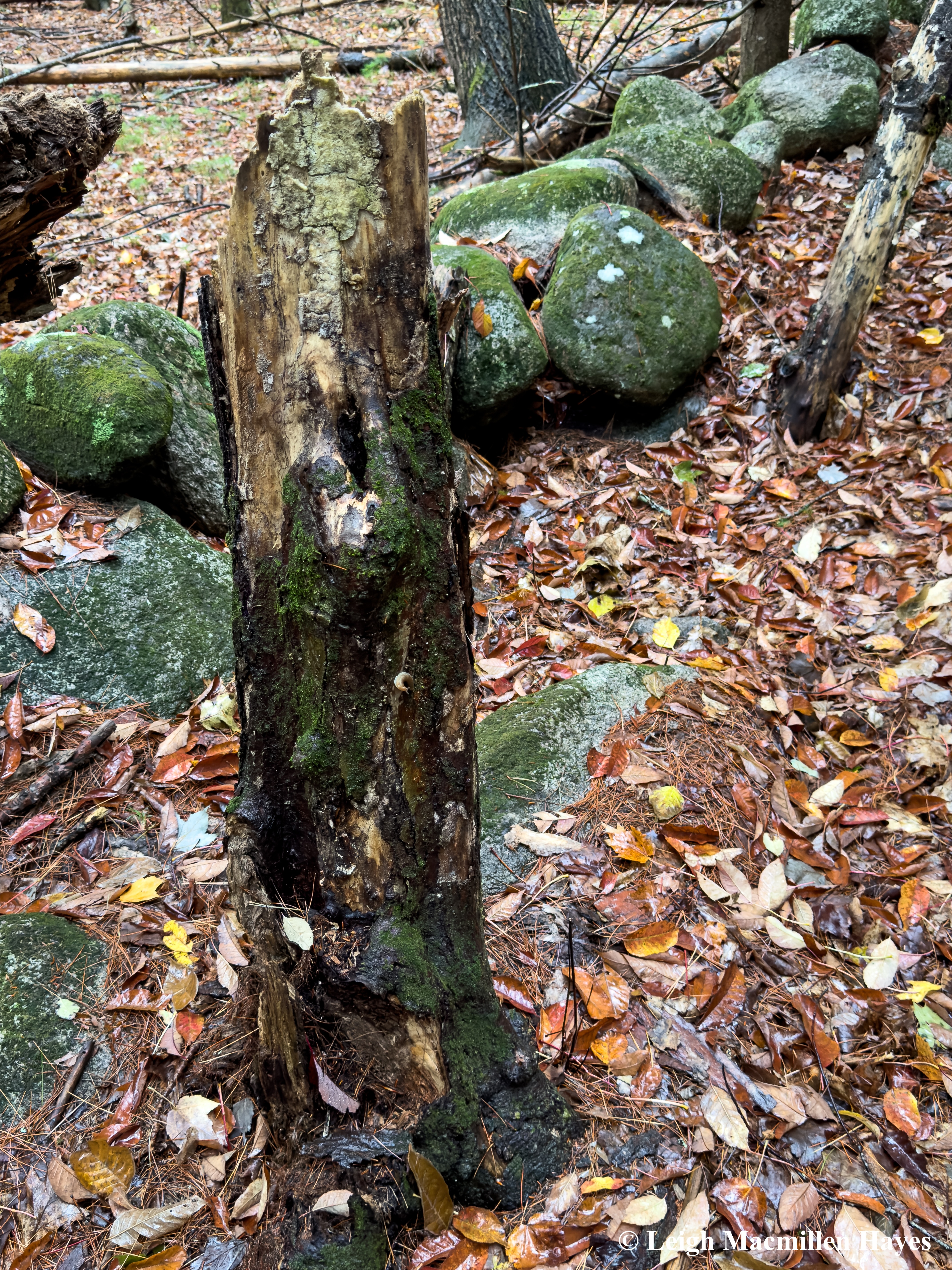
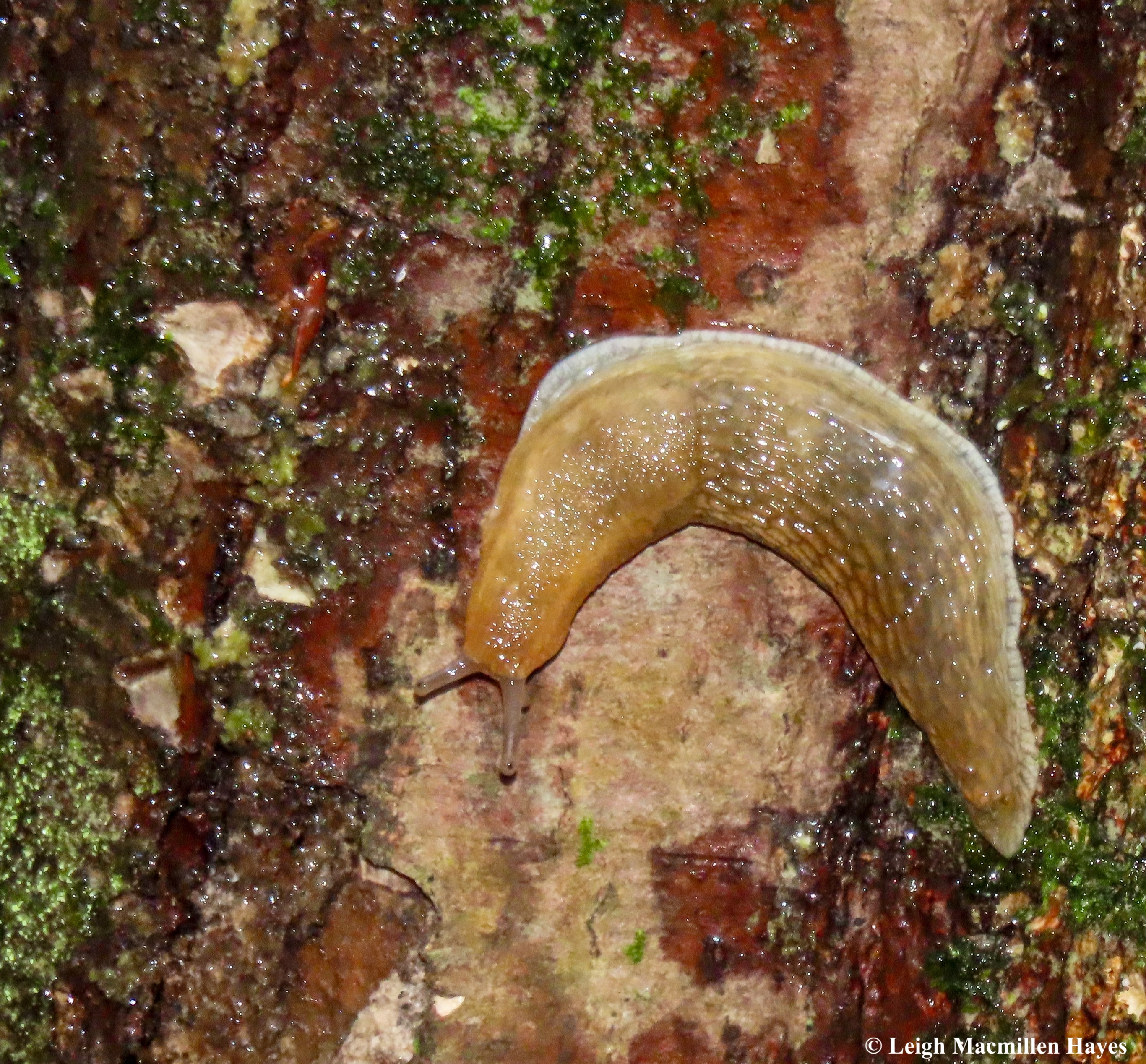
when upon a snag,
I found a Western Dusky
dining on smaller organisms than I could spot.
My other intention was to hunt for suds
and though I found some in the morning,
the pounding rather than pitter-pattering rain of the late afternoon
provided many an example.
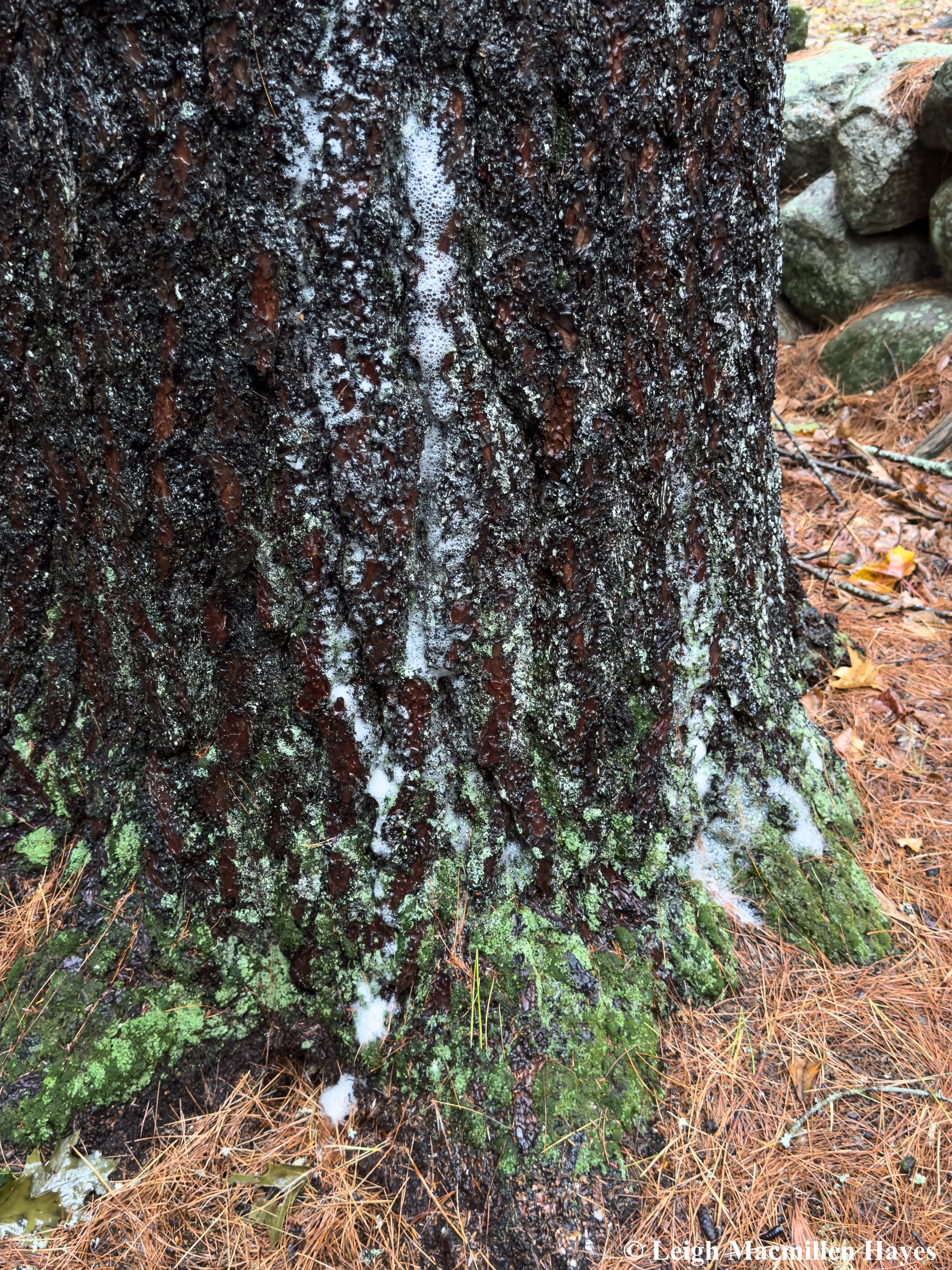
As the droplets dripped toward the base,
dissolving chemicals on the bark,
the surface tension changed,
and with the turbulence came air, thus forming foam.
It's all a matter
of one drop at a time,
but when the rain is heavy,
those drops form and release quickly.
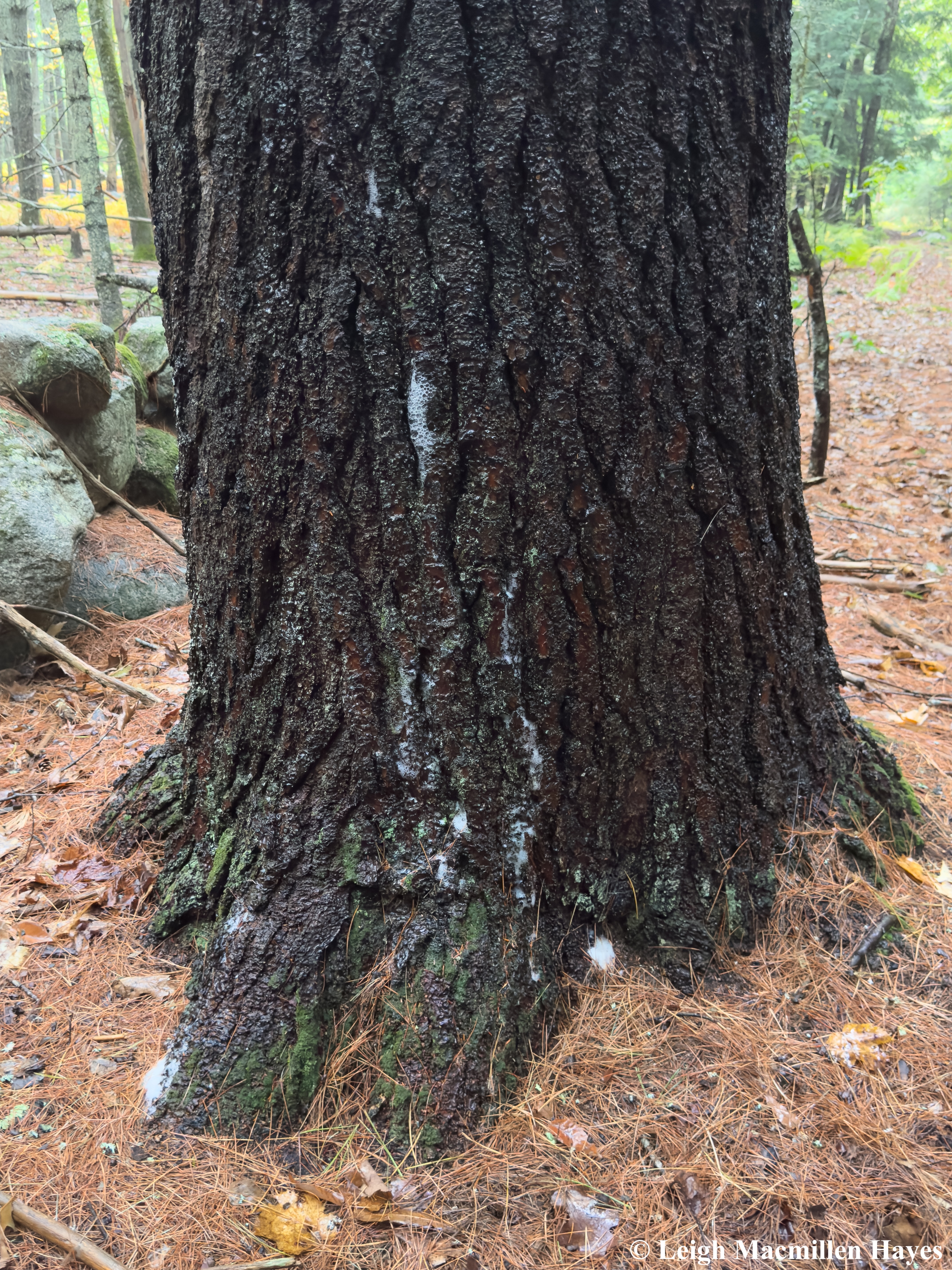
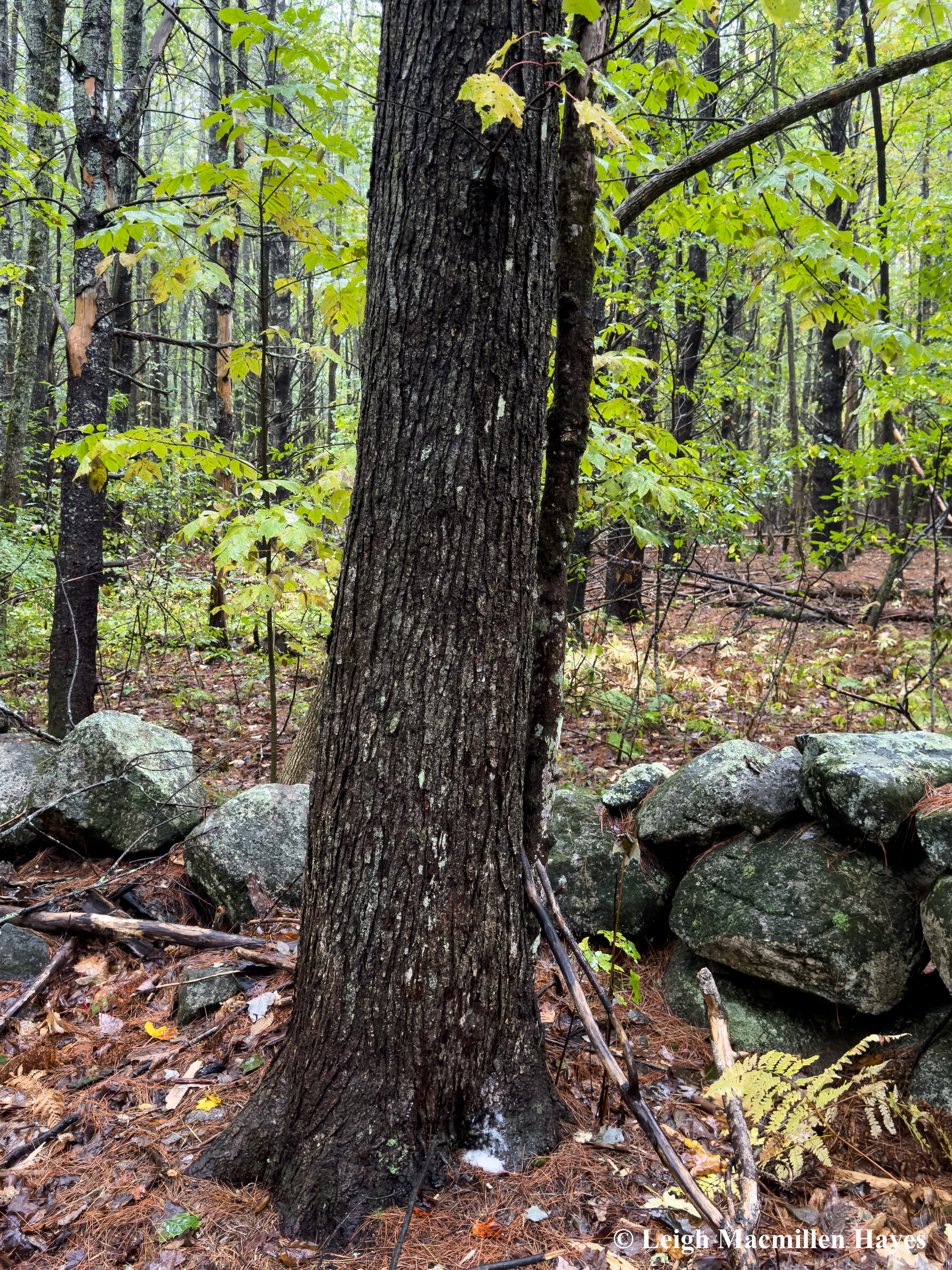
Upon one of the older White Pines
between the stonewall and old cow path,
I found lots of pine soap,
on the eastern side.
The same was true on the western side,
and as I now sit inside all cozy and dry,
it is pouring out there and I suspect almost every tree
has a base like this.
It's easy to think
that only pines offer the suds,
But I've learned from observation,
That others do the same, like this Red Maple.
And much to my pleasant surprise, 
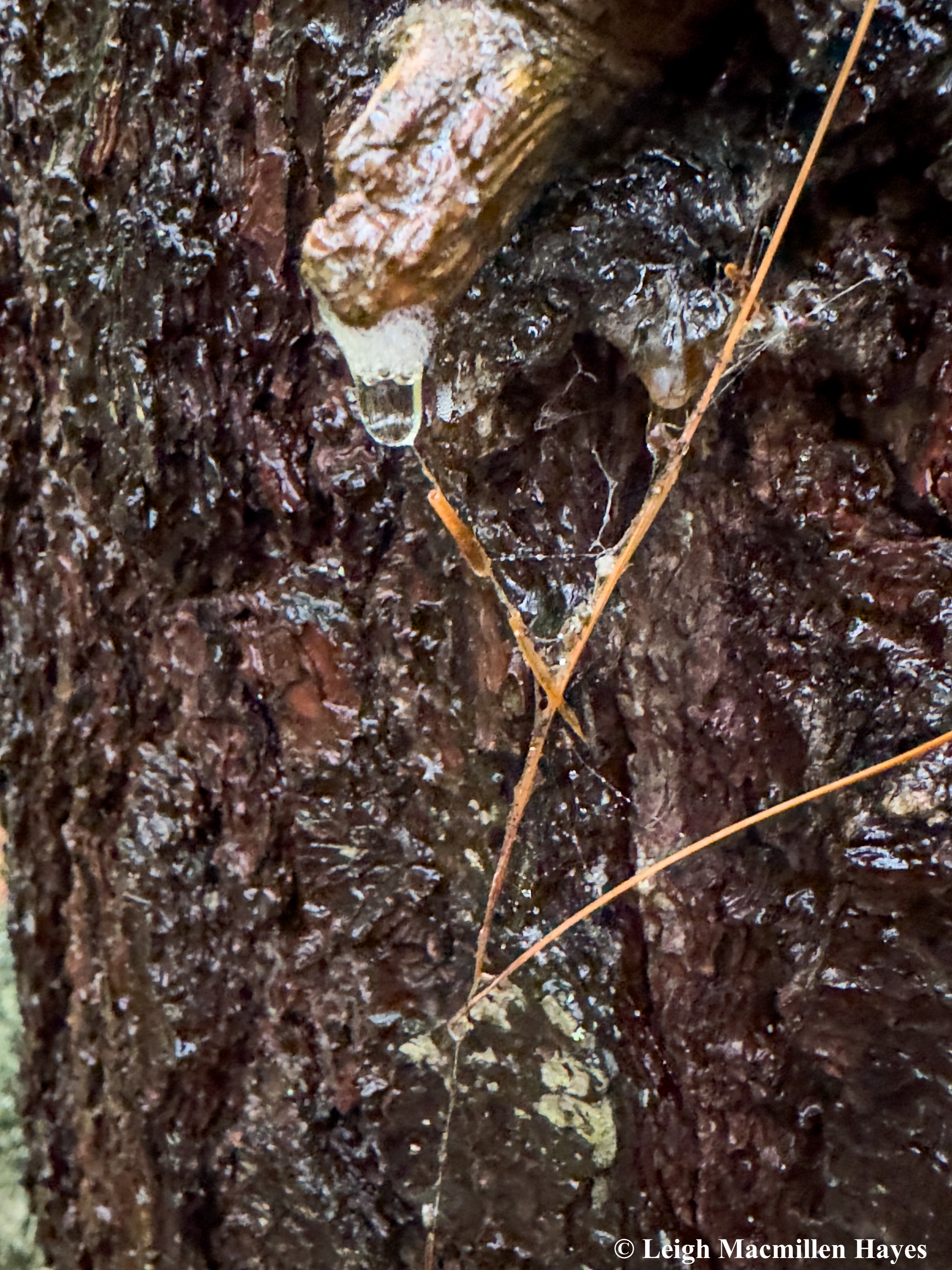
I found a gathering of suds,
within an old Pileated Woodpecker hole,
on one of my favorite trees.
I like to think of it 
as the Stairway to Heaven Tree,
for such do its branches remind me,
as if I could climb them into the sky.
Because I was looking,
I discovered an insect,
this being a Hemlock Looper Moth,
taking refuge upon a trunk.
When I originally headed out the door this morning, 
and told My Guy I was going on a search for Slugs,
he said, "Who is this person I married?"
And we both chuckled.
All told I only found three. 
Nevertheless, I know these three
and many other critters and humans
join me in praising the rain.

On the Cusp of Autumn

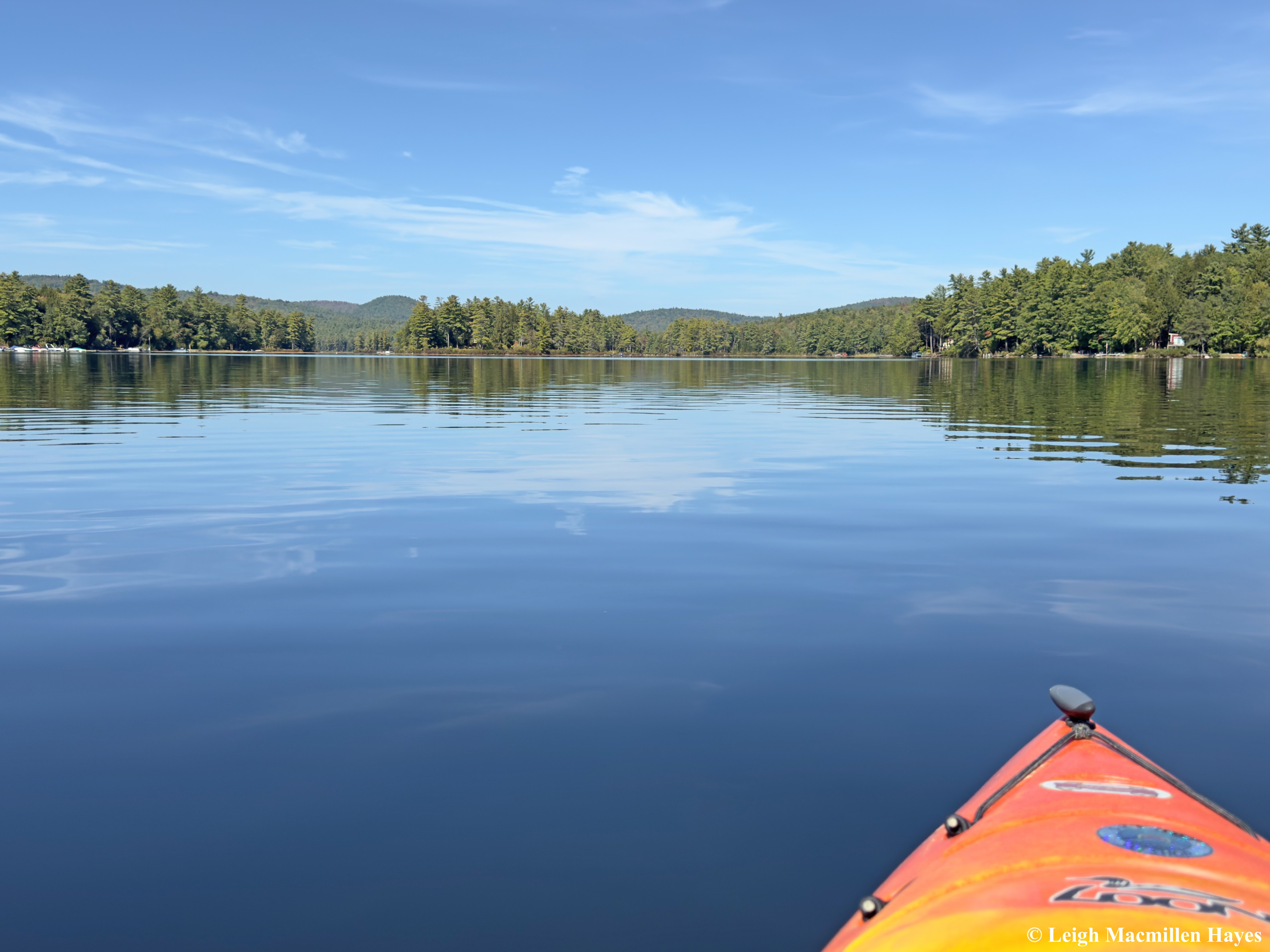
It occurs every year, autumn that is. But this year it hasn’t even started and already feels different. In the past week, My Guy and I have followed many a trail or waterway, both on foot and by sea, oops, I mean kayak on local lakes and ponds, and every offering has been unique.

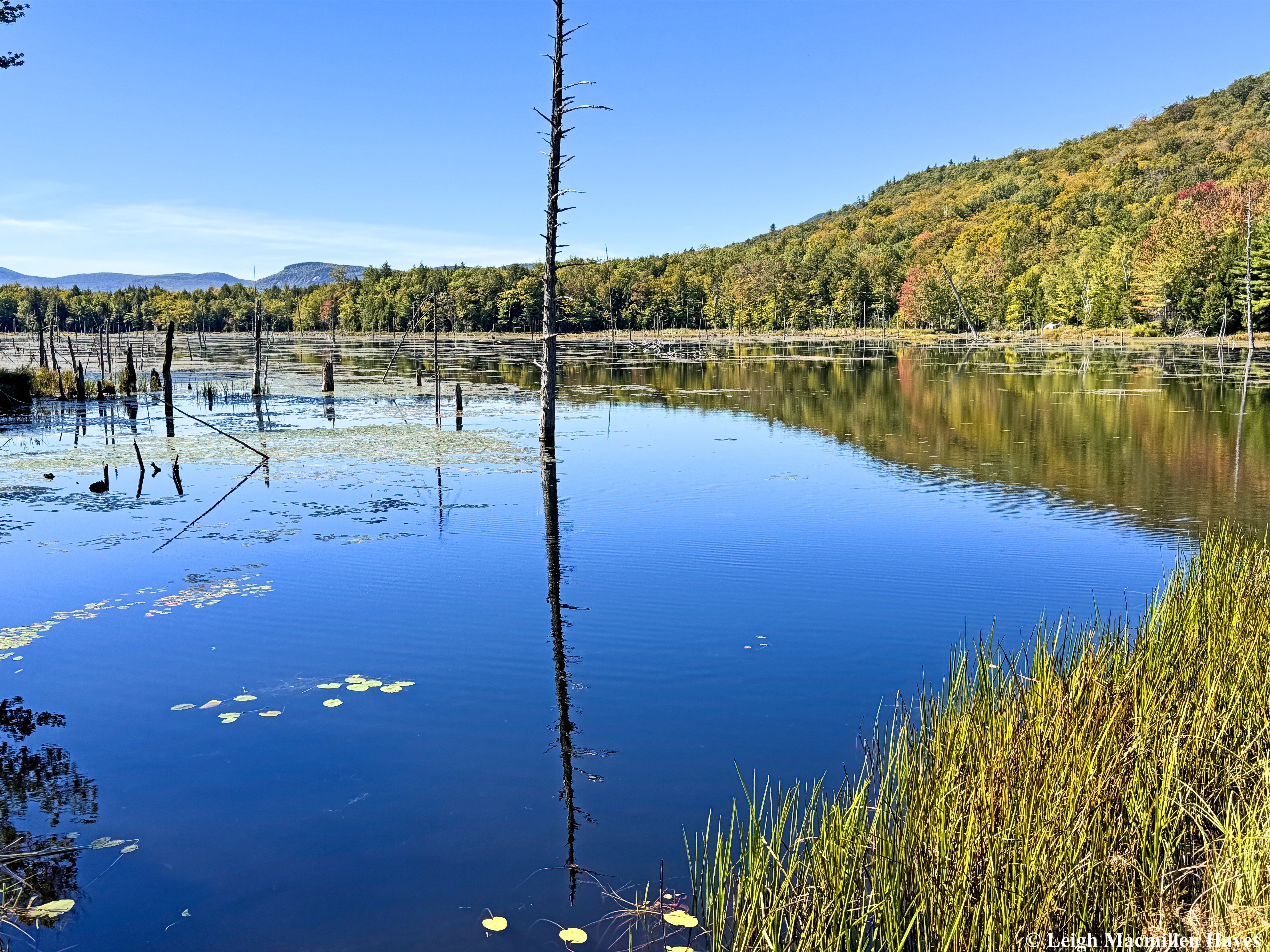
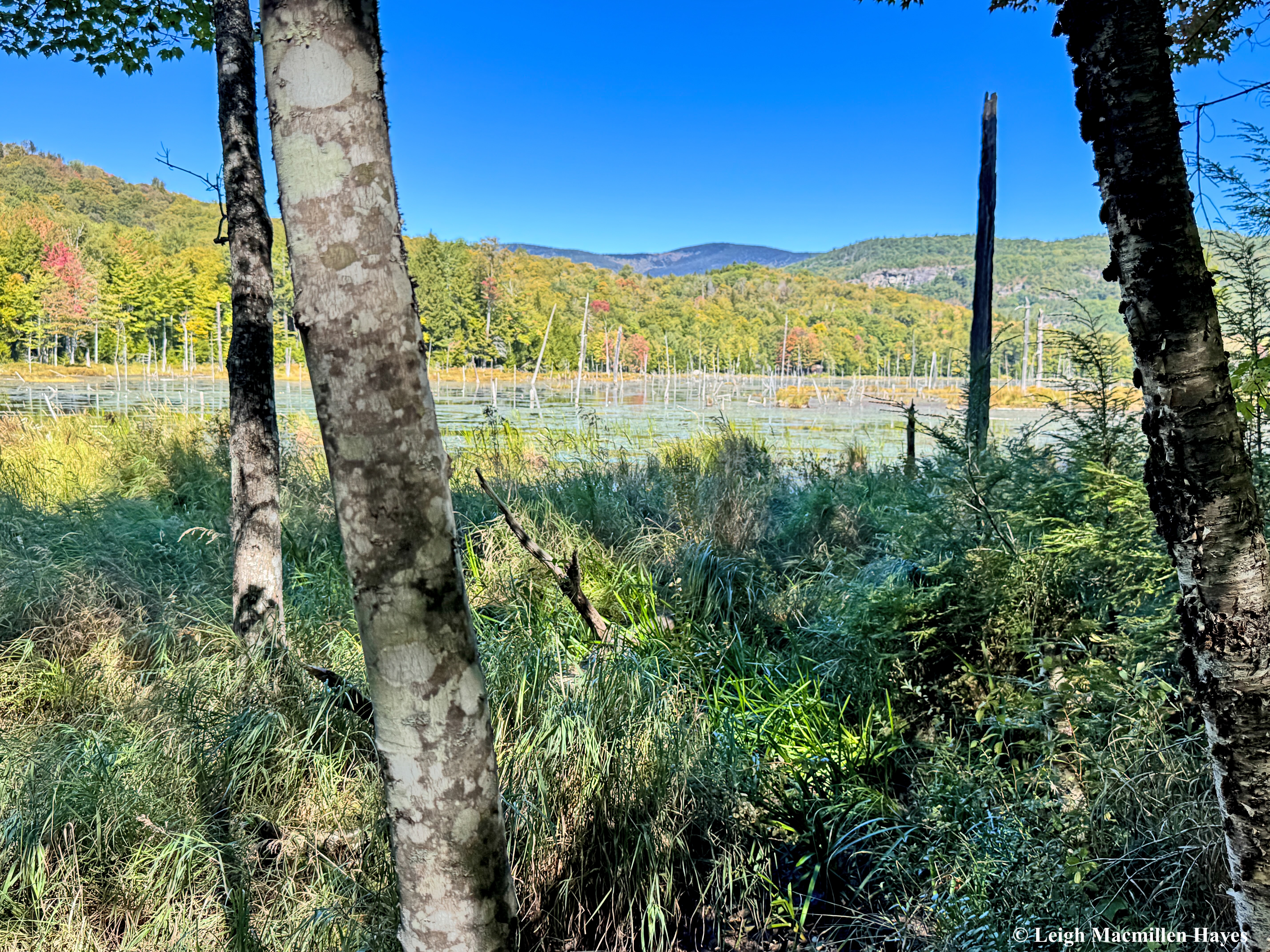
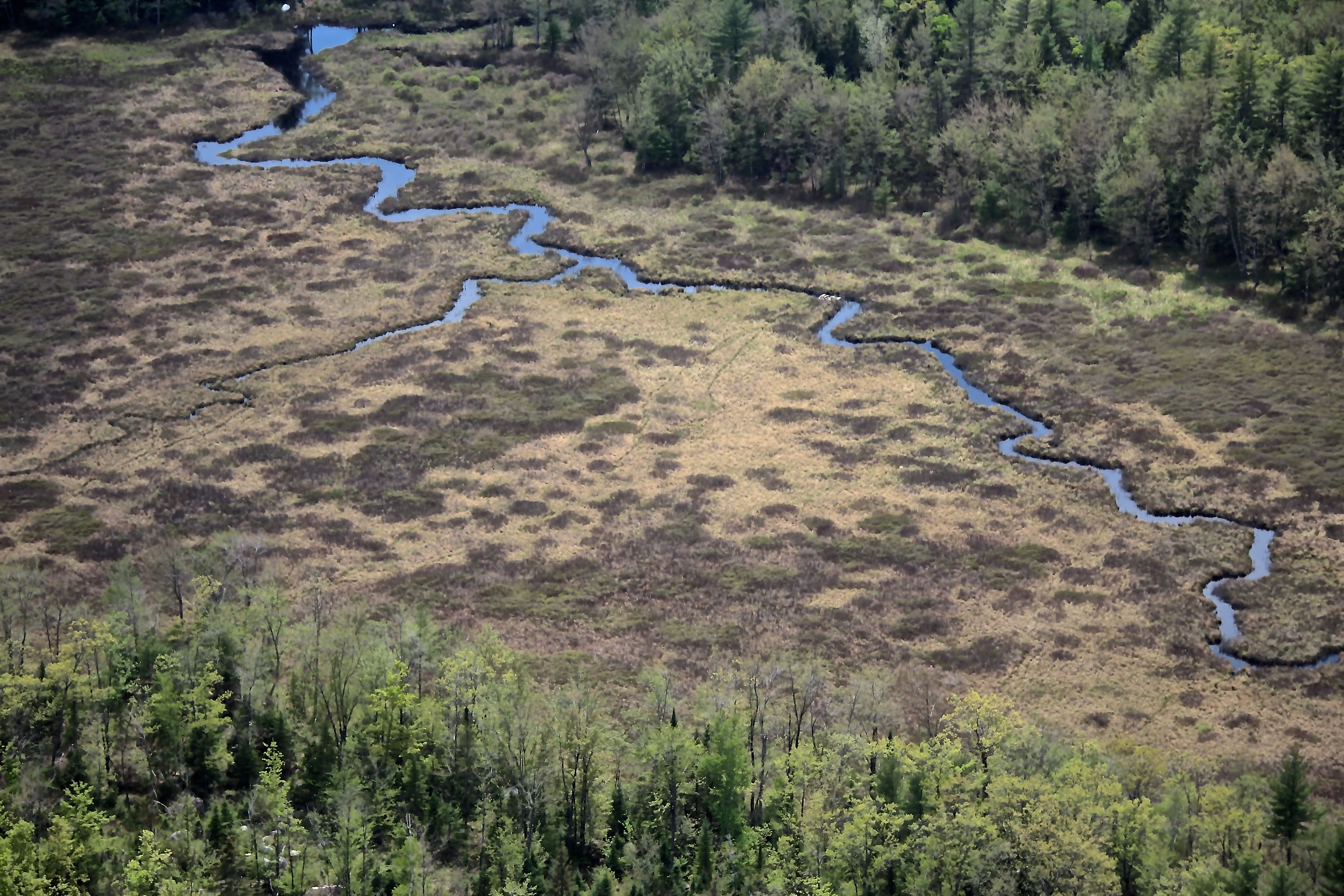
Some, such as this, being Brownfield Bog as we locals know it, or Major Gregory Sanborn Wildlife Management Area as the State of Maine knows it, took us by complete surprise. The last time we’d wandered this way together was in the spring, when despite wearing Muck Boots, we could not travel some parts of the trail because the water was so high. That was in the Time-We-Actually-Experienced-Rain. That time has long since passed and now western Maine is in a severe drought and don’t the Lilypads know it. What about all the mammals and birds and insects that depend on this water? It was an eerily quiet walk in a place that is usually alive with action.

Where the Old Course of the Saco River crosses through the bog, there was some water. But still, not enough. And we know of other areas of the Old Course, such as in Fryeburg Harbor, where there is no water.

As for the Saco, it too, was incredibly low and sandbars were more the norm.

Other adventures found us paddling our favorite pond.

And bushwhacking around another bog.

What kept making itself known to us–the fact that the trees are turning much too soon, and many leaves aren’t even turning, but rather drying up and falling.

That meant that some paths or bushwhacks found us crunching the dried leaves with each step we took. We could hardly sneak up on a Moose or a Bear, or even a Squirrel.

Despite such dry conditions, we did find the varied colors of Wild Raisins or Witherod drupes dangling in clusters below their leaves.

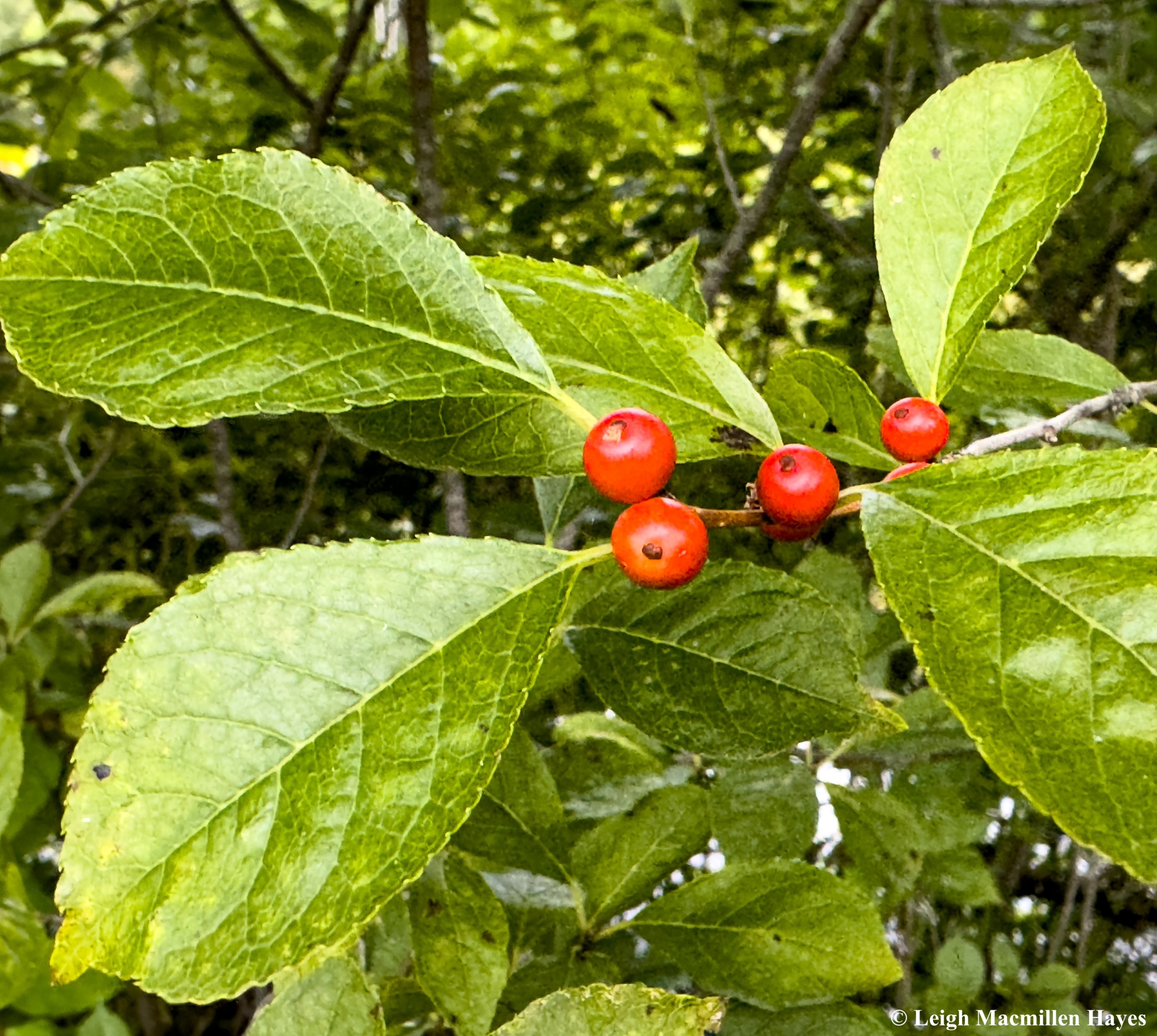
And Winterberries showing off their enticing red hues–ready to attract birds and maybe become part of our holiday decorations. Only a few branches for us, mind you. We leave the rest to the critters because we know their importance in the food chain.

Late summer flowers were also in bloom, including the brilliant color of the Cardinal Flower.

And in a contrast to the red, there were Ladies’ Tresses, a wild orchid, one of the few with a fragrance if you can bend low enough to smell it.

I think one of the greatest wonders is how many variations there are on a theme, in this case flowers for take a look at the Pilewort or American Burnweed, this one growing upon a Beaver Lodge.

What you are looking at is the flower heads: They are about a ¼ across and petal-less. The inner bracts, with their purplish tips form a ½-inch tube exposing just the yellowish to creamy white stamens at the top. And the seeds are teeny tiny, as you can see, with tufts of white hairs to carry them like parachutes upon a breeze.

Along one trail, we spotted another teeny tiny display that surprised us due to the fact that we haven’t seen many mushrooms this summer. But the Orange Peel Fungus apparently had enough moisture, at least to produce these two forms.

Critters were also a part of our sightings and several times we encountered young Northern Water Snakes, not more than two pencils in length.

In another spot where we expected to see Water Snakes, we instead met a Garter. Mind you, none of these wanted to spend any amount of time with us.

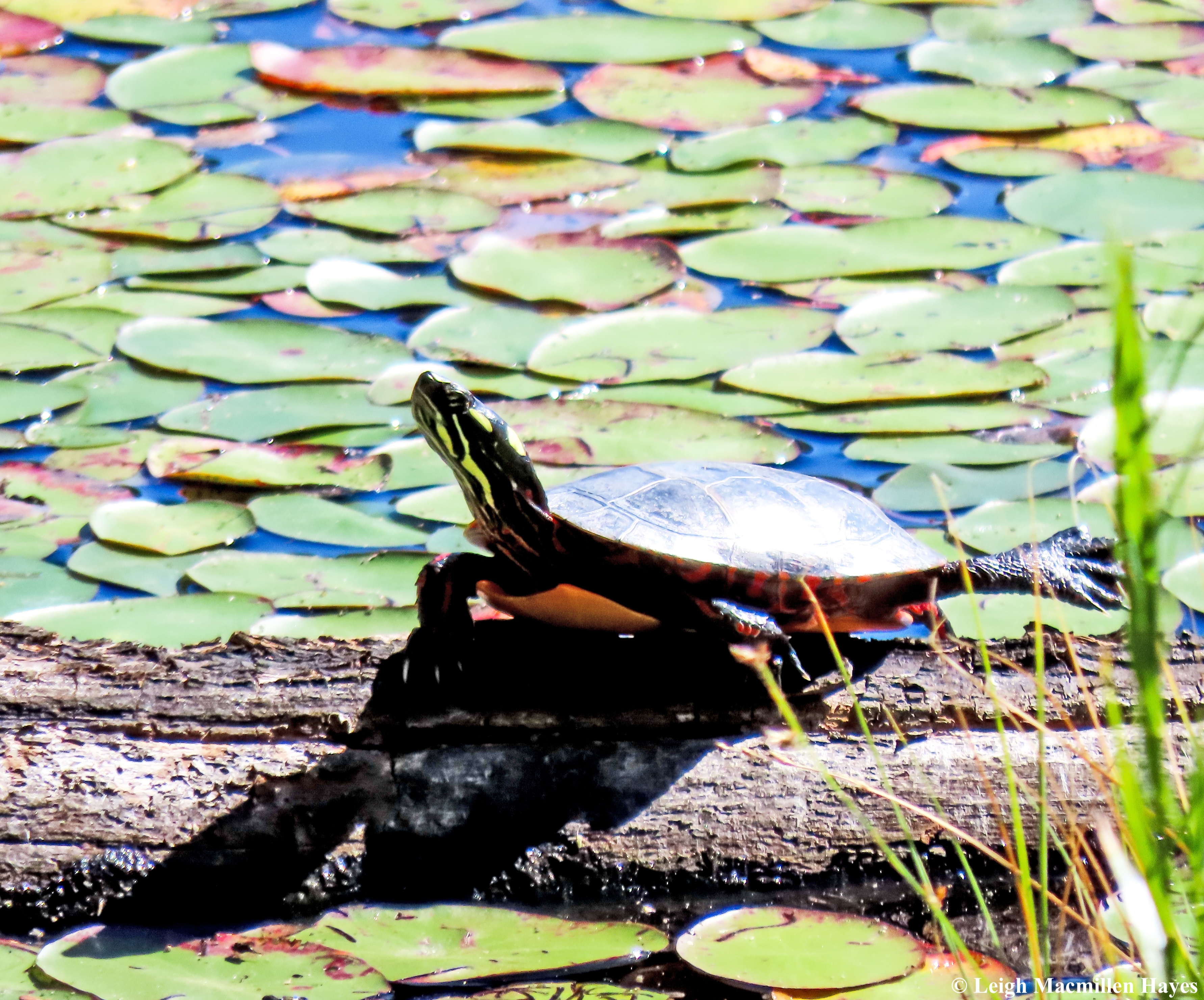
And despite the cooler morning temps that we’ve been experiencing, including lows in the mid-30˚s the past few days, or more likely, because of those temps, the Painted Turtles were still basking, soaking up the sun’s warmth. I love how they stick out their legs to absorb more warmth. It truly looks like a Yoga position, and I know this personally because along one of the trails we traveled in the past week, My Guy showed me several poses he’s learned recently. He also showed me those he struggles to perform.

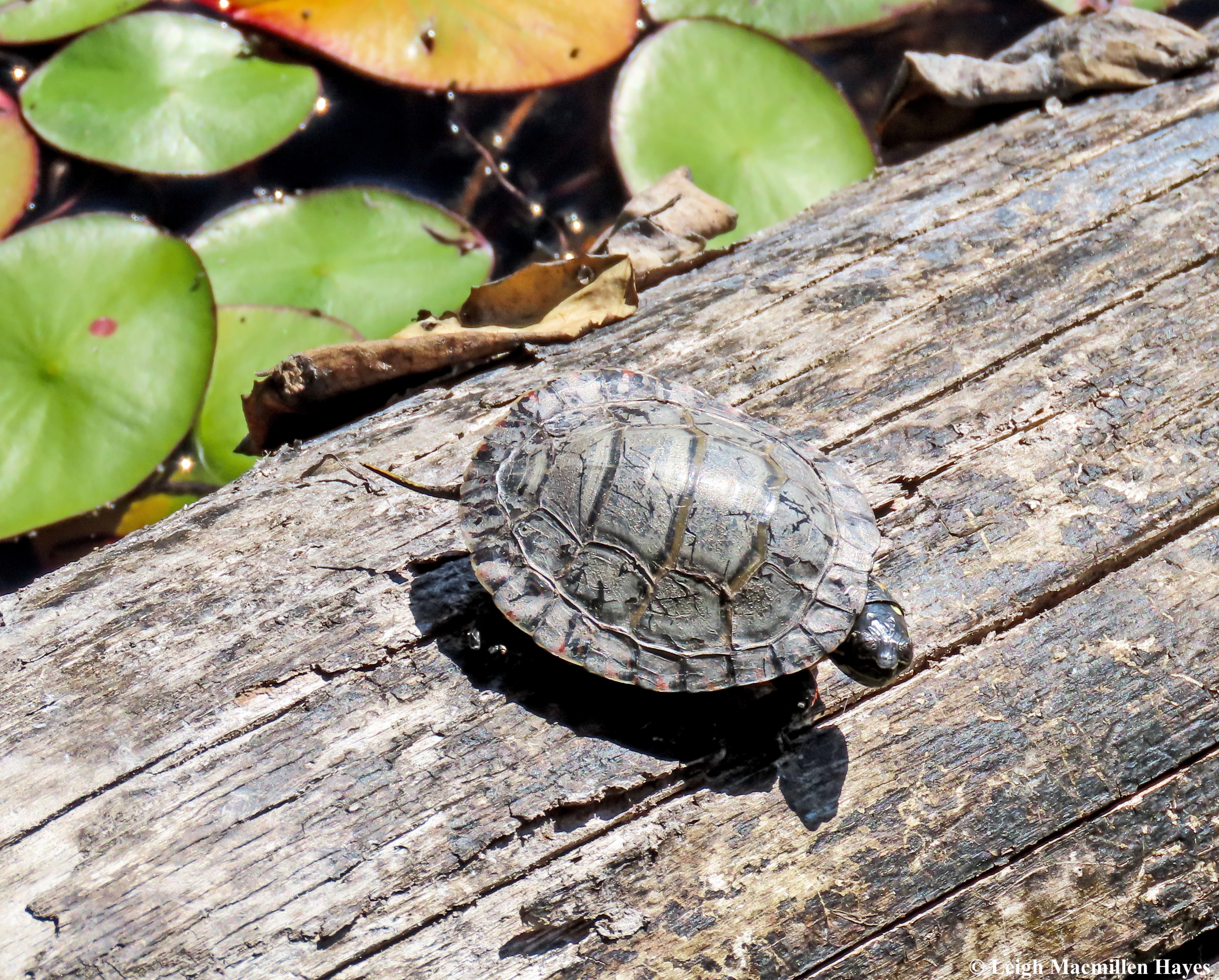
Not all turtles were of the same size, and this was a tiny one, who stayed on this log for at least two hours as we spotted it before we embarked on a bushwhack and it was still there when we returned, though it had changed its position. And gave me a wary look.

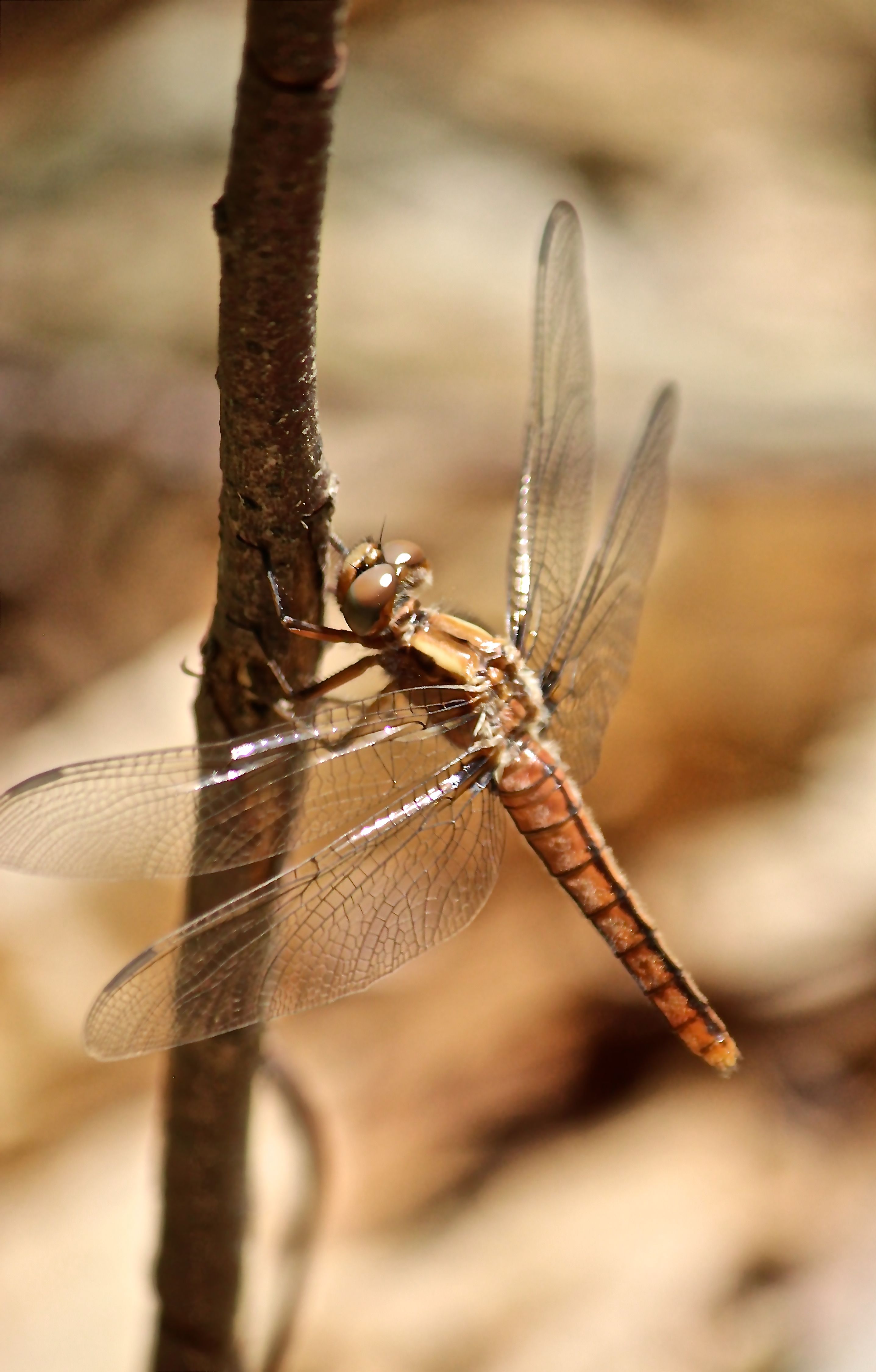
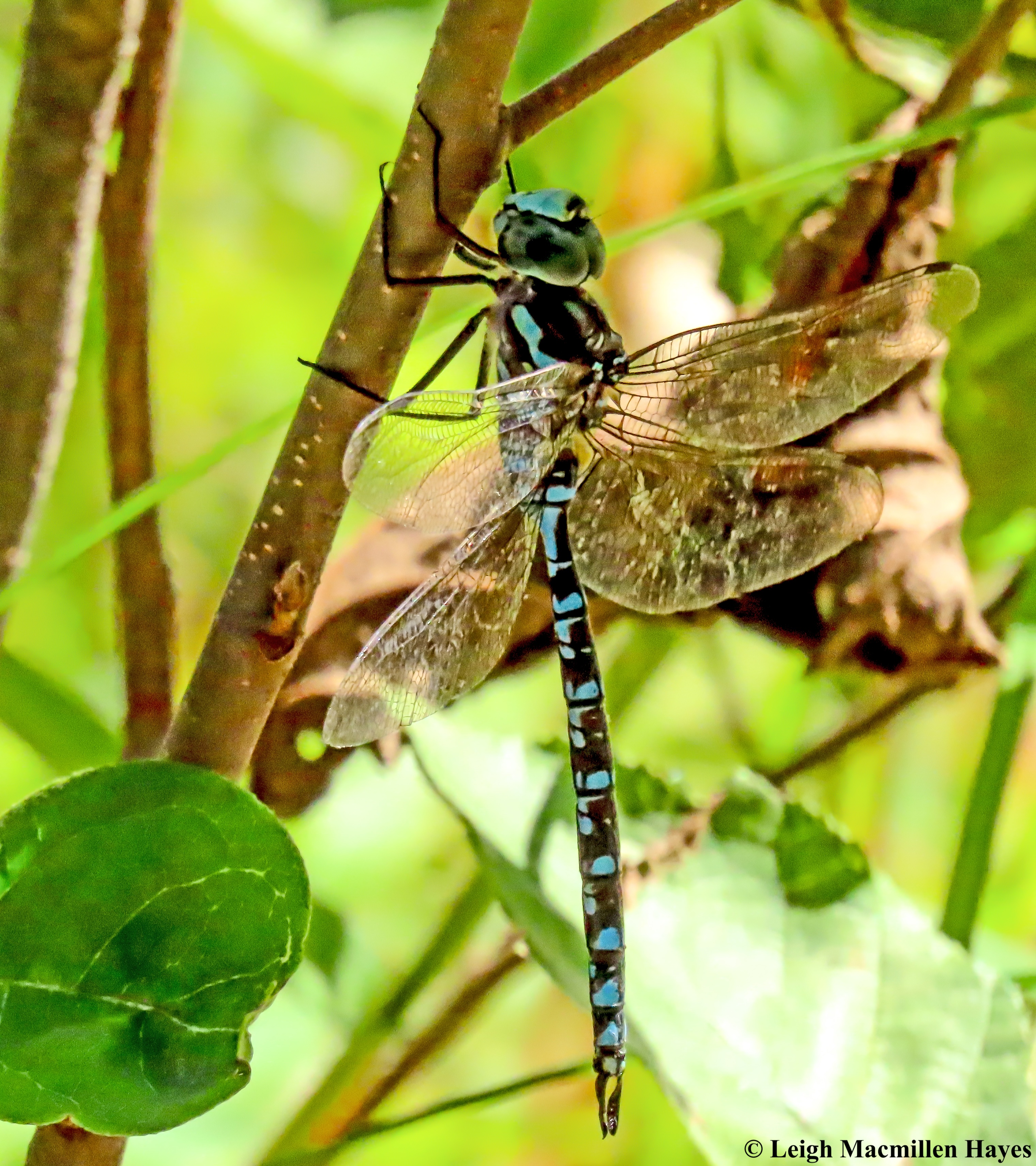
My Dragonfly fetish was also fulfilled for the Darners and Skimmers continue to fly and occasionally pause. Well, the Skimmers often pause, but the Darners are usually on the wing–patrolling territory while looking for a meal, and even more so, a mate. That’s why it’s always a moment of joy for me when one stops and my admiration kicks up a few notches. In fact, it’s the notch in the side thoratic markings that help with ID–in this case a Canada Darner. I’ve discovered this summer that they are numerous ’round these parts.

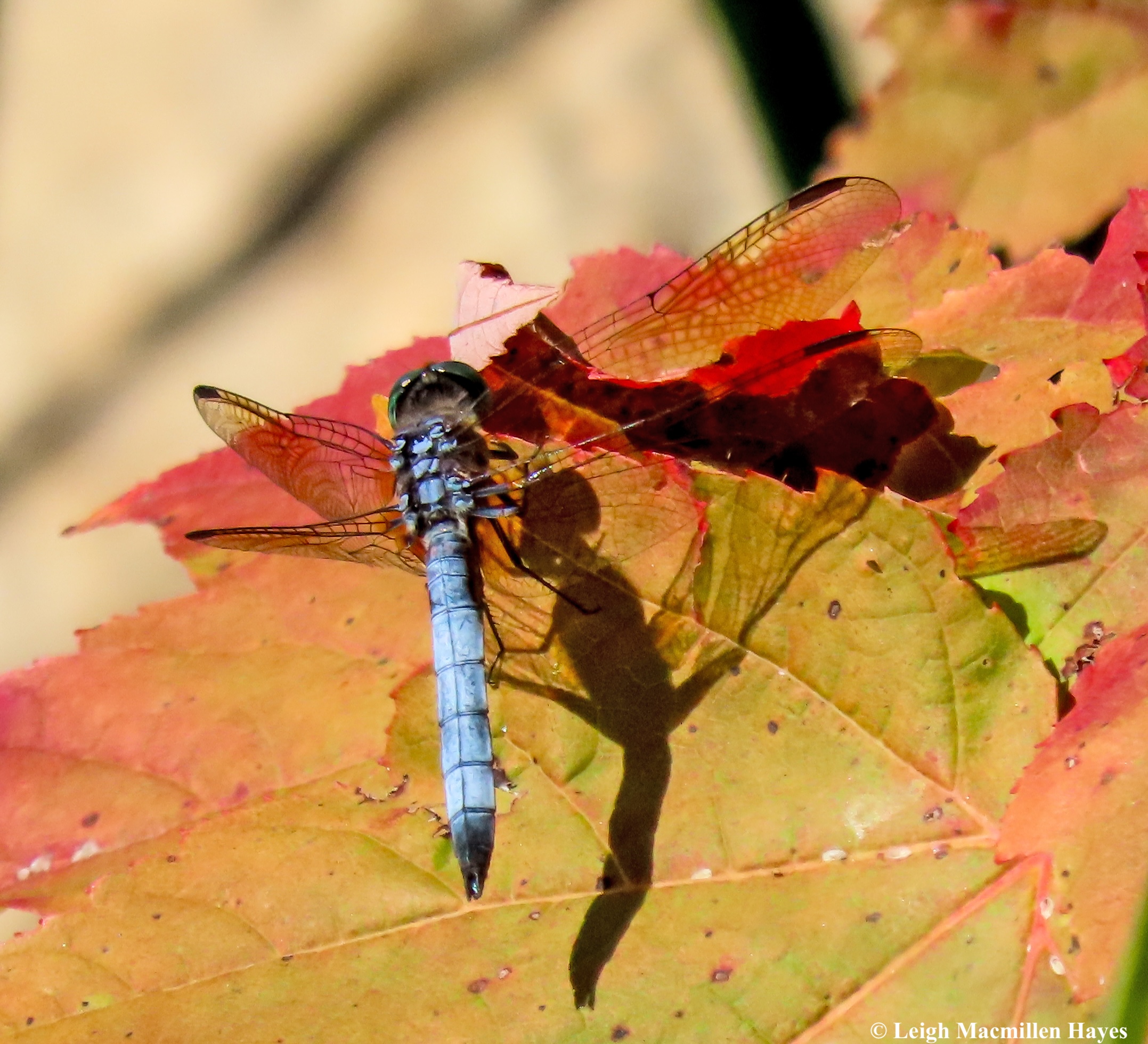
While the Darners are on the largish size in the dragonfly world, most of the Skimmers that are still flying are much smaller. The Blue Dasher, as this is, is probably considered medium in size.

What a display, no matter how big, with the blues and blacks and greens contrasting with the Red Maple leaf’s hues.

And then there’s the dragonfly’s shadow. It’s almost like it was a different creature.

My surprise was full of delight when I realized as I floated beside a Beaver Lodge, that I was watching female Amberwings deposit eggs into the water as they tapped their abdomens upon it. I rarely spot Amberwings, and yet they were so common in this spot.

And overlooking all the action, perhaps not only to defend its territory, but also to eat anything that got in the way, a Slaty Blue Skimmer, twice the size at least of the Amberwings and Blue Dasher.

Birds, too, were part of the scenery wherever we were. This Eastern Phoebe spent moments on end looking about, from one side to the other, and then in a flash, flew to some vegetation below, grabbed an invisible-to-me insect, and flew off.

Much to the surprise of both of us, despite the loud crackling of leaves and branches upon which we walked in one place, we didn’t scare all the Wood Ducks off, and enjoyed spending a few minutes with this Momma and Teenager. Usually, this species flies off before we spot them on the water.

Even the male hung out and when I suggested to My Guy that he look at it through the monocular, he was certain he really didn’t need to because he could see it without any aid. And then he did. And “Oh wow!” was the reaction. And I knew he’d finally seen a male Wood Duck–for the first time. And that moment will remain with me forever.

One of our other favorite moments occurred on our favorite pond, where we first spotted a Bald Eagle on a rock that the low water had exposed. And then it flew. As birds do.

And we followed it with our eyes, and watched it land above us in a White PIne.

And thus, we spent a good twenty minutes with it, admiring from our kayaks below.

The Bald Eagle was sighted not to far from our favorite Beaver City–where we know of at least five lodges located within a football field-sized area. And this one above had been abandoned for the last few years.

But fresh mud and fresh wood told us that someone was home. Probably more than one someones. We love the possibilities. The mudding is an important act–preparing for winter by coating the outside and closing up any holes or airways that might let cold air penetrate. Of course, the “smoke hole” at the top will remain, much like a chimney in our homes.

Just a Beaver channel and a hundred yards away, another of the five lodges also showed signs of winter preparation. It’s a busy neighborhood.

No matter where or how we traversed, one of the things that stood out to us is that despite the autumnal equinox being September 22 at 2:19pm. fall is already here thanks to the summer’s drought.

It’s usually mid-October when we begin to celebrate the color change–that time when Chlorophyll, the green pigment we associate with summer, and necessary for photosynthesis, slows and then stops manufacturing food, and the leaves go on strike.

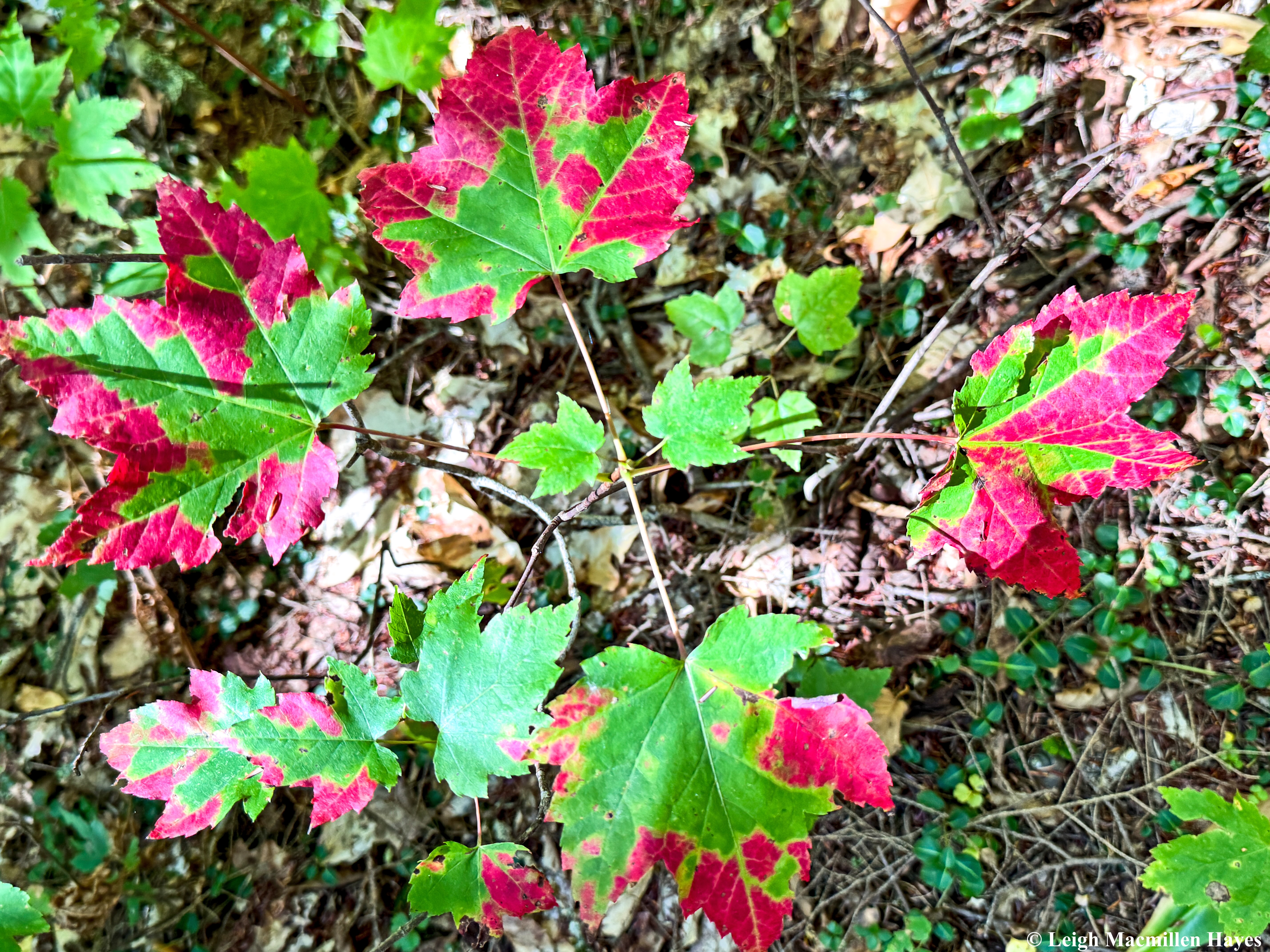
Veins that carried fluids via the xylem and phloem close off, trapping sugars, and promoting the production of anthocyanin, the red color we associate with Red Maples like these.

Tonight, as I finish writing, we are on the Cusp of Autumn, which is about seventeen hours away. But this year, I think it’s already here and if you have planned a fall foliage tour for mid-October I hope you won’t be too disappointed. I suspect we’ll not have many leaves left on the trees by that point.

But . . . maybe I’m wrong. There’s always that possibility.

No matter what–Happy Autumnal Equinox!

Vermonting We Did Go

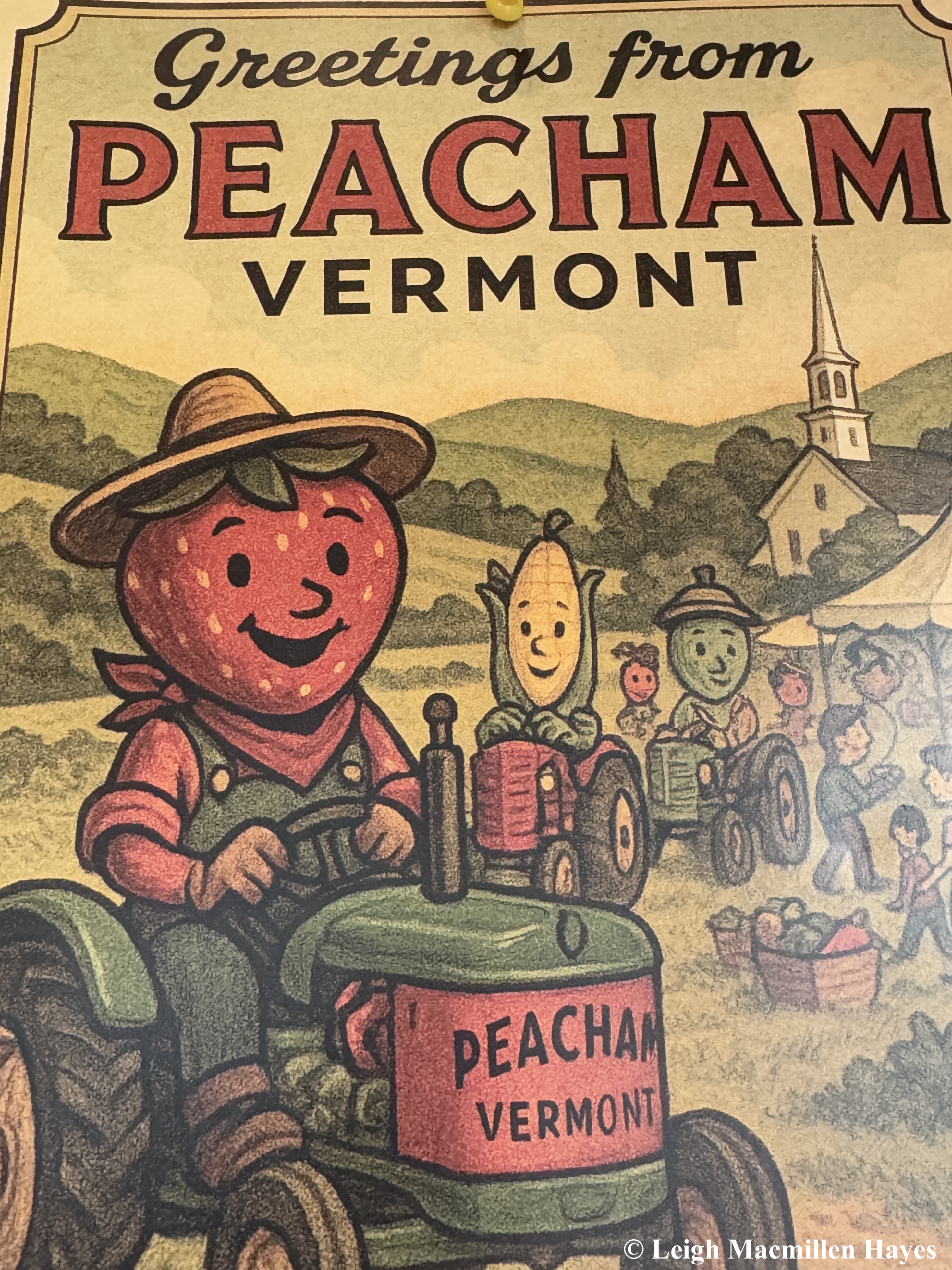
Okay, so “Vermonting” is not a word. But we did go. And came home richer for the experience.

It takes us forever to plan a vacation, even a mini-one. Well, actually, it only takes a few minutes once we put our minds to it, but prior to that it’s a lot of “We should go to . . .” or “We need to get away,” or any of a myriad of other comments, and we do nothing.

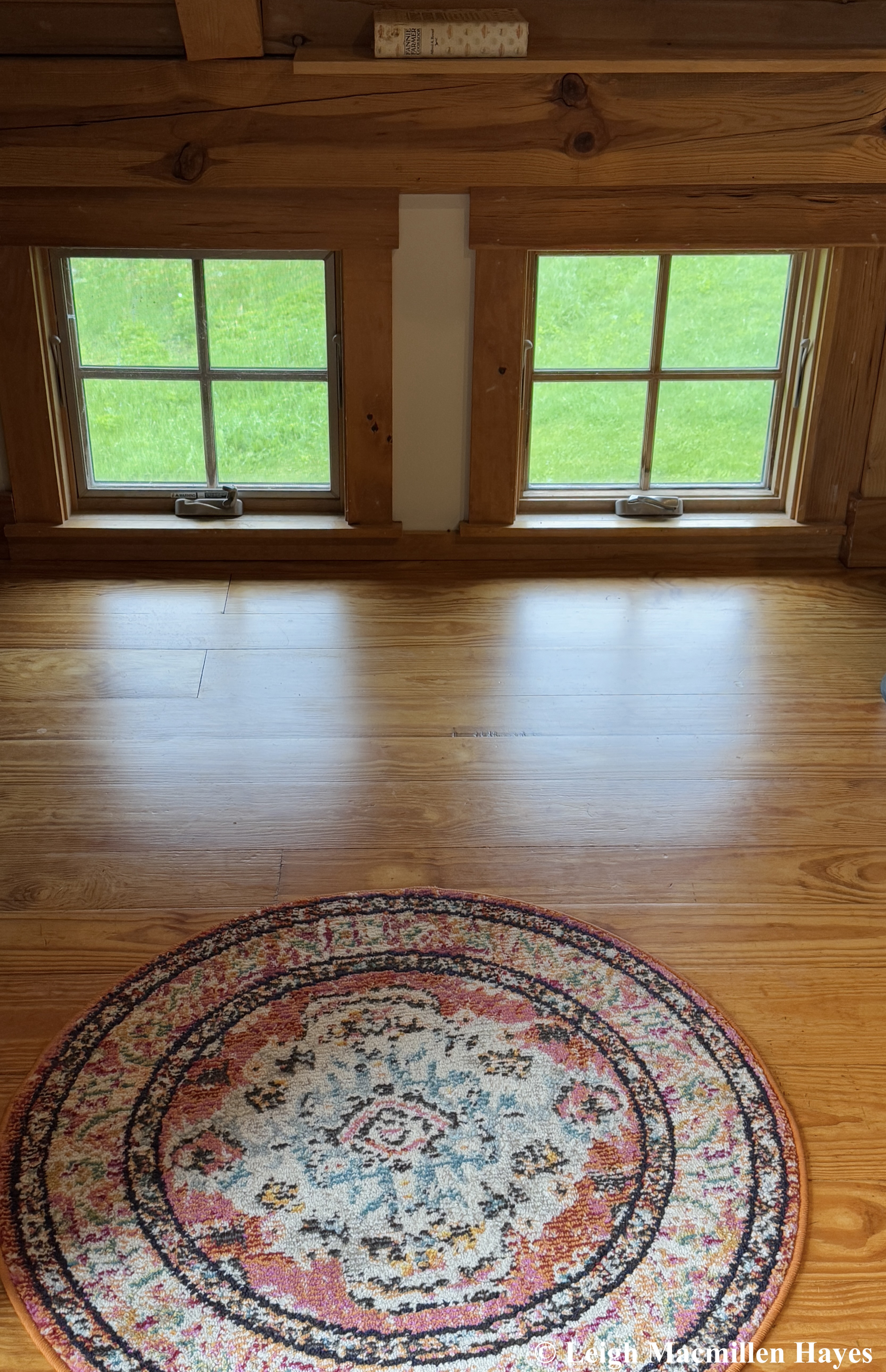
So about a week ago we cleared our calendars. We knew kinda sorta where we wanted to go, but didn’t know where we might stay, until we discovered The Barn in Peacham. We have a red barn attached to our 1870s farmhouse and long ago turned the upstairs into a movie theater/rec room for our sons, all that being a rather rough rendition of either–the movie seats were from an actual theater in our hometown, which was the best part. The seats are still all up there. And there’s a pingpong table and an air hockey table and trophies (remember the Porcupine Invasion last November?) and various other things, plus now a Yoga area for My Guy, but it’s hardly like the space we rented for the weekend as pictured above.

Cozy, roomy, tons of natural light, everything we needed, even eggs and English muffins if we came up short for our first morning.

I think one of my favorite things, and I had lots of favorites, were the little windows that lined the floor in all four rooms. And above these in the kitchen, a Fannie Farmer Cookbook on a shelf. It was touches like this that enhanced the already perfect space.

And our host and hostess, Chuck and Mercy, were equally delightful, and full of information. Thanks to them we discovered Three Ponds Sandwich Kitchen in Danville our first night and marveled in the deliciousness.

But what we were really there for was to hike. And so Saturday morning we went in search of the trailhead to Peacham Bog. If you happen to see My Guy this week, ask him how that search went. We’re still laughing.

We did find the trailhead, but obviously not where we expected it to be. And at the recommendation of Brian at the Groton State Forest Nature Center, we decided to hike the two miles in to the Bog and then continue along a multi-use trail before reaching Devil’s Hill, circling back along the same route.

The natural communities along the way made us feel as at home as the barn, for we (read “I”) felt like we were walking among old friends such as the Mountain Woodsorrel. I love its peppermint ice cream presentation.

And then, in a damp spot Swamp Beacons lit the way and I was drawn back in time to my first encounter with them while tramping through the woods in Lovell with friends Parker, Joan, and Dave. RIP Parker–please know that you accompany me on and off many a trail and I know that you would be happy that I actually remember some of what you taught me.

Vowing not to count Lady’s Slippers, we didn’t. But they were there, though most waning.

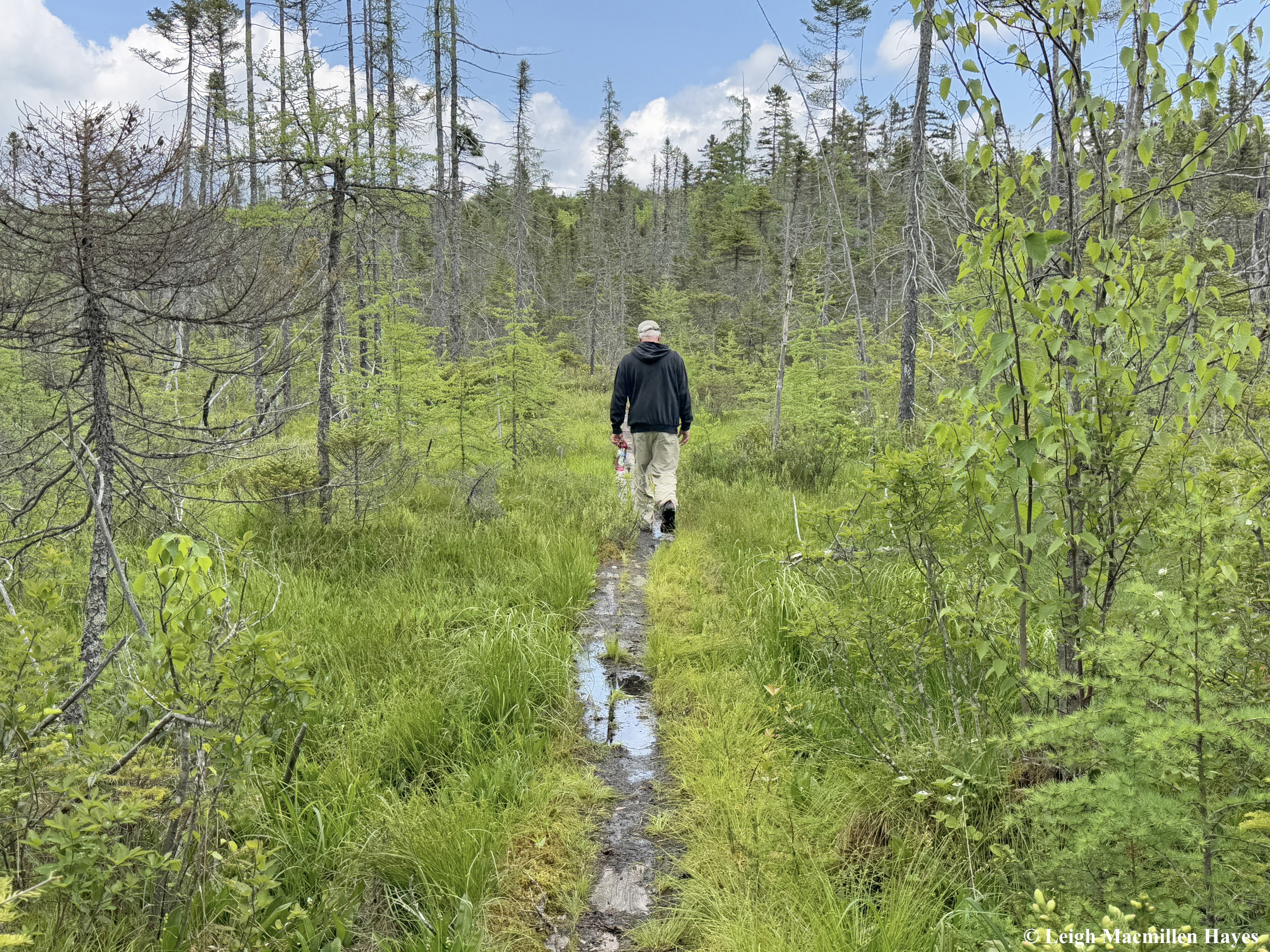
At last we reached the coveted bog, where a boardwalk was long ago placed to keep hikers like us from stepping onto the fragile environment.

It was at this point that another funny story evolved, but again, you’ll have to visit My Guy at his store to get the rest of the story.

At last reaching the platform with a bench at the end of the boardwalk, we sat down to eat sandwiches and take in the scene and sounds that surrounded us.

Sphagnum mosses formed the peat base and laurels and Tamaracks and Firs and flowers and insects all expressed themselves.

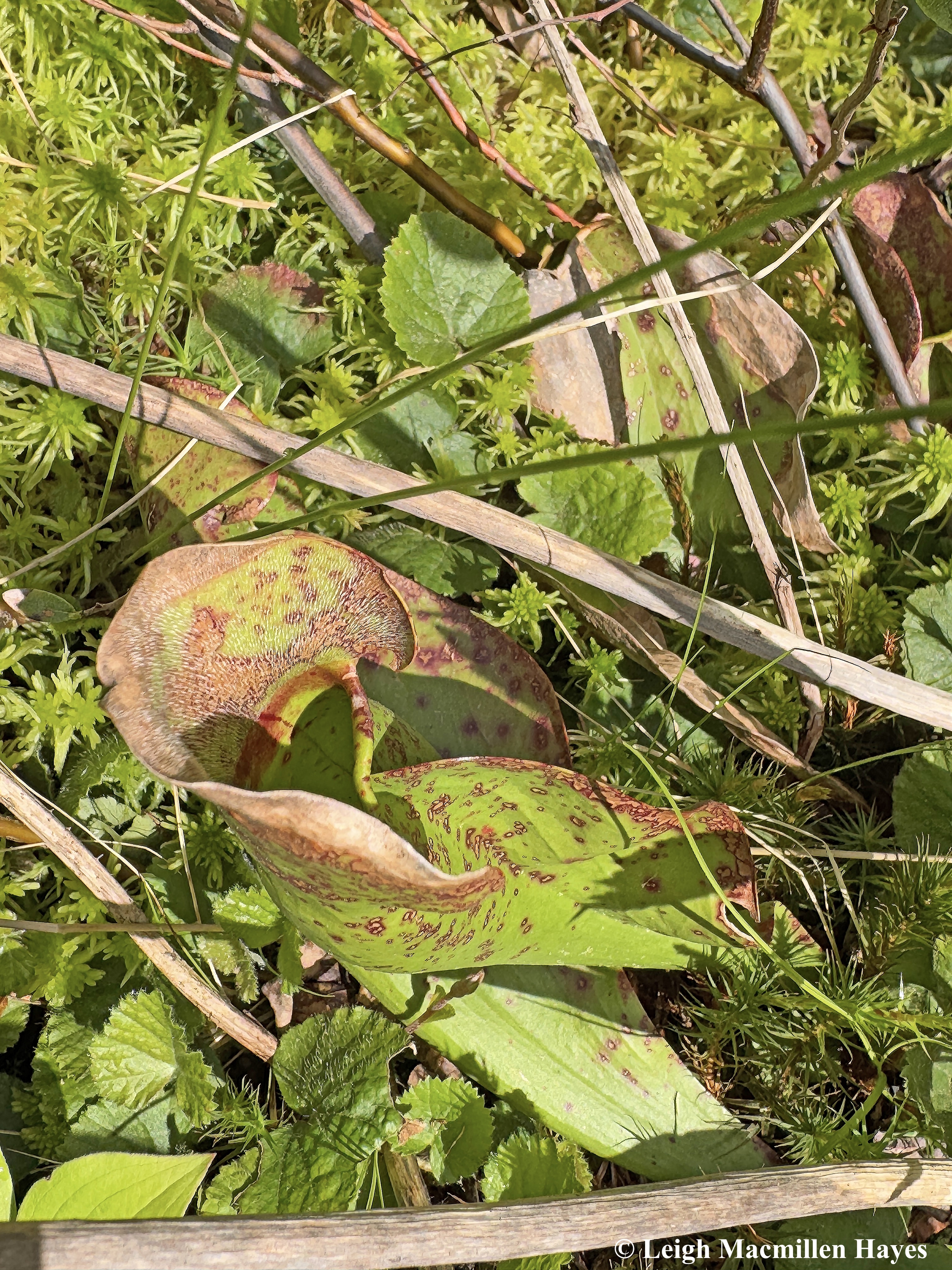
I, of course, can never see too many Pitcher Plants and be forever wowed by those downward facing hairs that entice insects in to the pitcher-shaped leaves where the end-of-life lurks.

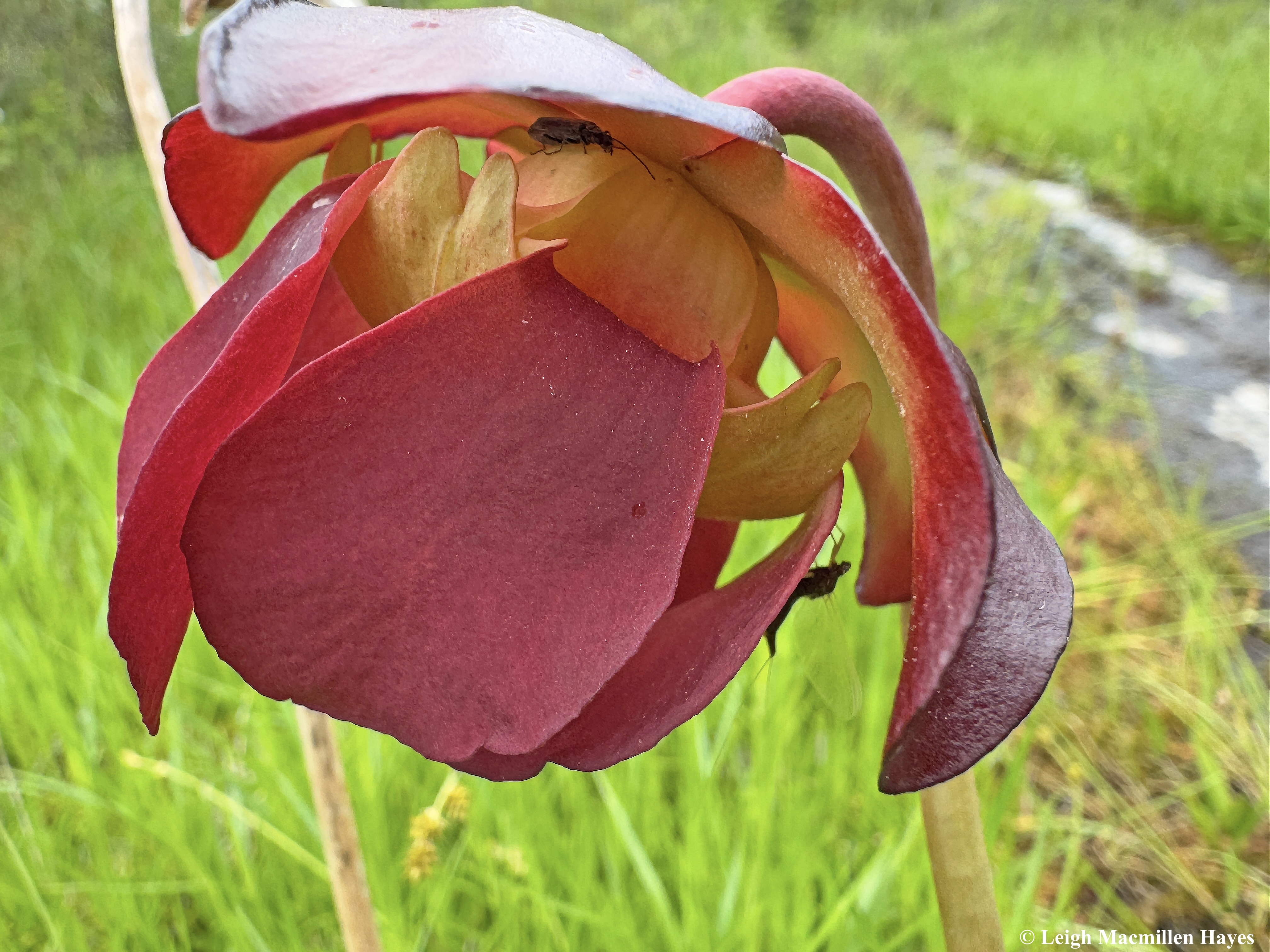
And the otherworldly flowers were in full bloom, including this one that hosted a long-horned insect and a sub-imago Mayfly (read: Dun).

I’ve been wowed by these for a long time and years ago drew this rendition as a teaching tool that now is the background for my iPhone.

There were Unadorned Bog Flies pollinating Bog Labrador Tea.

And Cotton Sedge showing off their hairy tufts.

Our next leg took us from the Bog to the Groton multi-use trail, being used mainly by horse riders and moose. We saw neither, but their tracks were evident in the mud.

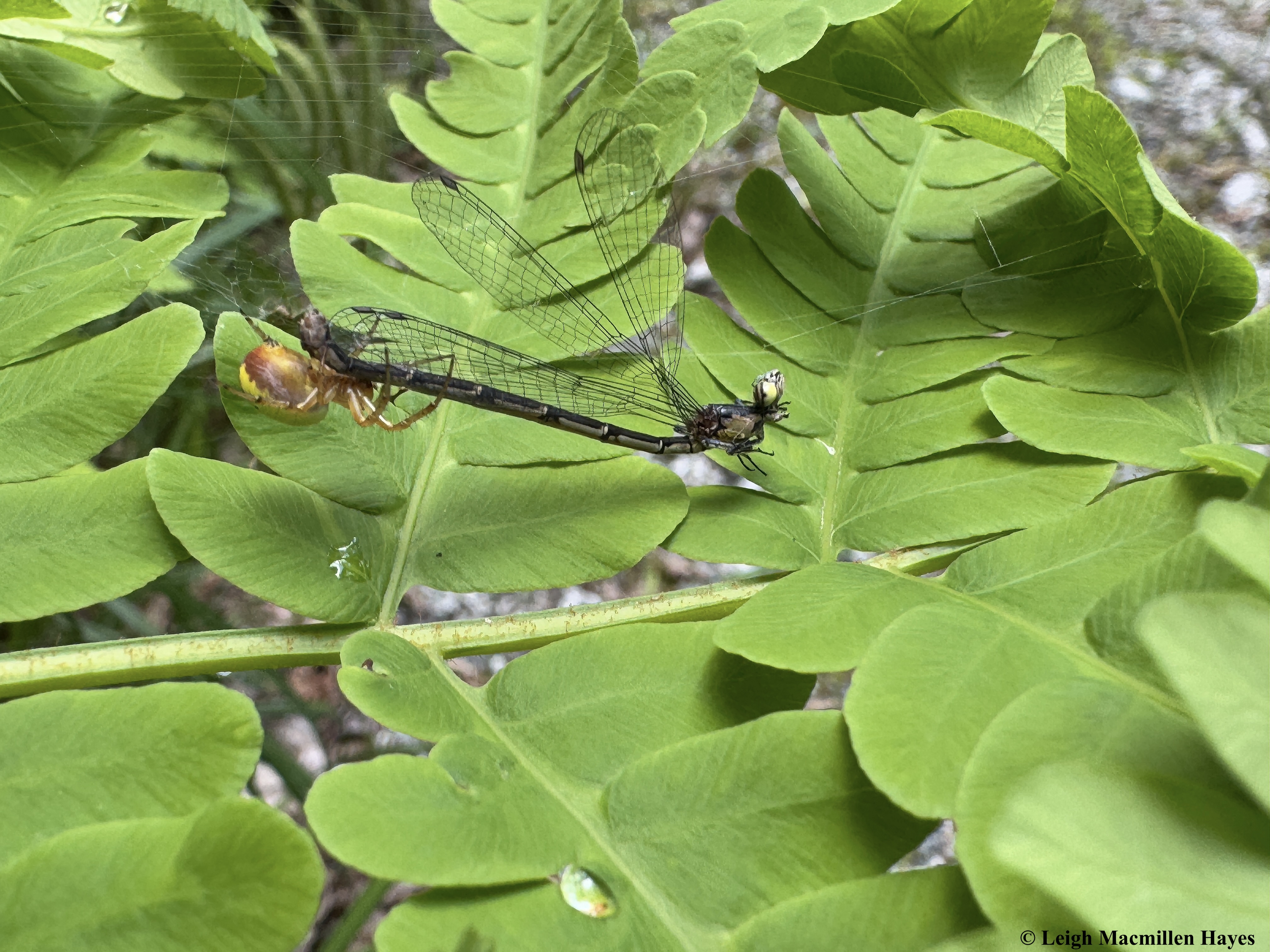
What we did spot was this Aurora Damselfly being wrapped up by an Orb Weaver Spider. I knew the damselfly immediately because of the uneven stripe on the sides of the thorax.

And had recently tried to paint a mature form of the same species.

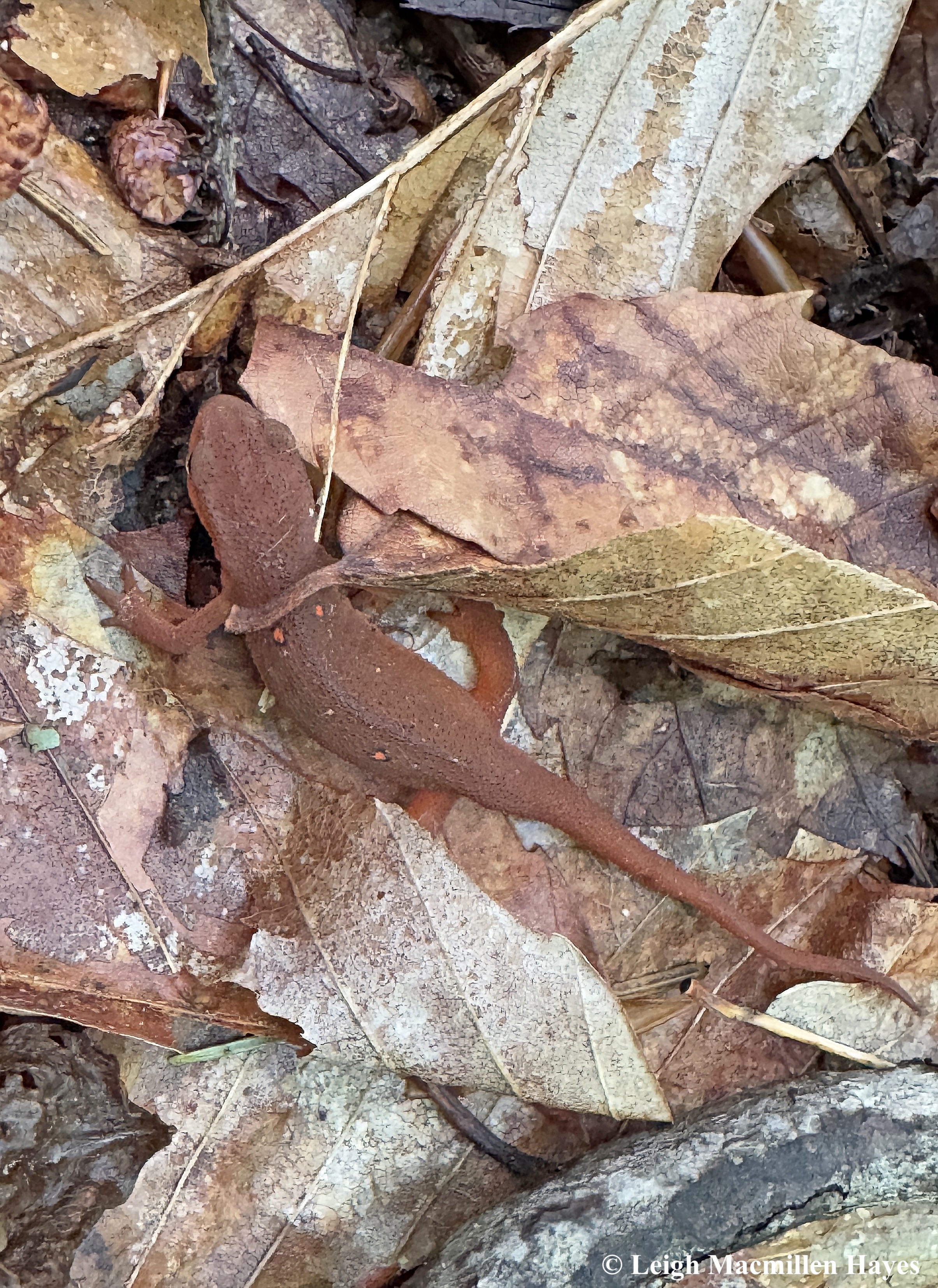
We also met a couple of Red Efts, the teenag and terrestrial stage of the Eastern Newt. The red spots act as a warning to predators because if consumed, they secrete poison toxins from their skins. As humans, we can touch them and live, but to ingest one would be harmful. So don’t try that.

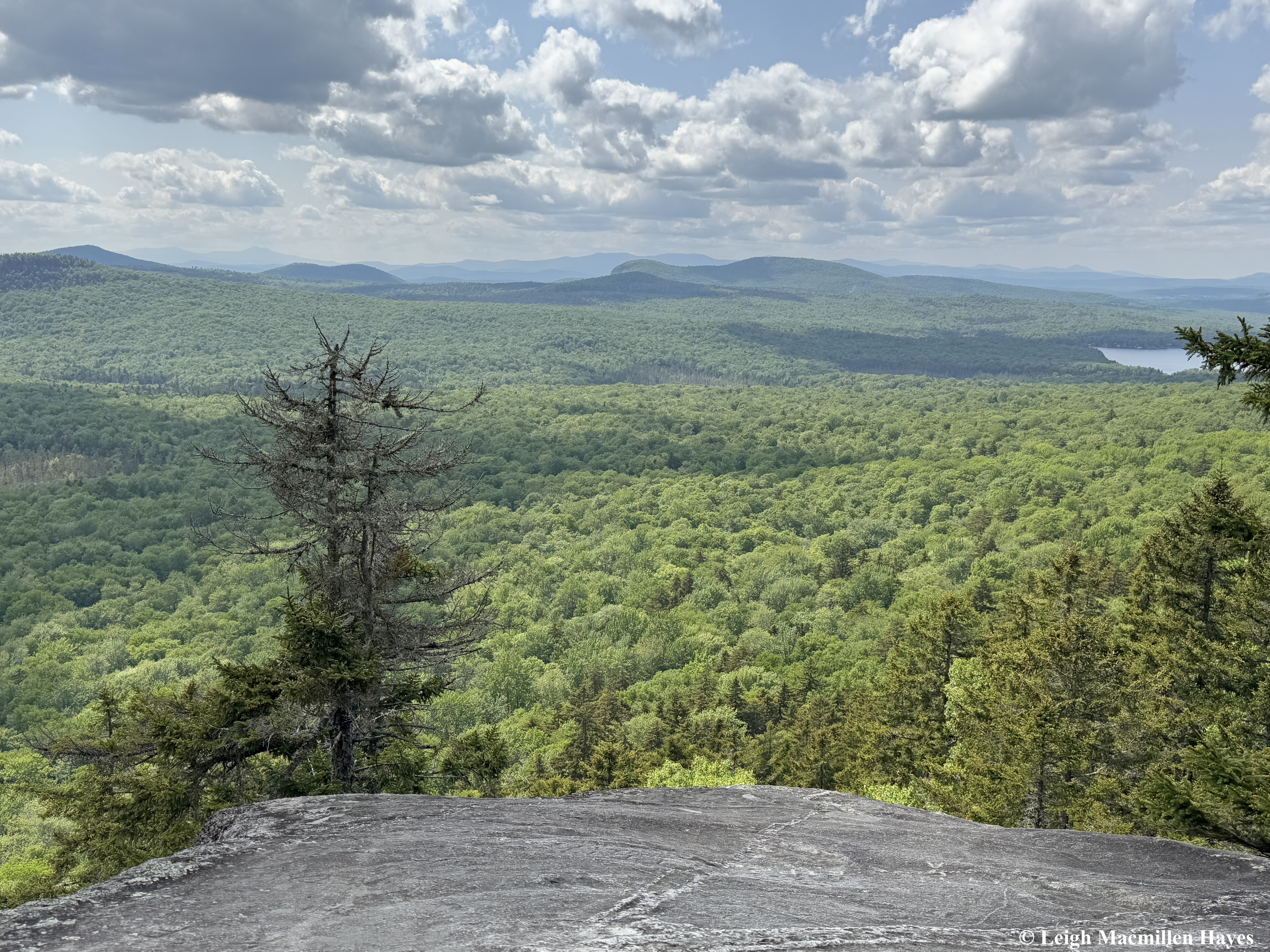
A couple of miles later we reached the trailhead for Devil’s Hill and snaked our way up the switchbacks to the summit, where this view of the rolling hills and iconic geography of Vermont stood out before us.

On the way down, a male Luna Moth presented itself, hiding as it was under a Striped Maple leaf.

I love these leaves and their twigs, especially the growth rings that stand out so predominately, and My Guy appreciates that the leaves serve as Nature’s Toilet Paper. TMI? But really, they are easy to identify and they are soft.

Returning on the multi-use trail before retracing our steps on the Peacham Bog Loop, we had to walk through tall grasses and sedges, which did not make my heart so glad because this was heavy tick territory. I had on tick gaiters and repellant. We took at least five off My Guy.

But, this pair of Craneflies did share a canoodle moment with us, so that won me over for a second.

All in all, we hiked over eleven miles that day, and were too beat to go out to dinner, so instead drove to the West Barnet Quick Stop, about 1.5 miles from our weekend home. There we ordered Chicken Cordon Bleu Paninis with Pesto, and a salad to share. And while we waited for our meal to be created, noticed Shain’s of Maine Ice Cream in the freezer, which made us chuckle. Wait a minute. We were in Ben & Jerry Country. Never fear–they had a much better presentation in another freezer.

And, while we waited, I asked the woman who was creating our salad if she lived in the area. “All my life,” she said, and added, “So far.” We chuckled, but then I asked if she knew so and so, a couple I know from church who had lived just down the road for many years (a fact I’d only learned days earlier).

Her face lit up with a smile as she recalled them and said they used to frequent her other store and that their daughter had worked for her. As tired as I was, that smile of hers was the perfect ending to a great day.

Well, it wasn’t quite over yet. For there was no TV at our weekend digs. And so I taught My Guy to play Parcheesi, and then I beat him.

The next morning we drove north to Orleans to meet my first college roommate and her husband, Bev and Bill, at the Carriage House for breakfast. Funny thing–as I drove up Route 91, there was one car in front of us and approaching it, with its Maine license plate, I spotted Lakes Environmental Association and a Loon Echo Land Trust stickers on the rear window. It had to be someone from our hometown. Sure enough, as I passed it, I recognized the mother of one of my former students. And a wondermyway follower.

Betty, if you are reading this, that was us on the highway with you on Sunday morning at 8:30 or so.

We spent two hours talking and eating and talking and talking some more over omelets and coffee and Bev and Bill suggested that we hike Mount Hor, which overlooks Willoughby Lake. I’d been to Willoughby before with Bev and two other dear friends, but never hiked in that area. And so we did. They gave us easy to follow directions and we parked and then walked almost two miles up the CCC Trail. I love that this was another project meant to keep people working when times were tough.

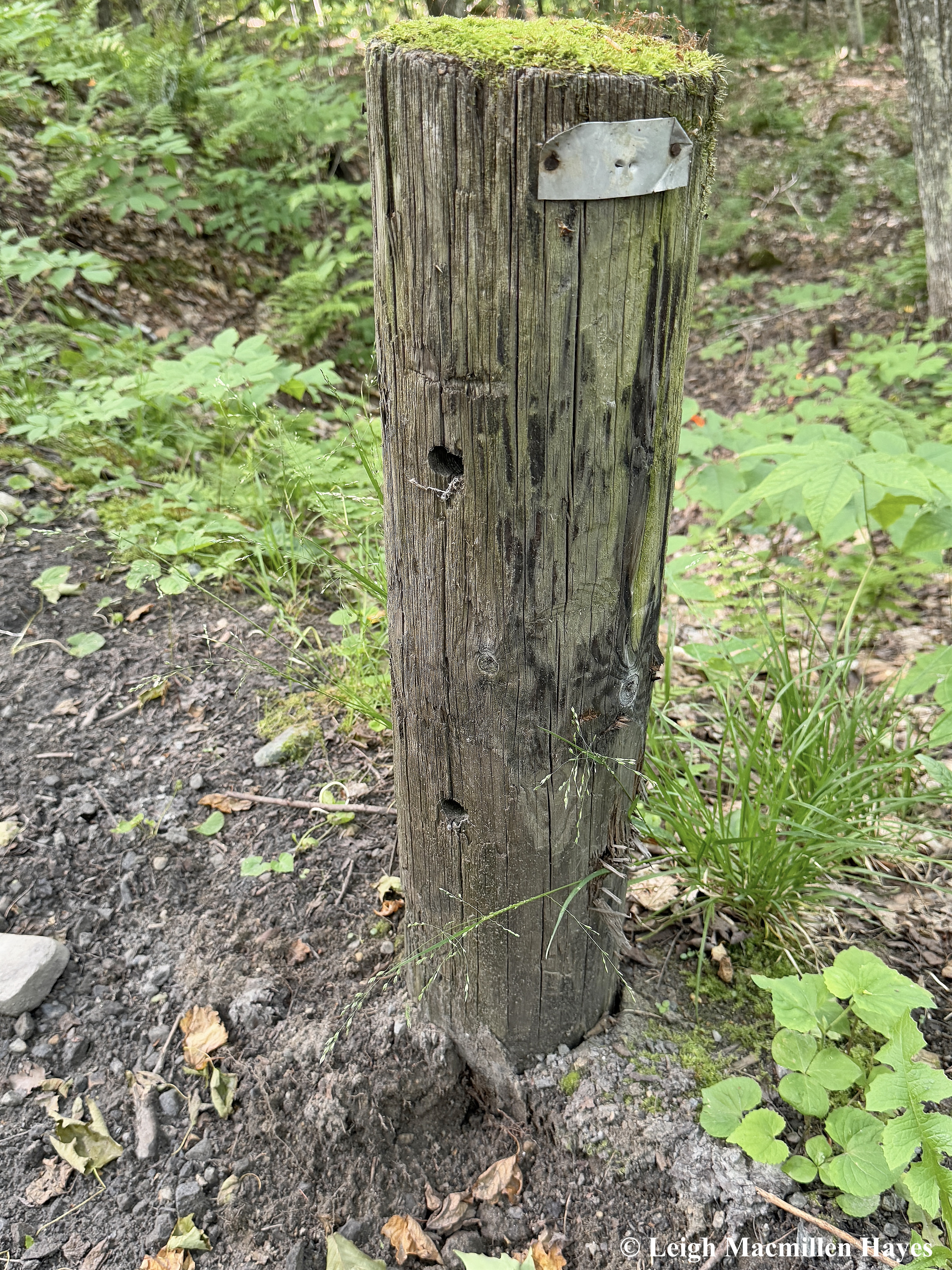
Though the hard packed surface we walked on was not the original road, we kept spotting these posts and my theory is that they were original and held cables that connected one post to another and kept vehicles from catapulting down the steep embankment.

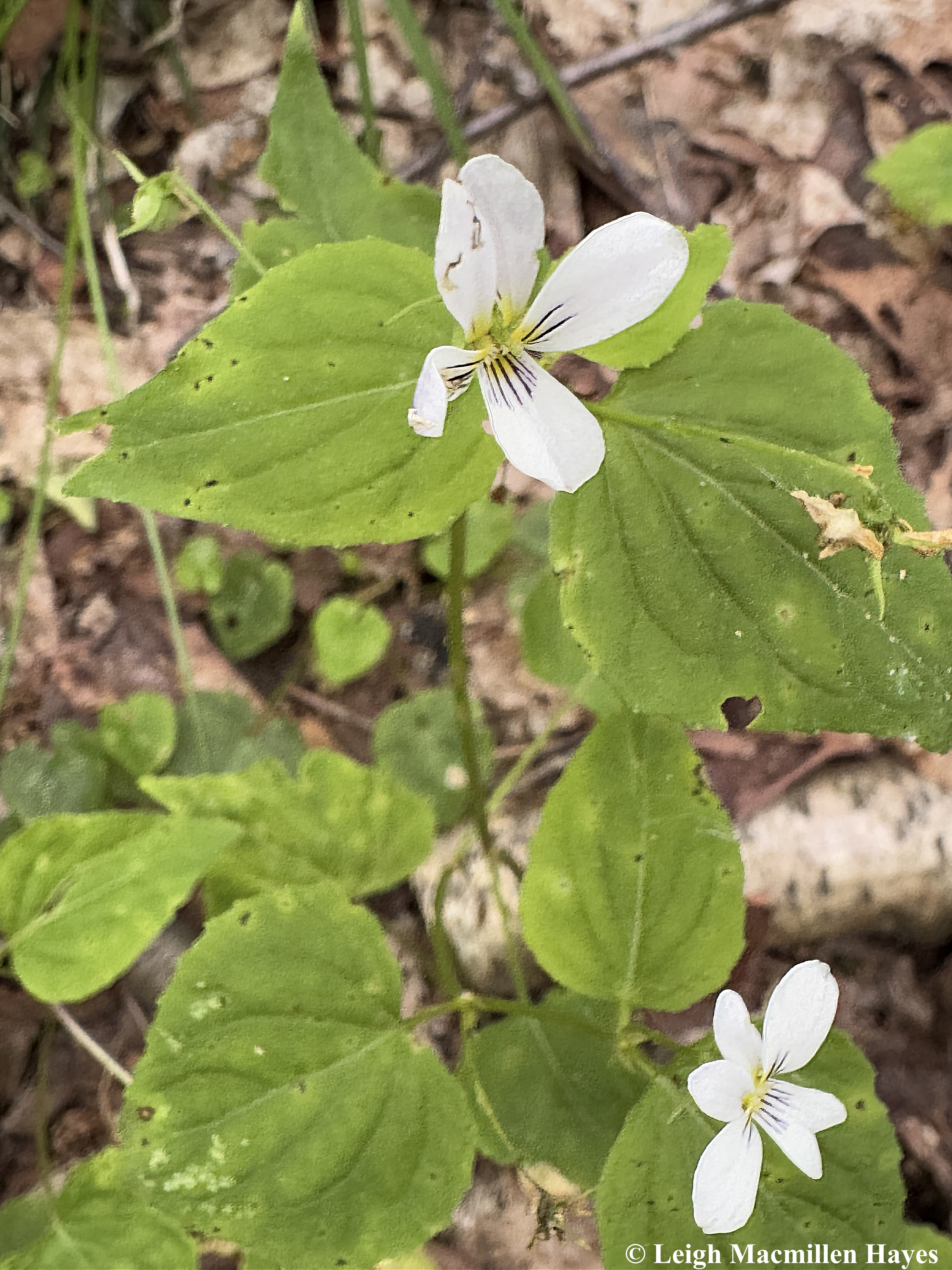
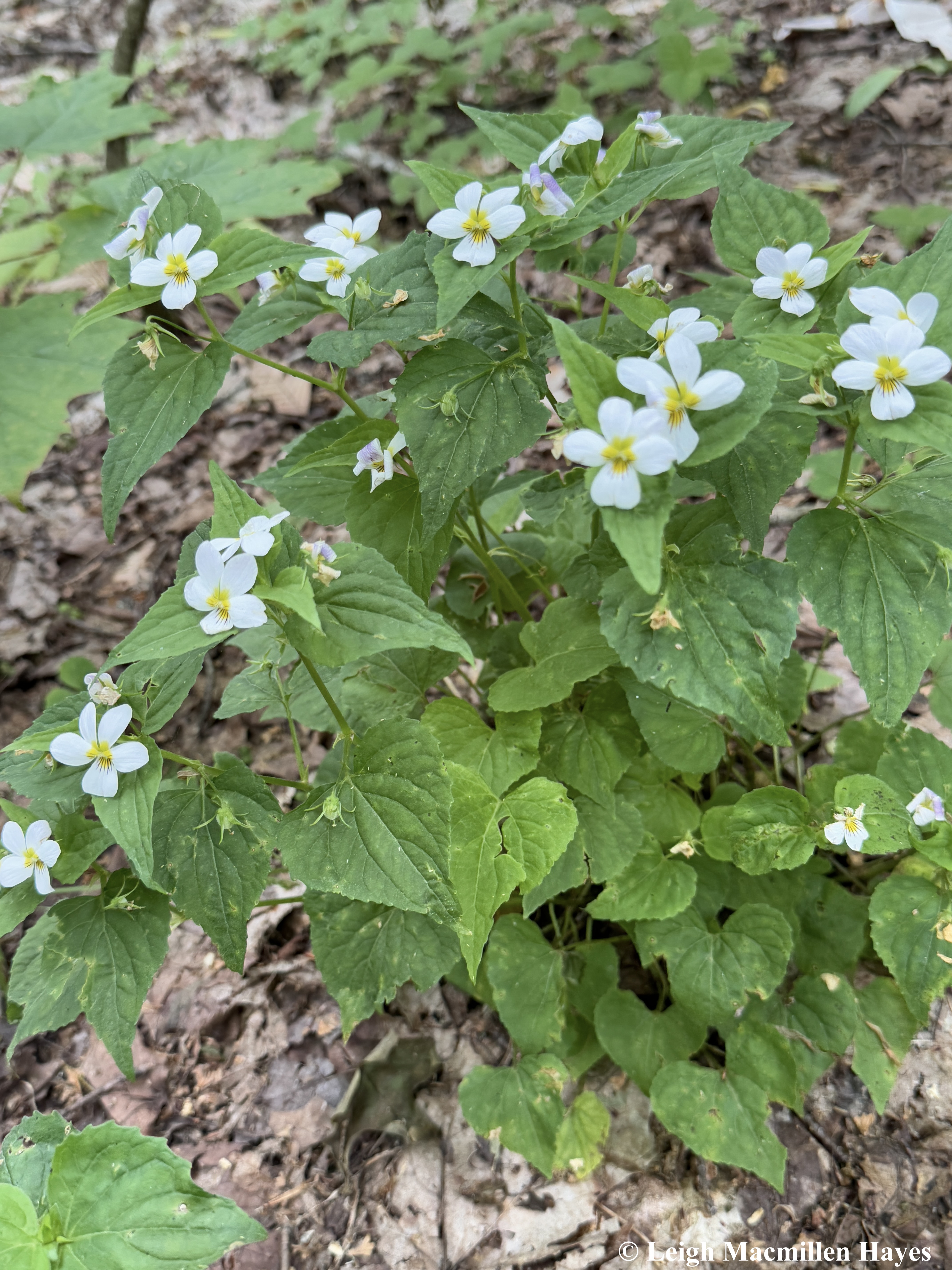
When we finally reached the actual trailhead for Mount Hor, I met a new flower. Canada Violet. It made sense since we were probably about ten miles from the Canadian border. Delicate. Pure white. A well-defined runway to the nectar. And leaves offering a different take on the violet theme.

What we soon realized was that it not only grew tall, but also in large clumps.

Oh my gosh, our next find–Maidenhair Fern. Such a unique presentation and color and, oh my gosh!

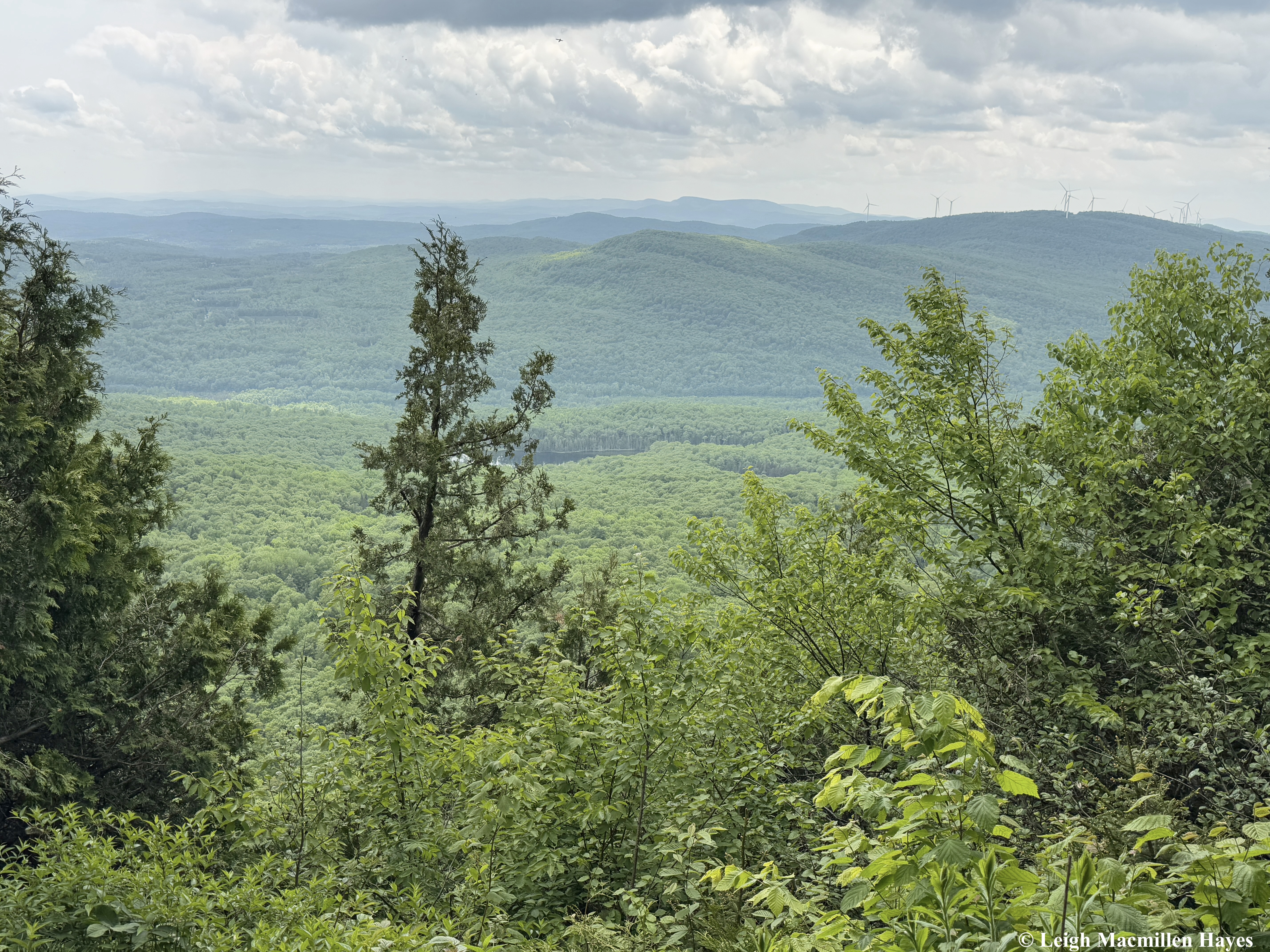
At the summit, we had three choices. First we headed to the Summit Vista, where the view included Cedar trees in the foreground and two delightful couples who were enjoying GORP and blueberries but when they heard that we had homemade Peanut Butter Chocolate Chip granola bars a la The Stow Away Baker in our backpack, they wanted to chase us down the mountain.

From there, we hiked another mile across the ridge line to the East View, overlooking Lake Willoughby.

While there, we spotted a Peregrine Falcon soaring on the thermals, but neither of us got a good shot of it. Still. Forever in our minds eye. And sometimes, those are the most memorable moments.

From the North Vista we looked across at the cliffs of Mount Pisgah and wondered how many more falcons we weren’t seeing.

Back down the CCC Road we did walk once we stepped off the mountain trail and my favorite find was a Mountain Maple, that stopped me in my steps for a few minutes as I had to remember who it was that I was meeting.

Back at Lake Willoughby North Beach, Mount Hor is on the right and Mount Pisgah on the left, creating a fjord-like presentation.

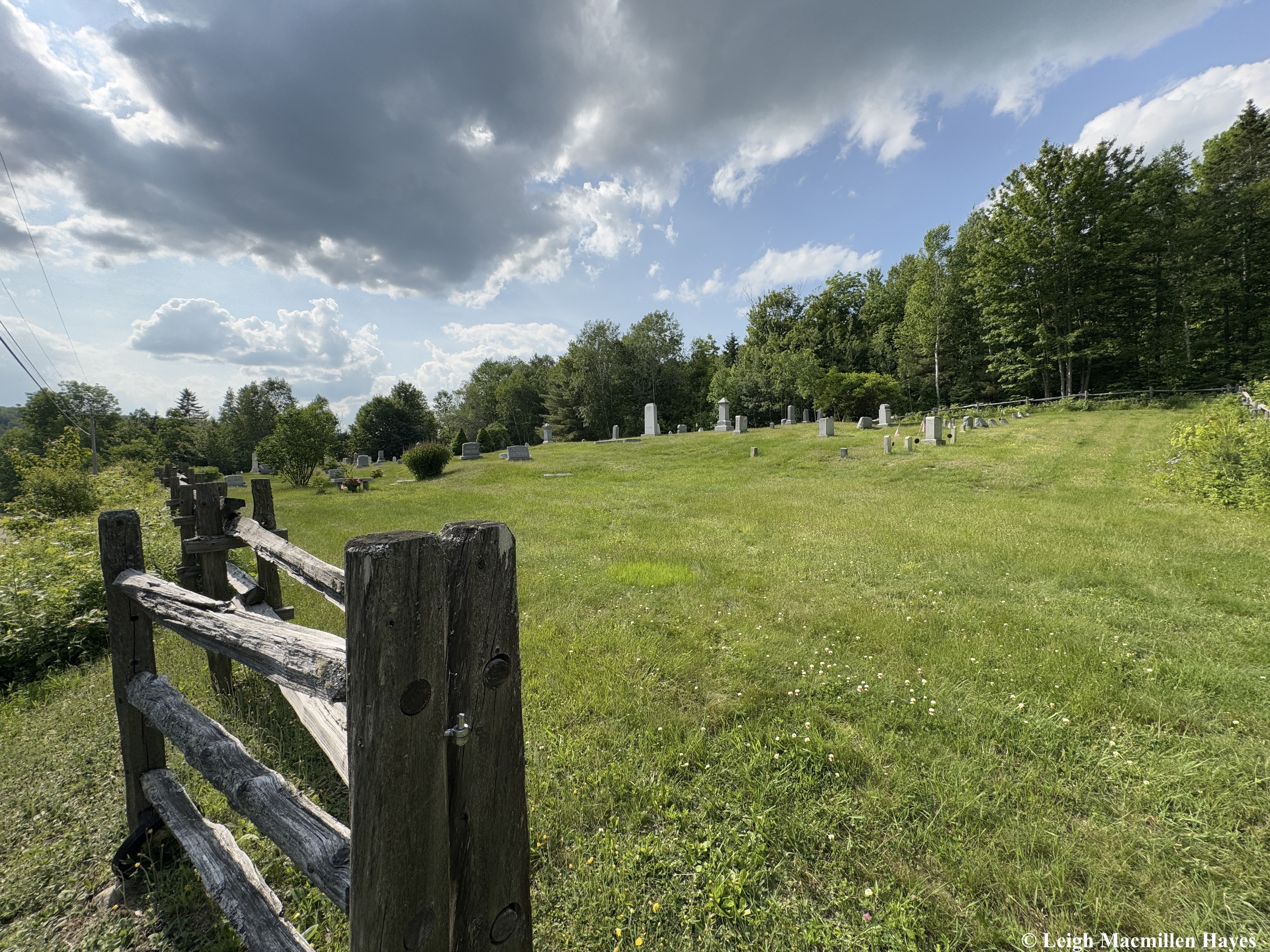
From there, we drove south to South Barton as I let my nose lead the way and found a cemetery I’ve visited in the past for some of my ancestors are buried here.

Recognizing family names is always a treasure. And actually, within the post railings of this place I noted at least three different families that have contributed to my DNA. I’m pretty sure my love of the north country, be it Northern New England or Canada, comes from these folks.

On the way back to our home base, we grabbed sandwiches to go from Three Ponds and gave thanks for their goodness.

And then this morning, after packing and cleaning and chatting briefly with Chuck, we had one more place to explore–Kettle Pond State Park within Groton State Forest.

So here’s the thing. My understanding of a kettle bog is that it’s kettle or bowl shaped. And has an outer layer of herbs, with the next layer surrounding it of taller herbs, and then a third layer of shrubs encircling the kettle, and finally, trees who like wet feet, like Red Maples, forming the final ridge around the pond.

None of this was present. Well, there were shrubs and trees, but not in layers like I’m used to seeing. And the shape of the pond was more north-to-south glacial-related than kettle-related. Hmmm?

Still, some great finds like this Spotted Salamander egg mass along with four others in a deep puddle along the trail. Can you see the embryos forming?

And a Garter Snake that had been basking on a rock in the trail until we happened along.

And Twin Flowers, each sharing a petiole, growing like a mat along a glacial erratic.

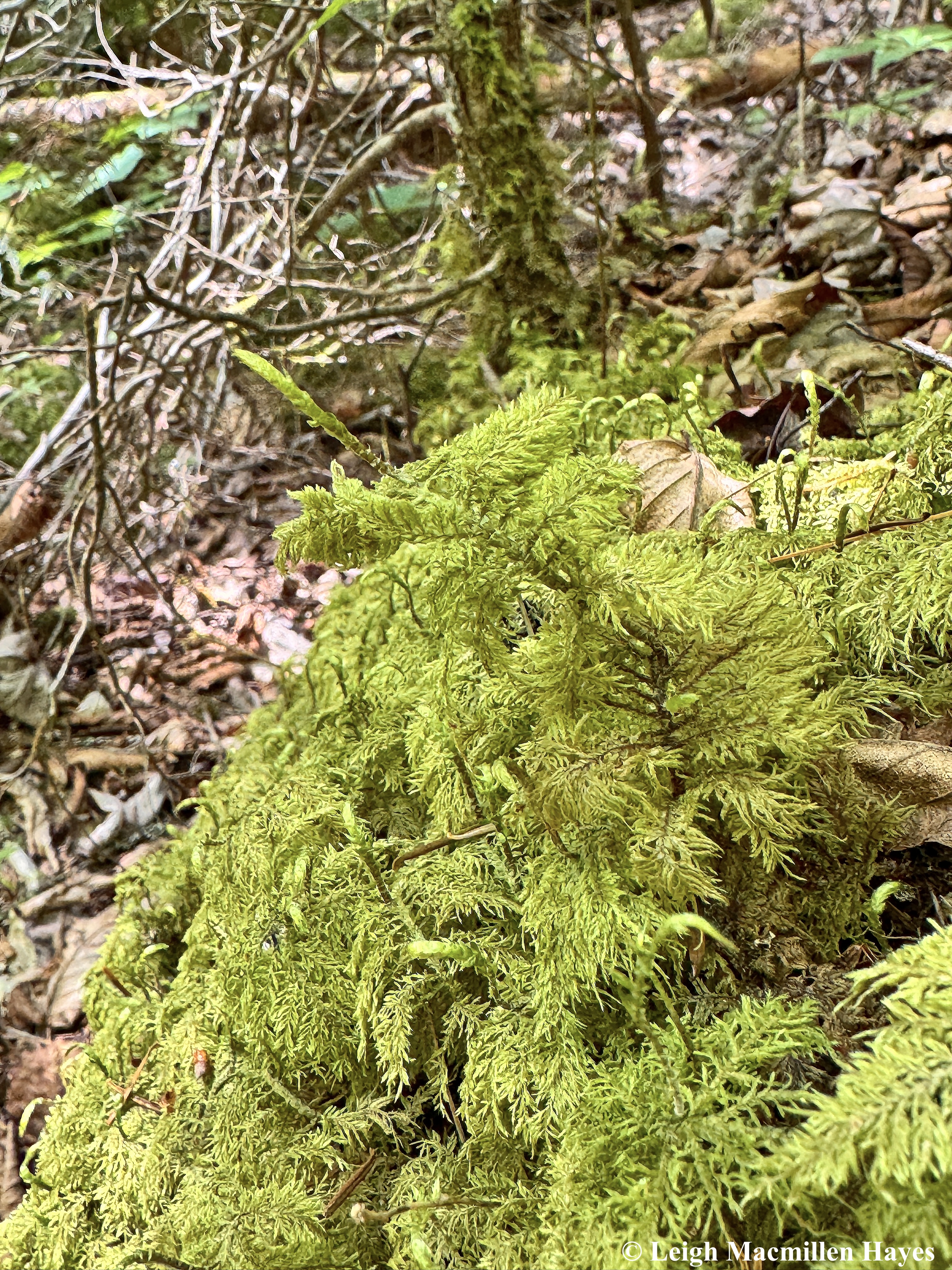
And Stair-Step Moss growing abundantly like a set of stairs here and there and even over there.

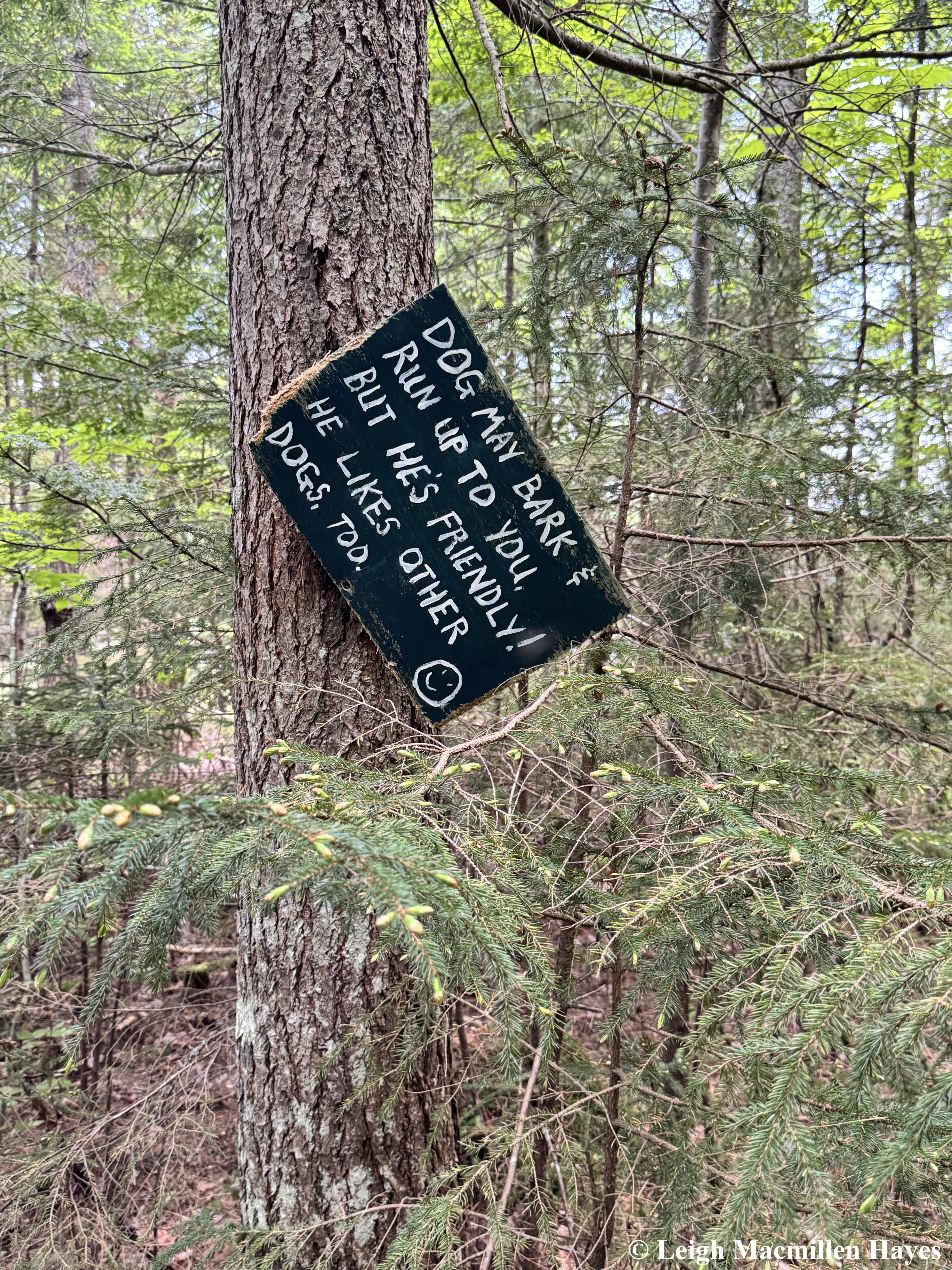
And a warning, which was more of an invitation at the only private cabin along the way, a route which offers lean-to shelters for groups to rent. I love this sign. We looked forward to meeting said dog, but sadly, no one was home.

Flat-fruited Pelt Lichen also lined the trail. So much to see. So much more to learn.

Oh, and an Eastern Newt in the water. It was like the Newt brought the trail to a full circle beginning with the Red Eft on our first hike of the weekend and ending with this adult form.

Our time Vermonting came to an end this afternoon, but oh, what a wonder-filled time we had. We hiked so many miles while meeting old and new friends, dined with dear old friends, met friends of friends who were old friends to each other and new friends to us, and just plain had fun making new memories.

Thank you Chuck and Mercy, and Bev and Bill, and Debbie and those at Three Ponds, and Brian at the Nature Center, and to all the others we met along the way for making our experience such a rich one.

Vermonting we did go. Word or no word, it was exactly what we needed.

Senior College: Forever Students

We honestly weren’t sure anyone would sign up. Or show up.

Vernal Pools and Macroinverebrates
Leigh Macmillen Hayes and Dawn Wood
Friday, April, 25, May 2, 9, and 16th, 9:30 – 11:30 am
April 25: The Hidden Life of Vernal Pools
Discover the wonders of vernal pools—seasonal wetlands vital to forest ecosystems. Learn how wood frogs, salamanders, and fairy shrimp rely on them for breeding and why protecting these fragile habitats matters. Join us indoors at St. Peter’s Episcopal Church for this engaging workshop.
May 2: A Day at the Vernal Pool
Meet at Loon Echo Land Trust’s Raymond Community Forest, Conesca Road, Raymond. Walk ¼ mile to the vernal pool, where we’ll provide tools to explore its temporary residents and their unique ecosystem.
May 9: Meet the Macros
Ever wonder who lives in local streams? Join us to discover the tiny creatures that call them home! Dive into the world of macro-invertebrates—those fascinating “big bugs” without backbones—and learn how macros tell us about the health of the environment. This hands-on workshop will take place indoors at St. Peter’s Episcopal Church. 
May 16: Macro-invertebrates Up Close
Explore the role of macro-invertebrates in stream health and the ecosystem. Join us for hands-on dipping and rock turning to assess water quality at Northwest River and Douglass Brook, Tiger Hill Community Forest, Sebago.
Maine Master Naturalists Leigh Macmillen Hayes and  Dawn Wood of Bridgton will lead these experiential classes. Both have a sense of wonder about the natural world and spend hours exploring only a few feet from a trailhead.

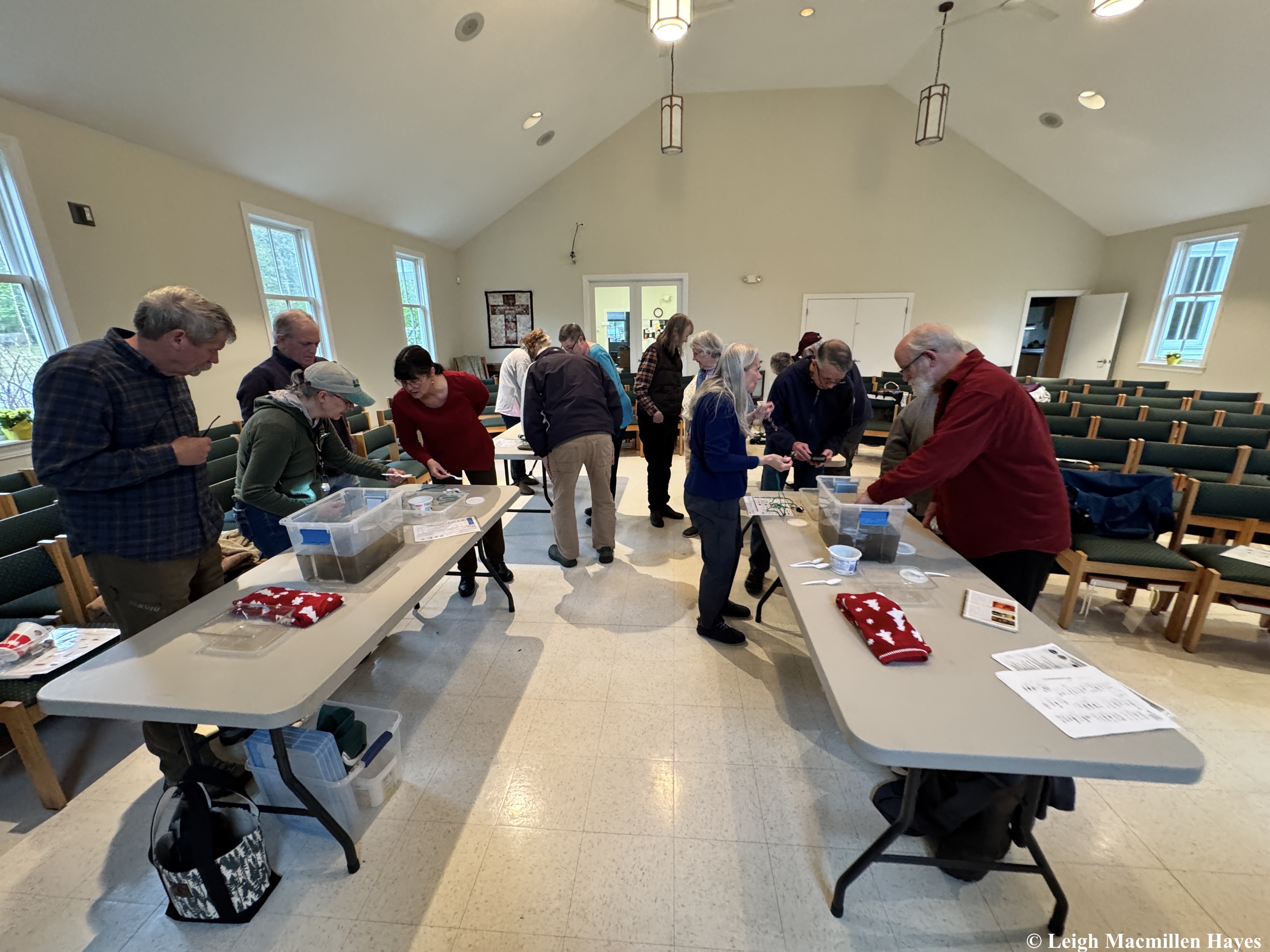
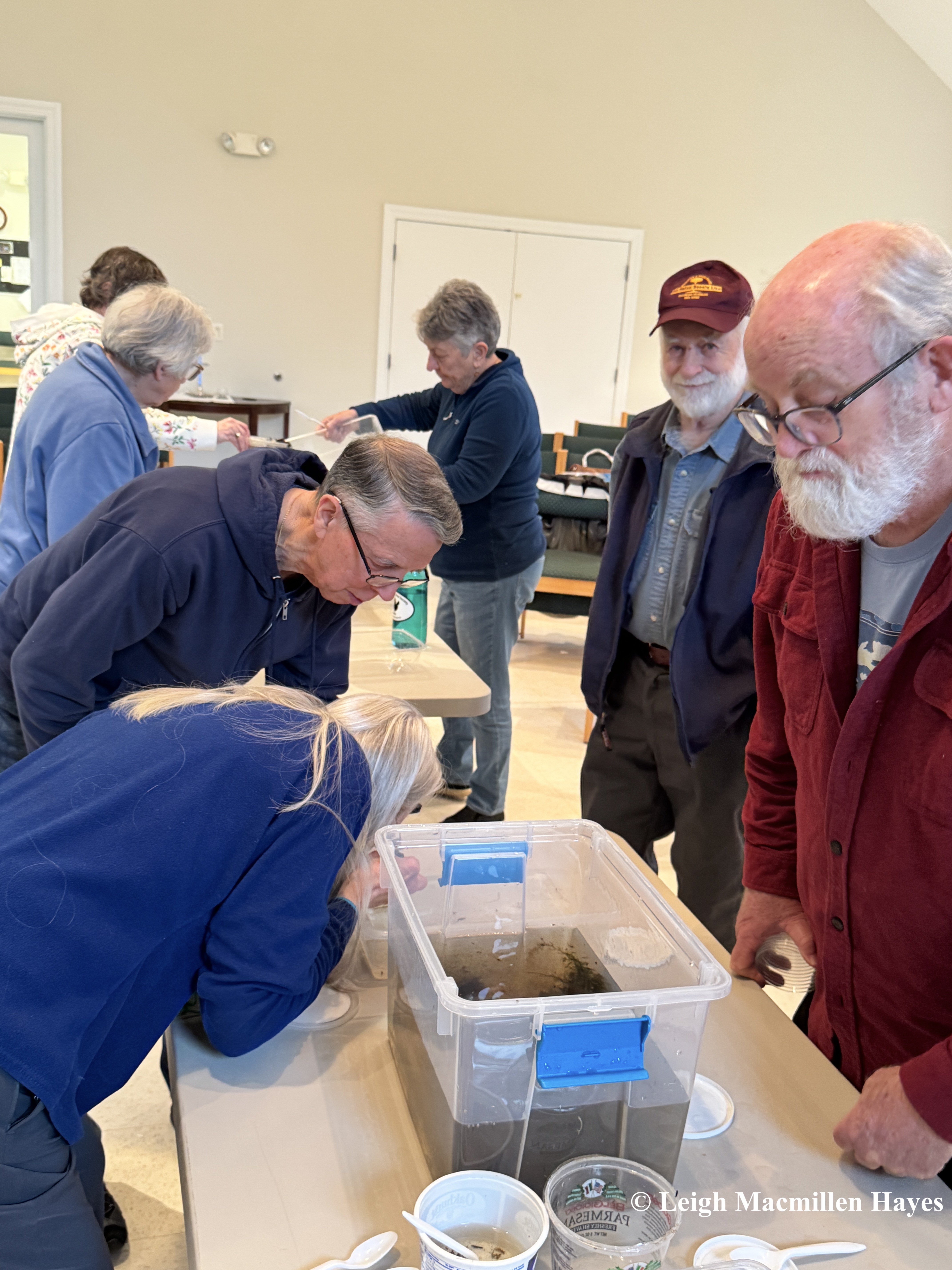
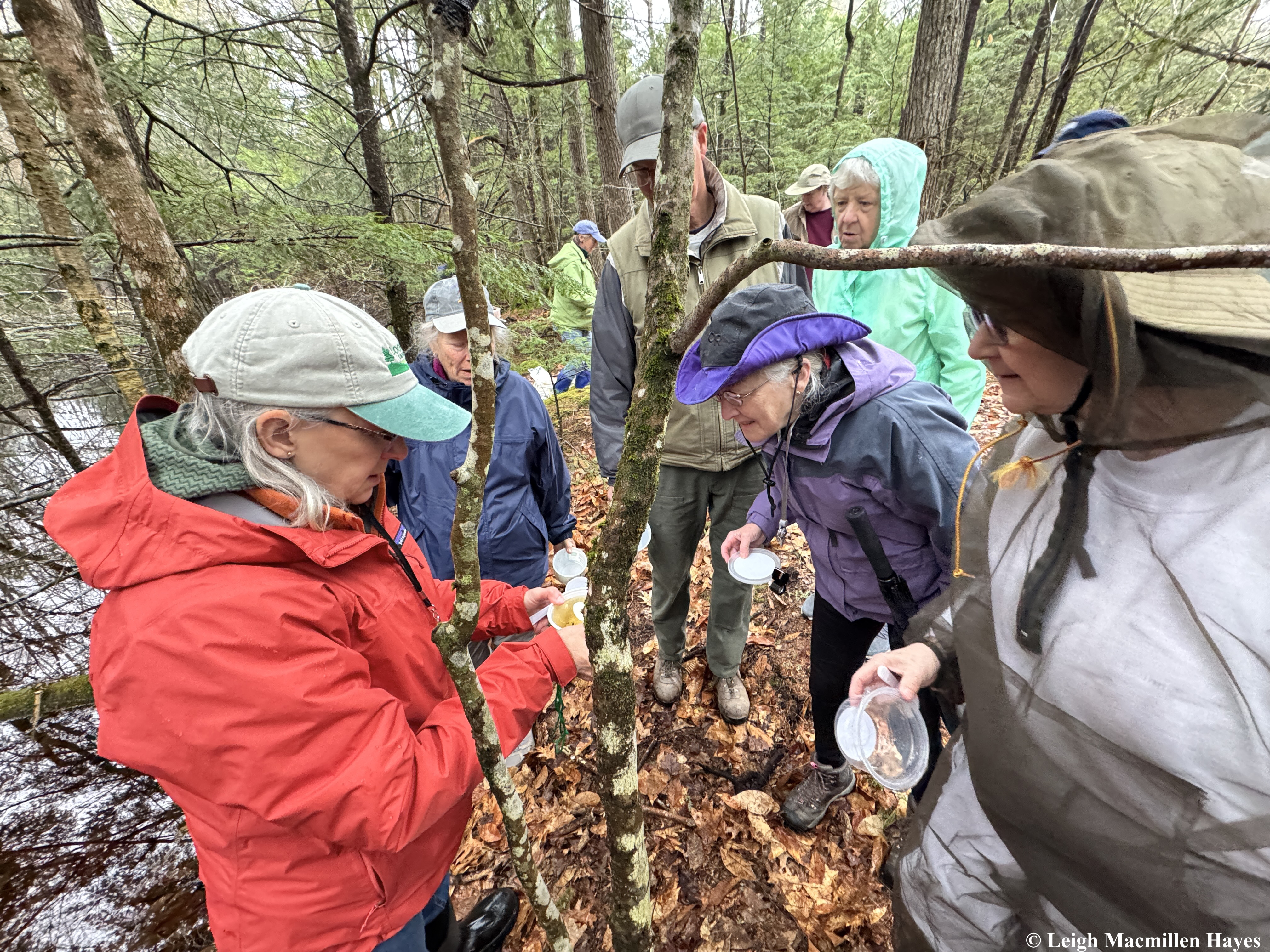
And then they did. Almost 30 of them. The first class, as you can see, was an indoor introduction to vernal pools where we shared our photographs, ID books, and models, and told stories about our experiences in these ephemeral habitats. Their questions were numerous and they shared stories as well, making it an even richer experience.

And then we ended with a musical treat since we knew that there was at least one conductor in the audience. As you click on the arrow to listen to the Springtime Chorus, remember that Wood Frog calls sound like “Wruck, wruck.” Spring Peepers: “Peep, peep, peep.” Green Frogs: “Ga-dunk, ga-dunk.” And Bullfrogs: “Jug-a-rum, jug-a-rum.”

Thank you, Jan, for leading this, and thank you to everyone for participating so willingly.

The following Friday we awoke to rain and again we were sure no one would show up. BUT . . . that did not stop them and we slowly snaked through the forest on our way to the vernal pool.

Of course, we all suffer from that most wonderful of syndromes: Nature Distraction Disorder (NDD), and the summer grape that grows along the Grapes Expectations Trail at Raymond Community Forest was the first thing to draw our attention.

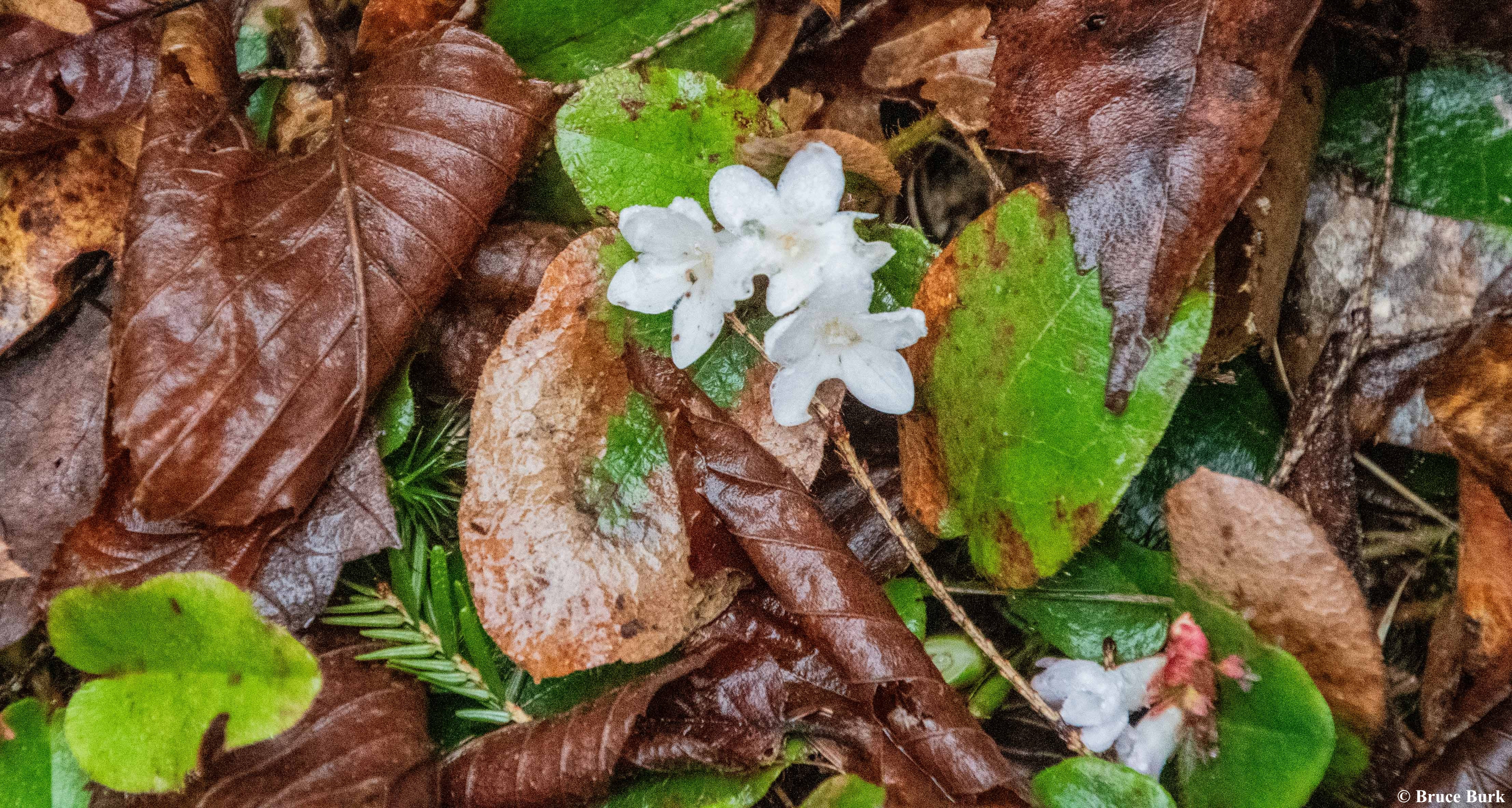
Trailing Arbutus with its sweet little flowers also caused us to pause.

At last we reached the pool and because the sky was overcast and some raindrops and mist fell, we couldn’t see into the pool very well, especially to admire the egg masses deposited by Wood Frogs and Spotted Salamanders. But . . . we could dip.

And within a few minutes the prize of the day was discovered and everyone came to take a peek at what Dawn had found.

Soon one Fairy Shrimp (just enough to make the pool significant by Maine standards) was followed by multiple more. This particular one happens to be a female with a full brood sac at the top of her abdomen.

I’ve said this before, but it’s worth mentioning again and again:

40 Wood Frog egg masses make a pool significant; OR 20 Spotted Salamander egg masses; OR 10 Blue Spotted or Jefferson Salamander egg masses; OR a single, yes one, Fairy Shrimp.

Fairy Shrimp are cool because in order for eggs to be viable, the pool must dry out. And they can survive being dry for multiple years. And in any given year, not all eggs will hatch, thus saving some in the bank for another year or ten.

Our other finds that day include Phantom Midges–with inner workings visible through the translucent body.

And Predaceous Diving Beetle larva, plus . . .

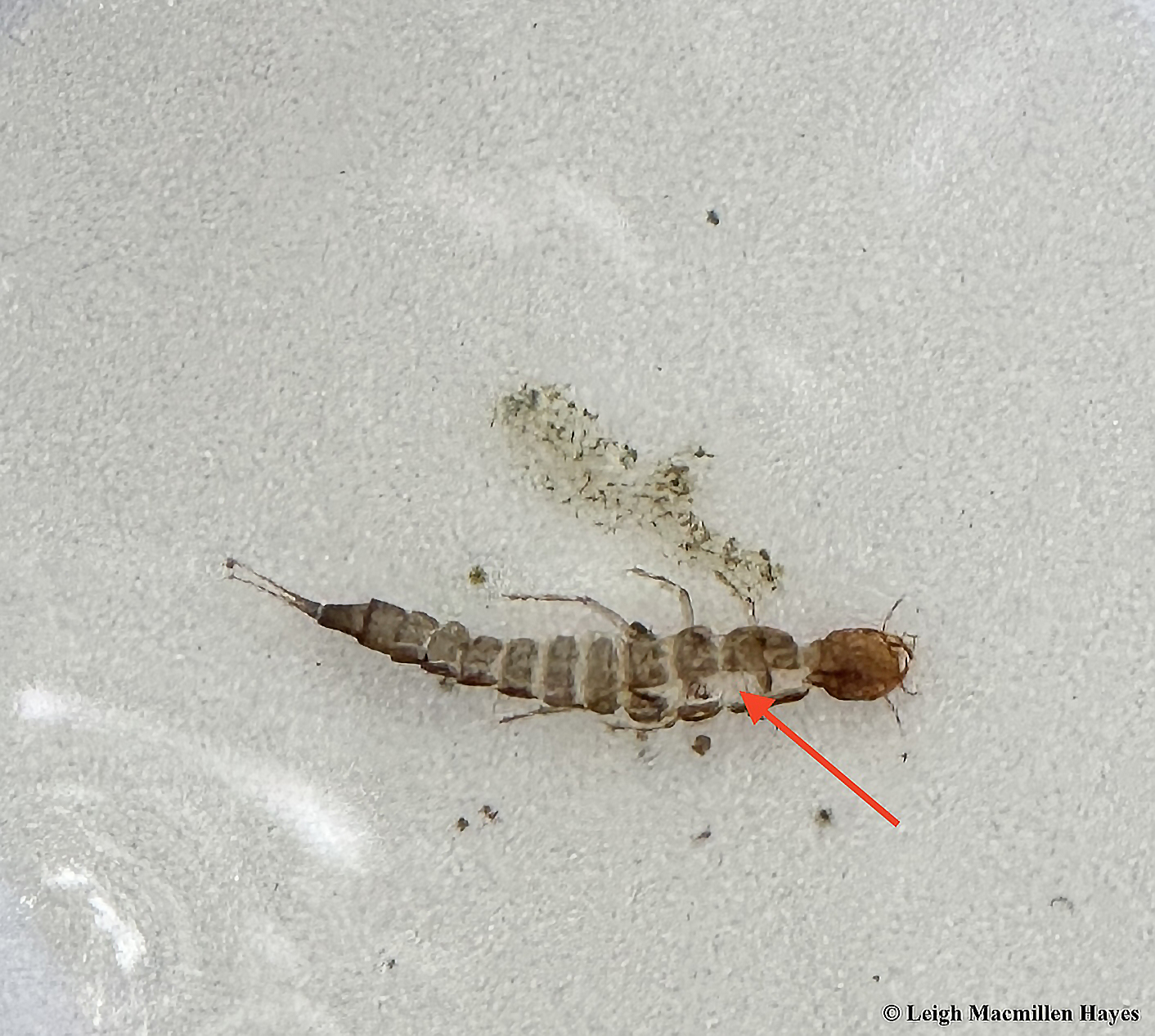
the shed skin of a PDB, with a split where the wings of the adult emerged first and then the rest of the body squeezed out through that slit that the arrow indicates.

This is the adult, with an air bubble on its back end; and if you look closely, you may see a few Mosquito Wrigglers twisting and turning in the photo as well.

We always remind everyone that all larval forms must go back into the pool or stream or whatever waterbody, because in the whole scheme of things, everything is important.

I laugh when I look at this photo because as a youngster, my brother always noted that my mouth was always open in pictures–apparently he thought I talked too much.

But obviously, on this Friday I was waxing poetic about something.

Before we left the pool that day, the students had a surprise for us. The previous week I had pulled out a party noisemaker and reminded those who had attended our winter class on insects that it served as a great tool to illustrate how a butterfly or moth proboscis (mouth part) curls up in flight, but upon a flower, they extend it to reach the nectar. Turn the noisemaker over, however, and suddenly you have a frog tongue–as they snap it out to capture an insect.

And tada, unbeknownst to us, everyone was suddenly a frog. Heck, if we were going to make them perform in the frog chorus, then they might as well be frogs. It was awesome. And yes, they did perform in the chorus once again, after which we left the pool and headed home.

Week three found us back at the church, where we began with a slide show about Benthic Macro-invertebrates.

Benthic: Living at the bottom of a body of water (stream, river, pond)

Macro: Large enough to be seen with the naked eye

Invertebrate: Animal without a backbone

Macro-invertebrate: Large, water dwelling animal able to be seen with the naked eye.

Prior to the class, Dawn and I spent an hour or so trudging to and fro a local wetland to retrieve containers of water so that after the initial presentation, the students could take a look–up close and personal, in the comfort of a building. (Never fear: all critters were safely released in the same spot where we captured them with our D-nets)

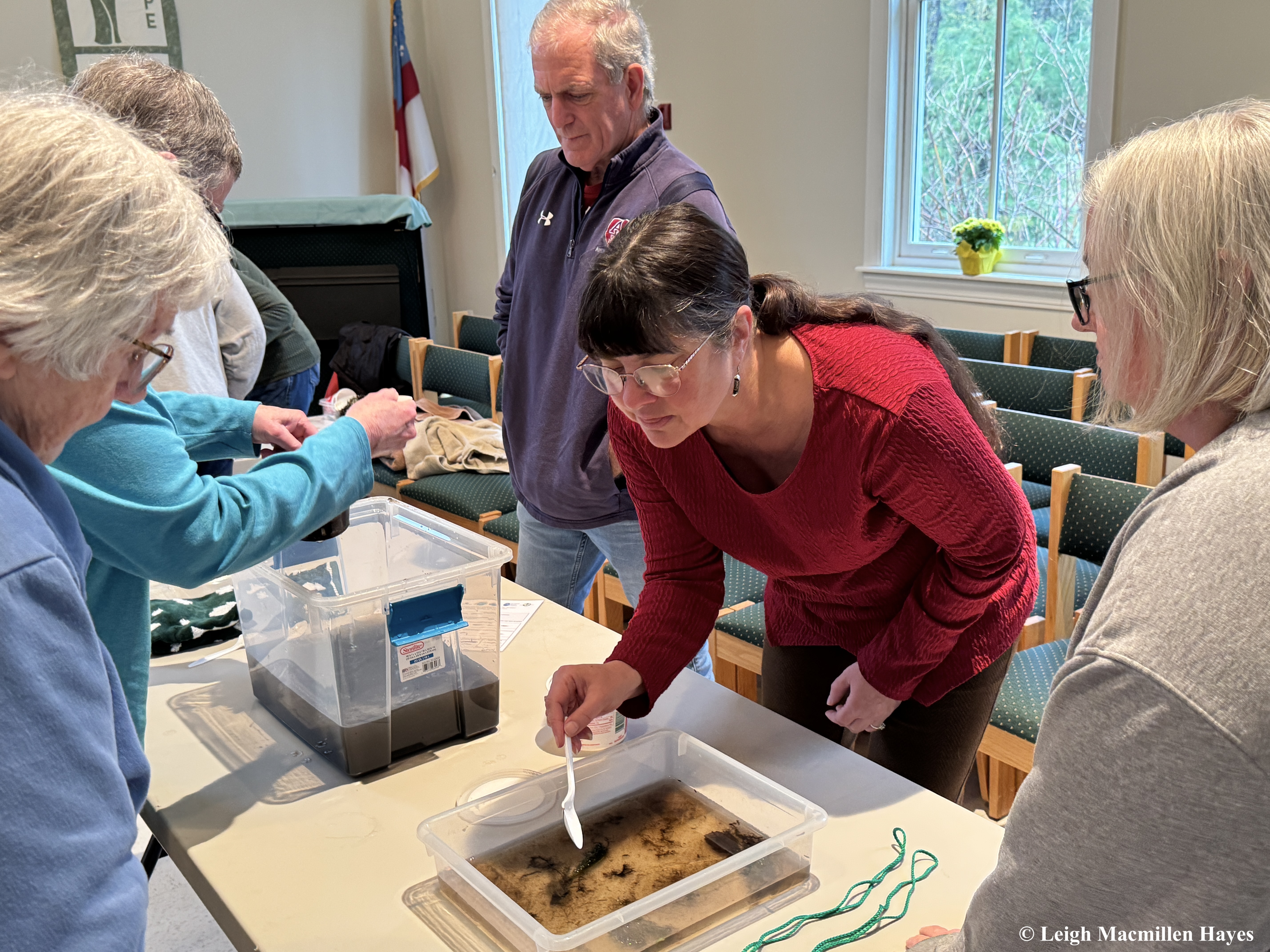
They started starring into the water and began to notice movement. And then, using spoons and small containers and lids, all recycled, they were able to glimpse the wonders of the water.

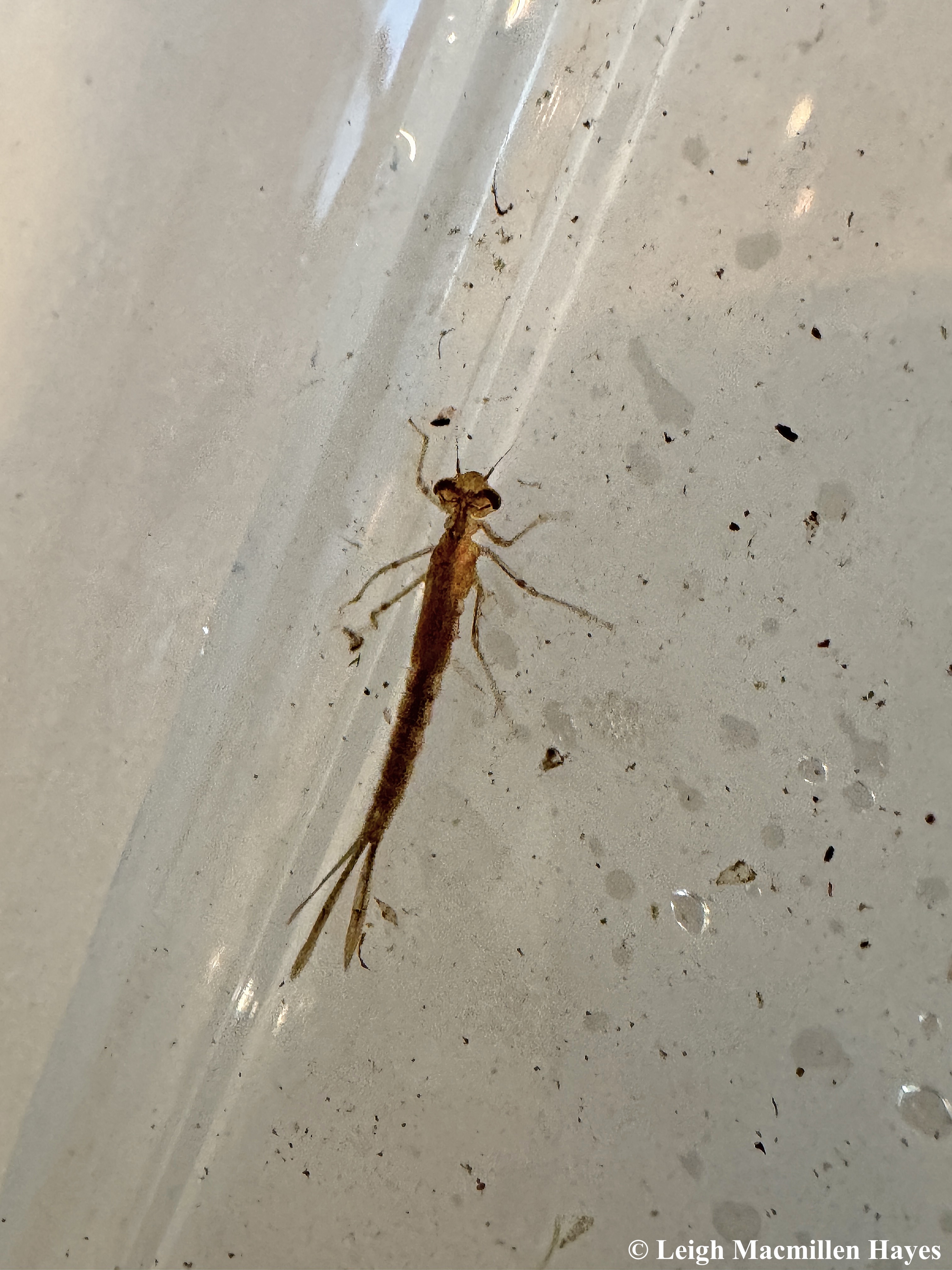
One of the favorite finds was the larval form of a damselfly, with three paddle-shaped tails that serve as gills.

The critters love to hide under the leaves and muck that we’d pulled up so sometimes it took a few moments to wait for the water to settle before spotting something moving.

But they did. And with the use of loupes on lanyards that we borrowed from Loon Echo Land Trust, they found Mayflies and Damselflies and Dragonflies and Backswimmers and more.

Finally, today dawned. The forecast kept changing all week, so we were pleasantly surprised by the sun. That said, you know those Mosquito larvae we always encourage everyone to save? Well, they are hatching. But, just as for the rain, everyone was prepared.

Oh, and yes, another moment of NDD hit us only a hundred feet from the parking lot. We love mud.

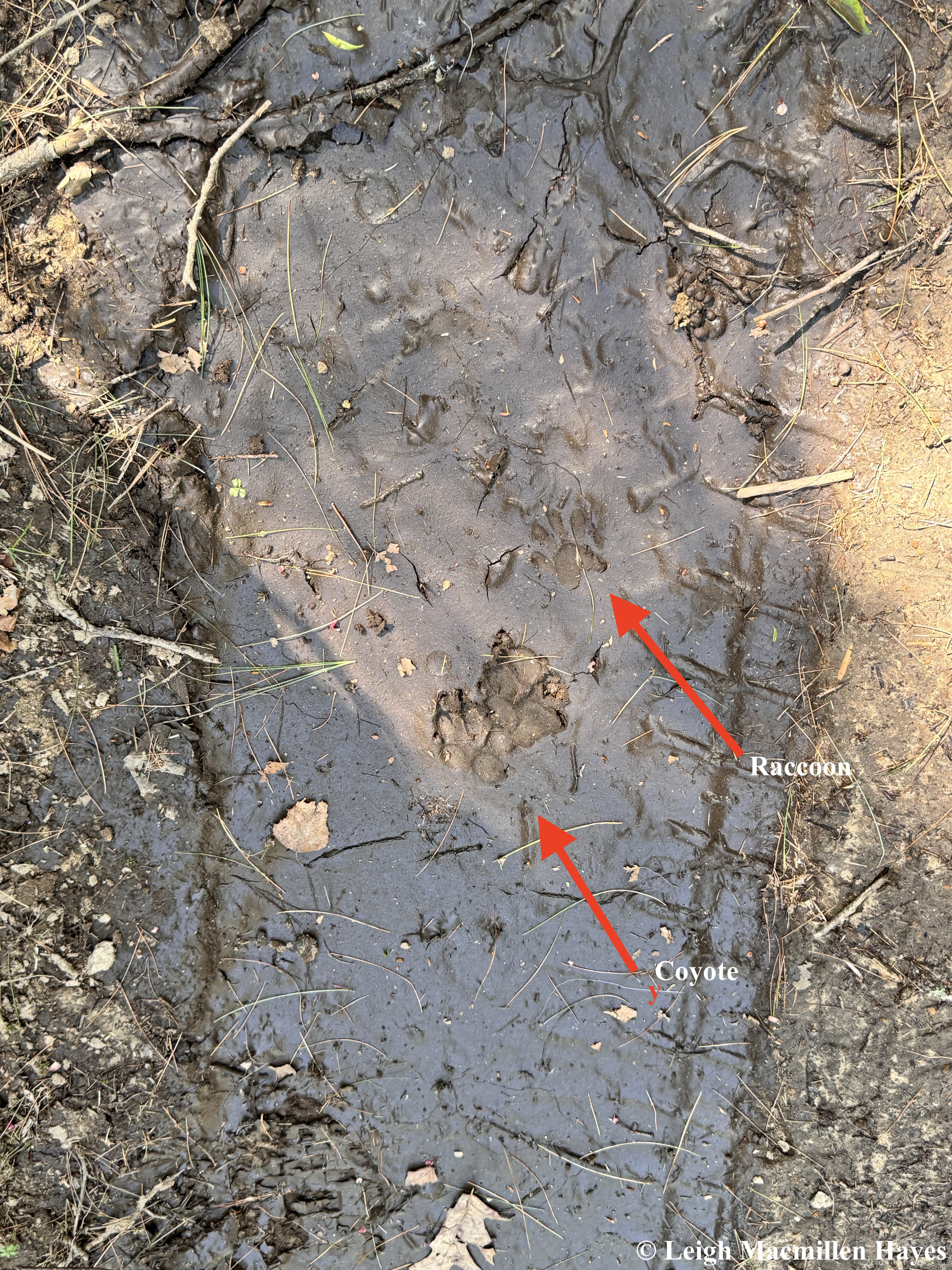
Especially when it tells us who passed this way during the night. In this case, it was two critters: a Coyote and a Raccoon. If we can’t have snow, mud is great. In many ways, it’s even better than snow for the prints are much crisper and easier to read. (Don’t tell the snow I said that. Ever. If you do, I’ll deny it.)

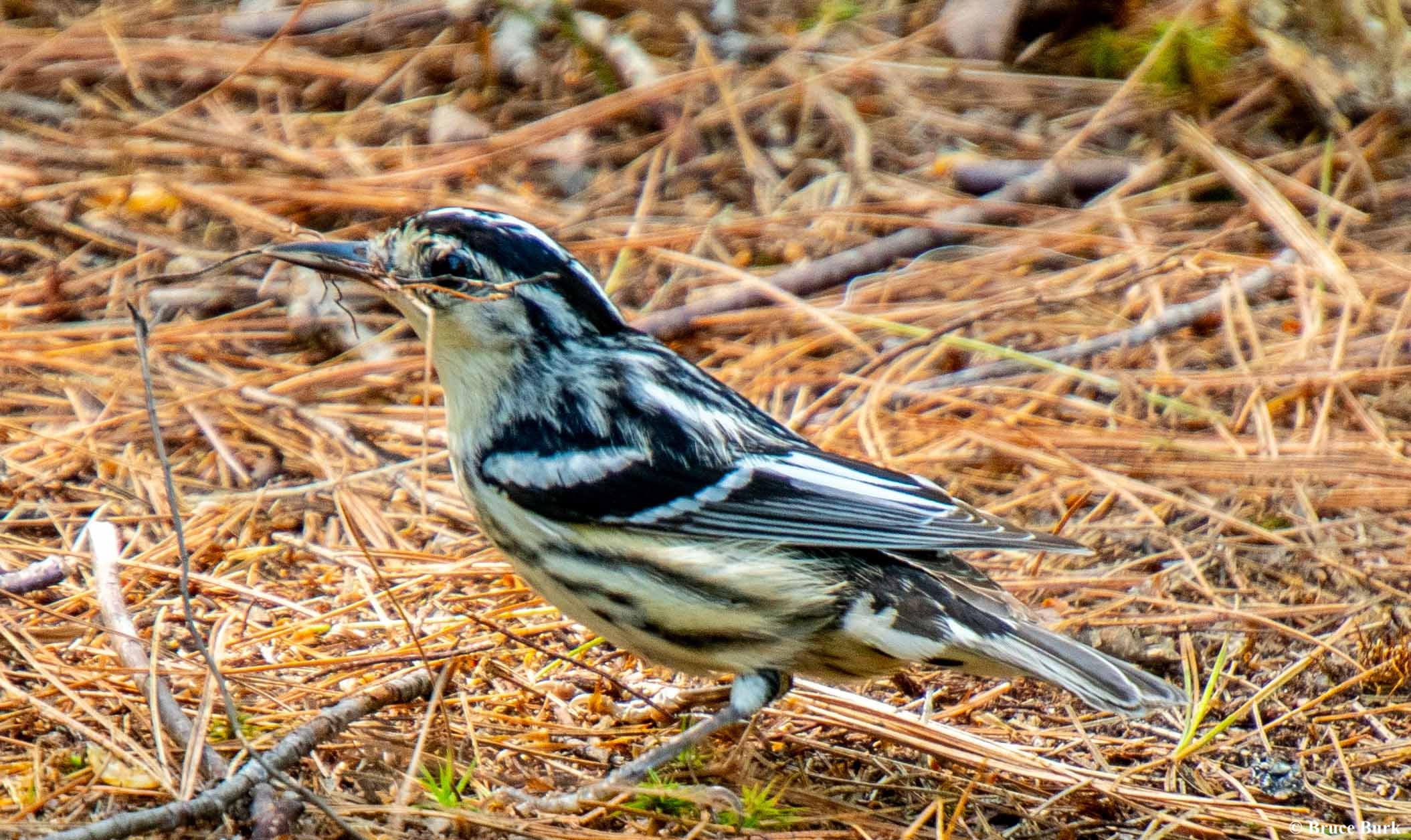
But . . . we had a mission and a time frame. The Black and White Warbler didn’t care. Apparently, we had entered its territory and despite our presence, it went right on collecting nesting material.

When nature surprises us with these moments, I always feel we’ve been blessed to be witnesses.

Finally, it was time to dip the D-nets into the river.

We’d placed a few tables near it so everyone could take a look without risking going into the water. Plus, the trail to the water is narrow and once we realized the bird was building a nest there, it made it even more important that we not spend too much time.

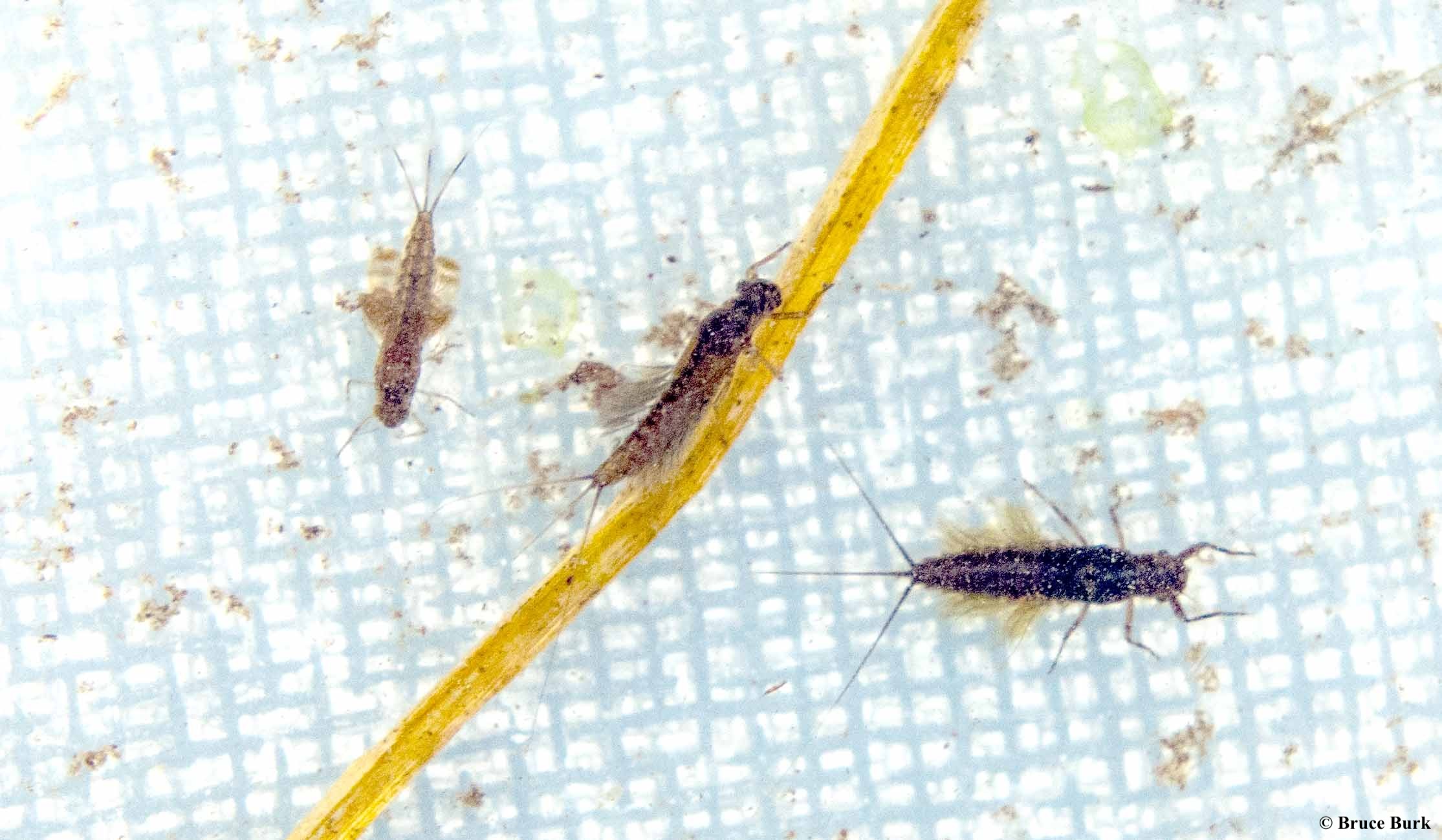
The most prolific finds of the day: Mayfly larvae.

There are so many types of Mayflies as everyone soon realized. What I love about them: their feathery gills on the sides of their abdomens, and the three long tails that most feature, which they even had as adults, probably helping with balance for one thing.

Again, it was an enthusiastic crew and any time something interesting was discovered, all wanted a chance to see.

We had a damselfly that at first I thought was a Water Scorpion because the three shorter tails were held together so that they looked almost like the tubes at the end of the abdomen, but then I took a better look and realized that they weren’t elongated and in every other way, it had damselfly written all over its head and body.

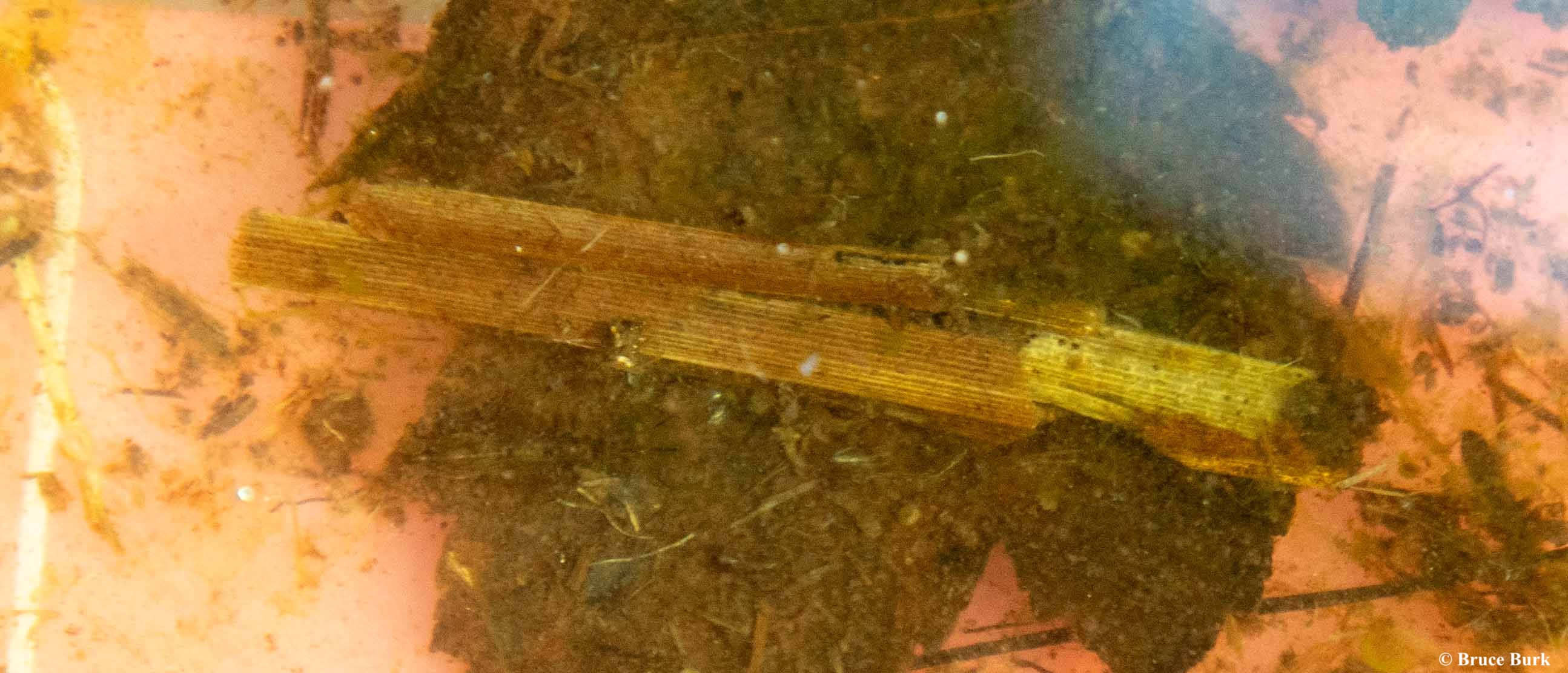
Caddisfly larvae also entertained us and we found a Northern Case Maker, plus . . .

what might have been a Giant Case Maker, who built its home from the broken off tube of vegetation.

Everyone was fascinated, but we had one more stop to make so eventually we had to pack up shop in this location and move down the road to another trail.

Another NDD moment happened as we walked beside a vernal pool where we could not only spot Spotted Salamander egg masses, but also these of the Wood Frog variety, and tons of tadpoles feeding on the green algae. It actually created a full circle from our first classes about vernal pools.

A Pickerel Frog also caught our attention and delight. Bruce caught an amazing photo of the underside of its rear thighs–with the yellowish coloration. Both Pickerel Frogs and Northern Leopard Frogs have spots, but one of the defining differences is the yellow, or sometimes orange color that you see here.

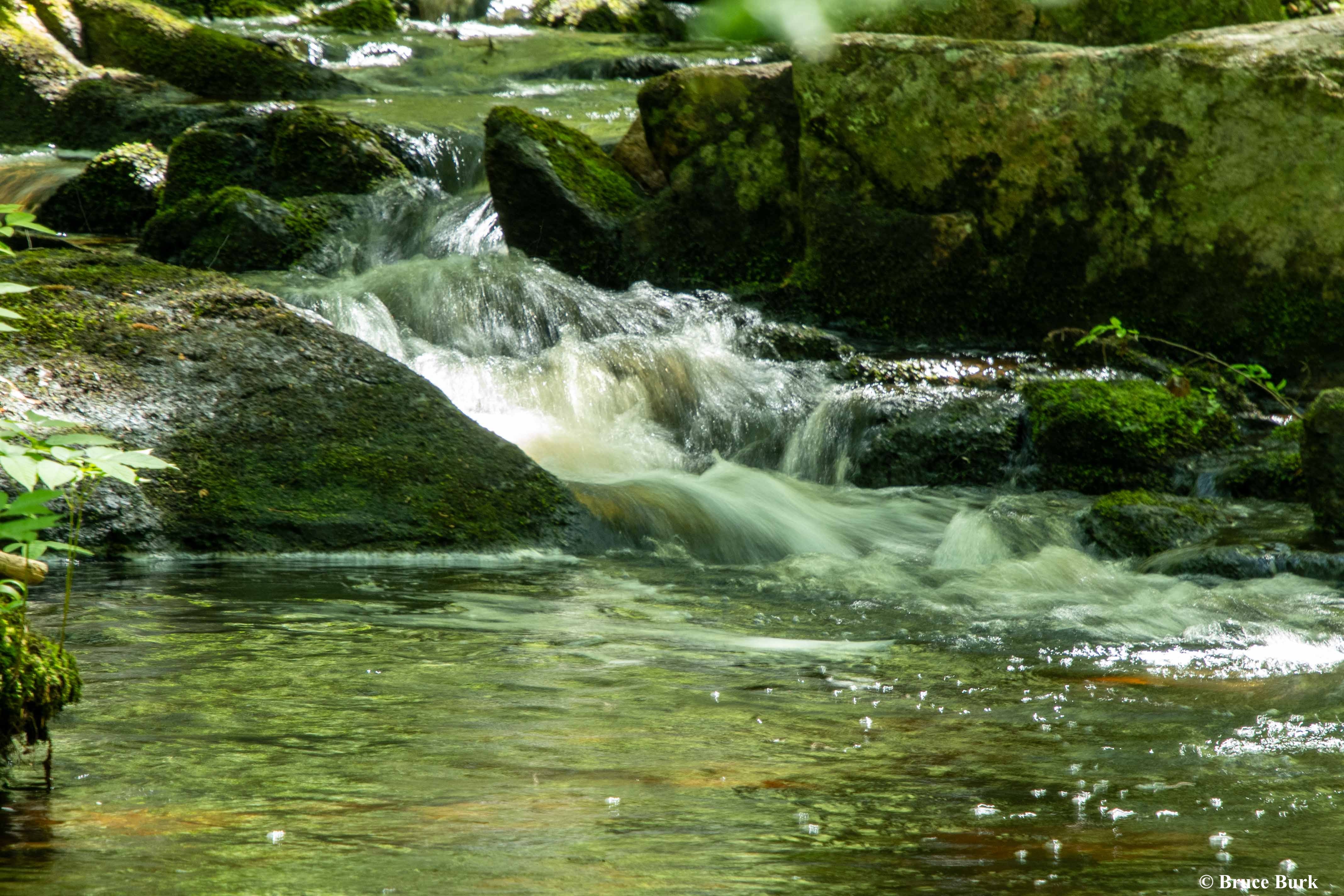
Our final destination was Douglass Brook, where the water flowed faster than it did in the section of the river where we had dipped only a half hour earlier.

Our reason for this location was because it has lots of rocks and we wanted everyone to see how some critters use them as places to cling.

So once again, we took an up close and personal look.

And scooped up anything we could find.

Including Black Fly larva which like fast-flowing water. I think folks were not quite as keen on saving every little critter given how many Mosquitoes swarmed us, but still they did.

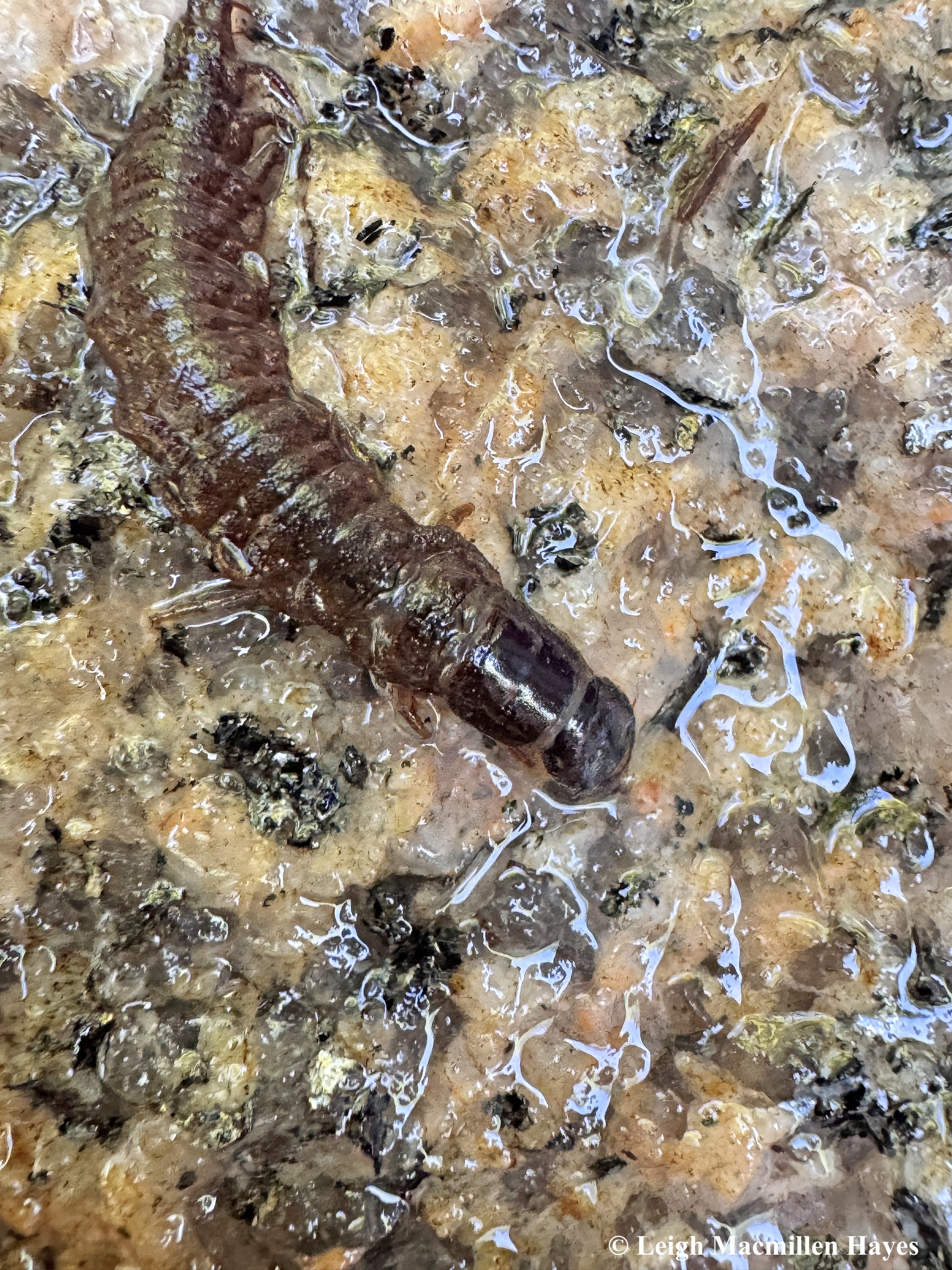
We also found a Dobsonfly Larva, aka Hellgrammite, who prefer the fast flowing water and hold onto rocks with strong claws on their legs, or so I read in A Guide to Common Freshwater Invertebrates of North America, and that’s exactly what this one did.

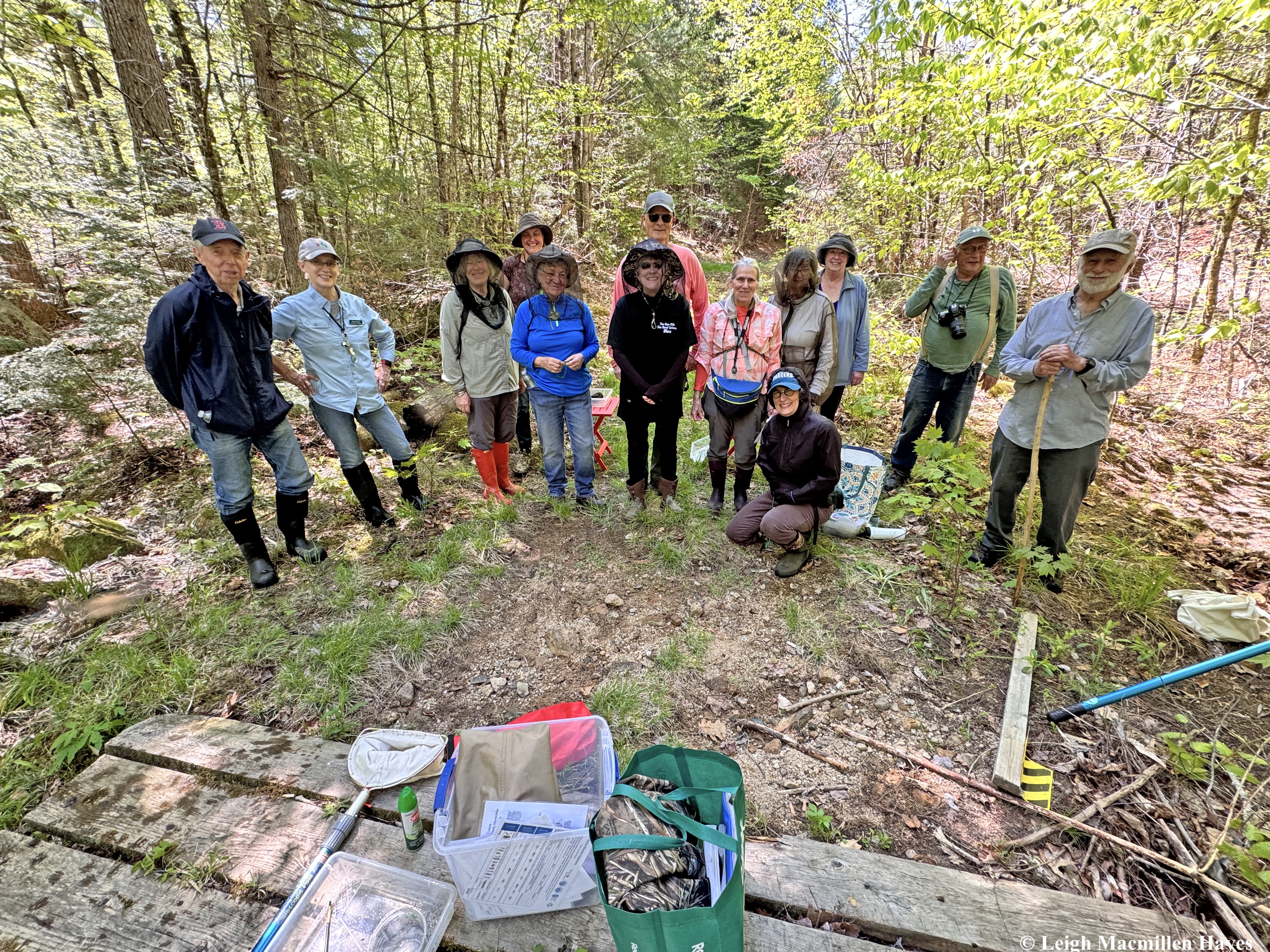
Two hours passed quickly and finally it was time for the four-week class to come to an end. And we were all smiles.

Senior College is an awesome opportunity for us mature beings to learn. The curriculum is diverse; there are no prerequisites, term papers, exams, or grades.

Hats off to the all-volunteer board. And to the students. We can’t believe how many of you joined us each week. And thank you all for helping us carry equipment today.

Many thanks also to Dawn for co-leading with me. And to Bruce for taking so many photos so that I could use them to share all of these incredible learnings with you.

Mr. Cretella, my high school Spanish and Latin teacher, popped into my head just now. In my yearbook, Mr. C. wrote, “Never lose your desire to learn.” Those words have reverberated with me over the years. I don’t remember what anyone else wrote, but his sentiment struck a cord. Pretty amazing, given that when I took Latin I my senior year, I was forever substituting Spanish words if I didn’t know the answer on a quiz or test.

Wherever he is now, I’m grateful that Mr. C. encouraged my desire to learn. And love that so many are the same.

Senior College: Forever Students indeed!

Shout-out to the Universe

After he finished Yoga, and we both purchased veggies, eggs, flowers, jam, and goodies at our favorite farm market, aka Fly Away Farm, and picked up sandwiches at The Stow Corner Store, it was time to pull into a parking spot and head off on a journey, knowing full well that it would probably begin raining before we returned. That said, we left our rain gear in the truck. Wouldn’t you?

Our trail of choice this morning was actually a dirt road. One with a million names, but possibly most easily identified as Forest Road 9.

Because the gate is still locked, we had a two-mile walk ahead of us before we reached our lunch spot, but actually, that is my preferred way to travel this route. As I reminded My Guy, when we walk another road during the winter to a location very close by, we get to see bear hair on telephone poles. There were no poles along today’s road, but there could be other things worth noting.

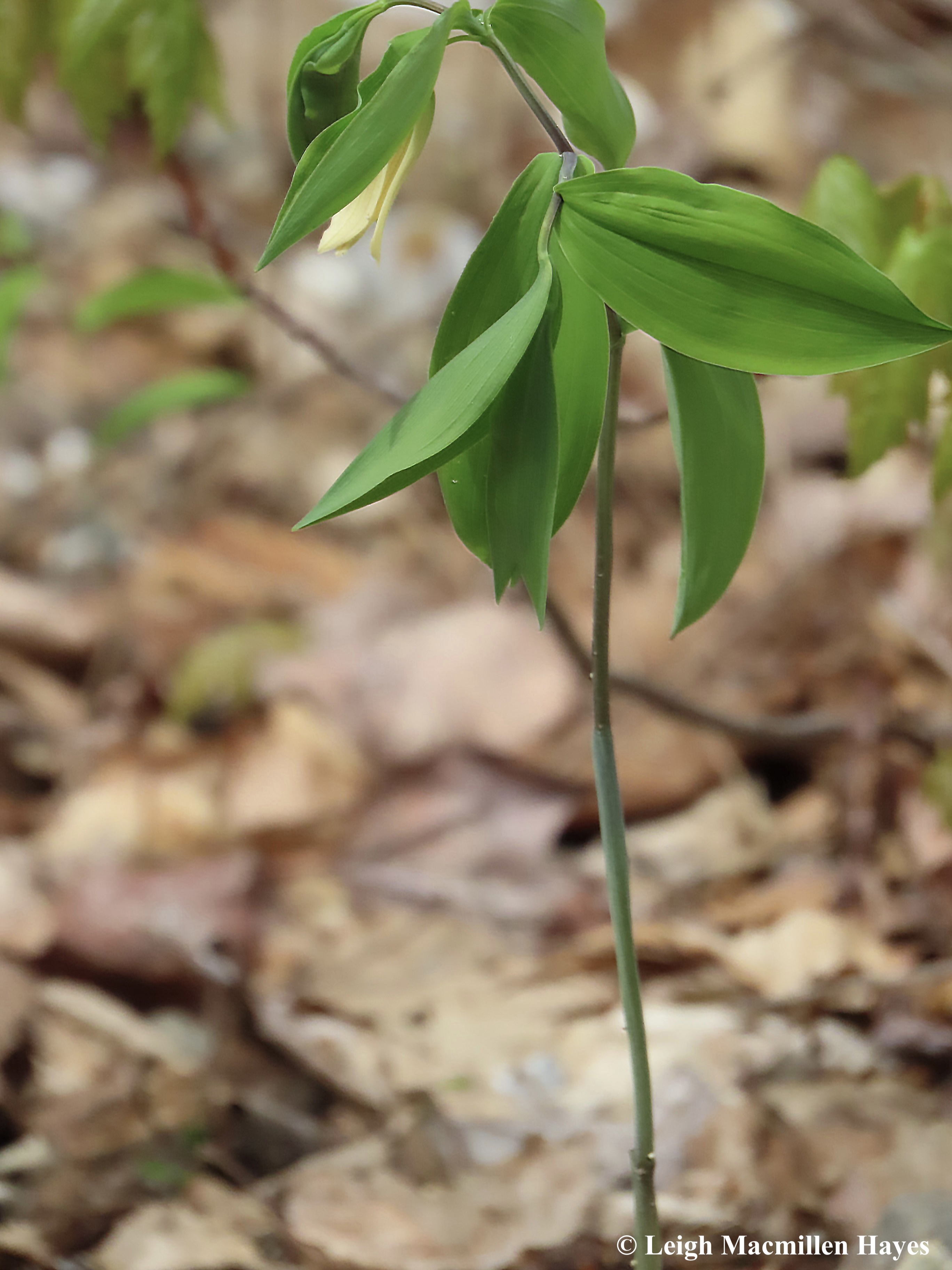
Like Sessile-leaved Bellwort, aka Wild Oat, showing off its drooping bell-like flower that almost blend into the roadside scenery and if you don’t know to look, you might miss it.

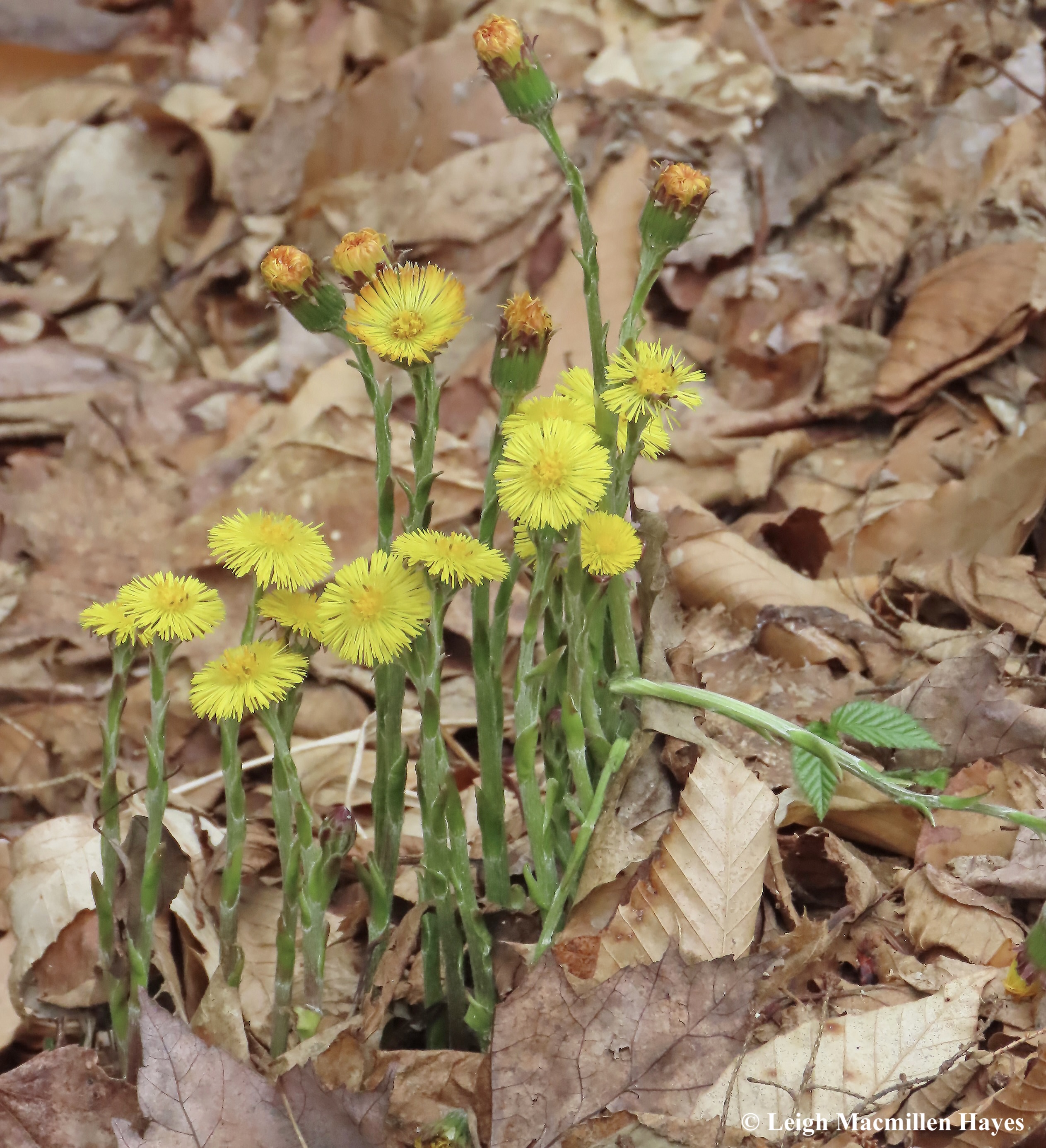
And Coltsfoot! What looks like a Dandelion, but isn’t a Dandelion? I LOVE this flower because like all spring ephemerals, it is so fleeting.

In the Aster family, the flowers can be distinguished from Dandelions by the presence of obvious disk florets and ray florets. The stems are unique in that they are covered in tiny bract-like, scaly leaves, and the actual leaves for which the plant received its common name, don’t grow out until after it has flowered.

At last we reached our destination, after, of course, My Guy showed me where the snowmobile trail turns to the left and comes close to a trail around Shell Pond that we’ve viewed while circling that body of water.

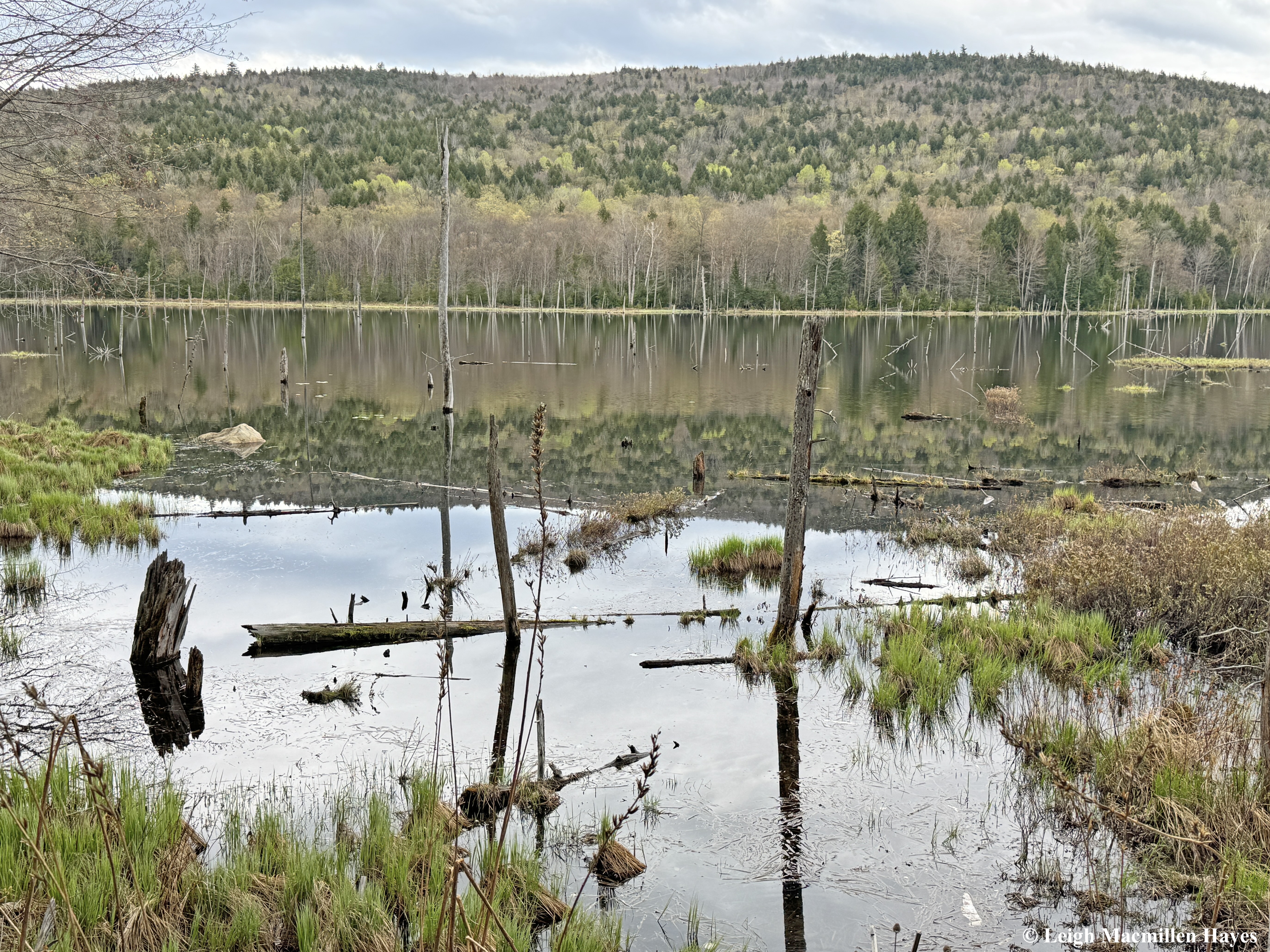
Today’s water body: Deer Hill Bog. One of my favorite places to go, especially when the gate is closed and there is no traffic.

But, I’ve been thinking about that descriptor: Favorite. It’s rather like this one: Common. So many species are named Common This and Common That. And I find nothing common about them at all. I guess it’s true for favorite places. On any given day, no matter where I am, it is my favorite. Unless it isn’t, of course, but that doesn’t happen very often. Thankfully.

Beside the water, we heard a loud BUZZ, and there was a huge Bumblebee nectaring among the tiny bell-like flowers of Leatherleaf and I’d forgotten that they should be in bloom already.

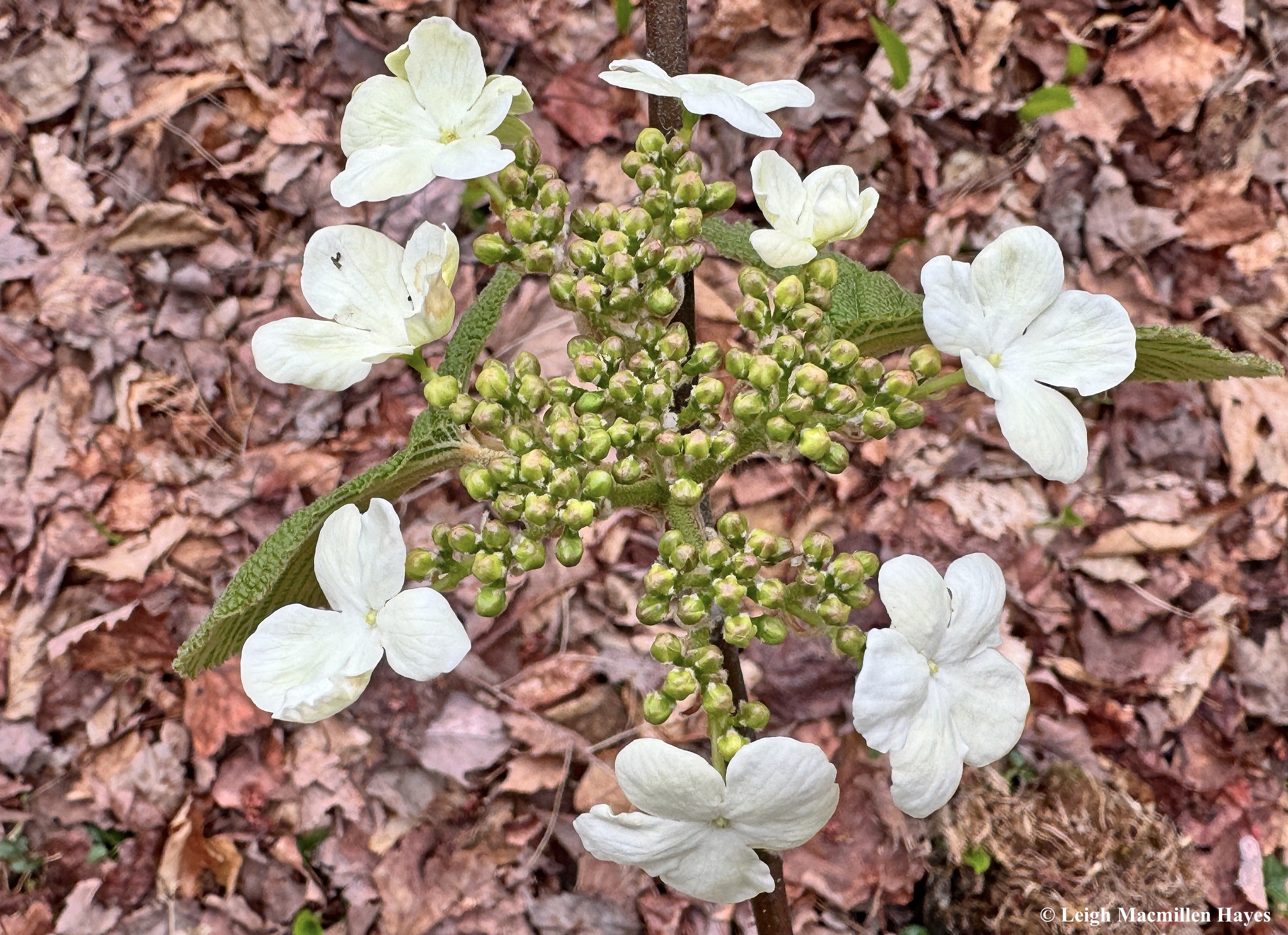
All along the road, and then right in front of the wildlife blind, was another fav that I can’t resist photographing: Hobblebush. I’ve yet to find one with the tiny fertile flowers open, to that means more photos to come.

While munching on my sandwich, I saw fast movement on the water surface as it appeared the critter was running. When I zoomed in with my camera lens, I realized it was a Fishing Spider, who has a hairy, water-repellent body that help it move across the water.

It was while looking down, that I heard a high-pitched whistle I recognized, but was surprised to look up and watch an Osprey land on a snag right in front of us. My, what intent looking eyes, most useful for detecting objects under the water, with fish being its main food source.

That said, the Osprey is a raptor, and I suddenly spied a Canada Goose on a nest atop an old Beaver lodge, and thought about the breeder’s camouflage and how well its wings blended in with the nesting materials making it not quite so noticeable from the air.

Really, though, I think I was the perceived threat since the Goose held its head low and pointed at me as it guarded what I assumed were eggs below its body. Thankfully, it didn’t hiss at me, and when I realized the situation, I moved on.

All the while though, I kept an eye on the Osprey who had flown across the bog and perched–looking in the opposite direction of the Goose. I didn’t want to find out if Goose eggs were on the menu along with a fish. Though it would have been great to have observed it catch a fish.

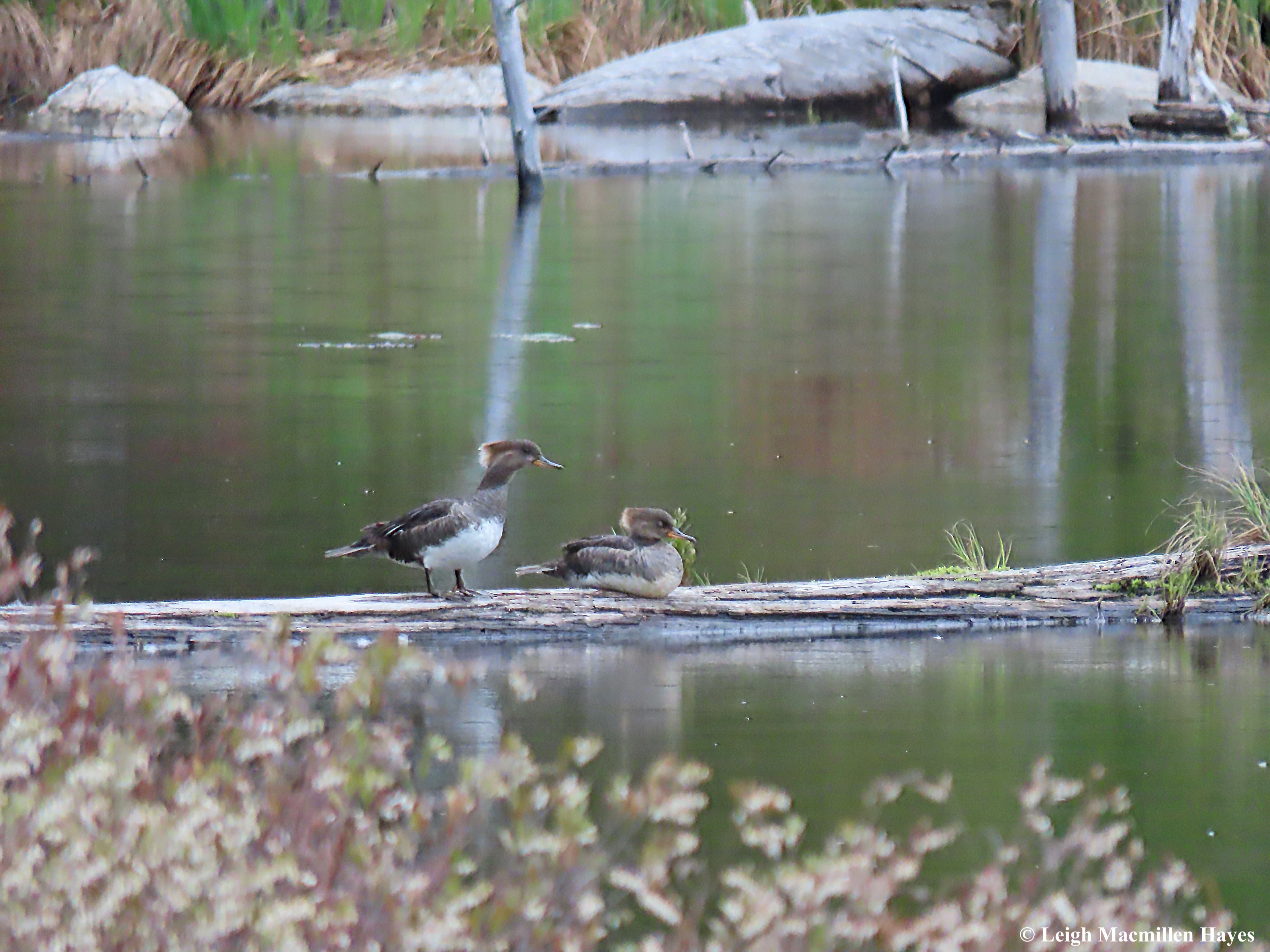
Mergansers were also out and about on the pond and these two vocalized, which drew my attention to their location upon a log where I fully expected to see Painted Turtles basking. But today wasn’t that day–basking day.

Instead, as had been predicted, it began to rain and we had two miles to walk out and unlike the ducks, could not oil our feathers and let the water roll off.

That said, it wasn’t a raw day and we really didn’t mind. I know I rather like rainy days. Besides, we both had extra clothes waiting for us in the truck.

As we walked out, I mentioned that I was surprised we hadn’t seen any Red Trilliums in bloom.

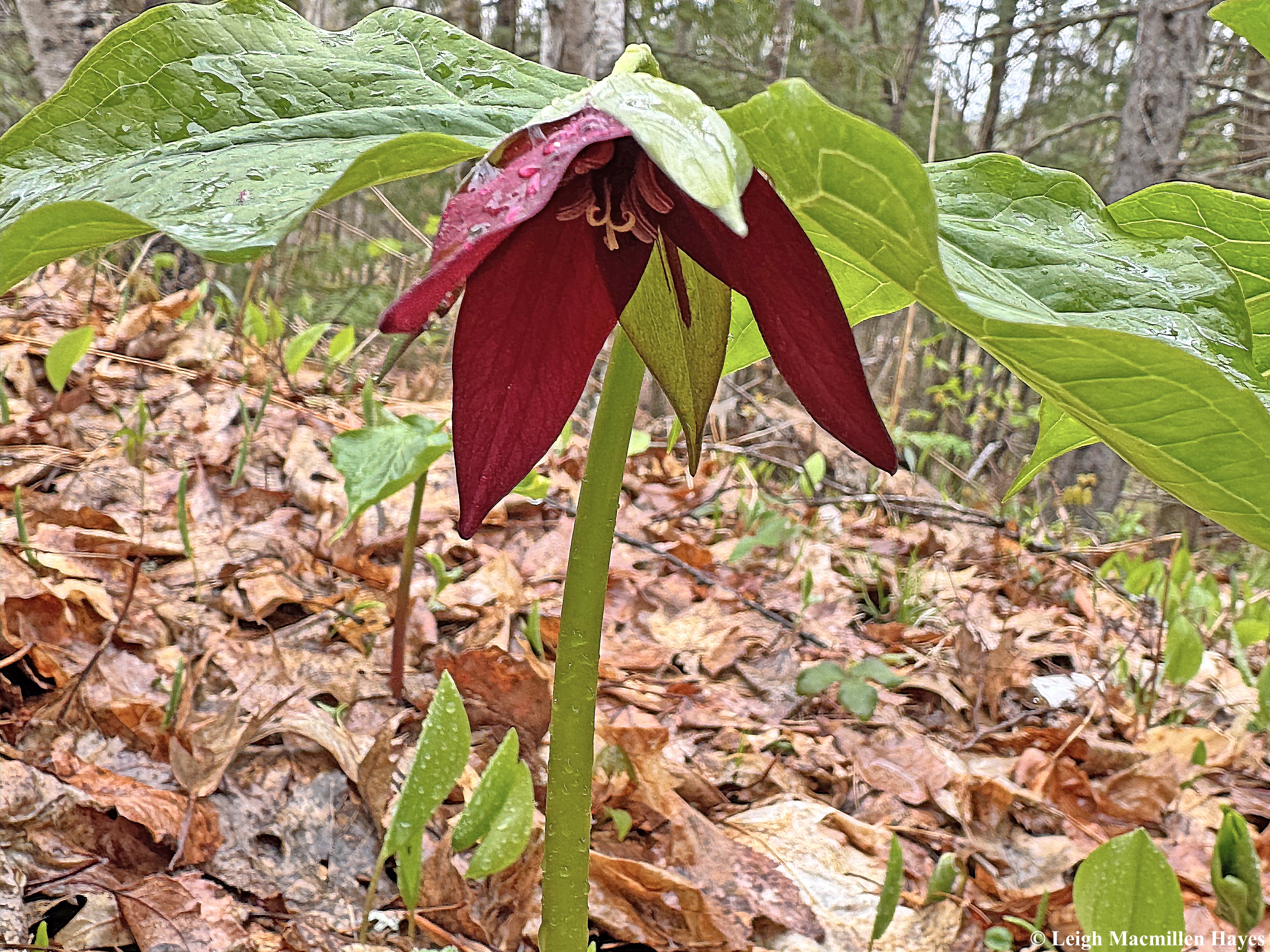
I kid you not, a minute later I spotted a Painted Trillium, the first of the season for me.

My Guy wasn’t surprised, but wanted to know if I could make a Moose appear.

No, but about a mile later . . . a Red Trillium. We had missed both of these flowers on the way in, which is another reason why though loop trails are wonderful, I don’t mind retracing my steps because there’s always something different to see.

As for the Moose, no sightings today, but . . . I still want to give a Shout-out to the Universe for what we did spot both at the bog and along the road.

My Guy, The Giant Butterfly Whisperer

It’s Monday. And that typically means a Mondate for My Guy and me. Especially if he’s worked all weekend. And a Mondate most often means a hike. So, that being that, we headed off to conquer two trails today. Neither was overly long, and one was rather easy, while the other was moderately difficult. But both offered sightings that have us still smiling.

I’ll start with the second hike of the day because this is my blog and I can do that sort of thing. We were in Shelburne, New Hampshire, and so on our way back to Maine, we stopped at the Shelburne Forest, a trail we tried to hike a year or two ago, only the Mosquitoes or Black Flies or both were so thick, that after about a quarter mile we turned around and raced out–treating ourselves to ice cream sundaes in Bethel, Maine, instead.

Today was different. Blue Sky. Slight Breeze. 75˚.

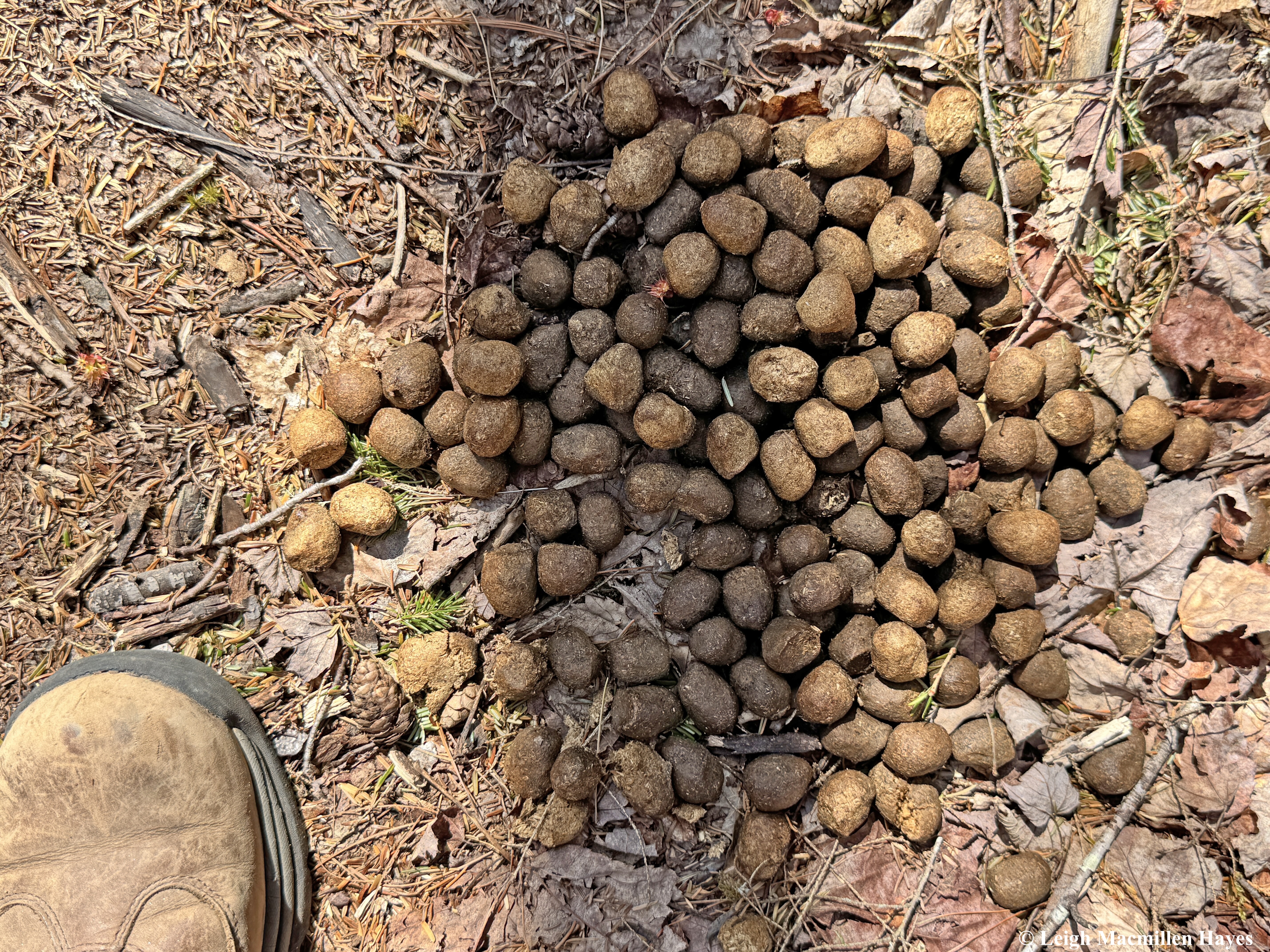
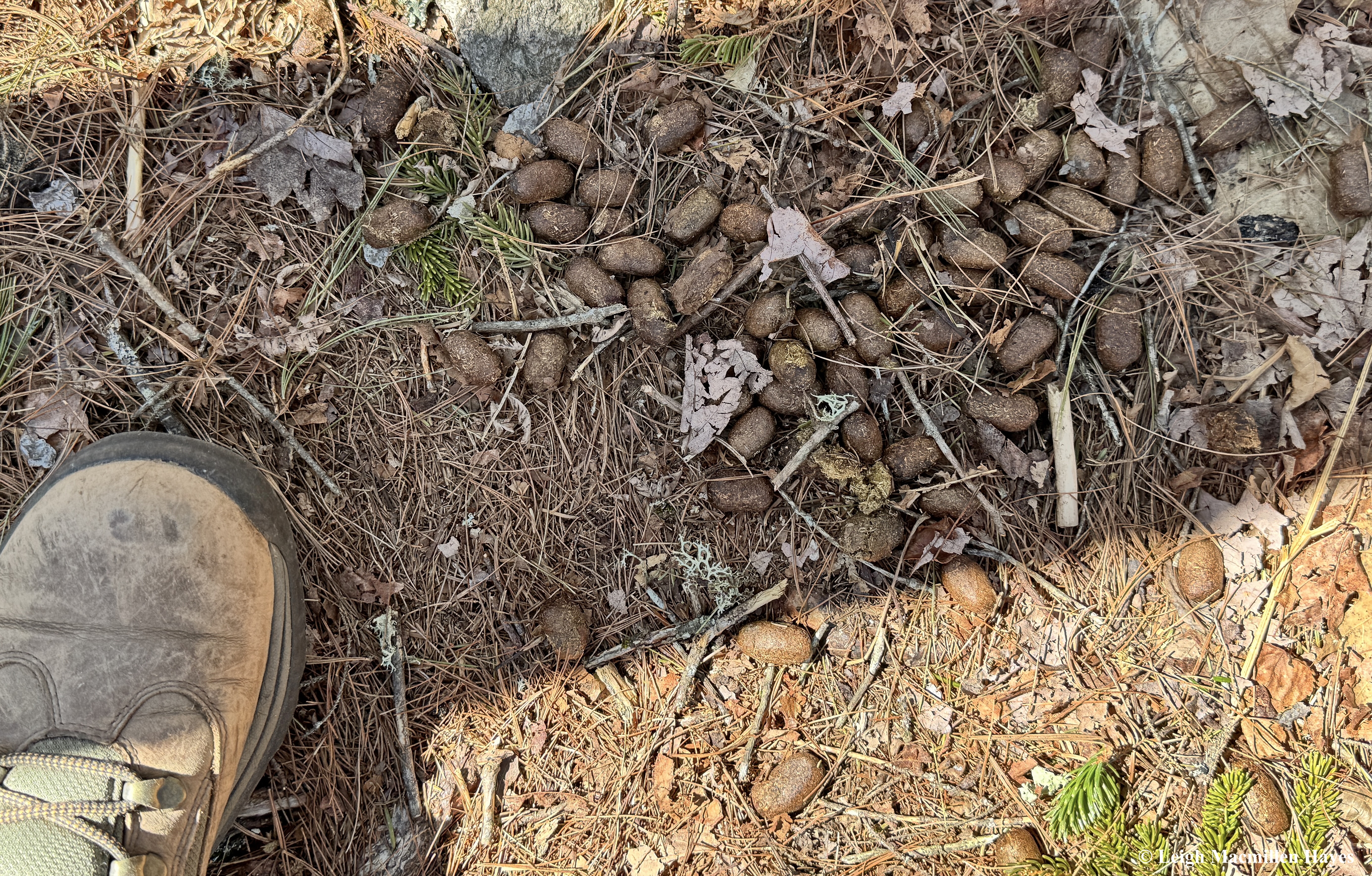
We soon began to notice a theme along the River Trail. First we encountered several Fox scats, indicating this spot may have marked a territory. It seemed like it was important enough to return and leave a sign again, and again, and again.

A wee bit farther and more Fox scat.

And several displays of Moose scat, this one being from this past winter, while another had more debris on it and was starting to break down, indicating a previous winter.

We also noted Beaver works in the form of a dam, plus some cut trees on the trail beside a steep embankment to the river. And deer prints and scat. And coyote scat.

I mentioned that I’d like to come back in the winter to see who spends time here.

My Guy’s response, “Anyone else might think you were talking about people, but I know you are not.”

He gets me!

I had two other favorite sightings along this “Scat” trail. The first being the leaves of Trout Lilies. NUMEROUS leaves of Trout Lilies. So now I know I need to return soon to see the flowers, rather than just wait until winter.

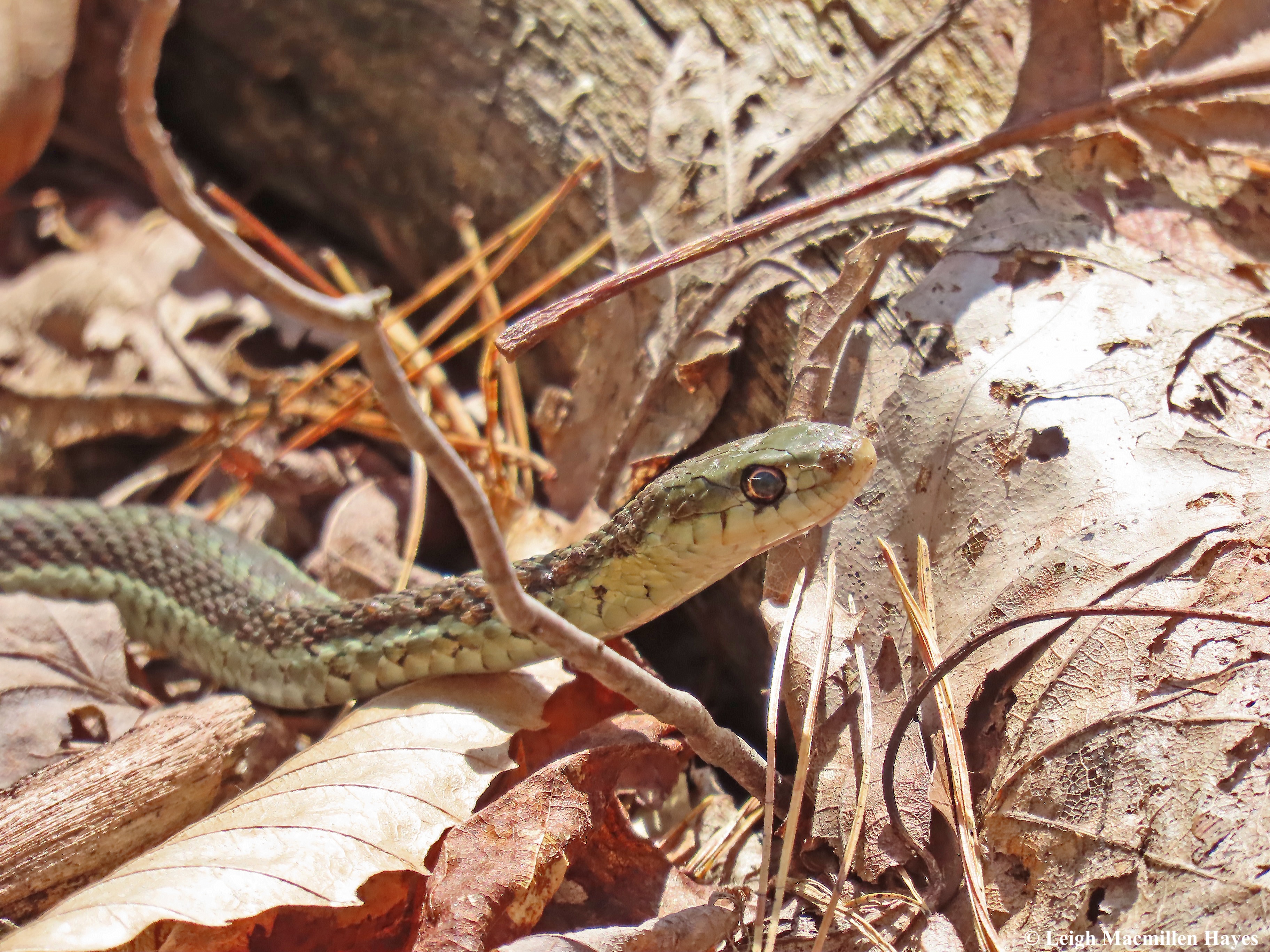
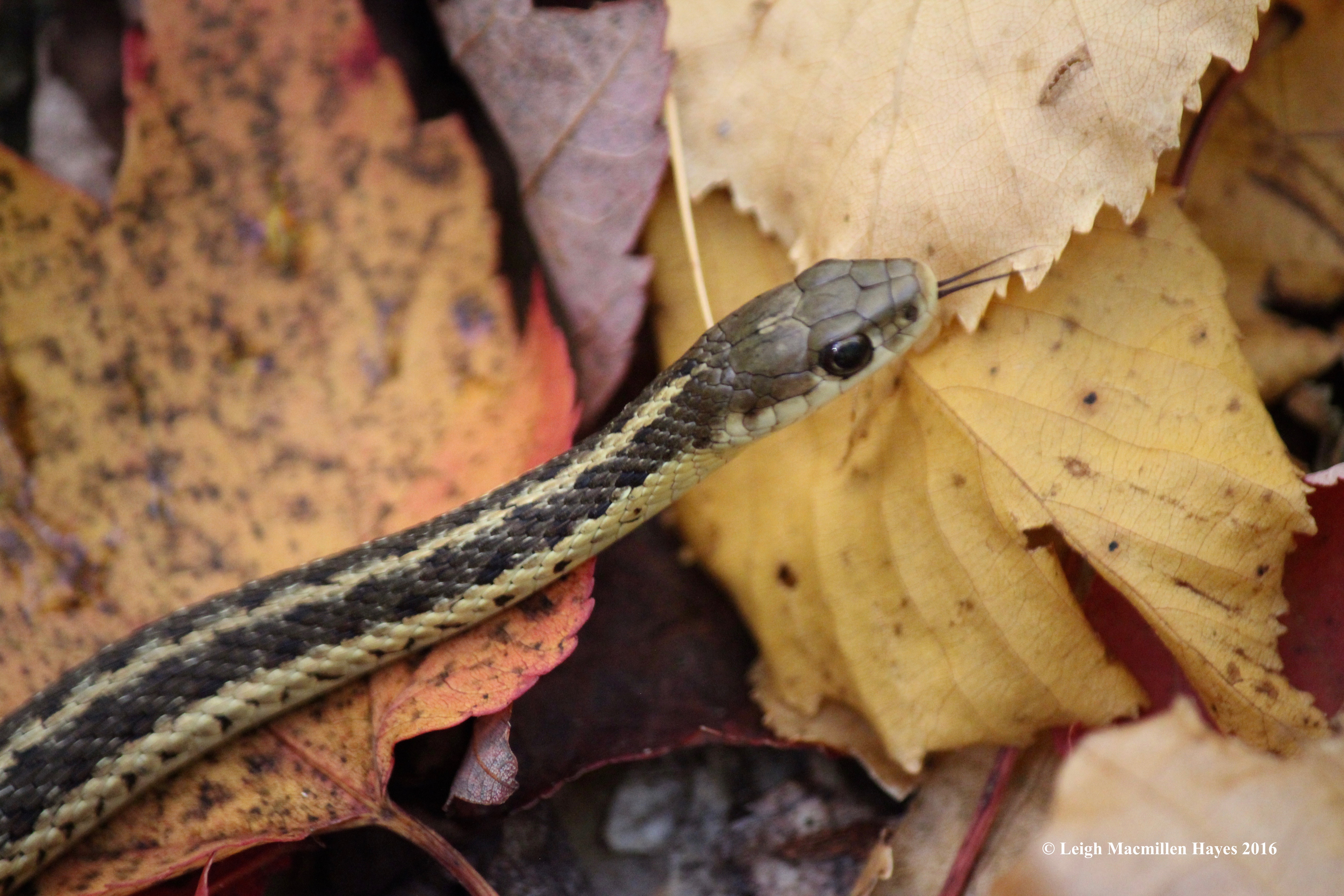
And a Garter Snake that surprised My Guy because it was in the middle of the Forest Trail as we completed a loop, but quickly slithered away.

I kept hoping it would stick its tongue out to get a sense of its surroundings, but for some reason it didn’t honor us with such.

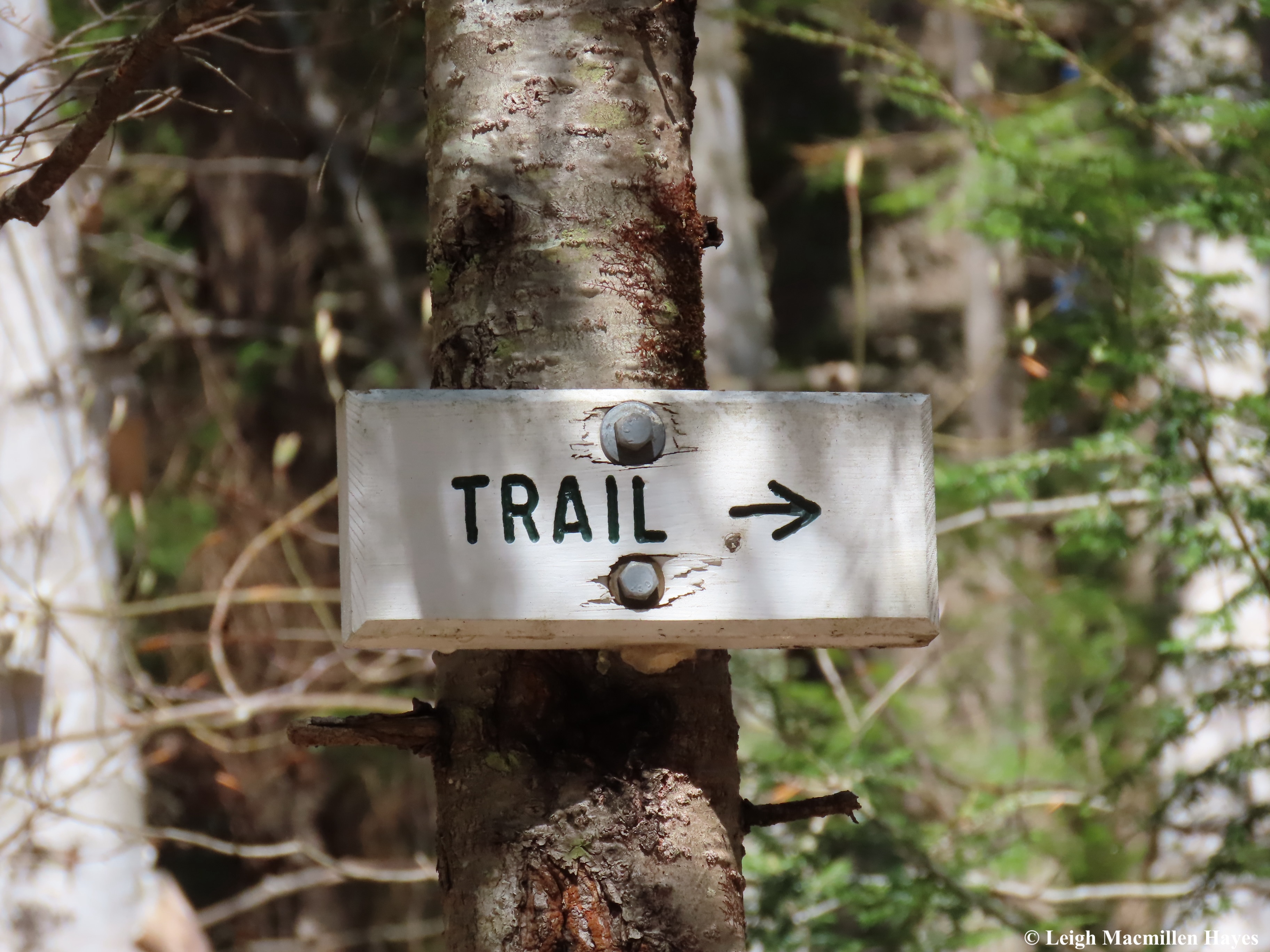
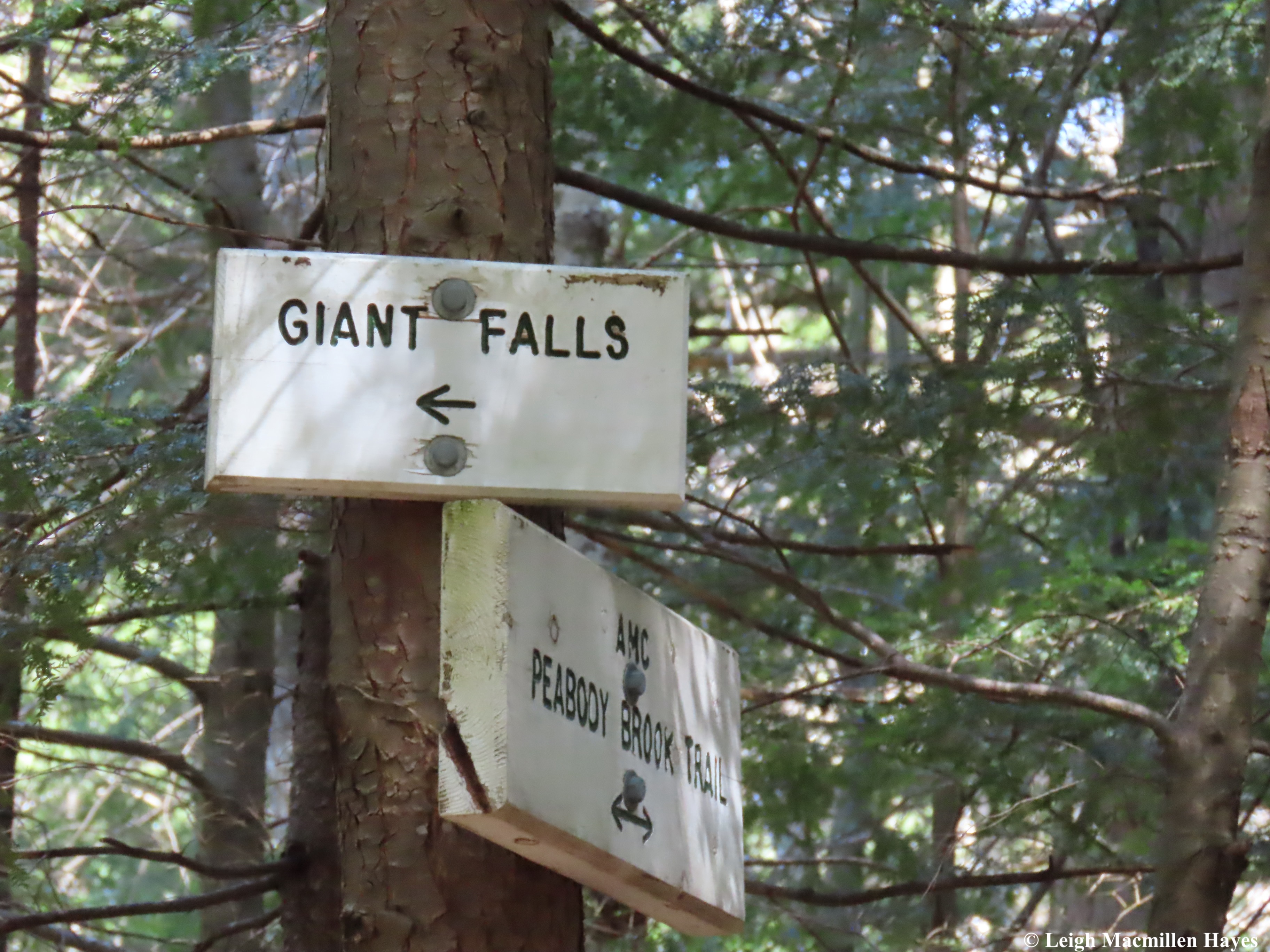
Now it’s time to turn back the clock and head off on the Peabody Brook Trail, which was our late morning hiking spot, the first hike of the dat. We were grateful for signs like this when the trail crossed a logging road.

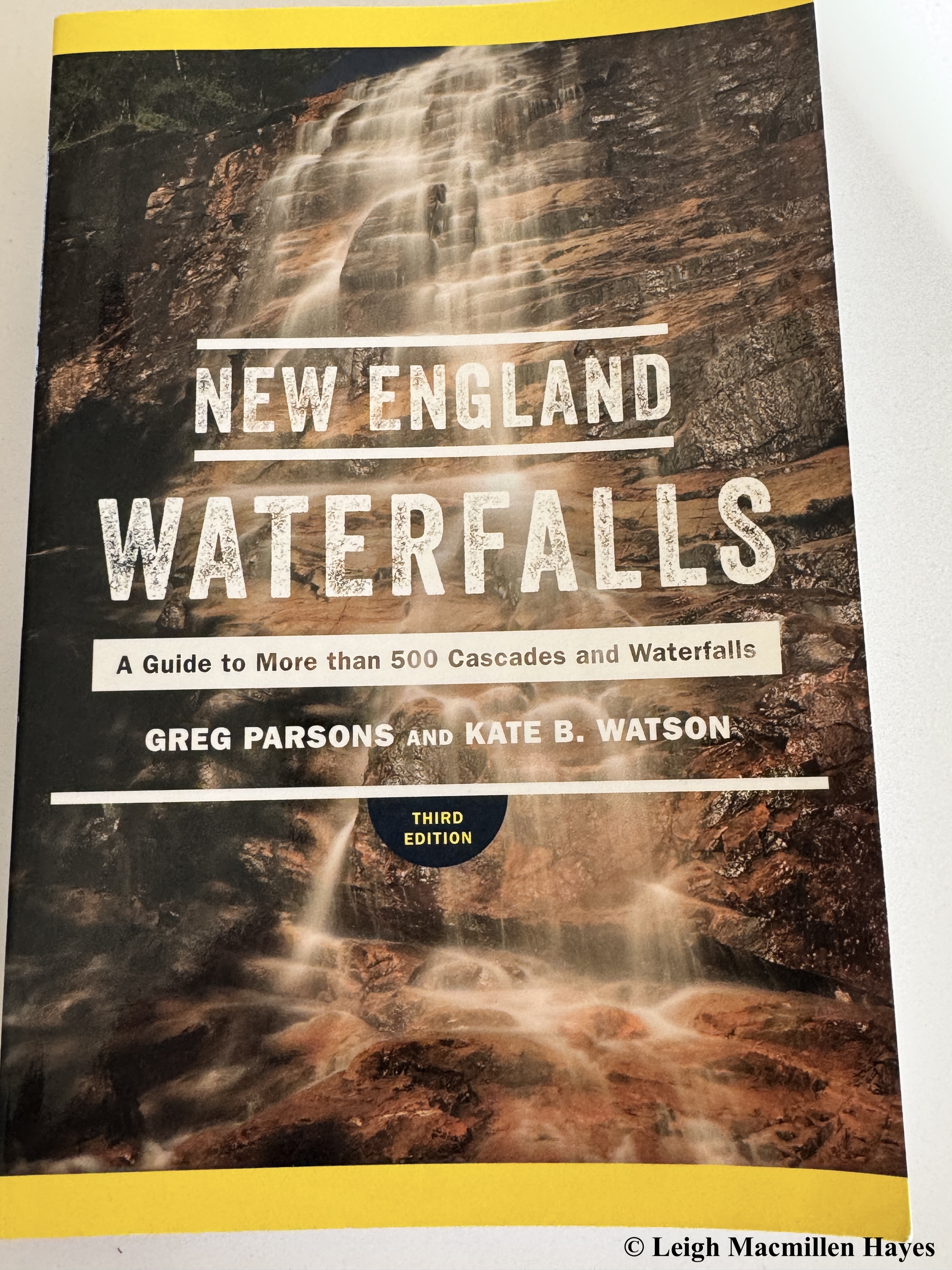
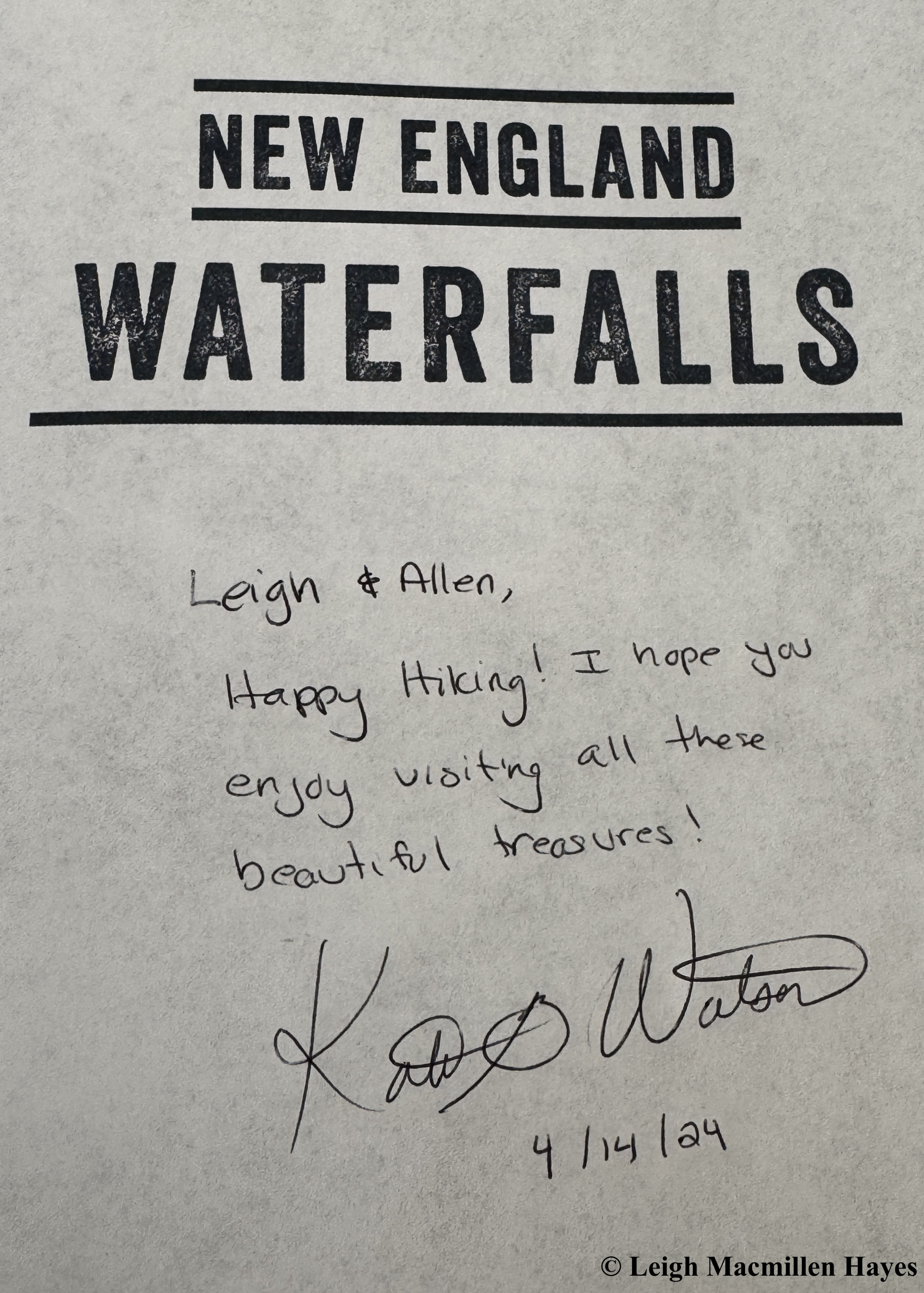
We chose this trail because we’d read about it in New England Waterfalls, by Greg Parsons and Kate B. Watson. I know Kate from church and love that these two visited waterfalls throughout New England to include in their comprehensive guide. We’ve visited some, but have so many more to do.

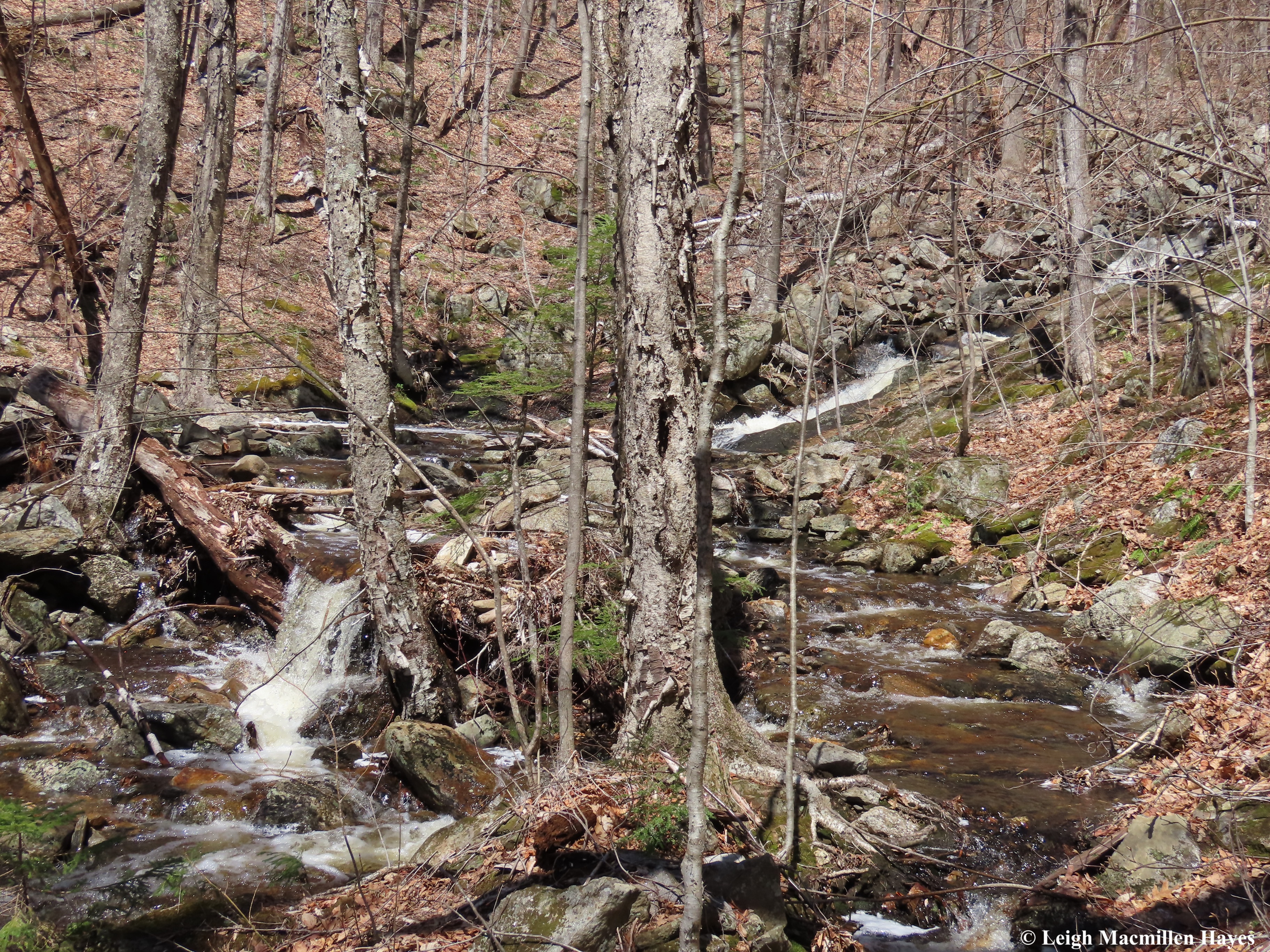
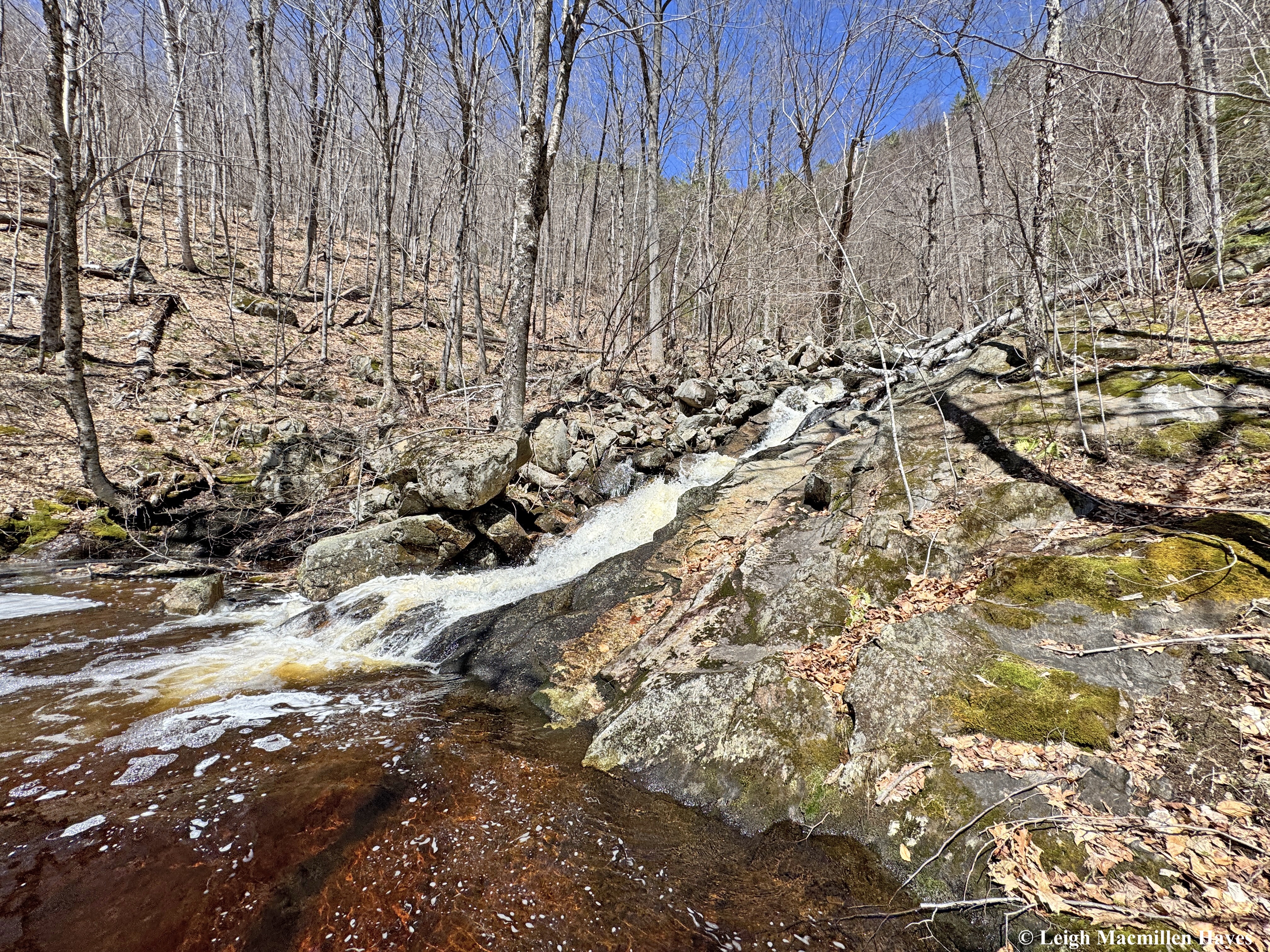
At the beginning, the Peabody Brook flows through a ravine and due to a rainy weekend, it cascaded over, around, and under the boulders, and was an ever-present companion for much of the trail.

Other companions included several Anglewing Butterfies, that I couldn’t identify until I saw their underwings, as the markings indicate either a Comma or a Question Mark.

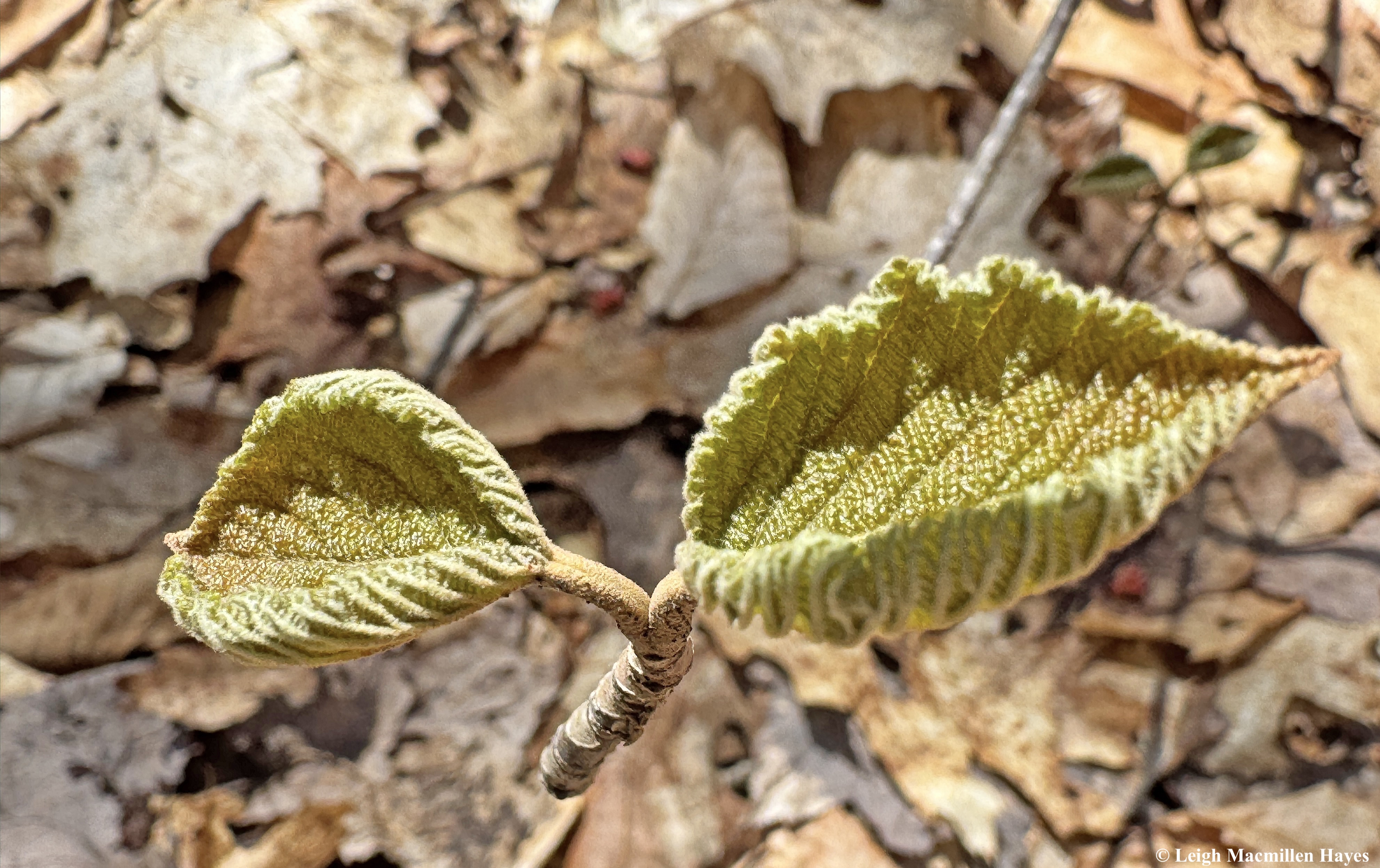
And there were Hobblebush leaves, with their corrugated presentation, beginning to unfurl.

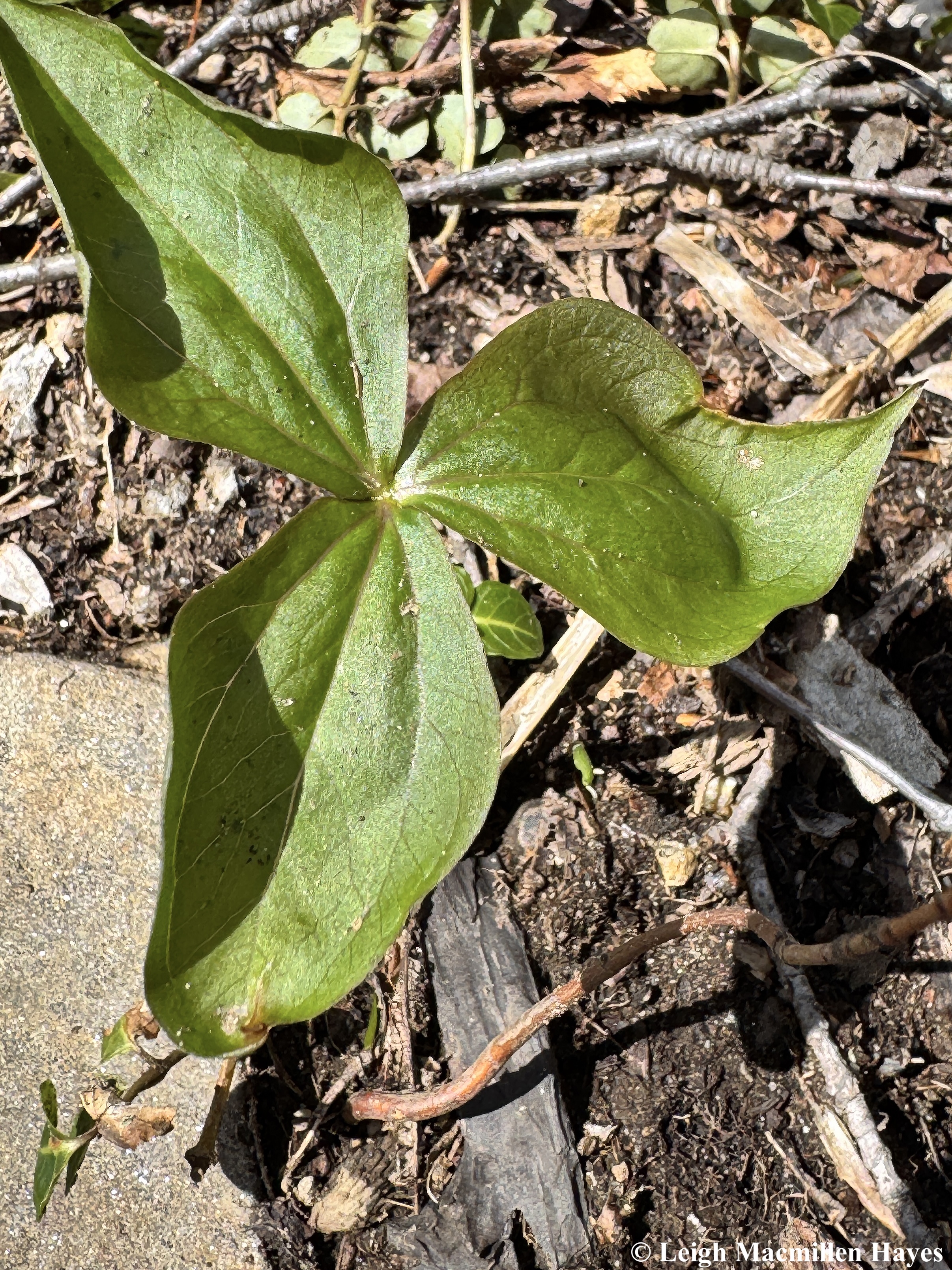
Plus a few Painted Trillium plants showing off their leaves of three, though no flowers yet, and causing My Guy to comment, “You’ll probably take a trillion Trillium photos again this year.” Did I say he knows me well?

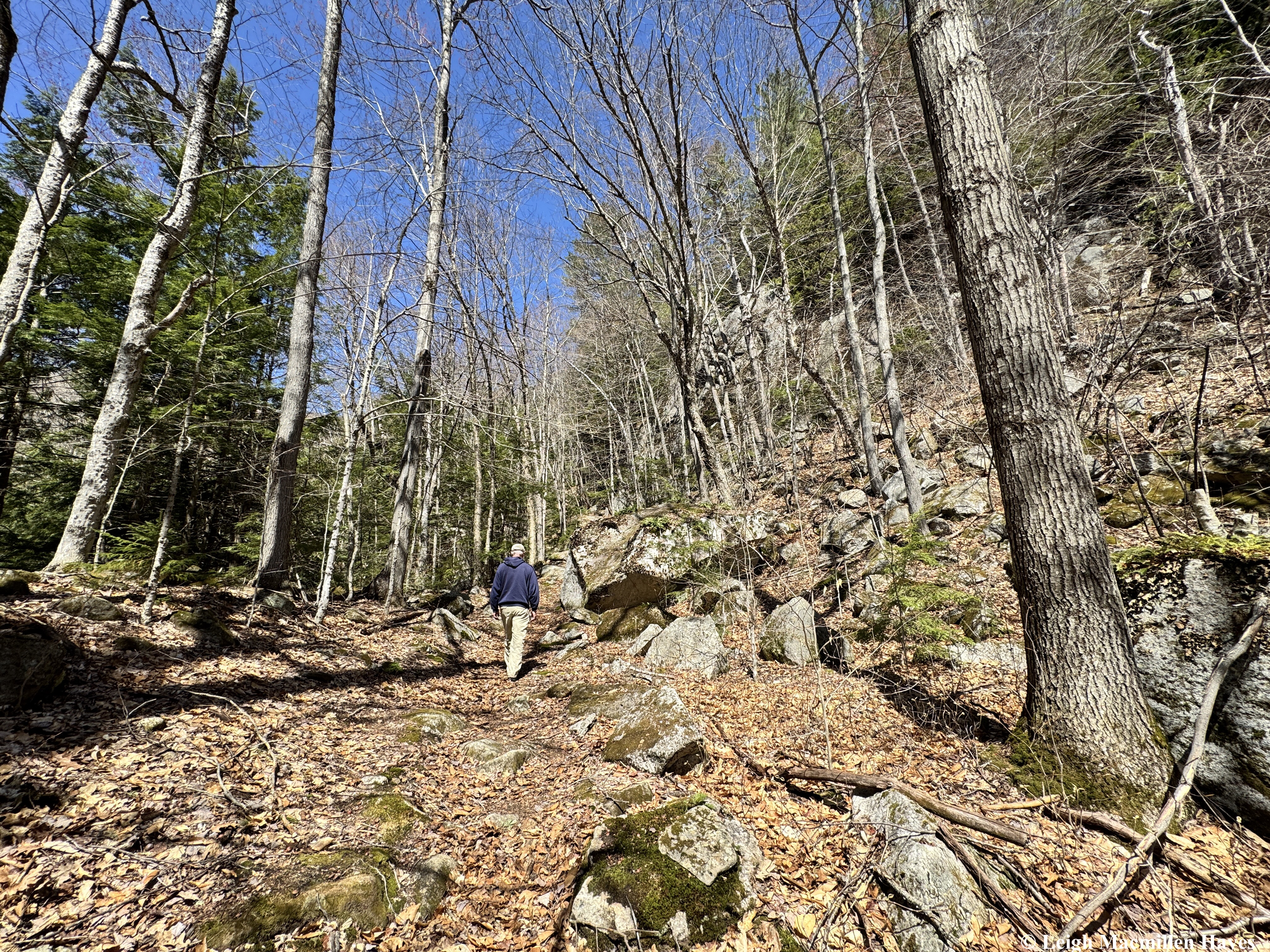
Upward we climbed into the great blue beyond, for so it seemed on this gorgeous day.

And then we reached a junction, and I, for one, was excited about what might be ahead.

Would we meet Devlin, the giant in my fairy tale, The Giant’s Shower? After all, he lives only a giant step away at Arethusa Falls.

I also thought we might see a few fairies, including Devlin’s favorite, Falda, for such was the neighborhood, with lots of mossy areas among the Hemlocks.

And then My Guy got excited when he spotted something? A giant? Maybe, but in the form of Giant Falls, and if you allow your eye to move a wee bit to the right of his pointer finger, you’ll see the white water through the trees.

Where we’d left the brook for a bit as we climbed up, the spur trail led us back down and suddenly there was fall after fall after fall beside us.

We considered eating lunch beside a large pool. But then reconsidered, but not before I noted some features of the brook that I’ve been sharing with a homeschool family this year. A POOL.

And EDDIES. And FLOWS.

And FOAM. And that very foam was being picked up by the breeze and “snowing.” Oh how my ten-year-old friend would love that.

Do you see the little white dots above the water and rocks?

We decided to hike farther up the steep trail to reach lunch rock so we could enjoy the power of the falls fanning over the boulders.

Take a moment to listen to this incredible force of nature.

After taking in the scene around us, it was time for lunch. And that’s when the magic began to happen.

A fairy flew in. I kid you not.

That’s just a butterfly, you might think. “Just”? No, no, no. I’m sure it was a fairy disguised as a butterfly, because the fairies don’t want us to know that they are present.

And . . . it landed on My Guy’s right leg.

As we both watched quietly, it walked down his pants to his hiking shoe.

And then it began to puddle. PUDDLE. ON. HIS. SHOE. LACE.

Puddling is a butterfly act intended to seek minerals and other nutrients from things such as scat, carrion, puddles, etc., but a shoe lace? And on My Guy’s shoe lace? What, indeed, could the lure be?

We’ll never know. But what we do know is that the Anglewing Butterfly was an Eastern Comma, based on the white comma shape on its underwing.

Spectacular.

The butterfly spent at least five minutes with My Guy: who seemed to appreciate that he had suddenly turned into a Whisperer. I don’t know that he’s ever held that status before.

When we finally departed, we had to hike back out along the same trail upon which we’d journeyed in, and . . . cross a bridge that bowed in the middle. Certainly the sign that a giant frequented it.

My Guy: The Giant Falls Butterfly Whisperer.

Worth a wonder.

P.S. No, there will not be a sequel to The Giant’s Shower. Self-publishing is expensive and I still have a bunch of books left from the second printing because I’m terrible at promoting it. It’s easy to do here on the blog, but not in real life.

Easter 2025: An Interwoven Weekend Celebration

Hindsight being what it is in offering 20:20 vision, maybe I shouldn’t be surprised at how this weekend played out, but going forth without expectation always offers the best of the best.

The weekend began on Good Friday, when after completing some errands, I wandered along a local trail for far longer than I intended, and in fact, had to pull myself away to get home in time to attend a Taize service at church.

Walking alone gave me time to reflect on the past and be present in the moment.

And that’s when I spotted my first Painted Turtle of the season, who offered a reflection all its own.

I still have some of the man-made Turtles I collected as a kid, but love when the real deal presents itself. And by traveling alone, I wasn’t making much noise, and so the Turtle didn’t suddenly plop into the water and disappear.

Along the same trail I nearly stepped upon another Painted Turtle, who immediately pulled its head into the shell, as only this species can do. It was in a spot where cobblestones cover a culvert, and I decided I should help it cross to the other side.

But first, I insisted that it pause for a selfie. Based on the length of its nails, being on the shorter side, and flat bottom shell (plastron) as opposed to the concave bottom of a male, I decided this was a female.

And a beautiful female at that–in color and pattern and texture. Amazing.

It took her a few seconds to decide the world was still a safe place, but once she started to move, it was a quick journey to the water before she swam out of my life, and I wished her well while giving thanks for our short time together.

Once I cued in on there being turtles in this place, I quickly realized they were everywhere. I counted eight on one semi-submerged log. And in this photo there are two.

Can you locate the second one?

And then I had another surprise, and this was the main reason I probably overstayed my welcome.

At first I thought it was a beaver, until I looked at its thick rounded tail and knew I was in the presence of a Muskrat.

Usually Muskrats disappear in my presence, but I think again, because I was willing to stand still and be as quiet as possible, this one did not dart off.

It did, however, dine in places where I came to appreciate its camouflage coloration.

Other times it was in the open so I could better watch as it munched on vegetation, holding the plant matter with both small front “hands.”

As I finally walked back to my truck, I stopped one last time, to admire the buds of Trailing Arbutus, on the cusp of blooming.

And then on Holy Saturday, My Guy and I returned to the same trail system because when I’d first arrived on Friday I ran into a former colleague who mentioned an adjacent trail and I wanted to explore it.

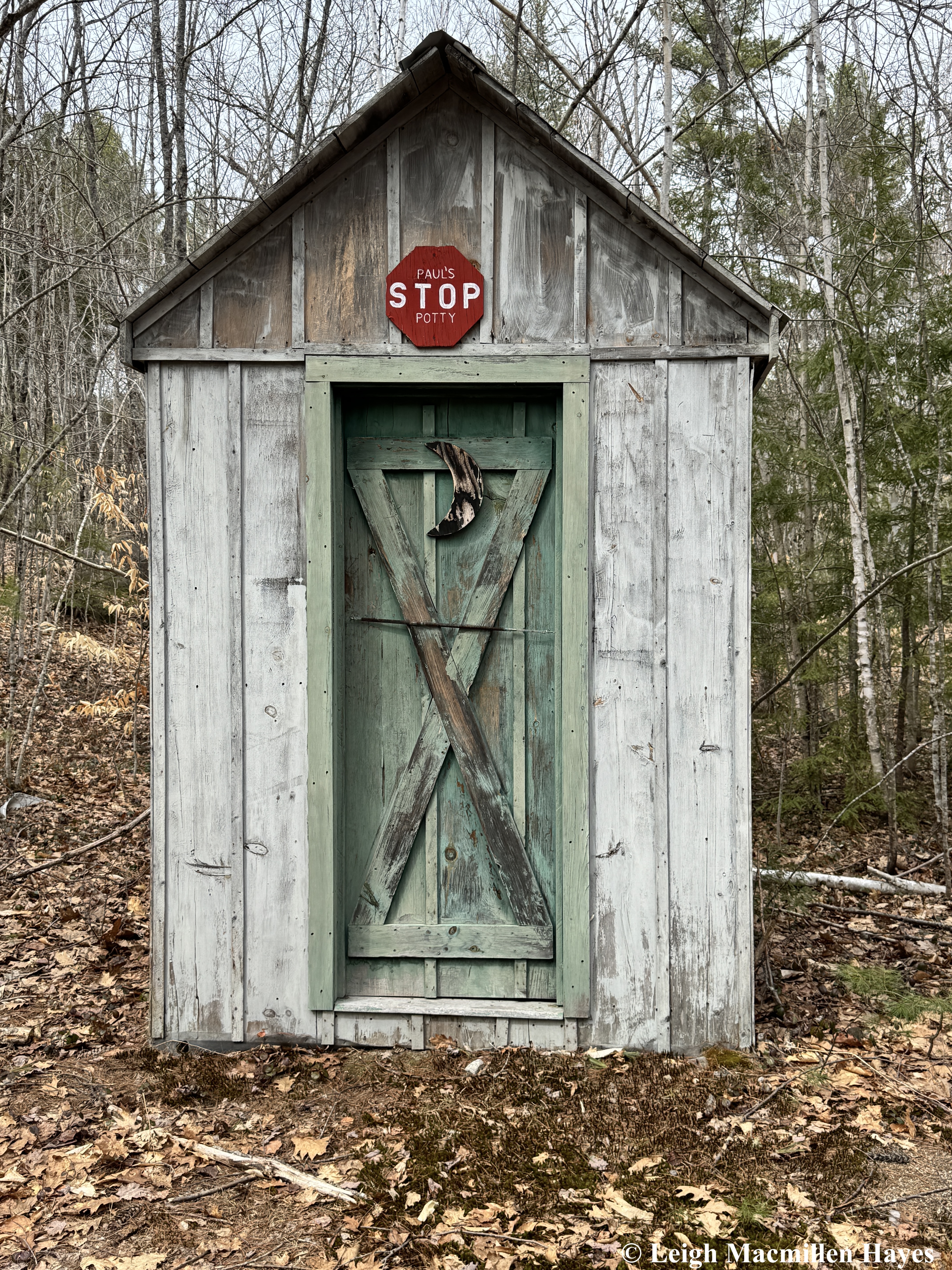
It’s actually part of the snowmobile system, and if you know where this privy is located, then you know where we were. Together we covered a lot of ground (as in 9 miles) and got a better understanding of the area and local ponds and wetlands near the privy.

But even better than that– (remember yesterday’s buds ready to burst?) another first for the season that again seemed apropos for the weekend: the first blossoms of Trailing Arbutus. So sweet and tender and fragrant.

Maybe instead of being known commonly as a Mayflower, this year it should be an Easter Flower.

On Easter, we had a late start for adventure and actually, we chose Plan B for our hiking destination because of the time–since we’d attended church in the morning and then dined at a local restaurant with three generations of our family, minus our two sons, their gals, and a nephew and his gal.

At the summit we did what we always do and waved to some friends who have a summer place on the pond before our eyes. And expressed our sorrow that they won’t be heading north this year. We can only hope that future plans include a return trip.

The wind was wild and brisk, but we took time to also admire the beauty of another pond and Sebago Lake in the distance and shouted, “Happy Easter, Alleluia!”

Eventually, we had to backtrack along another trail upon which we’d started our hike, and though we love loops, I also like it when we follow the same trail back because sometimes you see different things you missed.

Such was the case.

It had been a few years since we’d followed this trail named for a local brook, but it wasn’t until the return trip that I spotted this Scouring Rush. Again, it’s a case of structure and form and color and design and texture. The stem reminds me of an accordion and the top a cone. Or even Cancer Root. Just wow!

And then today found us exploring yesterday’s intended Plan A, where we circled a river for about 2 miles, enjoying the sounds as the water flowed and splashed and sounded so life giving–as it should because it is.

Our chosen spot for today’s lunch was upon steps after we crossed the river to head to a connector trail.

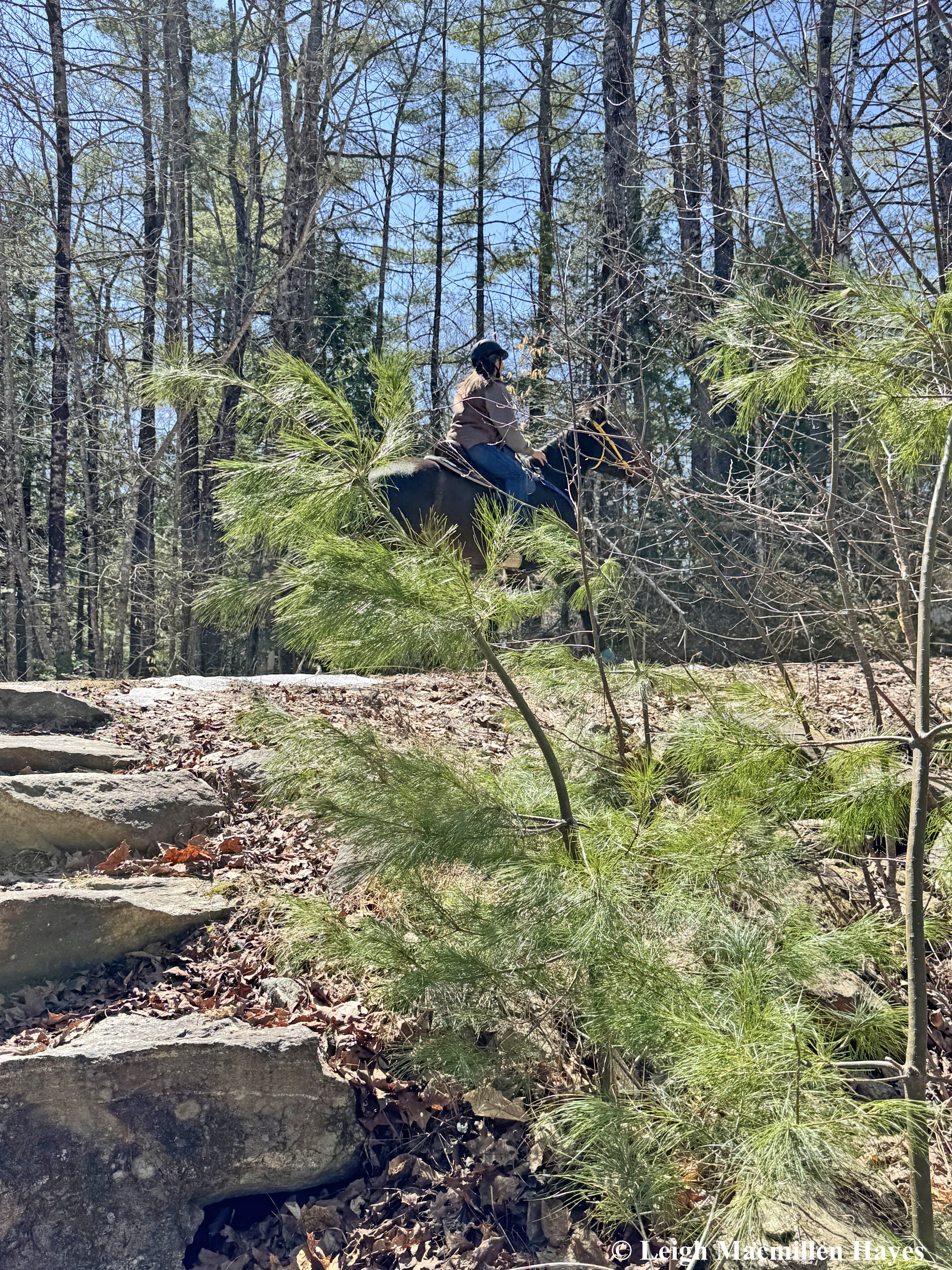
And it was there that we had a most pleasant surprise: a woman rode past on horseback. I only wish I’d been quicker to snap the photo.

Our other surprise in this spot was the knowledge that this past winter a Ruffed Grouse had roosted overnight right here based on the pile of scat it left behind–which is its habit.

My Guy sat upon the rock above and I cautioned him about setting down his water bottle or sandwich.

And in a super sunny spot nearby, the first False Hellebore leaves of the season, at least for me, showed off their bright green and pleated presentation.

After crossing the connector trail we reached a pond with the mountain of our destination serving as the backdrop. I love it that often, even if there is a breeze, and slight it was today, this pond offers the most glorious reflection.

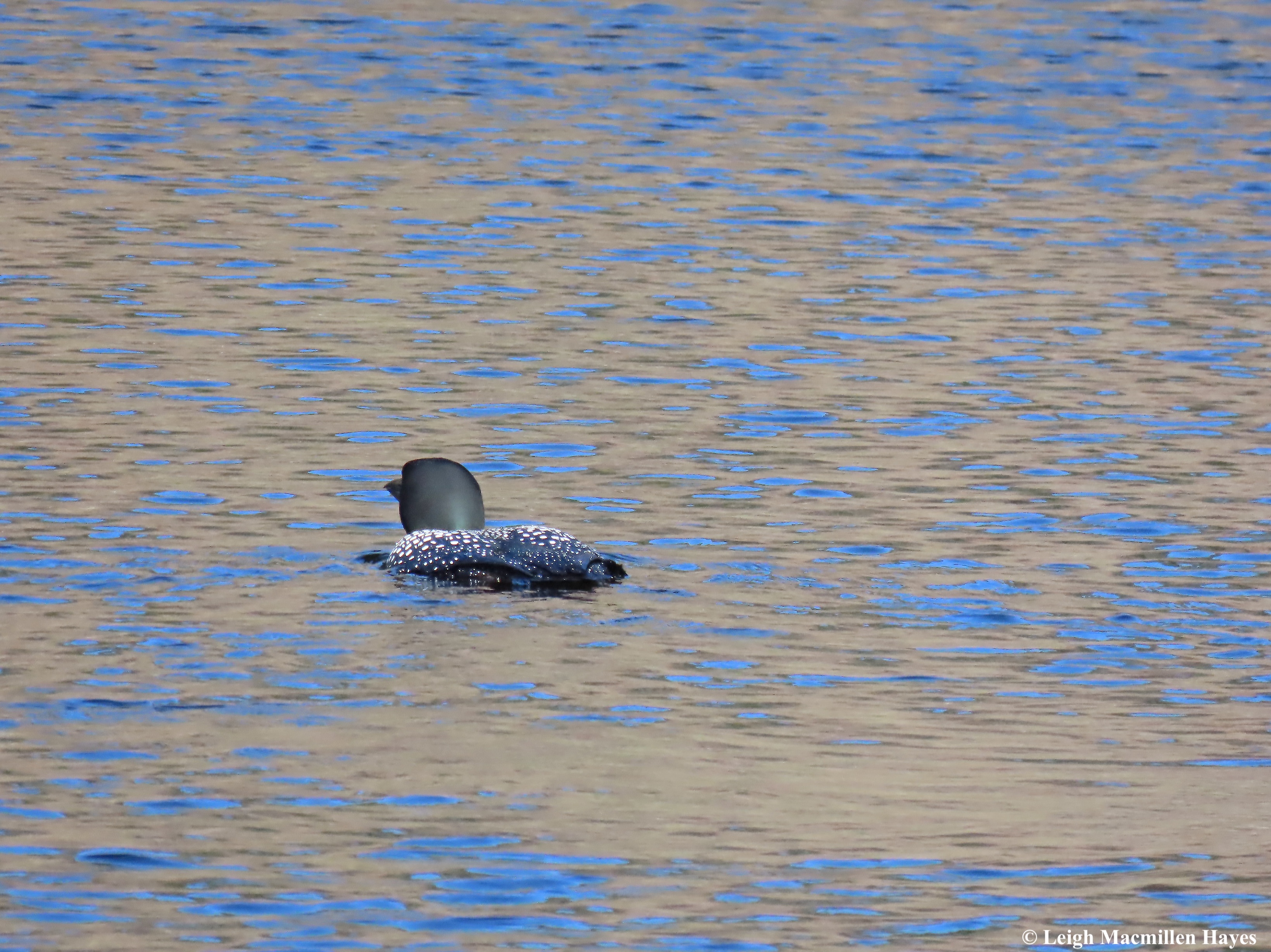
While we paused, we spotted two people fishing, but also another who had the same finned meal in mind, a Common Loon. We didn’t see another, and if memory serves me right, it’s rare that we’ve seen a pair on this pond.

I can only hope memory doesn’t serve me right this time.

Within the shallow depths there were also huge Bullfrog tadpoles and teeny tiny minnows. And probably so much more, but I didn’t look any closer.

Another fun find reminded us that we will return to these trails in another month for the Lady’s Slippers that call to My Guy will make their usual request for a count.

Finding the capsule is so rare considering that there are hundreds of Lady’s Slippers that bloom just along the trail, yet we only spotted two of these structures, which would have contained thousands of dust-like seeds that dispersed through the split sides.

Similar in shape to the capsule, but of a completely different origin, we found two piles of Moose scat–deposited possibly two winters ago based on its formation and the dried leaves and other debris that had landed upon it.

As we continued along the trail beside the pond before climbing up, we knew to look to the ledges for a rare sighting. It’s up there, but you may not see it until I share the next photo with you.

Do you see the cross? How apropos for Easter Monday.

The question remains for us: How did it get there? Or is it a natural formation? We know that we would not have the heart to climb down to that spot and install it, but perhaps others did.

Actually, we don’t want to know how it got there. It’s enough for us that it is. And persists.

And even more important today, the fact that we didn’t get here on Easter, but instead hiked this way on Easter Monday, the day Pope Francis died, one who cared about those marginalized and the Earth. All of Creation matters.

Our time at the summit of the mountain was brief because we needed to get home for My Guy had another event. But it’s never lost on us that the shape of the main basin of the pond is a heart.

Back at the truck, we celebrated the weekend with a treat from Fly Away Farm.

And gave thanks for how all that we saw and heard and experienced this weekend seemed to be interwoven into a beautiful Easter tapestry.

Happy Easter 2025!

“Hightailing it Home” published in The Maine Natural History Observer

As some of you know, I not only have a soft spot in my heart for Dragonflies and Cicadas and Beavers and Otters, but also my prickliest friends, Porcupines. And recently I’ve been looking for our neighborhood rodents, which my neighbor sees when she lets her dogs out at night, but they’ve alluded me.

I do keep finding some evidence of their whereabouts, at least where they’ve ventured at night, but have yet to locate a den this winter or even spot a Porcupine waddling through the woods or sleeping on a branch.

That may be our fault. We’re in the process of saving our barn and have closed up any entrances Porky has used for the last 30+ years and probably longer than that, and tore down an attached shed and we’re having it rebuilt, so except for that one night he spent in the barn loft due to our stupidity of not shutting a trap door, I’m afraid we’ve evicted him. But there is more than one Porcupine in this neighborhood and today I wandered several miles into the woods beyond our land, and came up short-handed.
That said, I did spot three deer as I headed out along our cowpath. Do you see them?

We spent at least five minutes together before I decided it was cold and I need to get my mittens back on and keep moving.

Switching gears, I submitted an article about Porcupines to the Maine Natural History Observer for their first issue of 2025 and was tickled once again to have it accepted.
According to their website: Maine Natural History Observatory’s mission is to improve the understanding of natural resources in Maine by compiling historic information and implementing inventory and monitoring efforts of Maine’s natural history.

The Observatory specializes in collecting, interpreting, and maintaining datasets crucial for understanding changes in Maine’s plant and wildlife populations. We are committed to filling data gaps for Maine’s least understood species and creating a legacy of data for use in nature conservation, land use policy decisions, and expanding scientific knowledge.

Specifically, our mission is to:

  • Compile and publish summaries of Maine’s natural history
  • Coordinate local and regional inventory and monitoring efforts of Maine’s flora, fauna, and habitats
  • Facilitate cooperation and exchange of information among organizations, agencies, and individuals conducting natural history research in Maine or caring for natural history collections
  • Engage in other activities related to the advancement of scientific knowledge and education of the public regarding the flora, fauna, and habitats of Maine.

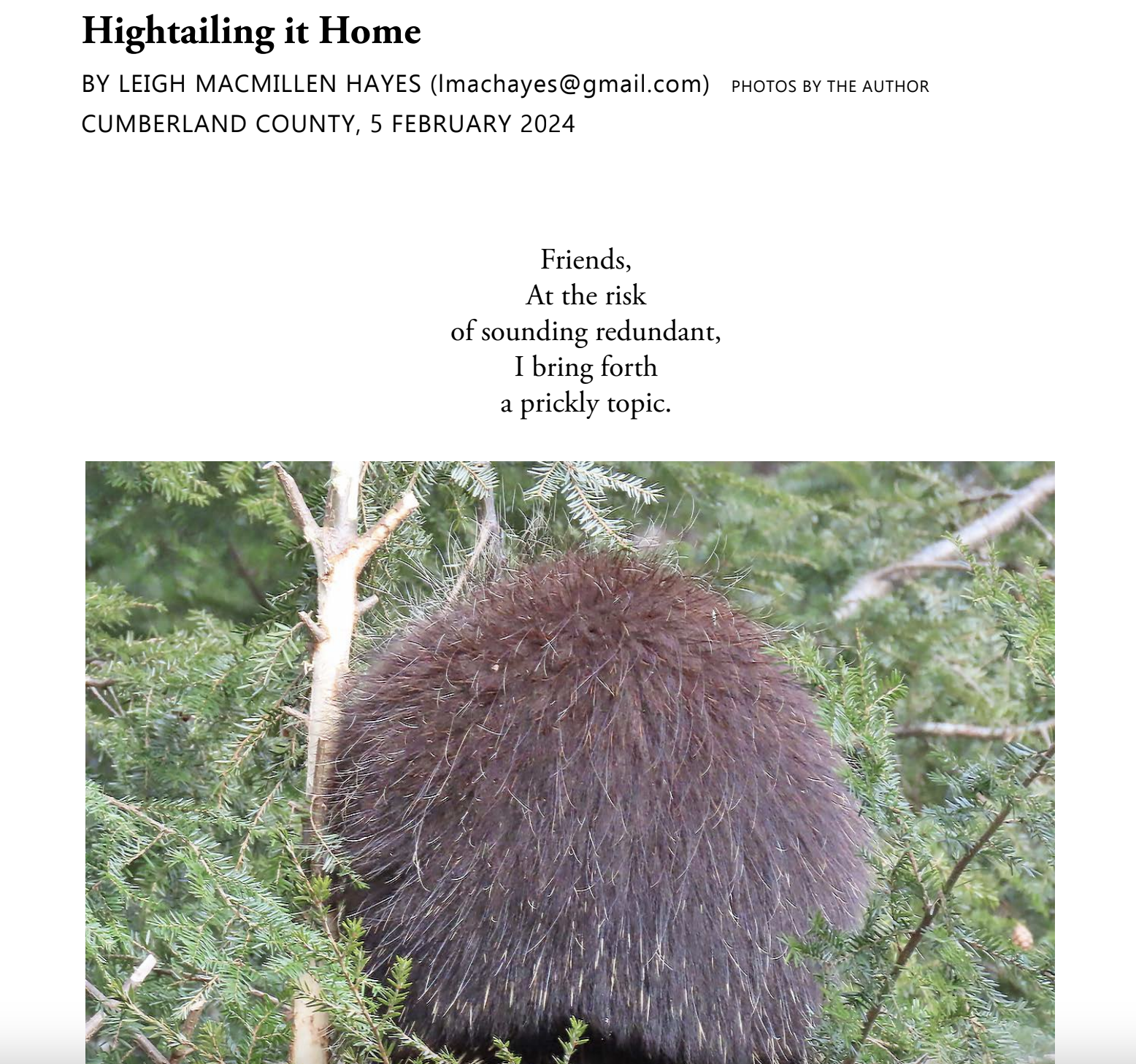
“Hightailing it Home” is about an adventure I had with a Porcupine in February 2024, and again, it was deep in the woods behind our home.

This is the back view that I first encountered that day, before the Porcupine realized I was being a nosy neighbor.

And I’ve included this portion of a page just cuze I love my Porky friends. Look at all those quills! Over 30,000 of them. And yet, his face is so soft, as is his belly.

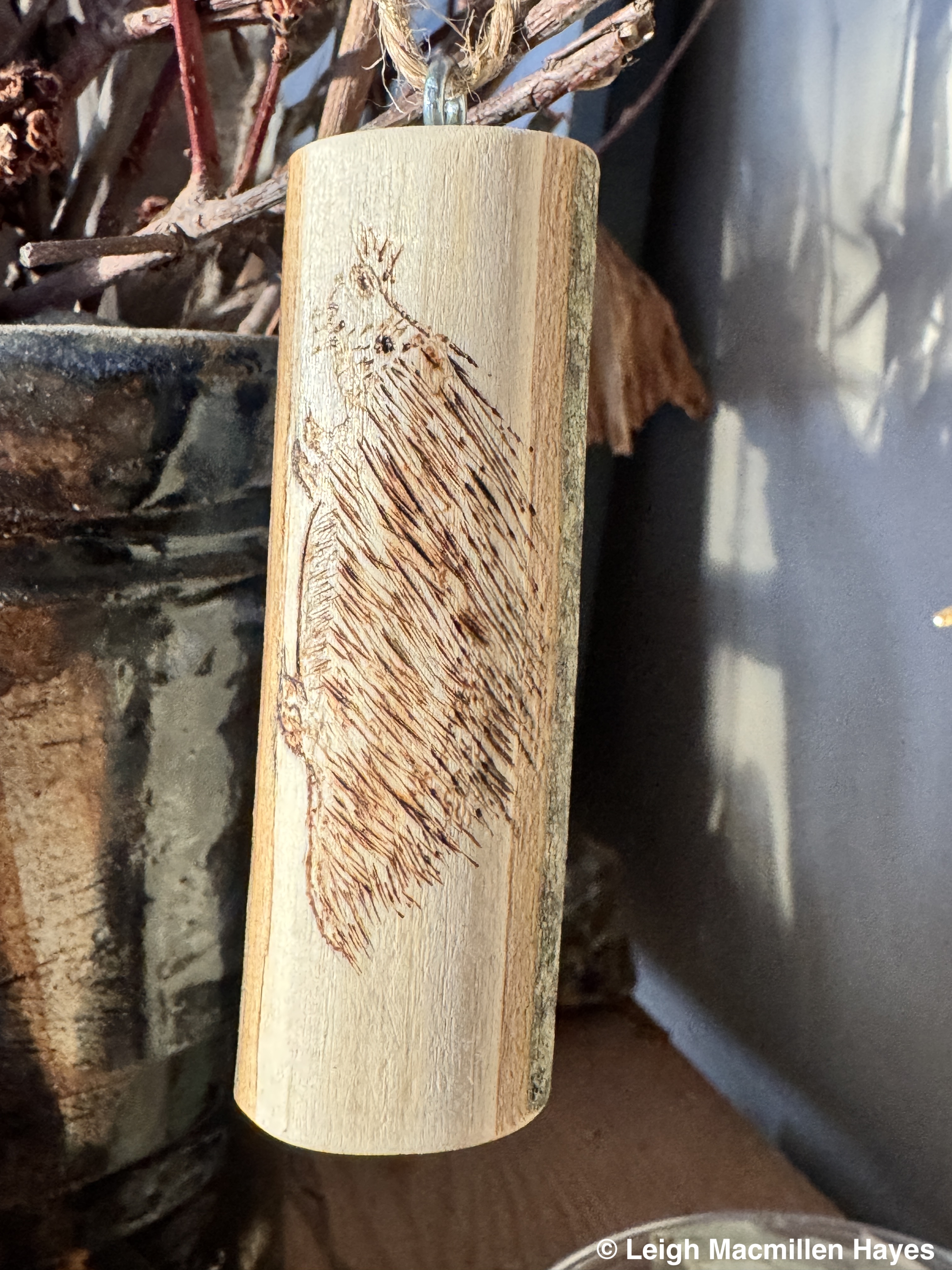
Apparently I’ve made that love known, for my ten-year old friend and fellow naturalist and artist created a tree cookie ornament for my birthday.

And my Cousin Bob did the same for Christmas. Both ornaments did hang from our tree, but now they are on display in my study.

Okay, back to the MNHObserver 2025, Issue 1, here’s a link: Maine Natural History Observer.

You’ll find “Hightailing it Home” on page 36.

There are some really interesting articles, including one about Maine weather in February 1958!! Perfect for an evening read on another frigid night.

Thank you, Maine Natural History Observer, and especially to Celeste Mittelhauser, Outreach Coordinator.

Here’s to future adventures with Porky and so many forms of fauna and flora who continue to teach me. I sure hope I get to hightail it home following a sighting in the near future.

Folly of a Sun-Mondate

Into the wilderness of Sebago, Maine, we ventured upon land owned by Loon Echo Land Trust.

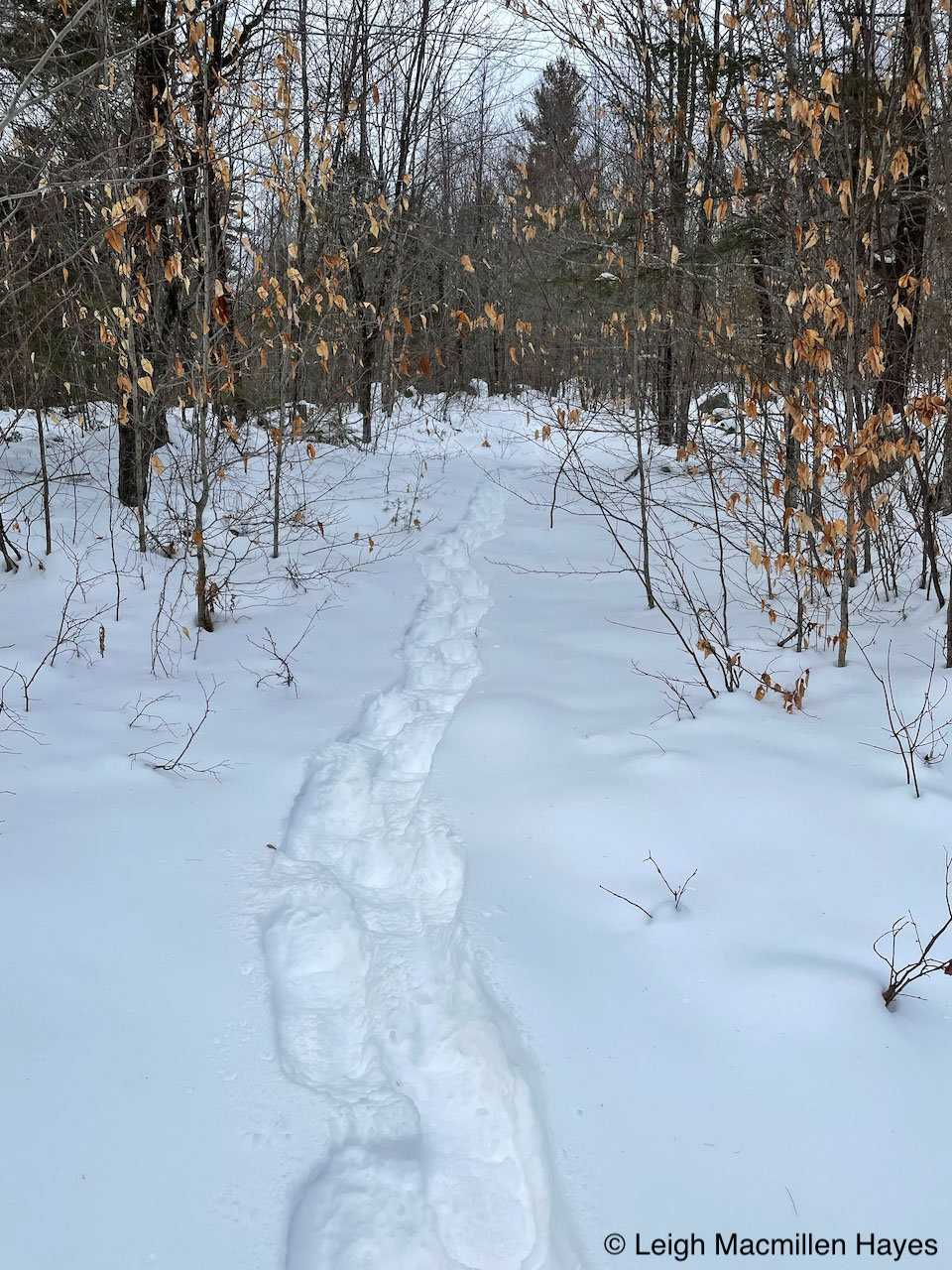
Sometimes we had to break trail.

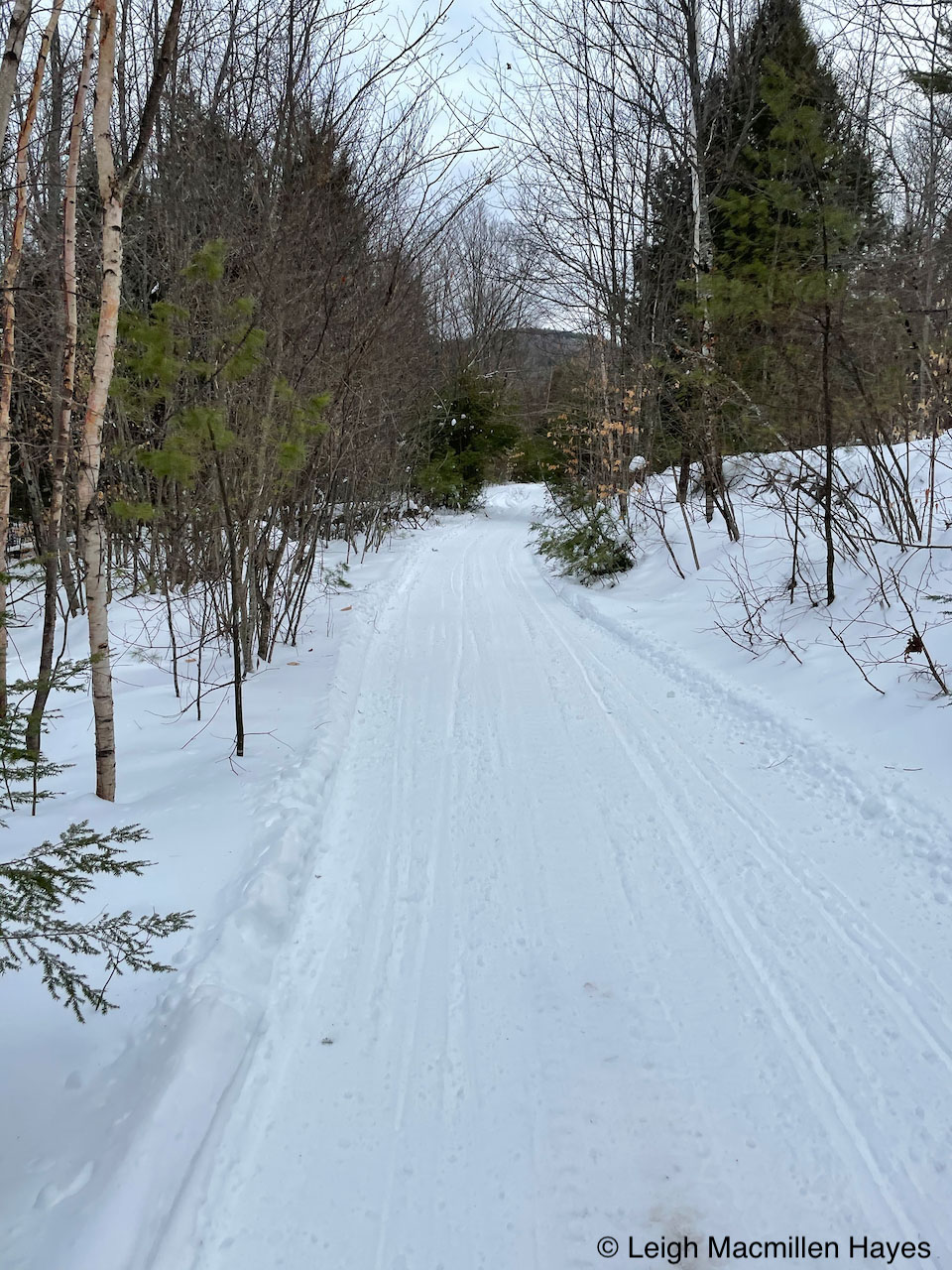
Other times it was like the white carpet had been rolled out to show us the way.

And often, we found ourselves traveling the same route others had taken or crossed over, for such a corridor it is.

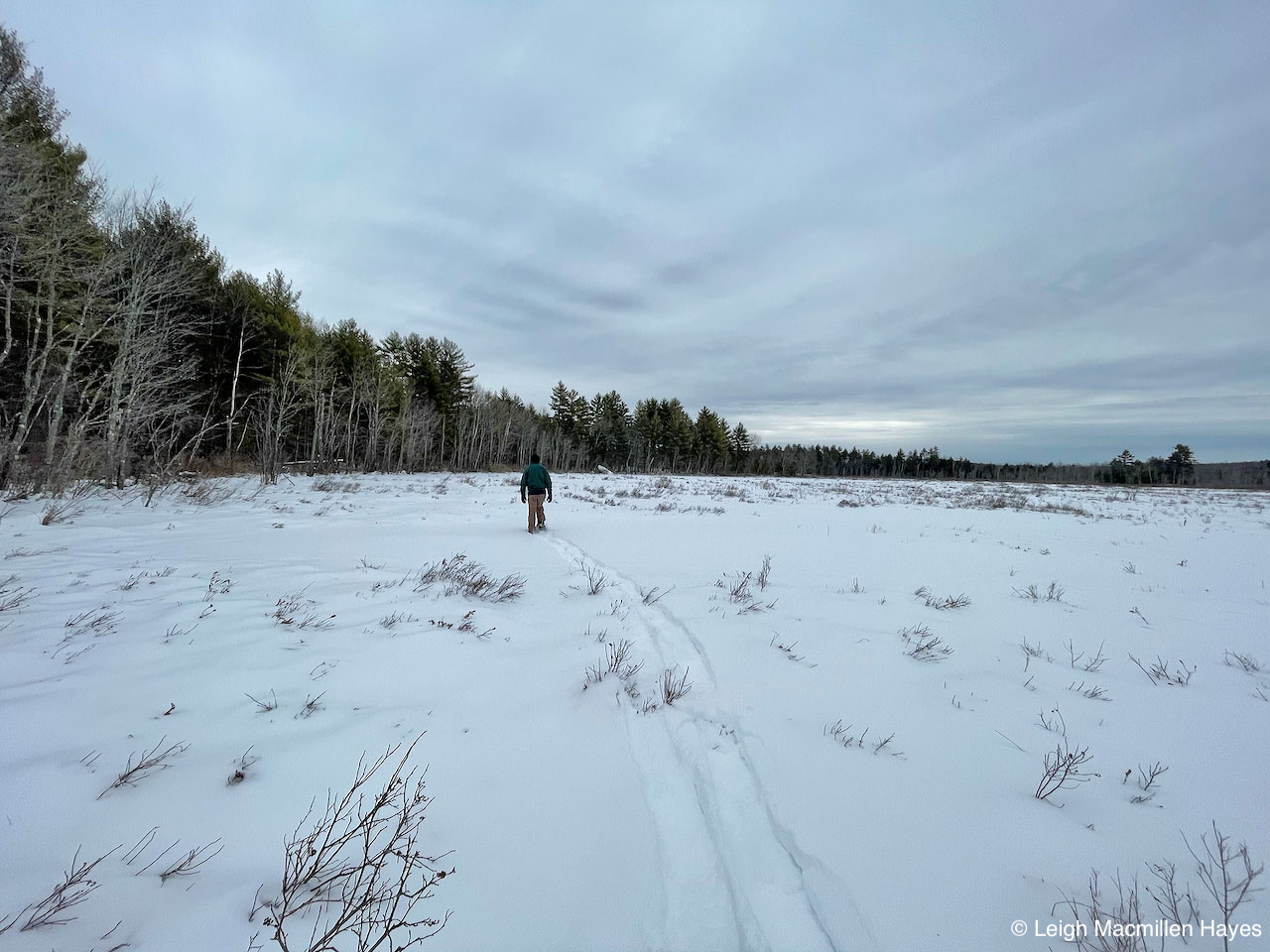
We tromped through a vast wetland.
And bushwhacked into what seemed like a never-ending shrub-land.
The hares made it all look so easy as they traveled back and forth on their packed-down snowshoe routes.

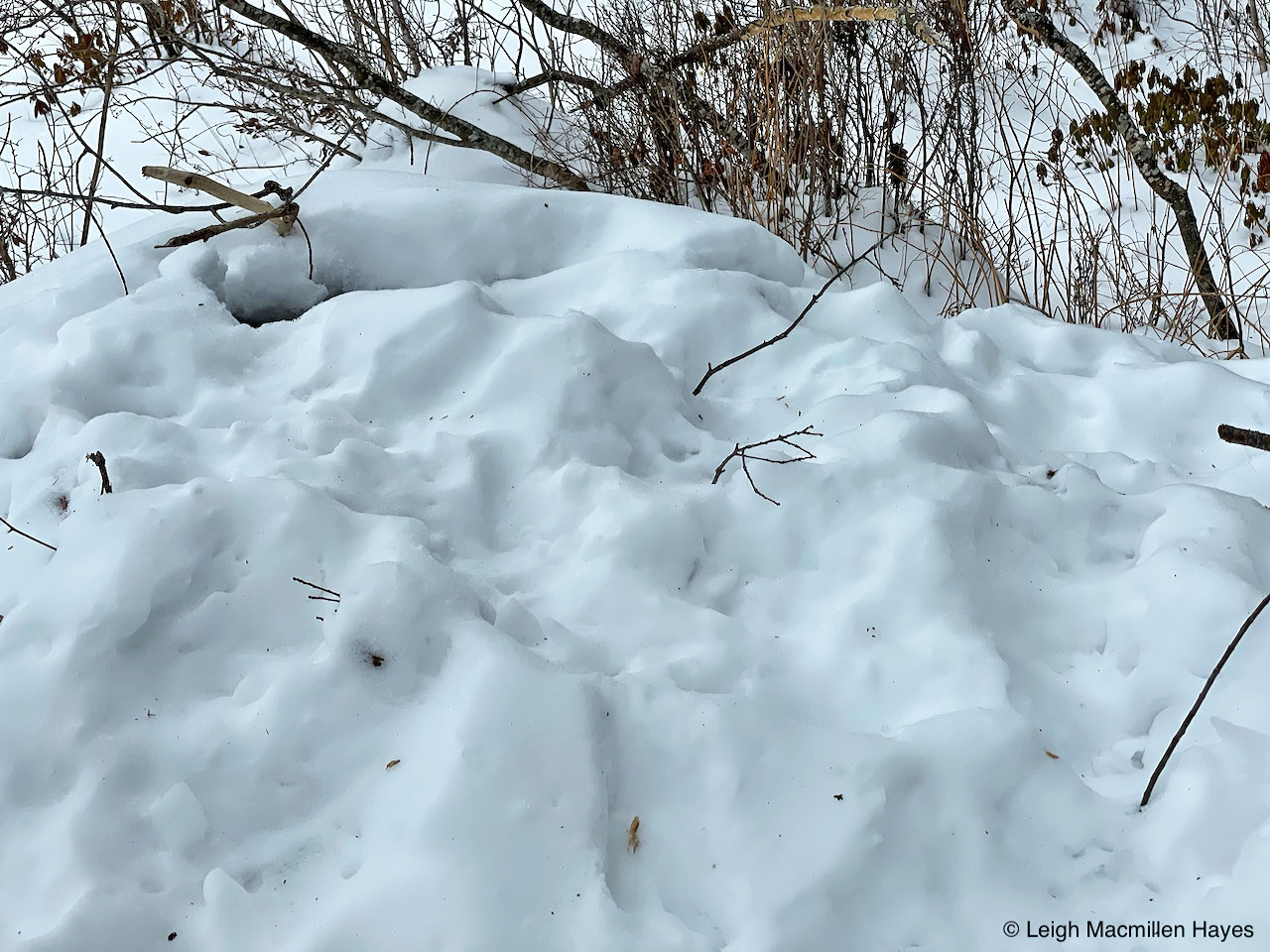
Meanwhile, the beavers remained snug at home despite frequent callers.

Though we couldn’t see steam rising from the lodge’s chimney, we suspected they reposed quietly within.

Nearby, their works of art added a decorative nature to the winter scene.

We spent one day seeing hugs . . .

and hearts in the forest.

And the next day exploring an unorganized territory; or was it?

It’s such a place where wooden birds fly.

And owl talons cling.

On Sunday, we snowshoed along a five-mile route, that was rather easy given that most of it was a snowmobile trail at Tiger Hill Community Forest, and paused briefly for lunch on a rock in the woods, followed later by a brownie beside Cold Rain Pond that I think my guy was still eating when I snapped this photo.

Today found us nearby at Perley Ponds-Northwest River Preserve, where the tree spirit chuckled for he knew before we did that our two-mile tramp would be much more challenging but we’d come upon unexpected finds that would add to this folly of a two-day Mondate on either side of Folly Road.

Everybody Loves Raymond? Mondate

My guy and I were up for an adventure this morning as we headed off to a property recently acquired by Loon Echo Land Trust. I’d been there once before, but at that time there was no trail system and I certainly hadn’t climbed to the summit.

r-forest-climb

We were on a 356-acre property bisected by a paved road. First, we hiked the upper section, passing through a hardwood forest.

r-white-oak-green-leaves

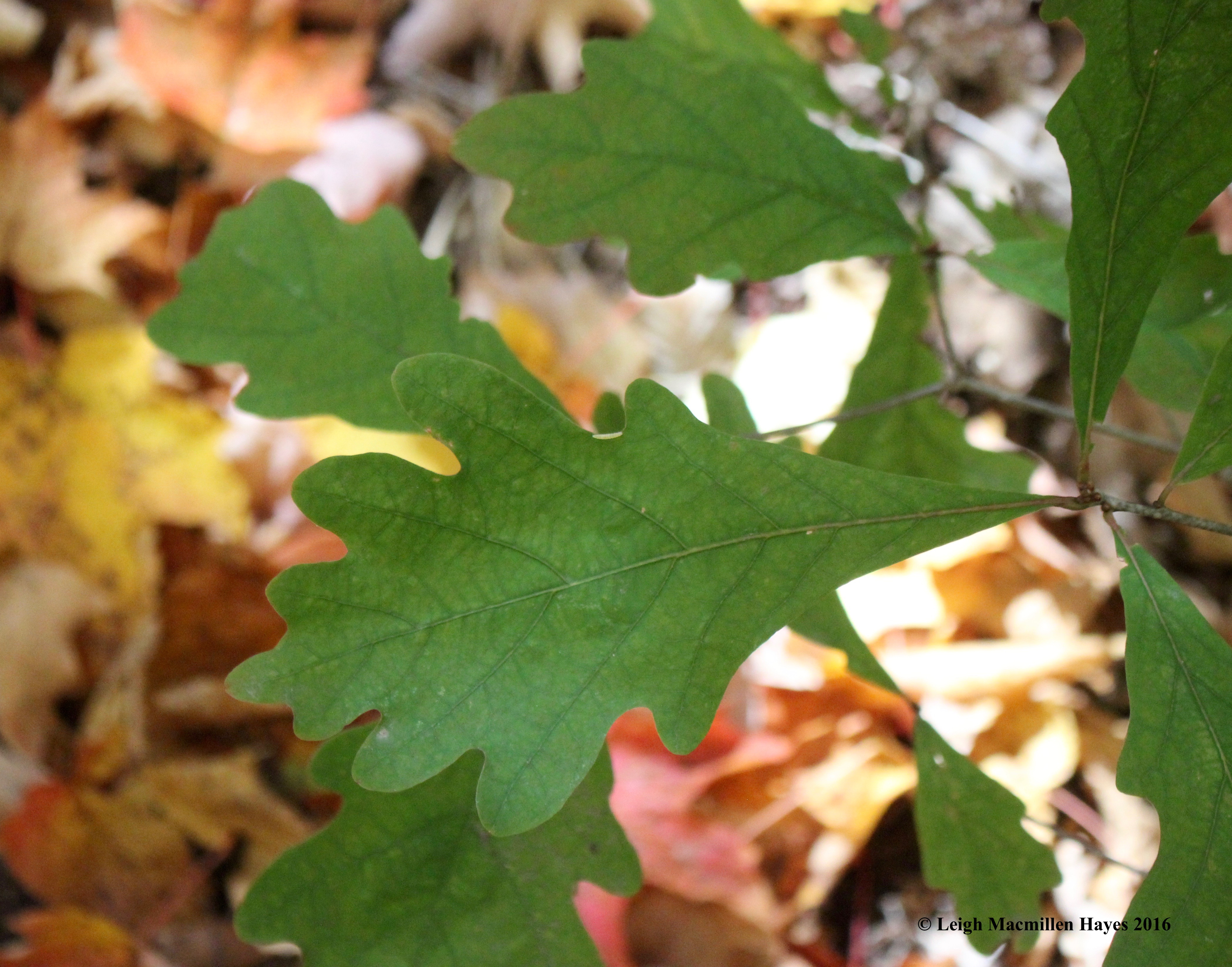
Immediately, I realized we were in the presence of one of my favorites–noted for the mitten-ish presentation of its leaves. One would have to be all thumbs to fit into this mitten, but still, my heart hums whenever I spy a white oak.

r-white-oak-red-color

Or in this case, many white oaks, some exhibiting the wine color of their fall foliage.

r-white-oak-bark

And the bark–a blocky look that differs greatly . . .

r-red-oak-on-bm1

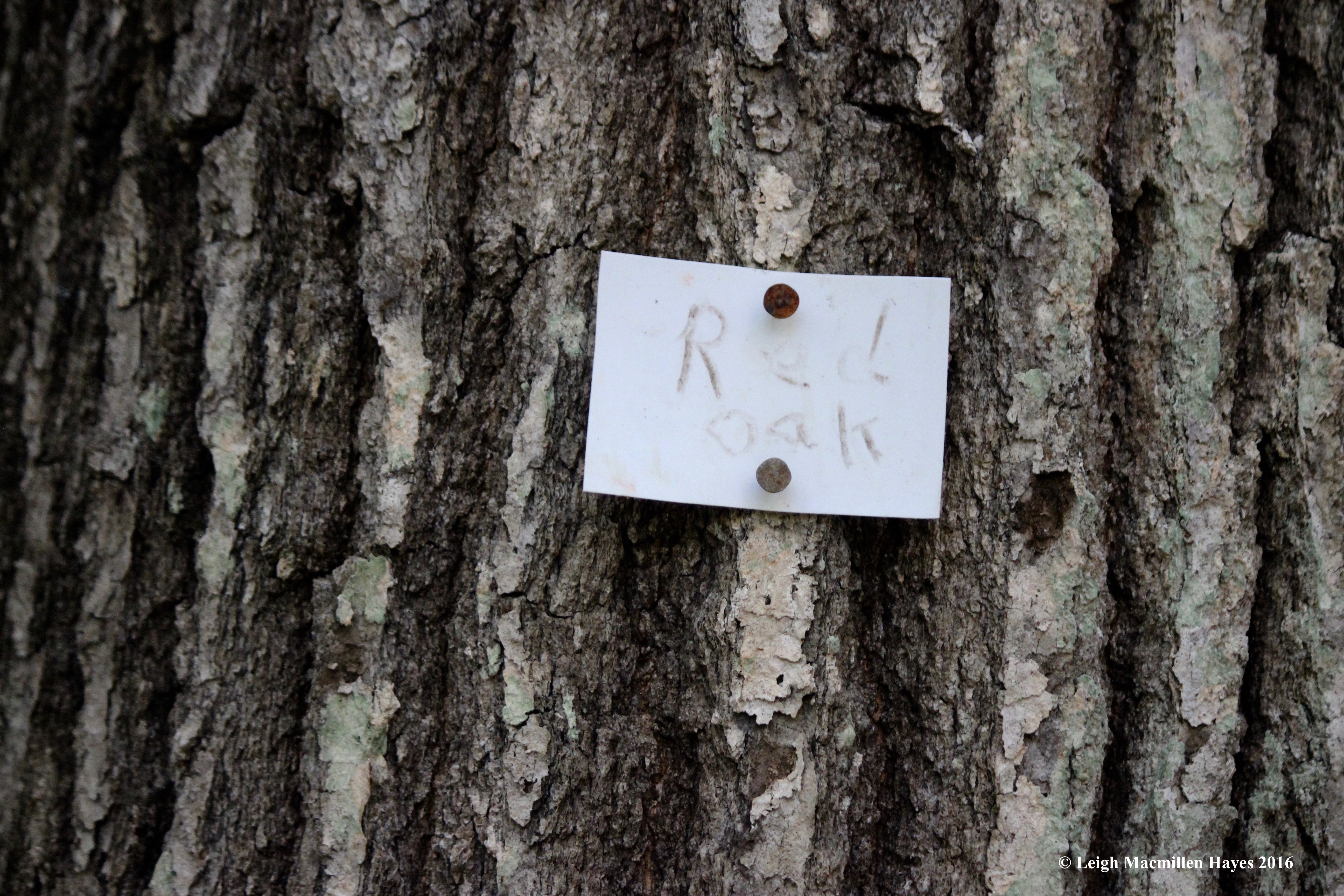
from the ski trail ridges of red oak.

r-hophornbeam-bark

Hop Hornbeam also grows abundantly in this forest.

r-approaching-forest-summit-yellow

As we neared the summit, we noticed that the sky view had a yellowish tone reflected by the ground view. Most trees were of the same age due to past logging efforts, but the predominant species was sugar maple.

r-basswood-2

Another favorite tree also grew abundantly here. I think they are also favorites because I don’t see them as often. In this case, the bark, though furrowed and ridged like a northern red oak, featured an almost combed flattened ridge.

r-basswood-leaf

And its leaves–oh my! Notice the asymmetrical base? And the length–my boot is size 8. American basswood–an important timber tree that is known to share the community with sugar maples and hornbeams–all of which provided that yellow glow.

r-raymond-summit-view-1

At last, we reached the vantage point.

r-skyward

Above us, a mix of colors and species.

r-oak-leaves

Before us, a mix of white and red oak leaves.

r-crescent-view-3-1

And beyond us, the view of Crescent Lake

r-crescent-rattle-1-1

and Rattlesnake Mountain.

r-ladybird-1-1

While we admired the view, ladybird beetles (aka ladybugs) swarmed us. Well, not exactly in swarm formation, but more than is the norm.

r-green-trail-tag

After admiring the view for a while and wondering about the ladybirds, we backtracked a bit and decided to explore the green trail, assuming that it looped about the summit.

r-dry-leaf-sound

The trail conditions changed constantly, and one thing we realized was that the leaves had dried out and we wished we could have bottled their scent along with our crispy footfall as we trudged through–the smells and sounds associated with autumn.

r-bear-claw

Eventually, we entered a beech commune and what to my wondering eyes should appear–bear claw marks? We ventured closer, circled the tree and looked at others in the neighborhood before determining that our eyes had perhaps played a trick on us.

r-garter-snake

That was OK because within seconds a twig moved at our feet.

r-snake-tongue

We watched as its tongue darted in and out, red tipped with a black fork.

r-lunch-rock

Finally, we moved back to what we’d named Ladybird Lookout and found lunch rock where we topped off sandwiches with Bailey’s Irish Cream fudge a la Megan and Becky Colby. Life is good. Life is very good. (And we know a town in western Maine that would benefit greatly from a bakery–just saying, Megan!)

r-trail-ribbon-art

After lunch, we climbed back down and crossed Conesca Road to check out trails on the other side. There is no trail map just yet, but we never got lost. And we appreciated the artwork nature created of manmade marks.

r-forest-across-the-street-stonewall

This space offered a different feel where hardwoods combined with softwoods. And more stonewalls crossed the property, speaking to past uses.

r-hole-pink-flags

It’s here that we noticed an area demarked by pink flags and stopped to wonder why. Note to self–excavated hole and debris mean beware.

r-bee-himve

Upon closer examination, an old hive. So who dug it up? We had our suspicions.

r-mushrooms-1

We also noticed a fungi phenomena.

r-mushroom-growth

Fungi on fungi? Honey mushrooms attacked by something else?

r-mushroom-growth-3

The displays were large

r-mushroom-fungi

and otherworldly. I don’t recall ever seeing this before.

I sent the photos to Parker and Jimmie Veitch, of White Mountain Mushrooms, and Jimmie responded with this explanation:

“That’s what mycologists call “rosecomb” mutation, where a mushroom’s gills start forming on the cap in a really mutated fashion. It’s been reported in many mushroom species but I haven’t seen it in this one (Armillaria AKA honey mushrooms). As far as I know, no secondary fungus is involved.
The suspected cause (not so nice) is ‘hydrocarbons, phenols and other compounds contaminating the casing or contacting the mushroom surface. Diesel oil, exhaust from engines, and petroleum-based pesticides are thought to be the principal source.'”

r-red-leaves

As we concluded our visit, we passed over one more stone wall decorated with red maple leaves.

r-beginning-of-bri-mar

And then we hopped into the truck and traveled a couple of miles south to conquer another small mountain–one visible to us from Ladybird Lookout. (I really think LELT should name it such.)

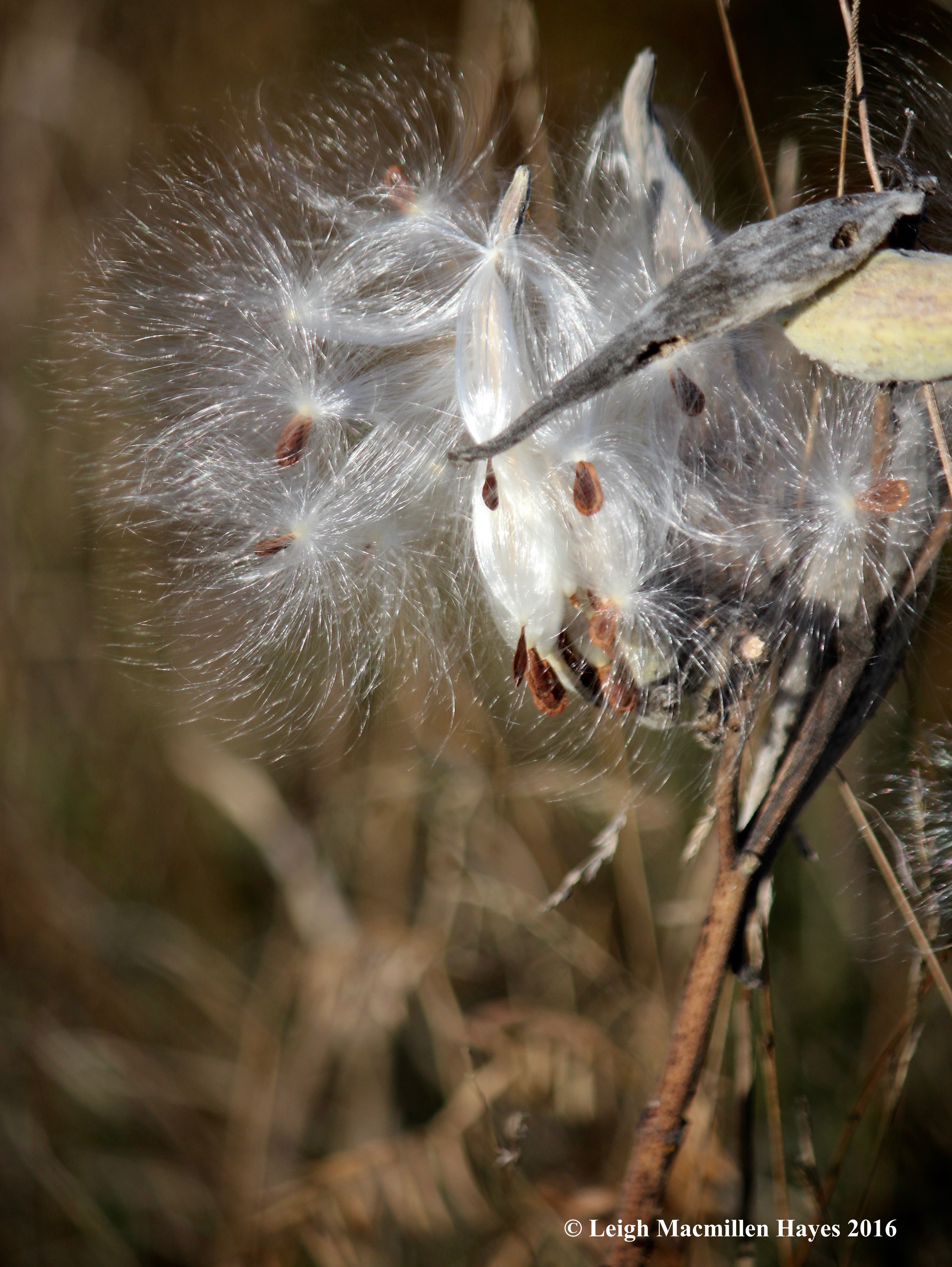
r-brimar-milkweed

Here the milkweed plants grew abundantly.

r-brimar-white-oaks-in-field

In the field leading to the trail, the property owners planted white oak saplings in hopes of providing food for wildlife. Um, by the same token, they’d enclosed the saplings in plastic sleeves (reminding us of our findings in Ireland) to keep deer at bay.

r-brimar-ferns

The understory differed and ferns offered their own autumn hues.

r-brimar-evergreen-wood-fern

In contrast were the many examples of evergreen wood ferns.

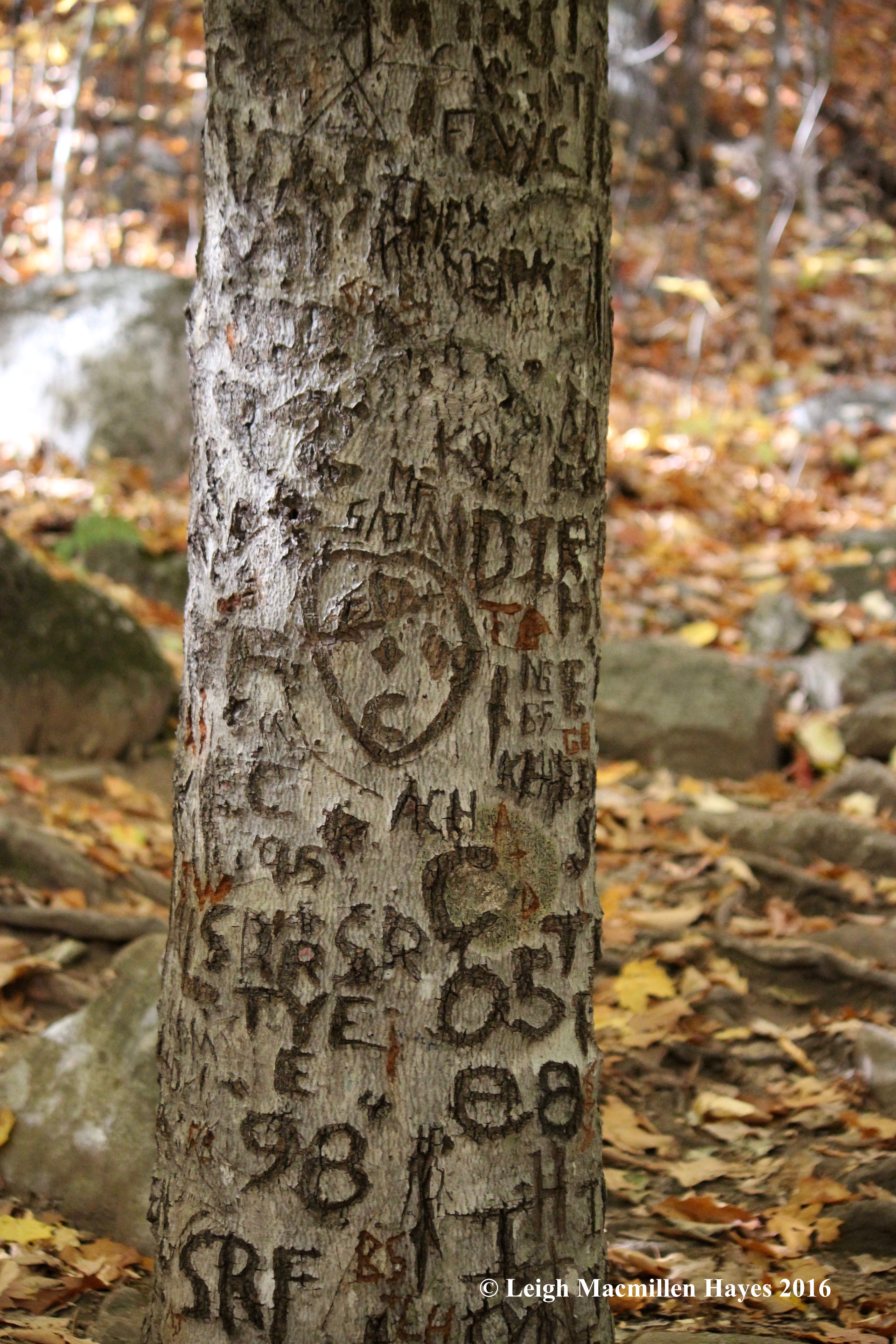
r-bri-mar-beech-markings

We soon realized that quite literate bears frequented this path and announced their presence.

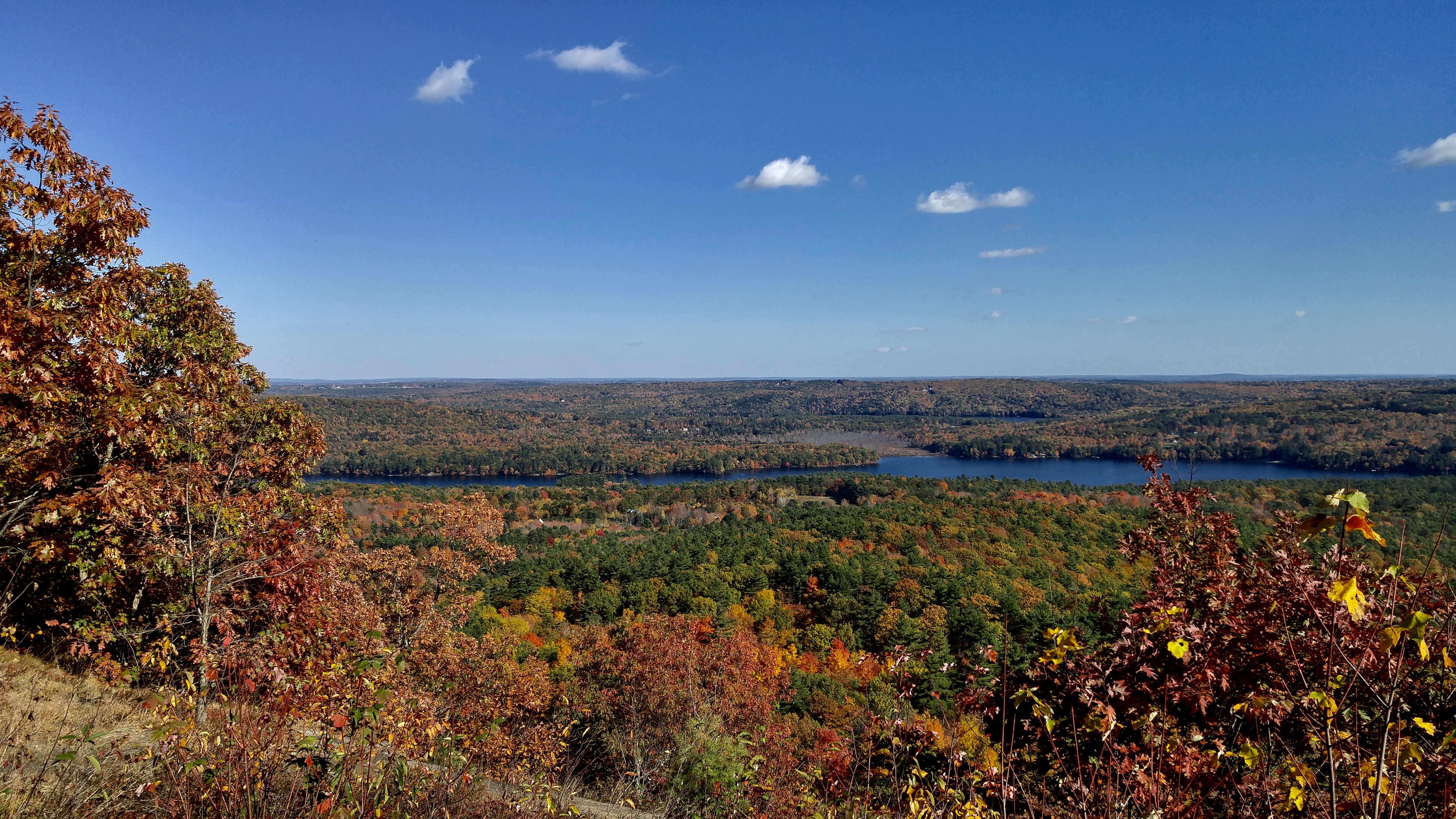
r-crescent-from-bri-1-1

At last, the view opened and we looked back at the opposite shore of Crescent Lake, though realizing that our earlier ascent was masked by the trees.

r-panther-from-bri-3-1

Turning about, Panther Pond came into view.

We’d spent the day embracing Raymond because everybody loves Raymond.

r-raymond-forest-sign

r-brimar-trail-sign

Raymond, Maine, that is. Loon Echo Land Trust is gearing up to celebrate the Raymond Community Forest that we explored this morning and the Bri-Mar Trail up Rattlesnake Mountain has long been traveled by many. In fact, when I used to write copy for the local chamber of commerce, I spent some time learning about Edgar Welch, who was the fastest man on foot and ran up Mount Washington at least once a year. He lived in Raymond and worked for David McLellan, who was partially blind from a Civil War injury. Because Mr. McLellan’s farm was at the foot of Rattlesnake Mountain, the sun would set one hour earlier than elsewhere in town. According to legend, after work each day Edgar ran up the mountain and moved rocks. Finally, he’d moved enough to let the sun shine on the farm for an hour longer. Another story has it that one day a man bet Edgar that he could beat him in a race to Portland. The man would race with his horse and buggy, while Edgar ran. When the opponent pulled into the city, Edgar was waiting for him. I love local lore.
And everybody loves Raymond. Well, my guy and I certainly gained a better appreciation for this town today.


In Constant Flux

Ever so slowly, the world around us changes.

h-starting-point

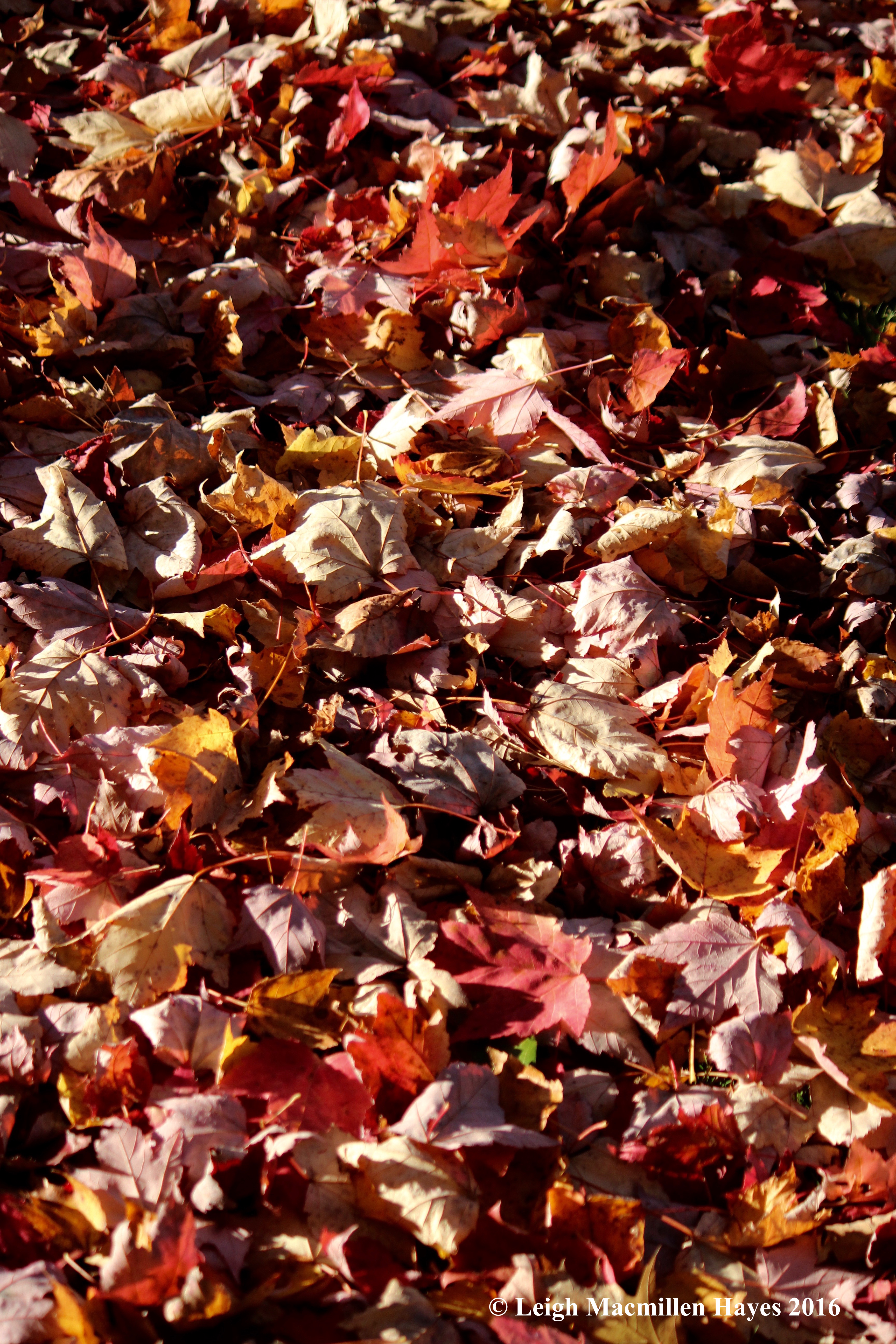
Sometimes it’s as obvious as the leaves that fall.

h-bee-on-flower-1

And other times, it’s a bit more subtle, evidenced by the bees that have slowed their frantic pace as they make final collections.

h-leaf-carpet

Mid morning, I headed down the cow path in search of other signs of change.

h-oak-branches-1

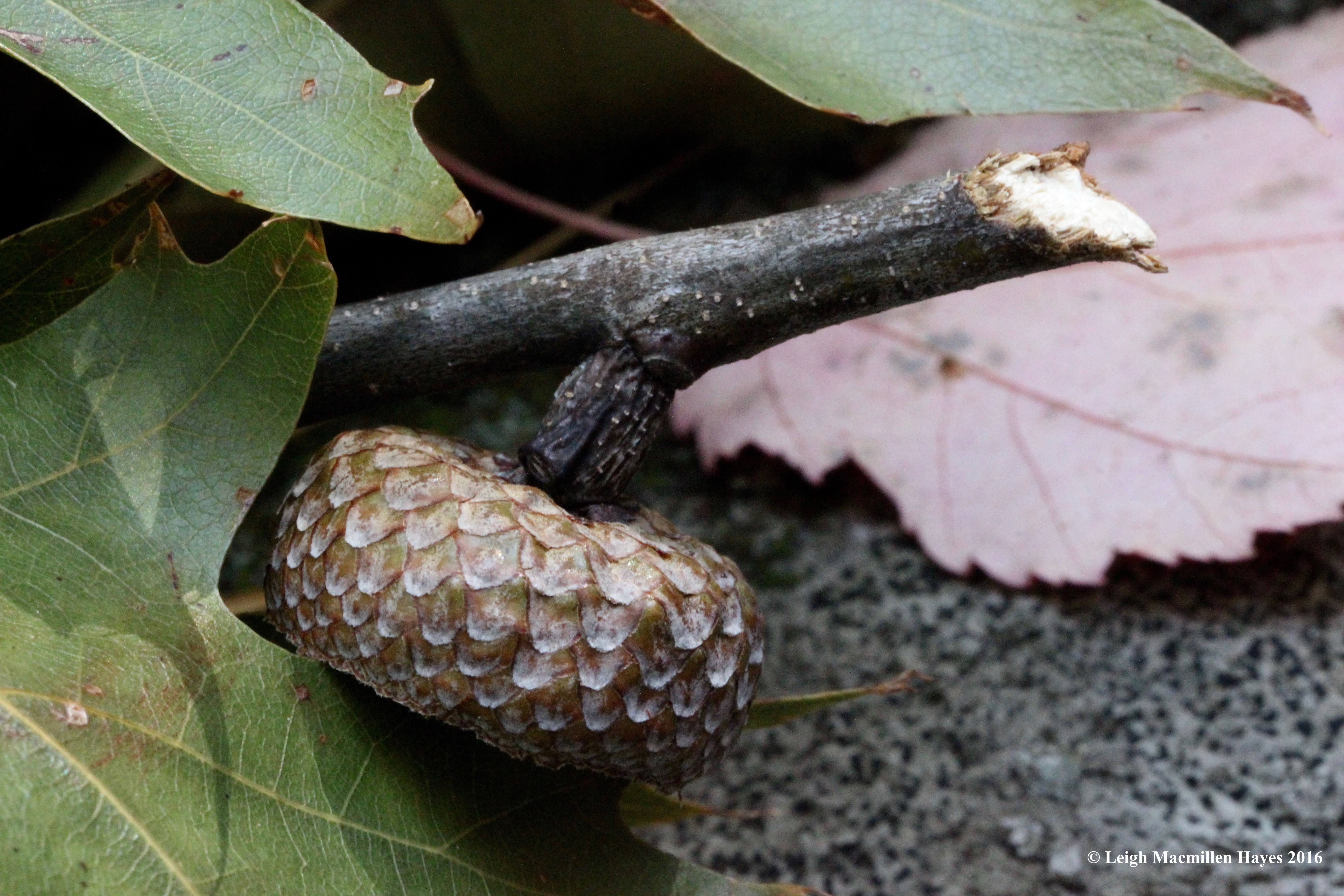
As I walked along, I began to realize the interdependence of all. Under the northern red oaks–many  chopped off twigs.

h-porcupine-works

The angled cut and empty cap indicated the work of porcupines seeking acorns.

h-leaves-on-hemlock

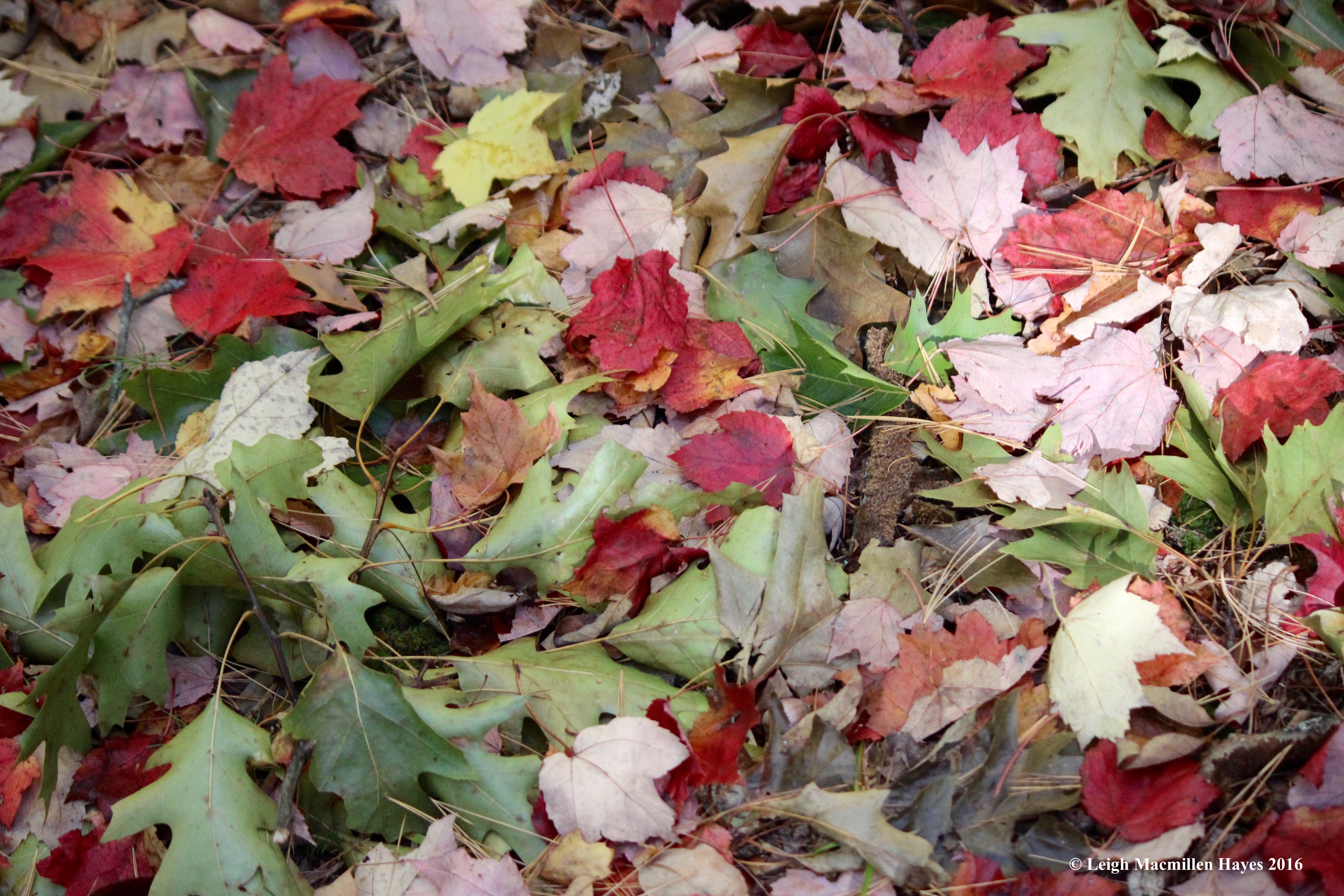
I found maple leaves pausing on hemlocks,

h-pine-needles-on-spruce

pine needles decorating spruce trees,

h-leaves-in-puddles

and occasional puddles offering a rosy glow. Eventually, all of these leaves and needles will break down and give back.

h-life-on-rock-1

I found life on a rock, where lichens began the story that was added to by mosses. The creation of soil was enhanced by a yearly supply of fallen leaves and needles gathered there. And then a seed germinated, possibly the result of an earlier squirrel feast.

h-orange-peels1-1

I found orange peel and many other fungi aiding the process of decomposition so that all the fallen wood and leaves will eventually become part of the earthen floor.

h-forest-succession-3

I found a healthy stand of trees and ferns competing for sunlight in an area that had been heavily logged about ten years ago.

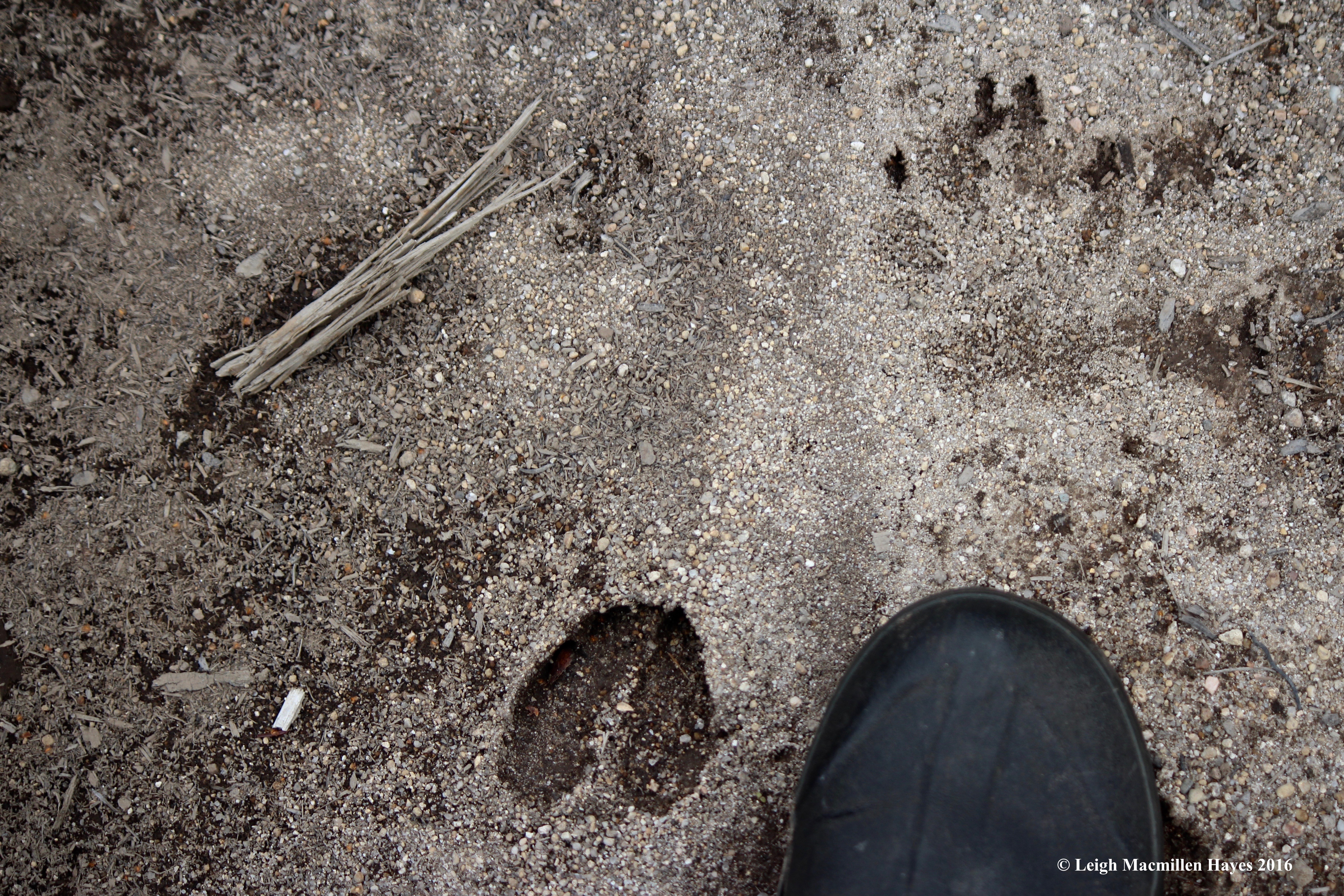
h-deer-and-bobcat-prints

I found evidence of those who spend their lives eating and sleeping in this place.

h-aster-seeds

I found seeds attached

h-seeds-on-the-fly

and those on the fly–heading off in search of a new home.

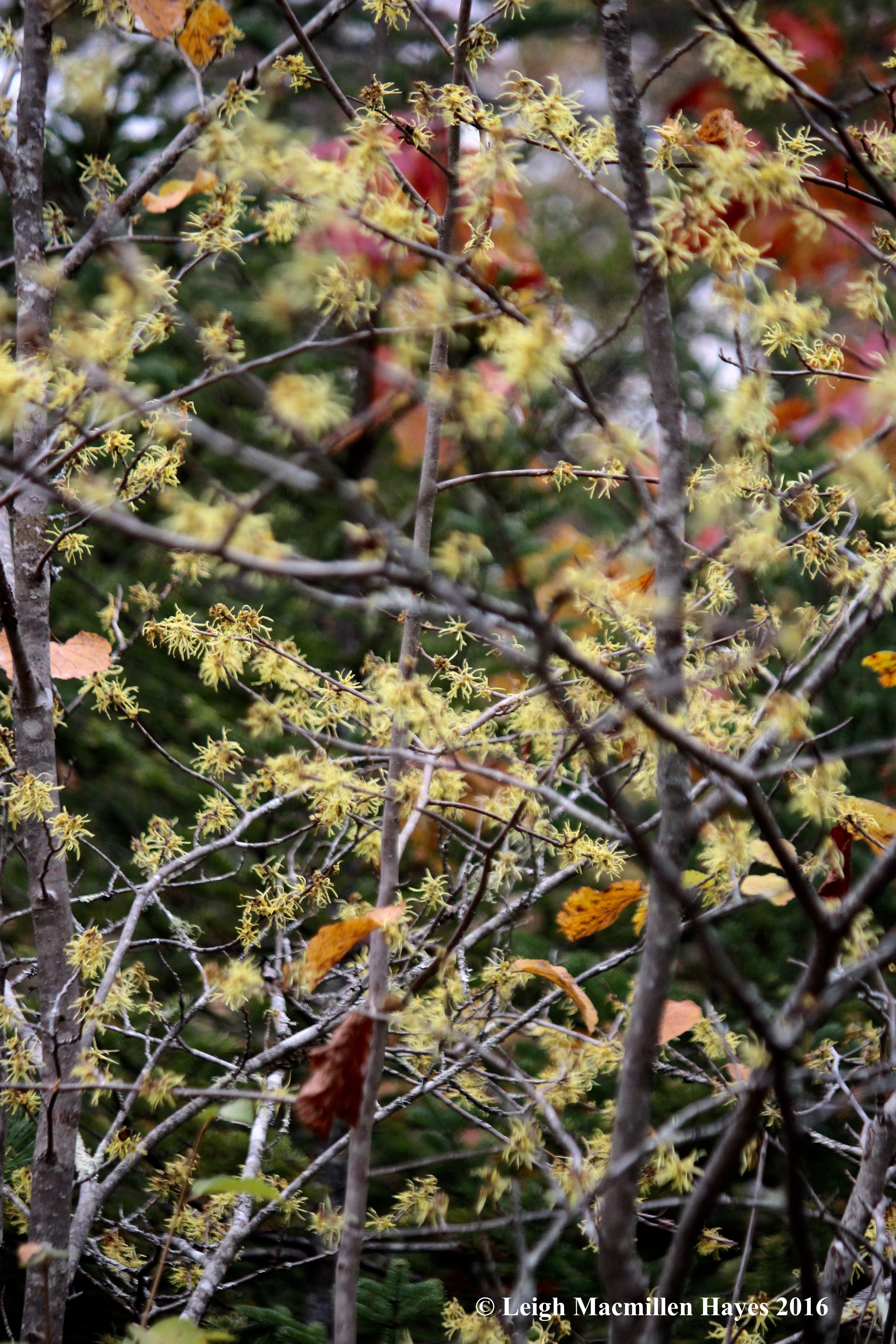
h-witch-hazel-flowers-galore

I found the last flowers of fall

h-witch-hazel-1

exploding with ribbony blooms.

h-power-and-nature

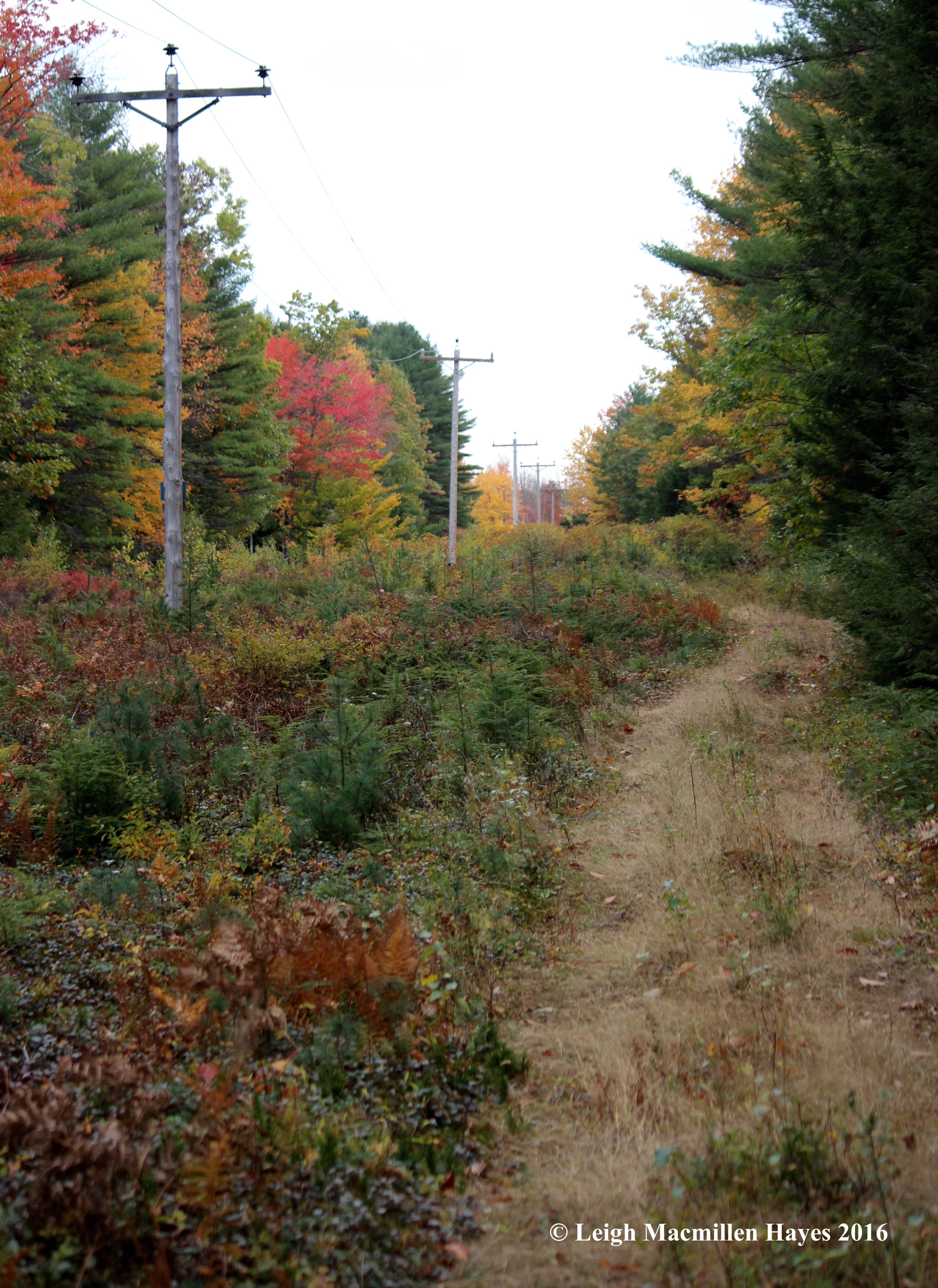
After bushwhacking for a few hours, I found the snowmobile trail, where man and nature have long co-existed.

h-home-2

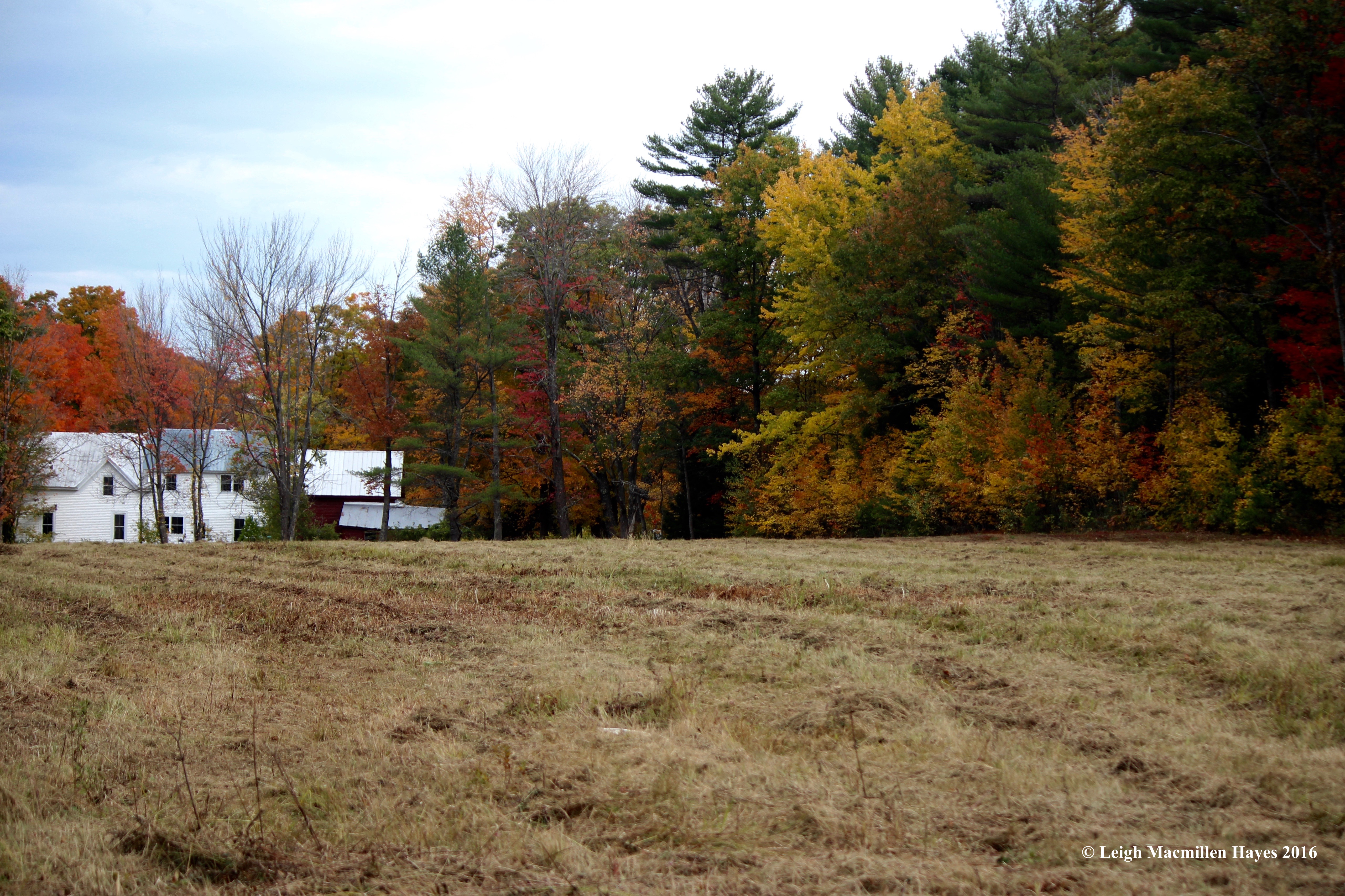
At last I found my way across the field rather than through our woodlot, thankful for the opportunity to take in the colors of the season one more time.

At the end of the day, I’m once again in awe as I think about how we, and all that we share this Earth with, are dependent upon each other and the abiotic forces that surround us.

And with that comes the realization that the scene is in constant flux and so am I.


Hawk-eye Mondate

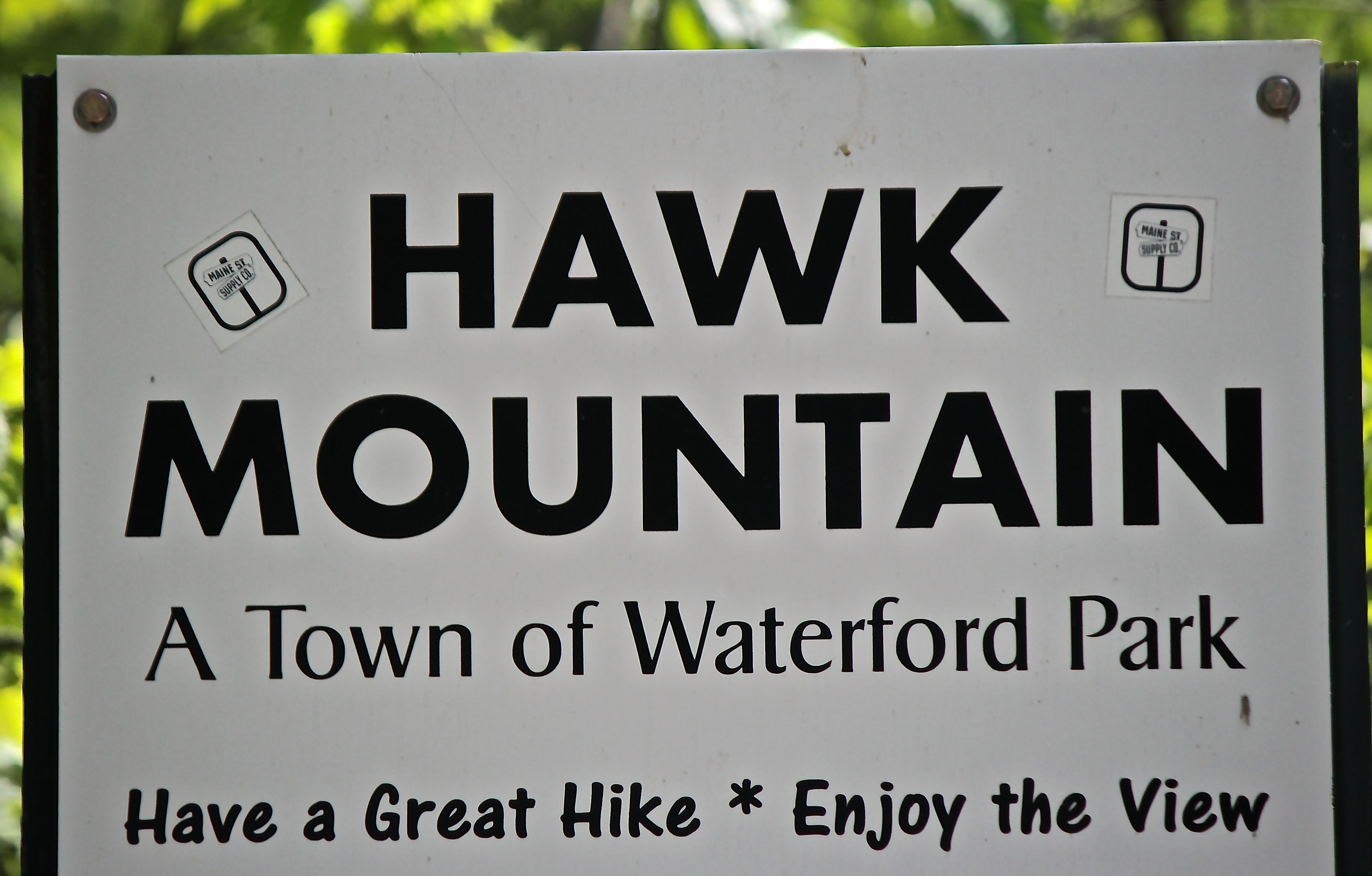
Some Mondates are shorter than others and such was the case today. But . . . we made the most of it as we walked up the trail to Hawk Mountain in Waterford.

hm-sign

It’s a half mile trek up a dirt and gravel road–just right when you want a great view and time is short. Of course, you could spend hours at the summit, but we weren’t there long.

hm-interrupted1

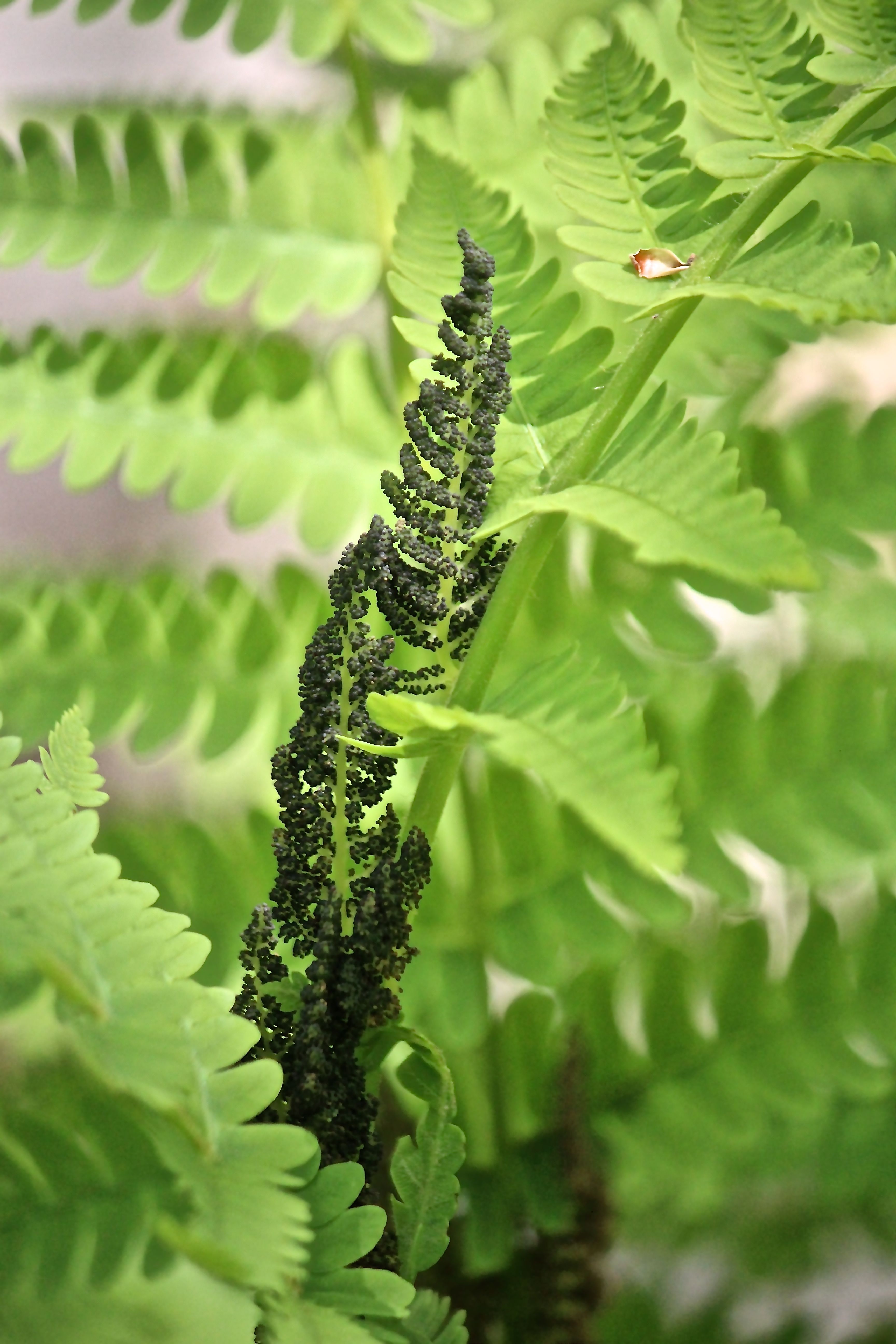
On the way up, I noticed interrupted fern in its interrupted form. Fertile leaves toward the middle are densely covered with sporangia (spore-bearing structures). I’m fascinated by their contorted, yet beautiful structures.

hm-lady1

Another favorite–lady’s slippers. Again, its structure is beyond my understanding.

hm-cyrstal and long2, ph

At the summit, we paused briefly and gazed toward Crystal and Long Lakes.

hm-white oak 4, ph

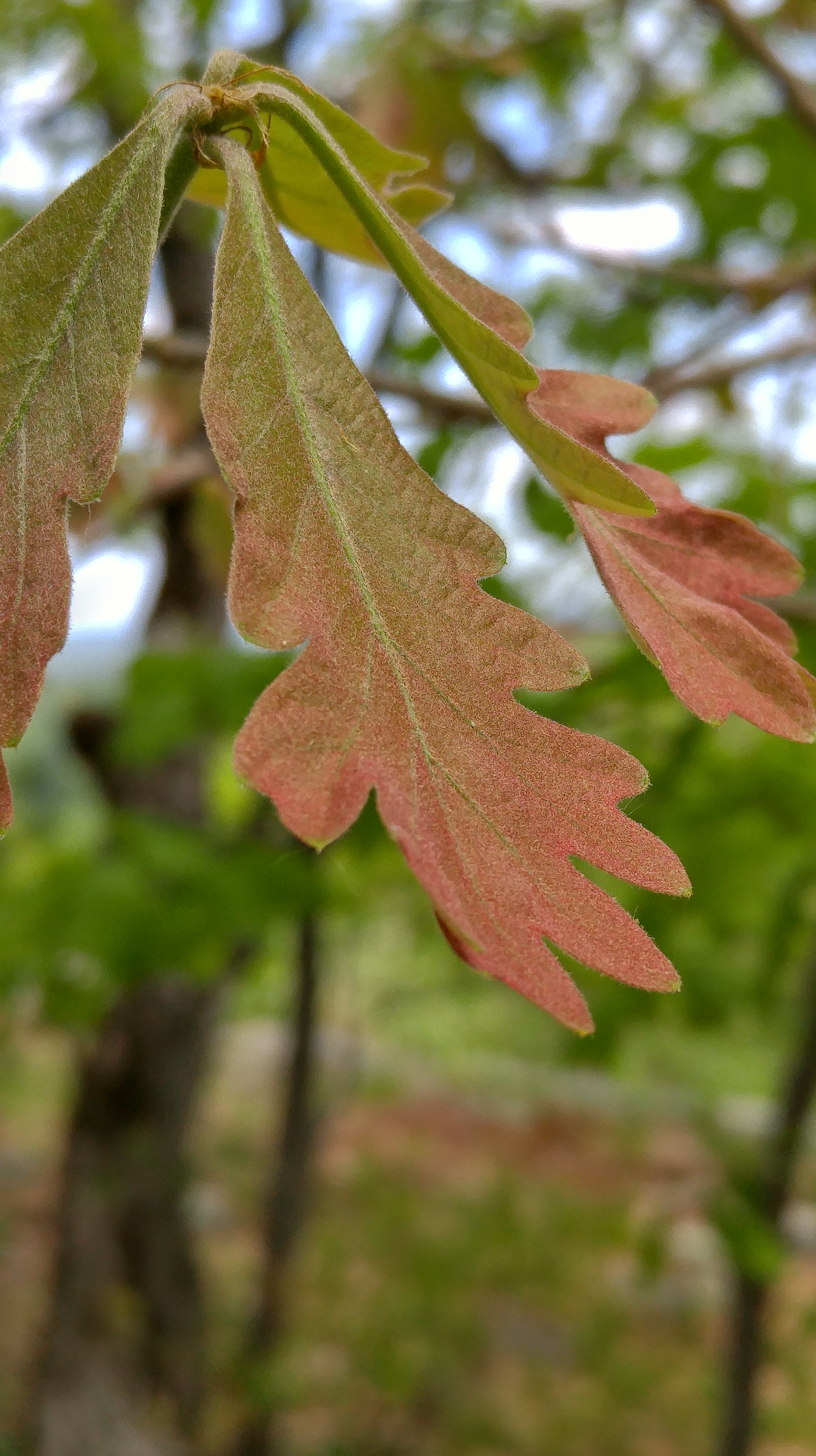
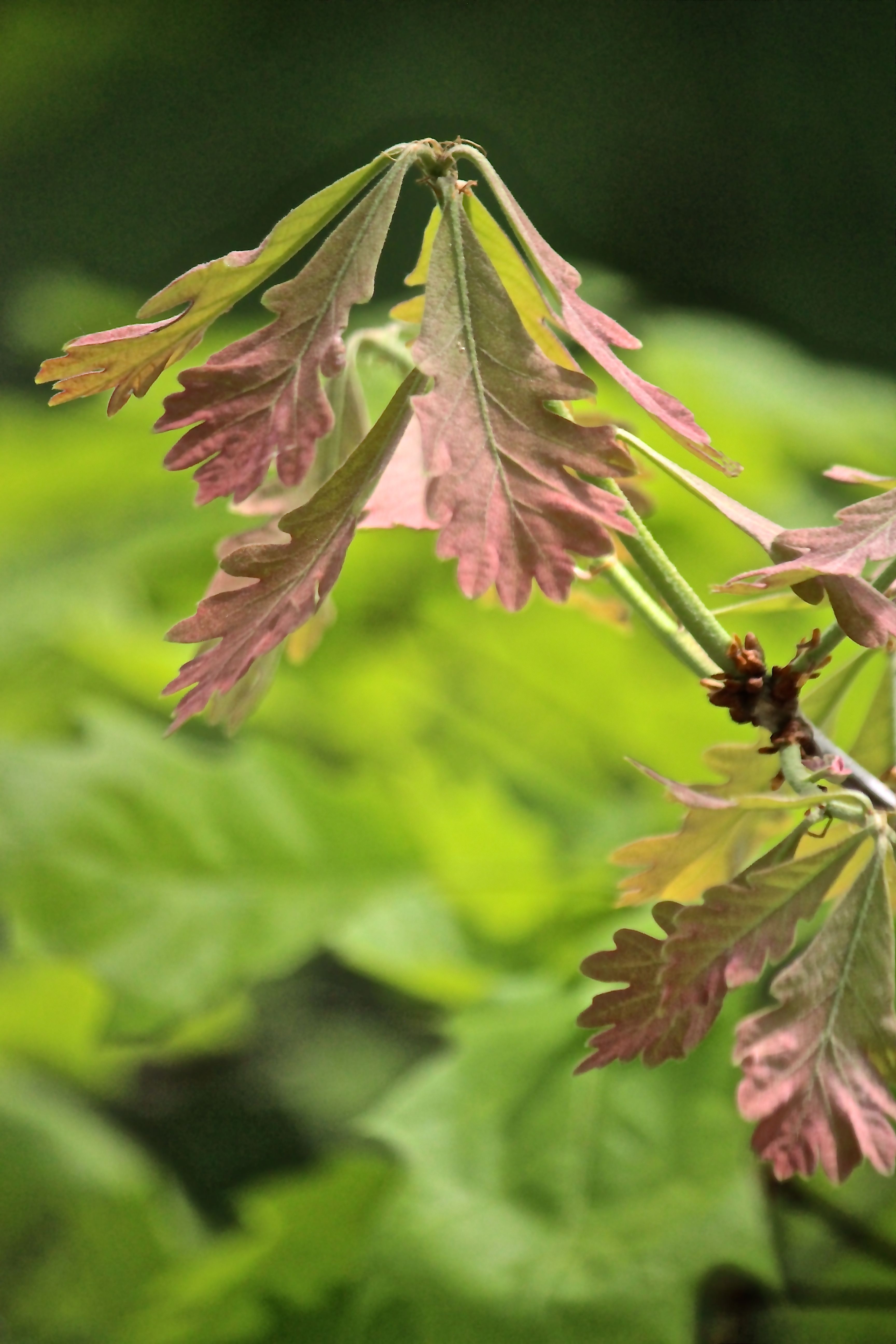
While my guy moved on to the better vantage point, I stopped several times. First, it was the color of these leaves that slowed me down. Have you noticed how spring foliage provides a subtle play on fall foliage? A few friends and I have been thinking about this lately, and this morning I had the opportunity to pick the brain of Dr. Rick Van de Poll, a well-known mycologist/naturalist/educator.

hm-red maple 1

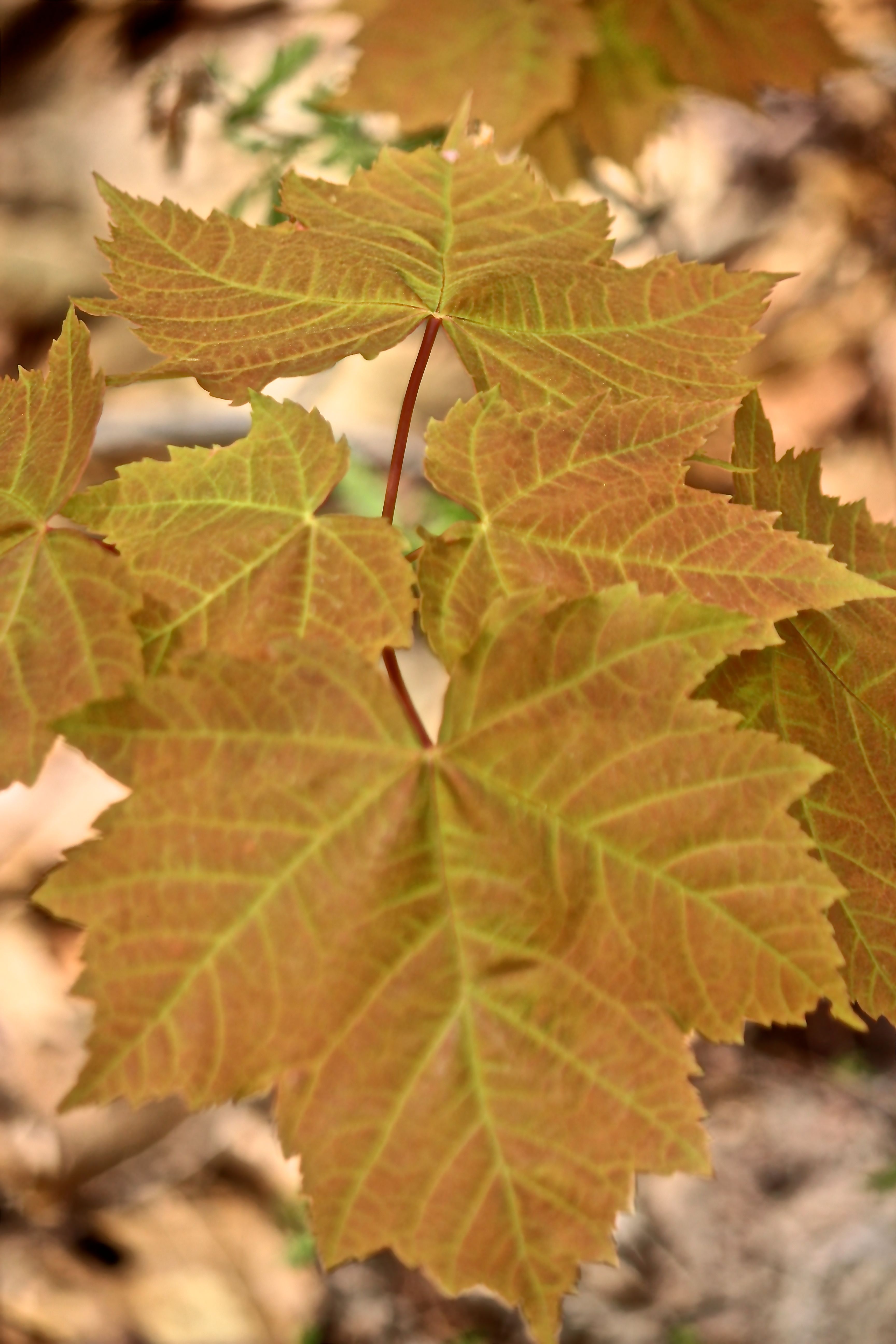
He reminded me that the various hues of color in leaves is caused by the presence of pigments called anthocyanins or carbohydrates that are dissolved in the cell sap and mask the chlorophyll. As our spring temperatures rise and light intensity increases, red pigment forms on a leaf and acts as a sunscreen to protect the plant from an increase in ultraviolet rays.

hm-white oak1

It wasn’t only the color that caught my eye. Take a look at the lobe shape of the reddish leaves and that of the green in the background. In my continuing personal citizen science project to informally connect the dots of where white oaks meet red oaks, I added another pin on the map. Rounded lobes=white oak in the foreground. Pointed lobes=Northern red oak in the background.

hm-bee1

As I headed toward my guy, I noted that the cherry trees were abuzz.

hm-wild columbine1, ph

And hiding among the rocks at the base of a tree–another treat for the eyes. Wild columbine. Splendid indeed.

hm, cyrstal and long, ph

Equally splendid–the view from the ledges. Crystal and Long Lakes again.

hm-bear river

Bear River below. I always expect to see a moose here. Or maybe a bear. One of these days.

hm-pm1, ph

Pleasant Mountain and my guy.

hm-dragon5

As we walked back down the trail and concluded our Mondate, we celebrated the fact that dragonfly season has begun. With their hawk eyes, may they capture and consume a kazillion black flies and mosquitoes.