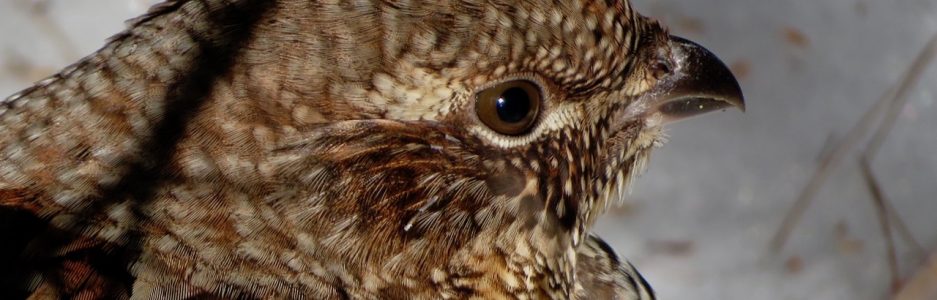
Window on the World

Friends and I explored a property that the Chebeague and Cumberland Land Trust is trying to purchase. Though in many ways it is similar to the natural communities of western Maine, there are some noted differences. And now that I’m home and can reflect upon it and check my reference books for more information, it’s all beginning to make sense. With every walk in the woods, the vision before me becomes clearer.

white oak leaf

I’m always happy to encounter these round-lobed leaves because I don’t see them often. White Oak abounds at the 215-acre Knights Pond & Blueberry Hill property in Cumberland and North Yarmouth.

white oak crown

The crown of a parent White Oak presents itself with joy.
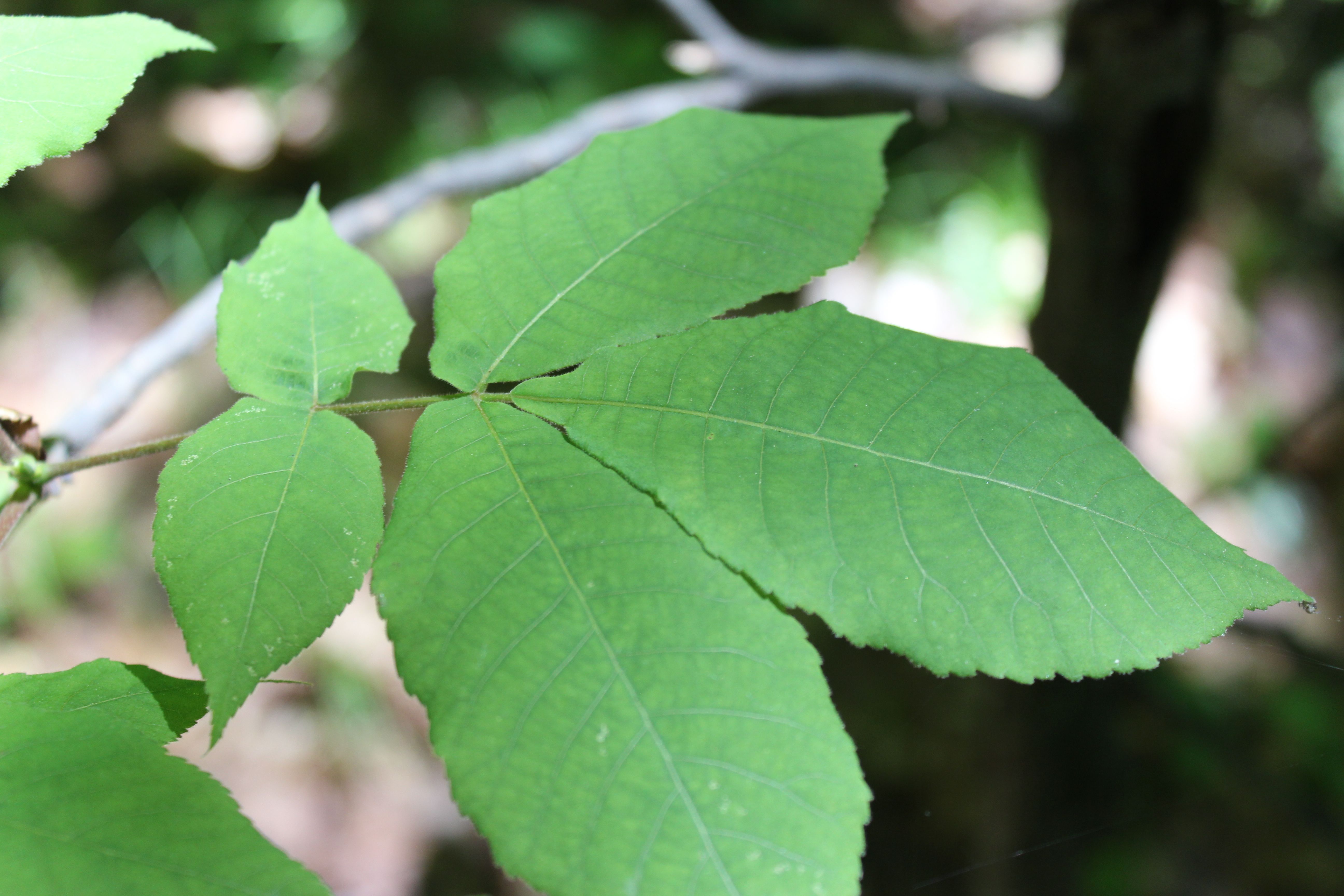
shag leaf

Another species I don’t get to see every day–Shagbark Hickory with its compound leaves. Actually, they are pinnately compound. Hmmm, you say. Compound in that the blade consists of 5 leaflets  and pinnately because the leaflets form in a row on either side of the common axis–think feather-like formation.
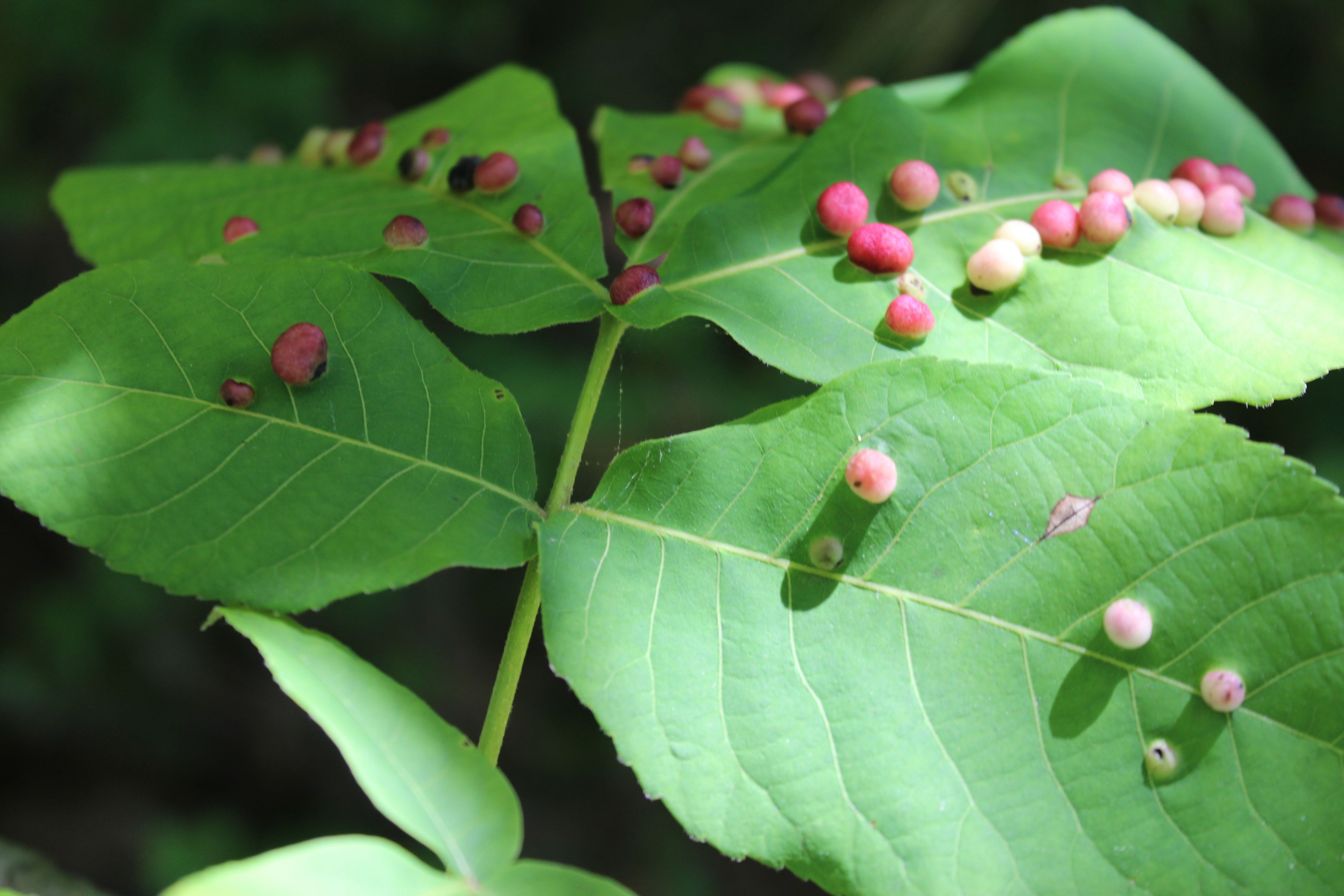
shagbark hickory leaf and galls

Interestingly, some hickory leaflets were covered with galls, giving them a warty appearance–in a miniature candy-apple kind of way. I was thinking they might be caused by a mite, but turns out it may be either a midge or fly that makes these little balls.
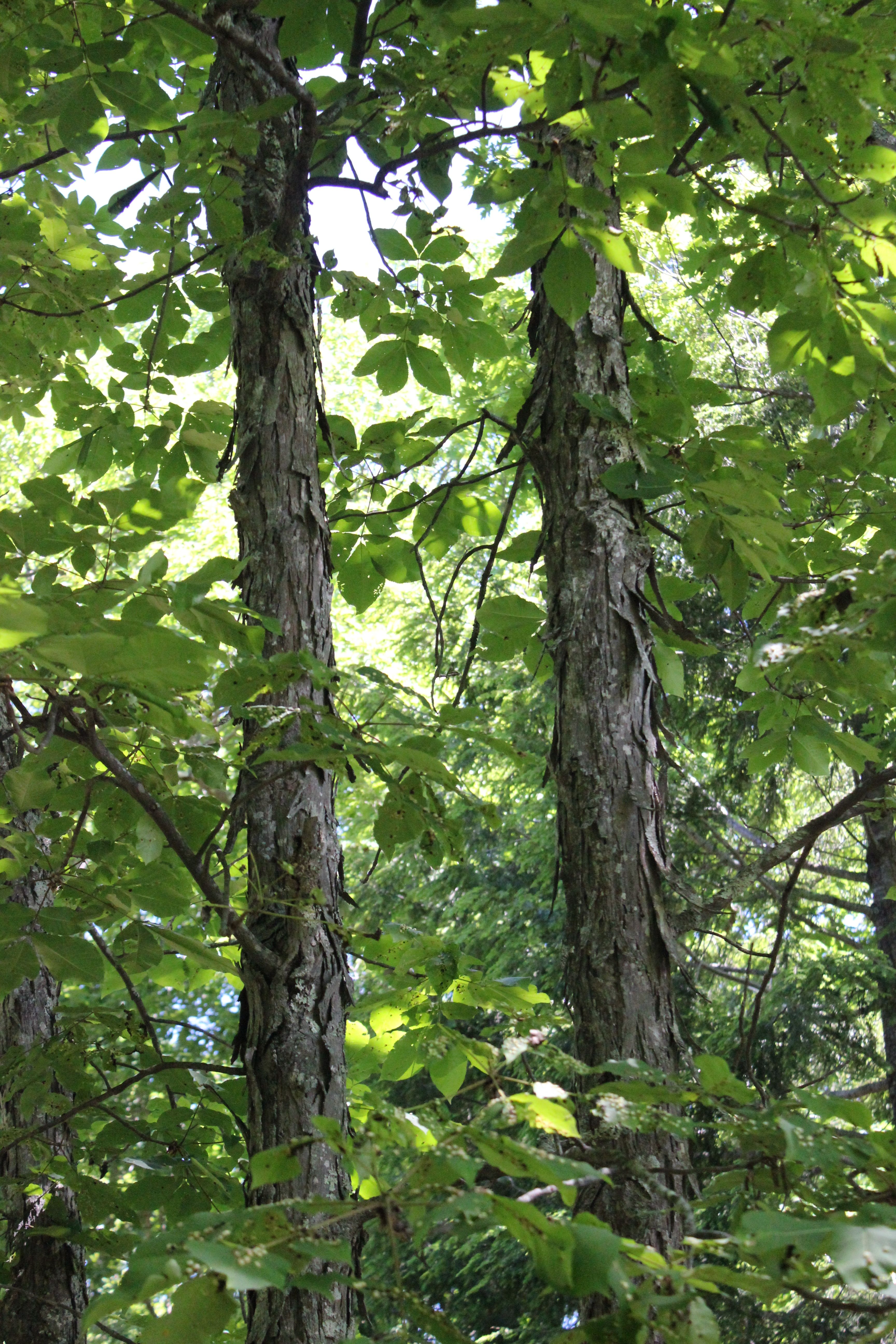
shagbark hickory

Shagbark Hickory certainly is a shaggy looking tree, with gray-brown bark that curls away from the trunk in long, thin strips.
hop hornbeam

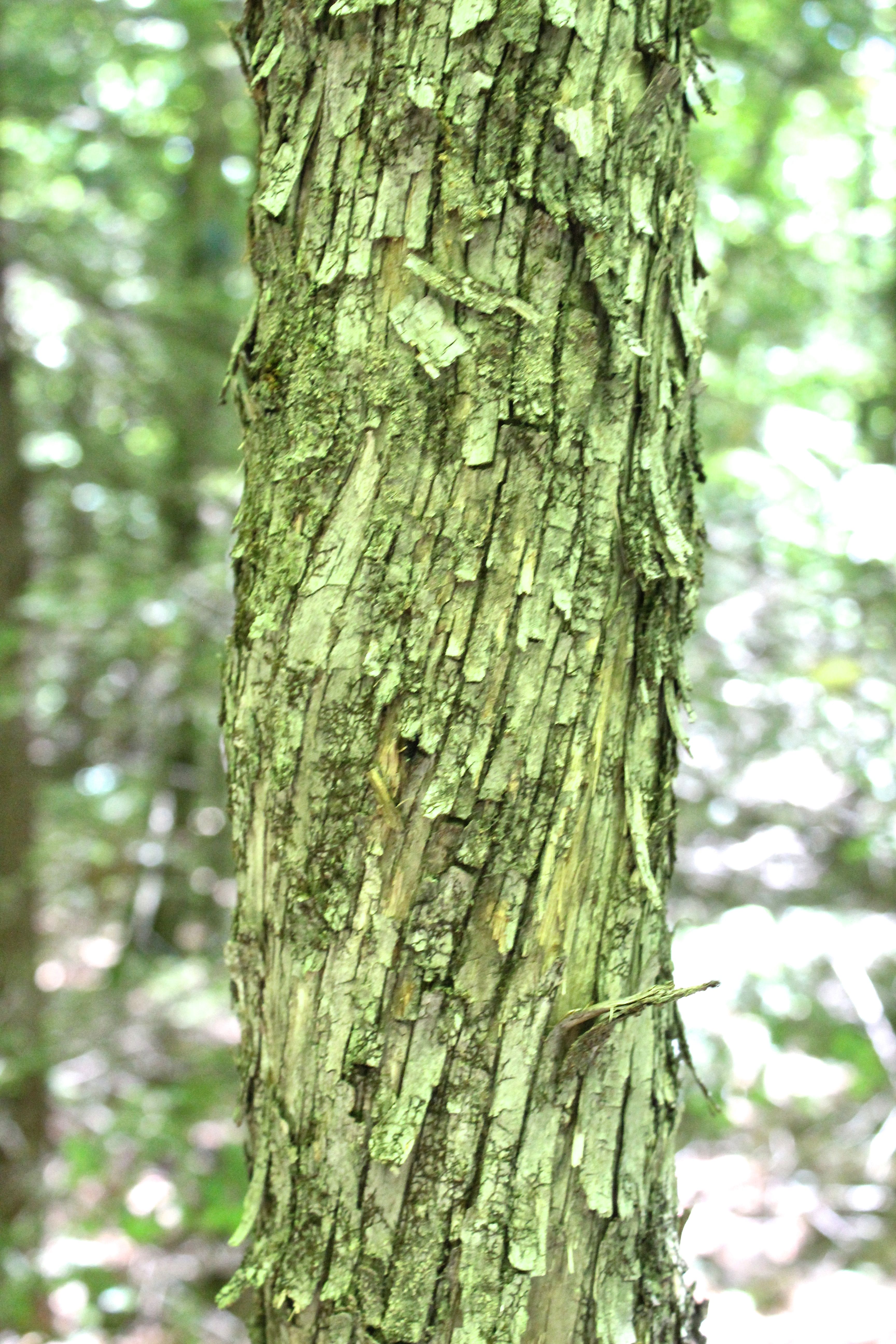
Near the hickory trees are numerous Hop Hornbeams with their flaky bark.

shag and hop

In the grassy glade, they grow together. I love it when trees stand together, making it easy to compare and contrast their features.

In Natural Landscapes of Maine: A Guide to Natural Communities and Ecosystems, authors Gawler and Cutko rank the Oak-Hickory Forest as S1–the rarest of communities.

“This dry forest type, characteristic of the Central Appalachian Mountains, occurs in small patches or as inclusions within broader expanses of oak-pine forest.”  Yikes, I think the authors may have been walking with us today.

“It is dominated by a mixture of shagbark hickory and oaks (white, black, red or chestnut) over park-like sedge lawn. Sugar maple, white pine or white ash may be canopy associates, and hop-hornbeam is a characteristic sub-canopy species.” Bingo.

Other associated species that we saw included Witch Hazel, Maple-Leaf Viburnum and Striped Maple, Low-bush Blueberry, Asters, Canada Mayflowers, Sarsaparilla, Wild Oats and probably more that we didn’t note.
trail

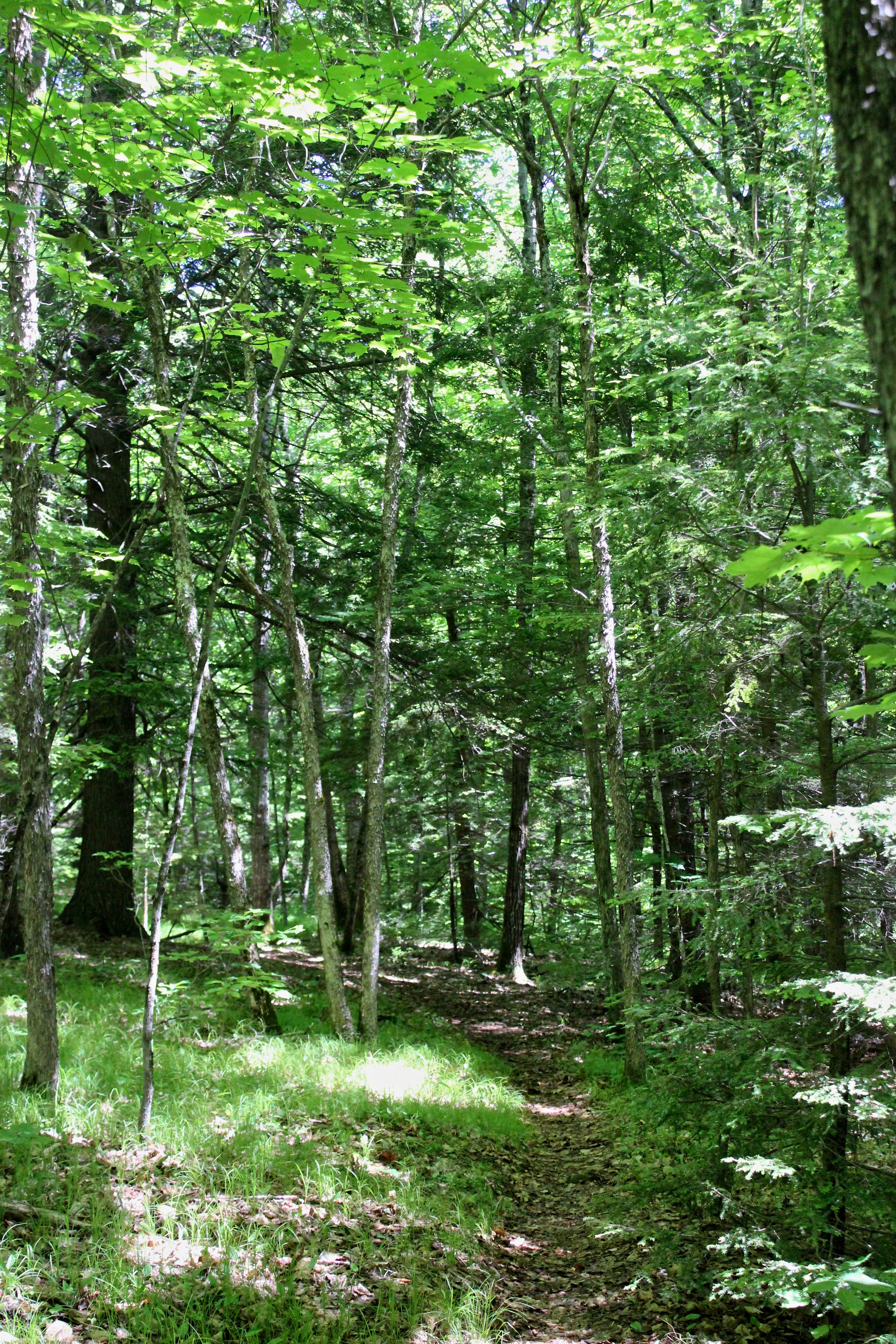
As usual, it took us forever, but occasionally we continued down the trail.

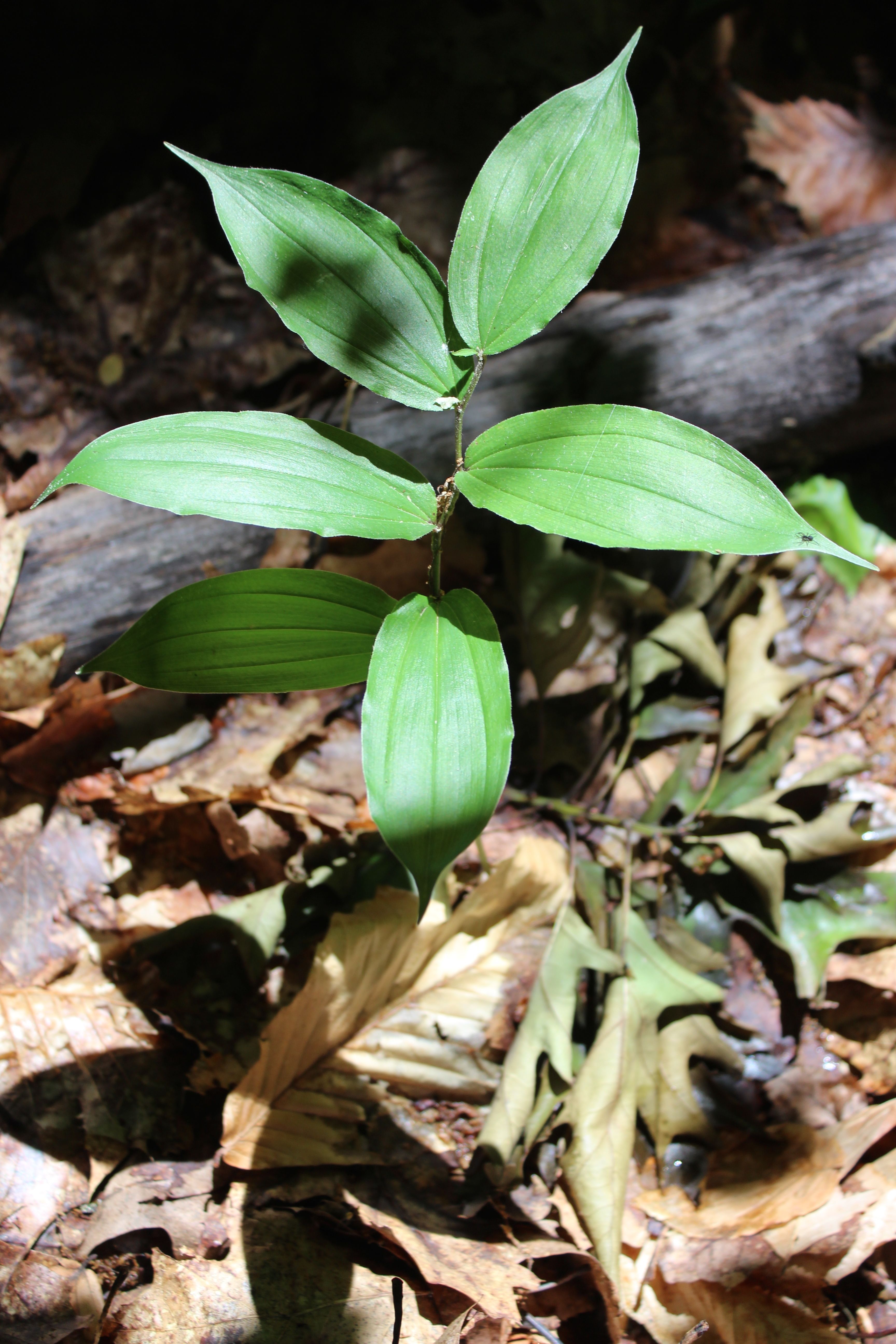
Indian Cucumber Root

Our frequent pauses included stops at Indian Cucumber Root,
maple leaf vibur2

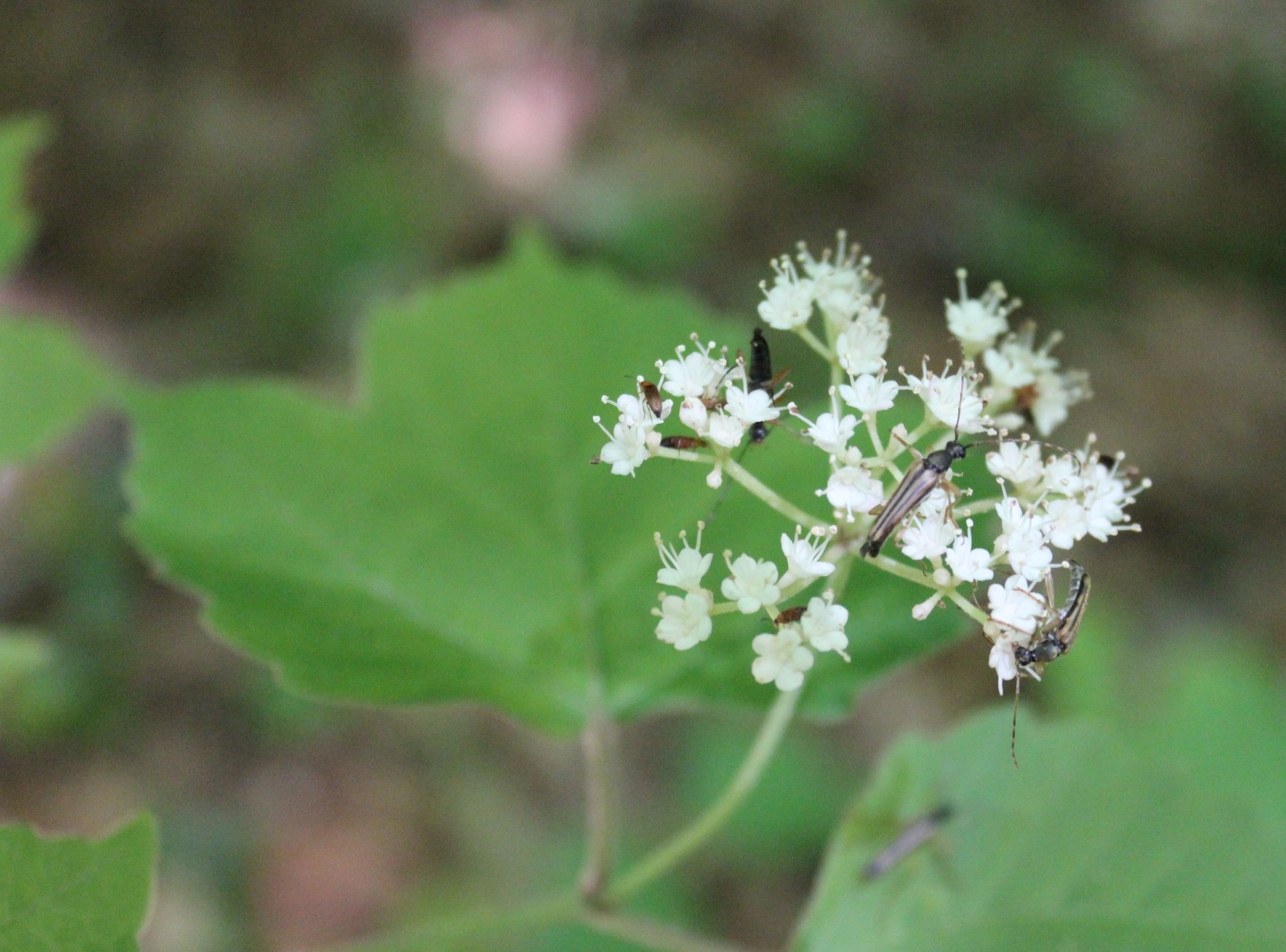
Maple-Leaf Viburnum,

New York fern

New York Fern,

lady fern

Lady Fern

hairy solomon's seal

and Hairy Solomon’s Seal.

stone wall

Stonewalls crossed in a couple of places, making us reflect on their construction and purpose.
snake

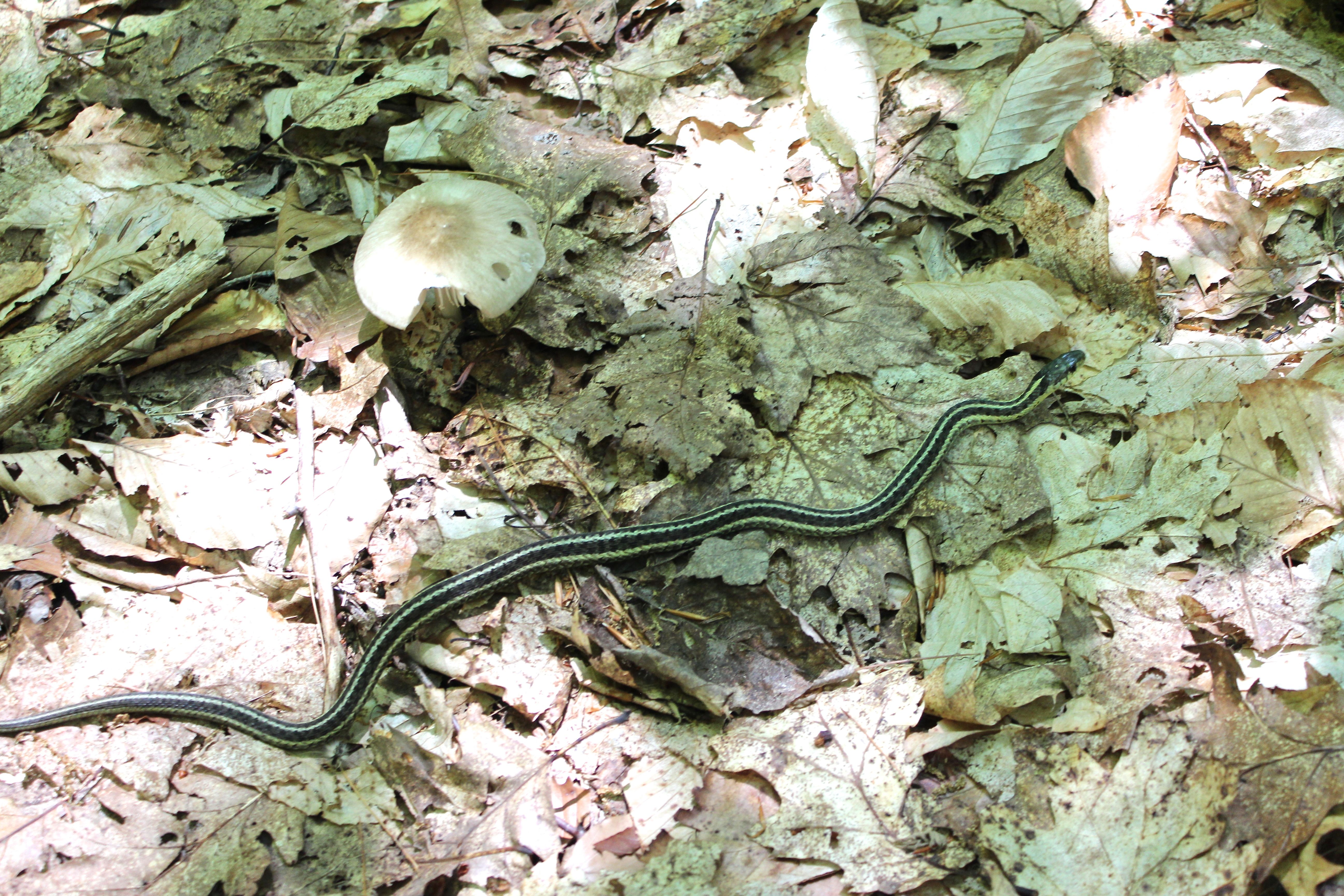
And a snake paused for a photo shoot.
bog 1

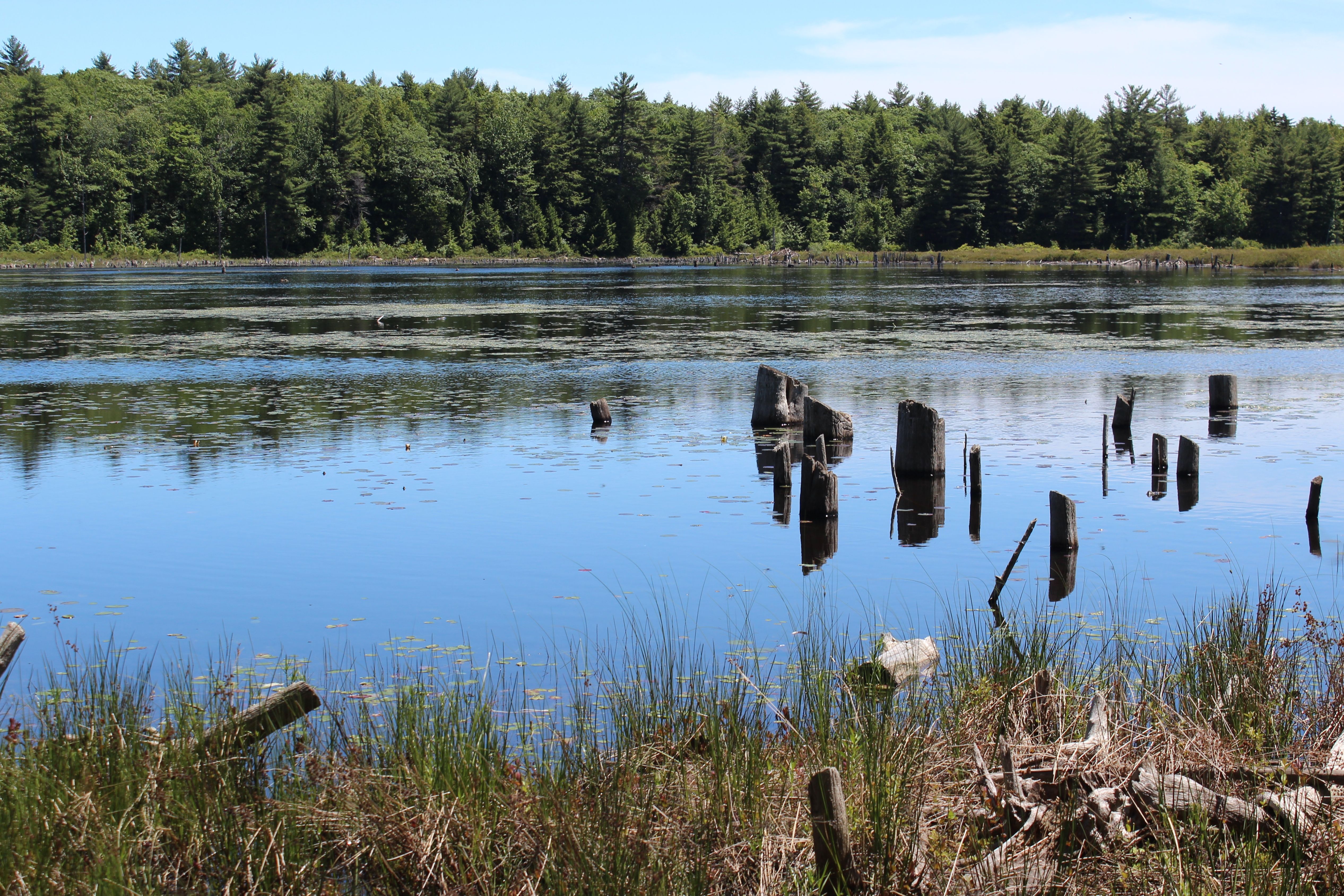
Suddenly, the trail opened to Knight’s Pond, a 45-acre, dammed pond. According to the brochure, “The pond is a significant breeding ground for waterfowl and wading birds and is an important refueling spot during migration.”

sundews

Among the life at the pond, a zillion carnivorous Sundews, with their nectar-tipped tentacles waiting to trap insects.
dragonfly

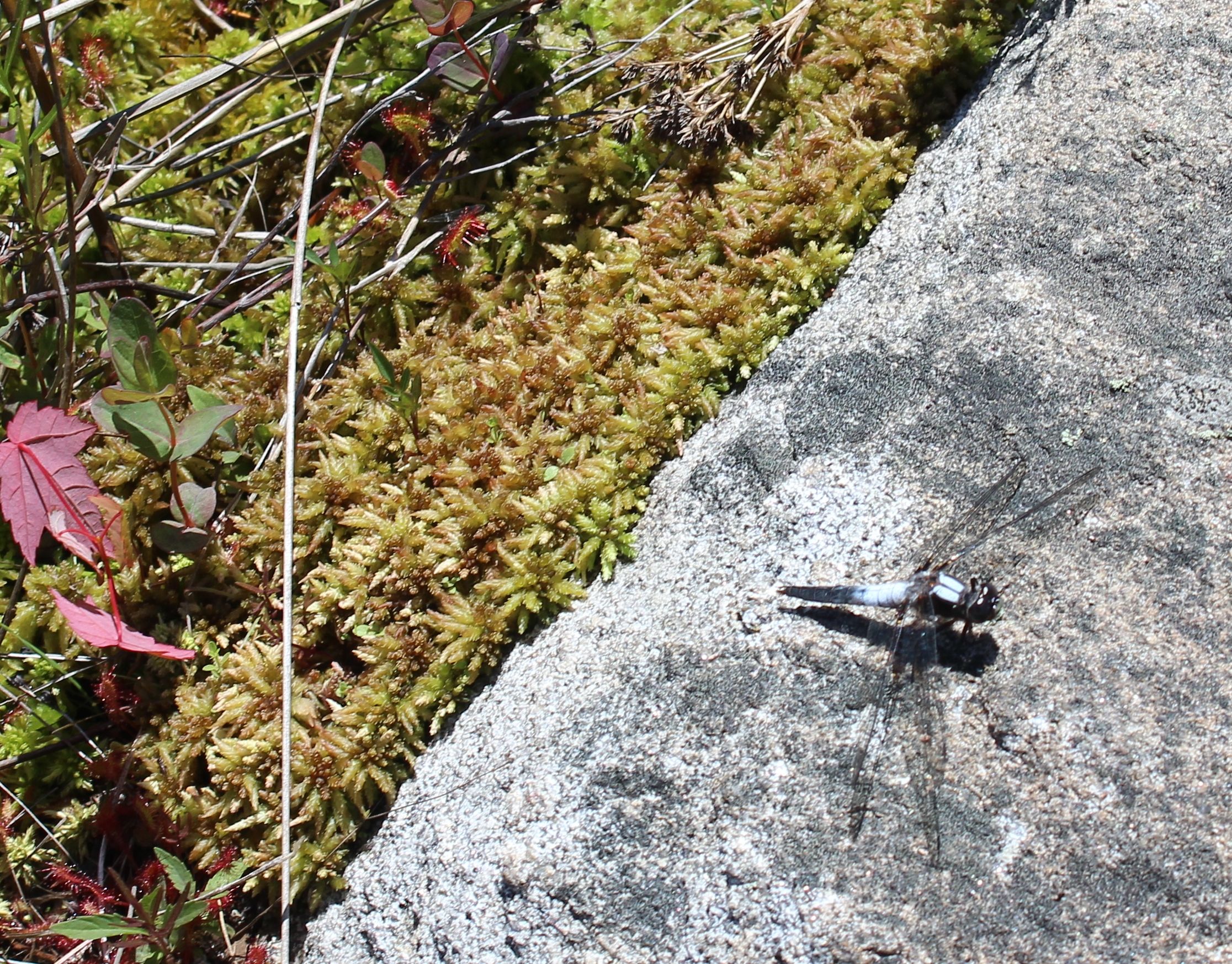
Dragonflies and damselflies were also on the hunt for prey.
 window on the world

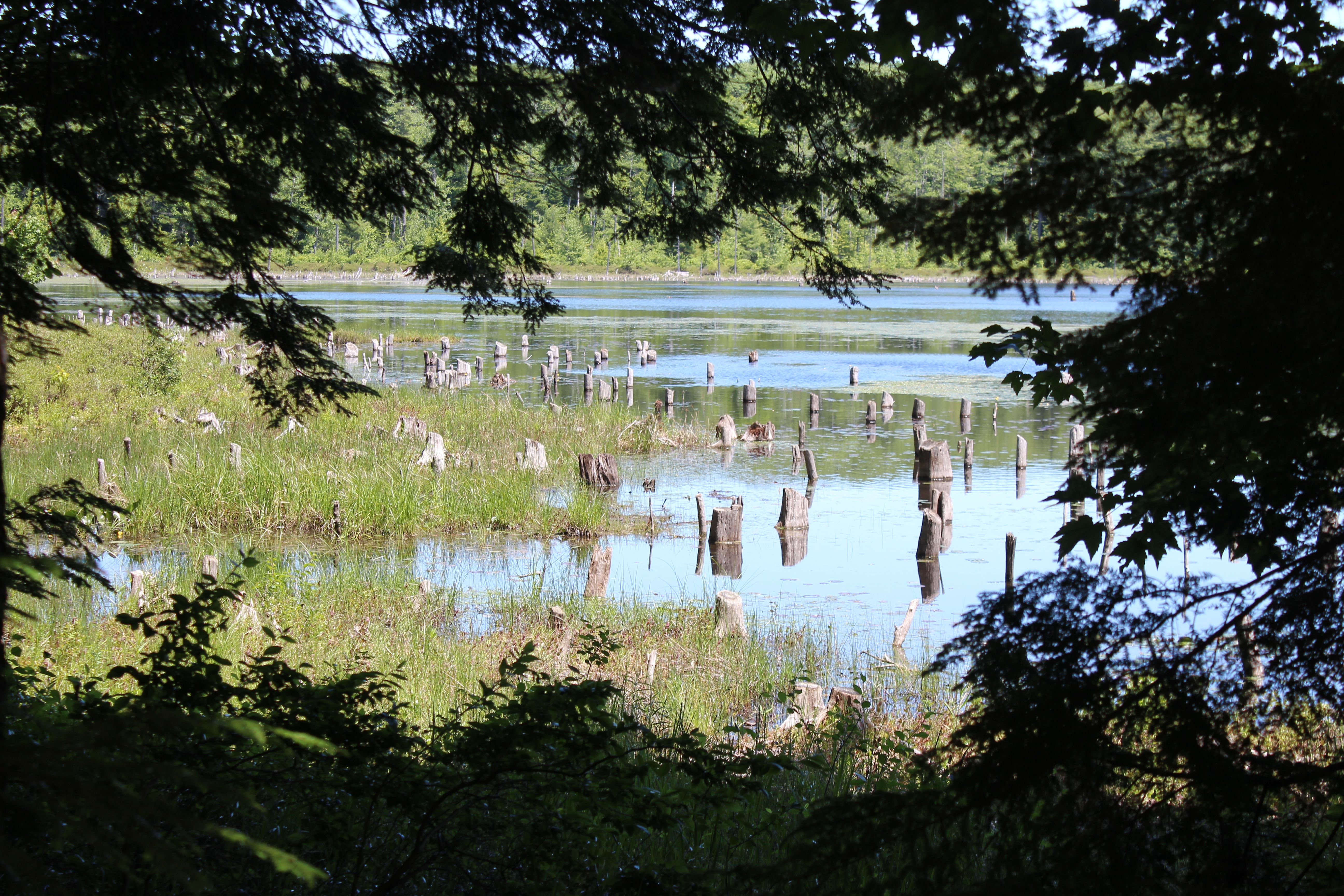
We had stopped frequently along the way to key out species or share our stories related to them. By the end of our wander, I was in awe of the beauty and thankful for the opportunity to glance through this window on the natural world.

Thanks be to The Trust for Public Land, Chebeague & Cumberland Land Trust, the Royal River Conservation Trust, all of those individuals who have contributed to the purchase, and my friend, K.H., for sharing it with us today. May you receive the Land for Maine’s Future funding soon.

Naturally Wavy

The roads were coated in black ice when I drove toward Jefferson, Maine, early this morning to meet up with the Maine Master Naturalist class. The morning sun, brilliant blue sky with scattered cumulous clouds, and mist rising from open waterways, made me want to pause along the highway and take some photos, but I wasn’t sure how I’d explain to a state policeman that indeed it was an emergency. Instead, I continued on to Gardiner, got off the highway and followed backroads over rolling hills and through farm country to my destination–Hidden Valley Nature Center. 

Aptly named, the 1,000-acre natural education center consists of contiguous forest dotted with vernal pools, a kettle bog, ponds and 30 miles of trails.

Bambi

Bambi Jones, a Master Naturalist and co-founder of HVNC, spent the morning with us, showing us the vernal pools and sharing her knowledge. Things aren’t exactly hopping at the pools yet, but . . . the weather is supposed to warm up this week and once the snow melts–look out!

vp1

When I first looked at this vernal pool photo, I thought it was upside down–such is the reflection.

vpsign

A wee bit of info and a reason why we should pay attention.

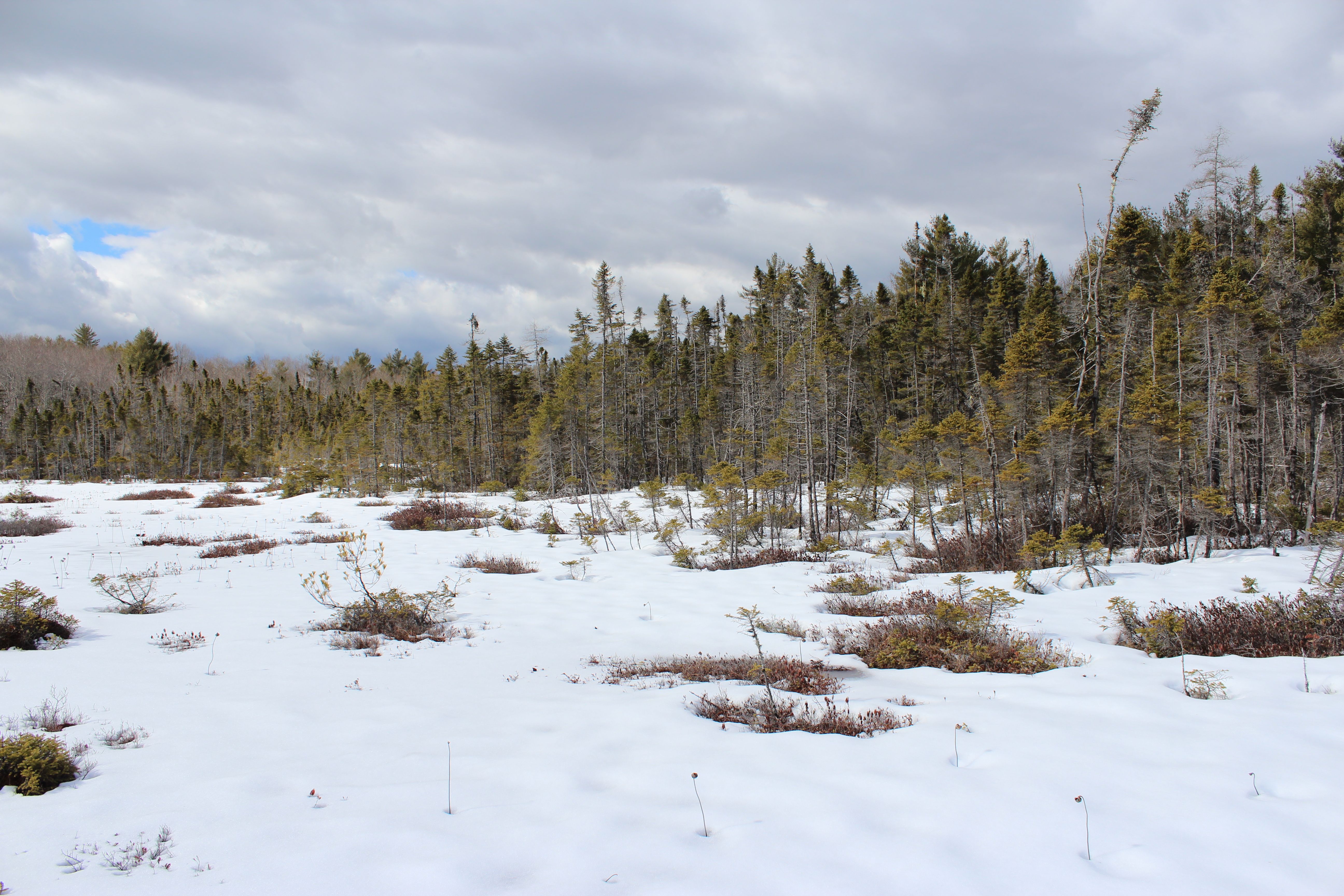
fen2

This is a kettle hole bog apparently, caused by glacial action. I was looking up the difference between a bog and a fen and found this on The International Carnivorous Plant Society’s Web site: “People commonly describe wetlands with words like pond, bog, marsh, fen, and swamp, thinking these are mostly interchangeable. Actually, there are careful definitions for each of these names. The only problem is that a hydrologist may use one set of definitions, while a botanist may use another, and an ecologist may use yet another.”

While we stood looking across, someone in the group spotted what they thought was a bobcat across the way and coming down a hill. I never saw it, but I did note lots of ledges in the area and on the way out saw some potential bobcat tracks.

fen1

Another view. Lots of black spruce, sheep laurel and pitcher plant seed pods visible.

pitcher plant flower

The seed pod of a  pitcher plant, one of our carnivorous plants.

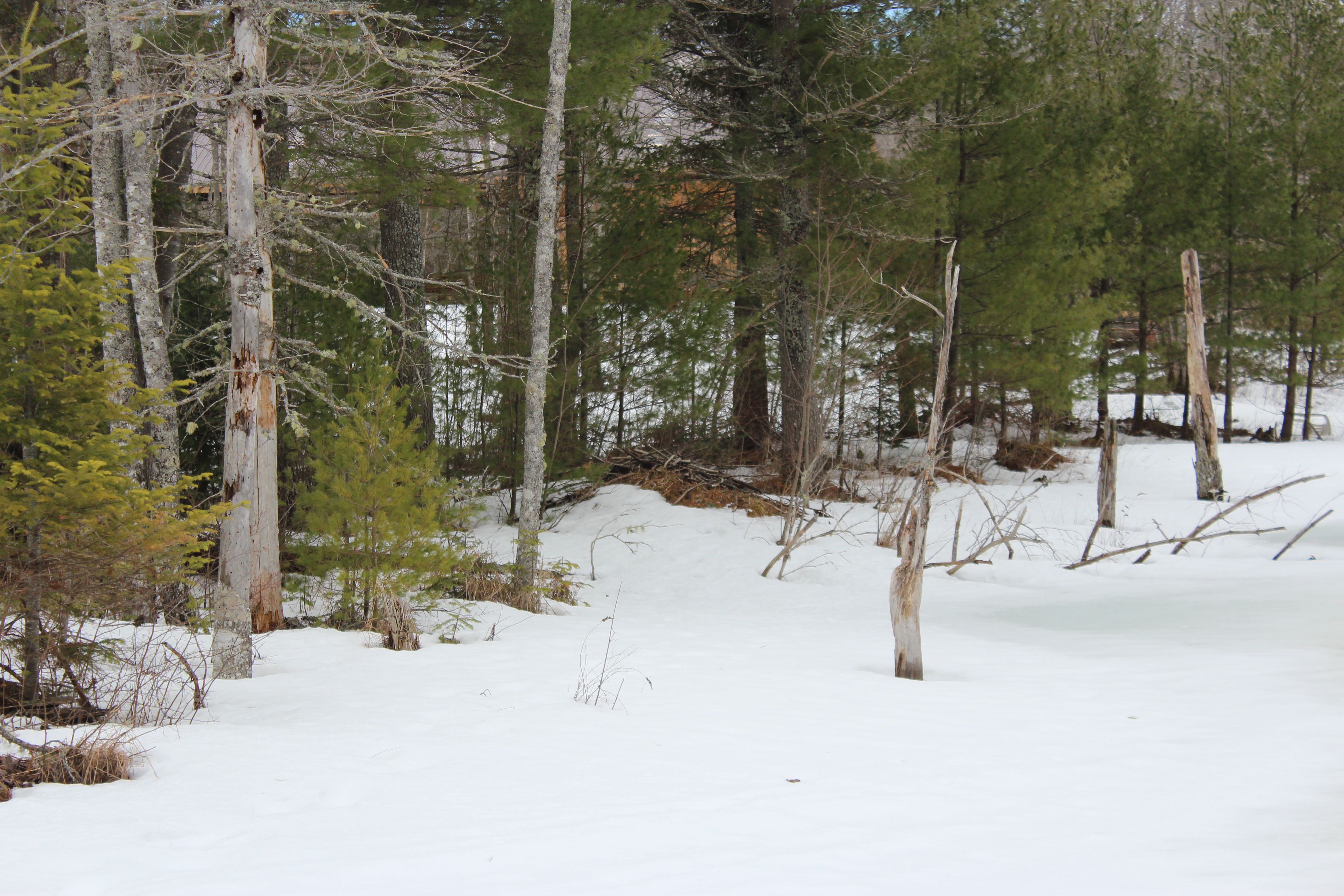
beaver lodge:fen

And a beaver lodge along the edge.

2nd beaver lodge

There were so many things to see, including a second beaver lodge that may have more action. Do you see it in the center of the photo?

beaver dam

This dam is nearby and had seen lots of activity. Due to yesterday’s rain, it’s a bit hard to decipher the tracks.

Cheryl , spring tails

Remember when I mentioned snow fleas or spring tails in my post entitled, The Small Stuff? Well, this is one of our students enjoying a circus performance.

cat

You never know what you might see when you take the time to look.

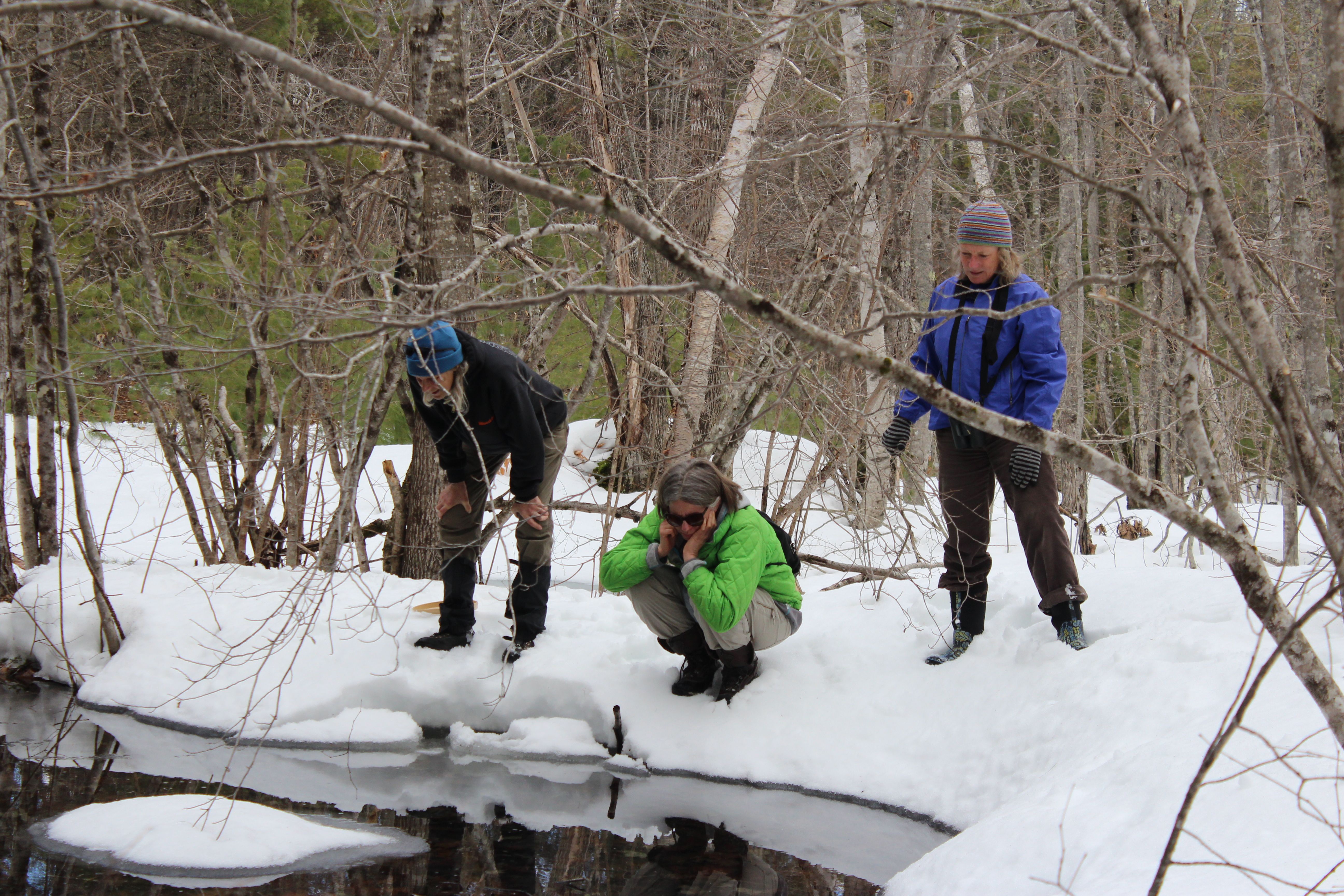
looking for life

So they did–look that is. And almost fell in.

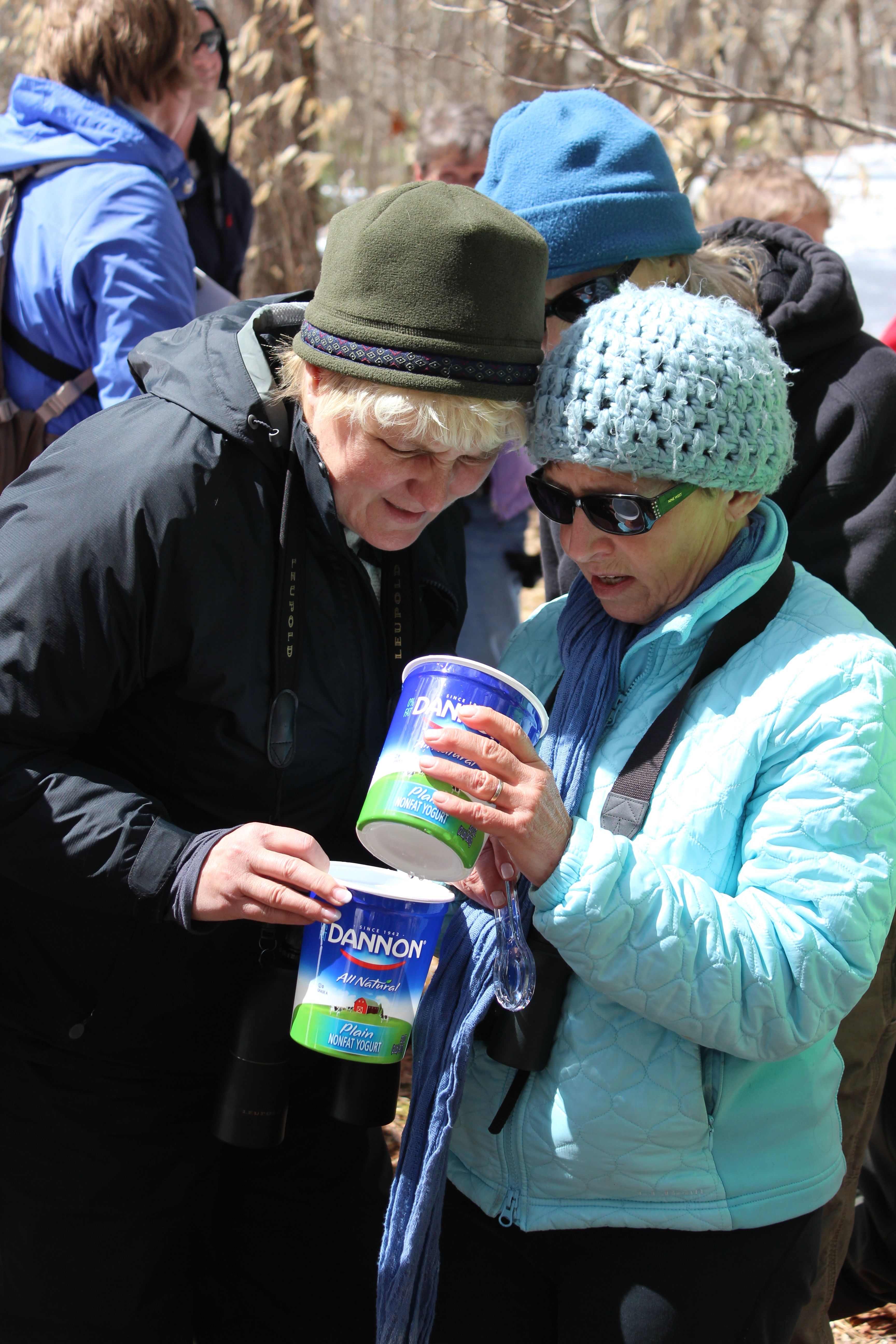
what's in your dannon?

More observations–whatcha got in your Dannon container?

white oak1

One of my joys was meeting two new trees. I was excited to make the acquaintance of White Oak (Quercus alba) today. Rather than the ski trails and redness of Northern Red Oak, this species features bark that looks like irregular blocks.

white oak 2

And sometimes it looks shaggier, with long, vertical plates. Like its red brethren, the leaves are marcescent, meaning they stay on the tree through the winter months.

white oak leaf

What I love about the White Oak leaf is its rounded lobes.

red oak

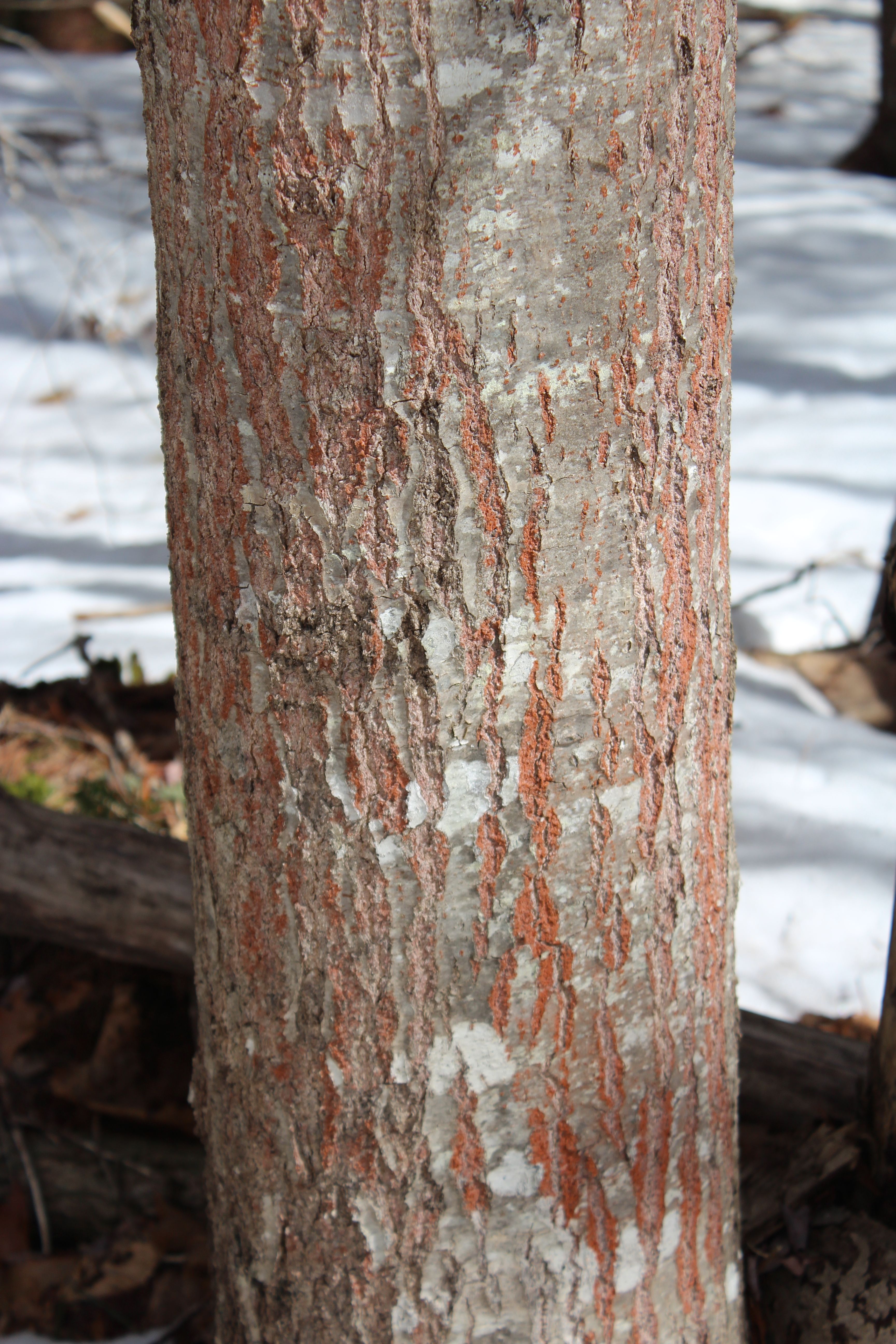
Here’s a middle-aged (just like me!) Northern Red Oak for comparison. The flat-ridged ski trails are forming and the red is clearly visible between them.

red oak leaf

Then there’s the bristle-tipped leaf.

amer hornbeam

My second new encounter was with the American Hornbeam (Carpinus caroloiniana). Again, a thrilling experience. OK, it doesn’t take much. Now I understand why it’s called musclewood. It could easily be mistaken for a beech tree because the bark of a young  tree is smooth, but there is a sinewy beauty to it. My bark eyes are now cued into this one.

Hop Hornbeam

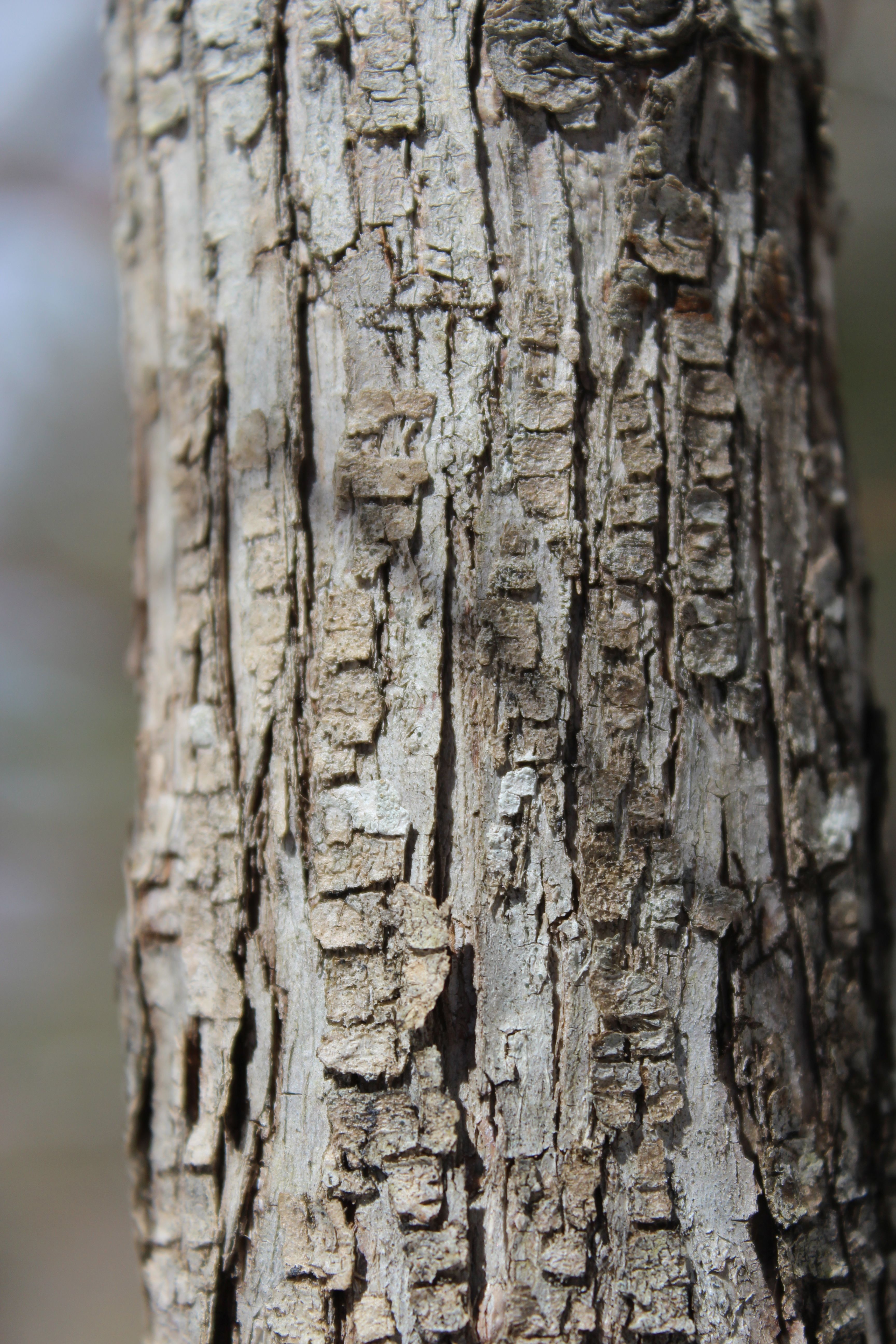
The fun part was that not far away stood this old friend. Hop Hornbeam (Ostrya virginians) has thin, flaky vertical strips. Both species, members of the birch family, are known as ironwood.

stream

As the day went on, though our focus was on vernal pools and communities, we often got distracted by other things–which I’ve dubbed Nature Distraction Disorder.

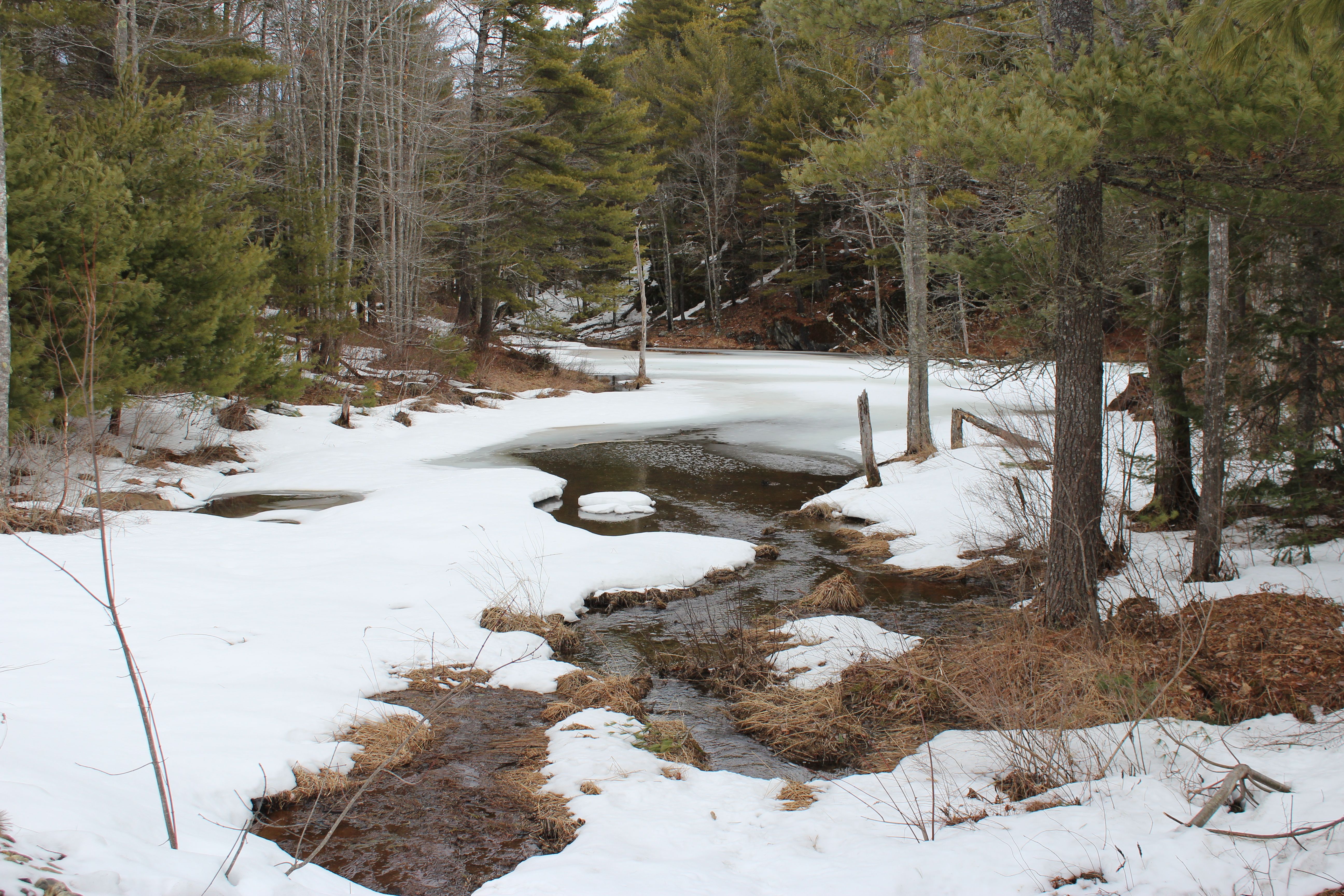
What I began to notice was a natural waviness. I saw it in the snow along the edge of this stream.

folds

In the folds of the rocks.

more folds

And more folds.

beech 2

In the scar on this beech tree.

red oak growth

And the growth on this red oak.

 sculpture

But probably my favorite, this naturally wavy sculpture on display by the barn where we convened a few times. It invites reflection.

Thanks for joining me for today’s wonder-filled wander.