My Neighborhood Grocer

This week may have changed my mind about grocery shopping. I’ve always felt like it was a bit of a drag. We spend way too much money as we tromp up and down the aisles, and really, if I could just get away with living on popcorn, life would be grand. Brown popcorn for meat, green and orange for fruits and veggies, yellow for cheese, and of course, butter . . . you get the picture.

Plus there’s the fact that we live in a tourist town in the western part of a tourist state. So summertime at the grocery store means a full parking lot, lots of people not sure of their way around, nary a smile exchanged, and certainly very little gossip shared in the middle of the aisle with townspeople we haven’t caught up with in a while.

But, today changed all of that.

For today, I realized that visiting the grocery store is a bit like entering a secret garden with a keen eye.

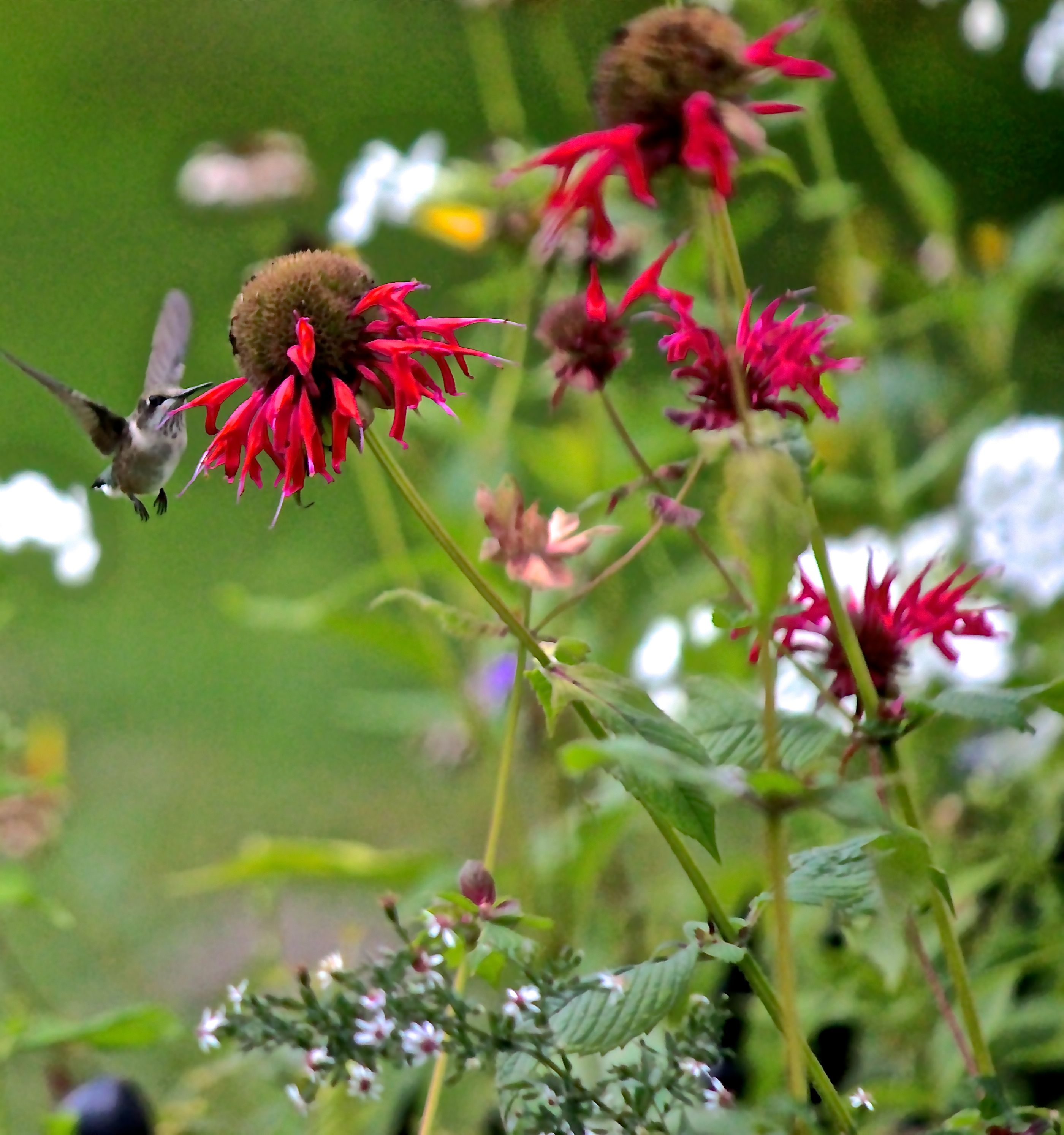
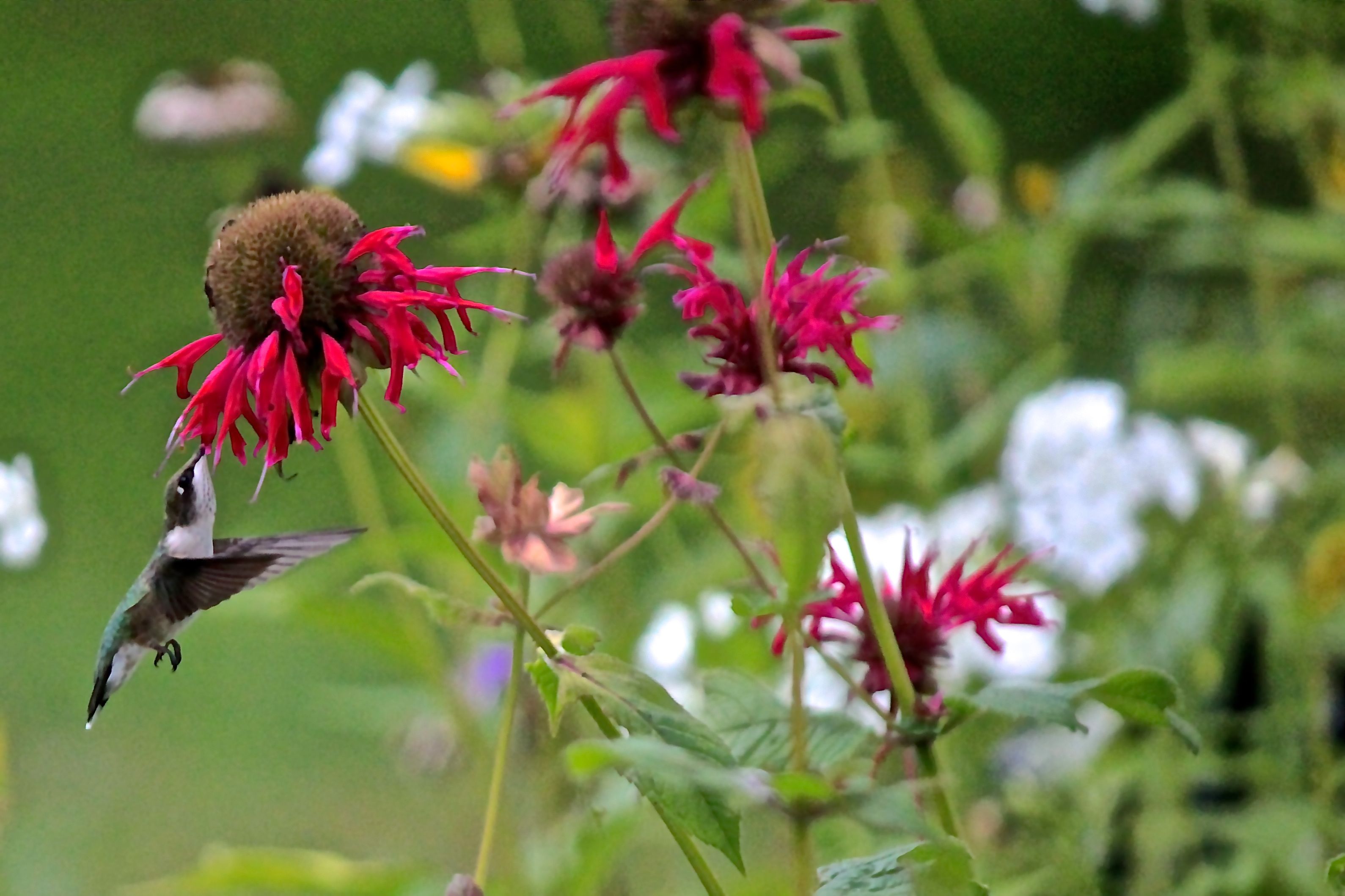
It’s a place where I might not always choose the same offerings as others, but that’s okay, because in this place we can each find what appeals to us and hover like a hummer.

I discovered a Nectar Smoothie Bar had been added. So many love the new addition and visited it repeatedly on the fly.
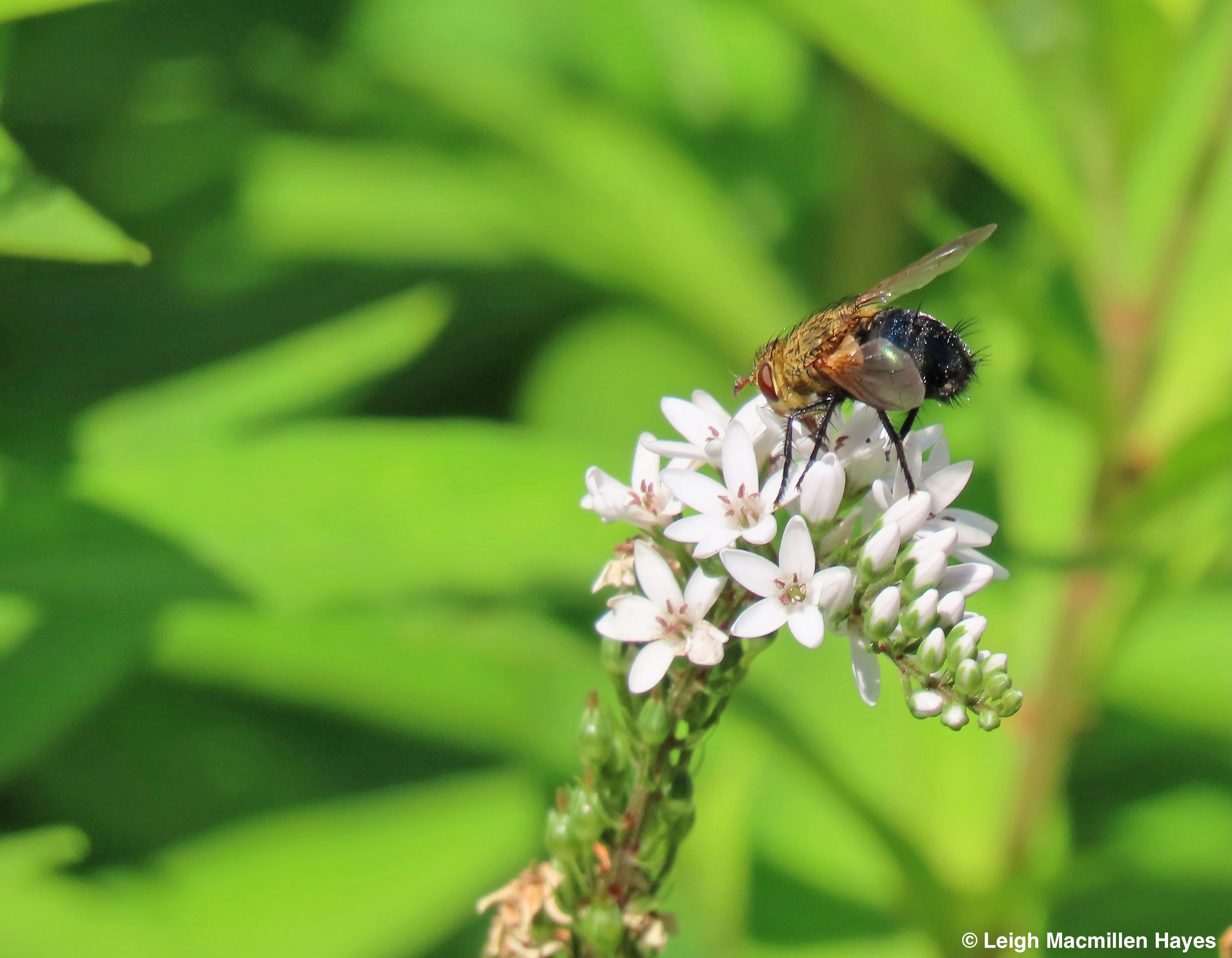
Another good thing is that most who entered, like the Tachinid Fly, brought their own straws so there was no waste.
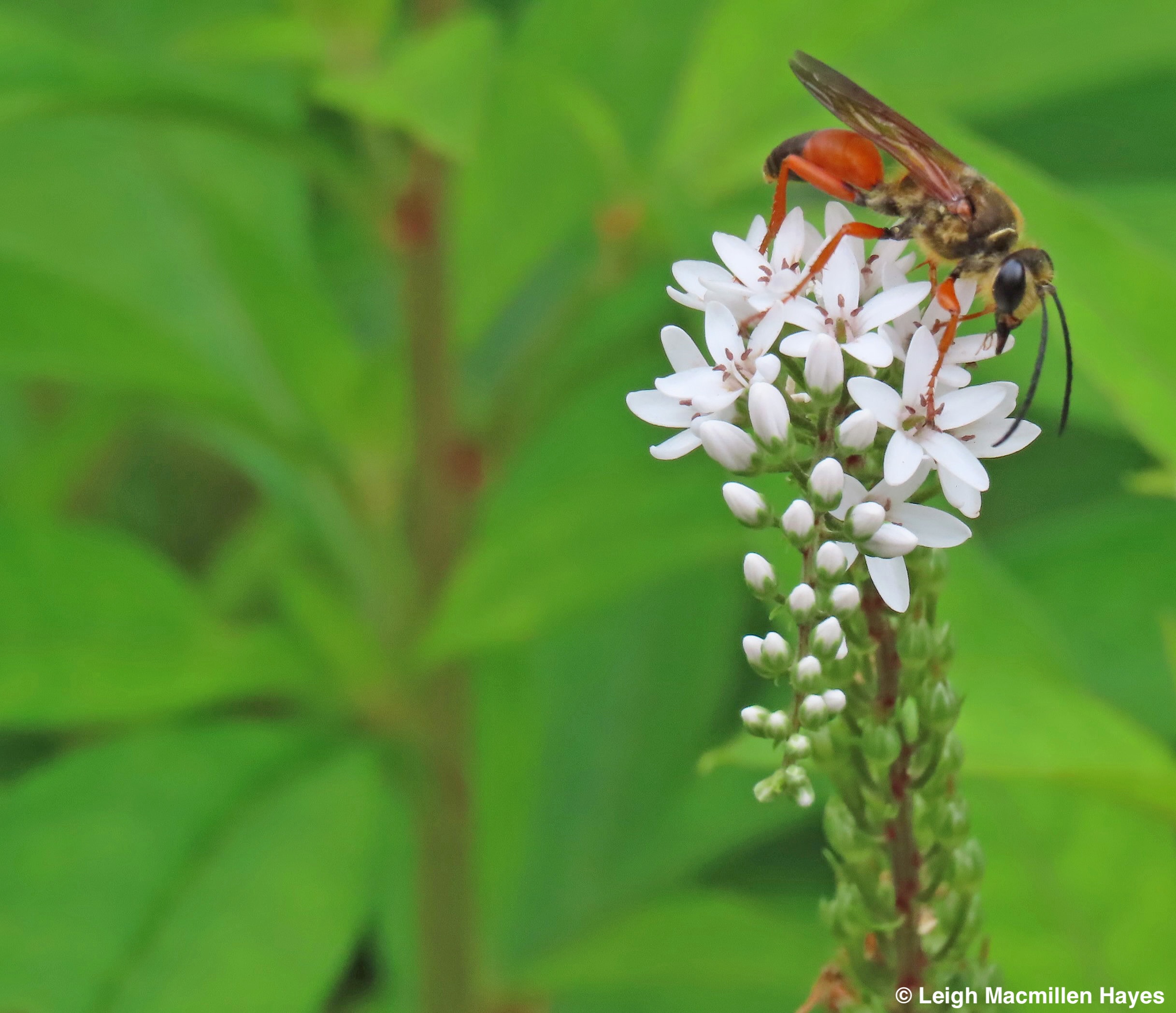
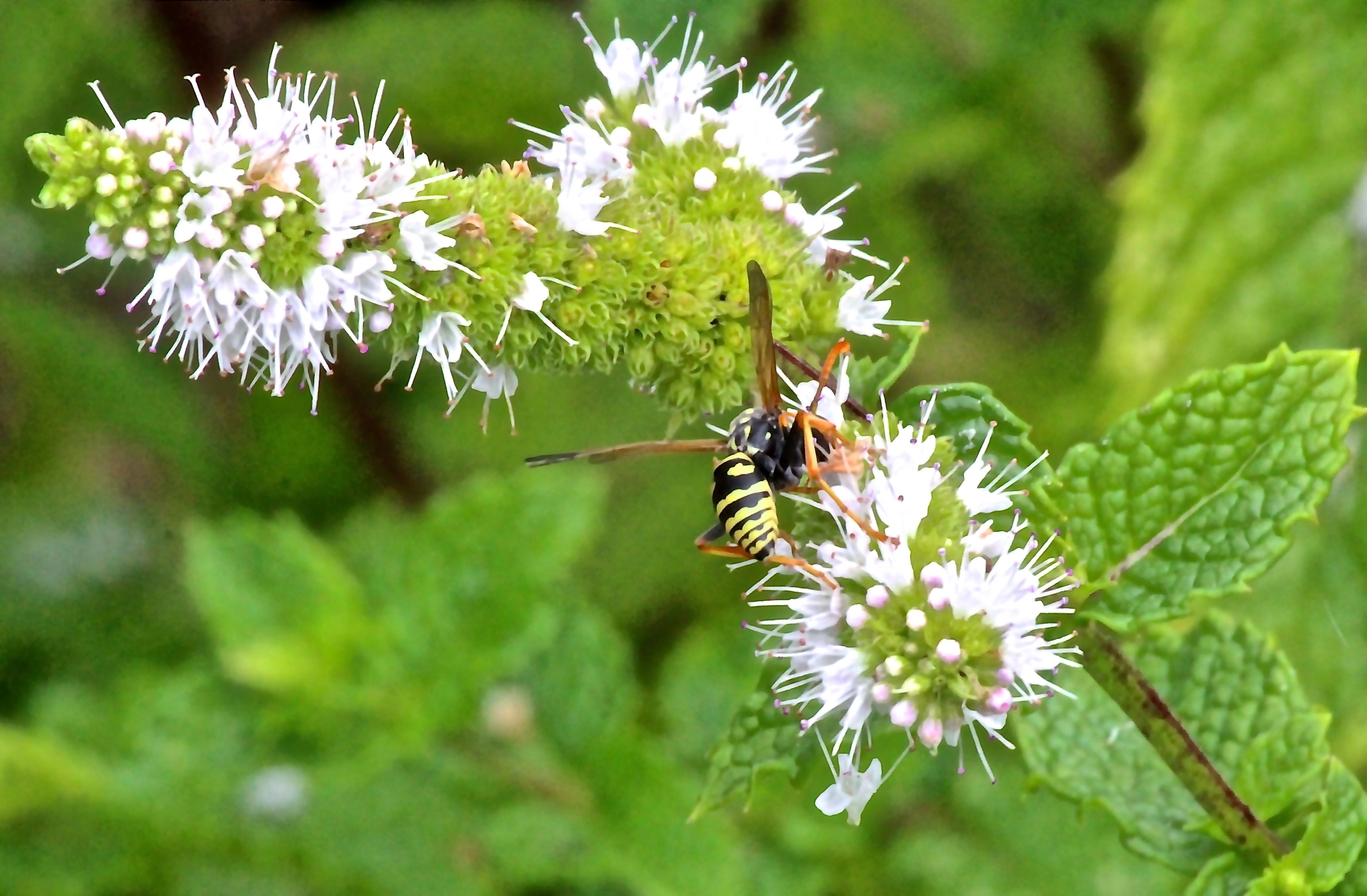
Even the Great Golden Digger Wasp got into the frenzied sip on the move once the store manager announced a taste testing.

I’m pretty sure the word went out to all Northern Crescent Butterflies to stop by for they really did pack the place.
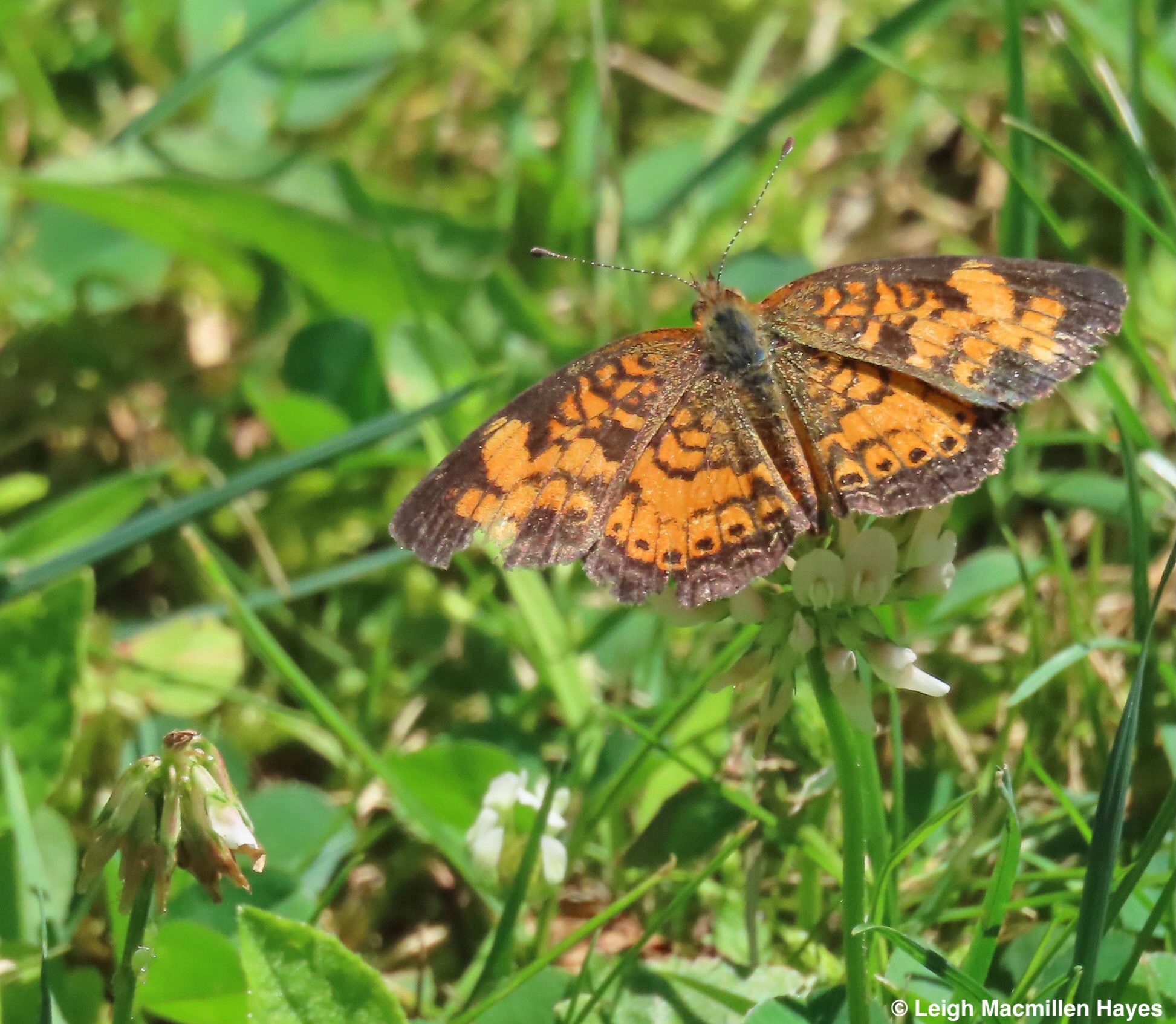
Pearl Crescent Butterflies also cruised the aisles.
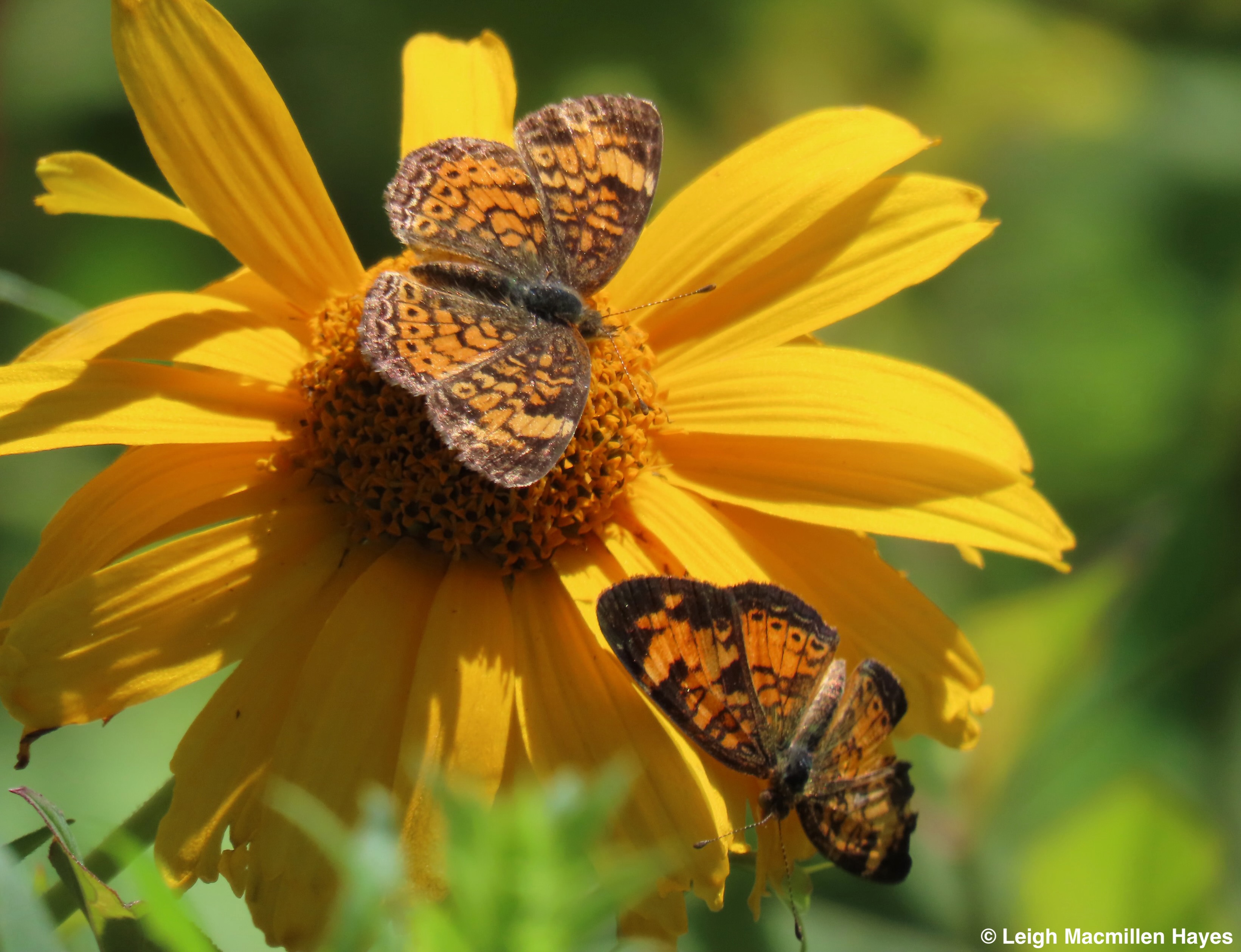
And sometimes they were in the same place at the same time, neighbors greeting neighbors after all.

Every Gold-marked Thread-waisted Wasp seemed to want a quick energy drink.

And then there were those like the female Widow Skimmer Dragonfly who came to watch. By the coloring of her wings, I think a better common name for her would have been Sunglass Skimmer. Certainly, she might have had an easier chance of meeting a date in aisle five, rather than just hanging out along the edge of the store.

Unfortunately, there were a few uncouth customers such as this Robber Fly, who snagged a meal without paying.

The Robber Fly wasn’t the only one. A spider hiding under a bouquet managed to lure an American Lady Butterfly and then he did what spiders do and stunned her. The EMTs where called in and though they could get her out of the web, they couldn’t save her. So, her body is being donated to science and will be added to a bug collection of a young boy I recently met.

I chuckled at the bedraggled look of this Bumblebee, who didn’t realize the misters would come on in the produce section.
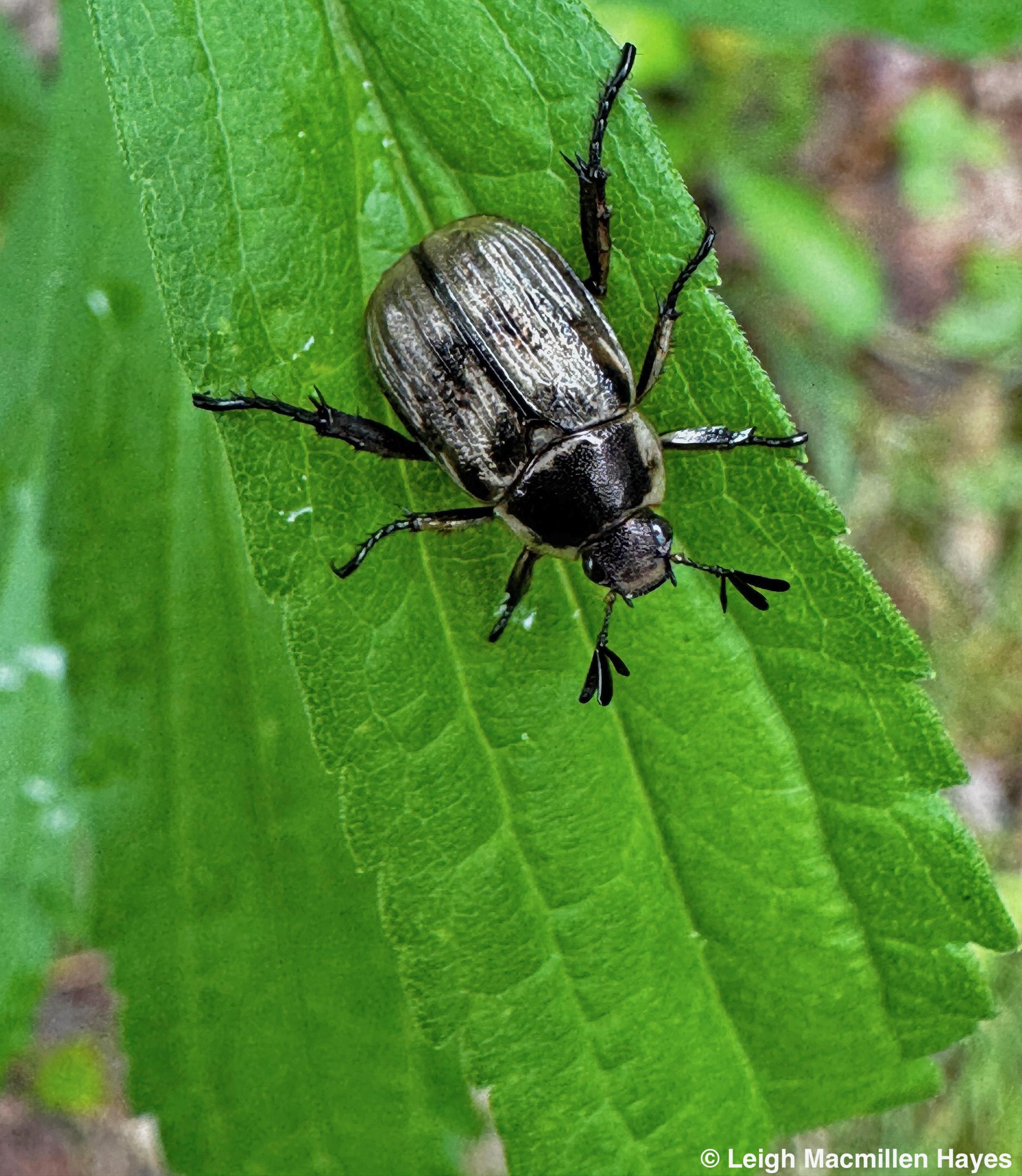
Though there are plenty of Japanese Beetles who seem to shop constantly, so far, I only meet one Oriental Beetle, and I do have to say I was rather taken by its fan-shaped antennae.

As is usual, there’s always a slow slug in the way, especially at the check-out. Why is that?
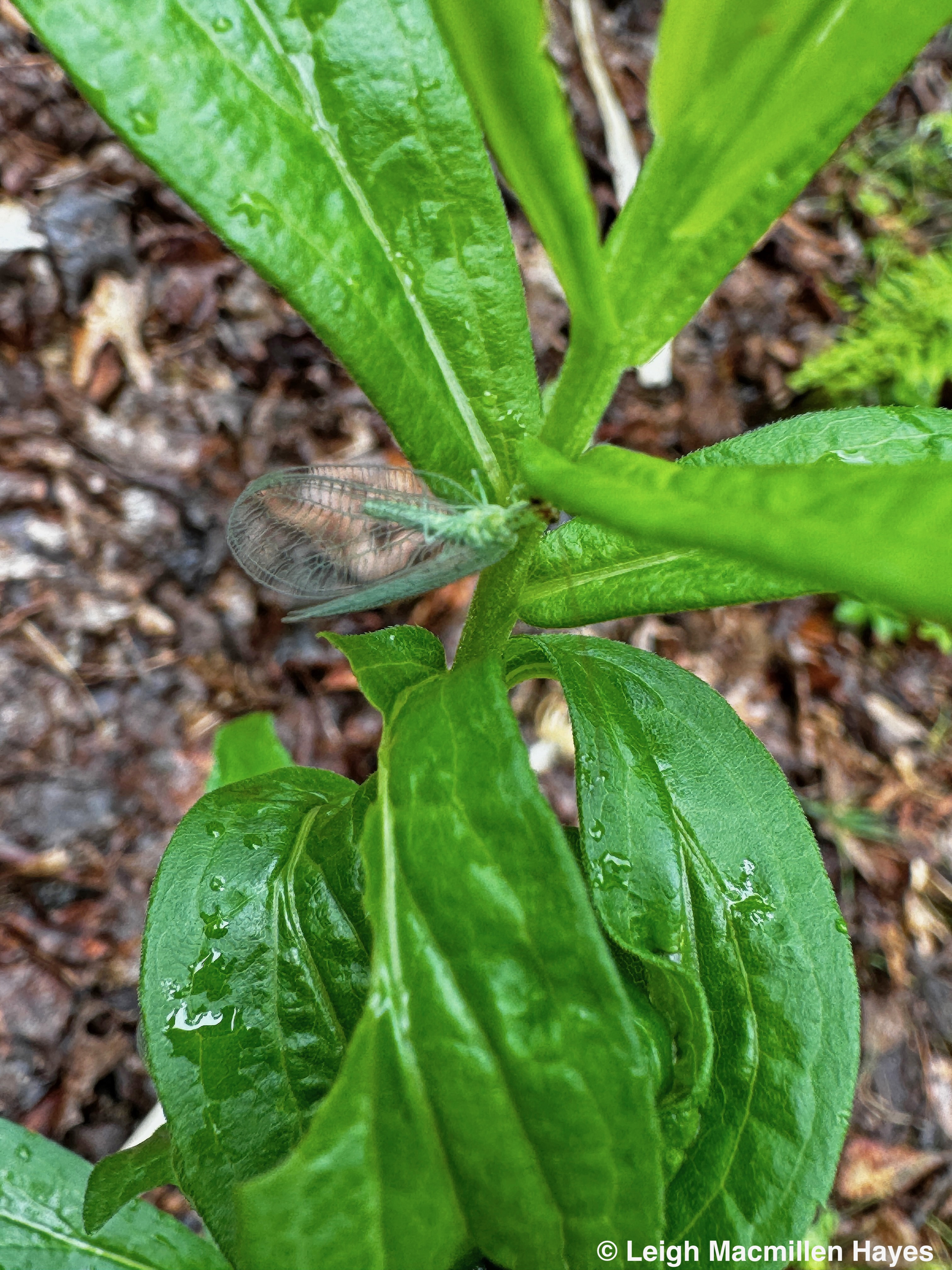
Not all shoppers stood out, such as this Green Lacewing who appeared to be hiding. Perhaps to avoid the misters that had pummeled the Bumblebee.
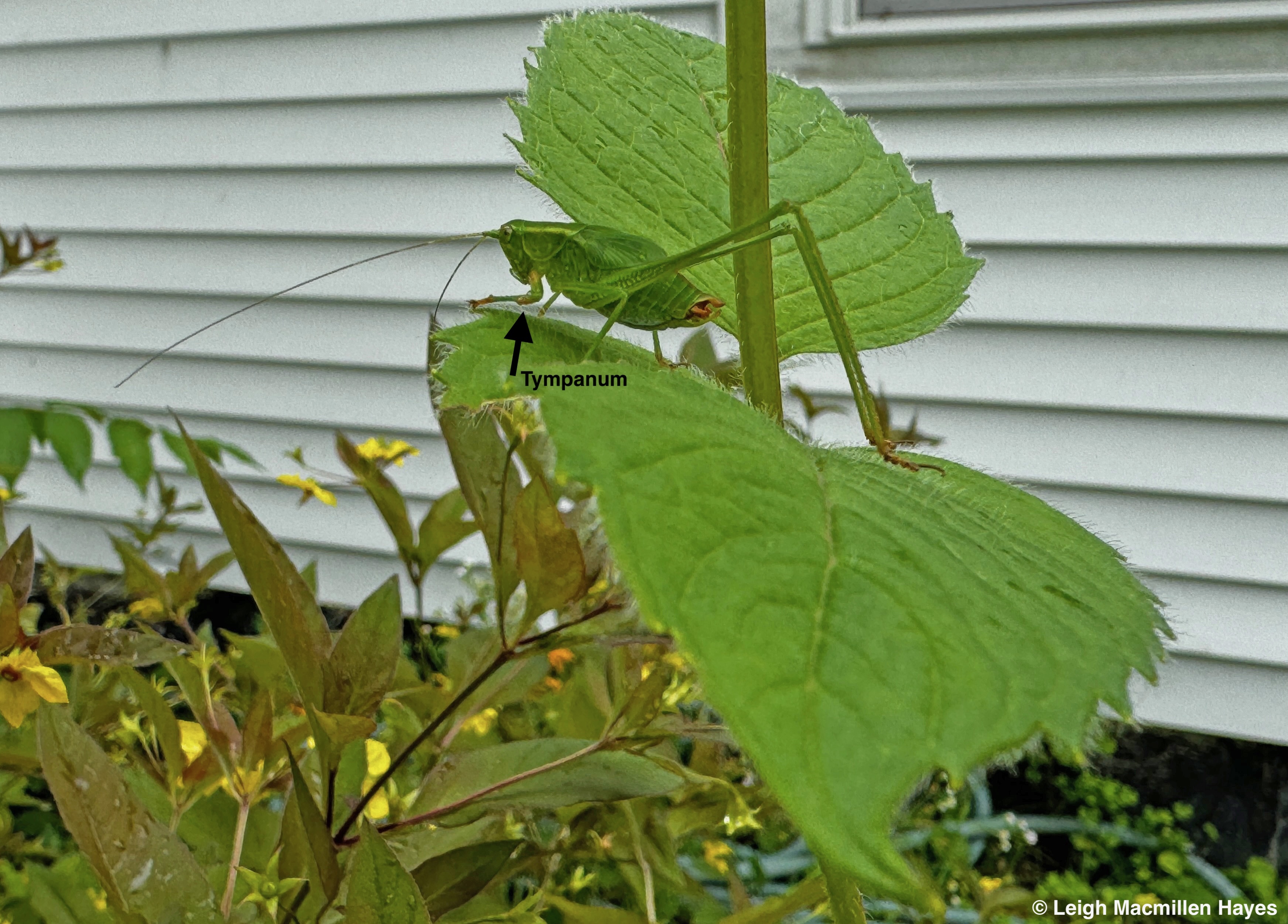
It does seem there’s always a celebrity or two in our midst during these summer days. Sometimes, it’s someone like Stephen King or Lois Lowry. But today it was Katydid. And she was listening–through the “ear” or tympanum located just below the “knee” of her front leg.
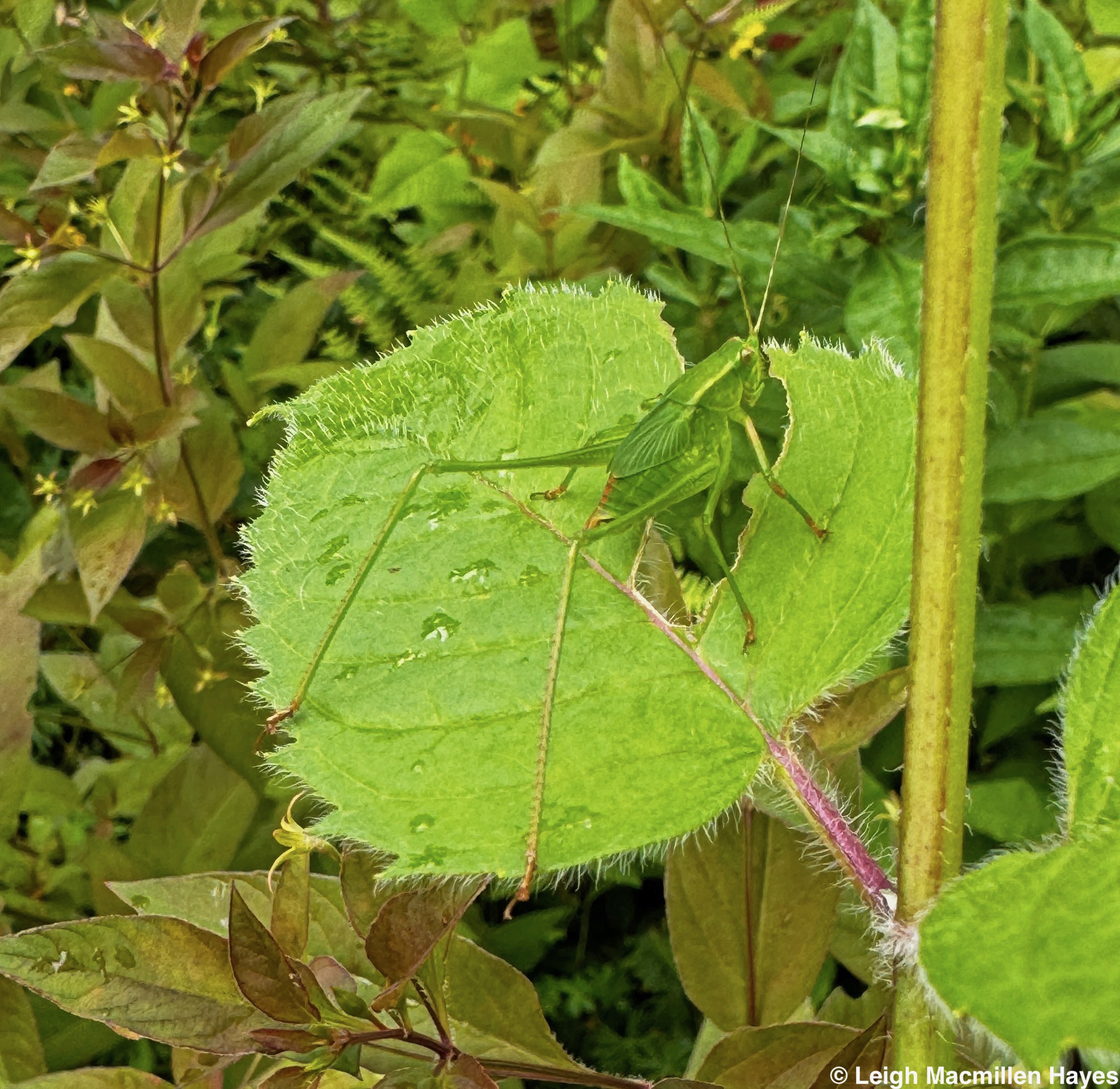
Do you see the tympanum on her right side? Do you think she heard that there was a spill in aisle 4?
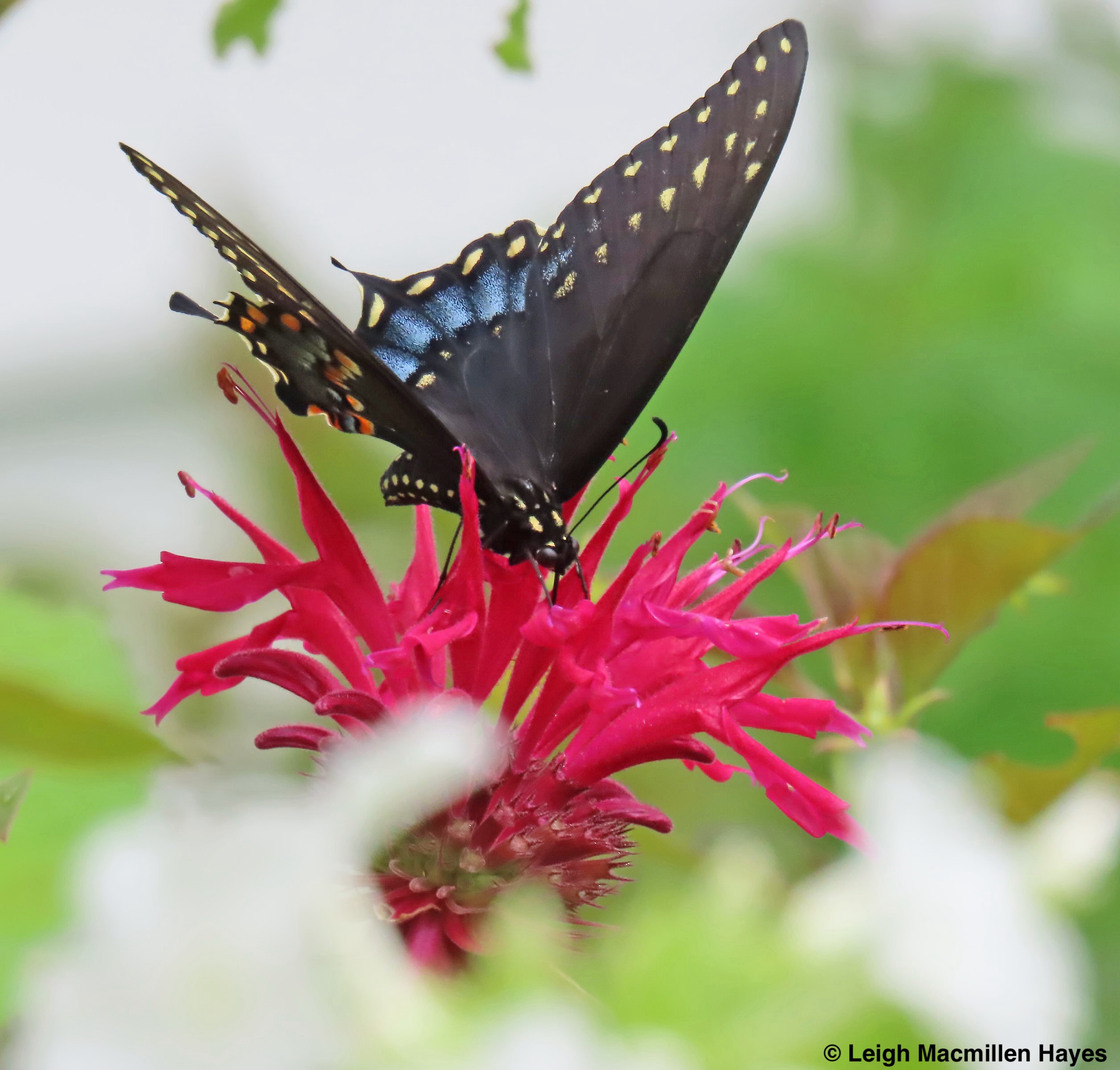
The Black Swallowtail Butterfly certainly heard and in she fluttered to sip up the nectar before it spoiled.

Oh boy. The Gold-marked Thread-waisted Wasps seemed to find each other in aisle 7 and for all I know they may still be canoodling behind the bakery.

So you see, grocery shopping isn’t all errands and drudgery. Note to self: Think of it instead like a visit to the candy store. Stop and sample along the way. Smell the Phlox. And remember, the store is committed to providing customers like you and me outstanding value for quality products at every day low prices. Right?!

I hope you’ll visit my neighborhood grocer often and enjoy the experience.

Searching for the Source of Sweetness

I wore down a path between gardens today as I traipsed from one to the next and back again. But if air space is anything like lawn space, then those who visit the garden via flight have created their own well-worn passageways as they also search.

w-post face scrub

My mission was to see the hummingbird again. But, this little guy, no longer than a half inch, stood atop a false dragonhead yet to bloom and waited to be noticed.

w-face scrub

He even took the time to scrub his face as I watched.

w-double or triple daylily

Continuing my wander, I stopped by the daylilies and made a discovery. We’ve lived in this house for more than two decades and I never realized until today that we have some double daylilies. The previous owners had green thumbs and we’ve benefited from the fruits of their labor. But how had I missed this before? I know we have double daffodils, but loved my new find. Especially as this past weekend, my friend Beth invited us to her hundred acre wood and her mom showed us their daylily gardens. Beth’s mom, Mary, talked about hybridizing the lilies and so she’ll know best about this.

w-lily pollen

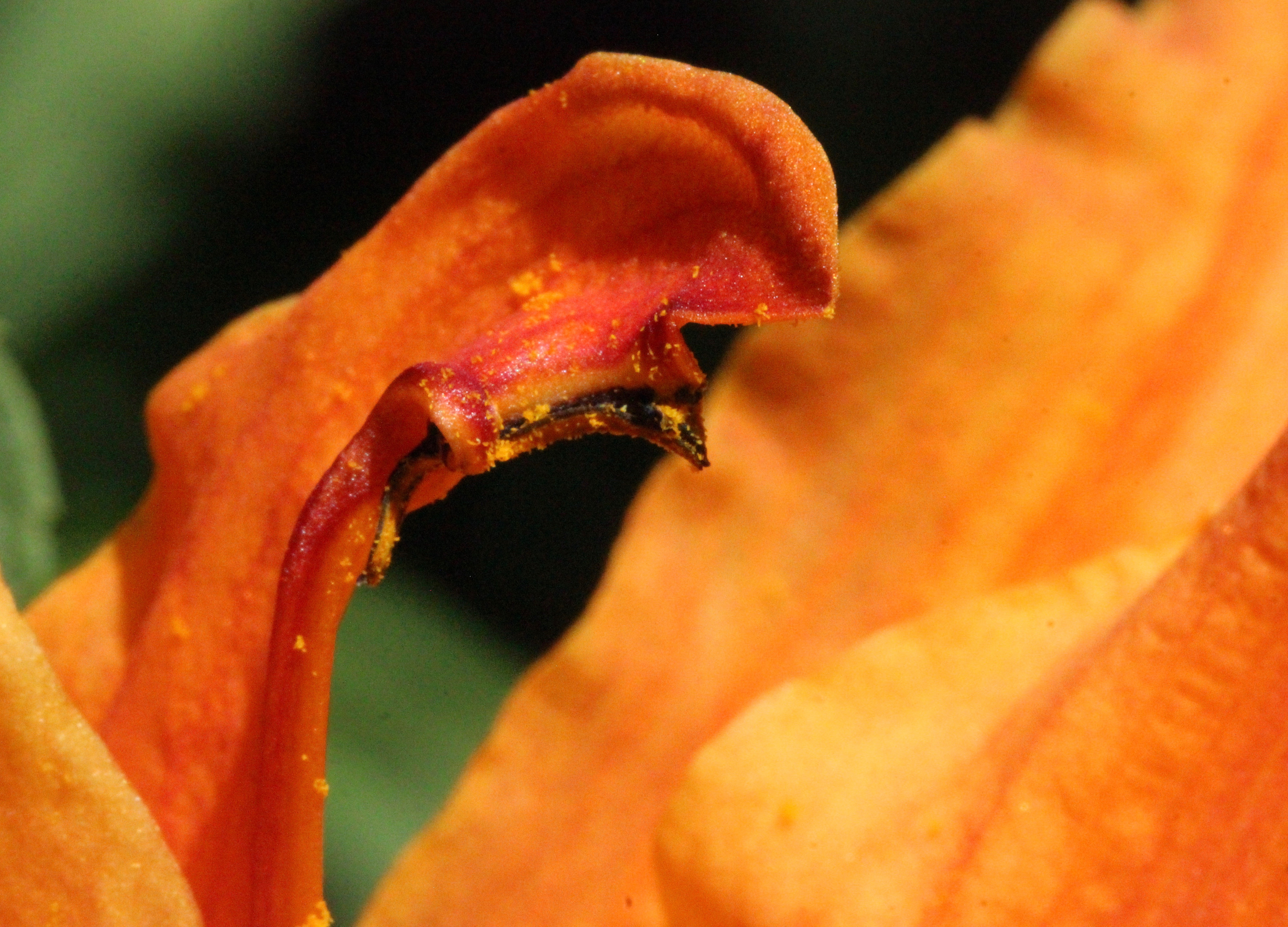
When I revisited the flowers later in the day, the sun shone brilliantly on them, enhancing their orangeness. Correct me if I’m wrong, but what I think has happened is that the petal formed along the stamen and imbedded the anther, thus it looks like a petal with grains of pollen. Crazy cool. And beautiful. And yummy.

w-fritillary1

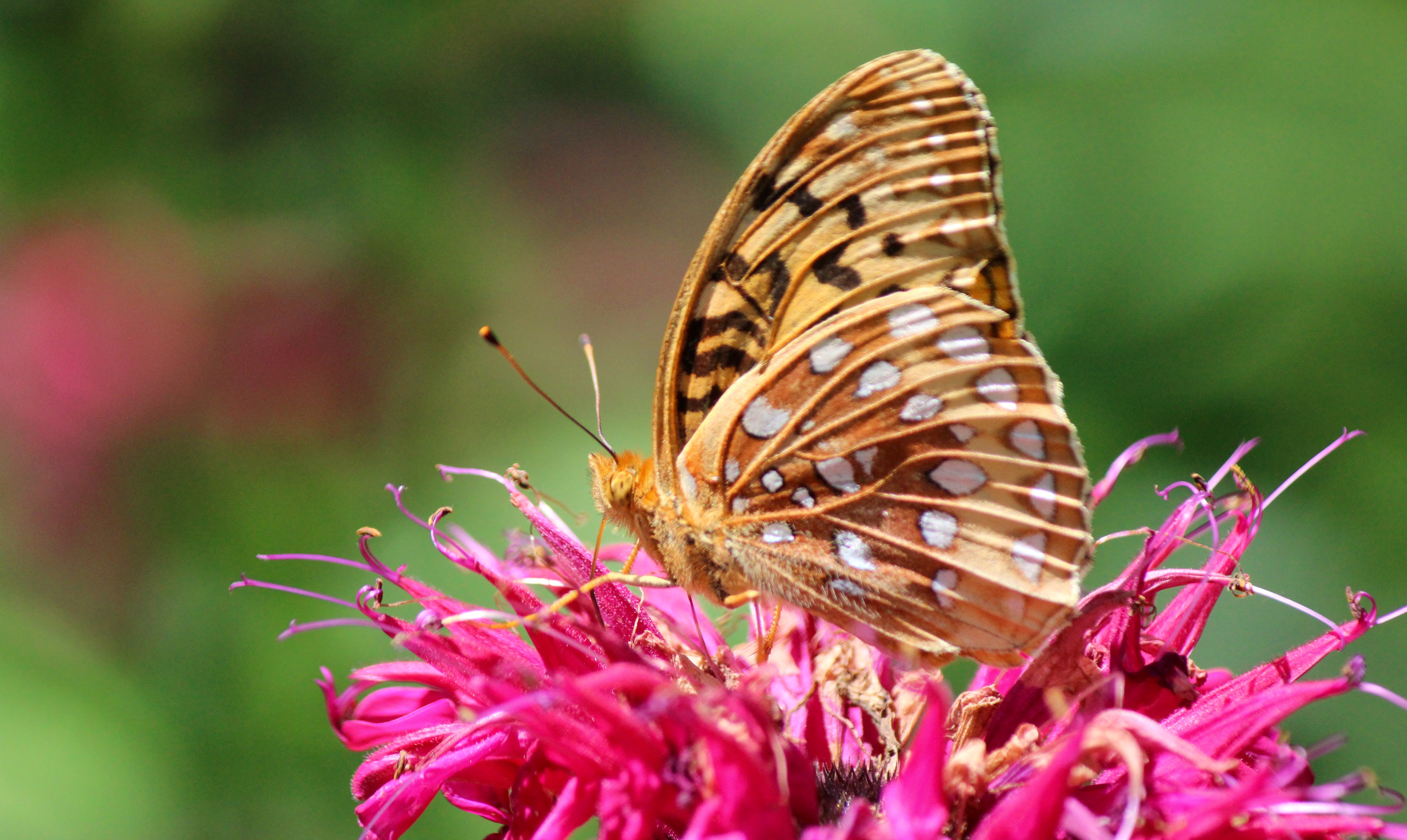
That wasn’t the only shade of orange worth wondering about. And it was no mistake the this fritillary butterfly chose the beebalm on which to land.

w-frit 2

Check out its mouth. A butterfly feeds through a coiled mouth part called a proboscis. When not in use, the proboscis recoils and is tucked into position against the butterfly’s head.

w-frit 3

Since the proboscis is narrow and straw-like, it allows the fritillary to extract sweet nectar from tubular-shaped flowers. Suck away, dear fritillary.

w-hummoth 1a

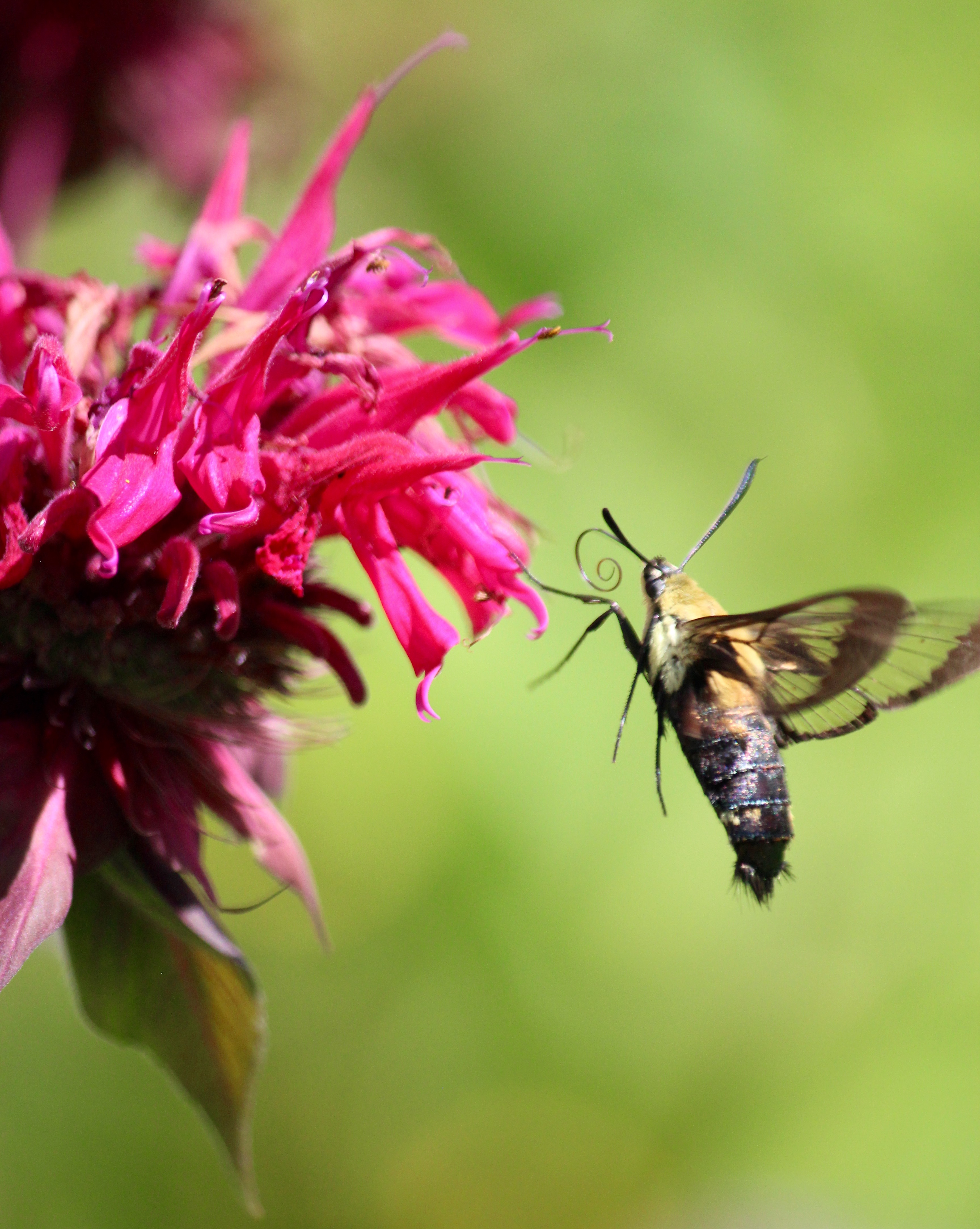
The fritillary wasn’t the only beebalm visitor with a coiled proboscis.

w-hummoth 3

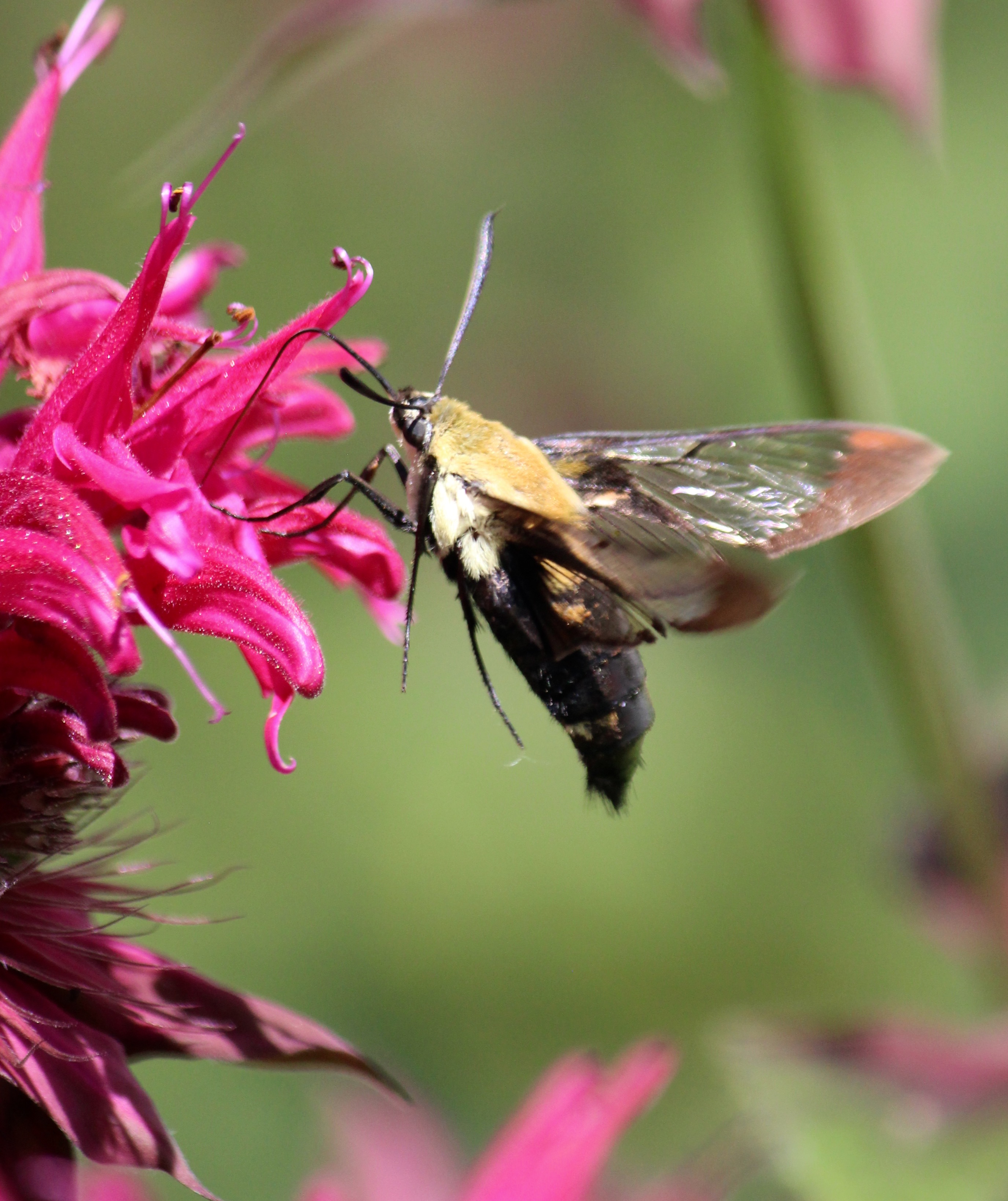
I actually heard it before I looked up and saw this moth. It sounded like a hummingbird and flapped its wings as fast or nearly as fast as a hummingbird and shared the name hummingbird. This is a hummingbird moth.

w-hummingbird moth 1

Notice how the proboscis begins to unfurl as it approaches the flower.

w-hummoth 3a

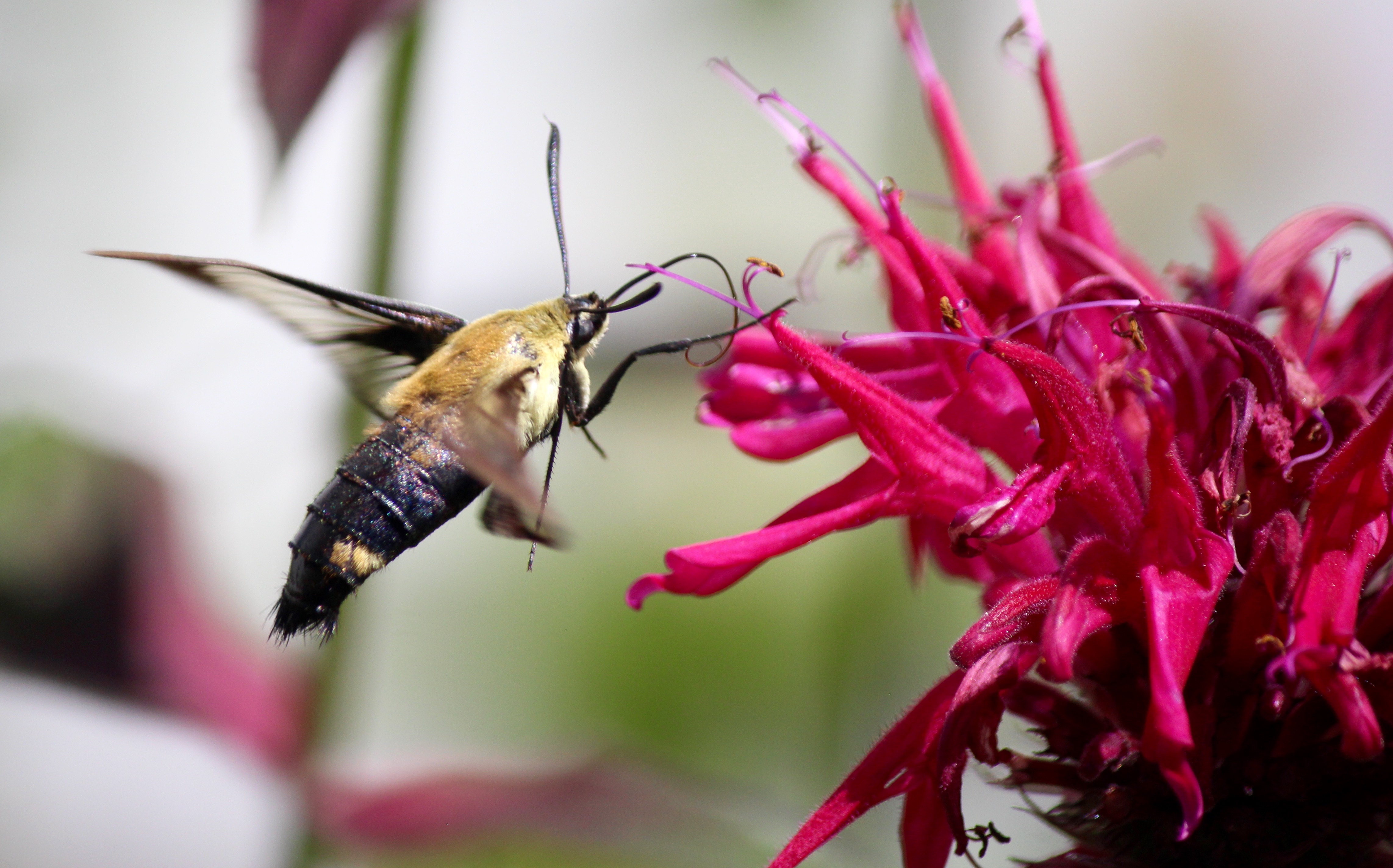
While it hovers, it probes.

w-hummoth 4

Searching deep for the source of sweetness, where others can’t reach.

The Need for More

Yesterday I stopped into our local independent bookstore, Bridgton Books, to purchase a title recommended to me by a friend (thanks D.B.), H is for Hawk by Helen Macdonald. While there, Pam, one of the proprietors, showed me Reading Rural Landscapes by Robert Sanford because she thought I’d be interested. Of course I was, and so for all of two seconds I debated about which to buy and guess what–I’m now the proud owner of both titles. I had earned a $10 credit (for every $100 spent, you receive $10 off if you belong to their book club and there is no book club fee–truly independent).

At camp, I was also reading another book (purchased at Bridgton Books a year or two ago). Well, actually rereading it because I like the author’s style/voice and maybe just a wee bit because she’s an Episcopalian. And she lives in Alaska–another draw for me. If You Lived Here, I’d Know Your Name: News from small-town Alaska by Heather Lende.

3 books

Both last evening and this morning, I read from all three. Not simultaneously, of course. It’s always been that way for me. Skipping from one topic to the next. Easily bored? I don’t think so because being bored is not part of my makeup. More like an insatiable need to know more.

The bees and wasps and flies and ants and hummingbirds have the same insatiable need right now, as they flit and walk and crawl from one plant to the next, sucking nectar and exchanging pollen along the way.

beebee2

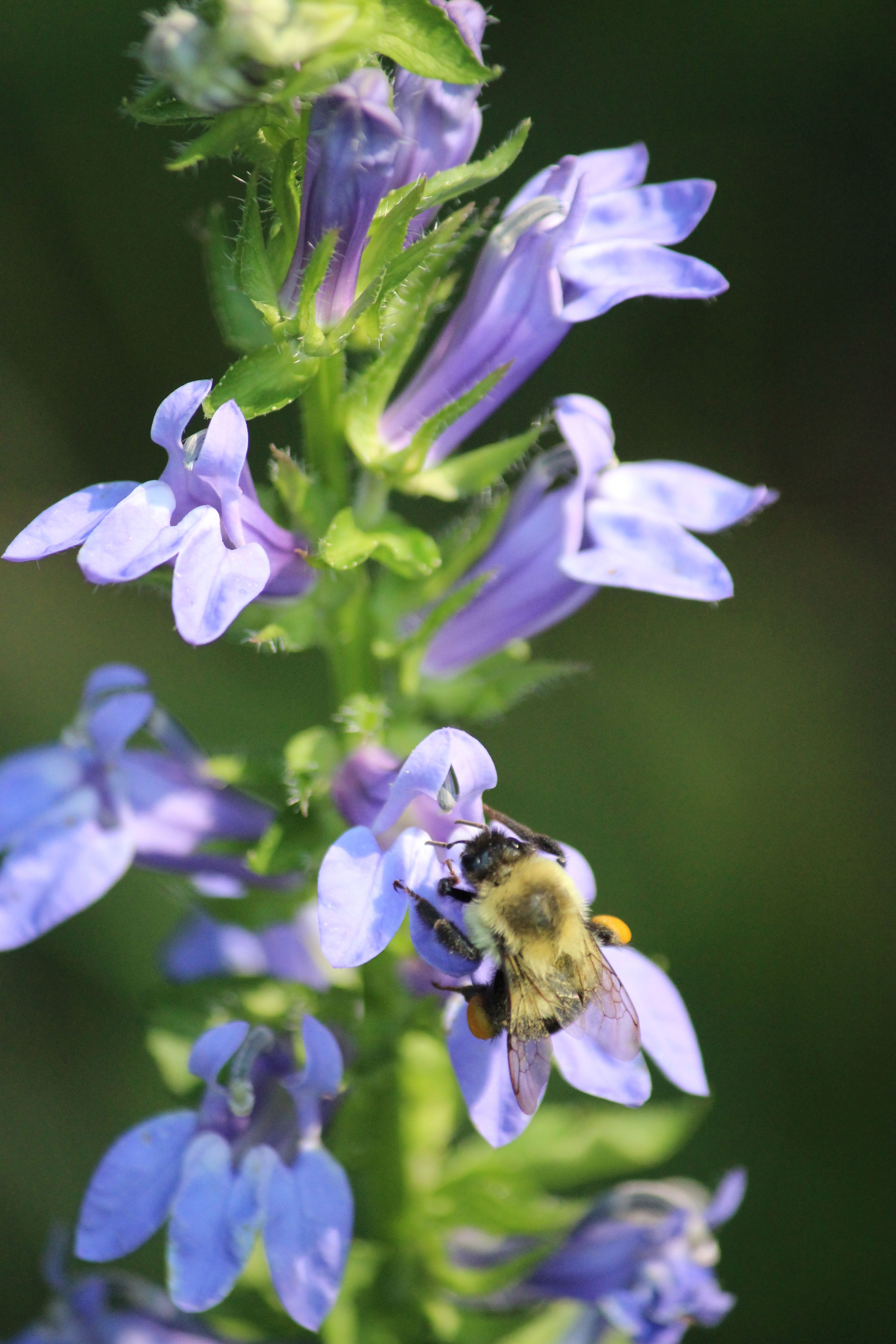
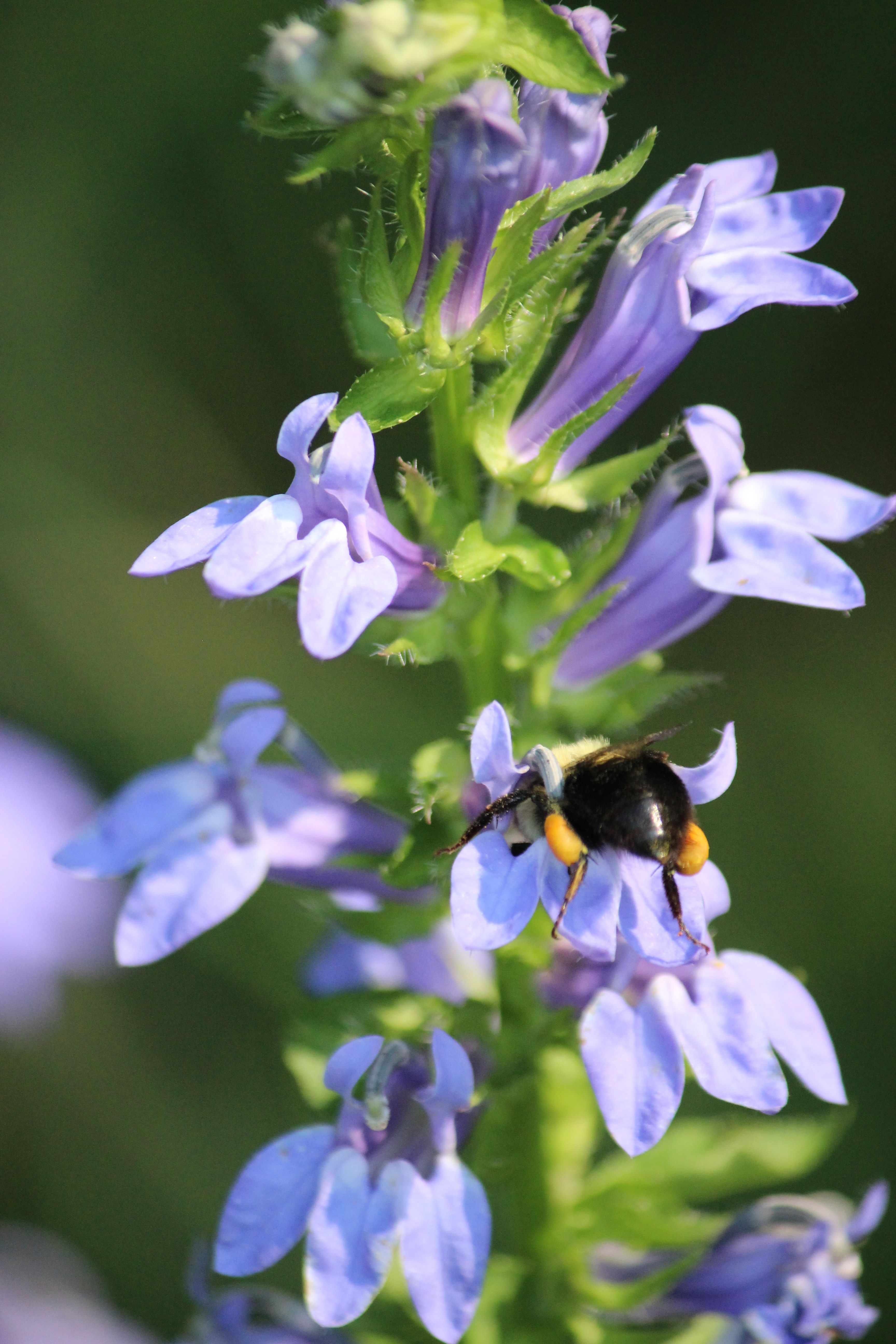
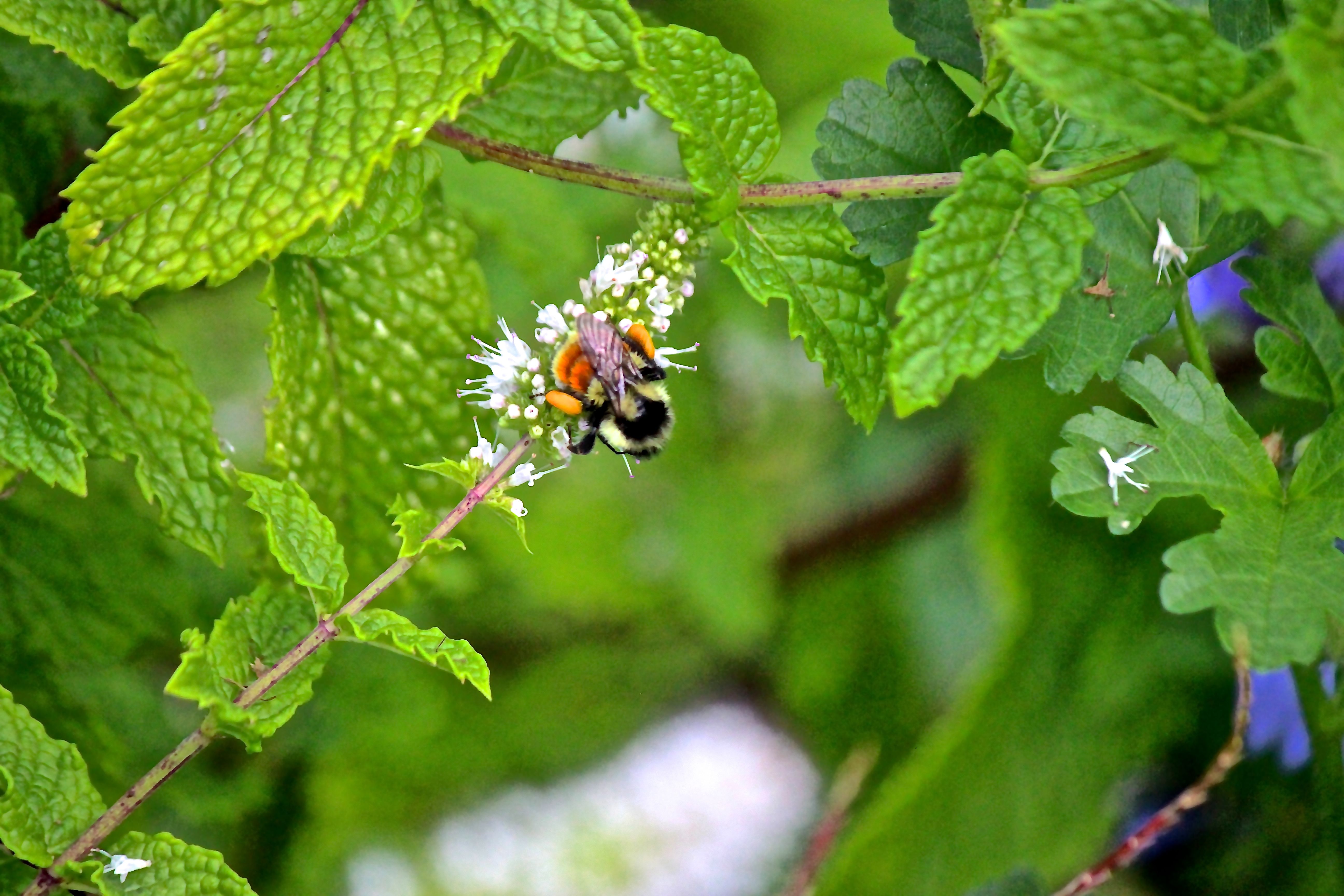
This busy bee was well-laden with pollen. Its bright orange sacs bulge on its hind legs like a kid wearing arm floaties in the water.

bee on mintbee on mint 2

Every time a bee visits flowers, the pollen sticks to its fuzzy body–its antennae, legs, face and body. Think pollen magnet!

The middle legs are equipped with comb-like hairs that scrape off the pollen and transfer it to the pollen presses located on the hind legs.

bee 3

Like our calves, the bee’s legs have a tibia or lower leg section. The tibia is shiny and surrounded by hairs, including some that are rather long and stiff. These form the pollen basket. Located at the lower end of the tibia  is another comb-like structure (ankle), and on the metatarsus (heel or foot) is the press. When it comes to pollen collection, the two structures work together like levers.

Nectar moistens the pollen, making it sticky. The pollen is transferred to the press, and then is manipulated between the press and comb until it sits flat on the bottom of the tibia. Each time a new batch of pollen is added, it’s pressed onto the bottom, forcing the pervious batches to move further up the tibia.  A full basket (think one million grains of pollen) bulges, but hairs hold the pollen in place as the bee flies from one plant to another before heading home to stock the nest.

beefly on goldenrod

It’s not just hairy bees who are active in the gardens.

large blue wasp

Gathering for the family is important business.

wasp 2

Thanks to the goldenrods and asters, there’s plenty of pollen and nectar still to be gathered.

yellowjacket

The mint seems to be the biggest hit among the variety.

spiders 1

And there is other action as well. A funnel weaver tried to challenge the larger spider, but quickly retreated.

spider 2

Whenever I take a closer look at the crawling and flying members of the gardens, I’m in awe of their colors, patterns, hair or lack of, and overall body structure.

inchworm

You may have to look closer to find the visitor on this coneflower.

red legged grasshopper

This red-legged grasshopper tried to make itself invisible.

grasshopper 2

The camouflage worked better once it climbed to the top of the fence. When grasshoppers fly, I can hear their wings make a rasping sound. But moving as this one was, there wasn’t a peep. The crickets and cicadas, however, I couldn’t see, but they’ve been contributing to a chorus all day.

hummer approaching

hummer approaching 2

hummer approaching 3

hummer approaching 4

hummer approaching 5

And then there is the hummingbird–ever swift and beautiful with its iridescent colors. Whether it is dining on nectar or insects attracted to the nectar, I don’t know, but it always returns, seeking more.

We all have the need for more. The frightening thing is that oftentimes we take more than we need. For the sake of the birds and insects, we need to think about that and how we might change our ways.