The Long Farewell

Saying goodbye is so hard to do, yet at some point we all must. These last few days I’ve been trying to wrap my brain around how best to do that and not feel melancholy.

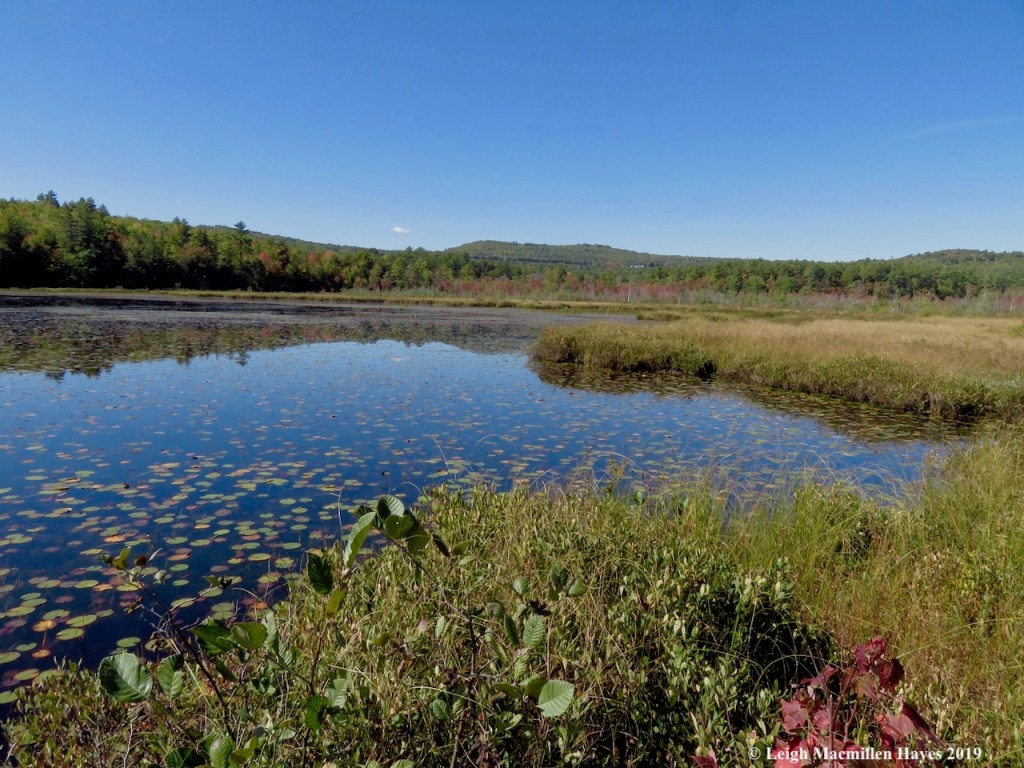
But then again, maybe the future isn’t all that far off. Wait a minute. Blueberries in flower? Yes! Sadly so. Over the past week or so friends, relatives, and I have noticed various species flowering due to warmer than normal autumn temperatures. These of the low-bush variety are along the path that my neighbor mowed through the field where I’ve spent many a glorious hour observing.

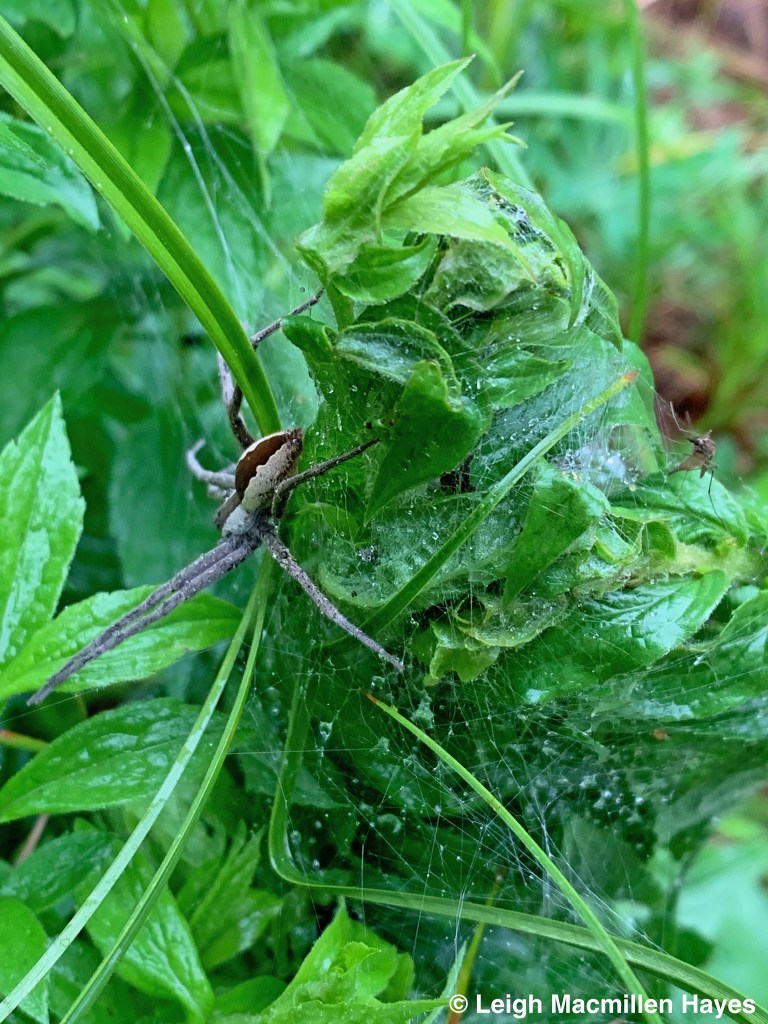
It’s in the same field where I delight in spotting bowl and doily spider webs and this one, a funnel web with the funnel weaver sitting inside waiting for a meal to arrive.

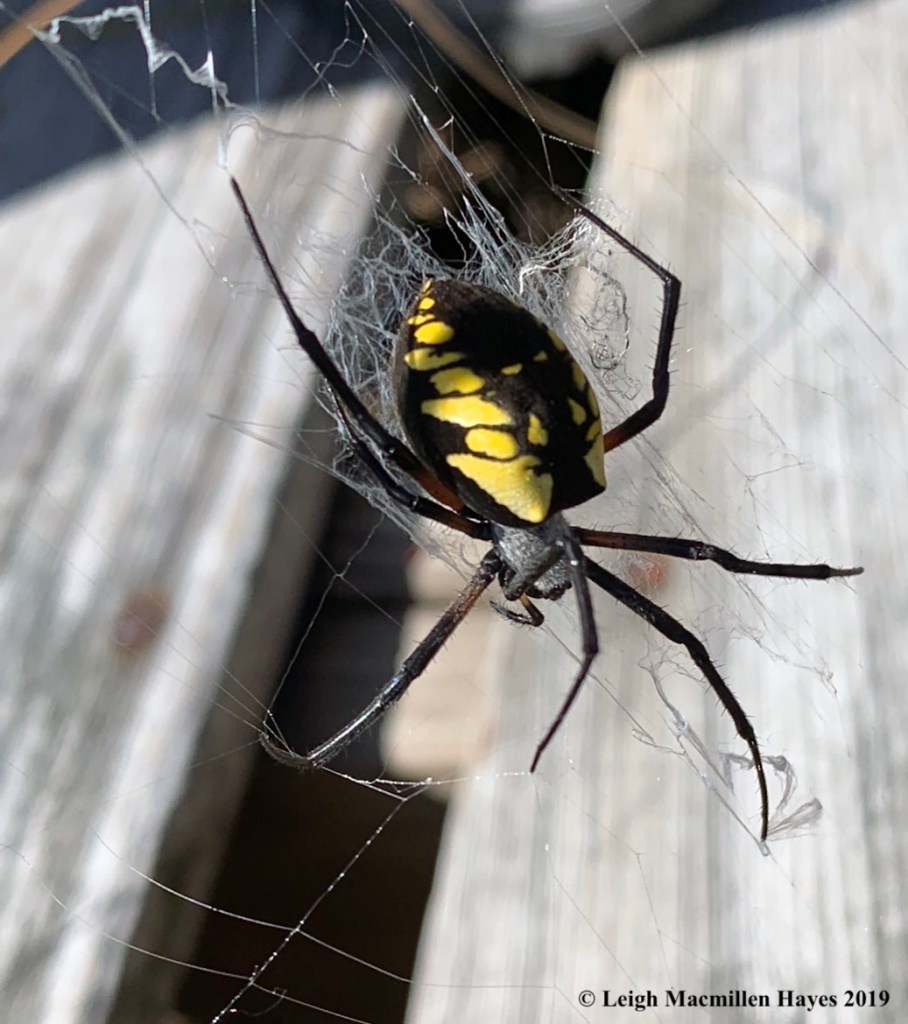
Orb weavers have also been mighty abundant this year and at first I assumed this was Ye Olde Black and Yellow Garden Spider that I love to watch at work–usually wrapping its prey as this one was doing.

Before I say more, take a look at the silk coming out of its spinnerets. I like this explanation by Naturalist R.J. Adams about spider silk: “Within each spider’s abdomen are a variety of silk glands which can vary in number depending on the species. Some of the oldest lineages, including relatives of California’s tarantulas and trapdoor spiders, have only a single type of silk gland, while some orb weavers can have up to eight different kinds. Each gland produces a protein-rich liquid which connects to numerous minute spigots at the tip of the spider’s spinnerets. When silk is needed, tiny valves behind each spigot control its release, and as the fluid is compressed through the spigot’s openings, tension orients the molecules into a solid, thread-like structure.”

Liquid. Spigots. Thread. What an amazing invention!
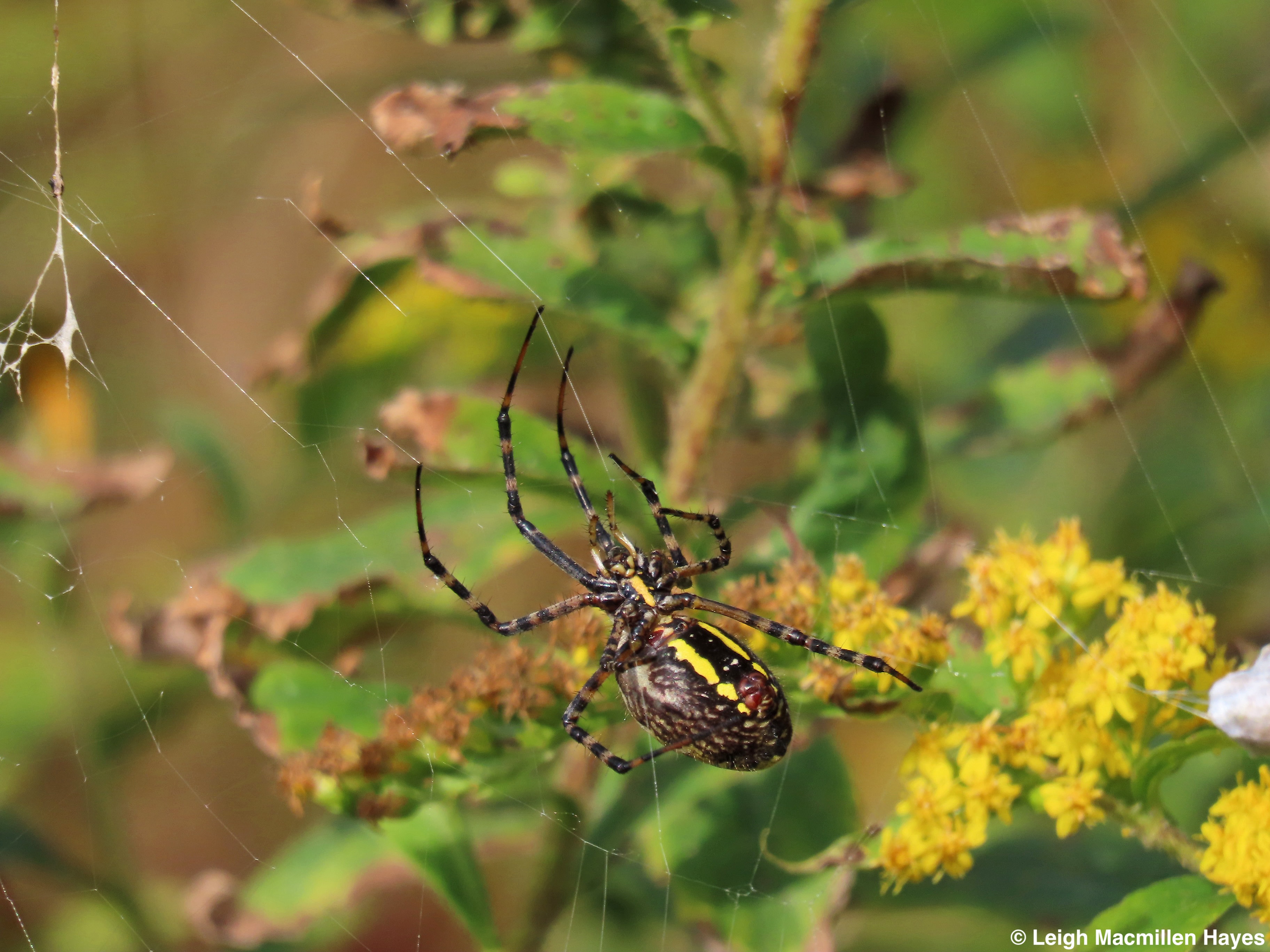
As I watched the spider move away from its packaged meal, walking so confidently on those guide lines, I realized its coloration was a wee bit different than that of the Black and Yellow Garden Spider.
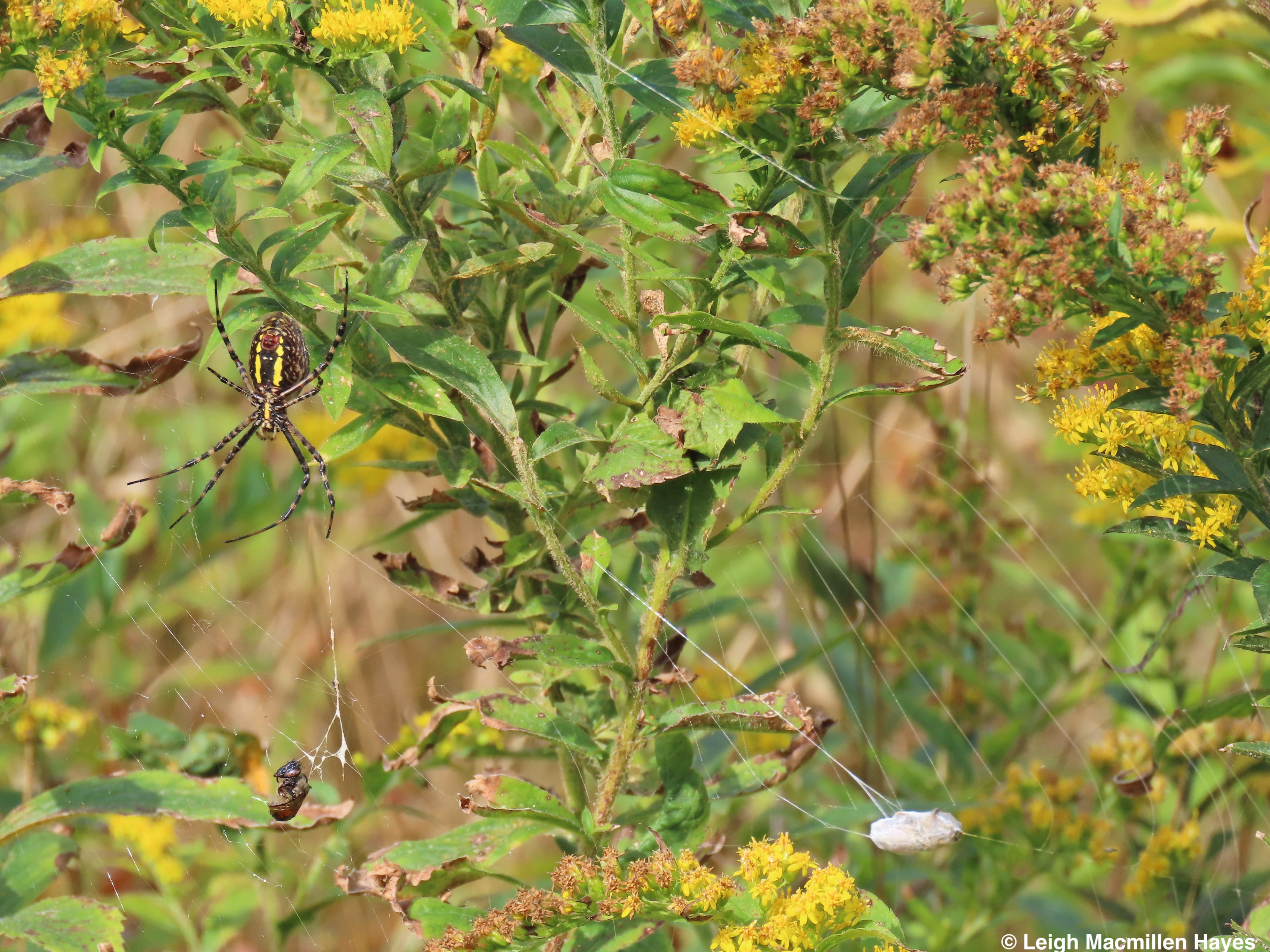
Not only was the design/coloration different, but also the fact that there was no Zig-zaggy stabilimentum, an ultraviolet runway of multiple threads which perhaps provides stability or attracts prey or tells others to stay away, a trademark of the Black and Yellow.

That’s because this was a Banded Orb Weaver with a different pattern. And now I can’t wait to look for these again next year.
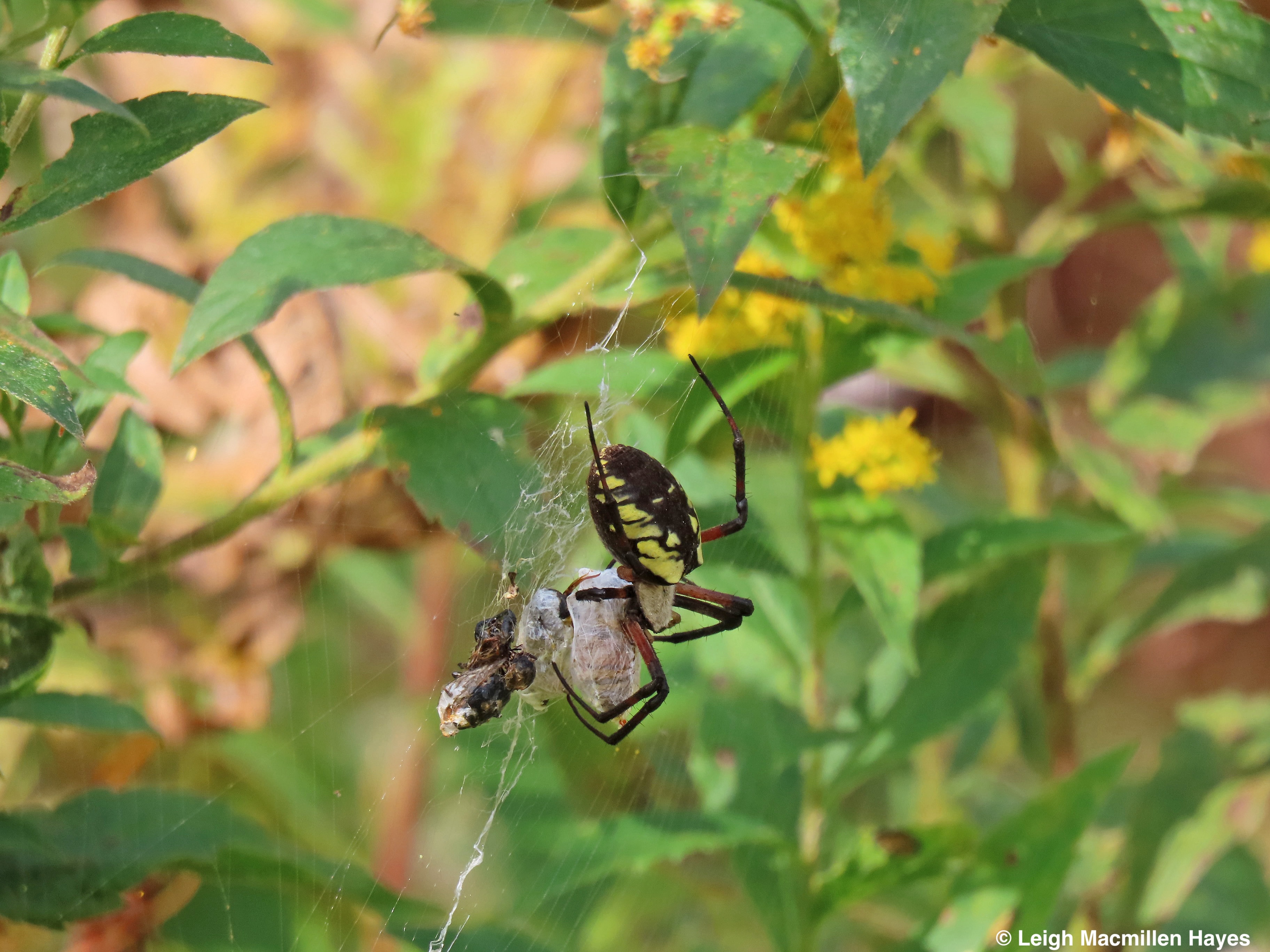
Until a couple of days ago, I was still seeing Black and Yellows, but not as frequently as I had all summer long. It seemed like this gal had stocked her pantry, perhaps knowing her days were coming to an end.
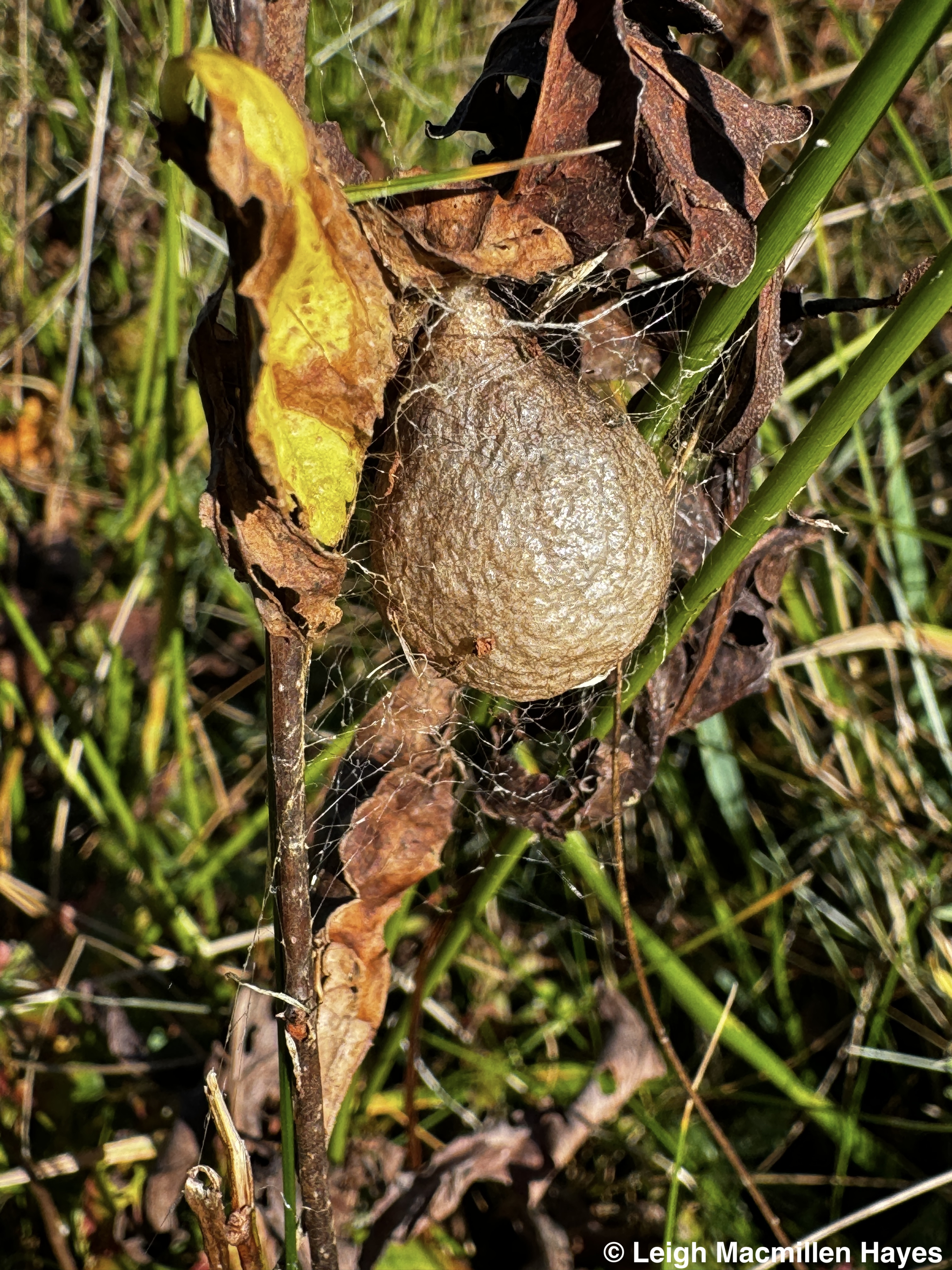
The good news is this sac, soft on the inside and parchment-like on the outside, was created by a Black and Yellow, and within her eggs will survive the winter months. Where there is one sac, I suspect there are dozens more.

Do you see them? The egg sacs I mean? No, I don’t either. Camouflage is the name of the game as the goldenrods and asters go to seed.
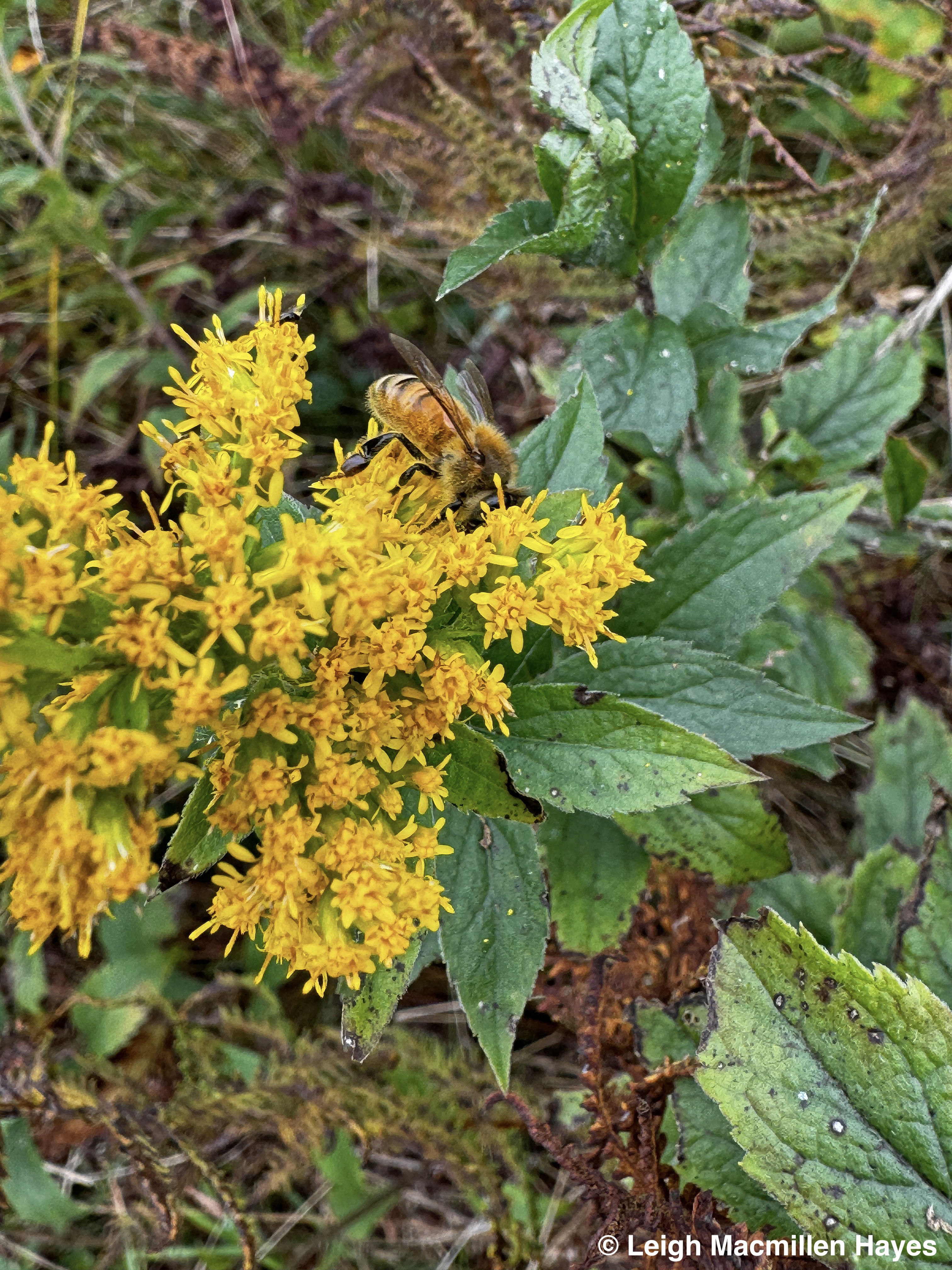
Despite or because most of the flowers have gone to seed, those that still thrive are the subject of heavy pollination activity. Frenzied in fact. From Honey Bees to . . .
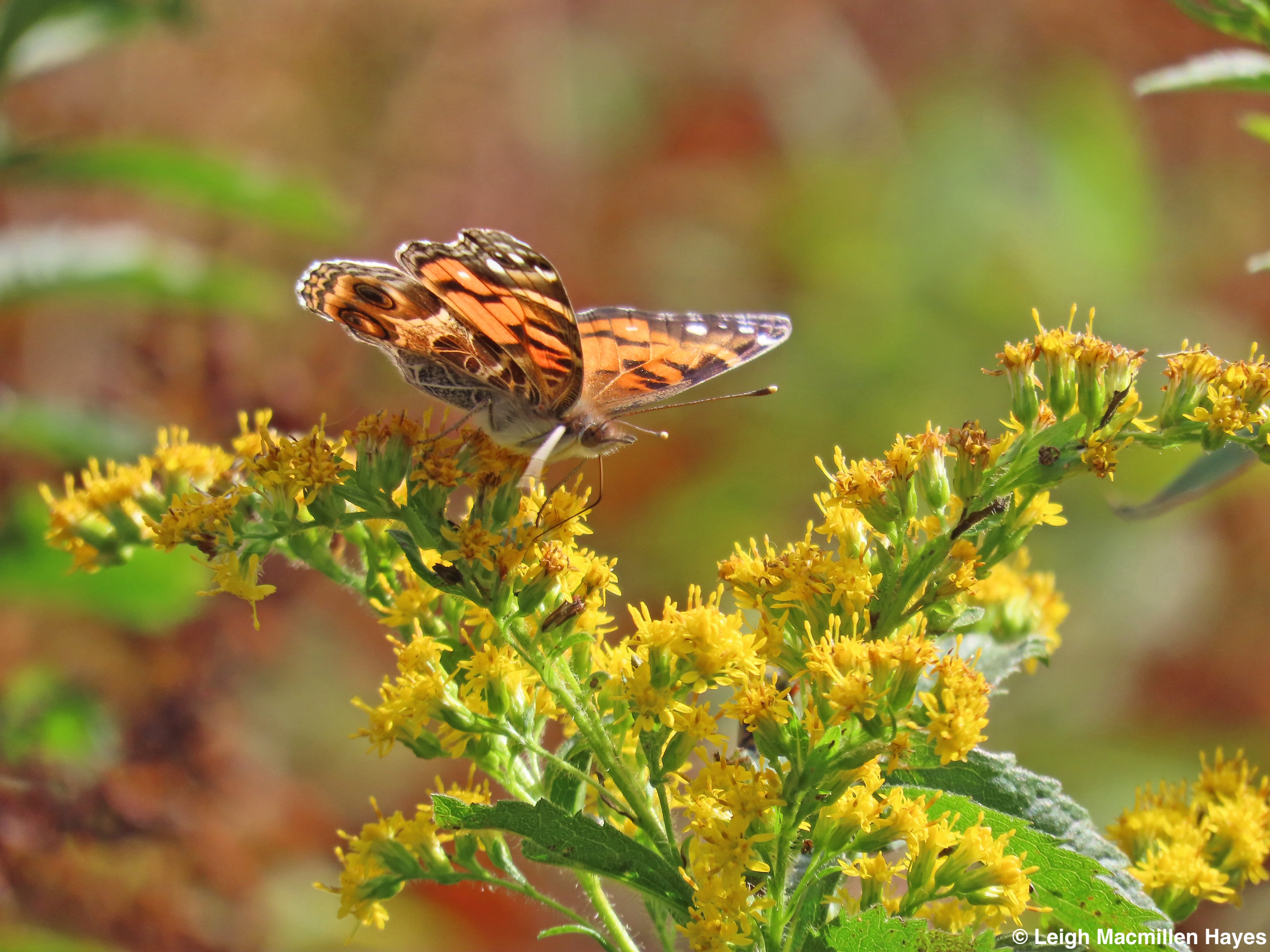
an American Lady, to . . .

Female Pearl Crescents (gender ID based on orange color of antennal clubs versus dark colors for males) and their counterparts who all greet me each day, to . . .
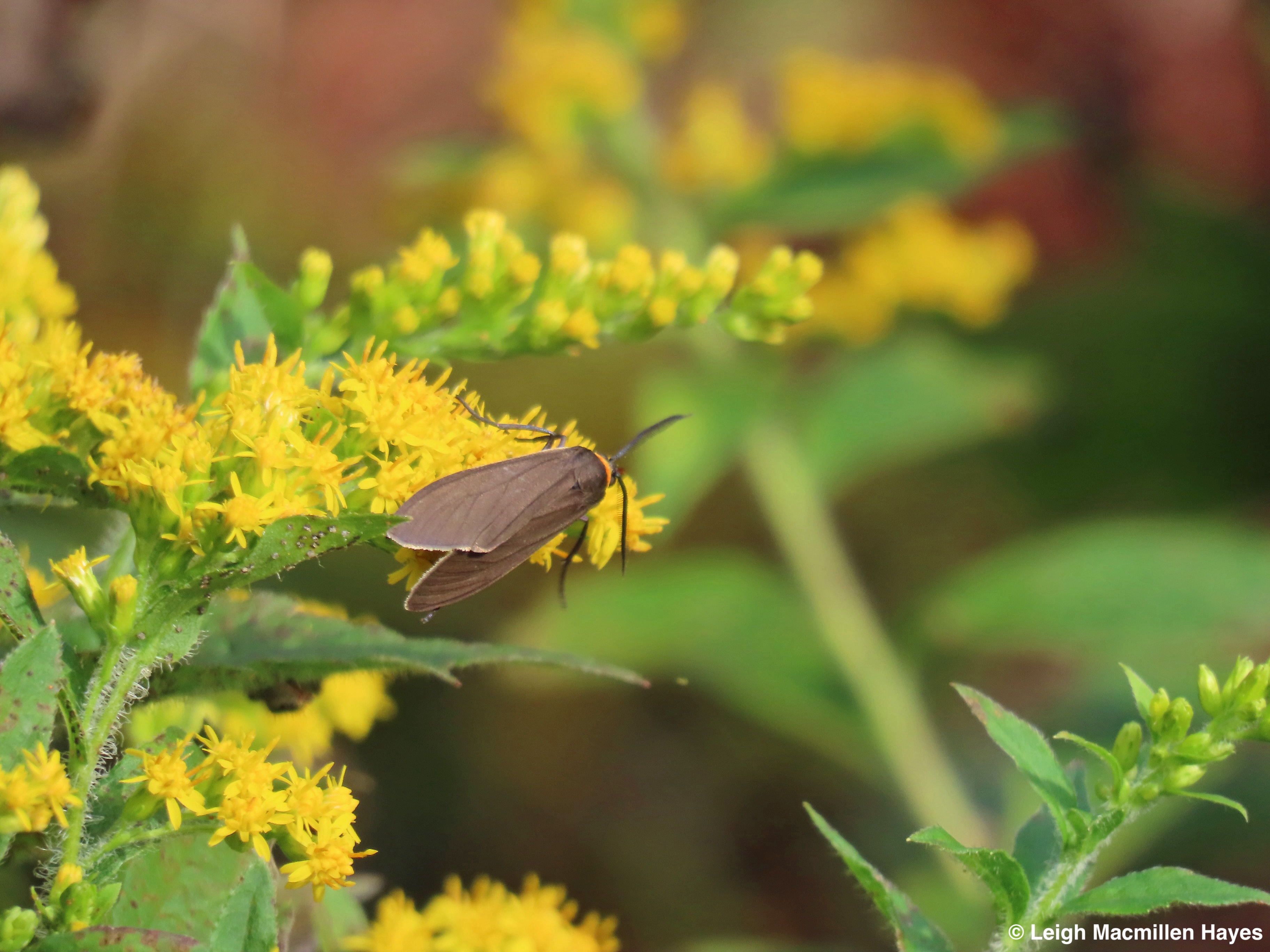
Yellow-collared Scape Moths, to . . .

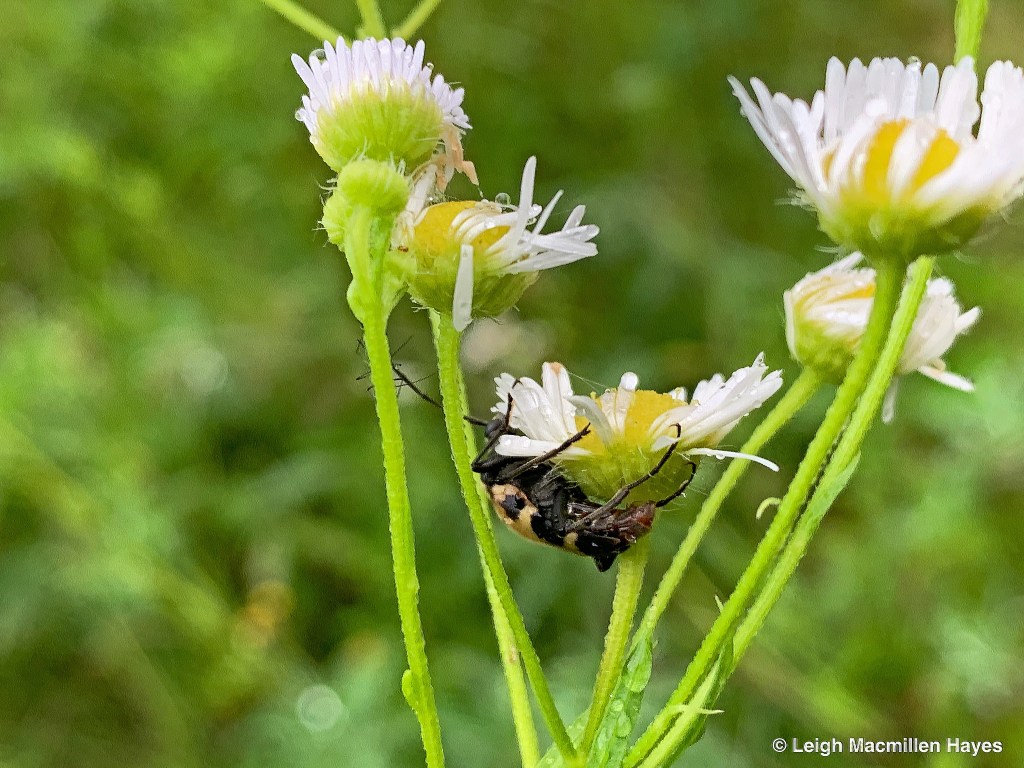
Locust Borers, to . . .

long-bodied Sweetfern Underwing Moths, to . . .

Paper Wasps, to . . .

Bumblebees, this one special because it showed me that its proboscis is orangey-reddish, to . . .

Flower Flies with big eyes.

The plants literally tremble with all the activity so it’s easy to figure out where the insects are located.

The best part of greeting so many is that occasionally a tiny new visitor enters the scene and I have to watch for a few minutes to get a good read on who it might be as it flits and flutters and finally lands.

It wasn’t the diminutive size that made my heart skip a few beats, but rather the color when the Eastern Tailed-Blue Butterfly opened its wings–a mixture of blue and pink that made me think of skyblue-pink we often see at sunset.

And then another sighting stopped me in my boots. It’s camo is incredible and it could simply be another goldenrod leaf.
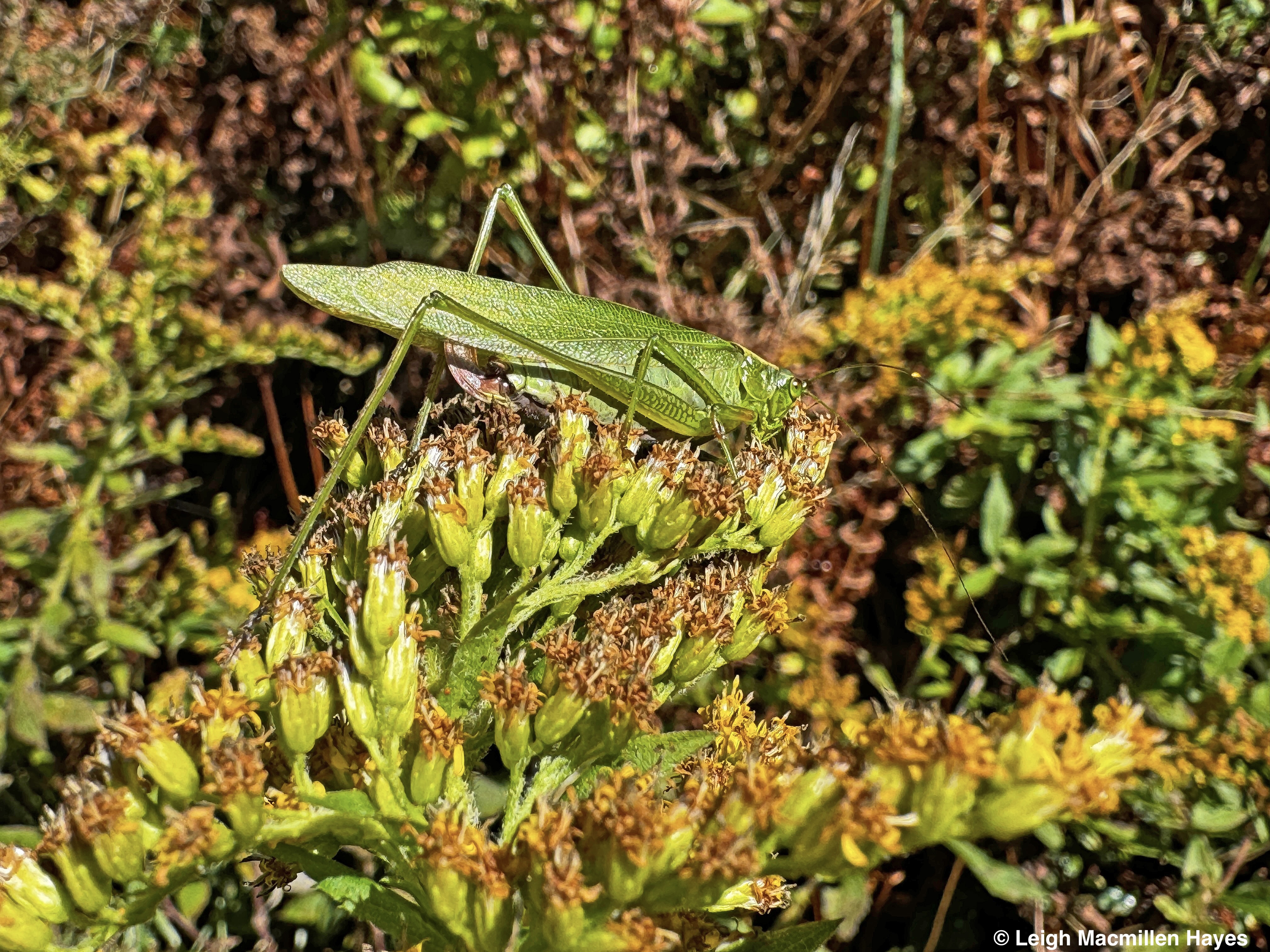
But rather, it is a Katydid, only the second I’ve spotted this year. Katydids always make me happy because they remind me of my forever-since-birth friend and at about the same time that I spotted this insect she just happened to comment on a photo I’d taken during a hike this past week–of a mountain stream–because it reminded her of our “fishing” adventures as children, sticks being our poles and leaves our fish. Katydid. Of course she did.

But of all my finds, my heart was the stillest for this magnificent creature, also a gossamer-winged butterfly. I noted it first on August 3, 2024, and again on August 26. But to see one on October 4, 2024 . . .

Incredible. And RARE! I contacted Dr. Ron Butler once again as he’s one of the co-authors of Butterflies of Maine and the Canadian Maritime Provinces.

Different Bat Time, but same Bat Place for this sighting.

Ron’s reply, “Lucky you. I’ve only seen them in more southern states. I’ll add this to the database.”

Lucky me indeed. According to the book, White M Hairstreaks have only been spotted in our region four times (prior to the three I’ve now noted) and they were seen from late July to late August. So, um, that can now be updated to early October.

BUT . . . what does that mean? Ron has only seen them in more southern states. Blueberries are flowering in October. My nephew shared a photo with me this past week of a Lilac blooming in New Hampshire.

Climate change.

All that said, saying goodbye to all that the field has offered this summer and early fall is not easy. I’m going to miss the spiders and butterflies I had the honor of greeting each day. Oh, I know there’s so much more to come as the days grow shorter and temperatures drop and my favorite season arrives. I live where I do because of the change of seasons.

Still, it’s a long farewell as we transition from one season to the next and for that I’m grateful.

My Neighborhood Grocer

This week may have changed my mind about grocery shopping. I’ve always felt like it was a bit of a drag. We spend way too much money as we tromp up and down the aisles, and really, if I could just get away with living on popcorn, life would be grand. Brown popcorn for meat, green and orange for fruits and veggies, yellow for cheese, and of course, butter . . . you get the picture.

Plus there’s the fact that we live in a tourist town in the western part of a tourist state. So summertime at the grocery store means a full parking lot, lots of people not sure of their way around, nary a smile exchanged, and certainly very little gossip shared in the middle of the aisle with townspeople we haven’t caught up with in a while.

But, today changed all of that.

For today, I realized that visiting the grocery store is a bit like entering a secret garden with a keen eye.

It’s a place where I might not always choose the same offerings as others, but that’s okay, because in this place we can each find what appeals to us and hover like a hummer.

I discovered a Nectar Smoothie Bar had been added. So many love the new addition and visited it repeatedly on the fly.

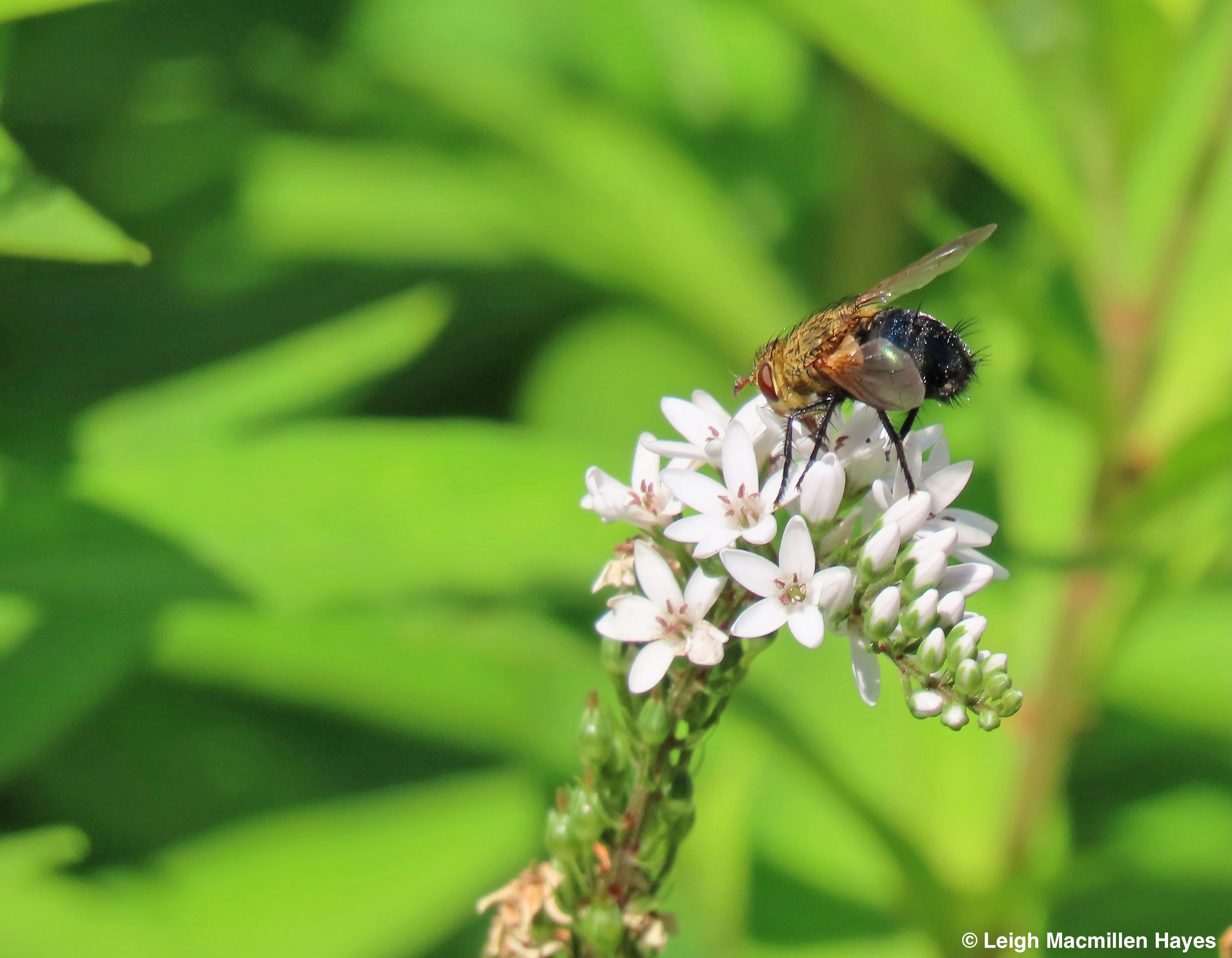
Another good thing is that most who entered, like the Tachinid Fly, brought their own straws so there was no waste.

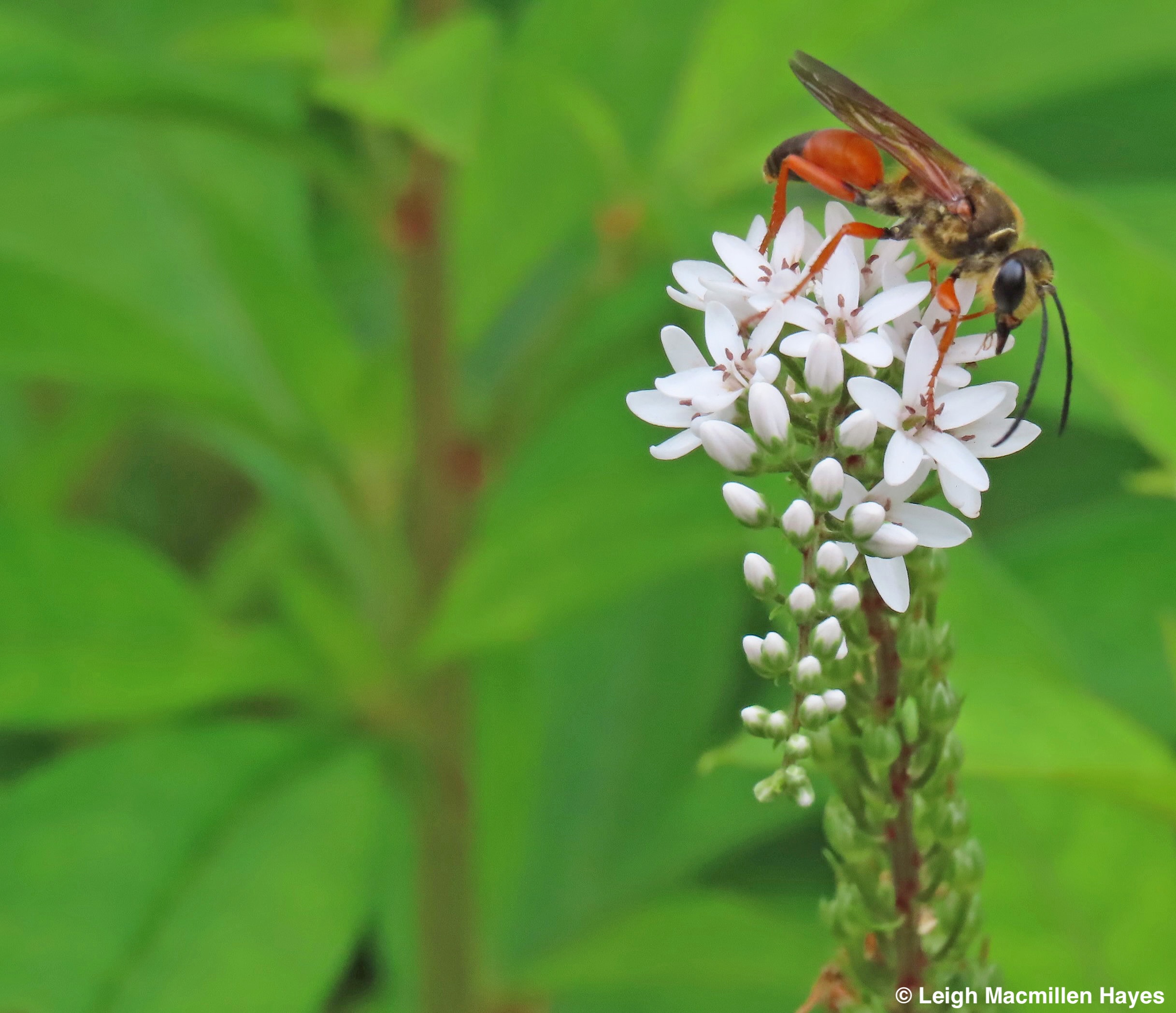
Even the Great Golden Digger Wasp got into the frenzied sip on the move once the store manager announced a taste testing.

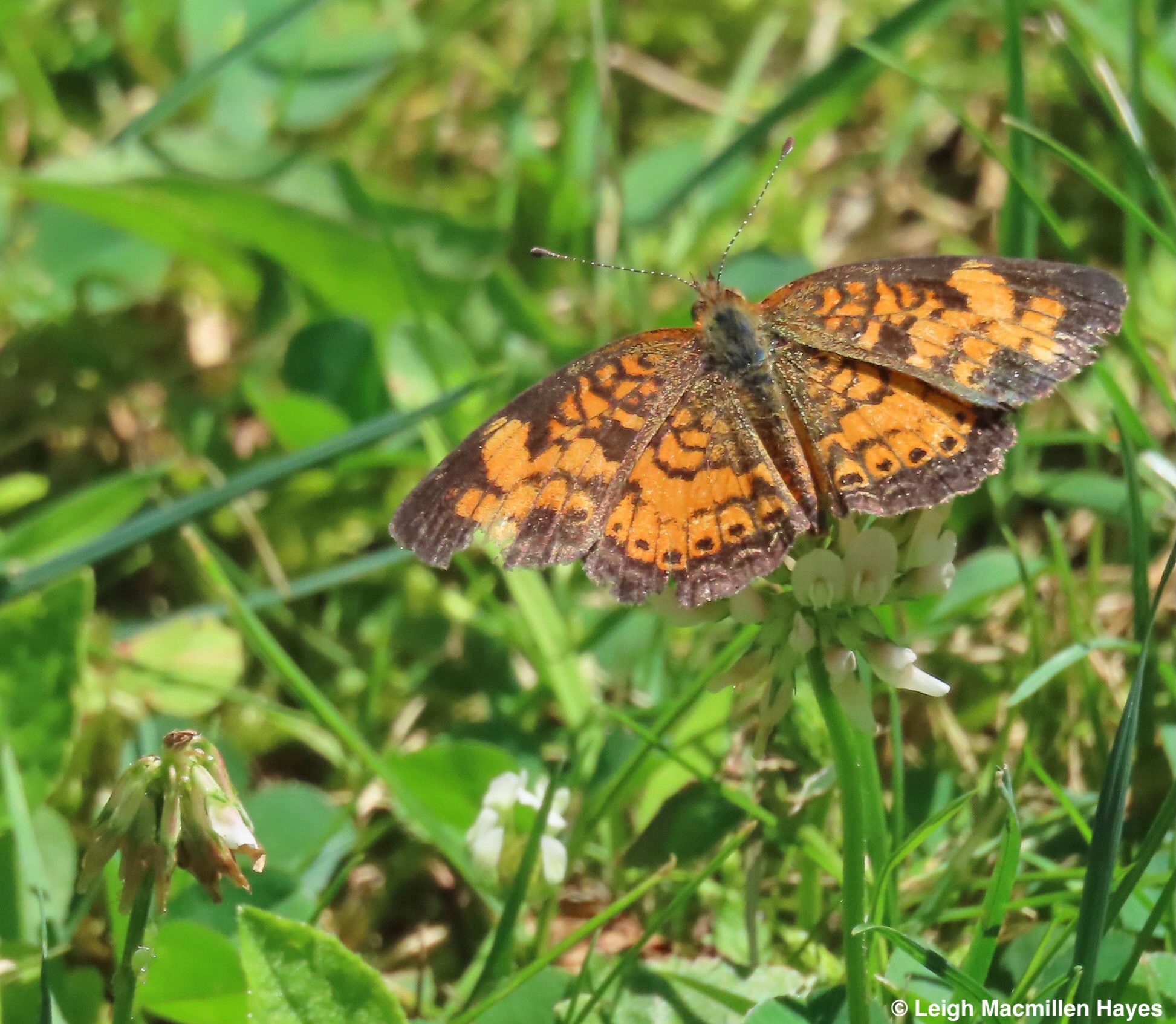
I’m pretty sure the word went out to all Northern Crescent Butterflies to stop by for they really did pack the place.

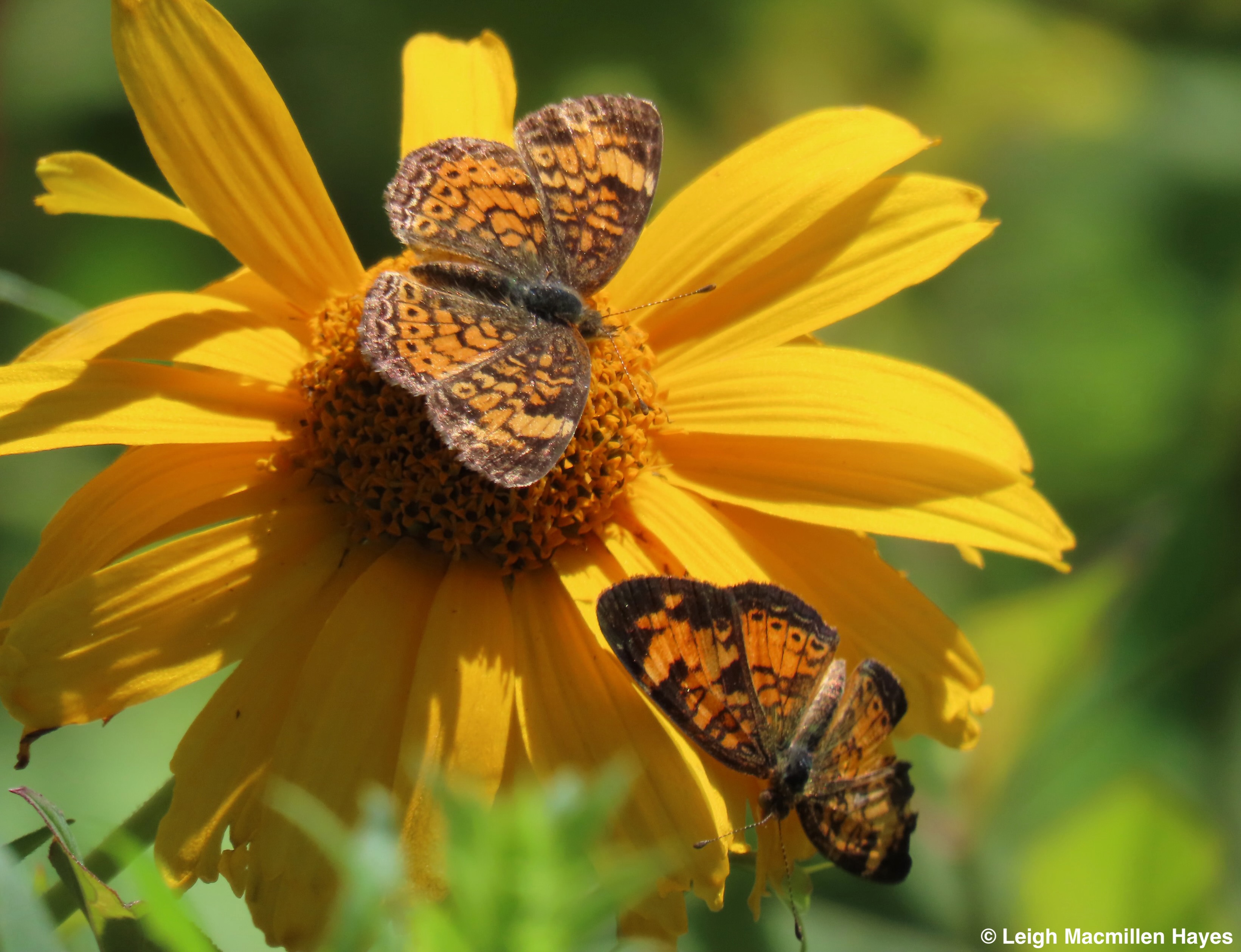
Pearl Crescent Butterflies also cruised the aisles.

And sometimes they were in the same place at the same time, neighbors greeting neighbors after all.

Every Gold-marked Thread-waisted Wasp seemed to want a quick energy drink.
And then there were those like the female Widow Skimmer Dragonfly who came to watch. By the coloring of her wings, I think a better common name for her would have been Sunglass Skimmer. Certainly, she might have had an easier chance of meeting a date in aisle five, rather than just hanging out along the edge of the store.

Unfortunately, there were a few uncouth customers such as this Robber Fly, who snagged a meal without paying.

The Robber Fly wasn’t the only one. A spider hiding under a bouquet managed to lure an American Lady Butterfly and then he did what spiders do and stunned her. The EMTs where called in and though they could get her out of the web, they couldn’t save her. So, her body is being donated to science and will be added to a bug collection of a young boy I recently met.

I chuckled at the bedraggled look of this Bumblebee, who didn’t realize the misters would come on in the produce section.

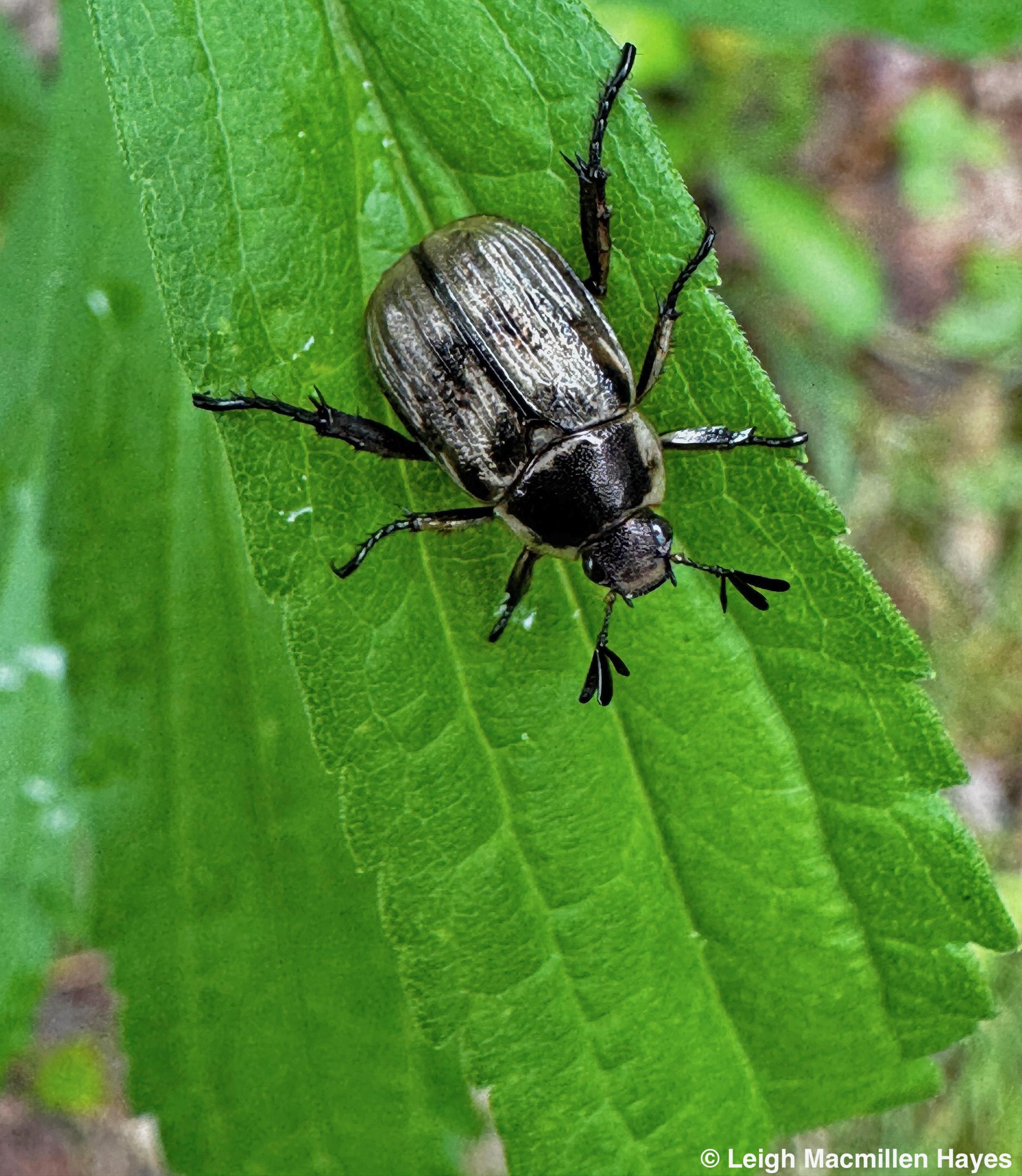
Though there are plenty of Japanese Beetles who seem to shop constantly, so far, I only meet one Oriental Beetle, and I do have to say I was rather taken by its fan-shaped antennae.

As is usual, there’s always a slow slug in the way, especially at the check-out. Why is that?

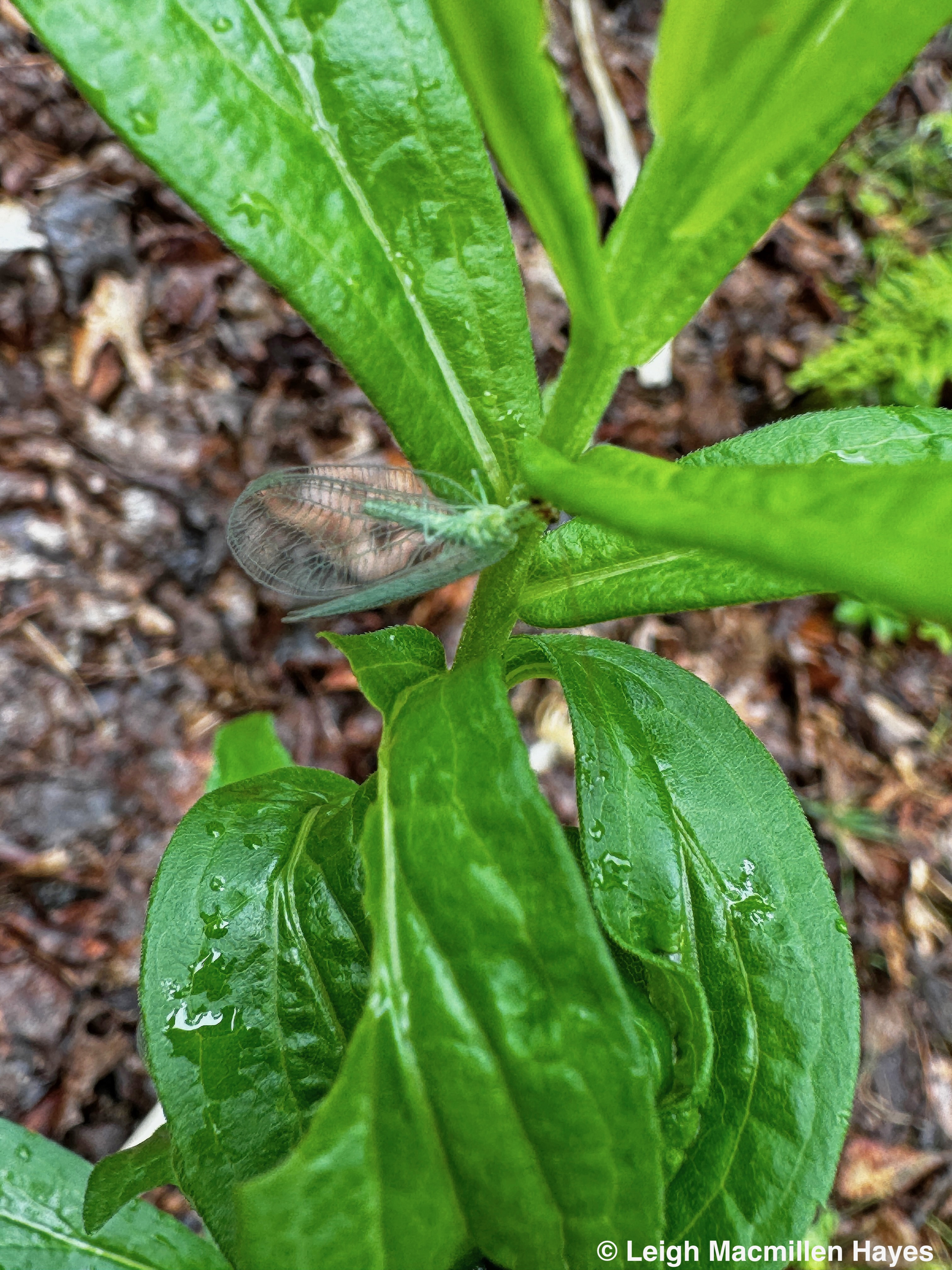
Not all shoppers stood out, such as this Green Lacewing who appeared to be hiding. Perhaps to avoid the misters that had pummeled the Bumblebee.

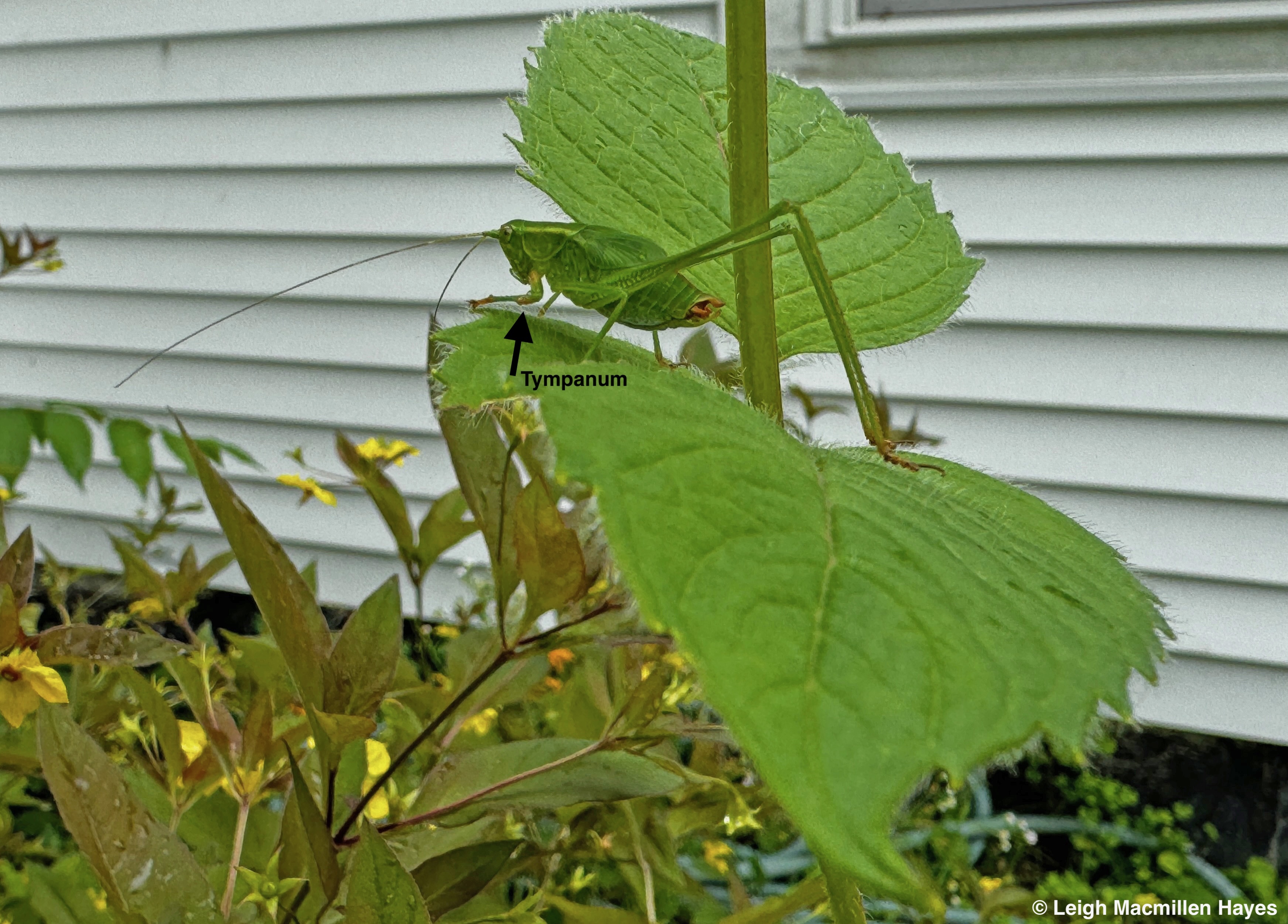
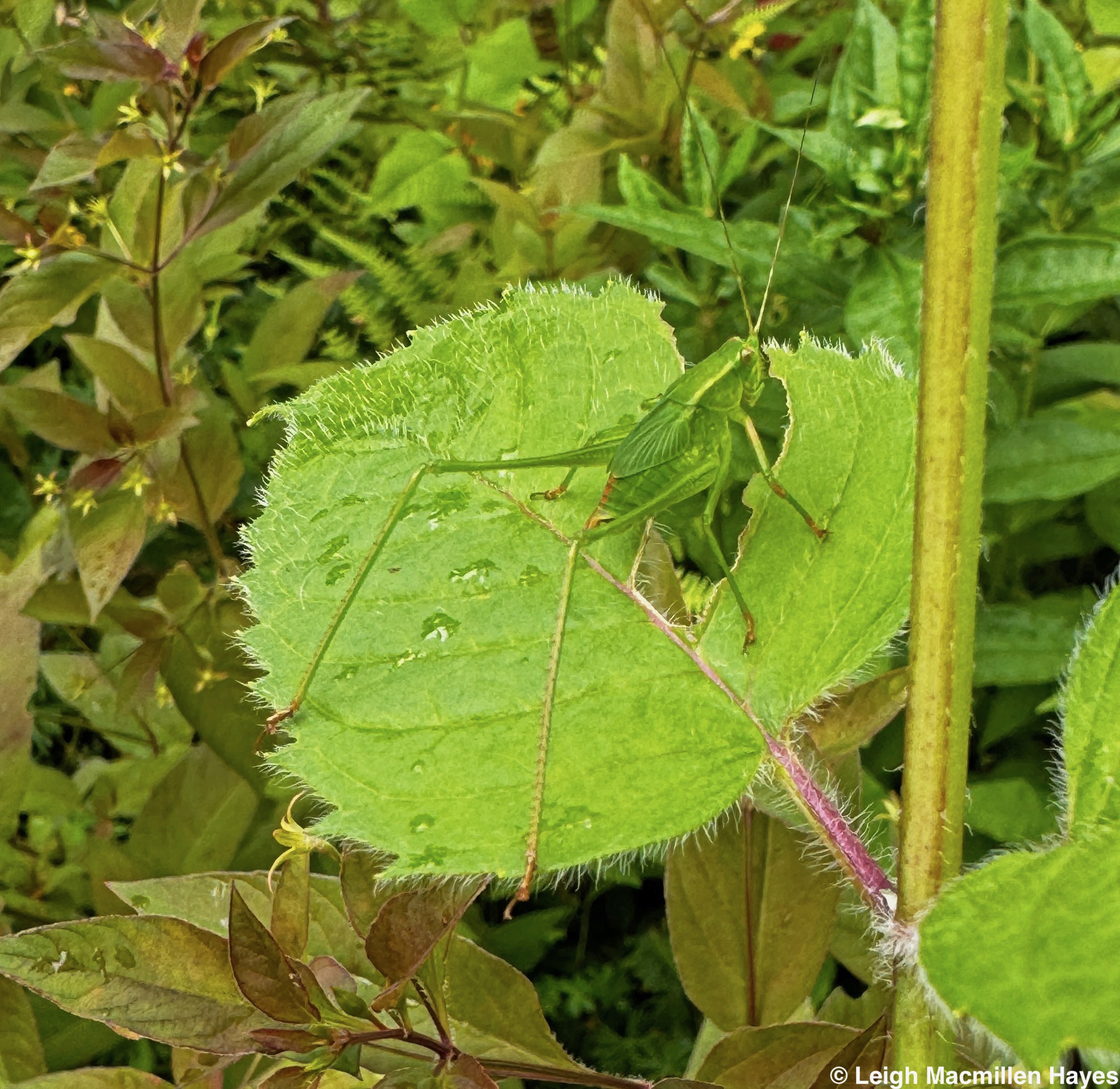
It does seem there’s always a celebrity or two in our midst during these summer days. Sometimes, it’s someone like Stephen King or Lois Lowry. But today it was Katydid. And she was listening–through the “ear” or tympanum located just below the “knee” of her front leg.

Do you see the tympanum on her right side? Do you think she heard that there was a spill in aisle 4?

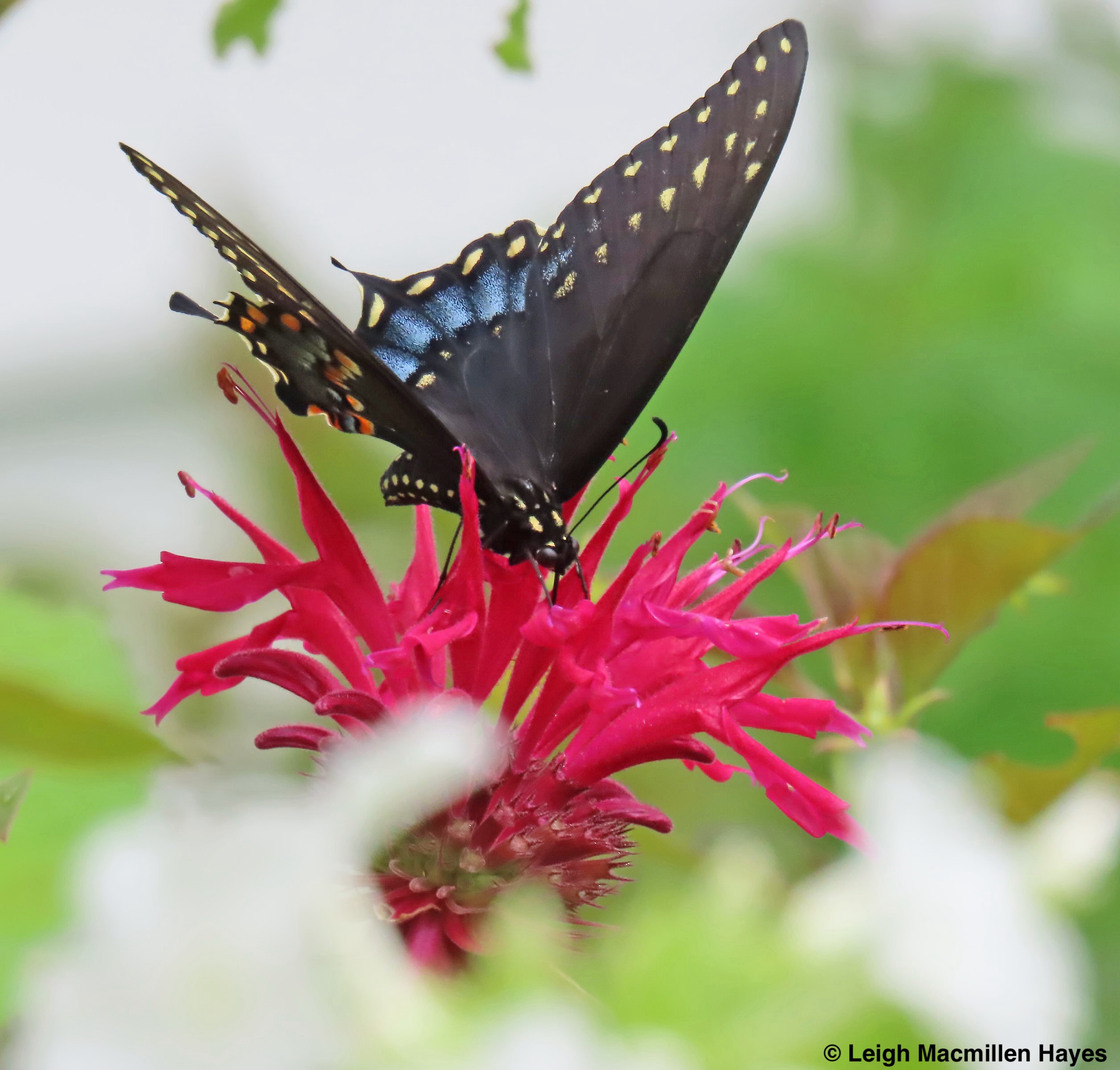
The Black Swallowtail Butterfly certainly heard and in she fluttered to sip up the nectar before it spoiled.

Oh boy. The Gold-marked Thread-waisted Wasps seemed to find each other in aisle 7 and for all I know they may still be canoodling behind the bakery.

So you see, grocery shopping isn’t all errands and drudgery. Note to self: Think of it instead like a visit to the candy store. Stop and sample along the way. Smell the Phlox. And remember, the store is committed to providing customers like you and me outstanding value for quality products at every day low prices. Right?!

I hope you’ll visit my neighborhood grocer often and enjoy the experience.

Prowling for Pollinators . . .

So maybe this morning wasn’t the best choice to go searching for pollinators since the temp was in the 50˚s and delightfully so. Crisp air. Blue sky. Autumn Teaser. What’s not to love?

But search I did. I suspected most of those I sought were sleeping within the flower petals or had found some other warm spot to spend the night and early hours of the day.

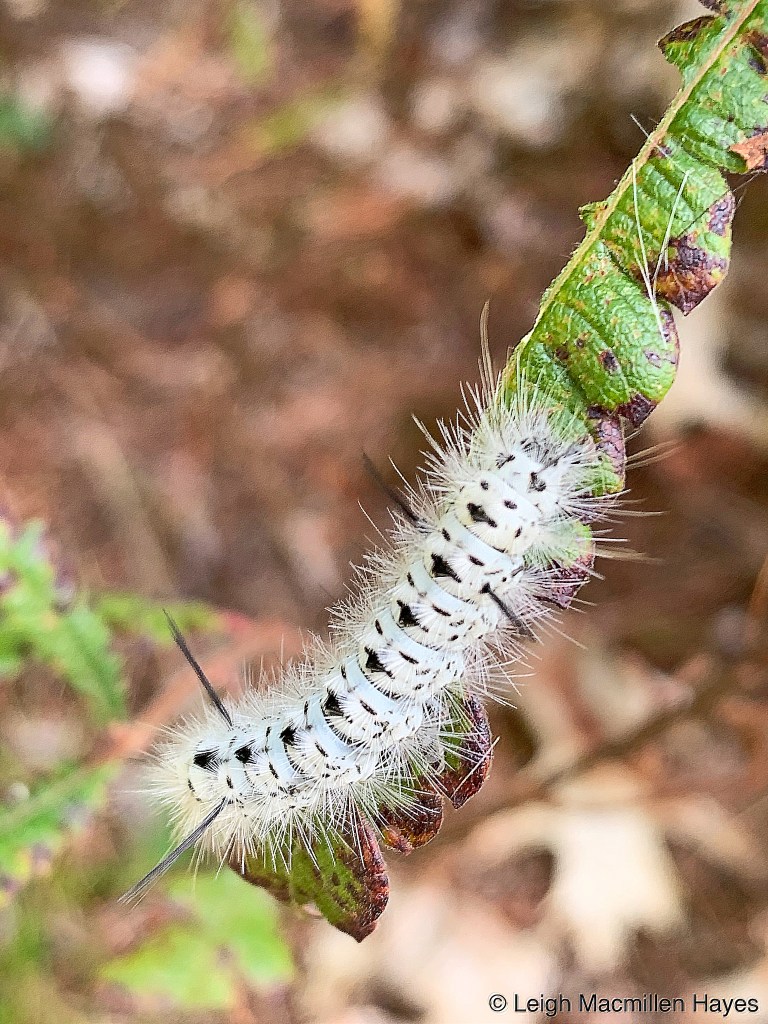
One well wrapped and ready for the next season was a native young Hickory Tussock Caterpillar. Do you see the detached hairs above it on the yet unmunched half of the Sweet-fern leaf? In a way, tussocks remind me of porcupines for their hairs are barbed like a porky’s quills and can easily detach.

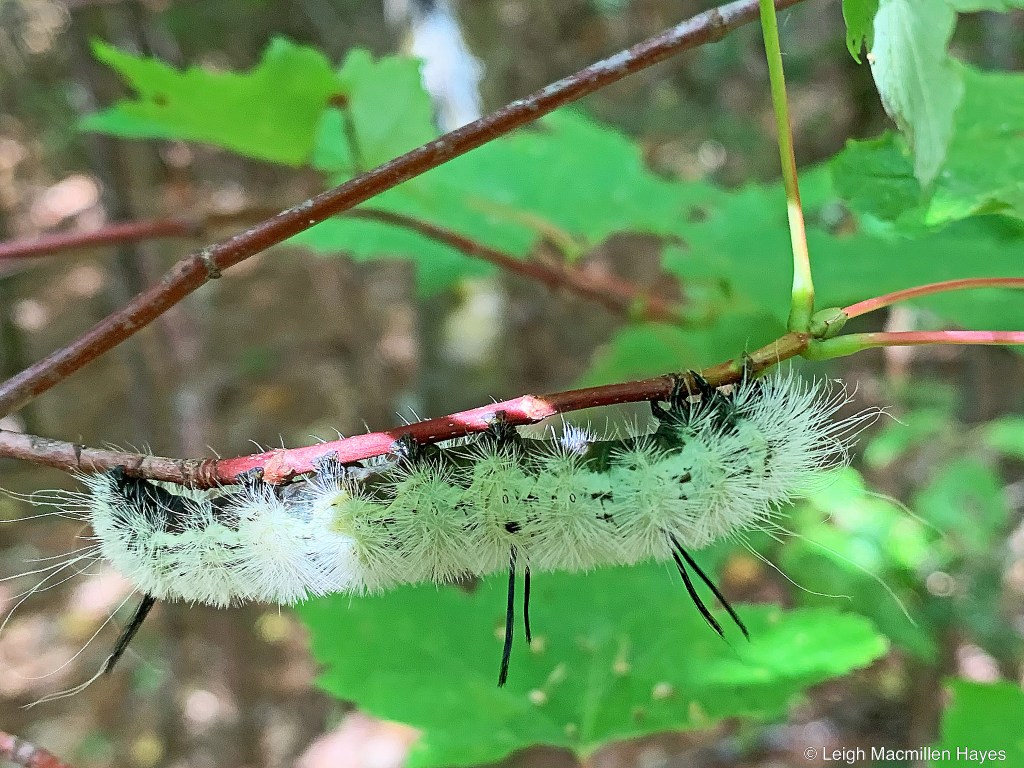
Though most that I’ve been seeing are about one inch long, I discovered one that was at least three inches and perhaps considering using the hairs to spin a cocoon.

Recently friends and I commented that we hadn’t seen many of these caterpillars this year and then we recalled that last year’s prolific sightings occurred late summer/early fall. The good news is this: though they defoliate many tree species including but not limited to hickories, they do so at a time when the trees are preparing to shut down and so no overall harm seems to be done. And being native, they are subject to natural enemies so we can only hope that this year’s prevalence is much lower.

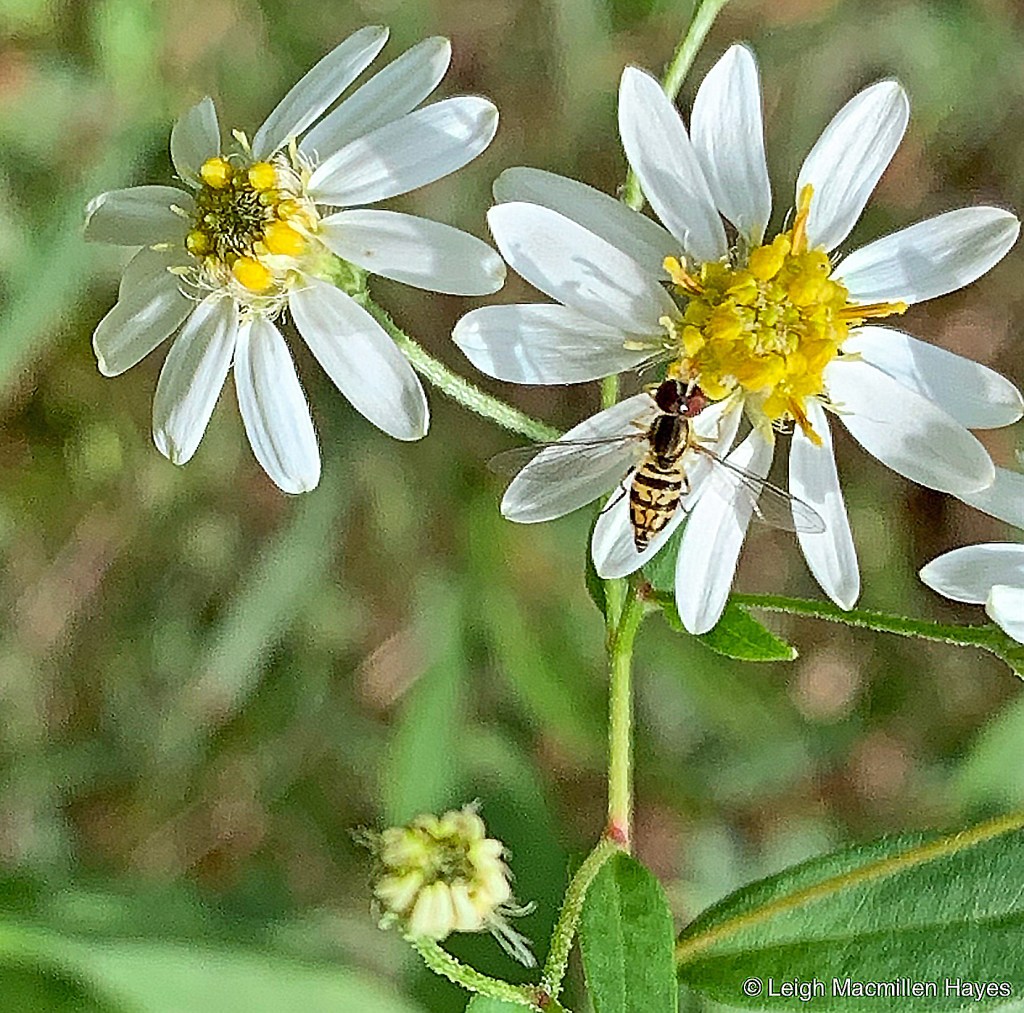
Mind you, as the morning progressed, there were a few pollinators on the move including this tiny hoverfly upon an aster. Though they don’t have pollen baskets and can’t carry as much pollen as a bee might, hoverflies visit so many flowers that they are seen as pollinator champions.

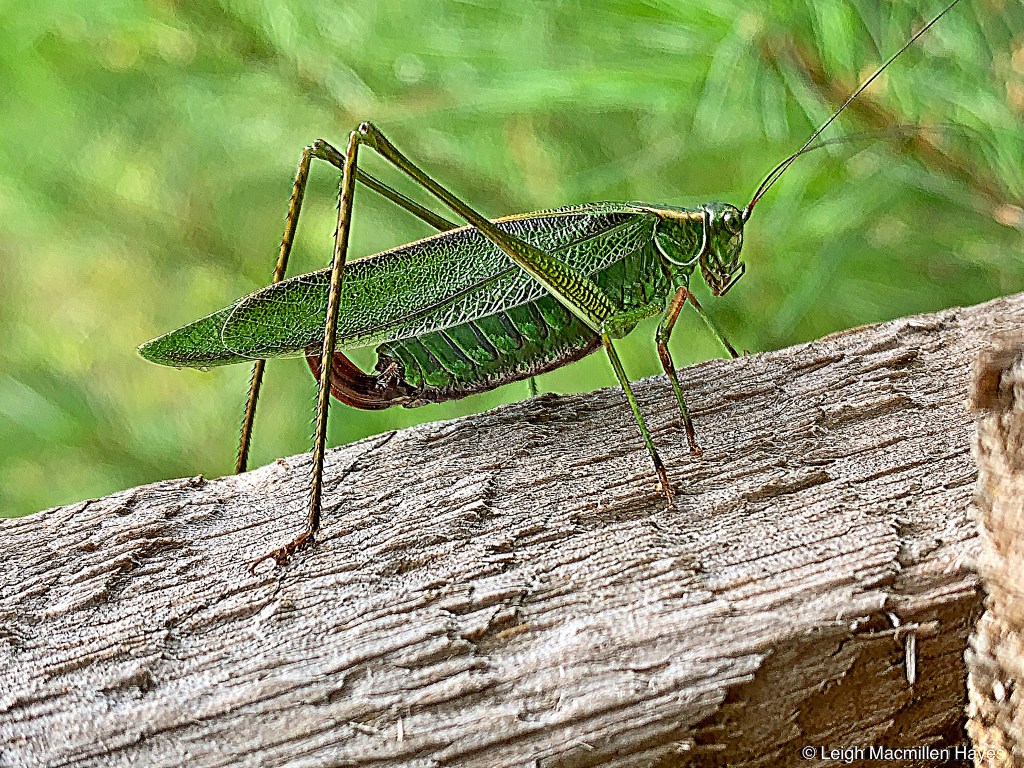
As my search continued, I stumbled upon a female Katydid walking along a wooden fence. Katydids’ antennae are long (as in at least the length of the body) and thin, thus differentiating them from their grasshopper cousins.

Another way to identify one is the camouflaged leafy structure of their wings, much resembling the veined foliage upon which they spend their time dining. And this one–a female, so proclaimed because of its thick, upwardly curved ovipositor (egg-laying structure).

Under the same fence post, a grasshopper did rest, its antennae much shorter.

What surprised me most as I explored one place and then another and another: the variety of dragonflies that still did fly. I’m rather partial to a few, including this male Pondhawk Darner with its greenish face and white claspers. If only his gal had been around, they would have made a handsome couple.

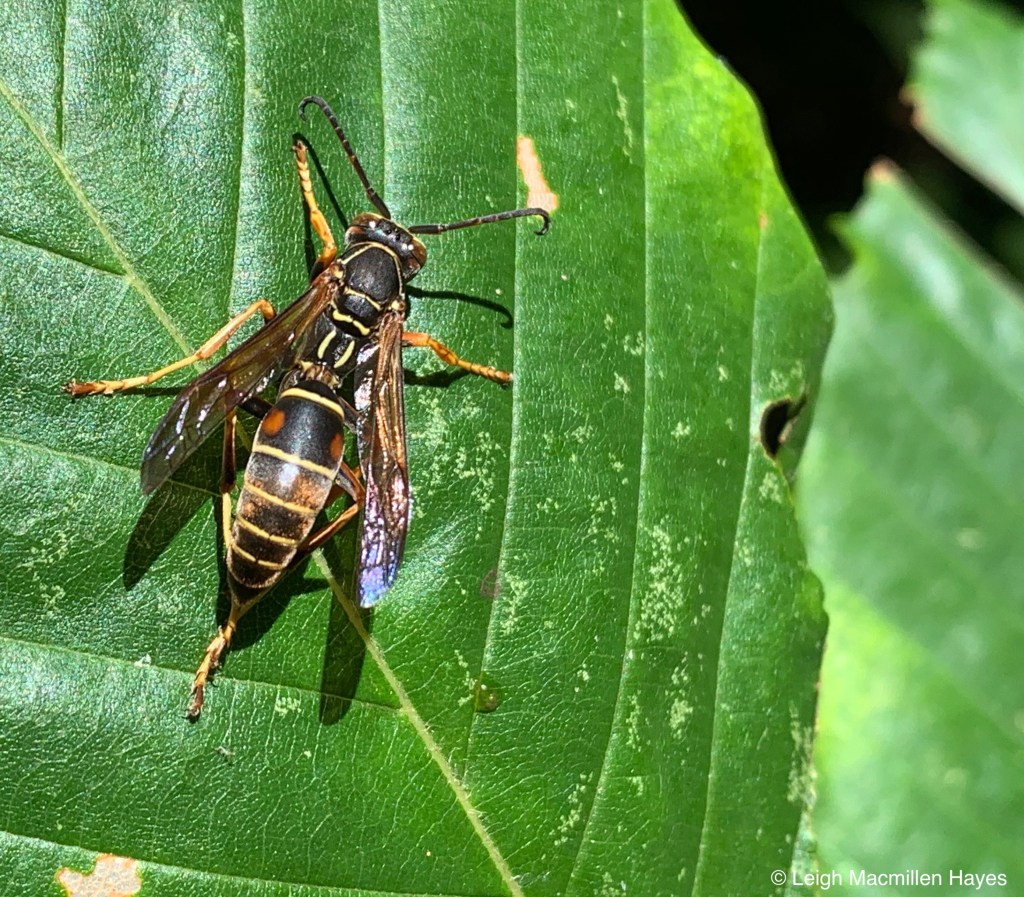
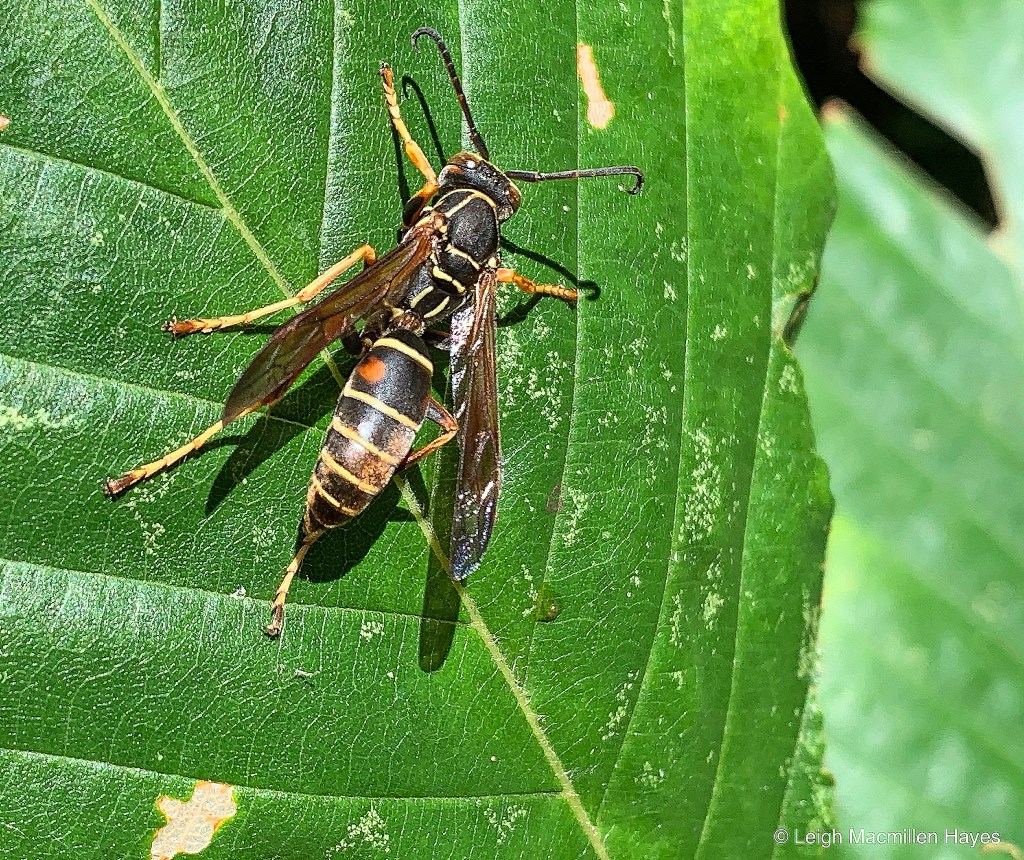
In another spot a Paper Wasp paused. Watch its hind legs.

Ever so slowly . . .

it practiced . . .

Edward Scissorhands moves. Paper Wasps are pollinators and I had to wonder if it was transferring some pollen on its legs in wasp-ballet style.

Finding a few pollinators and other insects was fun, but the creme de la creme of this morning’s expedition was time spent with so many Autumn Meadowhawks who shared every trail I walked.

Not only do Autumn Meadowhawks have yellowish legs, but their coloration matches the newly formed American Beech buds, making their timing seem serendipitous.

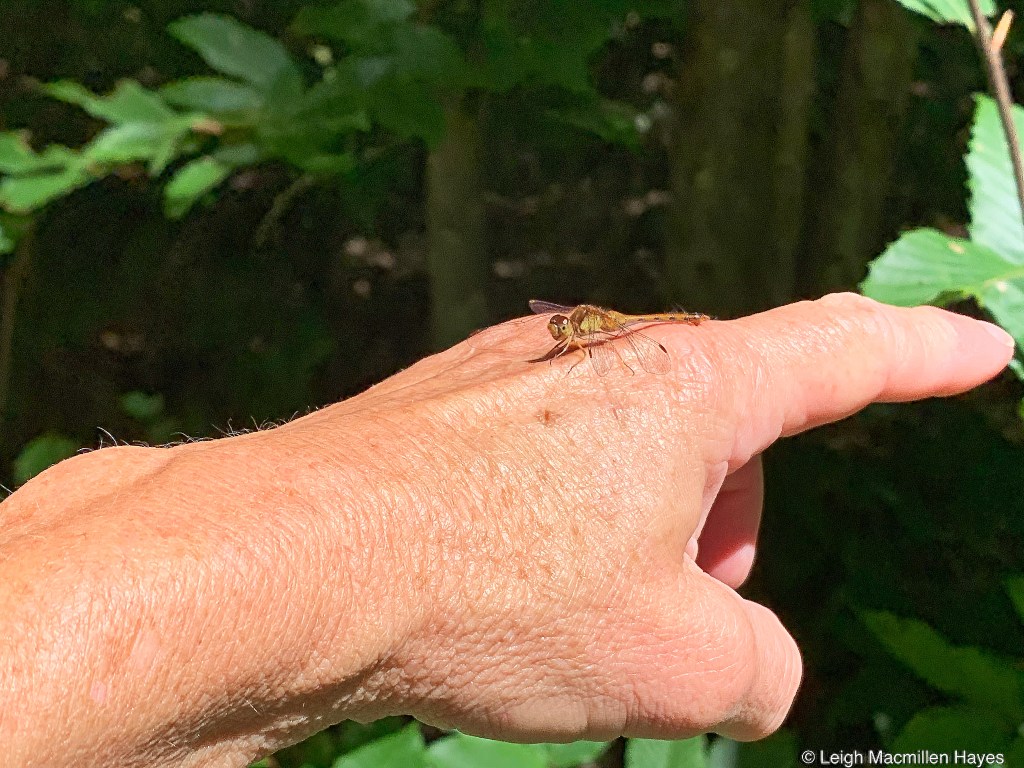
Being a coolish morning, I thought I might entice at least one upon my hand for they seek heat. These are wee dragons as you can see by the size of this female.

I swear she smiled at me. I smiled back.

While prowling for pollinators . . . I made some great finds and my morning search was well rewarded.

Katydid, Didn’t She?

I have the extreme pleasure of being in touch with my first two playmates, the sisters who lived next door, on a somewhat regular basis. And even when we don’t see each other for a long time (Girls, we still owe ourselves a lunch in Newburyport), like any great friendship, we pick right up as if no time has passed.

While they both love the natural world, for that’s where we spent much of our childhood, one in particular frequently shares photos of her finds with me. And so I took her along, riding on my shoulder this morning when I headed out into the rain because I know that she, too, likes rainy days as much as, if not more than sunny days. So does her garden and she’s got a green thumb to envy.

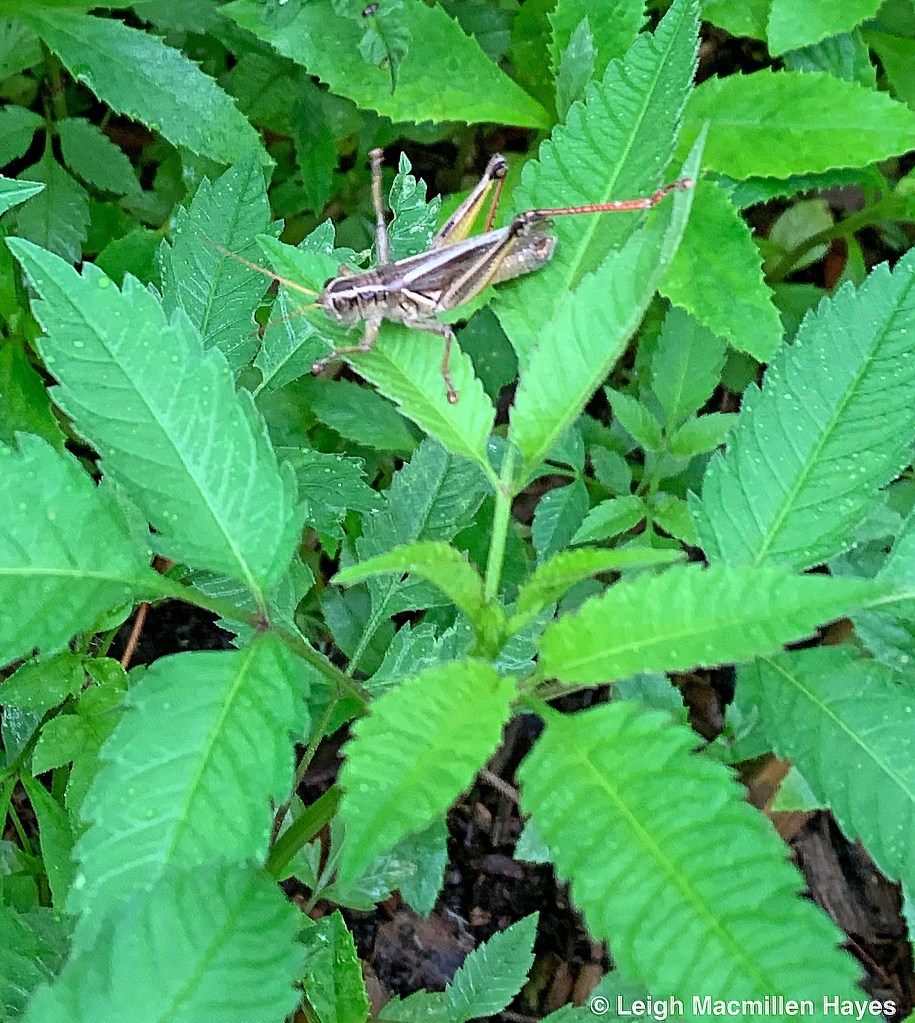
Since my thumbs aren’t great at turning the soil, I support a local farmers’ market and had time to pass waiting for my turn to pick up the pre-ordered produce, bread, chicken, flowers, and treats. Thus, as we started to hike, a grasshopper known for its two stripes greeted us.

Not far along, at the base of a certain pine tree, I showed her the Pippsissewa now in bloom. Not only do I love to say this plant’s name, but the blossoms . . .

oh my. We both squatted for a closer look at the anthers within. And sniffed its sweet scent.

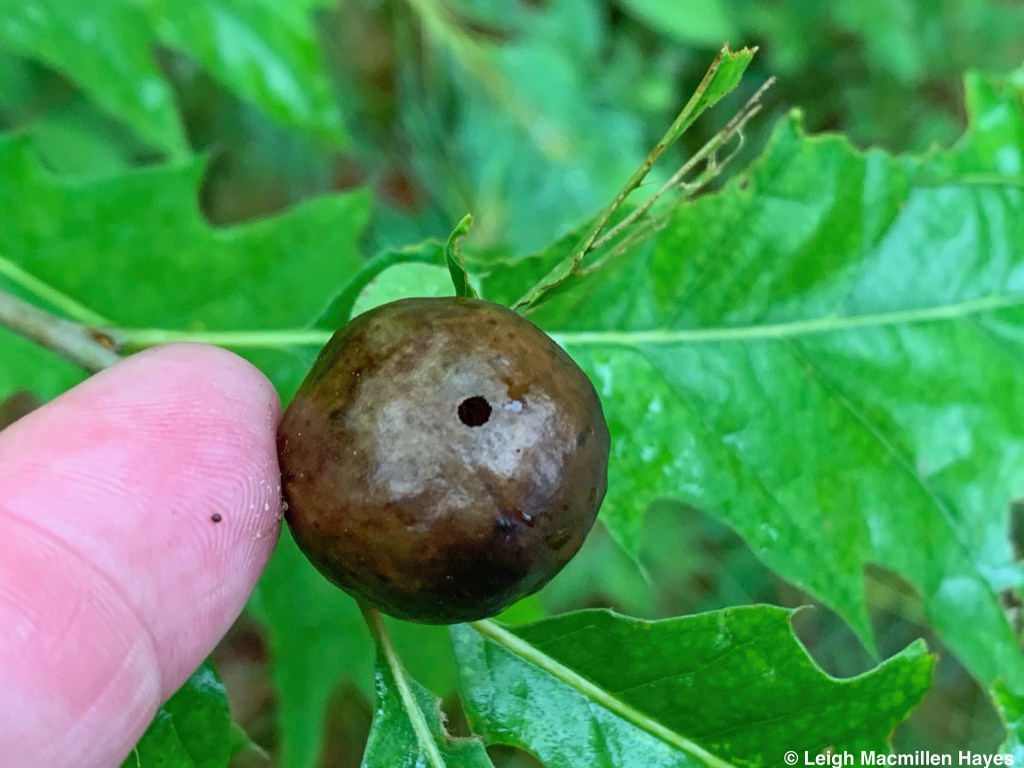
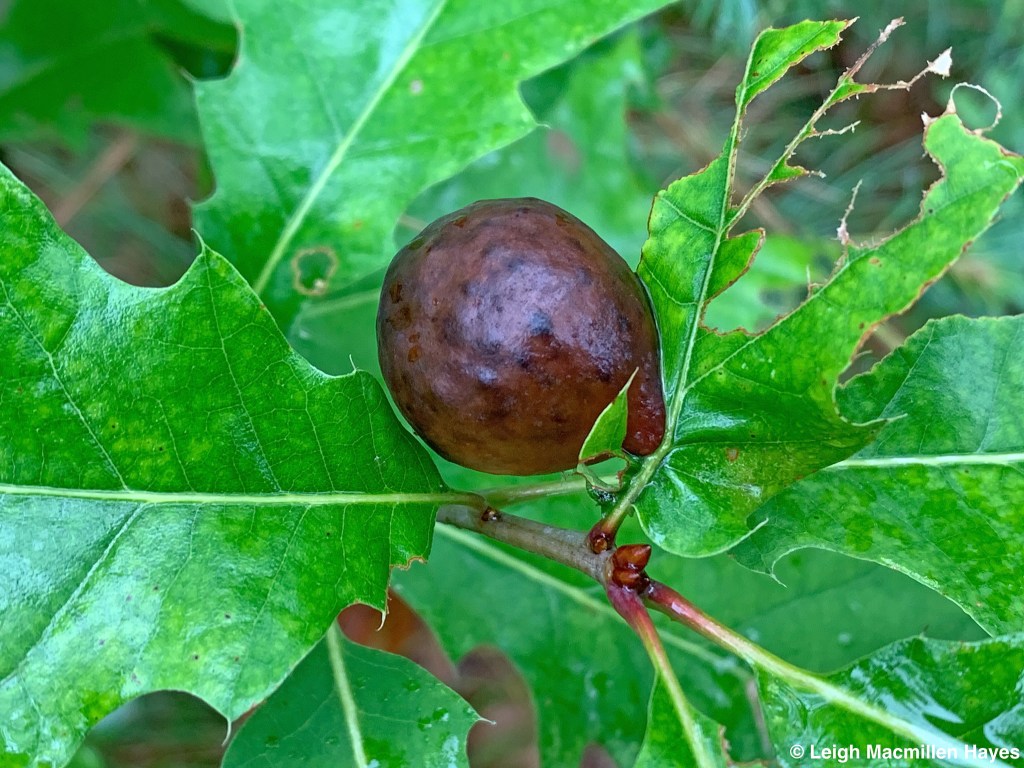
Our next great find was an oak apple gall and of course I had to tell her that a non-stinging and wingless female wasp injected an egg into the veins of the leaf as it was just beginning to grow. Chemicals released by the tiny larvae that developed within altered the growth and over a few weeks, the little orb formed.

By the circle hole on the underside, I explained that the wasp had pupated and chewed its way out and was probably now feeding on the very roots of the same tree . . . that is if it hadn’t been consumed by birds or small mammals.

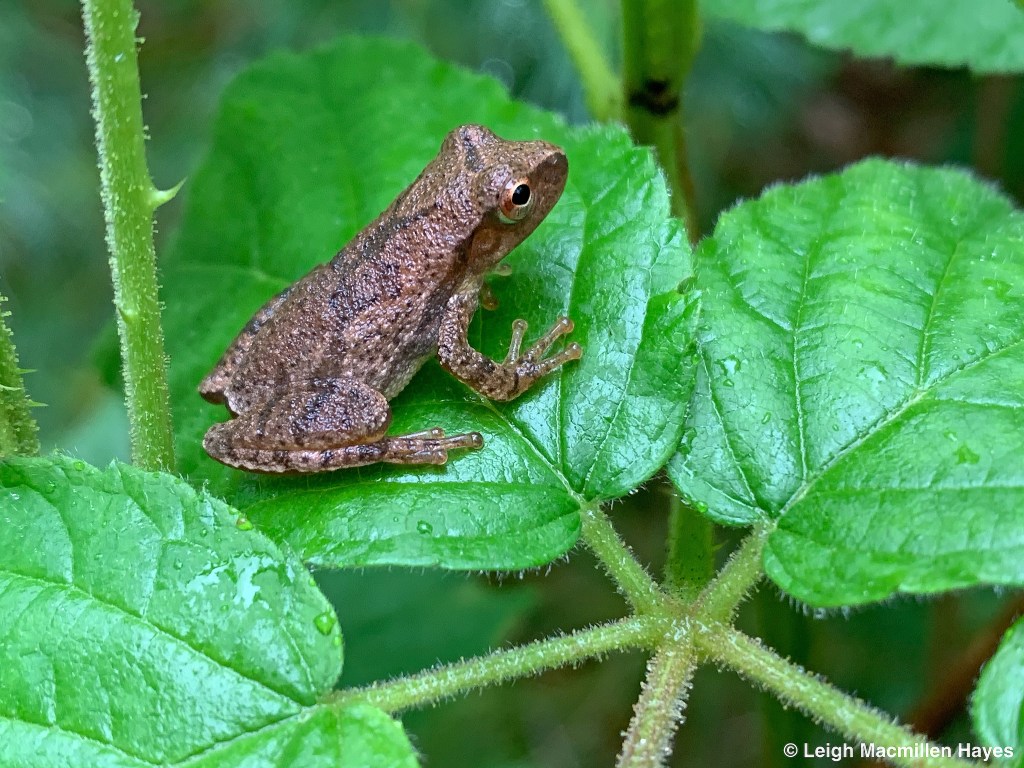
We moved on, but a tiny spot of brown on a berry leaf was the next to beg for our attention. Check out those toes. Sticky toe pads on their webbed feet provide support for these plant and tree climbers known as spring peepers.

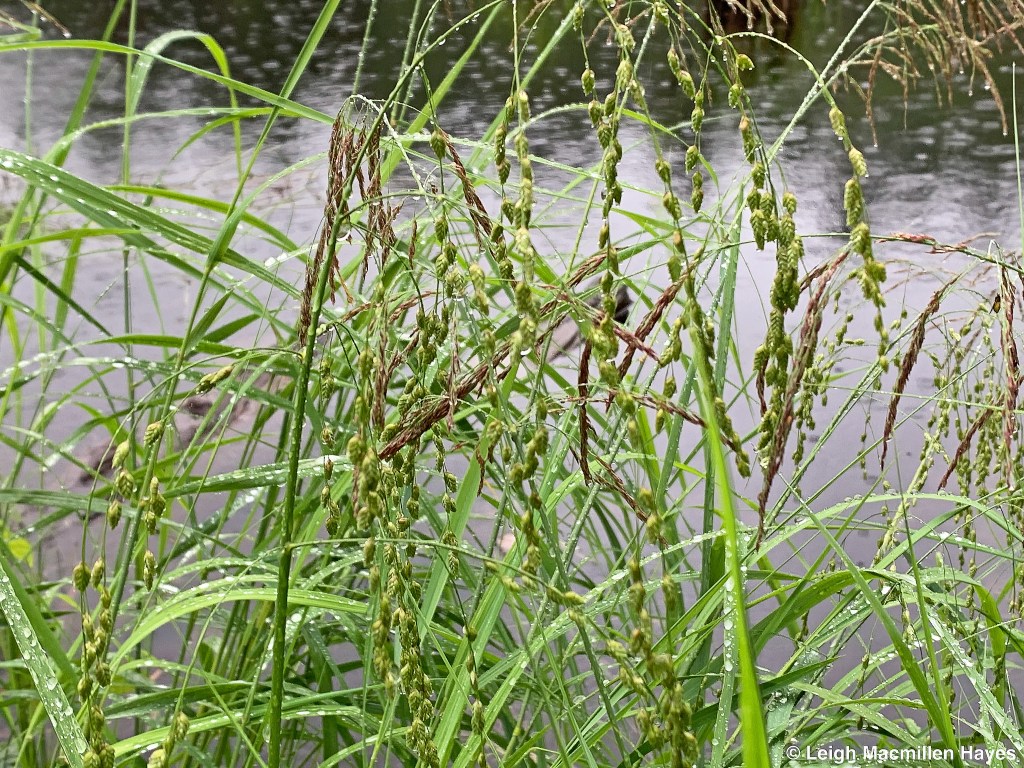
At last we reached a wetland and that’s when the rain really began to fall. And so my friend and I . . . we stood and looked about and enjoyed the raindrops on the grasses and sedges, the water’s surface, and us.

For a while, we left the path, and slipped into the woods, trying to follow a recently created trail, but mostly meandering about in the land where nurse logs provide a start for so many others as they decompose.

As it turned out, that wasn’t the only nursery in town. Once we returned to the trail, which by the way, she was impressed that I could find my way back . . . and so was I, I took her to a nearby meadow where we spotted a momma tending her young’uns.

I knew my friend would love this sighting because she not only saves salamanders and deer, but also spiders from any demise. This momma wasn’t so sure about us, however.

As large as she was, we were even bigger so she continued to work on her web to make sure her children stayed safe.

When she wasn’t looking, we did peek inside and saw a few of the babies.

We spotted another spider of a much more diminutive size upon one of the meadow flowers. You might see it, though it is a master of camouflage. Two insects also hung out as if they were trying to stay dry. Though the beetle is quite obvious, a discerning eye will spy the legs of the other.

We had actually gone to the meadow to see the Canada lilies that tickled our fancy for they looked like streetlights in the midst of the rain drops.

All of our finds had been great, but the best one of all . . . a Katydid. My friend’s name is Kate or as she was known when we were kids: Katy. And when quizzed by our moms about who was responsible for something, the rest of us always said, “Katy did it.”

While standing in the meadow today with Kate on my shoulders, my cell phone rang and suddenly I was looking at . . . my dear friend via FaceTime.

“Did I call you, or did you call me?” I asked as I looked at her beautiful and familiar grin while she stood aboard her cabin cruiser on Long Island Sound.

“You tried to Face Time me twice and so I called you back,” she said as she looked a me–soaking wet and rather bedraggled but happy (except maybe for the mosquitoes and deer flies).

I’d been using my phone to snap most of the photos but kept putting it in my pocket and I think I may have inadvertently contacted a few people.

So maybe this one time I did it and not Katy, but forever when I see a Katydid and many other things in the natural world, she’ll be right there with me as we were so many moons ago–Katy got me then and thankfully she still does.

The Story in the Web

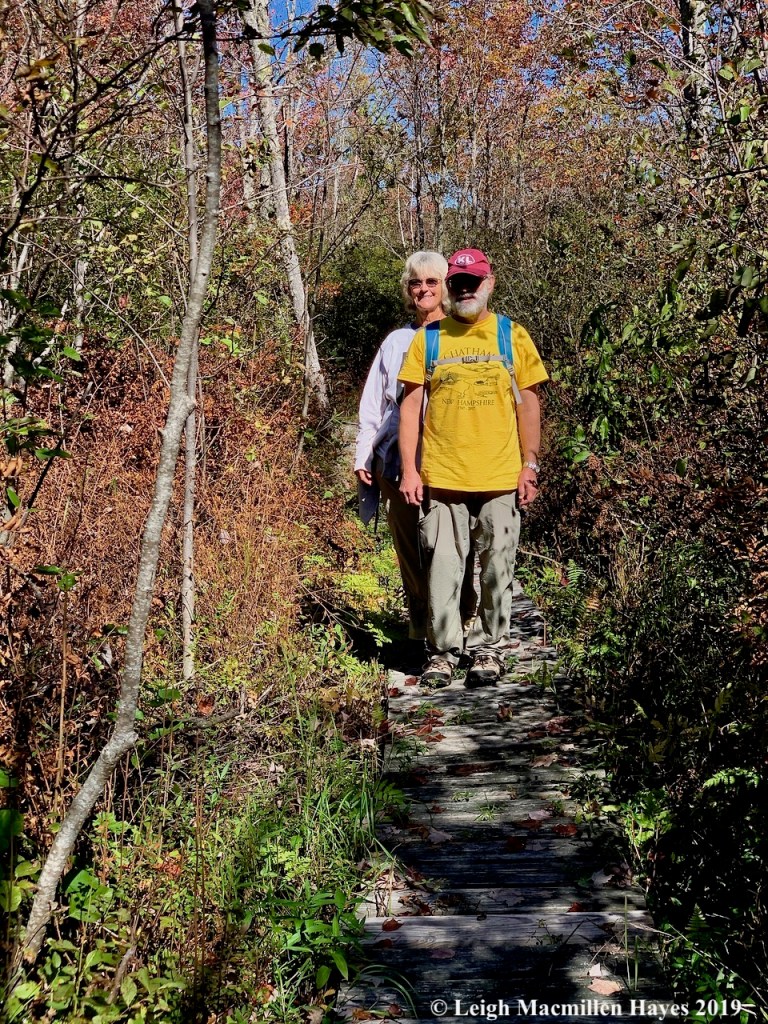
When I invited friends Pam and Bob to join me at Lakes Environmental Association’s Holt Pond Preserve for a reconnaissance hike, I had no idea what might await us. But isn’t that true of every day, no matter what path in life we choose to follow? With each step we take, doesn’t a surprise await?

Today’s path found us making a few detours for fun, but it was when we followed the route long ago laid out by LEA that we made the most interesting discoveries.

The boardwalk through the Red Maple Swamp led us to the hummock that leads out to Muddy River, where fall’s colors were ablaze on the far side. Red Maple is an early harbinger of autumn as it turns color well in advance of other eastern deciduous trees, especially when it is located in wet sites.

As we continued, we found ourselves on the new/old boardwalk to the Quaking Bog by Holt Pond. The boardwalk is new in that its old self has recently undergone a renovation with corrugated culverts added below in hopes that come high water in spring or fall, the water will flow and the structure will float above.

We were excited to see such a change, but especially wowed by the Pitcher Plants that grew there.

As wild as the Pitcher’s leaves are, the fall structure of the flower was equally astonishing. I’ve forever found it a wonder that the extremely large style of this flower sits below the rest of the structure in order to capture pollen in its upside-down umbrella shape. With leathery sepals above, the large swollen ovary below may house as many as 300 tiny seeds.

At the end of the boardwalk, we stood beside Holt Pond for a bit and did what we frequently found ourselves doing: listened; looked; lollygagged.

At last we pulled ourselves away; but still there was more to see.

Because we were noticing, Pam spied Charlotte, a yellow garden spider, aka Argiope aurantia.

You might think we weren’t actually in a garden, but indeed, we were. Just prior to meeting Charlotte, we’d munched on tart cranberries, and sniffed and tasted Bog Rosemary leaves.

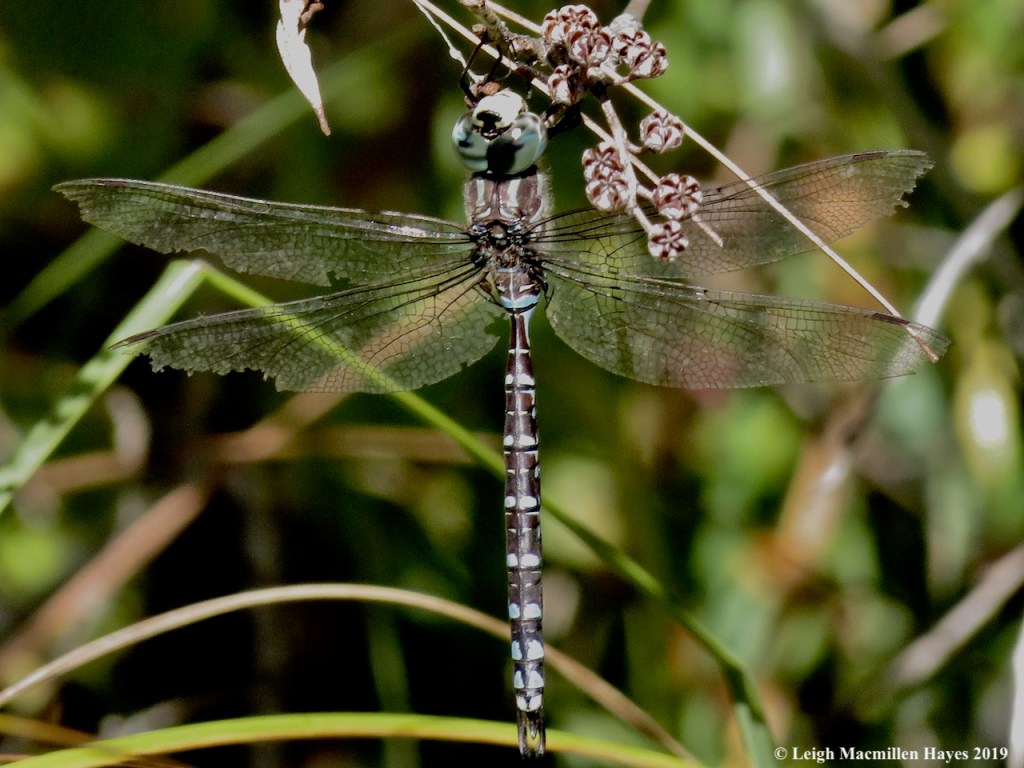
There was also a Lake Darner Dragonfly to admire. Especially given the tattered nature of its wings. Really, the dragonflies controlled their territory throughout much of our journey and sometimes appeared to brazenly want to gobble us up. I’m here to say that they didn’t succeed and we’ll never tire of being in their presence.

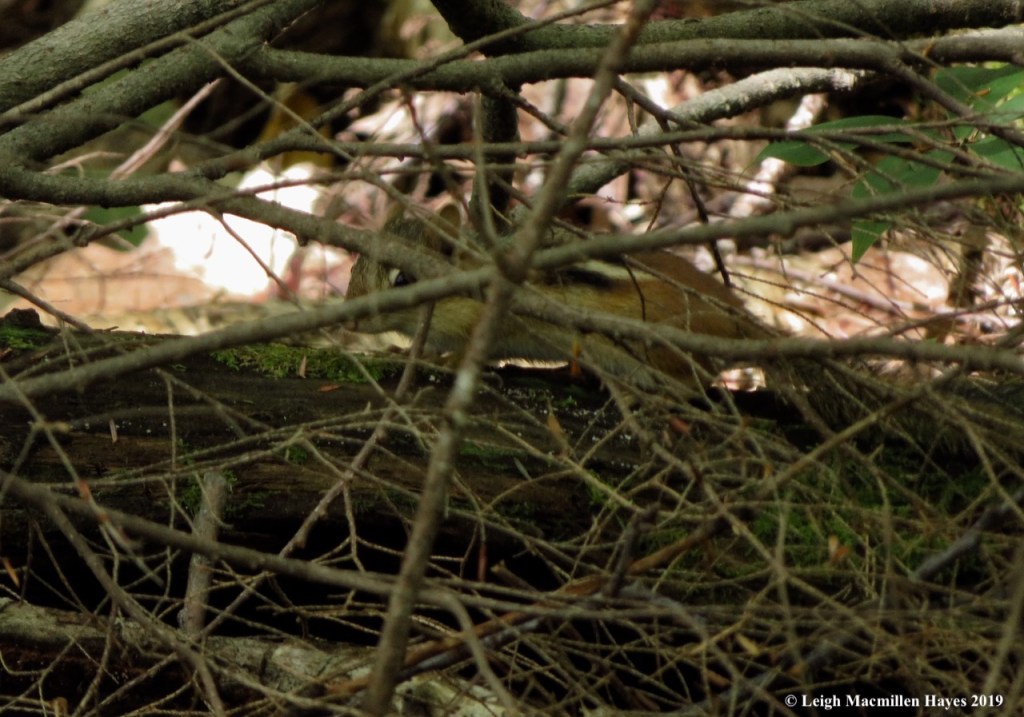
Leaving the quaking bog behind, we walked through a huge hemlock grove and noticed one noticing us. Do you see the Chipmunk? He remained still for moments on end, sure that we wouldn’t spy him. And then when we made a sudden movement, he darted into a safety hole.

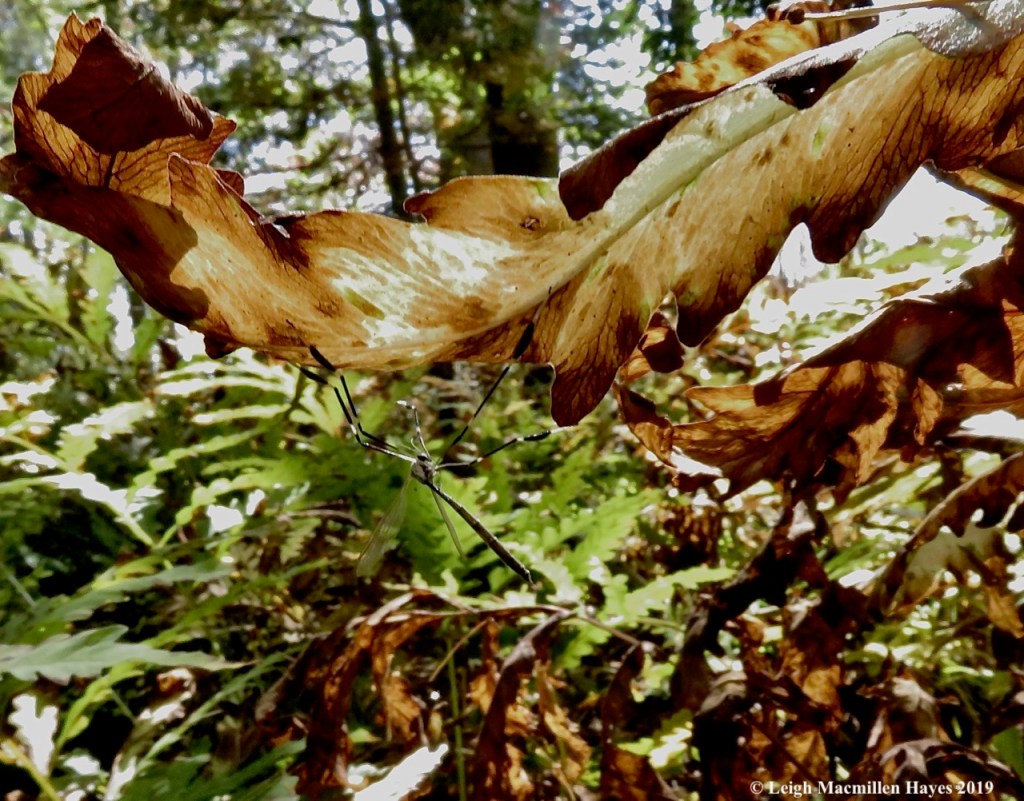
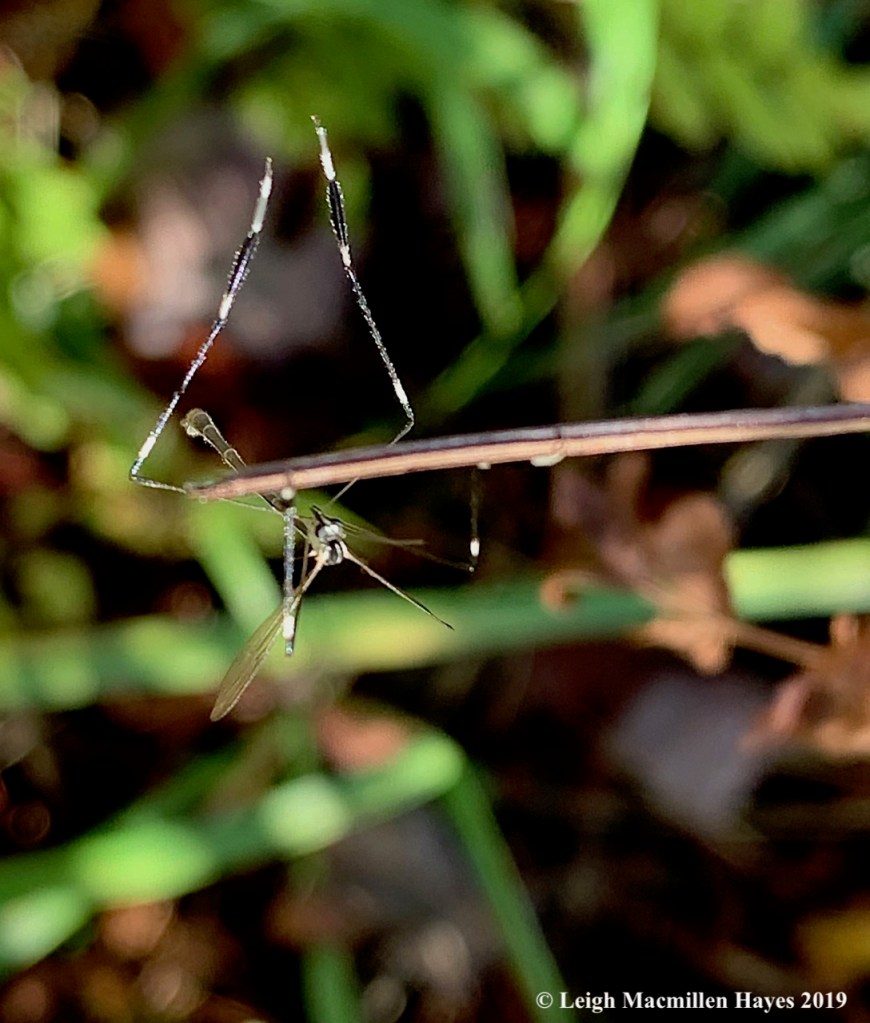
At the edge of the hemlock grove, the natural community switched immediately to another wetland and offered new opportunities. This time, you need to locate the Phantom Cranefly. Do you see its black and white legs?

At last we reached Tea Garden Bridge, so named if I remember correctly, because the water in Sawyer Brook resembles the color of tea.

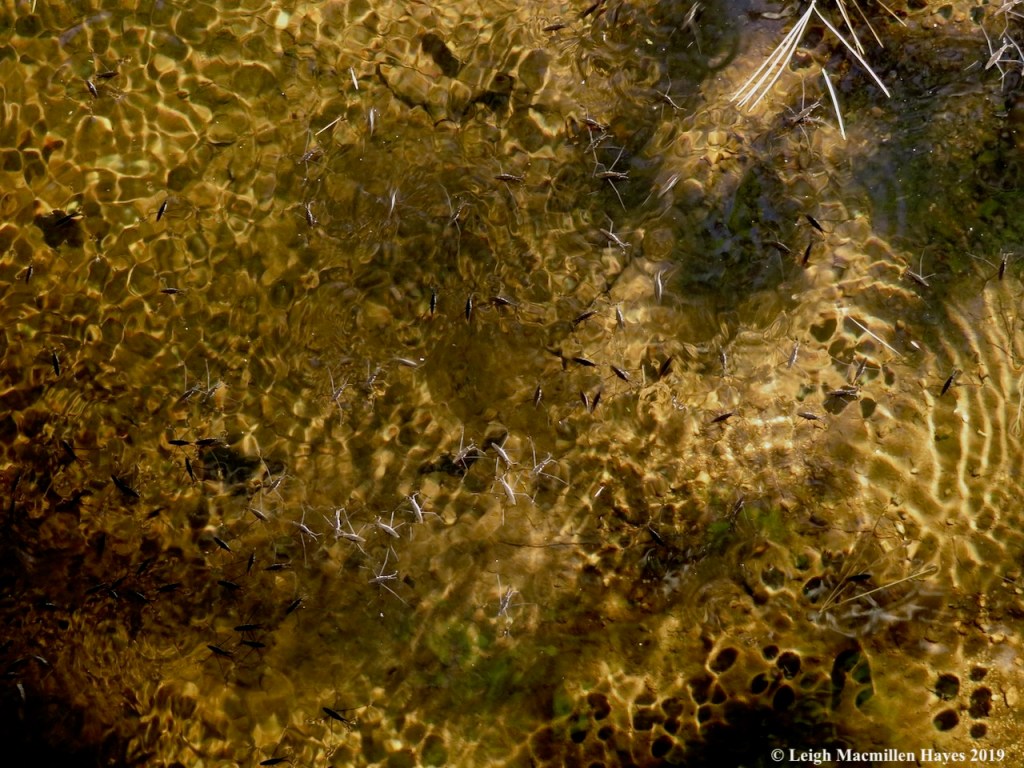
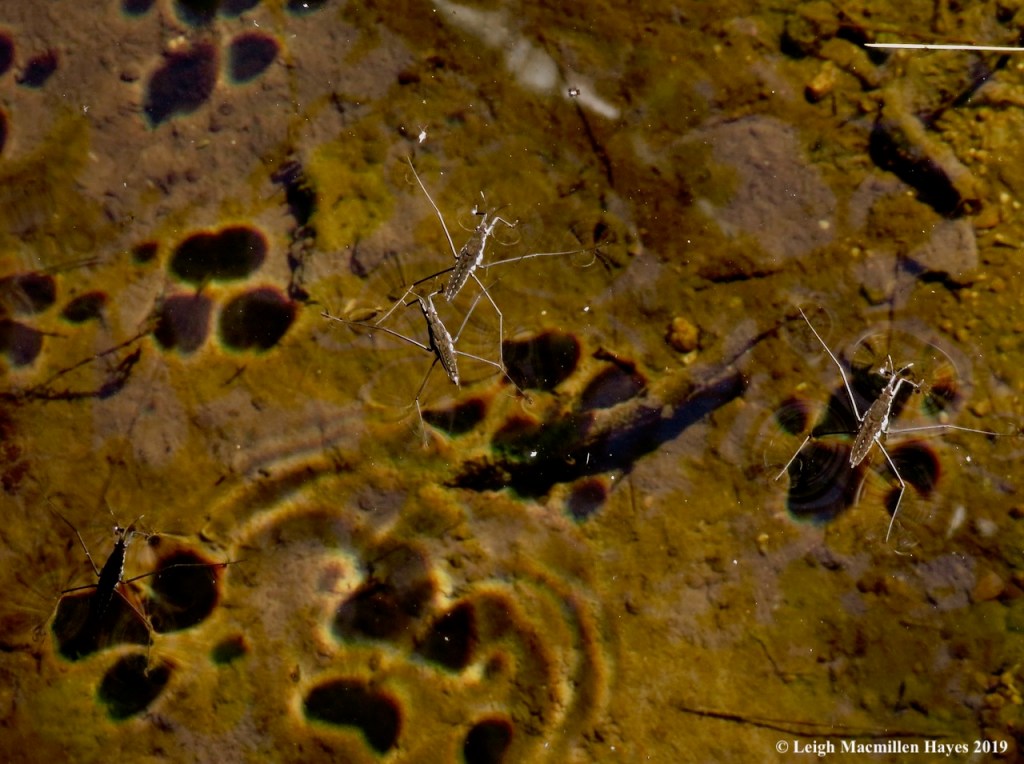
What drew our attention was the Water Strider Convention. The shadow of the Water Striders tells their story. To our eyes, it looked like their actual feet were tiny and insignificant. What we couldn’t see were the fuzzy little hairs that both repel water and trap tiny air bubbles, thus allowing them to float or skate along the water’s surface. But still, why was the foot shadow so big while the body shadow was more relative to the strider’s size? Did the movement of the foot against the water create the larger shadow?

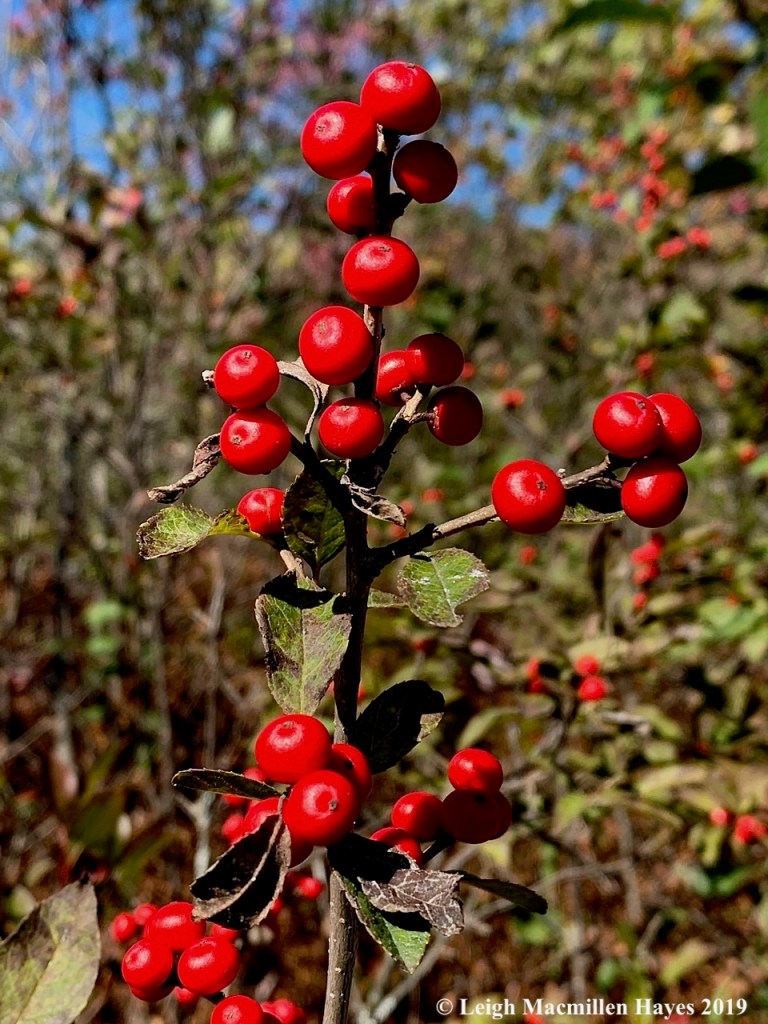
Continuing on into the land of abundant Winterberry, we thought about all the birds who will benefit from its red fruit in the coming months.

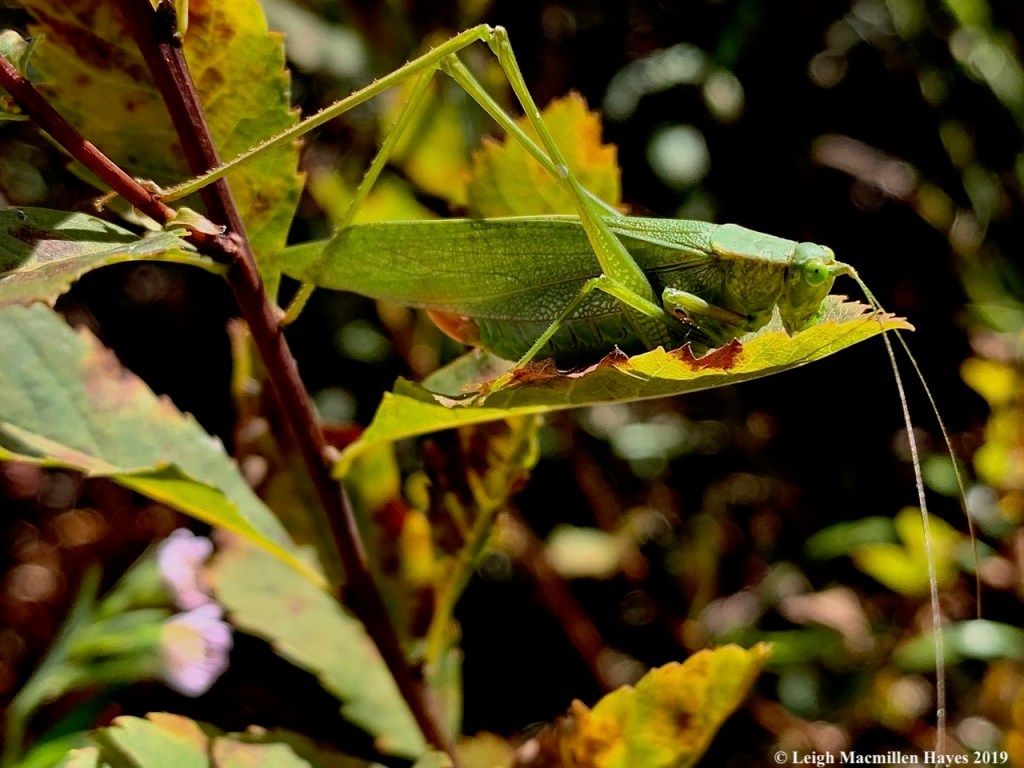
And then our eyes cued in again. First on a Katydid, with its beady eyes so green.

And then another Phantom Cranefly. And another. And another. I met my first Phantom Cranefly in the spring, but today they seemed to appear from out of nowhere everywhere.

And finally, a male Ruby Meadowhawk Dragonfly pausing and flying; pausing and flying; all within a small territory it had claimed.

At last it was time for us to turn around and head out, but I gave great thanks for the opportunity to travel slowly and wonder with Pam and Bob as I prepared for a private hike I’m leading tomorrow. Some folks chose to bid on a walk with me in support of camperships (aka full scholarships camp) for Camp Susan Curtis, a camp for economically disadvantaged Maine youth who attend at no cost to their families. I’m honored to lead them and pleased that local kids will benefit from this offering.

I can only hope that I’m able to weave a story for them as Charlotte did for us today. She even signed it. Do you see her zigzag signature?

Blame it on the Monarchs

Some days I head out the door with eyes as big as those of a fly and then I try to stand in one place and watch what might pass by.

Unfortunately, I’m not always as patient as a robberfly and soon find myself pacing in search of the next great sight.

Even when it turns out to be a Japanese Beetle munching on a leaf, I’m not totally disappointed. After all, it does have such an incredible sense of color and fashion.

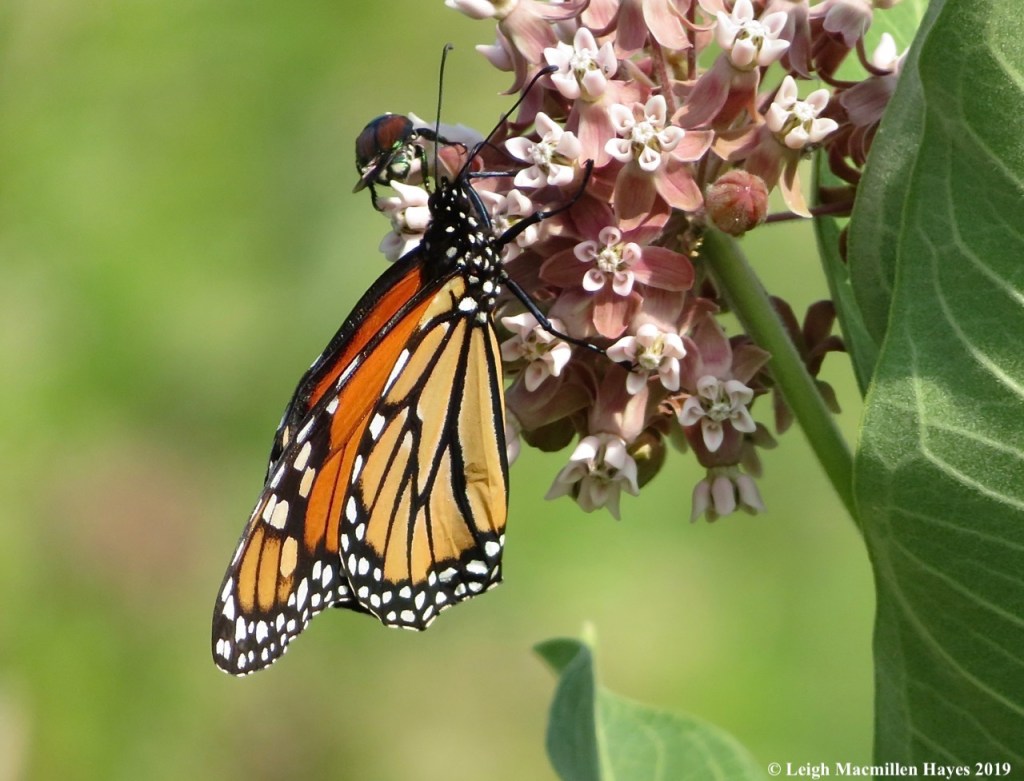
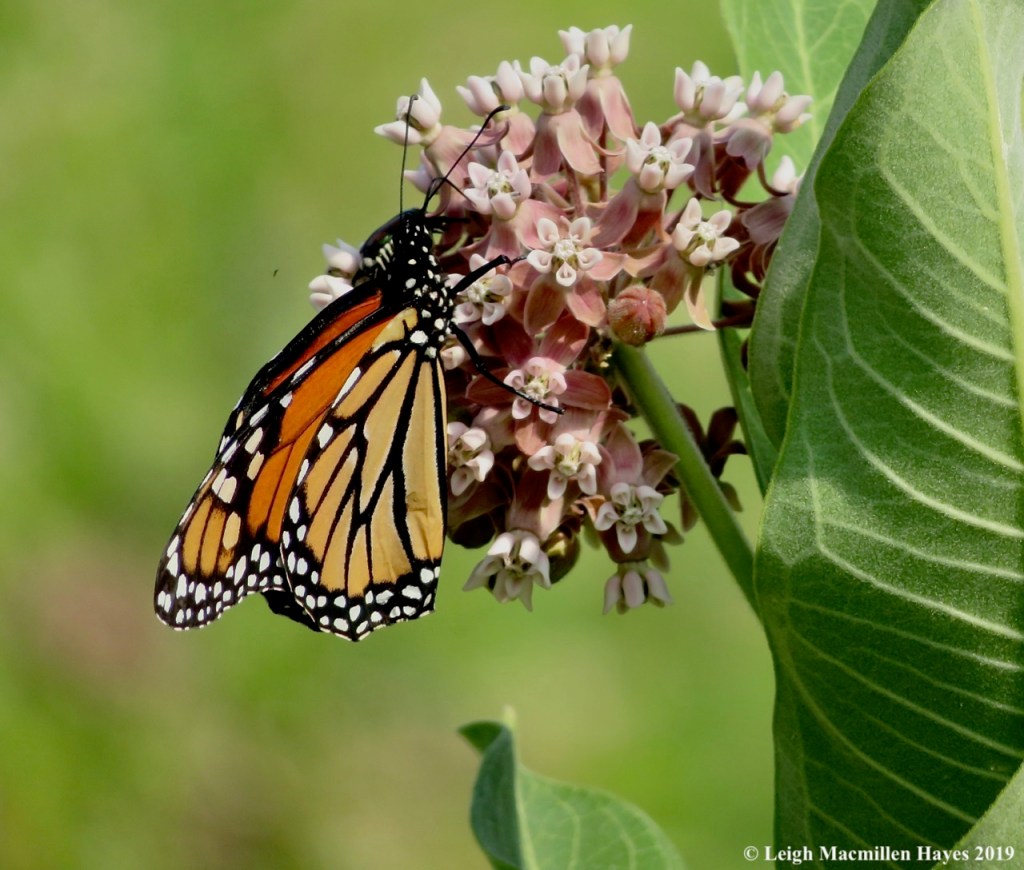
But what I really hoped to see I suddenly became aware of as first one, then two, three, four and even more Monarchs fluttered in their butterfly way, seeming to glide for a bit and then make an almost apparent decision to land before a change of mind until at last . . . upon the Milkweed it did pause.

Curious thing. So did another Japanese Beetle. That led me to wonder: how will these two get along and negotiate the territory?

The Monarch poked its straw-like proboscis into the heavenly-scented flowers as it sought sweetness while the beetle continued to move toward it.

But the beetle was on a mission of its own and the two seemed to co-exist side by side.

In fact, they were practically oblivious of each other. Unlike when a Common Yellowthroat tried to land and the Monarch chased it away.

Finally the butterfly crossed over to another flower on the tall stem and left the beetle behind.

I moved on as well, in search of others to focus on like the female Ruby Meadowhawk Dragonfly. How can it be that it’s already Meadowhawk season, the late bloomers in my book of dragonflies?

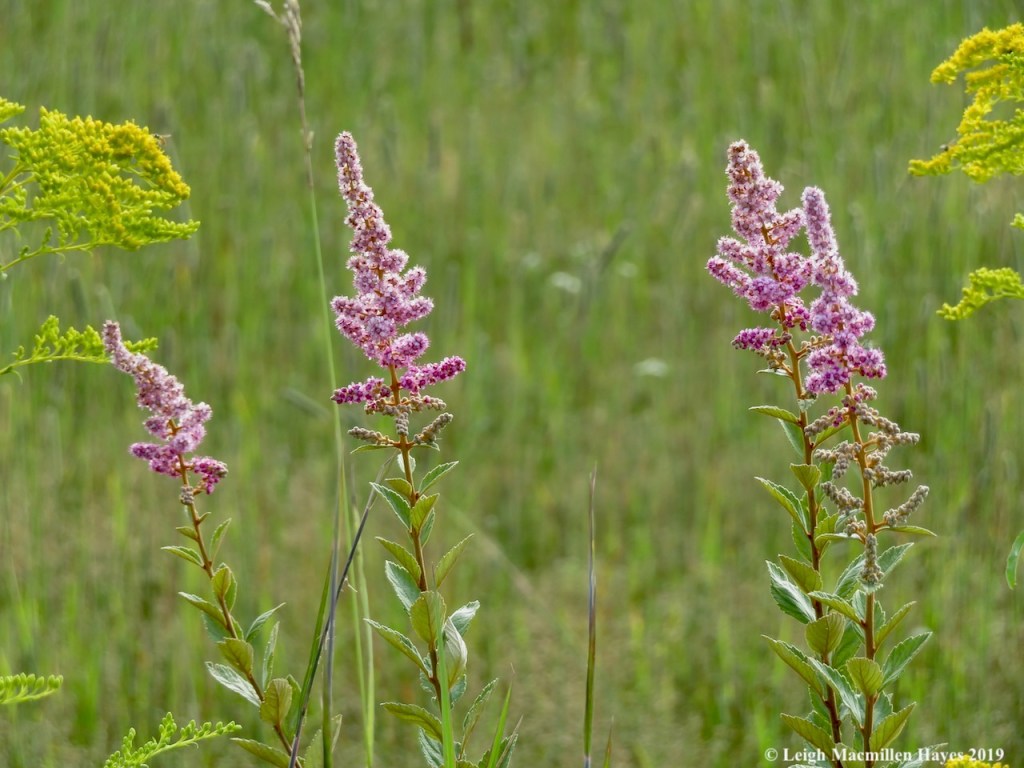
And yet, the colors of summer today included not only the pinks of Steeplebush, but also the yellows of goldenrods beginning to blossom.

Mixed into those colors and because of their movement and then moments of pausing, the Monarchs kept tugging at the strings of my heart and pulling me back into the moment.

And in that real time moment, I had the pleasure of spying couples in their canoodling fashion, though they tended to be much more elusive than some insects. If I didn’t know better, I’d have thought the female was dead as the male flew along with her dangling below until he landed on a stem of choice. From what I’ve read, their mating can take up to sixteen hours. Oh my.

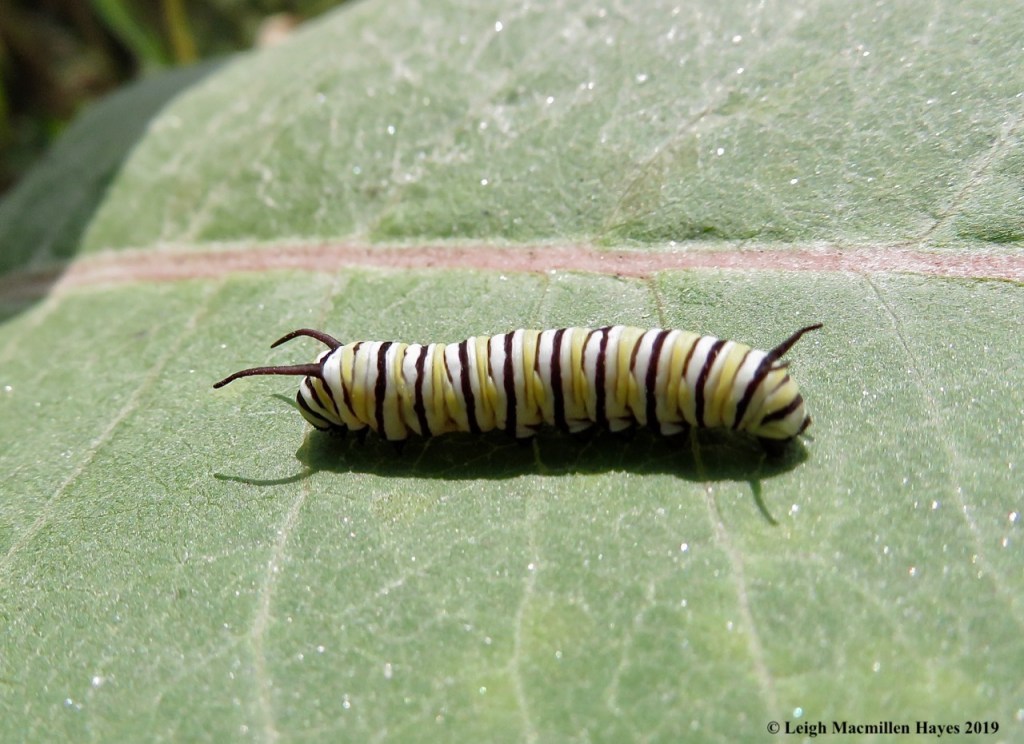
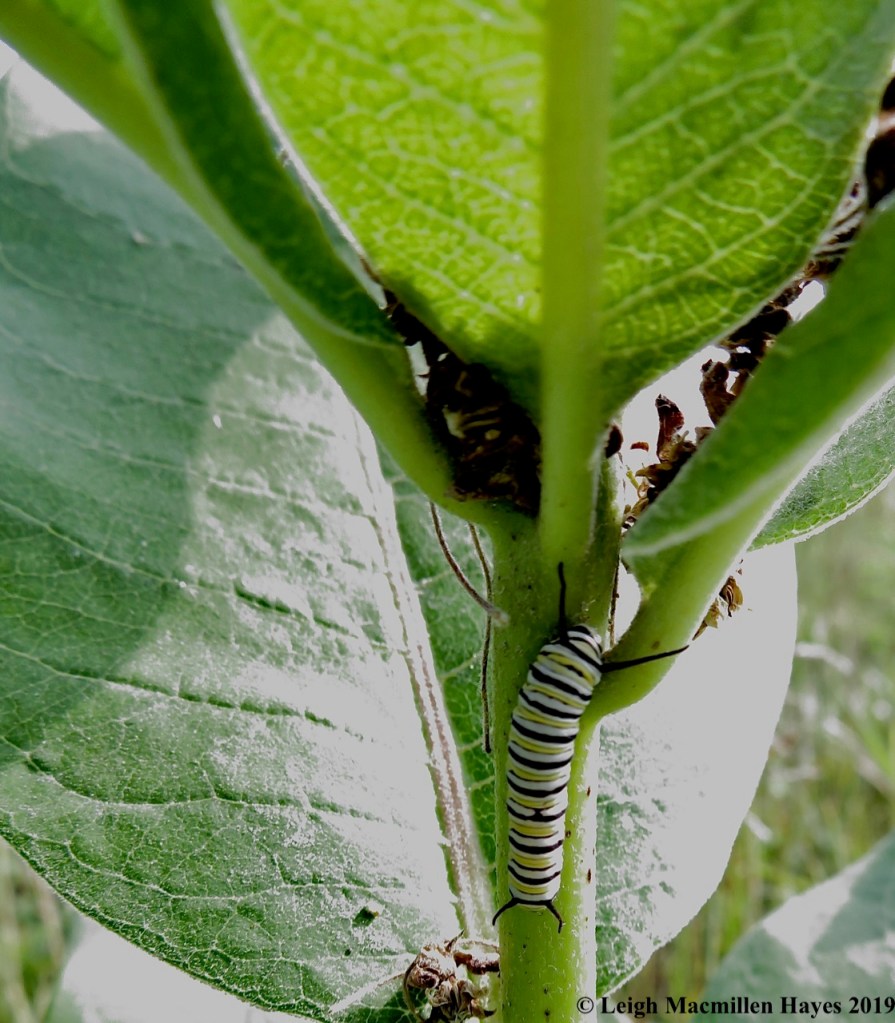
As it turned out, I soon discovered that at least one mating had resulted in at least one caterpillar. I suspect there will be more soon, but this one will have a head start on munching its way through the Milkweed kingdom.

All the while that I stalked the Monarchs, a Common Yellowthroat did its own stalking, constantly announcing its location with chirps. And then I realized it had a caterpillar in its mouth as it moved among the stems of the Spreading Dogbane. Oh dear. Fortunately it wasn’t a Monarch caterpillar, but will it be only a matter of time?

A few more steps and I noticed a Katydid on a Milkweed leaf. Oh yikes. So many visitors who like to munch.

For the moment all bets are placed on only one Monarch caterpillar to continue the life cycle.

Blame it on the Monarchs for calling me back to the same spot I’ve been stalking for a few weeks and giving me the opportunity to notice them mating and the results of such actions and other insects as well.

Want to learn more? The Greater Lovell Land Trust will offer these two programs:

July 31, 7:00 pm, Monarchs at Risk with Don Bennett 

Recent censuses show the smallest Monarch butterfly populations in Mexico and the west coast hibernacula in recorded history. Why is this happening? Is there anything we can do?  Are drastic declines in the Monarch populations a sign of something more insidious? Come listen to Naturalist Don Bennett, PhD, and discover why this is such an important message for all of us. 

Location: Charlotte Hobbs Memorial Library, Route 5, Lovell

August 1, 9:30 am – noon: Monarchs in the field: Monarch butterflies need milkweed plants to survive — as caterpillars they only eat milkweed and Monarch moms lay their eggs on the milkweed plant. We’ll take a walk along a dirt road that abuts a farm field and river, where milkweed grows in abundance and search for Monarchs and other butterflies. 

Location: Meet behind the Charlotte Hobbs Memorial Library to carpool.

Degree of Difficulty: Easy