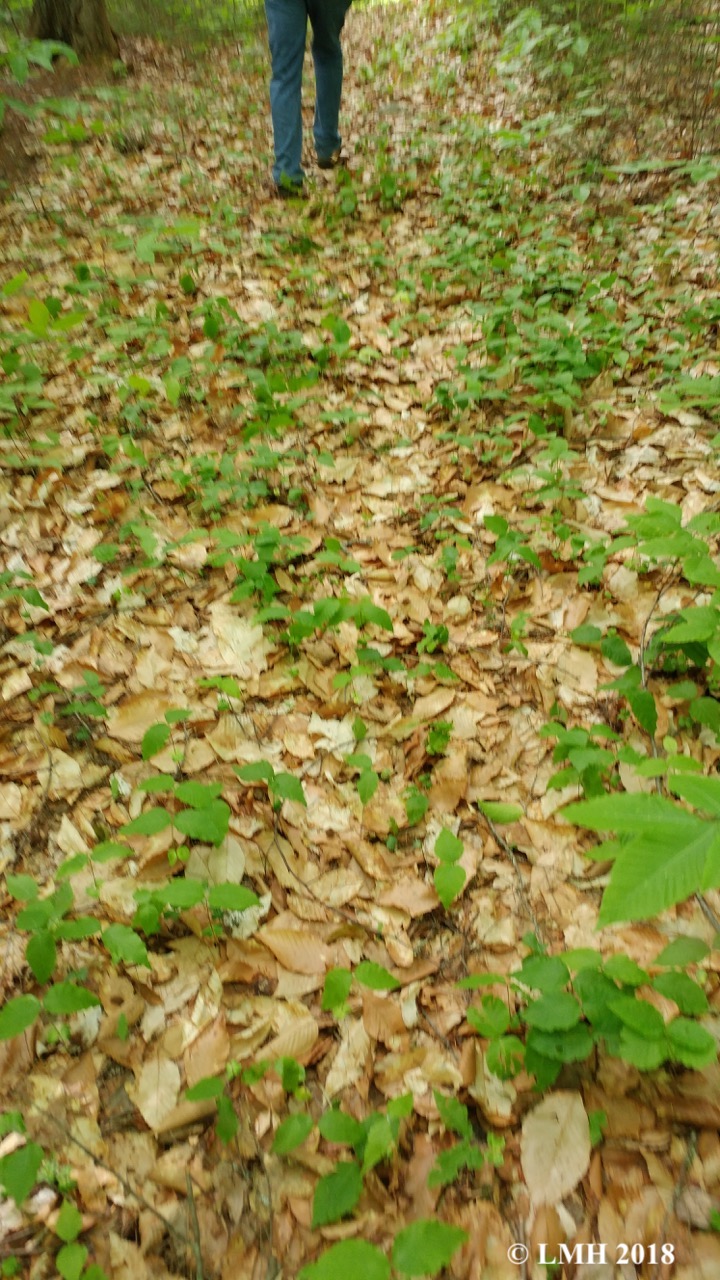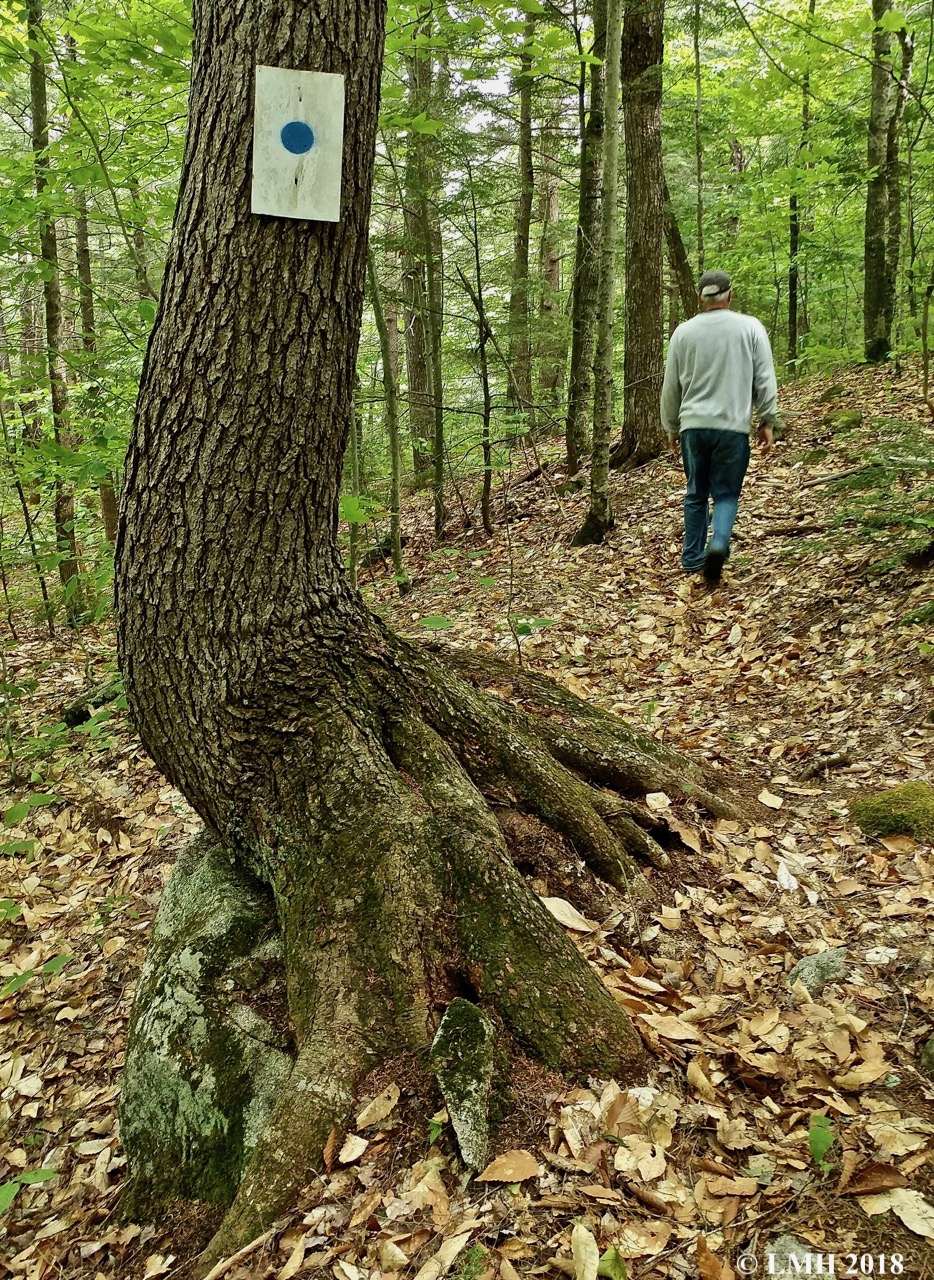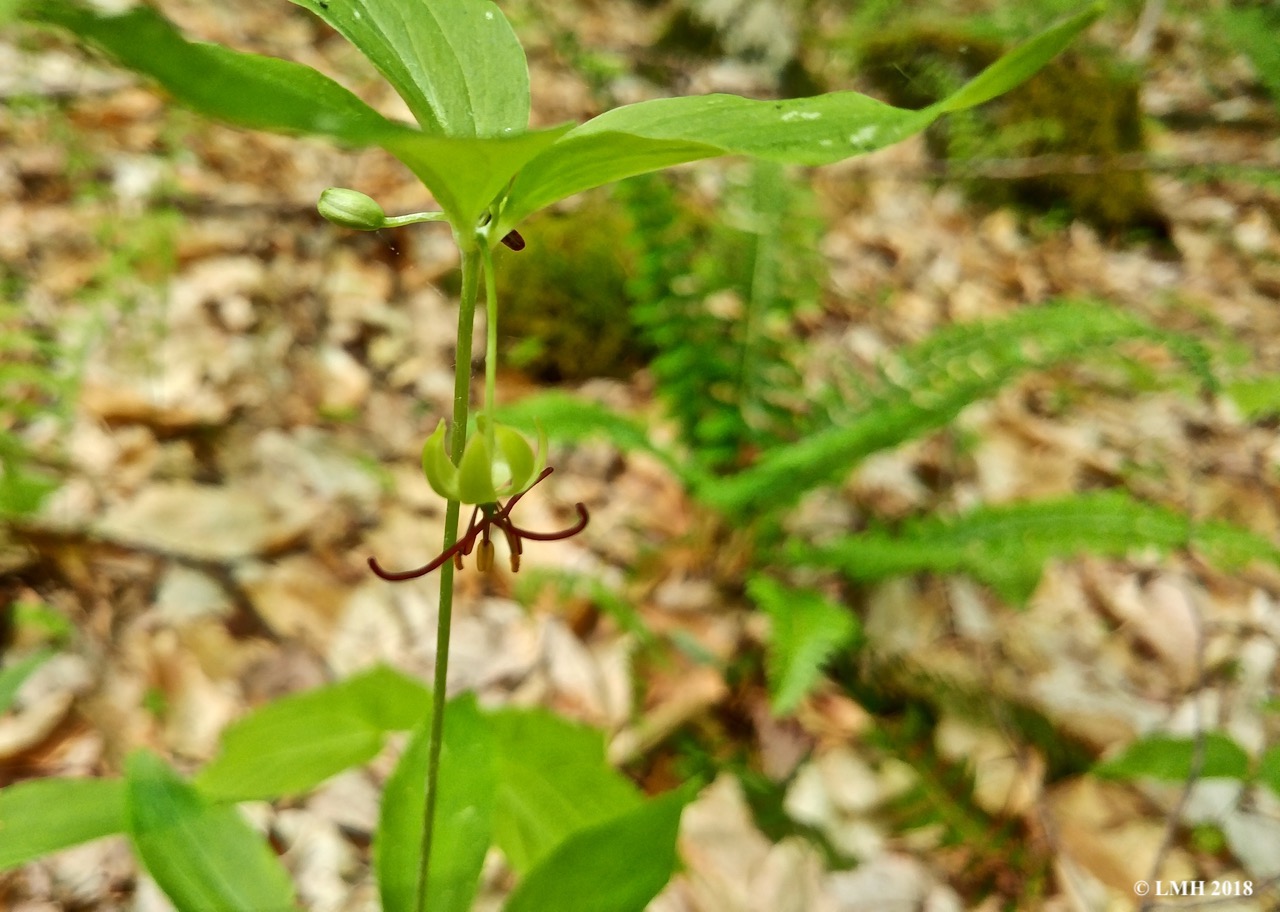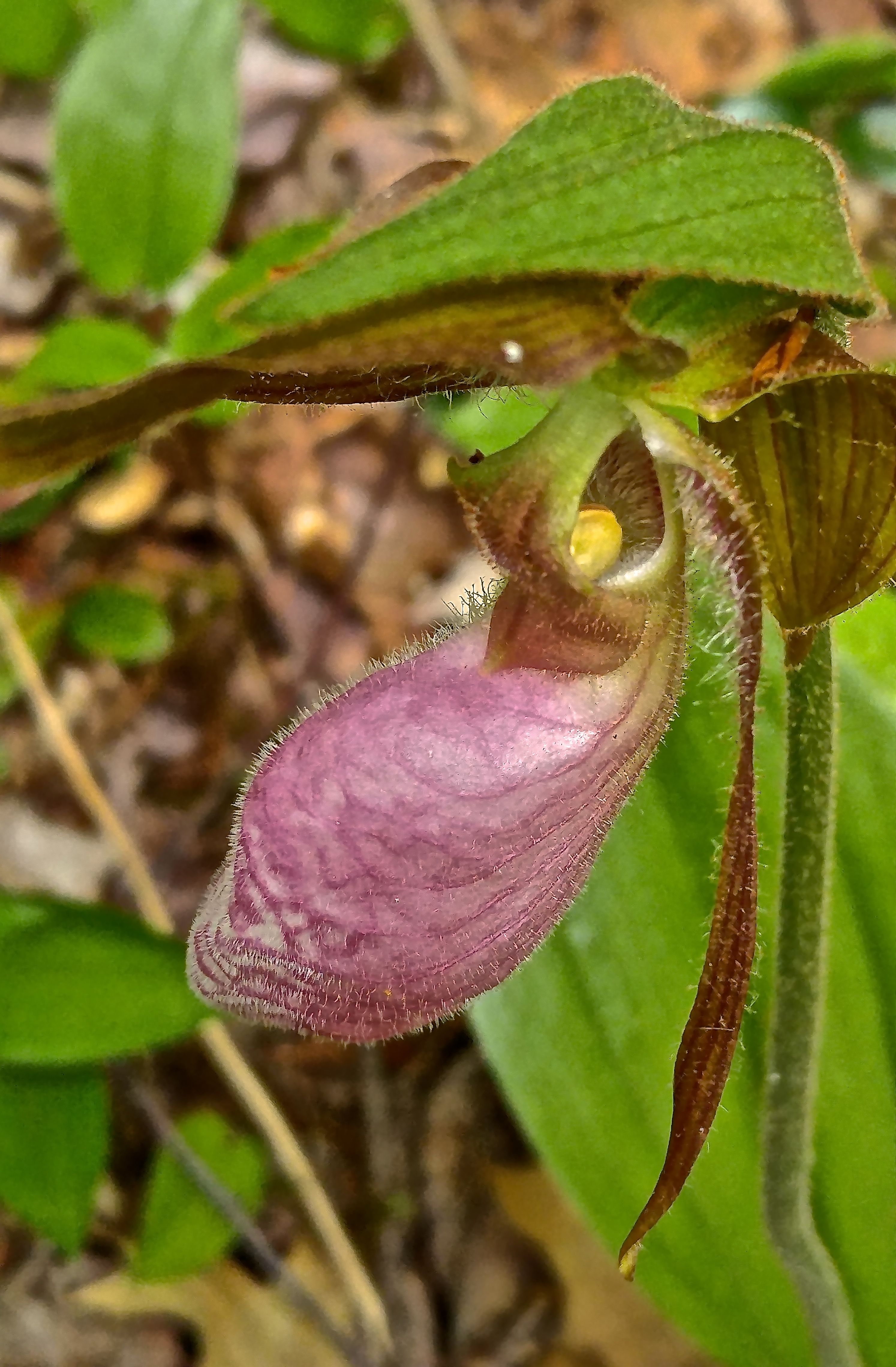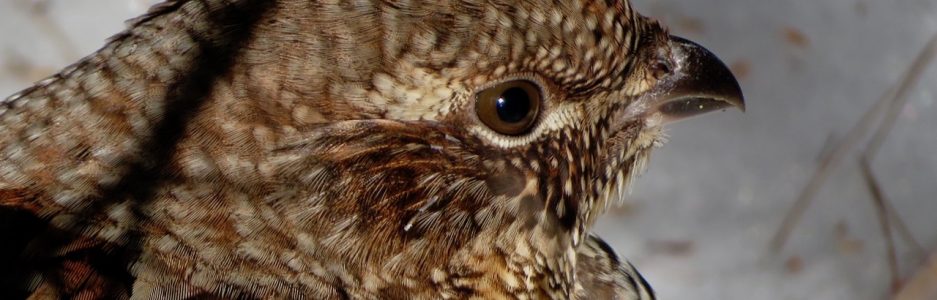
Where The Moccasins Led Us

Rituals. We follow them. Some more than others.

For My Guy and me, there is one in particular that captures our attention beginning in mid-May.

And so I follow him . . . across Beaver dams,
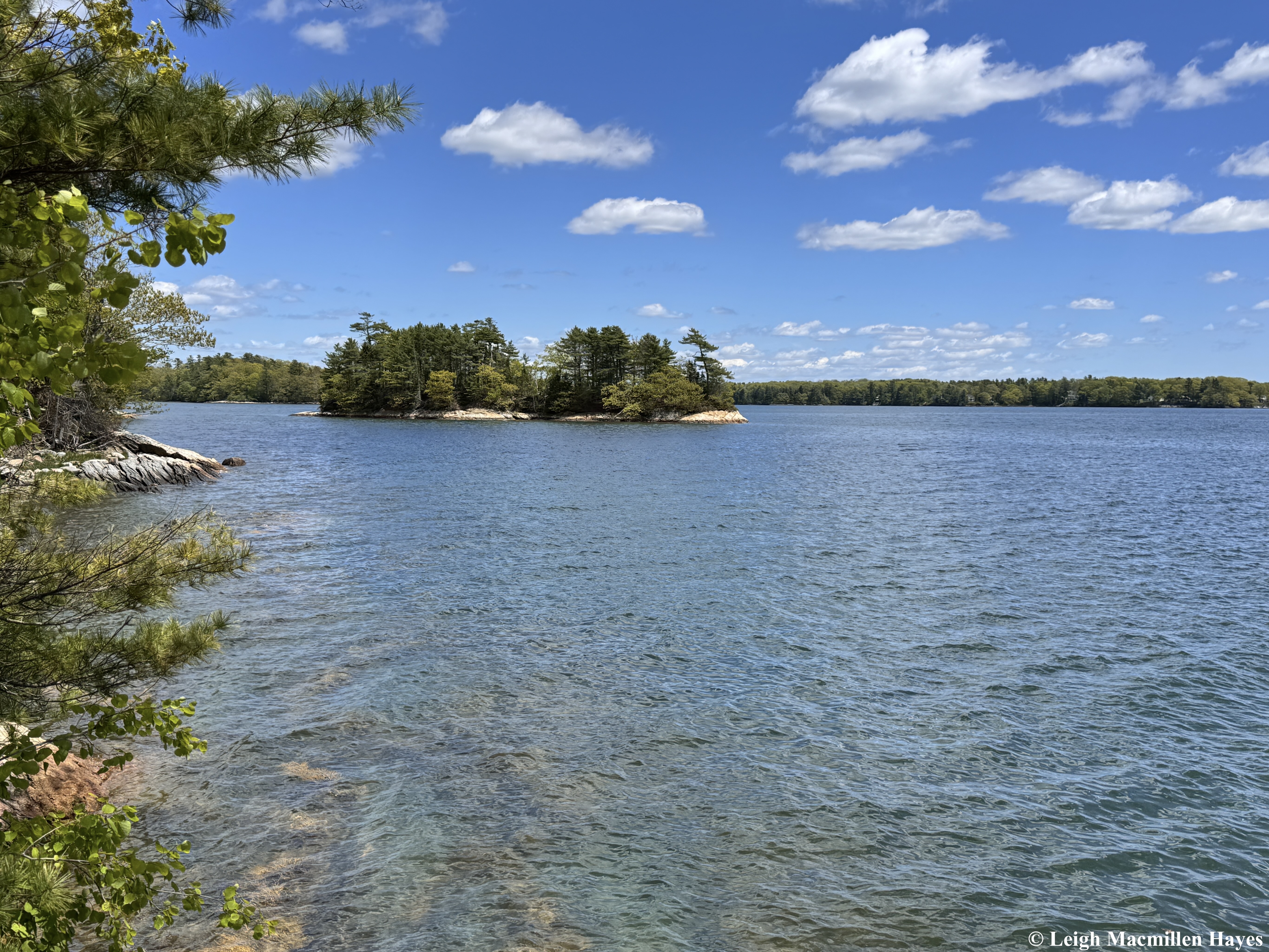
beside the Atlantic Ocean,
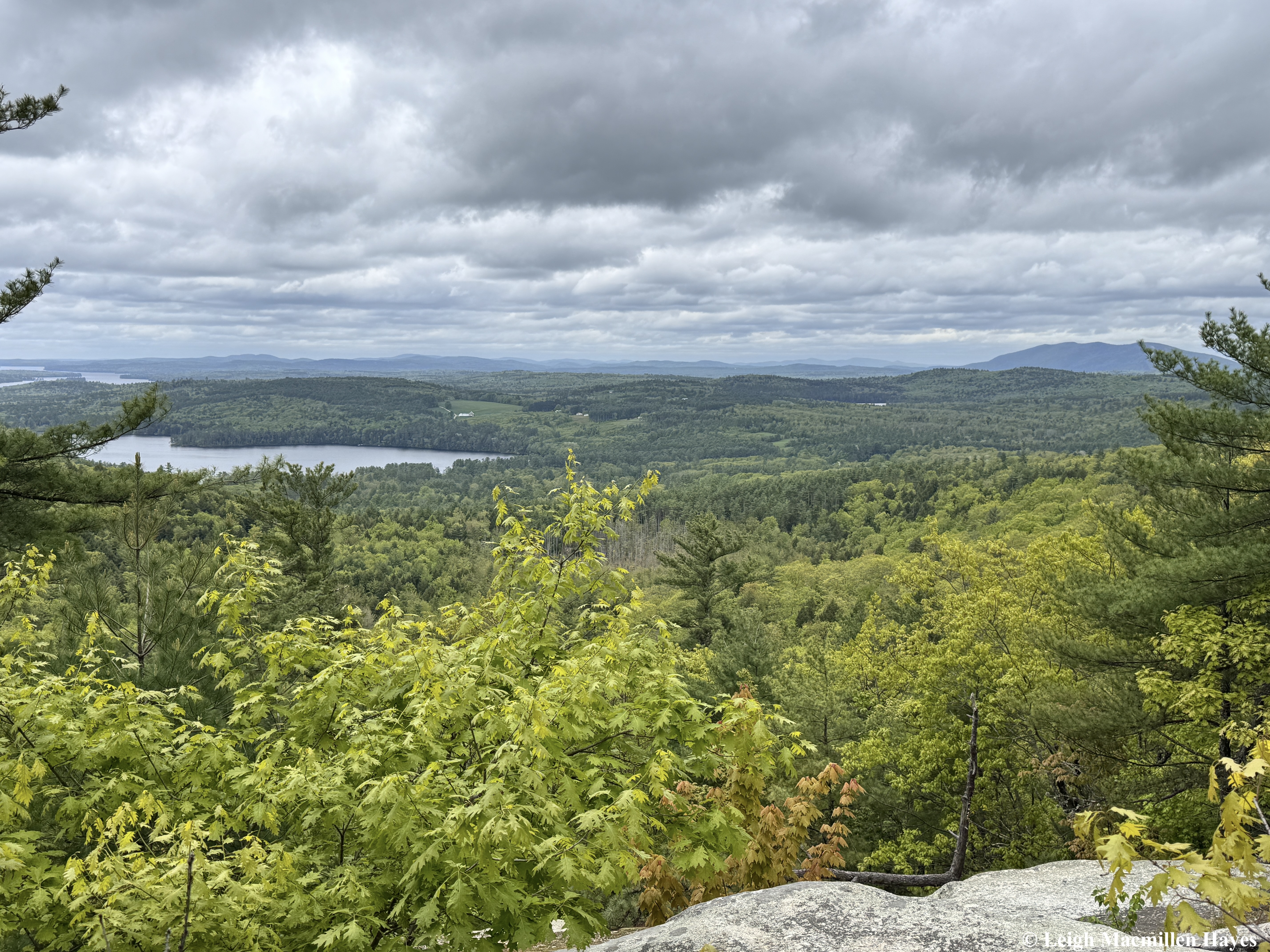
up mountain trails,

even on the hottest day so far with Canada wildfire smoke casting a haze.

This year it was more trails than usual that were included in our ritual and along the way we spotted Wild Columbine in bloom, growing as it does among the rocks, and always pleasing our senses with its brilliant colors and artistic nodding presentation.

Fringed Polygala, and how I love the way those two words roll of my tongue, also showed off, making its common name of Gaywings so apparent. Doesn’t it look like a Bird of Paradise coming in for a landing upon its very own leaves?

Upon one of our journeys we found a few Red Trilliums still in bloom, though it seemed late in the season for them. But as My Guy teases, I did what I do and added this photo to the other trillion I have of this plant. They all need to be honored, don’t they?
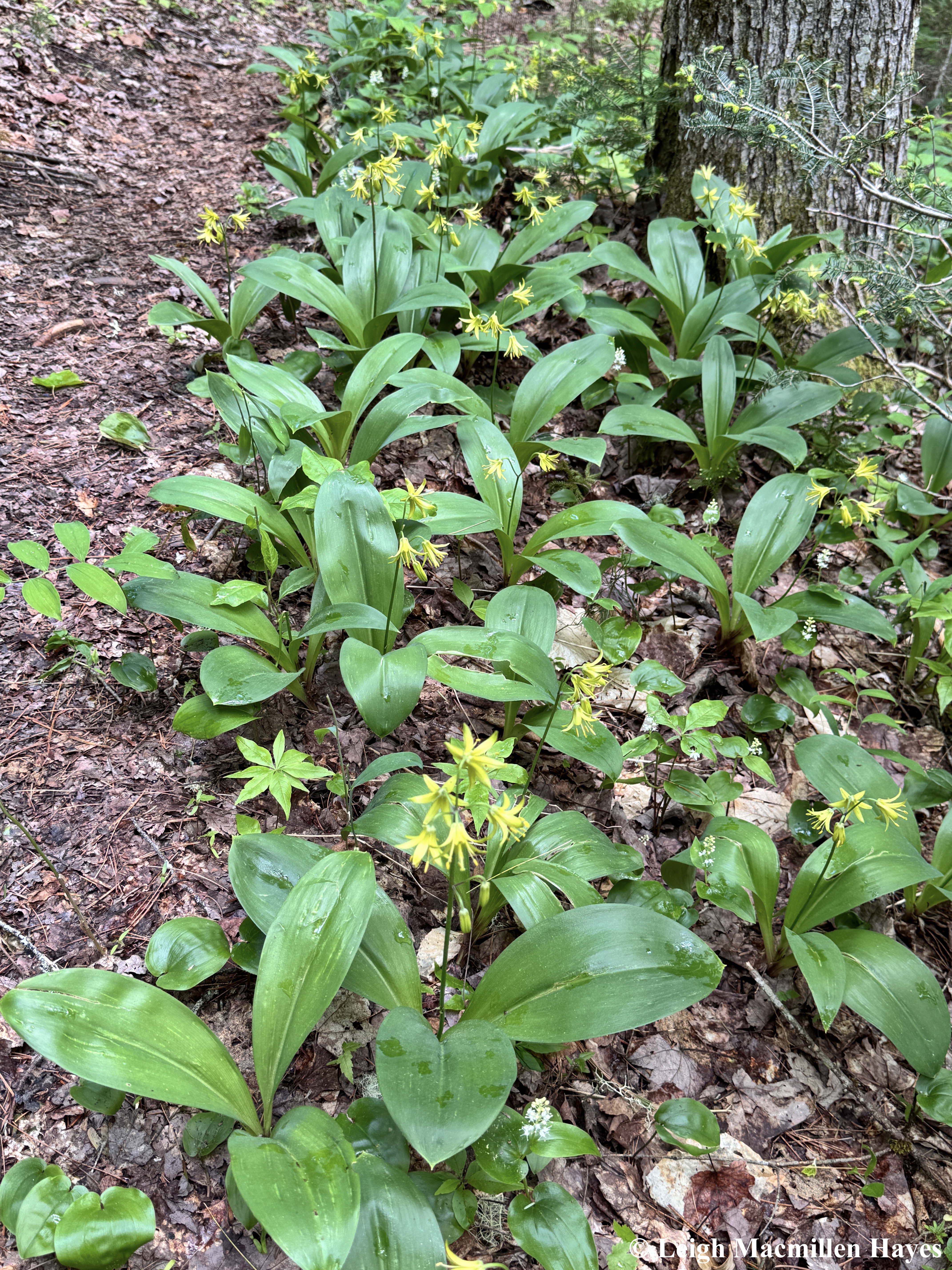
Seemingly everywhere, Clintonia, aka Blue-Bead Lily bloomed, adding specks of sunshine to the path and lighting our way, even on the grayest or rainiest of days. Yes, we even hike on rainy days.
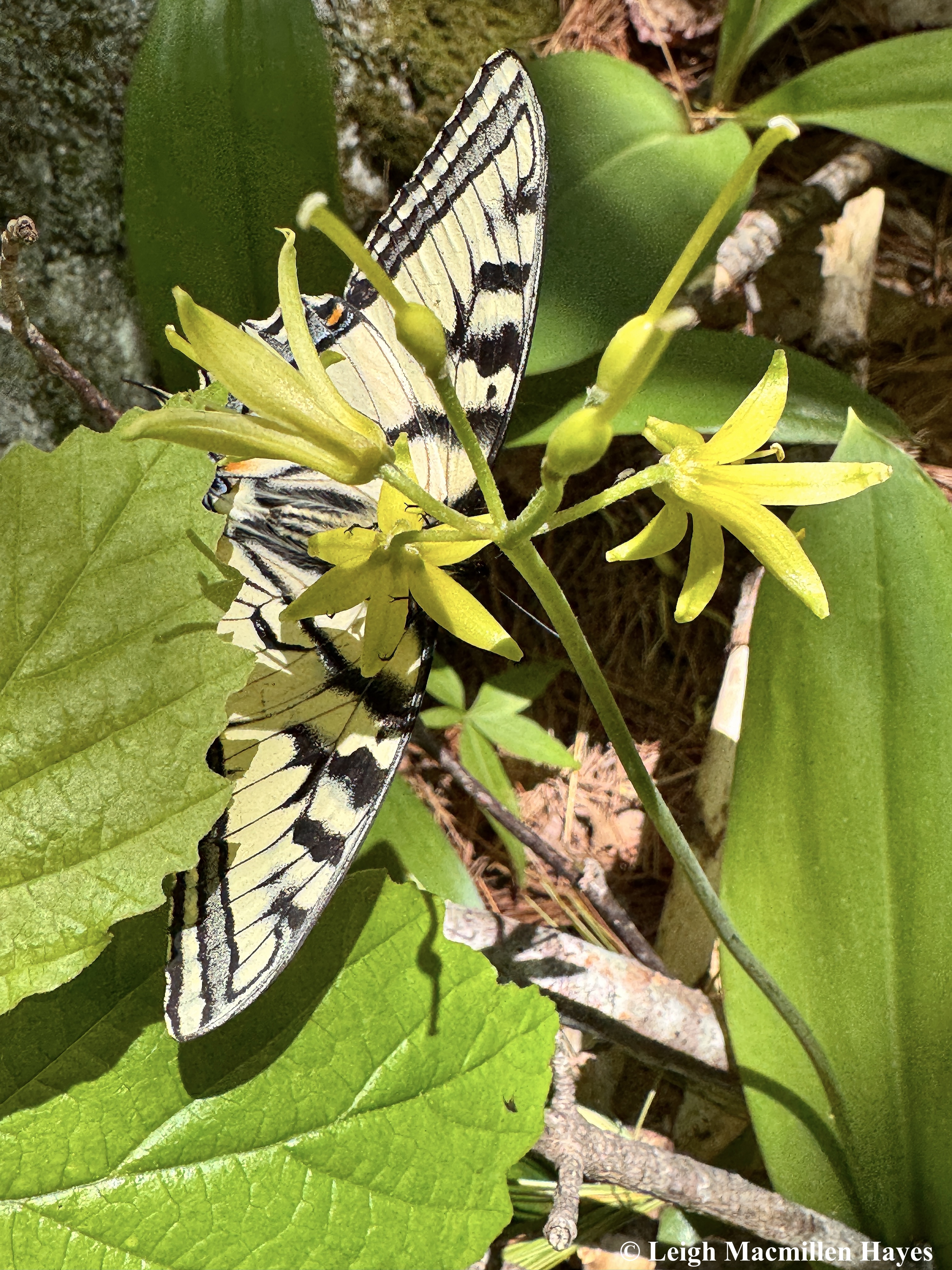
On sunnier days, the Tiger Swallowtails added their own yellow to the equation. Can you see the tiny pretarsi or insect feet of the butterfly as it held on why sucking the flower’s nectar?
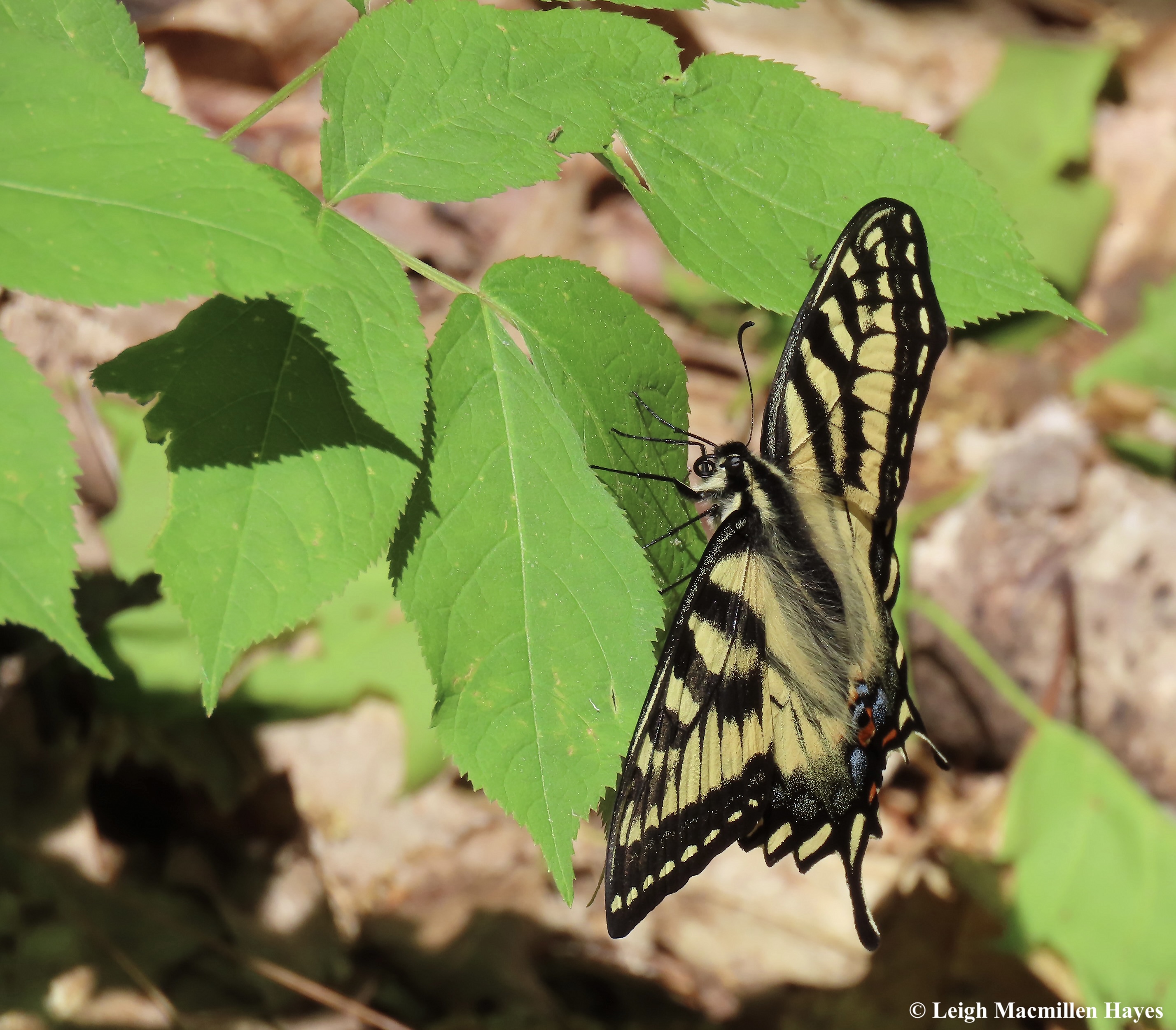
This spring it seems the Tiger Swallowtails are everywhere we travel by foot or truck. What I love about this one is that it was taking a break upon the leaves and you might be able to see its proboscis or siphoning mouthpart coiled up because there was no nectar to seek in that moment.

Right now the Swallowtail butterflies are the largest we’ve seen flying, but during a hike the other day, we spotted one of the smaller ones, this being a Northern Azure feasting upon Black Chokeberry flowers at a summit.

Jack, or rather Jill-in-the-Pulpit, for she needed the extra leaves to help her in her mission of producing seeds, greeted us in various places where the soil was moist including beside the cow path in our woods, where it totally surprised me despite the fact that we’ve lived in this house and wandered about for over thirty years.
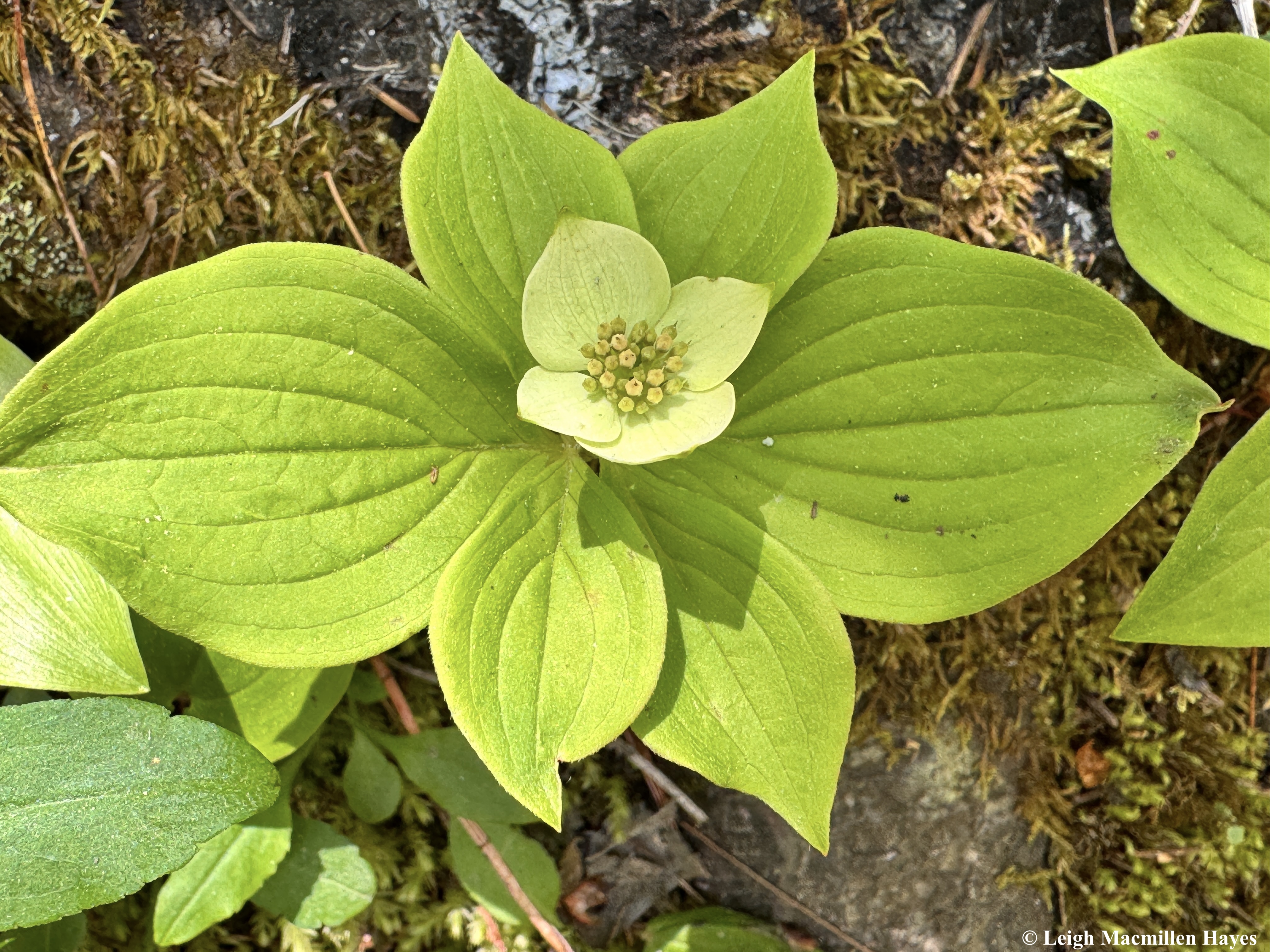
As one week turned to the next, and the flowers that were in full bloom kept changing, suddenly Bunchberry was added to the list. Again, like Jill-in-the-Pulpit, Bunchberry needs two extra leaves in order to have more energy to produce flowers followed by the berried fruits that bunch together in a cluster of bright red. You may look at the veins on those leaves and immediately know the family to which this wee plant belongs–if you guessed Dogwood, you are correct.
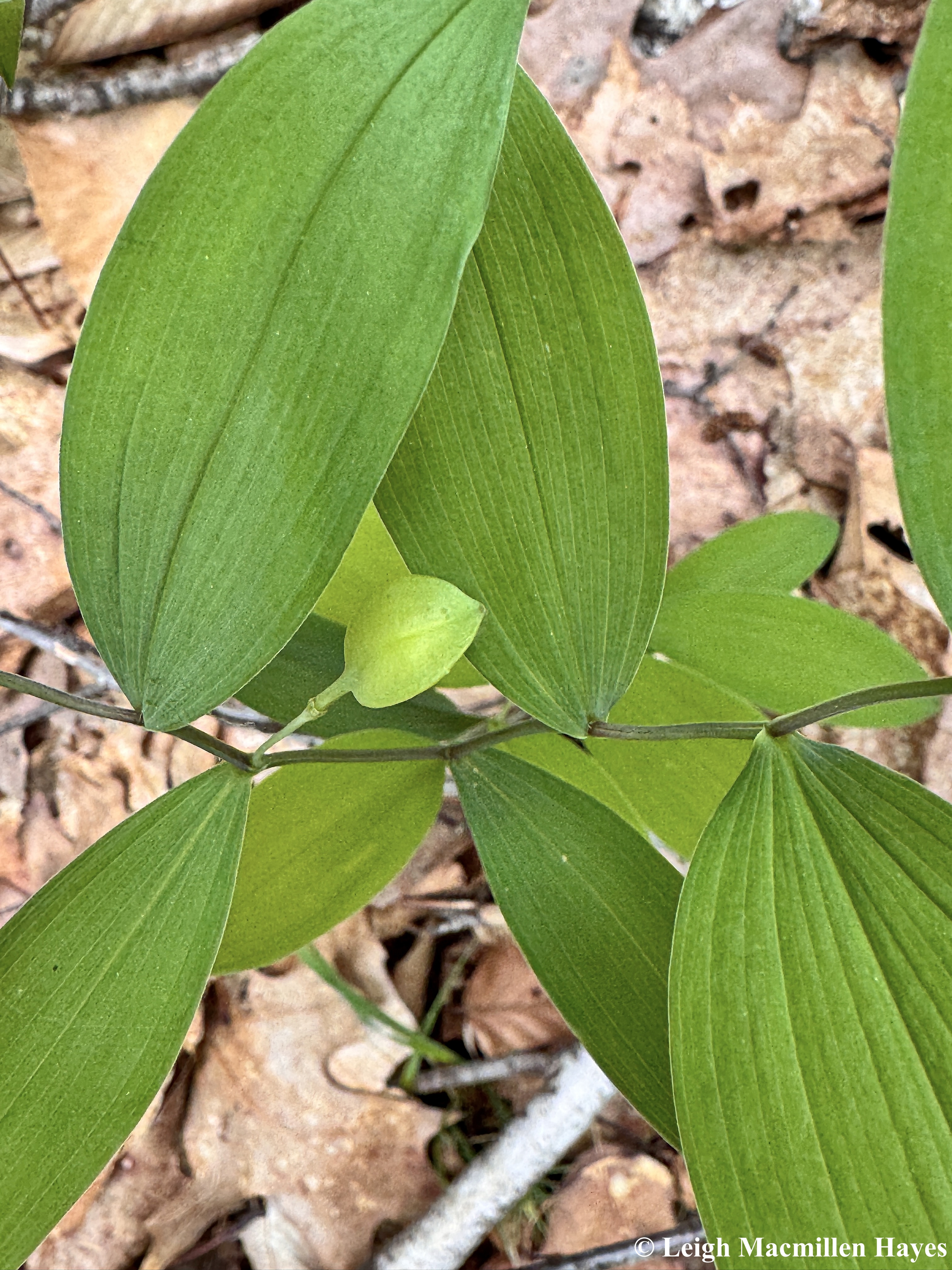
One of the earliest bloomers of spring, has already formed into a fruit, in this case three sided. Meet the Wild Oat of Sessile-leaf Bellwort. It reminds me that in a snap of the fingers, the season passes by much too quickly.

It wasn’t just flowers that marked our journeys. About the same time that we began the latest ritual, dragonflies and damselflies slowly began to emerge, for which we always give great thanks as they gobble up some of the Mosquitoes and Black Flies that so annoy us. This American Emerald had only just made the transformation from aquatic form to terrestrial hours earlier based on the sheen still visible on its drying, but not quiet dried yet, wings.

Much more mature were these two, who had formed the marital wheel in order to canoodle. I knew they were Emerald Dragonflies, but wasn’t sure which species until I searched my guides back at home: Uhler’s Sundragon, a new species for me.

And in at least one spot, some smaller female dragonflies deposited eggs as they tapped the water’s surface with their abdomens. Think of it as Naiads to come, who will live in the water for 1 – 3 years, depending upon species, before climbing out and transforming miraculously into terrestrial fliers.

Being beside water in another place, and looking between tree branches, we spied a Common Merganser taking a bath.
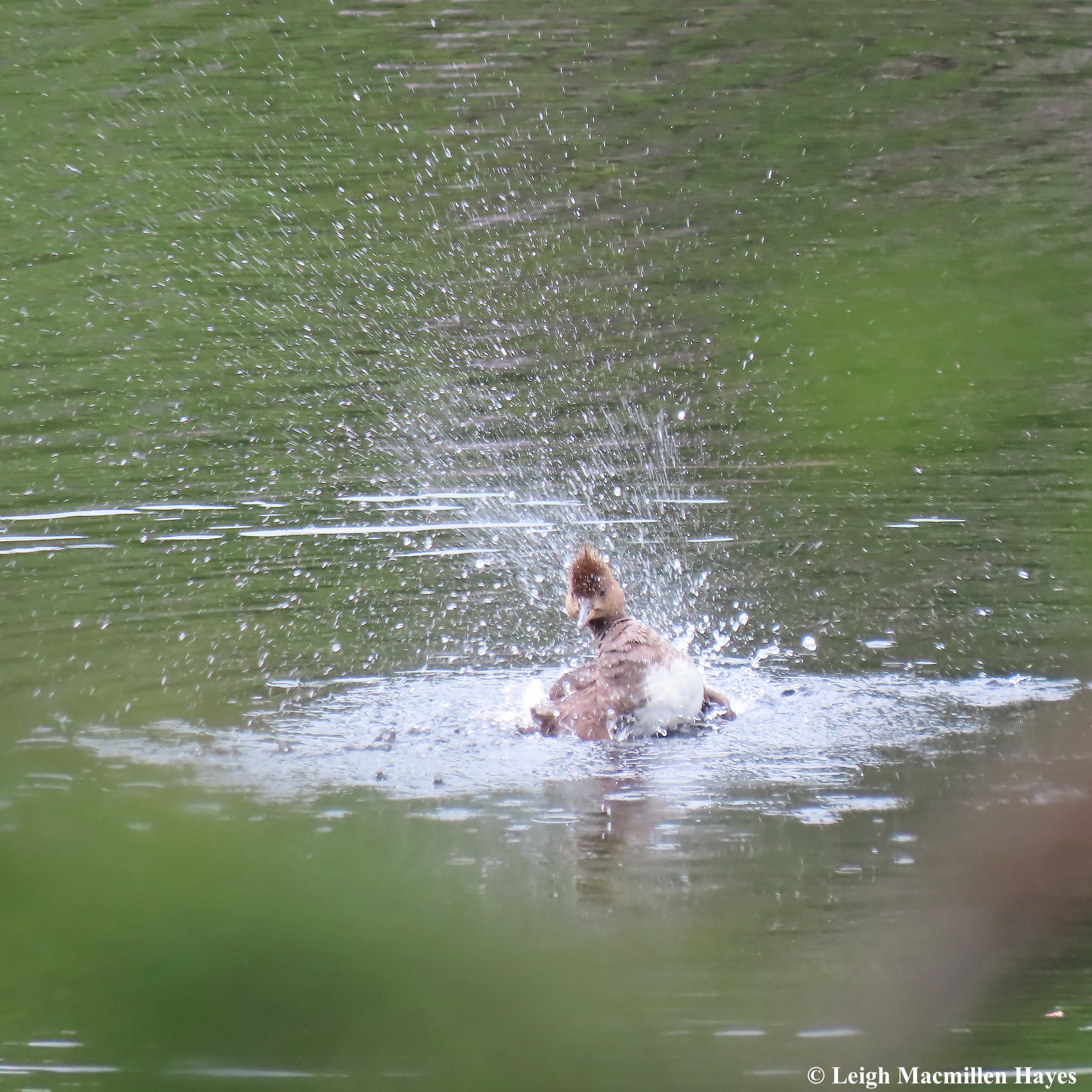
We stood just far enough back, that it didn’t realize it had an audience as it splished and splashed.
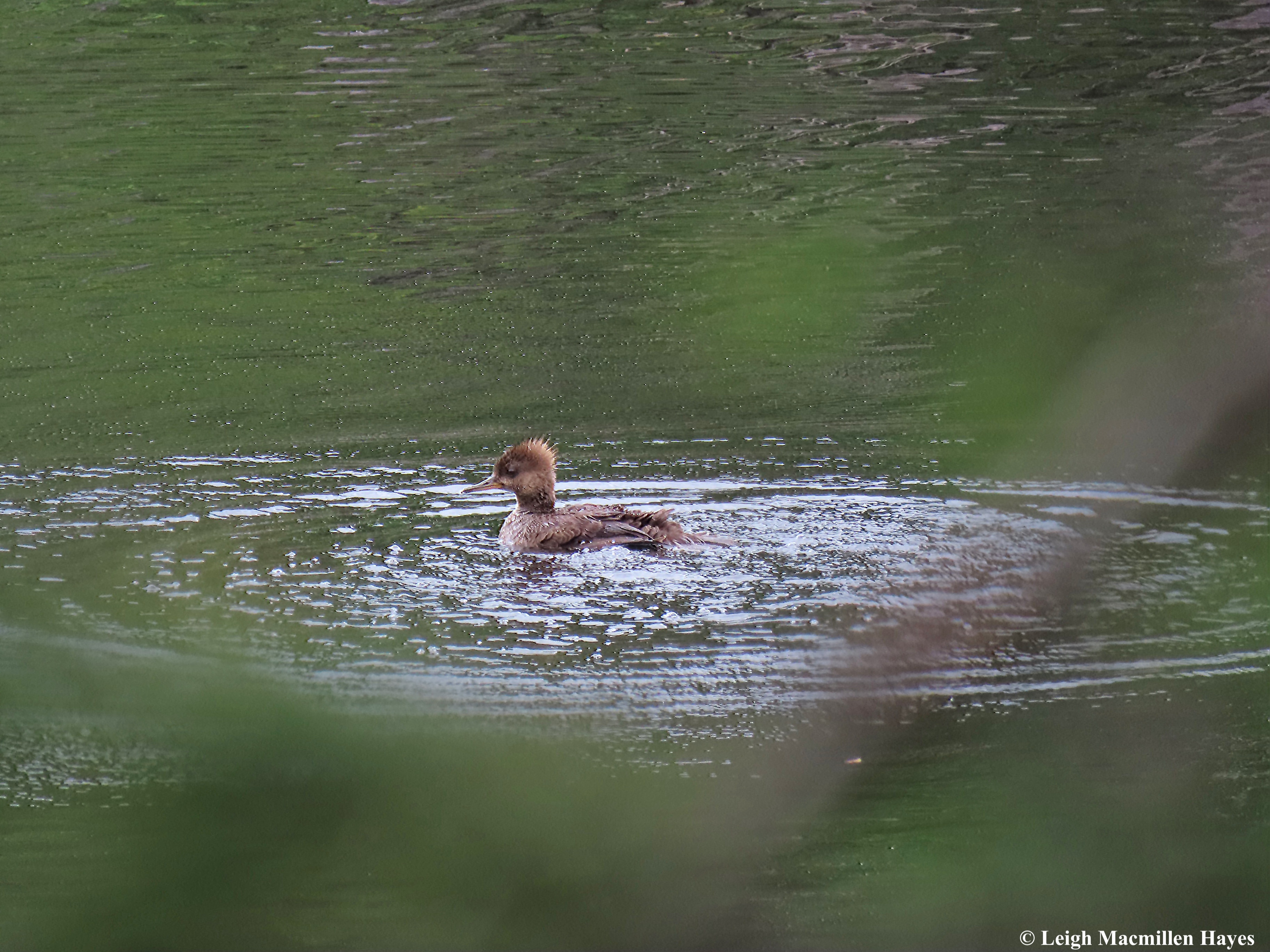
And finally shook itself off, with water spraying everywhere, before it continued on its journey . . . and we did the same.

Basking Painted Turtles became a common sight as well, and this one had the cushiest place upon which to recline, all others being on fallen logs or rocks and boulders in the water.

One, however, that I assume was a female, though I didn’t want to disturb it and get any closer to check the length of its nails, I surmised had been laying eggs or was about to. Our time together was limited so I don’t have the entire story, but she was in a safe place, no matter what.

One of our most unusual sightings as we performed the ritual was spying a Bald Eagle steal a fish from the grip of an Osprey. If you look closely at the center of the photo, you might spot the thief on its get-away mission–it is flying above the picnic tables, about in the middle of the trees.

As it flew over our heads, the Eagle had the audacity to look back to see if the Osprey was hot on its tail. It was. We don’t know how this story ended either, but we assume the Osprey had to cast its fishing line again.
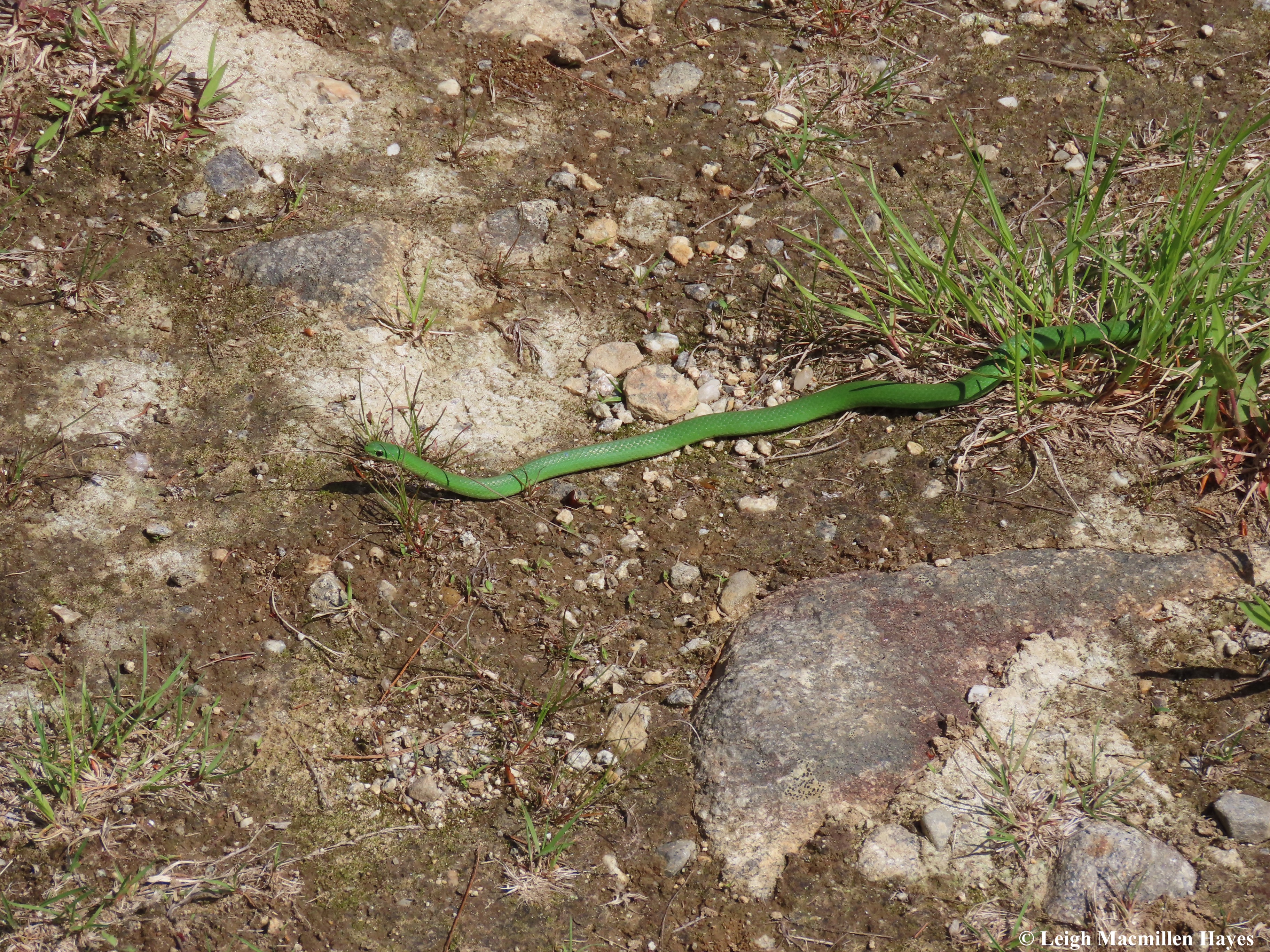
Another fun sighting occurred as we crossed under a powerline on the return trip of a seven mile hike around a river, over to a pond, up a hill behind the pond, and back down and out. Almost the color of the grass that sparsely grew along this section of the trail, a green snake slithered across just after My Guy had stepped that way.
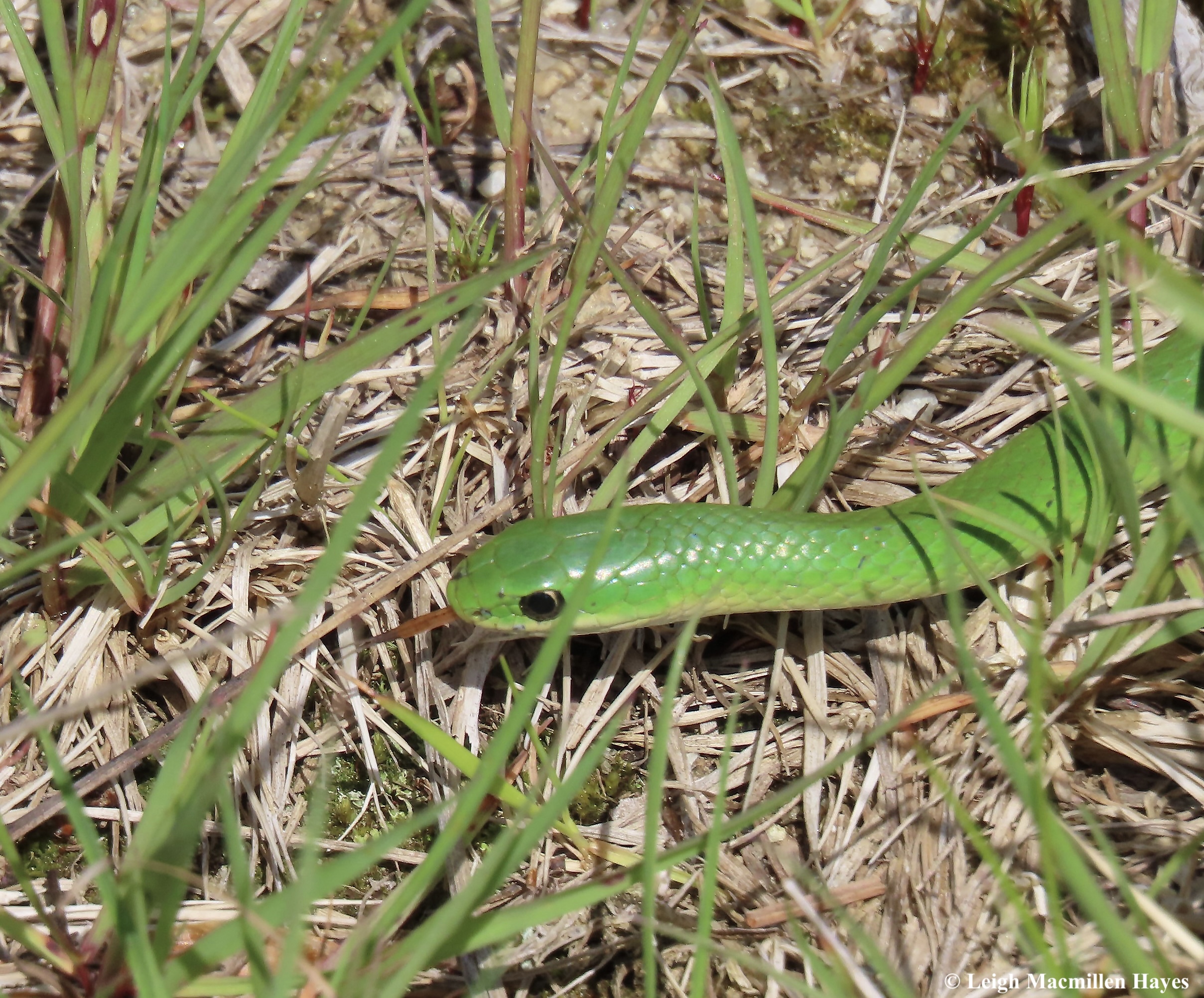
I just love its forked tongue–sensing the trail in snake manner as it did.

The two tines at the tip of the tongue, seen here as it withdrew this sensory organ, help it to smell in stereo and thus find its way and find a meal.

All of these things we saw because of the ritual that we perform every year at this time. It’s one that we now realize involves some greed, but still we feel compelled to do it. We count Lady’s Slippers.

I always thought that orchids were something you received on Prom night and that they grew at the florist. I had no idea that they were actually wildflowers until about thirty years ago. According to Orchids of New England and New York by Tom Nelson & Eric Lamont, Lady’s Slippers are one of 65 species and variants found in our region.

And so they deserved to be counted.

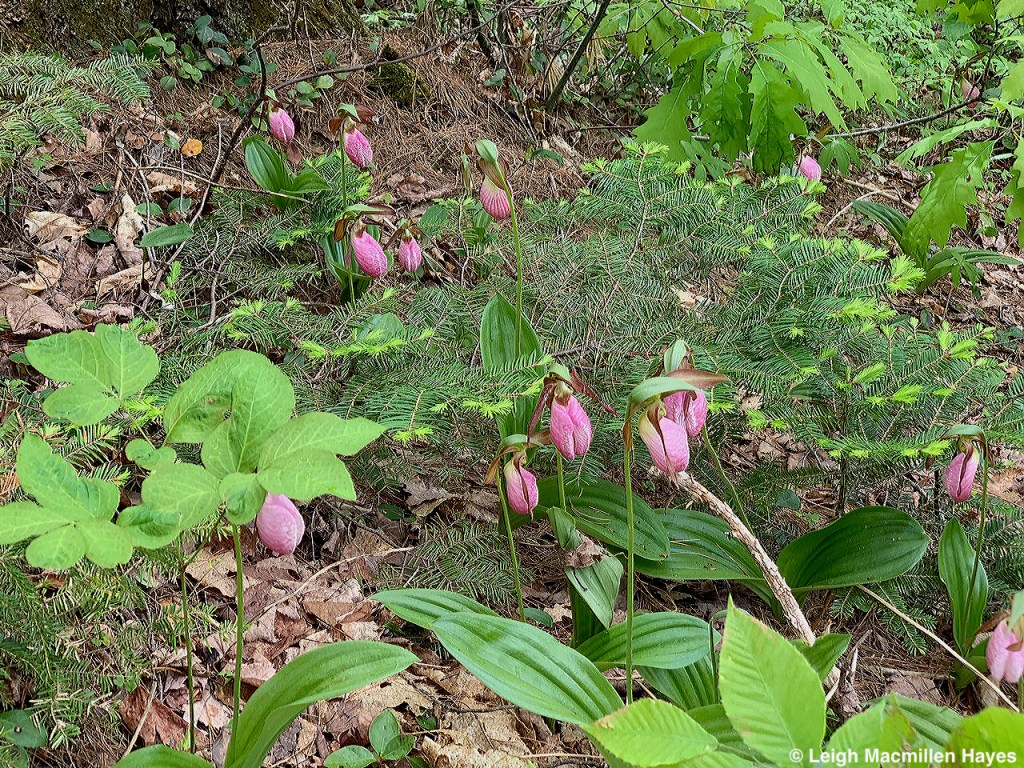
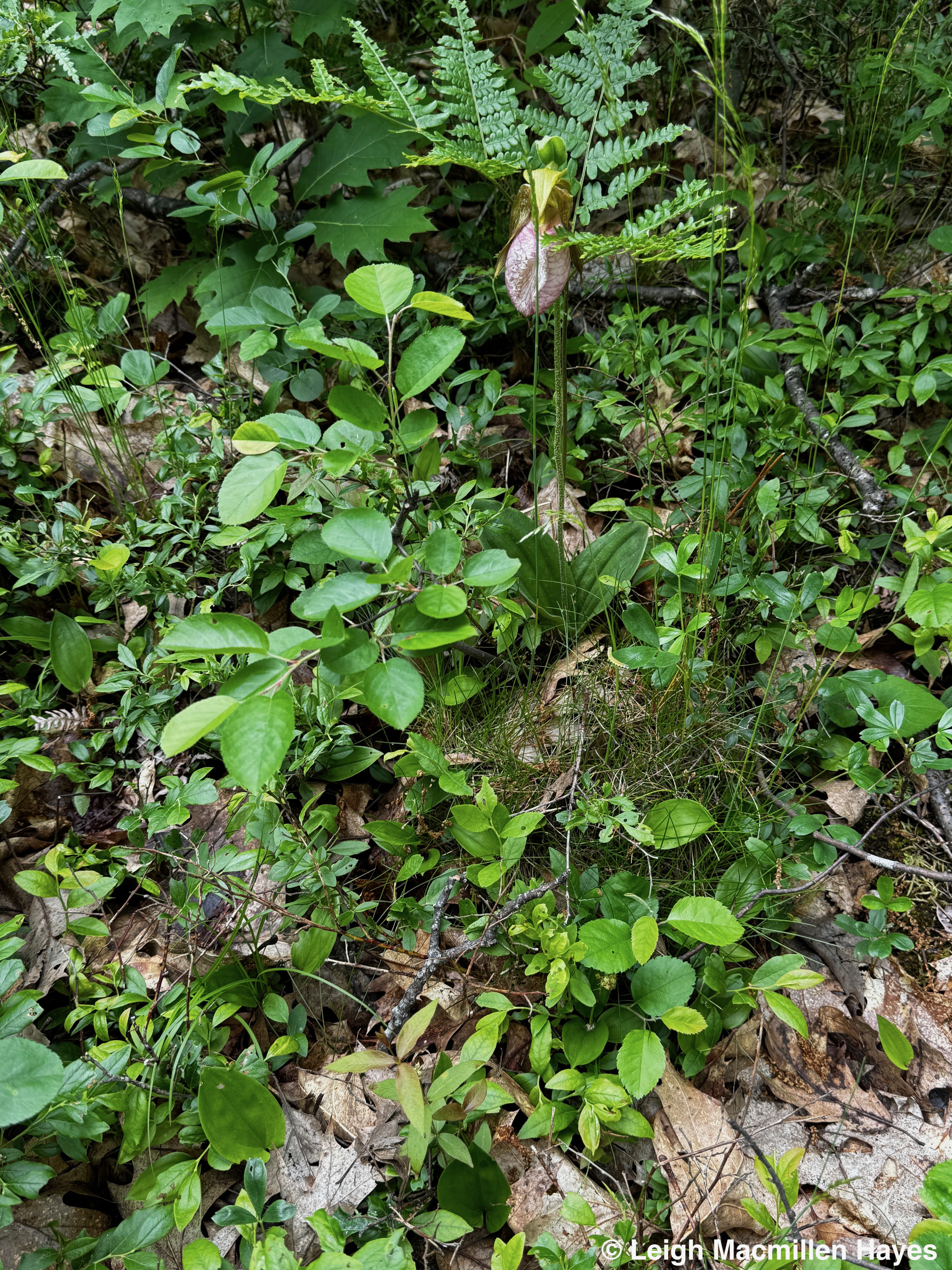
But, oh, how they hide. Do you see the one in the photograph above?

How about now?

Knowing that they can be elusive causes My Guy to slow down for a change. It’s no longer the destination that counts, but rather the number of Pink (and their white variants) flowers that we can spot.
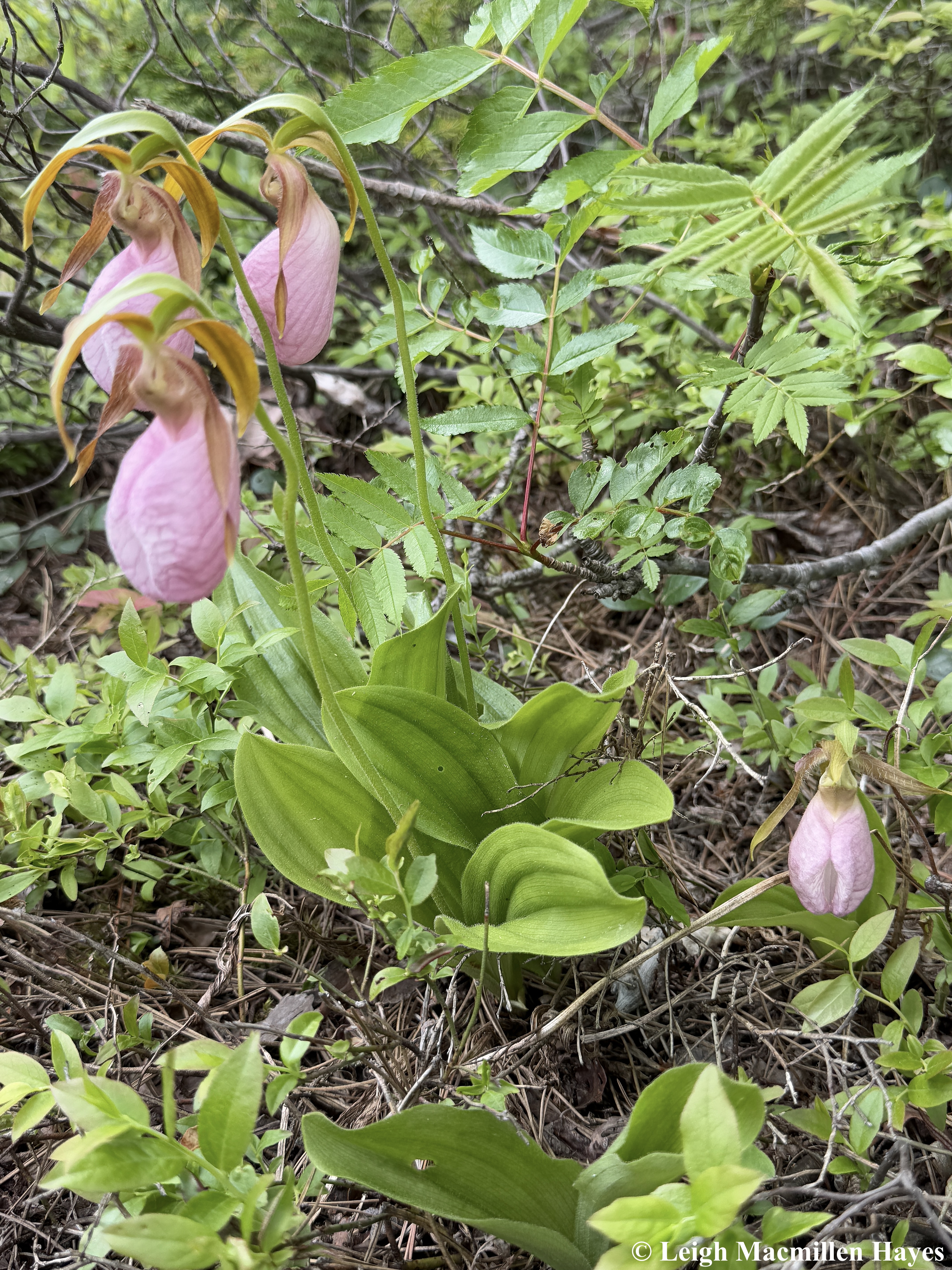
Some are tall, and others quite small. And some are sets of leaves with no flowers yet as in the foreground. We don’t count those.

Here’s the thing about Lady’s Slippers. It takes a long time for a minuscule seed to become a plant. The seeds, developed in capsules, are beyond numerous, but each one has no food source or endosperm. So . . . it must develop a relationship with a Rhizoctonia fungus in the soil to survive. From the fungus the plant gets nutrients for germination and growth. The fungus, in turn, receives nutrients from the orchid’s roots.

BUT . . . all of this takes time. And the presence of the fungus.

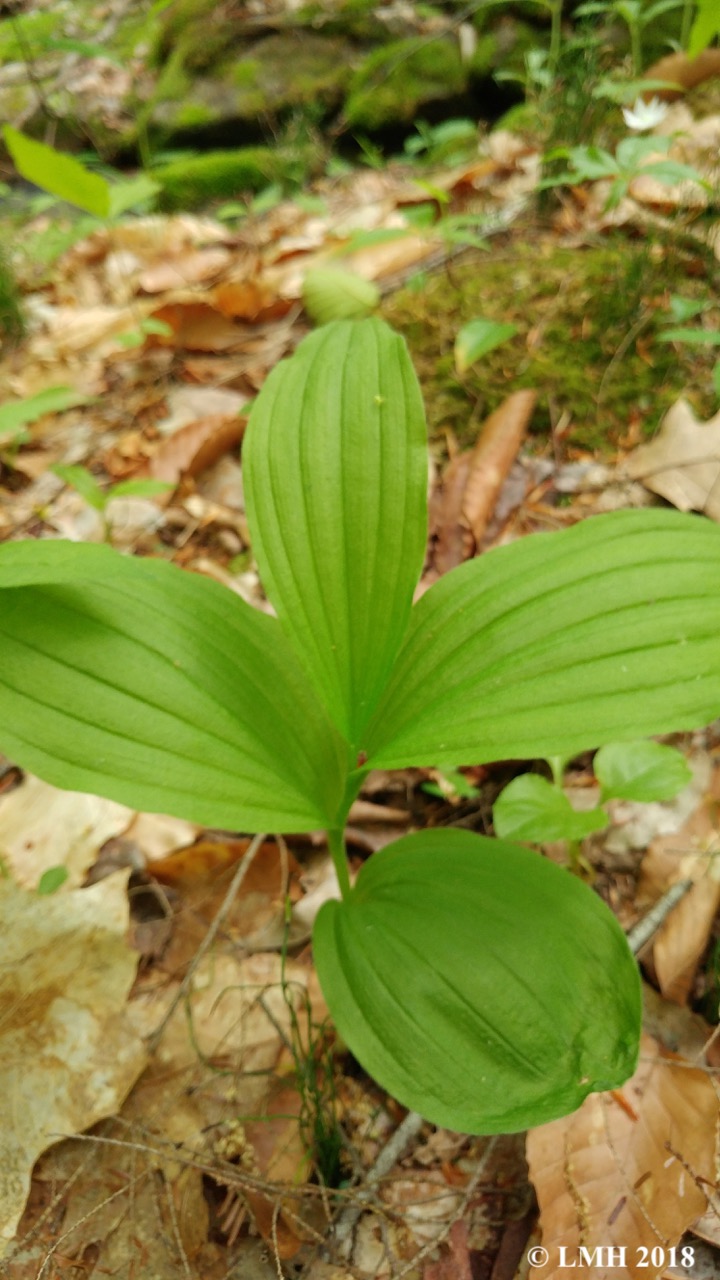
Years. First, after at least three years the plant produces a pair of two basal leaves that fold like accordions and remind me of the paper fans we used to make as kids.

One author says it’s another 5 – 10 years before the plant produces a flower; another states 10 – 17. Either way, by the time you spot one, it’s been working for a long time to become a thing of beauty. (And should not be picked or transplanted.)
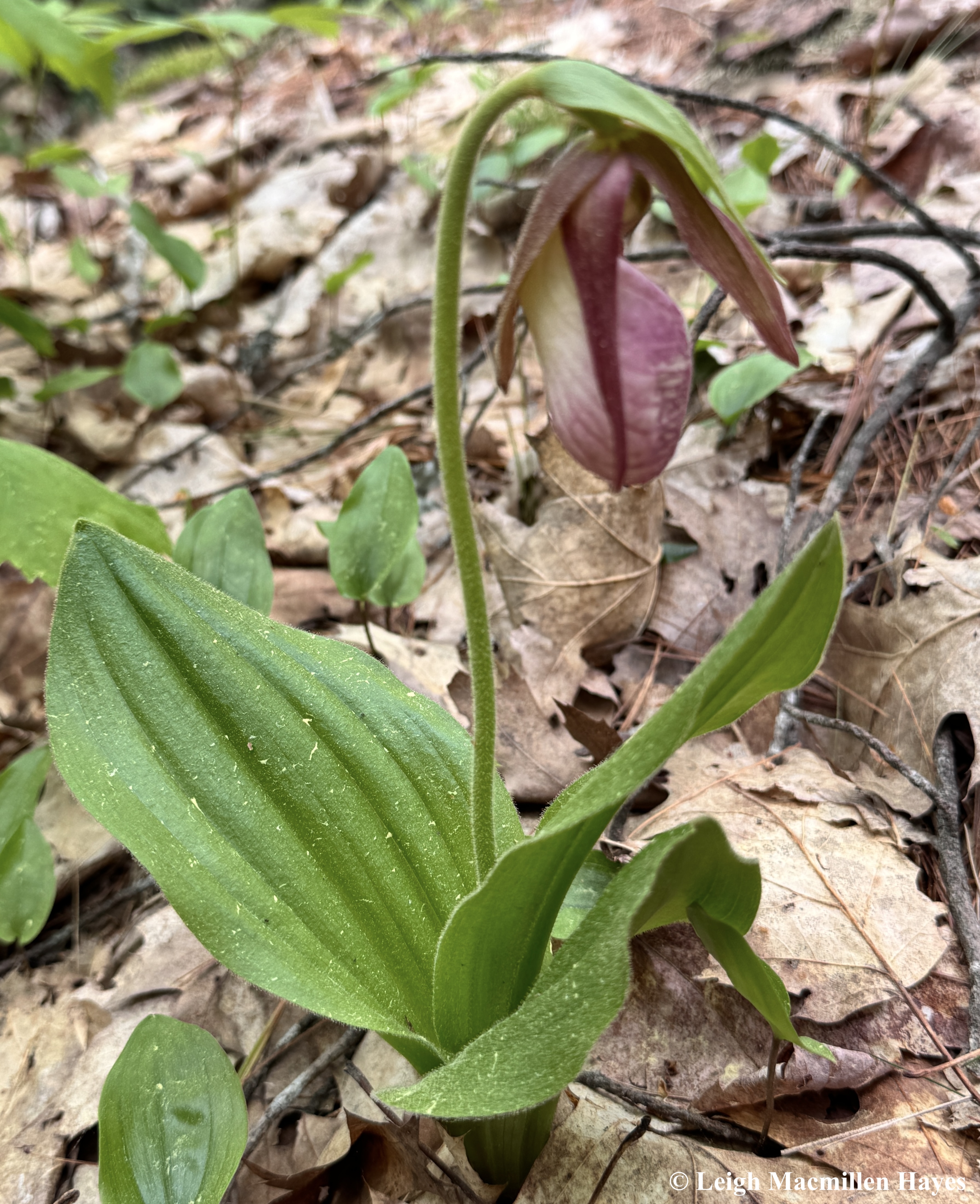
We found one that stymied us for it appeared to have three basal leaves. I can only wonder if there was a second plant there and something happened to its other leaf.

In one spot, we found what we call a bouquet. Sometimes we see three or four grouped together, but in this case 14 plants in bloom.
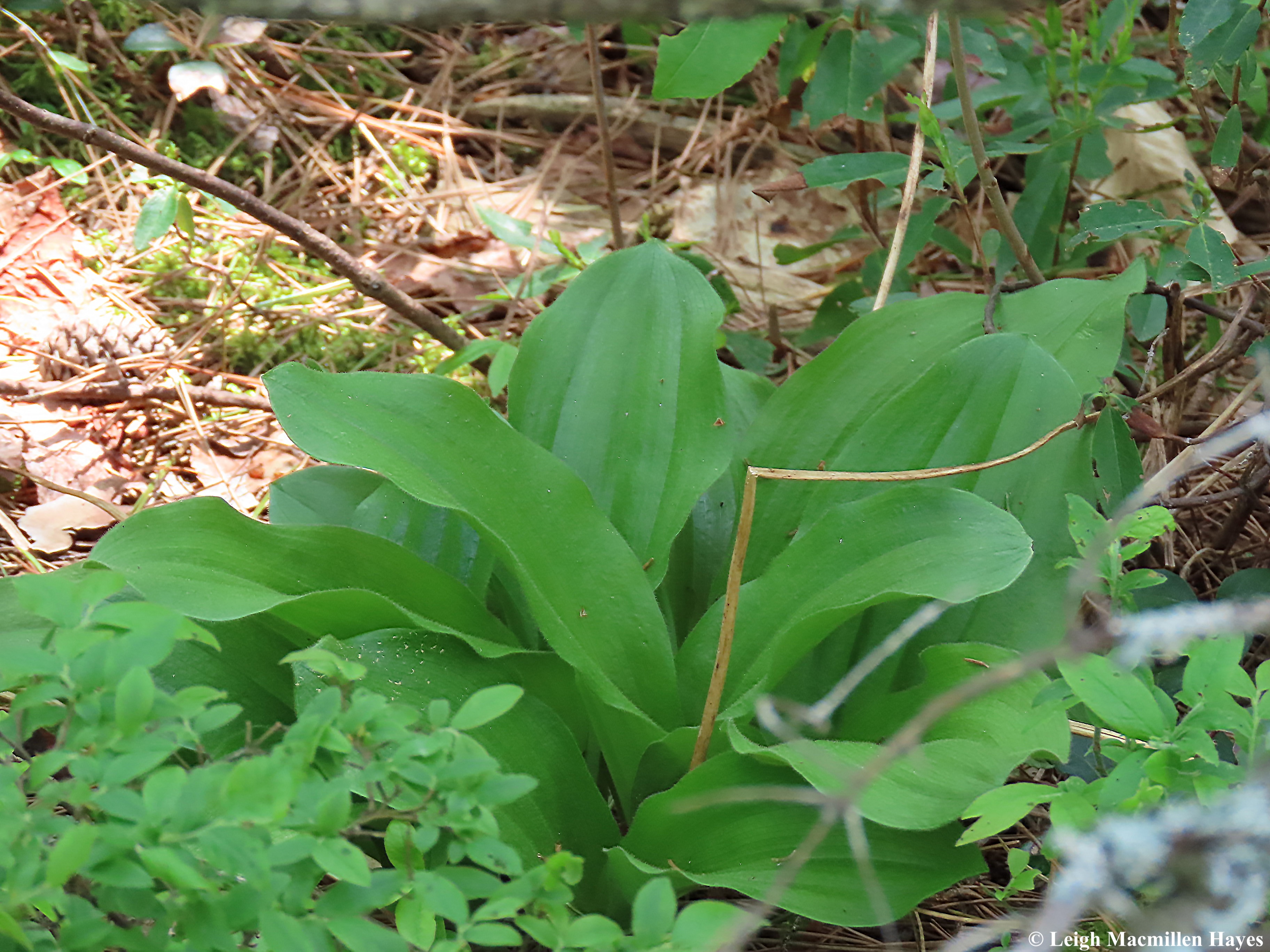
And in another spot where we expected the same, nada. What happened. My Guy was disappointed because this is his favorite and he loves to show it off to anyone who happens to be hiking that way.

We have a theory, though we don’t have scientific knowledge to back it up. But here goes. Last summer, our count was quite high. The previous spring and summer it had rained. A. Lot.

Last year, we experienced a drought. This year fewer flowers in most places that we hiked in the last few weeks. Perhaps less of the fungus?

And sometimes the flowers are spotted growing in a bit of a line, making us think perhaps there is a rotting nurse log beneath the soil. As for soil and habitat, acidic seems to be the favorite and we often find them among Low-bush Blueberries and towering over Reindeer Lichen.

And then there’s pollination: Lady’s-slipper pollination is a curious thing. Bees are lured in by the guide lines to a slit in the front petal, the slipper-like pouch, or flower’s labellum. Once inside, the bee cannot exit the way it entered because the petal structure turns inward.

The exit is at the top of the slipper, but to reach it, the bee must move through a hairy interior and rub against the flower’s stigma, depositing any pollen it may have carried in and brushing against the pollen mass called the pollenia before flying out. It strikes me as being like a house of mirrors. And all I want to do is quickly find my way out.

Some bees get frustrated with the dilemma of discovering there is no nectar and the task of finding the exit and instead chew their way out, which seems to be what happened to this flower.

It looks like the bee frantically tried to escape this one.

I tried to honor them with a painting, but our best way is by counting each and every one. I’m going to share last year’s numbers and this years. Also, this year, we counted along a bunch of other trails than just the Big Three as My Guy refers to the first three for which I have been keeping records since 2000.

Wolfe’s Neck State Park: 2024: 475; 2025: 159

Albany Mountain: 2024: 364; 2025: 411

Sanborn River and Overset Mountain: 2024: 598; 2025: 526

Grand Total of the Big Three: 2024: 1,437; 2025: 1096

Plus these trails all from this year only:

Mount Tom: 25 (but we were there on May 18, and this was the kick-off event that got us going this year; more may have bloomed since then. Actually, after spotting the first one, My Guy wasn’t sure he wanted to count this year, but let me tell you, he still has the greed!)

Mount Tire’m: 31

Proctor Pond Reserve: 41

Kezar River Forest: 63

Narrow Gauge (only 1.5 mile section): 56

Sleigh Trail at Notch View Farm: 44

Home woods: 2

Grand total of all trails: May 18 – June 6: 1,358

Even with the extra trails, the count was down.

But still . . .

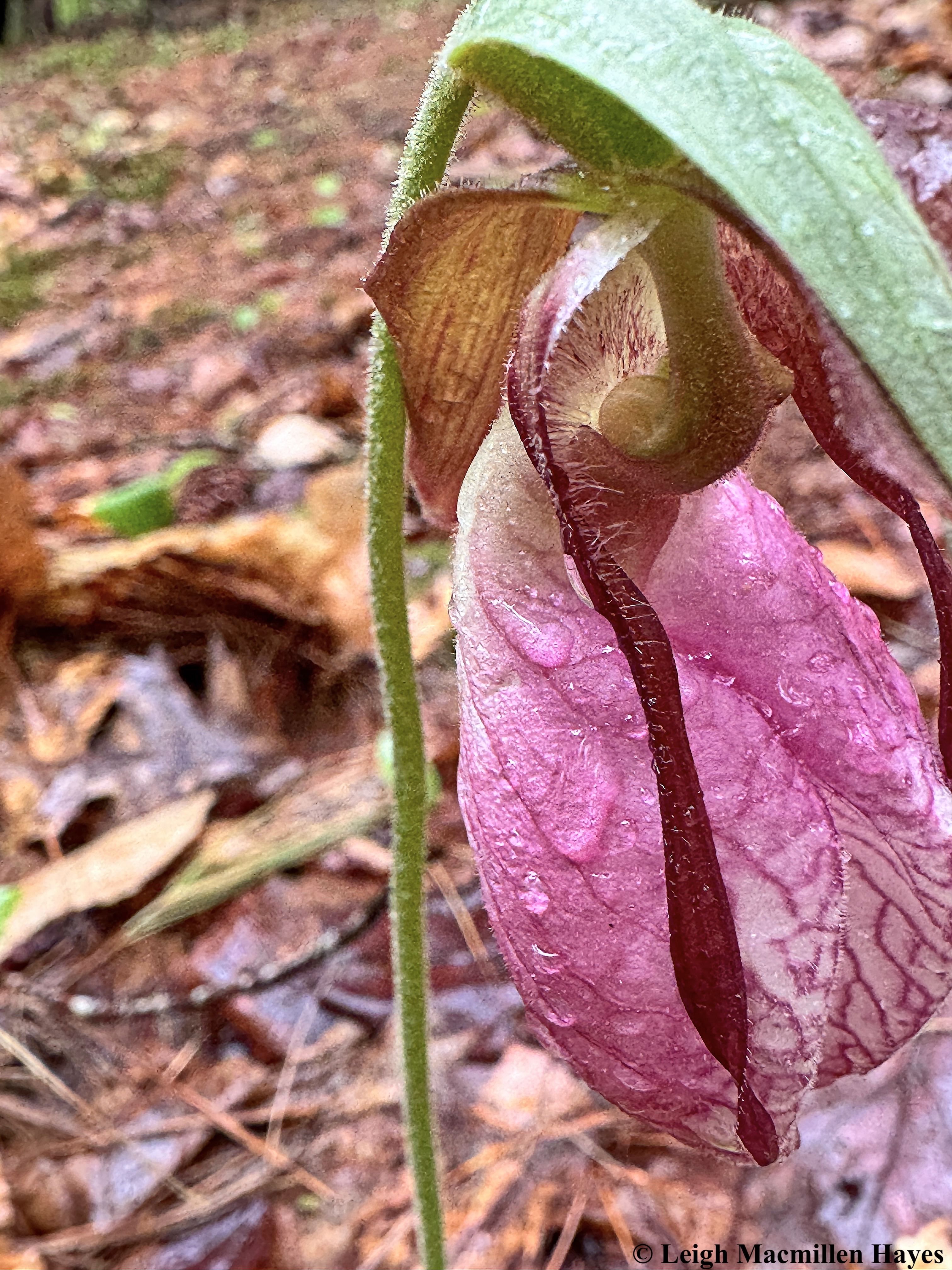
Where the Moccasins (Lady’s Slippers) Led Us–up and down many a path with so many wonder-filled moments and sighting along the way. Counting Lady’s Slippers is a ritual that we love to share together and with others.

Giving Thanks to the Ovenbirds

On my way down the cowpath to retrieve our game camera, I heard among other bird songs, the “Teacha, Teacha, Teacha” of the Ovenbirds. But it wasn’t until I was headed back home a little while later that I actually spied them, which for me is a rare treat–maybe because I don’t spend enough time trying.

In the past, however, it’s always seemed like the minute I get anywhere near them, they stop singing and I can’t find them.

Today, that was different. And I did get to watch. BUT . . . there’s always a BUT in my posts, or so it seems. Anyway, but . . . then I spotted something else.

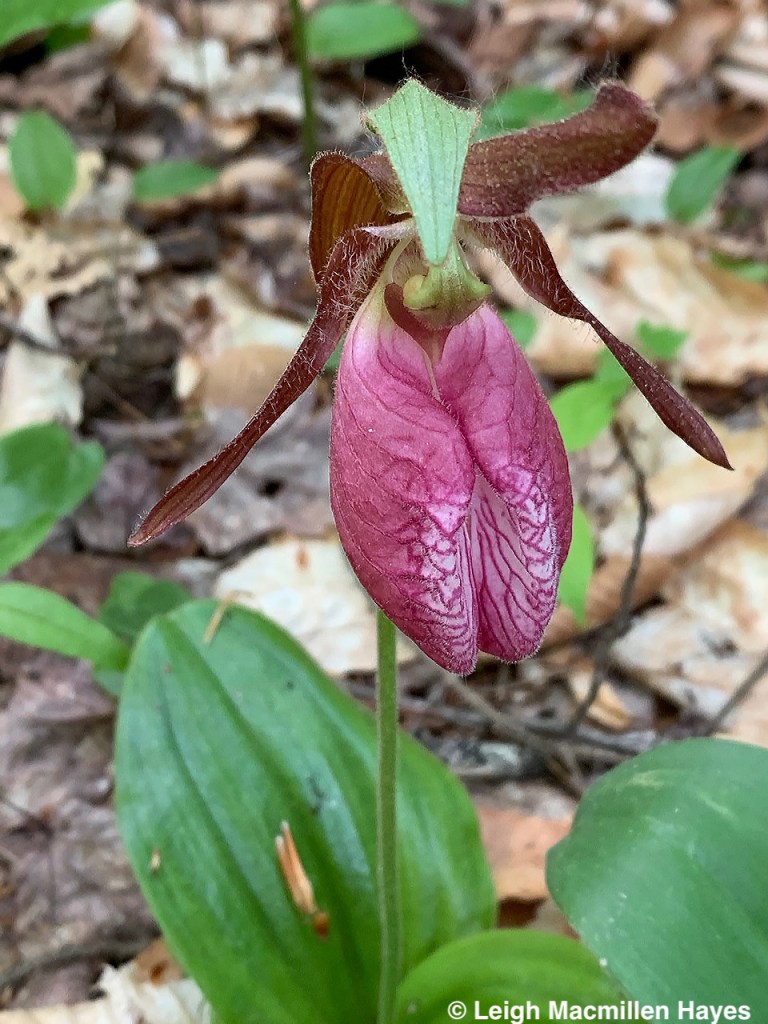
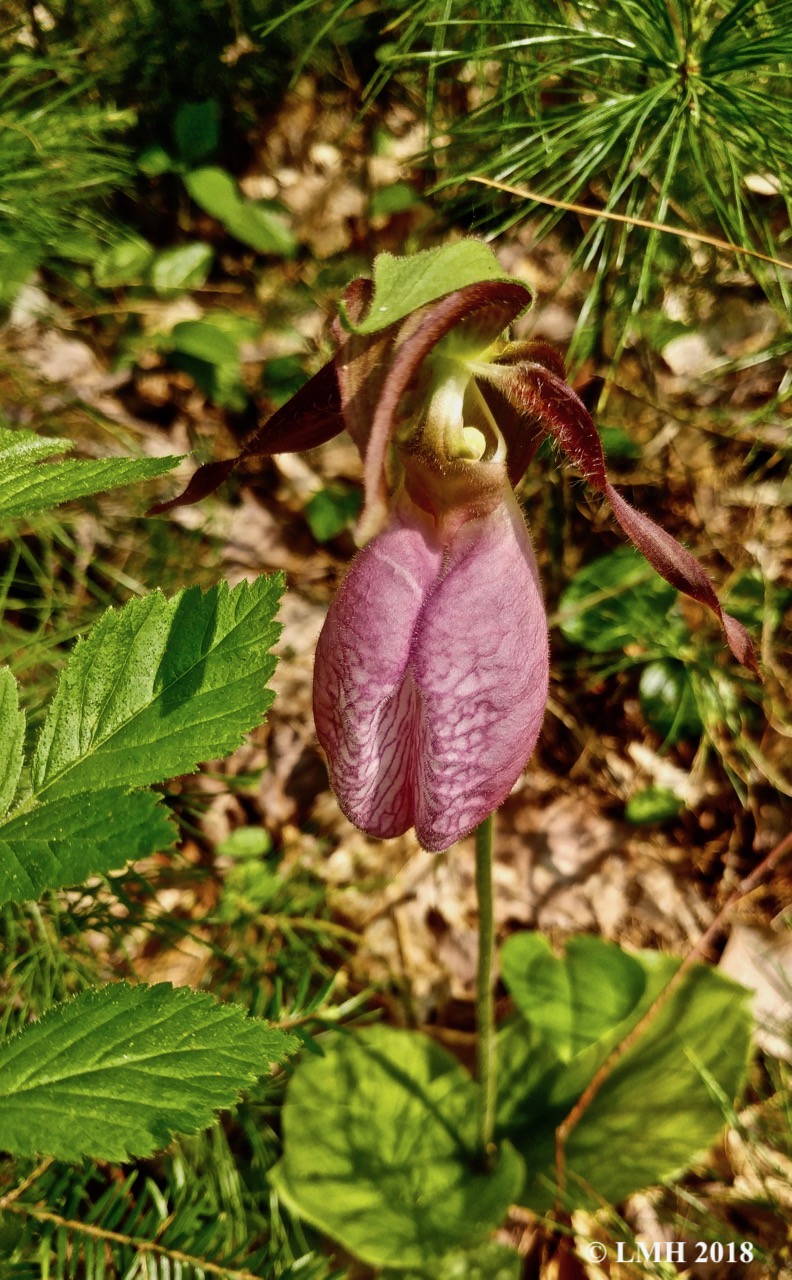
A beautiful pink Lady’s Slipper. And the leaves of four others–that I hope in future years will bloom.

With fingers frozen because it was raining and the temp was only in the 40˚s on this May day, I headed back to the house, pleased with my finds.

All the while, however, I kept wondering if there are other orchids on our land and so after lunch I donned my rain gear again and headed back into the woods.

First, I stumbled upon this fern, which grows in a vase-shaped form. There’s plenty of it along our stonewalls and at the edge of the field beyond, but while hiking with My Guy yesterday, I pointed some out and called it Interrupted and he wondered why such a name.

Because, I explained, ferns have sterile fronds for photosynthesis and fertile fronds for reproduction and in this case its fertile fronds have interruptions of spore cases in the middle of the blade upon which they grow, while most ferns carry their spores on separate stems or on the undersides of leaflets.

After the spore clusters ripen and drop away, the mid-section of the frond will be “interrupted,” leaving bare space between the leaflets, further reminding us of its name.

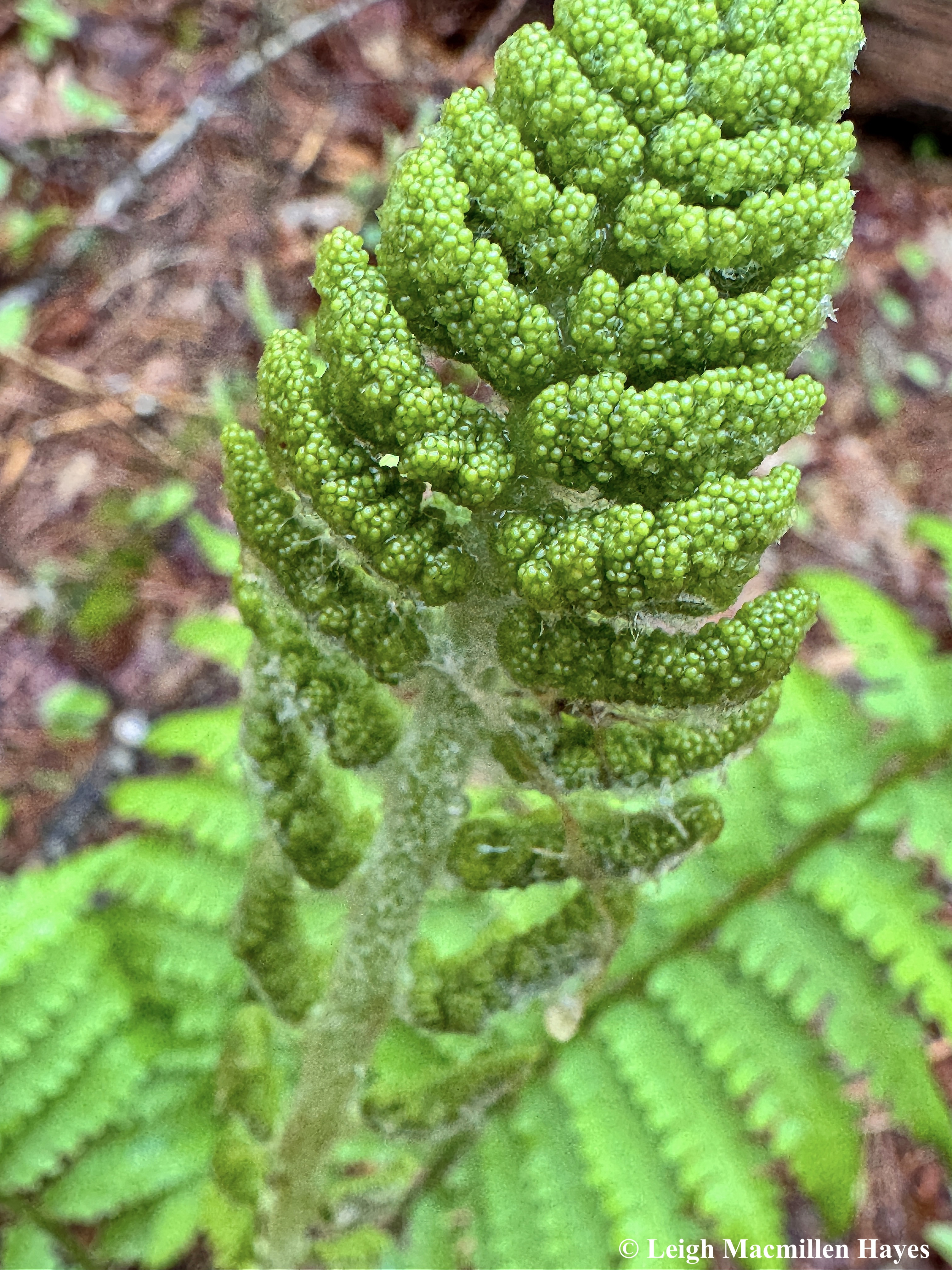
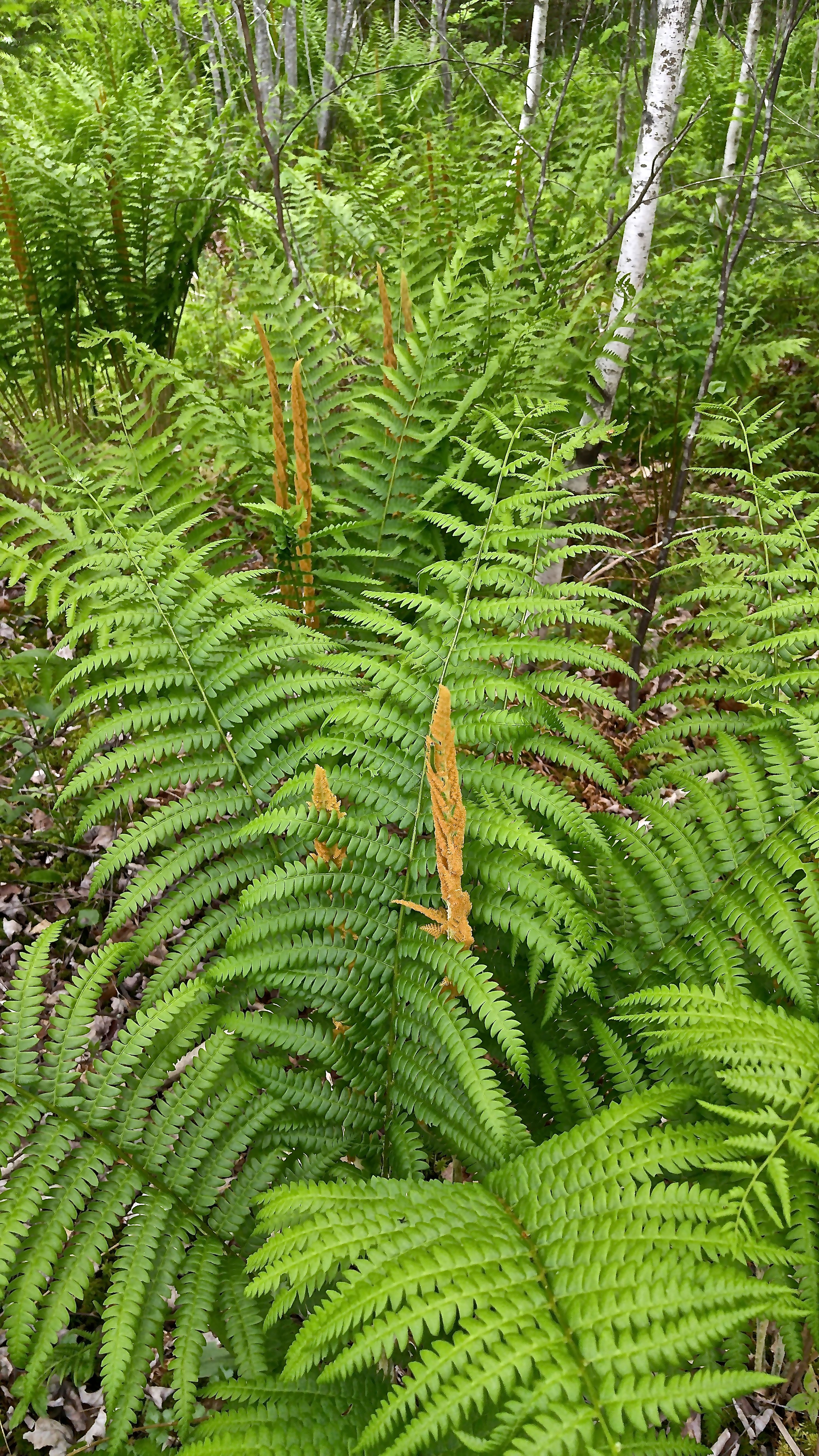
And where there is Interrupted Fern, there is often another member of its family, the Osmundas that is, this being a Cinnamon Fern. One of the differences is that the fertile frond is more like a wand that rises from the center.

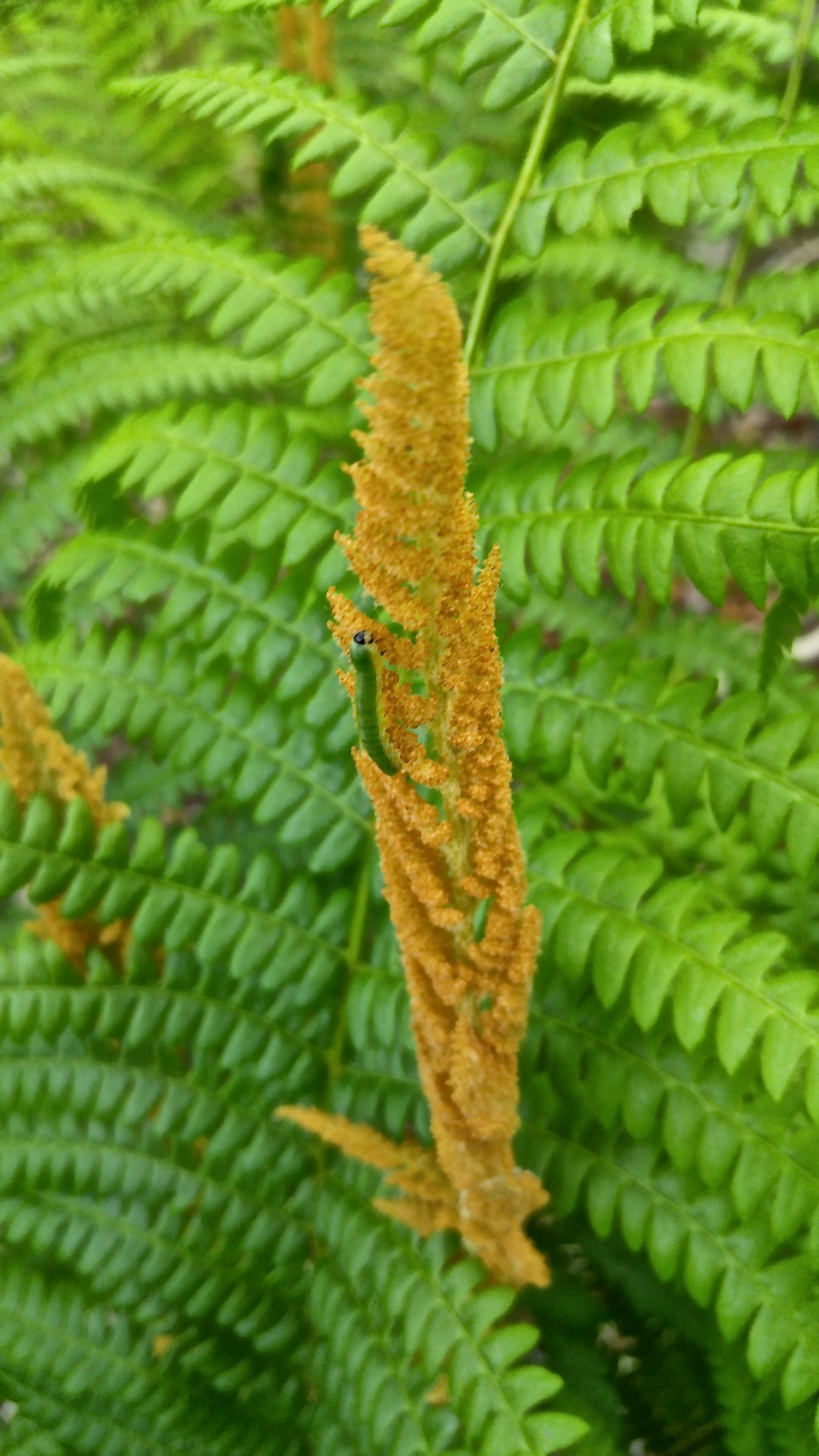
There are no leaflets on these fertile fronds, and again, the sporangia are like tiny beads that will turn a warm cinnamon brown when the spores mature. And then, it really will look as if the frond is covered in cinnamon.

While the Interrupted will grow in forests and wetlands, the Cinnamon prefer wetlands, which tells you something about our land. Another that also grows here, though I forgot to photograph it, is their second cousin, the Royal Fern.

If an Interrupted Fern doesn’t have fertile fronds, it looks very much like a Cinnamon, but one of the key characteristics to tell them apart is that Cinnamons have hairy (wooly) armpits like this one above where you can see the wool on the underside where the leaflet meets the rachis or main stem. And Interrupteds don’t.

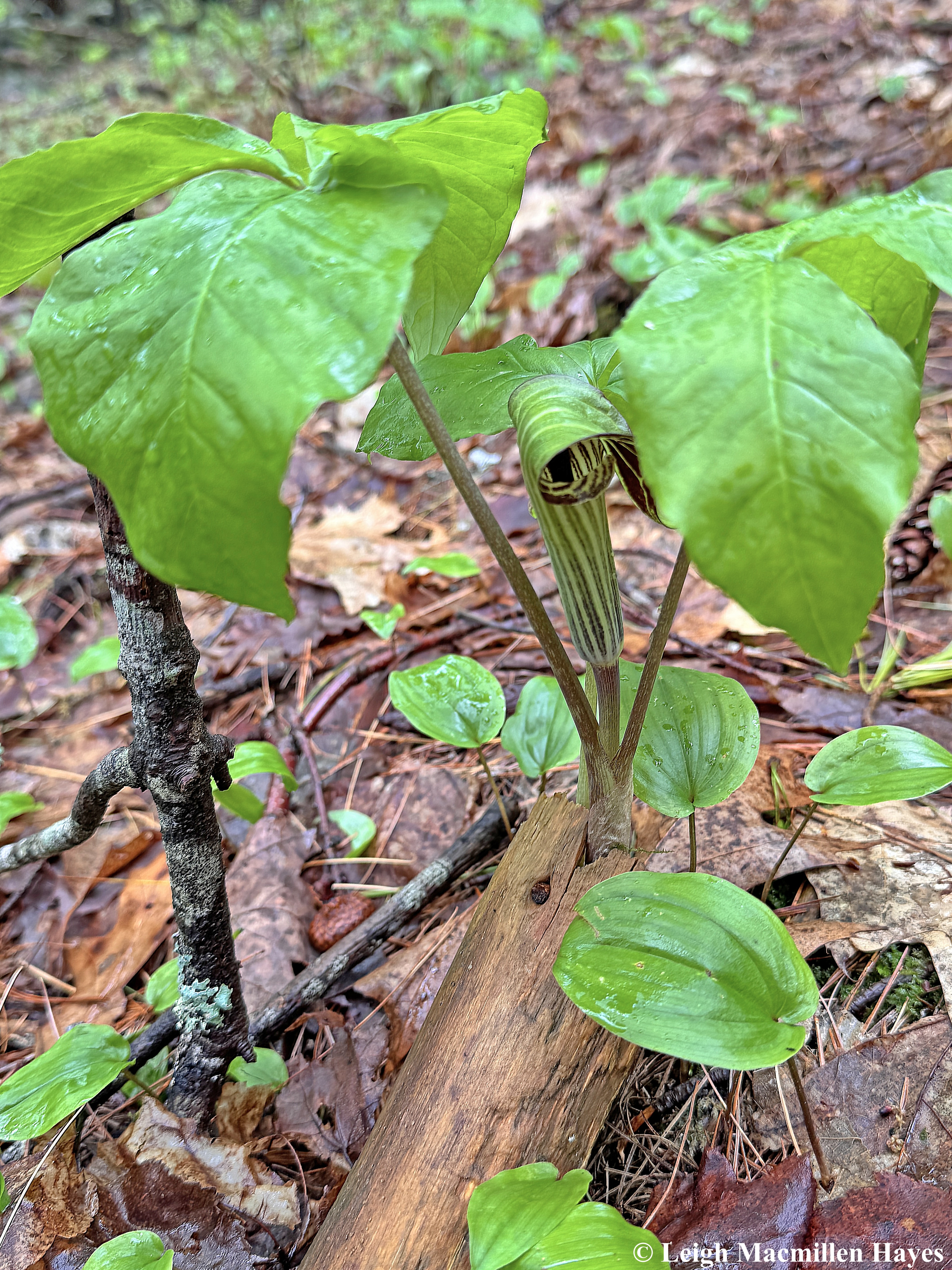
Being a bit of a wetland, I shouldn’t have been surprised by my next find, but I was. Jill-in-the-Pulpit! You may think it’s Jack, but like some other plants, including the Canada Mayflower that grows beside these, in order to flower the plant needs the additional energy stores of a second leaf (with three leaflets).

Once I spotted one, I began to notice they were everywhere in one spot on and near the cowpath, but the curious thing–the leaves had been devoured on some. By whom?

And do the leaves also contain Calcium oxalate, which this plant like some others stores in the roots and can cause blisters and other medical problems if consumed? Is that only in humans? So many questions.

That said, my quest now was to seek not only any other Lady’s Slippers, but also Jack-or-Jill in the Pulpits. All told on the latter, I did spot about twenty, but didn’t take time to differentiate how many of each gender.

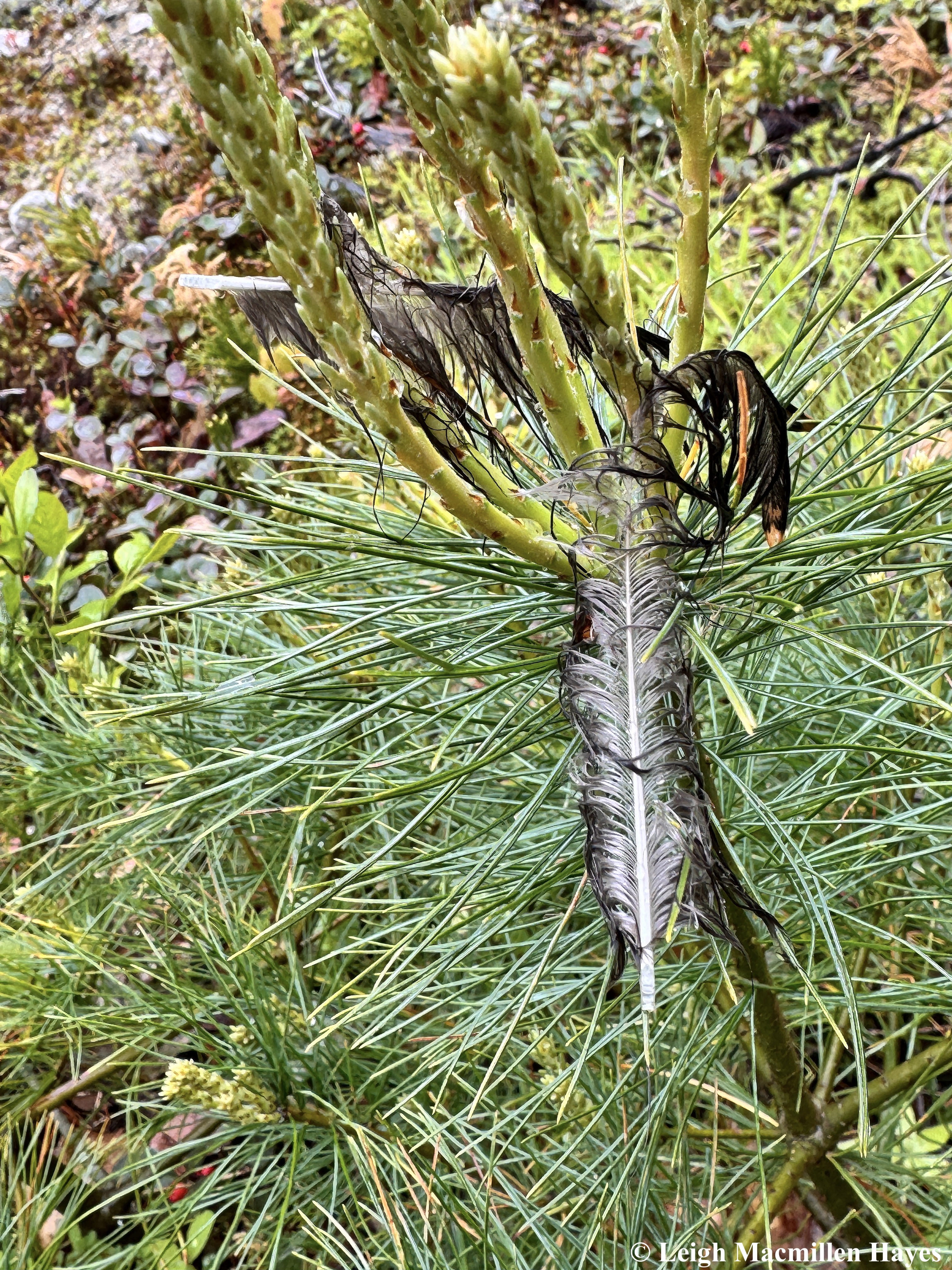
At last, I reached the powerline that crosses our property and it was there that some feathers decorating a pine sapling surprised me.

A closer look and I found a slew of feathers, all plucked. By one of our predatory birds–we do have Sharp-shinned and Broad-winged Hawks in the neighborhood. Or by another?

We also have a neighborhood Red Fox who passes through our yard and over the stonewall or up the cowpath on a regular basis. Plus Coyotes and Bobcats.

Mr. Fox needs to eat too. And in this case, he marked his territory–right at the end of the ten-second clip.

The question remains–who made a meal of the Turkey?

Again, I do not know, but as I searched for evidence or more remains, look what I found–another Lady’s Slipper hiding among some Low-bush Blueberries.

And so back to my original quest did I return.

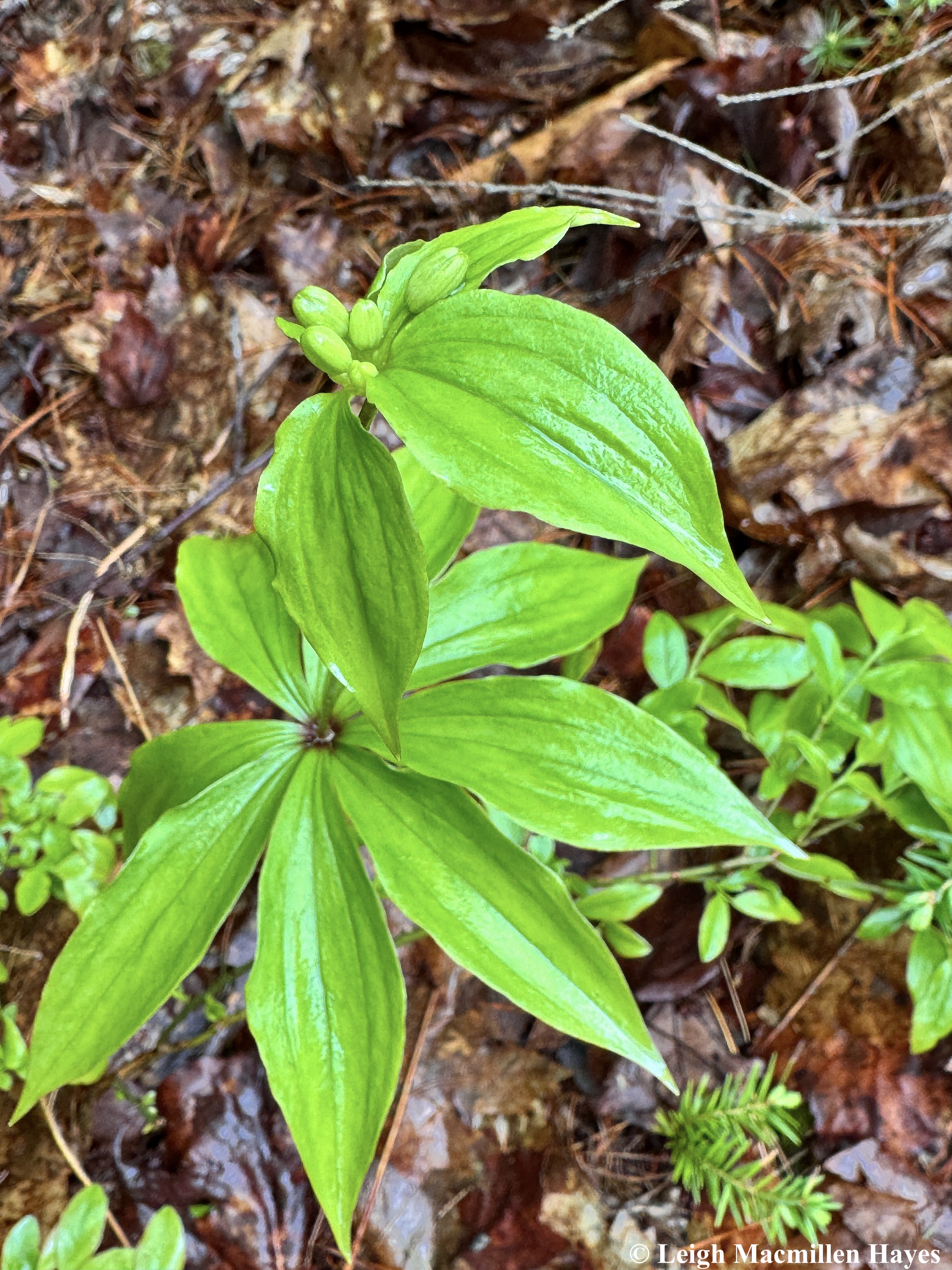
And smack dab beside that orchid, another plant that I love, but didn’t realize we hosted–Indian Cucumber Root, with a root that is edible and delicious. And a flower or in this case, flowers, that will delight my soul in a week or less. And yes, this too, is a plant that needs an extra layer of leaves in order to produce a flower. So do we call this a female plant and all plants that only have one level or tier of leaves males?

I don’t know. But I had circled around, zigzagging actually, through the five acres of woods that we own beside our one-acre house lot, and landed back at the first Lady’s Slipper, delightfully decorated with the rain of the day.

Across the way, right where I’d first spotted him, an Ovenbird paused and called. I tried to capture both in a shot, but they are scurry-ers, if that’s a word for scurry they both did as if they were in a hurry and perhaps a wee bit confused. Maybe they were trying to distract me from finding their nest?

I didn’t look for it, but have an idea at least of its whereabouts. And I can only hope that any offspring they produce are well protected cause this is a wild place.

With fingers once again numb, I finally headed home, but first I stopped to check on these Jack-in-the-Pulpits that were the only ones I thought we had, growing as they do by a split-granite bench we made. I remember seeing Jack standing tall in the pulpit one spring as I headed out to the vernal pool, and upon my return someone had nibbled him. Whodunnit?

That said, I decided to place the game camera by all the other Jacks and Jills that I’d found earlier today and I’m curious to see if anymore get nibbled.

All of this because the Ovenbird called. It felt like Thanksgiving. Complete with a Turkey dinner. (Sorry, but I had to say that.)

And to think I thought I knew our land. There’s always something to learn. Or some things!

Cloudy Mondate

Between the two of us, My Guy and I have lived within an hour or so of today’s destination for a grand total of 103 years. Yikes. That makes us old. Of course, we aren’t. But for some reason we never visited this spot before. Maybe because it’s a tourist hotspot, and we’re hardly tourists. In fact today, we were dressed in our usual garb because our plan was to hike. And we did. But . . . we also did that touristy thing for a wee bit. Cuze when in Rome . . . yada, yada, yada.

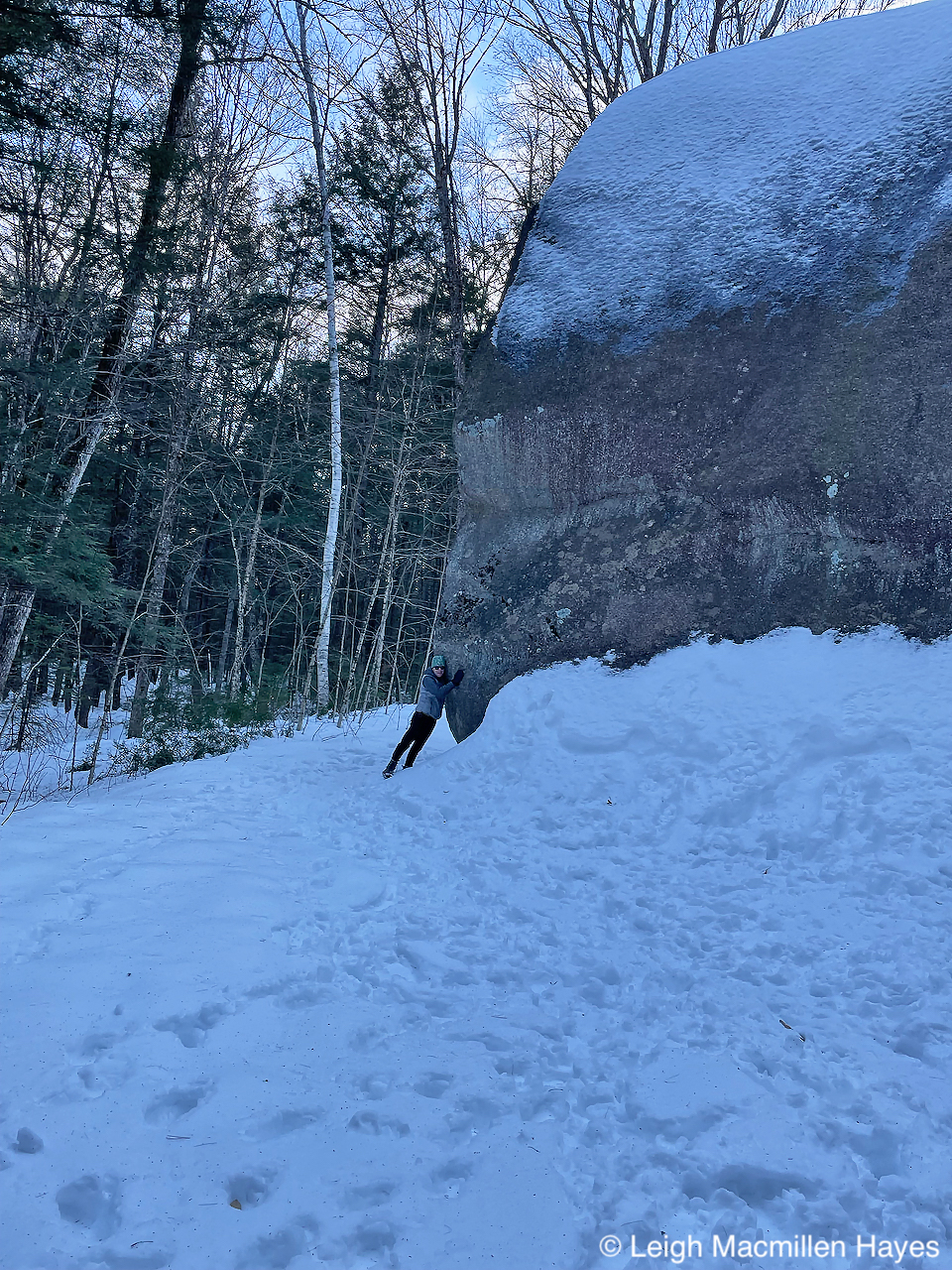
And so first we paused by the Pebble, a glacial erratic.

I suppose when you compare it to the Boulder located about a half hour north of the Pebble, which we visited on February 14, 2022, it is rather pebble-like.

But what we really wanted to see was the Falls of Song, a waterfall that drops forty feet and is so named for the changing sound of the water that constantly flows.

According to an interpretive sign by the falls, “An 1885 Boston newspaper description of the scenic beauty and amenities stated of the Falls of Song that ‘their location in the depths of the primeval forest, their exquisite setting under the overhanging cliffs, the silvery clearness of the water and their magical musical effects, seemingly changing their song at every hour of the day, unite to place these falls among the most interesting and wonderful in the United States.'”

Another set of falls to draw our fancy was the Bridal Falls, so named because in the right conditions they appear to be lacy like a bridal veil. I felt like the conditions were indeed right today.

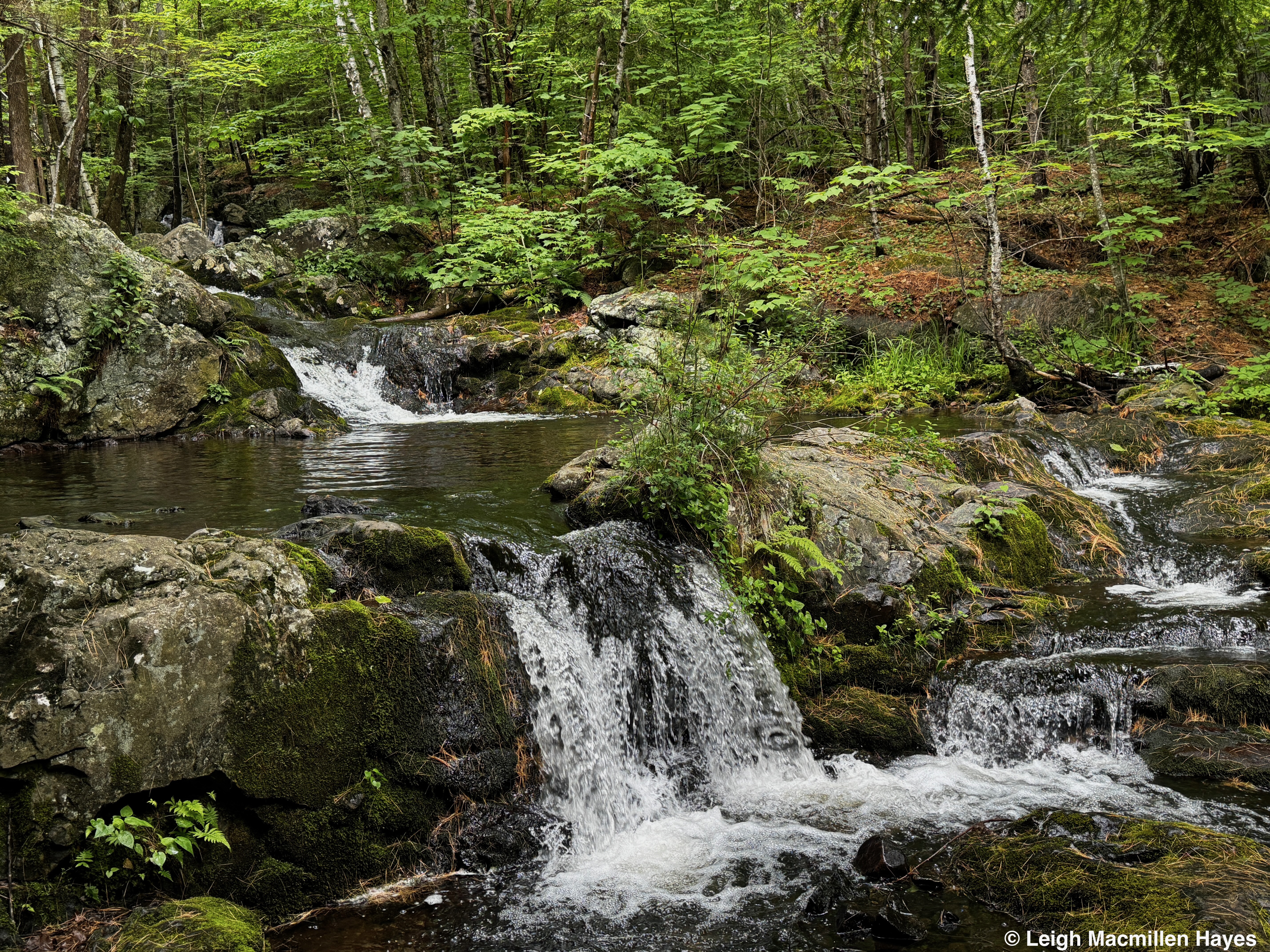
We followed the brook for over a half mile and the views kept changing and sounds kept enhancing our experience. If it had been warmer, we might have wanted to take a dip, but for today, just watching and listening as the water tumbled and plummeted and twisted and turned and glided and flowed was enough.

Back on the road as we drove up the mountain, we stopped again for a view from lunch bench and I found my place, which was my place in the early 1980s. Lake Winnipesaukee and Gunstock Mountain formed the backdrop and brought back memories of teaching and hiking and skiing and swimming and being. The best part is that this is the area where I learned to be. Be me.

To be native, like the Northern Bush Honeysuckle, for I began to realize all those years ago that this is the area where I belonged.

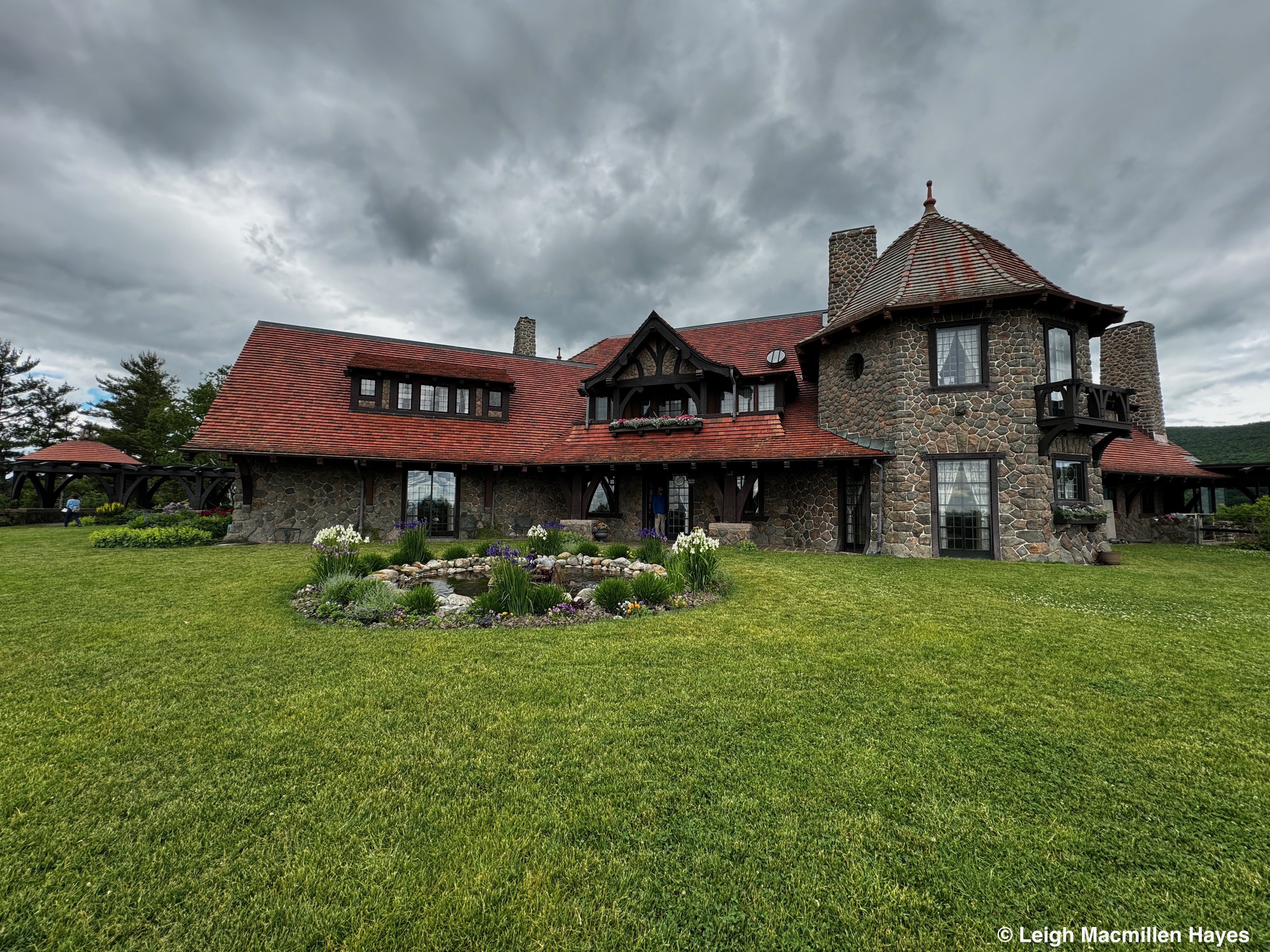
But today brought us to the home of others who also belonged in this place, beginning with Thomas and Olive Plant, the original owners of this mountaintop mansion. I could only hope to live here. But they did. For a while at least.

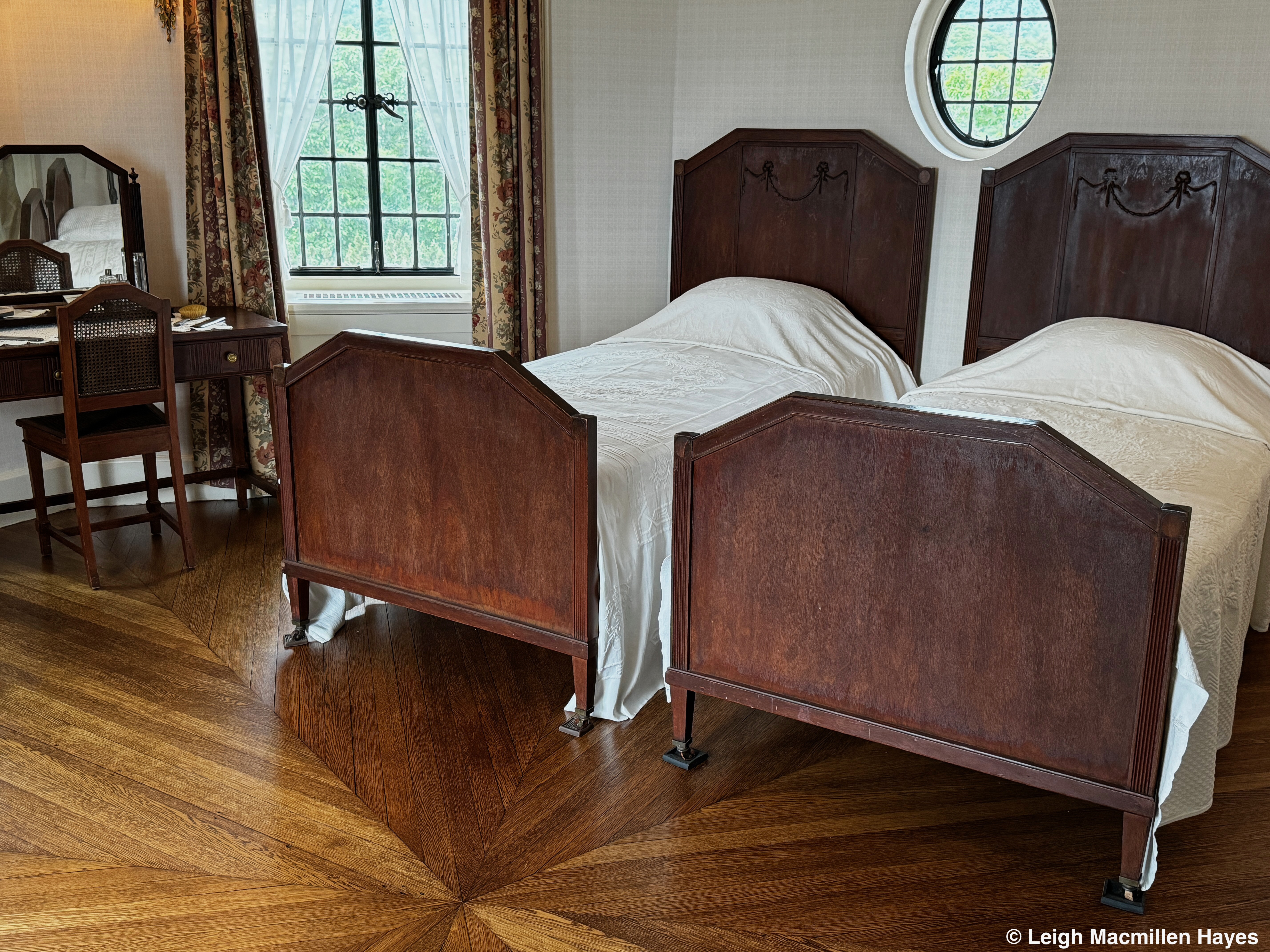
It’s a sixteen room home with halls and halls and an organ, and dumb waiter, and guest rooms like this one, and more halls, and sitting rooms, and great hall, and dining rooms, and servants quarters, and sunroom, and oh so much more. But this, the Brown Room, was my favorite, for recently carpet had been removed and the most incredible floor discovered, and it reminded me of our home, which had been similarly carpeted, and we discovered beautiful southern pine that has since brightened our days.

The sunburst pattern of the Brown Room floor–incredible.

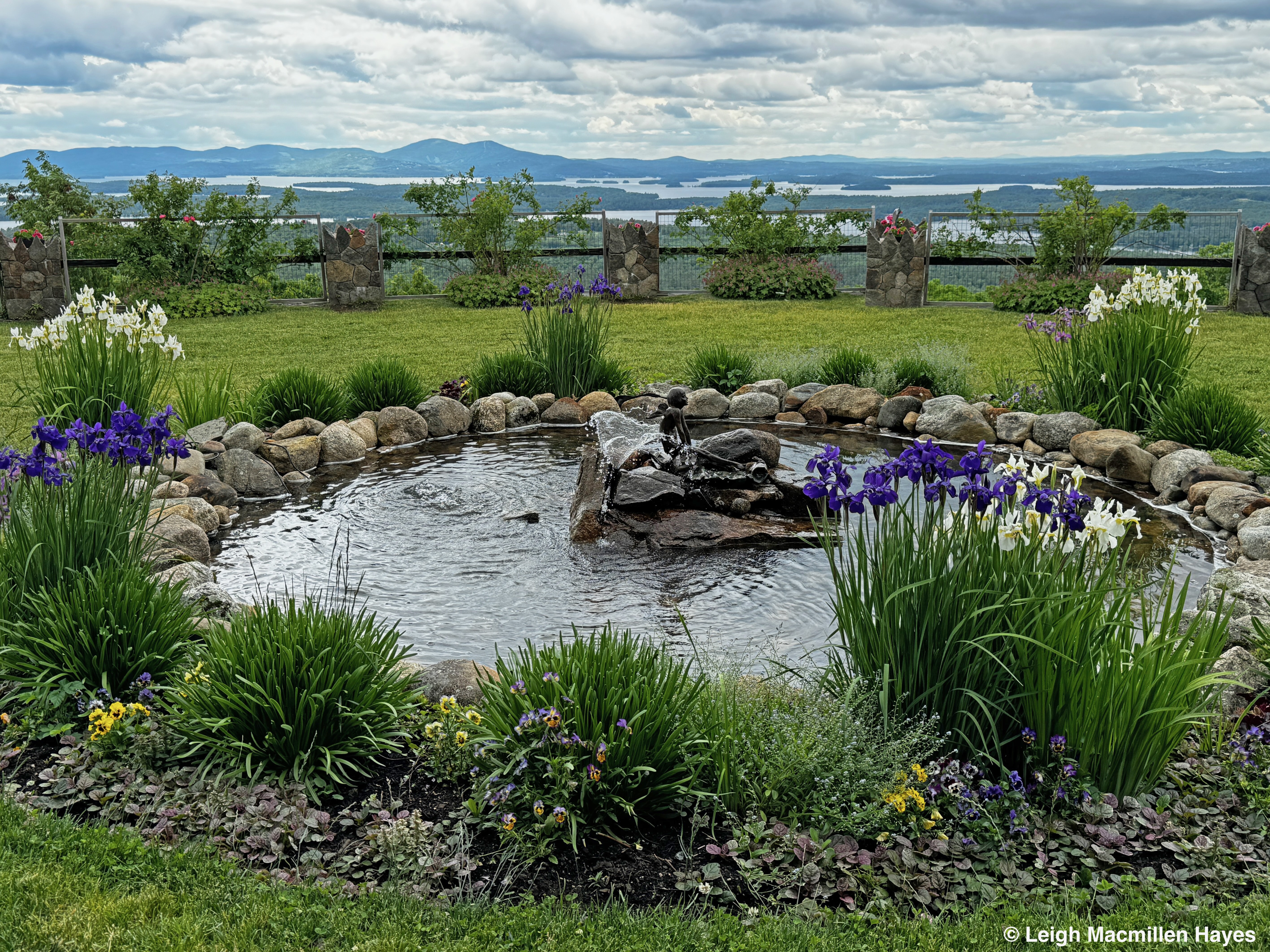
But even more than the inside, we really enjoyed the outdoor living areas, this off the main hall, with a view of the lake and mountains beyond, Gunstock being straight across.

And an angel letting water form her wings.

We’re thinking we’ll take the month of August and welcome guests here. Haha. As if we ever welcome guests, the introverts we truly are. But really, the focus should be on the Arts and Crafts architecture and way the building fits into the setting.

And the gardens. Exquisite.

Olive Plant, original owner of the property in 1914, would have approved of today’s gardens which are tended by a group of volunteers. In this space that surrounded the mansion she had a 100-foot glass greenhouse.

I don’t know if this was part of her greenhouse selection, but among the wall that formed part of nursery grows Ivy-leaved Toadflax, a plant I don’t recall ever meeting in the past.

Clouds there were upon occasion today, but the yard boundary offered glimpses of brightness.

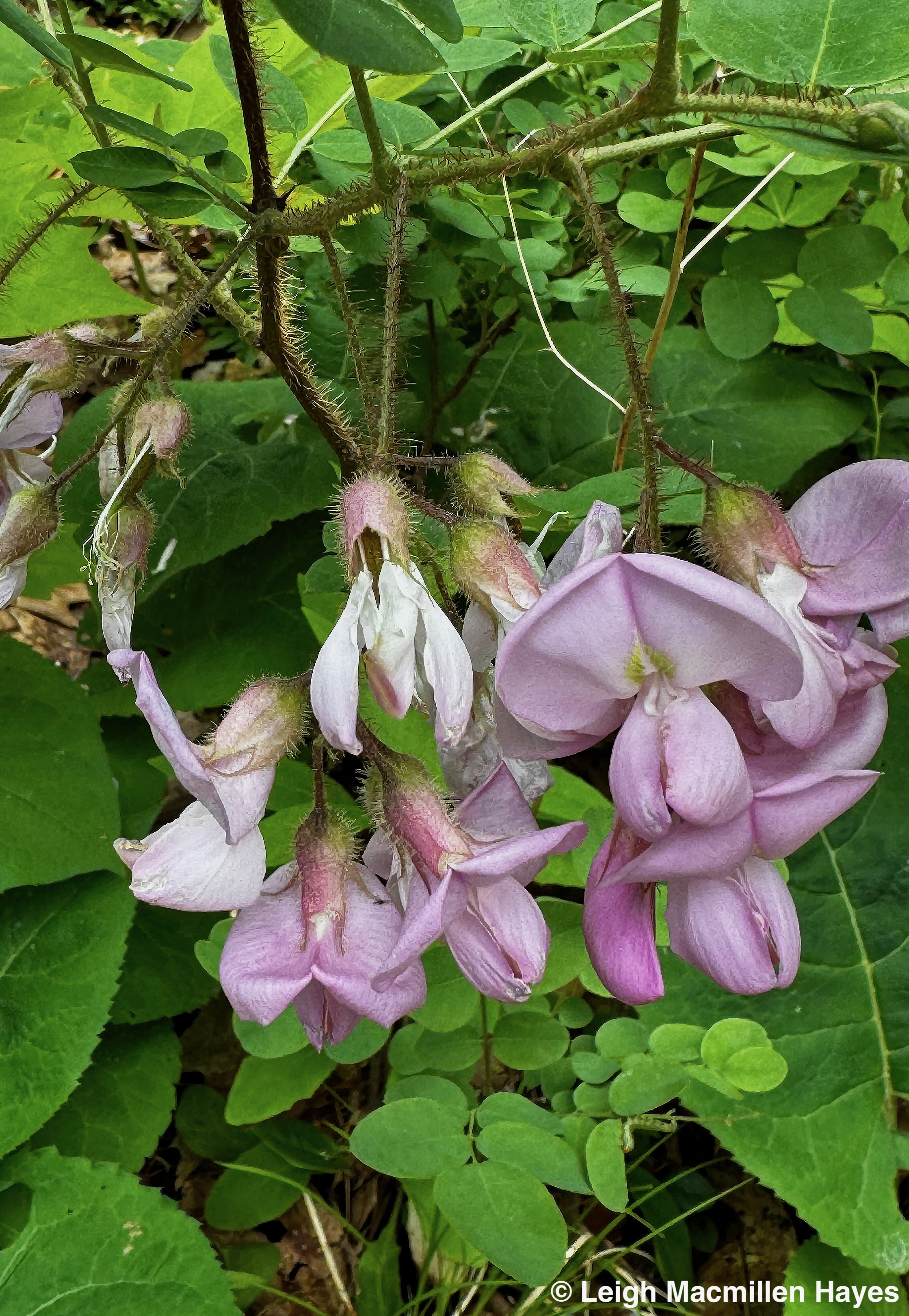
And along the trail where other specimens including this Bristly Locust, a legume.

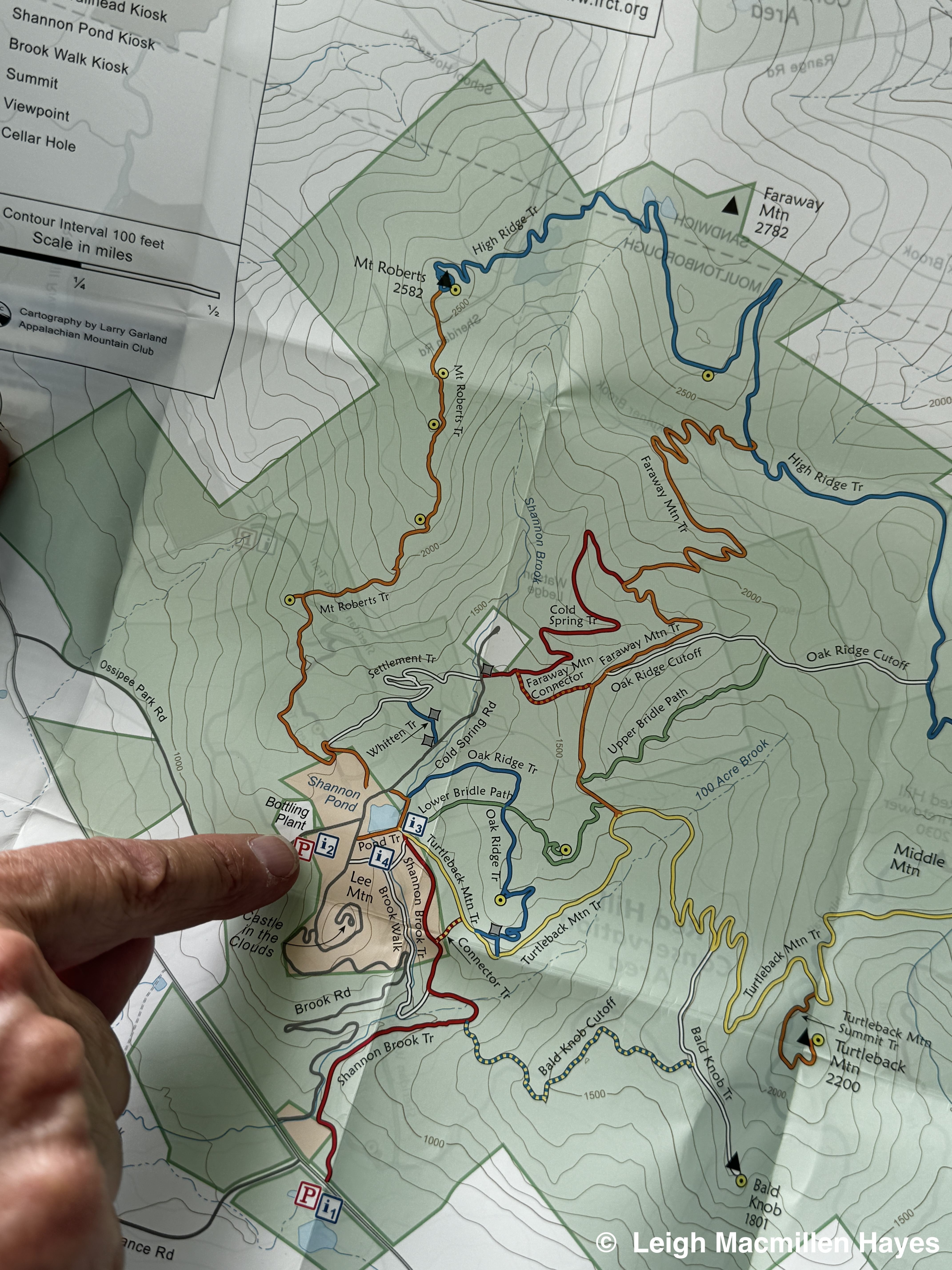
We’d hiked along the brook, spent time exploring the mansion and grounds, and the headed off to hike another trail with only so much time on our hands. At the intersection of trailheads, we had the good fortune of meeting two women with local knowledge who showed us where we were and where we wanted to go . . . that being heading up Mount Roberts. We knew we didn’t have time to summit for My Guy had to get home for a meeting (at which he later received a well-deserved Lifetime Achievement Award), but we made a plan for a turn-around time.

The trail was blazed with orange markers and we might have believed that a Black Bear had marked the way, for so chewed and scratched were the signs, but I suspect it was a Red Squirrel who had a good chomp or two or ten.

That said, a female American Toad, her tympana (ear membrane) about the size of her eye, and overall size of her body providing a clue to her sex, but also doing her best to blend in to her surroundings as she paused upon a stone on the trail.

We’d hiked over a mile when I suddenly spied this from the trail. Ruh roh. That meant we had to start looking and counting, a task that slowed us down a bit.

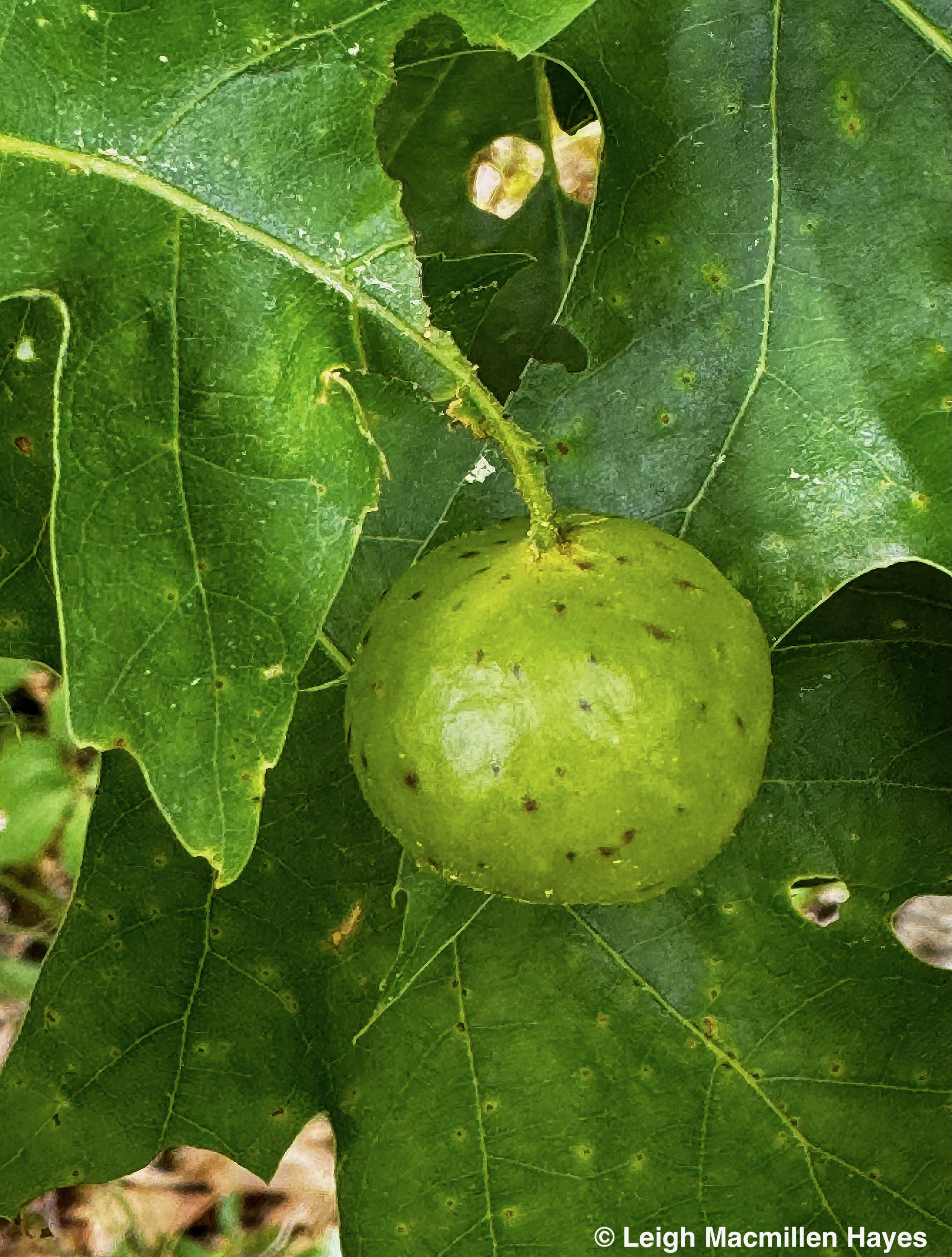
We had set a turnaround time, knowing that we wouldn’t be able to hike the entire 2.5 miles to the summit because My Guy needed to get home for a meeting, and so at 3:15pm, with 1.7 miles behind us, we stopped our upward ascent, but before descending, I spotted a green golf ball on a Northern Red Oak leaf.

Each time I spot one, I’m in awe for it’s such a cool structure. Though it looks like a fruit, it’s caused by a chemical reaction the leaf has when a wingless adult female wasp, Amphibolips confluent, lays an egg into a newly-forming leaf. As the egg hatches and larvae grows, that chemistry causes the leaf to mutate and grow with it.

The wasp is commonly known as an Oak Apple Gall Wasp, and thus this is an Oak Apple Gall.

We chuckled on the way down, for we did pay more attention to the flora, and couldn’t believe that we’d passed by this Lady’s Slipper display located inches from the trail. But that’s what happens when you are moving on My Guy-speed, and watching every spot where you place your feet. Our total count on the way down: 52, but I’ve a feeling we missed many more.

And hiding under some trees near the trailhead: Ragged Robin, a treat because I’ve only encountered it a few times. I love its frayed, yet delicate display.

Because our descent was much faster than the ascent (and still we counted Lady’s Slippers, but that’s why I think we missed some), I stole a few minutes beside Shannon Pond where a small field of Lupine bloomed.

And a female Mallard swam toward the shore. She and a few jumping fish were the only wildlife spotted today.

That was okay, for we had a splendid Mondate wandering under the clouds, which seemed truly appropriate since we were at the Lucknow Mansion property now known as Castle in the Clouds in Moultonborough, New Hampshire. Why did we wait so long to visit? Maybe because it’s practically in our backyard.

Eyes on the World About Us

Sometimes we hike with a purpose, My Guy and I. And on those days, he actually slows his pace down.

And opens his eyes wide, much like the Red Squirrel–ever on the alert.

Was it the Fringed Polygala, aka Gay Wings he sought? No, but I certainly did. Those petal-like wings are actually sepals. Two of the petals are fused into a tubular structure, thus giving this plant a “bird-of-paradise” form. The fringe at the end of a third petal or keel below invites all to enter.

Don’t they look like birds in flight? Being a spring ephemeral, these delicate blooms will only last a few more weeks and then I’ll confuse their leaves with those of Wintergreen, but My Guy was rather oblivious to all of this.

Was it the Dandelions he sought? No, he scuffs at those. But the Flower Fly and I–we were two of a kind for this incredible display. Notice how each ray is notched at the tip like teeth. Those five “teeth” represent a tube-shaped floret. Fully open, the bloom is a composite of numerous florets.

Was it the Wolf’s Milk Slime he sought? No, I’m not sure he even spotted them for though we were moving at a slower than normal pace, one of us was even slower than the other. I couldn’t help it. I cannot resist this slime mold.

It was apropos that I should spot it on this trail and by the end you’ll understand why.

And so I did what I always have to do when I spot Wolf’s Milk. Picked up a stick. And poked one of the fruiting bodies. I could actually feel my peeps’ presence in the moment because they would have been doing the same, and maybe even taking a video as the salmony-pink paste inside oozed out.

As the mold matures, the paste actually turns into the spores and when we poke it later in the season, a puff of gray exits the ball. No, they are not puffballs, but they are the next best thing.

Was it the Painted Trillium he sought? No, but for once he did actually count them. I’ll let you know the total at the end.

Was it the number of blowdowns, he sought? No, but those were incredibly abundant, many occurring over the course of the past eight months. And actually, they were a hinderance to what he did seek.

Was it the Pink Lady’s Slippers he sought? BINGO! I do not know why, but My Guy loves to count them and especially to find displays like this. And I love that he loves this.

White Lady’s Slippers are a variation of Pink, and so they were included in the count.

We honored the very last one before we headed back to the truck–this being #475.

Yes, 475 Lady’s Slippers.

At this same locale in 2023: 324.

And in 2022: 411.

The thing we did notice this year, we were a week earlier than usual, and many of the flowers hadn’t completely opened. Note to ourselves: don’t be so impatient next year because we really love seeing them in full color.

And we do know we missed some because of the blow-downs, but hey, we still did well.

Number of Painted Trillium: 2. My Guy usually refuses to count them, but we didn’t spot one until we were almost done, so he figured he could. And then the second one appeared.

I couldn’t help but smile.

Where were we? By this photo some of you may now know our location. In front of us was Googins Island, as viewed from the rocky coast at Wolfe’s Neck Woods State Park in Freeport, Maine.

Now do you understand why I said the Wolf’s Milk Slime Mold was located in the right place?

And Googins Island has long been home to this Osprey nest, where the expectant parents had their eyes on the world about them. Just as we had.

Eyeing the Ladies

We were in the area. It’s spring. (Until Wednesday that is, when winter is scheduled to return, and here’s the latest from the National Weather Service out of Gray, Maine:

…WINTER STORM WATCH IN EFFECT FROM WEDNESDAY AFTERNOON THROUGH
LATE THURSDAY NIGHT…

  • WHAT…Heavy snow possible. Total snow accumulations greater than
    18 inches possible. Winds could gust as high as 55 mph.
  • WHERE…Portions of south central, southwest, and western Maine.

And so we headed to Wolfe’s Neck State Park this afternoon cuze we kinda have a love affair with this place in Freeport, Maine.

It’s a place where the forest meets the sea, or at least Casco Bay, and so it brings our two loves together and always gives us a chance to refill the innermost recesses of our lungs with salt air, while still enjoying the woodland trails.

What immediately became clear, however, was the extent of damage the coast has endured this past year due to intense storms. Erosion was evident in so many places. Sadly.

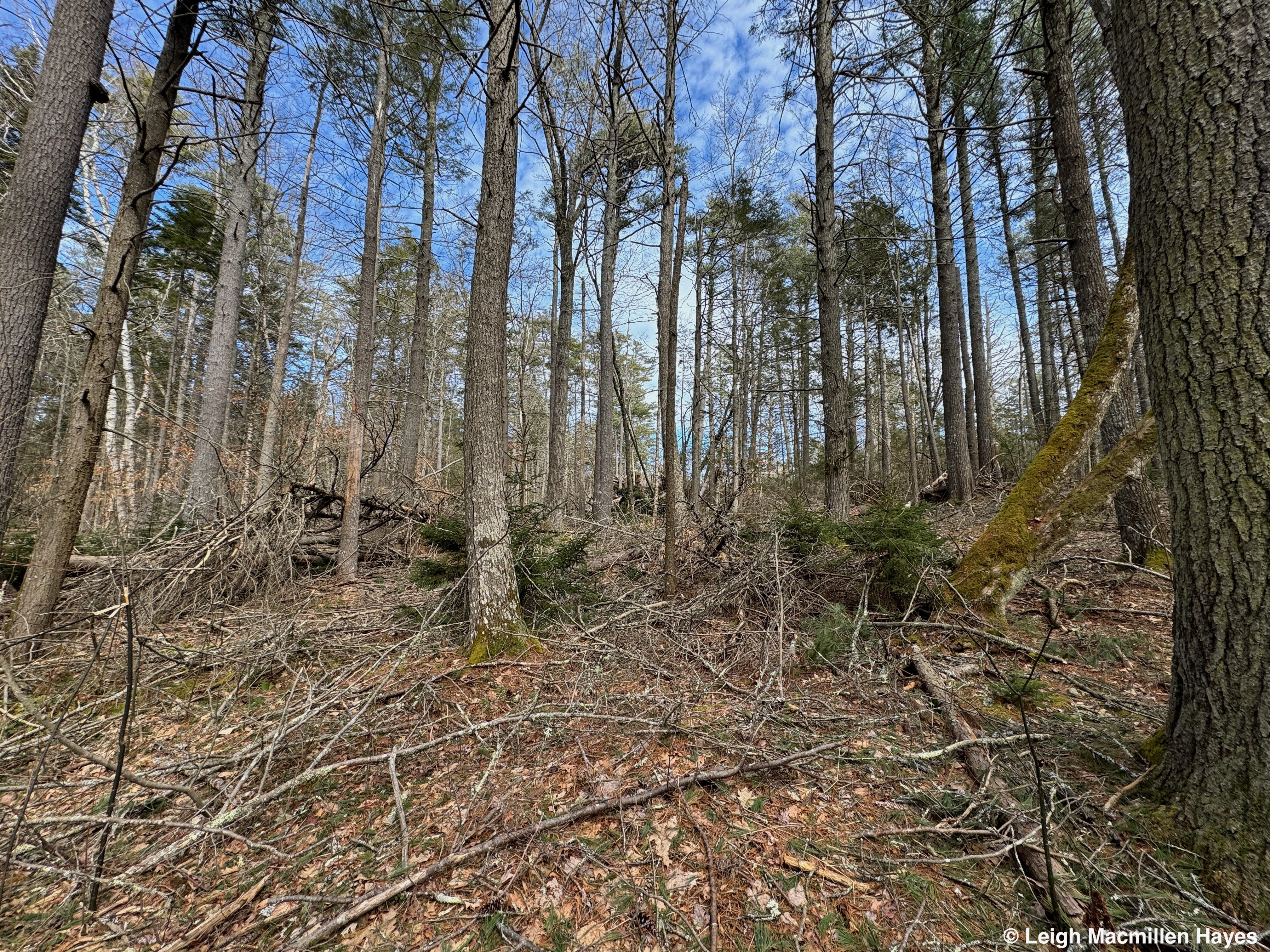
The landscape was also ransacked by the force of the wind. Trees were uprooted–some falling south, others, east, a few west, and even north. We could almost feel the harsher than normal gusts even though we weren’t present for any of these episodes.

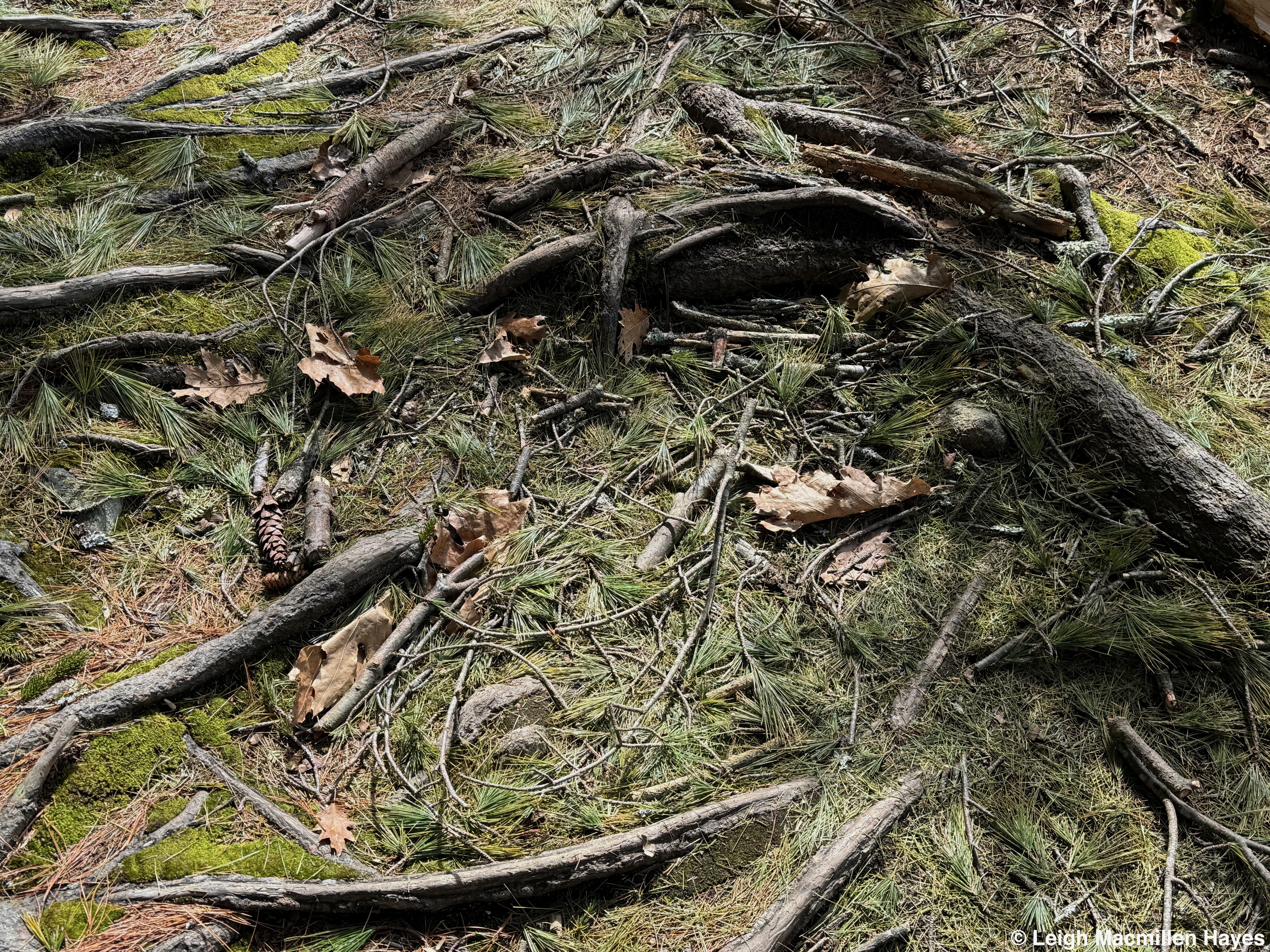
And the trails are scattered with pine twigs and needles, which though they soften each footstep, really just bring the destruction closer to our eyes and minds.

There were some, however, or perhaps many, who took advantage of the uprooted trees as great places to think they were hiding from us–the great predators that we are.

Those who work for the park have had a lot of work “cut” out for them and they’ve cleared tree after tree from blocking the trail and our kudos to them.

In almost five miles of hiking trails, we only found a few obstacles, this one being the most difficult to conquer. And really, it wasn’t that difficult, but more inconvenient. And we know that they’ll take care of it soon. They probably just need to give their chainsaws and muscles a brief break. Really. I cannot explain the amount of devastation. It happens every year, but I don’t think we’ve ever seen it to this extent.

But there were other things to notice, such as this Red Squirrel midden that must have been an incredible cache back in the fall, and I wished I’d seen it then.

And the sweet buds of Trailing Arbutus waiting to make their 2024 debut.

But our best sight of the day: Lady’s Slippers in bloom. Oh my. Everything is early this year, but we definitely didn’t expect to find these friends so soon.

Eyeing the ladies is something My Guy loves to do.

Oh, we found a few seed capsules along the way.

And we did see these flowers . . . on the kiosk.

But the photo I took of a Lady’s Slipper dates back to last spring. I hope I gotcha for a moment.

Happy April Fools Day 2024!

Waving on Father’s Day

It barely rained. Well, actually, it didn’t rain. Just a bit of drizzle now and again. And so this afternoon, after a Facetime session with our youngest and his gal, we headed off for a hike, My Guy and me. I’m pretty sure he missed most of what I saw, but that’s okay. It was a day to celebrate him and he was welcome to do as he wished and think whatever he thought along the way.

Every once in a while, I’d say, “Hold on,” because something caught my eye and I needed to stop to honor whatever it might be . . . in this case Northern Bush Honeysuckle, a native species. Honeysuckles always take me back to my childhood and that heady scent that filled many a walk from beach to town. I spotted only an ant today crawling into the leaves, but suspect on a warmer day butterflies and moths will stop by for a sip and in the process aid in pollination.

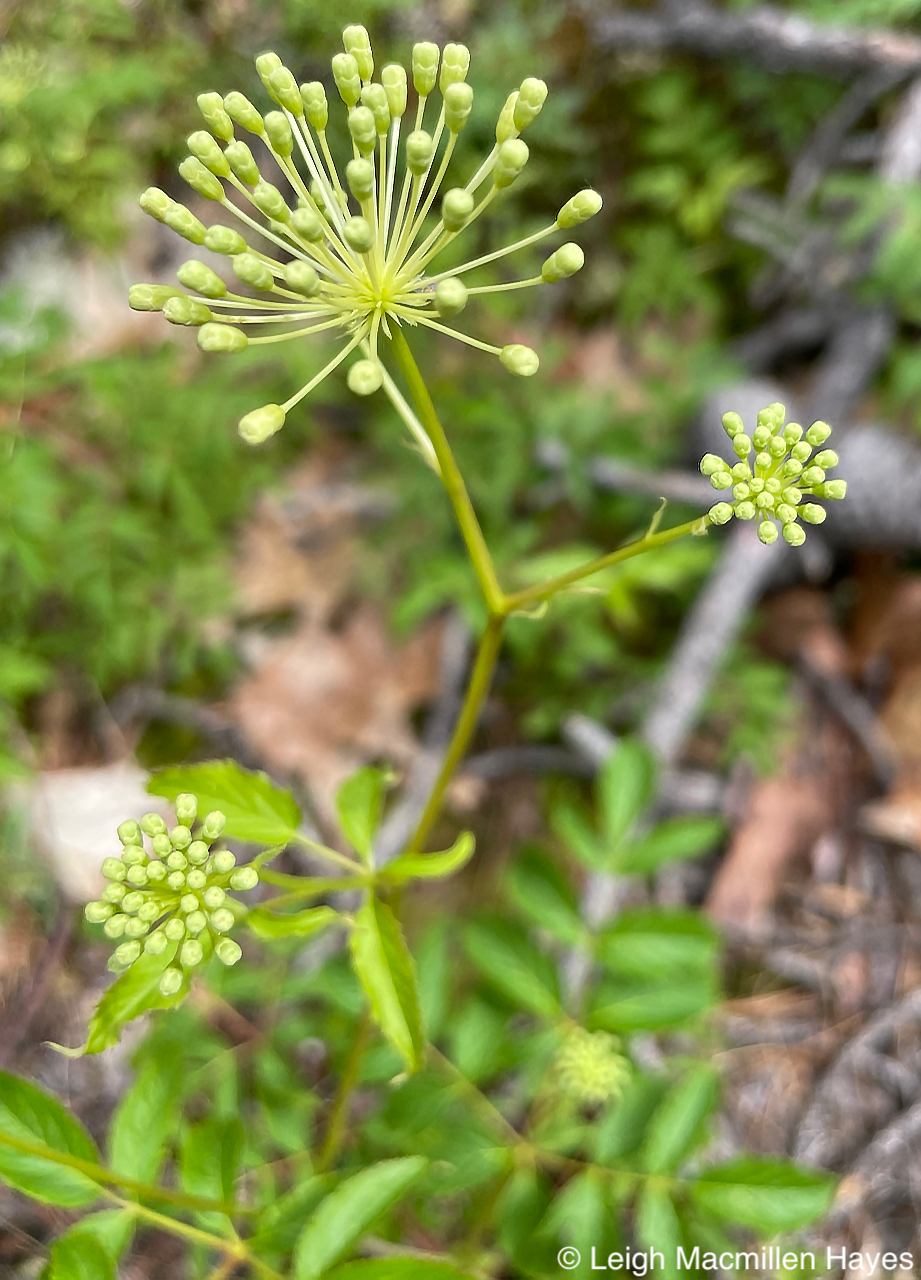
Next up, was another not quite in flower yet . . . a Bristly Sarsaparilla. Its round flowerhead is known as an umbel and when the individual flowers do bloom, each will offer five teeny, tiny petals.

One contrast between this, the Bristly version and a Wild Sarsaparilla is that the compound leaves of the former are found below the umbels, while the latter flowers occur on a separate stem and hide below, as if the leaves are an umbrella.

And that adjective in the name . . . Bristly . . . refers to the bristles on the stem, which aren’t sharp at all. The stem of the Wild version is smooth, another difference to consider when trying to distinguish the two varieties.

The next stop in my tracks find was a Red Raspberry Slime Mold, aka Tubifera ferruginosa. It’s one of those species that you wish you could spend hours or even days watching, but My Guy didn’t quite feel the same and so we moved onward.

Much more to his liking . . . a few Lady’s Slippers. We only saw three in total, a low number in our book of hundreds, but we still rejoiced in these because their days are waning.

So much so that the petals and sepals of this particular orchid had begun to change form and we suspect there will be a capsule head and seeds in the future.

The last great find of the day was what could almost be considered a crystallized candy upon maple leaves. But really, it’s bumpy pink growths caused by a gall mite. This is the Maple Velvet Erineum Gall.

The mites overwinter under loosened bark and around wounds and scars. In early spring, they produce the gall-forming stage that migrate to expanding buds and make themselves at home as they begin to feed on the undersurface of future leaves. The tree won’t die, but really, leaves work so hard to survive the winter and then are attacked on so many fronts.

Can you believe that one leaf followed me home? Here’s a look at part of its structure not affected by the gall.

The pinkish-red, however, is the gall. The mite itself is so microscopic that I don’t think I can locate it.

I did take a closer look and maybe the dark thing on the right is related. But what struck me most was the deformed shapes where the gall had affected the leaf’s cells.

And then there was this other interesting form, again on the right, in a different section of the leaf. It certainly looked like it had a form and purpose, but I’m not yet privy to that information. Maybe some day.

Could it be a bunch of mites?

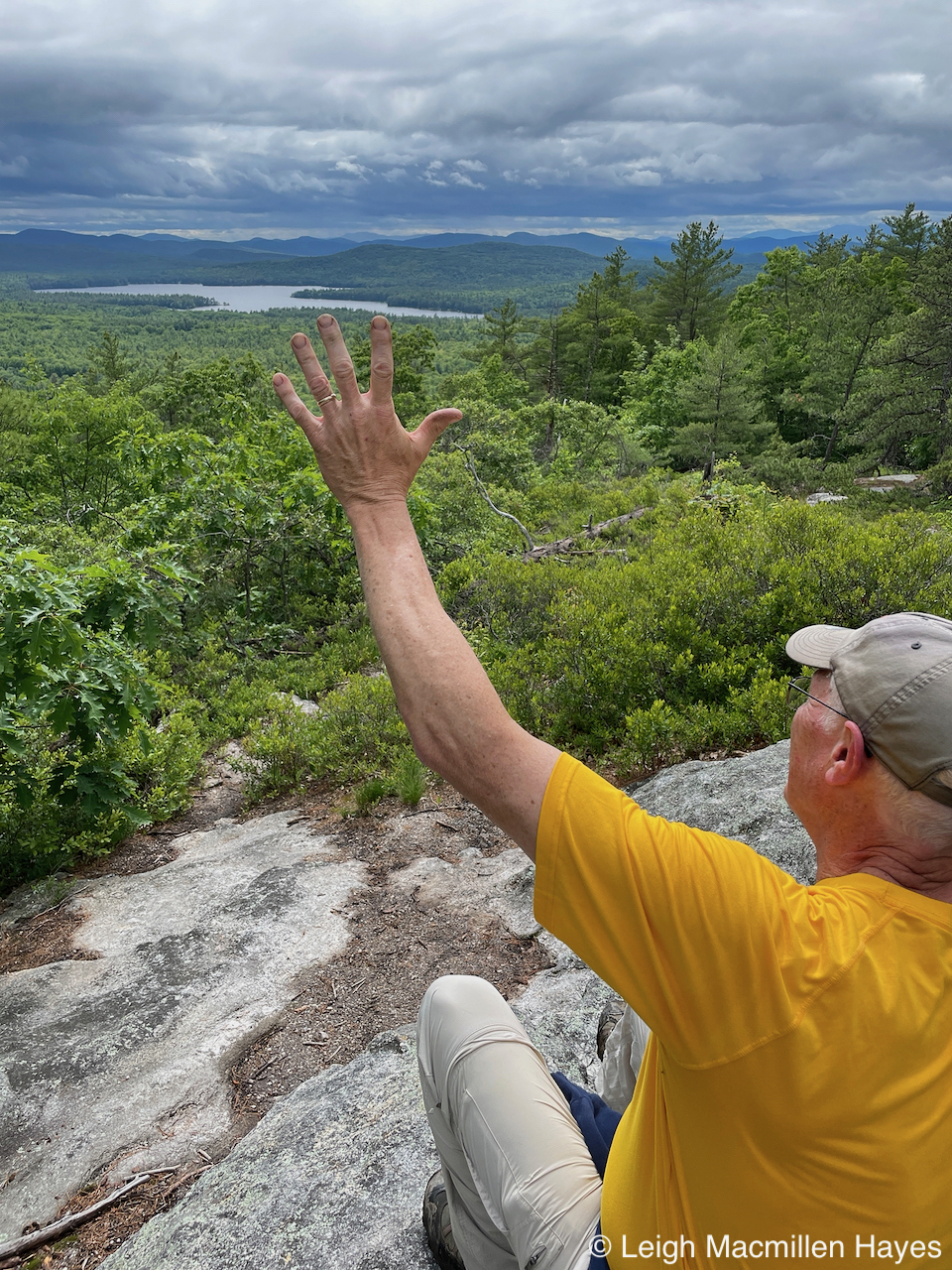
In the meantime, it is still Father’s Day and My Guy took a moment to wave hello to family and friends from the summit. We’re pretty sure we saw you all wave back.

Mondate with the Ladies

Our afternoon adventure began beside a brook in western Maine where the wildflowers and mosquitoes do thrive.

We looped along beside the water, enjoying the sound of it and each other’s voice flowing forth, rhythm and tempo matched.

Occasionally I’d say, “Wait a minute,” from behind for so stunning were the sights including Clintonia (Bluebead Lily) and . . .

even a lingering Painted Trillium or two.

But soon it became apparent who the biggest star of the show at our feet might be. I think it was a mention that so many Lady’s Slippers were spotted along a short section of a Greater Lovell Land Trust trail over the weekend that got my guy going and suddenly he pointed out every moccasin flower within sight to me.

Along the way he saw other interesting things like a burl on a birch that could have been two small bear cubs.

I pointed out an Indian Cucumber Root in flower and decorated with drops from rain and hail that fell upon us occasionally as the sun shone, but the blossom didn’t seem to excite him as much as it did me.

Instead, pure white flowers offered their rendition of a Pink Lady and he didn’t let it go unnoticed.

After a few miles we reached the pond for which the mountain in the background was named and enjoyed the view, knowing that a mile or two later we’d be at the summit looking back toward the very place where we stood in the moment.

Onward we continued and so did the Lady’s, which found my guy saying, “If you told me I’d be counting 150 Lady’s Slippers today, I’d say you were crazy.” But so we did. And then we counted more for we found a huge patch.

“Thirty-one right here,” he said. And with that he felt quite satisfied for he knew he’d far surpassed the weekend count on another trail. Ah, nothing like a little competition to keep this guy going.

At last we reached a bog crossing at the end of the pond and then followed the trail uphill.

It was here that others garnered our attention such as a young chipmunk that dashed up a tree as my guy passed and then turned to look back.

Chipster paused as we stood, then dashed down the tree and disappeared into a hole in the leaf litter.

Onward and upward we journeyed into the land where the slippers weren’t as abundant, but still there were a few.

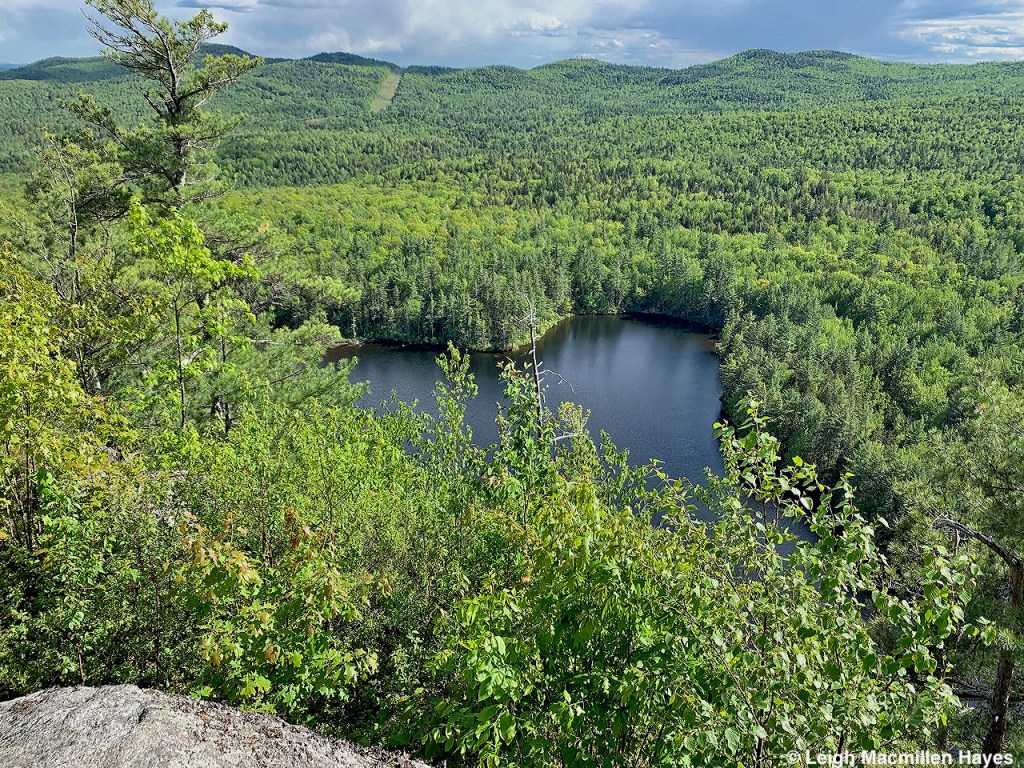
At last we reached the summit where the pond below formed a heart in our mind’s eye and we gave thanks for the fact that we can get out and hike and never spot another person. All that and as we descended there were more Lady’s Slippers to add to the count.

On this Mondate with the ladies my guy was amazed to spy so many and I was amazed that he enjoyed the sight of every one of them.

A Rare and Exotic Mondate

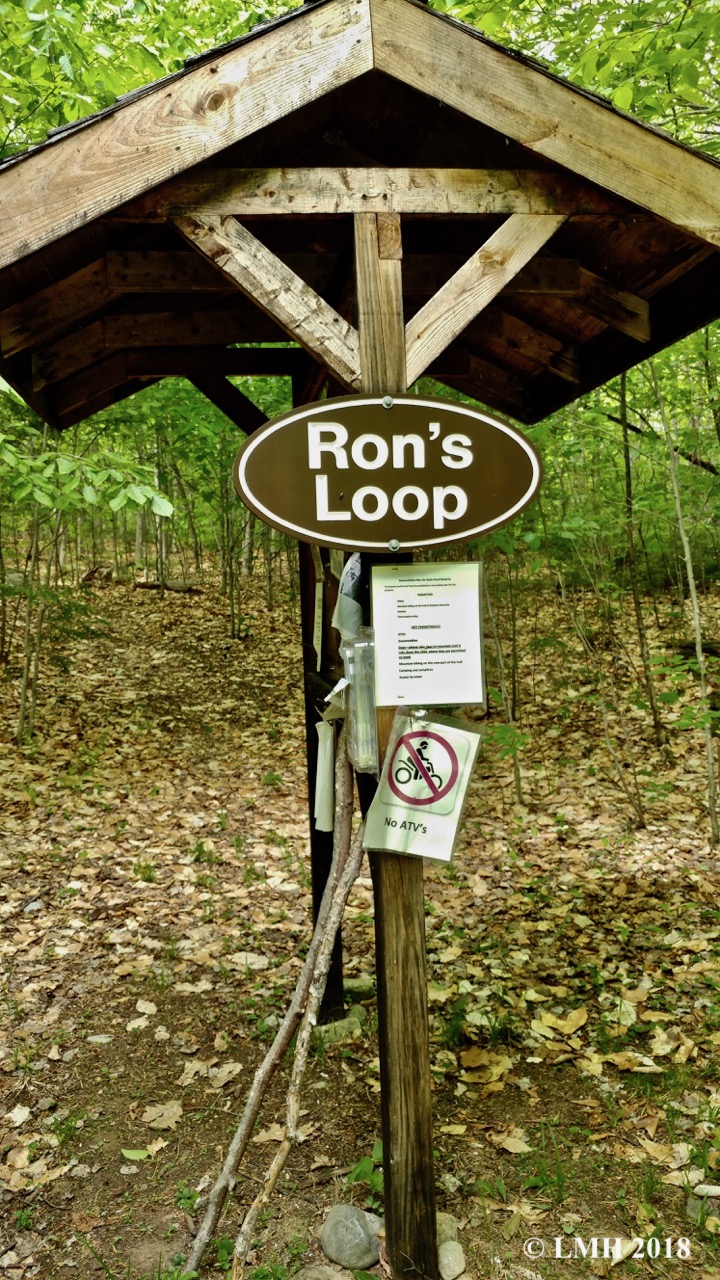
When my guy and I began our journey this afternoon, he thought our mission was simple and two-fold. First, we’d double check road names and directions for a friend’s book that I’m editing. And then we’d hike the easy Ron’s Loop at the Greater Lovell Land Trust’s Back Pond Reserve in Stoneham, Maine.

Y7-RON'S LOOP KIOSK

No sooner had I parked the truck and we hopped out, when I announced that we had a detour to make. Always one for adventure, he followed along. And when I told him our quest, he began to search the forest floor. I have to admit time and again that though he pretends not to care about so much that naturally distracts me, he has a keen eye. Or maybe its just that he likes a challenge. Perhaps, too, he just wanted to make the find and move on for the mosquitoes were robust and hungry.

y1-yellow lady's slipper

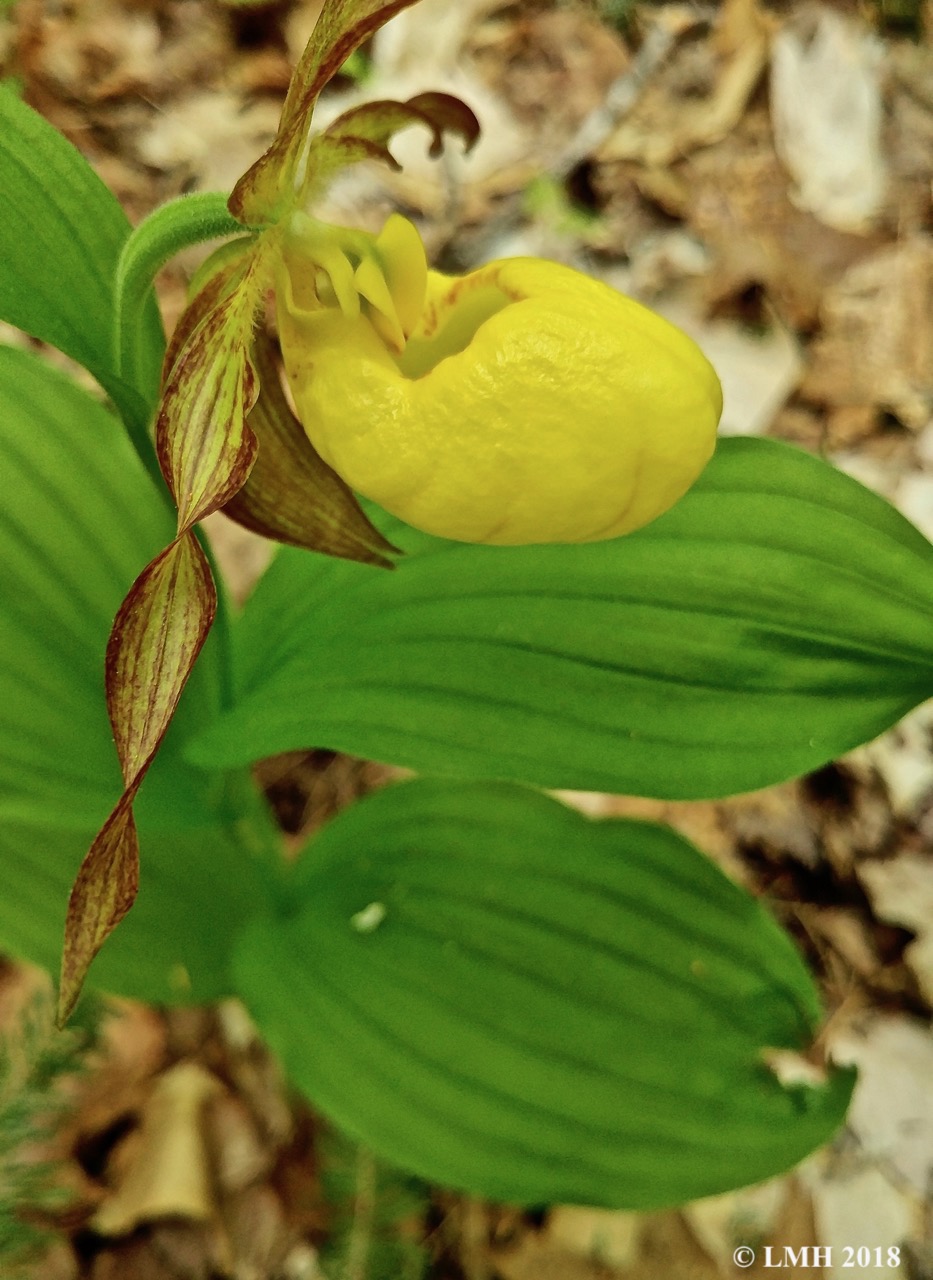
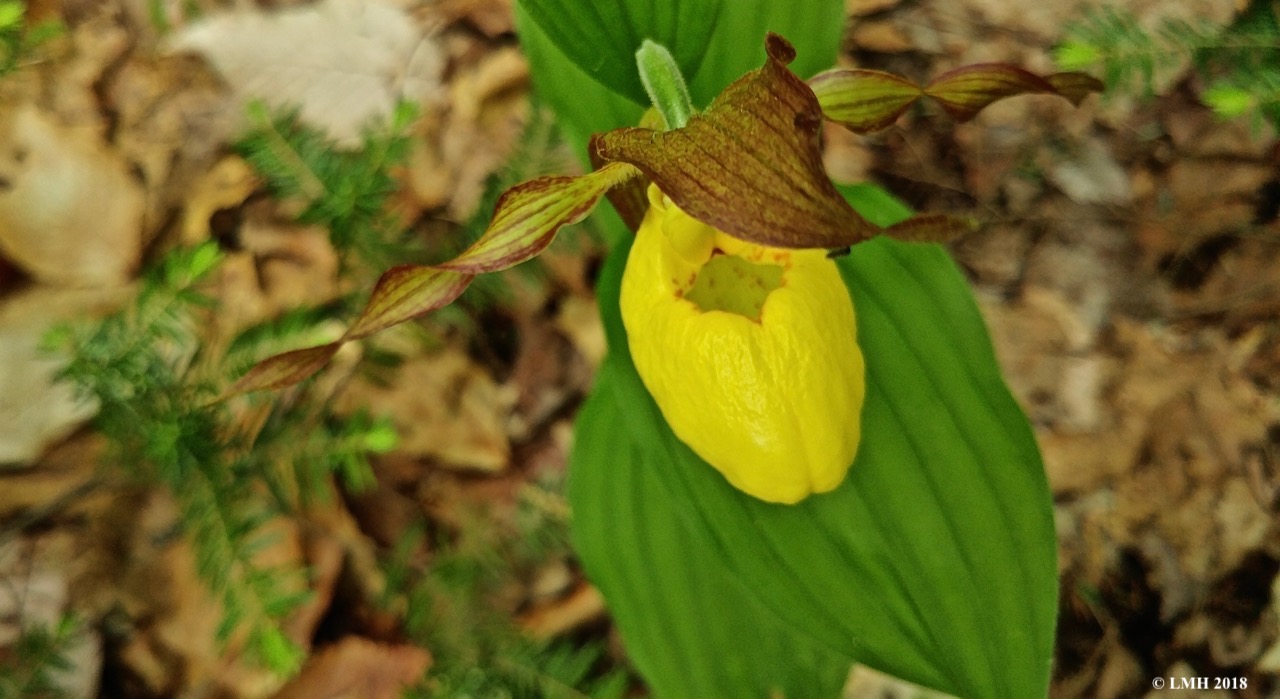
What mattered most was that he channeled his Prince Charming and was the first to find Cinderella’s golden slipper.

Y4-ALL THE PARTS

Members of the Orchid family, lady’s slippers feature the typical three petals in an atypical fashion. The pouch (or slipper or moccasin), called the labellum, is actually one petal–inflated and veined.

Y3-TENDRILS

With a purplish tint, the petals and sepals twisted and turned offering their own take on a ballroom dance. From every angle, they were simply elegant rising as they did from their stem with leaves forming a royal staircase.

lady's slipper

Though we didn’t see any pink lady’s slippers on today’s hike, it’s interesting to note their differences, with the sac of the pink dangling down like a high-heeled shoe, while the yellow is more ballet-like in its presentation. And the pink features two basal leaves, in contrast to the alternate steps of the yellow’s leaves.

Both, however, are in the genus Cypripedium in the Orchidaceae family. The genus name Cypripedium is derived from the Greek words “Cypris,” an early reference in Greek myth to Aphrodite, and “pedilon” for sandal, so named for the fused petals that form the pouch and their resemblance to a slipper or shoe.

Y2--LOOKING WITHIN

All lines on this orchid led to . . . well, not exactly Rome, but certainly the labellum, or sac-like structure. With the rim turned inward, the pollinators found it easy to enter, but much more difficult to exit, the better to rub against the stigma and anthers, thus collecting pollen. Some bees find it difficult to simply fly away from the lady’s charm, but by chewing their way out, they are able to move on to the next and leave a message from the princess in the form of a pollen deposit.

Y7-BEECH COTYLEDON

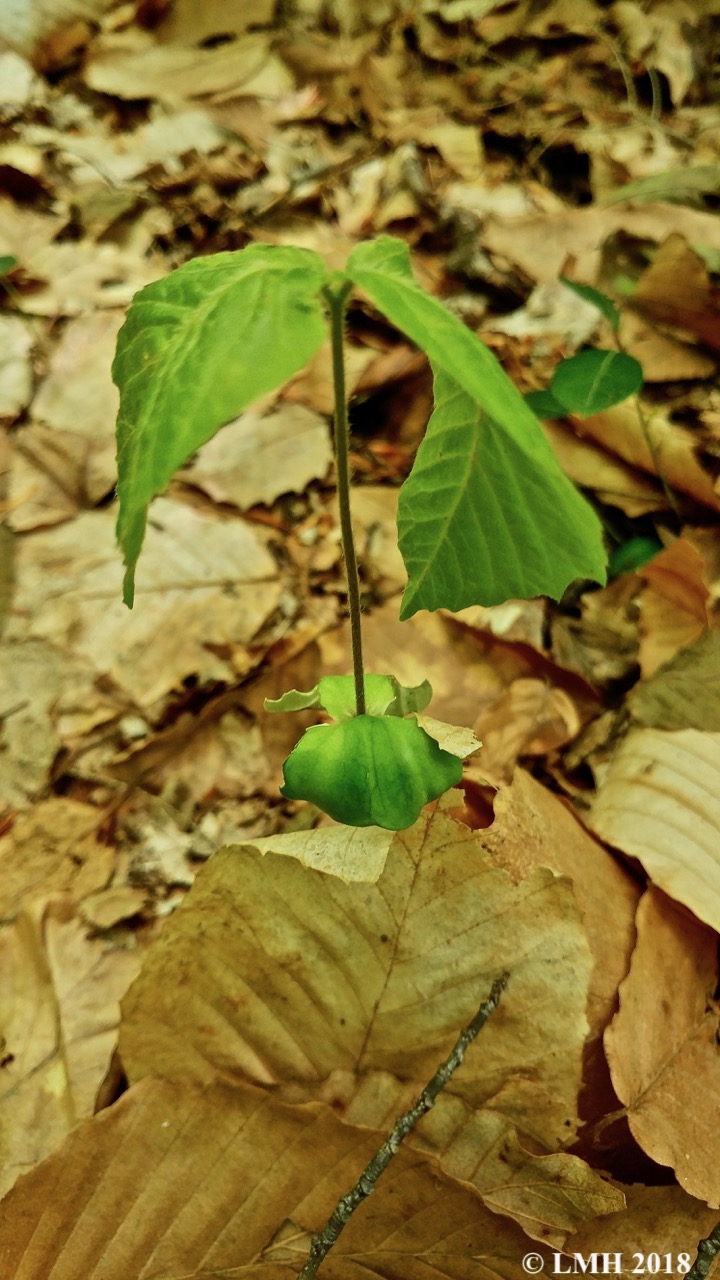
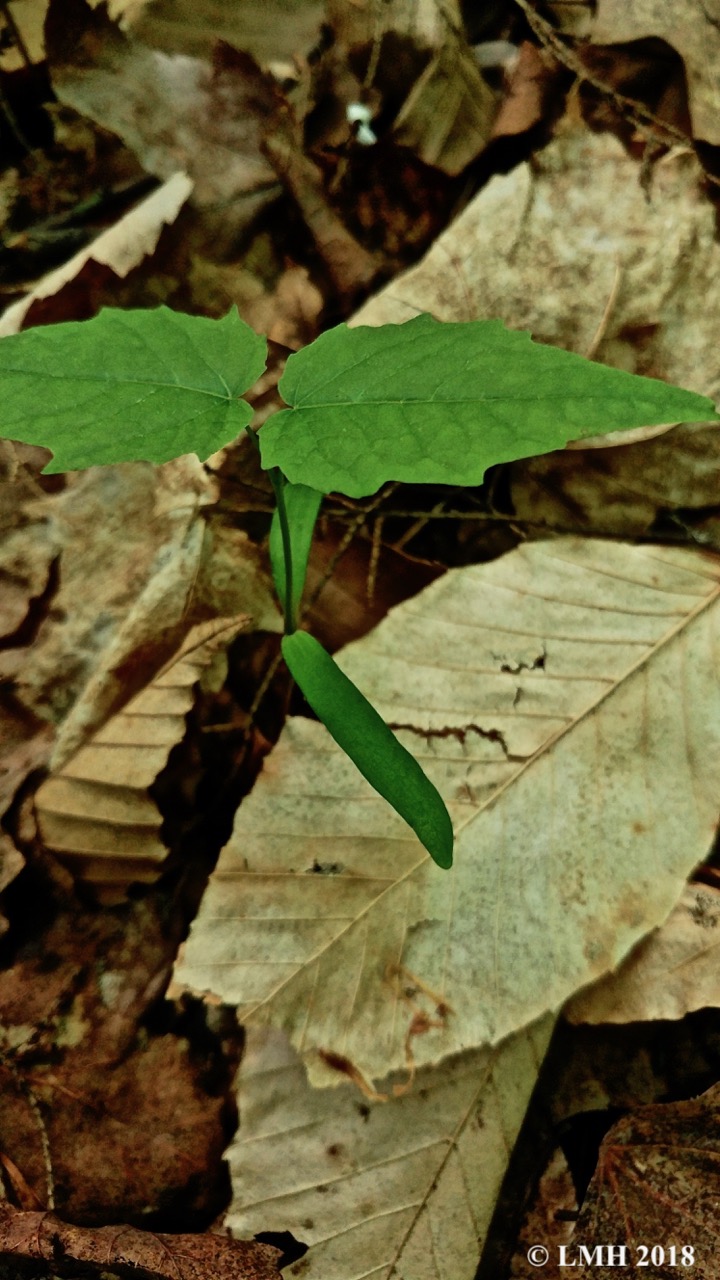
We finally moved on with the not-so-sweet drone of those larger-than-life mosquitoes buzzing in our ears. And then we stumbled upon one American beech cotyledon after another and were reminded of last year’s mast crop of beech nuts.

Y8-BEECH COTYLEDON

I was again reminded that it’s my duty to bring attention to these structures, the seedling form of beech trees. The lower set of leathery embyronic leaves that remind me of a butterfly, appear before the tree’s true leaves make themselves known. Part of what intrigues me about these seed leaves that appear before the tree’s true leaves is that they contain stored food. Some of these food stores wither and fall off, but in the case of the many we saw today, the cotyledons had turned green and photosynthesized. I also love how the word cotyledon (cot·y·le·don \ ˌkä-tə-ˈlē-dᵊn \) flows off my tongue, much like marcescent, which describes the leaves of this same tree that cling, wither and rattle all winter long.

Y8A-BEECH GROVE TO COME

Though I’ve read that seeing beech cotyledons is a rare event and could attest to that fact  in the past, thrilling with each siting, today we noted their ubiquitous nature.

Y9-RED MAPLE COTYLEDON

Red maple cotyledons also decorated the trail. If the plant has two seed leaves, such as these, it is a dicot (dicotyledon), and if only one it is a monocot (monocotyledon).

Y10-MAGIC ALONG THE TRAIL

Onward we moved, stopping occasionally as my guy did some trail work because its part of his nature to make a path clear for those who follow. Being a one-armed bandit, my help was still limited, but it won’t be long and I’ll be able to offer two capable hands.

Y11-BUNCHBERRIES

Further along the trail, bunchberries were beginning to bloom. Normally, a bunchberry plant has two sets of opposite leaves. But . . . when one is mature enough to grow a third set, typically larger leaves (perhaps to capture more energy) than the first two sets, it produces four white bracts that we think of as petals. In reality, the bracts were modified leaves. The flowers were in the center–tiny as they were.

Y12-1ST BRIDGE CROSSING

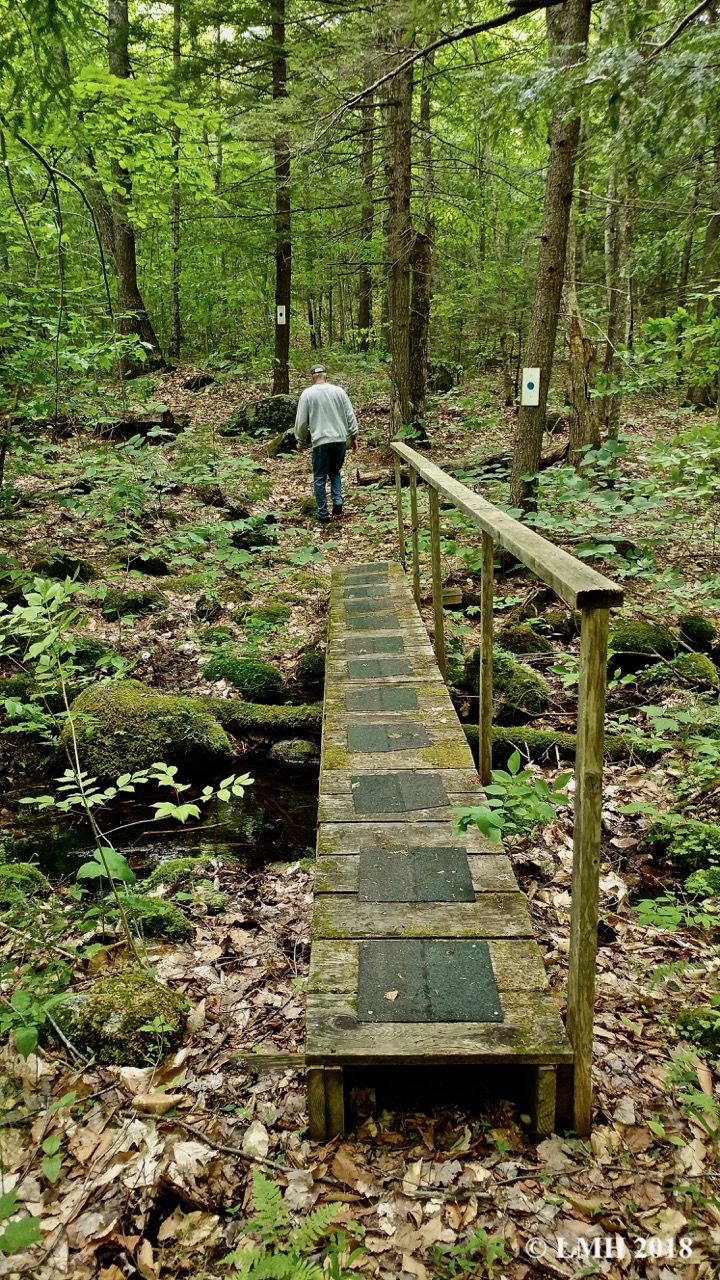
In what seemed like no time, for we moved so quickly, we reached the first bridge. It was at this point that we began the loop back toward the trailhead. And smiles crossed my face as I recalled memories of explorations along the way with so many others.

Y8B-CANKERED BEECH

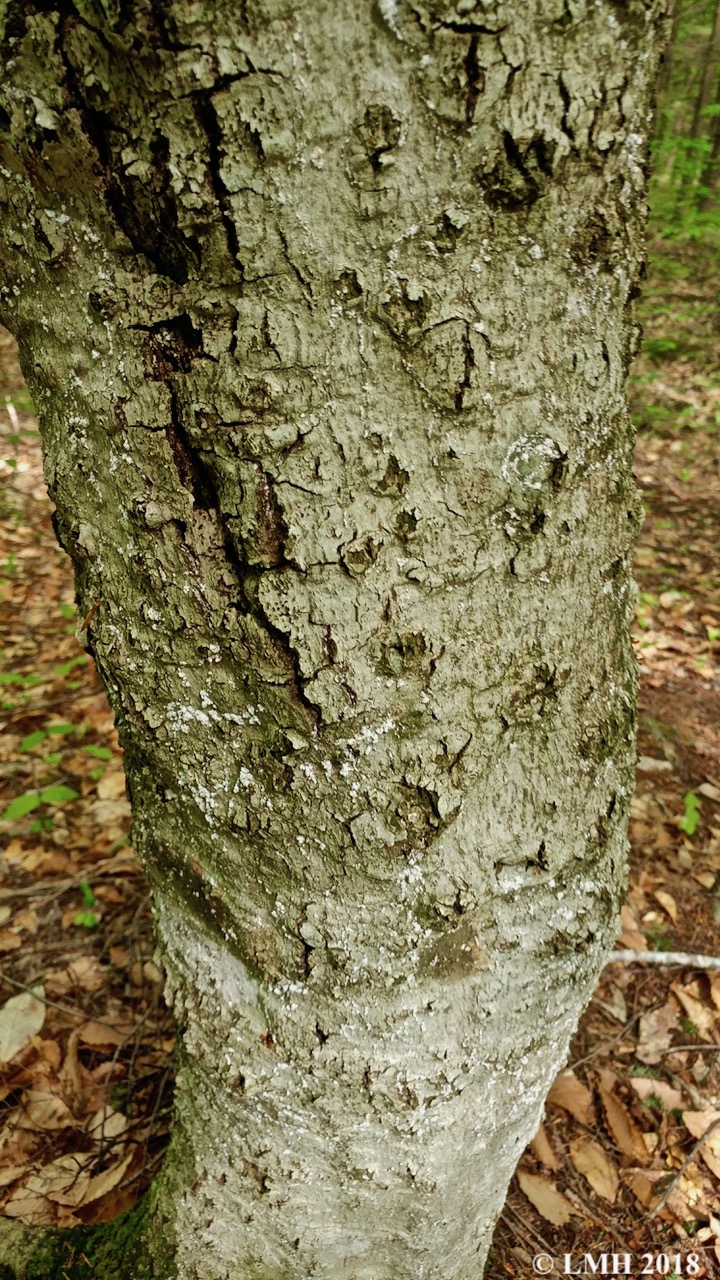
On the way back, we noted so many beech trees that dealt with nectria and we could only hope that within some of those cotyledons there might be some trees resistant to the beech scale insect that delivers such devastation to these trees.

Y13-SEATED TREE

One of my favorite trees along the way sat as it always does, taking a break upon a granite bench.

Y14-TINDER CONK

And a tinder conk showed off its form, which for me recalled a childhood spent along the Connecticut shoreline, for it surely resembled an oyster shell.

Y15-INDIAN CUCUMER ROOT

We were almost to the end of the loop when my heart and not my mouth sang with joy once again. While you might give thanks for small blessings like the fact that I’m a great lip sinker rather than the opera star my mind hears, I made my guy stop because the Indian Cucumber Root was in bloom.

Y16-INDIAN CUCUMBER ROOT

Like the bunchberries that need that third set of leaves in order to fruit, Indian Cucumber Root needs two levels to produce a flower. I’m of the belief that if the structure of this flower doesn’t make you wonder, nothing will. It strikes me as a northern version of a bird of paradise.

Y18-2ND BRIDGE

In what seemed like my shortest adventure along this trail because we didn’t want to overdo our offerings to the female mosquitoes who needed our blood in order to reproduce, we crossed the second bridge back toward the trailhead.

Y19-YELLOW LADY'S SLIPPER WITHOUT FLOWER

It was near that crossing that I checked on a couple of yellow lady’s slippers and as has been true since I first met them–they weren’t in flower. From what I’ve learned, it’s not so odd that the plants have yet to bloom. Apparently, it takes 10-17 years for a seed to mature into a plant capable of blooming. For this plant and the one beside it, perhaps the blossoms are on the horizon.

Y5-ALL PARTS 2

One day they’ll reach the status of their neighbor. For any lady’s slippers, the dance is rather intricate. The stage floor must be painted with an acidic soil and there needs to be a sashay with Rhizoctonia fungi. As the fungi digests the outer cells of the seeds, inner cells escape digestion and absorb some of the nutrients the fungus obtained from the soil–all in the name of a symbiotic dance.

Though our journey flew by on the wings of the world’s largest, loudest, and meanest mosquitoes, our finds on this Mondate afternoon extended from lady’s slippers to cotyledons, bunchberries and Indian Cucumber Root. All appeared rare and exotic.


The Big and the Small of the Hundred Acre Wood

As my friends know, I’m not one to say no to an invite to explore their land. And so this afternoon’s adventure found me spending time with Beth on the 100 plus-acre property she, her husband and parents call home in Oxford County.

b-view 2

Their sense of place begins with a field of wildflowers yet to come, the entry to their wood lot and a view of Ragged Jack Mountain. My sense of excitement to explore their place was heightened by this jumping off point.

b-Maine trail

Trails loop throughout the property and the family has taken the time to name and label all of them.

b-pine 4

We wandered along and suddenly Beth noted that we’d reached their champion pine. I looked at a small spruce before us and wondered what all the fuss was about. Then she pointed to my left.

b-pine 2

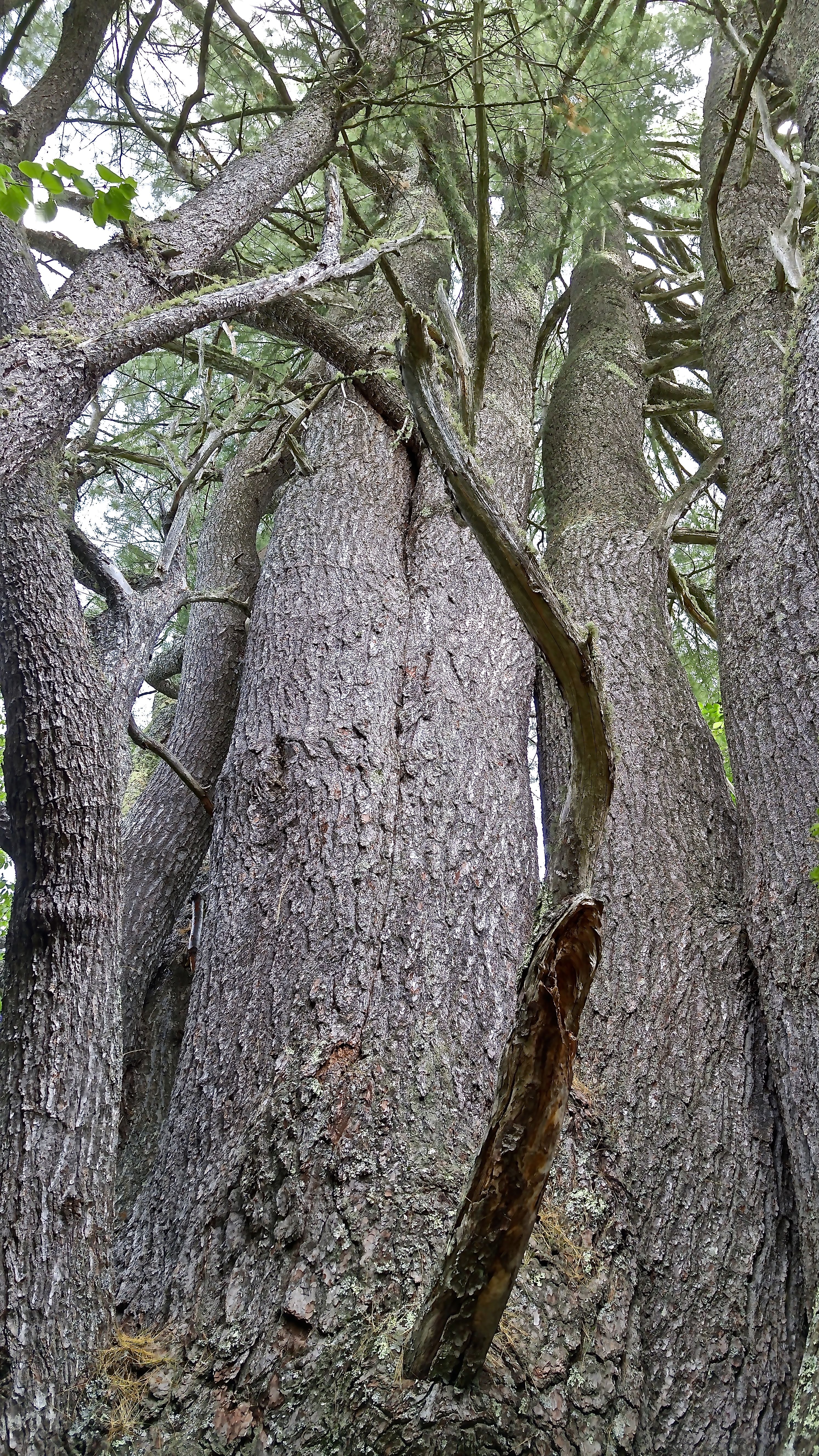
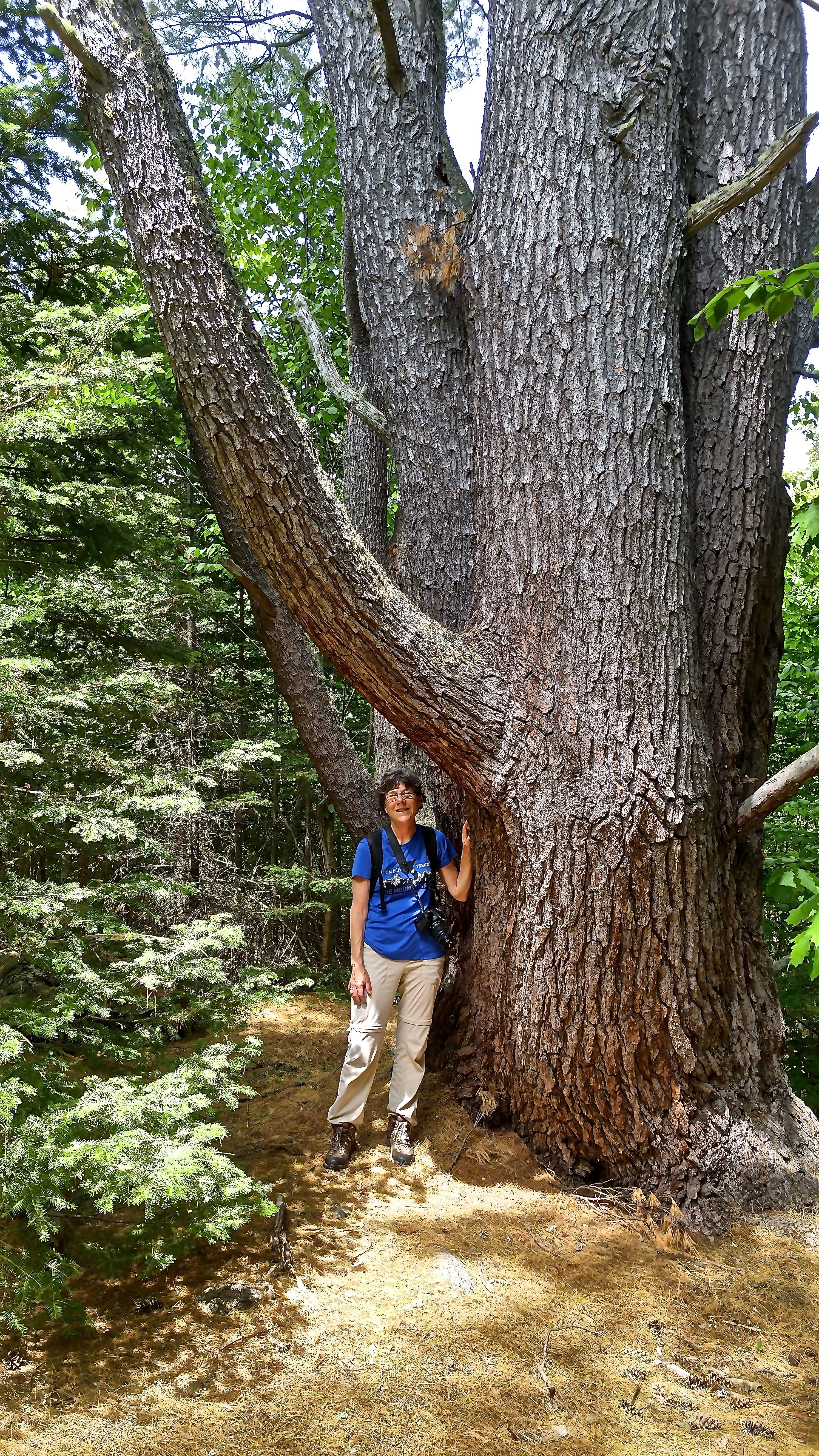
One massive Eastern white pine gallantly towered over us. At some point in its early life the terminal leader was injured–perhaps by a weevil or weather. But . . . this tree carried on and continues to do so. I felt like we were standing below a giant in the woods.

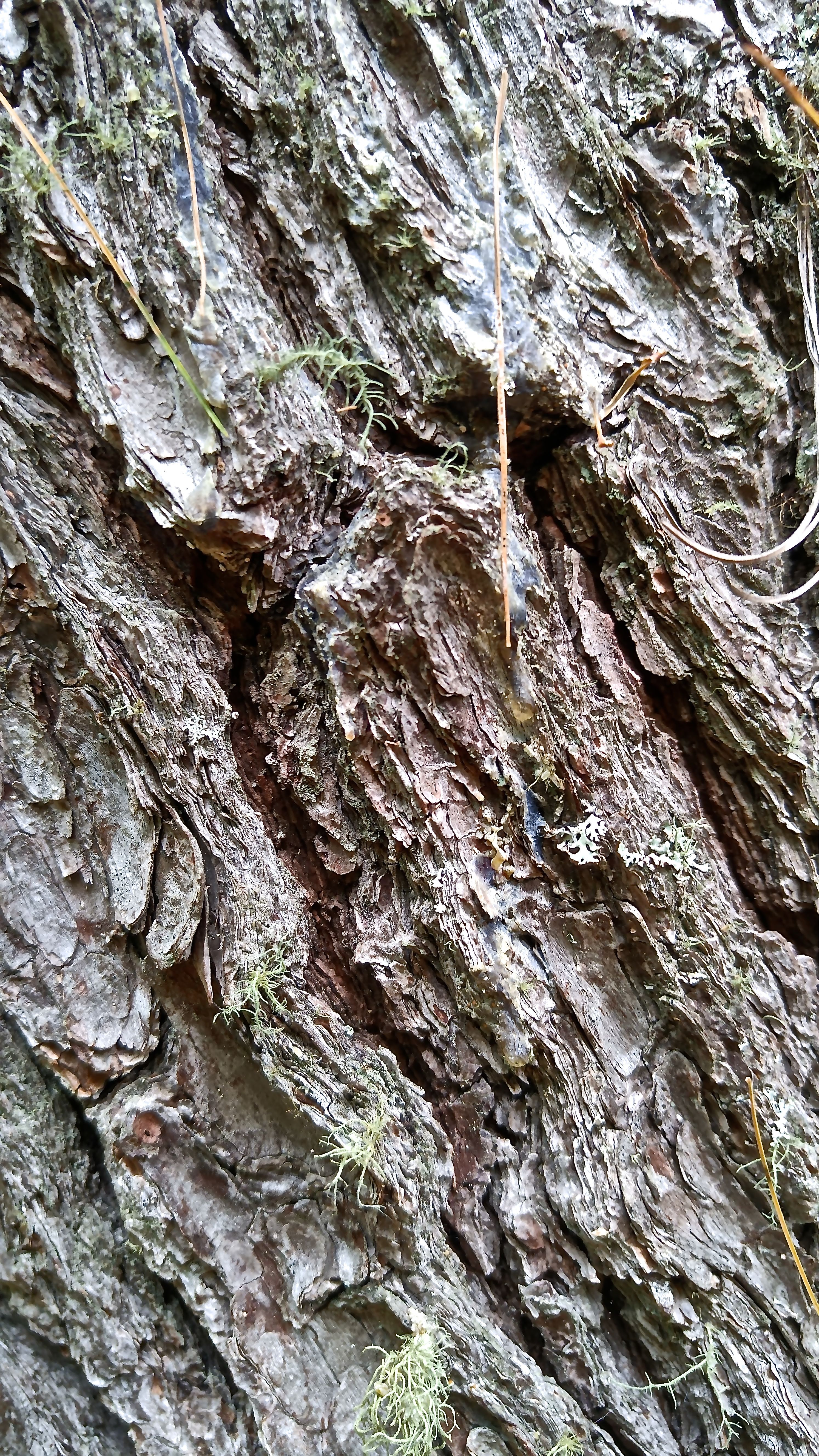
b-pine bark

It’s characterized by layers upon layers of bark.

b-pine 3

And it’s wider than any tree I’ve ever seen. Here are the stats on this champion: According to Beth, it towers 108 feet tall, is 256 inches in circumference (21.3 feet) and has a crown of 15.75.

b-pine 1

Yup. It’s big. Or rather, BIG!

b-dam:lodge2

We weaved our way along the trails and Beth shared favorite spots with me as she told tales of her experiences with this land and water.

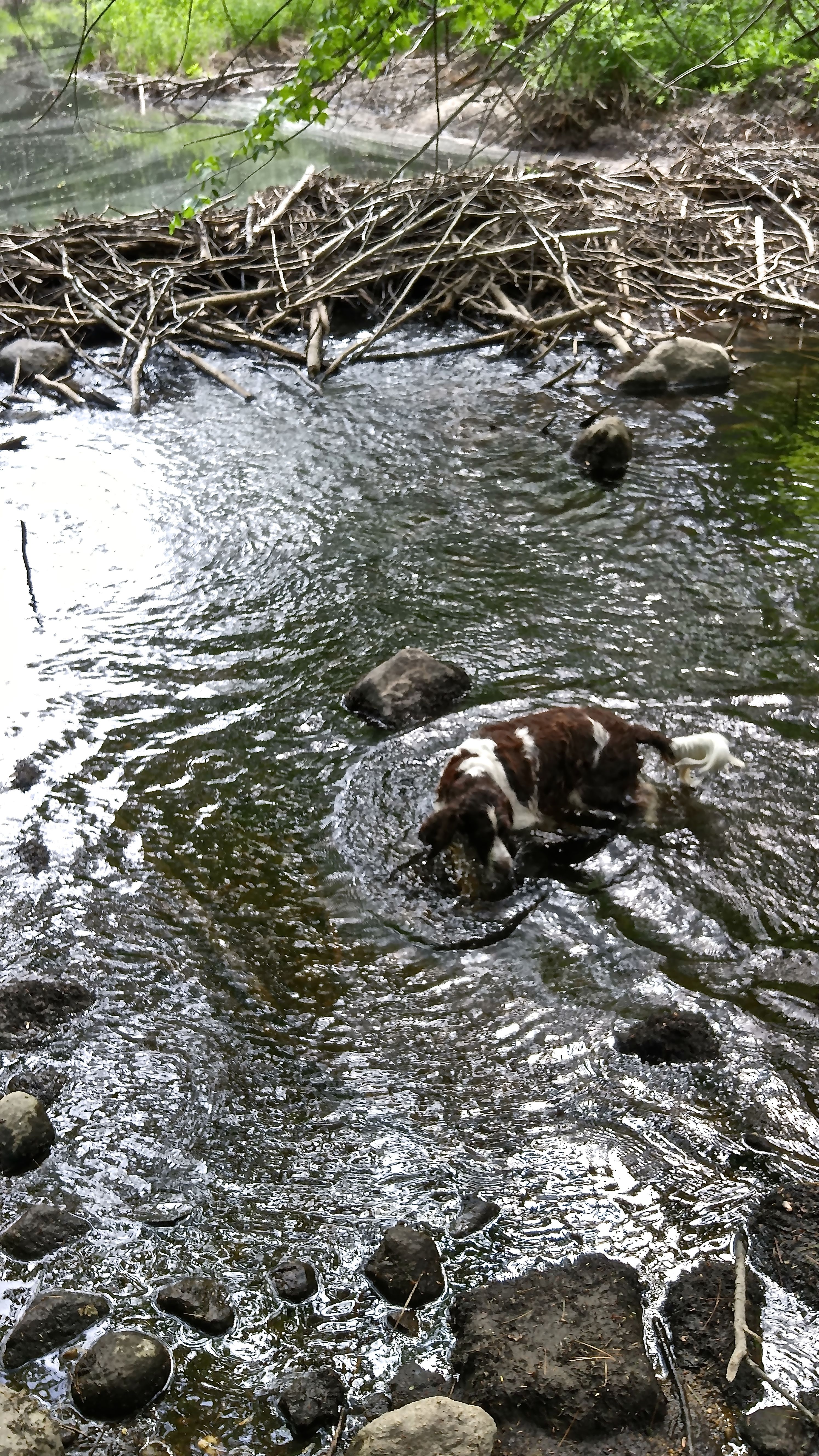
b-mora 1

Mara, Beth’s springer spaniel, shared her own tail. She was happiest when mud and water provided opportunities to play. We had to wonder other times when she cowered behind us or tried to hide between Beth’s legs. What did she sense that we weren’t aware of? We did hear a few critters, including baby grouse that Mara visited, and saw the tracks of moose and deer, plus coyote and fox scat, and maybe even bobcat scat, but our only official mammal sightings were red squirrels.

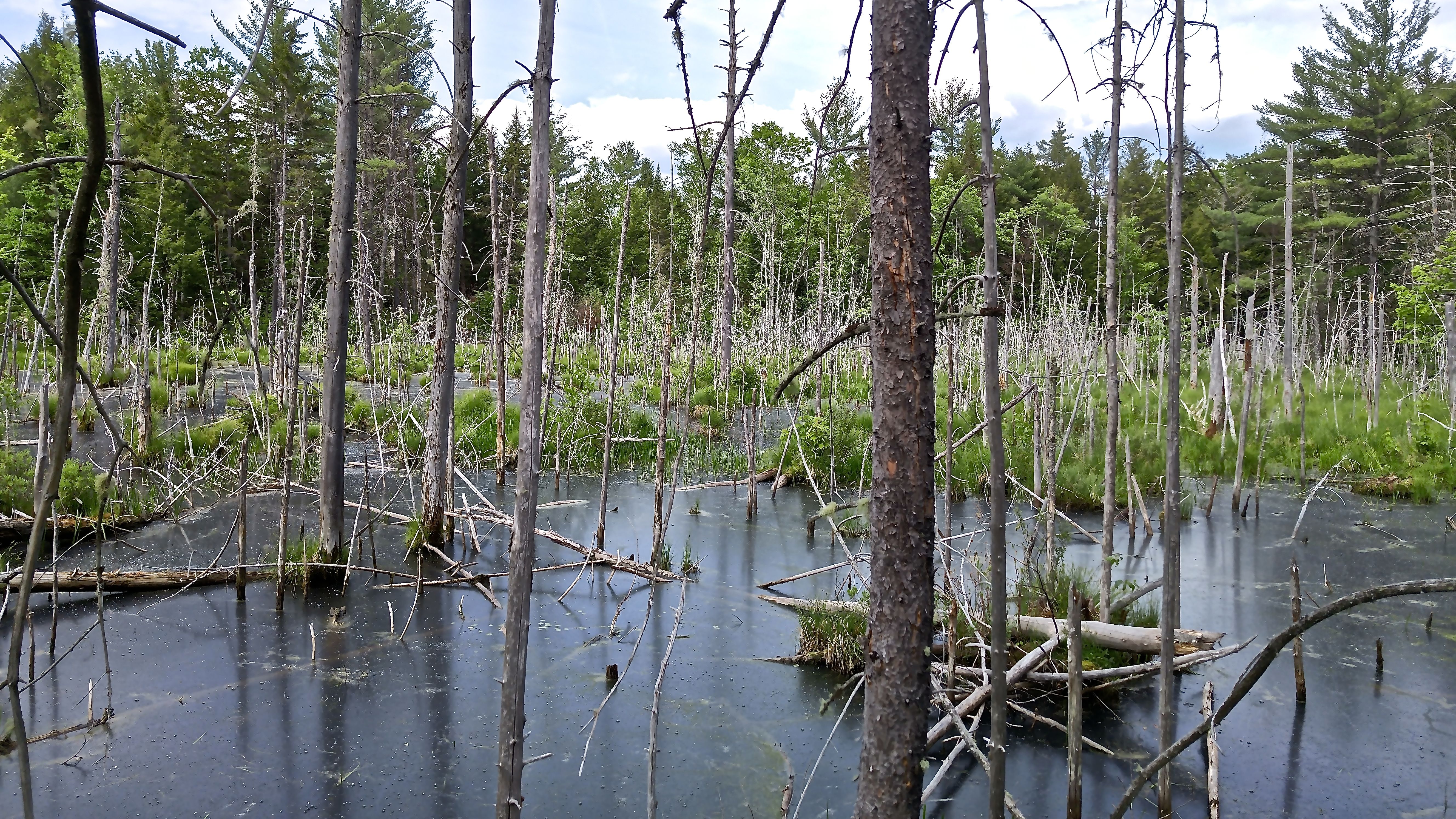
b-pond

Among Beth’s sharings was this spot she refers to as the Accidental Pond. Accident or not–it’s enchanted.

b-split granite

Here and there throughout the woods, she pointed out glacial erratics. This one we particularly wondered about. What came first? The rock split on its own or the hemlock caused the split?

b-bracken 1

Those were the big things, but we were equally wowed by all the small stuff we saw along the way, like this bracken fern just beginning to unfurl.

b-cinnamon ferns

Several times we wandered in the land of the cinnamon fern, where the separate fertile fronds sport the cinnamon color for which they are named. It won’t be long before those fertile fronds bow down to the earth and the large, arching sterile fronds are all that will remain.

b-caterpillar 2

And then something else caught our attention–a green caterpillar on the fertile frond.

b-caterpillar 1

We weren’t sure who it was, but we saw it on several stalks. Always something to wonder about.

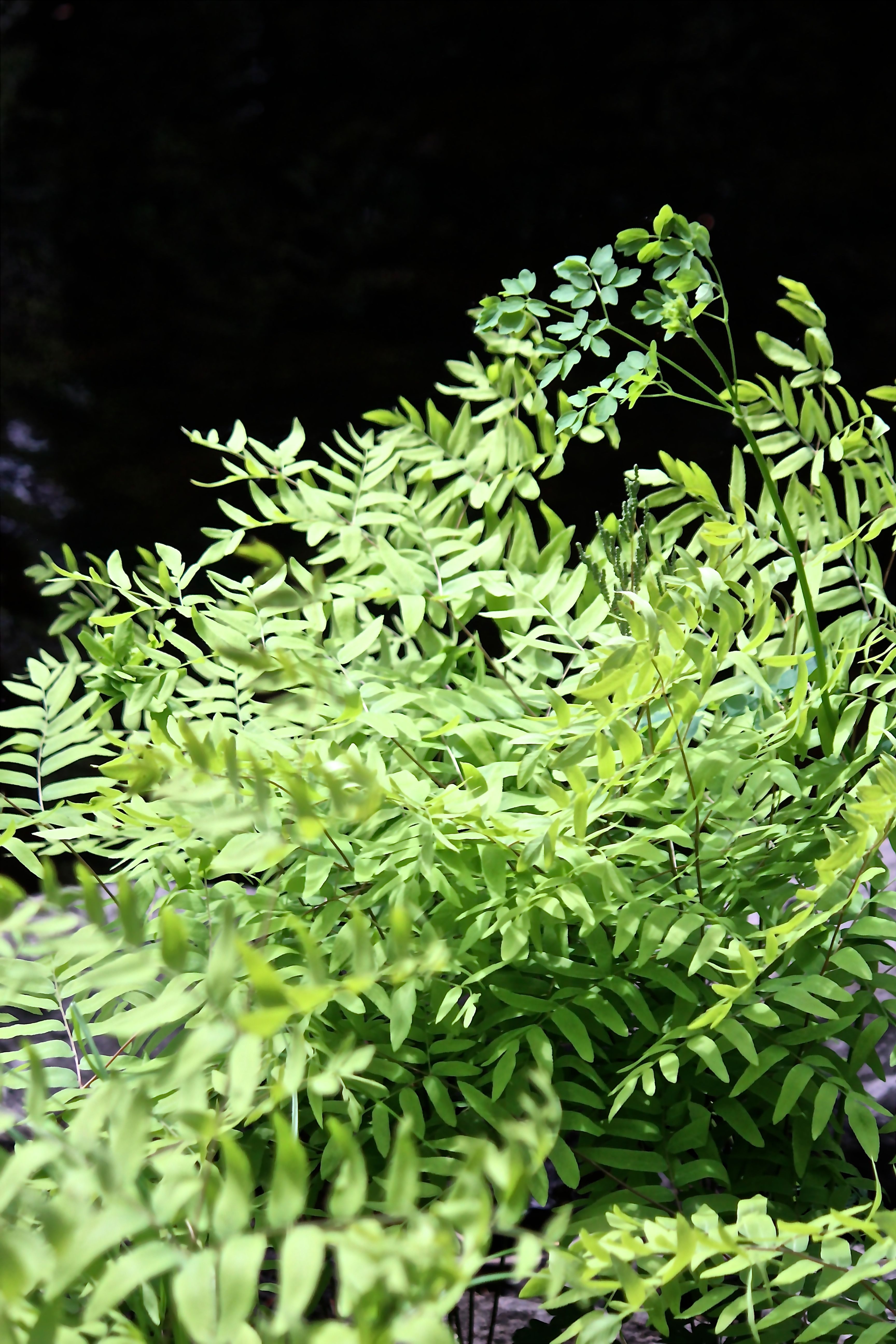
b-royal

Royal fern also offered a display, especially beside the brook. Look closely and you might find the fertile frond “crown” on this one. It’s a rather “Where’s Waldo” presentation, but it’s there.

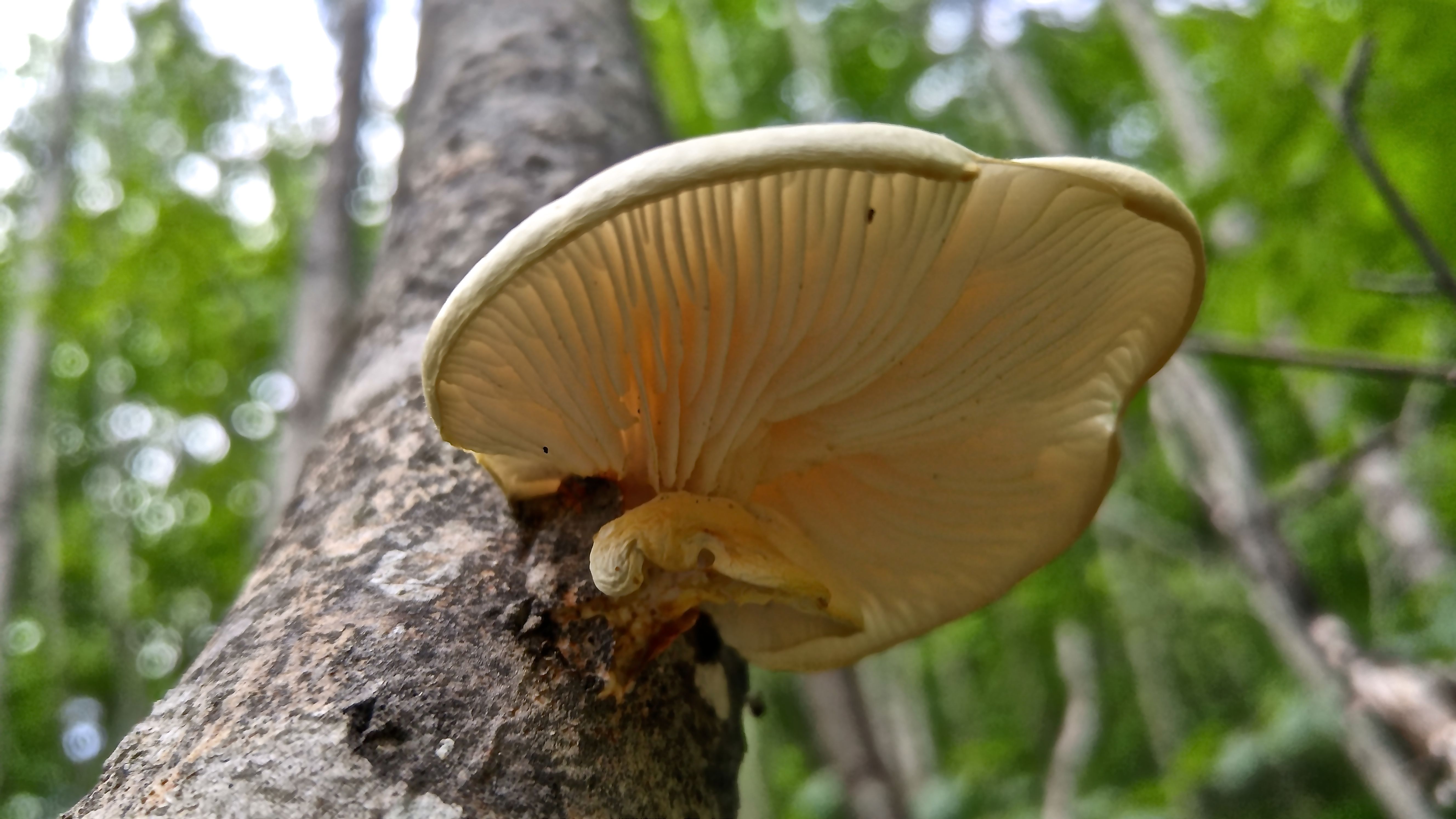
b-gilled 1

We found some gilled mushrooms we also couldn’t identify, but appreciated their existence.

b-lady 3

The lady’s were in bloom.

b-lady's slipper

Take a look at those hairs.

b-web 3

And it’s spider web season so we paused and admired the work of an orb weaver who built a spiral wheel-shaped web.

b-spider web

Also among our sightings, a well-built high-rise structure woven among the remains of winter weeds.
b-toad 3

Camouflage is everything. Just ask the American toad.
b-wood frog 1

We found the wood frog easier to spot.

b-blue-eyed grass1

But I had my eye on the blue-eyed grass.

b-blue 5

These are the shy ones. They only keep their eyes open if the sun is shining. On a cloudy day it’s almost impossible to recognize them.  And they love damp open woods, slopes and stream banks so it’s no wonder we found them today.

The big and the small . . . Beth’s property has it all. And this was only a sampling from her hundred acre wood. Winnie the Pooh and his friends–they too, would love this place.