As spring bid adieu and summer waved hello, I found myself wandering and wondering with others and alone and stopping in my tracks repeatedly, which is kinda what I do all the time I guess you could say, but suddenly this week there were a few special events that called for attention.
The first was Momma Snapping Turtle that I spotted beside a trail as I co-led a walk with Dawn Wood for Loon Echo Land Trust. Thanks to the magic of a camera lens, it may appear that we were close, but believe me, we all realized the sensitivity of the situation as this mother was digging in the dirt and laying eggs right before our eyes and we were transfixed–from a distance. There were fourteen of us and we tried to stand quietly and watch and ask questions and after about ten minutes decided it was time to come up with Plan B and reroute ourselves so that we wouldn’t stress her out.
In another place a day later, it was a Painted Turtle upon which I focused and gave thanks that it didn’t consider plopping back into the water as they often do when we so much as breathe. From the spot where I stood, I think this was also a female, given the shorter nails, but I couldn’t say for sure because tail length and plastron (bottom shell) orientation are also key to ID. The male has a longer tail and a more concave or indented plastron, while the female’s is more convex or flatter.
That said, when I spotted this one, I knew its gender immediately, for like the Momma Snapper, this Momma Painted was also in the process of laying eggs. She pulled her head into her shell the moment I spied her.
In the few moments we spent together, however, she ever so gradually extended her head.
But I felt like she was keeping a wary eye on me. And very much wanted me to move along.
And so I did.
And then it was the insects that begged for attention, this being a female Calico Pennant Skimmer Dragonfly. Her coloration is yellow, while his is red. One of the things I love about perching dragonflies such as the Skimmer family, is that within their territory, they return to the same perches over and over again–flying off to capture food or defend said location, but usually back to the same twig or flower or one close by, making it easy to spend some time with them.
The Clubtail family is the same, this being a Lancet. These dragonflies often land on our dock or our kayaks and spend some time with us.
I swear they are as curious about us as we are about them. But maybe again, they are checking out our predator abilities. I much prefer letting them be the predators as they munch on Mosquitoes and Deer Flies and make time in the woods or on the water so much more comfortable.
And then there are those who seek nectar and Meadow Hawkweeds are a valuable resource right now for Flower Flies and Bees and Wasps and Butterflies like this little Northern Crescent. Last summer I spent a lot of time with this species in my neighbor’s field and was thrilled to realize that as long as there was food available during the fall in the source of Goldenrods and Asters, they were present.
One of the most abundant butterflies this year has to be the Tiger Swallowtail. Canadian and Eastern, and probably hybrids in the mix, they are everywhere. Everywhere. Adding grace in their flutter-bys and color to the landscape. As well as serving as pollinators.
Dropping drastically back down in size, my attention was also drawn to the Long Dash Skipper Butterfly. According to the comprehensive field guide, Butterflies of Maine and the Canadian Maritime Provinces, by PhillipG. deMaynadier et al, “The Long Dash is named for the conspicuous stigma on the male forewing. Found on forewings of most other small, orange and brown skippers in our region, a stigma is a specialized patch of scales that emits pheromones used during courtship. In the Long Dash, the stigma is surrounded by black scales, making it appear larger than it really is.” Thus, this would be a male Long Dash Skipper upon one of its favorite flowers, Red Clover. But from the book, I’ve learned I should also look for it upon Cow Vetch, Common Milkweed, Spreading Dogbane, hawkweeds, Ox-eye Daisy, and knapweeds.
Keeping pace with me despite its much shorter legs, the Six-spotted Tiger Beetles, which I love for the iridescent green, practically ran ahead, reminding of Chalk-fronted Corporal Dragonflies who insist upon flying five feet in front, waiting till I almost catch up, and then flying another five feet ahead, over and over and over again. The only time I’ve seen the Six-spotted Tigers slow down is when they are canoodling. But even then, they are on the move.
Another insect, which is much slower, may have significant value in our landscape. If I’m correct with the ID, and I’m waiting for iNaturalist to confirm, this is Atanycolus cappaerti, a parasitic wasp. I can only hope that my ID is correct, because . . . according to Cornell University’s College of Agriculture and Life Sciences, A.cappaerti “attack [Emerald Ash Borer larvae] at rates high enough to be considered significant for biological control. While studies are still ongoing, the use of the native parasitoid A. cappaerti for augmentative biological control would be desirable from an environmental perspective as it is already established and has a niche in the ecosystem.” That’s in Michigan. But maybe in Maine as well? Please let it be so. This past winter we all noticed that EAB had spread significantly in our area.
Basking just down the trail from the wasp was a Northern Water Snake who didn’t seem to mind my presence, and I tried not to mind its either.
He was aware of me, and I say he because in the Northern Water Snake world, the male is smaller than the female, and this one wasn’t really all that big, but still . . . a wee bit intimidating. Of course, it did nothing to make me feel that way, so the intimidation was all in my mind. Instead, he let me take a few photos and pass by without a confrontation, as is always the case. I remember once stepping out of a canoe and practically landing on one, who stayed put. And another time, realizing that one was basking in Maleberry shrubs at the edge of a pond as a few of us paddled by within mere inches–or so it seemed.
As spring gave way to summer this past week, I think one of the things that stood out most to me was sighting the turtles laying eggs. Though they don’t hatch at exactly the same time, it will take about two to three months for the eggs to incubate. Of course, temperature has much to do with that. But my experience in the past is that about the autumnal equinox we may see baby turtles crawling out of small holes, if not sooner. And if predators don’t get to them first. There’s always that risk.
I do love winter, but summer fauna among all the flora–so much life happening right before our eyes–its like an explosion of color and form and pattern and texture and sound. And it’s only the beginning. I can’t wait to see what the rest of the season has in store for us.
You know when you start something and you have no idea of what the future will hold and yet, you forge ahead cuze that’s what you naturally do? Well, that’s been the experience fellow Master Naturalist Dawn and I have had since I retired in October 2023.
At the time, I knew I would deeply miss outings with the Greater Lovell Land Trust docents, a group of dedicated volunteers who love to learn and then share that knowledge with the public. But, I’d made a promise to step away so the new person could have some space.
I’m a teacher at heart, however, and needed to continue down that path. So, prior to retiring I had approached Loon Echo Land Trust and asked if I could lead some winter walks for them, sharing the art of tracking and other winter wonders with their participants. That idea was well received and I invited Dawn to help. We began in November 2023 and when March 2024 arrived, and we should have been winding down, I realized we were having so much fun that the program needed to continue and so it did until last July. And then we took a brief hiatus.
The hiatus ended in September 2024, and on our first outing among our finds were a few Brown Hooded Owlet larvae, with their striking colors and pattern.
On that same journey, we reached a wetland where Black Ash grow, and encouraged participants to poke their thumb nails into the bark. I love it when people are willing to try and in this case, they realized the bark is corky. Especially after it has rained.
October found us being wowed by rose hips. Because–look at those spikes. We thought maybe a slime mold, but instead discovered it’s the gland-tipped hairs on the hips of Ground Rose. Otherworldy indeed.
And speaking of otherworldly, the larval form of Lady Beetles also caught our attention, this one having been predated. So spiky as well, and especially when you think of what an adult Lady Beetle looks like–it doesn’t seem to match up. But . . . that’s how the natural world works.
In November, we were only a wee bit surprised to still be greeting Meadowhawk Dragonflies. Notice the tattered hind wing–this one had met with some difficulties we could only imagine.
On another November expedition, while exploring an area where Beavers were quite active and had been busy mudding/insulating the outside of a lodge, plus gathering their winter food supply, we asked participants to become the critters and cut down their own trees. But . . . they had to hold the tree trunk as upright as possible and turn it, because certainly they couldn’t walk around it like a Beaver can.
Timber!
With a bit of snow in December (actually on Thanksgiving Day we had a lot of snow, but then the amount dwindled daily), we started tracking in earnest, spending the start of each walk with a brief explanation of how mammals move and clues to the prints they leave behind.
Measuring took on new meaning as stride (length from the front of one foot to the front of the next in a track) and straddle (length between the outside of one track and the outside of the next in the pattern, for example, put your feet together and measure from the outside of the left foot to the outside of the right and you have determined your trail width or straddle, which is key for some mammal print ID) were taken into consideration.
On a cold winter day in January, you would have thought that we’d bring hot cocoa. We had the cups. And we had the thermos. BUT . . . inside the thermos we had what we call mammal blood (red gelatin), and the group split into pairs and went off to find just the right spot to protect their “mammal’s blood” so we could check its temperature about twenty minutes or more later. It actually turned out to be later because we got caught up with tracking an actual critter in the meantime.
When we did check, it was the pair with the highest temperature that won bragging rights. They had found a suitable protected spot for their critter to survive.
We were still tracking in February, and were excited to follow a Porcupine to its den, and then backtrack to its feeding trees, where Eastern Hemlock branches minus buds and some needles, decorated the ground.
And though we had to dig to find, Porcupine scat in its typical comma shape, did happen.
In March, it was the large red buds of Basswood that garnered our attention. And after posting photos of these, an arborist friend commented that the buds look like a mouse wearing a helmet and I’ll never unsee that going forward. Thank you, Eli!
As the temperature began to rise with the March sun, we also spotted deer beds such as this one and knew to look for deer hair! The red arrows point to some as it was time for them to shed their winter coat and with their body heat melting the snow, some stuck to the edges.
In April, on our way to a vernal pool, one of the many curious naturalists among us found an Oak Apple Gall, that would have been bright green when first formed last spring/summer.
Though it had snowed the day before, we did find Fairy Shrimp in the pool, and rejoiced as always because finding just one of this species makes the pool significant by Maine standards.
As I mentioned in a previous post, there are four species, each with a different count, that help determine if the pool is significant, but any pool that dries up in the summer and then fills up again in the fall is considered ephemeral or vernal.
When the calendar turned to May, we turned our attention to dipping in rivers and streams, curious to see what macro-invertebrates we might meet in those spaces. Out came the D-nets, which we don’t use in vernal pools, because we don’t want to disturb the egg masses of Wood Frogs and Salamanders.
It’s always fun to meet the different species, including a variety of Mayflies in their larval form, with gills along their abdomens and three tails. Long tails quite often. And all that come out of the water, including Mosquito and Black Fly larvae, must go back in.
All of this brings me to this morning, when our group was quite small because some had apparently cancelled for various reasons and others were no-shows. That said, we had the best time, as we always do. But today felt extra special. You see, we had a plan to walk down an old trail, but since we were waiting for the no-shows, we thought we’d give them some time to locate us if we first visited a pond located about a hundred feet from the parking area and in the opposite direction of our intentions.
It was while squatting there that we realized miracles were taking place. But . . . we still wanted to share the trail with the participants, so we promised we’d return to the edge before it was time to depart. (As for the no-shows–we’re bummed they missed out.)
One of the participants who is a fungi enthusiast, and has eagle eyes, somehow spotted these mushrooms. None of us knew what they were, but iNaturalist’s SEEK app identified them as Devil’s Urns.
When I arrived home, I looked them up my Audubon Field Guide, and bingo: “Large, leathery brown, urn-shaped cup; Season: March-May; Habitat: Clustered on fallen deciduous wood, especially oak; Comments: This is one of the first mushrooms to appear in the spring in the East.”
Well done, Julie.
Woolly Alder Aphids were also visible, and once we saw one clump, we began to notice several. As we described how ants “farm” or seemingly tickle them to get them to secrete honeydew, one participant saw an ant and another saw drops of said liquid. Can you see it?
Well done, Marie.
And remember the little girl who found last year’s Oak Apple Gall on the way to the vernal pool in April? Well, another among us today found this year’s galls on newly emerged Oak leaves. It got us all thinking about leaves and insects and how mature insects lay or inject eggs into buds when they first form in late summer and so the moment the leaves begin to unfurl the following spring, larval forms jump into action and leaf miners and rollers and gall makers and everyone else have a heyday.
Well done, Heidi.
Marie, Julie, and Heidi also took an up-close look at last year’s Speckled Alder cones and we noted that the male catkins have already fallen to the ground for this year, their pollination duty now completed.
Lady’s Slippers, and Wild Sarsaparilla, and Star Flowers, and Canada Mayflowers, and Rhodora, and Dewberry, and Bastard Toadflax, and even Poison Ivy were admired and noted.
But, we all had a mission that we wanted to fulfill, so with about a half hour left, we retraced our steps rather quickly.
And into the plants at the pond’s edge we peered. Do you see it? A dragonfly naiad (nymph or larval form) upon a broken branch, with the adult form starting to split through the exoskeleton at the point between the wing pads. How could this be? Yes, we’ve seen dragonflies for the last week or two, but it was cold this morning. Raw. Breezy. Seemingly inhospitable for these summer fliers.
Apparently not, for once we looked around, we began to notice them everywhere. The dark naiad climbing up the rock was in search of the perfect spot. And if you look below the rock, you’ll see two naiads, one that is grayer in color, because its adult form had already eclosed or emerged; and the other browner one with the adult starting to pull out of the aquatic skin.
Here’s a closer look at the ones under the rock. Notice the eye placement. That is key to Identification according to family. In this case, with the eyes spaced far apart, it could be either a Petaltail or a Clubtail.
As I said, they were everywhere, and we felt it our duty to watch over them. To protect them from being predated, which is actually kinda funny, given that they are predators. But predators of the best kind because they feast upon Mosquitoes and Black Flies and Deer Flies, and others, of course, but it’s for those first three that we appreciate them.
Can you see how the adult is pulling out of the skin?
And do you see thin white strings extending from the exuviae to the back of the dragonfly? Those were the spiracles or underwater breathing tubes, which are no longer needed by the adult.
A few minutes later it is further out–can you see that? Once it gets its abdomen all the way out, it typically holds onto its shed skin and then pumps its insect blood into its wings so that they expand, before drawing that blood back into its body, allowing its coloration to eventually take true form.
Look for the white strings again.
Do you see them now? Completely unnecessary and therefore left behind.
When the wings are at full length, they are held over the back and cloudy in color until it’s time to spread them and let them dry before first flight.
The eyes on this newly emerged dragonfly, along with its abdomen markings and cerci or claspers at the tip of the abdomen, tell us its in the Emerald family, and I suspect a Common Baskettail.
As we watched, we noticed some had wings that were stuck together, and this one with a curved abdomen. It was curious that it had left its exuviae before its wings emerged and so I wondered if they would unfurl.
A few delighted us because we got to watch them spread their wings apart–translucent and shiny as they dried.
By the eye placement and beginnings of the markings, my identification stab is for Lancet Clubtail–one of the friendliest dragonflies who likes to land on us when kayaking. Or even on the dock.
As you can imagine, we had to pull ourselves away. The walk was supposed to end at noon, but it was 12:40pm when we finally finished–and honestly, I think we could have stayed a few more hours if we had food and other necessities.
All of our Wednesday Wanders for Loon Echo Land Trust are incredible because each one offers its own moments of awe.
Being honored, however, to share the emergence of dragonflies from their aquatic forms to terrestrial–and helping the ladies to understand that it takes hours for this process, and being surprised that so many had chosen what we considered to be a chilly spring day . . . it was beyond wonder-filled. As every Wednesday Wander is. But today, today was over the top.
I’ve been lamenting the lack of snow. That is, until I head out the door, don microspikes over my winter boots, and slow my brain down. And then . . . the winter world pulls me in.
It’s amazing what stories there are to interpret, whether in a dusting or a few inches of snow. But first, I need to think about the overall picture and consider where I am.
What state am I in? Maine
What season is it? Winter (my favorite)
What type of forest? Ah, that’s always changing and this week saw a range, for sure. Sometimes it’s coniferous.
Other days, deciduous.
But also a mixed forest.
Or beside a frozen wetland.
Or even a wetland with some open water.
When I do encounter tracks, I have to think–how is the mammal moving through the landscape? In more or less a straight line with a bit of a zigzag to it?
And if so, is it just one mammal, or more than one?
I need to look at the overall pattern, which might mean backtracking a bit (don’t want to put pressure on the mammal, especially if the tracks are fresh).
The thing is that the tracks in the three above photos were made by three different critters, all of whom often move in the same pattern–straight line with a bit of a zigzag as I already said. The left front foot lands and packs the snow, and as the animal moves forward, the left hind foot lands where that front foot was, and visa versa on the other side. So what is actually a set of two prints, one directly or almost directly on top of the other, looks like one print from our point of view. The front foot pre-packs the snow and the hind foot lands in the same spot to make it easier for the mammal to move more efficiently, especially since he doesn’t have a warm fire and dog food awaiting him after a walk in the woods.
“Who created them?” you ask, because of course, I can hear you wondering. The first with my foot beside the prints: Red Fox; second: Eastern Coyote; third: Bobcat.
Briefly, I want to share other forms of movement that we might spot in the woods. These are groups of four prints left behind by a leaper/hopper. Several critters move this way and the best way my brain can tell them apart is by the straddle or trail width–measuring from the outside of one of the larger prints to the outside of the other.
Just to clarify, what you are looking at in one group of four, two smaller prints are the front prints, which land first. The hind feet swing a bit forward just before the front feet lift off and so the hind feet appear to be in front of the front feet.
“What?” Yup. Thus, this mammal is moving toward the top left of the photo, because the hind feet always appear in front of the front feet. Have I lost you yet?
Together, they look sorta like a set of two exclamation points. In deeper snow, they can also look like double diamonds, or even Batman’s mask.
My game camera recently caught a Gray Squirrel in this motion, and if you look closely, you can see the back feet swinging around in front of the front feet.
What is the trail width or straddle for a Gray Squirrel? 4+ inches
Red Squirrel? 3+ inches
Chipmunk (who does come out occasionally in the winter)? 2+ inches.
Another leaper/hopper also leaves a set of four prints, but usually (not always) the two front feet are not parallel like the squirrels. This mammal is hopping toward the lower right hand corner, with the hind feet being out in front to indicate direction.
If you take that photograph and flip it 180˚ so that the world appears upside down, cuze sometimes it just does, you may see what I see that helps me with a quick ID: a snow lobster: the two hind feet out in front, being the claws and the two staggered front feet behind forming the tail.
“And the creator of the snow lobster?” you ask.
Snowshoe Hare.
Just when you think you are getting it, a wee critter enters the scene because, well, it’s everyone’s favorite food (for those who are predators that is), and I have a hunch you’ll spot these tracks rather often.
First, the wee one moves in the direct registration (zigzaggy straight line) gait of the coyote, foxes, and bobcat.
But then it changes things up and may even start tunneling as it leaps forward. And in deeper snow, you’ll see a hole beside vegetation and know that it ducked under to try to avoid becoming a meal.
These are the tracks of a Meadow Vole.
There is a group of mammals who are bounders, so much so that their bodies move almost like accordions, and as the hind feet push off, the front feet land on a diagonal, and the hind feet follow suit and land where the front feet had been, while the front feet are airborne once again.
Do you see the diagonal pattern of the impressions. For the most part, they move on the same diagonal for a while, and then might change it up.
It’s the weasel family that leaves this pattern, and these are from a Mink. Long-tailed weasels and Ermines leave even smaller prints.
Fisher prints are larger and they sometimes change their gait a bit, but always you can find evidence of the diagonal in the middle of pattern; and Otters LOVE to slide.
Finally, in this discussion of patterns, there are the waddlers, those critters with wide bodies (Think Beaver, Porcupine, Raccoon, Black Bear). Their forward motion varies, but this is one of my favorites: the sashay of the pigeon-toed Porcupine.
Another waddler, or wide-hipped critter is the Raccoon. It’s feet look a bit like baby hand prints. But a key (pun intended) characteristic is the switch of the diagonal when looking at how this critter moves through the woods.
Now that you’ve thought about the surroundings and looked at the mammal’s gait, it’s time to consider the size and shape of the print, count toes that are visible, look for nails, examine the overall track and prints from different angles, and take measurements.
We often talk about the X ridge between the toe pads and metacarpal pad of the canines. But sometimes people have a difficult time seeing it, so I find outlining it may help.
Think about this cast of a Coyote print: In your mind’s eye, flip it over so that the oval shape is actually at ground level, and the prints, that were in the mud were below the oval. If you look closely, you’ll realize you are looking at two impressions. The smaller one on top, would have been at the bottom of the impression as one foot landed. And then the second foot landed almost directly on top of it.
“Wowza,” you exclaim.
And notice the toe nails–how they are rather close together and not splayed like your fur baby’s nails when you go out to play in the snow. Conserving heat. Brilliant.
Here’s a look at what you might see when you spot an actual Coyote print.
Another with the X that I didn’t outline, but I hope you can see, is the impression of a Red Fox print. I made this one with an actual Fox foot courtesy of the Maine Master Naturalist Program (and Dorcas Miller). What I love is that you can see the chevron that appears in the metacarpal pad of the fox’s foot .
Sometimes I can see the chevron, sometimes I can’t. It’s all about snow conditions. Some days are perfect for tracking and others are a challenge. But I’ve said a hundred times, when I’m alone, I’m 100% correct in my ID.
To differentiate the walkers/trotters, there’s one more letter to consider, this one being closer to the beginning of the alphabet: C. And it indicates a Bobcat. C is for Cat. Another thing to think about when looking at the zigzaggy straightline, are the toes symmetrical or is there a lead toe?
Symmetrical: Coyote and Foxes. They are also more oval shaped; or kinda like an ice cream cone with one small scoop on top.
Lead toe: Bobcat. Round shape, about the size of a fifty cent piece, while your cat is a quarter.
I’ve been seeing lots of Bobcat prints and tracks this winter. And Snowshoe Hare. Hmmm.
Okay, so enough for the lecture. I want to show you what else I’ve seen in the past week, cuze part of the fun is interpreting the stories.
Last weekend, in the midst of a snowstorm, I taught a tracking lesson for this year’s Maine Master Naturalist class. One of the activities, that also served as an icebreaker for the students, was that within their mentee groups, they were assigned a critter and they had 15 minutes to figure out how to portray that critter so that their classmates could ID it.
This group created a Beaver Lodge and had beavers swim in with sticks from their winter feeding lodge, and one added mud to further insulate the lodge.
I won’t share them all, but this group represented a Red Fox, except that the tail (scarf) got caught. The Xs created by humans were intended to be the X in each print.
And then on Sunday, while hiking in to a wetland a mile plus behind our home, My Guy and I spotted Snowshoe Hare tracks aplenty, but something else caught my attention.
I thought it was a spider in the Hare print because I’ve seen so many on the snow in this area this winter.
That is until I took a closer look and realized it had five legs rather than eight. Oops, I wonder what happened to the sixth leg.
Despite the lack of that other leg, it moved across the snow as best it could. This being a Snow Fly. As for that missing leg, Snow Flies self-amputate so that ice doesn’t enter body. It’s a fighting chance to survive the frigid winter.
Oh, and it’s not always about tracking, especially when a bit of bird calls and color drew our eyes skyward, where we watched and listened to a flock of American Robins, and . . .
Cedar Waxwings on a chilly winter day.
On Monday, My Guy and I made a quick journey around the trails at Viles Arboretum in Augusta, and I actually never took a photo. Yikes. I bet you didn’t think that was possible.
On Wednesday, fellow Master Naturalist Dawn and I spent time at Loon Echo Land Trust’s Tiger Hill Community Forest in Sebago with a group of people curious to learn about tracking and came away jazzed by their level of interest and involvement as they took measurements and noticed details.
On Thursday, My Guy and I climbed the Southwest Ridge Trail on Pleasant Mountain in Denmark, where there wasn’t much snow given the trail’s orientation to the sun, but we did spot quite a few deer prints and runs. I love how deer follow the same trail, making it easier to get from a sleeping area to a feeding area within their “yards.” For years. We’ve lived in our house for over 30 years and I can tell you where the deer runs are located. Always have been. I pray they always will be.
Despite the lack of snow, the views were grand. And he was pleased that nature didn’t slow me down too often.
On Friday, I spent a few hours with these four and two more as we explored at Loon Echo’s Crooked River Forest in Harrison.
One of our cool discoveries was a Porcupine path that led to a den, in the same location we found it last year. I was happy to know that there was no need to move.
And based on the hoar frost around the entry way, we surmised there was at least one Porcupine inside.
We left it or them alone and followed the well worn track in the opposite direction to the feeding tree, an Eastern Hemlock, where there were plenty of downed branches cut at the typical rodent’s 45˚ angle.
And we found the curved scat that had dropped from the animal as it fed while sitting on a branch up in the tree. Happiness is!
And then we made a discovery that didn’t make sense at first, but I think we interpreted correctly based on the evidence provided. At least this is our story: Deer tracks led to the steep river embankment, which in this spot was two-tiered before it reached the water. From our spot at the top of the embankment, we spotted deer tracks leading down to the next level and saw this crazy writing in the snow. And then it occurred to us. There were no human prints or any other prints in the area down there. Only the deer prints leading to it. And on the ice-covered river below, more deer prints. What we surmised is that the deer leaped down to the next level because we could see a couple of prints on the embankment leading to it. And then slid. This way and that. And as it tried to steady itself, it fell on its side, and did a full body slide all the way down the ice and over the leaves and directly down the second embankment to the river below, where it continued to slide once it got upright, and wobbled a bit (wouldn’t you?) before it crossed to the other side.
Regrettably, I didn’t take any more photos, but we discovered that at least one more deer had done the same to the left of where we stood, and it ended up sliding down in the same spot as this one pictured, all the way to the river.
Knowing that deer have traditional runs or paths, I can’t help but wonder if this is one of them, and usually the trip down to the water isn’t quite so perilous. You can bet I’ll check again.
And finally today dawned, and after some errands, I headed into the woods to reset our game camera. That’s when I began to spot blotches of black on the snow. Huh?
Not blood from an animal. What could it be?
Some were rather big. But a closer look soon gave me the answer as it looked like pepper grains were on the move.
After a frigid few days and before what could possibly be a real snowstorm tomorrow night and the next polar vortex to follow, Springtails (Snow Fleas that aren’t really fleas and don’t bite) were doing their thing–springing from the furcula, an appendage under their abdomens, as they fed (though I could only imagine the feeding part because I couldn’t see that action) on decaying plant matter.
What I really wanted to see, I suddenly spied–a predator in their midst! The spiders that I often find on the snow, feed on Springtails. Tada!
Dear Readers, this has been a long post, and even the Robin would agree. But I wanted to share all of these amazing things with you with hopes that you’ll head outside and look around and see what you might see. The stories are yours to interpret. It’s really so much fun. Thank you for sticking with me.
I received the best compliment this morning when a current Maine Master Naturalist student sent me some track photos to check on ID: “Thanks for your assistance- after your presentation I’m finding tracks in places I normally frequent yet I wasn’t paying attention!” ~J.K.
I went on a reconnaissance mission today in preparation for co-leading a Loon Echo Land Trust hike in about another month–once hunting season draws to end. This particular property, like several others that they own, probably sees more people hunting and riding snowmobiles than hiking or tracking. The latter two fall into my realm and today found me doing a bit of both.
But first, I was stunned by the beauty of the ribbony flowers of Witch Hazel. I don’t know why these always surprise me, but maybe it’s the delicate petals that add bits of sunshine at this time of year when everything is else is dying back.
Their wavy-edged leaves also add color as October quickly gives way to November.
A bit farther along the first trail I followed, I found something else to stop me in my steps. Little packages of bird scat inside a hole excavated by a Pileated Woodpecker. If you follow wondermyway.com, then you know that I LOVE to find the woodpecker’s scat, but this was much smaller and I had visions of several smaller birds huddled inside on a cold autumn night.
At the end of the trail I reached a brook that flows into a river. Today, it was a mere trickle. In fact, I took this photo from the high water mark and don’t think I’ve ever seen it this low. Well, not since I began exploring this property in 2020. But then again, since then, we’ve had some heavy rain years and this year has been a bit drier.
I knew once I spotted the trickle that the nearby Beaver dam would not be working to stop the flow.
But . . . in walking over to take a look at it, I spotted something else worth noting . . .
At first my brain interpreted this disturbed site as a bird’s dust bath. Until . . .
I spotted River Otter scat. A latrine, in fact. That’s when I knew (or think, anyway–okay, assume!) that the disturbed sight was a spot where the otter rolled around, or maybe two or three did as they most often travel as a family unit.
How did I know it was otter scat? Look at those fish scales in it. And it wasn’t all that old based on the leaves under and on top of it.
Feeling like I was in the right place at the right time, I doubled back on the trail because it ends at the brook, and then turned onto another to see what else I might find. Along this one, a second brook had a better flow and had me envisioning the land trust group dipping for macro-invertebrates in this spot we haven’t explored yet.
I also found another shrub that thrills me as much as the Witch Hazel. Also a shrub, I can’t pass by a Maple-leaf Viburnum in the fall without admiring its color. Mulberry? Heather? Sky-purple-pink? However you describe it, this I know–no other leaves feature these hues.
If you do spot one, take a moment and touch the leaf. I love the touchy-feely walks that are not about feelings, but rather about actually feeling something (as long as it isn’t poison ivy!).
As luck would have it, I was following an old logging road by this point, which these days serves as a snowmobile trail. Despite its uses, rocks and boulders mark sections of it. And atop one, oh my! Do you see what I saw?
A LARGE Bobcat scat and a tiny weasel scat. Could life get any better than that? I think not. Well, unless I saw the actual critters and as I write this a local friend just texted me that she and her family saw a pair of eyes reflecting in their headlights as they pulled up to their house: “I thought it was our cat from a distance. I got out to investigate. It was a bobcat! And it wasn’t afraid. I couldn’t believe it! It was so close. I could see the face. I ran inside to get a flashlight. It just watched us as we watched it.” ~Amanda.
If she was someone else, she’d jump on social media and inform the world that the big bad wolf is in the neighborhood because that seems to happen any time someone spots a Bobcat or Fisher. But, she appreciates the gift of the sighting and I’m so thankful for that.
Back to my Bobcat, or rather Bobcat scat–it was classic! Segmented, tarry, and no bones. Ahhhh! What dreams are made of–at least my dreams.
It was also quite hairy. Squirrel? Snowshoe hare? Weasel? Pop goes the weasel? Into the Bobcat’s mouth? I’ll never know. But I love that one marked the rock in the middle of the trail and the other followed suit. And I also love how that one piece stands upright like a tower. I don’t think I’ve ever spotted such a presentation before.
No, don’t worry, we don’t have yet. But I took this photo of a Bobcat print, also classic in presentation, along the same trail last February. Same critter? Offspring? Sibling? Any of the above.
At last I reached what would become my turn-around point, again on an out-and-back trail. And once again, I slipped off the trail and made my way toward an expansive wetland that is actually part of the small brook I’d crossed.
Old Beaver works, such as this American Beech with a bad-hair day from stump sprouting, were evident everywhere.
Other Beaver sculptures created a few years ago as indicated by the dark color of heartwood where the rodent had gnawed and cut the tree down, probably to use as building material, now sport fungi in decomposition mode.
In the wetland, I spotted two Beaver lodges, both featuring some mud for winter insulation. There were two other larger lodges with no mud, so I suspect these are the residences of choice for this year.
I also spotted a Beaver channel, but could find no new work on the land.
That surprised me given that there was new wood on top.
I could have walked farther along the wetland and may have spotted some freshly hewn trees, but when I spotted several Wood Ducks on the far side, I decided to stand still for a bit because they are easily spooked.
And my grand hope was that if I was quiet, I might get treated to a Beaver sighting. Or two.
For a half hour I waited. Nada. And so I climbed back up to the trail and walked out.
But, I was present in the moment today and received so many gifts, which may or may not be there when I bring others to explore. That’s okay, because together we’ll make other discoveries.
Thanks for stopping by, once again, dear readers. I leave you with this painting as a parting gift for being so faithful in following me as I wander and wonder.
Since November, newly minted Maine Master Naturalist Dawn Wood and I have co-led a program we call Wednesday Wanders for Loon Echo Land Trust in Bridgton, Maine. This past week, channel 8 WMTW reporter Jacob Murphy and his videographer Ethan joined us for a tramp into a vernal pool at LELT’s Tiger Hill Community Forest in Sebago.
It was a dark and dreary night. Repeat. It was a dark and dreary night. Repeat. It was a dark and dreary night.
While most folks would choose to stay inside curled up by the fire while drinking a hot toddy, a number of intrepid community scientists ranging in age from 3 to 70+, donned rain gear (even waders) and reflective vests, cleansed hands of soap and moisturizer, grabbed flashlights and headlamps, and met at 7:30pm in the pre-determined locations.
Their mission each night was the same: Help us help frogs and salamanders cross the road to avoid getting squished by vehicles.
The names and ages of participants changed each night, but the leadership remained the same. As Maine Master Naturalists, Dawn Wood (who took the lead on organizing these events and recording data–a daunting task in the rain and dark and with people spread out and shouting numbers and species at her), Hadley Couraud, and I led the way, all three of us providing information about the different critters and their behavior as the evening progressed. All of this was under the umbrella (pun intended–though no one actually had an umbrella) of Loon Echo Land Trust in Bridgton, Maine. Thank you to Maggie Lynn for creating the sign-up forms, advertising the events, and keeping us posted.
The technique was easy. Once we reached the location of the vernal pool, to which amphibians return each year from their upland habitat, we started scanning the road with our lights. It’s amazing how the mica, small rocks, sticks, and lichens can fool us.
It’s equally amazing how much tiny Spring Peepers resemble small rocks. And how stone cold they are when we lift them up. And how they’d rather stay in our hands than return to the cold earth.
We always noted the direction in which they were headed and that’s the side of the road we took them to, even if it didn’t make sense to us. They knew what they were up to and we were there only to try to keep them alive so they could canoodle for a few nights before heading out of the pools and back to the forest.
Meet a Spring Peeper up close and personal. Note those little toes, which are actually suction cups of a sort, the better to climb vegetation, especially at the edge of or in a wetland, and then to sing their high-pitched songs that announce the males intention of finding a date. Because of the toe pads, peepers were originally thought to be closely related to Tree Frogs but they have since been reassigned as chorus frogs in the genus Pseudacris, which comes from the Greek pseudes (false) and akris (locust) (think of our Dog Day Cicadas and their raspy love songs in the summer).
The species name, crucifer comes from the Latin cruces, meaning “cross,” so named for the dark X or cross on the frog’s back.
A really cool thing happened that first night. A teenager who lived in the neighborhood where we were scanning the road came out to ask what we were doing. And then he joined us, eager to learn as his family had recently moved here from out of state.
After a Spotted Salamander was saved, he ran home to get his camera and stayed until we finally departed. We had hoped he’d join us the next night at a different location, but wonder if he stayed home to help those on his road instead. Whether or not he did that, we loved his enthusiasm and desire to learn.
It soon became clear on the first night that we’d parked in the wrong spot, however right it may have seemed because we could get our vehicles off the road. As people started to leave, we all did a check underneath from all angles to make sure tires would not run over any critters by accident.
And sure enough . . . out crawled a Spotted Salamander. Of course, photo calls came first, and then help was offered to get to the other side.
Even teeny, tiny Spring Peepers had to be saved. And we all commented that we didn’t want to know if we did happen to drive over something. Added to that, we noted most of the vehicles only made it a few feet down the road, before the driver stopped and another amphibian was saved. That and the driving was rather erratic since everyone had gained a new understanding of how much action there is on a rainy night.
The second night found us in a different location that we actually walked about three quarters of a mile to reach, thus lowering our chances of hitting the critters right near the pool which is located directly beside the road, with a vast wetland on the other side of the street.
Wood Frogs, with their dark masks, typically headed toward the pool, where they’ll spend the next two weeks or so, singing for a mate, embracing her in a technique called amplexus, fertilizing her eggs, and trying again and again, until it’s time to hop out and head into the forest for the next 50 weeks.
Because it was dark, the Wood Frogs didn’t seem to mind our presence too much. Some still sang, or rather “wruck, wrucked” their love songs, and others floated in anticipation or chased each other in hopes of finding a female. We even noted a few egg masses clinging to branches, telling us this pool had been busy for a few days already.
Part of the fun in hosting such an event is sharing it with other people who might not typically head out the door after dark. And then seeing smiles on faces as they encountered the critters for the first time.
A cool find on this night was an Eastern Newt crawling across the road. Perhaps because the pool dries up each summer, this one had overwintered either in the wetland or even the upland before returning on this particular night. It felt like an unusual find on the road, though from what I’ve read, it’s not rare. I have seen many Red Efts, the juveniles of this species, their bodies squished by vehicle tires, on this very road in the fall.
Yet again, it was the Spring Peepers who garnered much of our attention.
And some Spotted Salamanders, though not as many as on the first night.
That said, we were thrilled with each find. And found an easy way to help them was to place the laminated ID card created by Maine Master Naturalist Michael Boardman under their bodies. Now don’t you think this guy is crawling onto the card in search of his ID?
As we prepared to walk back to our vehicles that night, Officer Hammond of the Bridgton Police Department happened along. No, he wasn’t going to arrest us for J-walking, though that’s essentially what we did. He was just stopping by because we’d ask Maggie to let the department know of our whereabouts in case anyone wondered what we were doing, but didn’t slow down to ask us. Traffic was high each of the nights. I’ve been doing this for about 22 years, and this year I felt like we had the most traffic. Most drivers were considerate when they saw the cones (courtesy of Hayes Ace Hardware) and vehicle flashers, plus our headlamps and flashlights. And we were all good at yelling “CAR” each time we saw approaching lights, but there were a few who were annoyed and one even had to lean on the horn after passing through the section of road we walked upon.
Night three was the warmest, with temps in the 50˚s and little to no rain. In fact, by the time we were heading home, the moon and stars were visible.
But still, the critters crossed and once again we showed new participants of all ages how to ID them and then help them cross the road.
On this final night, we had several teenagers along for the journey. Two of them had actually driven past us on the first night, slowed down, rolled down the window, and asked if we were okay. When we showed them a photo of a Spotted Salamander, they went home and signed up for a chance to help. Their enthusiasm was incredible.
We peered into the pool again and were amazed at the number of swelled Wood Frog egg masses in their communal cluster–as is the Wood Frog fashion. perhaps to take advantage of being warmer when crowded together, and thus evolve quicker. It’s the swelling that told us they’d been laid a few days before as initially their egg masses are maybe the size of a golf ball, but swell as they absorb water over the days to come.
The action was constant and I encourage you to see how many frogs you can find in this photo. It’s almost like the Hidden Picture of Highlights magazine, or Where’s Waldo?
And twice we spotted Spotted Salamanders swimming in the pool, though I really wanted to see a “congress” of salamanders conducting their mating dance. One of these nights.
As we walked out on the third night, about ten feet from each other we spotted two sets of Wood Frogs in amplexus! They couldn’t even wait to find a room, or pool, for that matter!
We quickly, if awkwardly, helped them off the road because we heard that familiar “CAR!”
One night, two nights, three nights . . . turned into one incredible and extended BIG NIGHT migration.
Our results:
April 10, 2024
21 Spotted Salamanders
40 Spring Peepers

April 11, 2024
7 Spotted Salamanders
102 Spring Peepers
75 Wood Frogs
3 Red-backed Salamanders
1 Eastern Newt

April 12, 2024
13 Spotted Salamanders
268 Spring Peepers
62 Wood Frogs
4 Red-backed Salamanders
2 Green Frogs
1 Eastern Newt

For a grand total of 599 critters helped to the other side of the road. We saw a number of squished ones and had to constantly remind ourselves that they will become food for others.

Thank you to the 39 people who joined us during these three nights--you were incredible and we loved hearing stories of how you want to share this with other members of your family and you are already planning to join us next year.
To go out on a rainy night and help amphibians cross the road is special–for the critters and for us. Thank you to Hadley, Dawn, and Maggie–for being the cool swamp critters that you are! And for letting me be part of the club.
You might think of it as a homecoming; a return to that time of year when all begins again. Slowly. Ever Evolving.
A time when one needs to stand watch and listen. And so My Guy and I did yesterday when we heard this Red-bellied Woodpecker before we finally spotted it. And for the first time I could actually see the red belly for which it is named.
A time when I start visiting vernal pools and can be found with my hands on my knees as I lean forward to peer into the water.
A time to be in shock at spying such large Fairy Shrimp on this date, March 19. There were dozens and they were at least an inch and a half long. I have never seen such big Fairy Shrimp and can’t help but wonder the size of those I hope to see in other pools going forward. In the past they’ve been about a half inch long in April, and might grow close to an inch by May.
A time for catching a dash of a look at a Predaceous Diving Beetle heading for cover to avoid becoming prey in my presence.
A time to notice the minute, such as this wee bright orangey-red water mite that could easily be mistaken for a spider.
A time to return home and walk the path of the now snow-free labyrinth I created a few years ago.
A time to visit the vernal pool on a neighbor’s land and notice that only the edges are ice-free.
A time to peer into the water along those edges and watch a multitude of larval mosquitoes wriggling as is their custom.
A time to poke a Balsam Fir blister with a stick to get some sticky resin on the tip and then place it in a puddle along the path and watch the essential oils form rainbow designs.
A time to look up before heading indoors and realize that the Quaking Aspen flower buds are starting to fluff out much like Pussy Willow buds.
A time to realize that this spring’s season opener officially begins at 11:06 tonight, but the Fairy Shrimp suggest it may have started earlier than normal.
Not necessarily a good thing. Not at all. But . . . if you are looking for me in the next few months, you know where I’ll be. Somewhere near water.
If it seems like the world is spinning out of control, that’s because it is . . . on so many levels in so many ways. Even some things I’ve witnessed of late in the great outdoors don’t make sense.
Two weeks ago I sent this email message to my friend, an incredible naturalist, hunter, forester, David Sears. Dave knows everything and has taught me so much over the years.
Here’s the message: “Daily we have three deer come into the yard because now that there is snow on the ground, they can’t get to the acorns so easily, but do love the sunflower seeds by the bird feeders. It’s a doe and two skippers. On Thursday I saw another doe with them. And then, as I was finishing up writing the tree blog, Becoming Tree Wise, late afternoon yesterday, I saw two by the feeders and two about 20 feet away. A doe and a skipper in each set. The doe farther away was licking the butt of the skipper. At least that’s what it looked like she was licking from my desk. For minutes on end. And then the other doe and skipper approached them and got quite close. The second doe nudged the first and the first jumped away, paused and then headed back over the stonewall and into the woods. The second doe and two skippers remained close to each other and then I noticed the second doe was bent over. I was trying not to move because even though I’m inside, they hear me and startle easily. I finally grabbed my binoculars and realized the doe was licking the underside of the skipper. I have never seen this before. Have you? Two does bathing a youngster? And at this time of year?”
Unfortunately I did not get a photo of the licking behavior because I didn’t want them to run off into the woods as I tried to understand what I was seeing.
Dave’s response matched my thoughts: “Seems strange at this age. Certainly groom them when young, but a little old now.”
Me: “And two doing the grooming?”
Dave: “Mother nature doing her thing.”
Me: “Yup. She doesn’t read our books.”
About a week or less later, I was on a reconnaissance mission with friend and fellow naturalist Dawn Wood at Loon Echo Land Trust’s Tiger Hill Community Forest in Sebago, Maine, when we spotted the sashay track a porcupine leaves in fluffy snow.
We tried to follow the track to locate either its feeding tree or den, but this porcupine provided an example of more strange behavior. Itacted like a dog, doing zoomies across the landscape. Literally, it walked in circles.
All over the place. Was it rabid? It certainly wasn’t seeking a date because it was too late for mating season. And we couldn’t find evidence that it was evading a predator.
We never did find the feeding tree or den site and wonder if we’ll see the same behavior when we return to the site this week.
On another recent day, I was with Dawn again, climbing Bald Pate Mountain in South Bridgton, when she spied this dead mouse upon a branch. White-footed or Deer Mouse I can’t say for certain.
Our immediate thought was that a Shrike had impaled it on a branch, but upon closer examination, it wasn’t impaled, but perhaps had been dropped by a predator. The question remains: Why didn’t the predator return to enjoy the meal. Or is it being saved for a later date? Perhaps it was letting any toxins leach out?
At the end of many days, I’m left looking for answers, much like this Gray Squirrel on the snow mound outside a kitchen window. Of course, the squirrel must have been wondering why I wasn’t supplying more bird seed for it to consume. This same critter actually jumped partway up the kitchen door a few times in what I assume to be protest.
As for me, I wonder how to make sense of scenes like these that I’ve shared and how to keep an open mind as the world continues to spin out of control.
Today’s wander begins at the end because it can in my book of life. And by the end, I think you’ll understand why I made that choice. But don’t scroll ahead cuze then you’ll ruin the surprise.
Our deer friends are feeding on bird seed and corn right now about ten feet from the back door. Meanwhile, the fairies are flittering about behind this doe. Do you see their twinkling wands at work?
Actually, all the lights are kitchen reflections on the door window.
This, of course, has nothing to do with the rest of the day, but I do love our deer friends and like to honor them when I can.
Now on to the nitty gritty of the rest of the story. My friend Dawn and I are Maine Master Naturalists as you may know. And because of that, we must volunteer time to teach others about the natural world. An unpaid job that is hardly a hardship because it’s so much fun.
Right now, we are in the midst of offering a program every other week for Loon Echo Land Trust in Bridgton. And the winter focus is tracking. Not easy to do without snow or mud. Wait a second. The animals are always on the move, and without the snow, we must look for signs. And so we did.
The first, a special offering left on top of a rock that Dawn actually noticed this past weekend when her son and daughter-in-law were visiting, and which she complety embarrassed him by taking photographs of it.
Out came my scat shovel today and everyone took a look. By its form, size, and location, we determined Red Fox.
Our real mission today, however, was to explore the territory of a Red Squirrel. No, this is not my friend Red, but another who has established a territory in a different space that’s also been blessed with an abundant amount of pine cones this year.
We wanted the partipants to take a close look at the scales where the seeds the squirrel sought had been stored. They got right into it.
After locating caches and middens created by said squirrel, we taught the ladies how to use a loupe, aka hand lens, by holding it close to their noses and bringing the object closer until they could focus on it.
To say it opened up a whole new world is possibly an understatement.
Discovering the tiny seeds the squirrel consumes would have been enough, but there was more. In one section of this squirrel’s habitat we found numerous mushrooms upon branches, placed there by the rodent to dry. Talk about being in a food pantry.
And then . . . and then . . . we spotted hoar frost between a couple of stacked logs . . . and surmised that our little friend was living in the space below. How cool is that? Wicked, in these parts of the woods.
What we learned is that this particular squirrel’s territory is located between two downed trees and a wetland, about the size of half a football field.
At the edge of the wetland, it was time to turn our attention from the squirrel to another rodent.
Yes, a Beaver. Once our eyes cued in, just like spotting the squirrel’s mushrooms, beaverworks made themselves known.
And so we encouraged partipants to channel their inner Beaver and try to chop down carrot trees.
Like any Beaver, they were eager to shout, “TIMBER.”
And rejoiced when their tree stumps matched the Beaver’s sculptures.
Finally, we took them along a path that led to more Beaver works, where we noted how its the cambium layer that this rodent seeks for its nutritional value. The rest is left behind, rather like a squirrel’s midden.
And so the inner Beaver channeling continued, this time with pretzel sticks and they were challenged to only remove the outer layer.
The competition was stiff, and a couple of Beavers broke their sticks so we’re not sure they’ll survive the winter.
But at least one was super successful.
While only one Beaver fells a tree, the family may help to break that downed tree into smaller pieces and there are at least three sections like this indicating that they’ve worked on it–maybe one at each spot. We don’t know for sure, but that’s the picture we like to imagine.
Below where we stood, we spotted the dam and talked about construction.
And then located the lodge. Another cool thing–more hoar frost at the top where a vent hole exists and is not covered with the mud that insulates the rest of the structure.
By evidence of the frost, we suspected the family was gathered within, probably consisting of mom and dad, at least two two-year-olds who will move on in the spring, and maybe a few youngsters.
As we walked beside a trail on our way to check out another lodge we determined wasn’t active, one among us discovered a kill site. So here’s the thing. When we first met in the parking lot, that same participant pointed to a Bald Eagle that flew just above the trees.
Could the eagle be the predator of what had been a duck? We suspected so.
The blood was fresh.
Nearby a Mallard had been quaking and we thought it was laughing at us and our enthusiasm and inquisitiveness. But perhaps it was lamenting the loss of a mate. Or at least trying to locate the mate that had become a meal–providing energy for another to carry on.
Yes, it’s sad. But this is nature. This is how it works.
After two delightful hours of discovery and learning, we said goodbye to everyone, dropped in at Loon Echo Land Trust’s office, and then went on a reconnaissance mission at another local spot, trying to determine if we should use it for a class we’ll teach for Lake Region Lifelong Learning, another volunteer venture.
And it was there, that just after we’d talked about being in hare territory and knowing that the lack of snow meant that a hare would stand out amongst the leaves, that . . . Dawn spotted a Snowshoe Hare.
We were so excited about how the morning had unfolded and spying the hare was a grand reward.
Can you track mammals without any snow. YES!
Wednesday Wanders, oh my! So much to learn. So much to share.
My Guy and I took in an old fav from a different perspective today. That’s because I always thought that the Micah Trail at Loon Echo Land Trust’s Bald Pate Mountain Preserve was for Camp Micah only. This morning I learned that anyone can begin the ascent via this sweet trail and so we made it our mission to do so this afternoon.
There is room for about four vehicles to park at the trailhead on the left-hand side of Moose Pond Cove Road off Route 107 in South Bridgton, Maine. Maps are available at the kiosk located a few steps in from the parking area.
Afew more steps and we met new bog bridging, always a welcome sight and so we crossed and then continued on up the trail, pausing frequently to search for bear claw trees among the American Beeches.
No such luck in the bear claw department, but we were serenaded by a flock of Chickadees singing their rather wispy fall songs, if they are songs indeed.
And a Hairy Woodpecker or two did what woodpeckers do . . . it pecked. This is a male as you can see by the hint of red at the back of its head. And he’s all puffed up, in reference to the brisk temperature of the day. Trapping air between his feathers helps him to warm up. Wearing several layers helps us do the same.
Once we reached the South Face Loop Trail, it was a quick ascent to the summit. Just before the summit, we paused to honor the bonsai tree–which is really a Pitch Pine. The summit of the pate is home to a Pitch Pine Forest. Though these trees can stand straight and tall, on mountain tops they take on a contorted structure.
The “pitch” in its name refers to its high resin content, thus making it rot resistant.
The needles are bundled in packets of three–making it easy to remember its name: Pitch–three strikes you’re out!
Another easy way to identify Pitch Pine is to look for needles growing right out of the bark–both on the trunk and branches.
Pitch Pine cones take two years to mature and upon the tip of each scale is a pointed and curved prickle.
They open gradually but depend upon fire for their seeds cannot be released until they are heated to an extremely high temperature.
That being said, this is the only native pine that will re-sprout when damaged.
I was told this morning that there had been some view openings and we were thrilled to discover a couple of them, includng this one overlook Peabody Pond with Sebago Lake in the distance.
And no visit to the summit is complete without paying homage to our friends Faith and Ben by taking a photo of their beloved Hancock Pond.
You may note the difference in the sky view from one pond to the next–snow showers are in the forecast for tonight so as we looked to the west, we could see the front moving in. No accumulation is expected, but any day now it will be most welcomed by us.
Though most of our foliage has dropped to the ground, another view at the summit included the scarlet colored blueberry leaves turning any day into a cheery one.
A quick loop we made next around the Bob Chase Trail, noting that we could almost see Mount Washington located in the saddle of our other beloved: Pleasant Mountain. On a clear day, this view is spectacular.
At last it was time for us to return to the South Face Trail and continue to follow the loop down. This section of trail we don’t often use so we did have to backtrack once and locate the orange blazes again.
You might think that upon our descent it would be the ice needles that gave us a difficult time. The six-sided slender ice constructions form in moist soil and can take on a variety of presentations from straight to arching curves. And yet, they grow perpendicular to the ground’s surface.
But, they were no bother and only crunched under our feet if we stepped on such in the trail.
The leaves, however, offered a different story. We had to make sure we weren’t fooled by the fact that many American Beech leaves still have some greens and bronze hues.
And others, though dried up, will wither on the trees until spring as they are marcescent (mar-CESS-ent). Some trees, such as the beech, especially those that are younger, choose to hang on to their leaves until spring.
Most deciduous trees drop their leaves in autumn, when cells between the twig and the leaf’s petiole create an abscission layer, thus causing the leaf to fall off. Not so in the case of marcescence, and I know that many will rattle and initially startle me all winter long. But, they also provide another hue in the winter landscape.
Northern Red Oaks also do the same, though in my observations, many are loosing their leaves with November winds, but some will remain throughout the winter.
Today, three seemed to play Tic-Tac-Toe on the trail before me.
So, young beech may retain their leaves, but look toward the sky and you’ll notice bare branches and look at your feet and you’ll see where they have all landed. A word of warning if you are hiking in New England right now–these leaves make for a very slippery slope, especially upon your descent. Hike with caution. Even My Guy has learned to do this.
As our hike came to a close, I noticed two trees close to the trailhead that I’d missed on the way in. An Eastern White Pine and a Paper Birch. Do you see what I see?
They had found a way to grow in the same space and actually fused together. Wind must have caused frequent branch movement. It probably took many years for the surfaces to gradually abrade, with the cambium of the trees touching and forming an adhesion, necessary for a graft union, and the trees fused.
It always strikes me when trees do this, especially those of different species. My Guy and I had been on a slippery slope on this Mondate, but the world seems to be on an even slipperier slope these days.
Maybe we all need to be like the trees and figure out a way to live together without so much conflict.
The longer one lives in a particular place, the more one gets to know its ins and outs and everything betweens. And that’s how it felt as My Guy and I wandered some trails at Bridgton Historical Society’s Narramissic Farm and Loon Echo Land Trust’s Peabody Fitch Woods this afternoon.
He, of course, took a coyote for a walk, trying to stay on top of the snow without post-holing, for such are the conditions. I’m not one hundred percent sure he knew he was walking beside a coyote, but together we did note snowshoe hare, fox, bobcat, and mink tracks. Oh, and a few deer as well.
We had passed by the house, this photo from 2018 when the beautiful Witch Hazel still graced the corner. It looked the same today, except that someone thought it would be wise to chop down that shrub. Drats.
The Temperance Barn that wasn’t really a temperance barn also looked the same, except that again, the shrubs on the right have disappeared. You can read about the embellished name here: Stories from the Eye of the Barn.
And the Blacksmith Shop now sports an update, including a new back wall. But the buildings weren’t the central focus of my train of thoughts as we wandered. Instead, I let my mind wander as well. Back to days of yore.
This is a place where I know not only the history, but also to search for Pussy Willows breaking bud along the long driveway,
Black Walnut’s monkey-faced leaf scar,
which provides a contrast to Shagbark Hickory’s heart-shaped leaf scar . . .
and bulbous, hairy Shagbark Hickory buds.
And once in a blue moon, on a bluebird kind of day, I get to meet . . . a Bluebird!
As spring turns toward summer, I’ll look along the driveway for another feathered friend, a House Wren.
And then it will be through the field that I’ll move as I make my way toward the Quarry Loop, and it is here that I’ll spot Purple Milkwort showing off its tiny, intricate flowers.
Upon the fence post at a trail intersection, I’ll spy something equally intricate, or at least I will if my luck holds true . . . this being a Sedge Darner Dragonfly.
And as I return to the field, I might just be surprised by a Katydid katydiddying.
As summer turns to autumn, I’ll be on the lookout for a growing Porcupette headed toward an oak tree in search of acorns.
And where the Thistle grows, just maybe the bumbler and I will meet again.
Looking for grasshopper molts will also be part of my mission.
And no fern fronds of what I believe to be Appalachian Polypody rather than Common, will go unturned, for one never knows when the sori (clusters of spore cases or sporangia) will be present. I don’t know why, but they always bring a smile to my face.
It is this place. Narramissic Farm, that draws me throughout the year and each visit I know to look for the familiar, but expect to be greeted by the unexpected as well. Knowing my place, this place, through the seasons. Traveling to exotic places is fun, but staying local is even more exciting
We didn’t know what to expect when we headed off on a trail today. Or even what to wear on our feet–besides winter boots that is. And so we donned snowshoes initially in hopes that should we locate a Tiger, we’d be able to move easily across the snow rather than posthole and get slowed down.
Ah, but there were things that did slow us down. If you are a long-time follower of wondermyway.com, then you know I can’t resist a Pileated Woodpecker tree . . . among other subjects that repeatedly slow me down. This one was fun because it was obvious that the bird stood on the snow to excavate at least the bottom hole. In my mind’s eye, I could see it using its tail feathers as the third leg in a tripod while its beak pounded away at the tree, excavating a hole. Did it find any food?
Indeed it did and several healthy looking cylindrical scats full of the indigestible parts of the Carpenter Ants it sought were waiting to be discovered like little piles of treasure.
Was the Tiger hiding among the wood chips? No, unfortunately not.
The next great sight was the cocoon of a Promethea silkworm moth. When the caterpillar or larval form of the moth was ready to pupate at the end of last summer, it strengthened the stem, or petiole, of a leaf with silk, and then attached the silk to a nearby branch as you can see, assuring that the leaf would remain attached to the tree rather than fall off. It then spun the cocoon inside the curled leaf.
This species overwinters as pupae in a state known as diapause. During pupation, the larval structure breaks down into a soupy form and then restructures so that by the end of the process (in late May/early June) adult structures, including wings appear before its time to emerge and fly.
Was the Tiger hiding behind the cocoon? No, unfortunately not.
And then there was the Hickory Tussock Moth Caterpillar–climbing a tree to look for food on a winter day? Hardly. At a certain point in its growth, it lightly locked its legs into mat of silk it had produced on the branch. It then released enzymes that dissolved the inner layer of its cuticle, and a day or so later, much like a dragonfly or cicada emerging from exuviae, the caterpillar’s cuticle split above the thorax and the caterpillar literally crawled out of its skin. This is an old cuticle left behind.
Was the Tiger hiding amid the HTM’s cuticle? No, unfortunately not.
As we hiked along the snowshoe trail, we had to work our way around, over, and under downed trees, but this one encouraged me to pause for it’s one I don’t encounter on an everyday basis, much like its cousin with bristles on its leaf lobes. The cousin in Northern Red Oak, but the leaves we met today belonged to White Oaks. Oh, there were red oaks along the way, and I don’t mean to downplay them, but I’m forever in awe of the marcescent (leaves that wither but remain attached to the stem) of White Oaks. Those veins. That color. And the shape. Always curled in winter as if an open palm.
Was the Tiger masked by the downed tree? No, unfortunately not.
At an erratic the size of a small house, I had to take a closer look and convinced my guy to pause. He did and circled the boulder in search of the Tiger.
Did he find the critter? No, unfortunately not.
It was next to a Speckled Alder that our attention, well, my attention turned. What initially stopped me in my tracks was the woolliness of Woolly Alder Aphids. Those fuzzy aphids feed on the sap of the shrub and produce white wax, or “wool,” filaments from their abdominal glands.
They drink volumes of sap in order to get enough nitrogen, which they then exude as honeydew. In the summer, I find ants farming them to sip the honeydew.
But that’s not all that is interested in the sweet liquid. A Black Sooty Mold loves the honeydew as well.
The funny thing is that I was just discussing this yesterday with Land Steward Leah of Dartmouth Natural Resources Trust in Dartmouth, Massachusetts. The Black Sooty Mold is actually a Poop Eater! What? Yup. A poop-eating fungus. The natural world is more otherworldly than one can even imagine.
The Sooty Mold’s name comes from the dark threadlike growth (mycelium) of the fungi resembling a layer of soot or rather, a bit like elongated coffee grounds, and within my hands, its brittle structure quickly splintered into tiny specks.
Was the Tiger hiding among the Sooty Mold? No, unfortunately not.
Eventually, we returned from whence we’d come because one of the snowshoe trails is an out-and-back, found a rock upon which to sit for lunch, and the same served as a storage hide-away for our snowshoes while we donned micro-spikes, for the rest of the journey would be along a snowmobile trail. The thing about snowmobile trails in our area–they were closed a few days ago, just at the start of Spring Vacation, oops I mean Winter Vaca, but such have been the temps of late and the trails are not safe–especially where they cross waterways or boggy areas.
That said, I stepped off the trail and located this tree–a wonder unto itself. For those who know the species, it’s a Hophornbeam gone astray. Typically, these trees of sorta shaggy, yet tight bark, if one can be such, grow straight and strong, but obviously there was an interruption in the growth of this tree, though eventually it found its way skyward as is its normal behavior.
Was a Tiger hiding among the trees? No, unfortunately not.
I discovered the disfigured Hophornbeam because I’d gone closer to the water to spy on a couple of Beaver lodges. And I’m happy to report that based on the mud and fresh branches, they appeared to be active.
Was there an active Tiger in the area as well? No, unfortunately not.
Shortly after reaching Snowmobile Trail ITS 89, we noted the double-wide stonewall, a hint of days gone by when the property was probably plowed for agricultural reasons. We also noted that it’s been a while since that practice occurred for so old did the Eastern White Pine that grew atop the wall appear.
Was it large enough to hide a Tiger? No, unfortunately not.
So the next spot brought a smile to my face, for often, when I’m leading a hike my mouth gets ahead of my brain and I know I mean birch when I say beech, or visa versa, but here they were representing as one in the same for over time they had rubbed against each other for so long that they rubbed together.
Here’s a new word for me: Inosculation–when the friction between two trees causes the outer bark of each to scrape off at the point of contact. The trees respond by producing callus tissue that grows outward, thereby increasing the pressure between the two. This pressure, along with the adhesive nature of sap or pitch that exudes from their wounds, reduces the amount of movement at the point of contact. But the question remains: Does the cambia layer from the two trees come in contact and the vascular tissues become connected, allowing for the exchange of nutrients and water? Maybe if they are trees of the same species, but these were two different species and I suspect they are actually false grafts, which means the two trees have not formed a union of conductive tissues. Going forward, when I say Birch and mean Beech, or Beech and mean Birch–I shall remember these trees.
As for the Tiger, did he know them as well? No, unfortunately not.
As the sun began to shine, we found ourselves pausing beside Cold Rain Pond, where Sheep Laurel showed off its plans for the future. I want winter to continue, and apparently it might, for such is the forecast for later in the week when temperatures are supposed to dip to more seasonal numbers and snow is in the forecast, but note those buds.
Did they obscure the Tiger? No, unfortunately not.
As we backtracked our journey and followed the snowmobile trail out several hours later, I found the evidence we sought. A footprint. Certainly that of a Tiger. A very big Tiger for our area.
Your mission, should you choose to accept it, is to locate the Tiger. We knew it was there somewhere, but just like our Bobcats, it chose to remain elusive and hid among the shadows. Do you see it?
After all, we had traveled over 7 miles of Loon Echo Land Trust trails at their Tiger Hill Community Forest.
There must be Tigers in the midst, indeed. For why else would it be named such?
Disclaimer: the Tiger print is actually a bleached out Bobcat print–made larger as the temperatures rise.
A dash of snow and an opening in our afternoon. What better way to spend it than hiking? And so we did. On Bald Pate Mountain. We followed the Moose Trail to South Face Loop to the summit to Bob Chase to Foster Pond Lookout. And tucked in a few miles.
Though there were tire tracks in the parking lot, we soon realized we were the only ones who had ventured onto the trails today. Or were we?
Within seconds, we encountered Red Fox prints, that chevron. on the back of the feet appearing in the snow if you really look. And remember, a fox is a perfect stepper so typically one foot falls onto or almost onto the spot where another foot had been.
The pattern left behind indicates that like us, this mammal was walking and following the man-made trail. Or did it? Perhaps we followed the critter’s trail.
In a wet spot, we discovered the prints of another who chose the high road to avoid the ice and water–certainly a smart Red Squirrel decision, unlike those poor decisions made when trying to cross one of our roads.
Climbing up the South Face Loop toward the Bob Chase Trail was new for us, as we usually continue along the base of the mountain toward the eastern side before heading up to the summit. We struggled with slippery conditions on a few rocks and soon discovered we weren’t alone for this coyote had also slipped a few times.
Approaching the summit, we were still surprised to find that our prints were the first on this beautiful autumn day.
We enjoyed the view toward Foster Pond . . .
and the same toward Hancock (and yes Faith, we waved to your camp).
It was up there that we spotted not only more Red Squirrel tracks, but also these Chipmunk prints. And you thought the little ones had snuggled in for a long winter’s nap, but truth be told, they don’t go into true torpor and we’ve spotted them or their prints occasionally in winter. Plus, despite today’s chill, it’s been such a mild fall and we haven’t had a decent snowfall yet, so there’s still plenty of opportunity to gather food for a cache.
Finally heading out to the Foster Pond Lookout, we found Snowshoe Hare prints and a very classic track left behind by a Meadow Vole.
Meadow Voles intrigue me because they can hop like a squirrel or hare, or walk with the zigzag pattern of a perfect walker like a fox.
And furthermore, Meadow Voles tunnel! We usually don’t see the tunnel, which tends to be in that subnivean zone between the snow and the ground until spring melt, but with last night’s dumping of maybe an inch of snow, it was quite visible.
Continuing toward the lookout, we spotted more Coyote tracks intersecting with those left behind by a squirrel. Up to that point, the squirrel was still alive since their tracks were headed in opposite directions. Good luck, Red!
And then on a ledge just before the lookout, we spotted feather and foot prints. A bird had landed and then it went for a walk.
And turned and went the other way before lifting off again. Based on size, we agreed it was a Crow rather than a Raven, though we often hear Ravens, especially on the other side of the mountain.
Finally, we reached Foster Pond Lookout, where the setting sun behind us made it look like the forest beyond was washed with color.
We had reached Trail End, but it wasn’t the end of the trail. Not for us anyway. Turning 180˚, we retraced our steps and headed back toward the parking lot.
As the sign indicated, it was time to go home. But we rejoiced–for we were back in tracking mode on this Mondate and grateful for this opportunity to head out on a slightly snow covered trail and embrace the brisk air, which made us feel so alive.
Before today’s deluge began, I slipped into Pondicherry Park in Bridgton, Maine, to fill the innermost recesses of my lungs with November air, and at the same time my brain with memories of so many people who have traveled these trails with me from Ned Allen, former executive director of Bridgton Historical Society, to Loon Echo’s Jon Evans, and Lakes Environmental Association’s Alanna Yanelli and Mary Jewett, and friends and friends and friends, including the late JoAnne Diller, Sue Black, and Jinny Mae. But today’s journey also included memories of one I took two years ago with Becky Cook, who shared her remembrances of growing up along South High Street and romping through these trails as they were part of her backyard. If anyone ever had a sense of this place, it is Becky.
My journey began at the Bob Dunning Memorial Bridge, the main entryway into the park if you approach from the town parking lot on Depot Street behind Reny’s Department Store.
Bob Dunning, who died suddenly in November 2007, was a builder, an artist, and among other things, a teacher–sharing his craft with students young and old. To honor Bob, who treasured traditional building techniques, his friends and fellow craftspeople designed and built this bridge in a true barn-raising fashion. To learn more about the bridge, check out this previous wondermyway post: Barking Up A Bridge.
The bridge spans Stevens Brook, the source of power when Bridgton was first founded and for many years thereafter.
But today’s tale is about the the land beyond the bridge.
And the three properties I tried to circle on this 1871 map.
They are the same properties circled above to give a sense of place. Well, I may be off a wee bit in my drawing techniques, but it provides an idea of the land that was first owned by Thomas Cleaves, Dr. Nathaniel Pease, and Osborn Foster.
According to the 1870 census, Mr. Cleaves had 20 acres of improved land. His farm was worth $2,500 and equipment $75. For animals, he had 2 horses, 3 cows, 2 oxen, and 1 swine. His crops included wheat, corn and oats.
Dr. Pease had 20 acres of improved land and 50 acres of unimproved land. The value of his farm was $2,000, while his equipment was worth $75. Likewise he had 2 horses, but only 1 cow, plus 2 oxen, and 1 swine. Corn and oats were his crops.
Mr, Foster owned 40 acres of improved land, and his farm’s value was also $2,000, with the equipment at the going rate of $75. He had 1 horse, 2 oxen, and 1 swine. He also produced corn and oats. (One might note that there was a corn canning shop on the eastern side of Stevens Brook)
As time went on, Henry Moxcey acquired the Cleaves house. His occupation was farming and traveling according to the 1930 census. He lived in the house valued at $10,000 with his wife, Hattie, and daughter Hazel.
Next door, Charles Kneeland had taken ownership of the Pease property in 1881. In 1919, it became the property of his daughter Florence, wife of Alfred Keene. They lived there with their young children, Adria and Maurice. I couldn’t read the value of their home on the census, but Alfred owned a radio set. The 1930 census reflected the emerging values of early twentieth-century America, in particular the growing influence of consumerism and mass culture, thus it included a question about radio sets.
I’m not sure of the exact year, but Osborn Foster’s house was sold to Edward Carman. Charles Hermann Cook then purchased the home valued at $5,000. Herman was overseer in the finishing room at Pondicherry Mill (wondermyway: Milling About Stevens Brook). He lived with his wife Lula, son Enoch, and Edith Foster, who was their housekeeper (she was 43 and widowed).
Looking a the open field in the park, the houses/field to the west are the subject of the journey. While the homes remain private, the land that became the park was purchased in a collaborative fashion by Loon Echo Land Trust and Lakes Environmental Association through the generosity of many donors, as well as grant monies. After placing it under conservation easement with LELT, constructing entry points and trails, it was gifted to the town of Bridgton in 2012. The park consists of 66 acres of quiet woodland and 3,200 feet of stream shore in the heart of downtown Bridgton, making it one special place.
If you’ve stayed with me, this is the point where Becky’s story will enhance the tale. She is the daughter of the late Enoch and Hazel Cook, and granddaughter of C. Hermann Cook. My guy had the privilege, like so many others, of being taught by Mrs. Cook and still loves to talk about her. She passed away a few years ago, or maybe it was a few years before that, but he last visited her on her 102nd birthday and listened as she shared stories of her classroom and students as if she had only stepped out of school yesterday.
One of the first stops Becky and I made two years ago was at Kneeland Spring, pictured above. The water bubbles through the sandy bottom and so the spring never freezes. Even in July, Becky said, she remembered the water being ice cold. Notice the moss-covered split granite–I didn’t take a photo of it today, but just above there are several rock samples that may have been the source as they feature drill holes a farmer would have created to split the stone. Pin and feathering was a technique that required a person to drill holes along the grain of the stone, fill each hole with two semi-cylindrical pieces of iron, and drive a steel wedge between them.
To Becky, standing by the spring and looking west (uphill toward South High Street) brought back memories of running through fields as a kid. Below the spring she recalled there being woods and a boggy area.
She told me that Mr. Kneeland had livery stables beside his house for his horses and cows. The Keenes, who inherited the land, didn’t have any horses or cows. But Bob Dineen, who lived across South High Street, used the pastures for his work horses and cows. “You could ride them,” said Becky. “And I wasn’t particular. I could ride a cow just as easily as a horse.”
For many years I thought it was local lore that Hannaford Brothers purchased water from the spring, but Ned Allen shared this document with me. Apparently, this was coveted water.
Throughout the park one might spot numbered Roosters. By using either the Bridgton Historical Society’s free app, or picking up a brochure at the kiosk, you can key in on descriptions of historic locations in the park. I’d spent a few years feeling that the info for #4 wasn’t accurate, but Becky set me right.
You see, according to the description, #4 states this: Barway, This gap was left in the stonewall to provide an opening to pass through. A log would be placed across the gap so it could be closed up again and continue to keep the livestock contained.
In my brain, the stones had been moved to create the gap so the park trail could pass through it.
According to Becky, this was the wall that formed the boundary between the Keene/Kneeland property and the Cook property. She remembered a much smaller gap, but still there was one.
Off trail there used to be an old rail on the ground that referenced the Narrow Gauge Train that ran beside what is now the park. After the train stopped running in 1941, either Becky’s father or grandfather or both took advantage of the old rails and used them when necessary, such as for the ties of bridges, this one having been located along what was a rough road from the Cooks’ home on South High Street down to their camp on Willet Brook, which meets Stevens Brook in the park.
Before going to the site of the camp, I traveled along a spur trail, which I often do because I love the reflection it offers . . .
in any season.
When I traveled the trails with Becky, I was so grateful because she opened my mind to some of what had come before, including the family camp, this photo from the Bridgton Historical Society’s collection.
In its day, it was a single family camp at 1360 Willet Brook Shore owned by C. Hermann Cook and his family. Becky recalled it having a couple of bedrooms on the western side, which you see here, a kitchen, and a long living room spanning the front. French doors opened from the living room onto the porch. And she remembered evenings when her parents would wind up the Victrola and people danced out one door, across the porch, and back into the living room through another porch.
All that’s left of the camp, sadly, is the chimney and a foundation wall. In 1968, some kids began to make a habit of partying in the camp. According to Becky, they figured if they created a fire in the fireplace someone might spot the smoke rising from the chimney. Instead, they created a campfire in the middle of the living room floor. Several time, apparently, this happened. Their frivolity ended, however, when they accidentally burned the camp to the ground on what became the final party.
Becky was sad to lose this beautiful place. She did recall with humor, however, the adventures she and her brother, Tim, shared as it was their responsibility to clean snow off the roof. With Tim at the helm, and Becky holding on for dear life, they’d zoom through the fields and woods on a snowmobile to reach the camp.
Standing with my back to the chimney, I tried to imagine another scene Becky painted for me: this once was a cove filled with water. Her grandfather Hermann kept a boat here and often fished.
It began to make sense because at that time the mills were in use and they would have dammed the water in various locations in order to have power to run turbines.
Looking west from the chimeny, one gets a sense of the camp road. Though it looks rather level now, roots were often an issue. Becky told me that the vehicles of yore were high-wheeled and high-bottomed so it wasn’t really a bother.
Continuing up the “road,” a visit to the park doesn’t feel complete with stopping by to say hello to the Yellow Birch growing on a pine nurse stump where life is richer than we can imagine. It turned out that Becky was also a frequent stopper at this statue. Some tree species, especially those with small seeds, cannot germinate on leaf litter and need high-porosity seedbeds. Yellow Birch is such a species that requires mineral soil or deadwood to germinate. Hemlock is the same.
A bit farther along, the stonewalls begin to state their presence. They are powerful reminders that land that is now forested was once cleared and cultivated. Somer are single walls, such as this, built with large stones, where the land below is much lower than the land above, suggesting that the “short” side was plowed regularly and much more frequently than the tall side. Plowing tends to push soil against a wall. I don’t know when these walls were constructed, but some intense wall building occurred between 1775 and 1850. The majority of New England walls were dry built, meaning the stones were kept in place by skillful arrangement and balance.
A short distance above is a different type of wall. It’s a double-wide wall with larger stones on the outside and smaller filling in between. These were indicative of a garden wall. They weren’t high so as to keep livestock in or out. Instead, they became the place to toss all the stones that pushed to the field’s surface with the annual freezing and thawing. The smaller stones would likely have been the spring “crop” over the course of many years that were removed from the field by women and children. Remember, these farmers were growing their own grains. From Becky I learned that her grandfather had a commercial strawberry field. Usually such fields were between 2 – 4 acres, thus being the optimal size for moving stones from the center to the edges.
What grows best here now is the invasive Norway Maple. It’s not native to Maine and is aggressive in nature. This type of maple was planted along roadsides as a shade tree after the demise of elm trees. The leaf is similar to a Sugar Maple, but much more rectangular (boxier) in shape. And . . . while the Sugar Maples have lost their leaves by now, the Norway Maples hold on to them for a much longer time period.
Because it had started raining in earnest and I could barely see through my glasses, I knew it was time to draw today’s journey to a close. But, there was one last place to pause–in a pasture with a small opening in the boundary. The Kneeland/Keene homestead can be seen through the opening. If I turned around, which I didn’t, I knew that I could follow another old “road” down to Kneeland Spring. And to my left as I looked up at the house, would have been the Cooks’ property (eventually they moved across the street), and to my right the Cram/Cleaves/Moxcey property now owned by the Russos, which actually serves as a farm today, albeit on a much smaller scale. (All have passed through one or two or more hands of ownership.)
One final note (or maybe two): It has been said that Pondicherry was the name of Bridgton before Moody Bridges surveyed the land for the proprietors. The source of the name has been questioned–was it so called for a union territory in India or for the cherry trees that grew by the ponds?
Perhaps there’s another choice to ponder–was it named by indigenous people before people of European descent thought the land was theirs to occupy and own? That’s another story that needs to be researched.
As for today, I’m so glad the rain didn’t keep me home and I once again made time to ponder the past in Pondicherry Park.
A few years after the Town of Bridgton, Maine, incorporated, William Peabody of Andover, Massachusetts, built a house for his bride, Sally Stevens. The large, two and a half story building with a center chimney, was surrounded by over 200 acres of fields and forest upon which they grew crops, raised livestock, and created maple syrup, butter, and cheese.
In 1823, William and Sally’s fourth daughter, Mary, married George Fitch of Sebago, Maine, and about 1828 the Fitches took over the workings of the hilltop farm, said to be the highest cultivated land in Cumberland County. Thus, within the house lived Mary’s parents, three of her younger siblings, plus the Fitches and their growing family. To accommodate all, George added an ell with a new kitchen, larder, pantry, and two bedrooms. He also built an attached shed and carriage house.
After George Fitch died in 1856, the property stayed in the family but over time declined significantly in value. By the mid-1930s, the farm had fallen into disrepair and the Town of Bridgton put a lien on it for back taxes.
A friend who owned property nearby informed the recently widowed Margaret M. Monroe of Providence, Rhode Island, about the South Bridgton house. Margaret saw through the deficiencies and fell in love with the entryway and carriage house. Really, she fell in love with the entire place and purchased it not only to preserve its original elements, but also to serve as a summer and holiday retreat for her family.
In 1987, upon Margaret’s death, the property she’d long ago named Narramissic, loosely translated to mean “Hard to Find,” because she and her late husband had long searched for a Maine property to purchase, was bequeathed to the Bridgton Historical Society (BHS). Over the years, through staff and volunteer hours, donations, and grant monies, BHS has worked to restore the farmhouse and outbuildings and host various events.
In the 1990s, for his Eagle Project, Boy Scout Adam Jones created a blue-blazed trail to a quarry on land beyond the upper field that remained in possession of Peg Monroe Normann, Margaret’s daughter. In 2020, Loon Echo Land Trust purchased and conserved the 250-acre Normann property that surrounds BHS’s Narramissic farmstead on three sides and appropriately named it Peabody-Fitch Woods. (Much of the above was copied from my article about the partnership between the two organizations that was published in Lake Living fall/winter 2020)
The two organizations, BHS and LELT, have worked diligently since then to create a new gravel pathway with manageable slopes built to universal standards that winds past the house and barn and through the woods. And so I began my afternoon walk there and was thrilled not only to spy some thistle in bloom beside the trail, but a bumblebee in frantic action upon it.
A little further along, while admiring the colors by my feet, I was equally wowed by the pattern of work an insect had created on a folded Witch Hazel leaf.
Inside, and forgive the blurry photo for I was trying to hold the leaf open with one hand and snap the photo with the other, was a minute leafhopper . . . an herbivore known to suck plant sap.
Having seen the thistle and insects, my heart was singing. I tried to go forth without expectation, but once I reached the grassy lane leading to the Quarry Loop, I knew to search and was again rewarded for there I found several Purple Milkworts still in bloom.
And then at a fence post that separates the hiking trails from the ATV/Snowmobile trail, I searched again for it’s a place I often find insects. Bingo. A firefly scrambled about. This is one of the diurnal species that doesn’t actually light up.
Across from the fence was a new sign post and much to my surprise: a new trail. Before LELT acquired the property, the blue trail followed the motorized vehicle trail for a ways and then an old road to a quarry.
At that time, this was the only known quarry on the property.
Spaced about six inches apart are the drill marks made by the Peabodys or Fitches and perhaps hired hands. Using the plug and feather method practiced in the 19th century, small holes were hand drilled every six or seven inches across the stone. Then two shims, called feathers, were placed in the hole and a wedge or plug was hammered between them. By drilling in the winter, ice forming in the holes would have helped complete the work of splitting the granite. The split stone would have been loaded onto a stone boat or sledge pulled by oxen.
Because he was exploring the land more closely, a couple of years ago LELT Stewardship Manager Jon Evans discovered more quarries on the hillside that the public can now explore by following the loop through the woods. It’s a place where I always make fun discoveries including the antennaed pine needle shield lichen–a rare species for sure.
All of the quarries have something to offer, but I must admit I’m rather partial to #2.
For starters, it’s the largest.
But what I find intriguing is that it features hand drilled holes . . .
and those that are much deeper and wider and must have been mechanically drilled. There’s also a long pile of stone slabs that flow down the hill below the quarry and toward the old Narrow Gauge Train route and I can’t help but wonder if there’s a relationship between the train and quarry. We know the train brought coal to mills along Stevens Brook, but did it perhaps bring split stone for some of the foundations?
Moving on toward the next quarry, I was startled by the next find: blueberry flowers. This just shouldn’t be and speaks to the warm temperatures we’ve been experiencing this October. The leaves have turned and are falling, but it hardly feels like autumn.
At quarry #3 a couple of red squirrels scolded me, but try as much as I did, I couldn’t locate them.
Here, the hand-drilled holes were about twelve inches apart, and I wondered why that was the case.
At #4, all was quiet.
But it was obvious that even acorns can be drilled . . . albeit by rodent teeth. I loved that this dinner table was between slabs.
The final quarry, #5, did make me wonder. Is this the last one? Or are there more on the hillside waiting to be recognized?
As I followed the trail back to the stick part of the lollipop loop, I was amused to spy an apple upon a rock, much like a trail cairn. A feast intentionally left for the critters? Not a habit one should get into, but I’m almost curious to return and see what remains.
Finally, I reached the grassy lane once again and followed it back toward the gravel path.
One of my favorite things about the gravel path created by Bruce and Kyle Warren of Warren Excavation, is that they cut out periodic openings where one can glimpse the farmstead from different angles.
Upon my return, I had to visit the foundation of the barn and wonder which quarry offered its stones. Perhaps some from here and others from there.
Back at the house, I gave thanks for those who had come before and those who are here now to share the storied past. This is a place where anyone can wander and wonder and even bring a picnic and sit a while.
My only sadness came in the form of the cut Witch Hazel that had graced the corner of the house–it was one of the most beautiful I’ve ever seen and each fall offered a plethora of ribbony flowers. My hope is that it will spring forth once again and in time do the same.
At last it was time for me to take my leave, and though I had hoped to see the mountains, they were shrouded in clouds. But that was okay because the foliage lining the lower field was enhanced by the dark clouds.
If you have time, and it need not take the three hours that I spent there, do visit Narramissic and Peabody-Fitch Woods located on Narramissic Road in South Bridgton, and enjoy the grounds and trails. It’s a place that is now hardly Hard to Find. Each time I go I come away with something different to add to my memory bank of this special place.
Into the wilderness of Sebago, Maine, we ventured upon land owned by Loon Echo Land Trust.
Sometimes we had to break trail.
Other times it was like the white carpet had been rolled out to show us the way.
And often, we found ourselves traveling the same route others had taken or crossed over, for such a corridor it is.
We tromped through a vast wetland.
And bushwhacked into what seemed like a never-ending shrub-land.
The hares made it all look so easy as they traveled back and forth on their packed-down snowshoe routes.
Meanwhile, the beavers remained snug at home despite frequent callers.
Though we couldn’t see steam rising from the lodge’s chimney, we suspected they reposed quietly within.
Nearby, their works of art added a decorative nature to the winter scene.
We spent one day seeing hugs . . .
and hearts in the forest.
And the next day exploring an unorganized territory; or was it?
It’s such a place where wooden birds fly.
And owl talons cling.
On Sunday, we snowshoed along a five-mile route, that was rather easy given that most of it was a snowmobile trail at Tiger Hill Community Forest, and paused briefly for lunch on a rock in the woods, followed later by a brownie beside Cold Rain Pond that I think my guy was still eating when I snapped this photo.
Today found us nearby at Perley Ponds-Northwest River Preserve, where the tree spirit chuckled for he knew before we did that our two-mile tramp would be much more challenging but we’d come upon unexpected finds that would add to this folly of a two-day Mondate on either side of Folly Road.
Back in the before, our Easter celebration included a simple breakfast, church service, and gathering with family for brunch or lunch before a short afternoon hike. But that was then. The now is controlled by forces beyond our understanding. And so . . . today’s celebration was much simpler, yet possibly more eloquent in nature. The morning’s highlight included decadent treats from Craft Patissiere scored yesterday at Lovell’s improvised farmers’ market. After that, time spent together listening to Bishop Thomas Brown’s remote homily brought tears to our eyes as we recognized the significance of the good works my guy, his employees, and so many others have been doing this past month, many quietly performed behind the scenes.
And then it was time to pack a picnic lunch of ham and cheese sandwiches, the ham cut from last night’s dinner, and created upon sourdough bread from Fly Away Farm, also scored yesterday thanks to Justin and Jenn Ward of Stow, Maine. The sandwiches I placed first in bees wax wrap created by Sierra Sunshine, The Barefoot Gardner, and then in sandwich wraps that came from groundcover, a former shop in town that we already miss. Water bottles filled and lunch packed, including a couple of dark chocolate treats, and we were on our way.
Our destination was the seven mile parade route where babbling brooks struck up the marching band, joined at various points by song birds, beaver slaps, and drumming grouse.
Spring’s cheerleaders performed their routines with pompoms created by flowering red maples.
Teeny, tiny beaked hazelnut flowers topped their catkins like minute magenta threads were used to sew costumes for the performers along the route.
Floats were varied and included boulders with attempted splits,
springs long ago sprung,
and yields 24/7.
Decorations were varied with scales being a major part, including those that resembled rattlesnakes in appearance.
Some, such as leatherleaf, showed off shiny silvery scales above and rusty below–gems sparkling in the day’s light.
Others included scurfy witherod buds, exposed as they were between yellowish-brown scales.
In their presentation, the witherod proudly showered drupes of old fruits, raisin-like in appearance to the gathered crowd.
Providing more good cheer to the day were the marsh rose hips–offering a hint of yesterday with the bright hope of tomorrow encased within.
Giving a springy green appearance to the parade was the sight of false hellebore, its pleated leaves ready to add texture to the mix.
On this Easter Day when we all have found ourselves experiencing social and physical distancing, Trailing Arbutus, aka mayflower, offered one more sign of hope as its buds expanded.
We found lunch log overlooking the route,
somehow avoided the crowds as we traveled between stone walls,
viewed rocky floats from the parade stand,
and ended the day beside a brook where the beavers are quite active.
Every Easter celebration is different, but this one of 2020 will stand out among the best as we gave thanks along the parade route–thanks for being able to appreciate the offerings made more meaningful in the moment. We can only hope that “the after” is influenced by our decisions made in “the now” rather than a return to “the before.”
It’s an old fav, Bald Pate Mountain Preserve in South Bridgton. And we love to visit it in any season. That being said, winter will “end” in a few weeks and this morning we realized we needed to head on over.
Our plan was to follow the Moose Trail for its entire length, then continue on the South Face Loop to the summit, start down the Bob Chase Trail, veer off to Foster Pond Lookout and then make our way back by rejoining Bob Chase.
One might expect to see a moose along the first trail, and we hoped to have such luck, but it was not to be. Instead, do you see the ski tracks? Portions of the preserve are groomed for cross-country skiers as part of the system at the adjacent Five Fields Farm.
What else did we spy? Some wicked cool finds in my book of wonder. For instance, you may think that this broken off piece of a twig is merely dangling from its counterpart, but . . . it is solidly stuck in place by a fungus known commonly as glue crust. It glues together twigs and branches that touch each other.
And sometimes twigs meet the bark on the trunk of a tree and hang in what you might think of as an unnatural stance.
The fungus is the dark bumpy structure that the second twig is stuck to, much like a magical act performed by nature. Really though, this fungus doesn’t let the twig fall to the ground where it would be decomposed by other fungi. Pretty tricky–making a claim all for its own benefit.
Continuing on, we scanned every beech tree in hopes of finding bear claw trees. We did find a beech worth honoring for we loved how it rested an elbow on the boulder below and with two arms formed a frame of the scene beyond.
Ever so slowly we climbed upward, our pace not my guy’s usual because of the bear paw challenge. When one is looking, however, one discovers so many other things upon which to focus like this rather common birch polypore in a rather uncommon shape, almost like a Christmas bell jingling in the breeze.
And then there was a display of snipped hemlock twigs scattered across the snow-covered forest floor.
We looked up and saw not a silhouetted form, but by the debris, which include diagonal cuts on the twigs, comma-shaped scat (some a bit more rounded than others), and even the soft, curly belly hairs of the creator, we knew a porcupine had dined overnight.
We looked a wee bit, but found not its den. By its tracks, however, we could tell that it had made more than one visit to this fine feasting spot.
Had we climbed the Bob Chase Trail we would have reached the summit in twenty minutes, but our choice to circle about before hiking up meant we spent two hours approaching the top where the bonsai trees of the North grow–in the form of pitch pines.
The true summit is a wee bit higher and so we continued on and then turned back to take in the view of Peabody Pond below.
It was there that while looking for insect cocoons I came across the gouty oak gall caused by teeny wasps no bigger than fruit flies. The structure was woody as it’s a couple of years old. And almost creepy in its display, like a head with many eyes looking every which way.
We did take the hint and looked every which way ourselves, the next point of view beyond Hancock Pond and beyond.
And then we moved on, until that is, we reached the wall of tripe, which always invites me to stop.
Water had also stopped in the form of several frozen falls.
And again, more of nature’s magic for the icicles facilitated photosynthesis by the algal partner of the lichen’s symbiosis. It’s a thing worth liken.
Nearby, a relative also begged a notice. Do you see the black flat-headed disks upon the surface? Those are the fruiting bodies or apothecium where this lichen’s spores are produced. The common name for this umbilicate structure: toadskin.
Just above the tripe and toadskin offerings, Pleasant Mountain came into view. Hidden behind a cloudy veil was Mount Washington, which typically sits in the saddle of the Pleasant Mountain ridgeline.
As we wound down and around, polypody ferns spoke about the weather–some were curled as it was cooler in their location upon a boulder in a hemlock grove, but others were flattened bespeaking the rising temperature.
Our last focal point before heading back to the parking lot was the lookout to Foster Pond. Where once stood a tall cairn, there are now two shorter ones marking the point of view and turn-around.
It was there that we discovered another gouty oak gall, its size at least that of a golf ball; a rather holey, warty golf ball.
This preserve is forever a fav in any season, which on this Mondate offered a flash ahead (think the opposite of flashback, rather like a preview) of what is to come. We love winter. And we especially love snow. But . . . we also love all the other seasons and the perennial plants on the southern side of the mountain where the snow has melted a bit, showed off their evergreen shades and hints of future events. Wintergreen and Trailing Arubuts, the later with the long buds atop a hairy stem.
The forecast was for temps in the teens, with a wind chill making it feel like single digits. But . . . plenty of sun. And so Greater Lovell Land Trust docent Alice and I decided to go ahead with this morning’s planned Wetland Wonder at John A. Segur Wildlife Refuge West on New Road in Lovell.
After a two day storm that left snow, ice and more snow, we were happy to stretch our legs despite the temps. Unfortunately, or maybe fortunately, only one other person joined us, the ever adventuresome Hadley Couraud, Sebago Clean Waters Conservation Coordinator for Loon Echo and Western Foothills Land Trusts.
On a pre-hike last week, Alice and I decided it would be best to beeline to the brook and wetland or we’d never have time to enjoy the wonders that both offered. Today’s temp confirmed that that would be best as it would warm us up.
In what seemed like an amazingly short time, because for us it was, we found ourselves beside Bradley Brook and glanced downstream. Of course, we’d passed by some mammal tracks, but promised to look at them on the way out.
As we looked upstream, we noted that though it was a bit chilly, the wind hadn’t picked up yet and all the snow still coated the trees.
And then Alice rattled off a few species she wanted Hadley to look for and the first presented itself immediately. It took me a bit to catch on, but that was Alice’s way–to mention something and bingo, it was right there even though she wasn’t looking at it. That was certainly a fun way to feel like you were the first to make a discovery.
Hadley discovered the lungwort lichen, Lobaria pulmonaria, and I pride myself all these hours later in remembering its scientific name.
Of course we had to move in for a closer look. It’s one that we can never resist. Its ridges and lobes create a lettucey look, but many super moons ago it was thought to resemble lung tissue and thus a good remedy for maladies such as tuberculosis.
Its a species that begs a closer look (doesn’t everything?) and so we moved in, Hadley taking the lead.
And what to our wondering eyes should appear but the tiny granules trimming the outer edges of the lobes much like a fancy accent on a winter hat or sweater. Those structures are actually the lungwort’s asexual means of reproduction–and are called soredia.
Just before I performed a magic act with my water bottle, both Hadley and I took a few more photos of the brittle structure.
And then, tada, we watched as the water performed the trick.
It never ceases to amaze me: Once wet, the photosynthesizing green algae in the thallus or main tissue causes the lichen to instantly turn a bright shade and become pliable; once it dries, the color recedes to a duller olive green.
All that wonder, and we still hadn’t reached the actual wetland.
And so we marched on, pausing next beside a member Betulaceae ( Alnus and Betula) family. Alnus includes the speckled alder before our eyes and betula the birches. Scientifically known as Alnus incana ssp. rugosa, we got caught up with the male and female catkins, which both grow at the end of twigs.
The males are the longer catkins that formed in the fall, and just above them the wee females. Pollination is by wind and the fertilized female matures to a cone.
Both alder and lungwort lichen fix nitrogen, the former through a bacteria in its root nodules and decaying leaves and the latter as its structure falls to the forest floor and decays.
Upon one of the shrubs, we noticed what appeared to be cones in flower Actually, it was alder tongue gall–resulting from a fungus rather than an insect infecting the female catkins. Apparently, the tongue-like growths were green to begin, but transformed to orange, red and finally the brown we saw. Can you see the curly structures such as the one the black arrow points to?
We were there to look at the little things and the whole picture as it’s a place we only enjoy in this season, being difficult to access at other time of the year. In the midst of the wetland, the sun provided welcome warmth as we enjoyed the spectacular scene before us.
Artwork created by nature’s sketching artist gave proof that the wind was starting to pick up at about 11am.
It was at that point that we knew we were reaching our turn-around point, but still we reveled in the joy of being out there.
That is, until Hadley, as the caboose for some of the journey, found a weak spot in the ice. I gave her a hand to pull her out and we knew we needed to head out.
And so we followed a snowshoe hare back–giving thanks yet again for the snowshoes that we all wore.
What probably should have been a beeline much as we’d done on our way in, however, turned into frequent stops. The first was at a tree that had fallen across our path, which wasn’t really a path, but rather a bushwhack scouted out by Alice.
The fallen tree turned out to offer a lichen form classroom of crustose (appearing flat on the bark like a piece of bread or looking as if it had been spray painted onto the surface); foliose or leaf-like in structure; and fruticose, which reminds me of a bunch of grapes minus the grapes.
It was within the foliose lichen that we spotted the apothecia in the form of brown berets or disks.
And then there was the ice marching up a branch like miniature elephants on parade. We considered its formation and how it was anchored to the branch here and there, but not consistently. Was there warmth in the wood that created such formations?
As we headed back toward Bradley Brook, we spotted a tinderconk or horse’s hoof fungi that could have been a foot at the end of warm snowy white leggings.
The brook again offered a transitioning scene and we rejoiced in the sound of water flowing over rocks and downed trees.
Because we were still looking for the species Alice had suggested when we started, we stopped by well-browsed hobblebush where she shared their idiosyncrasies, including the fact that the buds aren’t covered in waxy scales like most tree and shrub species.
Instead, they are naked. And one of my favorites with their accordian-like design and fuzzy outer coating.
Eventually we made our way back to an old log landing, where evening primrose in its winter form became the subject of focus. Hadley is an apt student of nature and so even if she felt any discomfort from her dip in the water, she continued to ask questions and take notes about everything we encountered.
On the way out we noticed more snowshoe hare tracks, bird and squirrel prints, and then at a well worn deer run with fresh movement, we spotted the X in a print and new that a coyote had followed the deer, predator seeking prey.
One would have expected that with the mammal tracks we did see, we might have found some scat. We did not. But . . . all the same, Hadley really wanted an opportunity to say, “Scat Happens” with meaning. And she found it in her polar bear dip.
Still, the three of us had a wonderful tramp and rejoiced over hot cocoa and tea once back at my truck. I checked in with Hadley tonight and she’s fine, thankfully. But did I say she’s adventuresome? And ever eager to learn?
Still . . . scat happens. And with the right attitude, one can recover.
Maybe it’s my teacher blood. Maybe it’s just because I love sharing the trail with others who want to know. Maybe it’s because I realize how much I don’t know, but love the process of figuring things out.
Whatever it is, I had the joy of sharing the trail with this delightful young woman who kept pulling her phone out to take photographs and notebook out to jot down notes about our finds along the trail, that is . . . when her fingers weren’t frozen for such was today’s temperature.
Among our great finds, a Red-belted Polypore capped with a winter hat as is the custom this week.
I was really excited about our opportunity to share the trail for I wanted to learn more about her work with Western Foothills Land Trust and Loon Echo Land Trust, and her roll as the Sebago Clean Waters Conservation Coordinator.
But, I was also excited to walk among White Cedars for though I was only twenty minutes from home, I felt like I was in a completely different community. Um . . . I was.
Shreddy and fibrous, the bark appeared as vertical strips.
We paused beside one of the trees where a large burl that could have served as a tree spirit’s craggy old face, begged to be noticed. We wondered about what caused the tree’s hormones to create such a switch from straight grains to twisted and turned. Obviously some sort of stress was involved, but we couldn’t determine if it occurred because of a virus, fungus, injury, or insect infestation.
And then there were the leaves to focus in on for their presentation was like no other. (Unless it’s another cedar species, that is.) I loved the overlapping scales that gave it a braided look. And if turned right side up, it might have passed as a miniature tree or even a fern.
Lungwort Lichen drew our attention next. My ever-curious companion asked if it was tree specific. Found in humid forested areas, this lichen grows on both conifers and hardwood trees.
Having found the lichen, I knew it was time for a magic trick and so out of my mini-pack came a water bottle. Within seconds, the grayish color turned bright green due to its algal component. It’s an indicator for rich, healthy ecosystems such as old growth forests.
Where the water didn’t drip, it retained its grayish-green tone, and the contrast stood out. Curiously, snow sat atop some of the lichen’s structure, and one might have thought that all the lettuce-like leaves would have the brighter appearance, but today’s cold temp kept the snow from melting and coloration from changing.
Our next great find: a reddish-brown liverwort known as Frullania. It doesn’t have a common name, and truth be known, I can never remember if the dense mat is asagrayana or its counterpart: eboracensis.
Three dimensional in form, it reminded me of a snarl of worms vying for the same food. Oh, and the dense form: asagrayana in case you wondered.
Over and over again as we walked, we kept looking at the variety of trees and my companion indicated an interest in learning about them by their winter presentation, including the bark. I reminded her that once she has a species in mind, she needs to use a mnemonic that she’ll remember, not necessarily one that I might share. In this case, I saw diamonds in the pattern, and sometimes cantaloupe rind. Others see the letter A for Ash, such as it was. She saw ski trails. The important thing was that we both knew to poke our finger nails into its corky bark. And that its twigs had an opposite orientation.
One of the other idiosyncrasies we studied occurred on the ridges of Eastern White Pines, where horizontal lines appeared as the paper my companion jotted notes upon. It’s the little things that help in ID.
Sadly, our time had to end early as she needed to return to the office, but I decided to complete the loop trail and see what else the trail might offer.
Vicariously, I took her along, for so many things presented themselves and I knew she’d either be curious or add to my understandings. Along a boardwalk I tramped and upon another cedar was a snow-covered burl.
A wee bit further, and yet another peeked out from between two trunks, stacked as it was like a bunch of cinnamon buns. Curiously, the center bun formed a heart. Do you see it?
It was upon this trail that I began to see more than the bark of trees. At my feet, tracks indicated that not only had a few humans walked the path, but so had mammals crossed it. And one of my first finds was the illustrious snow lobster, aka Snowshoe Hare.
It had tamped the snow down among some greens and I knew it was time to stoop for a closer look.
Each piece of vegetation that had been cut, had been cut diagonally–Snowshoe hare-style, that is.
Moving along, some winter weeds presented themselves as former asters and others, but my favorites were the capsules of Indian Tobacco.
In my book of life, one can have more than one favorite, and so I rejoiced each time I saw a birch catkin upon the snow carpet, its fleur di lis scales and tiny seeds spread out. The seeds always remind me of tiny insects, their main structure featuring a dark body with translucent wings to carry it in a breeze, unless it drops right below its parent and takes up residence in that locale.
Further along, scrawled scratching in the snow and leaves indicated another mammal lived in the woodland, conserved as it was by Western Foothills Land Trust. With this sight, my mind stretched to the fact that a corridor had been created and the more I followed the trail, the more I realized others crossed over it because this was their home. And they were still at home here.
The scratcher had left a signature in its prints.
And the source of its food: fallen nuts that about a month ago rained down like the sky was falling. Northern Red Oak Acorns. This one had been half consumed by a White-tailed Deer.
While traveling earlier with my companion, we’d talked about the tree that produced the deer food, but it wasn’t till I followed the loop that I found it. To me, the ridges of the Northern Red Oak looked like ski trails, with a reddish tinge in the furrows.
Oh, and that deer; it seemed to have dined on the bark of a Red Maple in the recent past–probably as recent as last winter or spring.
After a three hour tour, I delighted in traveling the Half Witt Trail three times (out and back with my companion and then again as I completed the loop) and Witt’s End.
They are new additions to Western Foothills Witt Swamp & Shepard’s Farm Preserve, and the journey . . . ah the journey.
Along the way, this young woman wanted to know what questions to ask and where to seek answers. I helped as much as I could, but noted that there are others who understand much more than I do.
Thank you, Hadley Couraud, for today’s journey. When it’s shared either actually or virtually with one who has a desire to learn, it’s always special.
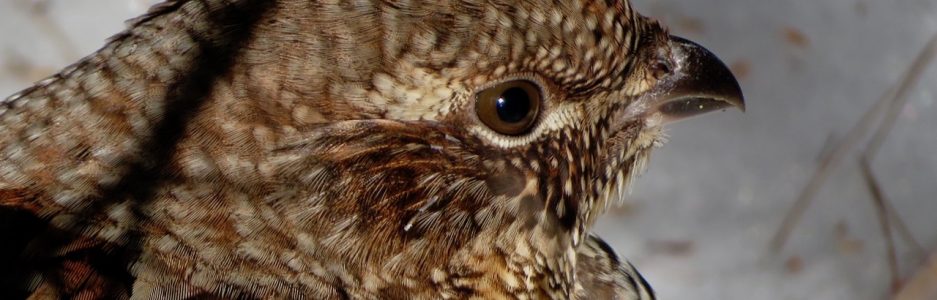


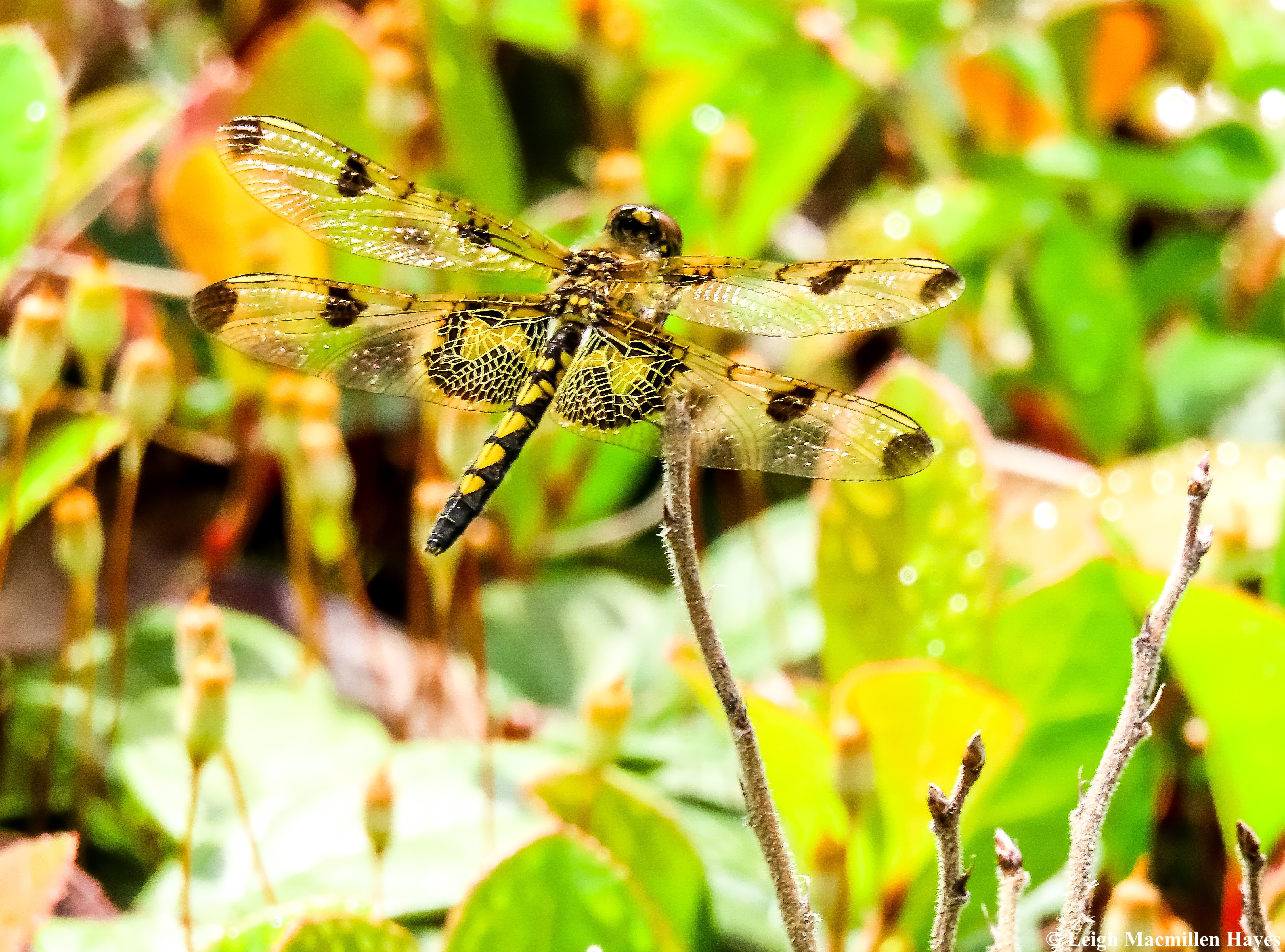

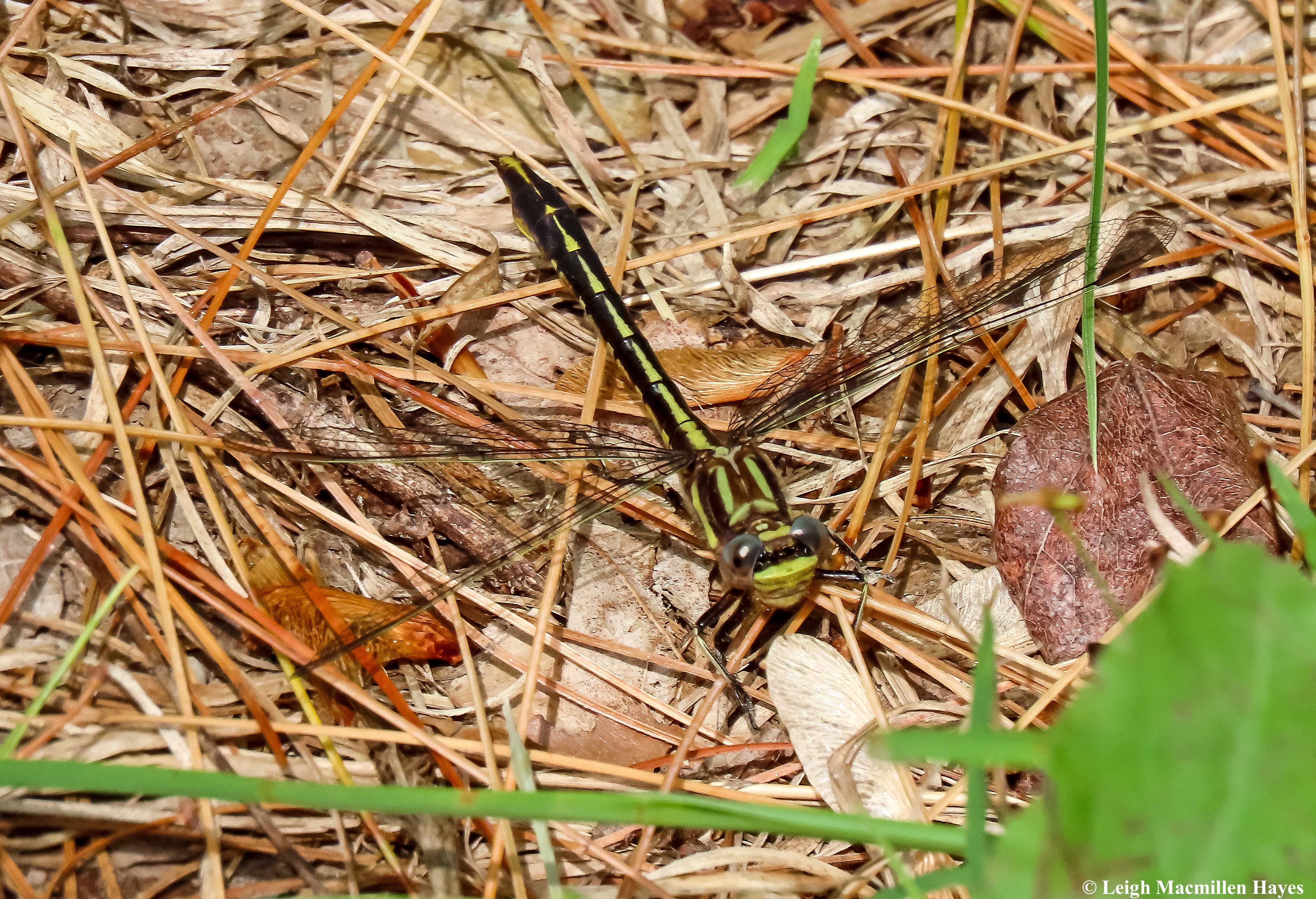


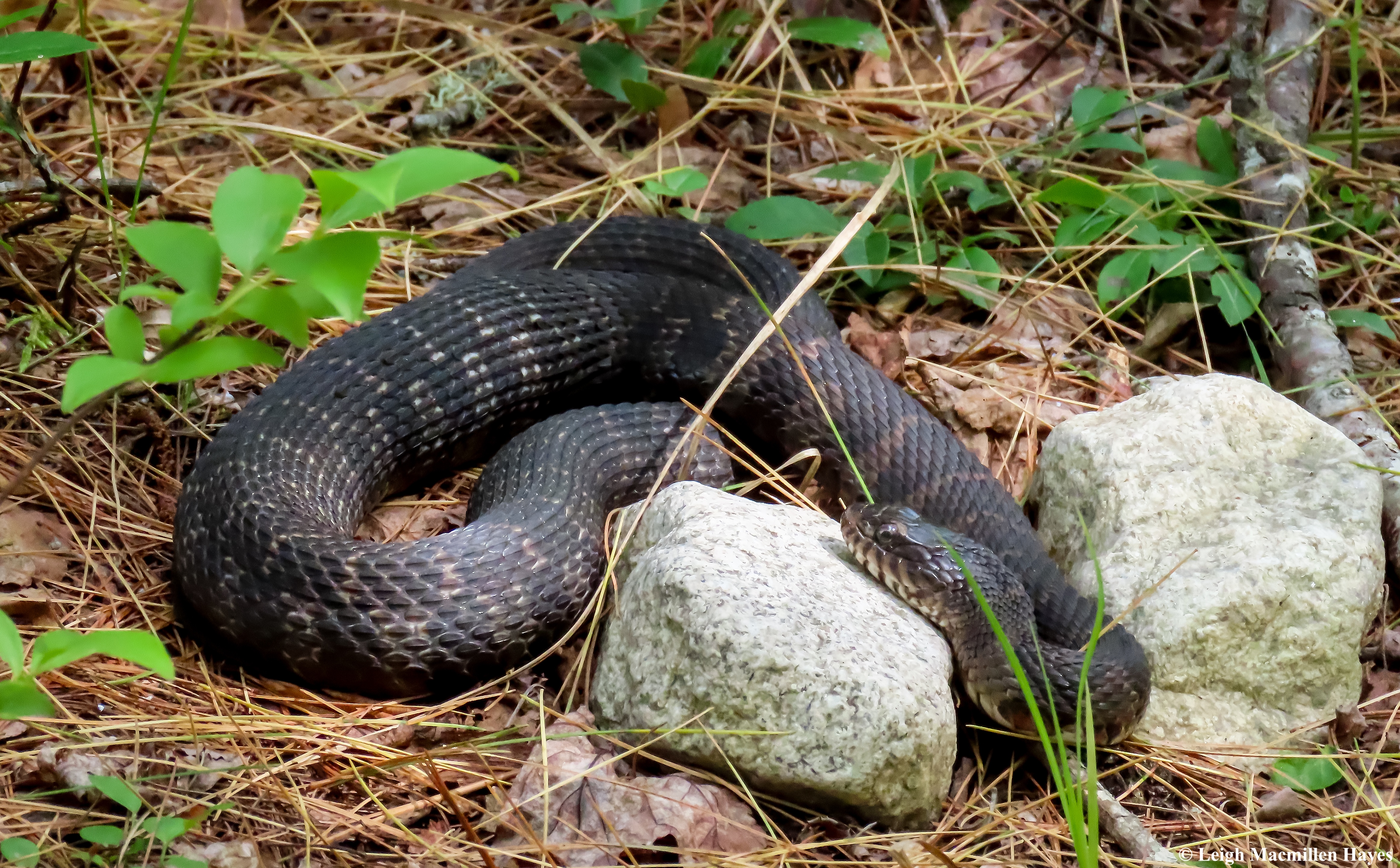

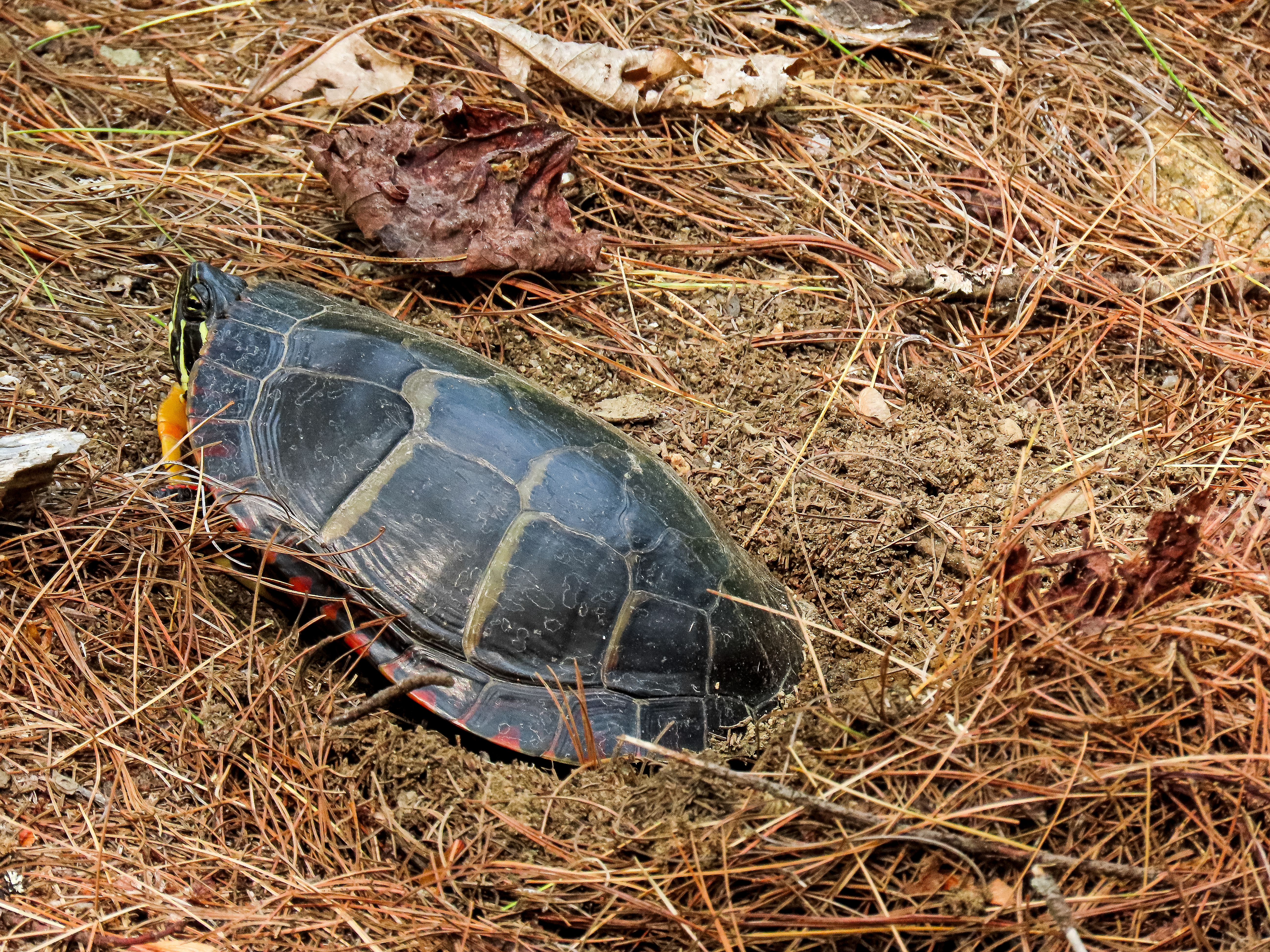

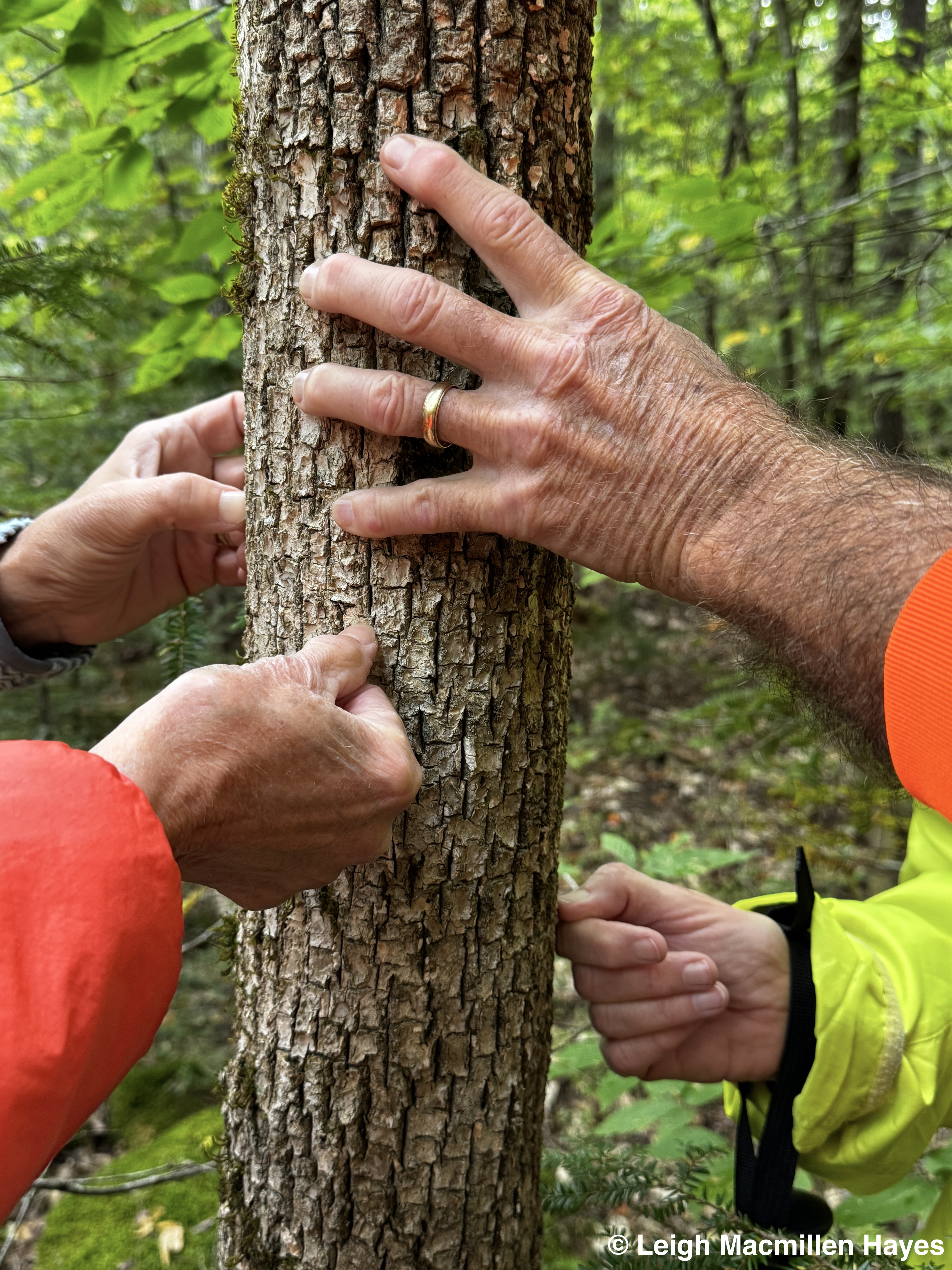
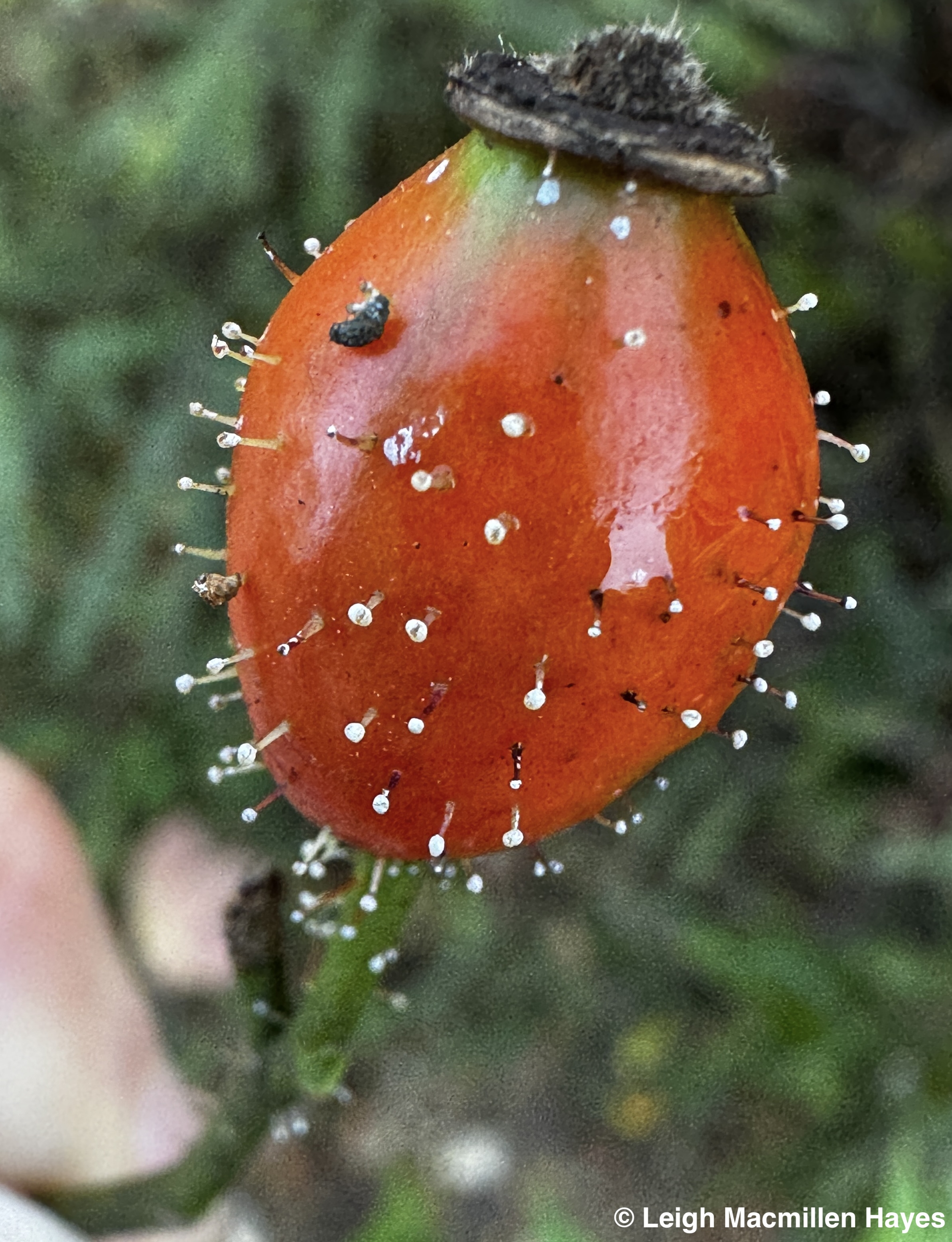
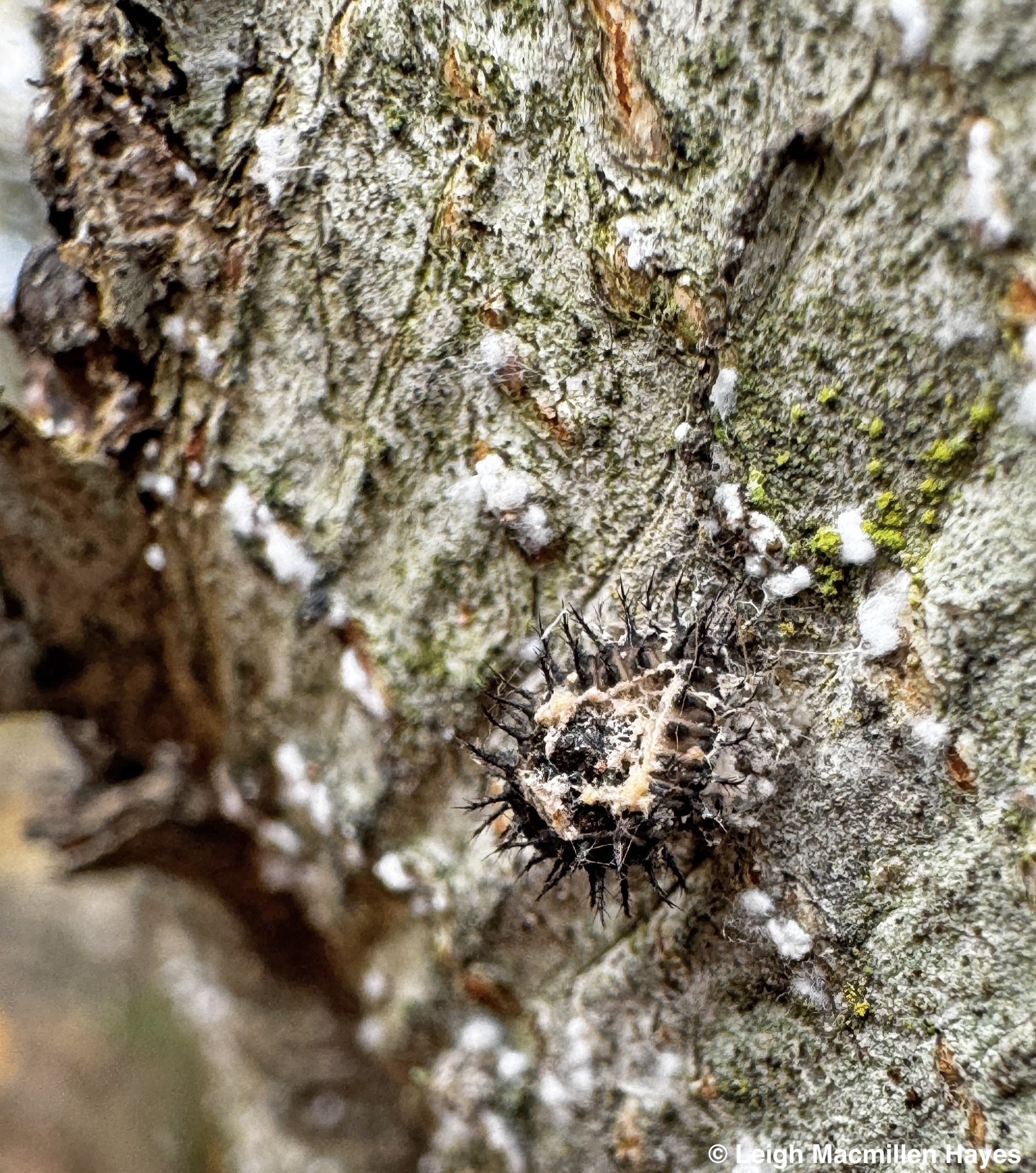
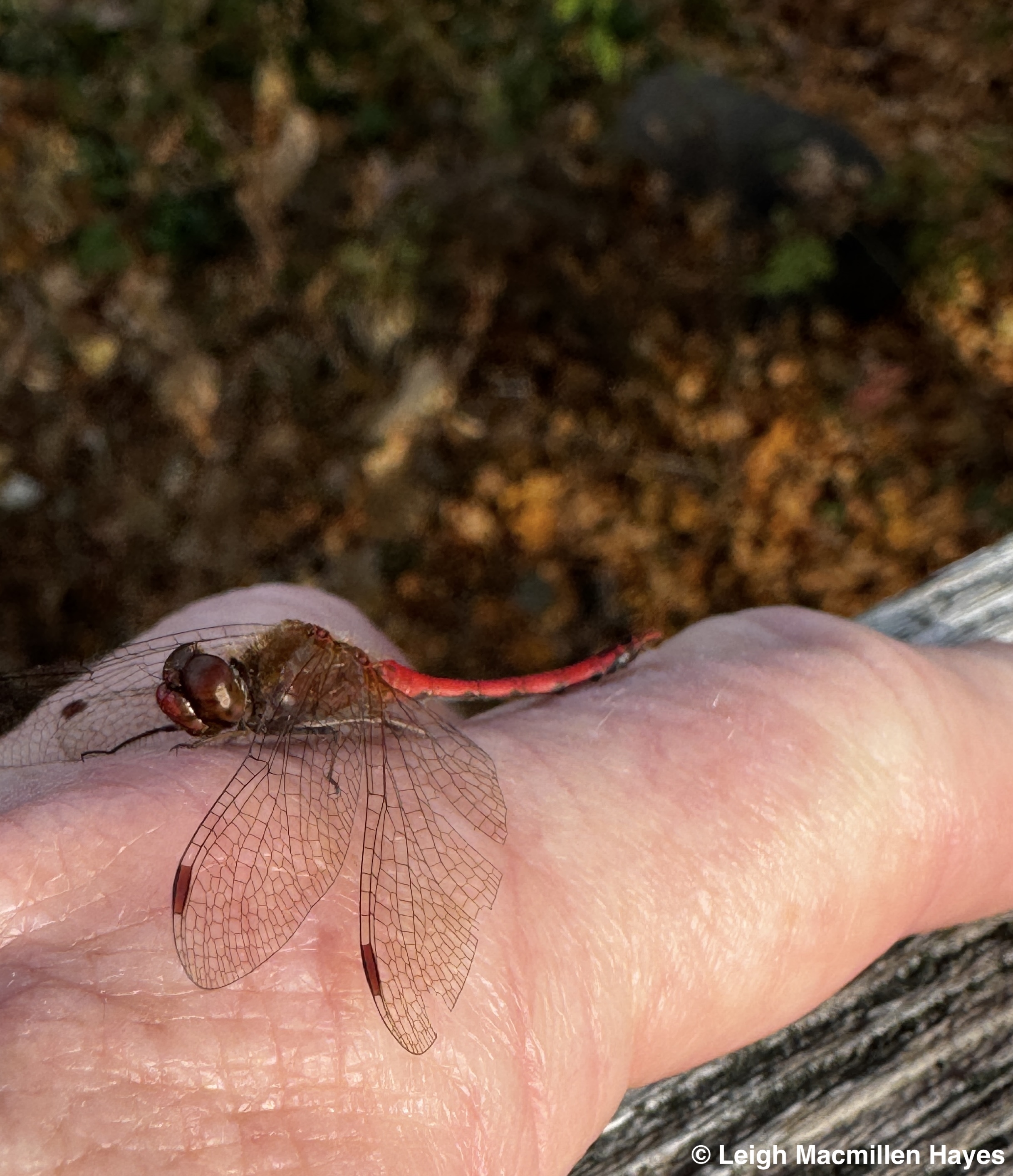
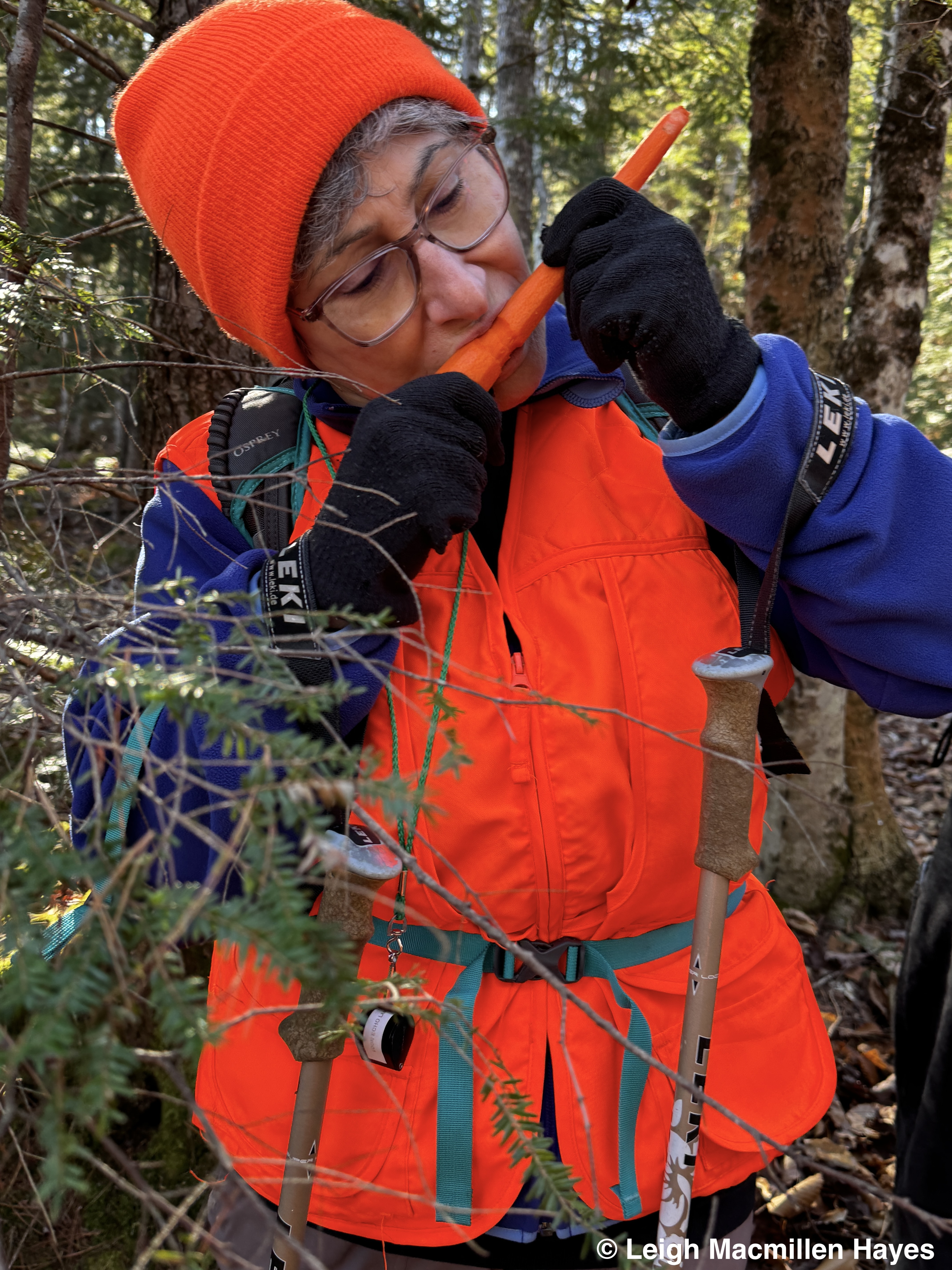

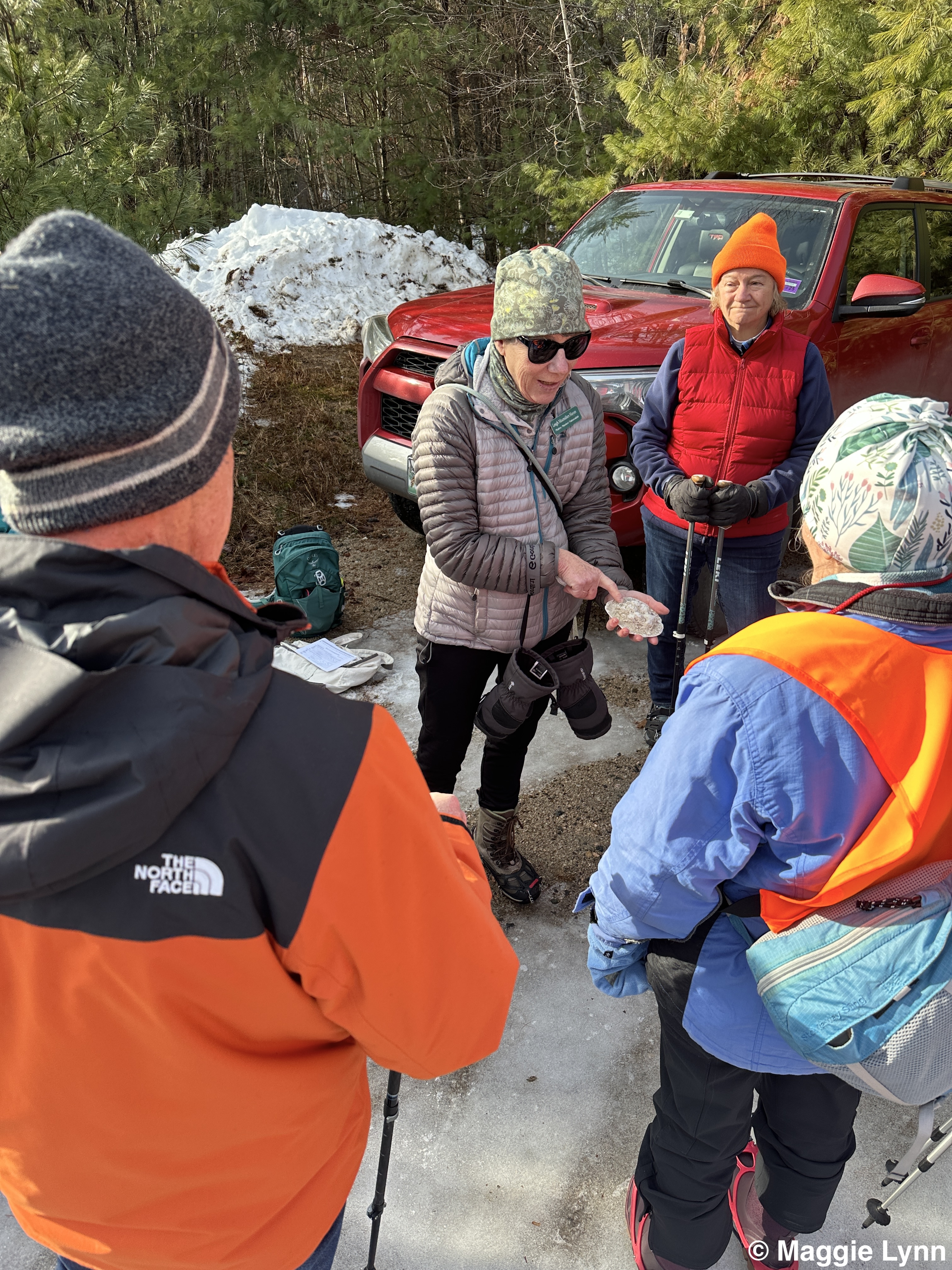


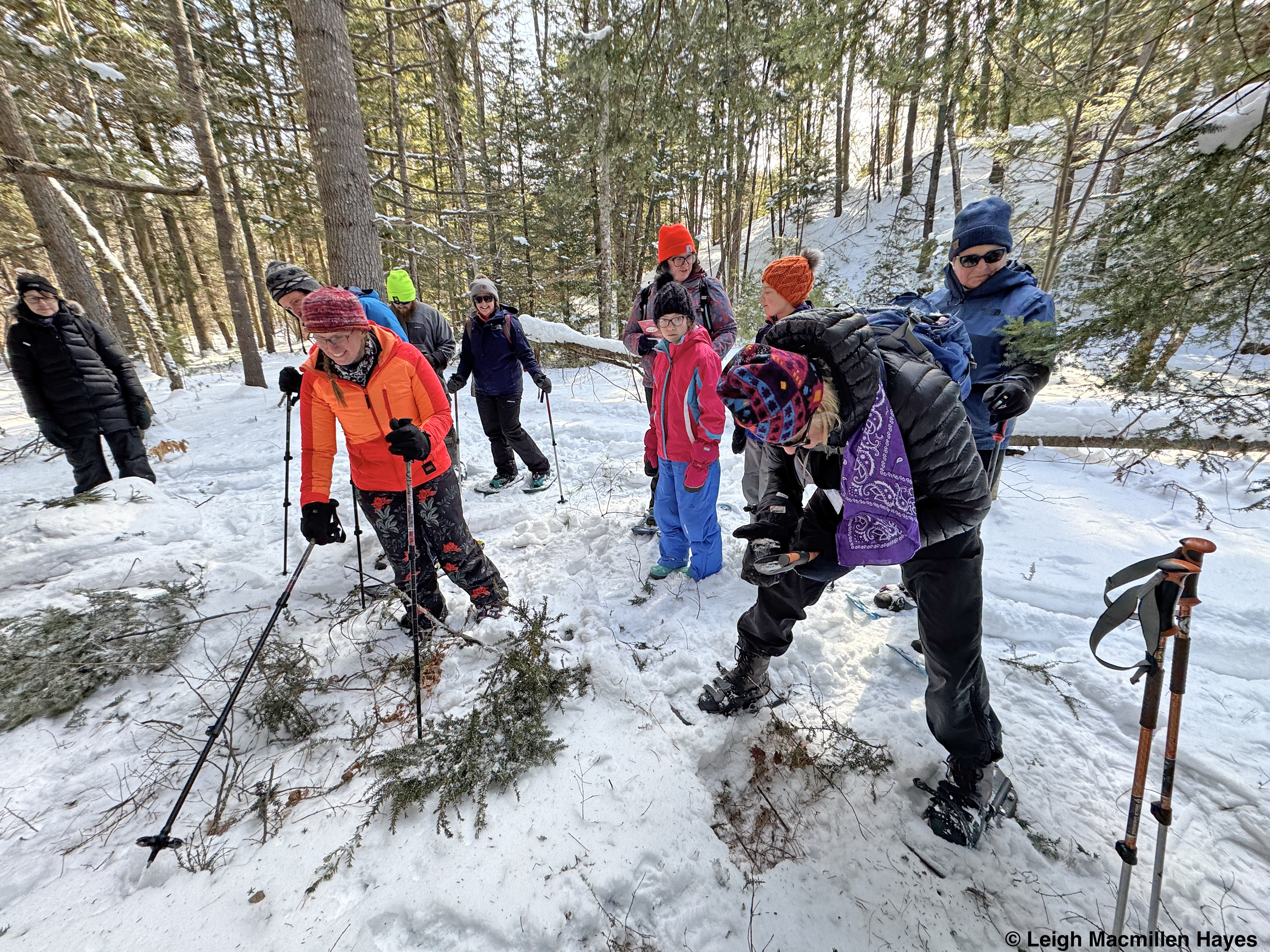

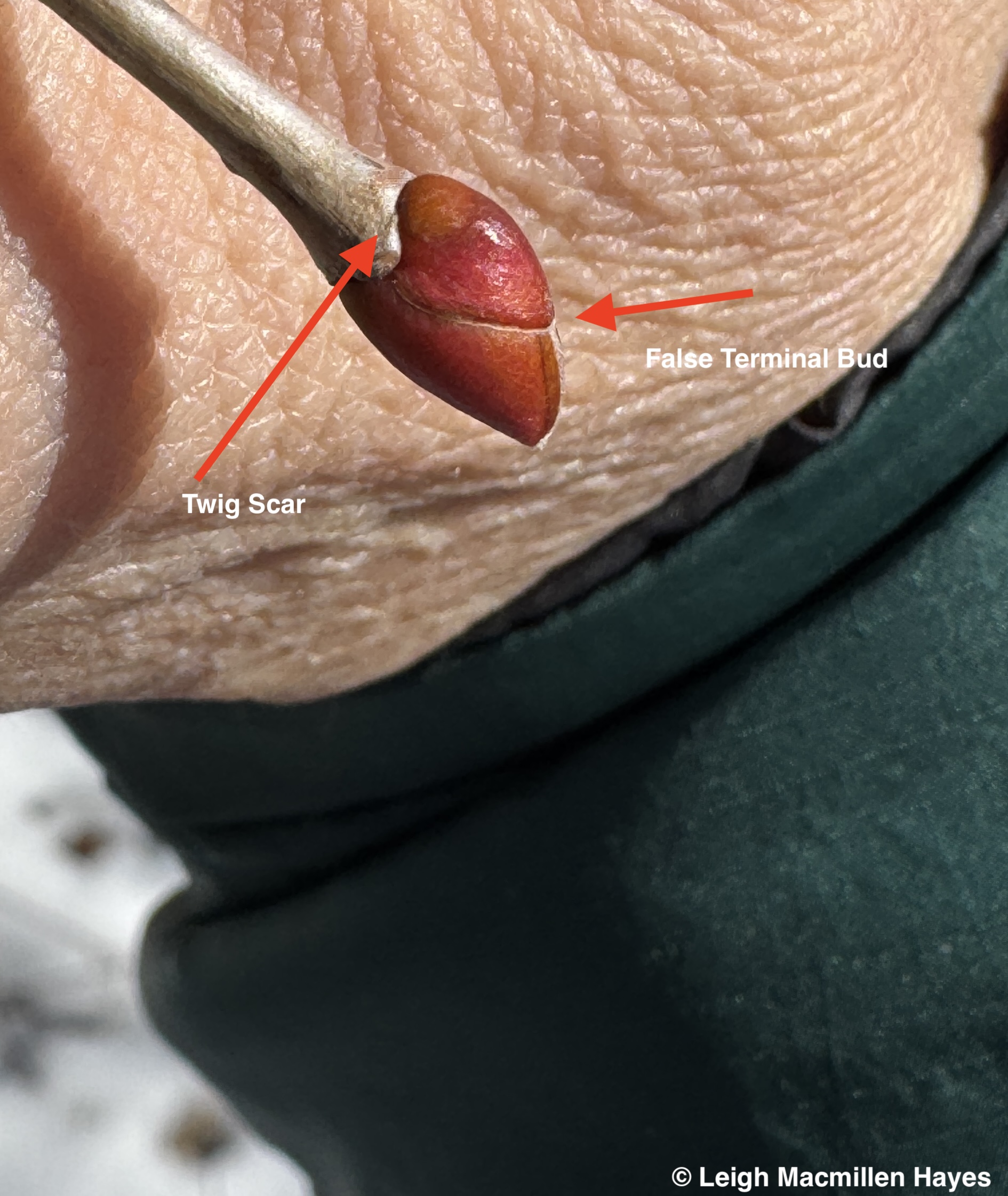

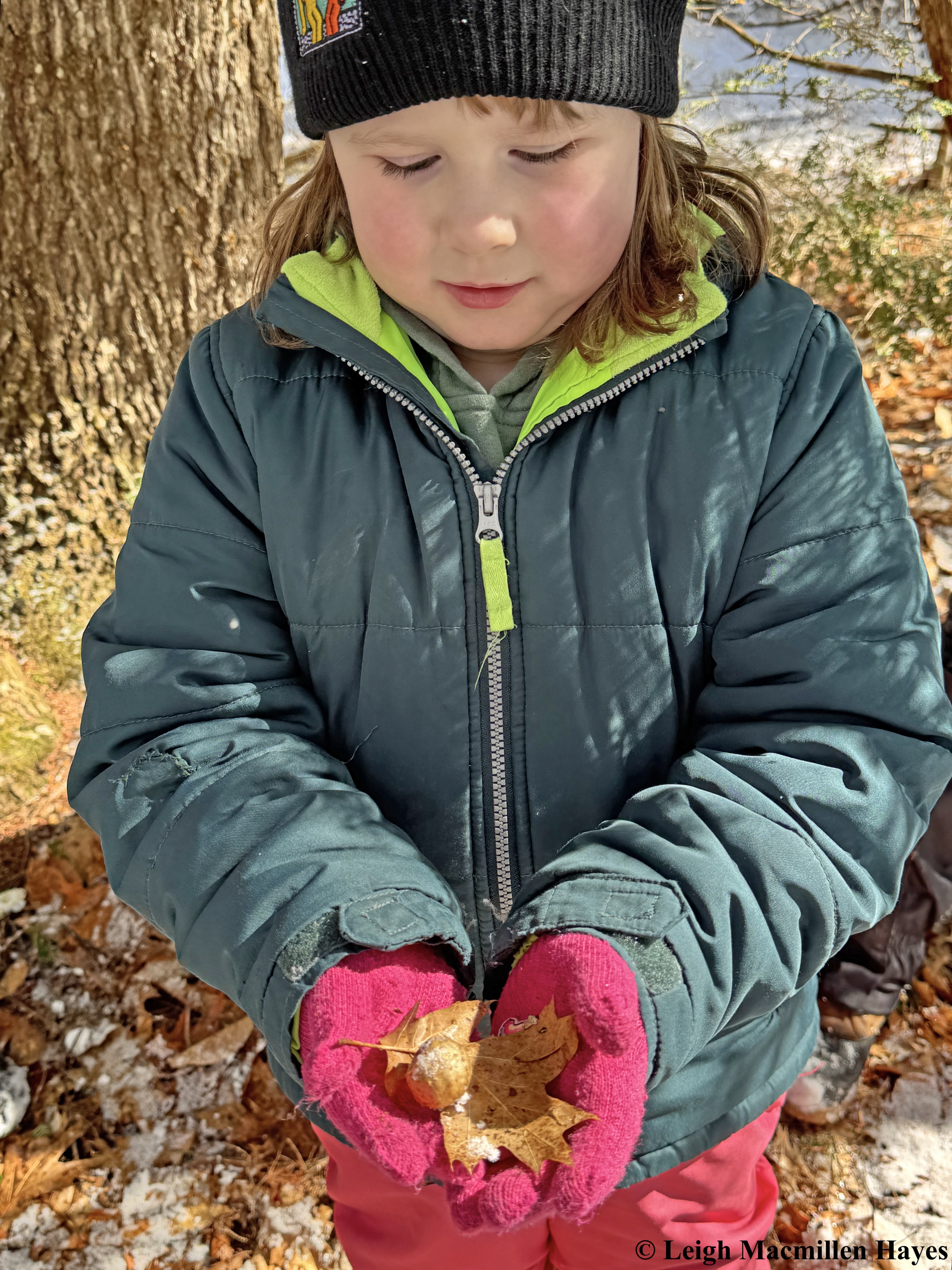


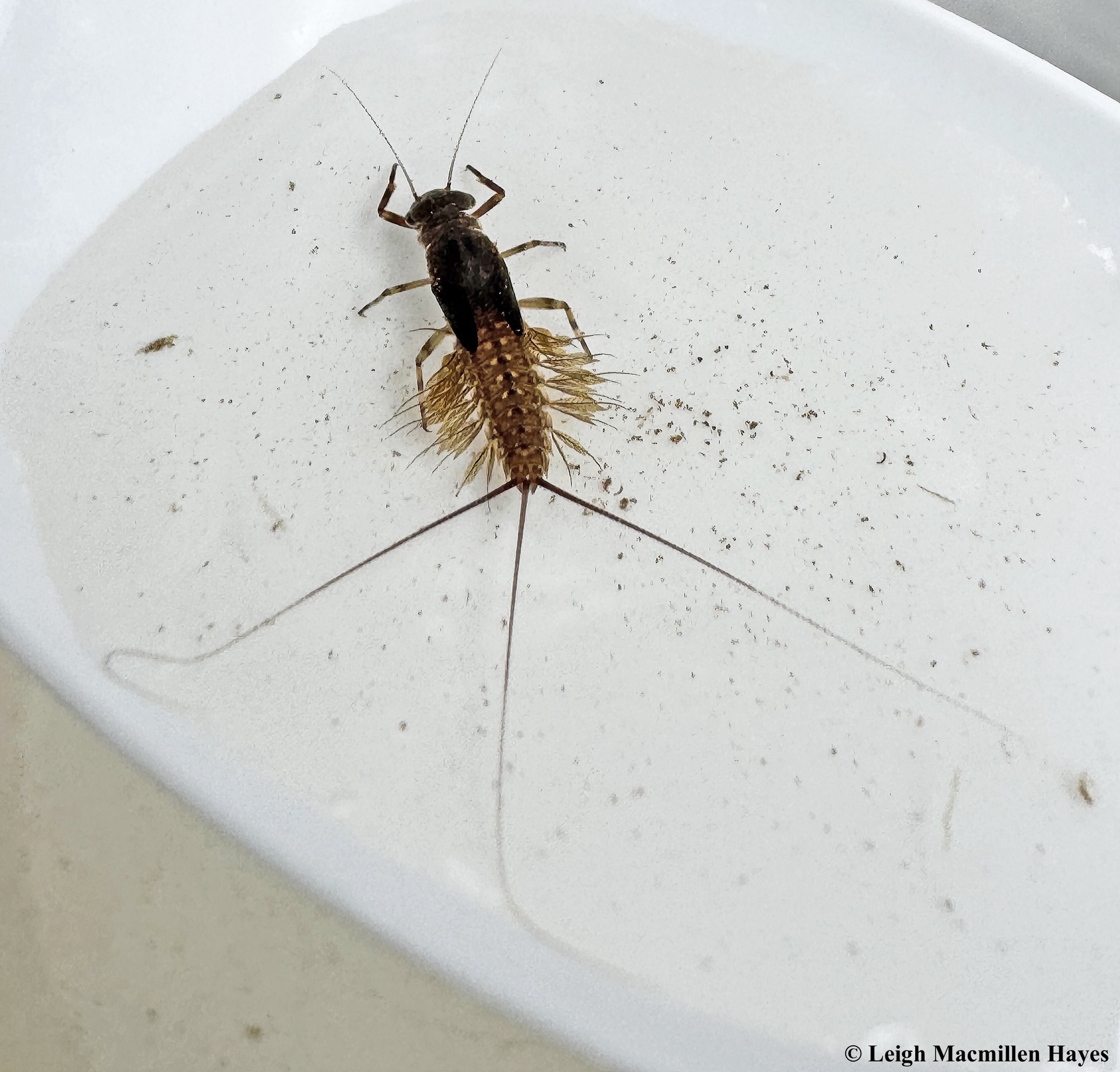

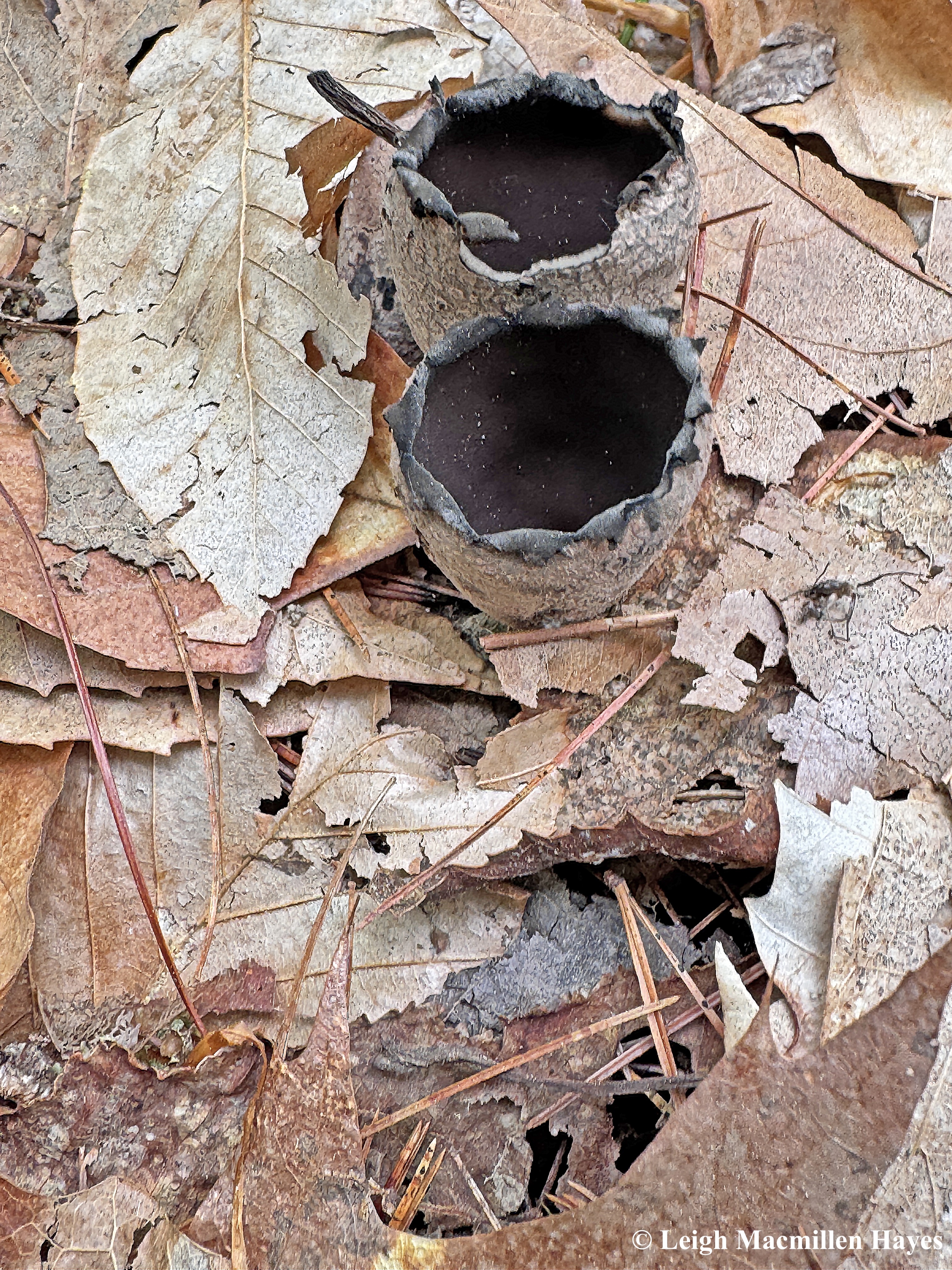
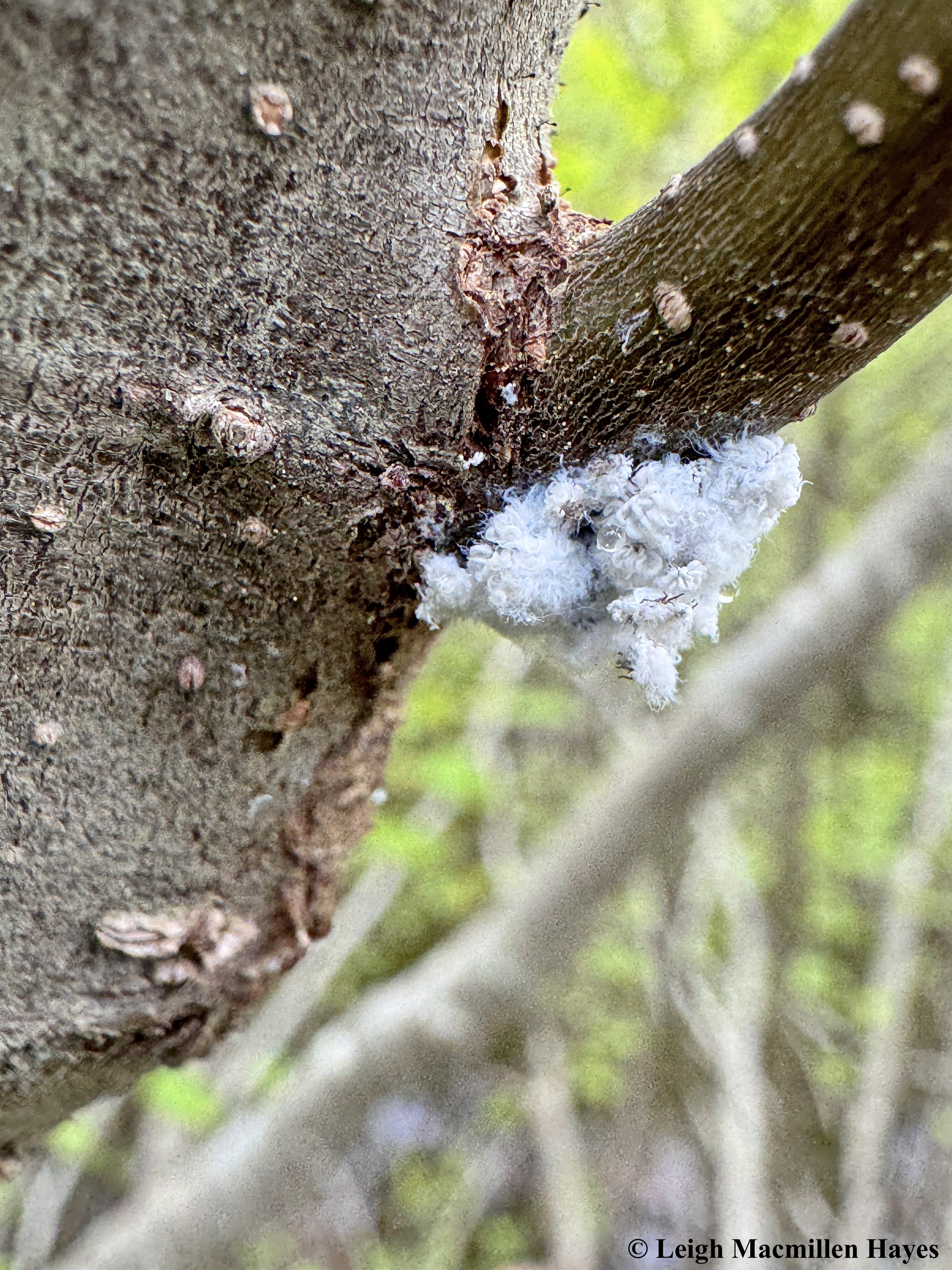



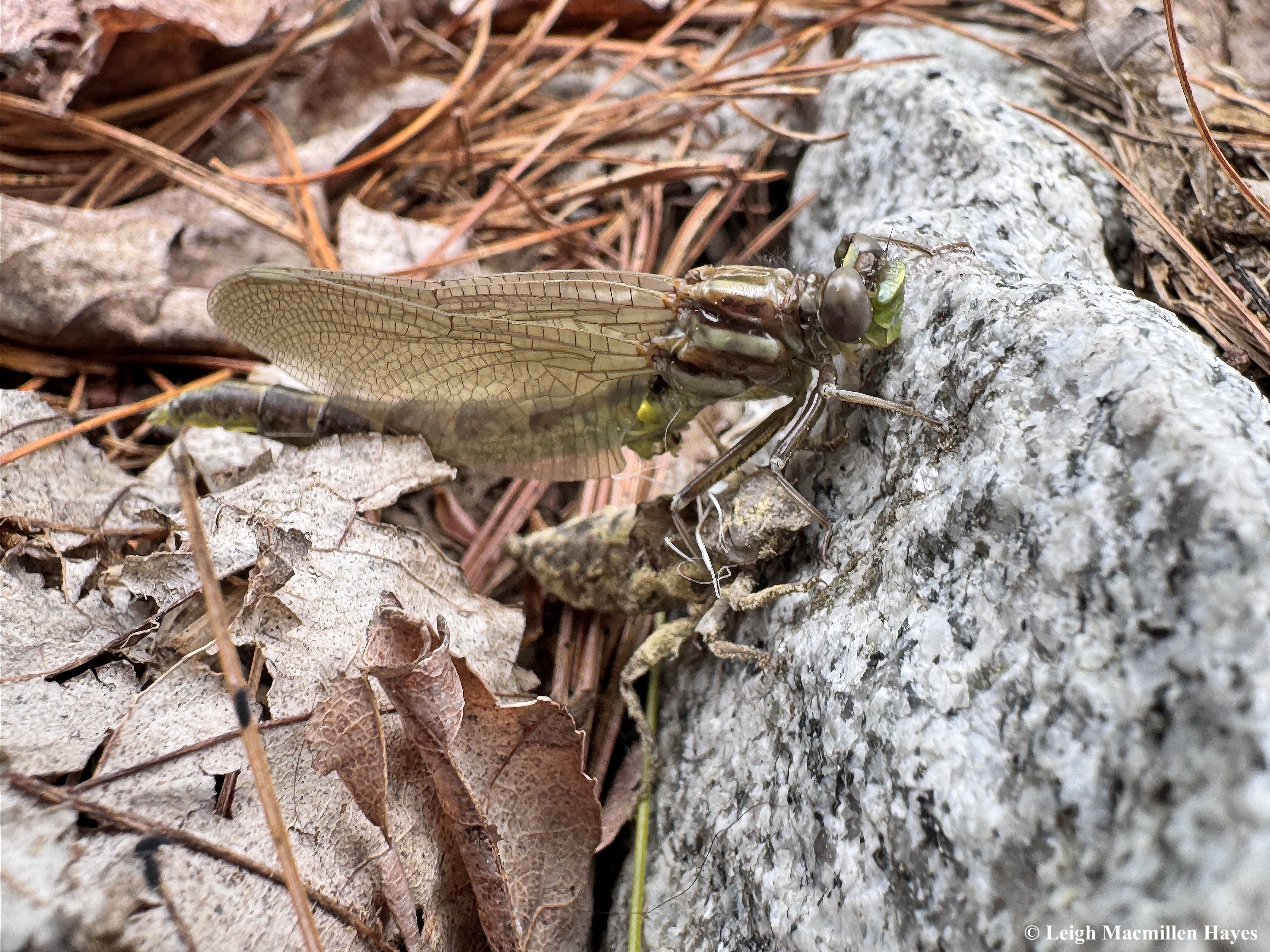
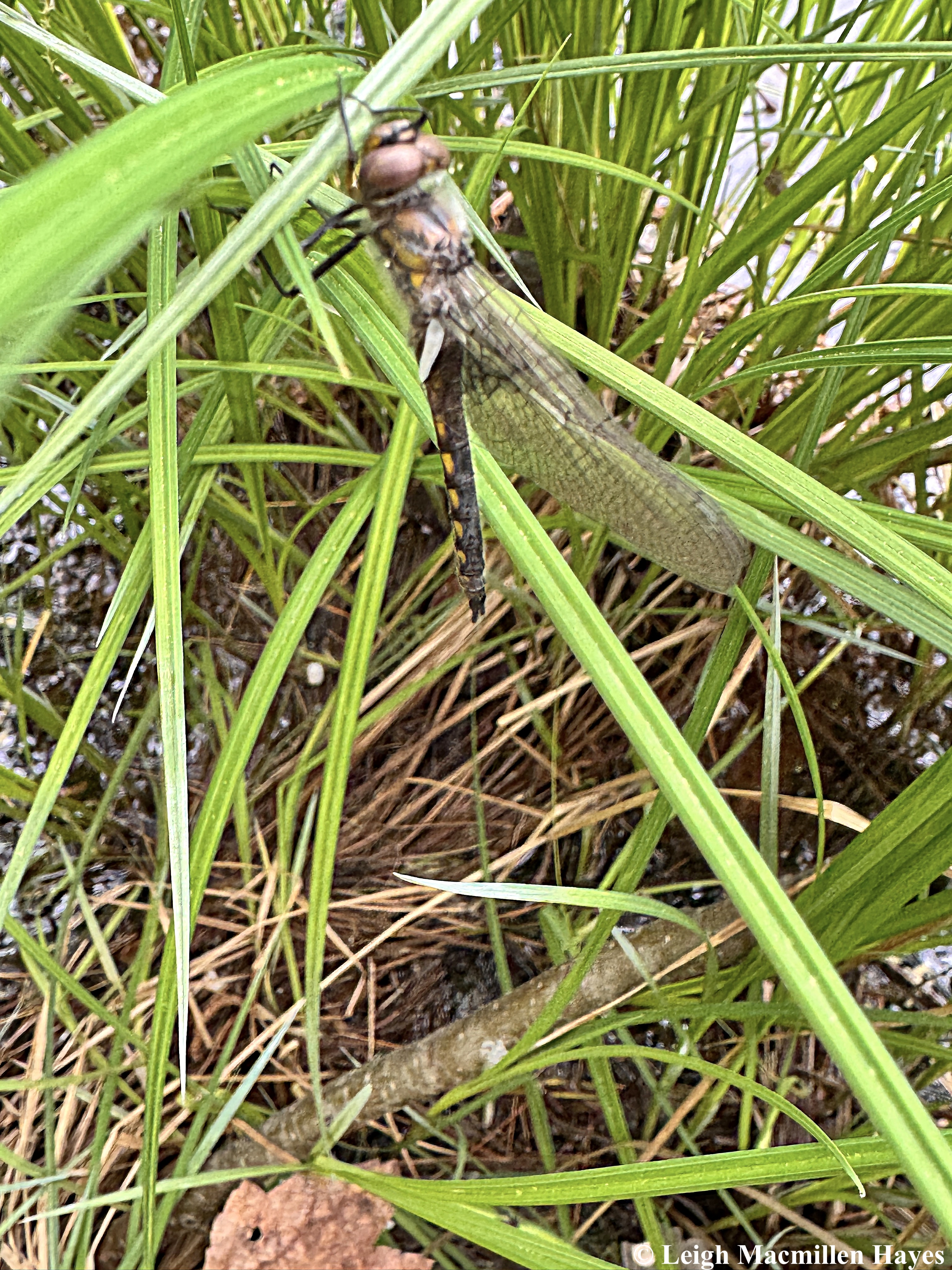

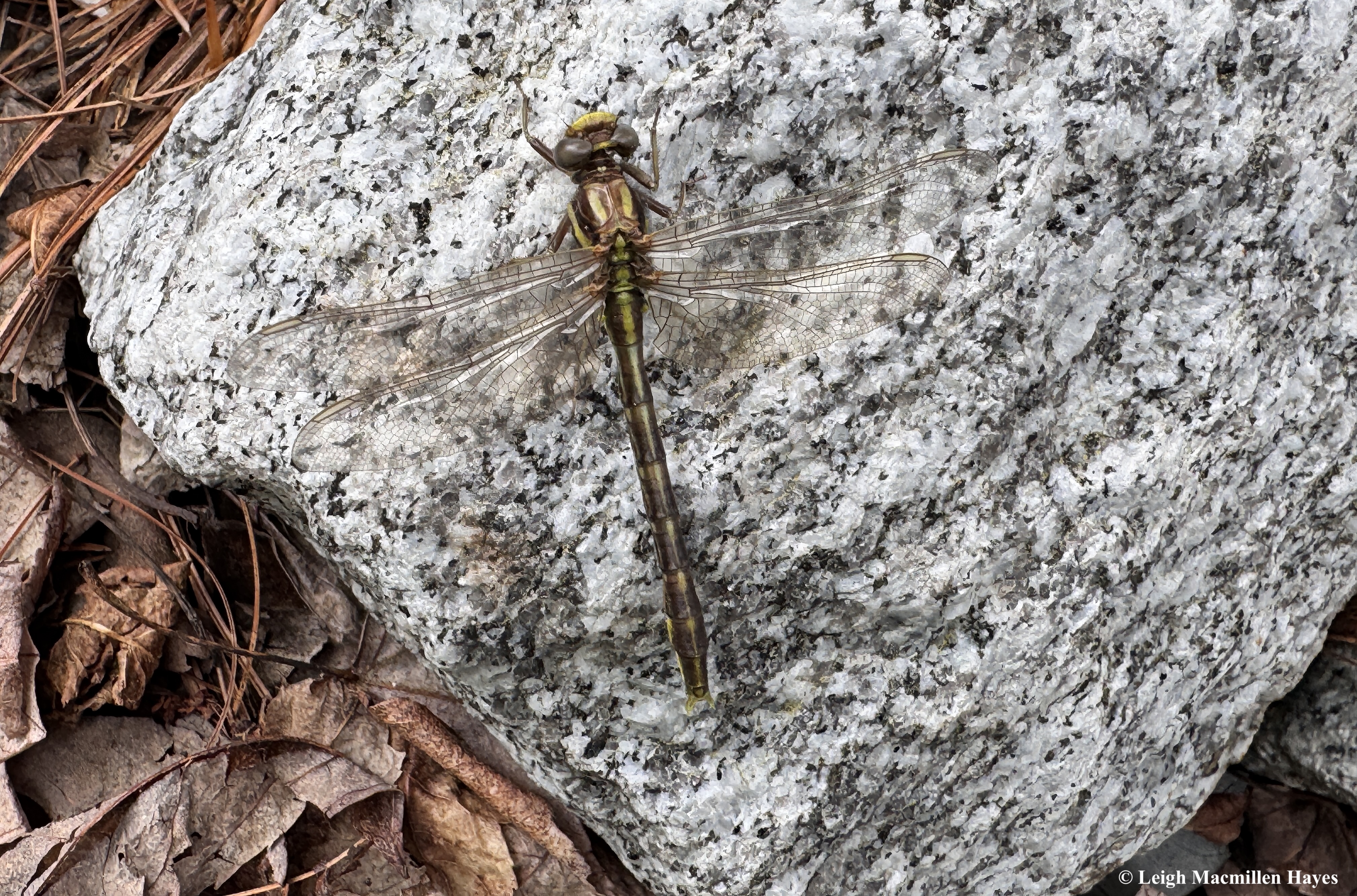
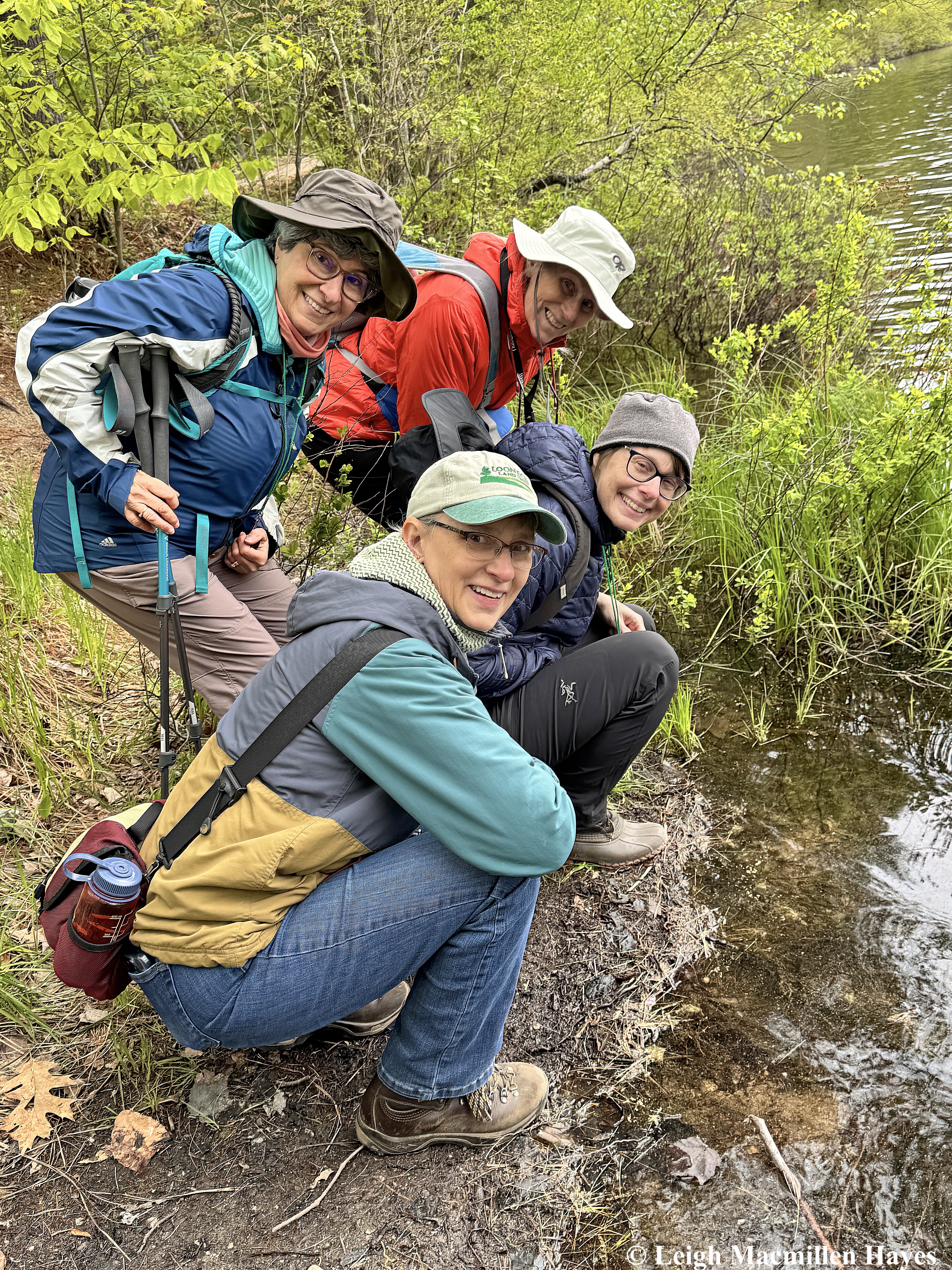


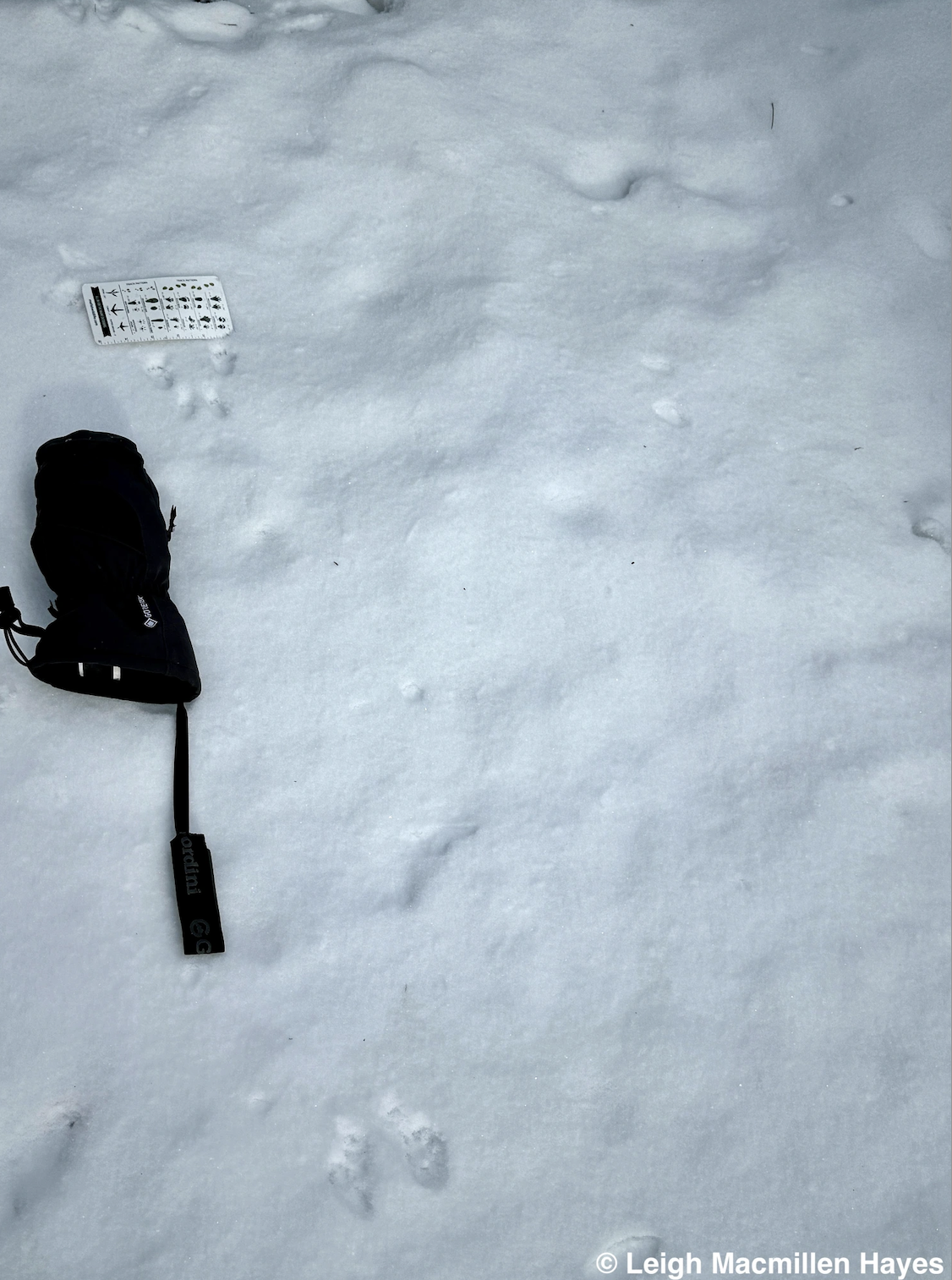

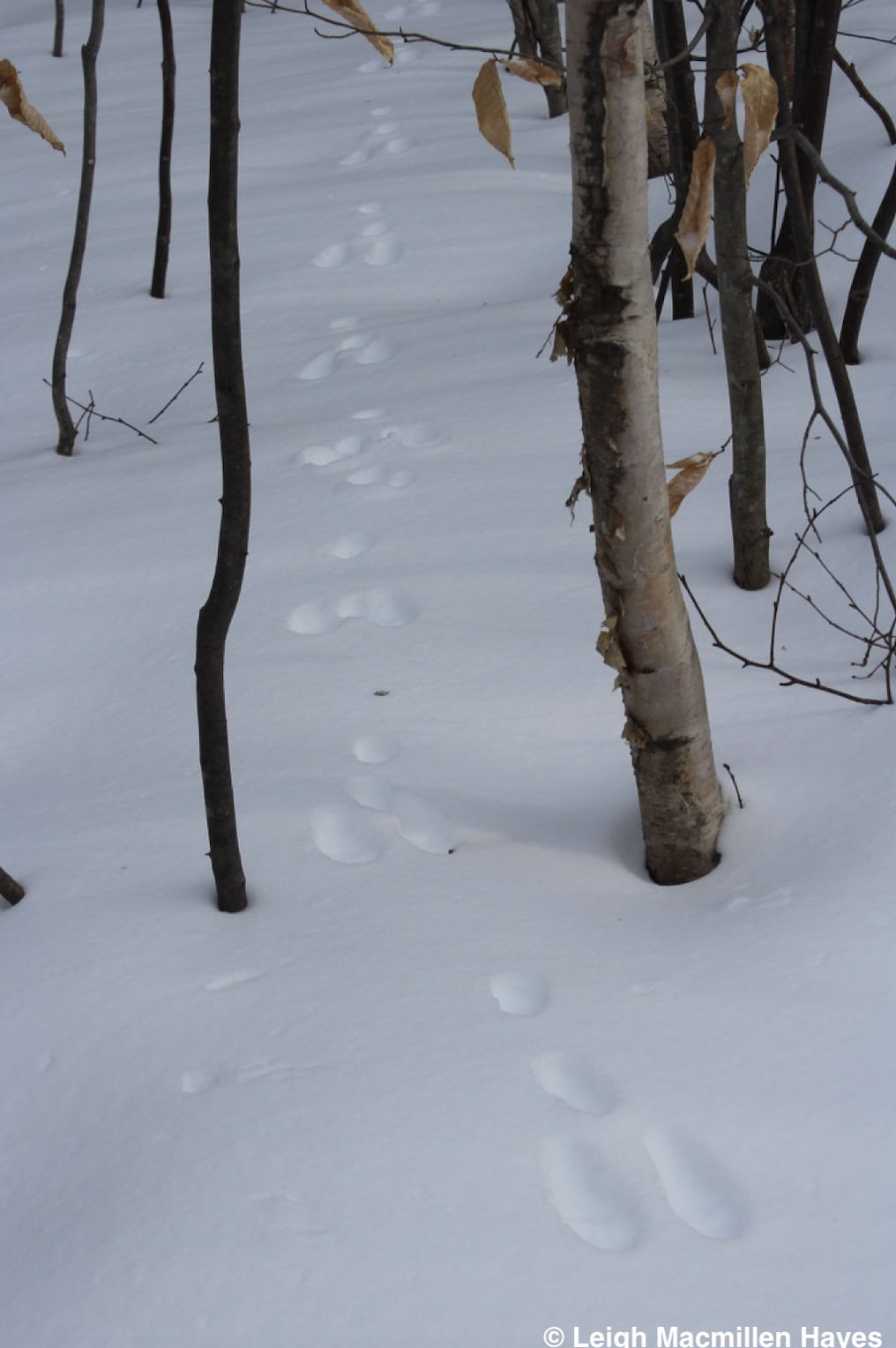
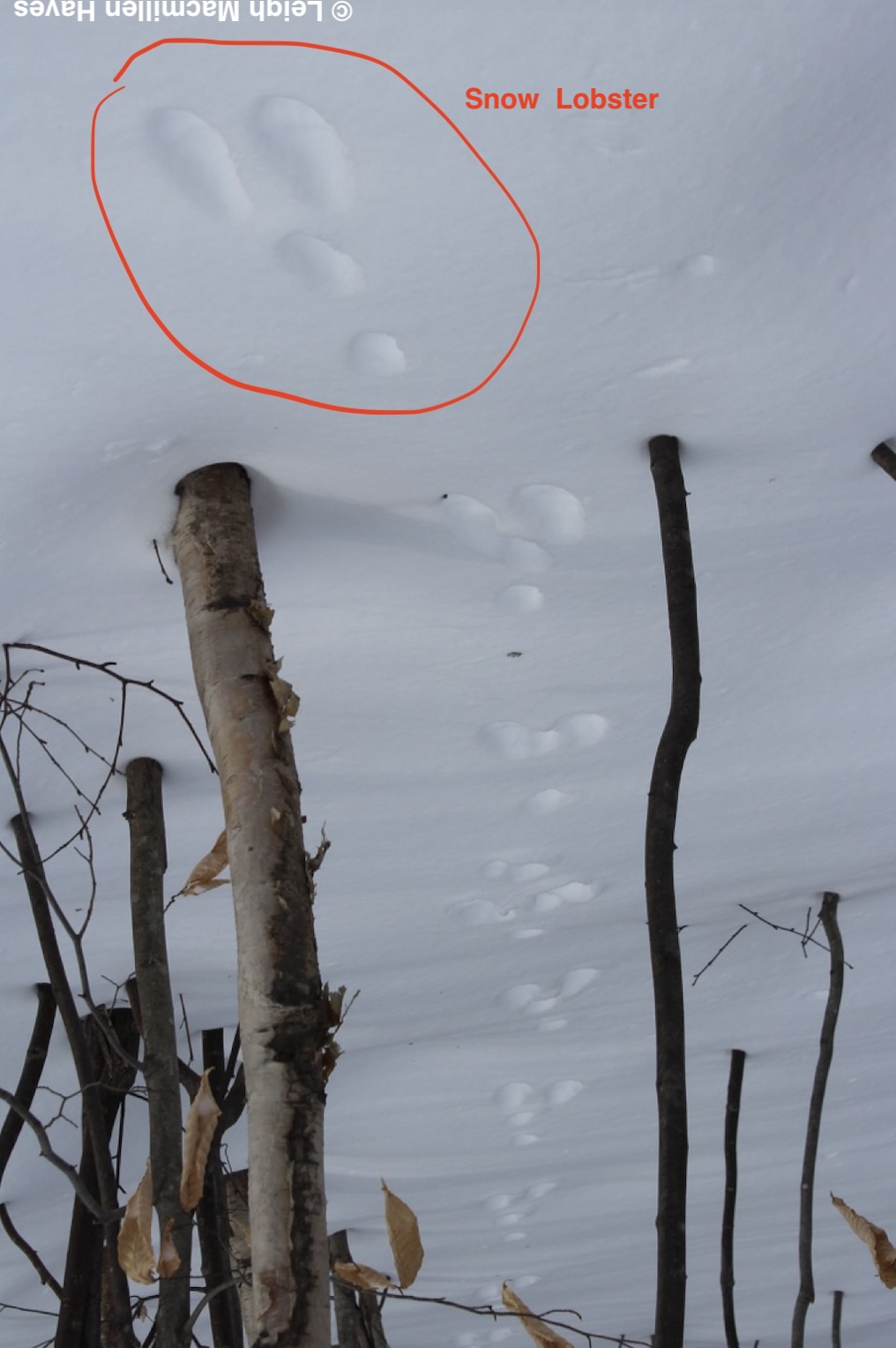


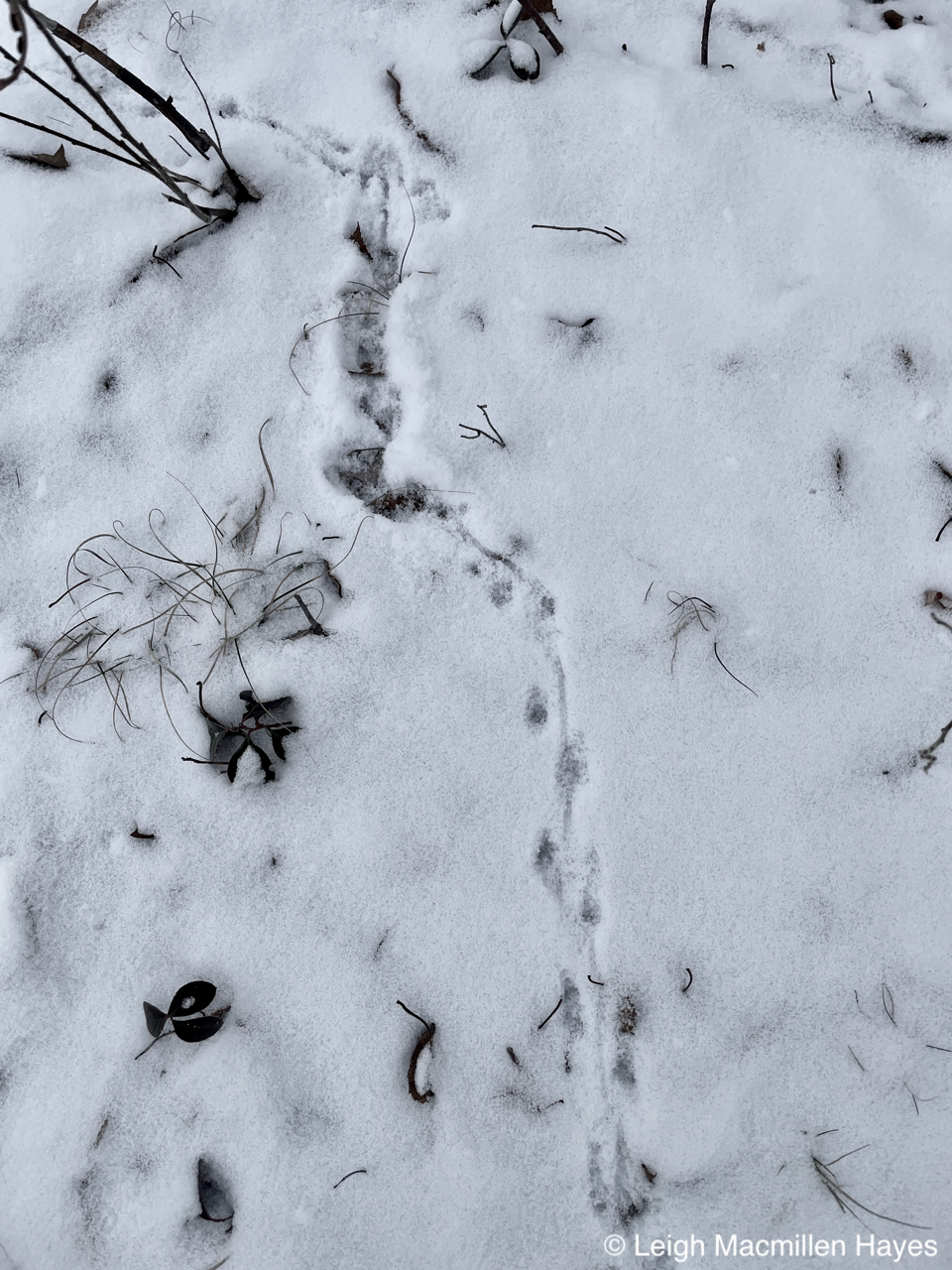

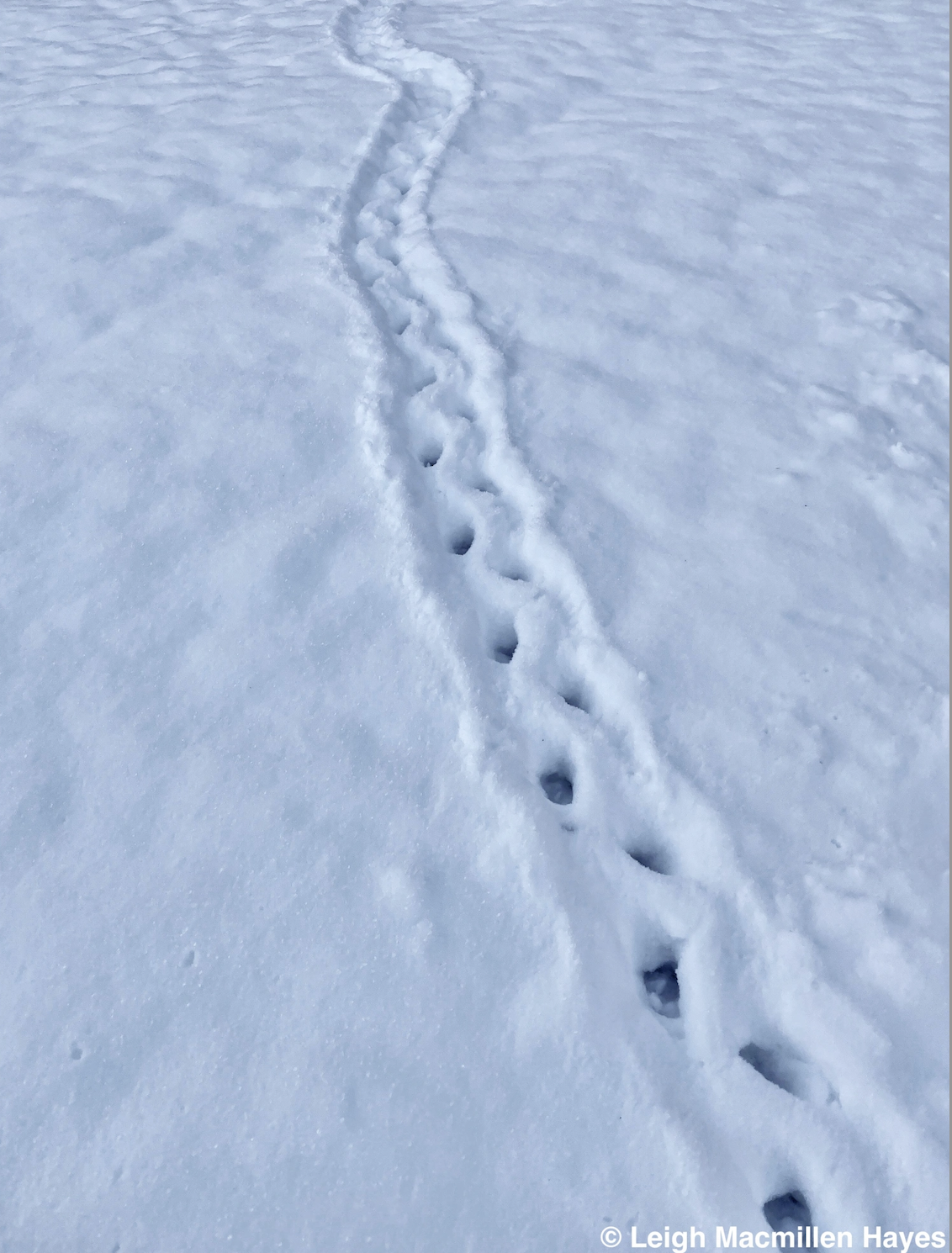


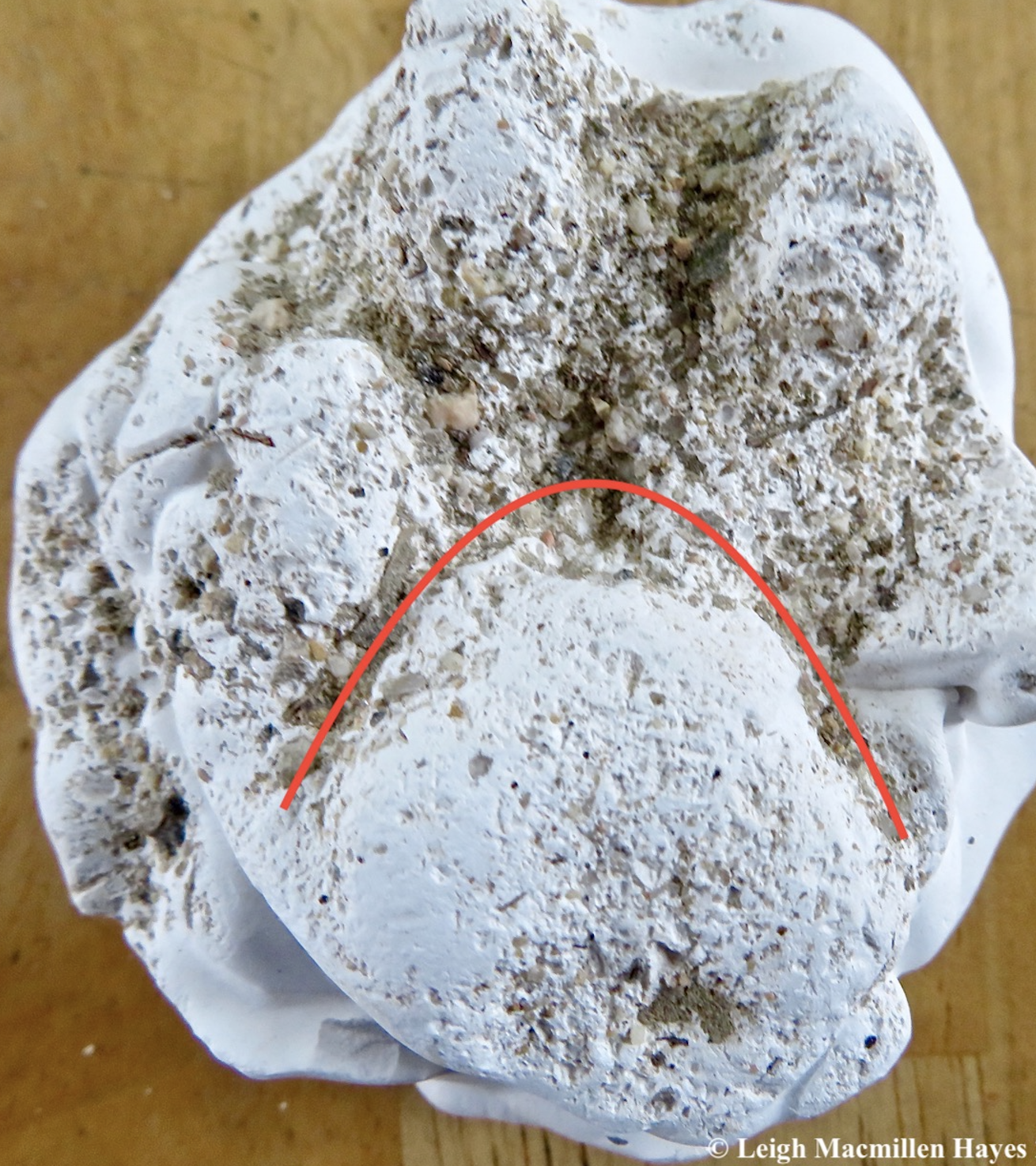


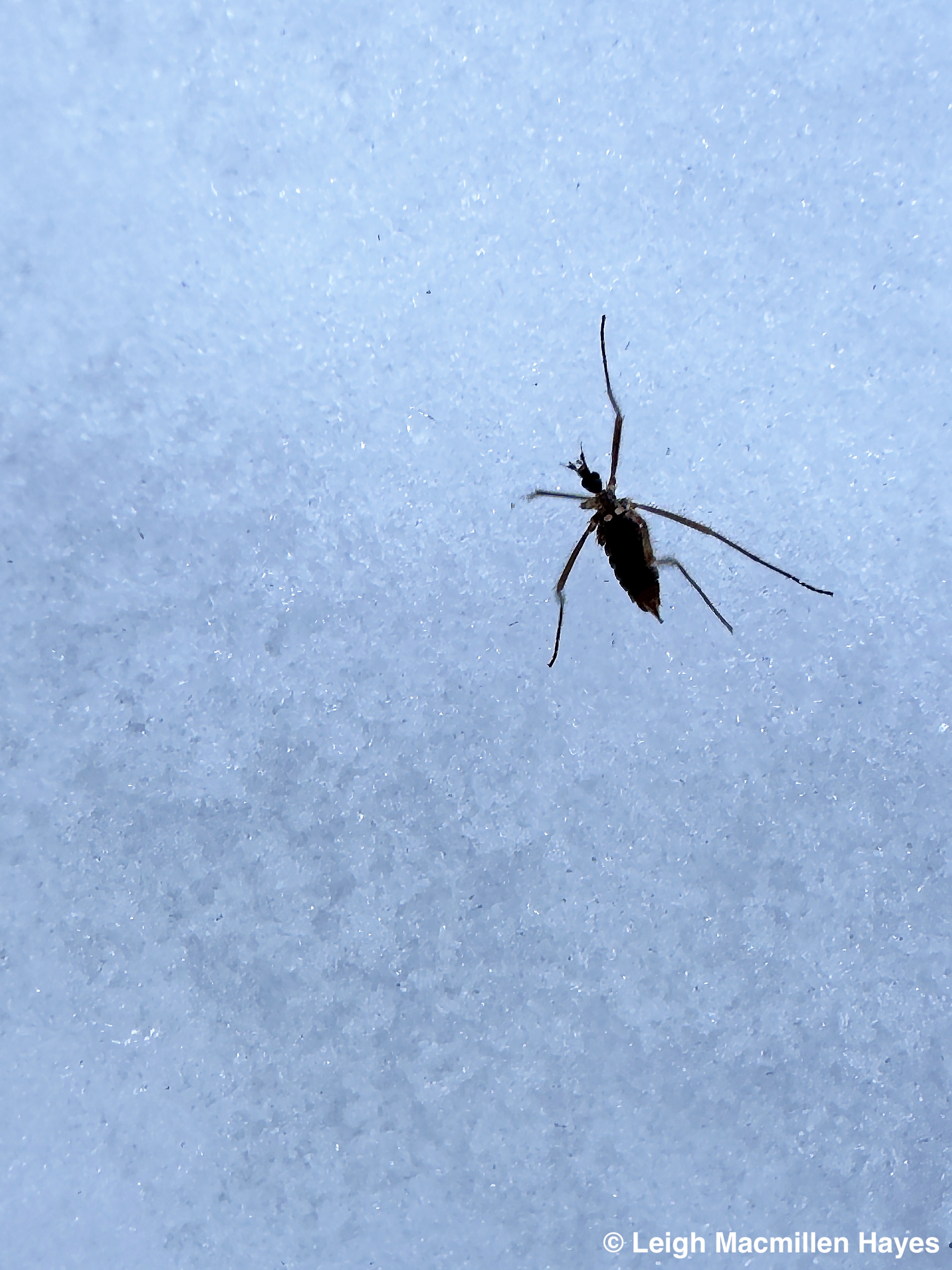

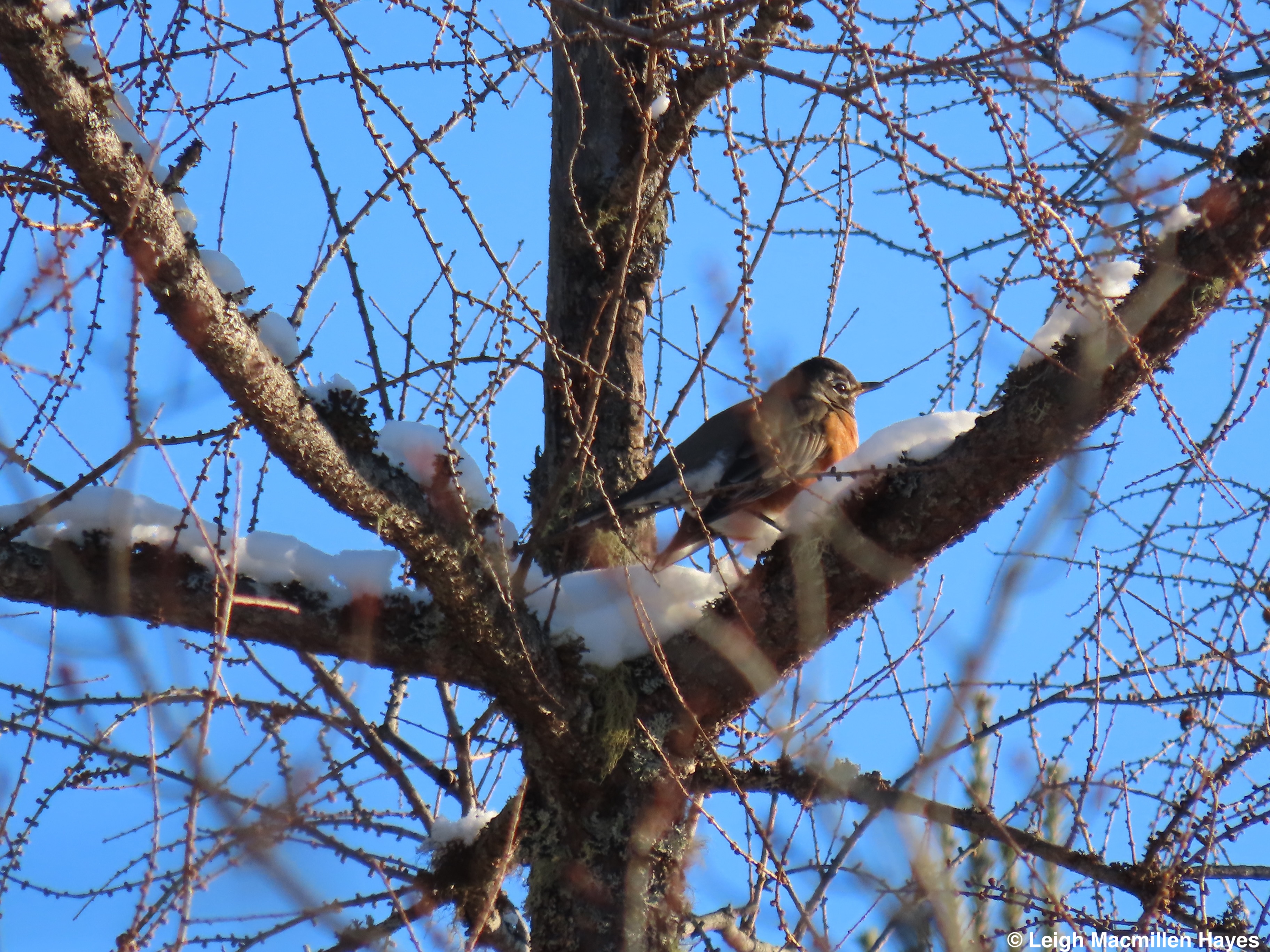

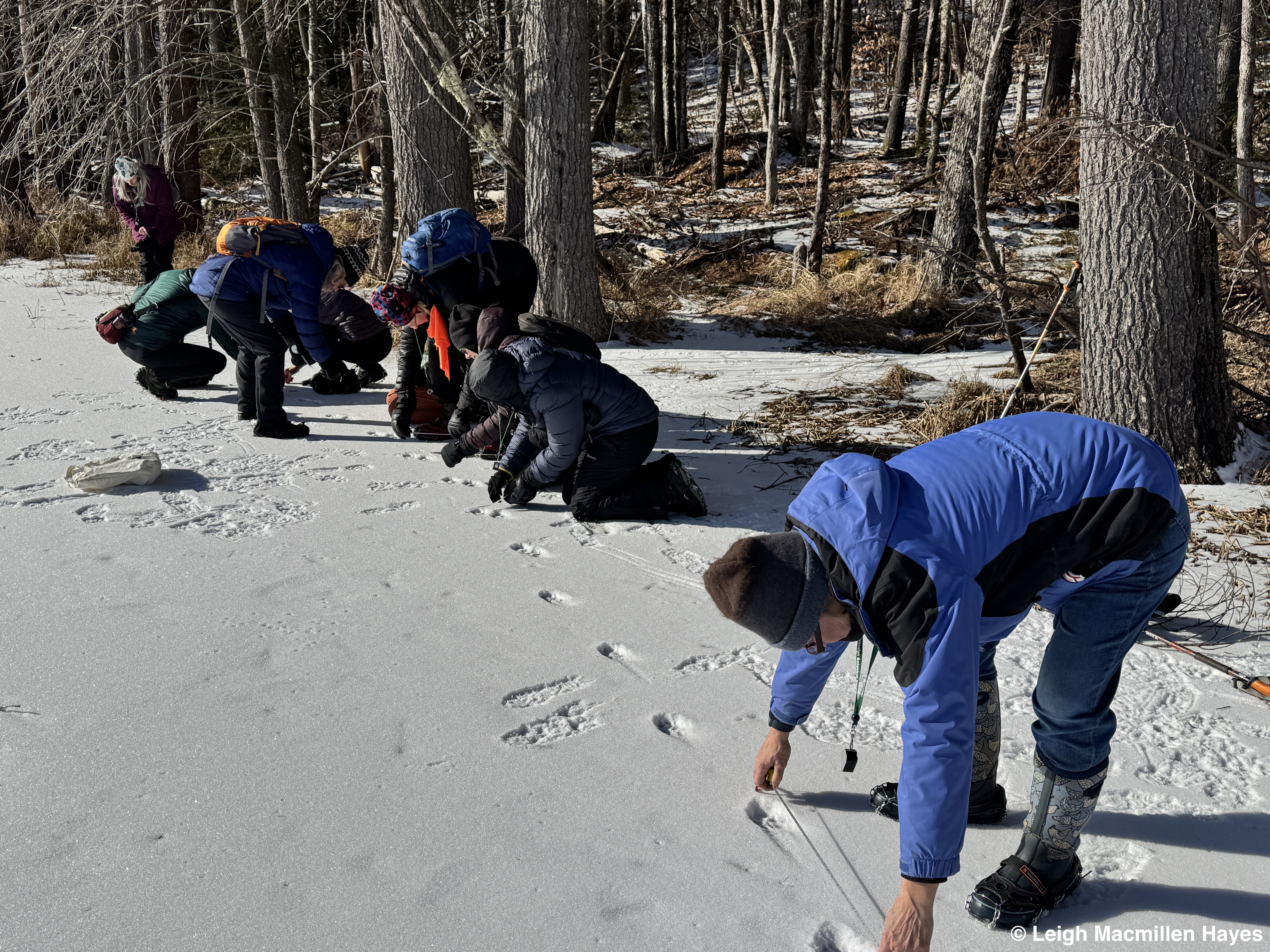


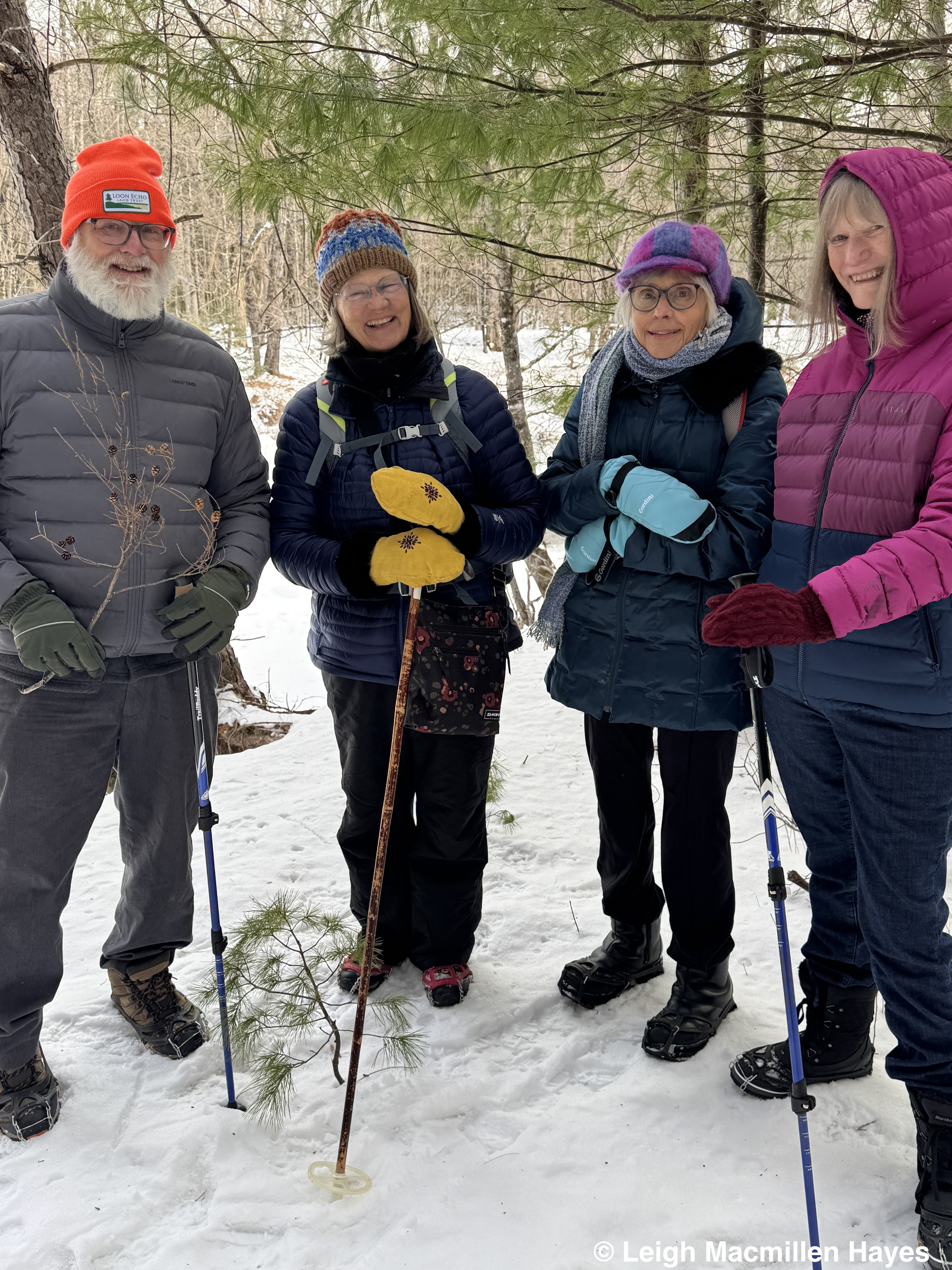

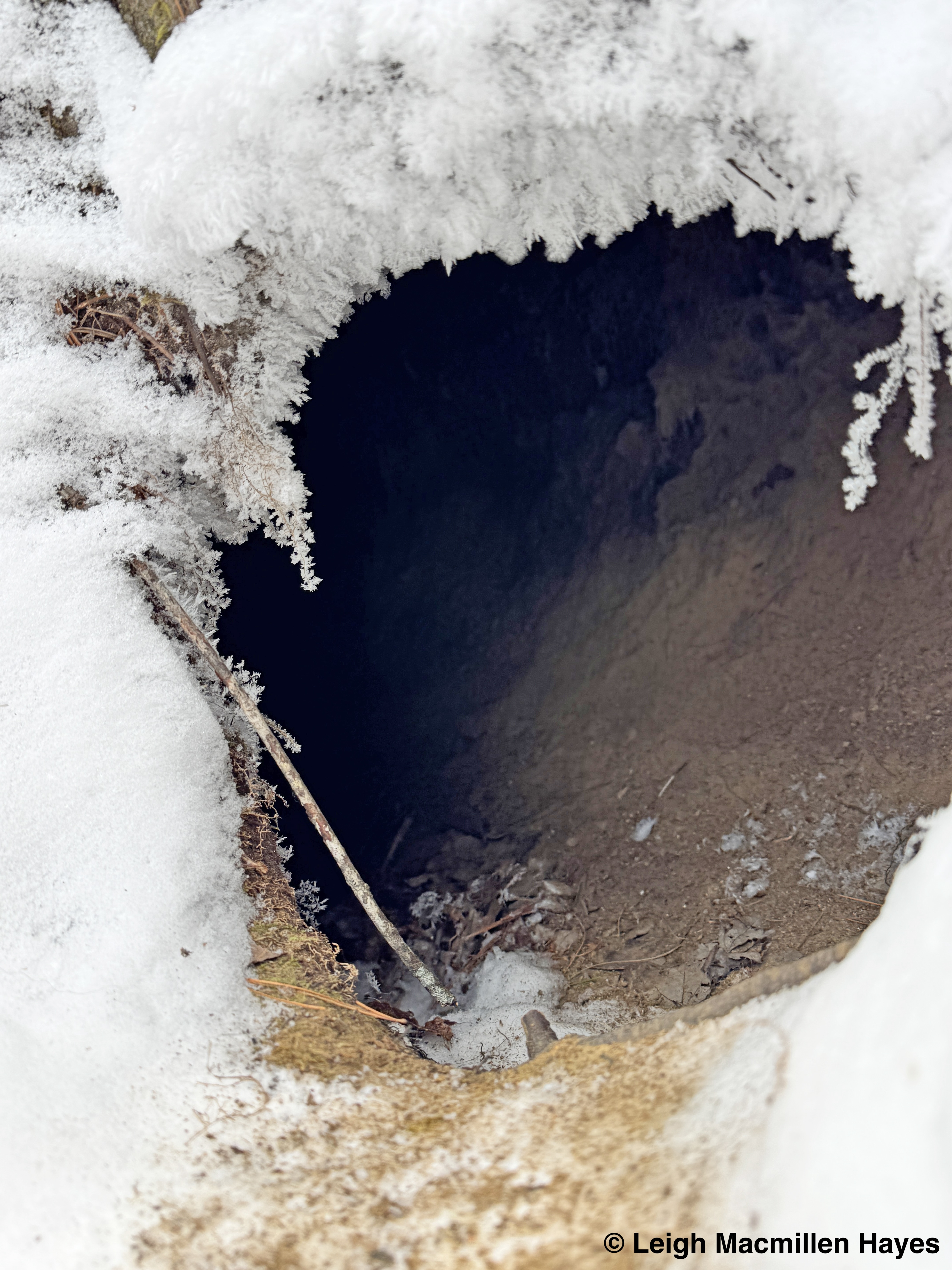
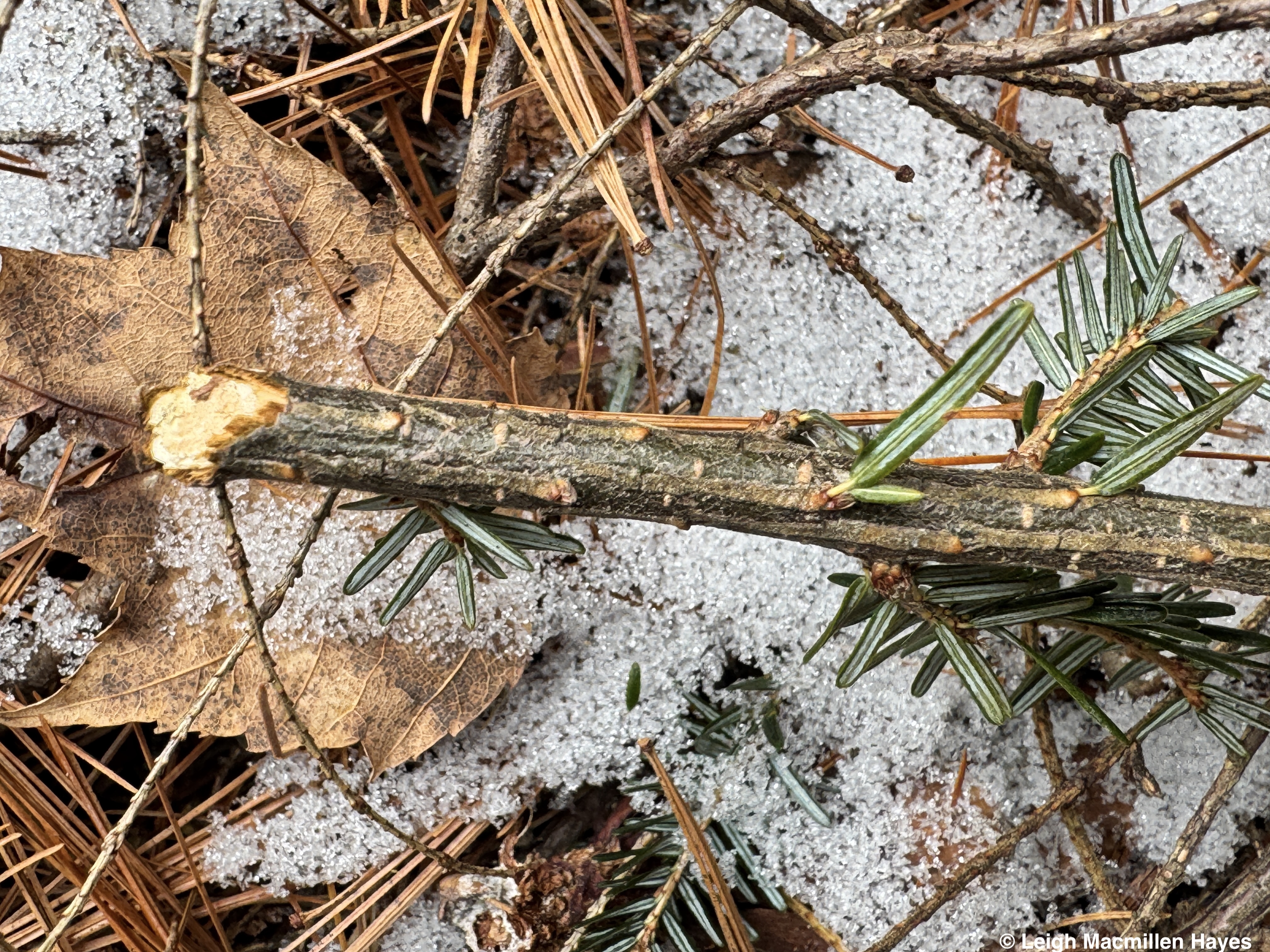
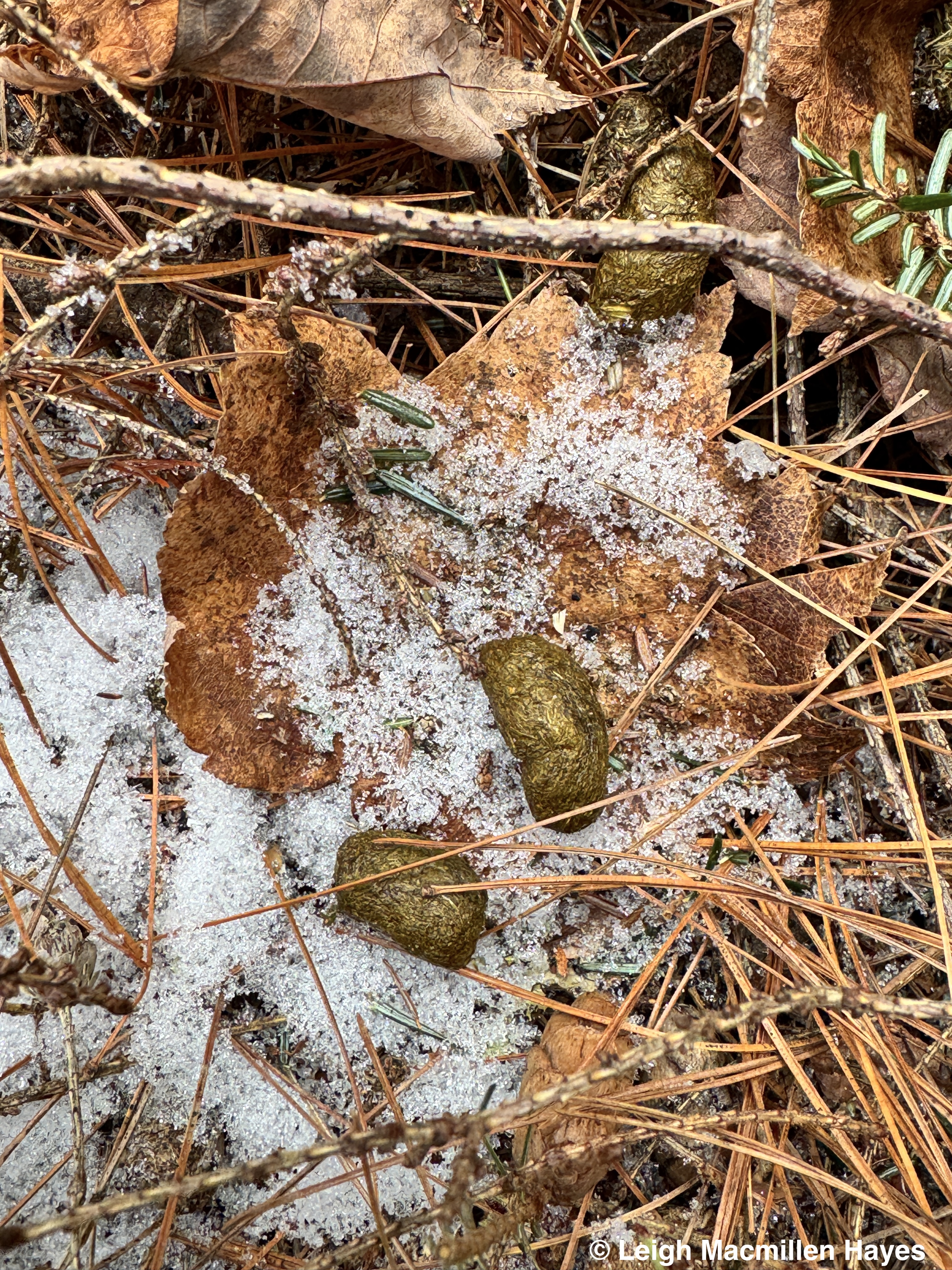
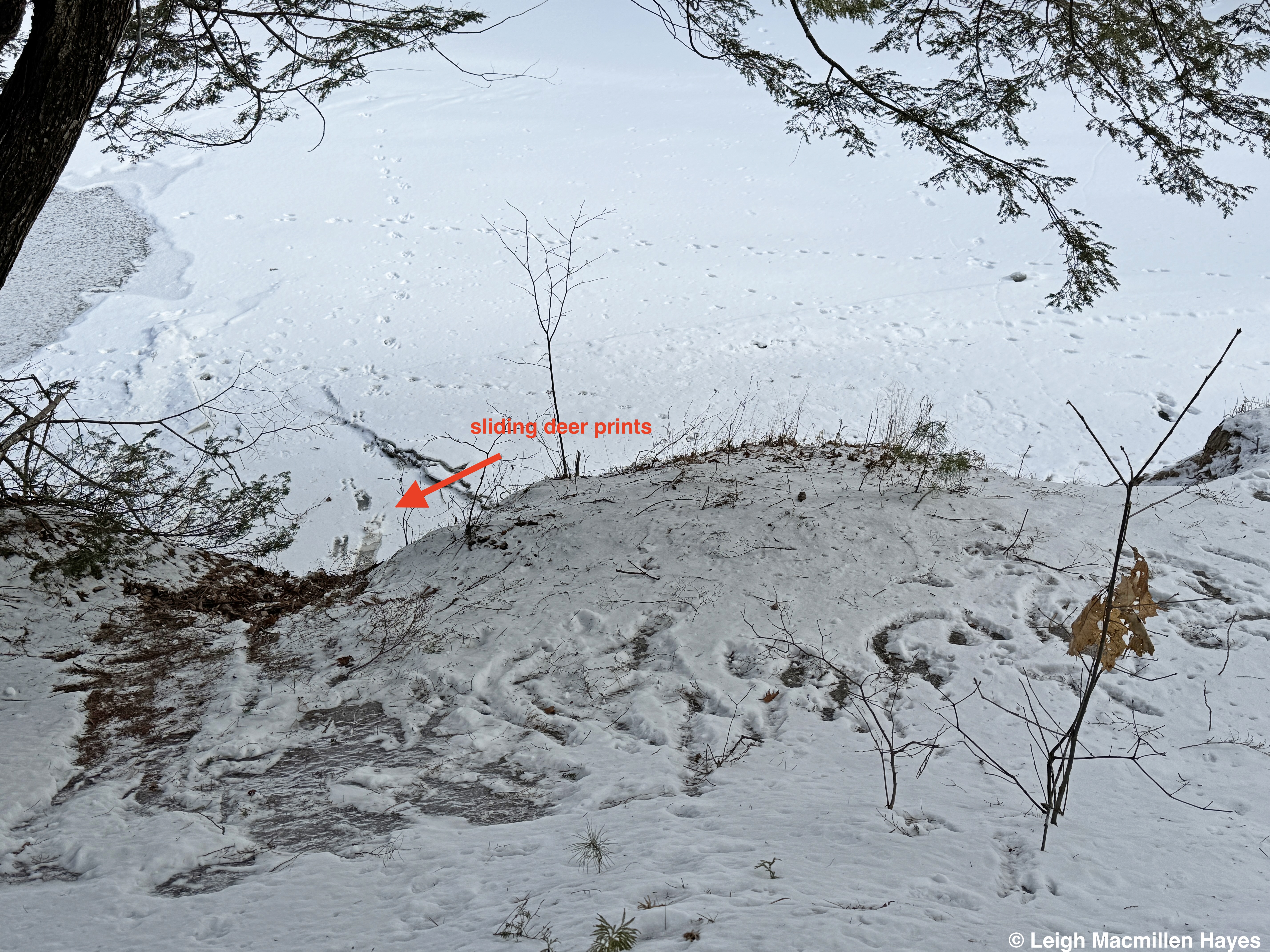
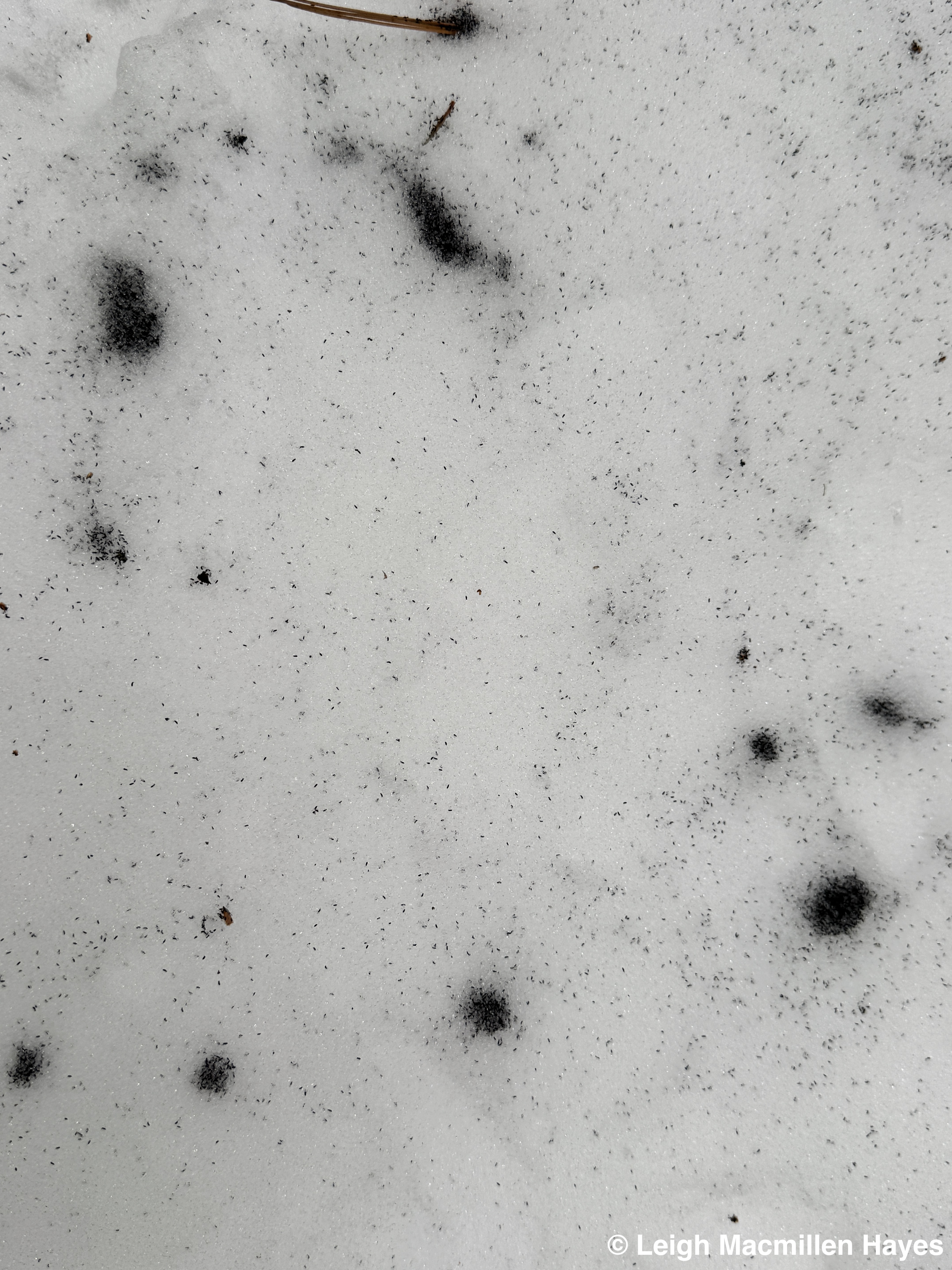


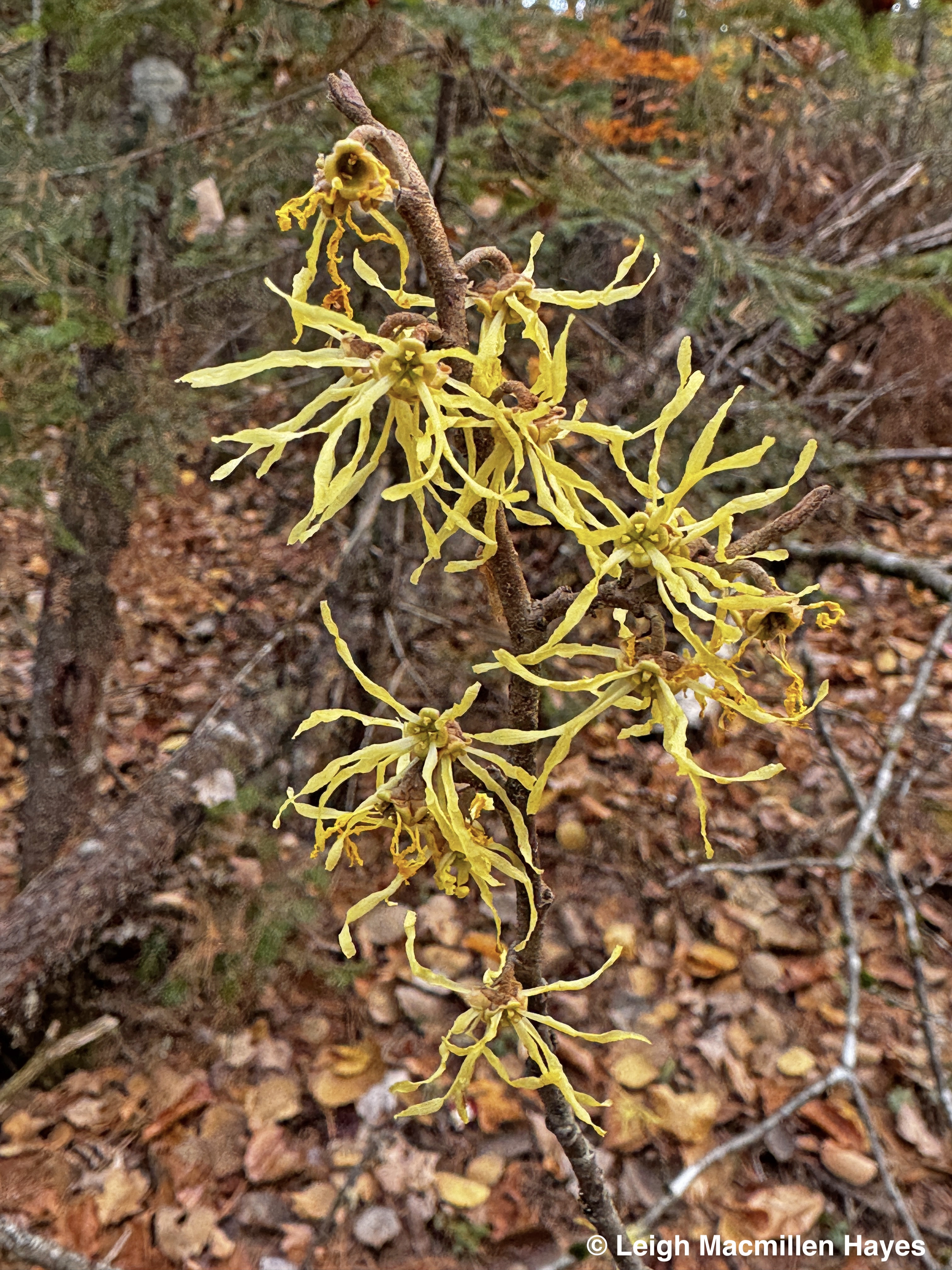


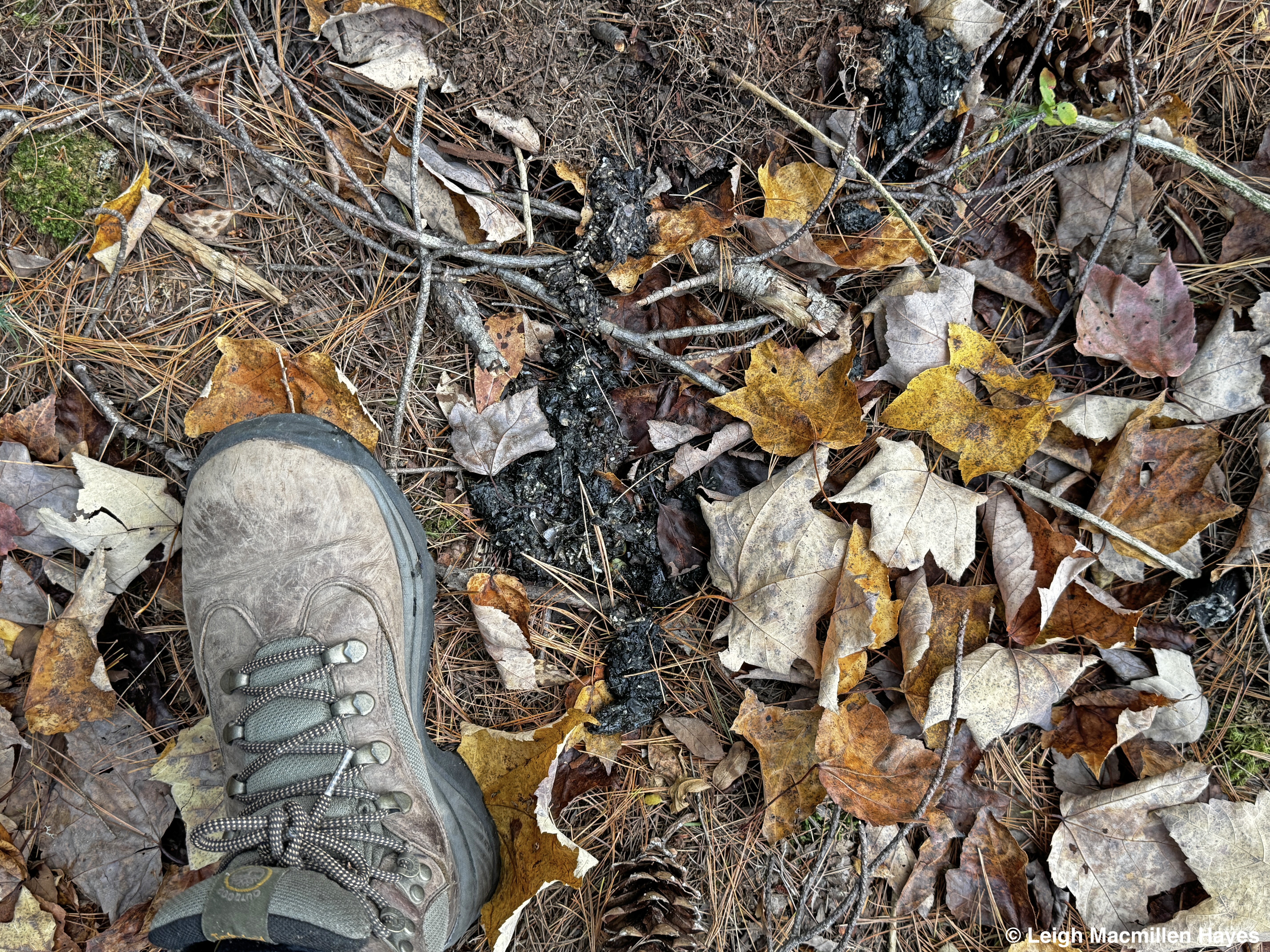
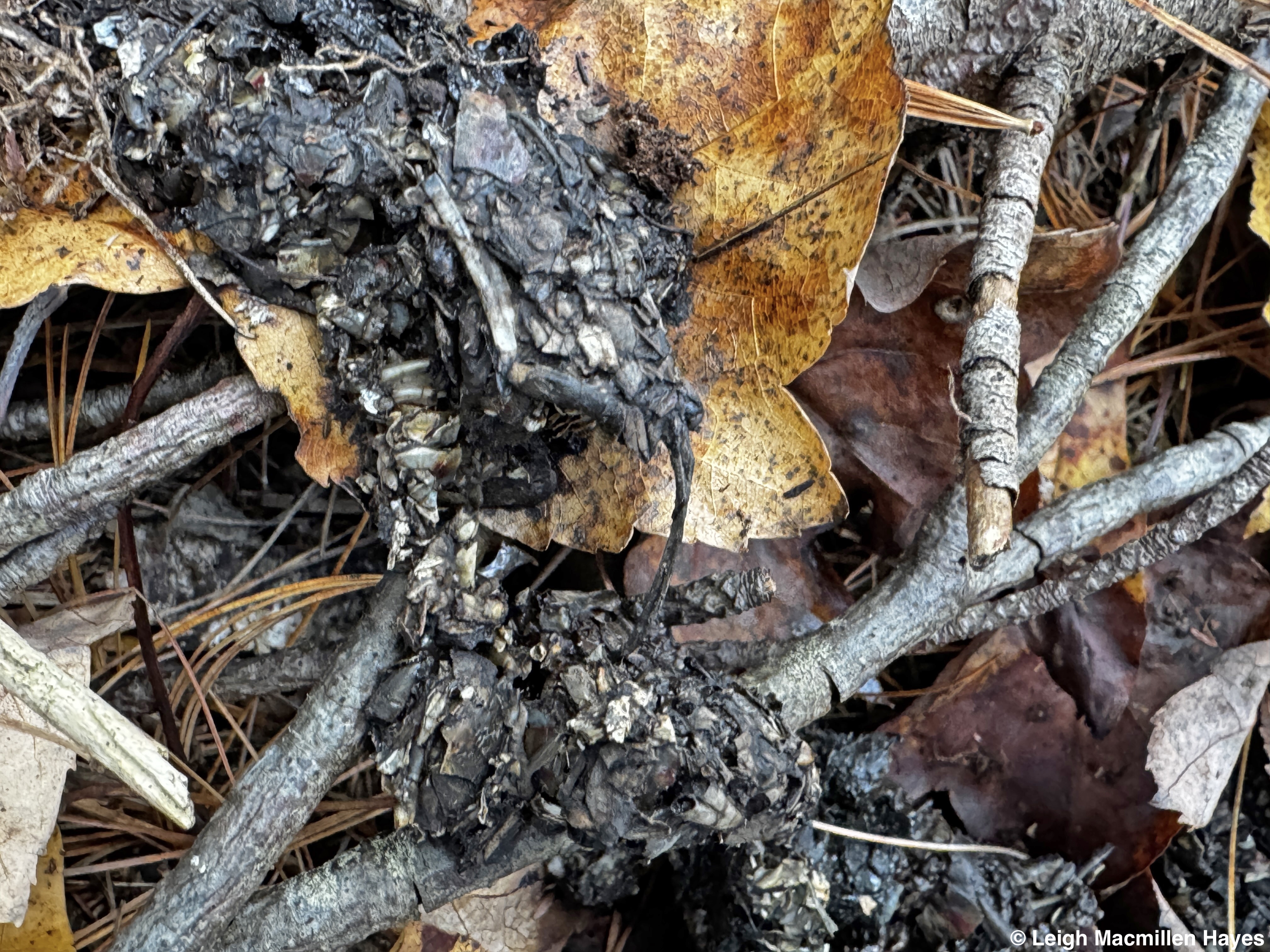

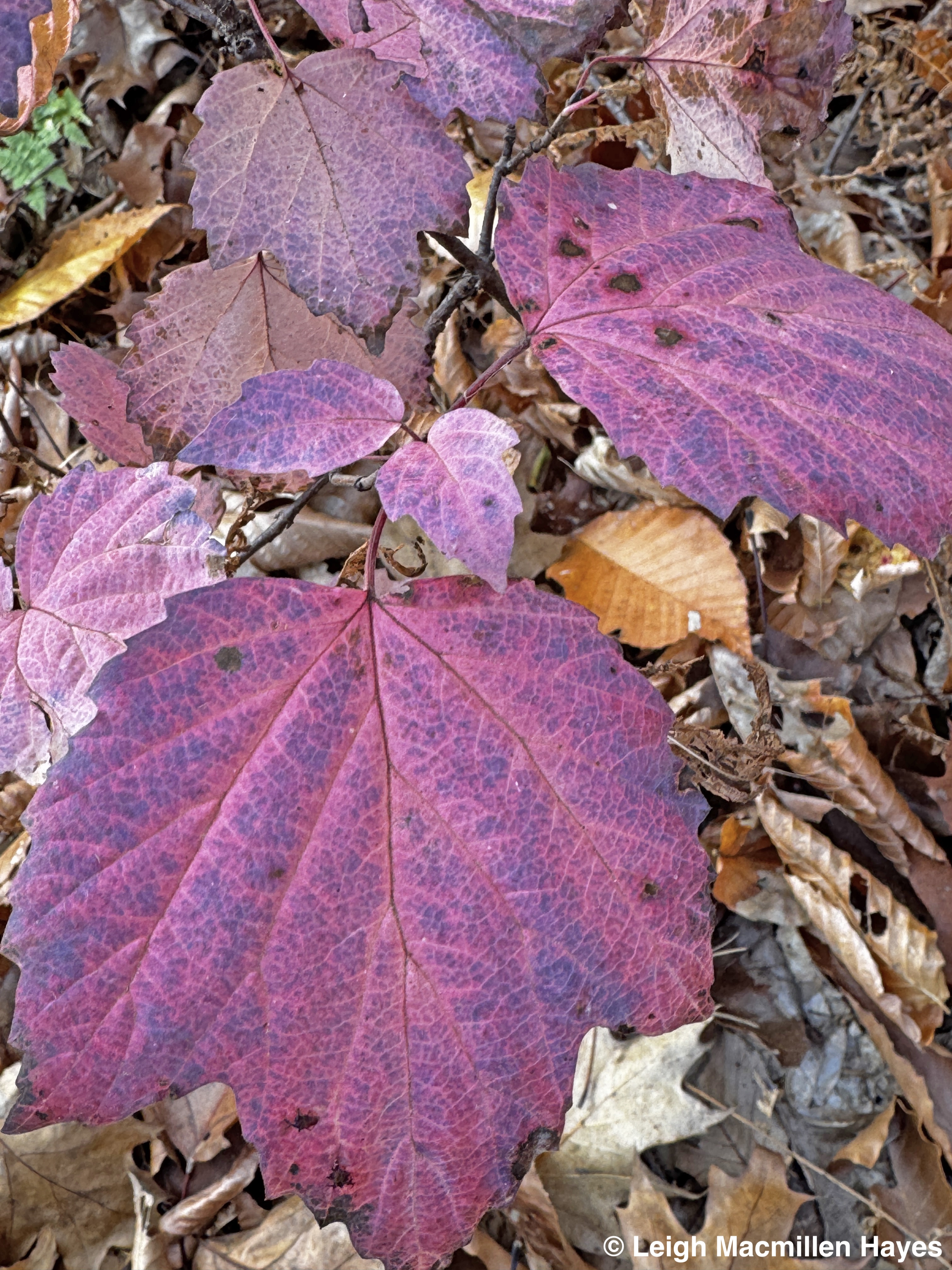
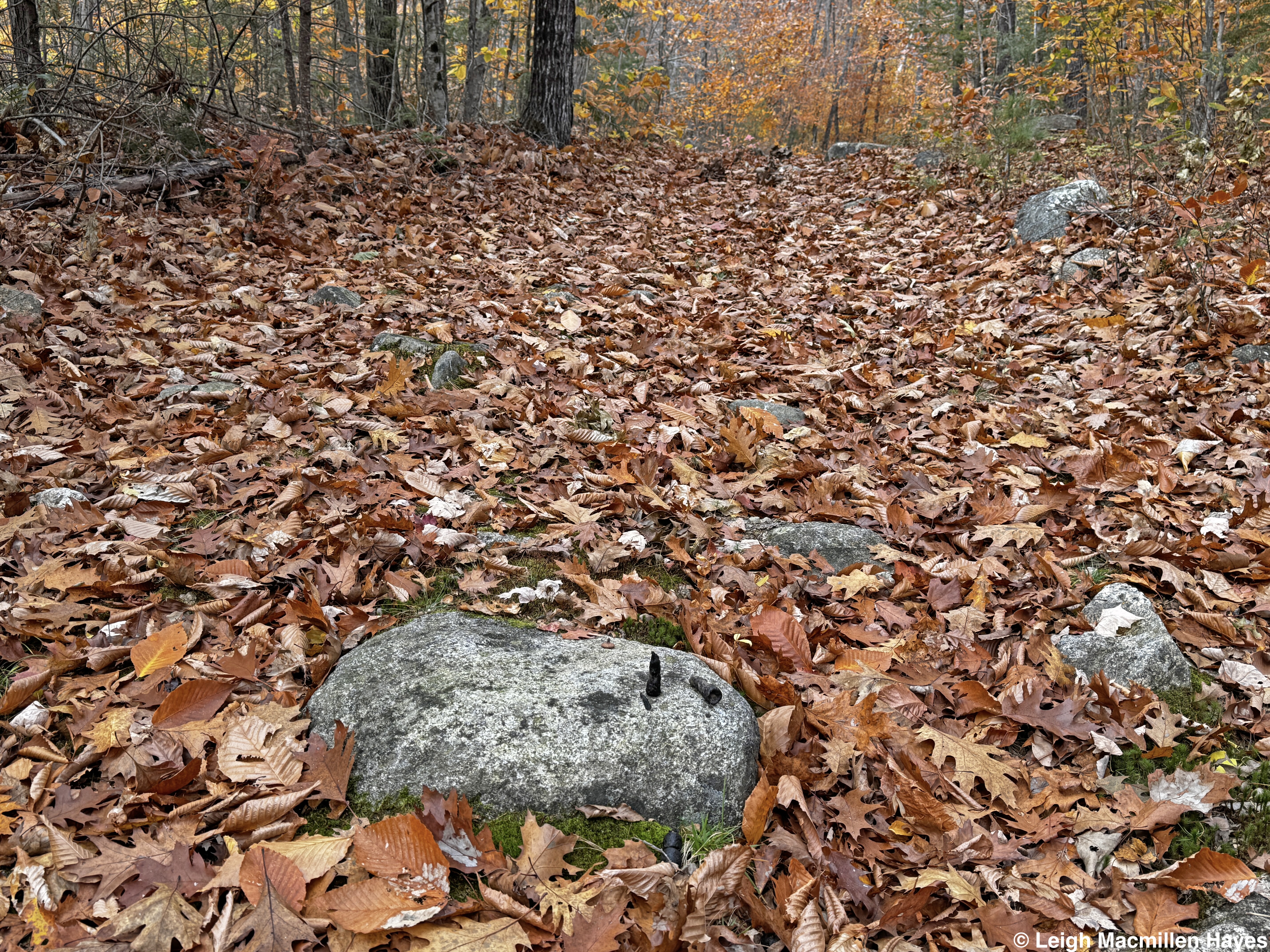
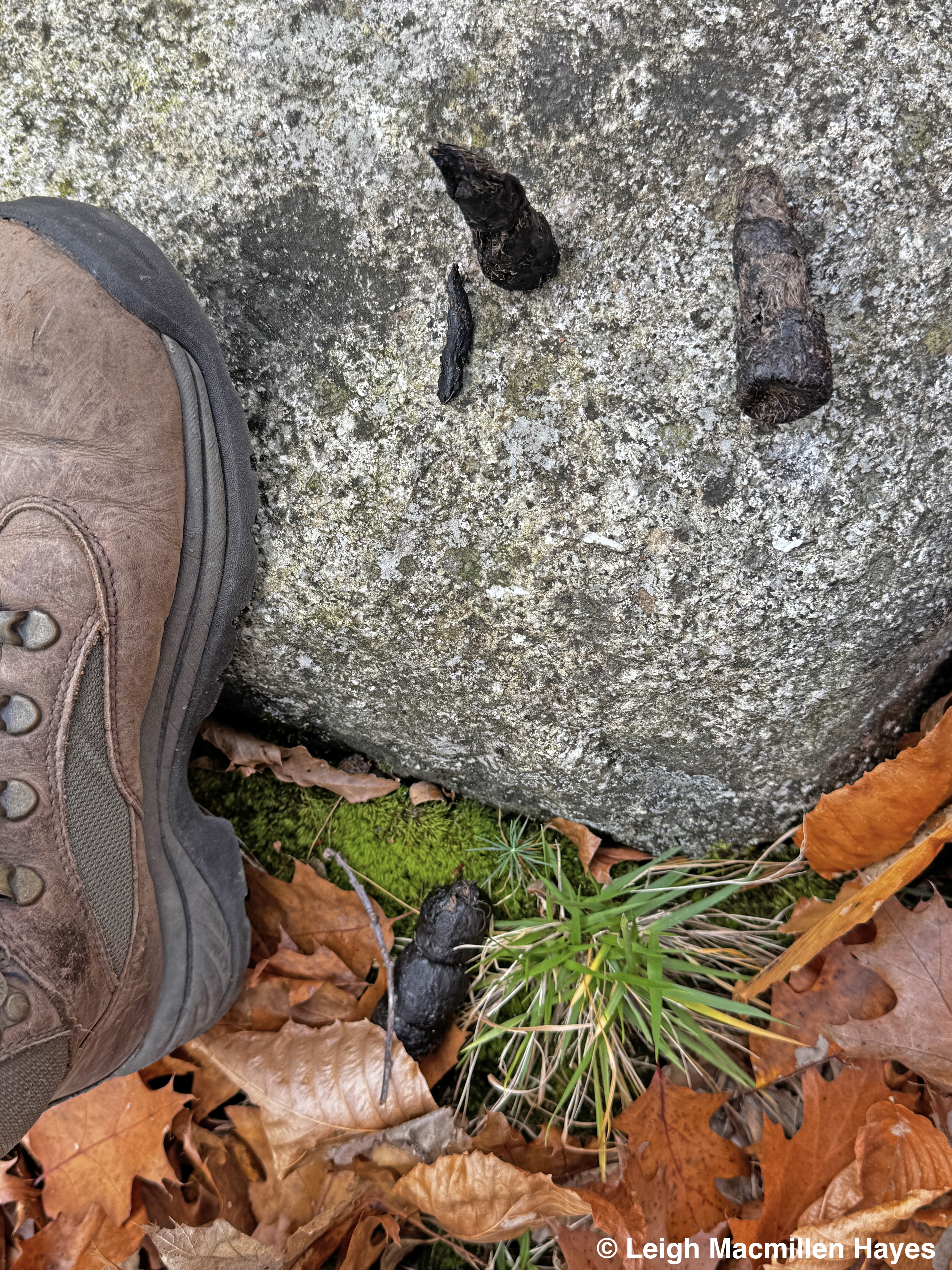
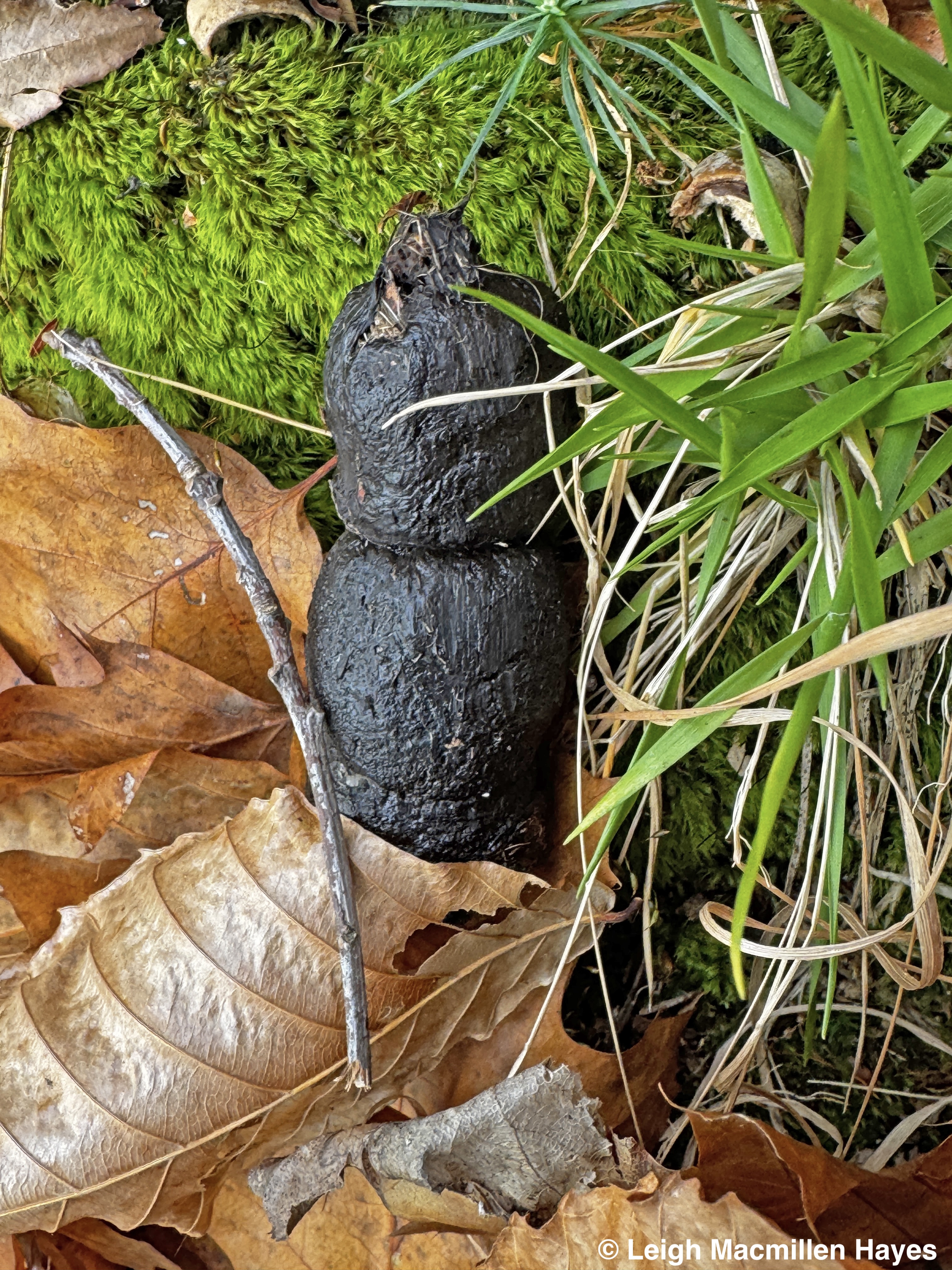


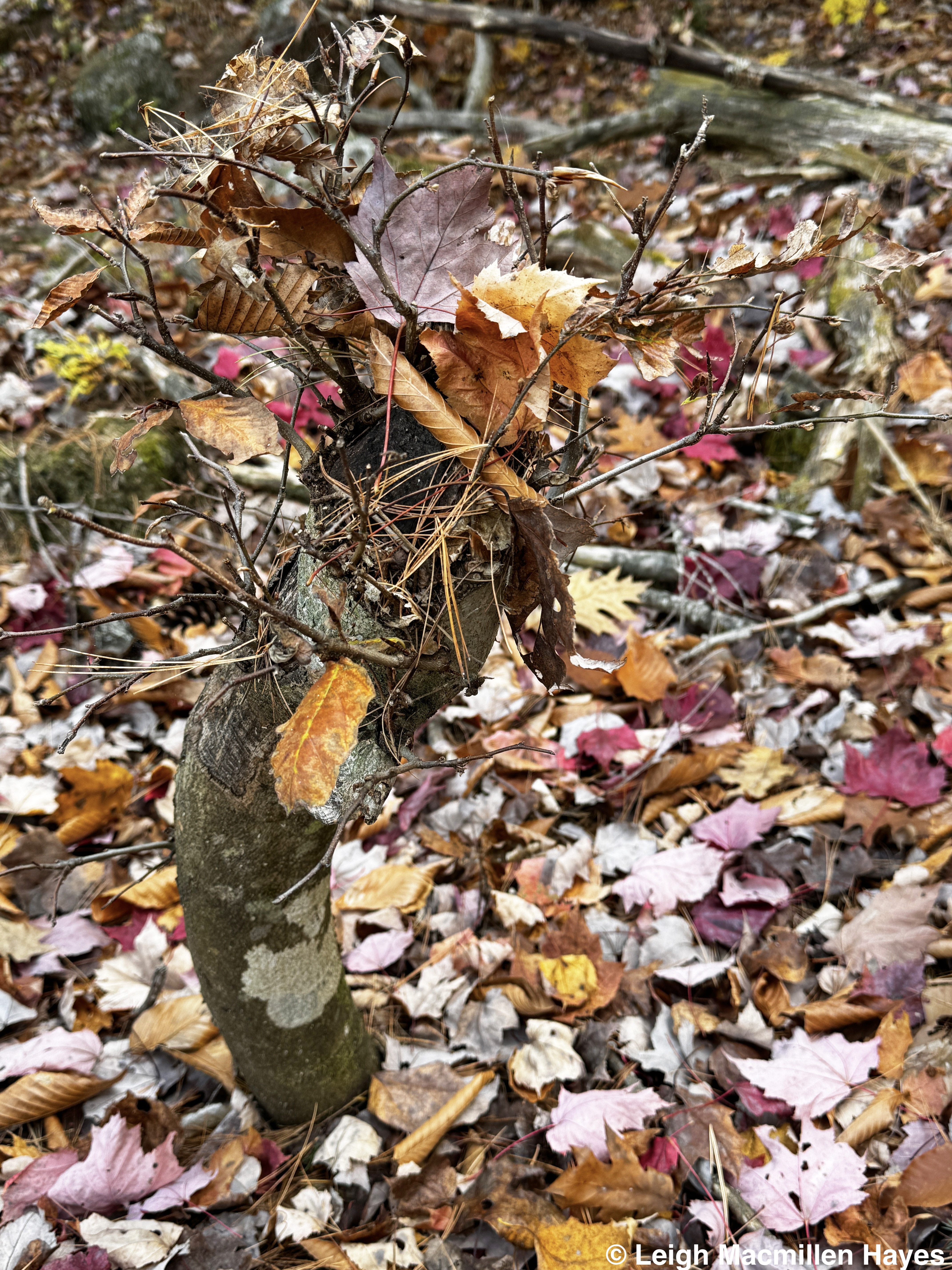


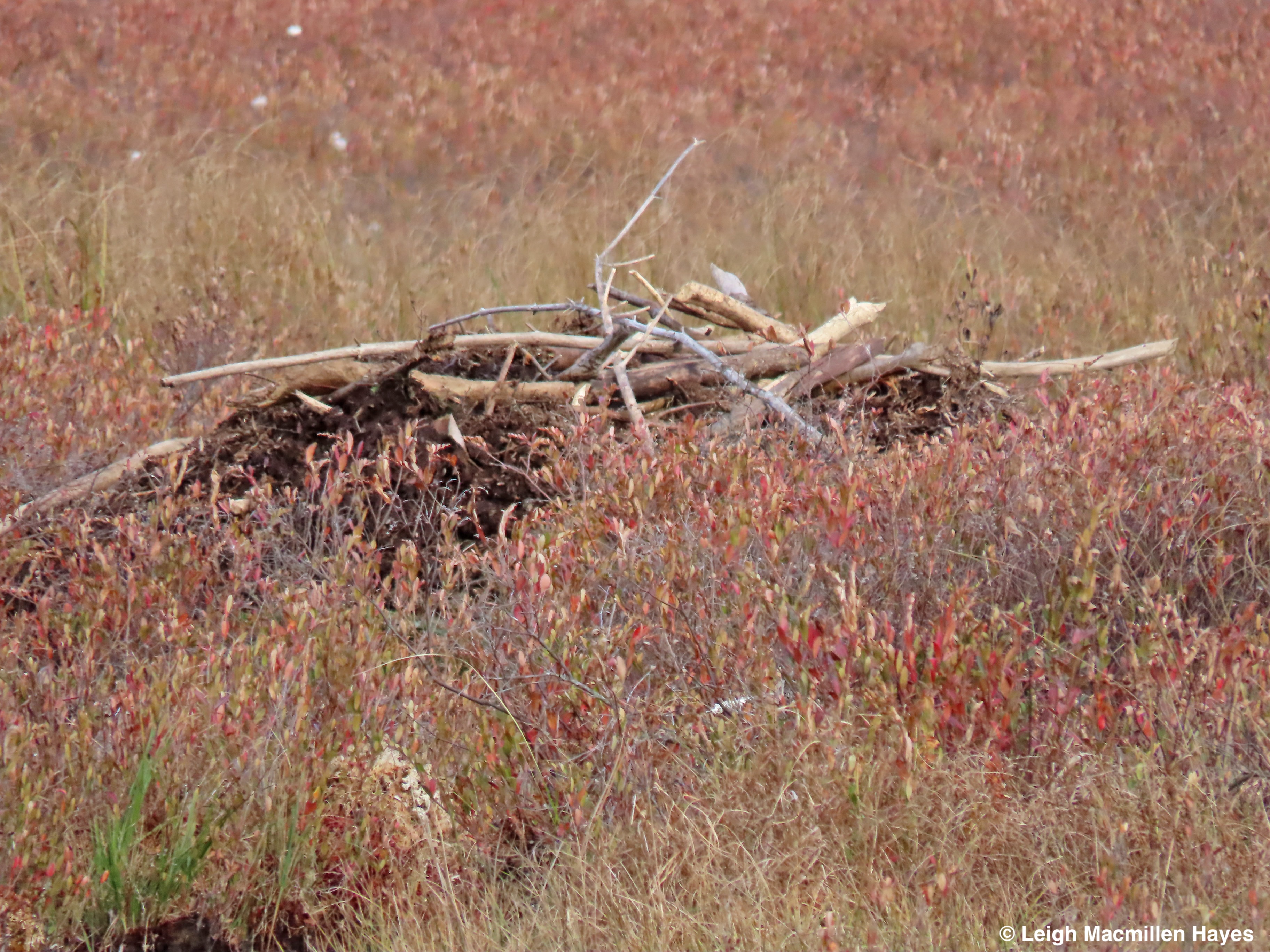
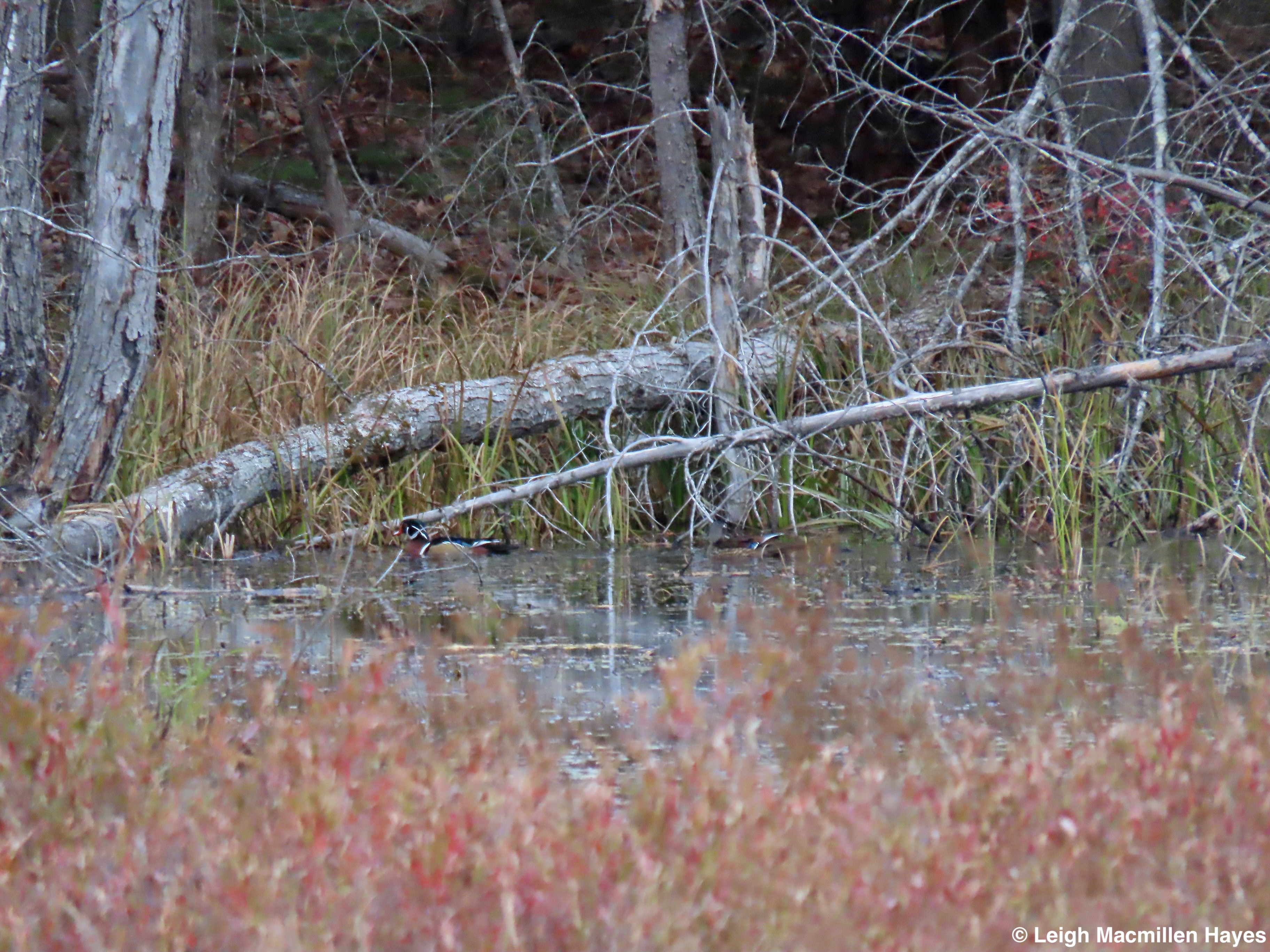
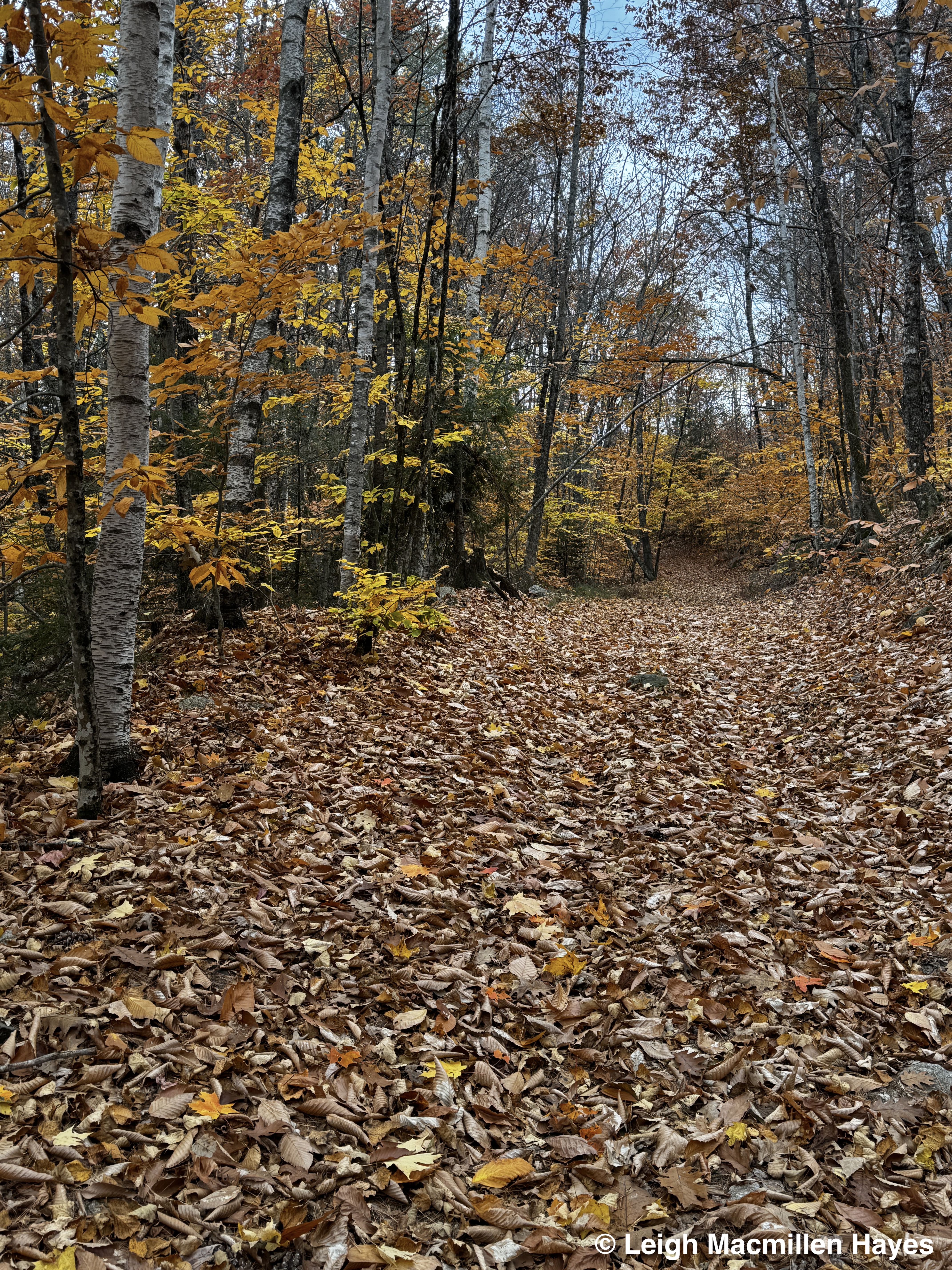

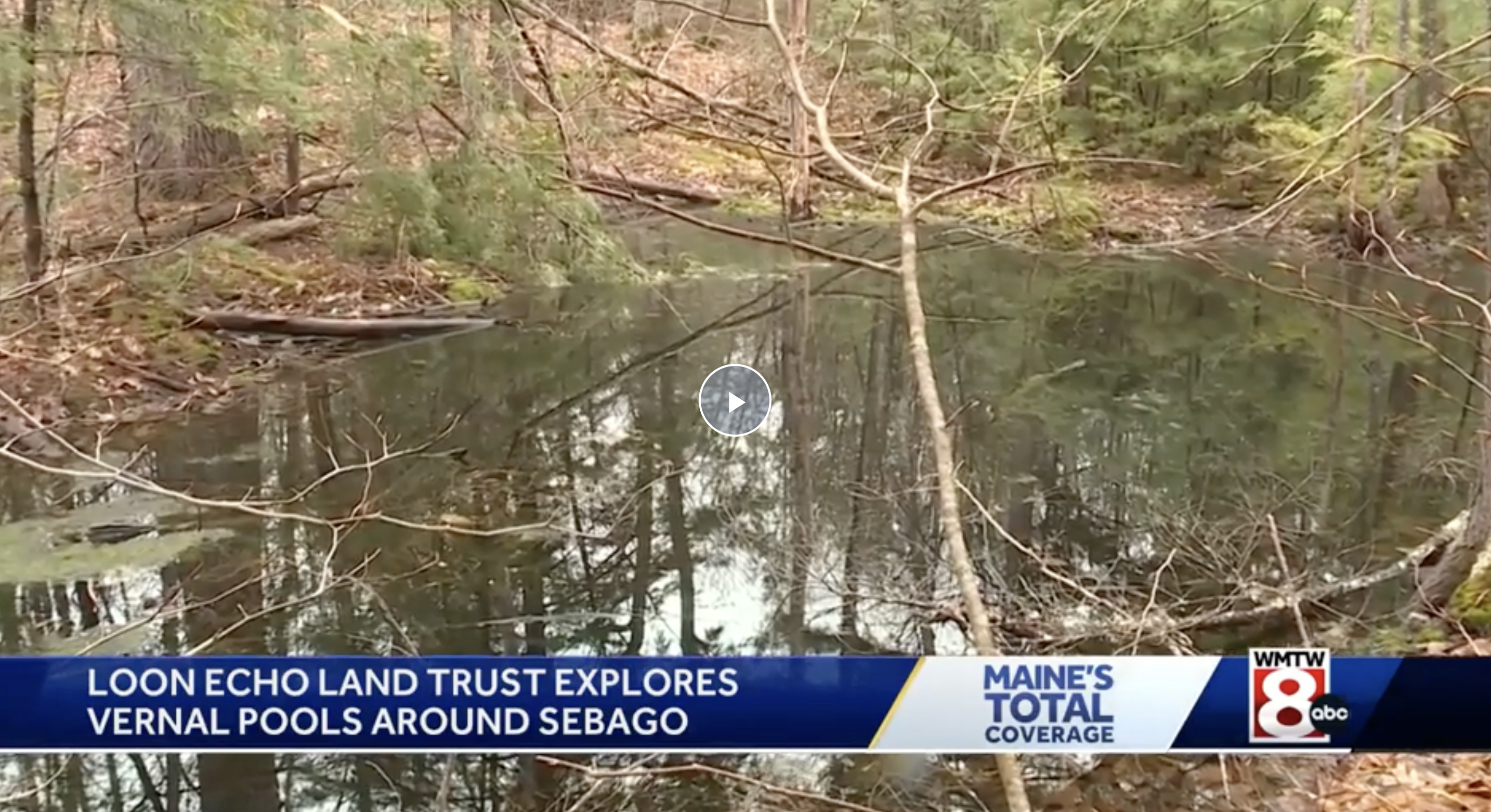


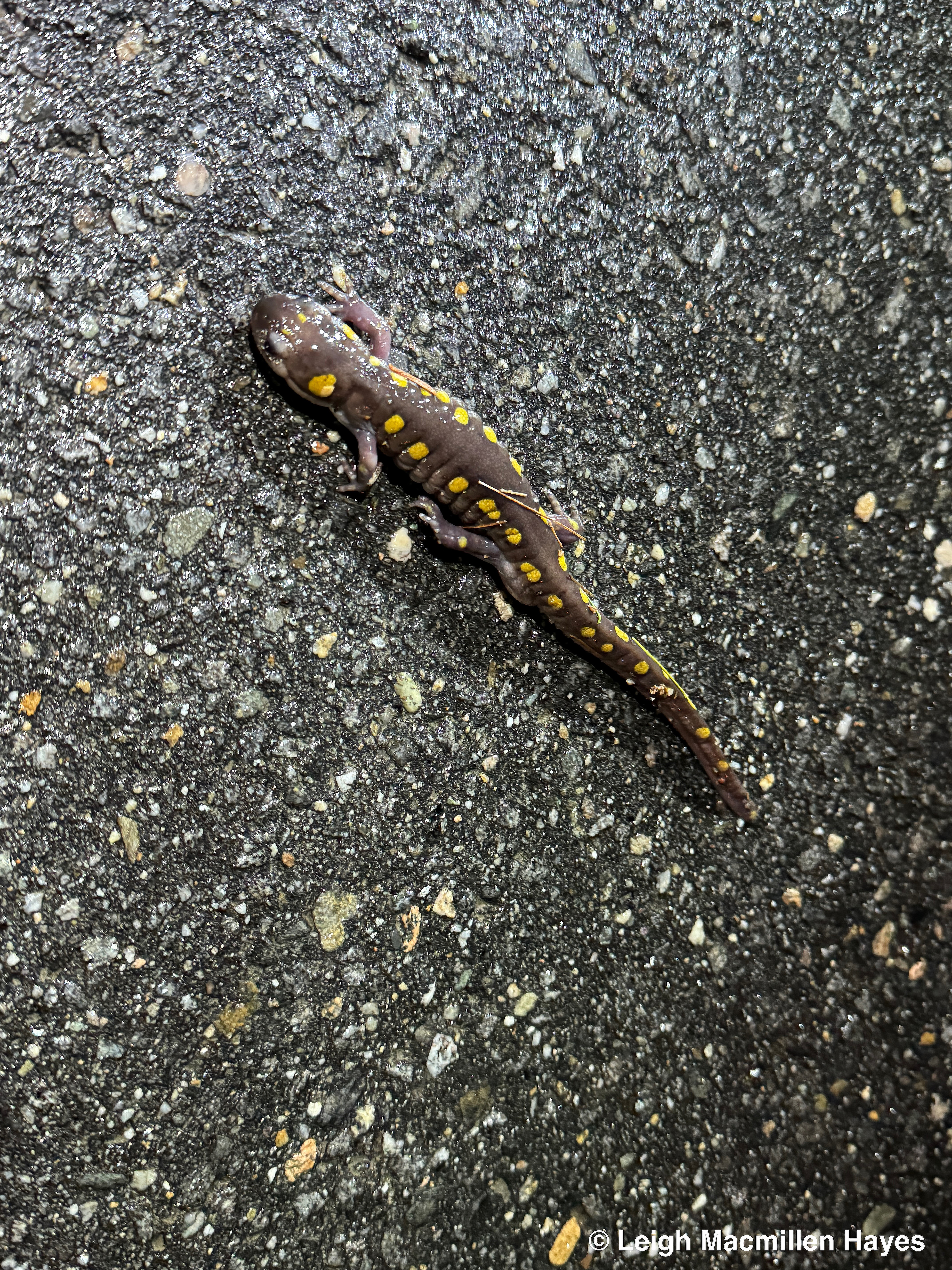
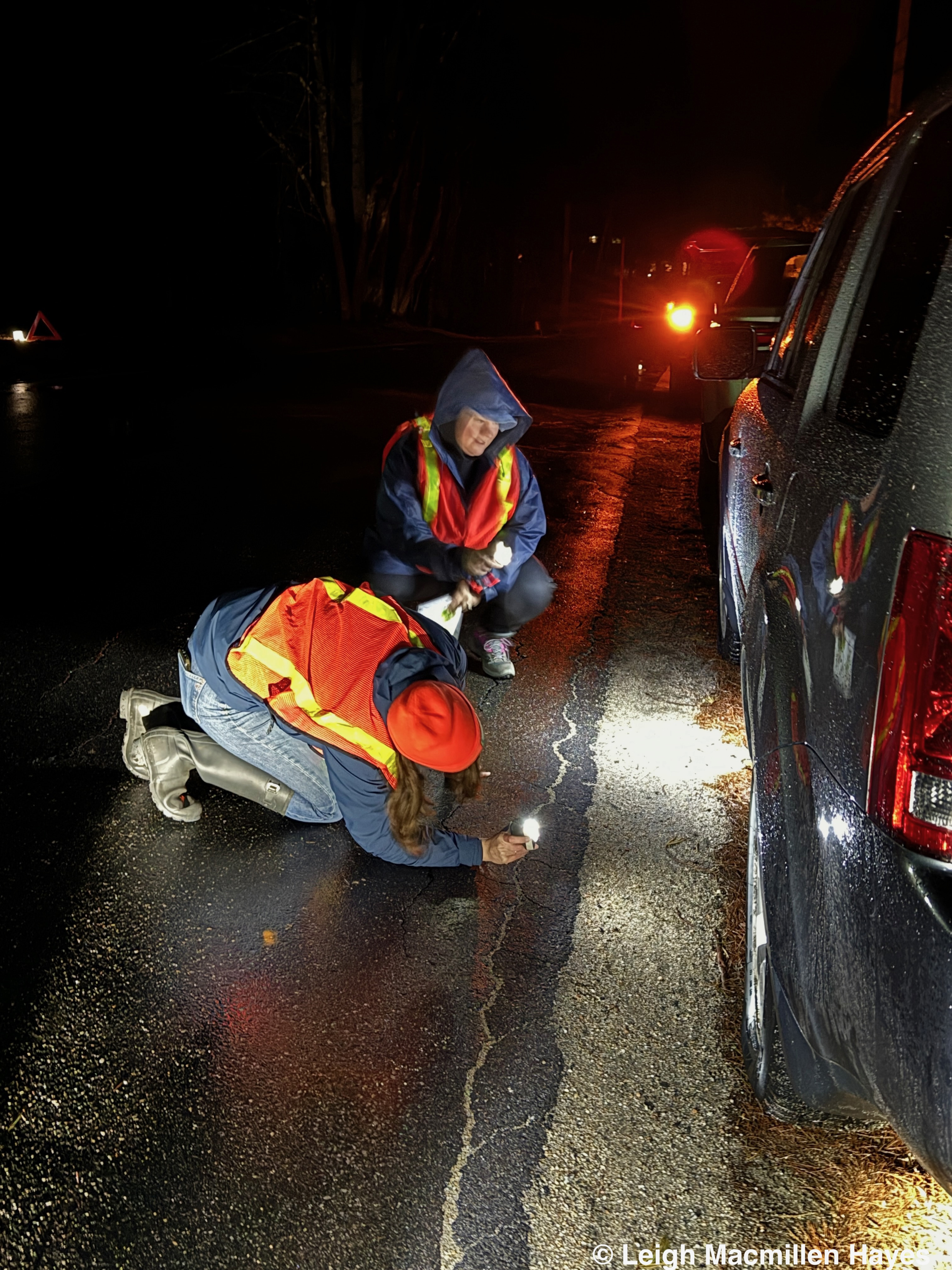

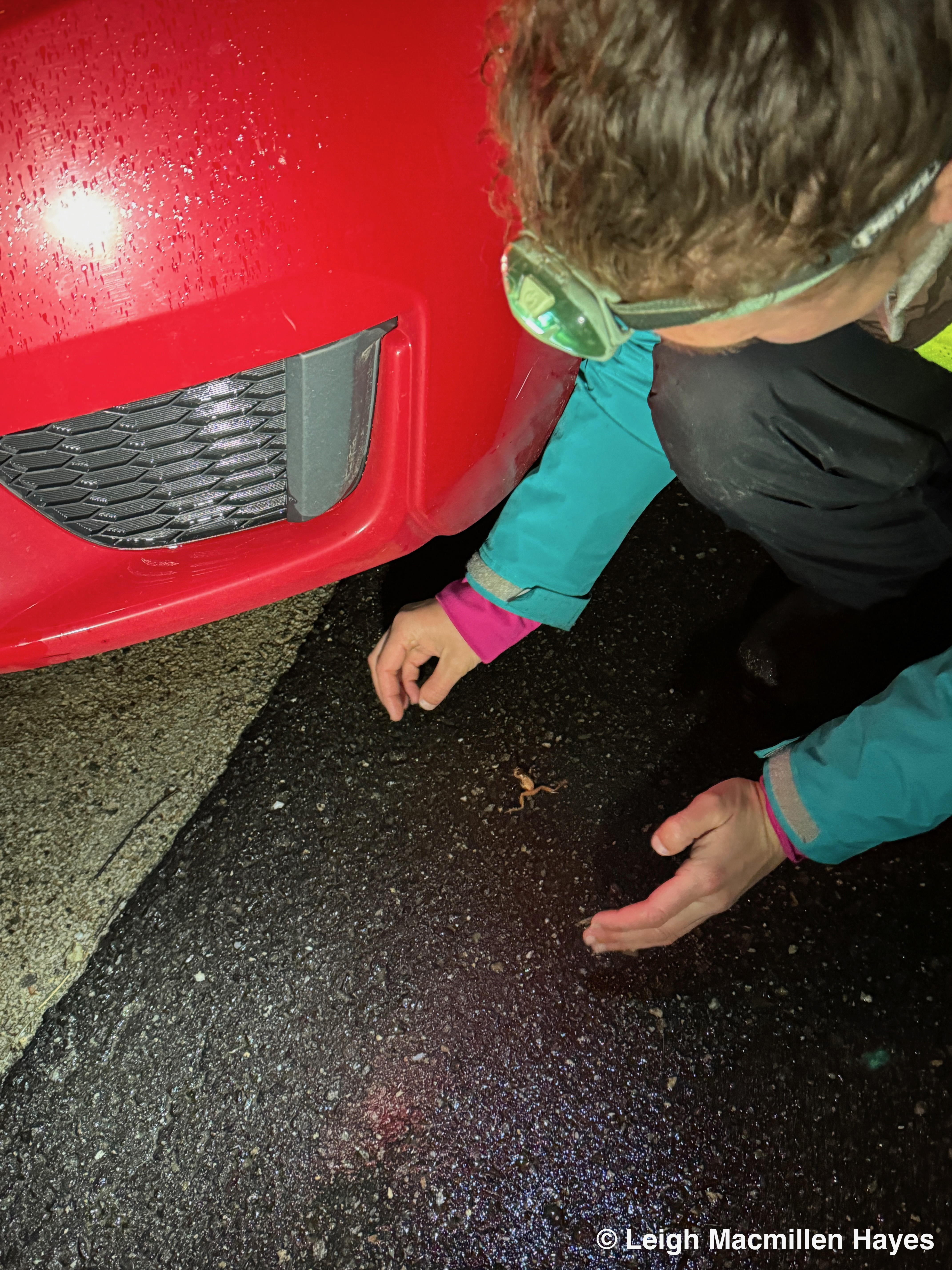


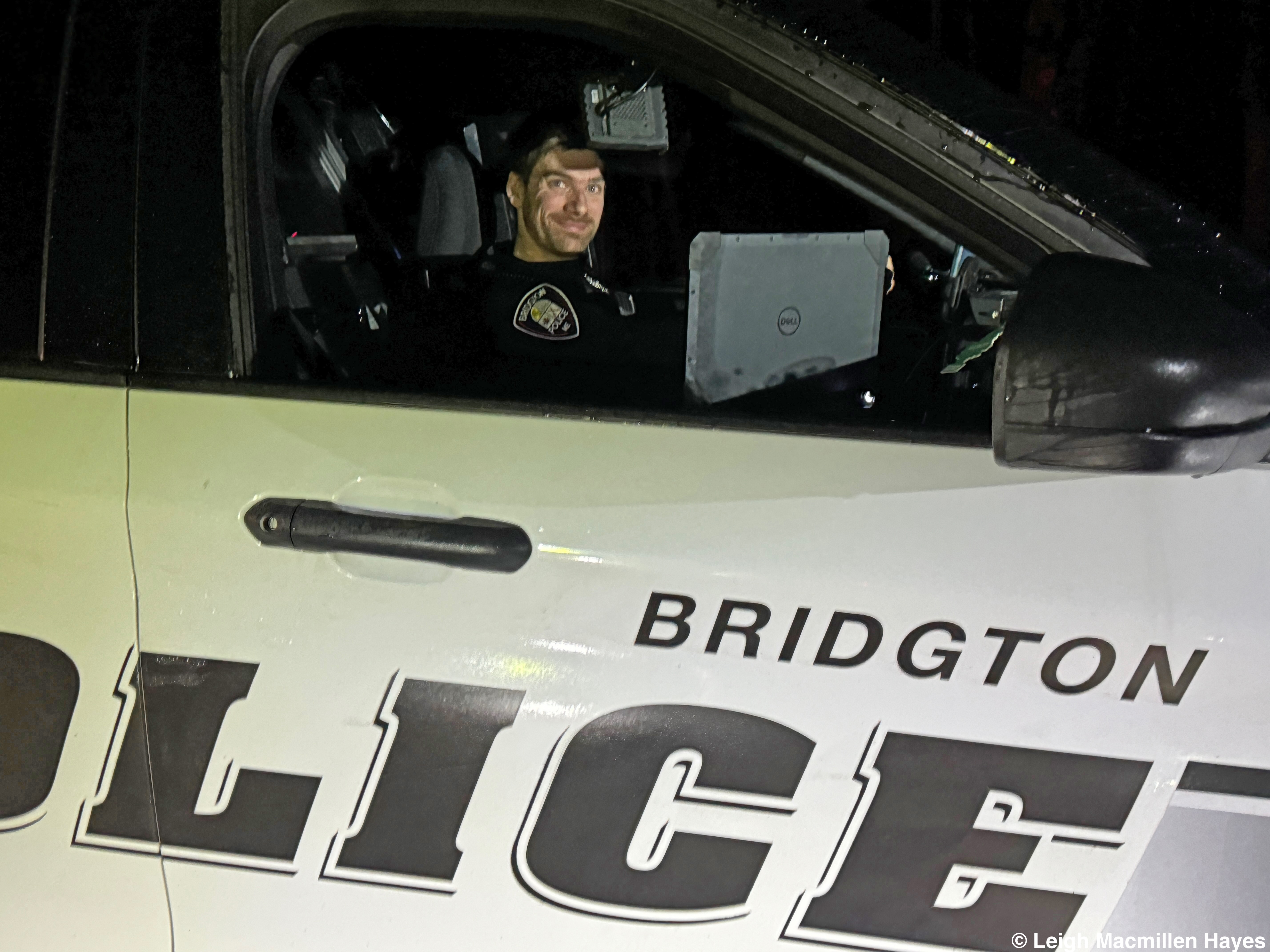
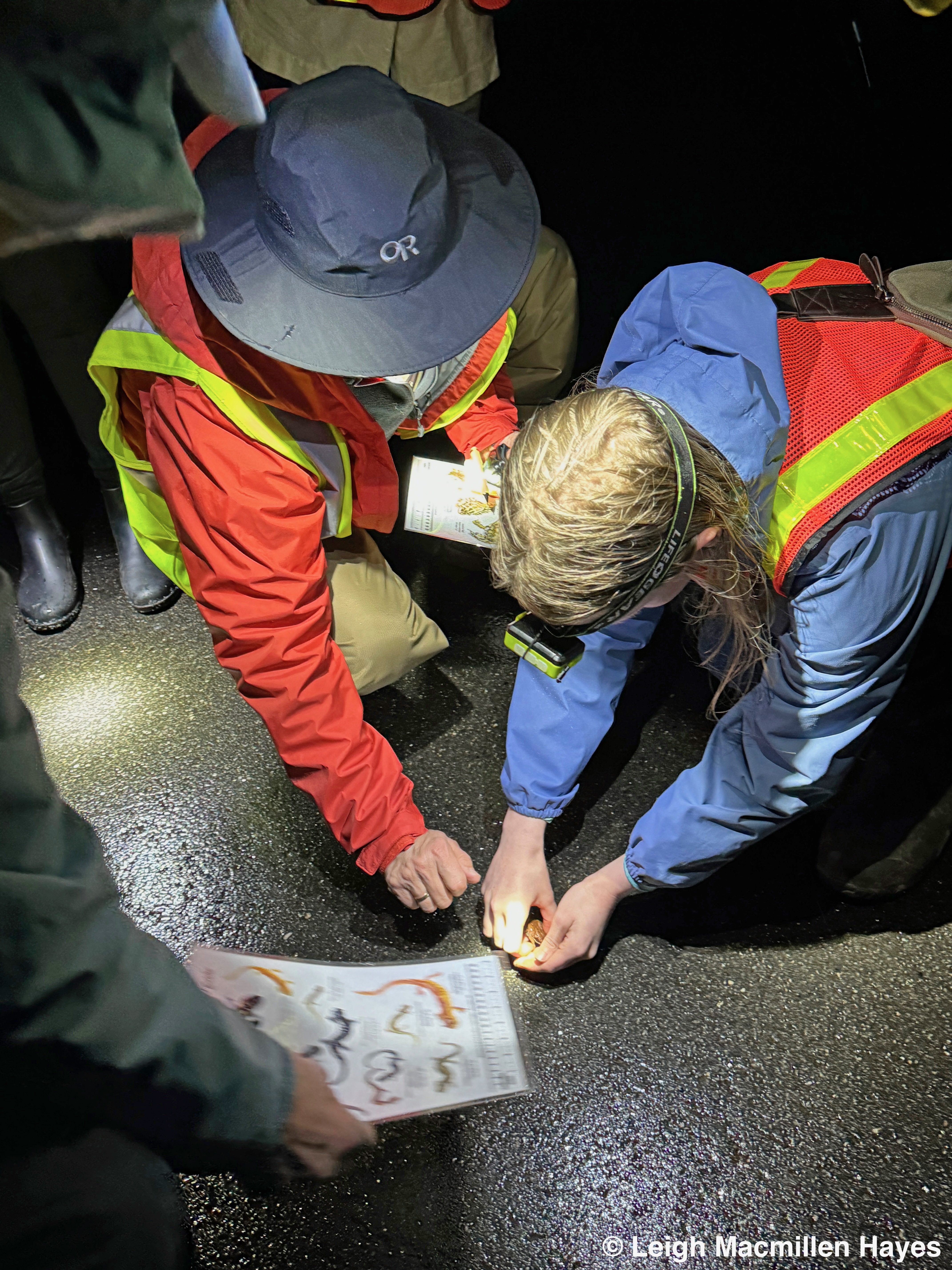

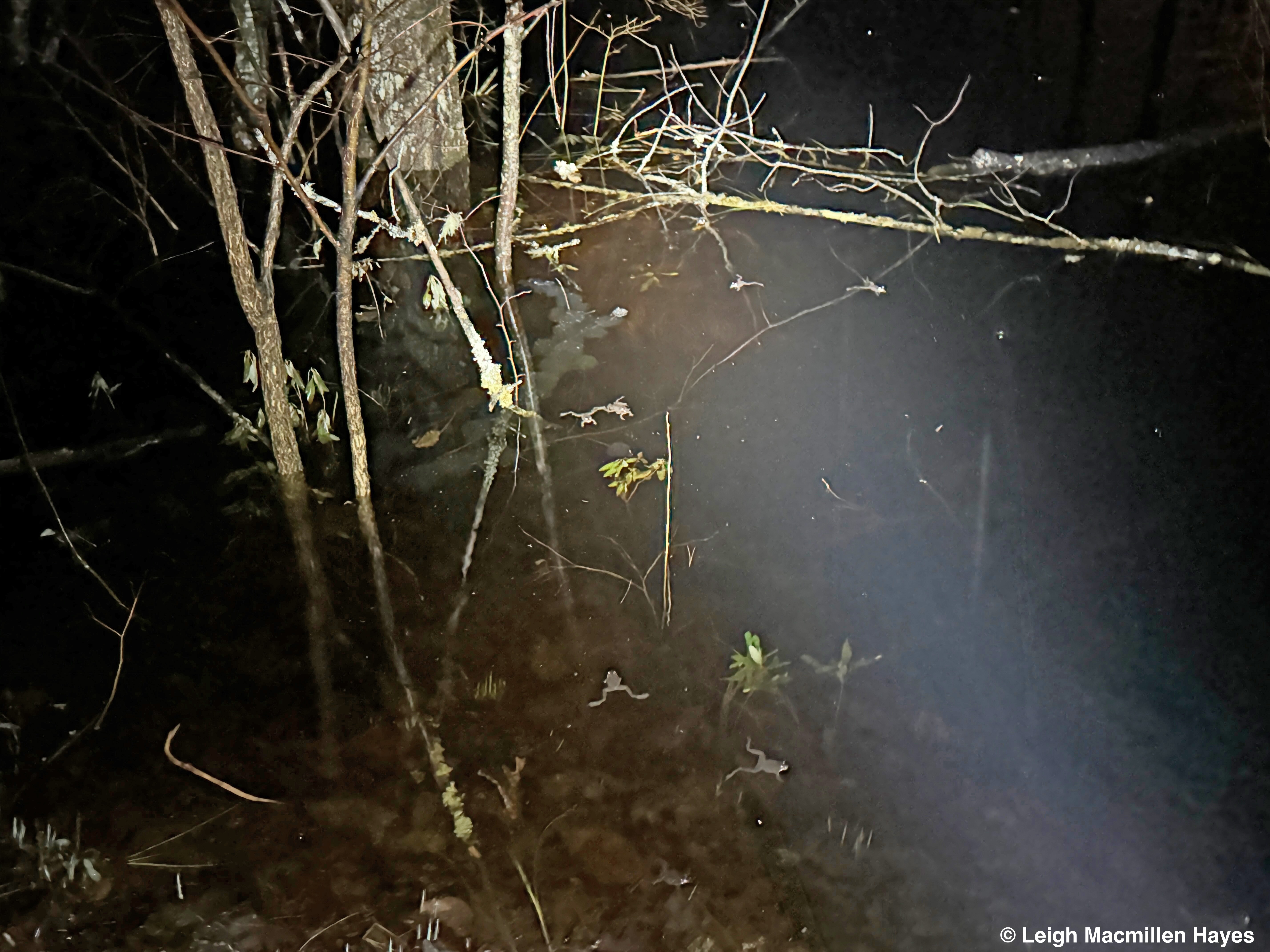


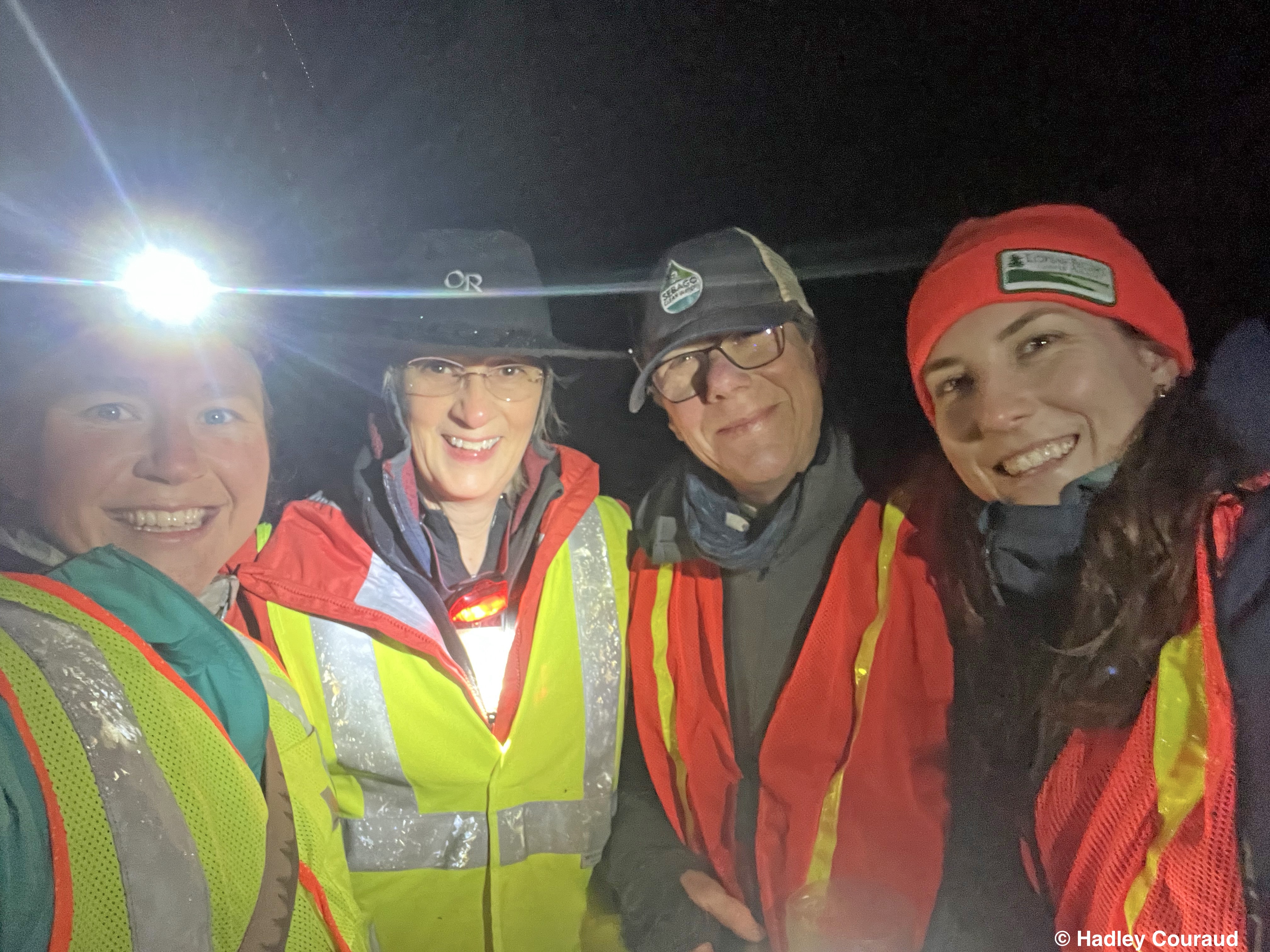

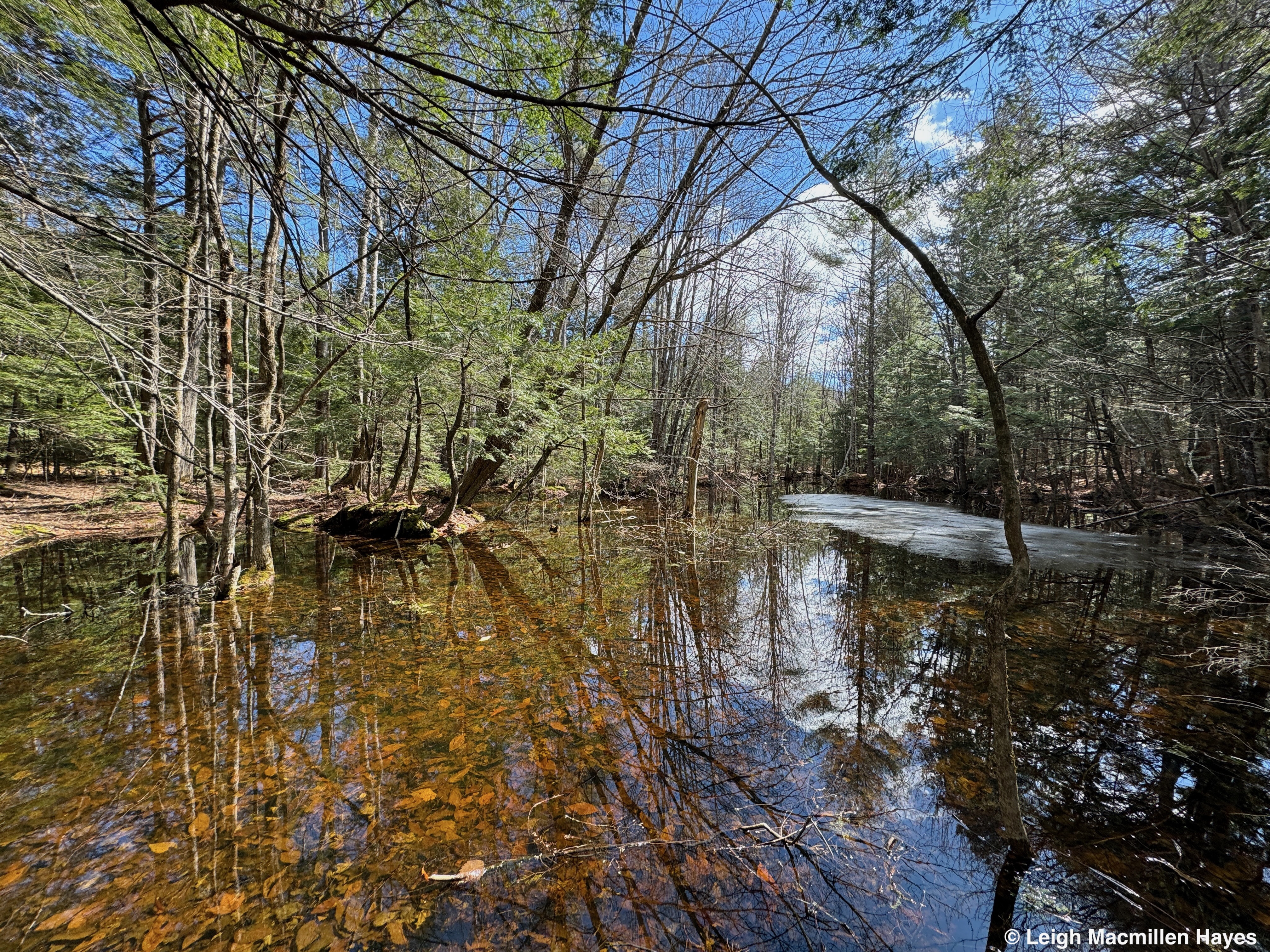


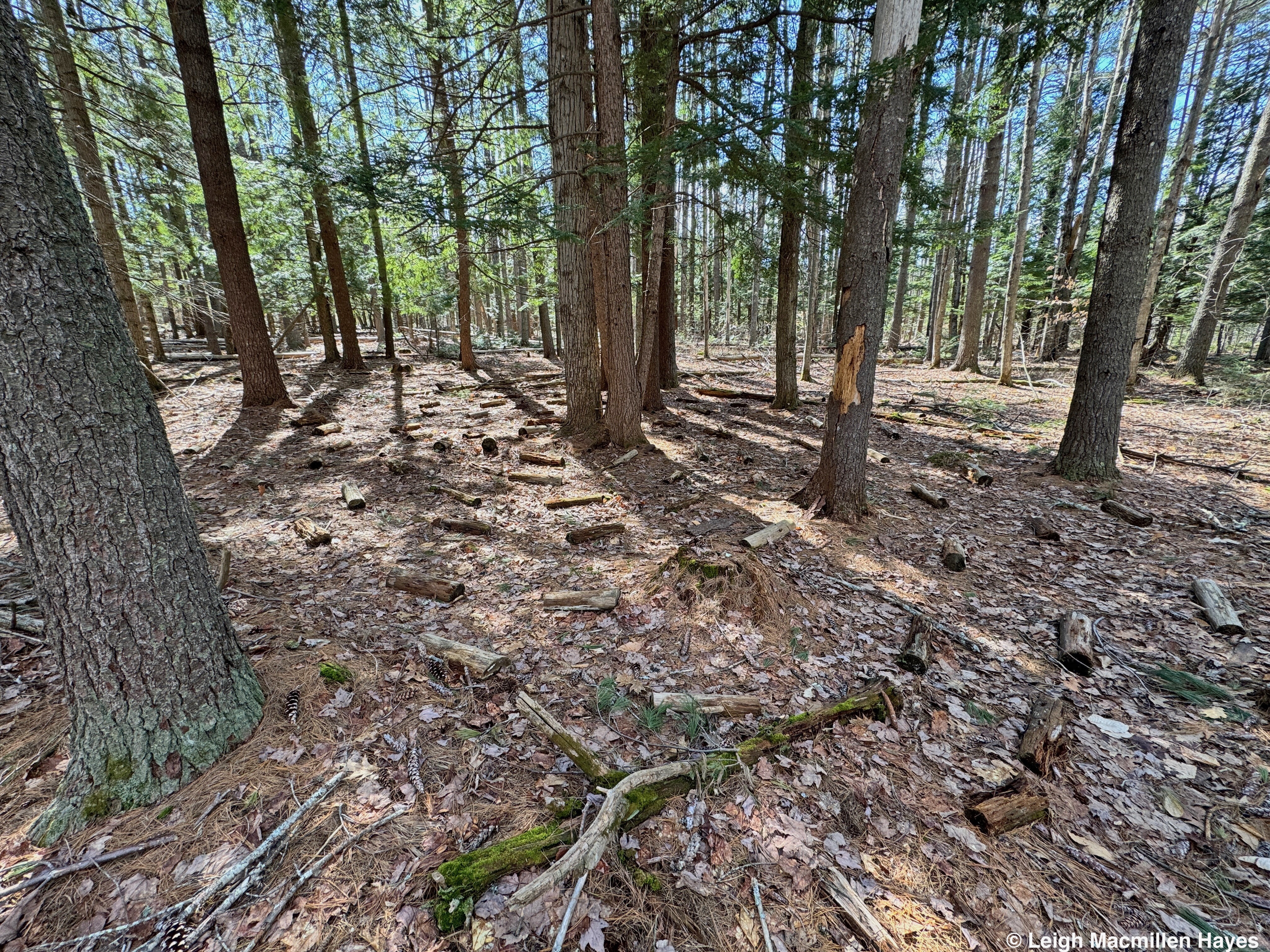


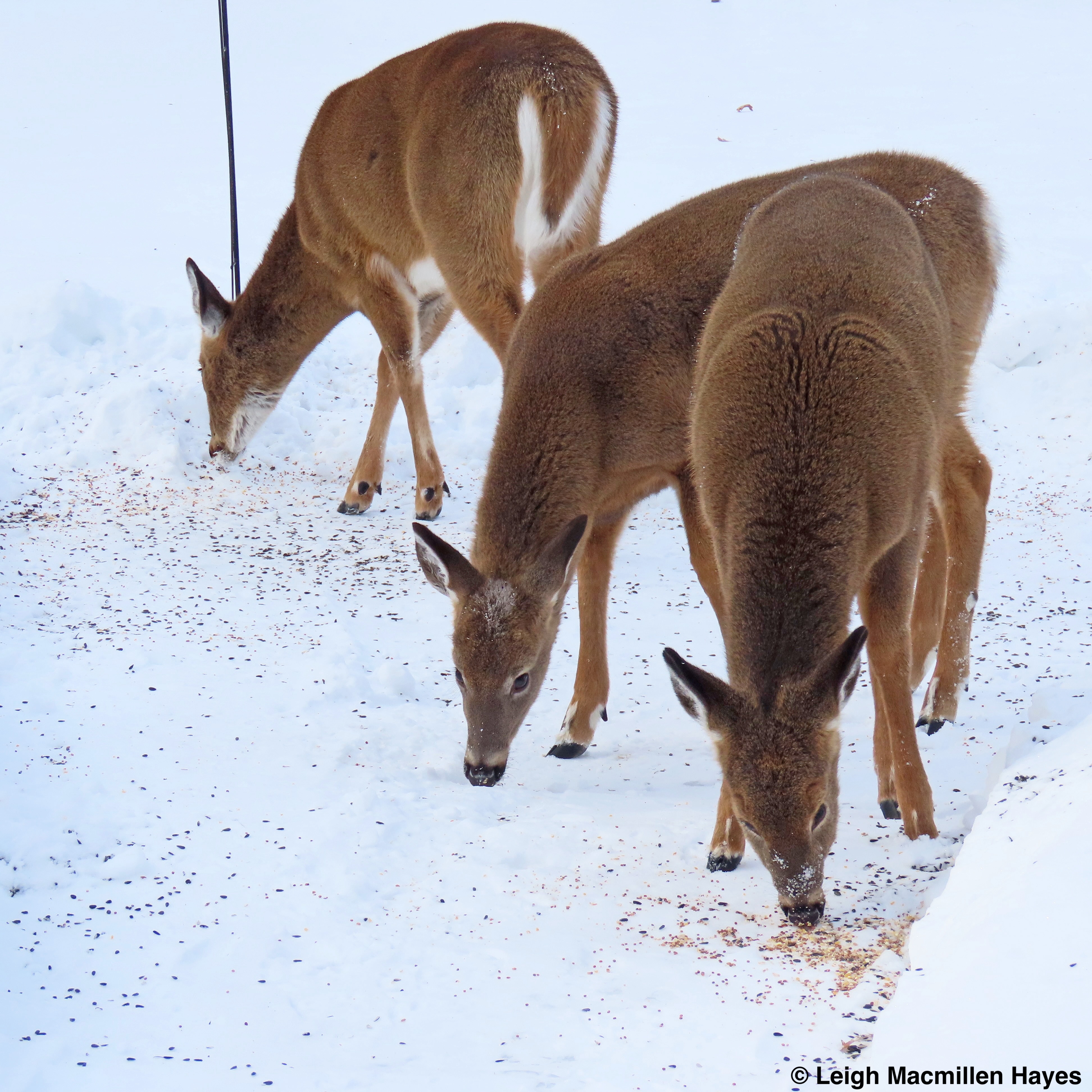


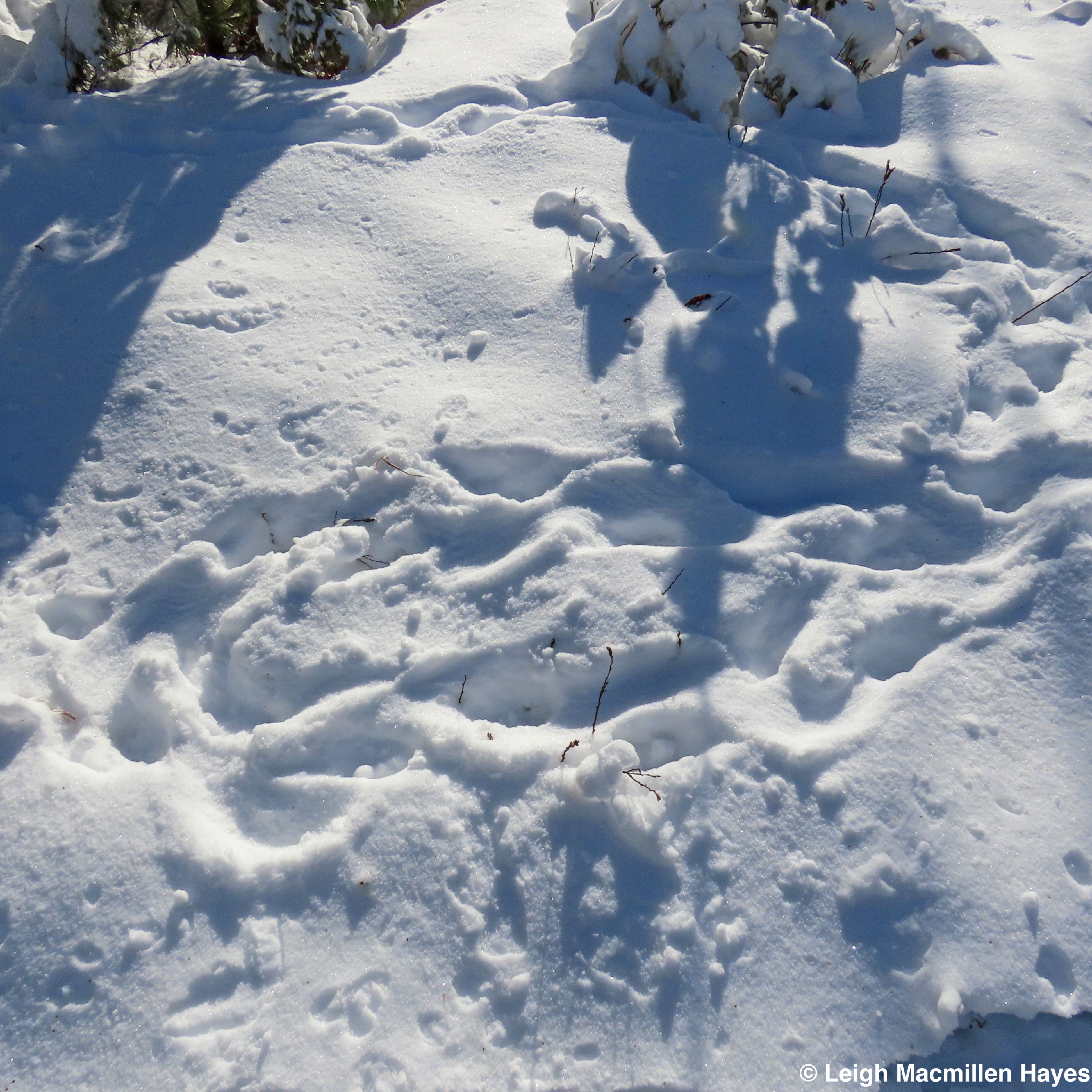


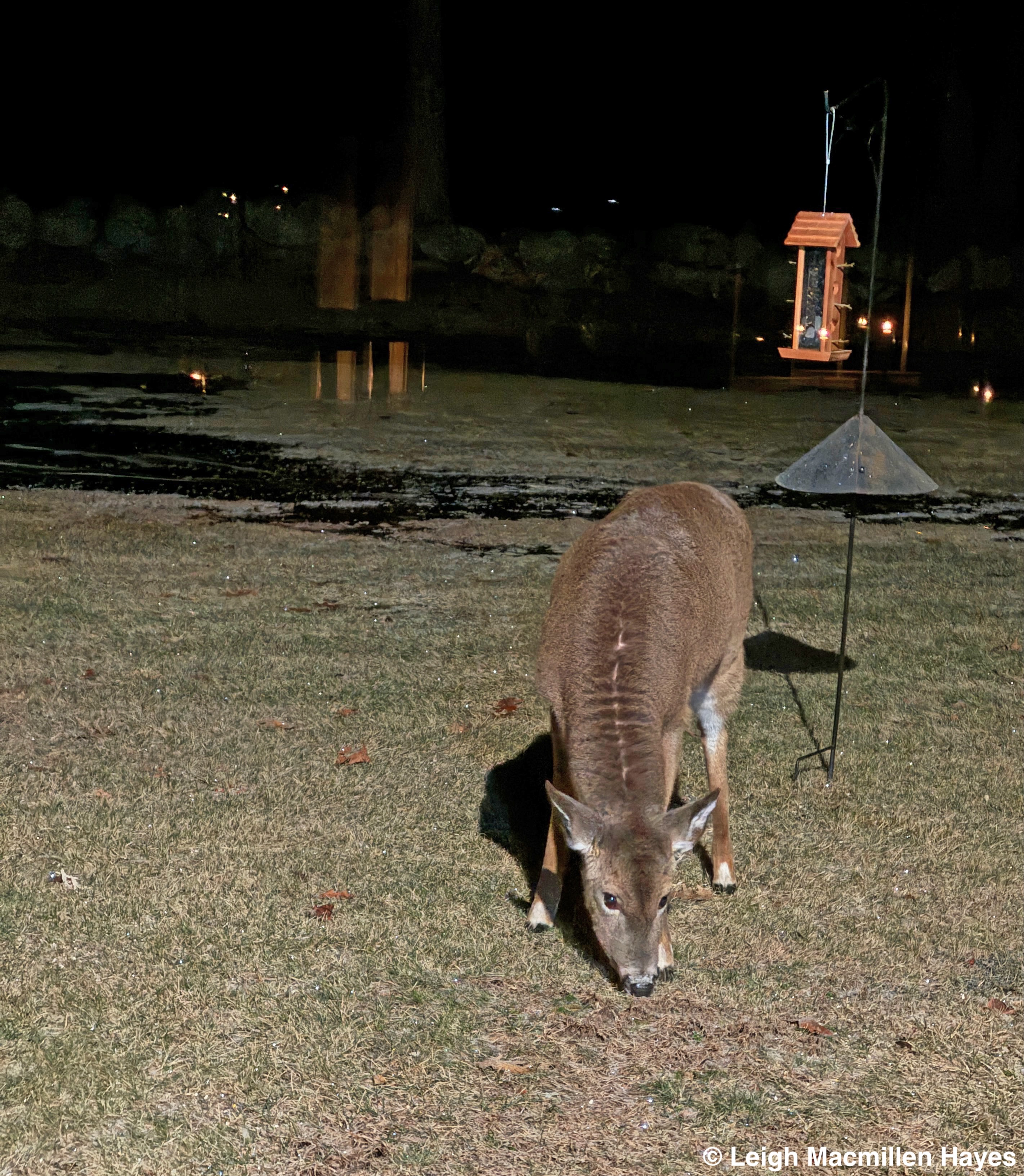

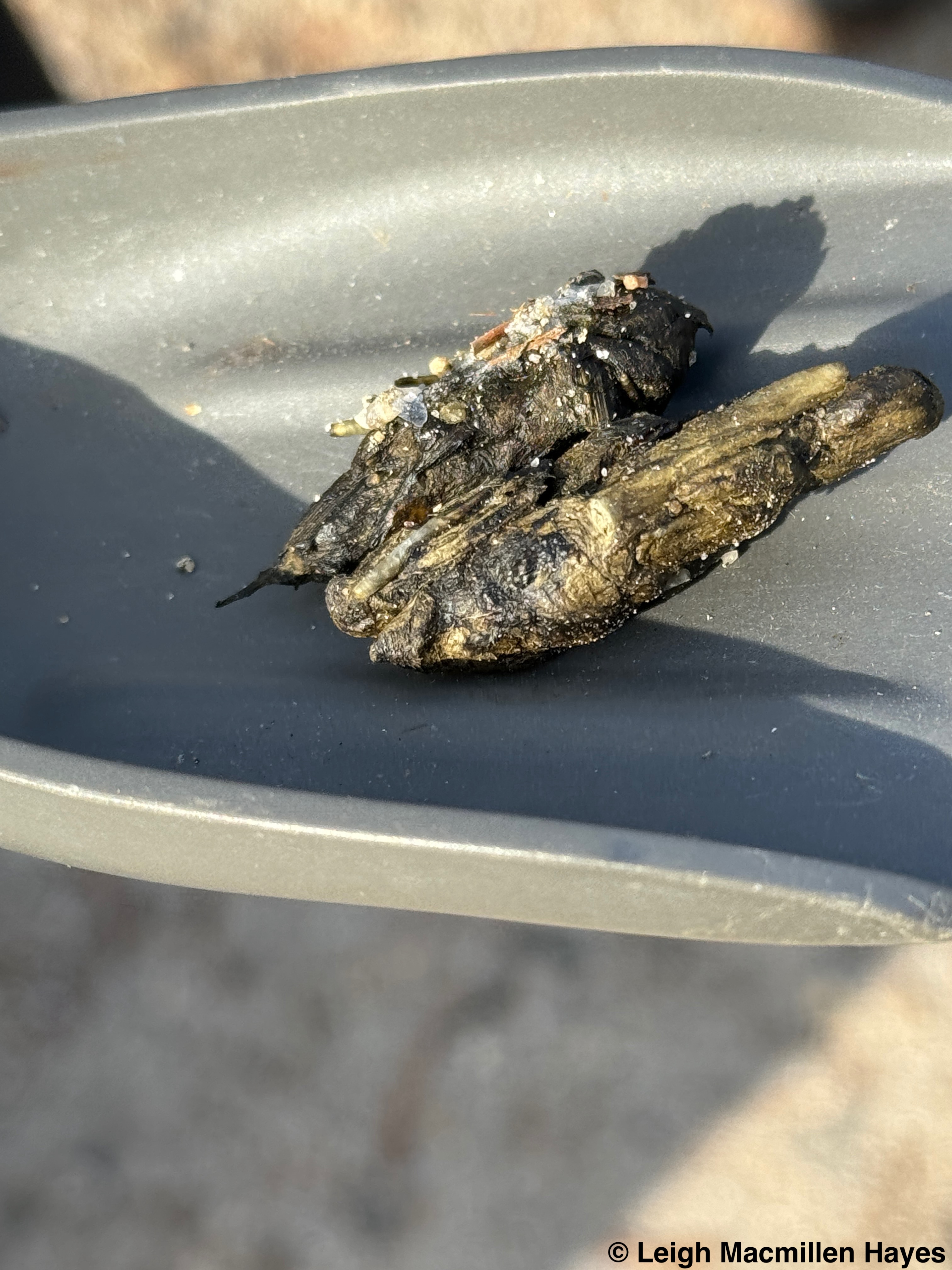
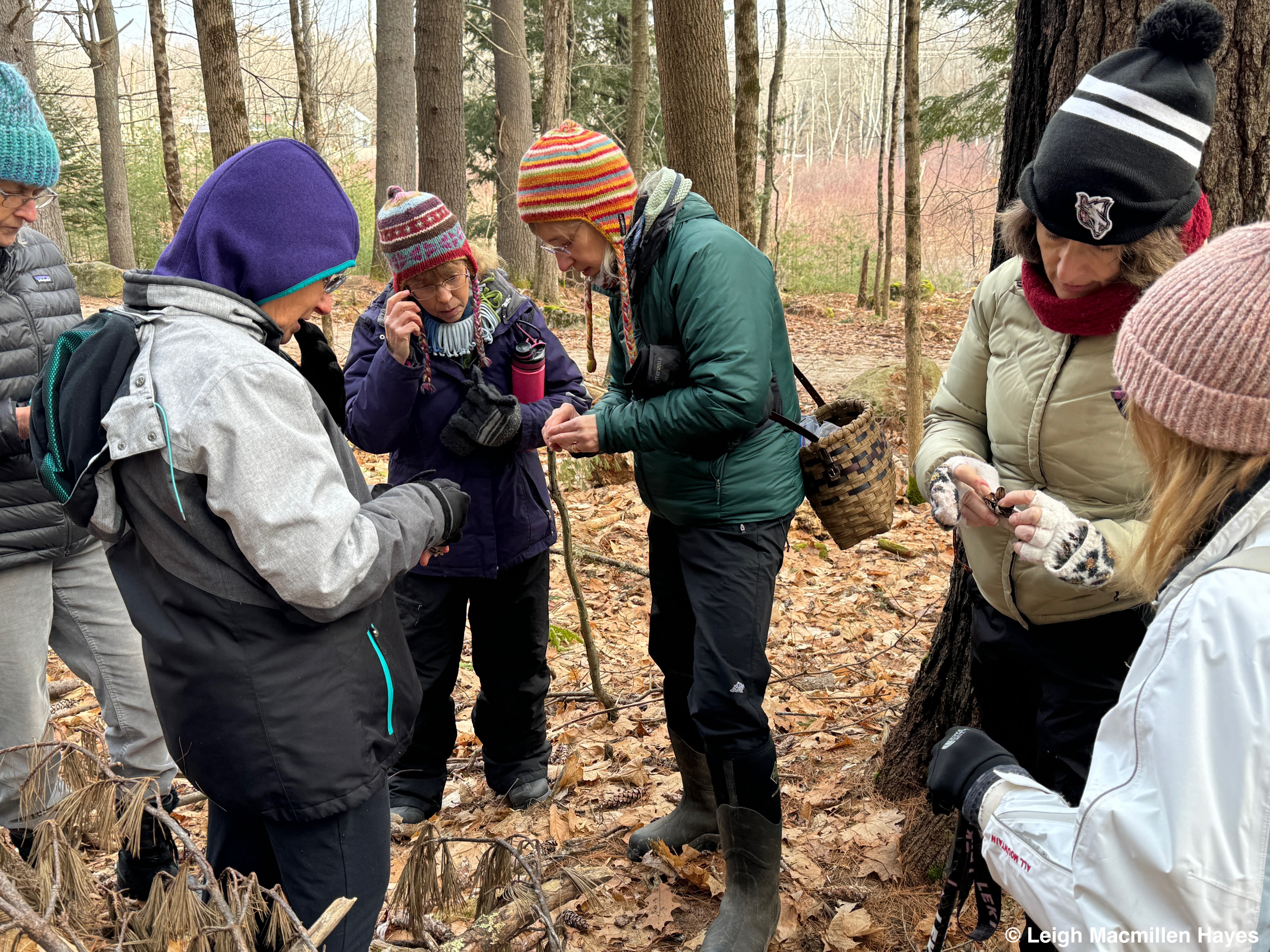
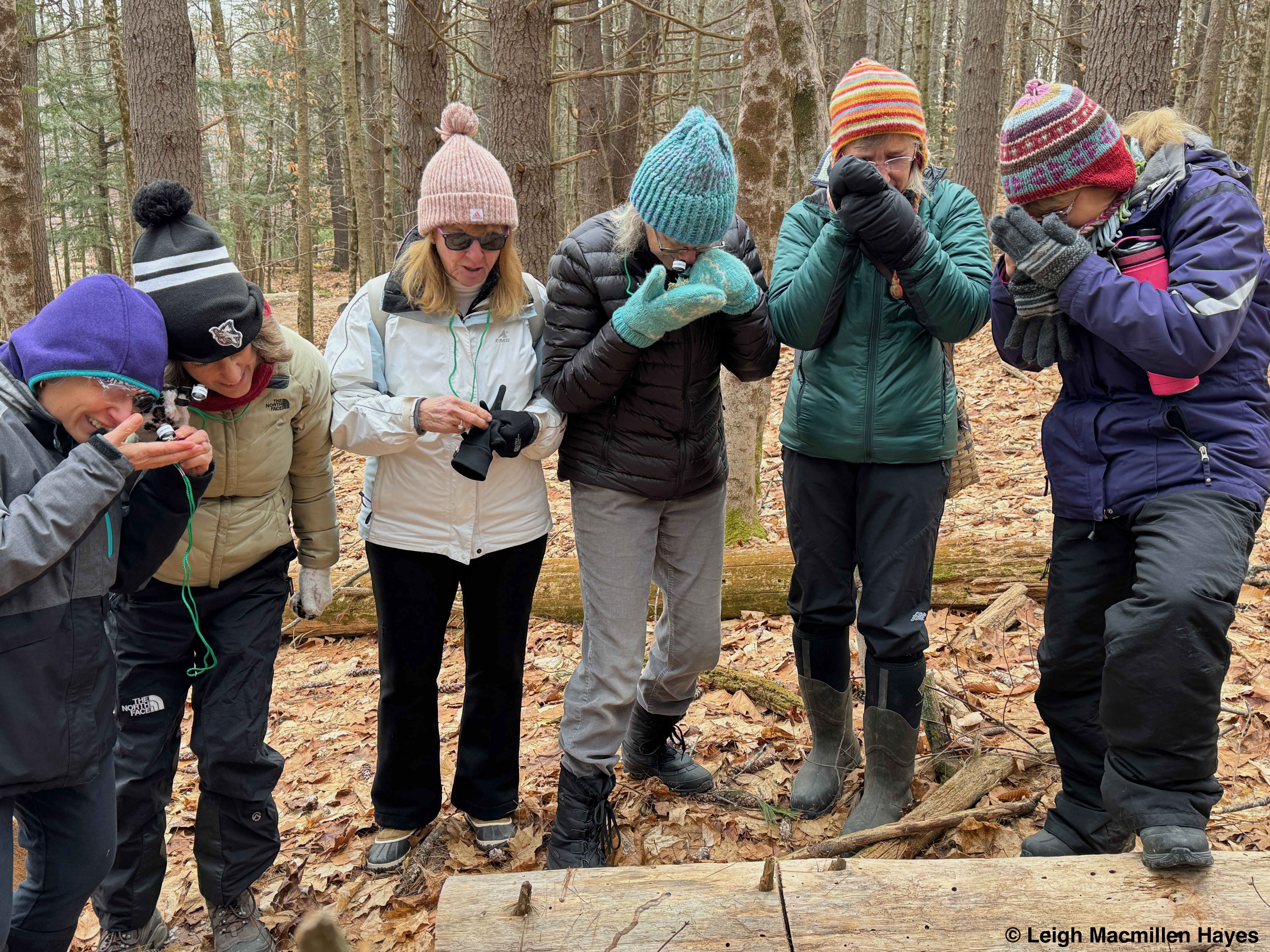
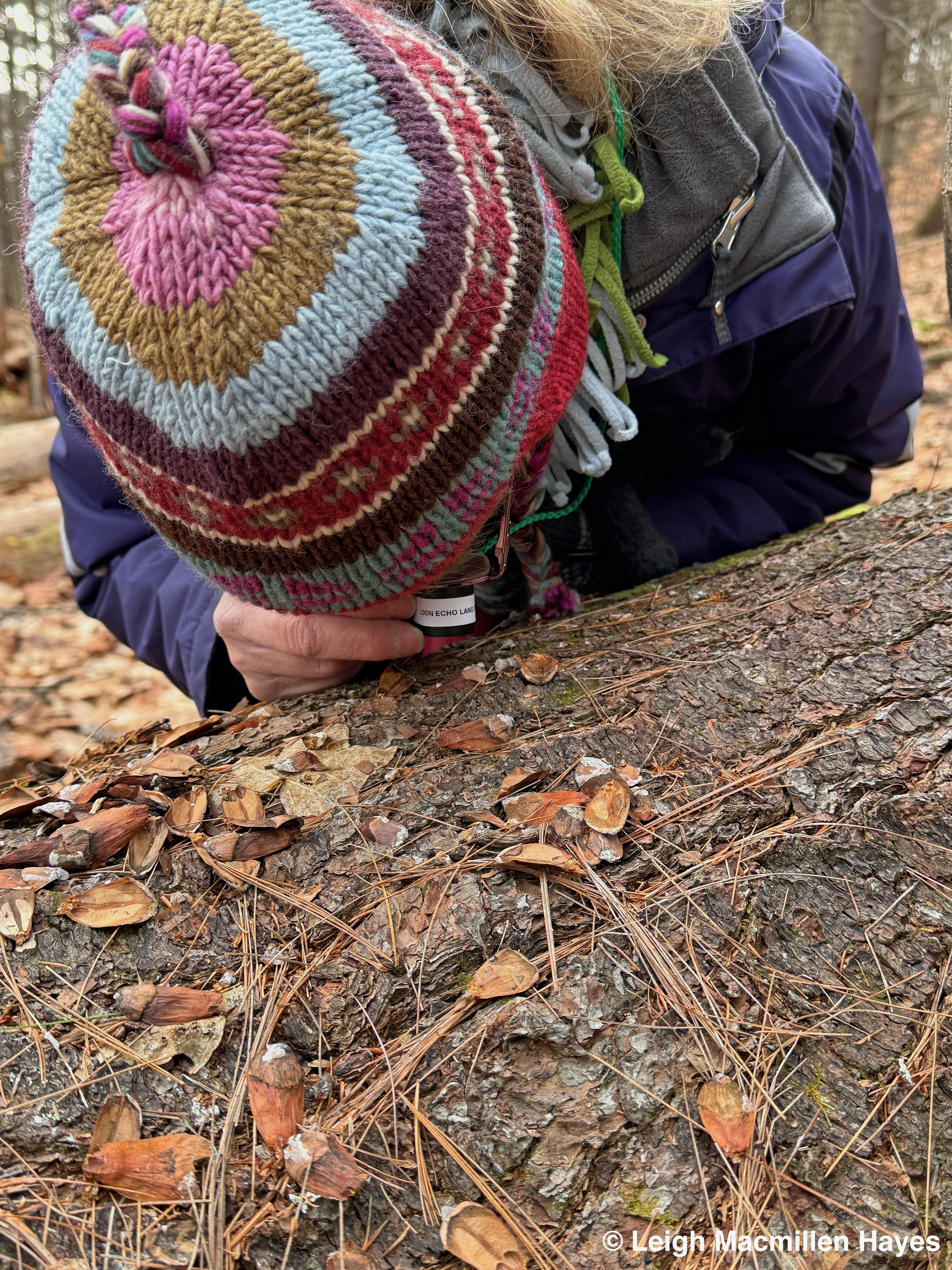
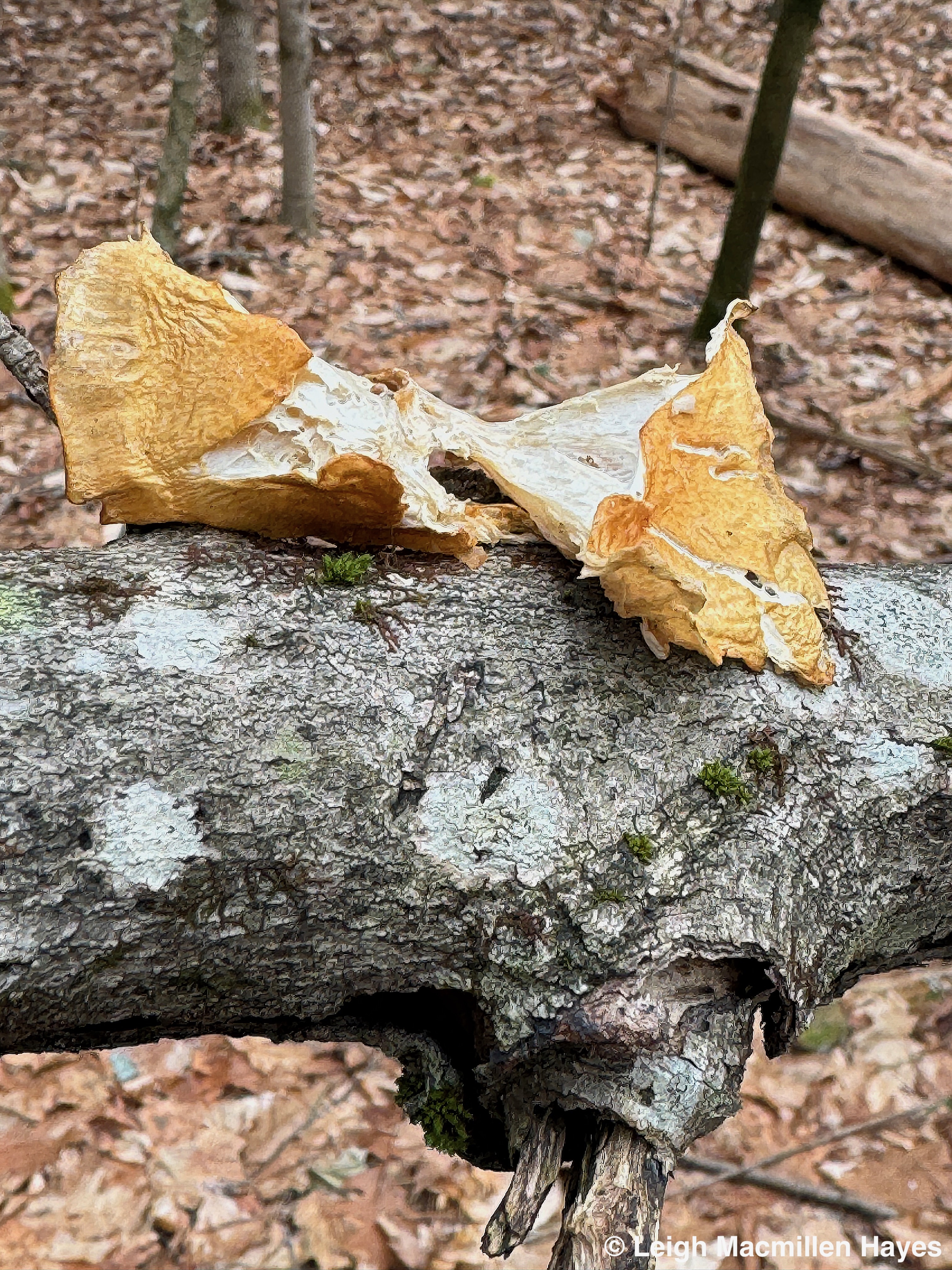


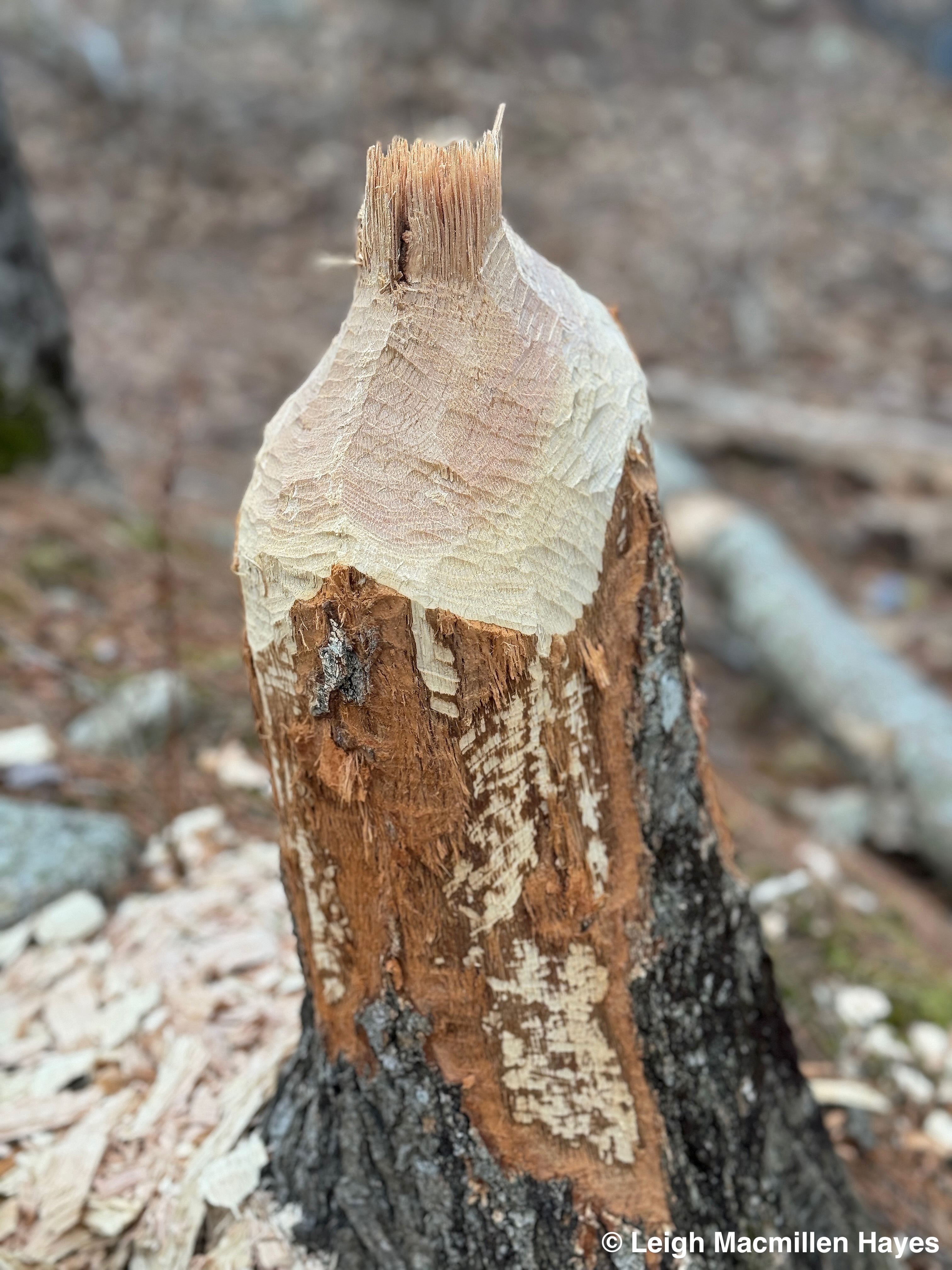
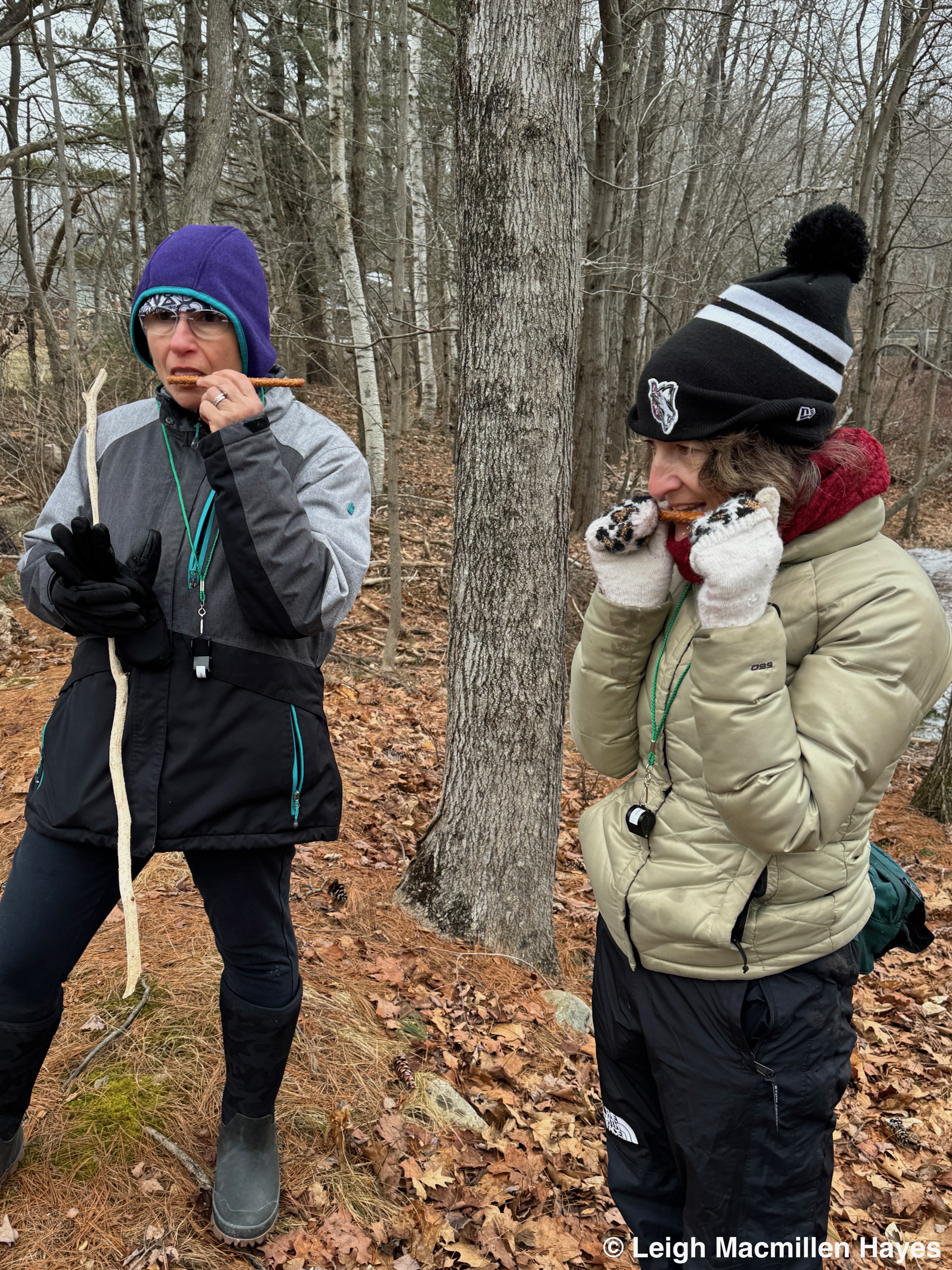
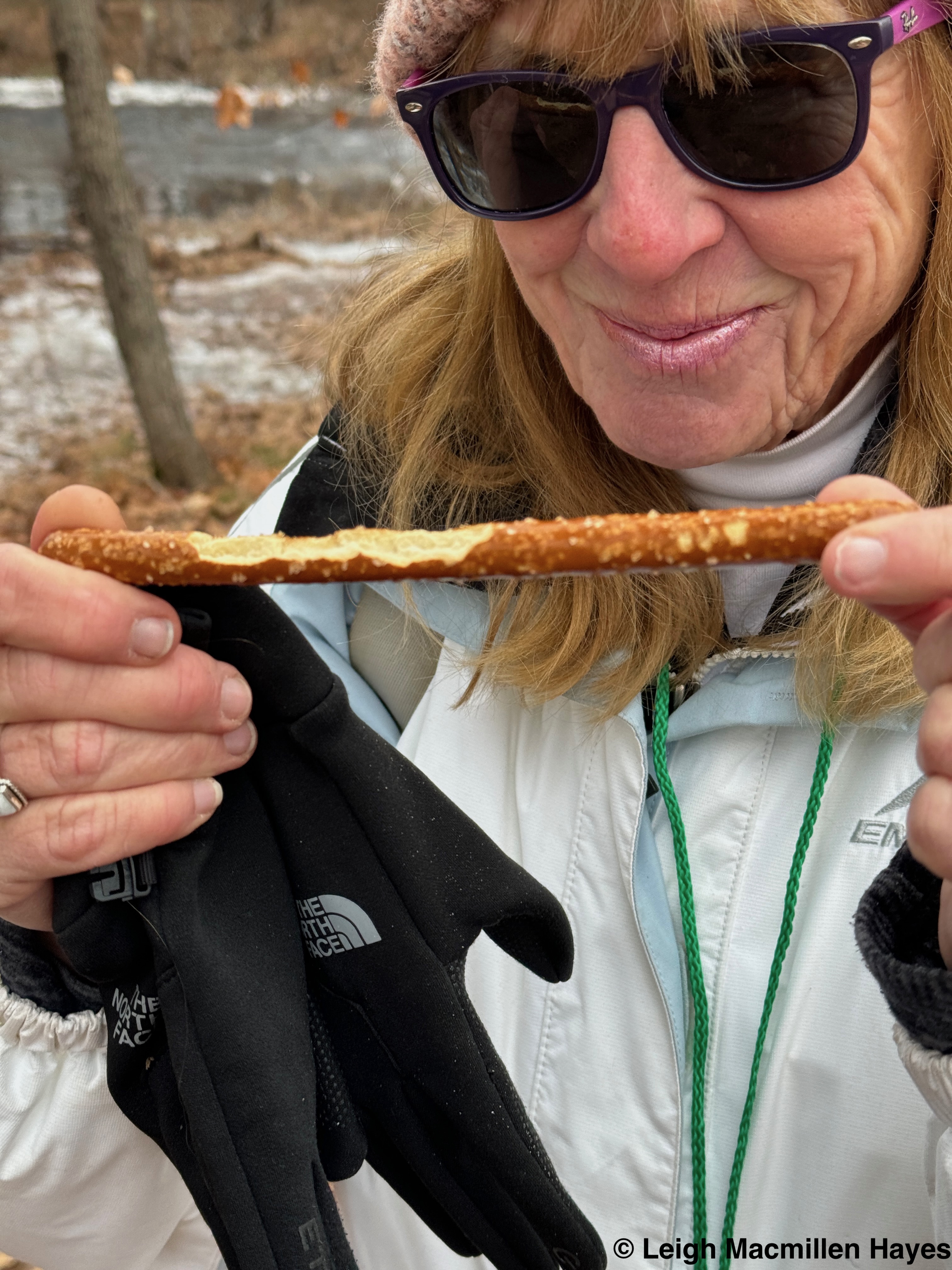


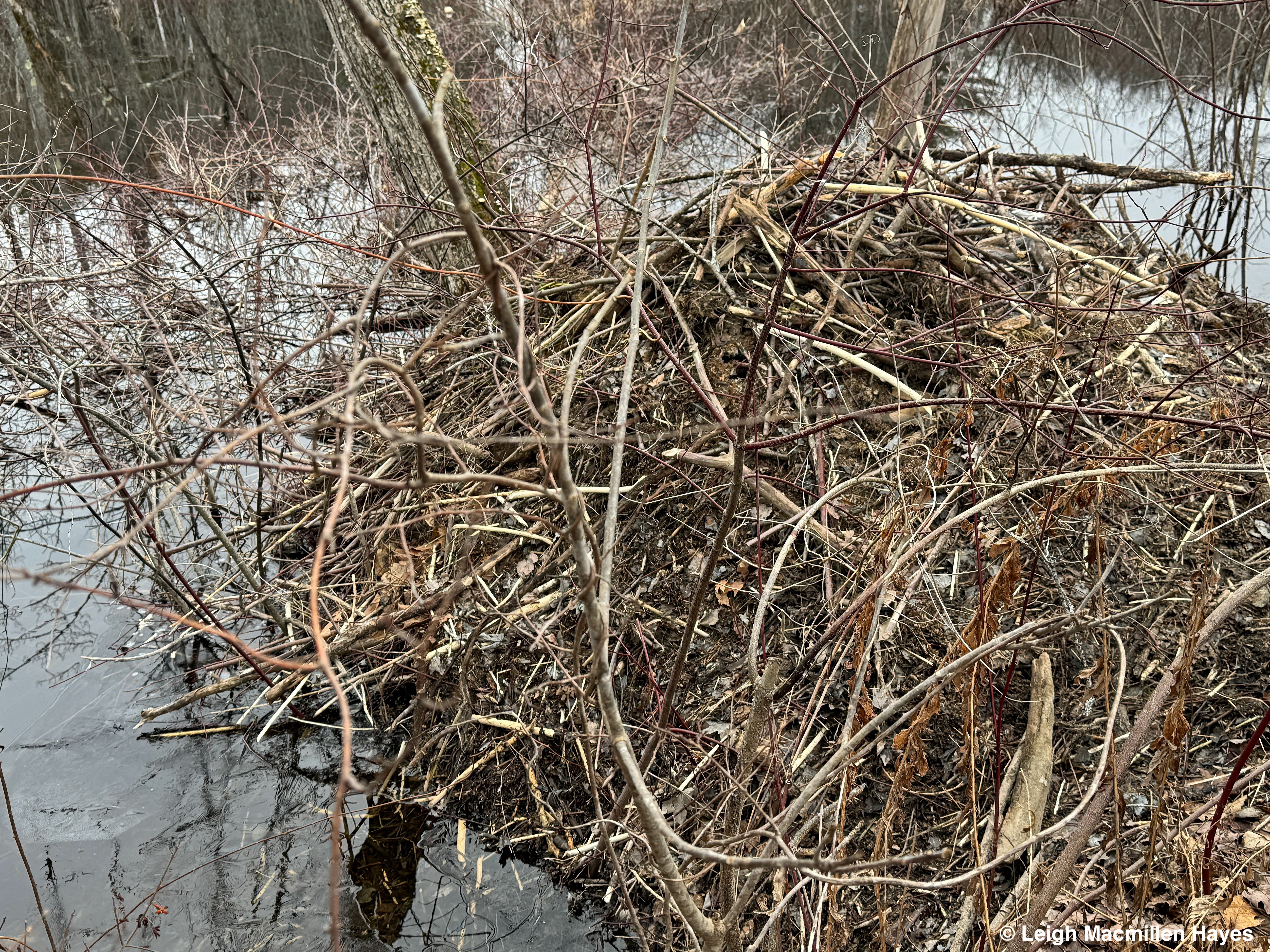


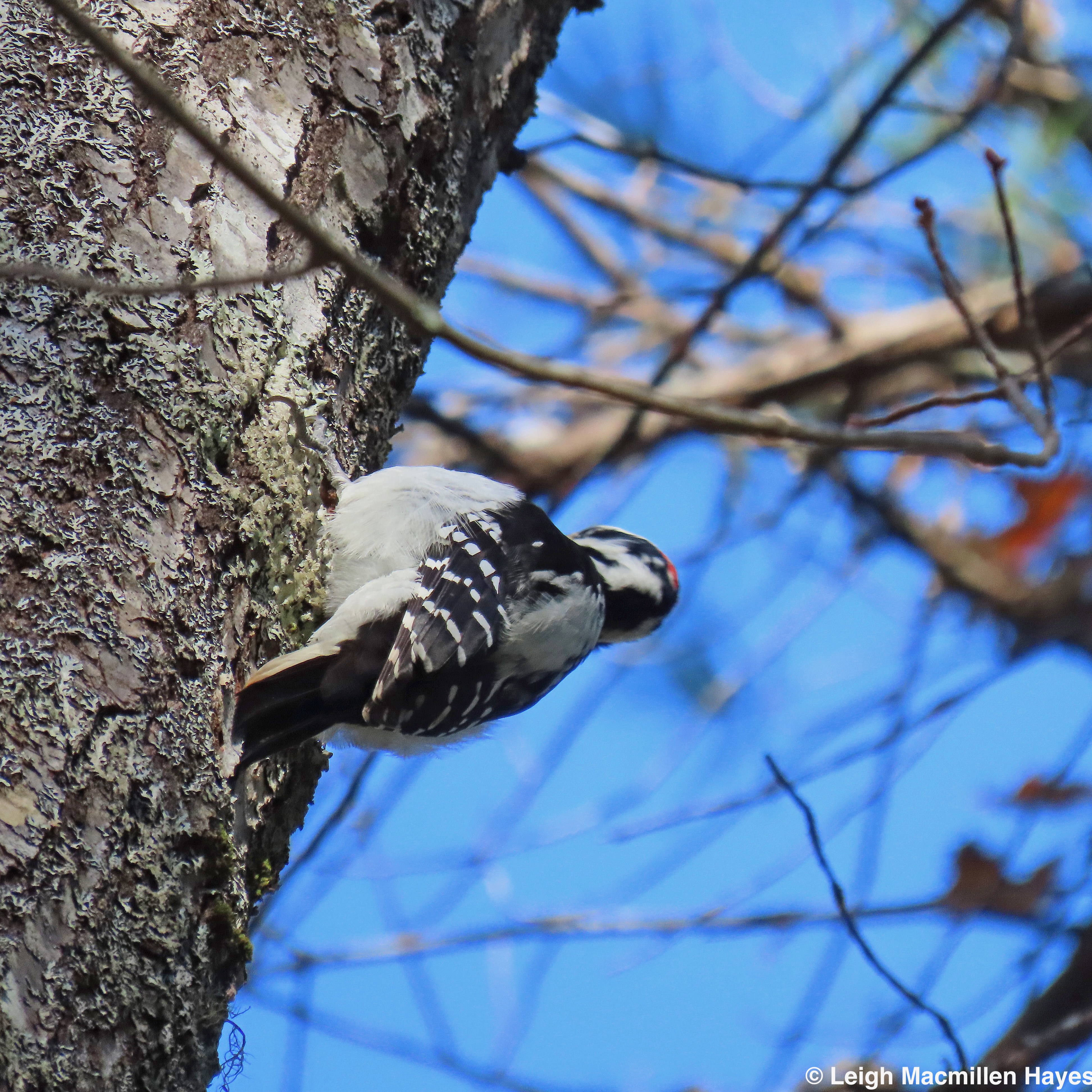


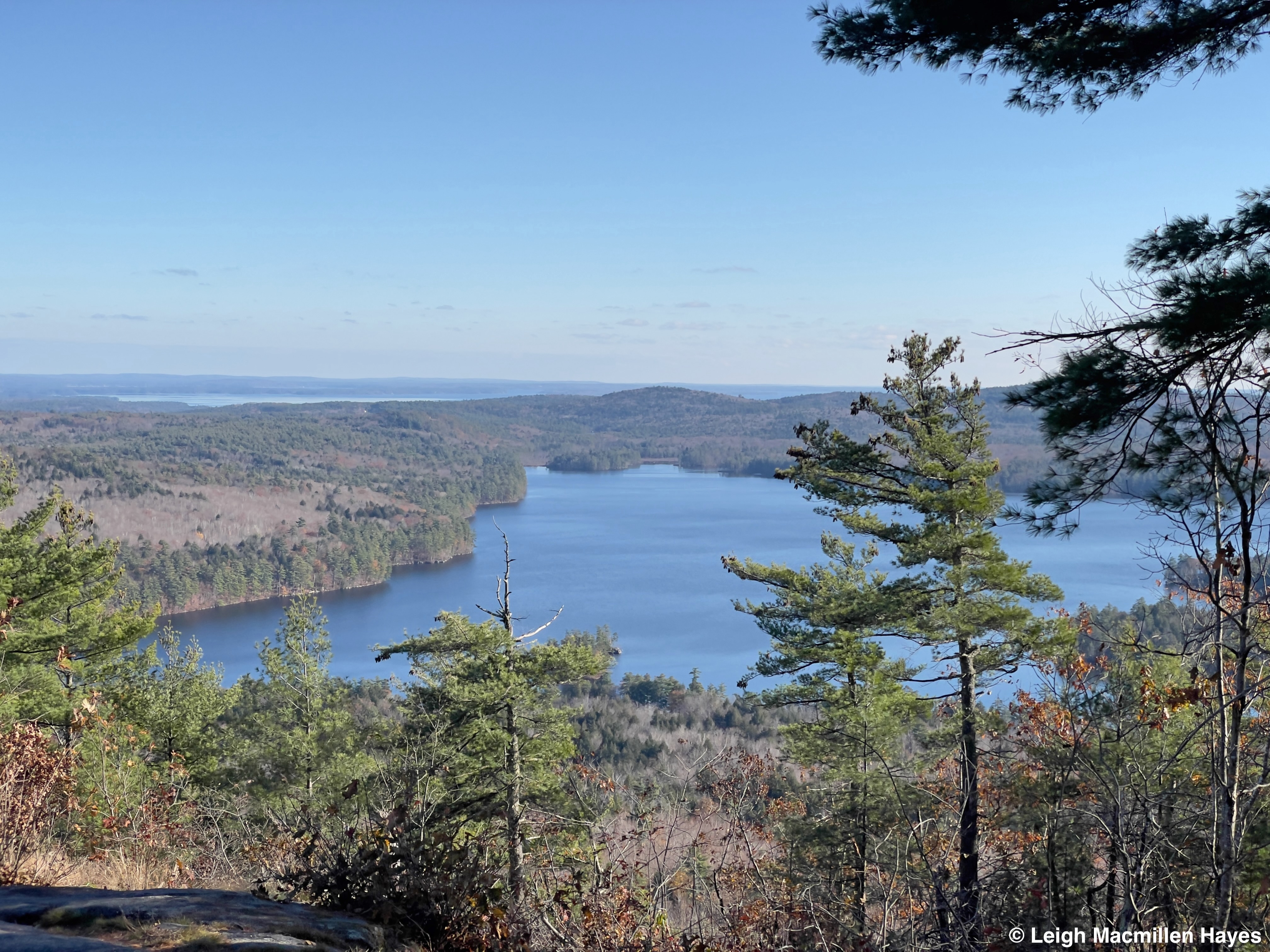


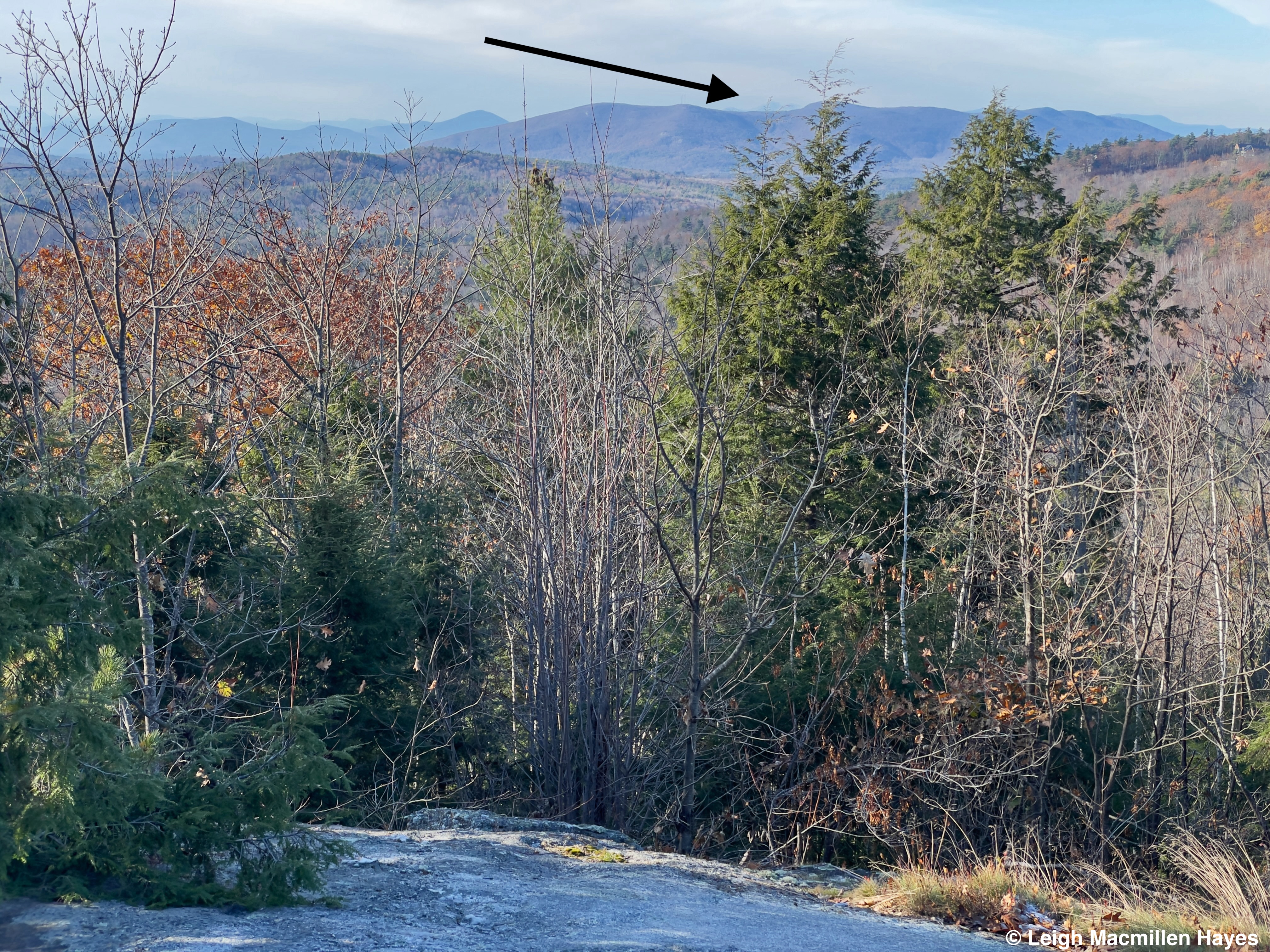
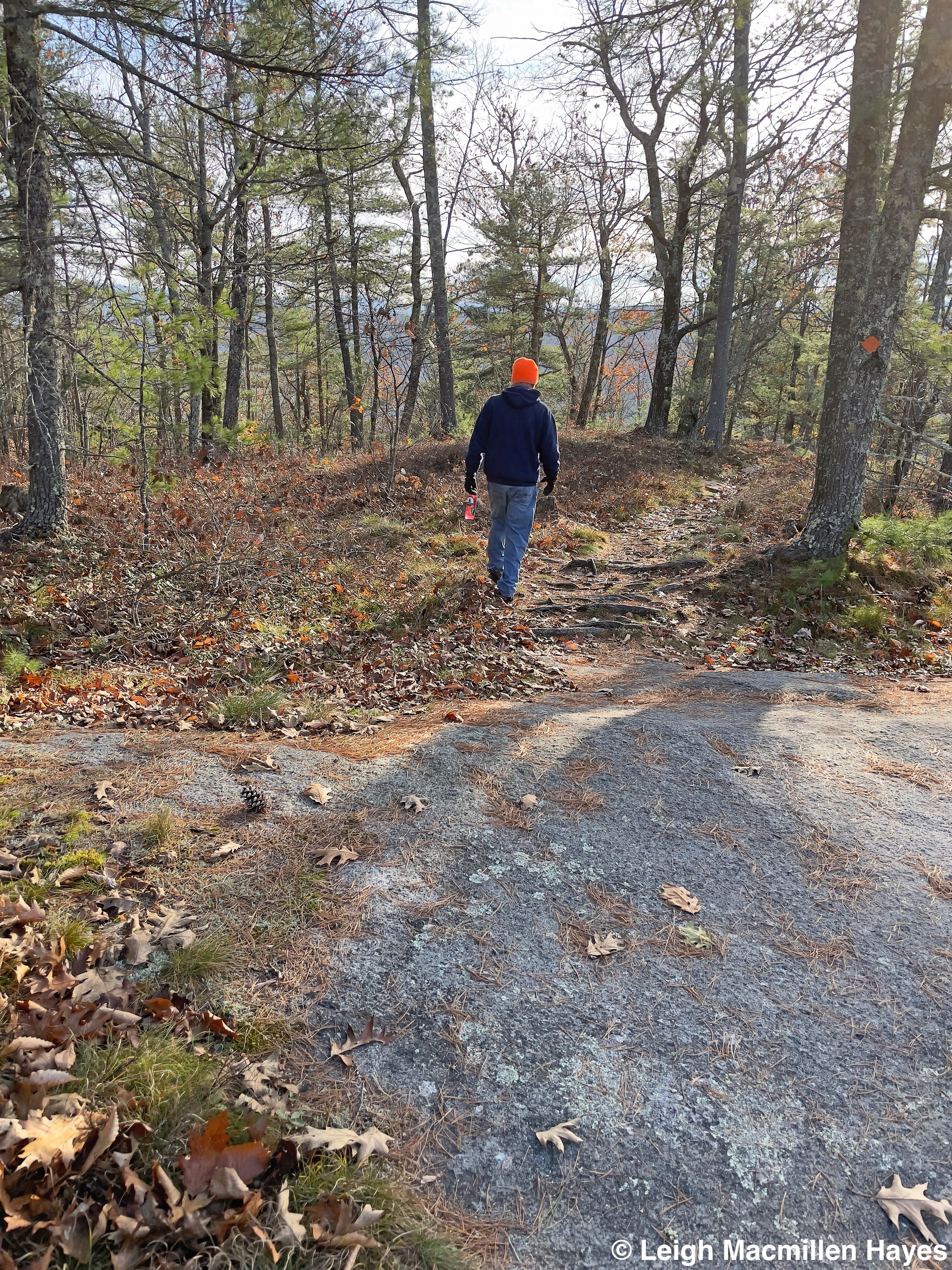
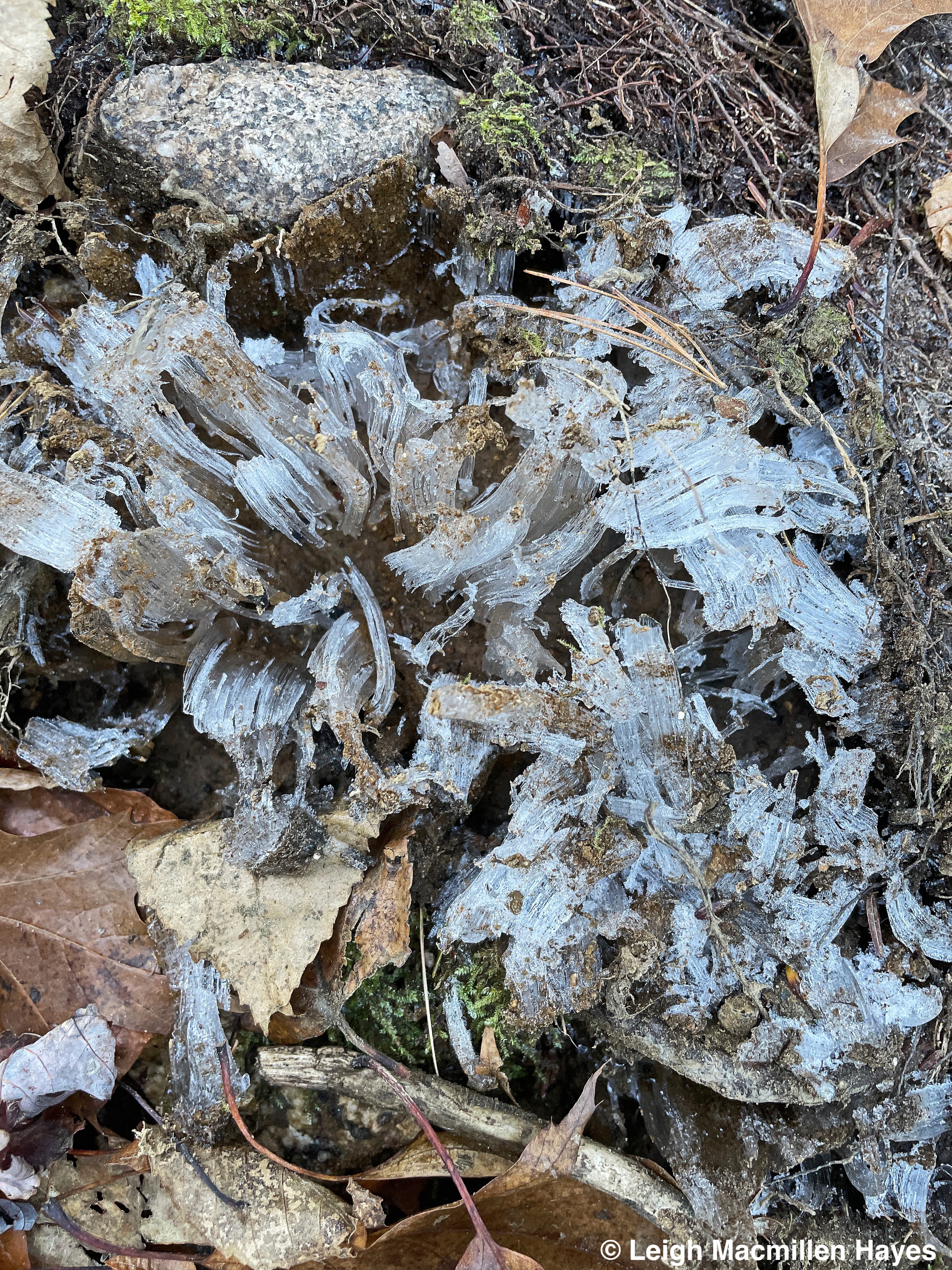
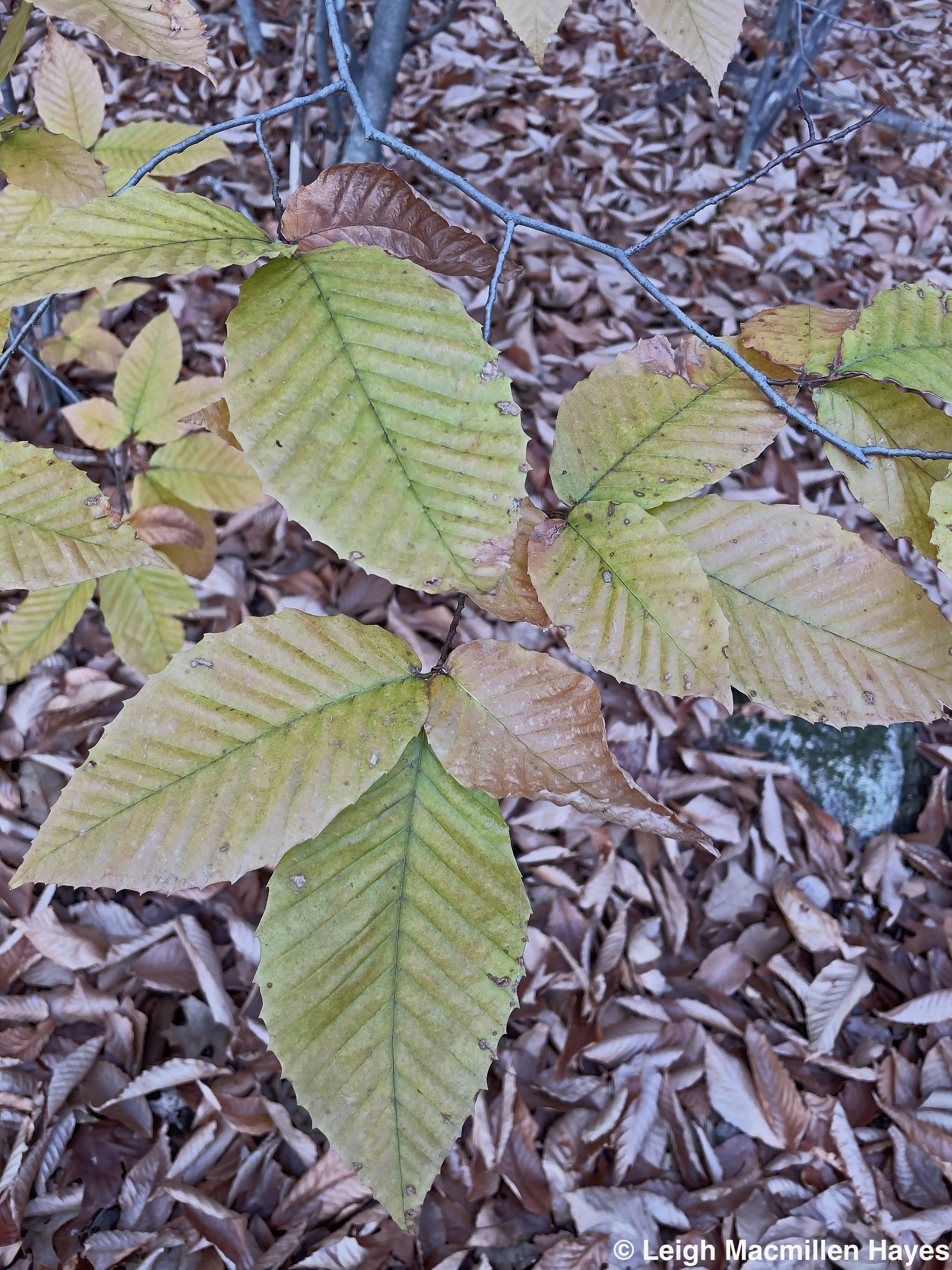

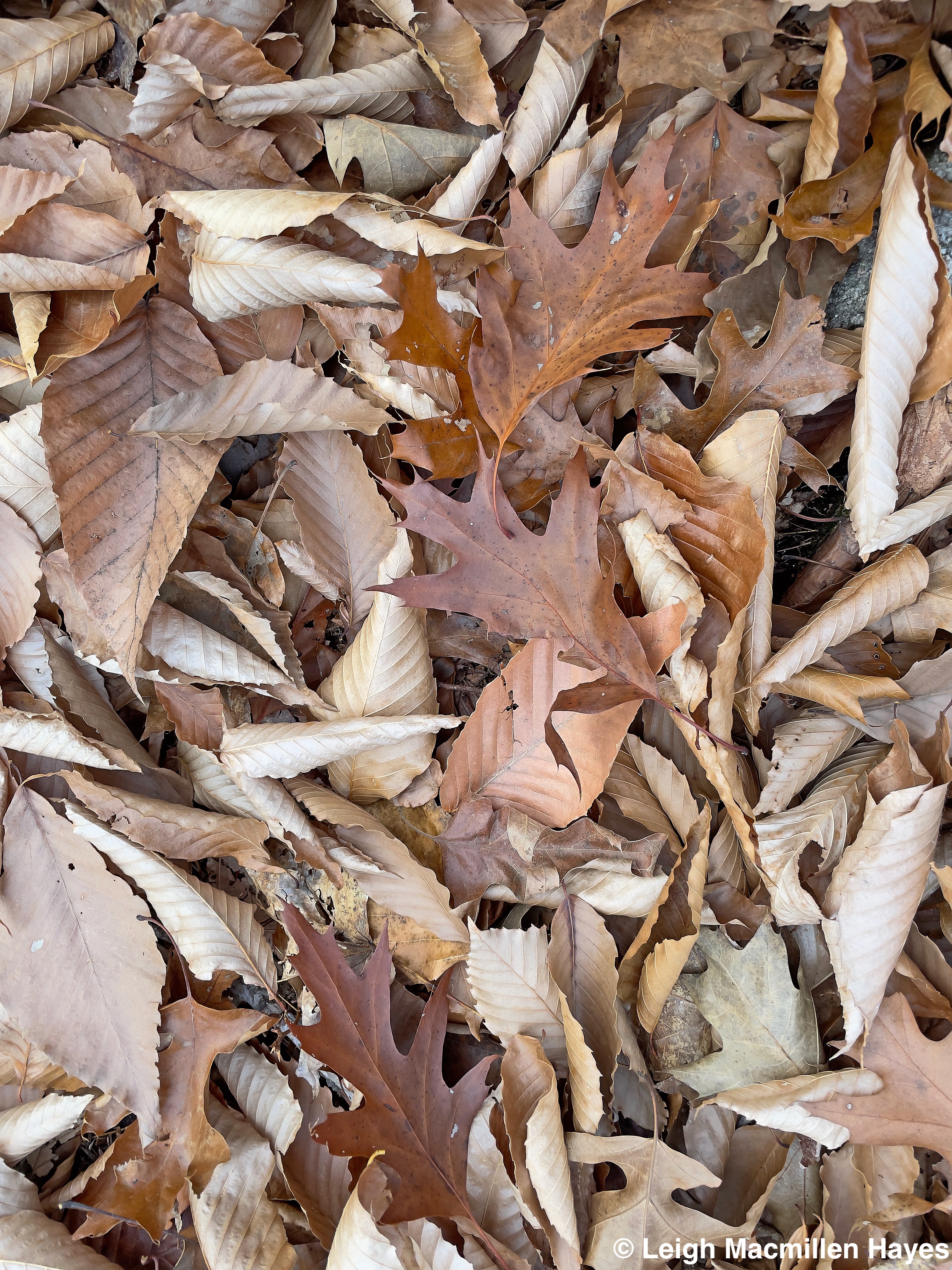
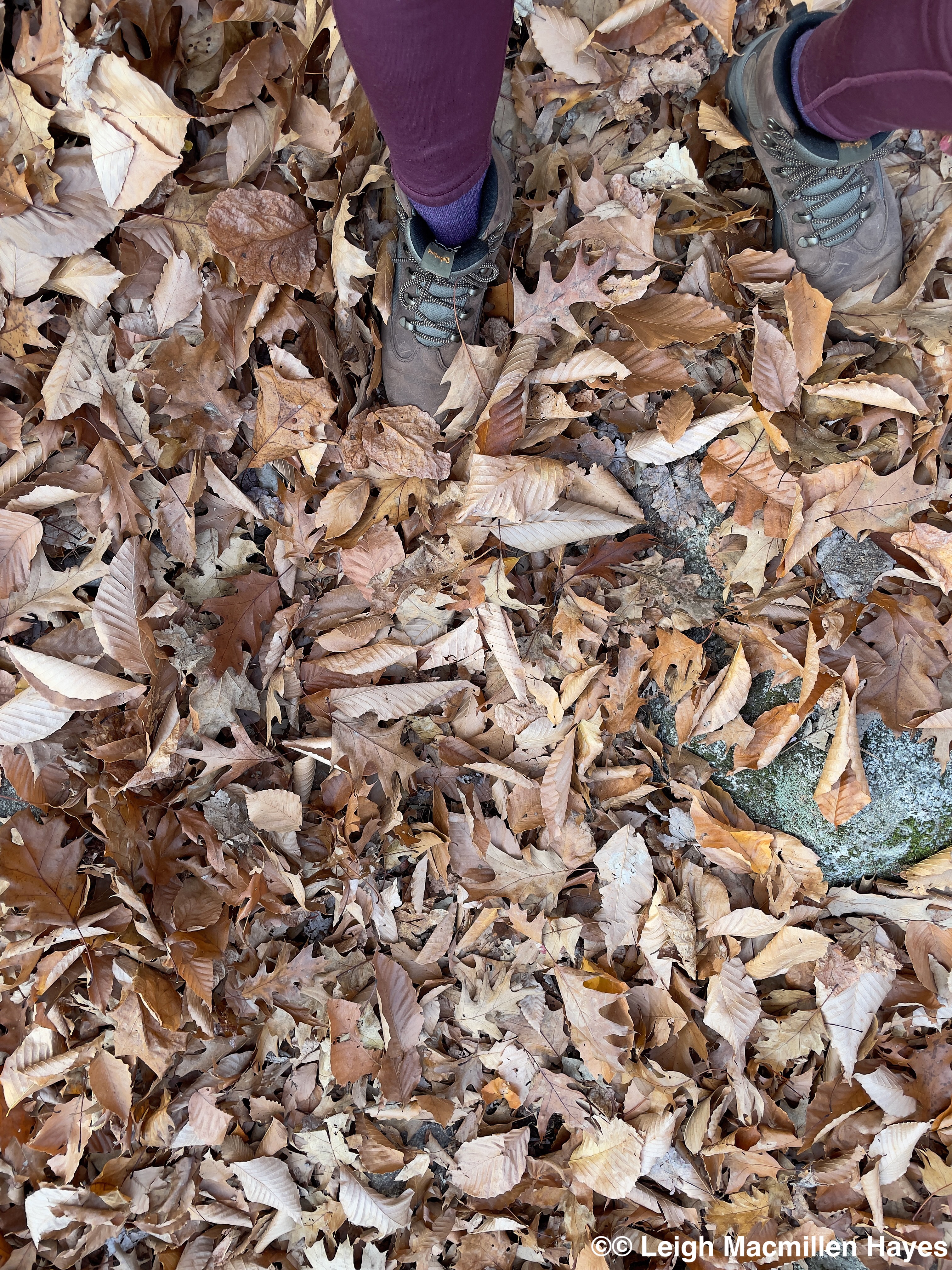
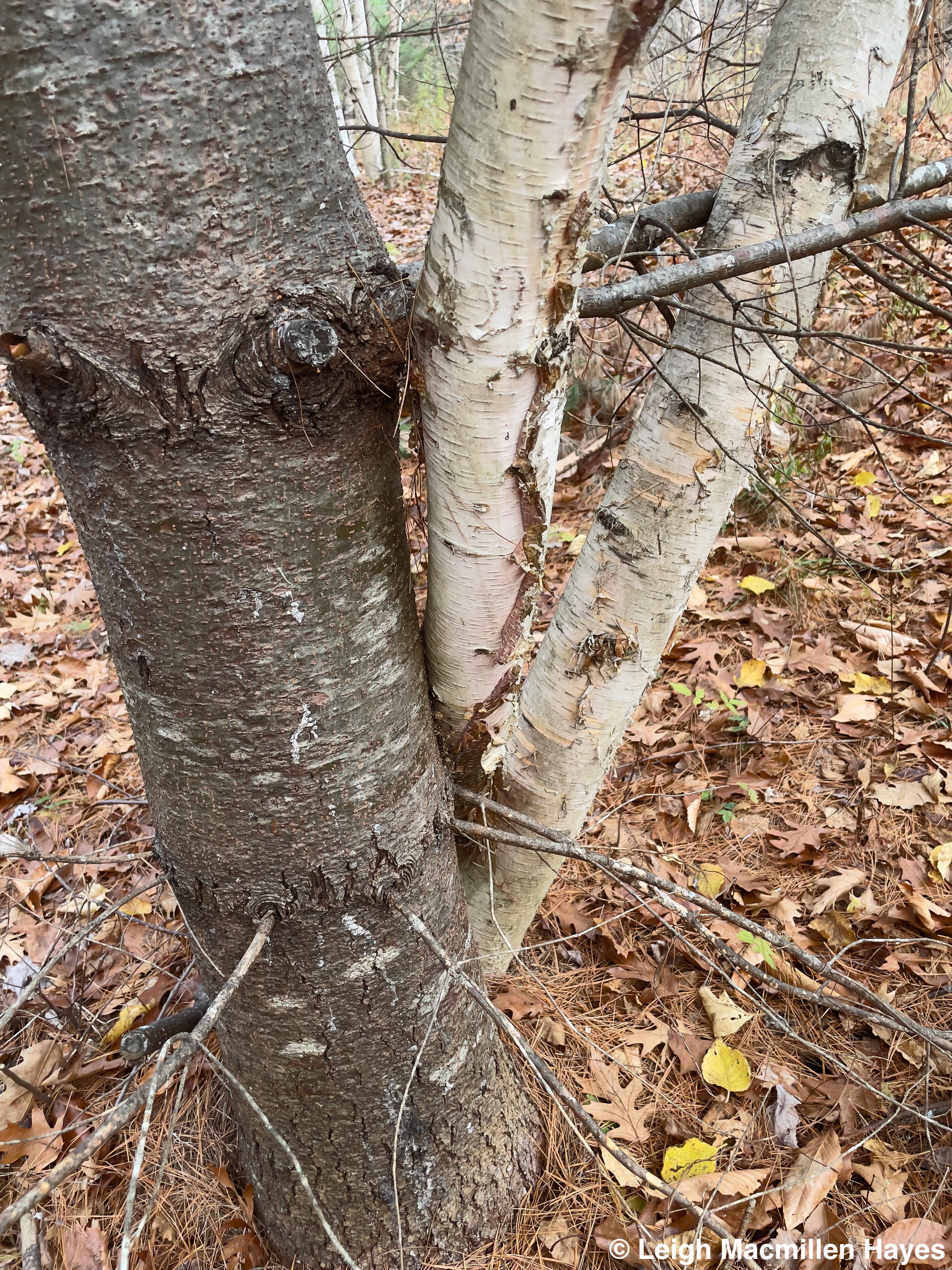
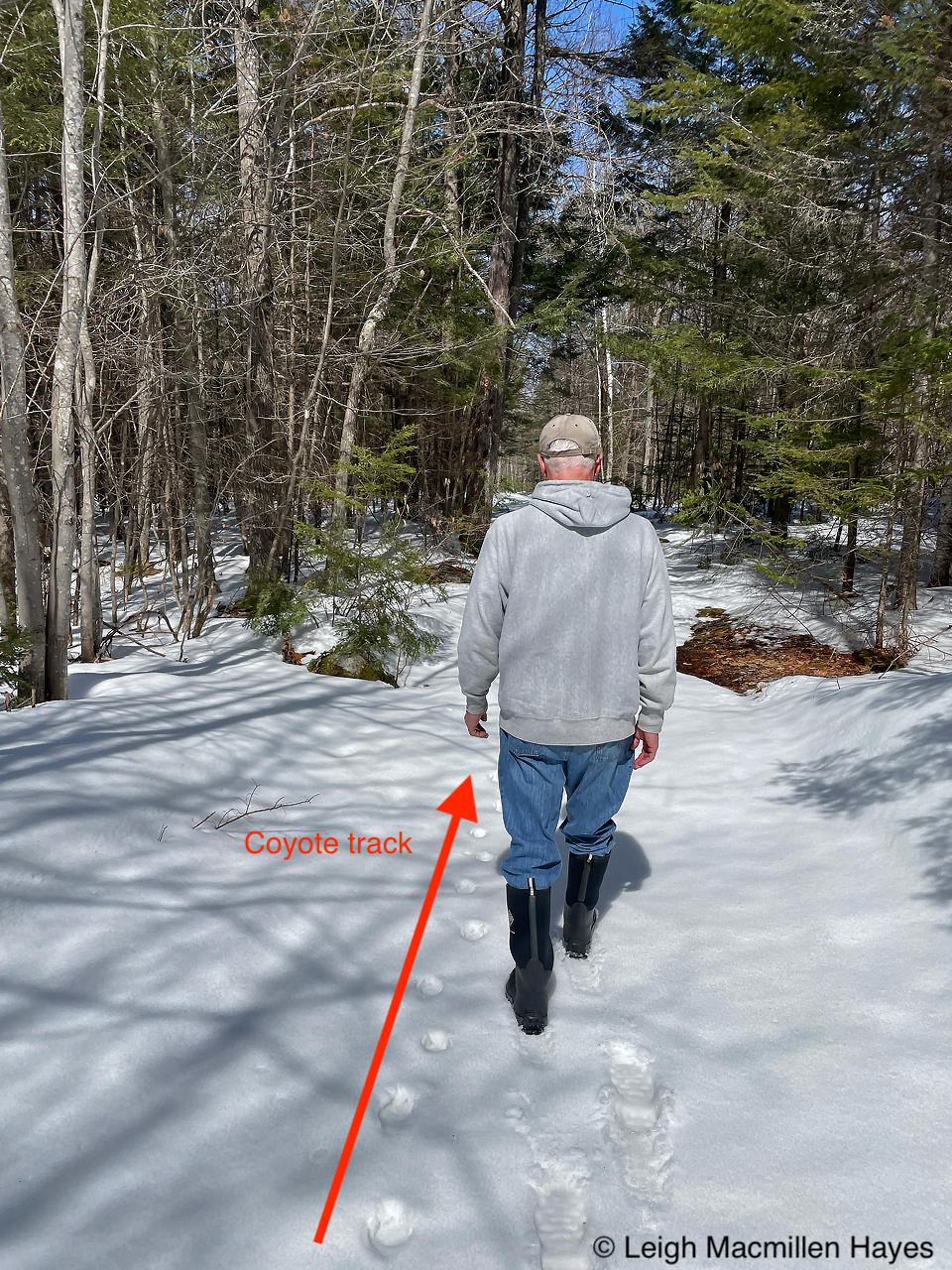


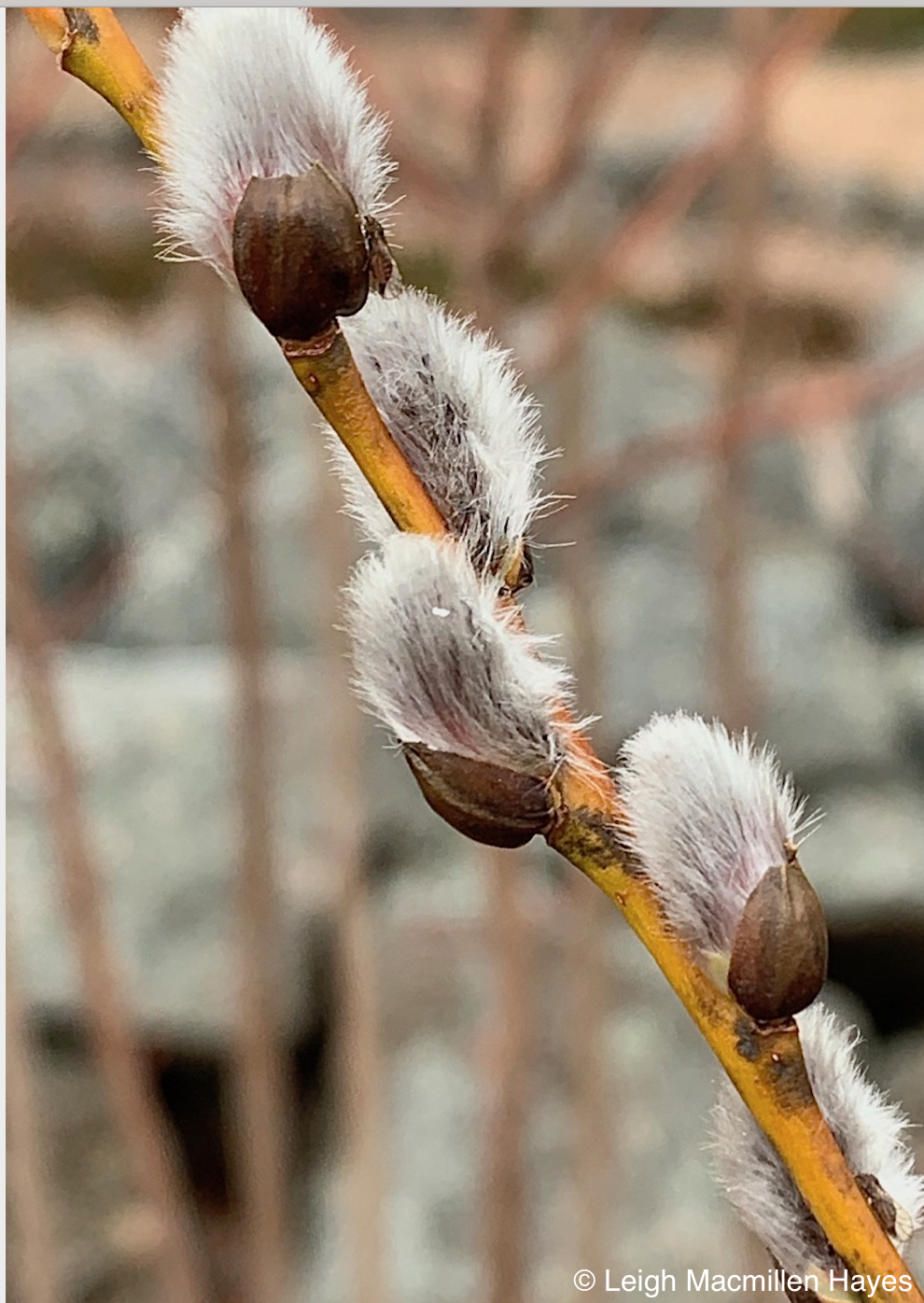


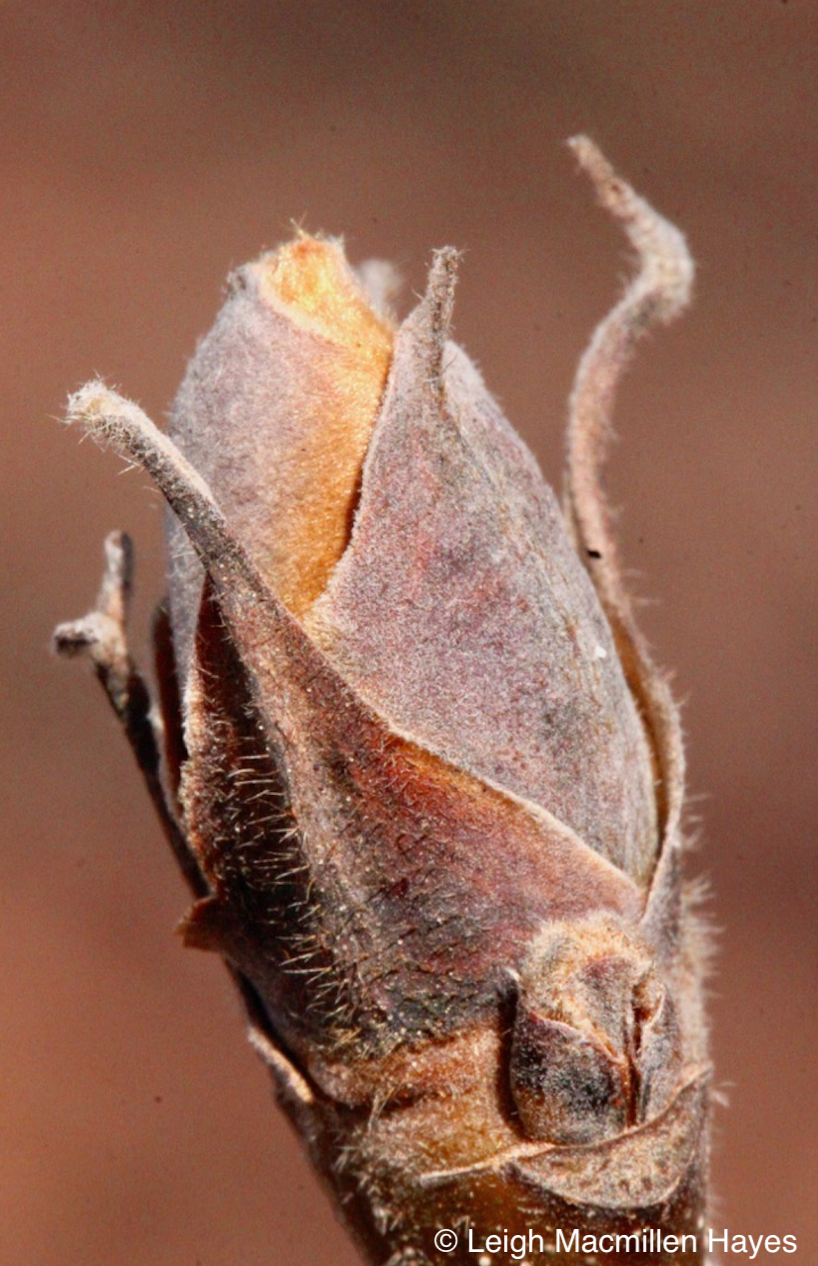

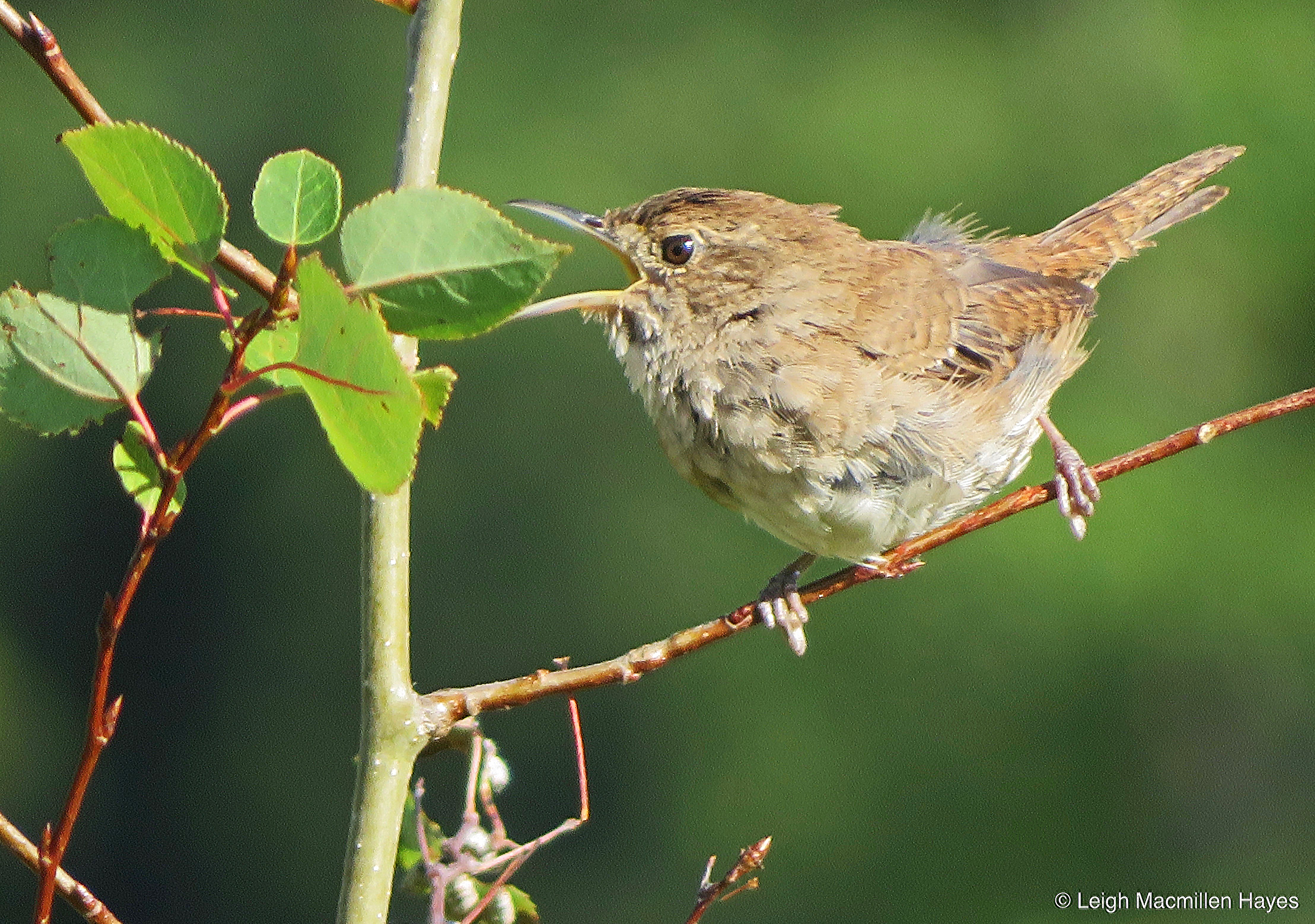


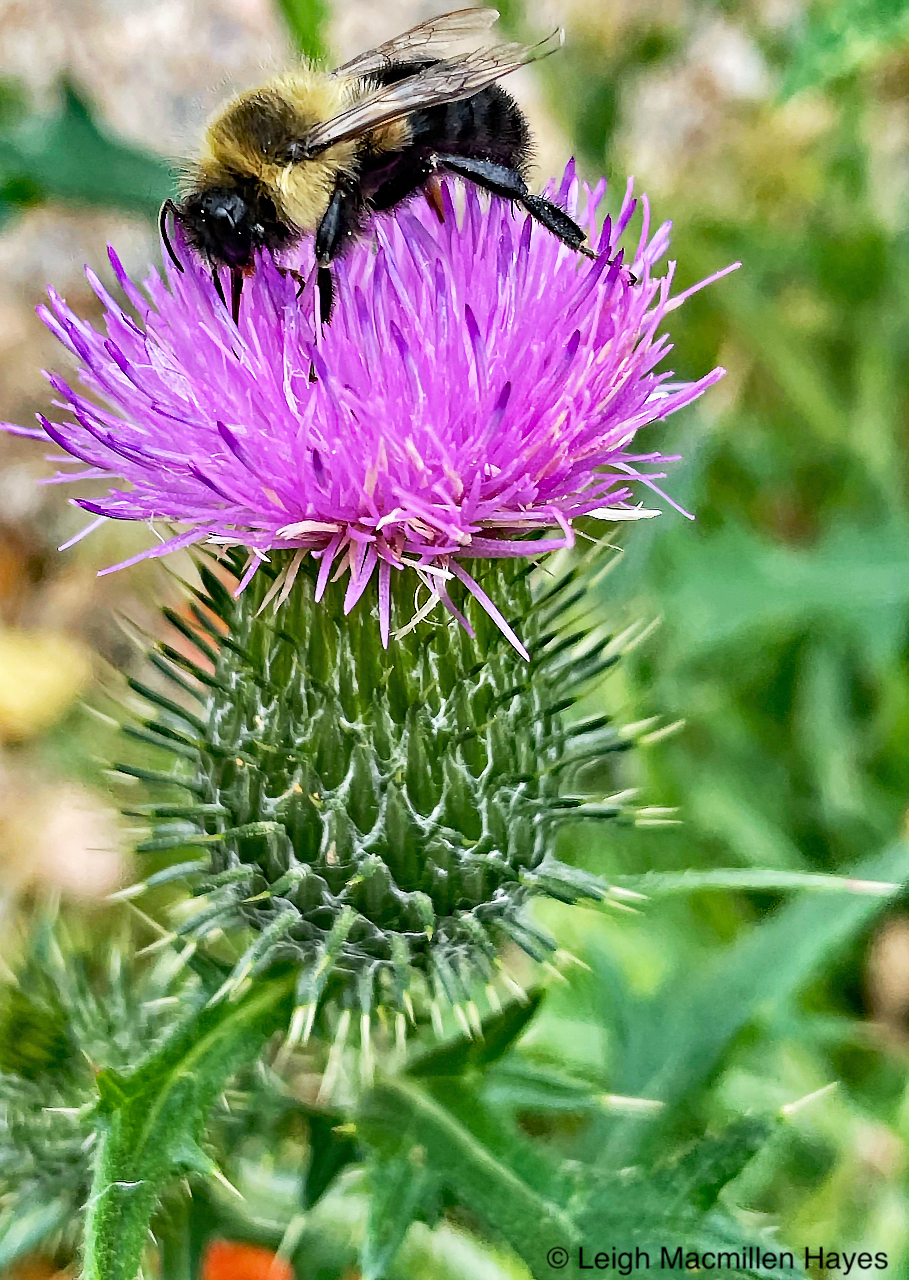


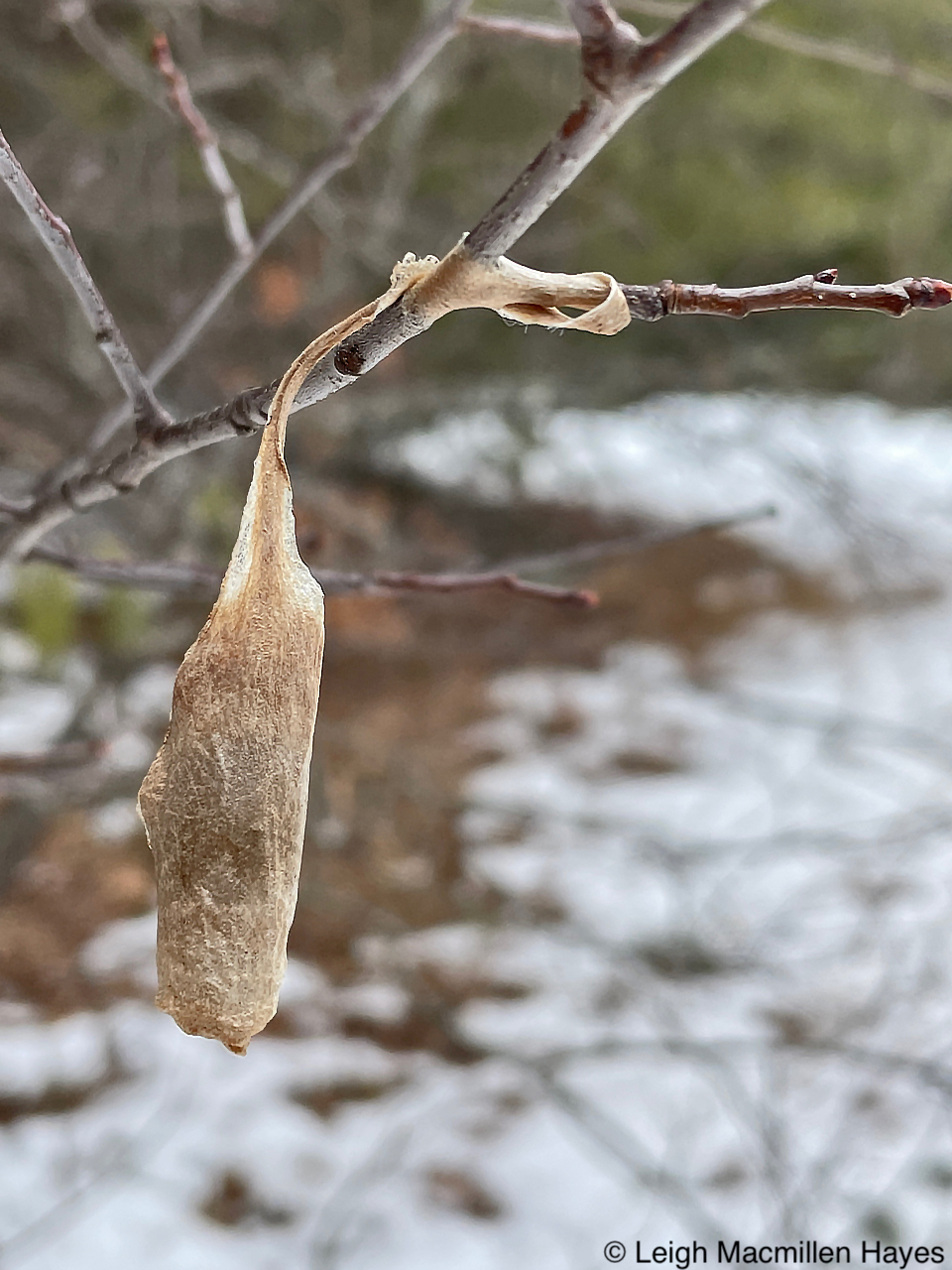

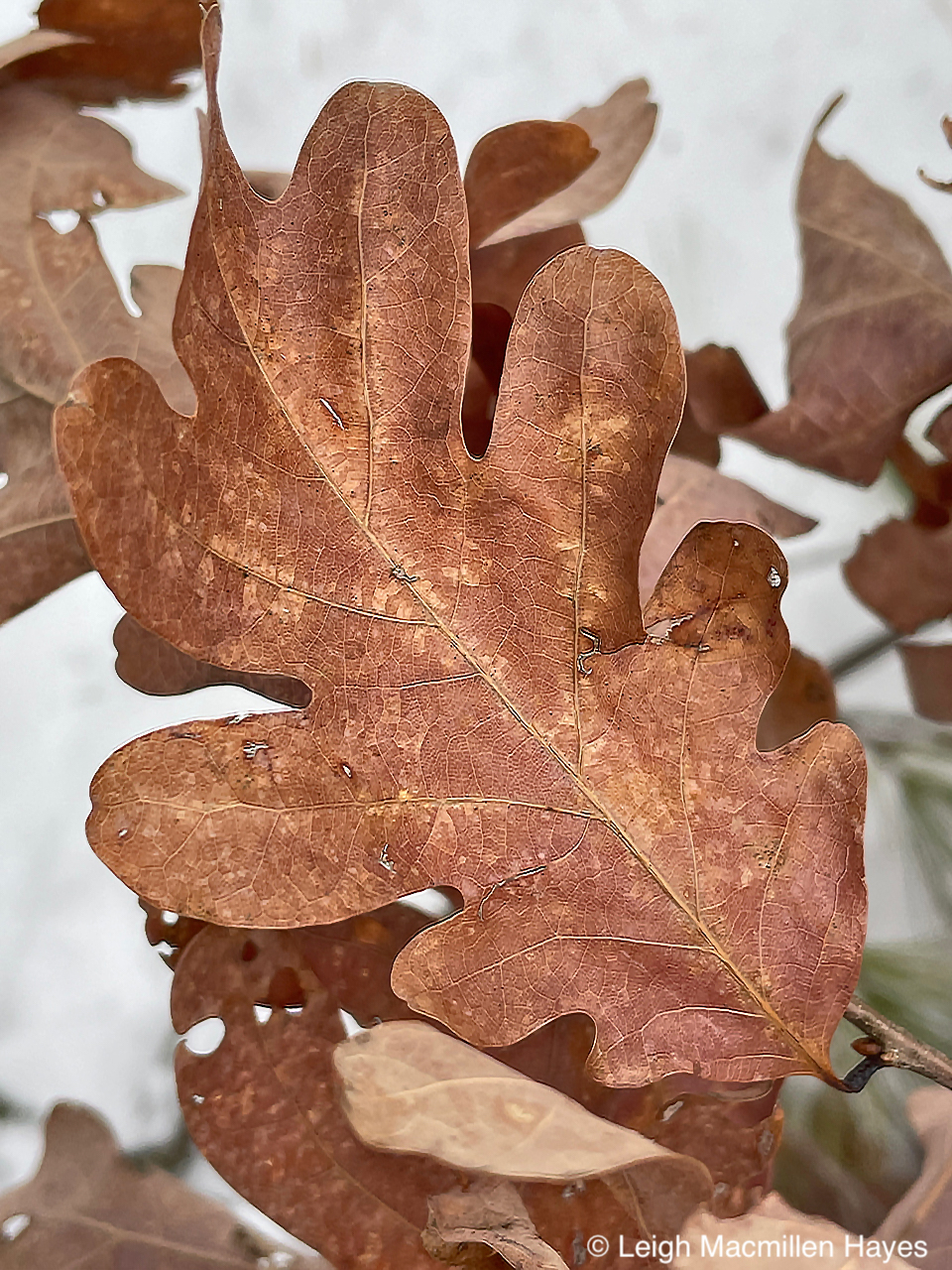
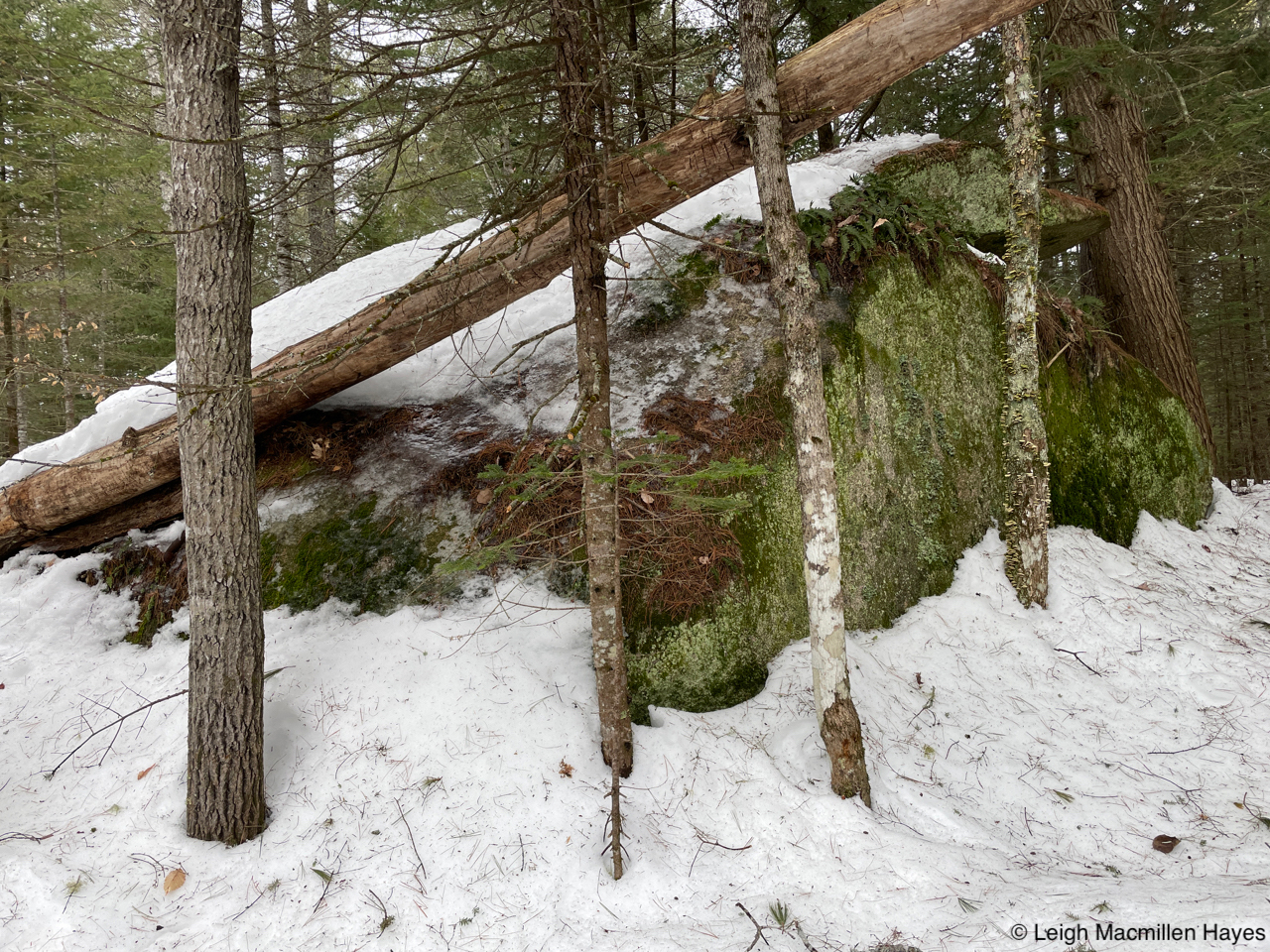


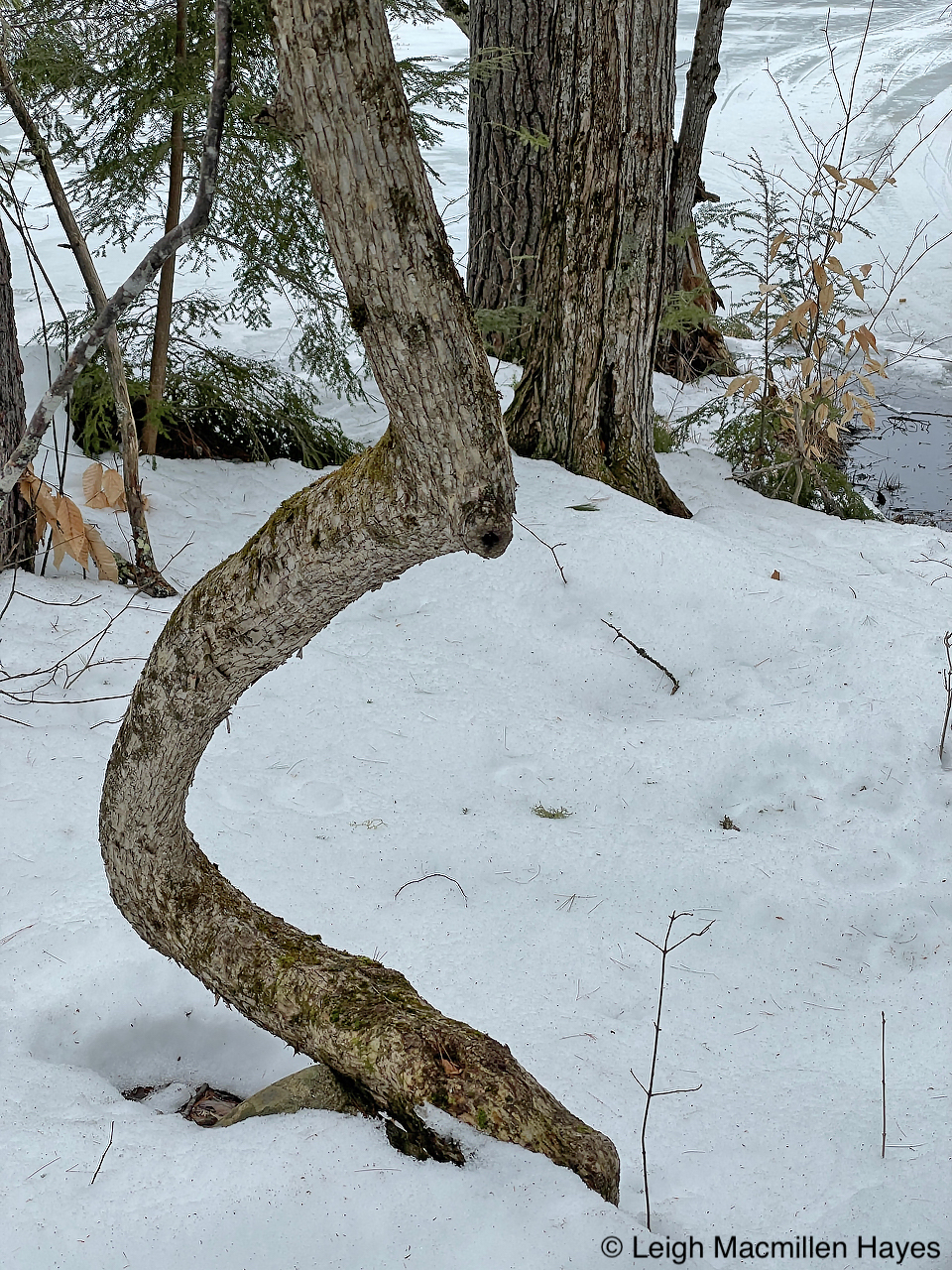

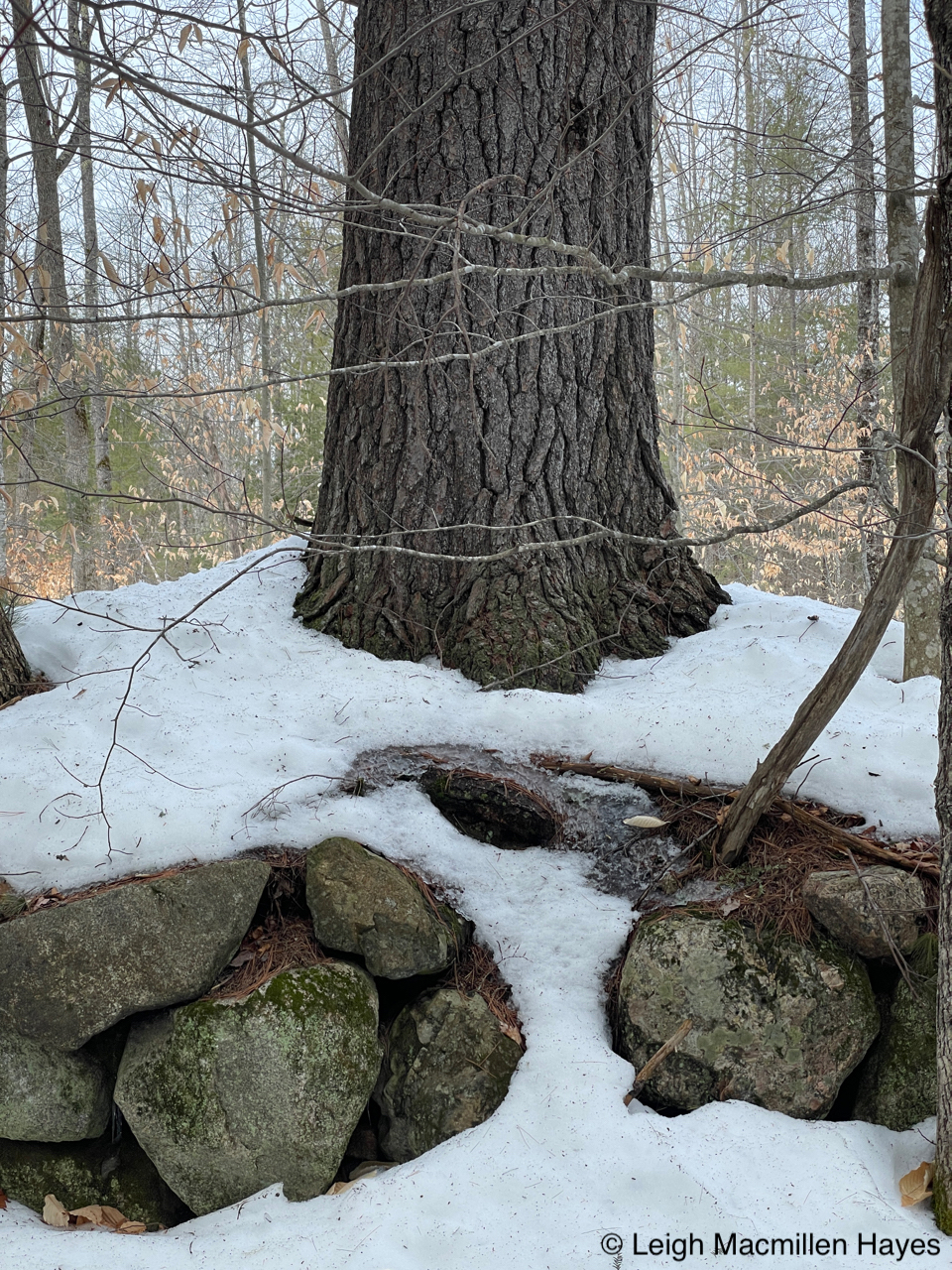

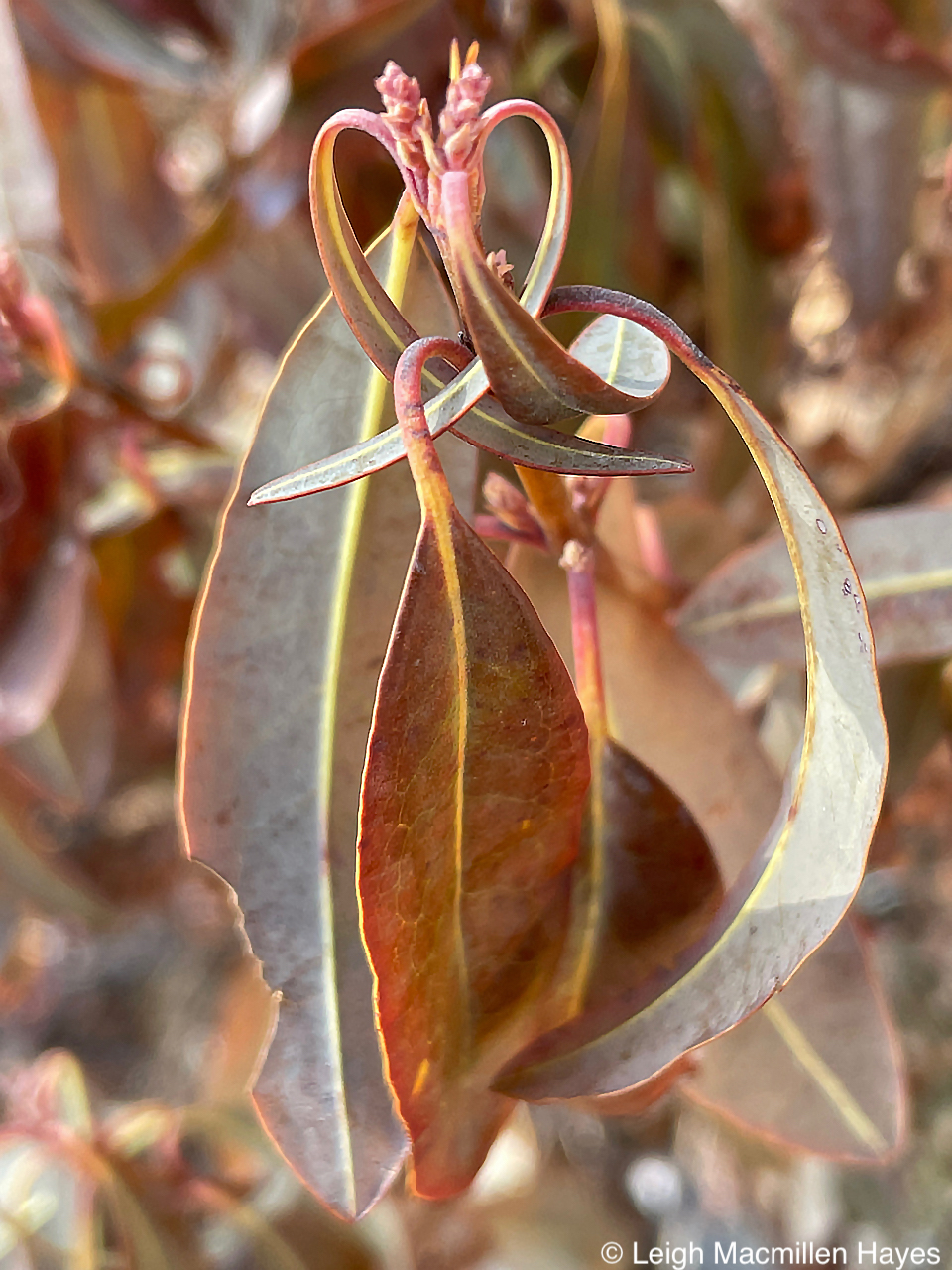

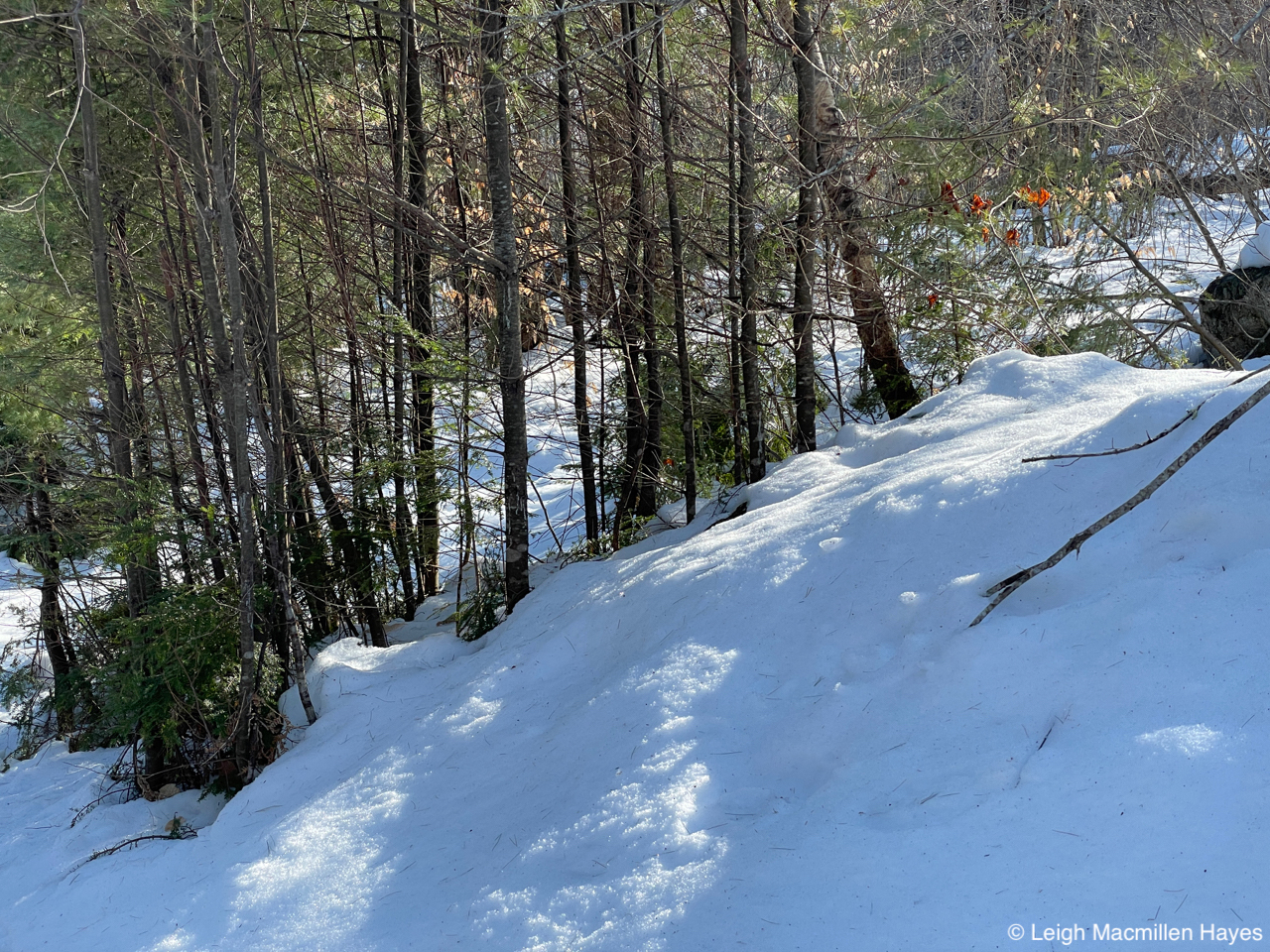


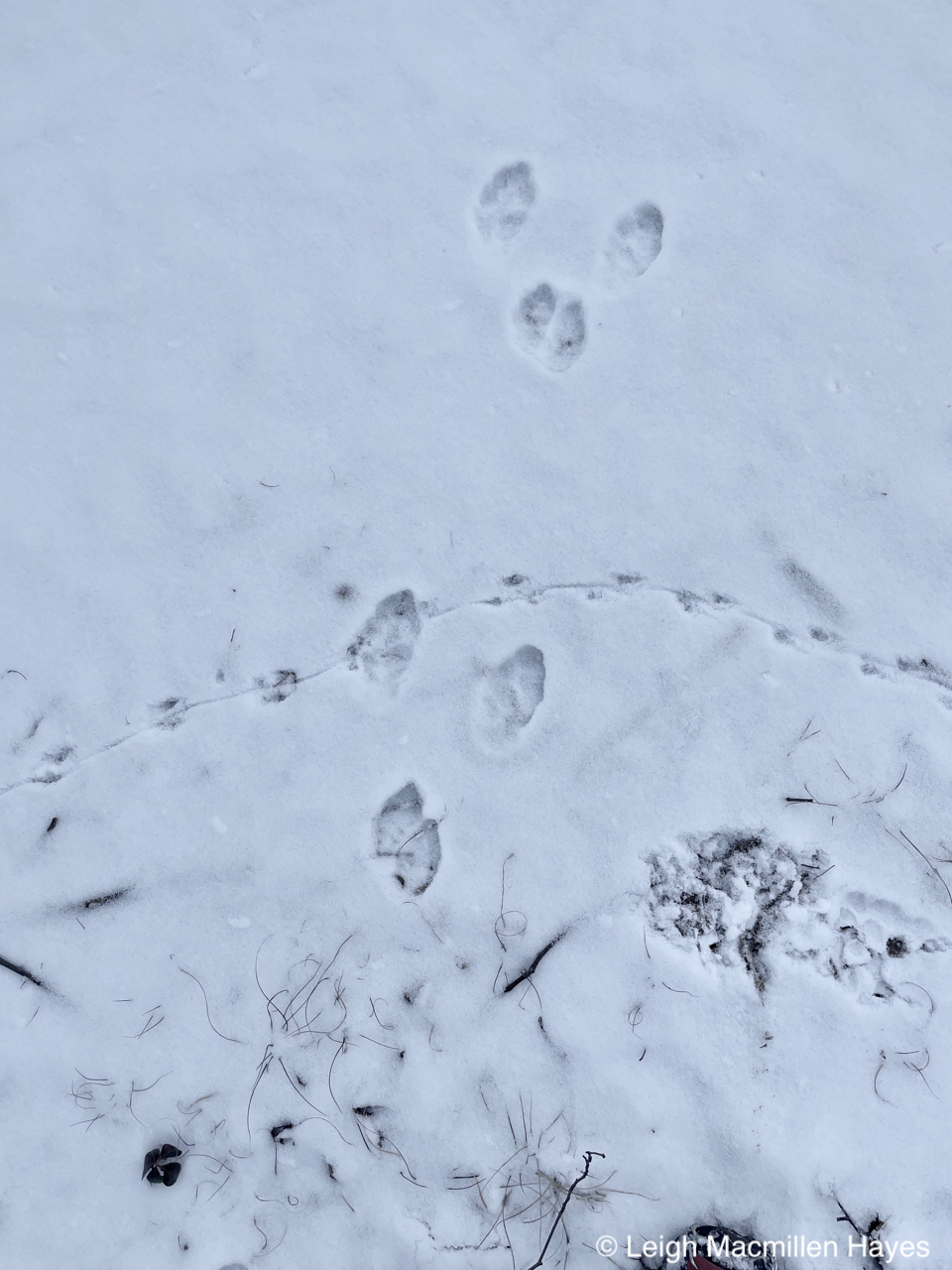


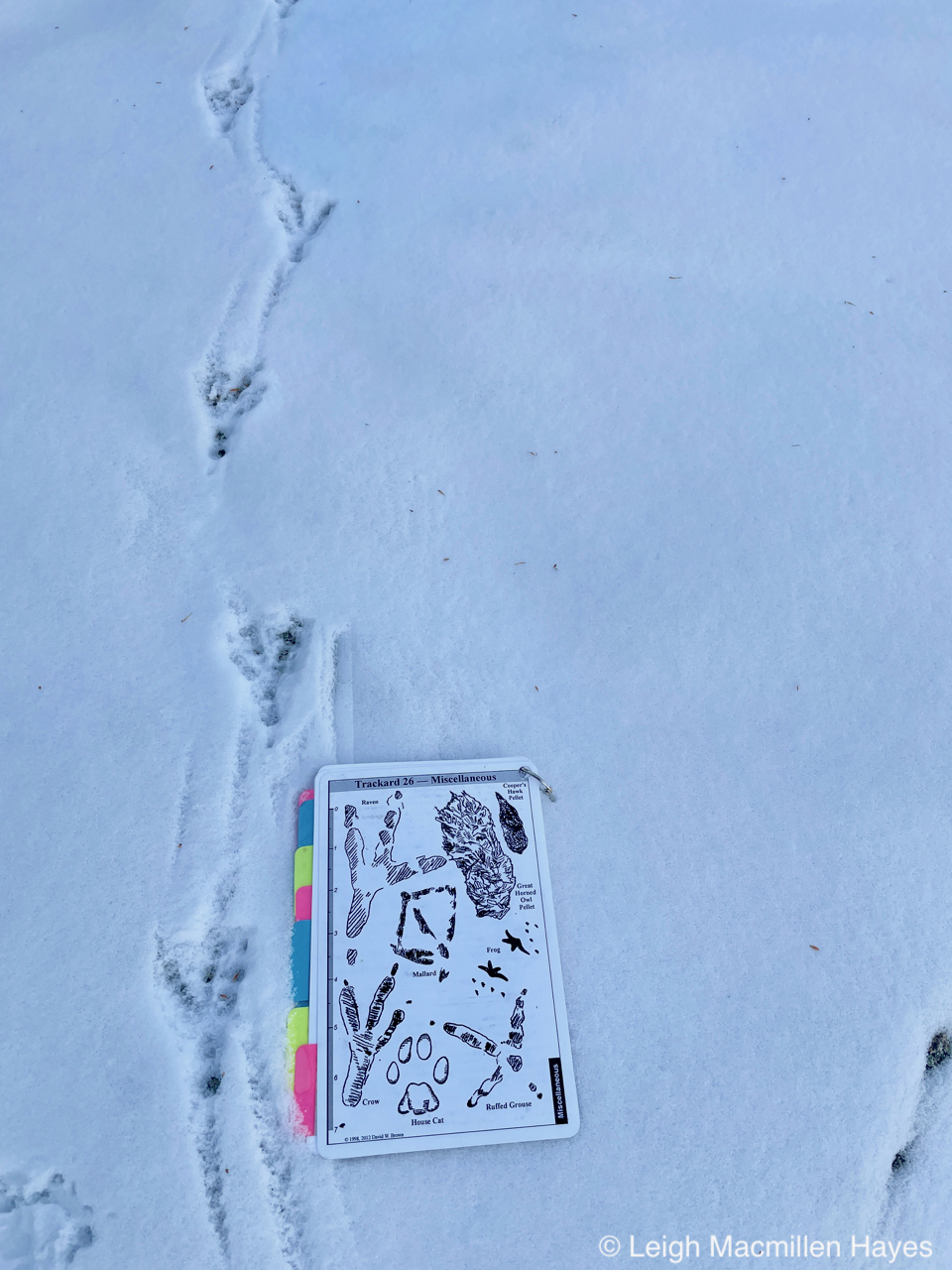
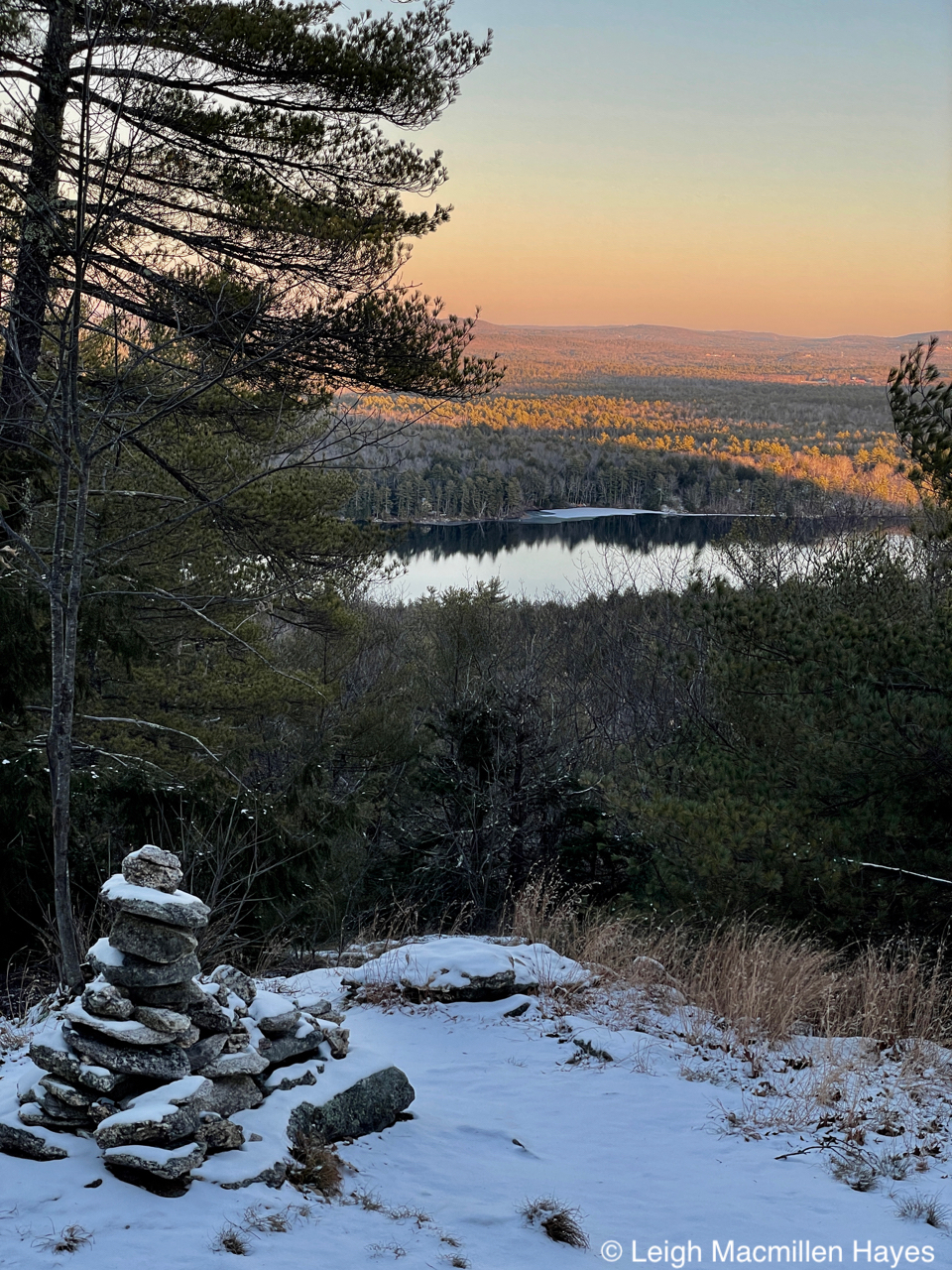


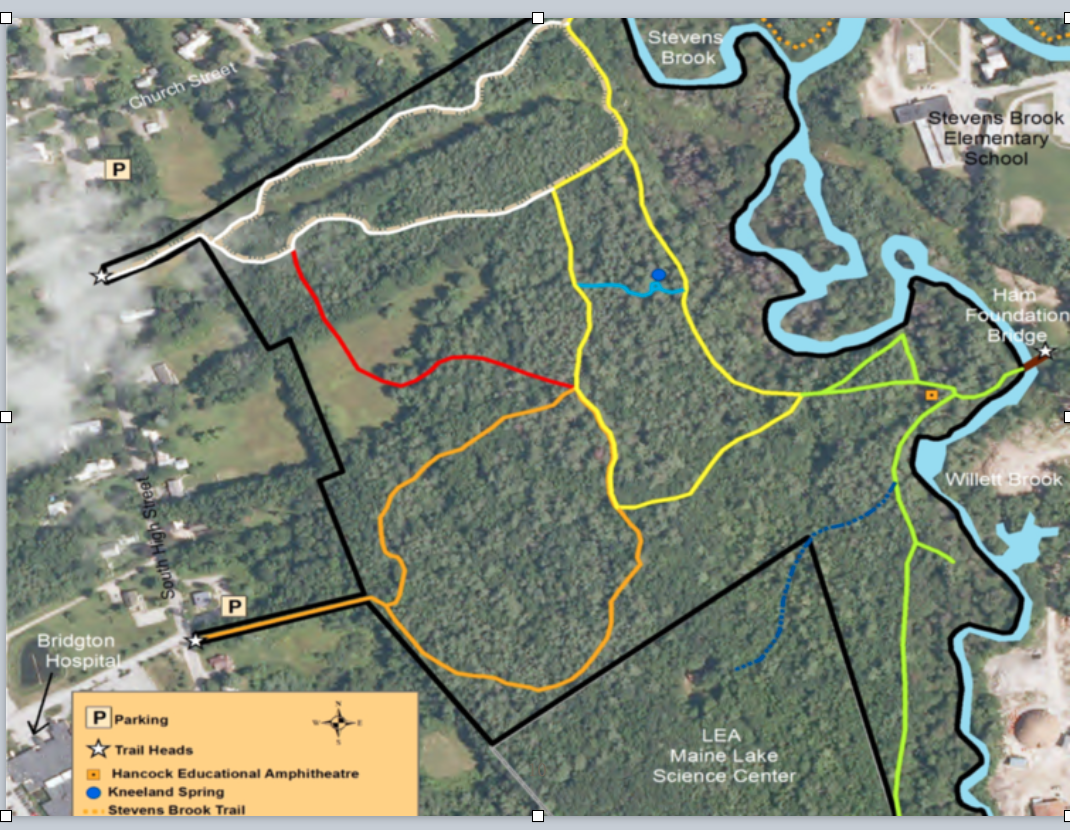
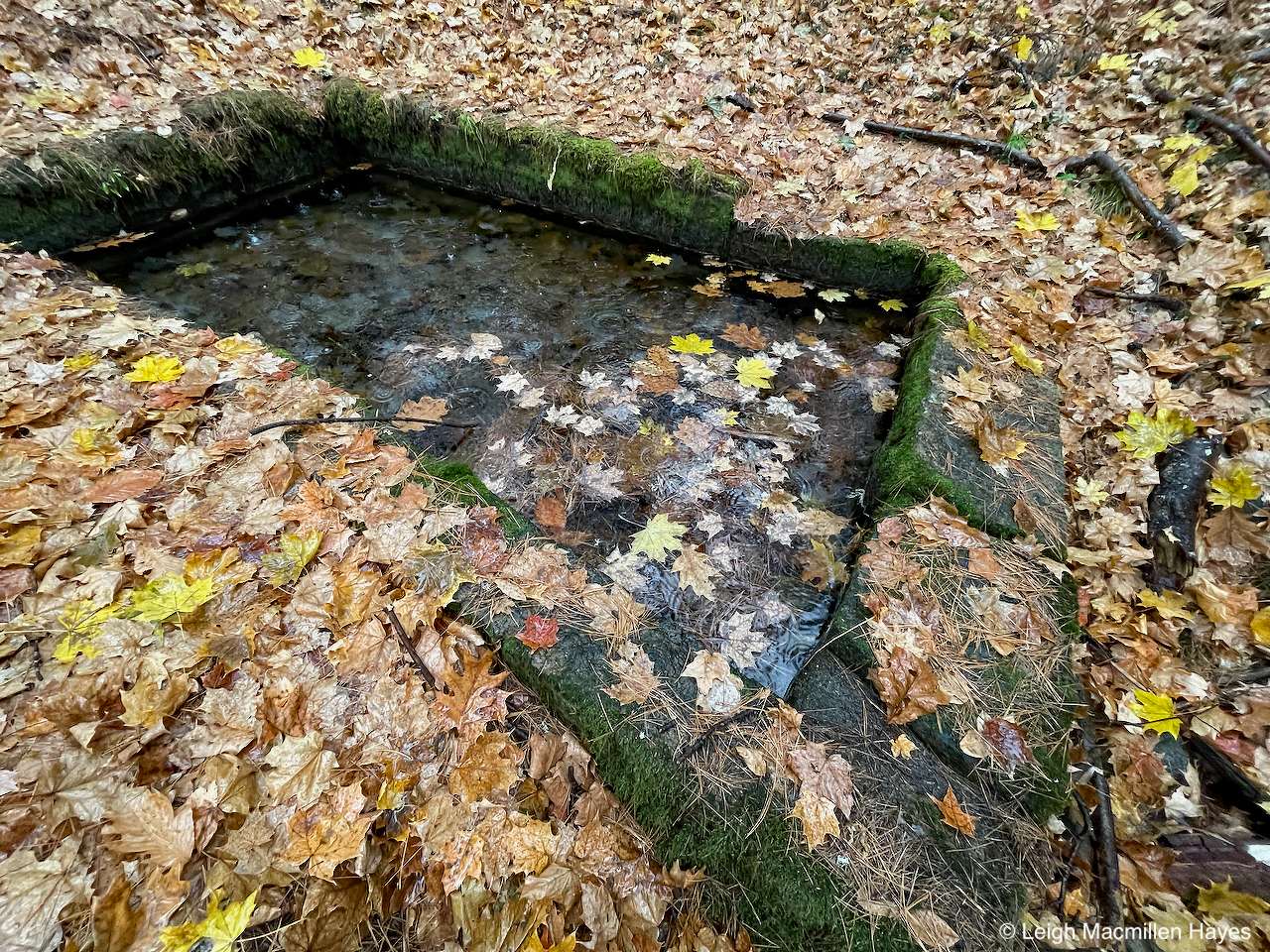


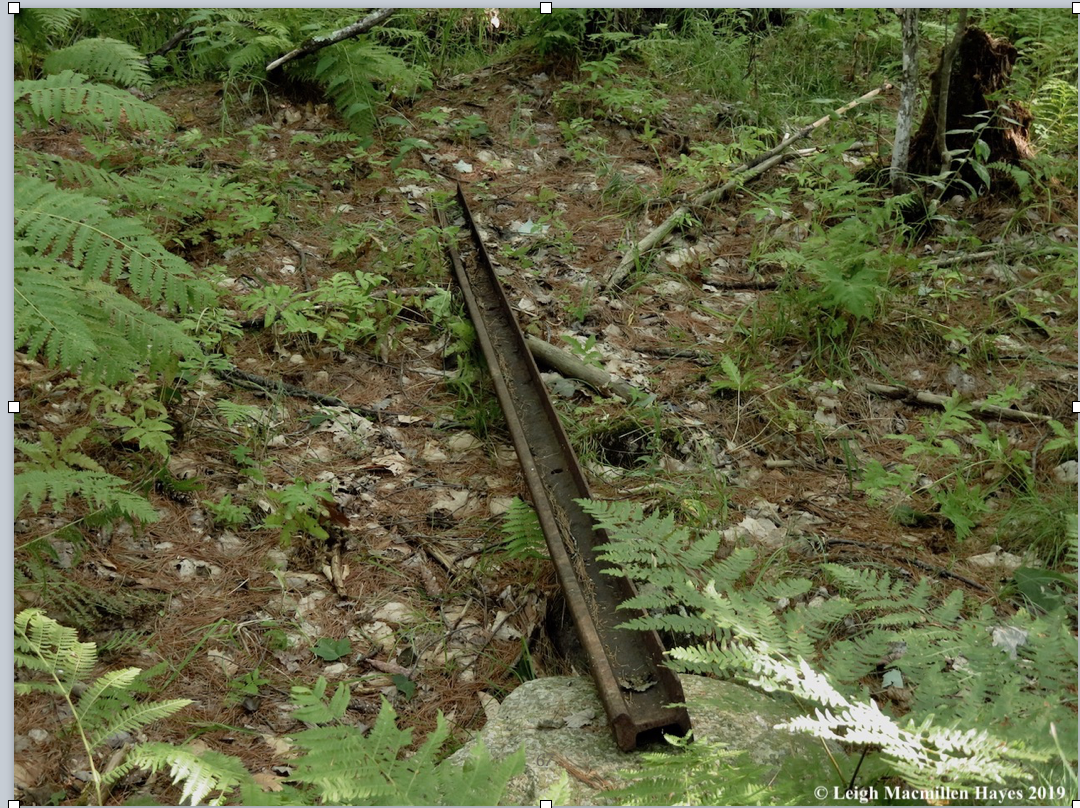


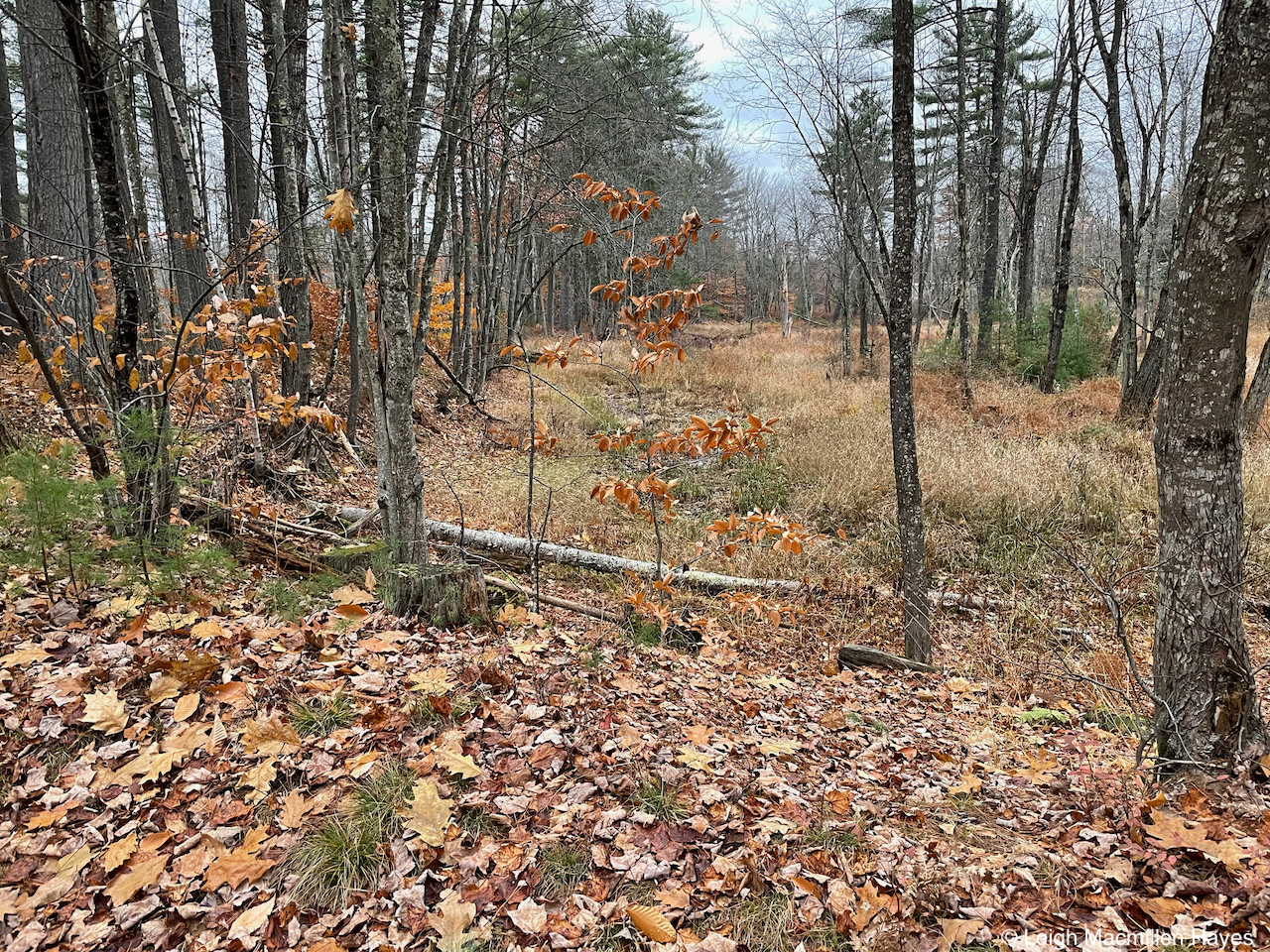

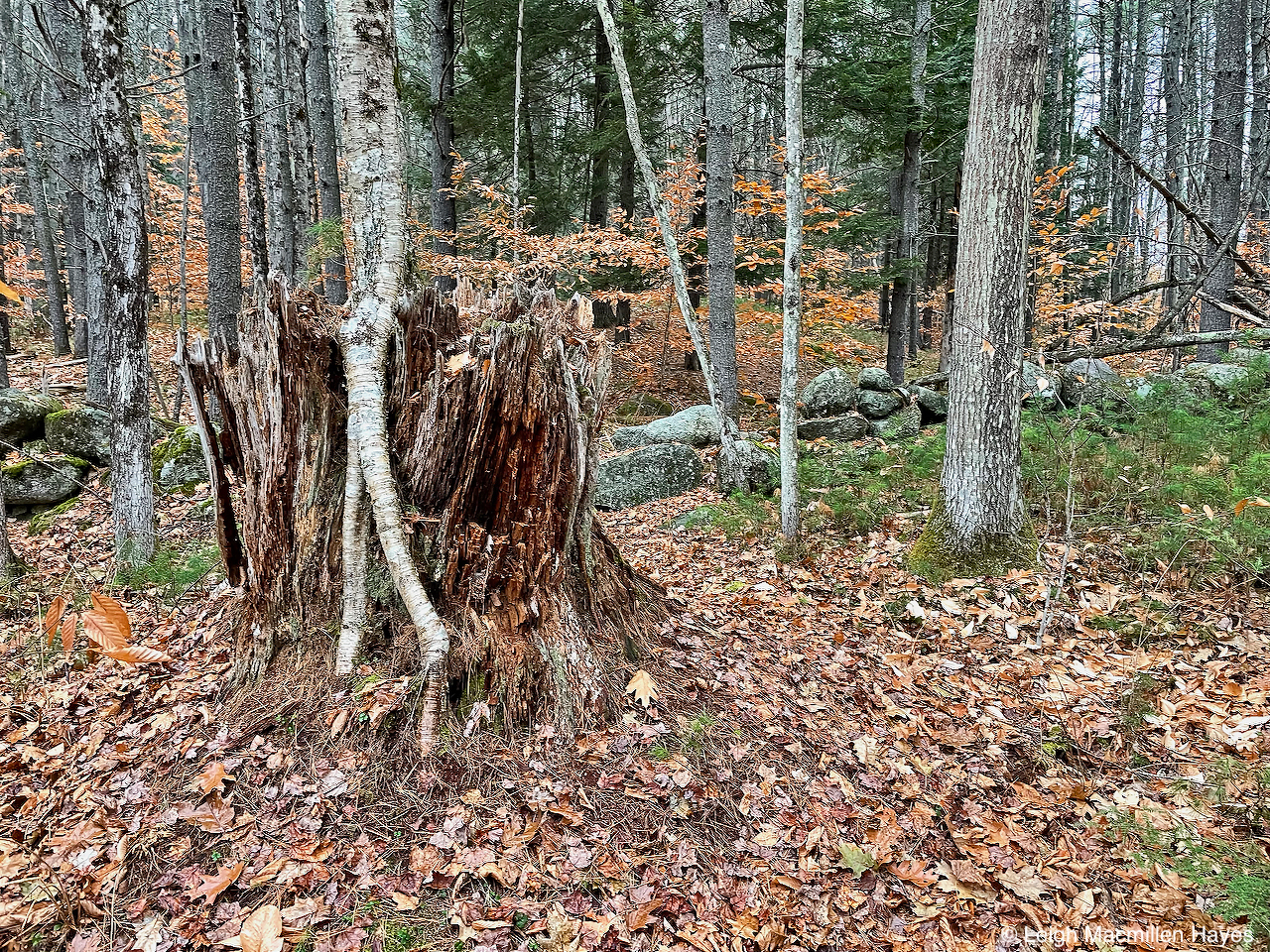


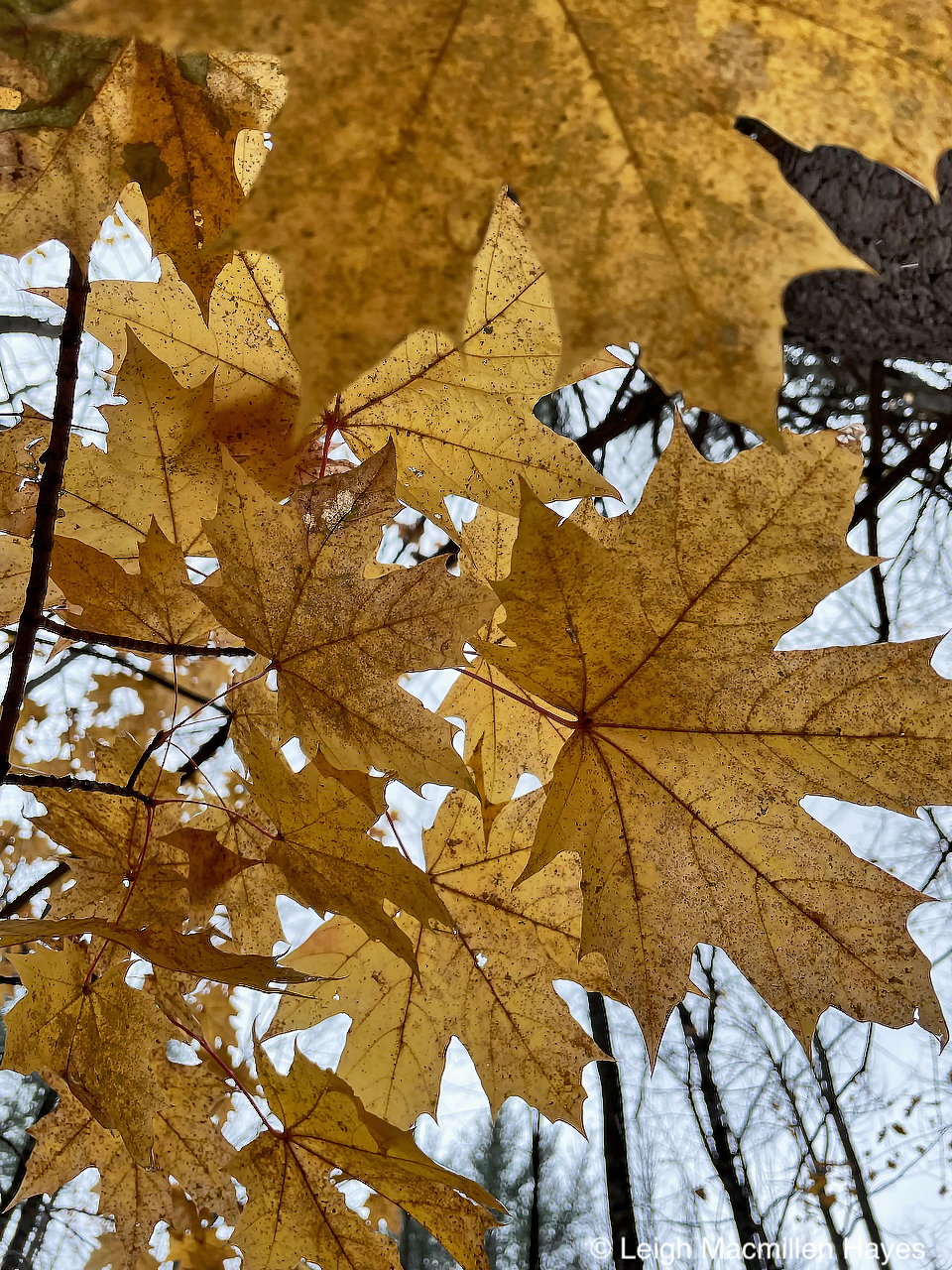
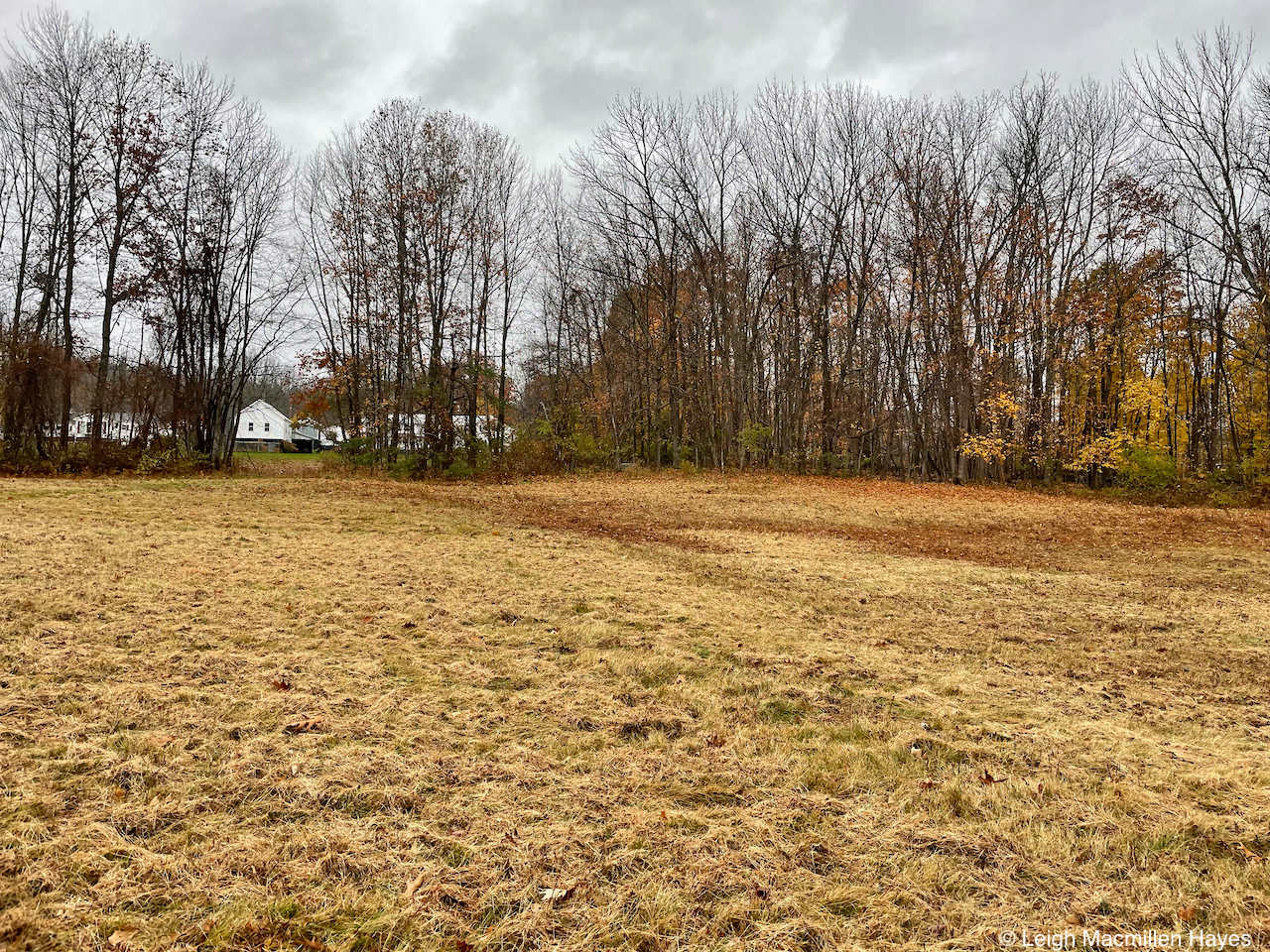
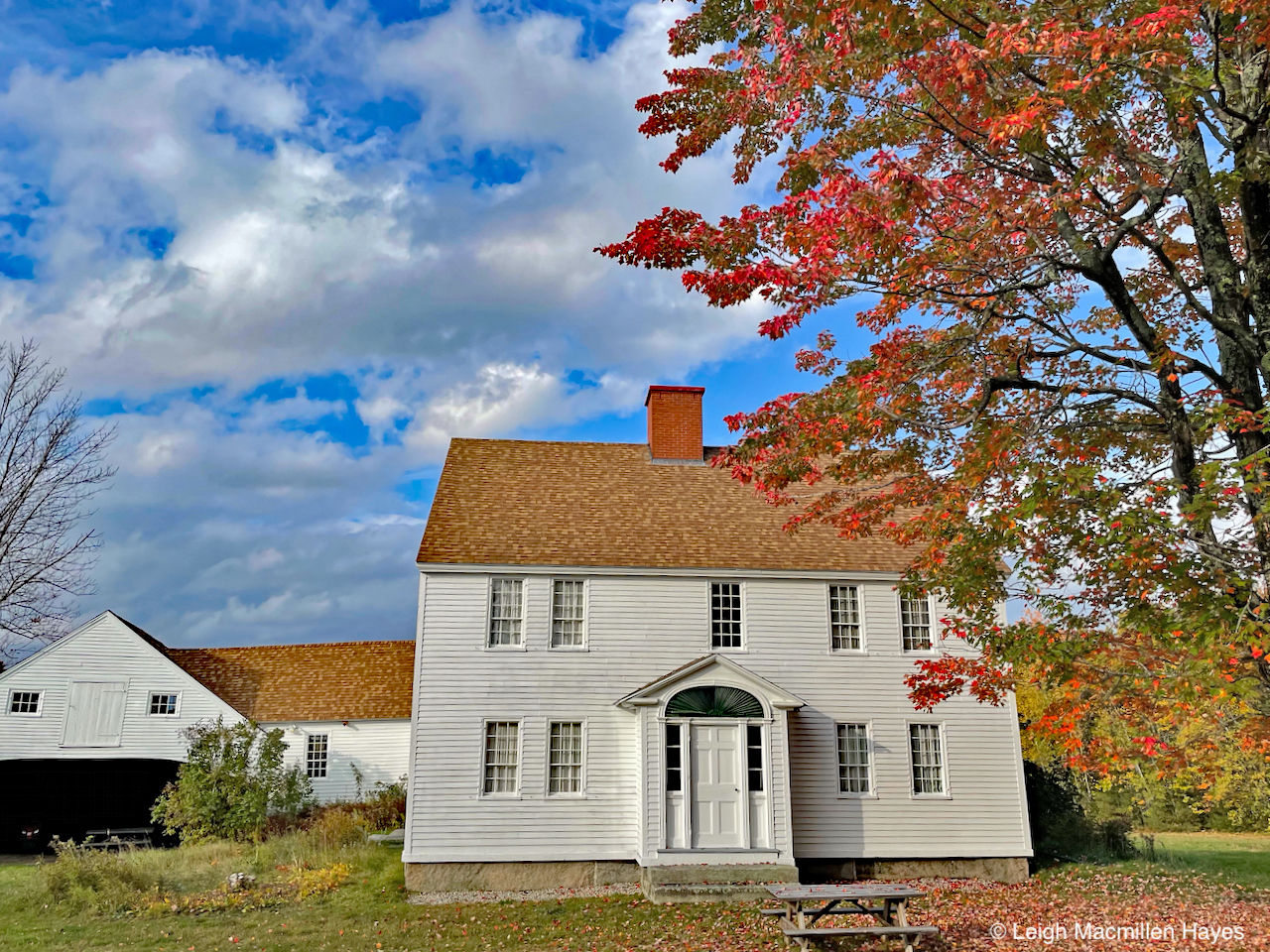
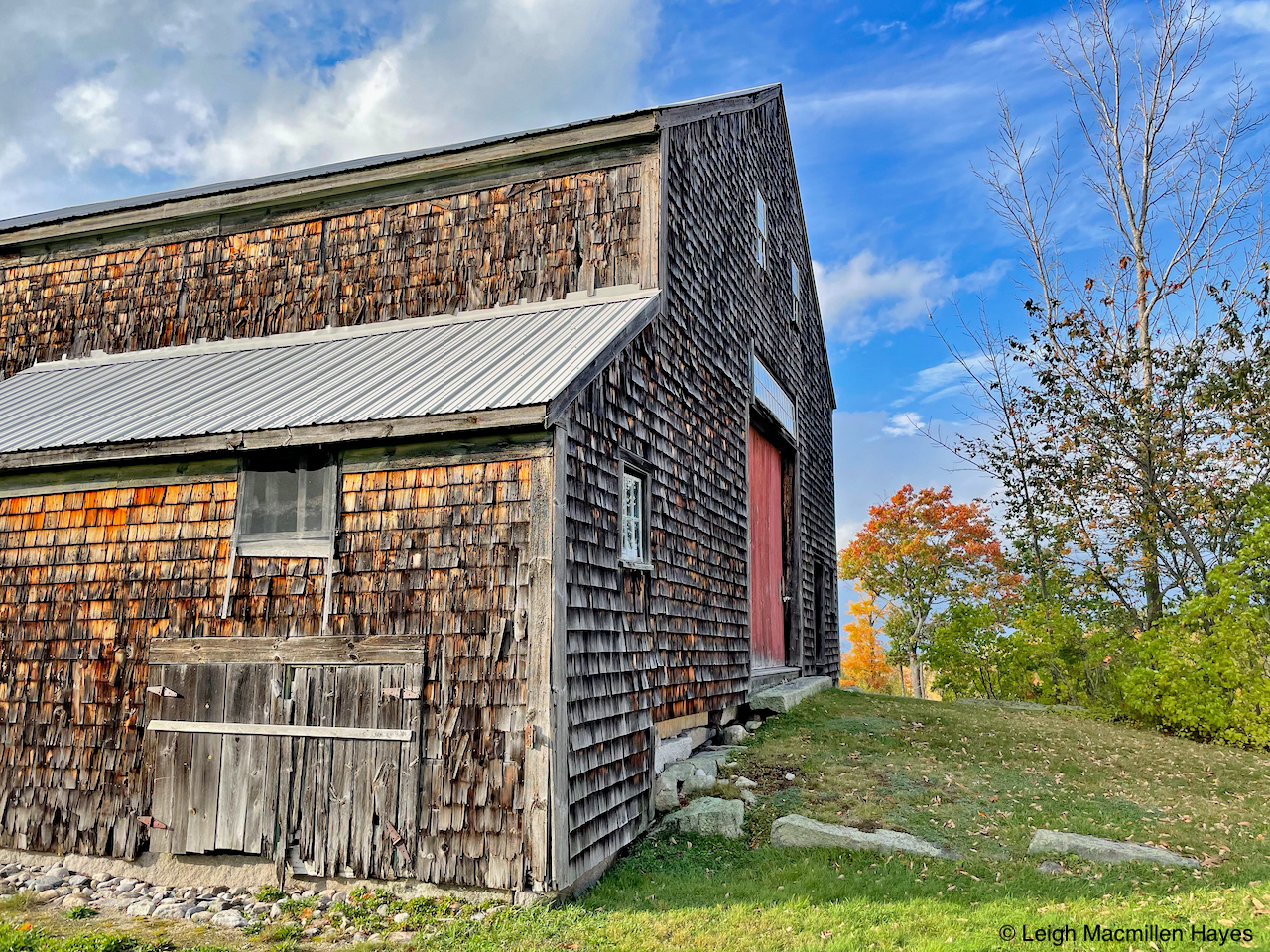
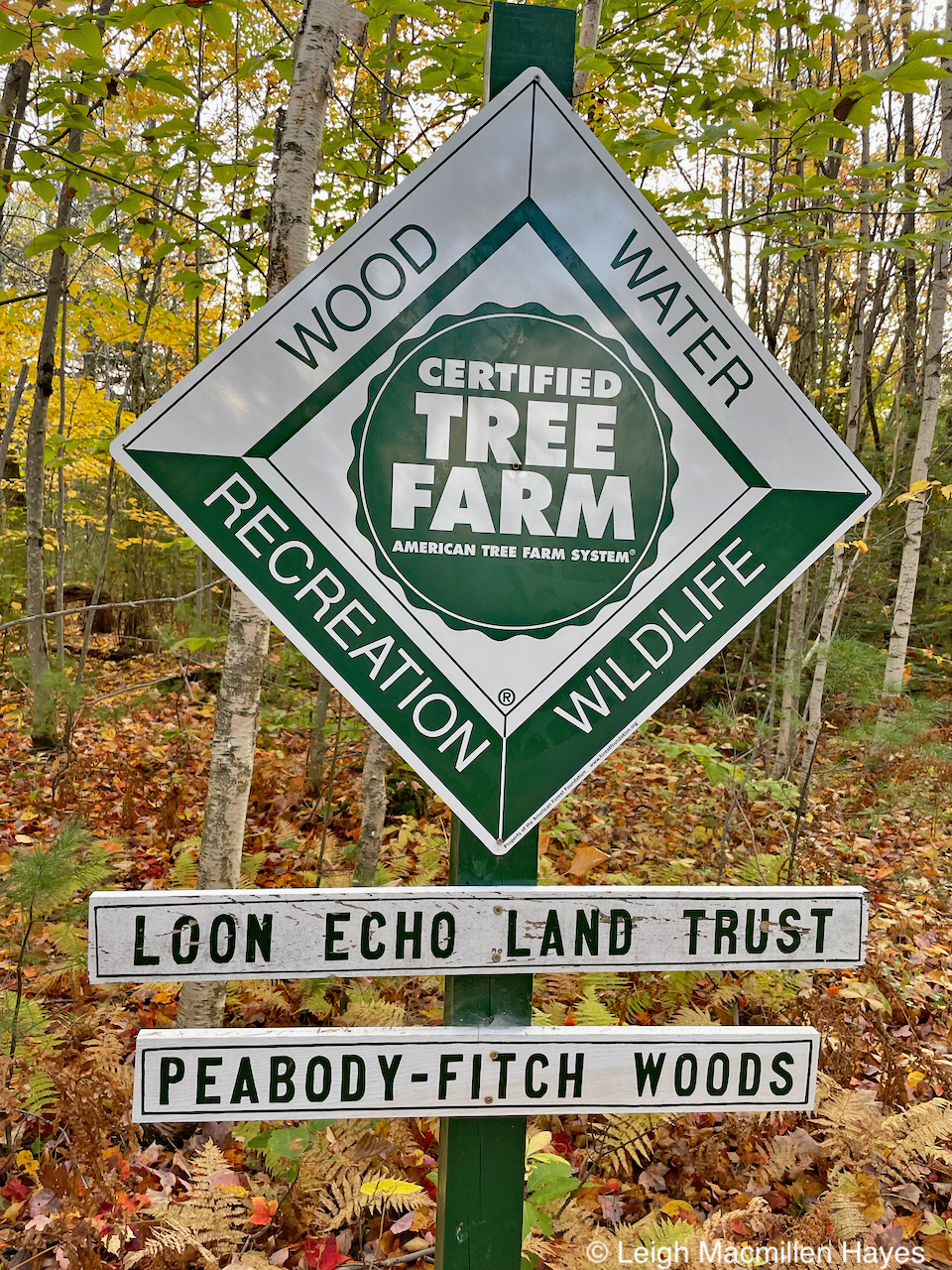
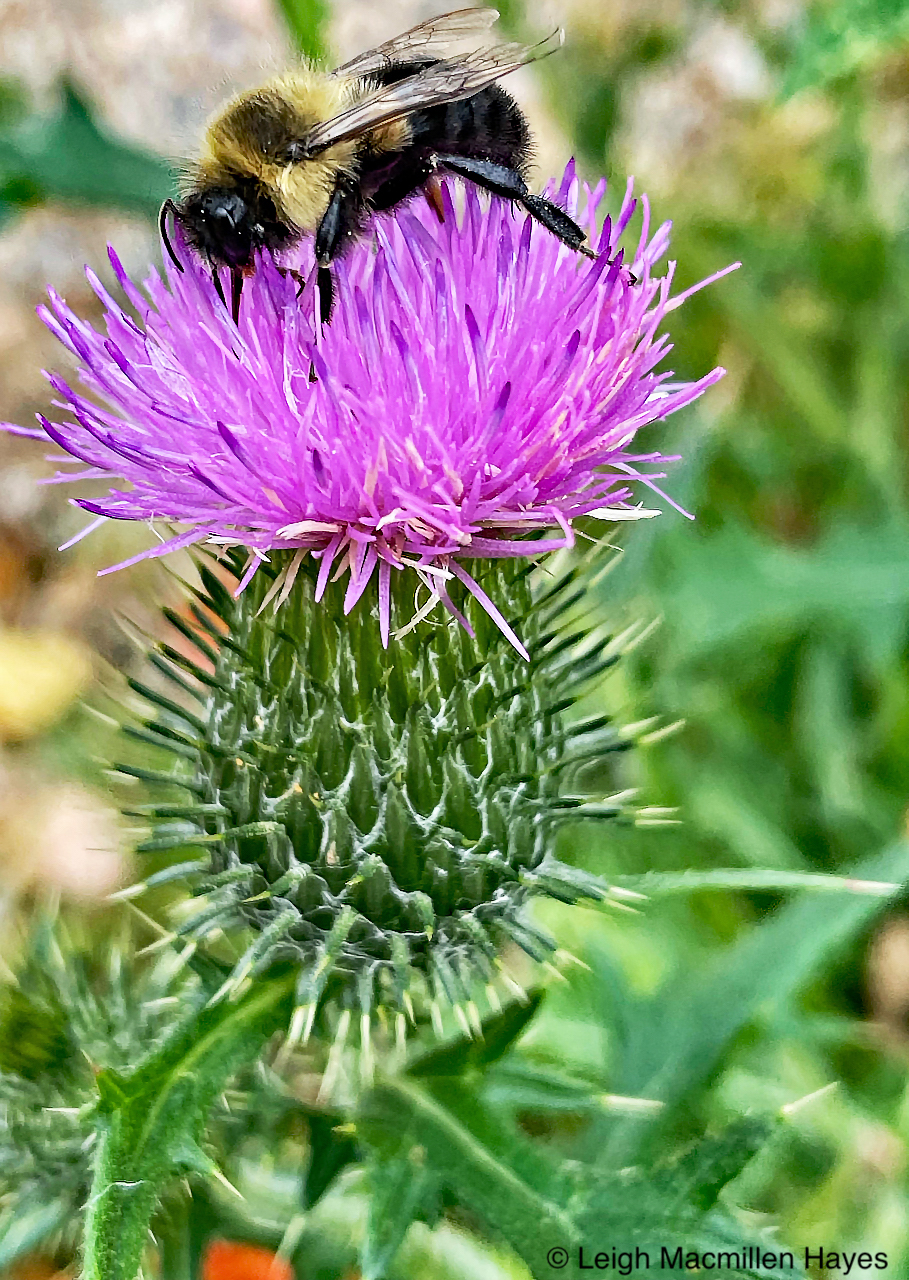
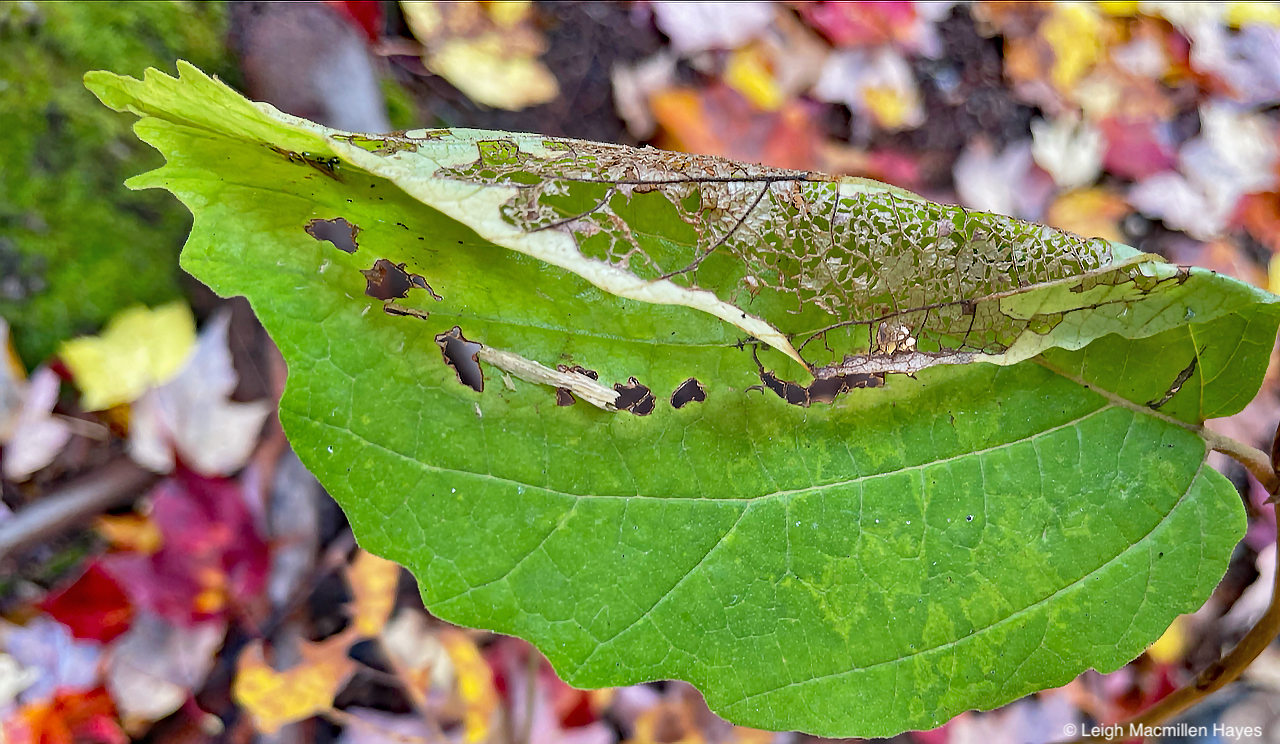
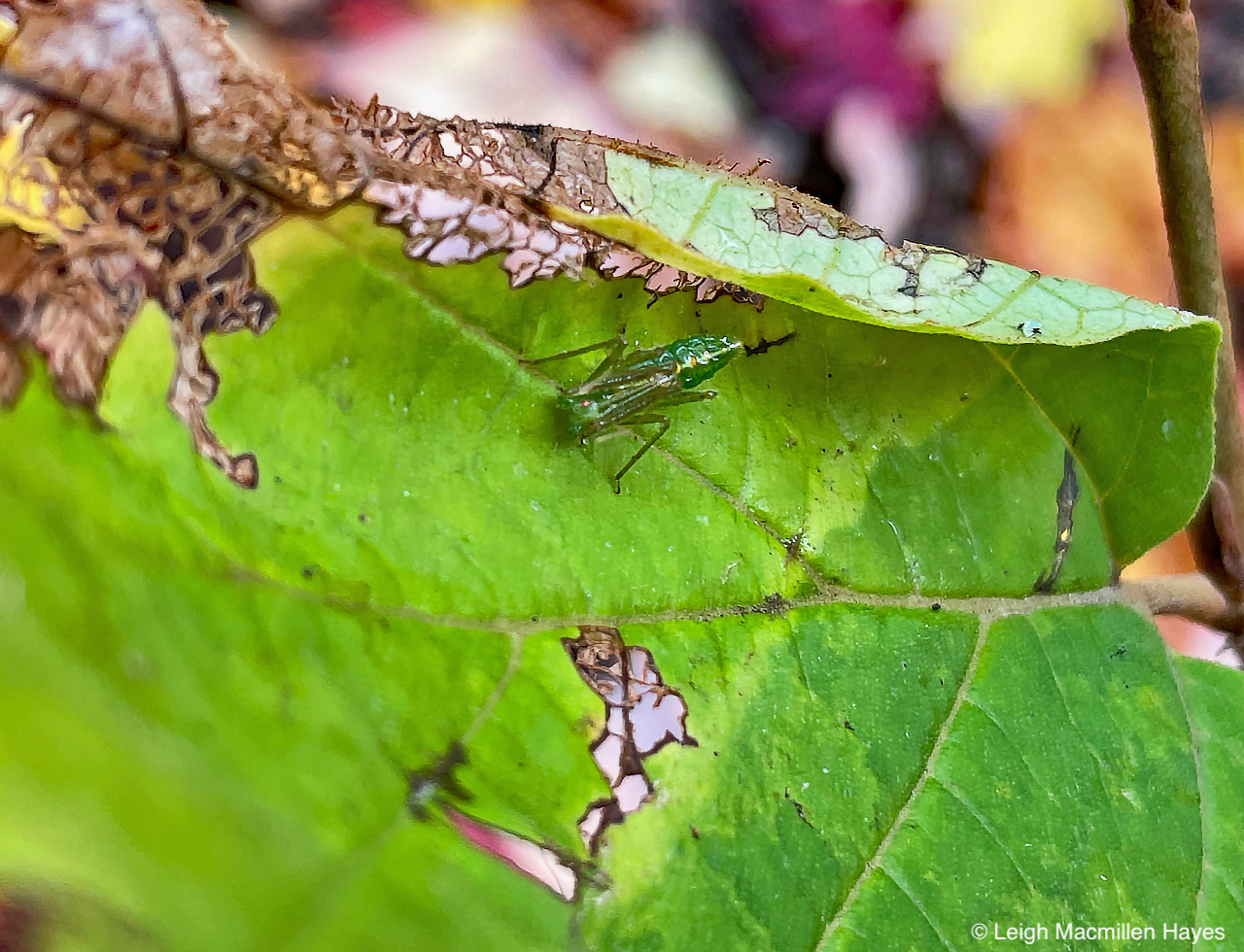
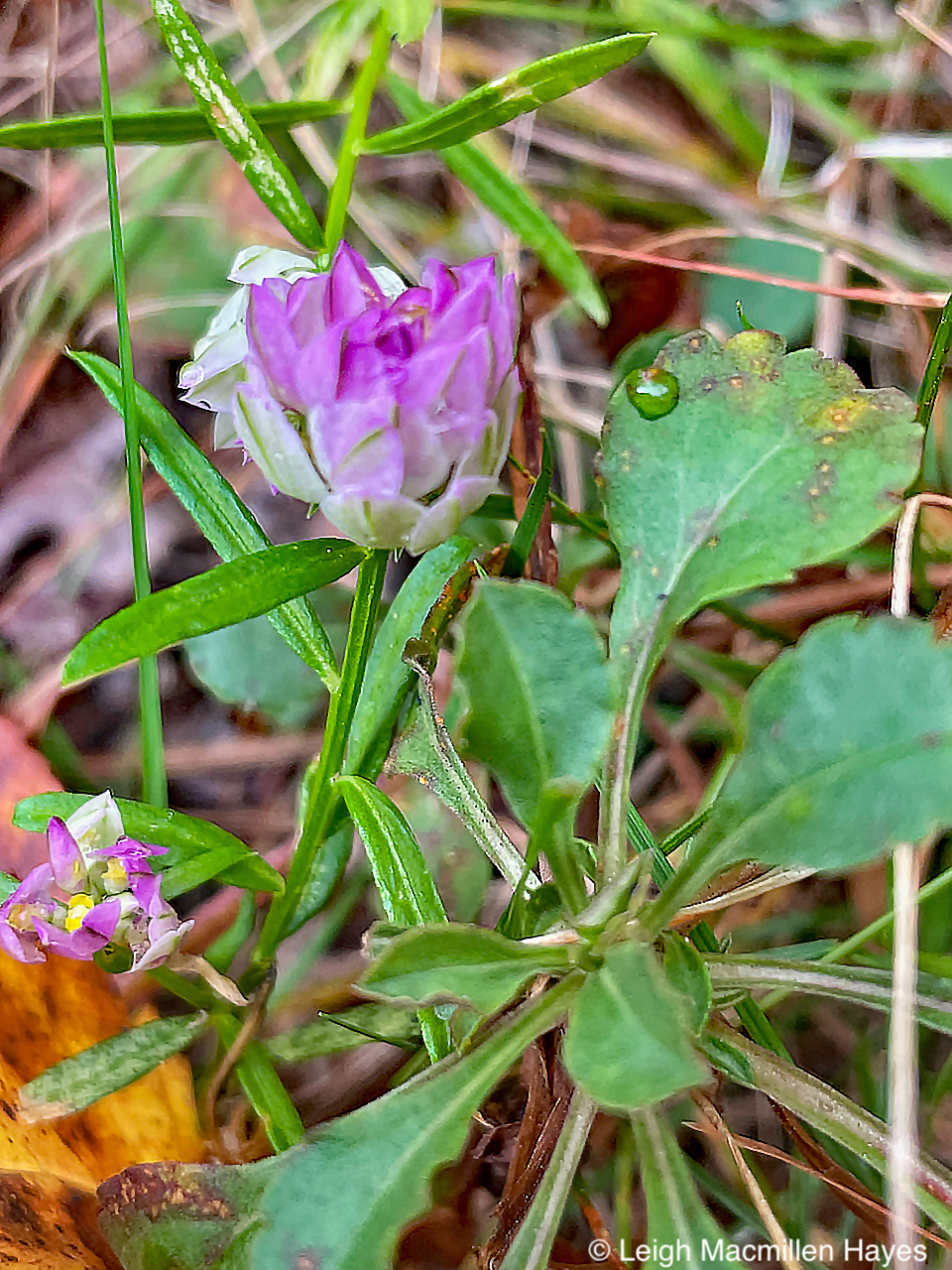
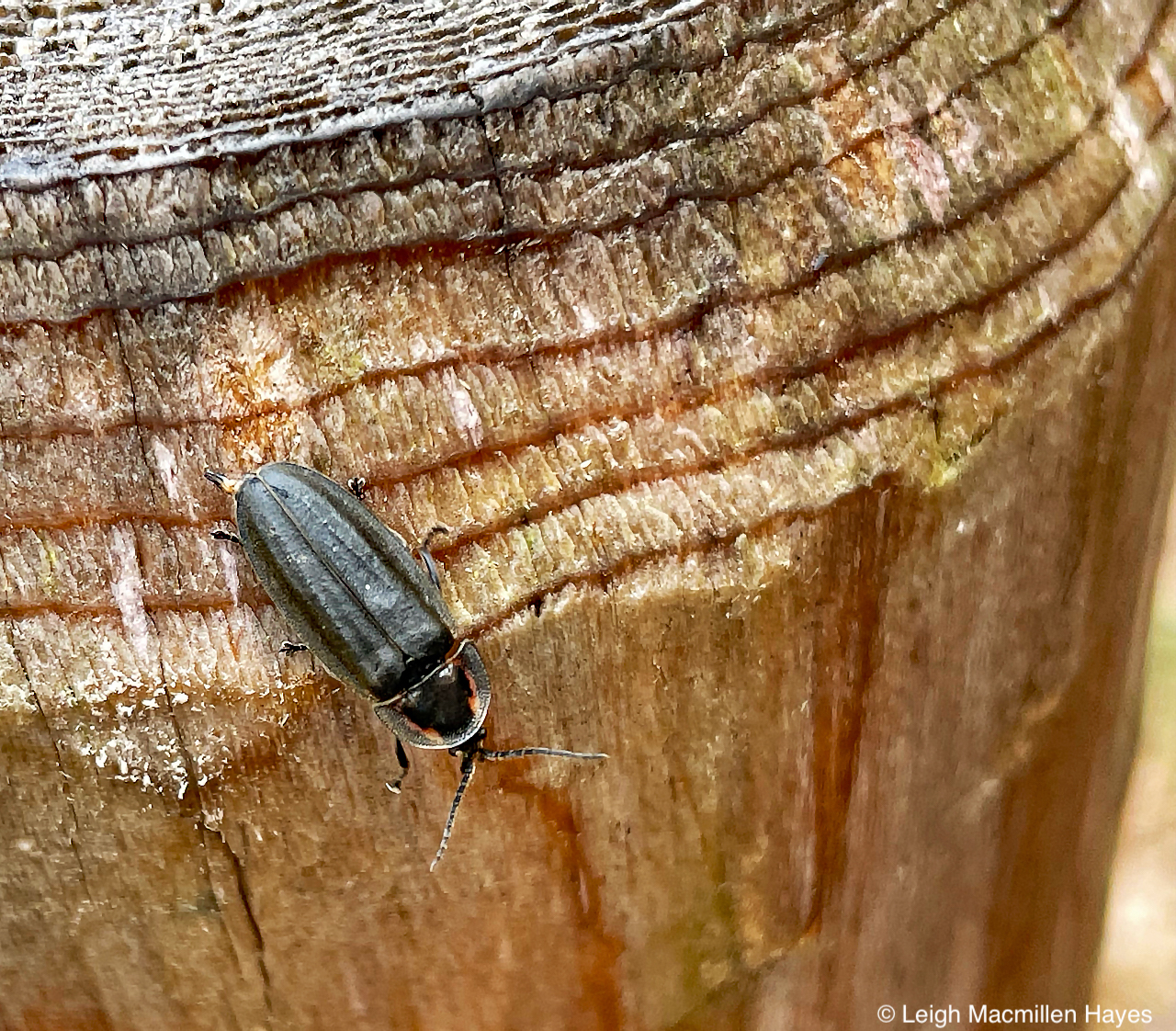
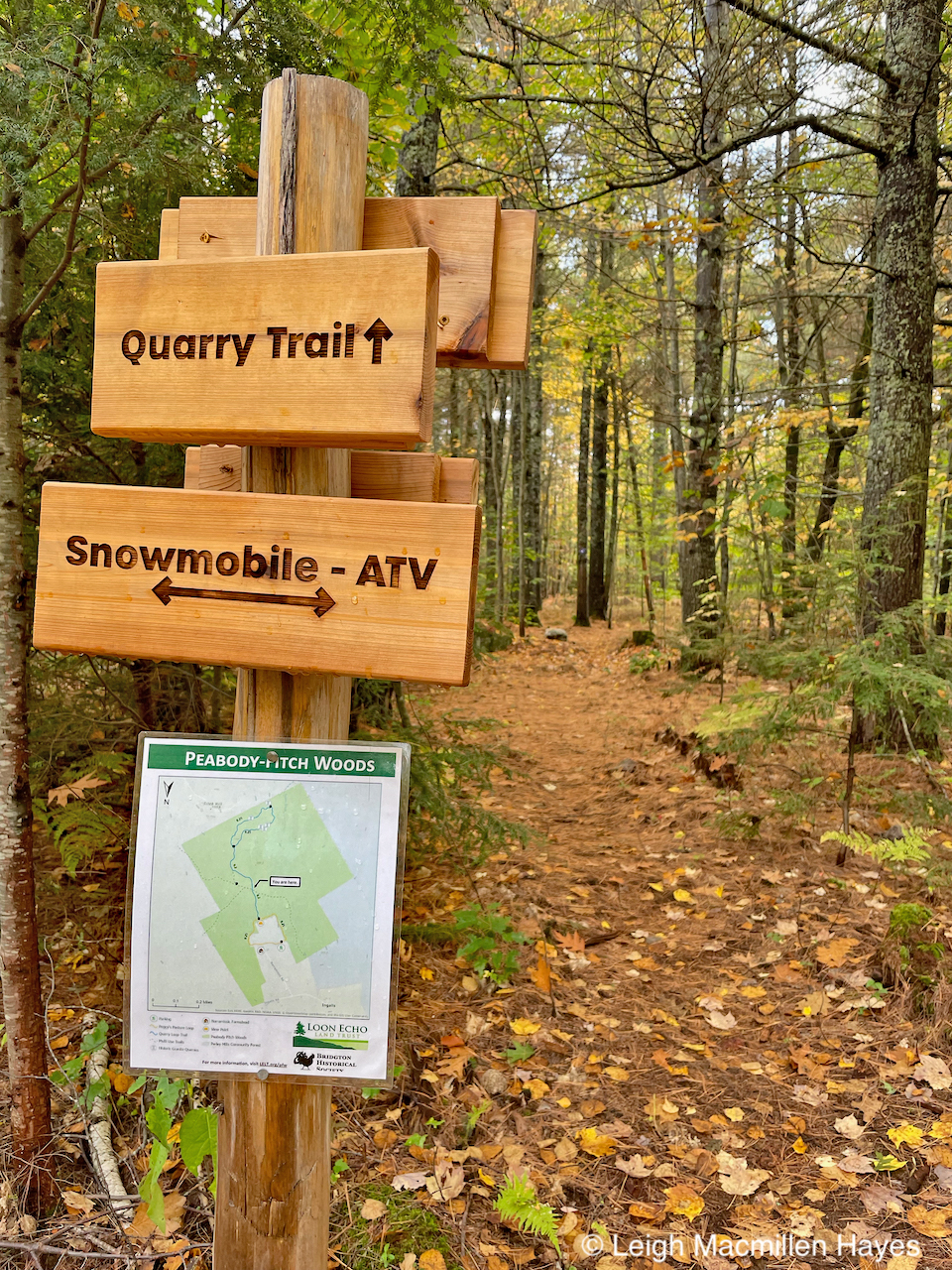
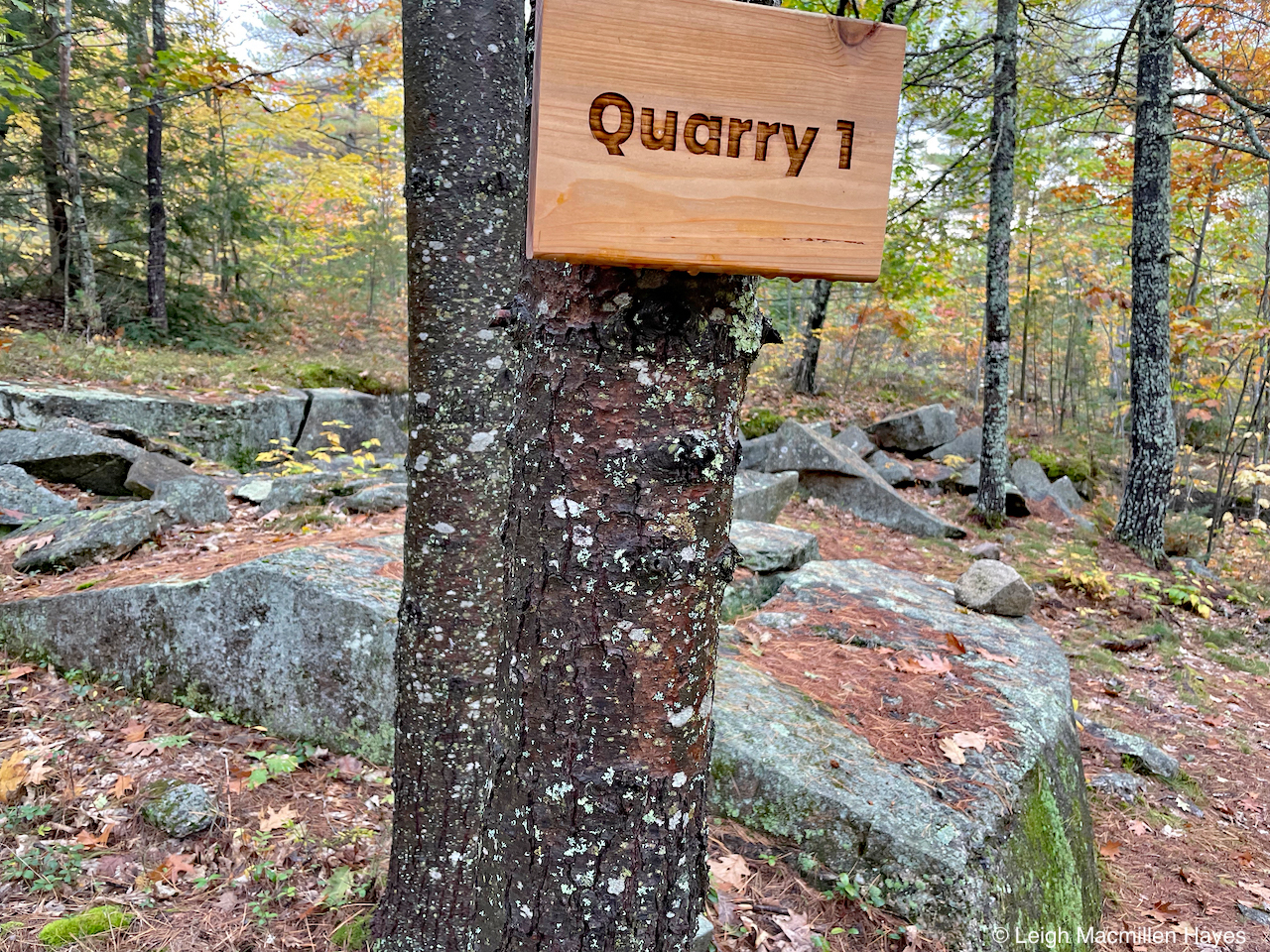
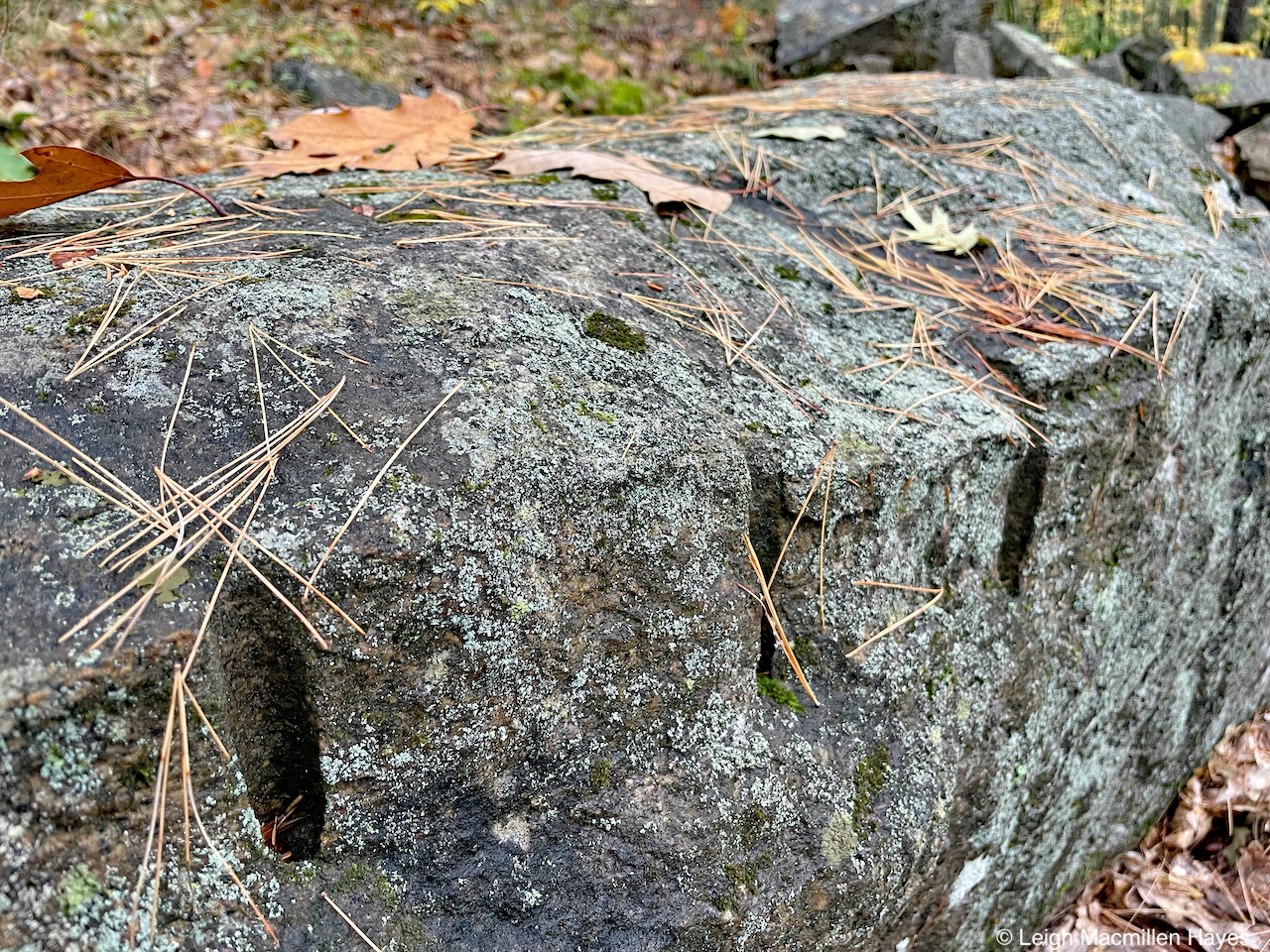
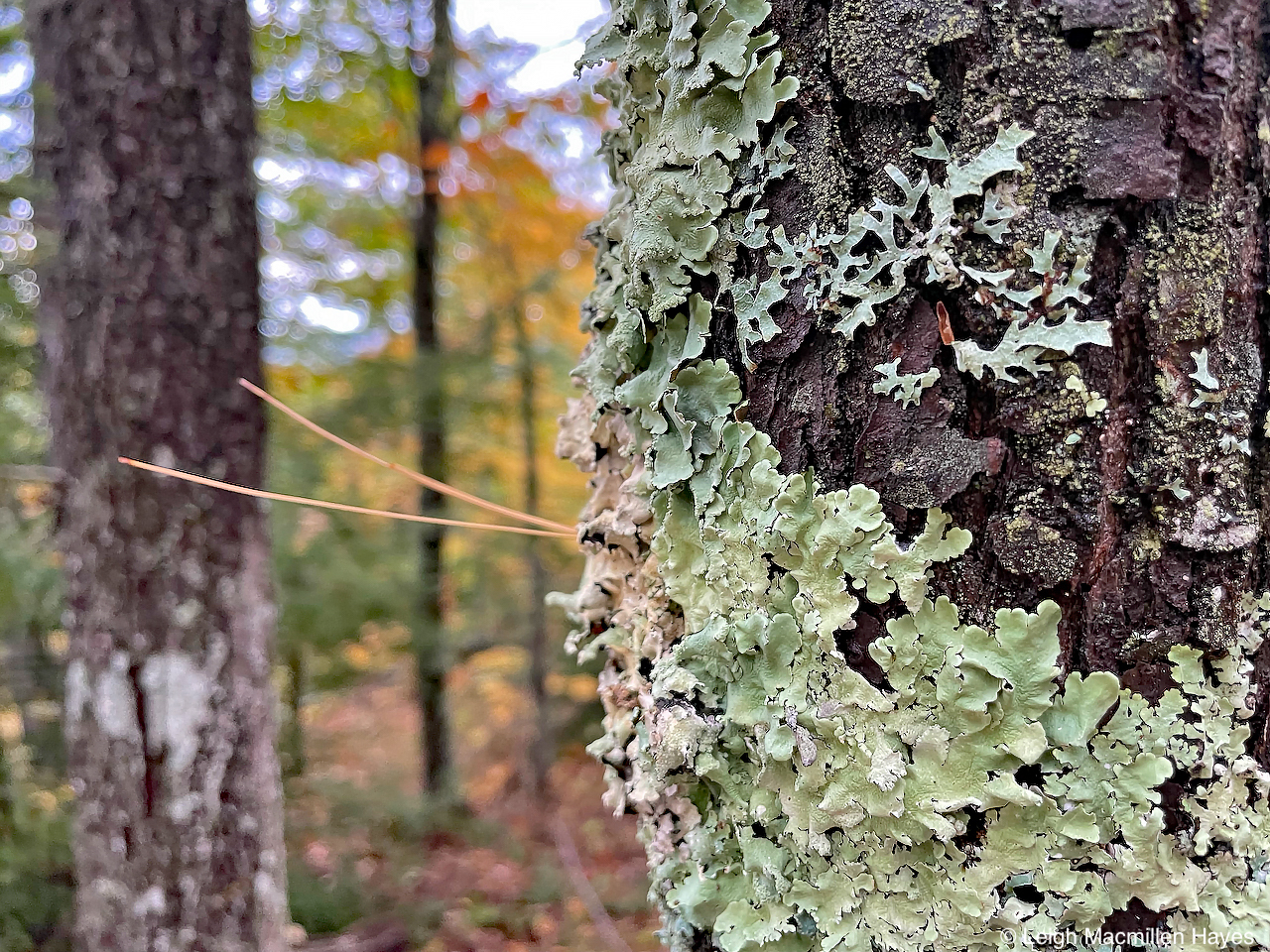
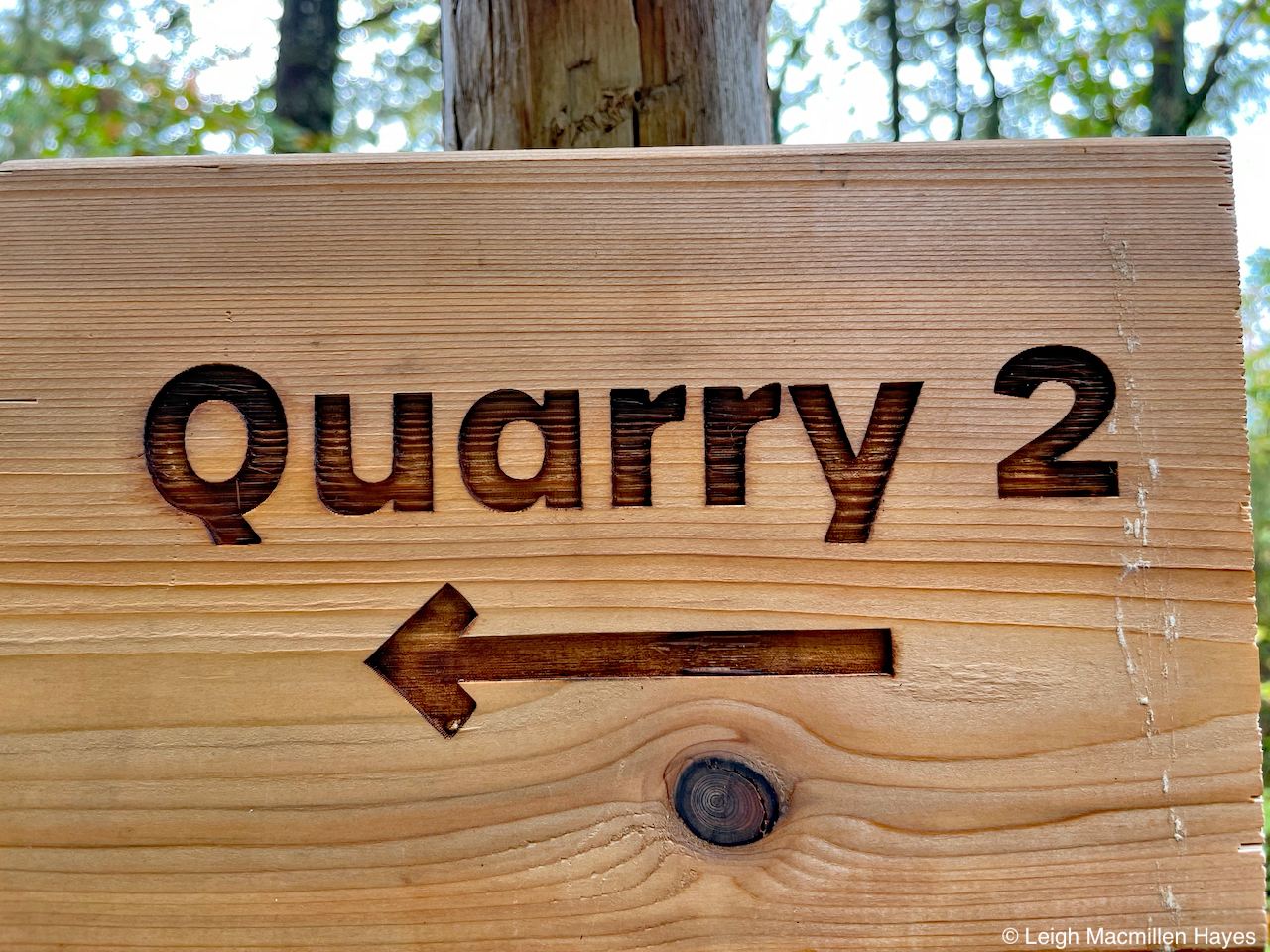
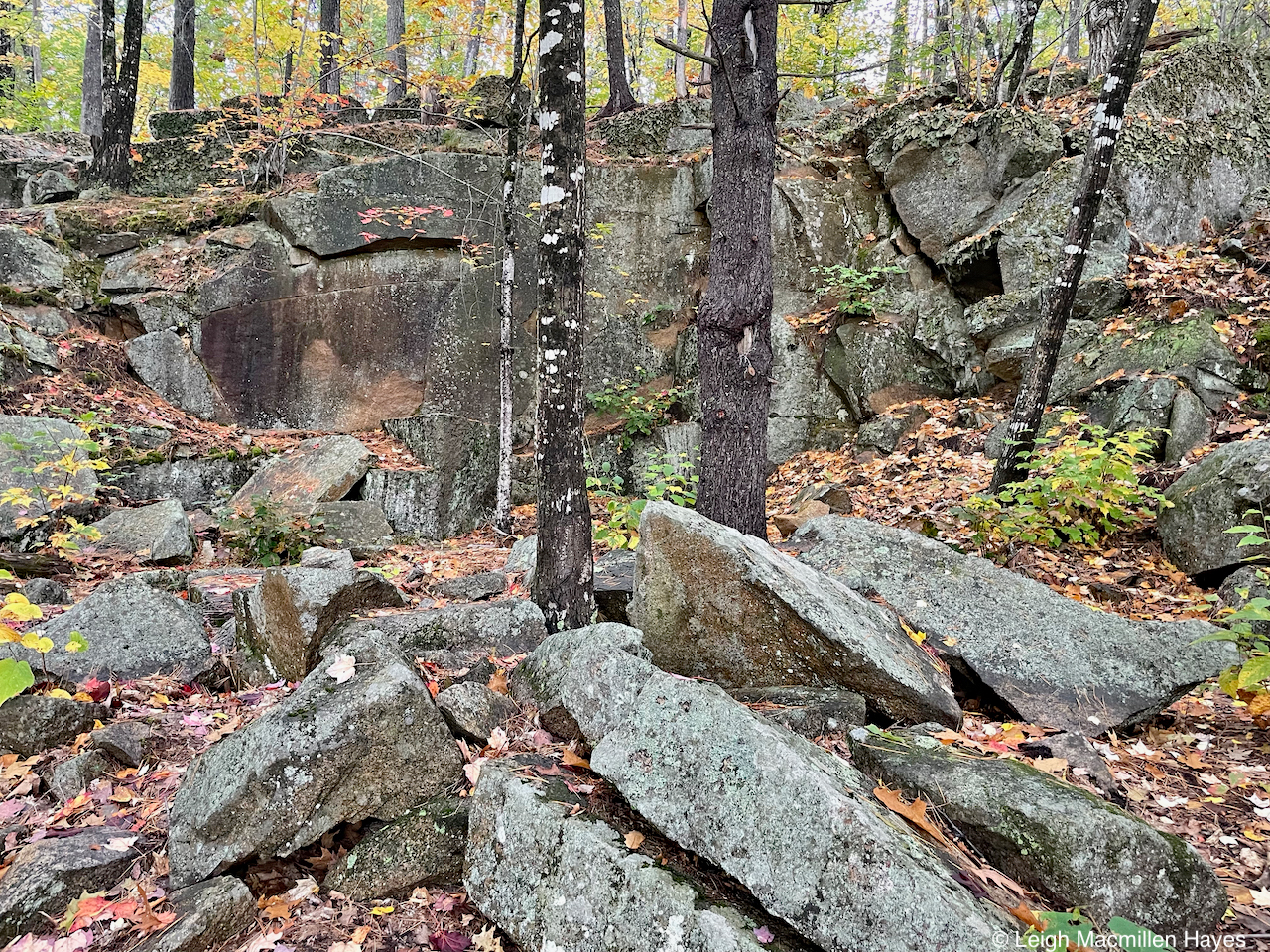
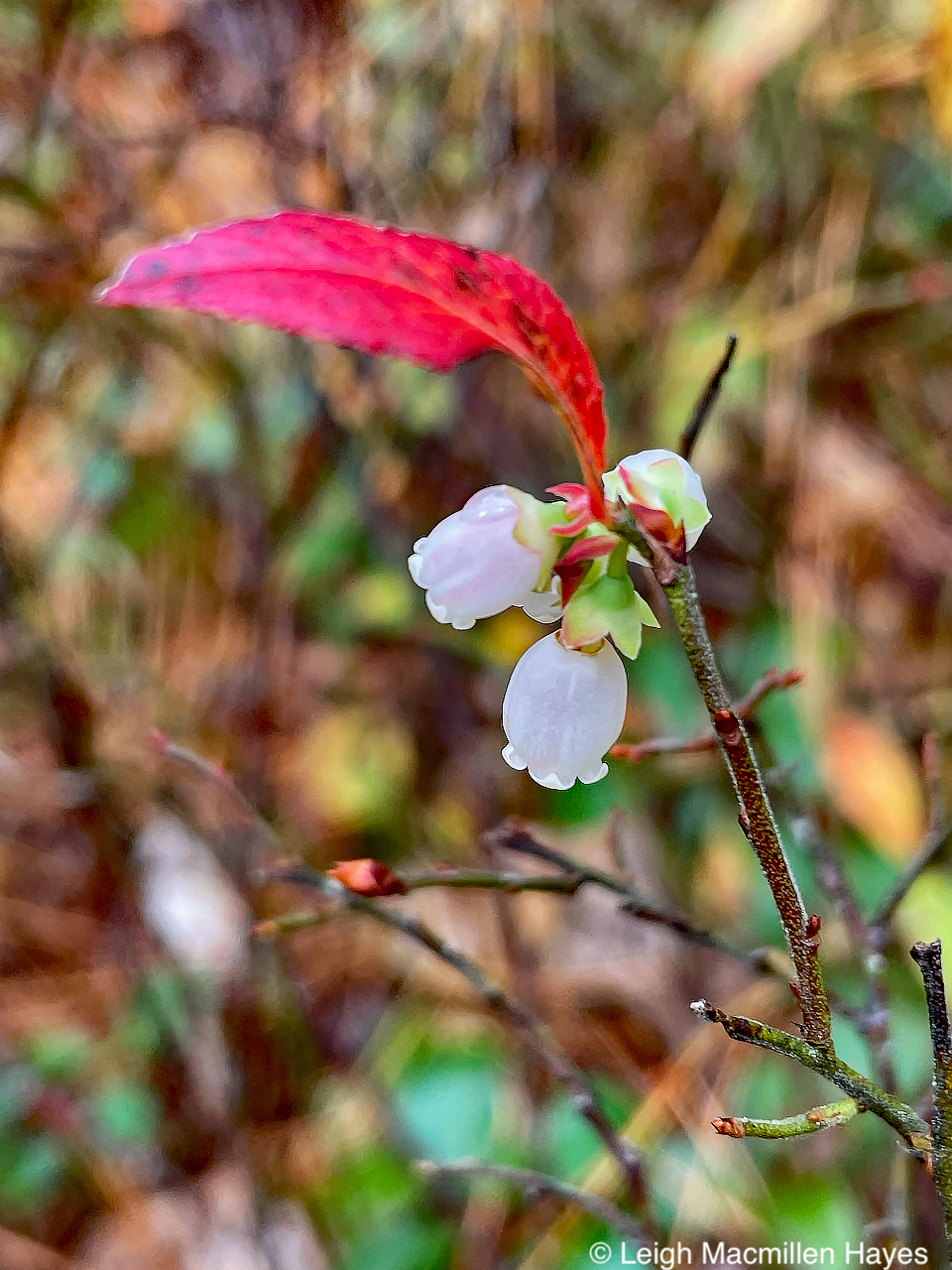
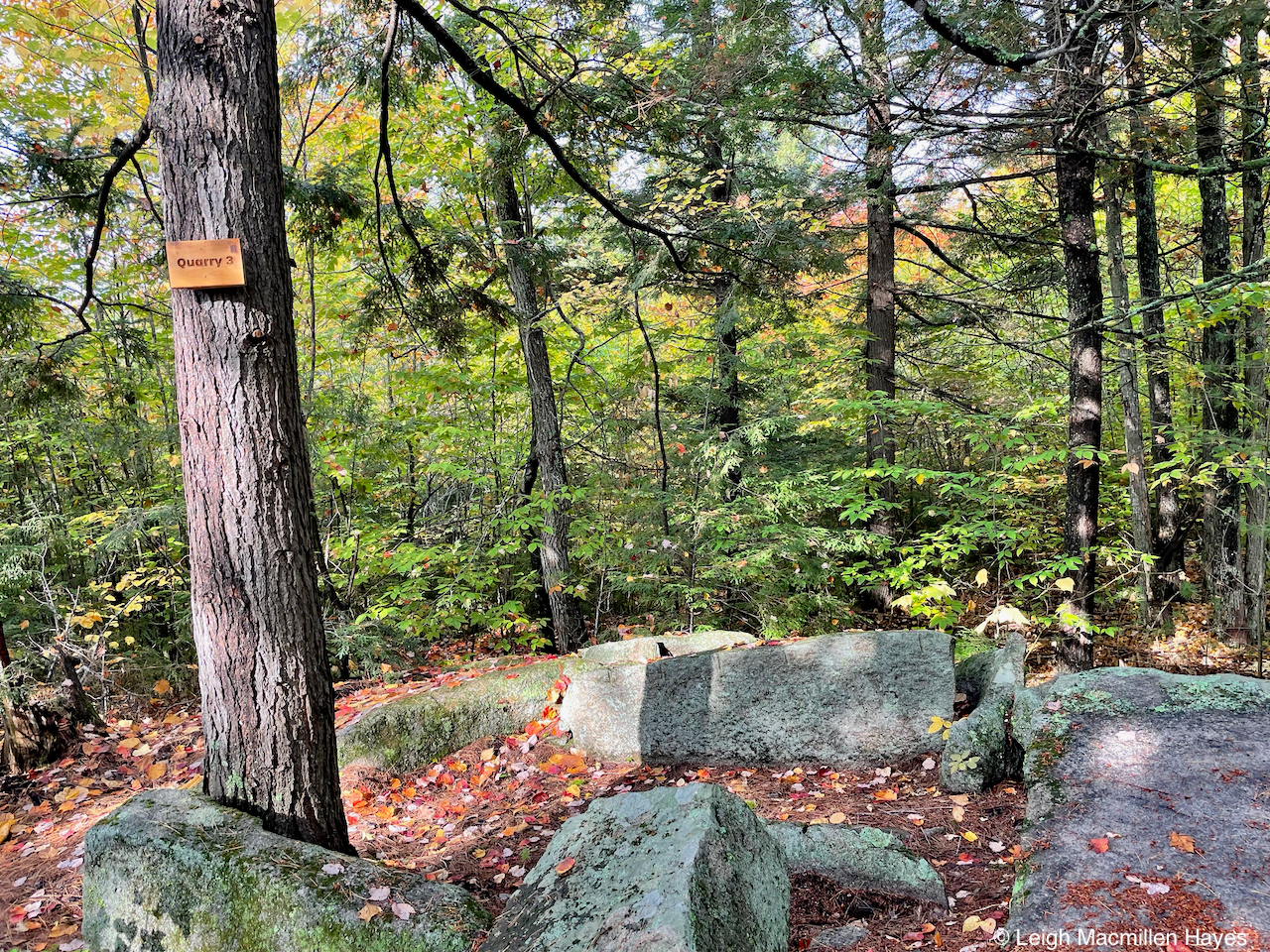
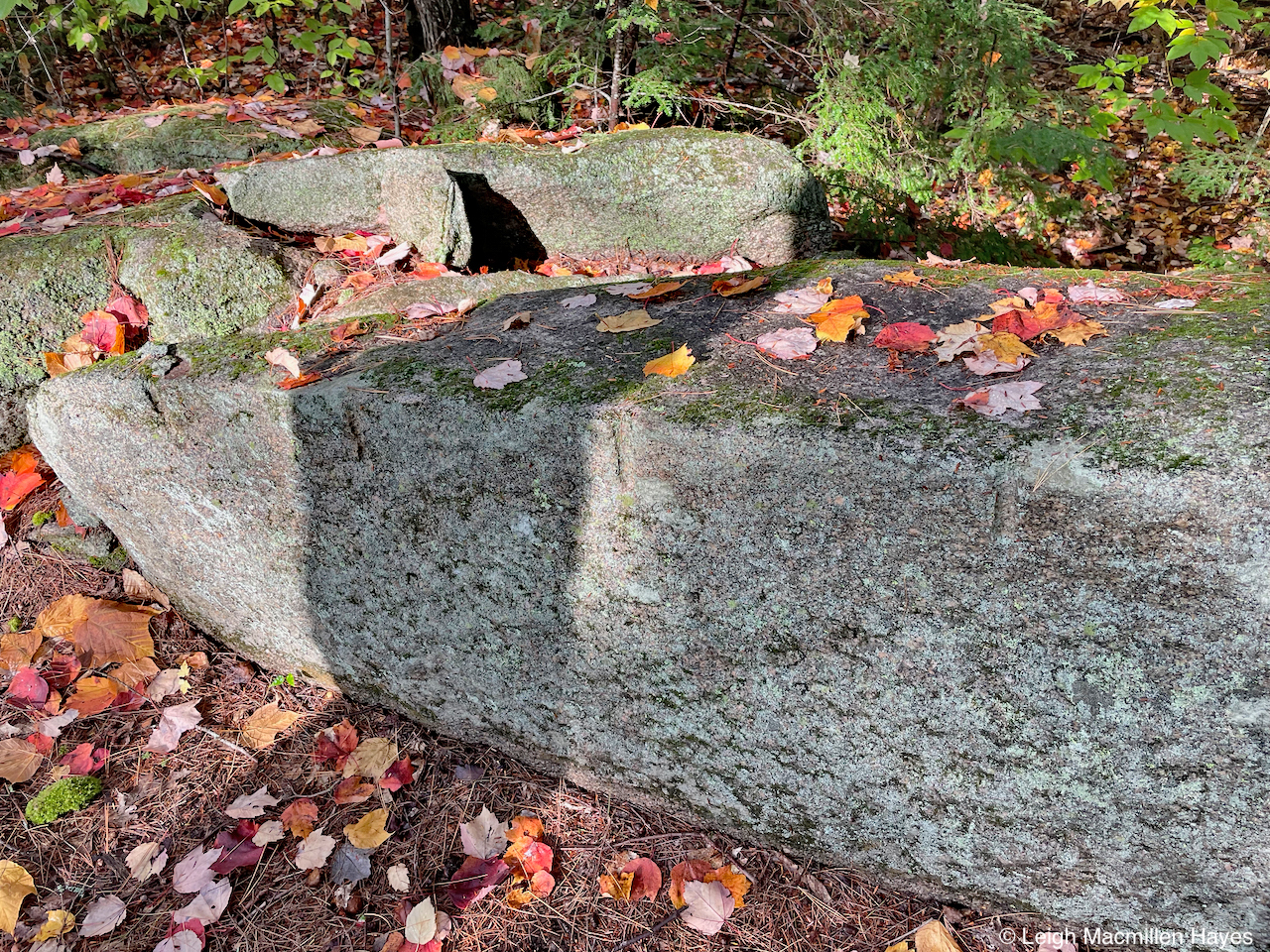
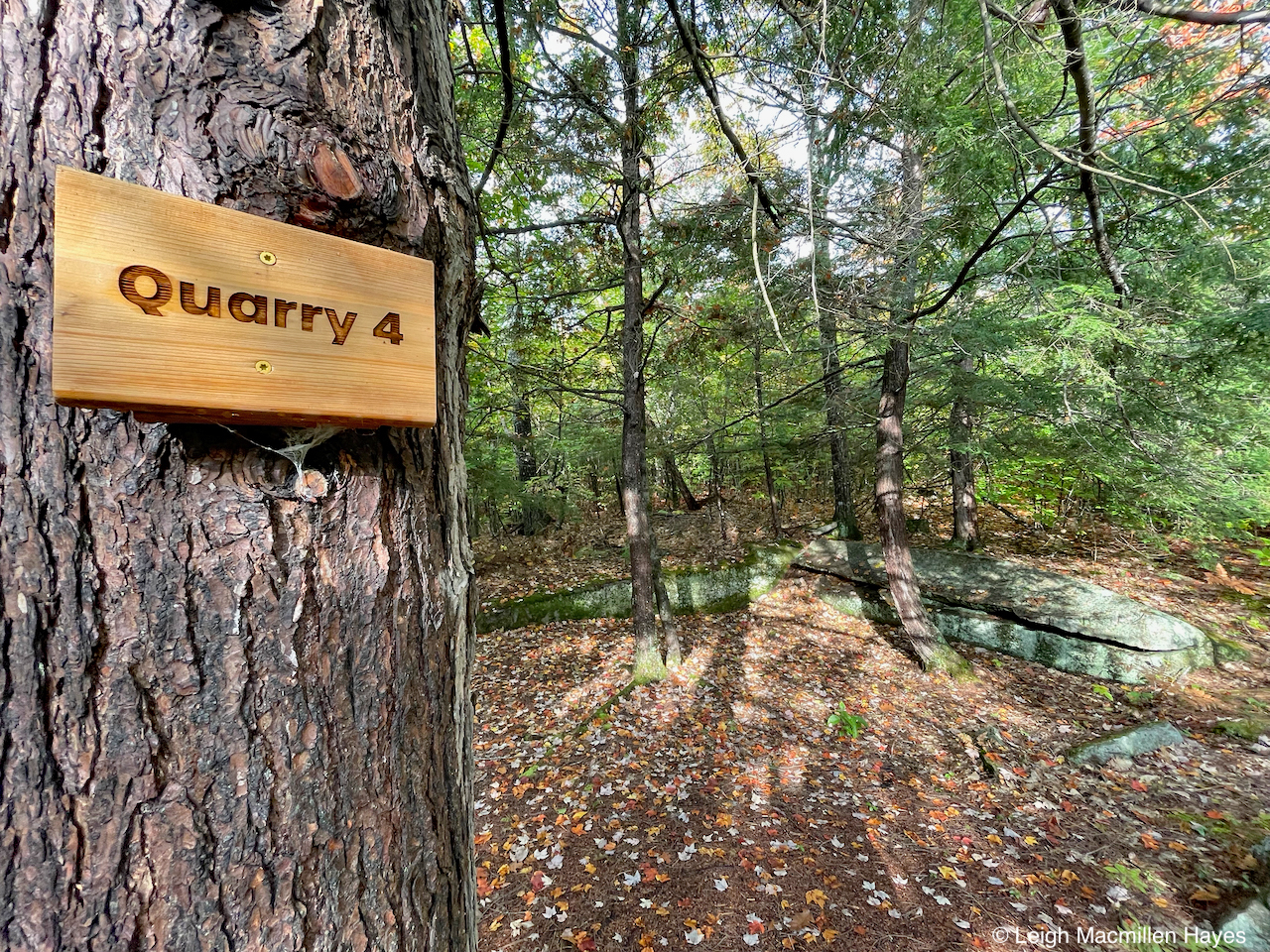
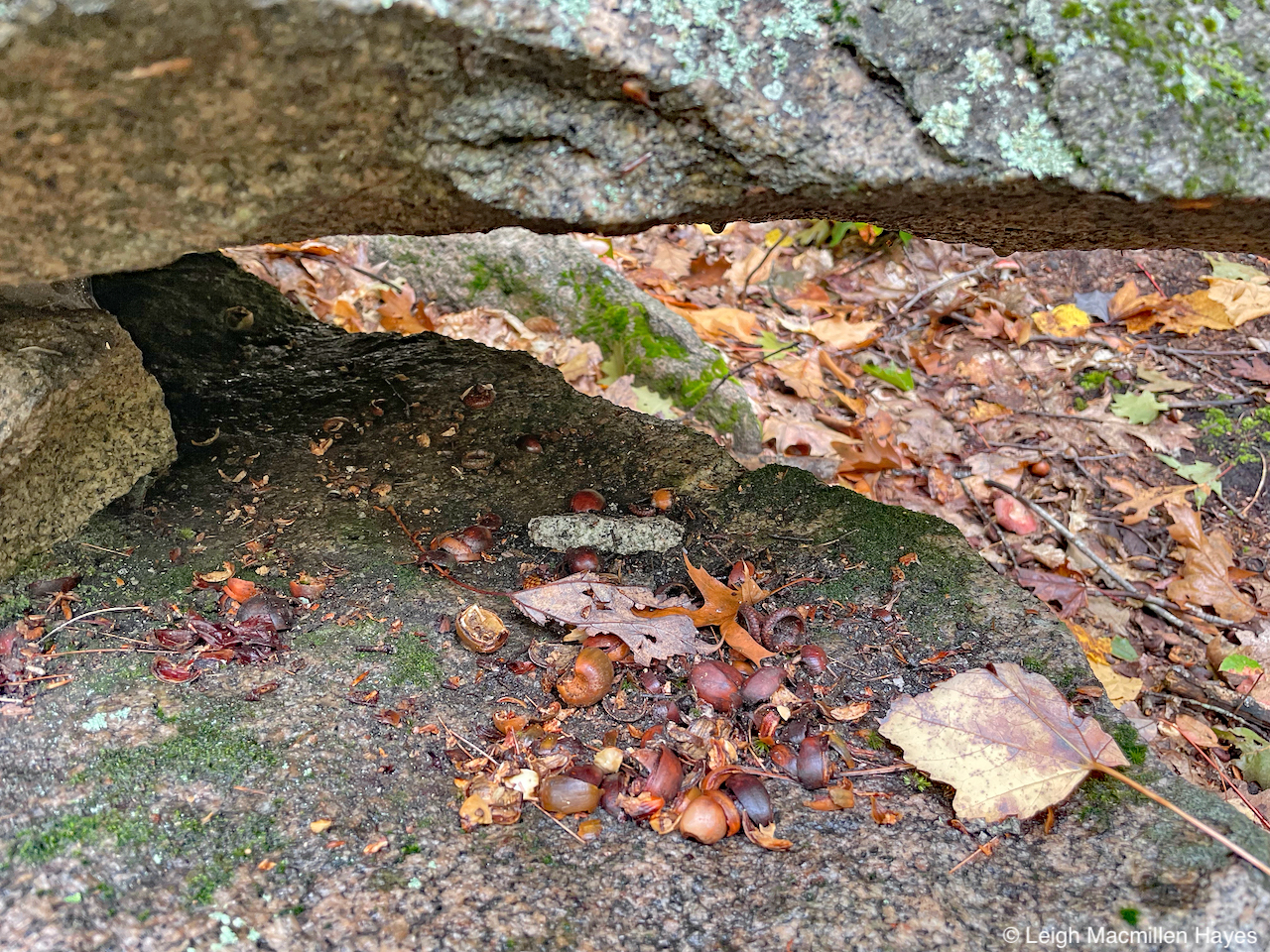
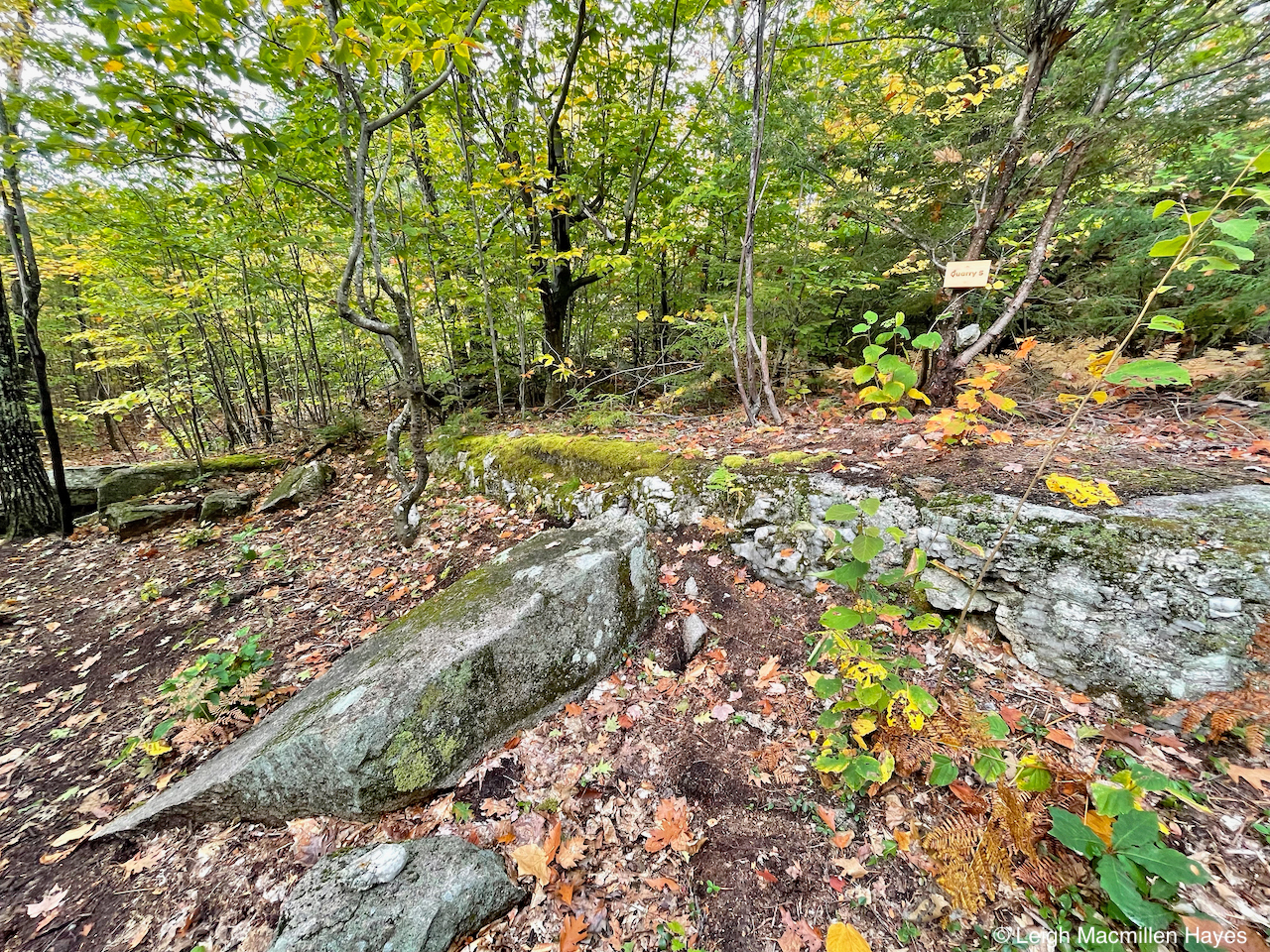

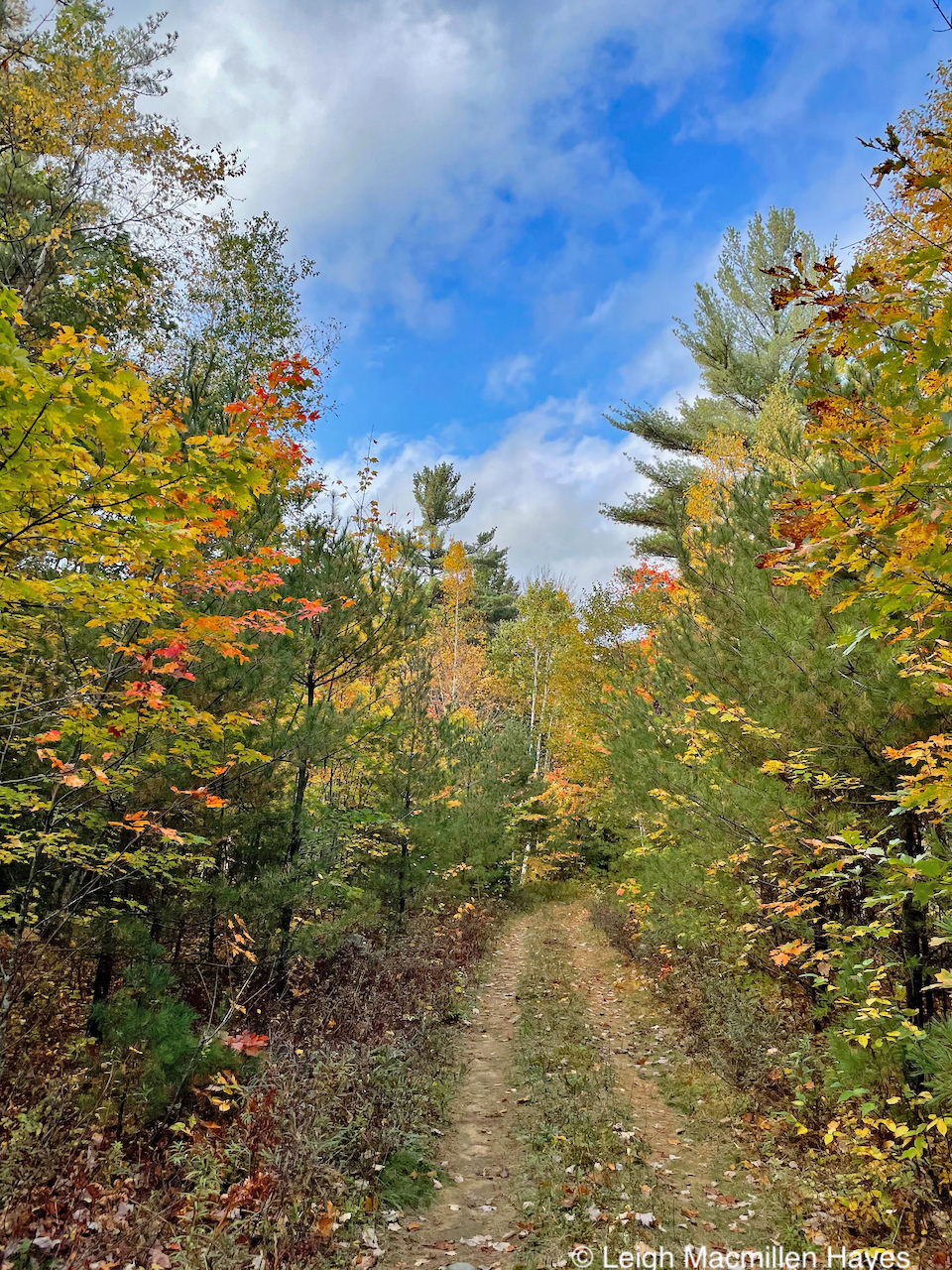
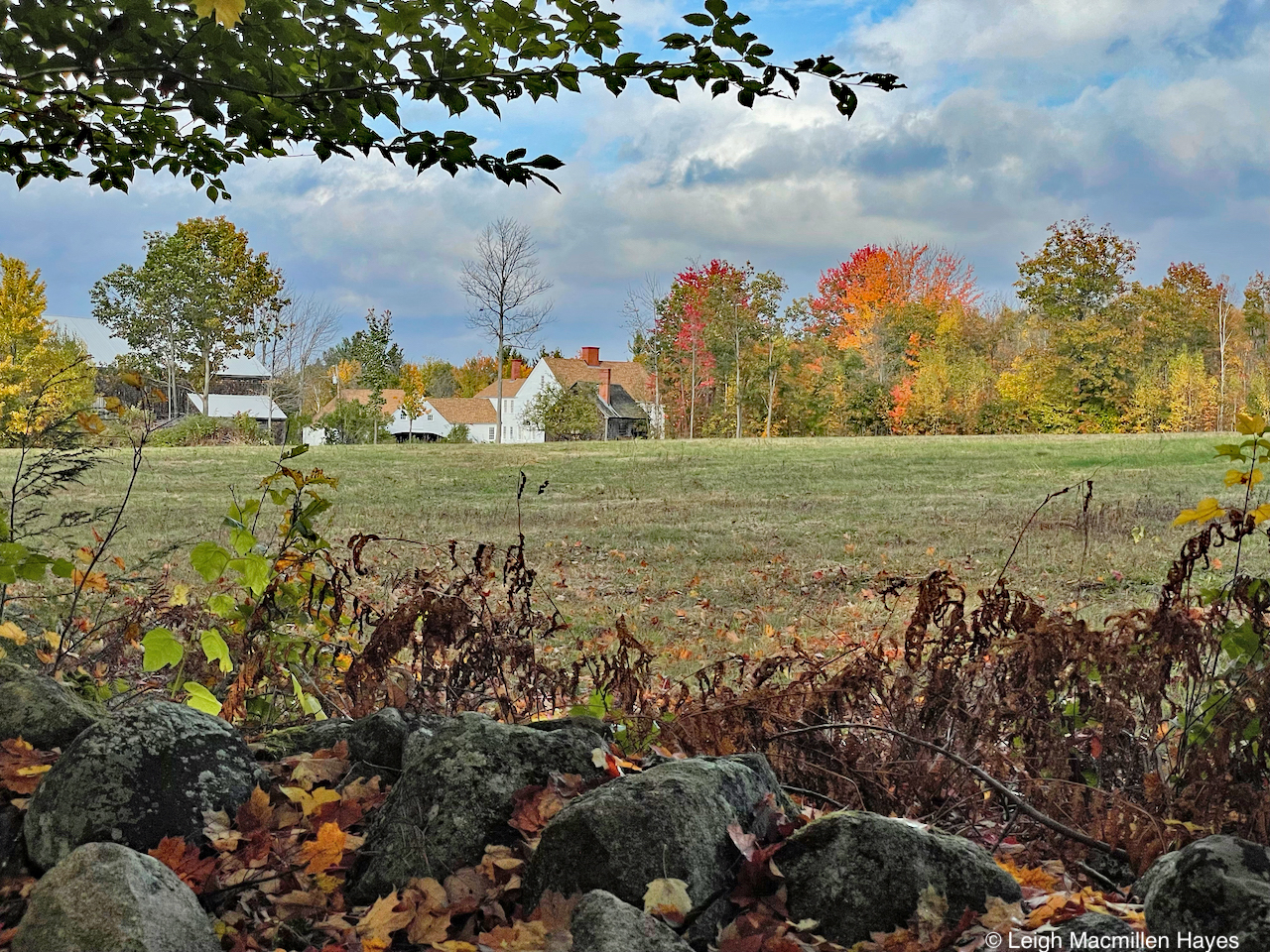
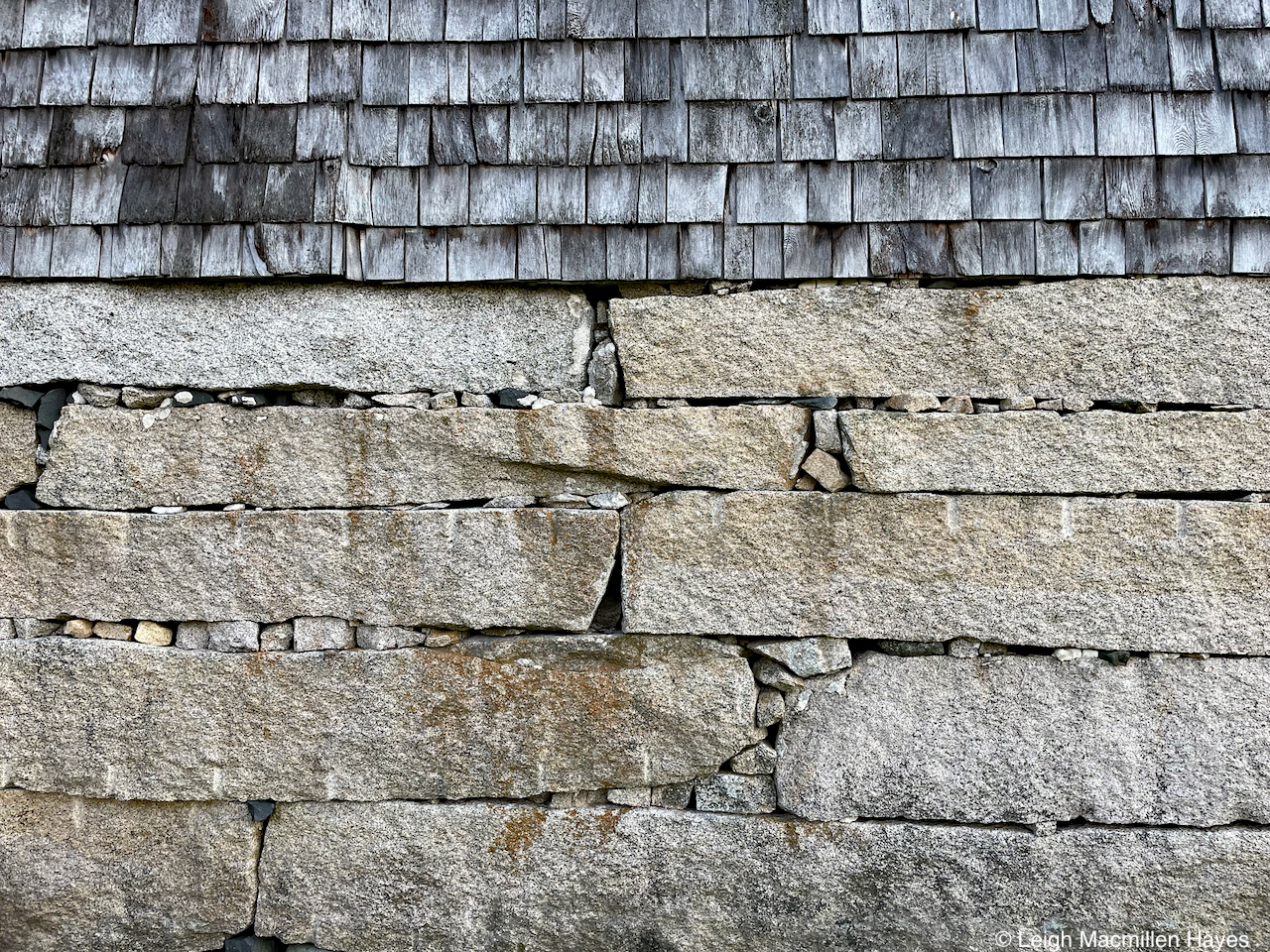
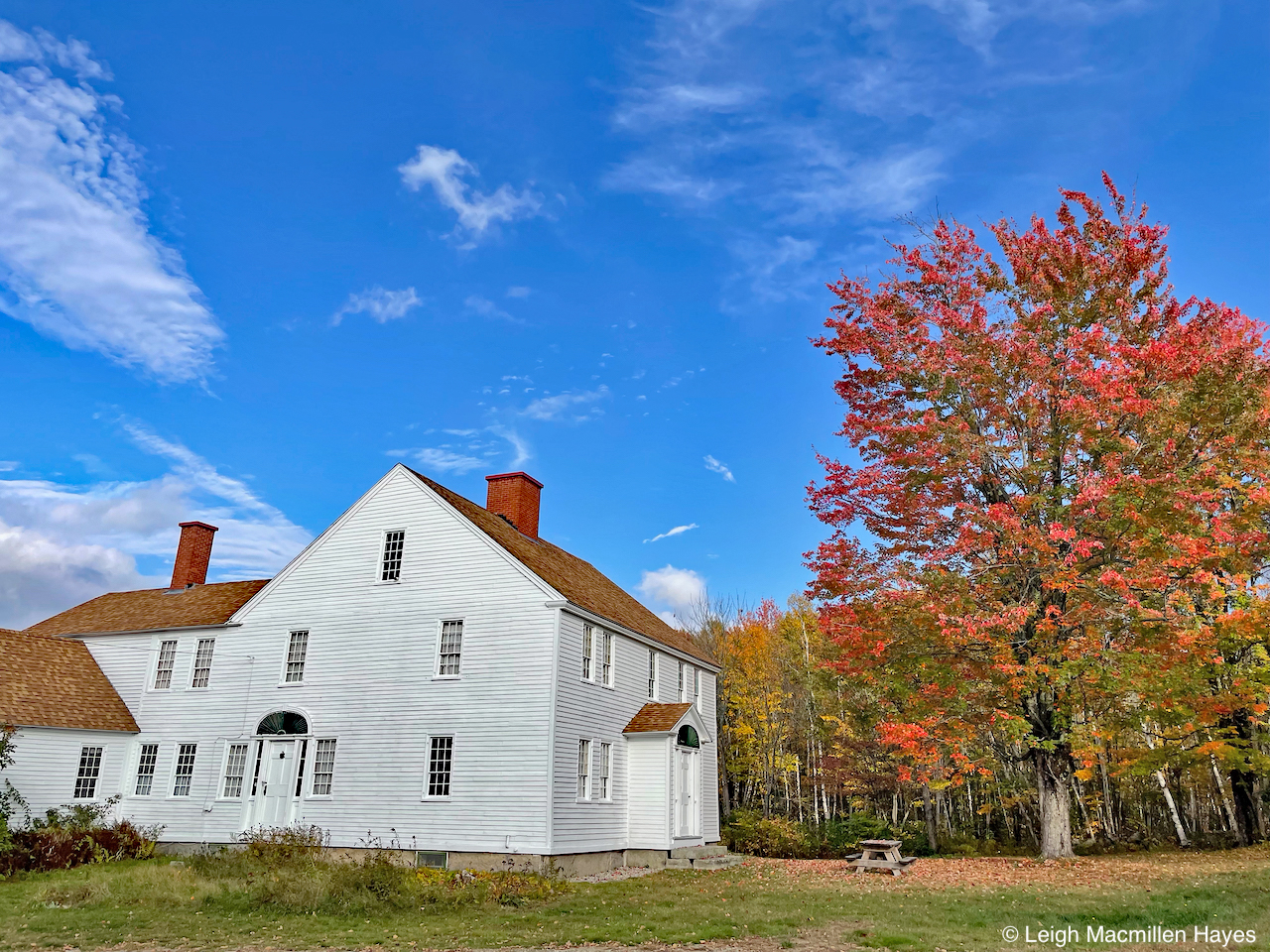
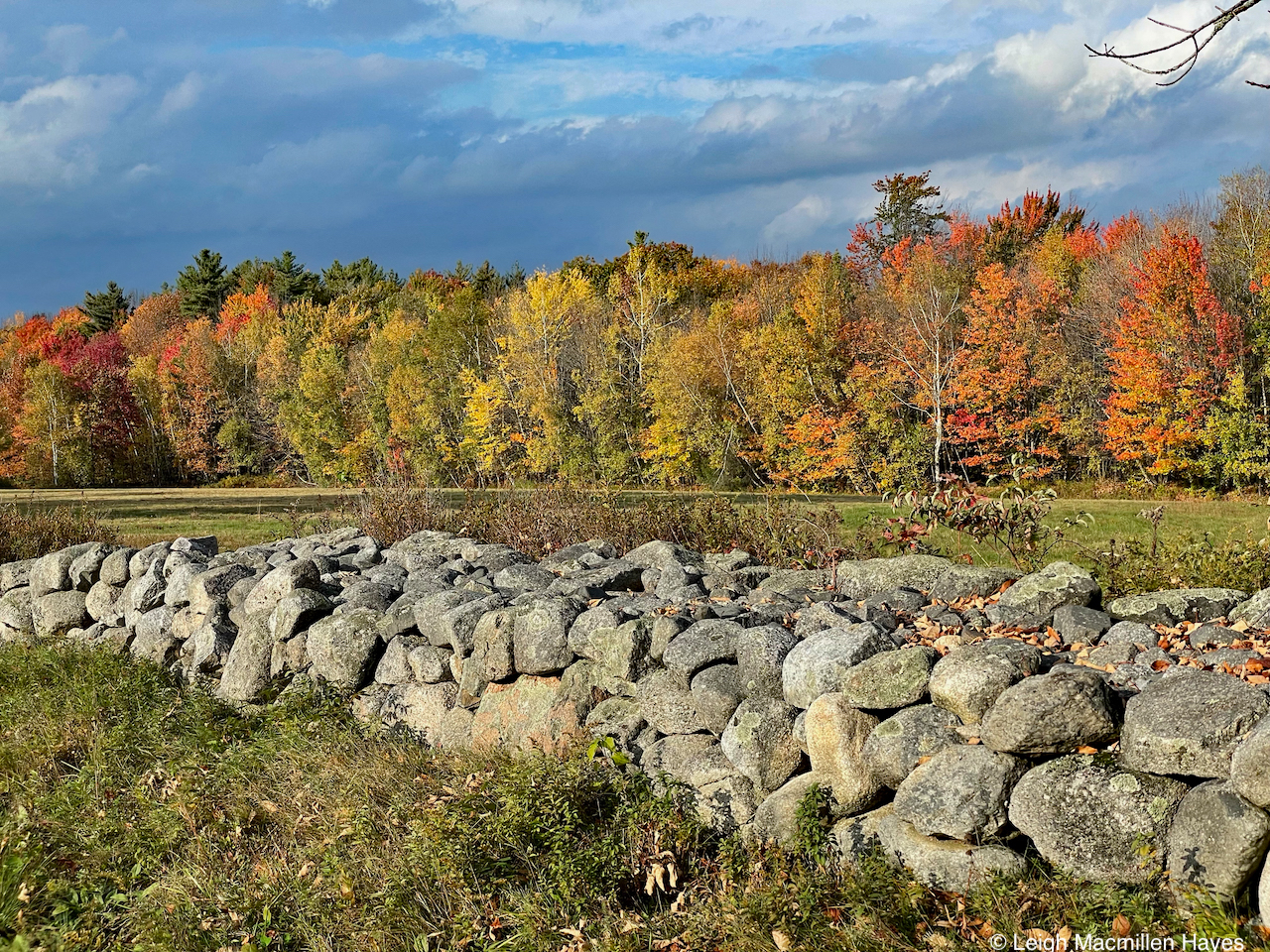
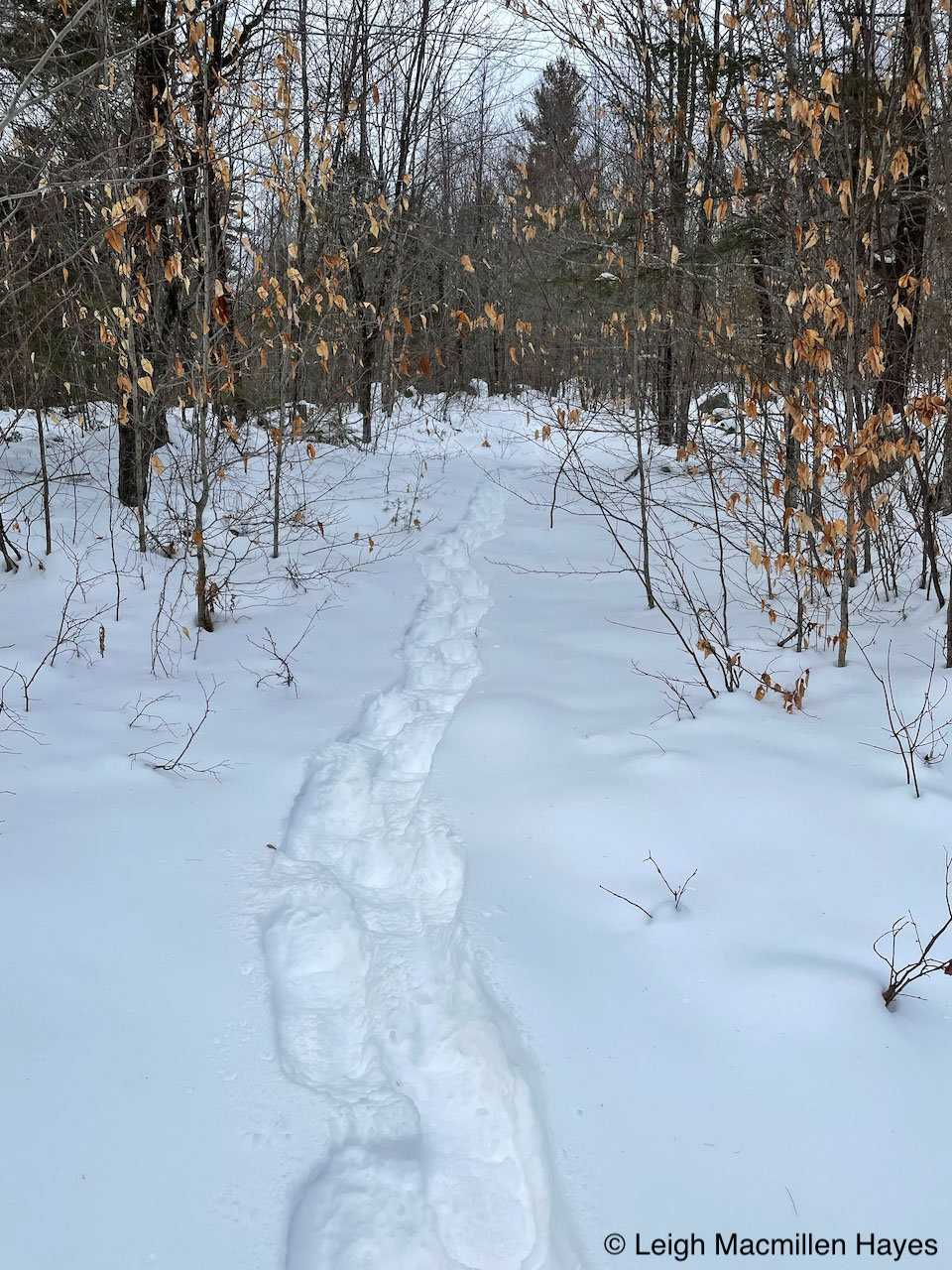
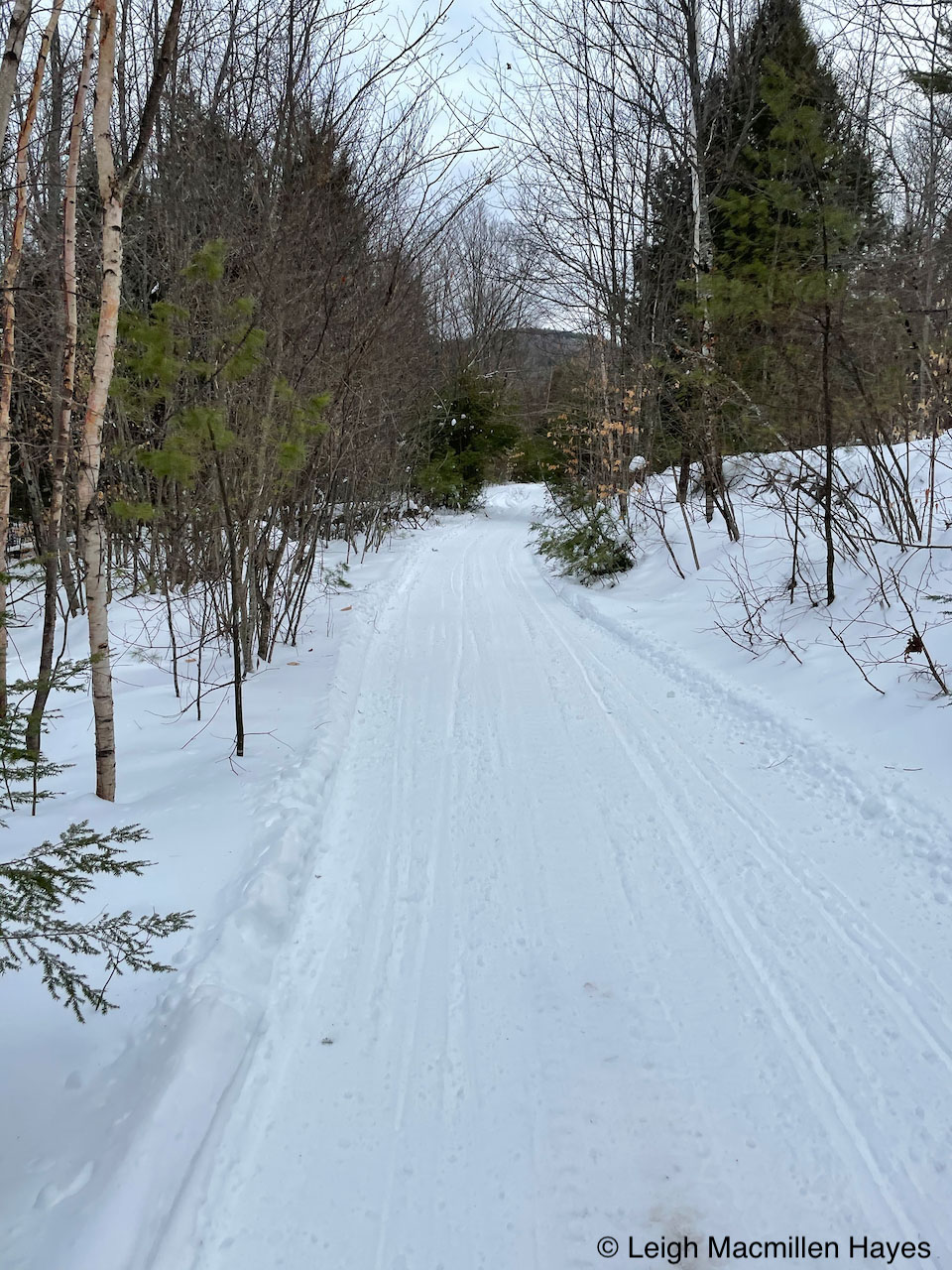

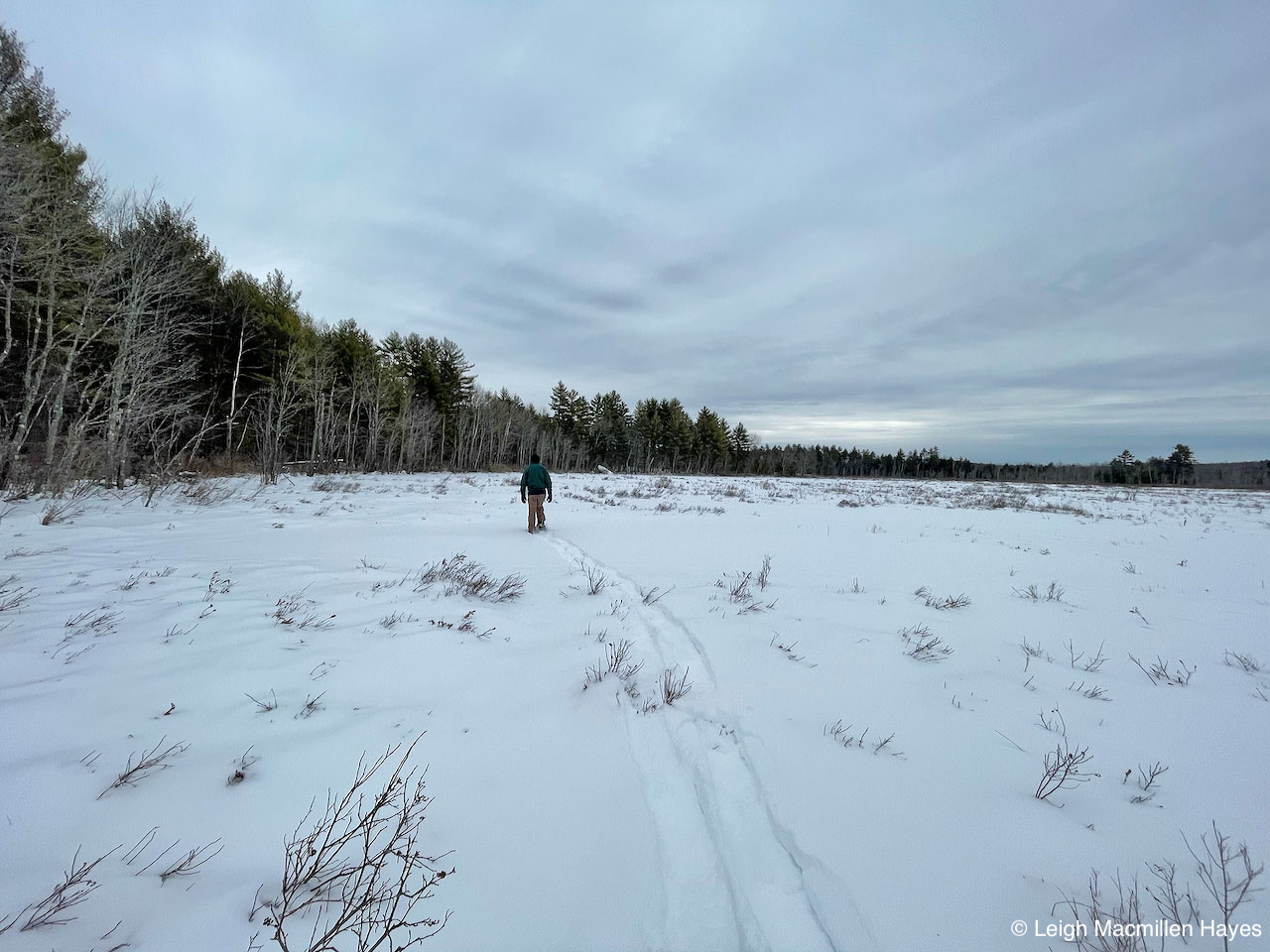


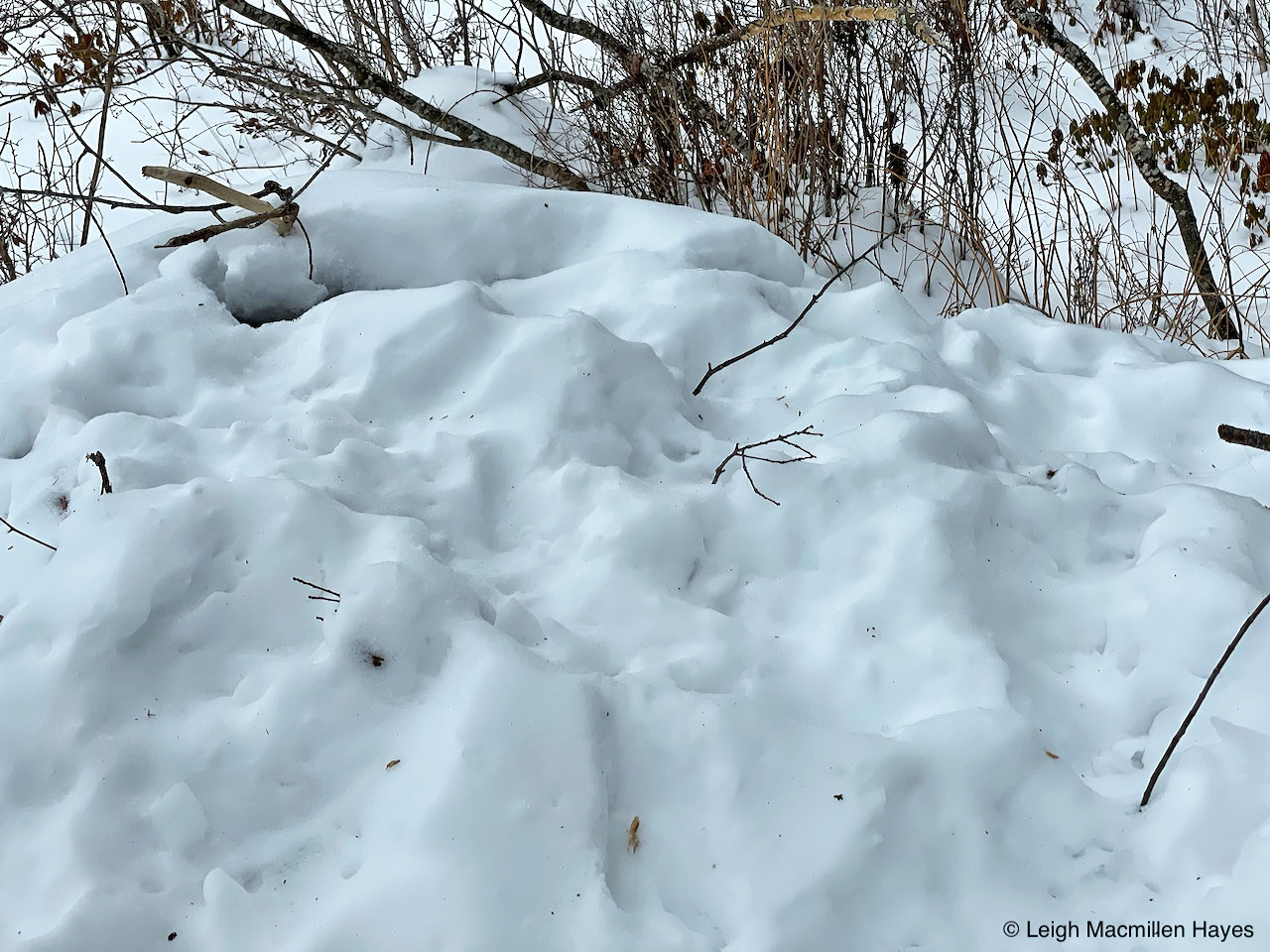

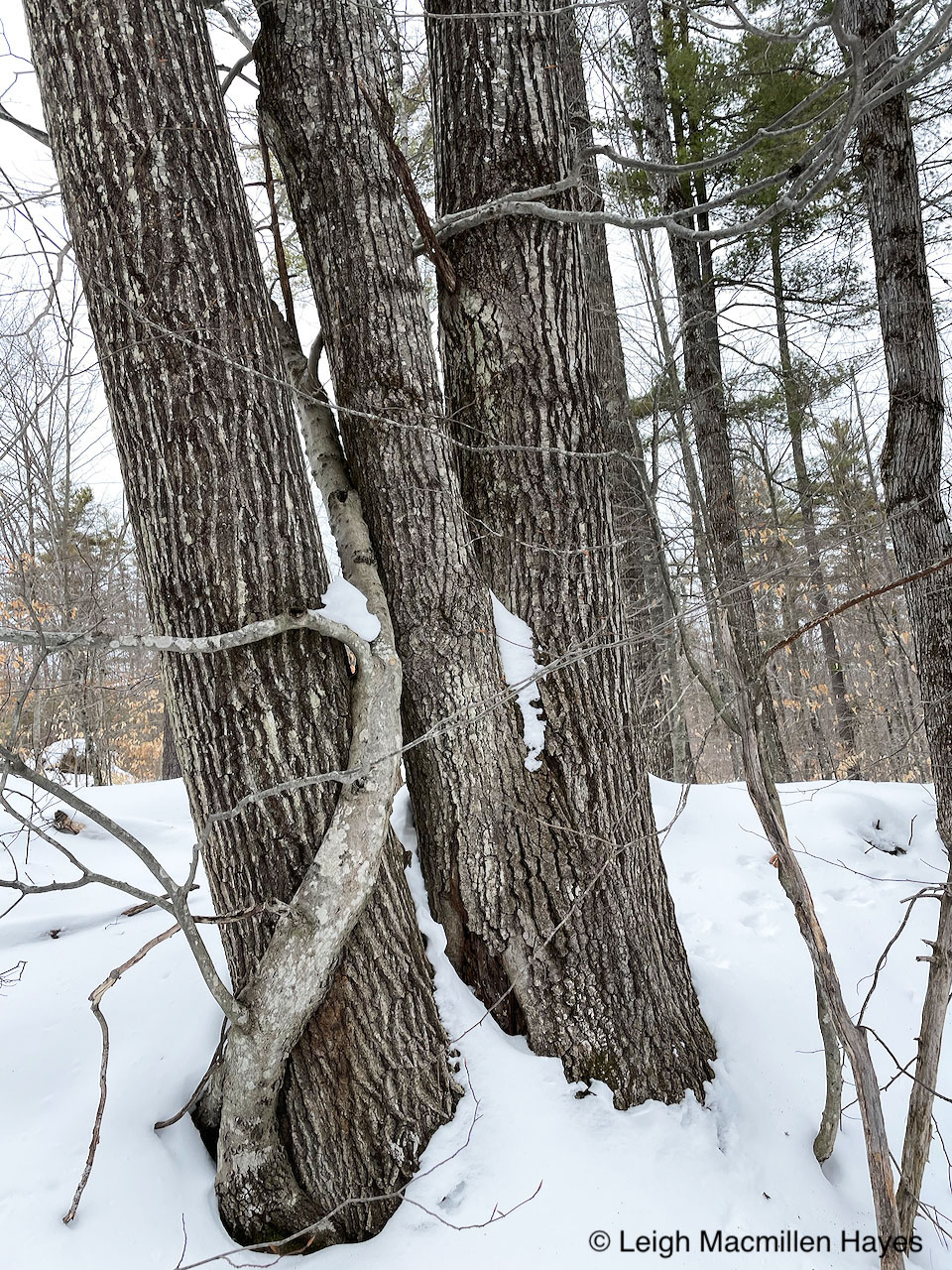
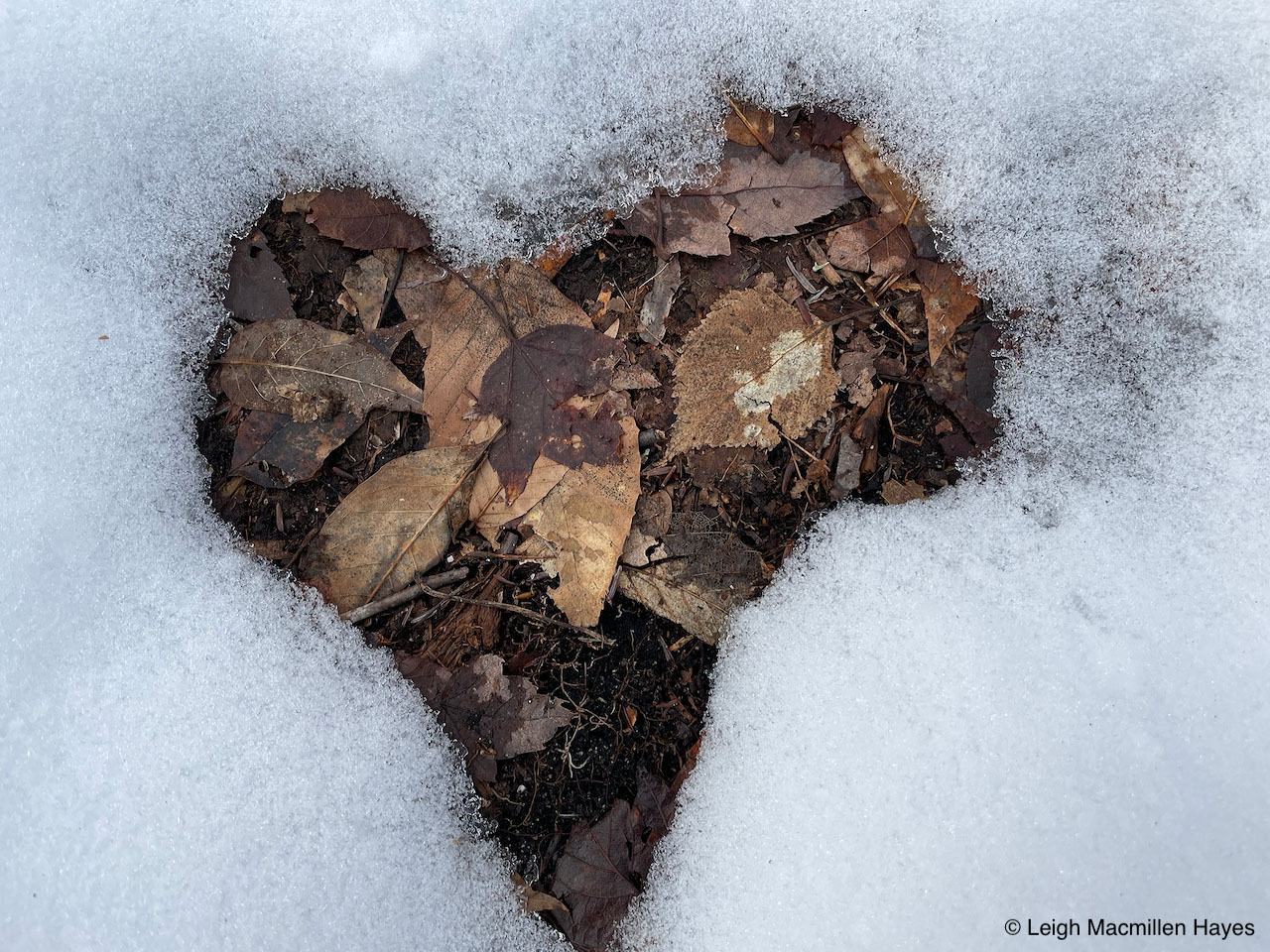
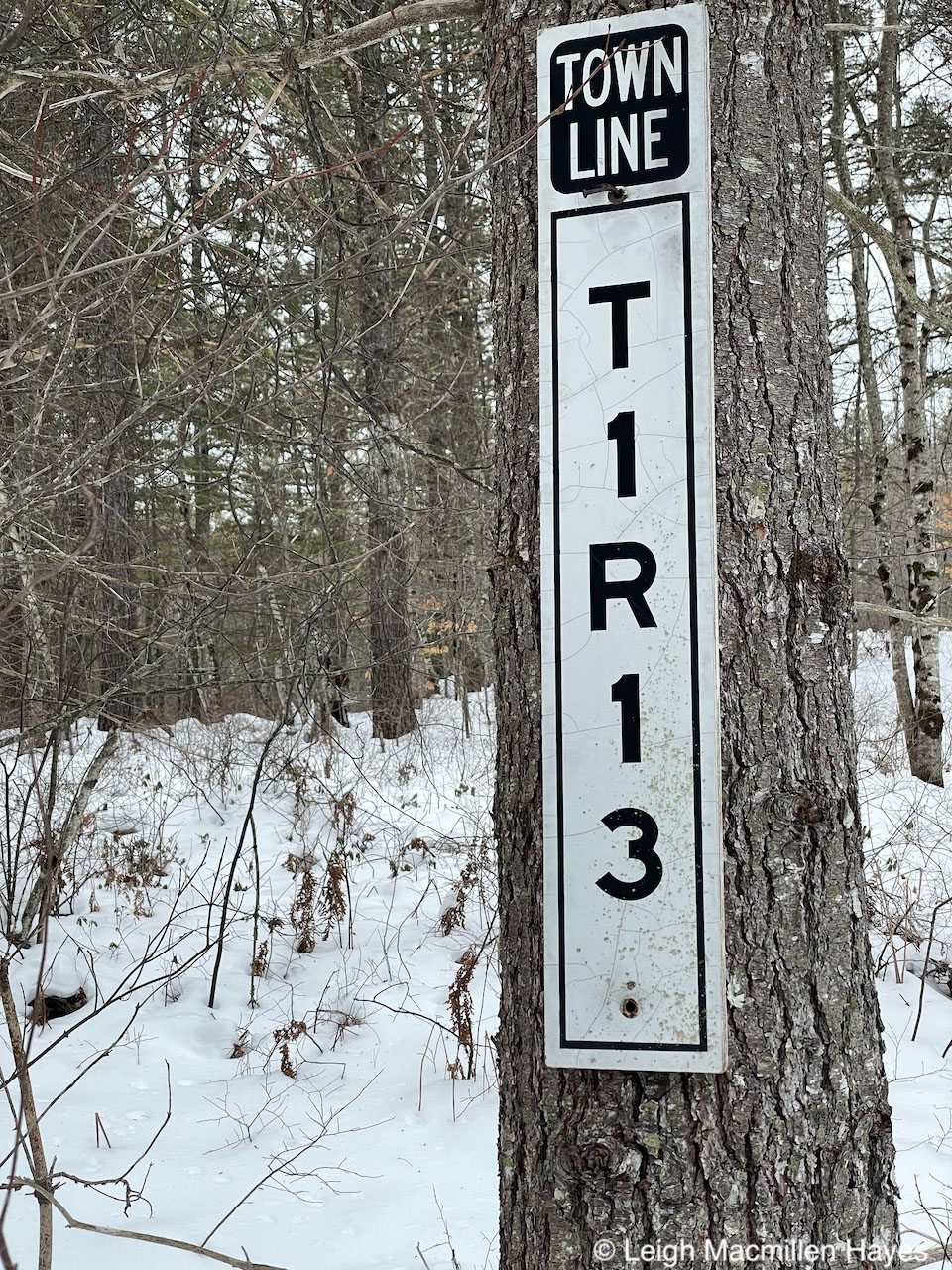

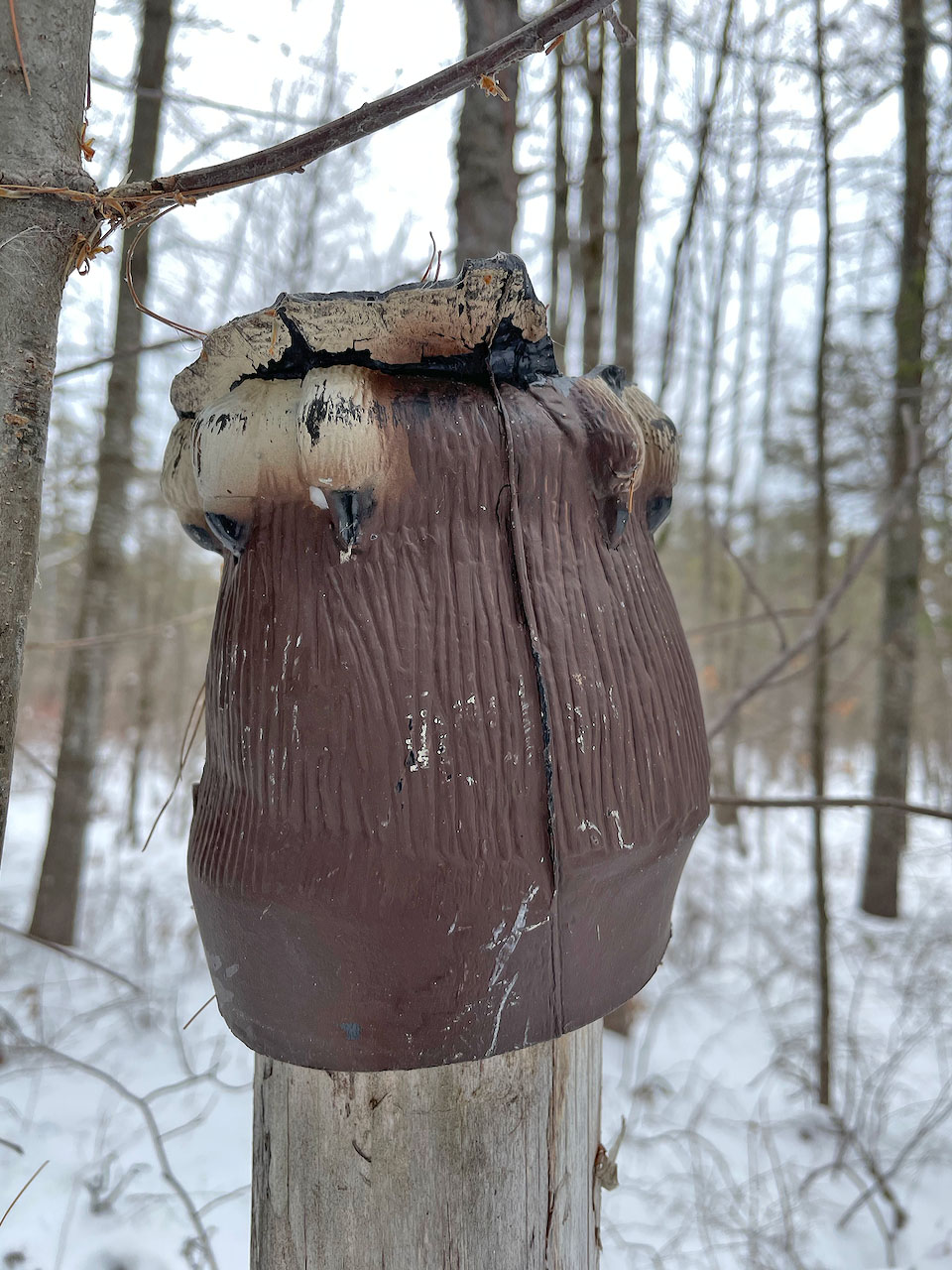
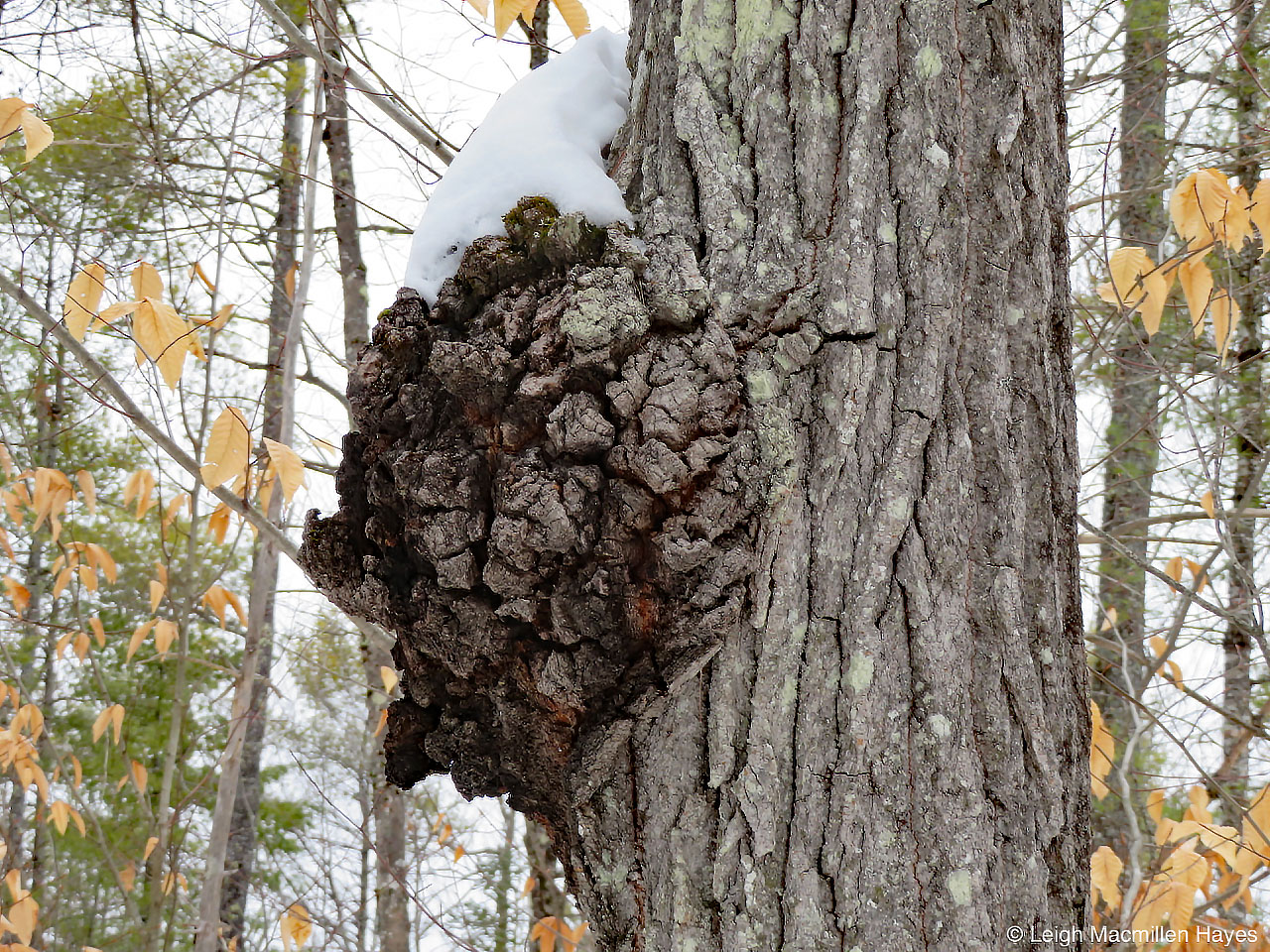

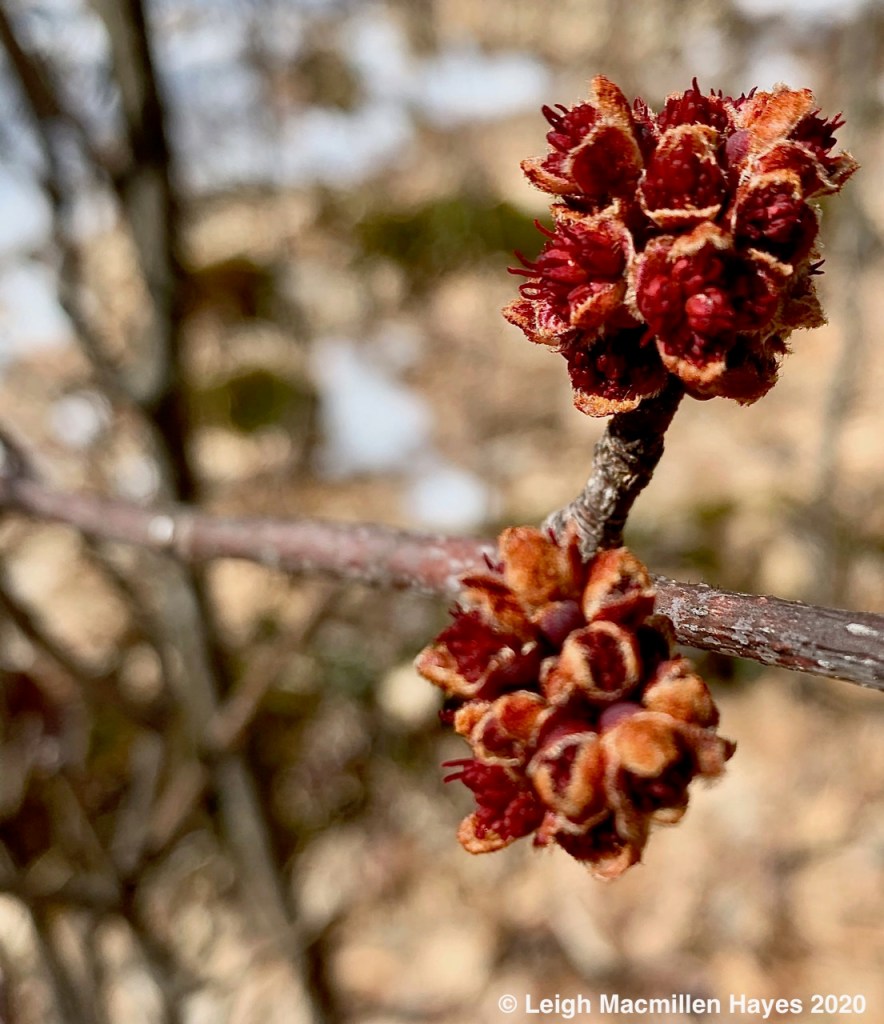


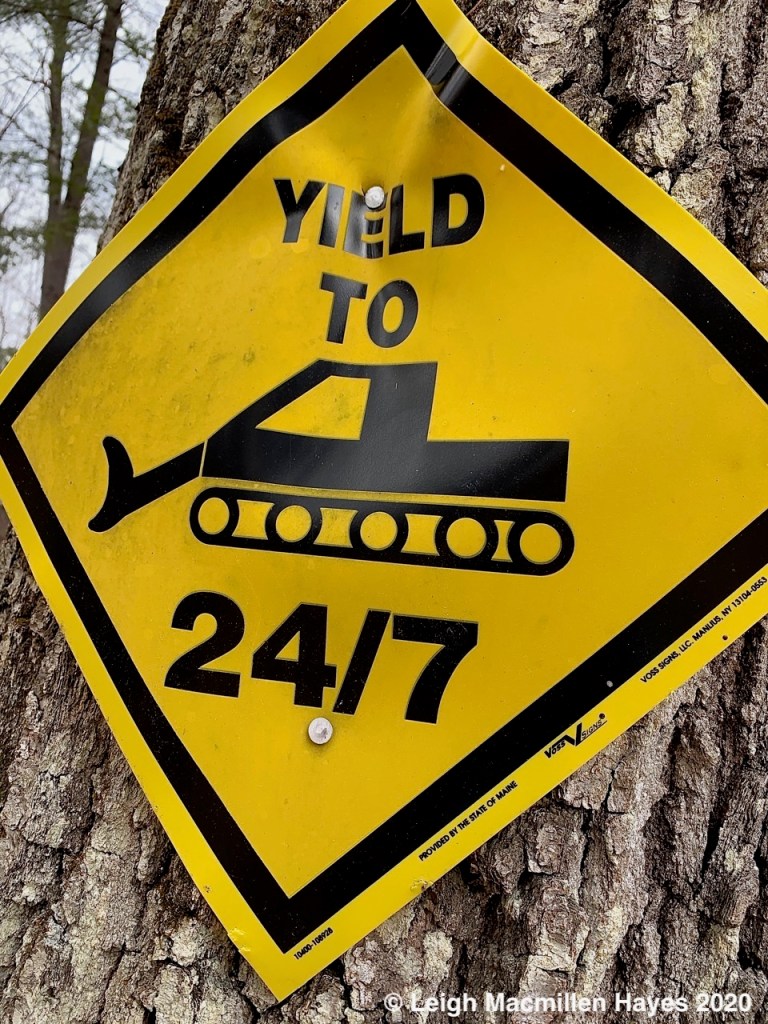


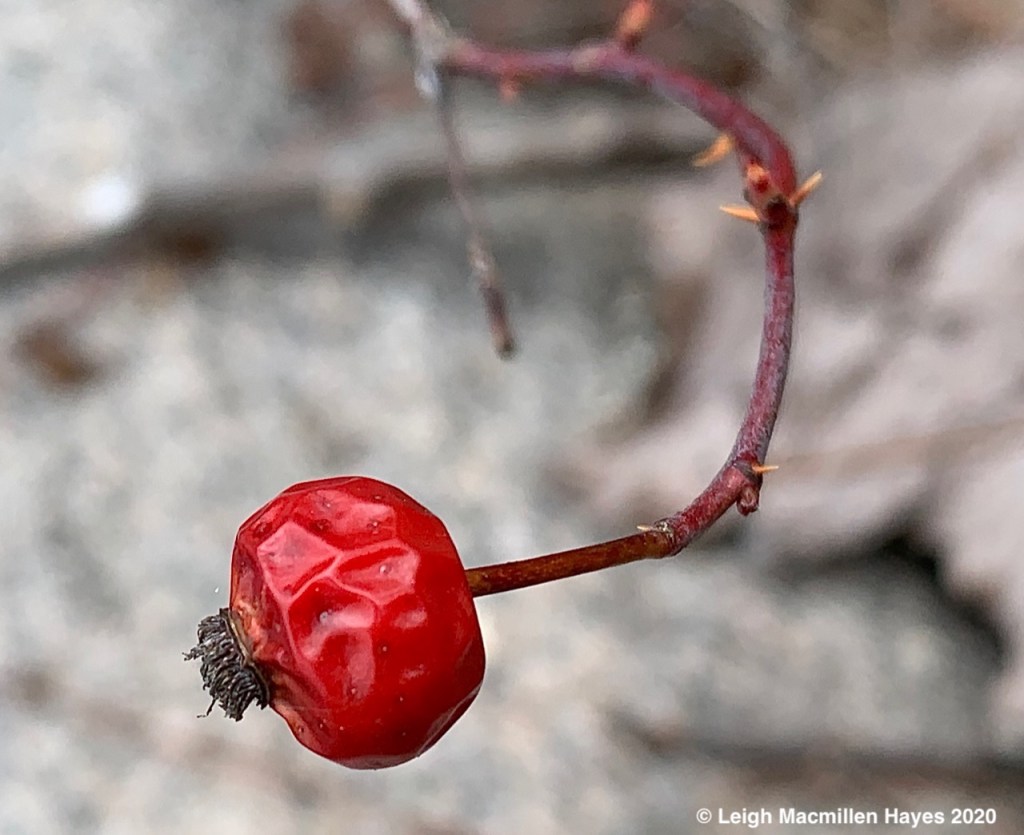


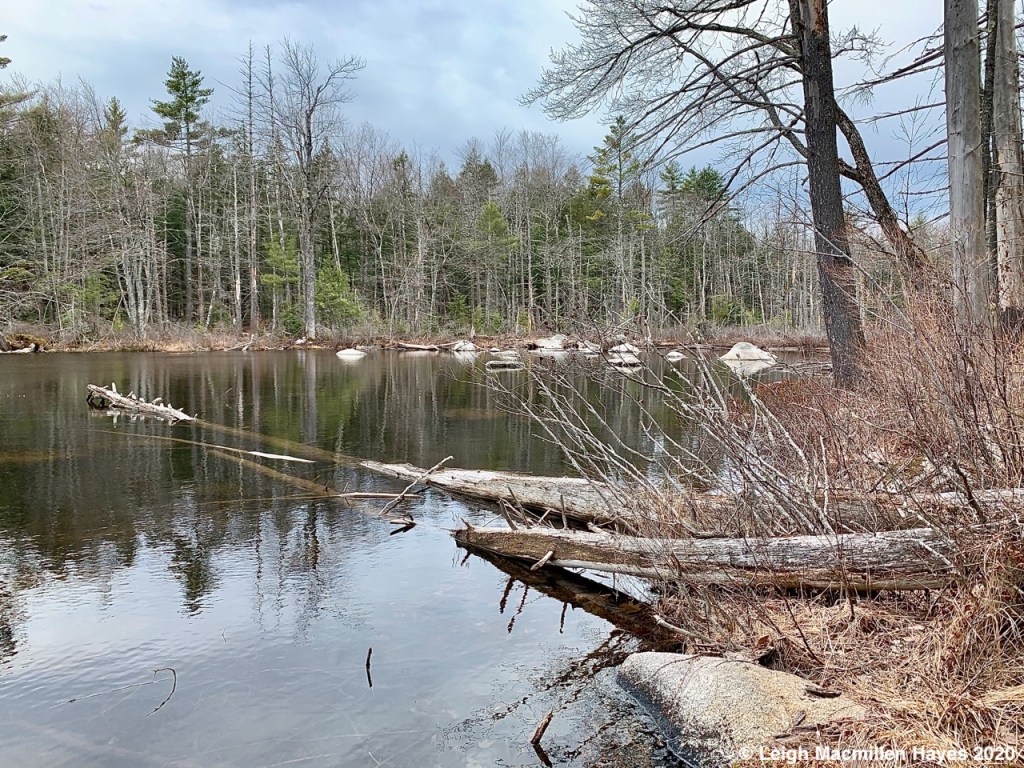


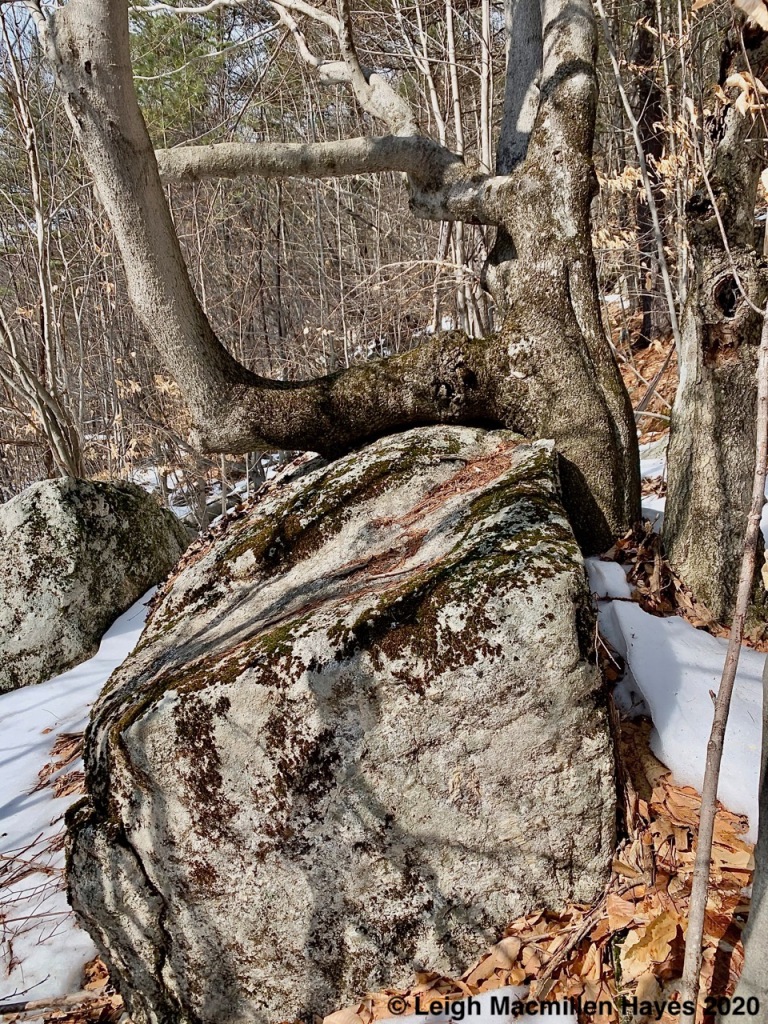


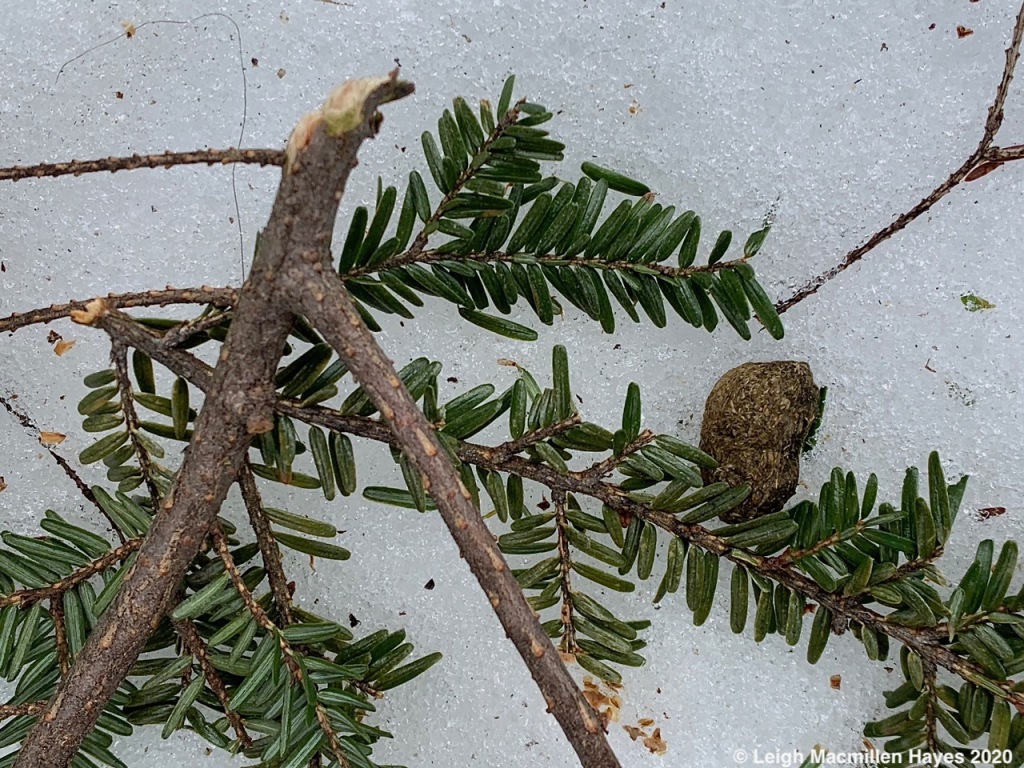


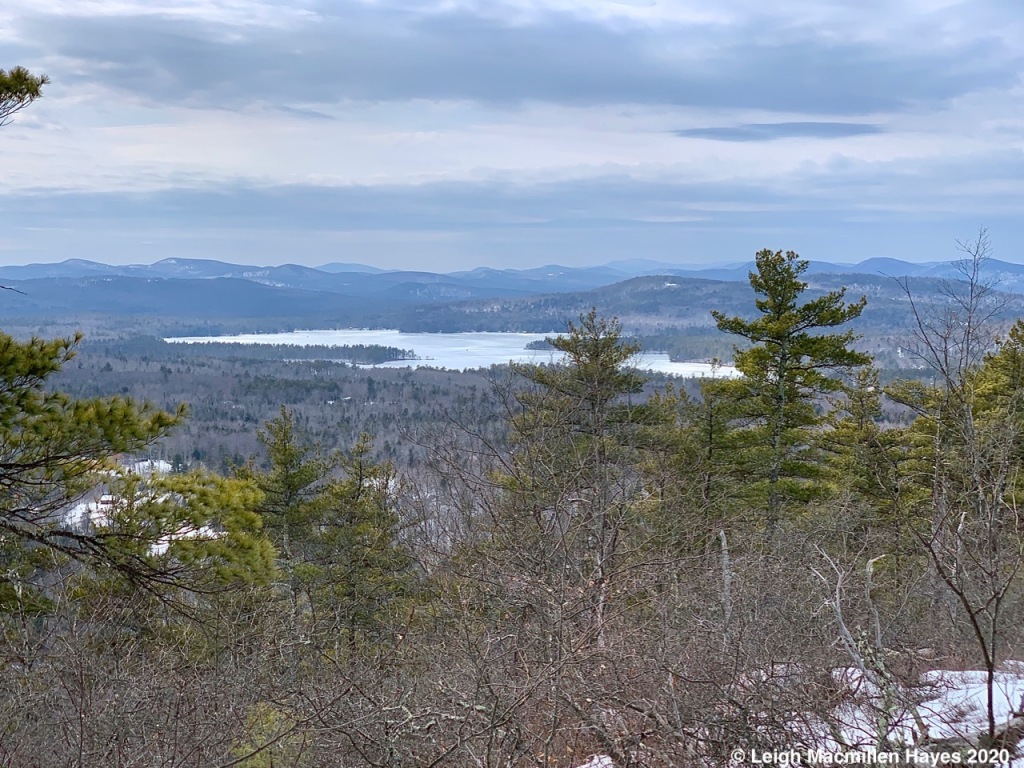


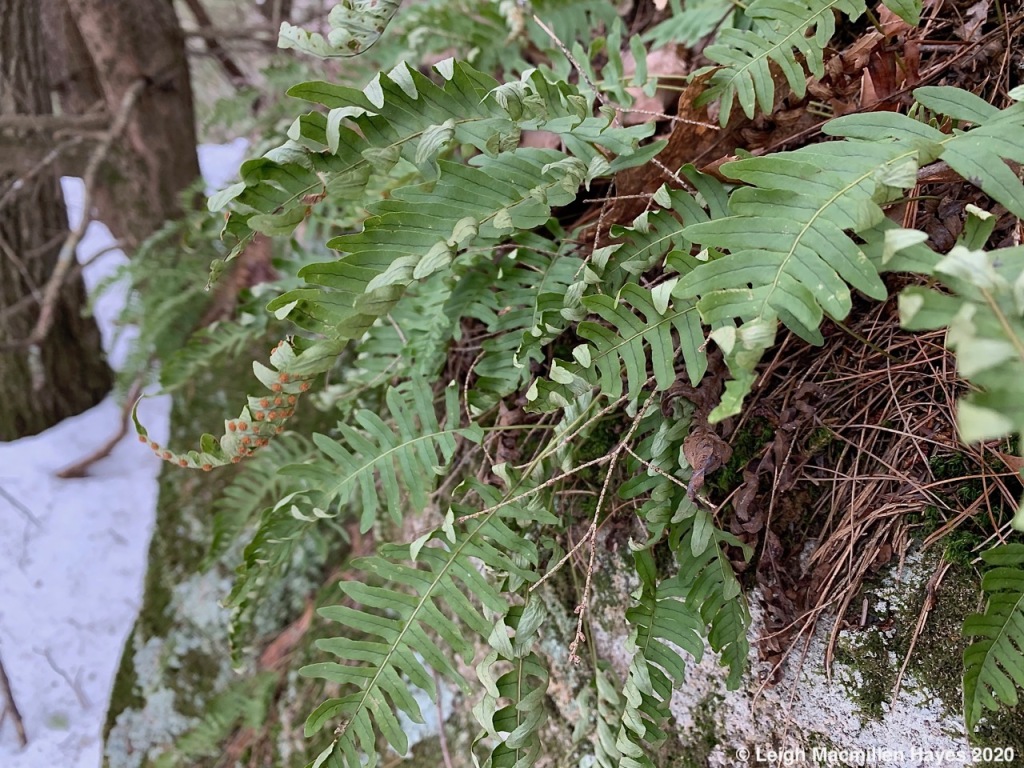

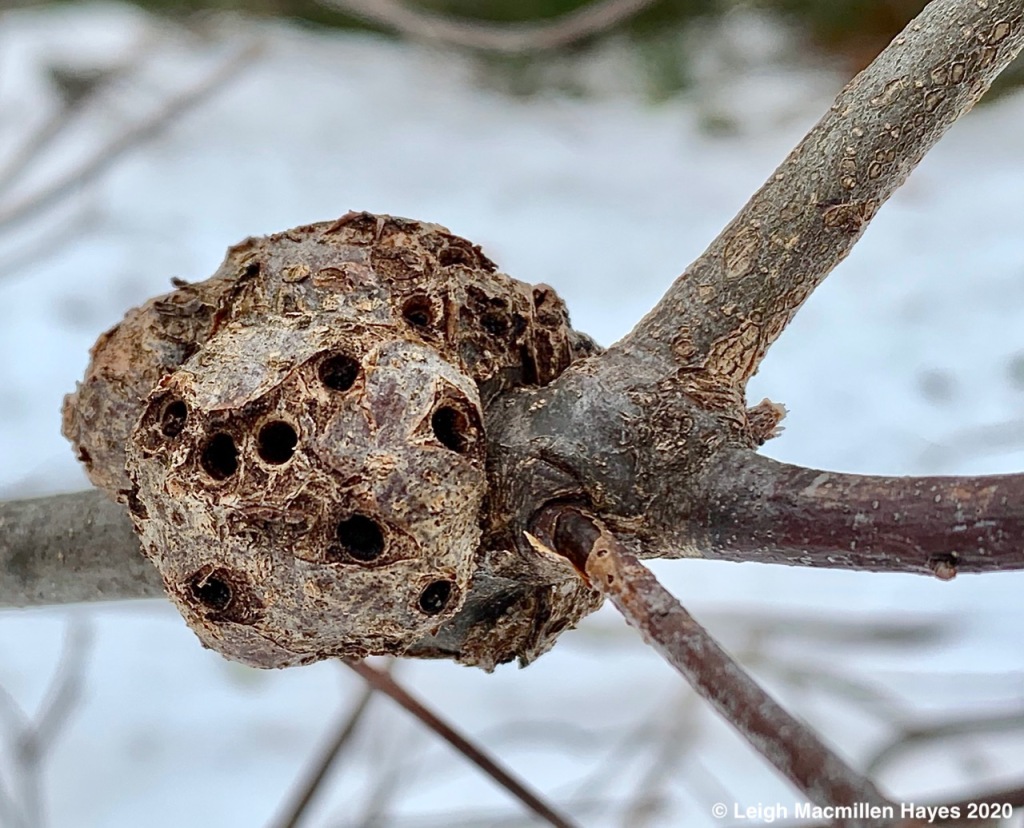


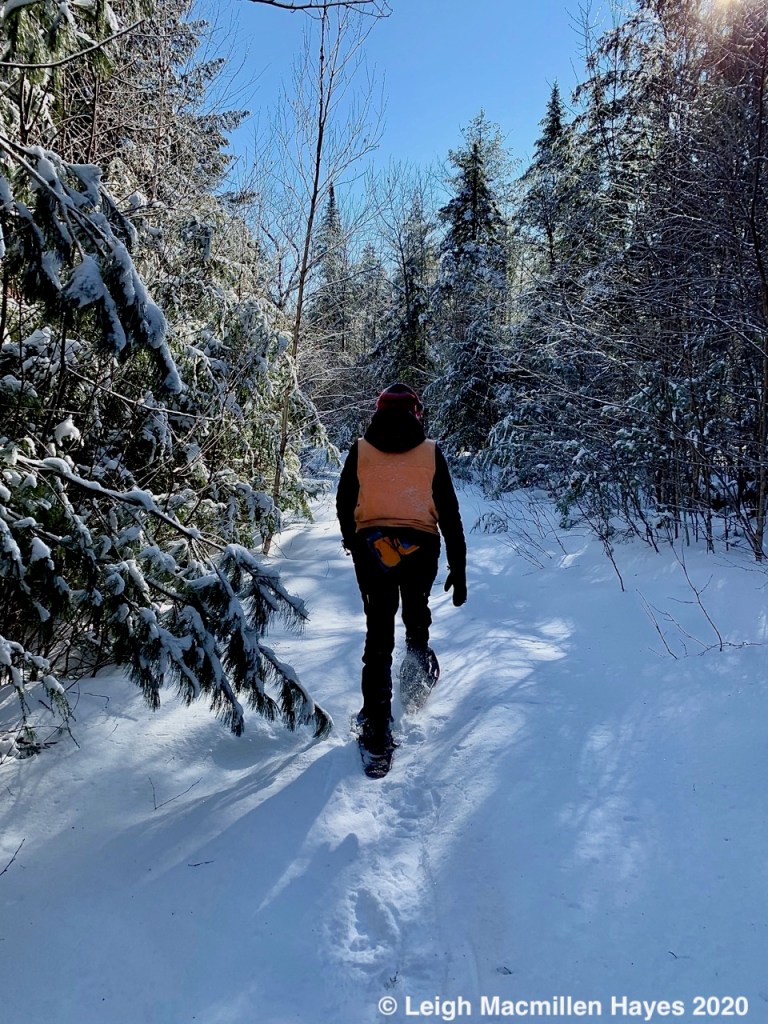
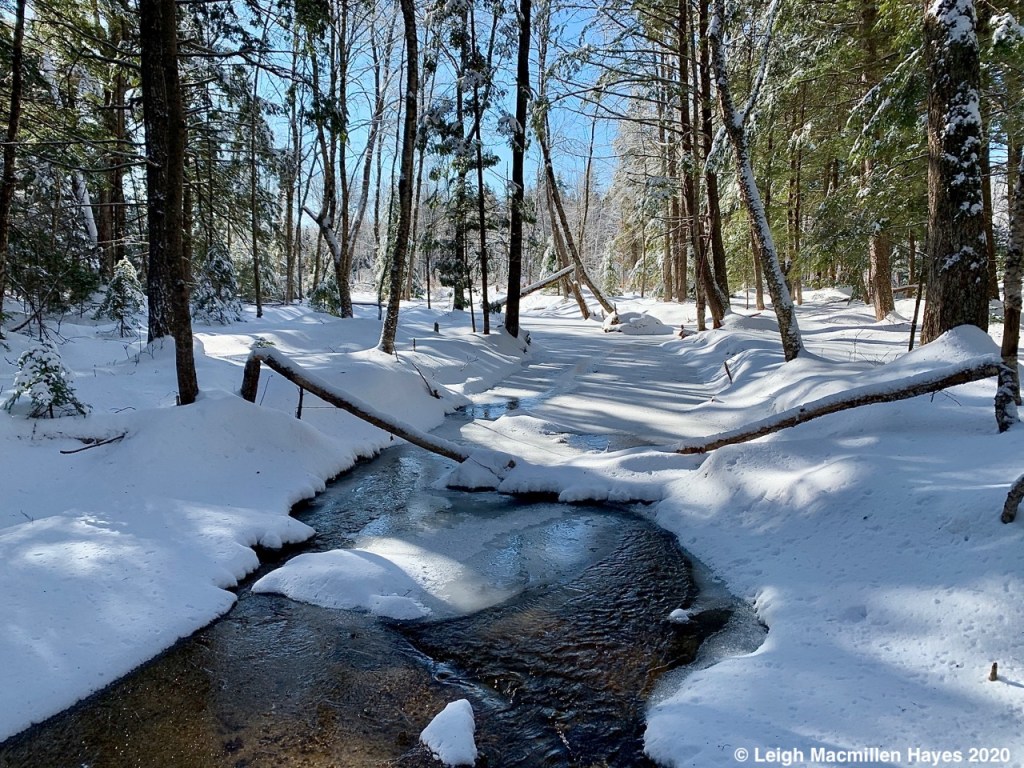


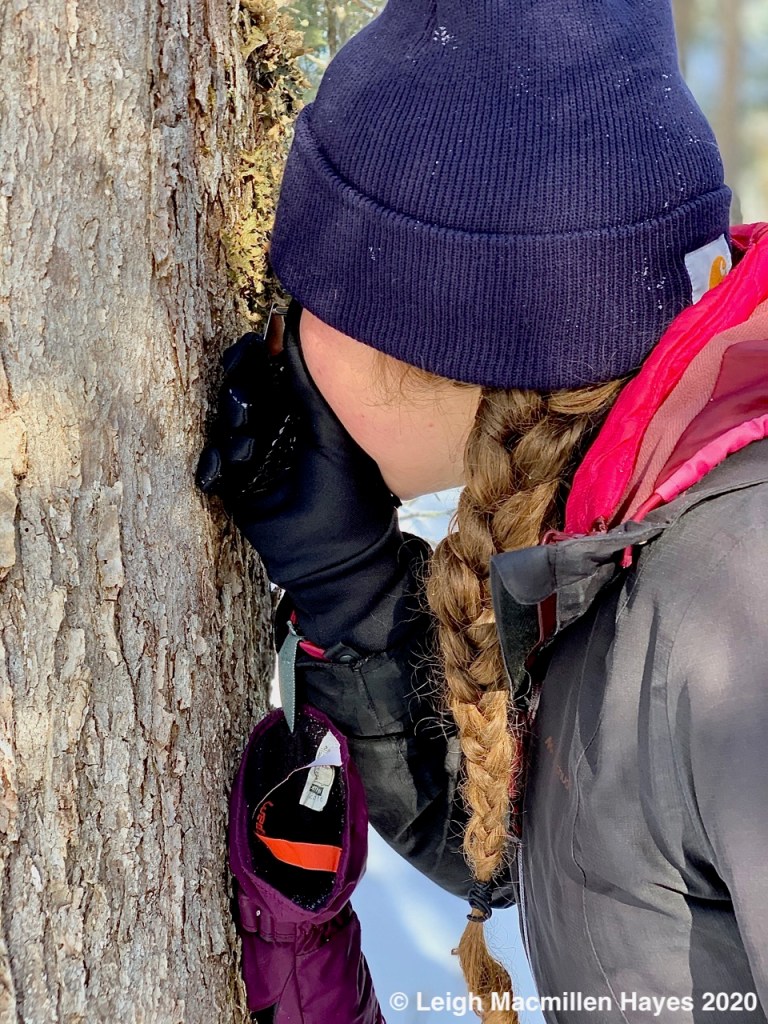
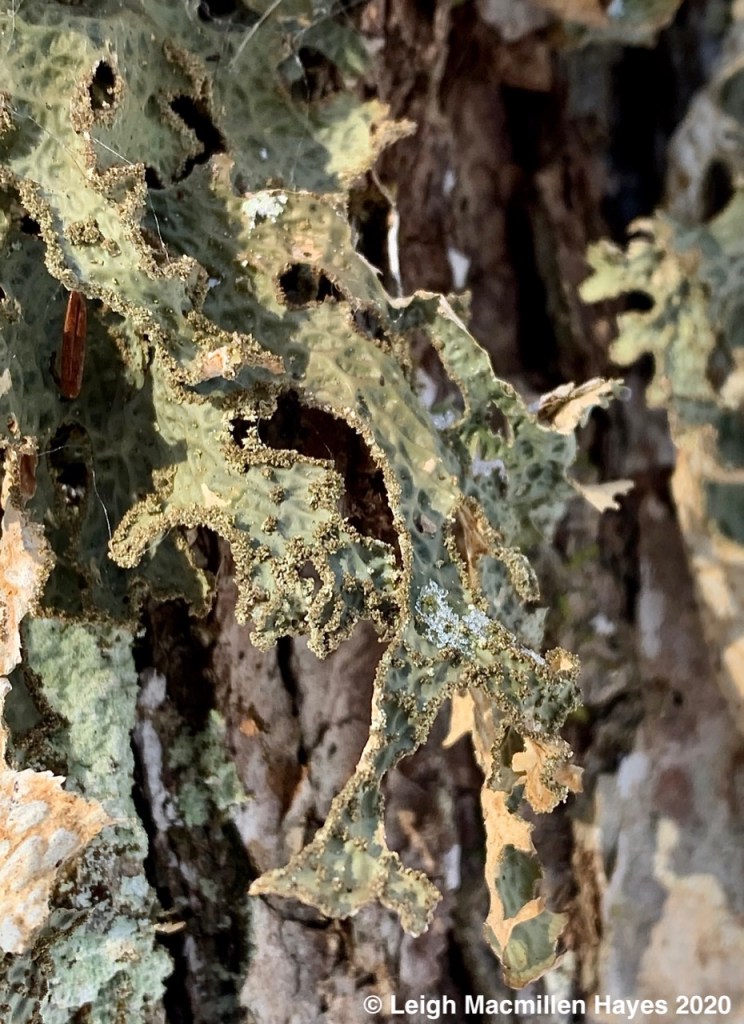


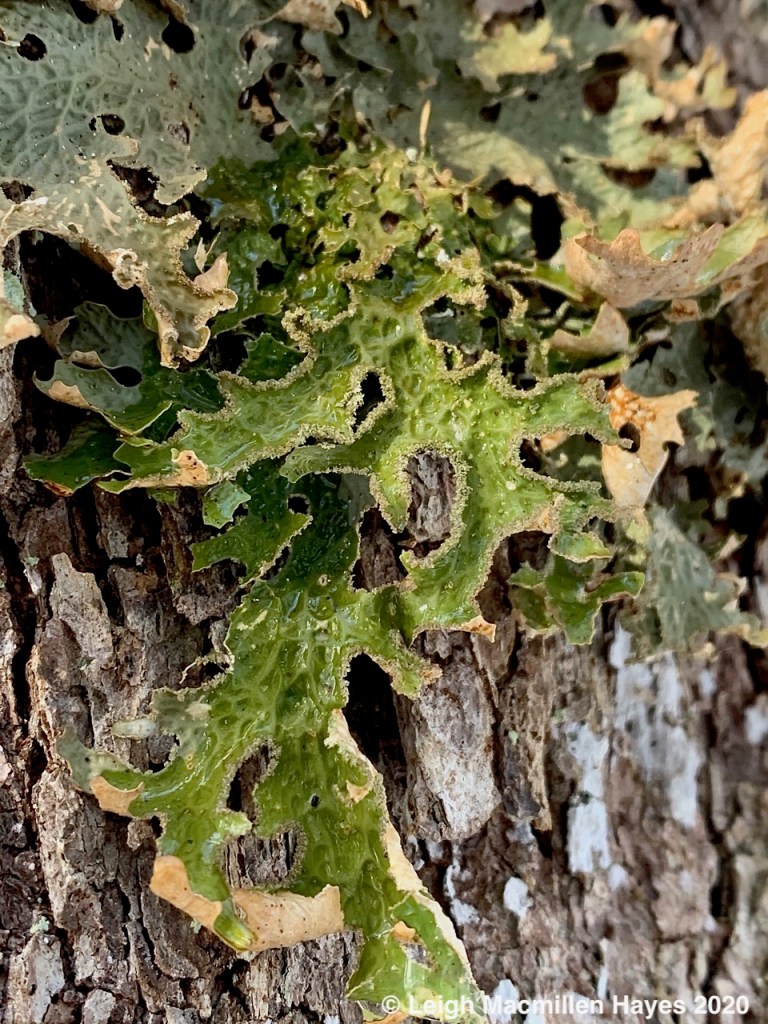
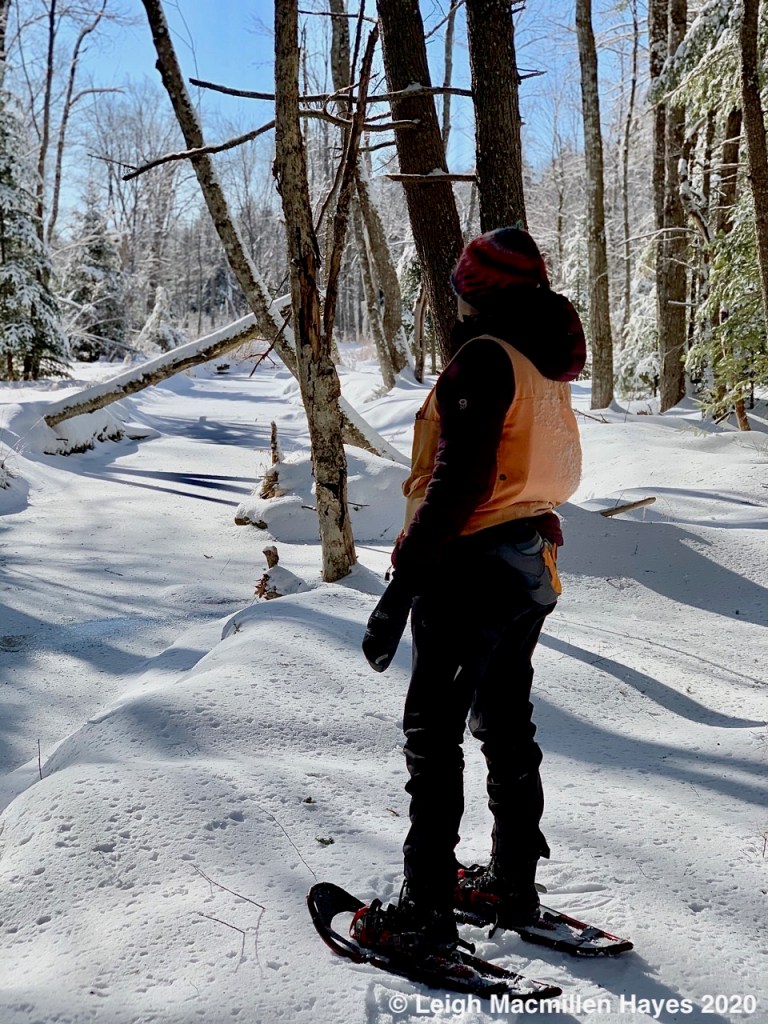


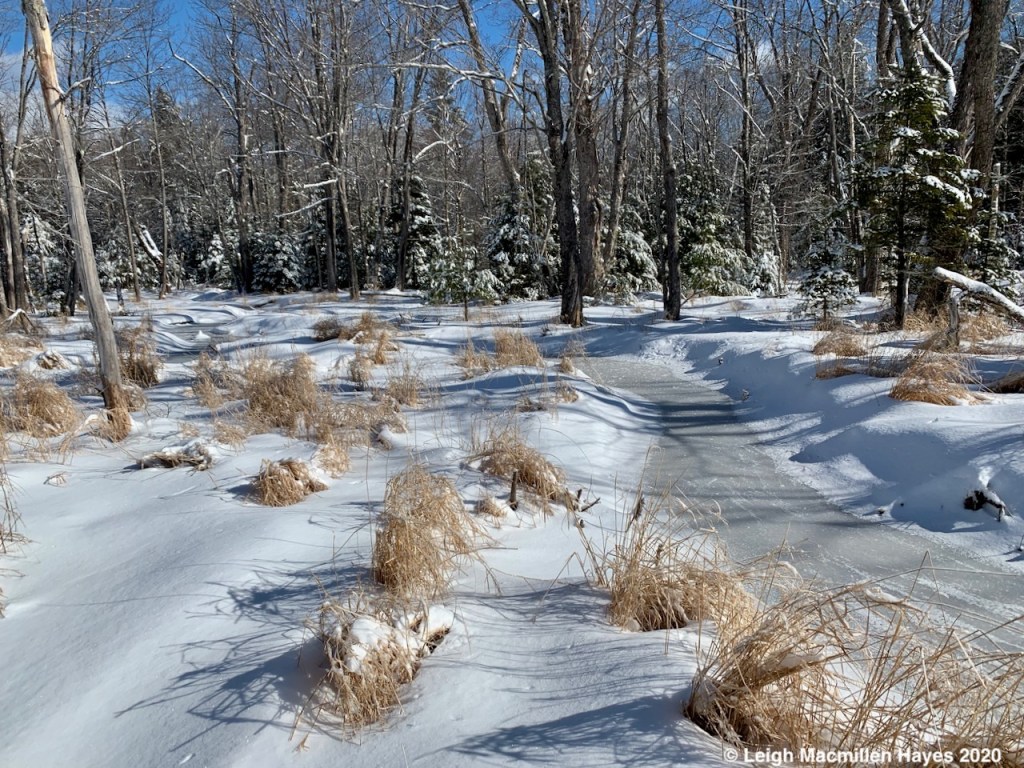
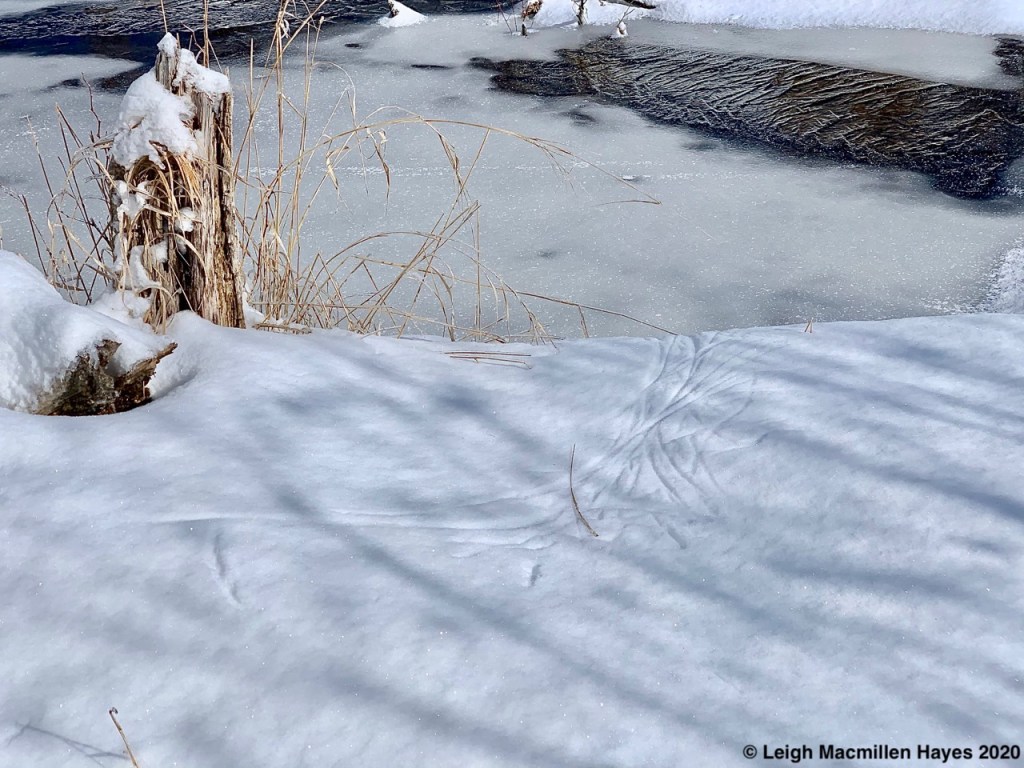

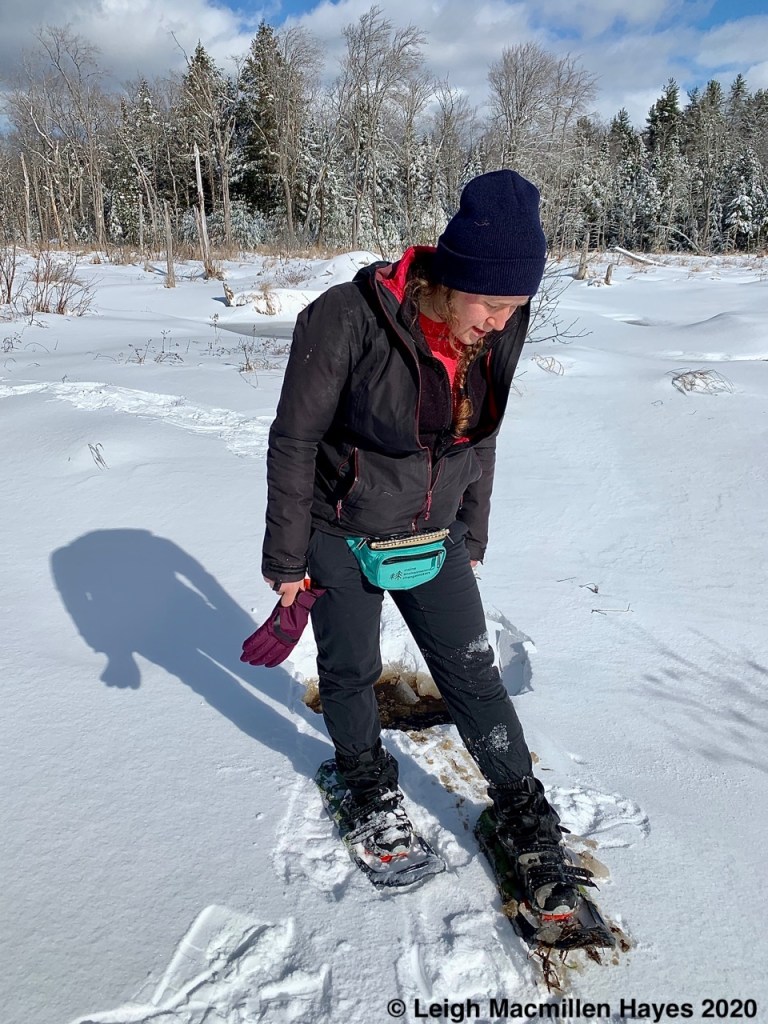

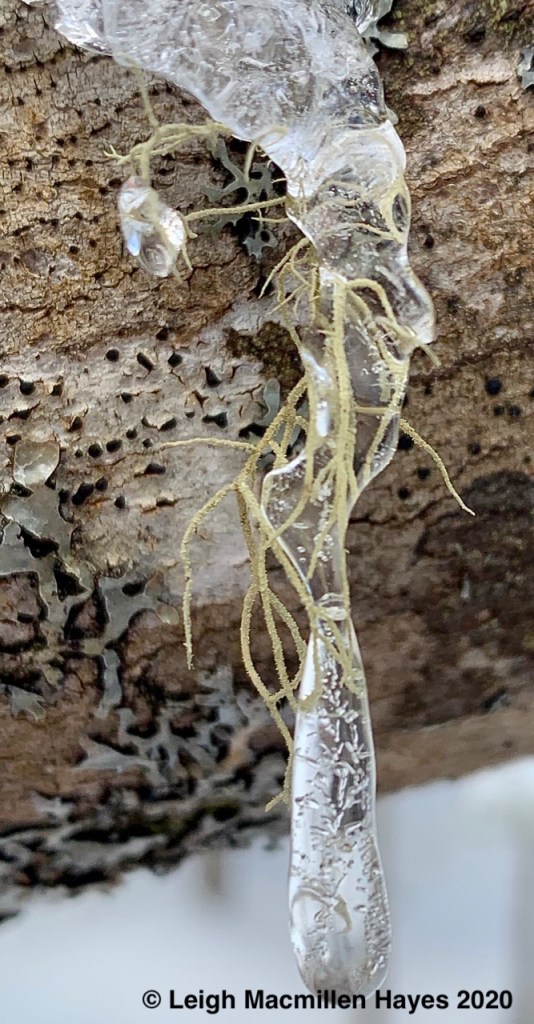
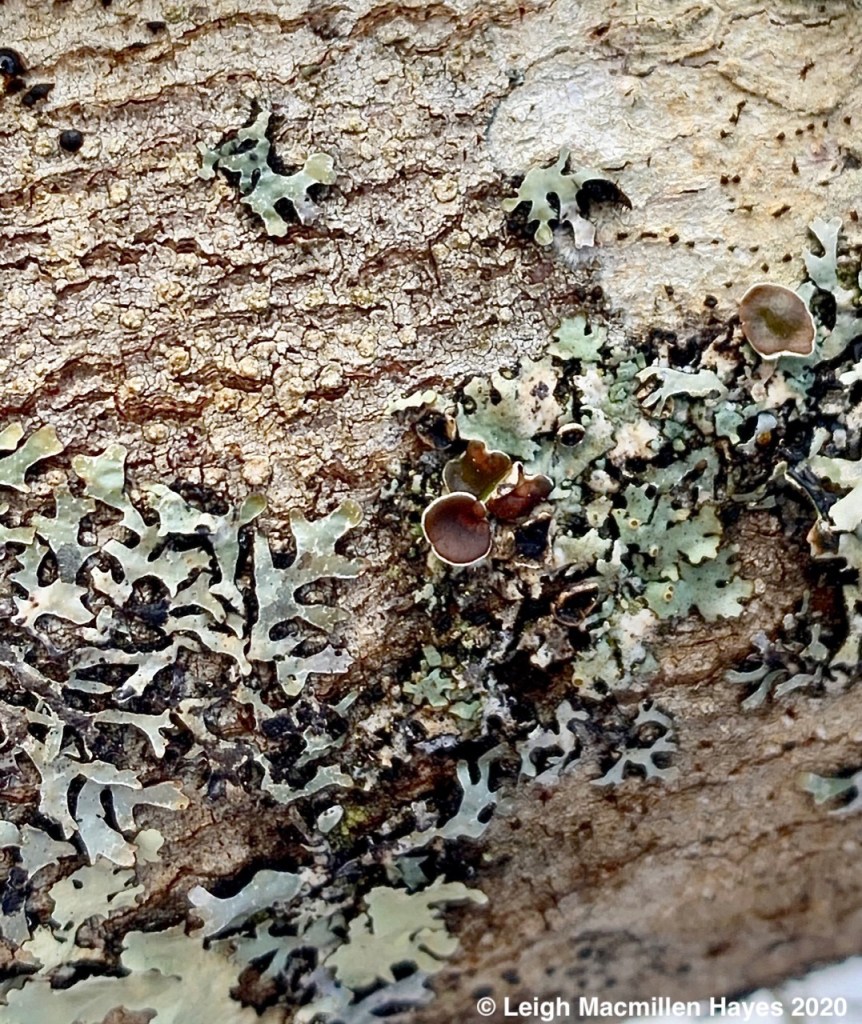
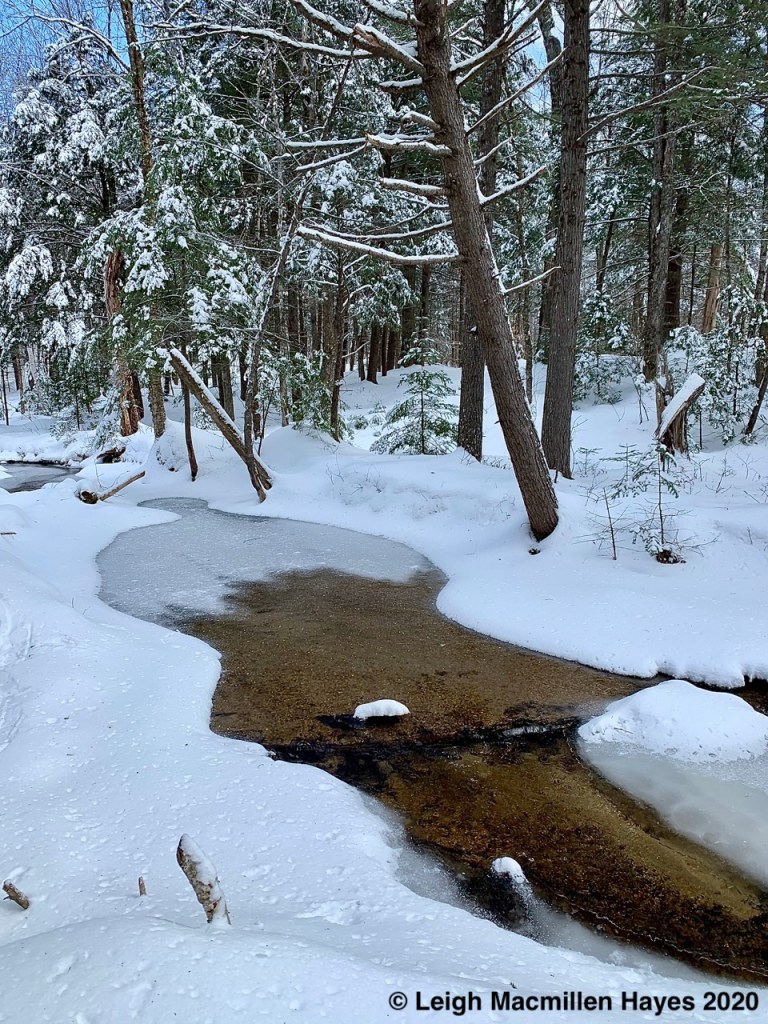


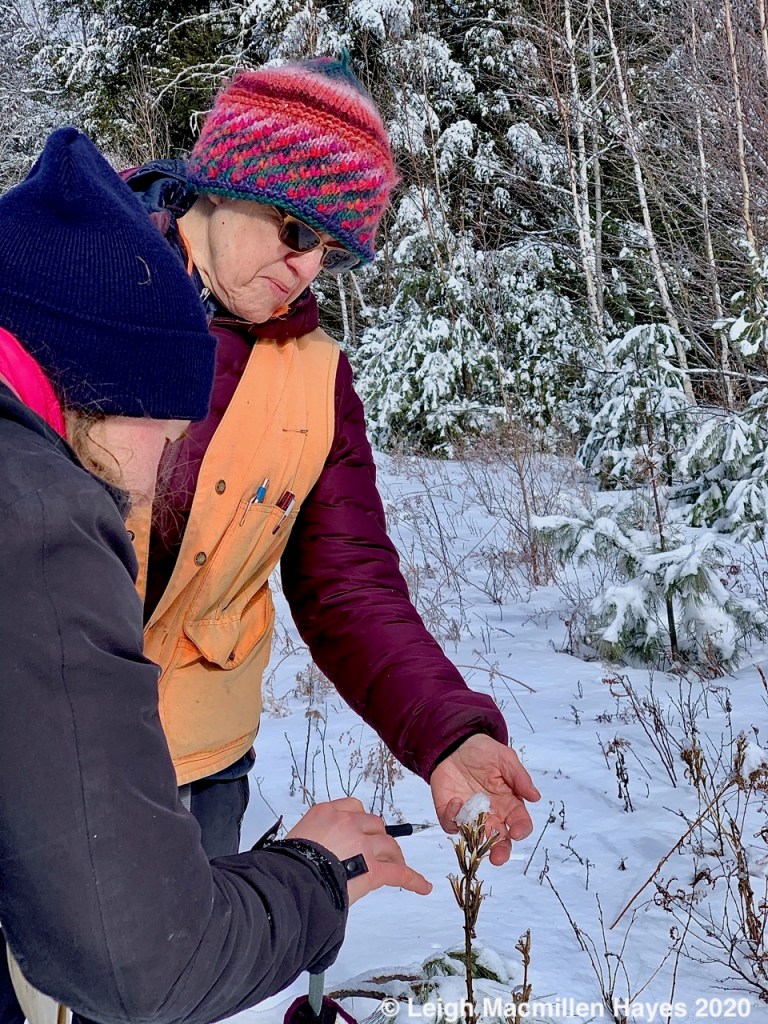


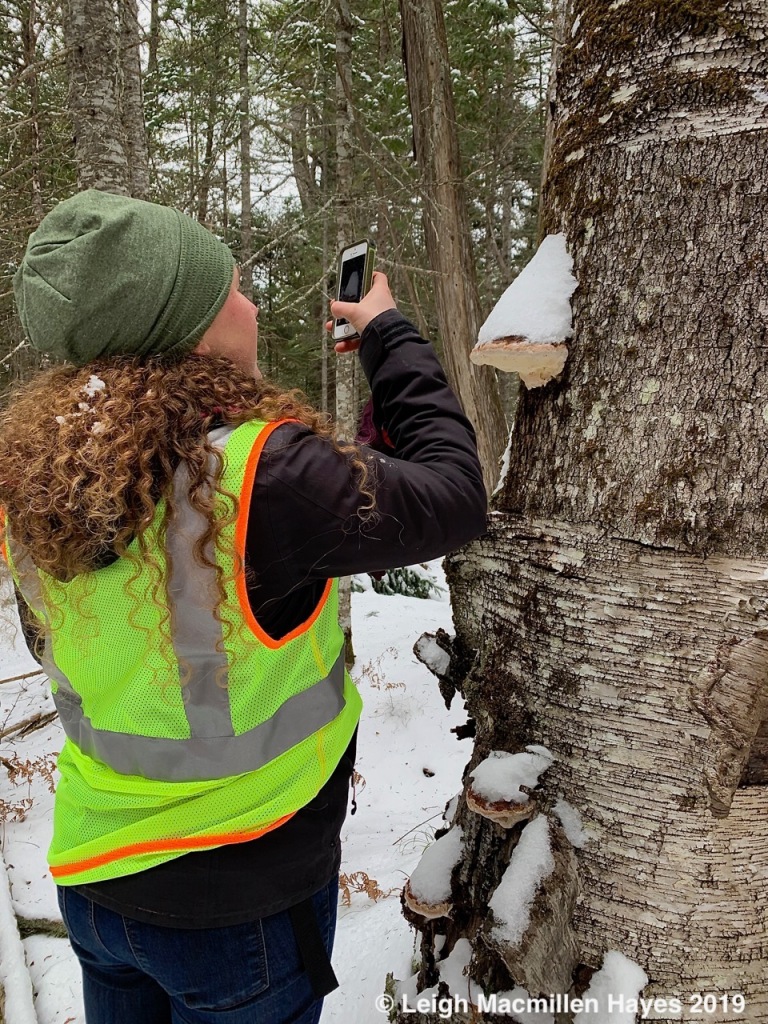

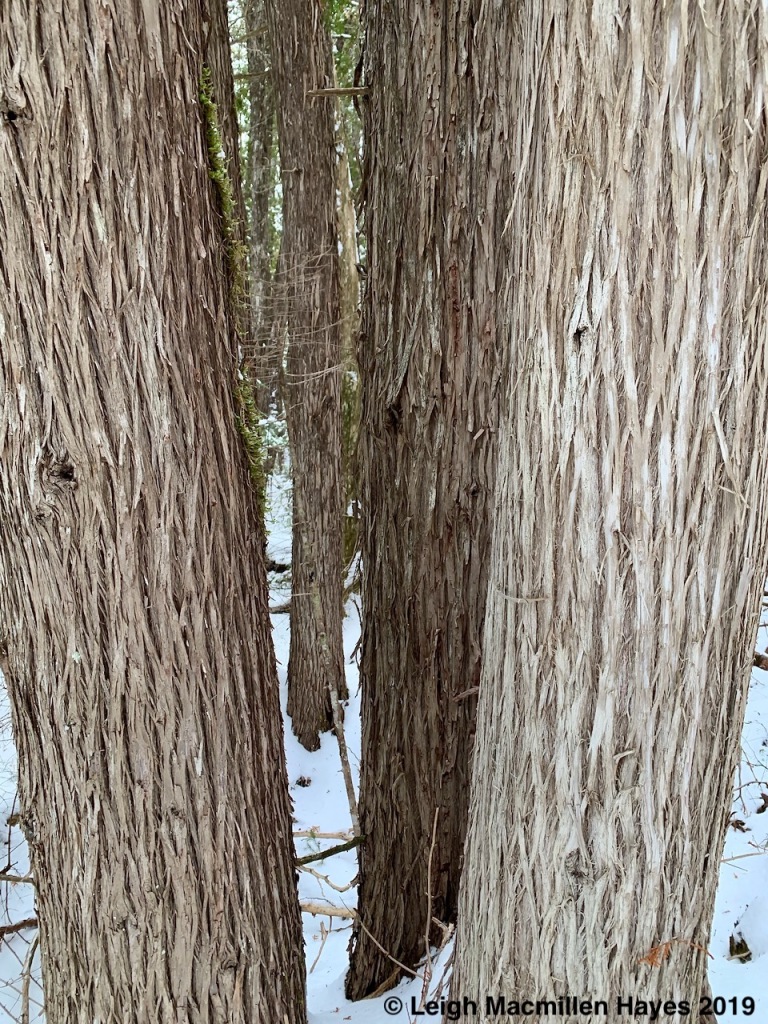
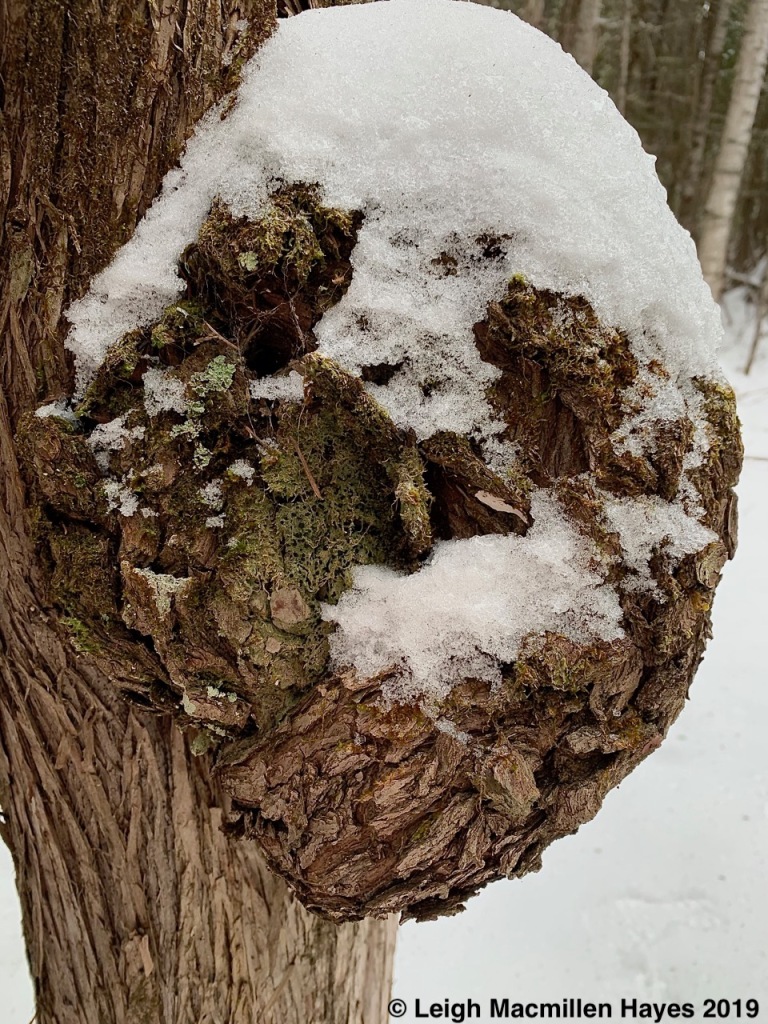
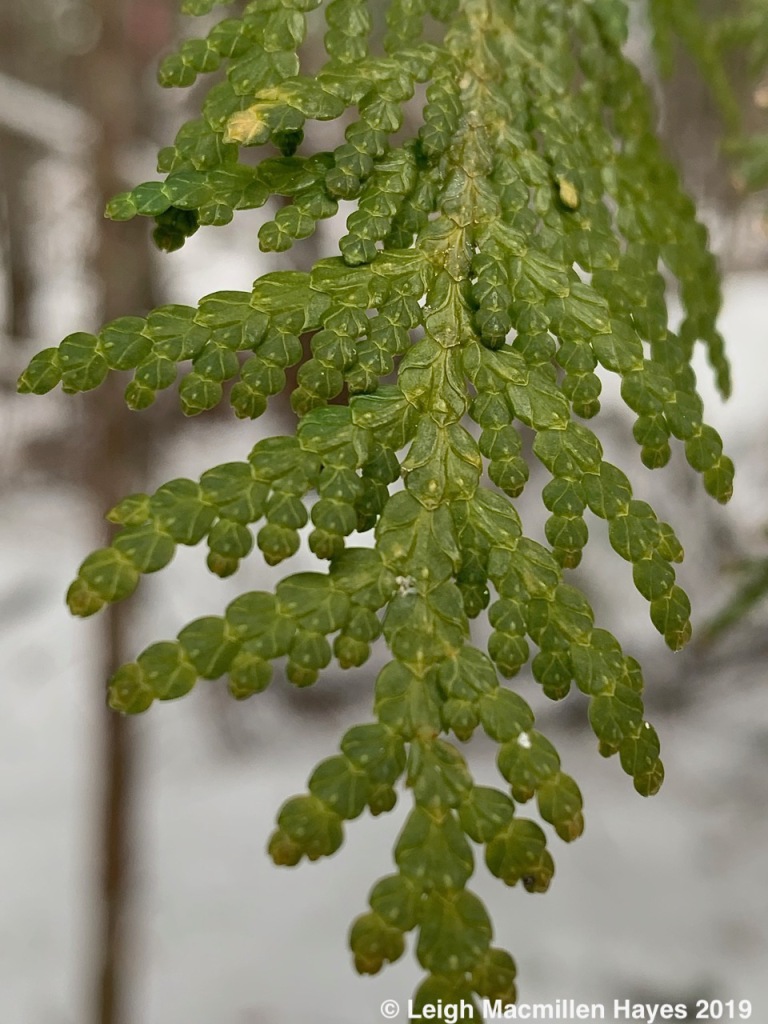
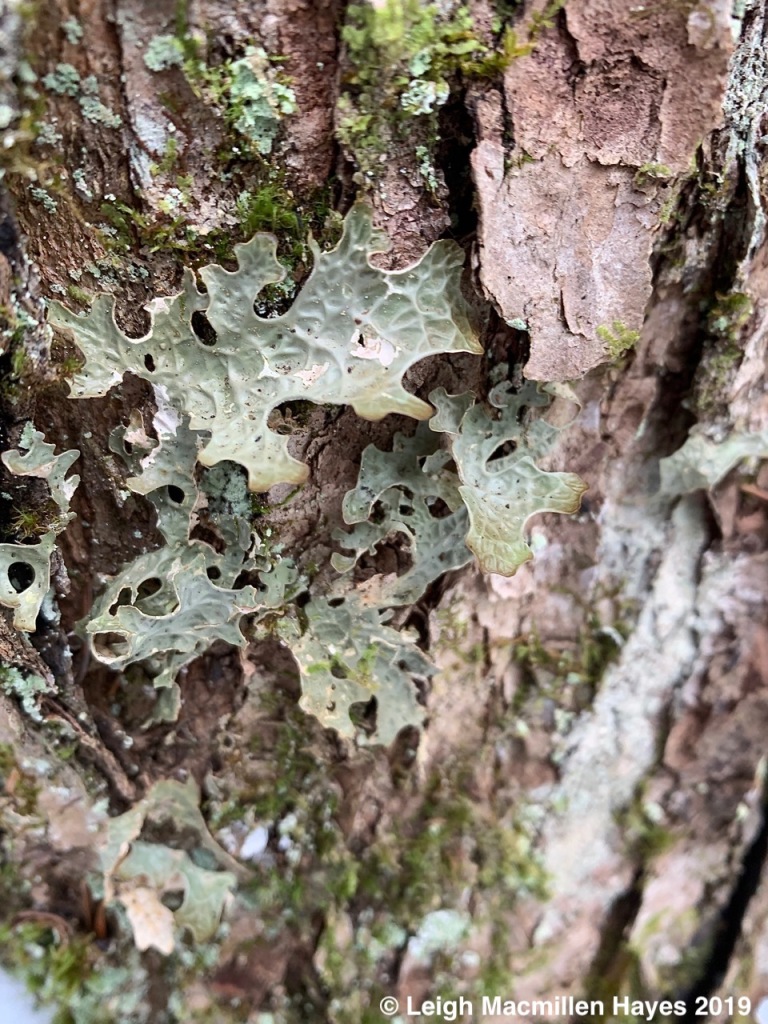
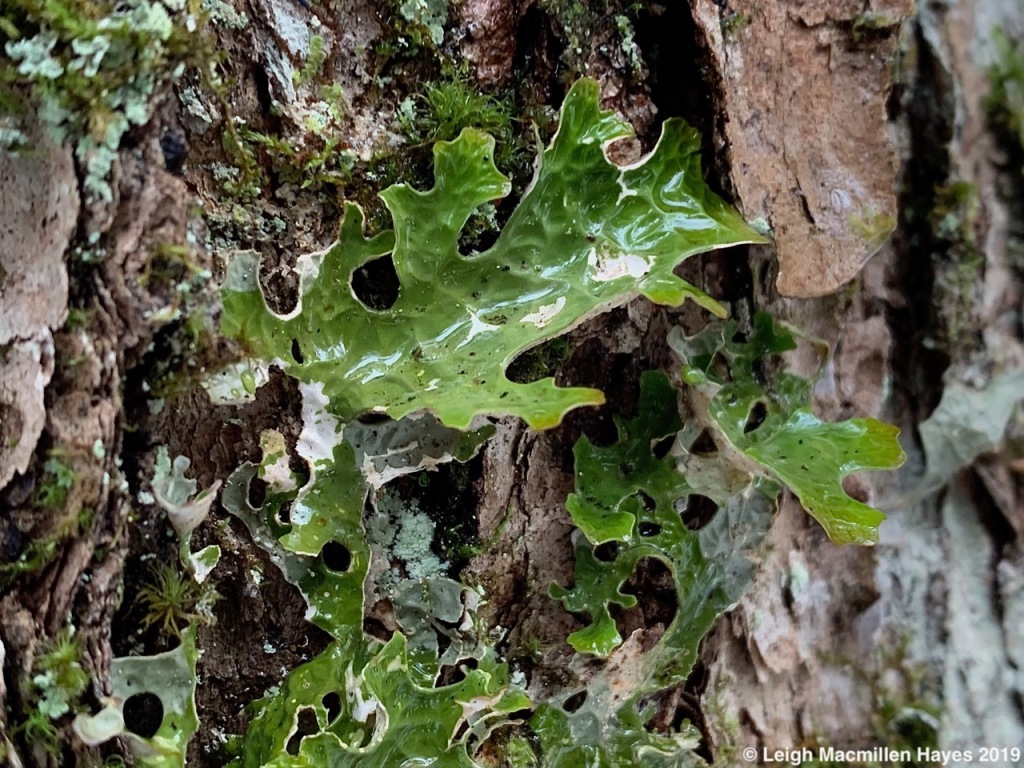
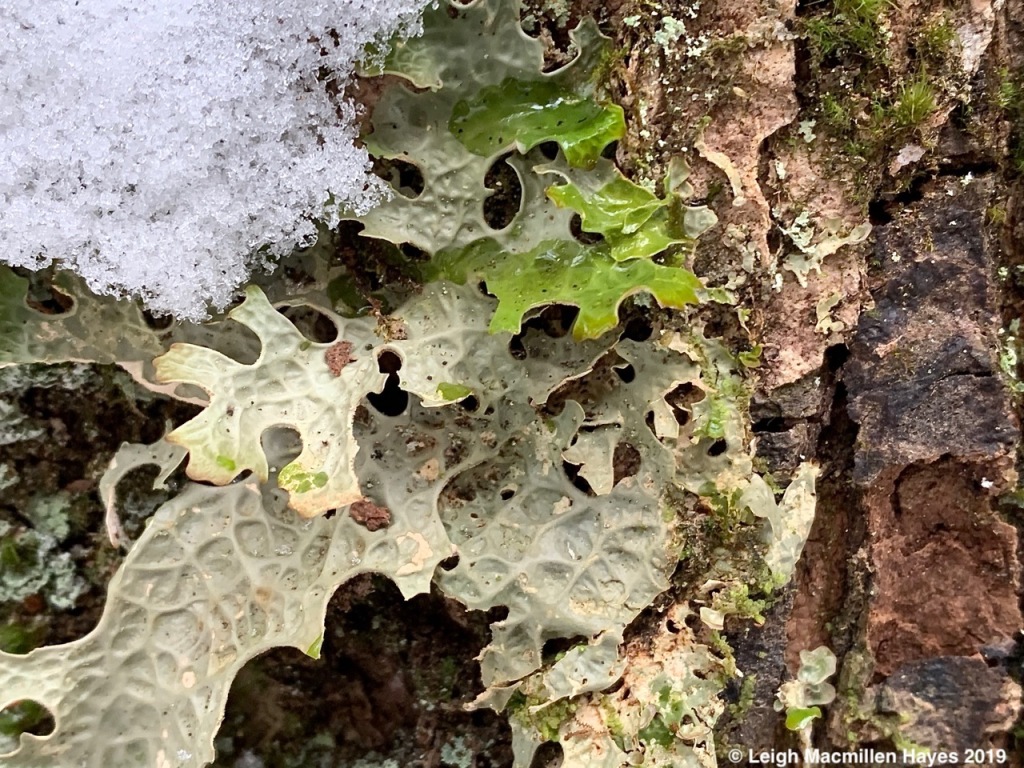
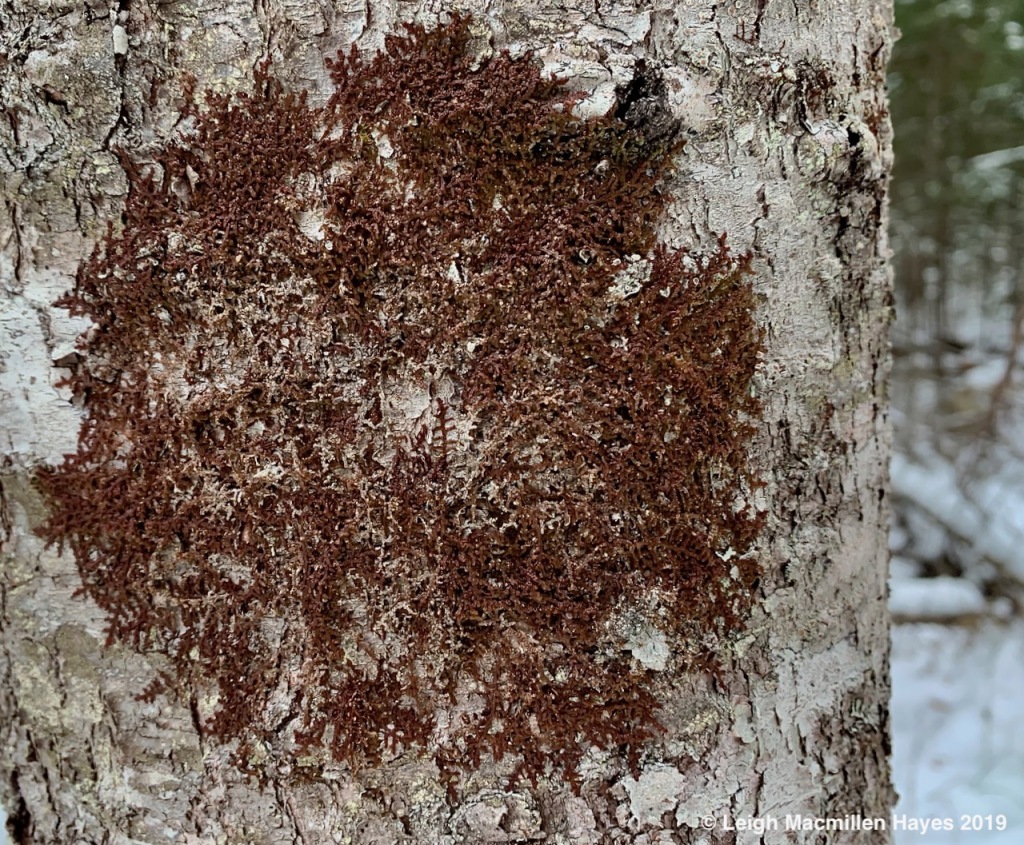
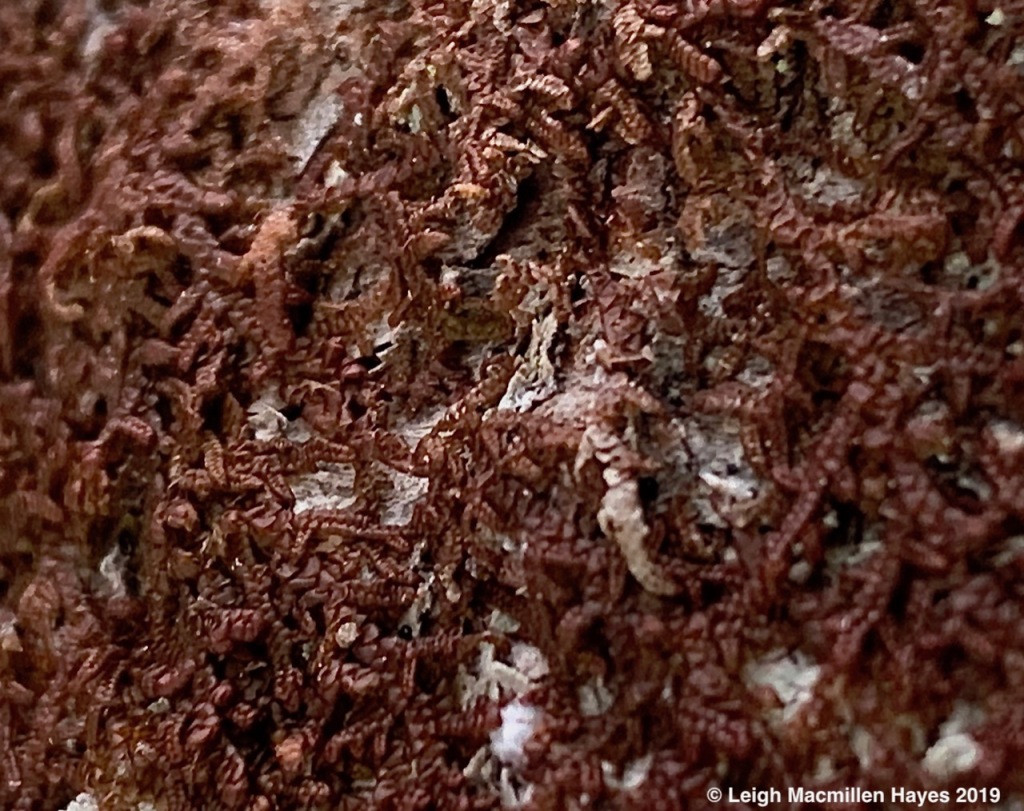
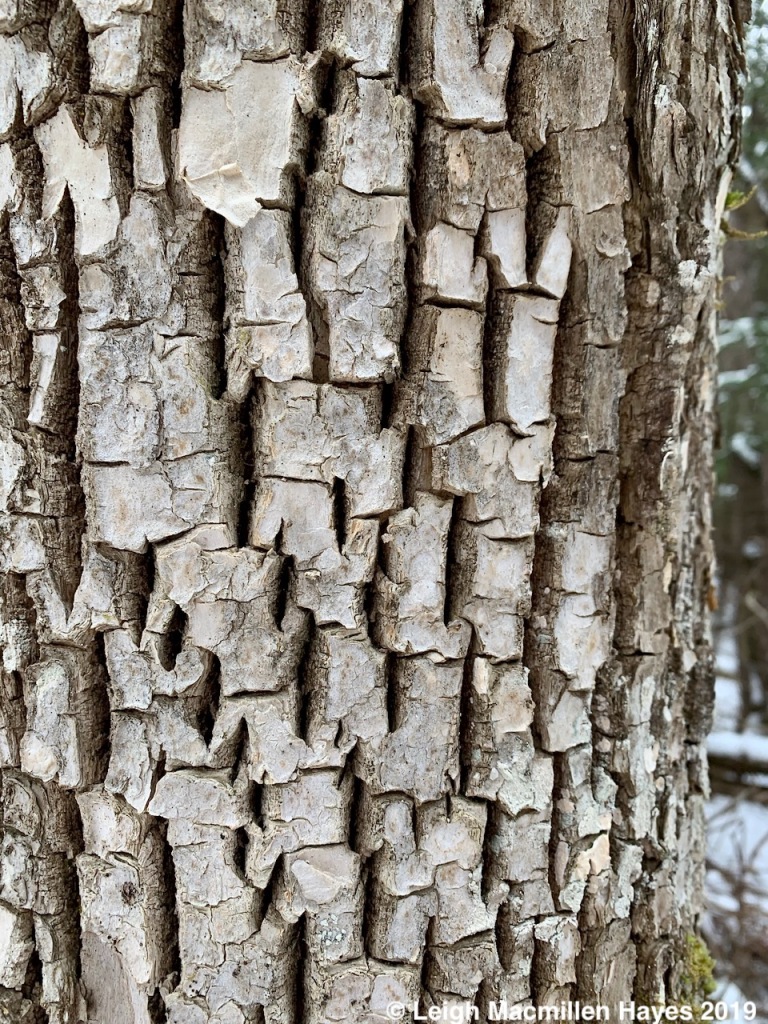
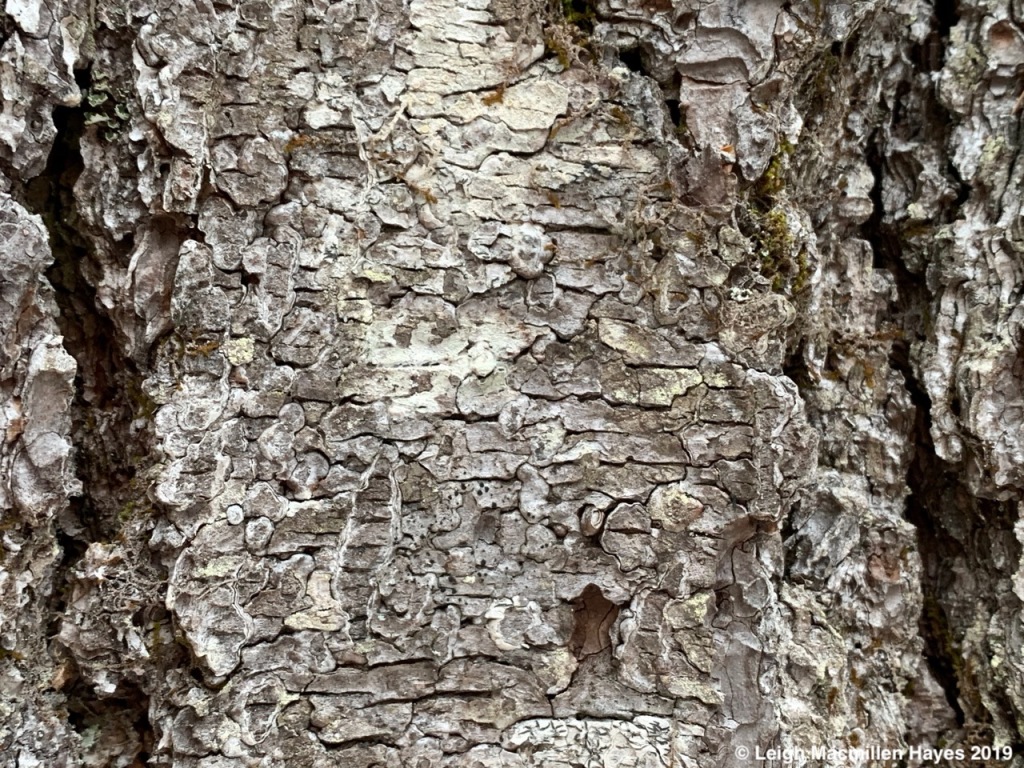
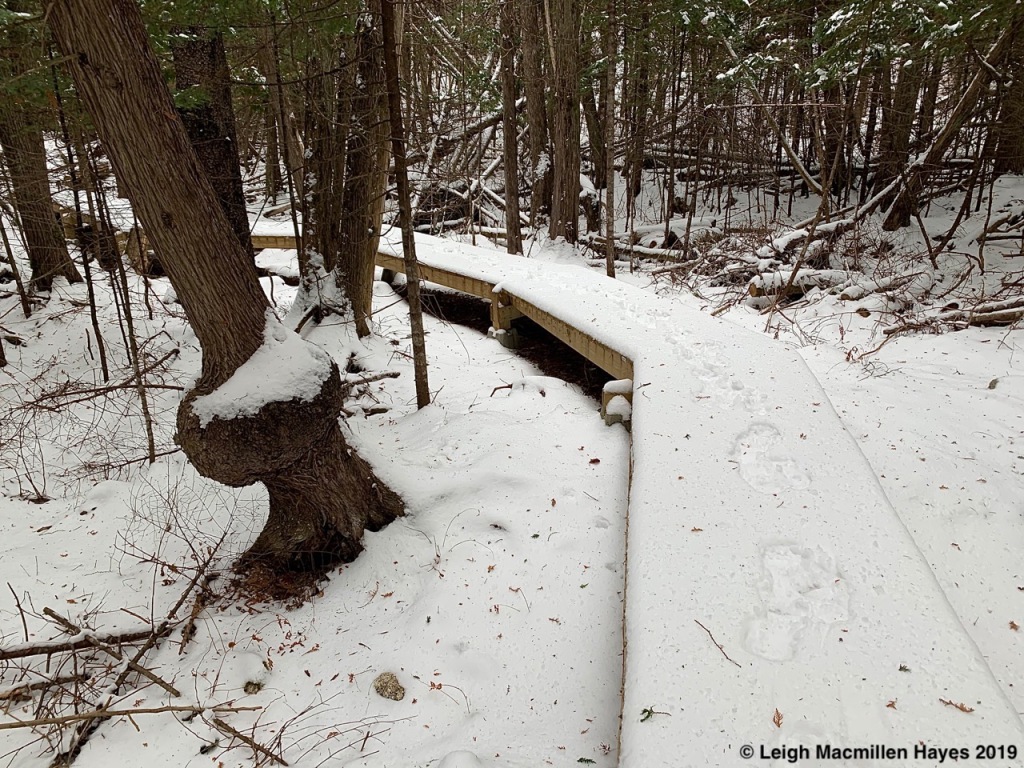
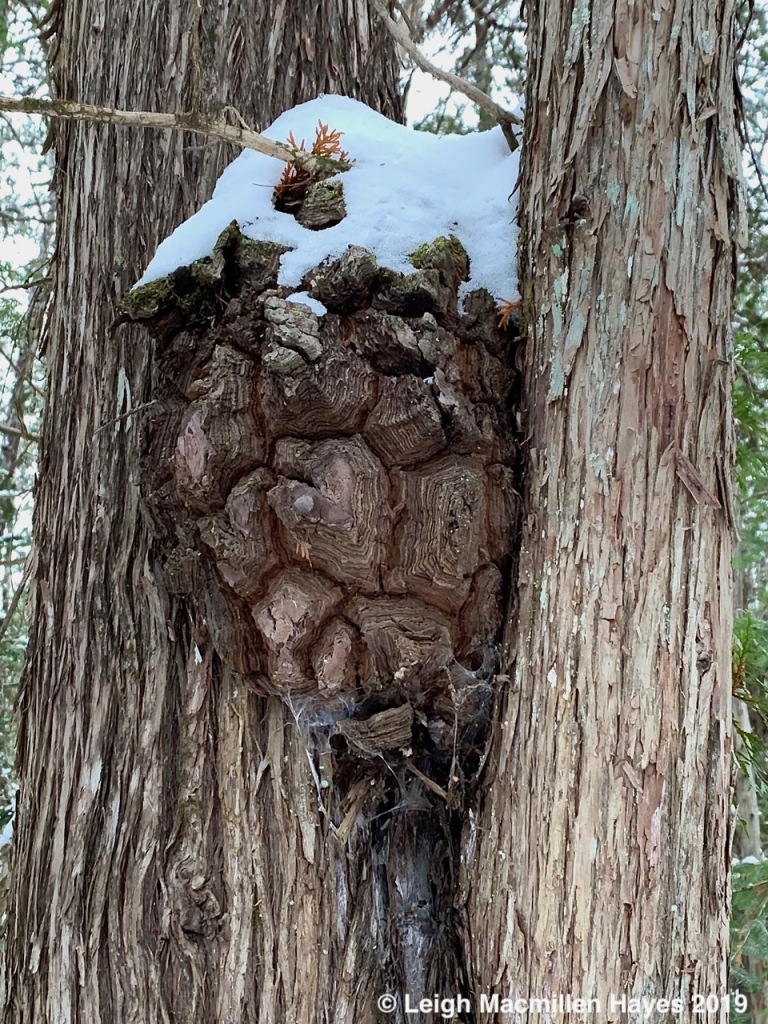

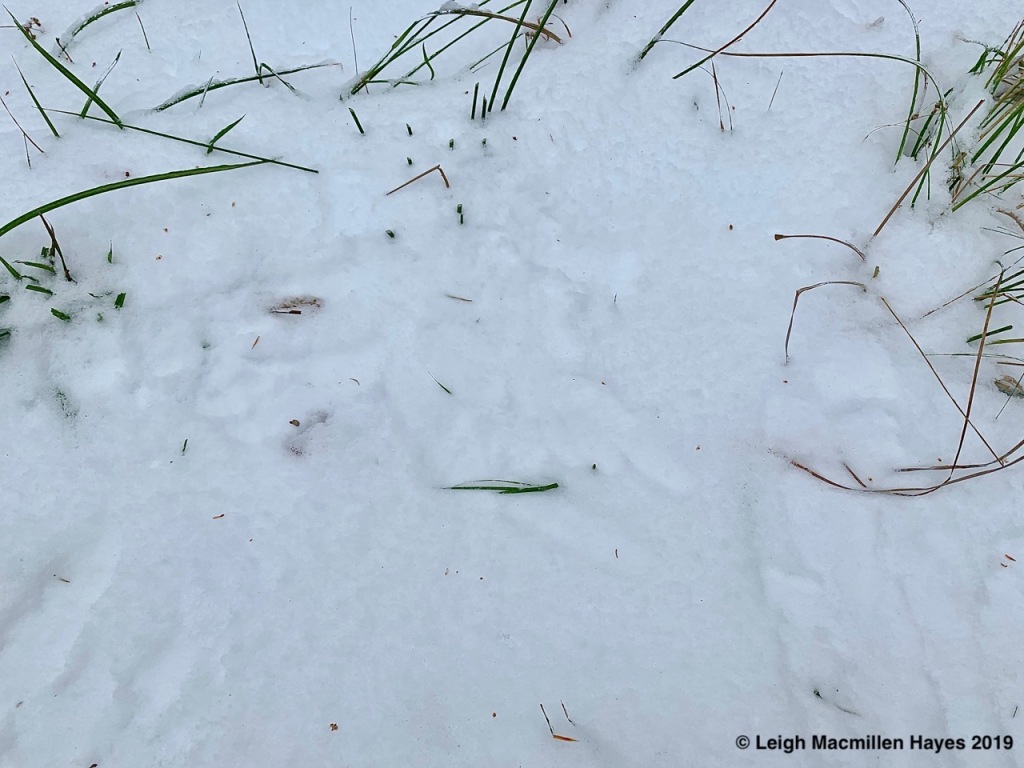
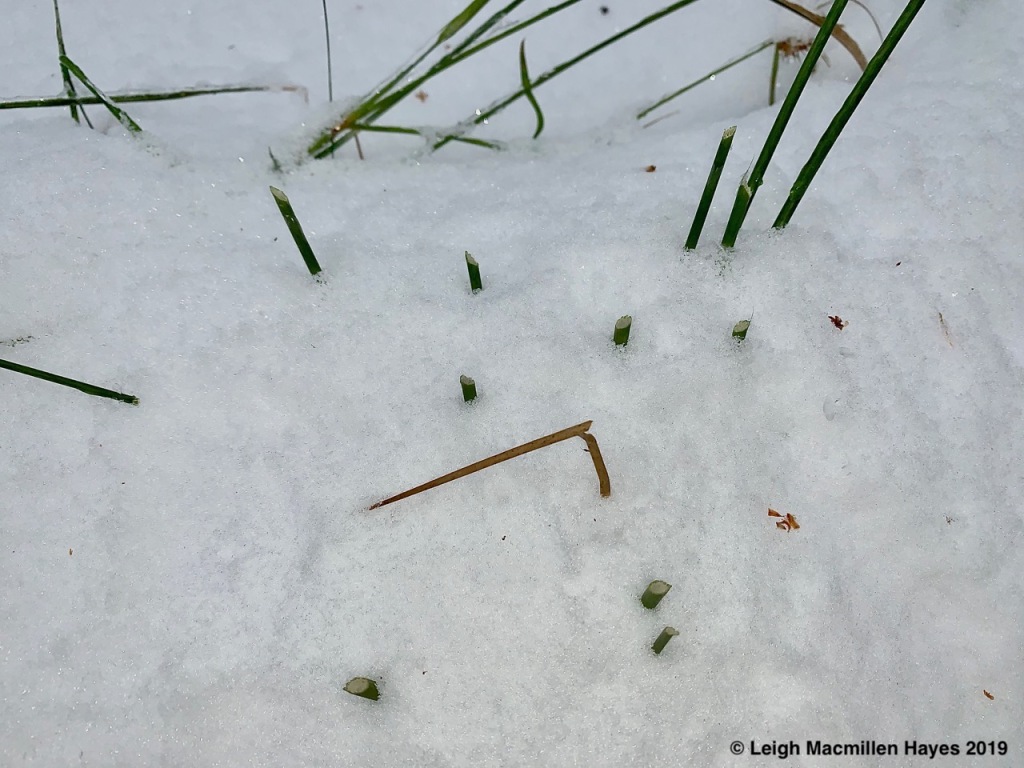
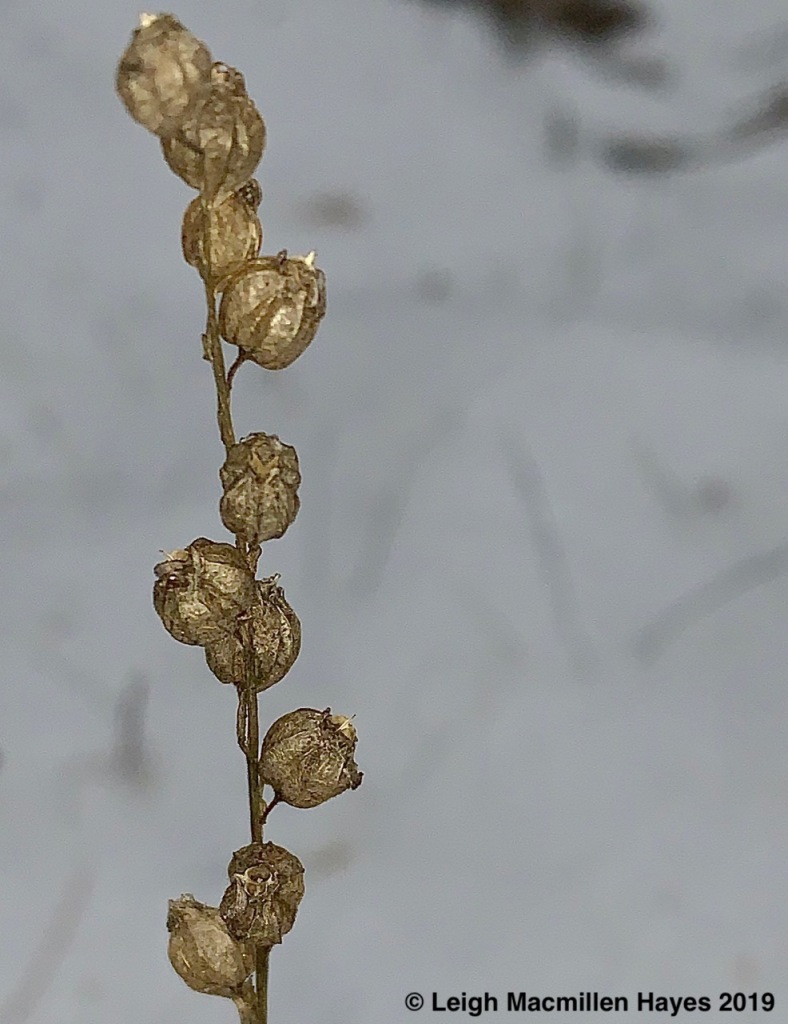
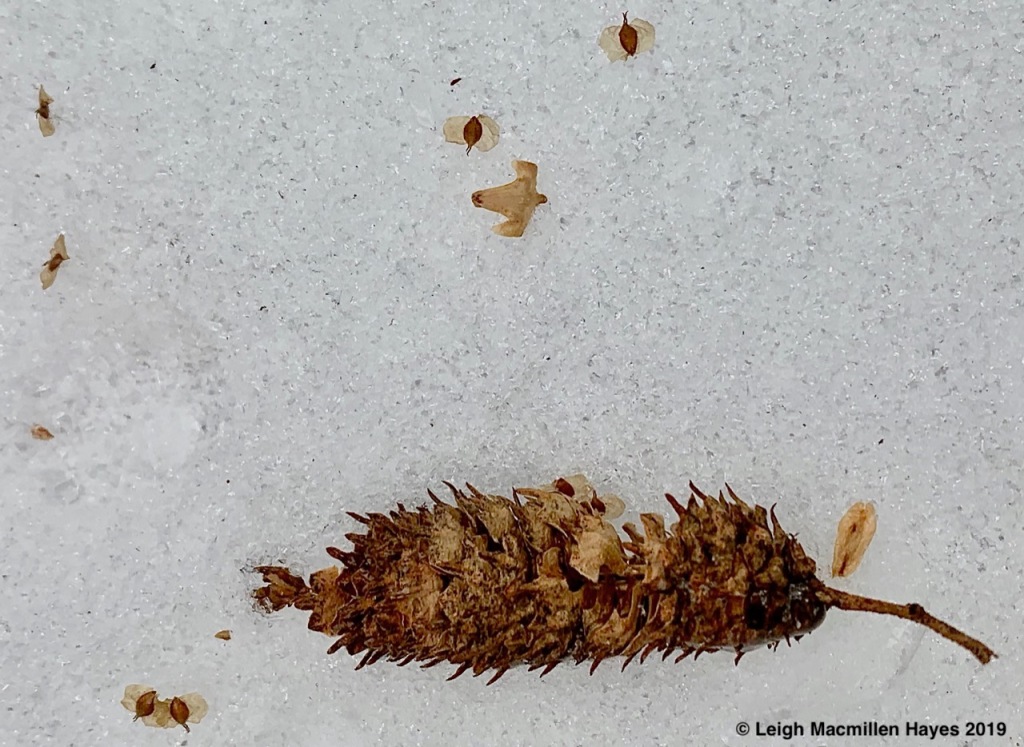
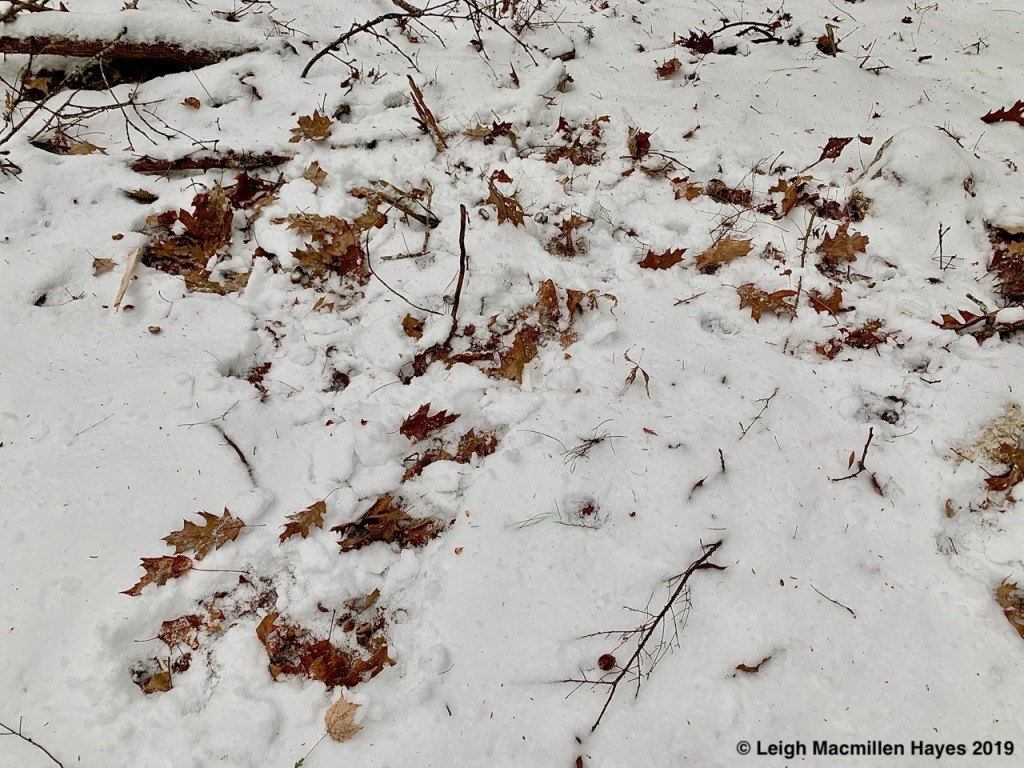
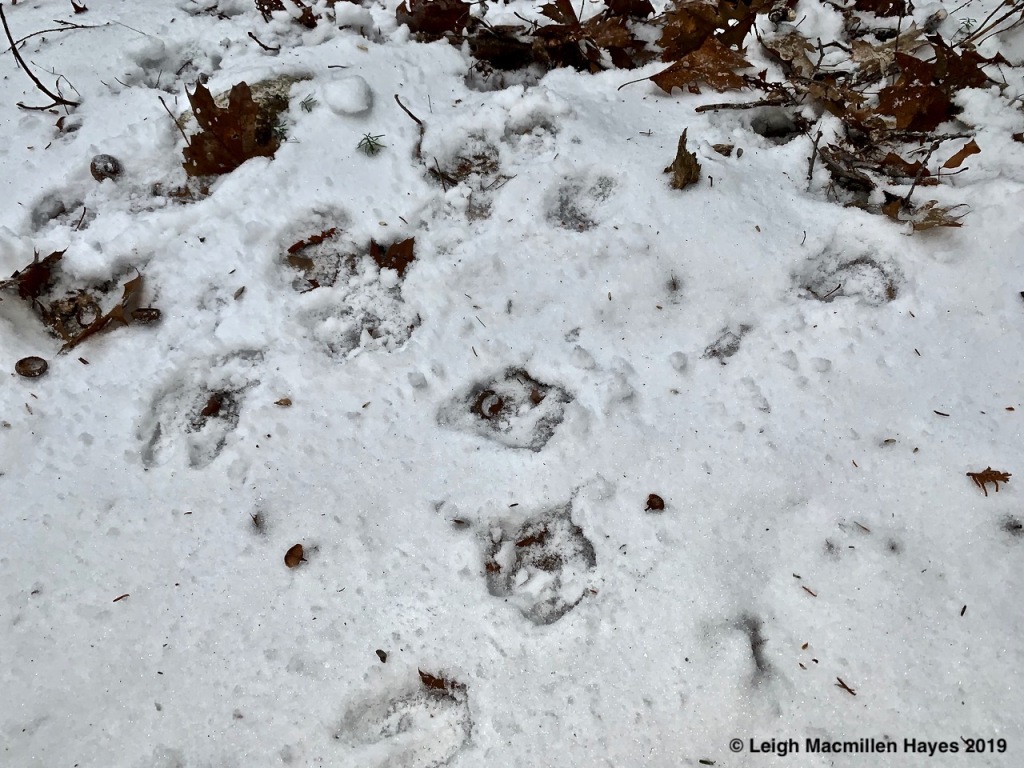
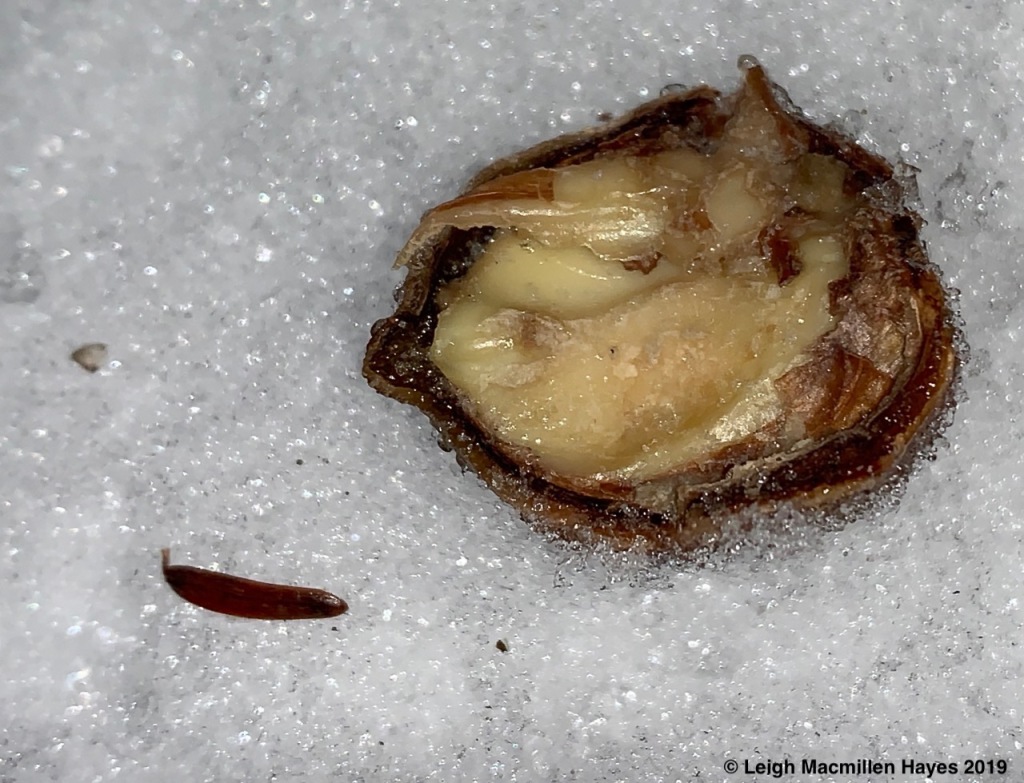
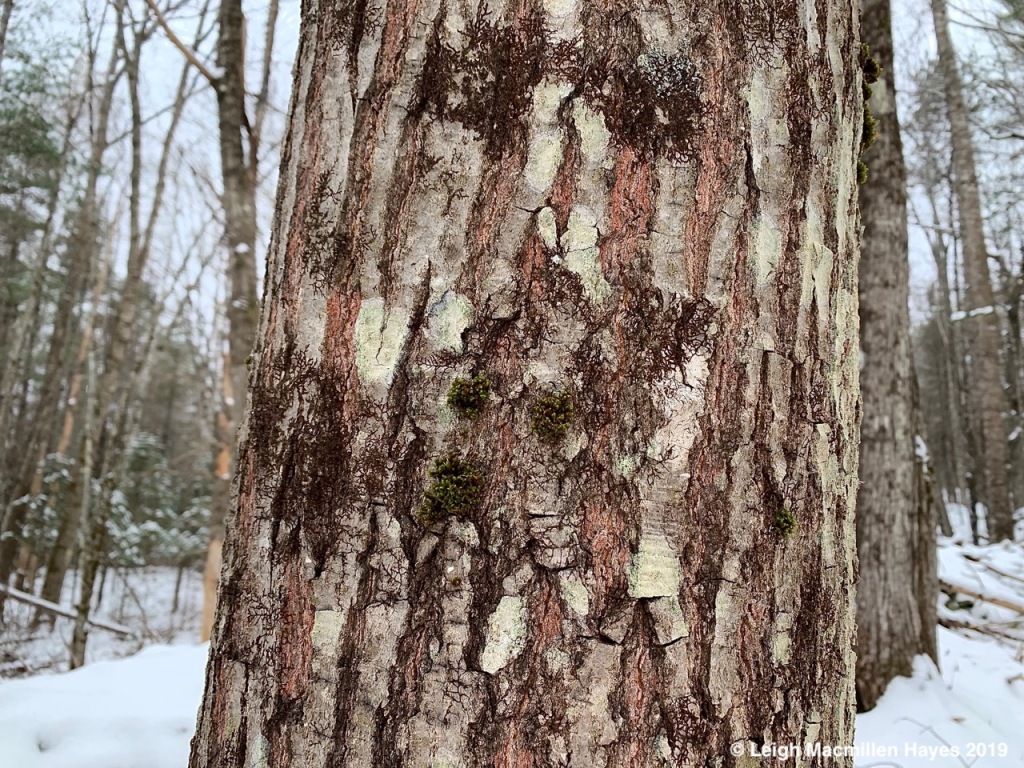
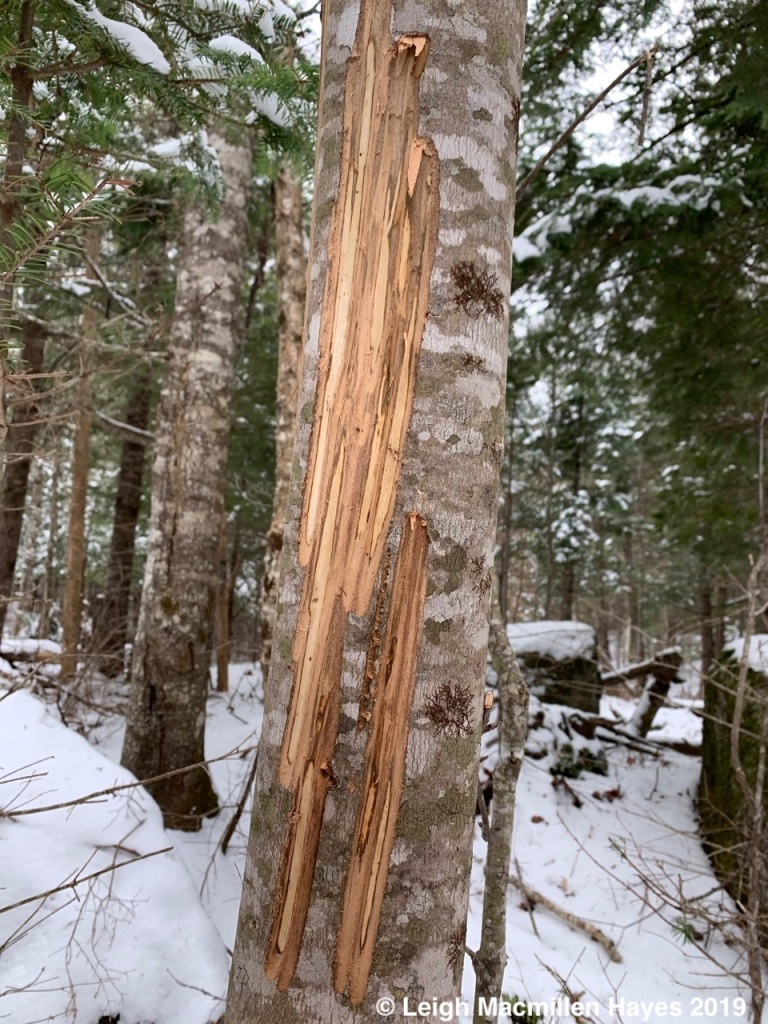
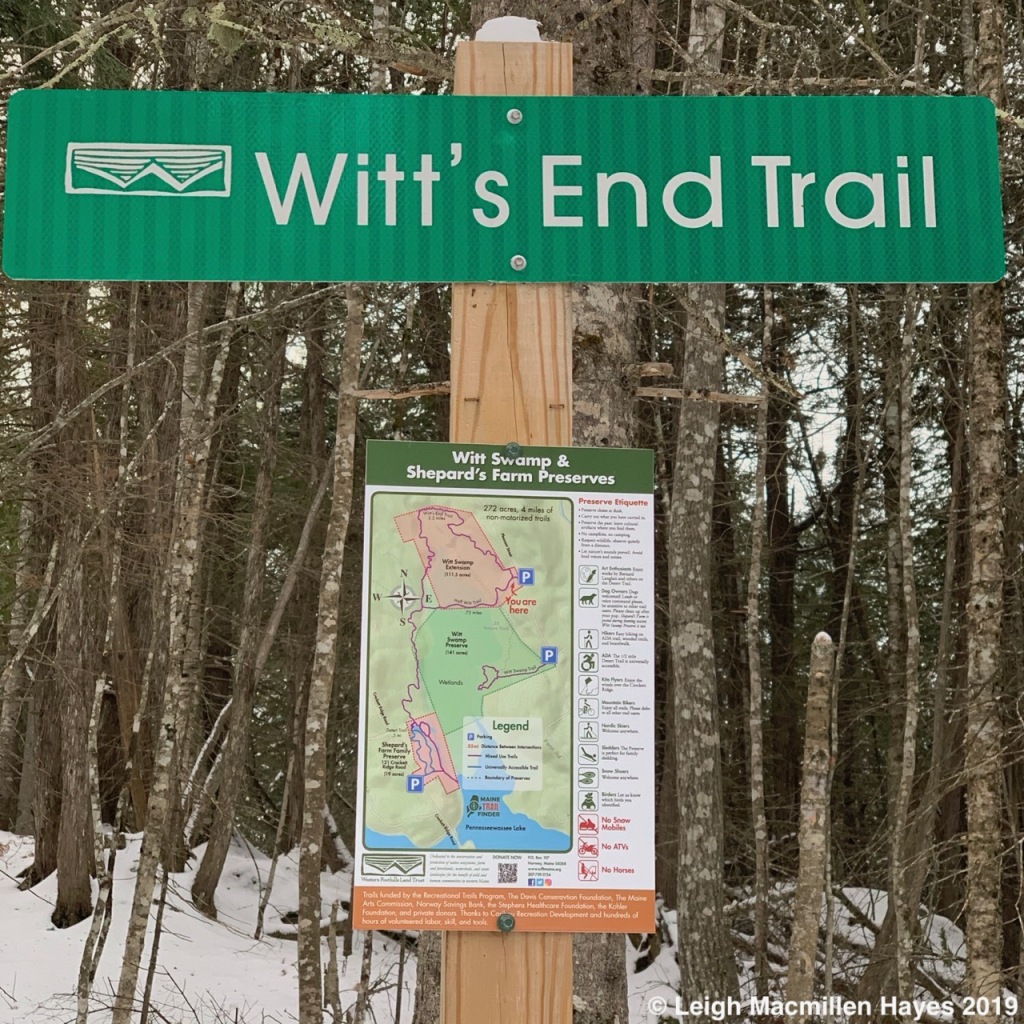

 wondermyway