Beauty and the Brawn: Two Kingdoms

It's a mix of both realms in the natural world;
a kingdom of beauty and a kingdom of brawn; 
and sometimes a kingdom that includes both, 
in such a way that it's all about one's perspective. 
Beauty fluttered in one recent day,
Upon hairy wings of orange and gray. 
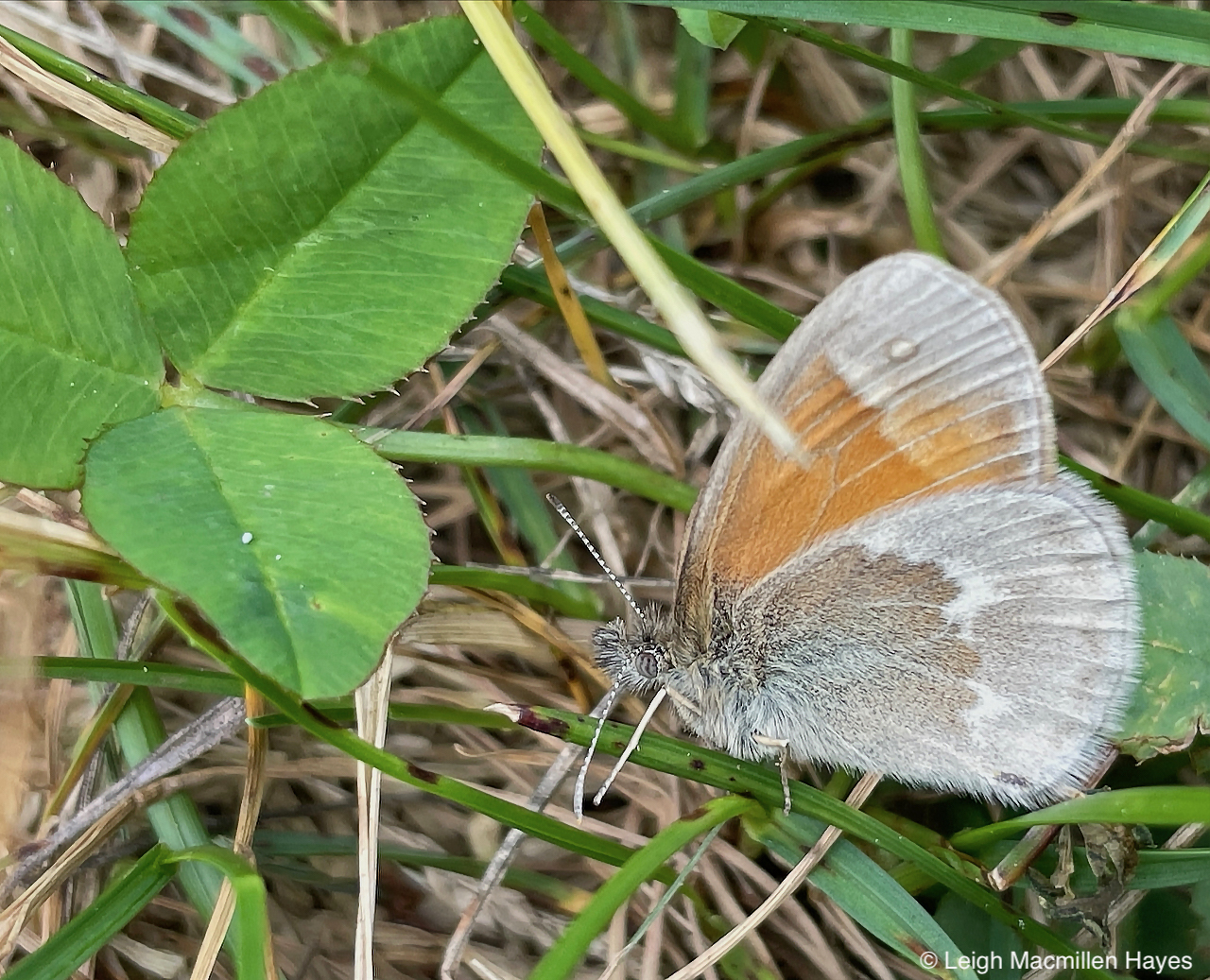
The Inornate Ringlet Butterfly
May have lacked adornment, 
But its textures and lines and colors
From the zebra-striped antennae 
To fringed wings gave pause
In its teeny exquisite way. 
On a much larger scale, 
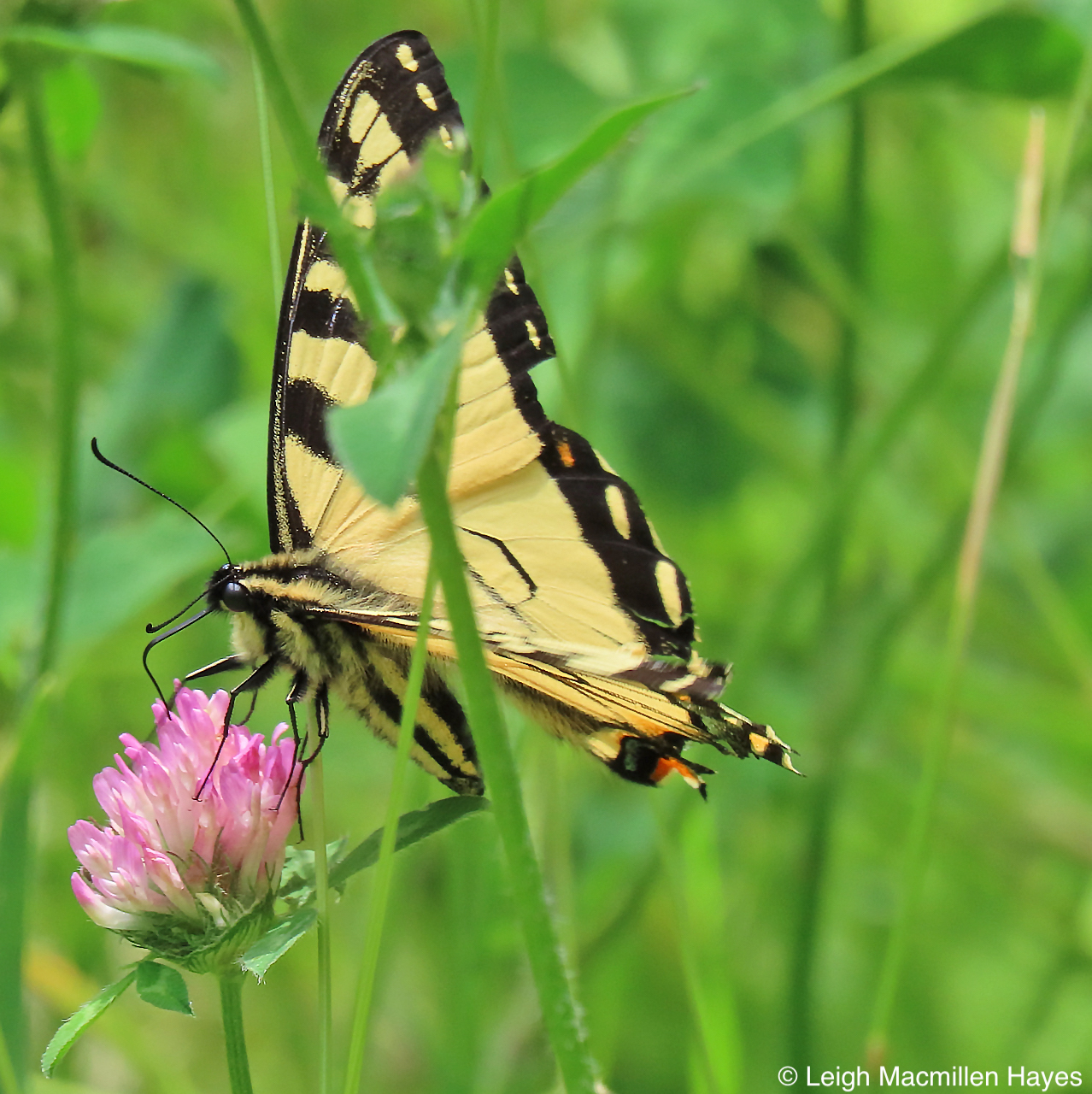
Upon a clover posed, 
A Tiger Swallowtail seeking sugary nectar
For a quick dash of energy 
As sucked through its extended proboscis. 
While the nectar provides nutrition,
It's not enough for that which is 
Utmost upon the butterfly's mind, 
If it is a mind they have, 
Or perhaps pure instinct
That urges them to reproduce. 
A stronger drink is indeed necessary.
The White Admirals
Embraced the same "thought" 
As they congregated 
On a small pile of scat. 
Mud. fermenting fruit, and carrion
Provide the same, 
That stronger drink
A source of sodium and minerals
That males store in their sperm
And pass on as a betrothal gift 
When they canoodle with loved ones, 
Ensuring that a little extra zing
Gives her eggs a better chance of success. 
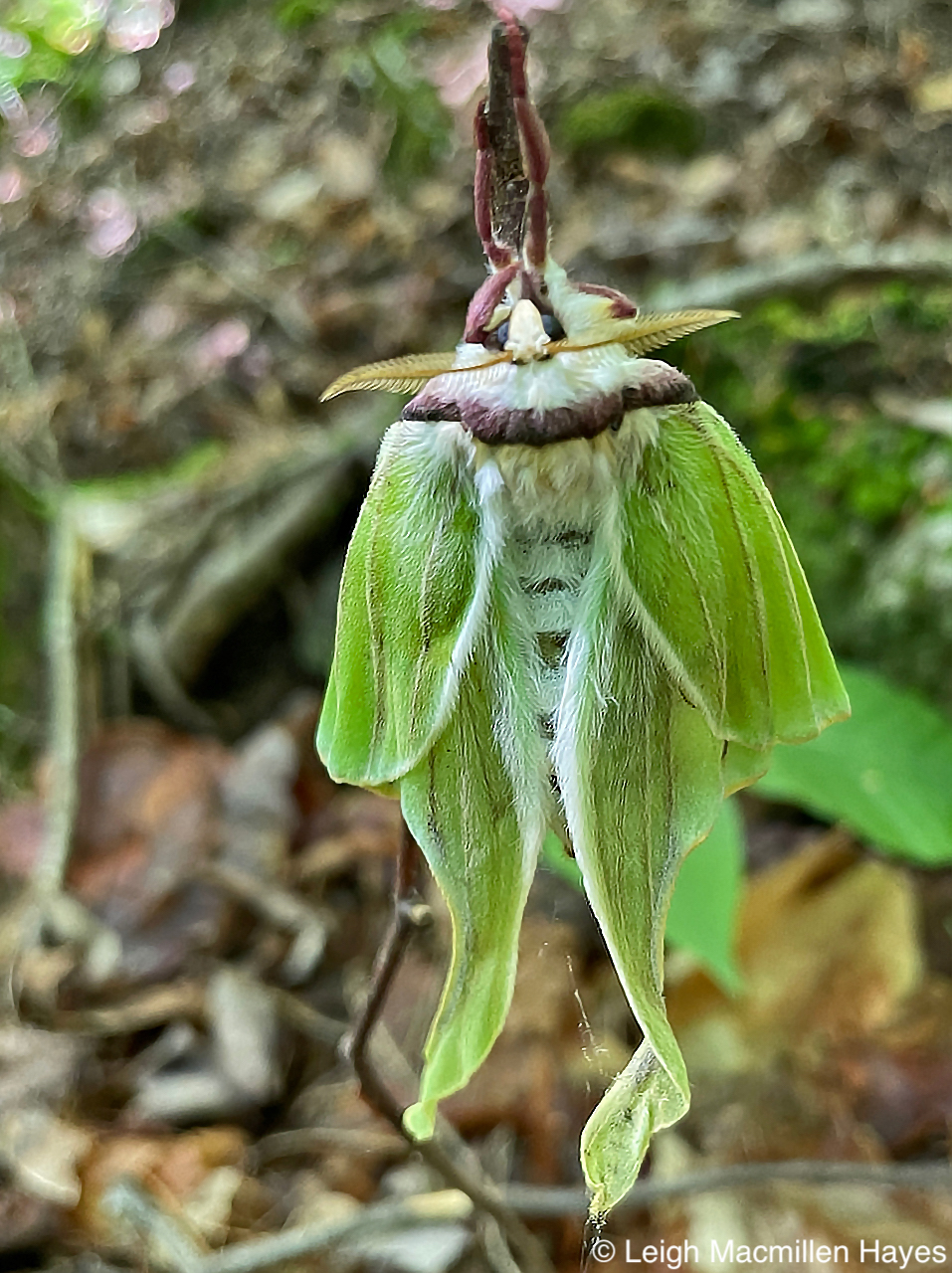
Canoodling is also
At the forefront of 
The Luna Moth's adult form,
So much so, 
That it has no mouthparts 
Or digestive system
Despite its large body. 
With less than a week to mate,
This large silkworm moth
Must smell the pheromones 
Of a female counterpart,
and then . . . and then, 
Death doth come 
As is visible by this find. 
But still it provides an opportunity
To note those broad feathery antennae, 
The light green wings that match the color of leaves, 
And the reddish-brown forewing edges 
Branching out like twigs
In an attempt to avoid predators.
Another nectar feeder, 
The Clearwing Hummingbird Moth,
Hovers with its body stationary
As its transparent wings beat
In such a quick manner 
That they are nearly invisible. 
Unlike most moths, 
These take to the air 
Throughout the day. 
The subject matter transitions
From butterflies and moths 
To others such as a female Metallic Green Sweat Bee,
So named for her color 
And preference for seeking salts upon our skin.
Thankfully, unlike some bees, 
She isn't aggressive.
Rather, she's a buzz pollinator,
One who grabs the anther 
Of a flower with her mandibles, 
Curls her abdomen around it,
Vibrates her wing muscles, 
And relishes with glory 
As the anther releases its pollen, 
Which she gathers
Upon her hairy hind legs.
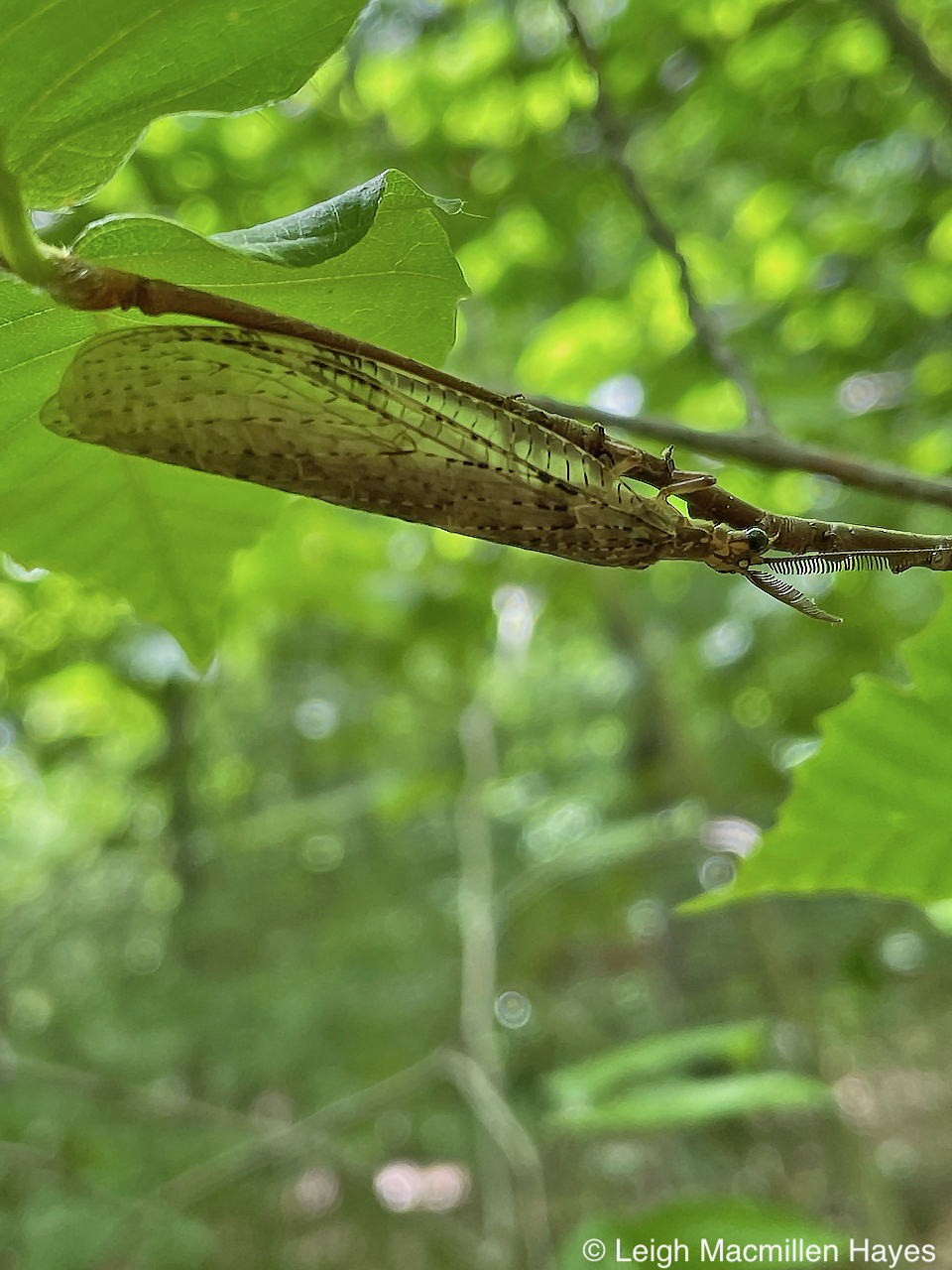
A Spring Fishfly 
I accidentally agreed was a Lacewing
In the field, 
Rests upon a twig 
As is its daytime habit, 
Wings pleated and folder 
Over its shorter abdomen. 
Like the Luna Moth, 
It only lives a few days as an adult. 
The feathery antennae 
Identify it as a male,
One with a twinkle in its eyes. 
Though kind of creepy in nature, 
The Woolly Alder Aphids 
Lead an interesting life. 
Eggs are laid upon Silver Maples, 
And as leaves burst in spring, 
Feeding takes place along the midribs. 
A winged generation soon follows,
Taking advantage that it looks like airborne seeds, 
As it floats through the airways
Until it reaches a Speckled Alder. 
Each little insect is coated 
With waxy streamers that shed water. 
As they imbibe on the Alder's juices
In an effort to gather sufficient nitrogen, 
They release unwanted carbs
In the form of honeydew,
And ants kick into action,
Farming the aphids 
To take advantage 
Of the sweet secretion. 
All is not pretty
In the natural world
Where though some 
Don't have a meal on their minds, 
Others must dine,
Such as this spider, 
That spent several hours
Wrapping a damselfly
For a future meal 
Upon an American Beech leaf. 
That was the first example of brawn, 
An exhibition of physical and muscular strength. 
In the case of the spider, 
I'm not sure I spotted an equal amount of beauty. 
But this Stream Cruiser, 
With its Oreo Cookie coloration
Was a sight to behold,
Despite the fact
That it beheld a meal of it own. 
And finally there was
The Dragonhunter, 
A clubtail dragonfly
Revered for its wide tail,
Large size,  
And bright colorations,
But feared for being 
The Monster of the Dragonfly World 
Due to its aerial ambush
Upon other dragonflies and anything else it can eat. 
It appears there is possible meal 
Dangling below the feet and wings of this one. 

It truly is a world of beauty,
but I recognize also 
that eating for the sake of reproduction
means that brawn is an important part of the mix
in this world of wonder. 

Two kingdoms indeed. 

One Wing, Two Wing

Whether I look up, down, or somewhere between, all that fly have captured my attention lately.

l6-river jewelwing

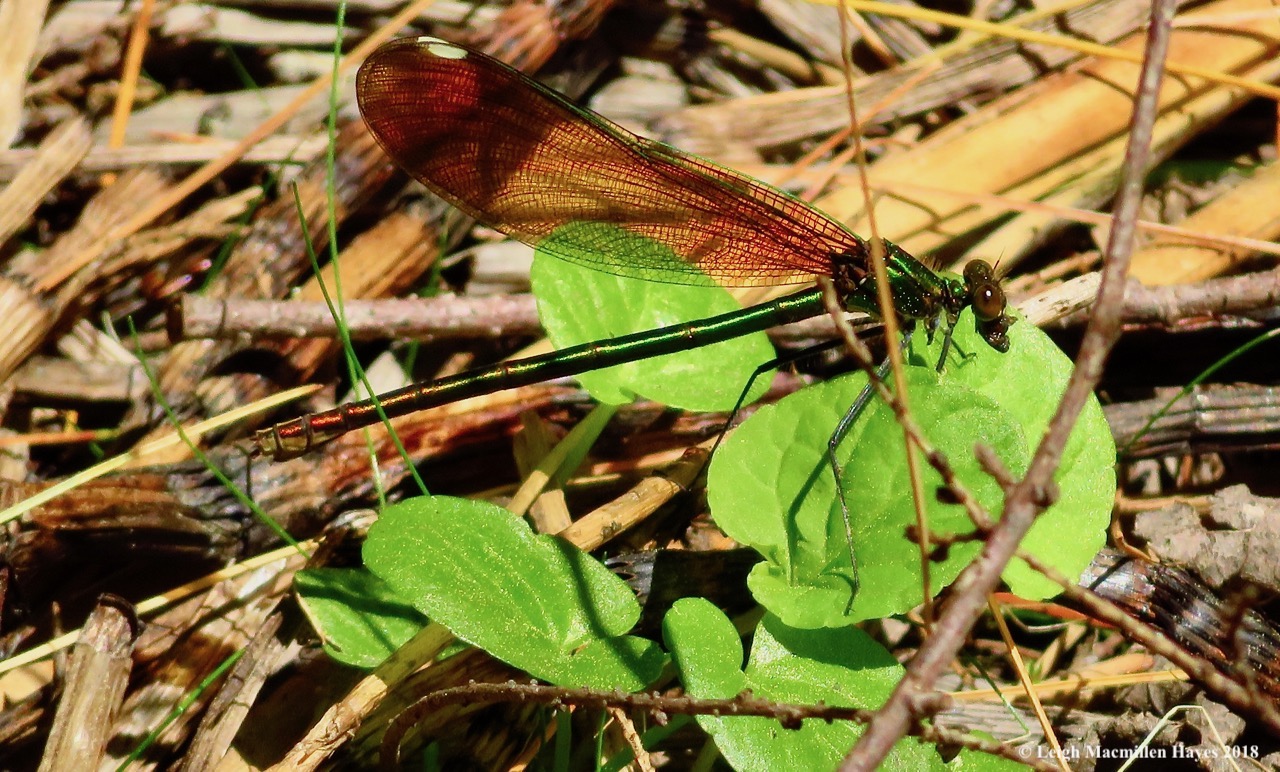
My heart flutters when a female River Jewelwing, with her iridescent body flies into my space.

l26-female river jewelring

But it’s those two-toned wings with their white spots or stigmas (indicating it’s a female for male’s don’t feature the spots) folded over their backs that wow me the most. Though their wings may appear to be two different colors, and these were taken in two different river locations, they are really the same. It’s the very nature of being iridescent, where all colors of light are reflected, that makes them appear as either black or bronze. You know what else I like about this damselfly–it was eating an insect.

s6-four-spotted skimmer

And then I turned on my dragonfly eyes. Ever so slowly over the last few years I’m beginning to recognize some of the perchers by name, like this Four-spotted Skimmer. It certainly helps that they pause frequently and hold their wings out to the side, which is a dragonfly characteristic.

l12-four-spotted skimmer

It’s the wings that are the defining points for me. All four feature a beautiful amber patch on the upper or leading edge. Do you see the golden veins? And then there are the black spots. Those in the middle or elbow of the wing are referred to as nodal, while the stigma is at the leading edge, the same as the female damselfly’s. Why four-spotted and not eight? I don’t have an answer, but perhaps it’s just plain easier to quickly count the four spots on the forewings before the insect flies off.

s8-calico pennant

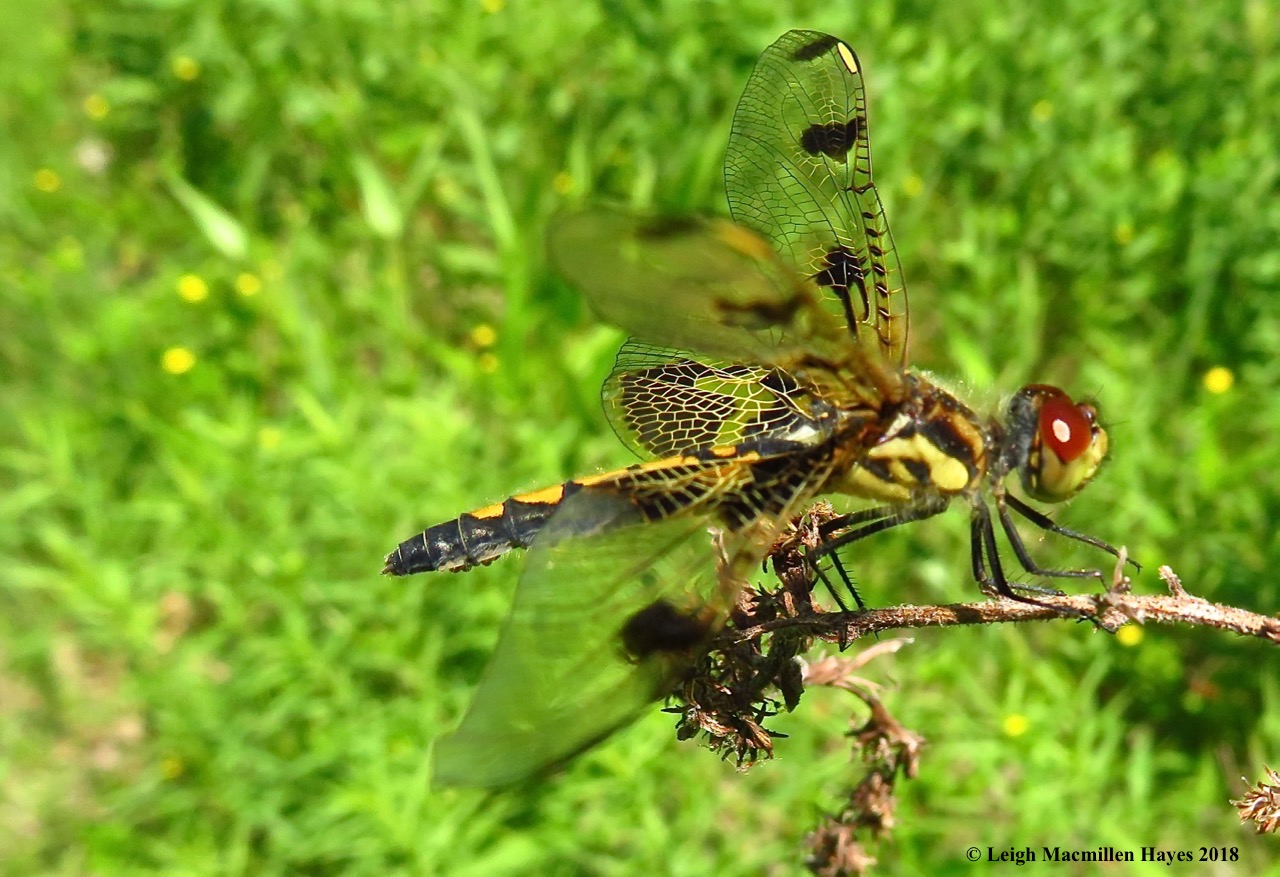
Last year it was the Calico Pennant that became one of my new species to recognize each time we met. This is a rather small skimmer with the most amazing wing pattern. Notice the dark patch near the tip of the wings, just beyond the yellow stigma. What I love most though is the stained-glass patch on the hindwings. This one was either a female or an immature for its coloration was yellow; the male stands out in red. I have yet to encounter a male this year, but trust it will happen.

s7-dusky clubtail

Sometimes it’s not the wings that are the showiest part, like on this Dusky Clubtail,

l27-green-faced clubtail

Green-faced Clubtail,

l25-racket-tailed emerald

and Racket-tailed Emerald, but there is beauty in simplicity.

l17-Large Flathead Pine Heartwood Borer Beetle (Chalcophora virginiensis)

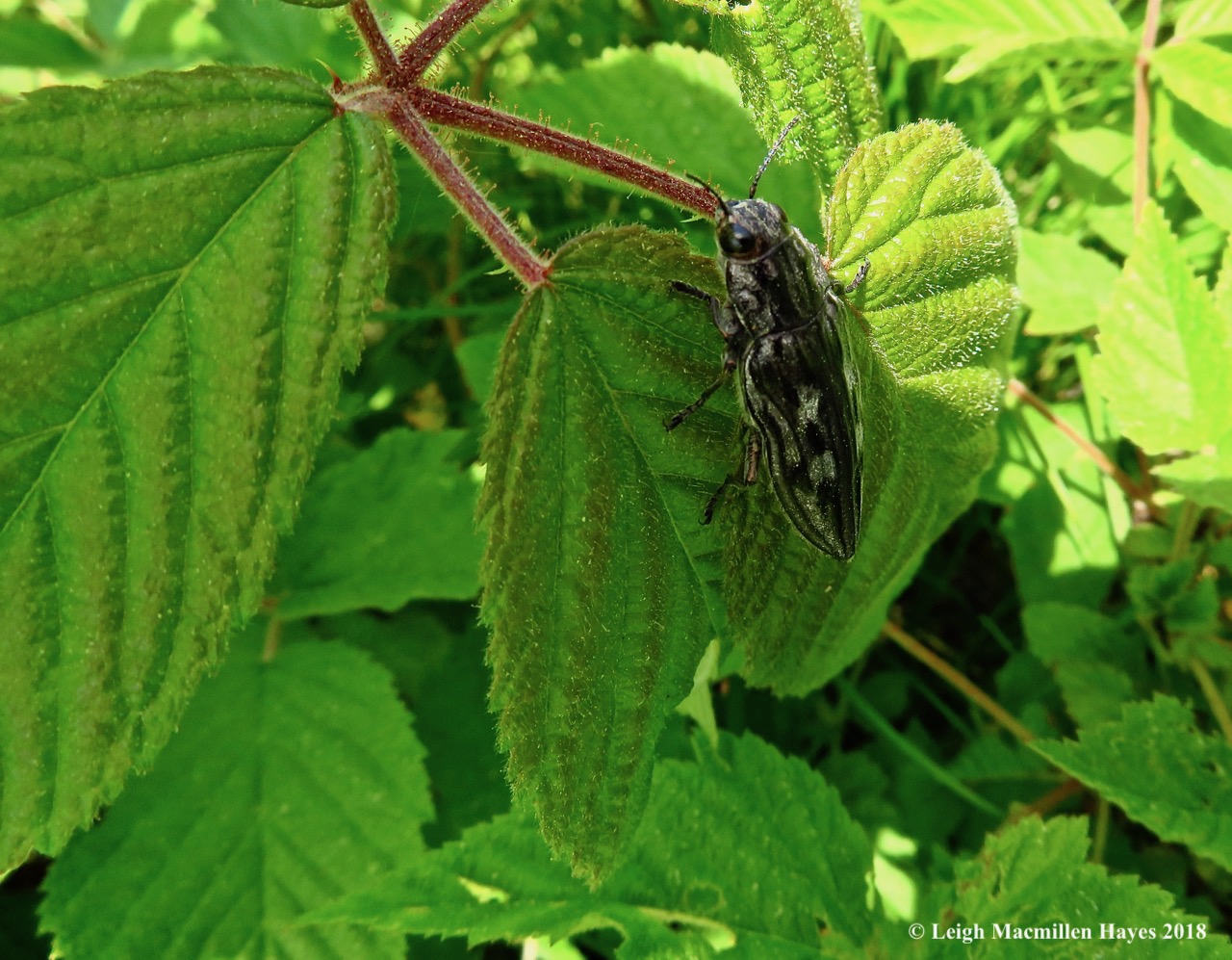
Wings on other insects are also worth observing, like the purplish ones on a Large Flathead Pine Heartwood Borer Beetle, aka Metallic Wood Boring Beetle. Though it’s supposed to be a noisy flyer, I only saw it clinging to a leaf on a recently harvested hill–meaning there’s lots of dead pine heartwood nearby.

l18-click beetle

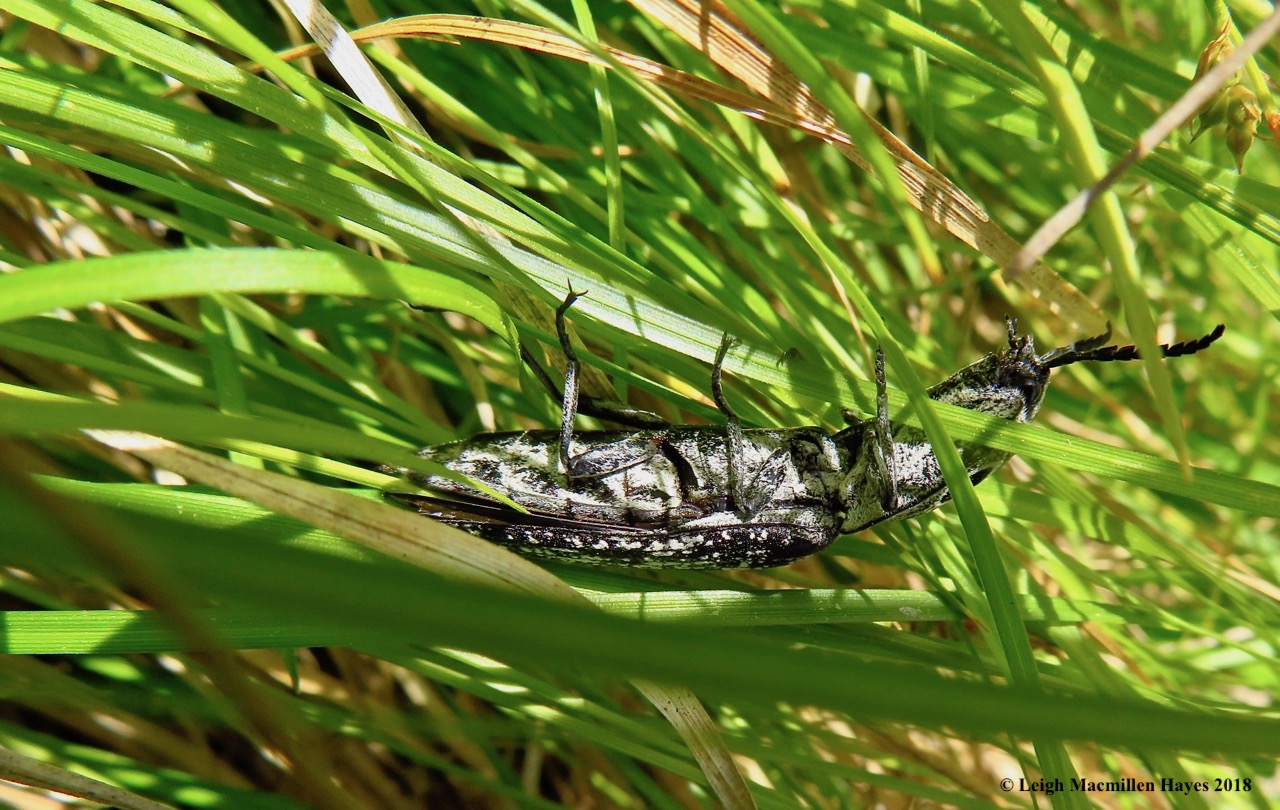
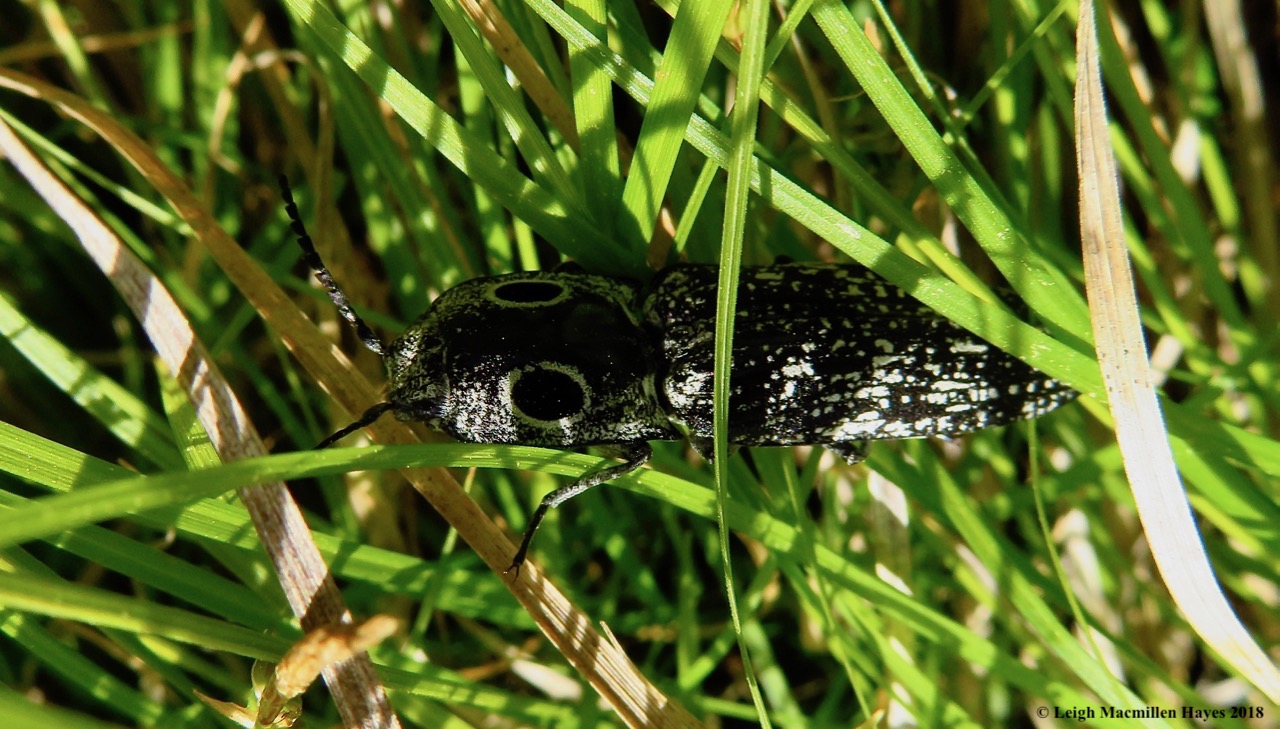
Only a few feet away, I had my first encounter (at least that I can recall) with an Eastern-Eyed Click Beetle. Click beetles get their names from the sound they emit when they flip themselves upright. I didn’t have the opportunity to hear that sound for I’m actually sharing these two photos out of order.

l19-click beetle

When I first met him, he was upright and may have flipped over to pretend to play dead. So I saved this photo to show second because of those “eyes” on the thorax and then the mottled black with white specked wings. The “eyes” are intended to frighten away predators. As an adult, the click beetle doesn’t dine on much, though occasionally it feeds on the larva of wood-boring beetles–thus there existed the possibility of an interesting intersection.

s21

When a Canadian Swallowtail flew in to my range, backlighting by the sun helped me see the overlap of its fore and hindwings as evidenced by the deeper yellow arch. I also noticed a tattering on one forewing. Butterflies are so beautiful and take such a beating both from their surroundings and any predator.

l21-luna moth wing

The same can be said for Luna Moths and by a hindwing left behind, I wondered when this one met its demise for so faded was it. But the “eye” on the wing was still evident, as well as the downy coating of this giant silkmoth. Of course, I would have preferred to see it alive, but was still thrilled with such a delicate find.

s13-yellow-bellied

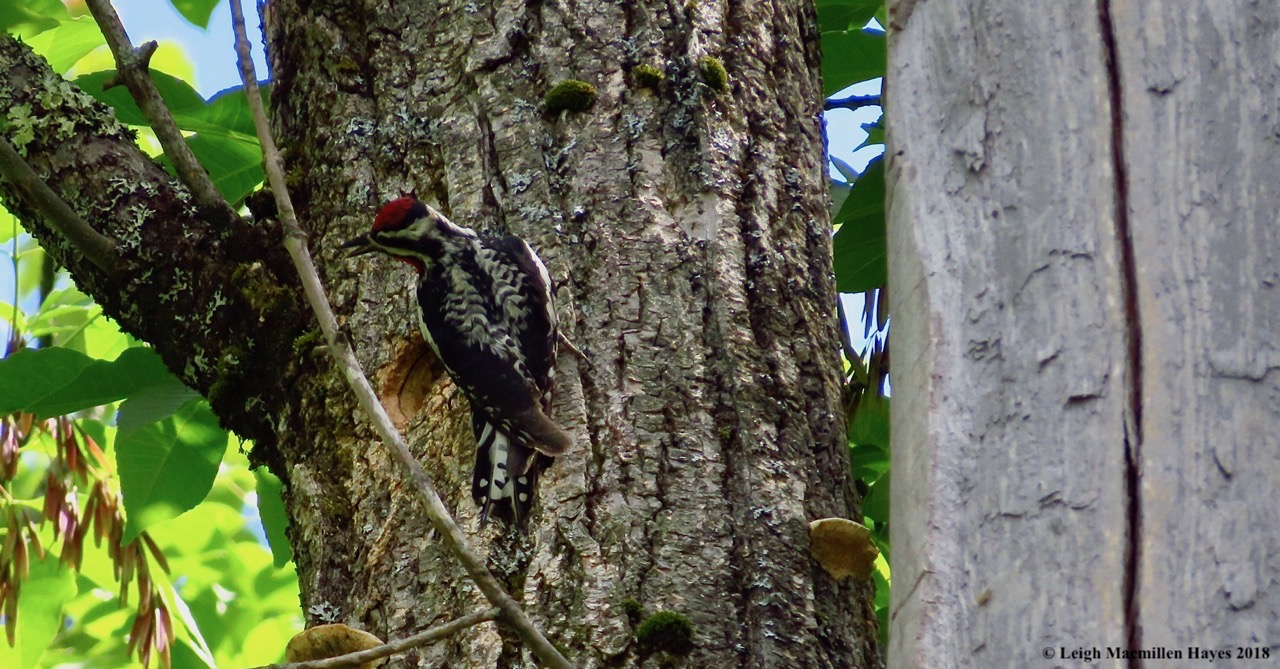
Another great find was the discovery of a Yellow-bellied Sapsucker who has been feeding its young throughout each day. Do you see the hole in the tree right beside the bird’s breast? I could hear the young located inside and have spent more minutes than I should admit to watching the parents fly in and out.

l22-veery eggs in nest

Soon the baby sapsuckers up in the tree will prepare to fledge.  Likewise, if all goes according to plan, these four Veery eggs found in a ground nest (mom and pop were accidentally flushed out, but we trust they returned) will hatch and four more sets of wings will take to the airways.

One wing, two wing, clear wing, metallic wing, butterfly wing, beetle wing–so many wings worth noticing.