Memorial Day Dragons and Damsels

It finally stopped raining and with a wee bit of sun late this afternoon, the temperature broke 60˚ and I found myself exploring a local wetland where all kinds of interesting things happen daily. And yearly. In cycles. And sometimes I happen to be there.

One of my favorite events is the emergence of dragonflies and damselflies. It seems like we endure Black Flies for most of May, all the while looking forward to our champs, the Ondonata family, to step in or rather up out of the water and transform before our eyes and take on the world. This usually happens by Memorial Day.

And this year is no different. The dragons and damsels have been emerging for the past couple of weeks, but now is prime time. And they are just in time because the Black Flies and Mosquitoes have had a heyday with all this rainy, cold weather, and today . . . as it warmed up, so did they and I have red welts on my neck to prove that they are biting. It’s all good, I remind myself. It’s all good. They are bird food. And so are the dragonflies, who eat the Black Flies, et al, and if they become bird food, all the more energy sent the bird’s way.

Cloudy wings and clinging to its shed skin indicated that this dragonfly had just made that magical transformation from its aquatic life to terrestrial existence. And I was there to protect it. For a while anyway. Until the Black Flies sent me scurrying onto the next great find.

That next being a damselfly, also with cloudy wings indicating it had also just emerged. Though I don’t know who the first dragonfly was that I met today because it didn’t yet have enough colors and pattern to make that determination, I did learn that this damsel is called Aurora! I don’t recall ever greeting it before, but based on the the lack of shoulder stripes, black patch with wavy edges on the thorax, and yellow sides led to this ID once I consulted Damselflies of the Northeast by Ed Lam.

Now it’s one I don’t think I’ll forget. AND, I love that it is named for my ten-year-old naturalist friend, Aurora. Or she for it. Or neither, but they both share the name of an electrical phenomenon.

As I looked about, I spotted several other newly emerged dragons and damsels, all with their signature cloudy wings, but then I spied this one.

Yes, it’s wings are cloudy, but this Lancet Clubtail has an issue going on, for its wings are folded, rather like the main character in my fairy tale, The Giant’s Shower, for Falda’s wings are also folded.

That didn’t stop Sir Lancet from climbing up a fallen branch with gusto. But I did wonder about his fate.

That said, I moved on because I had some Painted Turtles I wanted to meet, figuring that they’d be basking after several days of temps in the 40˚s. Being ectotherms, they rely on external heat to regulate their body temperature. Sun is their friend.
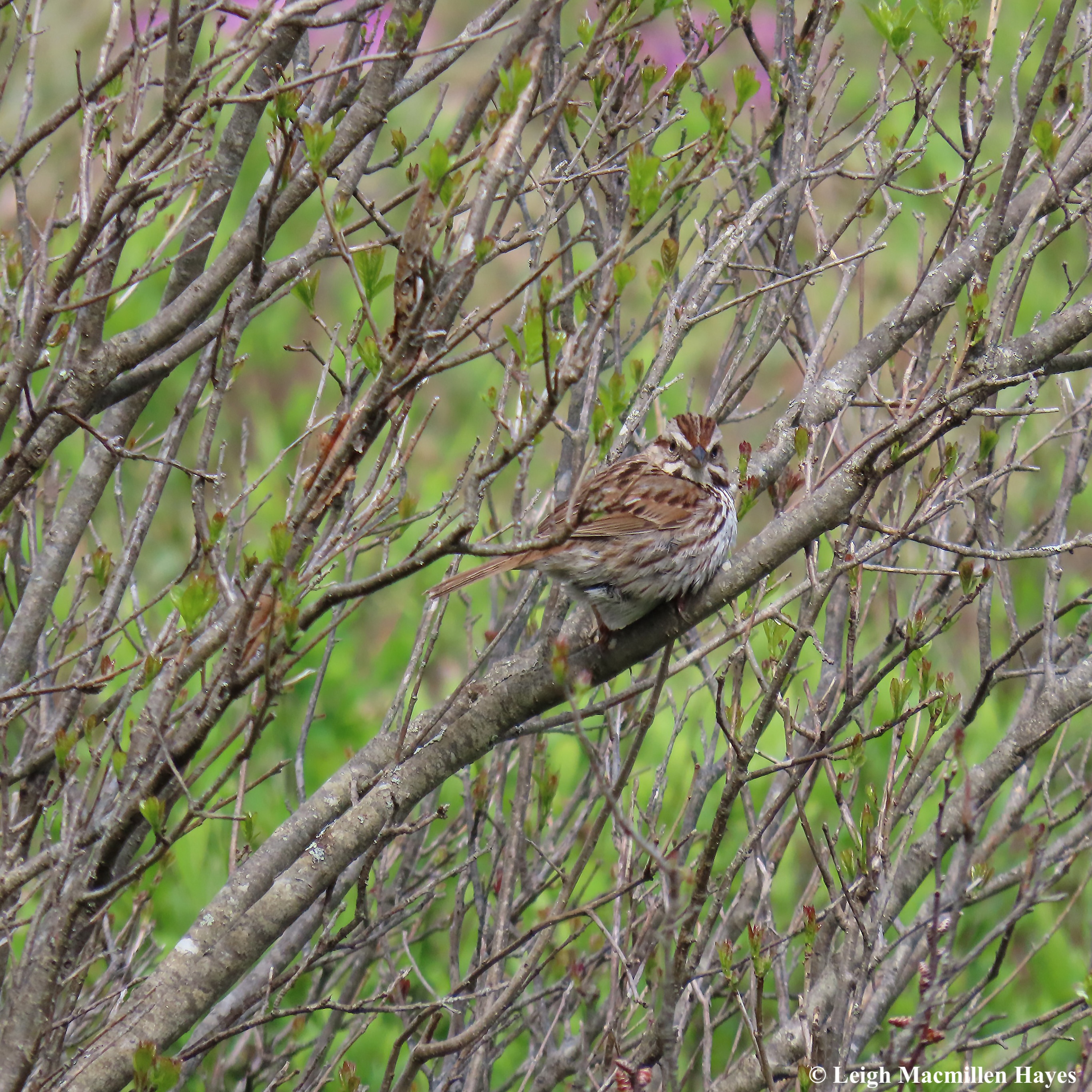
Being in a wetland, the bird song was plentiful, but though the Merlin app included a chorus of plenty including Redstarts and Towhees and Common Yellowthroat and more, the only one who posed was a Song Sparrow.

I walked about a mile away from my starting point, but really was eager to return because I knew there was more to see and learn in that spot.

Almost back, I met a Dreamy Duskywing Butterfly, a species I’ve met in this place before but not sure we’ve encountered each other anywhere else. I love the tapestry of its dusky wings.
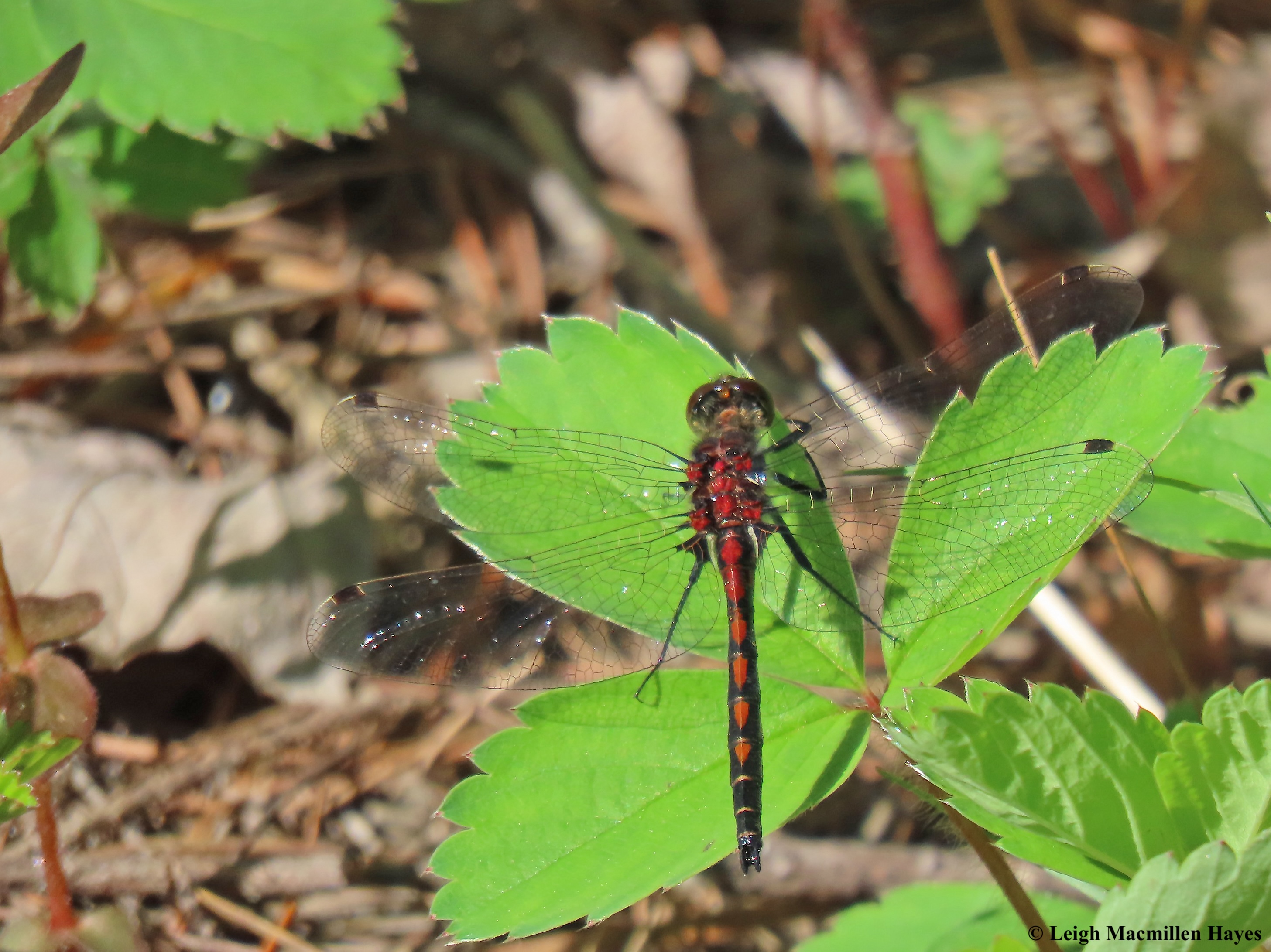
A moment later, an old friend flew in–Hudsonian Whiteface–this being a male, for the female’s markings are yellow. These are early spring skimmers, and I have to remind myself not to confuse them with Calico Pennant skimmers who have similar, yet different abdominal markings, he being red and she yellow. Also, the Calicos, being pennants, have a stained glass basal wing pattern that the Hudsonian’s don’t exhibit.

Back at base camp, or rather, my starting point, I checked on Sir Lancet. He’d crawled up the branch to a rather perfect hiding spot at the Y, at least to my eyes. And look into his eyes I did. Including the three simples eyes, singularly called ocellus, which are arranged between the two large compound eyes. Each ocellus offers a single lens with which to view the world, while the compound eyes offer multiple lenses. Amazing. I can’t even begin to imagine such sight.

But what I also noticed about my folded-wing friend was the green “blood” that seemed to be stuck within those wings. Dragons and damsels and other insects that emerge from an exuviae break through their old skin, their wings coming out first with the head, and then pulling the abdomen out slowly and pumping their insect blood first into the wings until they reach full length before drawing said blood back into the body and allowing the abdomen to extend to full length and slowly take on the hues of its adult self.

I’ve seen this in others with folded wings though, where the insect blood seems to have become blocked and is still visible in the transparent wings and maybe that’s why they are deformed? But what causes this?

I don’t have an answer, but try to remind myself that eventually this dragonfly will become units of energy for a bird or another insect and that’s its way of giving.

Meanwhile, though it was getting late and the temperature was starting to drop again, two immatures caught my attention–a Mayfly subimago or dun and another Lancet. Both had cloudy wings announcing their age.

And both were fairly safe in each other’s company, for the Mayfly has no mouthparts, not that it could eat anything as large as a dragonfly at this point, and the Lancet wasn’t quite ready to eat yet for it had some more work to do in order to become a flying predator.

Slowly Lancet’s wings became more transparent and though dinner prep was on my mind and I knew I needed to head home, I waited until it spread its wings and then without a backward turn or wave goodbye, took off. Despite that, I wished it my usual, “Fare thee well.”

And as I walked back to the truck, a young Lancet met me. I was totally surprised to find it land with wings folded over its back. Had we just met only steps away by the water? How cool would that be if it were true.
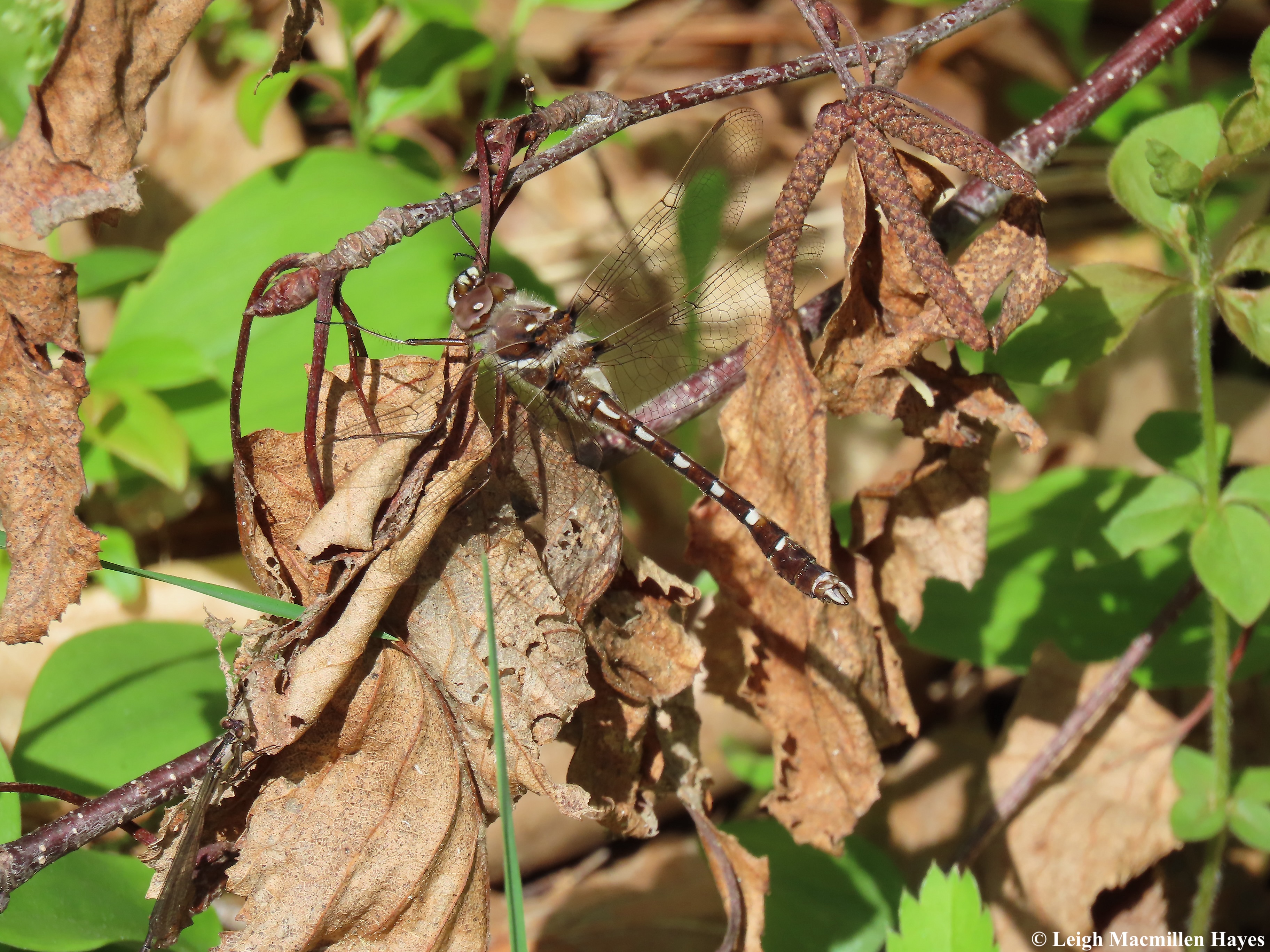
And then my all-time favorite appeared, a Stream Cruiser with its Oreo Cookie coloring. I was asked the other day what my favorite bird is and I came up with at least five different species, but the Stream Cruiser will always be my favorite dragonfly.

And dragonflies and damselflies on Memorial Day weekend–another favorite for we all know that the Black Flies will now be on the decline.

Memorial Day weekend not only means a return of the Dragons and Damsels who slay those other pesky bugs, but also a time for us to remember those who died serving our country, like my Mom’s brother, age 19, who died in World War II. Thank you Uncle B. We never met, obviously, but Mom brought you alive in my mind for you were her best friend and I know you are with me and trust you would approve my curiosity and adventures and reverence for the natural world .
Honoring the Lady’s Slippers

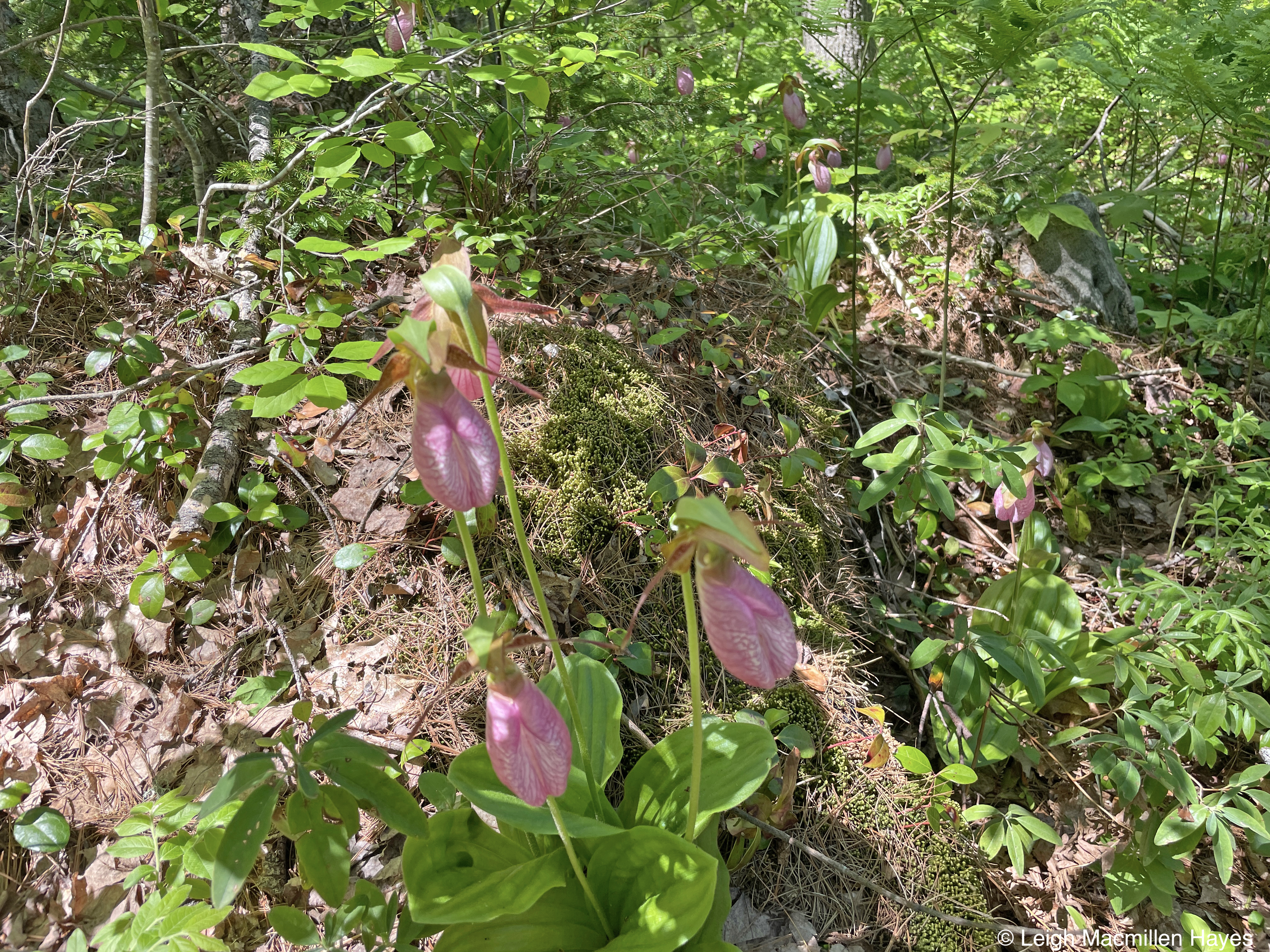
It’s become a tradition for us to spend Memorial Day or at least a day during this weekend searching for one of My Guy’s favorite blooms. I don’t even remember how the count began, but now he cannot not count them.

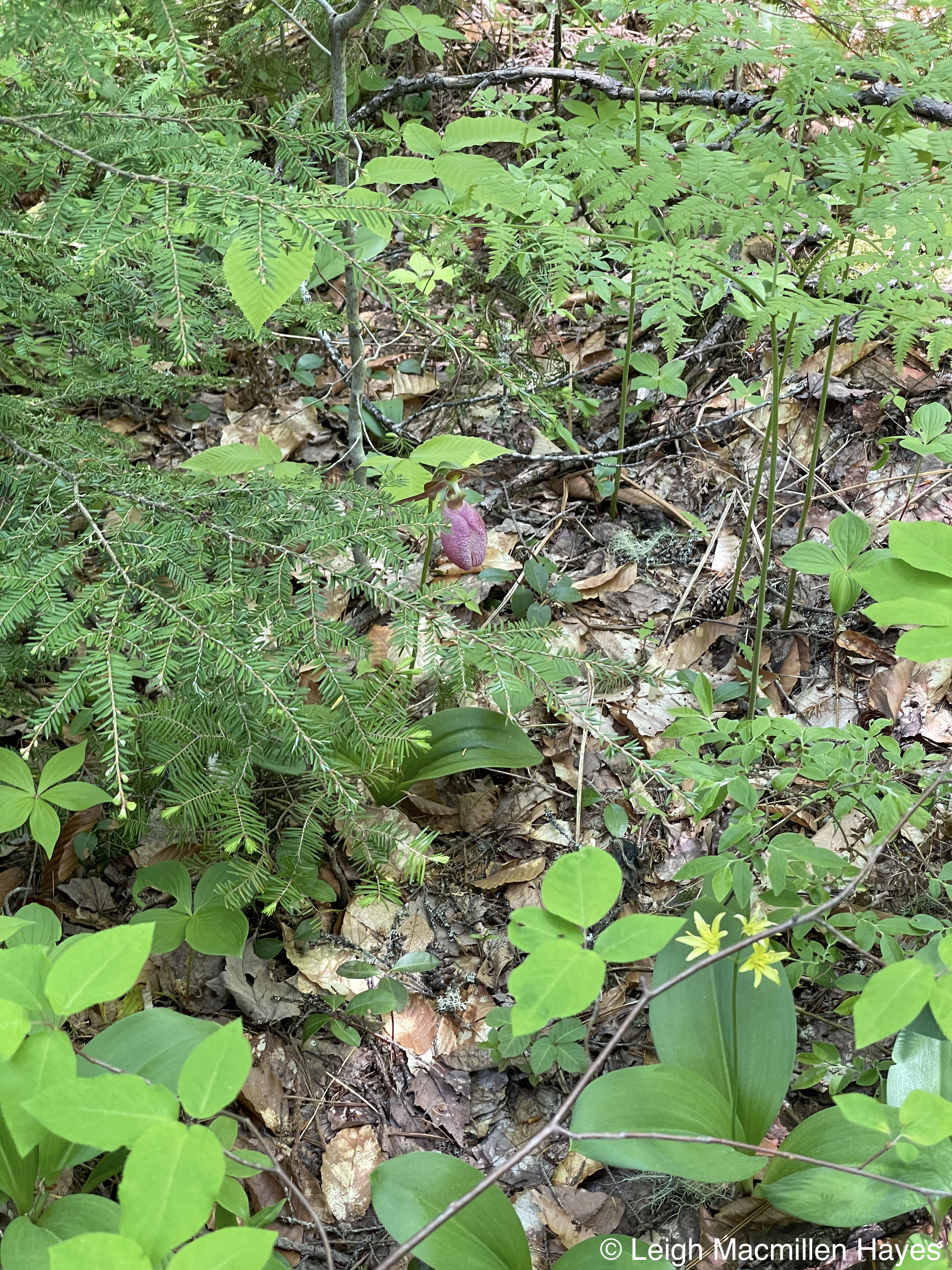
What we’ve learned over the years is that they like a variety of habitats. from dark forests to bogs, and even mountain tops. And they like to hide. So we must really don our Lady’s Slipper eyes (just as I’ve been donning my dragonfly eyes lately) and look for them.

I mean . . . really hide.

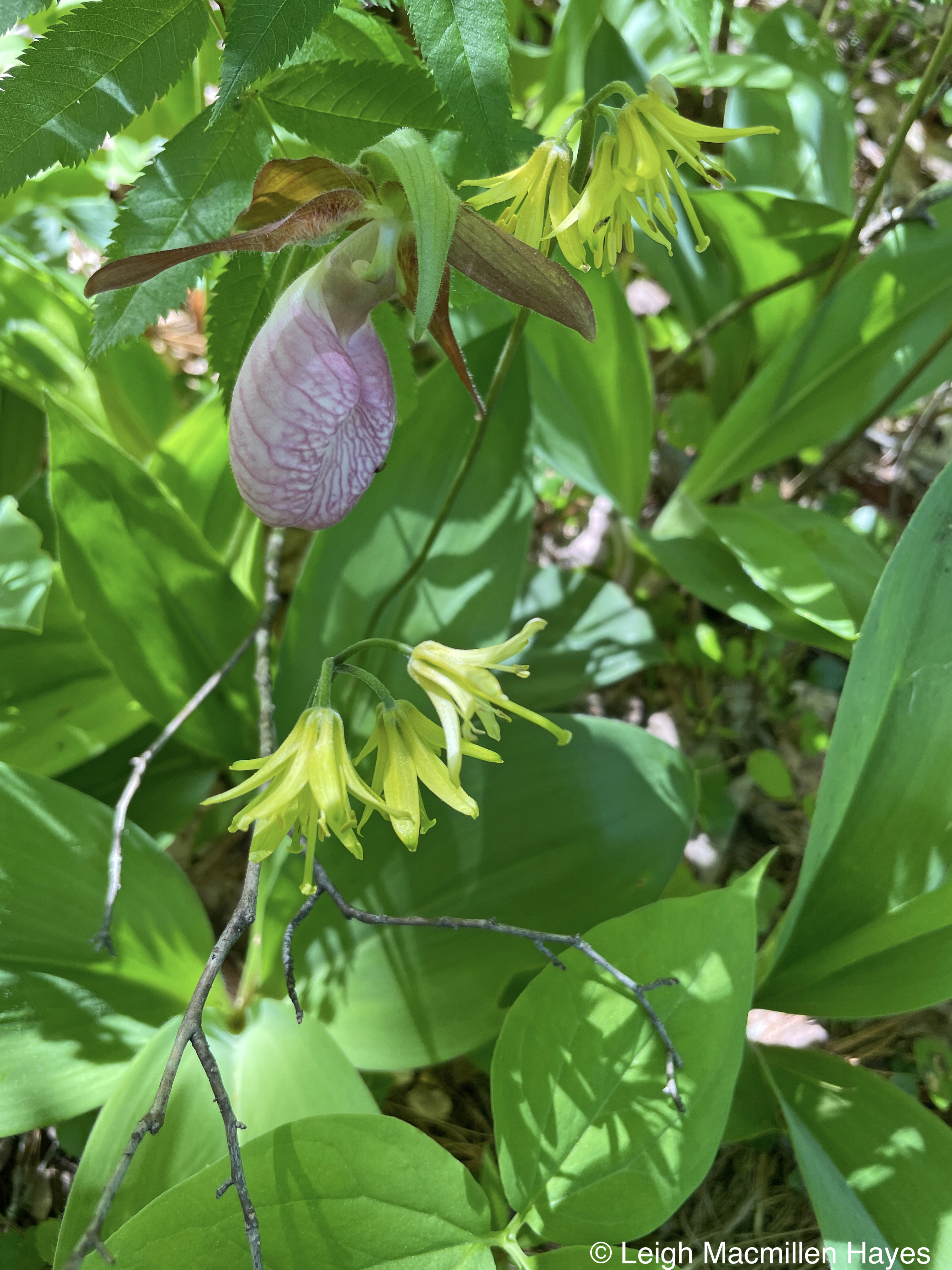
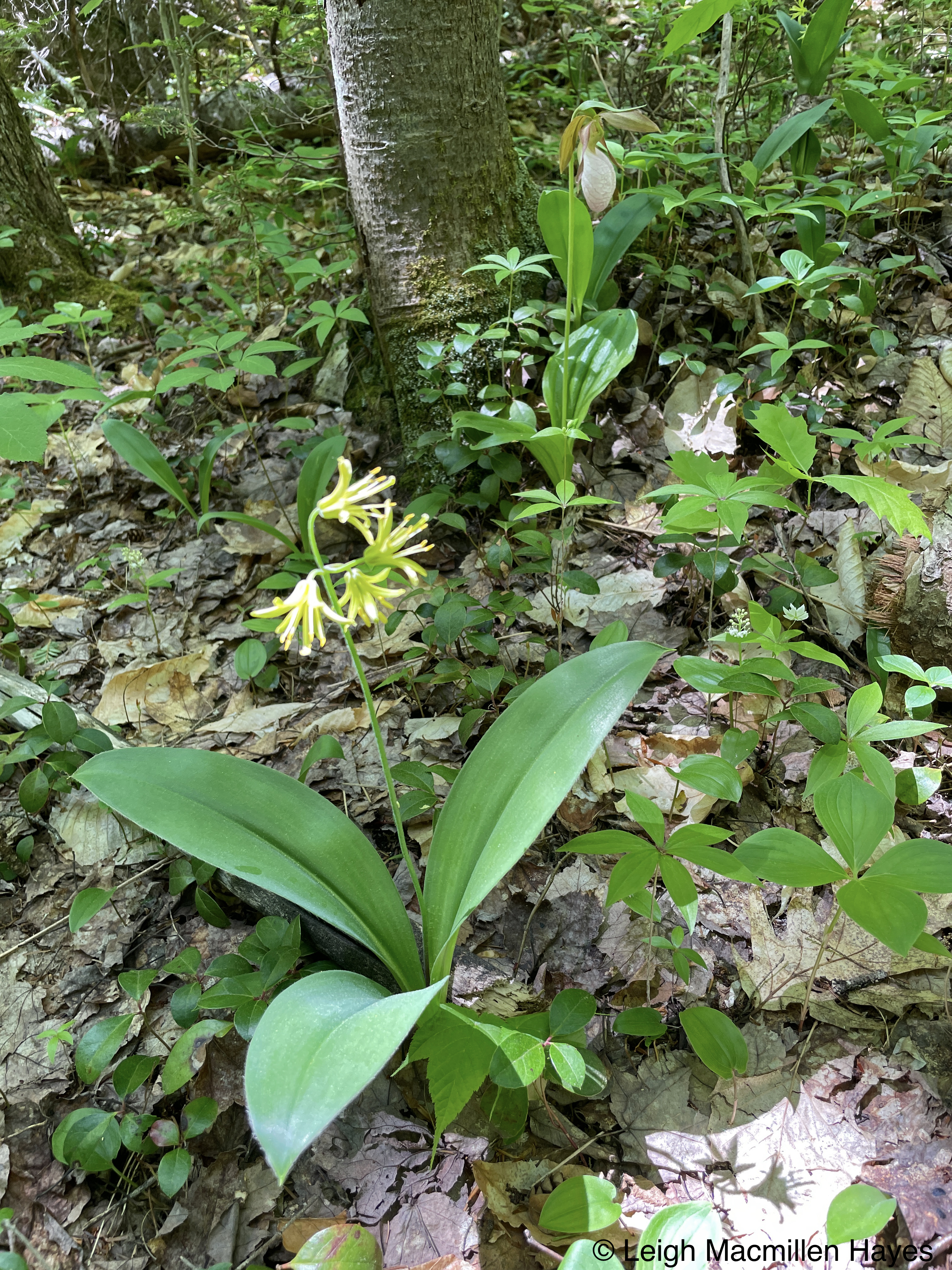
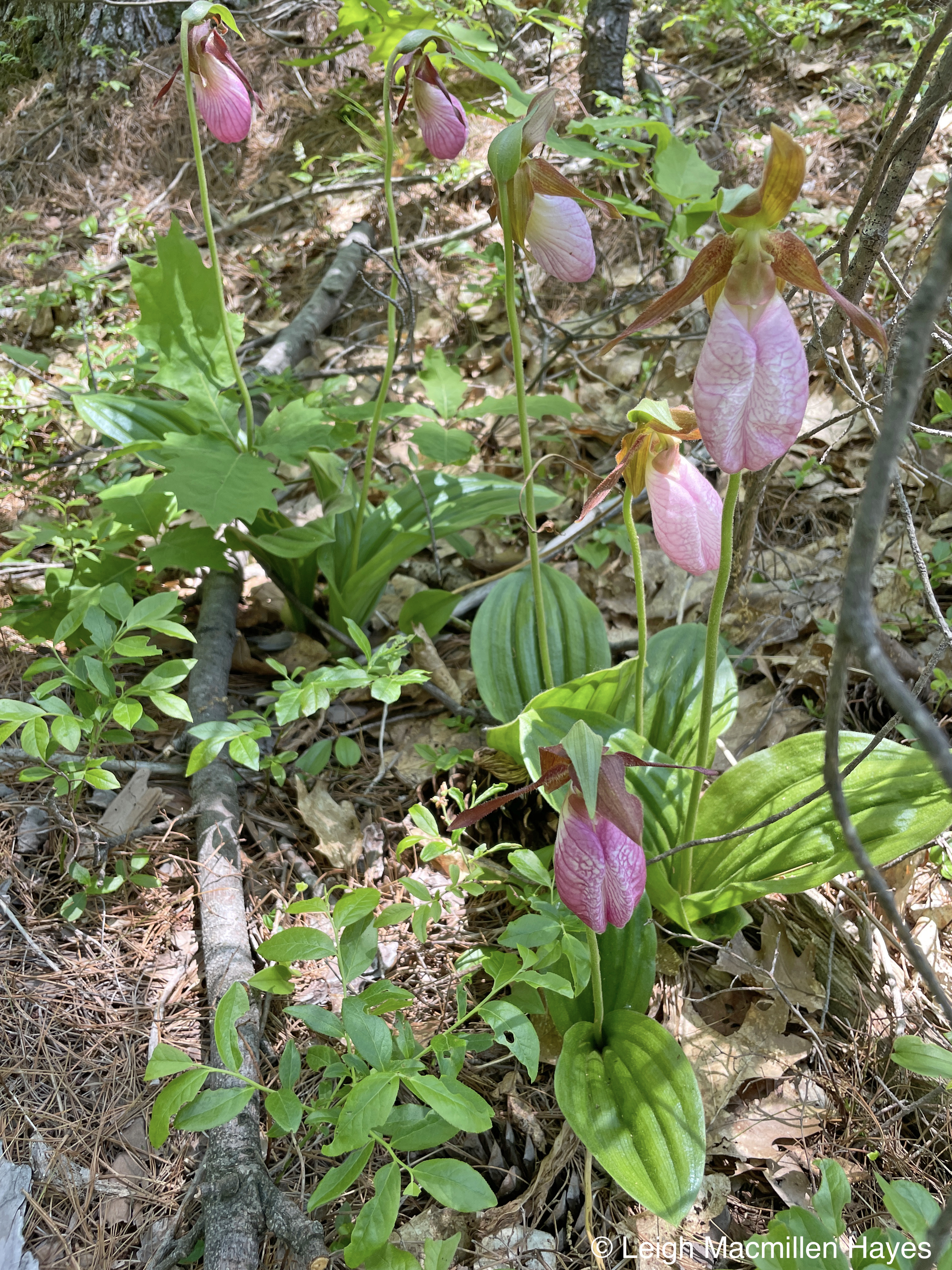
It’s acidic soil that they are rather fond of, just like Yellow Clintonia, the beacons of many a forest trail. But while Clintonia seems to bloom anywhere and everywhere, Lady’s Slipper need Rhizoctonia fungi in order to grow and show off a blossom. According to Jack Sanders, author of The Secrets of Wildflowers, “Unlike most seeds, the minute and dustlike Lady’s Slipper seeds contain no food to allow them to grow. However, the outside of the seed is susceptible to attack by Rhizoctonia fungi, which digest the outer cells. If things balance out just right, the inner cells escape digestion and absorb some of the nutrients the fungus obtained from the soil. Not until this happens can the seed germinate and begin growing . . . The symbiosis with the fungus doesn’t end there. In order for the infant corm (or ‘proto-corm’) to obtain minerals and other soil foods, it must use the ‘go-between’ services of Rhizoctonia fungi. The fungi, in turn, take from the seedling Lady’s Slipper foods that are photosynthetically manufactured. These sensitive and complex relationships make native orchids of all kinds relatively uncommon . . . What’s more, in the wild, it takes from 10 to 17 years for a Lady’s Slipper seed to become a mature plant capable of blooming.

So here’s the thing. Yellow Clintonia and Pink Lady’s Slipper flowers look nothing alike. But their leaves–that’s a different story and when there are no flowers to confirm, one like me, must slow down and notice the features. Do you see what I mean? Clintonias are members of the Lily Family, with six lily-like tepals (segment of the outer whorl in a flower that has no differentiation between petals and sepals). And their leaves can be folded in half with the inner vein forming the fold line.

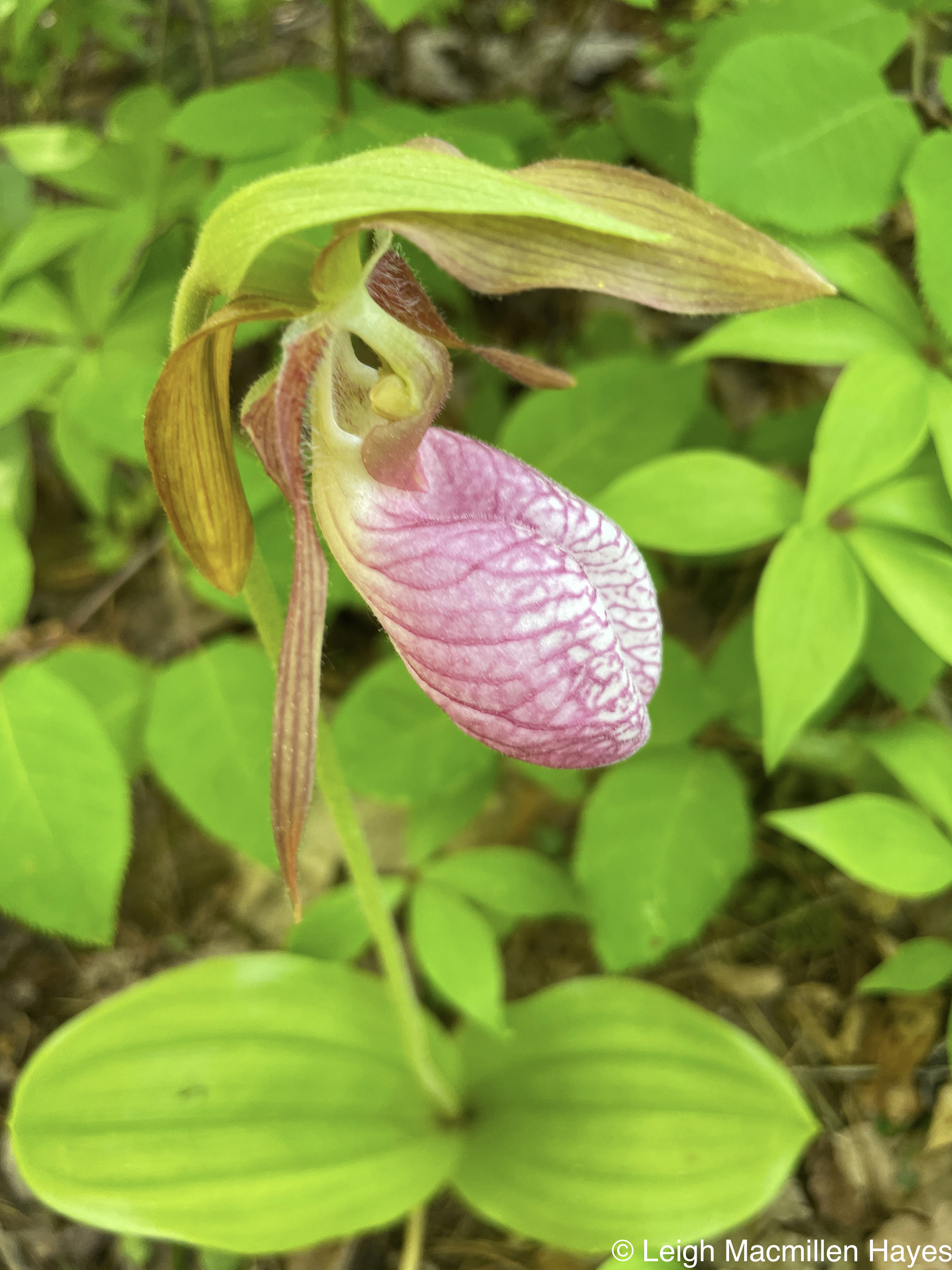
Lady’s Slippers, on the other hand, are orchids. The flower is a moccasin-shaped, inflated pouch, but also two lateral petals that twist outward. And the leaves–take a look. Remember folding paper in an accordion-like manner to create fans, or tissue paper to create flowers? That’s what Lady’s Slipper leaves look like to me. Multiple pleats.

Lest you think nature didn’t distract us, there was a male swallowtail puddling in a wet seep that we had to pause and admire.

And we certainly didn’t want Indian Cucumber Root, in the same lily subfamily as Clintonia, to think we were ignoring it for it has just begun to offer its unique flower to the world.

But our real focus, of course, were the slippers, even those decorated in white, which is a form of the pink.

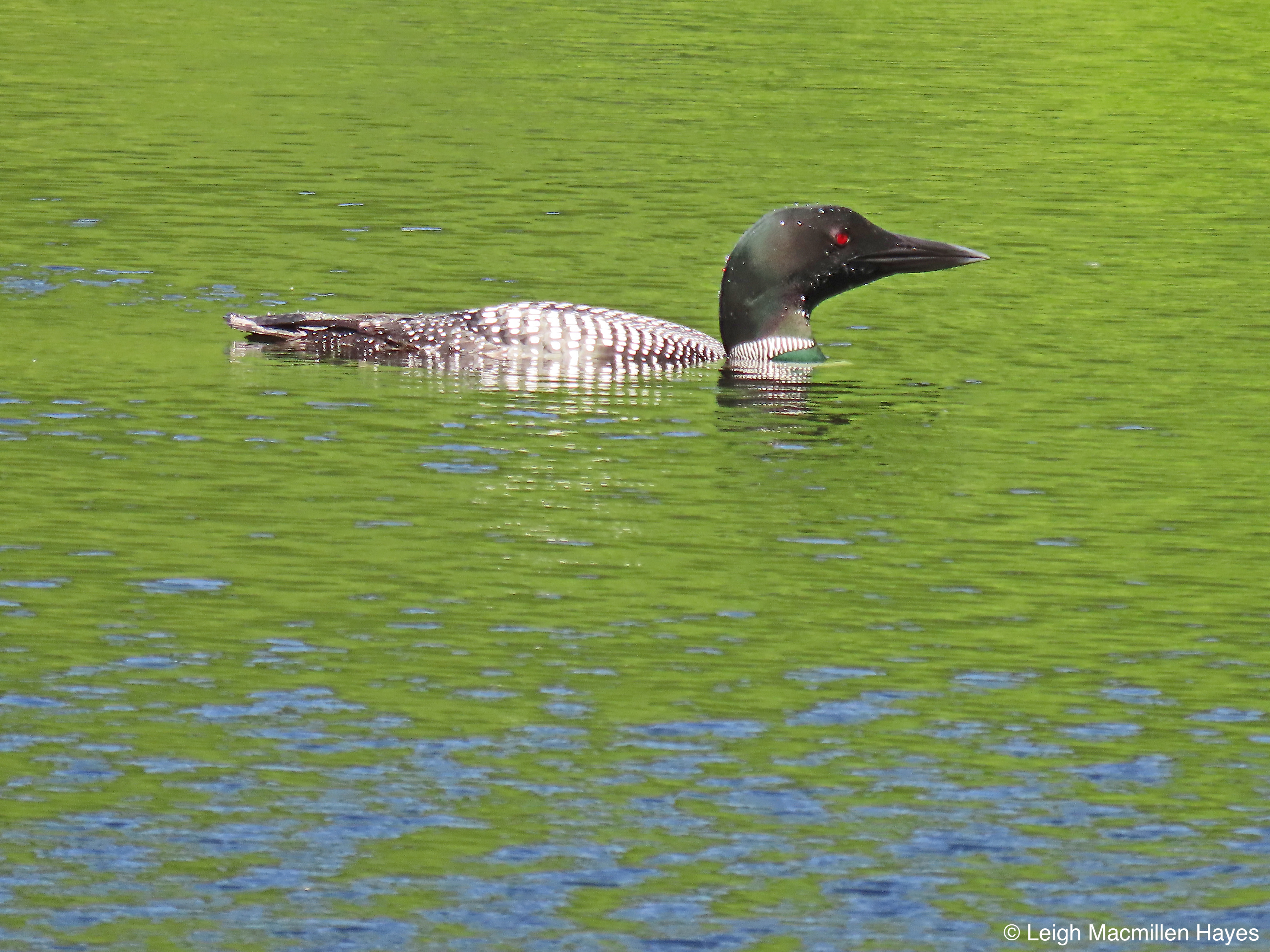
Until, that is, the Common Loons begged to be noticed and so we did.

A few miles into the hike, we reached one of My Guy’s favorite spots. Just the other day I heard him describe it as a field of Lady’s Slippers. I’m pretty sure he was thinking football field. I happen to think it’s closer to the size of my office. But, it does produce about fifty flowers each year.

While he was meticulously counting those fifty, a Bald-faced Aerial Yellowjacket flew in and started chewing some wood. My attention was indeed diverted.

Heading to the summit, we didn’t find as many, but still they were there and we paused to admire this grouping. I wonder if there was a nurselog below them that offered the right growing conditions and thus the line.

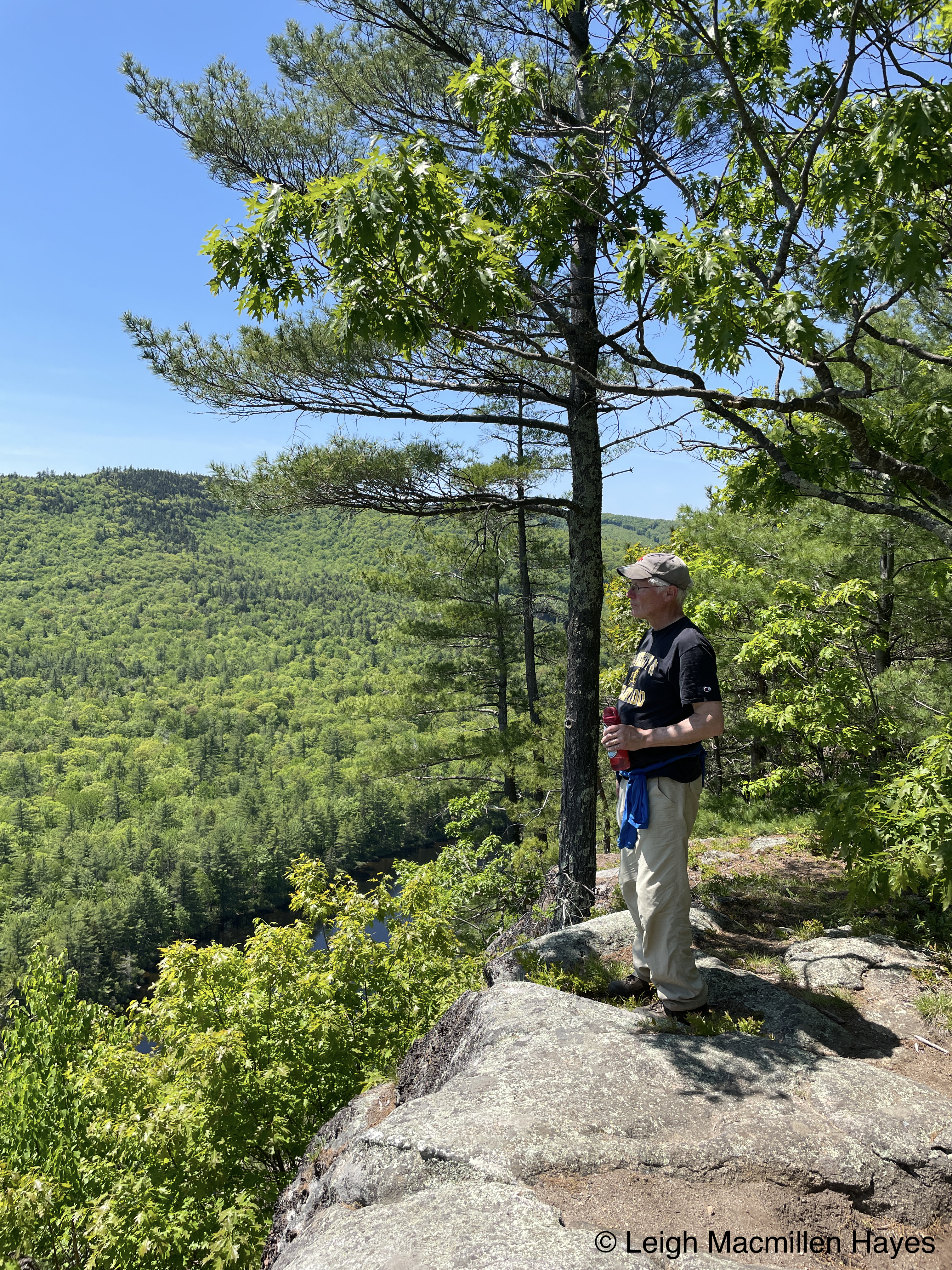
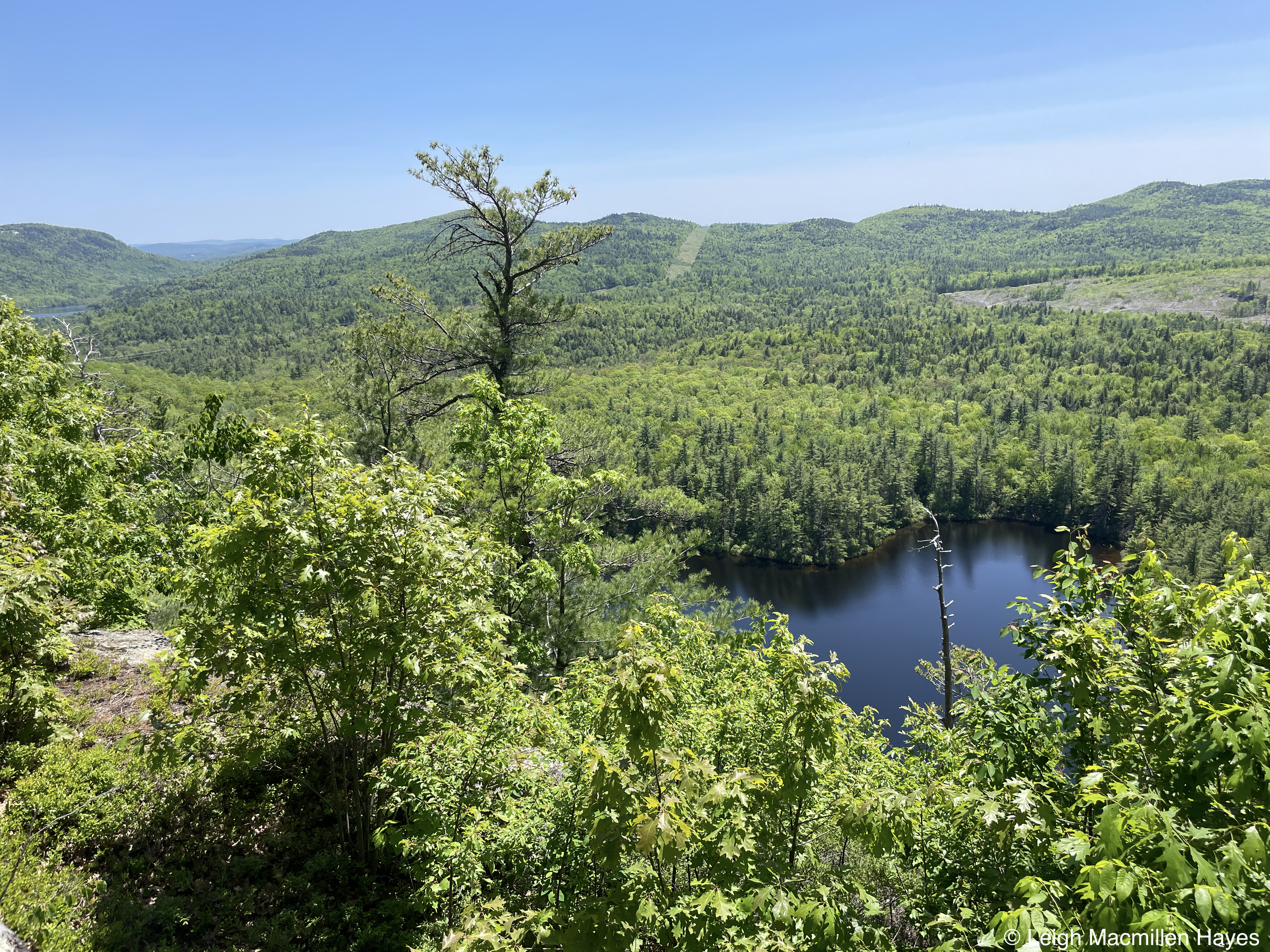
At the summit, after finishing dessert (we’d eaten our sandwiches below by the pond), someone had to survey his kingdom.

It’s always worth a look.

We found some more as we descended and then followed a different trail out, where another lady made herself known.

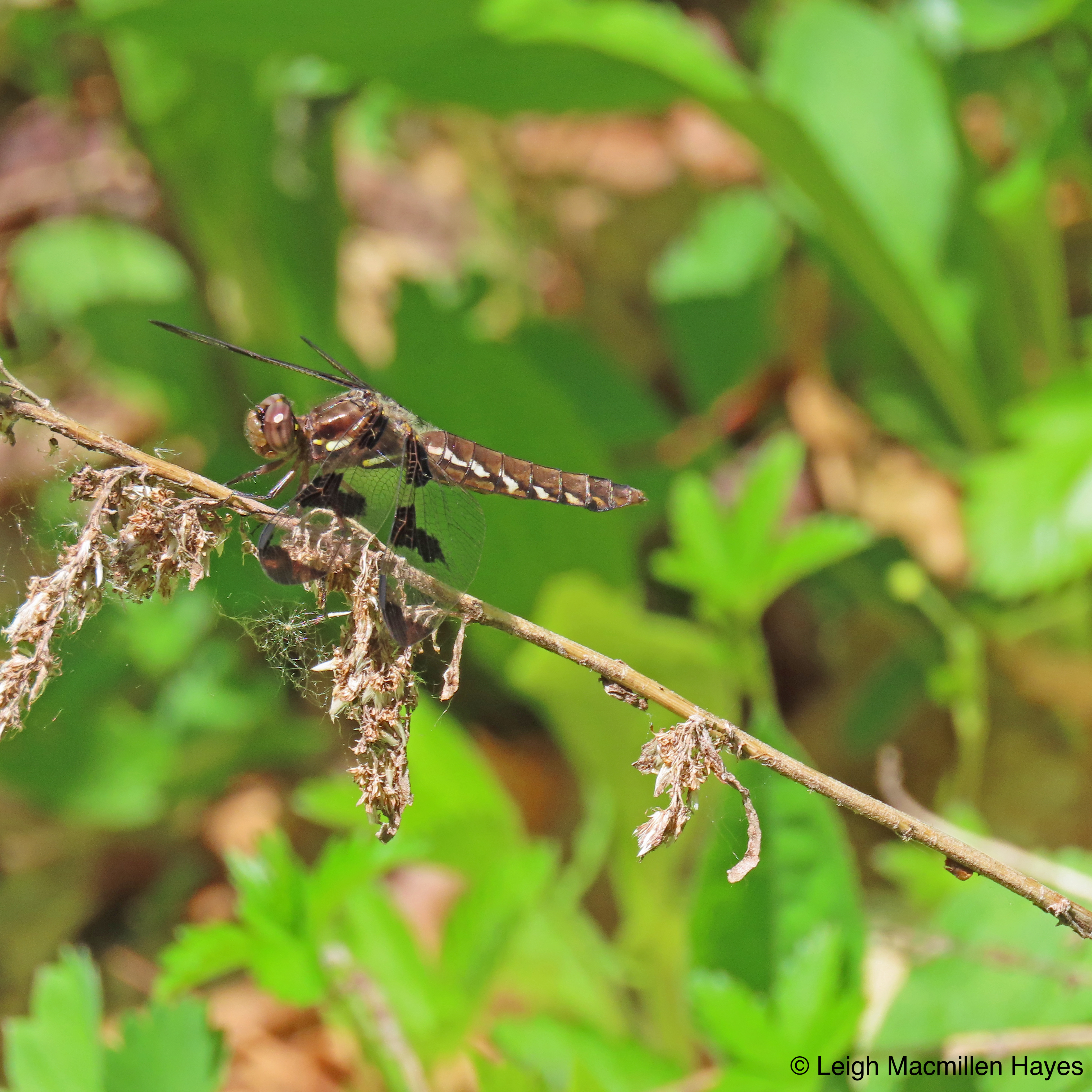
Meet a female Common Whitetail Skimmer dragonfly, who is hardly common with her tail markings, and spots on her wings.

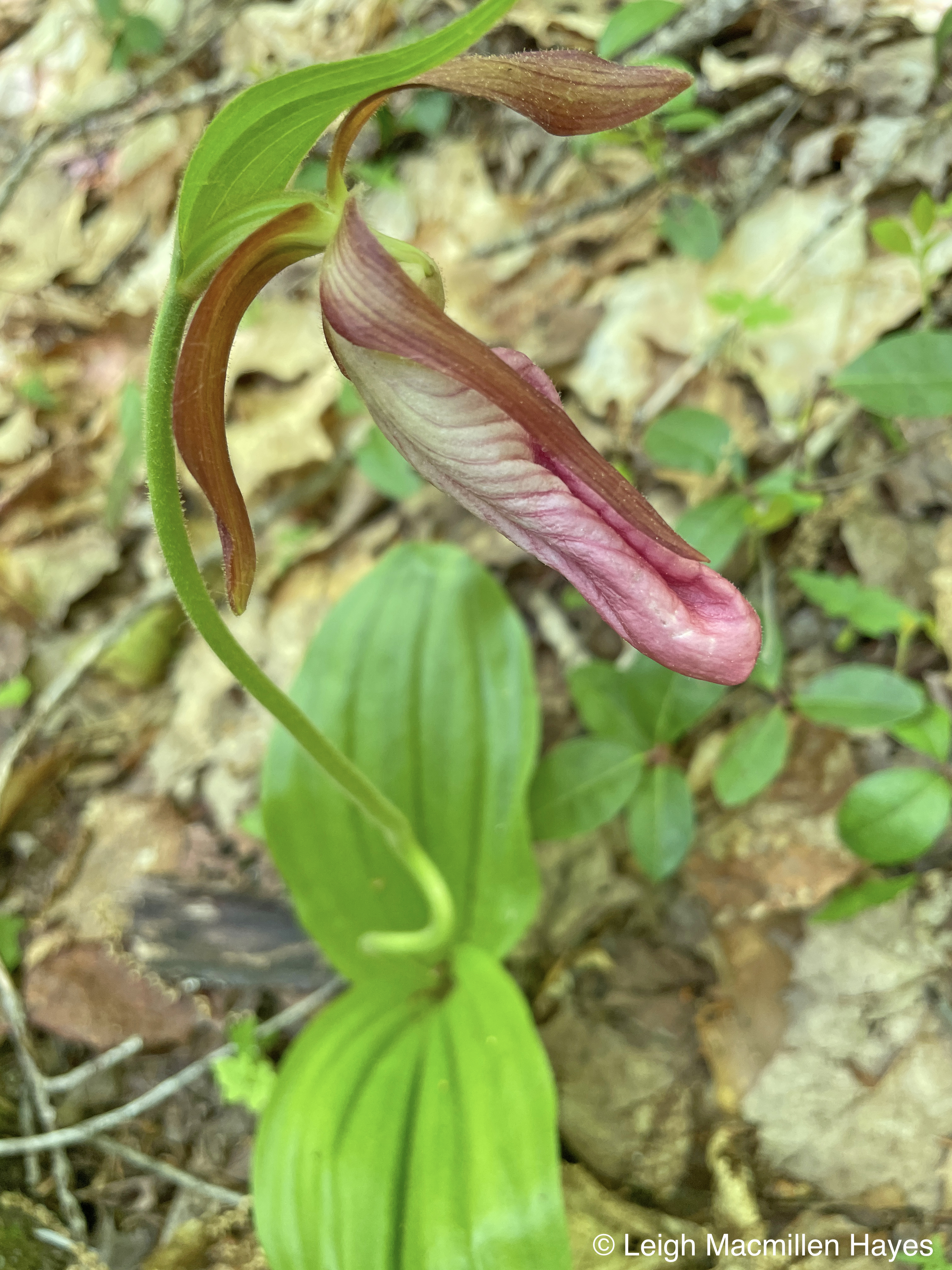
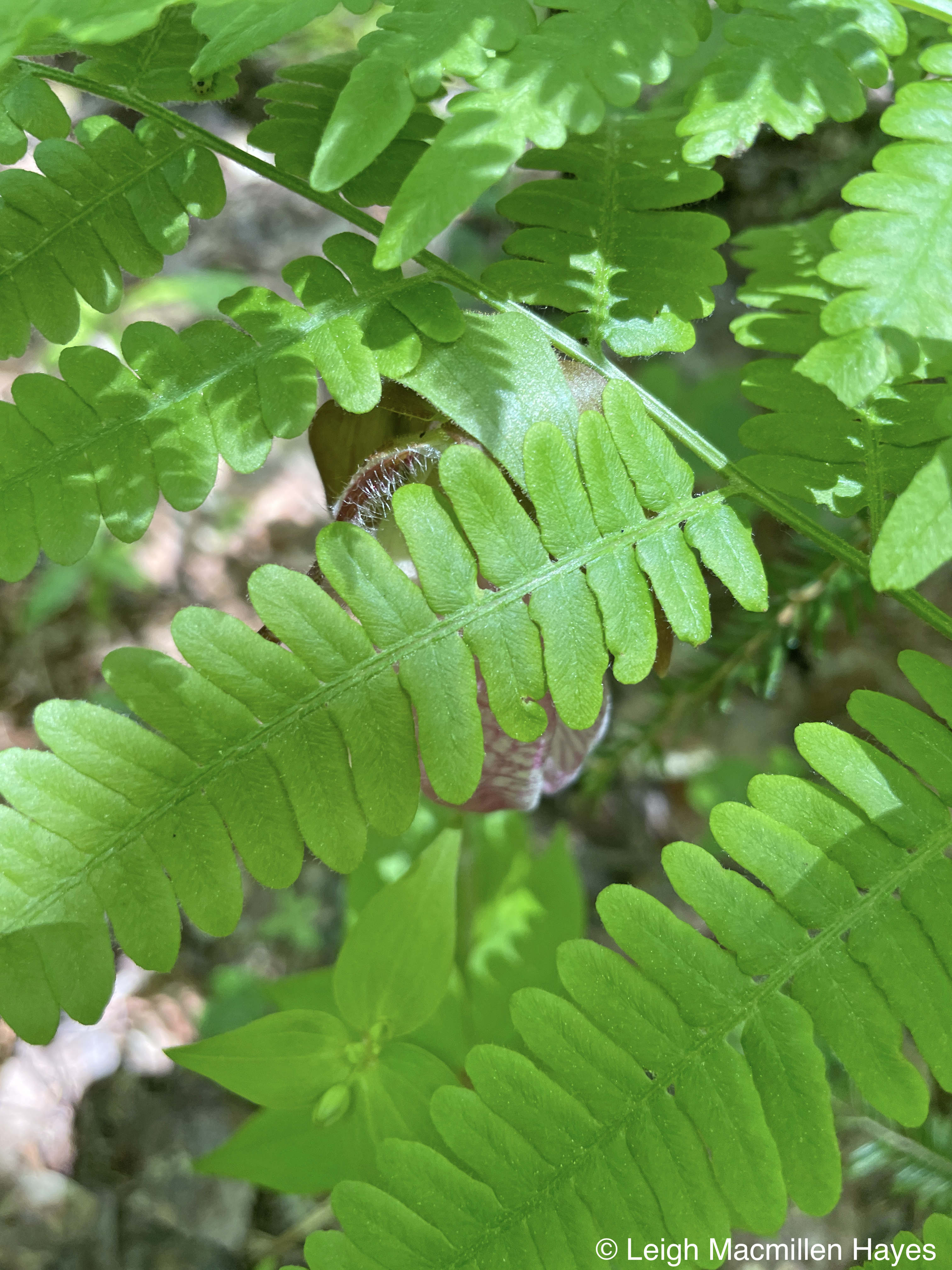
We were almost finished when we spotted this Lady’s Slipper blowing in the breeze. Note the curve in the stem, and the closed moccasin.

I don’t know if removing the leaf will help the flower to fully develop, but it made me think of today, Memorial Day, and the fact that so many have in the past and do presently work so that we can enjoy the freedom of going for a hike in the woods–thank you to all who have served our country, past, present, and future, including our dads, uncles, cousins, and friends.

The question remains: How many Lady’s Slippers did we honor on this Mondate? 351. And those were only the ones we could spot from the trail. I’m sure we missed some. Can you imagine how many more might be out there.

Bear to Beer: Rumford Whitecap on Memorial Day

It had been a couple of years since we’d hiked Rumford Whitecap together. As we drove north we recalled summer, fall and winter adventures on the loop trail, but never spring. And so today, we rectified that.

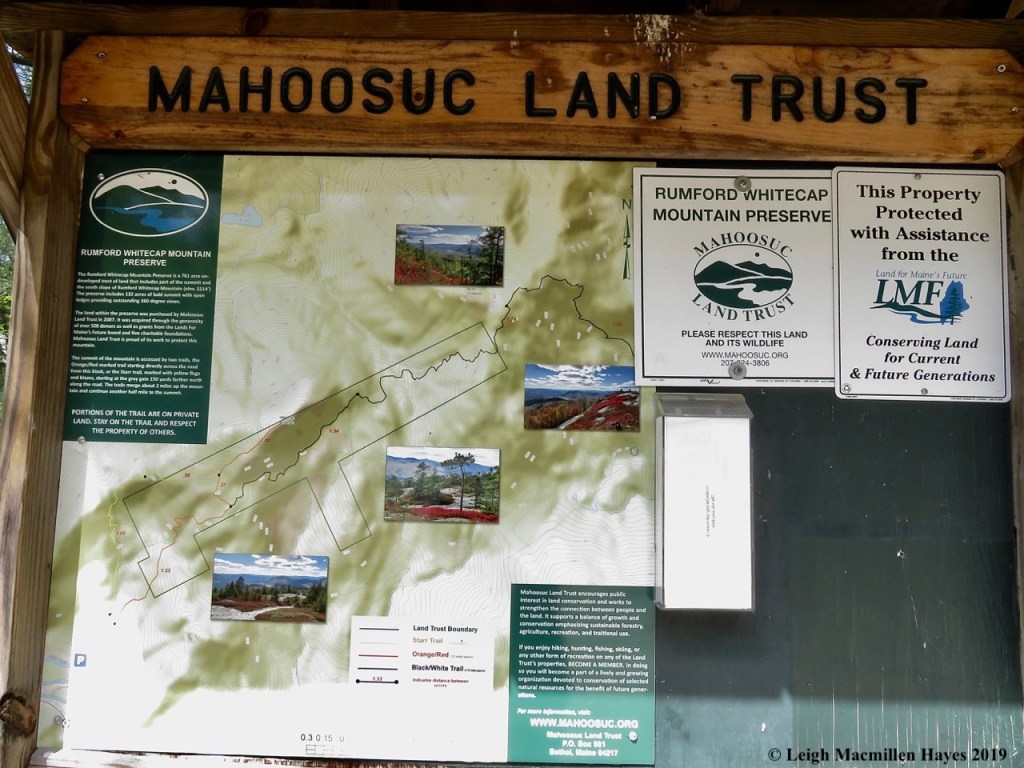
The 761-acre Rumford Whitecap Mountain Preserve was purchased by the Mahoosuc Land Trust in 2007. Our preferred route is to hike up the Orange/Red Trail and descend via the Starr Trail denoted by yellow blazes.

As we ascended, we chatted about our relatives and friends who had and do serve in the Armed Forces, including grandparents, dads, uncles, my brother-in-law, cousins, friends, and classmates.

Memorial Day was always special in our home growing up as my hometown celebrated with a parade that sometimes featured my siblings, neighbors, and me. Before it became a Monday holiday, it was celebrated the day before my mom’s birthday, so we always noted that the parade was held in her honor. And furthermore, her younger brother died in WWII, so it was a celebration of his service and life. I noted today that I only have known him all these years through photographs of a handsome young man, and stories of his youthful adventures.

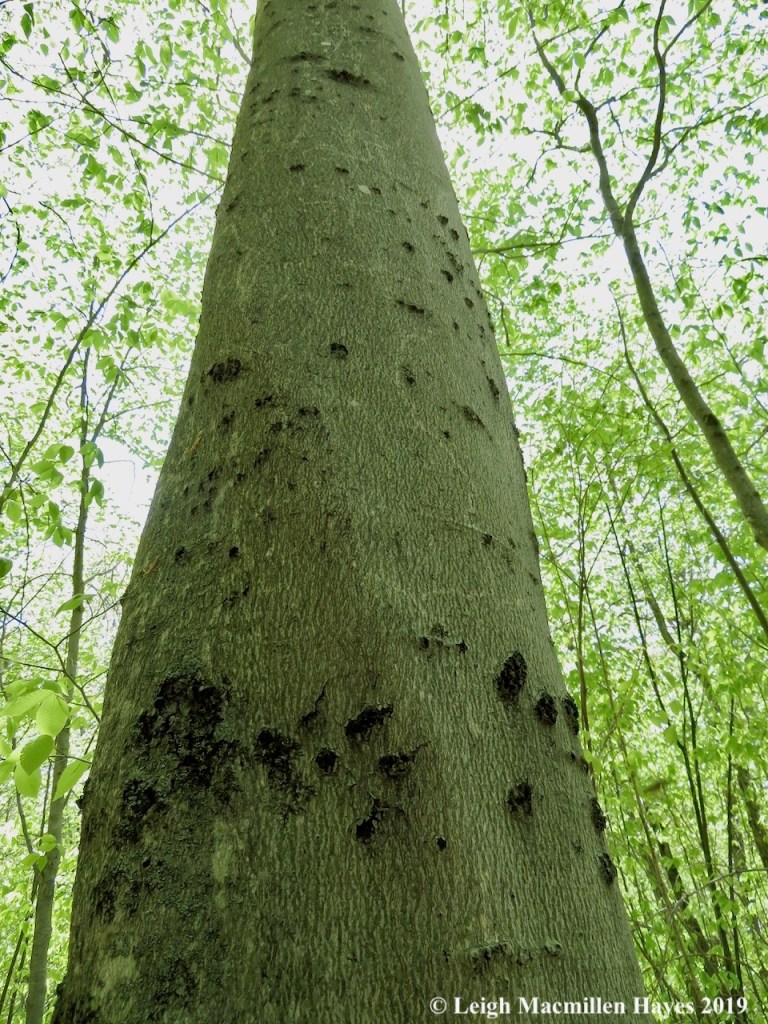
Because we were chatting and spending much of our time looking at the ground to avoid tripping on rocks or roots, the trail passed quickly under our feet. Suddenly, I realized we were in an area of mature American Beech trees and so I started to search the bark on our never ending quest of bear claw marks. Two seconds later and bingo–I spotted one tree with a couple and then together we found another with many scars made by the bear’s long, sharp claws.

Some were older than others, and it appeared that during the mast beechnut year we had two and three years ago, this tree had been climbed several times.

We felt instant satisfaction for our efforts and continued to look as we followed the trail to the summit. But . . . we never found another.

That was okay as there was much more to see including the fluttering petals of Serviceberry or Eastern Shadbush, a shrub that loves the understory. According to Dr. Michael L. Cline’s Shrubs of the Northern New England Forest, the names Serviceberry and Shadbush “refers to early flowering corresponding to the time that those departed in winter could be interred and when anadromous shad returned to major rivers in spring.”

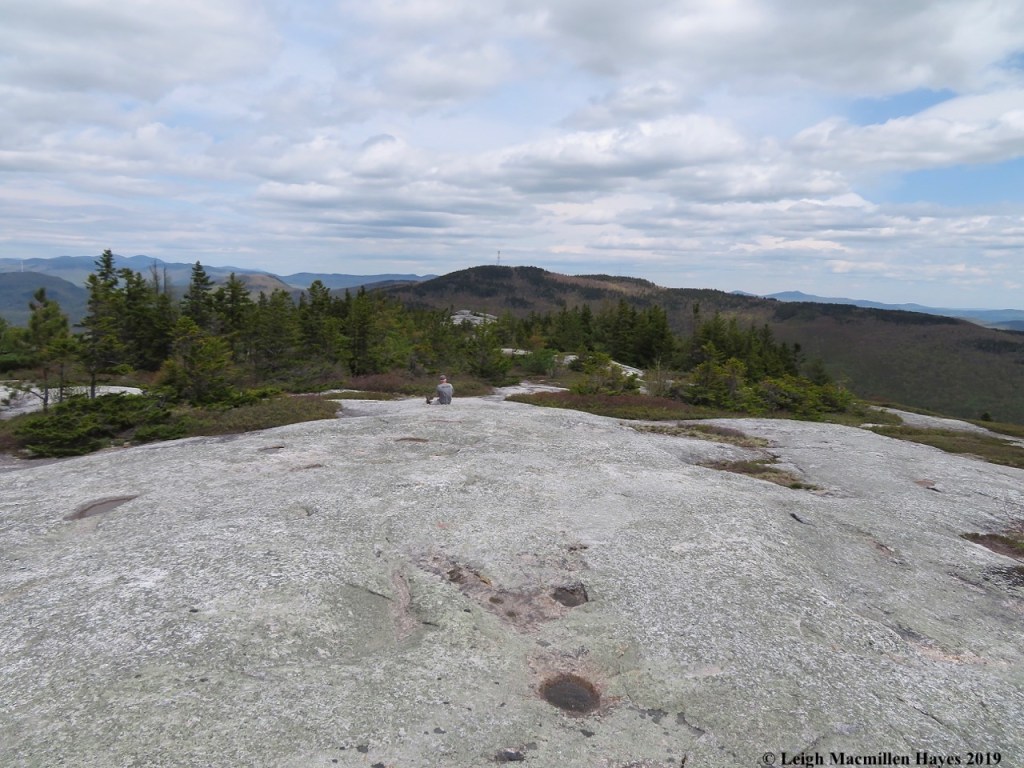
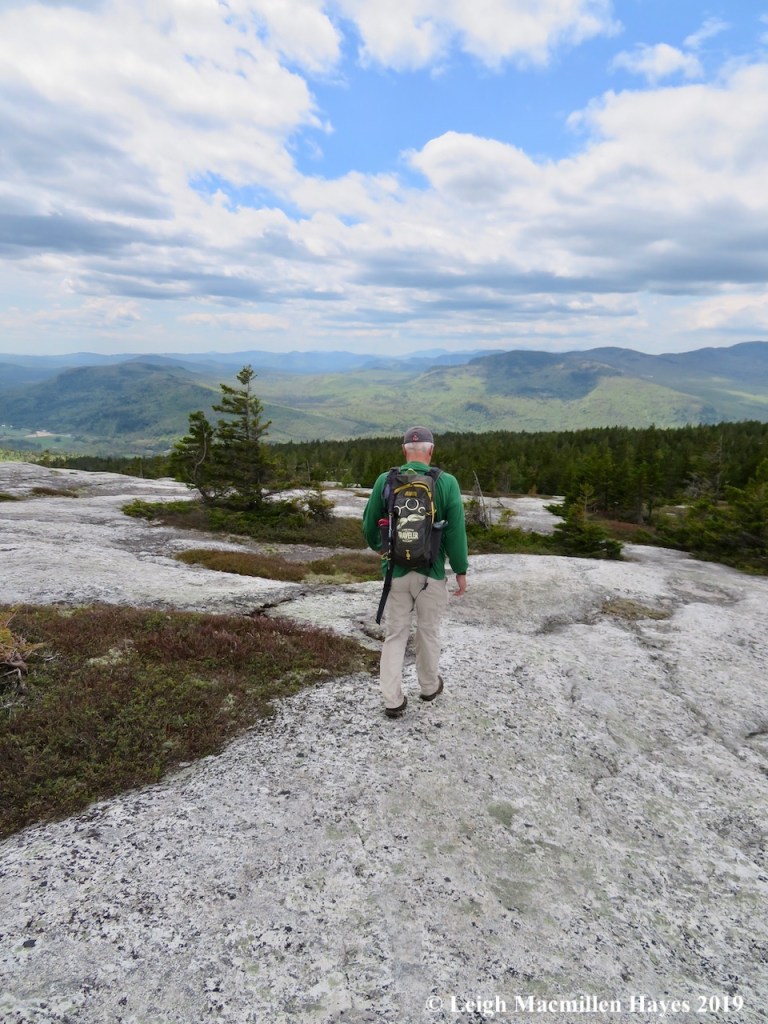
The natural community changes several times on this mountain, like many, and eventually it thins into a bald with islands of lichens, Black Crowberry, Alpine Bilberry, Lowbush Blueberry, Leatherleaf, Sheep Laurel, and . . . Red Pines. The summit is host to one of the largest Red Pine communities in the state–some dwarfed by the wind that flows across the granite daily.
Others standing tall in their military stature.

The wind was welcome as we continued up the granite pegmatite, and then a deposit appeared before our eyes and we knew we were indeed in the right place for this Mondate–Black Bear scat. By its color and texture, it was obvious that Ursus americanus had dined on the organ meat of a hairy critter. Too much information, I’m sure, but consider the wildness of it all.

Given all the blueberry blossoms, we suspect Ursus will return. Be ye forewarned.

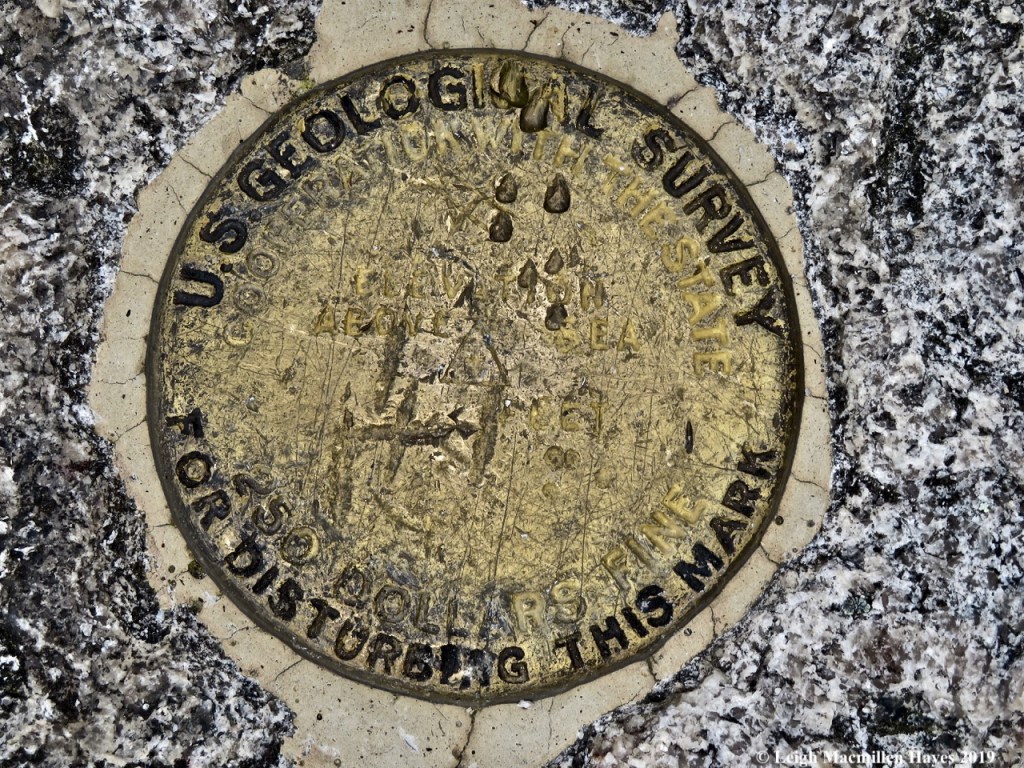
At the summit, it’s always fun to find a survey monument-–the bronze disks used by surveyors since 1879 for mapping purposes.

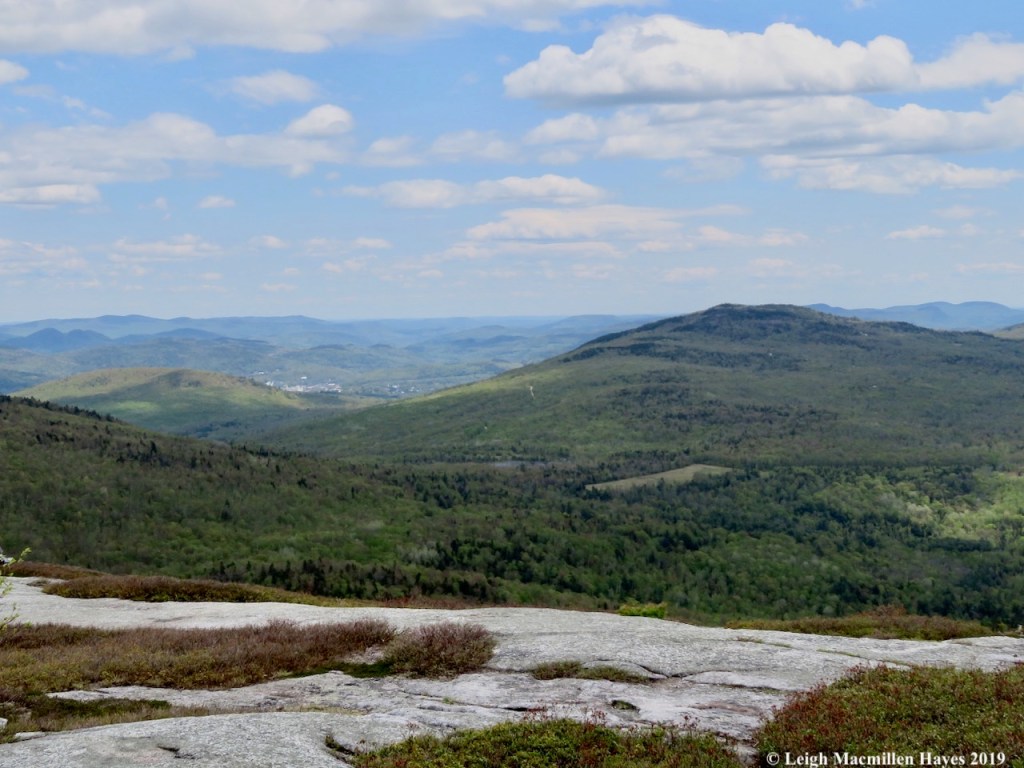
From there (lunch rock–why does PB&J always taste so good when one hikes?) we took in the view toward Black Mountain in the near beyond,

Rumford in the valley below,

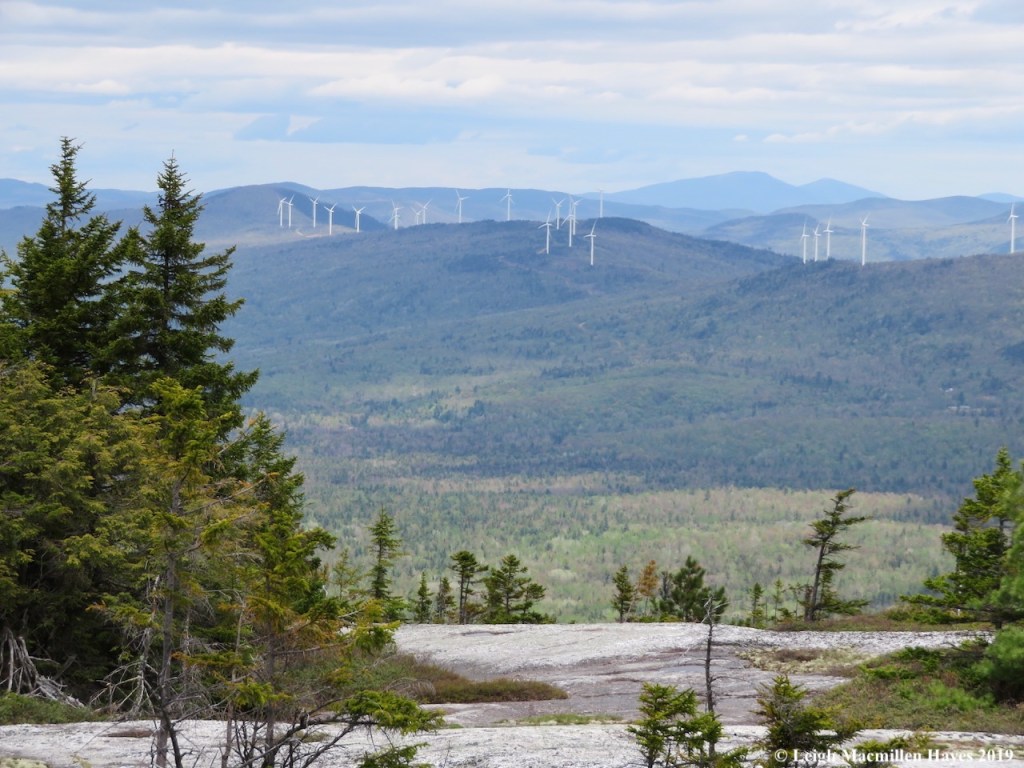
and several ridges covered with wind turbines. I’m of two minds on this topic–the old wishy-washy self that I am. In Canada, wind turbines are located across the landscape and even as we hiked the Cape Mabou trails on Cape Breton Island a few years ago, we stood below one and listened to its airplane engine-like sound, but we didn’t hear it until we were quite close. I actually think they are quite beautiful as they turn–ballet of a sort.

At last it was time to get out of the chilly wind and begin our descent. If you look closely, you might spot Sunday River with a wee bit of snow still on the ski trails. But . . . you have to look closely (Faith–I’m talking to you!)

It was on the way down the bald peak that I noticed the pompoms of several Tamarack (Larch) trees–because we don’t meet on an every day basis, they always bring a smile to my face.

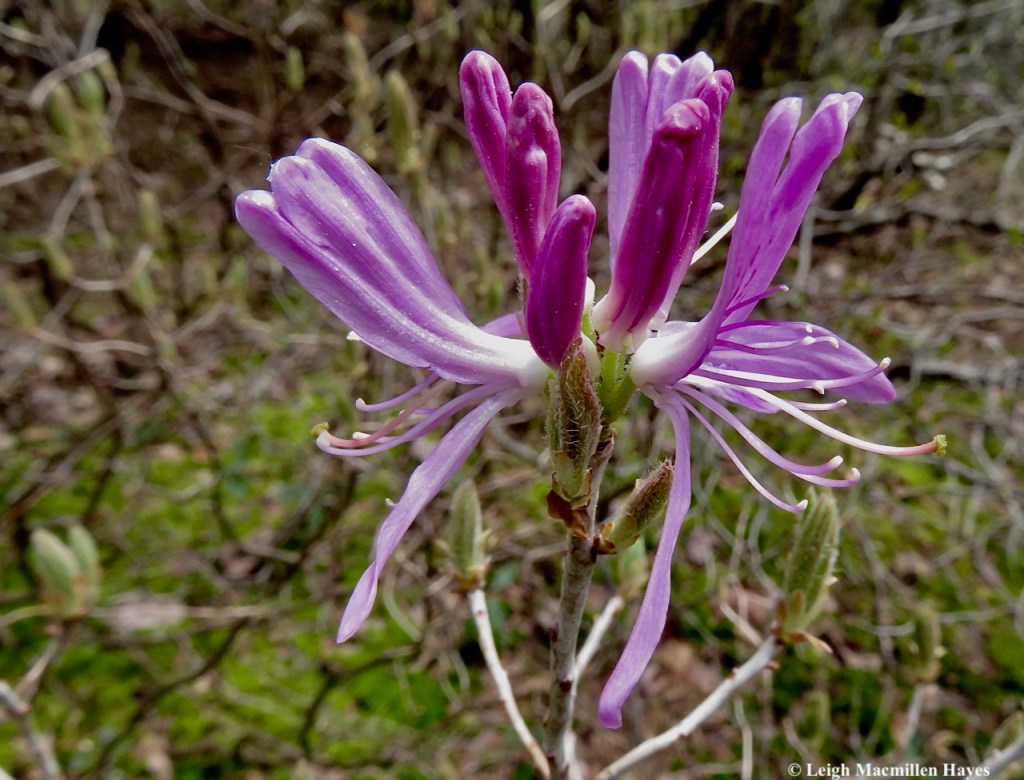
We slipped from the Orange/Red trail to the Starr and found Rhodora beginning to bloom–its magenta buds bursting with pride prior to its leaves.

Pollination was happening everywhere we turned, including by Hover Flies becoming familiar with Pin Cherries.

The trail down was sometimes wooded and other times granite. As I was about to step up onto one slab, a mottled design captured my attention. It would have been easy to overlook for so well did it blend in–even seeming to mimic green lichen. But . . . it was a moth that hugged the stone face.

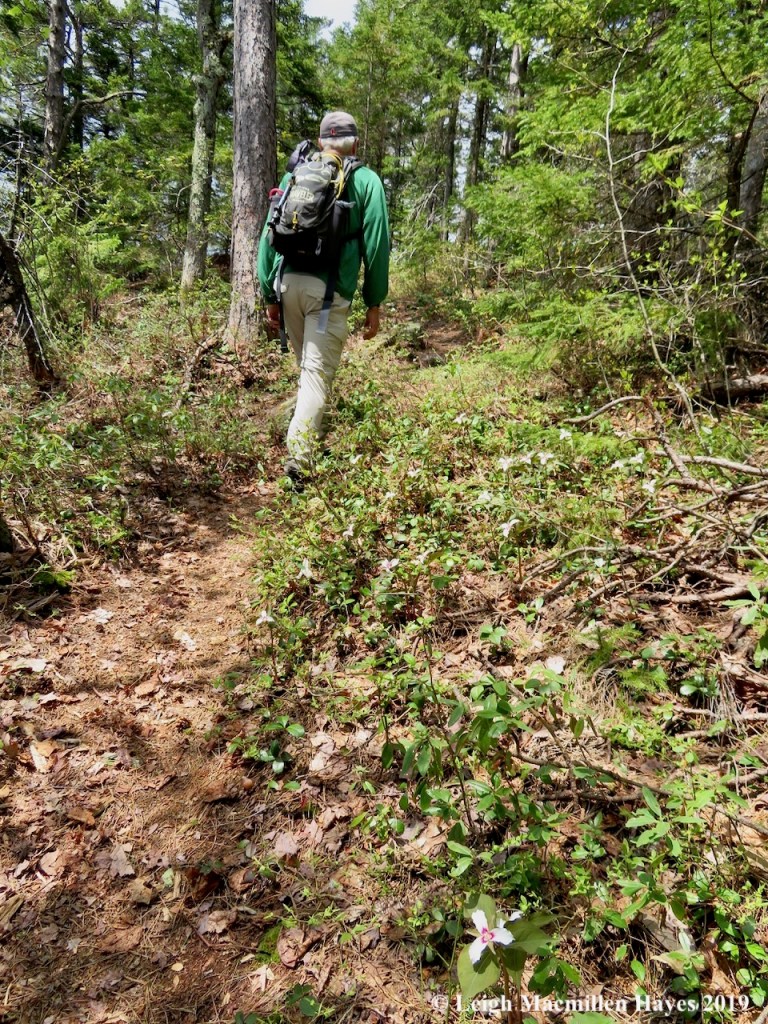
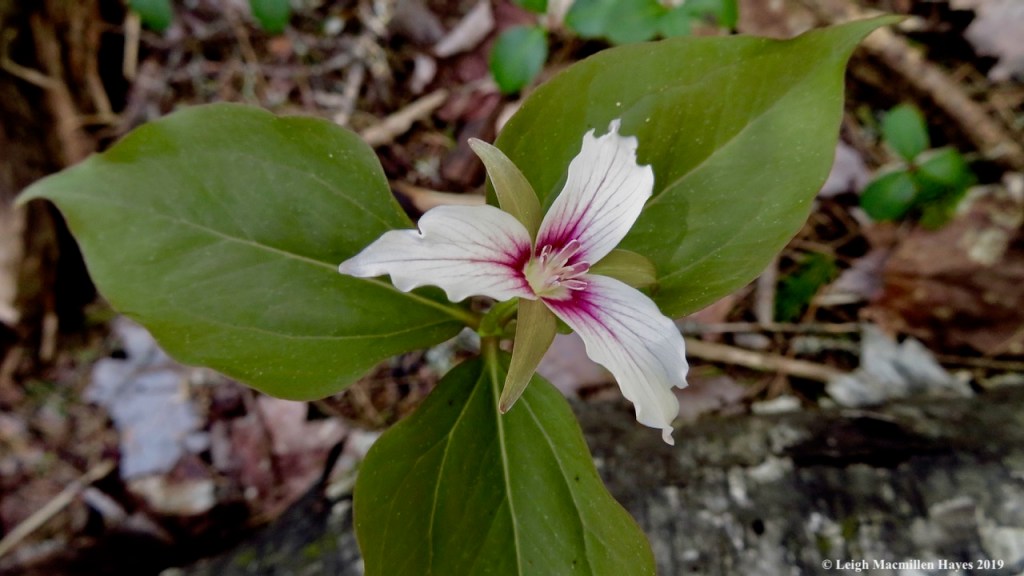
Soon after I made a curious observation. Colonies of Painted Trillium greeted us several times, but always at a higher elevation. I know they grow low, for I’ve encountered them many times, but it had to be a soil consideration that I don’t yet understand that caused such behavior.

Those that we saw had not yet been pollinated for their petals were not translucent . . . a give-away trait.

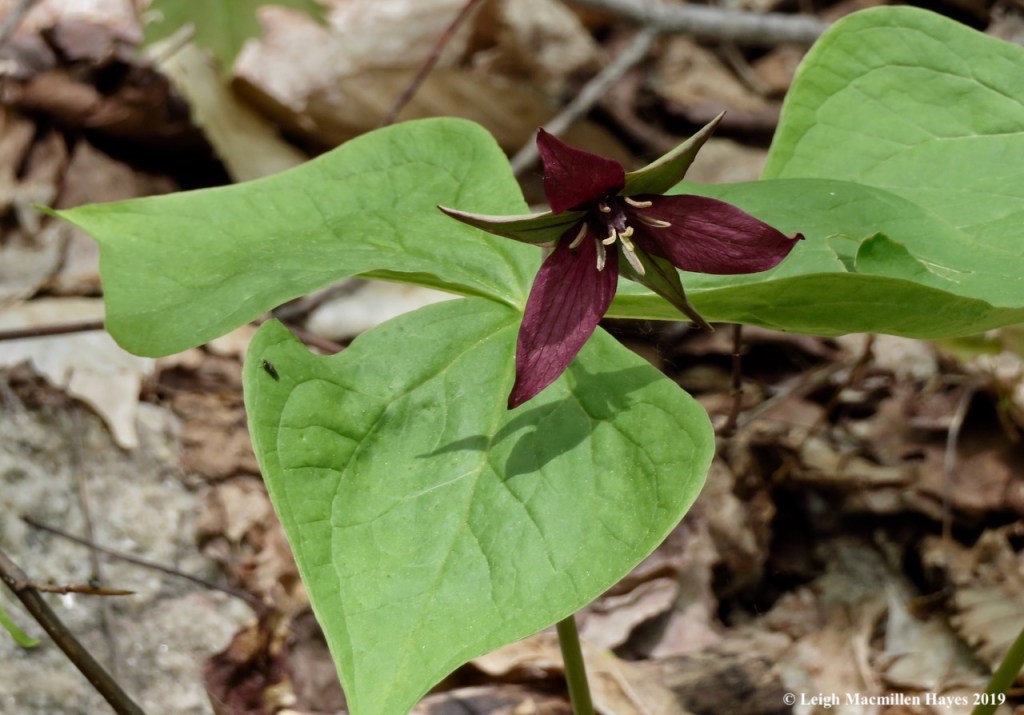
Further down the trail, we began to meet patches of Stinking Ben, aka Red Trillium.

There were also selections of White Quartz to admire.

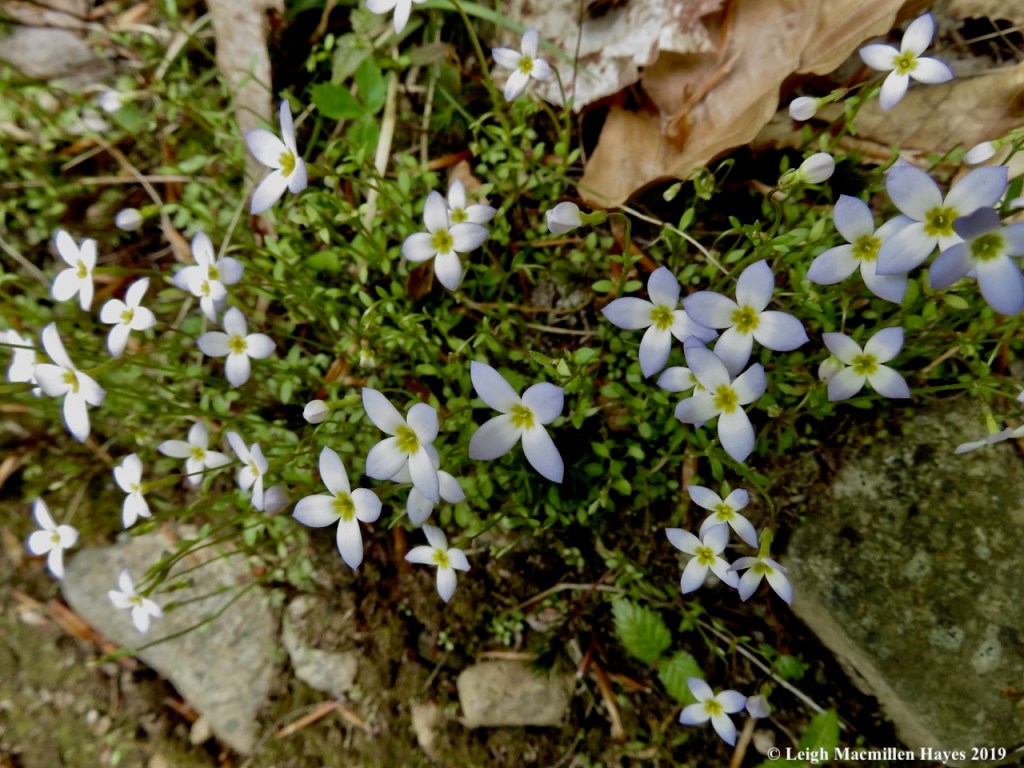
And tiny Bluets that edged the lower pathway. Red, White, and Blue.

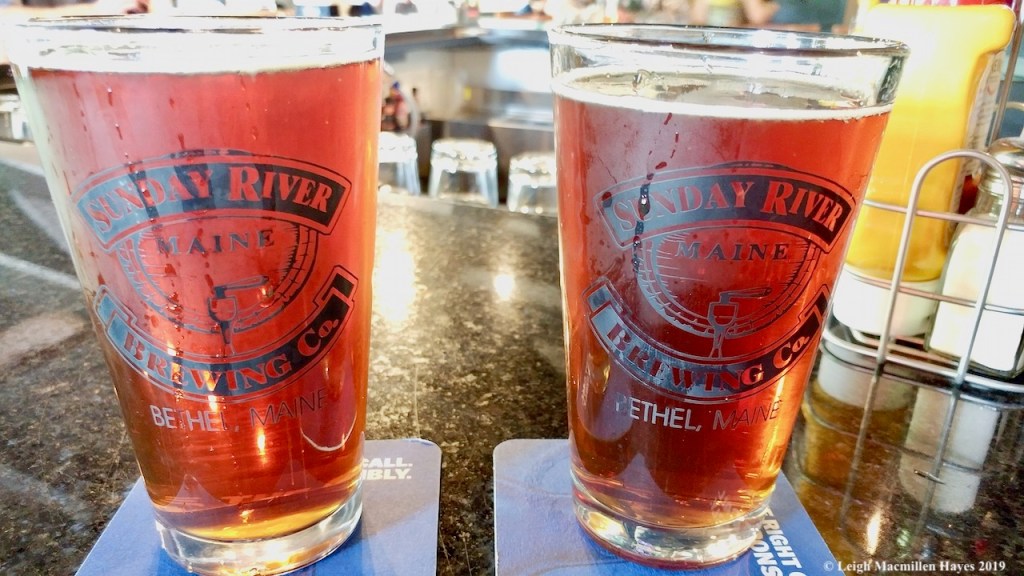
Being a Bear to Beer, we honored the hike and the day with a few sips at Sunday River Brewing Company in Bethel before heading home.

But really, the sight that best represented the day was the Red Admiral–red, white, and blue all in one. And an admiral to boot.

Thank you to all who have sacrificed your lives for our country. I did spend much of the day thinking about the peace and freedom that my guy and I enjoy. And the fact that we were surrounded by a variety of colors other than those of the American flag, which made me think of how the American Flag represents so many no matter their color or creed. And wondering why we can’t all agree to get along. We don’t have to like each other, but why can’t we agree to disagree and leave it at that?

Bear to Beer possibilities: Rumford Whitecap on Memorial Day.

Peace be with you.

This Land Is . . .

My land. I’m sure of it. I don’t own it all, but I walk it often because it’s not posted and I know it well. Well, only just so well. It’s constantly offering me new learnings.

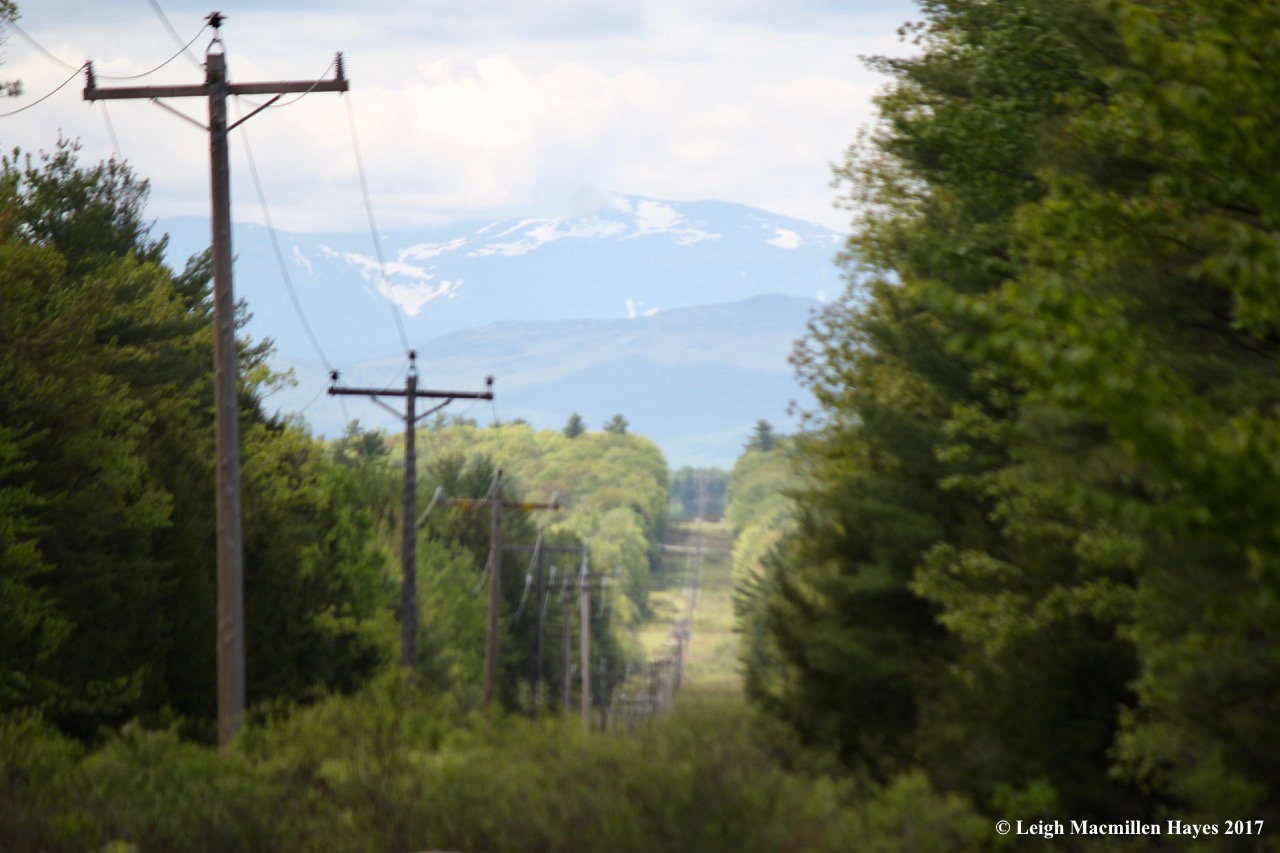
o-Mt Wash

And so once again, out the back door I ventured, intending to head north toward the land of snow–haha. My sister asked the other day if we still had snow. We don’t have any on our land, but this is our view from the power line right of way–yup–we’ve got snow ;-) (in our view).

o-tick

I changed my mind about the direction, however, when I saw numerous dog ticks on the tips of grass as I crossed our neighbor’s field. Though they aren’t the purveyors of diseases such as Lyme disease, Babesiosis, and Anaplasmosis, seeing them still unnerved me and I decided to head in the opposite direction where it isn’t so grassy. Of course, that’s where the deer ticks live. Nightly tick checks are a must every day.

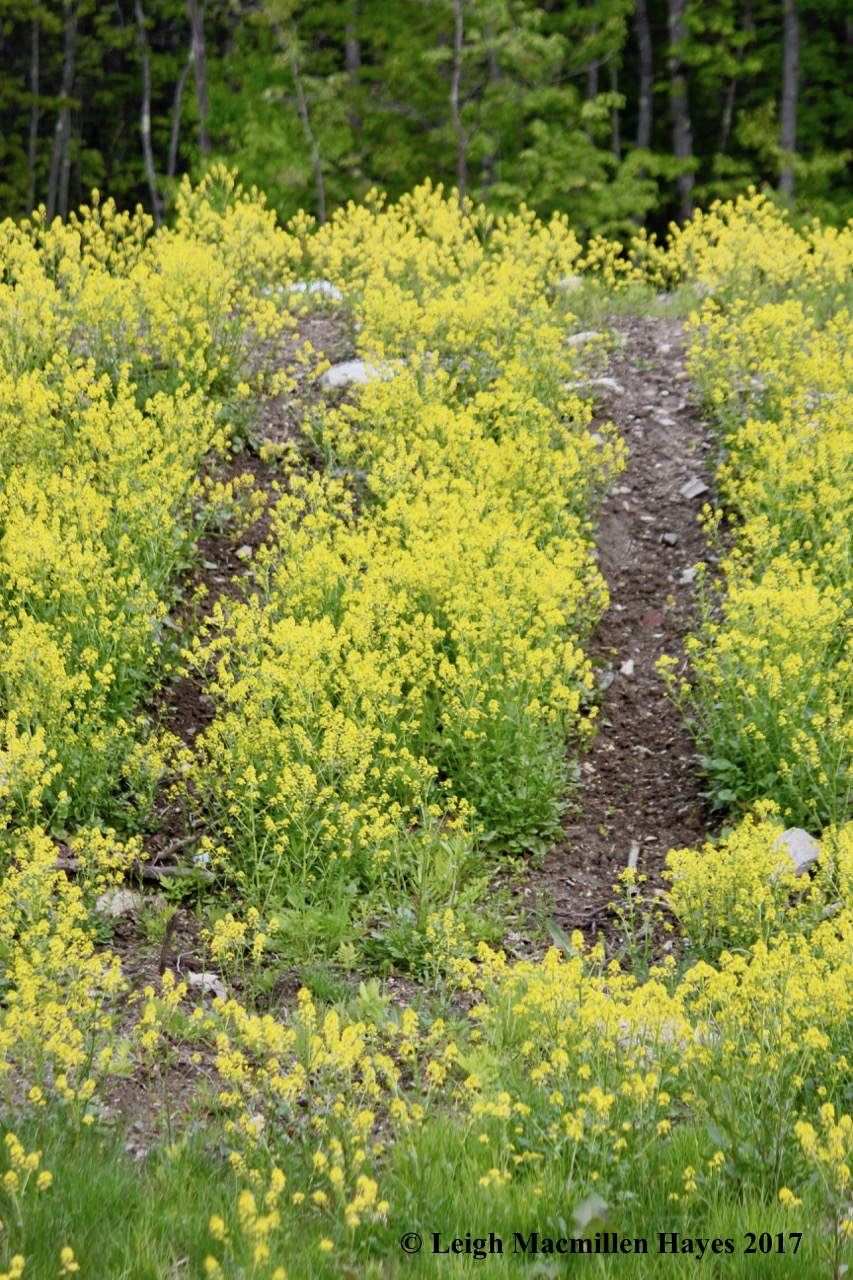
o-early yellow rocket 1

It was in the opposite direction that I was caught by surprise. Behind a local business, where the land had been disturbed a year ago, a wall of yellow greeted me.

o-yellow rocket 3

It was a sea of early yellow-rocket that is common along roadsides and fields. Apparently this one spot was the cat’s meow for it to grow so prolifically.

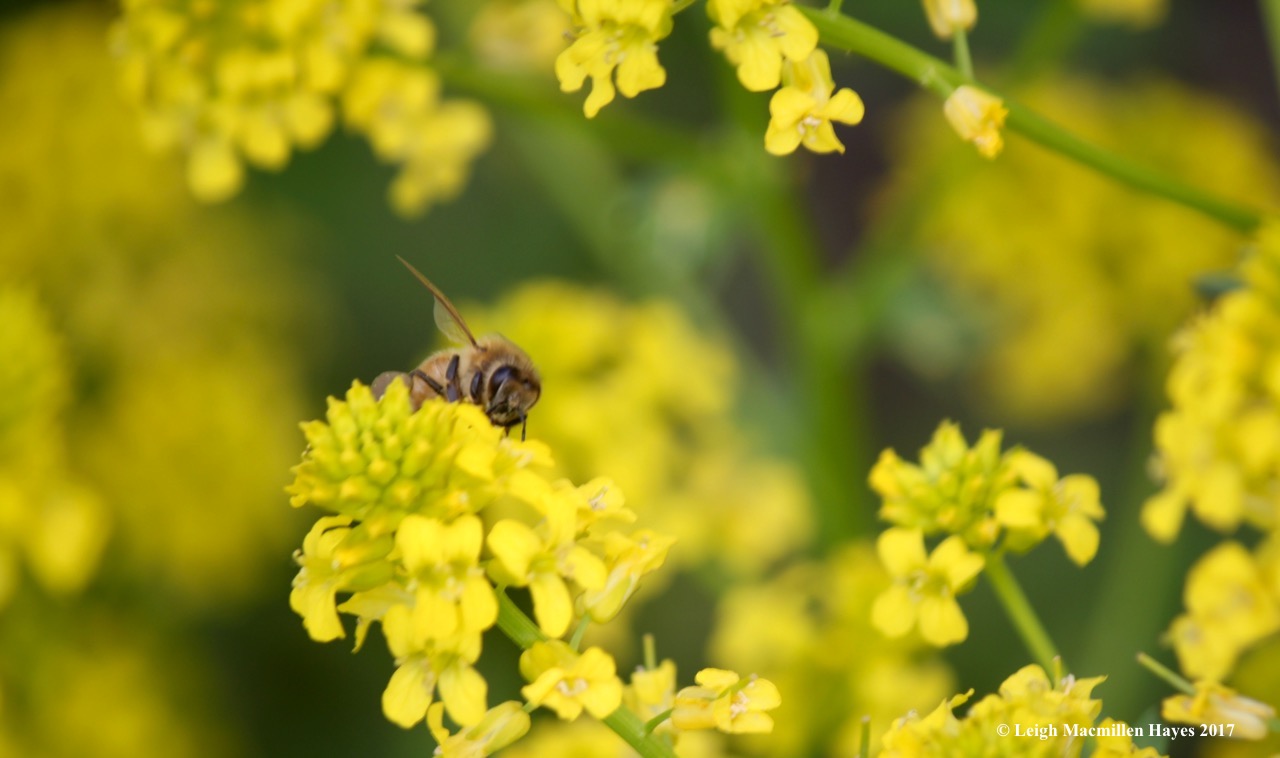
o-bee 3

What was more prolific–the sound.

o-bee 1

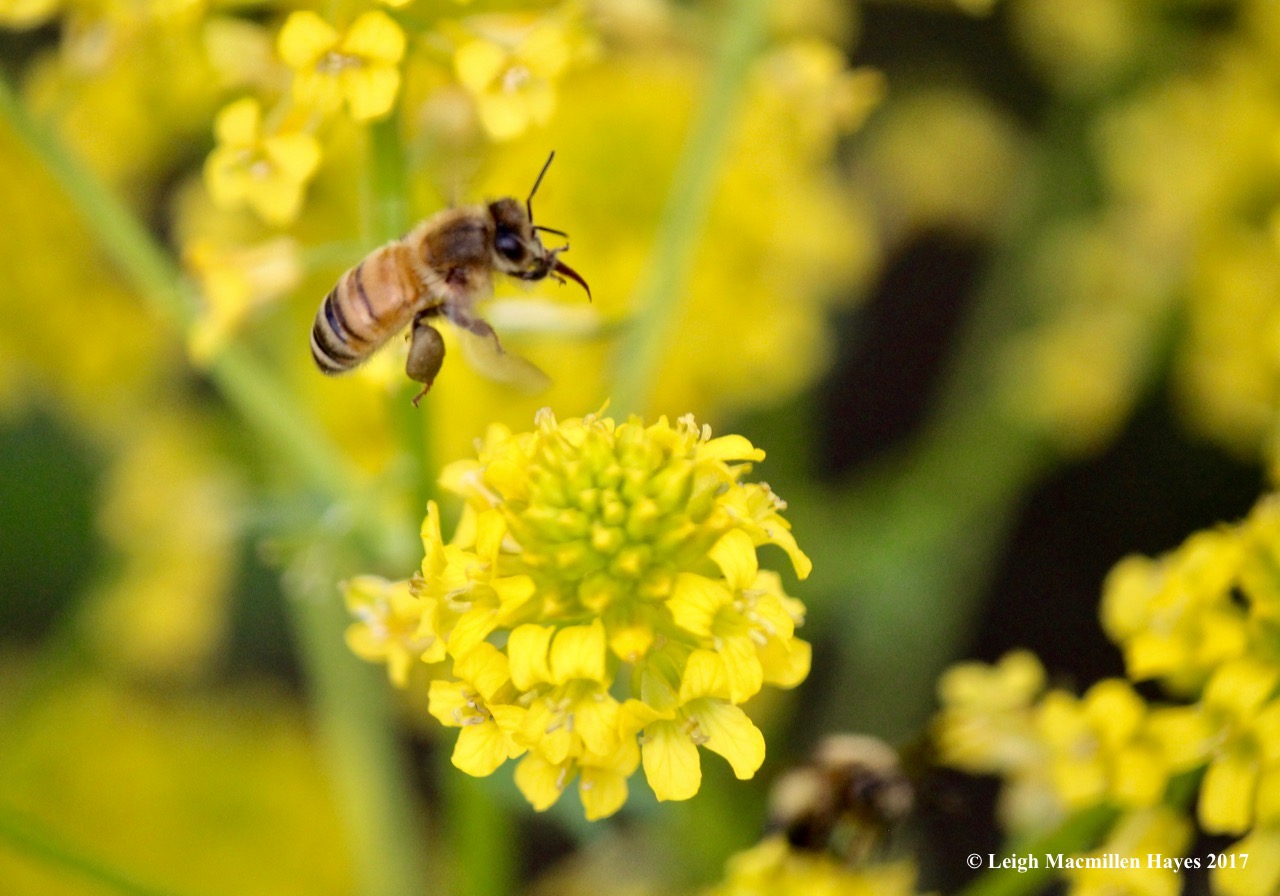
Bees and other insects hummed as they worked,

o-bee 2

filling their pollen sacks to the brim.

o-fritillary 1

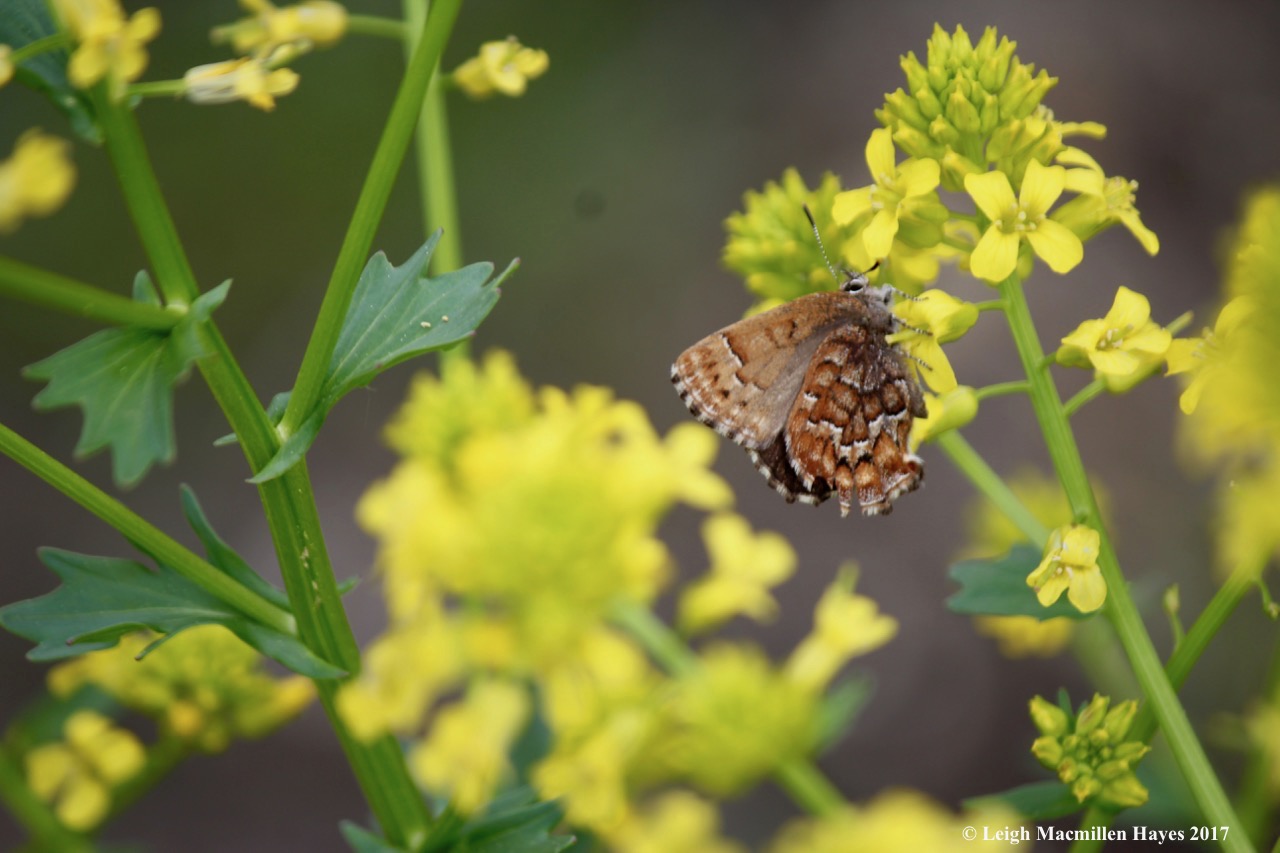
Even a fritillary butterfly enjoyed the goodness within.

o-fringed 2

Those weren’t the only wings I saw. It was a complete surprise to also discover gaywings or fringed polygala growing deeper in the woods.

o-turkey print

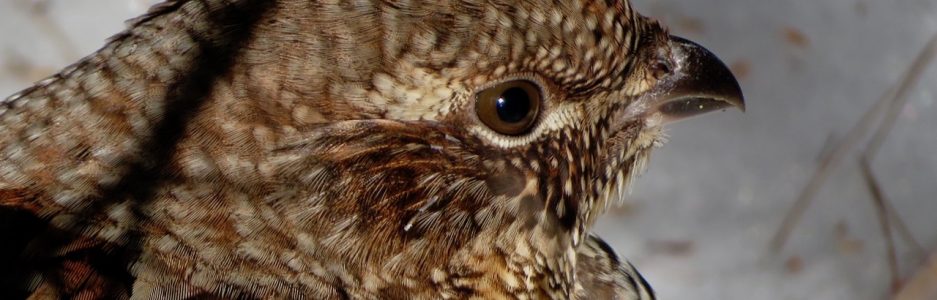
Walking along, I flushed a couple of deer and a ruffed grouse. And though I didn’t see or hear any turkeys, I knew they’d been there by their signature prints.

o-tadpole 1

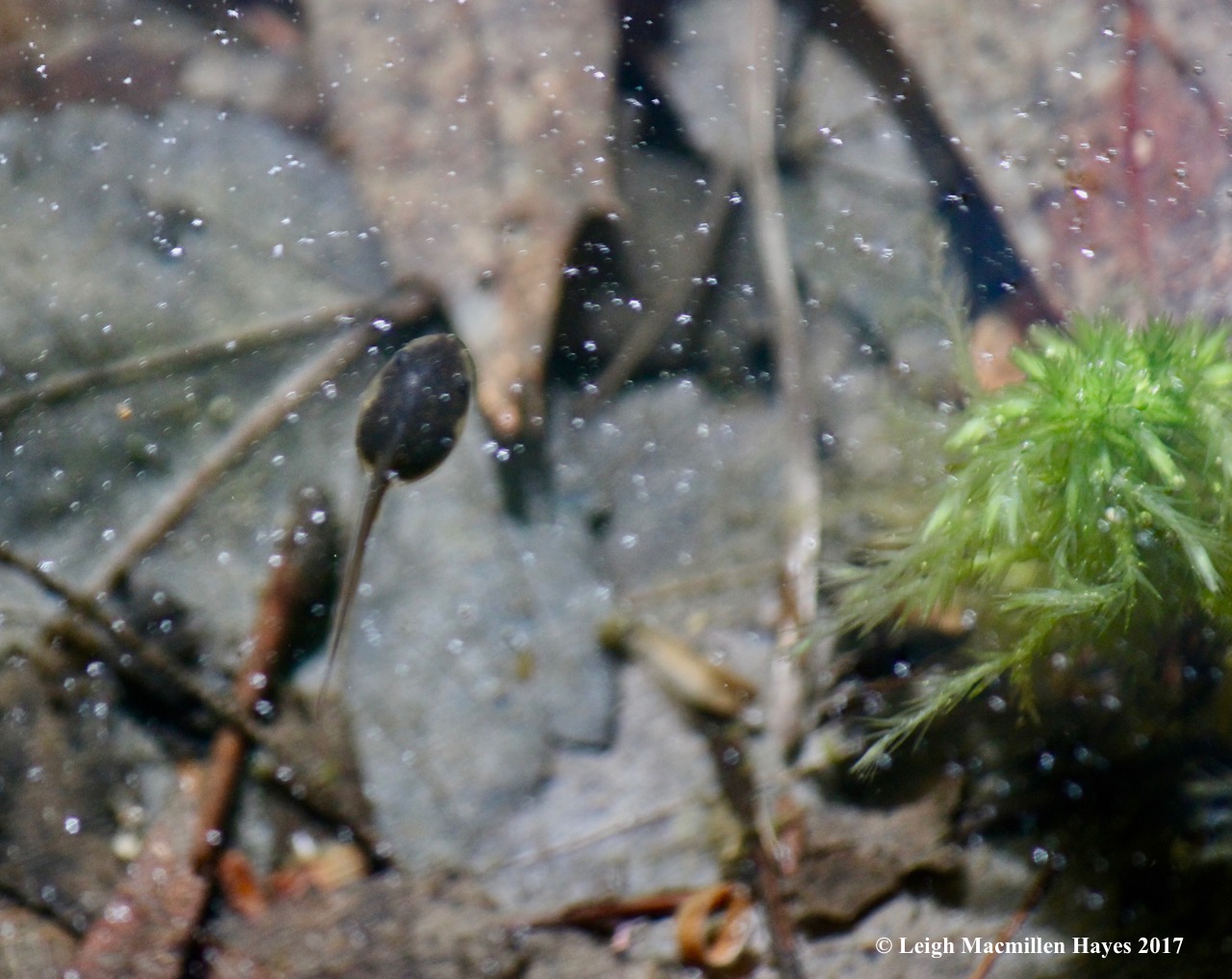
And then I slipped off the trail to stop at a vernal pool that I don’t often visit. The water is shallow, but tadpoles are growing.

o-tadpole 2

A week or two ago after they’d just emerged, they were easy to spot as they clung to their egg masses or swam by water’s edge. But they are maturing and I had to stand still or they’d disappear under the leaf cover.

o-water scavenger larvae

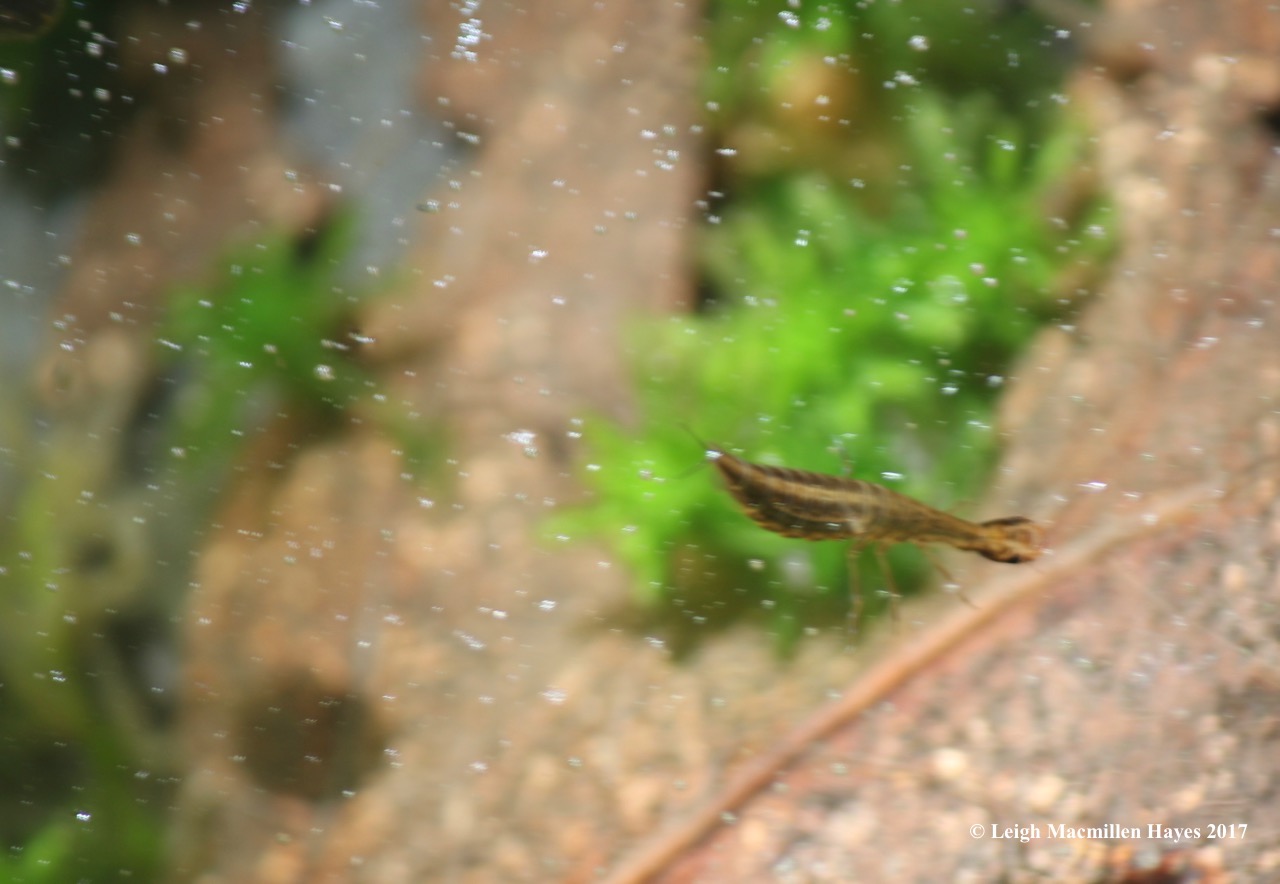
While standing there, I spotted another resident I didn’t immediately recognize–the larval form of a water scavenger beetle. According to A Field Guide to the animals of Vernal Pools,  “they are poor swimmers and will hang from the water surface (where they obtain oxygen) or hide in vegetation to await prey.” That all makes sense given their body structure.

o-sugar ant?

On the way back, another insect stopped me. I think they were sugar ants with a white thorax. But why were they on beech leaves? Then again, every insect seems to like beech leaves. I guess I don’t think of them as being sweet, but . . .

o-old gate in wall

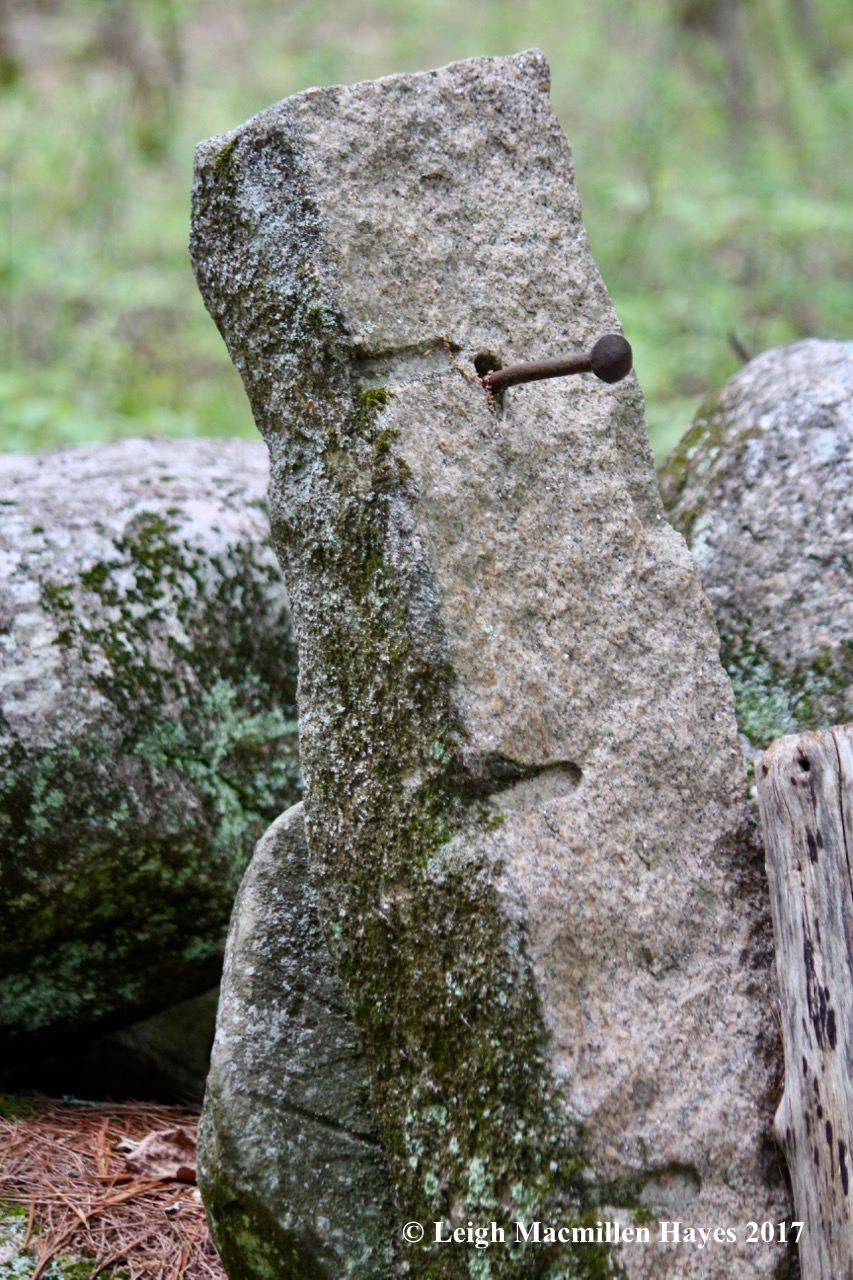
As I headed home, I paused by an old wall and gate. This land was farmed in the late 19th and early 20th centuries. The walls formed boundaries for animals and are owned by numerous neighbors I’ve never met. Thankfully, they let me and others cross–though few will do so until hunting season begins in the fall.

Anyway, it all got me thinking about who owns the land. And then I knew the actual answer. The plants. The trees. The flowers. The insects. The amphibians. The birds. The mammals. They all own the land. We are mere visitors. I thank all of nature for letting me trespass and gain a better understanding of its various life forms.

This land isn’t my land. And it wasn’t even made for you and me. But I have great reverence for it. And for those who have protected it.

Happy Memorial Day.

Close to Home

It’s a no-Mondate Monday since we just returned from vacation. My guy felt the need to work and I felt the need to stick close to home.

Stepping outside, the aromatic smell of lilacs and honeysuckle envelope me. It reminds me of my childhood home, where the lilacs grew outside the bedroom I shared with my sister. And that reminds me of Mom and Dad and the fact that it’s Memorial Day and we always went to the parade in town and sometimes we marched in it and other times we rode in the back of our neighbor’s car because she was the head of the VNA and the school nurse, and we always bought crepe paper poppies from the veterans to honor them and my father, grandfathers, uncles and cousins. Thank you to all who have and do serve.

Lilacs

We purchased our home 22 years ago. The previous owners had green thumbs and though the house had been empty for ten years before we bought it, their toil was still evident. I have a green pinky, so the gardens aren’t what they once were. I am excited, however, that some of the flowers they nurtured continue to thrive. Such is the case with this white lilac.

purple lilac

And the purple, that forms part of the windscreen on the edge of the yard.

The fragrance is mixed in with . . .

honeysuckle

that of the honeysuckle. Both buzz with pollinators seeking their sweet nectar.

strawberry 2

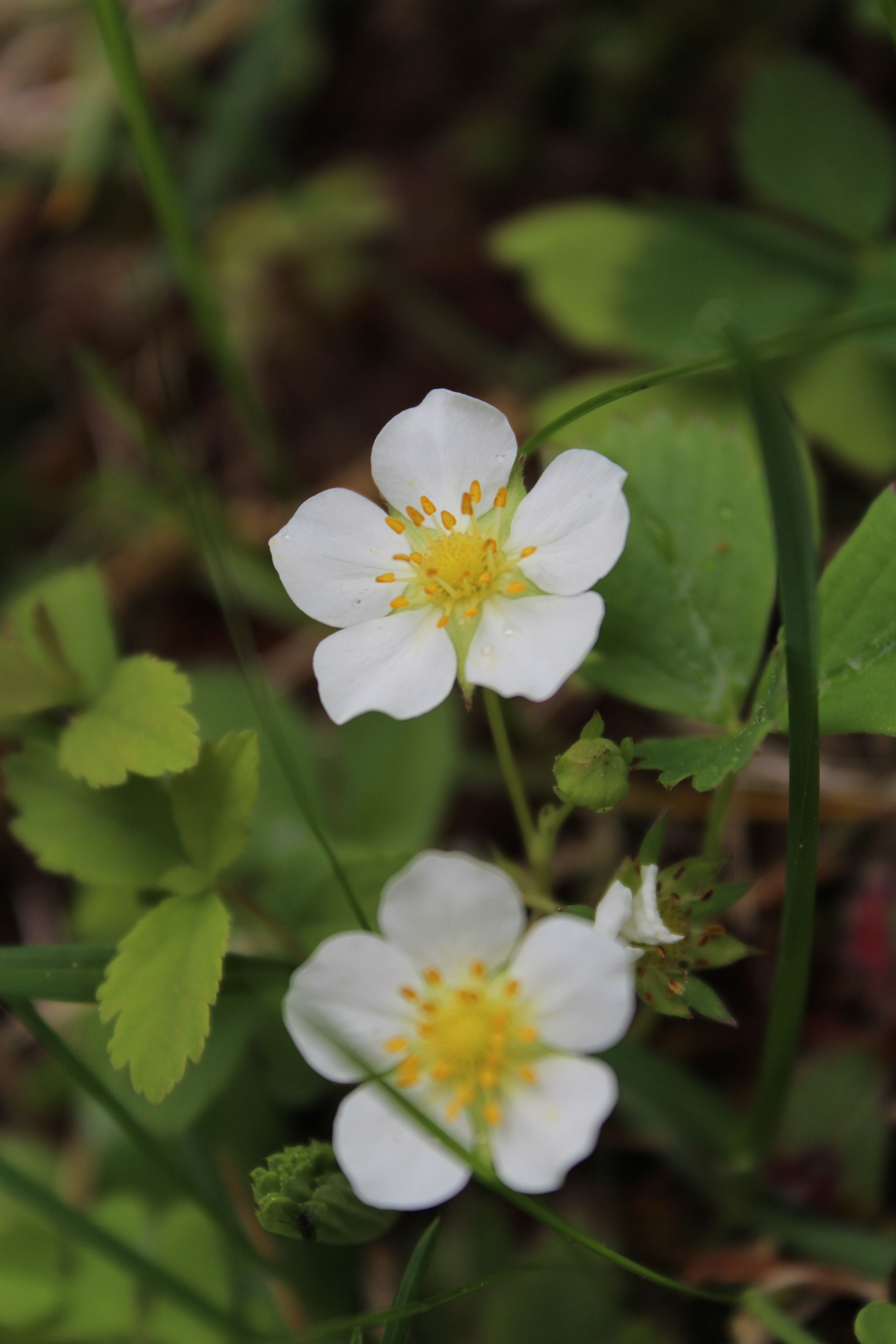
Wild Strawberries are just that as they creep through the gardens and lawn.

Flowers and leaves grow separately on long, slender stalks.
With milk-white flowers, whence soon shall sweet
Rich fruitage, to the taste and smell
Pleasant alike, the Strawberry weaves
Its coronet of three-fold leaves,
In mazes through the sloping wood.
—Anonymous

blueberries

Another edible, the Highbush Blueberries.

Canada Mayflower

Atop one of the stone walls, at its base and below many trees, the Canada Mayflower blooms.

star flowers

A wildflower that some consider common is the Starflower. Look closely and you may see that there are seven stamen, seven petals and seven sepals. How common is that?

Interrupted 2

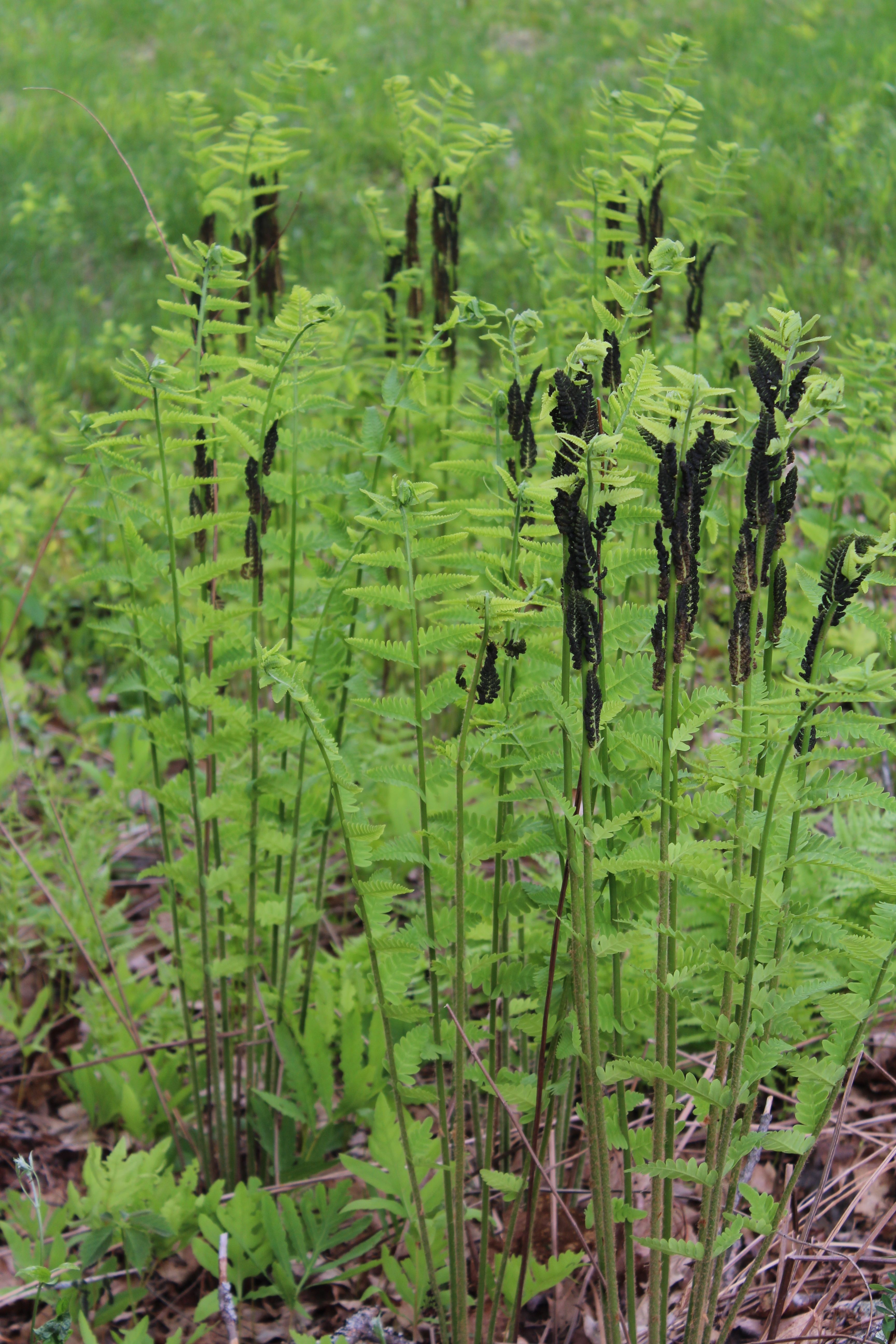
We have plenty of ferns throughout the yard and woods, but I like this one–the Interrupted Fern. It speaks its name.

Interrupted fern

On larger fronds, brown fertile pinnae or leaflets interrupt the green sterile leaflets.

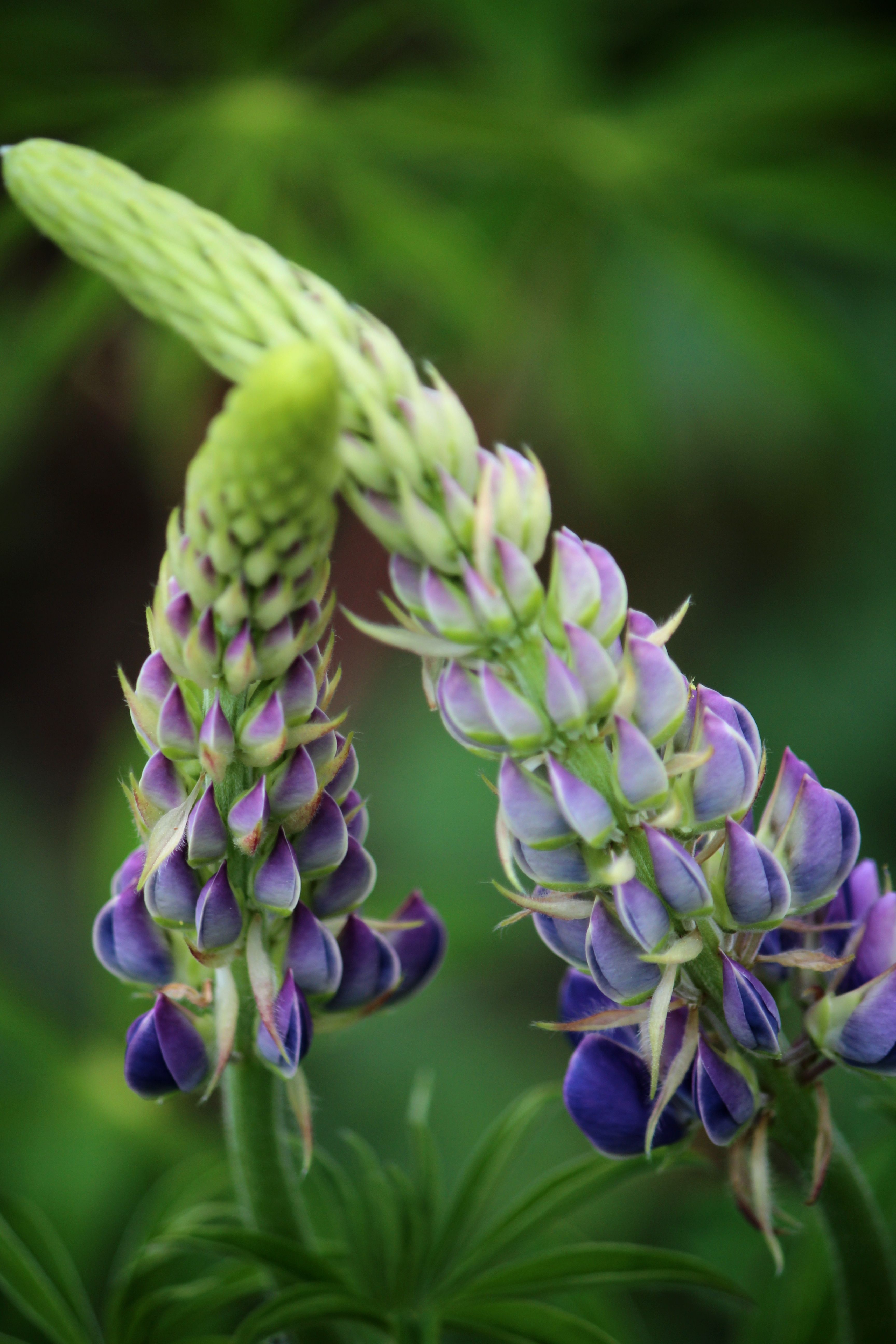
Lupine

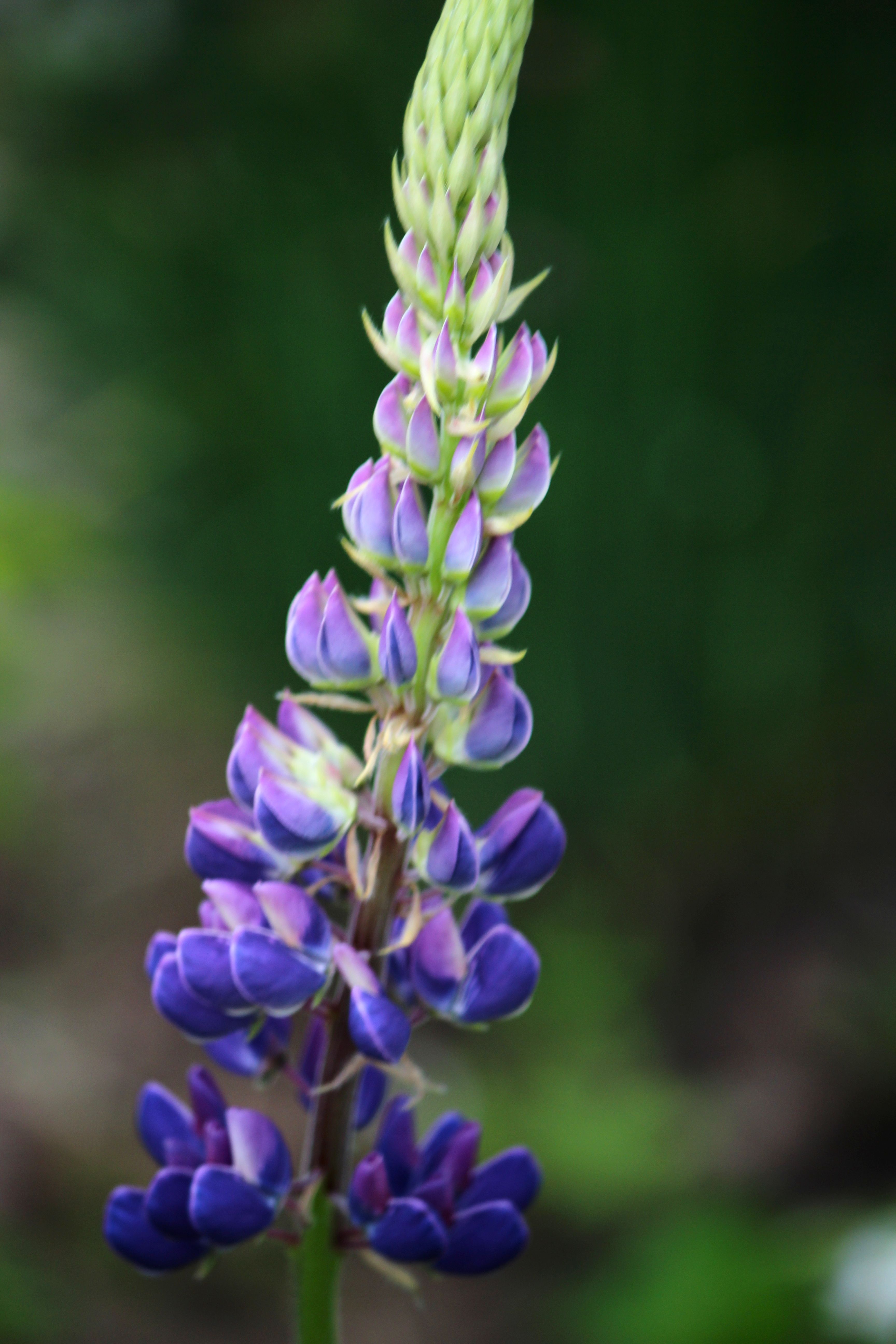
And then there is that hitchhiker, the Lupine. Each year it moves to a different spot.

Lupine 2

I love to watch the flower open from the bottom up.

lady slipper

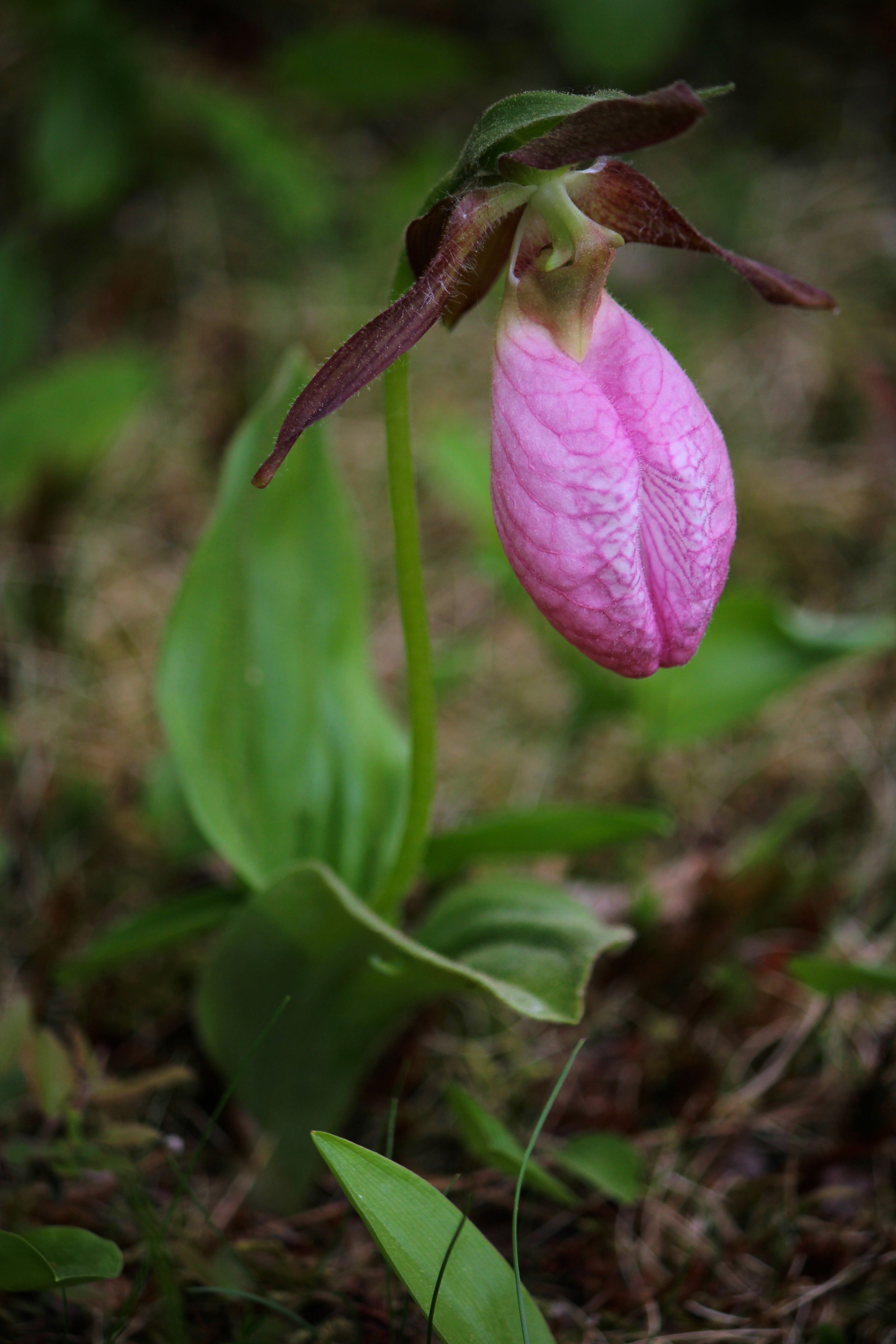
I saved the best for last. As I mentioned earlier, we’ve lived in this house for more than two decades and though I’ve seen Lady’s Slippers in other places, today I stumbled upon this one in our yard. A member of the Orchid family, it features the typical three petals in an atypical fashion. The pouch (or slipper or moccasin), called the labellum, is actually one petal–inflated and veined as you can see. The two remaining narrow petals twist and extend to the sides. Overall, it reminds me of a lady holding out her skirt as she curtsies.

Though bees help with pollination, they hardly reap the rewards of sweet nectar. It’s a symbiotic relationship with a fungi that helps the Lady’s Slipper germinate. And then, it still takes a few years for the germinated seed to produce leaves and about 3-5  years before it produces a flower. Once established, however, it may live for 20-30 years or more. So apparently this wildflower has been present for at least eight years, but I only discovered it today.

Staying close to home certainly offered sweet wonders.