Time Travel: Trail Until Rail

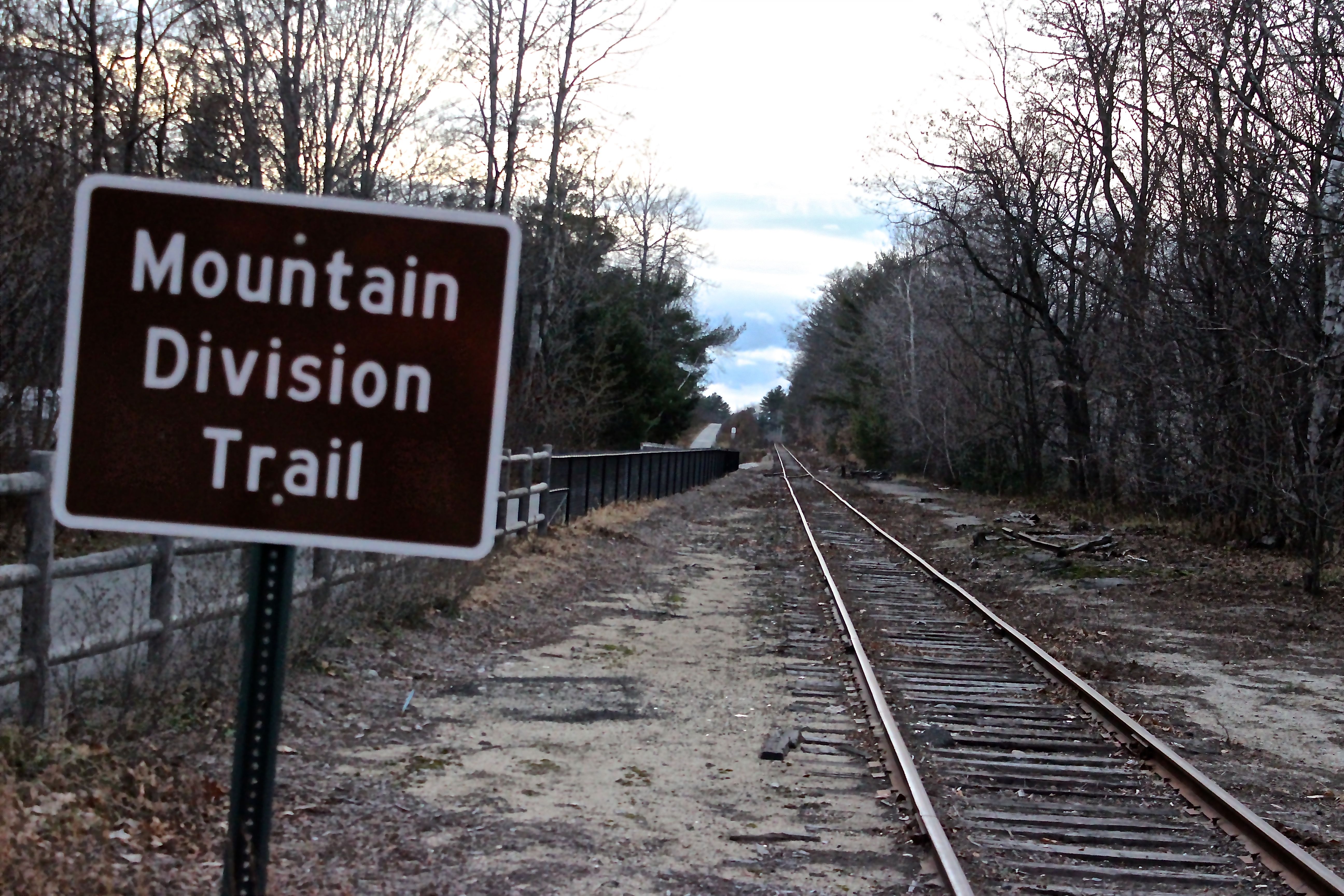
Picture this: It’s 1888. You’re in a train car on what was once the Portland and Ogdensburg Railway (P&0), but is now leased by Maine Central (MEC) and renamed the Mountain Division Trail. You are making the journey from the White Mountains of New Hampshire to Portland, Maine, with a brief stop in Fryeburg, Maine.

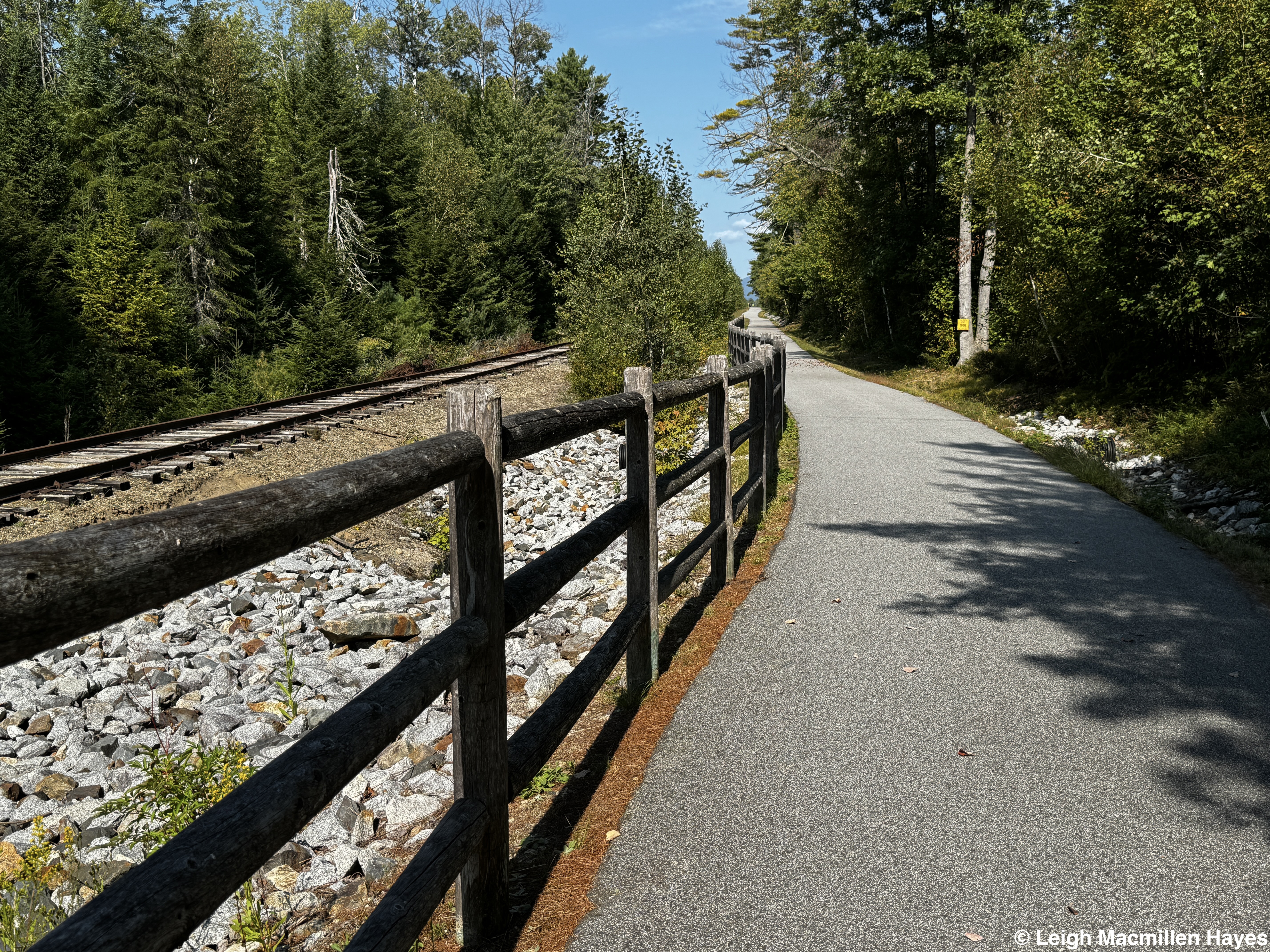
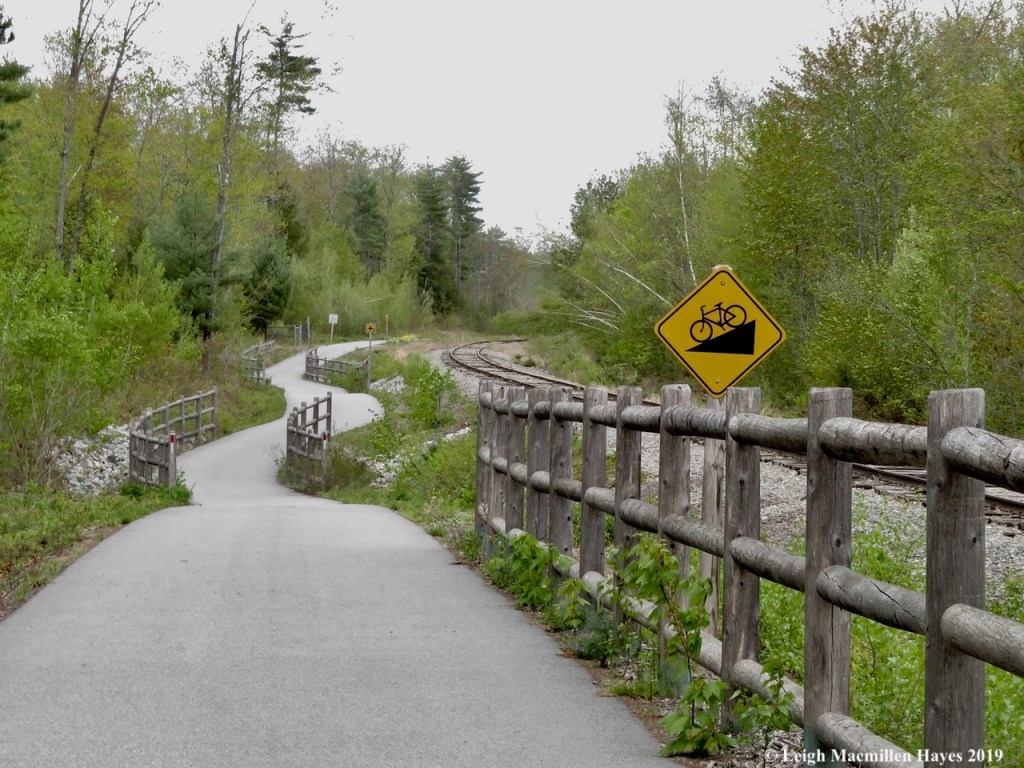
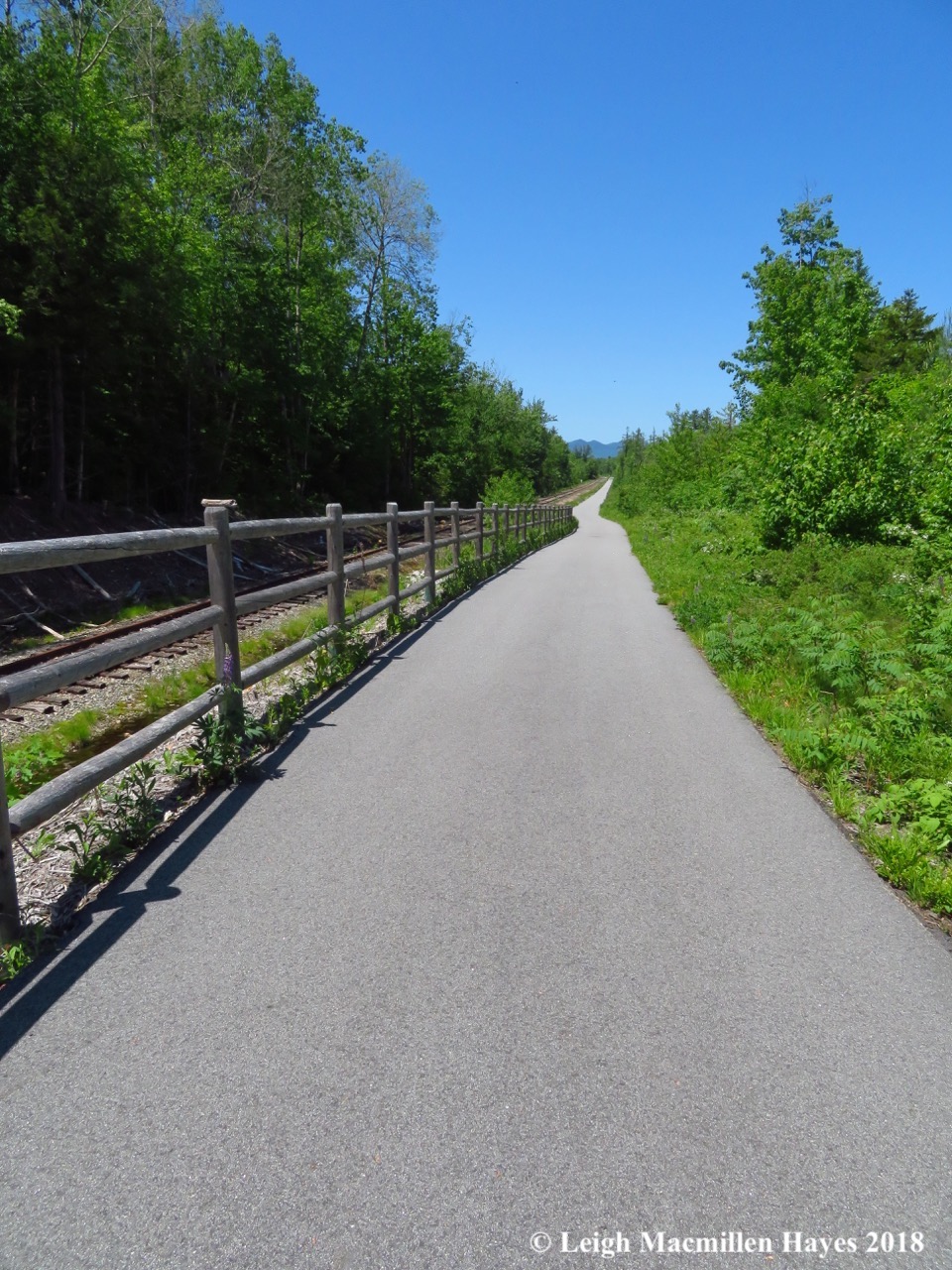
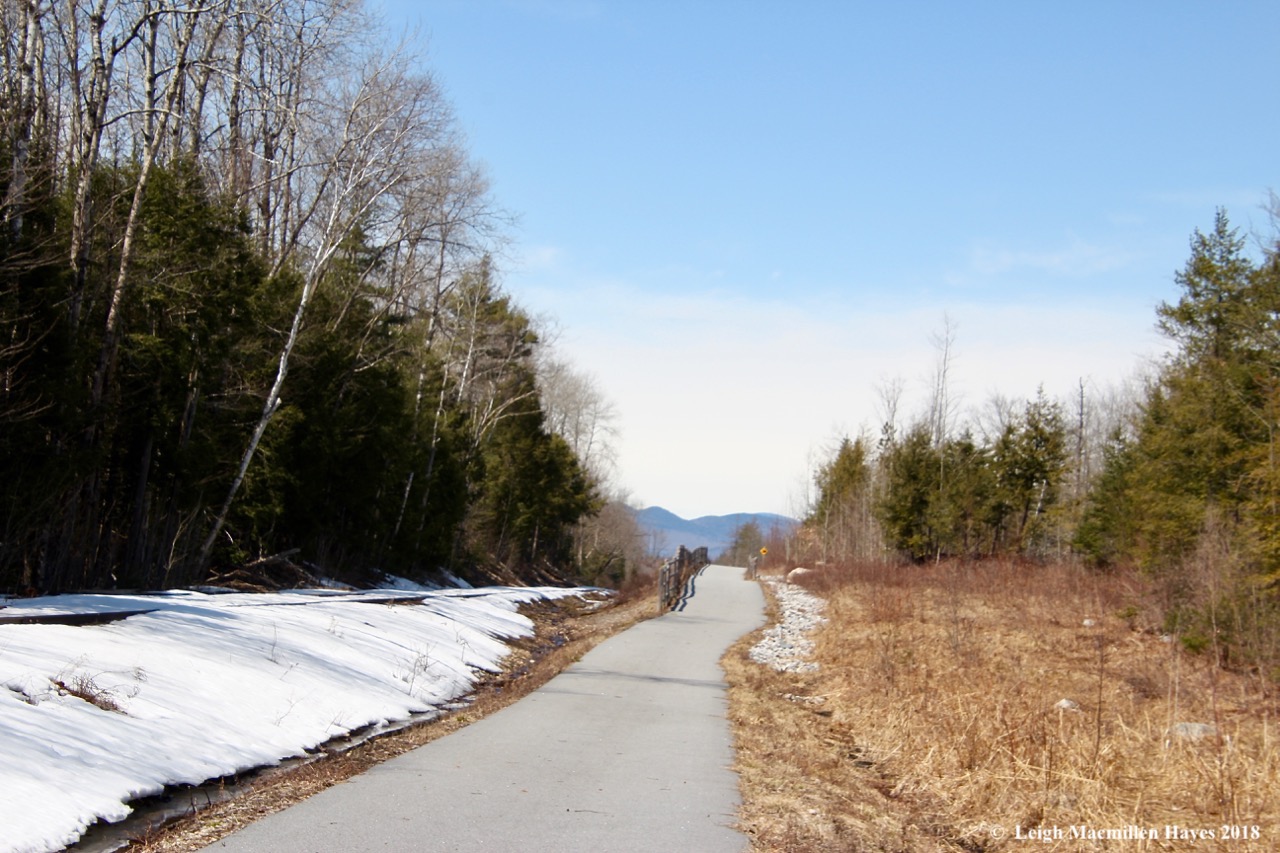
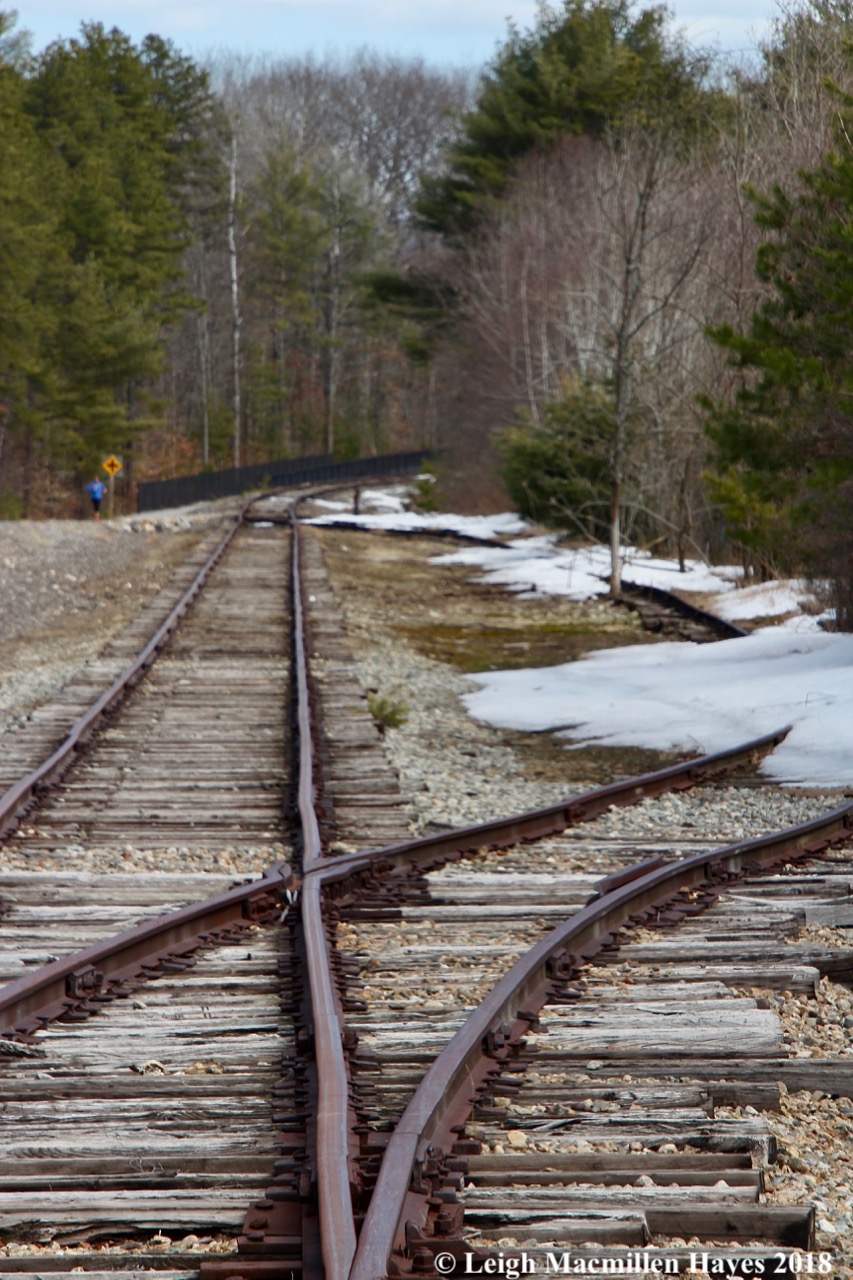
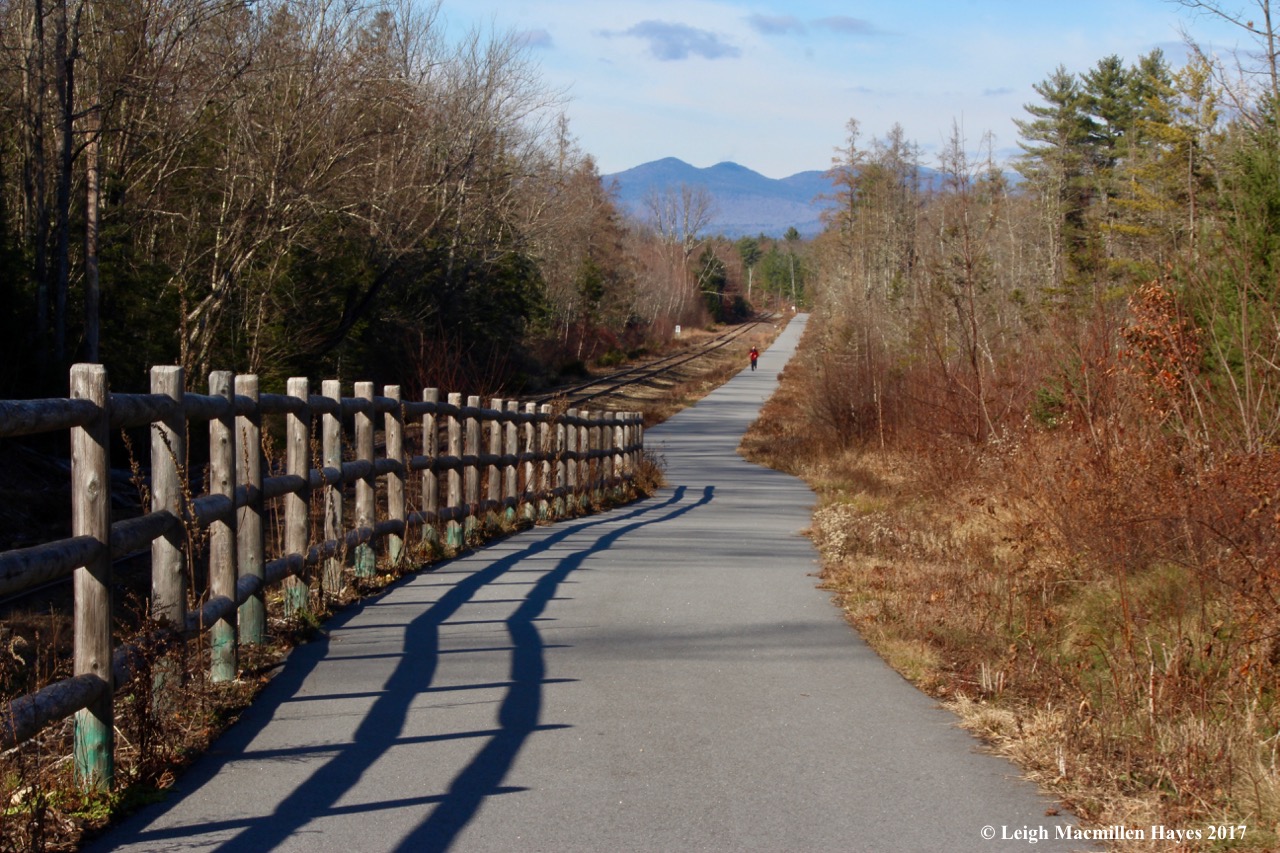
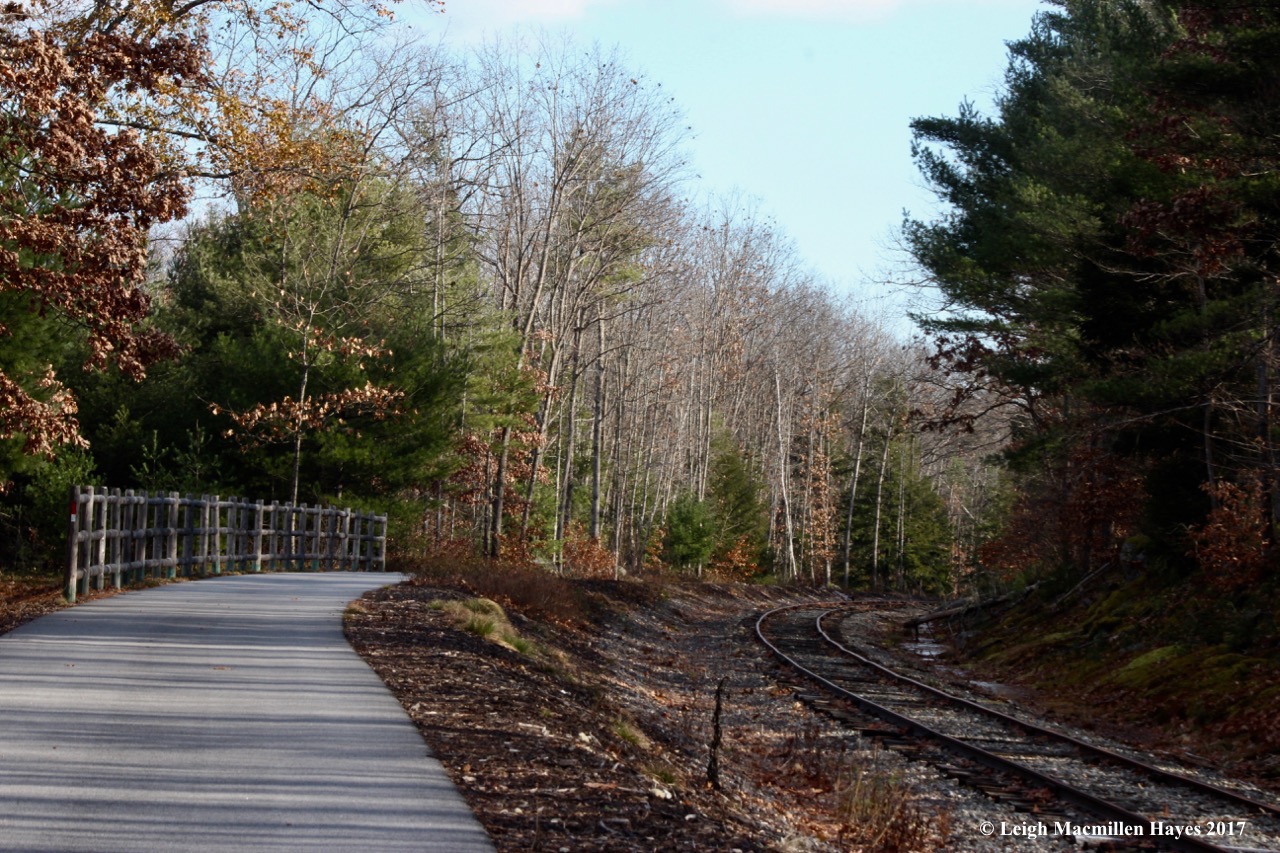
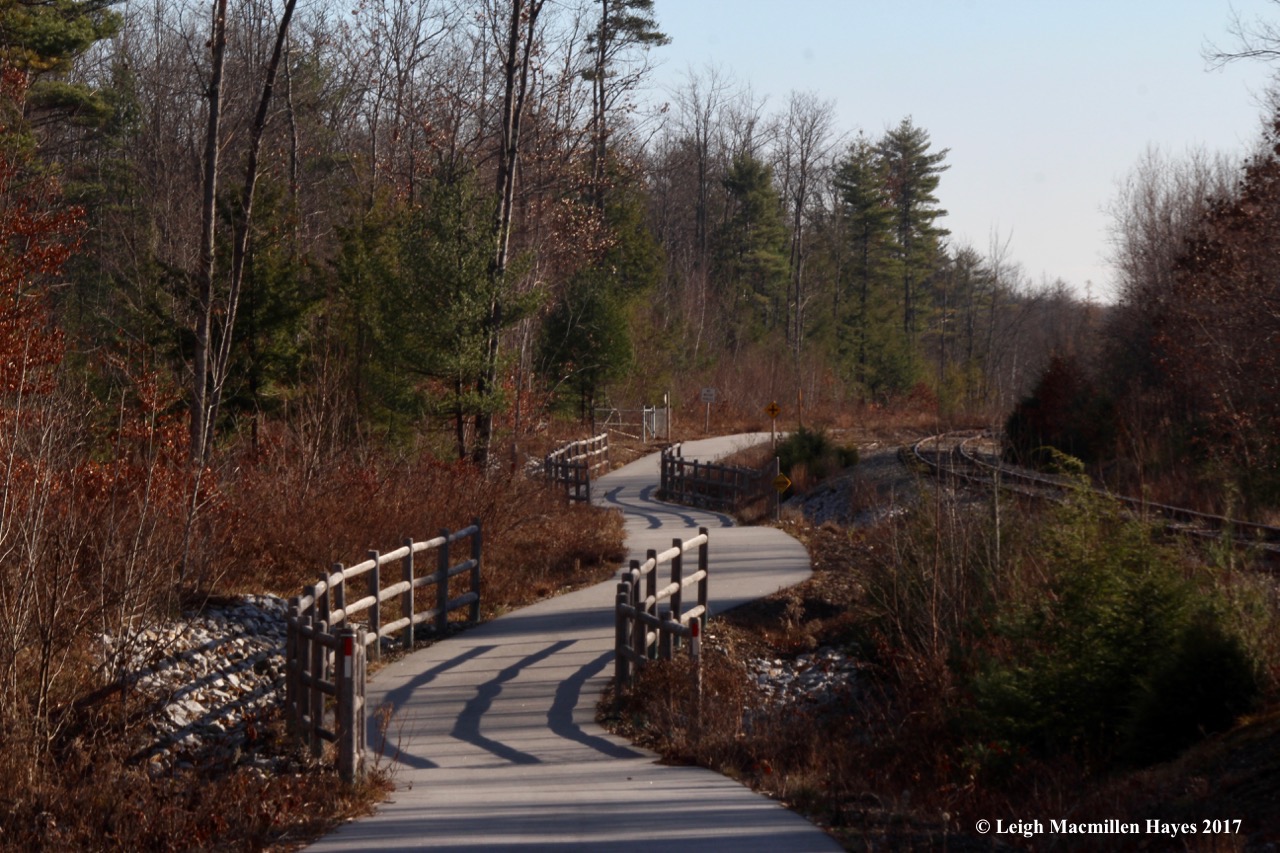
Off the train you hop, and suddenly you find yourself wandering down the Mountain Division Trail in the year 2024. Only, it’s not the rail bed that you walk upon, but rather a paved path beside the tracks.

And you give thanks, because this is the season of doing such, though really we should do so every day, for the Mountain Division Alliance, formed in 1994, out of concern that the rail right of way would be lost. MEC had sold the line to Guilford Transportation in 1981, about twenty plus years after the demise of passenger service. About seven years later, freight service also ended.

In 1994, The Mountain Division Alliance, under the direction of Alix Hopkins, Director of Portland Trails, “brought people together from over 20 groups. Out of this group came the vision for a rail with trail connecting the nine communities [Portland, Westbrook, Windham, Gorham, Standish/Steep Falls, Baldwin, Hiram, Brownfield, and Fryeburg] along the rail corridor from Portland to Fryeburg.”

The Alliance was started to “convince the State of Maine to purchase the rail bed right-of-way. The vision that a bicycle and pedestrian trail could be built along the rail line connecting Fryeburg to Portland came about at this time [1994],” wrote Dave Kinsman, former president of the Mountain Division Alliance in an article published by The Brownfield Newsletter.

So back to going for a wander down the trail. I did such this afternoon, and it’s a path I love to follow at any time of year, because it offers such diversity so I hope you’ll not hop right back on the train just yet, but instead wander with me.

Some may see it as the land of dried up weeds and some trees, but oh my. There’s so much to see.
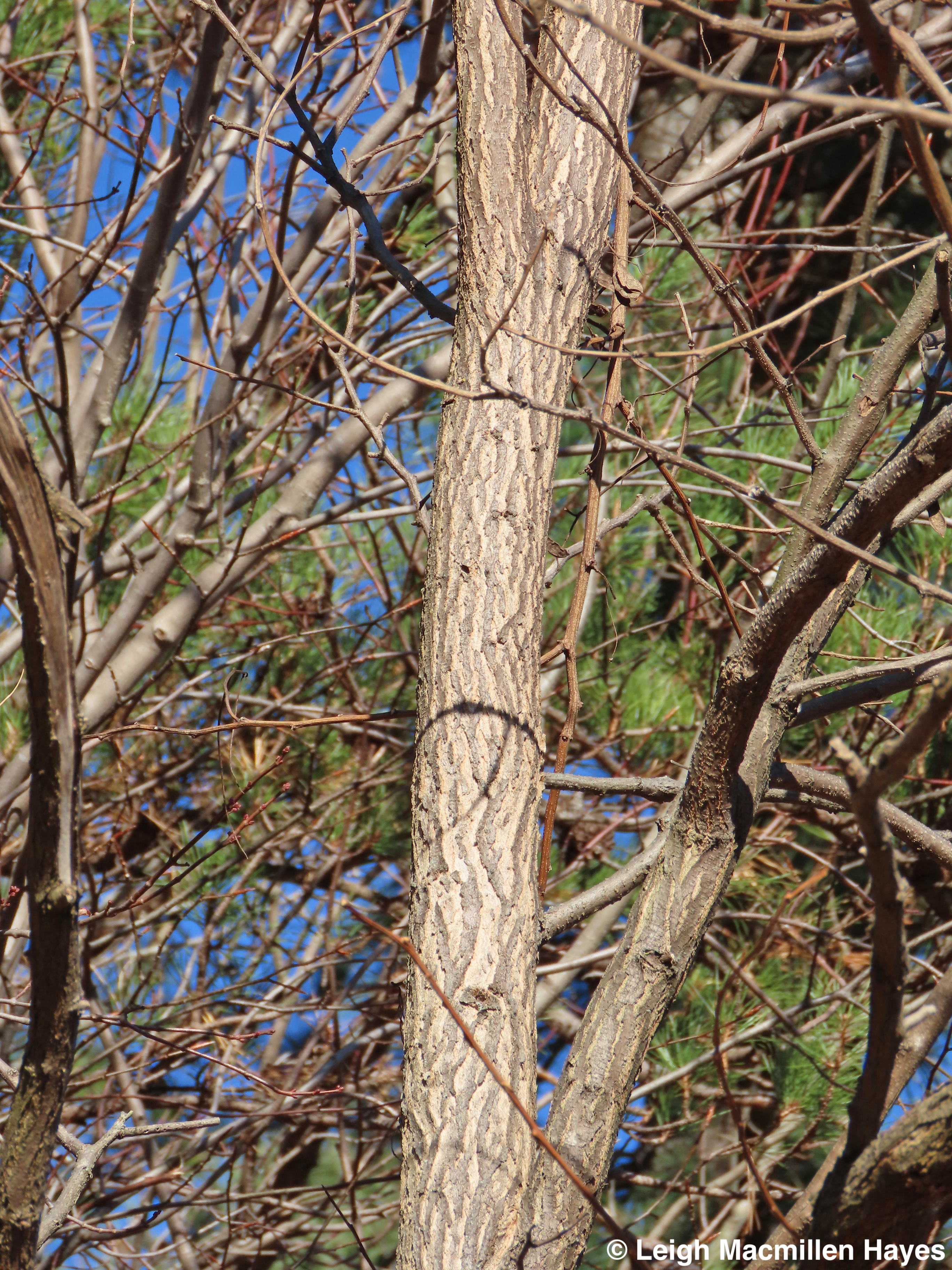
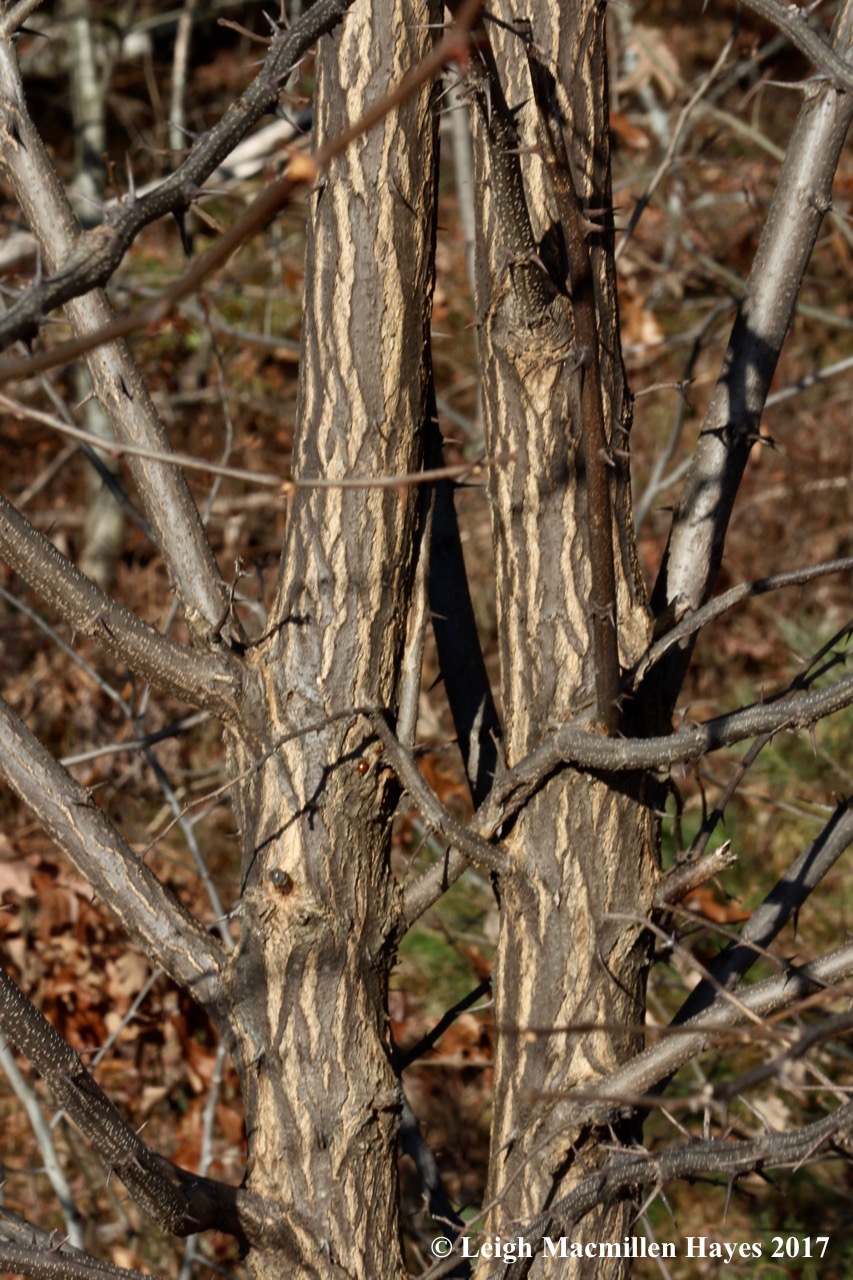
For starters, Black Locust trees, with their two-toned braided bark.

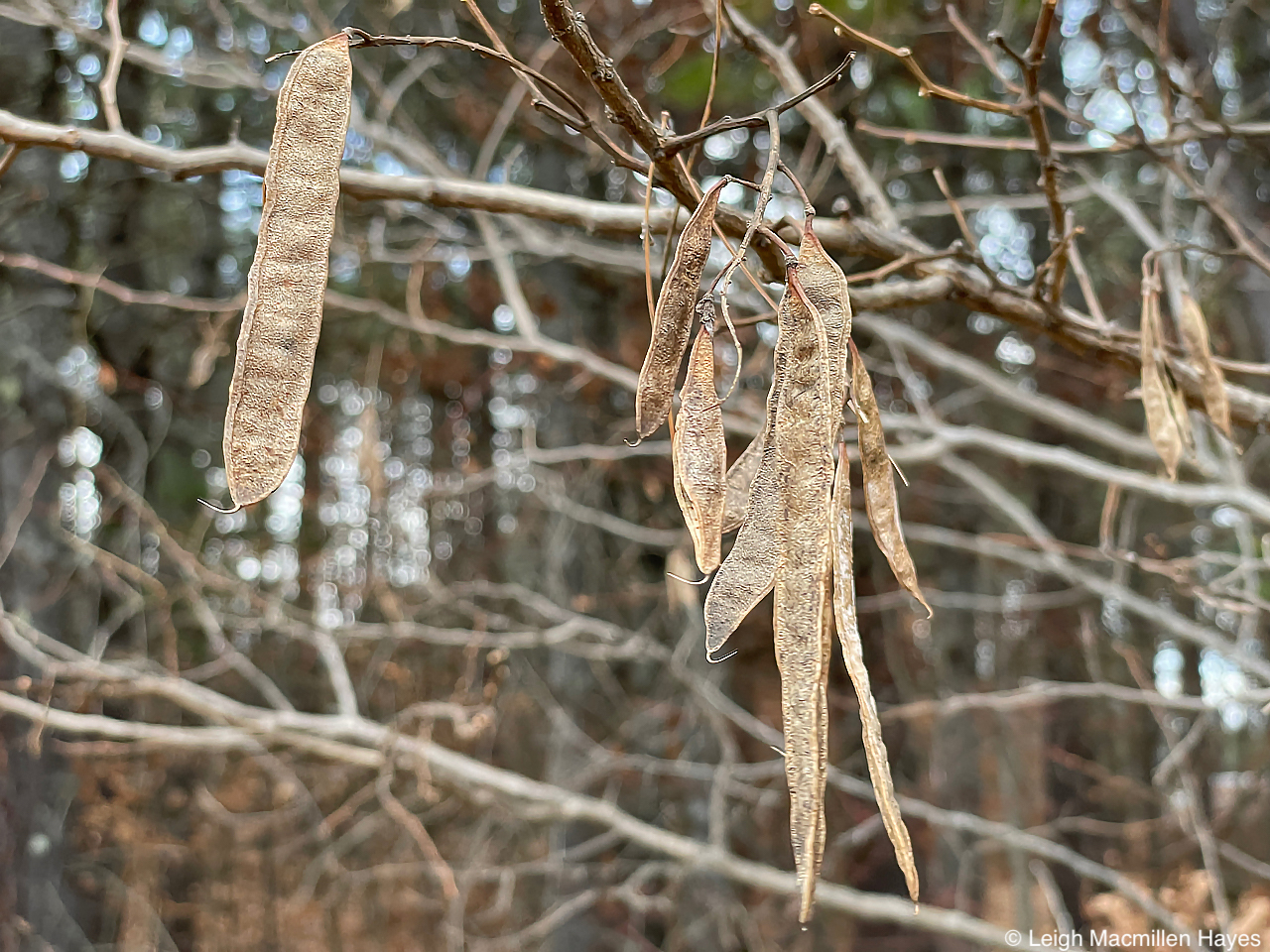
Dangling from the locust twigs are the “pea” pods that contain “bean-shaped” seeds ready to add another generation to the landscape.

And then there are the oaks, this being the blocky bark of White Oak, which is always a treat for because I have to travel to locate it.
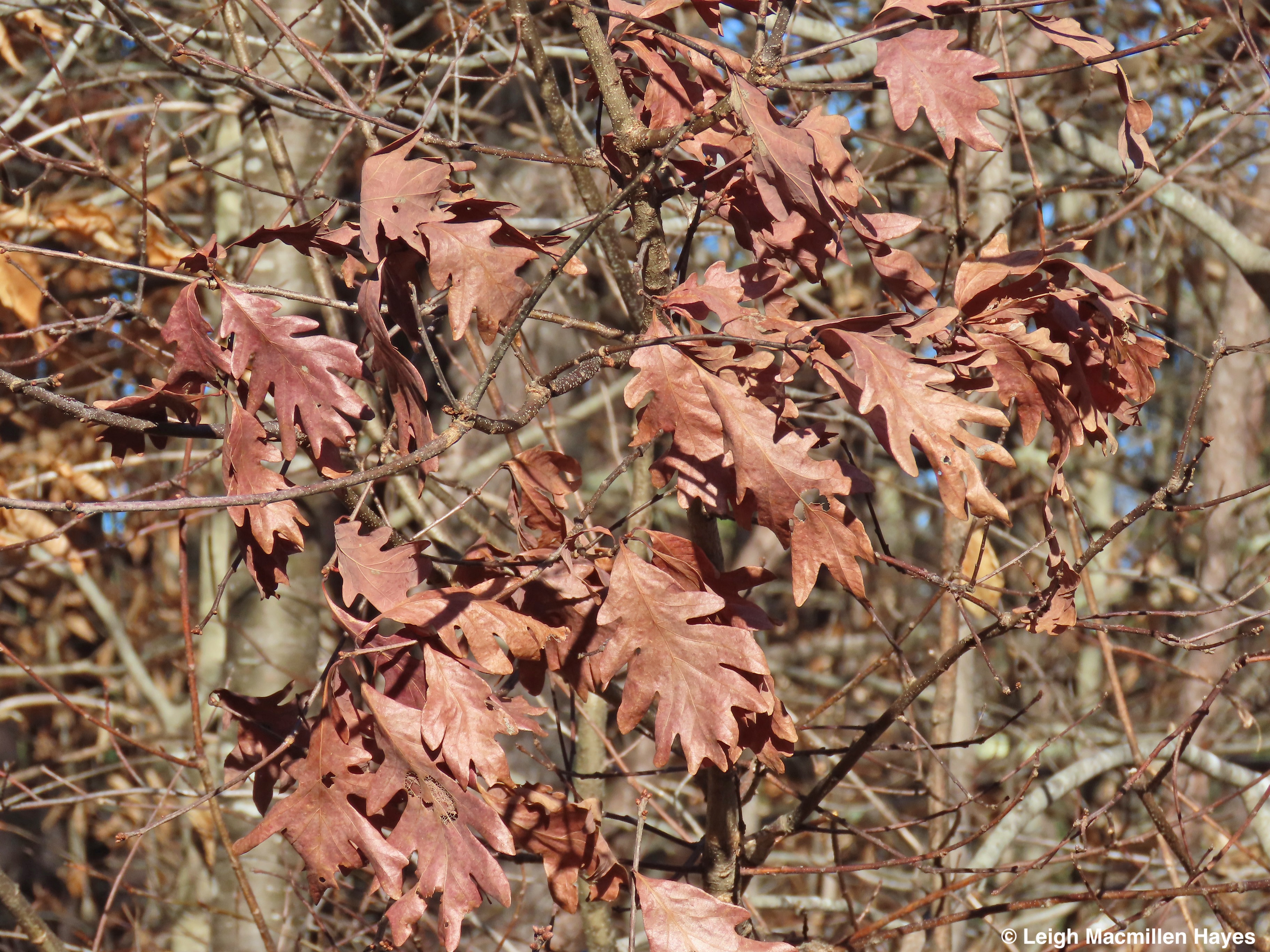
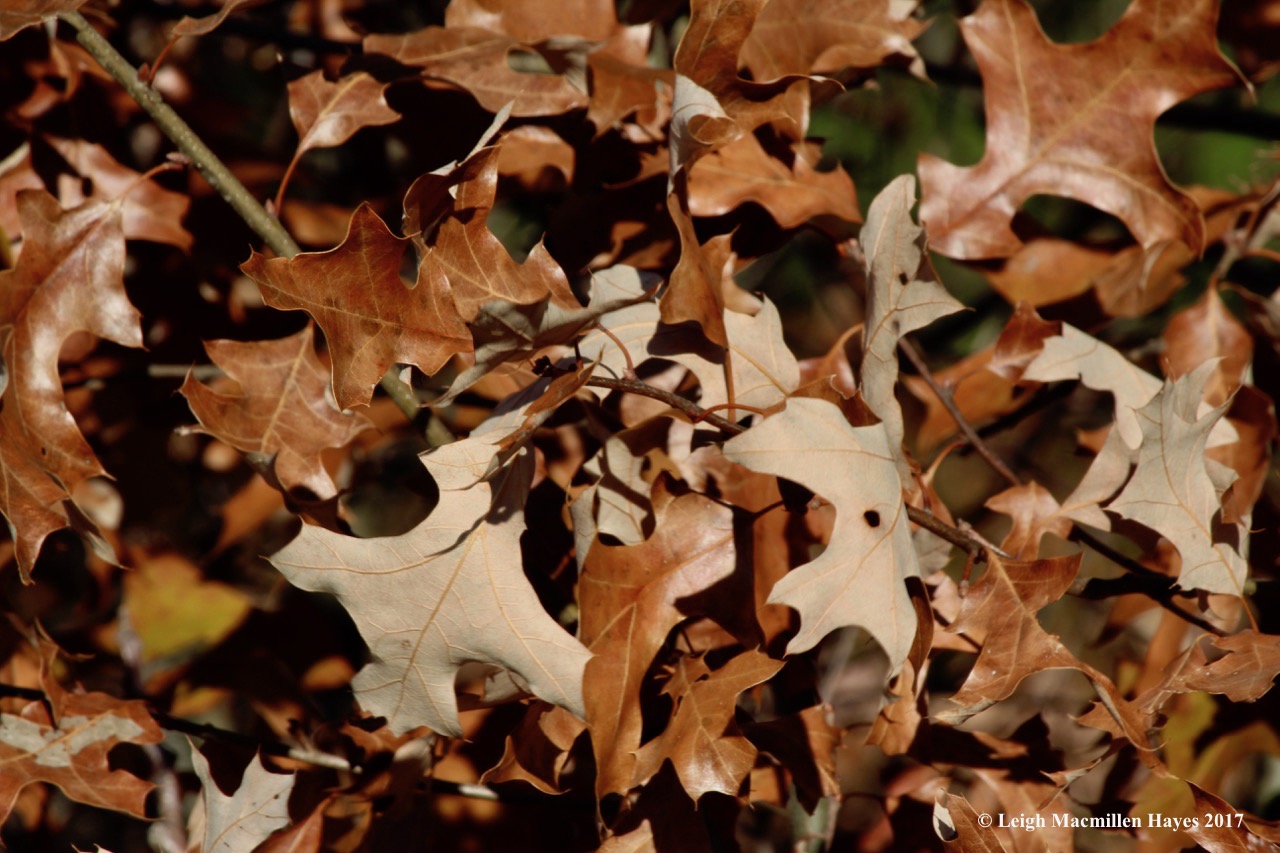
I’ve said it before and I’m sure I’ll say it again, but I LOVE White Oak leaves in their autumn/winter presentation. While they look like mittens with a thousand thumbs, it’s the salmony color and way that they dry on the twig as if they were caught in an awkward dance move that really captures me. Maybe because I can relate to those awkward movements, having never had a sense of rhythm.

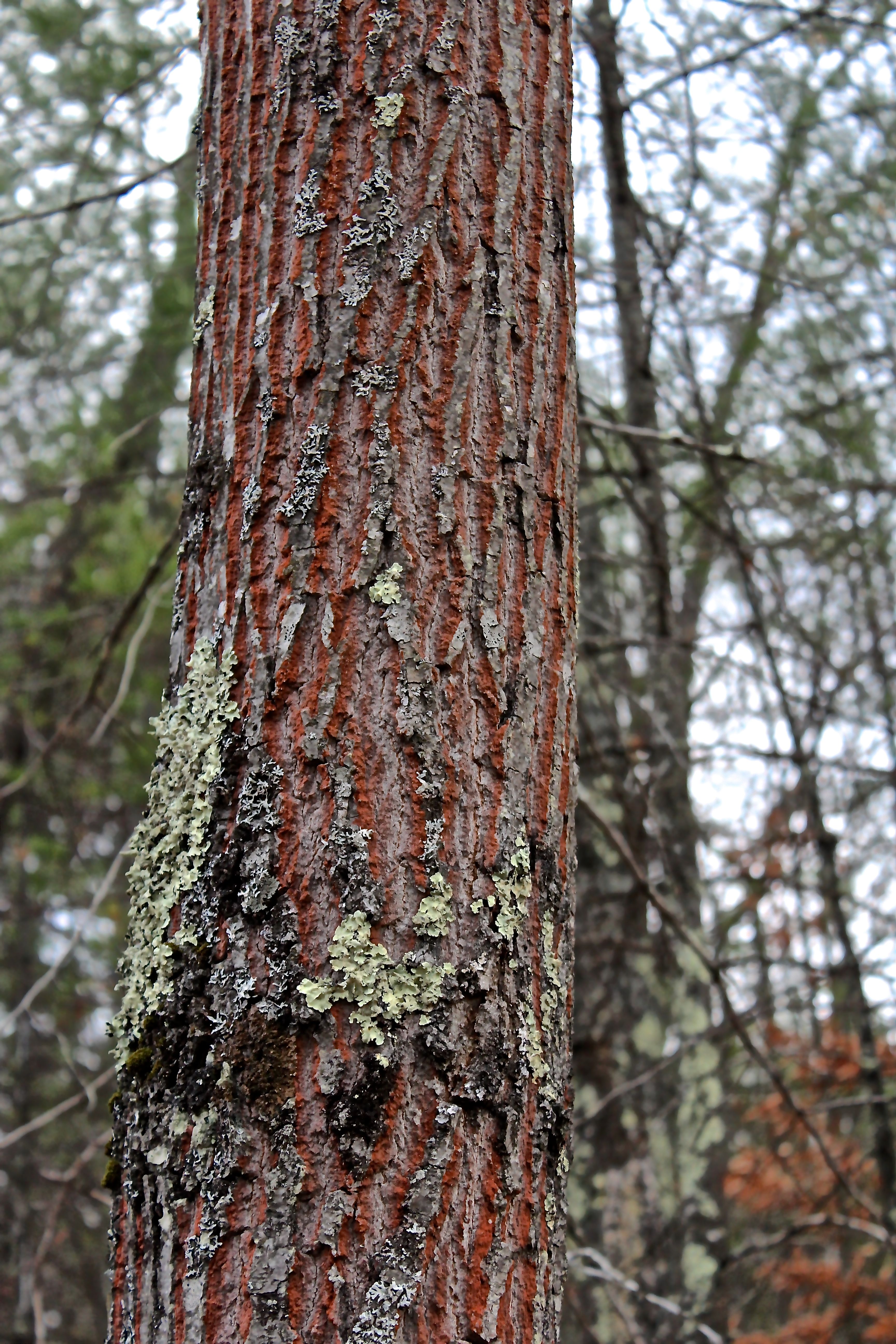
Behold also, the White Oak’s cousin, Northern Red Oak, with its raised ridges offering ski slopes for those who dare, accentuated by the red in the furrows.
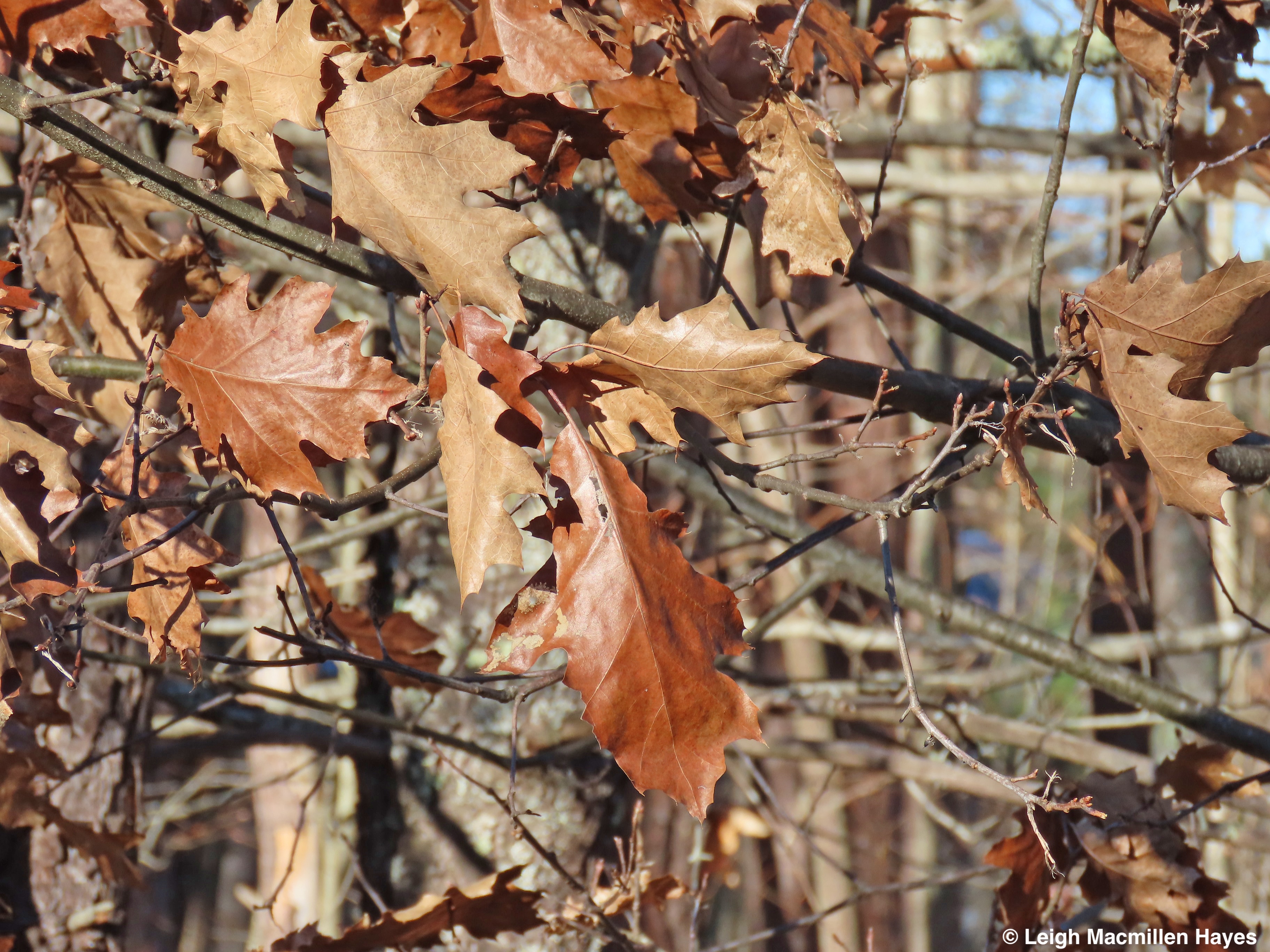
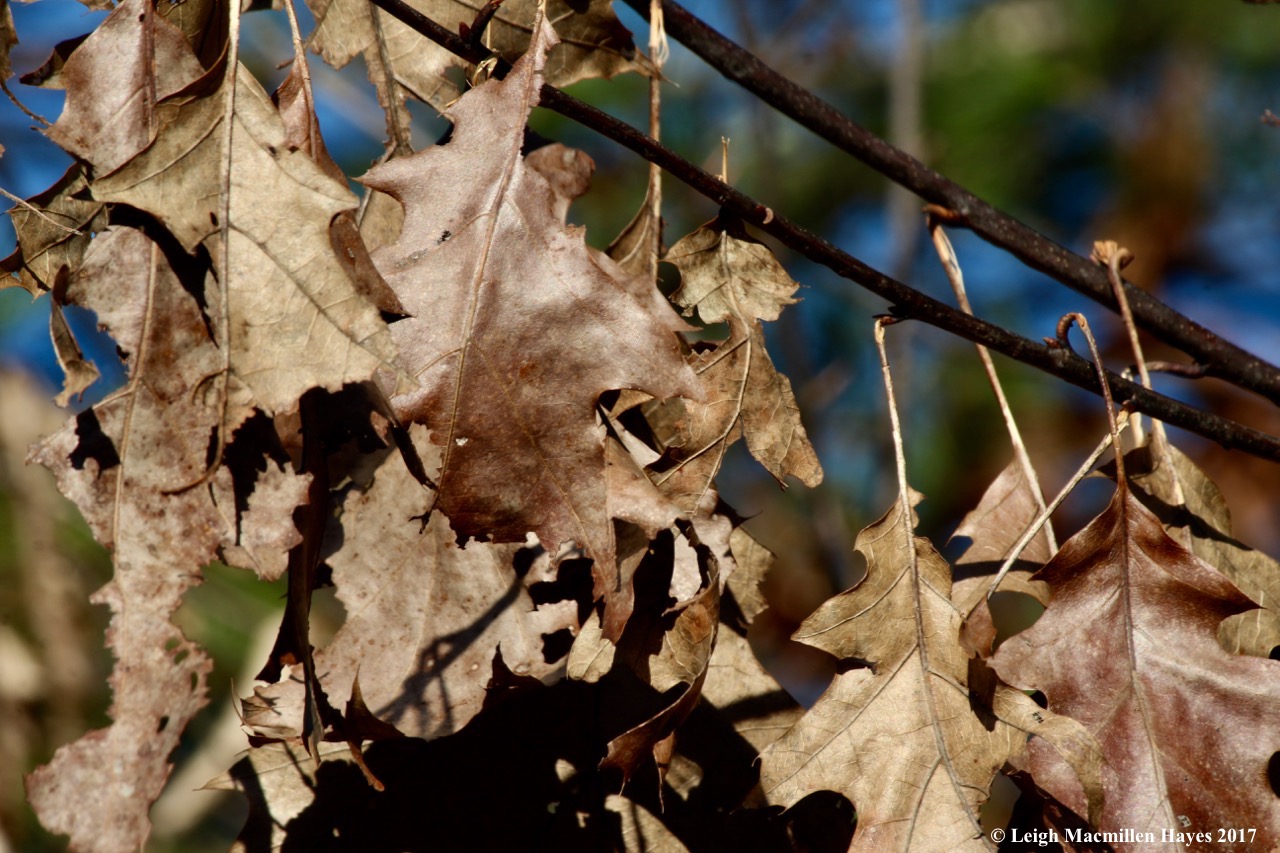
It’s like a perfect classroom along the Mountain Division Trail because the bristly lobed leaves of the Red Oak are so shiny in their shade of mahogany.
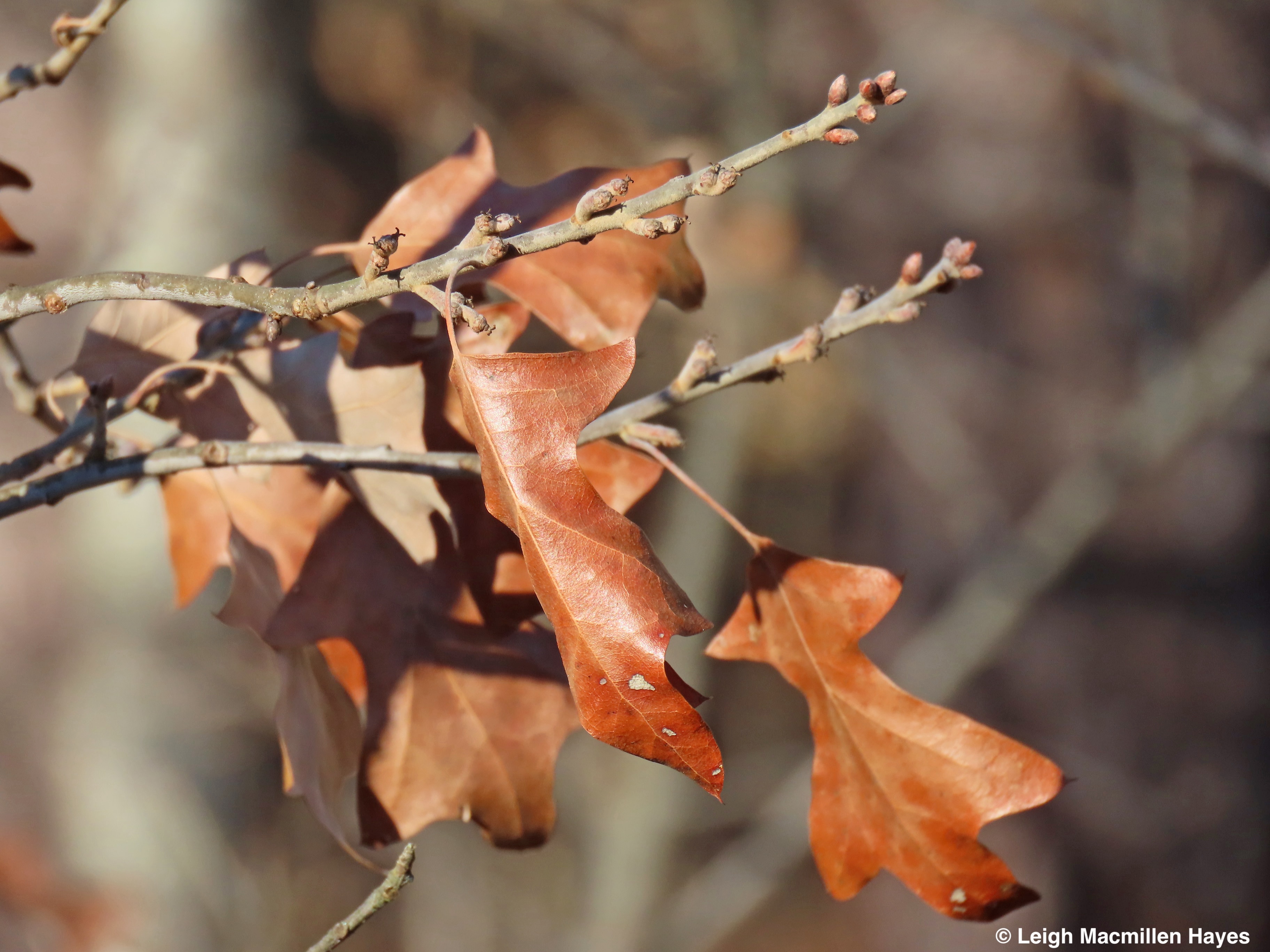
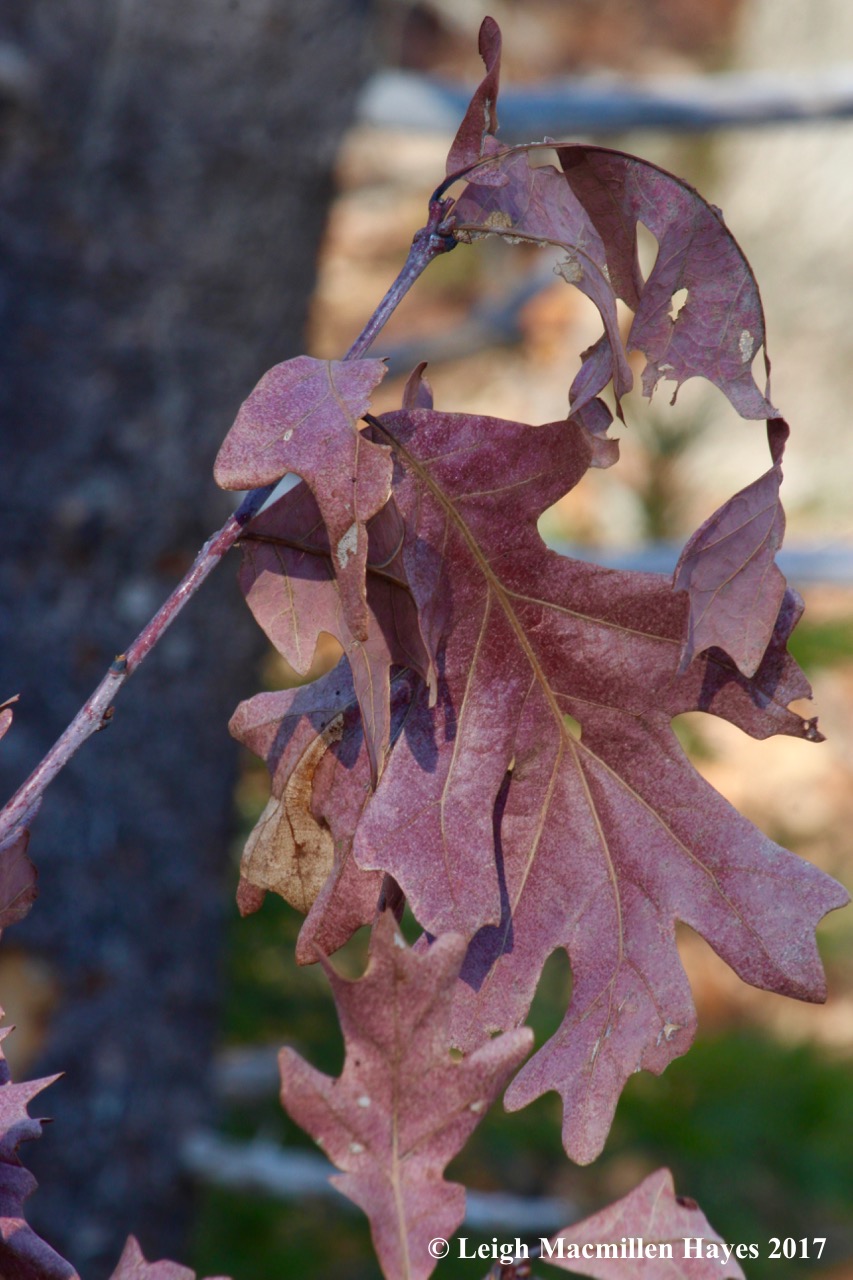
And not to be left out in this lesson: Bear Oak (aka Scrub Oak), growing in a more shrubby manner than the other two. It’s the leaves of this species that remind me who I’m meeting–notice how the second set of lobes from the stem are larger than any of the others.
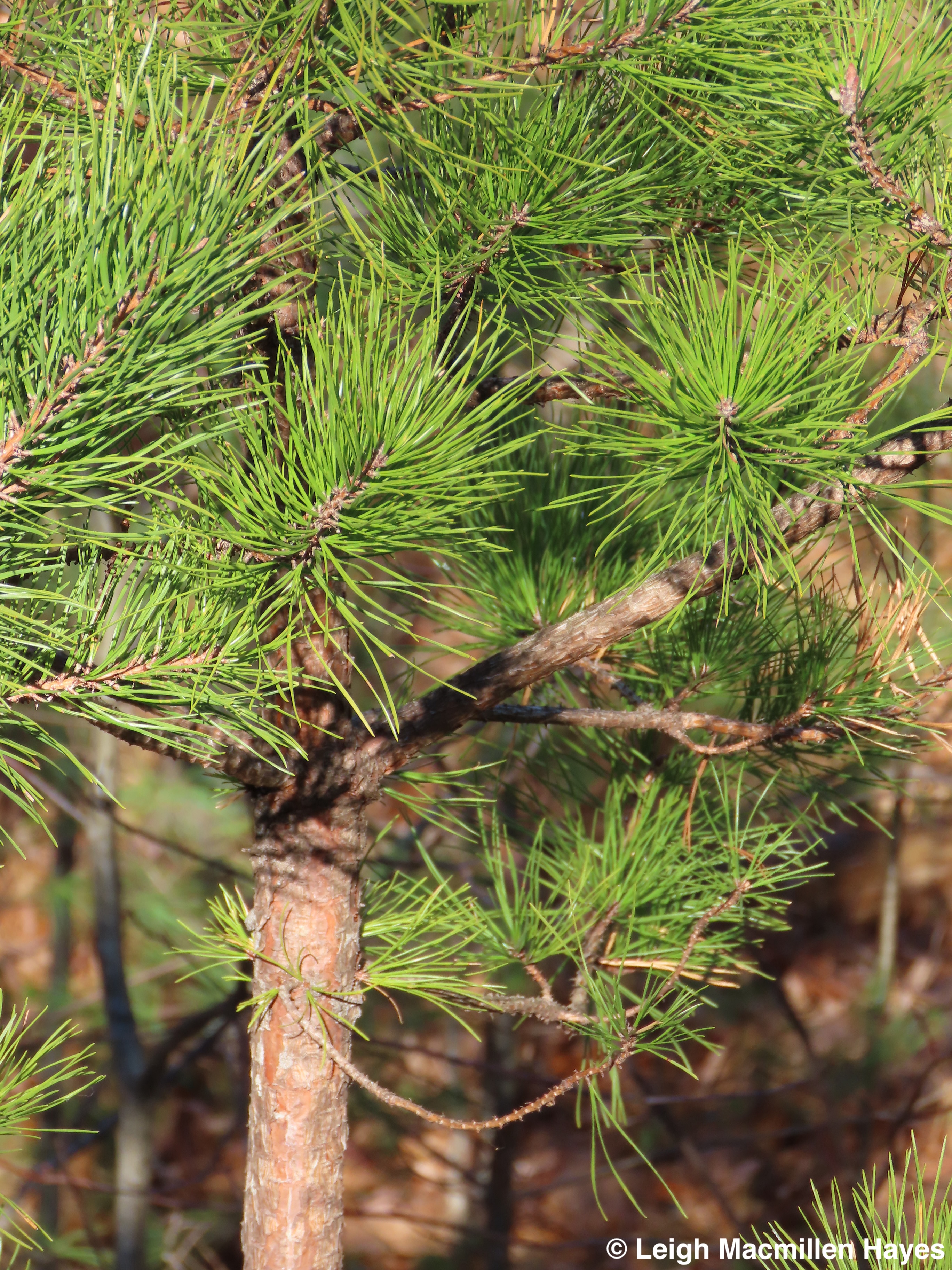
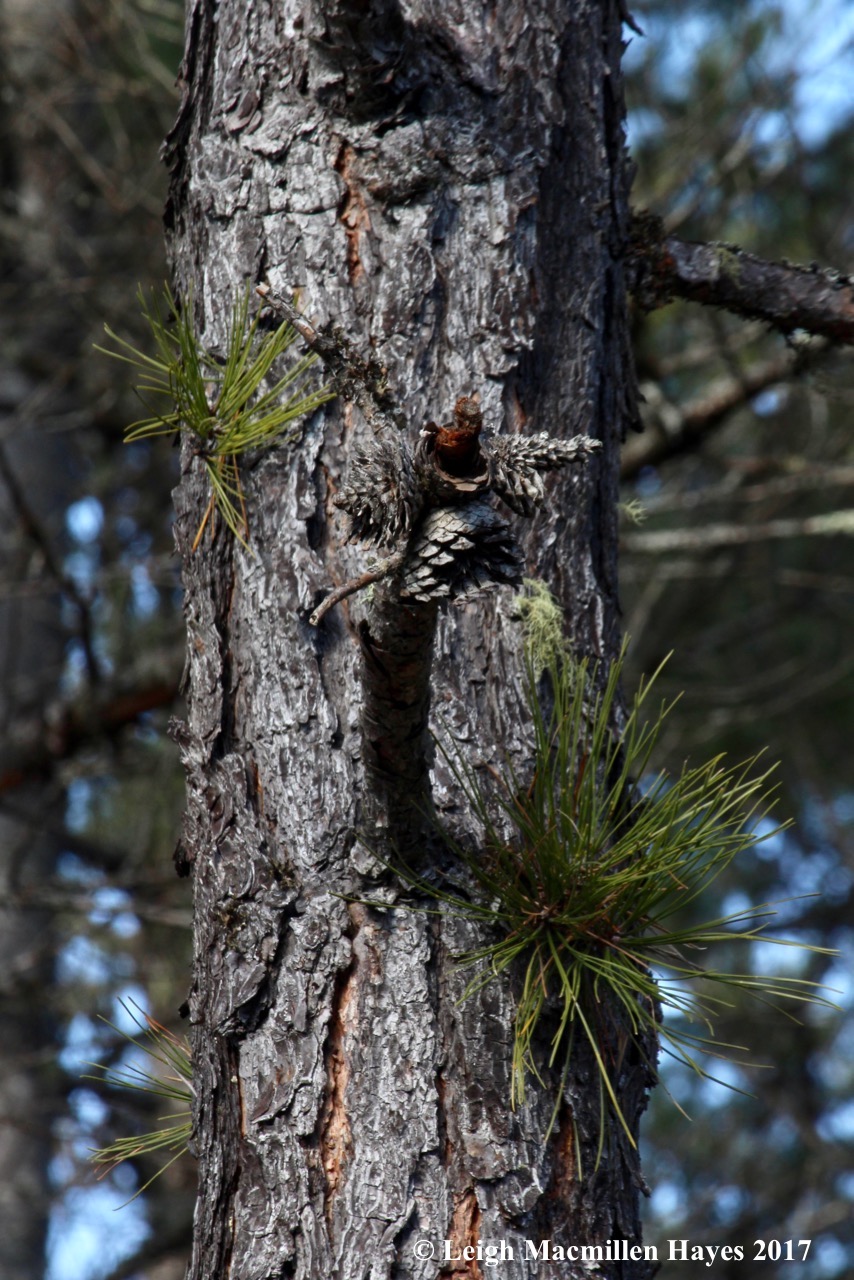
In the mix of deciduous or broad-leafed trees are plenty of conifers, including those we encounter often in this neck of the woods from White Pines to Eastern Hemlocks, and Spruce and Balsam Fir. But . . . there are a couple of standouts along the Mountain Division Trail such as this one with three needles in each bundle.
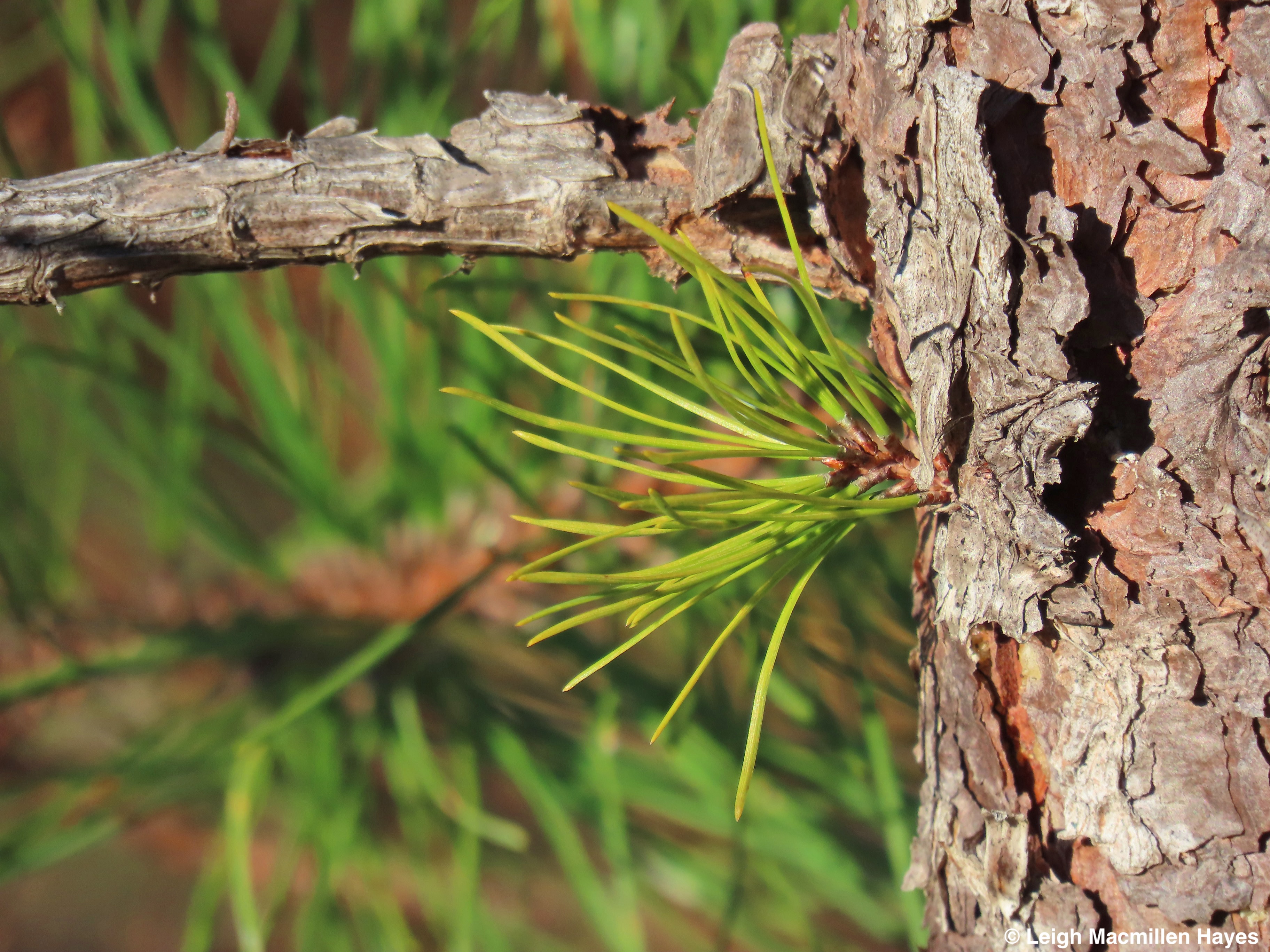
It’s those bundles of three, and the fact that occasionally a clump of needles grows directly out of the bark rather than on a twig that provide the clues for this species: Pitch Pine, three strikes and you are out. Get it? Baseball–pitch–three needles/bundle. I wish I could take credit for coming up with that mnemonic.
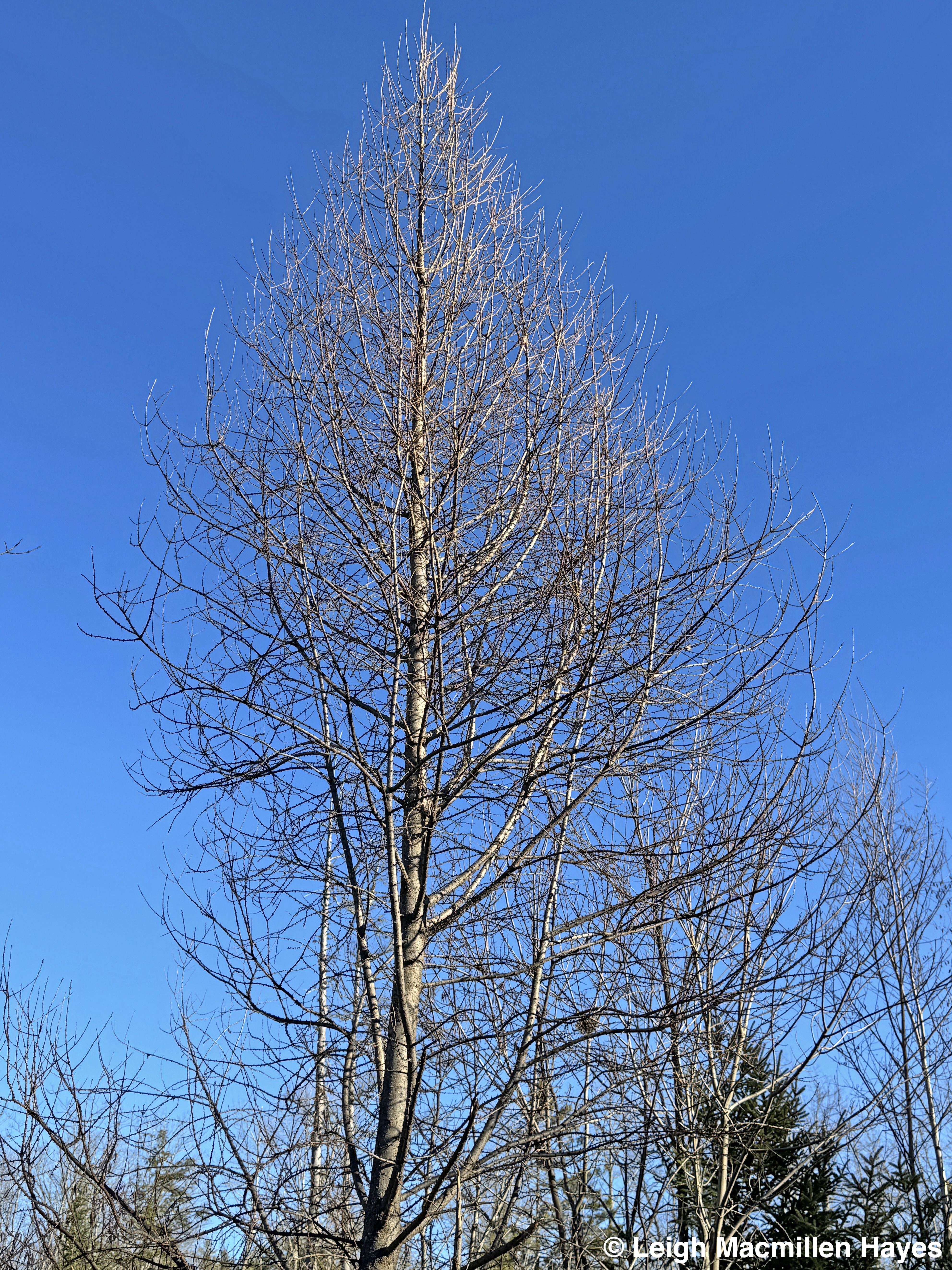
I promised more than one interesting conifer and tada. Only thing is, all the other conifers retain their leaves (needles) throughout the winter, thus giving them the name of Evergreens because they are forever green, even when they are shedding some needles.

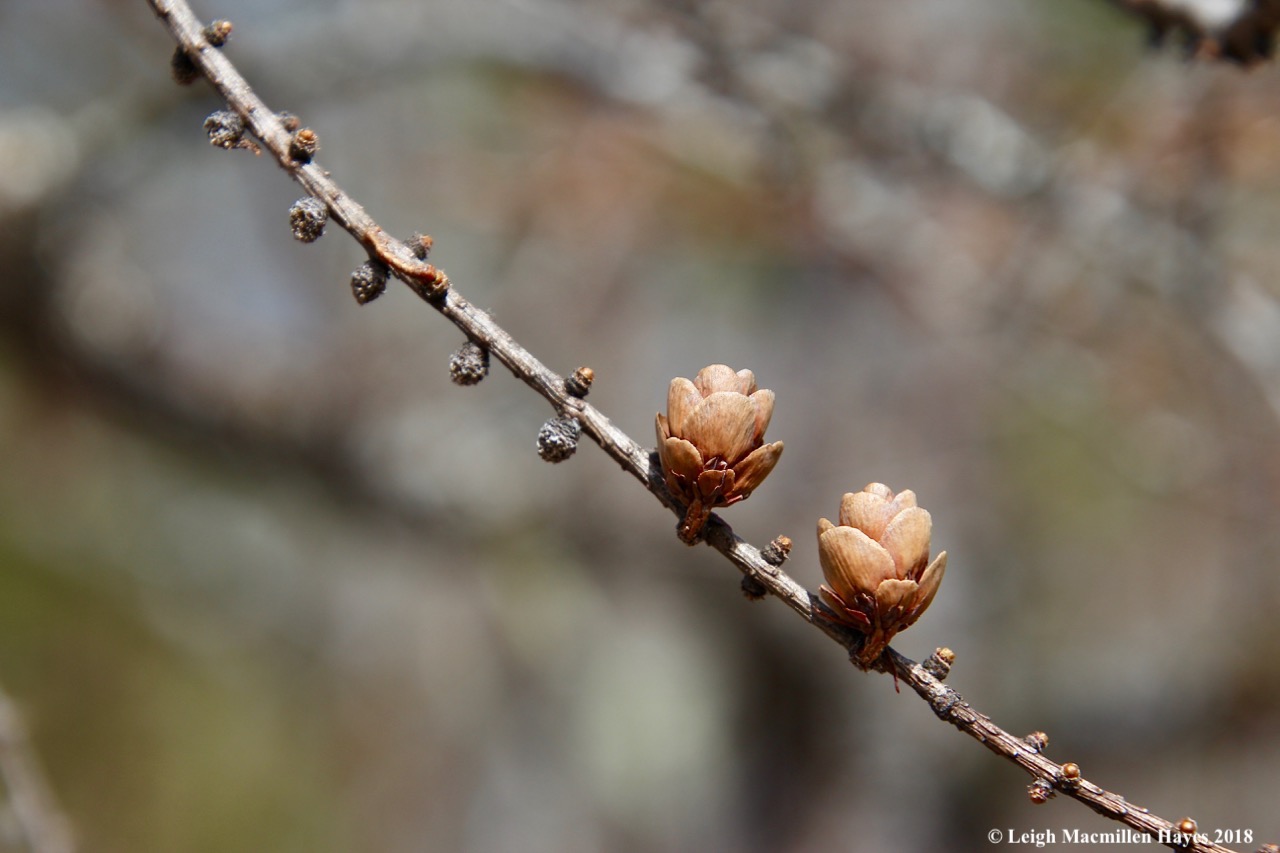
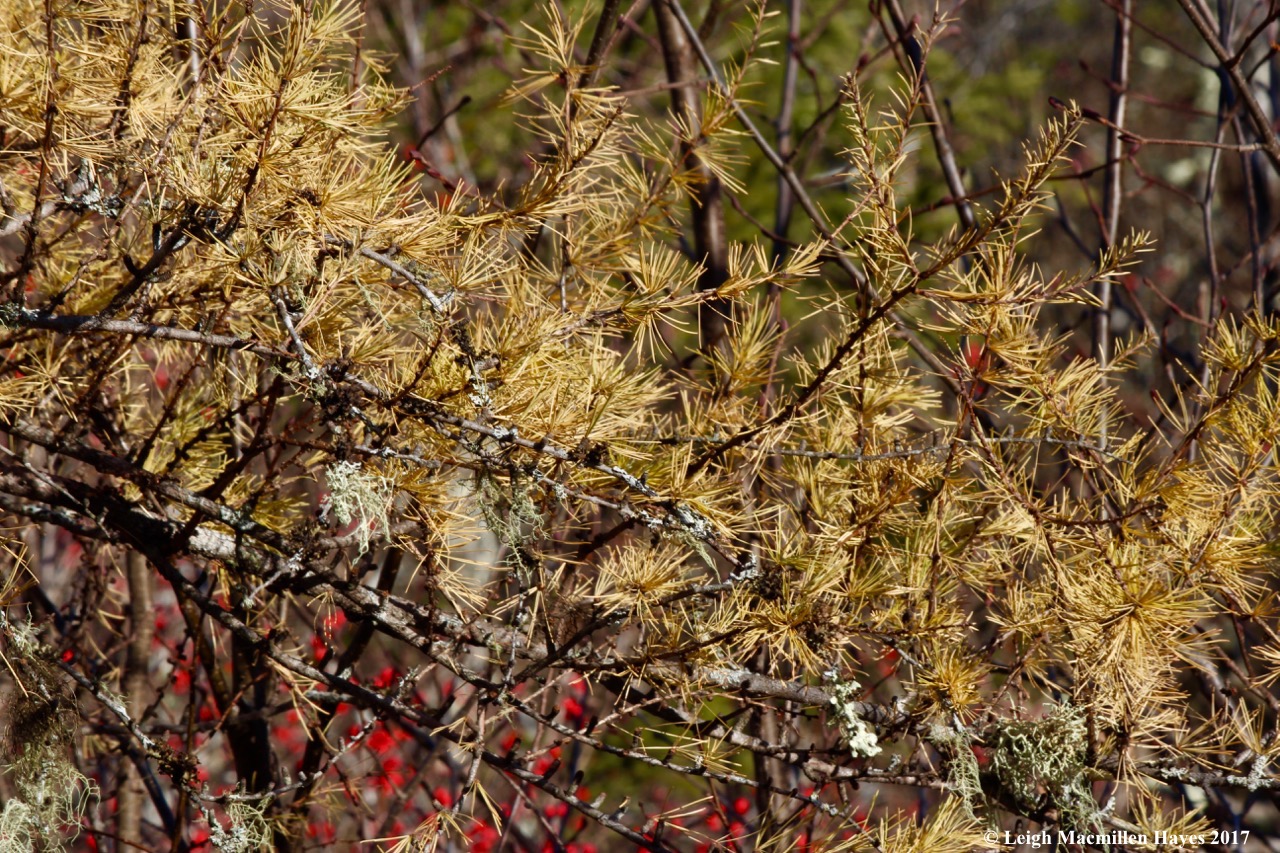
This pyramid-shaped tree is the only deciduous conifer in Maine: the Tamarack (Larch and Hackmatack being its other common names).

Tamarack’s needles turn a golden yellow in autumn, and eventually all fall off. But, it’s a cone-bearing tree, thus it’s a conifer.

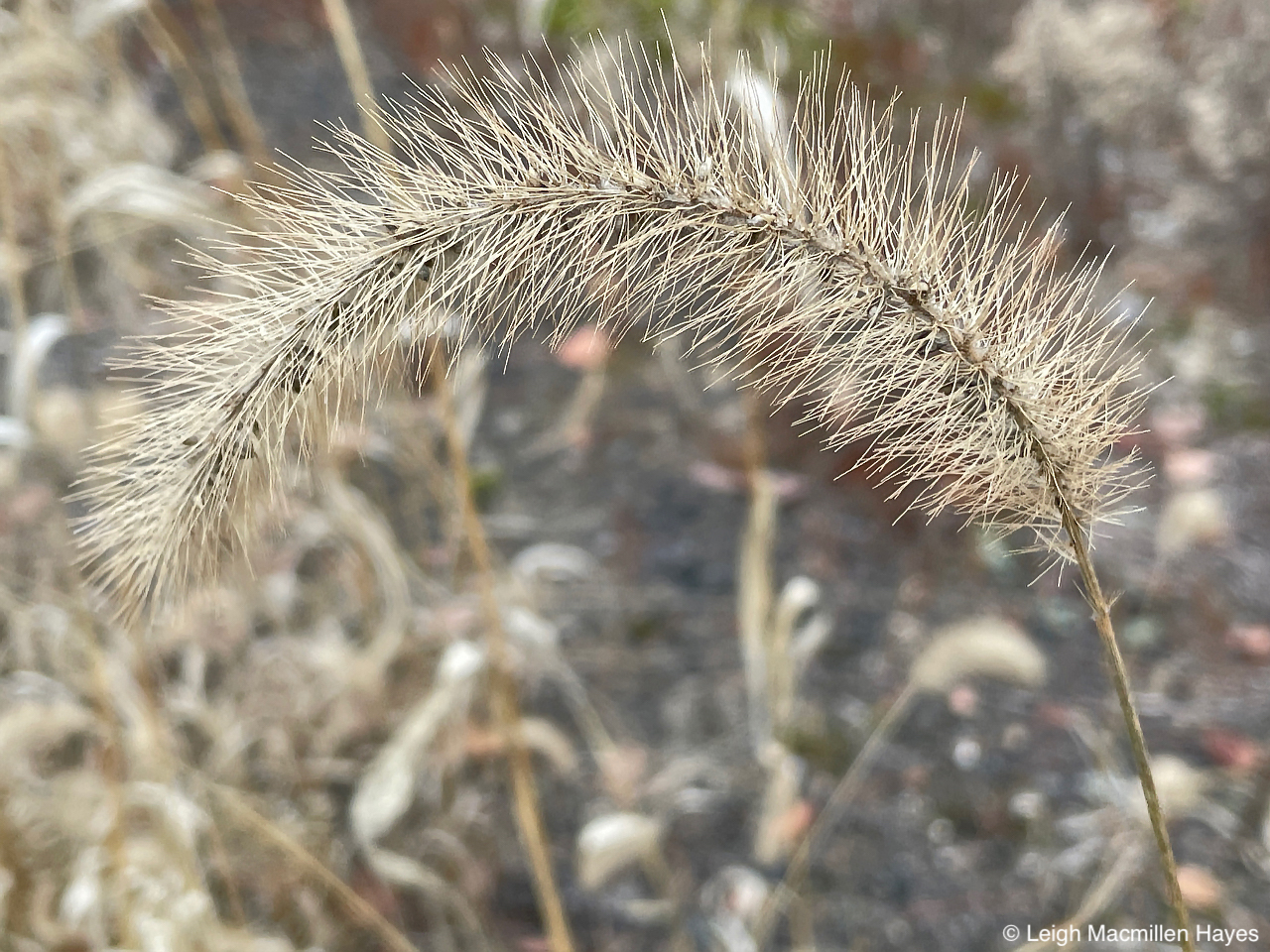
Picking up speed now, along the rail grows Great Fox-tail Grass, and its name seems a great descriptor.

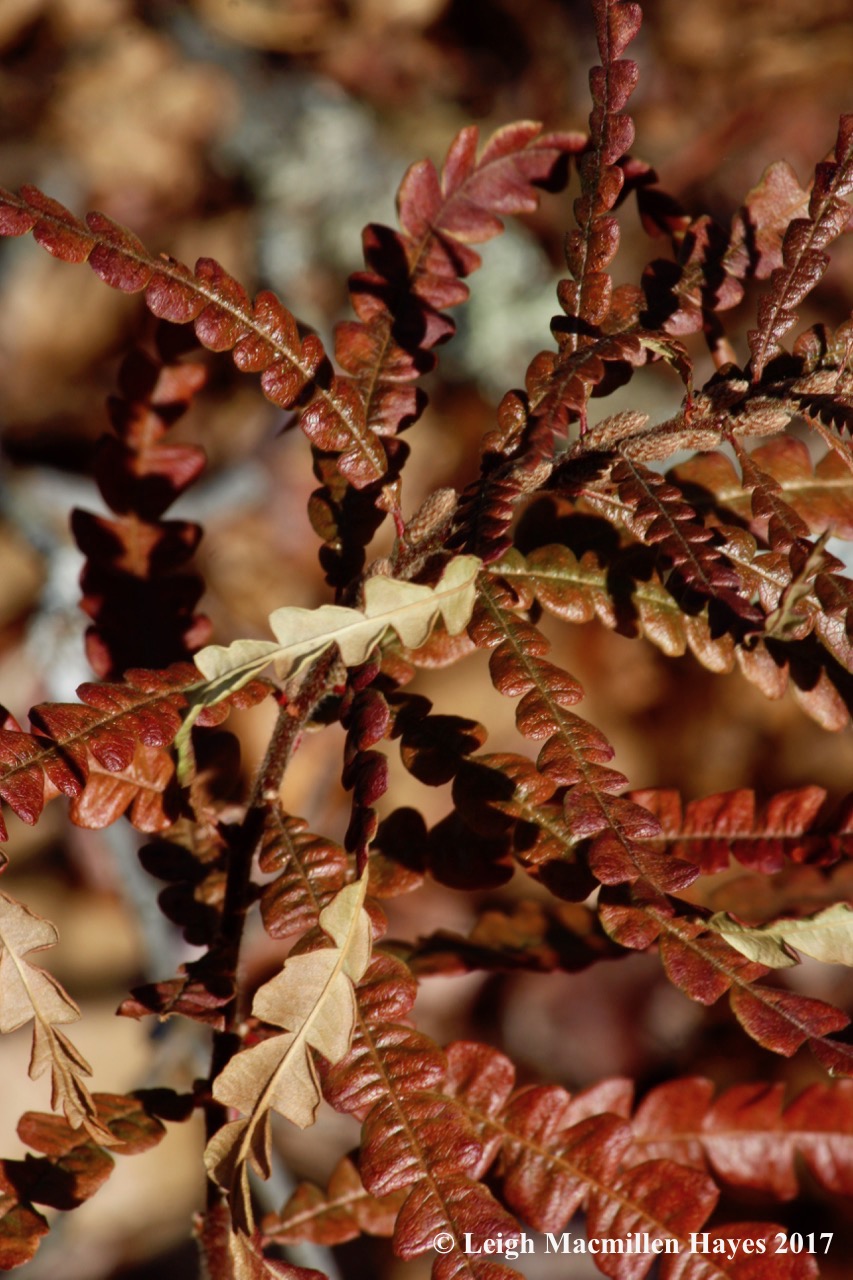
Then there’s the Sweet Fern, which isn’t actually a fern for it has a woody stem, but what I love most about it in fall and winter is the way its leaves curl, each doing its own thing.
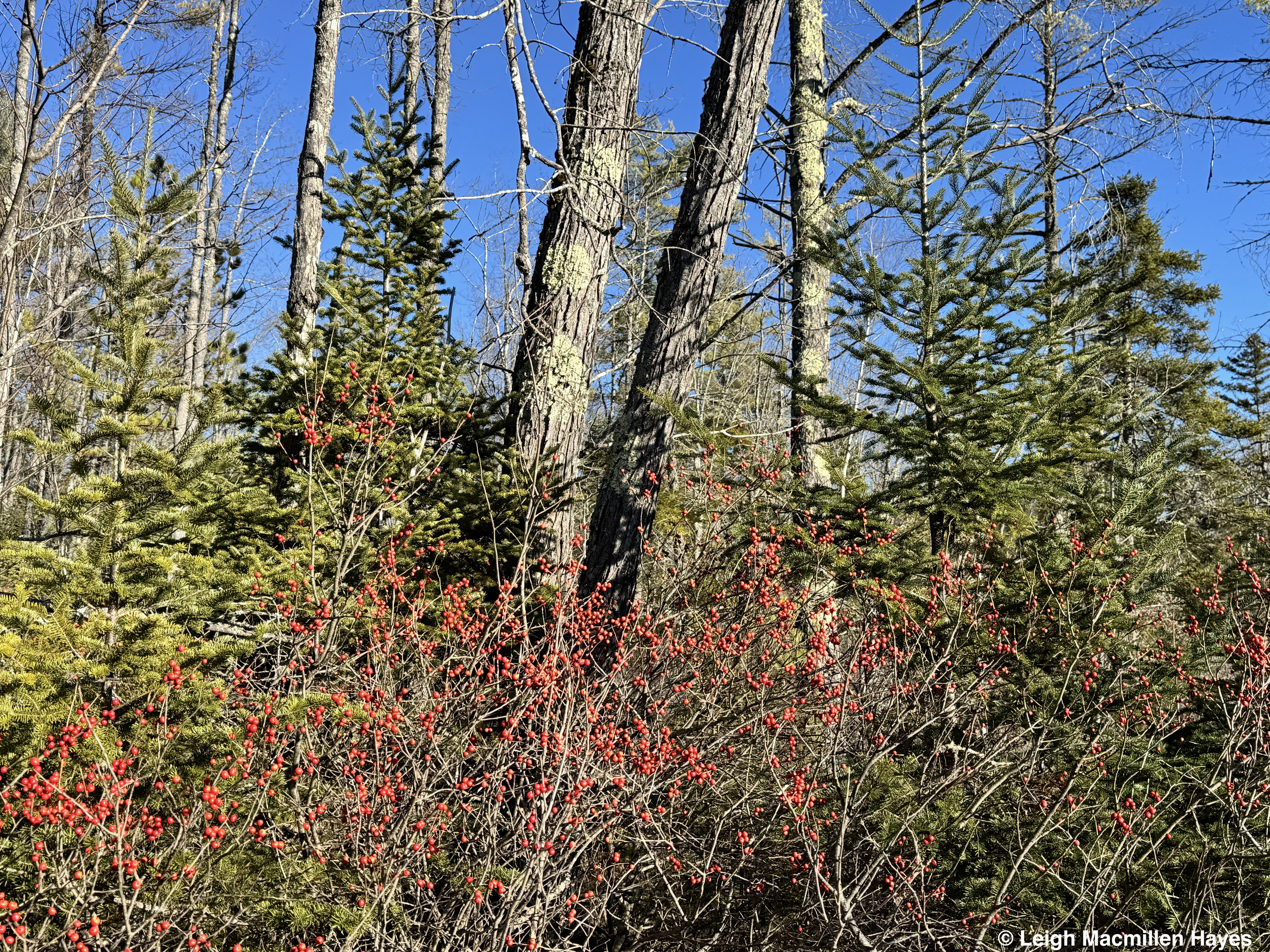
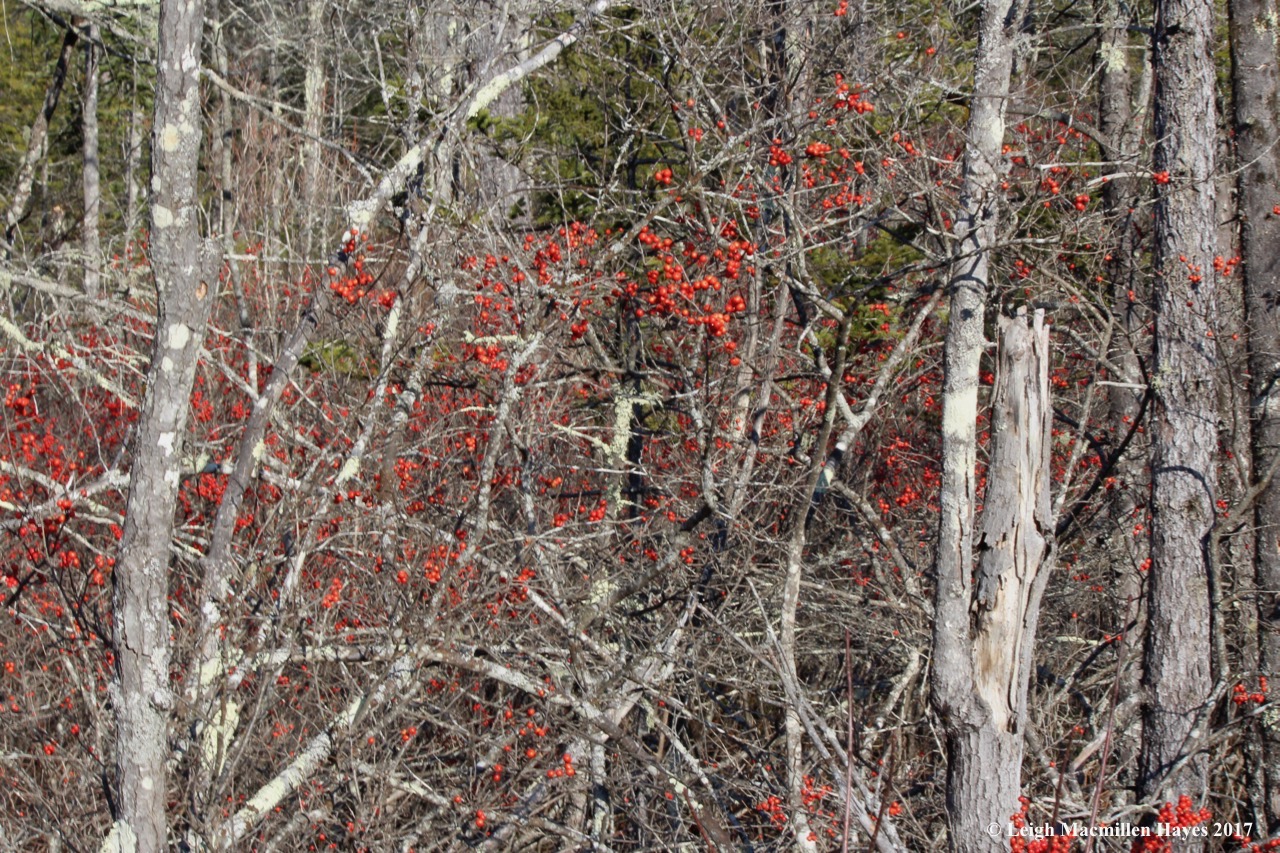
In a wetland, for the habitats vary along the way, Winterberry is now showing off its brilliant red berries. And the Robins are thrilled as are many other birds seeking fruit at this time of year.

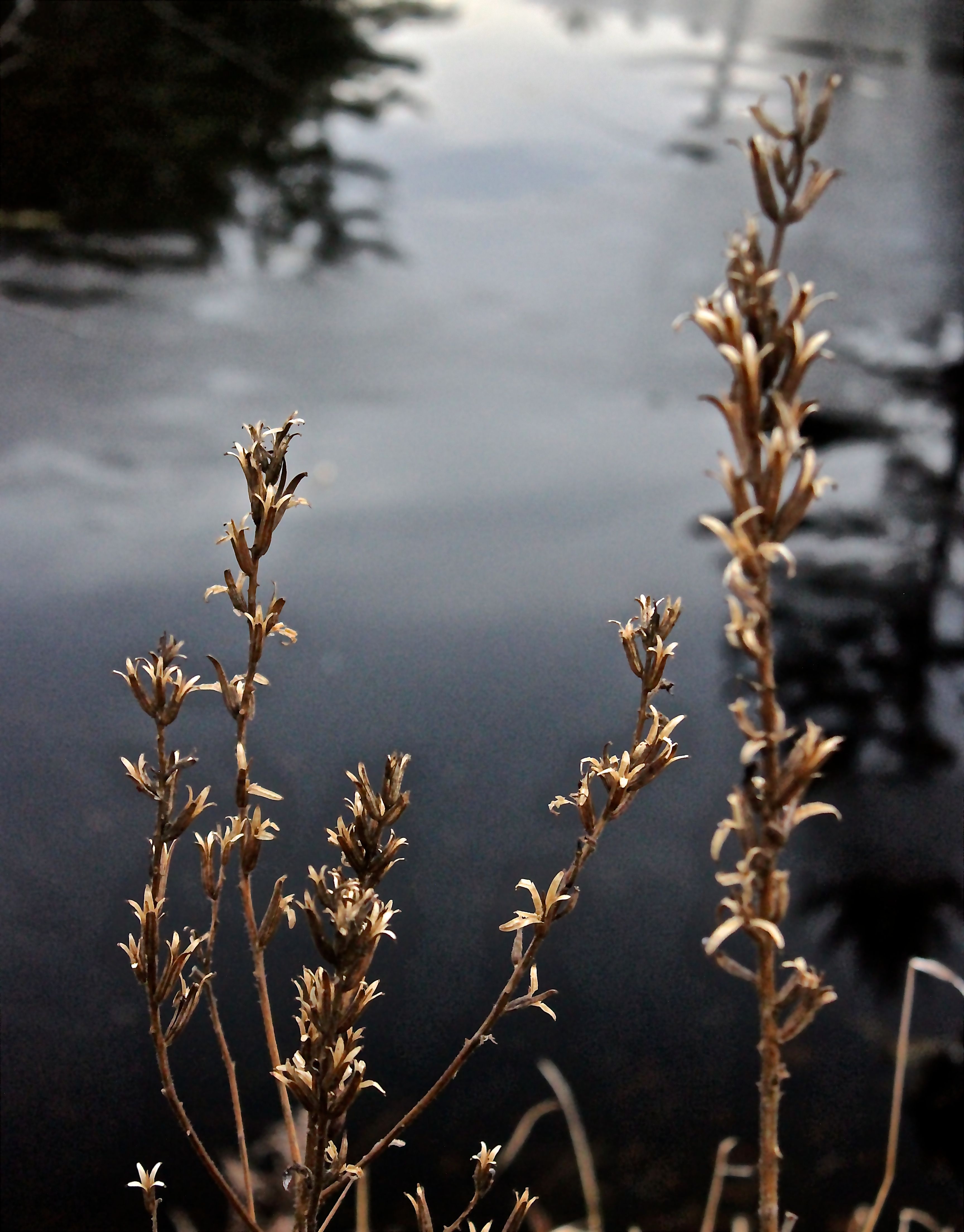
Mullein, tall as it stands, has already spread many of its seeds as evidenced by the open pods.

And the same is true for the even taller Evening Primrose.

It’s the fruiting structures of both of these plants that make them beautiful standouts as winter weeds.
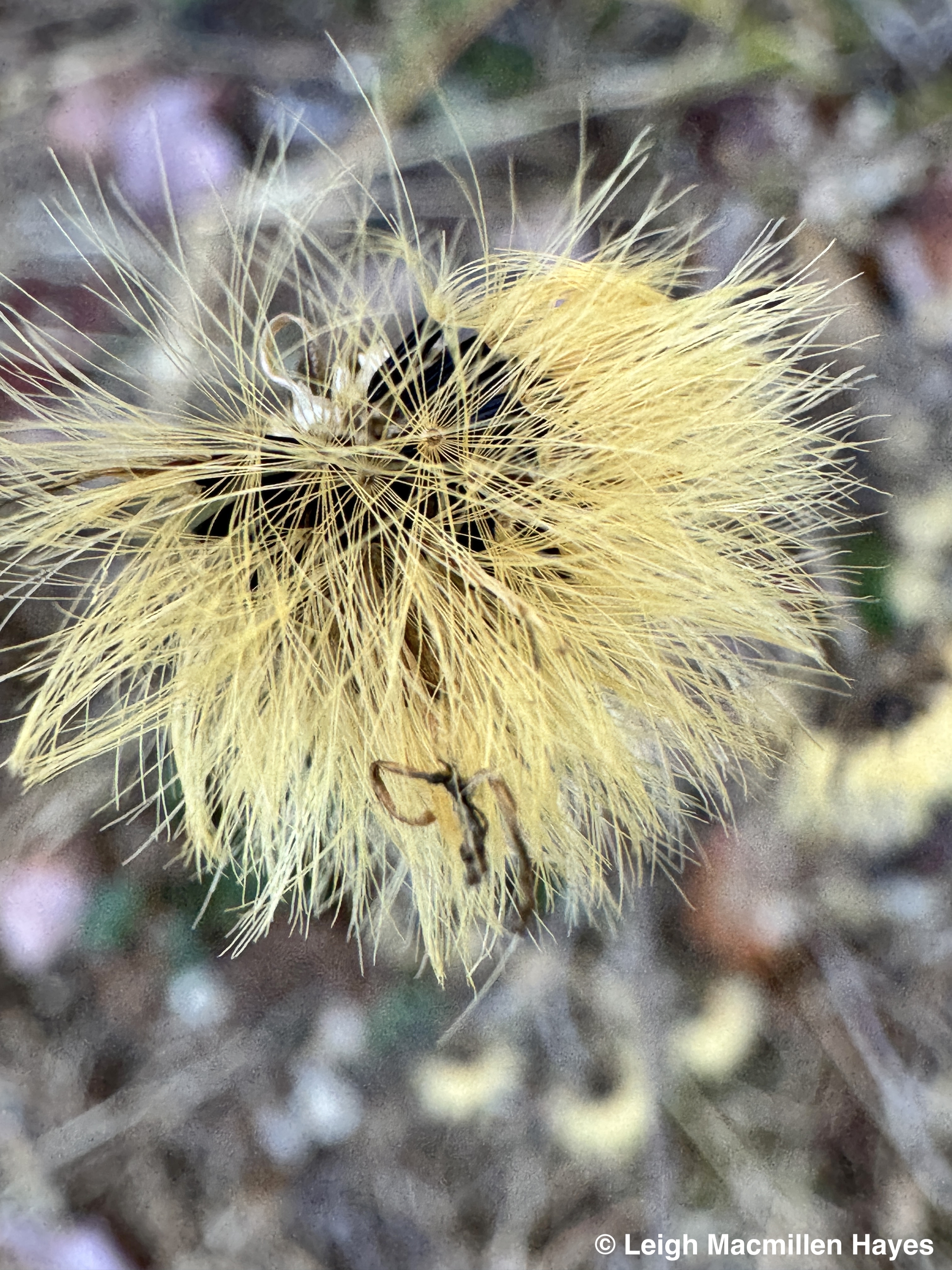
Aster seeds are slowly taking their own leave, one hairy parachute at a time.
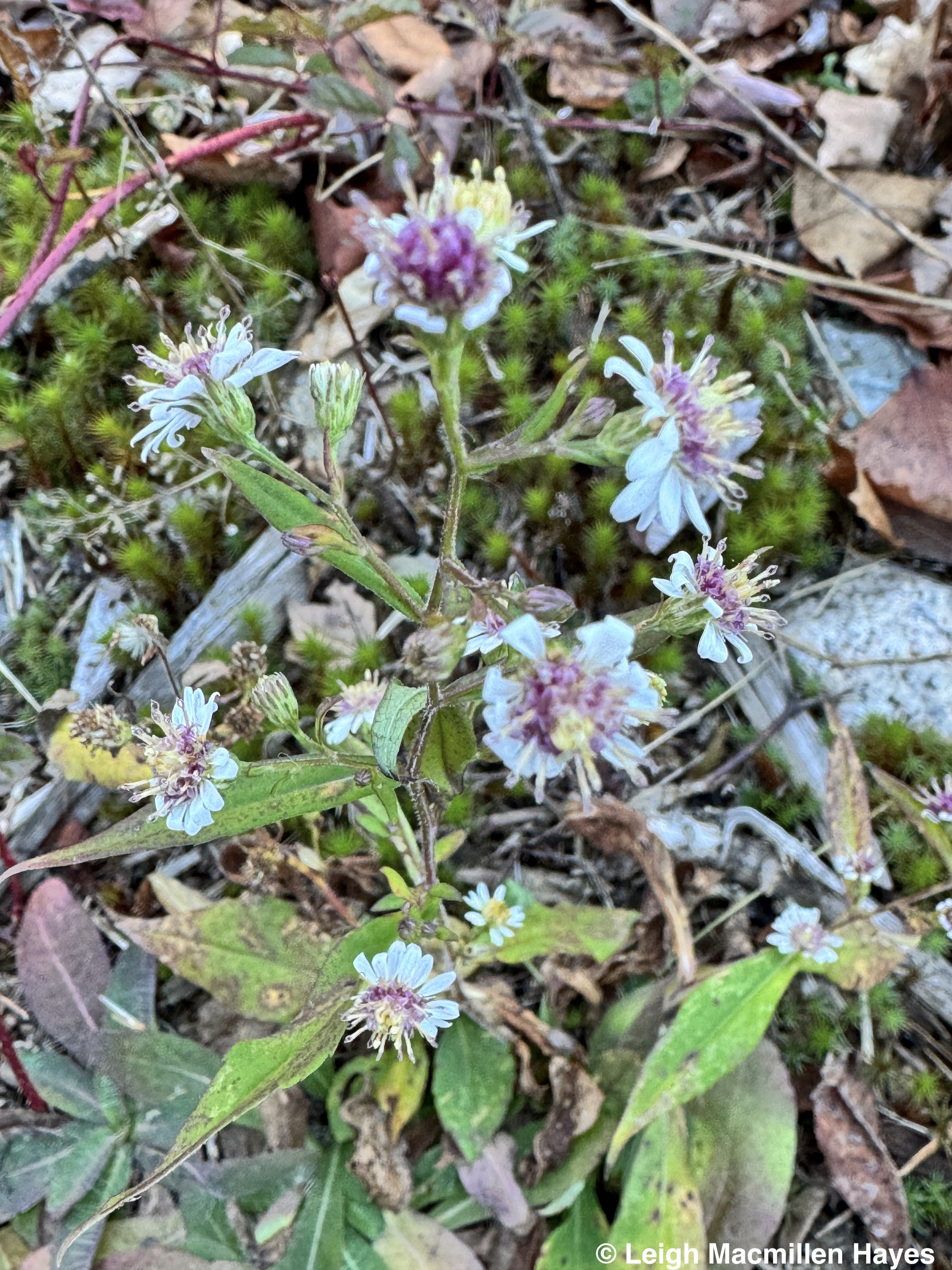
But here’s the thing. Not all Asters have gone to seed and I was surprised to find several Calico Asters still flowering. Given that the past few days have been quite brisk, this didn’t make sense.

But the same was true for Yarrow.

And I saw a bunch of Blue-stemmed Goldenrods still blooming. While the Asters and Goldenrods flower late in the season, perhaps I shouldn’t have been surprised, except that this past weekend’s wild rain and wind, and temps that felt more like November than we’ve experienced lately, made me question what I was seeing.

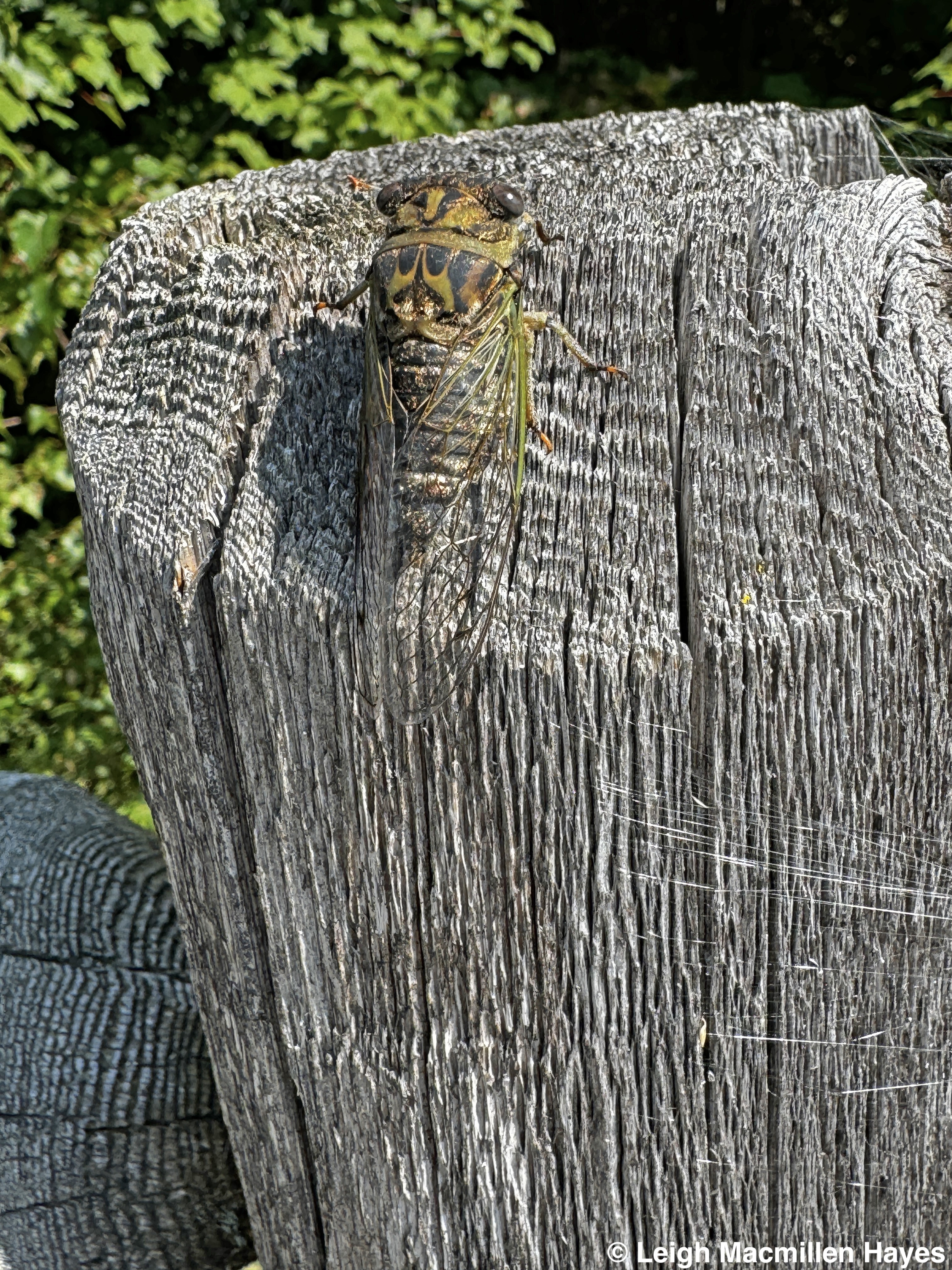
I was thrilled as I approached the airport end of the trail to find a few Dog-day Cicada exoskeletons still clinging to the underside of the fence railings. My, what large lobster-like claws you have, the better to dig yourself out of the ground when you are ready to emerge from your root-sap-sucking days to form wings, and fly away, and find a mate.

Because my imaginary train had let me off at Porter Road in Fryeburg, about halfway between the two ends of this four-mile route, I wandered and wondered for about two miles toward the airport end, located just beyond the mileage sign.

Portland: 47 miles away.

But it’s not all rail trail . . . yet.

As I looked across Rte 5, I imagined what will happen next. “A twelve-member Mountain Division Rail Use Advisory Council was created in June 2021 to study and review the 31 miles of state-owned, inactive rail line in order to make recommendations for its future use. Frequent meetings occurred . . . at which the civil engineering consulting firm, HNTB, ‘presented feasibility studies for future rail, rail with trail, and interim trail/bikeway use options and economic benefits. It was determined that restoring rail use would cost $60,000,000. For rail with trail, the cost would be $148,300,000. Removing the rails and building a trail until rail, which would keep the rail bed intact so the trail could return to rail if needed, wold cost $19,800,000. The final vote was 11 – 1 in favor of Trail Until Rail . . . After thirty years of work and thanks to the efforts of so many people, on July 6, 2023, Maine Governor Janet Mills signed LD404 into law, authorizing MaineDOT [Department of Transportation] to remove the railroad tracks and construct a 31-mile, multi-use trail until rail on the Mountain Division Rail Line between Fryeburg and Standish . . . Trail Until Rail means that this will be an interim trail because it can be pulled up and the tracks restored to rail should the return of train operations be economically viable. As stated on the alliance’s website: ‘Most major rail corridors are federally protected in perpetuity (that’s forever!). If the tracks ever need to go back in for train service, they will.'” ~ from my article Trail Until Rail: Mountain Division Trail Expansion in published Lake Living, Fall 2024, vol. 17, no. 2.

I turned around by Route 5 and followed the rail with trail back to my truck. Though I’m a hiker, wanderer in the woods by nature, the Mountain Division trail always amazes me with all that it has to offer and today was no different.

If all goes as intended, this 31-mile rail until trail project will be broken into six segments and within two years work will get underway to connect the airport end to this spot by the intersection on Route 160 in Brownfield.

Thanks for taking the time to travel with me today.

Thanks also to Terry Egan, vice president of the Mountain Division Alliance, and Andrew Walton, secretary of the organization, for walking a section of the trail with me several months ago and sharing their stories and visions of this asset to our area.
My Love Affair . . .

I have no expectations
and only so much time
to take a walk
along a nearby trail.
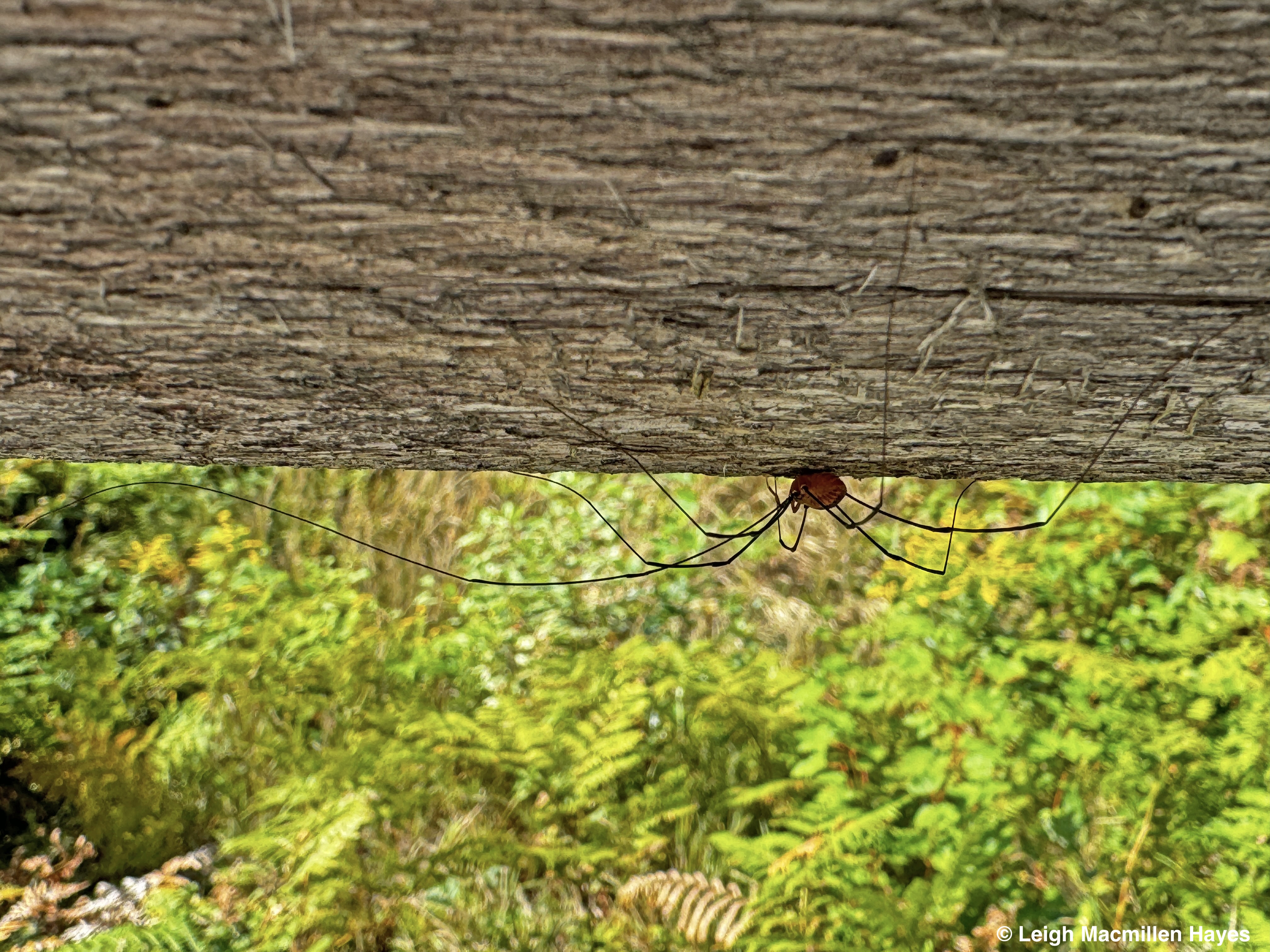
Hiding below a wooden rail,
An arachnid known as a Brown Harvestman rests.
Though spider-like, it's not,
for its body is single segmented.
Curious to see
what else the posts may offer
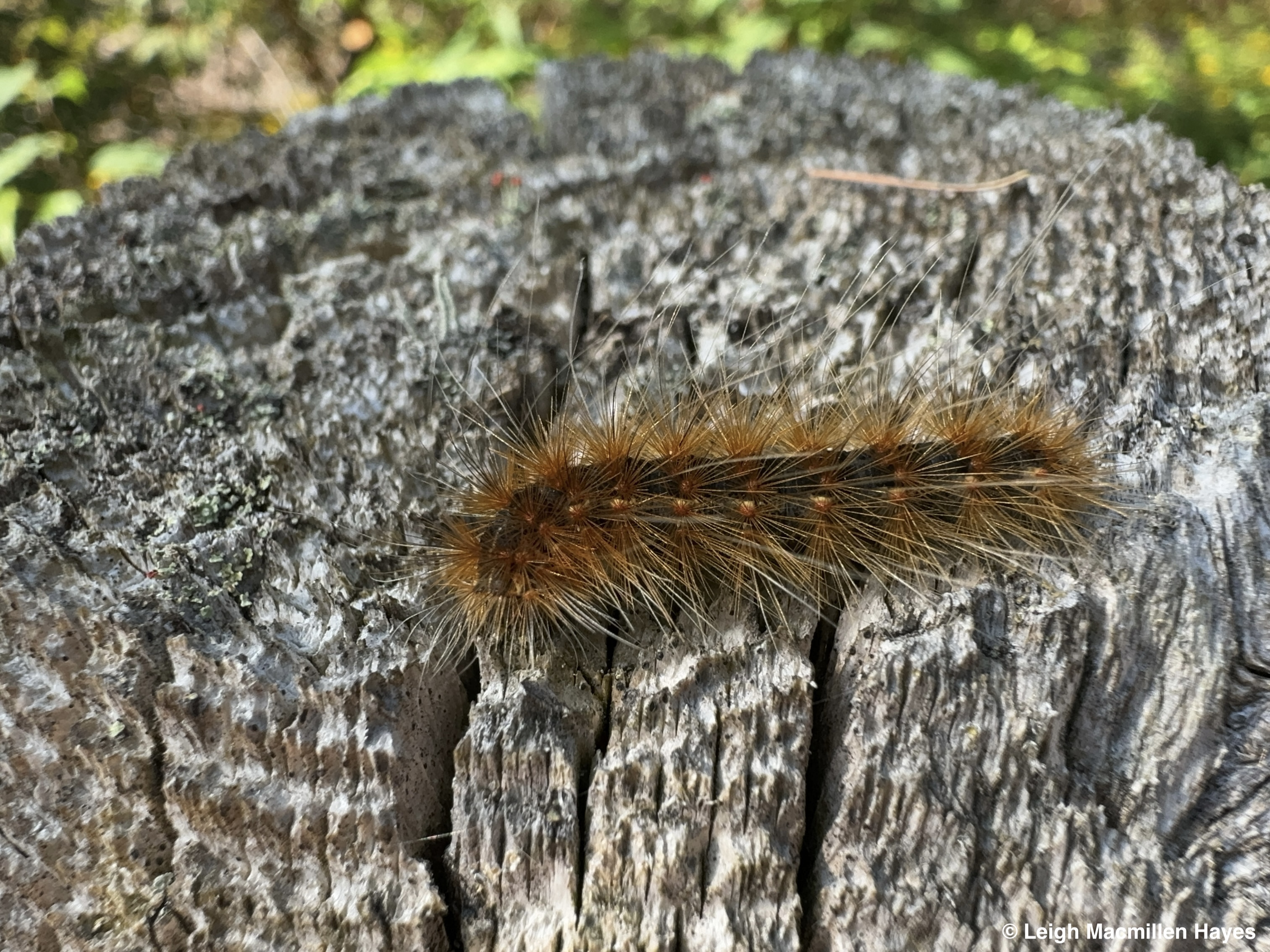
I meet a slow-moving Yellow Bear caterpillar,
It's rusty-brown hairs warning me not to touch.
A few feet away,
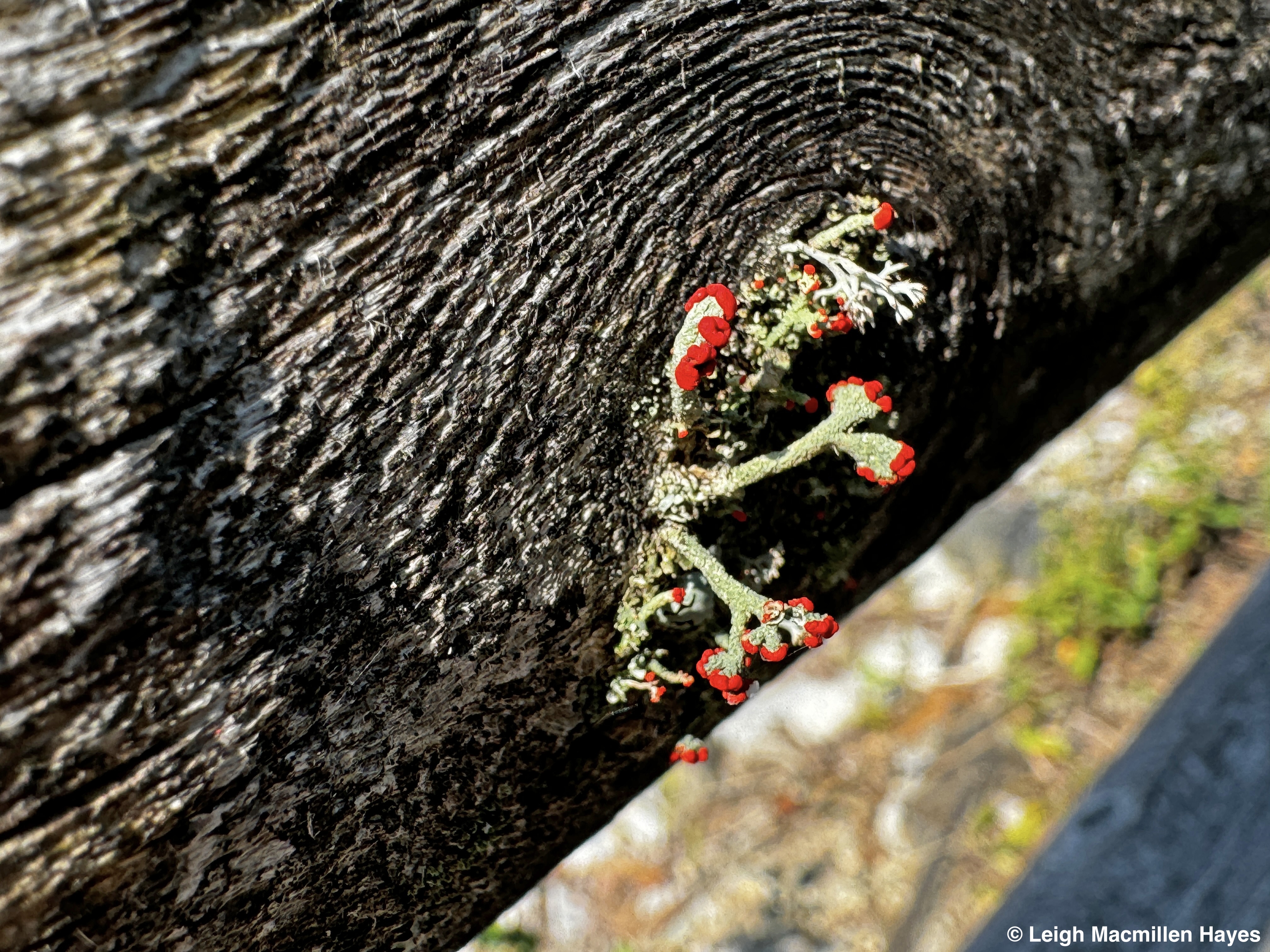
Whimsical with its brilliant red caps,
known as the apothecia or fruiting bodies,
a British Soldier lichen protrudes with a pop of color.
As I continue, one Harvestman 
becomes two, or three, resting below,
and the long legs of these Daddies
is all I can see.
And then by complete surprise,
Hunchbacked in its former nymphal form,
with legs so stout and lobster-like claws,
I find a shed exuvia and my heart skips a beat.
Like the Harvestmen, 
where there is one, there's another,
and I can only imagine
their watermelon tourmaline bodies slowly emerging.
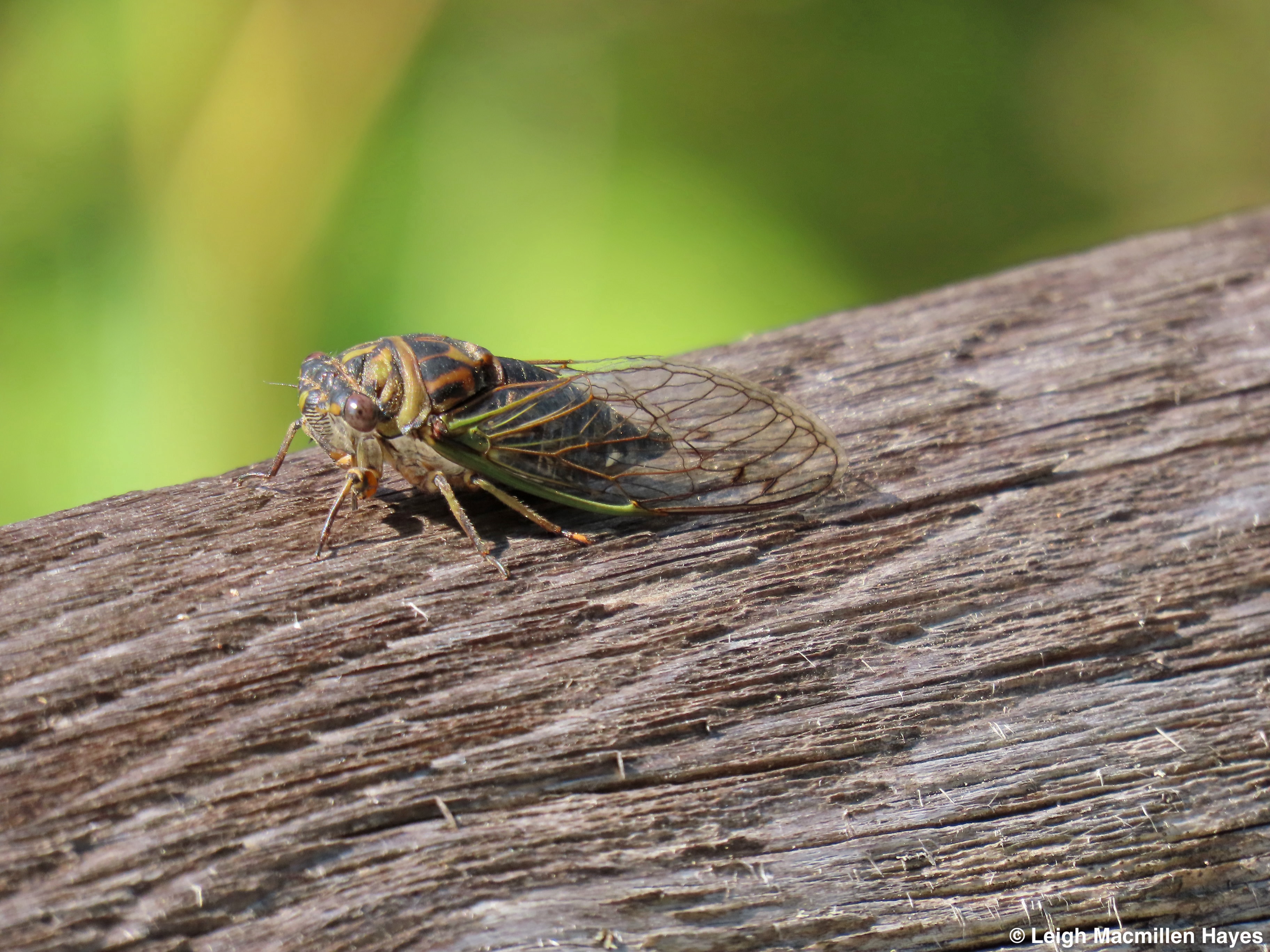
It's when I spot a crawling creature
colored with vivid camouflage
and golden-veined wings,
I realize I've missed one of my favorite views of metamorphosis.
But still I am there to watch 
as the adult form reaches out,
one muscular foot at at time,
as it walks first sideways and then skyward.
I know from experience
its tented wings will soon spread,
but worry it will meet the web beside it,
and rejoice when it instead finally flies into the forest.
On this late summer day I find another,
and can only hope these Dog-day Cicadas
have time to sing their raspy love songs
that will continue the circle of life as they know it.
A few more steps and I must backtrack,
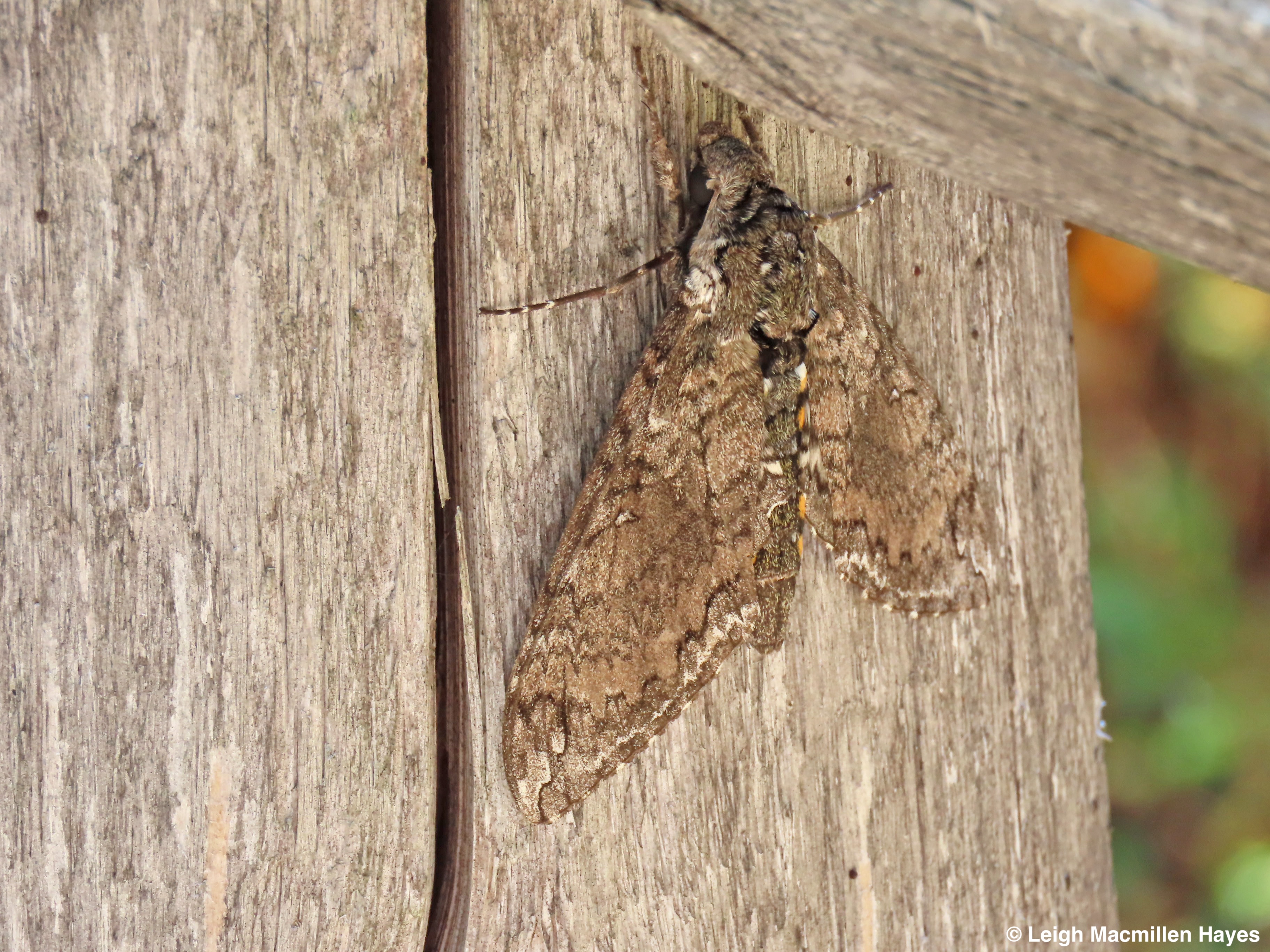
for something large garners my attention,
its mottled pattern resembling the post
upon which this Carolina Sphinx moth rests.
A rustle and wing beats cause me to turn my gaze upward,
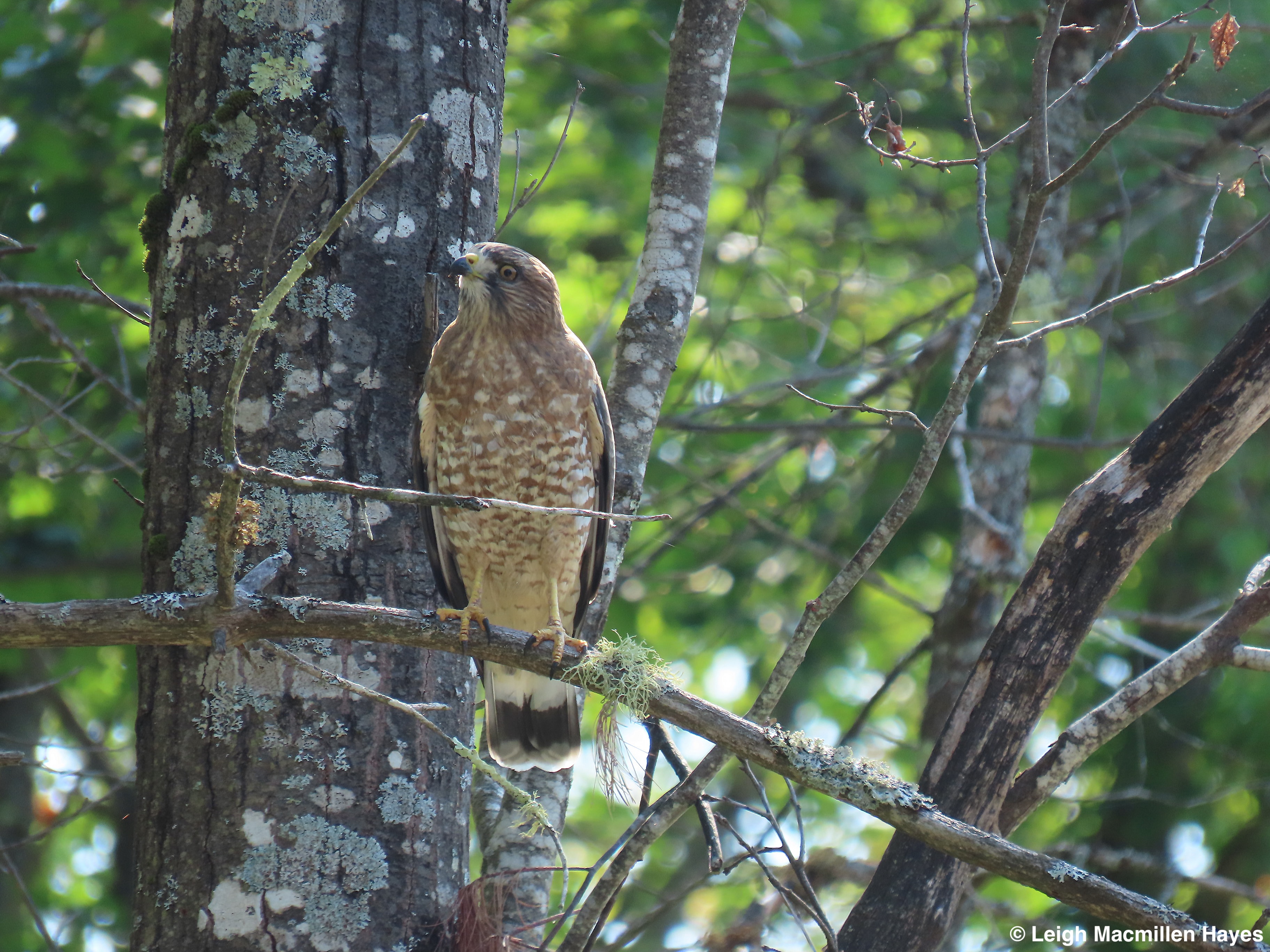
and I spot a Broad-winged Hawk landing,
and surveying the territory
for a consumable meal.
Intently, it looks down,
and all around with ten times the focus of my sight,
those predator eyes fixed as they are,
it must turn its head to see.
As I move the telescopic lens
I begin to wonder if it thinks its a creature
and I must admit that I duck
when it flies off . . . first toward me before swerving.
All of these sights I spy
in the course of forty-five minutes
and maybe three quarters of a mile
along the Mountain Division Trail.

On this day,
I develop a love affair
with the fence posts and all who gather there.
Can you imagine if I'd gone any farther?

The Richness of Life

In the midst of walking toward the vantage point upon the Mountain Division Trail in Fryeburg, Maine, grows a grass of distinction for its form,

All fluffy and arced as the seedhead is, Giant Foxtail seems an apropos common name, though its known as a pest to farmers who grow corn.

I’m struck over and over again as I walk upon the paved pathway,

by the colors and textures of so many seeds ready to float astray.

And then there is a tree that cannot make up its mind

and chooses instead to be two of a kind.

Its known as a conifer because it grows needles each year,

but this Tamarack sheds them in deciduous form as winter draws near.

I next pause beside one who displays all ages,

from yesterday’s cones to today’s catkins and tomorrow’s buds waiting to turn spring’s pages.

Some of the Speckled Alder cones hide beneath tongues imitating piles of snakes stretching out,

made from galls caused by an infection to increase the surface for spores from a fungus to spout.

Another with long, feathery white plumes overpowers a chain-linked fence along the way,

the seeds of this native vine, Virgin’s Bower, await a breeze to help them stray.

Other seeds also announce their presence, these hanging from trees.

Being Black Locust, their pods are inedible legumes related to peas.

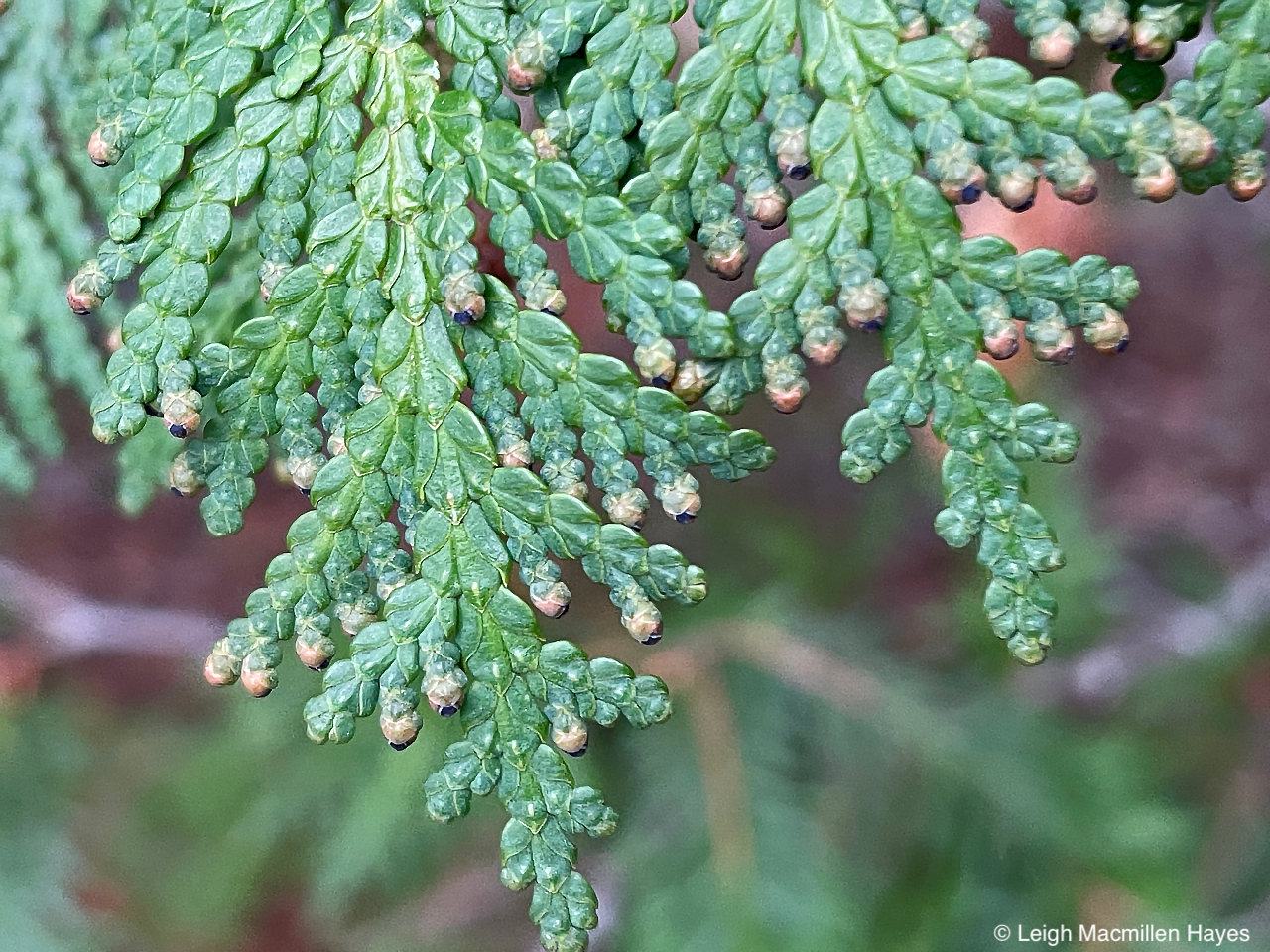
Tossed into the mix these scale-like needles that make me think of braids form a flat spray.

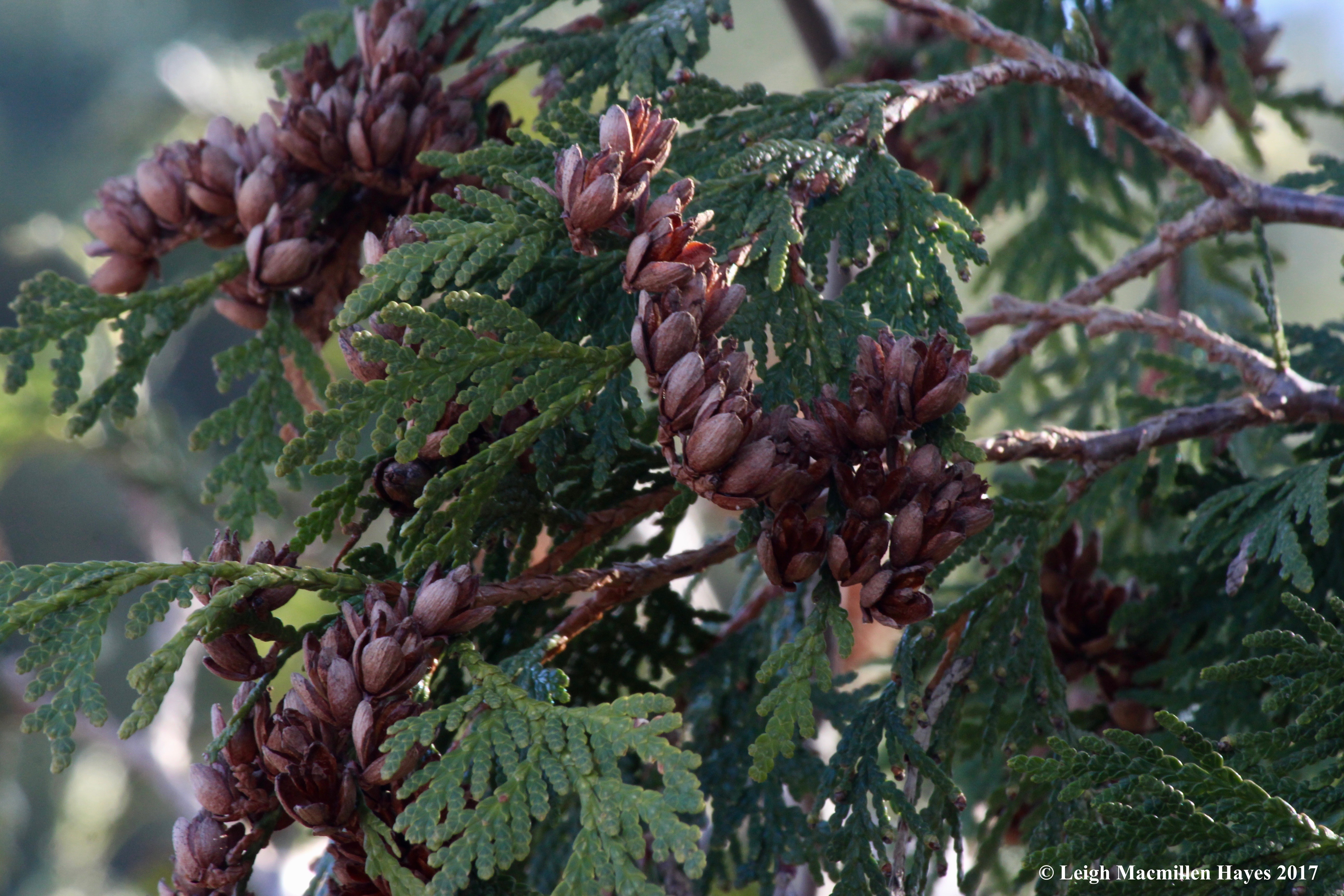
The tiny flower buds at the tips of Northern White Cedar’s leaves preparing to bloom next May.

What amazes me most about this extremely warm November day,

is spotting flowers in bloom like the colorful Calico Aster array.

And then there was a plant bright yellow in flower with lance-shaped leaves of green on display for no apparent reason,

This Showy Goldenrod being one I couldn’t recall noticing before but will recognize when we meet again in another season.

Even the insects are confused this fall,

such as this flower beetle taking advantage of an in-bloom Yarrow offering a nectar haul.

One of my favorites though, knows that the flowering season should have ended by now,

As the Evening Primrose showed off a Christmas display of deeply-veined basal leaves meant to wow.

Thankfully, a nest the size of a basketball I spot dangling from a branch shows signs it is no longer full of life,

The hornets who built the papery structure have abandoned it, causing us who follow the trail no more strife.

At last, returning to the vantage point from whence I have come,

I’m filled to the brim with colors and textures that would mean only death to some.

At the end of today’s journey I realize

this place is as rich in death as it is in life and I have won the prize.

Needed: Minds to Wonder

Along a paved trail seemingly flat that follows a track to a vanishing point did I walk today.

It’s a place some see as desolate, but nature always has something to present and today it was signs of the season to come that drew my attention.

Hints of autumn’s hues . . .

contrasted sharply with summer’s chlorophyll-induced greens.

Redder than red winterberries bespoke the presence of a nearby male–since as a dioecious species, female flowers and male flowers grow on separate shrubs. They also signaled bird food and seasonal decorations–depending on who arrives first: Avian species or human.

Disturbed though the land is, Asters such as this Calico, invited visitors like the Paper Wasp to stop by for a sip of nectar.

Goldenrods also sent out messages and Bumble Bees RSVPed . . .

for they had baskets to fill one pollen grain at a time.

In the mix along this route of disturbed soil and gravel, there were those whose seedheads, while reminiscent of a dandelion, proved more beautiful than the Pilewort’s actual nondescript flower.

Less obvious, but no less beautiful, Wood Sorrel quietly softened the edges of the rocks upon which it grew.

Jewelweed, also known as Touch-Me-Not for its seed’s habit of springing forward when touched, had a visitor all its own whose name I wasn’t allowed to catch.

Similar in color to the Jewelweed, a Monarch butterfly filled up . . .

perhaps a last series of sips before the long journey south.

All of this color and action was observed by a Chippy, who was busy adding to his collection of goods, while his kin added their clucks to the chamber music orchestrated by grasshoppers and crickets.

The Mountain Division Trail in Fryeburg, Maine (home to the Fryeburg Fair), is hardly flat and not at all desolate–it just needs people with eyes to see and ears to hear and minds to wonder as they wander. Okay, so maybe it was desolate in terms of being deserted of people, but I kinda like it that way. As for being dismal and bleakly empty–I beg to differ.

Stop, Look, and Listen

I’m a wanderer both on and off trail, and sometimes the path has been macadamized. Such was my following this morning as I paused on the way home from running an errand in North Conway, New Hampshire.

I’d stuck to the backroads on my way out of state to avoid road construction on Route 302, but knew that upon my return I wanted to stretch my legs along the Mountain Division Trail in Fryeburg.

The delightful four-mile rail trail, so named for the railroad line it parallels, intended for walkers, runners, bikers, roller bladers, etc., extends from the Maine Visitors Center on Route 302 to the Eastern Slope Airport on Route 5 and can be accessed from either end or several points between.

The wind was blowing and the bug count low, so though it wasn’t a warm, sunny spring day, it was a purely enjoyable one. And the cheery cherry flowers enhanced the feeling.

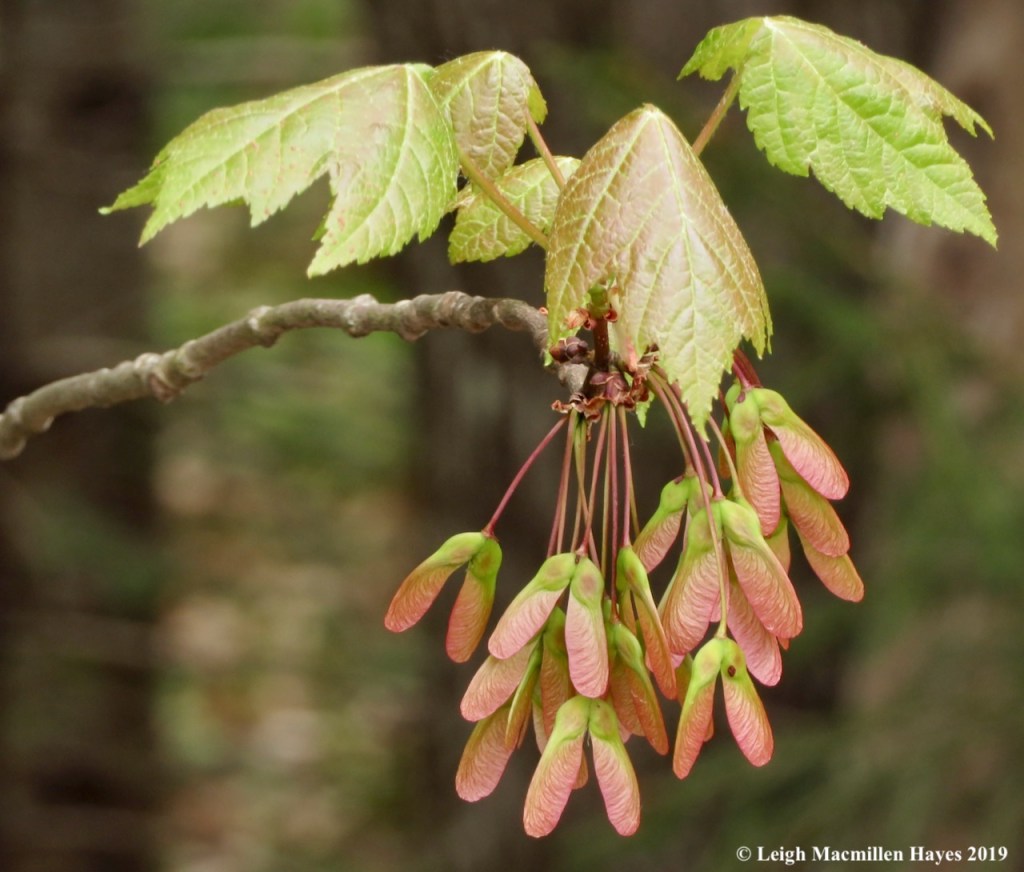
All along the way, it seemed, the Red Maples had not only leafed out, but yesterday’s flowers had magically transformed into today’s samaras that dripped below like chandeliers.

Lovely tunes and chips were also part of the landscape and I have no idea if I’ve identified this species correctly, but I’m stepping out on a branch and calling it an Alder Flycatcher. I’m sure those who know better will correct me. The naming isn’t always necessary, however. Sometimes, it’s more important to appreciate the sighting, the coloration, and the sound. For this bird, it was the dull olive green on its back that caught my attention.

And then up above on the other side of the track, it was the “Cheery, Cheery, Cheerio” song that helped me locate the American Robin in another maple raining with seeds.

Maples weren’t the only trees showing off their flowers, and those on the Northern Red Oaks reminded me of grass hula skirts below Hawaiian-themed shirts.

Even the ordinary seemed extraordinary like the Dandelion. Each ray of sunshine was notched with five “teeth” representing a petal that formed a single floret. Fully open, the bloom was a composite of numerous florets.

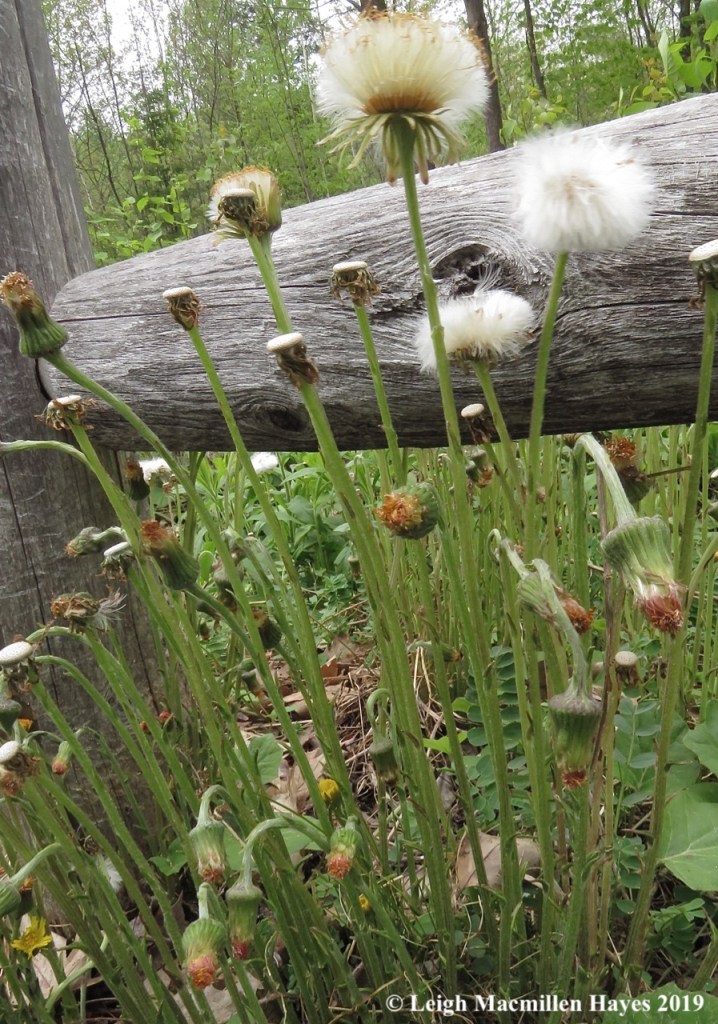
Nearby, its cousin, the early blooming Coltsfoot, already had the future on its mind and little bits of fluff blew in the breeze.

Eventually, I reached Ward’s Pond and after scanning the water found a Painted Turtle seeking warmth. The day was overcast and there was a bit of a chill in the strong breeze. Being down below the trail, at least the turtle was out of the wind and I had to assume that the temperature was a bit higher than where I stood.

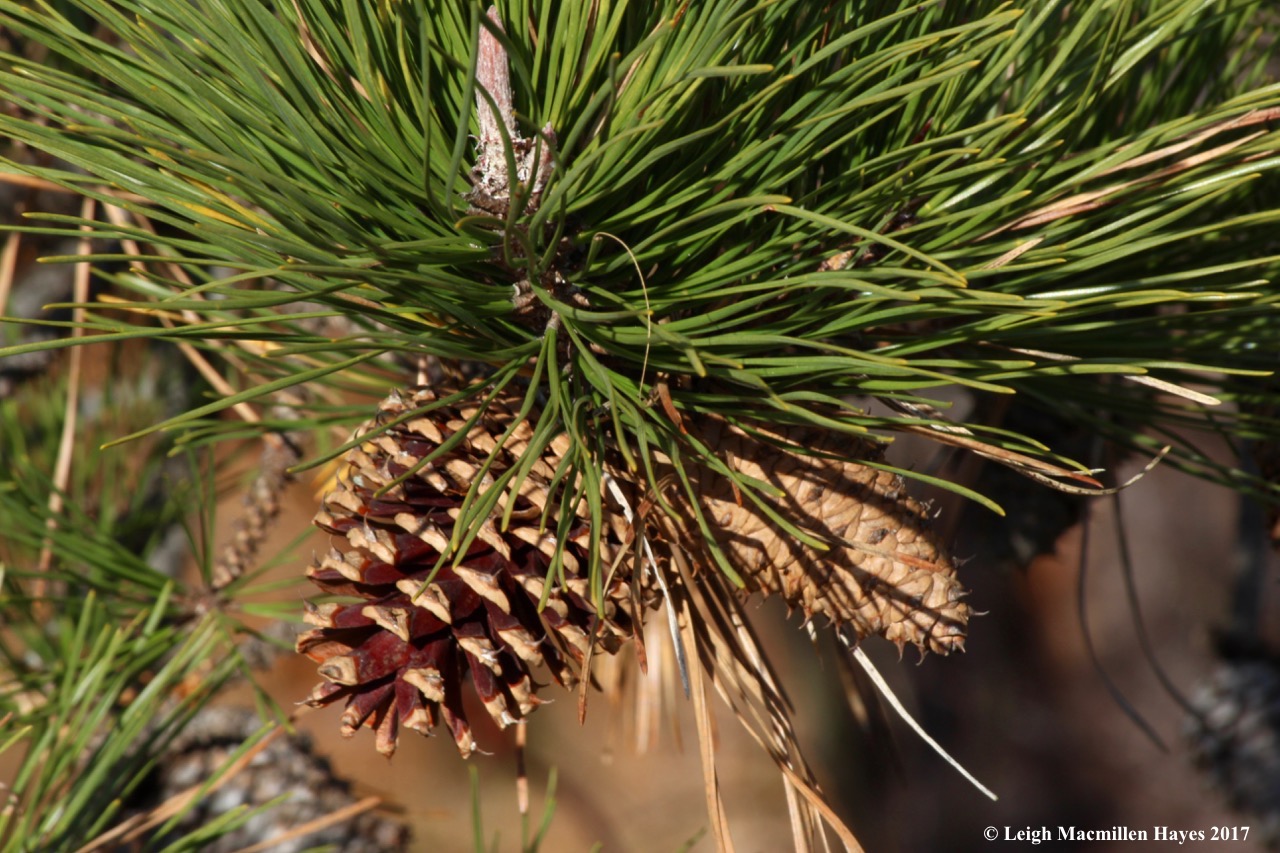
This is a trail that may look monotonous, but with every step there’s something different to see like a Pitch Pine showing off three generations of prickly cones. What was, is, and shall be all at the tip of the branch.

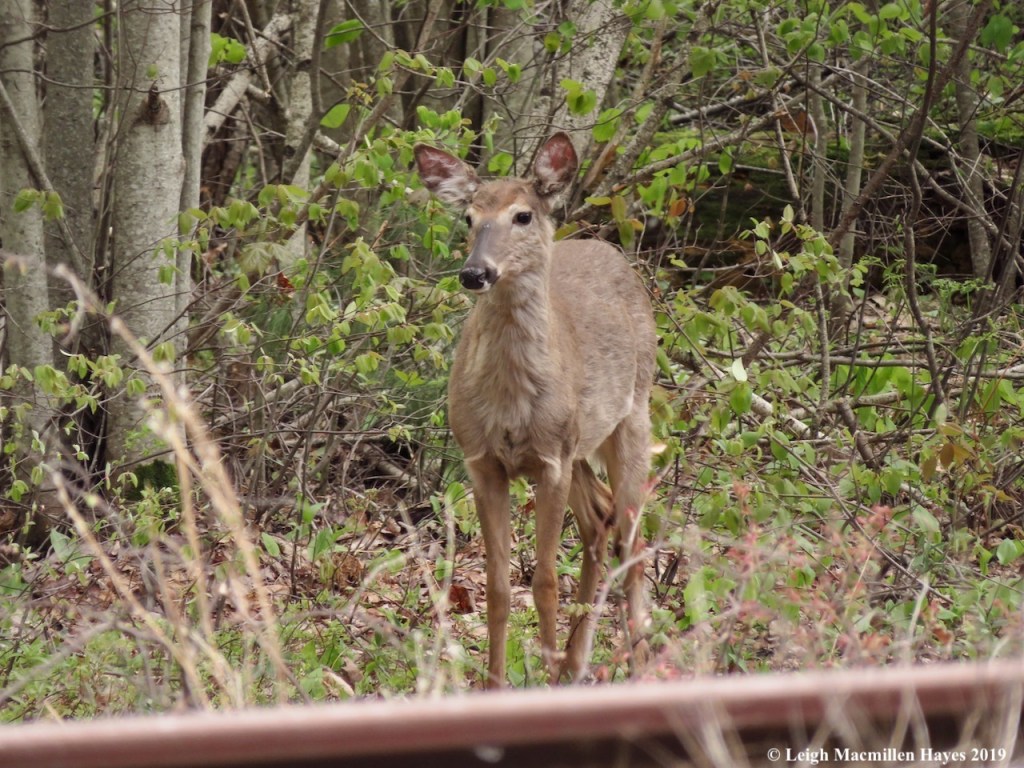
It seemed like every time I looked to the left, such as at the pine, a sound on the other side of the trail caught my attention. And so it was that I realized a White-tailed Deer was feeding on grasses behind a fence by a now-defunct factory (so defunct that the roof had collapsed under the weight of snow). Notice her ears.

And now look at her again. A deer’s ears are like radar and she can hone in on a sound by turning them.

I don’t know if she was listening to me or to the Eastern Towhee telling us to drink our tea.

After 2.5 miles, I decided to save the rest for another day and follow the path back. Though loop trips are fun, following the same path back brings new sights to mind, like the Interrupted Fern I’d walk past only a few minutes before. Notice its clump formation known in the fern world as vase-like.

And the butterfly wings of its interrupting leaflets covered with sporangia. My wonder came with the realization that within the interruption not all of the pinnules or subleaflets were covered with the bead-like shapes of fertility. Spores stored within essentially perform the same function as a seed: reproduce and perpetuate the species. So–is part of the pinnule fertile while the rest remains sterile? Do I need to check back? Oh drats, another trip to make along the Mountain Division Trail. Any excuse to revisit it works for me, though one hardly needs an excuse.

Further along I looked to the other side of the tracks for I’d spotted bird movement. Behind it was the reason–my White-tailed Deer friend. I have a feeling people feed it for it seemed not at all disturbed by my presence, unlike the ones in our yard and the field beyond that hear my every move within the house even in the middle of winter and are easily spooked.

The deer, however, wasn’t the only wildlife on or near the trail. Suddenly, a Red Fox appeared and we each considered the other. He blinked first during our stare down and trotted away.

Passing by Ward’s Pond once again, I stopped to check on the turtle. It was still in the same spot I’d seen it probably a half hour before.

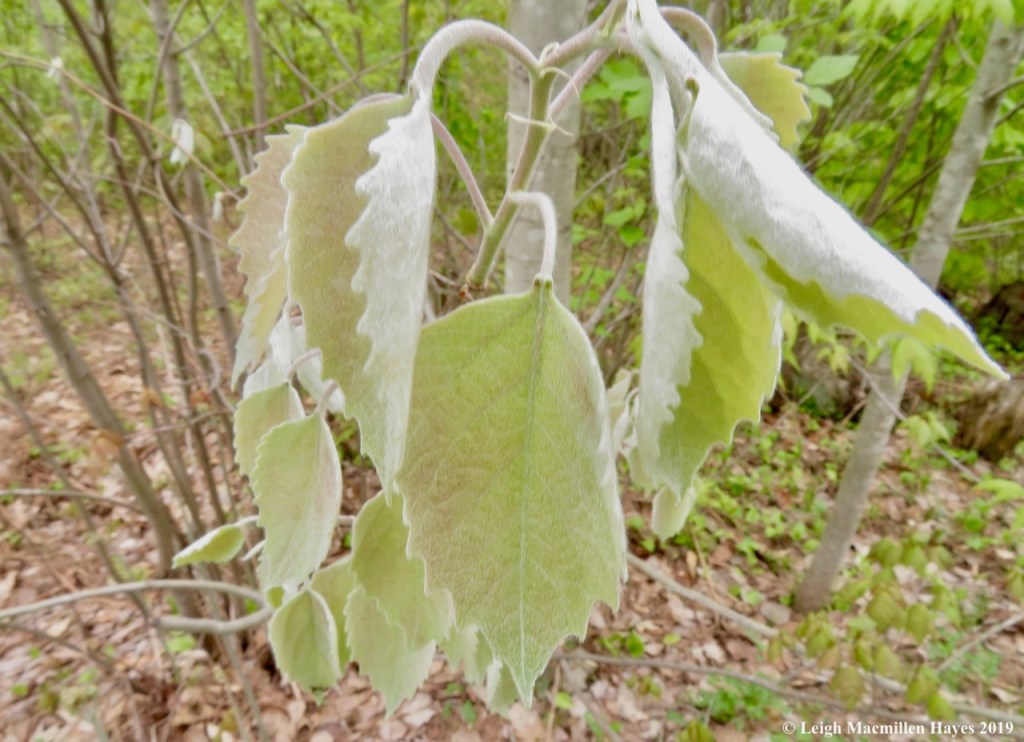
Not far from the visitors center, a Big-Toothed Aspens chose to be examined for the soft downy feel as well as color of its leaves. The various hues of color in leaves during spring is caused by the presence of pigments called anthocyanins or carbohydrates that are dissolved in the cell sap and mask the chlorophyll. As the temperature rises and light intensity increases, red pigment forms and acts as a sunscreen to protect the young leaves from an increase in ultraviolet rays.

Because I was standing still and admiring the leaves, I heard another bird song and eventually focused in on the creator.

And so I have the Big-Toothed Aspen to thank for showing me the Indigo Bunting. My first ever. (Happy Birthday Becky Thompson.)

A turtle. A deer. A fox. A towhee. A bunting. All of that was only a smattering of wonder found along the Mountain Division Trail. If you go, make sure you recall the old railroad signs: Stop, Look, and Listen.

So Many Advantages Along the Mountain Division Trail

When opportunity knocks, so they say, open the door. Today, it wasn’t really a door that I opened, but rather a trail that I explored. And it wasn’t a new trail to me, for I’ve ventured along the Mountain Division Trail in Fryeburg many times before.

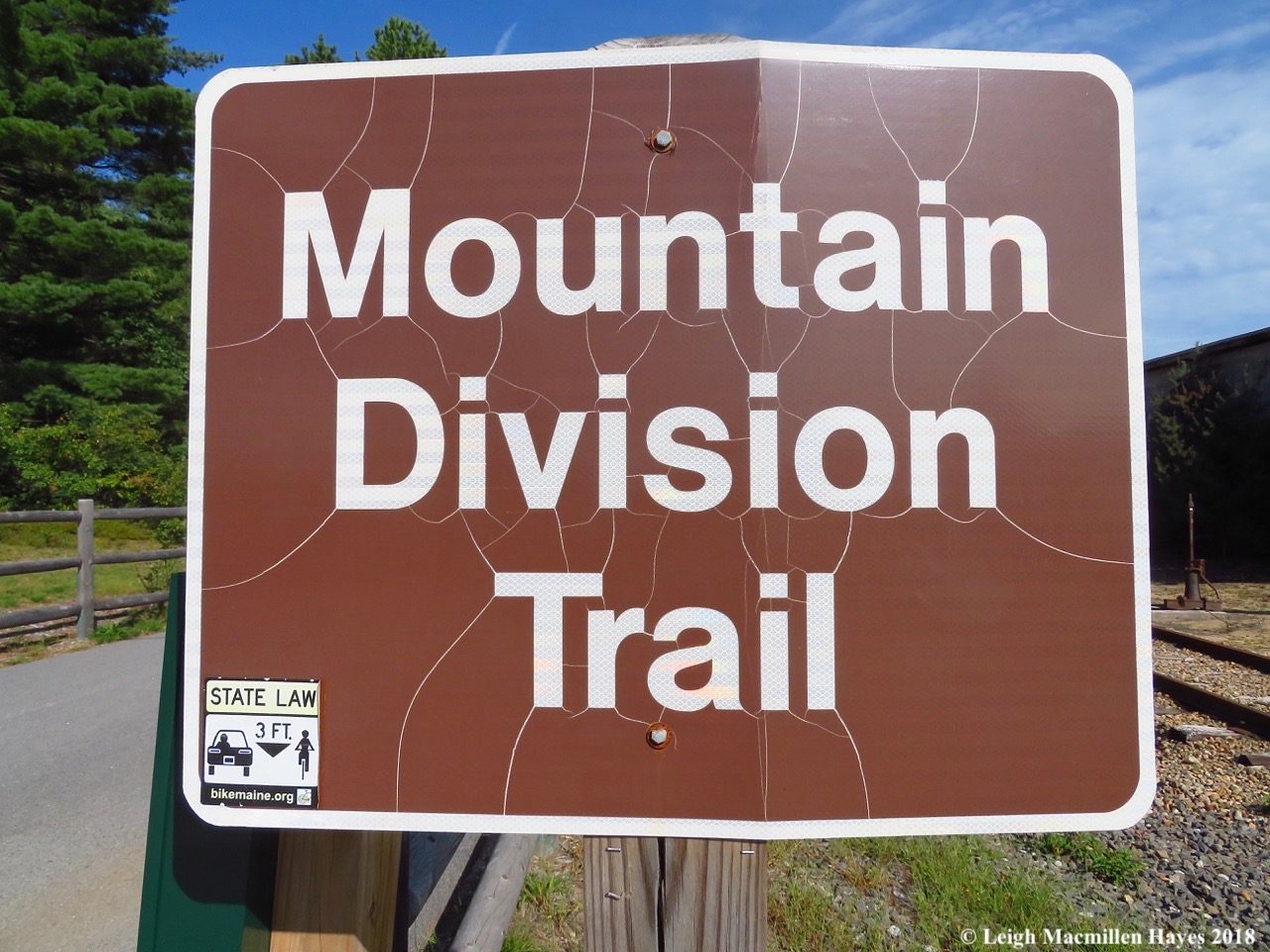
1-trail sign

But my morning and afternoon plans changed and I happened to be in the vicinity and I don’t think I’ve ever walked that way in late summer before–so I did what I love to do best and set off down the path beside the now defunct railroad track. And I was curious to discover who else might be taking advantage of it on this fine September day.

2-monarch caterpillar

Within minutes, I made my first discovery–a monarch butterfly caterpillar crawled along the paved trail. I’d actually chosen this spot for I hoped to see a few monarchs and my chances suddenly increased.

3-red-legged grasshopper

Also using the asphalt were innumerable grasshoppers of several types including this red-legged, and crickets galore. In fact, between them and cicadas, I could almost not hear the traffic on Route 302 at the start. Almost.

4-rail trail

Within minutes, however, the trail passed behind several businesses and then curved away from the road and toward Eastern Slope Airport. It was occasionally flat, occasionally straight, occasionally curved, and occasionally hilly. But always paved. And much quieter.

5-spotted knapweed and web

Constantly, the offerings changed. Knapweed with its pineapple-like base, which loves disturbed areas, had made itself at home. And a spider had used the structure to create its own home.

6a-monarch

As I walked, I began to notice them–a monarch fluttering past here and another there. At last, I found one that had paused to take advantage of the nourishment offered by an aster.

6-monarch on aster

I stood for as long as it would allow . . .

7-monarch on aster

enjoying every pose presented.

8-crystalline tube gall

A little further, I found something I only remember seeing for the first time a few weeks ago–I think it’s a crystalline tube gall on the oak leaf, but urchin gall would be my second guess.

9-banded tussock caterpillar

On the same leaf, either a banded-tussock moth caterpillar or a Sycamore tussock moth caterpillar munched away, so similar are they. Check out all the bristles by the head–both an extra set of black and a more subtle set of white.

10-water

By what I assumed was an old mill pond fed by a small brook, the watery world quietly intercepted all other communities found along this path.

11-painted turtle

And today, a painted turtle watched nonchalantly from a log in the pond as the world passed by–runners, walkers and bikers on the path above . . . some who hardly noted his presence.

12-male blue dasher

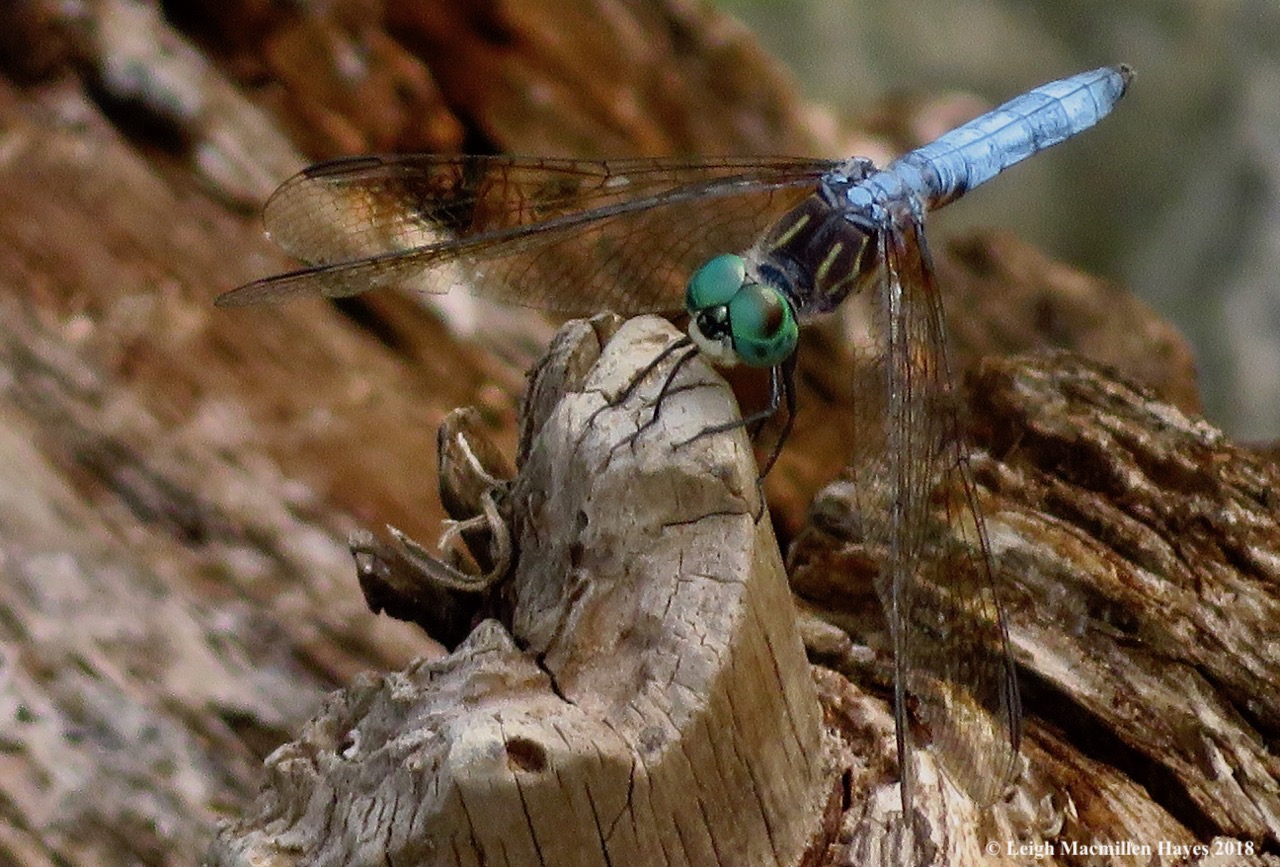
And dragonflies,  including this mighty handsome green-eyed blue dasher, below. Do you see the hint of amber in his wings? One of the telltale signs.

13-pokeweed poking through the fence

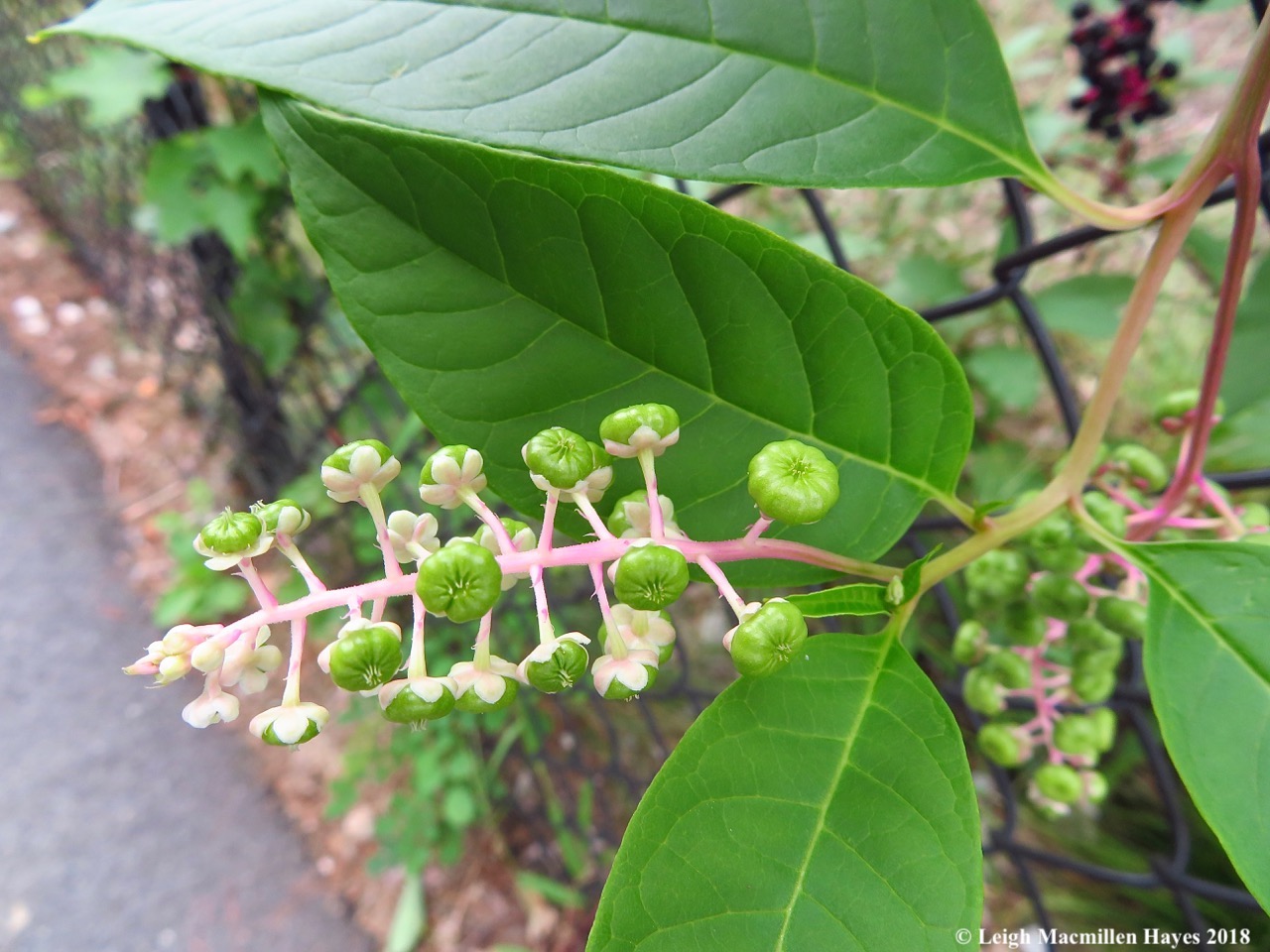
Continuing on, I was surprised by a sight I’d seen before because I’d forgotten its presence. Pokeweed flowered and fruited and . . . poked through the fencing that formed a boundary along parts of the trail.

14-northern white cedar

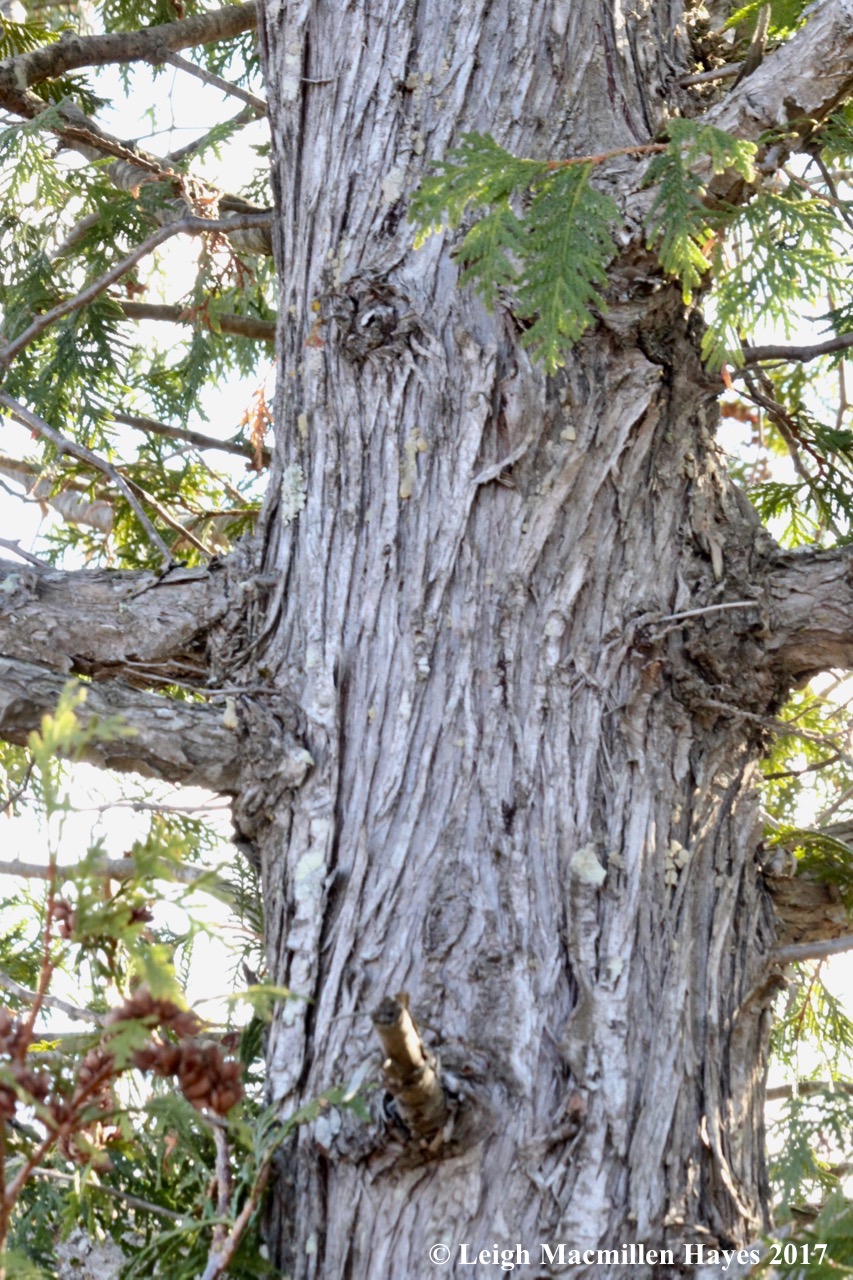
There’s also a short section where northern white cedar formed a wall, its woody cones all opened in an expression of giving forth new life and its leaves scaled like skinny braids.

15-pipewort gone to seed

Being a greatly disturbed zone, pilewort grew in abundance and its seeds danced and twirled and sashayed through the air like ghostly angels blowing in the wind. Actually, the graceful seedheads were much more attractive than the flower in bloom.

16-Queen Anne's Lace

Queen Anne’s Lace had also bloomed profusely, but today showed only its winter weed form full of tiny seeds edged with rows of bristles. The better to ground itself somewhere when the time comes, I supposed.

17-Bristly sarsaparilla fruits

Speaking of bristles, bristly sarsaparilla sent its many-fruited umbels out through the fence, perhaps in offering to those passing this way.

18-into infinity

So many offerings I’d seen by the time I reached about the three mile mark and I knew there would be even more on the way back so I used my own imaginary turntable and began the return trip.

20-spider web between pipewort

It was then that a web strung with great and amazing strength between two pileworts caught my attention. First, I couldn’t believe the distance between the two plants or the thickness of the anchoring web. And then I noticed something else . . .

21-seeds caught in web

An orb about two thirds of the way across, decorated with pilewort seeds that will take a little longer than usual to get established on the ground. Will they be viable, I wondered.

23-funnel spider

Another industrious arachnid had used one of the fence pipes to make himself a home. Can you see the funnel spider waiting in the tunnel for delectable prey to land on his web?

22-goat

And then there were the goats, this one and two others who munched beside the trail. I called their owner because I feared they’d broken out of their pen (or someone had opened the gate). Her number was on a board attached to a tree as she’d advertised her daycare business to all who passed by. We enjoyed a pleasant conversation and I learned that she lets them out for an hour or so each day to feed on the weeds. Weeds? What weeds. All I saw where wildflowers aplenty. Anyway, if you go, do know that you may encounter the goats and they are not gruff at all.

24-cabbage white butterfly

While I saw a few more monarchs as I wandered back, a few other butterflies at least half the size of the royal ones moved with dainty motions. For the cabbage white butterfly, the asters were all the thing. But like so many of the wildflowers that have taken root in this disturbed place, this butterfly also disturbs people because it has a penchant for damaging crops.

26-northern cloudywing skipper butterfly

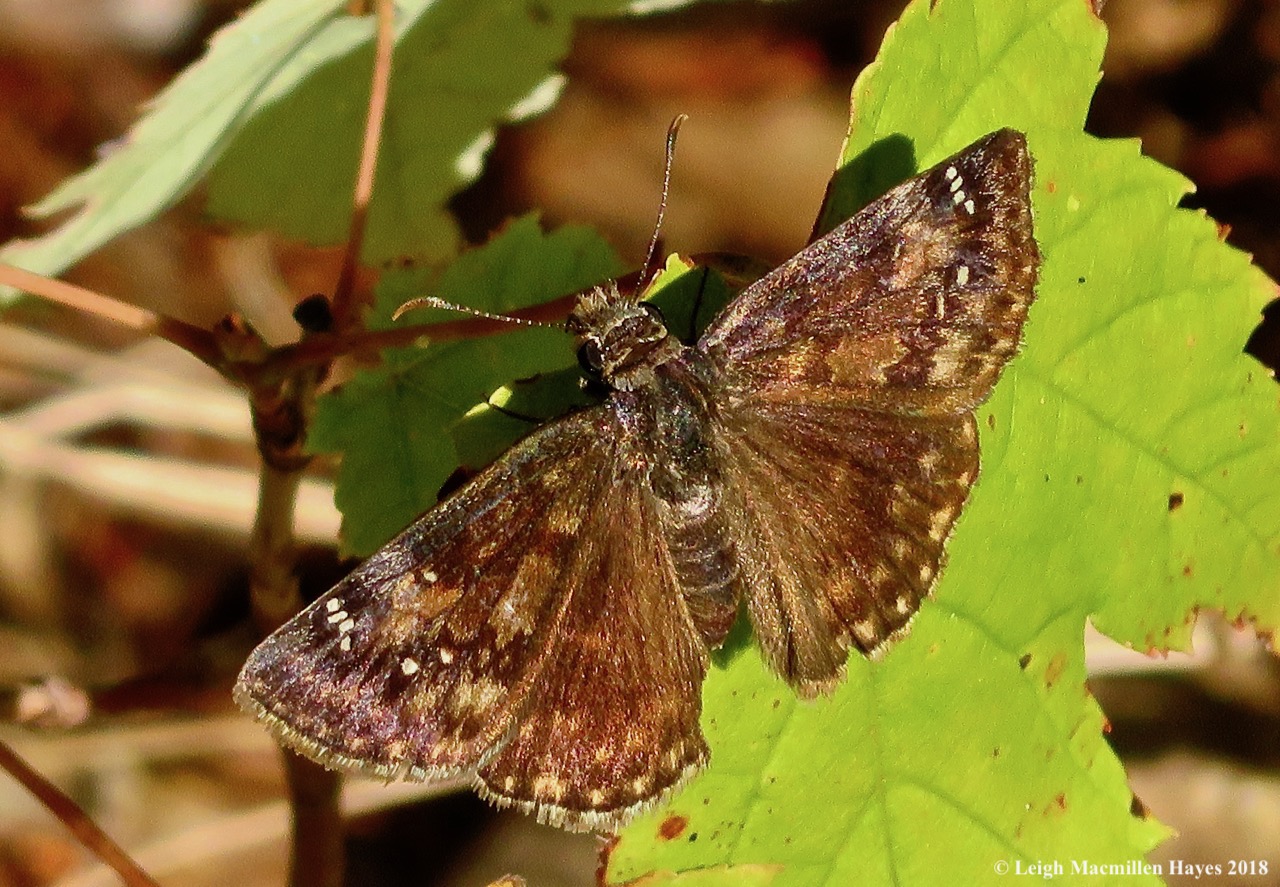
Even smaller was the northern cloudywing skipper that stopped atop a red maple sapling. Males perch near the ground awaiting females, so his chosen spot made sense. His wing scales gave him such a satiny look as he shown in the light and his earth-tone colors included hints of purple.

It was all about the earth, I noted, as I walked along the Mountain Division Trail. Years ago, the path that I followed today had been used to construct the railroad track. And then in the 2000s, the rail trail had been built beside it. Over the years, I’m sure the railroad track had been enhanced. So the land was indeed disturbed . . . repeatedly.

And now, just as I took advantage of it to follow the well-constructed trail, so many others had done the same–both human and non. Not all were beneficial, but still they eeked out a life in that place. From insects and “weeds” to turtles and tree, there are so many advantages available along the Mountain Division Trail in Fryeburg, Maine.


Flexing My Wings with Jinny Mae

It’s been a while since Jinny Mae and I had wandered and wondered together, but this afternoon the opportunity finally arose. And so we agreed on a time and place (though she did change the time ;-) ), and pulled into the parking lot of the Mountain Division Trail located closest to the Eastern Slopes Airport on Route 5 in Fryeburg, Maine.

m6-Mtn Division Trail

Rather than a rail trail, this is actually a rail-with-trail even though the rail is not currently active.

m2-lupine

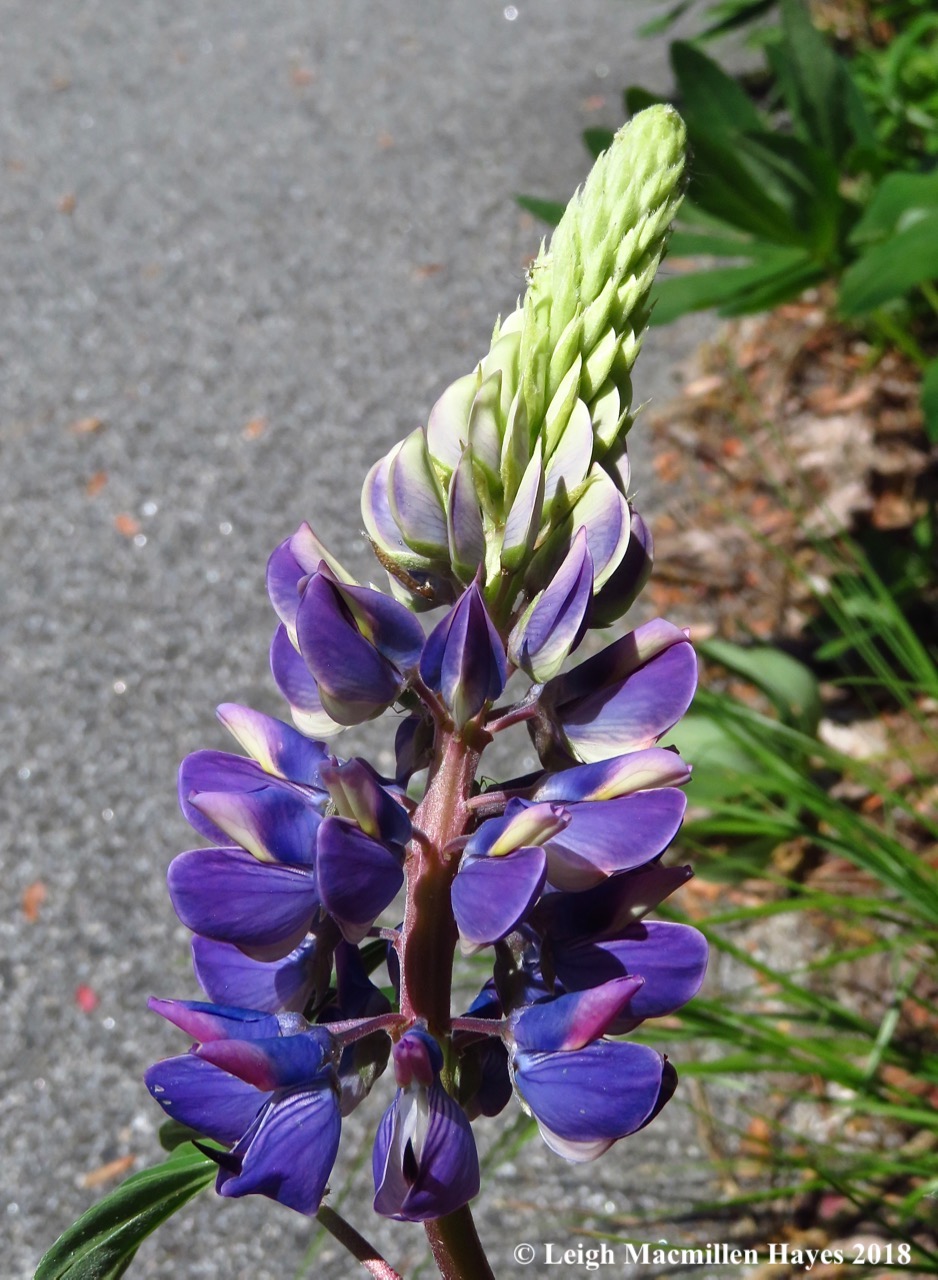
From the start, we were surprised and delighted to see so many lupines in bloom along the edge. Lupines are members of the pea or legume family, Fabaceae. As such, the flowers have a distinctive upper banner, two lateral wings, and two lower petals fused together to form a keel. Those lateral wings earned the plant’s place in this contemplation.

m2a-lupine aphids

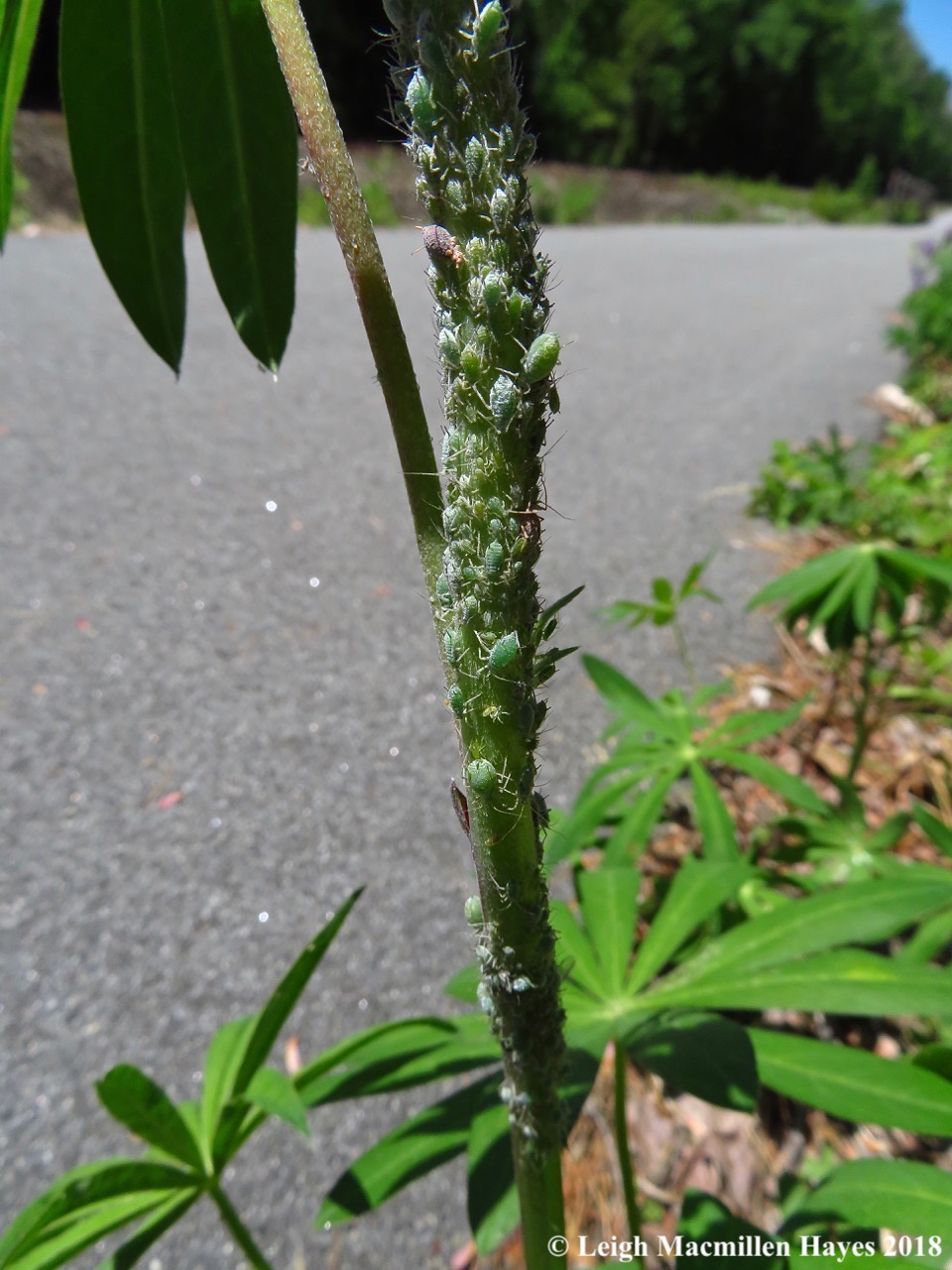
Of course, being that not everything in nature is as perfect as we might desire, we did discover destruction in action on a few stems and flowers. Lupine aphids seeking honeydew suck the juices from a plant. They’ll continue to feed until midsummer, even after they’ve destroyed the flower.

While there isn’t much to celebrate about these garden pests, it is worth noting that all aphids are female and give birth to live young, without mating. And another cool fact–once the population grows too large, they will develop wings and fly to a new host plant.

m3-chalk-fronted white corporal

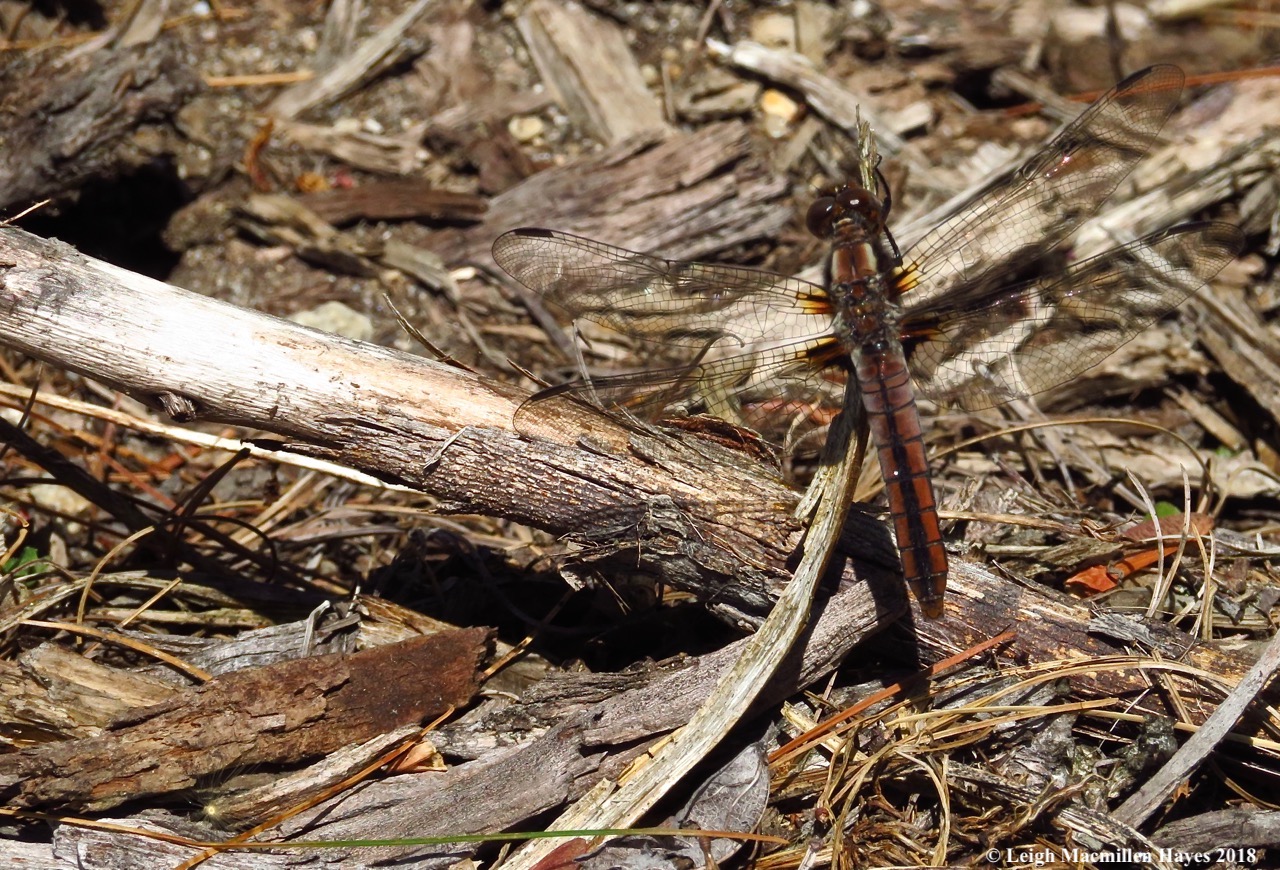
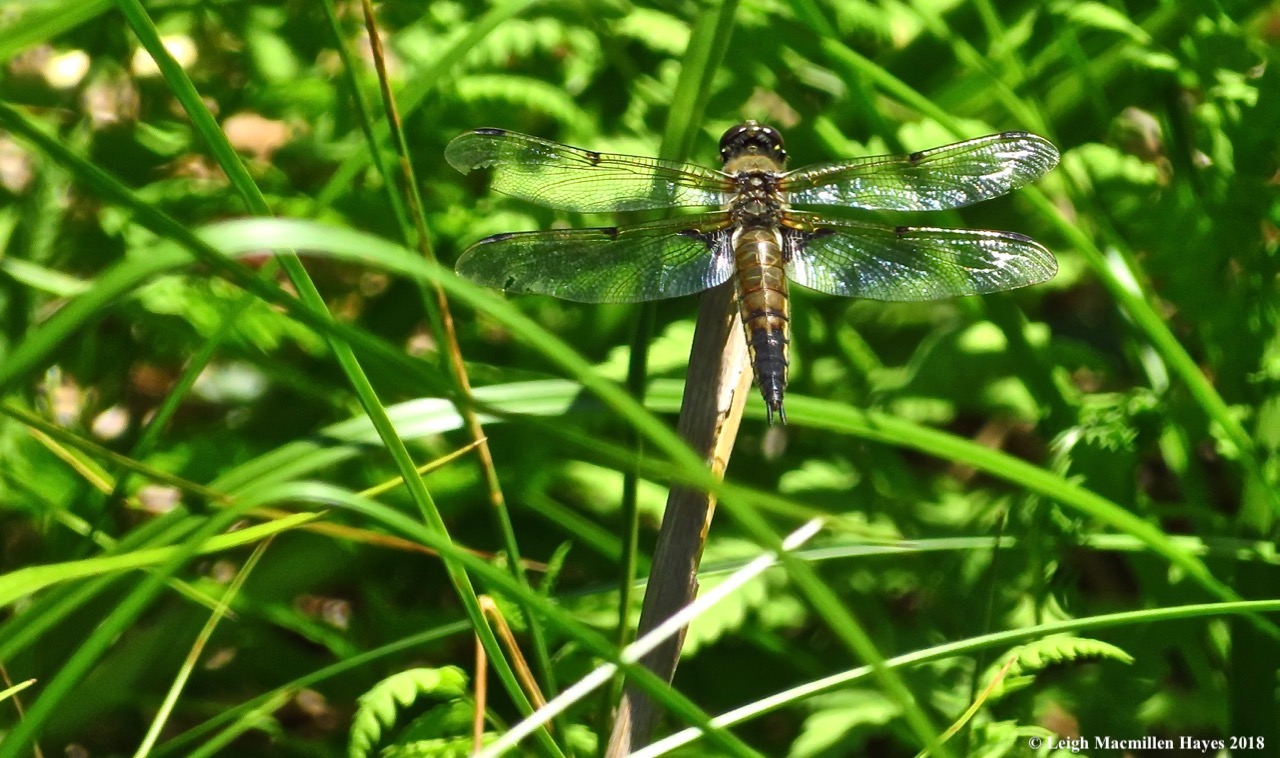
We continued our journey at our typical slow pace and stopped frequently to admire the dragonflies. There were quite a few species, but many spent time patrolling in flight and so we couldn’t photograph them. We did, however, give thanks for the work of all for we felt the sting of only a few mosquitoes. And we appreciated the perchers as well, for by letting us get a closer look we could learn their characteristics, and therefore ID: Chalk-fronted Corporal;

4-four-spotted skimmer

Four-spotted Skimmer;

m5-calico pennant

and Calico Pennant.

m7-ant dragging grasshopper

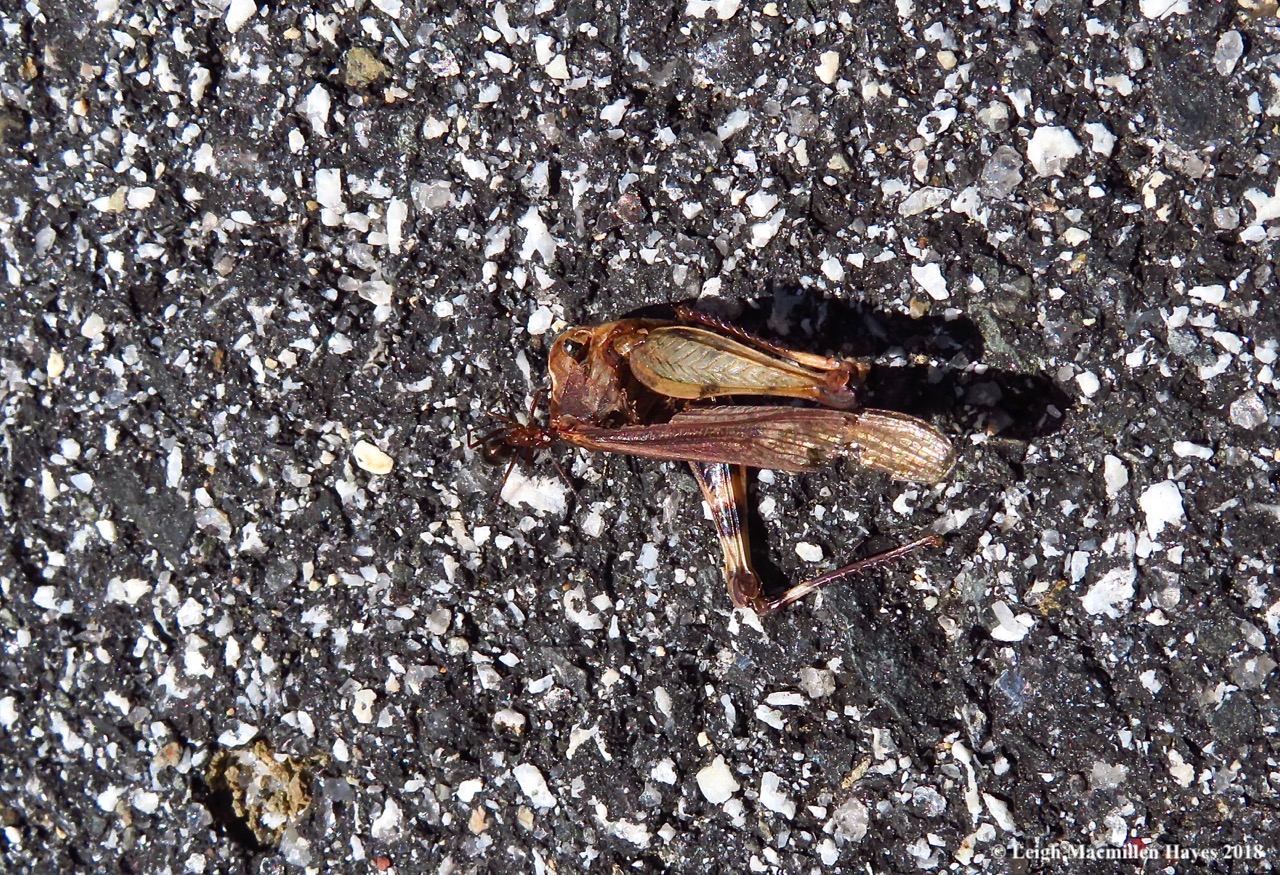
We also noted a crazy ant act. The ant apparently got a great deal at the grocery store and somehow managed to single-anticly drag the remains of a grasshopper home–that’s one flier we won’t see in the air again.

m8-wood sower gall wasp gall

We also stumbled upon another interesting find–the galls of a wood sower gall wasp. As I told Jinny Mae, I’ve seen them before and knew they were associated with oak trees, but couldn’t remember the name in the moment. Maybe if I say it five times fast and spin around three times I’ll remember its name the next time I encounter it. Doubtful.

m8-wood sower gall wasp

The cool facts about this fuzzy white gall with pink polka dots, which is also known as oak seed galls: it only grows on white oak; the fuzziness is actually secretions from grubs of the gall wasp; and within are seed-like structures that cover the wasp larva.
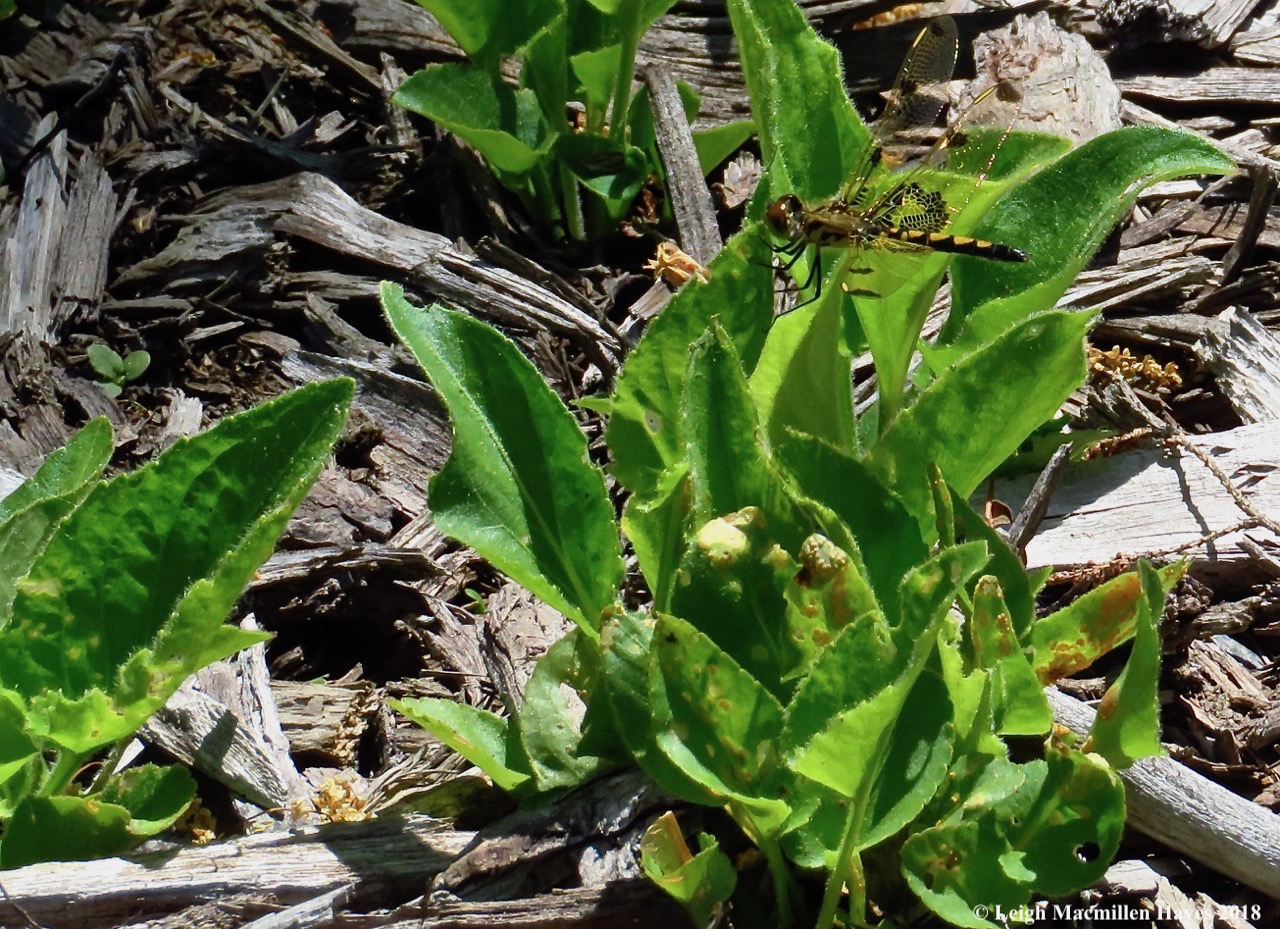
m9-tiger swallowtail

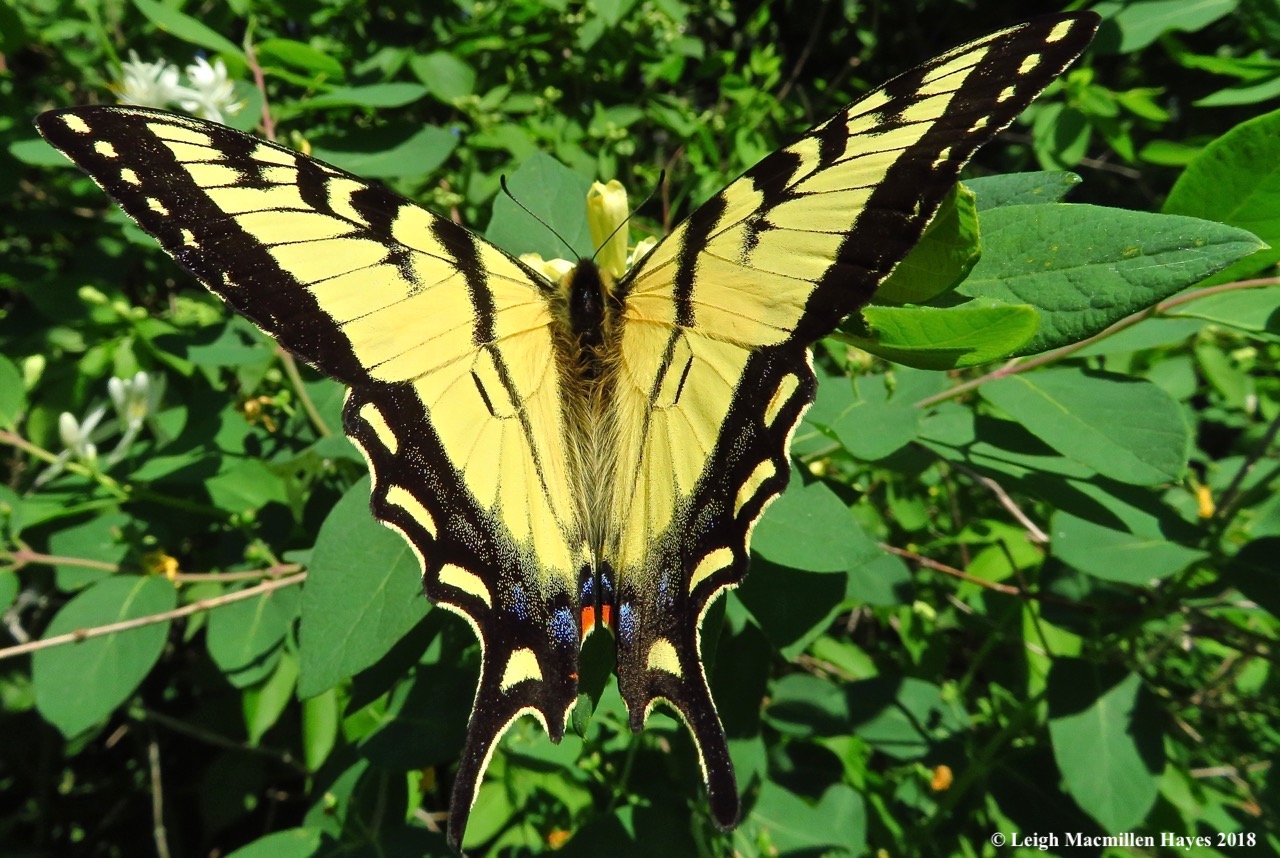
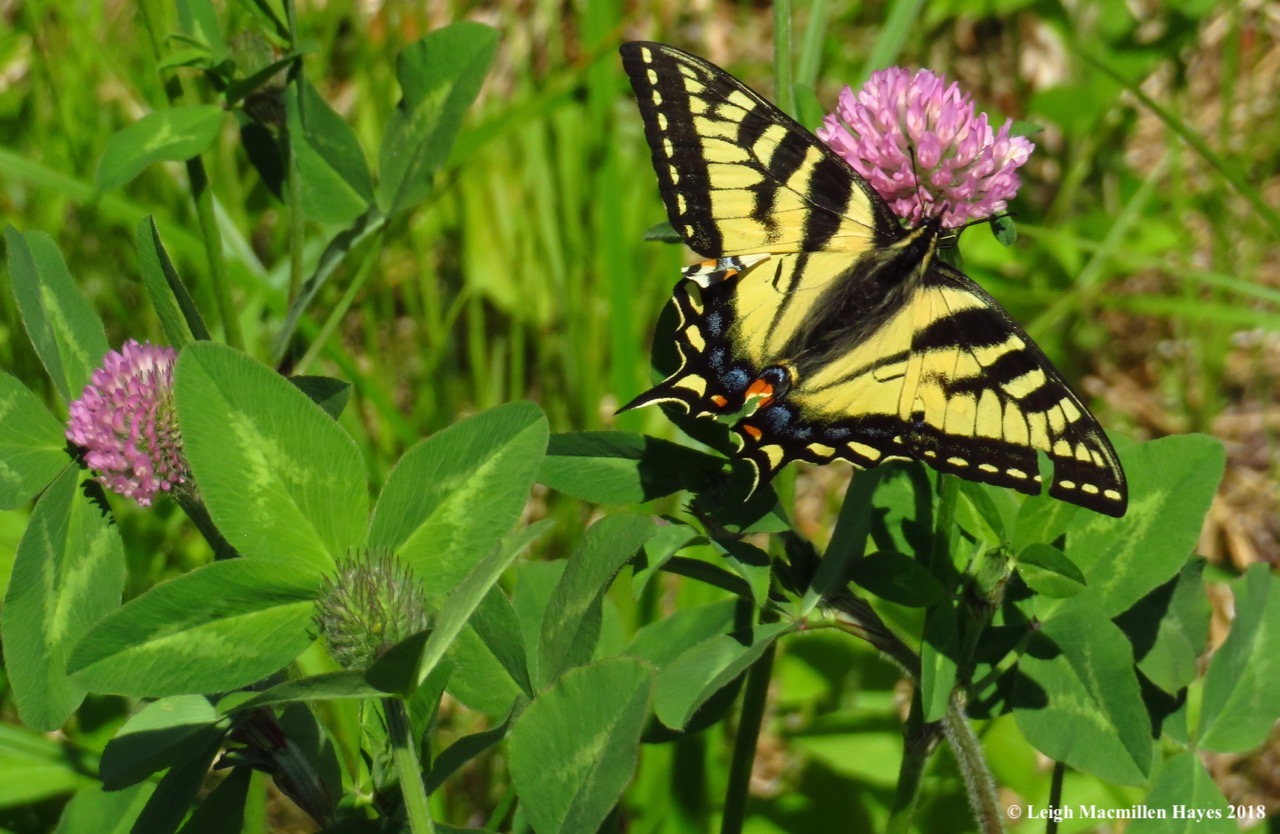
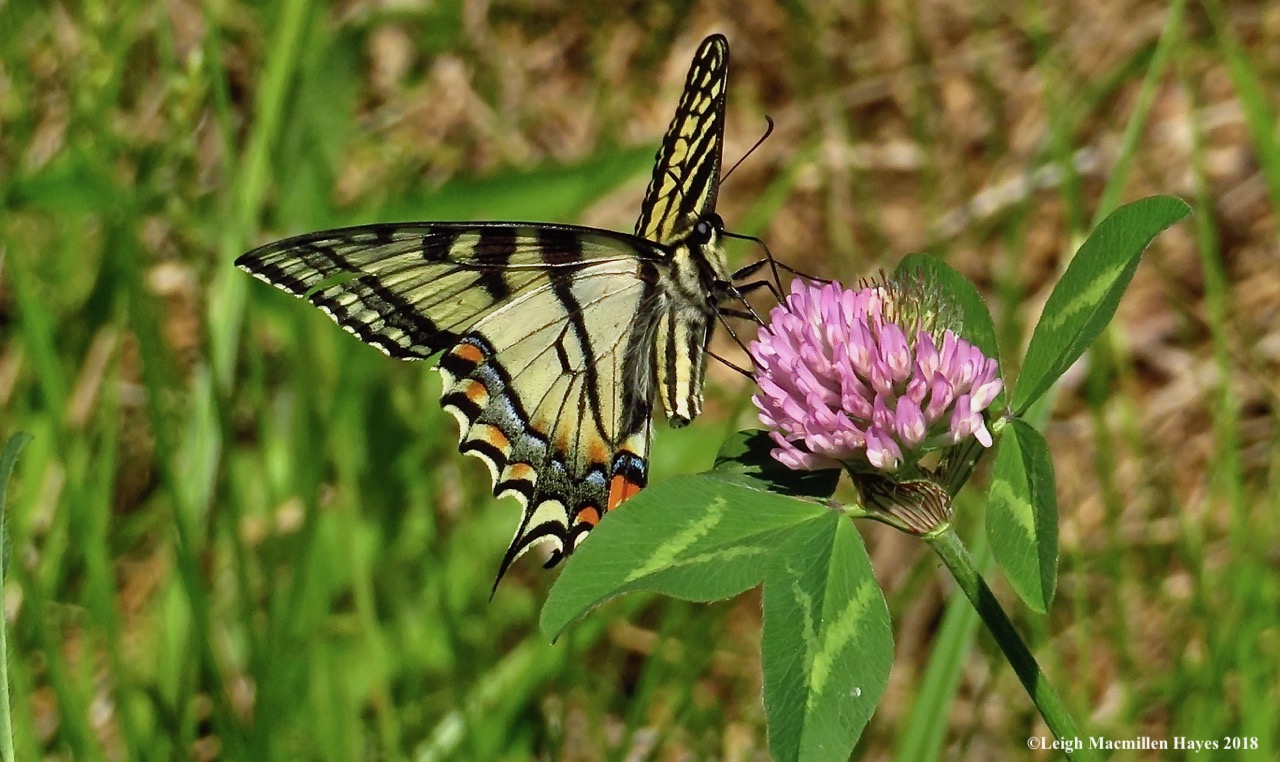
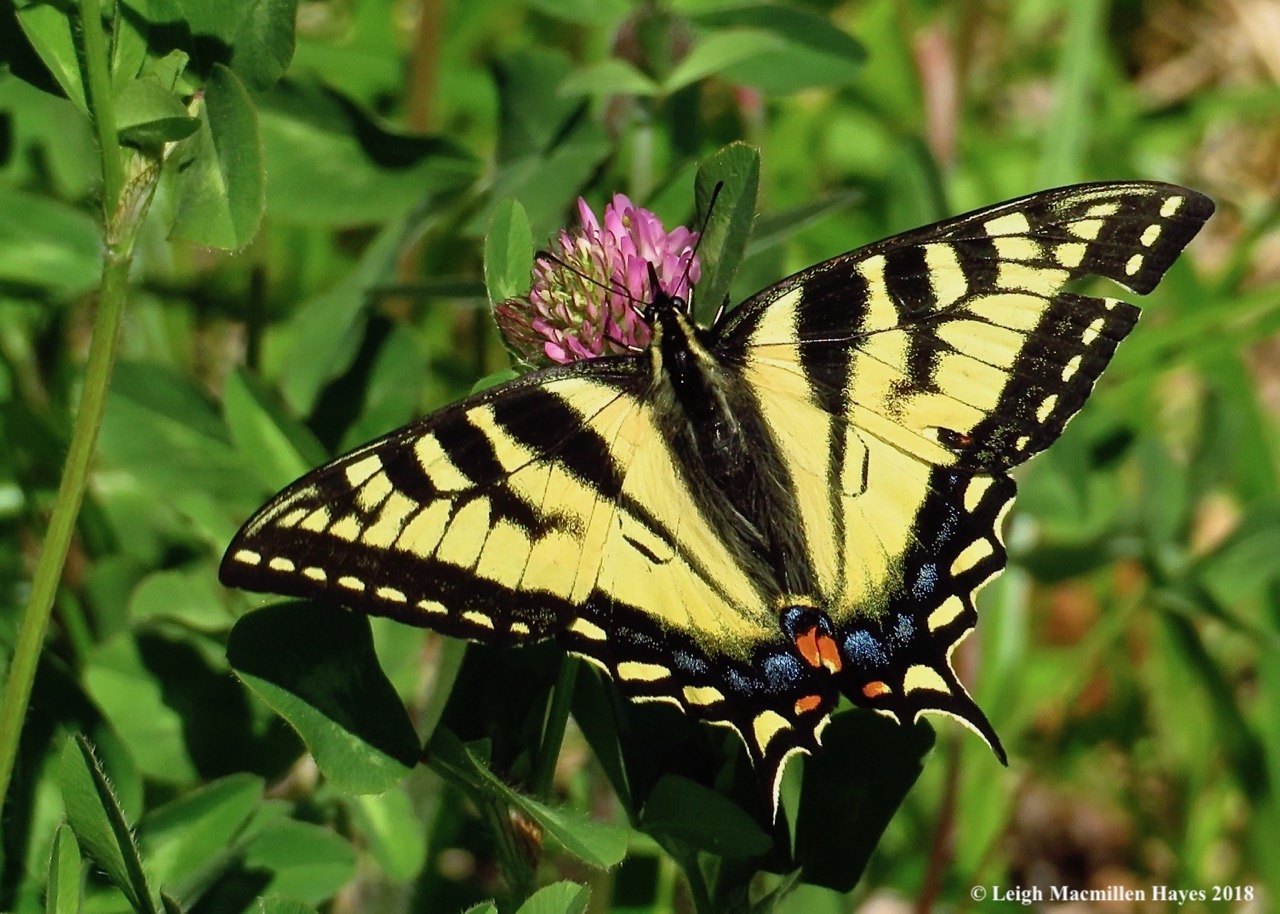
Finally, it was a swallowtail butterfly that stopped us in our tracks and mesmerized us for moments on end. The question was this: which swallowtail–Eastern or Canadian, for both fly here.
m11-eastern tiger swallowtail

Earlier in the day I’d photographed an Eastern Tiger Swallowtail in the backyard. Tiger comes from the four black stripes, while swallowtail refers to the long tails extending from the hind wings that these butterflies often lose to their prey as spring gives way to summer.

This was a female given that her hind wings featured blue with bright orange accents when viewed from the top. The areas that are blue on the female are black on the male.

And notice her main body, which is a rather muted combo of black and yellow.

m10-canadian tiger swallowtail

Now look at the butterfly Jinny Mae and I each took at least fifty photographs of and do you see the darker body? The Canadians have more black hairs covering their bodies.

m11-probiscus

Also look at the underwings. I regret that I didn’t get a shot of the Eastern’s underwings, but for the Canadian this matches the pattern: Note the yellow band just inside the outer edge on the underside of its forewings. Had it been an Eastern, it would have featured a series of disconnected yellow spots on the black band. The Canadian has a continuous yellow band. And then there are the orange and blue markings.

m13-canadian tiger

At the end of the day all that detail really didn’t matter–Eastern or Canadian, both were tiger swallowtails.

And I gave thanks for the opportunity to flex my wings beside Jinny Mae. It felt so good to fly along the path together again. For those who don’t know, Jinny Mae’s journey has been one of varied wing beats as she’s lived with cancer for the last three years. Her current treatment is going well and we look forward to more flight paths.


Craning My Neck

I’ve spent a lot of time thinking about living in the moment lately, a concept that really drove itself home during the years that my mother dealt with dementia and I was forced to realize that each time I left the room, my return was a new visit; a new adventure. And now, so many friends are dealing with issues that make every second precious and I realize once again the importance of slowing down and noticing and making the most of being present. Now.

f1

Such was the case this afternoon when I joined two friends who had pulled in from their winter home in Florida this week. We met at one of the parking lots for the Mountain Division Trail in Fryeburg, Maine, a rail trail that makes one feel like you could walk to the White Mountains in a matter of miles. But, to get back to the moment, the original plan had been to travel the trail with two different friends and then one had to back out and I found out that the Florida friends had returned and so I invited them to join the other and me, and then my other friend had to back out and so it was the Florida duo and me. And it was so fabulous to spend time with them that we walked rather quickly, which completely surprised me when I thought about it for I know that they love a slow journey. But we had much to catch up on and because the trail is paved we didn’t have to think about foot placement and perhaps that’s what spurred us on.

f2-tamarack 1

At last, however, it was spurs that stopped us, for one of them spied a branch with upward facing cones and little spurs and she wondered what it was. The cones certainly looked like hemlock cones. But why were they upright? And what happened to the needles? When I explained that it was a tamarack, she again questioned it for she’s always been here in the autumn when the needles are a brilliant yellow and she thought those needles stayed on all winter. Not so, I explained, for a tamarack (larch, hackmatack–take your pick of common names) is our only deciduous conifer in northern New England. The golden needles fall the same as maple leaves.

f11-pussy willows

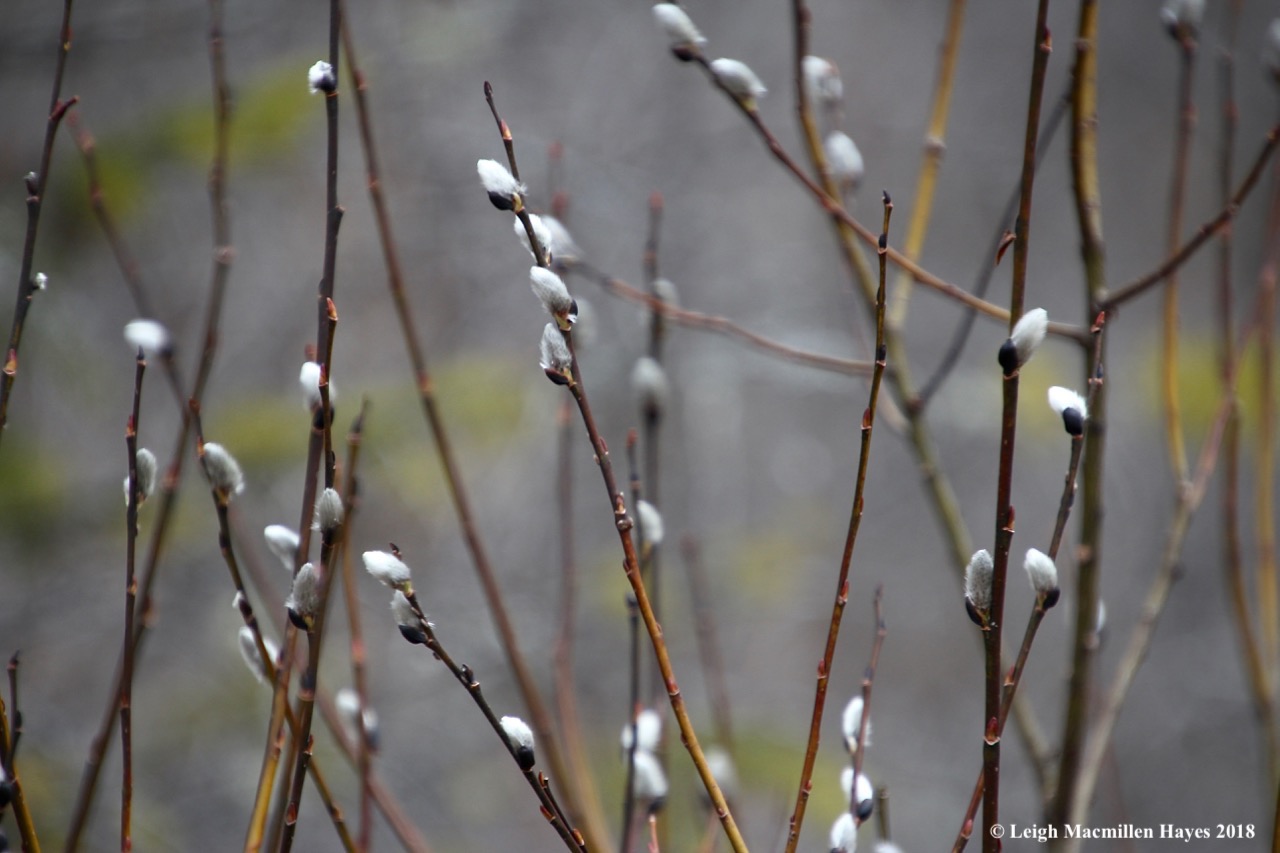
We also put on the brakes when she spied pussy willows–a sure sign of spring in their Zen-like presentation.

f20

Onward we marched, catching up on past months. But then, as the day would have it, first he had to turn around and head back to the parking lot and then a short time later she had to do the same. And that got me thinking about how the walk had evolved. I was sorry that the two I had originally planned to share the trail with couldn’t join me, but equally thankful for the two with whom I did travel. Living in the moment means embracing a change in direction.

f3-evening primrose basal rosette

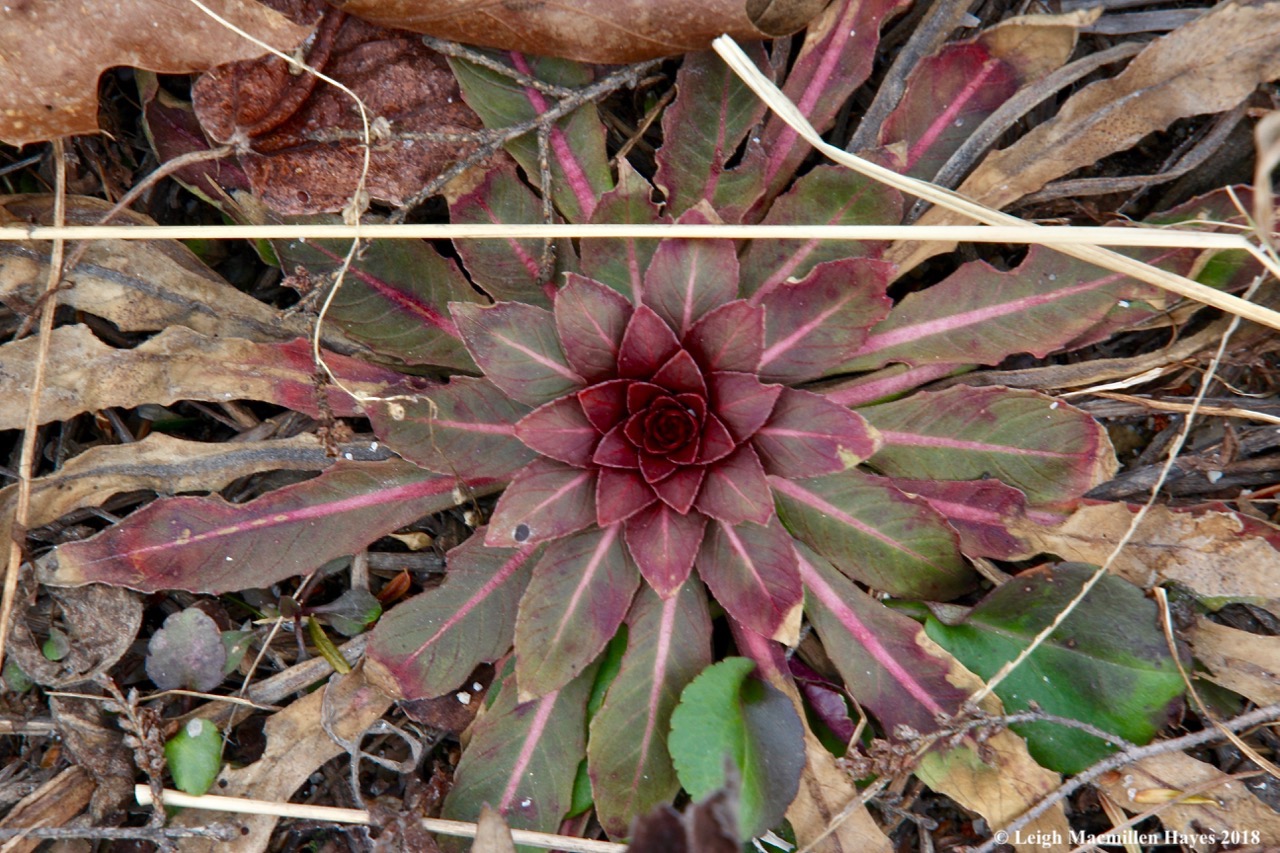
The rail trail is four miles long in one direction and I turned around at the 2.5 mile marker. On my return, I was entirely surprised by the offerings that had escaped my attention previously, like the beauty of an Evening Primrose’s basal rosette.

f4-pitch pine cone

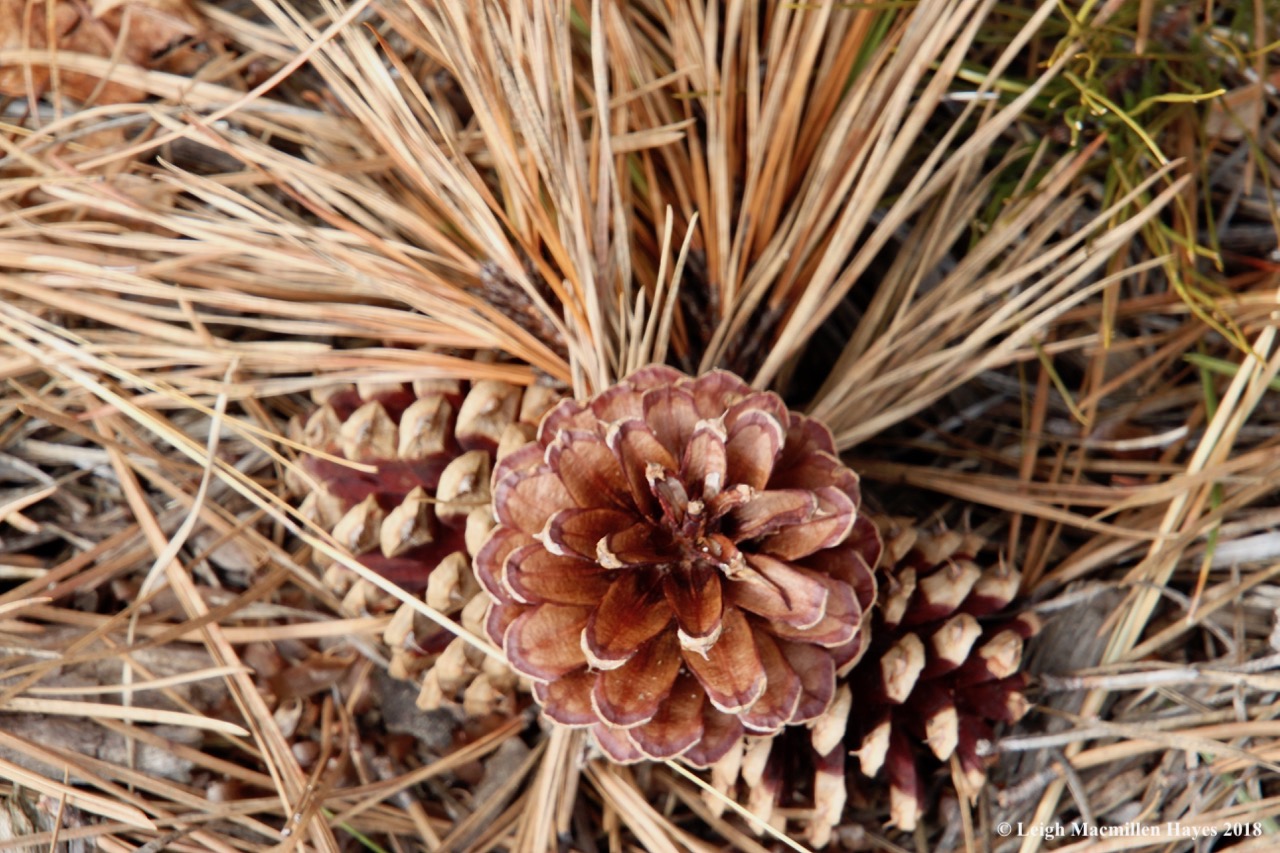
It’s fractal fashion was reflected in the pitch pine cones I spotted on the ground and surrounding trees.

f5-pitch again

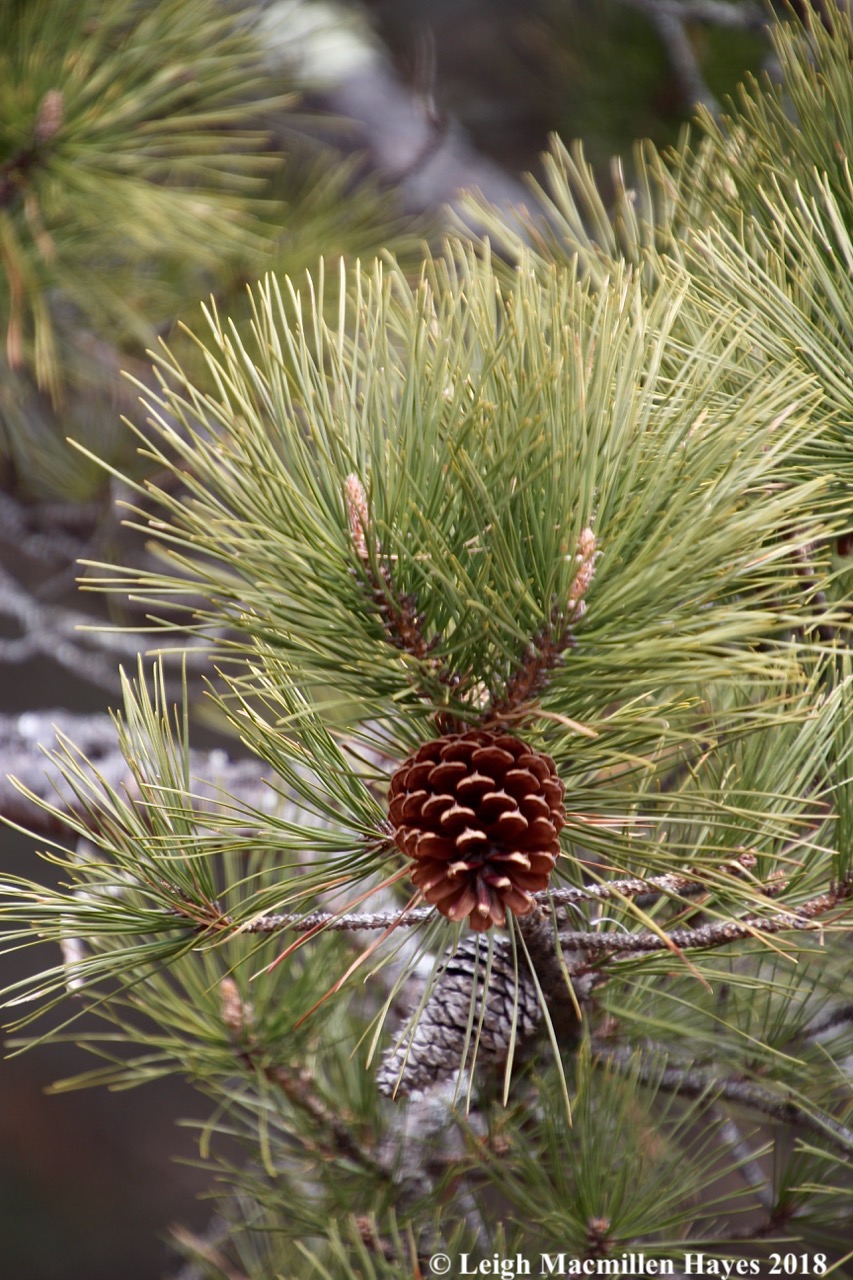
The pitch pines always draw my fancy and I was especially intrigued by the past, present and future–as I tried to live in the moment. It’s not as easy as it sounds for we so often get caught up in what was or what could be.

f8-red oak

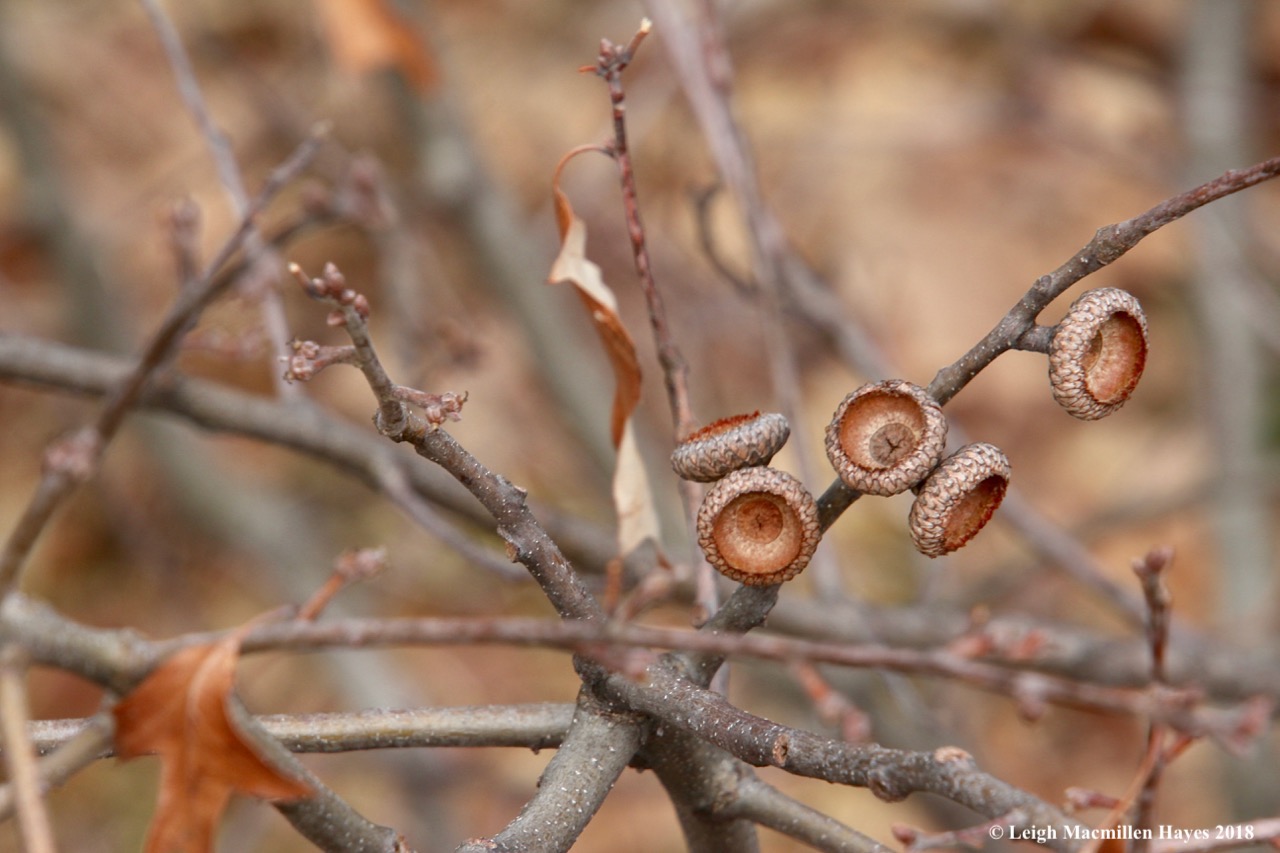
The past produced fruits long since deployed.

f10-speckled alder catkins

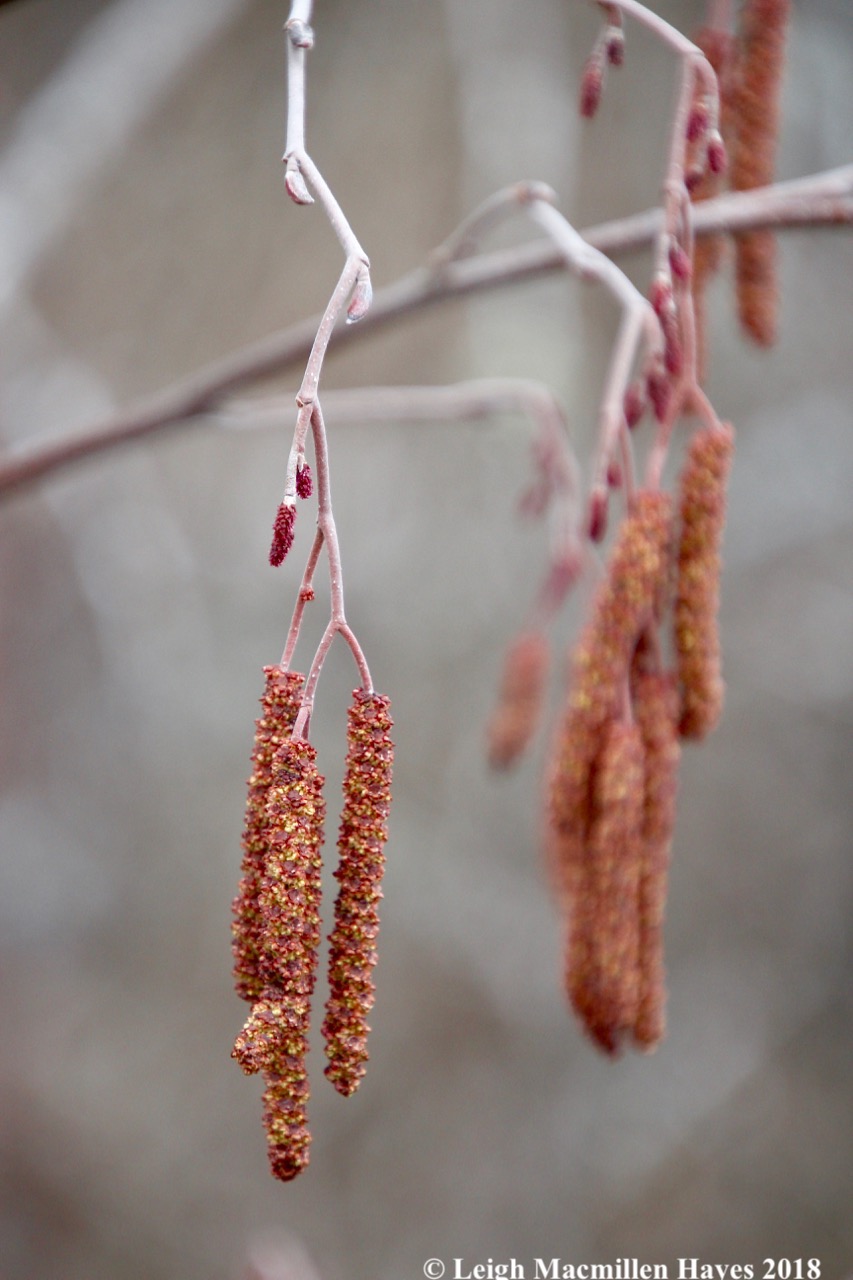
The future grew longer before pollinating the shorter.

f7-trailing arbutus in bloom

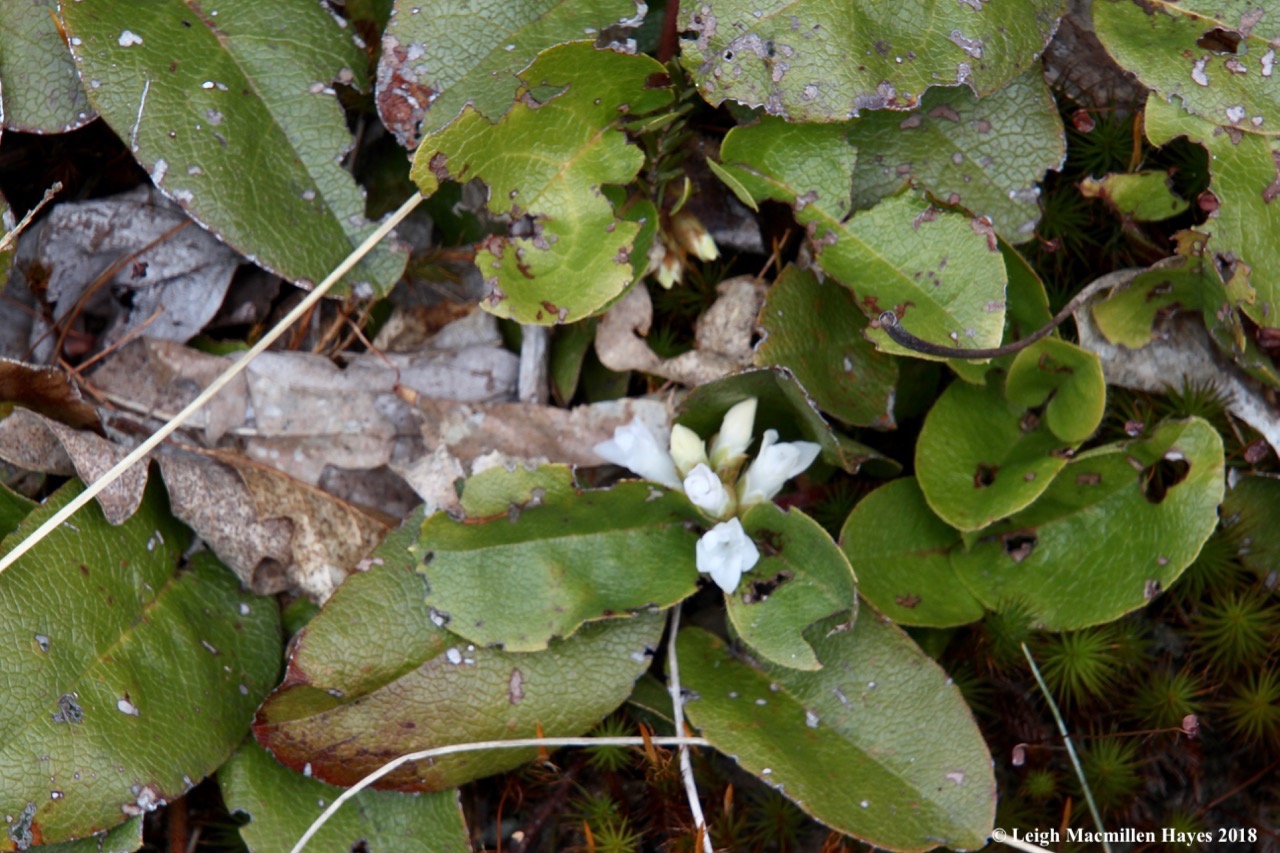
But in the moment–I spied the first blossoms of Trailing Arbutus.

f9-spotted salamander spermatophores

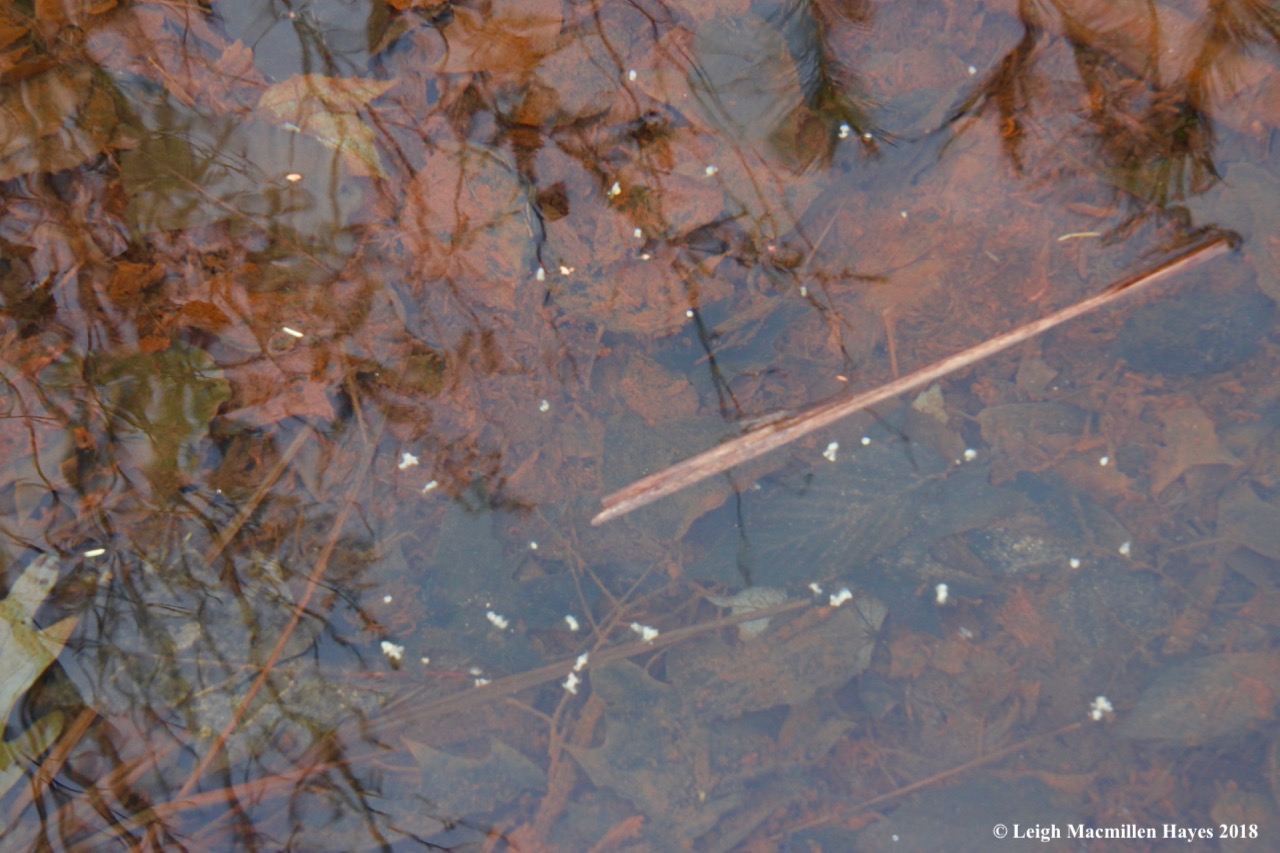
My return journey was much slower than the first leg, for there was so much to see. Included in the expedition was an examination of a small vernal pool. And what to my wondering eyes did I see? Spotted salamander spermatophores–those little chunks of sperm left behind by males atop cauliflower-shaped platforms.

f14-wood frogs quaking

As if that wasn’t enough, further on I heard a familiar quack and knew wood frogs were active though I couldn’t see them.

f15-wetland

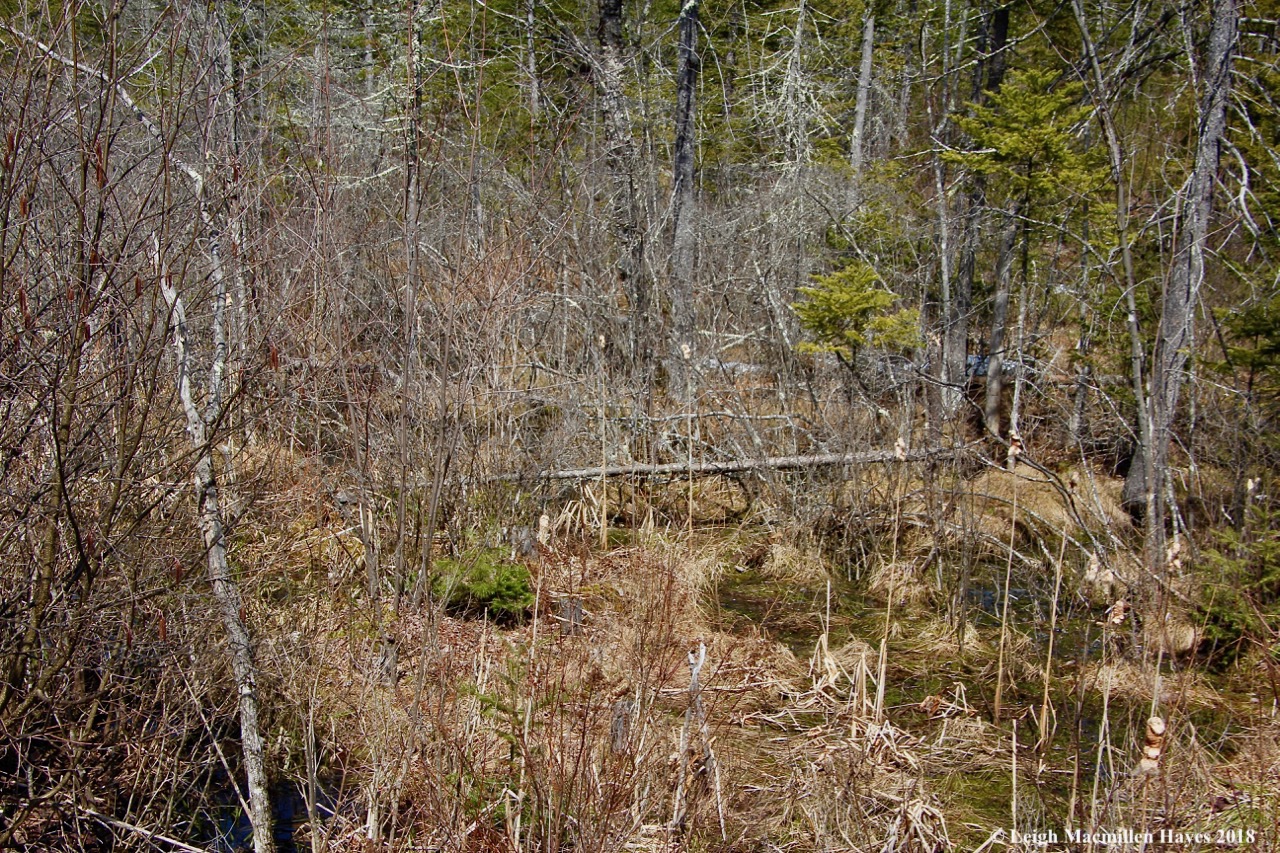
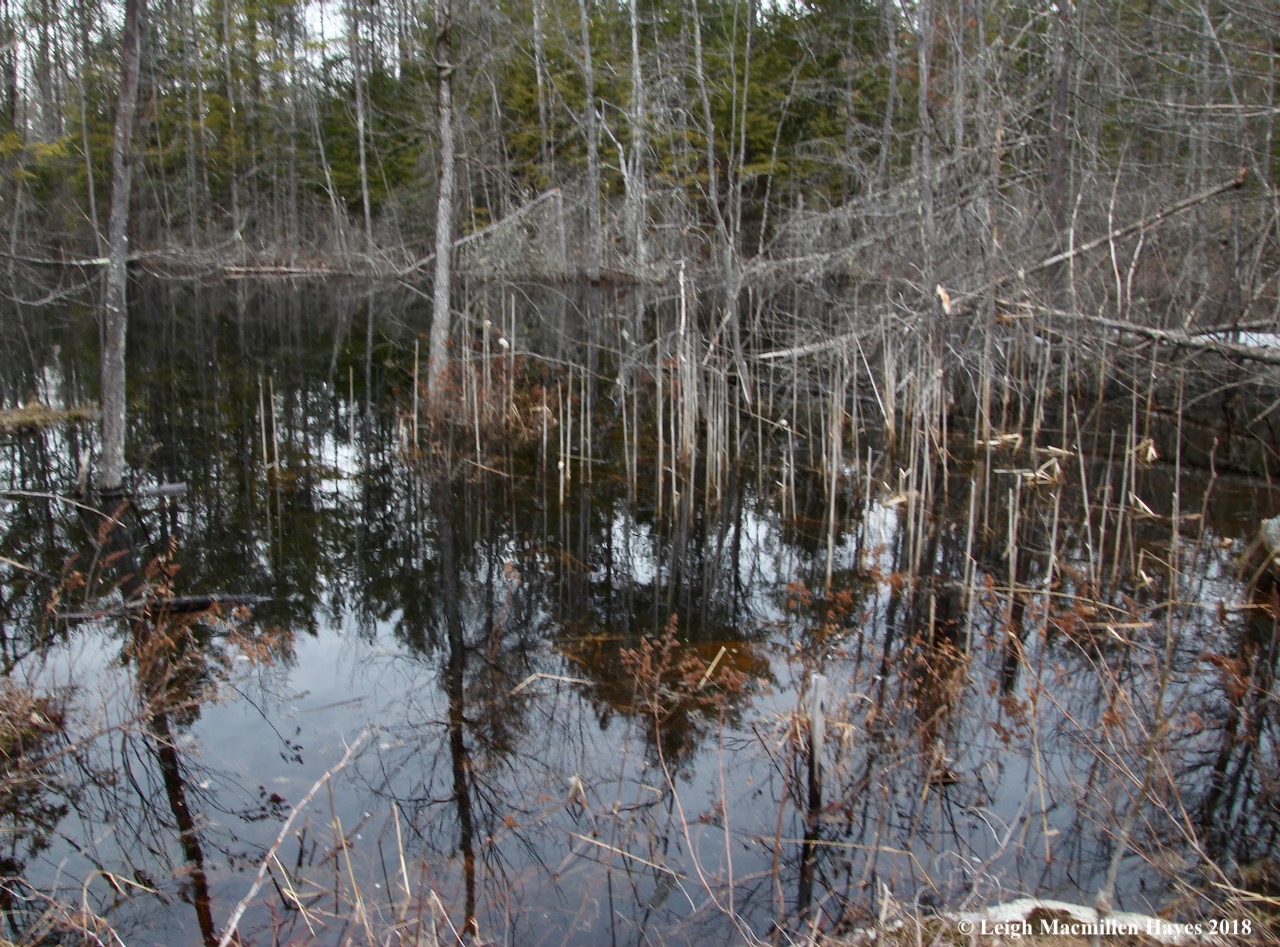
And still further I discovered a wetland I’d never noticed before. Spring peepers sang from the far edges. It was all a surprise for on the walk out I’d told my friends from Florida that I hadn’t seen or heard any vernal pool action yet.

f15a--chipmunk

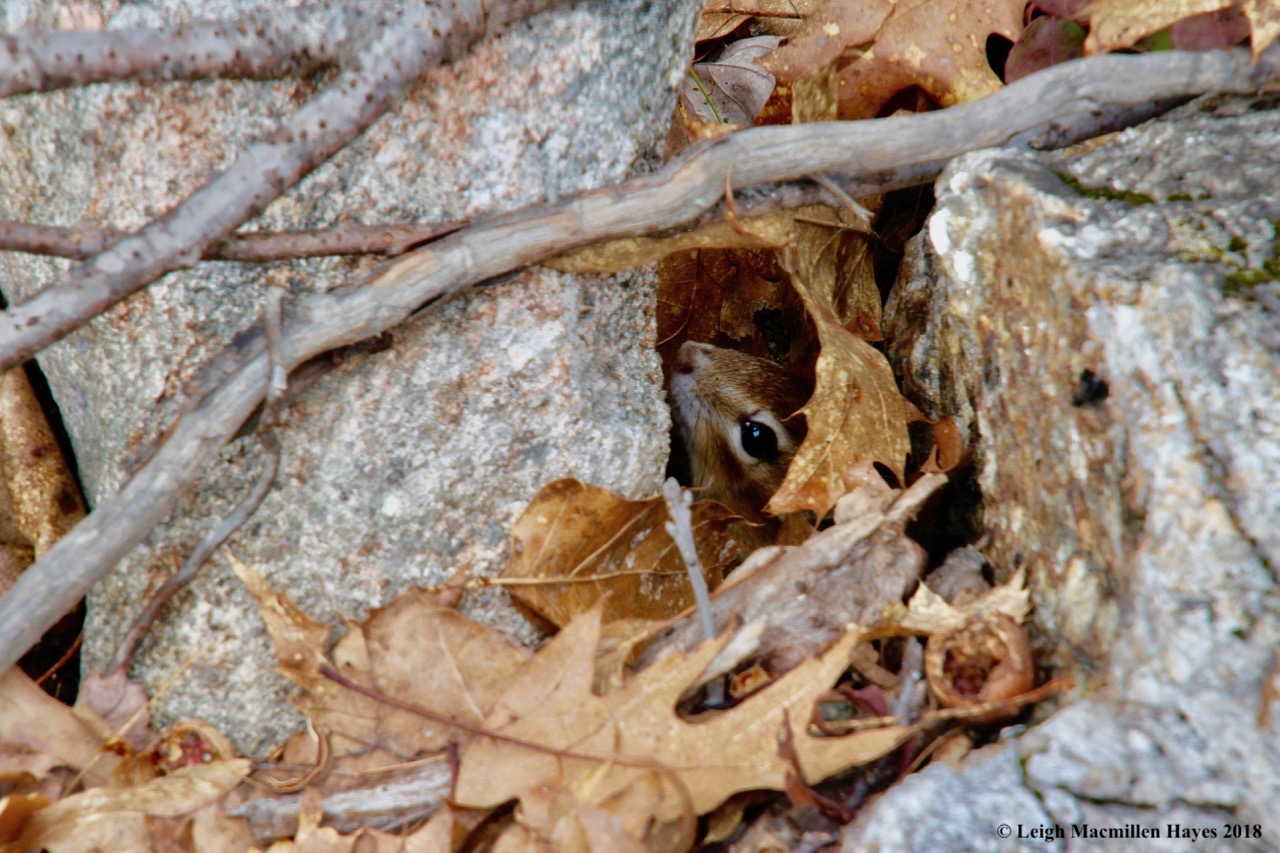
I just need to spend more time listening and waiting and letting it all play out before me, the same as the chipmunk that was sure I couldn’t see him.

f16-Canada geese

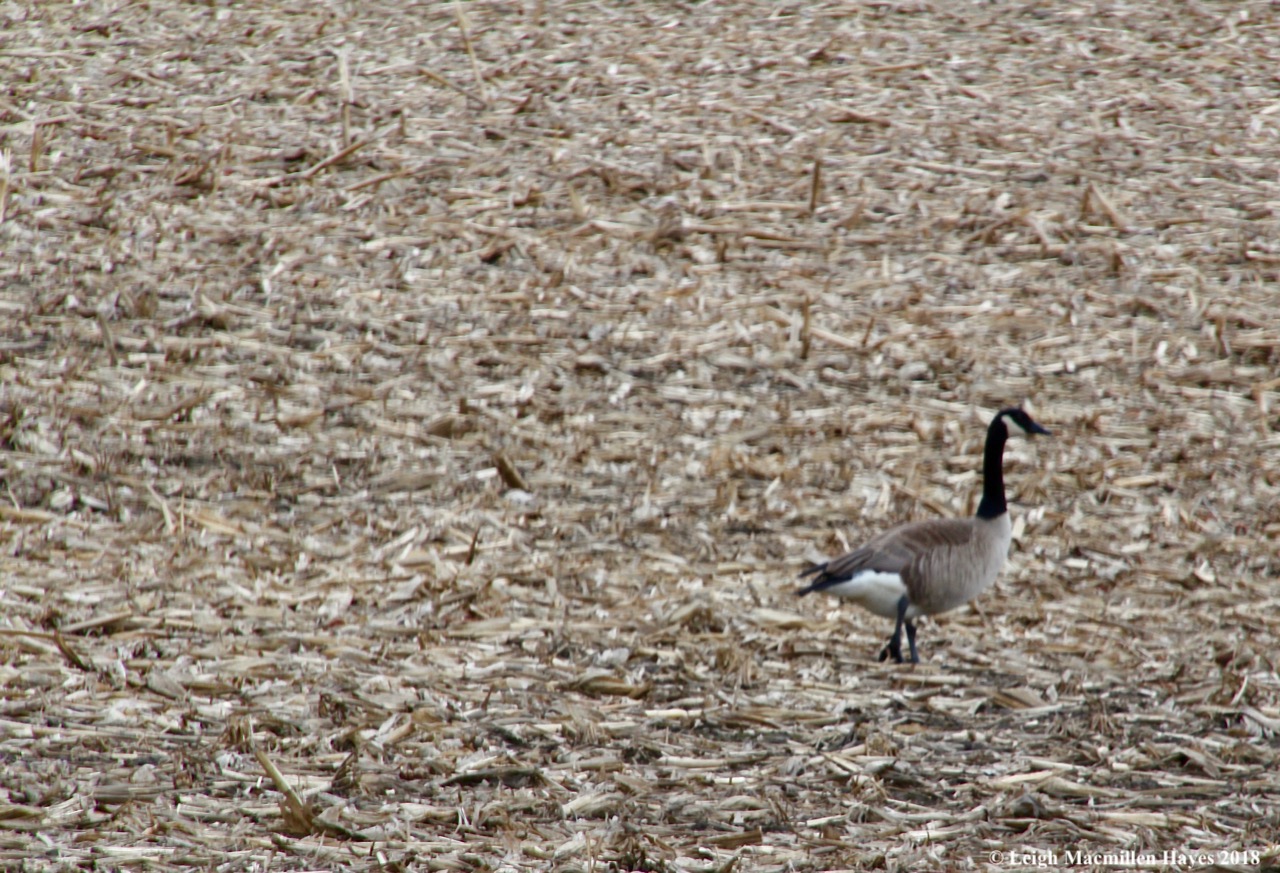
After a three-hour journey, I found my way back to the truck and then decided to take some back roads home. As I passed through farmland where cornfields are prolific, I noticed movement. I so wanted the movement to be another bird, but it was a huge flock of Canada Geese that attracted my attention. Again, I had to live in the moment and enjoy what was before me.

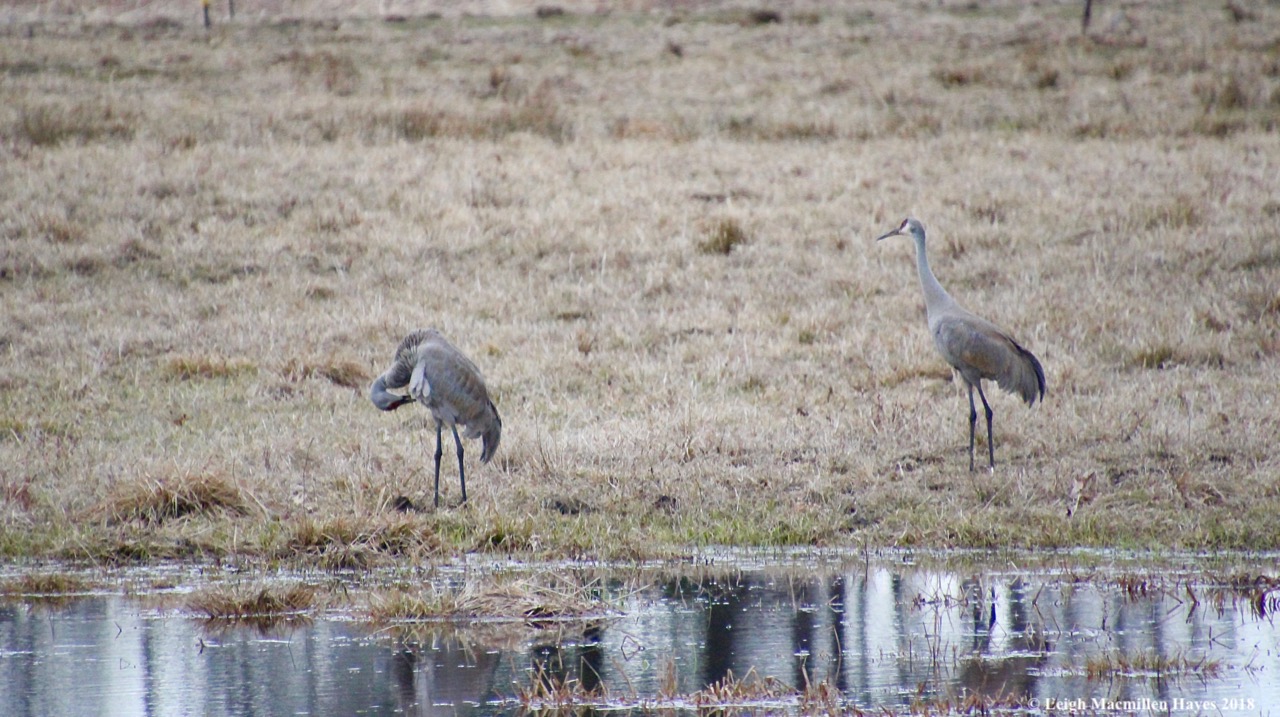
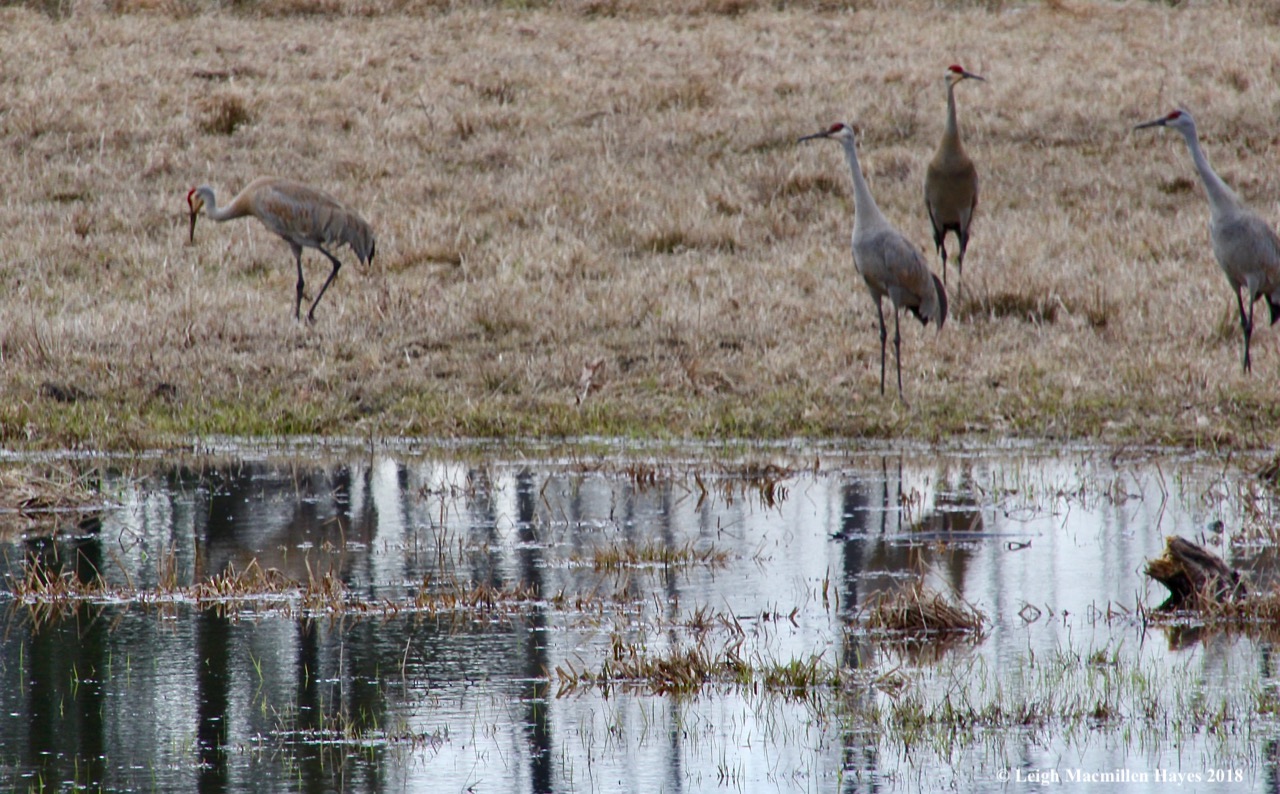
f17-sandhill cranes

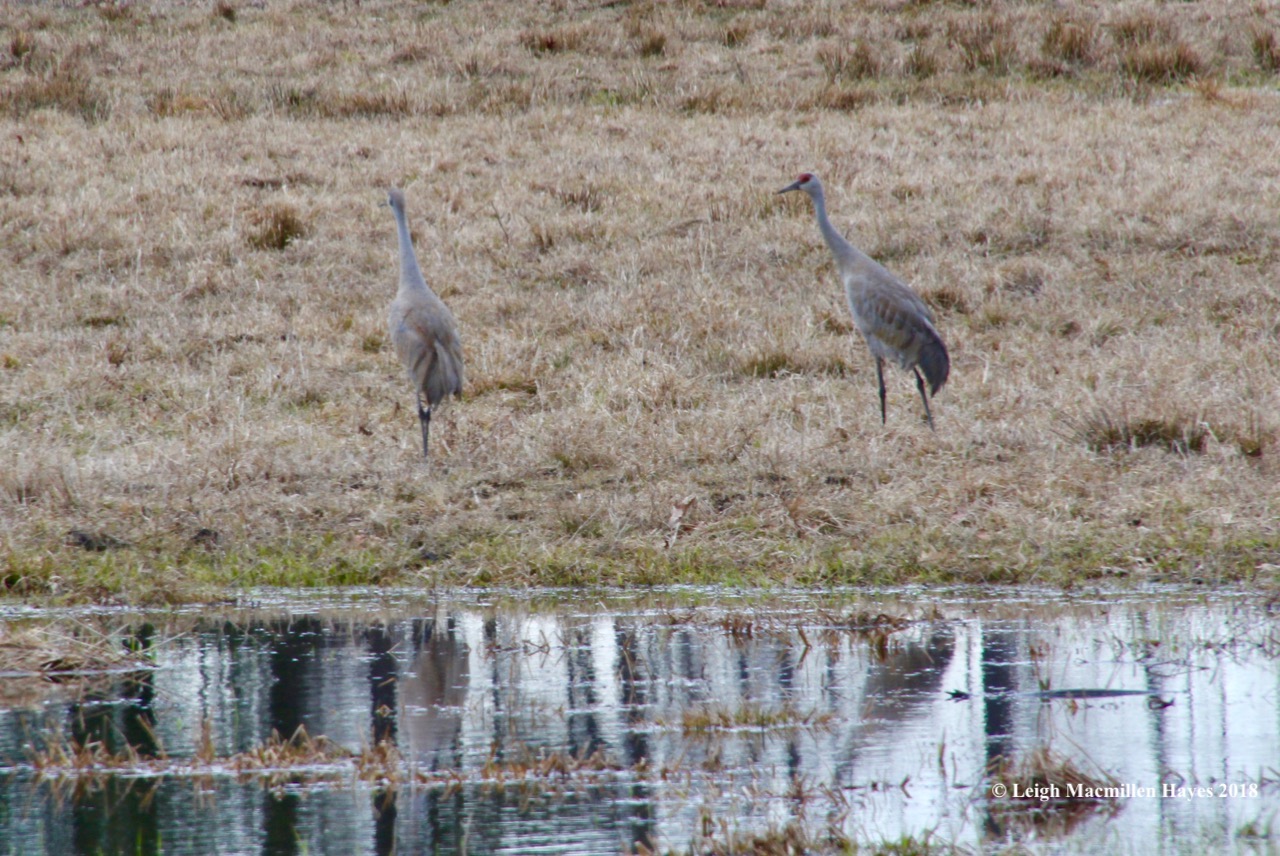
And then I turned into the harbor, and was pleasantly surprised for suddenly my eyes cued in on those I sought who stood tall.

f17a--sandhil cranes

And preened.

f18-sandhill cranes

And craned their necks. Sandhill Cranes. In Fryeburg, Maine. They have returned to the harbor for at least  the past five years, probably more and I’ve had the privilege to hear them fly over several times, but today was the first time I was honored to see them. Thank you, Parker, for the tip.

I craned my neck and gave thanks for the moments spent in their presence and lifted up several people who will benefit from a dose of this medicine–Tom, Jinny Mae and Lifeguard Wendy: this one is for the three of you.


Black Friday Shopping Extravaganza

I somehow slept in and totally missed the early bird specials today, but still by midmorning I found my way to the store of my choice.

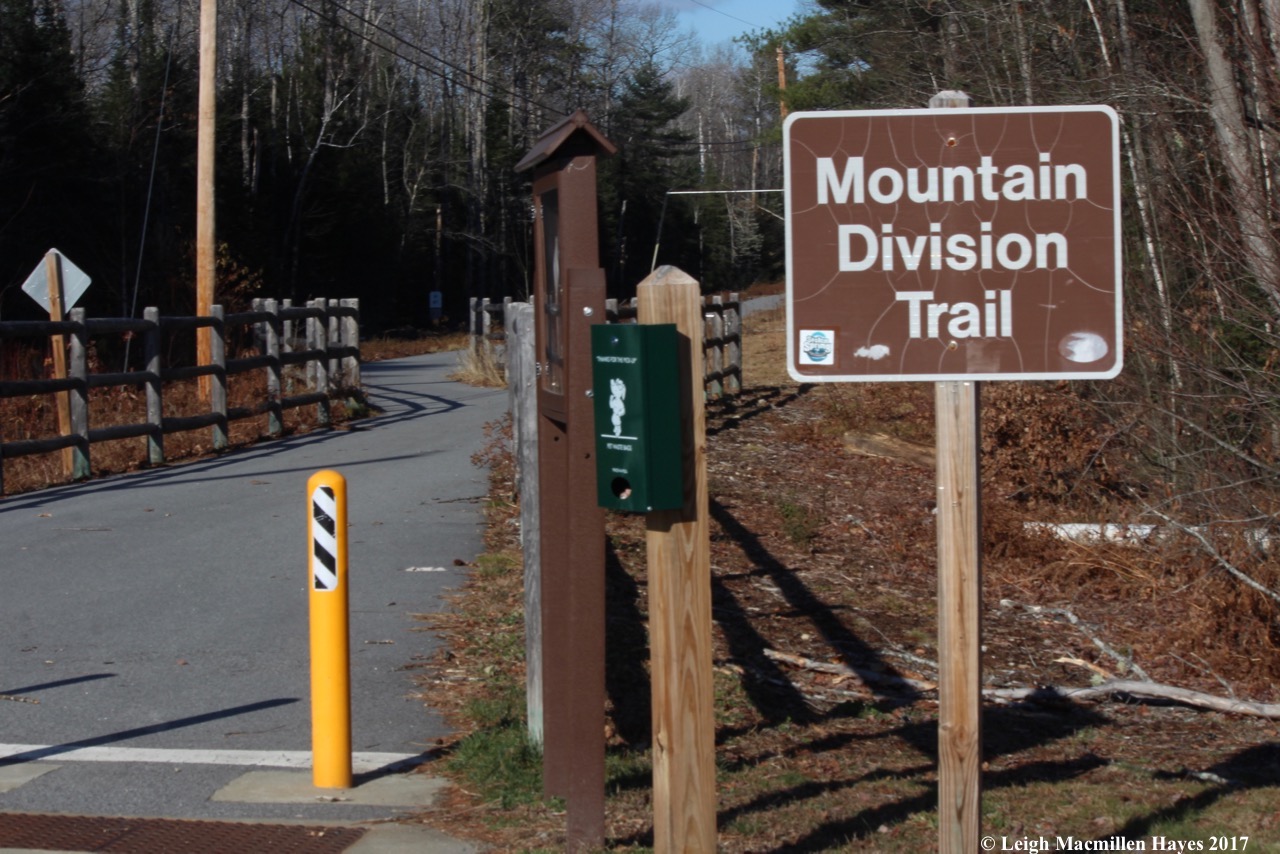
b1-trail sign-cross the threshold

It had been two years since I’d stepped over the threshold into the MDT shop and I’d forgotten what great selections it had to offer. While the last time I approached from the Fryeburg Information Center near the Maine/NH border, today I decided to use the back door and entered by the Eastern Slopes Airport.

b8-the main aisle

Beginning along the main aisle, I was delighted with the display before me. And lack of customers. Oh, I passed several groups, some in a hurry as they ran, others chatting amiably with friends or relatives, but all quite friendly and courteous. Even dogs were well behaved and therefore welcome.

b2-choice of colors--sweetfern 1

Immediately I had decisions to make. Which shade did I want?

b3-shapes,

And would I prefer a different style or shape?

b12-red oak 1

Had I thought about brown and bristly?

b13a-white oaks

Or did I like salmon and rounded?

b13-red oak on line

Though I preferred the salmon color of the white oak, I did like how the red oak leaves dangled in hopes of being plucked by a customer. And if not a customer, then perhaps the wind.

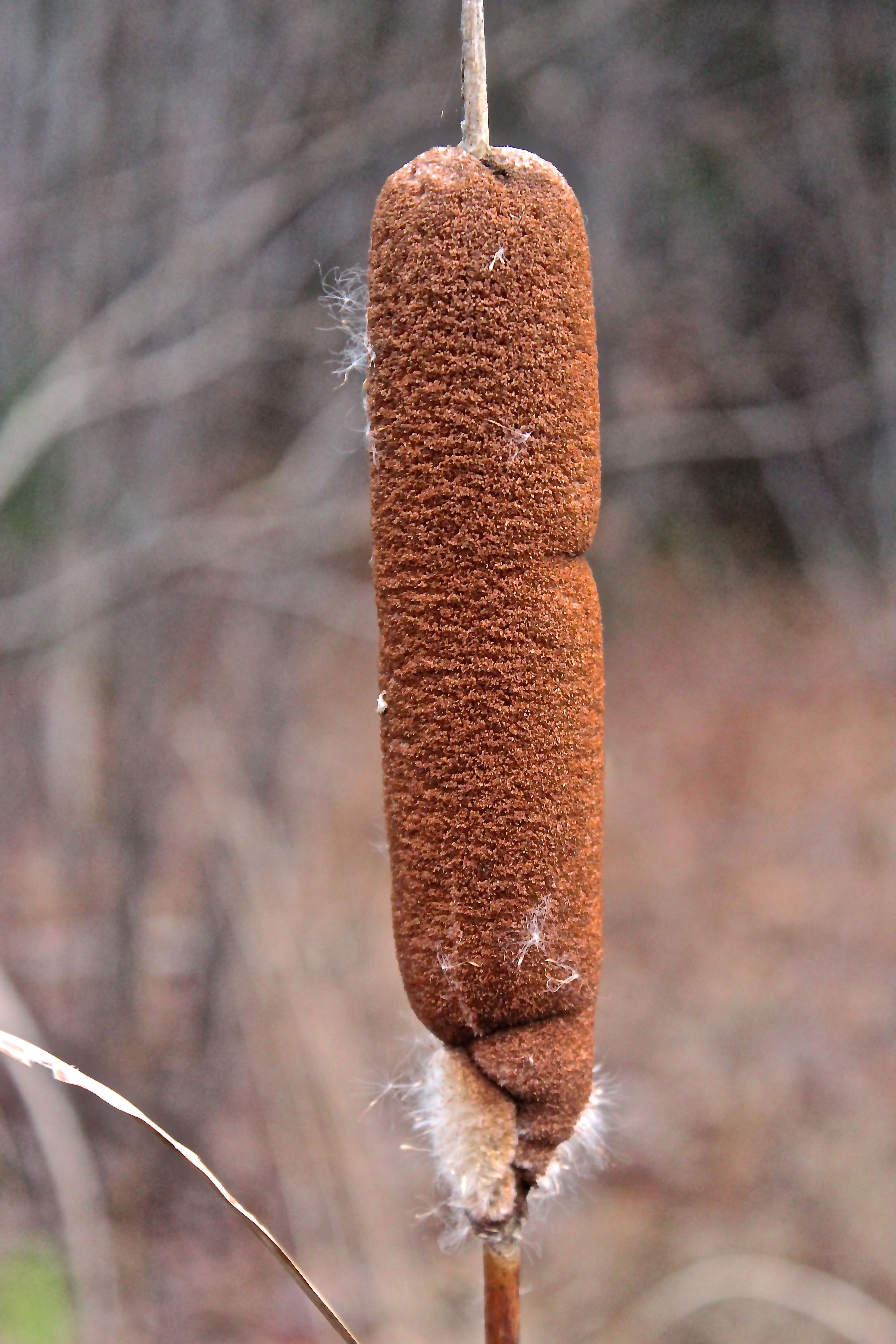
b11-cattails

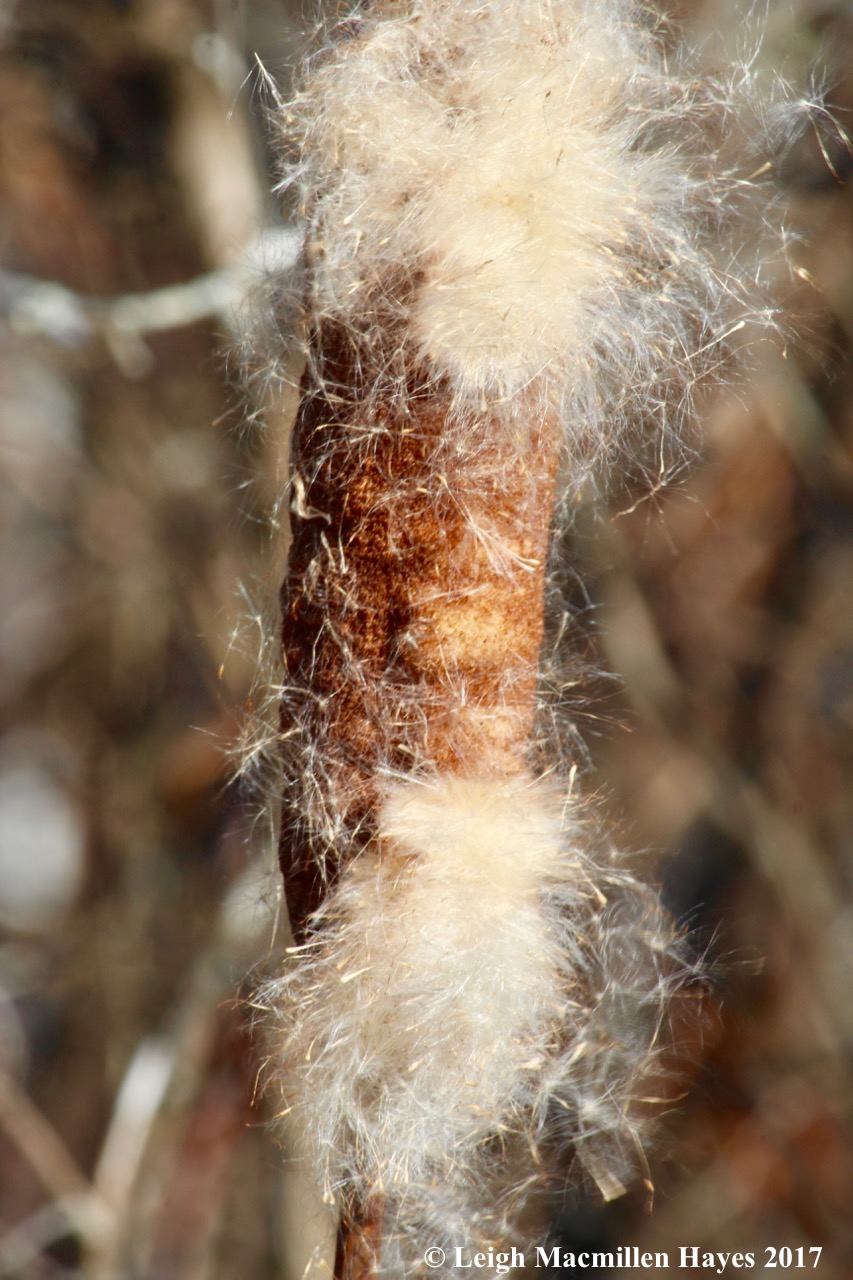
In aisle five I found some cattails ready to explode into the future.

b11-cattail sparkles

Their tiny, parachuted seeds reminded me of sparklers on the Fourth of July, but because today is the day after Thanksgiving, I suspected these fireworks were intended for New Year’s Eve.

b6-autumn thistle

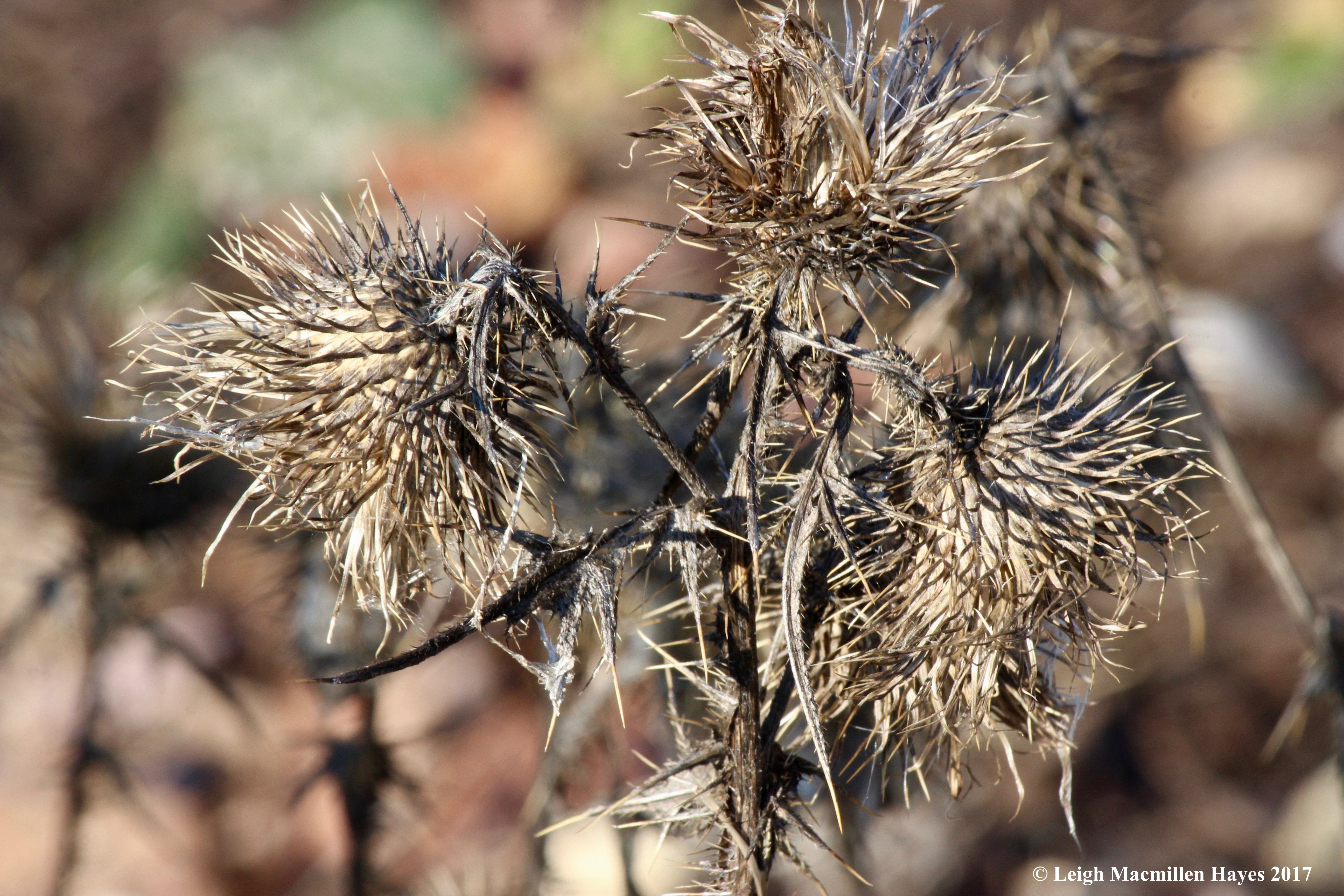
It seemed that everywhere I looked, the store was decked out with hues of silver and . . .

b4-aster display

gold.

b5-brown lacewing

And while admiring the golden decorations, I discovered I wasn’t the only one looking. A brown lacewing had heard there were deep discounts to be had.

b12-birch beer

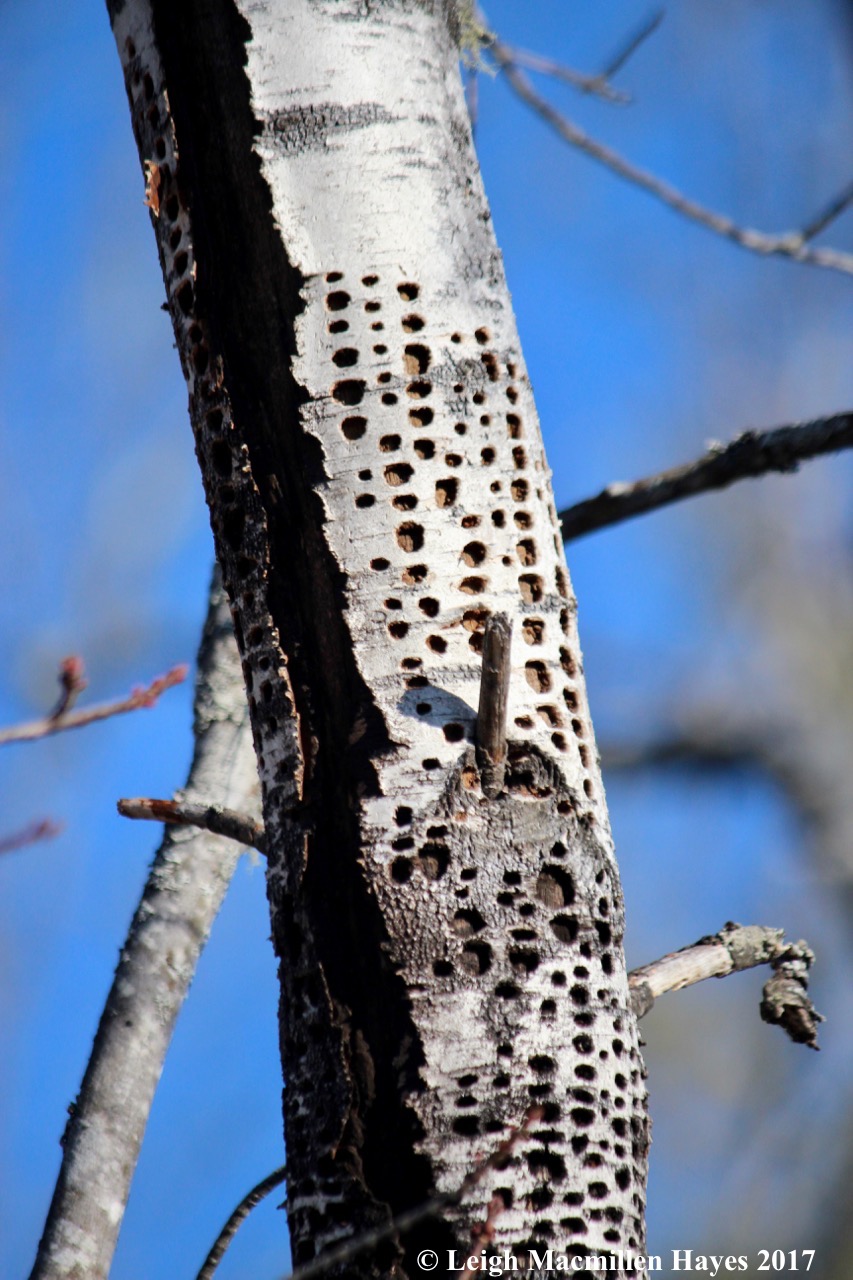
As one should when one is spending an exorbitant amount of time (and perhaps money, though in this case no cash or credit was part of the deal), rehydrating is a good thing and the birch had been tapped for just that purpose. It’s been a long time since I enjoyed the unique taste of a birch beer, but thanks to a sapsucker it was on the menu at the snack bar.

b7-bench

And what better place to sit and sip, than on a bench in aisle 6.

b3a-winterberries

Refreshed, I was again ready to shop till I dropped. Everywhere I looked, the Christmas decorations impressed me.

b14-red oak Christmas decorations

The season’s colors enhanced the merchandise.

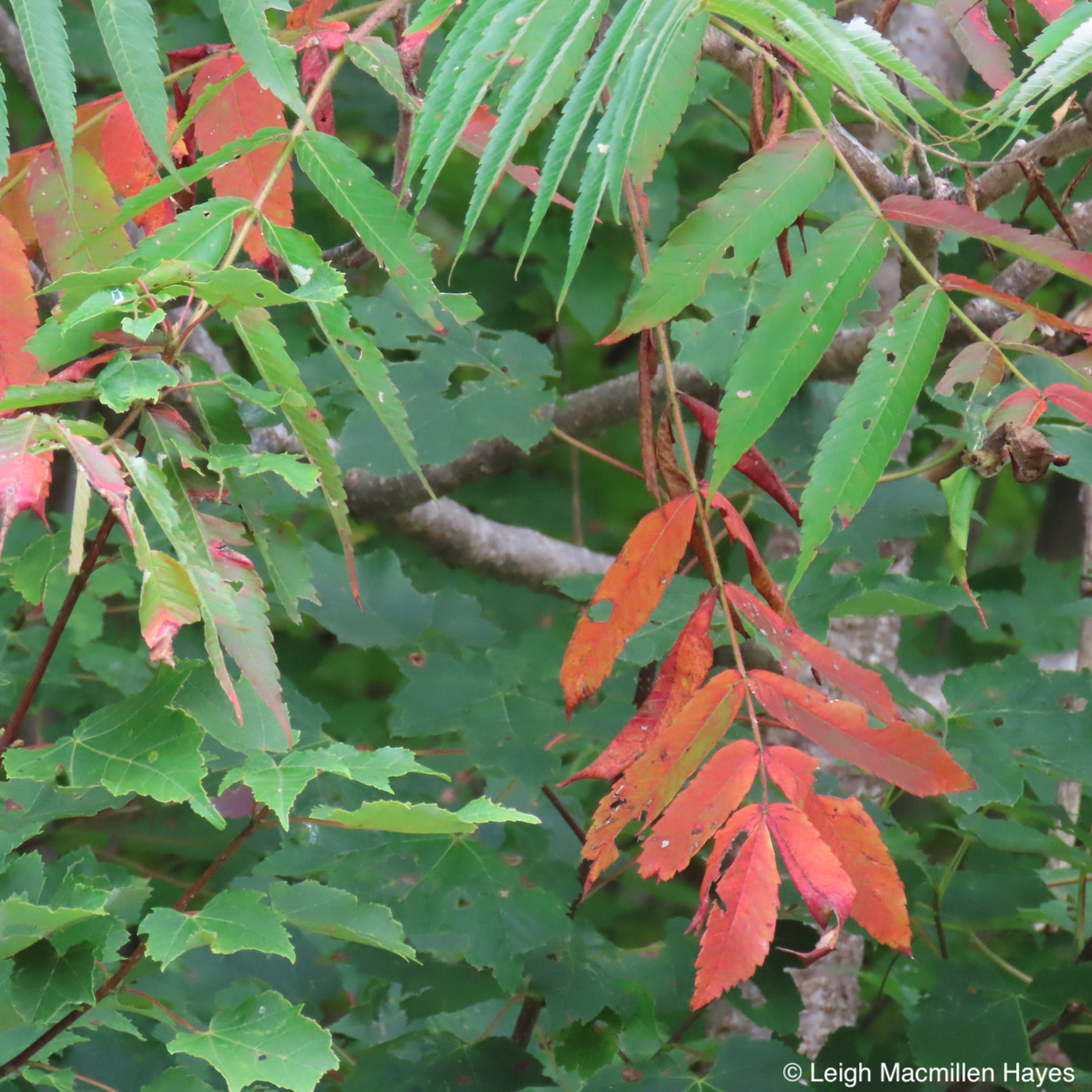
b19-Sumac decorations

And all ornaments were handsome in their own way.

b9-tamarack gold

As is always part of my shopping adventure, I didn’t know what I was looking for when I entered the store. But as soon as I saw this display, I knew I had to have it.

b10-tamarack 2

Its label was lengthy–tamarack, larch, hackmatack. Call it what you want, it’s our only deciduous conifer for it looses its needles in the winter. But first, the needles turn from green to gold and announce their presence.

b15-pitch pine trunk

Also in abundance as this shop–pitch pines. It’s so easy to confuse a pitch pine with a red pine, but a few identifying tips help. The unique thing about this tree is that not only do the stiff, dark yellow-green needles grow on the branches, but they also grow on the trunk. If you spy a tree that you think may be a red pine, scan upward and if you see green needles along the trunk, then you’ve discovered a pitch pine.

The name, pitch, refers to the high amount of resin within this tree.

b16-pitch pine cones

It’s the needles of pitch pine that also add to its identification for they grow in bundles of three, like a pitchfork’s tines.

As for their cones, you can barely see the stalk because they tend to be clustered together, but their key feature is the rigid prickle atop each scale tip.

b20-Northern White Cedar

I was nearly at my turn-around point of three miles when I realized I was standing beside a row of doorbuster deals.

b21-northern white cedar leaves and cones

I couldn’t resist feeling the scale-like leaves of the northern white cedar. I had to have this item.

b17-black locust bark

I did find one thing I decided to leave on the shelf–for the spines of the black locust would have pricked my fingers, I’m sure.

b18-black locust seed pod

Apparently, others did purchase this, for only one fruit pod remained.

b25-heading back

At last, I was on my way back up the main aisle with hopes to make a bee-line out, but had a feeling something around the bend would stop me in my tracks.

b23-pokeberry geometric display

Sure enough–the pokeberry display was both geometric . . .

b23-pokeberry artistic display

and artistic in a dramatic sort of way.

b27-bird nest

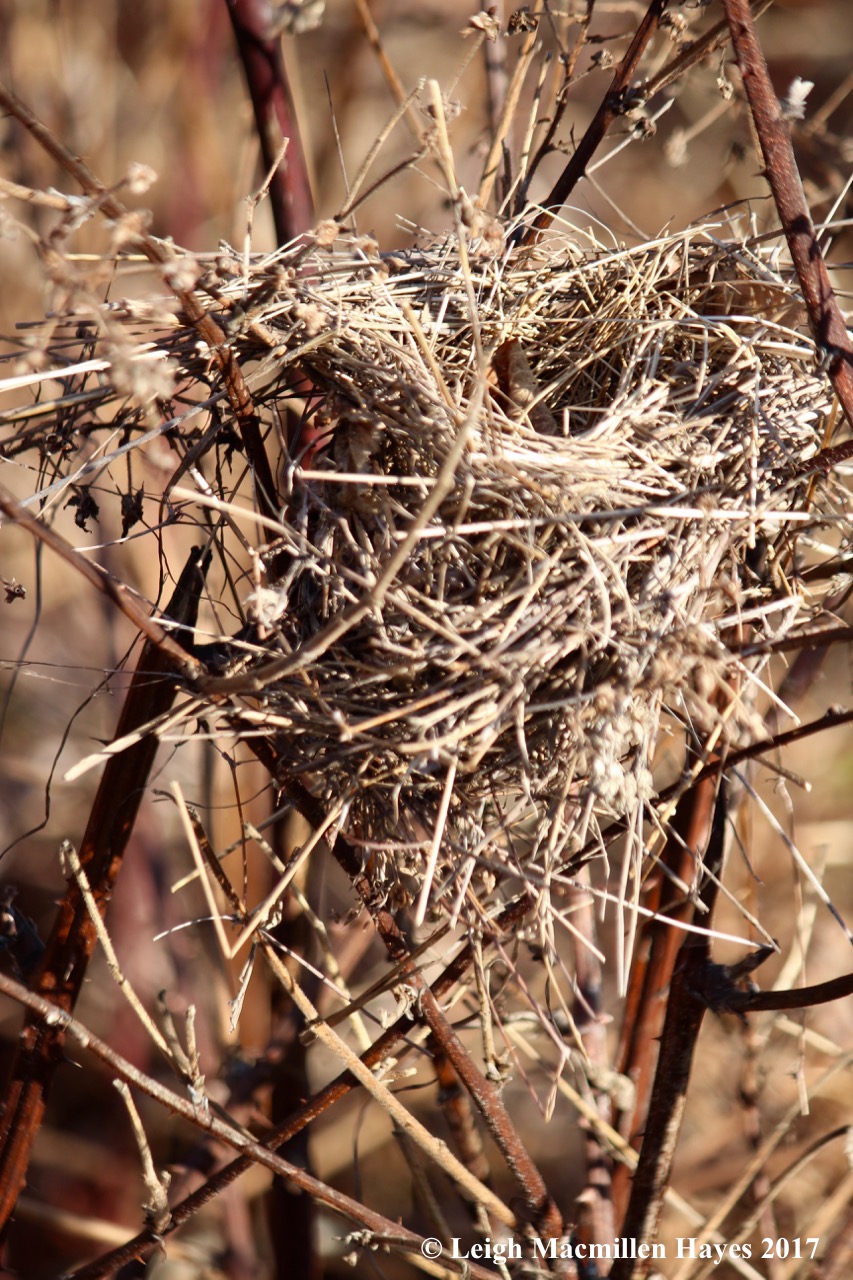
As I continued on, I saw and heard birds flitting about and thought about the fact that I need to visit this shop more often, particularly in the spring and summer for the various habitats made me think that birding would be spectacular. And then I spied a nest attached to some raspberry bushes. I knew not the species that made it, but hoped some small brown critter might use it as a winter home and so it remained on the shelf.

b26-heading back 2

At last, I’d raided enough aisles. My cart was full to the brim and my brain overwhelmed. I guess I’m not really a “shop-til-you drop” kind of gal. It was time to wind along the trail and end my Black Friday shopping extravaganza.


Black Friday My Way

Shopping on Black Friday is the perfect tonic following a Thanksgiving feast. And so I was excited that my friend, J.M., agreed to join me for the venture–and even happier that she offered to drive.

Our destination–the MDT store in Fryeburg. Everything we needed under one sky roof.

The first department we visited was decked out in shades of red.

red oak bark

The rusty inner bark of this Northern Red Oak practically jumped out at us. How could we resist such temptation? Add it to the cart.

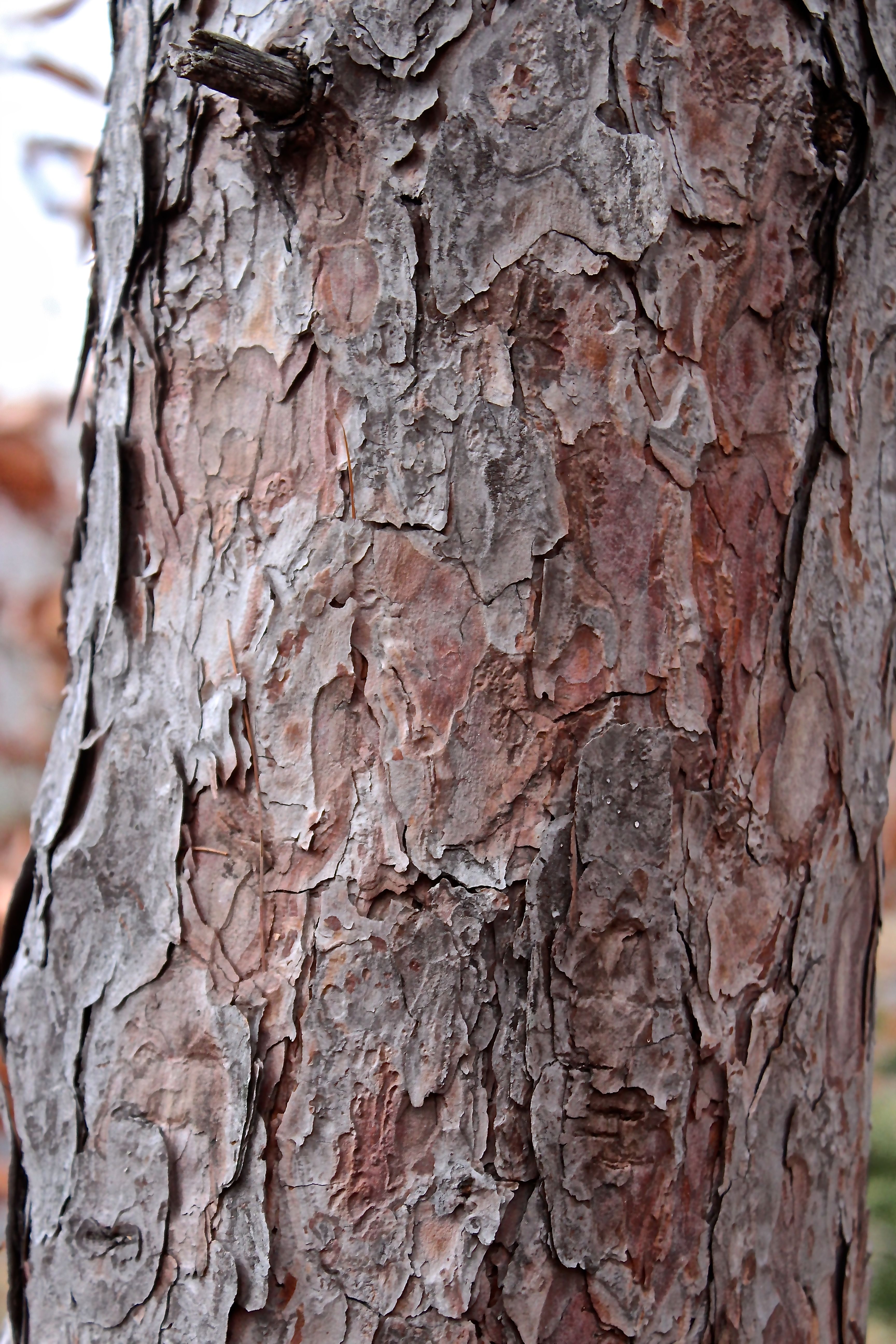
pitch pine bark

Sometimes the display made us stop and wonder.

pitch pine and needles

We hunted about to make sure our identification was correct before we settled on Pitch Pine rather than Red Pine. Both share similar bark, but the former has three long needles, while the latter sports two. The correct coupon in hand, we continued on our way.

Red-belted Polypore

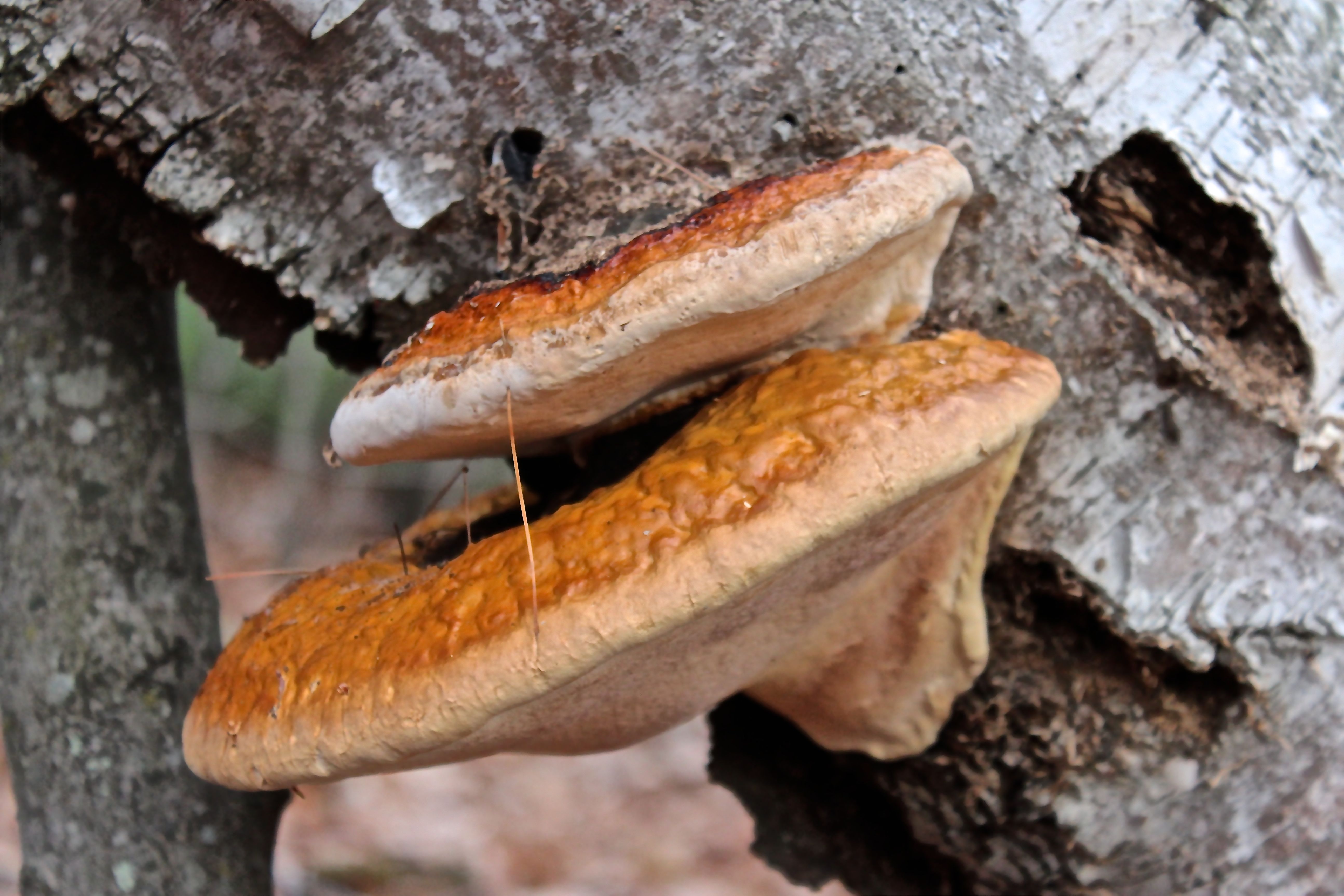
Red-belted Polypores pulled us from the main aisle to admire their construction. Talk about an exclusive offer–woohoo!

Staghorn

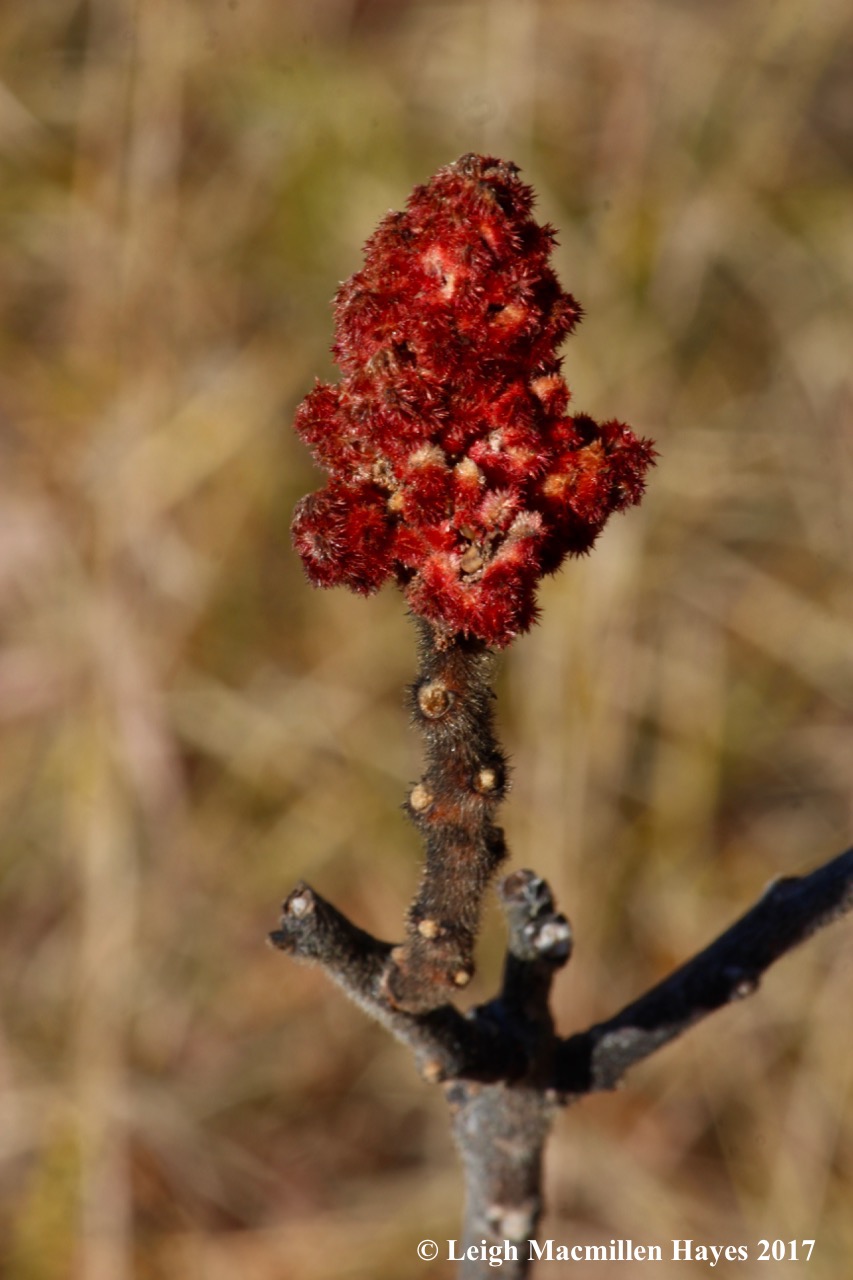
And we couldn’t resist the raspberry red pyramid of the Staghorn Sumac. A taste of Sumac Lemonade danced in our heads while we continued shopping.

oak salmon 2

About a year ago, I’d told J.M. about a salmony hue in the winterscape. As we came upon this item, she understood what I meant about the color. And I was thrilled to discover that they had plenty in stock–I had no idea that White Oak grows in Fryeburg. I’m slowly adding towns to my list–where it grows and where it doesn’t grow.

oak leaves 2

The free-form structure spoke of a dance performance. And then we realized that we were in a wind tunnel. Even though it wasn’t windy at the moment, the marcescent leaves have retained their fluid shape.

bush clover 1

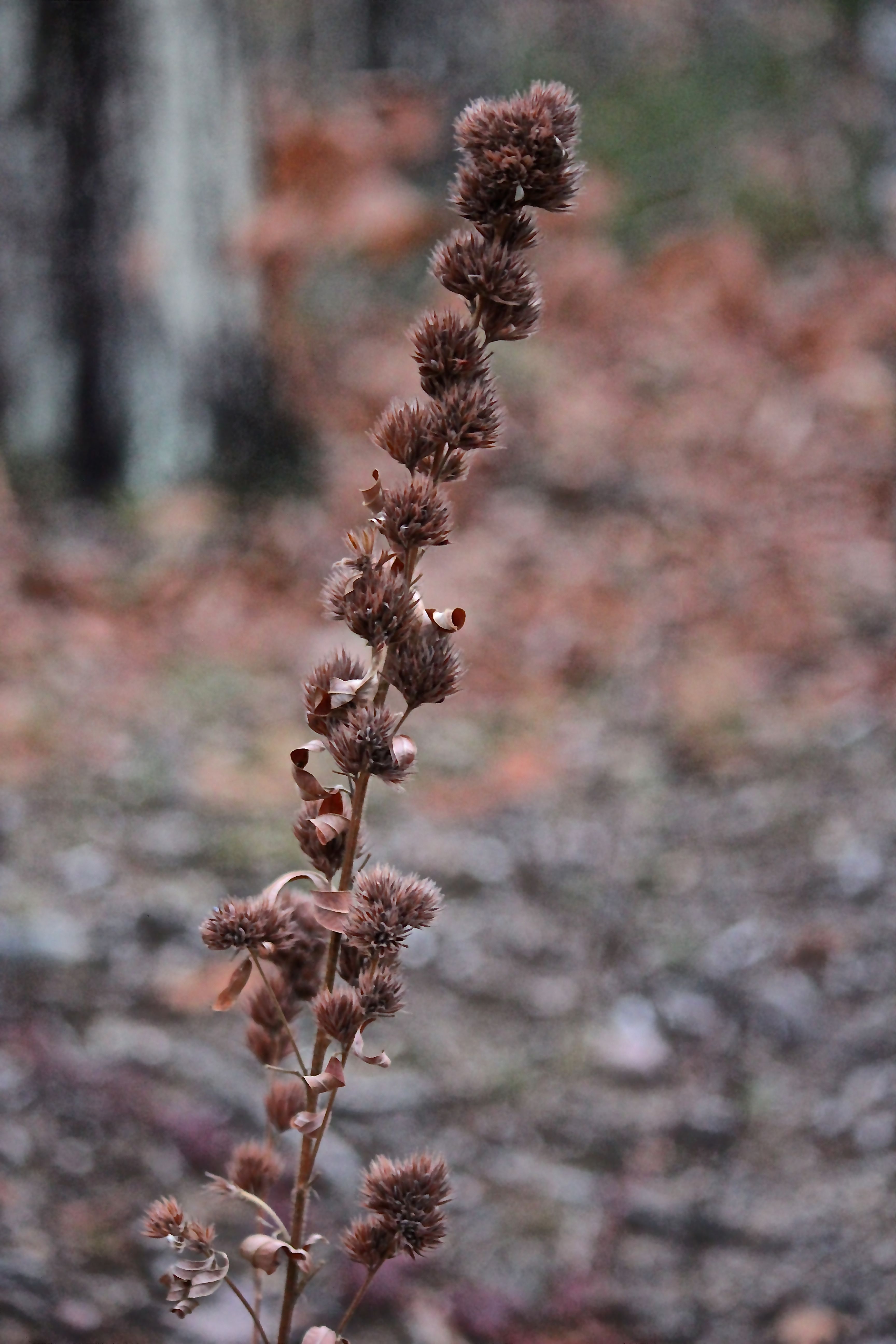
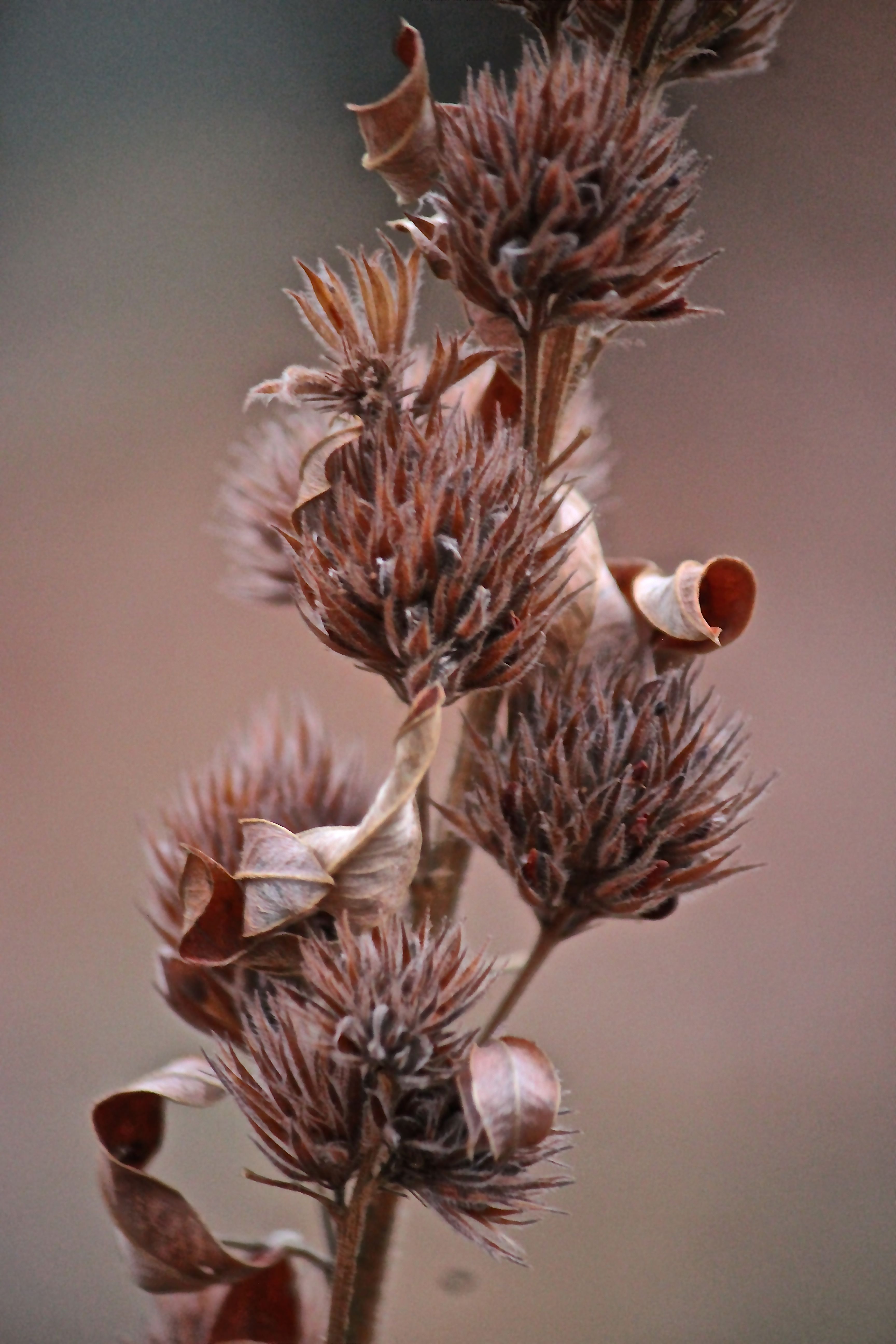
We also found variations of red in Bush-Clover, which is a typical species of this place, though we didn’t realize that at the time.

bush clover 2

From the Bush-Clover, it was an easy transition into the texture department where more bargains awaited.

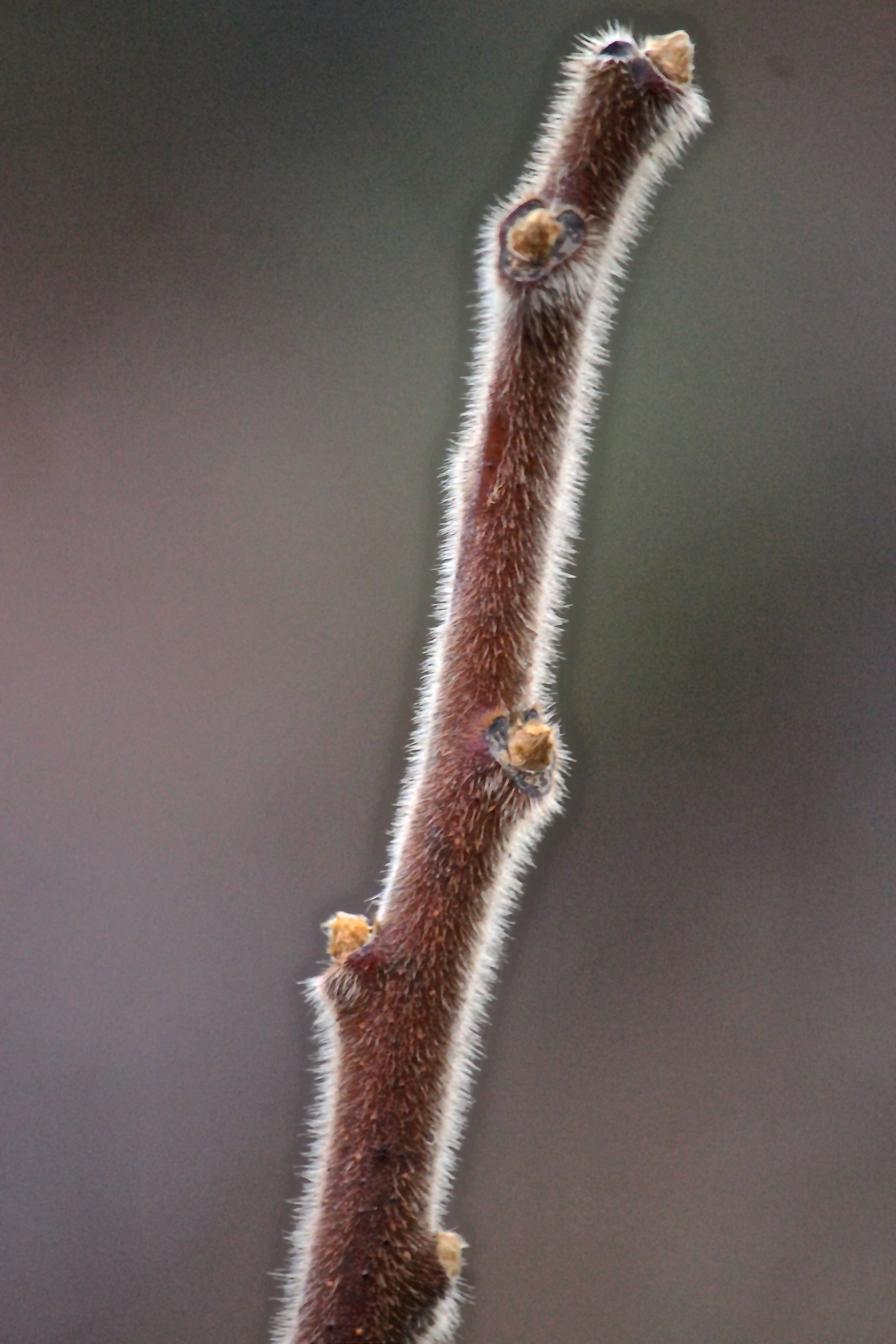
staghorn sumac stalk

The velvety feel of the Staghorn Sumac warranted a caress. Having grown up with Poison Sumac, it always strikes me as odd to be so enamored with a member of this family. But I am.

cattail 3cat tail 1Cattail 5

We stepped into the next aisle and found these corn-dogs on a stick. Cattails get their common name from their end-of-season fluffy spikes or tails. Need insulation or mattress stuffing? Check out aisle 6. From food to shaving cream to antifreeze, this is a bargain you don’t want to dismiss.

cattail 2

There’s even a two-for-one sale.

locusts thorns and pods

In contrast, though graceful in appearance when leafed out, the formidable thorns of a locust tree seem to serve as a warning sign–hands off the seed pods. Not exactly what I’d call a sweet deal.

Evening primrose 2

Impulse items drew our attention as well–those things we didn’t need but couldn’t resist. The spiraling of the Evening Primrose seed heads and

sweet-fern

the curling leaves of the Sweet-Fern’s leaves begged to be noticed.

The light was starting to wan as we made our final purchases before heading home.

MTD tracks and trail

Our shopping trip along the Mountain Division Trail, a 4-mile long section of the rail trail in Fryeburg, had come to an end. But we were guaranteed free shipping for those purchases we couldn’t cart home.

J.M. and I bagged some exclusive specials as we hand picked the near endless stream of deals and discounts on this Black Friday. We knew we’d come to the right place . . . to practice our shopping expertise.