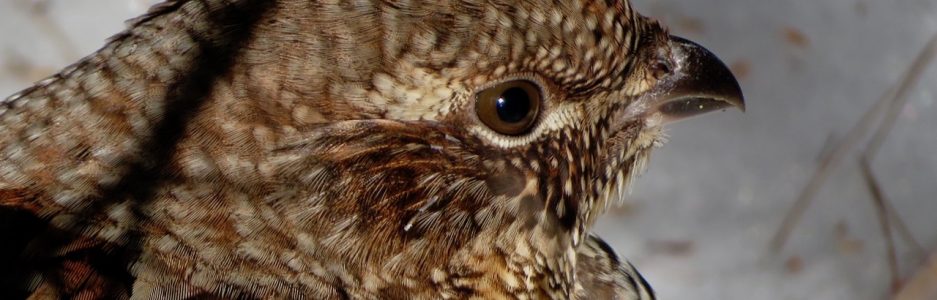
It’s Veterans Day 2024 and My Guy and I chose a trail less traveled in the National Forest, giving thanks to our families, friends, and strangers who have served our country. It’s because of them that we can hike along trails and old logging roads, and even bushwhack; two of the many freedoms they’ve given us are the freedom to move about our country and the freedom to not live in fear (well, most of the time).
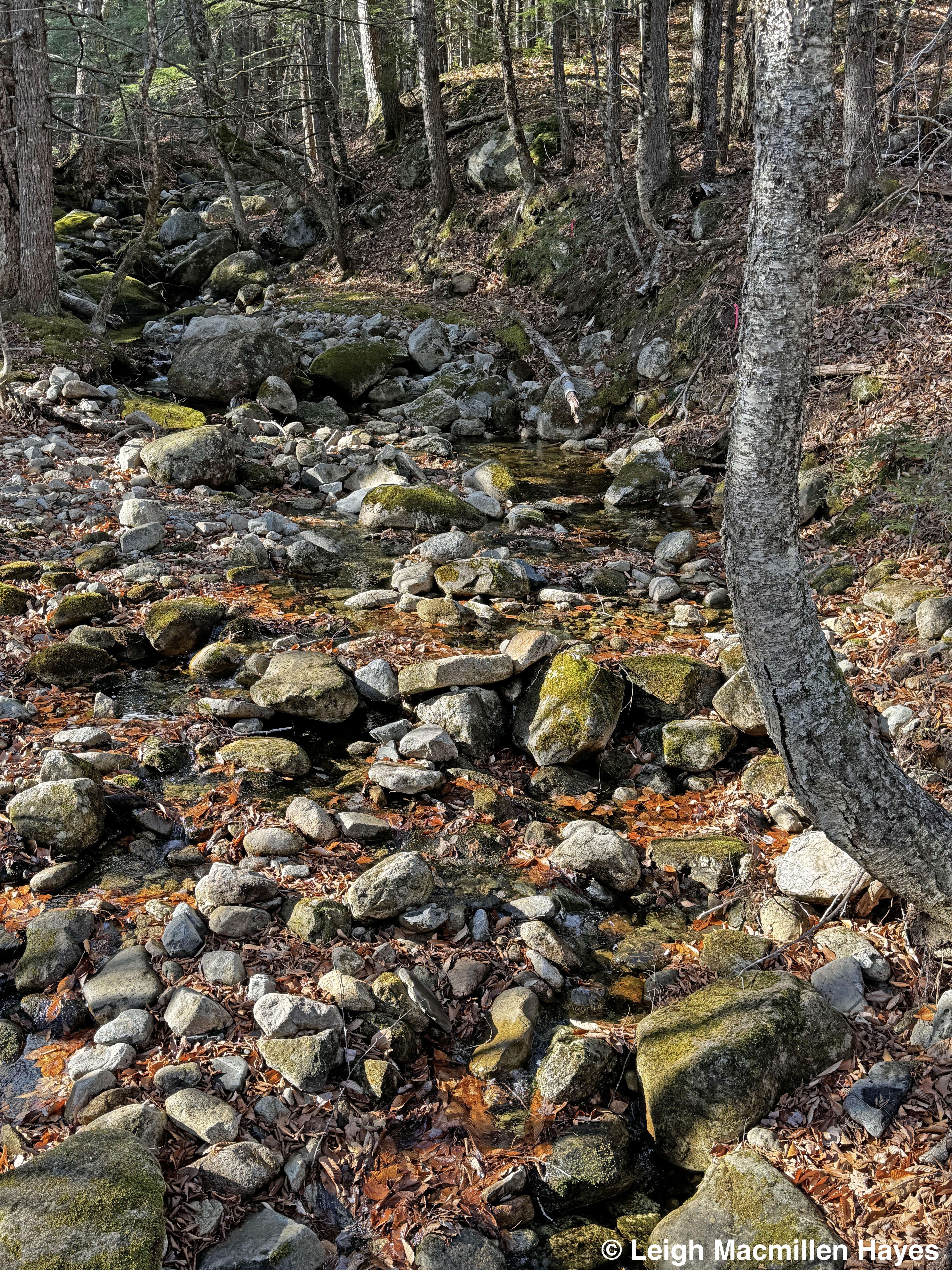
And so today found us crossing the state line and beginning our journey beside Langdon Brook in Chatham, New Hampshire. Like everywhere we look these days, the water level was low–a result of the current drought.
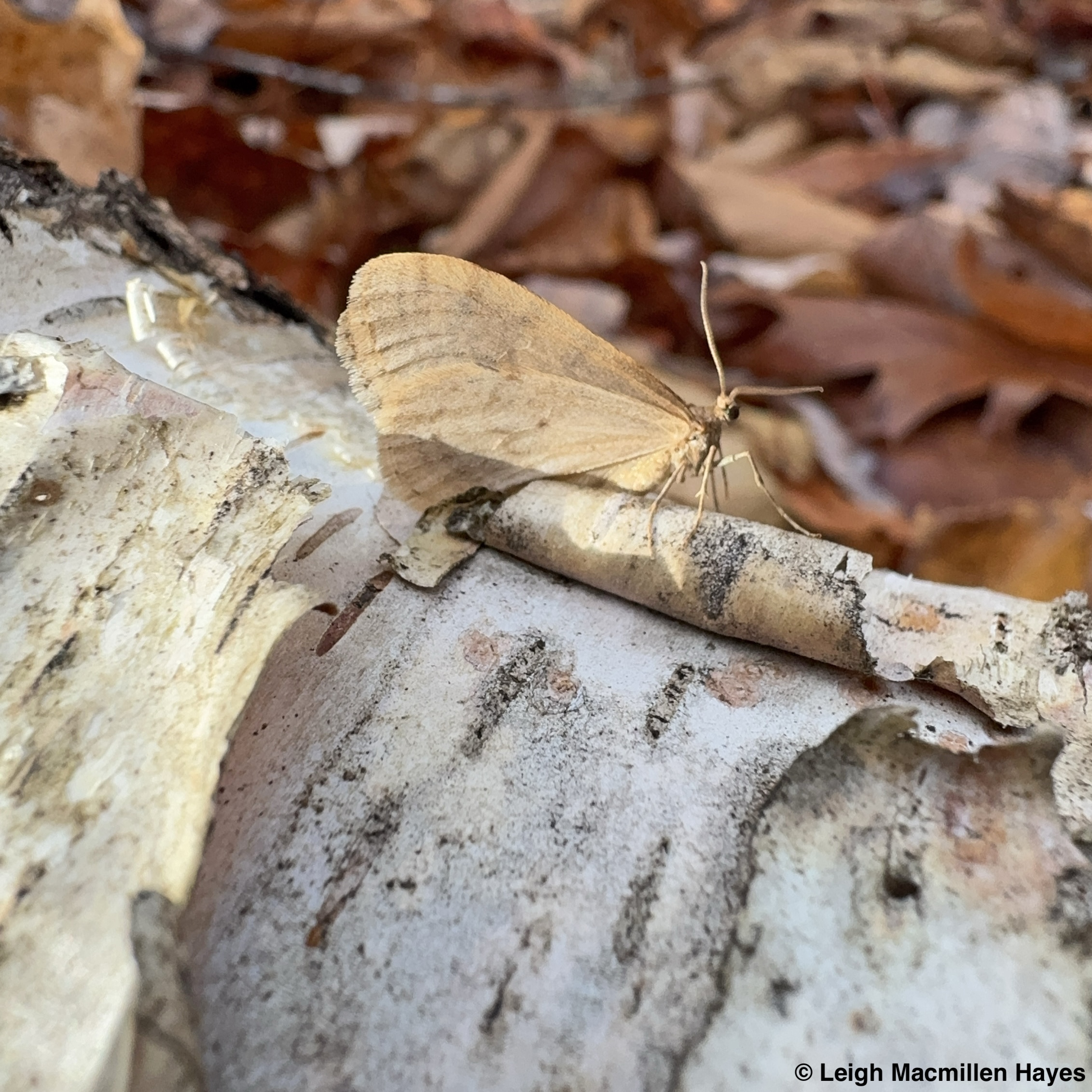
What isn’t low is the number of Geometer Moths, and I believe this to be The Bruce Spanworm, aka Winter Moth, that is currently on the move, emerging from the duff in October and November. I didn’t look for females, who are flightless, but saw plenty of males on the wing.
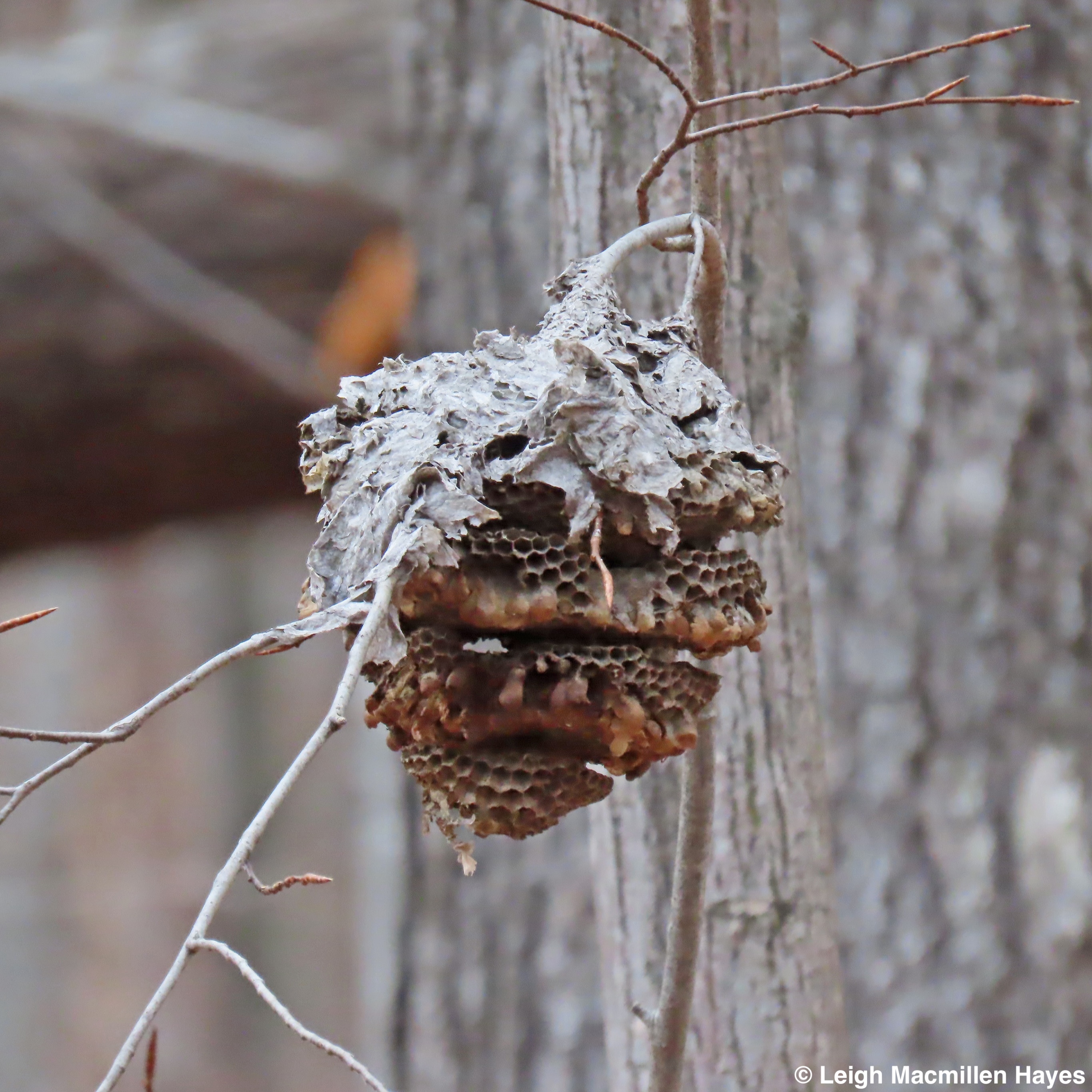
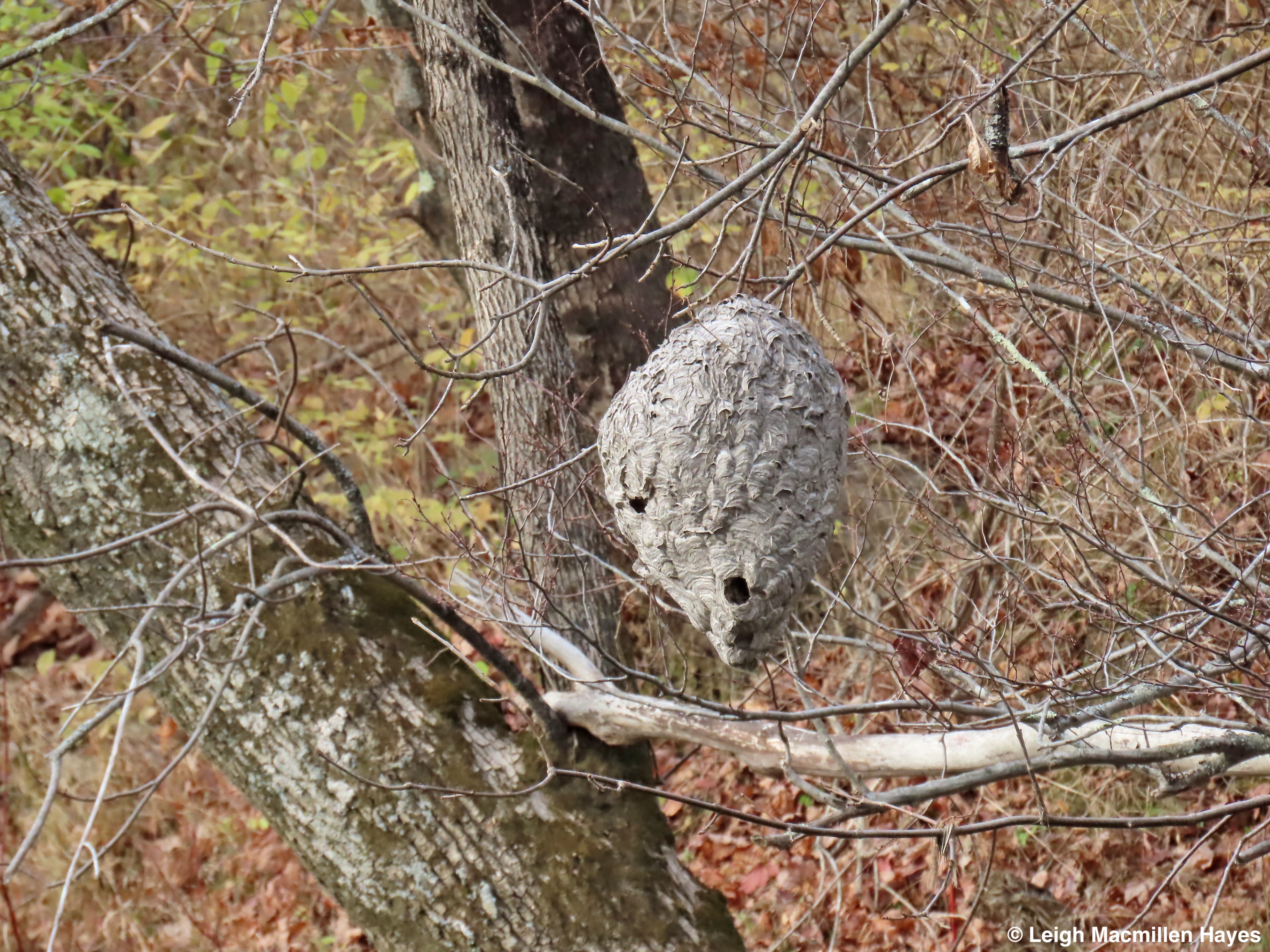
Our trek found us following steep old logging roads for a good portion and as we looked for Bear Claw Trees, I spotted this, a hornet nest.
One Bald-faced queen started building this nest in the spring by chewing wood and mixing it with saliva to create a paper-like material. I love that you can see the multiple layers of horizontal combs, under what’s left of the papery outer envelope.
Just last week on a hike closer to the Atlantic Ocean we saw another football-shaped structure, that one being much more intact than today’s example.
Take a second to admire those layers of paper.

What to our ever wondering eyes did eventually appear, the first of several Bear Claw Trees, but I promise to not share all of them with you.

What I will share is this one, a first for us. We often see “elbow” trees in the woods, but never before have we spotted a “collar-bone” tree, so dubbed by My Guy. I think it’s a great description of the morphed shape of this Red Maple, probably caused by logging equipment rubbing against it years ago.
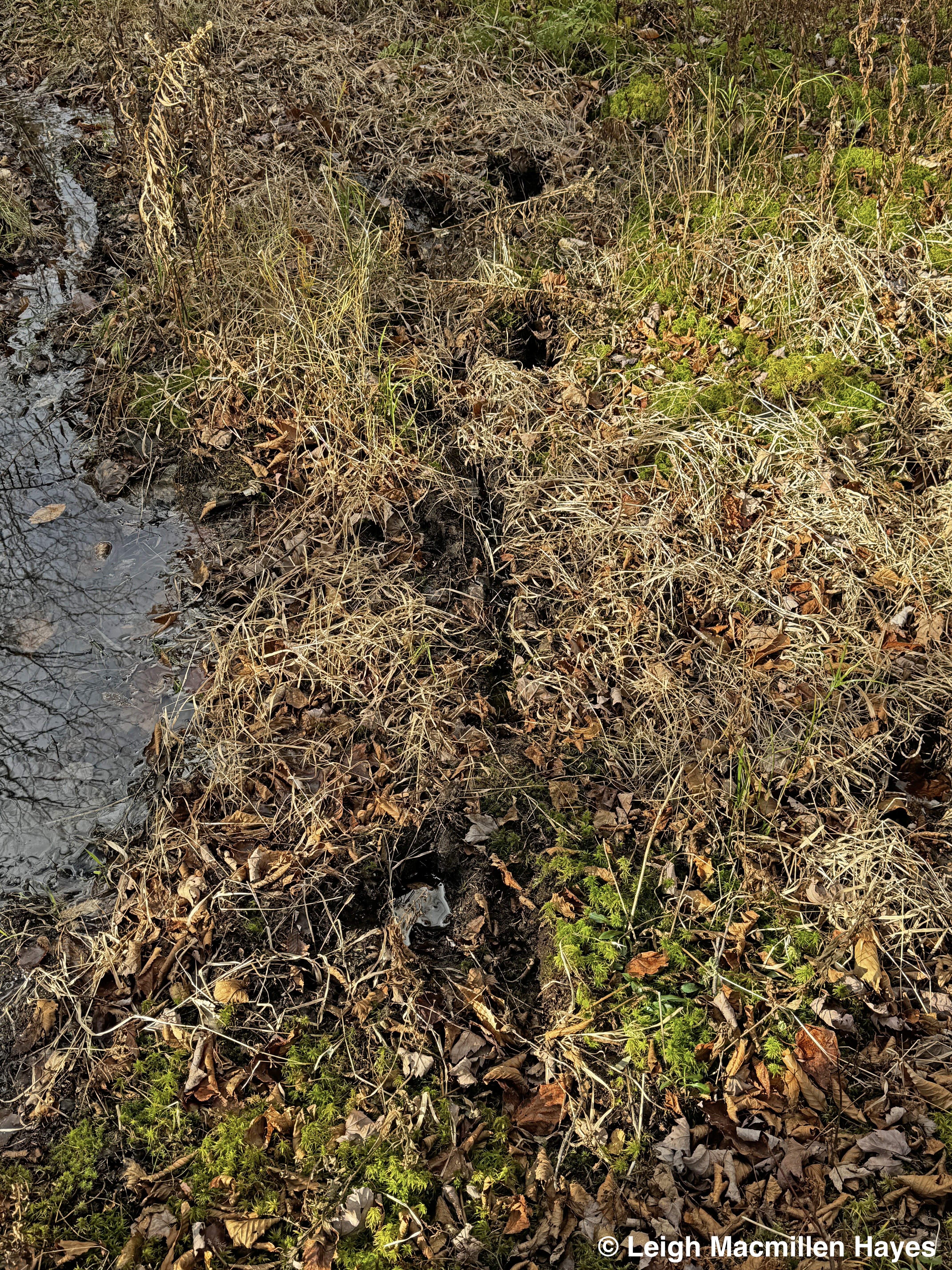
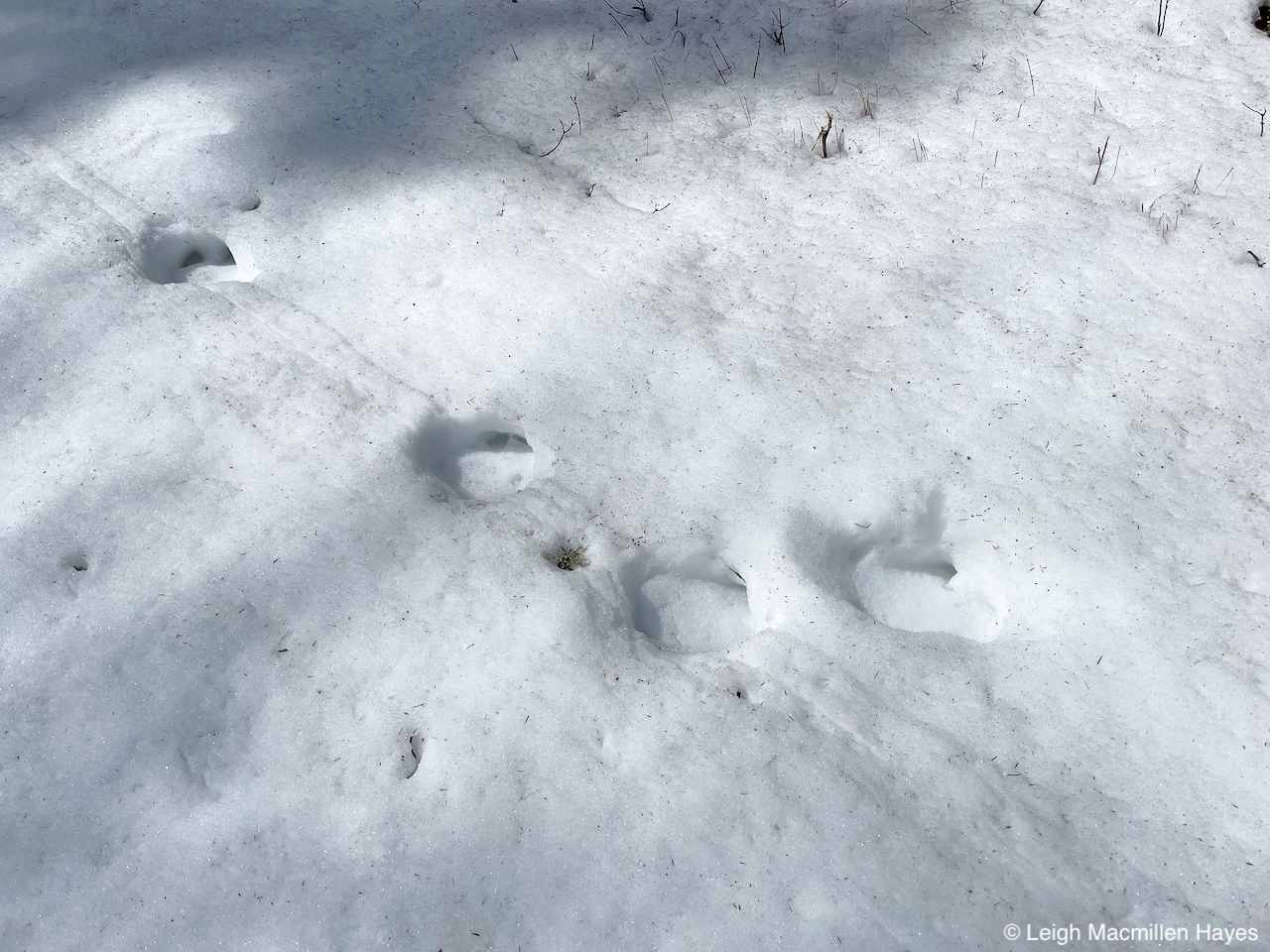
And because we were in a place where one would expect to see wildlife, or at least the signs of such, we found Moose tracks.
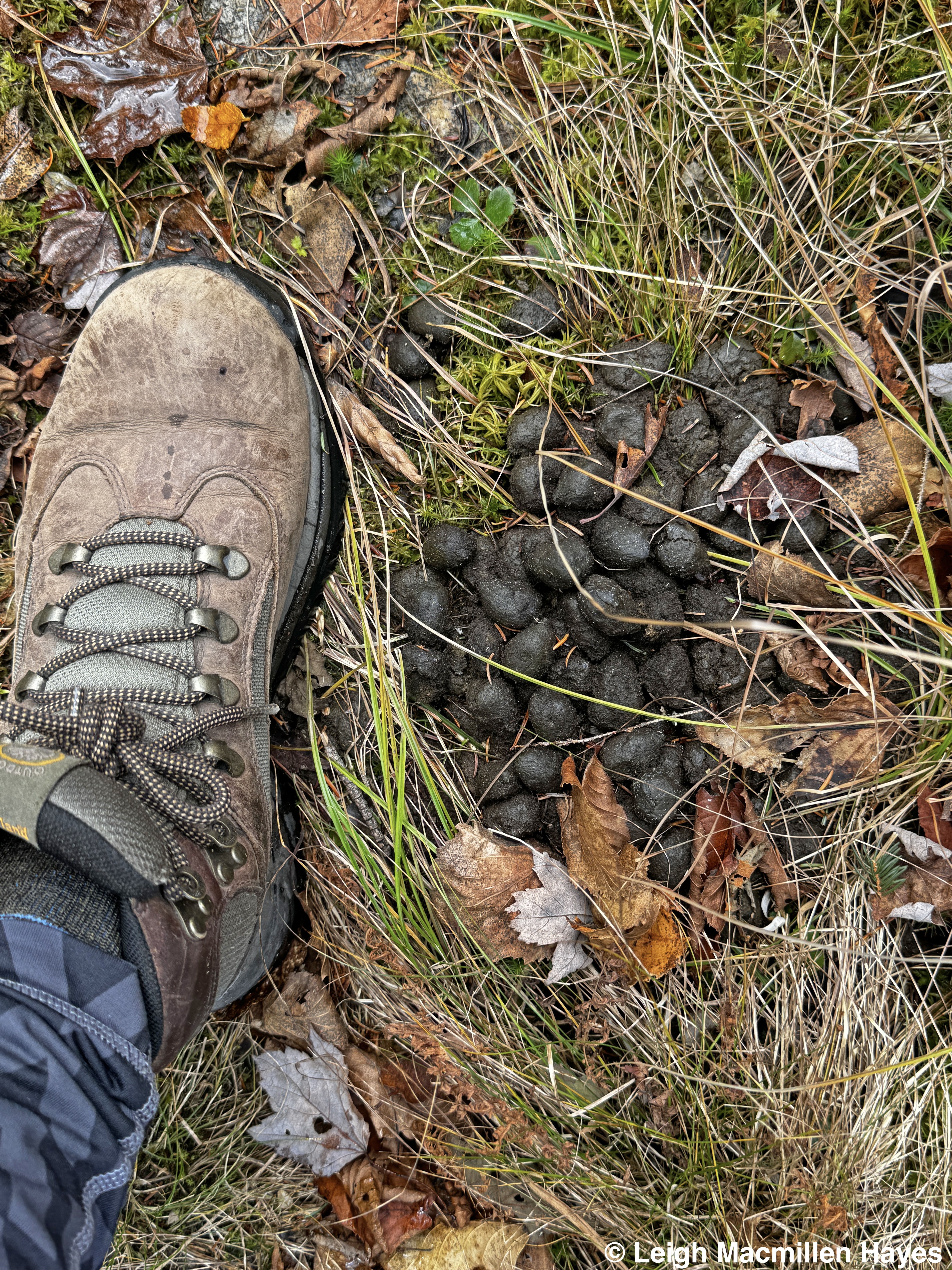
Where there are tracks, there is bound to be scat, though the tracks were much fresher than this pile. We actually expected to find both because we’ve traveled this way several times before and know it can be a highway.
As much as we both wanted to see the real deal today, I was glad we didn’t spot a Moose since it’s rutting season. That said, there were plenty of mature trees to hide behind had one approached us.
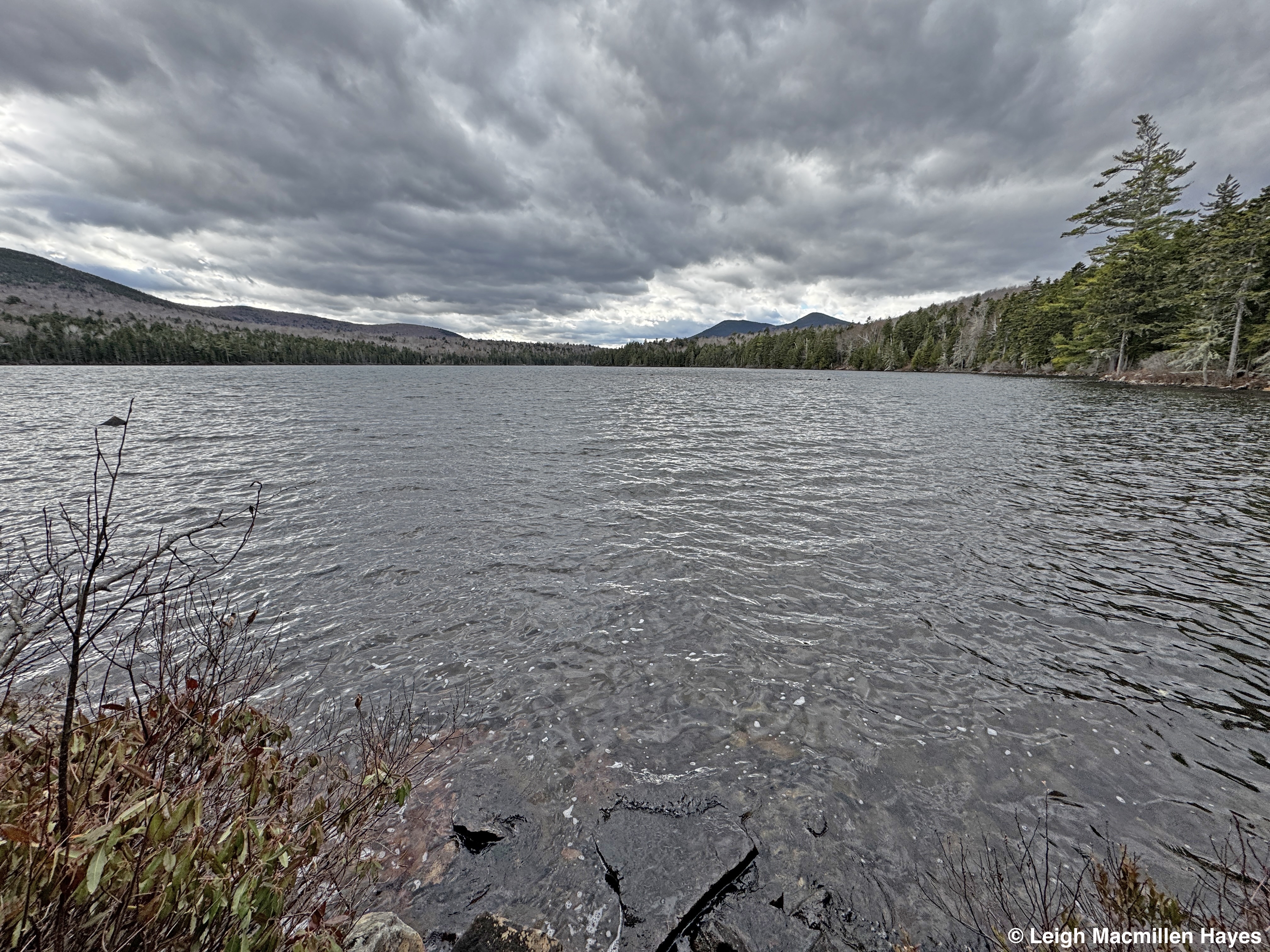
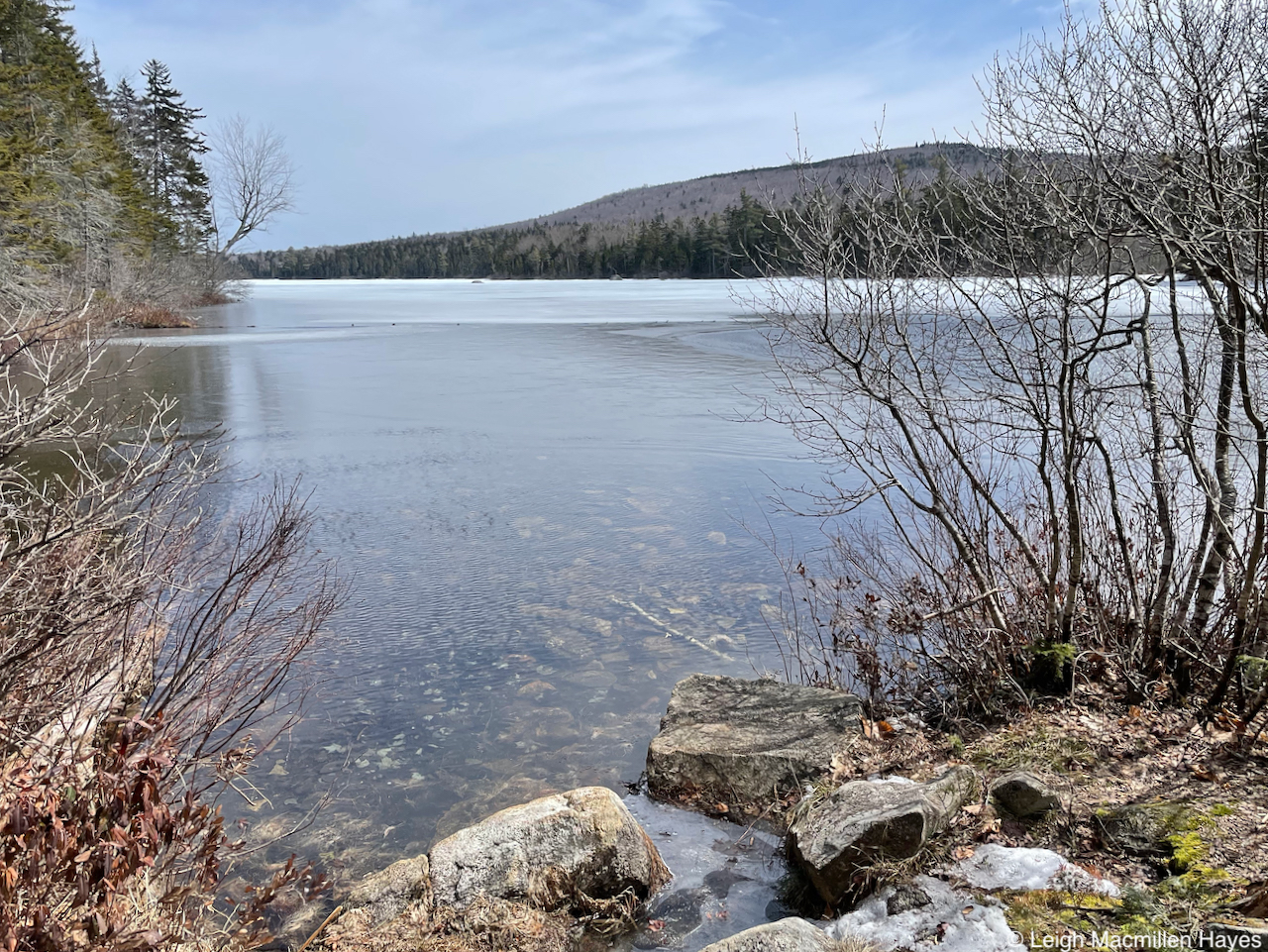
A few miles up and down, and a short trail new to us that was so much easier than the usual bushwhack approach we’ve taken in the past, and we arrived at our destination: Mountain Pond. With the Doubleheads in the background.
Doesn’t it have the cold November look?
It was breezy, but really, not as cold as it should have been and we both wore sweatshirts and anorak windbreakers and were quite comfortable.
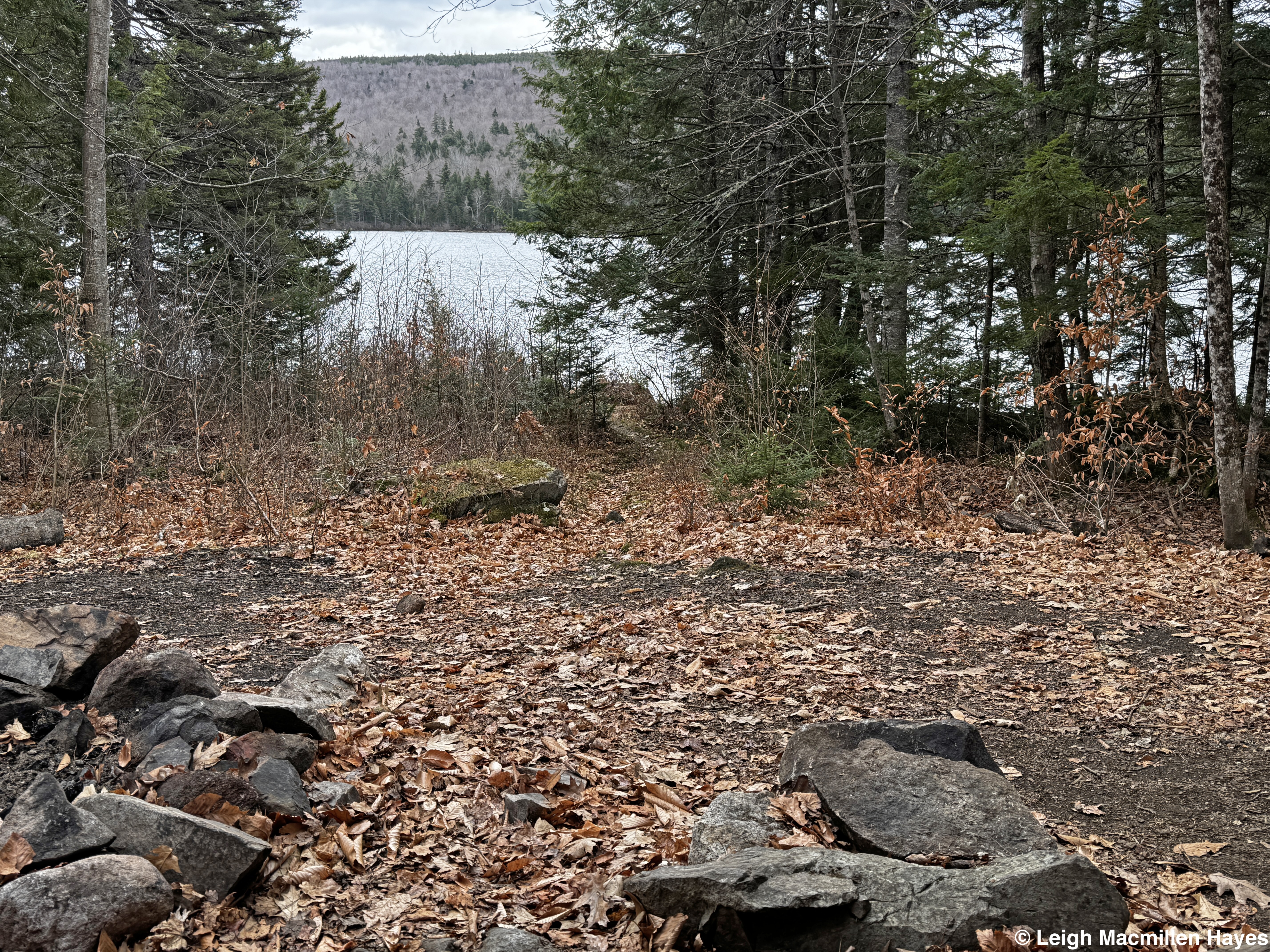
Once we reached the pond, we decide to follow the loop trail that encircles it, and stopped at the lean-to for lunch–just far enough from the open water to be out of the wind.
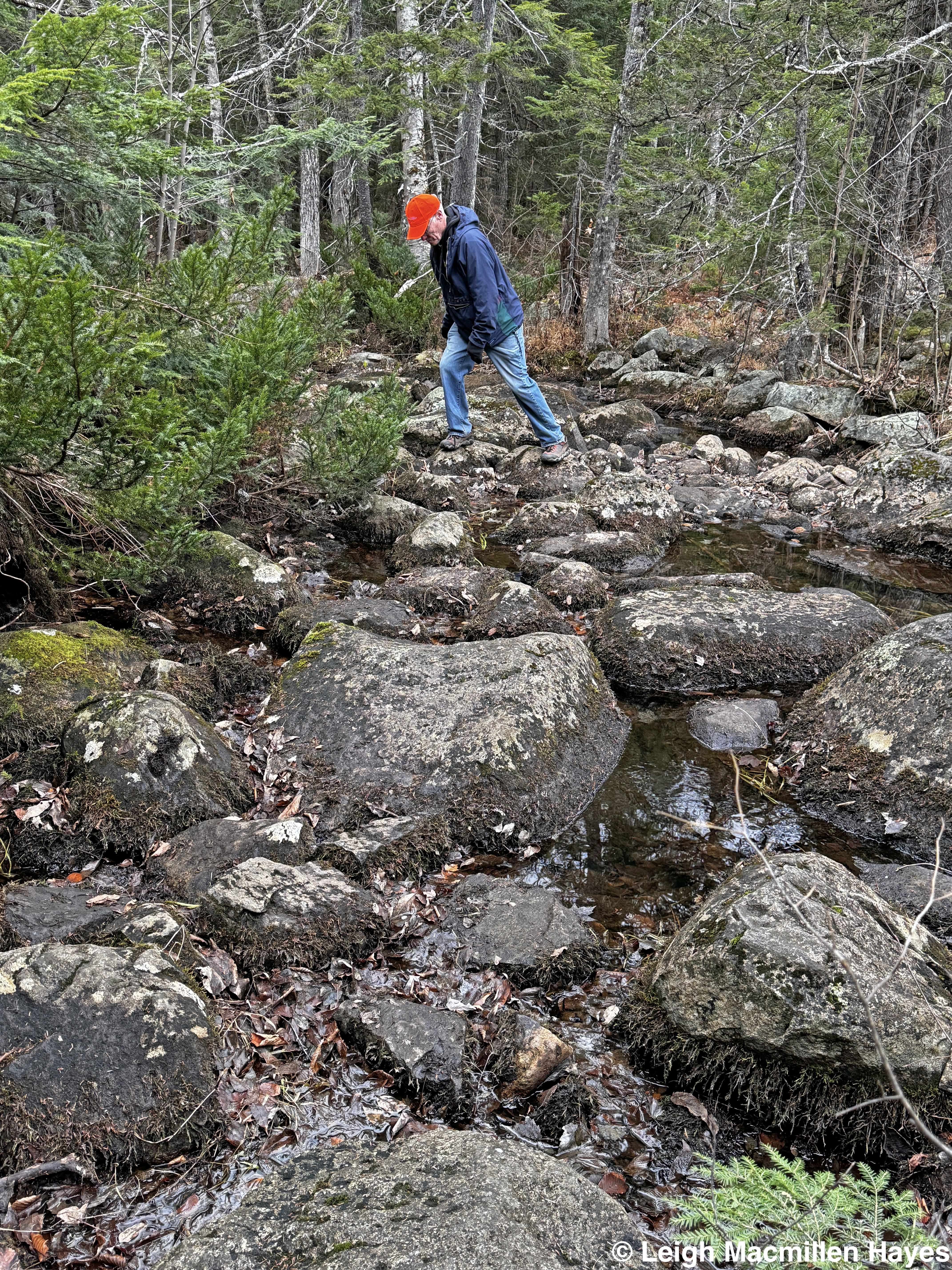
And then it was time to continue on, dealing with rocks and roots most of the way. A bit technical in the footing department especially at the outlet brook, but not difficult.
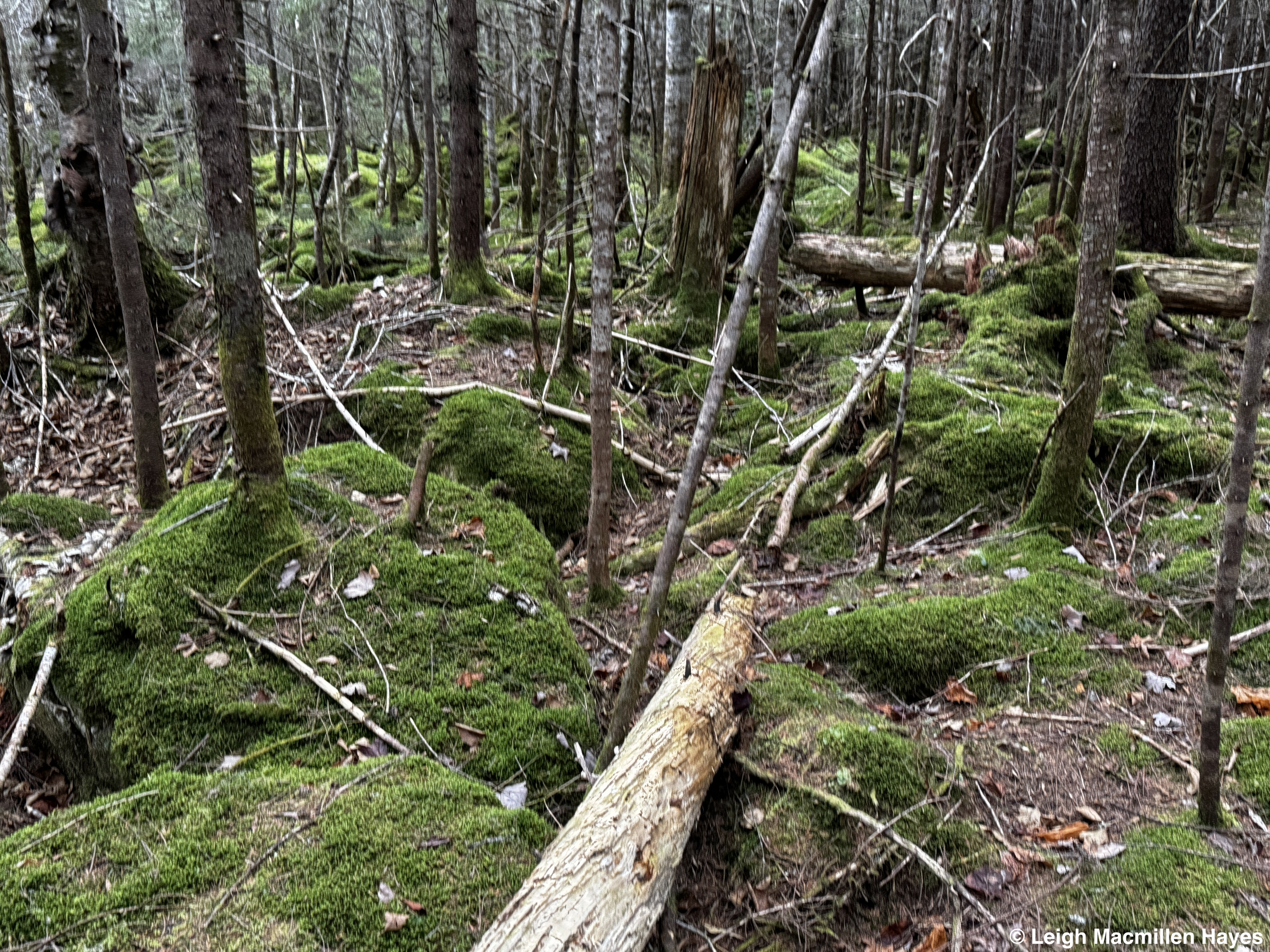
Soon after crossing the brook, we entered fairy land. Even MG recognized it for what it was.

We didn’t see anyone at home, but trusted they were sleeping as is their habit during the day. Even the boulder condominium looked like it housed a few.
It’s places like this that inspired my children’s book, The Giant’s Shower.
If you are interested in a copy, or two, or three, please contact me by leaving a message in the comments of this blog because I’m not sure the thegiantsshower email mentioned at the end of that blog post is currently working.
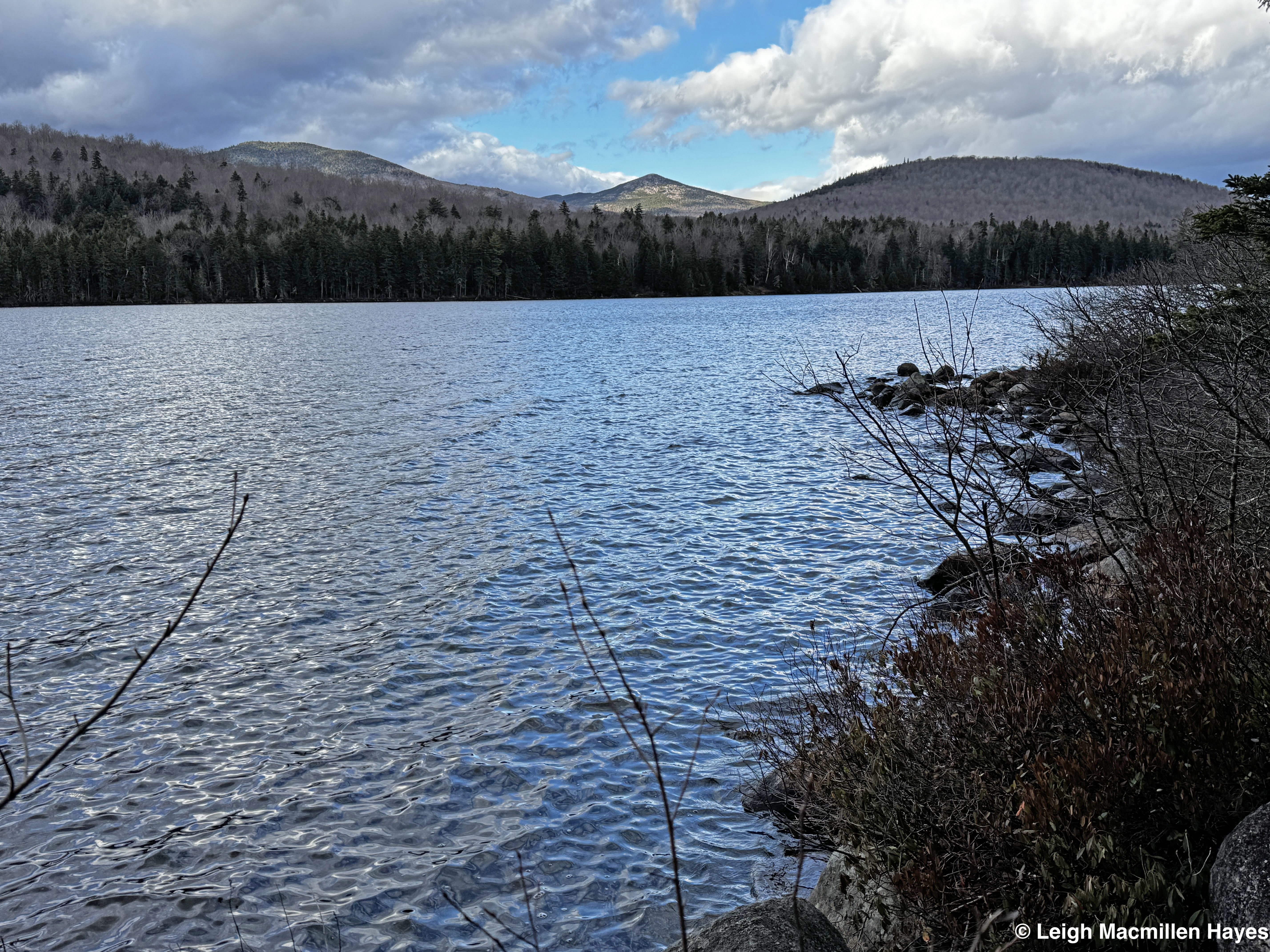
But I digress.
On the far side of the pond, we spied the Baldfaces, which gave us a better sense of our place in the world at that moment.

After completing the loop, we found the short trail back to the logging roads and practically ran down hill, despite the signs indicating we should do otherwise.
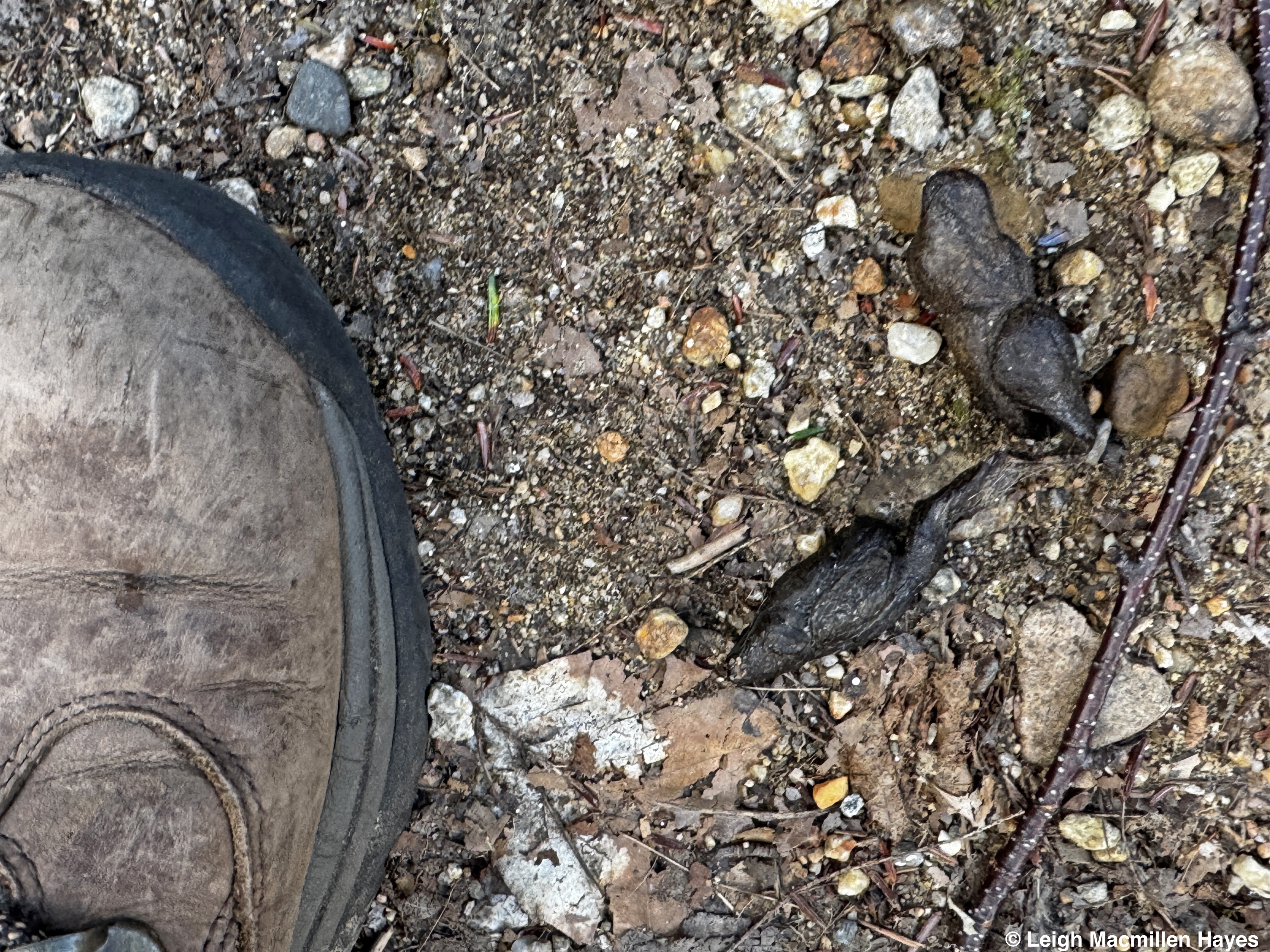
Not far from the start of our journey, I spotted a classic representation of Red Fox scat. The tapered end and twist are what give it away. And its size.
I actually expected to find a range of scat samples along the way, but that was not the case. And the only critters we saw were two Red Squirrels who dashed for cover as we approached.
But we did have an unusual sighting . . .
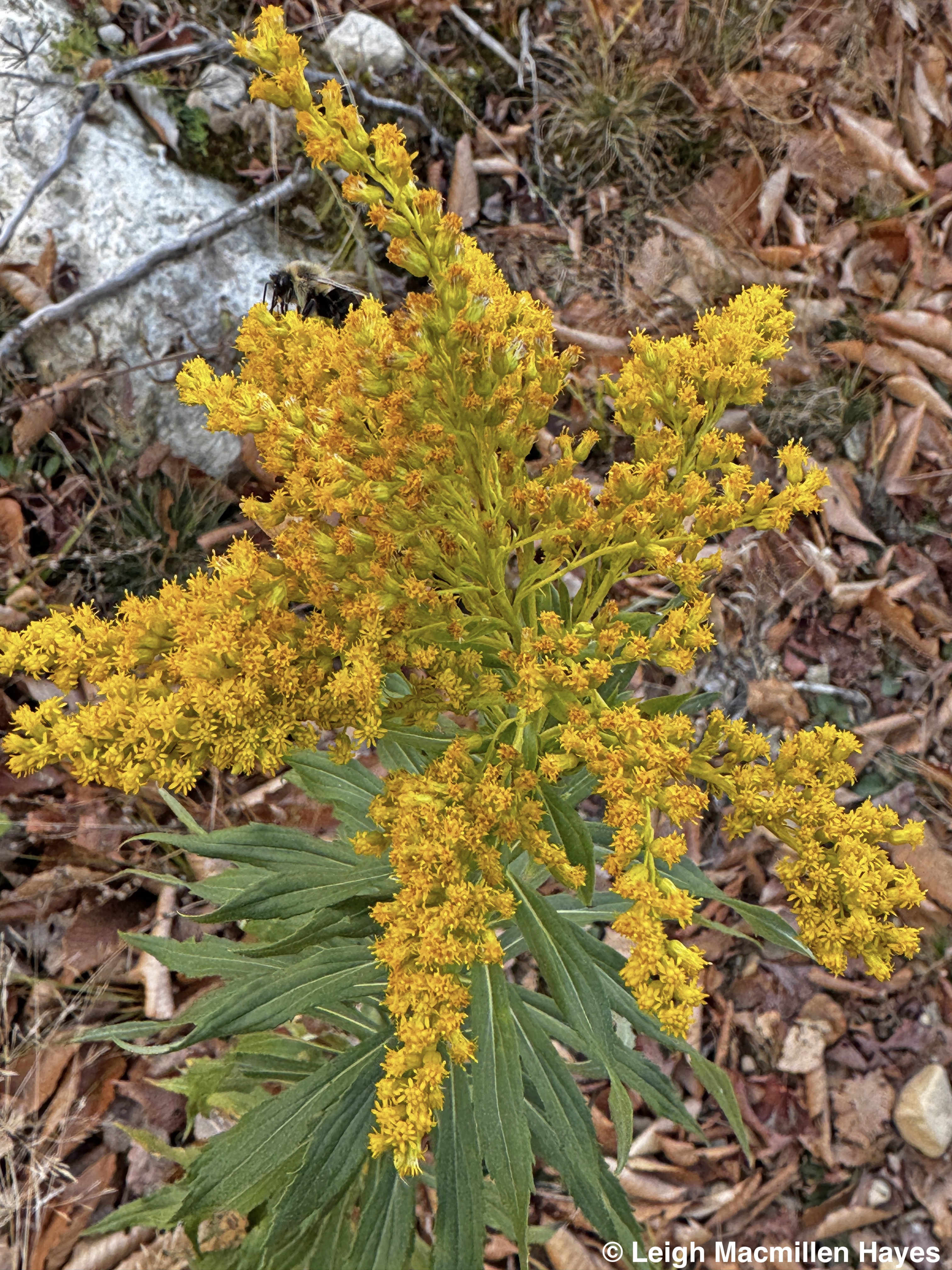
On the way back, about 100 feet below where I’d parked the truck, I spotted something else–Goldenrod in bloom on November 11th.
For the last few years, my nephew and I have been sharing photos of plants blooming when they should not be and he’ll receive this one in a text message soon.

The other amazing thing about this bloom . . . the Bumblebee seeking nourishment upon it. At first I thought the bee was either sleeping or dead, but it moved.

It does need to watch out, however, because just below it an Ambush Bug was busy dealing with another Bruce Spanworm moth–one down, a million more Winter Moths to go.
But again, I couldn’t believe that the Ambush Bug was still active either. We had a hard frost a few days ago. How did all of this happen?
November 11, 2024, a day to remember all those who served our country and a day for My Guy and I to take advantage of our freedoms and make some discoveries worth wondering about on this Veterans Day Mondate.









 wondermyway