What’s So Special About Bee Balm?

I have childhood memories of ugly red bee balm plants surrounding a maple tree in our front yard. In addition to being ugly, what really bothered me about this flower was the smell. The scent tickled my nose in an unpleasant manner and gave me an instant headache.
b1

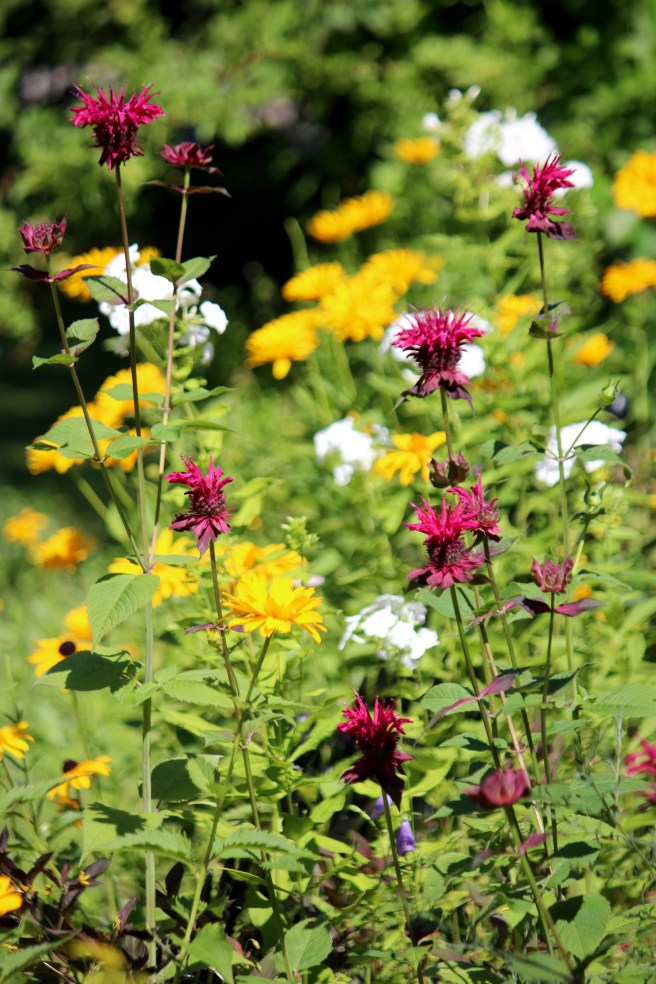
And then I grew up. Well, I suppose that’s questionable, but what did happen is I came to appreciate the showy flower and aromatic scent. (Funny thing is, an infusion of crushed, boiled bee balm flowers apparently treats headaches–I should have used it to treat the very symptom it caused. It has many other medicinal uses as well.)
b5

This summer, like others, I waited in anticipation.

b3

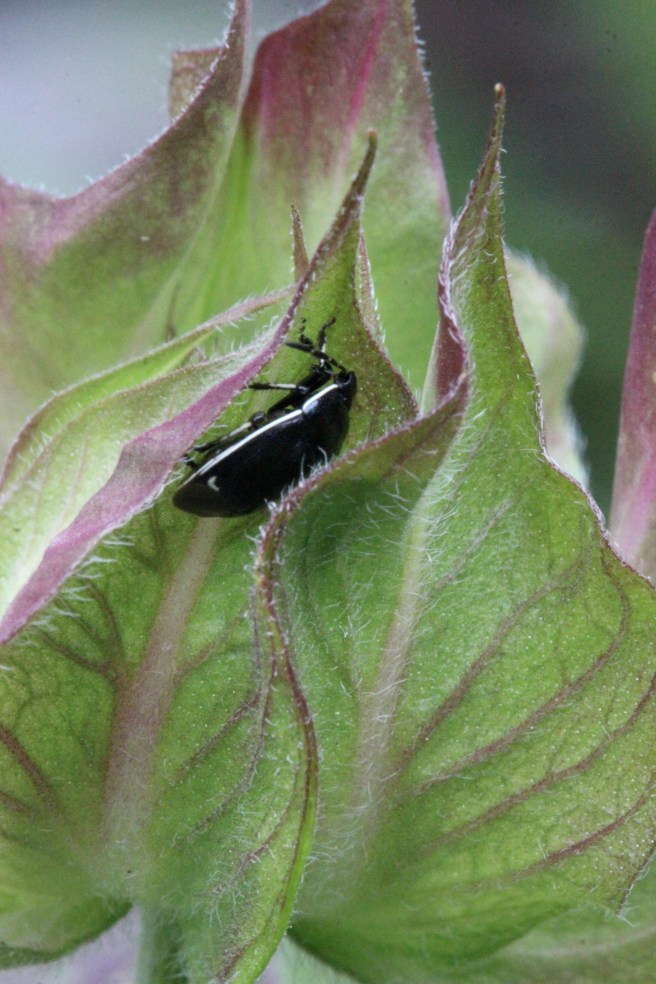
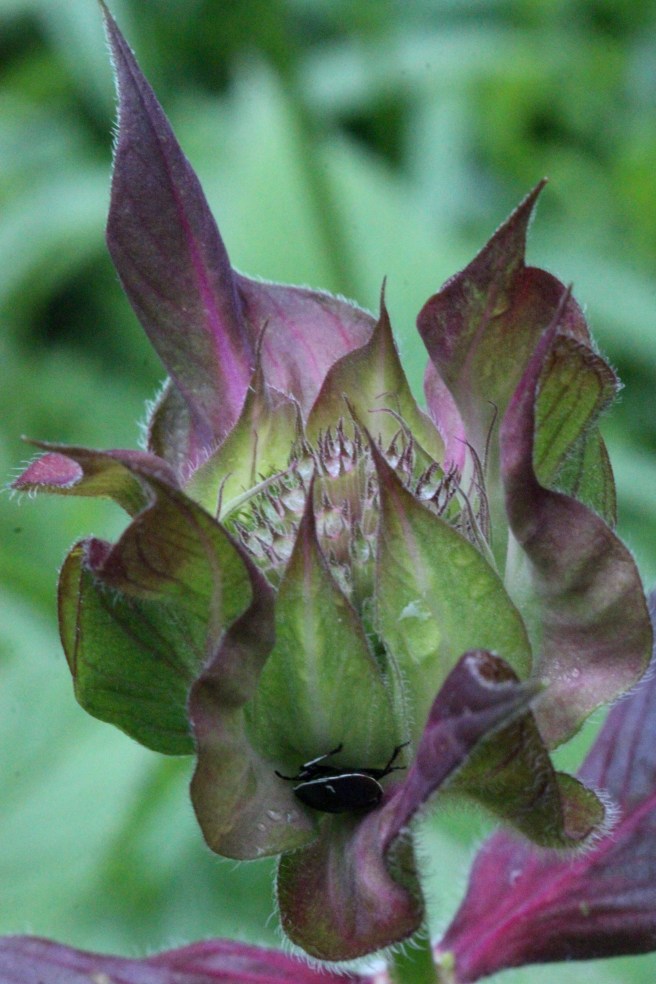
Even before it bloomed, its leafy bracts showcased a fluid beauty.
b4

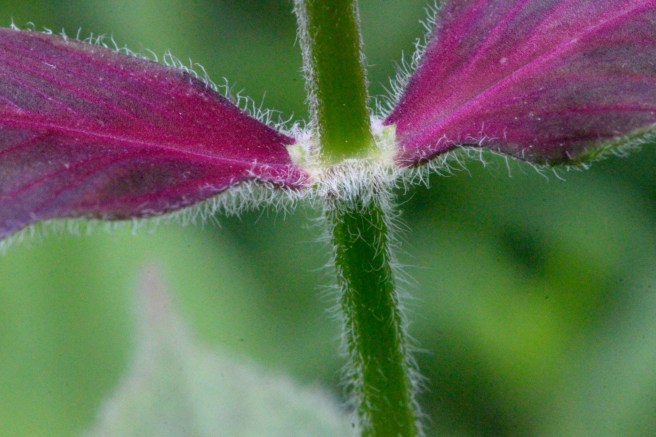
And those leaves set at right angles to the square stem offered a crossroads where color and texture met.
b7

Finally . . .

b8

with the aid of raindrops

b2

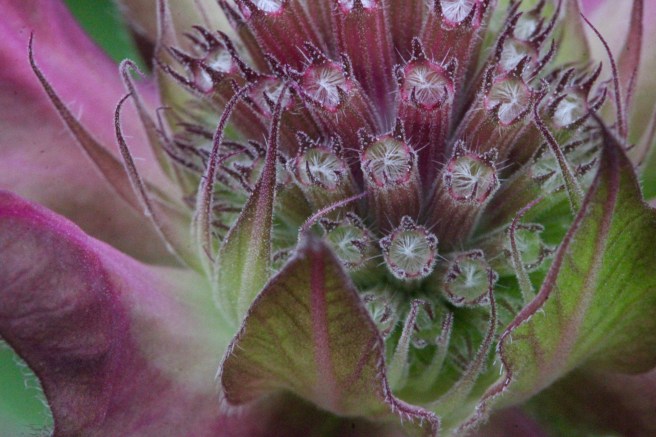
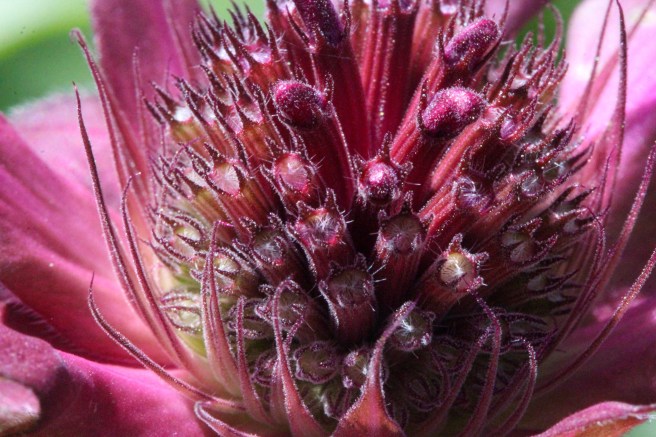
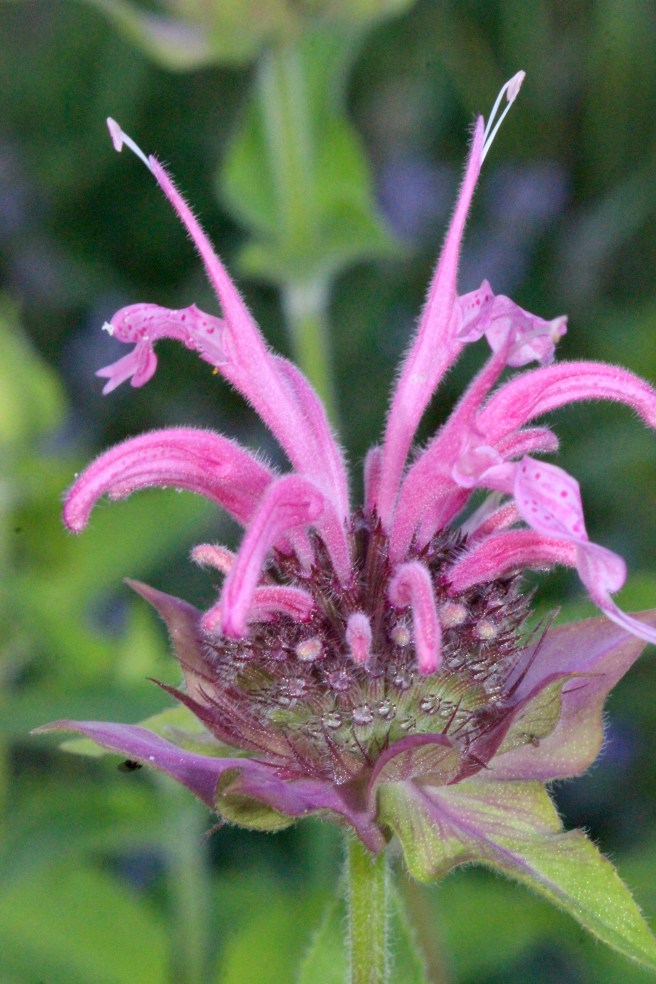
and sunshine, the bracts pulled away and revealed star-capped tubes nestled within.
b9

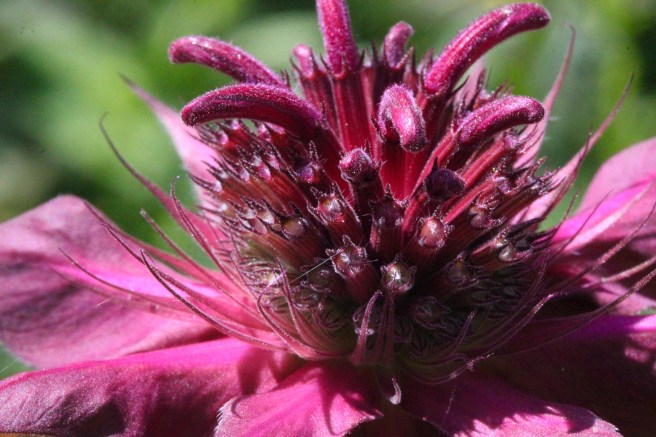
Ever so slowly, flowers began to emerge.
b10

With a hat reminiscent of a jester, they crowned the plant.
b12

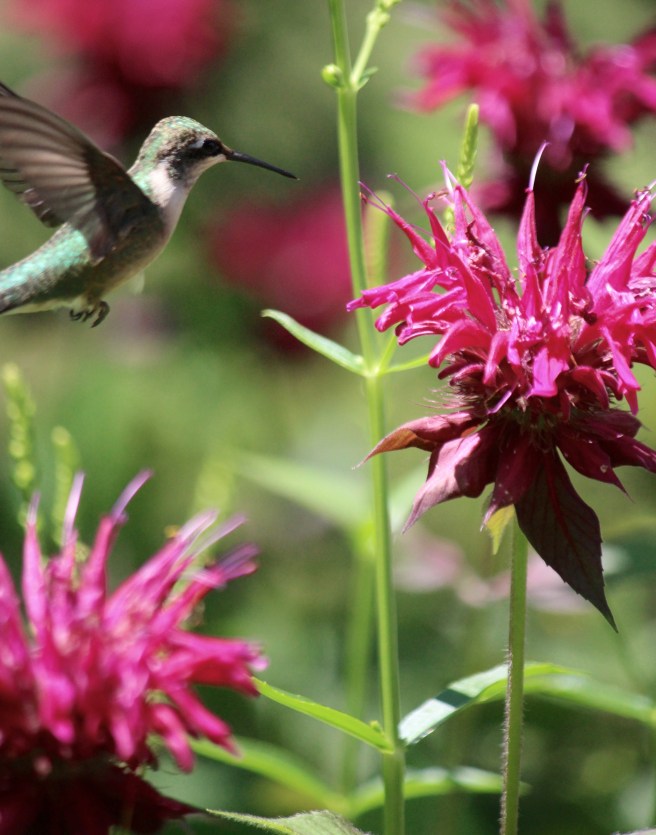
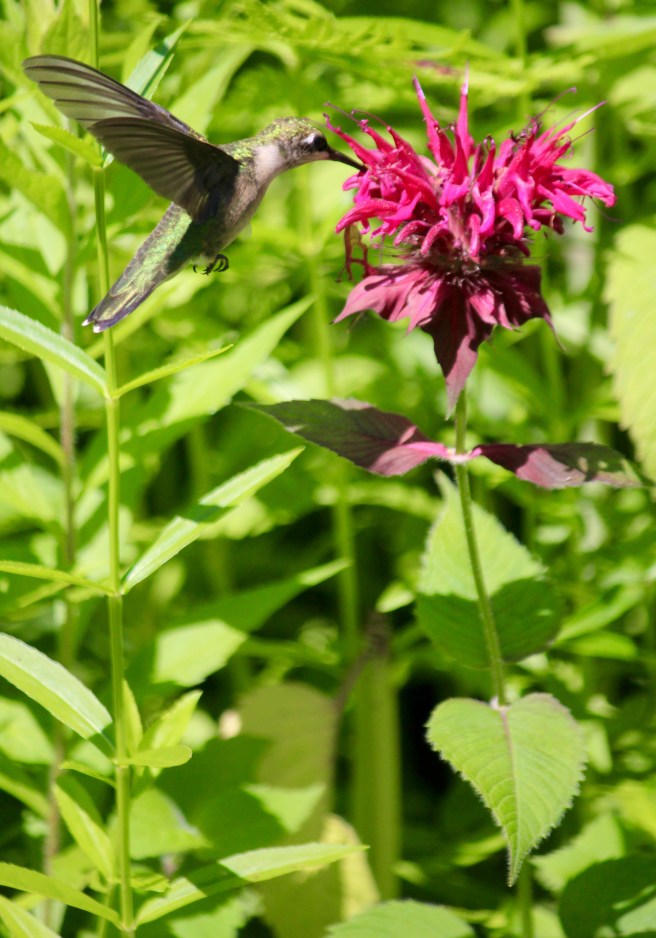
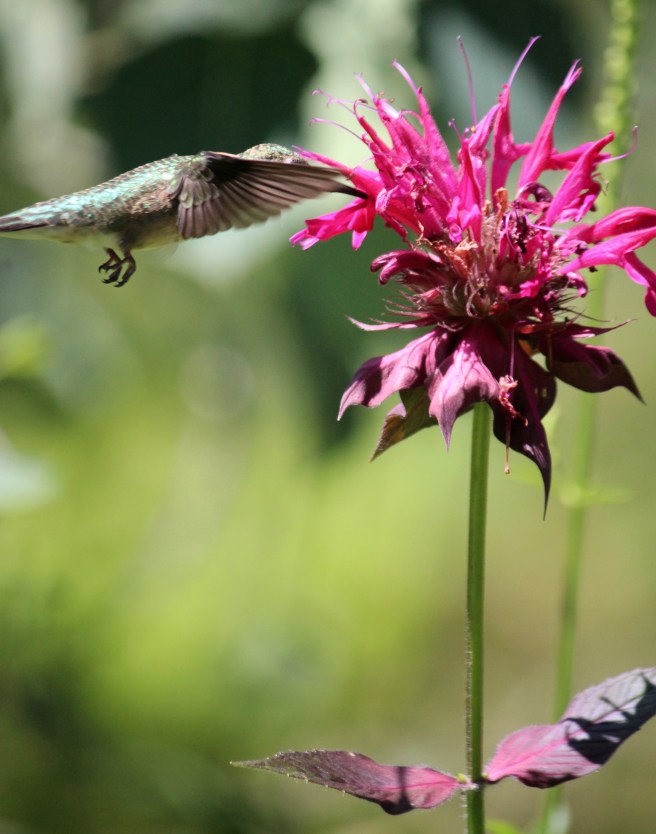
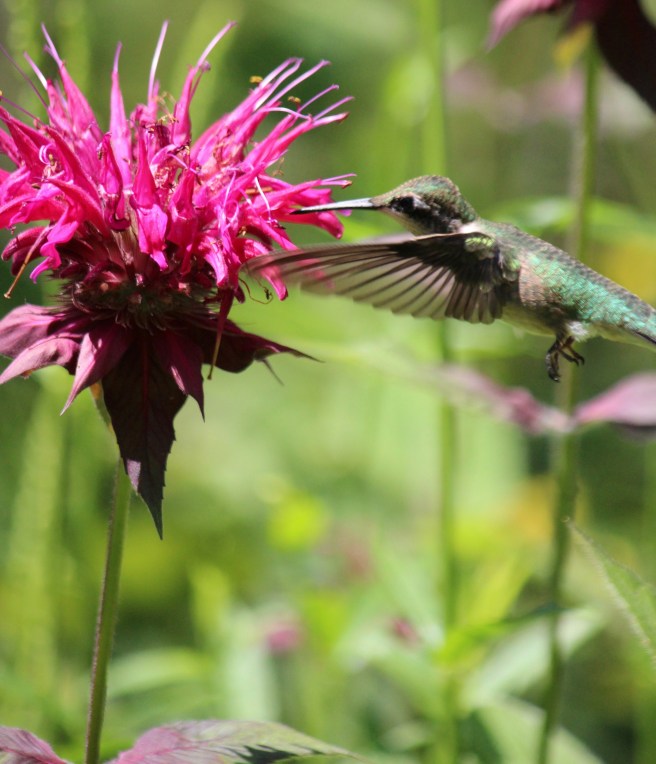
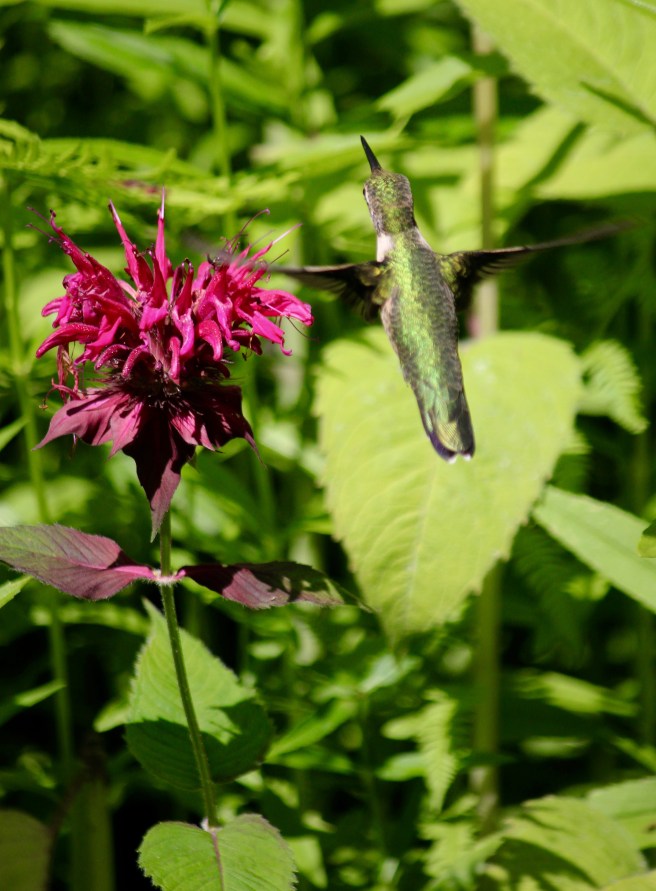
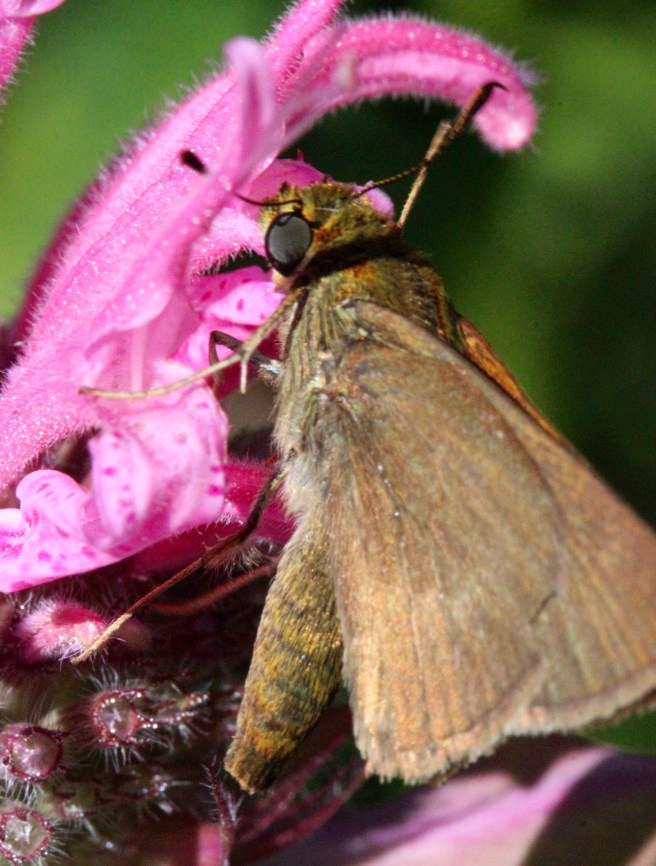
Stamens projected from the tubular upper lip, while below, three slender lips provided a landing pad for visiting insects seeking nectar-filled sweetness.
b15

Like me, the pollinators’ eyes shone brightly

b24

as they sought

b24a

fulfillment.

b11

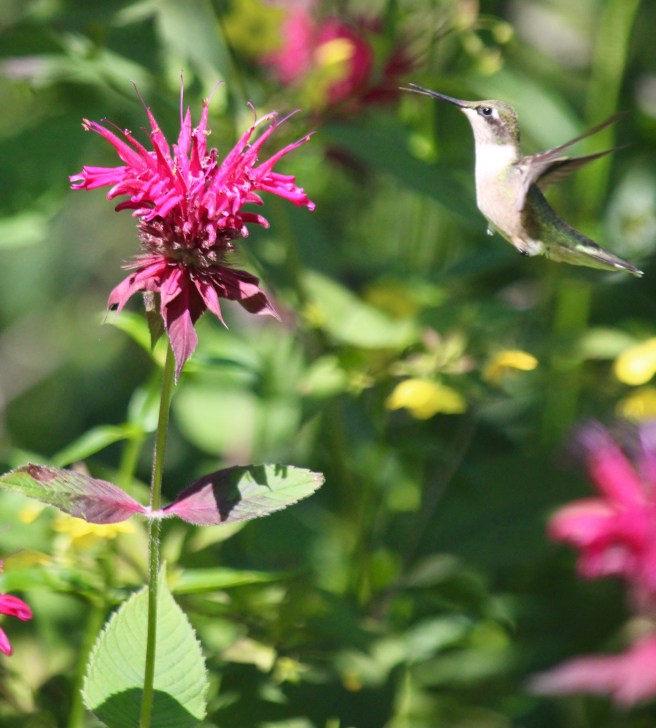
I’ve spent many moments starring–in awe and wonder–at the structure, simple yet complex, and all of its idiosyncrasies.
b16

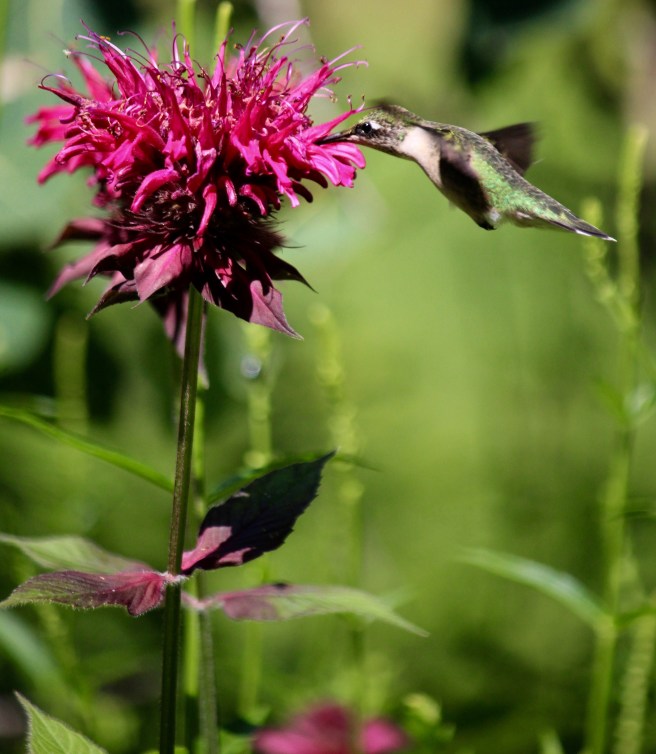
And I know I’m not the only female who stops by to soak in the glory of this old-fashioned perennial.
b17

b18

b25

b26

b20

b27b28

b22

b29

b21

What’s so special about bee balm? Everything.

P.S. This one is for you, Jinny Mae, because you, too, are special.


Buzzin’ ‘Bout

 Air traffic control to Flight 233. Over.

Flight 233 approaching runway. Over.

Runway lights are on, Flight 233. Have a safe landing. Over.

OK, so I have no idea what a conversation between air traffic control and a pilot really is, but I do know that some plants have runways to guide pollinators. And by the way–233 on a phone=BEE.

IMG_3446

Have you ever seen a more beautiful runway than the one on an iris?

lupine 2

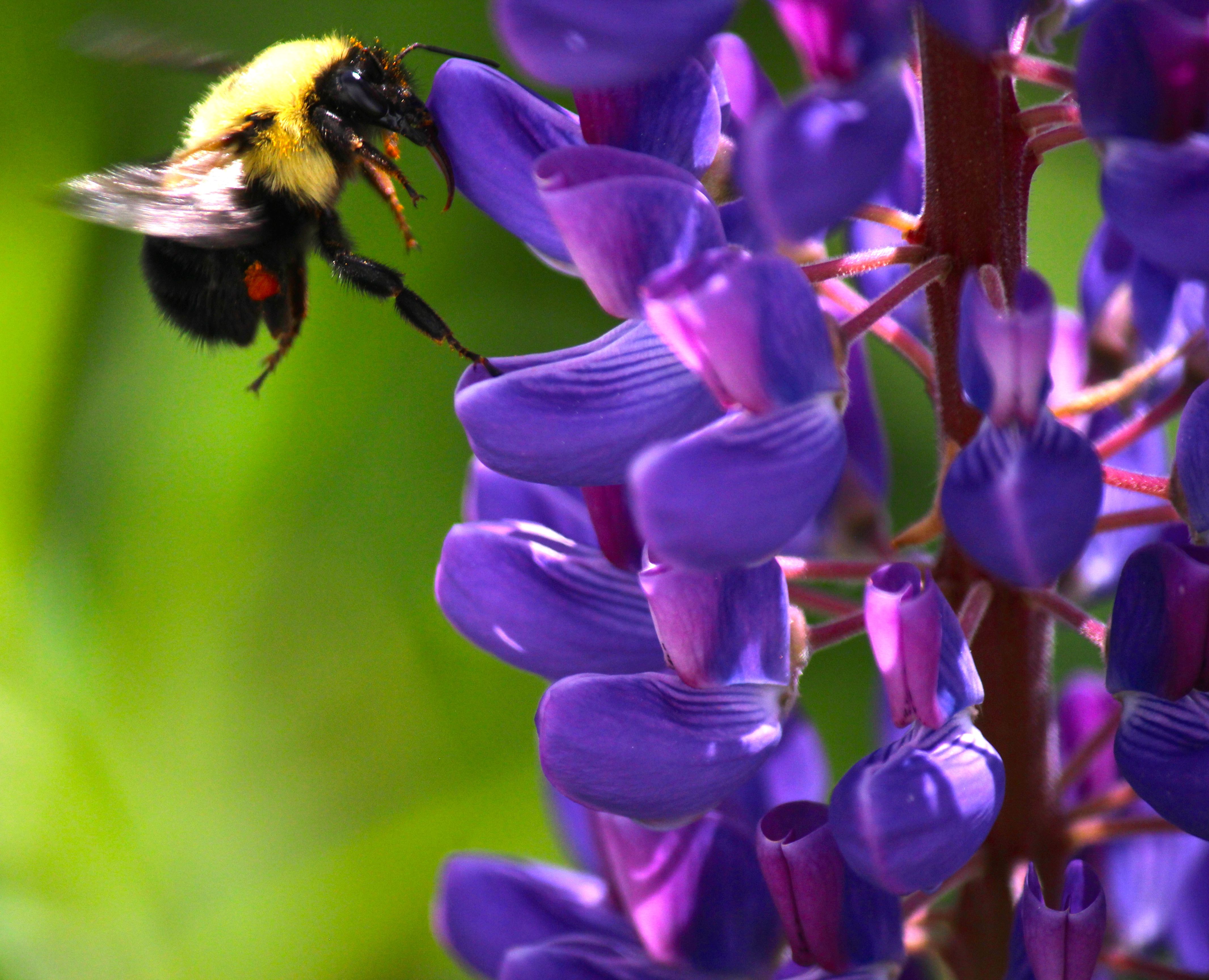
With their banner, wings and keels, the pea-like structure of the lupine is different, but . . .

lupine, bee

it’s a favorite for a variety of pollinators.

bee 2

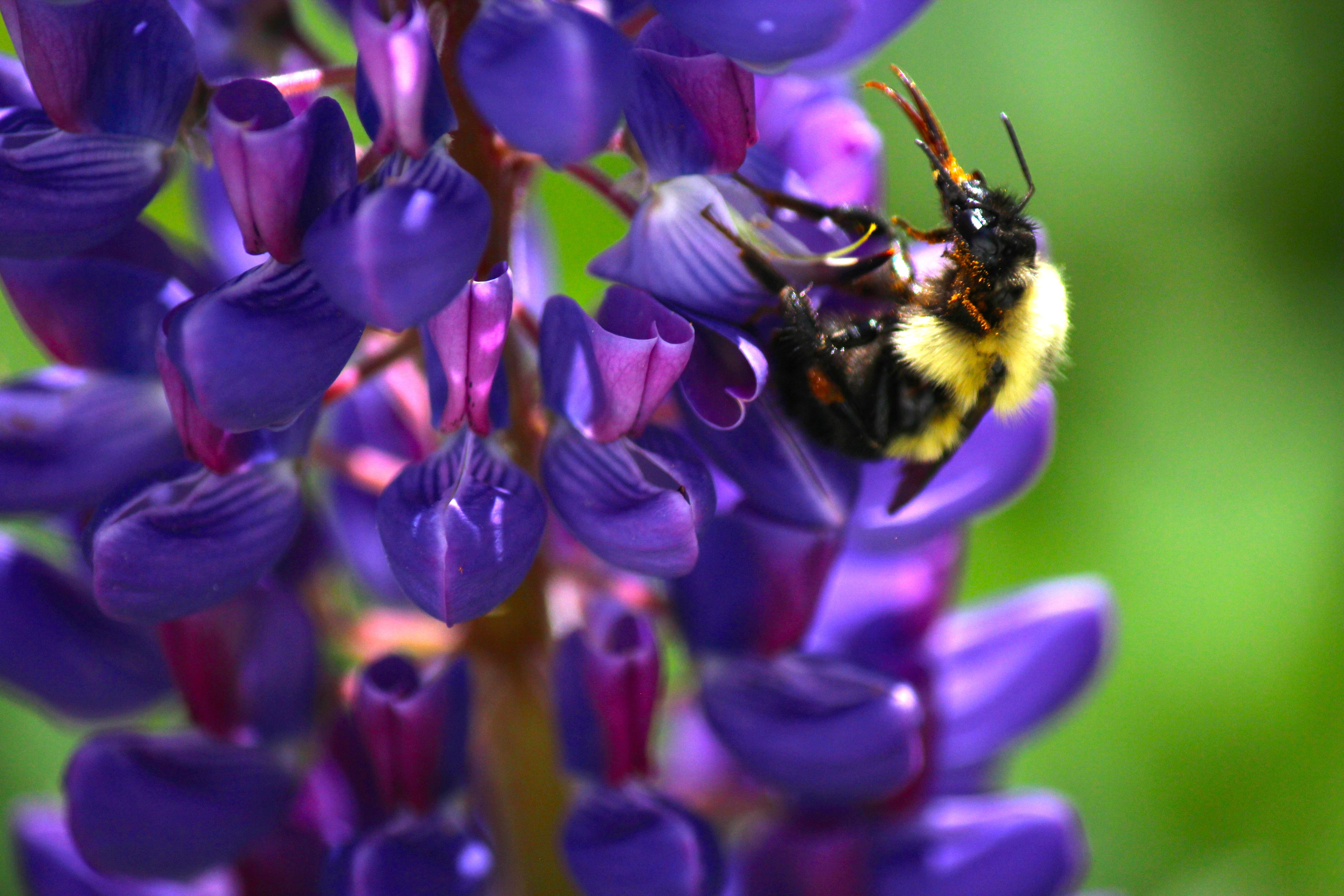
A nip of nectar

bee 3

and a dash of pollen

bee 4

makes for a happy bumblebee and a happy flower. The bee’s orange pollen basket is almost full.

butterfly

Some wildflowers don’t need pollination to produce viable seeds, but when a visitor drops by for a sip, some pollen will attach to its fuzzy body and be transported to the next plant.

hawkweed

Notice the hairiness below the flower of the orange hawkweed–I’ve read that that’s an attempt to keep slow moving insects, like ants, from coming in for a treat–they prefer flying insects. Rather picky.

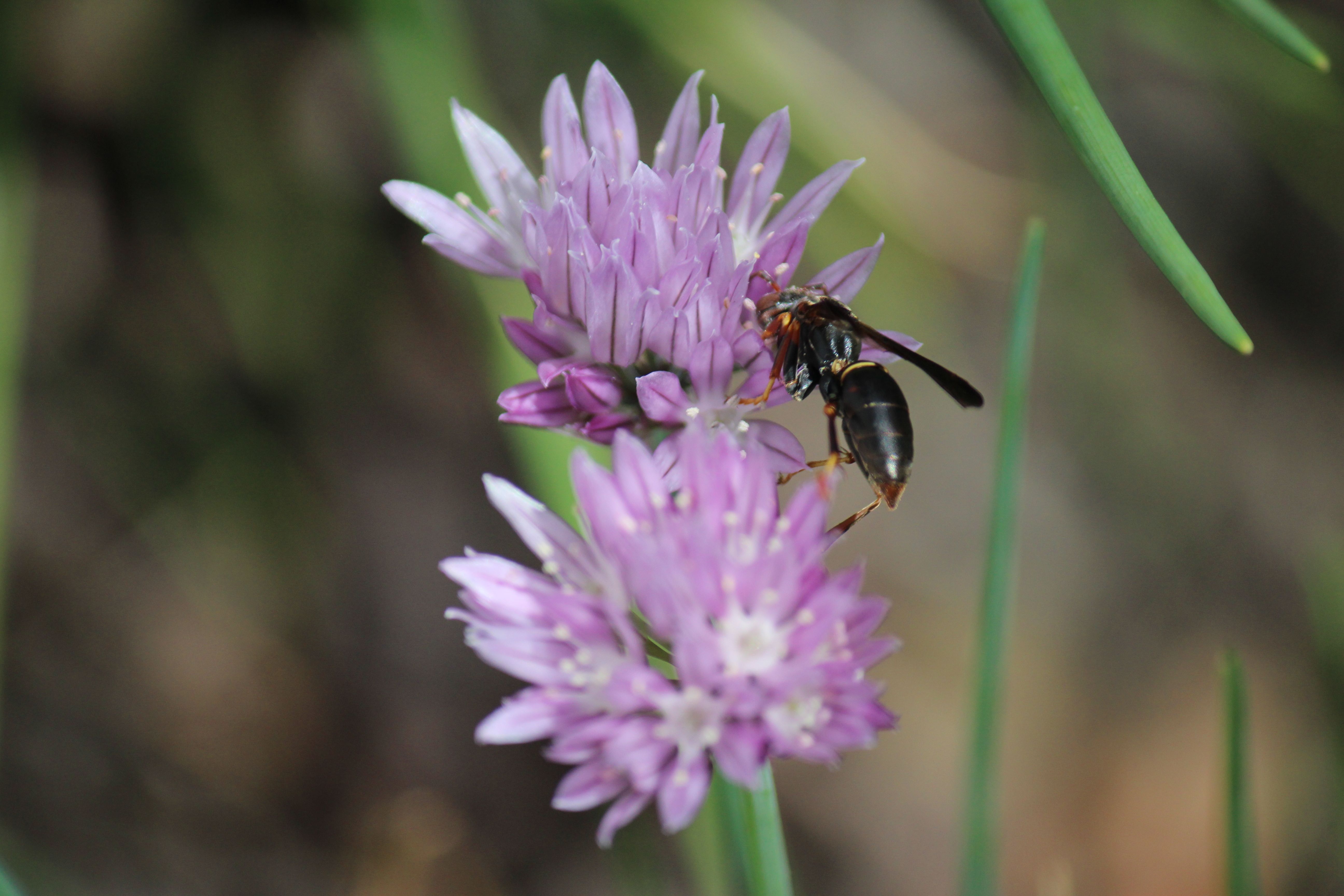
chives 2

Though chive blossoms consist of numerous flowers that are perfect, in that they each have both male and female parts, they can’t self-pollinate because the stamen sheds pollen before the pistil is ready.

chives 1

Thus, they depend on flying pollinators to deal with the timing issue.

daisy 1

Like the hobblebush I mentioned in earlier posts, the daisy consists of a ray of white sterile flowers surrounding a disk of yellow fertile flowers.

daisy 2

It had just opened today, but already is attracting attention.

So many different guiding lights. Thanks for buzzin’ ’bout with me on this nectar flight.