Celebrating New York Our Way

It probably seems odd that we love to visit the city, being the country-folk that we are who spend so much time wandering in the woods, but we do because there is so much to do and see and taste. And, after all, it’s only for a visit. But the best part–the people waiting for us on the other end, including our youngest and his gal and their friends and her family.

That said, on our first morning, we had some time to ourselves and walked several blocks to Prospect Park, where the Norway Maples have not quite given way to winter and so fall foliage still graced the sky above and pathway below.
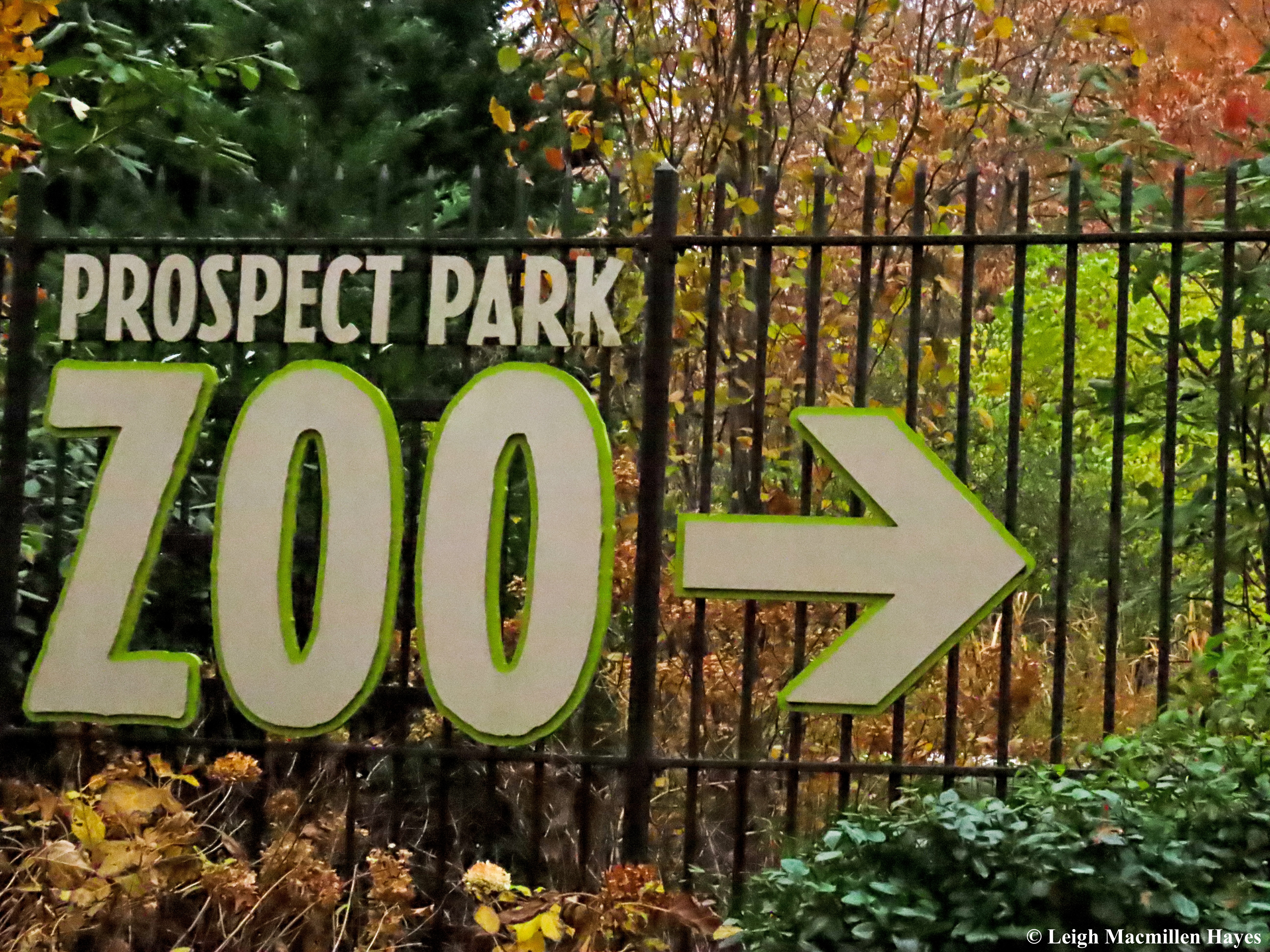
Our intention was to walk the outer perimeter and explore some new areas we hadn’t seen before, which suddenly included Prospect Park Zoo. When in Rome . . . and so we did. We entered the zoo and had the most delightful time.

First, there was the metal artwork that greeted us, including this snake consuming a frog. I have memories of such happenings in the natural world, watching as the frog became a large lump in the snake’s “throat.”
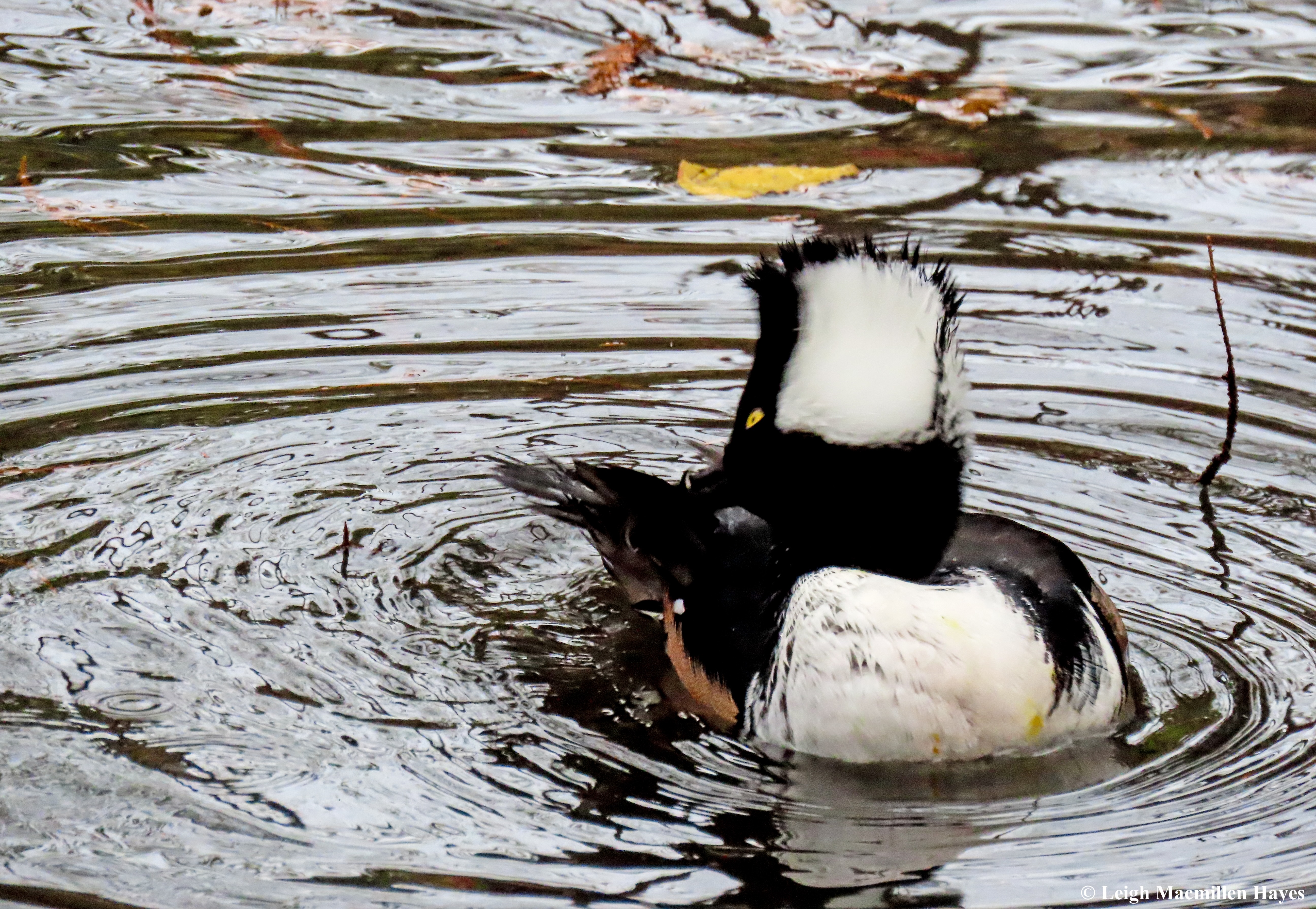
Around every bend there was something different to see and we felt like we were greeting an old friend when we spotted a male Hooded Merganser preening.
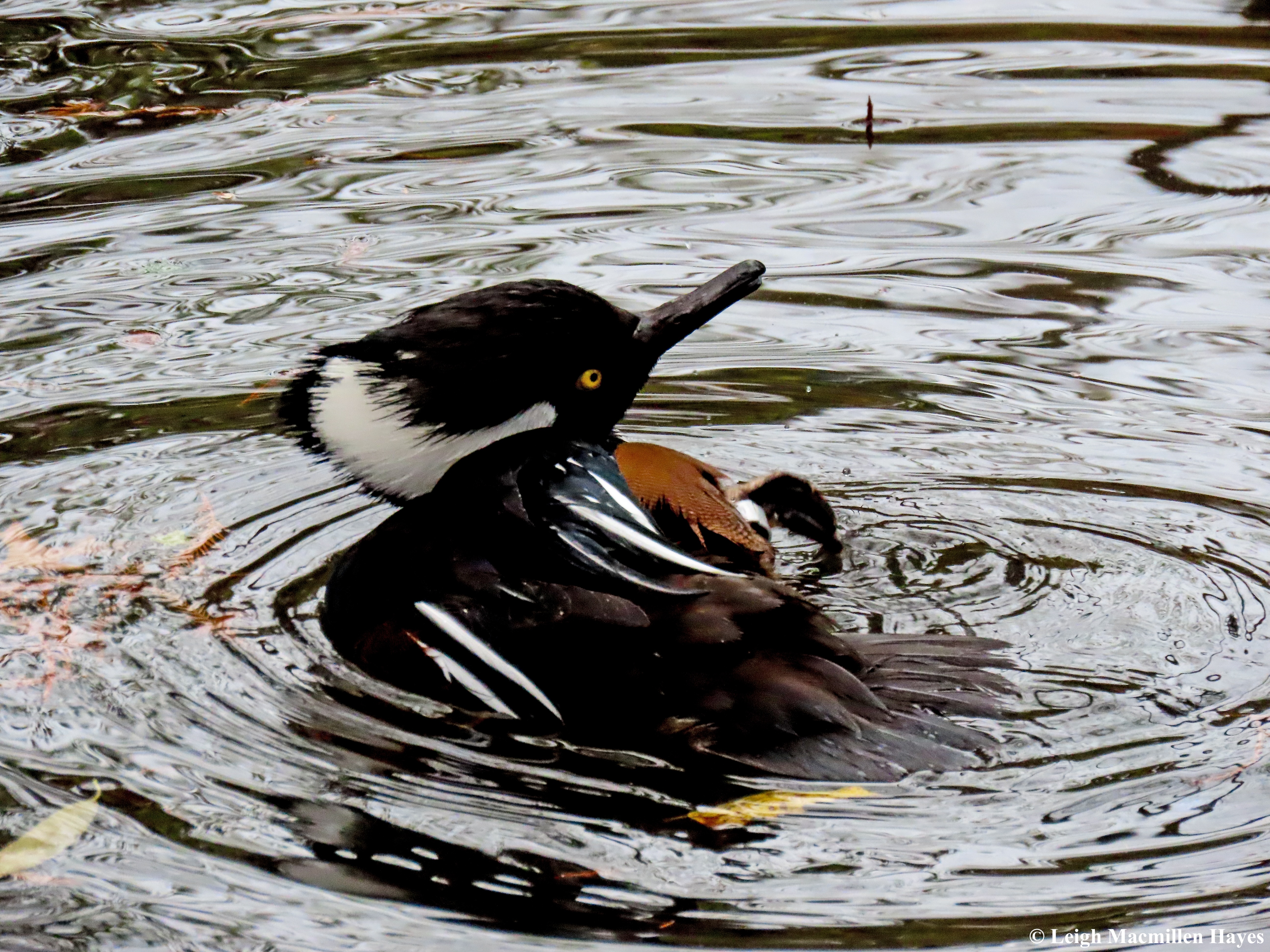
Splishing and splashing, his intention was to waterproof and align his feathers, cleanse them of dirt or parasites, and allow him to spread protective oil from a small gland near the base of his tail, which will keep him warm and buoyant, especially important given the changing weather of the moment.
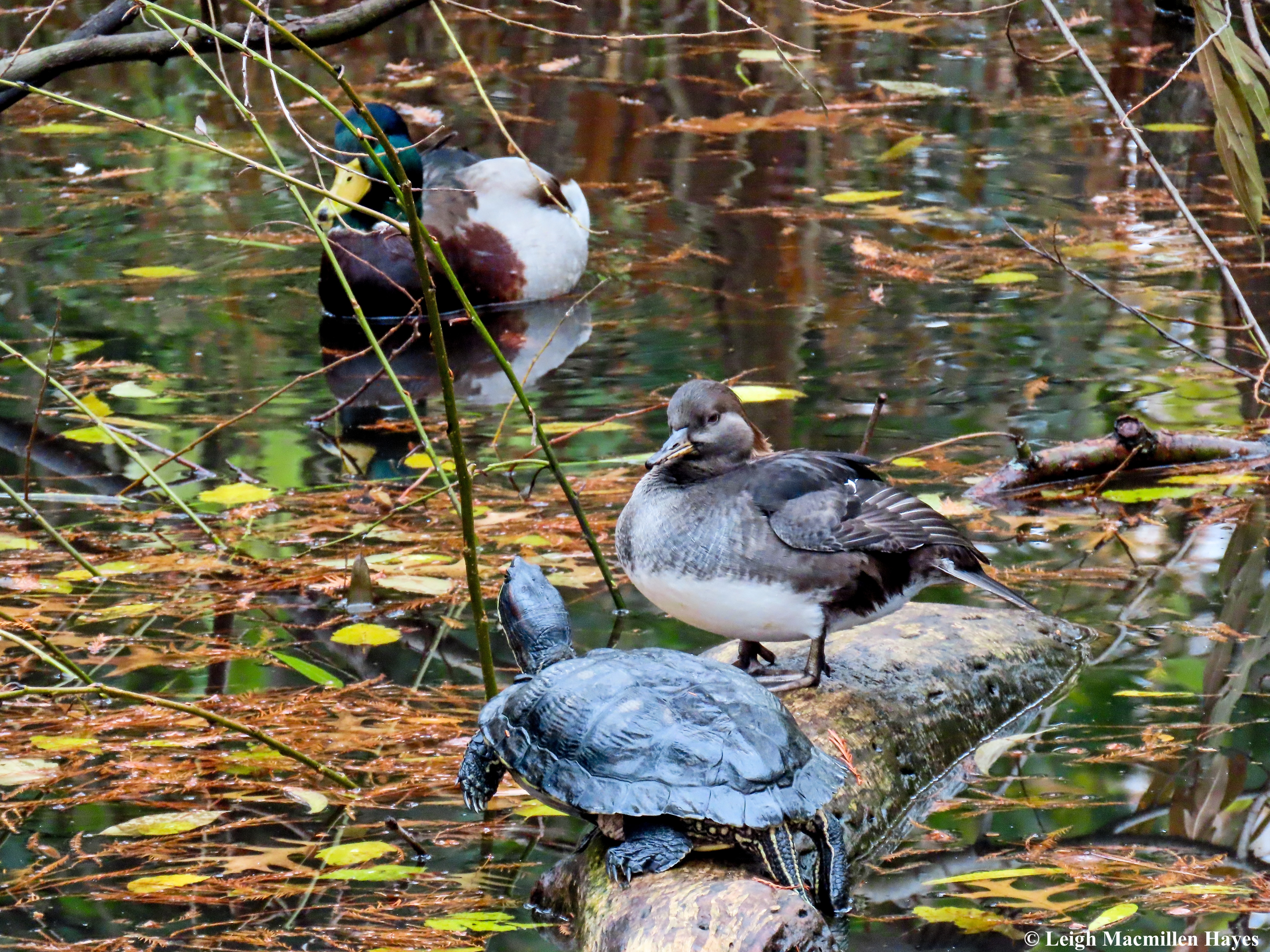
His mate, on the other hand, stood upon a log with a Red-eared Slider and we watched in bewilderment because neither one seemed concerned about the other.

It almost looked like they were two old friends sharing a quiet moment in the midst of a hectic world. And perhaps they were.

For a few minutes, I actually thought the turtle might not be real because there were some small sculpted animals along the zoo path, but then he turned his head ever so slightly.
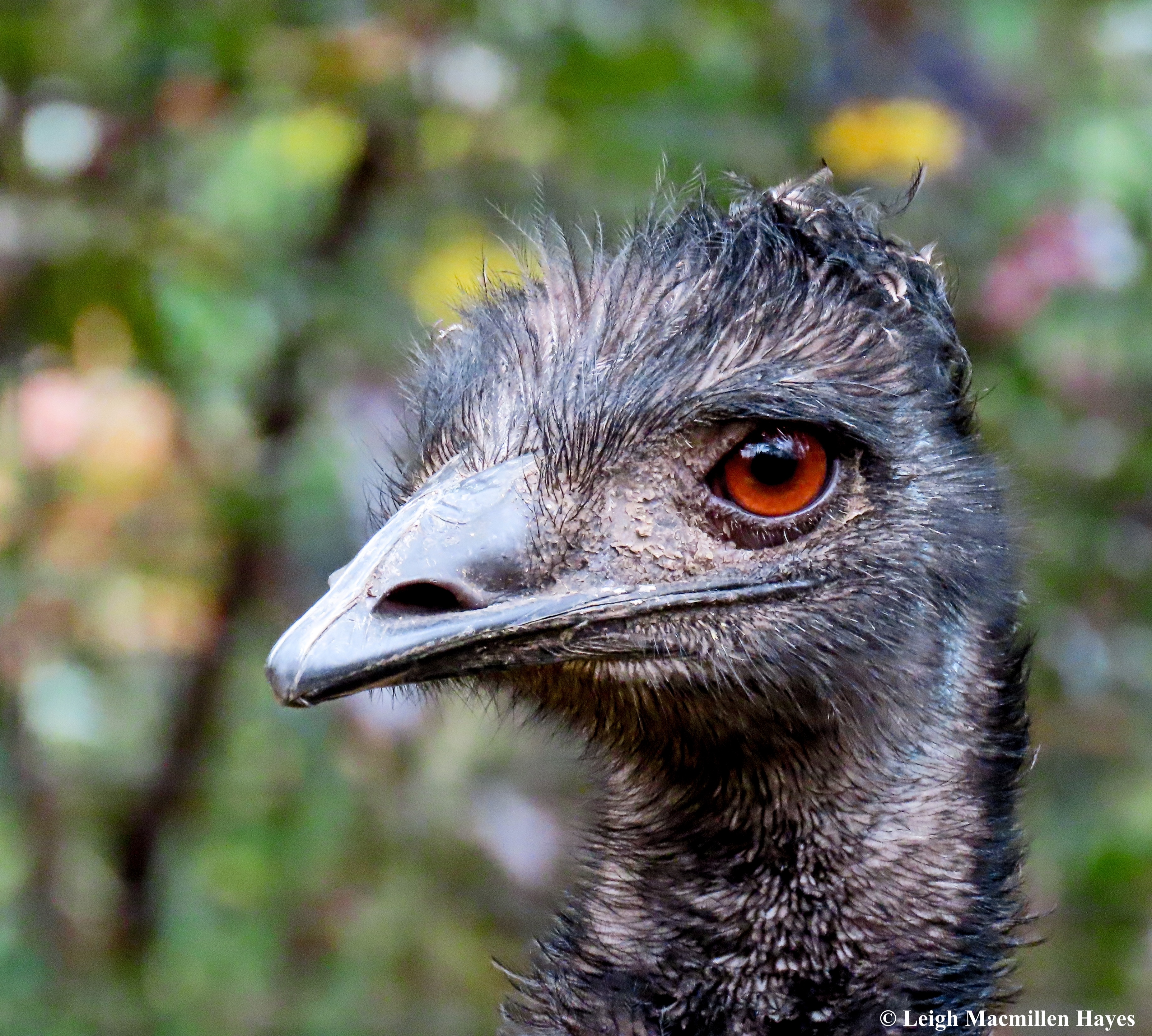
We left them in peace and found the Emus and I immediately fell in love with their orange eyes. And though they don’t look anything like Turkeys, I felt there was a good resemblance, maybe because both have appearances only a mother can love, and this seemed an apropos bird to meet the day before Thanksgiving.

And then, and then, there was a River Otter. Asleep. Who knew River Otters took time to nap? In my book, they are always on the go, swimming and chatting to each other and sliding. Always sliding. But, of course, one needs to take a rest from time to time.

And then slowly lift one’s head up . . .
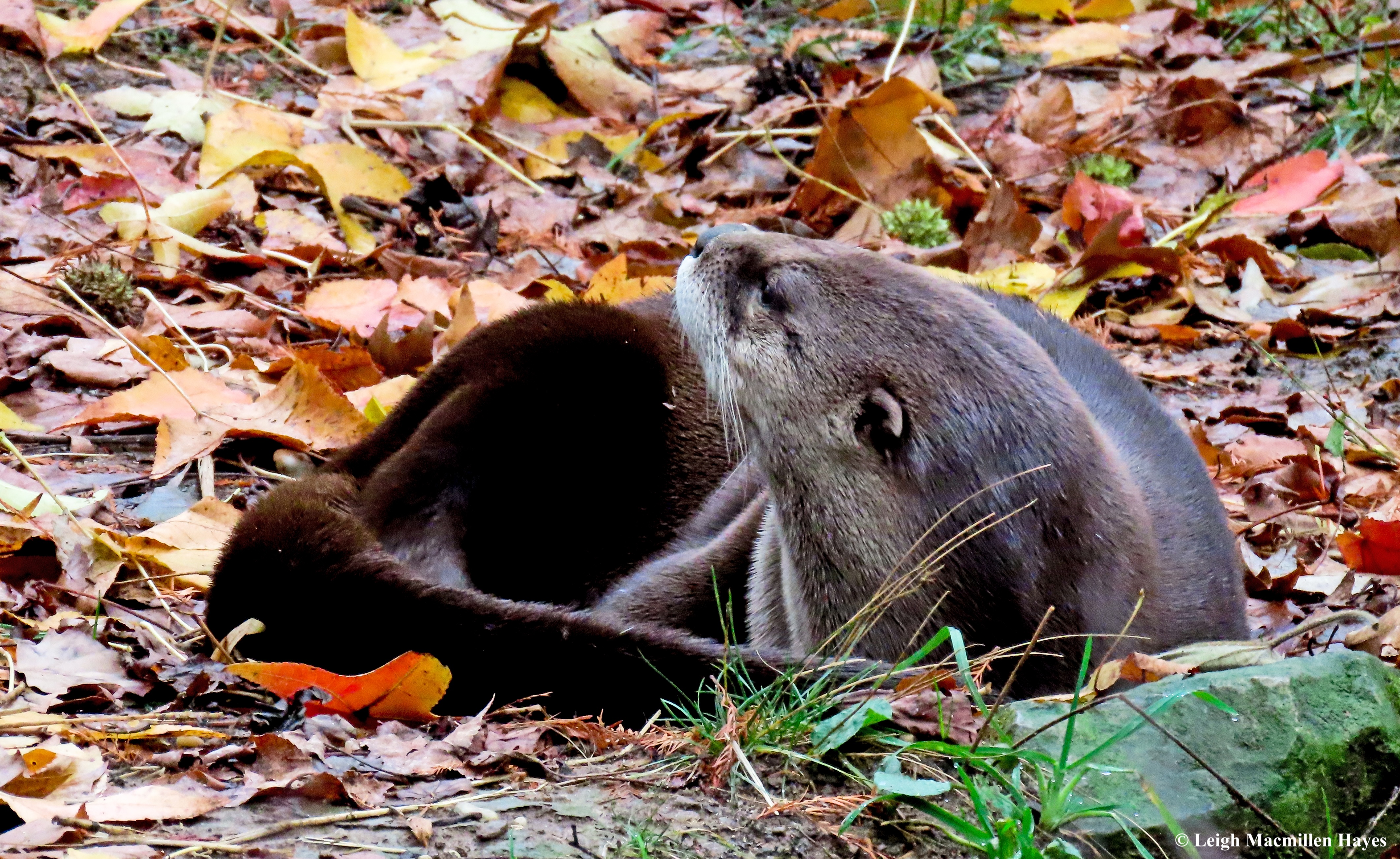
just a tad bit higher . . .

and scratch an itch, . . .

and then do the same as the ducks and preen a bit to spread the protective oils. It’s all in a day’s work schedule.

The ones who were having the most fun at the zoo seemed to be the Sea Lions. And we had arrived moments before a training session, so we stayed to watch and ooh and aah with the small crowd that had gathered that day.
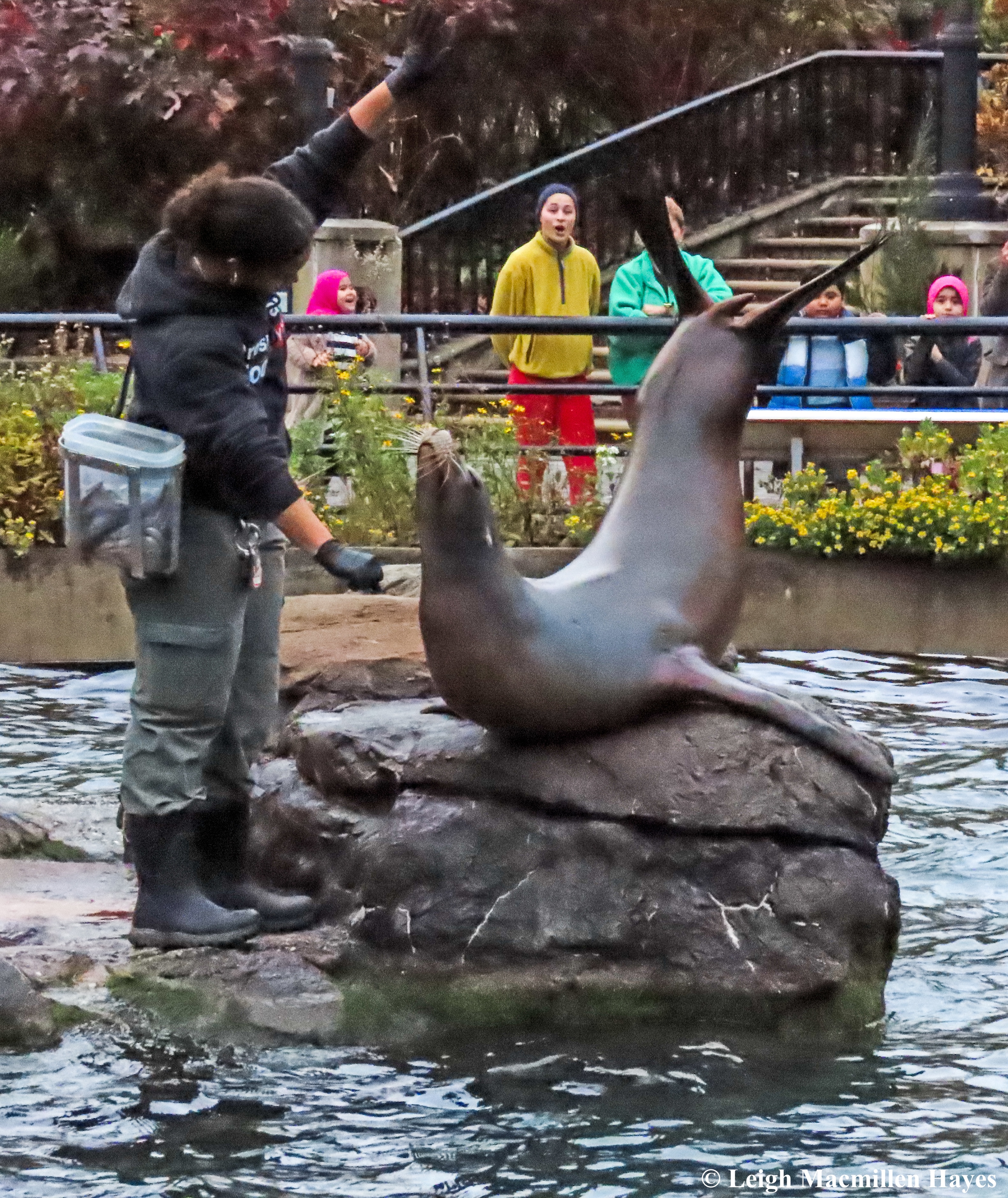
They reacted to hand signals. And fish, of course.

High Fives . . .

and Open Sesames . . .

and Eye Drops . . . were all part of the program.
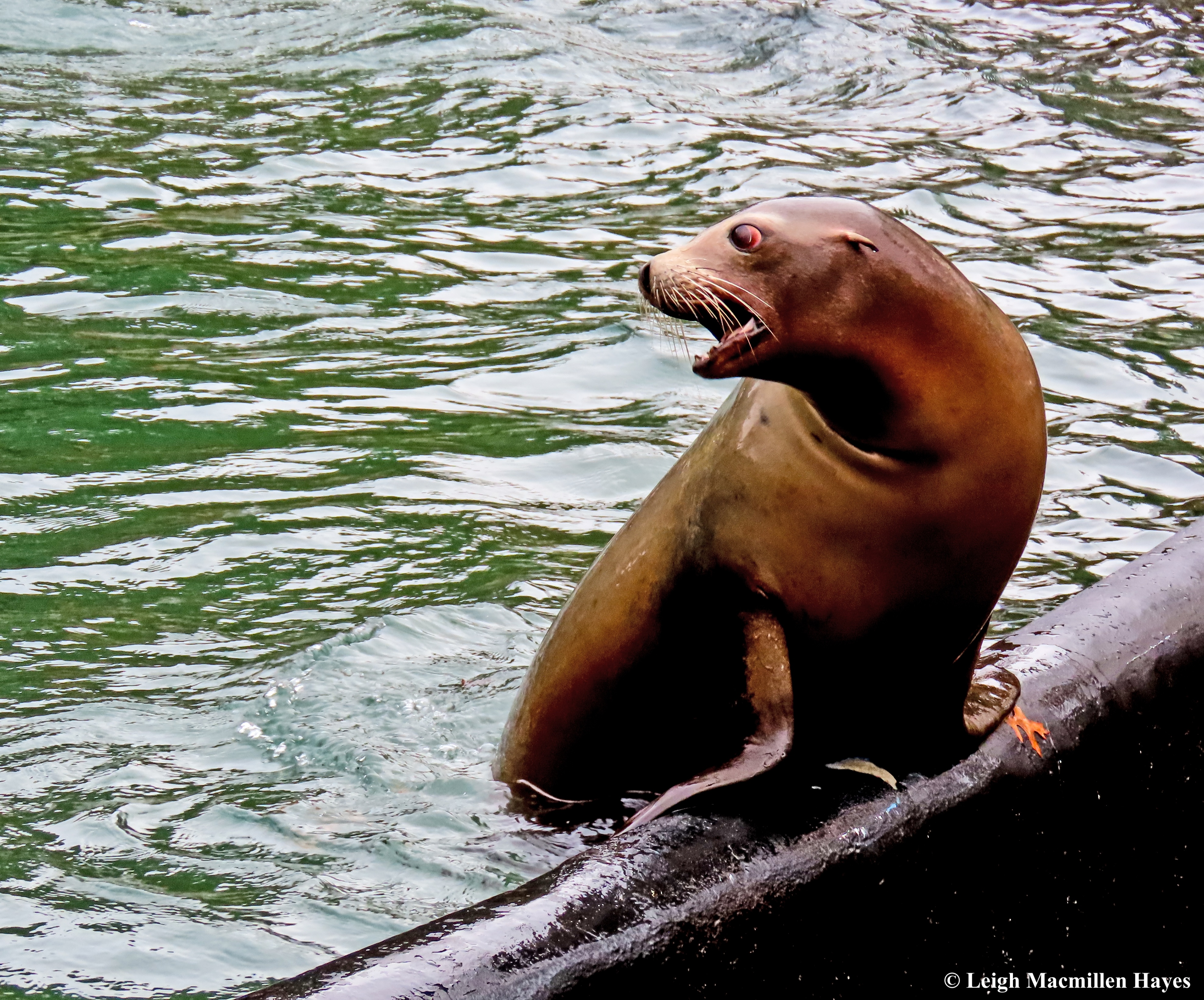
But maybe the best moment was when one swam to the edge, looked back at the trainer, recognized the signal to talk, and let us hear his voice.

Though I love fish, give me dark chocolates, and I might do the same.

Not to give away all that we saw, but there were Red Pandas who looked so cuddly, until I spotted the nails on their toes. They are bears, after all.

And a Pig-snouted Turtle, aka River Fly Turtle. I like the more common name because just look at that snout.

Meanwhile, the Merganser had moved to another part of the pond, but the Red-eared Slider maintained its position and I gave thanks for the opportunity to see it basking, even on a day with the temp in the low 40˚s.
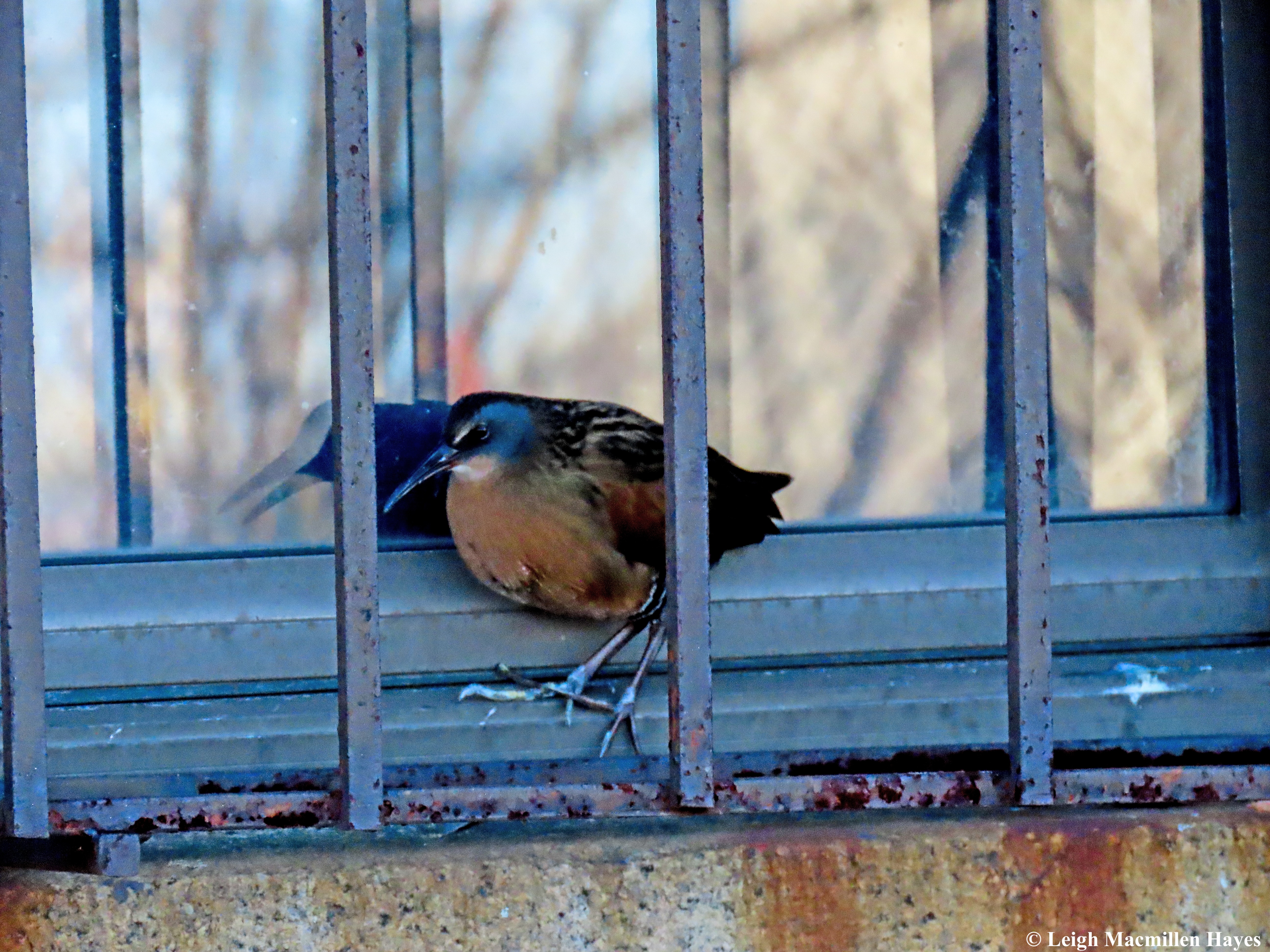
On another day in another place, a place next to where it should have been, we unexpectedly spotted a Virginia Rail. Yes, we were beside the East River in Wallabout Bay, but for some reason this most secretive of birds ended up behind the grates guarding a window.
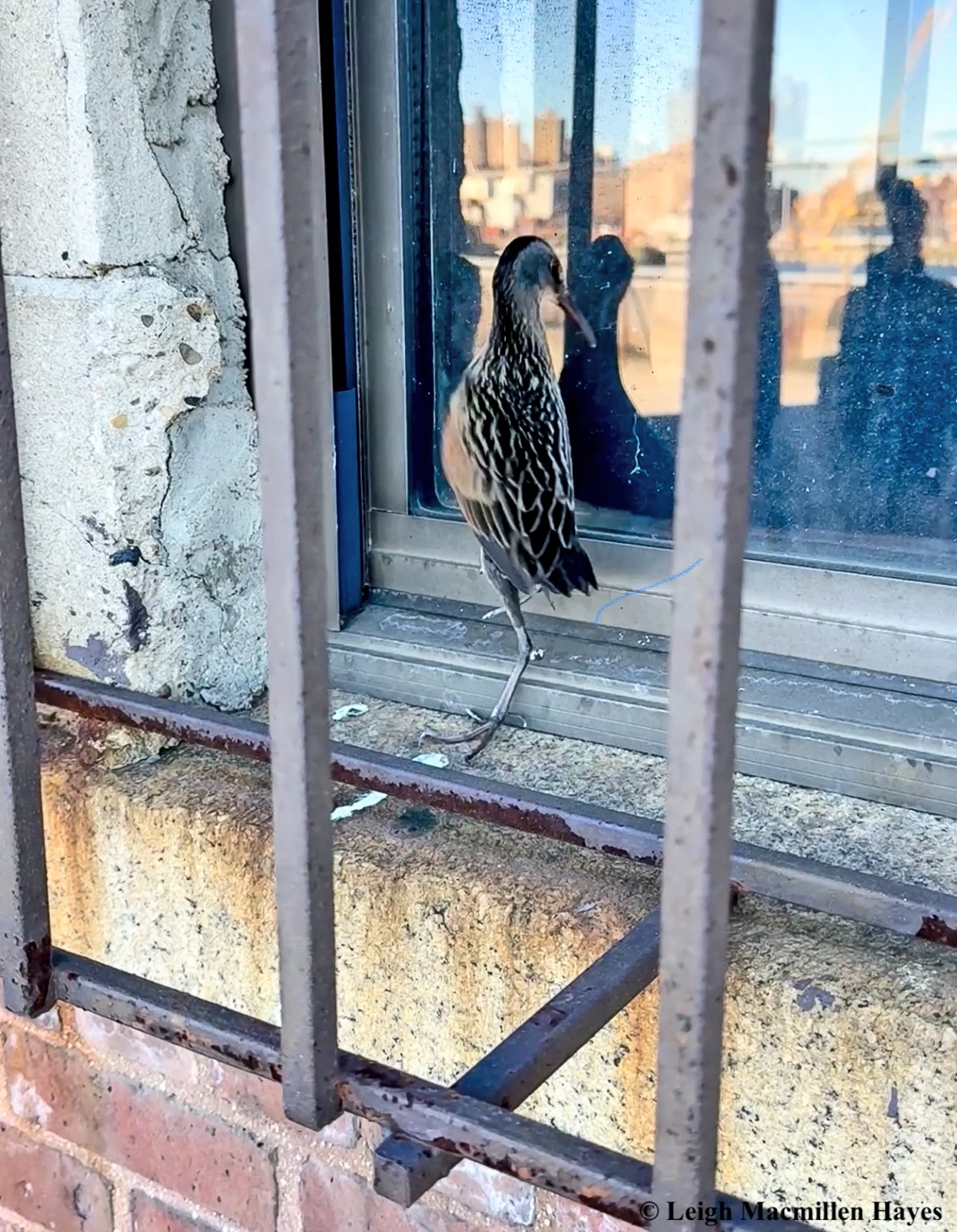
Our companions worried that it couldn’t get out, but I suspected it would as the openings were large, and could only imagine that the wild winds of the previous day had blown it a wee bit off course.

And in another place, Starlings, where I expected to find a more exotic species.

And then, much to my delight, one flew in: a Green Monk Parakeet.
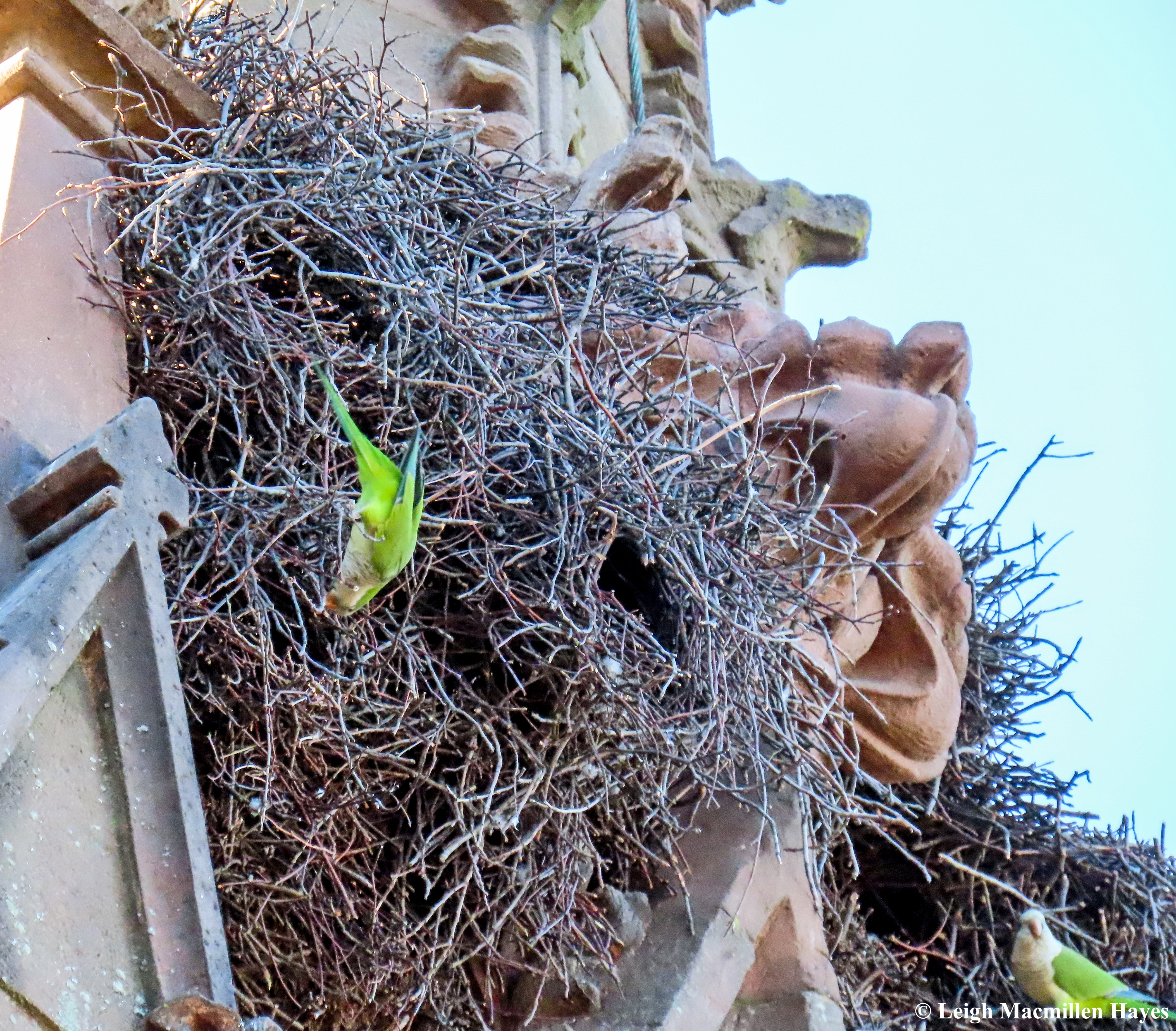
I could have stood watching and photographing for hours in an effort to get to know them better, but there were miles to walk and so I settled for a few quick snaps of the camera and briefly captured their acrobatic movements.

Bringing us back to reality, were the Gray Squirrels dining and creating middens atop tombstones.

But even better than that, a Black Squirrel, the melanistic (dark fur) color variation of the Gray Squirrel. The black coloration is caused by a genetic mutation and perhaps provides advantages in certain environments, like helping them absorb more heat in colder climes.

And finally, much to my utter surprise, we spotted a Queen Bumblebee stumbling along in the crack of a paved pathway, probably seeking a place to overwinter moments before the sun went down.

It wasn’t just the wildlife that we came to see, for we had the profound pleasure of spending time in the company of four young people we are proud to call our own–that being our two sons and their gals. And together one morning, we explored Jumbo and walked below the Brooklyn and Manhattan Bridges.

One fun discovery was this orange cone Christmas Tree that seemed like it would look right at home in our hometown in western Maine, given that we’ve endured several years of sewer construction and road work.
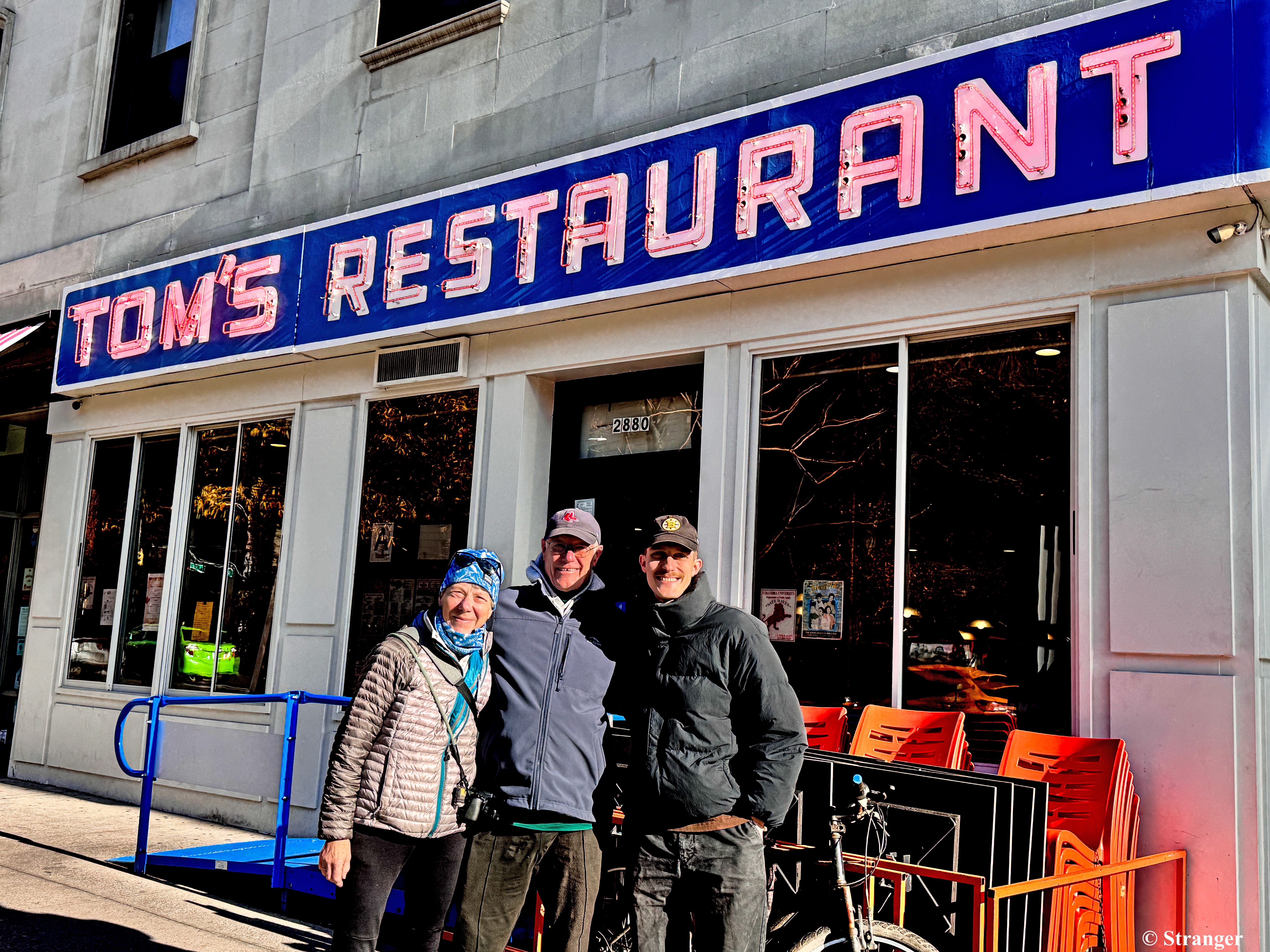
After saying goodbye to our eldest, we ventured to Manhattan with the youngest and found the restaurant that inspired one of our favorite shows.

We sat at the counter where P posed below Kramer and felt like we could hear Jerry and George and Elaine in a nearby booth.
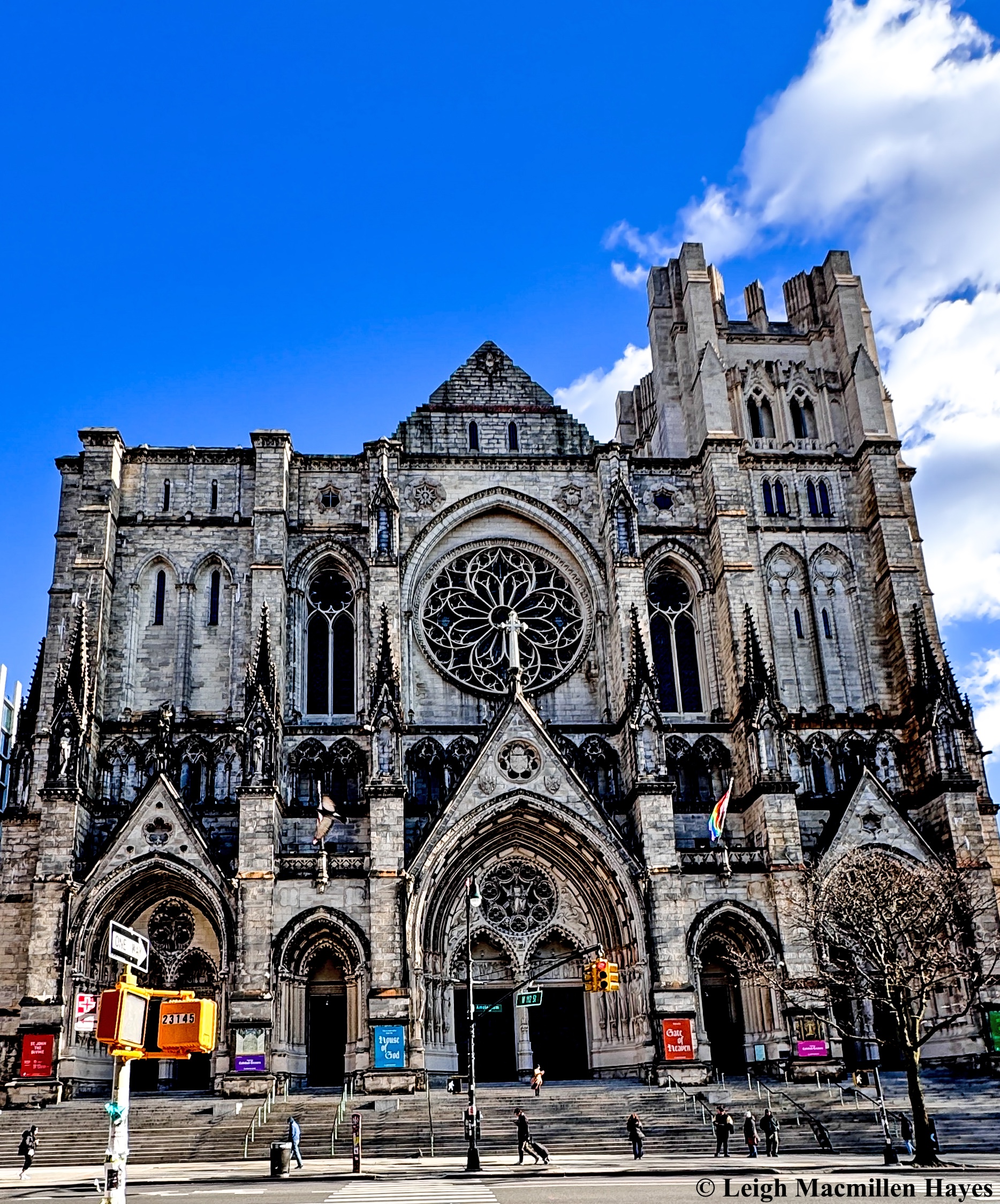
And then we walked to St. John the Divine, an Episcopal Cathedral steeped in history and never finished.

Our tour guide informed us that the original architects, George Lewis Heins and Christopher Grant LaFarge, envisioned a Romanesque-Byzantine style structure, as seen here in the Apse. Notice the rounded arches. They started building the Cathedral in 1891.

The Cathedral was partially finished in 1911, when Heins died. Architect Ralph Adams Cram was then hired to complete the work and the Nave reflects Gothic Revival architecture, his favorite. Notice the pointed arches.

Massive pillars that are 55-feet tall and six-feet across support the building and were constructed from New England granite without steel reinforcement, using techniques borrowed from the Middle Ages.
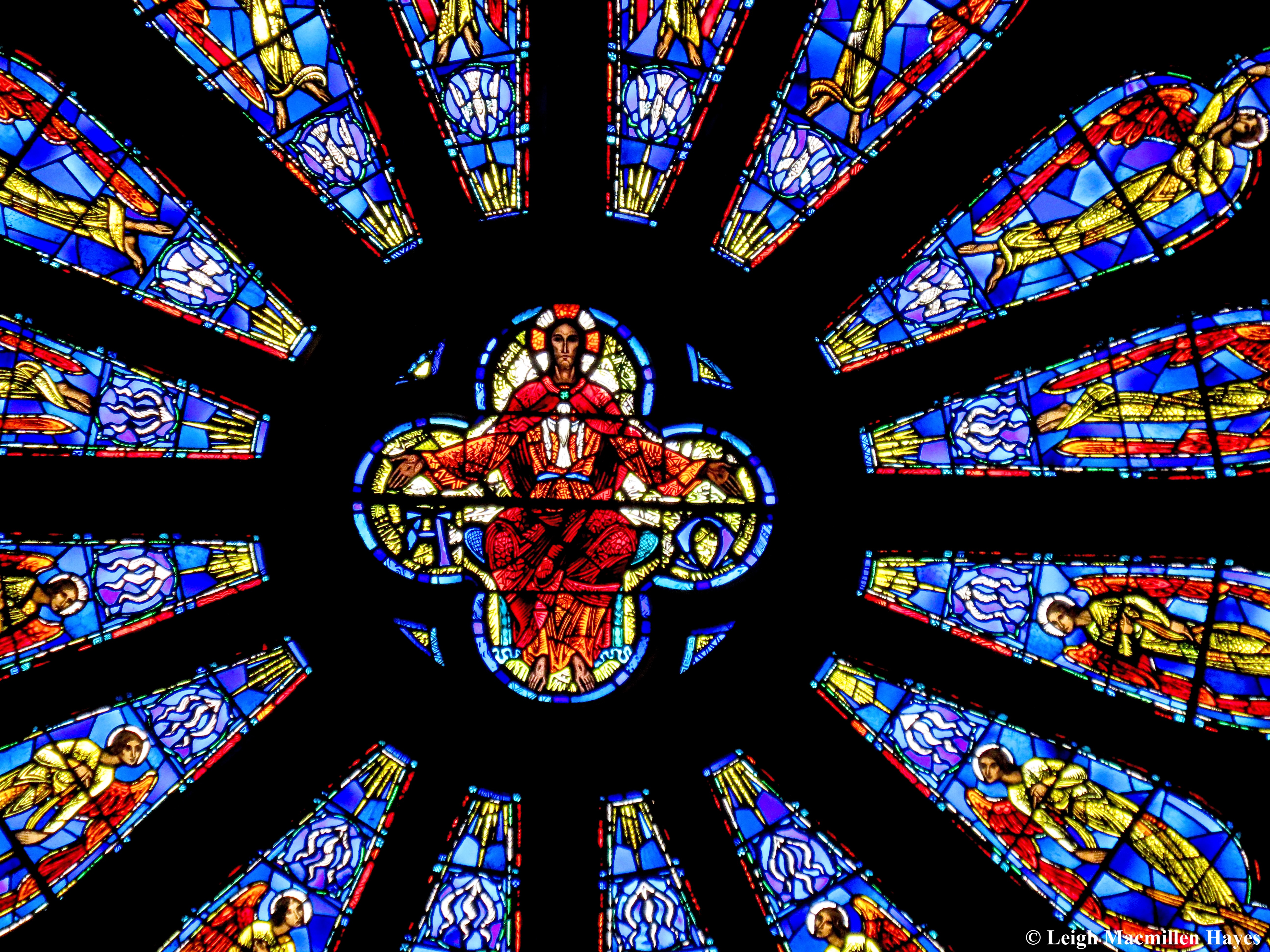
In the back of the Nave, the Great Rose Window is forty feet in diameter, with Jesus being 5.5 feet tall, despite how small he looks from the floor below. It’s the third largest rose window in the world and is made of over ten thousand pieces of glass, mind-boggling as that is.
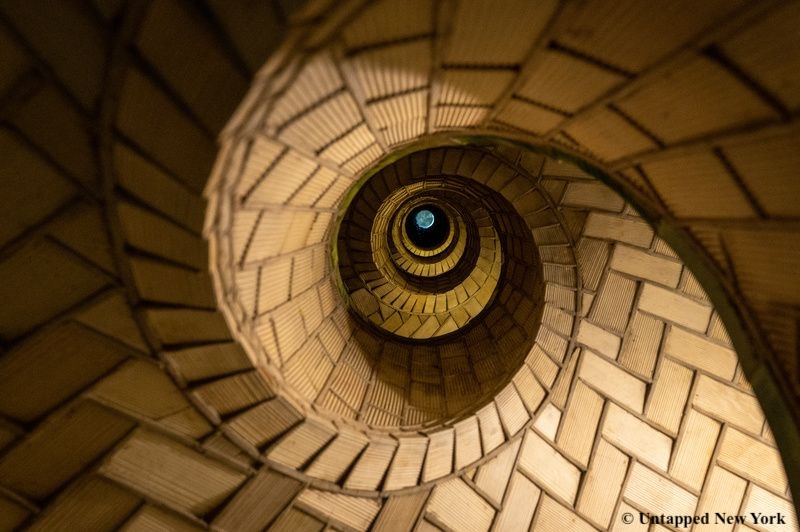
Our youngest had signed us up for a vertical tour, and I have to say climbing up was much easier than climbing down, but I’m so glad we did it.

Each level brought us closer to the stained glass windows, which are dedicated to one of fourteen forms of human endeavor, including Labor, Medicine, Communication, Education, Law, Military, Arts, American, Anglican, Crusaders, Earth, All Saints, Missionary, and Sports.

The windows on the ground level show a variety of historical and scriptural figures engaged in a particular activity, all theme-related.

The higher set of windows show saints associated with the same activity.

Rosettes at the top depict Jesus, crowning each window and completing the progression from the human plane to the sacred and divine. He is always depicted with a cross above his head.
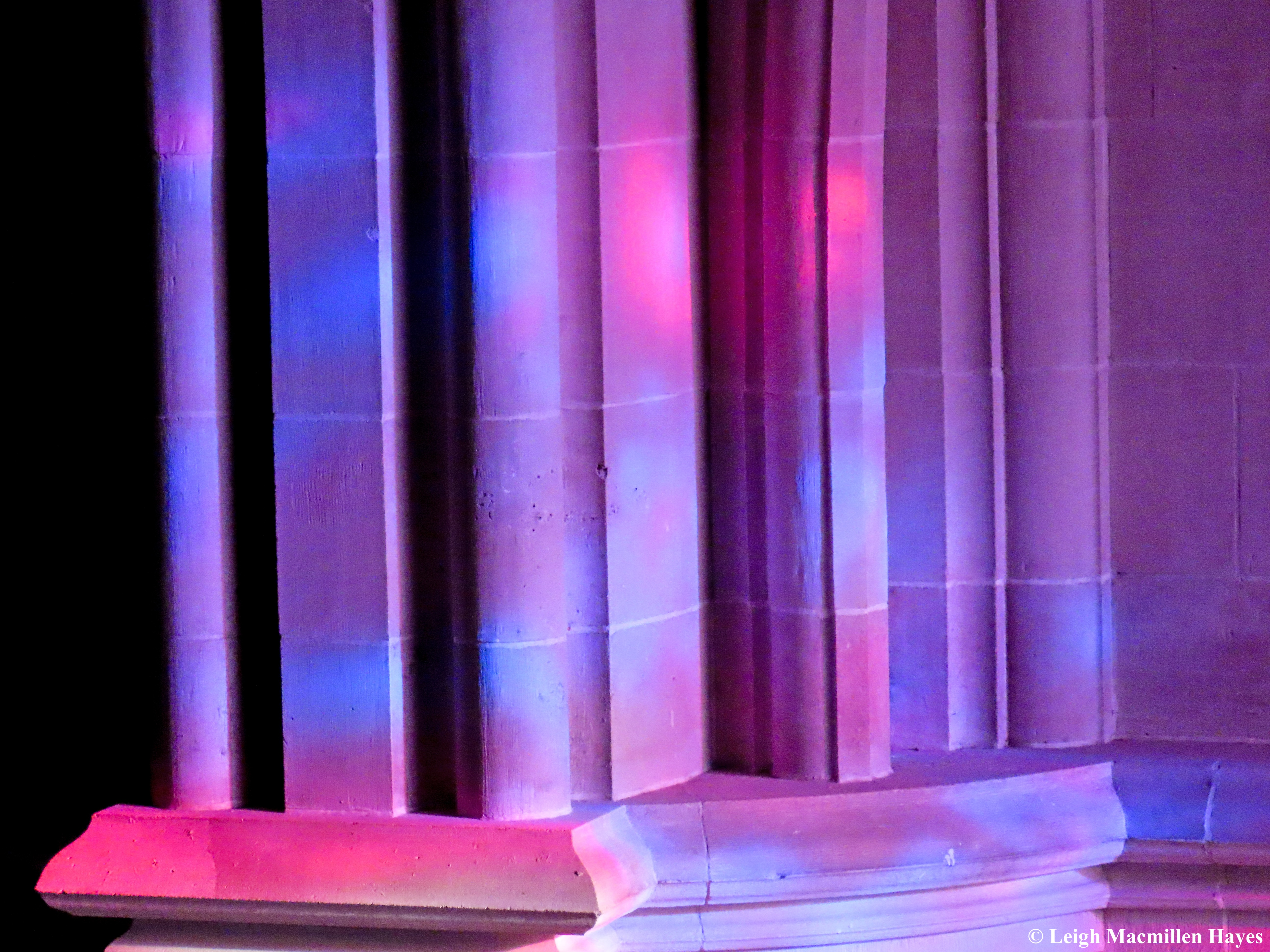
We happened to be there when the late afternoon sun was shining through and creating magical rainbows on the pillars.

From there we went to the MET Cloisters, where we walked the grounds and saved an inside tour for another day.

Each time we visit, we also arrange for a private group tour and this year’s locale was the Brooklyn Navy Yard in Wallabout Bay on the East River.

From the early 1800s through the 1960s, it was an active shipyard, and during World War II was known as the “Can-Do” shipyard, which employed 75,000 workers. In 1966, it was demilitarized.
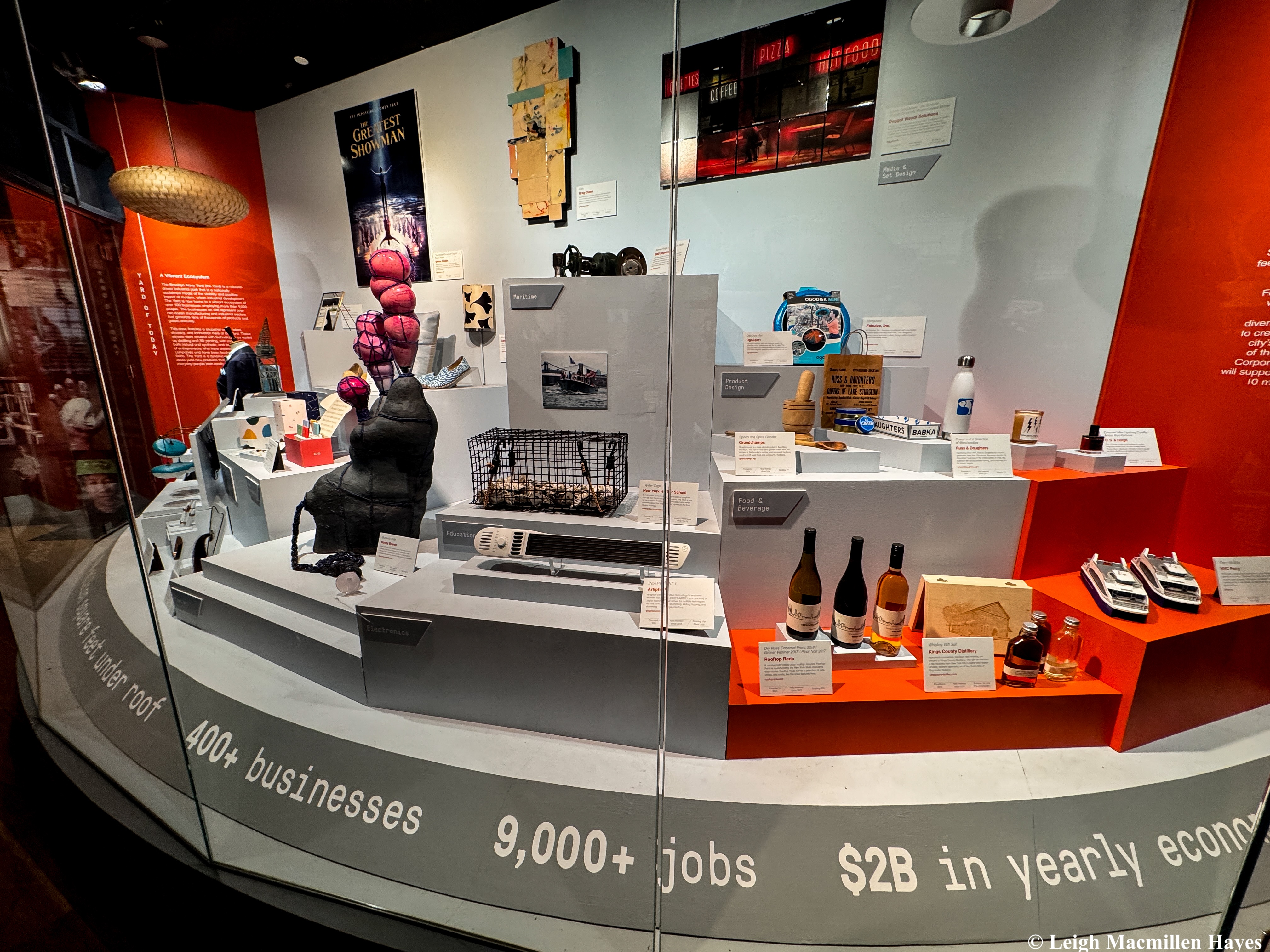
According to our guide, the facility now houses an industrial and commercial complex for shipping repairs and maintenance, run by the New York City government, and as office and manufacturing space for non-maritime industries. Inside the museum one can view some of the products that call this place home.

One of the things we learned as we toured the shipyard, was that Sweet’N Low, the sugar substitute, was born and raised at a Fort Greene factory just outside the Brooklyn Navy Yard. Though the business has relocated, the iconic sign remains.

Our final tour of the weekend was self-guided, again with our youngest leading the way, and into Green-Wood Cemetery we ventured because it’s located just around the corner from the apartment he shares with his gal.
The cemetery contains 600,000 graves and 7,000 trees spread out over 478 acres, with hills and dales and ponds in the mix and as P noted, the city noises disappeared as we explored.

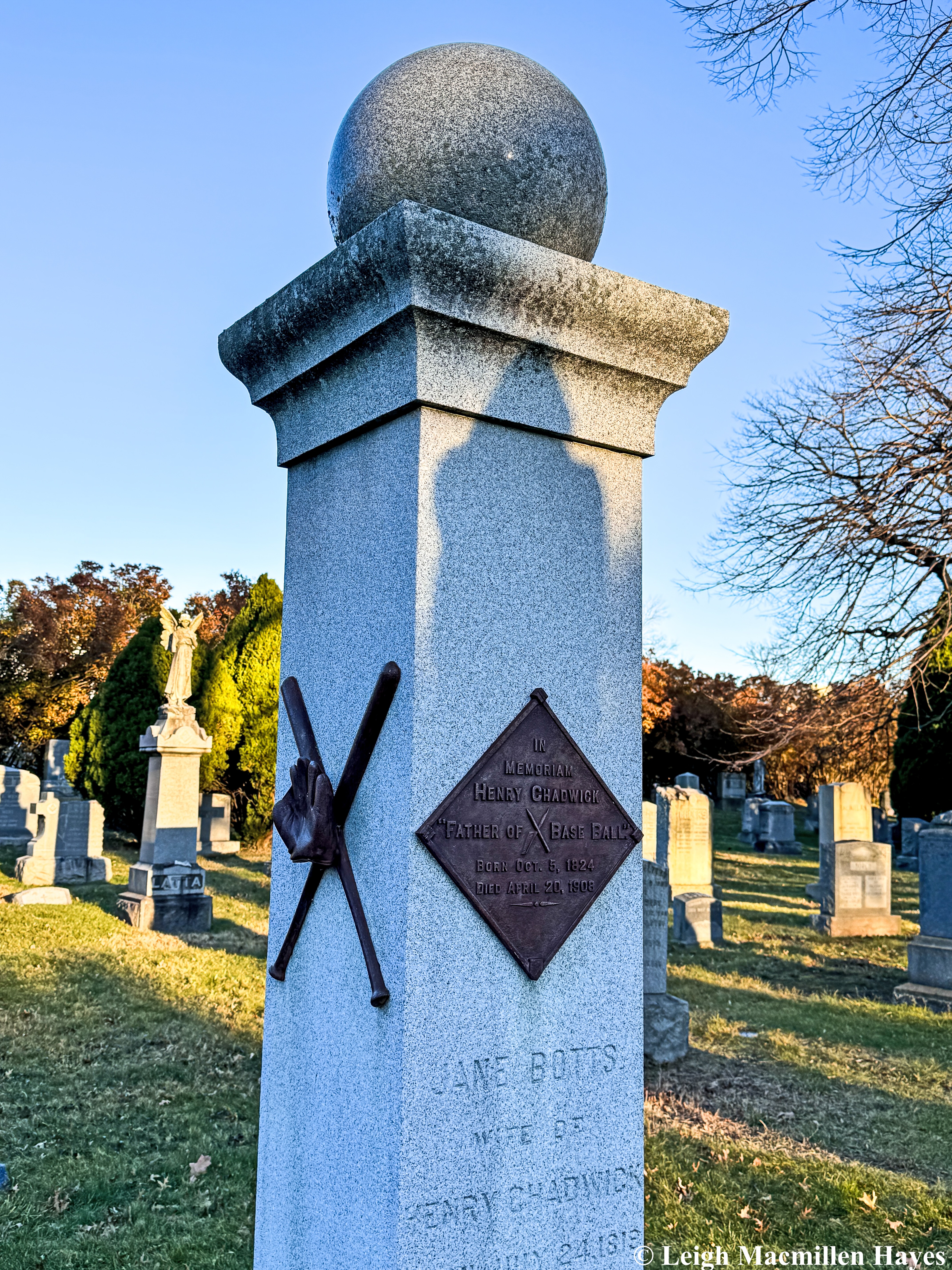
One of our fun finds, the pillar for Henry Chadwick and Jane Botts, he being the father of Baseball.
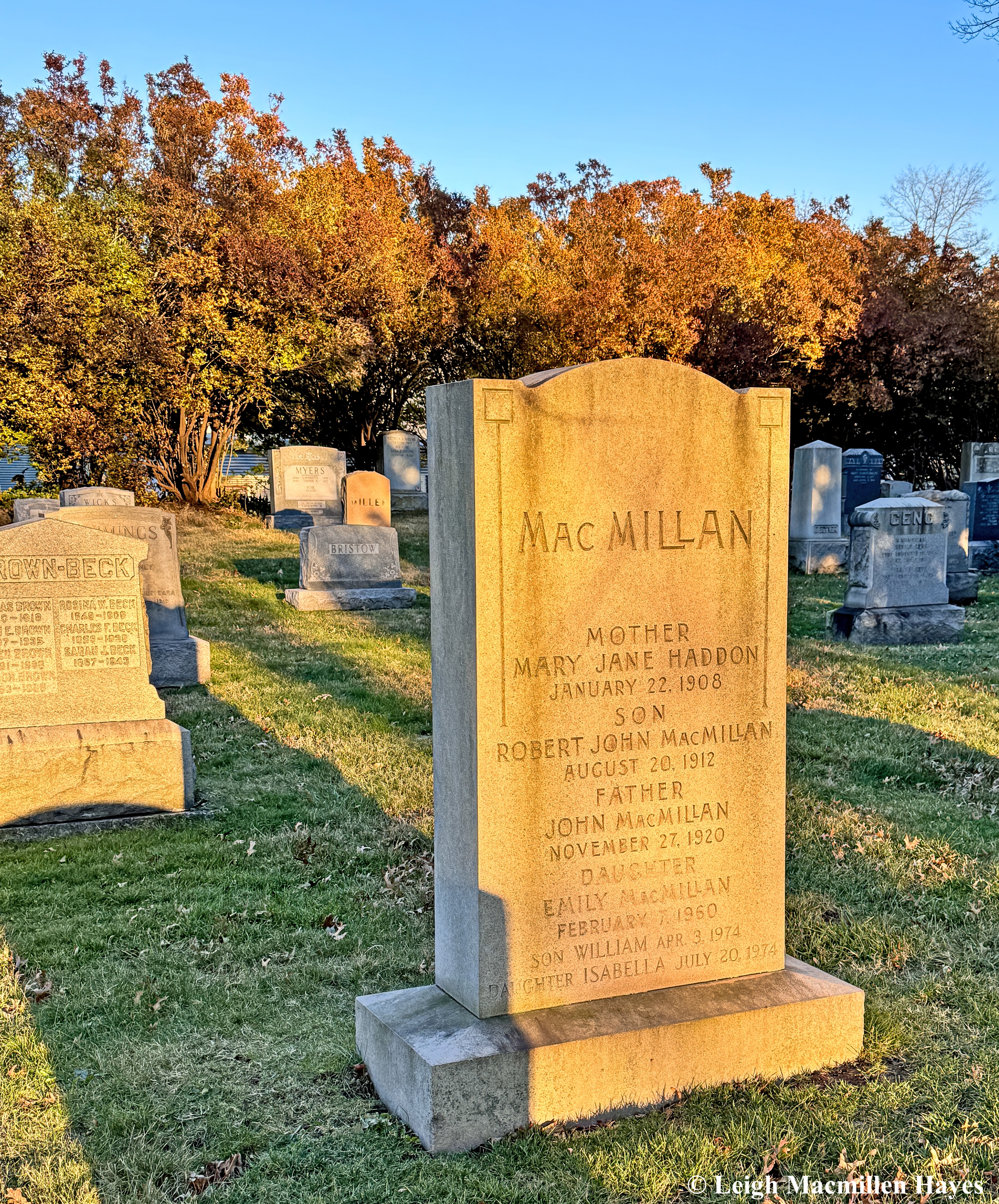
We also looked for familiar names and weren’t disappointed, though we don’t know of any connections at this point.

But what truly struck us is that this cemetery is one for all–for so many were the nationalities and religions depicted.

And while most of the stones looked like they were frequently cleaned, I did locate some with lichens, speaking to the fact that there is life among death. And this shield lichen very much spoke to such life for it featured the fruiting bodies or Apothecia with abundant Soredia, which are tiny, powdery vegetative reproductive bodies that can be carried off by the wind or rain to form new lichens. The Soredia are similar to other vegetative reproductive growths called Isidia, which are stalked growths on the thallus or body of the lichen.
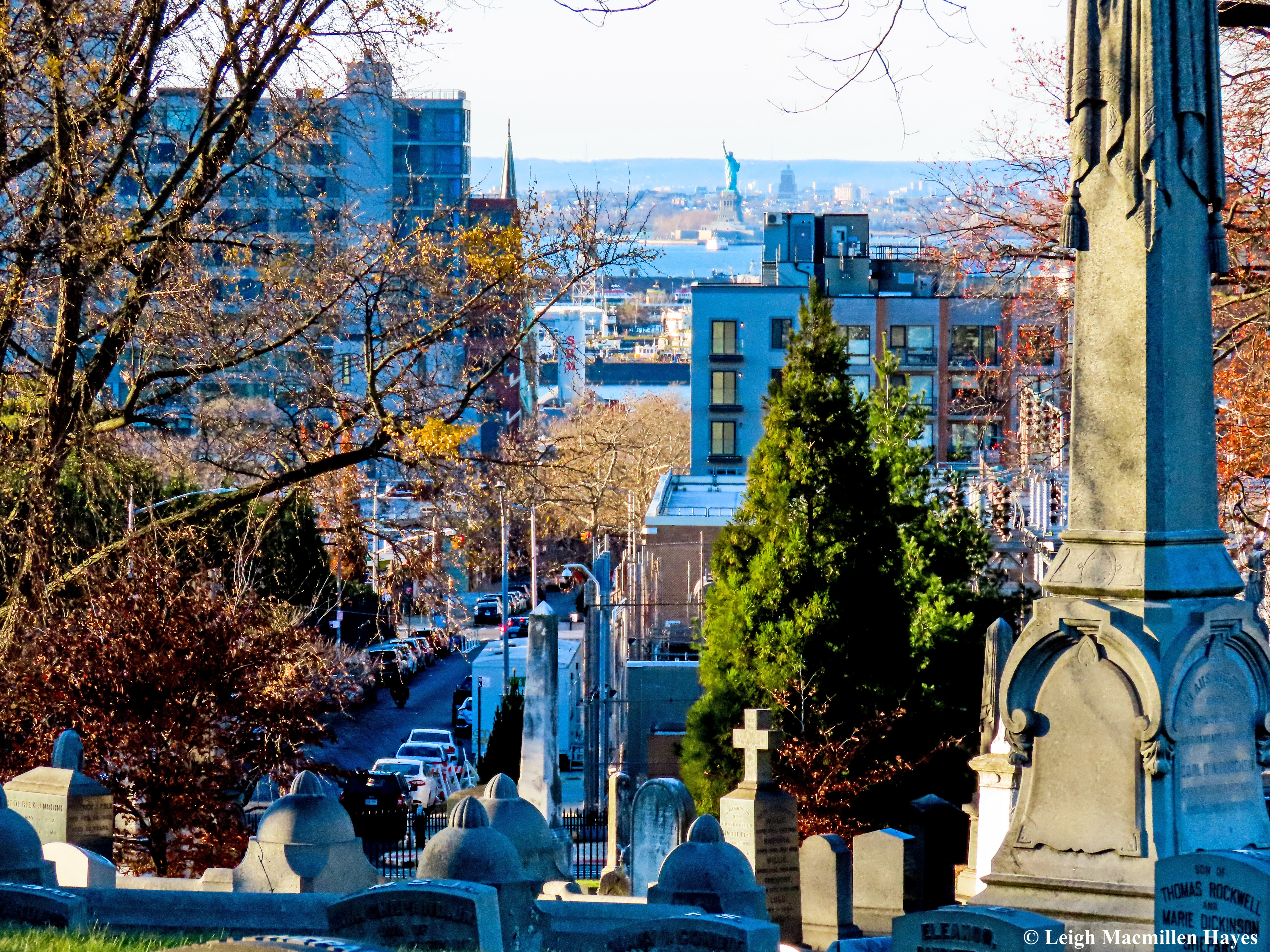
From the cemetery, we could see Lady Liberty standing tall and holding her flame to bring us all together.
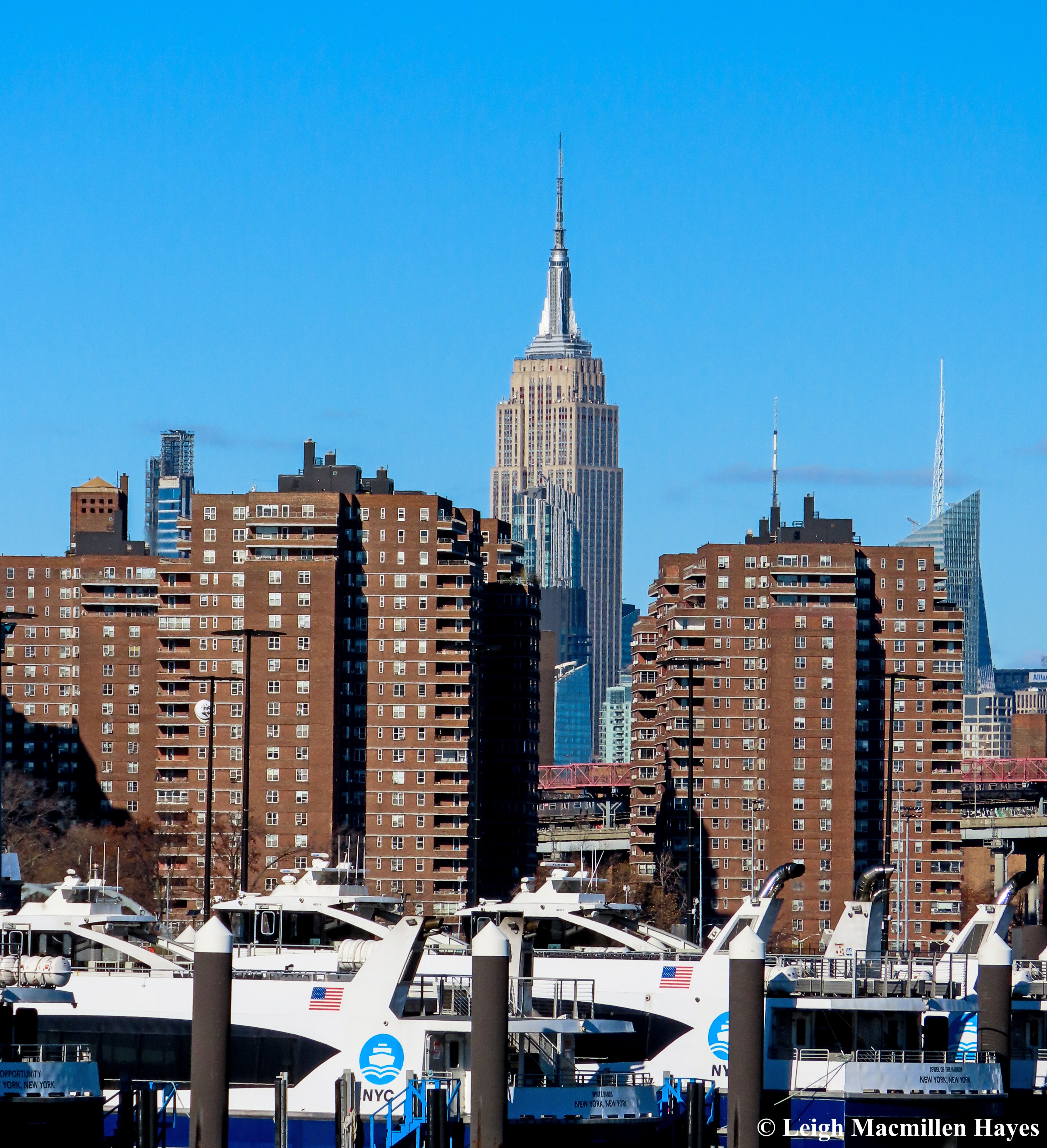
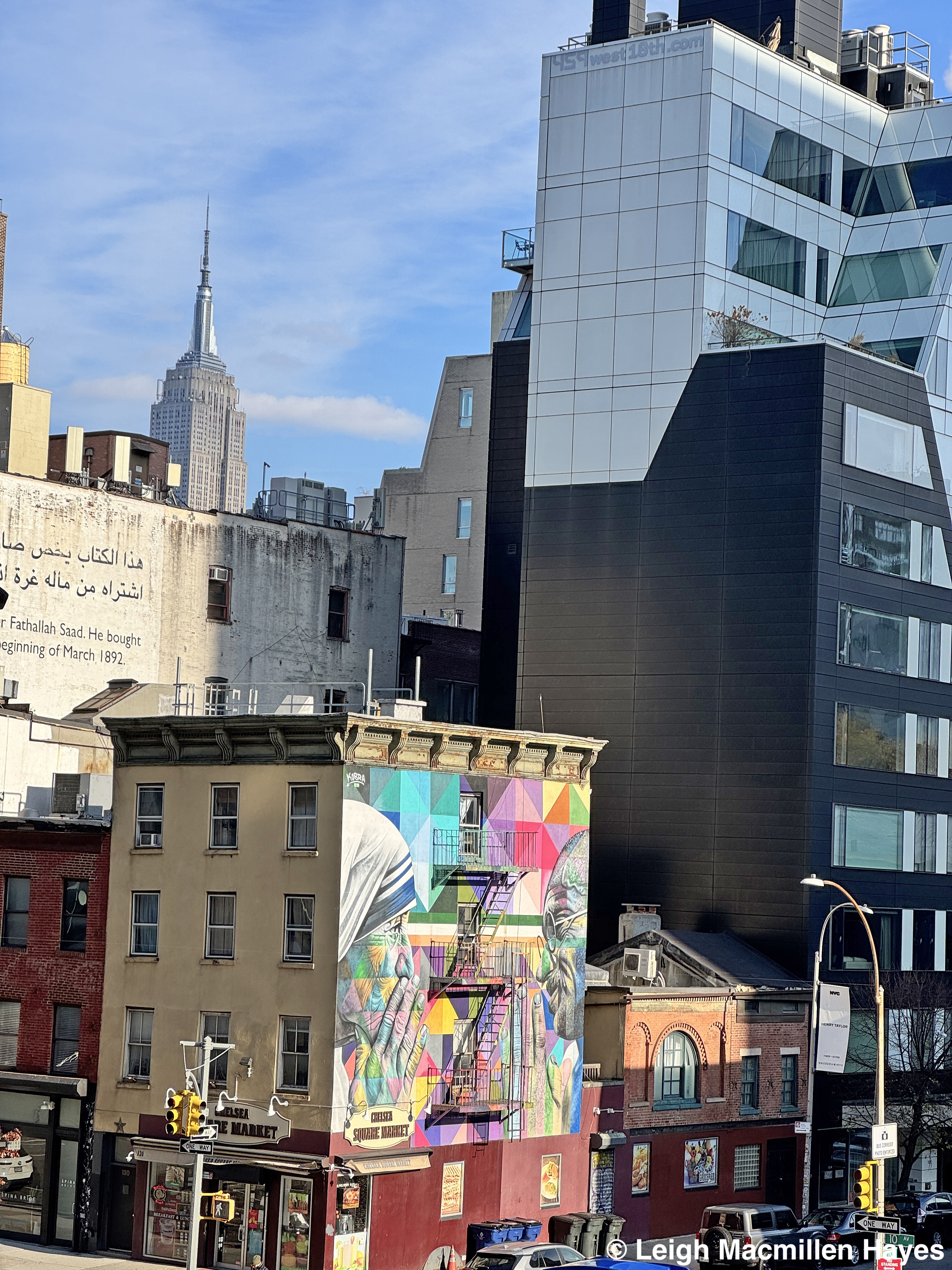
And from various vantage points we could see the Empire State Building, standing as a beacon to us . . .
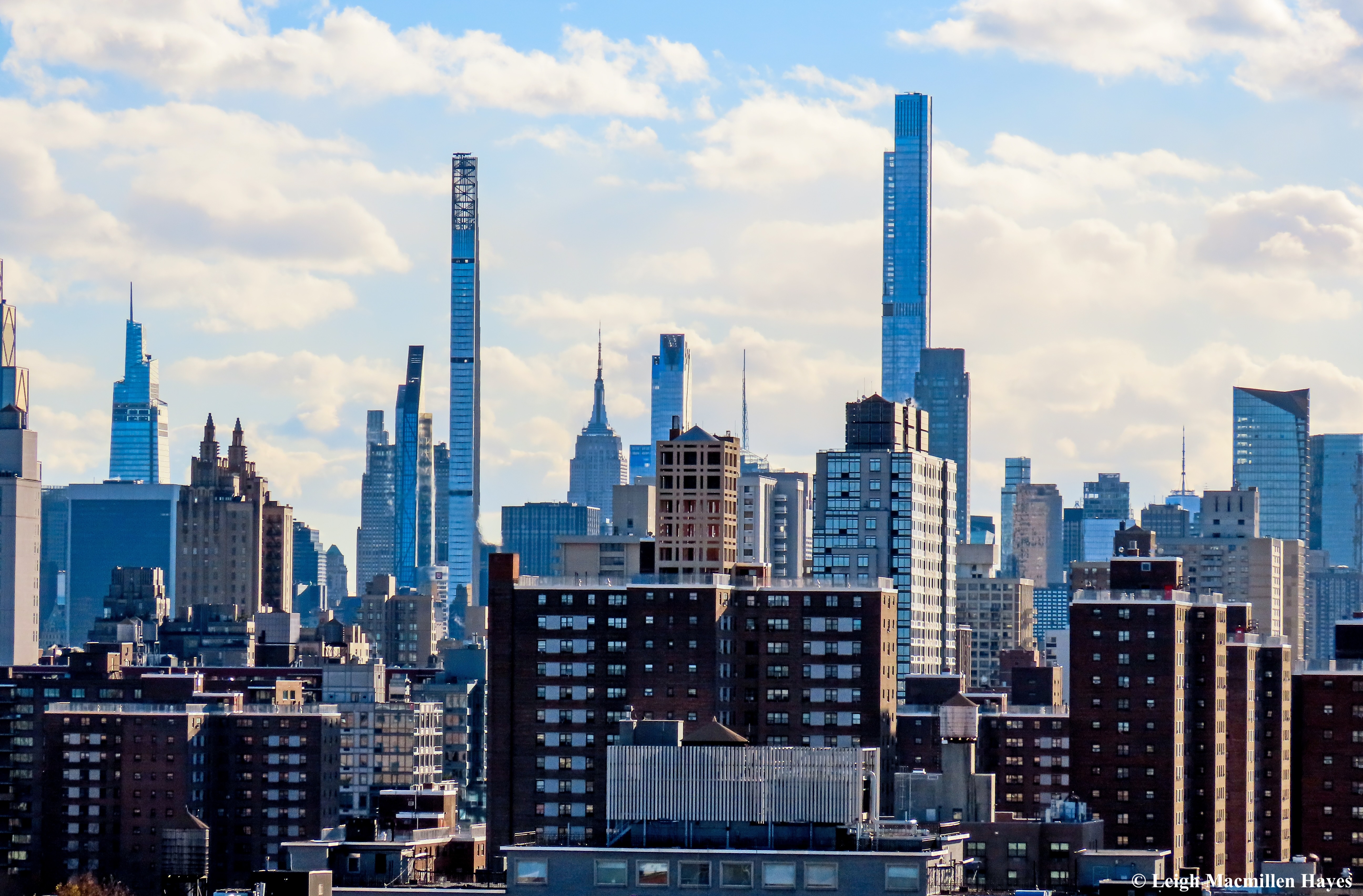
almost like Pleasant Mountain and Mount Washington back home, so that no matter where we were, we knew where our weekend home was located.
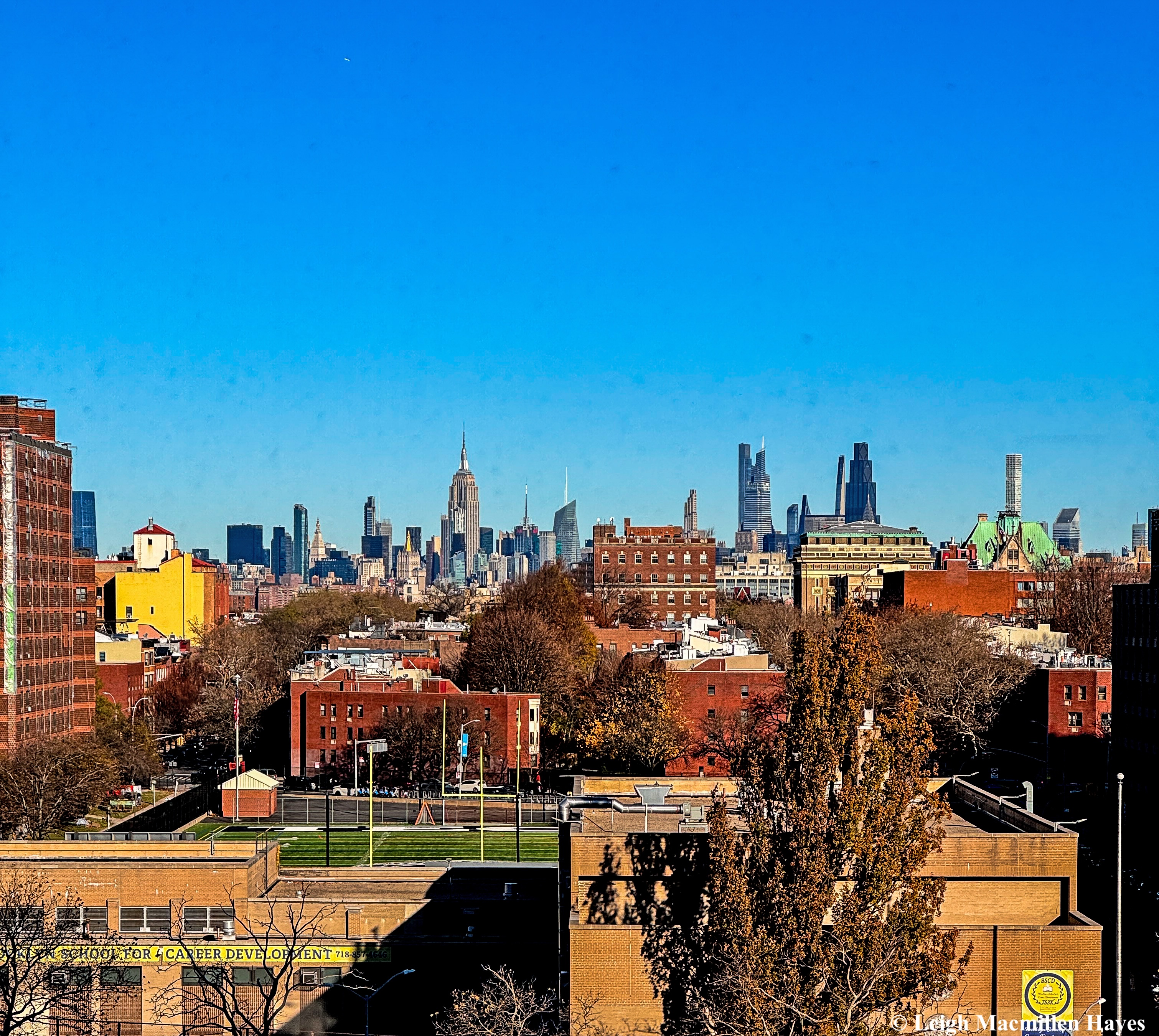
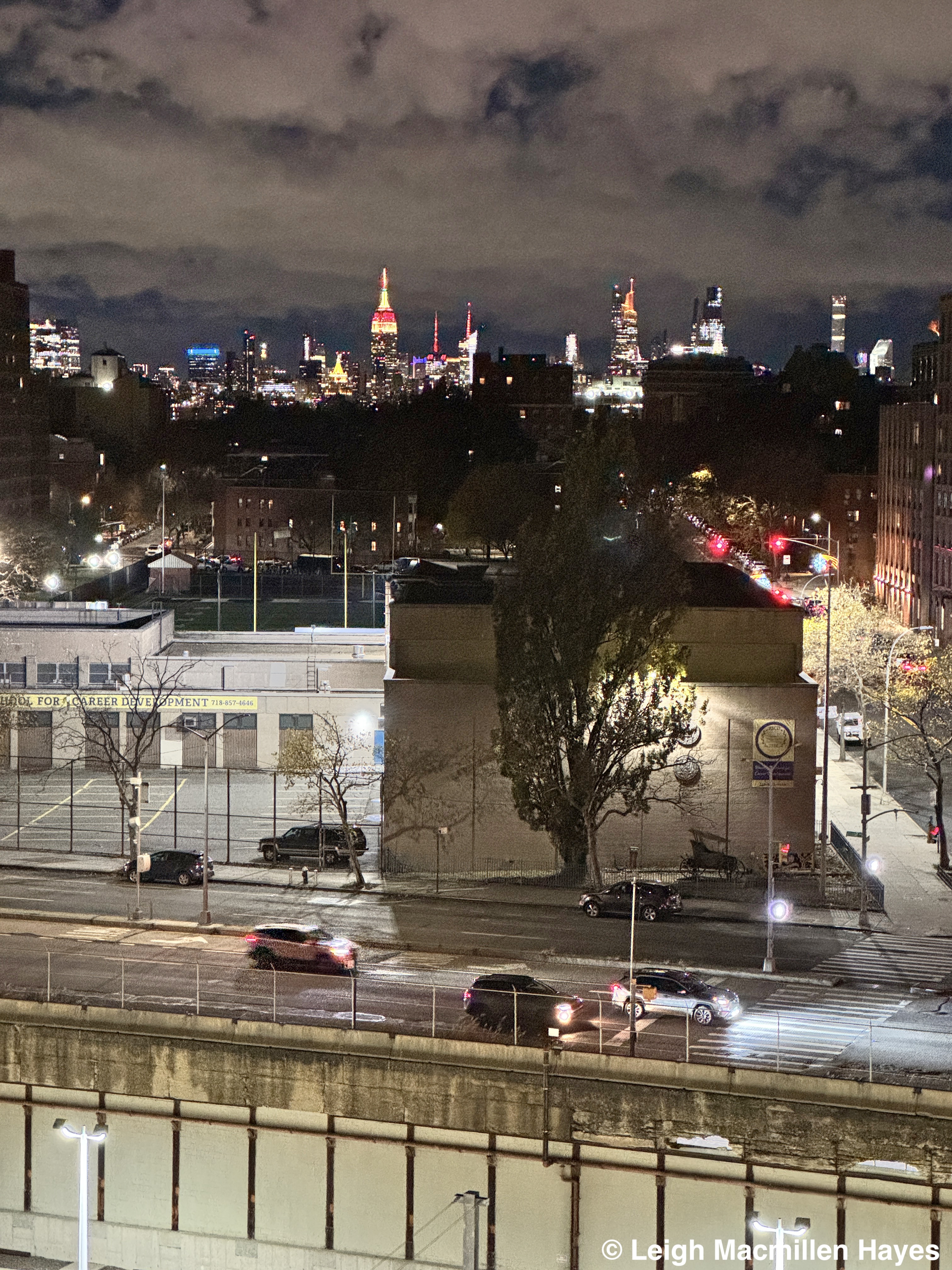
Because this was the view from said “home,” the Brooklyn apartment owned by our Thanksgiving hostess.
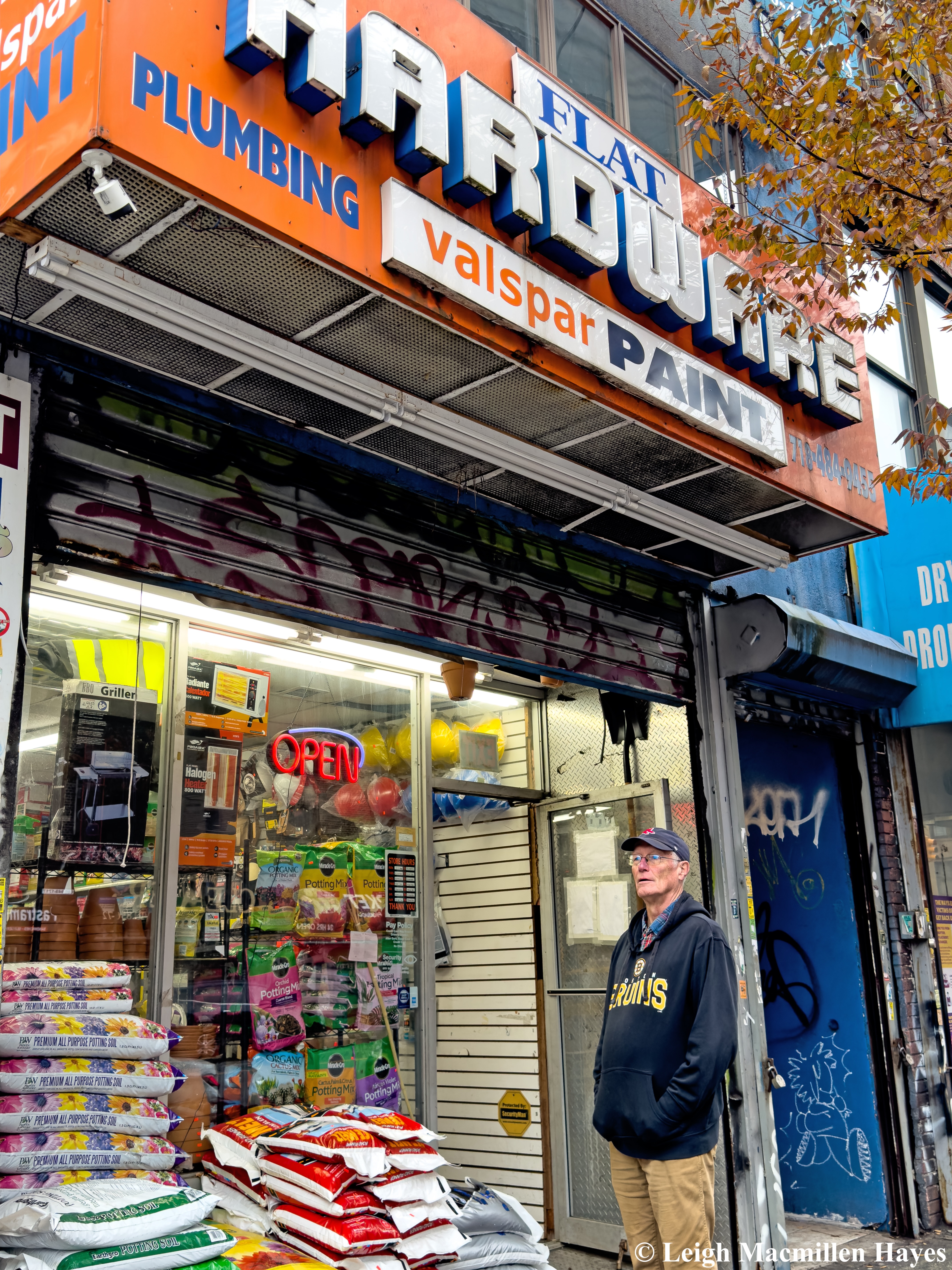
And no trip of ours is ever complete without a tour of a hardware store.
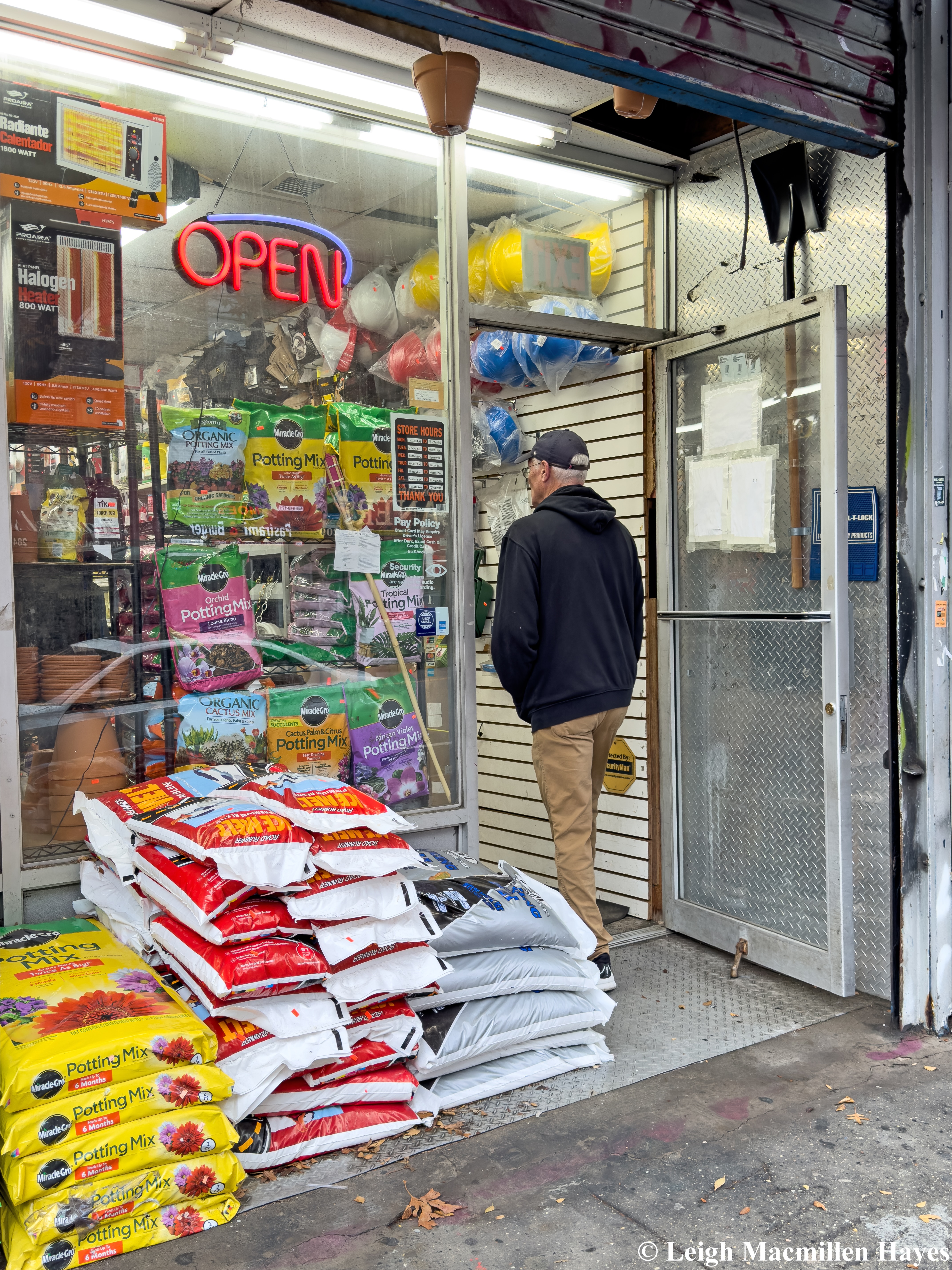
He said he wasn’t going to go in, but you know that he did. It was a quick loop up one aisle and down the other, for so narrow was the store, but oh was it packed with merchandise–every square inch in use as is the city way.

And remember our cemetery trip? Well, I spotted this and My Guy didn’t know what the Old Guard Southern Hardware Salesmen’s Association was all about. Turns out, it has quite a history.

Curiously, I found this explanation on Instagram:

From the American Artisan and Hardware Record, June 1, 1918:

“THE OLD GUARD SOUTHERN HARDWARE SALESMEN KEEPS ALIVE ITS ORIGINAL FIGHTING SPIRIT.

“The original fighting spirit which moved the members of the Old Guard Southern Hardware Salesmen’s Association to organize for carrying on the bloodless battle of commerce was strongly in evidence with new force and application in its annual general meeting held May 29, 1918, at Atlantic City, NJ. These veteran warriors of salesmanship pledged all their energies and experience to the aid of the younger men who are waging the titanic warfare of a free people against the despotism of barbarians who hide their savagery under a guise of mechanical culture.

“Particular significance attaches to the Old Guard by reason of the fact that its ranks represent the ripened wisdom of years of active service in the hardware trade. It was formed ten years ago at the Convention of the Southern Hardware Jobbers’ Association in Hot Springs, Arkansas. The membership of the Old Guard is strictly limited to salesmen and traveling salesmanagers who have sold hardware and kindred commodities to the hardware jobbing trade in five or more Southern and Southwestern states during a continuous period of fifteen or more years. The membership is limited to one hundred.

“The men who have been in charge of the affairs of the Association for the term which ended at the conclusion of this year’s convention have exerted themselves with enthusiasm and persistence to maintain the traditions of the organization and to further the collective interests of the membership…

“Adjournment was taken with a feeling of renewed confidence in the power and purpose of the Association and a determination to use all the influence of the organization in promoting a vigorous Americanism throughout their territory to the end that international justice may be established and lasting victory be won for the hosts of democracy.”

Hardware and Democracy it seems, were both important to Herb.
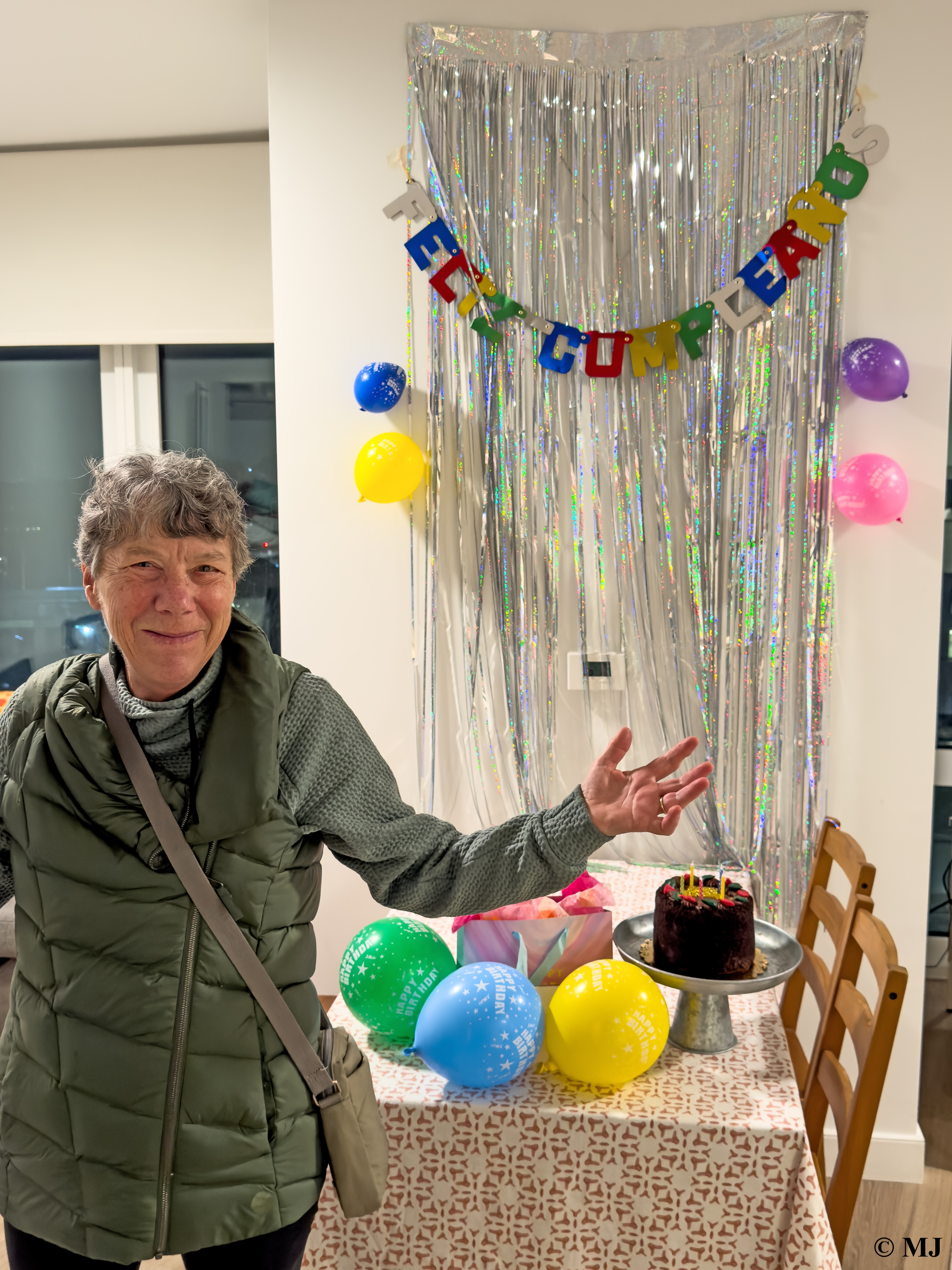
So we arrived in Brooklyn the night of my most recent birthday and were welcomed with a surprise celebration that included New York-style pizza and dark chocolate cake–thanks to M and P.

We were also there to celebrate America’s grand feast with M’s family in New Jersey.
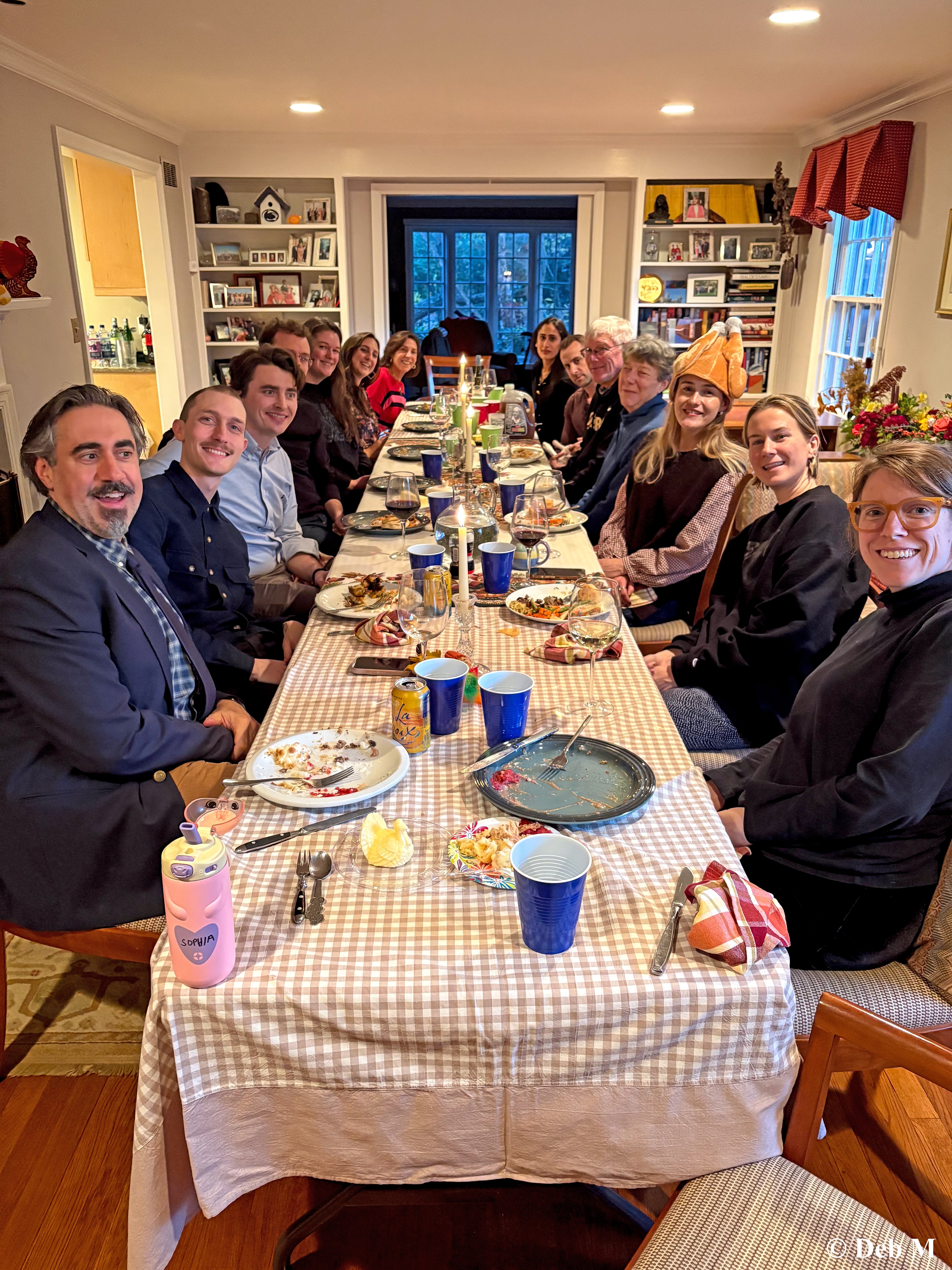
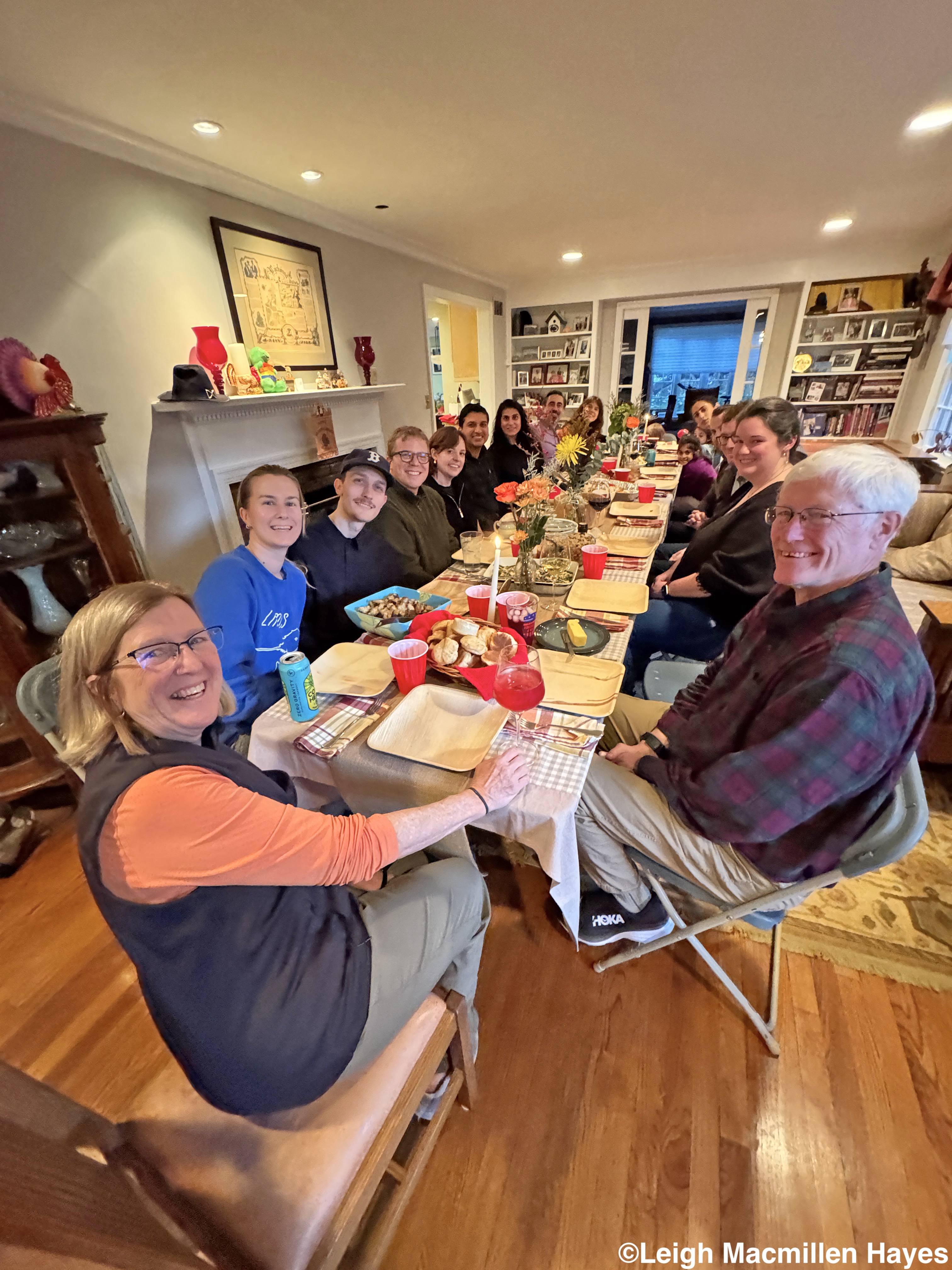
Dinner included a gathering of family and friends, one of whom is a Kiwi and this was her first American Thanksgiving feast, so she graciously wore the turkey hat.

And this little one kept us all in line throughout the day.

At the end of the day and the end of the weekend, our biggest thanks go to these two, daughter and mother, M and D, M being our youngest son’s girlfriend. Their hospitality and generosity never cease to amaze us.

Because of them, we did lots and lots of walking, while it felt like an almost equal amount of dining was thrown into the mix from bagels to farm-to-table to traditional Thanksgiving to diner breakfasts to pub meals, and of course, the iconic New York-style pizza.

Thank you, D and M and P, for inviting us to celebrate New York our way, and to S and H for making the trip from Boston, even if you couldn’t stay the entire weekend.

Breaking Bread and Acorns

Up, up, and away, we were this past long weekend, My Guy and I, and New York City was our landing spot. It’s good to get out of our own space occasionally and enter the greater world where we don’t know the place as well.

But, in doing so, we also like to return to spaces we do know a wee bit–there’s comfort in walking into a cathedral such as this where pathways lead wanderers away from city sounds and vistas and into the natural world.

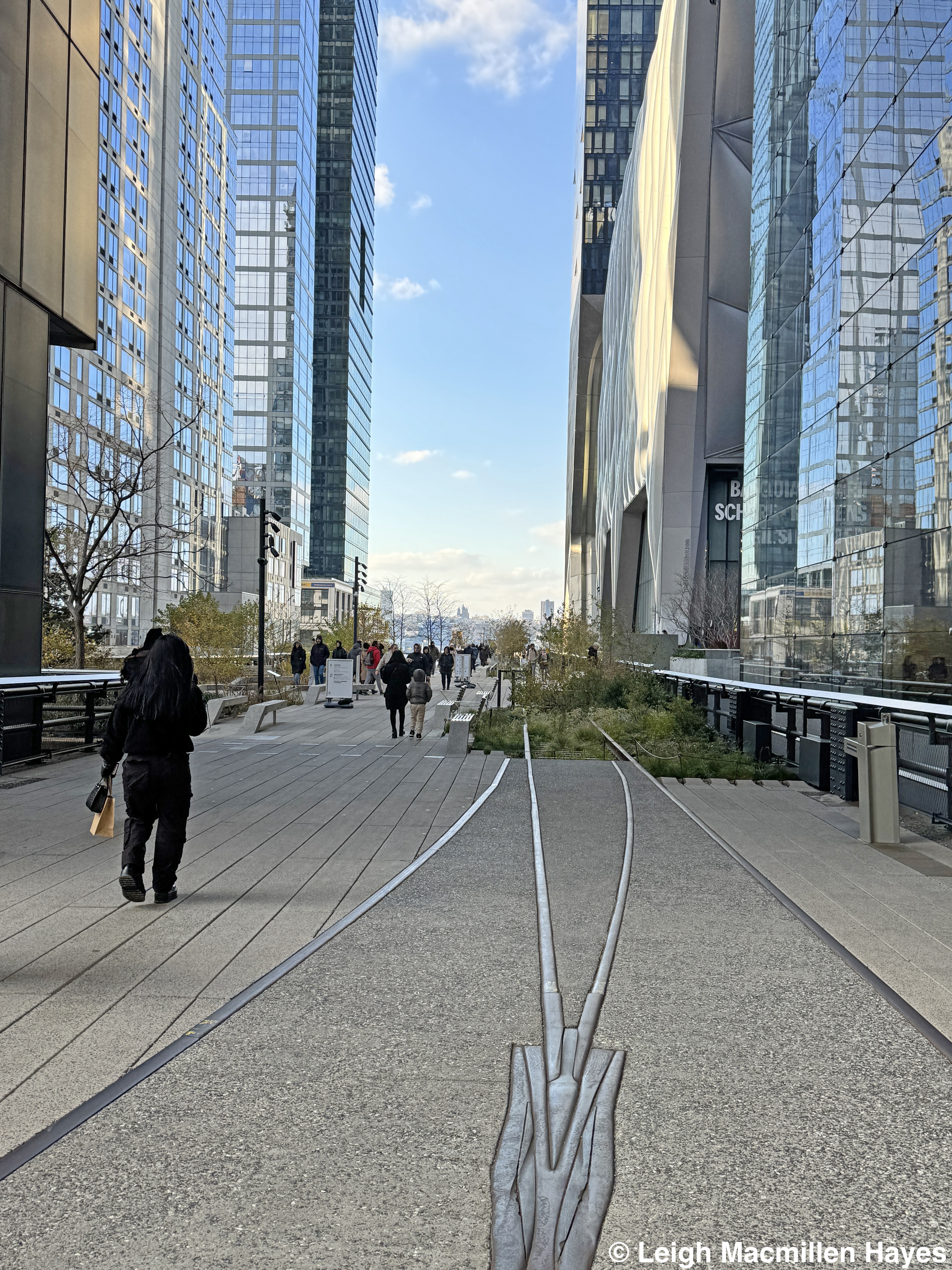
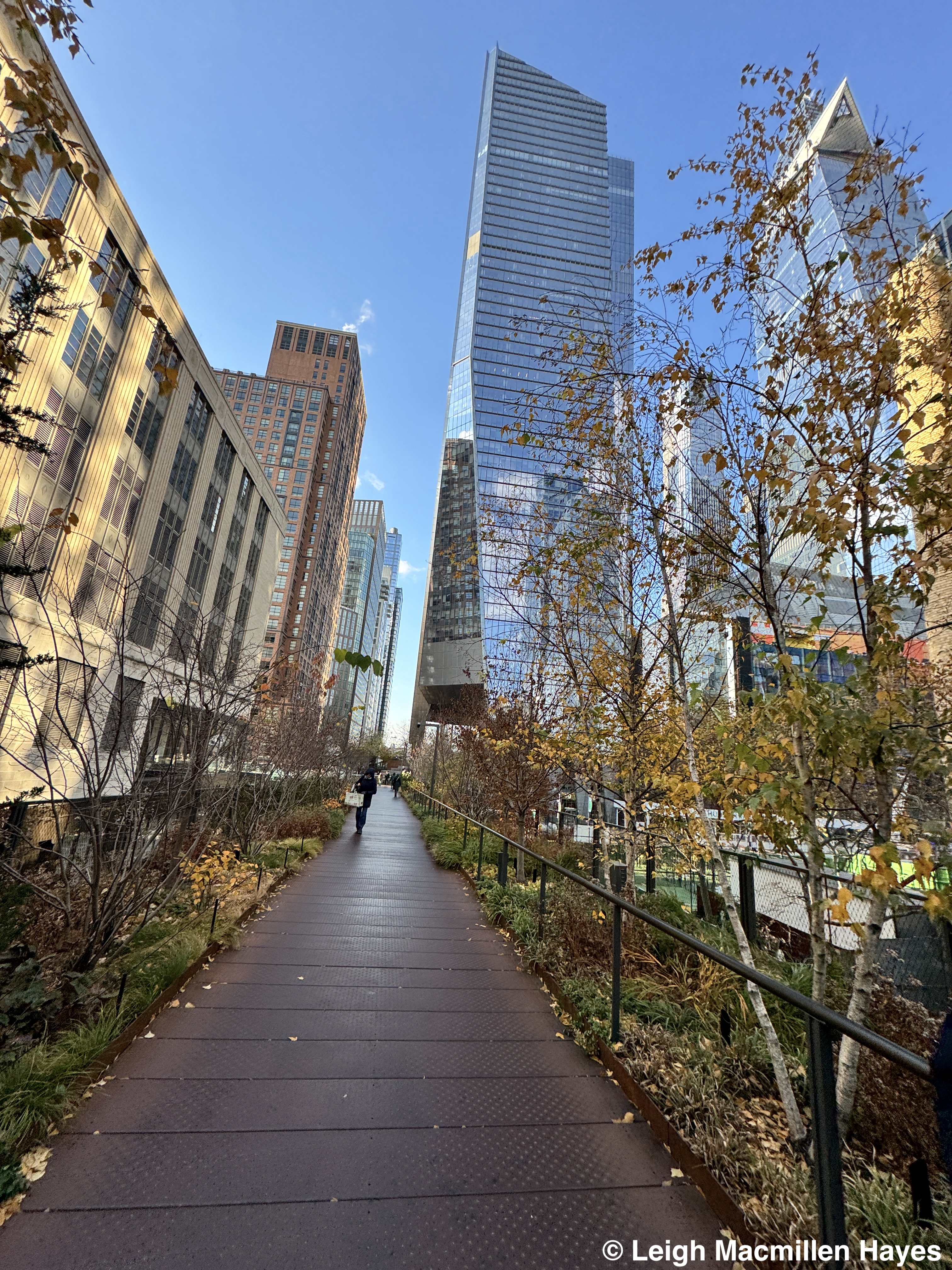
And we discovered new pathways where the sights and sounds of the city co-mingled with nature, albeit upon a raised bed that replaced a now defunct highline rail system.

No matter where we went, there were moments for reflection . . .

of the season passing.

In a way, it was like reliving fall foliage all over again and made me yearn to follow it down the East coast, though that was only a passing yearn for this “four-season worshiper.”

Gardens still proclaimed autumnal colors from the flowering heads of hearty plants growing beside Hudson River, where the north wind did blow.

And a few plants, more protected by buildings on either side of the path, showed off their sunshiny faces, though the petals appeared to make a ragged effort. Still . . . they blossomed.

We had the great fortune to join our hostess for a Victorian Christmas Tour. In reflection, it was not at all what we expected. Somehow, our minds’ eyes had conjured up a vision of entering stately Victorian homes and admiring their Christmas decorations.

This was not that tour at all. This was even better for the tour guide, Rick, was a storyteller who transformed us back in time to help us understand our Christmas traditions long rooted in the past, including Washington Irving’s influence as he told tales of New York’s founding and a Dutch ship wreck and Saint Nicholas riding over the city in a wagon and encouraging the Dutch to settle the land.
As we walked through three neighborhoods with Rick, we learned that O’Henry coined The Gift of the Magi in Pete’s Tavern.

And more about the poor and boisterous Irish who raised havoc on porches such as this at #4 Grammercy Park West belonging to NY Mayor James Harper (founder of Harper and Brothers which we now know as Harper Collins).

While the house next door is a replica of #4, the gaslit lampposts in front of Mayor Harper’s residence were meant to warn the partymakers to not disturb his rest. Or were they actually to help him find his way home? Perhaps both.

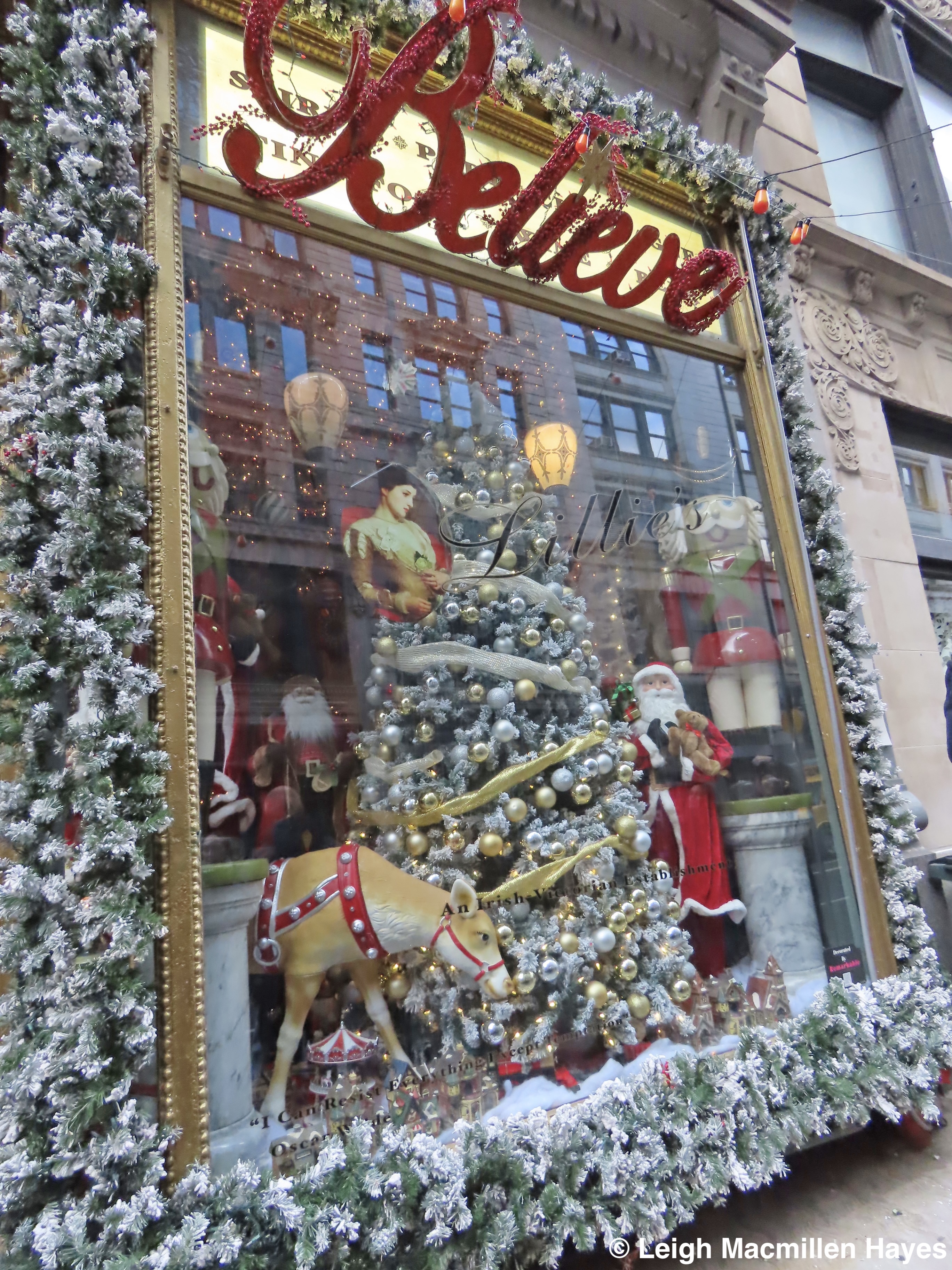
One of our stops was outside Lillie’s Victorian Restaurant where Rick shared the story of stockings being filled and the ball ornaments serving as representations of the gold that might have gone into them. And I was immediately transformed into my own story of the Christmas traditions as I’ve recorded in The Secret Giver of Gifts.

For a second, I stepped inside, and would have loved more time to experience this space named for Lillie Langtry, a British actress and late 19th Century Socialite, but we needed to move on.

And so we did, our family, some of our hostess’s family, and their friends, finishing up on a street that was once part of the Moore Estate in Chelsea and Rick recited “Twas the Night Before Christmas,” breaking it down to give us the history behind each stanza and we all gave great thanks for his insights and knowledge.

I hope I haven’t ruined this tour for you and that you will think about signing up for there was so much more. Just be prepared. It lasted about three hours.
Christmas decorations abound throughout the city, including this display at Pier 57. I loved how the fiber and ornaments were so subtly represented and suspect there’s a story behind this artistic installation that I’ve yet to learn.

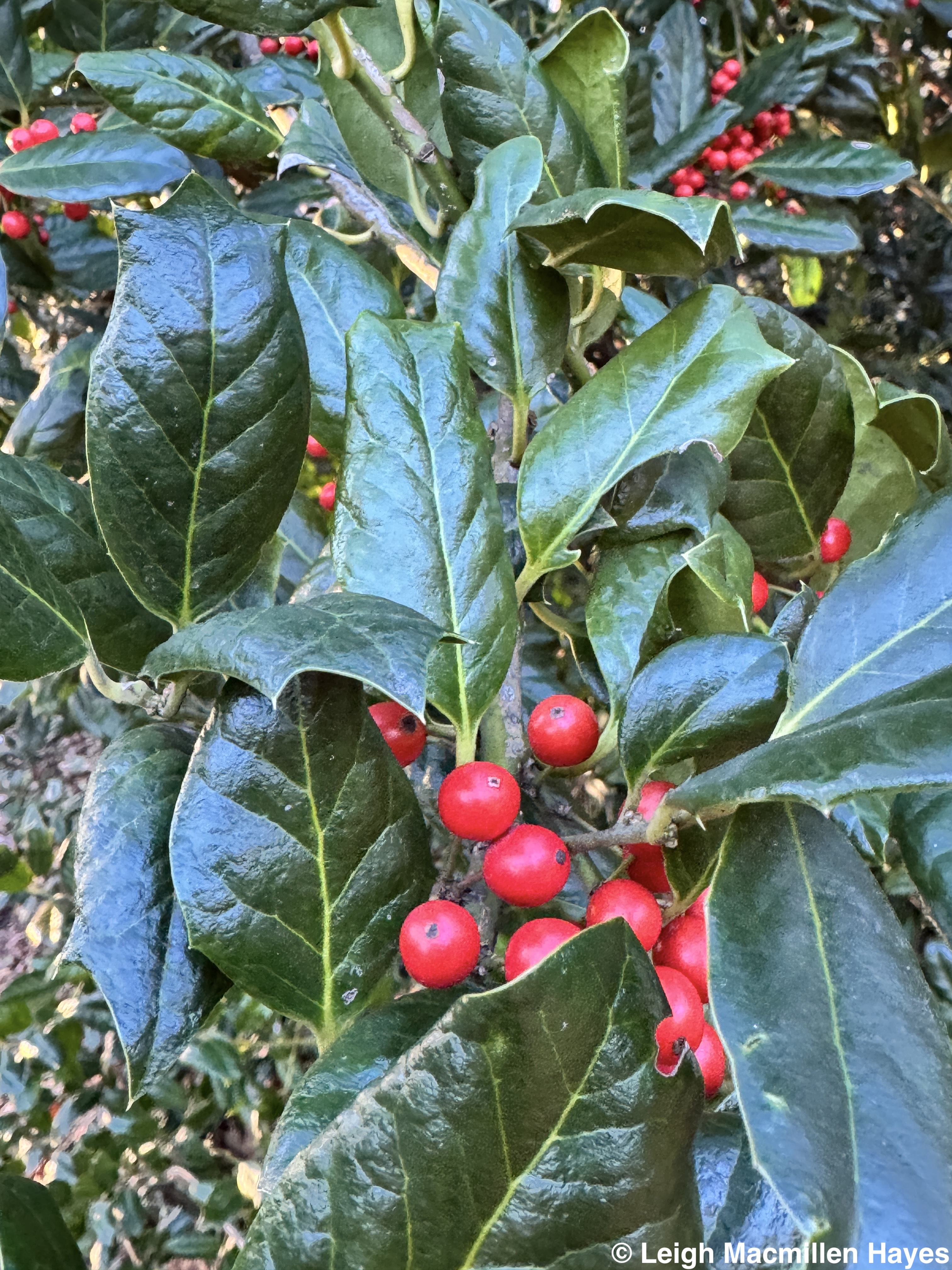
Nature also showed off its Christmas decor in the form of holly, Ilex cornuta or Chinese Holly, an introduced species. Um, I think we are all an introduced species.

And we spotted Christmas Ferns. Well, I spotted them and tried to explain to My Guy and our youngest that the leaflets are shaped like a Christmas stocking or even Santa in his sleigh, but they weren’t seeing that. I’m not sure they were really looking either.

But I was, and near the Christmas Ferns grew Maidenhair Ferns, like a star radiating off the wiry stem.

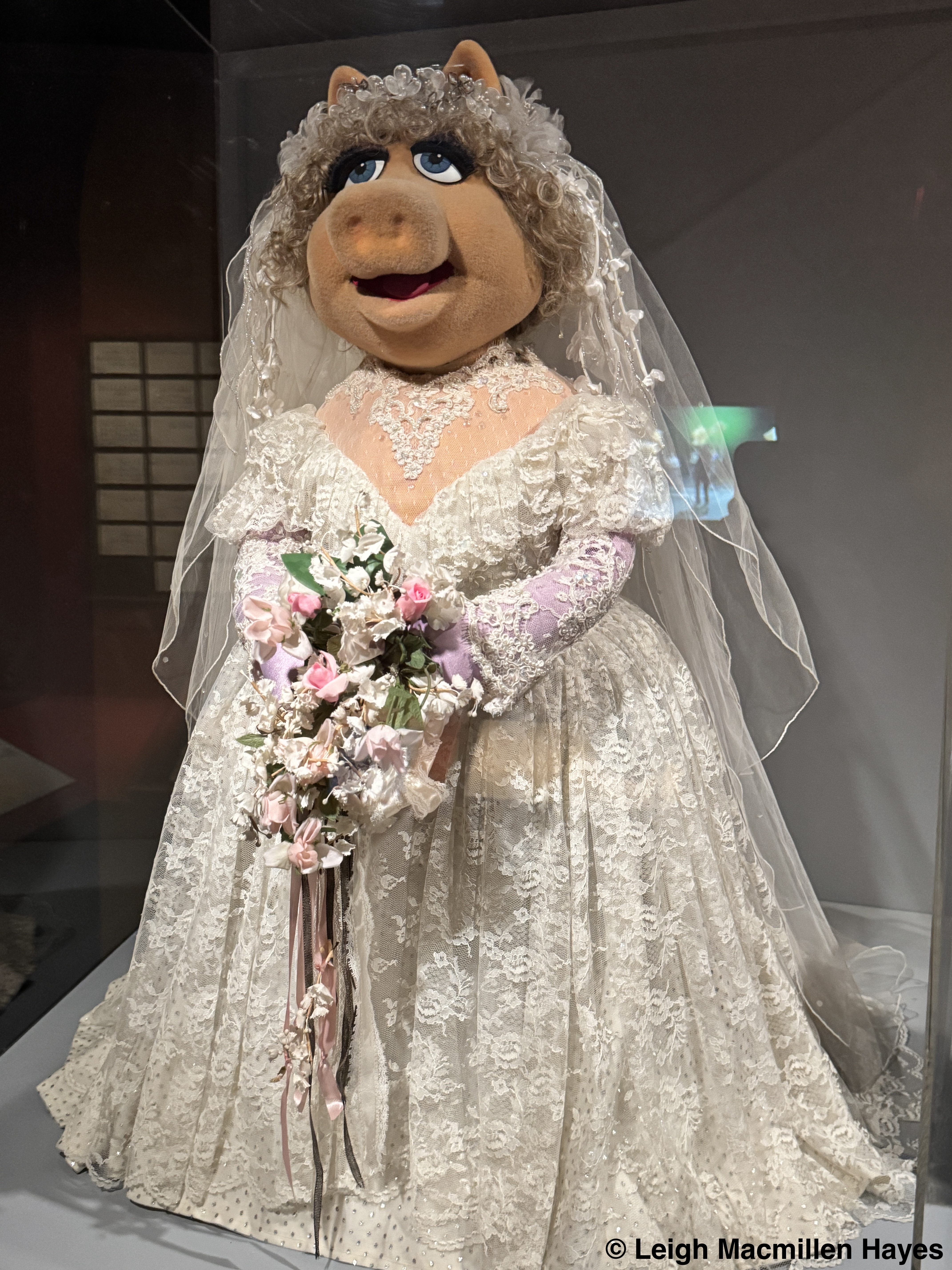
We also had the good fortune to meet another movie star, this one at the Museum of Moving Images. It would not have been my first choice of museums, but when your host works for an editing house, you embrace the choice and once we got going, it turned out to be a real treat as we could see behind the scenes of some old favorites including The Muppets.

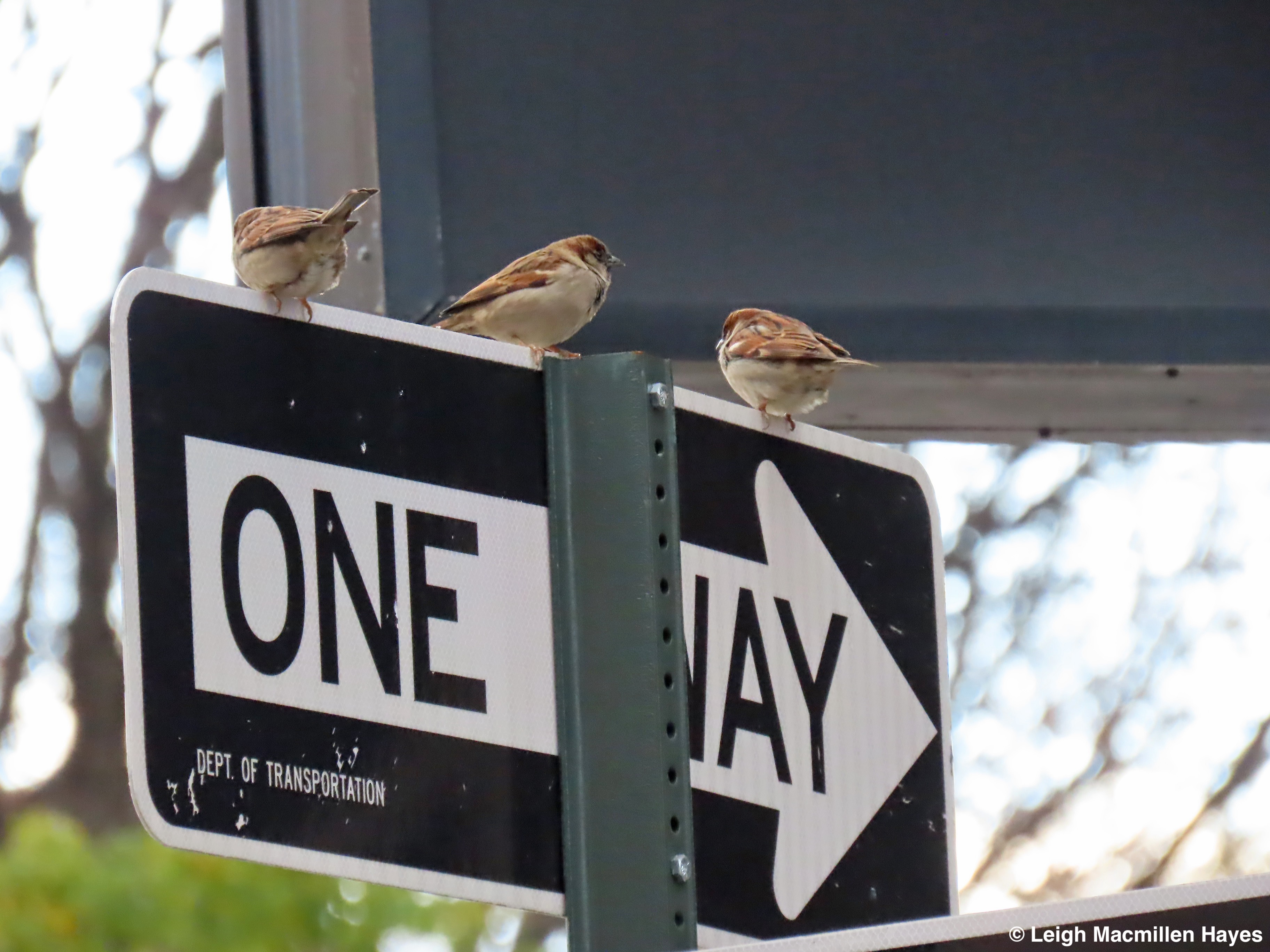
Being in the city, sometimes we were like the House Sparrows, which didn’t know which way to go, despite what the sign indicated.

Other times it was easy to choose the right path.

And in doing so, we got to meet a small one who is probably low on most New Yorkers’ list of preferences, but which I was thrilled to see honored with a statue.

My Guy dubbed this Pigeon Square. Do you see why?

Thanks to our hostess, or I should say hostesses, we were guests in a small Prescott Park apartment with a view of the Empire State Building, which was lit first to honor Thanksgiving.

And then two nights later for Small Business Saturday, which we appreciated since we own a small business. Well, as I always say, My Guy owns it. I’m just married to it.

The iconic tower soon became our Mount Washington or Pleasant Mountain, for no matter where we were, if we spotted it, we had a sense of our place in this great city.

And I’m here to report that the lights on the Empire State Building eventually go off for the night. The same was true for many of the other skyline buildings.

Before I bring this post to an end, I want to share with you a few of our fellow travelers as we posed beside the Hudson.

These two–our NYC host and one of the hostesses, for whom we are most grateful. He being our youngest.

Our oldest and his gal who made the trip south as well and were able to stay for a couple of days.

And our main hostess posing with us. We give her great thanks for sharing her home and her apartment with us so that we might spend so much time with our family. And treating us to an incredible meal, as well as the Victorian Christmas tour.

We went down to break bread with this crowd on Thanksgiving. And there was lots of bread to break! And good humor shared.

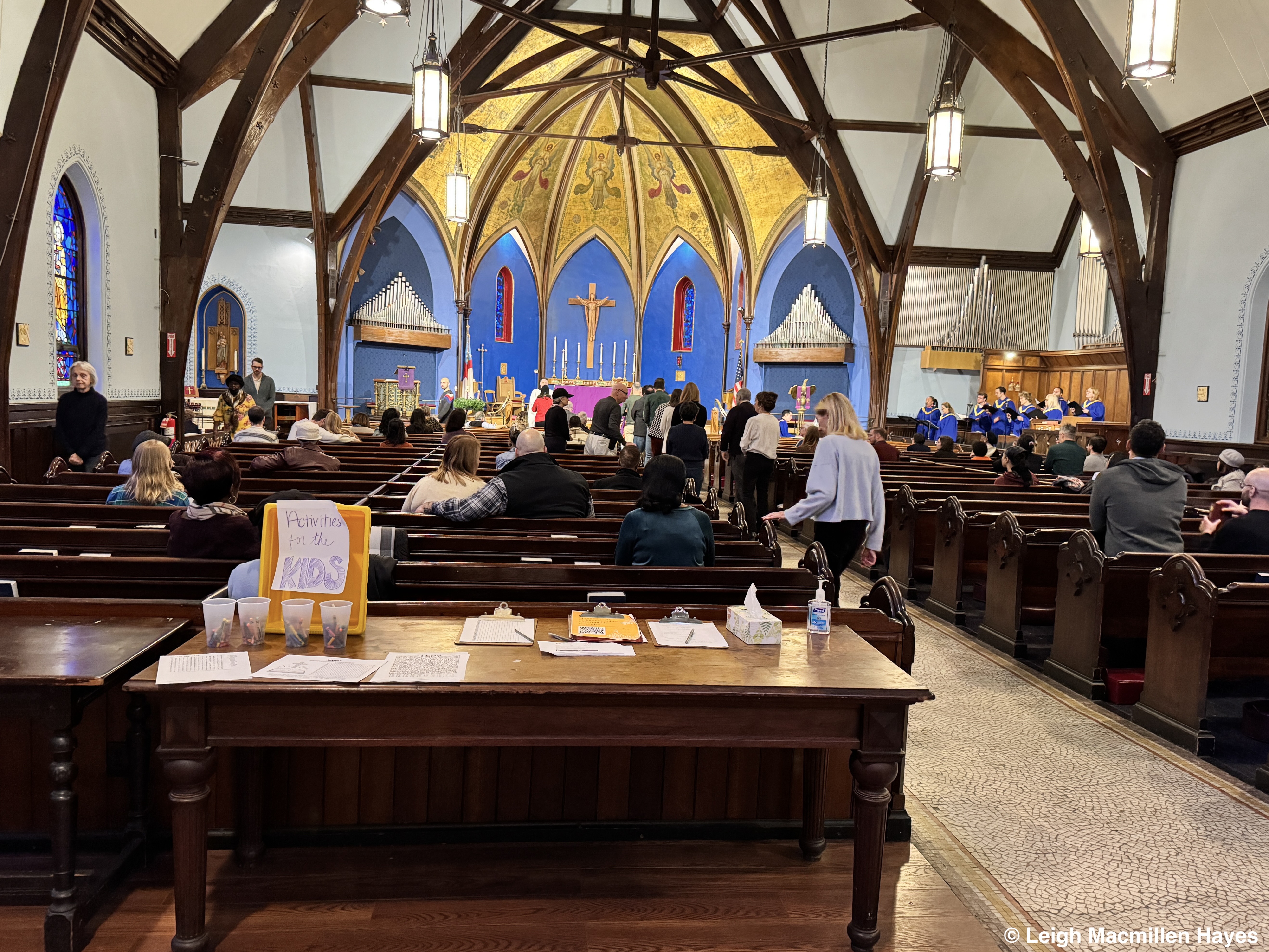
I also loved that I was able to break bread at St. John’s Episcopal Church in the Park Slope section of Brooklyn on the first Sunday of Advent.

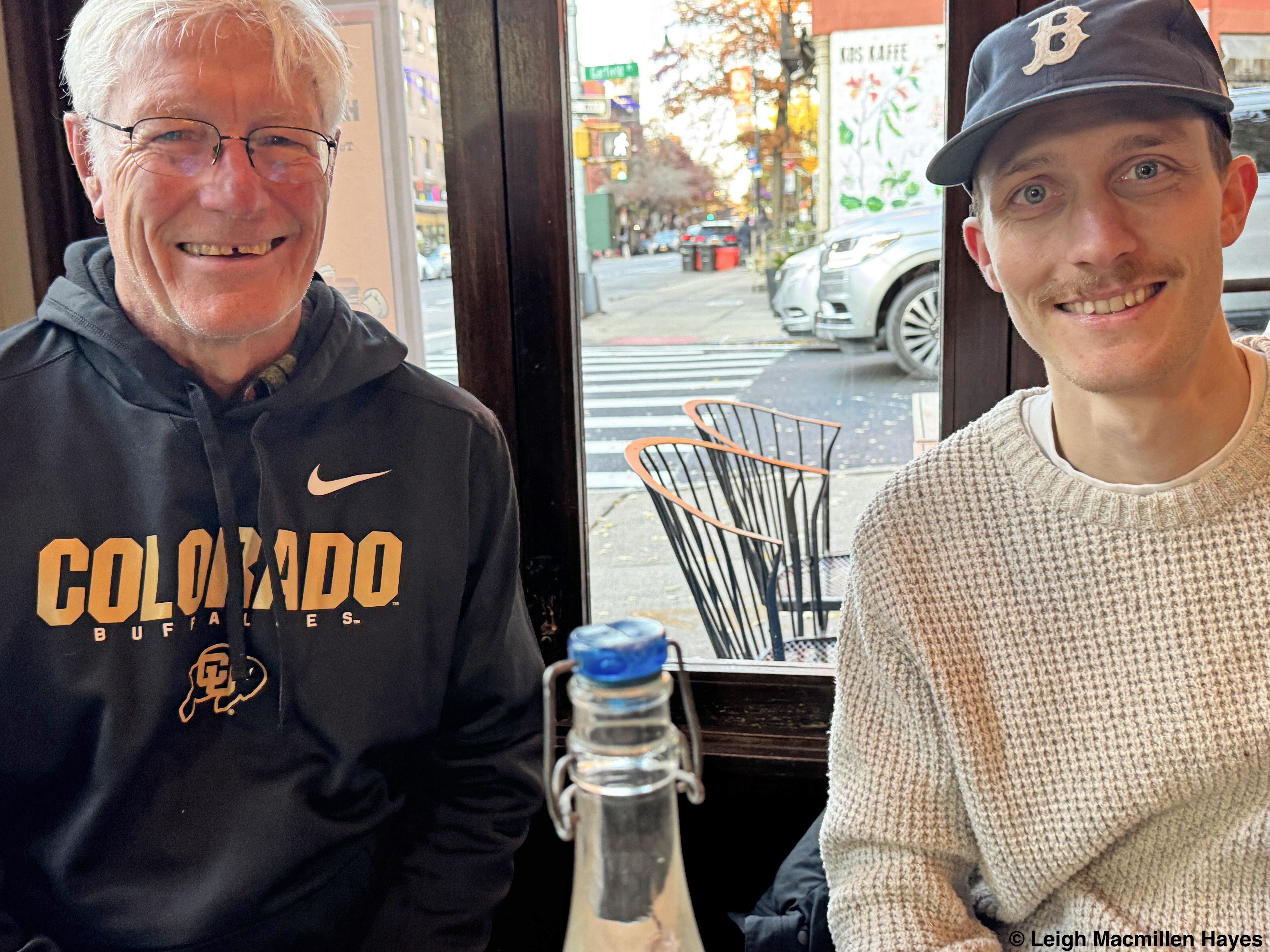
And before saying goodbye we broke bread one more time with this young man. We don’t know how he does it, living and working in NYC, oh, and driving. YIKES! But he does it all and he does it well.

Along the way of this five day journey, we discovered we weren’t the only ones breaking bread, though in this case the squirrel’s form of sustenance was acorns, which were plentiful.

Breaking Bread and Acorns in New York City. Not our every day cup of tea, but one which we relish when the opportunity arises.

The Nature of New York

We pounded the sidewalk this weekend in a style not quite ours, but visiting the Big Apple always finds us realizing that the world around us is larger than our little speck on the map in western Maine. And yet, we found similarities everywhere we turned.

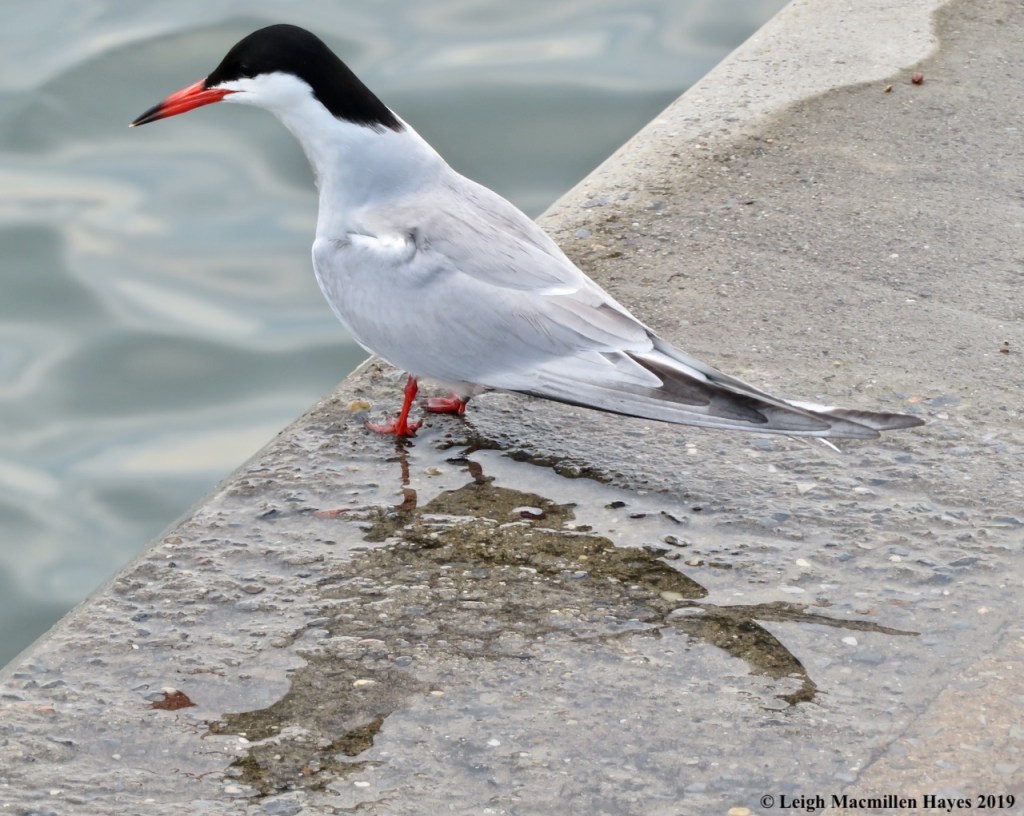
Birds of various shapes, colors, and sizes like the Common Tern with its bright two-toned bill, offered watery reflections as they stood in front of us and pondered life in the East River.

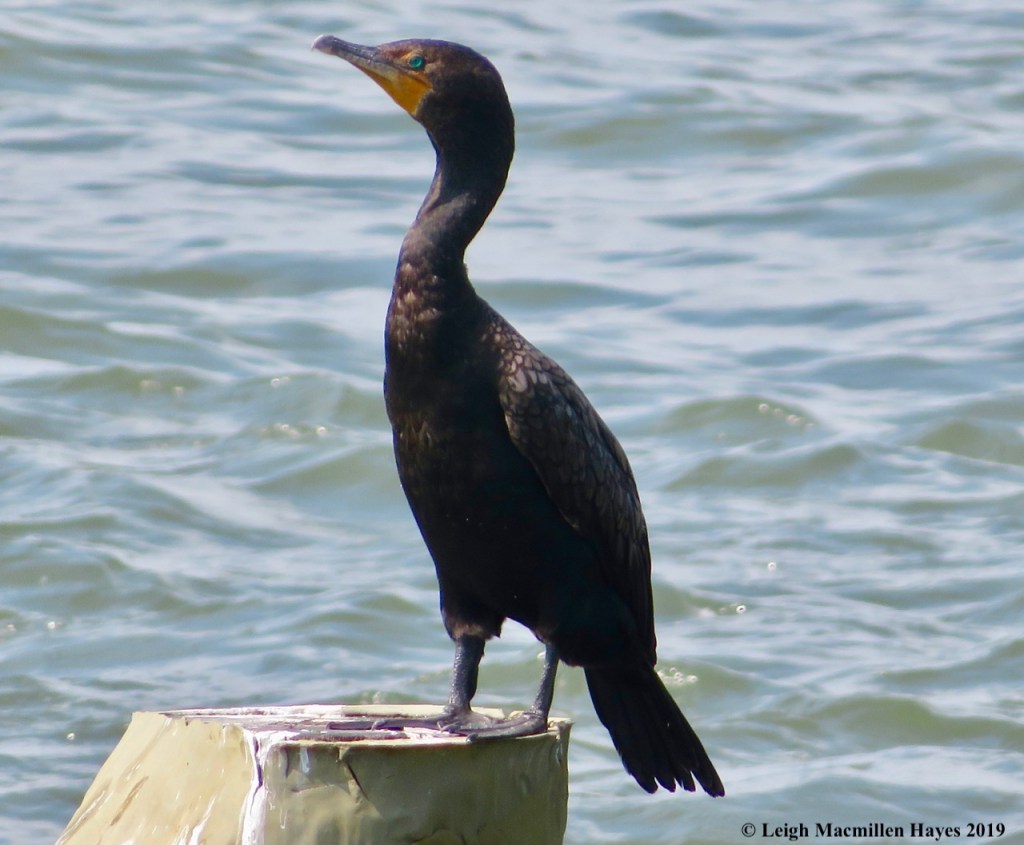
On a much larger scale was the raven of the sea, the Cormorant, with its eyes so blue and bill so long and hooked.

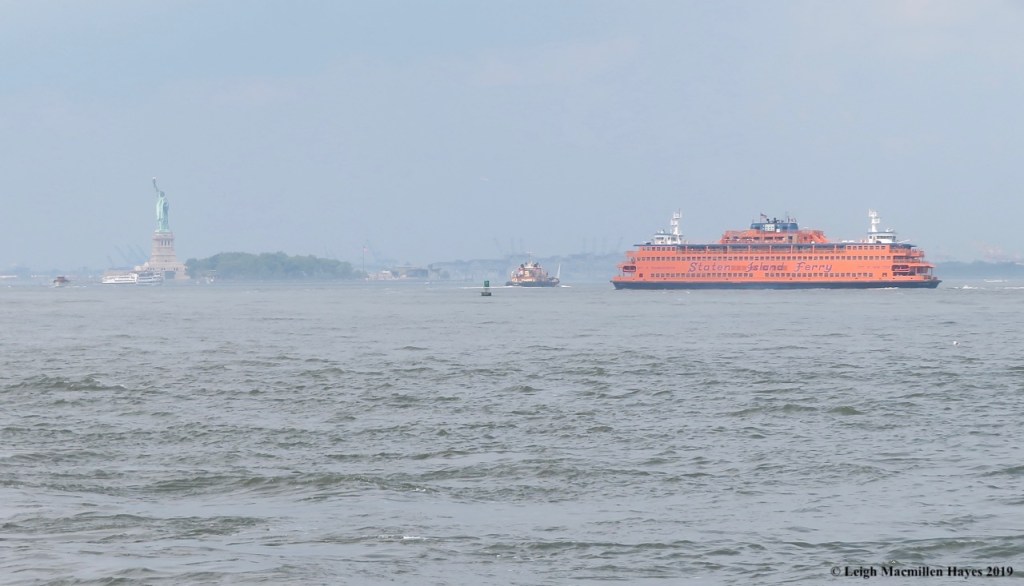
There were a variety of gulls as well, plus sparrows, and of course, the exotic pigeons, all enjoying life along this place where the Statue of Liberty welcomed us from her distant, yet ever distinguished pose upon Liberty Island.

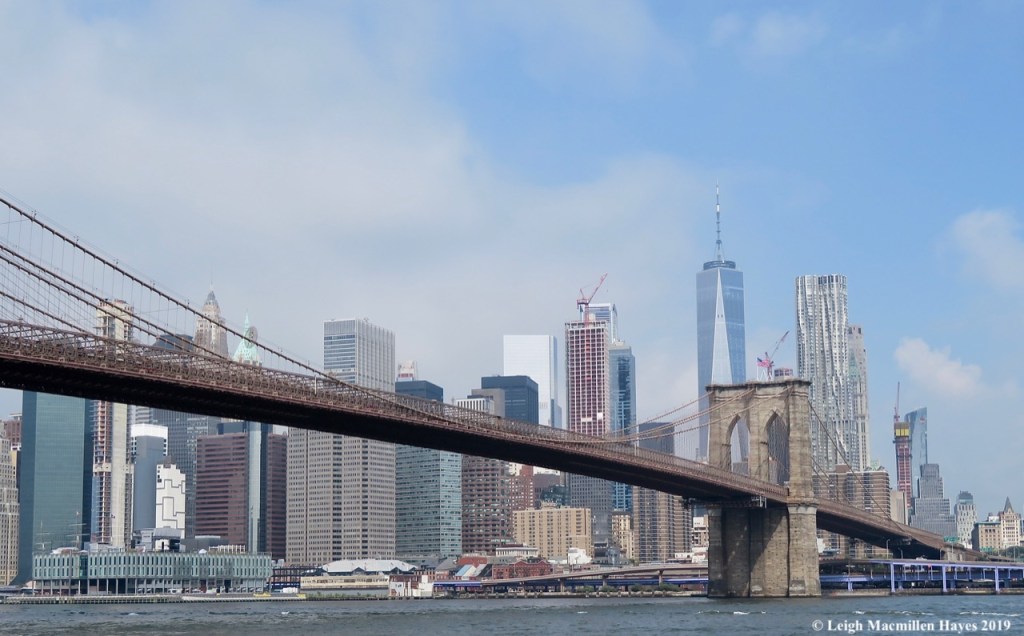
We spent some time in the morning and again in the afternoon beside the river and it dawned upon me as we gazed at the surrounding architecture, here positioned behind the Brooklyn Bridge, that the form of each structure was rather organic in style. Just as all ferns might be viewed as “just ferns,” so might buildings be viewed as “just buildings.” But then one day, you wake up and begin to notice the idiosyncrasies and suddenly you recognize the sensitive fern in its once-cut form with its separate fertile frond and the lady fern with her hairy legs and comma-like “eyebrow” sporangia on the back of her pinnules and voilà, you realize that each one has its own characteristics worth noting. Somehow, the buildings began to feel the same to me–their different forms and colors and sizes took on new meaning and though I don’t yet understand them all, I can at least appreciate their artistry.

The other thing I began to realize is that from our stance in Brooklyn, as we looked across the Manhattan Bridge, the community on the other side had suddenly changed or so it seemed based on the size and style of the buildings, much like natural communities change based on location–whether its a riverbank, forest, pond, cliff, or bog, etc. Fortunately, we were accompanied by our youngest son who lives in Brooklyn and works in Manhattan, and he could point out that the view below the Brooklyn Bridge was of the Financial District of Manhattan, while the view on the other side of the Manhattan Bridge was toward Chinatown.

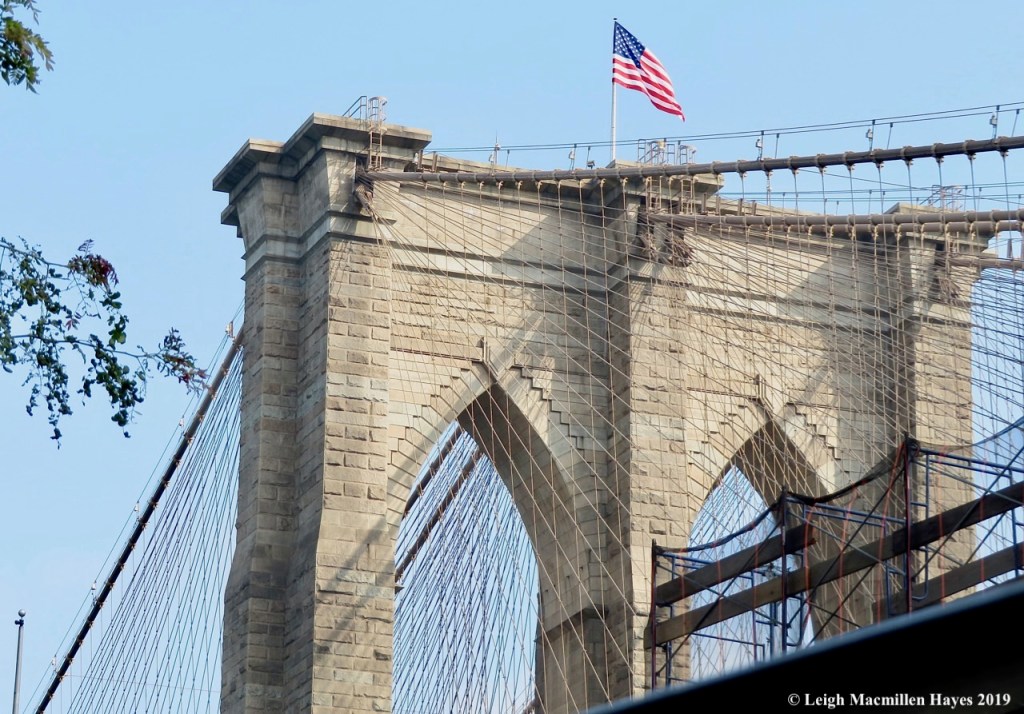
Even the bridges themselves were meant to be celebrated for their lines, whether straight, curved, or angular–all working together to create monuments out of stone and steel.

Against the sky, their geometric shapes drew our eyes up and down and up and down again as we glanced upon the individual spans.

A few steps beyond the bridge, in DUMBO, we spied more geometry enhanced by color and while some might see crystals in rocks, I kept thinking of insects and their “mechanical” structures of antennae and legs and thoraxes and abdomens and wings.

Our walking tour included The Fence, the largest public photo exhibition in North America that moves from one city to another and will be on display in the Brooklyn Bridge Park through September.

The photographs are displayed in categories. In the Farm-to-Camera category, it tickled me to see that photographer Adrien Bloom had included Garlic Scapes from a farm in Maine.

Beside each set of photographs within a category, an explanation was provided. In this case, we read the following: “Farm-to-Camera honors the pure and simple beauty of the bounty that comes from our farms. Billions of years in the evolutionary making, each item we pick up at the farmers market, or directly from the farm, is a perfect piece of art and deserves to be treated as such.”

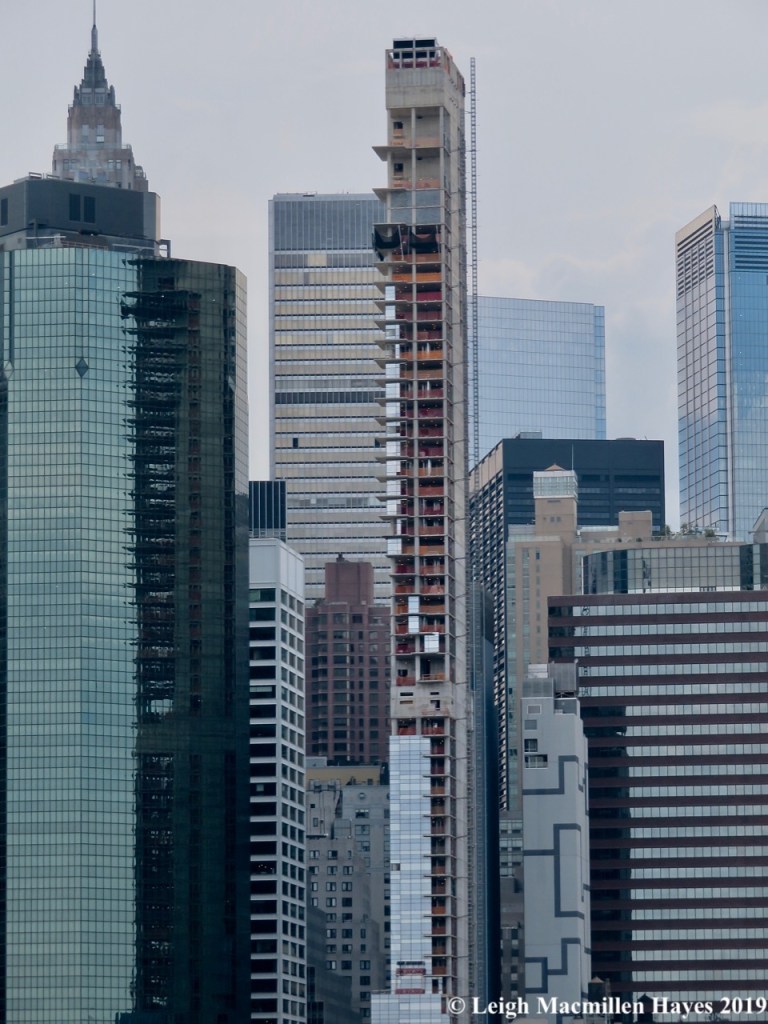
One last gaze across the East River provided a sight that looked more poster-like than real. And yet it was . . . real. And in its realness, it appeared that some buildings in the canopy had crowded out the saplings and shrubs and definitely those in the herb layer.

According to our son, the reality of the unfinished building in the center is that the structure is off by two inches between the top and bottom and it has been left as is for months now. Perhaps it will be the tree that can’t survive in this forest because of the crowded conditions.

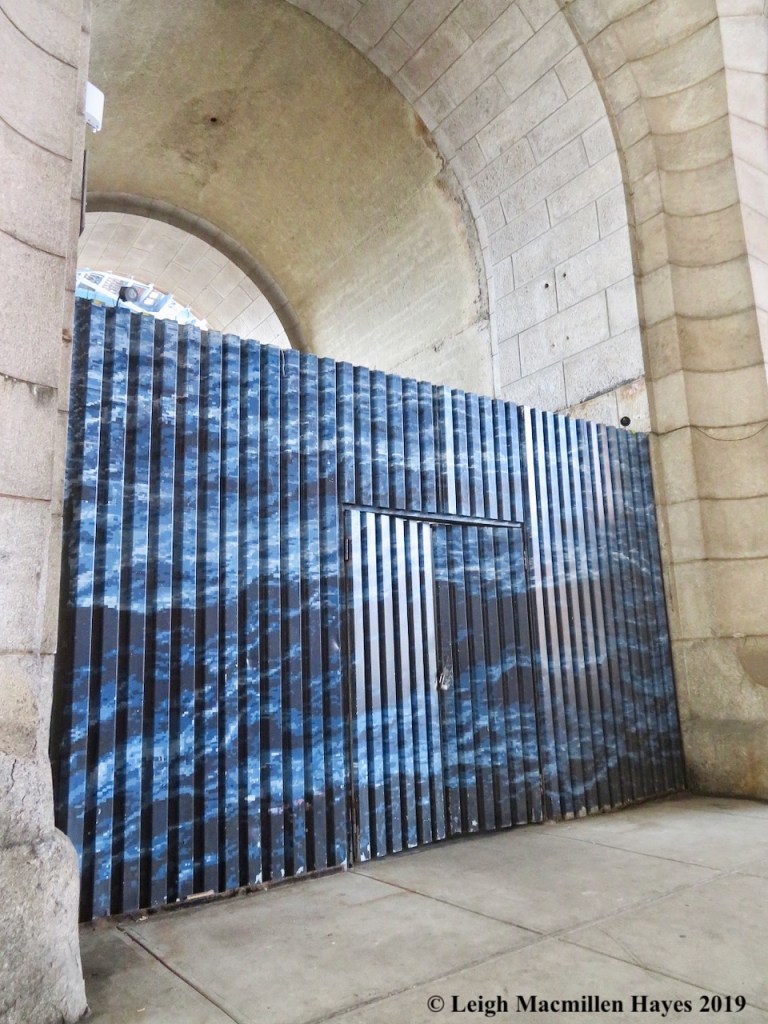
Before we left the DUMBO area, he showed us a different view of the river, actually this one a representation as it blocked off a location where “Gotham” is set. He was able to point out changes they make during the filming season as he knows it from a work perspective in his job at a film editing house.

Our first day ended with the three of us enjoying a delicious dinner at French Louie under a break in the sky–a heart meant for us.

The next morning called for a trip to Manhattan and a walk in Central Park where the ornate architecture was framed by a break in the trees.

It was near there that we paid our respects to Friedrich Wilhelm Heinrich Alexander von Humboldt, aka Alexander von Humboldt, the famous geographer, explorer and naturalist. His publications, which were prolific, had a mission to encourage scientific inquiry as well as a wonderment of nature. And to him we gave thanks.

Within the park we stood by The Lake for a bit, watching lovers in boats . . .

approaching each other in the water,

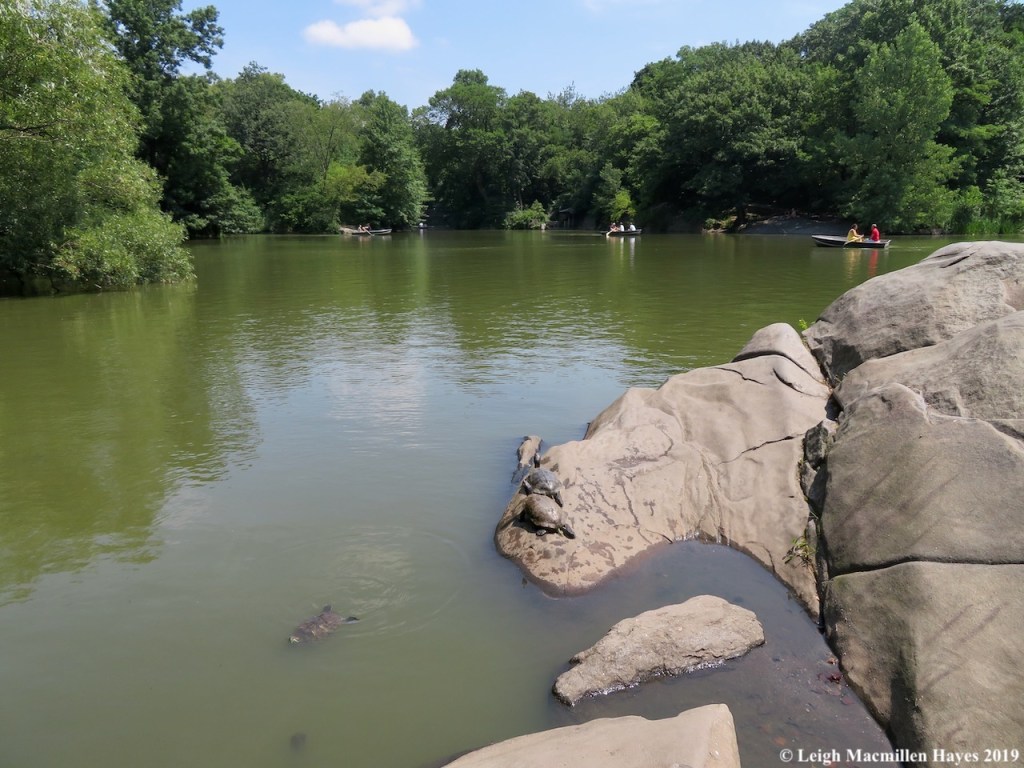
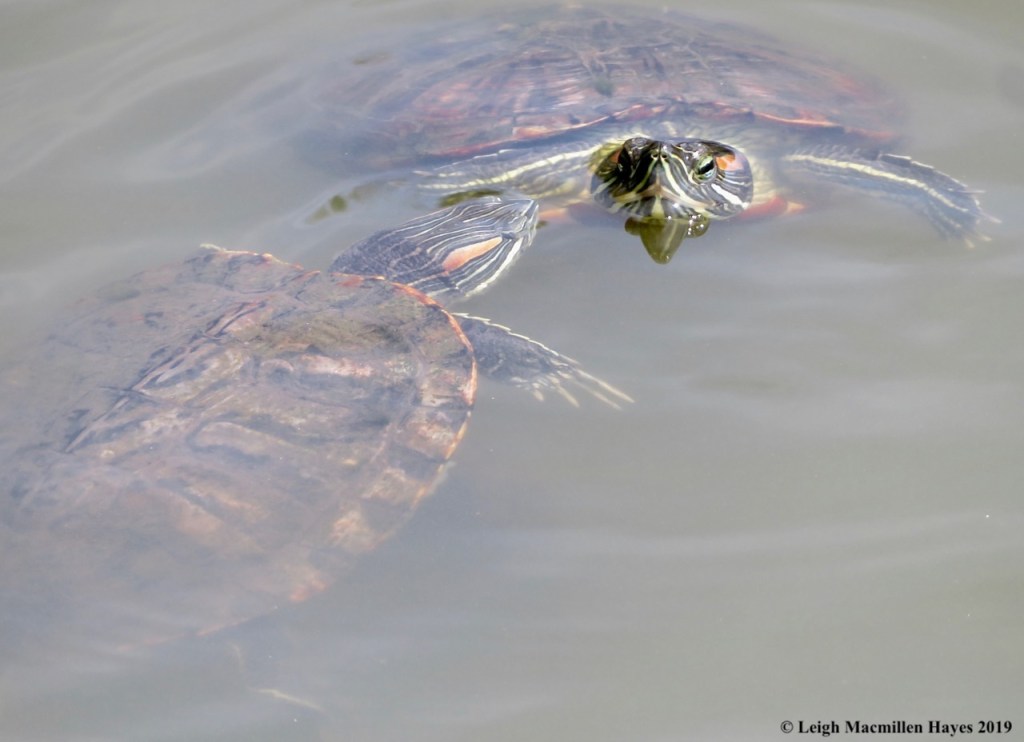
and basking in the sun. Interestingly enough, if you scroll up to the first shot of The Lake, you may notice that the rock upon which the Red-eared Slider Turtles sunned themselves actually looked like a turtle.

It was there that we also spotted dragonflies new to my knowledge–the Eastern Amberwing. I think I may have called it the Topaz Wing had I been the first to ID it, but perhaps that’s because I’m partial to the stone that represents my birth date.

Inside the Museum of Natural History we wandered and wondered for hours and hours. I’m not a city girl, but I sure did wish from time to time that I lived closer for I would purchase a pass each year and spend time in various sections–visiting repeatedly to gain a better understanding.

Oh yeah, these are the two variations of a snowshoe, aka varying hare.

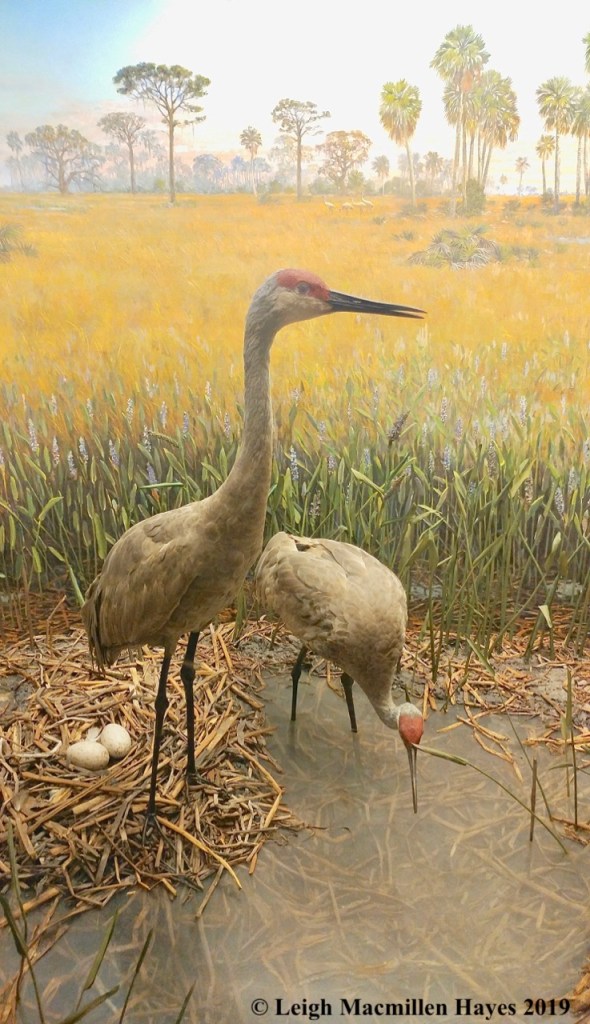
And did I mention that we spotted Sandhill Cranes and their nest. It looks like three little ones should hatch any day now. That is . . . if it’s possible to emerge from their plastic forms enclosed behind the glass wall.

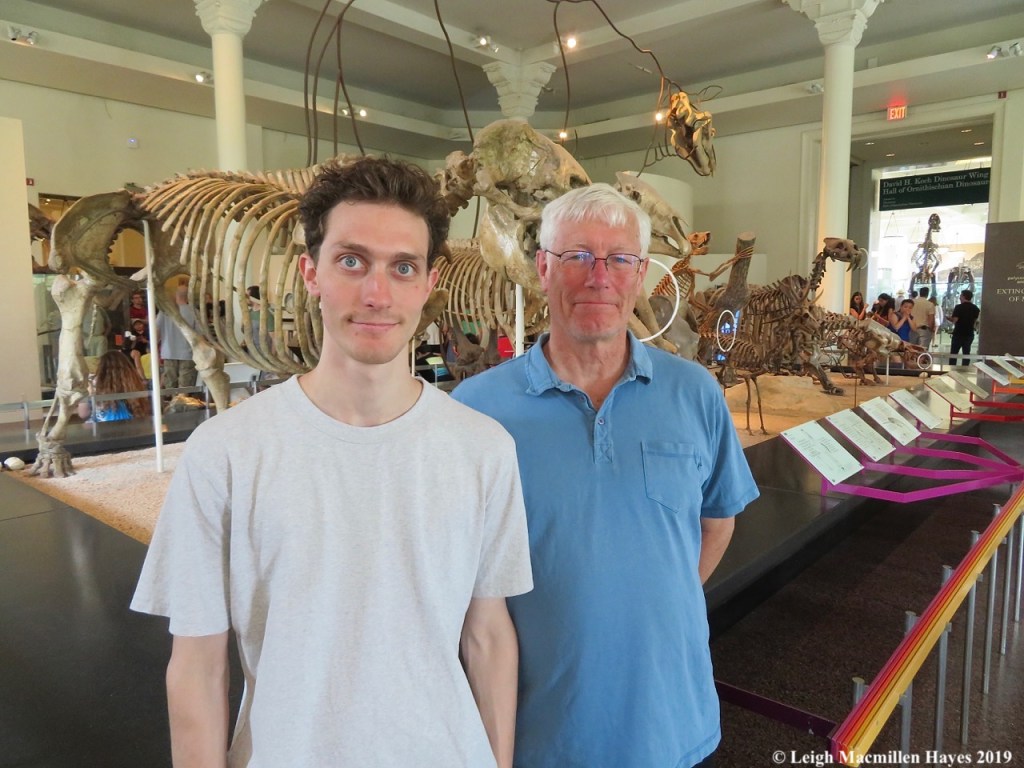
Though I enjoyed the river and park and museum, and especially breaking bread together, the best part of the weekend was spending time with my guy and our youngest son, both of whom actually posed for me beside skeletons of extinct mammals.

We were there to wish this young man a happy 25th birthday. We are so proud of him and the work he is doing and person he has become.

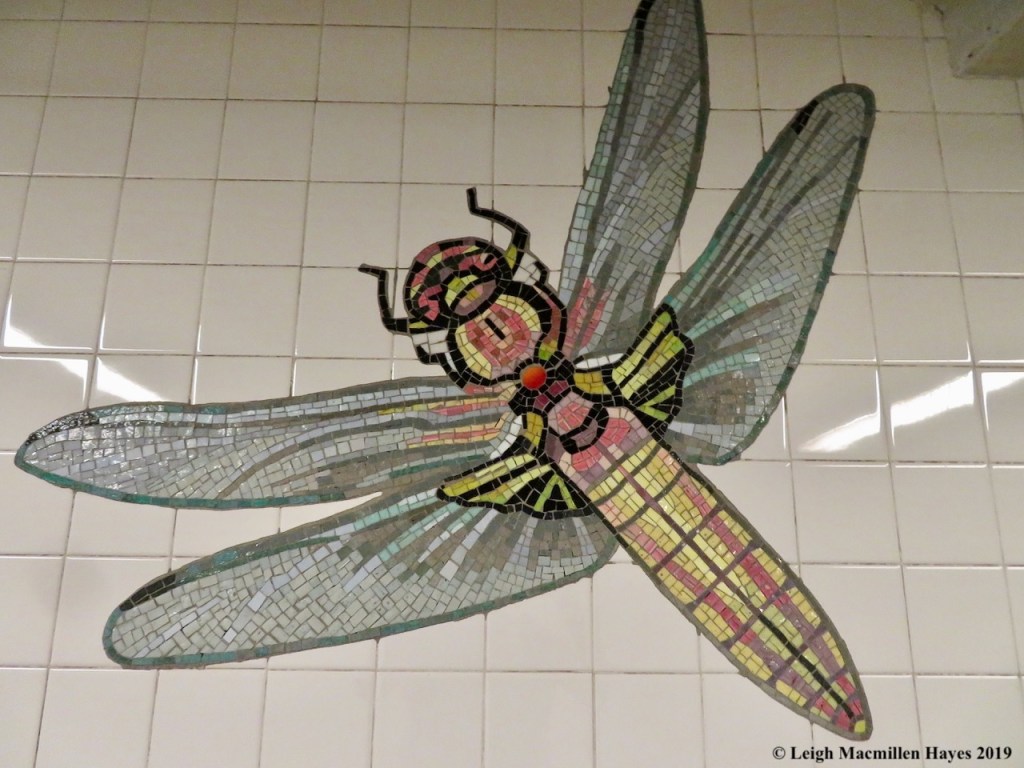
He loves New York for all its city ways and quirky offerings. We love that we can visit from time to time and get to know his place a wee bit better–right down to the artwork on the walls of the subway. The more often we go, the more we begin to realize that in the midst of all its city-ness, moments of wonder can be found.

Ahhh–the nature of New York.

P.S. Happy 25th Paddy Mac!

New York by Nature

Having grown up in a small town outside of New Haven, Connecticut, I used to be quite knowledgeable about city ways, but these days woodland trails are more to my liking. Stepping out of our comfort zone and onto the streets of Manhattan and Brooklyn this past weekend, I was sure I’d be a nervous wreck. The last time we’d ventured there, our sons were six and eight, and my knuckles white as I gripped their hands.

N-NBC

That was then. Maybe it was because we didn’t have young ones in tow, or because I decided to embrace the moment and smile at each person I was able to make eye contact with, this time was different. Even some cold rain didn’t stop us from enjoying the city’s vibe . . .

N-bakery

including all its colors and flavors.

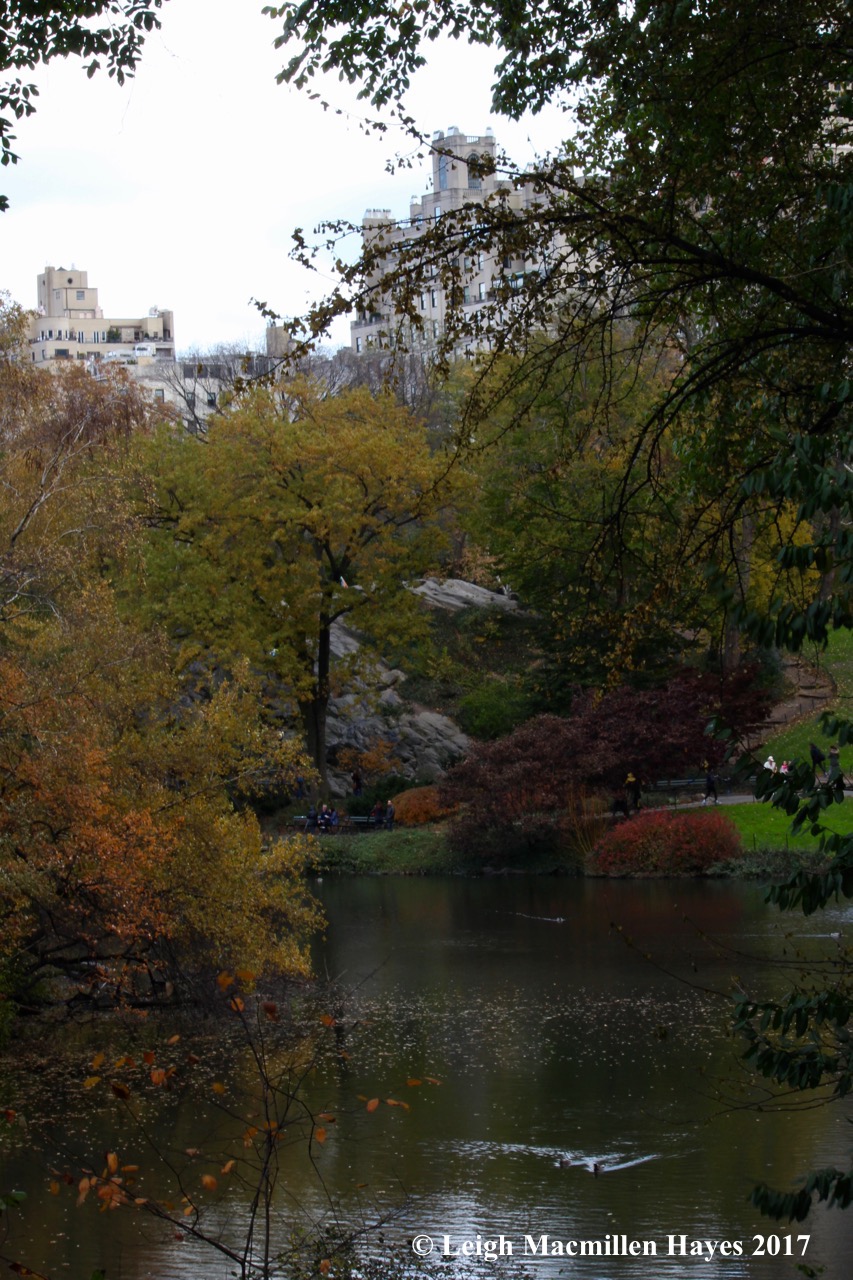
n-Central Park meets autumn

On a new day, the autumnal tapestry was like deja vu all over again, since we’d already experienced fall foliage over a month ago at home.

n-London Plane sycamore hybrid 1

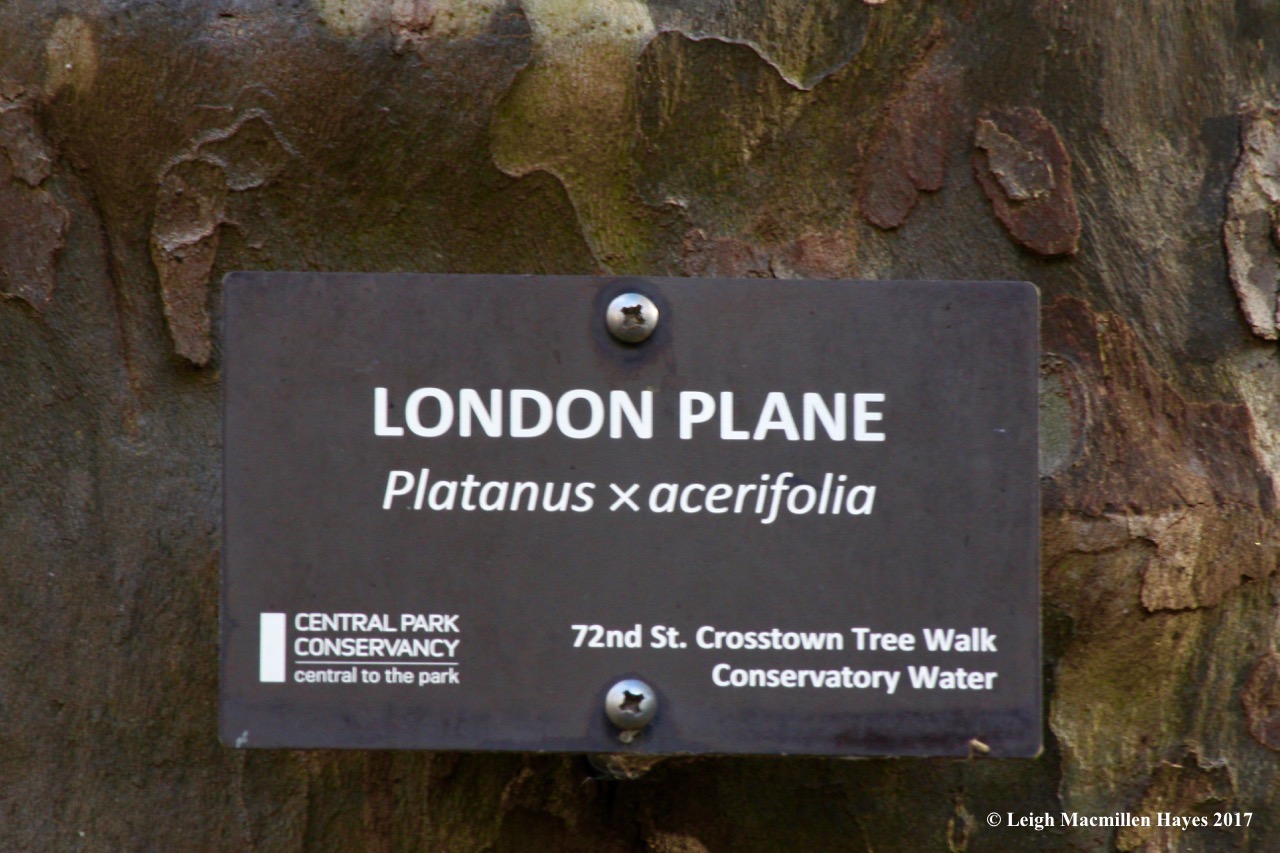
Even tree bark displayed variations of color, some that I thought I knew, until I found one with a name plaque.

n-London Plane

London Plane? Sycamore had been my first choice. It turns out that London Plane is a hybrid developed over 300 hundred years ago from the native  sycamore and oriental planetree.  And it was used as an ornamental to line streets . . . or park paths.

n-sycamore leaves1

Its scientific name, acerifolia, came from its maple-like leaves. I knew I’d learn plenty in the Big Apple, but didn’t expect trees to be among the lessons.

n-elms intermingling 2

As we walked through Central Park, street vendors displayed their works below, while American elms gracefully danced across the canopy above.

n-Central Park 1

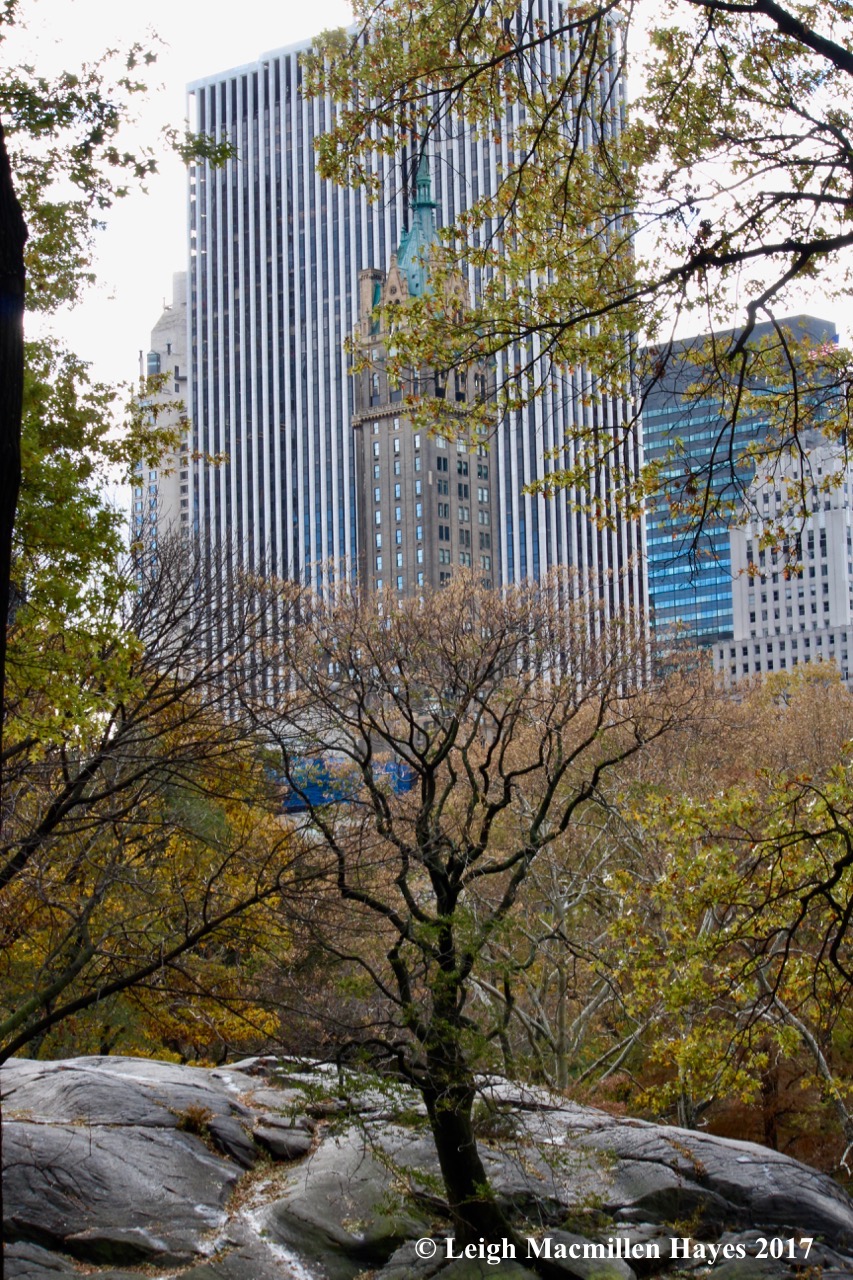
And buildings magically arose from the rocky substrate.

n-trees and buildings

We zigged and zagged and made our way about, though I had to depend on my guy for directions. I can find my way out of the woods, but even though there were maps throughout the park and the city streets are set in a grid, I was completely disoriented at each intersection.

n-house sparrow 2

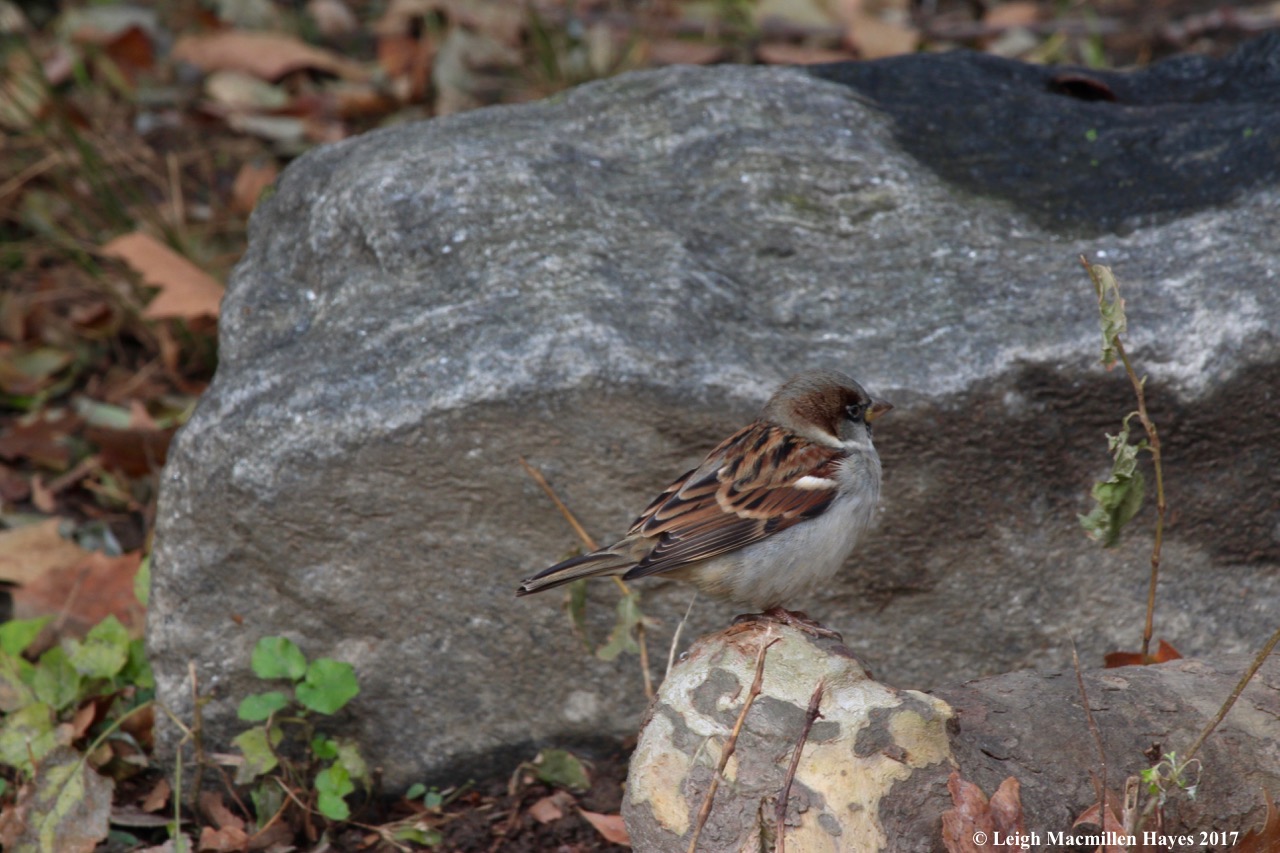
Perhaps it was because I was more taken with the little things. Even seeing house sparrows felt like a treat.

n-house sparrow 1

They were so tame.

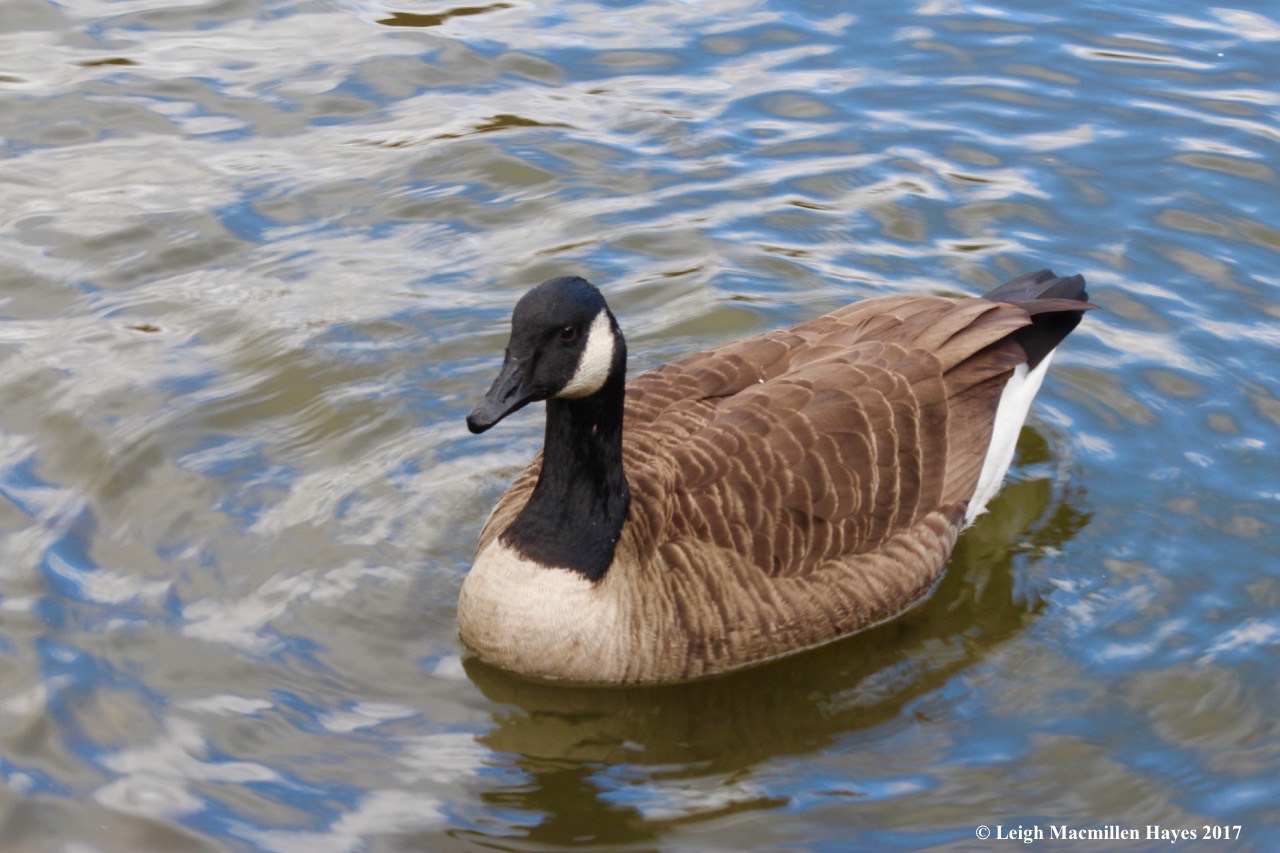
n-Canada goose

I felt right at home among the Canada geese and . . .

n-gray squirrel 1

gray squirrels.

n-Stuart Little

We immediately recognized Stuart Little as he tacked back and forth.

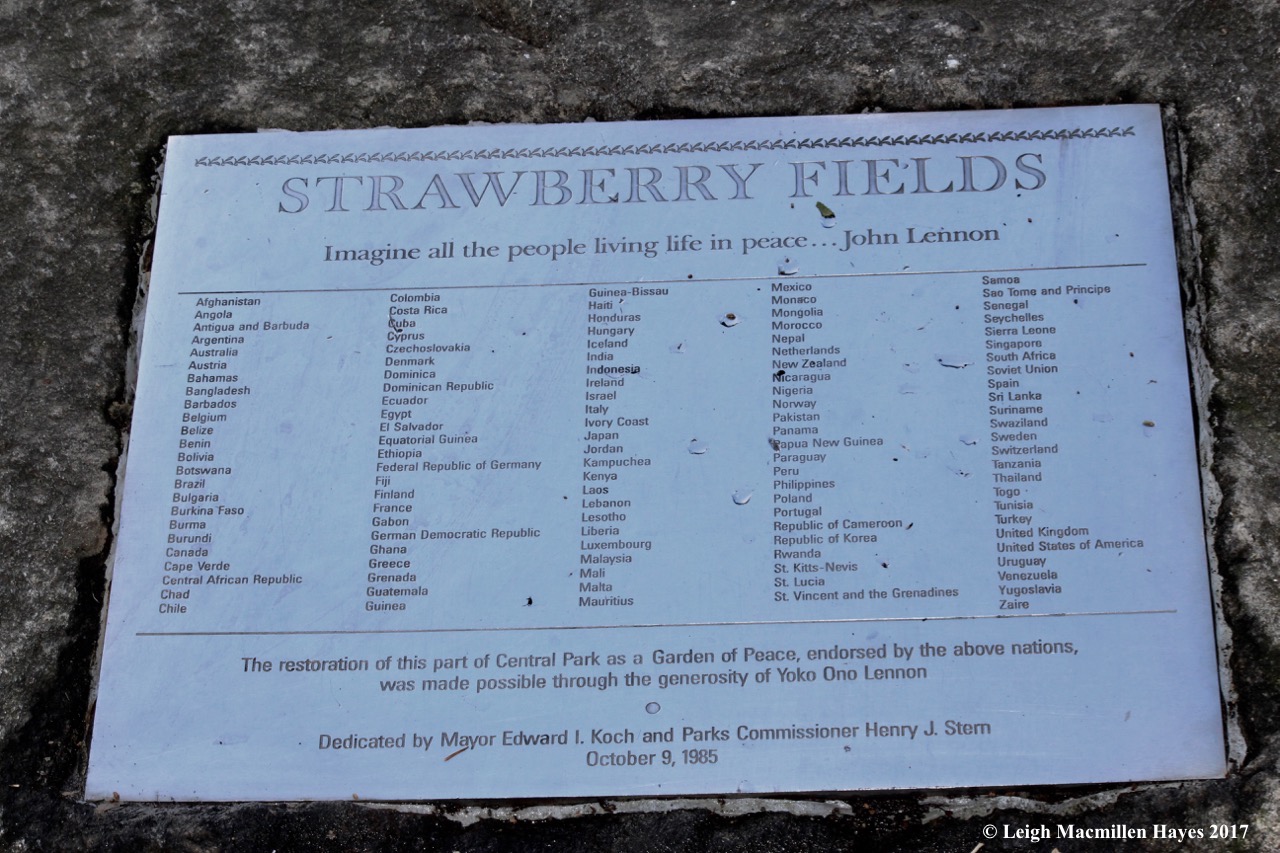
n-strawberry fields forever

And then we wound our way around again, pausing by Strawberry Fields–and imagined. If only.

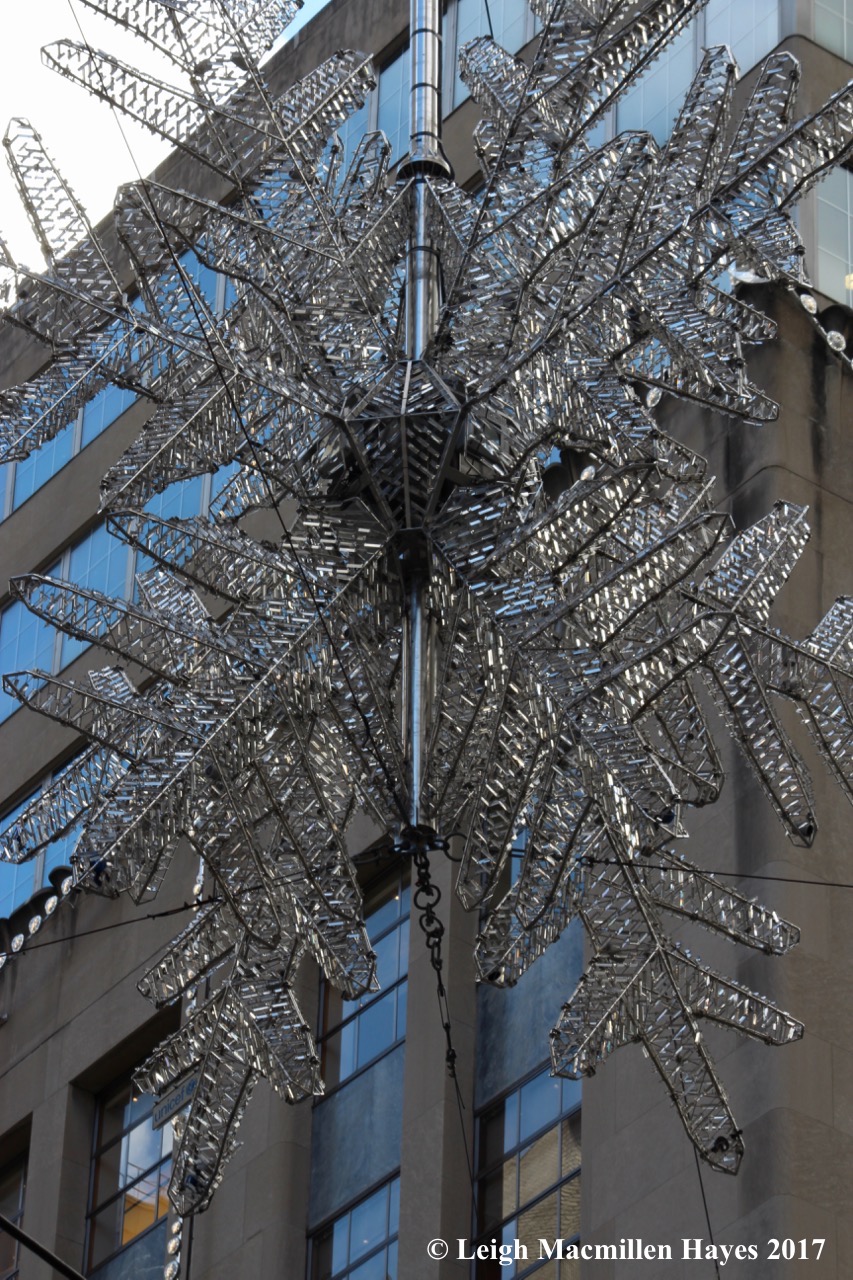
n-snowflake by Cartier

Back on the streets, we were dazzled by snowflakes . . .

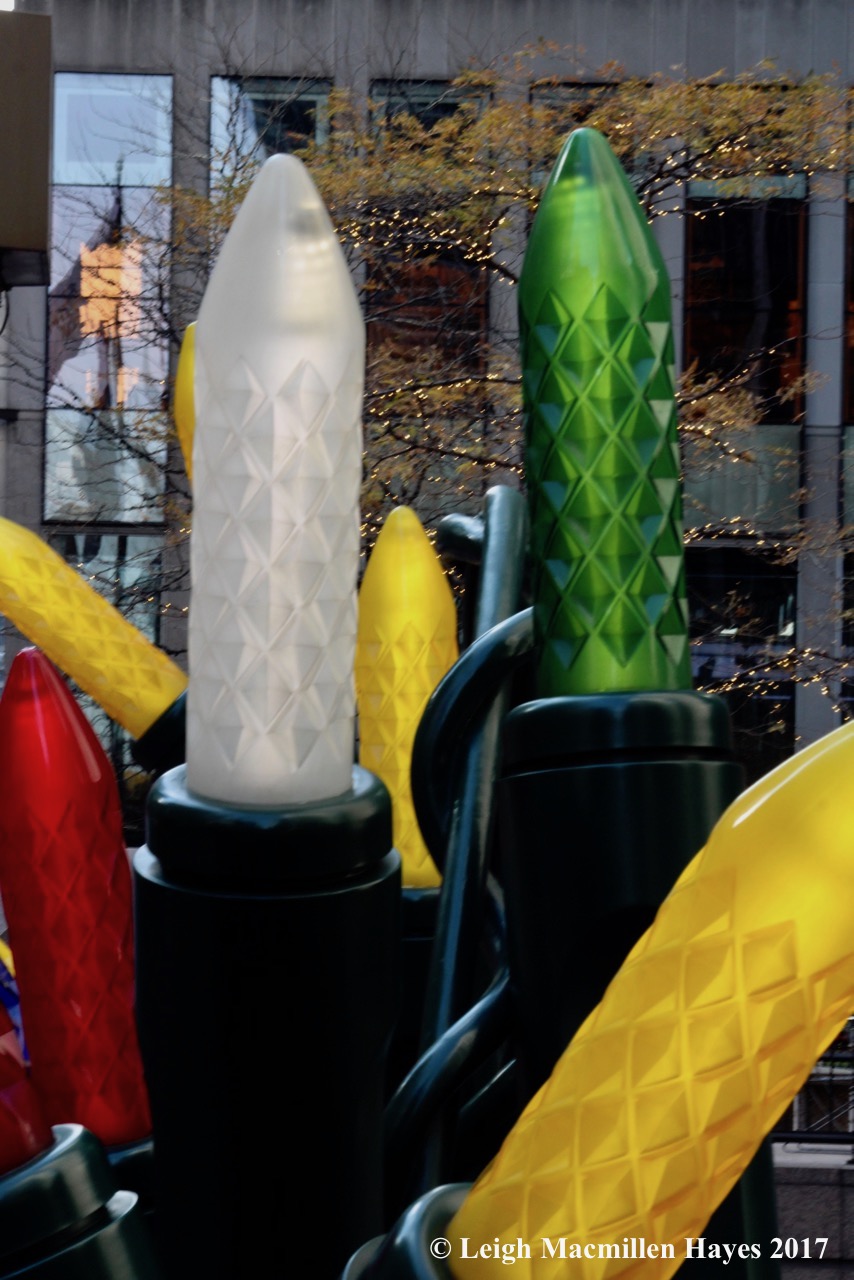
n-Christmas lights 2

and Christmas lights.

n-Pat's Place

And then it was time to cross over to Brooklyn where we found a tour guide stepping out of his brownstone.

n-cement tracks

Like others before us, with him we pounded miles and miles of pavement and left behind our own tracks.

n-World Trade Center 1

He took us to the World Trade Center, which we viewed with awe . . .

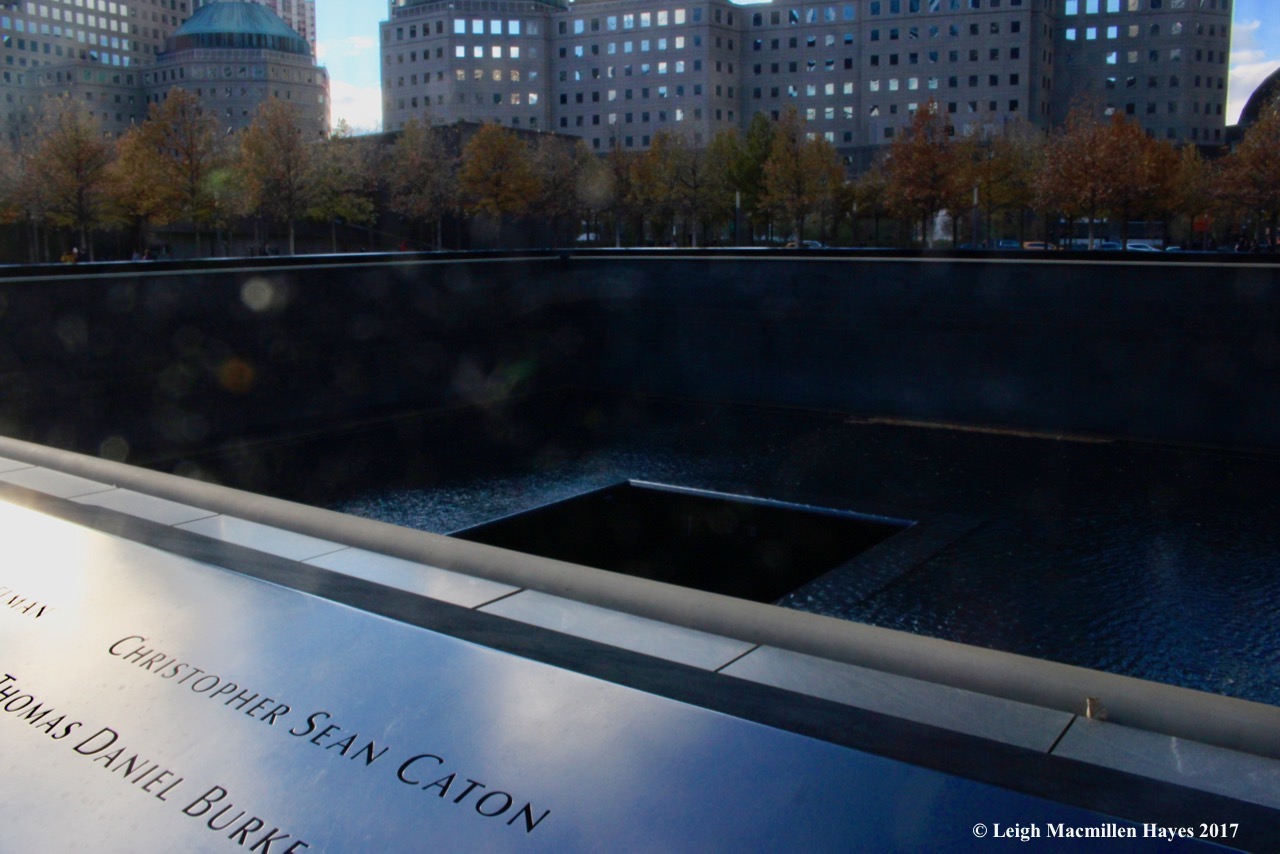
n-9:11 memorial

and Ground Zero, where we felt the presence of so many as we remembered.

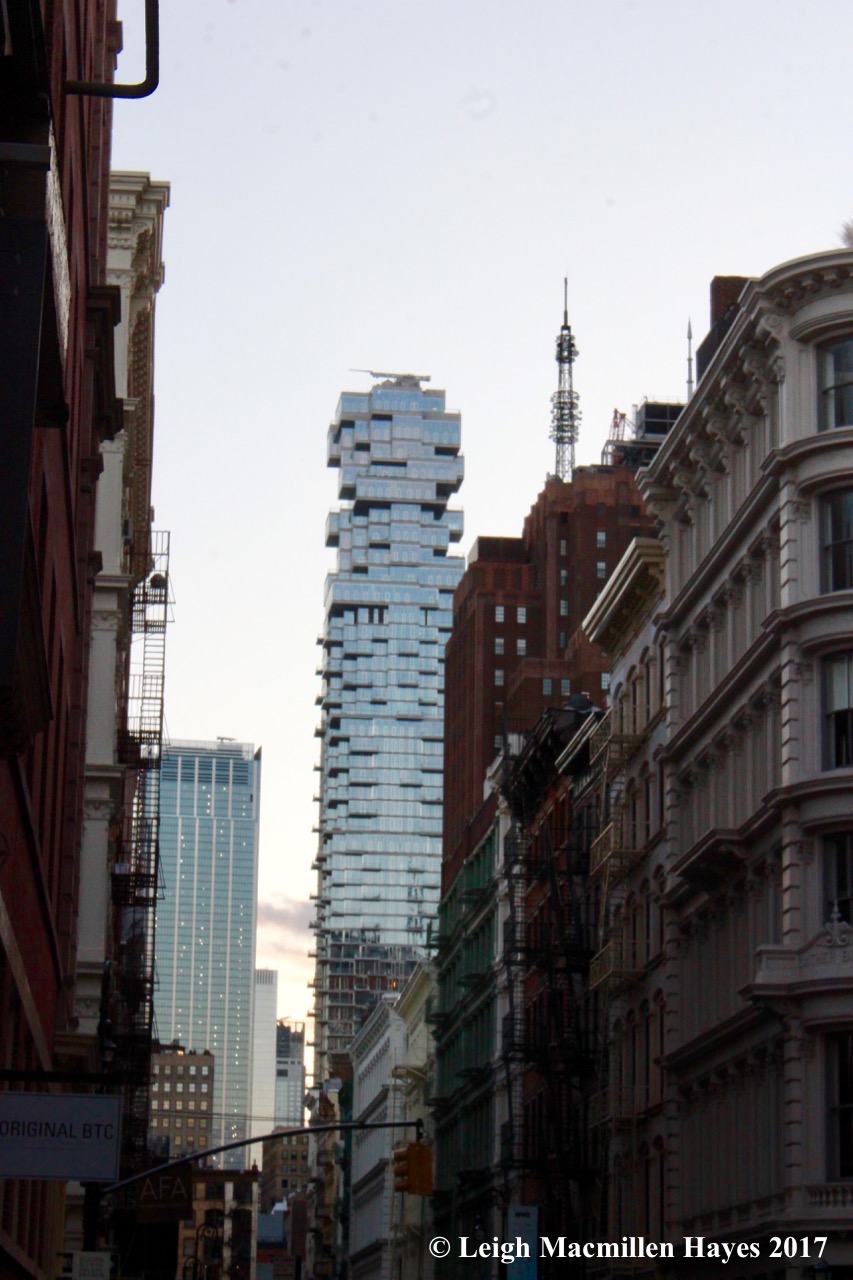
n-SoHo

Soho was our next destination, and though we didn’t shop, the architecture was enough to fill our minds with abundance . . .

n-architecture 1

and variety.

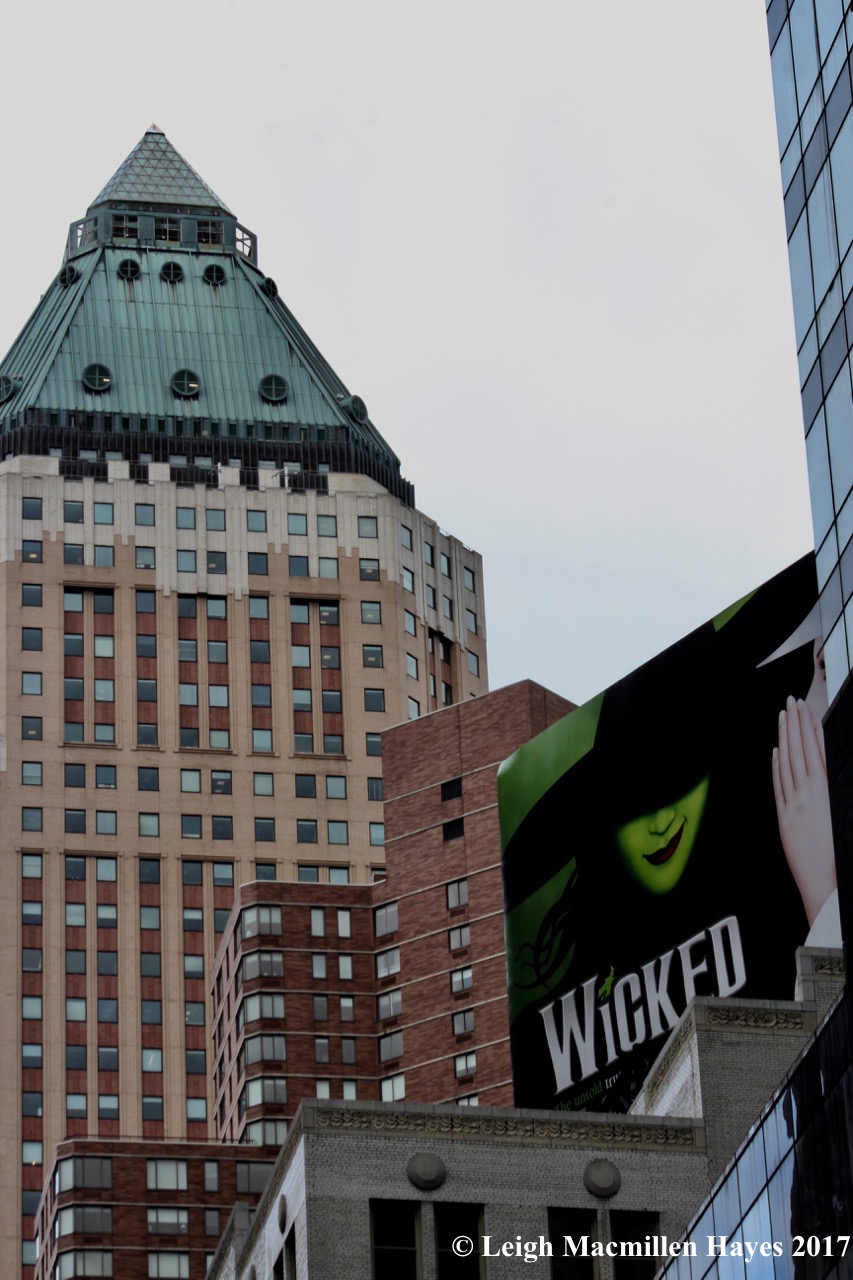
n-Wicked sign 1

No visit to NYC is complete without taking in a performance and my guy, who is the world’s biggest fan of The Wizard of Oz, chose WICKED.

N-Wicked set 2

I won’t say it was my favorite show, but the set, costumes, acting, dancing, and singing were all well worth the experience. He thoroughly enjoyed it.

n-Rock center 4

Another must do is Rockefeller Center–or at least the ice rink. We didn’t skate, but enjoyed watching people take a spin, some more agile than others.

n-Rockefeller tree 1

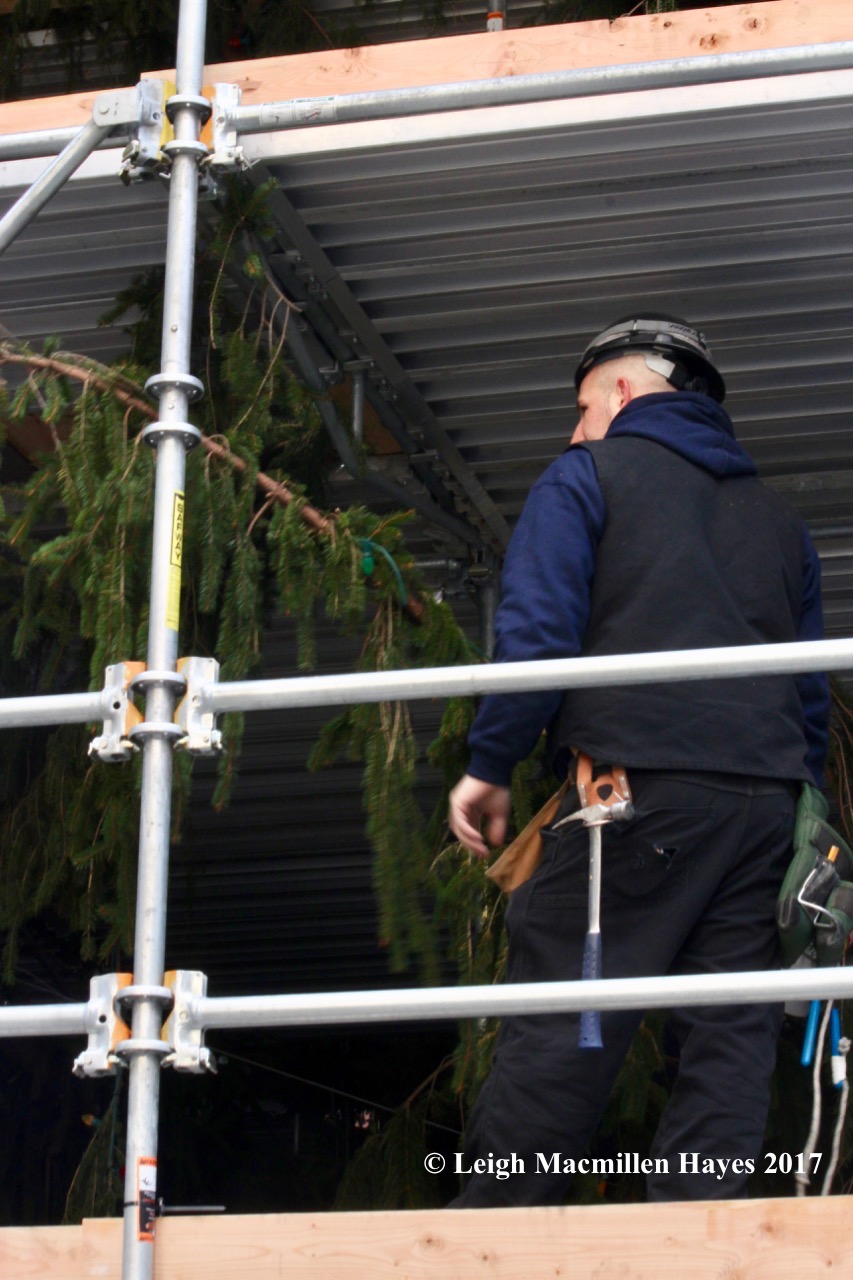
Overlooking the rink, but encased in scaffolding stories high, a transformation was in the works . . .

n-Rockefeller 2

from a Norway Spruce discovered in State College, Pennsylvania, to the Rockefeller Center Christmas Tree.

n-toy soldier 2

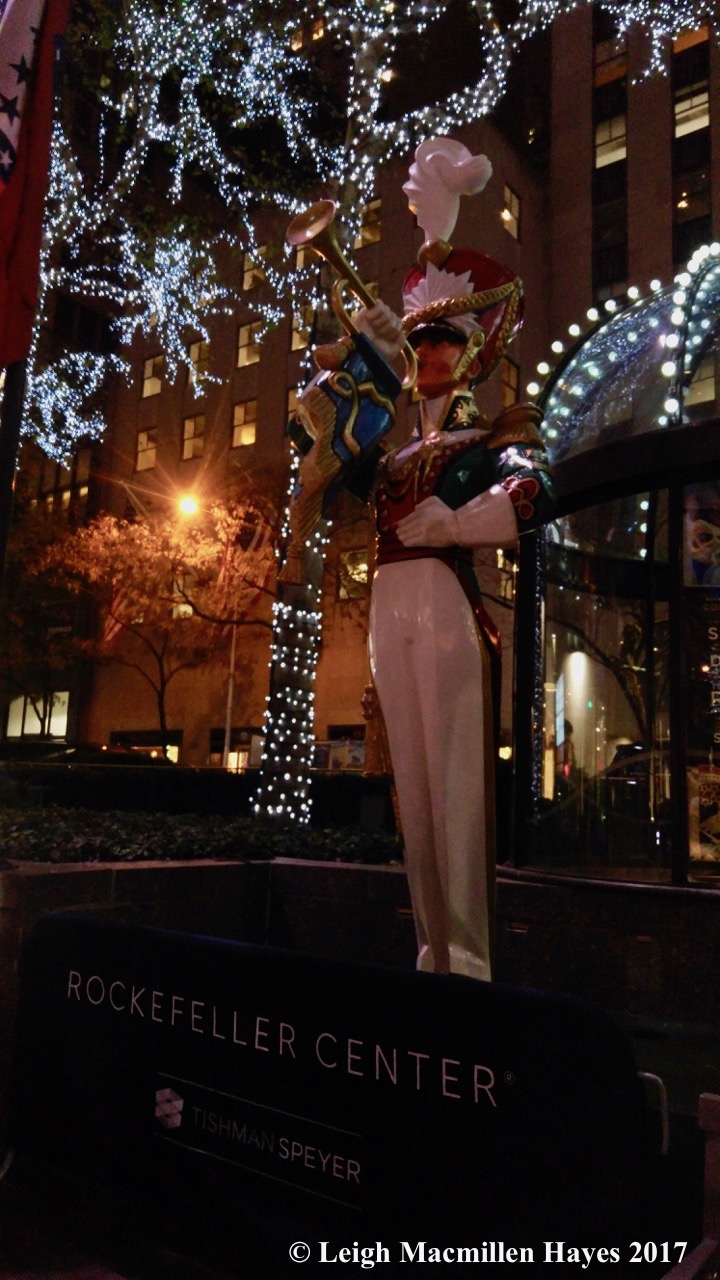
Watching over all were the toy soldiers. And if you have ever wondered if they come alive after most of the world that gathers in New York goes to bed, they do. We know this first hand for we heard them. Our hotel room was located nearby and at about 2am we were awakened each night by an instrumental performance that had a symphonic sound. We couldn’t hear anyone in adjoining rooms. And we never heard a peep outside of Radio City Music Hall, so it had to be the toy soldiers and angels that surrounded the rink–and you have to become a believer.

n-Grand Central Station

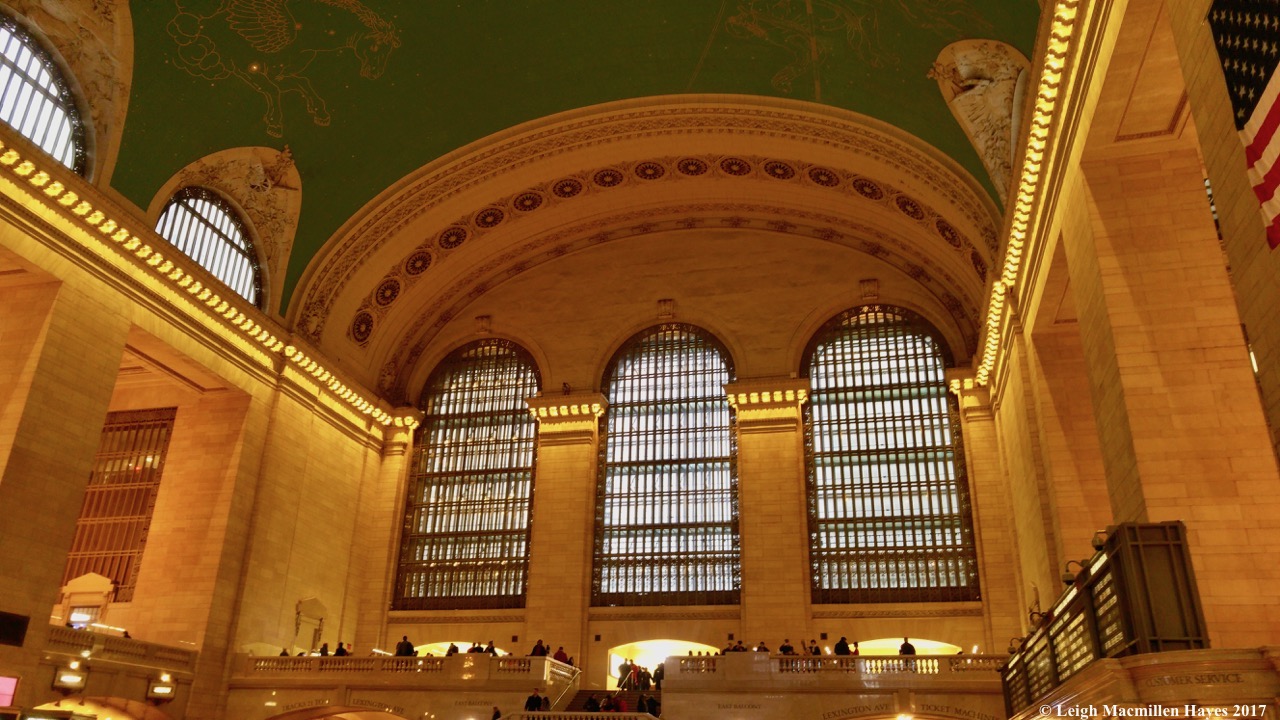
At long last, it was Monday morning and time to head back through the terminal of Grand Central Station to make our way up the northeast corridor.

n-Allen, Pat and Tim

But . . . we left with fond memories and promises to return for somehow we who live in rural Maine raised a city boy.

Posing from left to right, my guy, our youngest and one of his roommates who also hails from Maine.

They’re both comfortable by nature in New York City.