Cloudy Mondate

Between the two of us, My Guy and I have lived within an hour or so of today’s destination for a grand total of 103 years. Yikes. That makes us old. Of course, we aren’t. But for some reason we never visited this spot before. Maybe because it’s a tourist hotspot, and we’re hardly tourists. In fact today, we were dressed in our usual garb because our plan was to hike. And we did. But . . . we also did that touristy thing for a wee bit. Cuze when in Rome . . . yada, yada, yada.

And so first we paused by the Pebble, a glacial erratic.
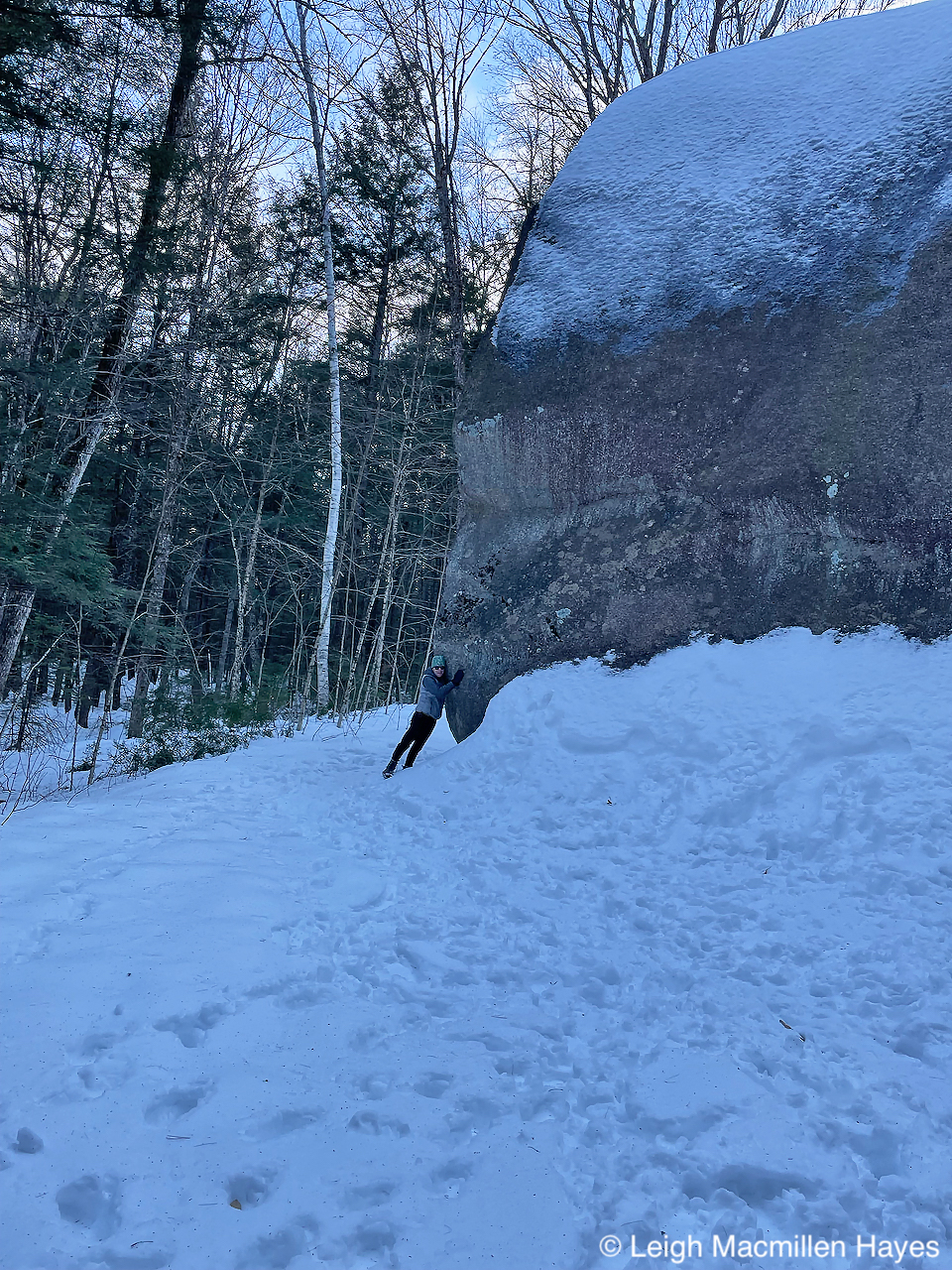
I suppose when you compare it to the Boulder located about a half hour north of the Pebble, which we visited on February 14, 2022, it is rather pebble-like.

But what we really wanted to see was the Falls of Song, a waterfall that drops forty feet and is so named for the changing sound of the water that constantly flows.

According to an interpretive sign by the falls, “An 1885 Boston newspaper description of the scenic beauty and amenities stated of the Falls of Song that ‘their location in the depths of the primeval forest, their exquisite setting under the overhanging cliffs, the silvery clearness of the water and their magical musical effects, seemingly changing their song at every hour of the day, unite to place these falls among the most interesting and wonderful in the United States.'”

Another set of falls to draw our fancy was the Bridal Falls, so named because in the right conditions they appear to be lacy like a bridal veil. I felt like the conditions were indeed right today.
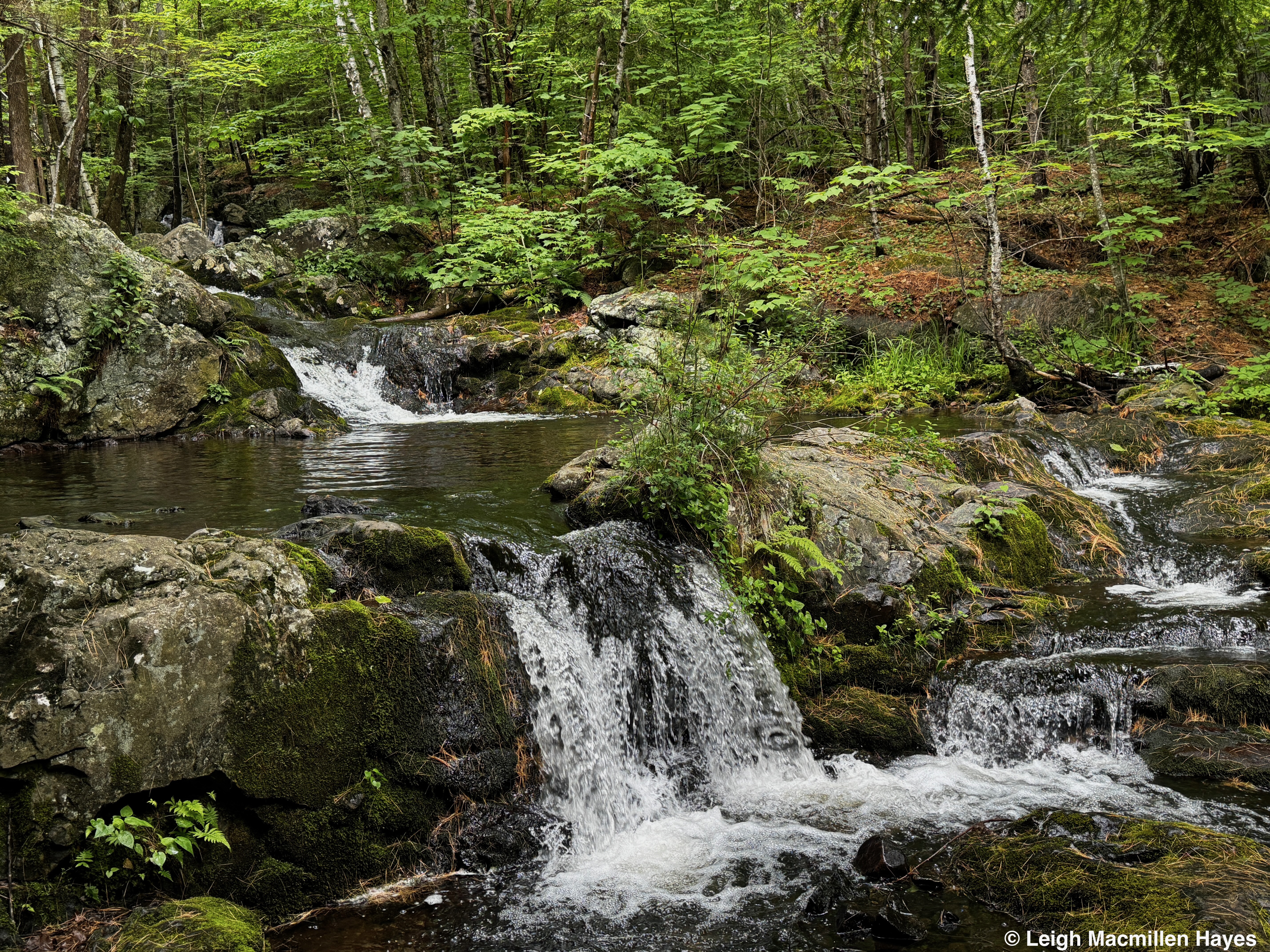
We followed the brook for over a half mile and the views kept changing and sounds kept enhancing our experience. If it had been warmer, we might have wanted to take a dip, but for today, just watching and listening as the water tumbled and plummeted and twisted and turned and glided and flowed was enough.

Back on the road as we drove up the mountain, we stopped again for a view from lunch bench and I found my place, which was my place in the early 1980s. Lake Winnipesaukee and Gunstock Mountain formed the backdrop and brought back memories of teaching and hiking and skiing and swimming and being. The best part is that this is the area where I learned to be. Be me.

To be native, like the Northern Bush Honeysuckle, for I began to realize all those years ago that this is the area where I belonged.

But today brought us to the home of others who also belonged in this place, beginning with Thomas and Olive Plant, the original owners of this mountaintop mansion. I could only hope to live here. But they did. For a while at least.
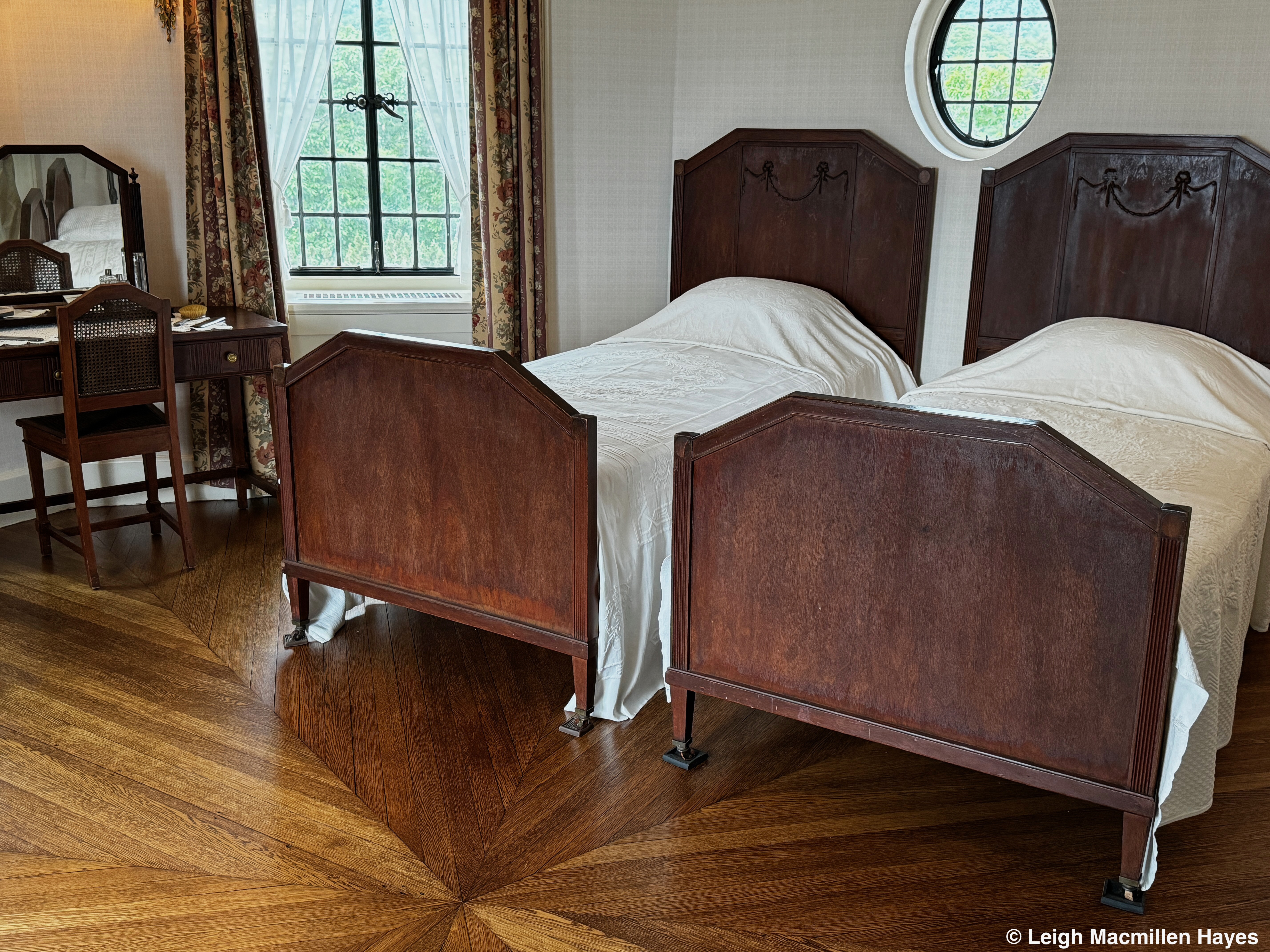
It’s a sixteen room home with halls and halls and an organ, and dumb waiter, and guest rooms like this one, and more halls, and sitting rooms, and great hall, and dining rooms, and servants quarters, and sunroom, and oh so much more. But this, the Brown Room, was my favorite, for recently carpet had been removed and the most incredible floor discovered, and it reminded me of our home, which had been similarly carpeted, and we discovered beautiful southern pine that has since brightened our days.

The sunburst pattern of the Brown Room floor–incredible.
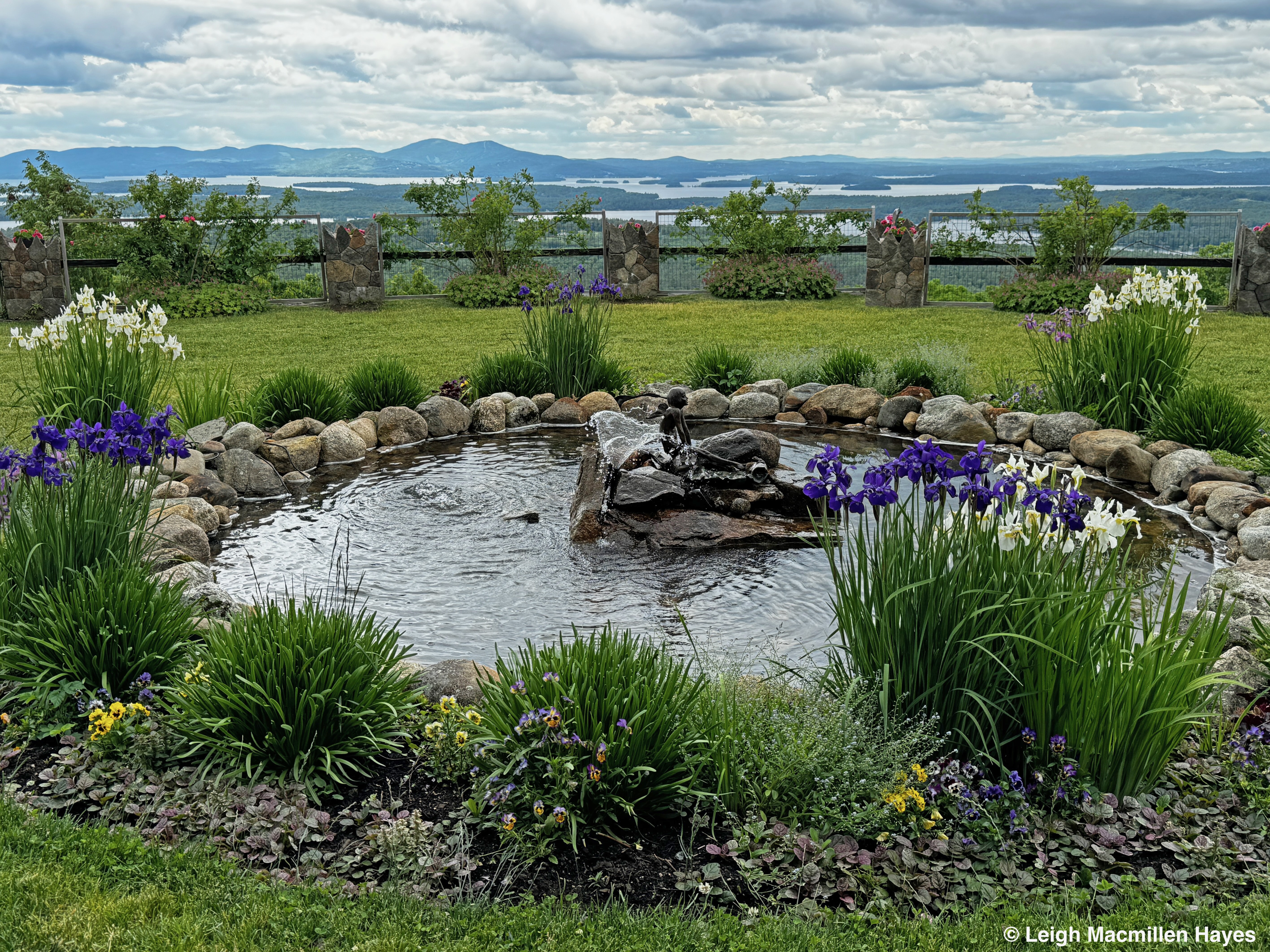
But even more than the inside, we really enjoyed the outdoor living areas, this off the main hall, with a view of the lake and mountains beyond, Gunstock being straight across.

And an angel letting water form her wings.
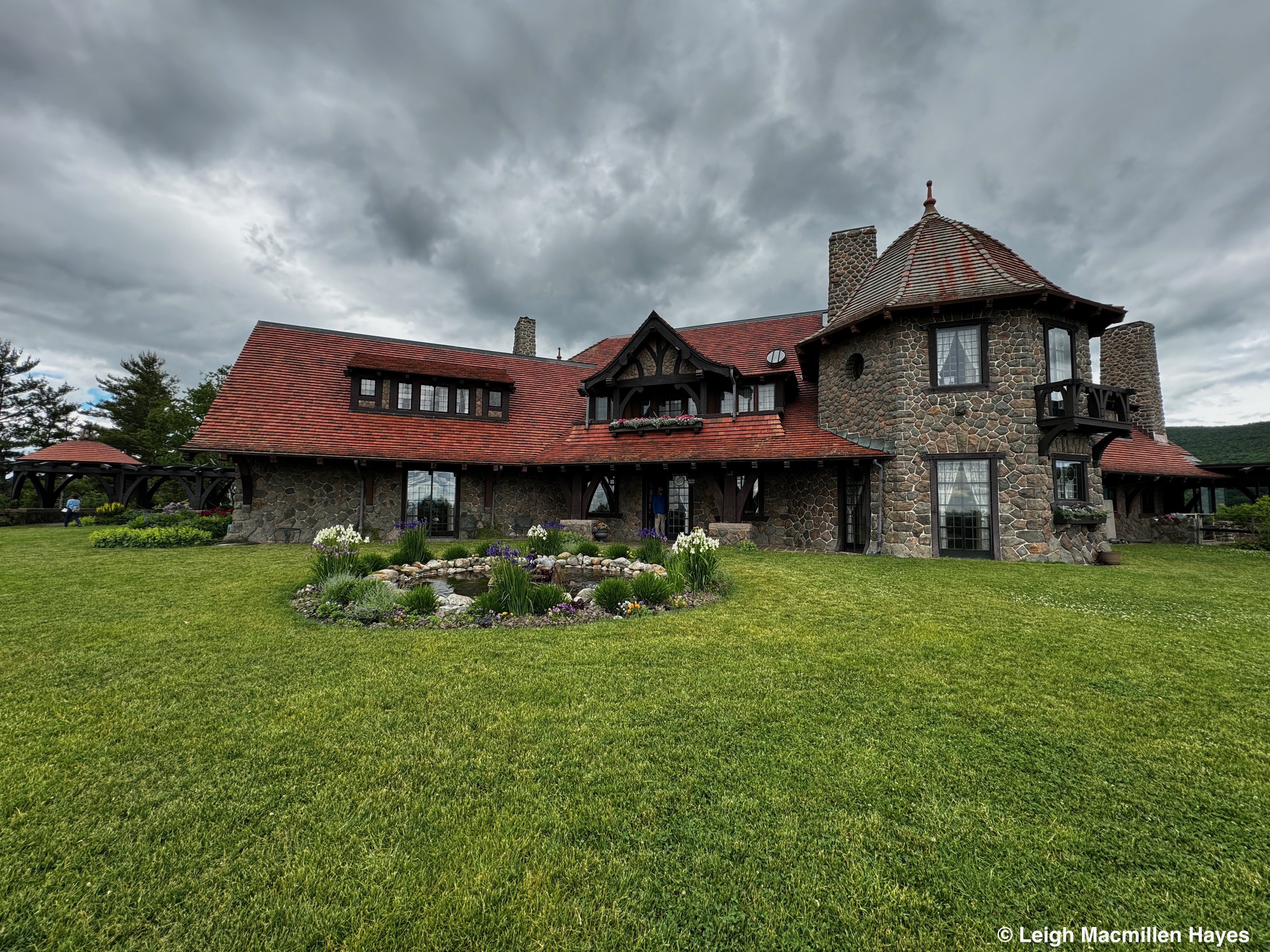
We’re thinking we’ll take the month of August and welcome guests here. Haha. As if we ever welcome guests, the introverts we truly are. But really, the focus should be on the Arts and Crafts architecture and way the building fits into the setting.

And the gardens. Exquisite.

Olive Plant, original owner of the property in 1914, would have approved of today’s gardens which are tended by a group of volunteers. In this space that surrounded the mansion she had a 100-foot glass greenhouse.

I don’t know if this was part of her greenhouse selection, but among the wall that formed part of nursery grows Ivy-leaved Toadflax, a plant I don’t recall ever meeting in the past.

Clouds there were upon occasion today, but the yard boundary offered glimpses of brightness.
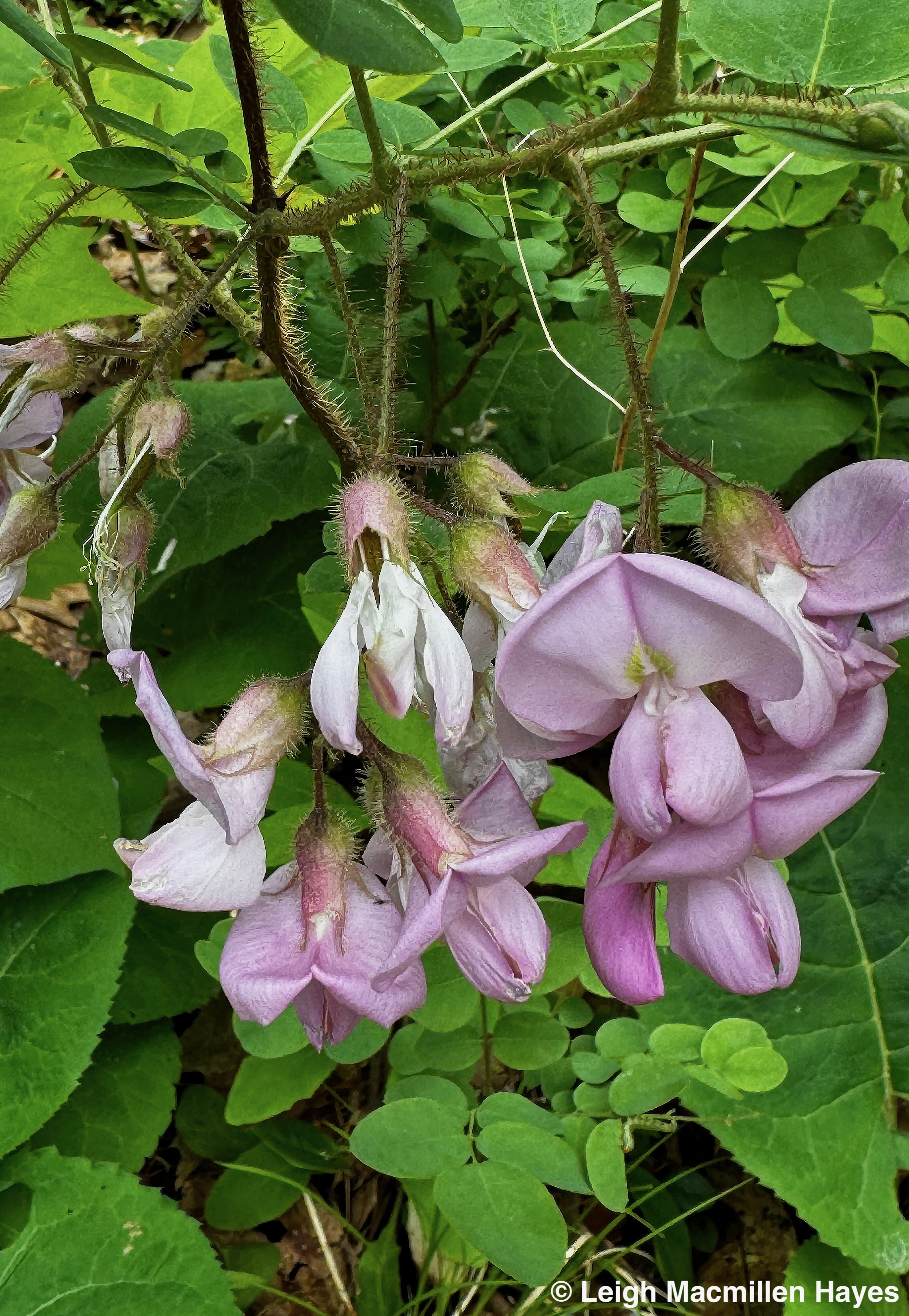
And along the trail where other specimens including this Bristly Locust, a legume.
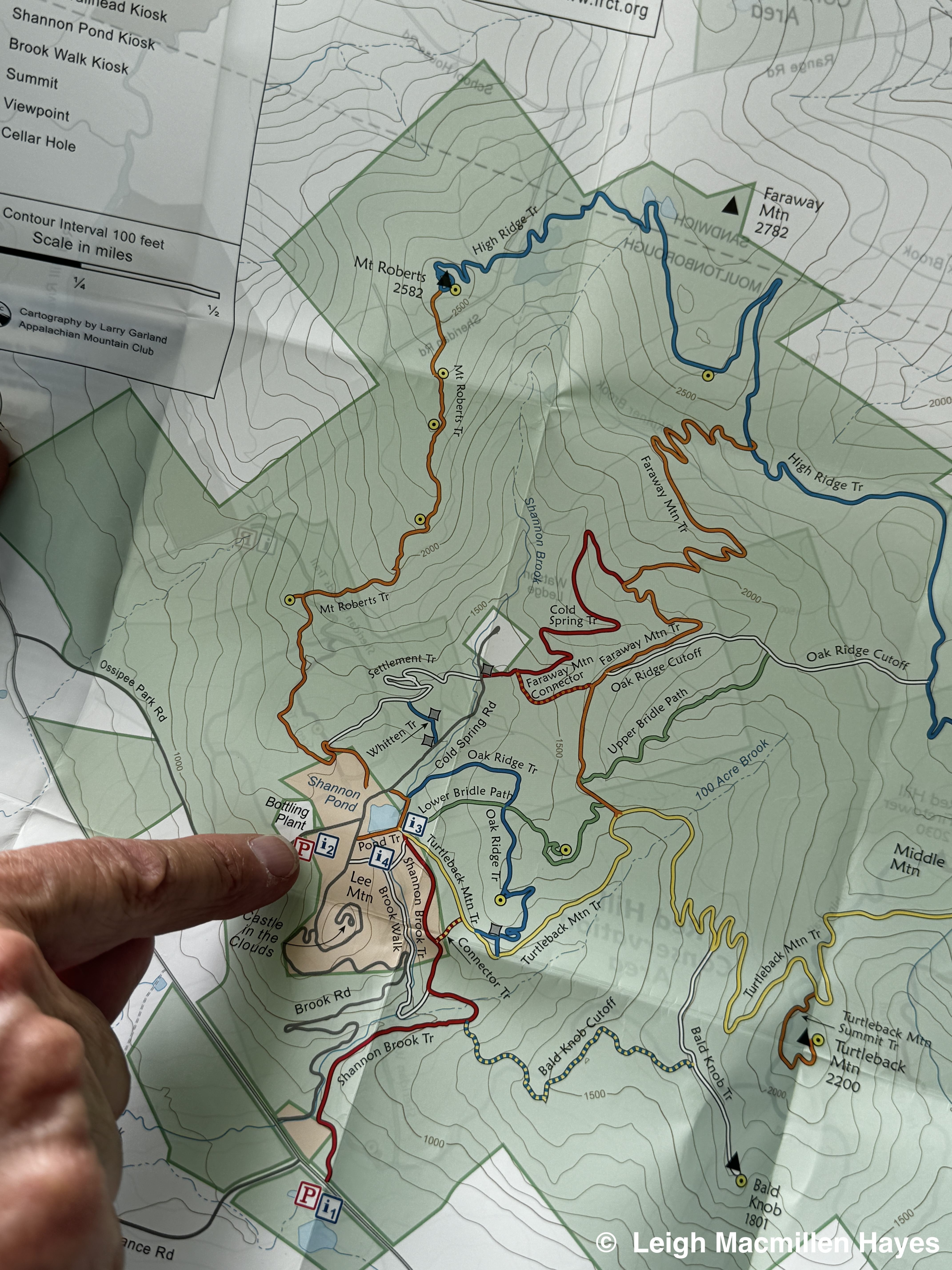
We’d hiked along the brook, spent time exploring the mansion and grounds, and the headed off to hike another trail with only so much time on our hands. At the intersection of trailheads, we had the good fortune of meeting two women with local knowledge who showed us where we were and where we wanted to go . . . that being heading up Mount Roberts. We knew we didn’t have time to summit for My Guy had to get home for a meeting (at which he later received a well-deserved Lifetime Achievement Award), but we made a plan for a turn-around time.

The trail was blazed with orange markers and we might have believed that a Black Bear had marked the way, for so chewed and scratched were the signs, but I suspect it was a Red Squirrel who had a good chomp or two or ten.

That said, a female American Toad, her tympana (ear membrane) about the size of her eye, and overall size of her body providing a clue to her sex, but also doing her best to blend in to her surroundings as she paused upon a stone on the trail.
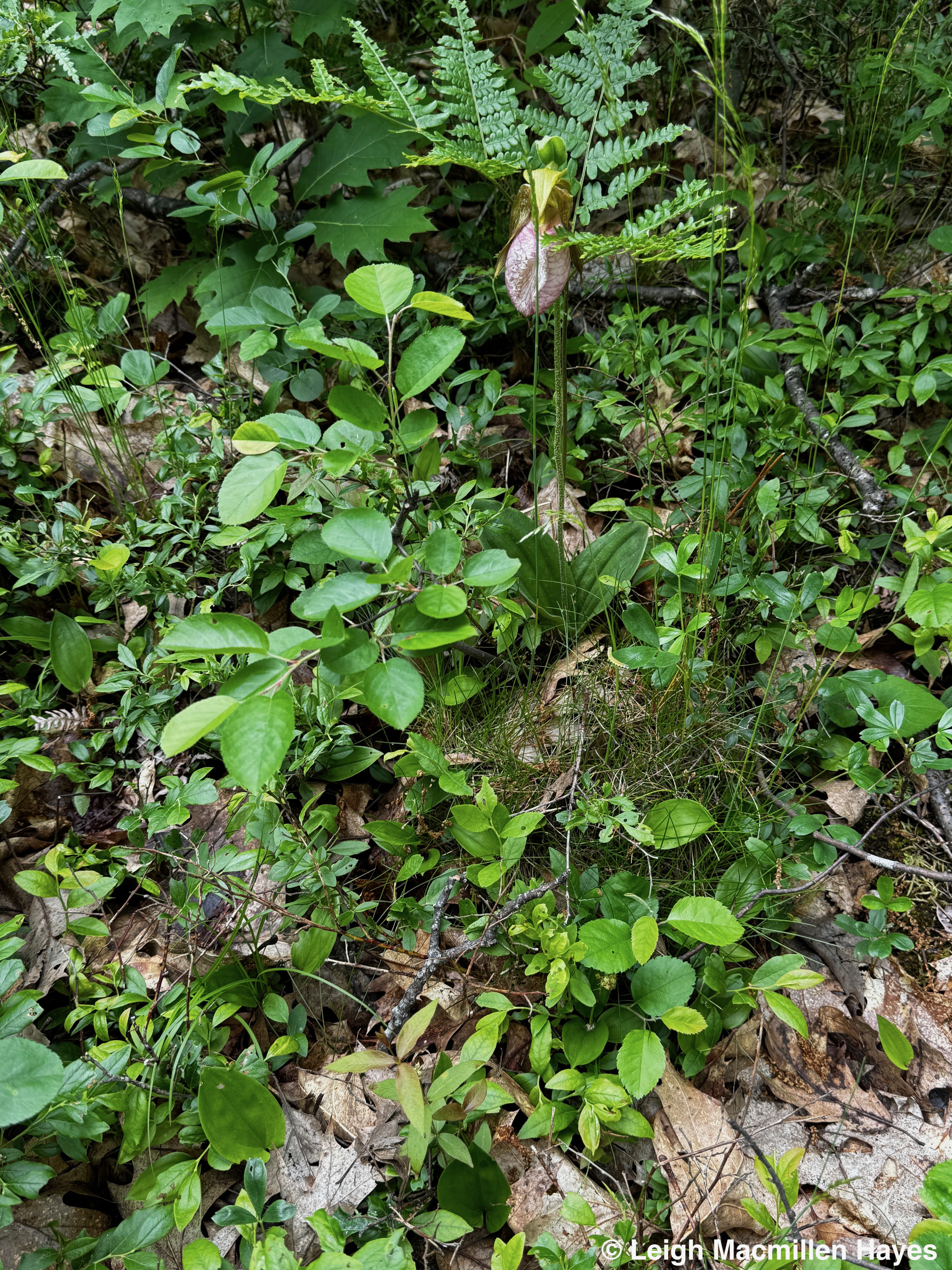
We’d hiked over a mile when I suddenly spied this from the trail. Ruh roh. That meant we had to start looking and counting, a task that slowed us down a bit.
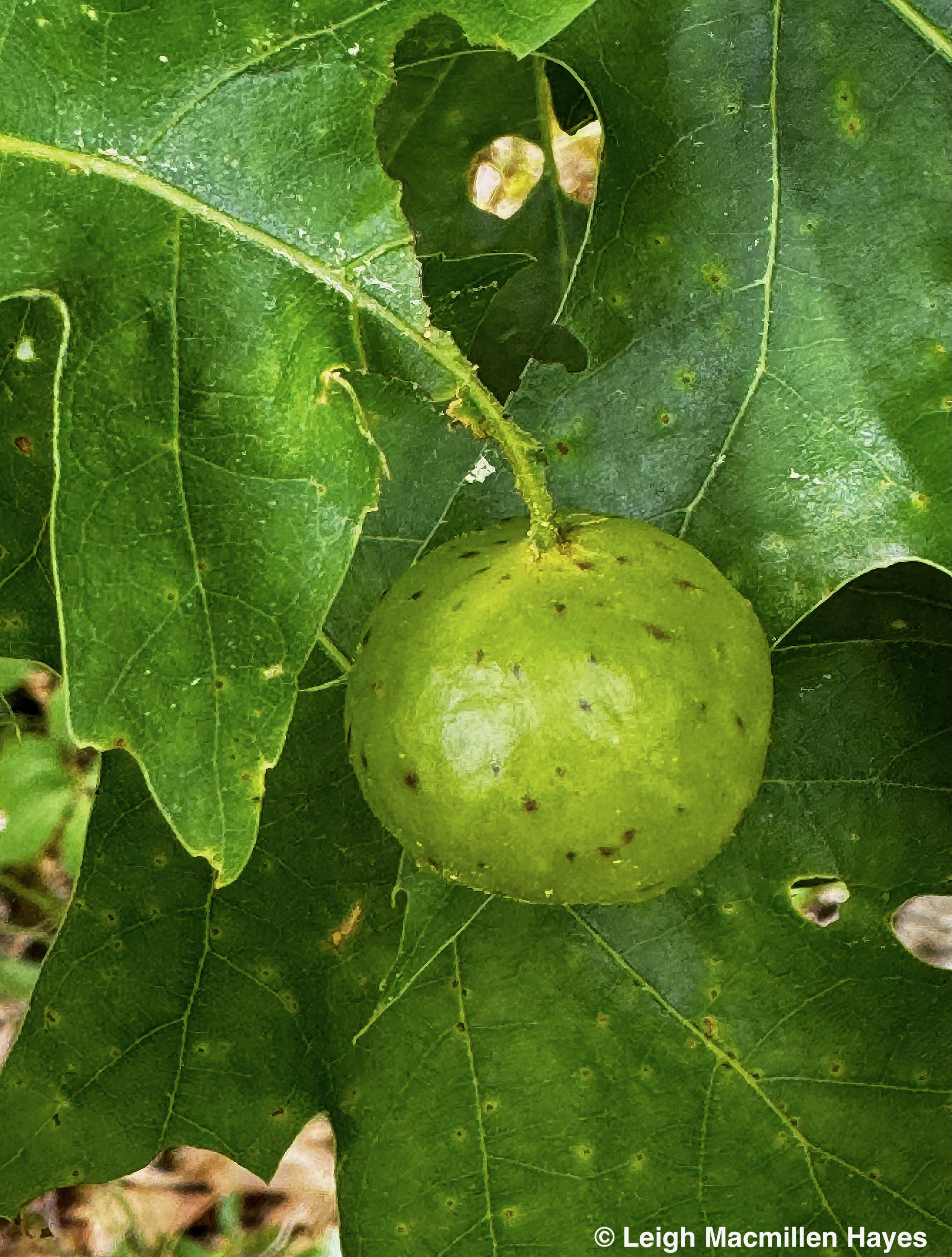
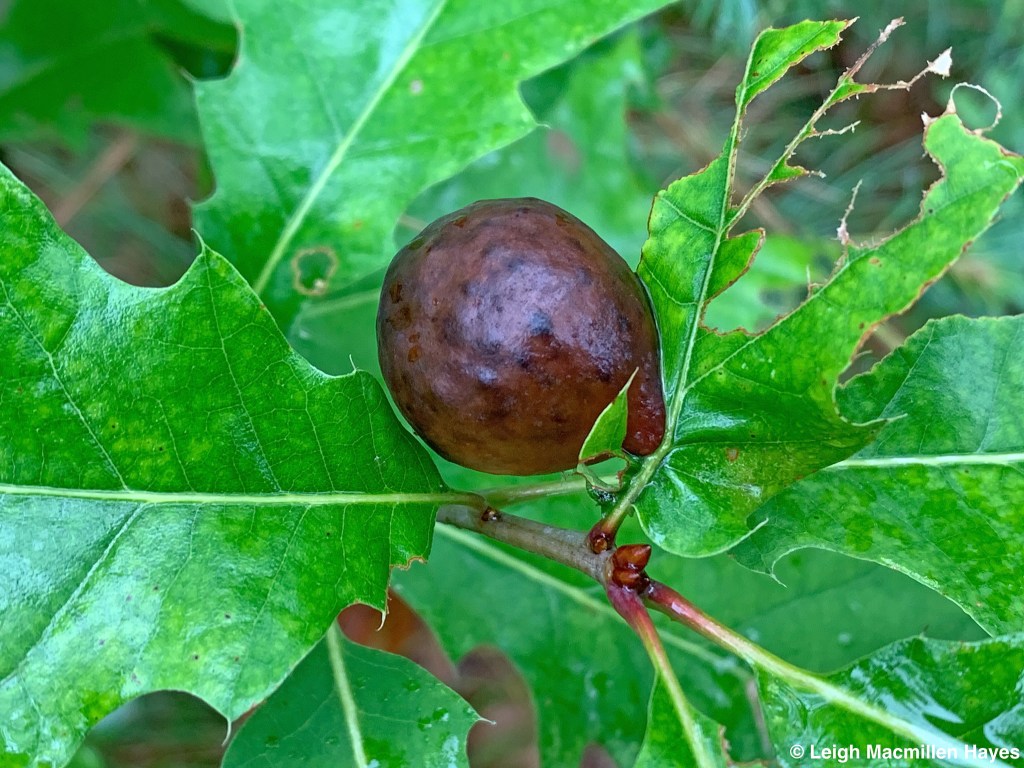
We had set a turnaround time, knowing that we wouldn’t be able to hike the entire 2.5 miles to the summit because My Guy needed to get home for a meeting, and so at 3:15pm, with 1.7 miles behind us, we stopped our upward ascent, but before descending, I spotted a green golf ball on a Northern Red Oak leaf.

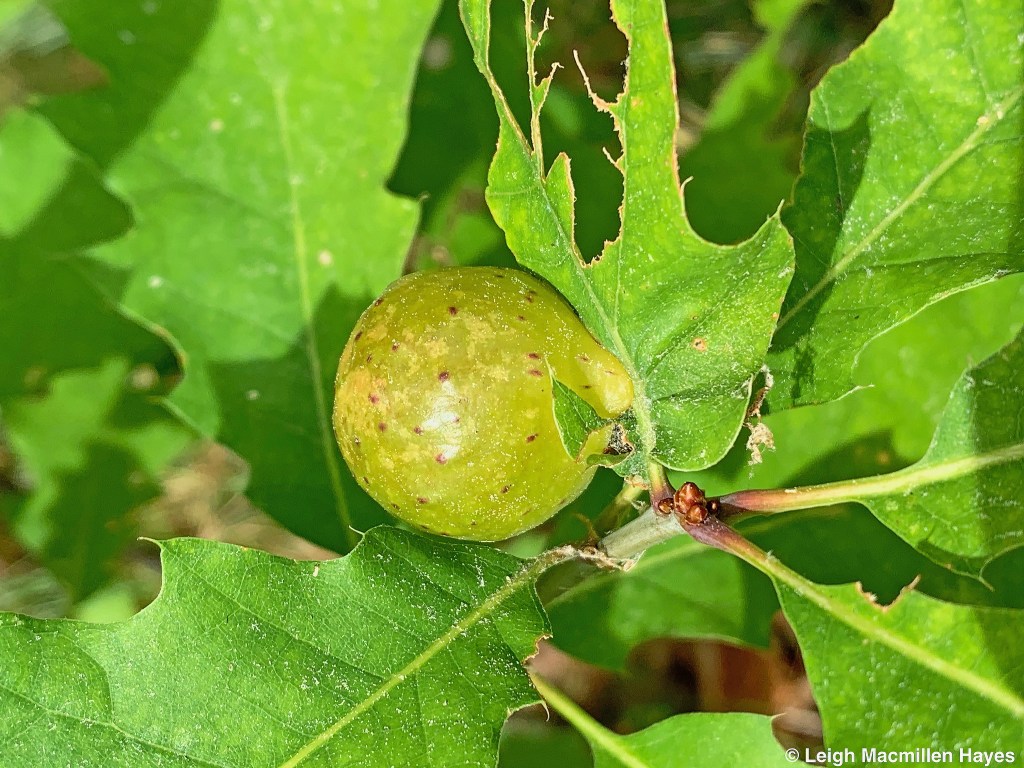
Each time I spot one, I’m in awe for it’s such a cool structure. Though it looks like a fruit, it’s caused by a chemical reaction the leaf has when a wingless adult female wasp, Amphibolips confluent, lays an egg into a newly-forming leaf. As the egg hatches and larvae grows, that chemistry causes the leaf to mutate and grow with it.

The wasp is commonly known as an Oak Apple Gall Wasp, and thus this is an Oak Apple Gall.

We chuckled on the way down, for we did pay more attention to the flora, and couldn’t believe that we’d passed by this Lady’s Slipper display located inches from the trail. But that’s what happens when you are moving on My Guy-speed, and watching every spot where you place your feet. Our total count on the way down: 52, but I’ve a feeling we missed many more.

And hiding under some trees near the trailhead: Ragged Robin, a treat because I’ve only encountered it a few times. I love its frayed, yet delicate display.

Because our descent was much faster than the ascent (and still we counted Lady’s Slippers, but that’s why I think we missed some), I stole a few minutes beside Shannon Pond where a small field of Lupine bloomed.

And a female Mallard swam toward the shore. She and a few jumping fish were the only wildlife spotted today.

That was okay, for we had a splendid Mondate wandering under the clouds, which seemed truly appropriate since we were at the Lucknow Mansion property now known as Castle in the Clouds in Moultonborough, New Hampshire. Why did we wait so long to visit? Maybe because it’s practically in our backyard.
Katydid, Didn’t She?

I have the extreme pleasure of being in touch with my first two playmates, the sisters who lived next door, on a somewhat regular basis. And even when we don’t see each other for a long time (Girls, we still owe ourselves a lunch in Newburyport), like any great friendship, we pick right up as if no time has passed.
While they both love the natural world, for that’s where we spent much of our childhood, one in particular frequently shares photos of her finds with me. And so I took her along, riding on my shoulder this morning when I headed out into the rain because I know that she, too, likes rainy days as much as, if not more than sunny days. So does her garden and she’s got a green thumb to envy.
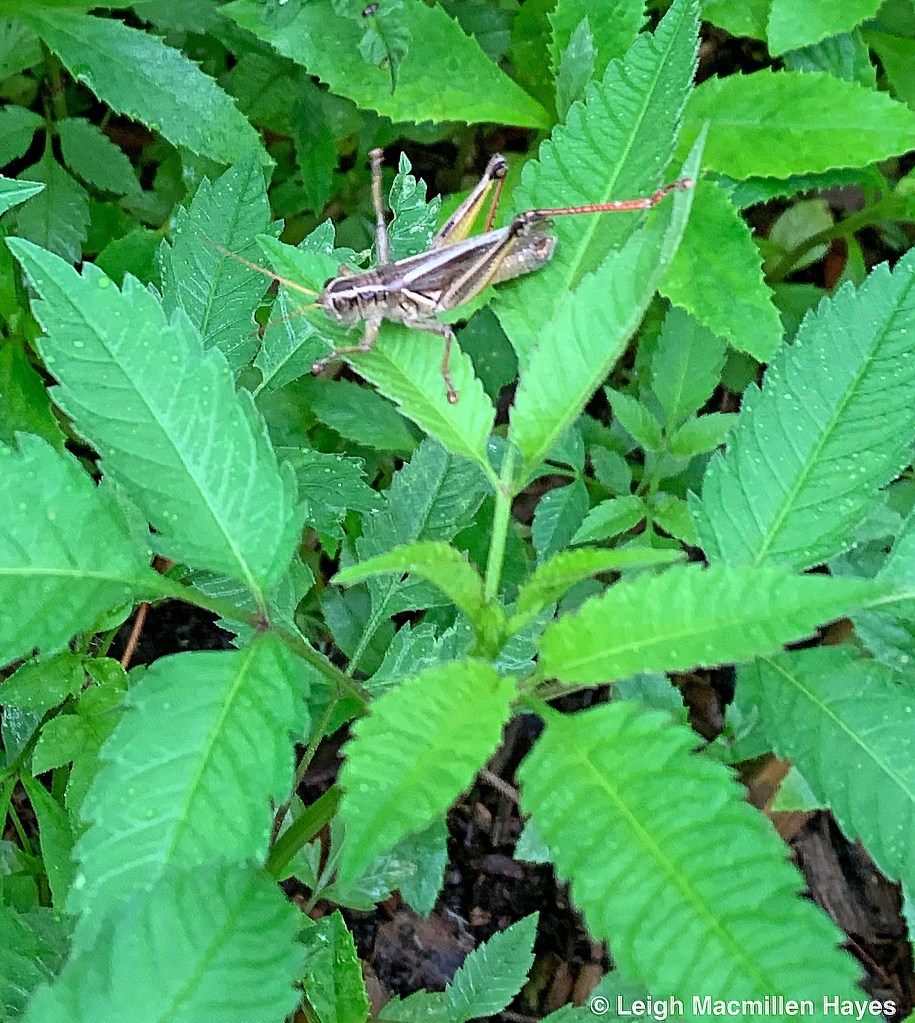
Since my thumbs aren’t great at turning the soil, I support a local farmers’ market and had time to pass waiting for my turn to pick up the pre-ordered produce, bread, chicken, flowers, and treats. Thus, as we started to hike, a grasshopper known for its two stripes greeted us.

Not far along, at the base of a certain pine tree, I showed her the Pippsissewa now in bloom. Not only do I love to say this plant’s name, but the blossoms . . .

oh my. We both squatted for a closer look at the anthers within. And sniffed its sweet scent.

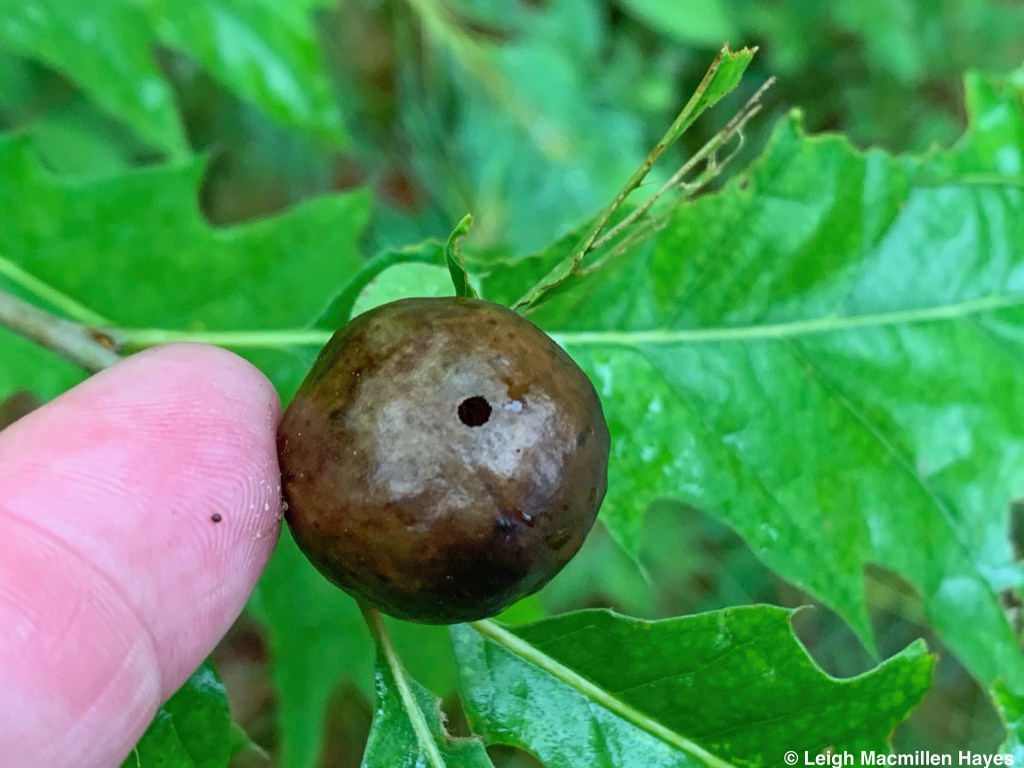
Our next great find was an oak apple gall and of course I had to tell her that a non-stinging and wingless female wasp injected an egg into the veins of the leaf as it was just beginning to grow. Chemicals released by the tiny larvae that developed within altered the growth and over a few weeks, the little orb formed.

By the circle hole on the underside, I explained that the wasp had pupated and chewed its way out and was probably now feeding on the very roots of the same tree . . . that is if it hadn’t been consumed by birds or small mammals.

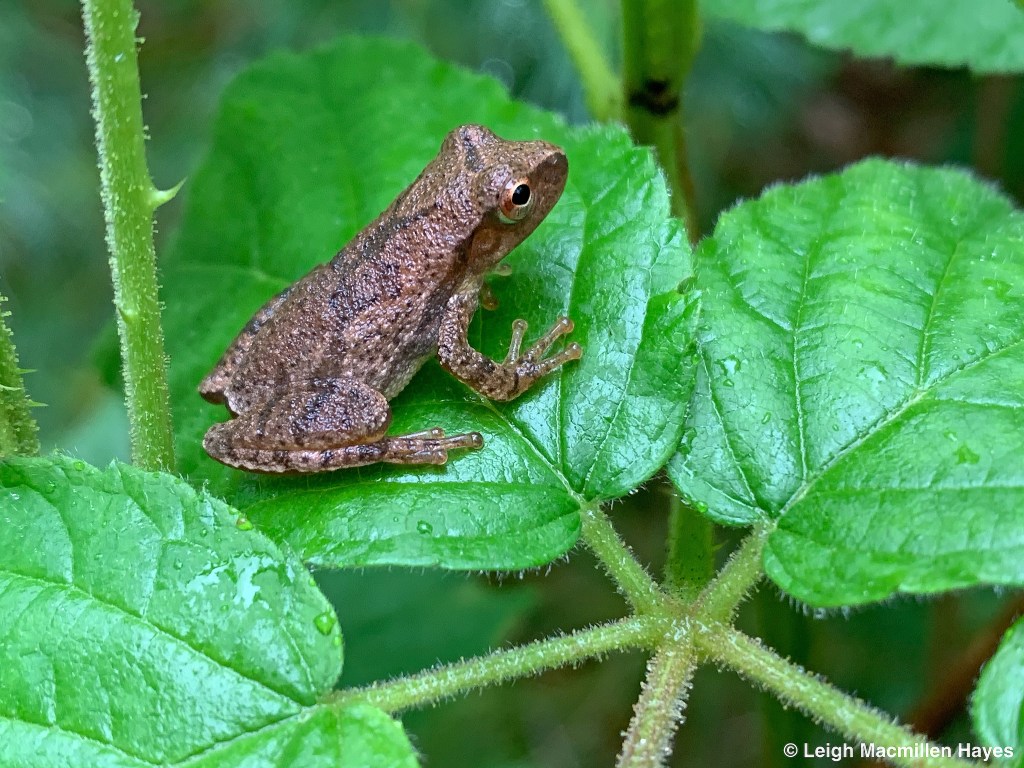
We moved on, but a tiny spot of brown on a berry leaf was the next to beg for our attention. Check out those toes. Sticky toe pads on their webbed feet provide support for these plant and tree climbers known as spring peepers.

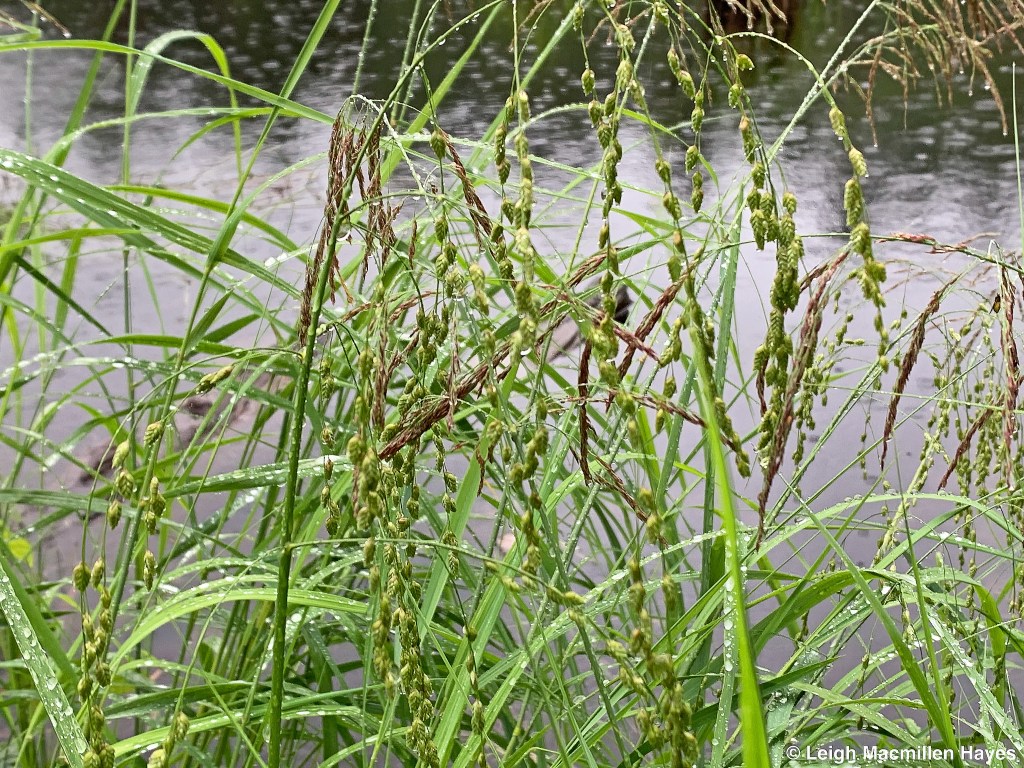
At last we reached a wetland and that’s when the rain really began to fall. And so my friend and I . . . we stood and looked about and enjoyed the raindrops on the grasses and sedges, the water’s surface, and us.

For a while, we left the path, and slipped into the woods, trying to follow a recently created trail, but mostly meandering about in the land where nurse logs provide a start for so many others as they decompose.

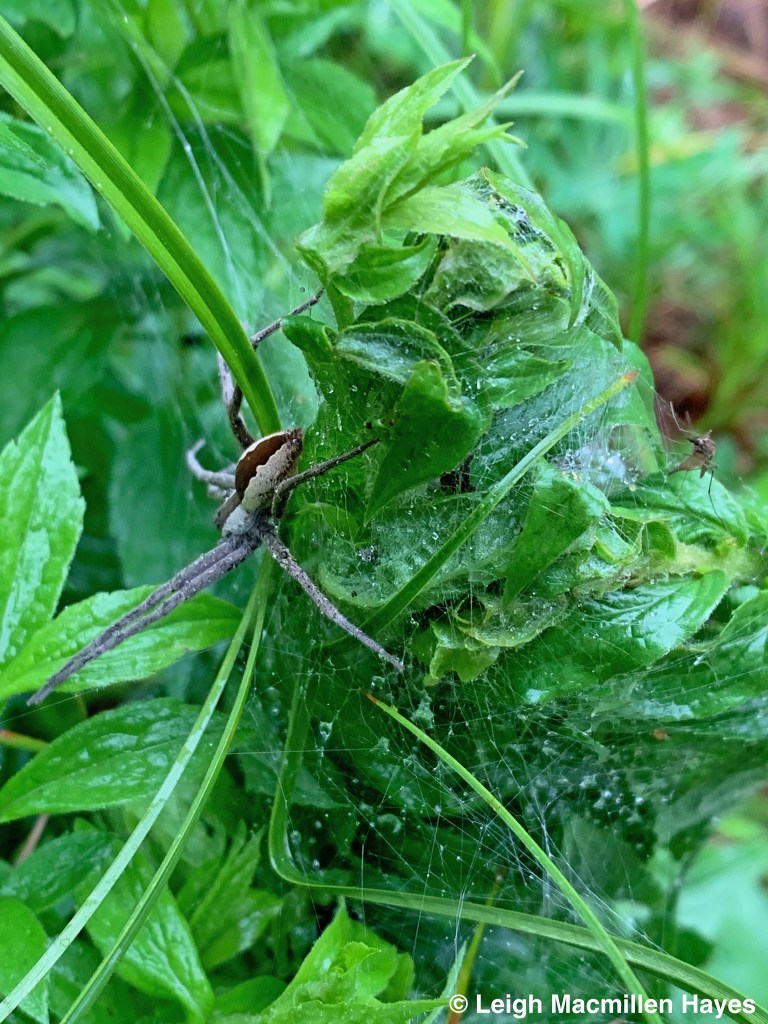
As it turned out, that wasn’t the only nursery in town. Once we returned to the trail, which by the way, she was impressed that I could find my way back . . . and so was I, I took her to a nearby meadow where we spotted a momma tending her young’uns.

I knew my friend would love this sighting because she not only saves salamanders and deer, but also spiders from any demise. This momma wasn’t so sure about us, however.

As large as she was, we were even bigger so she continued to work on her web to make sure her children stayed safe.

When she wasn’t looking, we did peek inside and saw a few of the babies.

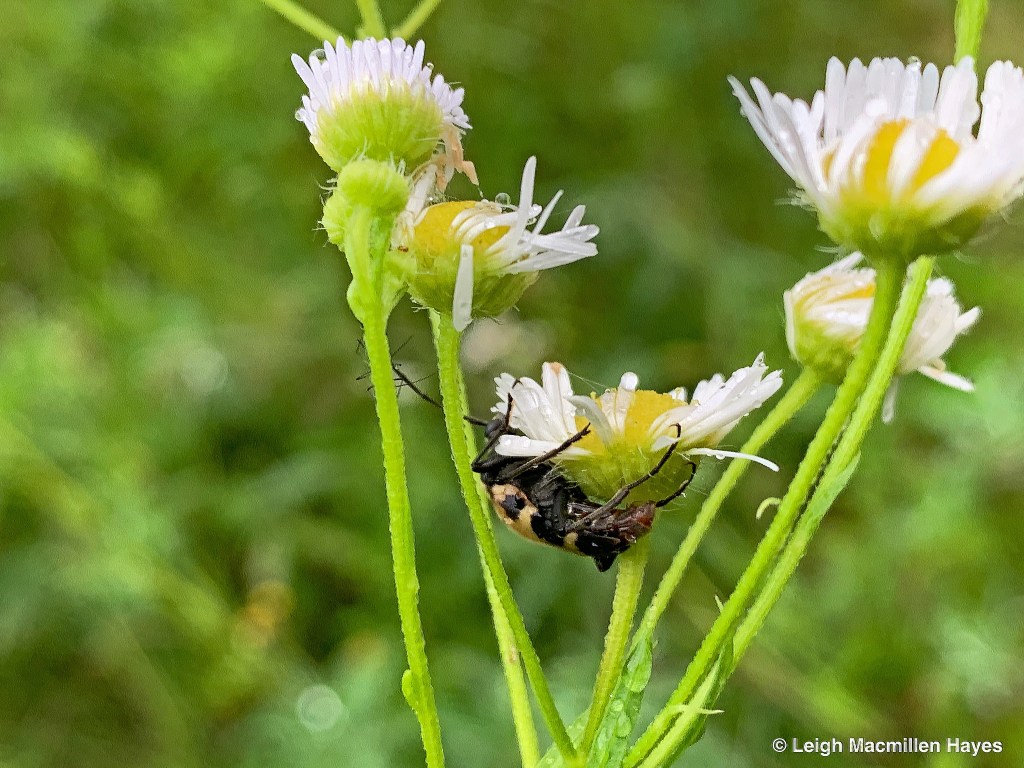
We spotted another spider of a much more diminutive size upon one of the meadow flowers. You might see it, though it is a master of camouflage. Two insects also hung out as if they were trying to stay dry. Though the beetle is quite obvious, a discerning eye will spy the legs of the other.

We had actually gone to the meadow to see the Canada lilies that tickled our fancy for they looked like streetlights in the midst of the rain drops.

All of our finds had been great, but the best one of all . . . a Katydid. My friend’s name is Kate or as she was known when we were kids: Katy. And when quizzed by our moms about who was responsible for something, the rest of us always said, “Katy did it.”

While standing in the meadow today with Kate on my shoulders, my cell phone rang and suddenly I was looking at . . . my dear friend via FaceTime.

“Did I call you, or did you call me?” I asked as I looked at her beautiful and familiar grin while she stood aboard her cabin cruiser on Long Island Sound.

“You tried to Face Time me twice and so I called you back,” she said as she looked a me–soaking wet and rather bedraggled but happy (except maybe for the mosquitoes and deer flies).

I’d been using my phone to snap most of the photos but kept putting it in my pocket and I think I may have inadvertently contacted a few people.

So maybe this one time I did it and not Katy, but forever when I see a Katydid and many other things in the natural world, she’ll be right there with me as we were so many moons ago–Katy got me then and thankfully she still does.

Drawn by the Sapsuckers

This morning’s tramp found me checking on a couple of bird nests. The first, which belonged to a Phoebe family, was empty.

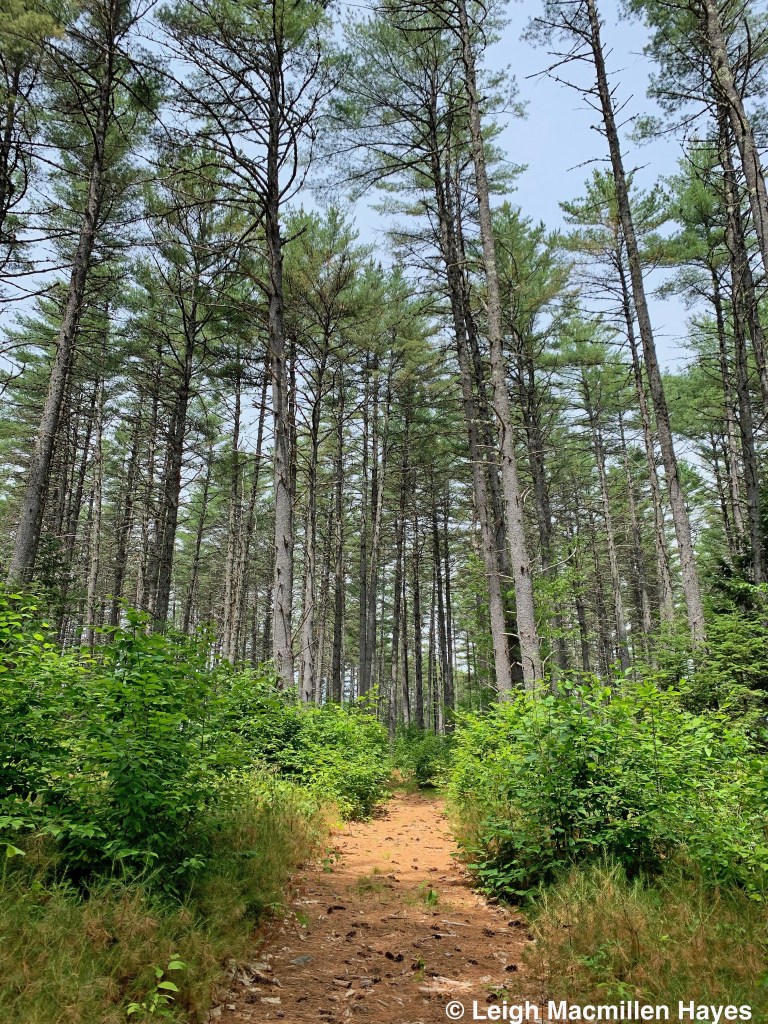
And so I wandered along a path through a cathedral in the pines.

It seemed apropos that I should spy the works of an Oak Apple Gall wasp in such a place for it is believed that circa 800 A.D., monks from a Columban monastery created the Book of Kells and used such galls for their green colorant. The wasp uses it as a place for a larva to pupate.

I knew I’d reached the second nest I wanted to check on because from about twenty feet away I could hear the peeps of the babes within. Their father tossed in a meal, much differently than how he was feeding them only a week or two ago when he entered the nest hole every few minutes.

Today, no sooner did he leave when a nestling popped out and begged for more. I watched for a bit and then gravity pulled me in a different direction.

And so I trespassed onto a neighboring property. Well, I don’t think of it as actually trespassing since it’s not posted and I know the owners who have invited me to visit on numerous occasions. They just didn’t know today would be one of those; nor did I until it was. The deer flies buzzed all about my head, but thankfully some old friends in the form of dragonflies (uh oh, here I go again) snatched the pesky insects and then dined.

It took a few minutes, but eventually Slaty Blue gobbled every bit of the fly. One down; a gazillion to go.

While the lupines had been in full bloom the last time I visited, today’s flowers of joy were the Milkweeds. Even the ants agreed.

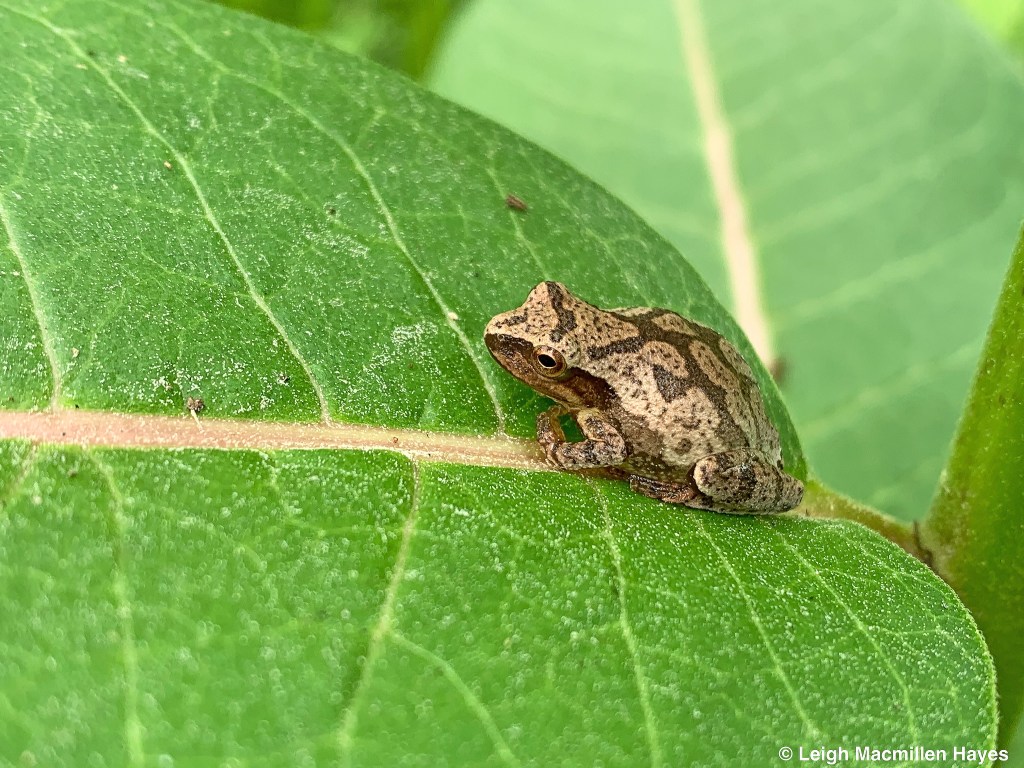
On a leaf below one flowerhead, I noticed something tiny and by the pattern on its back, knew who I was spying.

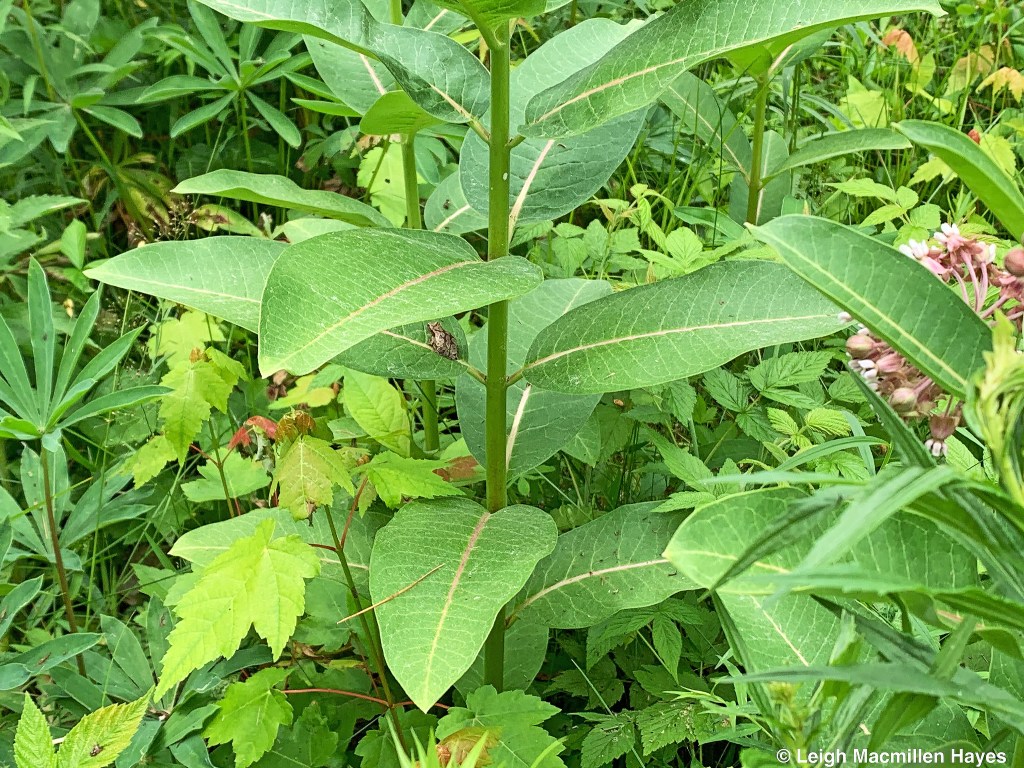
About the size of a nickel, it was a Spring Peeper. Located about two feet above ground, this little frog could hide from predators all day, waiting to munch on insects and spiders at night. Do you see the X on its back? Its scientific name–Pseudacris crucifer–breaks down to Pseudo (false), acris (locust) and crucifer (cross bearer).

While I continued to admire him, a dash of color brightened the background and then flew down onto the path.

Bedecked in orange and black, it was a Fritillary butterfly. There were actually two today and where the colors of the lupines had passed, the butterflies contributed greatly with their hues.

The Fritillaries weren’t the only adding a dash of color for Eastern Tiger Swallowtails also pollinated the meadow flowers.

Canada Tiger Swallowtails also fly in this part of Maine and so I’m forever trying to remember how to tell the two apart besides size, which doesn’t help when you only see one. The trick, however, is to look at the yellow line on the underside of the forewing. If it isn’t one continuous line as this one wasn’t, then it is the Eastern variety.

I’ve probably completely confused you, but the next will be easy:

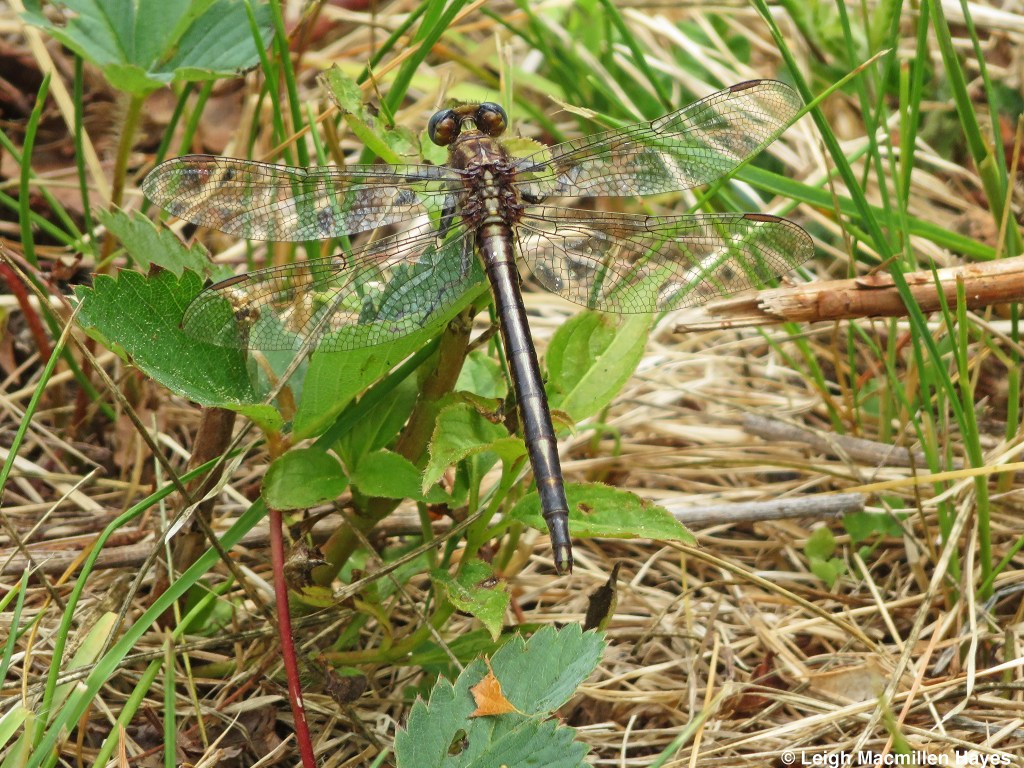
A pop quiz: 1. Who is this? You tell me. (Hint: Emerald family)

2. Who is this? (Hint: Clubtail family)

3. Who is this? (Hint: Skimmer family)

4. Who is this? (Hint: Skimmer family)

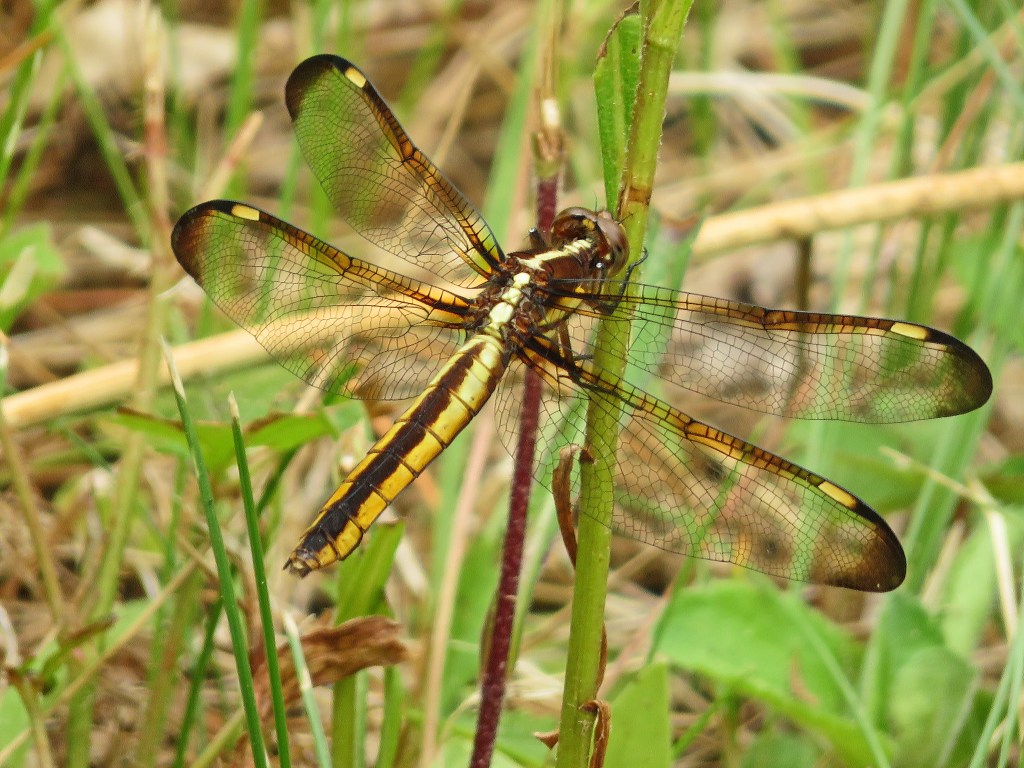
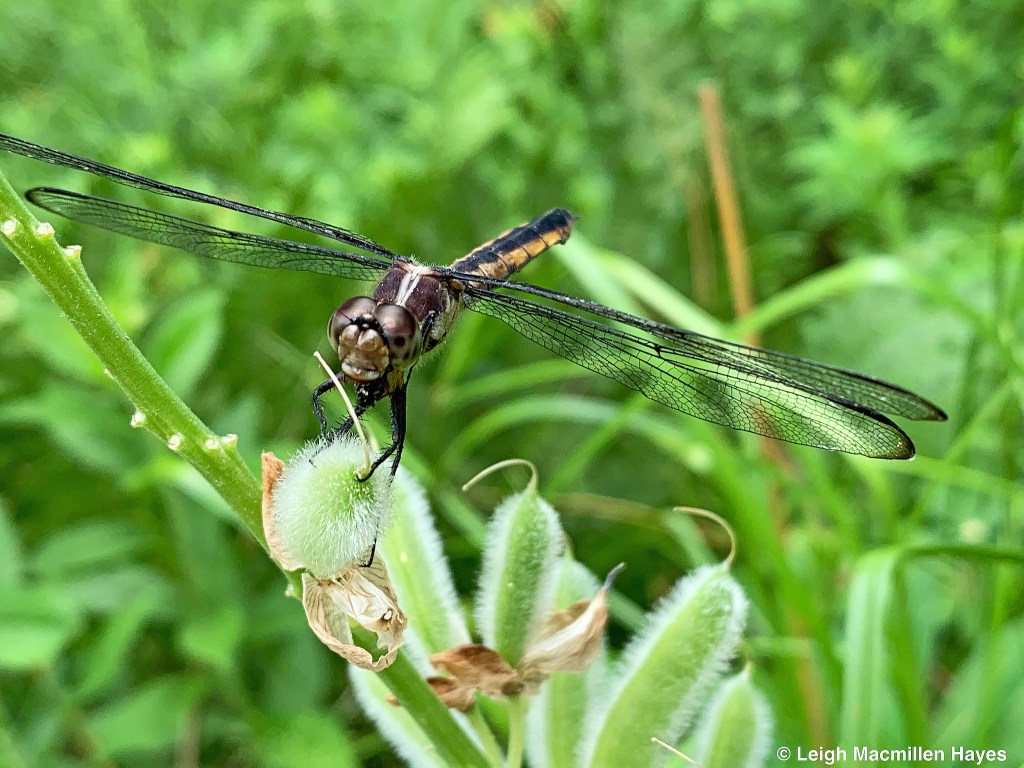
Extra credit if you can identify this lady. (Hint: Skimmer family)

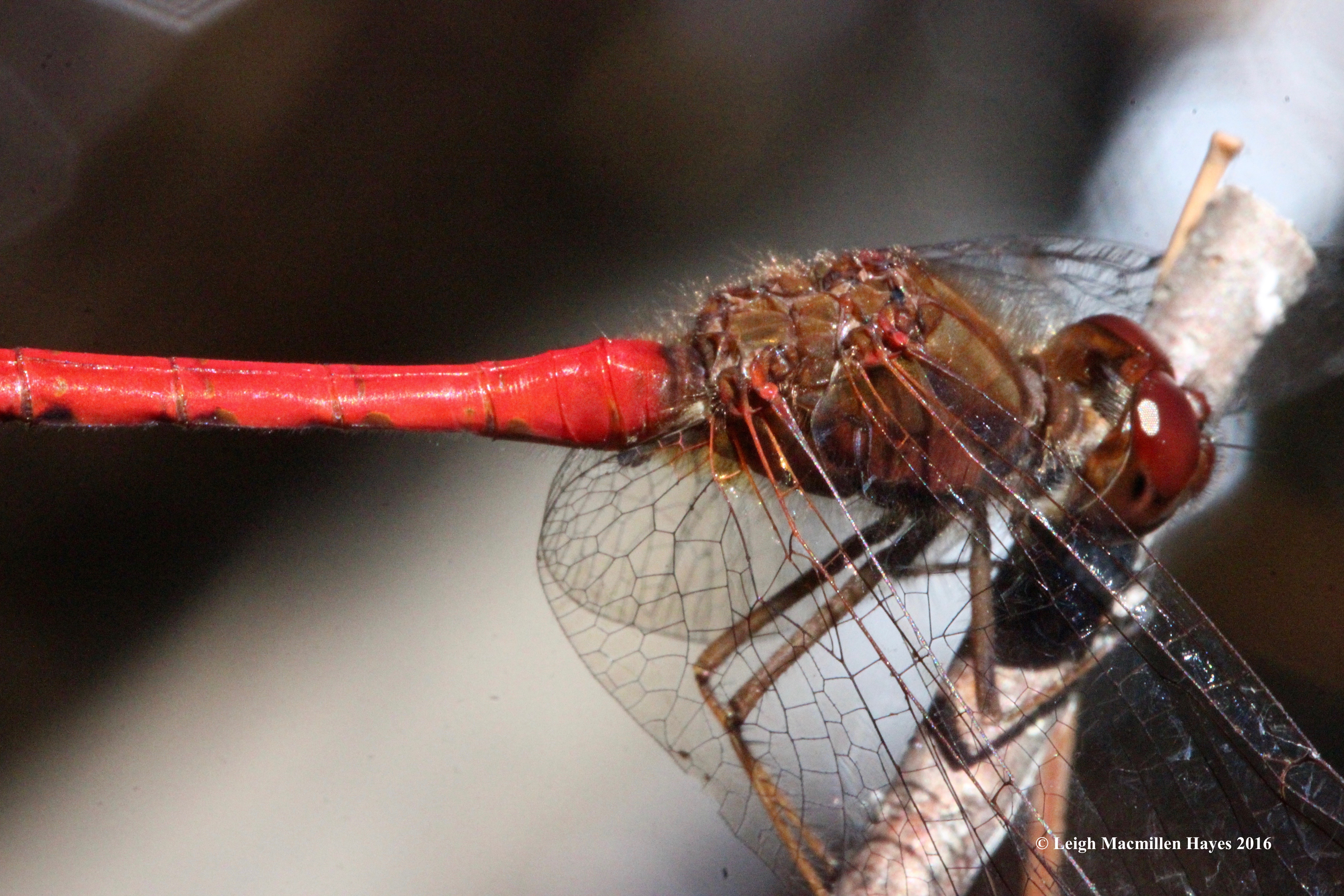
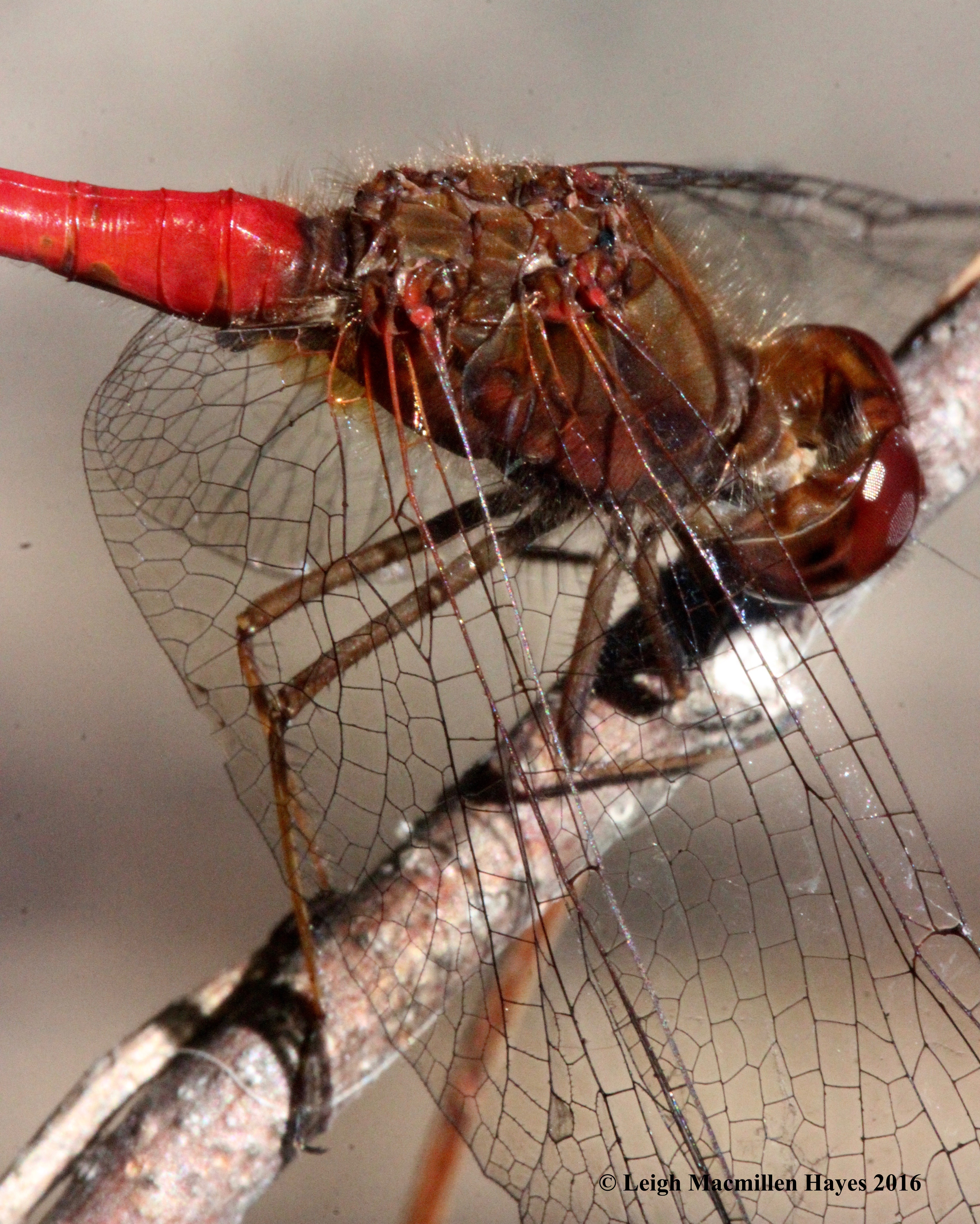
The skimmers are many and each has something unique and lovely to offer. But my greatest thrill today was to encounter this delightful specimen just before I was about to depart the meadow. For those who joined me yesterday as I hunted for the Common Whitetail Skimmer, you may have noted the zigzag pattern on her abdomen. Take a look at the pattern along the abdomen of this beauty. The side spots form a smooth stripe. Her honey, whom I have yet to see, has not only the black patches on the wings, but also white. Who might this be? A Twelve-spotted Skimmer.

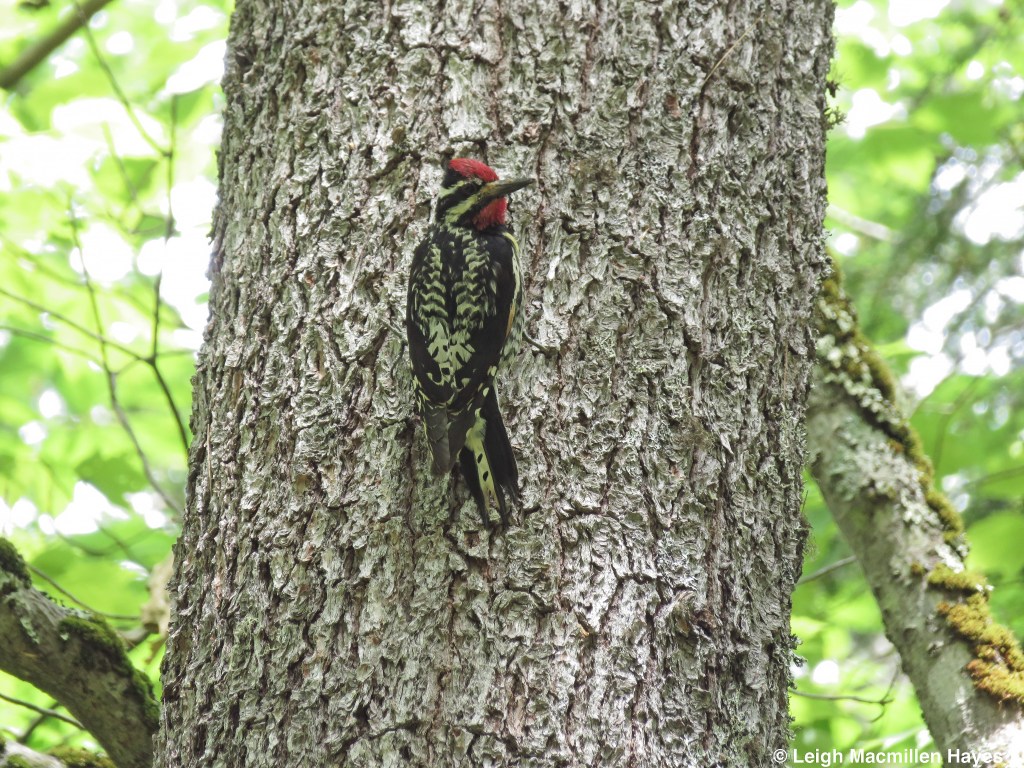
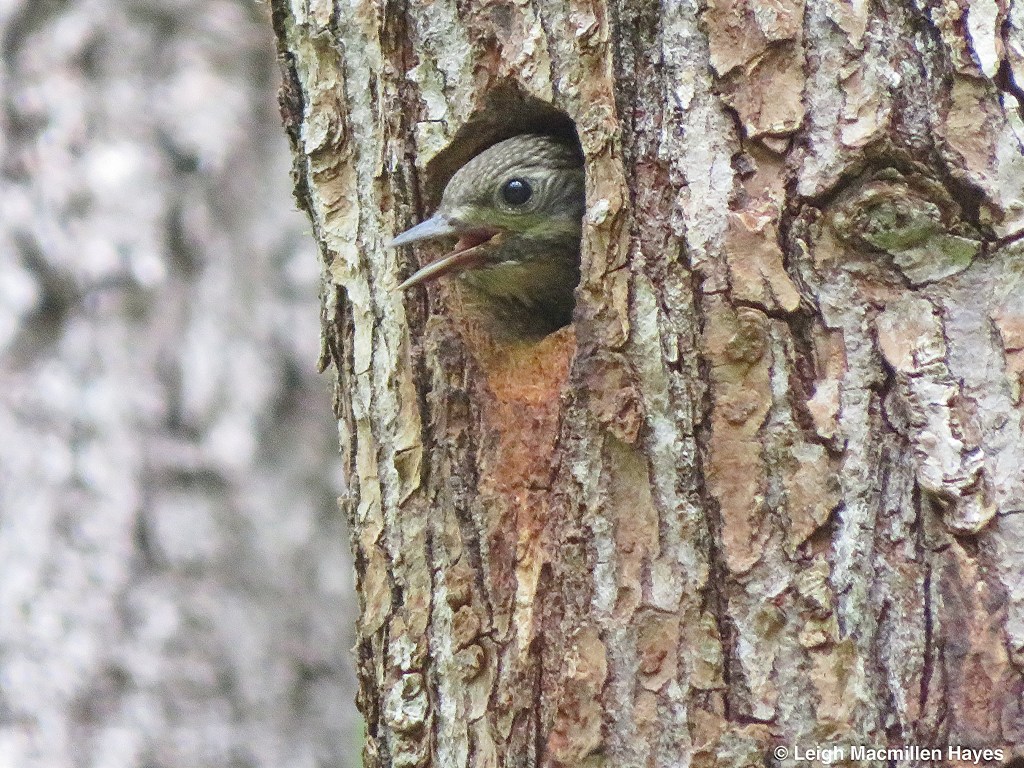
Before departing, I checked back on the sapsucker nestlings. Papa was doing the same from a tree about ten feet away. I got the sense he wanted to tell them to be patient and stop begging.

But how can you resist such a baby face? I know I couldn’t.

I gave great thanks to the Yellow-bellied Sapsuckers for drawing me into this place and to Linda and Heinrich Wurm for allowing me to trespass and spy their meadow once again and all that it has to offer.

P.S. Quiz answers: 1. Racket-tailed Emerald; 2. Ashy Clubtail; 3. Spangled Skimmer; 4. Dot-tailed Whiteface; Bonus: female Great Blue Skimmer (a first for me) How did you do?

The Wonders of Kezar River Reserve

How many people can  travel a familiar route for the first time every time? I know I can.

j-kiosk

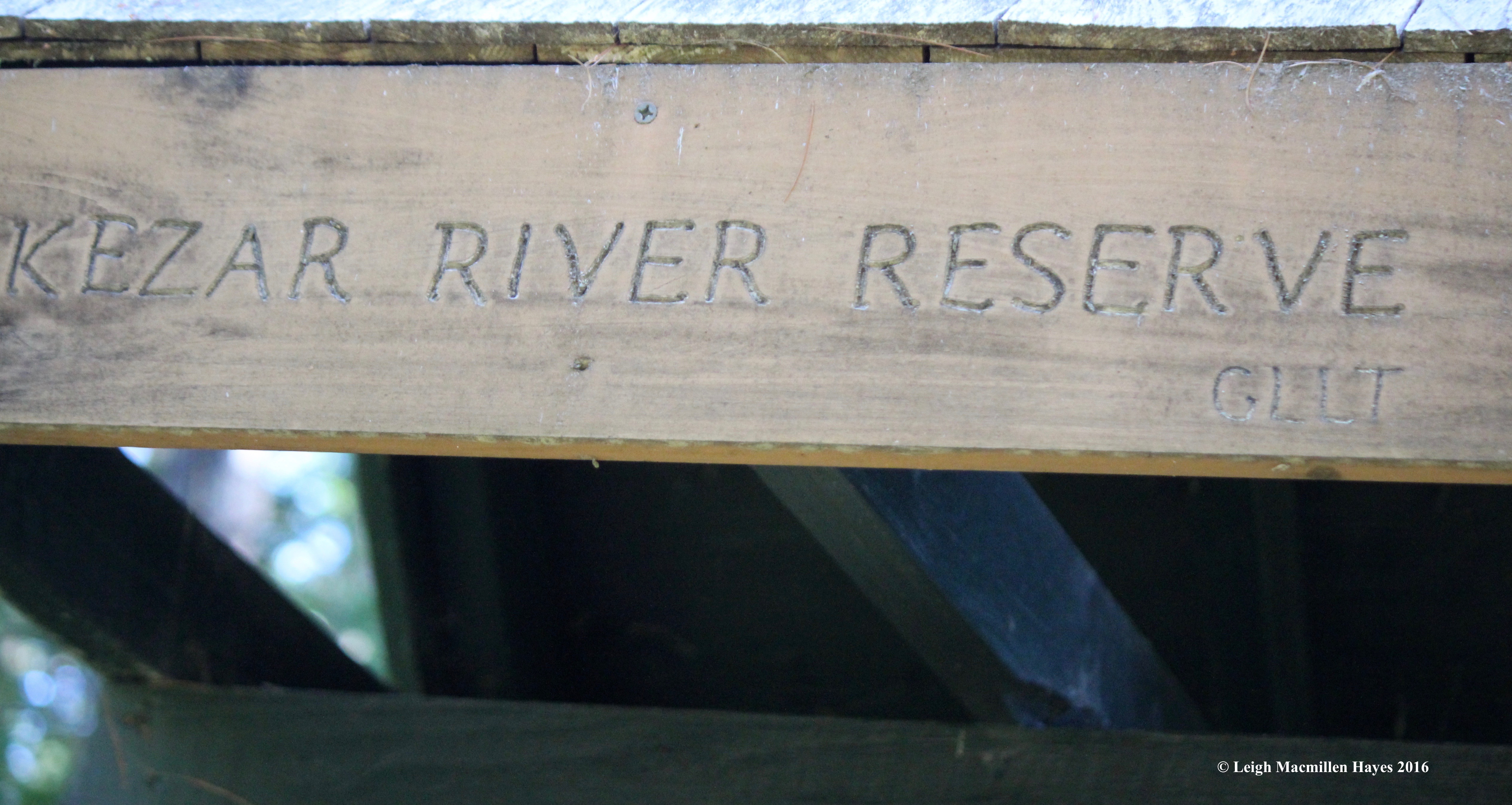
And so it was this morning when I ventured to the Greater Lovell Land Trust’s Kezar River Reserve off Route 5 in Lovell. I went with a few expectations, but nature got in the way, slowed me down and gave me reason to pause and ponder–repeatedly.

k-oak-gall-1

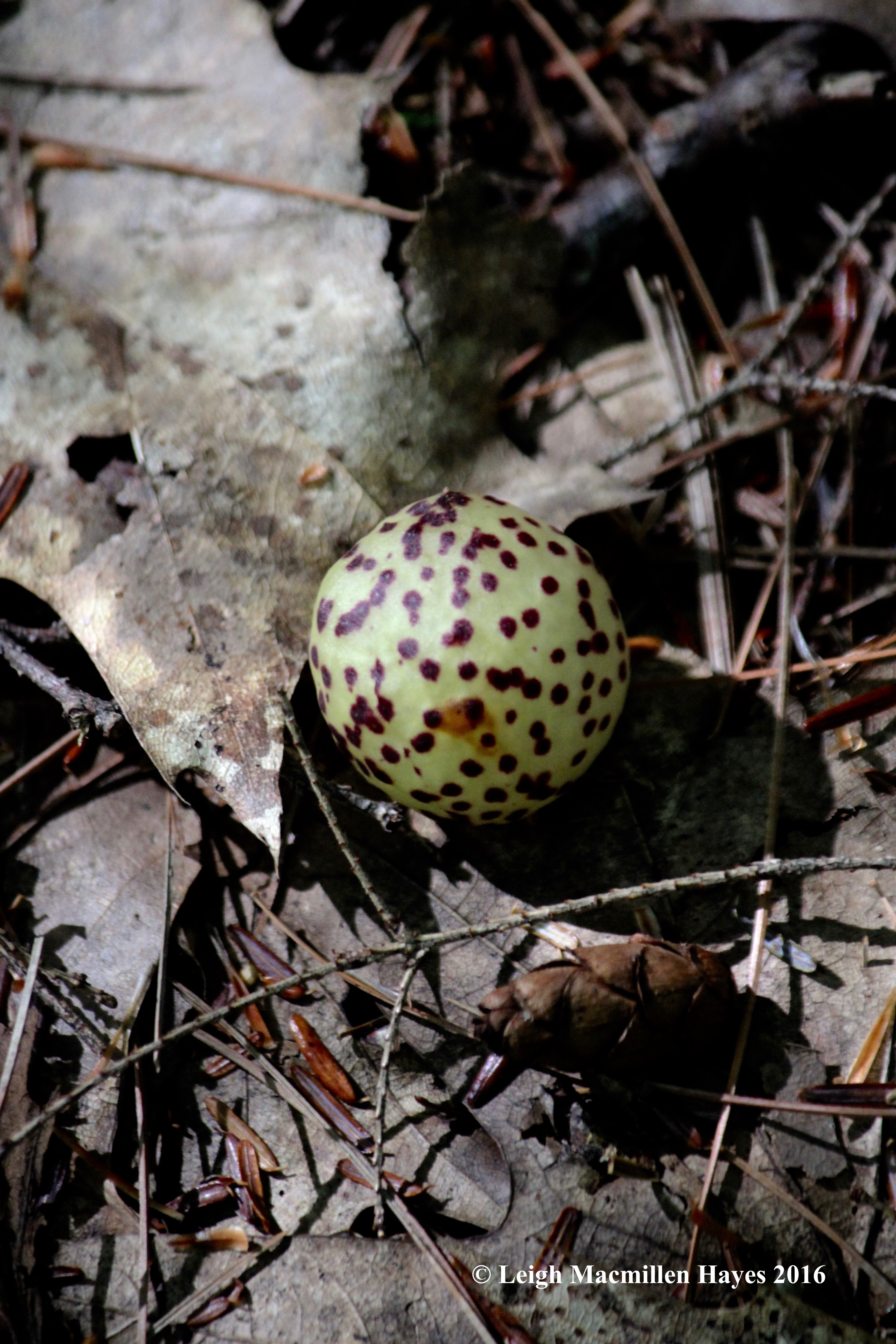
As I walked along the trail above the Kezar River, I spied numerous oak apple galls on the ground. And many didn’t have any holes. Was the wasp larvae still inside?

k-partridgeberry

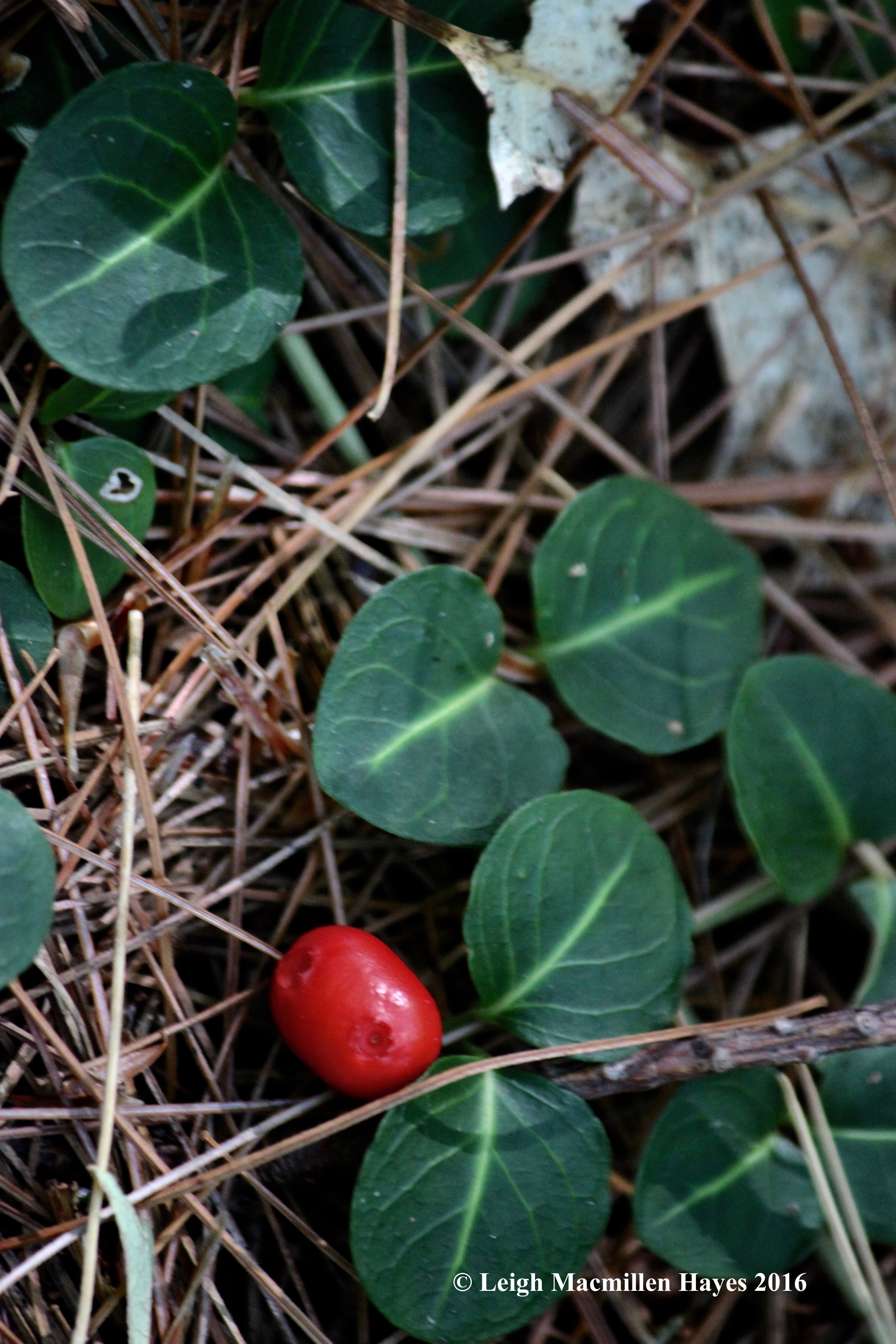
While the dots on the gall were reddish brown, the partridgeberry’s oval drupes shone in Christmas-red fashion. I’m always awed by this simple fruit that results from a complex marriage–the fusion of pollinated ovaries of paired flowers. Do you see the two dimples? That’s where the flowers were attached. Two became one. How did they do this?

k-fairy-2

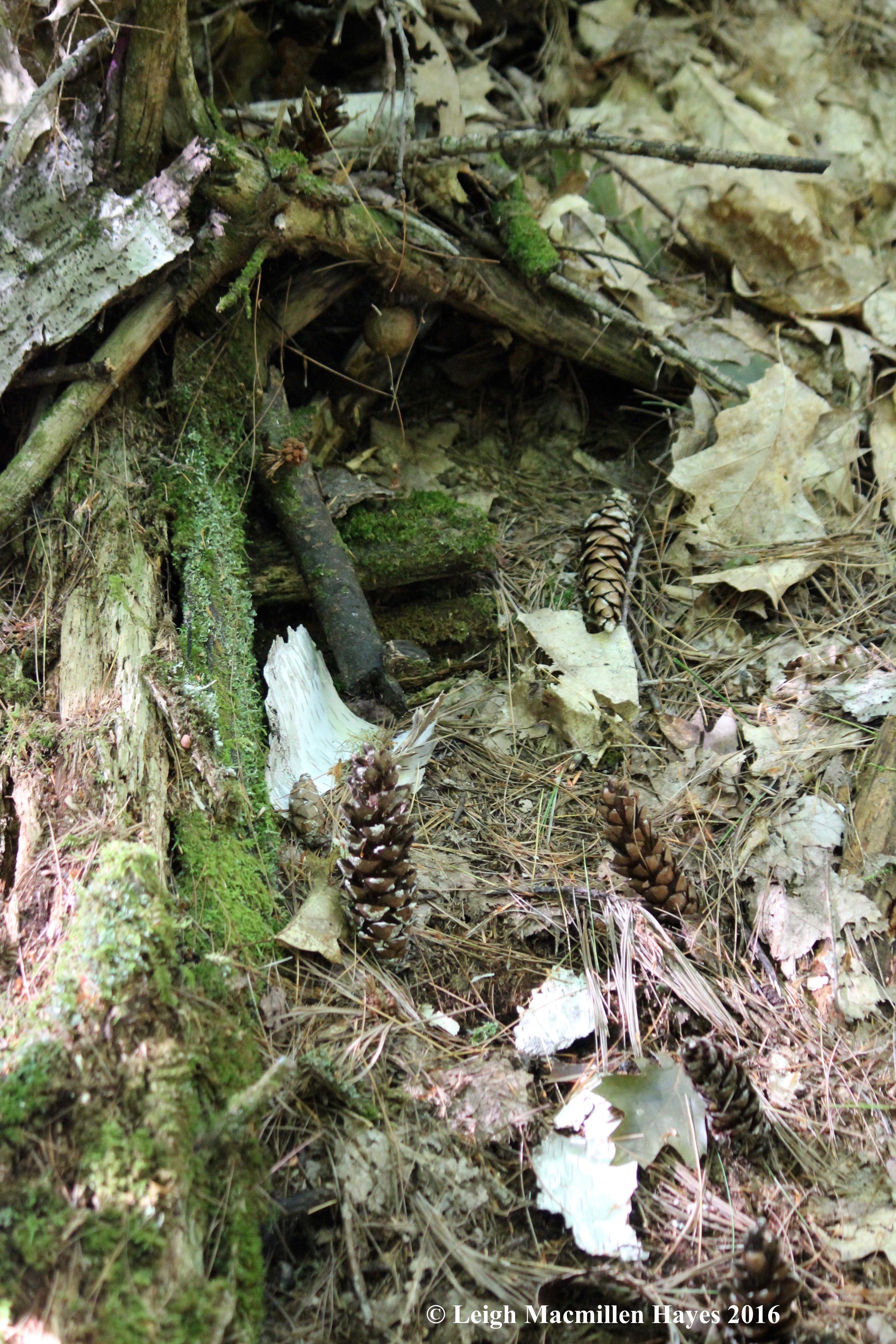
After walking along the first leg of the trail, I headed down the “road” toward the canoe launch. And what to my wondering eyes should appear–fairy homes. Okay–true confession: As a conclusion to GLLT’s nature program for the Lovell Recreation Program this summer, the kids, their day camp counselors and our interns and docents created these homes.

k-fairy-1

I was impressed that the disco ball still hangs in the entrance of this one. Do you see it? It just happens to be an oak apple gall. Creative kids. I do hope they’ve dropped by with their parents to check on the shelters they built.

k-bench

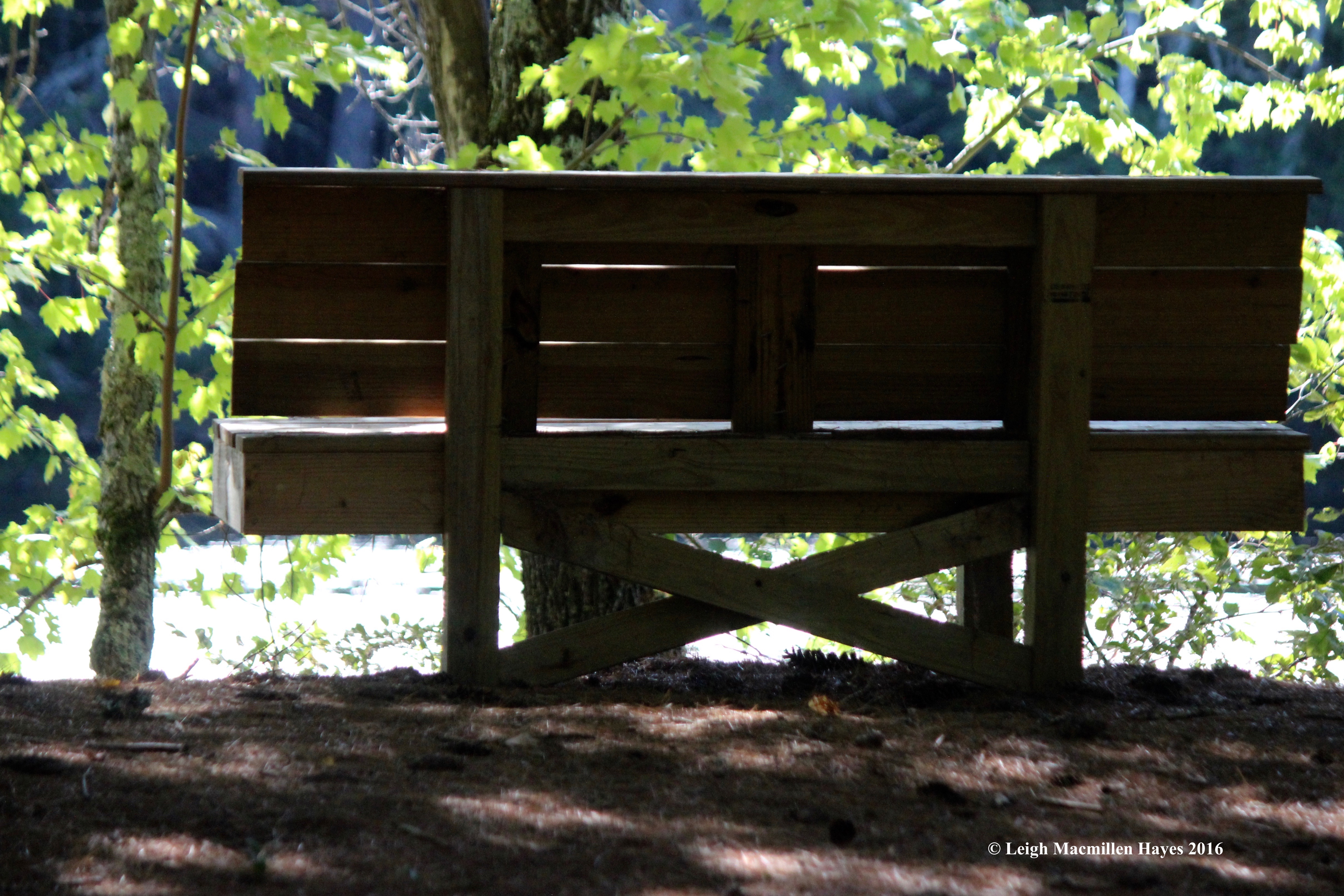
And then I reached the launch site and bench. It’s the perfect spot to sit, watch and listen. So I did. The bluejays kekonked, nuthatches yanked and kingfishers rattled.

k-ripples

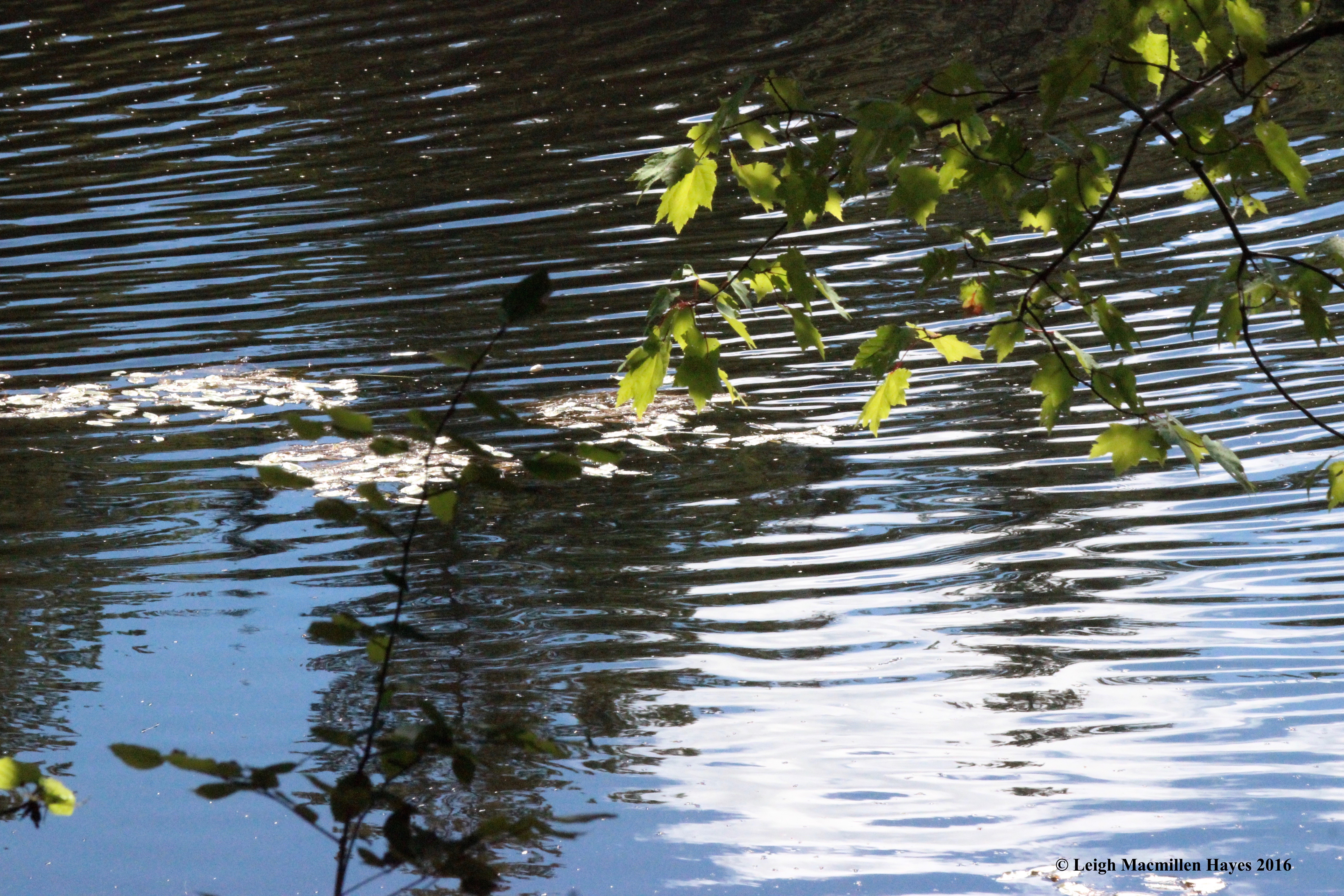
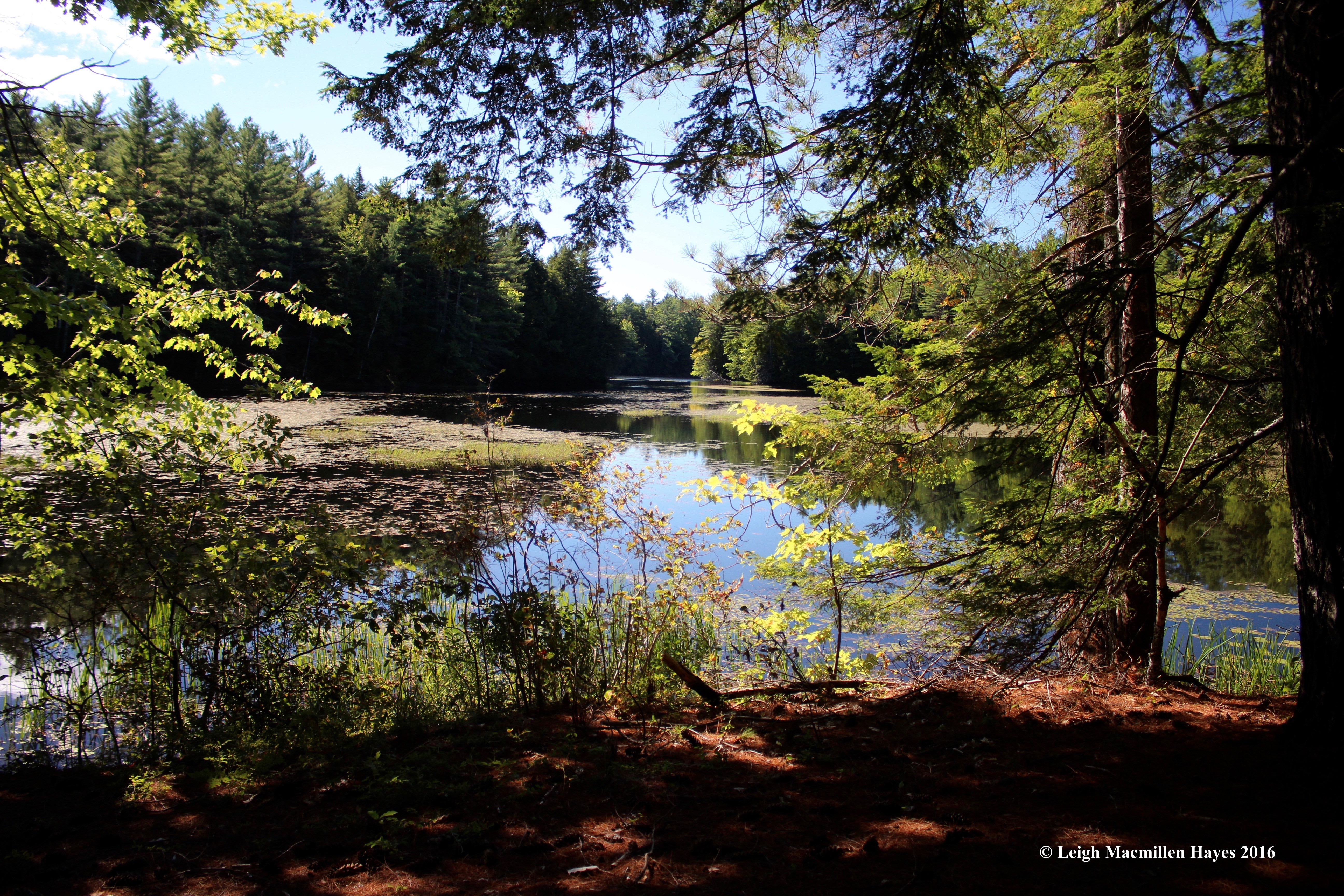
A gentle breeze danced through the leaves and offered a ripply reflection.

k-river-4-morning

And I . . . I awaited great revelations that did not come. Or did they? Was my mind open enough to receive? To contemplate the mysteries of life? The connections? The interactions?

k-ridgeline-2-1

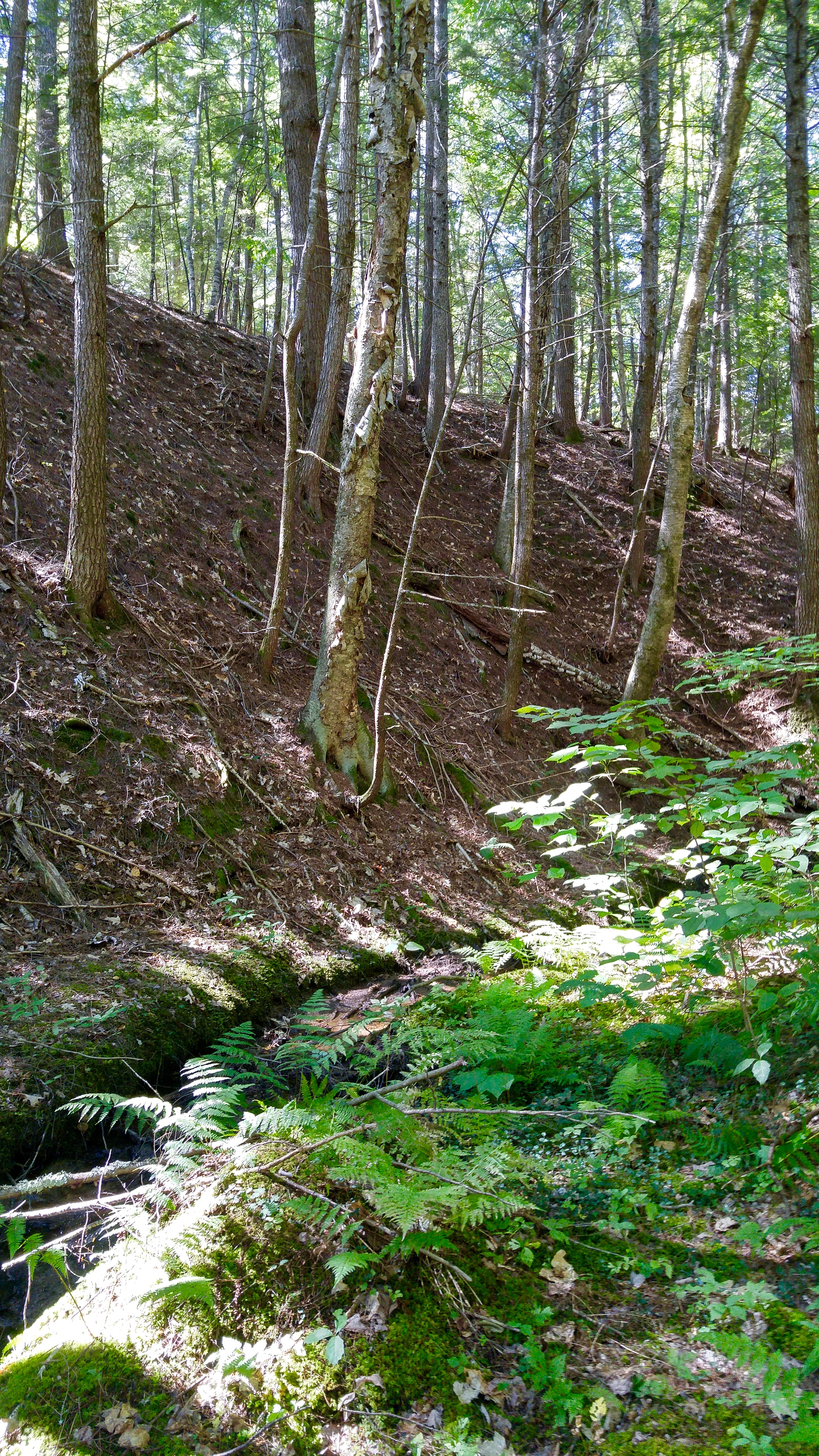
At last, I moved on and entered a section that is said to be uncommon in our area: headwall erosion. This is one of five ravines that feature deep v-shaped structures. Underground streams passing through have eroded the banks. It’s a special place that invites further contemplation. And exploration.

k-skate-bugs

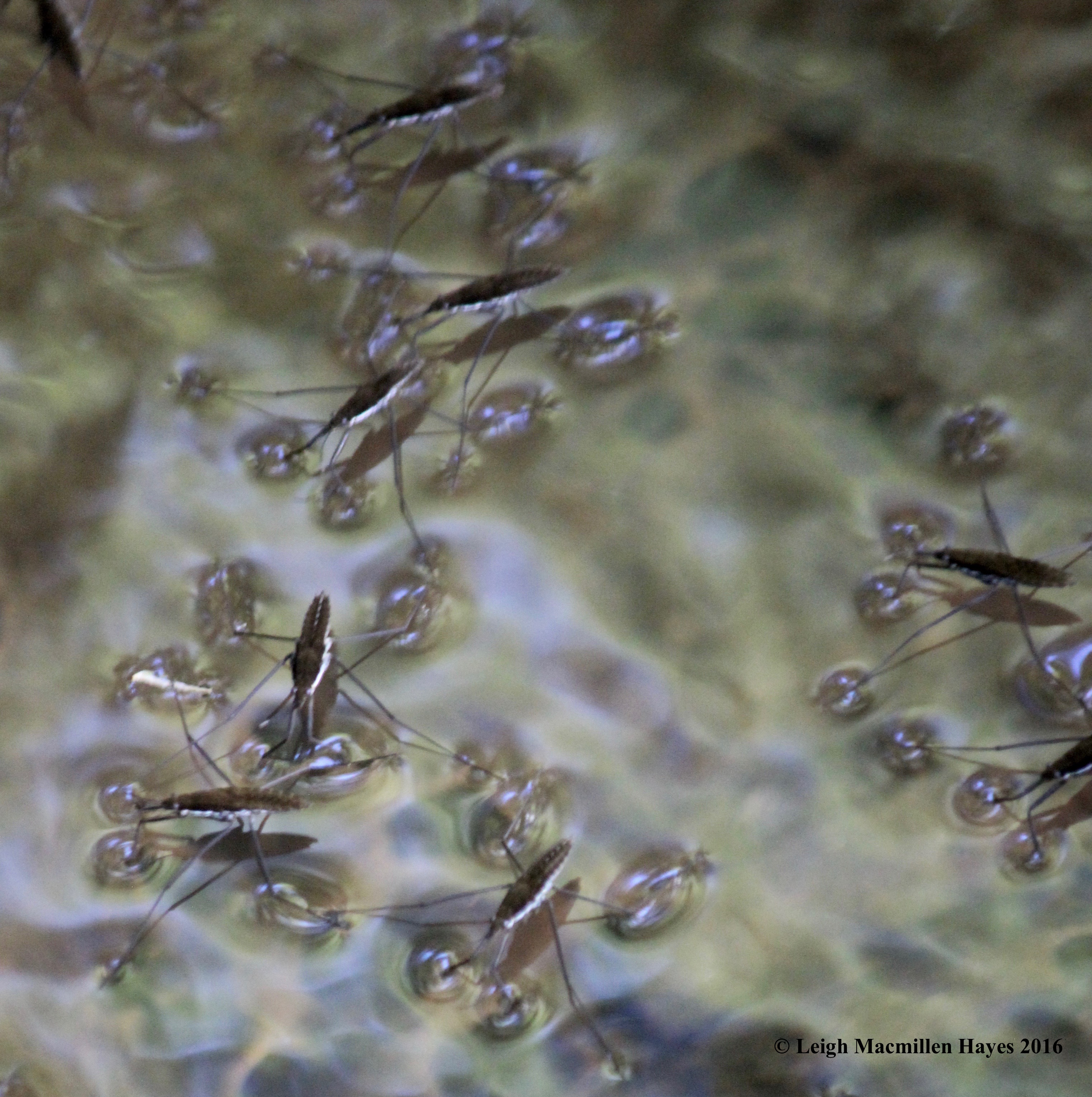
One of my favorite wonders on the bit of stream that trickled through–water striders. While they appeared to skate on the surface, they actually took advantage of water tension making it look like they walked on top as they feasted on insects and larvae that I could not see.

k-turtle-sign

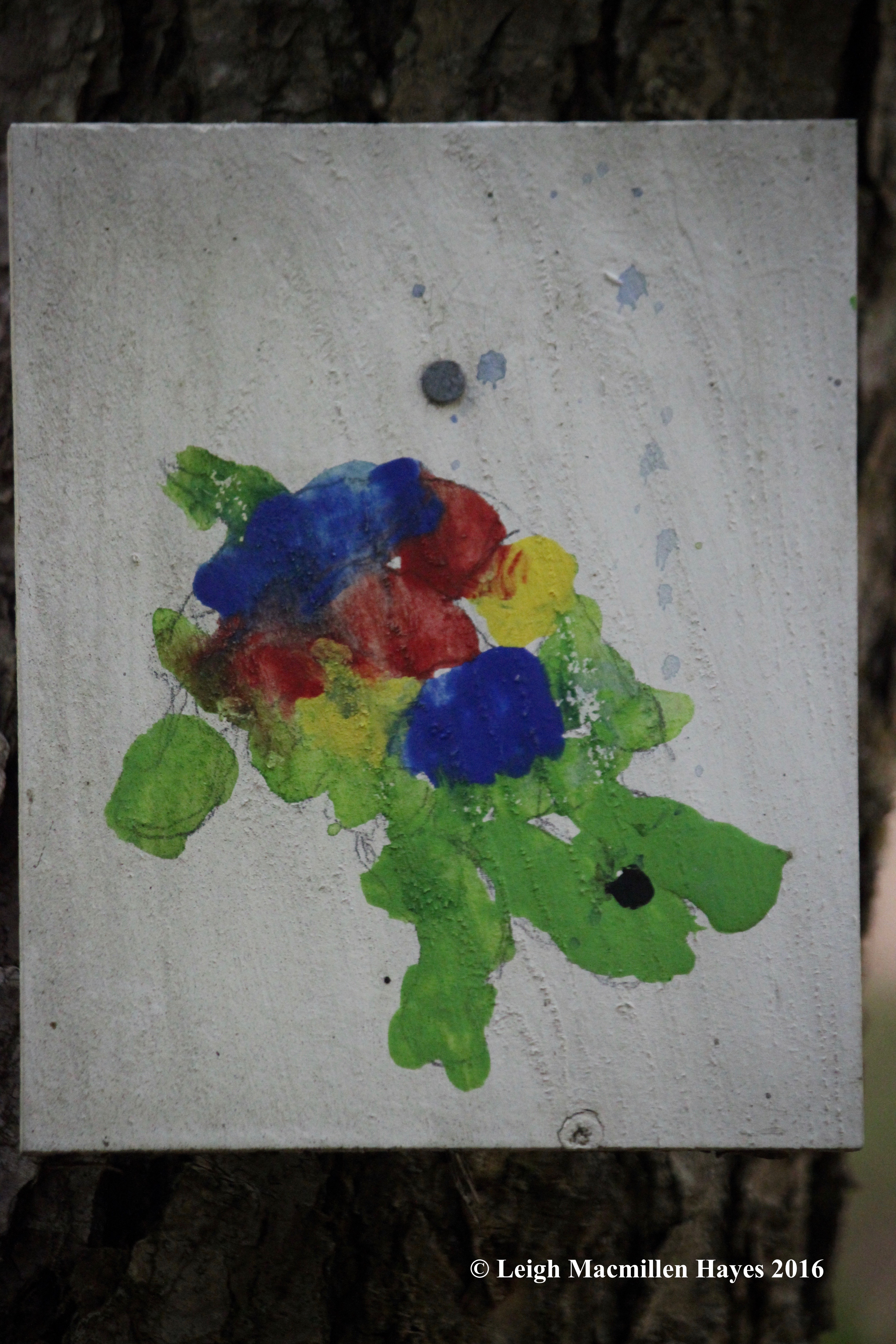
Lots of turtle signs also decorated the trail. Literally.

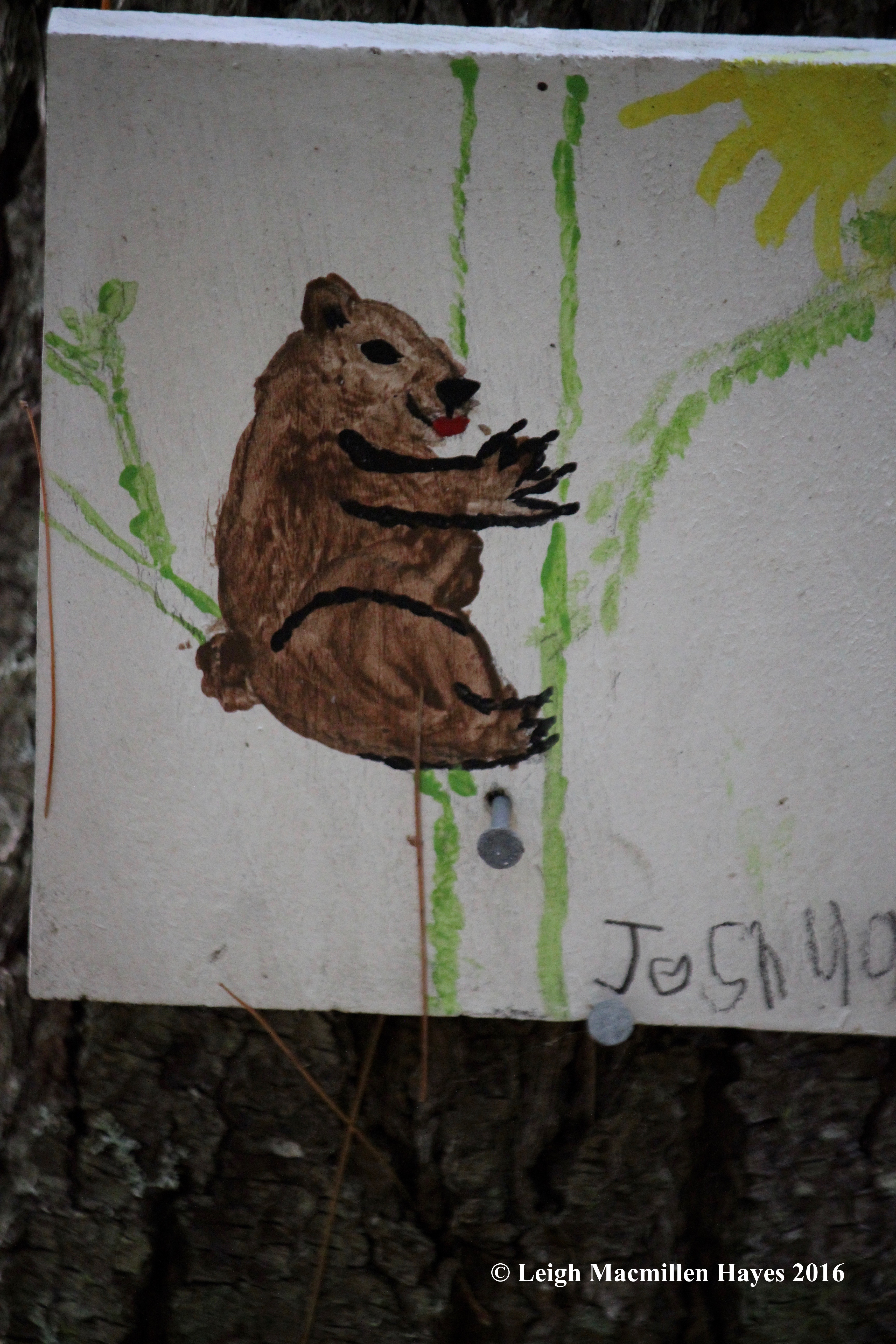
k-bear-sign

In fact, I found bear sign,

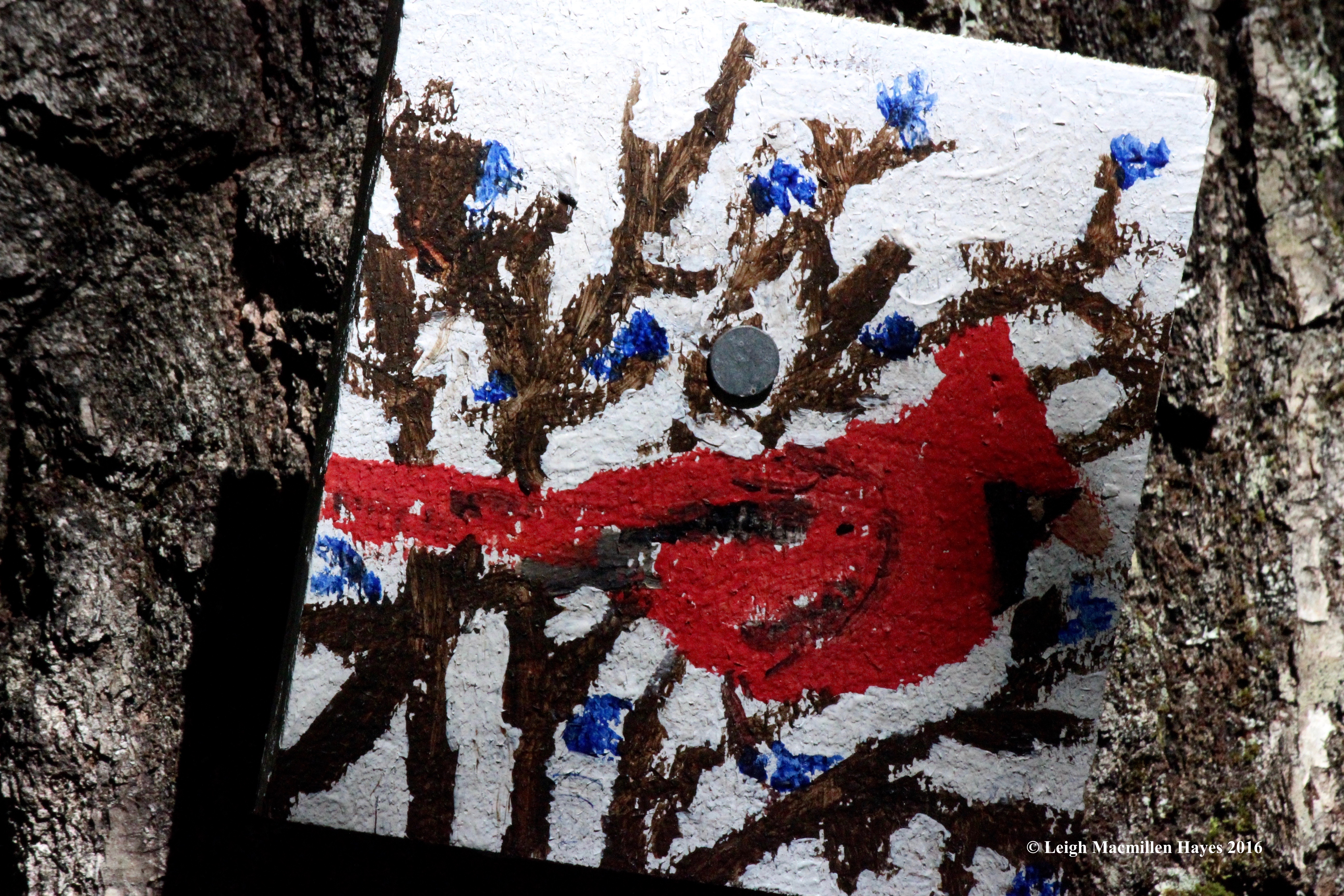
k-cardinal-sign

cardinal sign,

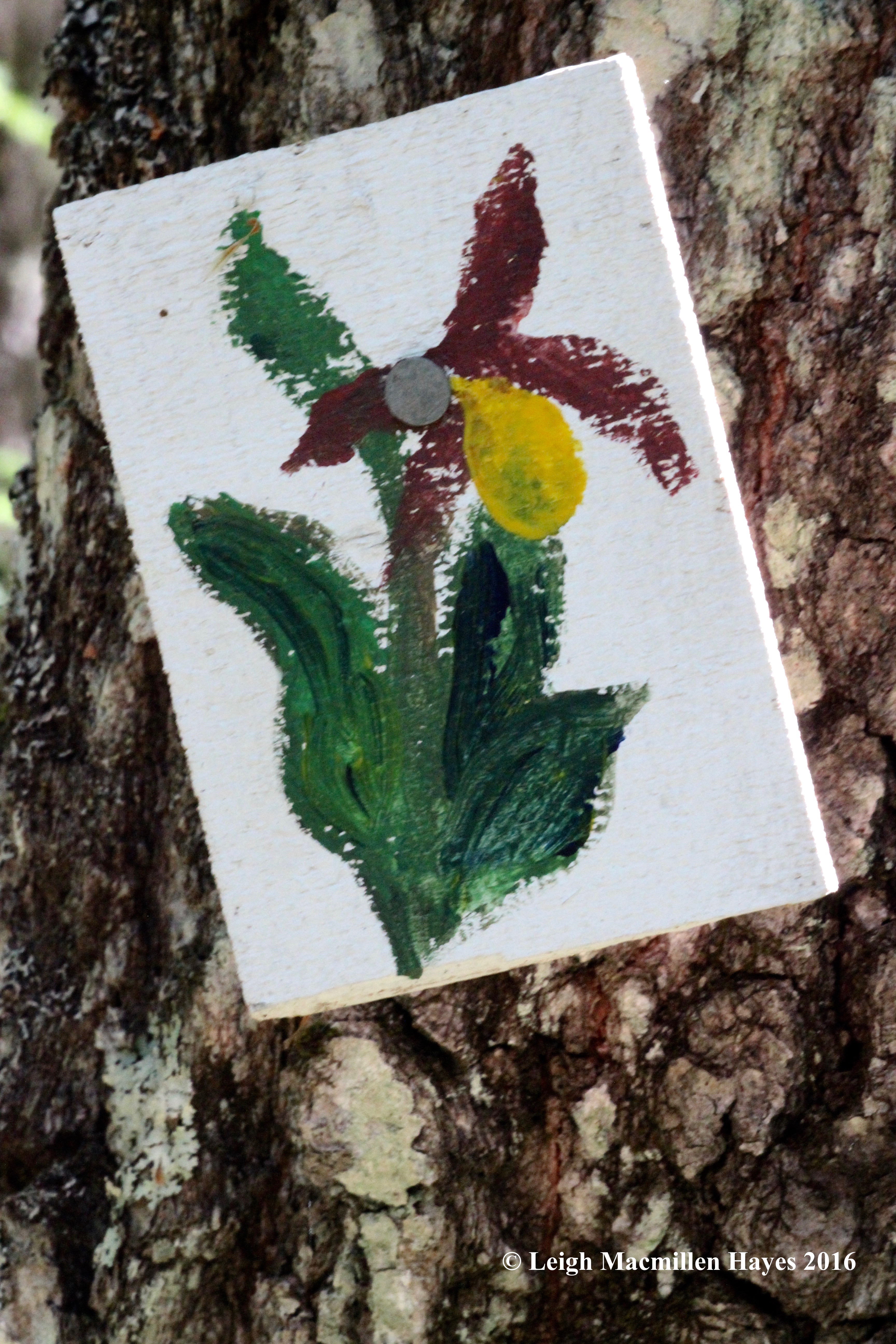
k-ladys-slipper

and lady’s slipper sign . . . among others. Local students painted the signs and it’s a fun  and artistic addition to the reserve.

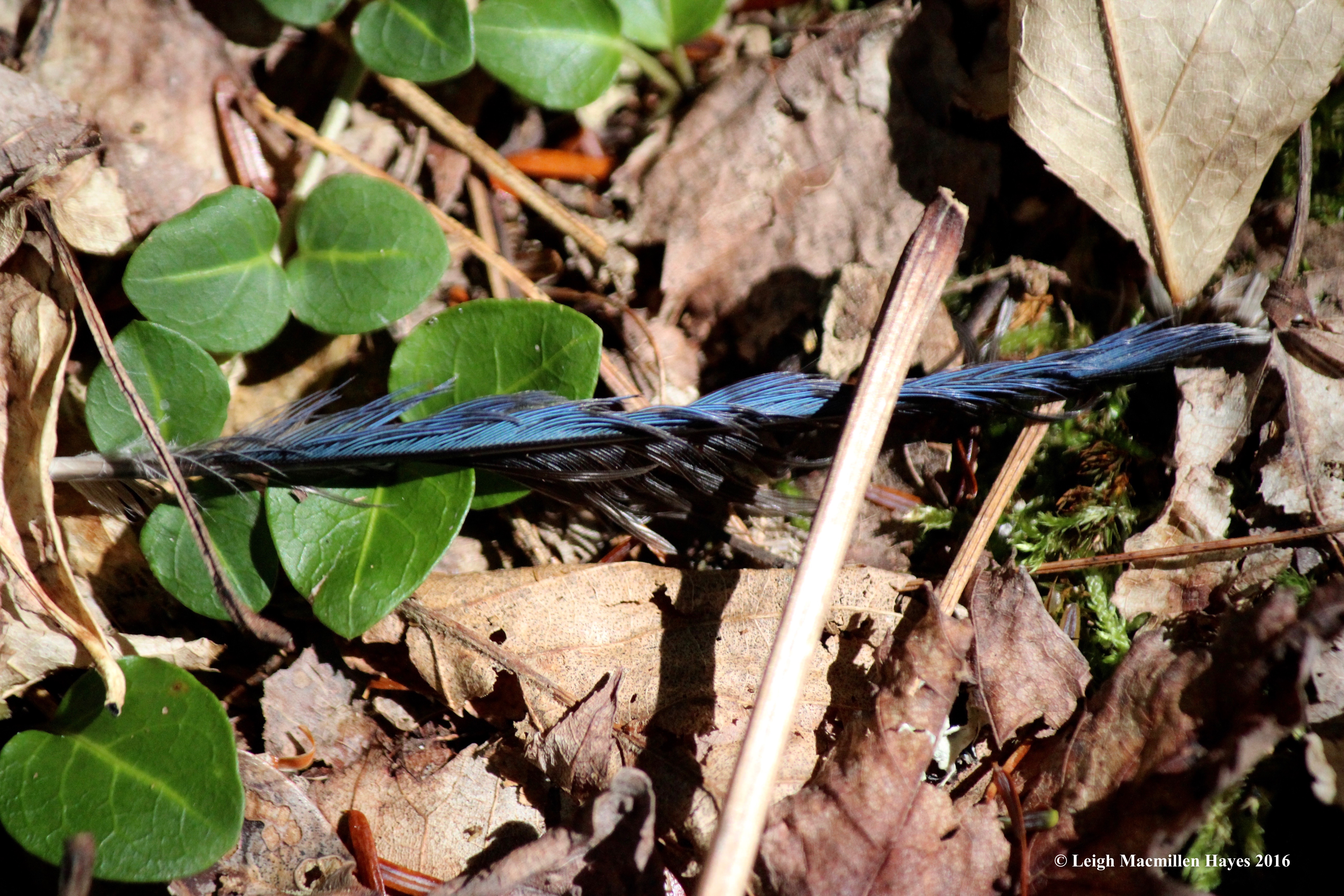
k-blue jay feather.jpg

Of course, there was natural sign to notice as well, including a blue jay feather.

K-aster .jpg

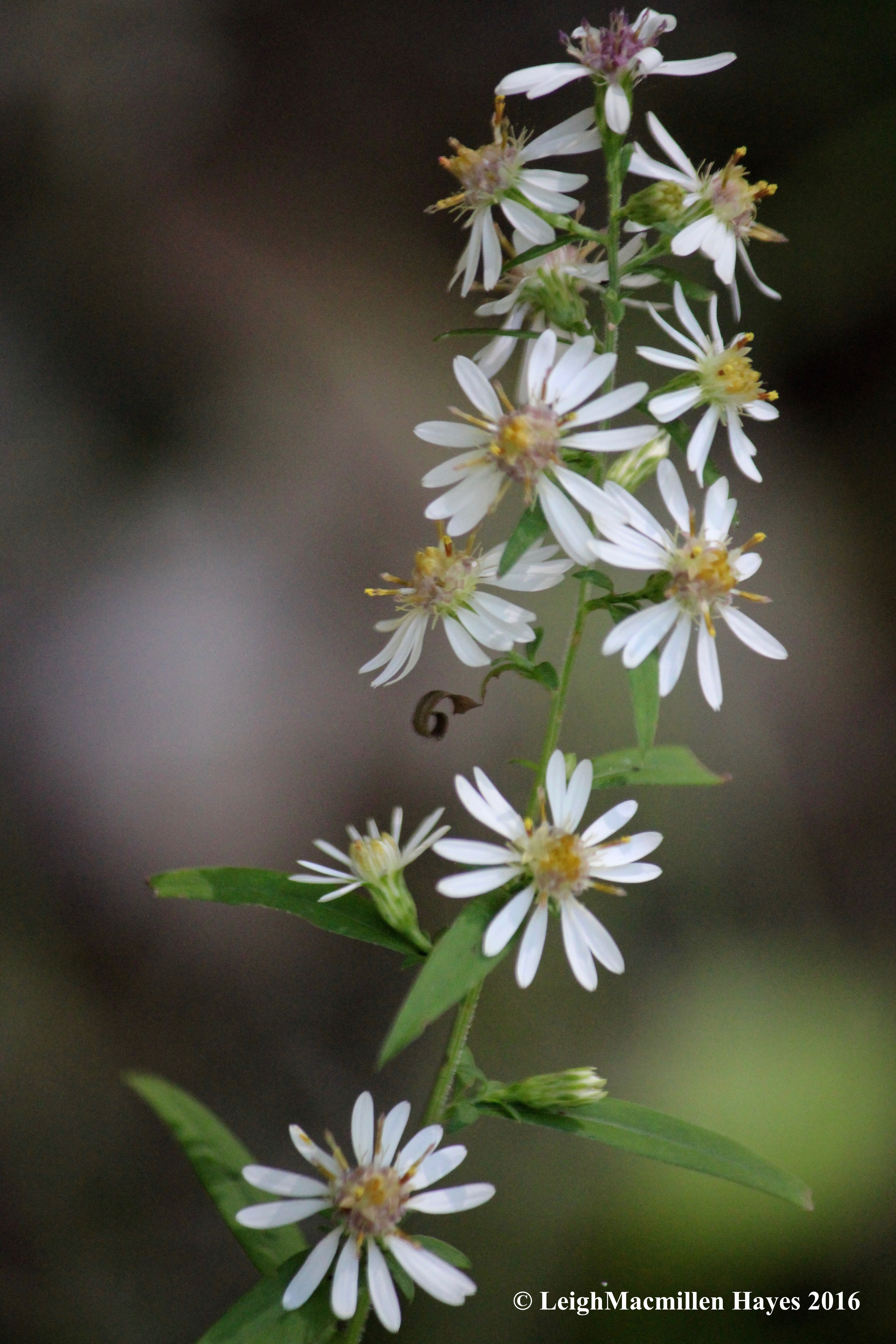
Asters and goldenrods offered occasional floral decorations.

k-hobbleberries

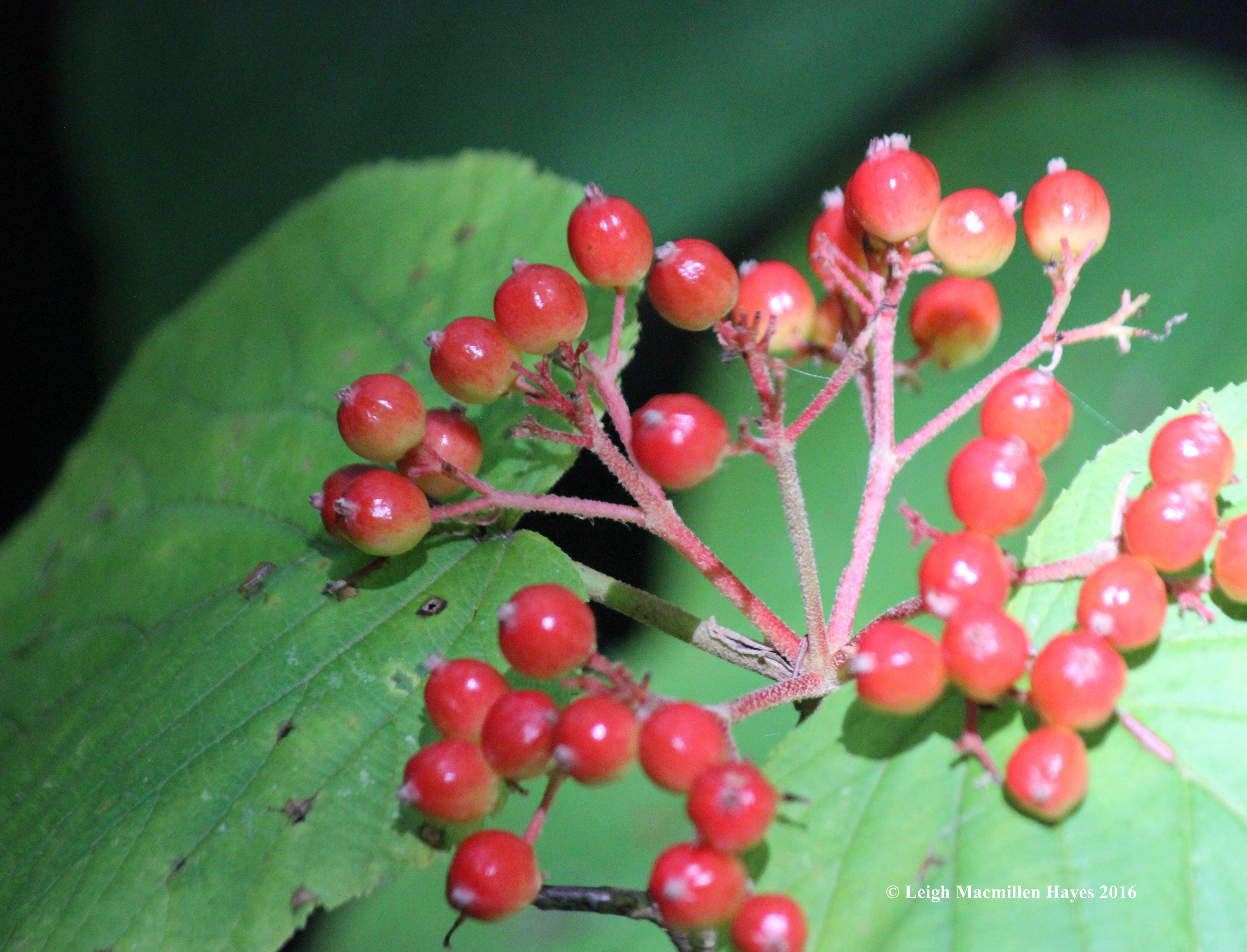
And hobblebush berries begged to be noticed.

k-meadowhawk-1

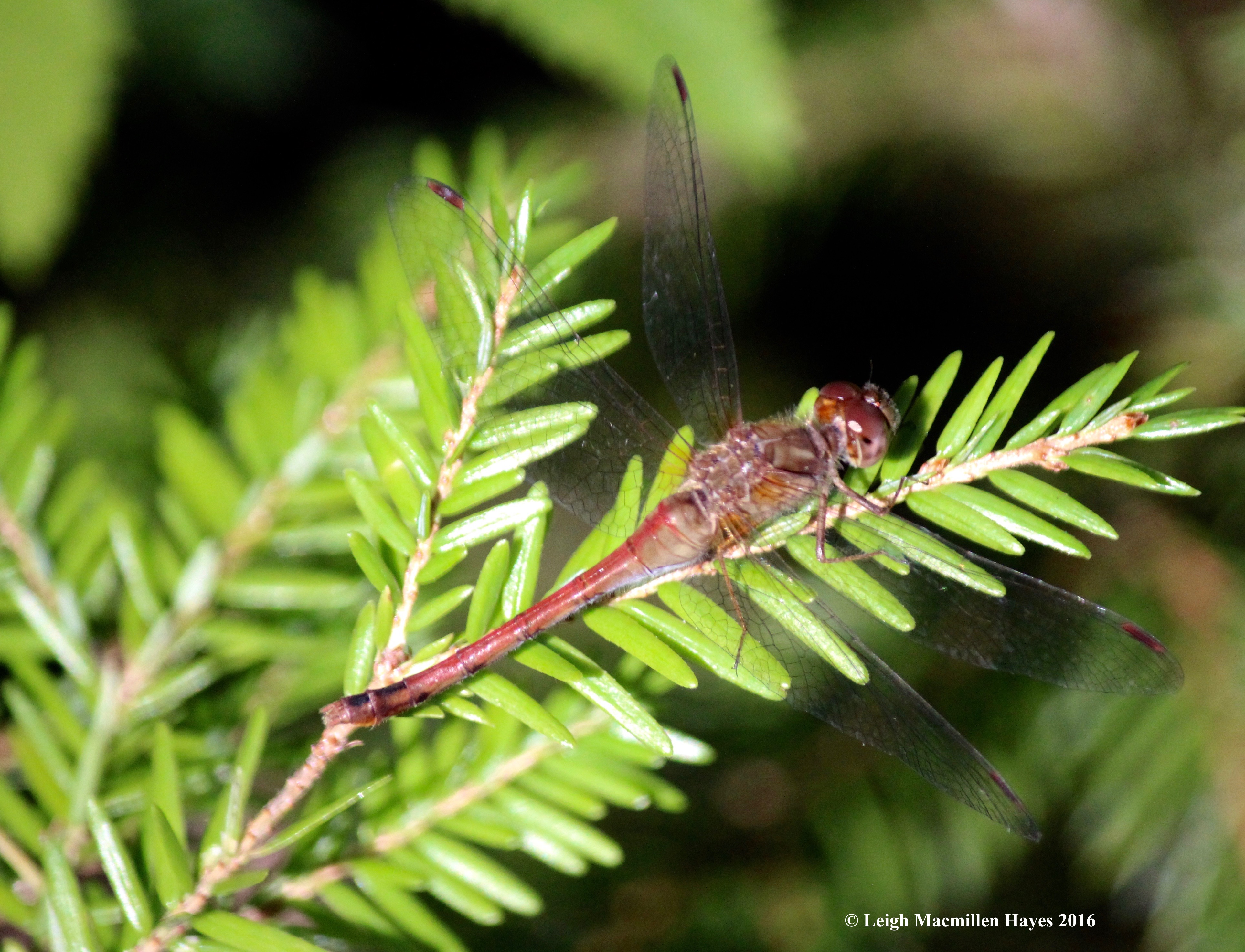
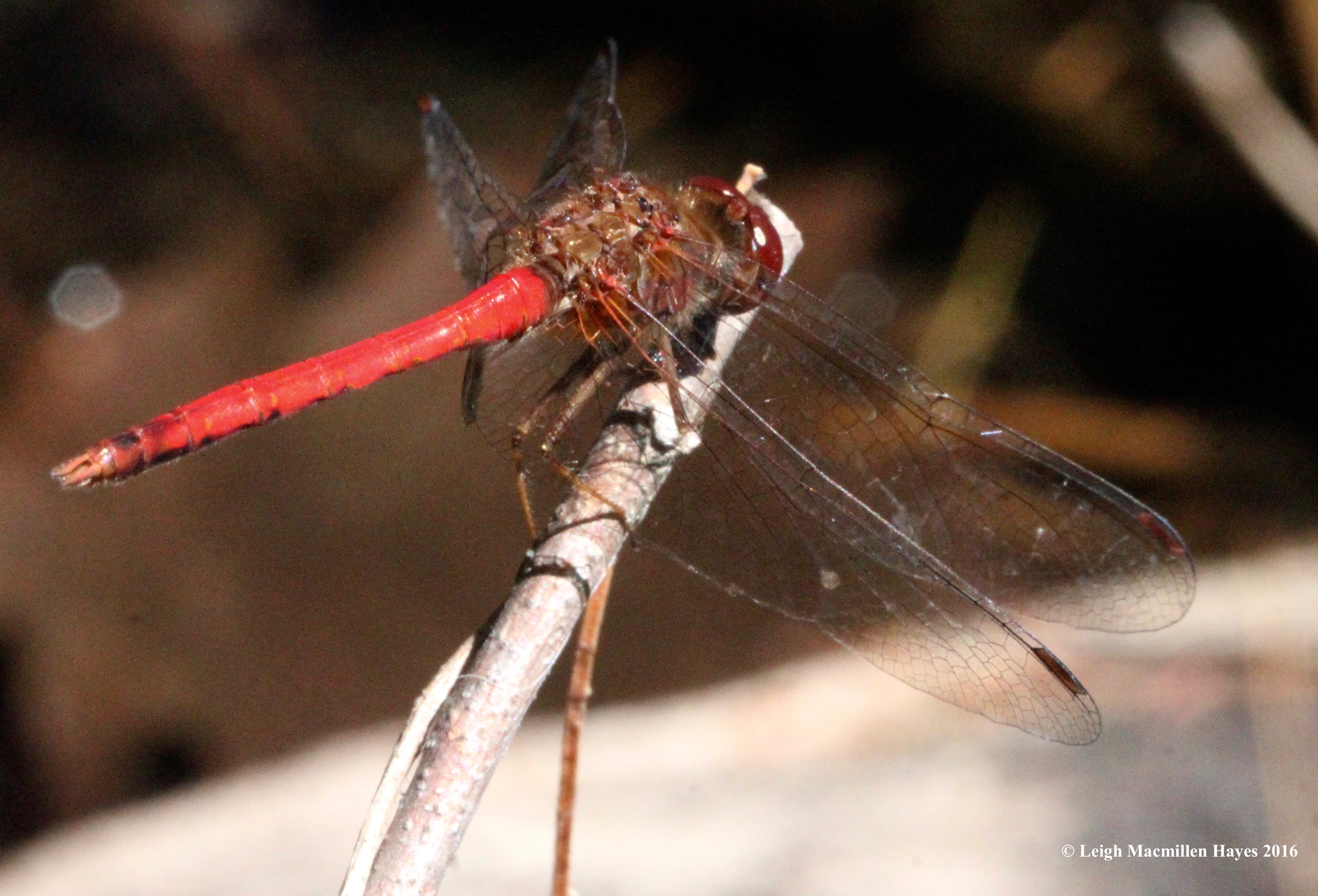
And then a meadowhawk dragonfly captured my attention. I stood and watched for moments on end.

k-red-maple-leaf

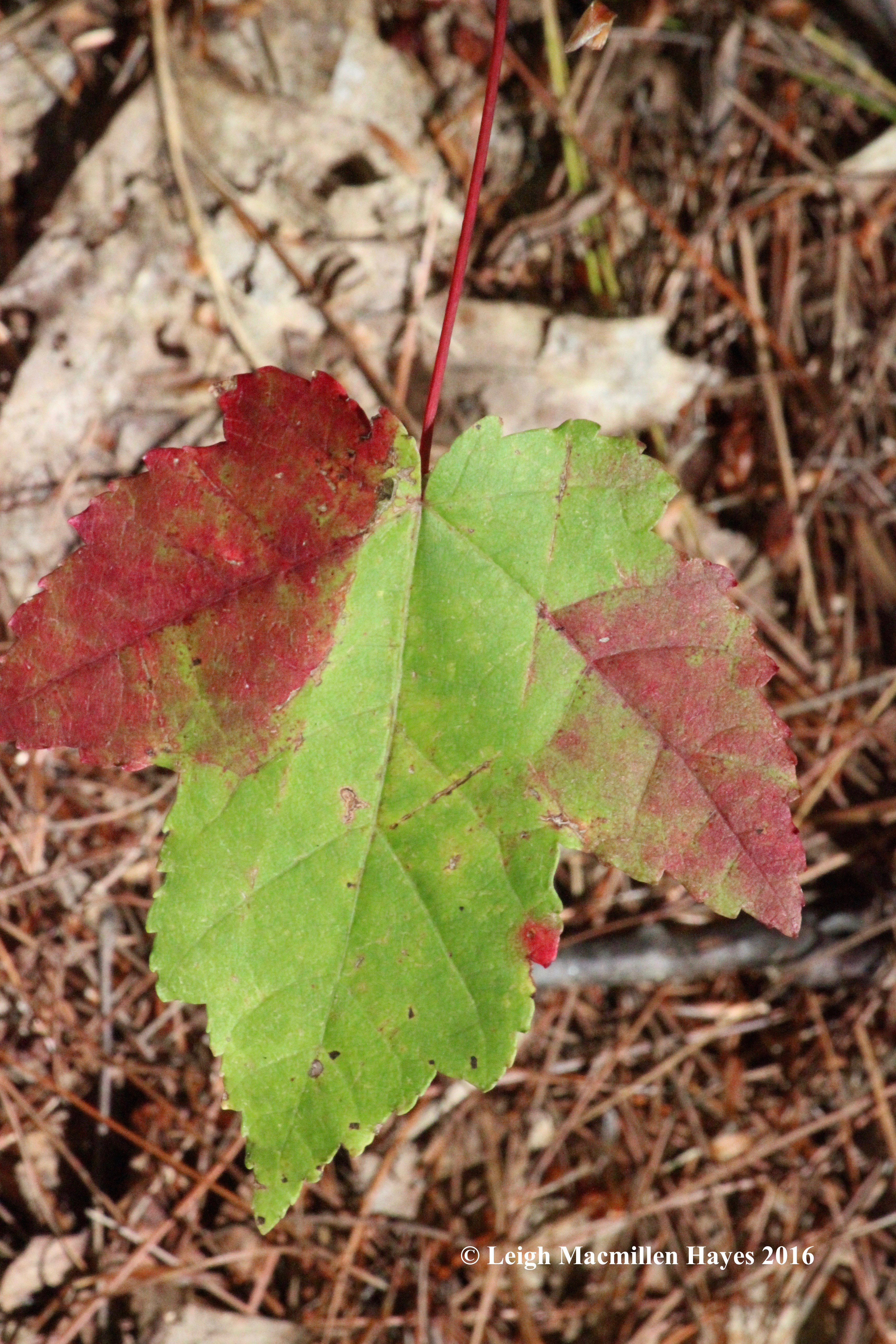
And noted that the red maples offered similar colors.

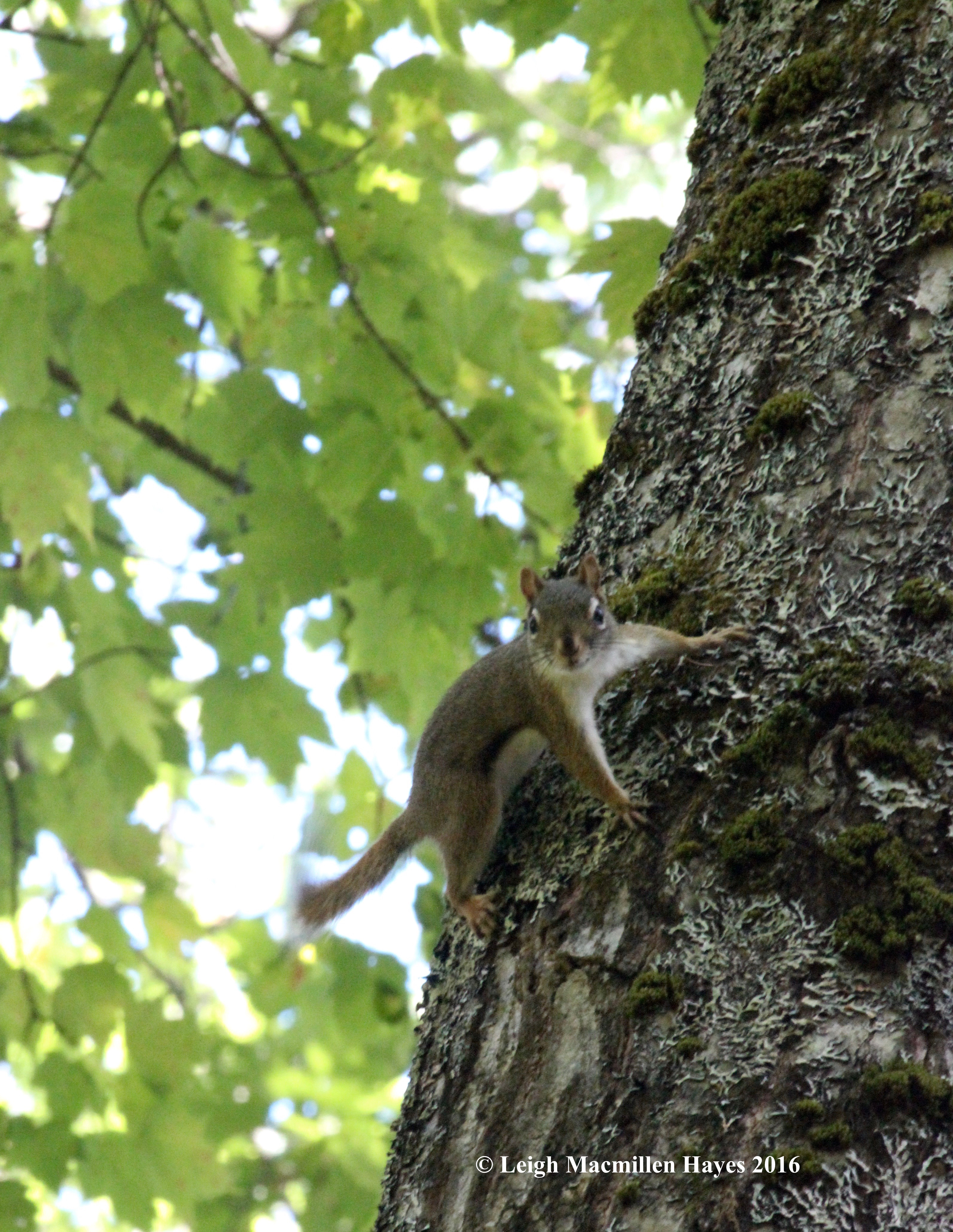
k-squirrel.jpg

When I reached the canoe launch “road,” I was scolded for my action.

k-river-later-1

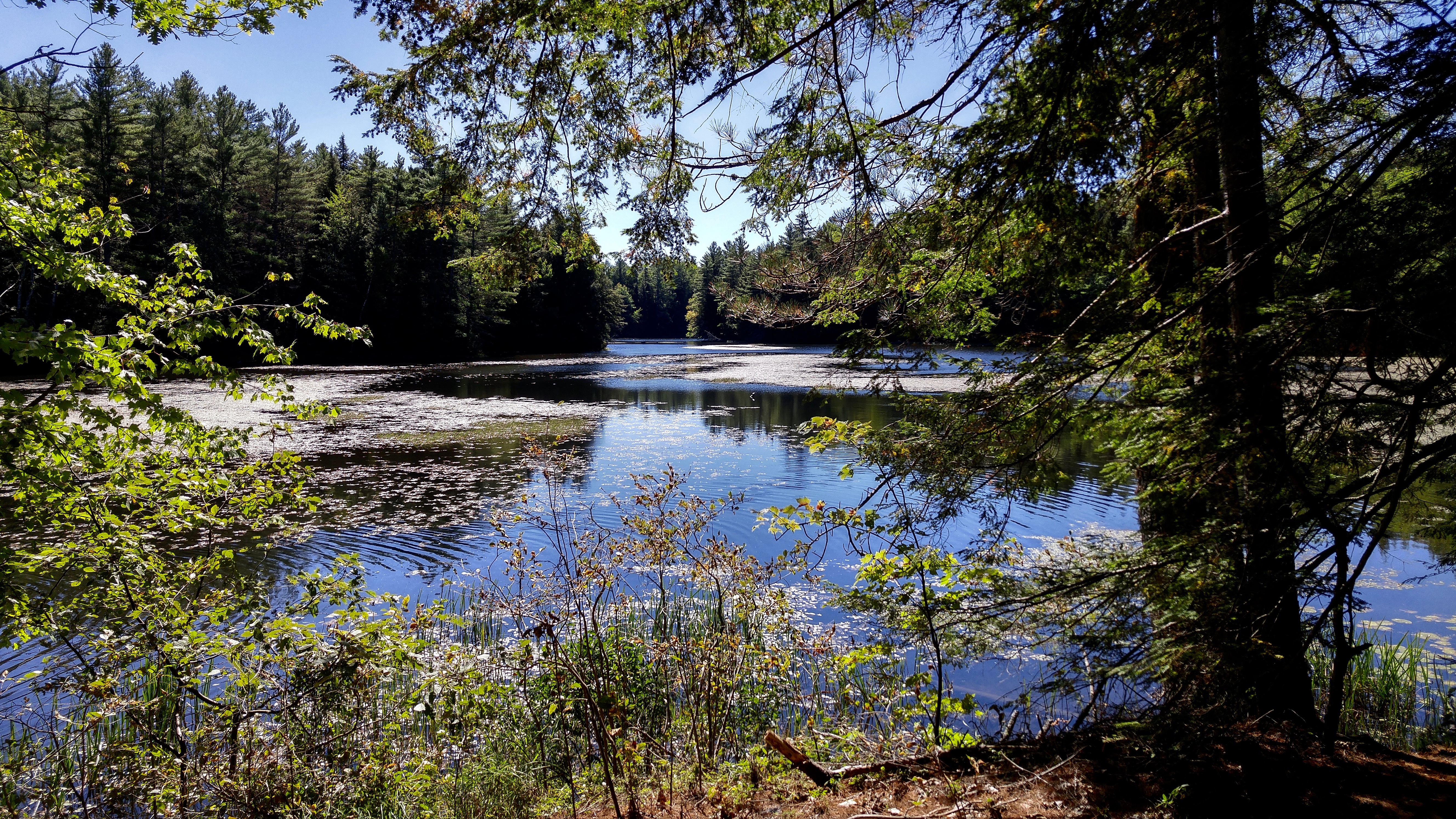
Despite that, I returned to the bench overlooking the mill pond on the river. Rather than sit on the bench this time,  I slipped down an otter slide to the water’s edge.

k-green frog 1.jpg

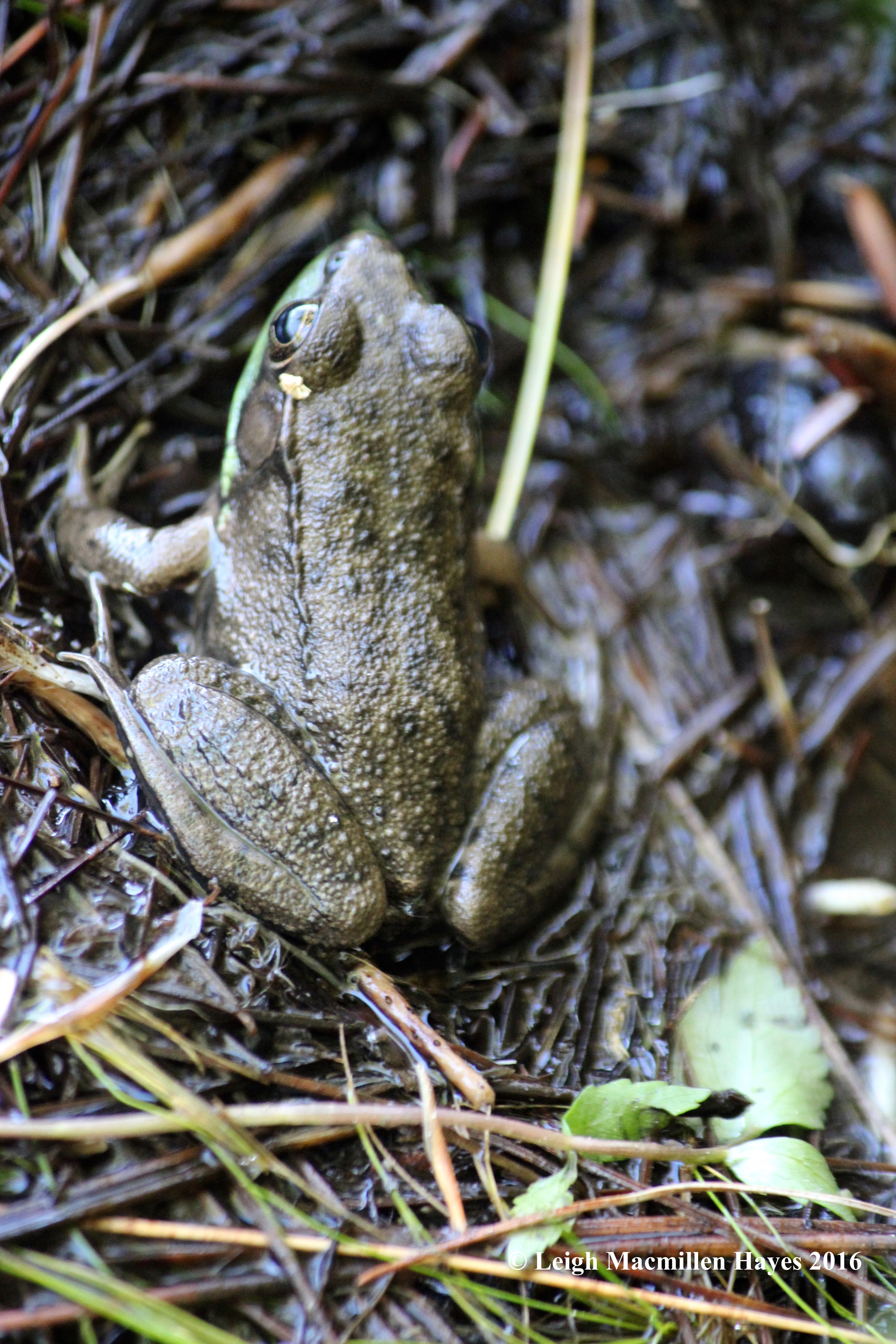
My efforts were rewarded. Frogs jumped. And a few paused–probably hoping that in their stillness I would not see them. But I did . . . including this green frog.

k-ruby-2

My favorite wonder of the day . . .

k-meadowhawk-6

moments spent up close and personal with another meadowhawk.

k-ruby-3

No matter how often I wander a trail, there’s always something, or better yet, many somethings, to notice. Blessed be for so many opportunities to wonder beside the Kezar River.