The Tale of Two Tails

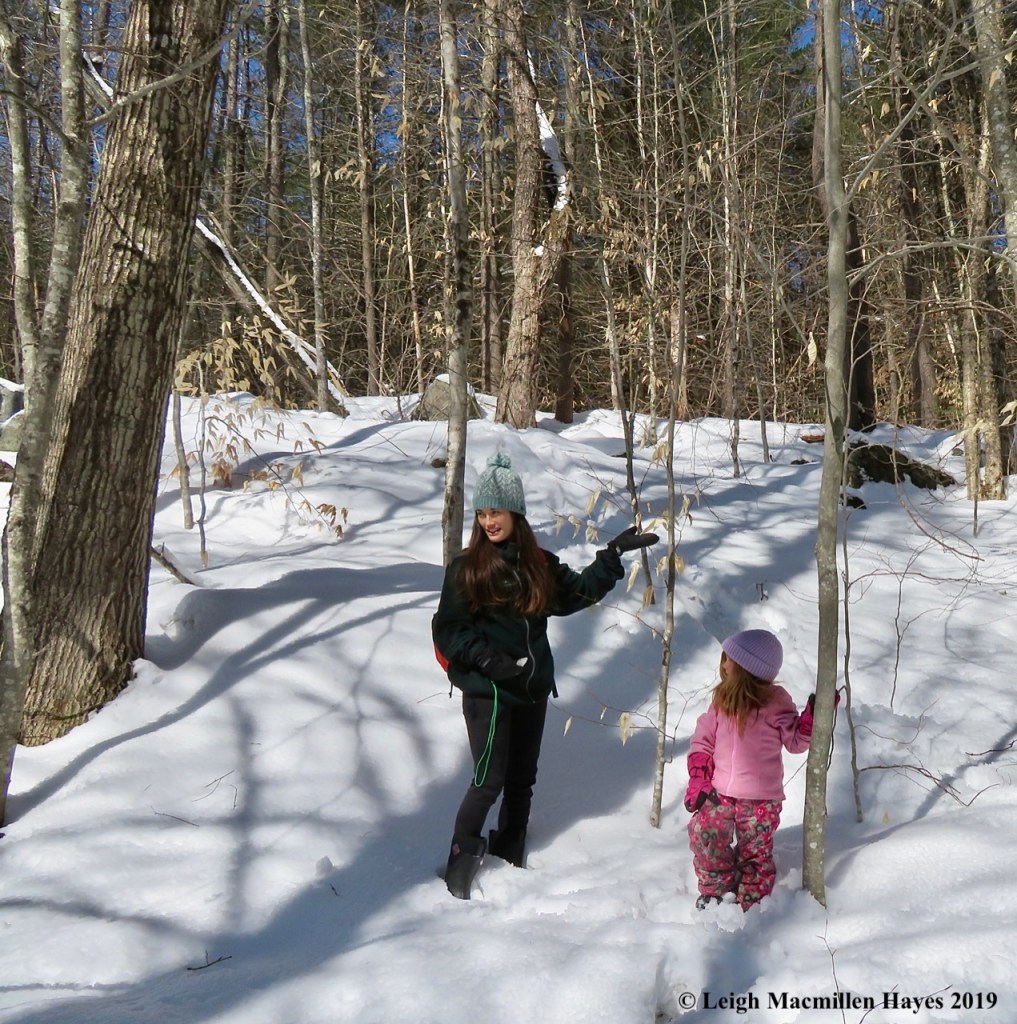
We call ourselves the Trail Snails–a group of St. Peter’s Episcopal Church parishioners always accompanied by various non-parishioners who like to crawl at a snail’s pace.

Each week I try to find a different location, thinking fairly flat for locomotion and with natural elements that will bring out their sense of wonder. The first isn’t always easy, especially given the amount of snow and ice we’ve had this winter; but the second is a cinch since there’s so much to wonder about in our little corner of the world. When we started these walks in the fall, I did not expect that we’d continue weekly throughout the winter. But we have.

And so today six people (parishioners and non) joined me at my house to head out to the well-packed snowmobile trail. Of course, it wasn’t as well packed for the first thirty feet and that proved a bit challenging because we all wore some variation of micro-spikes rather than snowshoes, but they all persevered.

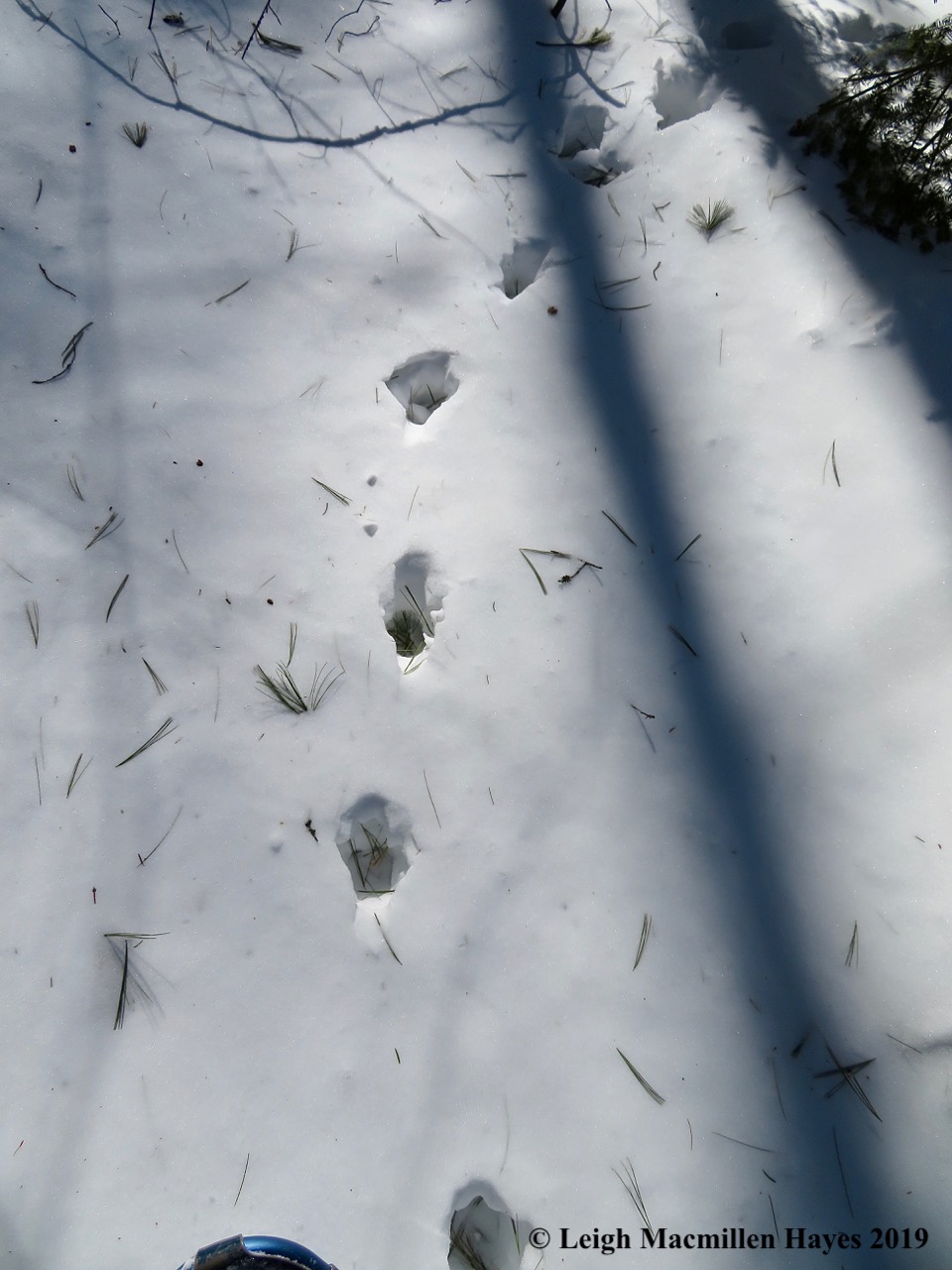
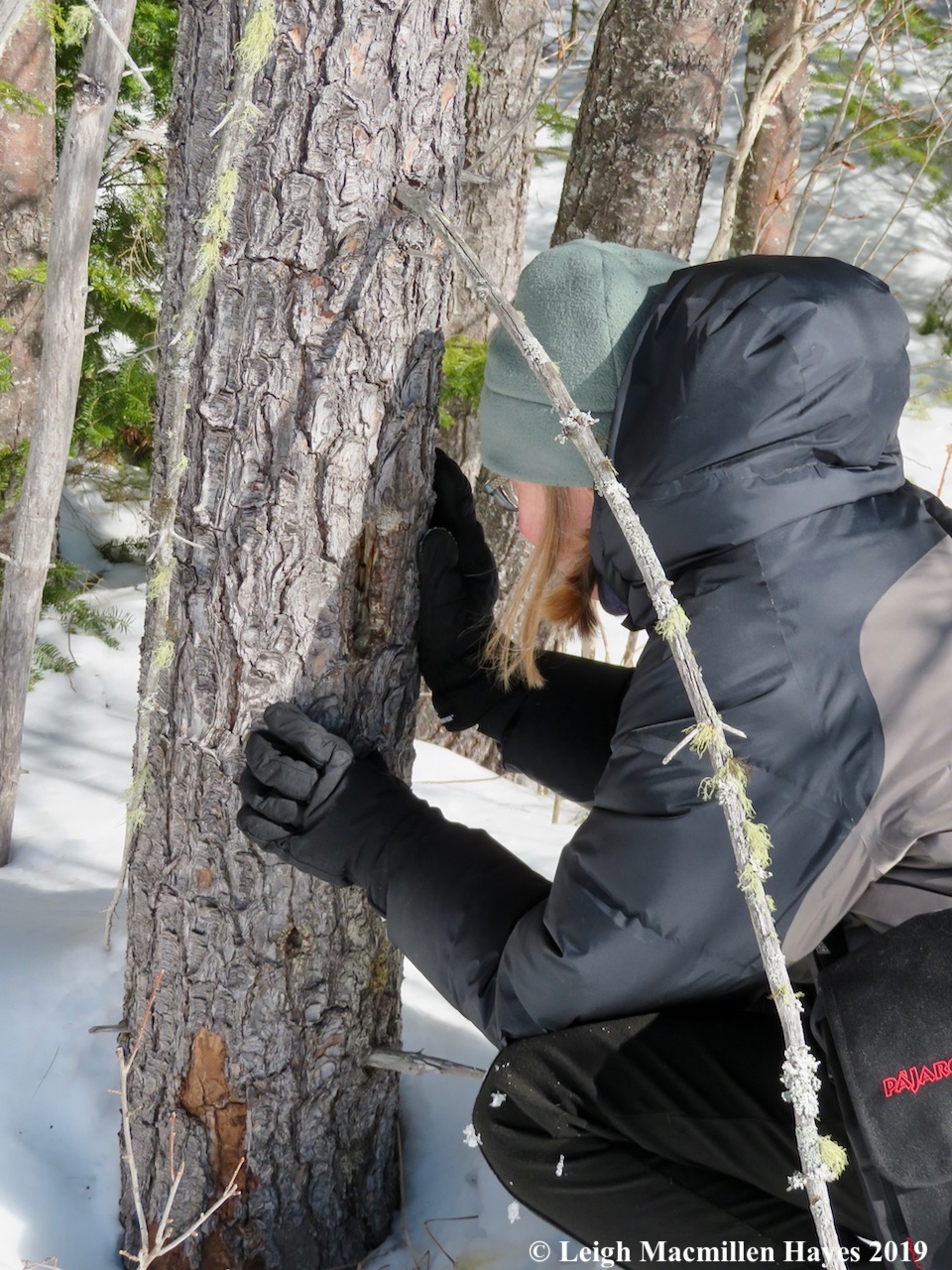
Once on the main trail, I showed them Porcupine tracks and then asked them to find the next set of such. It only took a minute for one to spot the pattern. While we looked at them and I shared some fun facts, I looked around and realized I was standing in the middle of recent Porky activity. Not only were there fresh tracks, but also scat and twigs cut at the traditional 45˚ angle, with buds and needles missing. We looked up into the tree, but fortunately no one was at home.

I think I know this Porcupine because he’s a frequent visitor to the Hemlocks in our woods and the neighbors’.
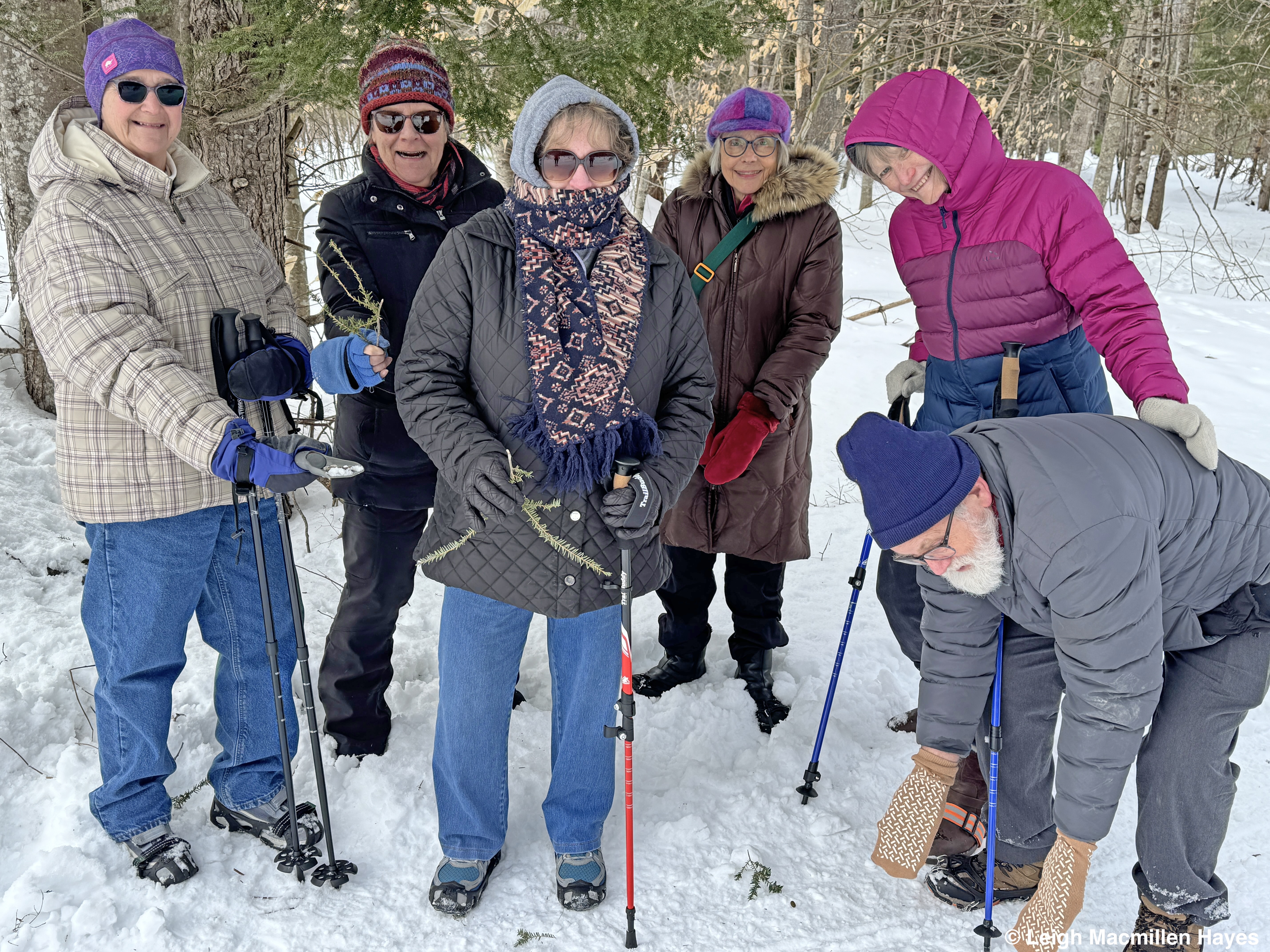
When I asked the group to share the findings and become a Porcupine, they did so, though I think they think I’m a wee bit crazy. Maybe I am. Anyway, Left to right: Nancy holding some scat on my scat shovel, Marion and another Nancy with twigs, Marcia smiling about it all, and Gary wearing my Porcupine socks to show how the feet are like sandpaper to gripe a tree as they climb, while his wife Julia was there for moral support and to help him up if need be.

We paused at many other spots along the way, including looking at the silk a Pine Tube Caterpillar uses to construct its tube.

And admire a perfectly round display of Lungwort, a foliose lichen consisting of a fungus and a green algal partner living together in a symbiotic relationship with a cyanobacterium.

Had I brought water, I would have poured some on it to show off how green it quickly gets since the alga would have kicked into action to provide food for the fungal structure.

Lungwort is sensitive to air pollution and habitat loss, so spotting it is always a treat and reminds us of why we love living here in western Maine.

We also looked at buds on an Ash to figure out which species and I told them about the Emerald Ash Borer and showed photos of what blonding looks like.

It turns out what we were looking at was a White Ash–hairless buds that dip into the upside-down, C-shaped leaf scar.

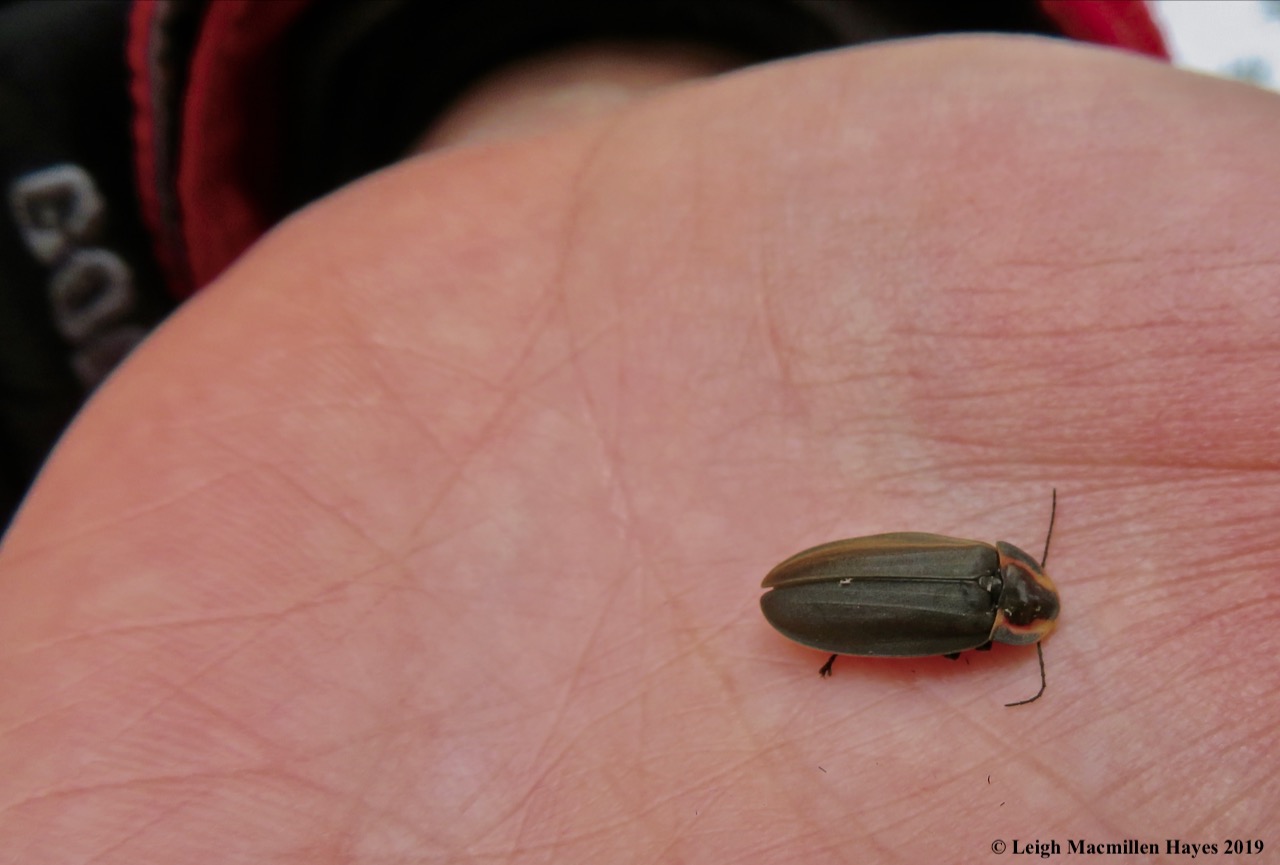
And then there were the Winter Fireflies that we found still as could be on the snow. I picked one up in the scat shovel and thought it must be dead.
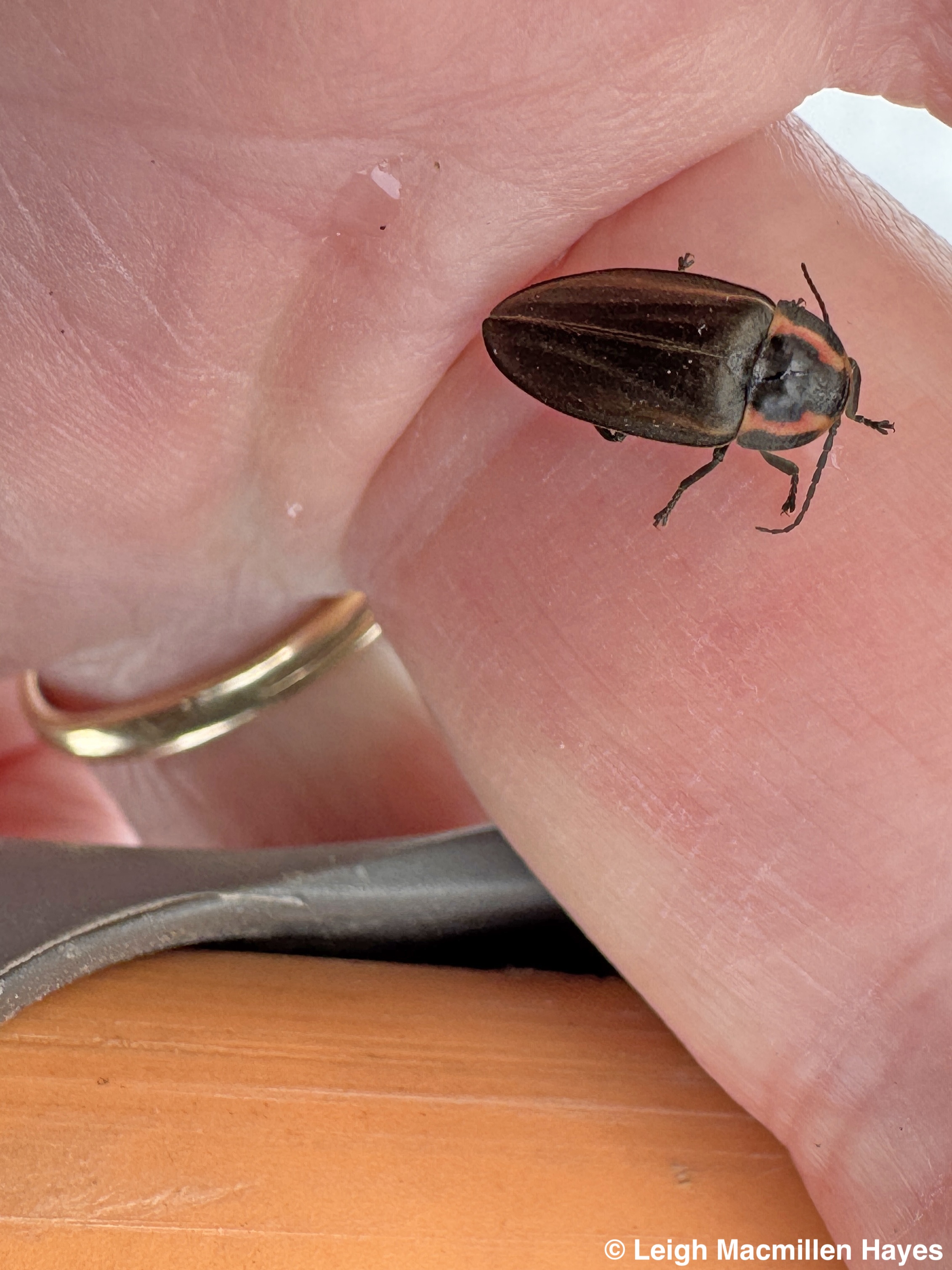
That is . . . until we noticed its antennae began to move.

And then it started to walk. Last we knew, I’d left it and its kin on their favorite tree, a Sugar Maple, with hopes that as the temps warmed today and will continue to do so going forward, the insects will survive.

Just before reaching our driveway at the end of our walk, we also saw a Winter Cranefly, but moments after I scooped it up in my scat shovel, it flew. At least most everyone got to see it.

As Trail Snails, we walked not quite a mile and a half in two hours, but saw so much, and I was especially jazzed by the new Porcupine evidence. I think they were as well. Maybe not jazzed, but curious.

And in our time together we saw only three snowmobiles. While it was brought up that those on the machines miss all that we were seeing, I did explain that My Guy often comes back from a ride and tells me of the wildlife he and friends sighted. There I am being so quiet and not seeing any, but somehow despite the machine he spies so much more.

And then this afternoon, I picked up a friend and drove to another section of the local snowmobile system. We walked and talked and talked and talked some more, catching up because despite retirement we are both incredibly busy. In a good way. Doing things we love to do.
As we walked, I kept pointing out Porcupine tracks and if we’d had snowshoes on, I might have convinced her to look for the feeding trees and den sights, but we chose to begin with micro-spikes and quickly ditched those since the snow conditions on the well-packed trail were just right.

We also paused to listen to a Barred Owl and tried to spot it to no avail.

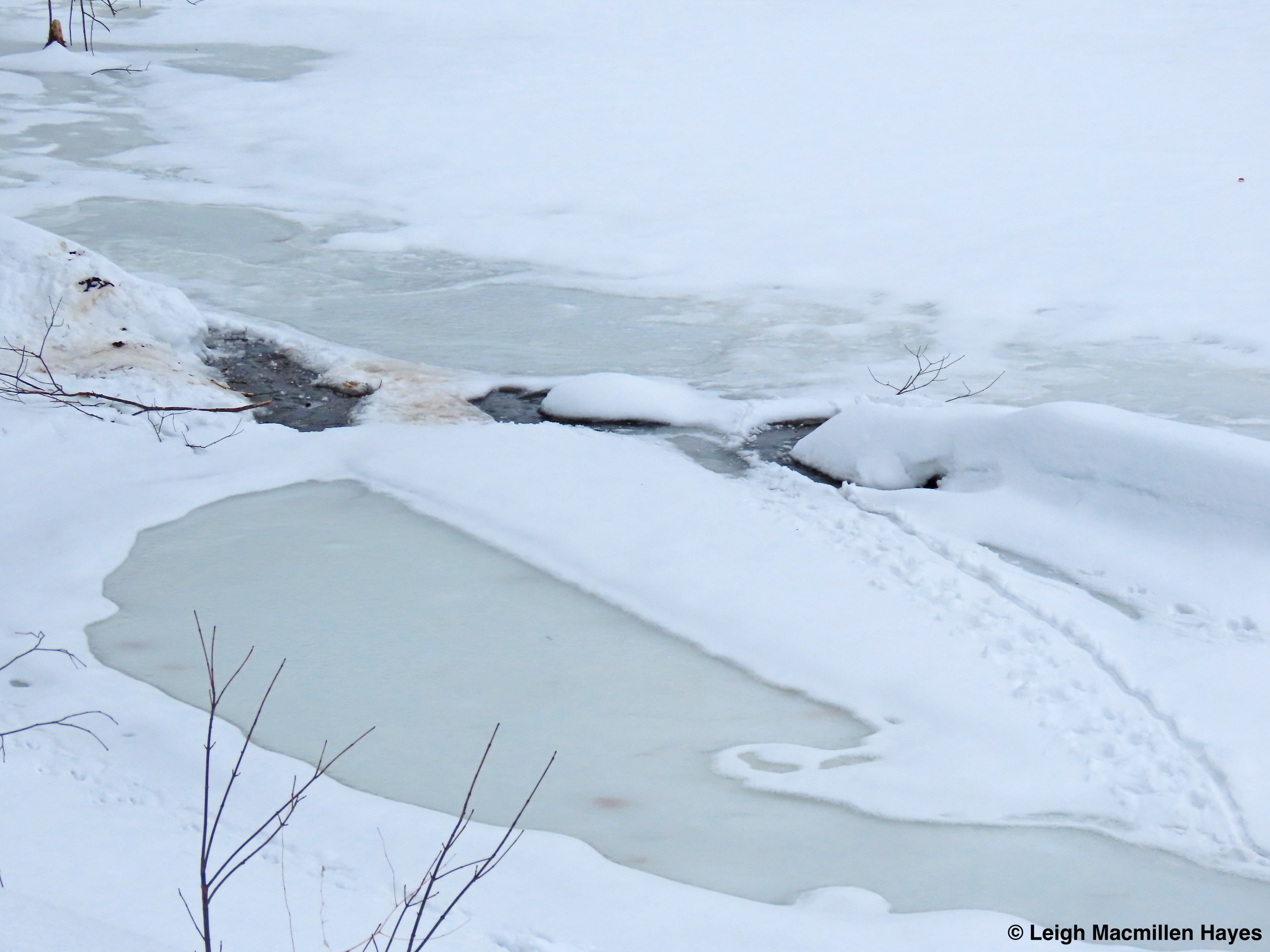
And then, near water, we spied tracks of a different sort. And scat. And mud. And not quite open water.
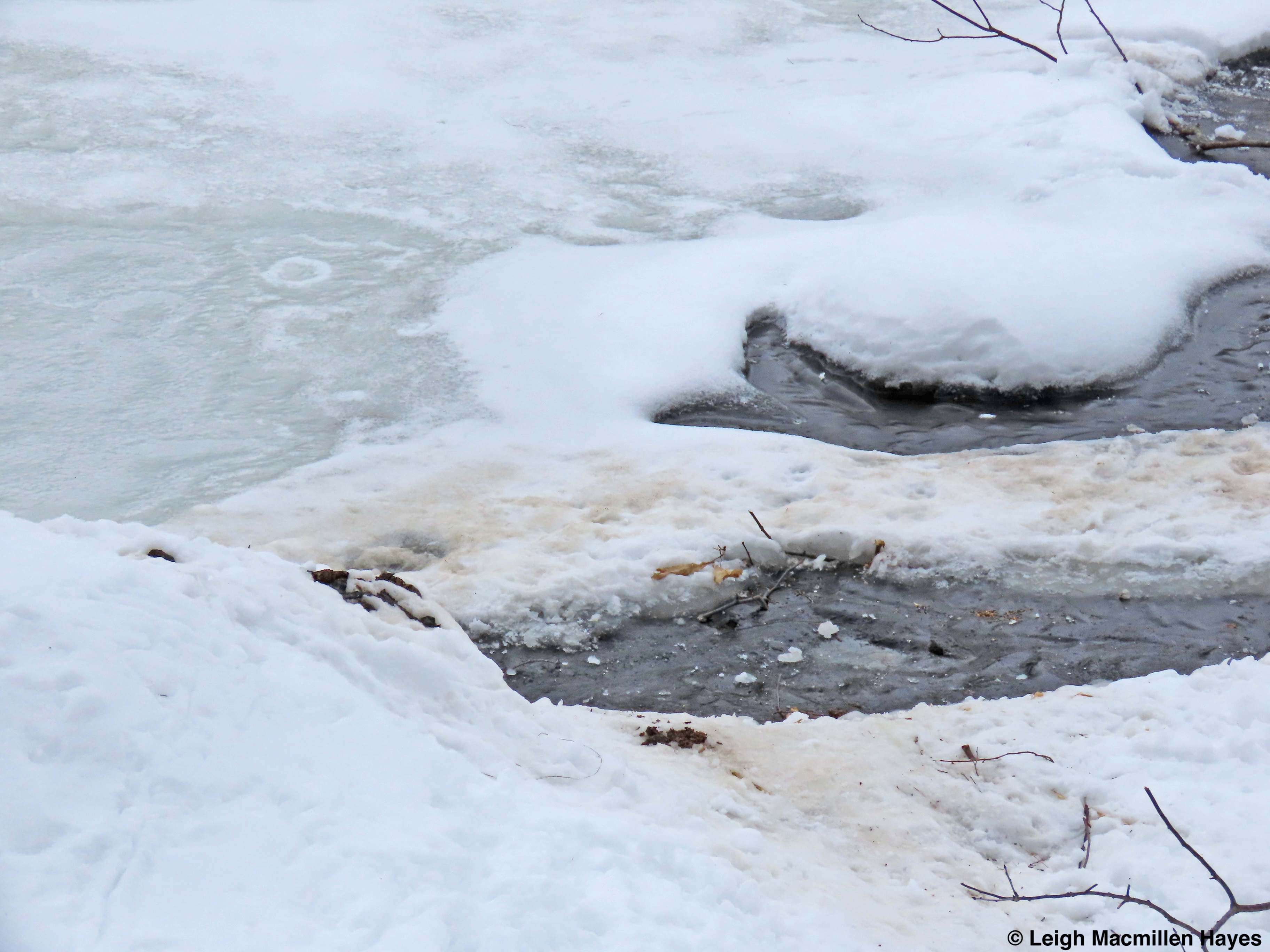
The scat was from Otters. And I really wanted to take a closer look, but didn’t trust the trail down, despite it being well traveled.

What I now realize I didn’t take a photo of were tree marks in the snow, which in the moment I surmised were twigs blowing down toward the water.

I noted that the track continued across the road upon which we walked and so I suggested we take a look and see if we could note anything about the Otters’ behavior.

We certainly did not note anything about such, but instead discovered fresh Beaver works. And suddenly the indentations left by the twigs made sense–Beavers dragging tree branches down to the water to take back to their lodge or winter food raft.
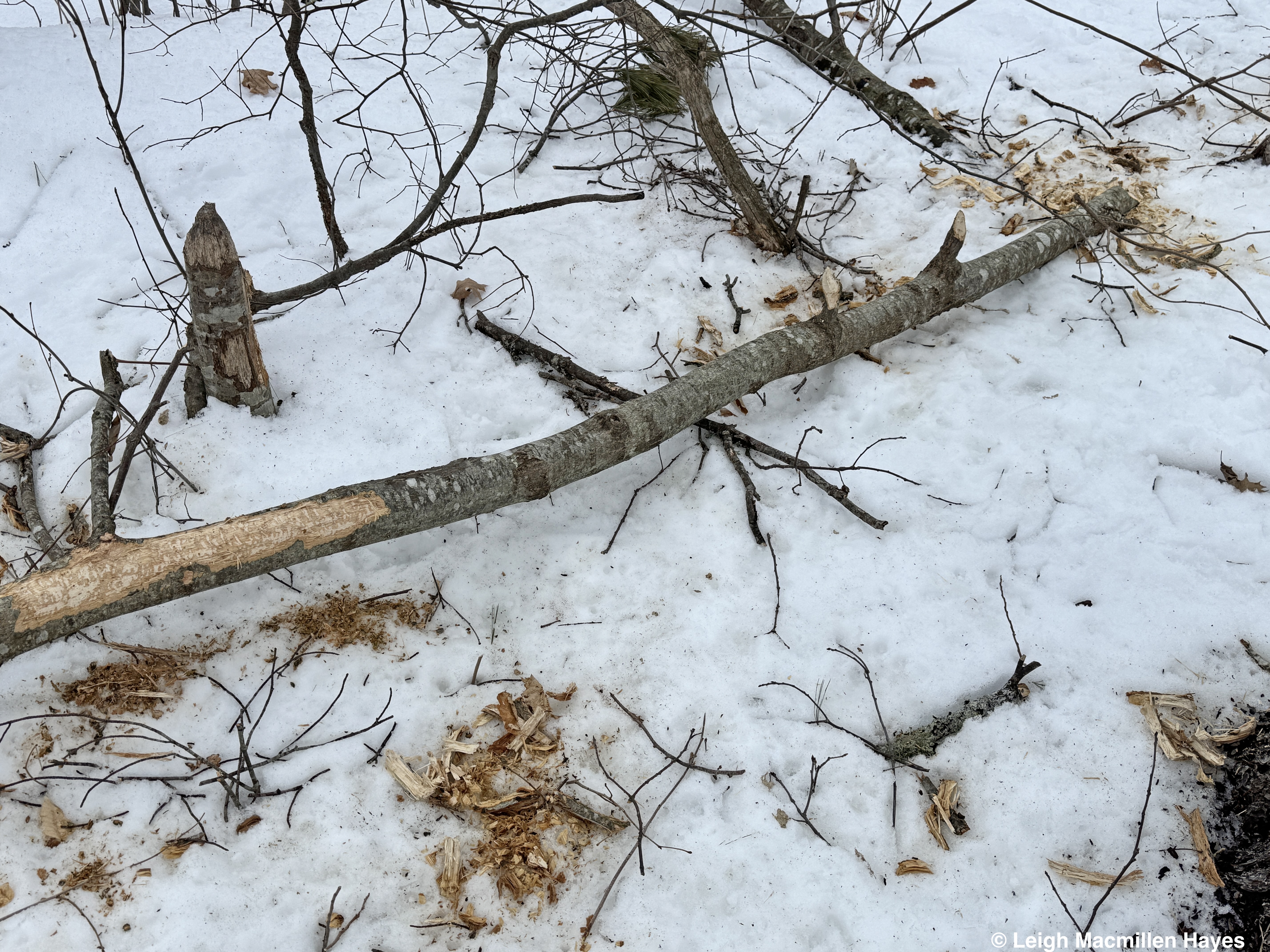
Maybe like some people that I’ve heard are looking for more firewood right now to stay warm the rest of the winter, the Beavers didn’t realize everything would stay frozen as long as it has and so they needed to replenish the pantry.

Shortly after that, at about the 2.5 mile mark from our journey’s beginning, we turned around and started to walk back. And then something stopped us in our tracks. It took me a few moments to say, “Look,” and grab my camera and I feared this something would slip out of sight before I did so.

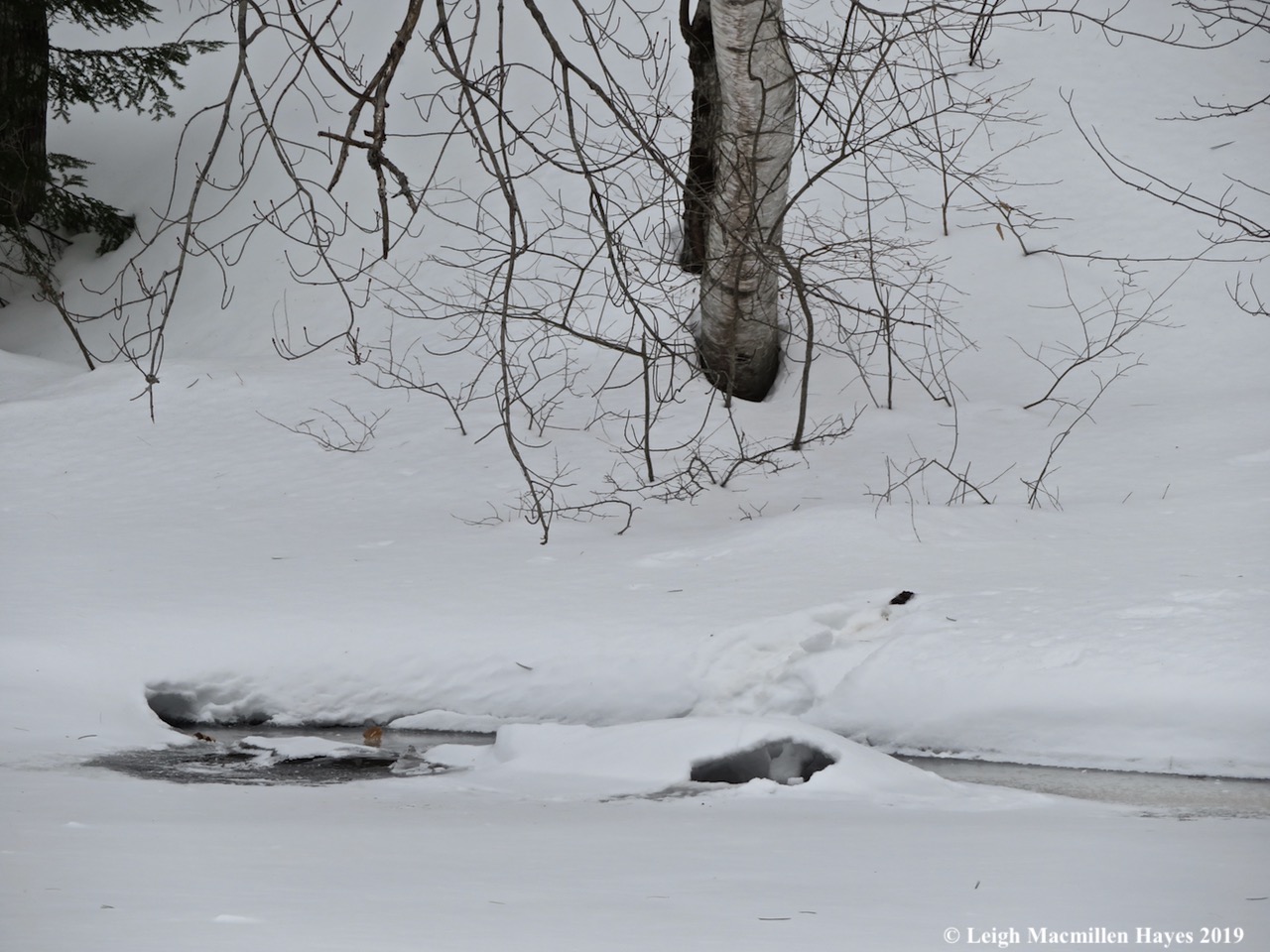
The Beaver must have come up the hill to cross the road to go grocery shopping by the trees he’d previously cut down, and then spotted us and we watched it waddle down its well packed trail toward the ice.
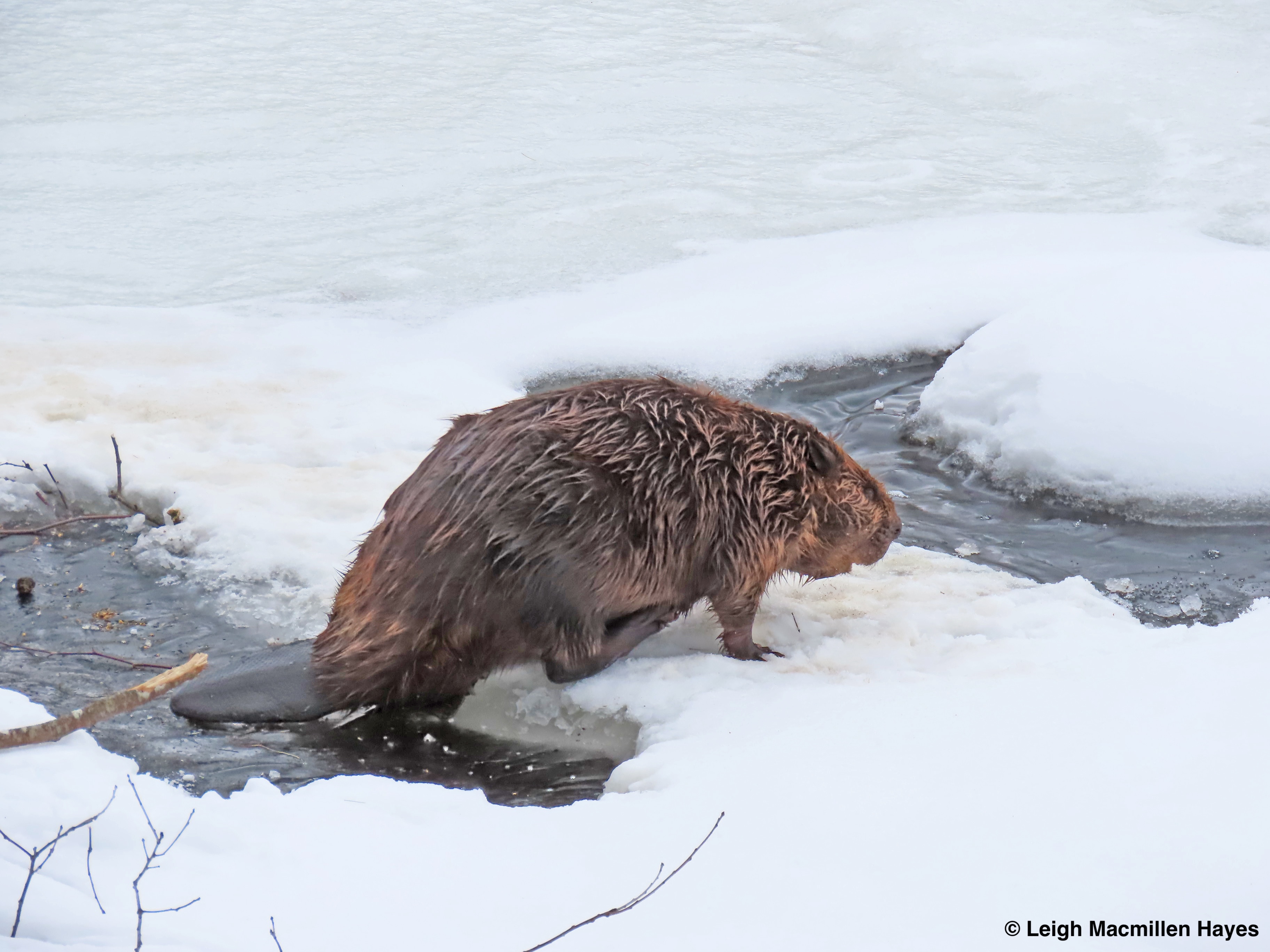
We thought our time together would end in a second as it slipped into the water, but then we realized it was looking for an open hole.
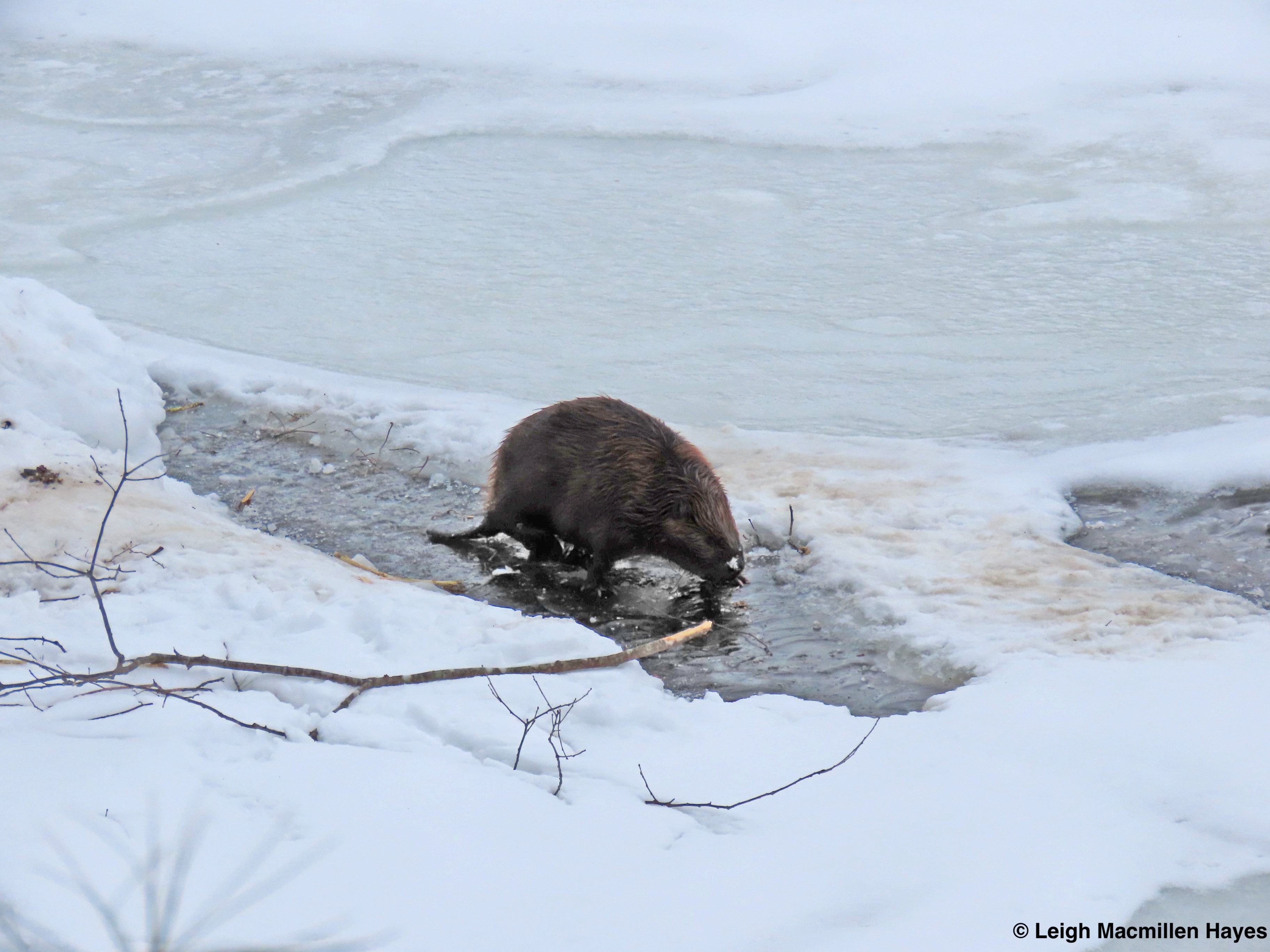
And scratching the snow and ice, even to the point of getting snow on its face.

It kept trying and we kept watching.
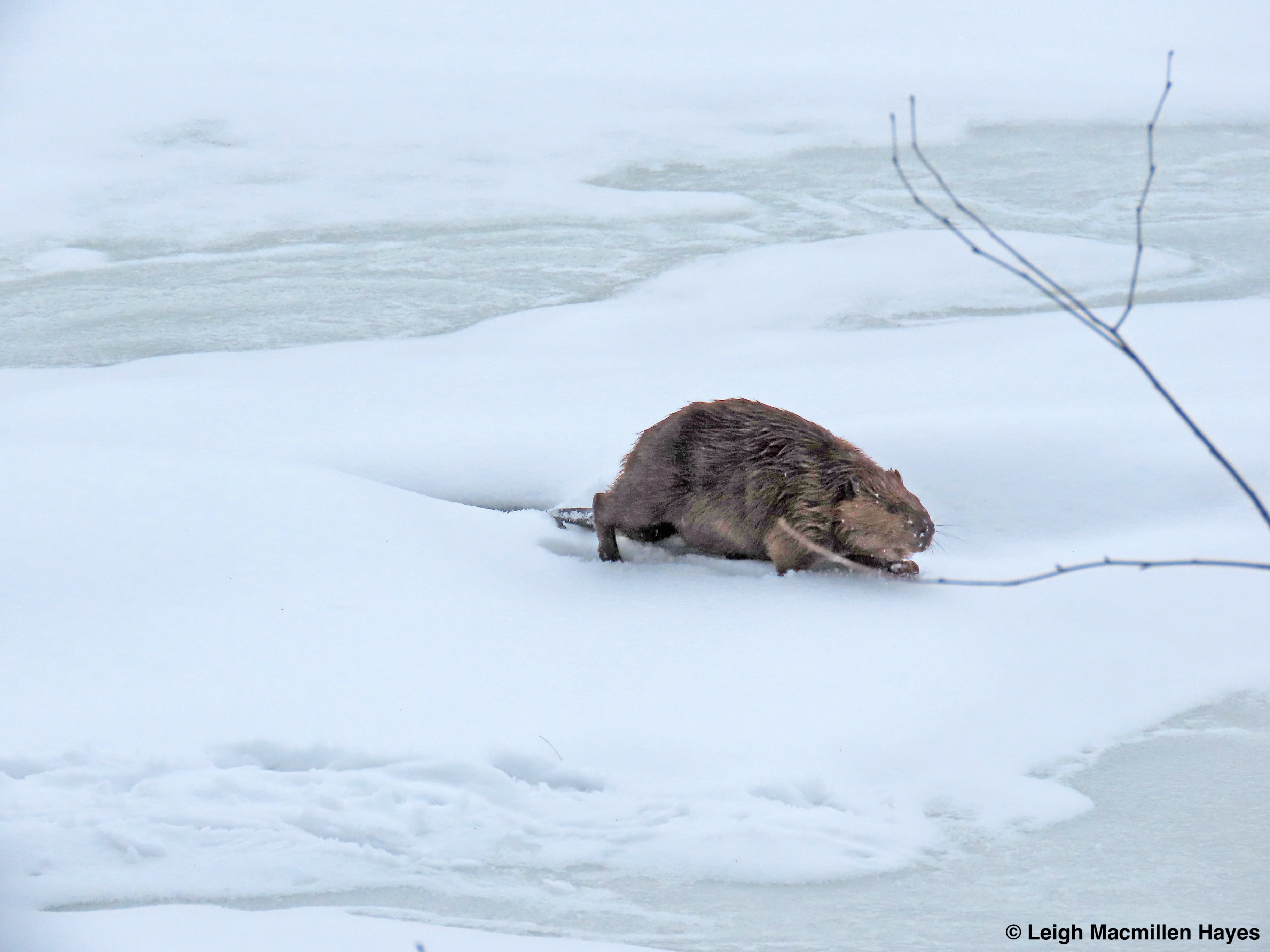
Still no luck for the Beaver, while we felt we were having all the luck in the world.
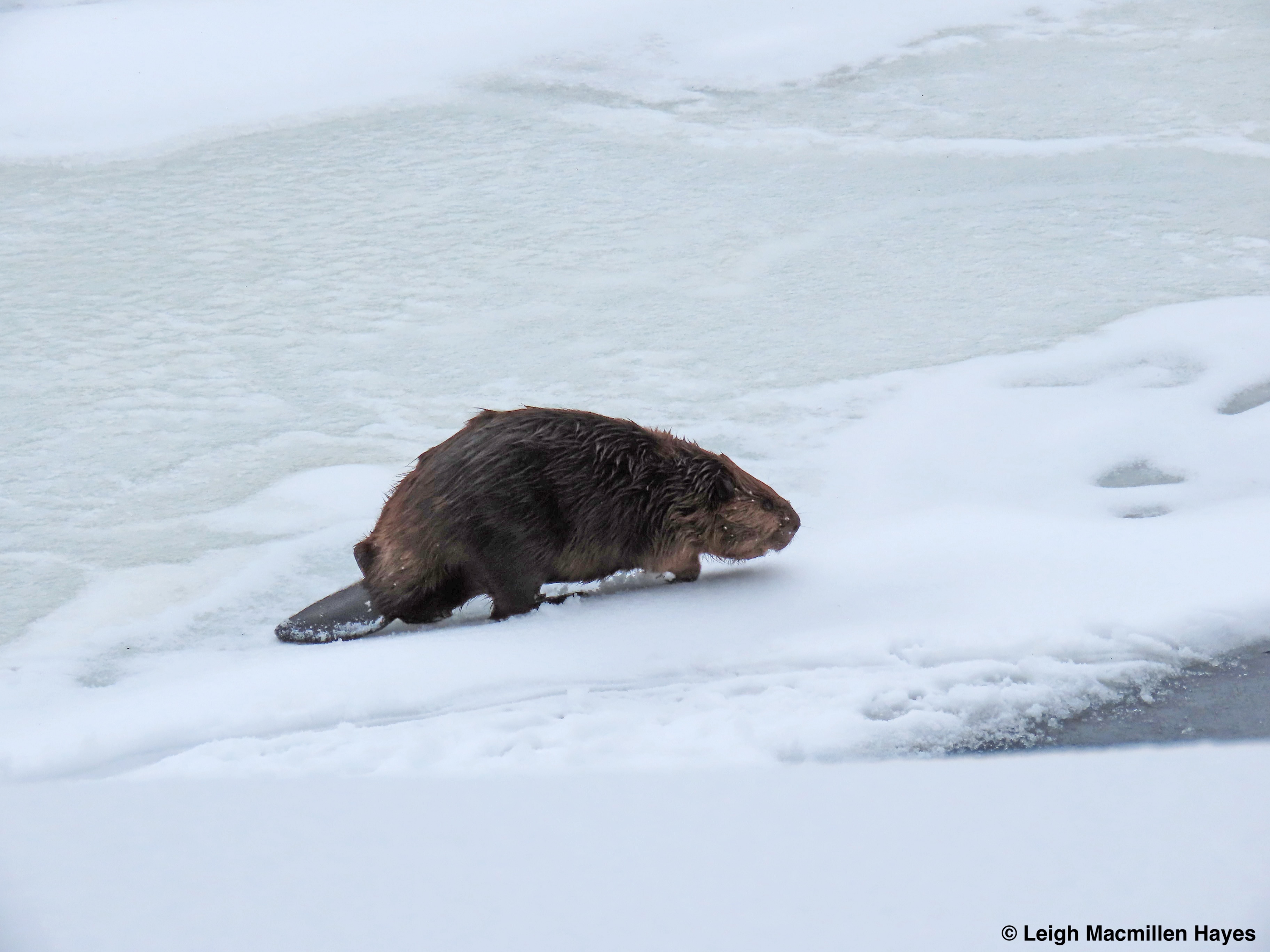
Traveling on land is such a vulnerable activity for Beavers and I could only hope that the Otter scat in this very spot where we stood above the water was the result of the Otter eating something else and not making a meal of a Beaver kit. Because really, they both can take advantage of the same hole in the ice.

We also wondered where the lodge might be but the bank’s edge was too steep for us to note if it was nearby.

And then, just like that, the Beaver found open water and this was the last we saw of it before it made its escape.

We knew we were blessed, Marita and I. And gave great thanks for hearing the Barred Owl, spying Otter Scat, and spending a few minutes with a Beaver.

What a day, from a Porcupine’s Tale to a Beaver’s, two mammals with tails of grand importance–the former being for defense and stability on a tree limb, and the latter for a rudder, as well as stability like a tripod when cutting down a tree, and fat storage as well.

The Invitation Stands

It took me by surprise, this change of seasons.

Despite all the clues from fading otter prints . . .

and not so deep moose tracks . . .

to reverse tracks raised above the snow cover as a result of a frozen crust followed by wind and warmer temperatures.

But still, somehow I was fooled into thinking winter would hold its grasp for a wee bit longer because I don’t like to let it go. The faces hiding in the ice knew otherwise.

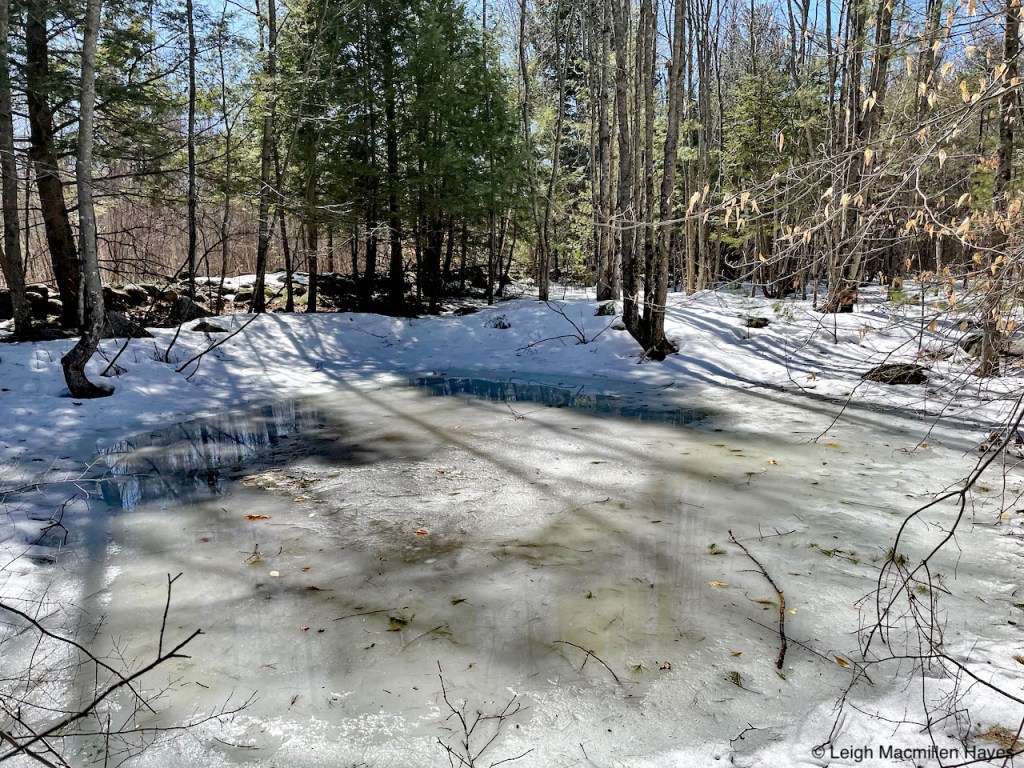
As did the constitution of pond ice that despite recent brisk days and nights began to react to the sun’s rays and display the tea-stained color of organic matter decomposing in the water below.

Even Winter Dark Fireflies, who don’t carry lanterns like their summer cousins, and aren’t even flies as their name suggests (they are beetles), knew what was happening before I did for in their adult form they’d been tucked under bark in recent months, but in a flash are now visible on many a tree trunk as they prepare to mate in a few weeks.

The same is true of the Winter Stoneflies who only recently started crawling out of the water. and drumming as an announcement that they too are ready to let the mating season begin.

The birch trees also knew before I did and made sure to let last year’s catkins release their scaled fleur de lis, thus scattering the seeds that look like tiny winged insects upon the snow where they’ll join the melt down and eventually find a moist spot upon which to germinate.

And so it is that spring snuck in a few days after St. Patrick’s Day as it always does, but still surprising me and now I join others and anticipate the changes to come.

But . . . there’s something different about this spring. Oh, I’ll still stalk vernal pools until they dry up.

I’ll marvel at each and every tiny bud preparing to bloom like those of Trailing Arbutus.

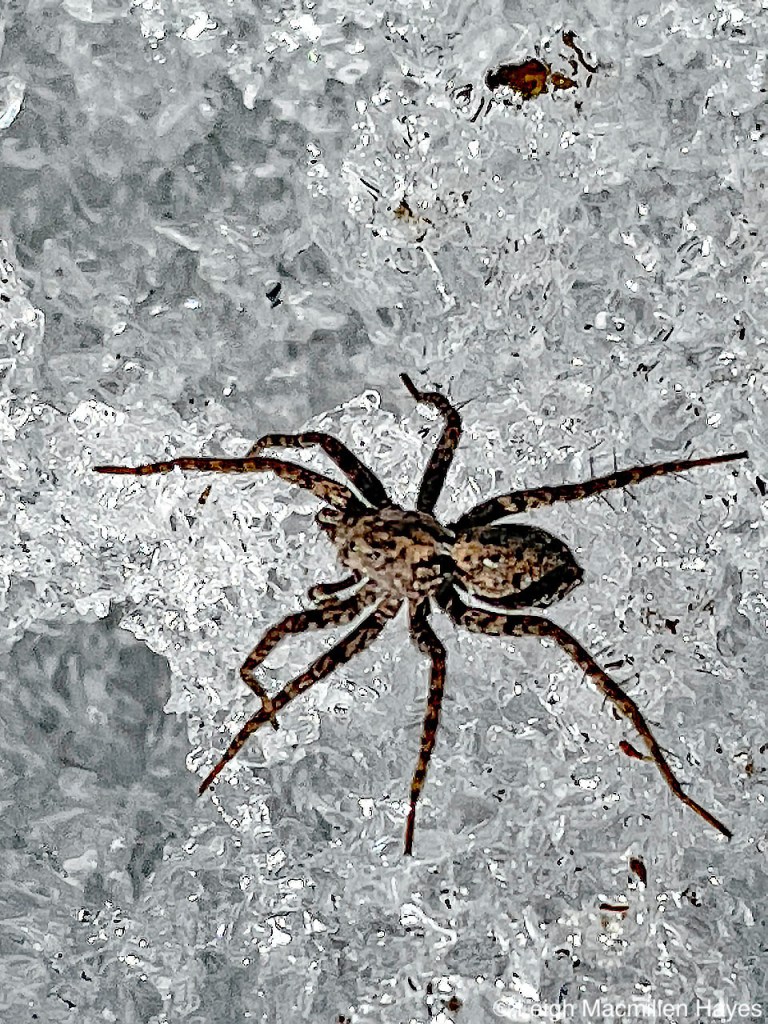
I’ll spy on spiders and insects for hours on end.

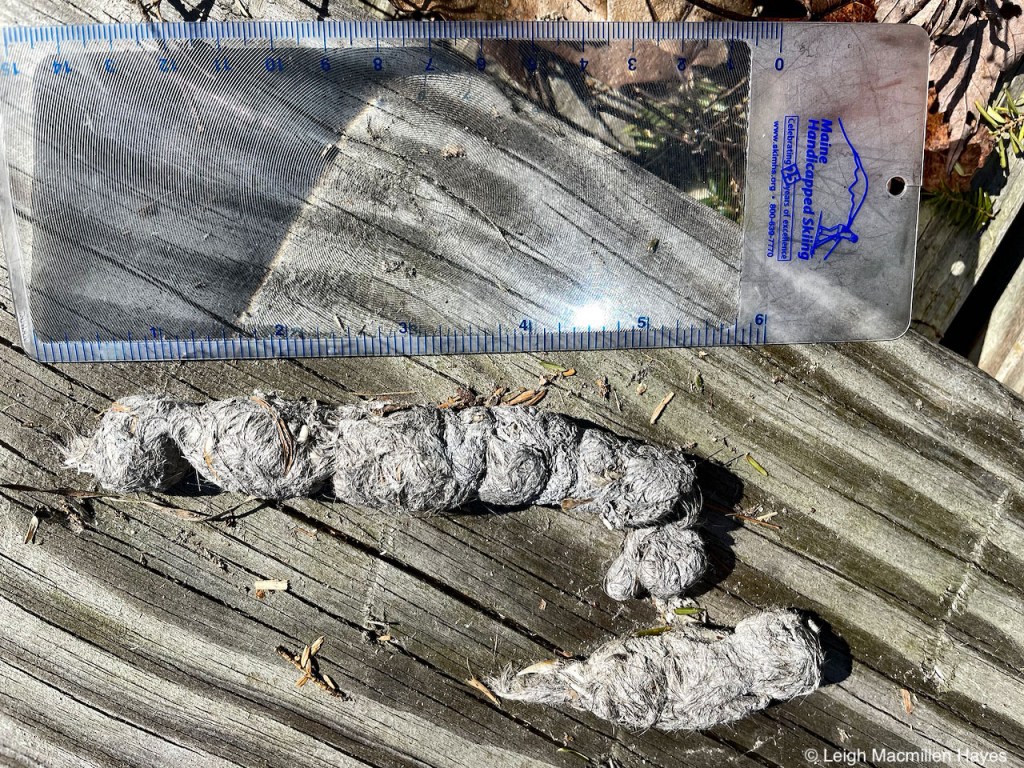
I’ll continue to look for fine specimens of scat, including otter filled with shiny, mica-like fish scales . . .

and coyote that at first glance I might think is bobcat, but the tapered ends offer one hint of its owner . . .

and the sight of bones and toenails tucked within remind me that bobcats are true carnivores who grind the contents of a meal so no bones are typically visible in their deposits, while such do show due to the omnivore appetite of a candid. I will be sure to question the meal based on the color of the fur as well as the contents.

But . . . this spring will be different. Yes, such was the same a year ago when we all moved into our bubbles. Now, though, there’s a glimpse of hope on the horizon and with that comes an assimilation to being with others and I can’t help but wonder, how will I react? I’ve become so accustomed to this forced insulation, and I have to admit that there are parts of it that haven’t bothered me, perhaps because I don’t mind being in my own space.

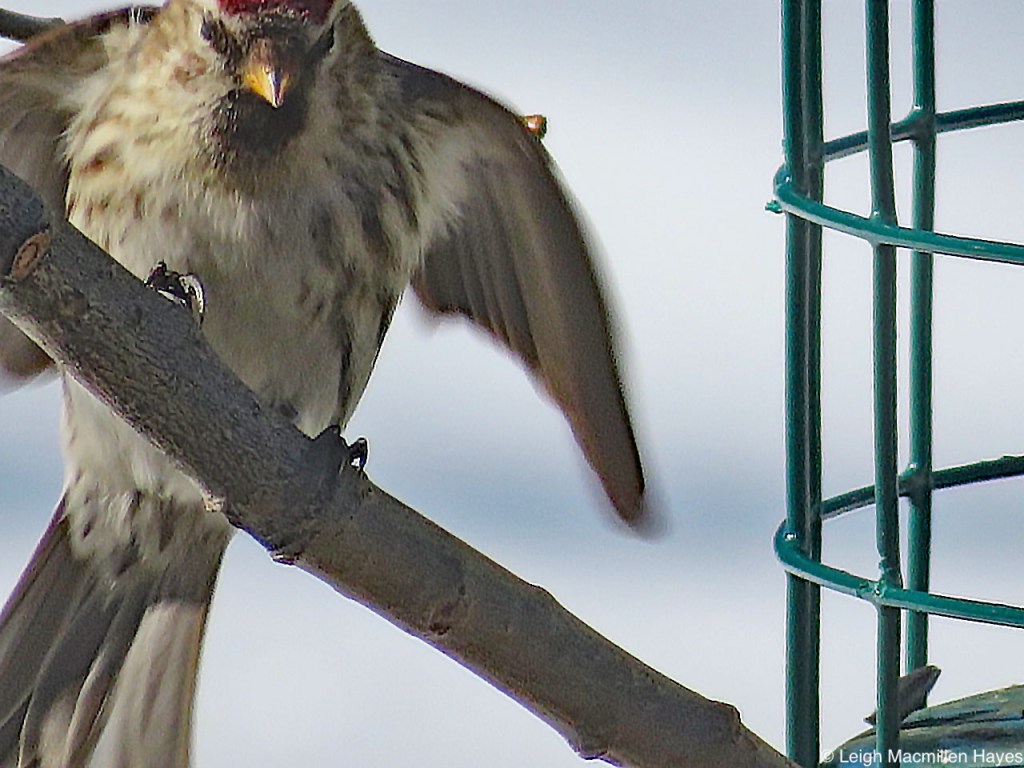
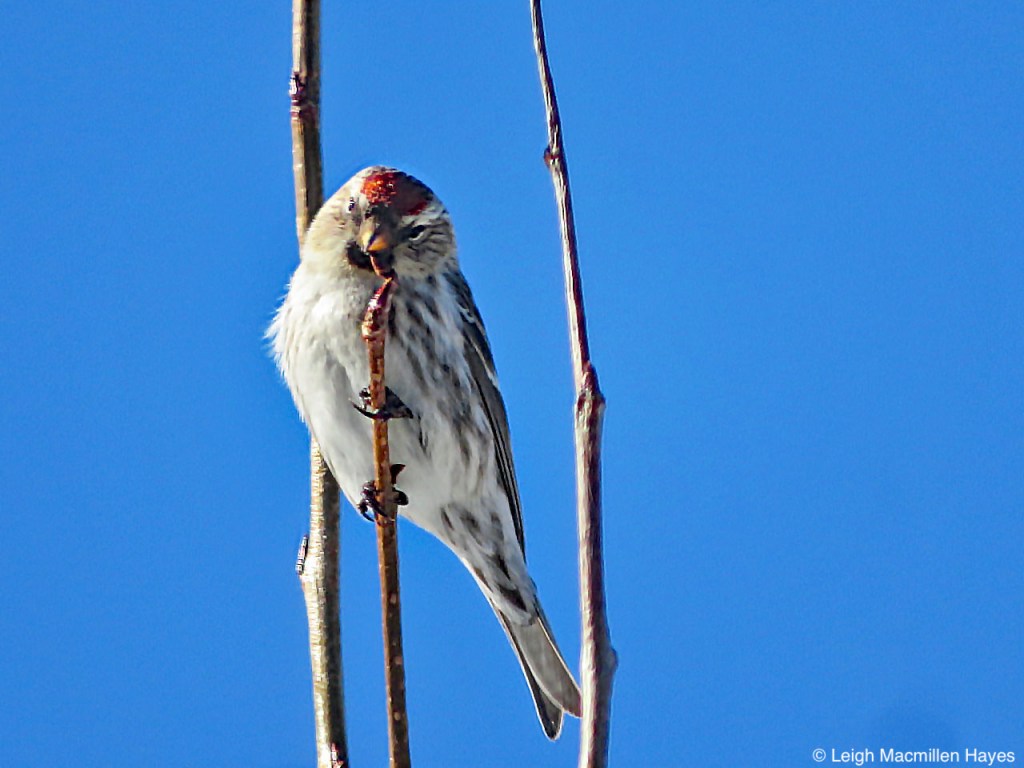
The question has been on my mind a lot lately and the answer flew in this morning as I listened in on a ZOOM church service. Just as it was to begin a small flock of Common Redpolls arrived to check out our birdfeeders.

“Invite in” were the words I heard another utter on the computer screen.

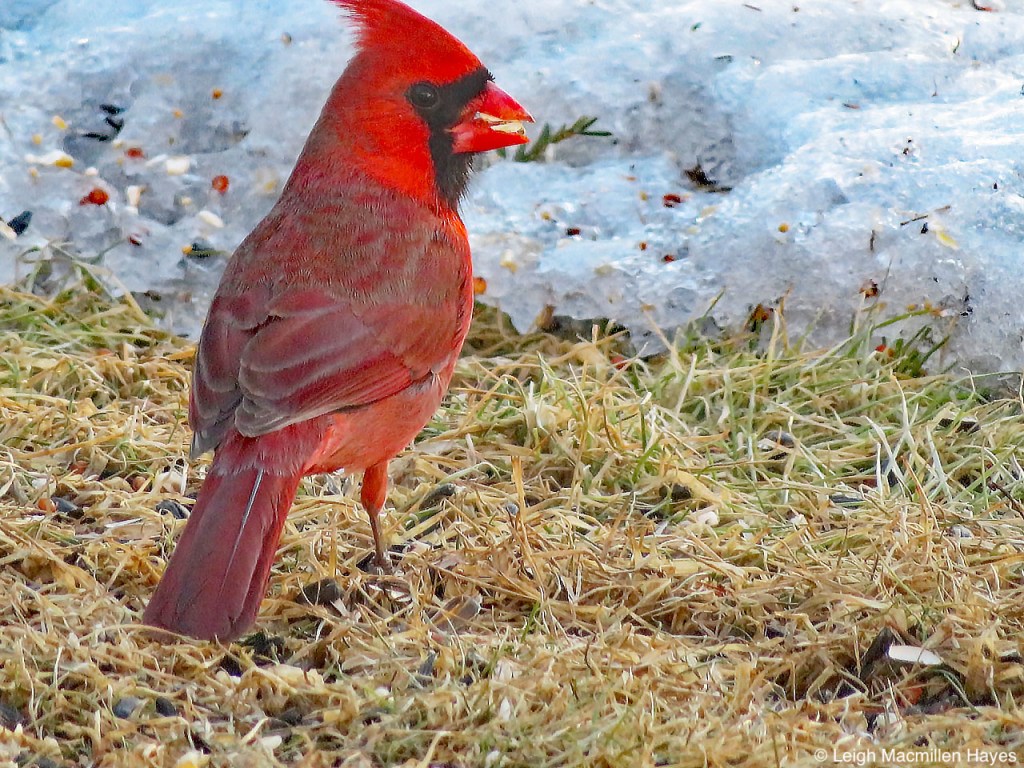
Indeed. Each day this past week, the variety of birds at the feeders grows, some species arriving at their breeding grounds, while others like the Redpolls pause before passing through. For the most part, our feathered friends accept the presence of others. An over-the-shoulder look being what it is, they remind me that I must behave like them and be open to opportunities.

As the snow melts, I realize that I must share space with all who wander here . . .

including the deer who tried to walk the labyrinth path.

The Invitation Stands. Spring is indeed here and I invite you to join me for a wander when you are able so we can wonder about nature’s communities together. I look forward to welcoming you back with a smile . . . though please don’t expect a hug.

Looking for Spring

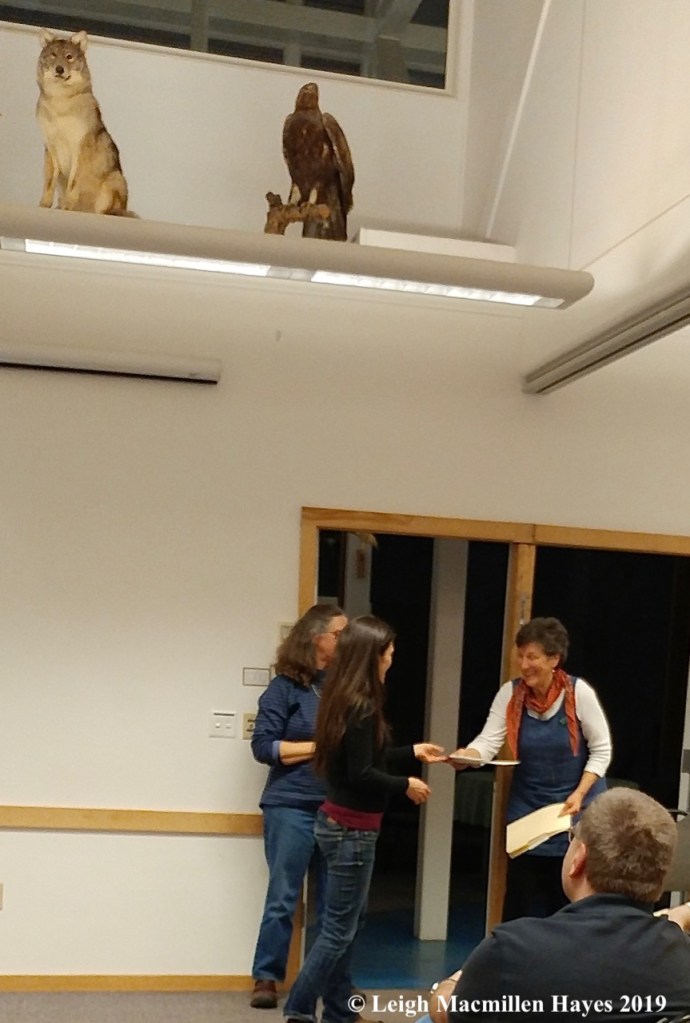
Last night one of the Greater Lovell Land Trust‘s volunteer docents earned her certification from the Maine Master Naturalist Program. The MMNP’s goal is to develop a statewide network of volunteers who will teach natural history throughout Maine. With hands-on training, the course provides over 100 hours of classroom and outdoor experience, focusing on geology, identification of flora and fauna, wetland and upland ecology, ecological principles and teaching methods. By the time students complete the program, which includes a final capstone project, they have developed the skills to lead a walk, present a talk and provide outreach. In the year following certification, each graduate agrees to volunteer 40 hours and thereafter must continue to volunteer to remain an active Maine Master Naturalist.

And so it was that Juli joined four of us in the GLLT’s docent group by becoming a certified naturalist last evening. And today, she was out doing what she does best–leading homeschooled families along a GLLT trail. You see, for her capstone project Juli created a group called Nature Explorers. On the second Tuesday of each month (and today’s was the third trip she’d led for this group), other homeschooled families join hers for a walk with a focus along a GLLT trail. Today’s focus: Signs of Spring.

Given the fact that the snow is still at least knee deep, we knew it wasn’t going to be easy. But the day dawned bright, if a bit chilly to start, and so two of Juli’s kids waited for others by hanging out with the trees. Or rather . . . in the trees.

Once all had gathered, she led us down Slab City Road to the trailhead for the Heald and Bradley Ponds Reserve.

It was there that while we began our search for the season that often begins with a stubborn start in western Maine , we spied something that brought smiles to our faces and awe to our experience. Otter slides. On both sides of Mill Brook. Look carefully and you may also notice the slides–they look like troughs in the snow.

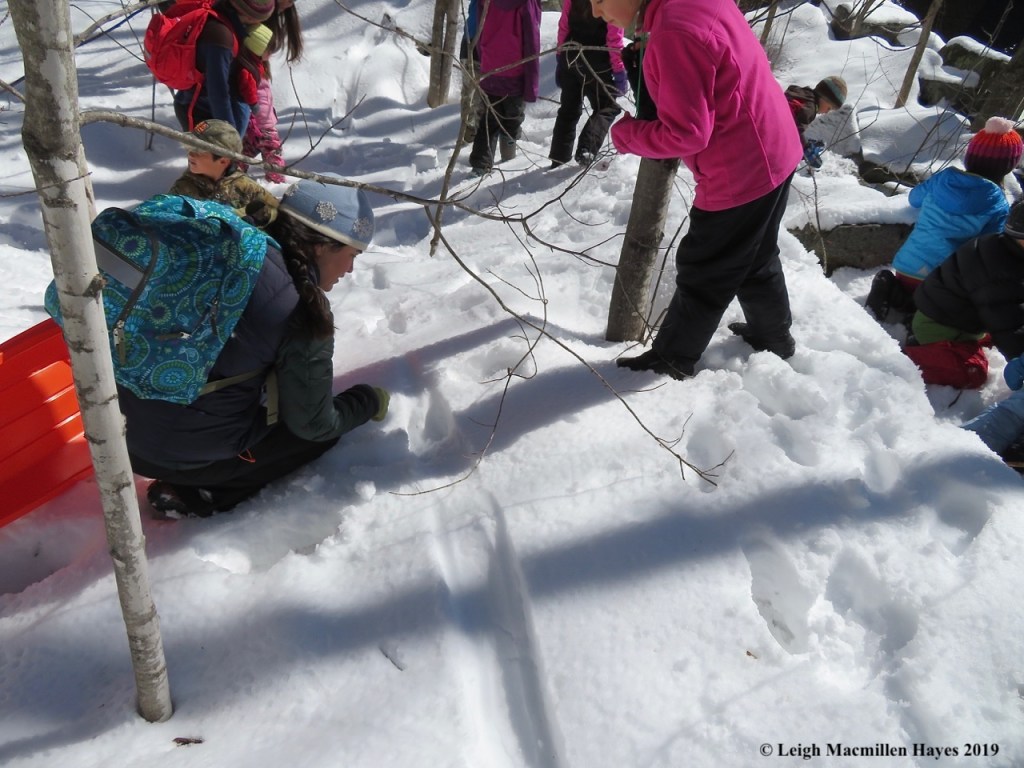
We tromped through (leaving our snowshoes behind, which we sometimes regretted) to take a closer look, noticing where the mammal had bounded and then slid down the embankment.

And then we moved on . . . to observe and learn, including fifty cent words like marcescent, which means withering but remaining attached to the stem. Juli pointed out the dried up leaves on the beech trees.

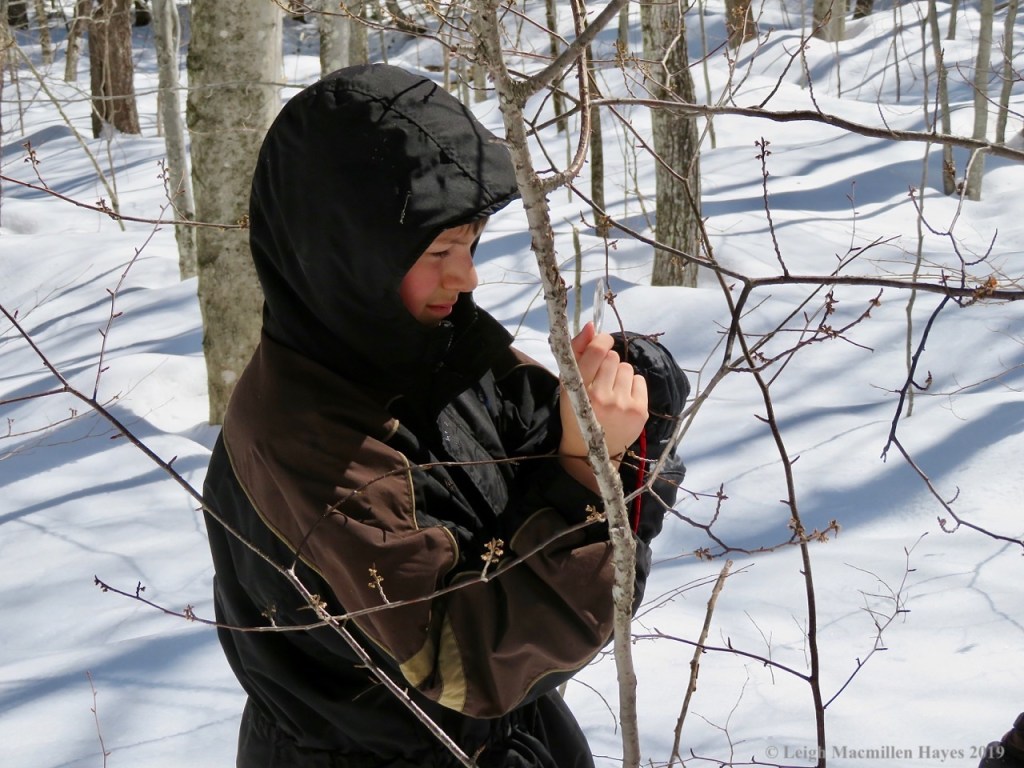
And the kids joined her to take a closer look–at the leaves, but also the buds, which had started to swell. Ah, sign one!

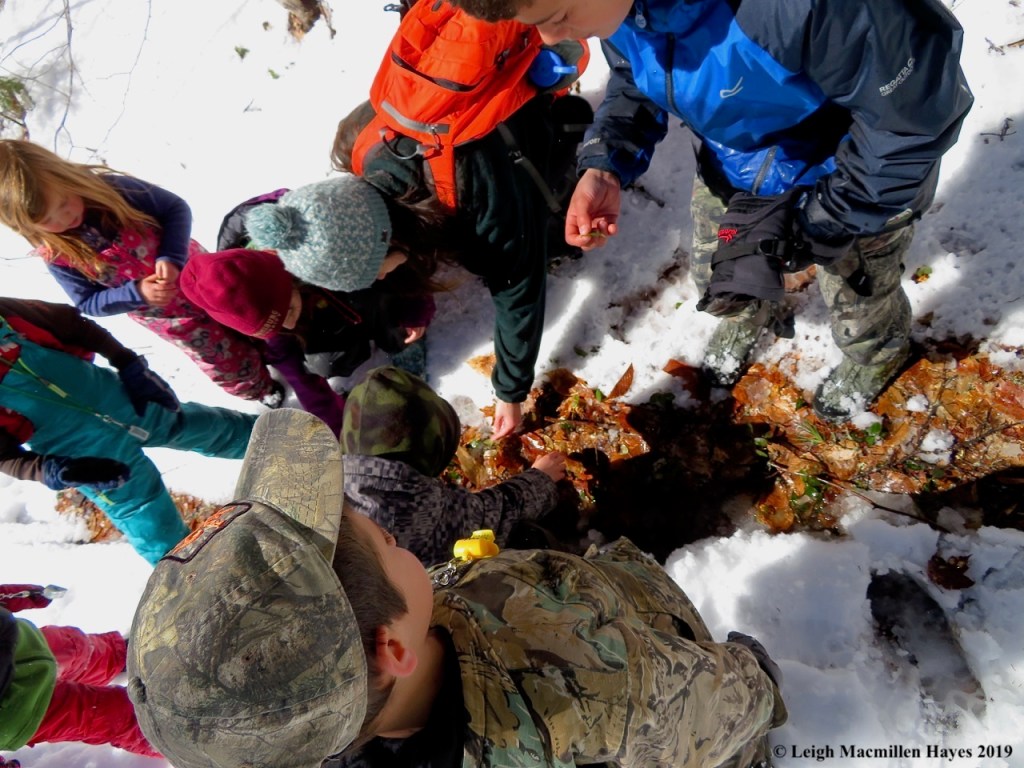
It was a Witch-Hazel which next grabbed the group’s attention. She explained that while the small, gray woody structures looked like flowers, they were really capsules that go dormant throughout the winter. Those will develop over the next growing season and then in autumn forcibly expel two shiny black seeds about 10 to 20 feet.

One of the boys noticed that the buds were hairy and so others came in to examine the structures.

From there, it was another beech tree to check out, but this time the discussion moved toward the alternate orientation of its branches and leaves.

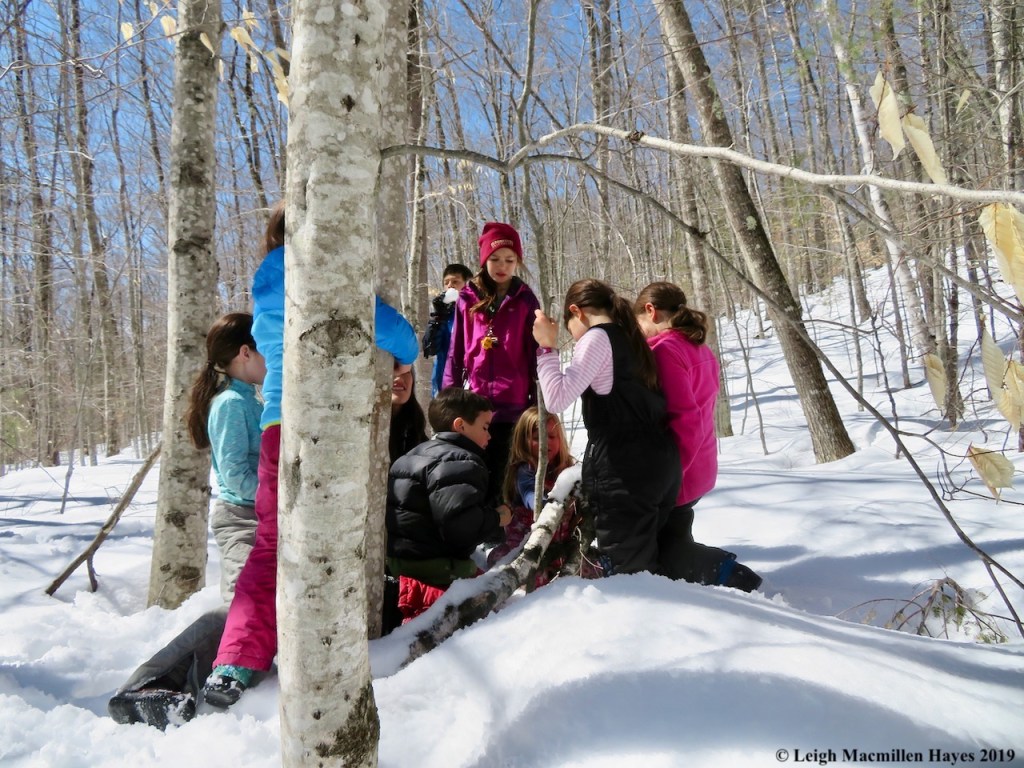
And then, because they suffer from the best of syndromes we refer to as Nature Distraction Disorder, the group stopped at a Red Pine to admire its bark.

With hand lenses, they focused on the various colors of the thin, puzzle-like scales. Some had fallen to the ground as is the habit of the flakey bark, but Juli reminded everyone that it’s best not to pull it off for bark protects the tree much like winter coats protect us.

It was a fungi that next attracted the group.

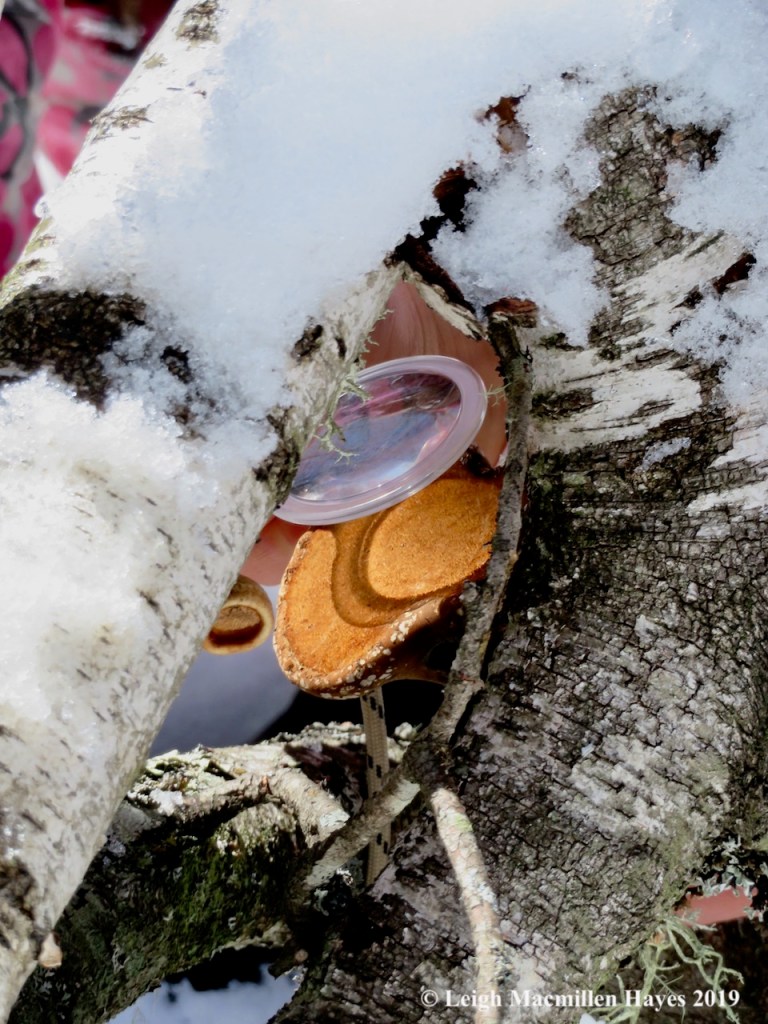
And so they pulled out the lenses again to look at the spore surface of several Birch Polypores growing on downed trees. The brownish underside was actually another sign of the season for they would have released their spores in late summer or autumn.

A wee bit further and a wet spot was noted where we could see some brown leaves reflecting the names of trees in the canopy above, but also, drum role please . . .

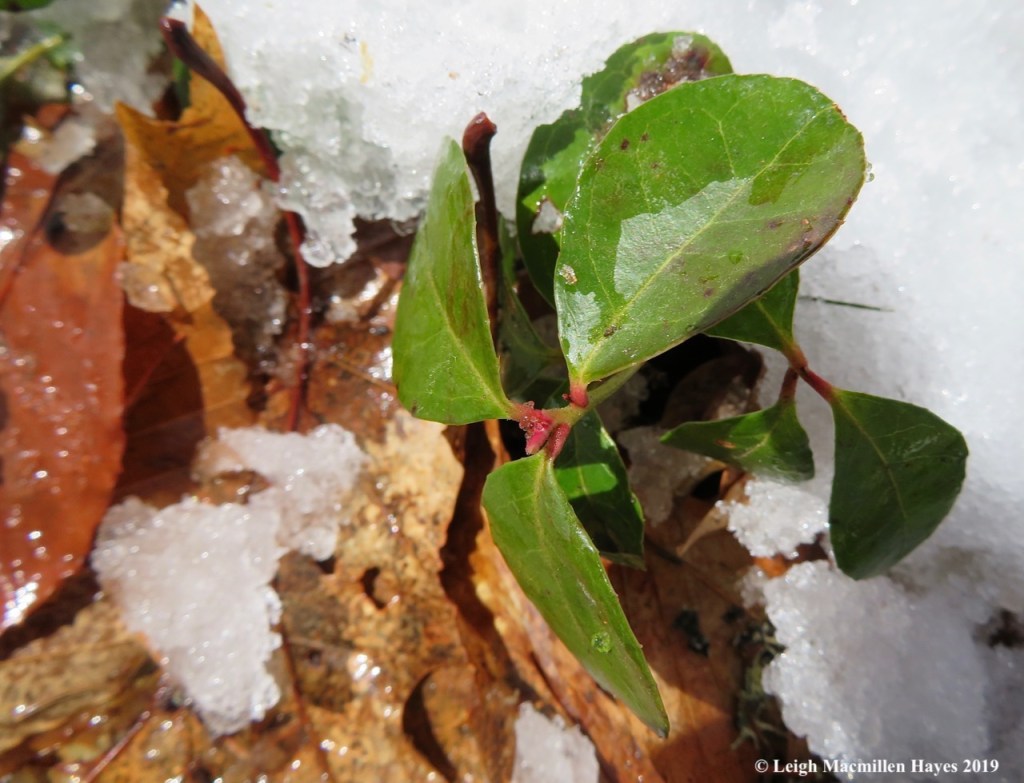
some greenery with buds beginning to form–in the shape of Wintergreen. One of the girls did point out that though it was a sign of the season, it did have the word “winter” in its name.

Another one of the girls looked up at an old Pileated Woodpecker excavation site, and noted the spider web within that had been created last summer by a funnel-web spider, so named because of the funnel-shaped web. Though no one was home today, the spider typically waits in the funnel for prey to fall onto its horizontal web. Then it rushes out, grabs its victim, and takes it back to the silken burrow to consume and hide in wait.

Since our signs were few and far between, and Juli really wanted to get to Otter Rock to show some fun finds, she challenged the kids to run with her.

They did. And then they slid.

And looked.

And spotted.

And wondered.

And wondered some more.

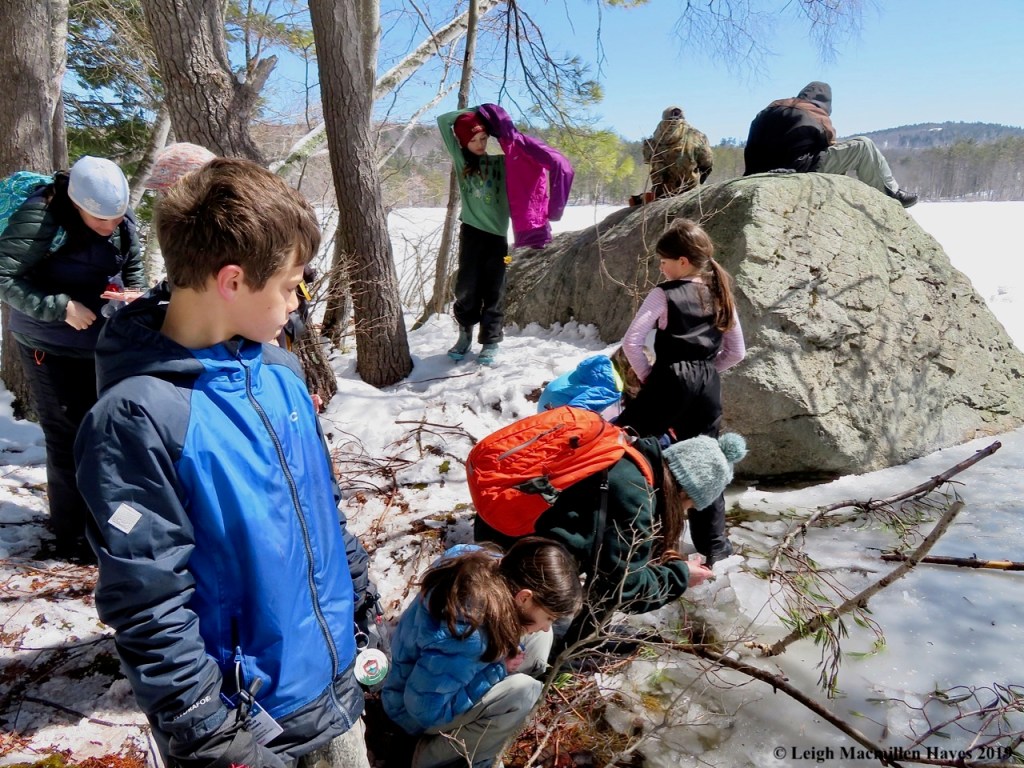
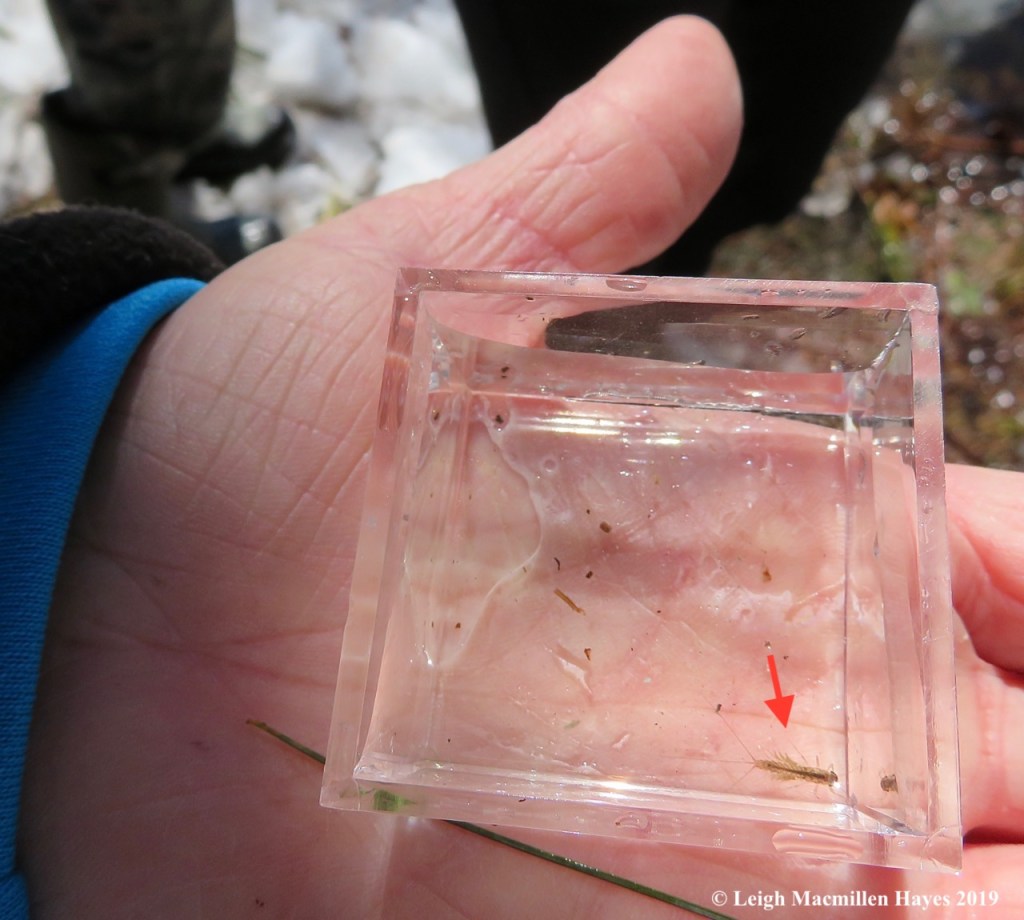
We’d reached our destination of Otter Rock and though we didn’t have any dipping containers, we made do with lucite bug boxes.

At the edge of Heald Pond, the kids found movement in the water . . .

in the form of Mayfly Larvae, with fan-like gills along the abdomen and three filaments at the tip.

Spring indeed! With that discover, we left with a spring in our steps, already looking forward to next month’s vernal pool exploration.

P.S. Thanks Juli for this wonder-filled offering, and congratulations on your achievement. You are now a member of the nexus of naturalists.

Forest in a Bottle

When Pam and I stepped into the woods this morning, I don’t think either one of us understood the enormity of the task before us. You see, our job was to gather all the pieces of the forest through which we’d pass.

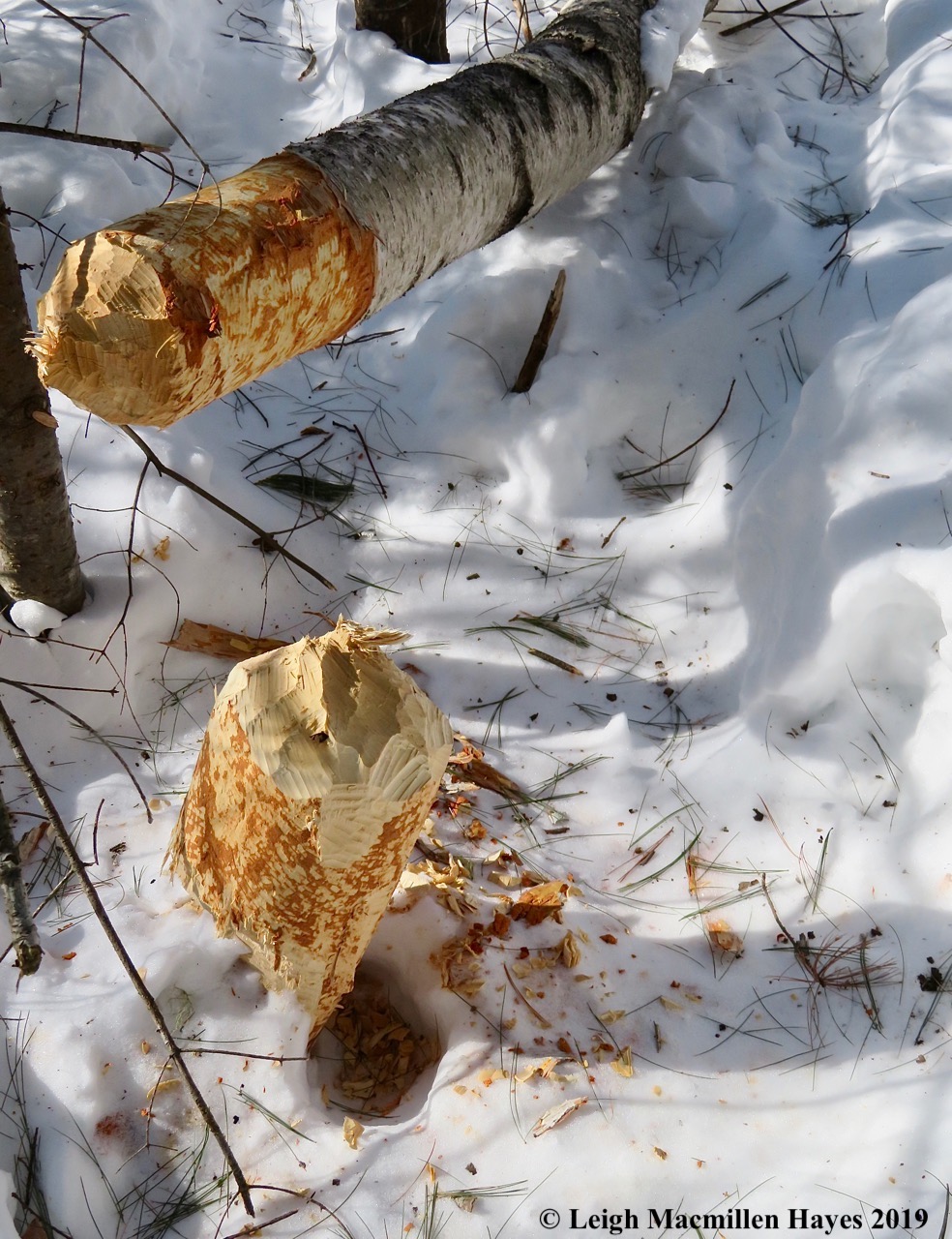
And so we began by collecting a recent beaver masterpiece with fresh wood chips below.

There was a beaver sculpture as well, those tooth grooves deep and distinctive.

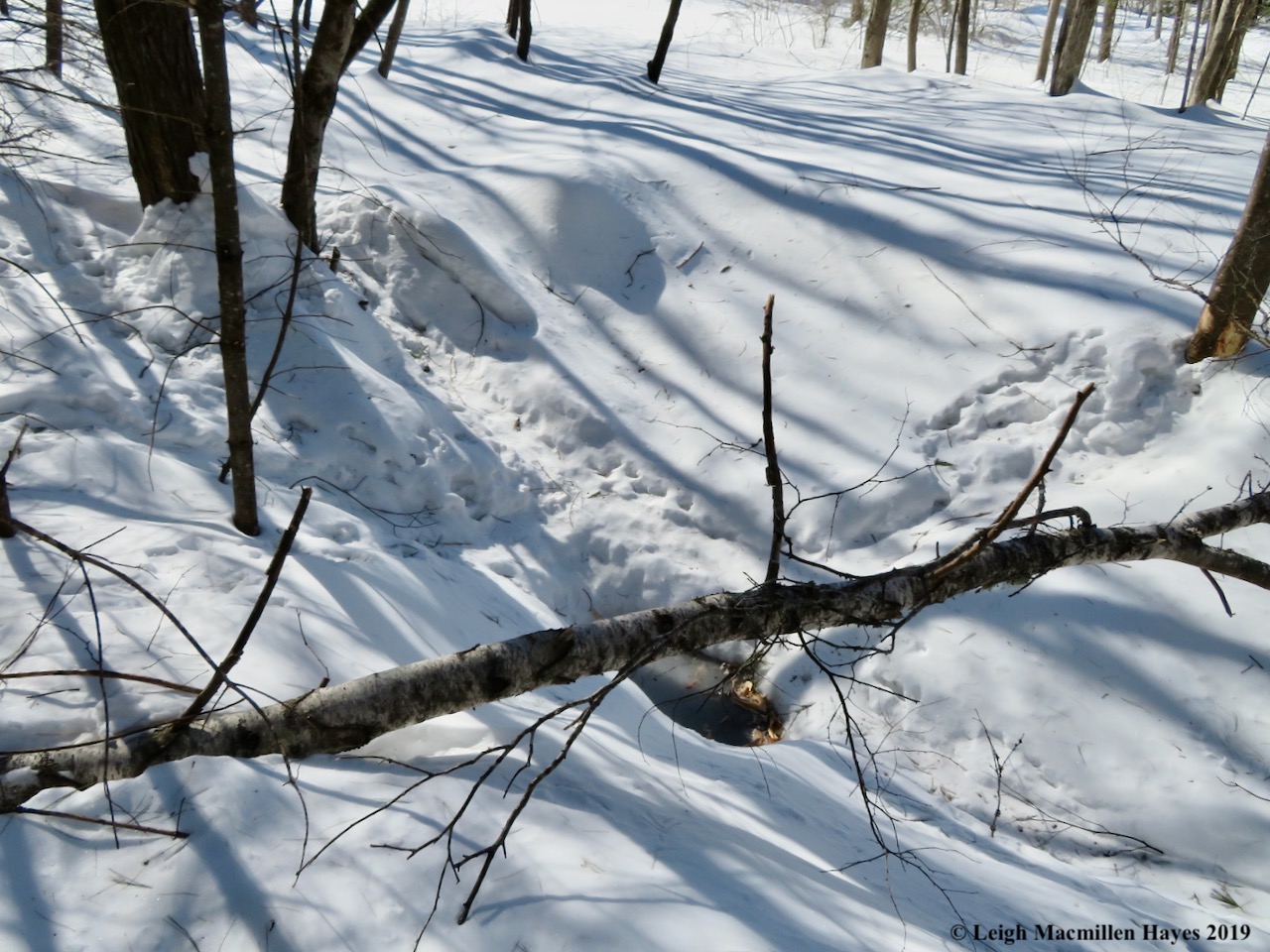
And their tracks, which all emerged from a recently frozen-over hole. The tracks were a few days old, but we added them to our findings just the same.

Because we were in beaver territory, to our delight we found otter tracks and slides galore–many of them fresh.

There was even an otter hole that we wondered if the beavers had used as well. We decided we might as well throw it in to our bag.

And we couldn’t resist our favorite otter activity of all–the spot where the infamous slider slid.

Following the trail to a different part of the forest, we spotted a diptera pupa that gave us pause for quite a while as we admired its structure and the perfectly formed circle where the fly had chewed its way out. We were so in awe that it seemed only obvious we would want to include it in the collection.

Further on, we reached a brook and spied a muskrat, that dark body in the center. As it turned out, it was a stone muskrat and we left it behind as we chuckled about our mistaken ID.

By the brook, we did, however, find mink prints in the dust of snow that had settled upon thin ice. Those were certainly worth capturing.

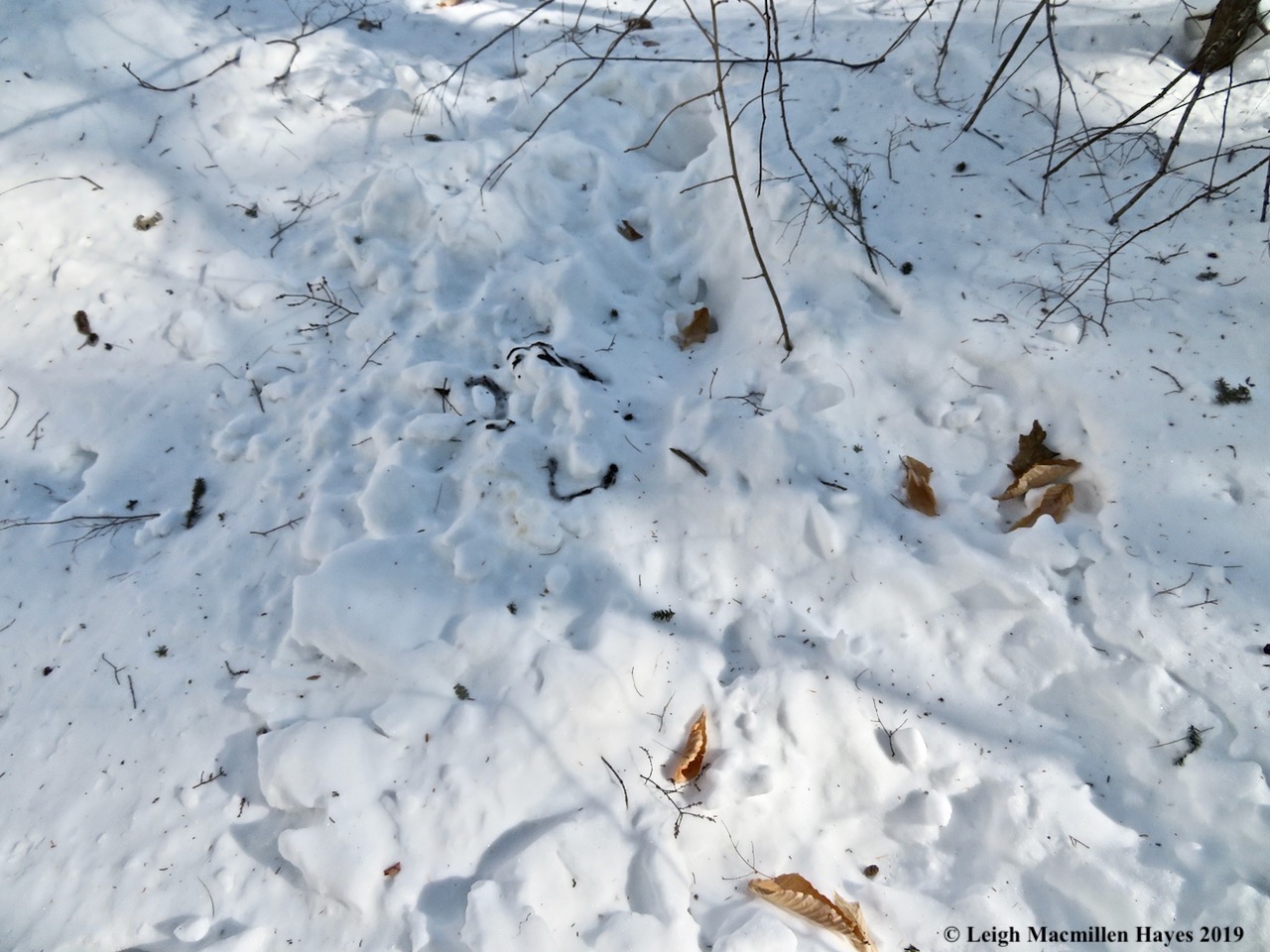
We also gathered more otter slides, and then stumbled upon an apparent otter roll, an area where the playful critter made a lot of fuss and left behind some urine and tarry-looking scat. We were sure we’d hit the jackpot.

Because we were beside running water, the icy baubles were not to be ignored.

Nor was the snow depth, which we determined to be close to four feet deep.

And then we marched onto a wetland, where we were stumped for quite a while about some mystery tracks. Should we take them or leave them, we wondered. The pattern indicated a perfect walker, as in a candid or feline, but the depth was deep and the toes threw us off.

The curious thing was that those tracks and others left behind by a mink and a fox led to a deep hole beside a tree.

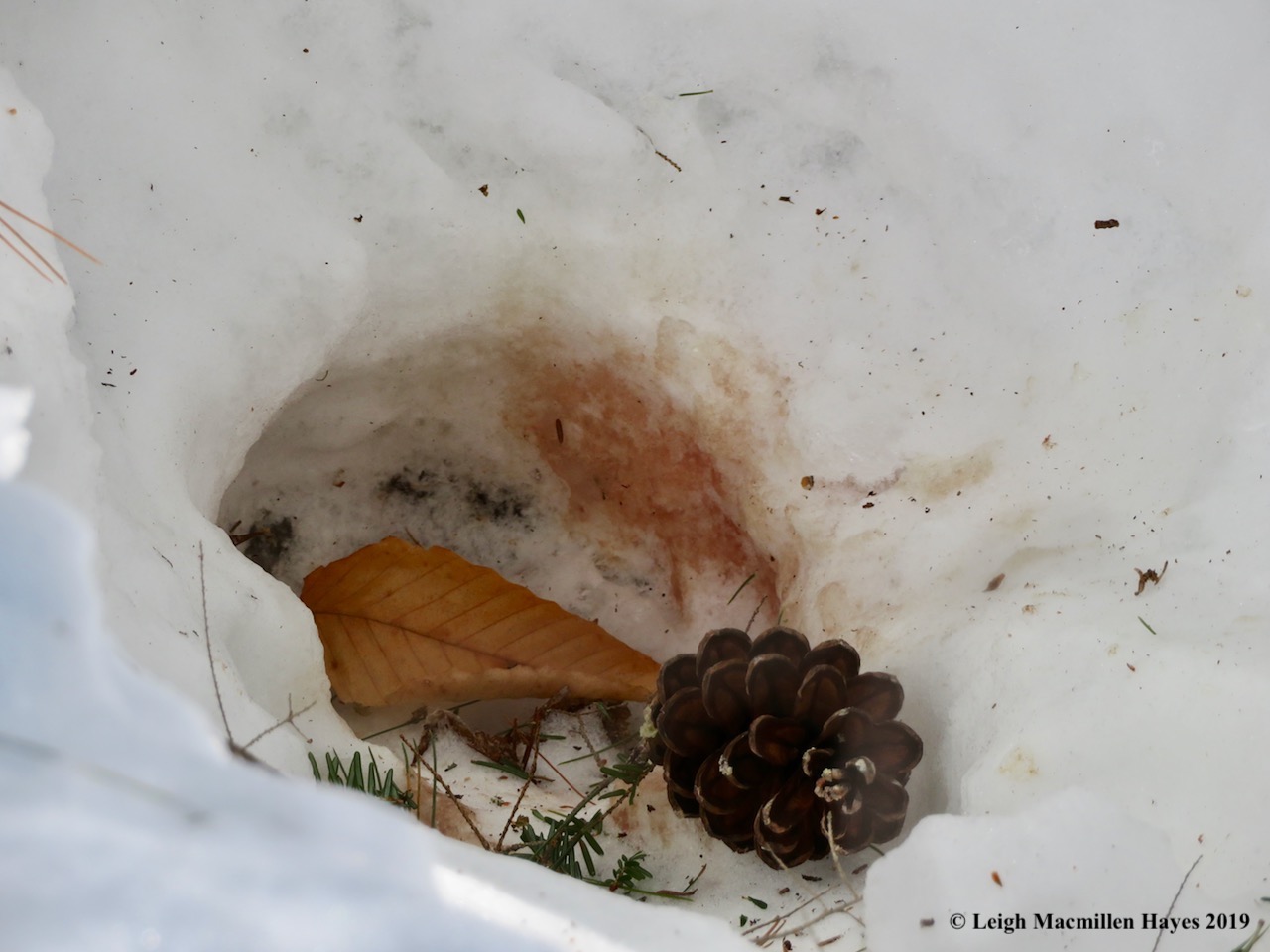
I thought the frozen fluid within was blood, but Pam leaned more toward urine. One thing we knew for sure, if it was a kill site, there were no remains. Had the mammals been on the hunt to no avail? Take it or leave it–we put it in the same category as the mystery prints.

The mystery tracks also led to a beaver lodge and it appeared that the mystery track maker had tried to locate another meal. Given that there was no air vent at the top of the lodge, we doubted anyone was at home at the time of its visit, and so we left the lodge behind.

After standing in the middle of the wetland and eating our own lunches, we discovered a set of perfect red fox prints that we just had to include in our collection. The top print in this photo is actually the hind foot and the lower print is the front. Can you see the chevron in the foot pad?

There was another lodge we considered grabbing because the top of it appeared to possibly have a vent, but like the fox, we took a closer look and discovered that it, too, was abandoned so we left it behind.

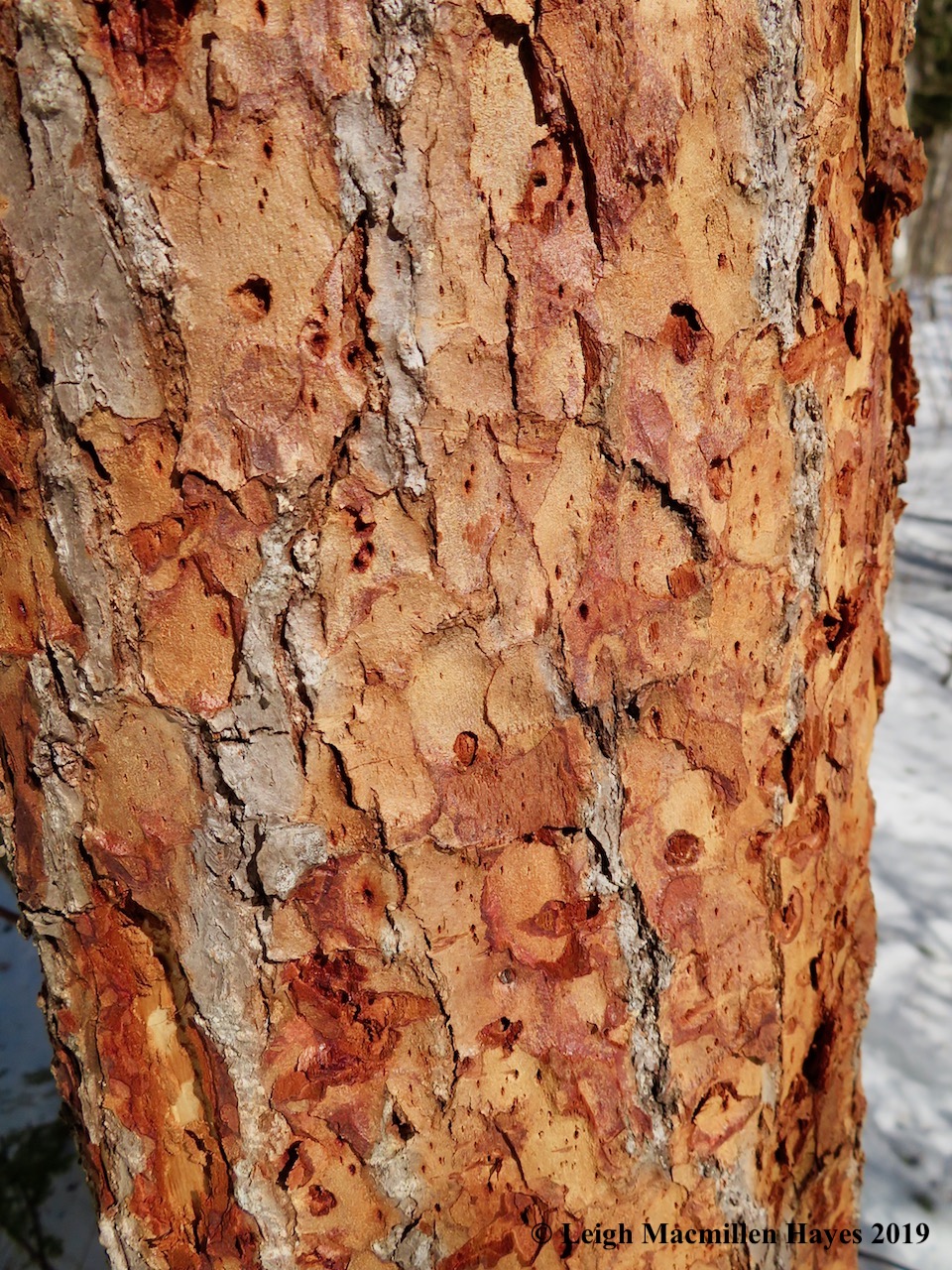
Instead, we made our way off the wetland and back into the woods where a debarked hemlock tree stopped us in our tracks. Nuthatches and woodpeckers are known to scale trees–removing the outer bark to get at the insects underneath. Can you see the insect holes? And the cinnamon color of the inner bark? This one was a keeper, for sure.

Especially since a section where the inner bark had been removed revealed a polished layer like one might find on a table top.

There was also a huge snow-capped burl to pick.

And a small cross-section of the liverwort Frullania juxtaposed beside script lichen. Everyone should have a sample of those two.

Two old heron nests were well worth adding into the mix. They’d been used in the past until two years ago. If the herons do return to the rookery, we suspect they’ll build new structures so we didn’t feel so bad gathering these.

And then there was a pileated woodpecker hole that would have to represent all woodpecker holes in these woods. Before tossing it into the bag, Pam made sure that no other critter had set up housekeeping within.

Our final finding was one that made us think back to the mystery tracks. The more we studied these and later met the mystery tracks again and followed them for a while, the more we understood that not only did beavers, otters, foxes, deer, mink, and snowshoe hare romp in these woods, but so did coyotes.

The best thing about this coyote was that it made a coyote angel in the snow! We most definitely scooped that up.

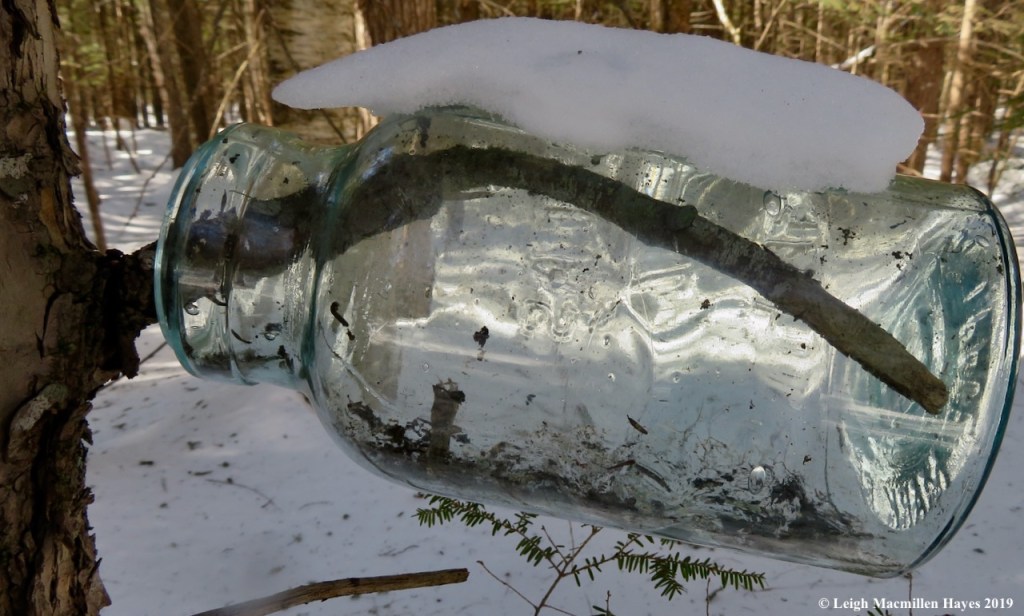
For you see, our mission was to put it all together–in a glass jar. Haven’t you always wondered about the magic involved with placing a ship in a bottle? Well, today, we spent six hours amassing various items in the woods and then assembled them–creating a forest in a bottle. Can you see it?

Otter Delight

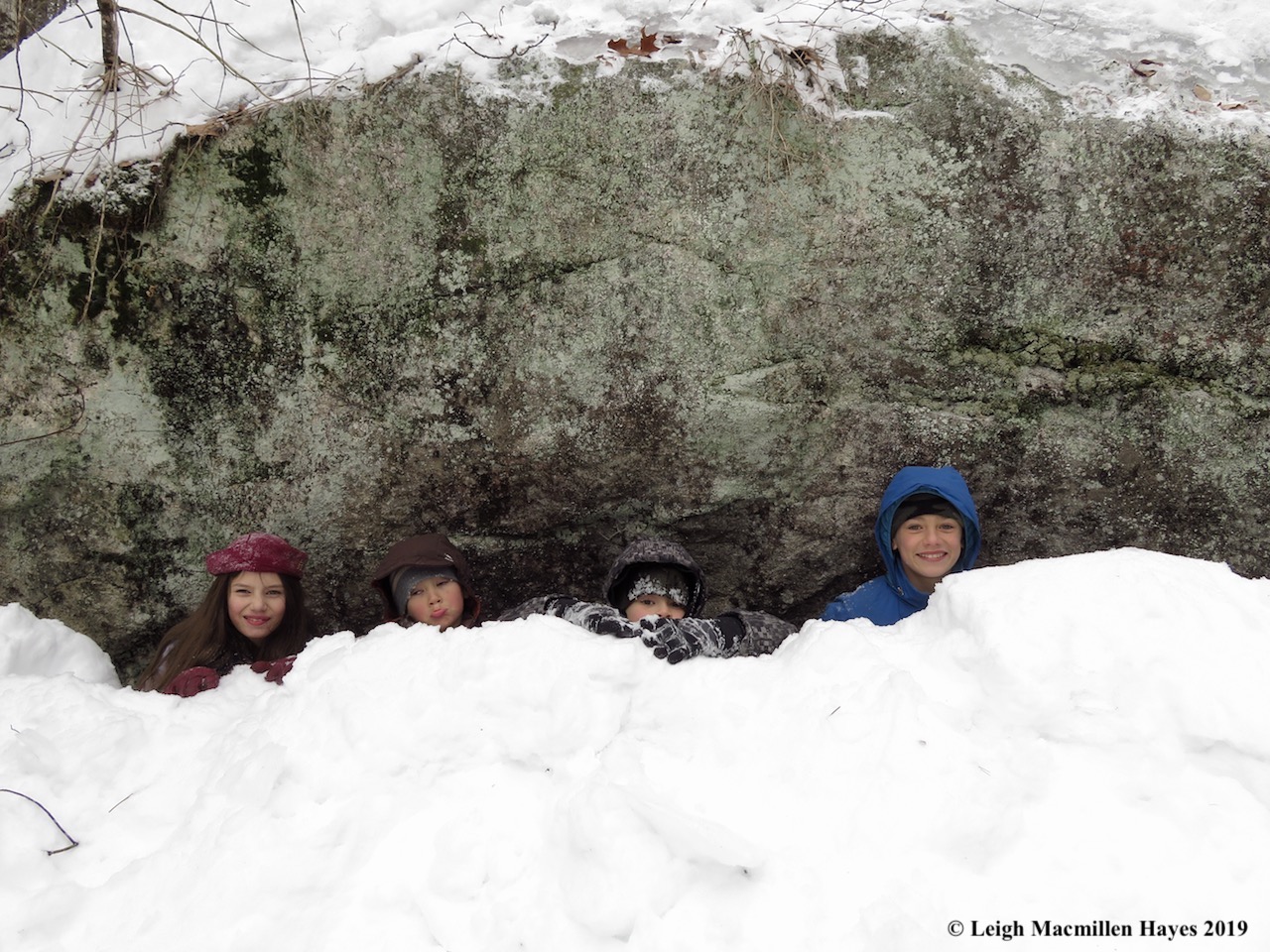
Once upon a time in a land close, close at hand, there lived a family of Otters who were mothered by a Snowshoe Hare.

They spent most of their days and nights exploding through the ice and sliding up and down the mill pond’s edge.

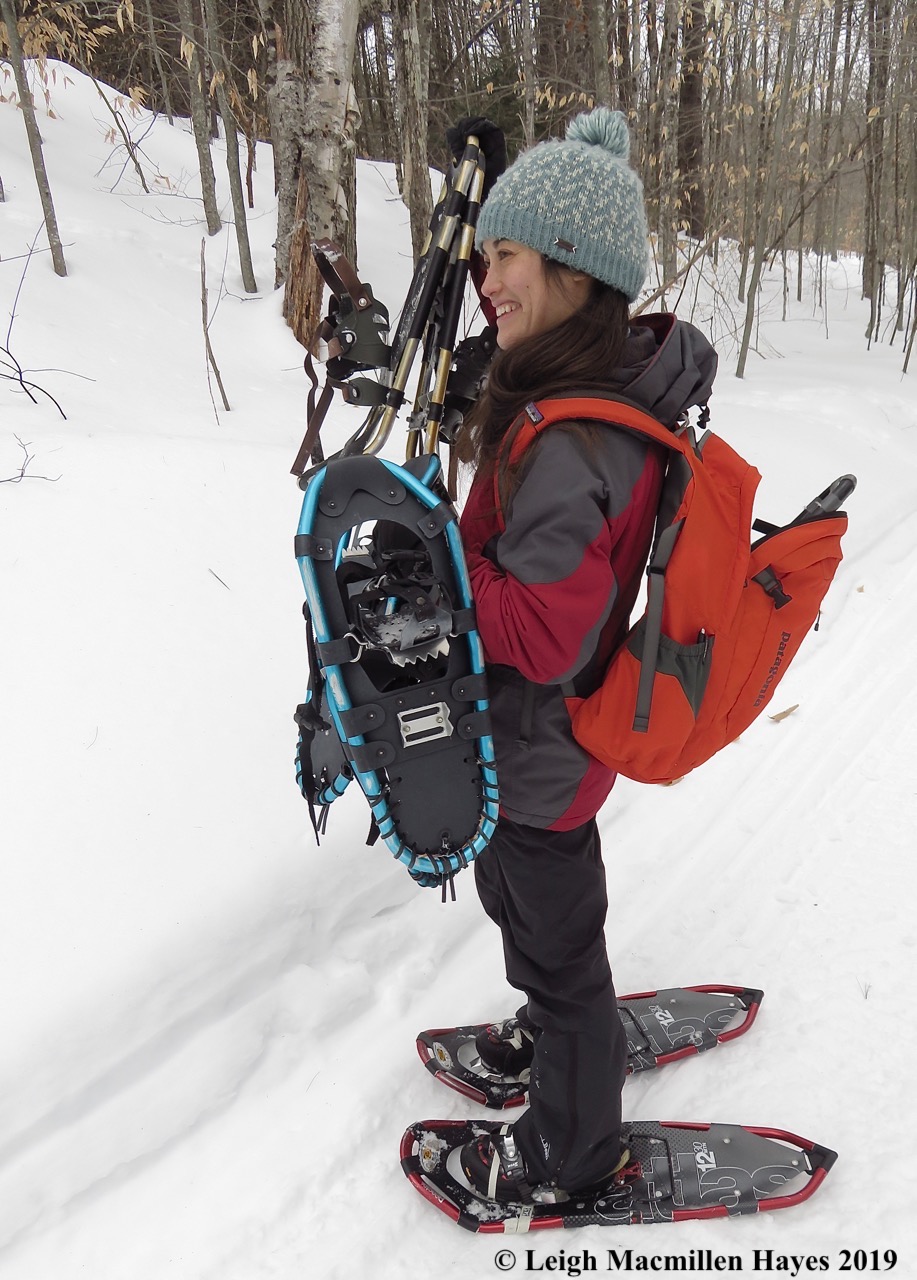
But one day their momma rounded up some snowshoes large and small and strapped them on to all.
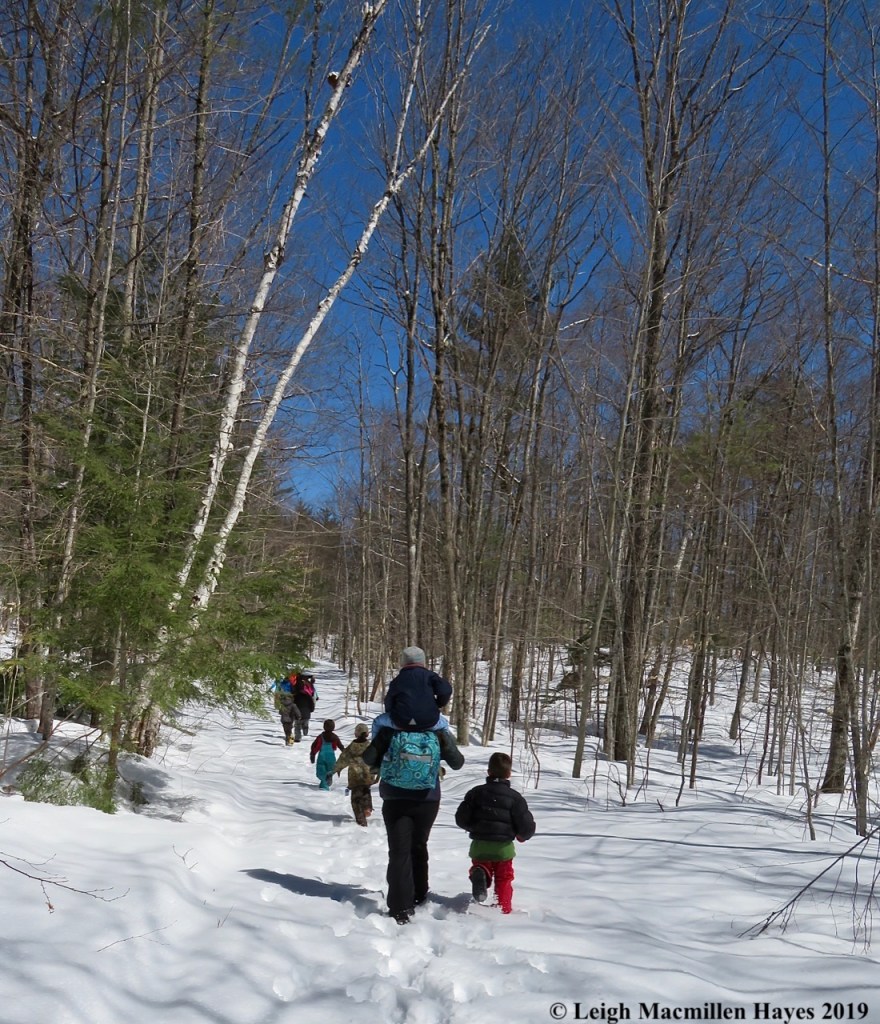
The family headed off through the woods where moments of wonder captured their attention.

It wasn’t long into their journey when a winter firefly upon the snowy surface stopped them in their tracks.

E. Otter took the firefly that overwinters as an adult and looked for a safe place to deposit it.

She found such in an old beetle hole upon a dead snag and wished it well before she hopped away.

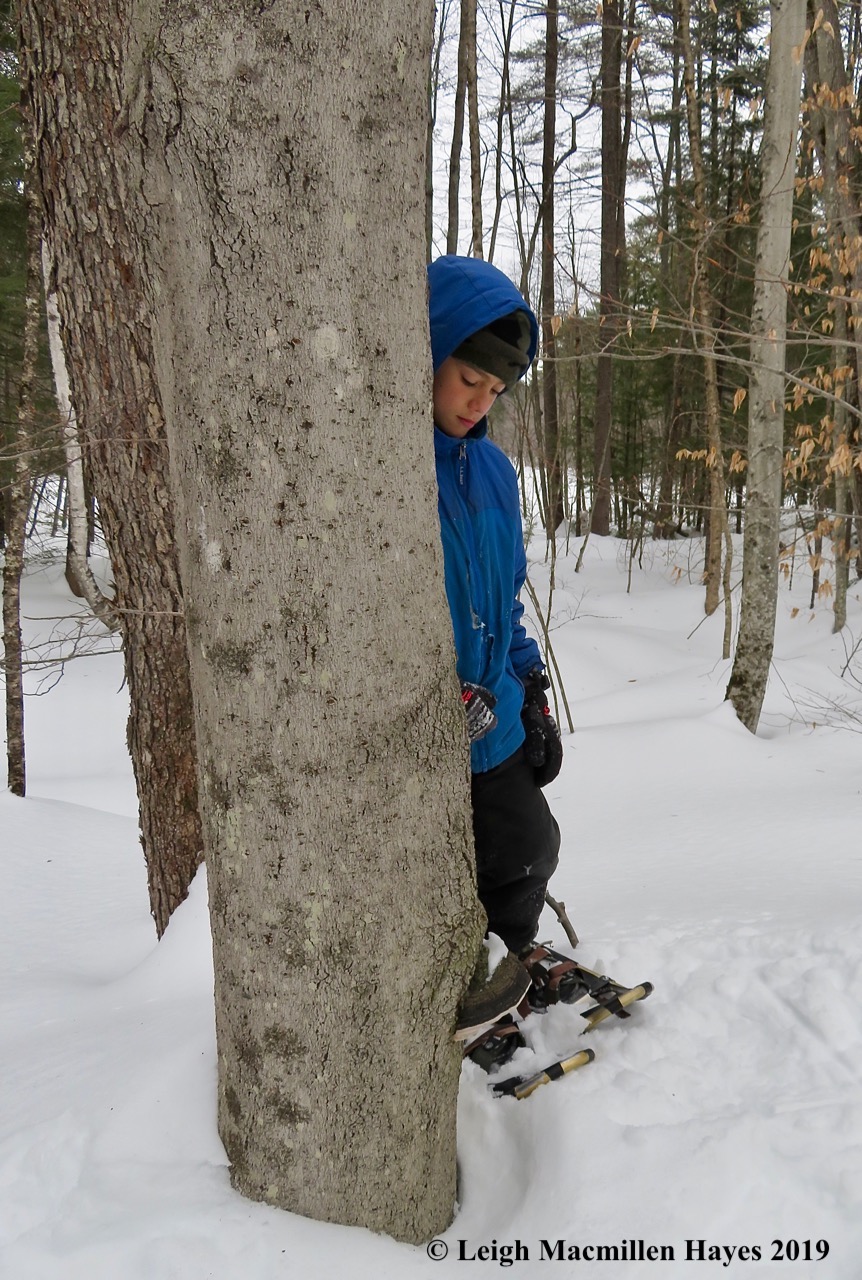
W. Otter found another tree that he quickly identified as a yellow birch and then honored with a hug.

C. Otter looked upon the bark of a beech tree and was thrilled to spy a fungi.

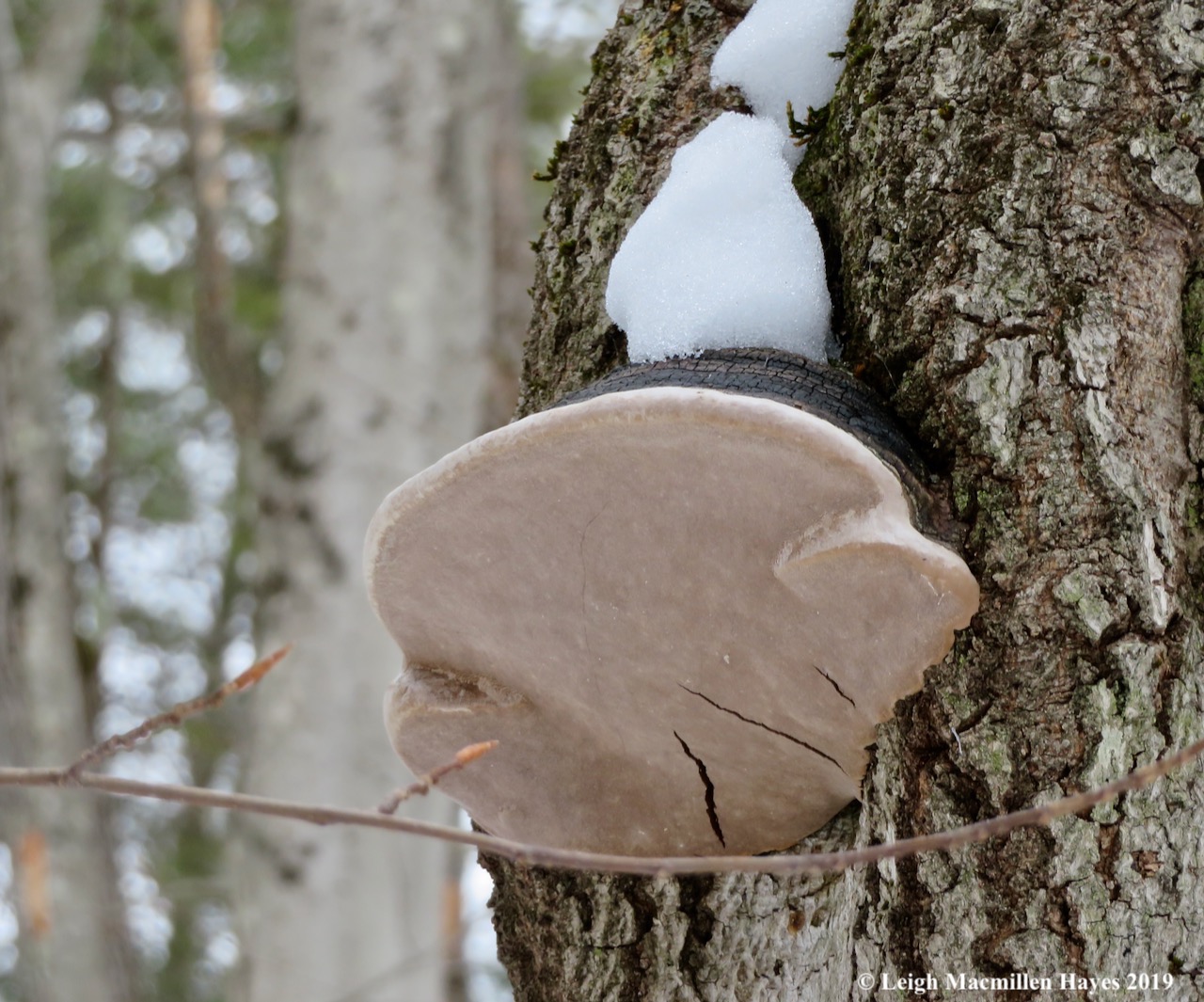
On the tree’s back side he spied another and posed above the false tinder conk.

Soon, the little Otters convinced their momma that they didn’t want to try to be hares any more and so they shed their snowshoes.

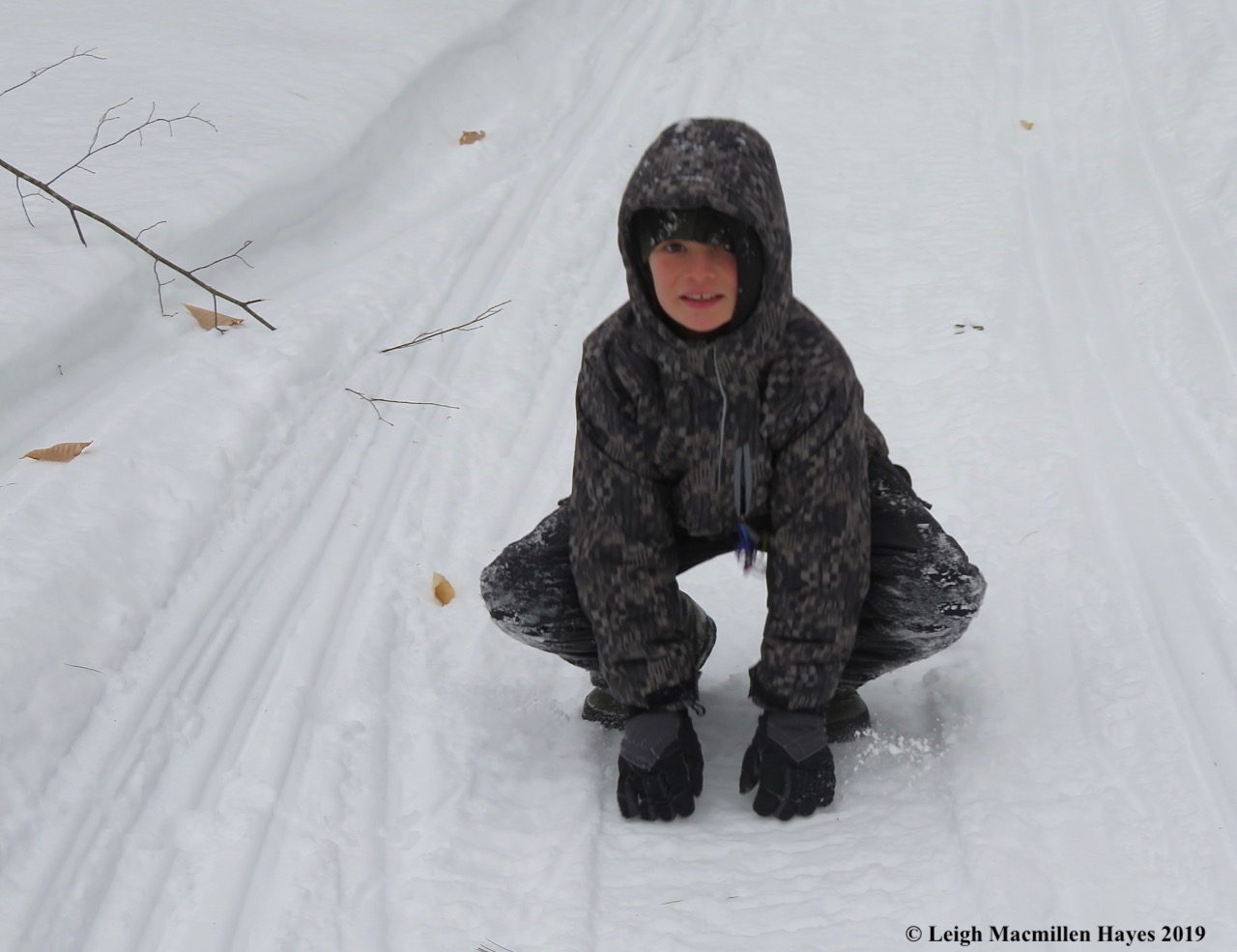
Within moments, A. Otter decided to instead try his feet at being a frog.

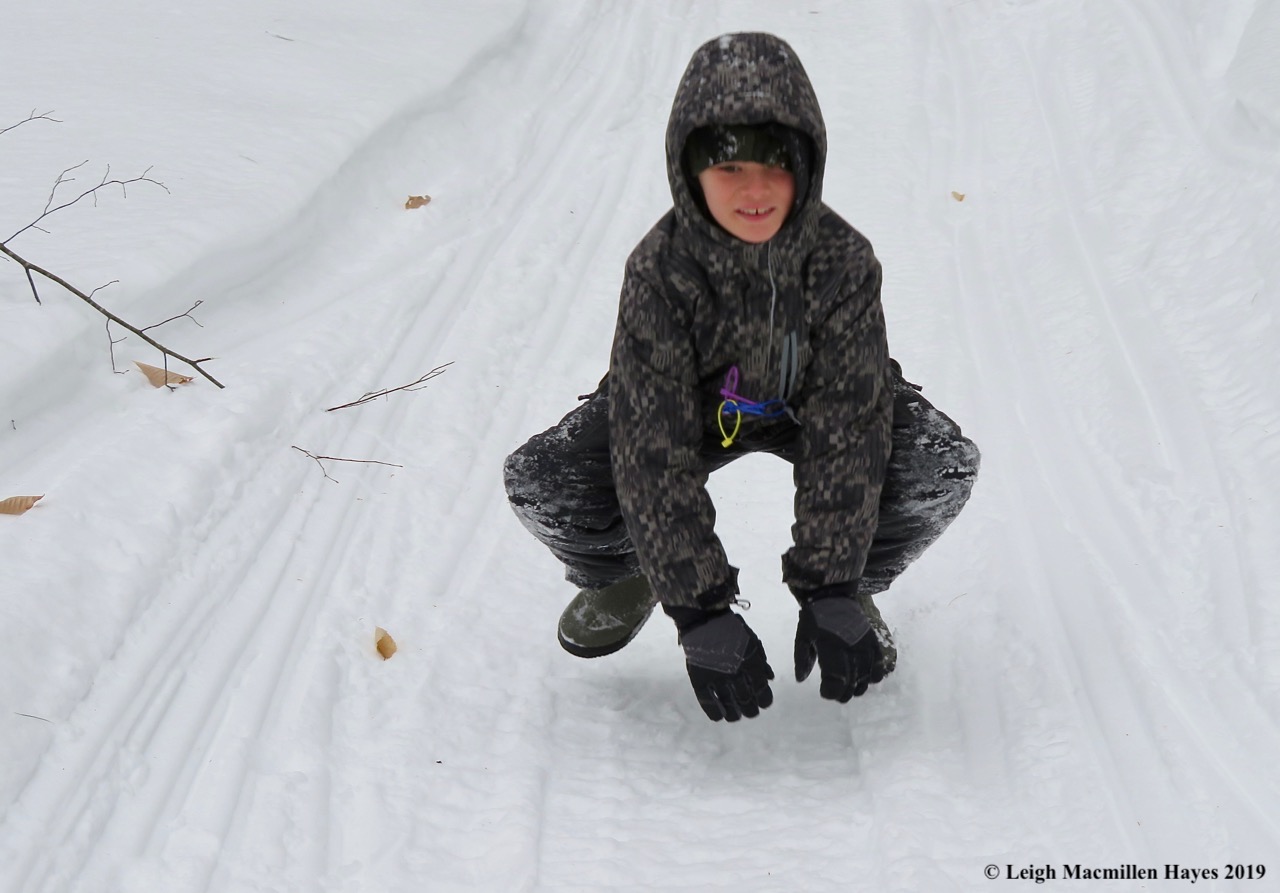
Catching some air, he leapt up the trail.
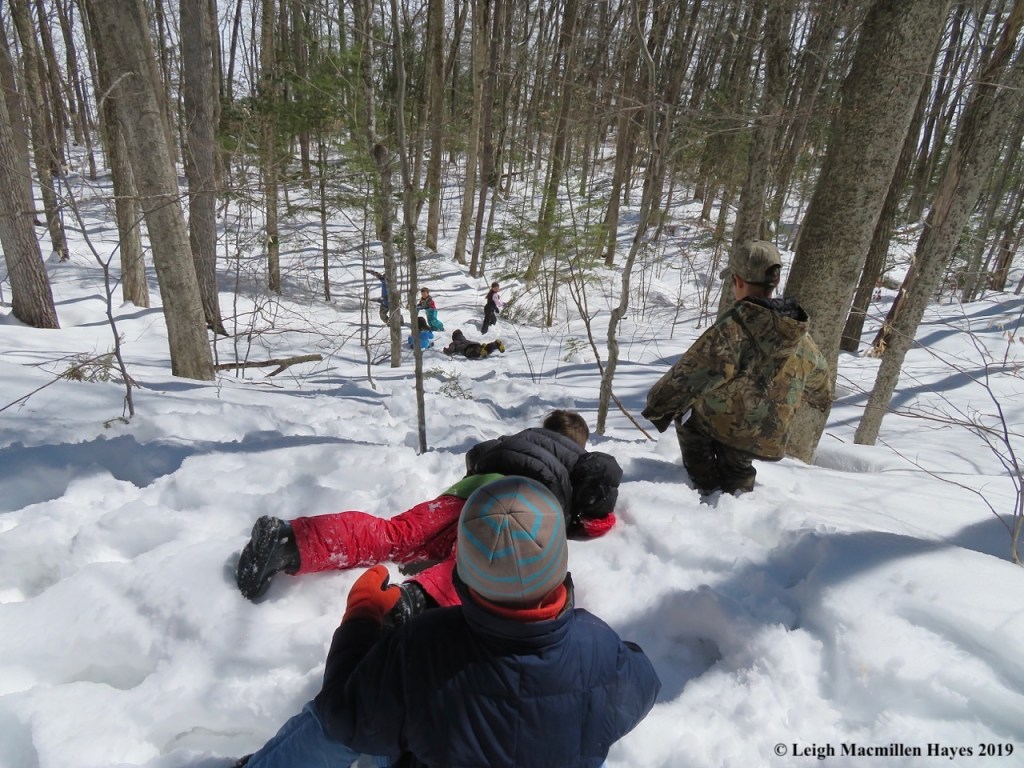
By a vernal pool he revealed his true identity–a tree frog.

Soon, his siblings joined him as they channeled their inner tree frogs.
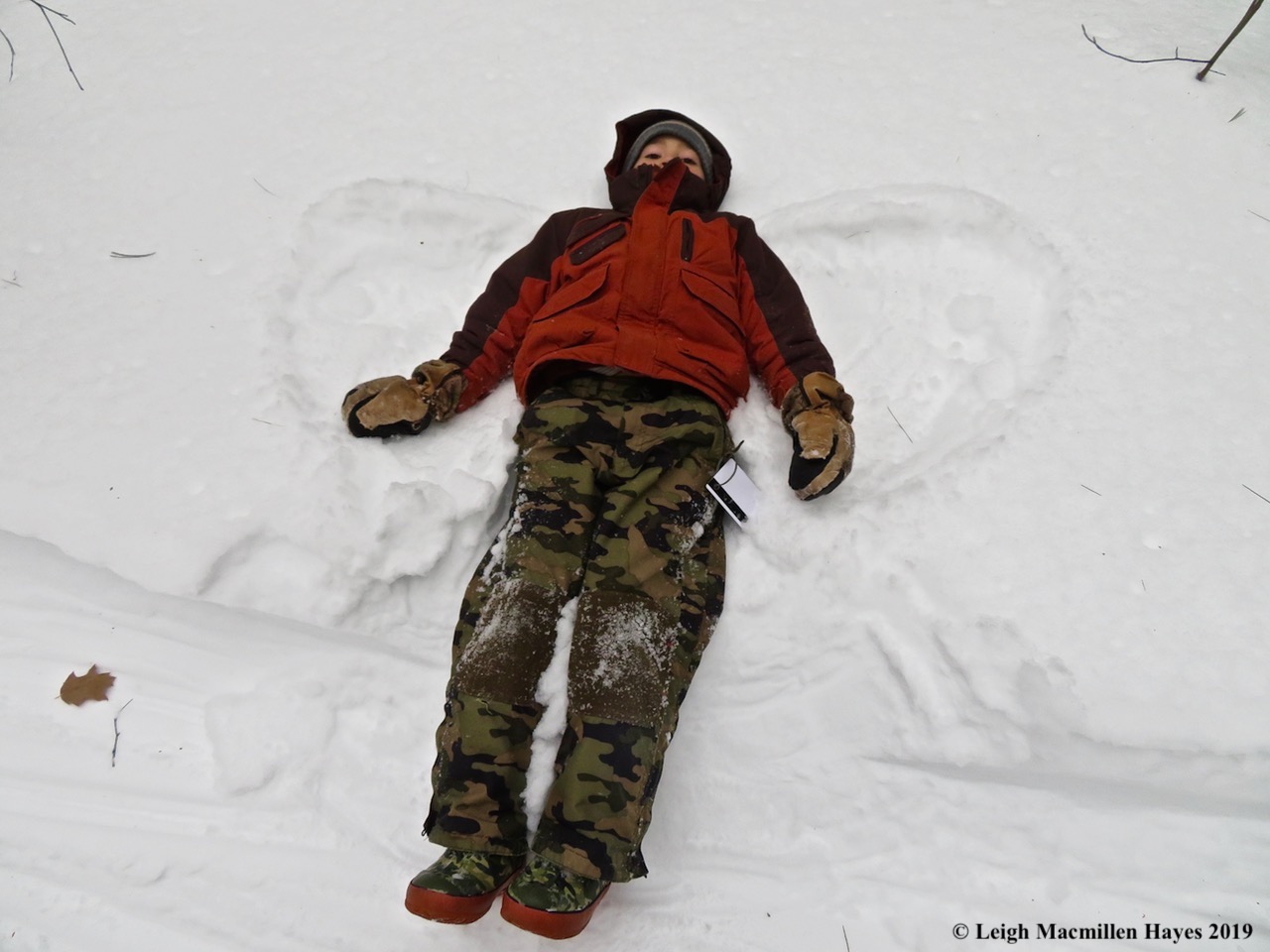
A short distance later, momma couldn’t help but smile when her young’uns displayed their angelic nature.

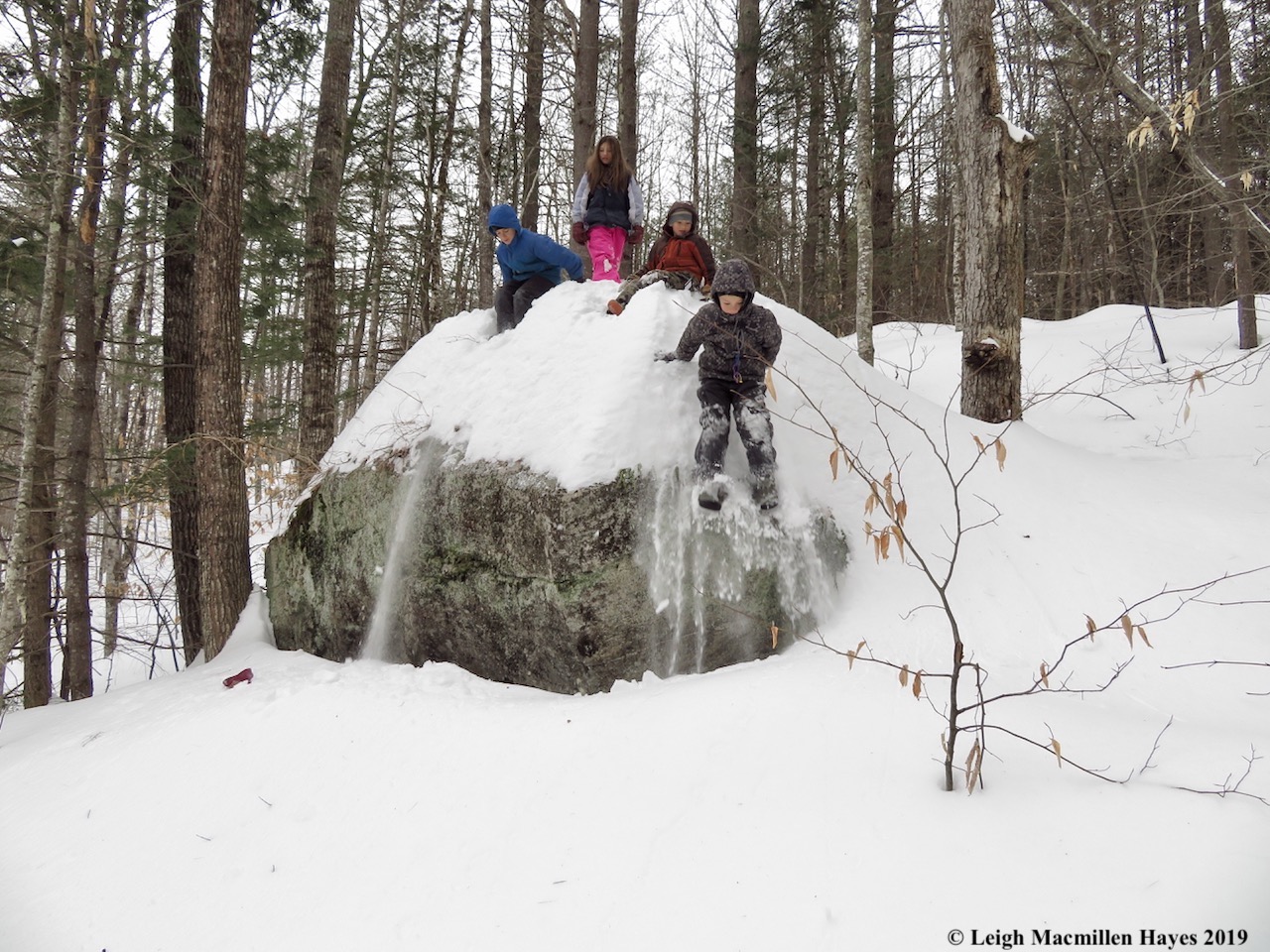
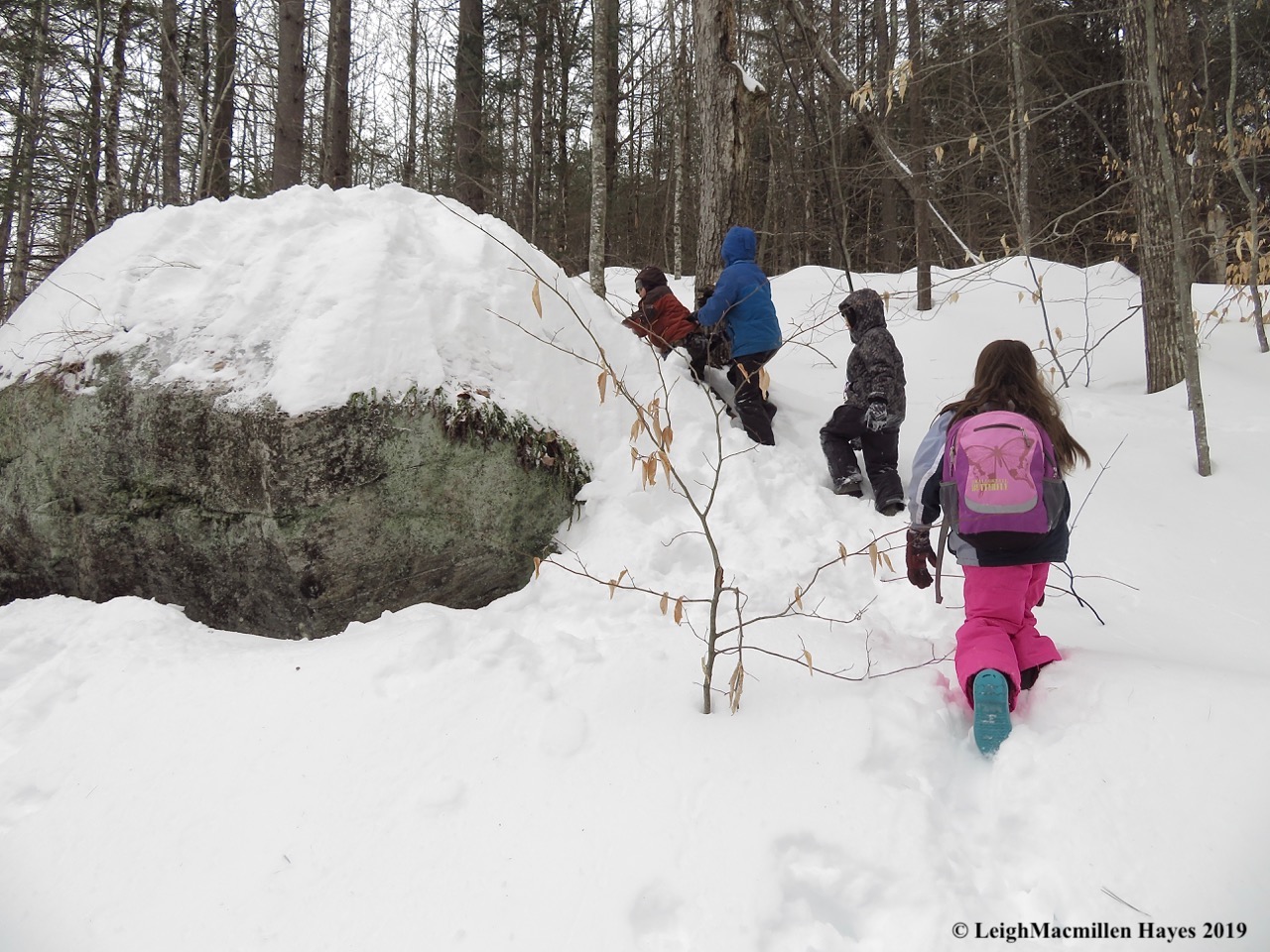
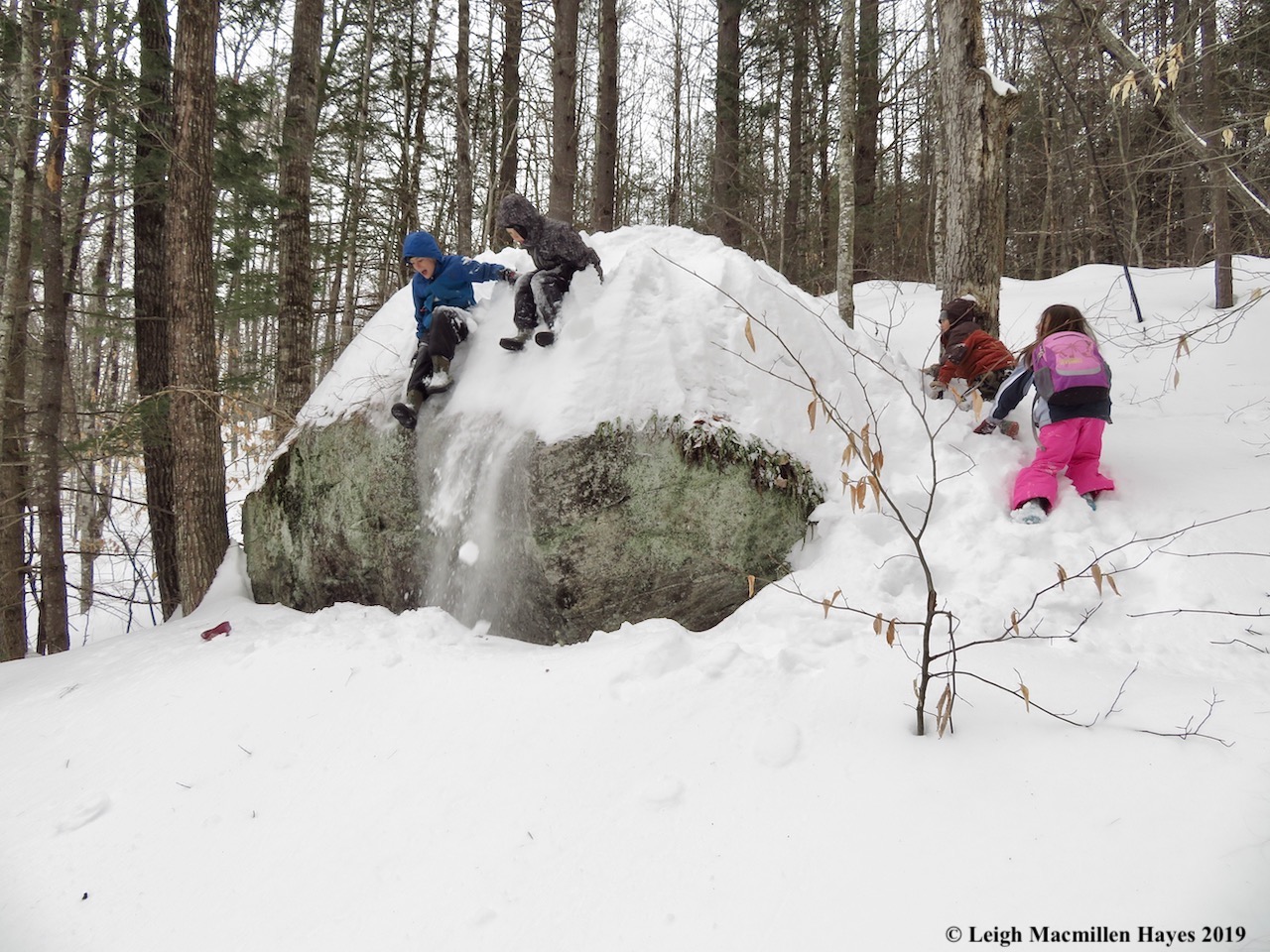
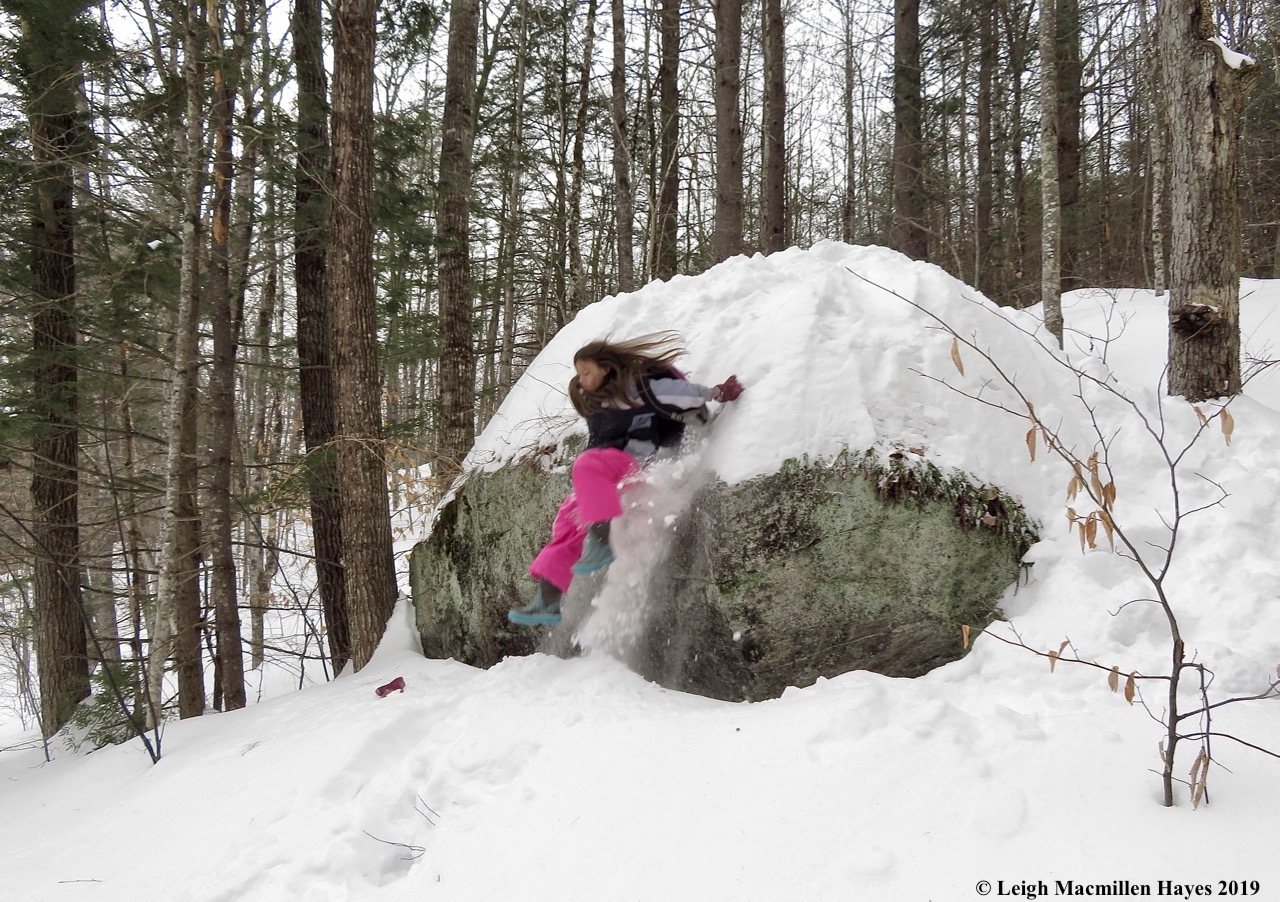
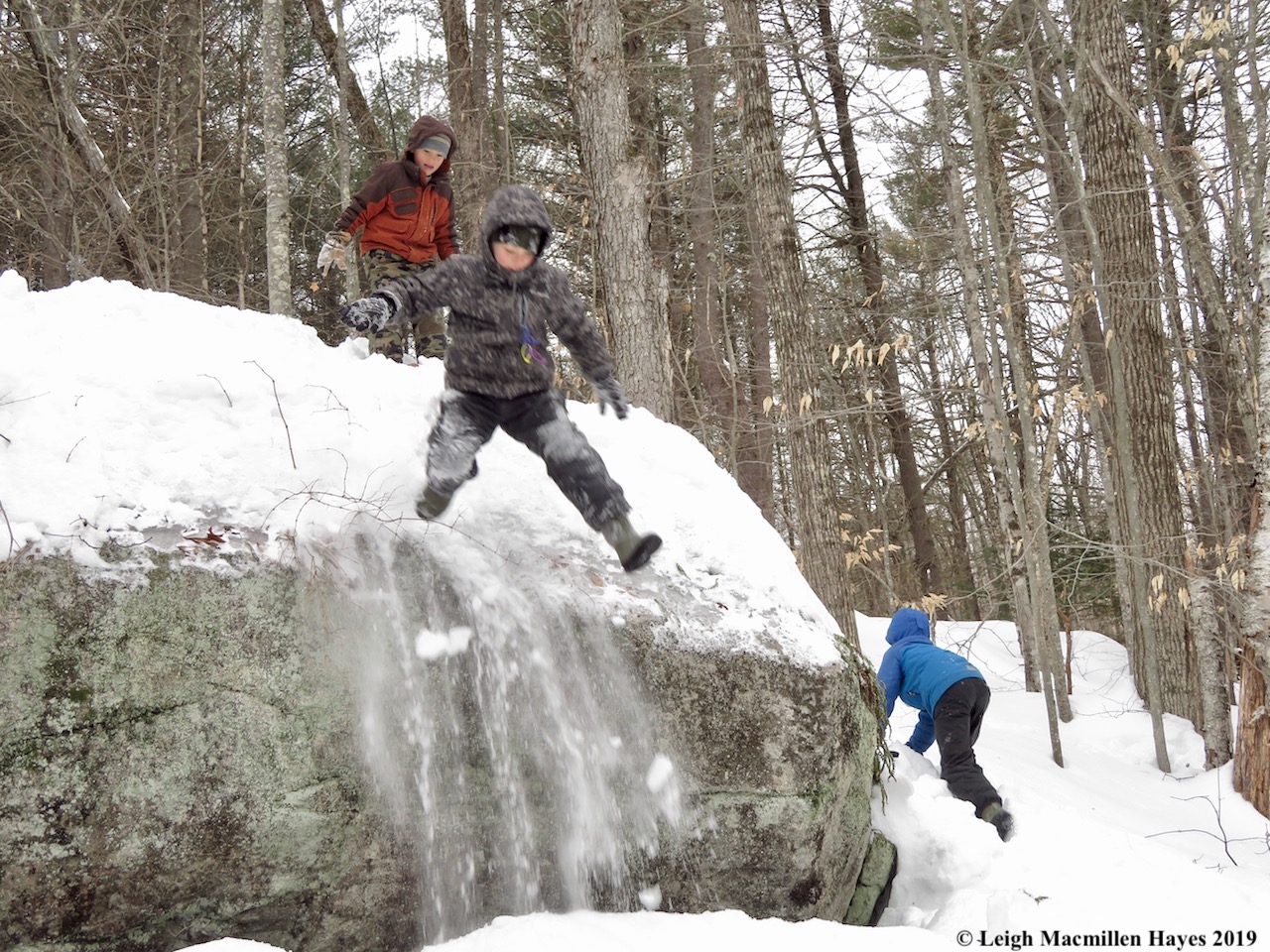
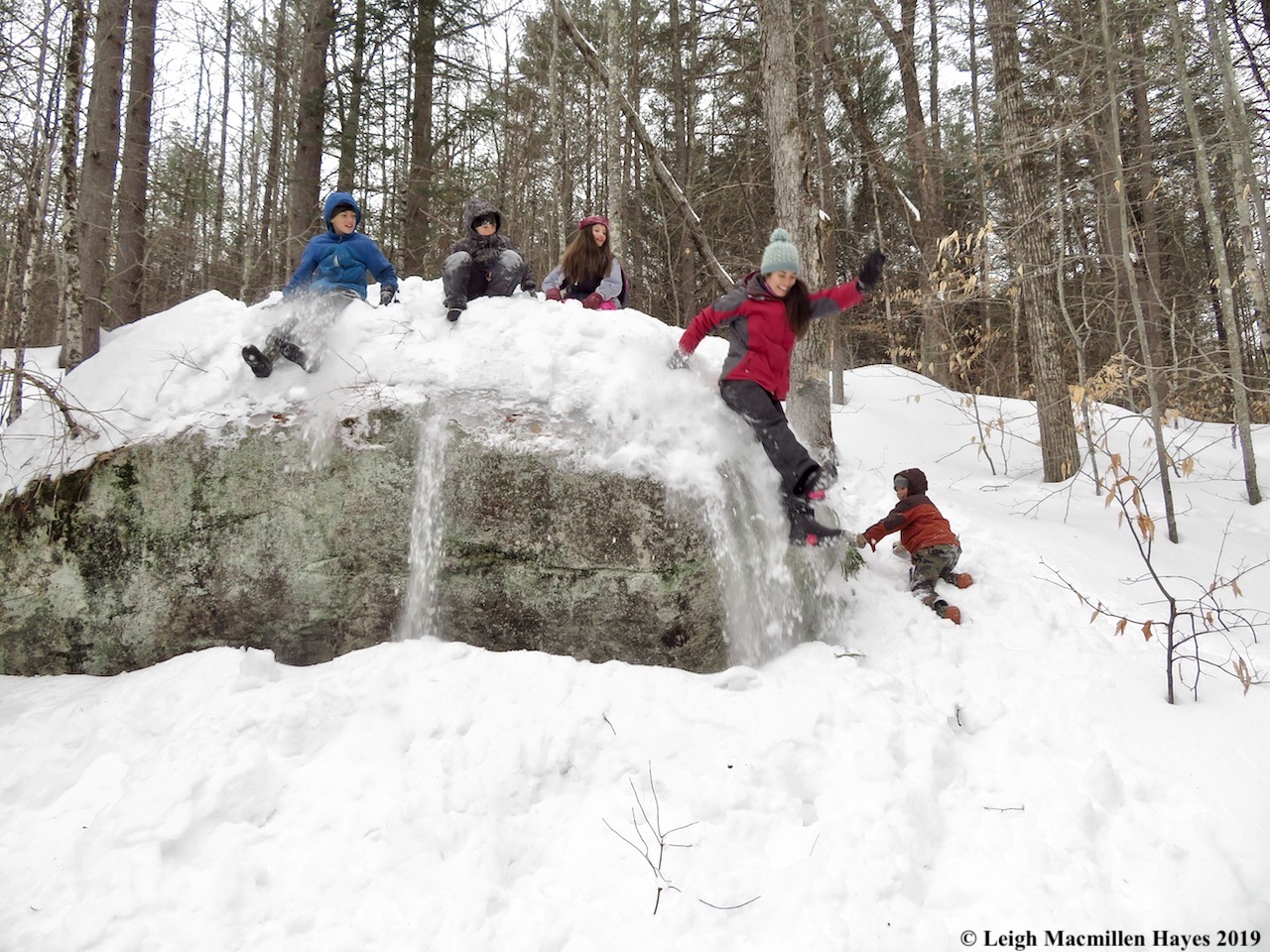
Those angelic Otters eventually found their way to the top of a huge boulder.

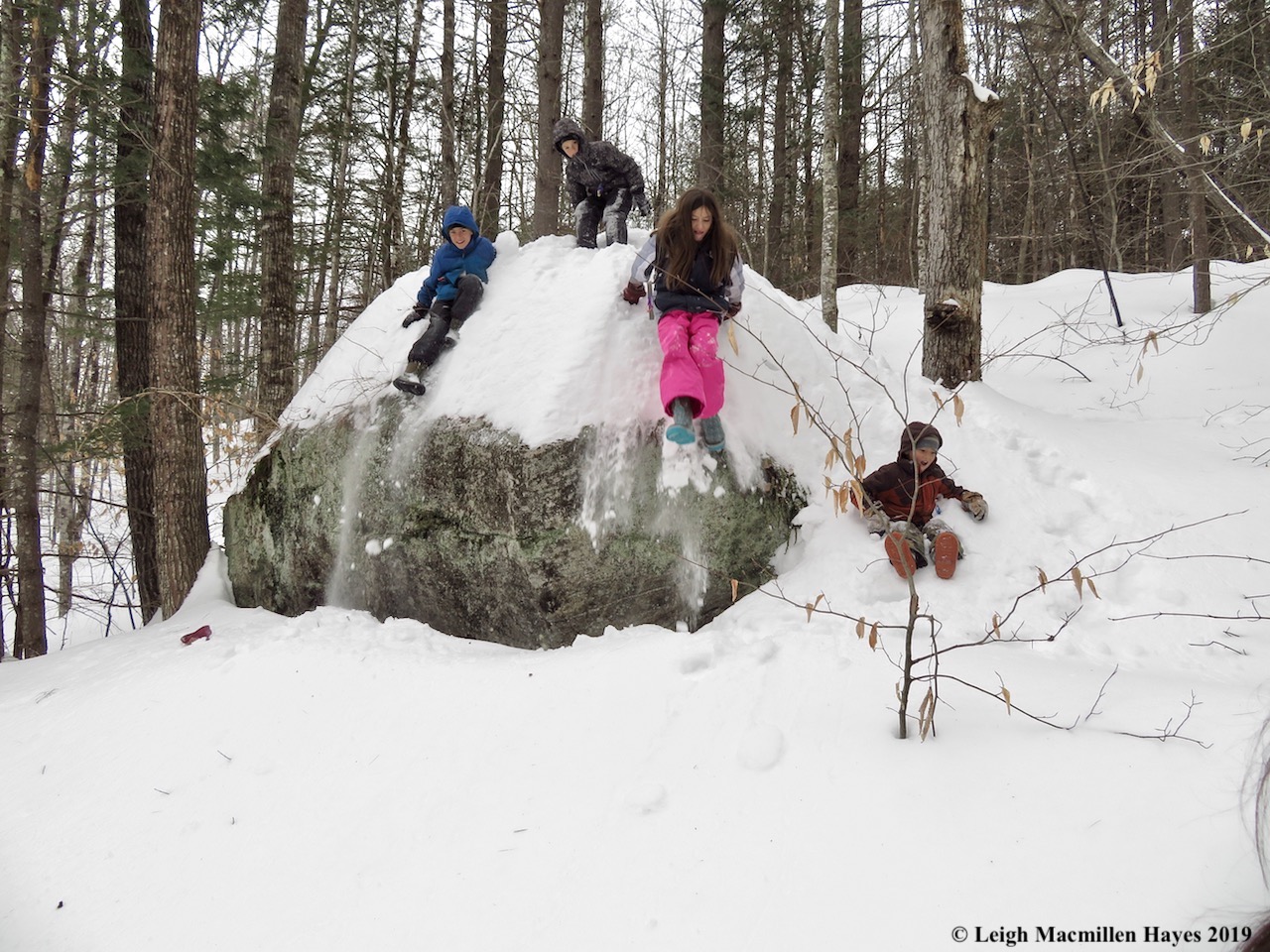
And then they began to do what Otters do.

They slid.

And climbed back up.

To slide some more.

Sometimes, it seemed as if they flew down the boulder’s face.

Other times they bounded.

In true Otter rhythm, one foot landed diagonally in front of the other.

After creating a series of troughs in the snow, they begged their momma to join them.

Being a Snowshoe Hare, she wasn’t sure she would be able to slide quite the way they did.

But she shed her inhibitions and climbed up to join her children.

After noting how scary it was, she smiled and slid down in one of the troughs the children had created.

Once was not enough and up and down she went again.

At last it was time to head for home. Being Otters, the children thought they might just den up below their favorite boulder. The youngest, of course, pouted for he wanted to slide some more.

But moments later, he showed his momma how much he loved her by presenting her with a snowheart.

What an otterly delightful family and equally otterly delightful way to spend the day!