
Two days ago the thermometer climbed to 68˚ and old records were broken. But then, as it does in New England, we had a low of 15˚ this morning. And now it is sleeting.
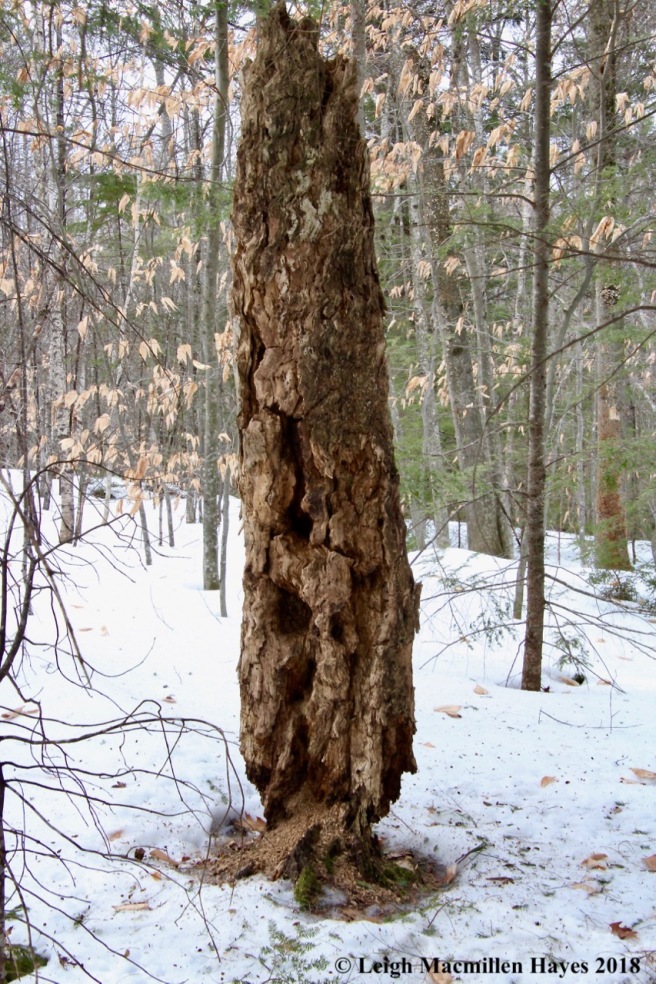
Before the sleet began, however, I decided to do a loop hike at the Greater Lovell Land Trust’s Heald and Bradley Ponds Reserve, beginning from the Gallie Trail and climbing up the Hemlock Trail to the summit of Whiting Hill, with a return via the Red Trail back to the Gallie. It’s a perennial favorite that always has some different things to offer, including the skeletal remains of a beech snag. I think what intrigued me most, besides the pileated woodpecker holes, were the lines of the wood, curved in nature.
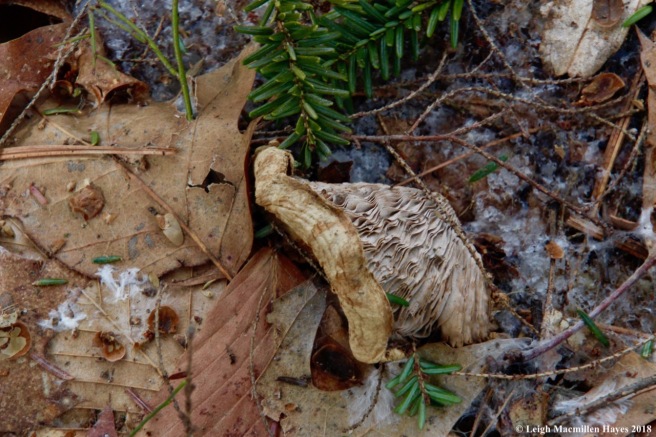
Similarly curved were the gills of a decaying Orange Latex Milk Cap (Lactarius deterrimus)–at least that’s what I think it was–found beneath a hemlock.
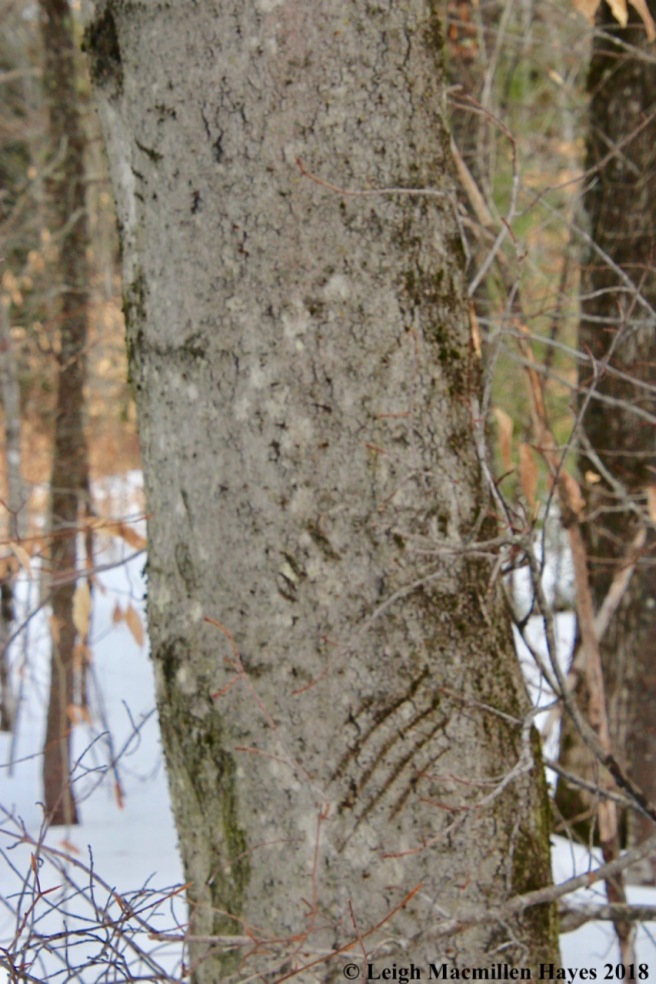
Part of my love for the Hemlock Trail can be found among the beech trees that also grow there and it is my habit to admire the lines that decorate them as well.
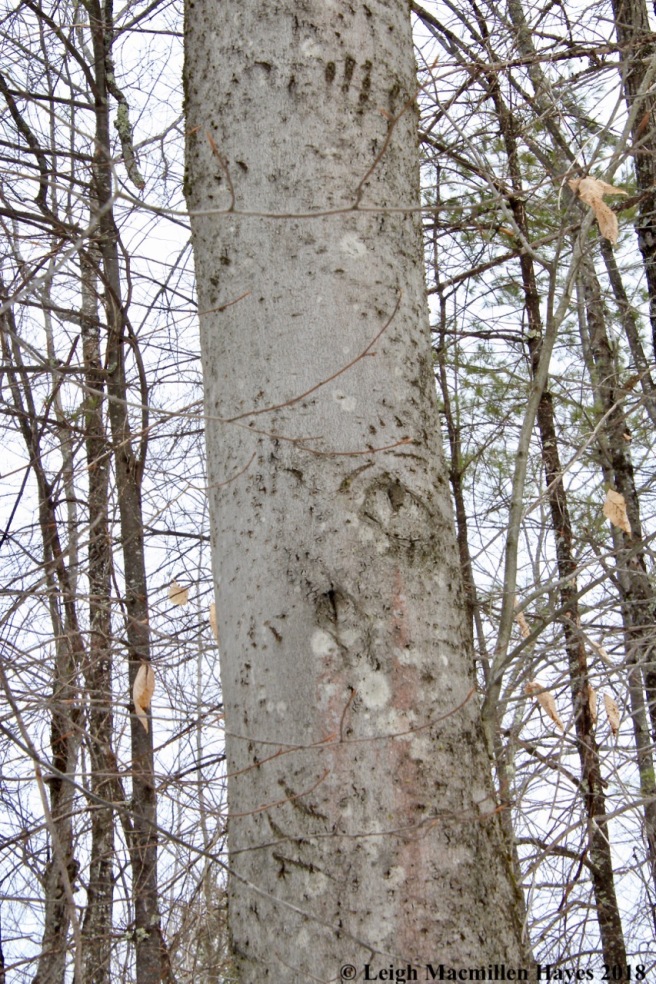
No matter how many times I visit, I’m filled with awe.
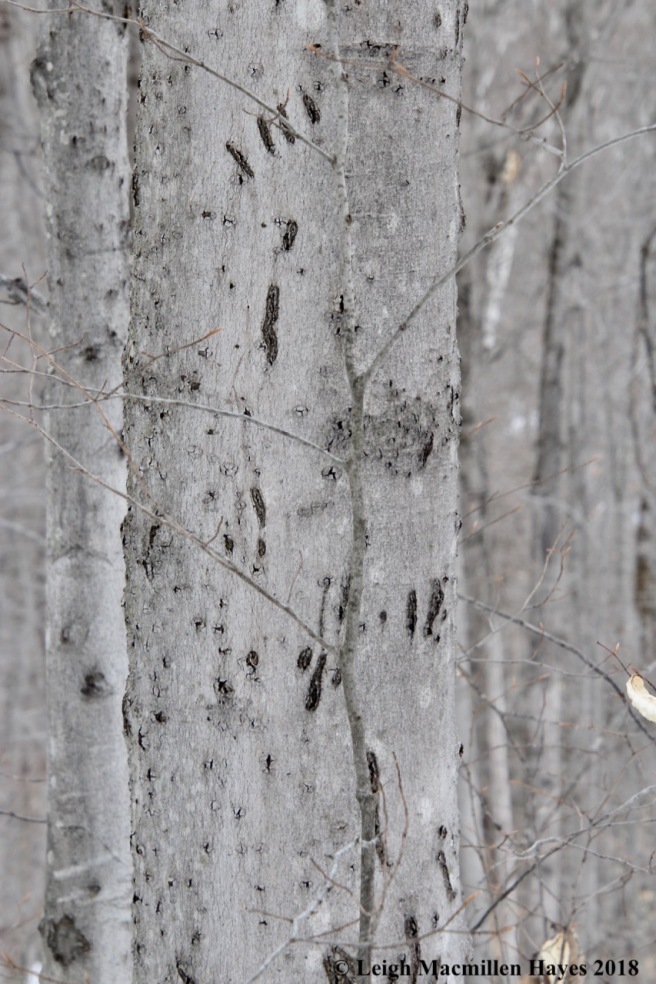
And wonder.
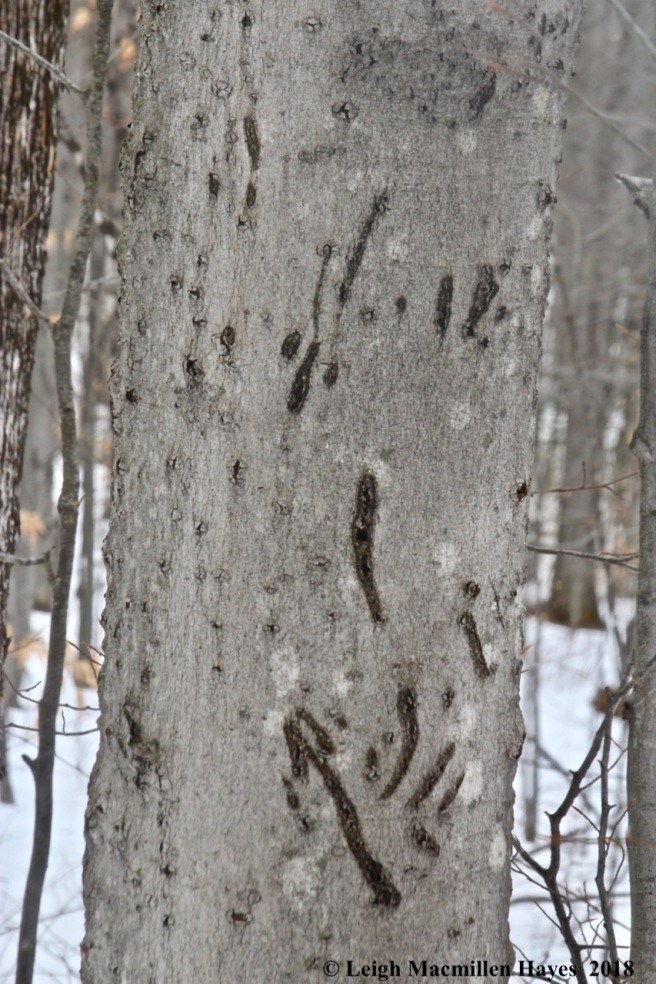
For the black bears that left their signatures behind.
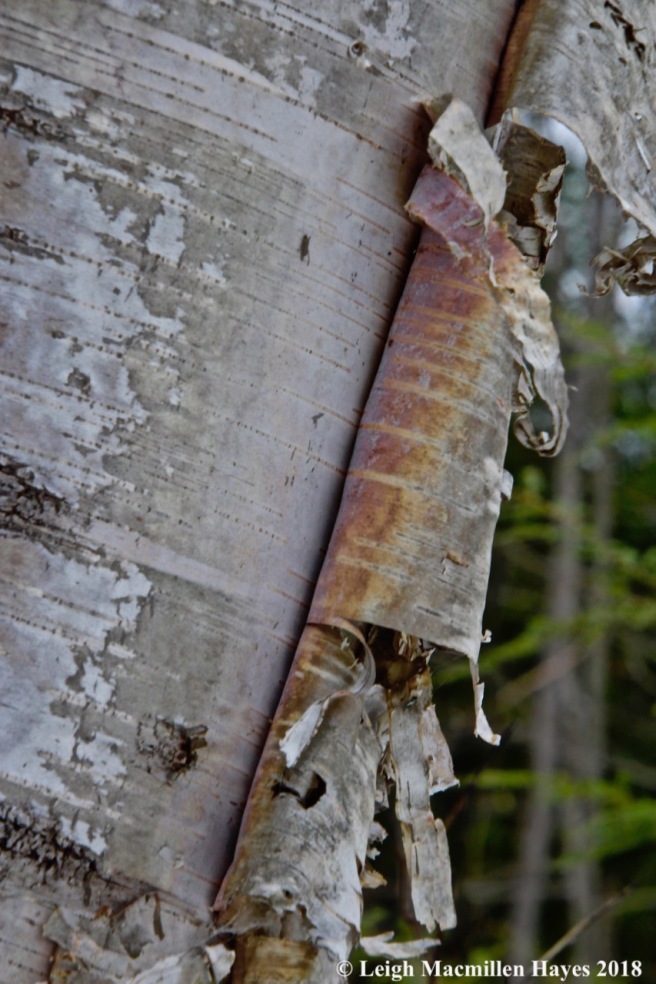
Other trees also gave me pause, for though some know them as white, I prefer to call them paper birch. The curled-back bark offered hues of a different color reminiscent of a sunrise in the midst of a graying day. As my mother was fond of saying, “Red sky in the morning, sailors take warning.” Today was a day to heed said warning.
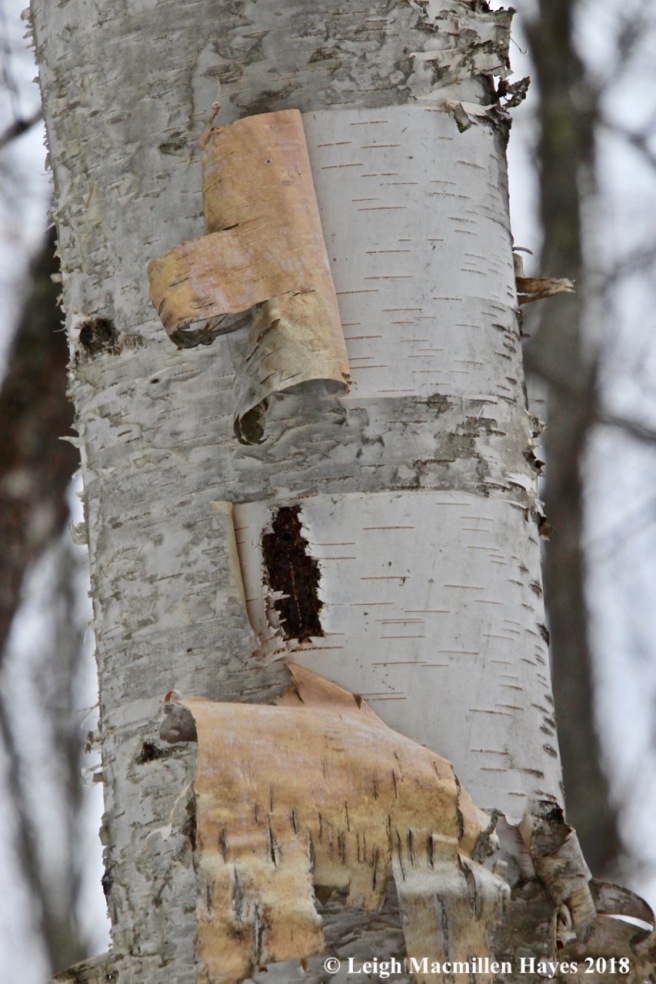
Others bespoke a setting sun.
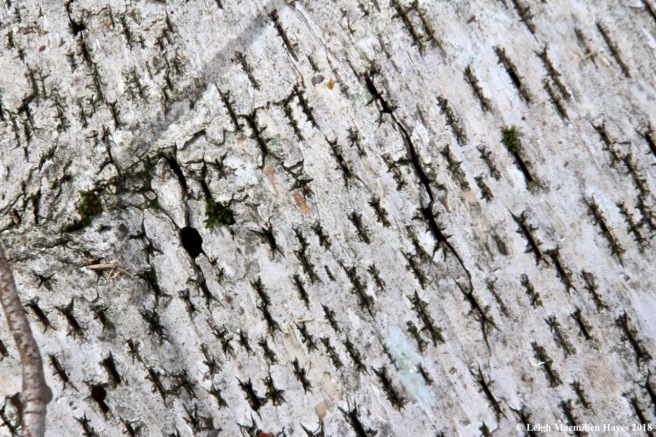
And not to go unnoticed, more bark from another paper birch that had fallen to the ground. It too, offered subtle pink hues, but it was the stitchery created by former lenticels (the tree’s pores) that drew my eye. They reminded me of a million zippers waiting to reveal hidden secrets.
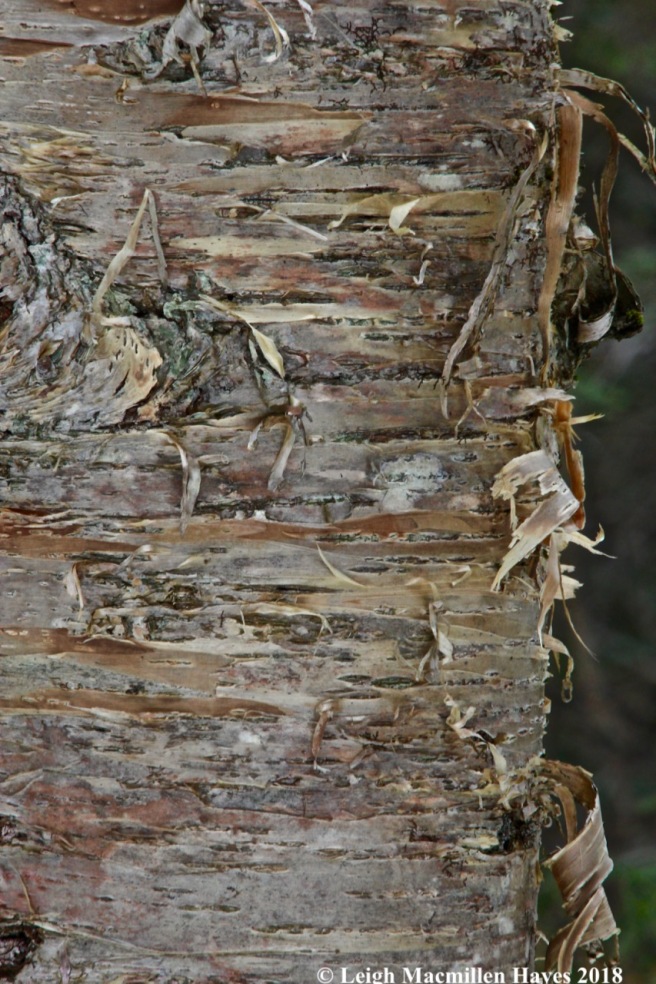
And then there was the yellow birch–with its ribbony bark shedding its own light on the world.
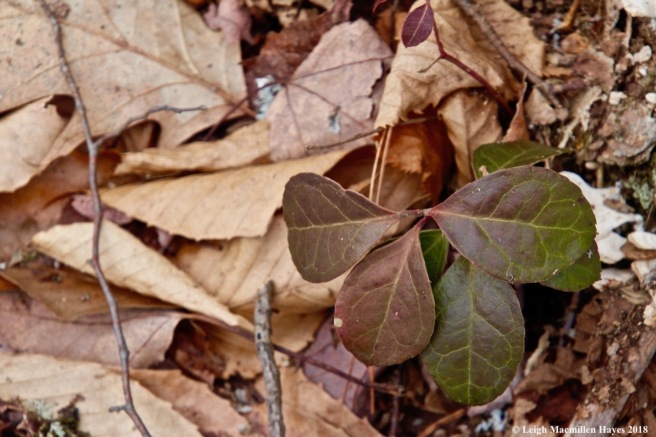
Around the base of some trees, the snow had melted and wintergreen plants showed off their transitional colors–winter magenta giving way to summer green.
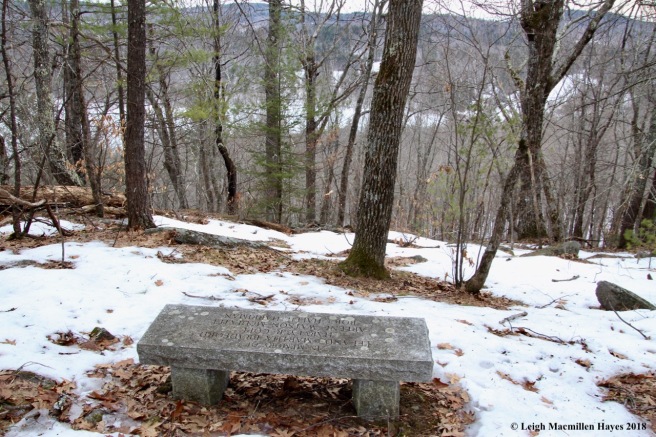
At last I reached the summit and headed to the east side first, where Heald Pond was visible through the bare trees.
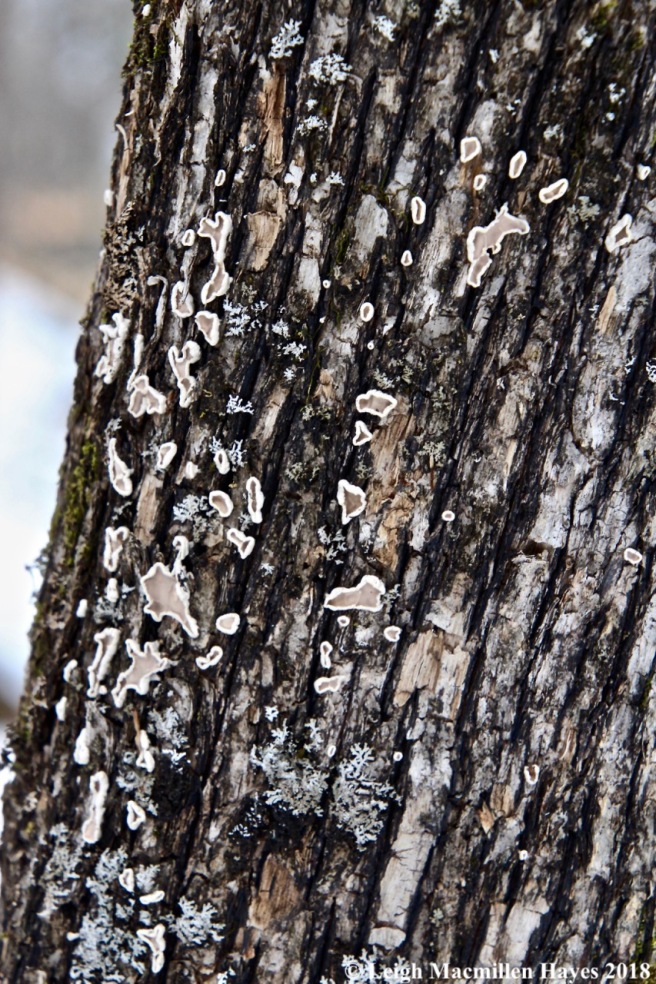
Nearby, still another tree invited a closer look. I love the bark of hophornbeams, but this one sported a growth I wasn’t familiar with until I checked Lawrence Millman’s Fascinating Fungi of New England upon my return home. In the world of mushrooms my knowledge is enough to be dangerous, but I trust my fungi friends will weigh in if I’m wrong on the ID. I’m going out on a limb and calling this one Gray Cup (Mollisia cinerea), for it seemed to match Millman’s description: “With luck, you might find several hundred of these stalkless ascos . . . each fruiting body will be more or less cup or saucer-shaped, but wavy or irregular in age.” And he describes their habitat as scattered or densely crowded under hardwood logs. Well, these weren’t under a log, so that made me question my ID, but they certainly seemed to match the rest of the description and hophornbeam is among the hardest of the hardwoods.
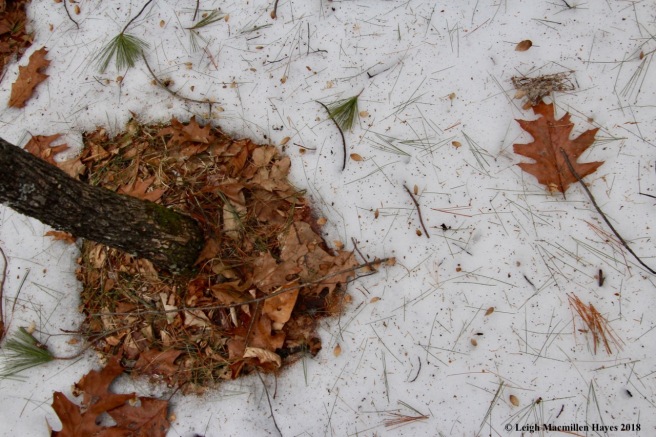
Below another hornbeam I found the ground scattered with little fruits.
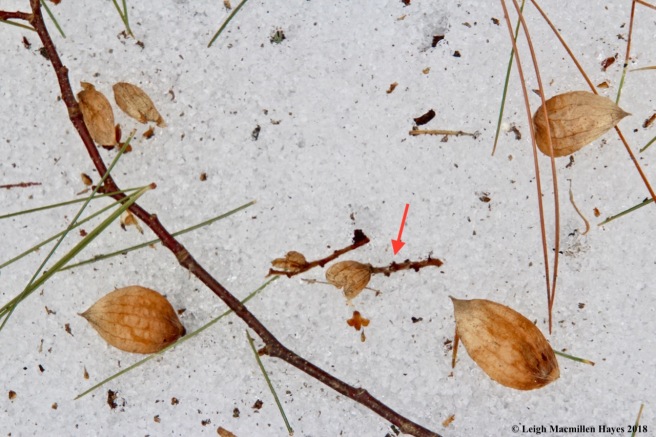
The common name for the tree derived from those fruits, which when attached to their twig (the arrow points to such) are so arranged that they look like hops. As they fall, each little bladder that contains a single seed separates from the group in hopes of finding the right spot to grow into the future.
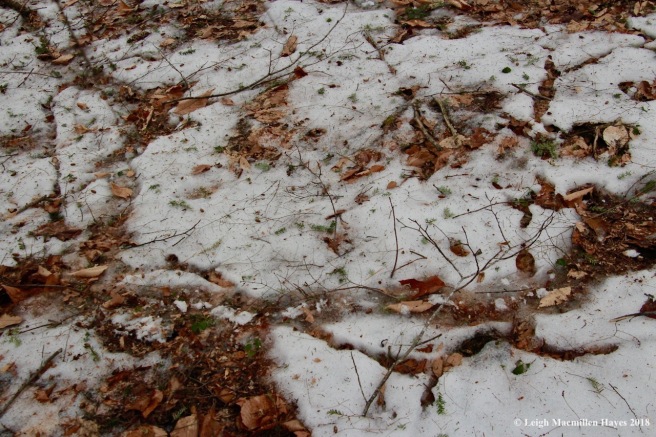
As I moved toward the western outlook, half tunnels in the snow let me know that the vole community had been active. It probably still is . . . maybe.
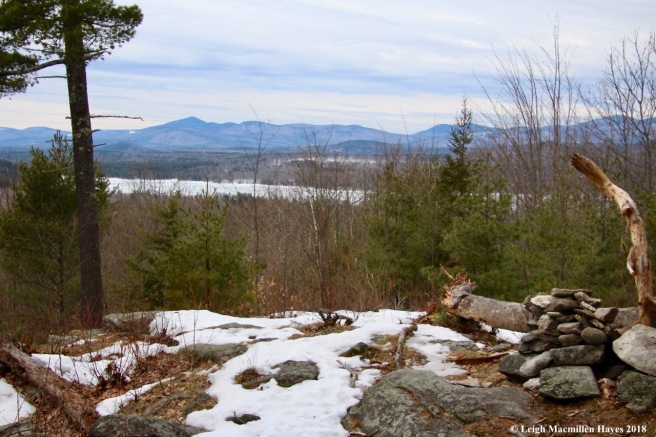
And then, the view to the west, which encompasses Kezar Lake, Mount Kearsarge and the Whites. The scene changed a bit last October when a windstorm just before Halloween toppled a dead white pine . . . and the cairn that marked the summit.
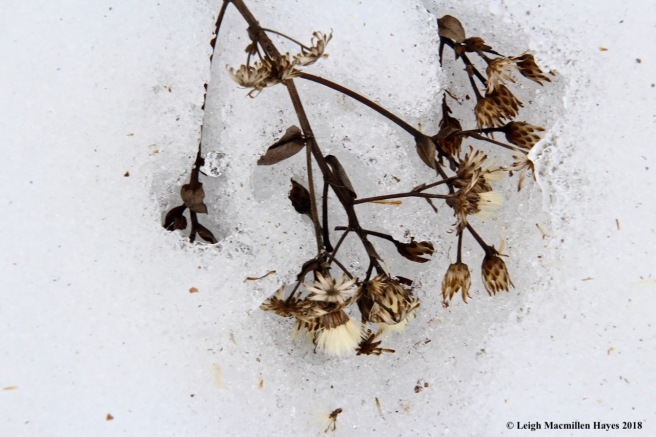
While there, I looked around for evidence of the wild columbine that will bloom in a few months, but found only asters hugging the snow.
I stayed for a few minutes, but the wind had picked up and so I finally turned to head back down.
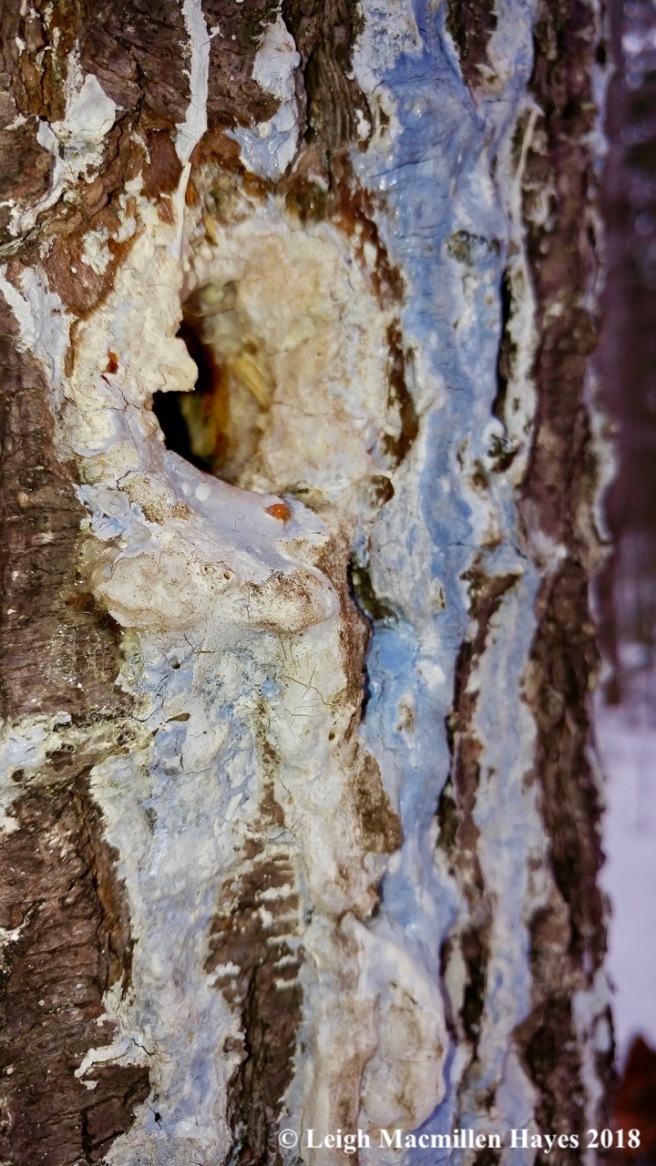
For a short link, I followed the same path until I turned right onto the Red Trail. Just prior to that I realized I’d missed a sight on my way up–the blue sap that bled from a white pine. I’ve seen it often over my years of noticing, but have no idea why the color blue, which was really almost periwinkle. In this case, the sap flowed because a pileated woodpecker had been hard at work.
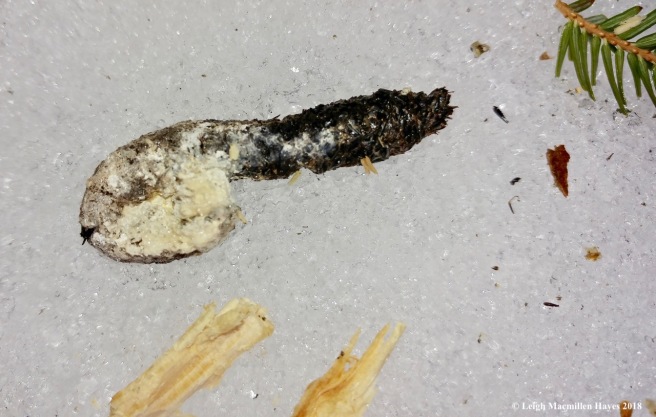
And that meant I had to look–and wasn’t disappointed. Woodpecker scat. It was so well packed, that I pulled out my hand lens and got down on my knees for a closer examination. I practically kissed it but can say for certain that insect parts were layered within.
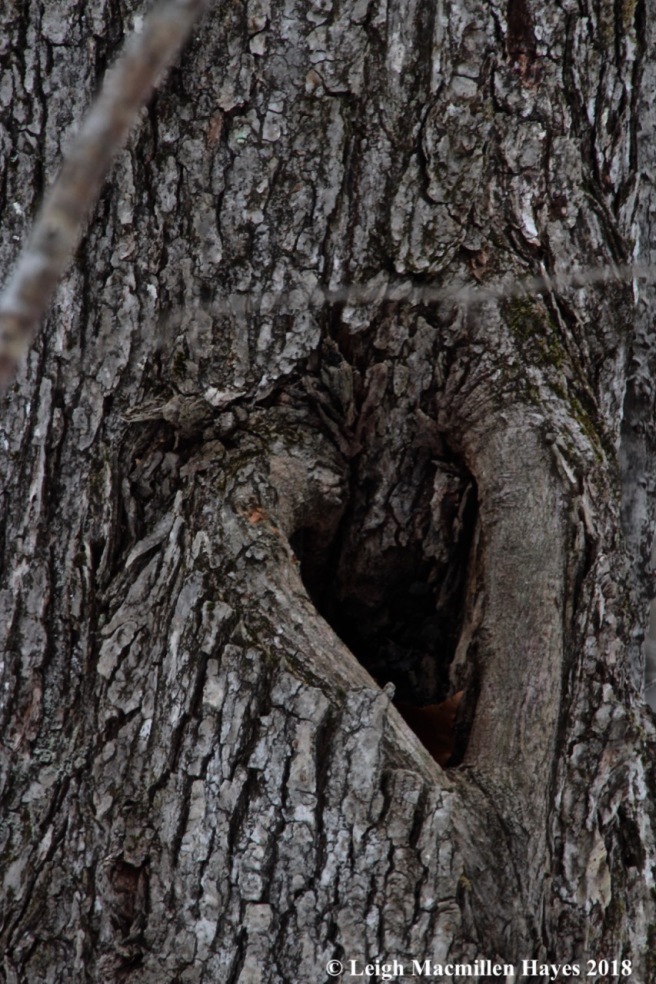
A few minutes later, the trail split and as I said earlier, I followed the Red Trail to descend. I had only gone a wee bit when I heard a barred owl call, “Who cooks for you? Who cooks for you all?” It was noon, after all, so it seemed totally appropriate. The call came from somewhere near the summit and I had to wonder if I’d made the mistake of not looking up quite enough, so taken was I with the hops and the view to the west. Perhaps that vole had provided a meal. And then I heard a response somewhere quite possibly along the Hemlock Trail by which I’d ascended. For about five minutes they called back and forth and I thought of the irony, for months ago I’d scheduled an Owl Prowl for this evening, but had cancelled it this morning due to the weather forecast. That decision was the right one, but perhaps the prowl should have been scheduled for an earlier time. No matter–what’s not to love about hearing an owl hoot at any time of day or night? Especially if one happens to be standing near a tree sporting a heart.
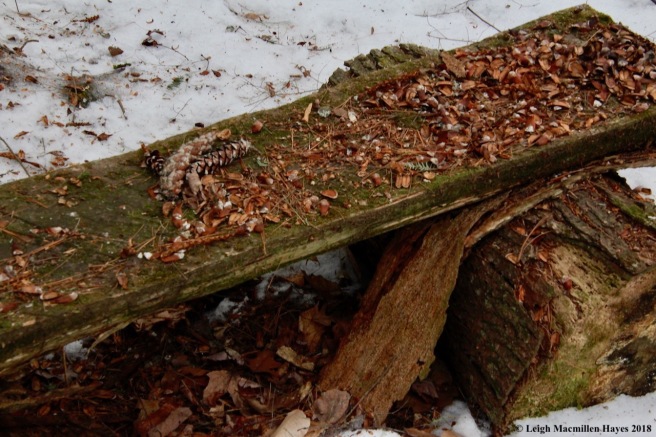
Continuing down, another critter made me scan the forest constantly for I saw bobcat tracks and smelled a musky cat odor that I’ve previously associated with this trail. But . . . all I saw were gray and red squirrels scampering from tree to tree and signs of lunch consumed on benches.
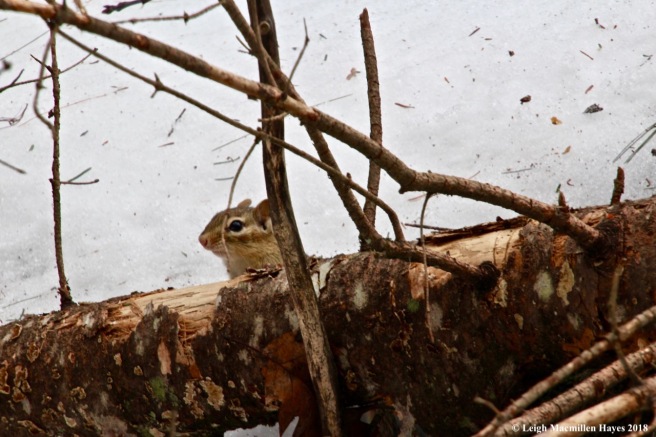
At the bottom, I switched back and forth between the Gallie and Homestead Trails. It was along the Homestead that another sign of spring’s advent being around the corner showed its face as a chipmunk darted in and out of a hole in a stonewall and watched me from the safety of a fallen tree.
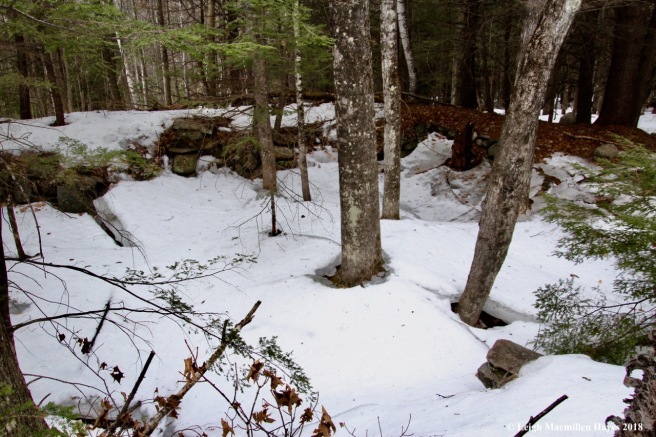
Because I was there, I decided to pay a visit to the McAllister family spirits and told them of my great finds. Of course, what I shared was nothing new to them for they’ve been keeping an eye and ear on this property since the mid 1800s.
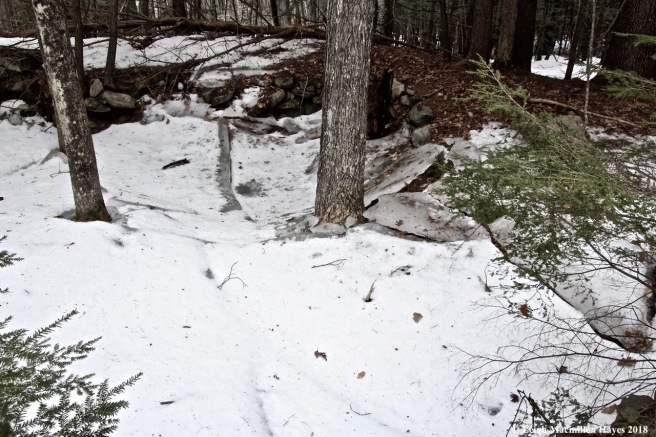
I also let them know that I was impressed they’d stacked up on ice blocks in the root cellar–certainly their produce had remained fresh throughout the season.
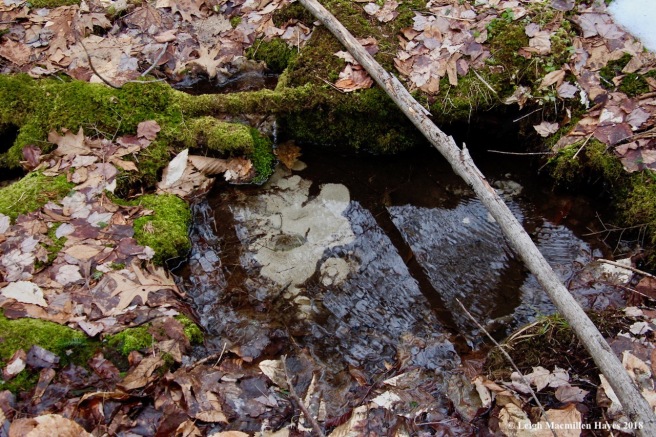
I was almost back to my truck when I detoured by a certain yellow birch. All along I’d been walking on tracks others had made, so packed was the snow. And even when I went off trail, which was frequently, I didn’t sink. But . . . up to my knees I went as I approached my final destination–the light colored sand in the middle of the water.
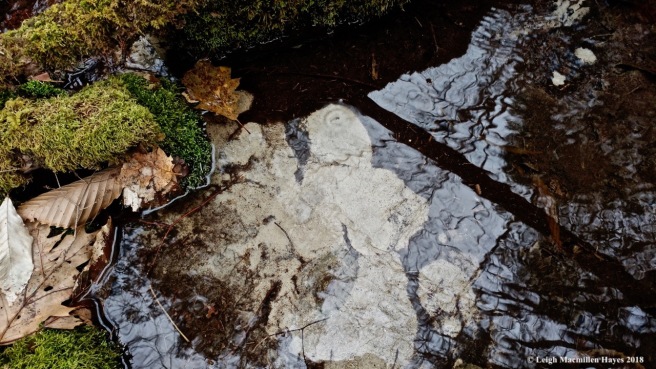
It was well worth the wee challenge to get to it for the action of bubbles and sand flowing like lava was ever mesmerizing. At last I’d reached a spring that erupts in all seasons.

 wondermyway