In The Heat . . . of the moment

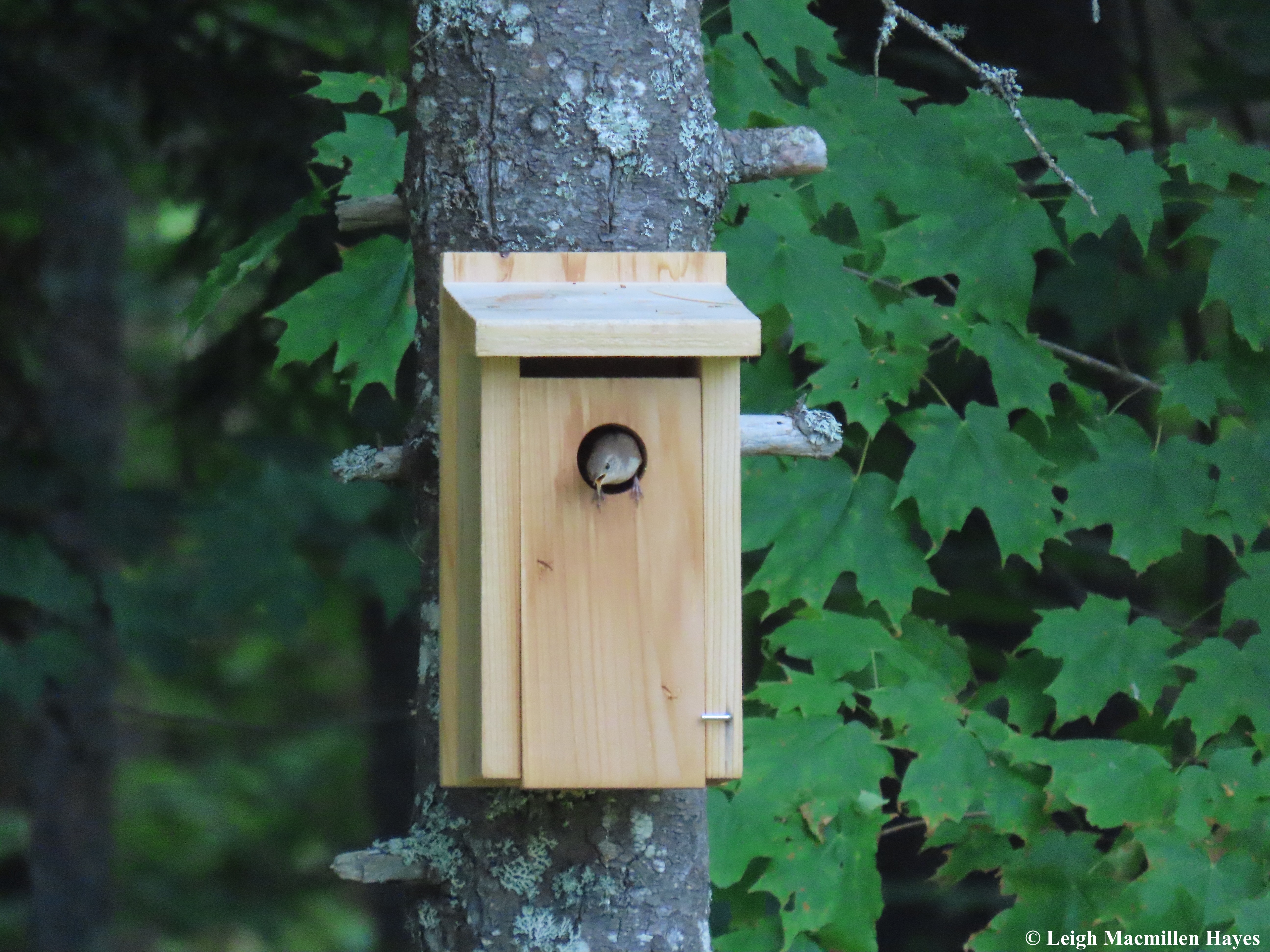
About dinner time yesterday, that is, dinner time for most people, as My Guy and I tend not to eat until about 7:30pm, as we sat on our patio, I suddenly saw action at a Bluebird house we’d nailed to a tree in the yard. After months of seemingly no action, a bird was flying to it and carrying sticks, and I realized that the male House Wren who has been singing from the trees had decided this just might be the place his loved one will want to set up housekeeping.

The action continued for about an hour last night, but then ceased.

And this morning . . . nothing that I could see.
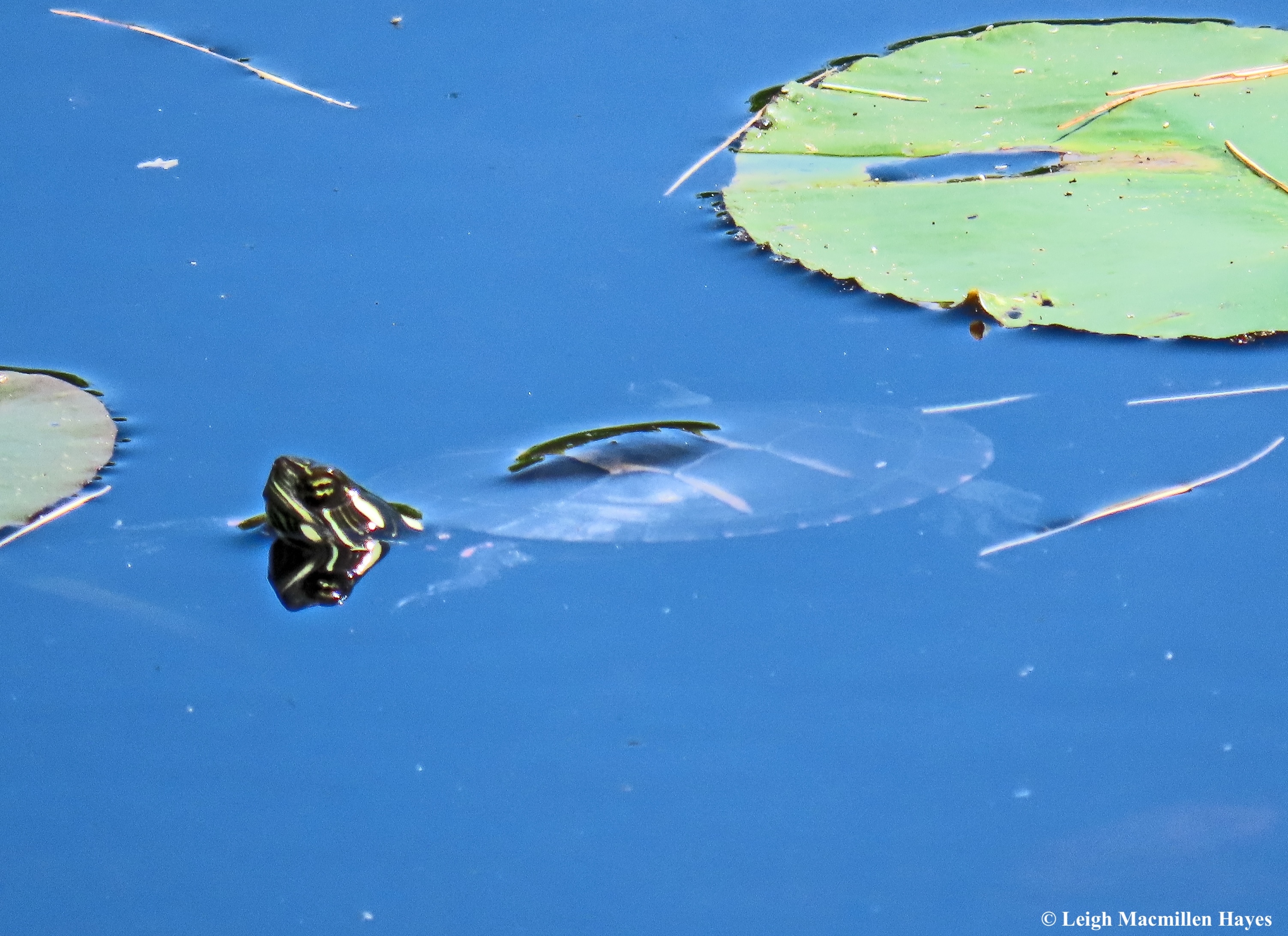
And so deciding I wouldn’t have a chance to watch the fun of moving in today, I decided instead to head to a local wetland where the Painted Turtles taught me a lesson.

I love seeing turtles basking on logs and rocks in the water, but everywhere I looked today, they were not on any of these raised platforms. Instead, they floated. And it occurred to me that it was a brilliant strategy: stay near the surface of the water, but be a wee bit submerged, and therefore stay cool on the hottest of hot summer days thus far this season. Especially given that Painted Turtles have black carapaces or upper shells which are intended to absorb the heat . . . but extreme heat?
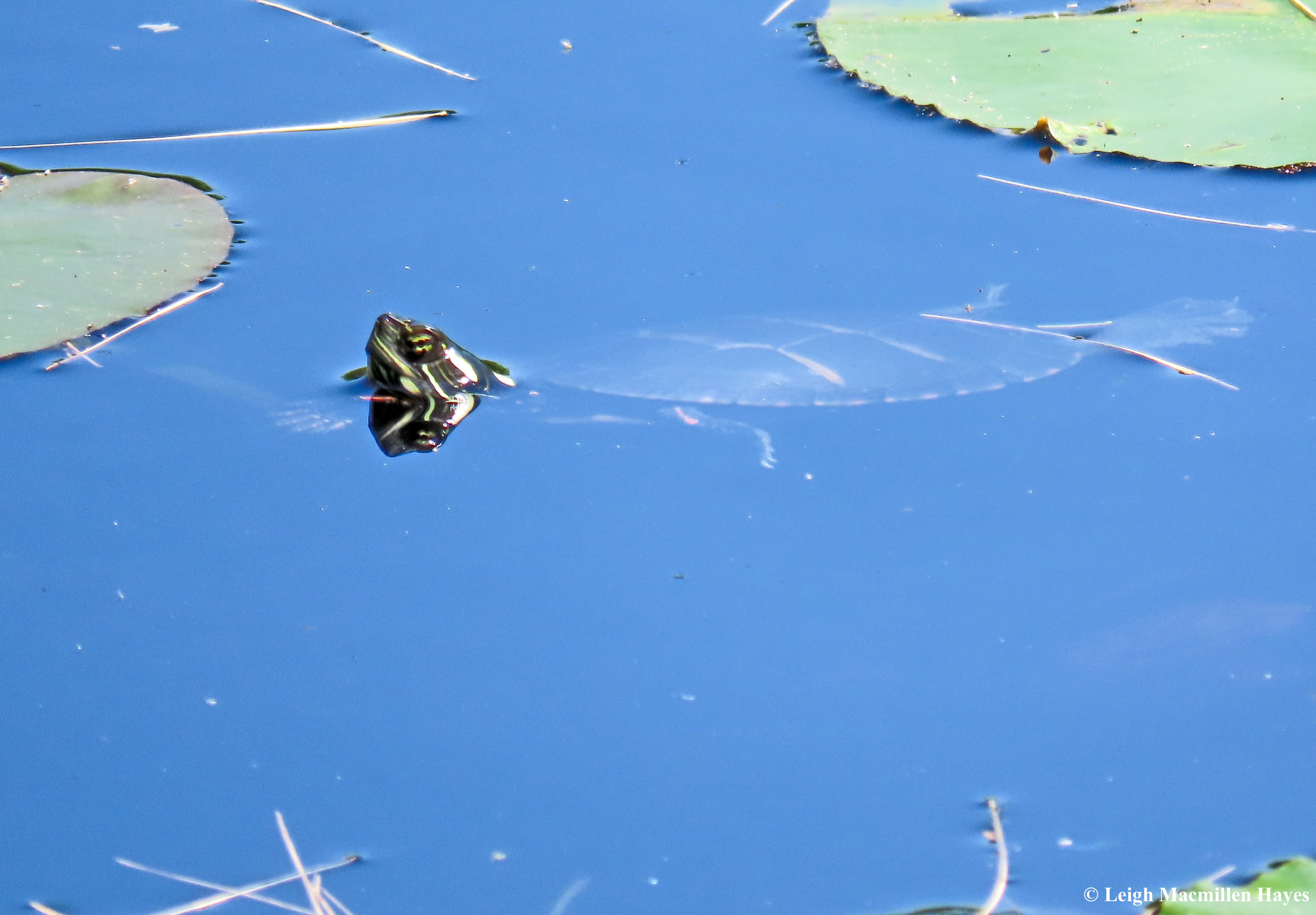
While I watched, I noticed that they all stayed in the same spot. How? By treading water, just like we do. Or so it seemed to me as I watched the feet move, but the head and shell remain still.

In all my years of turtle watching, I have never witnessed this before. Or . . . if I did, failed to take note.

Because I was by water, there were plenty of dragonflies as they defended their territories and ate some bugs on the fly and occasionally paused so I could admire and thank them. There were no Mosquitoes to speak of and only a few pesky Deer Flies.

This Four-spotted Skimmer and I spent quite a bit of time together because he was so beautiful and I could have looked at him forever, plus I loved watching him perch, then flight off to chase another dragonfly out of the area, and perch again, over and over.
But there were a few other things to observe. Well, more than a few, but only a couple that I’ll note.

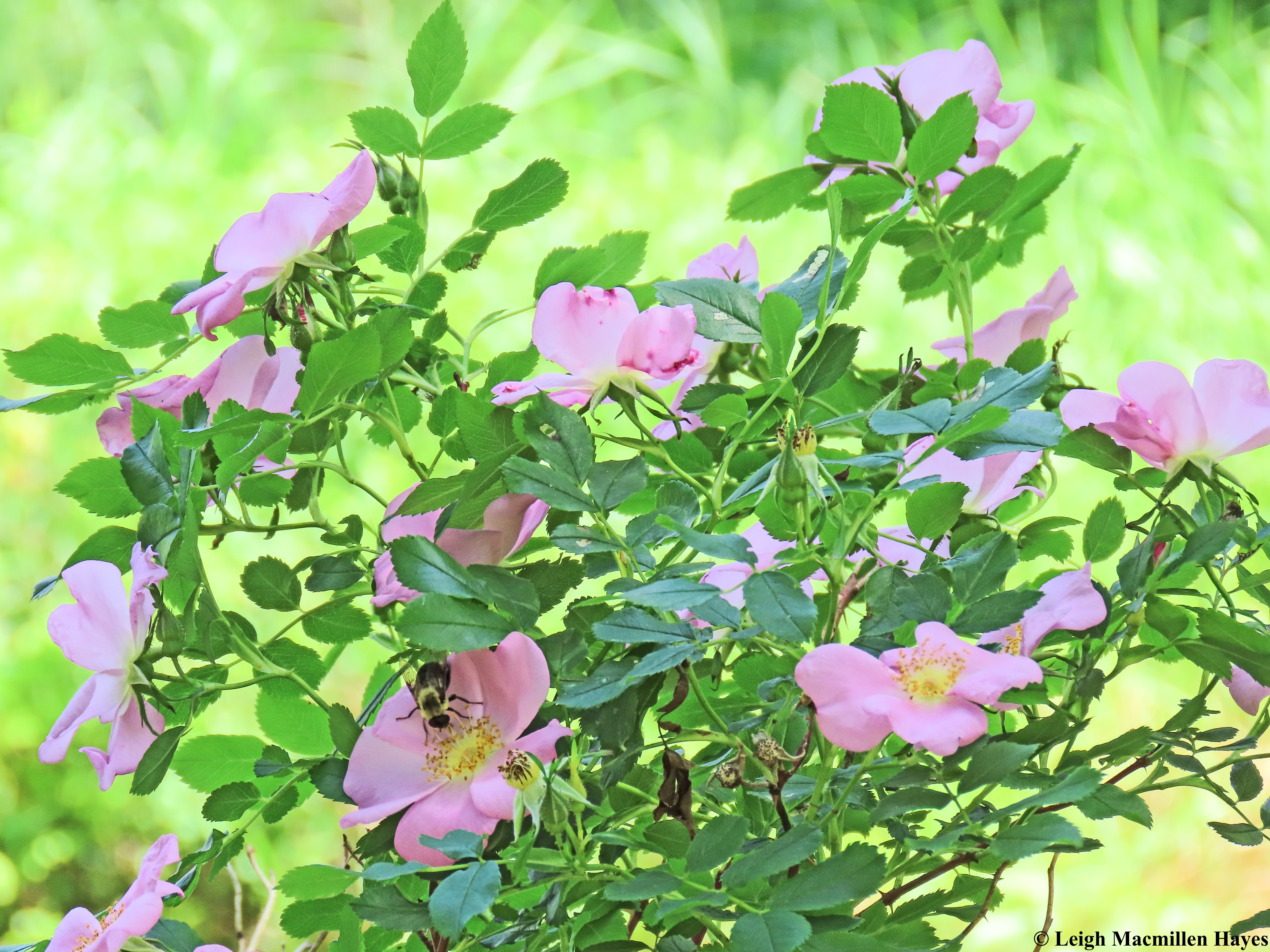
Have you ever noticed how on a hot summer day the smell of fallen pine needles is intensified by the heat? I just love that smell. And where there are Swamp Roses, there is also an aromatic fragrance, and it seemed I wasn’t the only one paying attention.
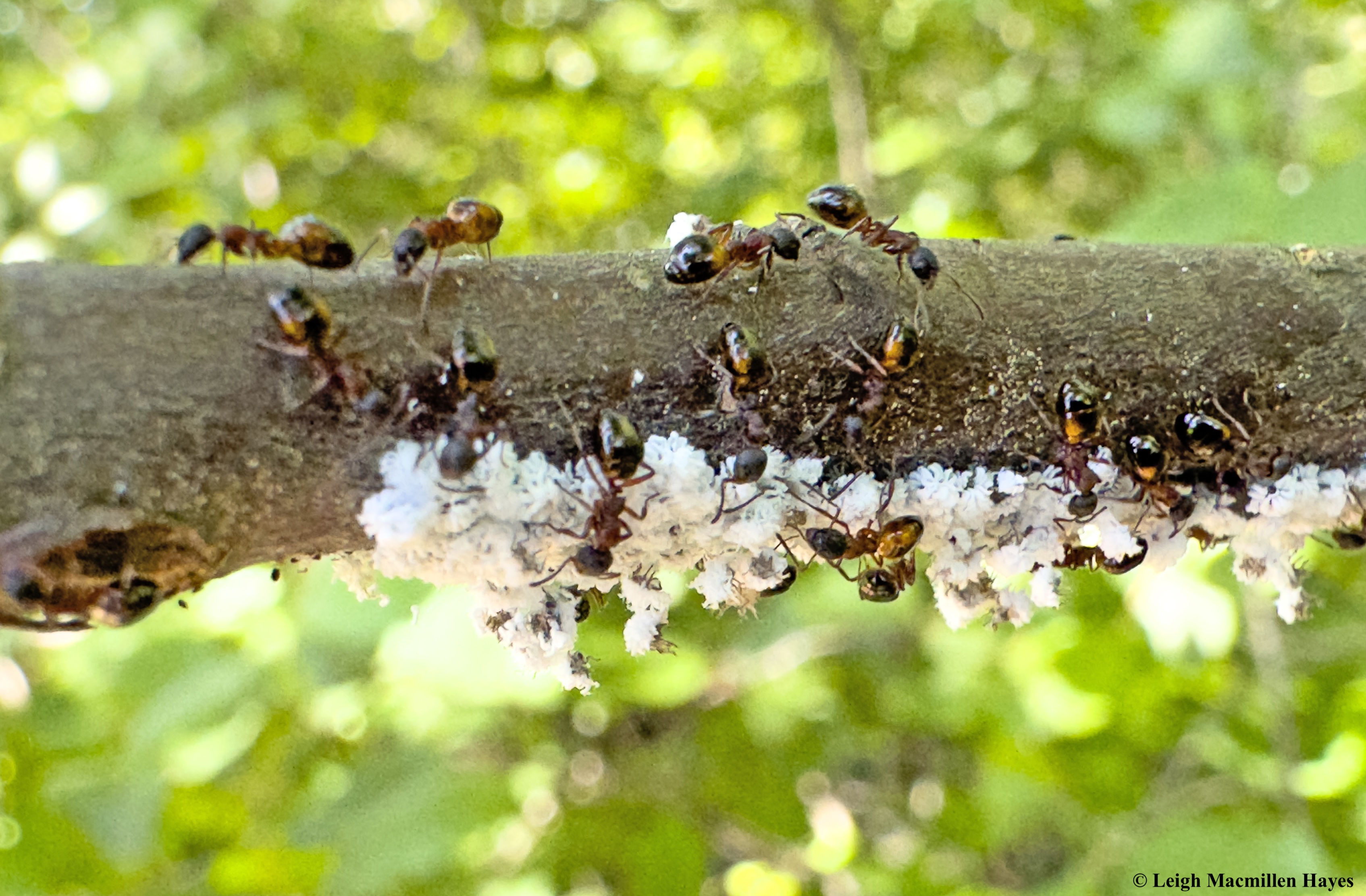
Seeking nectar is the job of bees and wasps and flowerflies and other. Seeking a sugary substance is the job of ants. On Speckled Alders.

Ants “farm” or “milk” or basically tickle Woolly Alder Aphids that feed upon the shrubs’ sap and get the honeydew the tinier insects secrete.

That cotton candy look on the aphids is actually a waxy material they produce from their abdomens, perhaps meant to detract visitors. Or protect them from the weather. 

The relationship between the ants and the aphids is actually a form of mutualism as the ants protect the aphids from predators, while the aphids provide the ants with a food source. Hmmm. Maybe more of us need to pay attention to this way of living together.

At last I pulled myself away from the wetland, saying goodbye to all and thanking the Painted Turtles for today’s lesson.

Back at home, I heard the Wren before I spotted it and sure enough, it was back on the job of setting up living quarters. Male House Wrens fill cavities with a tangle of sticks and then he tries to persuade his betrothed to build a nest, which she does toward the back of the cavity.

He kept gathering sticks from the ground and returning to the box, though getting them through the hole wasn’t always an easy task. I wanted to encourage him to also try the slot at the top of the box, but my encouraging act would have had the opposite effect, and so I kept my distance.

It was rather like watching a gymnastics show, for such an acrobat was he. And like the turtles treading water, I’d never actually seen a House Wren build a nest before–my knowledge all gained from literature.
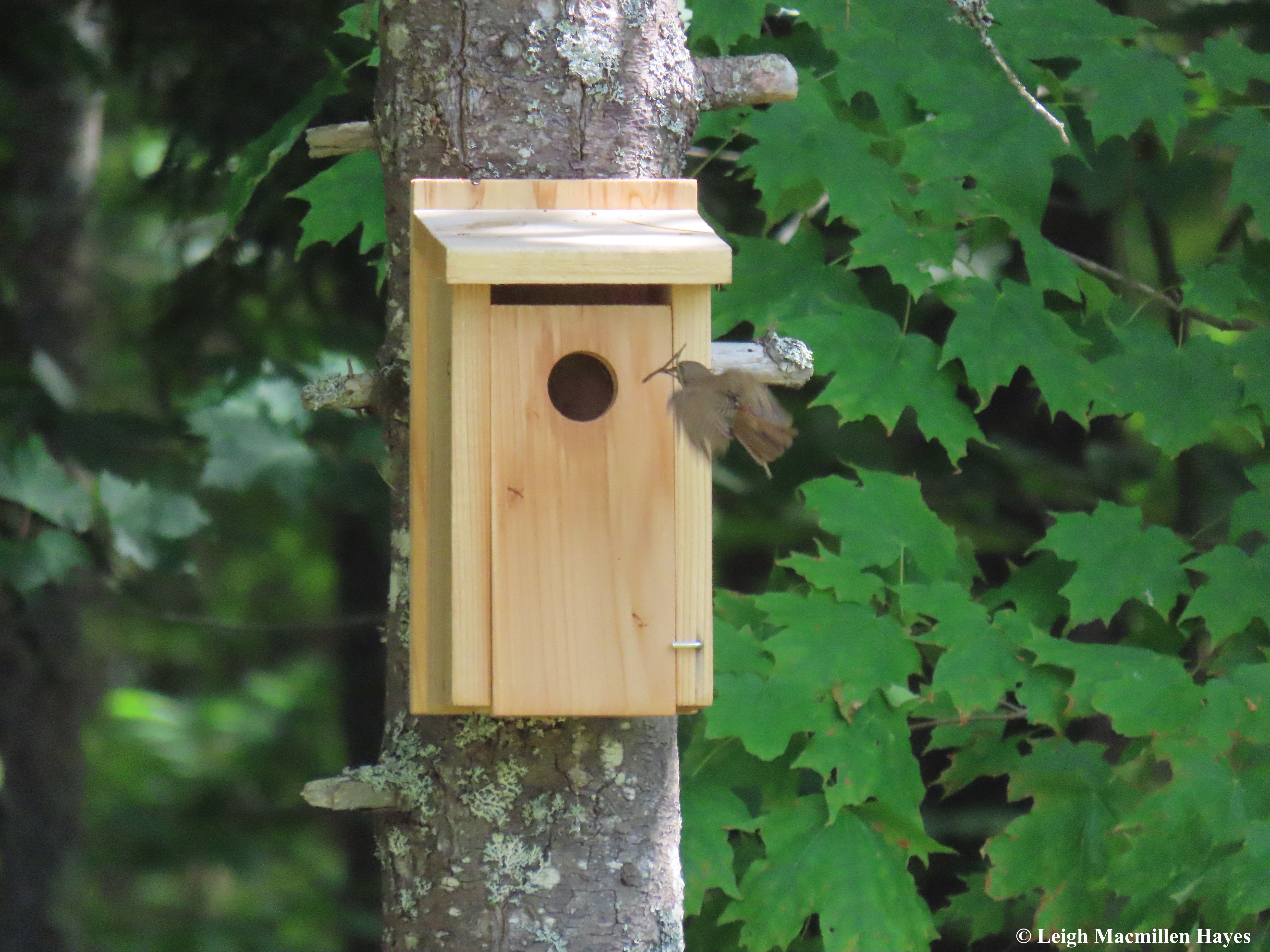
Smaller sticks worked well, but those larger ones were much more entertaining from my point of view.

And then there was a really complicated one. Such a challenge.

But a little wiggle here and waggle there and voila. The stick was in the hole. So was the bird.
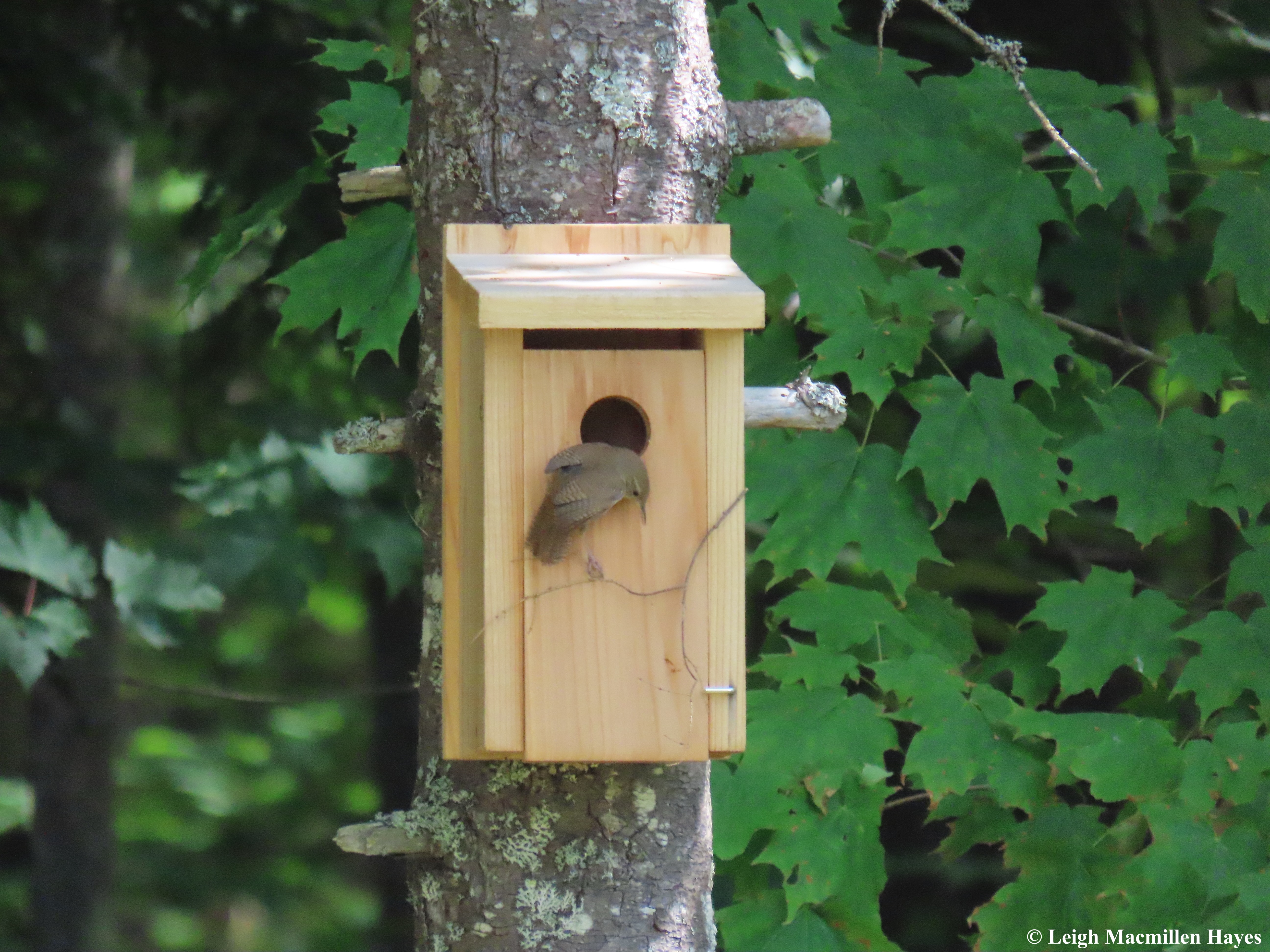
Until the next one. And then more contemplation.
But all things are doable when you persevere, so of course, another lesson learned today.

I’ve read that House Wrens fill several cavities and then let the woman decide. Smart birds. The jury is out in our neighborhood because my neighbor and I know that either he or another Wren keeps visiting a different birdhouse that the Bluebirds have also considered for their digs.
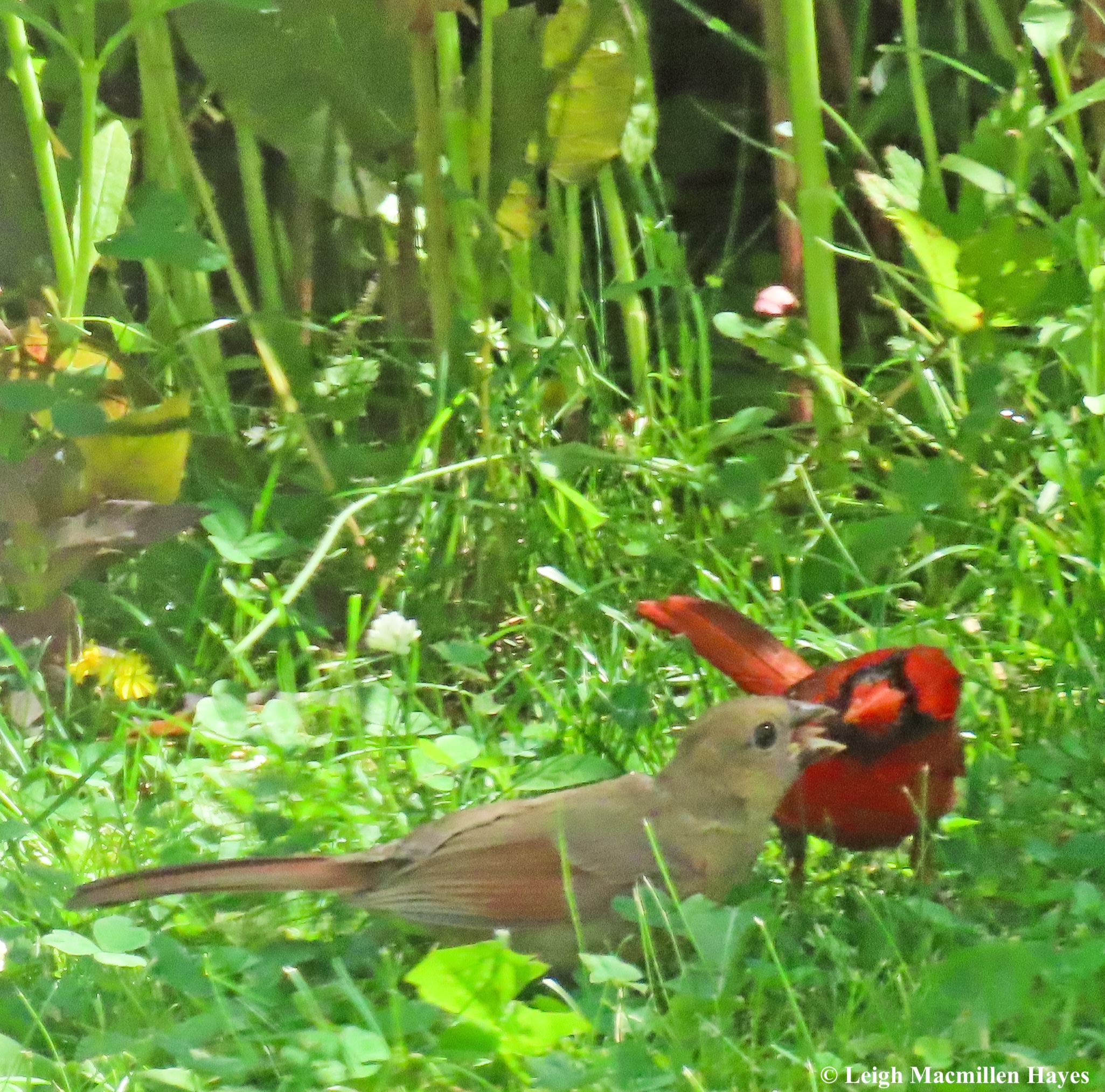
Heading back in, I suddenly heard a Cardinal, and suspected it was the male because I haven’t seen the female in at least a week. Through the glass in the back door, there he was, feeding a chick! We have a baby!
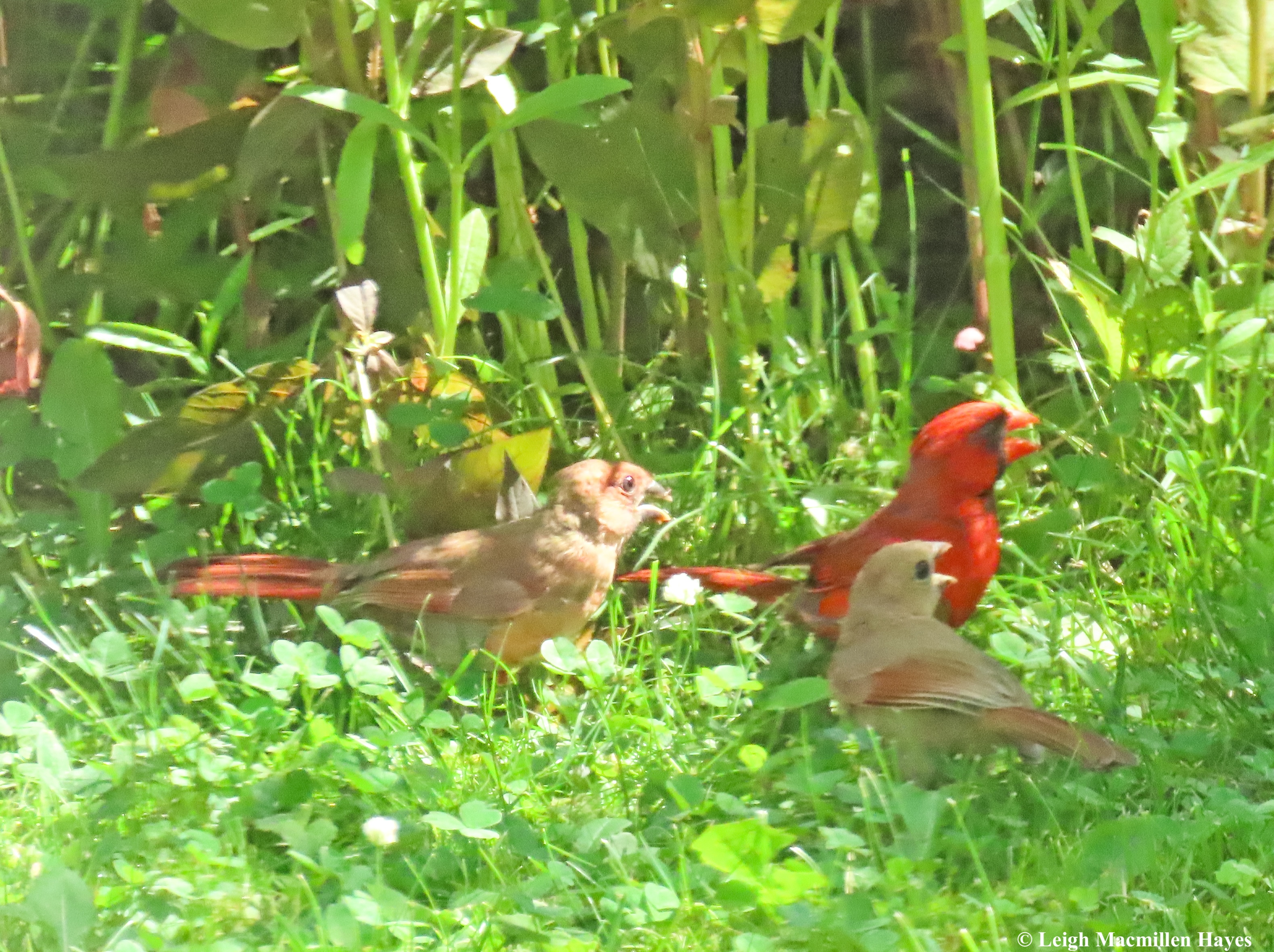
And then I realized he was feeding two babies, and my, were they ever insistent.

I must say, the chicks look much more like their mother than their father. But he did a great job of tending to their needs, ever the nurturing one.

Today has been really hot, and I know you are all aware of that, but in the heat I managed to be present in so many moments and give great thanks for that.
Spring In Our Steps

Early spring, that time of transition when it feels as if the world has slowed down, is one of my favorite times of the year. Oh, besides all my other favorite times that is–like tracking time and dragonfly time and stalking insect time and . . . and . . . and.

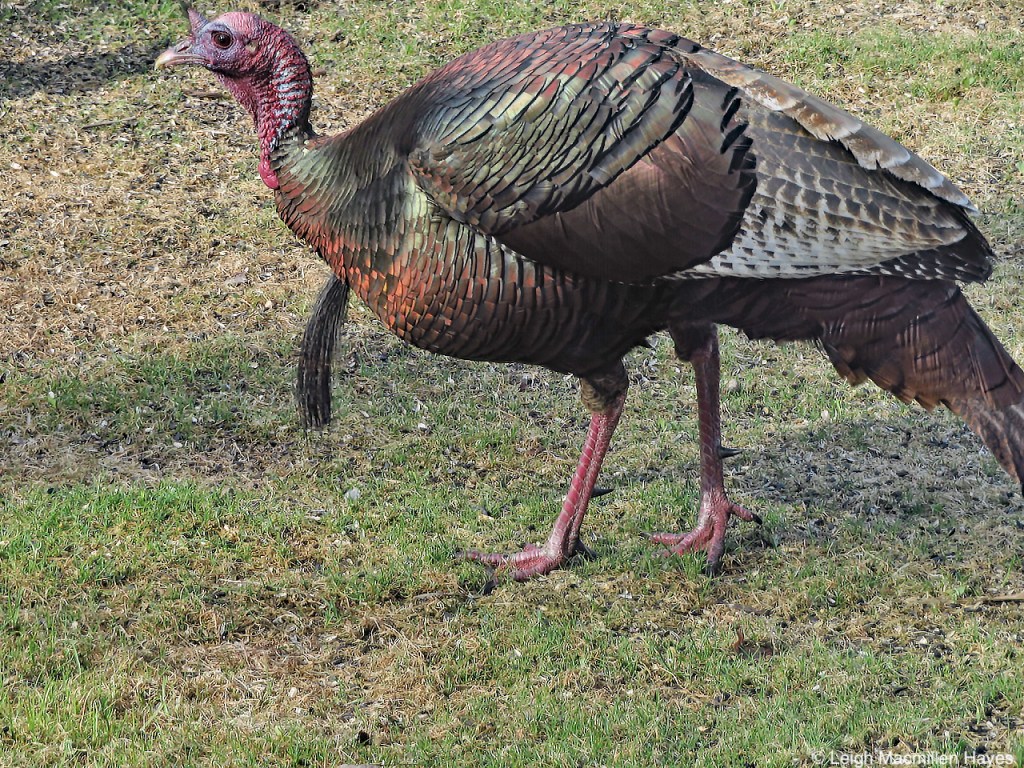
These days it seems my day often begins with a certain male visitor.

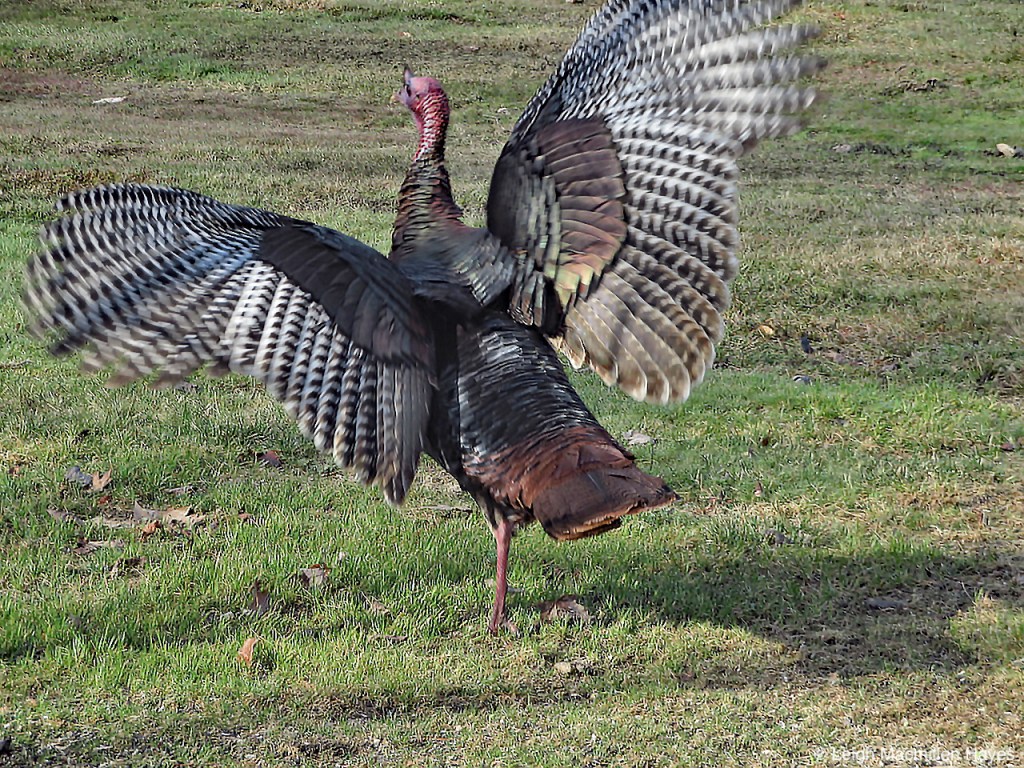
No, it’s not my guy, but another handsome fellow named Jake. At least I think that’s his name, based on the length of his beard, short conical spurs on the backs of his legs, and light red and blue head, which would be much brighter for his elder named Tom. It doesn’t matter for in the morning sunlight he gleams and makes me realize that he embodies every color of the rainbow.

We typically spend a few minutes together before he departs and I know that means it’s time for me to do the same.

To ensure there will be more of these little water tigers, I discover two adults canoodling.

In its adult form, the beetle backs up to the water’s surface and captures air under the elytra, or firm front pair of wings where the spiracles or respiratory openings are located. (Think external pores) The challenge is to carry enough air to breath, but not too much that might cause them to sink. That said, I frequently watch them surface and then swim off after an oxygen grab, but storing that air for at least ten minutes serves them well while mating for they certainly don’t have a plan to rise for a refill.

If you’ve never watched a pair of Predacious Diving Beetles mate, this is worth the eleven-second clip. It was a first for me, and what a frenzied time it was.

Ah, but there are other things to look at in a pool and so I pull myself away from the canoodlers and begin to focus on the result of some other interaction, this being egg masses of Spotted Salamanders. One evening in the past week, a male Spotted Salamander deposited spermatophores that look like tiny pieces of cauliflower on the pool floor. A few nights later a female picked up sperm from the small structures and internally fertilized her eggs, which she later attached to the small branch in the water. If you look closely, you might see the gelatinous matrix that surrounds the mass.

Likewise, Wood Frog egg masses have also been deposited and their overall structure reminds me of tapioca. In no time at all, the embryos began to develop, but it will still be about three weeks before the larval tadpoles hatch.

Because I was looking, I had the good fortune this week of spying another tiny, but significant critter swimming upside down as is its manner–a fairy shrimp. Fairy shrimp don’t feed on the embryos but rather filter algae and plankton with eleven pairs of appendages, which they also use for swimming and breathing.

Similar to the Predacious Diving Beetle, in order to digest food, a Fairy Shrimp produces a thick, glue-like substance to mix with a meal. My awe with Fairy Shrimp remains in the fact that after a female produces broods of hardy eggs called cysts, they lay dormant once the pool dries up and don’t hatch until it rains again the following spring or even years later.

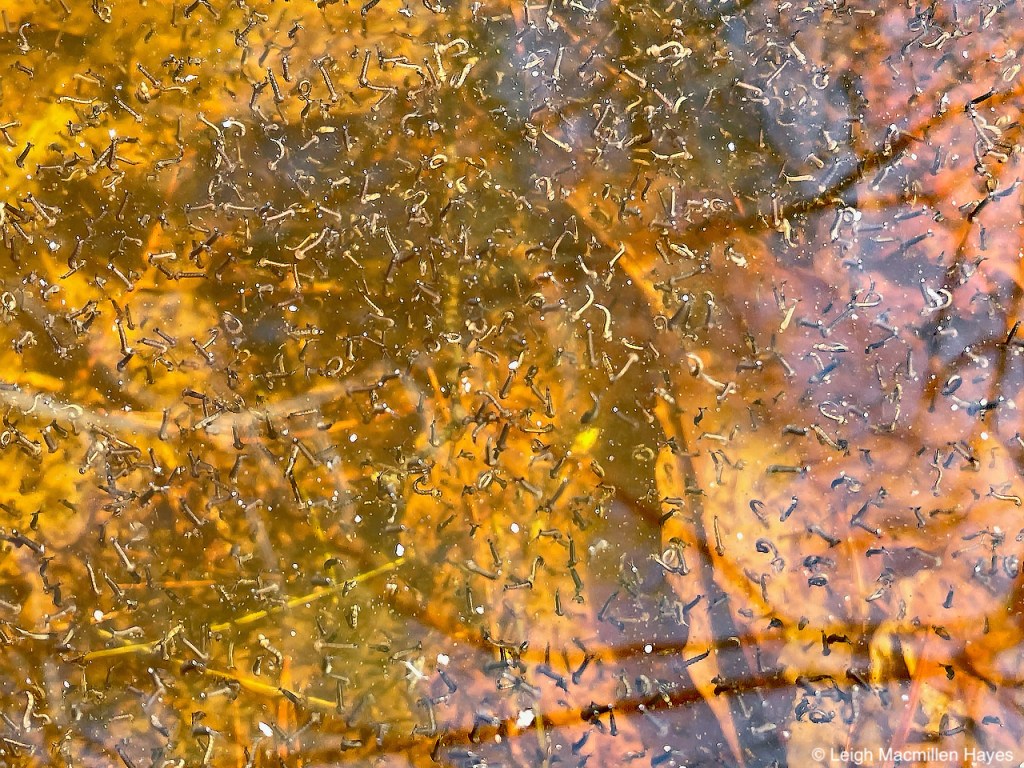
I could spend hours searching for Fairy Shrimp and other insects and in fact, do even marvel at the Mosquito wrigglers as they flip and flop their way around.

You, too, may watch them by clicking on this short video. And remember–they eventually become great bird and insect food.

By now, I suppose it’s time to honor other more beautiful sights of spring, including my favorite first flower of the season, the tiny spray of magenta styles at the tip of Beaked Hazelnut flowers waiting for some action from the male catkins.

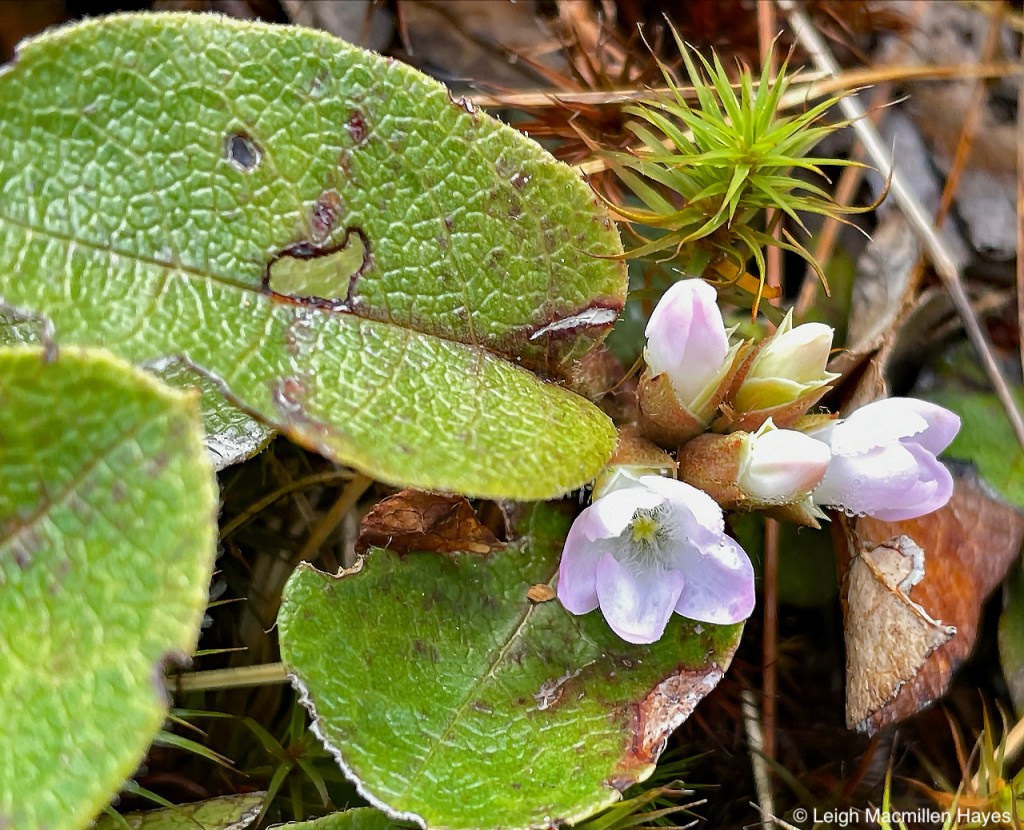
And yesterday’s most delightful surprise, the first blooms of Trailing Arbutus on the forest floor. Known as Mayflowers, they usually open in April. Just to confuse us.

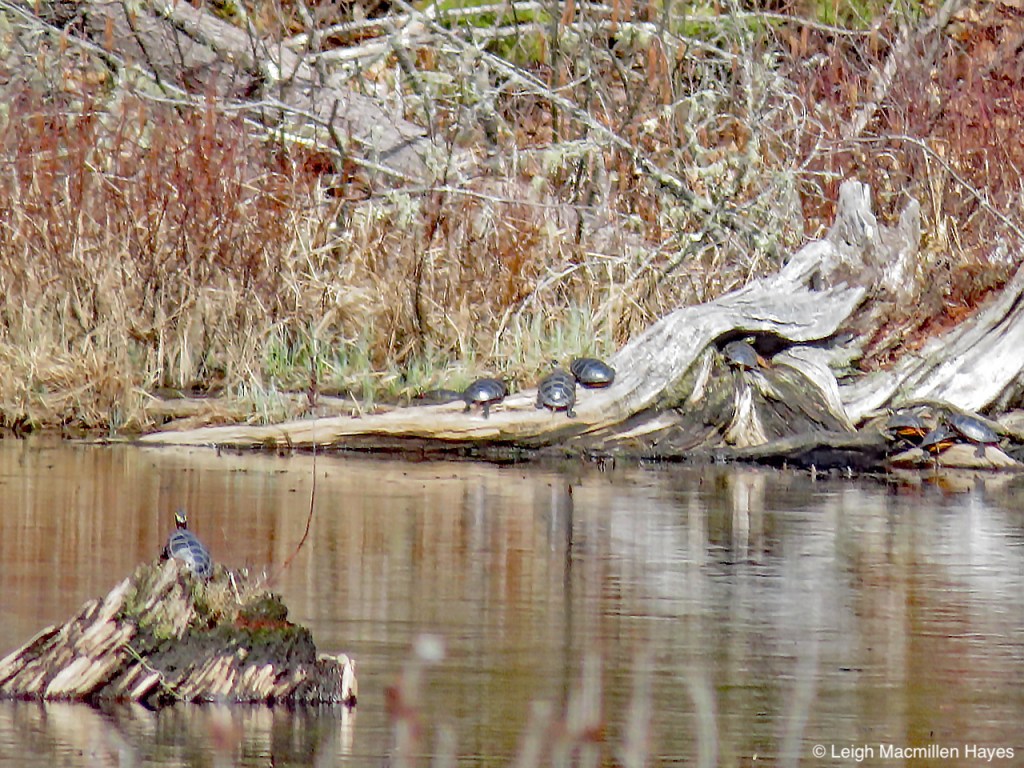
Standing for a while beside a river rather than a pool, another of my favorite sites was an abundance of Painted Turtles basking. No, they aren’t sunbathing to get a tan, but rather to raise their internal body temperature. Being cold-blooded, their body temperature is determined solely by the temperature of the surrounding environment.

In the same neighborhood a pair of Belted Kingfishers could be heard rattling as they do in flight and then seen preening and it seems that love is not only in the water, but in the air as well.

Likewise, a Song Sparrow or two or three trilled their lovely notes to announce their intentions to any who would listen.

And then today dawned–and with it a spring snowstorm graced this part of the world and all who live here, like this Sheep Laurel with buds still tiny.

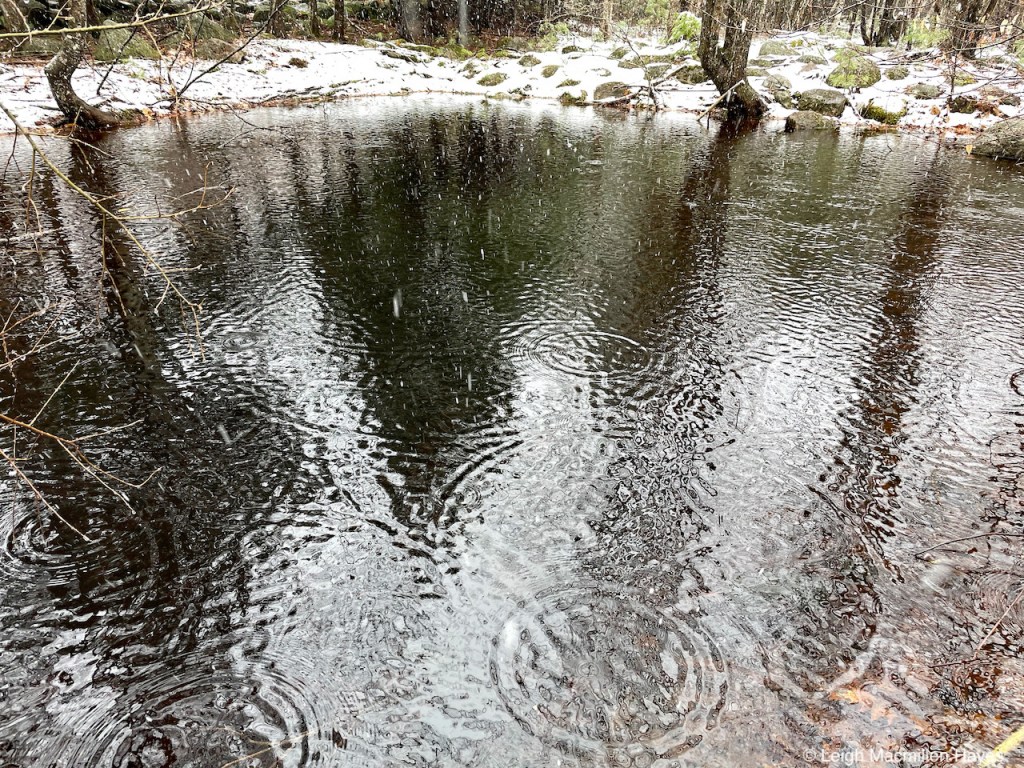
Back to the pool went I, where the only action seemed to be snow striking its surface and creating rippled patterns in constant flux.

Some of the snow drops were so large that bubbles reflecting the canopy above formed. Under water, I couldn’t see any action and finally turned toward home, trusting all the swimming critters were tucked under the leaves in an attempt to avoid the rawness of the day.

There was one more stop to make, however, before I headed in. On December 1st, 2020, upon this very same tree, I watched slugs for the last time last year as documented in a post entitled “My Heart Pines.” It was a squirrel midden that had attracted me to the tree, but so much more did it have to offer on that day.

Today, as I searched for slugs, I was equally surprised for just as I found last year, once again the froth that forms on pines as the result of a chemical interaction when rain drops pick up oils and air in the bark furrows bubbles through that oily film and the end result is pine soap never ceases to amaze me. Even in snow, I learned, it can occur. Plus there was a subtle rainbow of colors.

Ah, but it certainly didn’t match the colors Jake displayed.

Today’s snowfall will melt by tomorrow and only be a memory of that year it snowed on April 16. We’ve had much bigger April storms than this one turned out to be and henceforth Jake and I will walk with a spring in our steps.