Walking My Thoughts Among Life and Death

People present me with cool gifts and yesterday was no different. First, I received an email from a friend asking if I could ID a bug she’d found on the ground following a quick but harsh storm on Wednesday night. And after I did so, she asked if I’d like it for my collection.
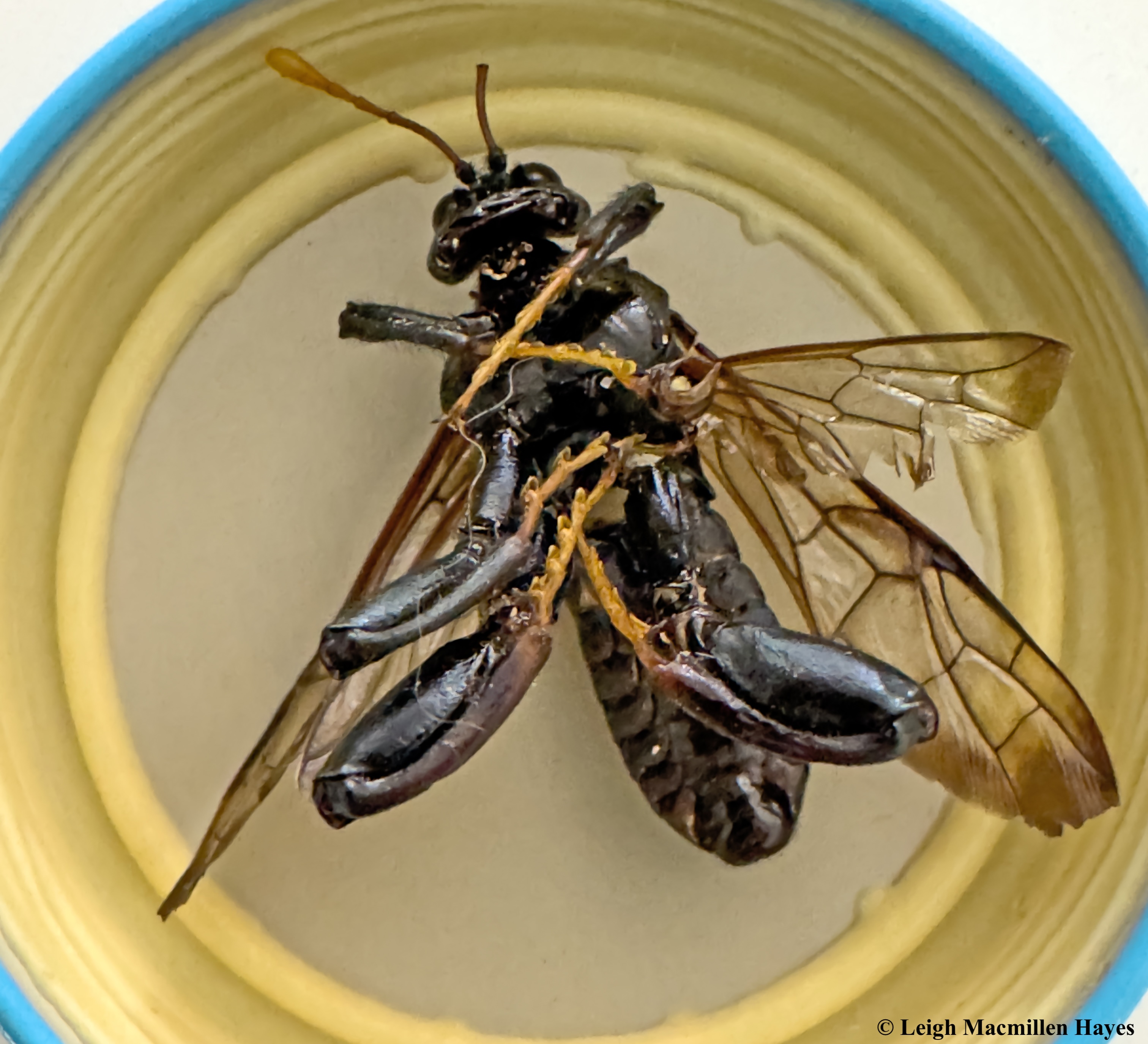
Like it? I’d LOVE it. Look as those beefy legs. All meat on the femur and tibia, which give this insect a rather mean look. That and it’s size. From head to tip of abdomen it measures 1 1/4 inches, and it has a wing span of 1 7/8ths. Not one you really want to meet in a vacant alley.
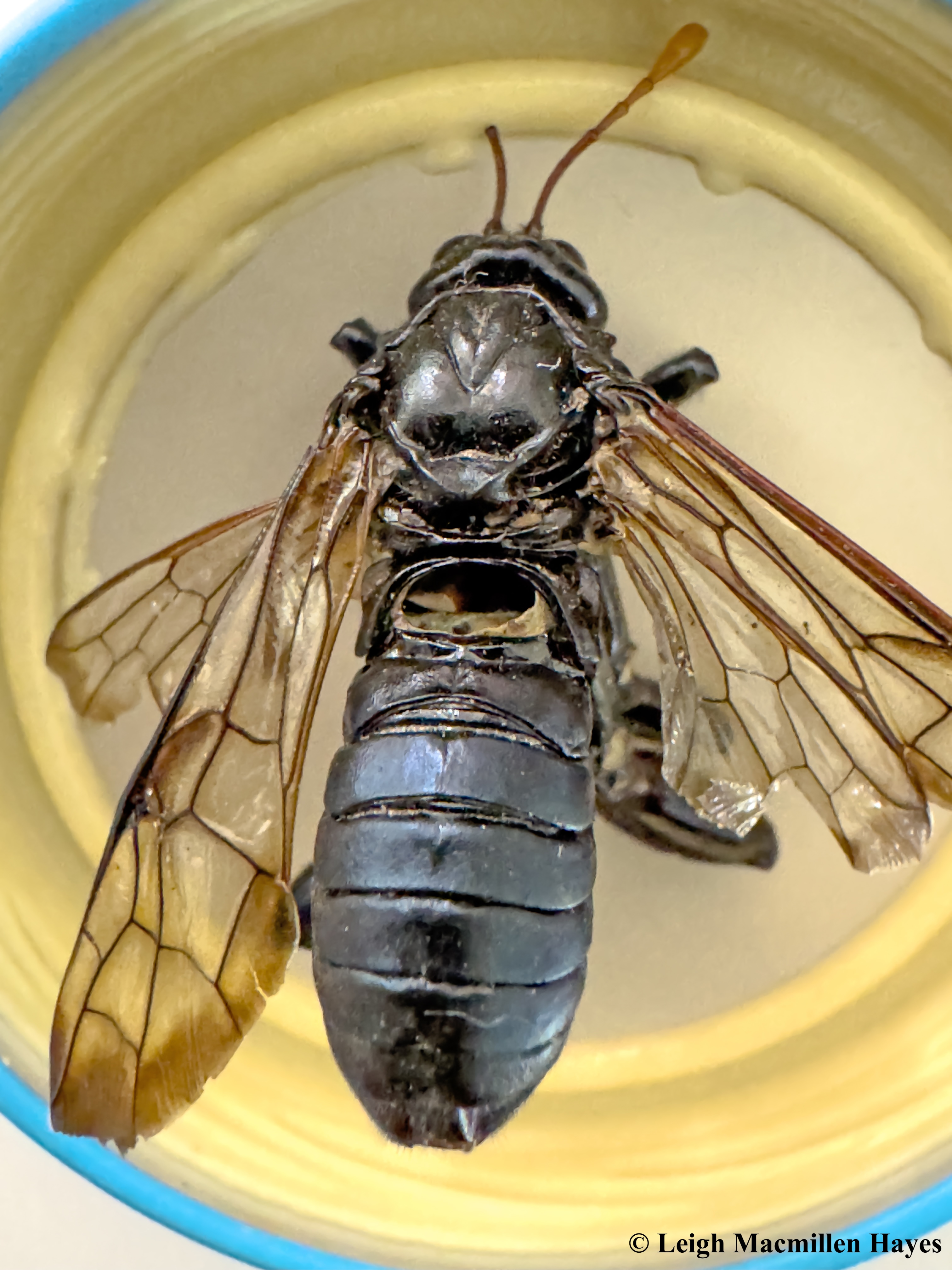
Before I was gifted this creature, I asked if it had a whitish spot on at the top of the abdomen and was correctly informed that it did not.

Except: upon closer inspection after I picked it up from Kappy yesterday, I discovered that it did indeed have such, only where the spot had been was now a hole. And it appeared that the guts had been sucked out of it.

That got me to thinking about the weather this past week and the Bumble Bees I went in search of during some rain on Thursday. All were taking a mid-day siesta as they clung to flowers and water droplets formed on their bodies.

Some had been better at locating a spot under the foliage, but by the matted hair on the thorax, it didn’t seem to make a difference. Wet is wet.

And one I thought was rather silly because it could have easily climbed into the Hosta flowers to sleep, but instead chose the outside upon which to wait out the storm. It really wasn’t much of a storm on Thursday, but rather a pleasant summer rain that we needed.

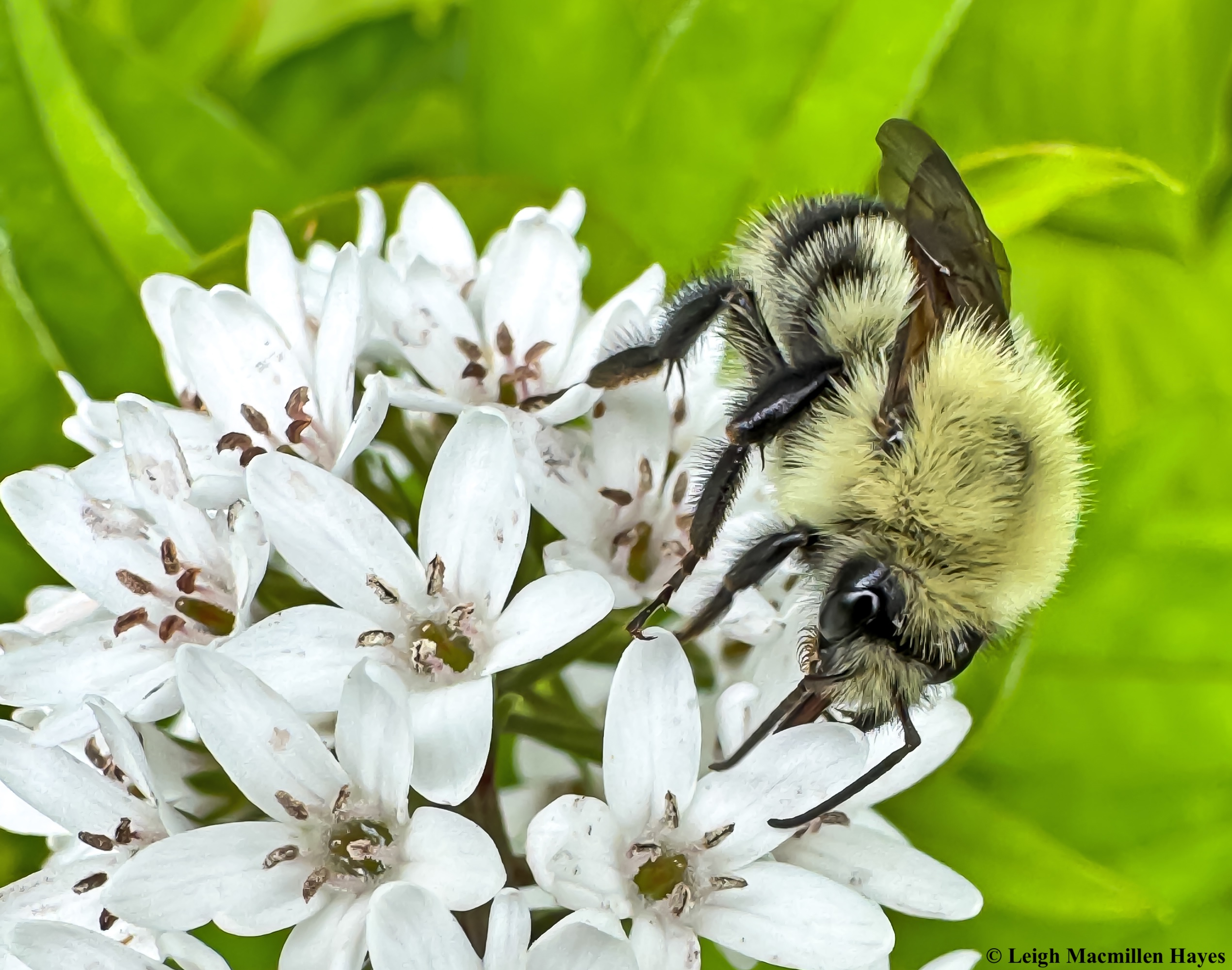
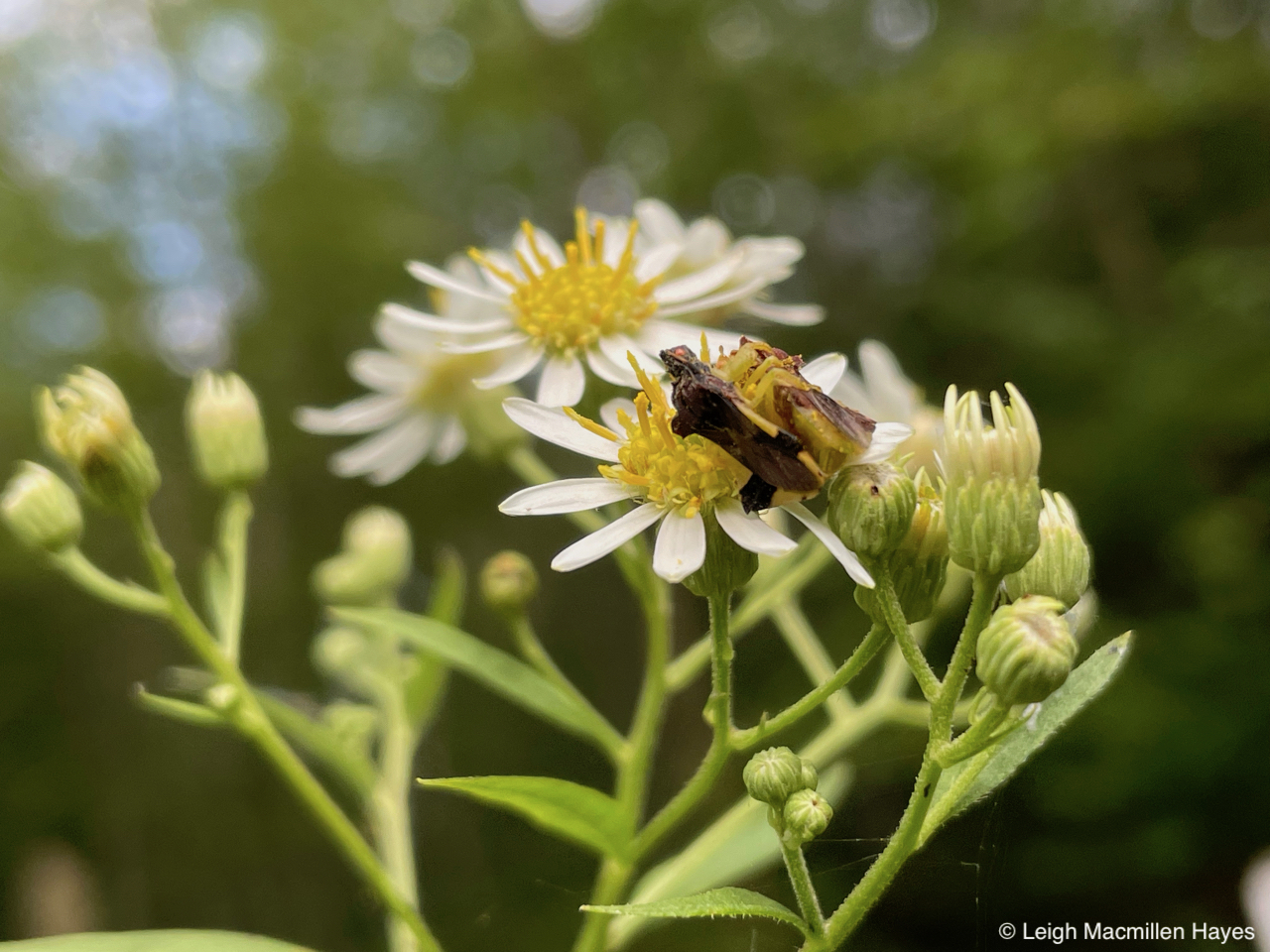
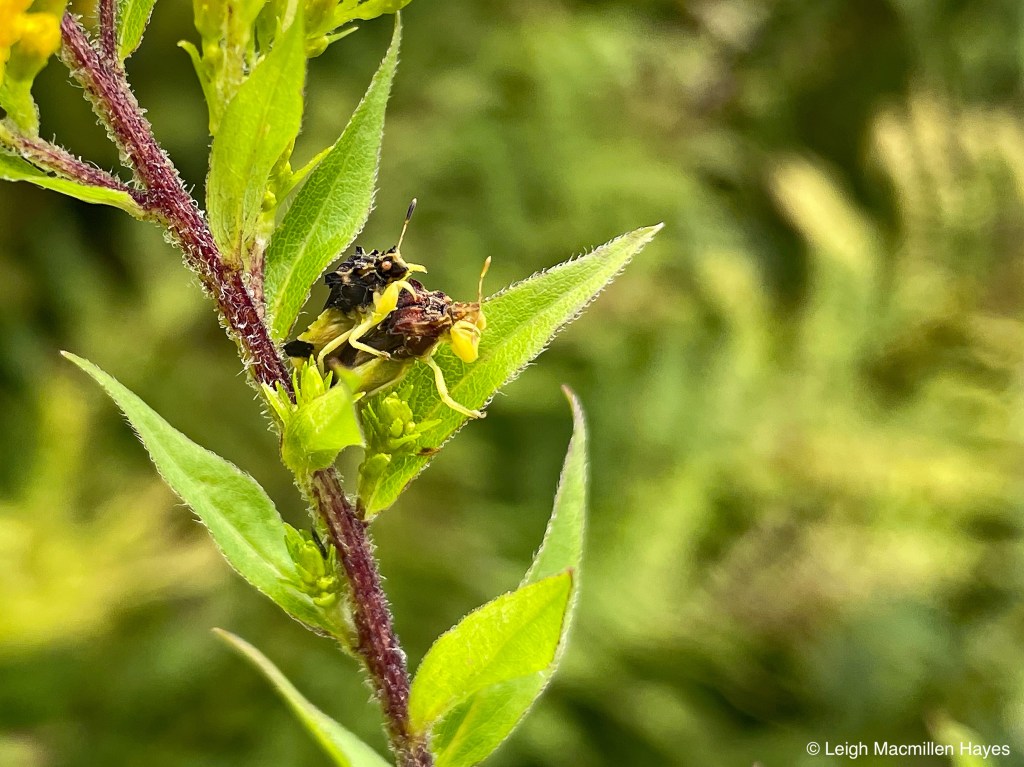
Then on Friday I found this sight, an Ambush Bug using its raptorial legs to hold its prey, a Bumble Bee.

At less than a half inch in size, Ambush Bugs sit silently on or under flowers, waiting for the right moment to do as their name implies and ambush an insect with their hooked forelegs, then inject a venom to immobilize the victim. They also inject a liquifying fluid that turns the prey’s insides into a buggy milkshake, the summer drink that they slurp through a straw-like beak.

Knowing they can take down prey many times their own size, I began to wonder about my bees and the Mighty North American Elm Sawfly (the larvae of which, I’ve just learned feed on foliage of willow, birch, maple, cottonwood, aspen and other poplars, and of course, elm trees).

I wondered if the rain on Wednesday night and again on Thursday, helped the Ambush Bugs because they had wet and lethargic insects clinging to flowers or leaves and just waiting to be victimized–in a buggy sort of way.
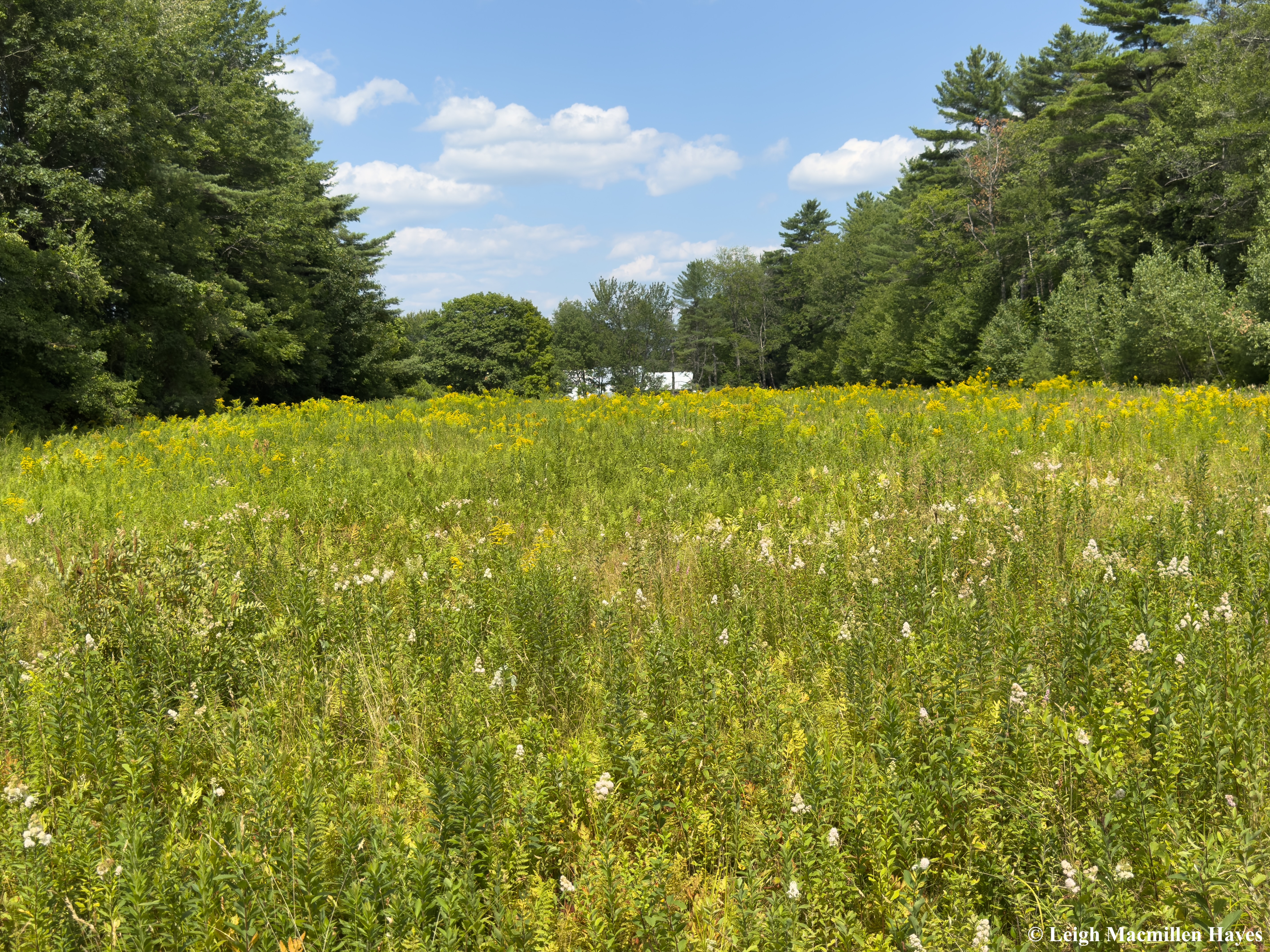
I’ll probably never know, but today, I headed out to the field, which I’ve decided is actually a meadow, and I think I’ve said that before, to see if I could find more Ambush Bugs.
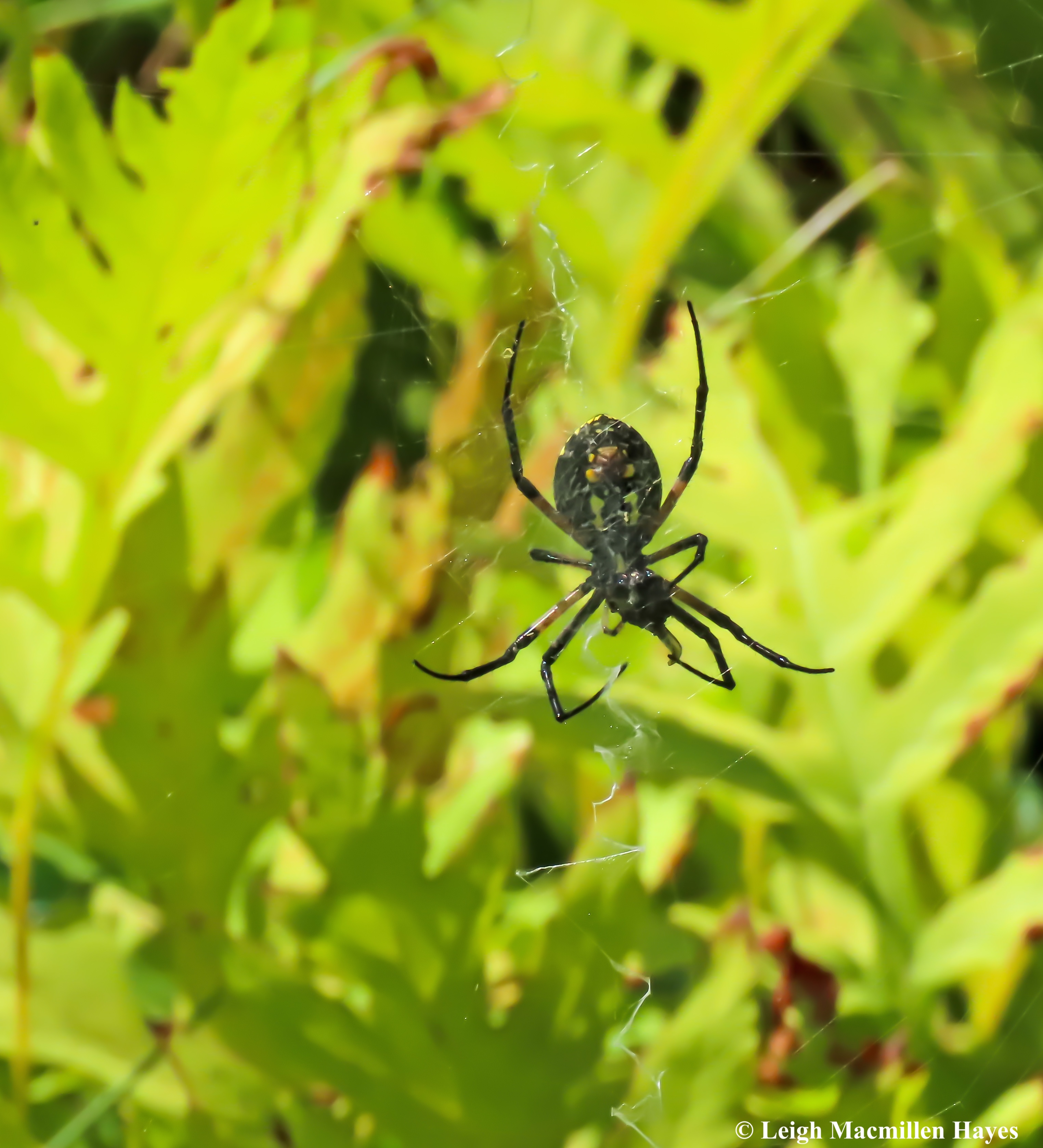
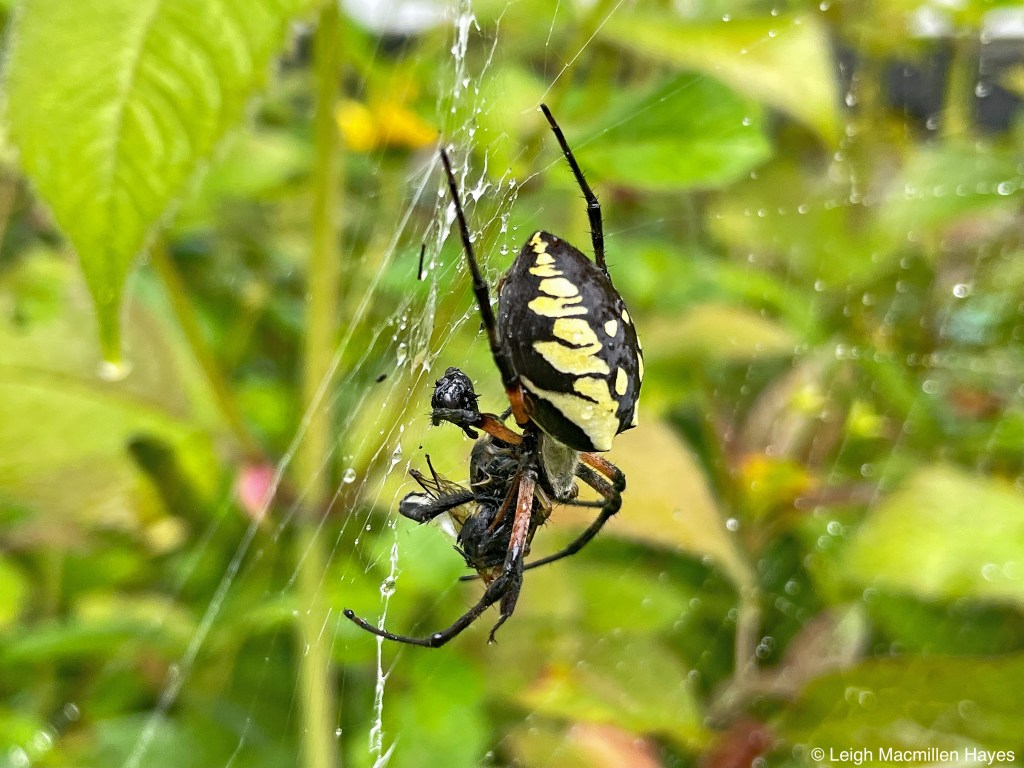
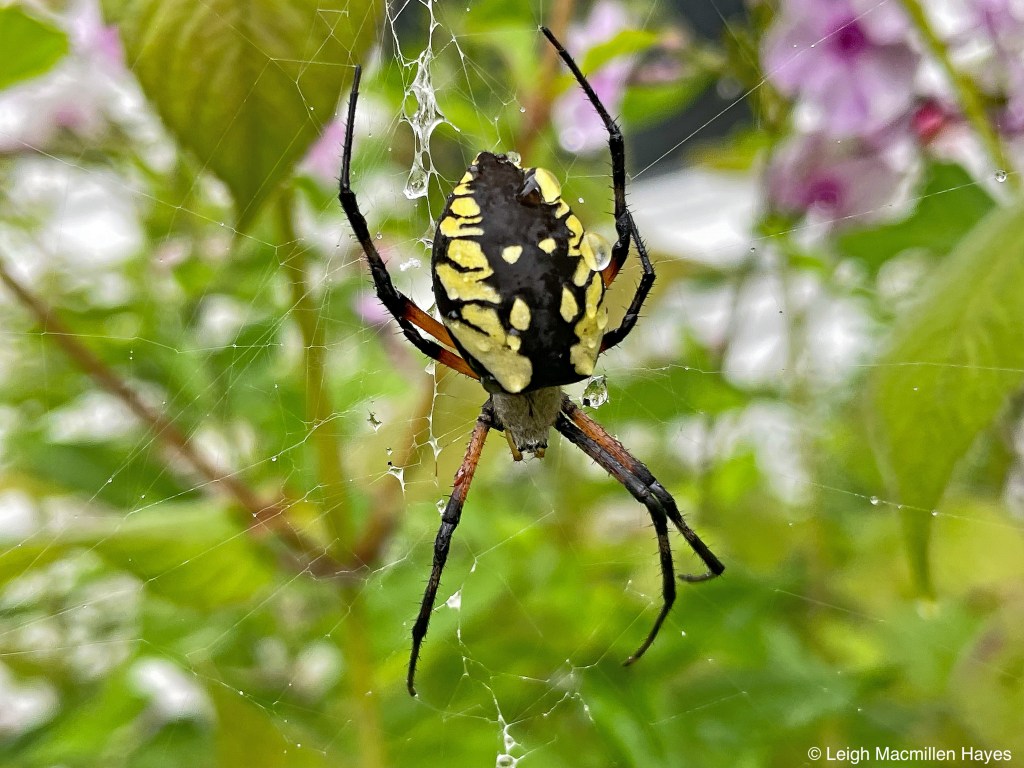
My neighbor, Karen, who owns the field, saw me and followed a cutover path her husband created (mowed) and we met in the middle to chat for a few minutes. And then, as we were about to go our own ways, we saw a species the two of us have been seeking for several weeks now. The best part is that we saw the Black and Yellow Garden Spider at the same time.

As it turns out, when I checked my blog posts for last year, we spotted the first of this species on August 3rd. Well, I did anyway. I think Karen was a few days ahead of me, but once I had cataract surgery, the whole world opened up and gave me a Field of Vision I hadn’t experienced in a long time.

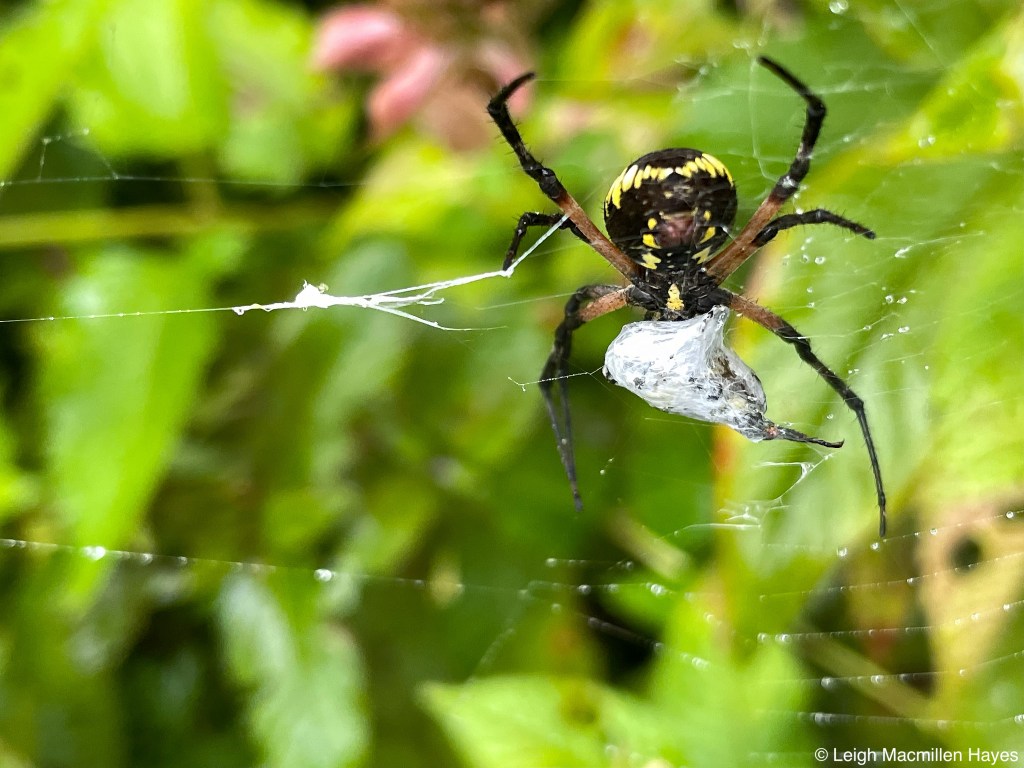
Today’s female was working on spinning a meal into a package, and it was difficult to tell what she’d caught. But that didn’t matter to us. We were just so happy to have spotted her . . . together.
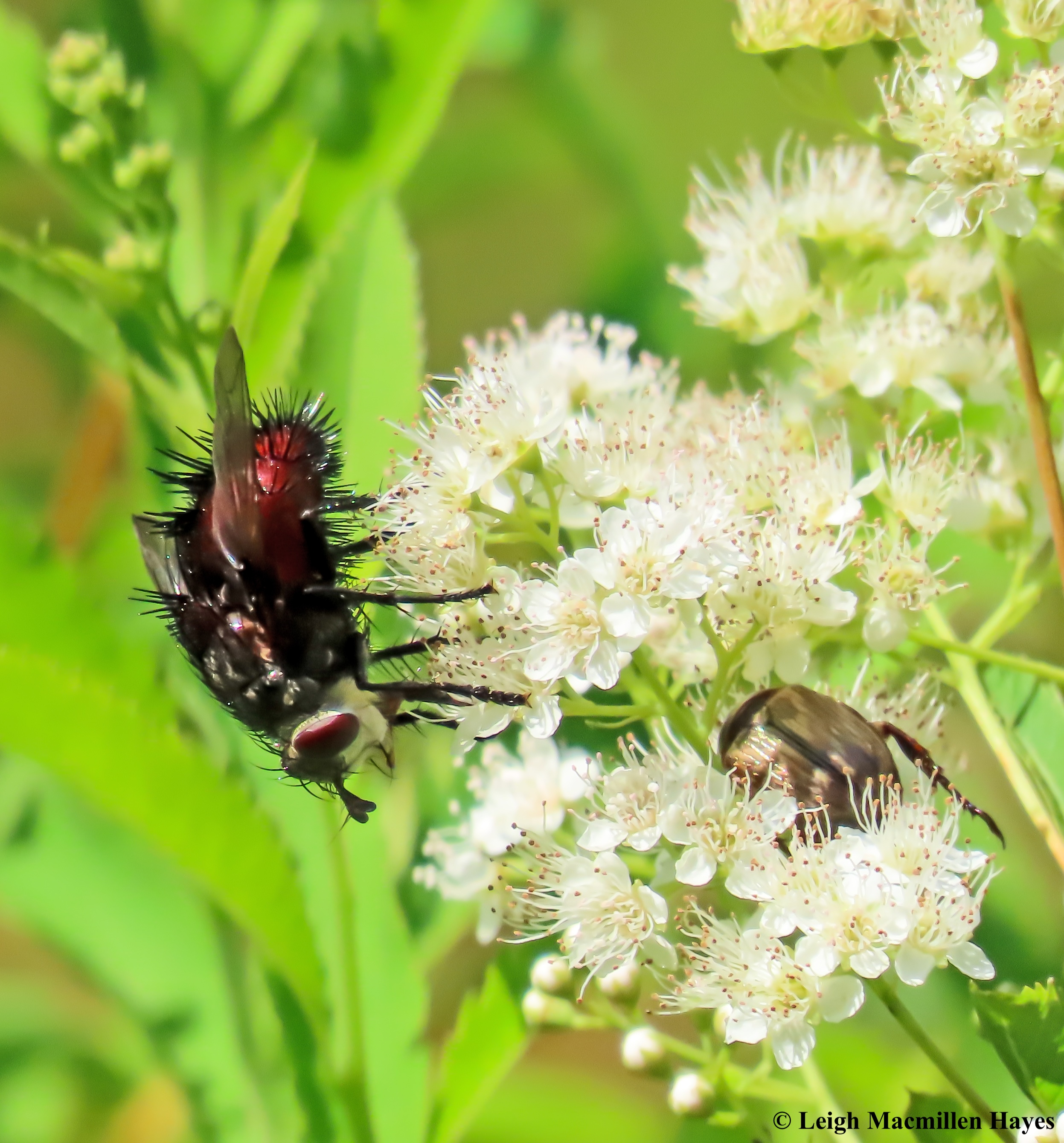
Later in the day I was back in the field, and again had a first sighting for this year–a Tachnid Fly, its dark oval eyes and bristly oversized body a giveaway. Tachnid Flies are considered beneficial because they dine on lots of other insects including sawflies (hmmm), borers, and green stink bugs, plus tent caterpillars, cabbage loopers, and spongy moth larvae.

Suddenly an interesting looking insect flew in . . . only it wasn’t one insect but two, and moving rather rapidly across the flower tops.
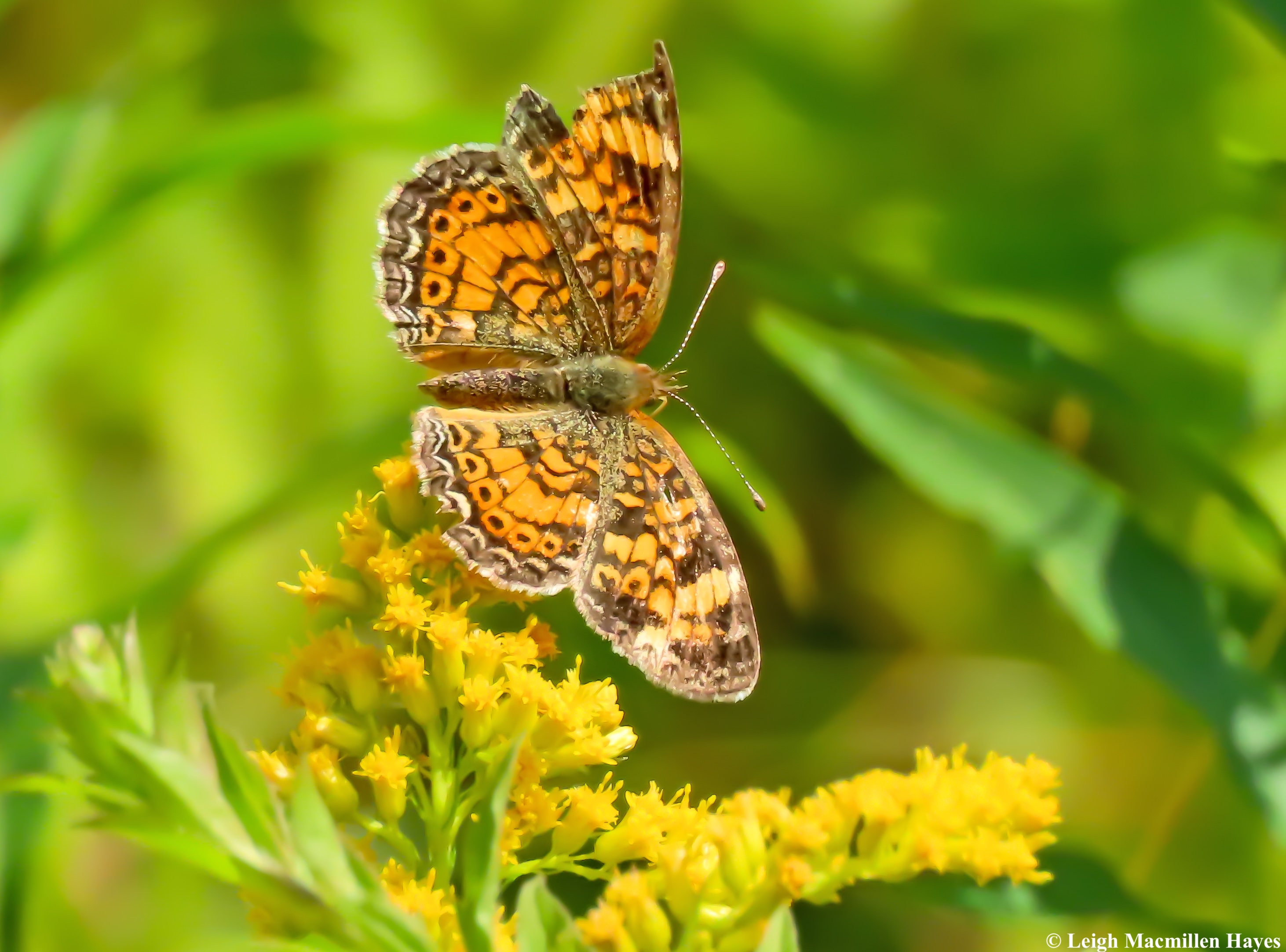
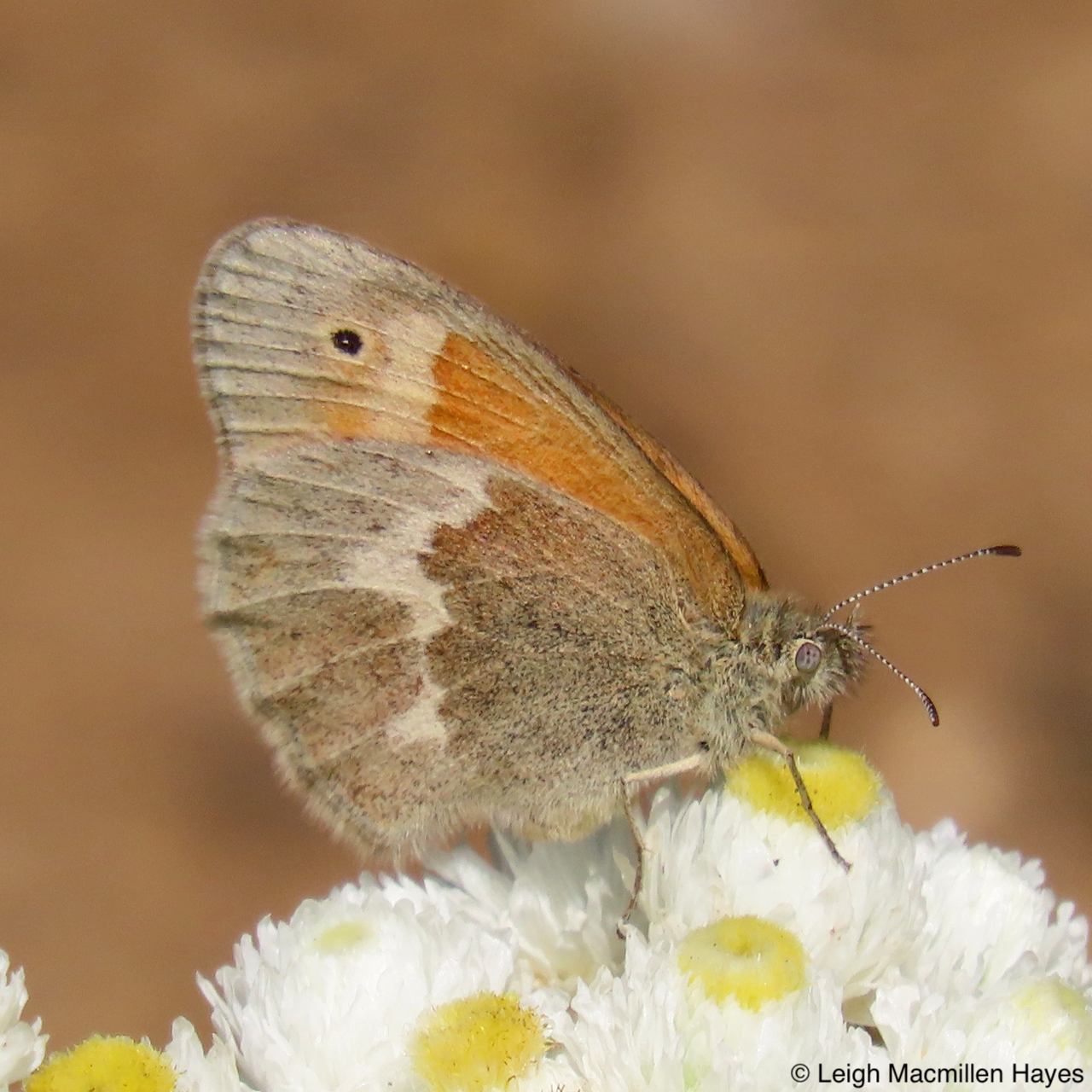
As they moved on, my eyes caught the action of a Pearl Crescent Butterfly, its forewing tattered and I thought of part of the conversation Karen and I had had earlier. She wondered where all the dragonflies have gone.

There are still a few Calicos and Spangles, and I suspect we’ll see more in the future, especially as the Meadowhawks continue to emerge, but our neighborhood was rich this year with birds nesting and many of the dragonflies became food for the young and I suspect this butterfly had a narrow escape at becoming such a meal. Bugs feed birds and that’s a good thing.

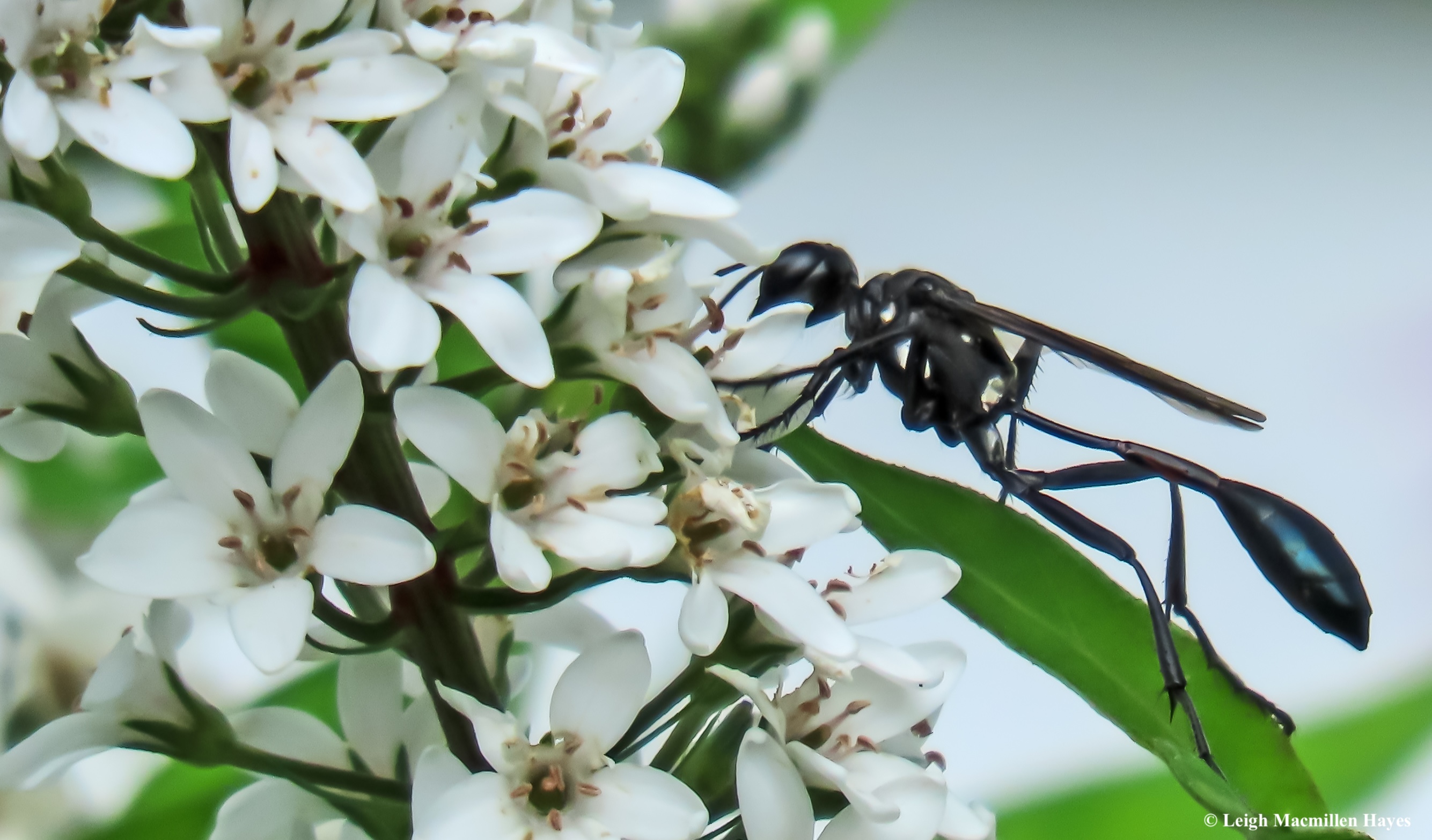
And then the Gold-marked Thread-waisted Wasps paused nearby and showed off their true canoodle form before moving on again.

At last my search paid off today, and I began to spot one Ambush Bug after another, laying in wait.

I just had to remind myself to look for insects hanging below flowers rather than buzzing about in true and frantic pollinator mode, such as this Yellowjacket. The Ambush Bug is by the left side of its face, but blends in incredibly well with the Goldenrod.
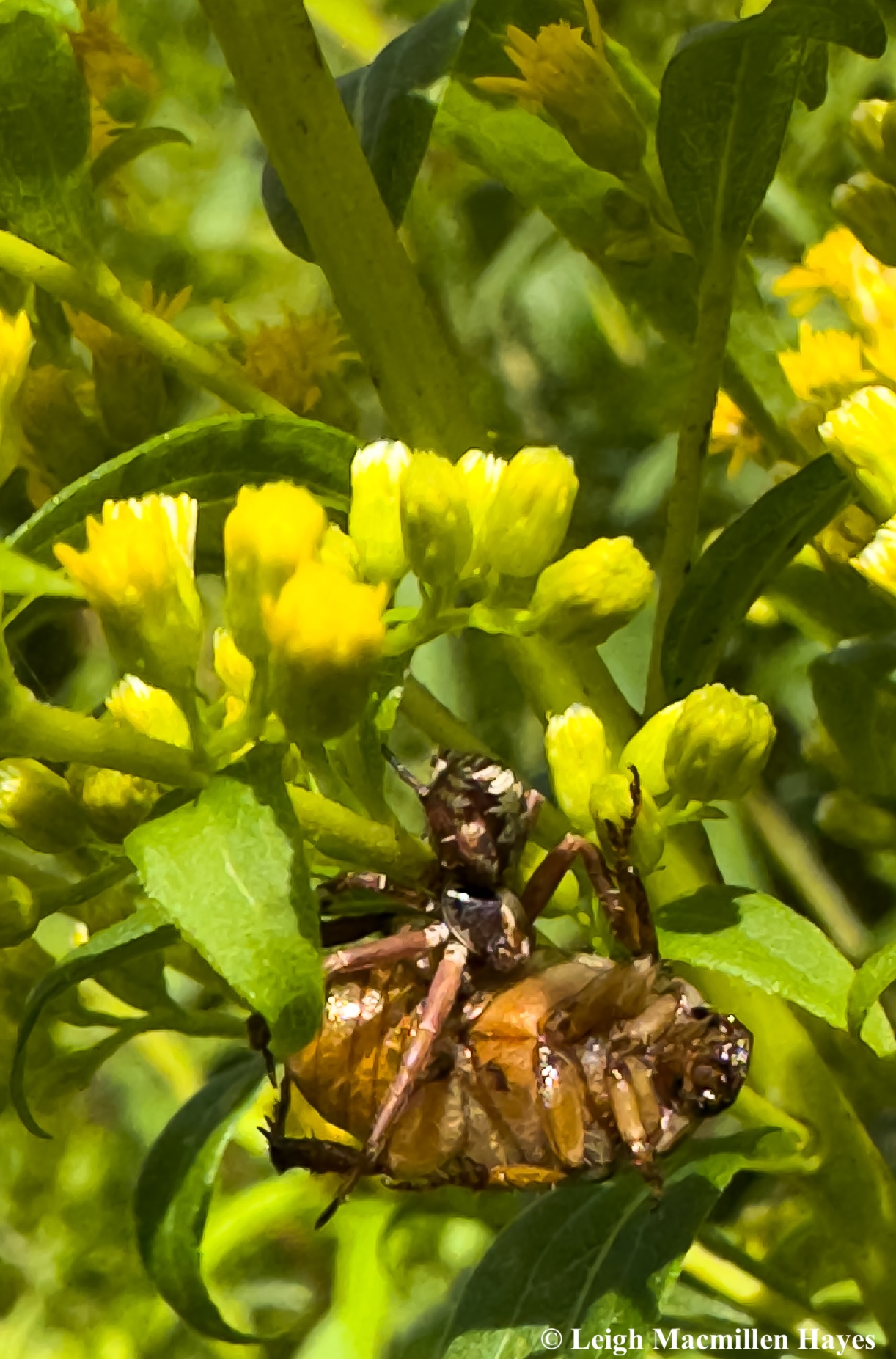
As it turned out, there were also spiders enjoying feasts much bigger than themselves.
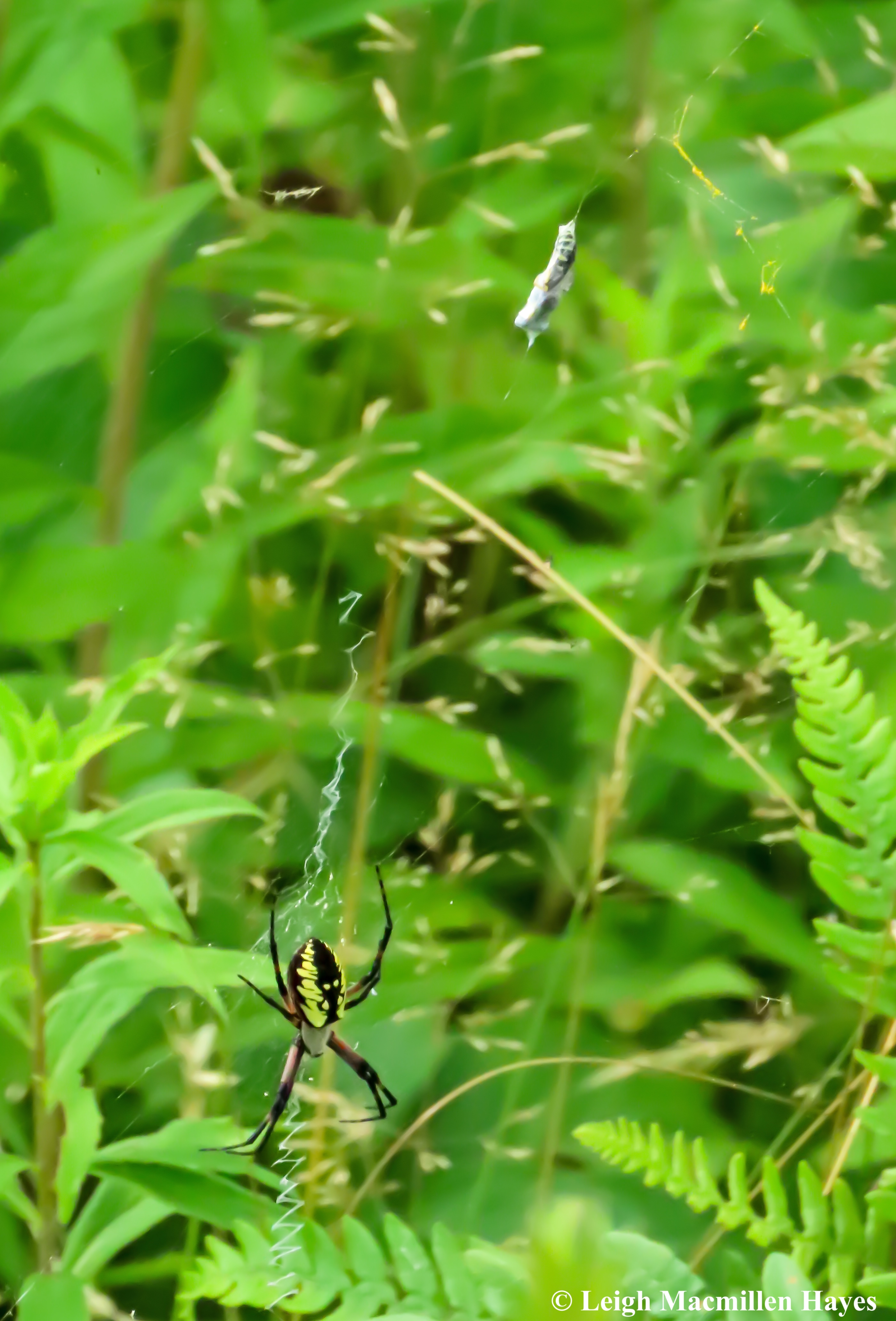
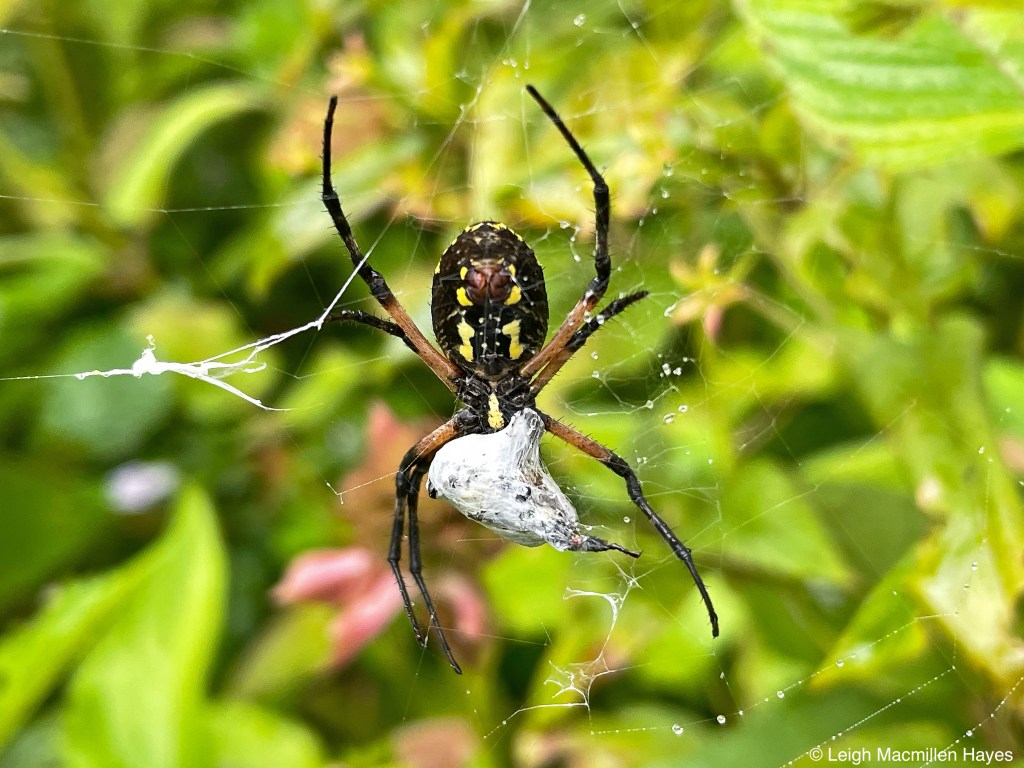
And then another Black and Yellow and then this, the third, with a packaged meal suspended in the web above.
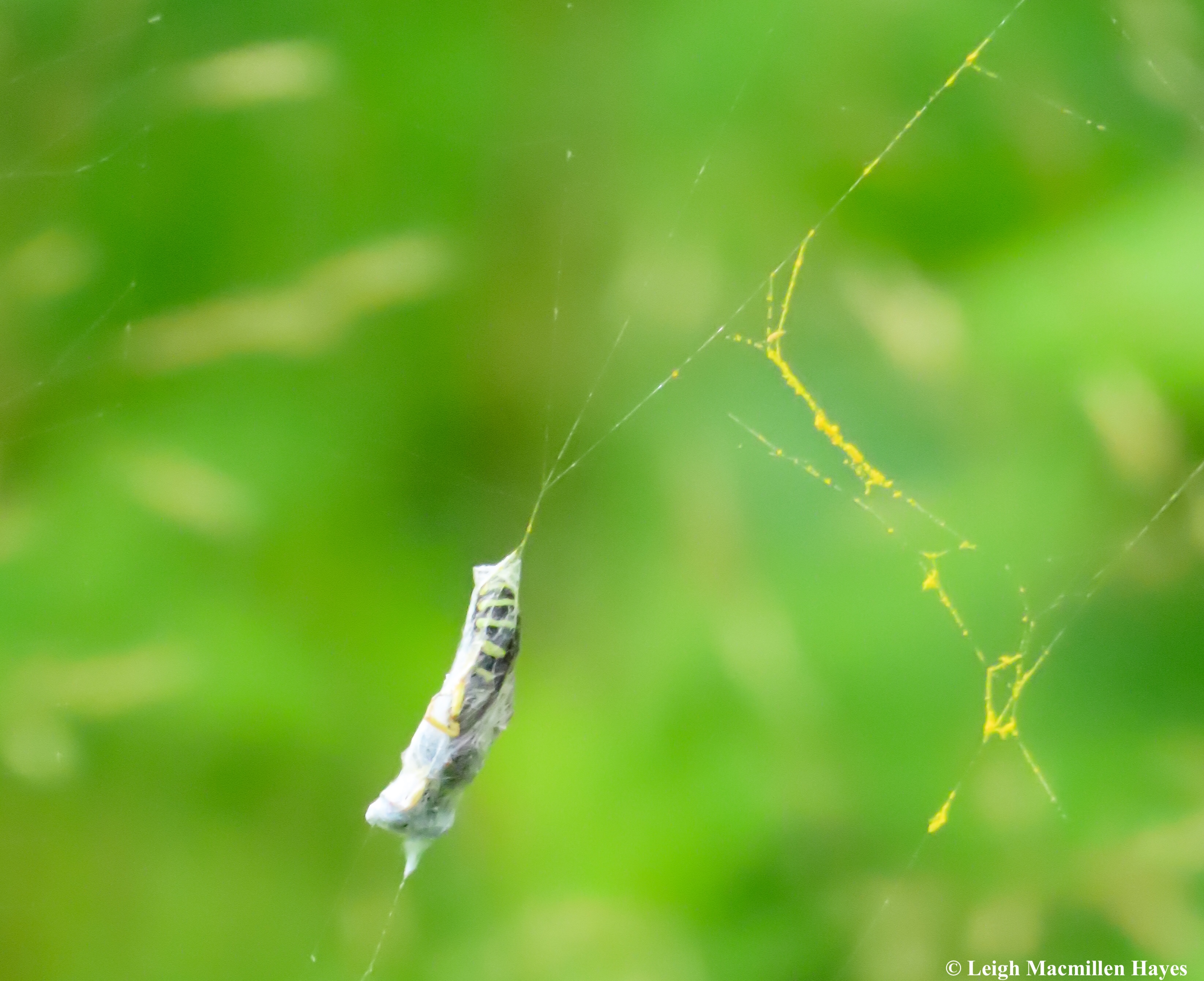
I couldn’t be sure of what species had been captured, but by its markings suspected it could be Locust Borer. What I loved even more than the doggy-bag meal, was the yellow Goldenrod pollen trapped on the spider web.
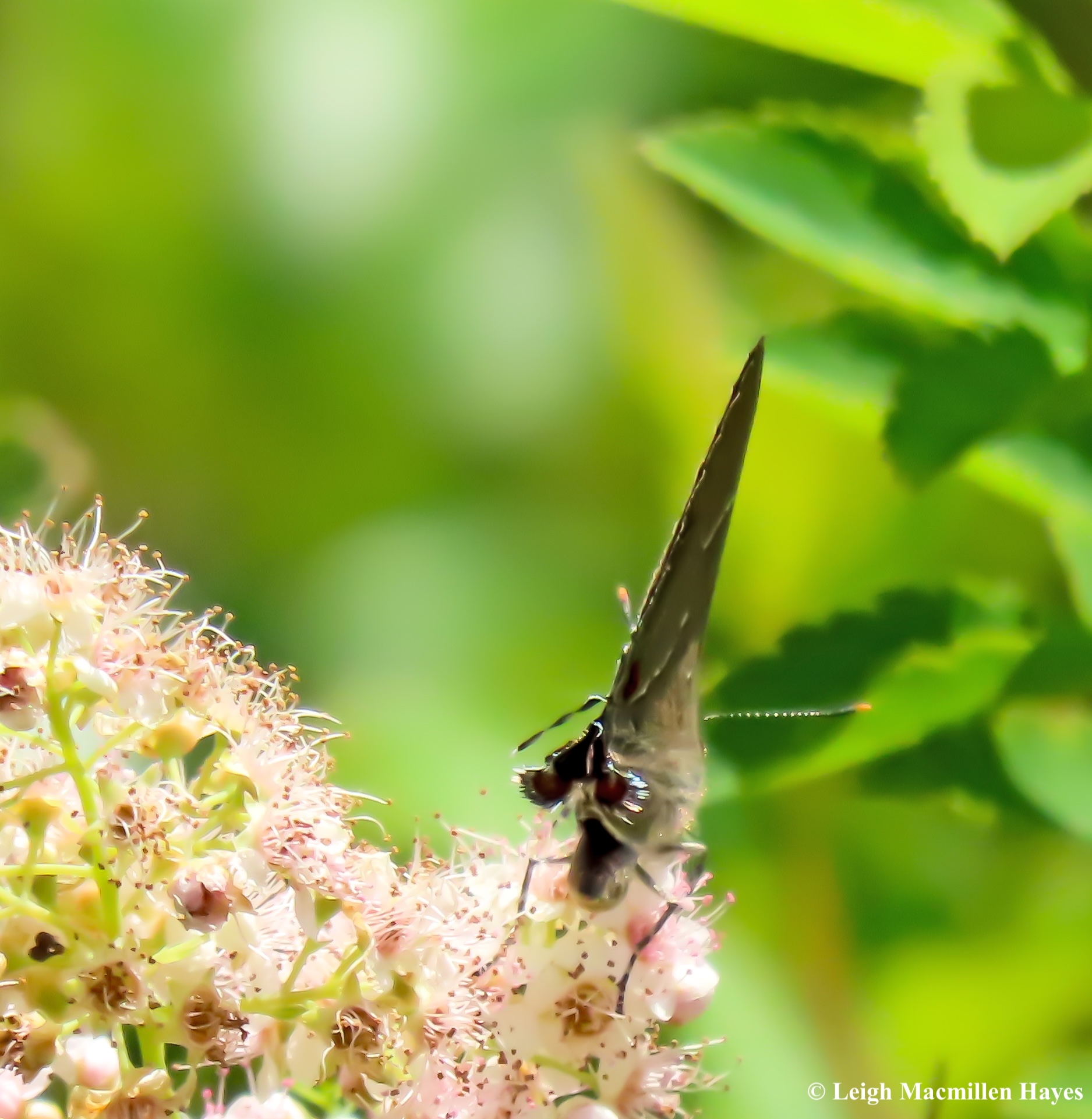
And then, as I circled back, I found myself looking at the butt end of a small butterfly I met for the first time in this very place last year.

This is a White M Hairstreak Butterfly. Do you see the upside-down M marking just below the orange on its hindwing? This is a RARE sighting! Well, I actually first spotted this species on August 3 of last year and contacted Ron Butler, one of the author’s of Butterflies of Maine and the Canadian Maritime Provinces, along with Phillip G. deMaynadier, John Klymko, W. Herbert Wilson, Jr, and John V. Calhoun. At that time, it was the furthest inland record, according to Ron. And here, one year later, we meet again. Well, not the same butterfly, but its offspring and I’m thrilled to realize that this is now part of its habitat.

What a day. What a week. I don’t have all the answers about life and death, but do love that I can take my thoughts for a walk in my neighbors’ field and try to gain a better understanding. Yes, bugs feed birds; and bugs feed other bugs; and the circle of life goes on and I’m always thrilled to watch so much of it play out and open my eyes and mind to the possibilities.
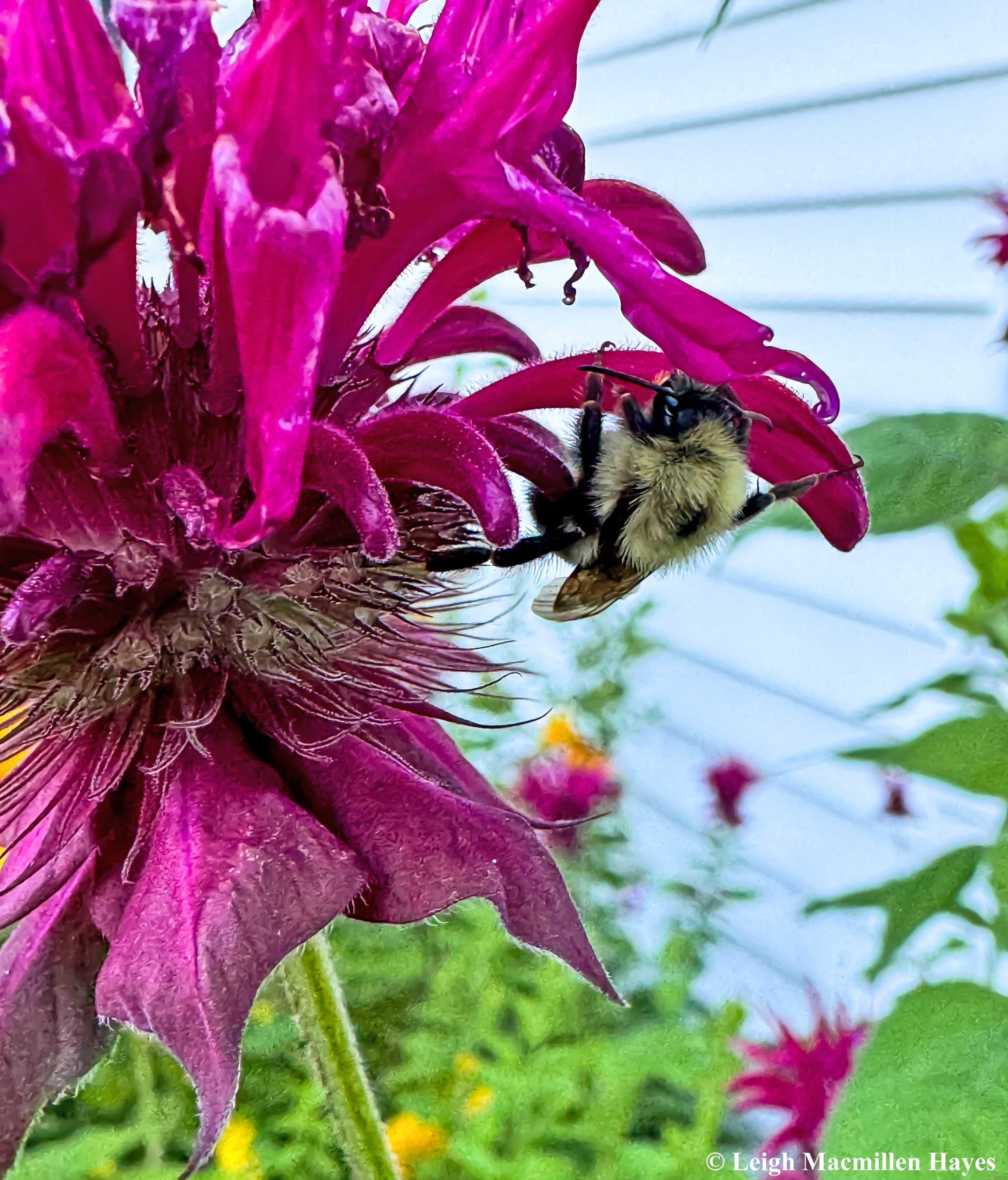
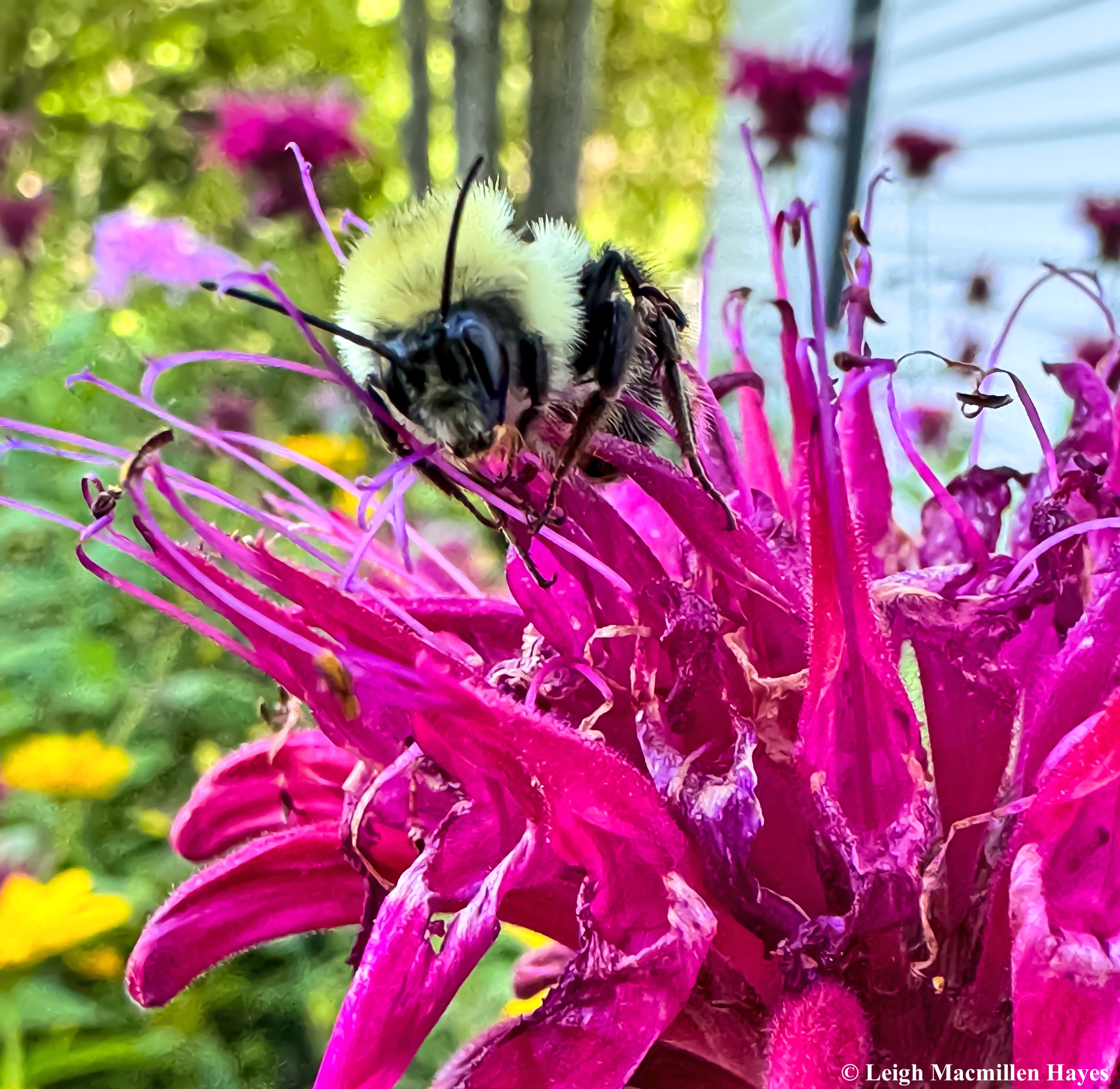
Bee Quiet

They’re large. They’re robust. They’re in constant motion. Well, almost constant motion. You see, this story begins when I looked out a couple of windows at 6:00am. And then stepped outside.

For in the back garden, on the western side of the house, . . .

on more than one flower and in more than one pose, . . .

as well as in the driveway-side garden on the eastern side, Bumblee Bees slept.

I knew insects slept on plants and under leaves, but until this week I had only paid a wee bit of attention. And then, I went into my usual stalking mode and My Guy was rather amused.

Have you ever watched a Bumble Bee sleep? Even as the breeze blew its bed?

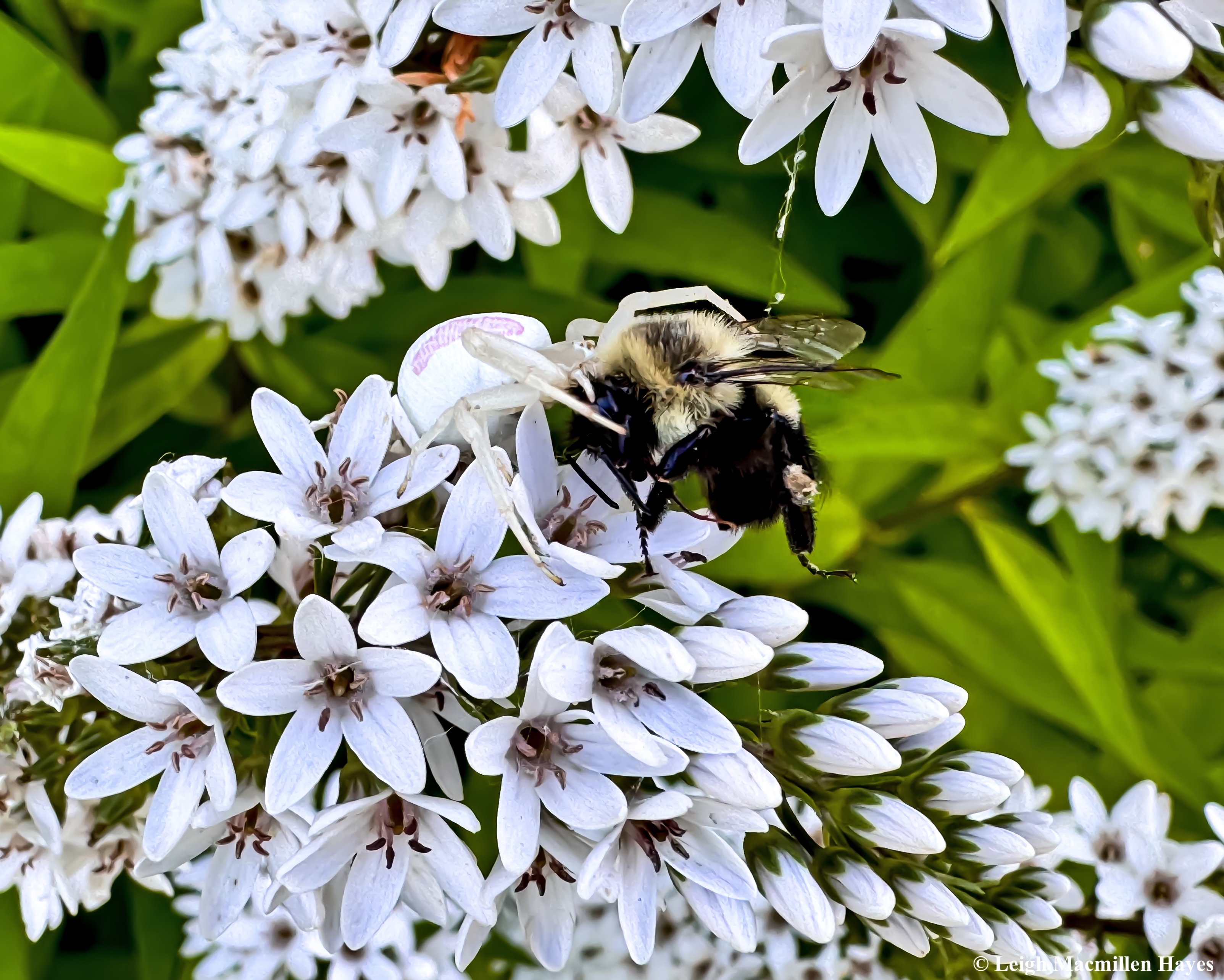
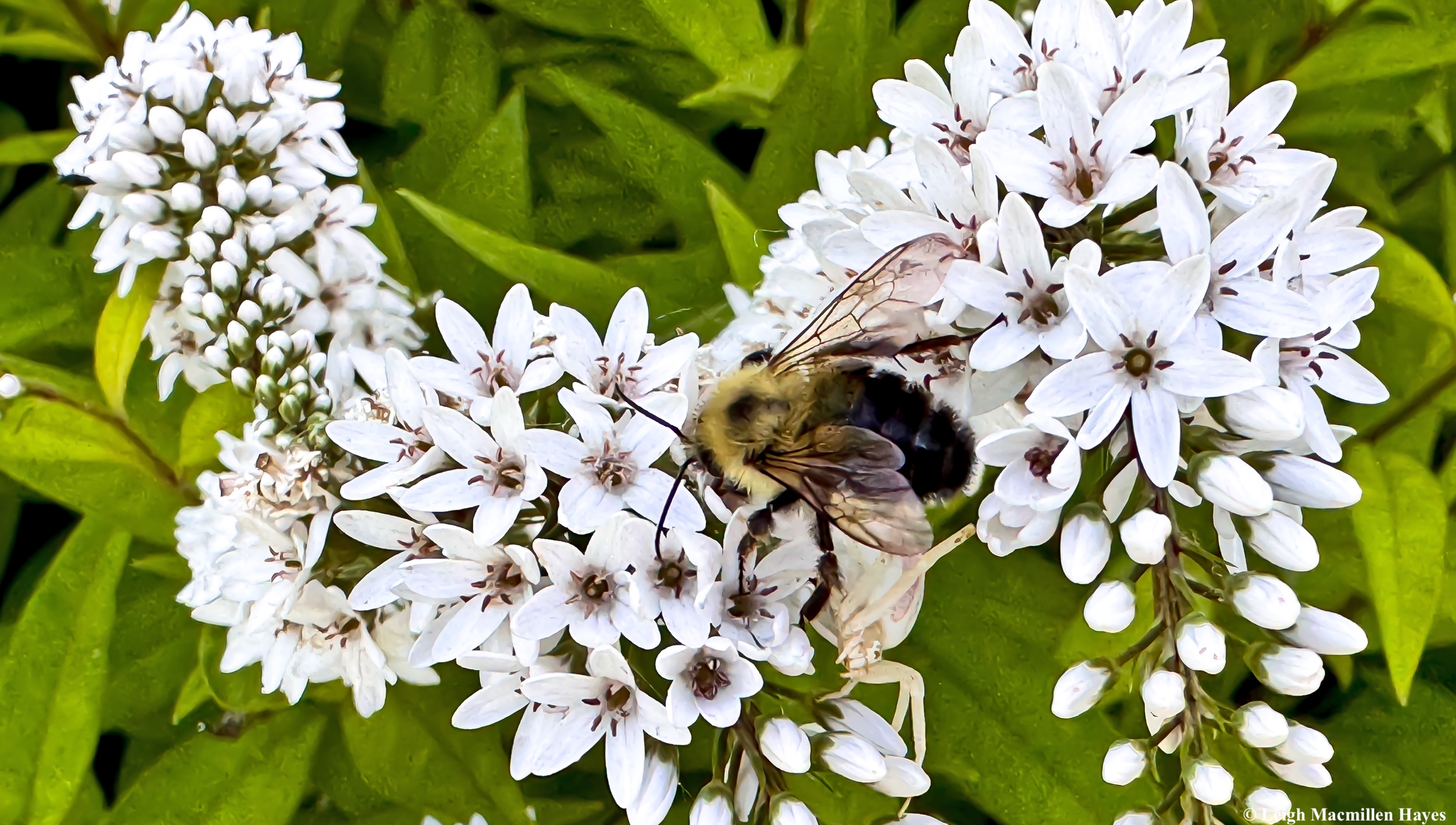
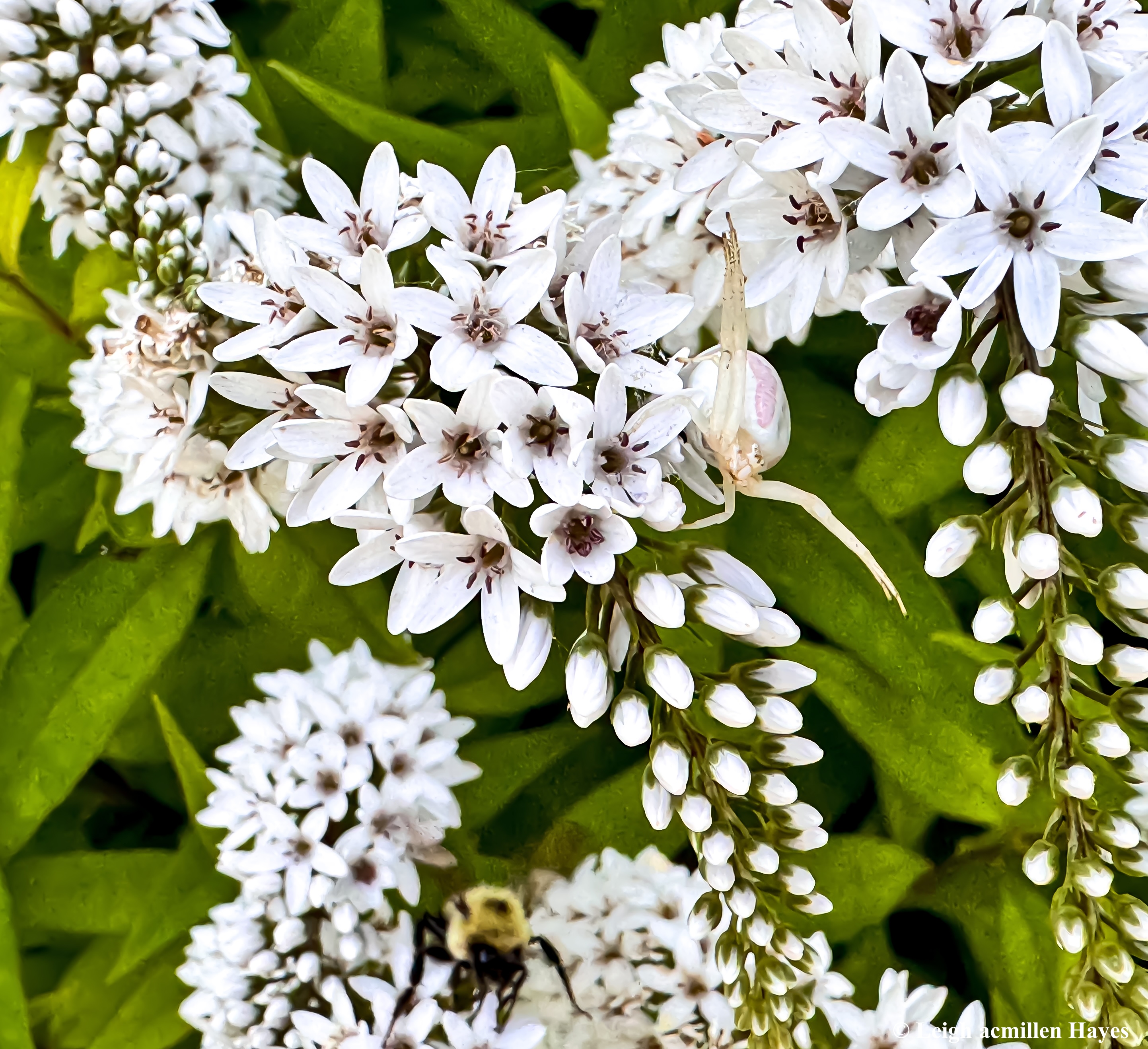
Because I was paying so much attention, I discovered one highly camouflaged Crab Spider had captured a Bee and turned it into a meal. While this may seem an easy task, for spiders capture insects in their webs all the time, I’ve come to learn that that isn’t always the case as I continued to watch this particular one. But I’m getting ahead of myself. In this moment, she had already immobilized her meal of choice and then secreted digestive enzymes into its body to break down its tissues.

That process meant she now had a Honey-flavored Smoothie or perhaps a RootBee Float to drink, the insect becoming a liquified meal.

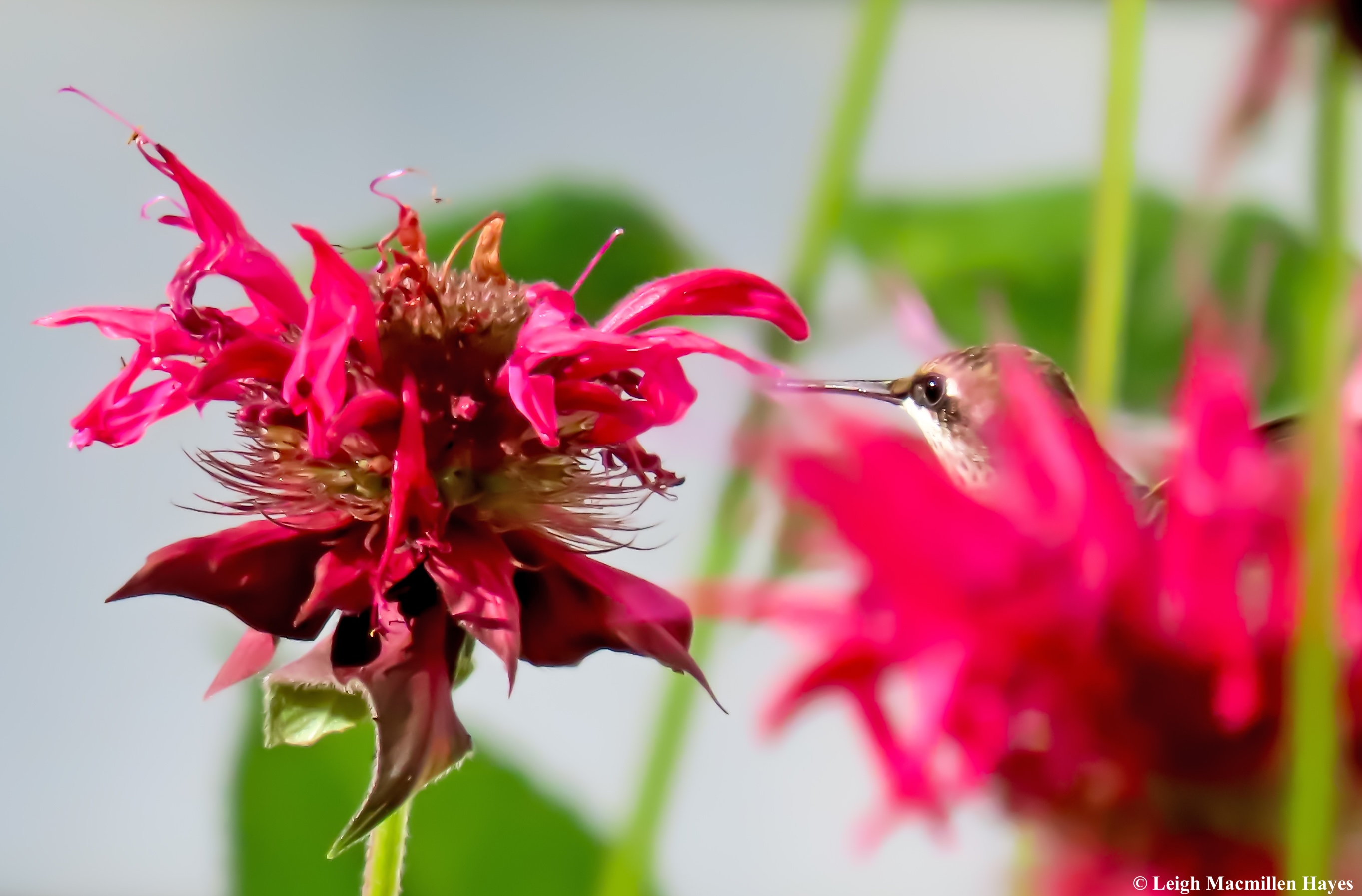
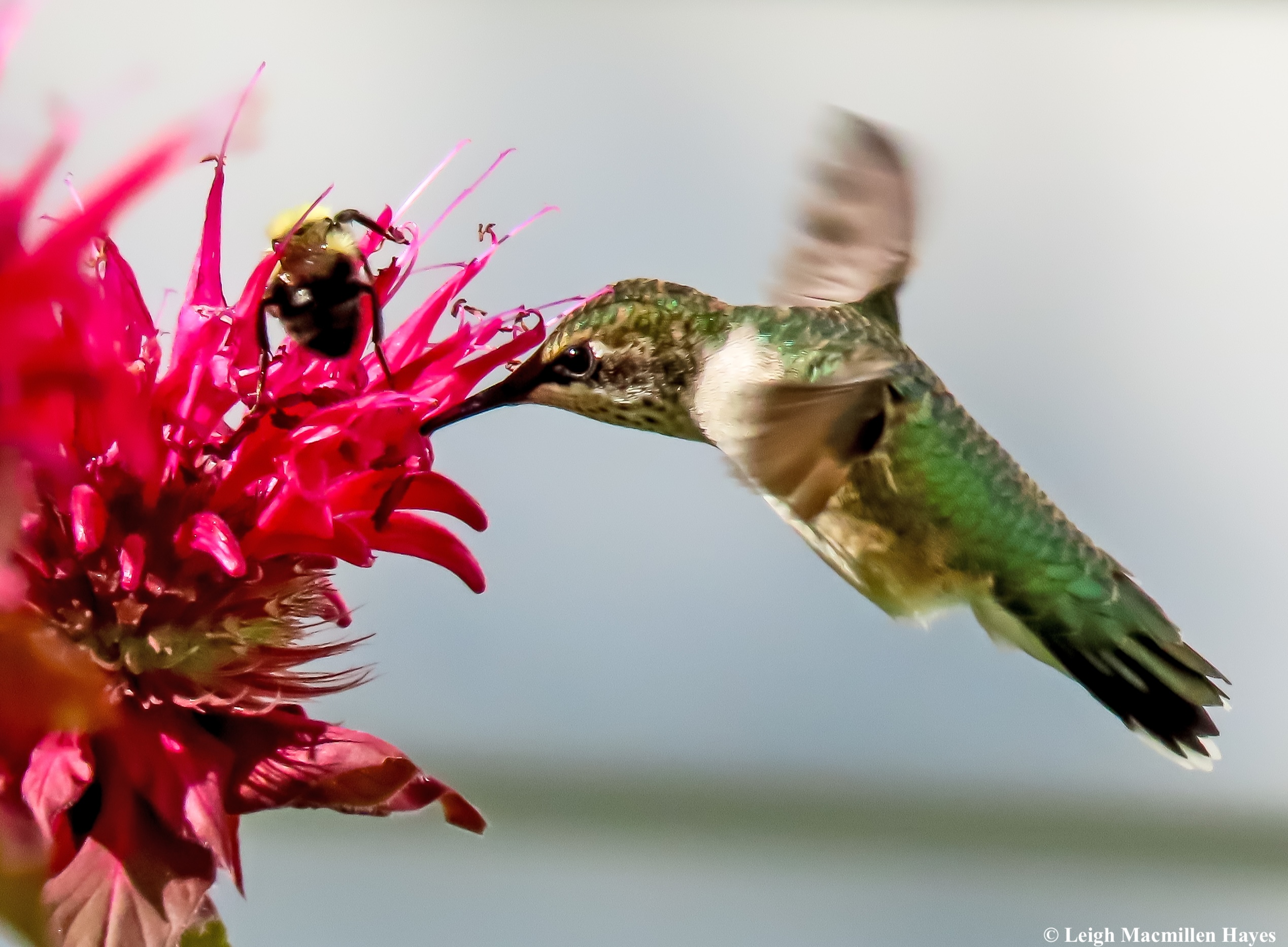
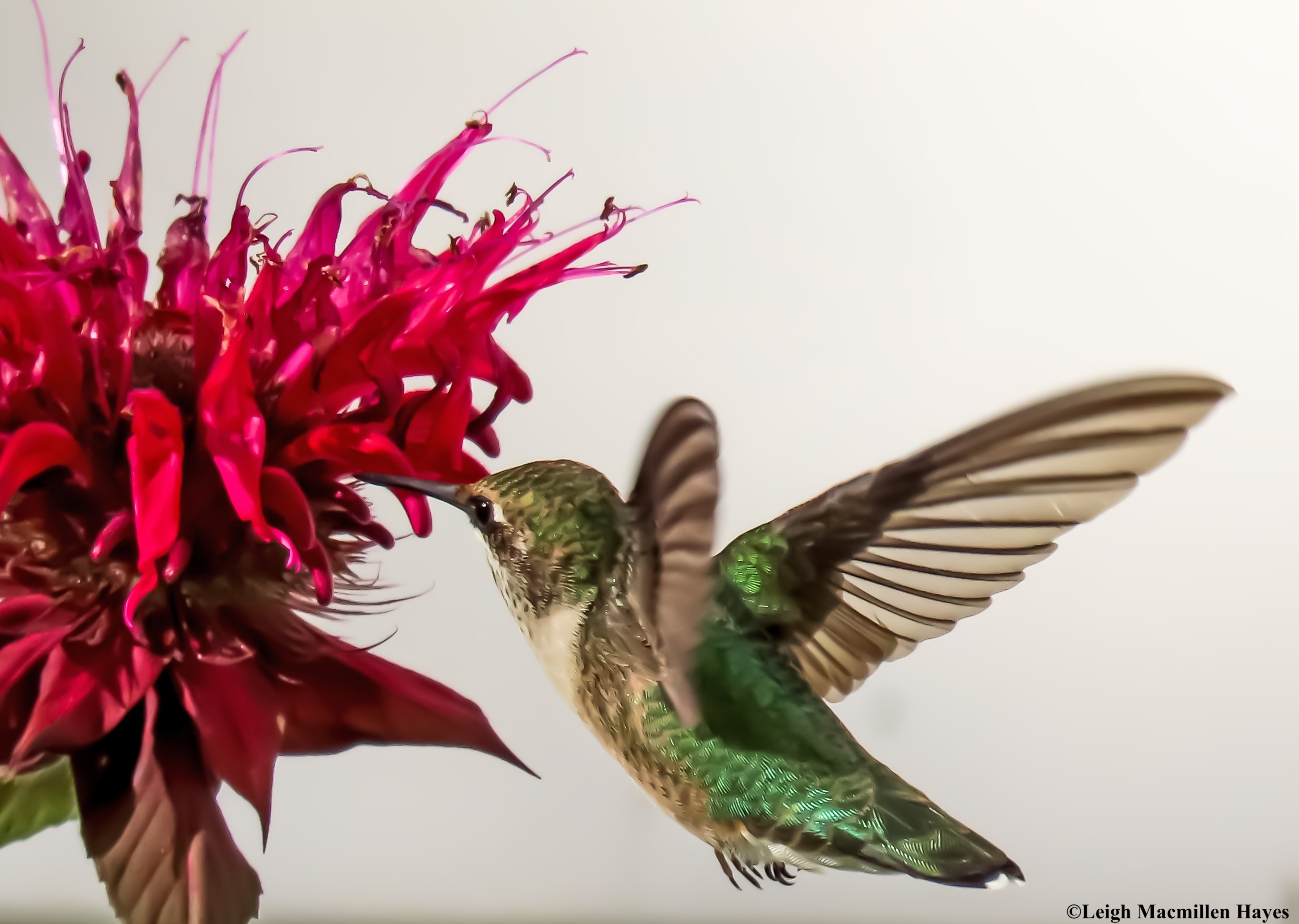
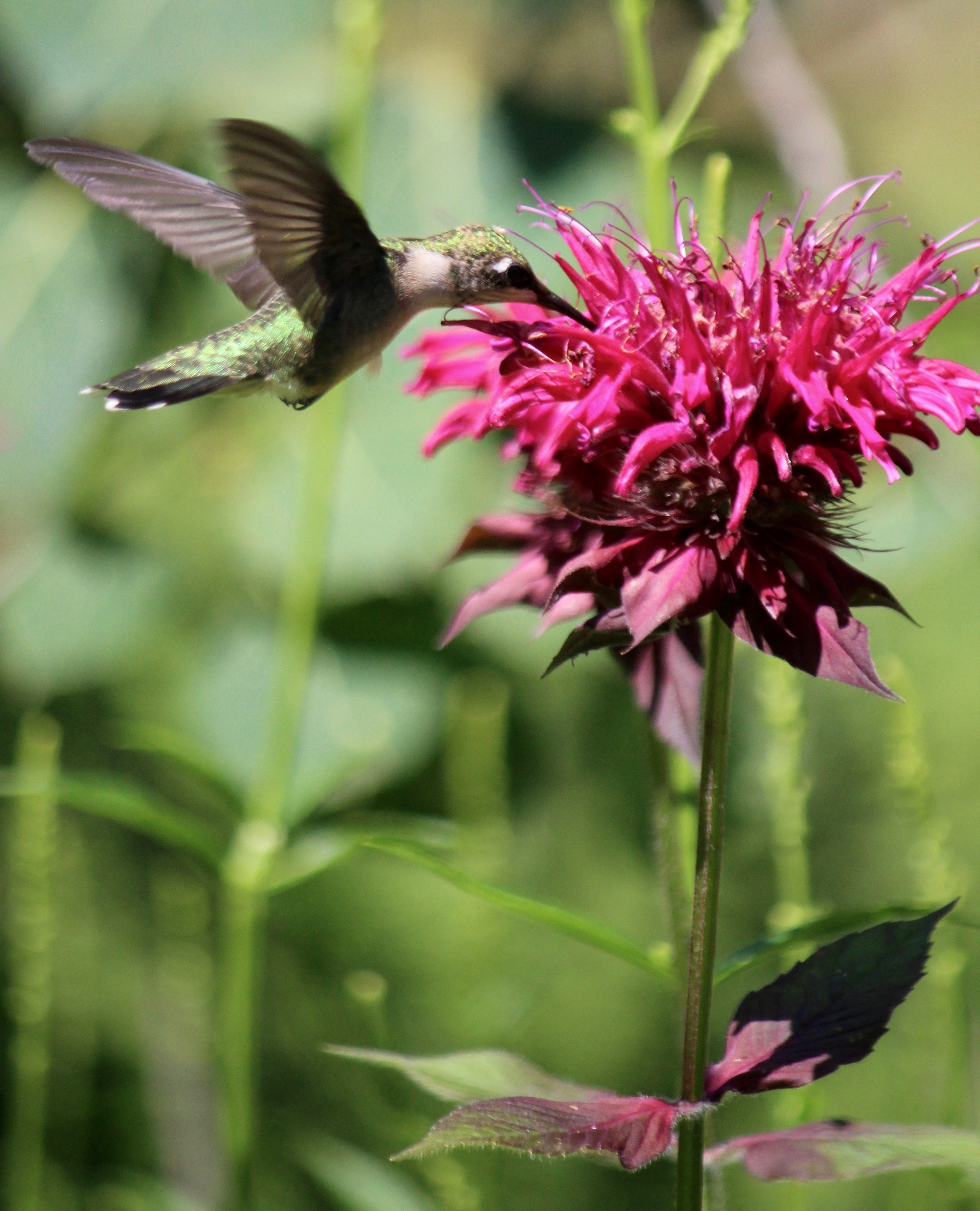
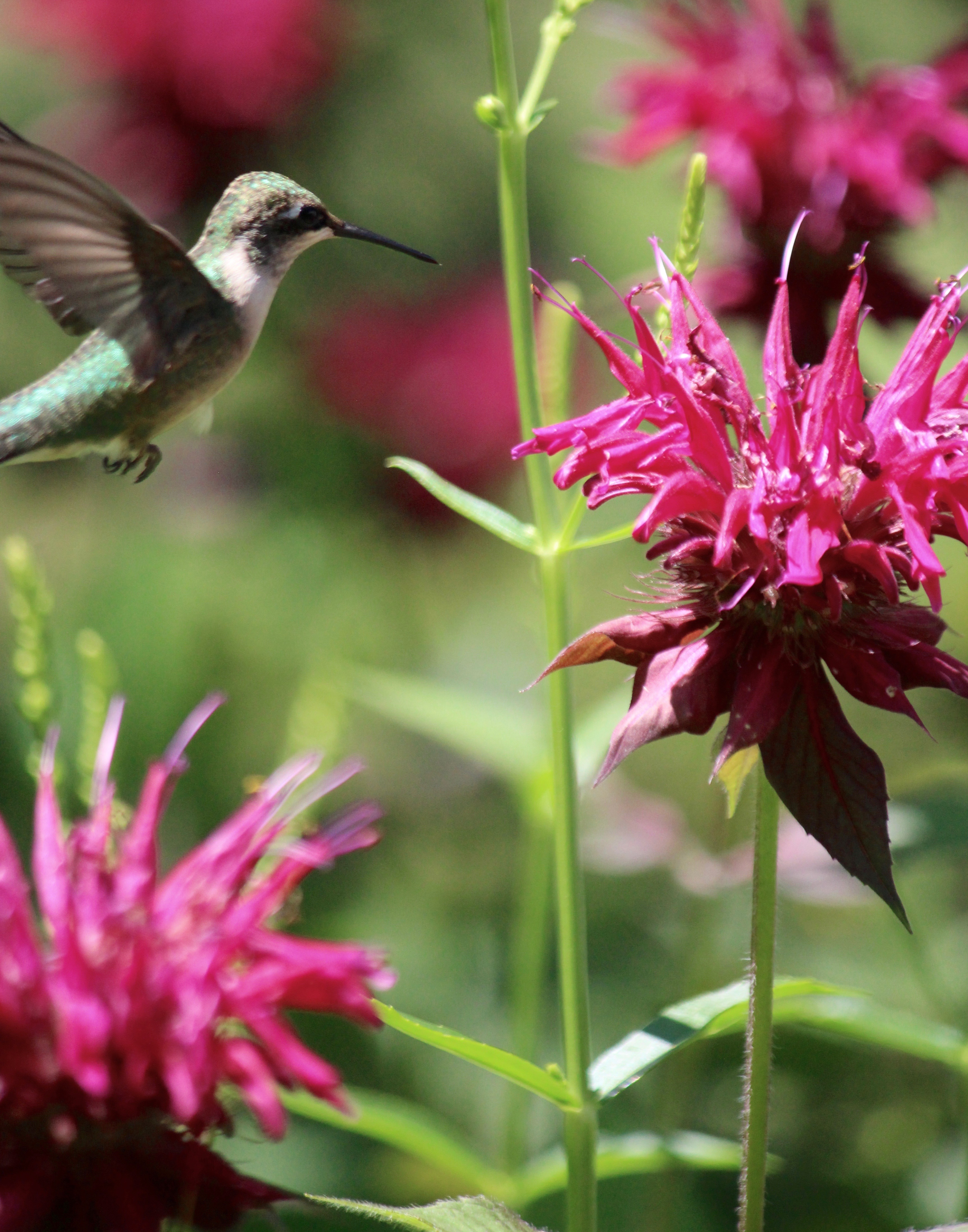
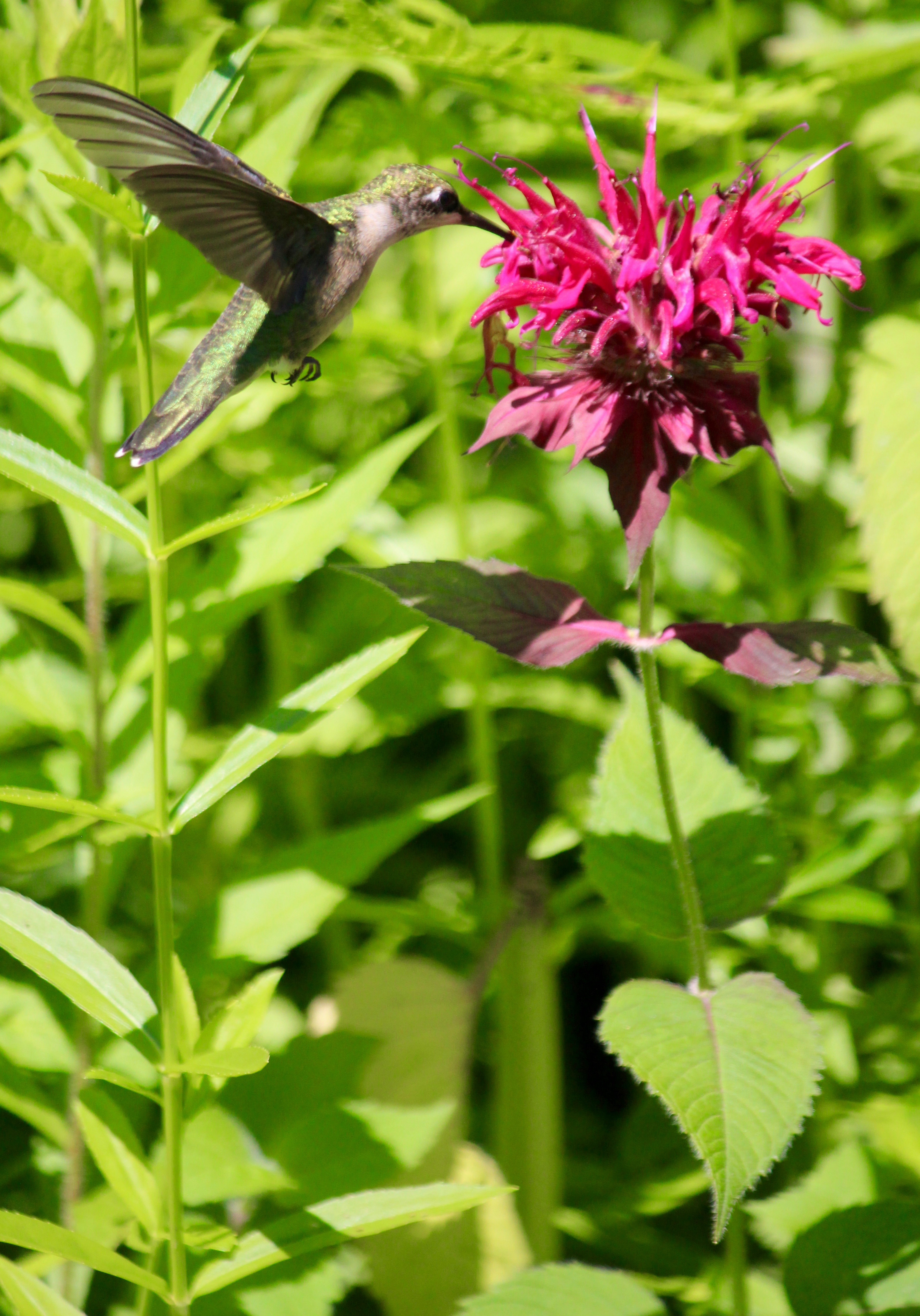
As I moved back and forth between gardens, I realized I wasn’t the only one paying attention, though the female Hummingbird had nectar and not Bees on its mind.

After leaving home for a few hours, I returned to find this Snowberry Clearwing Moth resting on a Hosta. My, how its fuzzy golden body and black abdomen mimicked those of the Bees.

As for the Hummingbirds, the Bees were not bothered. As for me, I tend to get in the Bees’ way, but they gently let me know by flying toward me and then backing off.

One of my realizations was how much nectar the plants produce, and of course, how so many insects are rewarded with this sugary treat–as well as these little birds. Don’t get me wrong. I know plants produce a lot of nectar, but I hadn’t thought about how when it is depleted, it takes the plant time to create more. And each plant is visited over and over again. I guess I’m just jazzed that this year I’m seeing more pollinators in the gardens and field than I have in a long, long time.

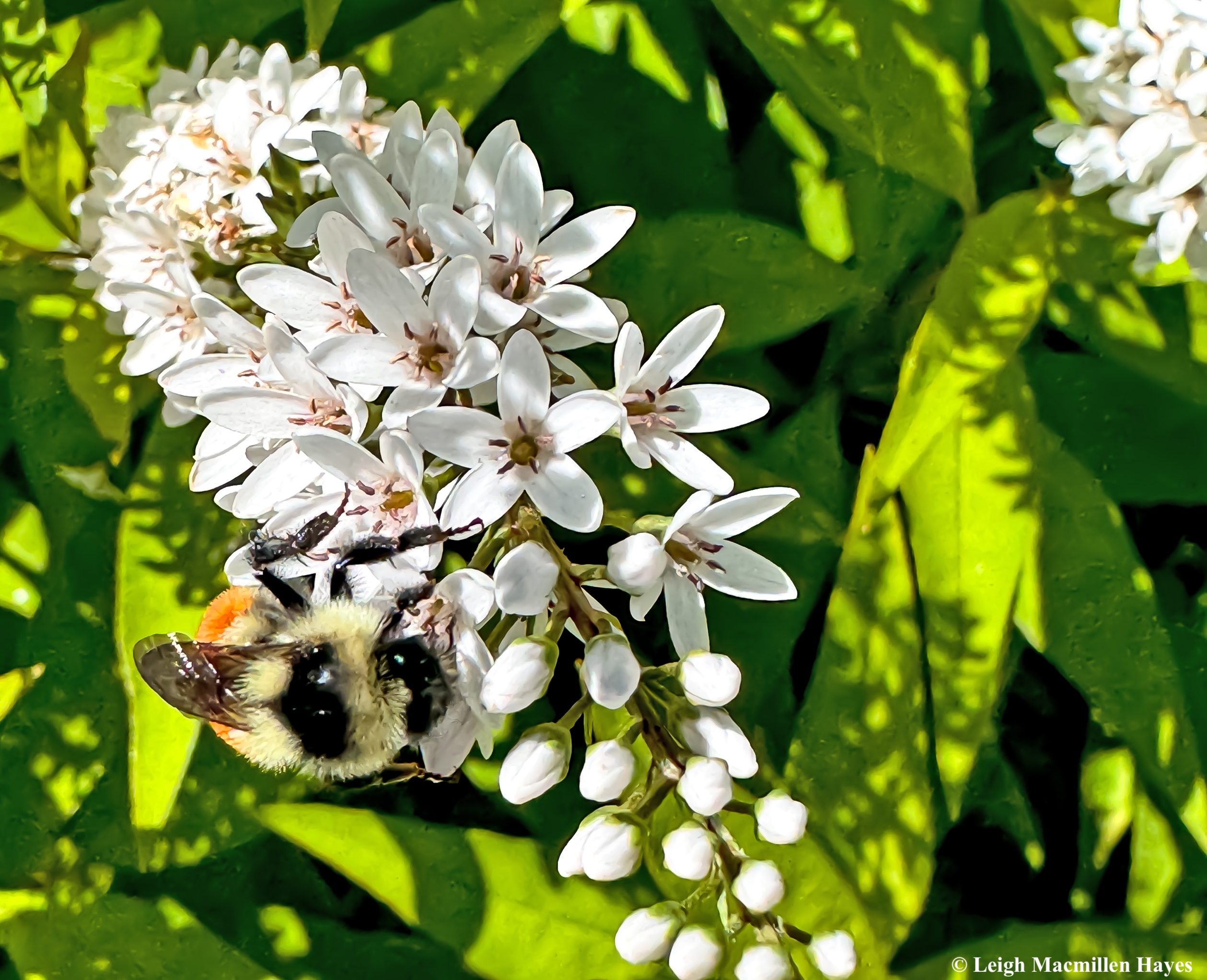
Including a Tricolored or Orange-belted Bumble Bee, which I saw in the field the day before and then in the driveway garden adding its own buzz to the story.

And still the Hummingbird flew in.

When I was a kid, my mother planted Beebalm around the base of a tree in our front yard and I detested the smell of it. But as an adult, I cannot wait for these flowers to blossom in our gardens, and usually within a day the Hummingbirds arrive–seemingly out of nowhere.

Another learning of the day(s) was that because it’s cooler in the late afternoon on the eastern side of the house, the Bees slow down sooner and actually tuck themselves into bed over the course of several hours.

Not all beds are the same, and its interesting to see what the choice might be, like this Hosta flower.

It was after 7 pm before the Bees on the western, and therefore sunnier side, decided to find a place to repose for the night.

The next morning, while most of the Bees were still asleep, I discovered that Madam Crab Spider had turned her meal around overnight. I don’t know why, but I could also see the faint lines of silk that she had used to secure it in place.

She had a plan and it wasn’t for me to know, but I appreciated understanding that she had received energy from the Bee, who had ultimately received energy from the flowers, which had received their energy from the sun, and so the web she wove was full of the circle of life.

Meanwhile, on the shadier side of the house, the Bumblers were just beginning to rise after a long night’s sleep and given that the temperatures have been in the 50˚s these past few nights, it was heavenly naps I’m sure they experienced. I know I did.

Have you ever watched a Bumble Bee wake up? Notice its antennae starting to quiver, and the same for its abdomen. I had to wonder if both were an act to warm up its body on such a cool morning.

And before it had that first sip of nectary caffeine, the Bee seemed to wobble around, rather unsure of its footing.

Once the sun warmed the world up for everyone, the Hummer started flying as well.

A moment I didn’t capture that she and I both shared, occurred just after I took the videos above. She had flown into the garden much to my surprise because I was standing right there, rather than my usual distance away (think telephoto lens), and in flew her Mr. He alludes my camera because his visits aren’t as often, and they are fast. As was the case in this instance. All I could do was watch as she moved below the blossoms and paused on a leaf to watch him. And he performed an aerial dance creating figure eights over and over again, before flying off. It was one of those moments that will be forever etched on my brain.

As for the Bee that had been the Spider’s meal–once she was done with it, she had discarded it and I found the body on the granite stone below the flowers. The color was a bit different, and in my brain, I wonder if the Bee’s pollen bags had exploded upon impact.

I again left for a wee bit of time, but when I returned, much was still the same.

Except–the Bee’s body was missing. And only some legs and a wing remained. Where had they gone, I wondered.

Above, Bee after Bee tempted the Spider, but she didn’t make a move and I suspected she was sated for the moment.

And below, I suddenly figured out what had happened to the body, being the great tracker that I am (LOL!) An Ant removed the body parts one by one.

The Hummer still flew, and occasionally took a break right above my head and I was grateful for the opportunity to watch it without it realizing I was there.

The Spider began to change position, and move from one plant to the next and even when I thought she’d take a meal, she didn’t listen to me.

The Ant completely removed all signs of the Bee and I suspect there’s one mighty happy Ant family in the garden.

And the Bees. Well they are hardly quiet, but all that buzz is a wonderful thing.

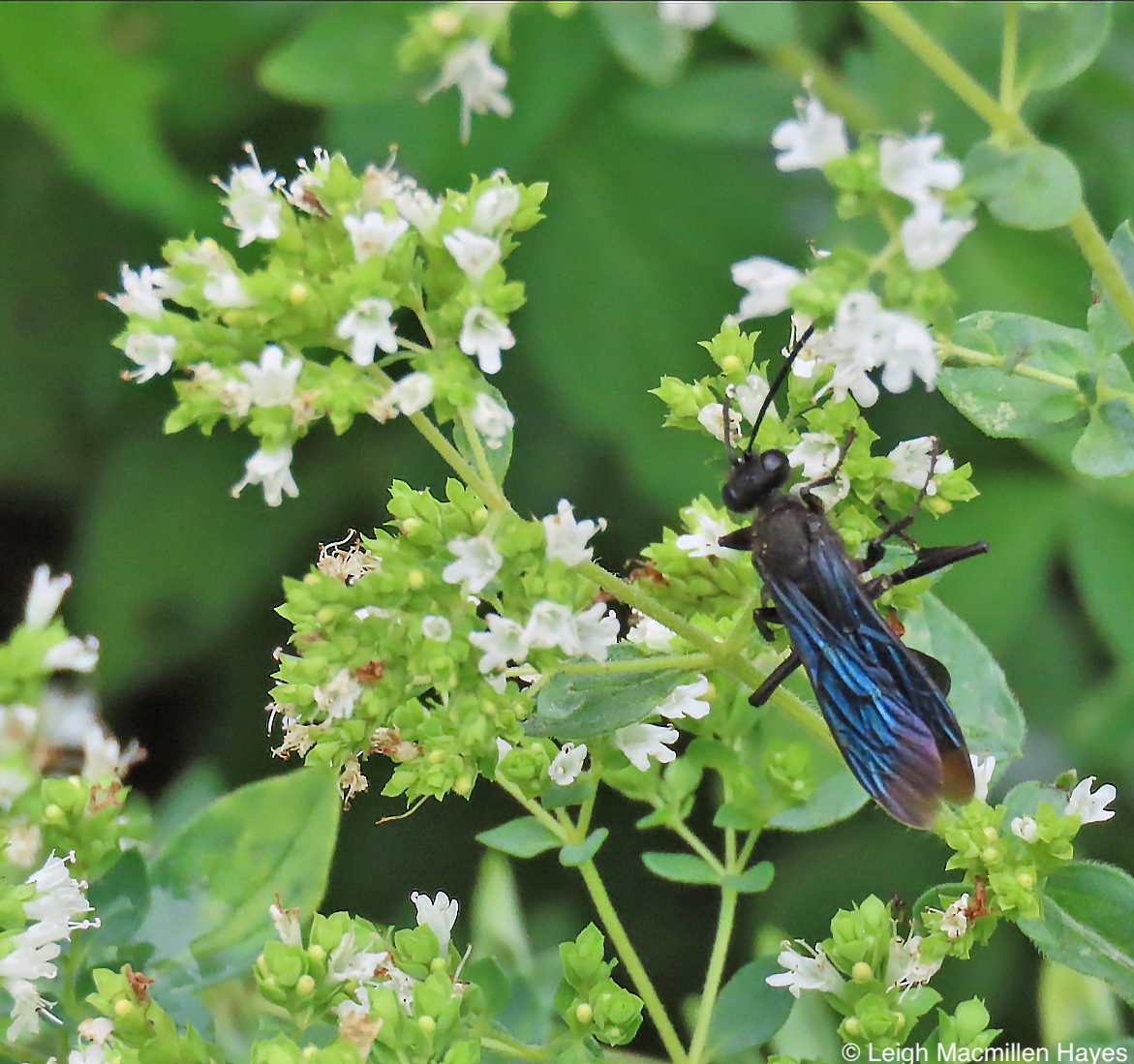
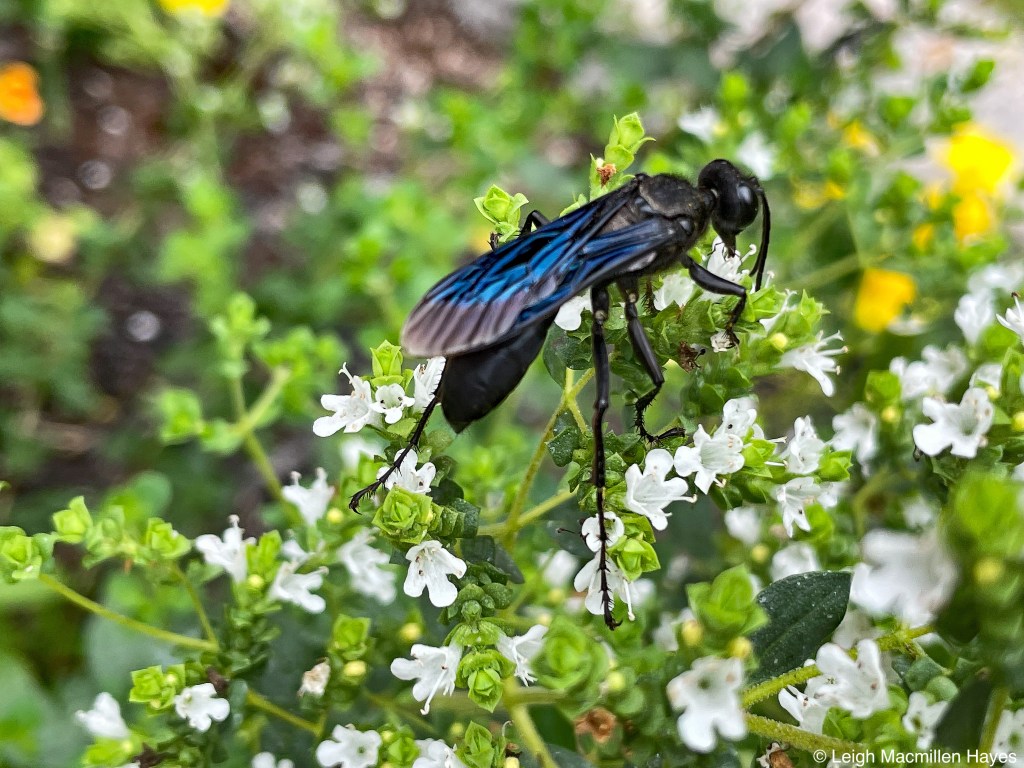
I give thanks to them and their friends like the Great Black Wasp with its iridescent blue wings, and the Great Golden Digger Wasp with its orange and black coloration, and the Hover Flies, and the Skipper Butterflies and Tiger Swallowtail Butterflies, and so many others who feast here because I know that they are doing all of us a service by pollinating the food we eat–it doesn’t get any better than that.

Next time you see Bees in your yard, I encourage you to Bee Quiet and maybe they’ll share their stories with you as well.

Because of the Monarch

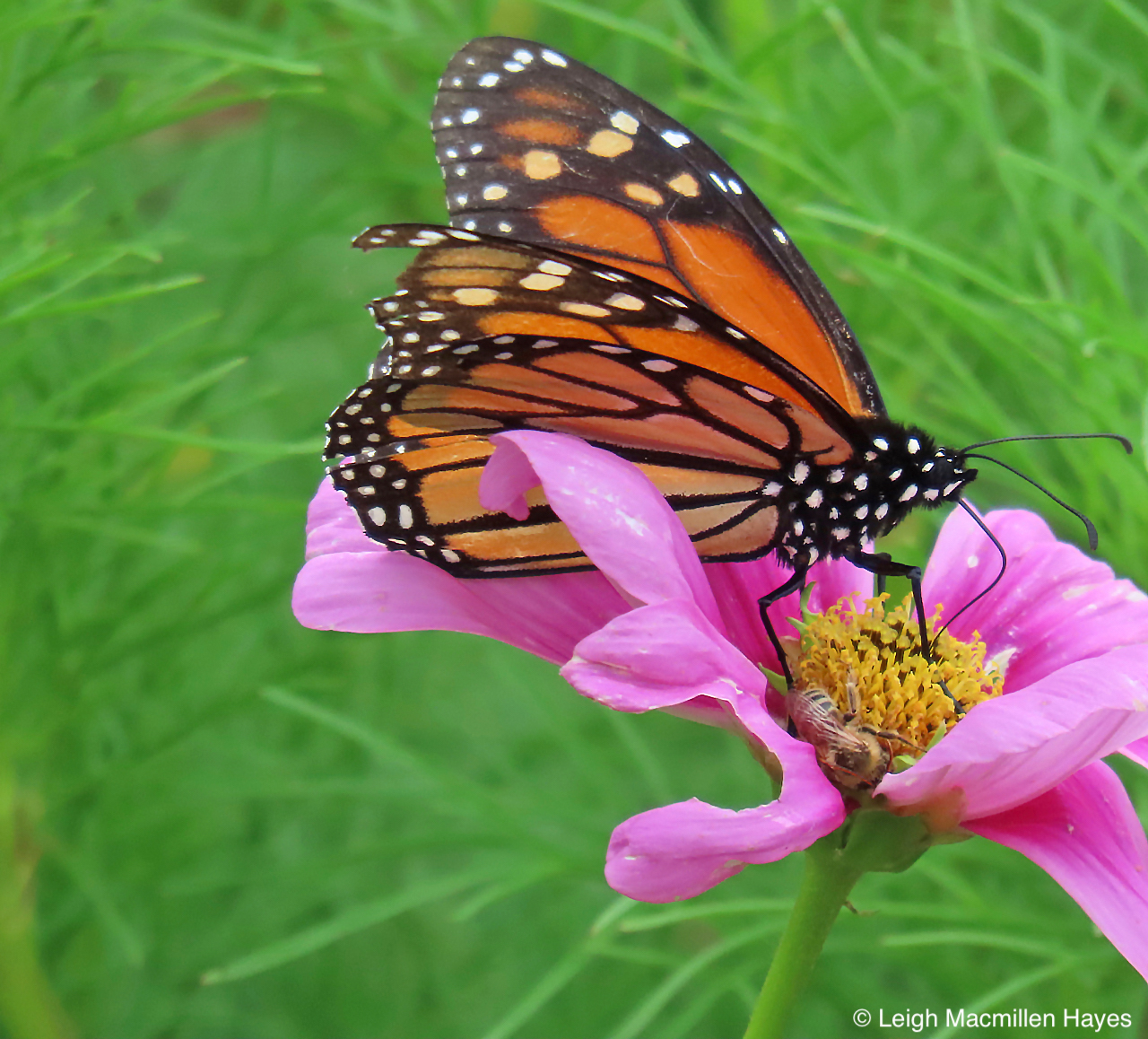
Just as a couple of friends and I were finishing a walk this morning, we spotted a Monarch Butterfly. One gal commented that it seemed too early, but I mentioned people have been posting pictures of them for the last couple of weeks. For all of us, that was the first of this season.

Back at home, I decided to do one of my favorite summer activities and stalk the gardens. Mind you, my gardens are not at all organized; they are rather like me–messy yet a wee bit colorful. I call them cottage gardens, but even those are probably not as random as these.

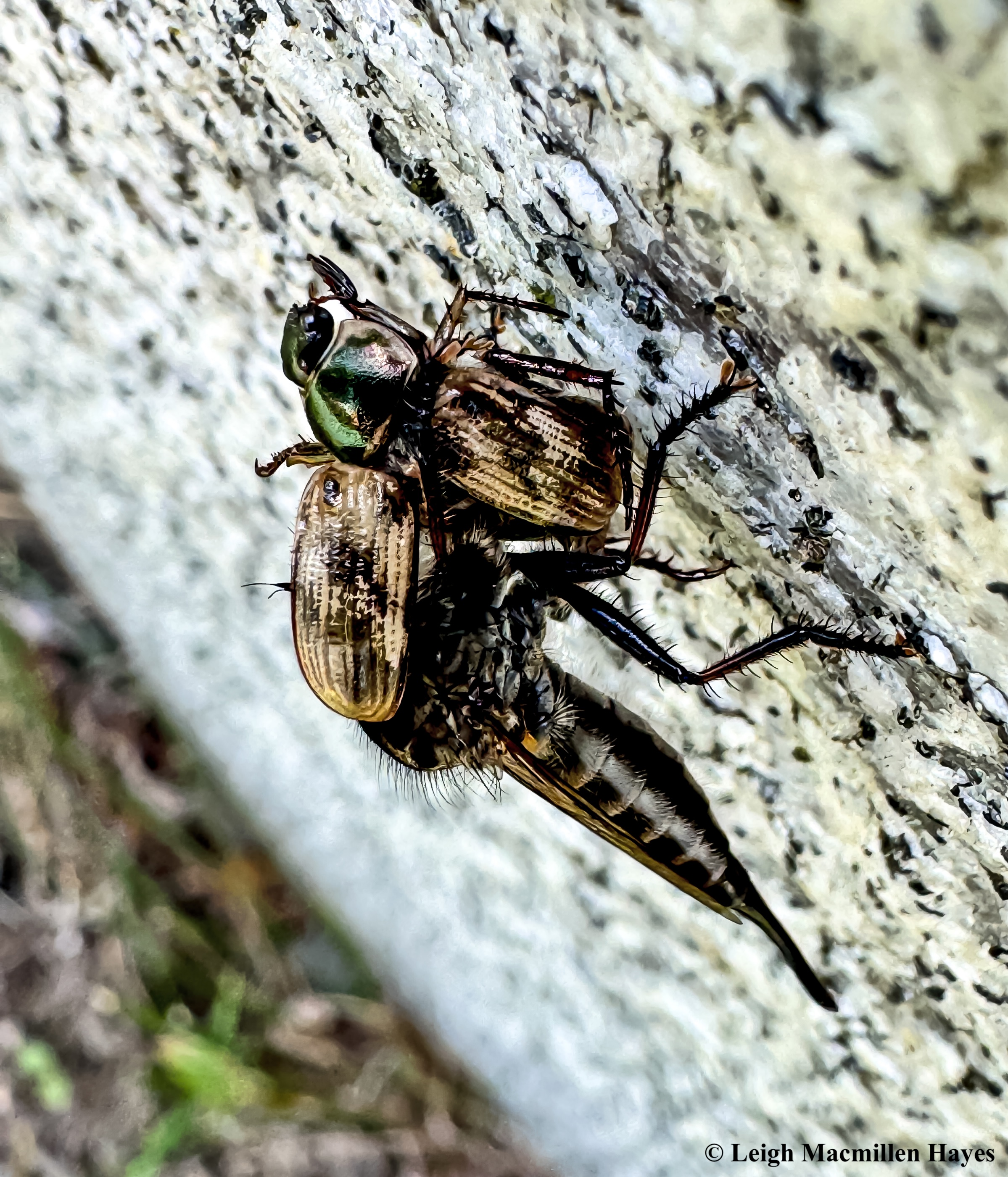
That said, they attract and provide for all kinds, including the Robber Flies who hide and wait and wait and hide.

Until a meal, such as an Oriental Beetle, enters the scene. I unfortunately missed the drama of the catch, but love that the Robber Fly was so focused on its meal that it stayed extremely still upon the granite post as it dined. As for the beetle, I was grateful for the fly because such beetles are garden pests.

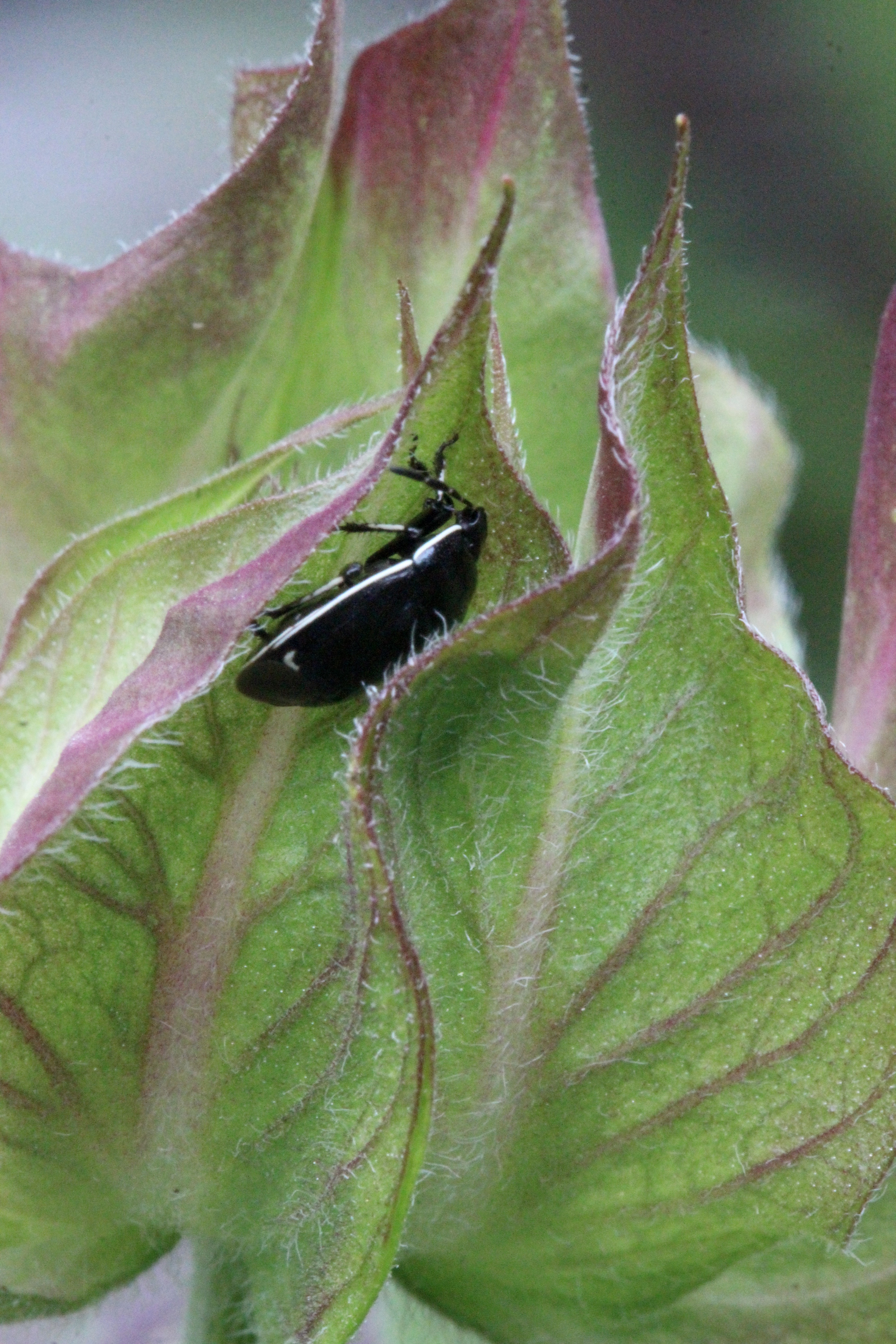
In case you aren’t familiar with an Oriental Beetle, it’s similar in size to a Japanese Beetle, but as you can see, is much more drab in color. Those antennae, however, are fabulous and make me think that beetles with such are carrying around a set of forks, the better to create a salad.

Above the Robber Fly, a Silver-Spotted Skipper flitted between the Gooseneck Loosestrife that has taken over the driveway garden, and Hostas that are now blooming, seeking nectar wherever it was available.

Skippers are in the butterfly family and have you ever thought about how hairy they can be. Actually, I’m pretty sure the entire natural world is hairy.

Speaking of hair, its certainly true for the Common Eastern Bumble Bee, who stuck his red tongue into the plant’s nectary.

I’ve seen only a couple of Honey Bees so far this summer, but the gardens are full of Bumble Bees, as is the field beyond, and that makes me so happy.

And if you are worried about these critters stinging–they can and will if annoyed. But I’ve learned to be calm and quiet and they let me get into their space. If they don’t want me there, they simple take to flight and circle me or charge at me, but I know that is a warning and I need to slowly move away and give them their space.

Two-spotted Bumble Bees are also abundant. Notice his beard. And the yellow bands on his abdomen.

Also enjoying the offerings was a Gold-marked Thread-waisted Wasp, the first sighting of this species for me this year. Though in hind sight, I do think I spotted one dragging a dead spider across the patio the other day and suspected it was on its way to a nest to feed some young.

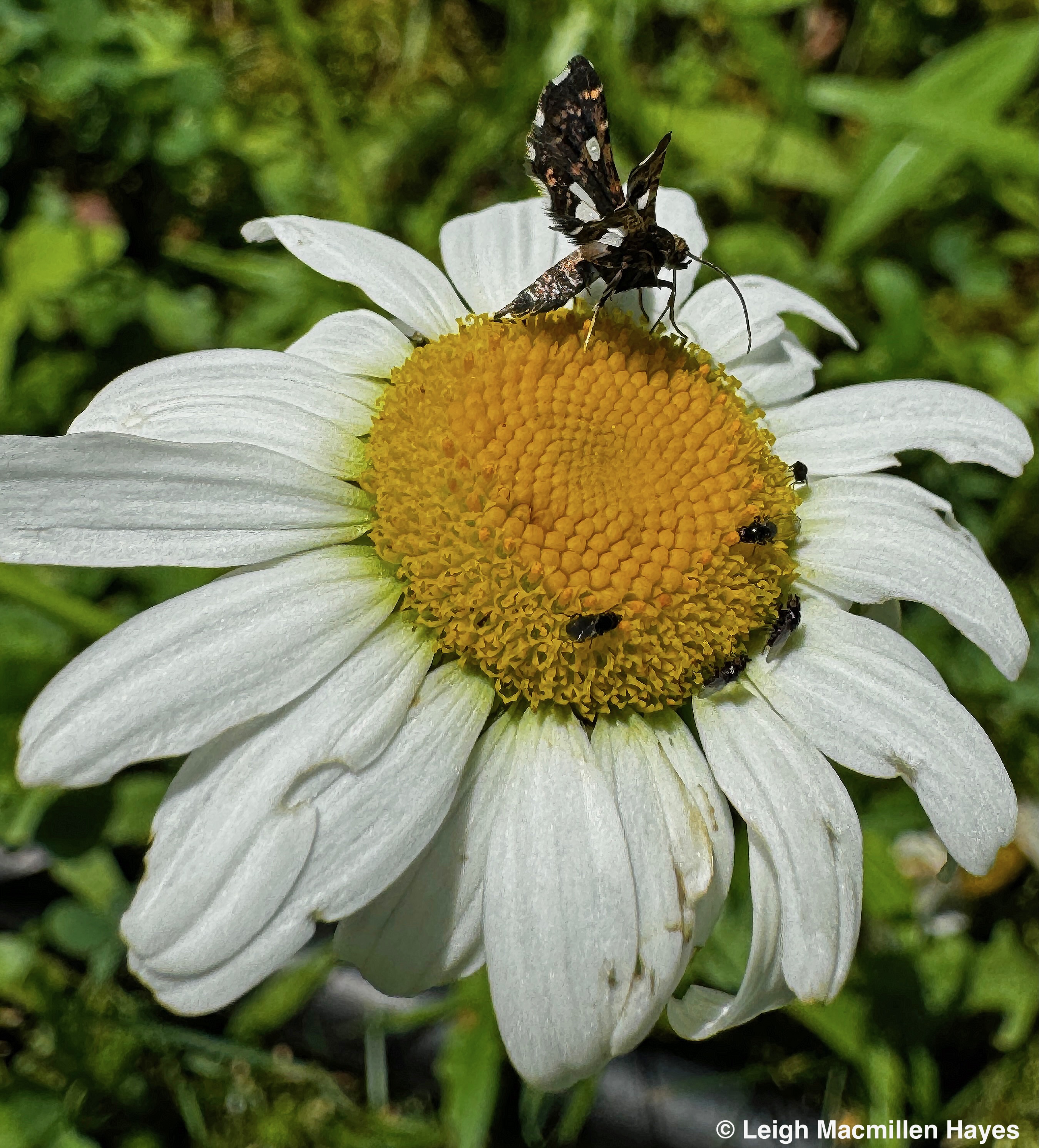
In another garden, I encountered a new-to-me moth doing its own wonderful job of pollination on an Ox-eyed Daisy. This is a Grapeleaf Skeletonizer Moth. Yeegads. What a name for such a lovely creature who held its wings straight out and flat the entire time I watched it. We do have grape leaves along a stonewall near the garden. And it also likes a relative of grapes, Virginia Creeper, and that too colonizes the wall.

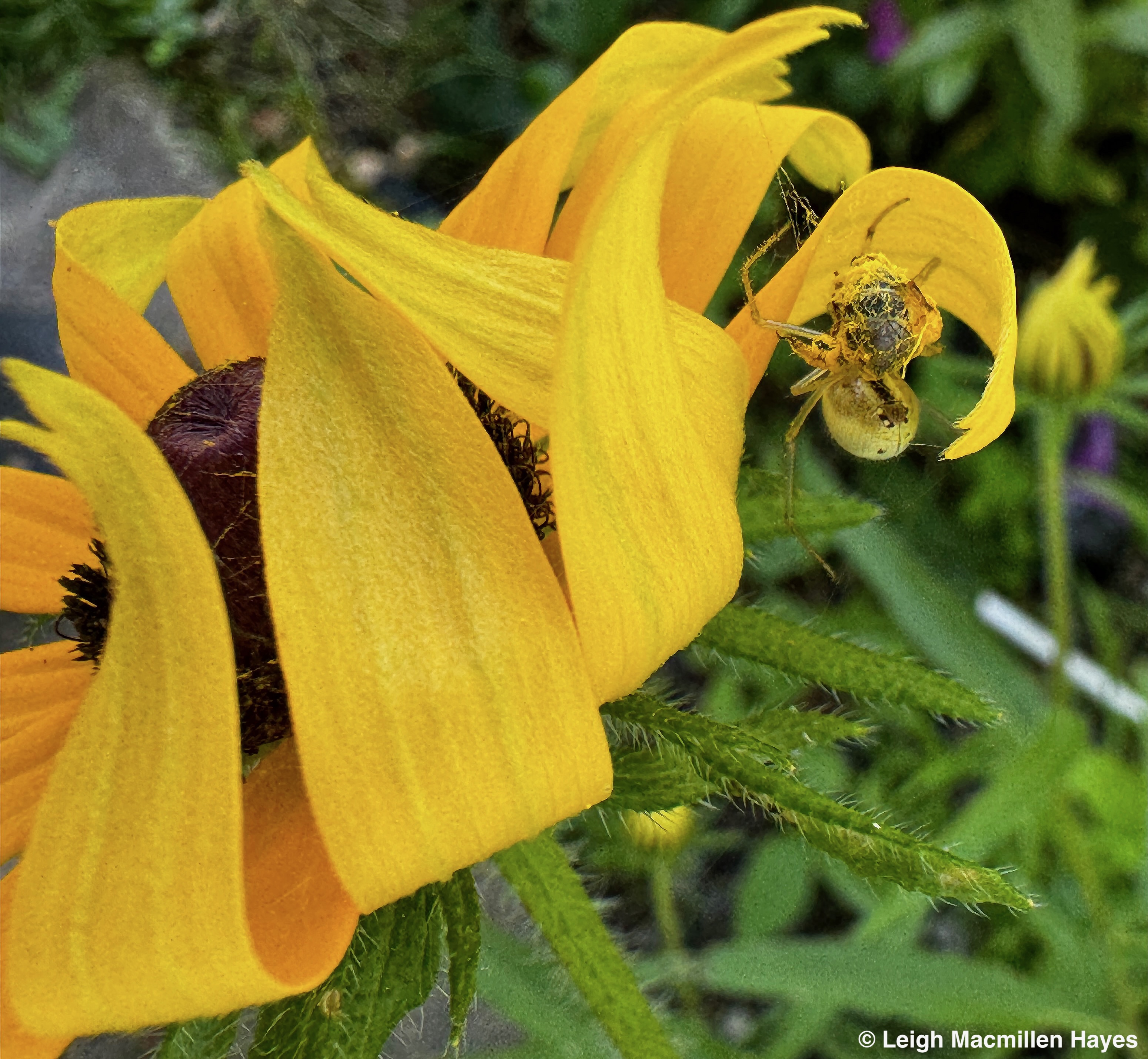
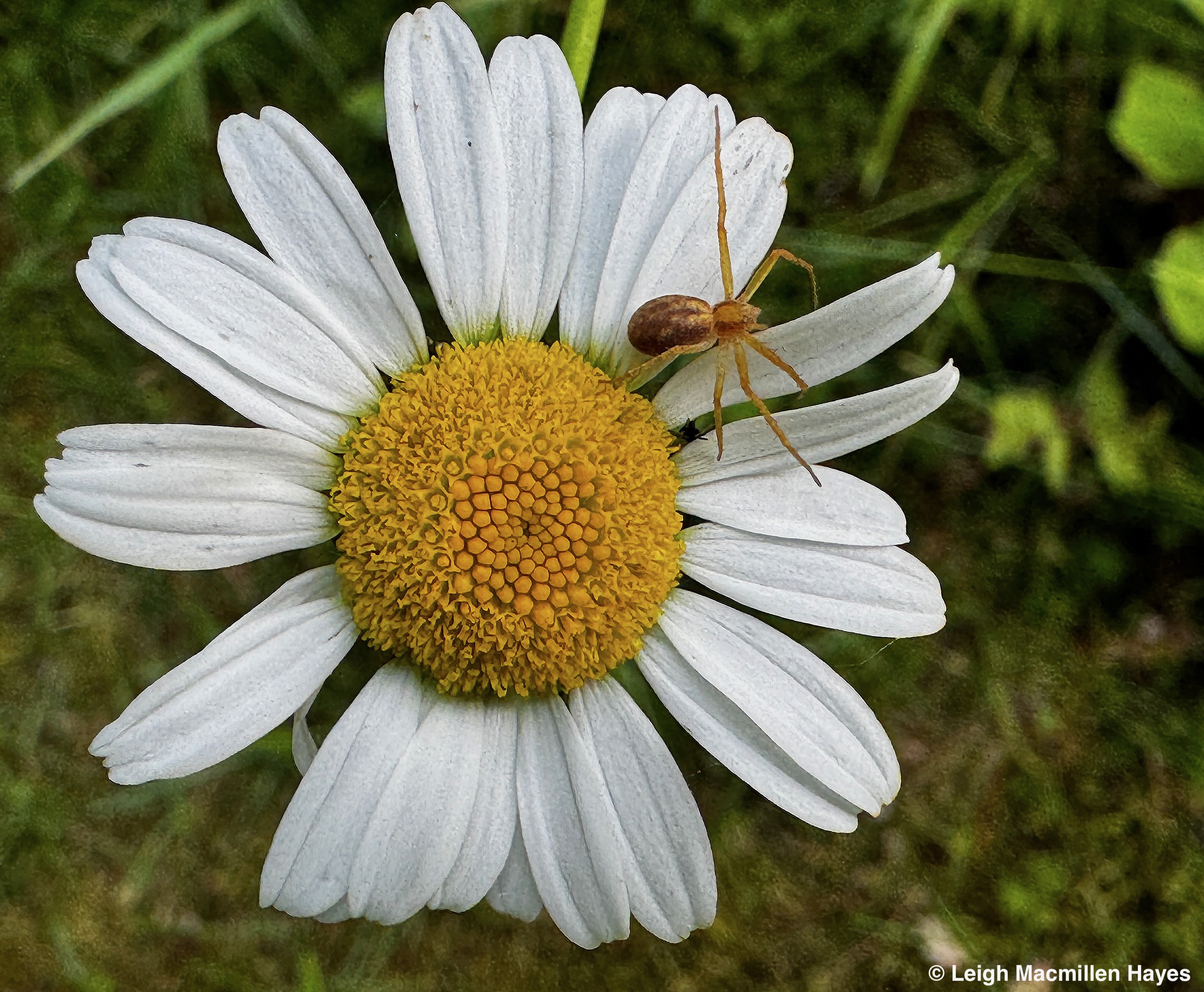
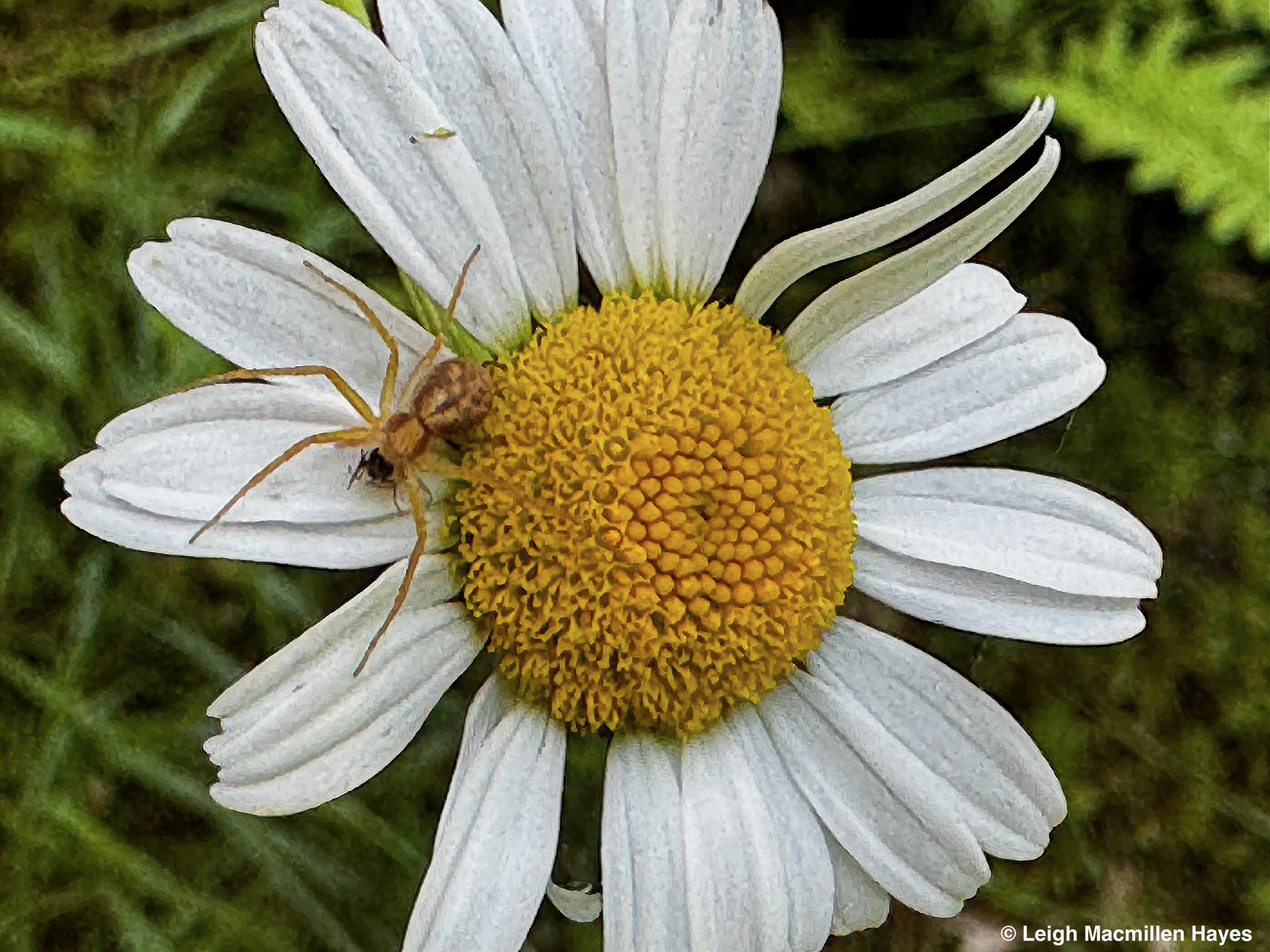
One preferring not to be seen, was this little Crab Spider. I love that it has created a hiding spot by “sewing” the daisy petals together. And now it waits. Actually, by now, I’m sure it has had several meals and treats since I spotted it several hours ago.

And I would be remiss if I didn’t give time to the female Blue Dasher. I’ve seen her guy in the field, but she liked hanging out on the old Digitalis stalk. It was quite gnatty today, given the humidity, and I was hoping she’d make a meal or two, but I’m not sure that happened.

Instead, she spent her time in the obelisk posture, standing on her “hands” and sticking her abdomen up toward the sun to prevent overheating.

All of those creatures I saw because about an hour after arriving home from my walk, I saw a flash of orange out the window and realized that we too had a Monarch. It alluded me at first, but then I spotted it.

I remember when our 30-something sons were young, the Monarchs covered flowering shrubs with their presence. And now, sadly, we celebrate one.

I can only hope that as the summer progresses, this butterfly finds a mate, canoodles, and produces many more. I can only hope.

But . . . because of the Monarch drawing me back outdoors, when I was by one garden and had my back to our woods, I heard a scratching noise that didn’t sound normal.

Fully expecting it to be a squirrel, I turned around to peek. And was totally surprised by what I saw.

Oh, how I love it when that happens. Go without expectations. And be fully surprised.

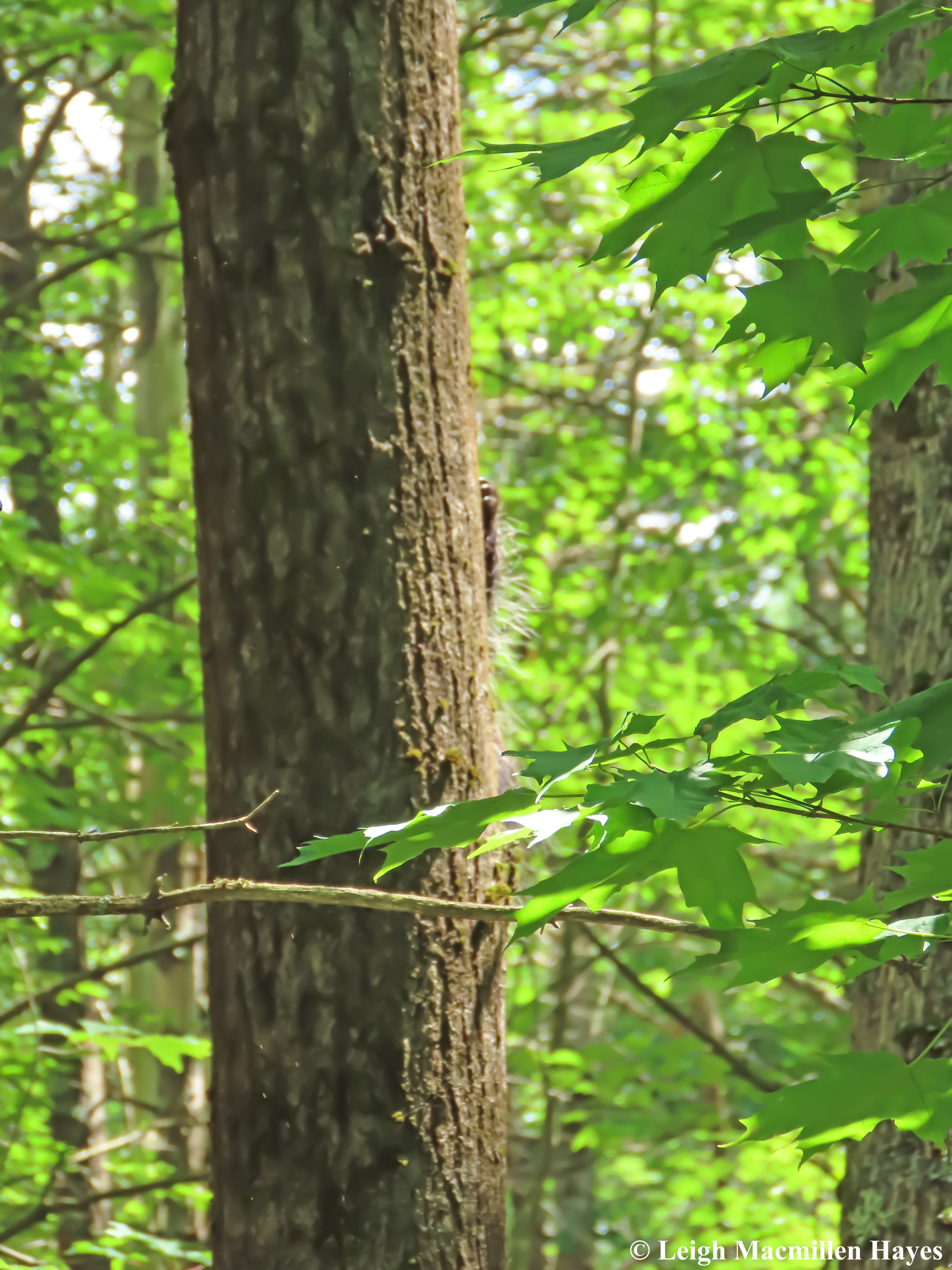
As it crawled backwards down the tree, my heart sang.

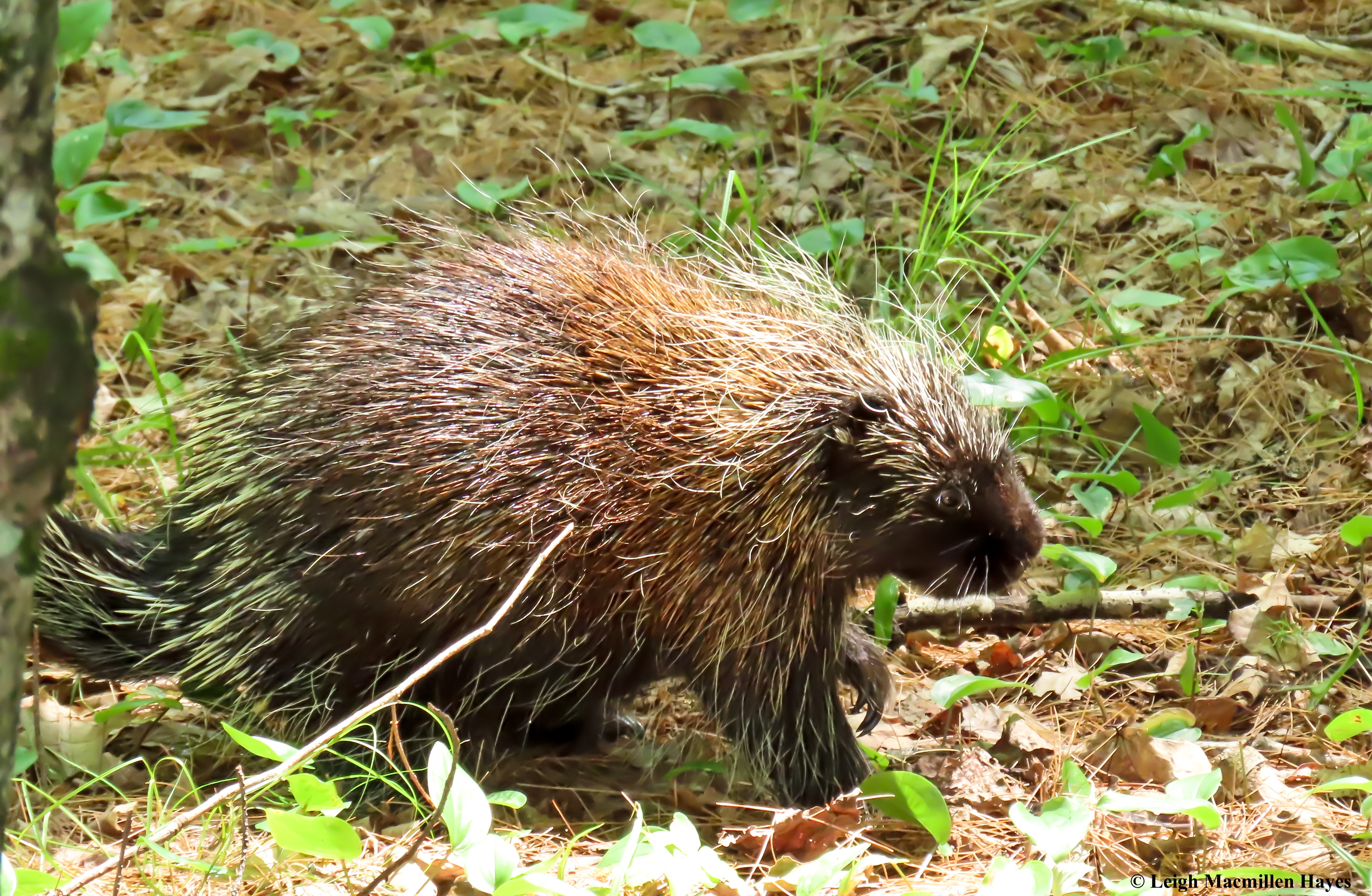
One of my favorite critters was descending.

I did wonder, however, which way he would go once he reached the ground.

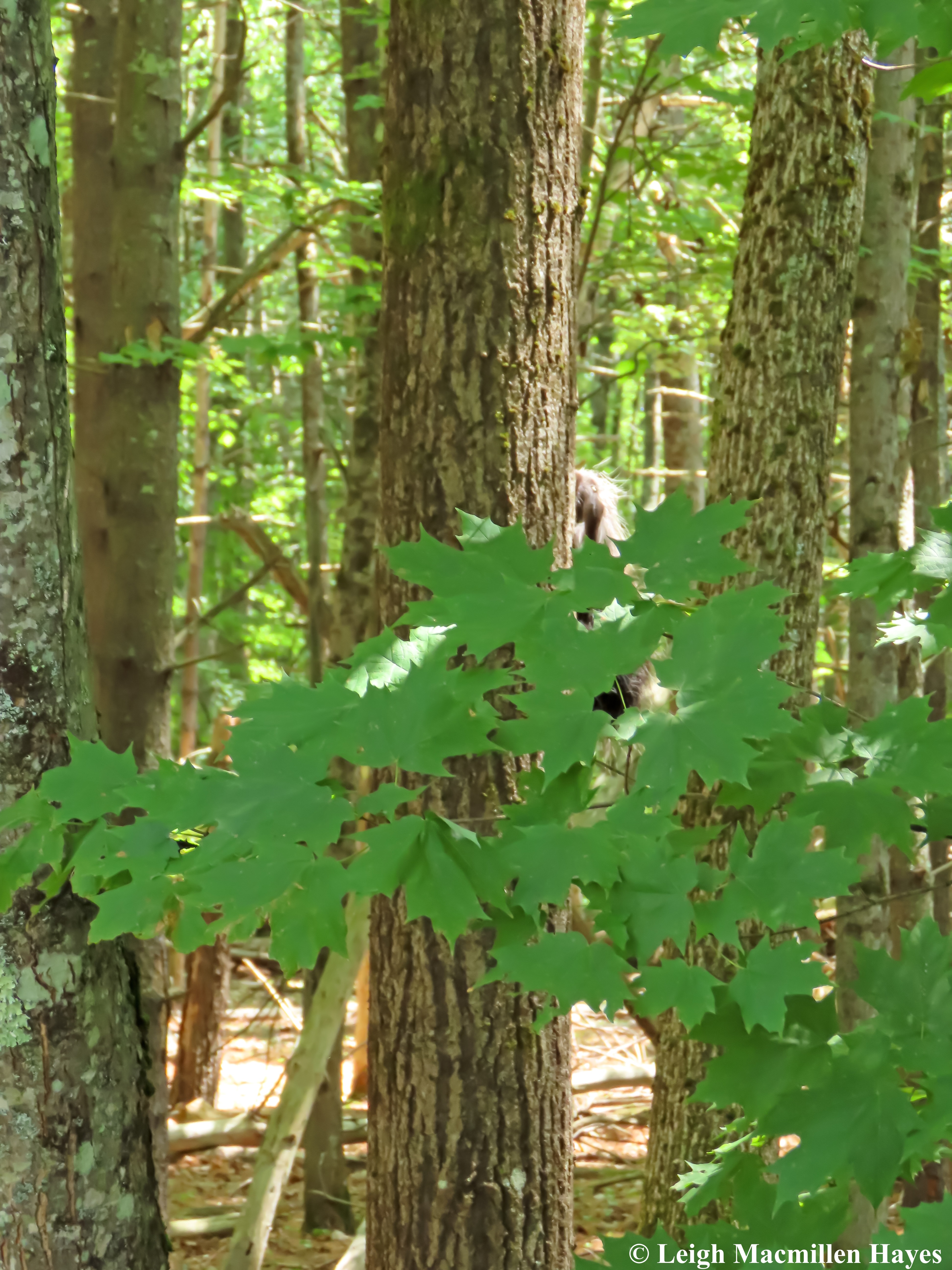
I had nothing to fear, for he headed toward another of the stonewalls that encompass our land.

He wasn’t aware of me, for the quills on this Porcupine’s back were not raised. Apparently I didn’t smell all that sweaty after all, for their sight and hearing are not great, but they do have a sense of odors, hard to believe given how much the scat that surrounds their dens stinks.

As he waddled over the stonewall and onto the trail I’ve created in the woods, I gave thanks for the butterfly.

Because of the Monarch . . .

Student Teacher in the Field and Yard Classroom

I am so thankful that I was born with a desire to learn and somehow landed in at a most pleasant neighborhood school. Of course, the classrooms vary depending upon the season. These past two days, and actually these past few weeks, I’ve been majoring in field and yard lessons.

Oh, don’t get me wrong–that doesn’t mean field and yard work, though I did help mow the lawn today.

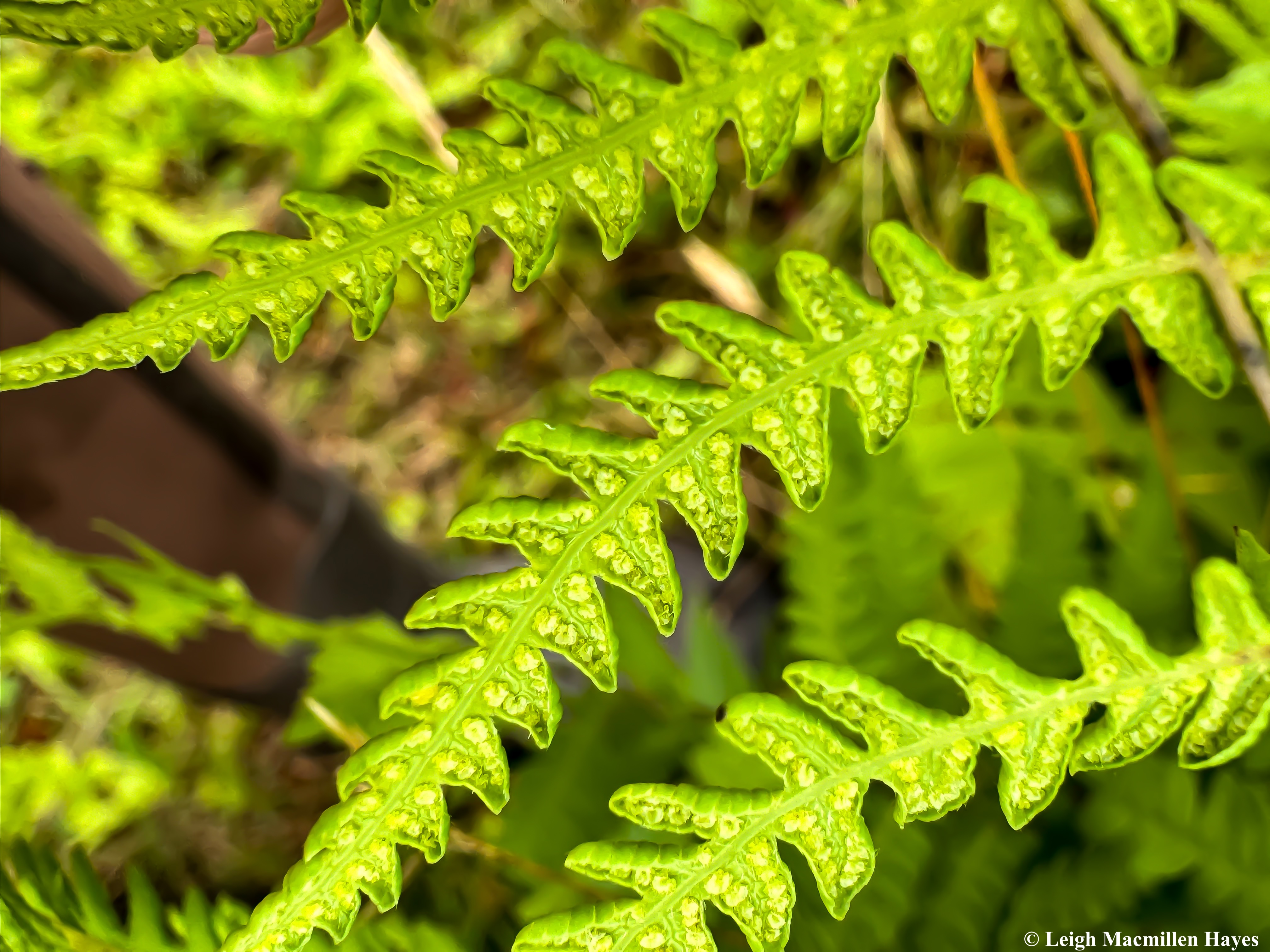
Let’s begin, however, with the class in the field, which is really more of a meadow given how wet it can be and some of the species who call it home attest to that, including this Marsh Fern.

At first glimpse, I thought it was a Lady Fern, but there was something different about the leaflets–they seemed to present as three-dimensional.

When I turned the blade over, I saw why. On fertile leaflets, such as these, the subleaflets curl around the kidney-shaped indusia which cover the sori, or spore cases.

There are lots of other ferns out there including Interrupted and Sensitive, but Marsh is one I don’t often see, so to have it on display in the school hallway is exciting to me.

Meadowsweet, or Spirea, is another plant that doesn’t mind wet feet, also indicating that this class leans toward being a wet meadow.

And today, I met a new-to-me insect species with a funny name.

Tumbling Ragdoll, aka Mordella marginata, is a Tumbling Flower Beetle. I love the name, and am reminded that as a child I loved my Raggedy Andy doll made by an “aunt” who wasn’t actually related to our family; my sister received Raggedy Ann. Years later, my sister also later created Andy and Ann for me, so I have a complete set, plus one from “Aunt” Betsy.

Anyway, from Tom Murray’s Insects of New England & New York, I discover that these beetles are so named because “When threatened their escape method is to jump and tumble about wildly.”

For science lab, I will attempt a mere scare in the future to see if that is true; but today approached with care so as not to disturb them.

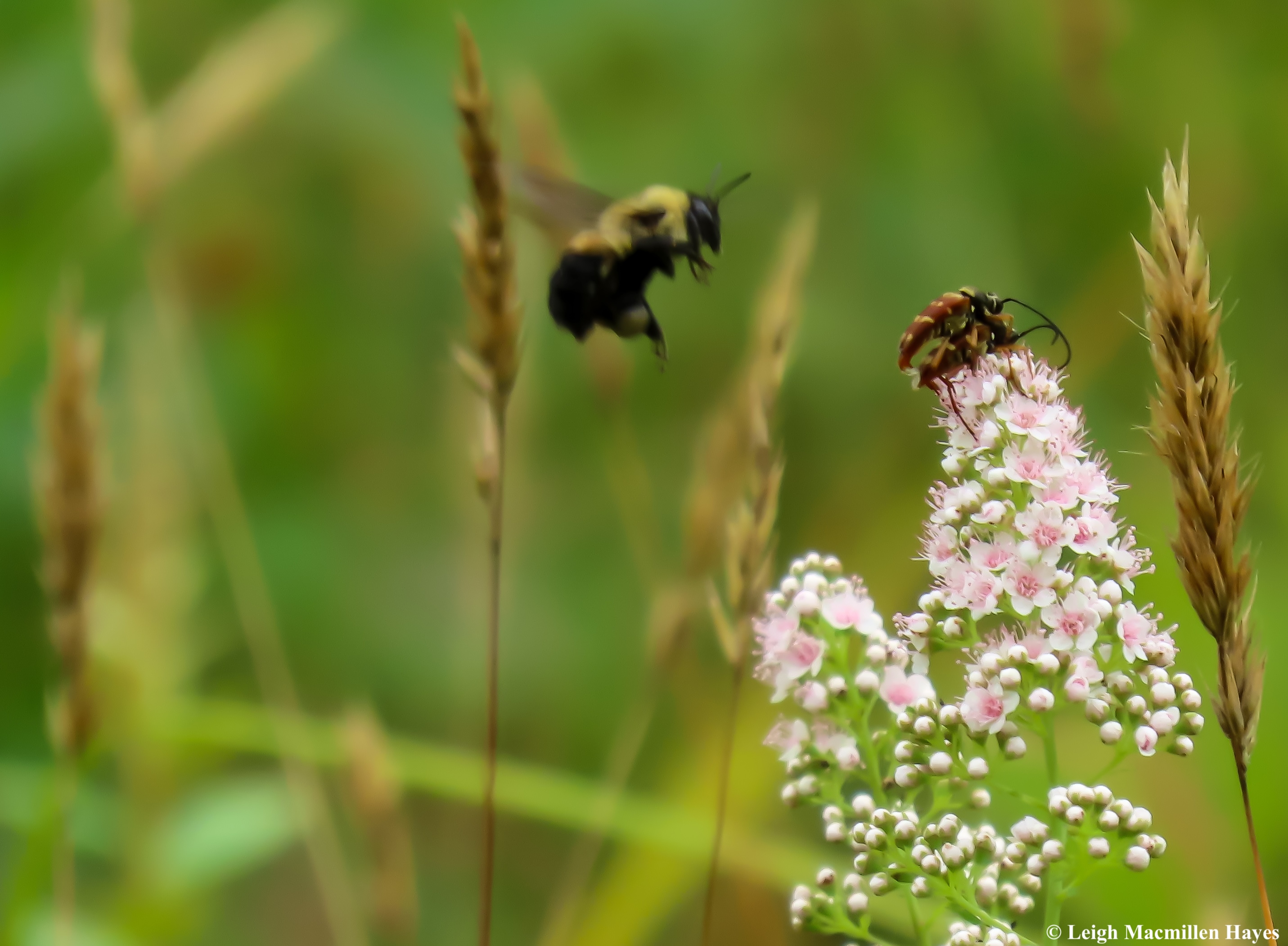
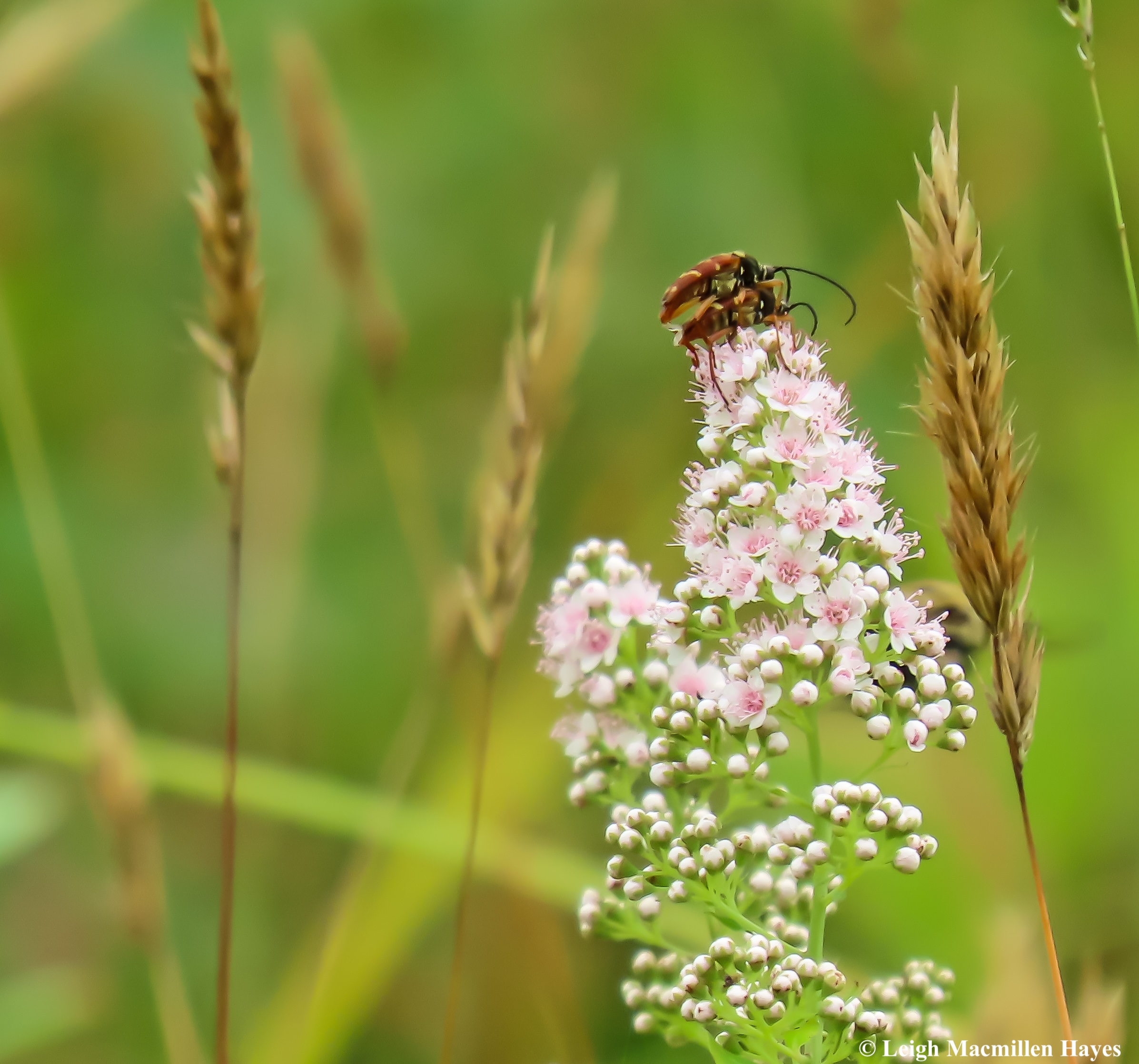
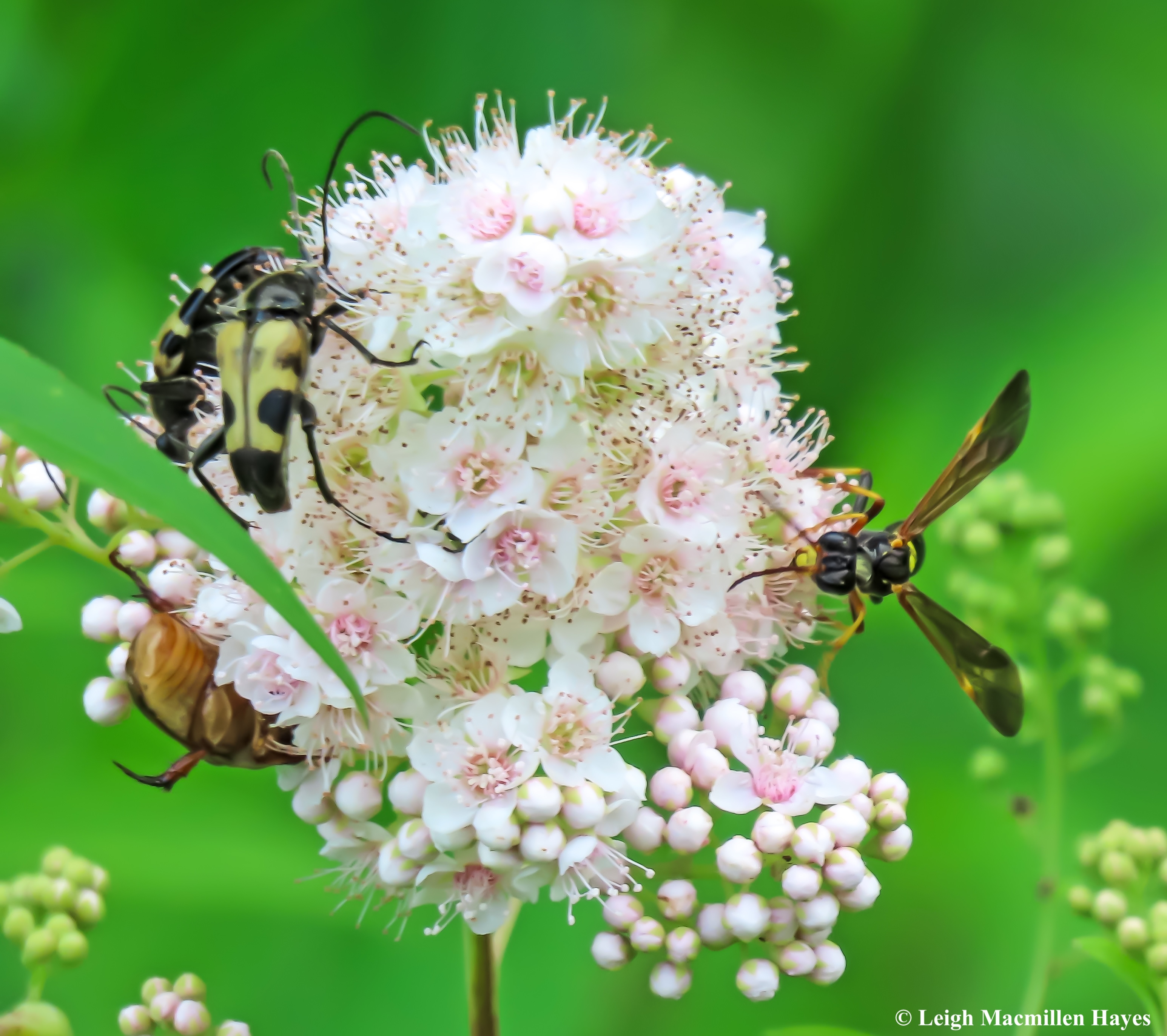
When I got up from my chair to sharpen my pencil, I spotted what my friend Amanda calls a B-52 Bomber Bumblebee. It was large and fast. But that didn’t disturb the Banded Longhorn Beetles at the top of the Meadowsweet.

They were mid-canoodle, and nothing was going to pause their intense interest in each other.

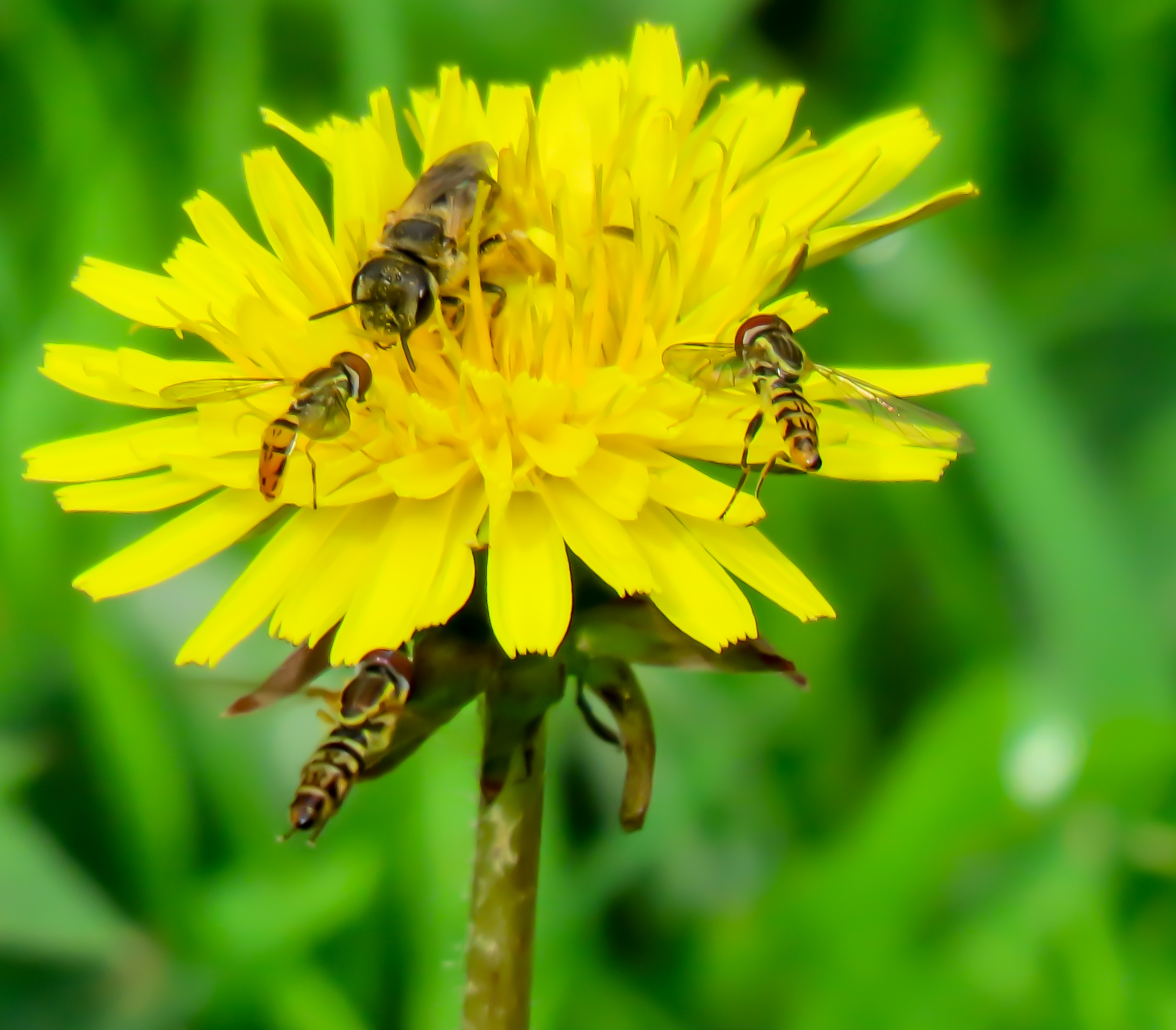
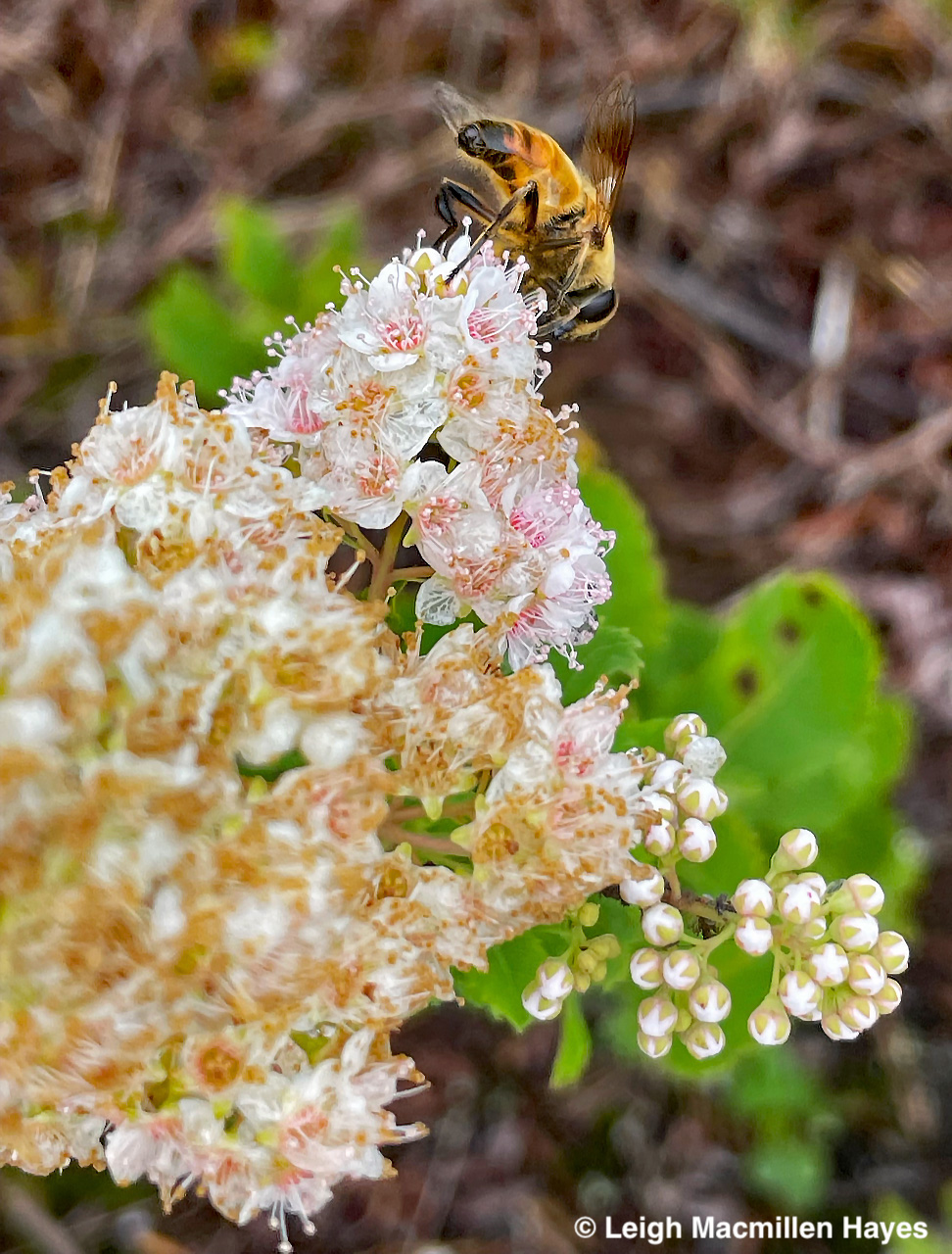
Upon another Meadowsweet, it was as if the whole community had shown up to pollinate the flowers, and miraculously, they all got along. At least while I watched. I love that the teacher had lined up this subtle lesson–about putting aside differences to work for the common good.

She reiterated it more than once.

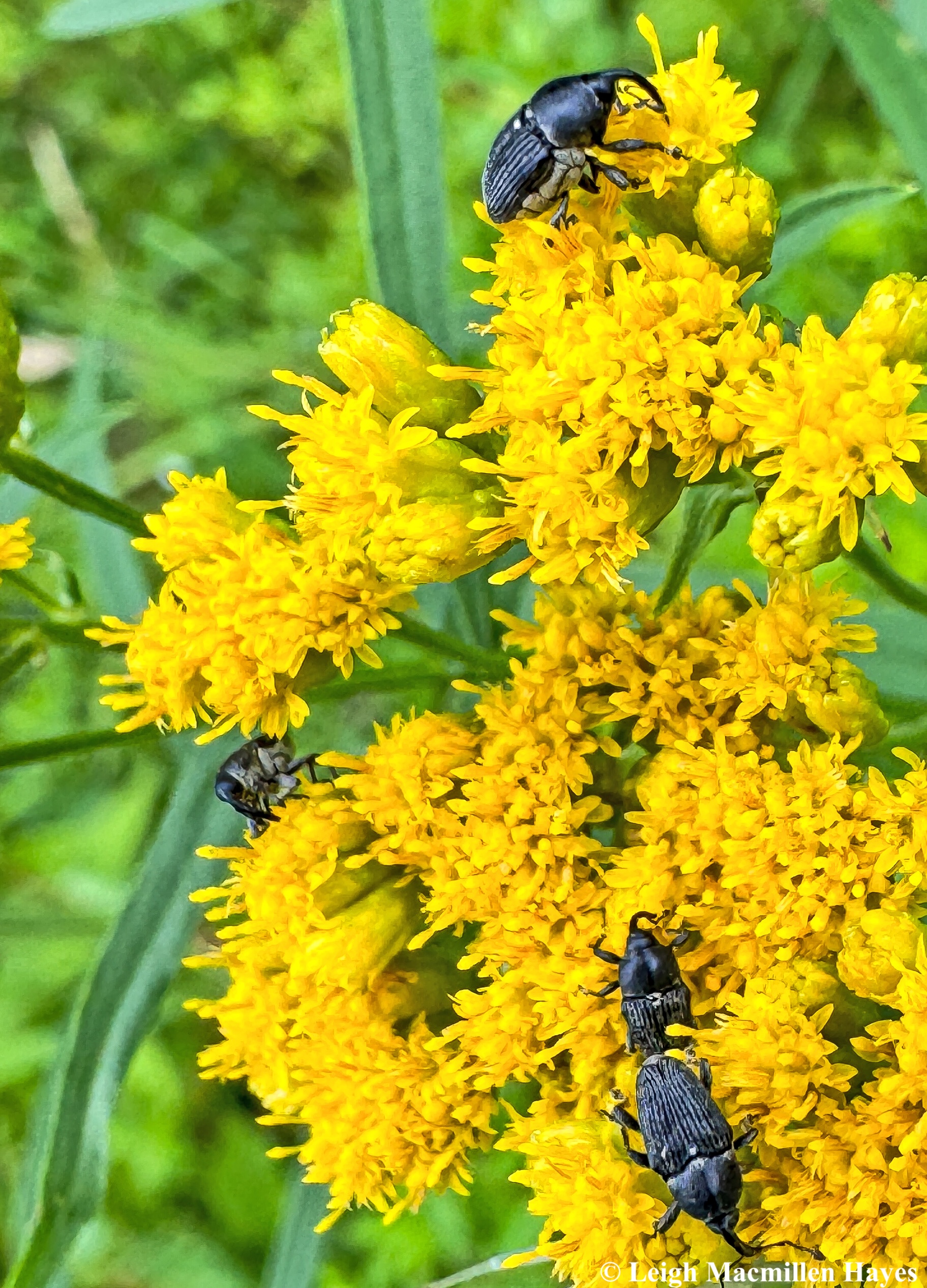
Over by the window, there was another new-to-me species to meet. By their tiny, yet robust bodies, and long snouts that seemed to grow right out of their heads, I knew they were Weevils. If I got the answer correct on the homework, these are Rugged Flower Weevils, aka Odontocorynus salebrosus.

Ragged. Rugged. Interesting choices for today.

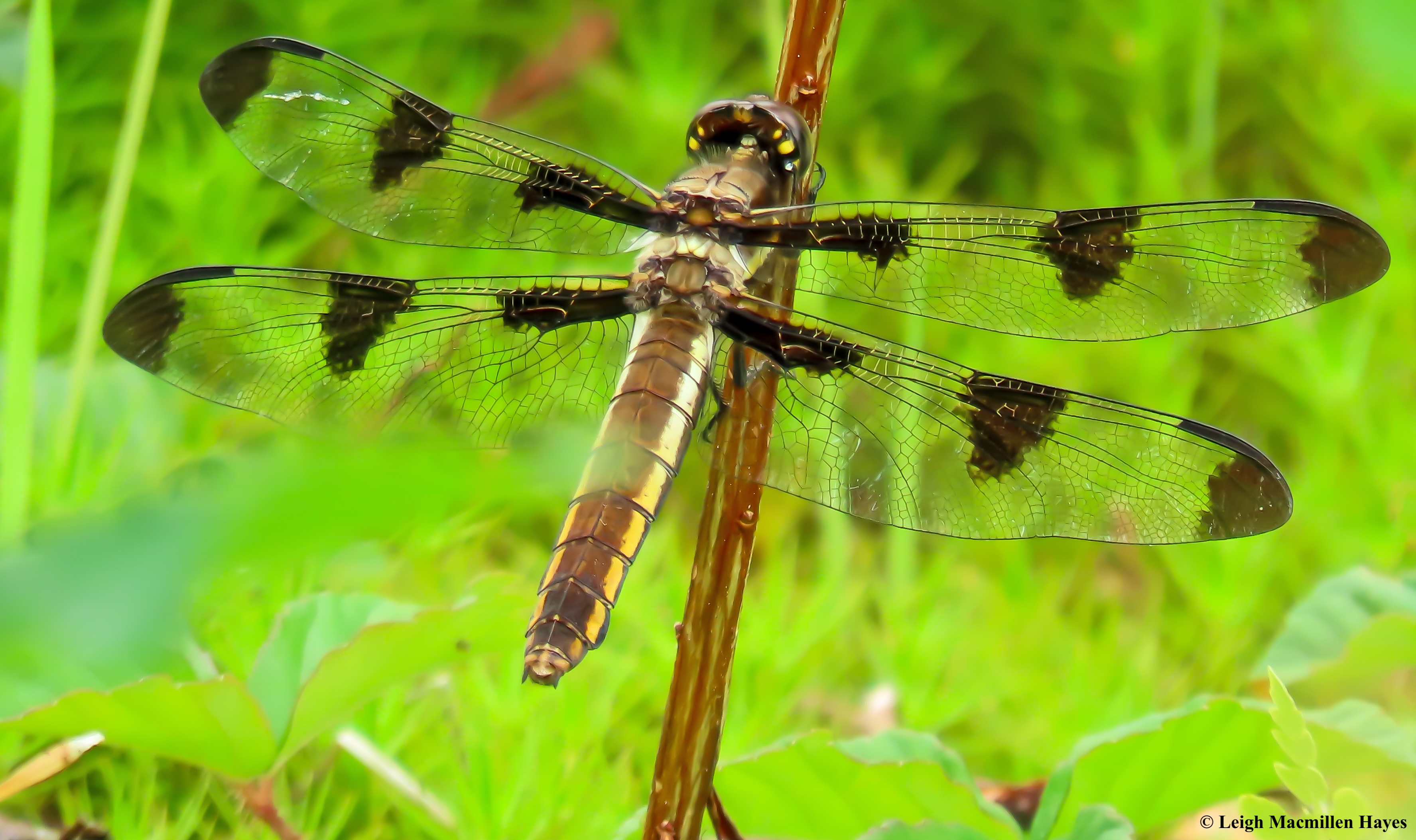
In the midst of it all, some old friends stopped by to visit, including a slew of male and female Calico Pennant Skimmer Dragonflies and this sole female Common Whitetail Skimmer.

I asked the teacher what is so common about this dragonfly that instead seems quite exotic with black splotches on the wings and a two-toned abdomen. I also inquired about the name Whitetail. She said she’d get back to me. Later, in the classroom next door, I saw a single male Common Whitetail, and its abdomen is much whiter (a light blue actually), so I know why that part of the name, but the female certainly wasn’t taken into account when naming occurred several hundred years ago.

And much to my surprise and delight, a male Spangled Skimmer stalked the halls, another indicator in my mind, that this is more of a meadow than a field.

Look at those white stigmas on the wings. It’s the only Skimmer I know of with such markings, thus making it easy to ID on the spot.

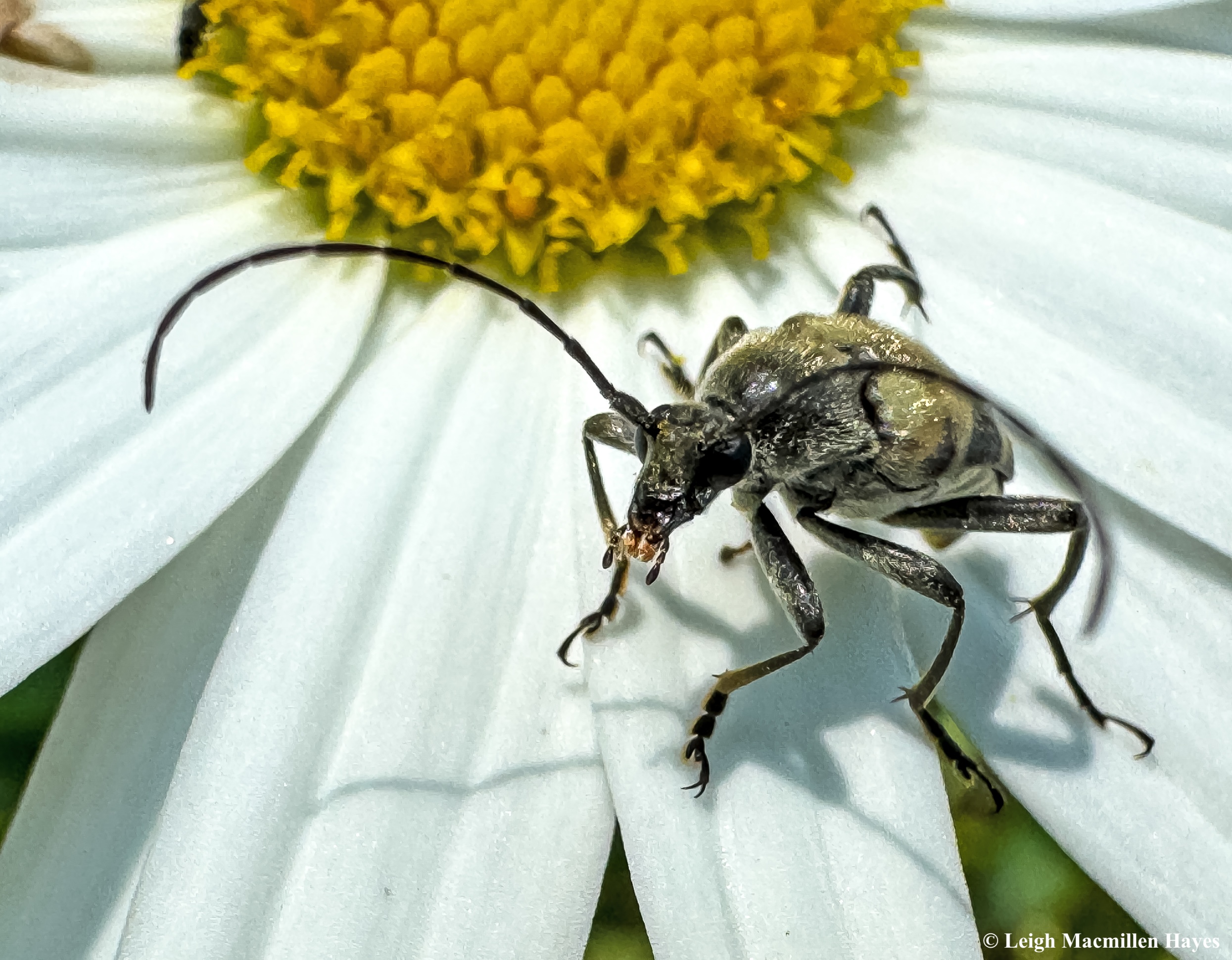
After recess, I crossed back over the wall to the classroom in the yard. Judolia cordifera is one of the Flower Longhorn Beetles, and those long horns were so obvious.

But that face. If I have nightmares tonight, I hope my mom will understand why. And my teacher won’t mind when I take a nap during class tomorrow.

Sweat Bees were also busy pollinating, especially the composite flowers, but its the Crab Spider who presented today’s challenge as the teacher wondered if I saw it. Camouflaged as it was, its duty is to mimic the daisy petals. For the moment the Sweat Bee survived, but the spider often wins in the end.

During lunch, this Gray Catbird landed about ten feet from the table where I sat with my classmates. As a person who dabbles in art, and loved Painting 101 with Miss Jessie, the many shades of gray stood out to me. But I was reminded that a Catbird is more than just a gray bird. First, there’s the small black cap, dark tail, and the rufous-rusty patch under the tail. Sometimes its hard to see the patch, but from my spot at the cafeteria table, I had a spot-on view.

And just before class let out, our school mascot flew in. Or rather, the child of our school mascot. Being so young, it was only an arm’s length away from me, but being the mascot, it seemed not to mind my presence.

Then again, maybe it did for the immature Red-breasted Nuthatch looke around, perhaps for back-up. I know it has several siblings, but the others weren’t feeling so brave as to stand so close to me.

At the end of the day, before the last bell rang, I realized that I was the student teacher–always learning something new and finding joy in sharing those learnings.

Today’s lessons were brought to you from the Field and Yard Classrooms. Stay tuned for more lessons.

The Summer That Is

I was afraid this would be the summer that wasn’t. In the gardens, that is. Oh, and I use the word “garden” loosely, as mine are more a hodgepodge of flowers and ferns and herbs. But they are meant to be a safe haven as well, for birds and bees and even voles. And yes, woodchucks and porcupines.

Anyway, for a few weeks, as I walked about our property, it seemed there was hardly an insect visiting any of the early flowers–except maybe the Black Flies and Mosquitoes, and even they weren’t abundant this year. Gnats. Now that’s another story.

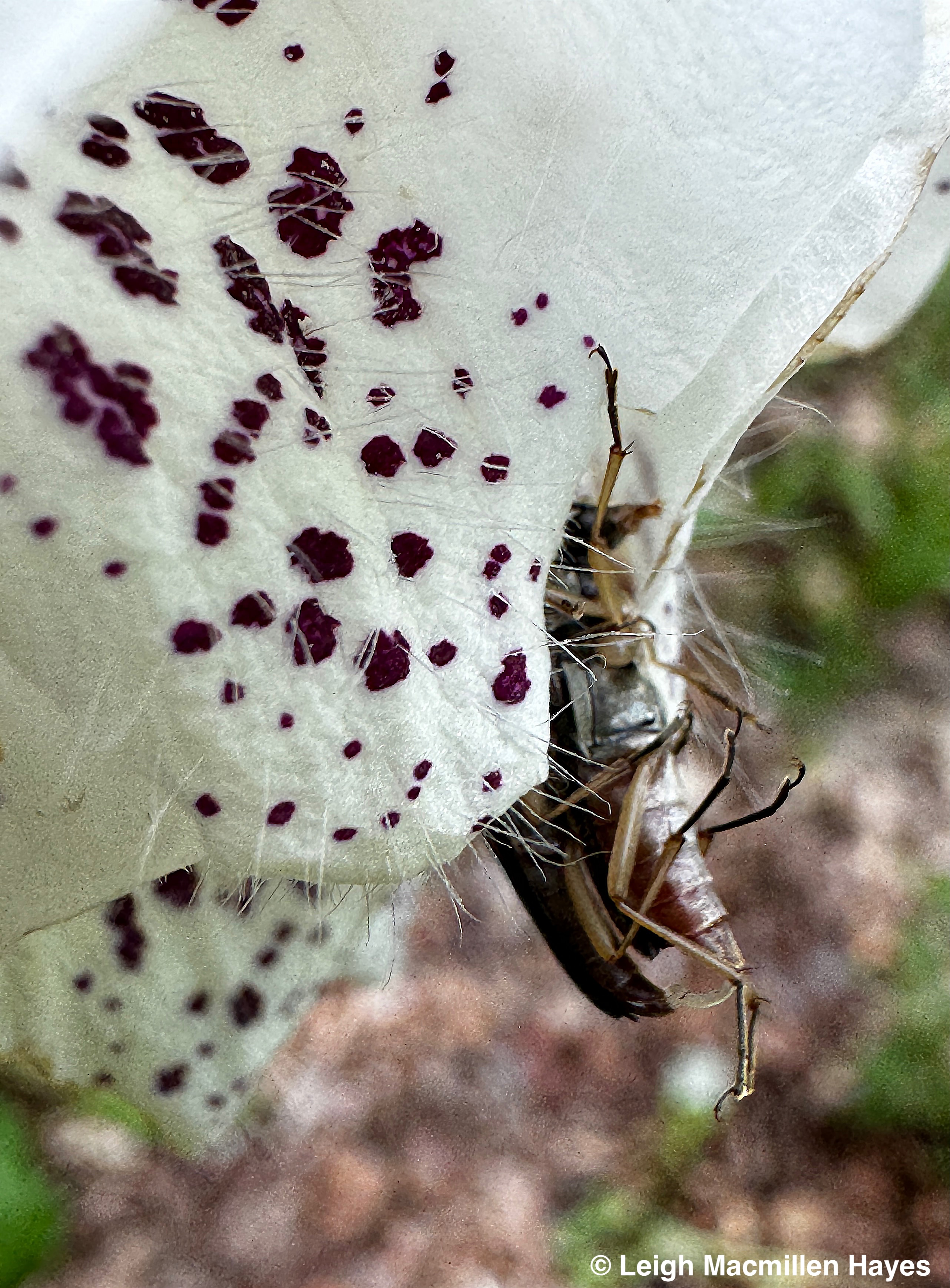
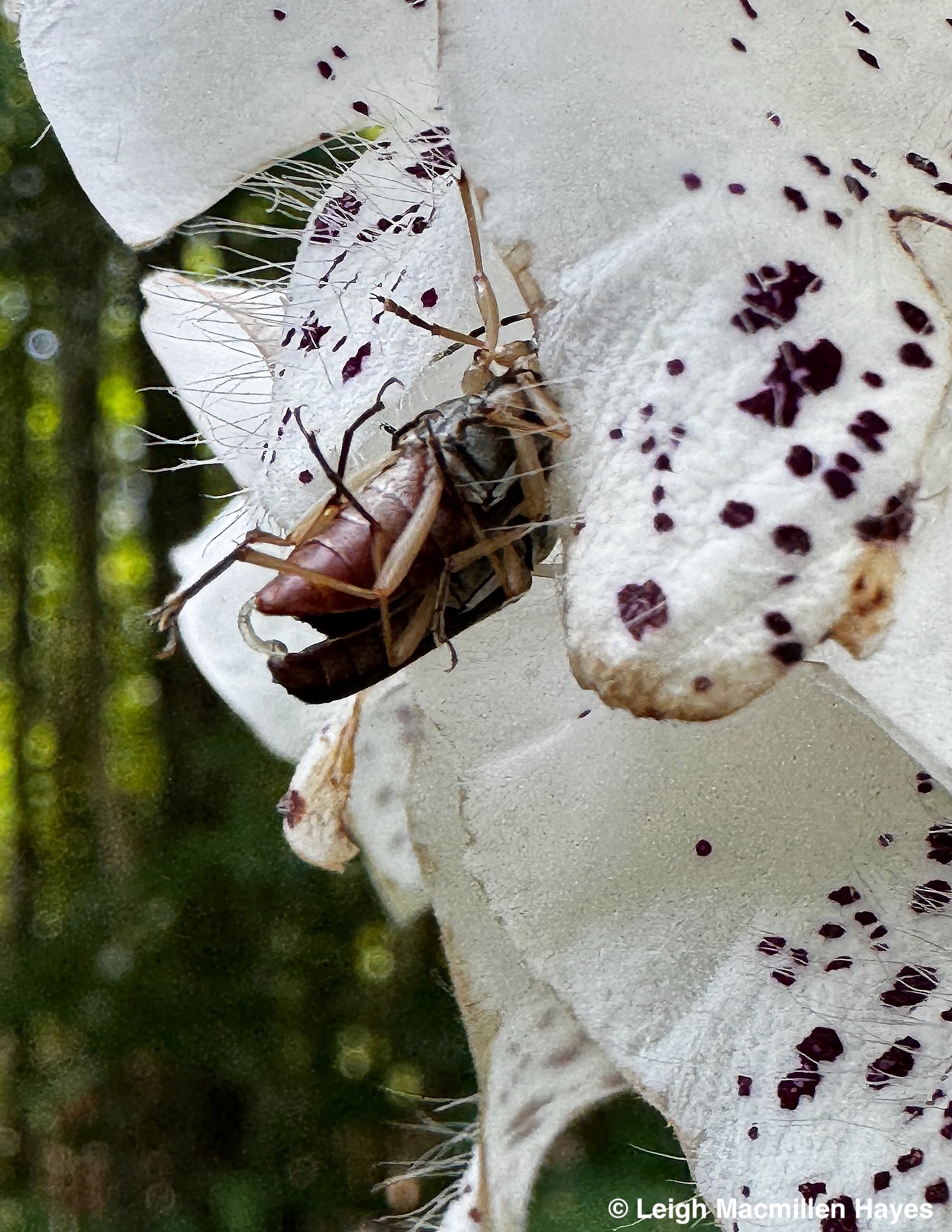
And then the other day I noticed an Ant scurrying across the Foxgloves where two Long-horned Flower Beetles were in full embrace.

Not only did I have insects to watch, but canoodlers at that. With what looked like a dozen legs in the mix. Ahem. Cuze there were, each insect sporting three pairs on the thorax.

These two had nothing to hide and so I watched until eventually they split up and went their separate ways. I only wish I knew where she laid her eggs.

On the edge of another homespun garden, I spotted a Common Candy-striped Spider with a meal sac all packed up, the meal being a bee that seemed like it was probably much larger than the spider. But the spider didn’t care. Meanwhile there was another bee seeking nectar and I worried about its future.

And then Candy-striped started toward the live bee and I worried even more.

As you get a closer look at C-s, you may question the name. I did. My research turned up the fact that this egg-shaped arachnid can have an abdomen of varying colors from white to cream to green, and maybe even red. As for the stripes, there are those with broad or v-shaped stripes, but also my friend, who sports rows of dark spots.

The second bee flew off before being snagged, but if you look closely, you’ll see that C-s’s web is a tangle of threads and it had probably pulled down the flower petals to create a good hiding spot from which to snag its dinner.

As for that meal, it needed to be wrapped again . . .

and again, in an act to immobilize the prey and store it for a later meal. Kinda like a doggy-bag, of sorts.

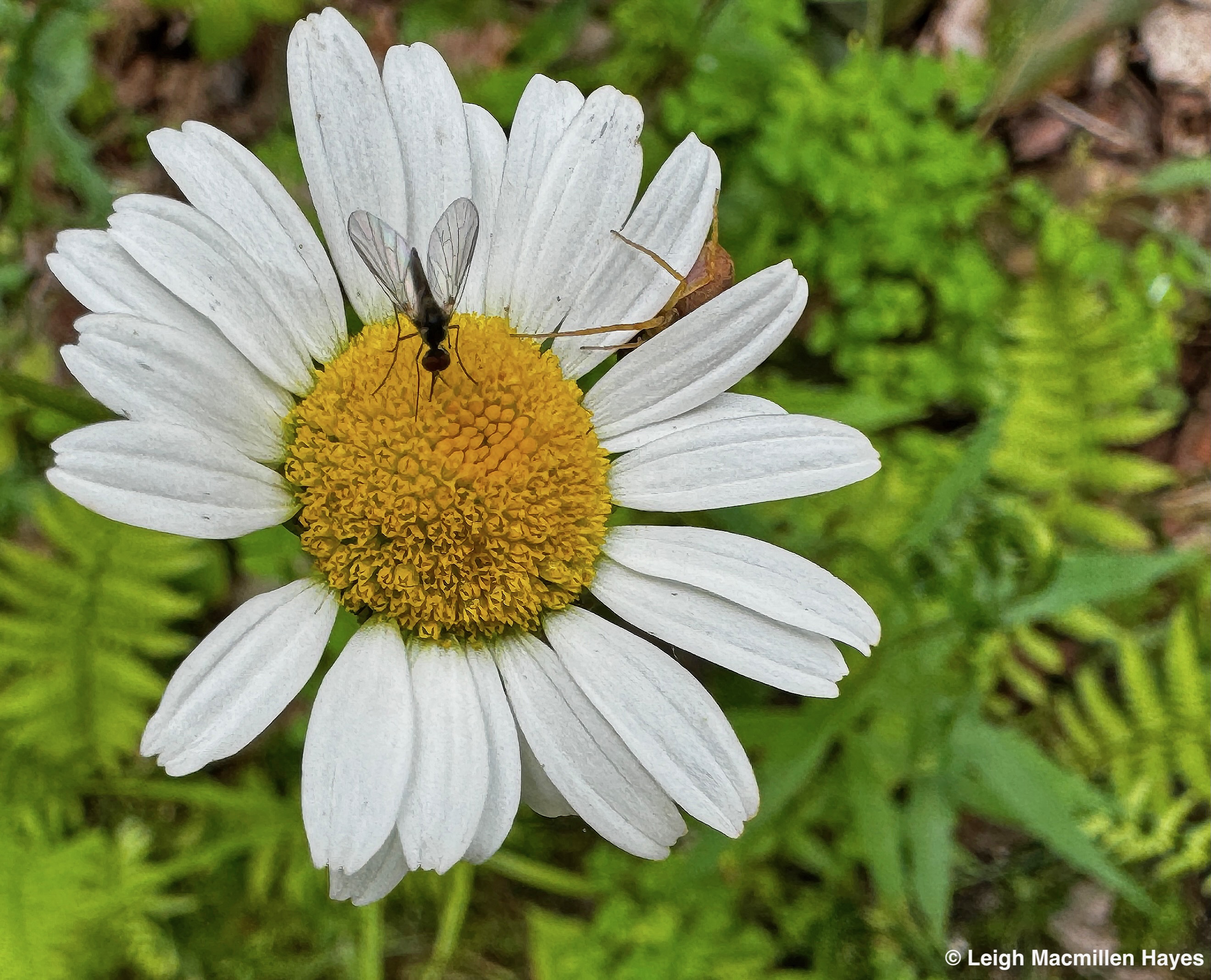
Back in the first garden, I found a Crab Spider hanging out on a daisy.

And then watched as it turned and pounced, yes literally pounced, on a tiny Gnat-sized fly. Rather than wrapping this tiny source of protein, the spider grabbed and bit it in ambush style.

In my own garden-visitation style, I circled and circled and moved on to another and then returned to circle some more. For several days on end.

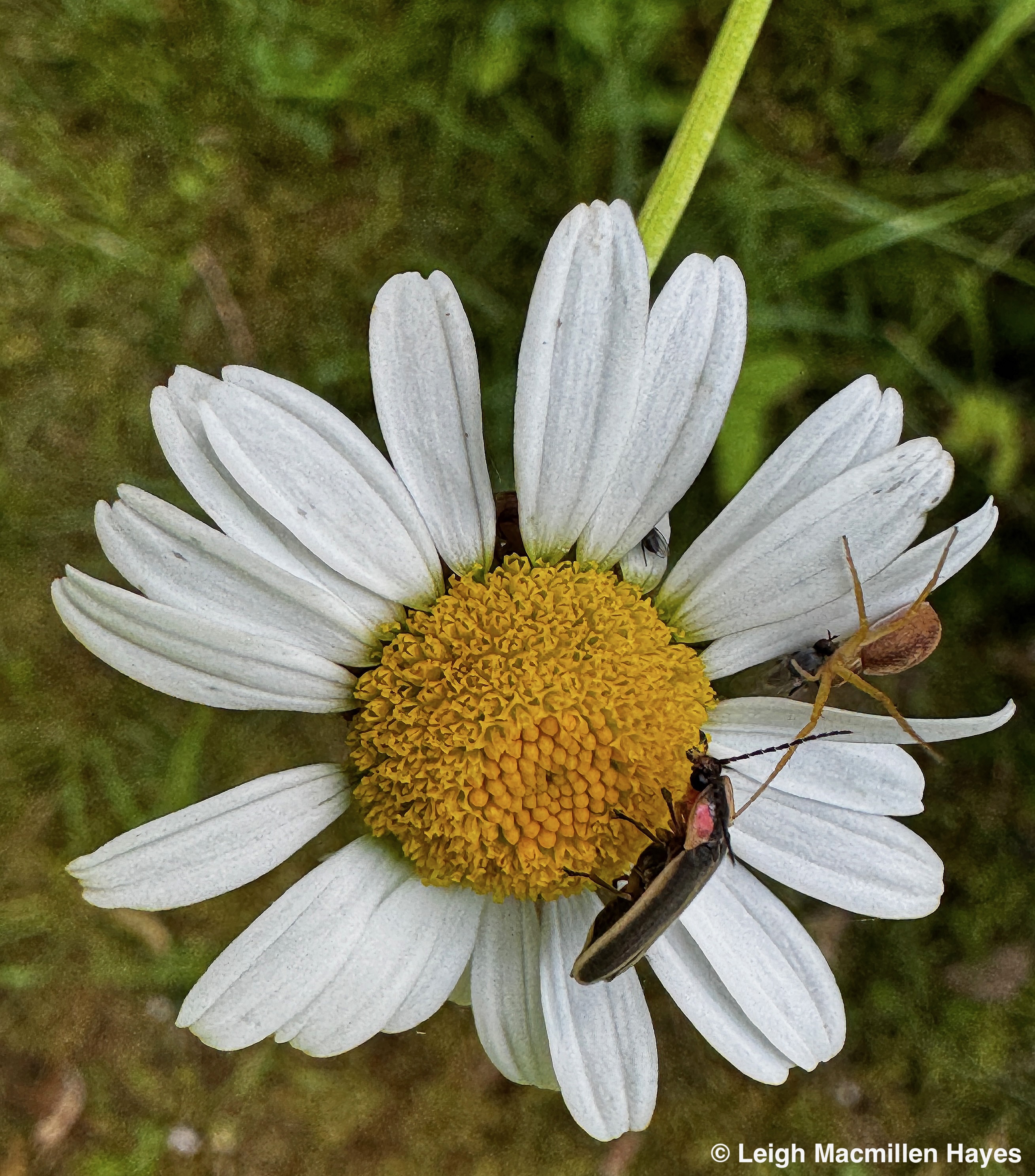
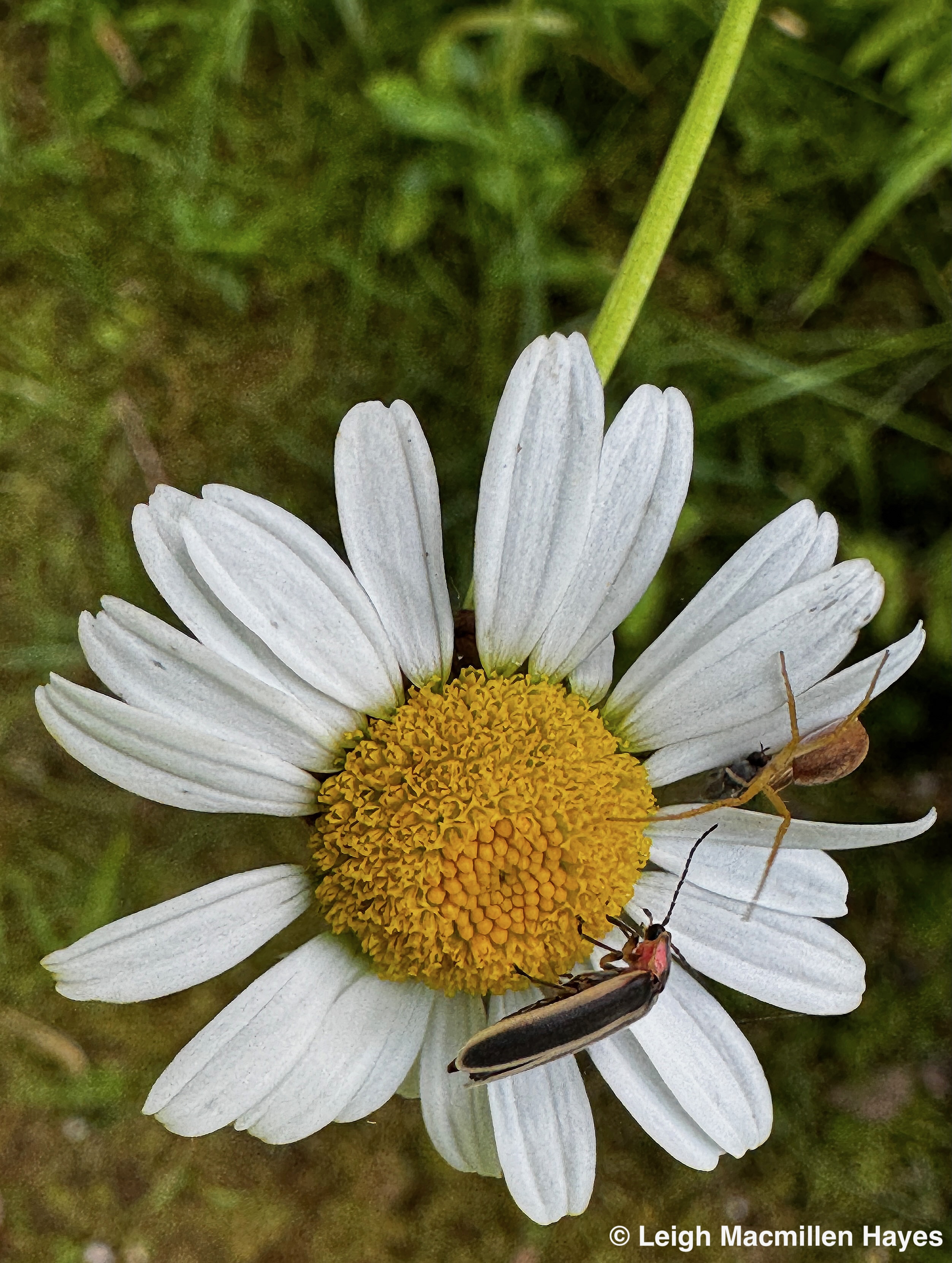
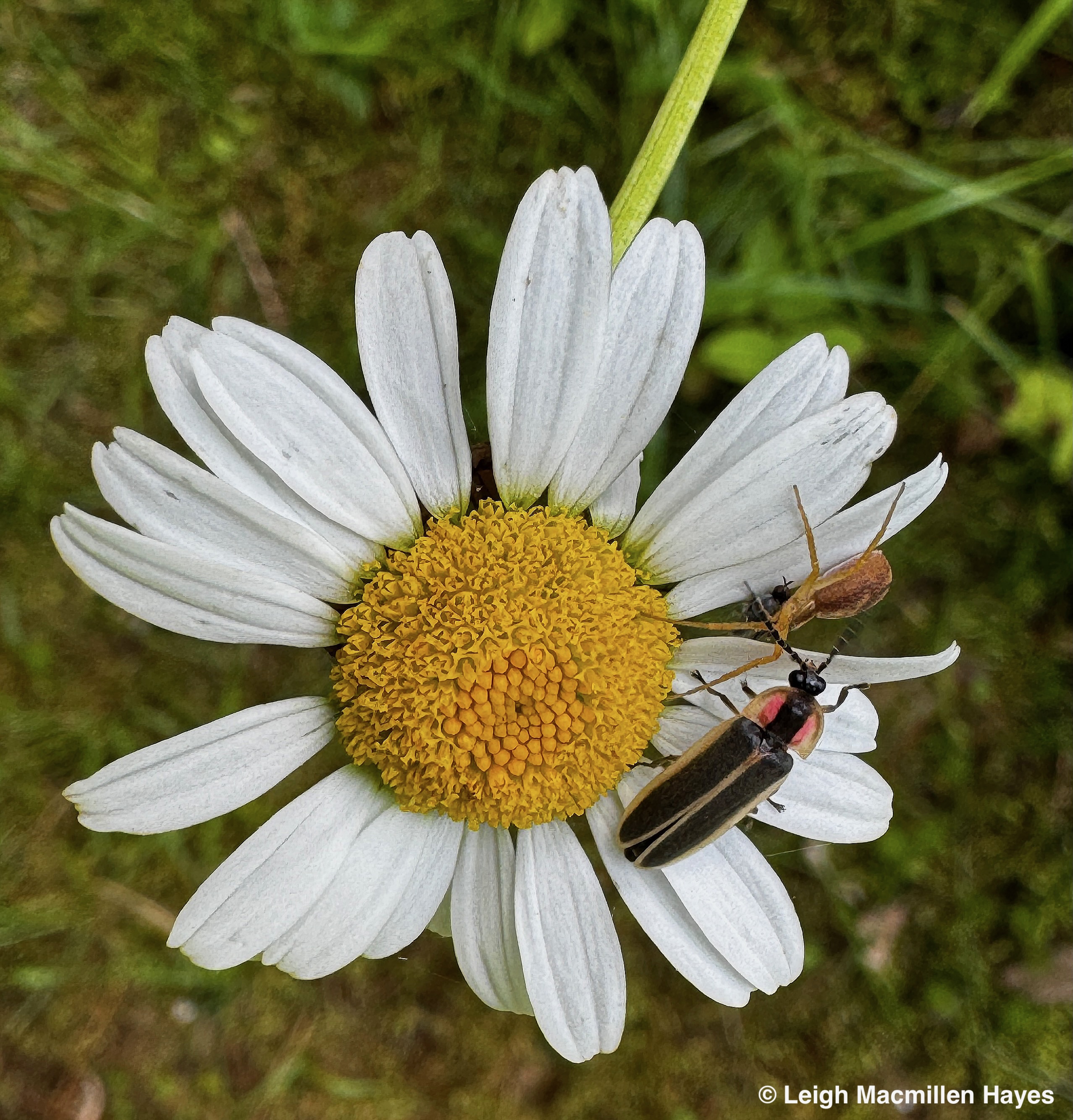
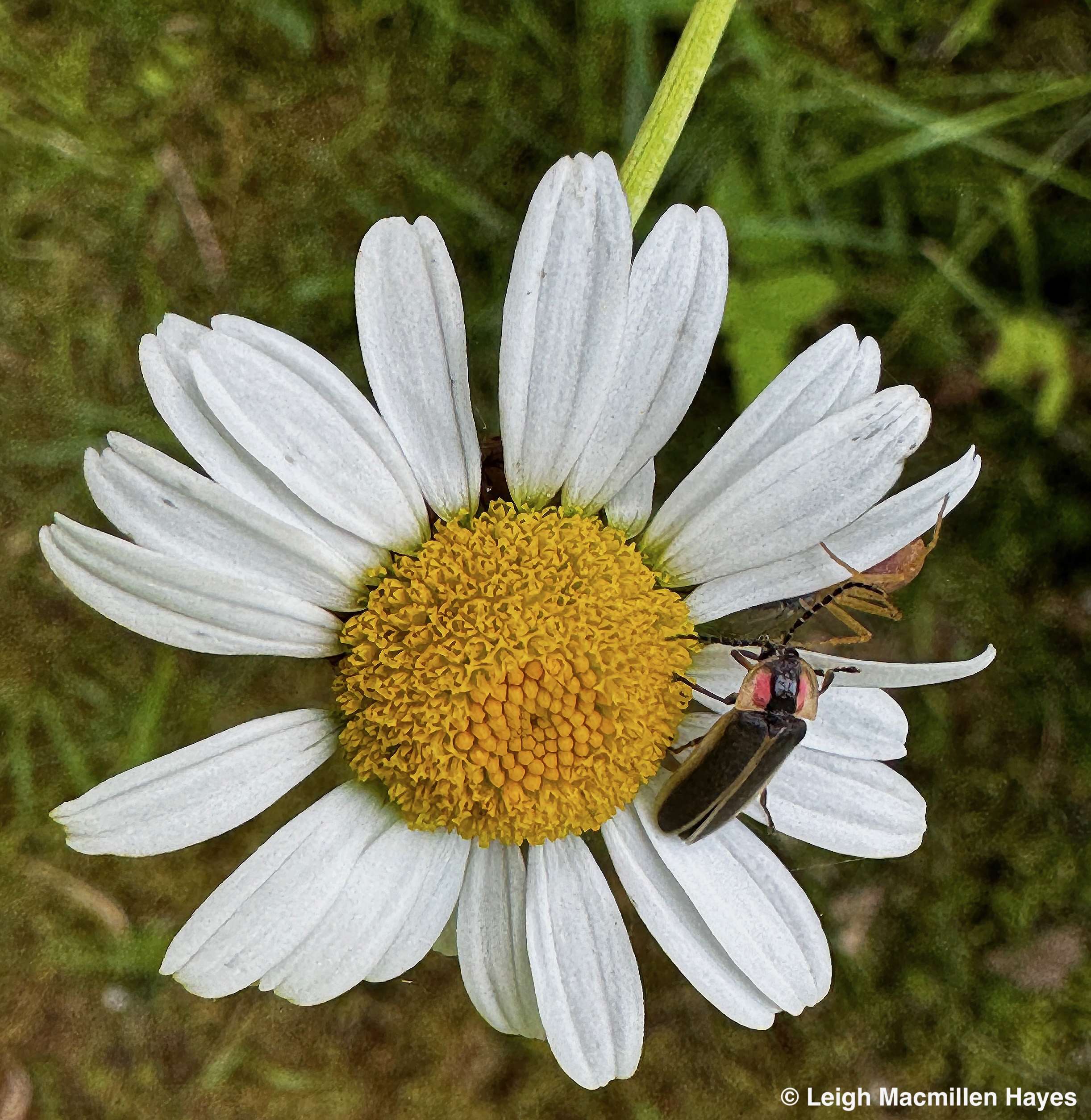
And with each circle, there was so much more to discover, like this Firefly visiting the same daisy where the same Crab Spider waited.

I must interrupt the garden saga here to say that every night of late, we have enjoyed the Firefly Show, an event that has been missing or greatly diminished in the past, but now has ramped up almost to the point of my childhood memories. Almost.

I could say that as I watched the insect and spider played a game, but it was hardly a game at all. Notice how the spider tapped the Firefly.

A brief retreat with the spider appearing to stay still (a skilled hunting technique), while the Firefly continued to probe.

And then the Firefly advanced. I wasn’t sure I could watch what would happen next for I knew how quickly the spider could pounce. Yet, I did. Watch that is.

And I’m so glad I did, for what I observed was the spider retreating. Was the Firefly too big for the spider? Or was there another reason to avoid capturing what I thought looked like a fine and chunky meal? Whatever the reason, I was happy to see that the Firefly didn’t meet its demise.

The last I saw of these two before the Firefly flew–the spider went back into hiding and the Firefly moved to the opposite side. I knew relief in my human form, but had no idea again of the answer to why.

Meanwhile, back at C-s’s hamper, I couldn’t find C-s, but did find the remains of another meal consumed. It continued to amaze me how C-s didn’t care about the size of its prey, while the Crab Spider seemed to have a preference for smaller meals.

On day 3 or 4, I found the Crab Spider in its usual spot as a Flower Fly with a strong proboscis sipped nectar.

And on a flower about two inches away, an exquisite Spotted Thyris Moth, and a few Gnat-like flies feasted. I kept waiting for them to visit the Crab, but perhaps they sensed its presence. I’ll never know, but while I watched, they stayed on this flowerhead.

On another, a bee gathered not just the nectar that so many of the insects seemed to seek, but filled the sacs on its legs with pollen as well. Lots of pollen. It actually looked like two pollen sacs per leg to me.

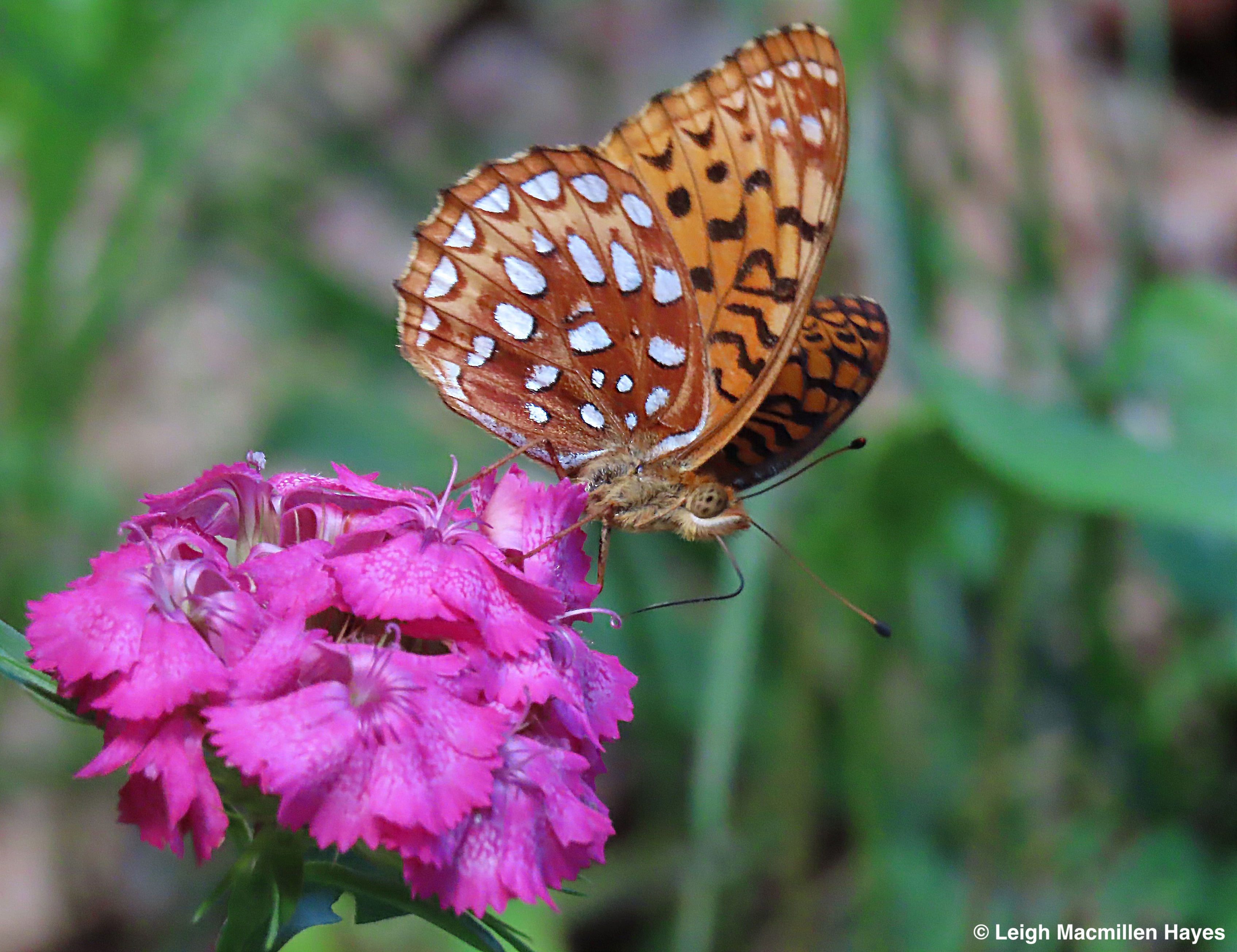
In the midst of it all, other insects flittered and fluttered over the flowerheads, sometimes pausing to seek nectar like most of the others. This Fritillary Butterfly is one of many that took advantage of the gardens as well as the clover growing in the yard.

Sweet William seemed to be a favorite landing spot.

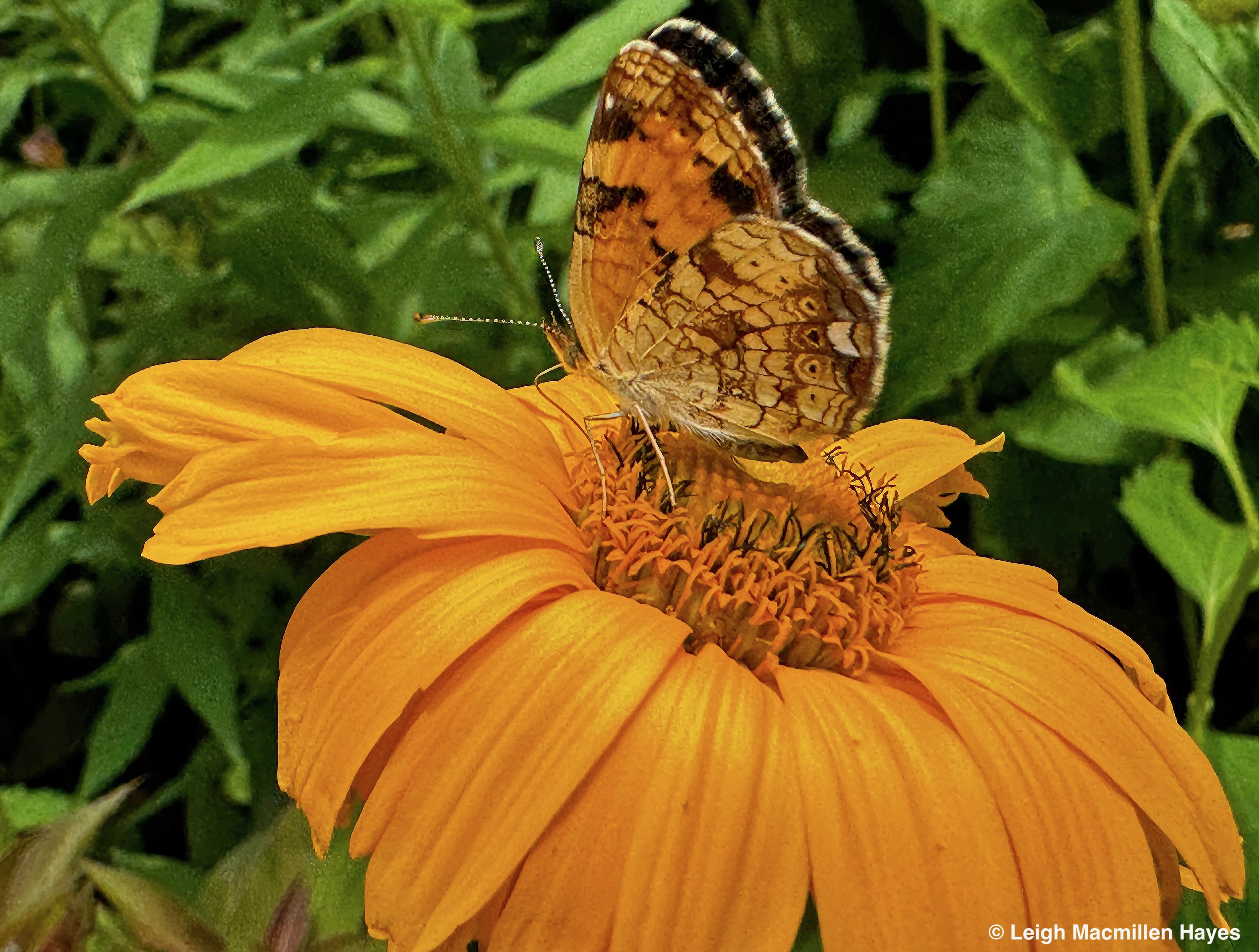
As I’ve said, I walked back and forth for all these days between gardens, which have many more flowers than I’m sharing, but it was these few that seemed to host the most visitors, including this Pearl Crescent Butterfly. Take a look at the underside of the hindwing. About halfway down, close to the edge, do you see the crescent-shaped pearl?

On another, a Bee Fly with its own incredible wing pattern. And those eyes. And hairy body. Oh my!
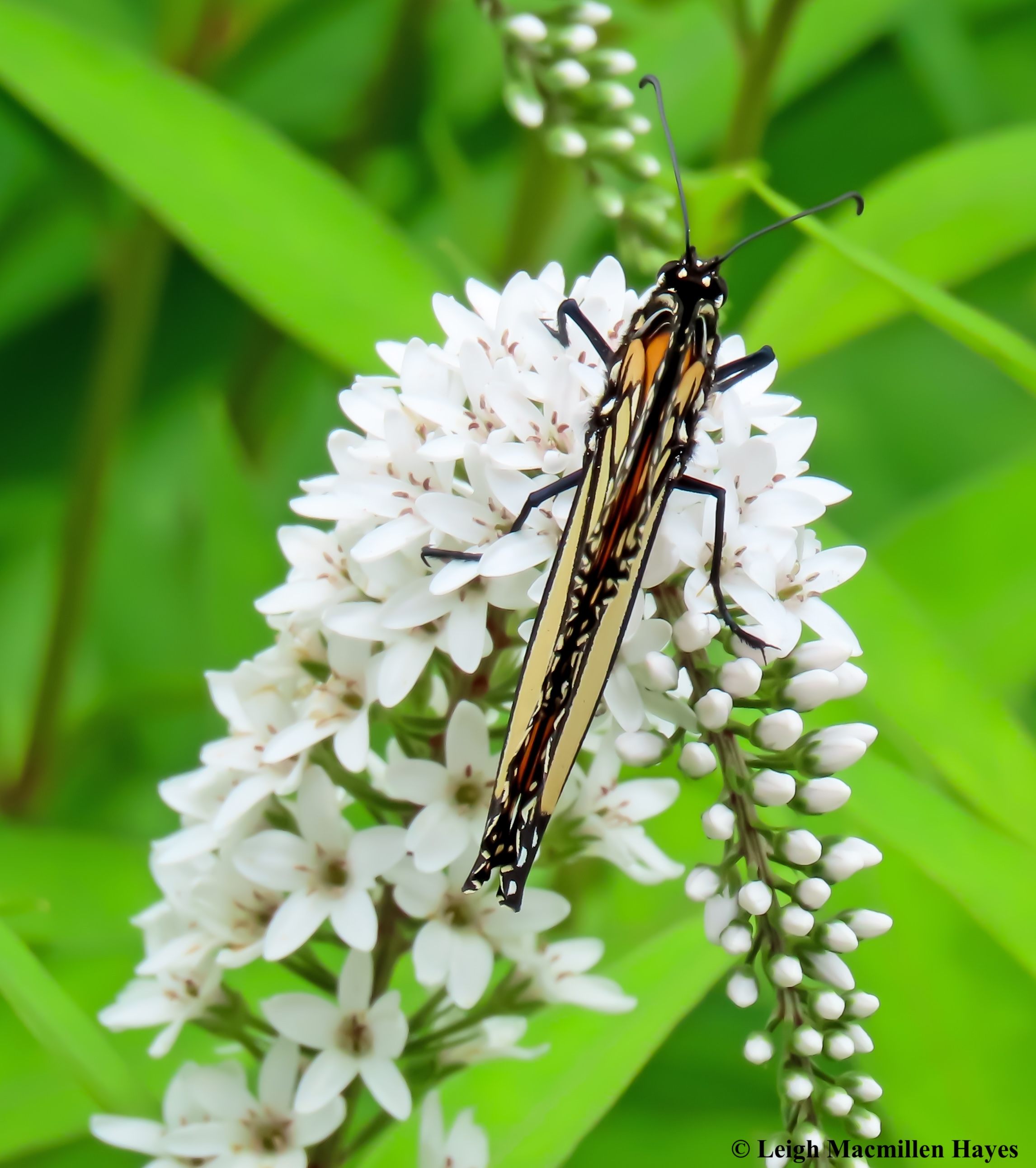
Late this afternoon, something big and dark flew in and it took me a moment to realize what I was witnessing.

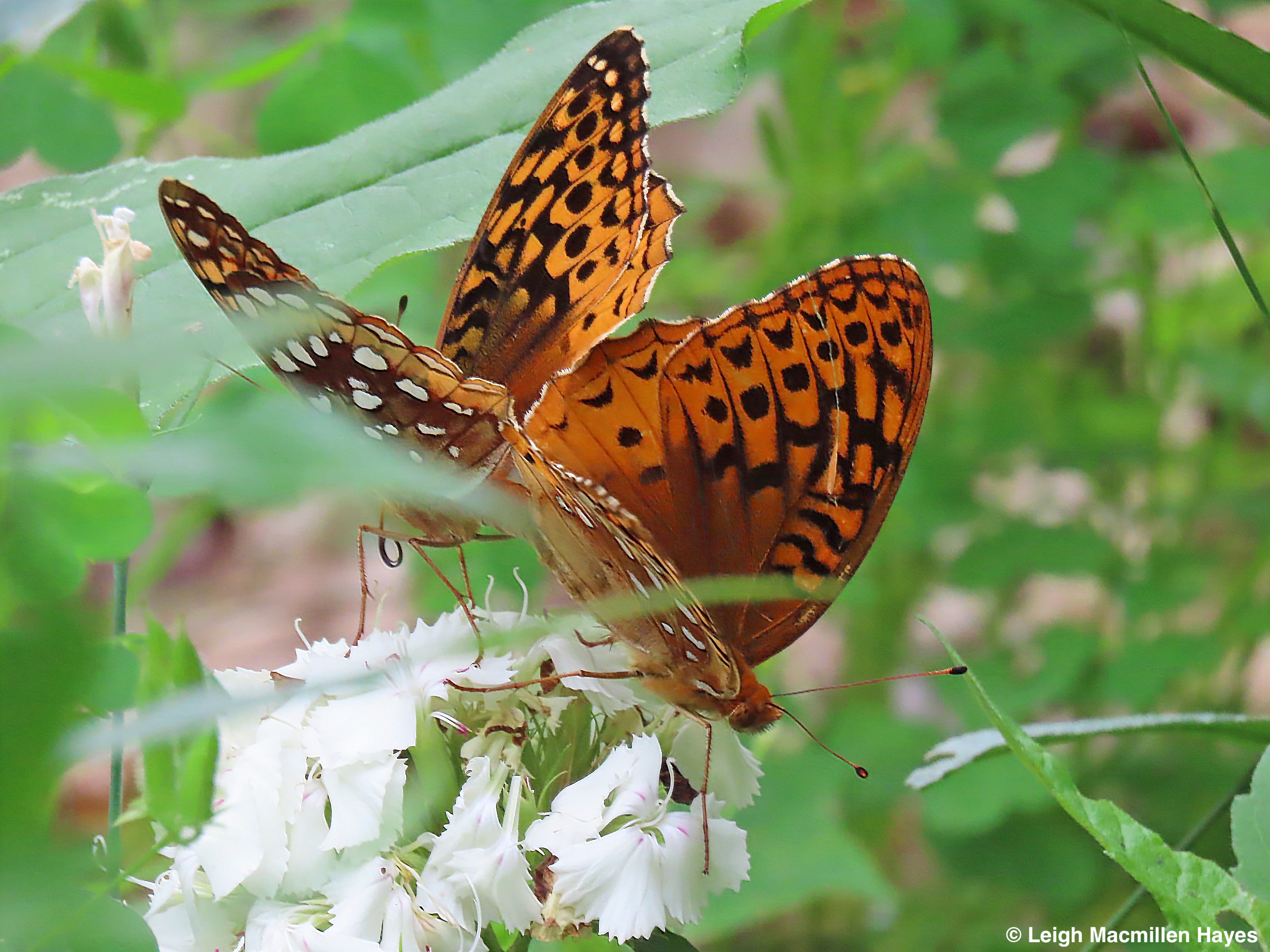
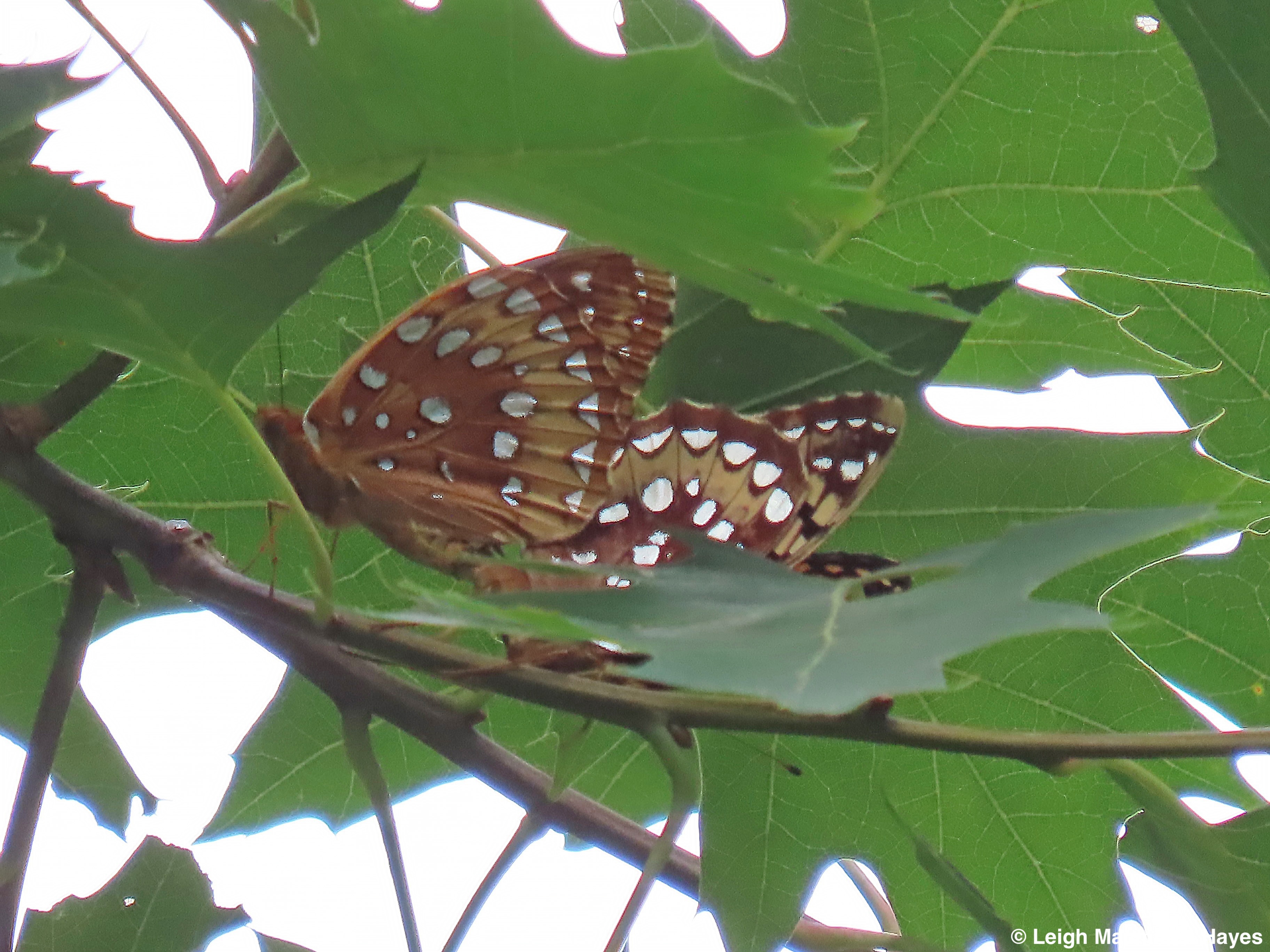
Fritillaries canoodling atop Sweet William. As this story began, it ends. Canoodlers in action.
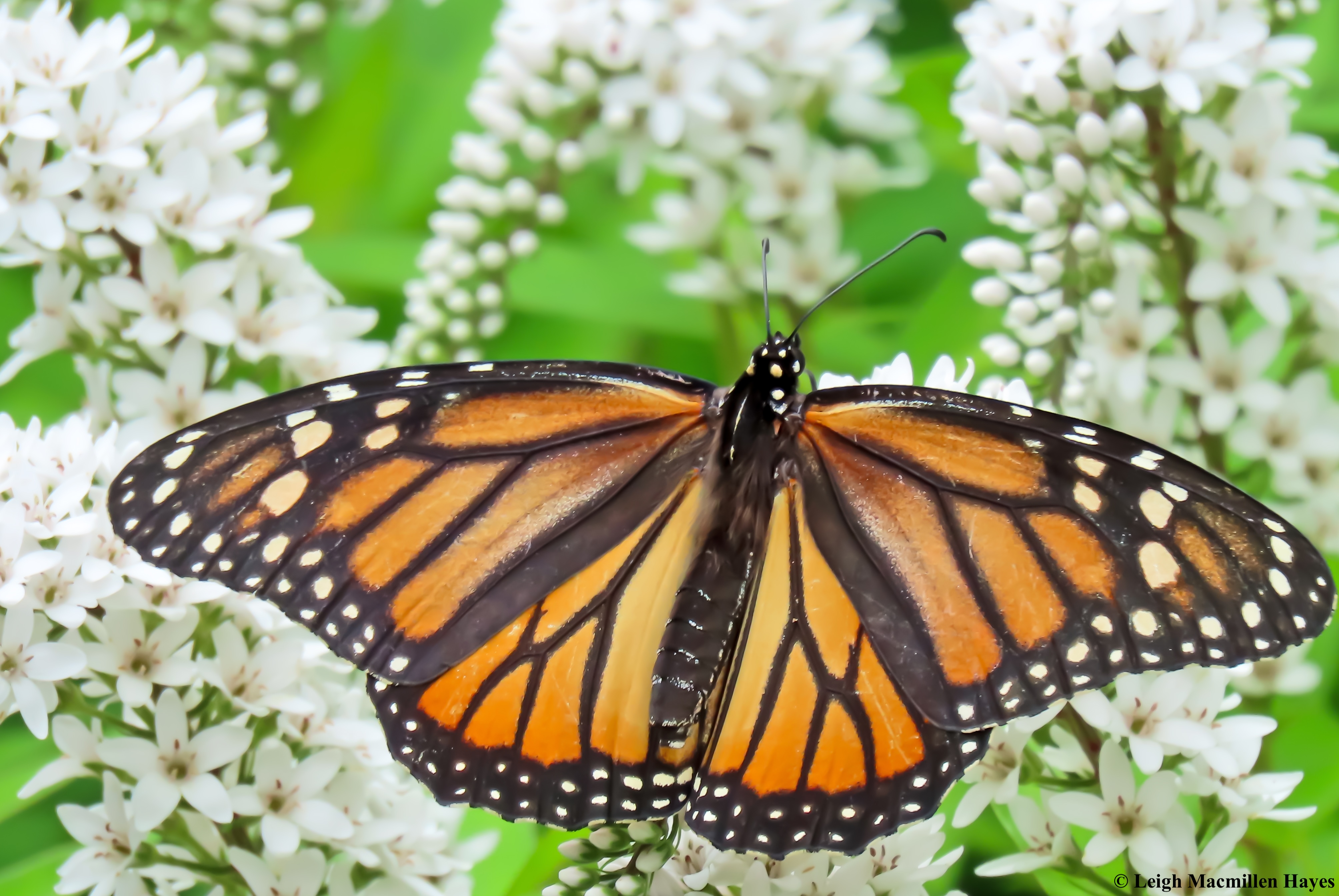
These two, however, got smart, and found a room where I couldn’t observe their every move, for up into a Northern Red Oak did they fly.

I was so afraid that this would be the summer that wasn’t in the pollinator gardens, but it’s turned out to be the summer that IS! And I can’t wait to discover more. So expect more. You never know what you might discover at wondermyway.com.

The Pollinator Party

The invitation is simple: Meet in the garden. All are welcome. Any time. Any day. Just come.

Enjoy the celebration . . .

White Admiral Butterfly

of life,

Hummingbird Clearwing Moth

and work.

Sweat Bee

Of color,

Plain Ringlet Butterfly

texture,

Common Green Bottle Fly

and design.

Little Copper Butterfly

But really, the celebration is all about the fact that pollinators are a critical piece of our food and flower supply.

Goldenrod Soldier Beetle

We depend on them for a large amount of food that we need for a healthy diet. 

Great Spangled Fritillary

And they help move pollen from the male structures of flowers to the female structures, which ensures new seeds, fruits, and plants will grow. 

Thread-waisted Wasp

Likewise, these insects benefit from the plants they visit.

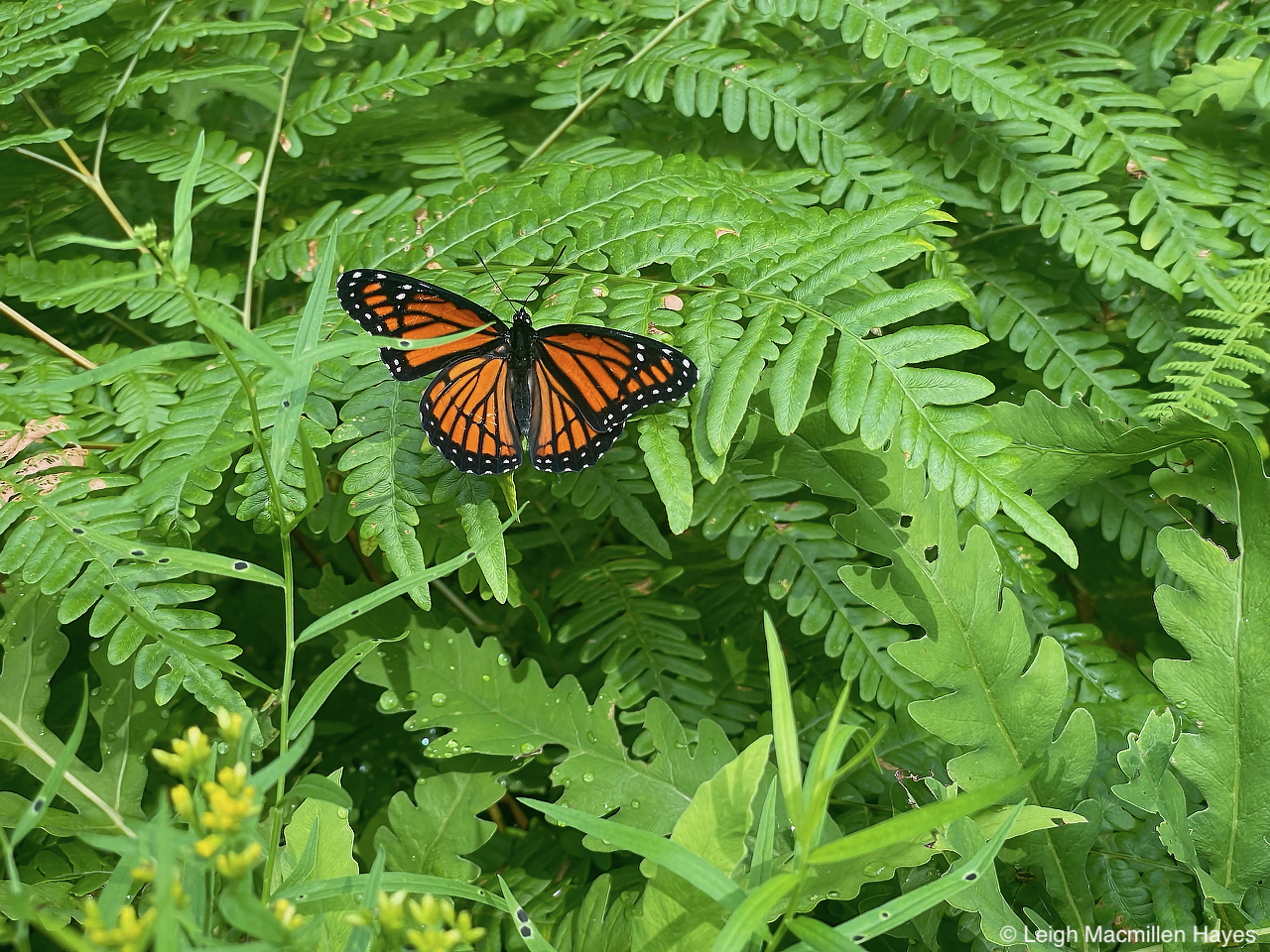
Viceroy Butterfly

Nectar provides carbohydrates and pollen can be a source of proteins, fats, vitamins, and minerals.

Black-tipped Ichnuemon Wasp

But many pollinators are at risk. Declining populations are due to a loss of feeding and nesting habitat, overuse of chemicals and pesticides, and changes to weather patterns.

Monarch Butterfly

The Monarch Butterfly has officially been designated as endangered by the International Union of Conservation for Nature.

Great Black Wasp

In short, pollinators need us . . . and we certainly need them.

Ambush Bugs

I invite you to accept the invitation and spend time observing and appreciating; in the process you might also get to witness a couple of canoodlers.

Clouded Sulphur Butterfly

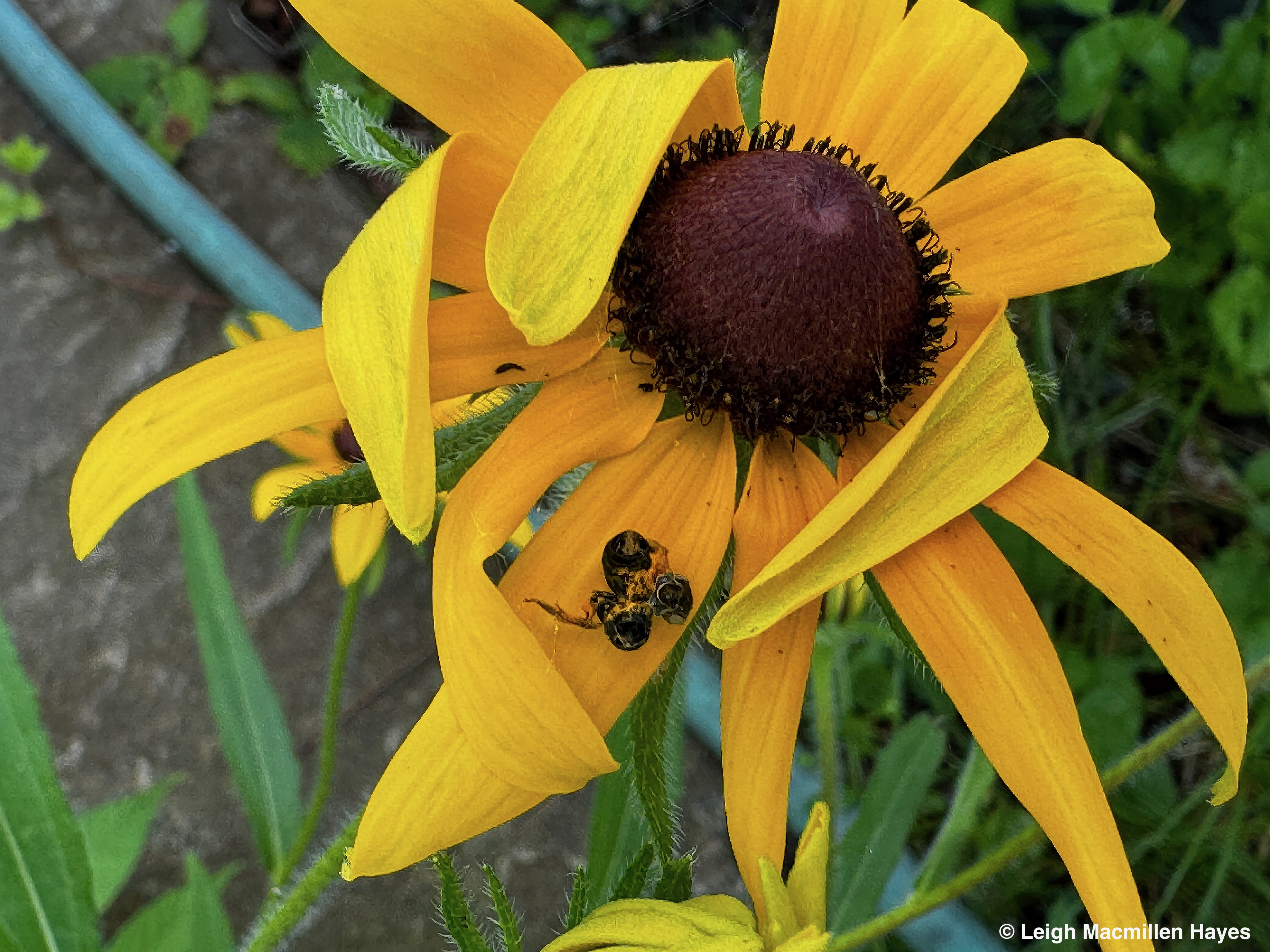
By the same token, you could happen upon one whose life has come to an end, but give thanks that it chose a beautiful spot to fall asleep forever.

Please RSVP as soon as possible: The Pollinator Party is going on NOW and it won’t last forever.

Not Just An Insect

Out of curiosity, and because it’s something I do periodically, I’ve spent the last four days stalking our gardens. Mind you, I do not have a green thumb and just about any volunteer is welcome to bloom, especially if it will attract pollinators.

This image has an empty alt attribute; its file name is 1-2.jpg

iWhat I’ve discovered is that in sunshine and rain, the place is alive with action from Honeybees and Gnats . . .

This image has an empty alt attribute; its file name is 2-2.jpg

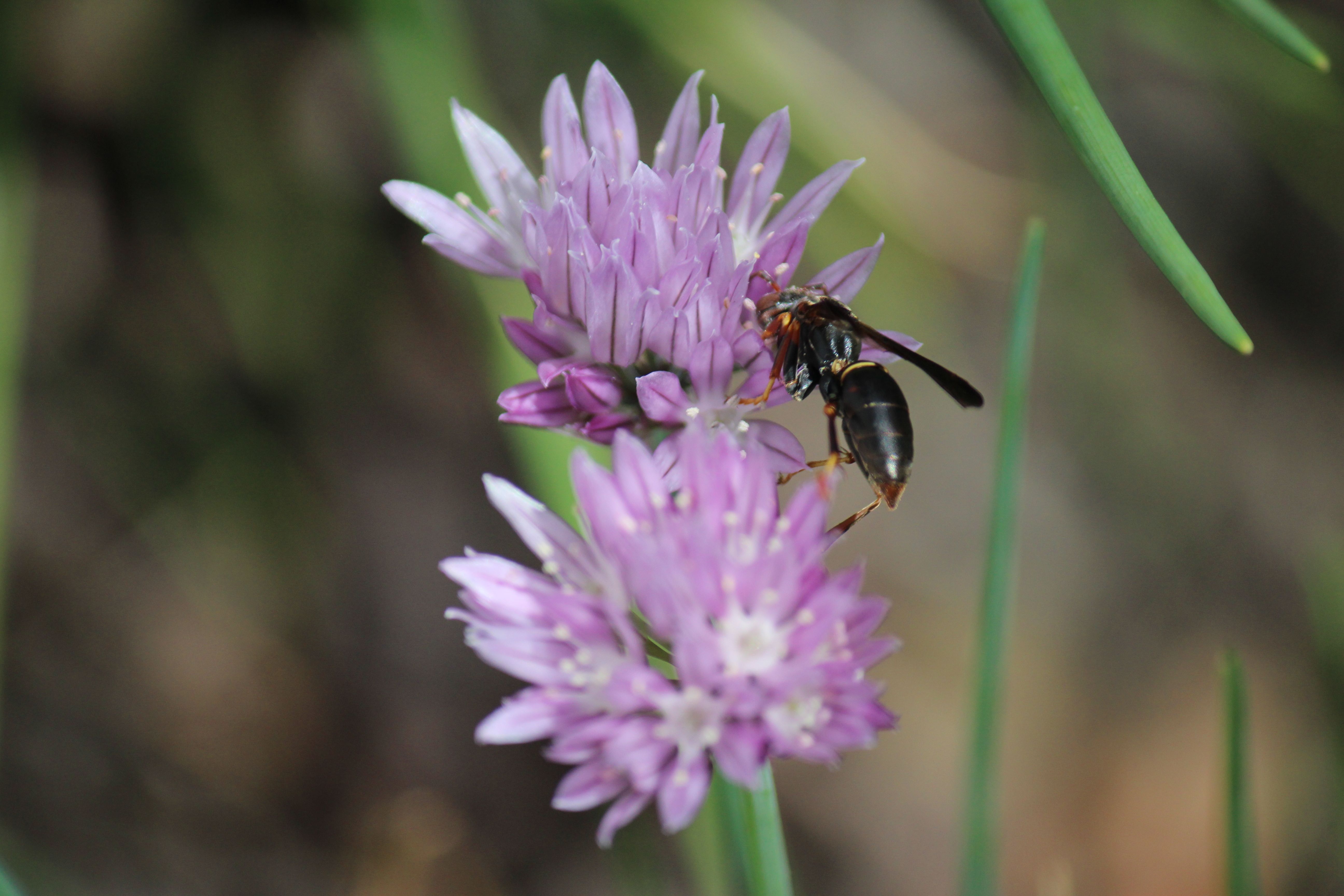
to Paper Wasps,

This image has an empty alt attribute; its file name is 5-1.jpg

and even several Great Black Wasps, their smoky black wings shining with blue iridescence as they frantically seek nourishment and defend territories (including letting this particular human know that she’s not welcome at the party by aggressively flying at her).

This image has an empty alt attribute; its file name is 8-2.jpg

Bumblebees were also full of buzz and bluster and it was they who reminded me of one important fact.

This image has an empty alt attribute; its file name is 4-2.jpg

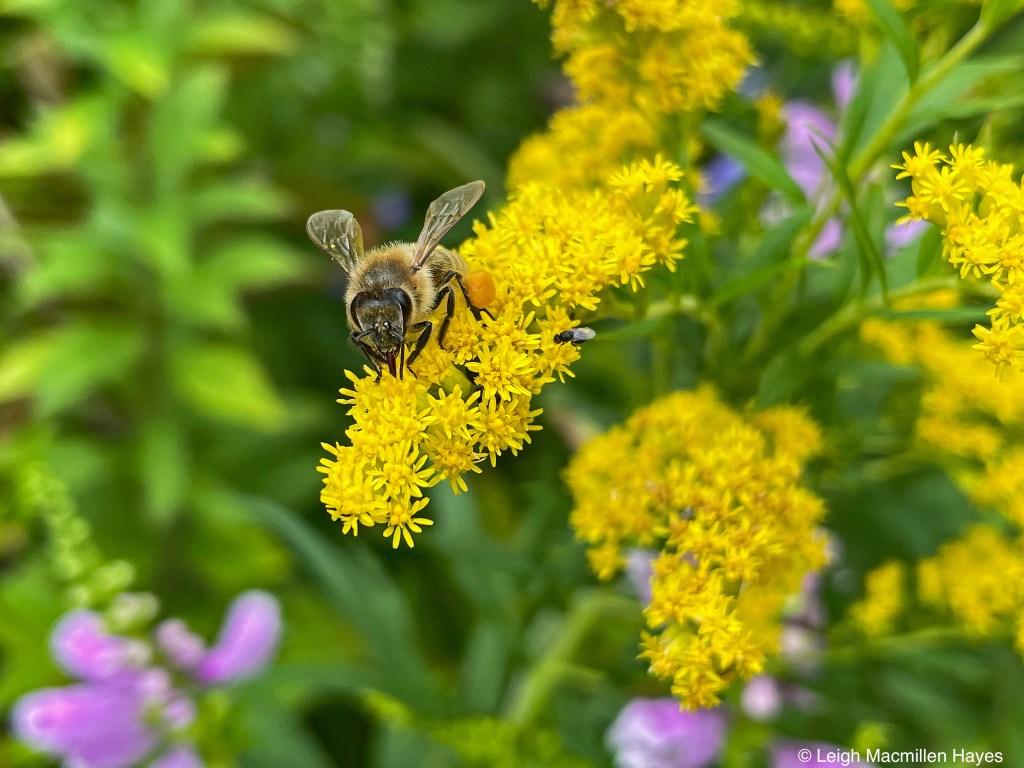
The color of the storage baskets on their hind legs depends upon the color of the pollen grains in the plants they’ve visited.

This image has an empty alt attribute; its file name is 5-2.jpg

There were millions of other insects, well, maybe not millions, but hundreds at least, flying and sipping and buzzing and hovering and crawling and even canoodling, the latter being mainly Ambush Bugs with the darker and smaller male atop the female.

This image has an empty alt attribute; its file name is 14-2.jpg

And then, because I was looking, I discovered an insect in the process of being wrapped for a meal intended for later consumption. I’ve long been fascinated by Ambush Bugs and Assasin Bugs and this, the Black and Yellow Garden Spider, Argiope aurantia. What’s not to love? She’s an orb weaver, meaning she spins a complex circular web, in this case among tall plants, that features spokes which are non-sticky that she uses to walk upon, and round wheels that are sticky to capture prey. The web is the size of a platter. A large platter. And . . . every night she consumes the entire thing and rebuilds a new one for the next day. In the process of consuming the threads, she can take advantage of any little insects like mosquitoes that get caught in the stickiness, but it’s the bigger insects that she prefers to eat.

This image has an empty alt attribute; its file name is 15-3.jpg

Do you see the rather conspicuous zigzaggy line down the middle of the web? That’s called the stabilimentum and may have several purposes: providing stability; attracting insects with the multiple threads like an ultraviolet runway such as the colorful lines and dots on plants; or perhaps announcing to birds that they shouldn’t fly through the web. Whatever the reason, it’s in the center of the stabilimentum that the spider hangs in suspension, waiting for the dinner bell to announce ring.

This image has an empty alt attribute; its file name is 16-1.jpg

Though she has eight eyes, her vision is poor. But . . . her hairy legs may also help in the detection that a meal has arrived, perhaps signaling sound and smell, plus she can sense the vibrations.

This image has an empty alt attribute; its file name is 18-1.jpg

Once captured, she injects a venom (that is harmless to us bipeds) to immobilize her subject and then begins to spin a sac around it.

This image has an empty alt attribute; its file name is 23-1.jpg

Remember, I’ve been watching her for four days, while she’s hanging upside down playing the waiting game and showing off her egg-shaped abdomen with its asymmetrical yellow markings on the carapace (much like a turtle’s shell) to her silver-haired head.

This image has an empty alt attribute; its file name is 24.jpg

Some days I felt like she might just be Charlotte, writing a message only Wilbur could interpret.

This image has an empty alt attribute; its file name is 30.jpg

And one day she surprised me by turning right-side up. It was then that I was offered a closer look at those little bumps on her head that serve as eyes. And the pedipalps, those two little hairy appendages sticking up on her head that work like sensory organs.

This image has an empty alt attribute; its file name is 27.jpg

An hour or so after finding her upright, when I checked again, I thought she’d gone missing. Instead, I discovered she’d climbed to the top of one of the plants upon which she’d spun her web.

This image has an empty alt attribute; its file name is 28.jpg

Perhaps she was surveying the area as she waved her front legs, looking about her domain.

This image has an empty alt attribute; its file name is 31.jpg

A day later, a new web, and another meal packaged, and slowly my buzzers were being consumed. But, she also likes grasshoppers and crickets and the garden is full of them.

This image has an empty alt attribute; its file name is 32.jpg

And then this morning dawned, with T.S. Henri in the offing and a few raindrops upon a broken web announcing the storm’s intended arrival. Wait. The web–it had holes but had not been entirely consumed. That wasn’t all, yesterday’s meal also hadn’t been consumed. And the spider was nowhere to be seen. I looked up and down and all around and couldn’t find her. Had she meant to save the meal, waiting for her venom to pre-digest it by liquifying the internal organs and in flew something larger than her and dinner went uneaten? Had our time together come to an end just like that?

This image has an empty alt attribute; its file name is 33.jpg

I wasn’t going to let the issue go, and so I continued to search, and guess who I found about three feet away upon a new web?

Even more exciting was the discovery that I can see her from the kitchen window AND, the view is of her underside so I can actually see her brown spinnerets at the end of her abdomen and maybe I’ll get to watch her capture a meal.

This image has an empty alt attribute; its file name is 34jpg.jpg

Well, so I thought, but two hours later, when I next looked, I realized I’d missed the action and she’d already securely wrapped her latest victim–all that was still visible was a leg.

This image has an empty alt attribute; its file name is 35.jpg

Though the prey may be one, this is NOT just another insect in the midst of my quest. Actually, it’s not an insect at all for spiders are arachnids, with eight legs versus an insect’s six. She may be scary big, as well as carnivorous, but she is beneficial to the garden as she helps control insect populations, including some pests.

And how do I know she is a she? Her male counterpart I’ve yet to meet, but he’s much smaller and all brown, unlike her beautiful coloration.

There’s more to this story I’m sure and I look forward to learning more about her as I try to interpret the messages she leaves. If you have a chance, go out and stalk your gardens and be wowed by what you find.

Mondate Blues

Ah rain. We need rain. I love rain. Our weary land that was so parched in June is suddenly refreshed by rain. And our plans are changed by rain, but that’s okay because it provides opportunities for us to consider other trails than those intended.

And so it was that we headed onto a local community forest this morning between rain drops.

The trail, terrain, plants, and weather gave us the sense of wandering in Scotland. Or perhaps that was wishful thinking.

As we explored, our hopes lifted as hang clouds decorated the backdrop behind erratic boulders.

And birds like this handsome Field Sparrow sang and gathered food, presumably for nestlings.

In the mix, Catbirds meowed.

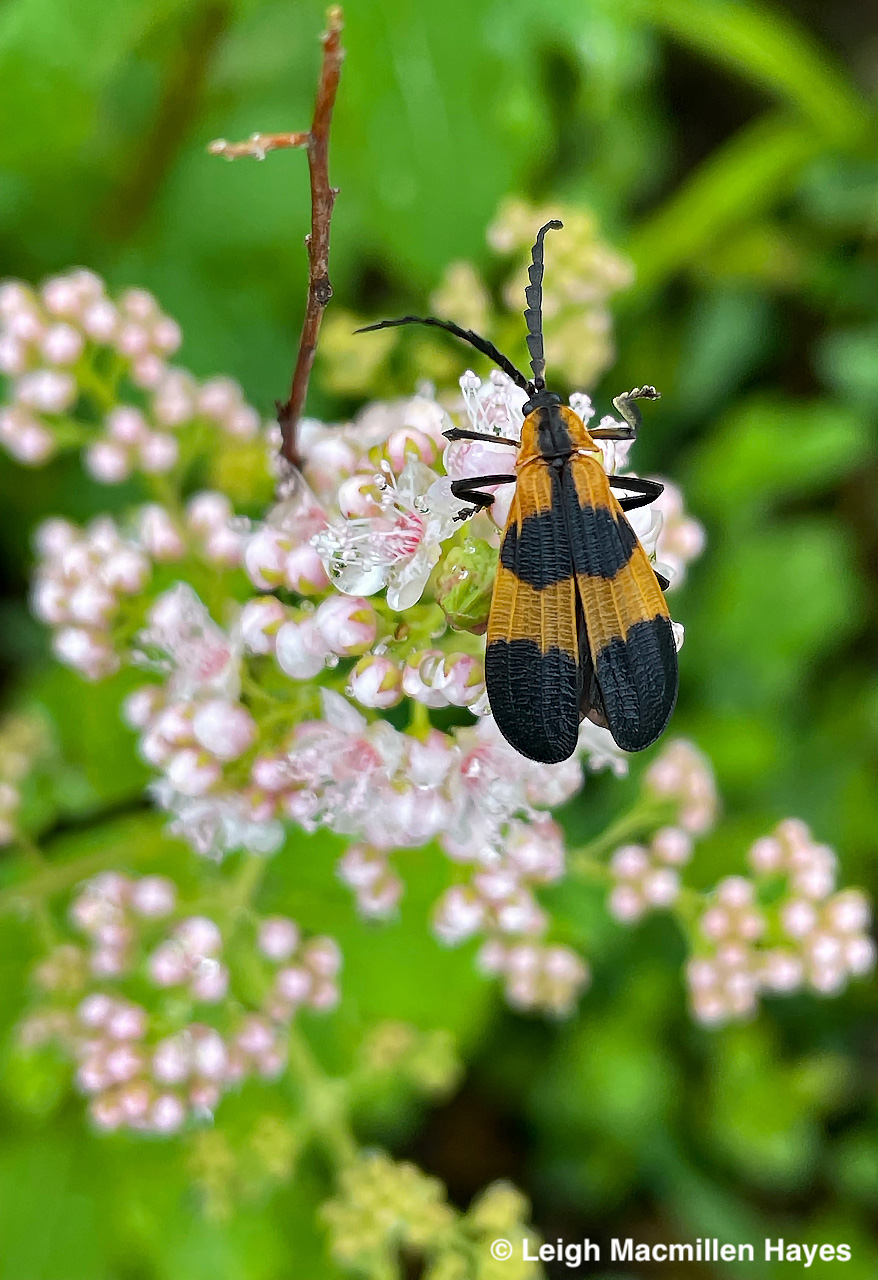
But what mattered most to me were the insects and I expected so many, but was disappointed by so few. I did spy this Band Net-Winged Beetle on a Spirea, its bright coloration shouting a footnote of its offensive taste to predators.

Similar in Halloween costume color choices was the Small Milkweed Beetle, its main plant source a week or two past, but note the heart on its back–a sign of forever love. Interestingly, Small Milkweed Beetles help gardeners enjoy the milkweed plant and the butterflies that are attracted to them without having to worry that milkweed may overtake the garden.

To keep the party going, a Blue and Red Checkered Beetle happened onto the scene. Checkered Beetles occur where there’s a large supply of nectar and pollen.

Of course, with all this goodness, there has to be at least one in hiding–in this case a Goldenrod Crab Spider on a Bristly Sarsaparilla.

We spied him as we walked out with a sandwich from Eaton Village Store on our minds, and then again as we hiked in for a second time and then finally out again.

Upon our return, though it had poured as we ate, the rain abated and Ossipee Lake made itself visible.

It was on that second visit that I finally noted a honeybee working frantically to fill its honey pots.

So did small skippers such as this Dun Skipper upon the early blossom of Joe Pye Weed, his proboscis probing the not yet opened flowers.

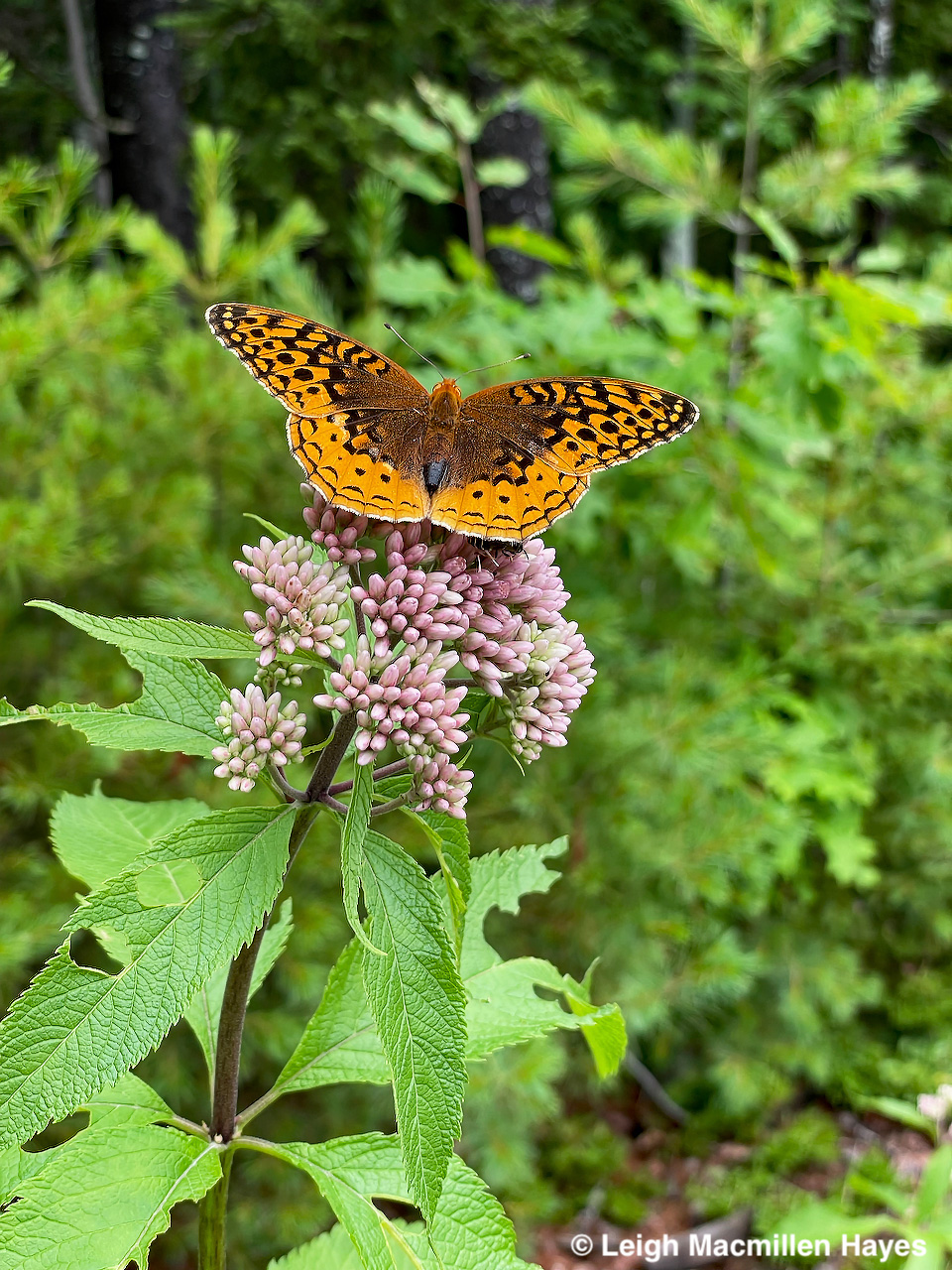
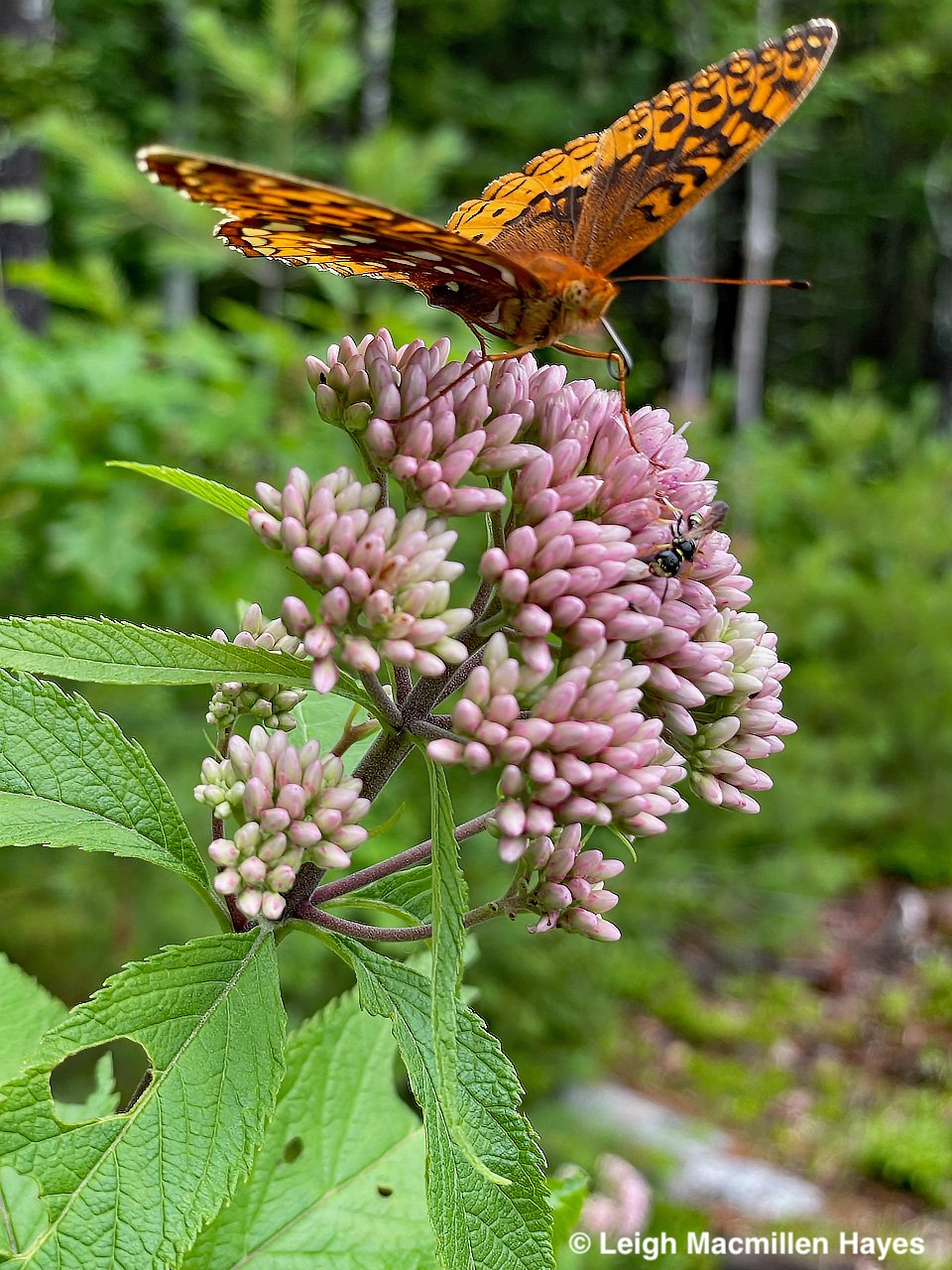
With the rain abating, the Pye Weed soon became a plant of choice. Among its guests was a Great Spangled Fritillary all decked out in stripes, dots, and commas.

Because the flower hadn’t fully opened, the Fritillary’s proboscis curled in true butterfly behavior.

Suddenly, or so it seemed as the temp slightly rose, pollinators came out of hiding, including a Silver Spotted Skipper, its spot shouting its name.

Toward the end of our adventure, my heart rejoiced with the spot of a Green Lacewing, one of the subtle offerings in the wooded landscape.

It was just such a landscape that appealed to us today and we tossed all other trail choices into the pot for future expeditions. If you know my guy, you know what is to come.

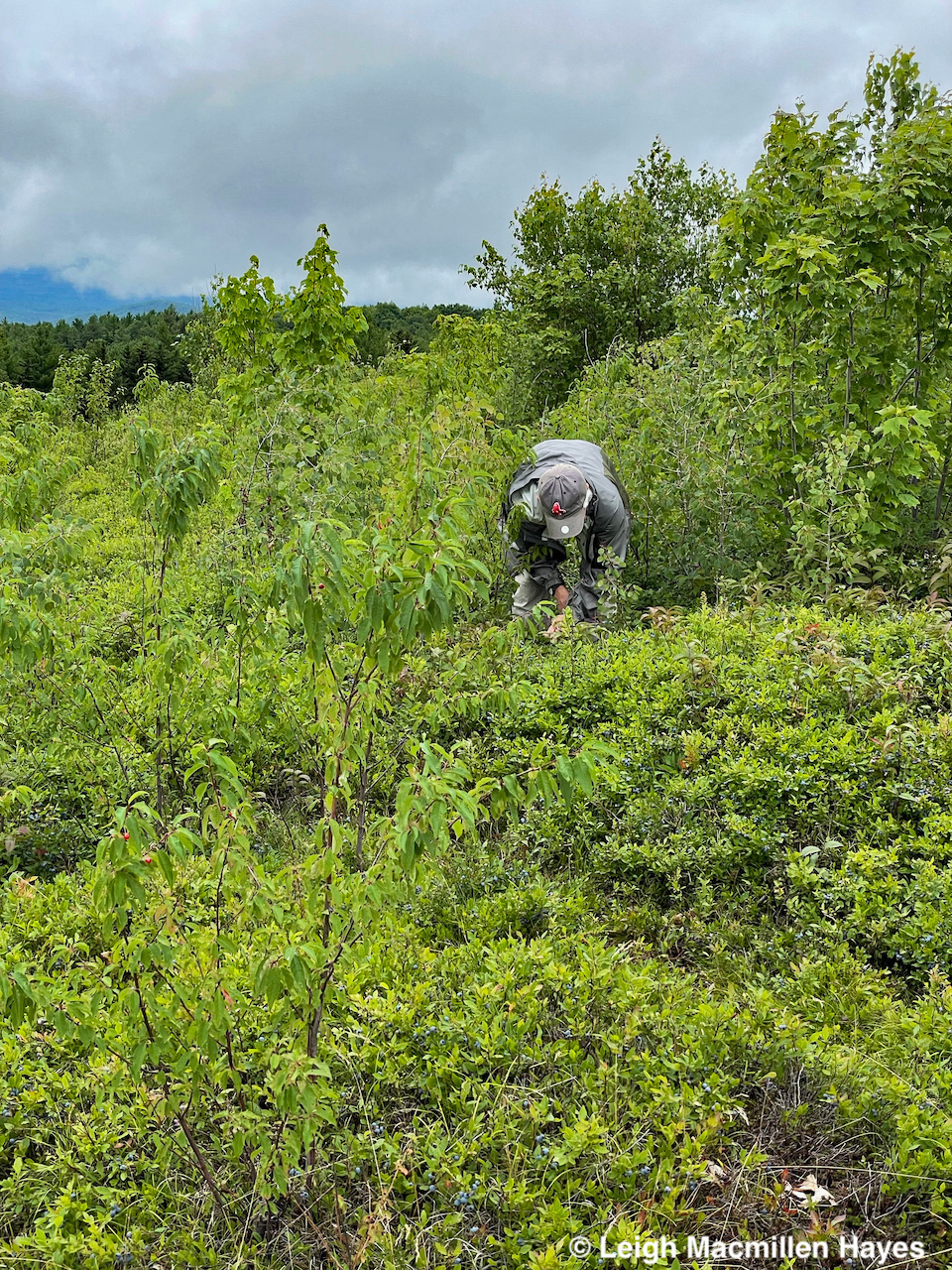
Little fruit morsels became the object of his attention.

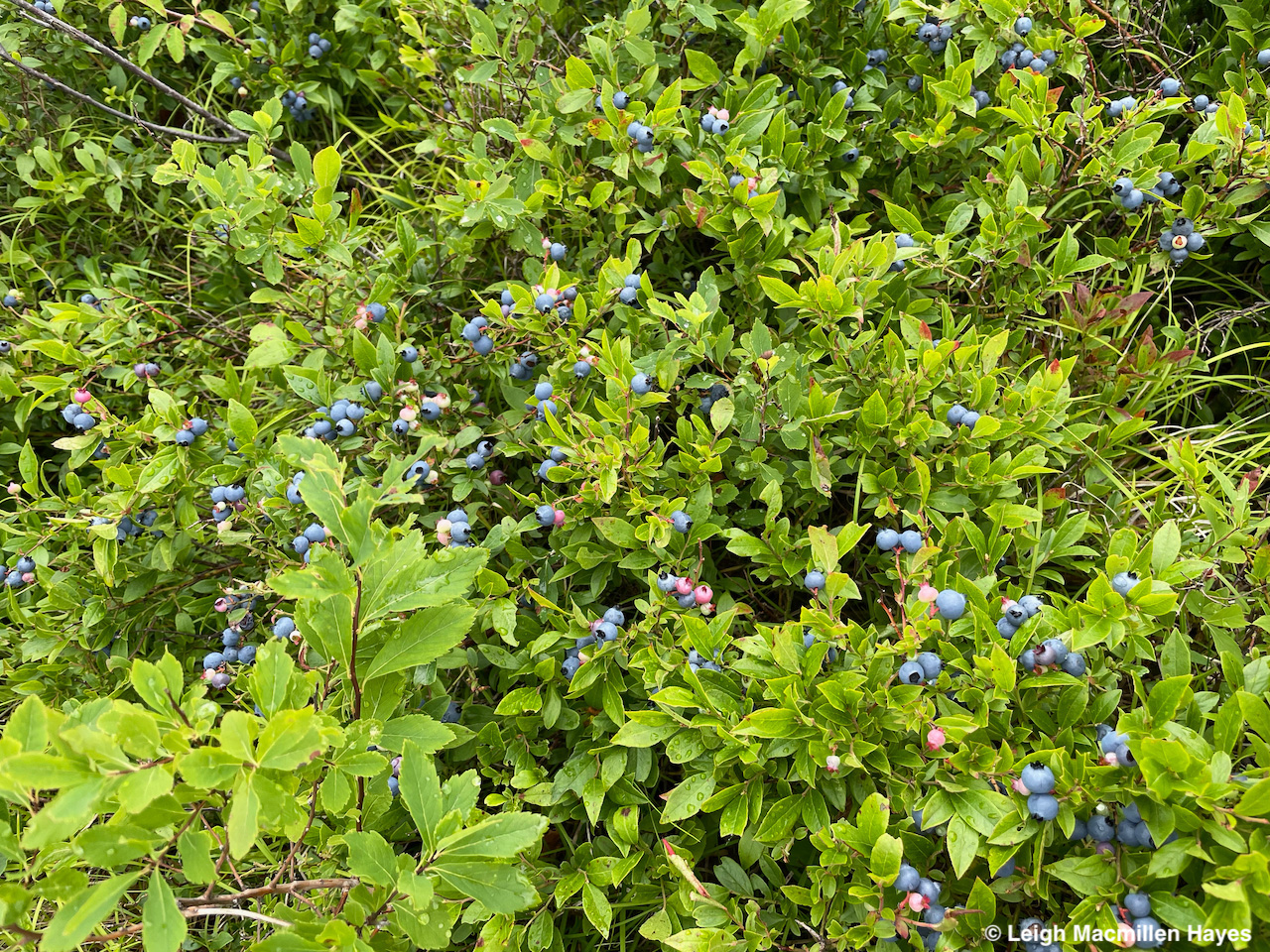
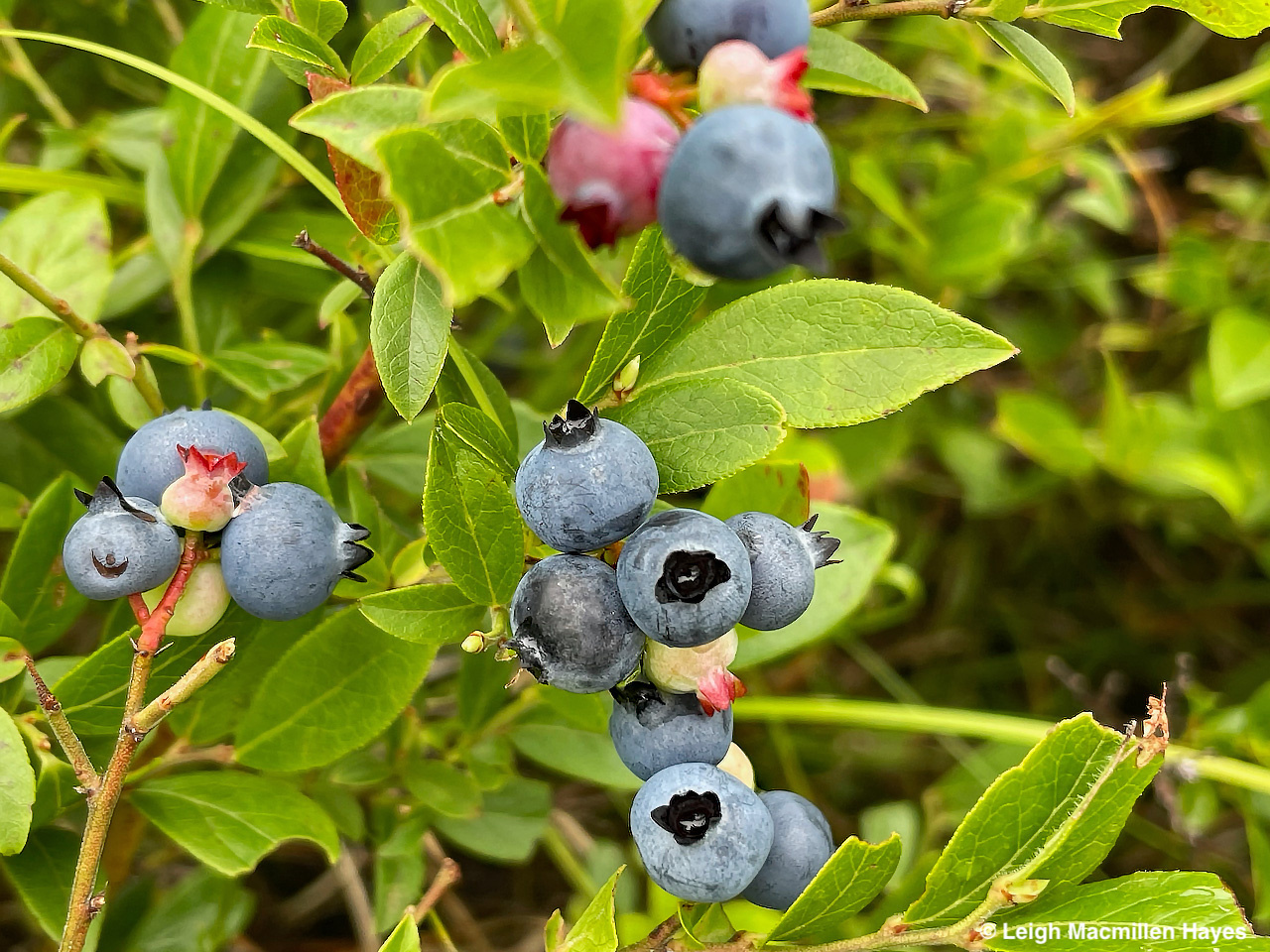
You and I know them as Low-bush Blueberries.
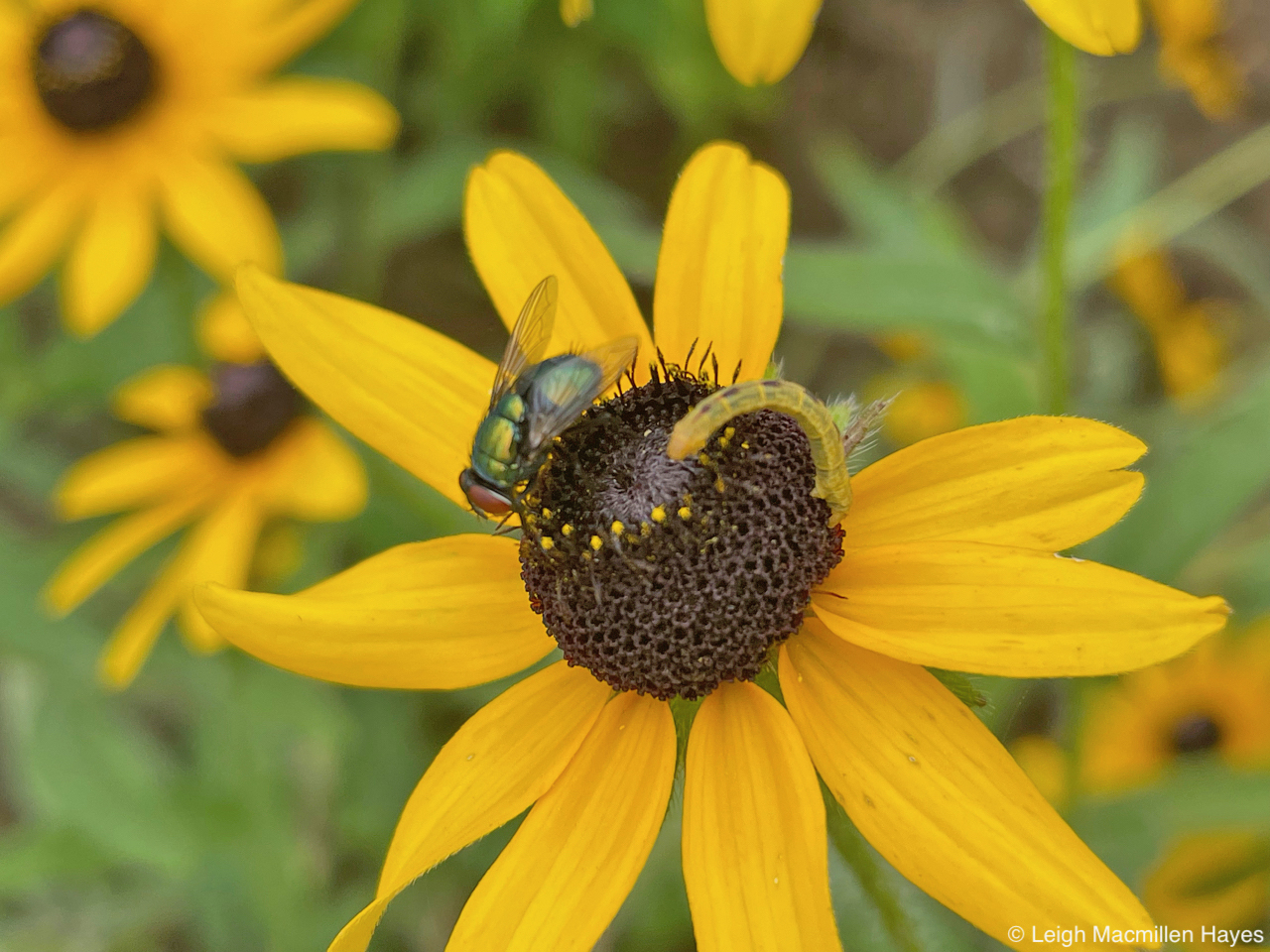
He knows them as the source of his Blueberry Greed.

All in all, he filled a couple of bags (and I helped! a little bit, that is). I have to say that I was amazed by the sight of all the little blue fruits for so few seemed the pollinators of the day. What I’ve shared with you was it. Literally. In number.

Yesterday my friend Joe Scott, an avid birder, shared this information with me from a New Hampshire Bird Listserve:

“The absence of insects obviously impacts insectivorous bird species. In Knight Hill Nature Park in New London, [NH] for the last two weeks, there have been 27 fully blooming butterfly weed plants, hundreds of common milkweed plants and two pollinator apartment blocks, but no insects! Oh, on any given day, perhaps one or two butterflies and half a dozen bumble bees. Ten years ago, at this time of year, these plants would be covered with butterflies, bees and other insects, as many as 20 species of butterflies and 10 species of bees.”

Today’s Mondate Blues represents those who don’t like the rain, or my guy and his blueberry greed, or the lack of pollinators or my color of choice. I’m just happy that we got out there and found so many sources of goodness on this wet day.
Summer Solstice Sweetness

My dear friend Carissa sent me an e-mail about this week being Pollinator Week and challenged me to write about it. Her inspiration came from an e-mail she’d received from Natureworks Horticultural Services in Northford, Connecticut–part of our old stomping grounds as babes, toddlers, tweens and teens. (She grew up in Northford, while I grew up on the other side of the tracks in North Branford–two distinct villages that formed one town.)

Part of the message included this passage: “Happy Pollinator Week. There really is a week for that? You betcha. Pollinators are vital to life on this planet. And, at Natureworks, we are teaching our customers to protect and help pollinators every single day. It all starts with an organic garden. It includes planting lots of pollinator-friendly flowers. It continues with the way you manage your landscape and the way your community manages their public spaces. Pollinators are in decline around the world. We need to take this seriously. Let me just say . . .  we have the plants for that!

f1

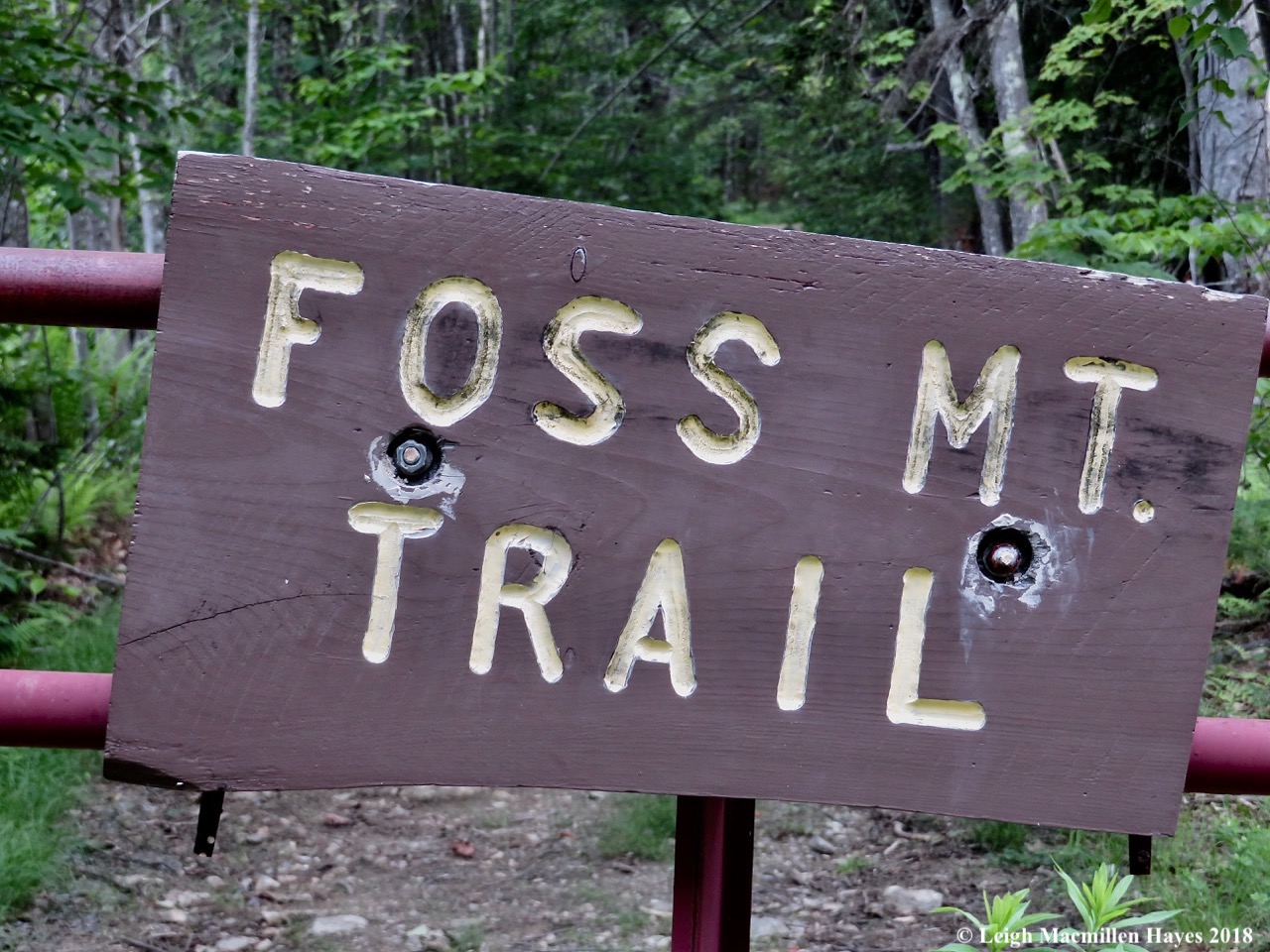
And then another friend, Pam, invited me to join her on a mini-hike to Foss Mountain today in Eaton, New Hampshire, and it all came full circle. To travel here with Pam was an incredible opportunity because she had some personal experience with the property and shared the local lore, including a story about a peddler who long ago repeatedly traveled a road that crosses the mountain and apparently spent some time canoodling with another man’s woman. And then, on one of those journeys, the peddler vanished into thin air–never to be seen or heard from again.

f2

Pam’s brother and sister-in-law had previously owned the land we were about to explore, but it’s now owned by the Town of Eaton and is protected in perpetuity by the Upper Saco Valley Land Trust. The property is managed by the Eaton Conservation Commission, which maintains the trail and blueberry fields.

f3

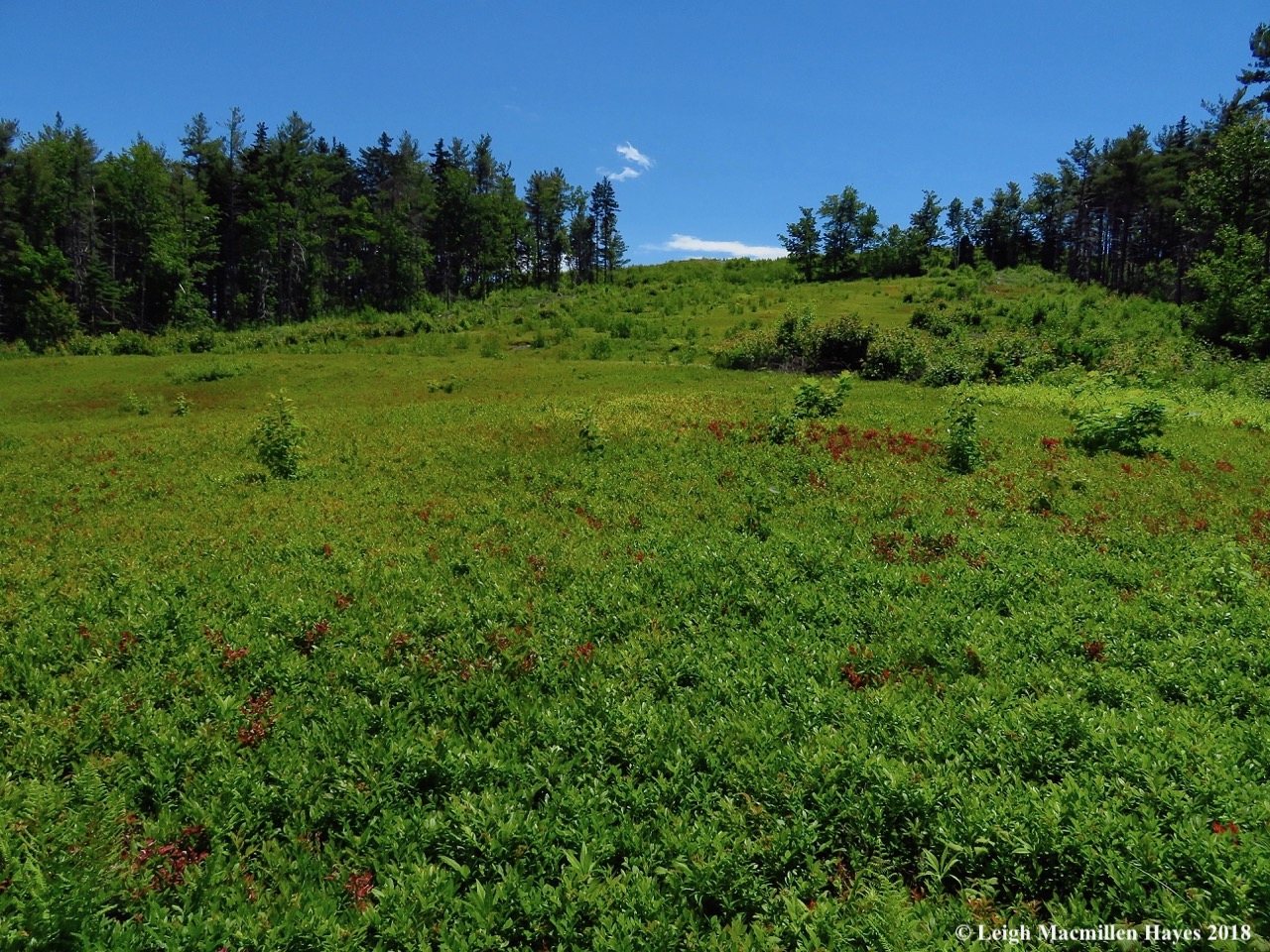
The blueberry fields were really a sign of early succession following a 150+ year history as pasture land. According to information posted on one of the three kiosks, there was a description of the farming heritage that included along the timeline the decade that the fields reverted to blueberries, juniper and gray birch, and the man who oversaw the blueberry crop–Frank French.

At some point along that timeline, the Brooks family homesteaded there, but not much was known about them. Pam and I wandered about the remaining cellar hole as we tried to interpret the scene, but didn’t quite understand all that we saw. (We sure wished our friend Janet had been able to join us and add her understanding of such historical sites.)

f4

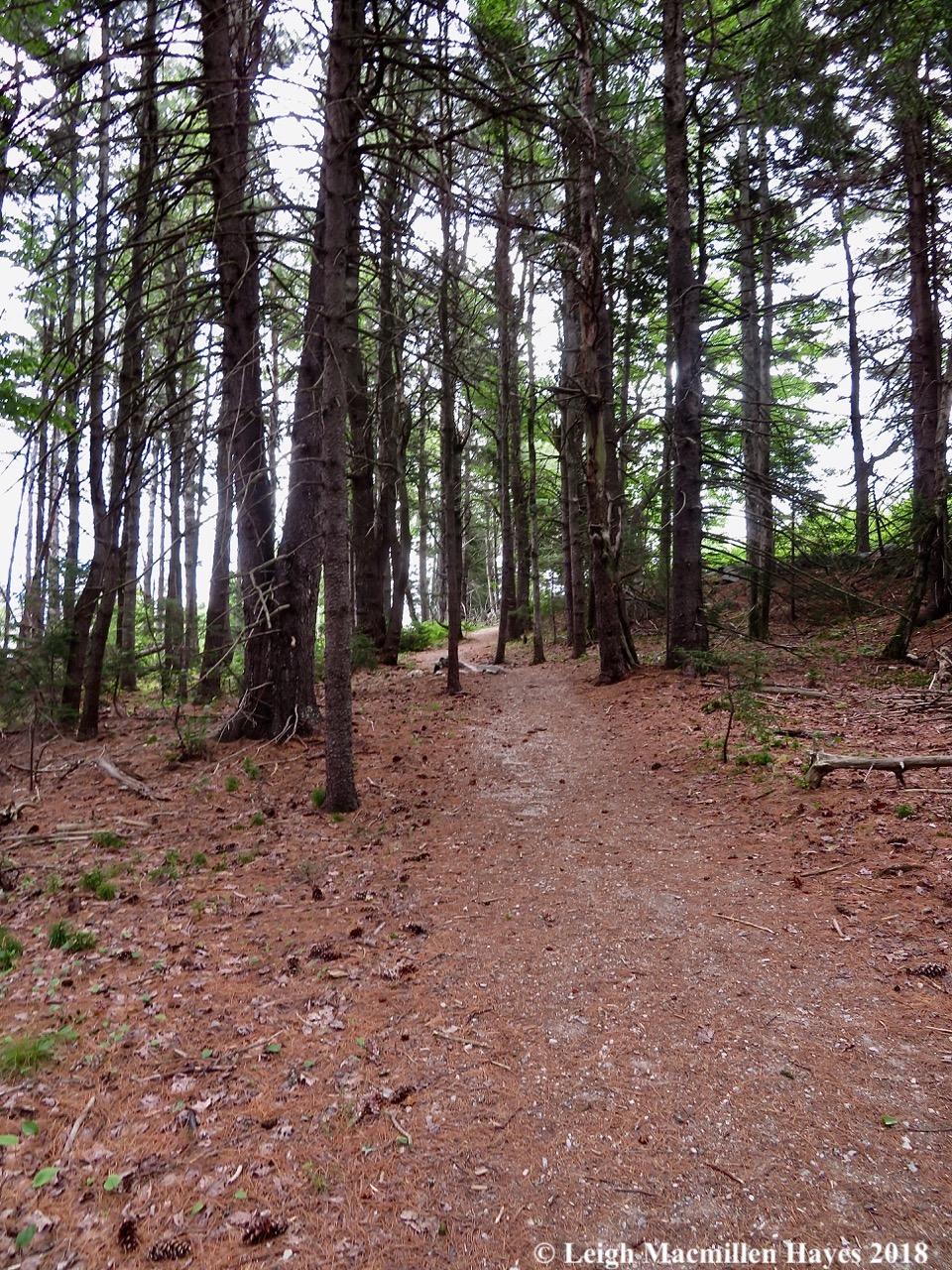
We continued on the short journey upward, passing through a pleasant White and Red Pine forest along a well-defined trail with switchbacks to help eliminate erosion.

f6

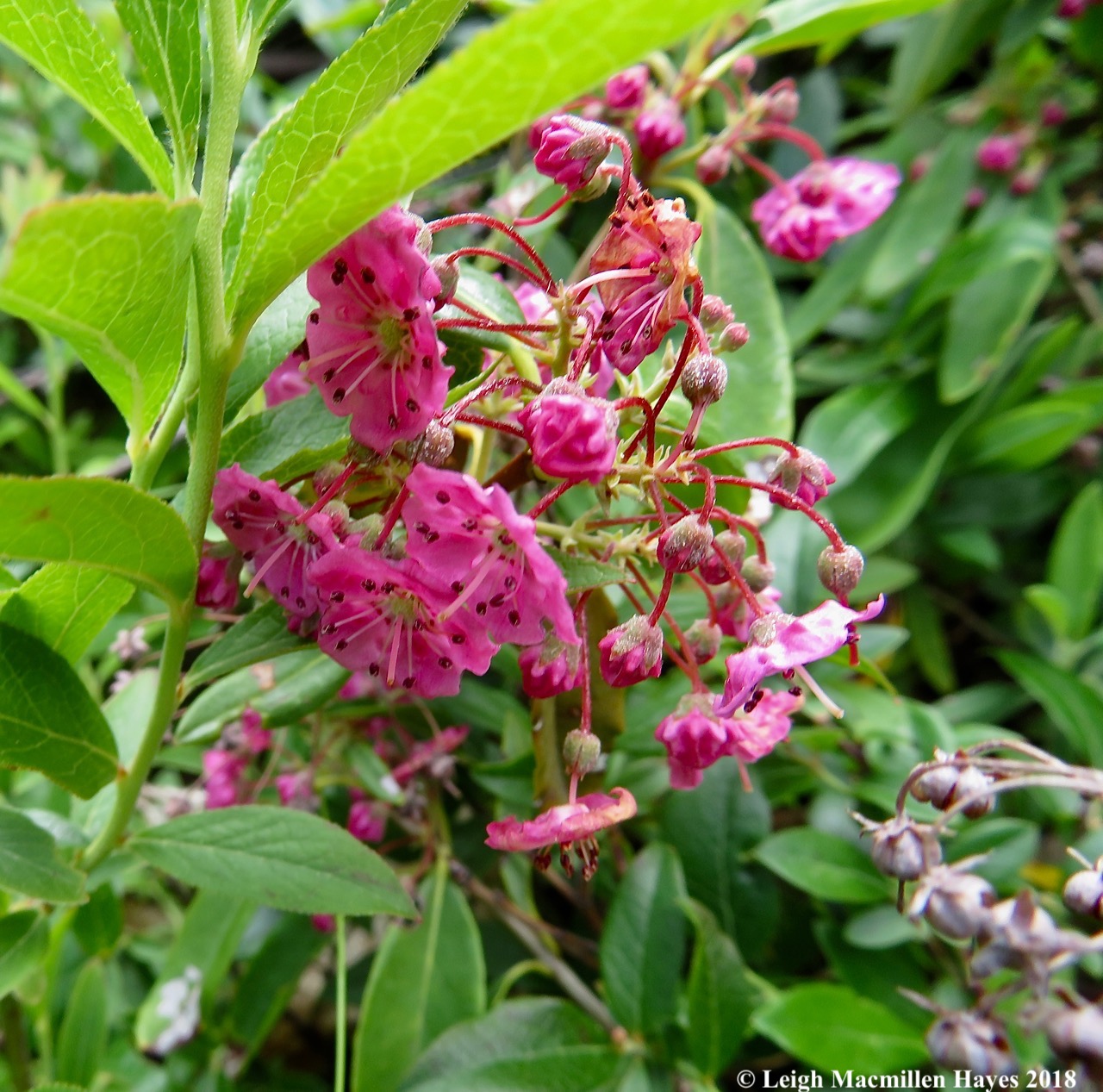
Suddenly, the natural community changed and we entered an open area where White-throated Sparrows serenaded us with their “Old Sam Peabody, Peabody, Peabody” song. Sheep Laurel surprised us with its bright pink flowers, but . . . we spied no pollinators.

f7

We also discovered a cinquefoil growing abundantly among the rocks, and though it had a few pollinators, it was just that–only a few.

f7a

Now allow me to interrupt with an explanation of the common name for this cinquefoil or Sibbaldiopsis tridentata: it’s known as Three-toothed (tridentata) for the three teeth at the tip of each leaflet. Do you see them?

f8

Though we only saw a few pollinators among the cinquefoil, the abundance of blueberries suggested a lot of previous action. A few blueberries had already ripened. We conducted a taste test and suggest you totally avoid Foss Mountain this summer for we certainly couldn’t taste the sunshine in those little blue morsels. (And my nose just grew longer–Pinocchio-style.)

f13

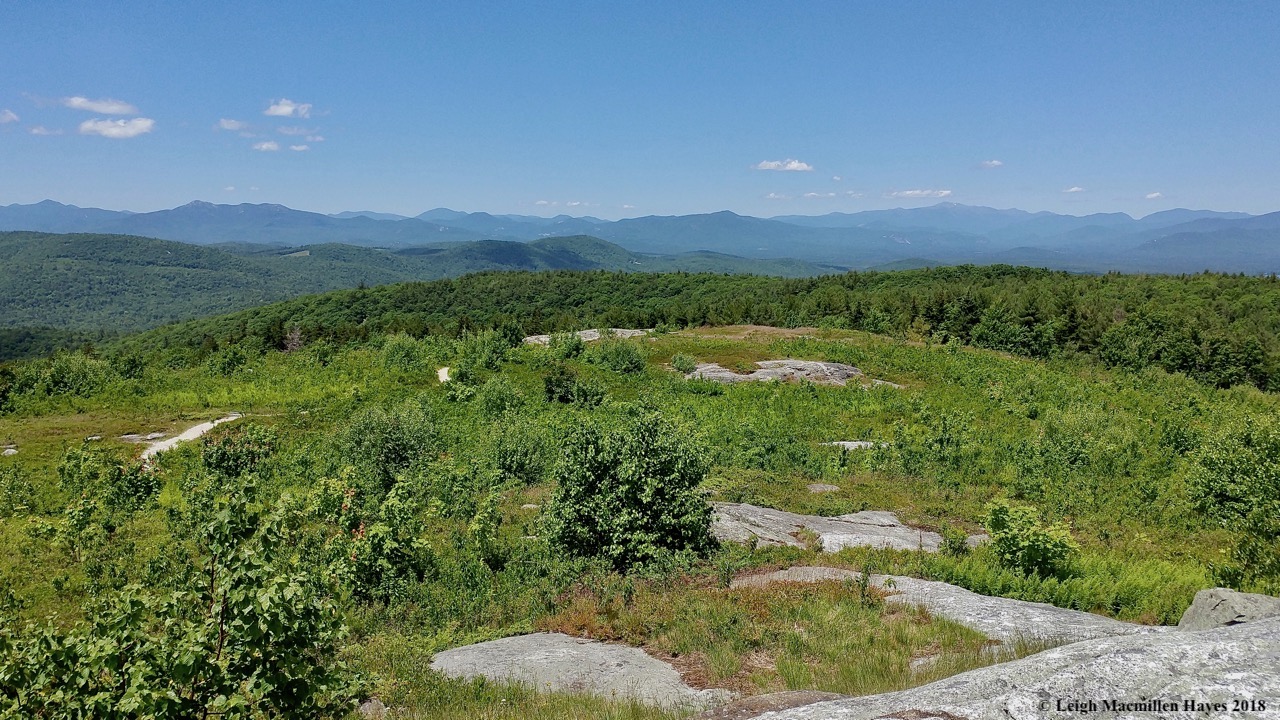
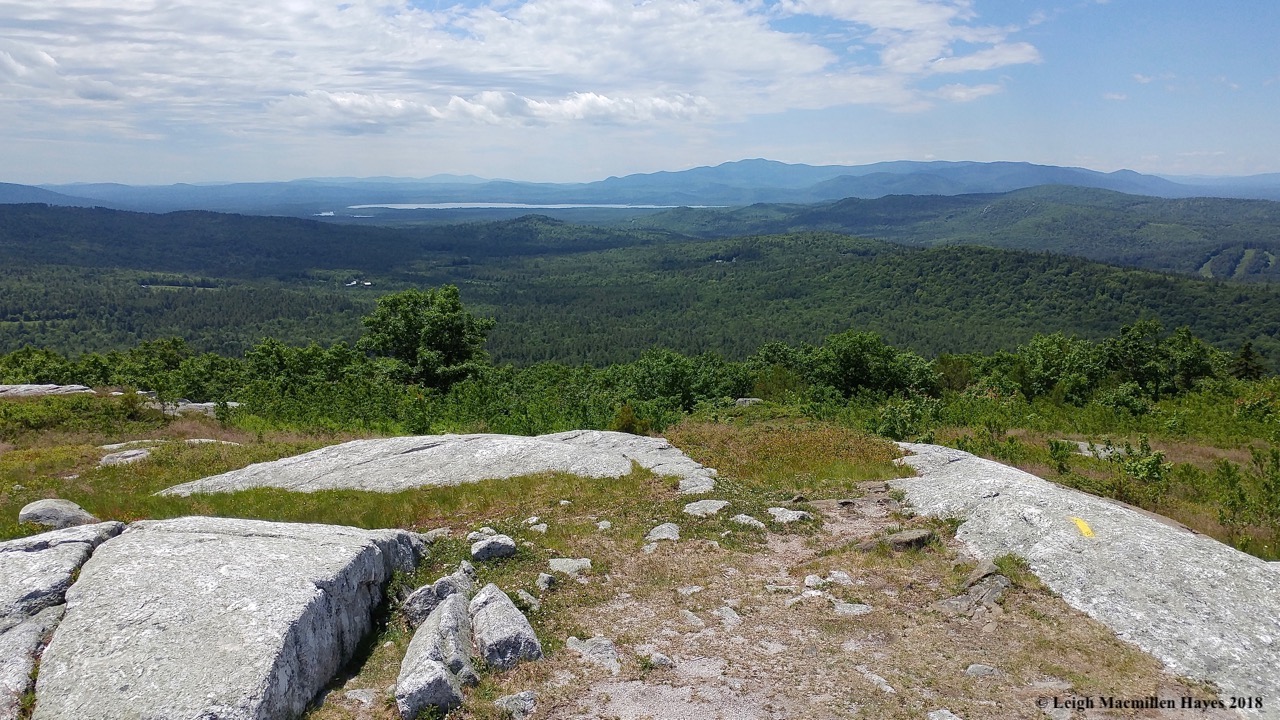
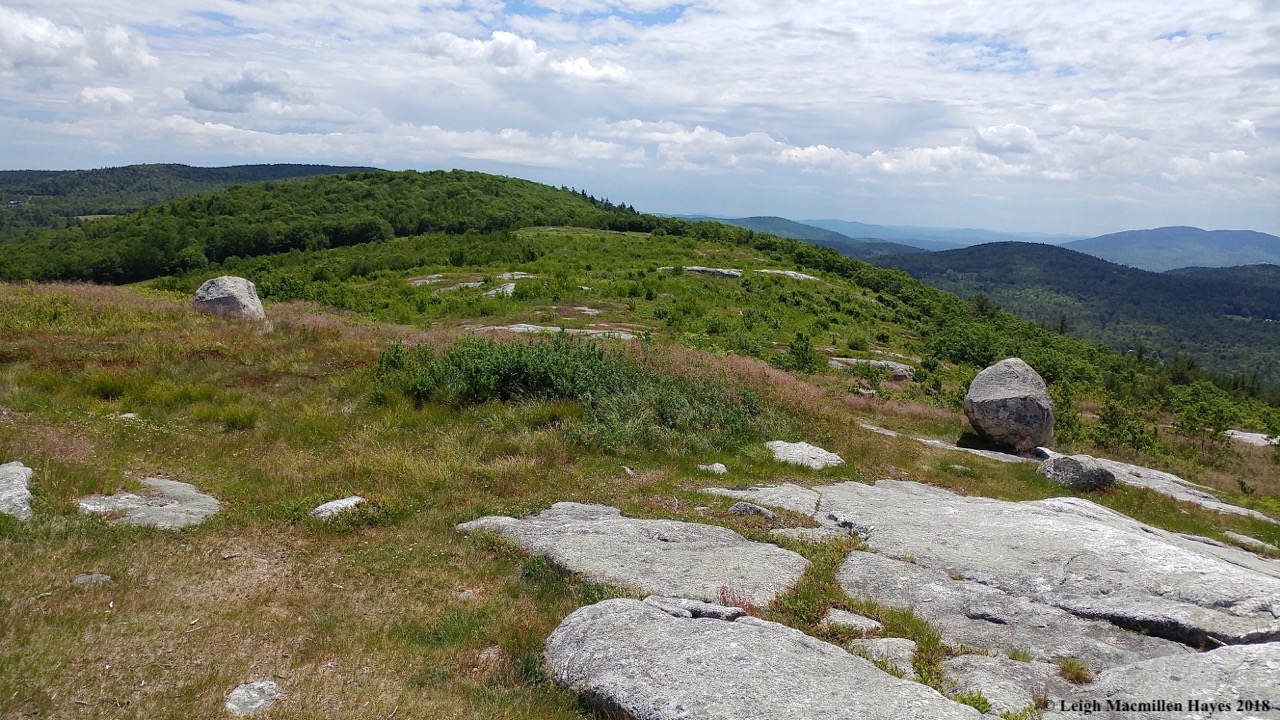
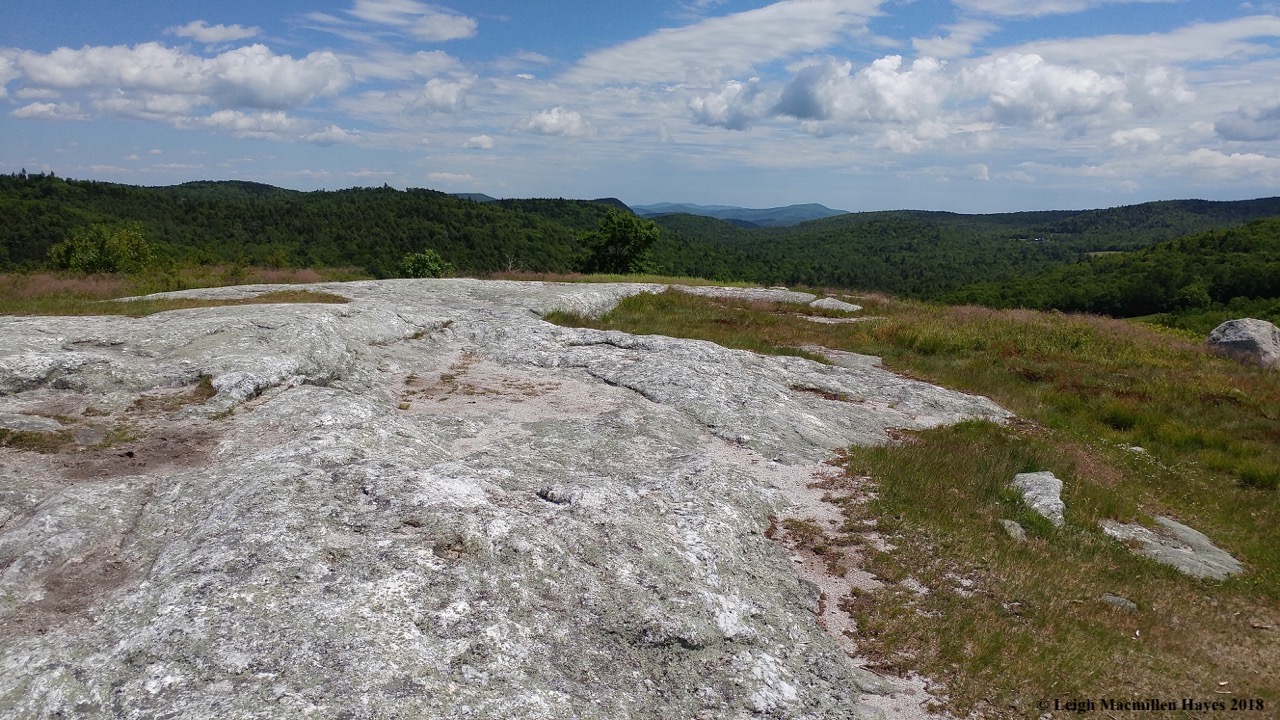
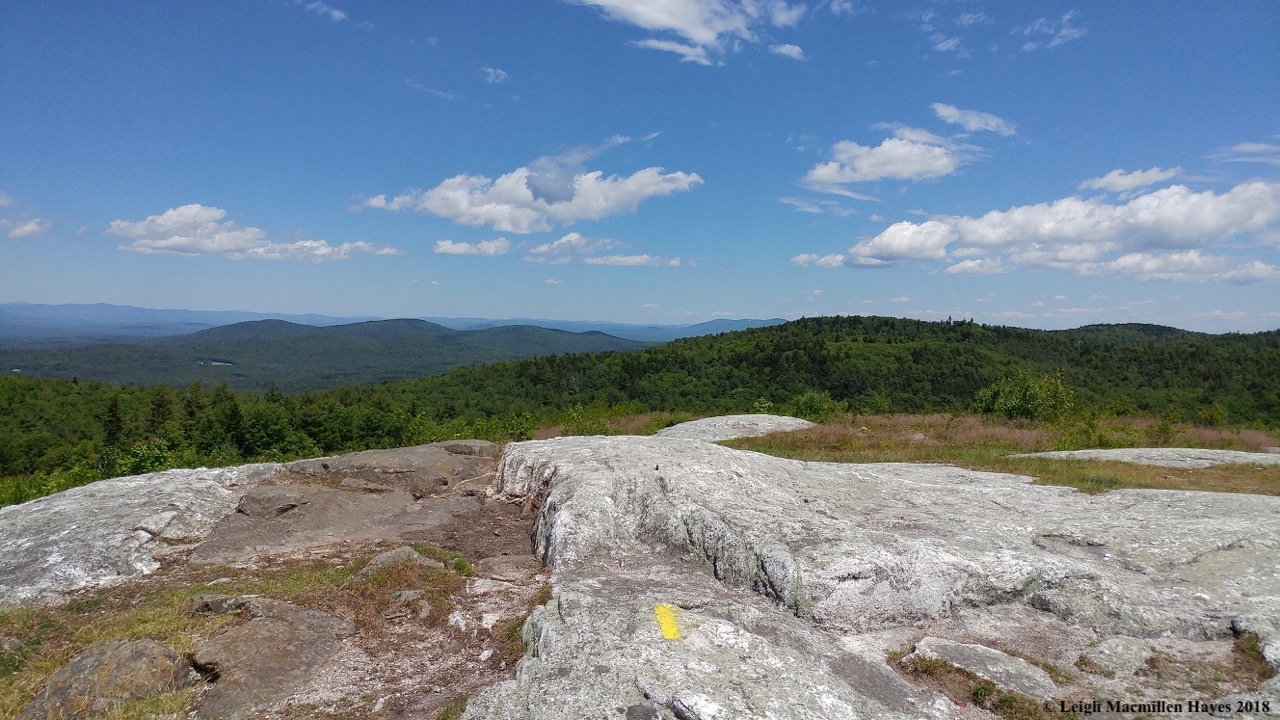
As we reached the summit, we shifted our attention from flowers and pollinators to the 360˚ view that surrounded us.

f14

In every direction . . .

f15

we relished the sight . . .

f16

of blueberry plants . . .

f17

and mountains–including the Ossipee, Belknap and Presidential ranges.

f19

After a lunch break in the middle of this longest day, we started down and made more discoveries–including the sweet flowers of Blue-eyed Grass and its fruits indicating it had been pollinated.

f20

And nearby on a Red Clover . . .

f21

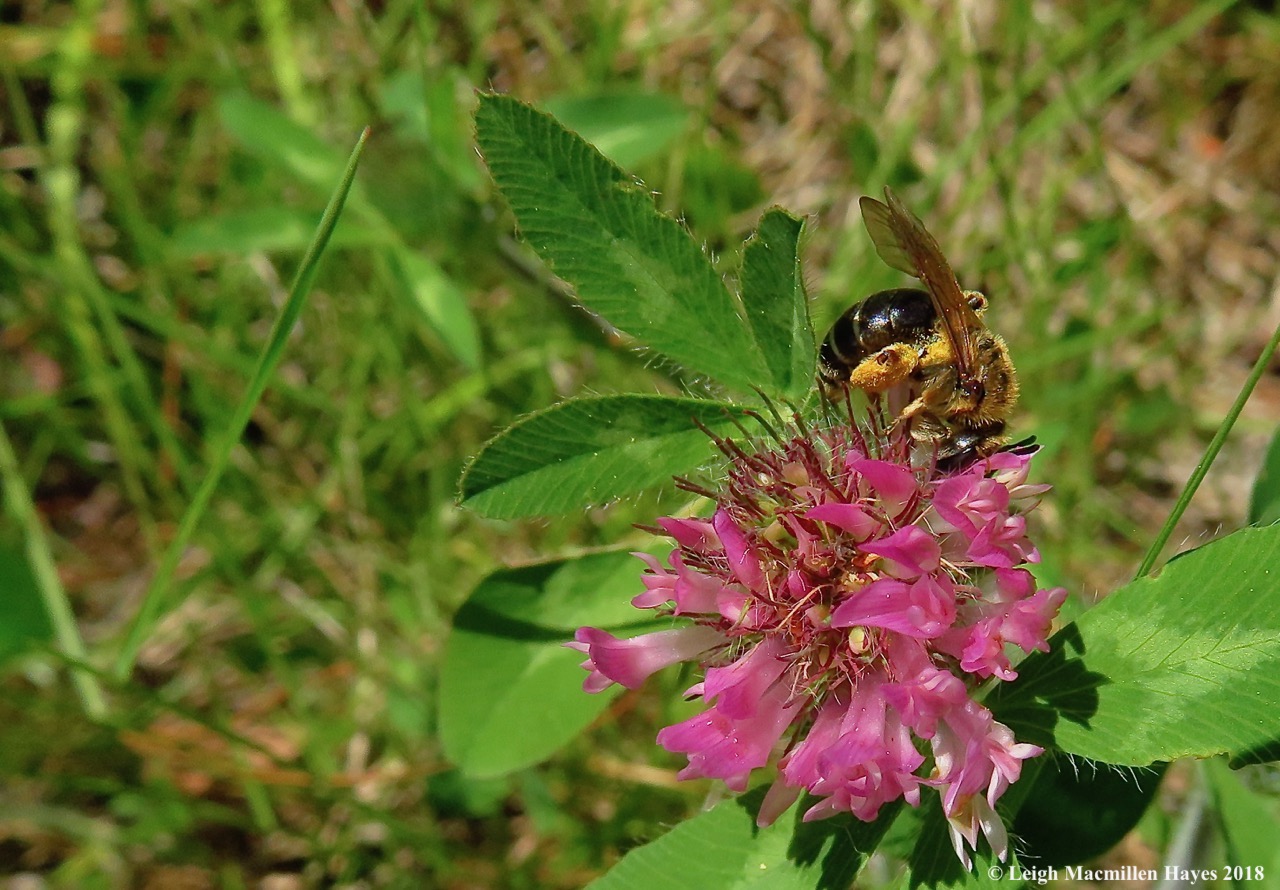
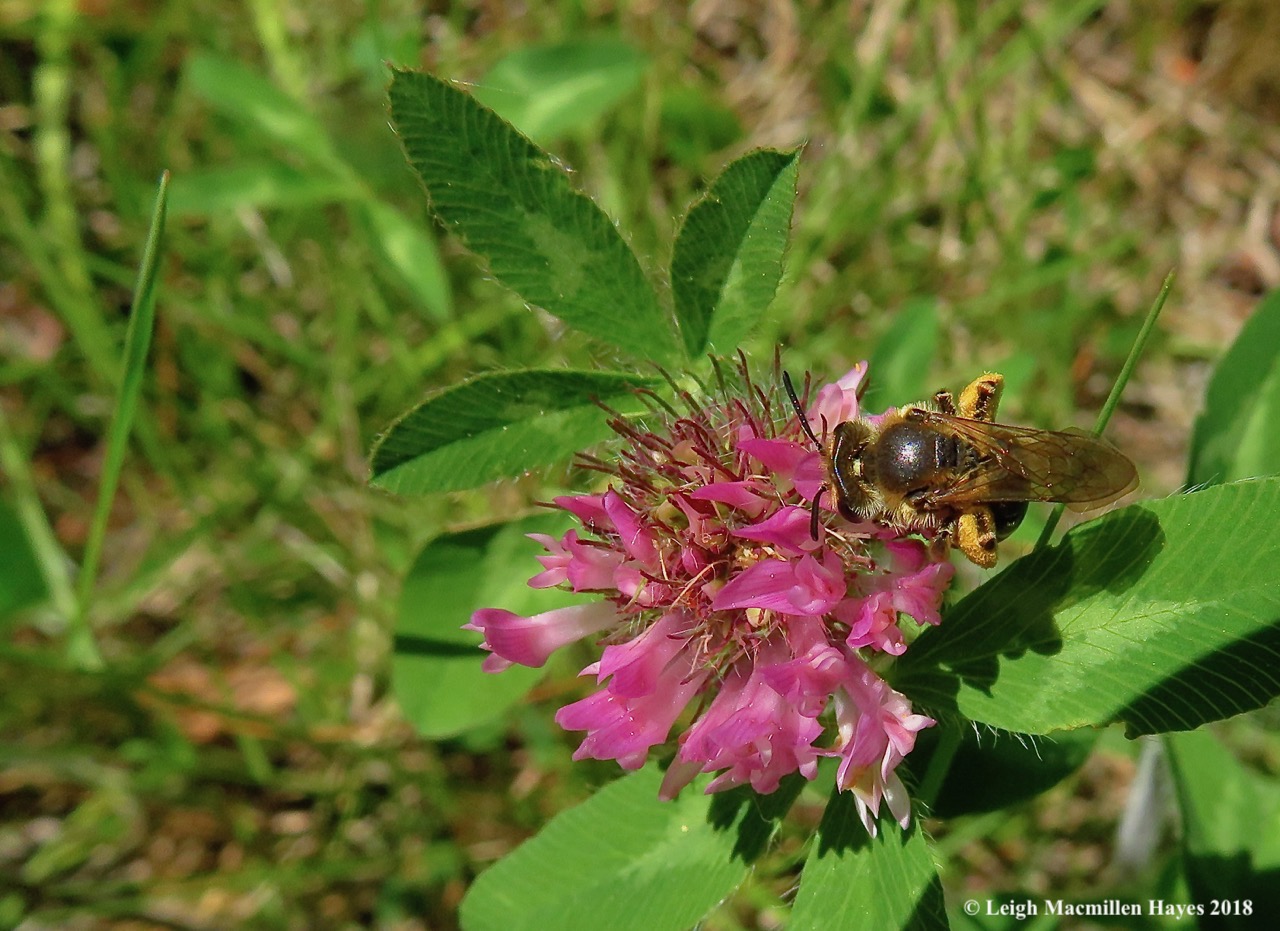
a bumblebee sought nectar while simultaneously filling its pollen sacs.

But in the whole scheme of things, we saw few pollinators and wondered–what’s up? This is an organic field and public space, as Carissa’s contact at Natureworks encouraged. And yet . . . Pam and I weren’t able to answer all our questions today.

f22

But . . . as we looked upon the abundant blueberry crop before us on this first day of summer, we gave thanks for those who had protected the land and those who had performed the mighty act of pollination despite adversity and we looked forward to the sweetness that will follow this Summer Solstice.

What’s So Special About Bee Balm?

I have childhood memories of ugly red bee balm plants surrounding a maple tree in our front yard. In addition to being ugly, what really bothered me about this flower was the smell. The scent tickled my nose in an unpleasant manner and gave me an instant headache.

b1

And then I grew up. Well, I suppose that’s questionable, but what did happen is I came to appreciate the showy flower and aromatic scent. (Funny thing is, an infusion of crushed, boiled bee balm flowers apparently treats headaches–I should have used it to treat the very symptom it caused. It has many other medicinal uses as well.)

b5

This summer, like others, I waited in anticipation.

b3

Even before it bloomed, its leafy bracts showcased a fluid beauty.

b4

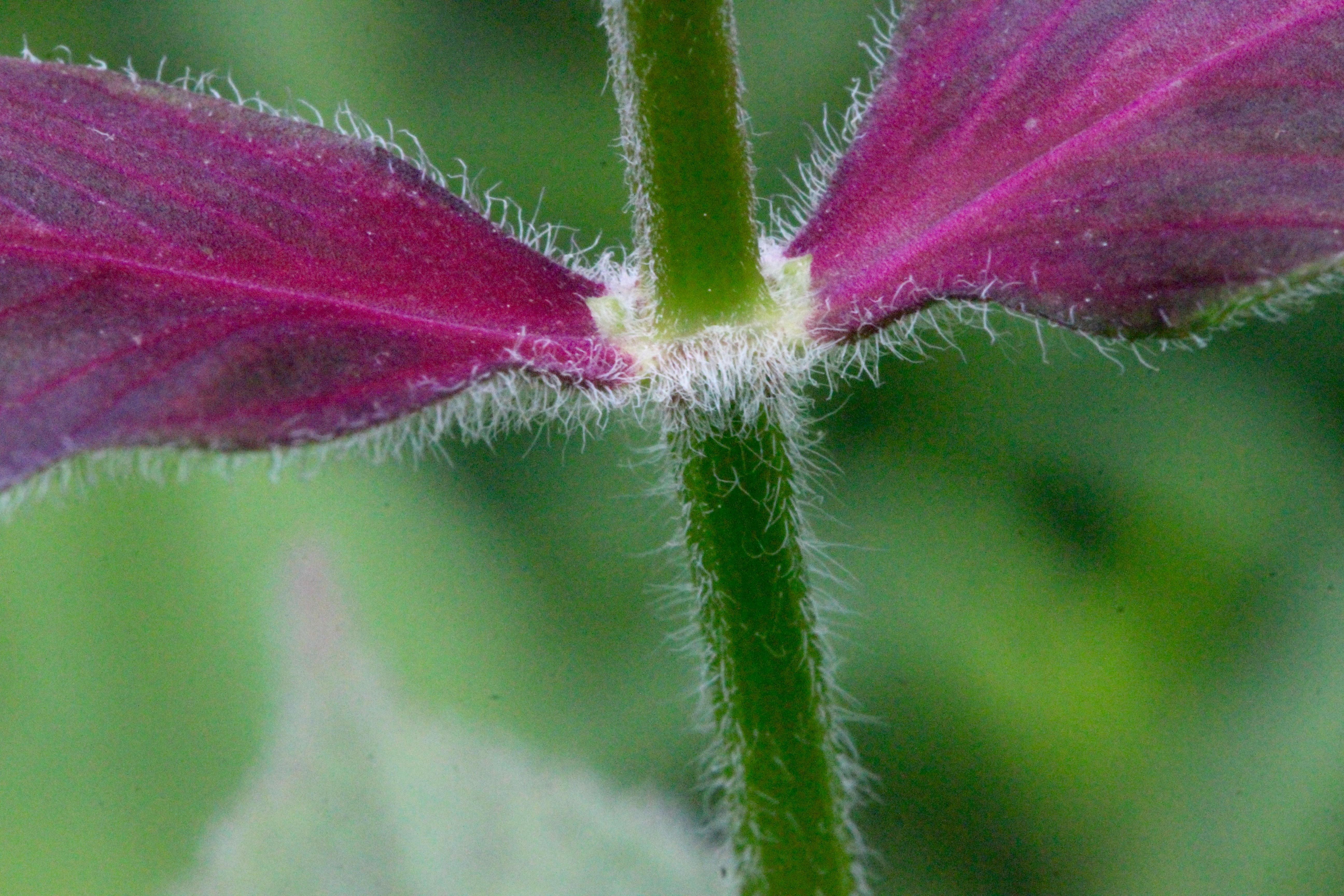
And those leaves set at right angles to the square stem offered a crossroads where color and texture met.

b7

Finally . . .

b8

with the aid of raindrops

b2

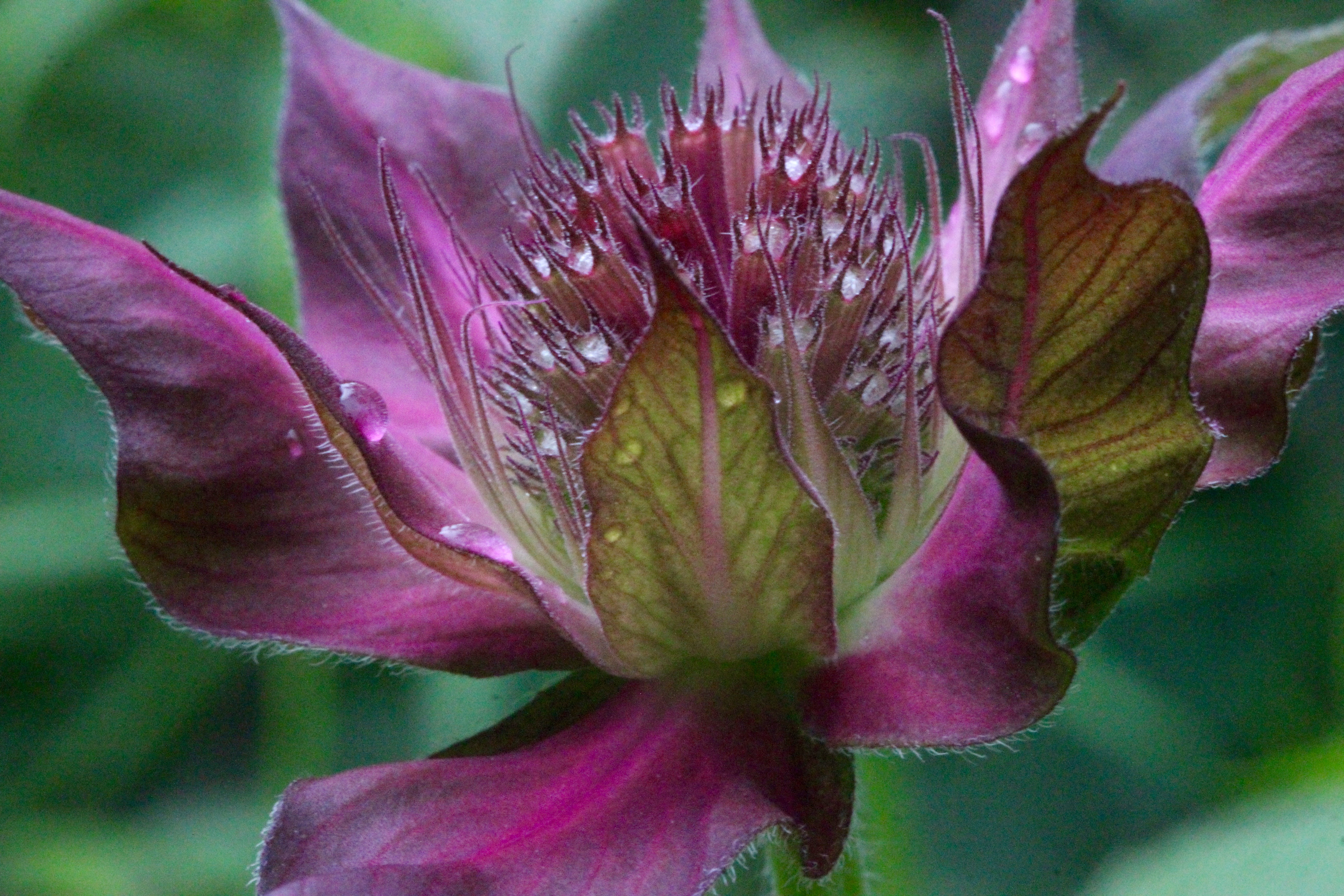
and sunshine, the bracts pulled away and revealed star-capped tubes nestled within.

b9

Ever so slowly, flowers began to emerge.

b10

With a hat reminiscent of a jester, they crowned the plant.

b12

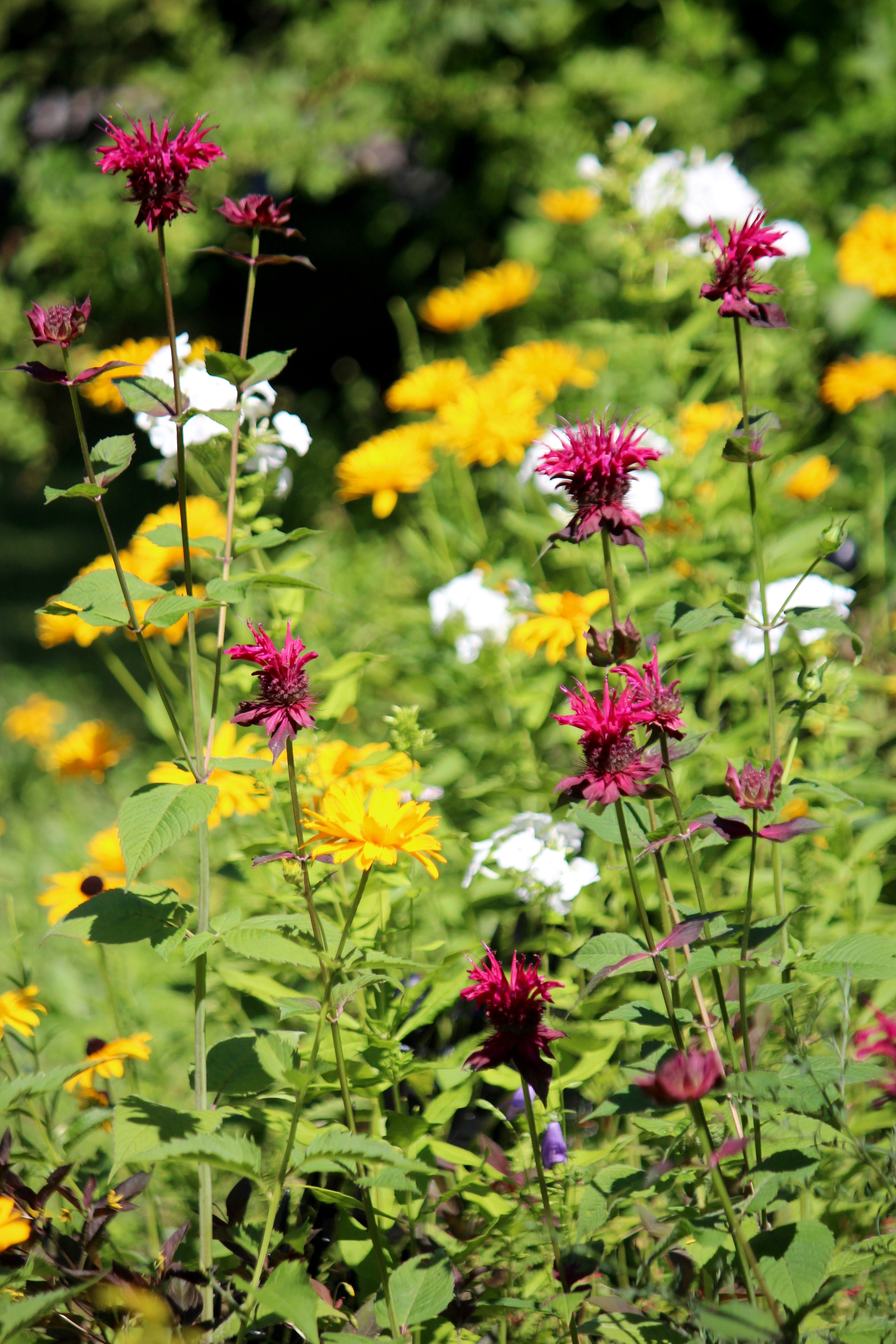
Stamens projected from the tubular upper lip, while below, three slender lips provided a landing pad for visiting insects seeking nectar-filled sweetness.

b15

Like me, the pollinators’ eyes shone brightly

b24

as they sought

b24a

fulfillment.

b11

I’ve spent many moments starring–in awe and wonder–at the structure, simple yet complex, and all of its idiosyncrasies.

b16

And I know I’m not the only female who stops by to soak in the glory of this old-fashioned perennial.

b17

b18

b25

b26

b20

b27b28

b22

b29

b21

What’s so special about bee balm? Everything.

P.S. This one is for you, Jinny Mae, because you, too, are special.


Buzzin’ ‘Bout

 Air traffic control to Flight 233. Over.

Flight 233 approaching runway. Over.

Runway lights are on, Flight 233. Have a safe landing. Over.

OK, so I have no idea what a conversation between air traffic control and a pilot really is, but I do know that some plants have runways to guide pollinators. And by the way–233 on a phone=BEE.

IMG_3446

Have you ever seen a more beautiful runway than the one on an iris?

lupine 2

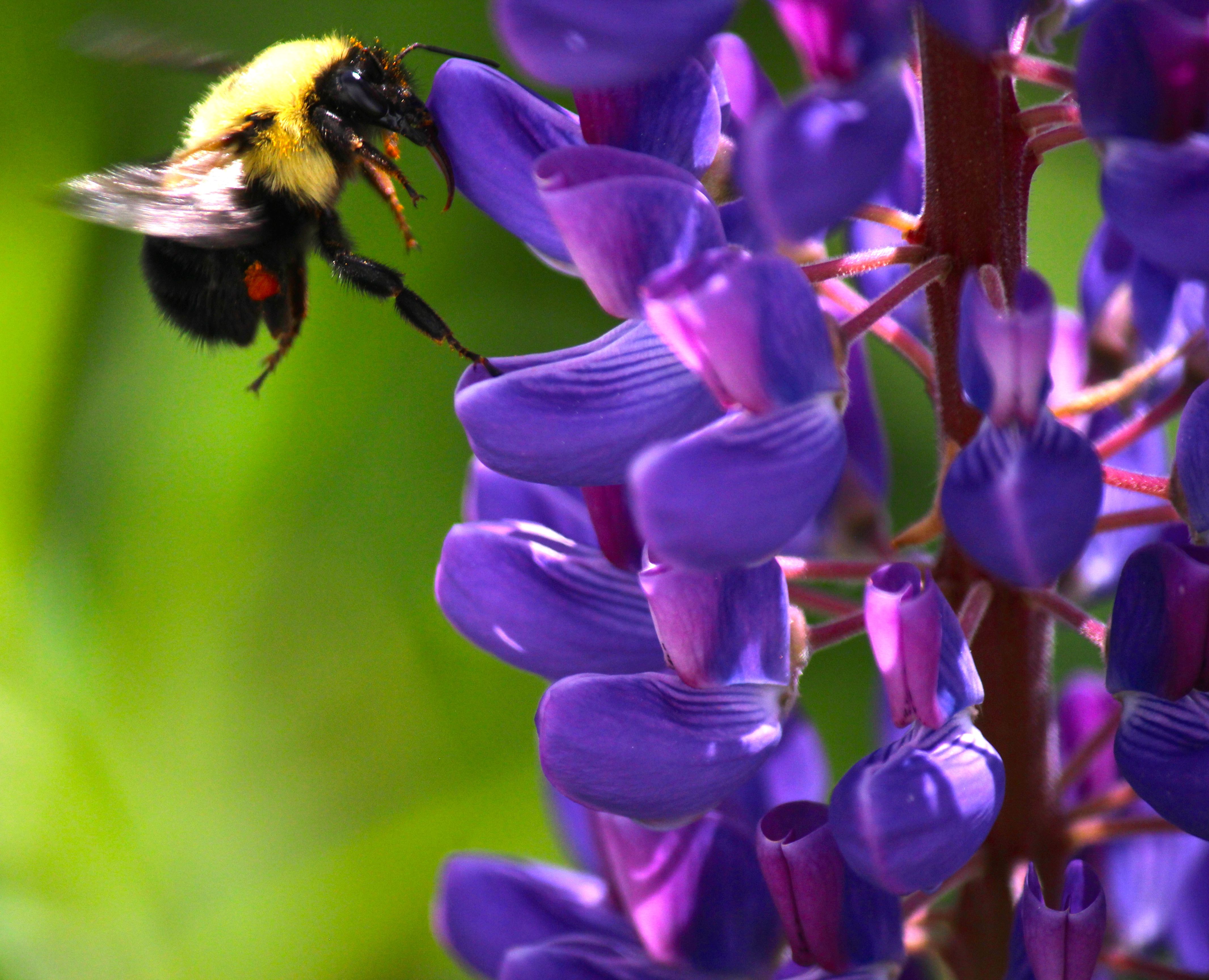
With their banner, wings and keels, the pea-like structure of the lupine is different, but . . .

lupine, bee

it’s a favorite for a variety of pollinators.

bee 2

A nip of nectar

bee 3

and a dash of pollen

bee 4

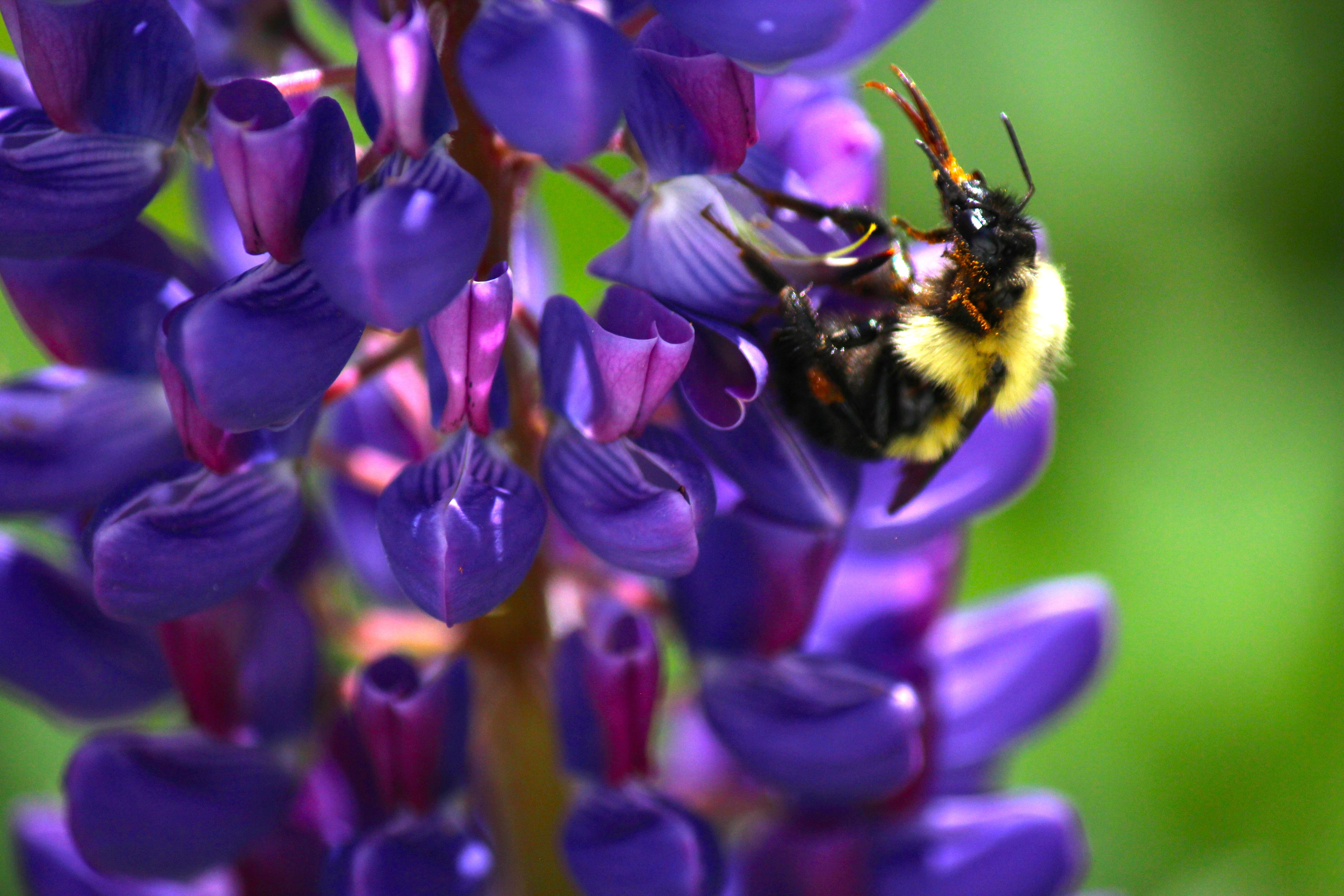
makes for a happy bumblebee and a happy flower. The bee’s orange pollen basket is almost full.

butterfly

Some wildflowers don’t need pollination to produce viable seeds, but when a visitor drops by for a sip, some pollen will attach to its fuzzy body and be transported to the next plant.

hawkweed

Notice the hairiness below the flower of the orange hawkweed–I’ve read that that’s an attempt to keep slow moving insects, like ants, from coming in for a treat–they prefer flying insects. Rather picky.

chives 2

Though chive blossoms consist of numerous flowers that are perfect, in that they each have both male and female parts, they can’t self-pollinate because the stamen sheds pollen before the pistil is ready.

chives 1

Thus, they depend on flying pollinators to deal with the timing issue.

daisy 1

Like the hobblebush I mentioned in earlier posts, the daisy consists of a ray of white sterile flowers surrounding a disk of yellow fertile flowers.

daisy 2

It had just opened today, but already is attracting attention.

So many different guiding lights. Thanks for buzzin’ ’bout with me on this nectar flight.